NewzIntel.com

    • Checkout Page
    • Contact Us
    • Default Redirect Page
    • Frontpage
    • Home-2
    • Home-3
    • Lost Password
    • Member Login
    • Member LogOut
    • Member TOS Page
    • My Account
    • NewzIntel Alert Control-Panel
    • NewzIntel Latest Reports
    • Post Views Counter
    • Privacy Policy
    • Public Individual Page
    • Register
    • Subscription Plan
    • Thank You Page

Category: Latin America

  • MIL-OSI United Nations: How Haiti paid for its freedom – twice over

    Source: United Nations 2-b

    The first country ever to free itself from slavery through a successful uprising, Haiti gained independence from France in 1804. But the price for defying the colonial order was steep. On April 17, 1825, besieged by French warships, Haiti agreed to pay an indemnity of 150 million gold francs to the European power.

    Officially, the payment was meant to compensate French plantation owners for “lost property” following independence, but the amount far exceeded actual losses.

    “France forced the winners of Haiti’s independence – the former slaves – to compensate the losers, their former masters,” Monique Clesca, a journalist and activist of Haitian descent, said on Thursday at a meeting on the country’s independence debt.

    The price of freedom: A double debt

    This tax on liberty soon plunged world’s first Black republic into a spiral of debt. When Haiti was no longer able to pay, France pushed its banks to lend it money, what we call a “double debt,” Ms. Clesca explained.

    By 1914, over three-quarters of the country’s national budget was still being drained to repay French banks. It was not until 1947 – more than 140 years after independence – that Haiti finally settled its debt.

    “France committed an enormous injustice that still resonates today,” Ms. Clesca said.

    An in-depth 2022 investigation by The New York Times found that Haiti’s payments to France amounted to the modern equivalent of roughly $560 million. Had that money been retained in Haiti and invested domestically, it could have added more than $20 billion to the country’s economy over time, according to some economists.

    Haiti today: The legacy of debt

    Though Haiti stands a milestone in the global fight for emancipation, today it today is mired in instability, with armed gangs controlling 85 per cent of the capital, Port-au-Prince. According to the World Bank, it remains the poorest country in Latin America and the Caribbean.

    From institutional paralysis to arms trafficking and corruption, the country’s challenges are immense. Yet, to the members of the UN Permanent Forum on People of African Descent, the roots of Haiti’s crises are clear: they lie in history.

    “The entrenched human rights crises in the Republic of Haiti [are] rooted in legacies of enslavement, colonialism, debt payments, military threats and interventions,” said the advisory body to the UN Human Rights Council in a position paper last month.

    Broadcast of the meeting.

    A belated recognition

    Responding to mounting calls for justice, French President Emmanuel Macron on Thursday announced the creation of a joint commission of Haitian and French historians to examine the impact of the 1825 indemnity.

    While welcoming the move, Martin Kimani, a member of the Permanent Forum, stressed that the commission’s effectiveness would depend on its willingness to fully acknowledge the harm caused.

    “We call for restitution of the financial sums extracted through this cost arrangement along with broader reparative measures to address Haiti’s structural underdevelopment and international neglect,” Mr. Kimani said during the meeting, held on the final day of the Forum’s fourth session this week.

    According to media reports, so far the French president has stopped short of committing to financial reparations.

    Calls for restitution

    “The colonial past creates responsibilities that must be assumed collectively by France and the international community,” said Pierre Ericq Pierre, Haiti’s Permanent Representative to the UN, who took part in the discussion.

    According to the Haitian ambassador, the country’s enduring inequalities are rooted in its colonial past and the burden of the “ransom.”

    In his view, restitution would only be far. “This isn’t about revenge,” he said. “It’s about truth and justice.”

    Restorative justice

    The Haitian people deserve a future free from violence – one that meets basic standards of development, said Gaynel Curry, another member of the Permanent Forum.

    In addition to returning the colonial debt, Ms. Curry called for the creation of an international reparations fund for Haiti and establishing an independent inquiry, under the Human Rights Council, to explore avenues of into restorative justice.

    For Verene Albertha Shepherd, Vice Chair of the UN Committee on the Elimination of Racial Discrimination, such steps would also honour another debt – the moral one owed by people of African descent to Haiti’s revolutionaries.

    “These freedom fighters struck fear into the hearts of all slaveholders,” she said.

    More than two centuries after Haiti’s independence, she added, the time has come to deliver justice.

    MIL OSI United Nations News –

    July 5, 2025
  • MIL-OSI United Nations: Green gold beneath the waves: How seaweed – and one man’s obsession – could save the world

    Source: United Nations MIL OSI b

    Lesconil, a salt-bitten fishing port tucked into the coast of Brittany, in northern France, stirs slowly under the pale Atlantic dawn. Tide pools shimmer, breathing with the sea — undisturbed but for the cries of seabirds and a lone figure in yellow waders, knee-deep in a forest of seaweed. The man, Vincent Doumeizel, gently lifts a strand of Saccharina latissima from the brine, waving it above the waterline like a revolutionary banner.

    “It’s not slimy,” he says of the olive-brown frond glistening in his fingers. “It’s magnificent.”

    For Doumeizel, seaweed is more than a marine curiosity. This diverse family of green, red, and brown algae is a cornerstone of his life’s work – a vehicle for feeding the planet, restoring oceans, fighting climate change, and even replacing plastic.

    It is, as he likes to say, “not just a superfood, but a super solution.”

    A senior adviser to the UN Global Compact, a platform advocating for sustainable corporate practices, the 49-year-old Frenchman has become one of the faces of the so-called “seaweed revolution.”

    In 2020, he co-authored The Seaweed Manifesto, a collaborative document involving the Food and Agriculture Organization (FAO), the World Bank and other partners. Its premise is bold: harness the humblest of marine organisms to tackle some of the planet’s most complex problems.

    Algae, the manifesto argues, can help solve a quartet of crises – climate, environmental, food, and social. Doumeizel’s personal conviction borders on the messianic. “Undoubtedly,” he wrote in a 2023 book outlining his vision, seaweed is “the world’s greatest untapped resource.”

    © Courtesy of Vincent Doumeizel

    Vincent Doumeizel sometimes speaks of “sea forests” rather than “seaweed” – a linguistic sleight of hand designed to counter the Western bias that sees seaweed as stinky pollution waste.

    Algae against apocalypse

    Long before trees shaded Pangaea and dinosaurs thundered across its land, seaweed was already swaying in the sunlit shallows of ancient oceans – a silent architect of Earth’s transformation. Born more than a billion years ago, marine algae were among the first complex organisms to harness sunlight through photosynthesis, oxygenating the atmosphere and shaping the conditions for multicellular life.

    But Doumeizel is neither a marine biologist nor an agronomist. His background is in food policy.

    “I came across world hunger during an early deployment to Africa,” he told UN News. “It left a strong mark.”

    Seaweed first sparked Doumeizel’s interest on a subsequent trip to the Japanese island of Okinawa, whose residents have exceptionally long lifespans. He noticed that people there ate a lot of seaweed.

    “It was delicious,” he recalled. “And visibly healthy.”

    From the northeast Atlantic “sea spaghetti” (Himanthalia elongata), to the Indo-Pacific “green caviar” (Caulerpa lentillifera), and the ubiquitous “sea lettuce” (Ulva lactuca), algae are rich in vitamins, omega-3 fatty acids, fibers, and even proteins.

    Humble and often overlooked, these marine vegetables may be one of our most underappreciated sources of nutrition. Despite covering more than 70 per cent of the planet, the ocean contributes only a sliver to the global food supply in terms of calories – a gap that seaweed could help close.

    And while agriculture contributes to roughly a quarter of global greenhouse gas emissions, in part due to deforestation for pastures and crops, seaweed cultivation does not require any land, fertilizers or freshwater.

    Recent research even suggests that feeding red seaweed to cows could reduce their methane emissions by up to 90 per cent – a potential game-changer in the fight against climate change.

    The implications go far beyond the barnyard. The ocean has generated more than half the oxygen we breathe, and it absorbs about a third of all man-made emissions. Seaweed plays a part in this process, capturing more carbon per acre than land vegetation. Some species, like “giant kelp” (Macrocystis pyrifera), can grow at an astonishing rate of two feet per day, making them powerful carbon sinks.

    Seaweed can also be extracted and transformed into bioplastics, biofuels, textiles, and even pharmaceuticals.

    “We can change the paradigm by encouraging seaweed cultivation,” Doumeizel said.

    © Courtesy of Vincent Doumeizel

    Algolesko, off the coast of Lesconil, in Brittany, is one of the largest seaweed farms in continental Europe, with 150 hectares of organic Laminaria culture.

    A growing, yet under-regulated industry

    When we met Doumeizel in Nice ahead UNOC3, the shorthand by which the third UN Ocean Conference is known, he was coming from the launch, two days earlier, of his comic book. The Seaweed Revolution is a 128-page dive into the life of an algae enthusiast also named Vincent “involved with the UN Ocean Forum.”

    In real life, Doumeizel is as passionate and buoyant as on his TED Talk videos or keynote addresses.

    “I could eat those,” he says, holding up a pair of sunglasses — sleek, black, and entirely made from plankton. Perched on a sunlit ledge above the Mediterranean, Doumeizel becomes part showman, part prophet, as he unpacks a series of seaweed-born wonders: a biodegradable garbage bag that looks indistinguishable from plastic, a soft green T-shirt spun from algae fibers, and, with a grin, an edible copy of his own book, The Seaweed Revolution. “All of this,” he says, gesturing to the strange little tableau at his feet, “could be made of seaweed.”

    While the world’s salty waters are home to 12,000 different known species of seaweed, so far humans are only able to actively cultivate less than a couple dozen of them – a practice known as kelp farming.

    Algolesko, in Brittany, is one of the largest seaweed farms in continental Europe. The morning when Doumeizel could be seen lifting a brown algae from the Atlantic Ocean, he was doing so from the farm’s 150 hectares of organic culture.

    As co-head of the Global Seaweed Coalition, which is roughly 2,000-members strong and hosted by the UN Global Compact, Doumeizel travels around the world for speaking engagements, from Patagonia to Tunisia, Madagascar, and Australia. Each stop is also an opportunity to explore local seaweed production.

    According to a concept paper written by the UN ahead of Nice’s Ocean Conference, the seaweed industry is on the rise. Production of marine algae more than tripled since 2000, up to 39 million tonnes a year, the overwhelming majority of which comes from aquaculture. It has become a $17 billion market, and current investments in bio stimulants, bioplastics, animal and pet foods, fabrics, and methane reducing additives could add another $12 billion annually by 2030.

    Yet the path forward is not simple. “There is generally a lack of legislation and guidance,” notes the UN document. “There are currently no Codex Alimentarius standards establishing any food safety criteria for seaweed or other algae.”

    Doumeizel agrees. The global seaweed industry, he said, is still fragmented and largely dominated by Asia, where the production of nori, the kind of seaweed used in sushi, was already a hugely profitable business. But, he added, so much more could be done with the resource.

    © Courtesy of Vincent Doumeizel

    On the island of Zanzibar, the seaweed boom began with a surge in demand for food texturizers made of algae. Widows and single women quickly stepped up.

    Reducing gender inequality

    Beyond its environmental promise and nutritional punch, seaweed is quietly driving a feminist transformation. According to the concept paper, about 40 per cent of seaweed start-ups worldwide are led by women.

    “In Tanzania, a largely patriarchal society, the seaweed trade has changed lives,” said Doumeizel. The boom began with a surge in demand for food texturizers made of algae. Widows and single women quickly stepped up. On the island of Zanzibar, seaweed is now the third-largest resource, and women retain nearly 80 per cent of the profits.

    “They built schools. They sent their daughters to those schools. They fought for a place in the markets to sell their harvests,” Doumeizel said. “They even bought motorcycles.”

    The ripple effects have reached the highest levels of power: the current President of Tanzania is a woman from Zanzibar.

    But climate change is pushing the industry into deeper waters – quite literally. As sea temperatures rise, the algae can no longer be cultivated close to shore. “Now, women have to venture farther out,” Doumeizel explained. “But most don’t know how to swim or steer a boat.”

    To help preserve both livelihoods, the Global Seaweed Coalition is funding a new initiative to teach women maritime skills – swimming, boating, navigation. “We have to make sure this revolution leaves no one behind,” the Frenchman said.

    The threat of climate change

    If seaweed offers a promising solution to climate change, it is also one of its quietest victims. As atmospheric carbon dioxide climbs, the ocean grows warmer and more acidic – conditions that are already eroding marine ecosystems and triggering the widespread loss of seaweed habitats.

    In places like California, Norway, and Tasmania, more than 80 per cent of kelp expanses have vanished in recent years, driven not only by climate change, but also pollution, and overfishing.

    In interviews, Doumeizel sometimes speaks of “sea forests” rather than “seaweed” – a linguistic sleight of hand designed to counter the Western bias that sees seaweed as stinky pollution waste rather than threatened organisms.

    “Preserving them is just as necessary to life on Earth as saving the forests of the Amazon,” he wrote in his book.

    At UNOC3, which opens on Monday, Doumeizel will unveil a new initiative: the creation of a UN Seaweed Task Force. Designed to consolidate global efforts around regulation, research, and development, the task force would bring together six UN agencies – the Food and Agriculture Organization (FAO), the Global Compact, the UN Environment Programme (UNEP), the UN trade and development body (UNCTAD), the United Nations Educational, Scientific and Cultural Organization (UNESCO), and the UN Industrial Development Organization (UNIDO).

    Its aim is ambitious: to give seaweed the institutional muscle it has long lacked. By centralizing expertise and setting global standards, the task force could help scale up the industry responsibly – and sustainably.

    The proposal already has the backing of several countries, including Madagascar, Indonesia, South Korea, and France. Together, they plan to introduce a draft resolution at the UN General Assembly this fall, with a vote expected in 2026.

    © Courtesy of Vincent Doumeizel

    On the island of Zanzibar, seaweed is now the third-largest resource.

    From bloom to boom

    Sometimes, the revolution doesn’t arrive in neat rows of aquafarms. It comes in 6,000-mile-wide blobs.

    In the spring of 2025, a vast bloom of sargassum – a free-floating brown algae known for its sprawling mats – blanketed the Atlantic, clogging beaches from the Gulf of Mexico to the shores of West Africa. Florida’s shore became inundated with the plant, whose pungent smell was deterring tourists. Coastal communities scrambled to manage the deluge.

    Yet, Vincent Doumeizel saw not just crisis but opportunity. “These massive blooms are caused by pollution and climate change,” he noted. “But if we manage and understand them properly, they could become a sustainable resource, turned into fertilizers, bricks, even textiles.”

    The vision is part redemption, part alchemy. Turning oceanic overgrowth into solutions may seem far-fetched. But then again, so does the idea that seaweed could replace beef – or plastic.

    Roughly 12,000 years ago in the Middle East, Homo sapiens ceased to be hunter-gatherers. “We became farmers cultivating plants to feed our animals and our families,” Doumeizel wrote in his book. “Meanwhile, at sea, we are still Stone Age hunter-gatherers.”

    But what if we could farm the ocean – not to exploit it, but to heal it? It’s not just a rhetorical question. It’s an invitation. And perhaps, a final warning.

    MIL OSI United Nations News –
    July 5, 2025
  • MIL-OSI United Nations: Guterres calls for an end to ocean ‘plunder’ as UN summit opens in France

    Source: United Nations MIL OSI b

    “The ocean is the ultimate shared resource,” he told delegates gathered at the port of Nice. “But we are failing it.”

    Oceans, he warned, are absorbing 90 per cent of the excess heat from greenhouse gas emissions and buckling under the strain: overfishing, rising temperatures, plastic pollution, acidification. Coral reefs are dying. Fish stocks are collapsing. Rising seas, he said, could soon “submerge deltas, destroy crops, and swallow coastlines — threatening many islands’ survival.”

    Call for stewardship

    More than 50 Heads of State and Government took part in the opening ceremony, including Brazilian President Luiz Inácio Lula da Silva and European Commission President Ursula von der Leyen — a show of political force underscoring the summit’s weight.

    In total, over 120 countries are participating in the five-day gathering, known by the shorthand UNOC3, signaling a growing recognition that ocean health is inseparable from climate stability, food security, and global equity.

    French President Emmanuel Macron, whose country is co-hosting the summit alongside Costa Rica, followed with a forceful appeal for science, law, and multilateral resolve.

    “The abyss is not for sale, any more than Greenland is for sale, any more than Antarctica or the high seas are for sale,” he declared. “If the Earth is warming, the ocean is boiling.”

    He insisted the fate of the seas could not be left to markets or opinion. “The first response is therefore multilateralism,” Mr. Macron said. “The climate, like biodiversity, is not a matter of opinion; it is a matter of scientifically established facts.”

    Costa Rican President Rodrigo Chaves Robles took the podium next, thanking Mr. Guterres for elevating the ocean on the global agenda, then shifting to a stark warning.

    “The ocean is speaking to us — with bleached coral reefs, with storms, with wounded mangroves,” he said. “There’s no time left for rhetoric. Now is the time to act.”

    Condemning decades of treating the ocean as an “infinite pantry and global waste dump,” Mr. Chaves urged a shift from exploitation to stewardship.

    UN News/Heyi Zou

    Brazilian President Luiz Inácio Lula da Silva, at the opening ceremony of UNOC3

    “Costa Rica is a small country, but this change has started,” he said. “We are now declaring peace with the ocean.”

    Most notably, the Costa Rican leader called for a moratorium on deep-sea mining in international waters until science can adequately assess the risks — a position already backed by 33 countries, he noted.

    A treaty within reach

    One of the summit’s core objectives is to help bring into force the landmark High Seas Treaty — known as the BBNJ accord — adopted in 2023 to safeguard life in international waters. Sixty ratifications are required for the treaty to become binding international law. Emmanuel Macron announced that this milestone is now within reach.

    “In addition to the 50 or so ratifications already submitted here in the last few hours, 15 countries have formally committed to joining them,” he said. “This means that the political agreement has been reached, which allows us to say that this [Treaty] will be properly implemented.”

    Whether the legal threshold is crossed this week or shortly after, the French President added, “it’s a win.”

    UN News/Heyi Zou

    The plenary hall of the third UN Ocean Conference (UNOC3) in Nice.

    High-stakes negotiations in the ‘Blue Zone’

    The tone set by the opening speeches made clear that Nice will be the stage for high-stakes negotiations — on finalizing a global treaty on plastic pollution, scaling up ocean finance, and navigating conflicting opinions surrounding seabed mining.

    Hundreds of new pledges are expected to be announced, building on more than 2,000 voluntary commitments made since the first UN Ocean Conference in 2017. The week-long talks will culminate in the adoption of a political declaration and the unveiling of the Nice Ocean Action Plan, a blueprint aligned with the landmark Kunming-Montreal Global Biodiversity Framework, a 2022 agreement to protect 30 per cent of marine and terrestrial ecosystems by 2030.

    “The deep sea cannot become the Wild West,” António Guterres warned.

    The summit is being held in a purpose-built venue overlooking Port Lympia, Nice’s historic marina, now transformed into the secured diplomatic ‘Blue Zone.’ On Sunday, a symbolic ceremony led by Li Junhua, head of the UN Department of Economic and Social Affairs and Secretary-General of the conference, saw the French and UN flags raised above the harbor.

    “This ceremony marks not only the formal transfer of this historic port into the hands of the United Nations, but also the beginning of a week of shared commitment, responsibility, and hope,” said Mr. Li.

    UN News/Fabrice Robinet

    Ludovic Burns Tuki marked the start of the summit by blowing a pu, a traditional conch shell

    Culture, science, and collective memory

    Before the negotiations began in earnest, Monday’s opening turned to ritual and reflection. Polynesian climate activist Ludovic Burns Tuki marked the start of the summit by blowing a pu, a traditional conch shell.

    “It’s a way to call everyone,” he told UN News after the ceremony. “I blow with the support of our ancestors.” In Polynesian navigation, the conch is sounded upon arrival at a new island to signal peaceful intent. Mr. Tuki, born in Tahiti to parents from the Tuamotu and Easter Islands, sees the ocean as both boundary and bond.

    “We are not only countries,” he said. “We need to think like a collective system, because this is one ocean, one people, a future for all.”

    The cultural segment also included a blessing by Tahitian historian Hinano Murphy, a martial arts performance by French taekwondo master Olivier Sicard, a scientific reflection by deep-sea explorer Antje Boetius, and a poetic testimony by Mauritanian filmmaker Abderrahmane Sissako, accompanied by kora musician Wassa Kouyaté.

    What was lost can return

    The goals of the Conference are ambitious but clear: to advance the ‘30 by 30’ pledge, promote sustainable fisheries, decarbonize maritime transport, and unlock new streams of “blue finance,” including ocean bonds and debt-for-nature swaps to support vulnerable coastal states.

    In addition to plenary sessions, Monday will feature two high-level action panels: one on conserving and restoring marine ecosystems — including deep-sea habitats — and another on strengthening scientific cooperation, technology exchange, and education to bridge the gap between science and policy.

    In his opening statement, António Guterres stressed that Sustainable Development Goal 14 , on ‘Life Below Water’, remains the least funded of the 17 UN global goals.

    “This must change,” he said. “We need bold models to unlock private capital.”

    “What was lost in a generation,” he concluded, “can return in a generation. The ocean of our ancestors — teeming with life and diversity — can be more than legend. It can be our legacy.”

    MIL OSI United Nations News –

    July 5, 2025
  • MIL-OSI United Nations: From summits to street art to schools: Here’s how we’re marking World Environment Day

    Source: United Nations MIL OSI b

    Around the world, civil society groups and UN teams are hosting webinars, forums, summits and other diverse celebrations. It’s a collective effort that’s drawing together different wings of the UN from Educational, Scientific and Cultural Organization (UNESCO) to UN Peacekeeping.

    Worldwide events

    On Tuesday, Qatar launched a national biodiversity database, concluding a three-year UNEP-led project.

    In the Indian capital New Delhi, UNEP hosted the Tide Turners Plastic Challenge National Youth Summit on Tuesday to empower young people to take action to end plastic pollution.

    As host, Jeju held a commemoration ceremony and the Future Generation Forum on Thursday.

    Mexico launched its 2025–2030 National Beach and Coastal Clean-Up and Conservation Campaign in Puerto Progreso, Yucatán, with volunteer brigades and a formal ceremony.

    In Geneva, UNEP and the Orchestre des Nations are presenting a one-hour concert, Our Home, blending music, images and spoken word to highlight ecological emergencies.

    Brussels is screening the documentary Ocean with legendary environmental campaigner and broadcaster Sir David Attenborough, in honour of World Environment Day, World Oceans Day and the UN Ocean Conference.

    In the United States, Street Art for Mankind unveiled a 245-foot mural for World Environment Day as part of the UN Decade on Ecosystem Restoration, calling for better protection for vulnerable communities.

    UNESCO initiative

    In a statement released Thursday, UNESCO reported that over 80,000 schools across 87 countries are following the recommendations in the Green school quality standard released in May 2024.

    The initiative promotes green learning environments through governance, facilities and operations, teaching, and community engagement. This includes setting up “green governance committees” and training teachers in sustainable management practices.

    Peacekeeping and the environment

    In a video released Wednesday, UN Under-Secretary-General for Operational Support Atul Khare and Environment Section Chief Joanna Harvey outlined how UN Peacekeeping is reducing its environmental footprint.

    Efforts over the past decade include bringing renewable energy to missions, requiring newer, more efficient generators, supporting local energy providers, and investing in sustainable infrastructure.

    “We want to leave behind a legacy… [of] projects that are created by us which are finally beneficial to the local communities,” said Mr. Khare. 

    MIL OSI United Nations News –

    July 5, 2025
  • MIL-OSI United Nations: Climate crisis driving surge in gender-based violence, UN study finds

    Source: United Nations 4

    That is the warning from a new issue brief by the UN Spotlight Initiative, which finds that climate change is intensifying the social and economic stresses that are fuelling increased levels of violence against women and girls.

    The brief explains that extreme weather, displacement, food insecurity, and economic instability are key factors increasing the prevalence and severity of gender-based violence.

    These impacts hit hardest in fragile communities, where women already face entrenched inequalities and are more vulnerable to assault.

    Every 1°C rise in global temperature is associated with a 4.7 per cent increase in intimate partner violence (IPV), the study cites. In a 2°C warming scenario, 40 million more women and girls are likely to experience IPV each year by 2090. In a 3.5°C scenario, that number more than doubles.

    The Spotlight Initiative is the United Nations high-impact initiative to end violence against women and girls. Its latest findings emphasise that climate solutions must address rights, safety, and justice if they are to be effective or sustainable.

    UNIC Mexico/Eloísa Farrera

    A ‘shadow pandemic’

    Gender-based violence is already a global epidemic, the report outlines. Over one billion women — at least one in three — have experienced physical, sexual, or psychological abuse in their lifetime. These figures are likely underestimated, as only around seven per cent of survivors file a formal report to police or medical services.

    The Spotlight Initiative identifies a pattern of increased violence in the aftermath of climate disasters.

    In 2023 alone, 93.1 million people were affected by weather-related disasters and earthquakes, while an estimated 423 million women experienced intimate partner violence. As climate shocks become more frequent and severe, the risk of violence is projected to rise dramatically.

    For example, one study highlighted in the report found a 28 per cent increase in femicide during heatwaves.

    Other consequences include higher rates of child marriage, human trafficking, and sexual exploitation, especially in the wake of displacement caused by floods, droughts, or desertification.

    © WFP/Mehedi Rahman

    Marginalized communities

    The burden of this crisis is not evenly distributed. Women and girls living in poverty — including smallholder farmers and those in informal urban settlements — face heightened vulnerability.

    Women who are Indigenous, disabled, elderly, or part of the LGBTQ+ community also experience overlapping risks, with limited access to services, shelters, or protections.

    In sub-Saharan Africa, projections show that intimate partner violence could nearly triple from 48 million women in 2015 to 140 million by 2060 if temperatures rise by 4°C. However, under a scenario that limits warming to 1.5°C, the share of women affected could decrease from 24 percent in 2015 to 14 percent in 2060.

    The report also draws attention to the growing threats against women environmental human rights defenders. Many face harassment, defamation, physical assault, or worse for speaking out against destructive land use or extractive industries.

    In Guatemala, women who reported illegal logging were forcibly evicted and had their homes burned. In the Philippines, those opposing mining operations have faced abduction and deadly violence.

    © UNICEF/Anderson Flores

    An urgent call for gender-inclusive climate policy

    Despite the urgency of this issue, only 0.04 per cent of climate-related development assistance focuses primarily on gender equality. The report argues that this gap represents a critical failure to recognize how gender-based violence – or GBV – determines climate resilience and justice.

    The Spotlight Initiative calls for GBV prevention to be integrated into all levels of climate policy, from local strategies to international funding mechanisms.

    Examples from countries like Haiti, Vanuatu, Liberia, and Mozambique have shown how programmes can be designed to simultaneously address violence and build climate resilience.

    These include re-training midwives who had previously performed female genital mutilation to access alternative livelihoods through climate-smart agriculture, ensuring that disaster response includes GBV services, and supporting mobile health clinics in disaster zones.

    The report stresses that effective climate action must prioritize safety, equity, and the leadership of women and girls.

    Ending violence against women and girls, the report concludes, is not only a human rights imperative — it is essential to achieving a just, sustainable, and climate-resilient future.

    MIL OSI United Nations News –

    July 5, 2025
  • MIL-OSI United Nations: Humans can’t survive without a healthy Ocean: UN envoy

    Source: United Nations MIL OSI b

    The urgent need to restore the Ocean will be the focus of a major international conference taking place in Nice, France, this June. This will be the first UN Ocean Conference since the adoption of a legal agreement for the conservation and sustainable use of marine biodiversity and the protection of life in the Ocean will be a key topic.

    Peter Thompson, the Secretary General’s Envoy for the Ocean, Alfredo Giron, Head of the Ocean Action Agenda at the World Economic Forum (WEF), and Minna Epps, who runs the Ocean Program at the International Union for the Conservation of Nature (IUCN), spoke to UN News ahead of the Conference, to talk about UN-led initiatives designed to protect marine biodiversity.

    UN News: How serious is the marine biodiversity crisis?

    Minna Epps: We’re in really dire straits. If we don’t protect and restore the Ocean this is going to have devastating consequences for all those services that we are dependent on. The entire climate is dependent on the Ocean as a climate regulator. However, we don’t want the Ocean to absorb more carbon dioxide, because that’s what makes it acidic, so we need to start by cutting emissions.

    If you are in an airplane and you fly over a forest, you can see deforestation, that a habitat has been lost. The same thing is happening in the Ocean, but we can’t really see it. Another effect of climate change is marine heat waves, when water temperature increases over an extended period. A marine heat wave in Panama wiped out around 75 per cent of coral diversity.

    Or take coral reefs. These make up less than one per cent of the Ocean, but almost 25 per cent of marine species depend on them. Reefs also protect against storm surges and extreme weather events.

    Peter Thomson: Fossil fuels are causing man-made global warming, which is heating the Ocean at an alarming rate, which is causing changes in ecosystems, rising sea levels and the death of coral.

    Colombian Environment Ministry

    Divers pose with transplanted corals and a ‘One Million Corals for Colombia’ sign, the name of the biggest ocean restoration project in Latin-America.

    How can Homo sapiens survive on a healthy planet if you don’t have a healthy Ocean? And how can you have a healthy Ocean if you don’t have a coral in it? So, my message is, leave fossil fuels in the ground. Get as fast as we can to an electrified world, an equitably electrified world powered by renewable energy.

    Alfredo Giron: So many things in our daily lives depend on the Ocean. How we eat, how we move and transport goods. Your Amazon delivery package probably went on a ship at some point in the supply chain. How we power our activities: offshore wind is the fastest expanding renewable energy source today. Or how we communicate: the deep-sea cables that we depend on for so many transactions are having an impact on marine biodiversity.

    UN News: What is the 30×30 biodiversity initiative and how could it help to restore the Ocean?

    Alfredo Giron: 30×30 is about protecting and restoring thirty percent of the Ocean and of land by 2030. Many countries that have stepped up and achieved their targets of protecting thirty per cent of their national waters. And we finally have the Biodiversity Beyond National Jurisdiction Agreement, the High Seas Treaty, which is giving us, for the first time, the legal instruments to actually protect waters that are outside of national jurisdictions.

    We have protected close to ten percent of the Ocean at this point. So, as we go into the last five years of the decade, the important question that we should be asking ourselves is, how are we going to protect that other 20 per cent? Do we have the right instruments? Do we have the right incentives? Do we have the right amount of money and ambition to achieve it?

    Peter Thomson: The best of our scientists told us that if we don’t protect 30 per cent of the planet by 2030, we are going to begin seeing a great cascading away of species on this planet and extinctions, including the extinction of Homo sapiens.

    That’s why this 30 per cent protection assumes such great importance, and the Ocean community stood up and committed to protecting 30 per cent of the Ocean. Whether we get there or not is a big question, but at least we’re going to have a plan to get there.

    UN News: This is the first UN Ocean Conference since the adoption of the High Seas Treaty. Why is this important?

    UN Global Compact/Elma Okic

    Peter Thomson: The Treaty brings in a multilateral regime for the exploitation of genetic resources and sharing technology. We are very hopeful that, by the time of the UN Ocean Conference, we will have got the sixty ratifications required for the Treaty to come into force.

    Equally important to me are the World Trade Organisation Harmful Fisheries Subsidies. We are very close to an agreement. This is about up to $30 billion of public money funding industrial fleets each year, to go out and chase diminishing stocks of fish.

    It is human madness. That money should be going towards the development of coastal communities or adaptation to sea level rise, rather than subsidizing industrial fishing fleets.

    © UN Indonesia/M. Gaspar

    Women on the remote island of Bianci, Southwest Papua, have doubled their income by moving from selling raw fish to selling fish-based products.

    UN News: What role should the private sector play in the protection of the Ocean?

    Alfredo Giron: It is not enough to think about sustainable use. Now we need to think about regeneration. For example, if you install an offshore wind farm, can you make sure that you use the right materials so that you can build a coral reef around it? Or, if you build a new port, can you use mangroves to protect and stabilise the coastline, while making sure that the waves are not as strong and that the ships can interact more easily with the port itself?

    If we stop thinking about the private sector as the flip side of conservation but rather as one more stakeholder that will really benefit from a healthy Ocean, then we start unlocking a lot of opportunities. The WEF is partnering with the UN to bring in the private sector and help them to navigate and understand what is going on in this space.

    Minna Epps: We also must stop thinking about the private sector as a homogenous group, and distinguish between the big corporations that we can we need to work with, and the small to medium enterprises that we need to invest in.

    We want this conference to be a game changer. We are focusing on initiatives such as the International Panel of Ocean Sustainability, which is gathering both scientific and Indigenous knowledge. Then there is finance: how do we move the needle in a decisive manner? Because without that happening, the conference will not have a strong legacy. 

    MIL OSI United Nations News –

    July 5, 2025
  • MIL-OSI United Nations: UN80 Initiative: What it is – and why it matters to the world

    Source: United Nations MIL OSI

    “This is a good time to take a look at ourselves and see how fit for purpose we are in a set of circumstances which, let’s be honest, are quite challenging for multilateralism and for the UN,” says Guy Ryder, Under-Secretary-General for Policy and chair of the UN80 Task Force.

    Known as the UN80 Initiative, this process seeks not only to improve efficiency, but also to reassert the value of multilateralism at a time when trust is low and needs are high. It aims to reinforce the UN’s capacity to respond to today’s global challenges – ranging from conflict, displacement, and inequality to climate shocks and rapid technological change – while also responding to external pressures such as shrinking budgets and growing political divisions in the multilateral space.

    “We will come out of this with a stronger, fit-for-purpose UN, ready for the challenges the future will undoubtedly bring us,” explains Mr. Ryder.

    UN News/Anton Uspensky

    View of the UNHQ building from Roosevelt Island, New York

    Three tracks of reform

    At the heart of UN80 are three major workstreams. The first is focused on improving internal efficiency and effectiveness, cutting red tape, and optimizing the UN’s global footprint by relocating some functions to lower-cost duty stations. Mr. Ryder notes that burdensome administrative procedures and duplications are being targeted.

    “We want to see what we can do better. We want to look at those areas where we think we can improve efficiencies and strip out unnecessary bureaucratic processes,” he outlines.

    The second workstream is a mandate implementation review, which involves examining nearly 4,000 mandate documents underpinning the UN Secretariat’s work. A mandate refers to a task or responsibility assigned to the organisation by the Member States, usually through resolutions adopted by UN organs such as the General Assembly or the Security Council.

    These mandates guide what the UN does – from peacekeeping operations and humanitarian aid to human rights and environmental action.  Over the decades, at least 40,000 mandates have accumulated, sometimes overlapping or becoming outdated, which is why reviewing them is a key part of the UN80 initiative .

    “Let’s take a look at them,” Mr. Ryder says. “Let’s see where there may be duplication, where we can prioritise and de-prioritise, and find redundancies.”

    But reviewing this mountain of mandates is not new. “We’ve tried this exercise before. We had a look at these bulky mandates back in 2006. It didn’t work very well.” Mr. Ryder reflects.

    This time, however, the process is favoured by one key factor. “This time, we’ve got the data and analytical capacities. We’re applying artificial intelligence techniques to provide much more and better organised information to Member States – a more compelling case that could drive, I think, a productive process.”

    He emphasises that the responsibility for deciding what to retain, revise, or discontinue rests squarely with the Member States.

    “These mandates belong to Member States. They created them, and only they can evaluate them. We can look at the evidence, we can put that to Member States, but eventually they are the decision-makers on mandates and on very much else that the UN80 initiative brings.”

    The third stream explores whether structural changes and programme realignment are needed across the UN System. “Eventually, we might want to look at the architecture of the United Nations system, which has become quite elaborate and complicated,” Mr. Ryder adds. Proposals are also likely to emerge from the mandate implementation review.

    UN Photo/Manuel Elías

    Guy Ryder, Under Secretary-General for Policy and Chair of the UN80 taskforce

    A task force and a system-wide lens

    To tackle reform across such a complex system, the Secretary-General established seven thematic clusters under the UN80 Task Force; each coordinated by senior UN leaders from across the system. These cover peace and security, humanitarian action, development (Secretariat and UN system), human rights, training and research, and specialised agencies.

    “It’s important to say that at a moment when the system is under pressure, the system is responding as a system,” the UN80 Taskforce chair notes. “This is not just New York, not just the Secretariat. It is system-wide.”

    Each cluster is expected to produce proposals to improve coordination, reduce fragmentation, and realign functions where needed. Several clusters have already submitted initial ideas. A broader set of proposals will follow in July.

    UNFICYP/Katarina Zahorska

    The United Nations works to prevent conflict, support peace processes, and protect civilians—upholding its core mandate to maintain international peace and security.

    Reform, not retrenchment

    Attention around the UN80 Initiative has largely focused on proposed budget cuts and staff reductions, raising concerns that it is mainly a cost-saving exercise. Mr. Ryder underscores that this view misses the bigger picture.

    “Yes, we do face financial challenges. No need to avert our eyes from that. But this is not a cost-cutting, downsizing exercise. We want to make the UN stronger,” he says.

    Still, the financial pressures across the system are undeniable. A revised programme budget for 2026, due in September, is expected to include significant reductions in funding and posts for Secretariat entities — a consequence of persistent cash flow constraints linked to delayed and incomplete contributions from Member States.

    “The UN80 Initiative wants to improve the impact and effect of multilateralism and the UN,” Mr. Ryder explained. “Now, that does not mean – we wish it were otherwise – that we do not have to take a look at our budget and our resources in different parts of the system.”

    “Organisations have faced some wrenching decisions, and this is happening every day. That’s the reality of our circumstances,” he adds.

    Mr. Ryder contends that financial sustainability and mission impact are not mutually exclusive – but must be pursued in tandem. “We have to reconcile the two objectives of making ourselves financially sustainable in the difficult circumstances we find ourselves in, but also be attentive, as always, to the impact that we have in delivering on our responsibilities under the Charter,” he said.

    © WFP/Jonathan Dumont

    Children in Haiti eat a meal provided as part of WFP’s school feeding programme.

    Why UN80 matters to people everywhere

    Rather than mere bureaucratic reform, UN80 is ultimately about people, those who rely on the UN’s support during crisis, conflict, or development challenges.

    “If the UN is able to transform itself, to make improvements, sometimes through difficult decisions, that can mean those life-saving interventions reach the people we serve more effectively,” Ryder says.

    The UN remains the essential, one-of-a-kind meeting ground to advance peace, sustainable development and human rights for all.

    “This is the United Nations taking seriously its responsibilities to the people we serve”, Mr. Ryder says.

    Right now, the UN assists over 130 million displaced people, provides food to more than 120 million, supplies vaccines to nearly half the world’s children, and supports peacekeeping, human rights, elections, and climate action across the globe. The UN’s development work has helped build peaceful, stable societies.

    © UNICEF/Minzayar Oo.

    UNICEF-supported vaccination in remote Shan State village, Myanmar

    What happens next

    The UN80 Task Force will present its proposals to the Secretary-General, who has already indicated the first areas where outcomes are expected. A working group on efficiencies in the UN Secretariat, led by Under-Secretary-General Catherine Pollard, is expected to deliver initial proposals by the end of June. A report on the mandate implementation review will follow at the end of July.

    This work under the first two workstreams will help inform broader thinking around structural changes and programme realignment across the UN system. Proposals under the third workstream will be put forward to Member States in the coming months and into next year.

    Although the work is just beginning, Mr. Ryder believes the UN has the right tools – and a clear sense of ambition and urgency.

    “We’re progressing well. There’s a lot of homework being done now,” he said. “As the weeks go by, this will be shifting more and more to the Member States’ space, and that’s when we’ll see results.”

    Eventually, Member States will need to decide how to act on the findings. “They’re going to have to decide what they want to do. Will they wish to set up an intergovernmental process? The Secretary-General has mentioned this as a possibility already.”

    UN Photo/Manuel Elías

    UN Secretary-General António Guterres briefs the media about the UN80 Initiative.

    Defining success

    So, what does success look like?

    “A UN system which is able to deliver more effectively, to strengthen and consolidate trust in multilateral action,” Mr. Ryder says. “A system which can convey to public opinion and political decision-makers that this is an organisation worth investing in. That this should be your preferred option when it comes to meeting the challenges of the future.”

    For the UN80 Task Force chair, it comes down to credibility, capability, and public trust – and ensuring the UN remains not just relevant, but essential.

    “We should all care about this,” he says. “If we take the view that multilateralism is the best instrument we have for meeting global challenges, then we need to make sure we renovate, refresh, and make that machinery as effective and as fit for purpose as it can possibly be.”

    MIL OSI United Nations News –

    July 5, 2025
  • MIL-OSI United Nations: Without urgent funding, global hunger hotspots are set to grow, UN warns

    Source: United Nations MIL OSI

    But hunger has followed them. Over 57 per cent of the population in the world’s youngest country to the south is already facing high levels of acute food insecurity.

    Sudan and South Sudan are among five global hunger hotspots of “highest concern”, trapped in a worsening cycle of conflict, climate shocks and economic decline.

    Continued fighting in Sudan, anticipated flooding impacting its southern neighbour and deteriorating economic conditions in both countries are set to intensify hunger in the coming months.

    A new report released on Monday by the World Food Programme (WFP) and the Food and Agriculture Organization (FAO) also identified Palestine, Mali and Haiti as the other top-priority hunger hotspots, with a further seven countries likely to see worsening food security over the next five months.

    The report, which analyses existing data to project the nature of food insecurity, emphasised that without immediate humanitarian assistance, people living in these hotspots will face severe food conditions and high risks of starvation and death.  

    “This report makes it very clear: hunger today is not a distant threat  – it is a daily emergency for millions. We must act now and act together to save lives and safeguard livelihoods,” said FAO Director General QU Dongyu.  

    Conflict-driven hunger

    The report identified that the main driver of hunger is conflict which is often compounded by climate and economic shocks.  

    “There’s an on-going famine in Sudan and also a risk of famine in the case of Gaza. And all of those are driven by conflict and lack of access for humanitarians,” said Jean-Martin Baucer, FAO food security analysis director.

    In Gaza, the entire population of 2.1 million people is projected to experience crisis levels of food insecurity in the next months as a result of protracted military operations, with almost 500,000 projected to face catastrophic levels of food insecurity.  

    Sawsan was an artist in Gaza before the conflict began. Since then, she and her four children have been displaced, losing everything that they owned. They do not have enough to eat: Sawsan described to WFP that she now reduced to crushing macaroni to make bread for her children.  

    The report also noted that climate shocks and conflict often cause protracted economic declines, diminishing the purchasing power and self-sustaining capacity of households and communities.

    Window closing fast 

    In recent months, humanitarian food operations have faced significant food shortages and have been geographically impeded by security crises which make the delivery of aid simply dangerous.  

    WFP and FAO are calling for the international community to drastically step up funding for food and nutrition related humanitarian aid in the coming months and advocate for an end to the fighting.  

    “Urgent, sustained investment in food assistance and recovery support is crucial as the window to avert yet more devastating hunger is closing fast,” said WFP executive director Cindy McCain.

    ‘Red alert’

    In May, the food aid sector estimated that it would need $12.2 billion, but only nine per cent of this was funded.  

    The report also underlined the importance of moving towards longer-term humanitarian strategies which equip communities with self-sustaining capabilities and are less expensive.

    “This report is a red alert. We know where hunger is rising and we know who is at risk. We have the tools and experience to respond but without funding and access, we cannot save lives,” said Ms. McCain.   

    MIL OSI United Nations News –

    July 5, 2025
  • MIL-OSI United Nations: General Assembly approves $5.4 billion UN peacekeeping budget for 2025-2026

    Source: United Nations MIL OSI

    Acting on the recommendation of its Fifth Committee (Administrative and Budgetary), the Assembly endorsed the budgets for 12 missions, the logistics centres in Entebbe (Uganda) and Brindisi (Italy), and the support account for peacekeeping.

    The budgets were adopted without a vote, except for the resolution on the UN Interim Force in Lebanon (UNIFIL), which was adopted by 147 votes in favour to 3 against (Argentina, Israel, and United States), with 1 abstention (Paraguay).

    The adoption of UNIFIL’s budget followed an Israeli-proposed oral amendment, which was rejected by 5 votes in favour (Argentina, Canada, Israel, Paraguay, and US) to 83 against, with 57 abstentions.

    Last year, the peacekeeping budget stood at $5.59 billion for 14 operations, meaning the 2025-2026 figure reflects a modest decrease, following final settlements of former missions in Côte d’Ivoire and Liberia.

    Pressing liquidity challenges

    Despite the agreement on the budgets, UN Controller Chandramouli Ramanathan outlined a sobering picture about the fragility of the UN’s broader liquidity situation.

    “You manage somehow to find common ground three times a year. But I only wish you had gone a little bit further to solve one of the underlying problems of the UN, which has been plaguing us for 80 years,” he told delegates last week as they concluded negotiations in the Fifth Committee.

    He described how approved budgets are often undermined by cash shortages, forcing immediate instructions to slash spending by 10, 15, or even 20 per cent.

    “No money, no implementation. There is not enough cash. I cannot emphasize enough a massive effort needed on your side to somehow take us over that line and deal with a problem that’s plagued the UN for the last so many years,” he said.

    UN peacekeeping operations

    UN peacekeeping remains one of the most iconic UN activities, with nearly 70,000 military, police and civilian personnel deployed across Africa, the Middle East and Europe.

    Missions include long-standing deployments such as MONUSCO in the Democratic Republic of the Congo, UNFICYP in Cyprus, and MINUSCA in the Central African Republic. Mandated by the Security Council, these operations work to stabilize conflict zones, support political processes, protect civilians, and assist in disarmament and rule-of-law efforts.

    UN’s peacekeeping budget is separate from its regular budget, which supports the Organization’s core programs, including human rights, development, political affairs, communications and regional cooperation.

    The peacekeeping budget cycle runs from July-June, while the regular budget is aligned with the calendar year.

    MIL OSI United Nations News –

    July 5, 2025
  • MIL-OSI United Nations: US decision to sanction ICC judges ‘deeply corrosive’ to justice: UN rights chief

    Source: United Nations MIL OSI

    Mr. Türk was responding to an announcement by Marco Rubio, the US Secretary of State, on Thursday, of measures targeting the judges, who are overseeing a 2020 case of alleged war crime committed in Afghanistan by US and Afghan military forces, and the 2024 ICC arrest warrants issued against Israeli Prime Minister Benjamin Netanyahu and Yoav Gallant, the former Defence Minister.

    “I am profoundly disturbed by the decision of the Government of the United States of America to sanction judges of the International Criminal Court – specifically four women judges, from Benin, Peru, Slovenia and Uganda – who had been part of rulings in the situations in Afghanistan or in the State of Palestine,” said Türk, who called for the prompt reconsideration and withdrawal of the measures.

    UN Photo/Evan Schneider

    Volker Türk, UN High Commissioner for Human Rights, briefs a General Assembly informal meeting on missing persons.

    The sanctions, the statement continues, attack the judges for performing their judicial functions, an act which, he said, runs “directly counter to respect for the rule of law and the equal protection of the law – values for which the U.S. has long stood.”

    The statement by Mr. Türk follows the ICC’s strongly worded press release on Thursday, describing the sanctions as “a clear attempt to undermine the independence of an international judicial institution which operates under the mandate from 125 States Parties from all corners of the globe.”

    The ICC reinforced its position on Friday with a release from the Assembly of State Parties –the management oversight and legislative body of the court – rejecting the US sanctions which, it declared, “risk undermining global efforts to ensure accountability for the gravest crimes of concern to the international community and erode the shared commitment to the rule of law, the fight against impunity, and the preservation of a rules-based international order.”

    MIL OSI United Nations News –

    July 5, 2025
  • MIL-OSI United Nations: World News in Brief: ‘Indifference and impunity’ in Sudan, ICC judges speak out against sanctions, respiratory diseases overlooked in Europe

    Source: United Nations MIL OSI

    Tom Fletcher noted that over 30 million people require humanitarian assistance. Moreover, with famine declared in multiple places and over 14.6 million people displaced, Sudan represents the largest humanitarian crisis in the world.

    “Again and again, the international community has said that we will protect the people of Sudan. The people of Sudan should ask us if, when and how we will start to deliver on that promise,” the relief chief said.

    When will the international community fully fund aid efforts in Sudan?

    When will accountability for the violence in Sudan happen?

    He called on the international community to stop acting with ‘indifference and impunity’ towards Sudan,

    Health system ‘smashed to pieces’

    Since the conflict in Sudan broke out in April 2022, civilian infrastructure across the country has been damaged or destroyed, including health facilities and water and sanitation systems. 

    The health system in particular has been “smashed to pieces,” according to Mr. Fletcher, leading to increasingly dire measles and cholera outbreaks.

    The cholera outbreak, which began in July 2024 and is now confirmed in 13 of Sudan’s 18 states, has infected more than 74,000 people in total and killed 1,826.

    “I have seen first-hand the devastation caused by the cholera outbreak in Khartoum, where the health system has been devastated by conflict and is struggling to cope with the tremendous demand on health facilities,” said Dr. Shible Sahbni, WHO representative in Sudan.

    The World Health Organization (WHO), in partnership with the Sudanese Ministry of Health, is launching a 10-day cholera vaccination campaign in Khartoum State.

    The campaign will aim to reach 2.6 million people in an effort to contain the cholera outbreak in the state.

    “The vaccines will help stop cholera in its tracks as we strengthen other response interventions,” said Dr. Sahbni.

    ICC judges express support for colleagues sanctioned by US

    Judges at the International Criminal Court (ICC) expressed solidarity with their colleagues who have recently been sanctioned by the United States Government, describing the move as “coercive measures aimed at undermining the independence of the judiciary.”

    “The Judges stand united and will continue to exercise their functions independently, impartially and conscientiously, fulfilling the demands of the rule of law,” they said in a statement on Thursday.

    The US announced sanctions on 6 June against four judges from Benin, Peru, Slovenia and Uganda. The justices are currently overseeing a 2020 case which alleges war crimes in Afghanistan committed by the US and Afghan armies and the 2024 ICC arrest warrants issued for sitting Israeli Prime Minister Benjamin Netanyahu and former Defence Minister Yoav Gallant.

    The International Court of Justice

    The UN Human Rights Chief Volter Türk previously said that he was “deeply disturbed” by these sanctions, arguing that they corroded international governance and justice.

    No improper influence

    The ICC is an independent judicial body established under the Rome Statute, adopted in 1998. Although not part of the United Nations, the ICC works closely with it under a cooperative framework.

    In the statement, the Judges said that they decide, and will continue to decide, cases based on facts and without regard to threats, restrictions or improper influence issued “from any quarter or for any reason.”

    “The Judges reaffirm that they are equal in the performance of their functions and that they will always uphold the principle of equality before the law.”

    Over 80 Million Europeans suffering from overlooked chronic respiratory diseases

    Chronic respiratory diseases such as asthma are vastly underestimated, underdiagnosed and poorly managed in Europe – affecting 80 million people and costing $21 billion a year, the UN World Health Organization (WHO) said on Thursday.

    A new report by WHO Europe and the European Respiratory Society highlights how smoking and air pollution are driving the growing crisis.

    “We take 22,000 breaths a day, yet respiratory health remains one of the most neglected areas in global health,” said Professor Silke Ryan, President of the European Respiratory Society.

    6th leading cause of death

    Data analysis shows that chronic respiratory illnesses are the sixth leading cause of death in Europe. They are often misdiagnosed owing to weak diagnostic systems, limited training and inadequate health data.

    Although effective treatments are available, asthma-related deaths remain high among young people, while chronic obstructive pulmonary disease is responsible for eight in 10 respiratory disease deaths.

    As preparations begin for the 2025 UN High-Level Meeting on non-communicable diseases, WHO Europe urged governments to prioritize chronic respiratory disease, set measurable targets and tackle root causes like tobacco and air pollution.

    MIL OSI United Nations News –

    July 5, 2025
  • MIL-OSI United Nations: World News in Brief: Rights abuses in Haiti, Sudan war sees exodus to Chad, food trade optimism

    Source: United Nations MIL OSI

    Between 1 January and 30 May, at least 2,680 people – including 54 children – were killed, 957 injured, 316 kidnapped for ransom, and many more subjected to sexual violence and child gang recruitment.

    “Alarming as they are, numbers cannot express the horrors Haitians are being forced to endure daily,” said Mr. Türk.

    Conflicts on all sides

    In recent months, gangs have attacked Mirebalais in the centre of the country, looting police stations, destroying property and freeing over 500 inmates from the local prison.

    UN Photo/Loey Felipe

    Meanwhile, so-called self-defence groups have targeted individuals they suspect of gang affiliation. On 20 May, at least 25 people were killed and 10 injured by a group accusing them of supporting gangs.

    Law enforcement has ramped up operations against them. Since January, police have killed at least 1,448 people, including 65 during extrajudicial executions.

    Mr. Türk called on the international community to take decisive action to end the violence, including renewed support for the Security Council-backed Multinational Security Support (MSS) mission and full enforcement of the council’s arms embargo.

    He also reiterated his call for States to not forcibly return anyone to Haiti.  

    “The coming months will be crucial and will test the international community’s ability to take stronger, more coordinated action – action that will help determine the future stability of Haiti and the wider region,” Mr. Türk added.

    Outlook for food trade ‘relatively optimistic’, FAO says

    The Food and Agriculture Organization (FAO) released their annual Food Outlook report Thursday which provides a “relatively optimistic” look at international food markets.  

    According to the report, production is expected to increase across almost all categories, with grain production expected to reach record levels. And while prices do remain higher this year than last, between April and May there was an overall decrease of almost one per cent. 

    The report noted, however, that global trends — including rising geopolitical tensions, climate shocks and trade uncertainties — may still negatively impact production.  

    “While agricultural production trends appear solid, drivers that could negatively impact global food security are increasing,” said FAO Chief Economist Máximo Torero.

    Fowl, fish fraud and fertilizer flows

    The report noted that outbreaks of avian influenza have become more persistent and constitute “one of the most significant biological threats to the global poultry sector.” Nevertheless, poultry exports have remained largely resilient so far.  

    The issue of fish fraud – the misrepresentation of the location or manner of the catch – was also discussed, with FAO warning that risks are growing.  

    Additionally, the report examined fertilizer flows, noting Russia’s growing exports and the decrease in fertilizer prices since the COVID pandemic.  

    Overall, the report noted, the cost of imports worldwide has increased by 3.6 percent or nearly $2.1 trillion.  

    Eastern Chad ‘reaching a breaking point’ as Sudan war refugees continue to arrive  

    Aid teams in eastern Chad warn on Friday that host communities are reaching breaking point because of climate shocks and the pressure of hosting war refugees from neighbouring Sudan.

    In an alert, the UN’s top aid official in Chad, François Batalingaya, warned that a humanitarian catastrophe is unfolding almost unnoticed by the world’s media.

    “Right now, nearly 300,000 people are stranded at the border, waiting to be relocated inland,” he noted.  

    “Tens of thousands, mostly women and children, are sleeping in the open without shelter, clean water and health care. These are survivors of war. They arrive traumatized, hungry, and with nothing. They recount stories of mass killings, sexual violence and entire communities destroyed.” 

    Major exodus

    Since the outbreak of war in Sudan in April 2023, more than 850,000 Sudanese refugees have crossed into Chad. They’ve joined the 400,000 existing Sudanese refugees who have arrived over the last 15 years.

    The UN aid official explained that even before the latest Sudanese arrivals, nearly one million people in eastern Chad were in urgent need of help.  

    Today, “they are sharing what little they have – food, water, and space – with those fleeing the war,” Mr. Batalingaya said.

    In an appeal for international assistance, he warned that clinics are overwhelmed, malnutrition is rising and basic services are buckling.  

    MIL OSI United Nations News –

    July 5, 2025
  • MIL-OSI United Nations: United States, Ukraine among new members elected to UN Economic and Social Council

    Source: United Nations MIL OSI

    Croatia, Russia and Ukraine secured seats from the Eastern European regional group, which had three available seats. Russia was elected in a run-off against Belarus, as both nations failed to secure the required two-thirds majority in the first round of voting. North Macedonia, the fifth candidate from the group, did not meet the two-thirds threshold and did not advance.

    Germany and the United States were also elected in a by-election to replace Liechtenstein and Italy, which relinquished their seats. Their terms will run through 2026 and 2027, respectively.

    Other countries elected to ECOSOC – for three year terms – include Australia, Burundi, Chad, China, Ecuador, Finland, India, Lebanon, Mozambique, Norway, Peru, Sierra Leone, Saint Kitts and Nevis, Türkiye, and Turkmenistan.

    The terms of all new members will begin on 1 January 2026.

    Vote tally

    ECOSOC membership is allocated based on equitable geographical representation across five regional groups: African States, Asia-Pacific States, Eastern European States, Latin American and Caribbean States, and Western European and other States.

    A total of 189 Member States participated in the first round of balloting, and 187 in the runoff. A two-thirds majority of valid votes cast was required for election; abstentions and invalid ballots were not counted in the total.

    A – African States (four seats) required majority 126
    Mozambique: 186
    Sierra Leone: 186
    Burundi: 184
    Chad: 183

    B – Asia-Pacific States (four seats) required majority 125
    Lebanon: 183
    Turkmenistan: 183
    India: 181
    China: 180

    C – Eastern European States (three seats)
    First round – required majority 123
    Croatia: 146 
    Ukraine: 130
    Russia: 108 
    Belarus: 96
    North Macedonia: 59

    Second round runoff – required majority 108
    Russia: 115
    Belarus: 46

    D – Latin American and Caribbean States (three seats) required majority 125
    Ecuador: 182
    Peru: 182
    Saint Kitts and Nevis: 180

    E – Western European and other States (four seats) required majority 120
    Türkiye: 174
    Finland: 173
    Australia: 172
    Norway: 169
    Andorra: 1

    By-elections (two seats, independent elections) required majority 114
    Germany: 171
    United States: 170
    Andorra: 1

    The Economic and Social Council

    ECOSOC is one of the six main organs of the United Nations and consists of 54 Member States elected for overlapping three-year terms. It plays a central role in advancing the international development agenda and fostering international cooperation across economic, social, and environmental spheres.

    The General Assembly, comprising all 193 UN Member States, elects ECOSOC members annually by secret ballot.

    MIL OSI United Nations News –

    July 5, 2025
  • MIL-OSI China: Brazilian striker Gabigol cleared by CAS in doping case

    Source: People’s Republic of China – State Council News

    Brazilian striker Gabriel Barbosa has won an appeal against a two-year ban in a doping rules case, the Court of Arbitration for Sport (CAS) said on Friday.

    Barbosa, known as Gabigol, was suspended by a Brazilian sports tribunal in March 2024, when he was playing for Flamengo. The CAS allowed him to continue playing pending the appeal’s outcome.

    “Two of the toughest years of my life, being unfairly accused of something I never did,” Barbosa said in a statement.

    “No prohibited substance was found, but they still wanted to punish me for an alleged attitude. Justice was done. But the wound stays,” he said.

    The 28-year-old allegedly ignored an initial request to present a urine sample during a random visit by testers to Flamengo’s Rio de Janeiro training grounds in April 2023.

    He eventually took the test hours after his teammates, but is accused of disrespecting the officers and failing to comply with their instructions.

    CAS, sport’s highest court, said that although Barbosa’s behavior was completely uncooperative, it could not be considered ‘tampering’ under the World Anti-Doping Code.

    Barbosa, who has 18 Brazil caps, currently plays for Cruzeiro after leaving Flamengo last December. 

    MIL OSI China News –

    July 5, 2025
  • MIL-OSI Asia-Pac: Decision No. 8 of Taiwan-Paraguay ECA Enters into Force

    Source: Republic of China Taiwan

    Decision No. 8 of the Agreement on Economic Cooperation between the Republic of China (Taiwan) and the Republic of Paraguay formally entered into force on July 5, 2025.

    This decision grants tariff concessions on 17 products and reduces tariffs on two additional items. One of the items, namely natural honey, will have its tariff reduced in three stages, to 30% in the first year, 25% in the second year, and 20% in the third year. The tariff on rice crackers will be reduced to 10%. The products on which tariffs will be eliminated include two swine items, one prepared or preserved offal item of bovine, and other industrial or consumer products, such as wheat flour, industrial ethyl alcohol, plastic bottles, various clothing items, etc.

    Both sides look forward to the benefits and business opportunities the new tariff reductions will bring to bilateral trade. More details about Decision No. 8 are available at the following website: https://fta.trade.gov.tw/

    MIL OSI Asia Pacific News –

    July 5, 2025
  • MIL-OSI Analysis: Indonesia’s BRICS agenda: 2 reasons Prabowo’s foreign policy contrasts with Jokowi’s

    Source: The Conversation – Indonesia – By Aswin Ariyanto Azis, Head of department of Politics, Government, and International Relations of Universitas Brawijaya, Universitas Brawijaya

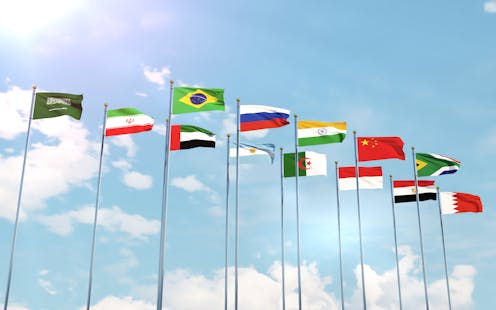
    Ilustrasi-ilustrasi bendera negara anggota BRICS dan mitra. justit/Shutterstock

    Indonesia’s decision to pursue membership in BRICS – an emerging economy bloc comprising Brazil, Russia, India, China, and South Africa – signals that President Prabowo Subianto is steering foreign policy in a direction contrasting with his predecessors.

    During Joko “Jokowi” Widodo’s two-term administration, then-former Foreign Minister Retno Marsudi led efforts to integrate Indonesia’s economy with Western institutions by working to secure membership with the OECD.

    Since BRICS is an alternative to Western-dominated organisations, many observers scrutinised and questioned Indonesia’s nonalignment commitment. However, Foreign Minister Sugiono argued that BRICS aligns with Indonesia’s ‘free and active’ foreign policy, allowing Indonesia to collaborate widely without aligning too closely with any single bloc.

    For Sugiono, joining BRICS means paving the way to advance the new government’s goals of food security, energy independence, poverty alleviation, and human capital development. The bloc offers access to funding, technology, and trade opportunities to tackle key challenges in those sectors. BRICS, with its emphasis on fairness and cooperation, supports Indonesia’s vision for a more inclusive and sustainable future.

    The shift from Retno’s OECD focus to Sugiono’s BRICS approach reflects at least two visions. First, Indonesia seeks to reassess its strategic position as the leading economy in Southeast Asia. Second, the country seeks to switch from its nonalignment stance to multi-alignment. The later will help navigate partnerships with both developed and emerging economies, balancing traditional alliances with new opportunities.

    Joining BRICS can amplify Indonesia’s influence in its already strong ties with each of the member countries and unlock opportunities beyond one-on-one partnerships.

    Fear of missing out

    Indonesia’s pivot to BRICS reflects both its relationship with major powers, such as China and the US, and regional pressures.

    Neighbouring countries Malaysia and Thailand have recently expressed interest in BRICS, creating a sense of competition within Southeast Asia. Both countries joining the bloc could erode Indonesia’s leadership and influence in the region, especially in affecting global affairs.

    Through ASEAN, Indonesia has sought to act as a regional stabiliser and mediator amid rising polarisation between the West and China.

    As its de facto leader, Indonesia has historically championed initiatives like the South China Sea Code of Conduct and Myanmar’s peace process. Its G20 presidency further underscored its role as a mediator between global powers.

    This ‘fear of missing out’ has spurred Indonesia’s interest in BRICS.

    Joining BRICS ahead of its regional peers ensures that Indonesia maintains its leadership position in ASEAN. For Prabowo’s administration, BRICS offers a platform to advance Indonesia’s interests in maritime security, economic growth, and global governance. It is a strategic move beyond an economic decision to amplify its voice on global issues and prevent fellow Southeast Asian countries from overtaking it in shaping the bloc’s agenda.

    Bold (but not one) direction

    Indonesia’s BRICS membership announcement highlights the new administration’s foreign policy ambitions, centred on two key shifts: adopting a multi-alignment strategy and strengthening its ‘good neighbour’ policy.

    Prabowo envisions engaging with all nations, fostering friendly relations while opposing oppression. This approach resonates with Indonesia’s historical commitment to sovereignty and equality in international relations.

    Indonesia has traditionally adhered to a nonalignment principle. This virtue has aided the country navigating major power blocs without binding itself to any single alliance. However, the current geopolitical climate – marked by intensifying tensions between global powers, regional conflicts, and intricate challenges – demands a more flexible and strategic approach.

    By joining BRICS, Indonesia avoids taking sides and instead diversifies its partnerships to maximise benefits. This multi-aligned approach enables active participation in BRICS discussions on multilateral reform.

    Prabowo’s ‘good neighbour policy’ further underscores the importance of maintaining positive relations with all countries. It empowers developing nations and advocates for a more equitable global order and economic system. This strategy also facilitates Indonesia’s resilience by fostering partnerships in food and energy security, poverty alleviation, and human capital development.

    Such collaborations reduce reliance on Western financial systems and enhance Indonesia’s autonomy. Ultimately, these strategic directions position Indonesia as a sovereign and dynamic player capable of balancing global relationships while advancing its own priorities.

    What about the OECD?

    This move does not mean the OECD is off the table for Indonesia. Instead, Prabowo’s approach reflects a dual-track strategy that values both alliances for their respective benefits.

    The OECD remains a long-term objective to enhance Indonesia’s economic governance and regulatory standards. It serves the goal of providing the country with stable relationships within the Western economic framework. Meanwhile, BRICS offers an immediate avenue for Indonesia to deepen ties with equivalent economies and actively shape policies that impact the Global South.

    Sugiono’s statement in Kazan emphasised Indonesia’s commitment to engaging in other forums, including the G20 and OECD discussions. It highlighted the country’s flexibility in international alliances.

    This dual-track strategy reinforces Indonesia’s role as a bridge between developed and developing nations, maximising the benefits of both alliances without sacrificing its autonomy.

    What’s next for Indonesia?

    Indonesia’s decision to join BRICS marks a significant evolution in its foreign policy. By participating in BRICS, Indonesia positions itself as a critical player in global discussions on economic reform and development, asserting its voice within a multi-polar world order.

    Indonesia is charting a path that balances traditional alliances with emerging opportunities, reinforcing its role as a dynamic, independent player on the world stage.

    The Conversation

    Aswin Ariyanto Azis tidak bekerja, menjadi konsultan, memiliki saham, atau menerima dana dari perusahaan atau organisasi mana pun yang akan mengambil untung dari artikel ini, dan telah mengungkapkan bahwa ia tidak memiliki afiliasi selain yang telah disebut di atas.

    – ref. Indonesia’s BRICS agenda: 2 reasons Prabowo’s foreign policy contrasts with Jokowi’s – https://theconversation.com/indonesias-brics-agenda-2-reasons-prabowos-foreign-policy-contrasts-with-jokowis-242920

    MIL OSI Analysis –

    July 5, 2025
  • MIL-OSI Analysis: Acehnese women: Crucial role in peacebuilding overlooked, discriminated by local regulations

    Source: The Conversation – Indonesia – By Suraiya Kamaruzzaman, Dosen Fakultas Teknik / Kepala Pusat Riset Perubahan Iklim USK, Universitas Syiah Kuala

    Bithography/Shutterstock

    20 years have passed since the Aceh tsunami, leaving deep scars on Indonesia, especially for those directly affected. Aceh was also recovering from a three-decade armed conflict between the Free Aceh Movement and the national government

    Throughout December 2024, The Conversation Indonesia, in collaboration with academics, is publishing a special edition honouring the 20 years of efforts to rebuild Aceh. We hope this series of articles preserves our collective memory while inspiring reflection on the journey of recovery and peace in the land of ‘Serambi Makkah.’


    Acehnese women have long been integral to the history of their region, particularly after the 2004 tsunami, one of Indonesia’s deadliest natural disasters, and the Helsinki Peace Agreement, which ended years of conflict between the government and the Free Aceh Movement (GAM). Despite their crucial contributions to rebuilding and fostering peace, women in Aceh still face major challenges in ensuring that the peace achieved includes their needs and rights.

    Their efforts often go unrecognised, and the policies that shape their lives fail to address their realities. In some cases, these policies actively discriminate against women.

    Policies that marginalise women

    As the conflict in Aceh escalated into firefights, lasting over a decade of 1989-2005, many women became primary breadwinners, ensuring their children’s education and providing emotional support to their families. Around 2,000 women actively participated in the fight, picking up arms as combatants.

    In the years following the 2004 tsunami and the 2005 Helsinki Peace Agreement, some progress was made to include women in policy-making processes. However, the outcomes have been unremarkable. Policies implemented after the peace agreement rarely put women’s needs first or acknowledged their efforts.

    For instance, Aceh’s 2009 Qanun–a regulation unique to Aceh–aims to promote women’s empowerment and protection, but its implementation remains weak. Women have little say in decision-making, and their representation in province, district, and city-level leadership posts remains minimal.

    Here are some examples of how women in Aceh have been sidelined in decision-making, discriminated against in their daily lives and frequently harassed:

    • Absent in politics: In 2017, only one woman was elected deputy mayor among 23 district leaders. Similarly, just two out of 65 top provincial officials were women. These figures reflect a stark imbalance, especially when compared to the substantial roles women played during the conflict and its aftermath.

    • Clothing guideline: Regulations ostensibly implemented under Islamic law often restrict women’s freedoms. For example, West Aceh’s 2010 regulation requires women to wear skirts, prohibiting the use of trousers despite their roots in traditional Aceh’s attire. Women become subjects of public inspection, and violations ends with them not receiving public services that should be open for any citizens.

    • Discriminatory norms and limiting women’s freedom: In Lhokseumawe, a 2013 circular mandated women ride sidesaddle on motorcycles, even though such a position increases the risk of accidents. Similarly, a 2018 directive in Bireuen forbids women from being served in cafes after 9 PM without a male guardian and bans women from sitting with unrelated men.

    • Gender-based violence: Aceh also faces high rates of violence against women. Between 2019 and 2023, more than 5,000 cases of violence against women and children were reported. Shockingly, Aceh has the highest number of rape cases in Indonesia.

    • Insufficient support for victims: Despite the severity of the issue, support for survivors remains inadequate. From 2020 to 2024, only 0.12% of Aceh’s provincial budget was allocated to the Women’s Empowerment and Child Protection Agency. While this allocation has increased slightly over time, it is still lacking to address the needs of women, particularly those who suffered from violence and the conflict.

    Young women as the agents of change

    The younger generation, particularly Gen Z, offers hope for a brighter future. Acehnese young women are increasingly leveraging digital platforms to advocate for their rights and challenge societal norms. Their ability to connect with global networks gives them tools to amplify their voices and demand equality.

    This new generation has the potential to drive meaningful change, but they face entrenched patriarchal norms that require dismantling. To achieve substantial peace and gender equality in Aceh, empowering young women as agents of change and supporting their initiatives to create a more inclusive society is essential.

    To ensure that Aceh achieves lasting peace that benefits everyone, several steps are necessary:

    • Inclusive policy-making: Women must be included in all decision-making processes, especially those related to peacebuilding and post-conflict recovery.

    • Reforming discriminatory policies: Laws restricting women’s rights must be repealed to create a more equitable environment.

    • Comprehensive support for survivors: Addressing the needs of survivors of violence through legal, medical, and psychological support is crucial.

    • Strengthening Legal Protections: Laws like Aceh’s Qanun Jinayah (Islamic Criminal Law) should be revised better to protect women, particularly victims of sexual violence.

    Acehnese women have demonstrated remarkable resilience and strength throughout the region’s history. By ensuring their voices are heard and their rights respected, Aceh can move closer to achieving true peace and equality for all its citizens.

    The Conversation

    Suraiya Kamaruzzaman tidak bekerja, menjadi konsultan, memiliki saham, atau menerima dana dari perusahaan atau organisasi mana pun yang akan mengambil untung dari artikel ini, dan telah mengungkapkan bahwa ia tidak memiliki afiliasi selain yang telah disebut di atas.

    – ref. Acehnese women: Crucial role in peacebuilding overlooked, discriminated by local regulations – https://theconversation.com/acehnese-women-crucial-role-in-peacebuilding-overlooked-discriminated-by-local-regulations-246240

    MIL OSI Analysis –

    July 5, 2025
  • MIL-OSI Analysis: Sugary drinks are a killer: a 20% tax would save lives and rands in South Africa

    Source: The Conversation – Africa (2) – By Susan Goldstein, Associate Professor and Director of the SAMRC/Wits Centre for Health Economics and Decision Science – PRICELESS SA (Priority Cost Effective Lessons in Systems Strengthening South Africa), University of the Witwatersrand

    Non-communicable diseases such as diabetes, hypertension and cardiovascular conditions account for over 70% of global deaths annually.

    In South Africa, non-communicable diseases cause more than half of all deaths. Diabetes ranks as the second leading cause after tuberculosis.

    A major contributor to rising diabetes rates is the high consumption of sugar-sweetened beverages, including cooldrinks.

    The World Health Organization recommends a tax of at least 20% on sugary drinks as an effective tool to help reduce consumption and curb related health risks.

    South Africa introduced a tax on sugar-sweetened beverages, officially known as the Health Promotion Levy, in 2018.

    The tax applies at R0.0221 ($0.0012) per gram of sugar beyond a 4g/100ml threshold, amounting to an 8% of final selling price. The tax has increased slightly since it was introduced, but not in line with inflation. The Health Promotion Levy therefore falls short of the original 20% target as industry pressure led to a watered-down version of it.

    I lead the South African Medical Research Council/Wits Centre for Health Economics and Decision Science – PRICELESS SA, which has been studying various aspects of the levy for over 10 years.

    PRICELESS SA is still in the process of measuring the health and financial impact of not implementing the Health Promotion Levy at the recommended 20%. A lack of recent data adds to this challenge. But it is worth noting that the World Obesity Report shows that obesity is still a severe problem in South Africa.

    Without interventions, obesity in South Africa is projected to affect 30 million adults and 10 million children by 2035. In 2019 there were 55,238 deaths in South Africa from non-communicable diseases attributable to obesity, and with an annual increase of 2.3% in obesity, deaths are going to increase.

    Taxing sugary beverages is effective

    Despite the sugar industry’s claims that the Health Promotion Levy is ineffective, global evidence strongly suggests otherwise. Countries that have implemented such taxes have seen significant declines in sugar consumption.

    Sugar-sweetened beverage taxes have been implemented in 103 countries and territories globally and have been shown to be effective in many countries.

    In Ireland there was a 30.2% reduction in sugar intake through these beverages.

    In California a study showed a decrease in overweight and obesity among young people living in cities where there was a sugary beverage tax.

    In Mexico, a sugar-sweetened beverages tax at 1 peso ($0.05) per litre was introduced in 2014, and by 2016, sugary drinks sales had dropped by 37%.

    Similarly, in the UK, a tax introduced in 2018 led to a 35.4% reduction in sugar consumption from taxed beverages.

    The levy has had a positive impact in South Africa. Studies show decreased purchasing of these beverages. There were greater reductions in sales among lower socioeconomic groups and in sub-populations with higher sugary drink consumption.

    Mean sugar from taxable beverage purchases fell from 16.25 g/capita per day from the pre-health promotion levy announcement to 10.63 g/capita per day in the year after implementation.

    Lower-income households, which initially purchased more taxable sugary beverages than wealthier households, showed the most significant reductions in consumption after the tax was enforced.

    This is particularly important as non-communicable diseases disproportionately affect poor and vulnerable populations.

    Stronger taxation on sugary beverages not only decreases consumption but also encourages reformulation by manufacturers, leading to healthier products.

    The levy does not cause job losses

    Sugar-related industries often argue that the tax has led to massive job losses.

    Our research contradicts these claims.

    A recent study carried out by PRICELESS SA, funded by Bloomberg Philanthropies through the University of North Carolina and the South African Medical Research Council, showed no significant association between the levy and employment levels. It showed that the levy had not been associated with job creation or job losses in sugar-related industries. These include agriculture, beverage manufacturing and commercial enterprises that sell food and beverages.

    The study suggests several factors that may explain this:

    Firstly, firms may reallocate labour within their operations rather than
    cut jobs.

    Secondly, many beverage producers have responded to the tax by reformulating their products, reducing the sugar content and using non-nutritive sweeteners rather than reducing production.

    Thirdly, demand for taxed sugary drinks has not declined enough to affect employment.

    Finally, consumers often switch to untaxed alternatives produced by the same companies, preventing financial losses to the industry.

    Increasing the levy is beneficial to the public purse

    The recent delay of South Africa’s budget speech, due to disagreements within the government over the proposed value added tax increase of two percentage points, highlights the urgent need for additional and alternative revenue sources.

    South Africa’s health system is experiencing a massive financial burden due to overweight and obesity, costing R33 billion (US$1.78 billion) annually. This expense accounts for 15.38% of the government’s health expenditure and 0.67% of the country’s GDP. On a per-person basis, the annual cost of overweight and obesity is R2,769 (US$150).

    On the other hand, the levy generated R5.8 billion (US$313m) in revenue over its first two fiscal years.

    Beyond raising funds, a higher tax rate would provide public health benefits and savings for health services.

    Based on our research, increasing the levy to 20% in South Africa could reduce obesity rates by 2.4 to 3.8 percentage points, prevent 85,000 strokes, and save 72,000 lives over two decades.

    These improvements potentially save over R5 billion (US$270m) in medical costs.

    Unlike other taxation measures, which affect all consumers equally, the levy primarily targets discretionary purchases, making it a fairer fiscal tool.

    Therefore, government must act – raise the Health Promotion Levy to 20% and cut the sugar-fuelled health crisis at its root.

    Raising the levy to 20% would be a smarter tax for a healthier nation.

    Darshen Naidoo, Legal Researcher and Associate Lecturer at PRICELESS SA, University of the Witwatersrand, Johannesburg contributed to the article.

    The Conversation

    Susan Goldstein on behalf of PRICELESS receives funding from the Bloomberg Foundation, the SAMRC and the National Institutes for Health Research

    – ref. Sugary drinks are a killer: a 20% tax would save lives and rands in South Africa – https://theconversation.com/sugary-drinks-are-a-killer-a-20-tax-would-save-lives-and-rands-in-south-africa-251393

    MIL OSI Analysis –

    July 5, 2025
  • MIL-OSI Analysis: Low turnout and an unfair voting system: UK elections ranked in the bottom half of countries in Europe

    Source: The Conversation – UK – By Toby James, Professor of Politics and Public Policy, University of East Anglia

    The UK has historically been held up as leading democracy with free and fair elections. However, our new report shows election quality in the UK is now ranked in the bottom half of countries in Europe.

    The Global Electoral Integrity Report provides scores for election quality around the world. It defines electoral integrity as the extent to which elections empower citizens.

    Iceland received the highest score for an election that took place in 2024, the “year of elections” during which 1.6 billion people went to the polls, according to Time Magazine. This was an unprecedented concentration of democratic activity in a single year. Iceland has a successful system of automatic voter registration and an electoral system that is judged to be fair to smaller parties.


    Want more politics coverage from academic experts? Every week, we bring you informed analysis of developments in government and fact check the claims being made.

    Sign up for our weekly politics newsletter, delivered every Friday.


    Countries that scored highly based on their most recent election include Sweden, Denmark, Canada, Finland and Lithuania. Those at the opposite end of the scale include Syria, Belarus, Egypt, and Nicaragua. The UK is ranked 24th out of 39 countries in Europe. It is below Estonia, the Czech Republic, Italy, Austria, Luxembourg and Slovakia. It is ranked 53rd out of 170 countries overall.

    The US also saw a decline. The beacons for electoral democracy are therefore now found in mainland Europe (most notably Scandinavia), Australasia, South America and the southern parts of Africa – rather than the UK and US. The centre of global democratic authority has shifted away from Westminster.

    Electoral Integrity in most recent national election up to the end of 2024.
    Electoral Integrity Project, CC BY-ND

    The weaknesses in the UK system

    There remain many areas of strength in UK elections. UK electoral officials show professionalism and independence and there is no concern about the integrity of the vote counting process. There is no evidence of widespread electoral fraud.

    A major weakness is in the fairness of the electoral rules for small parties. The electoral system generated a very disproportional result in 2024. Labour took nearly two-thirds of the seats in parliament, a total of 412, with less than 10 million votes (only 34% of votes cast). Labour won a massive majority in terms of parliamentary arithmetic but the the government did not enter office with widespread support.

    By contrast, Reform and the Greens received 6 million votes between them, but only nine MPs. The electoral system may have worked when Britain had a two-party system – but the two-party system no longer holds. Today’s Britain is more diverse, and political support is more distributed.

    The UK also scores poorly on voter registration. It is estimated that there are around 7 million to 8 million people not correctly registered or missing from the registers entirely. This is not many less than the 9.7 million people whose votes gave the government a landslide majority. The UK does not have a system of automatic voter registration, which is present in global leaders such as Iceland, where everyone is enrolled without a hiccup.

    Another problem is participation. Turnout in July 2024 was low – with only half of adults voting. Voting has been made more difficult as the Elections Act of 2022 introduced compulsory photographic identification for the first time at the general election. This was thought to have made it more difficult for many citizens to vote because the UK does not have a national identity card which all citizens hold.

    Meanwhile, there are further swirling headwinds. The spread of disinformation by overseas actors in elections has become a prominent challenge around the world and there was evidence of disinformation in this campaign too. Violence during the electoral period was thought to have been removed from British elections in Victorian times. But more than half candidates experience abuse and intimidation during the electoral period.

    Action needed

    One year into its time in office, the government is yet to act on this issue. The word “democracy” was missing from the prime minister’s strategic defence review, despite the emphasis on protecting the UK from Russia, a country known for electoral interference and other forms of attack on democracies.

    This was a sharp contrast to the former government’s 2021 review, which emphasised that a “world in which democratic societies flourish and fundamental human rights are protected is one that is more conducive to our sovereignty, security and prosperity as a nation”.

    In its election manifesto, Labour promised to “address the inconsistencies in voter ID rules”, “improve voter registration” and give 16 and 17-year-olds the right to vote in all elections. There needs to be firm action on electoral system change, automatic voter registration, campaign finance reform, voter identification changes and other areas.

    The Reform party is ahead in the polls and has consistently promised proportional representation. If Labour doesn’t make the reforms, another party might do so instead – and reap the benefits.

    There are a complex set of challenges facing democracy and elections. New technological challenges, change in attitudes, international hostility and new emergencies are combining to batter the door of democracy down.

    International organisations are increasingly stressing that political leaders need to work together and take proactive action to protect elections against autocratic forces. This means not only supporting democracy in their messages on the world stage – but also introducing reforms to create beacons of democracy in their own countries.

    Toby James has previously received funding from the AHRC, ESRC, Joseph Rowntree Reform Trust, British Academy, Leverhulme Trust, Electoral Commission, Nuffield Foundation, the McDougall Trust and Unlock Democracy. His current research is funded by the Canadian SSHRC.

    Holly Ann Garnett receives funding from the Social Sciences and Humanities Research Council of Canada and the Canadian Defence Academy Research Programme. She has previously received funding from: the British Academy, the Canadian Institute for Advanced Research, the NATO Public Diplomacy Division, the American Political Science Association Centennial Centre, and the Conference of Defence Associations.

    – ref. Low turnout and an unfair voting system: UK elections ranked in the bottom half of countries in Europe – https://theconversation.com/low-turnout-and-an-unfair-voting-system-uk-elections-ranked-in-the-bottom-half-of-countries-in-europe-260396

    MIL OSI Analysis –

    July 5, 2025
  • MIL-OSI Analysis: Motion sickness drug linked to cases of robbery and assault – here’s what you need to know about ‘devil’s breath’

    Source: The Conversation – UK – By Dipa Kamdar, Senior Lecturer in Pharmacy Practice, Kingston University

    Scopolamine is extracted from brugmansia MaCross-Photography/Shutterstock

    Scopolamine, more chillingly known as “devil’s breath,” is a drug with a dual identity. In medicine, it’s used to prevent motion sickness and nausea. But in the criminal underworld, particularly in parts of South America, it has gained a dark reputation as a substance that can erase memory, strip away free will and facilitate serious crimes. Now, its presence may be sparking fresh concerns in the UK.

    While most reports of devil’s breath come from countries like Colombia, concerns about its use in Europe are not new. In 2015, three people were arrested in Paris for allegedly using the drug to rob victims, turning them into compliant “zombies”.

    The UK’s first known murder linked to scopolamine was reported in 2019 when the Irish dancer Adrian Murphy was poisoned by thieves attempting to sell items stolen from him. In a more recent case in London, a woman reported symptoms consistent with scopolamine exposure after being targeted on public transport.


    Get your news from actual experts, straight to your inbox. Sign up to our daily newsletter to receive all The Conversation UK’s latest coverage of news and research, from politics and business to the arts and sciences.


    Scopolamine, also known as hycosine, is a tropane alkaloid, a type of plant-derived compound found in the nightshade family (Solanaceae). It has a long history: indigenous communities in South America traditionally used it for spiritual rituals due to its potent psychoactive effects.

    In modern medicine, scopolamine (marketed in the UK as hyoscine hydrobromide) is prescribed to prevent motion sickness, nausea, vomiting and muscle spasms. It also reduces saliva production before surgery. Brand names include Kwells (tablets) and Scopoderm (patches).

    As an anticholinergic drug, scopolamine blocks the neurotransmitter acetylcholine, which plays a vital role in memory, learning, and coordination. Blocking it helps reduce nausea by interrupting signals from the balance (vestibular) system to the brain. But it also comes with side effects, especially when used in high doses or outside a clinical setting.

    How it affects the brain

    Scopolamine disrupts the cholinergic system, which is central to memory formation and retrieval. As a result, it can cause temporary but severe memory loss: a key reason it’s been weaponised in crimes. Some studies also suggest it increases oxidative stress in the brain, compounding its effects on cognition.

    The drug’s power to erase memory, sometimes described as “zombifying”, has made it a focus of forensic and criminal interest. Victims often describe confusion, hallucinations and a complete loss of control.

    Uses and misuses

    In clinical settings, scopolamine is sometimes used off-label for depression, excessive sweating, or even to help quit smoking. But outside these uses, it’s increasingly associated with danger.

    Recreational users are drawn to its hallucinogenic effects – but the line between tripping and toxic is razor thin.

    In Colombia and other parts of South America, scopolamine, also known as burundanga, has been implicated in countless robberies and sexual assaults. Victims describe feeling dreamlike, compliant, and unable to resist or recall events. That’s what makes it so sinister – it robs people of both agency and memory.

    The drug is often administered surreptitiously. In its powdered form, it’s odourless and tasteless, making it easy to slip into drinks or blow into someone’s face, as some victims have reported. Online forums detail how to make teas or infusions from plant parts, seeds, roots, flowers – heightening the risk of DIY misuse.

    Once ingested, the drug works quickly and exits the body within about 12 hours, making it hard to detect in routine drug screenings. For some people, even a dose under 10mg can be fatal.

    Devil’s Breath documentary trailer, Journeyman Pictures.

    Signs of scopolamine poisoning include rapid heartbeat and palpitations, dry mouth and flushed skin, blurred vision, confusion and disorientation, hallucinations and drowsiness.

    If you experience any of these, especially after an unexpected drink or interaction, seek medical attention immediately.

    Dipa Kamdar does not work for, consult, own shares in or receive funding from any company or organisation that would benefit from this article, and has disclosed no relevant affiliations beyond their academic appointment.

    – ref. Motion sickness drug linked to cases of robbery and assault – here’s what you need to know about ‘devil’s breath’ – https://theconversation.com/motion-sickness-drug-linked-to-cases-of-robbery-and-assault-heres-what-you-need-to-know-about-devils-breath-259720

    MIL OSI Analysis –

    July 5, 2025
  • MIL-OSI: LNG Energy Group Informs Material Events

    Source: GlobeNewswire (MIL-OSI)

    TORONTO, July 04, 2025 (GLOBE NEWSWIRE) — LNG Energy Group Corp. (TSXV: LNGE) (TSXV: LNGE.WT) (OTCQB: LNGNF) (FWB: E26) (the “Company” or “LNG Energy Group”) announces that the Failure-to-File Cease Trade Orders in Multiple Jurisdictions (FFTCO) continues and that the Company expects to file the Company’s annual audited financial statements for the fiscal year ended December 31, 2024, the related management’s discussion and analysis, and the CEO and CFO certificates relating to the audited annual financial statements as required by National Instrument 52-109 – Certification of Disclosure in Issuers’ Annual and Interim Filings (collectively, the “Required Documents”) for the fiscal year ended December 31, 2024, within the timeframe granted by the Ontario Securities Commission (the “OSC”). Such filings will constitute the Company’s application to have the FFCTO revoked. There can be no assurance that the FFCTO will be revoked on the timeline contemplated by the Company.

    As part of the strategic review process the Company announced on December 04, 2024, the Company has contemplated with its financial and legal advisors a number of alternatives including financings, corporate reorganization, strategic partnerships, acquisitions, assets spin-offs and/or farm-outs, sale, and other forms of business combination. As part of this process, the Company has decided to terminate the long-term Gas Sales Agreements in place, and it will evaluate natural gas marketing alternatives more in tune with its current sales volumes and present market conditions. Lenders under the Credit Agreement have notified the Company of an event of default under its Credit Agreement, and LNG Energy Group and the lenders are in conversations about the situation. The Company’s Colombian branch applied for admittance into the Proceso de Recuperación Empresarial (“PRES”) as regulated under the Colombia Law 2437 of 2024, for insolvency protection, which should result in operations optimization and renegotiation of obligations with suppliers and other parties.

    LNG Energy Group continues with its initiatives to stabilize natural gas production, optimize costs and enhance its liquidity position. We expect to announce soon the results of this comprehensive strategic review process.

    About LNG Energy Group

    The Company is focused on the acquisition and development of natural gas production and exploration assets in Latin America. For more information, please visit www.lngenergygroup.com.

    For more information please contact:

    Angel Roa, Chief Financial Officer LNG Energy Group Corp.
    Website: www.lngenergygroup.com
    Email: investor.relations@lngenergygroup.com

    Find us on social media:
    LinkedIn: https://www.linkedin.com/company/lng-energy-group-inc/
    Instagram: @lngenergygroup
    X: @LNGEnergyCorp

    CAUTIONARY NOTE REGARDING FORWARD-LOOKING INFORMATION:

    This news release contains certain forward-looking information that reflect the current views and/or expectations of management of LNG Energy Group with respect to performance, business and future events. Forward-looking information can often be identified by words such as “may”, “will”, “would”, “could”, “should”, “believes”, “estimates”, “projects”, “potential”, “expects”, “plans”, “intends”, “anticipates”, “targeted”, “continues”, “forecasts”, “designed”, “goal”, or the negative of those words or other similar or comparable words. Forward-looking statements are based on the then-current expectations, beliefs, assumptions, estimates and forecasts about the business and the industry and markets in which LNG Energy Group operates. Forward-looking information involves known and unknown risks, uncertainties and other factors that may cause actual results to differ materially from those expressed or implied in the forward-looking information, readers should not place undue reliance on such information. The risks and uncertainties include, but are not limited to, the anticipating timing of filing the Required Documents. Forward-looking information is current as of the date it is made and is based on reasonable estimates and assumptions made by us at the relevant time in light of our experience and perception of historical trends, current conditions and expected future developments, as well as other factors that we believe are appropriate and reasonable in the circumstances. LNG Energy Group does not undertake any obligation to release publicly any revisions for updating any voluntary forward-looking statements, except as required by applicable securities law.

    Neither the TSX Venture Exchange nor its Regulation Services Provider (as that term is defined in the policies of the TSX Venture Exchange) accepts responsibility for the adequacy or accuracy of this release.

    The MIL Network –

    July 5, 2025
  • MIL-OSI: LNG Energy Group Informs Material Events

    Source: GlobeNewswire (MIL-OSI)

    TORONTO, July 04, 2025 (GLOBE NEWSWIRE) — LNG Energy Group Corp. (TSXV: LNGE) (TSXV: LNGE.WT) (OTCQB: LNGNF) (FWB: E26) (the “Company” or “LNG Energy Group”) announces that the Failure-to-File Cease Trade Orders in Multiple Jurisdictions (FFTCO) continues and that the Company expects to file the Company’s annual audited financial statements for the fiscal year ended December 31, 2024, the related management’s discussion and analysis, and the CEO and CFO certificates relating to the audited annual financial statements as required by National Instrument 52-109 – Certification of Disclosure in Issuers’ Annual and Interim Filings (collectively, the “Required Documents”) for the fiscal year ended December 31, 2024, within the timeframe granted by the Ontario Securities Commission (the “OSC”). Such filings will constitute the Company’s application to have the FFCTO revoked. There can be no assurance that the FFCTO will be revoked on the timeline contemplated by the Company.

    As part of the strategic review process the Company announced on December 04, 2024, the Company has contemplated with its financial and legal advisors a number of alternatives including financings, corporate reorganization, strategic partnerships, acquisitions, assets spin-offs and/or farm-outs, sale, and other forms of business combination. As part of this process, the Company has decided to terminate the long-term Gas Sales Agreements in place, and it will evaluate natural gas marketing alternatives more in tune with its current sales volumes and present market conditions. Lenders under the Credit Agreement have notified the Company of an event of default under its Credit Agreement, and LNG Energy Group and the lenders are in conversations about the situation. The Company’s Colombian branch applied for admittance into the Proceso de Recuperación Empresarial (“PRES”) as regulated under the Colombia Law 2437 of 2024, for insolvency protection, which should result in operations optimization and renegotiation of obligations with suppliers and other parties.

    LNG Energy Group continues with its initiatives to stabilize natural gas production, optimize costs and enhance its liquidity position. We expect to announce soon the results of this comprehensive strategic review process.

    About LNG Energy Group

    The Company is focused on the acquisition and development of natural gas production and exploration assets in Latin America. For more information, please visit www.lngenergygroup.com.

    For more information please contact:

    Angel Roa, Chief Financial Officer LNG Energy Group Corp.
    Website: www.lngenergygroup.com
    Email: investor.relations@lngenergygroup.com

    Find us on social media:
    LinkedIn: https://www.linkedin.com/company/lng-energy-group-inc/
    Instagram: @lngenergygroup
    X: @LNGEnergyCorp

    CAUTIONARY NOTE REGARDING FORWARD-LOOKING INFORMATION:

    This news release contains certain forward-looking information that reflect the current views and/or expectations of management of LNG Energy Group with respect to performance, business and future events. Forward-looking information can often be identified by words such as “may”, “will”, “would”, “could”, “should”, “believes”, “estimates”, “projects”, “potential”, “expects”, “plans”, “intends”, “anticipates”, “targeted”, “continues”, “forecasts”, “designed”, “goal”, or the negative of those words or other similar or comparable words. Forward-looking statements are based on the then-current expectations, beliefs, assumptions, estimates and forecasts about the business and the industry and markets in which LNG Energy Group operates. Forward-looking information involves known and unknown risks, uncertainties and other factors that may cause actual results to differ materially from those expressed or implied in the forward-looking information, readers should not place undue reliance on such information. The risks and uncertainties include, but are not limited to, the anticipating timing of filing the Required Documents. Forward-looking information is current as of the date it is made and is based on reasonable estimates and assumptions made by us at the relevant time in light of our experience and perception of historical trends, current conditions and expected future developments, as well as other factors that we believe are appropriate and reasonable in the circumstances. LNG Energy Group does not undertake any obligation to release publicly any revisions for updating any voluntary forward-looking statements, except as required by applicable securities law.

    Neither the TSX Venture Exchange nor its Regulation Services Provider (as that term is defined in the policies of the TSX Venture Exchange) accepts responsibility for the adequacy or accuracy of this release.

    The MIL Network –

    July 5, 2025
  • MIL-OSI Analysis: Ageing isn’t the same everywhere – why inflammation may be a lifestyle problem

    Source: The Conversation – UK – By Samuel J. White, Associate Professor & Head of Projects, York St John University

    The Orang Asli age differently. Azami Adiputera/Shutterstock.com

    For years, scientists have believed that inflammation inevitably increases with age, quietly fuelling diseases like heart disease, dementia and diabetes. But a new study of Indigenous populations challenges that idea and could reshape how we think about ageing itself.

    For decades, scientists have identified chronic low-level inflammation – called “inflammaging” – as one of the primary drivers of age-related diseases. Think of it as your body’s immune system stuck in overdrive – constantly fighting battles that don’t exist, gradually wearing down organs and systems.

    But inflammaging might not be a universal feature of ageing after all. Instead, it could be a byproduct of how we live in modern society.


    Get your news from actual experts, straight to your inbox. Sign up to our daily newsletter to receive all The Conversation UK’s latest coverage of news and research, from politics and business to the arts and sciences.


    The research, published in Nature Aging, compared patterns of inflammation in four very different communities around the world. Two groups were from modern, industrialised societies – older adults living in Italy and Singapore.

    The other two were Indigenous communities who live more traditional lifestyles: the Tsimane people of the Bolivian Amazon and the Orang Asli in the forests of Malaysia.

    The researchers analysed blood samples from more than 2,800 people, looking at a wide range of inflammatory molecules, known as cytokines. Their goal was to find out whether a pattern seen in earlier studies – where certain signs of inflammation rise with age and are linked to disease – also appears in other parts of the world.

    The answer, it turns out, is both yes and no.

    Among the Italian and Singaporean participants, the researchers found a fairly consistent inflammaging pattern. As people aged, levels of inflammatory markers in the blood, such as C-reactive protein and tumour necrosis factor, rose together. Higher levels were linked to a greater risk of chronic diseases including kidney disease and heart disease.

    But in the Tsimane and Orang Asli populations, the inflammaging pattern was absent. The same inflammatory molecules did not rise consistently with age, and they were not strongly linked to age-related diseases.

    In fact, among the Tsimane, who face high rates of infections from parasites and other pathogens, inflammation levels were often elevated. Yet this did not lead to the same rates of chronic diseases that are common in industrialised nations.

    Despite high inflammatory markers, the Tsimane experience very low rates of conditions such as heart disease, diabetes and dementia.

    Inflammaging may not be universal

    These results raise important questions. One possibility is that inflammaging, at least as measured through these blood signals, is not a universal biological feature of ageing. Instead, it may arise in societies marked by high-calorie diets, low physical activity and reduced exposure to infections.

    In other words, chronic inflammation linked to ageing and disease might not simply result from an inevitable biological process, but rather from a mismatch between our ancient physiology and the modern environment.

    The study suggests that in communities with more traditional lifestyles – where people are more active, eat differently and are exposed to more infections – the immune system may work in a different way. In these groups, higher levels of inflammation might be a normal, healthy response to their environment, rather than a sign that the body is breaking down with age.

    Another possibility is that inflammaging may still occur in all humans, but it might appear in different ways that are not captured by measuring inflammatory molecules in the blood. It could be happening at a cellular or tissue level, where it remains invisible to the blood tests used in this research.

    Chronic low-level inflammation may be a lifestyle problem.
    Nattakorn_Maneerat/Shutterstock.com

    Why this matters

    If these findings are confirmed, they could have significant consequences.

    First, they challenge how we diagnose and treat chronic inflammation in ageing. Biomarkers used to define inflammaging in European or Asian populations might not apply in other settings, or even among all groups within industrialised nations.

    Second, they suggest that lifestyle interventions aimed at lowering chronic inflammation, such as exercise, changes in diet, or drugs targeting specific inflammatory molecules, might have different effects in different populations. What works for people living in cities might be unnecessary, or even ineffective, in those living traditional lifestyles.

    Finally, this research serves as an important reminder that much of our knowledge about human health and ageing comes from studies conducted in wealthy, industrialised nations. Findings from these groups cannot automatically be assumed to apply worldwide.

    The researchers are clear: this study is just the beginning. They urge scientists to dig deeper, using new tools that can detect inflammation not just in the blood, but within tissues and cells where the real story of ageing may be unfolding. Just as important, they call for more inclusive research that spans the full range of human experience, not just the wealthy, urbanised corners of the world.

    At the very least, this study offers an important lesson. What we thought was a universal truth about the biology of ageing might instead be a local story, shaped by our environment, lifestyle and the way we live.

    The authors do not work for, consult, own shares in or receive funding from any company or organisation that would benefit from this article, and have disclosed no relevant affiliations beyond their academic appointment.

    – ref. Ageing isn’t the same everywhere – why inflammation may be a lifestyle problem – https://theconversation.com/ageing-isnt-the-same-everywhere-why-inflammation-may-be-a-lifestyle-problem-260322

    MIL OSI Analysis –

    July 5, 2025
  • MIL-OSI Submissions: Low turnout and an unfair voting system: UK elections ranked in the bottom half of countries in Europe

    Source: The Conversation – UK – By Toby James, Professor of Politics and Public Policy, University of East Anglia

    The UK has historically been held up as leading democracy with free and fair elections. However, our new report shows election quality in the UK is now ranked in the bottom half of countries in Europe.

    The Global Electoral Integrity Report provides scores for election quality around the world. It defines electoral integrity as the extent to which elections empower citizens.

    Iceland received the highest score for an election that took place in 2024, the “year of elections” during which 1.6 billion people went to the polls, according to Time Magazine. This was an unprecedented concentration of democratic activity in a single year. Iceland has a successful system of automatic voter registration and an electoral system that is judged to be fair to smaller parties.


    Want more politics coverage from academic experts? Every week, we bring you informed analysis of developments in government and fact check the claims being made.

    Sign up for our weekly politics newsletter, delivered every Friday.


    Countries that scored highly based on their most recent election include Sweden, Denmark, Canada, Finland and Lithuania. Those at the opposite end of the scale include Syria, Belarus, Egypt, and Nicaragua. The UK is ranked 24th out of 39 countries in Europe. It is below Estonia, the Czech Republic, Italy, Austria, Luxembourg and Slovakia. It is ranked 53rd out of 170 countries overall.

    The US also saw a decline. The beacons for electoral democracy are therefore now found in mainland Europe (most notably Scandinavia), Australasia, South America and the southern parts of Africa – rather than the UK and US. The centre of global democratic authority has shifted away from Westminster.

    Electoral Integrity in most recent national election up to the end of 2024.
    Electoral Integrity Project, CC BY-ND

    The weaknesses in the UK system

    There remain many areas of strength in UK elections. UK electoral officials show professionalism and independence and there is no concern about the integrity of the vote counting process. There is no evidence of widespread electoral fraud.

    A major weakness is in the fairness of the electoral rules for small parties. The electoral system generated a very disproportional result in 2024. Labour took nearly two-thirds of the seats in parliament, a total of 412, with less than 10 million votes (only 34% of votes cast). Labour won a massive majority in terms of parliamentary arithmetic but the the government did not enter office with widespread support.

    By contrast, Reform and the Greens received 6 million votes between them, but only nine MPs. The electoral system may have worked when Britain had a two-party system – but the two-party system no longer holds. Today’s Britain is more diverse, and political support is more distributed.

    The UK also scores poorly on voter registration. It is estimated that there are around 7 million to 8 million people not correctly registered or missing from the registers entirely. This is not many less than the 9.7 million people whose votes gave the government a landslide majority. The UK does not have a system of automatic voter registration, which is present in global leaders such as Iceland, where everyone is enrolled without a hiccup.

    Another problem is participation. Turnout in July 2024 was low – with only half of adults voting. Voting has been made more difficult as the Elections Act of 2022 introduced compulsory photographic identification for the first time at the general election. This was thought to have made it more difficult for many citizens to vote because the UK does not have a national identity card which all citizens hold.

    Meanwhile, there are further swirling headwinds. The spread of disinformation by overseas actors in elections has become a prominent challenge around the world and there was evidence of disinformation in this campaign too. Violence during the electoral period was thought to have been removed from British elections in Victorian times. But more than half candidates experience abuse and intimidation during the electoral period.

    Action needed

    One year into its time in office, the government is yet to act on this issue. The word “democracy” was missing from the prime minister’s strategic defence review, despite the emphasis on protecting the UK from Russia, a country known for electoral interference and other forms of attack on democracies.

    This was a sharp contrast to the former government’s 2021 review, which emphasised that a “world in which democratic societies flourish and fundamental human rights are protected is one that is more conducive to our sovereignty, security and prosperity as a nation”.

    In its election manifesto, Labour promised to “address the inconsistencies in voter ID rules”, “improve voter registration” and give 16 and 17-year-olds the right to vote in all elections. There needs to be firm action on electoral system change, automatic voter registration, campaign finance reform, voter identification changes and other areas.

    The Reform party is ahead in the polls and has consistently promised proportional representation. If Labour doesn’t make the reforms, another party might do so instead – and reap the benefits.

    There are a complex set of challenges facing democracy and elections. New technological challenges, change in attitudes, international hostility and new emergencies are combining to batter the door of democracy down.

    International organisations are increasingly stressing that political leaders need to work together and take proactive action to protect elections against autocratic forces. This means not only supporting democracy in their messages on the world stage – but also introducing reforms to create beacons of democracy in their own countries.

    Toby James has previously received funding from the AHRC, ESRC, Joseph Rowntree Reform Trust, British Academy, Leverhulme Trust, Electoral Commission, Nuffield Foundation, the McDougall Trust and Unlock Democracy. His current research is funded by the Canadian SSHRC.

    Holly Ann Garnett receives funding from the Social Sciences and Humanities Research Council of Canada and the Canadian Defence Academy Research Programme. She has previously received funding from: the British Academy, the Canadian Institute for Advanced Research, the NATO Public Diplomacy Division, the American Political Science Association Centennial Centre, and the Conference of Defence Associations.

    – ref. Low turnout and an unfair voting system: UK elections ranked in the bottom half of countries in Europe – https://theconversation.com/low-turnout-and-an-unfair-voting-system-uk-elections-ranked-in-the-bottom-half-of-countries-in-europe-260396

    MIL OSI –

    July 5, 2025
  • MIL-OSI United Kingdom: Nationwide clampdown on delivery riders working illegally

    Source: United Kingdom – Executive Government & Departments

    News story

    Nationwide clampdown on delivery riders working illegally

    Ramp-up of arrests and visits set to take place across the UK targeting migrants working illegally in the gig economy

    Immigration enforcement van

    Enforcement teams are gearing up to launch a nationwide blitz targeting illegal working hotspots, with a focus on the gig economy and migrants working as delivery riders.

    Under the Government’s Plan for Change to restore order to the immigration system and tougher enforcement of the rules, Home Office Immigration Enforcement teams will launch a major operation to disrupt this type of criminality.  

    Strategic, intel-driven activity will bring together officers across the UK and place an increased focus on migrants suspected of working illegally whilst in taxpayer funded accommodation or receiving financial support. 

    The law is clear that asylum seekers are only entitled to this support if they would otherwise be destitute. That is why anyone caught flagrantly abusing the system in this way, as a result of the operation, will face having support discontinued, whether that’s entitlement to accommodation or payments. 

    Operational teams will target certain hotspots across the country over a period of intensification, as well as going after organisations who wilfully employ those working illegally, through civil penalty referrals. Any business found to be illegally employing someone could face a fine of up to £60,000 per worker, director disqualifications and potential prison sentences of up to five years.     

    The Government has been surging action against illegal working since coming into power one year ago, with 10,031 illegal working visits leading to 7,130 arrests, marking a 48% and 51% rise respectively, compared to the year before (5 July 2023 to 28 June 2024). This marks the first time in a 12-month period where more than 10,000 visits have taken place. 

    748 illegal working civil penalty notices were also handed to businesses caught violating immigration rules in the first quarter (January to March) of the year, marking the highest level since 2016 – an 81% increase compared to the same time last year.  

    And the Government is tightening the law by making it a legal requirement for all companies, including the gig economy, to check anyone working for them has the legal right to do so. This will end the abuse of flexible working arrangements. The new measures will be introduced through the landmark Border Security, Asylum and Immigration Bill.

    Home Secretary Yvette Cooper, said:

    Illegal working undermines honest business and undercuts local wages – the British public will not stand for it and neither will this government.

    Often those travelling to the UK illegally are sold a lie by the people smuggling gangs that they will be able to live and work freely in this country, when in reality they end up facing squalid living conditions, minimal pay and inhumane working hours.

    We are surging enforcement action against this pull factor, on top of returning 30,000 people with no right to be here and tightening the law through our Plan for Change.

    But there is no single solution to the problem of illegal migration. That’s why we’ve signed landmark agreements with international partners to dismantle gangs and made significant arrests of notorious people smugglers.

    Director of Enforcement, Compliance and Crime, Eddy Montgomery, said:

    Our dedicated Immigration Enforcement officers have been ramping up action to disable illegal working across the board.

    This next step of co-ordinated activity will target those who seek to work illegally in the gig economy and exploit their status in the UK.

    That means if you are found to be working with no legal right to do so, we will bring the full force of powers available to us to disrupt and stop this abuse. There will no place to hide.

    This targeted action is on top of ongoing work across the country to disrupt people flouting the rules across different sectors. 

    Earlier this week, during a joint operation with the Metropolitan Police to go after people suspected of working illegally as cash in hand builders, officers targeted anti-social behaviour and illegally modified scooters and e-bikes. 20 Indian nationals were arrested as part of the operation. This included 16 overstayers, one illegal entrant, one port absconder and two small boat arrivals. 

    On 18 June, West Midlands teams conducted an operation on Smethwick High Street after receiving intelligence on a major collection point for people suspected of going to work illegally, primarily on construction sites. The team encountered 73 individuals, arresting 26 suspected immigration offenders (24 Indian nationals, one Nepalese national and one Italian national). This led to the detention of 11 Indian nationals.  

    And on 12 June, East of England teams conducted a multi-agency operation with police in Lynn Road, Wisbech, focusing on cash in hand builders using illegally modified e-bikes. They carried out 21 immigration checks which resulted the arrest of three men, including one Syrian, one Chinese and one Brazilian national. The police went on to seize six mopeds and one car for offences including driving with no insurance, no driving licence and disqualification. 

    The crackdown also sits alongside key join up with the delivery industry on tackling illicit account sharing. On Monday, 30 June , the Home Office and Department for Business and Trade met with major delivery firms and pledged to strengthen security checks to tackle illegal working. Deliveroo, Uber Eats and Just Eat have committed to increasing the number of daily facial recognition checks riders are required to take to verify their identity.  

    Illegal working is linked to exploitation, with teams often encountering squalid living conditions, people receiving little to no pay and inhumane working hours. In the worst instances, these individuals may be victims of modern slavery. 

    Immigration Enforcement take a number of steps to spot the signs of individuals who are potentially being exploited and, where appropriate, will refer people to the National Referral Mechanism so they can access support. They also work closely with crucial partners like the Gangmasters Labour Abuse Authority, to share insights and strengthen the approach to tackling labour exploitation.

    And this new operation is just one part of the government’s action to strengthen UK border security and disable the people smuggling gangs fuelling illegal migration. 

    Over the past year, the Prime Minister has been resetting relationships and forging partnerships across Europe and beyond, to ensure a targeted international response in breaking the model behind this vile trade. 

    Furthermore, nearly 30,000 people with no right to be in UK have been returned, landmark agreements have been signed with Iraq to dismantle gangs and Italy to take down illicit finance networks and a world-first people smuggling sanctions regime has been launched to ban travel and freeze assets.

    Share this page

    The following links open in a new tab

    • Share on Facebook (opens in new tab)
    • Share on Twitter (opens in new tab)

    Updates to this page

    Published 5 July 2025

    MIL OSI United Kingdom –

    July 5, 2025
  • MIL-OSI Analysis: Military force may have delayed Iran’s nuclear ambitions – but history shows that diplomacy is the more effective nonproliferation strategy

    Source: The Conversation – Global Perspectives – By Stephen Collins, Professor of Government and International Affairs, Kennesaw State University

    View of the United Nations logo at a 2022 conference of the Parties to the Treaty on the Non-Proliferation of Nuclear Weapons. Angela Weiss/AFP via Getty Images)

    While the U.S. military’s strikes on Iran on June 21, 2025, are believed to have damaged the country’s critical nuclear infrastructure, no evidence has yet emerged showing the program to have been completely destroyed. In fact, an early U.S. Defense Intelligence Agency assessment surmised that the attack merely delayed Iran’s possible path to a nuclear weapon by less than six months. Further, Rafael Mariano Grossi, director of the United Nations’ International Atomic Energy Agency, stated that Iran may have moved its supply of enriched uranium ahead of the strikes, and assessed that Tehran could resume uranium enrichment “in a matter of months.”

    Others have warned that the strikes may intensify the Islamic Republic’s nuclear drive, convincing the government of the need to acquire a bomb in order to safeguard its survival.

    As a scholar of nuclear nonproliferation, my research indicates that military strikes, such as the U.S. one against Iran, tend not to work. Diplomacy — involving broad and resolute international efforts — offers a more strategically effective way to preempt a country from obtaining a nuclear arsenal.

    The diplomatic alternative to nonproliferation

    The strategy of a country using airstrikes to attempt to eliminate a rival nation’s nuclear program has precedent, including Israel’s 1981 airstrike on Iraq’s Osirak nuclear reactor and its 2007 air assault on Syria’s Kibar nuclear complex.

    Yet neither military operation reliably or completely terminated the targeted program. Many experts of nuclear strategy believe that while the Israeli strike destroyed the Osirak complex, it likely accelerated Iraq’s fledgling nuclear program, increasing Saddam Hussein’s commitment to pursue a nuclear weapon.

    The Osirak nuclear power research station in 1981.
    Jacques Pavlovsky/Sygma via Getty Images

    In a similar vein, while Israeli airstrikes destroyed Syria’s nascent nuclear facility, evidence soon emerged that the country, under its former leader, Bashar Assad, may have continued its nuclear activities elsewhere.

    Based on my appraisal of similar cases, the record shows that diplomacy has been a more consistently reliable strategy than military force for getting a targeted country to denuclearize.

    The tactics involved in nuclear diplomacy include bilateral and multilateral engagement efforts and economic tools ranging from comprehensive sanctions to transformative aid and trade incentives. Travel and cultural sanctions – including bans on participating in international sporting and other events – can also contribute to the effectiveness of denuclearization diplomacy.

    The high point of denuclearization diplomacy came in 1970, when the majority of the world signed the Treaty on the Non-Proliferation of Nuclear Weapons. The treaty obliged nonnuclear weapons states to refrain from pursuing them, and existing nuclear powers to share civilian nuclear power technology and work toward eventual nuclear weapons disarmament.

    I’ve found that in a majority of cases since then – notably in Argentina, Brazil, Libya, South Africa, South Korea and Taiwan – diplomacy played a pivotal role in convincing nuclear-seeking nations to entirely and permanently relinquish their pursuit of nuclear weapons.

    Case studies of nuclear diplomacy

    In the cases of U.S. allies Argentina, Brazil, South Korea and Taiwan, the military option was off the table for Washington, which instead successfully used diplomatic pressure to compel these countries to discontinue their nuclear programs. This involved the imposition of significant economic and technological sanctions on Argentina and Brazil in the late-1970s, which substantially contributed to the denuclearization of South America. In the South Korea and Taiwan cases, the threat of economic sanctions was effectively coupled with the risk of losing U.S. military aid and security guarantees.

    South Africa represents one of the most compelling cases in support of diplomatic measures to reverse a country’s nuclear path. In the latter years of the Cold War, the country had advanced beyond threshold nuclear potential to assemble a sizable arsenal of nuclear weapons. But in 1991, the country decided to relinquish that arsenal, due in large part to the high economic, technological and cultural costs of sanctions and the belief that its nuclear program would prevent its reintegration into the international community following years of apartheid.

    Completing the denuclearization of Africa, diplomatic pressure applied by the U.S. was the primary factor in Libya’s decision to shutter its nuclear program in 2003, as ending U.S. sanctions and normalizing relations with Washington became a high priority for the government of Moammar Gadhafi.

    In the case of Iraq, the Hussein regime eventually did denuclearize in the 1990s, but not through a deal negotiated directly with the U.S. or the international community. Rather, Hussein’s decision was motivated by the damaging economic and technological costs of the U.N. sanctions and his desire to see them lifted after the first Gulf War.

    In the 11 countries in which diplomacy was used to reverse nuclear proliferation, only in the cases of India and Pakistan did it fail to induce any nuclear reversal.

    In the case of North Korea, while Pyongyang did for a time join the Treaty on the Non-Proliferation of Nuclear Weapons, it later left the accord and subsequently built an arsenal now estimated at several dozen nuclear weapons. The decades-long efforts at diplomacy with the country cannot, therefore, be coded a success. Still, these efforts did result in notable moves in 1994 and 2007 by North Korea to curtail its nuclear facilities.

    Meanwhile, analysts debate whether diplomacy would have been more successful at containing North Korea’s nuclear program if the George W. Bush administration had not shifted toward a more confrontational policy, including naming North Korea as a member of the “axis of evil” and delaying aid promised in the 1994 U.S.-North Korean Agreed Framework.

    The Iran deal and beyond

    Consistent with the historical track record for diplomacy concerning other nuclear powers, Iran offers compelling evidence of what diplomacy can achieve in lieu of military force.

    Diplomatic negotiations between the U.S, Iran and five leading powers yielded the landmark Joint Comprehensive Plan of Action in 2015. The so-called Iran deal involved multilateral diplomacy and a set of economic sanctions and incentives, and persuaded Iran to place stringent limits on its nuclear program for at least 10 years and ship tons of enriched uranium out of the country. A report from the International Atomic Energy Agency in 2016 confirmed that Iran had abided by the terms of the agreement. Consequently, the U.S., European Union and U.N. responded by lifting sanctions.

    Representatives of the nations involved in signing the 2015 Iran nuclear deal pose for a group photo following talks in July 2015.
    AP Photo/Ronald Zak

    It was only after President Donald Trump ordered the U.S. withdrawal from the agreement in 2018, and reimposed sanctions on Iran, that Tehran resumed its alarming enrichment activities.

    Trump signaled quickly after the recent attack on Iran a willingness to engage in direct talks with Tehran. However, Iran may rebuff any agreement that effectively contains its nuclear program, opting instead for the intensified underground approach Iraq took after the 1981 Osirak attack.

    Indeed, my research shows that combining military threats with diplomacy reduces the prospects of successfully reaching a disarmament agreement. Nations will be more reluctant to disarm when their negotiating counterpart adopts a threatening and combative posture, as it heightens their fear that disarmament will make it more vulnerable to future aggression from the opposing country.

    A return to an Iran nuclear deal?

    Successful denuclearization diplomacy with Iran will not be a panacea for Middle East stability; the U.S. will continue to harbor concerns about Iran’s military-related actions and relationships in the region.

    It is, after all, unlikely that any U.S. administration could strike a deal with Tehran on nuclear policy that would simultaneously settle all outstanding issues and resolve decades of mutual acrimony.

    But by signing and abiding to the terms of the JCPOA, Iran has demonstrated a willingness to cooperate on the nuclear issue in the past. Under the agreement, Iran accepted a highly limited and low-proliferation-risk nuclear program subject to intrusive inspections by the international community.

    That arrangement was beneficial for regional stability and for buttressing the global norm against nuclear proliferation. A return to a JCPOA-type agreement would reinforce a diplomatic approach to relations with Iran and create an opening for progress with the country on other areas of concern.

    Stephen Collins does not work for, consult, own shares in or receive funding from any company or organization that would benefit from this article, and has disclosed no relevant affiliations beyond their academic appointment.

    – ref. Military force may have delayed Iran’s nuclear ambitions – but history shows that diplomacy is the more effective nonproliferation strategy – https://theconversation.com/military-force-may-have-delayed-irans-nuclear-ambitions-but-history-shows-that-diplomacy-is-the-more-effective-nonproliferation-strategy-259769

    MIL OSI Analysis –

    July 5, 2025
  • MIL-OSI China: China stands ready to strengthen bond of cooperation with Greece — Chinese premier

    Source: People’s Republic of China – State Council News

    China stands ready to strengthen bond of cooperation with Greece — Chinese premier

    Chinese Premier Li Qiang meets with Greek Deputy Prime Minister Kostis Hatzidakis on the island of Rhodes, Greece, July 4, 2025. [Photo/Xinhua]

    RHODES, Greece, July 4 — China stands ready to strengthen the bond of cooperation with Greece, Chinese Premier Li Qiang said here on Friday.

    During his meeting here with Greek Deputy Prime Minister Kostis Hatzidakis, Li also said China is willing to work with Greece to leverage complementary advantages, advance the implementation of the plan for the Port of Piraeus in a high-quality manner, and promote more optimized and balanced development of the bilateral trade.

    During the meeting, he noted that Chinese President Xi Jinping met with Greek Prime Minister Kyriakos Mitsotakis during his visit to China in November 2023 and reached important consensus on deepening bilateral relations.

    Over the past two years, Li said, China and Greece have actively implemented the outcomes of the visit and promoted high-quality development of the Belt and Road cooperation, delivering more benefits to the peoples of both countries.

    Noting that next year marks the 20th anniversary of the China-Greece comprehensive strategic partnership, Li said China is willing to work with Greece to continue firmly supporting each other’s core interests and major concerns, expand practical cooperation in various fields and achieve more concrete results.

    China is also ready to work with Greece to enhance cooperation in such fields as clean energy, power transmission and transformation, and artificial intelligence (AI), and foster new drivers for economic growth, said Li, adding that China supports and encourages more capable Chinese enterprises to actively invest in Greece in accordance with market principles.

    The Chinese premier also encouraged both sides to promote mutual learning between civilizations, facilitate tourism and other people-to-people exchanges, and enhance the friendship between the two peoples.

    Noting that China and the European Union (EU) share extensive common interests, Li said that as unilateralism and protectionism are rising globally, China and the EU should jointly send a positive message of supporting multilateralism and free trade, and work together to safeguard economic globalization and international economic and trade order.

    It is hoped that Greece will continue to play a constructive role in promoting the development of China-EU relations, he said.

    For his part, Hatzidakis said that Greece and China are both ancient civilizations, and Greece attaches great importance to developing its relations with China.

    Noting that Greece is willing to implement the consensus reached by the two heads of state, he said that Greece stands ready to further enhance high-level exchanges with China, deepen practical cooperation in such areas as trade, investment, shipping, energy and tourism, promote people-to-people exchanges, strengthen dialogue between civilizations, so as to advance the development of Greece-China comprehensive strategic partnership.

    China is a major country with significant international influence, he said, adding that Greece is ready to strengthen multilateral coordination with China, jointly uphold the purposes and principles of the UN Charter and address global challenges such as climate change.

    Greece is also willing to contribute to the development of EU-China relations, he added.

    The Chinese premier left Beijing on the same day for Rio de Janeiro, Brazil to attend the 17th BRICS Summit upon invitation, making a stopover on the island of Rhodes, Greece.

    Chinese Premier Li Qiang meets with Greek Deputy Prime Minister Kostis Hatzidakis on the island of Rhodes, Greece, July 4, 2025. [Photo/Xinhua]

    MIL OSI China News –

    July 5, 2025
  • MIL-OSI Submissions: Military force may have delayed Iran’s nuclear ambitions – but history shows that diplomacy is the more effective nonproliferation strategy

    Source: The Conversation – Global Perspectives – By Stephen Collins, Professor of Government and International Affairs, Kennesaw State University

    View of the United Nations logo at a 2022 conference of the Parties to the Treaty on the Non-Proliferation of Nuclear Weapons. Angela Weiss/AFP via Getty Images)

    While the U.S. military’s strikes on Iran on June 21, 2025, are believed to have damaged the country’s critical nuclear infrastructure, no evidence has yet emerged showing the program to have been completely destroyed. In fact, an early U.S. Defense Intelligence Agency assessment surmised that the attack merely delayed Iran’s possible path to a nuclear weapon by less than six months. Further, Rafael Mariano Grossi, director of the United Nations’ International Atomic Energy Agency, stated that Iran may have moved its supply of enriched uranium ahead of the strikes, and assessed that Tehran could resume uranium enrichment “in a matter of months.”

    Others have warned that the strikes may intensify the Islamic Republic’s nuclear drive, convincing the government of the need to acquire a bomb in order to safeguard its survival.

    As a scholar of nuclear nonproliferation, my research indicates that military strikes, such as the U.S. one against Iran, tend not to work. Diplomacy — involving broad and resolute international efforts — offers a more strategically effective way to preempt a country from obtaining a nuclear arsenal.

    The diplomatic alternative to nonproliferation

    The strategy of a country using airstrikes to attempt to eliminate a rival nation’s nuclear program has precedent, including Israel’s 1981 airstrike on Iraq’s Osirak nuclear reactor and its 2007 air assault on Syria’s Kibar nuclear complex.

    Yet neither military operation reliably or completely terminated the targeted program. Many experts of nuclear strategy believe that while the Israeli strike destroyed the Osirak complex, it likely accelerated Iraq’s fledgling nuclear program, increasing Saddam Hussein’s commitment to pursue a nuclear weapon.

    The Osirak nuclear power research station in 1981.
    Jacques Pavlovsky/Sygma via Getty Images

    In a similar vein, while Israeli airstrikes destroyed Syria’s nascent nuclear facility, evidence soon emerged that the country, under its former leader, Bashar Assad, may have continued its nuclear activities elsewhere.

    Based on my appraisal of similar cases, the record shows that diplomacy has been a more consistently reliable strategy than military force for getting a targeted country to denuclearize.

    The tactics involved in nuclear diplomacy include bilateral and multilateral engagement efforts and economic tools ranging from comprehensive sanctions to transformative aid and trade incentives. Travel and cultural sanctions – including bans on participating in international sporting and other events – can also contribute to the effectiveness of denuclearization diplomacy.

    The high point of denuclearization diplomacy came in 1970, when the majority of the world signed the Treaty on the Non-Proliferation of Nuclear Weapons. The treaty obliged nonnuclear weapons states to refrain from pursuing them, and existing nuclear powers to share civilian nuclear power technology and work toward eventual nuclear weapons disarmament.

    I’ve found that in a majority of cases since then – notably in Argentina, Brazil, Libya, South Africa, South Korea and Taiwan – diplomacy played a pivotal role in convincing nuclear-seeking nations to entirely and permanently relinquish their pursuit of nuclear weapons.

    Case studies of nuclear diplomacy

    In the cases of U.S. allies Argentina, Brazil, South Korea and Taiwan, the military option was off the table for Washington, which instead successfully used diplomatic pressure to compel these countries to discontinue their nuclear programs. This involved the imposition of significant economic and technological sanctions on Argentina and Brazil in the late-1970s, which substantially contributed to the denuclearization of South America. In the South Korea and Taiwan cases, the threat of economic sanctions was effectively coupled with the risk of losing U.S. military aid and security guarantees.

    South Africa represents one of the most compelling cases in support of diplomatic measures to reverse a country’s nuclear path. In the latter years of the Cold War, the country had advanced beyond threshold nuclear potential to assemble a sizable arsenal of nuclear weapons. But in 1991, the country decided to relinquish that arsenal, due in large part to the high economic, technological and cultural costs of sanctions and the belief that its nuclear program would prevent its reintegration into the international community following years of apartheid.

    Completing the denuclearization of Africa, diplomatic pressure applied by the U.S. was the primary factor in Libya’s decision to shutter its nuclear program in 2003, as ending U.S. sanctions and normalizing relations with Washington became a high priority for the government of Moammar Gadhafi.

    In the case of Iraq, the Hussein regime eventually did denuclearize in the 1990s, but not through a deal negotiated directly with the U.S. or the international community. Rather, Hussein’s decision was motivated by the damaging economic and technological costs of the U.N. sanctions and his desire to see them lifted after the first Gulf War.

    In the 11 countries in which diplomacy was used to reverse nuclear proliferation, only in the cases of India and Pakistan did it fail to induce any nuclear reversal.

    In the case of North Korea, while Pyongyang did for a time join the Treaty on the Non-Proliferation of Nuclear Weapons, it later left the accord and subsequently built an arsenal now estimated at several dozen nuclear weapons. The decades-long efforts at diplomacy with the country cannot, therefore, be coded a success. Still, these efforts did result in notable moves in 1994 and 2007 by North Korea to curtail its nuclear facilities.

    Meanwhile, analysts debate whether diplomacy would have been more successful at containing North Korea’s nuclear program if the George W. Bush administration had not shifted toward a more confrontational policy, including naming North Korea as a member of the “axis of evil” and delaying aid promised in the 1994 U.S.-North Korean Agreed Framework.

    The Iran deal and beyond

    Consistent with the historical track record for diplomacy concerning other nuclear powers, Iran offers compelling evidence of what diplomacy can achieve in lieu of military force.

    Diplomatic negotiations between the U.S, Iran and five leading powers yielded the landmark Joint Comprehensive Plan of Action in 2015. The so-called Iran deal involved multilateral diplomacy and a set of economic sanctions and incentives, and persuaded Iran to place stringent limits on its nuclear program for at least 10 years and ship tons of enriched uranium out of the country. A report from the International Atomic Energy Agency in 2016 confirmed that Iran had abided by the terms of the agreement. Consequently, the U.S., European Union and U.N. responded by lifting sanctions.

    Representatives of the nations involved in signing the 2015 Iran nuclear deal pose for a group photo following talks in July 2015.
    AP Photo/Ronald Zak

    It was only after President Donald Trump ordered the U.S. withdrawal from the agreement in 2018, and reimposed sanctions on Iran, that Tehran resumed its alarming enrichment activities.

    Trump signaled quickly after the recent attack on Iran a willingness to engage in direct talks with Tehran. However, Iran may rebuff any agreement that effectively contains its nuclear program, opting instead for the intensified underground approach Iraq took after the 1981 Osirak attack.

    Indeed, my research shows that combining military threats with diplomacy reduces the prospects of successfully reaching a disarmament agreement. Nations will be more reluctant to disarm when their negotiating counterpart adopts a threatening and combative posture, as it heightens their fear that disarmament will make it more vulnerable to future aggression from the opposing country.

    A return to an Iran nuclear deal?

    Successful denuclearization diplomacy with Iran will not be a panacea for Middle East stability; the U.S. will continue to harbor concerns about Iran’s military-related actions and relationships in the region.

    It is, after all, unlikely that any U.S. administration could strike a deal with Tehran on nuclear policy that would simultaneously settle all outstanding issues and resolve decades of mutual acrimony.

    But by signing and abiding to the terms of the JCPOA, Iran has demonstrated a willingness to cooperate on the nuclear issue in the past. Under the agreement, Iran accepted a highly limited and low-proliferation-risk nuclear program subject to intrusive inspections by the international community.

    That arrangement was beneficial for regional stability and for buttressing the global norm against nuclear proliferation. A return to a JCPOA-type agreement would reinforce a diplomatic approach to relations with Iran and create an opening for progress with the country on other areas of concern.

    Stephen Collins does not work for, consult, own shares in or receive funding from any company or organization that would benefit from this article, and has disclosed no relevant affiliations beyond their academic appointment.

    – ref. Military force may have delayed Iran’s nuclear ambitions – but history shows that diplomacy is the more effective nonproliferation strategy – https://theconversation.com/military-force-may-have-delayed-irans-nuclear-ambitions-but-history-shows-that-diplomacy-is-the-more-effective-nonproliferation-strategy-259769

    MIL OSI –

    July 5, 2025
  • MIL-OSI Submissions: Military force may have delayed Iran’s nuclear ambitions – but history shows that diplomacy is the more effective nonproliferation strategy

    Source: The Conversation – Global Perspectives – By Stephen Collins, Professor of Government and International Affairs, Kennesaw State University

    View of the United Nations logo at a 2022 conference of the Parties to the Treaty on the Non-Proliferation of Nuclear Weapons. Angela Weiss/AFP via Getty Images)

    While the U.S. military’s strikes on Iran on June 21, 2025, are believed to have damaged the country’s critical nuclear infrastructure, no evidence has yet emerged showing the program to have been completely destroyed. In fact, an early U.S. Defense Intelligence Agency assessment surmised that the attack merely delayed Iran’s possible path to a nuclear weapon by less than six months. Further, Rafael Mariano Grossi, director of the United Nations’ International Atomic Energy Agency, stated that Iran may have moved its supply of enriched uranium ahead of the strikes, and assessed that Tehran could resume uranium enrichment “in a matter of months.”

    Others have warned that the strikes may intensify the Islamic Republic’s nuclear drive, convincing the government of the need to acquire a bomb in order to safeguard its survival.

    As a scholar of nuclear nonproliferation, my research indicates that military strikes, such as the U.S. one against Iran, tend not to work. Diplomacy — involving broad and resolute international efforts — offers a more strategically effective way to preempt a country from obtaining a nuclear arsenal.

    The diplomatic alternative to nonproliferation

    The strategy of a country using airstrikes to attempt to eliminate a rival nation’s nuclear program has precedent, including Israel’s 1981 airstrike on Iraq’s Osirak nuclear reactor and its 2007 air assault on Syria’s Kibar nuclear complex.

    Yet neither military operation reliably or completely terminated the targeted program. Many experts of nuclear strategy believe that while the Israeli strike destroyed the Osirak complex, it likely accelerated Iraq’s fledgling nuclear program, increasing Saddam Hussein’s commitment to pursue a nuclear weapon.

    The Osirak nuclear power research station in 1981.
    Jacques Pavlovsky/Sygma via Getty Images

    In a similar vein, while Israeli airstrikes destroyed Syria’s nascent nuclear facility, evidence soon emerged that the country, under its former leader, Bashar Assad, may have continued its nuclear activities elsewhere.

    Based on my appraisal of similar cases, the record shows that diplomacy has been a more consistently reliable strategy than military force for getting a targeted country to denuclearize.

    The tactics involved in nuclear diplomacy include bilateral and multilateral engagement efforts and economic tools ranging from comprehensive sanctions to transformative aid and trade incentives. Travel and cultural sanctions – including bans on participating in international sporting and other events – can also contribute to the effectiveness of denuclearization diplomacy.

    The high point of denuclearization diplomacy came in 1970, when the majority of the world signed the Treaty on the Non-Proliferation of Nuclear Weapons. The treaty obliged nonnuclear weapons states to refrain from pursuing them, and existing nuclear powers to share civilian nuclear power technology and work toward eventual nuclear weapons disarmament.

    I’ve found that in a majority of cases since then – notably in Argentina, Brazil, Libya, South Africa, South Korea and Taiwan – diplomacy played a pivotal role in convincing nuclear-seeking nations to entirely and permanently relinquish their pursuit of nuclear weapons.

    Case studies of nuclear diplomacy

    In the cases of U.S. allies Argentina, Brazil, South Korea and Taiwan, the military option was off the table for Washington, which instead successfully used diplomatic pressure to compel these countries to discontinue their nuclear programs. This involved the imposition of significant economic and technological sanctions on Argentina and Brazil in the late-1970s, which substantially contributed to the denuclearization of South America. In the South Korea and Taiwan cases, the threat of economic sanctions was effectively coupled with the risk of losing U.S. military aid and security guarantees.

    South Africa represents one of the most compelling cases in support of diplomatic measures to reverse a country’s nuclear path. In the latter years of the Cold War, the country had advanced beyond threshold nuclear potential to assemble a sizable arsenal of nuclear weapons. But in 1991, the country decided to relinquish that arsenal, due in large part to the high economic, technological and cultural costs of sanctions and the belief that its nuclear program would prevent its reintegration into the international community following years of apartheid.

    Completing the denuclearization of Africa, diplomatic pressure applied by the U.S. was the primary factor in Libya’s decision to shutter its nuclear program in 2003, as ending U.S. sanctions and normalizing relations with Washington became a high priority for the government of Moammar Gadhafi.

    In the case of Iraq, the Hussein regime eventually did denuclearize in the 1990s, but not through a deal negotiated directly with the U.S. or the international community. Rather, Hussein’s decision was motivated by the damaging economic and technological costs of the U.N. sanctions and his desire to see them lifted after the first Gulf War.

    In the 11 countries in which diplomacy was used to reverse nuclear proliferation, only in the cases of India and Pakistan did it fail to induce any nuclear reversal.

    In the case of North Korea, while Pyongyang did for a time join the Treaty on the Non-Proliferation of Nuclear Weapons, it later left the accord and subsequently built an arsenal now estimated at several dozen nuclear weapons. The decades-long efforts at diplomacy with the country cannot, therefore, be coded a success. Still, these efforts did result in notable moves in 1994 and 2007 by North Korea to curtail its nuclear facilities.

    Meanwhile, analysts debate whether diplomacy would have been more successful at containing North Korea’s nuclear program if the George W. Bush administration had not shifted toward a more confrontational policy, including naming North Korea as a member of the “axis of evil” and delaying aid promised in the 1994 U.S.-North Korean Agreed Framework.

    The Iran deal and beyond

    Consistent with the historical track record for diplomacy concerning other nuclear powers, Iran offers compelling evidence of what diplomacy can achieve in lieu of military force.

    Diplomatic negotiations between the U.S, Iran and five leading powers yielded the landmark Joint Comprehensive Plan of Action in 2015. The so-called Iran deal involved multilateral diplomacy and a set of economic sanctions and incentives, and persuaded Iran to place stringent limits on its nuclear program for at least 10 years and ship tons of enriched uranium out of the country. A report from the International Atomic Energy Agency in 2016 confirmed that Iran had abided by the terms of the agreement. Consequently, the U.S., European Union and U.N. responded by lifting sanctions.

    Representatives of the nations involved in signing the 2015 Iran nuclear deal pose for a group photo following talks in July 2015.
    AP Photo/Ronald Zak

    It was only after President Donald Trump ordered the U.S. withdrawal from the agreement in 2018, and reimposed sanctions on Iran, that Tehran resumed its alarming enrichment activities.

    Trump signaled quickly after the recent attack on Iran a willingness to engage in direct talks with Tehran. However, Iran may rebuff any agreement that effectively contains its nuclear program, opting instead for the intensified underground approach Iraq took after the 1981 Osirak attack.

    Indeed, my research shows that combining military threats with diplomacy reduces the prospects of successfully reaching a disarmament agreement. Nations will be more reluctant to disarm when their negotiating counterpart adopts a threatening and combative posture, as it heightens their fear that disarmament will make it more vulnerable to future aggression from the opposing country.

    A return to an Iran nuclear deal?

    Successful denuclearization diplomacy with Iran will not be a panacea for Middle East stability; the U.S. will continue to harbor concerns about Iran’s military-related actions and relationships in the region.

    It is, after all, unlikely that any U.S. administration could strike a deal with Tehran on nuclear policy that would simultaneously settle all outstanding issues and resolve decades of mutual acrimony.

    But by signing and abiding to the terms of the JCPOA, Iran has demonstrated a willingness to cooperate on the nuclear issue in the past. Under the agreement, Iran accepted a highly limited and low-proliferation-risk nuclear program subject to intrusive inspections by the international community.

    That arrangement was beneficial for regional stability and for buttressing the global norm against nuclear proliferation. A return to a JCPOA-type agreement would reinforce a diplomatic approach to relations with Iran and create an opening for progress with the country on other areas of concern.

    Stephen Collins does not work for, consult, own shares in or receive funding from any company or organization that would benefit from this article, and has disclosed no relevant affiliations beyond their academic appointment.

    – ref. Military force may have delayed Iran’s nuclear ambitions – but history shows that diplomacy is the more effective nonproliferation strategy – https://theconversation.com/military-force-may-have-delayed-irans-nuclear-ambitions-but-history-shows-that-diplomacy-is-the-more-effective-nonproliferation-strategy-259769

    MIL OSI –

    July 5, 2025
  • MIL-OSI Submissions: Military force may have delayed Iran’s nuclear ambitions – but history shows that diplomacy is the more effective nonproliferation strategy

    Source: The Conversation – Global Perspectives – By Stephen Collins, Professor of Government and International Affairs, Kennesaw State University

    View of the United Nations logo at a 2022 conference of the Parties to the Treaty on the Non-Proliferation of Nuclear Weapons. Angela Weiss/AFP via Getty Images)

    While the U.S. military’s strikes on Iran on June 21, 2025, are believed to have damaged the country’s critical nuclear infrastructure, no evidence has yet emerged showing the program to have been completely destroyed. In fact, an early U.S. Defense Intelligence Agency assessment surmised that the attack merely delayed Iran’s possible path to a nuclear weapon by less than six months. Further, Rafael Mariano Grossi, director of the United Nations’ International Atomic Energy Agency, stated that Iran may have moved its supply of enriched uranium ahead of the strikes, and assessed that Tehran could resume uranium enrichment “in a matter of months.”

    Others have warned that the strikes may intensify the Islamic Republic’s nuclear drive, convincing the government of the need to acquire a bomb in order to safeguard its survival.

    As a scholar of nuclear nonproliferation, my research indicates that military strikes, such as the U.S. one against Iran, tend not to work. Diplomacy — involving broad and resolute international efforts — offers a more strategically effective way to preempt a country from obtaining a nuclear arsenal.

    The diplomatic alternative to nonproliferation

    The strategy of a country using airstrikes to attempt to eliminate a rival nation’s nuclear program has precedent, including Israel’s 1981 airstrike on Iraq’s Osirak nuclear reactor and its 2007 air assault on Syria’s Kibar nuclear complex.

    Yet neither military operation reliably or completely terminated the targeted program. Many experts of nuclear strategy believe that while the Israeli strike destroyed the Osirak complex, it likely accelerated Iraq’s fledgling nuclear program, increasing Saddam Hussein’s commitment to pursue a nuclear weapon.

    The Osirak nuclear power research station in 1981.
    Jacques Pavlovsky/Sygma via Getty Images

    In a similar vein, while Israeli airstrikes destroyed Syria’s nascent nuclear facility, evidence soon emerged that the country, under its former leader, Bashar Assad, may have continued its nuclear activities elsewhere.

    Based on my appraisal of similar cases, the record shows that diplomacy has been a more consistently reliable strategy than military force for getting a targeted country to denuclearize.

    The tactics involved in nuclear diplomacy include bilateral and multilateral engagement efforts and economic tools ranging from comprehensive sanctions to transformative aid and trade incentives. Travel and cultural sanctions – including bans on participating in international sporting and other events – can also contribute to the effectiveness of denuclearization diplomacy.

    The high point of denuclearization diplomacy came in 1970, when the majority of the world signed the Treaty on the Non-Proliferation of Nuclear Weapons. The treaty obliged nonnuclear weapons states to refrain from pursuing them, and existing nuclear powers to share civilian nuclear power technology and work toward eventual nuclear weapons disarmament.

    I’ve found that in a majority of cases since then – notably in Argentina, Brazil, Libya, South Africa, South Korea and Taiwan – diplomacy played a pivotal role in convincing nuclear-seeking nations to entirely and permanently relinquish their pursuit of nuclear weapons.

    Case studies of nuclear diplomacy

    In the cases of U.S. allies Argentina, Brazil, South Korea and Taiwan, the military option was off the table for Washington, which instead successfully used diplomatic pressure to compel these countries to discontinue their nuclear programs. This involved the imposition of significant economic and technological sanctions on Argentina and Brazil in the late-1970s, which substantially contributed to the denuclearization of South America. In the South Korea and Taiwan cases, the threat of economic sanctions was effectively coupled with the risk of losing U.S. military aid and security guarantees.

    South Africa represents one of the most compelling cases in support of diplomatic measures to reverse a country’s nuclear path. In the latter years of the Cold War, the country had advanced beyond threshold nuclear potential to assemble a sizable arsenal of nuclear weapons. But in 1991, the country decided to relinquish that arsenal, due in large part to the high economic, technological and cultural costs of sanctions and the belief that its nuclear program would prevent its reintegration into the international community following years of apartheid.

    Completing the denuclearization of Africa, diplomatic pressure applied by the U.S. was the primary factor in Libya’s decision to shutter its nuclear program in 2003, as ending U.S. sanctions and normalizing relations with Washington became a high priority for the government of Moammar Gadhafi.

    In the case of Iraq, the Hussein regime eventually did denuclearize in the 1990s, but not through a deal negotiated directly with the U.S. or the international community. Rather, Hussein’s decision was motivated by the damaging economic and technological costs of the U.N. sanctions and his desire to see them lifted after the first Gulf War.

    In the 11 countries in which diplomacy was used to reverse nuclear proliferation, only in the cases of India and Pakistan did it fail to induce any nuclear reversal.

    In the case of North Korea, while Pyongyang did for a time join the Treaty on the Non-Proliferation of Nuclear Weapons, it later left the accord and subsequently built an arsenal now estimated at several dozen nuclear weapons. The decades-long efforts at diplomacy with the country cannot, therefore, be coded a success. Still, these efforts did result in notable moves in 1994 and 2007 by North Korea to curtail its nuclear facilities.

    Meanwhile, analysts debate whether diplomacy would have been more successful at containing North Korea’s nuclear program if the George W. Bush administration had not shifted toward a more confrontational policy, including naming North Korea as a member of the “axis of evil” and delaying aid promised in the 1994 U.S.-North Korean Agreed Framework.

    The Iran deal and beyond

    Consistent with the historical track record for diplomacy concerning other nuclear powers, Iran offers compelling evidence of what diplomacy can achieve in lieu of military force.

    Diplomatic negotiations between the U.S, Iran and five leading powers yielded the landmark Joint Comprehensive Plan of Action in 2015. The so-called Iran deal involved multilateral diplomacy and a set of economic sanctions and incentives, and persuaded Iran to place stringent limits on its nuclear program for at least 10 years and ship tons of enriched uranium out of the country. A report from the International Atomic Energy Agency in 2016 confirmed that Iran had abided by the terms of the agreement. Consequently, the U.S., European Union and U.N. responded by lifting sanctions.

    Representatives of the nations involved in signing the 2015 Iran nuclear deal pose for a group photo following talks in July 2015.
    AP Photo/Ronald Zak

    It was only after President Donald Trump ordered the U.S. withdrawal from the agreement in 2018, and reimposed sanctions on Iran, that Tehran resumed its alarming enrichment activities.

    Trump signaled quickly after the recent attack on Iran a willingness to engage in direct talks with Tehran. However, Iran may rebuff any agreement that effectively contains its nuclear program, opting instead for the intensified underground approach Iraq took after the 1981 Osirak attack.

    Indeed, my research shows that combining military threats with diplomacy reduces the prospects of successfully reaching a disarmament agreement. Nations will be more reluctant to disarm when their negotiating counterpart adopts a threatening and combative posture, as it heightens their fear that disarmament will make it more vulnerable to future aggression from the opposing country.

    A return to an Iran nuclear deal?

    Successful denuclearization diplomacy with Iran will not be a panacea for Middle East stability; the U.S. will continue to harbor concerns about Iran’s military-related actions and relationships in the region.

    It is, after all, unlikely that any U.S. administration could strike a deal with Tehran on nuclear policy that would simultaneously settle all outstanding issues and resolve decades of mutual acrimony.

    But by signing and abiding to the terms of the JCPOA, Iran has demonstrated a willingness to cooperate on the nuclear issue in the past. Under the agreement, Iran accepted a highly limited and low-proliferation-risk nuclear program subject to intrusive inspections by the international community.

    That arrangement was beneficial for regional stability and for buttressing the global norm against nuclear proliferation. A return to a JCPOA-type agreement would reinforce a diplomatic approach to relations with Iran and create an opening for progress with the country on other areas of concern.

    Stephen Collins does not work for, consult, own shares in or receive funding from any company or organization that would benefit from this article, and has disclosed no relevant affiliations beyond their academic appointment.

    – ref. Military force may have delayed Iran’s nuclear ambitions – but history shows that diplomacy is the more effective nonproliferation strategy – https://theconversation.com/military-force-may-have-delayed-irans-nuclear-ambitions-but-history-shows-that-diplomacy-is-the-more-effective-nonproliferation-strategy-259769

    MIL OSI –

    July 5, 2025
←Previous Page
1 … 45 46 47 48 49 … 358
Next Page→
NewzIntel.com

NewzIntel.com

MIL Open Source Intelligence

  • Blog
  • About
  • FAQs
  • Authors
  • Events
  • Shop
  • Patterns
  • Themes

Twenty Twenty-Five

Designed with WordPress