Category: Latin America

  • MIL-OSI Submissions: Haiti on the brink: Gangs fill power vacuum as current solutions fail a nation in crisis

    Source: The Conversation – Canada – By Greg Beckett, Associate Professor of Anthropology, Western University

    Haiti is facing a multifaceted crisis unlike any in the country’s modern history.

    Haiti recently marked the one-year anniversary of Haiti’s Presidential Transitional Council’s (CPT) new government — an internationally backed effort to restore governance in the country after Prime Minister Ariel Henry was ousted by gangs.

    But rather than charting a path to stability, the CPT remains mired in dysfunction as Haiti’s crisis deepens with no end in sight. Armed gangs now control most of the capital, more than a million Haitians have been displaced and half the country faces acute food insecurity.

    Criminal gangs have taken control of most of the capital city of Port-au-Prince and significant parts of the country. Since 2021, gangs have killed more than 15,000 people and forcibly displaced over a million people.

    Beyond the security situation, there is a dire humanitarian emergency as more than half the country faces severe food insecurity.

    The United Nations says the country may be reaching a point of no return and risks falling into “total chaos.”

    Haitian friends tell me their whole country feels as blocked as the barricaded streets and choke points used by the gangs to control the capital.

    A security crisis paralyzing everything

    The impasse is undoubtedly shaped by entrenched gang violence. Armed groups have been used by political players for political ends in Haiti for decades.

    But now, new, well-organized armed gangs have emerged as political entities in their own right.

    For example, the G9 Alliance, the most notorious of gangs — actually a federation of gangs — is led by former police officer Jimmy “Barbecue” Chérizier.

    Chérizier presents himself on social media as a revolutionary figure fighting the elites, but in the streets of Port-au-Prince most, see him as a violent criminal.

    Last year, the G9 merged with rivals to form a coalition called Viv Ansamn (Live Together). Led by Chérizier and others, the group forced Prime Minister Ariel Henry from power. Henry had become prime pinister after the assassination of Haiti’s last elected head of state, President Jovenel Moïse, in July 2021, despite himself being implicated in the assassination.

    Both Henry and Moïse were accused of paying gangs to maintain control.

    Viv Ansamn’s takeover of the capital confirms gangs have become an autonomous political force. They have since expanded their power through their control over fuel supplies, critical infrastructure and key choke points.

    It’s telling that the gangs have become so powerful despite the presence of a UN-approved, Kenya-led Multinational Security Support (MSS) mission. The mission has been in Haiti since shortly after Henry was forced out of power.

    But with limited scope and funding from donor countries, including the United States, Canada and Ecuador, the mission has failed to achieve any major successes. Indeed, by the UN’s own estimates, gang violence continues to have a “devastating impact” on the population, despite the presence of the mission.

    Last month, the U.S. government designated Viv Ansamn and Gran Grif, Haiti’s two most powerful armed gangs, as terrorist organizations. Canada and others have also imposed sanctions on politicians and gang leaders, and perhaps this could lead to more sanctions against those who most directly benefit from the crisis. But for residents of Port-au-Prince, little has changed on the ground, where many feel the gangs are holding the country hostage.

    Democratic vacuum with no clear path forward

    A common saying in Haiti goes like this: peyi’m pa gen leta, my country has no state. Once a criticism of a particular government, it now feels literal. Haiti has no elected national officials.

    The CPT was established by the Organization of American States after Henry’s ousting, but has has done little to restore democracy. Elections are impossible under the current security conditions.

    Instead, the CPT has become another obstacle to resolution. Mired in internal conflict, some members have been accused of bribery. With no framework for political compromise, the council reflects a system where some key players actually benefit from the political impasse.

    Governing structures that can’t govern

    Haiti is now in uncharted territory. The CPT operates in a legal vacuum, making decisions without a clear mandate or authority.

    Still, the council is moving forward with a controversial plan to rewrite the Haitian constitution. The proposed changes will fundamentally alter Haiti’s government structure, including abolishing the senate and the prime minister, allowing presidents to hold consecutive terms, changing election procedures and allowing dual citizens and Haitians living abroad to run for office.

    This constitutional reform highlights the paradox at the heart of Haiti’s crisis: an institution with questionable legitimacy is attempting to redesign the very framework that would determine its own authority.

    These aren’t just procedural problems: they represent fundamental questions about who has the authority to govern and how decisions get made in a country where democratic institutions have always been fragile.

    International responses miss the mark

    International groups, including the UN, the Organization of American States and the Core Group that includes the United States, Canada and France, have overseen Haiti’s politics for decades. But their influence has often backfired. Many in Haiti see the international community as directly responsible for the current crisis.

    Whatever internal problems have given rise to the current crisis, the role played by the international community in Haiti has undoubtedly contributed to the impasse.

    The MSS mission is a stop gap at best and a liability at worst. It is insufficient for the scale of the crisis.

    Some observers have called for a full UN peacekeeping mission, but there is little support for it and such a mission would likely face resistance within Haiti given the country’s fraught history with international interventions.

    Can the international community undo the damage it has already done? And can Haiti make it through the impasse without the international community?

    Beyond the impasse: What needs to change

    There are no easy solutions. Addressing gang violence without legitimate governing institutions won’t create lasting stability. Yet the path to a legitimate government remains unclear as organizing elections without basic security is unrealistic.

    The international community must stop treating Haiti as a series of separate crises requiring separate responses. The current piecemeal approach treats symptoms while ignoring the underlying causes that block political resolutions.

    For Haitians, the stakes could not be higher. The question isn’t whether change is needed, but whether the international community and Haitian leaders can move beyond the impasse before the situation deteriorates even further.

    Greg Beckett receives funding from the Social Sciences and Humanities Research Council of Canada.

    ref. Haiti on the brink: Gangs fill power vacuum as current solutions fail a nation in crisis – https://theconversation.com/haiti-on-the-brink-gangs-fill-power-vacuum-as-current-solutions-fail-a-nation-in-crisis-257948

    MIL OSI

  • MIL-OSI Submissions: How pterosaurs learned to fly: scientists have been looking in the wrong place to solve this mystery

    Source: The Conversation – Global Perspectives – By Davide Foffa, Research Fellow in Palaeobiology, University of Birmingham

    Ever since the first fragments of pterosaur bone surfaced nearly 250 years ago, palaeontologists have puzzled over one question: how did these close cousins of land-bound dinosaurs take to the air and evolve powered flight? The first flying vertebrates seemed to appear on the geological stage fully formed, leaving almost no trace of their first tentative steps into the air.

    Taken at face value, the fossil record implies that pterosaurs suddenly originated in the later part of the Triassic period (around 215 million years ago), close to the equator on the northern super-continent Pangaea. They then spread quickly between the Triassic and the Jurassic periods, about 10 million years later, in the wake of a mass extinction that was most likely caused by massive volcanic activity.

    Most of the handful of Triassic specimens come from narrow seams of dark shale in Italy and Austria, with other fragments discovered in Greenland, Argentina and the southwestern US. These skeletons appear fully adapted for flight, with a hyper-elongated fourth finger supporting membrane-wings. Yet older rocks show no trace of intermediate gliders or other transitional forms that you might expect as evidence of pterosaurs’ evolution over time.

    There are two classic competing explanations for this. The literal reading says pterosaurs evolved elsewhere and did not reach those regions where most have been discovered until very late in the Triassic period, by which time they were already adept flyers. The sceptical reading notes that pterosaurs’ wafer-thin, hollow bones could easily vanish from the fossil record, dissolve, get crushed or simply be overlooked, creating this false gap.

    Eudimorphodon ranzii fossil from Bergamo in 1973 is one of many pterosaur discoveries from southern Europe.
    Wikimedia, CC BY-SA

    For decades, the debate stalled as a result of too few fossils or too many missing rocks. This impasse began to change in 2020, when scientists identified the closest relatives of pterosaurs in a group of smallish upright reptiles called lagerpetids.

    From comparing many anatomical traits across different species, the researchers established that pterosaurs and lagerpetids shared many similarities including their skulls, skeletons and inner ears. While this discovery did not bring any “missing link” to the table, it showed what the ancestor of pterosaurs would have looked like: a rat-to-dog-sized creature that lived on land and in trees.

    This brought new evidence about when pterosaurs may have originated. Pterosaurs and lagerpetids like Scleromochlus, a small land-dwelling reptile, diverged at some point after the end-Permian mass extinction. It occurred some 250 million years ago, 35 million years before the first pterosaur appearance in the fossil record.

    Scleromochlus is one of the lagerpetids, the closest known relatives to the pterosaurs.
    Gabriel Ugueto

    Pterosaurs and their closest kin did not share the same habitats, however. Our new study, featuring new fossil maps, shows that soon after lagerpetids appeared (in southern Pangaea), they spread across wide areas, including harsh deserts, that many other groups were unable to get past. Lagerpetids lived both in these deserts and in humid floodplains.

    They tolerated hotter, drier settings better than any early pterosaur, implying that they had evolved to cope with extreme temperatures. Pterosaurs, by contrast, were more restricted. Their earliest fossils cluster in the river and lake beds of the Chinle and Dockum basins (southwest US) and in moist coastal belts fringing the northern arm of the Tethys Sea, a huge area that occupied today’s Alps.

    Scientists have inferred from analysing a combination of fossil distributions, rock features and climate simulations that pterosaurs lived in areas that were warm but not scorching. The rainfall would have been comparable to today’s tropical forests rather than inland deserts.

    This suggests that the earliest flying dinosaurs may have lived in tree canopies, using foliage both for take-off and to protect themselves from predators and heat. As a result of this confined habitat, the distances that they flew may have been quite limited.

    Changing climates

    We were then able to add a fresh dimension to the story using a method called ecological niche modelling. This is routinely used in modern conservation to project where endangered animals and plants might live as the climate gets hotter. By applying this approach to later Triassic temperatures, rainfall and coastlines, we asked where early pterosaurs lived, regardless of whether they’ve shown up there in the fossil record.

    Many celebrated fossil sites in Europe emerge as poor pterosaur habitat until very late in the Triassic period: they were simply too hot, too dry or otherwise inhospitable before the Carnian age, around 235 million years ago. The fact that no specimens have been discovered there that are more than about 215 million years old may be because the climate conditions were still unsuitable or simply because we don’t have the right type of rocks preserved of that age.

    In contrast, parts of the south-western US, Morocco, India, Brazil, Tanzania and southern China seem to have offered welcoming environments several million years earlier than the age of our oldest discoveries. This rewrites the search map. If pterosaurs could have thrived in those regions much more than 215 million years ago, but we have not found them there, the problem may again lie not with biology but with geology: the right rocks have not been explored, or they preserve fragile fossils only under exceptional conditions.

    Our study flags a dozen geological formations, from rivers with fine sediment deposits to lake beds, as potential prime targets for the next breakthrough discovery. They include the Timezgadiouine beds of Morocco, the Guanling Formation of south-west China and, in South America, several layers of rock from the Carnian age, such as the Santa Maria Formation, Chañares Formation and Ischigualasto Formation.

    Pterosaurs were initially confined to tropical treetops near the equator. When global climates shifted and forested corridors opened, pterosaurs’ wings catapulted them into every corner of the planet and ultimately carried them through one of Earth’s greatest extinctions. What began as a tale of missing fossils has become a textbook example of how climate, ecology and evolutionary science have come together to illuminate a fragmentary history that has intrigued paleontologists for over two centuries.

    Davide Foffa is funded by Marie Skłodowska-Curie Actions: Individual (Global) Fellowship (H2020-MSCA-IF-2020; No.101022550), and by the Royal Commission for the Exhibition of 1851–Science Fellowship

    Alfio Alessandro Chiarenza receives funding from The Royal Society (Newton International Fellowship NIFR1231802)

    Emma Dunne does not work for, consult, own shares in or receive funding from any company or organisation that would benefit from this article, and has disclosed no relevant affiliations beyond their academic appointment.

    ref. How pterosaurs learned to fly: scientists have been looking in the wrong place to solve this mystery – https://theconversation.com/how-pterosaurs-learned-to-fly-scientists-have-been-looking-in-the-wrong-place-to-solve-this-mystery-259063

    MIL OSI

  • MIL-OSI Submissions: The 28 Days Later franchise redefined zombie films. But the undead have an old, rich and varied history

    Source: The Conversation – Global Perspectives – By Christopher White, Historian, The University of Queensland

    The history of the dead – or, more precisely, the history of the living’s fascination with the dead – is an intriguing one.

    As a researcher of the supernatural, I’m often pulled aside at conferences or at the school gate, and told in furtive whispers about people’s encounters with the dead.

    The dead haunt our imagination in a number of different forms, whether as “cold spots”, or the walking dead popularised in zombie franchises such as 28 Days Later.

    The franchise’s latest release, 28 Years Later, brings back the Hollywood zombie in all its glory – but these archetypal creatures have a much wider and varied history.

    Zombis, revenants and the returning dead

    A zombie is typically a reanimated corpse: a category of the returning dead. Scholars refer to them as “revenants”, and continue to argue over their exact characteristics.

    In the Haitian Vodou religion, the zombi is not the same as the Hollywood zombie. Instead, zombi are people who, as a religious punishment, are drugged, buried alive, then dug out and forced into slavery.

    The Hollywood zombie, however, draws more from medieval European stories about the returning dead than from Vodou.

    A perfect setting for a ‘zombie’ film

    In 28 Years Later, the latest entry in Danny Boyle’s blockbuster horror franchise, the monsters technically aren’t zombies because they aren’t dead. Instead, they are infected by a “rage virus”, accidentally released by a group of animal rights activists in the beginning of the first film.

    This third film focuses on events almost three decades after the first film. The British Isles is quarantined, and the young protagonist Spike (Alfie Williams) and his family live in a village on Lindisfarne Island. This island, one of the most important sites in early medieval British Christianity, is isolated and protected by a tidal causeway that links it to the mainland.

    Aaron Taylor-Johnson and Alfie Williams star in the new film, out in Australian cinemas today.
    Sony Pictures

    The film leans heavily on how we imagine the medieval world, with scenes showing silhouetted fletchers at work making arrows, children training with bows, towering ossuaries and various memento mori. There’s also footage from earlier depictions of medieval warfare. And at one point, the characters seek sanctuary in the ruins of Fountains Abbey, in Yorkshire, which was built in 1132.

    The medieval locations and imagery of 28 Years Later evoke the long history of revenants, and the returned dead who once roved medieval England.

    Early accounts of the medieval dead

    In the medieval world, or at least the parts that wrote in Latin, the returning dead were usually called spiritus (“spirit”), but they weren’t limited to the non-corporeal like today’s ghosts are.

    Medieval Latin Christians from as early as the 3rd century saw the dead as part of a parallel society that mirrored the world of the living, where each group relied on the other to aid them through the afterlife.

    Depiction of the undead from a medieval manuscript.
    British Library, Yates Thompson MS 13

    While some medieval ghosts would warn the living about what awaited sinners in the afterlife, or lead their relatives to treasure, or prophesise the future, some also returned to terrorise the living.

    And like the “zombies” affected by the rage virus in 28 Years Later, these revenants could go into a frenzy in the presence of the living.

    Thietmar, the Prince-Bishop of Merseburg, Germany, wrote the Chronicon Thietmari (Thietmar’s Chronicle) between 1012 and 1018, and included a number of ghost stories that featured revenants.

    Although not all of them framed the dead as terrifying, they certainly didn’t paint them as friendly, either. In one story, a congregation of the dead at a church set the priest upon the altar, before burning him to ashes – intended to be read as a mirror of pagan sacrifice.

    These dead were physical beings, capable of seizing a man and sacrificing him in his own church.

    A threat to be dealt with

    The English monastic historian William of Newburgh (1136–98) wrote revenants were so common in his day that recording them all would be exhausting. According to him, the returned dead were frequently seen in 12th century England.

    So, instead of providing a exhausting list, he offered some choice examples which, like most medieval ghost stories, had a good Christian moral attached to them.

    William’s revenants mostly killed the people of the towns they lived, returning to the grave between their escapades. But the medieval English had a method for dealing with these monsters; they dug them up, tore out the heart and then burned the body.

    Other revenants were dealt with less harshly, William explained. In one case, all it took was the Bishop of Lincoln writing a letter of absolution to stop a dead man returning to his widow’s bed.

    These medieval dead were also thought to spread disease – much like those infected with the rage virus – and were capable of physically killing someone.

    Depiction of the undead from a medieval manuscript.
    British Library, Arundel MS 83.

    The undead, further north

    In medieval Scandinavia and Iceland, the undead draugr were extremely strong, hideous to look at and stunk of decomposition. Some were immune to human weapons and often killed animals near their tombs before building up to kill humans. Like their English counterparts, they also spread disease.

    But according to the Eyrbyggja saga, an anonymous 13th or 14th century text written in Iceland, all it took was a type of community court and the threat of legal action to drive off these returned dead.

    It’s a method the survivors in 28 Years Later didn’t try.

    The dead live on

    The first-hand zombie stories that were common during the medieval period started to dwindle in the 16th century with the Protestant Reformation, which focused more on individuals’ behaviours and salvation.

    Nonetheless, their influence can still be felt in Catholic ritual practices today, such as in prayers offered for the dead, and the lighting of votive candles.

    We still tell ghost stories, and we still worry about things that go bump in the night. And of course, we continue to explore the undead in all its forms on the big screen.

    Christopher White does not work for, consult, own shares in or receive funding from any company or organisation that would benefit from this article, and has disclosed no relevant affiliations beyond their academic appointment.

    ref. The 28 Days Later franchise redefined zombie films. But the undead have an old, rich and varied history – https://theconversation.com/the-28-days-later-franchise-redefined-zombie-films-but-the-undead-have-an-old-rich-and-varied-history-247900

    MIL OSI

  • MIL-OSI China: Foreign Minister Lin hosts welcome luncheon for former Japanese Economic Security Minister and current Representative Kobayashi

    Source: Republic of Taiwan – Ministry of Foreign Affairs

    Foreign Minister Lin hosts welcome luncheon for former Japanese Economic Security Minister and current Representative Kobayashi

    • Date:2025-06-27
    • Data Source:TAIWAN-JAPAN RELATIONS ASSOCIATION

    June 27, 2025 

    No. 223 

    Minister of Foreign Affairs Lin Chia-lung hosted a welcome luncheon on June 26 for Takayuki Kobayashi, former Japanese Minister in Charge of Economic Security and current member of the House of Representatives. They exchanged views on issues such as integrated diplomacy, response strategies for countering gray-zone tactics, and Taiwan-Japan cooperation in third countries.

    Minister Lin stated that since assuming office, he had been proactively implementing integrated diplomacy. He said that the policy combined the strengths of the public and private sectors to expand Taiwan’s international presence and promote the Diplomatic Allies Prosperity Project, which aimed to deepen substantive and mutually beneficial relations with diplomatic allies and like-minded countries. He added that Taiwan was pleased that the Japanese government had recently bolstered strategic partnerships with Palau, Paraguay, Guatemala, and other diplomatic allies of Taiwan, and thanked Japan for actively advancing cooperative relations with Taiwan’s allies. He emphasized that Taiwan and Japan faced similar regional security and economic challenges and that the two sides should enhance collaboration and joint strategic responses.

    Furthermore, he indicated that the industries of Taiwan and Japan were highly complementary and that, in the face of China’s aggressive pursuit of global high-tech industry dominance, Taiwan and Japan should work together to build non-red supply chains and boost economic resilience and industrial competitiveness to ensure that democracies steadily keep pace with technological developments worldwide.

    Representative Kobayashi stated that Taiwan and Japan had a close friendship in terms of history, the economy, and personnel exchanges. He expressed hope that the visit would increase his understanding of Taiwan. In addition, he affirmed his desire to help further Taiwan-Japan ties in the future, which would contribute to safeguarding regional peace and stability.

    Also in attendance at the luncheon were Taipei University of Marine Technology President Lu Yao-zhi, Institute for National Defense and Security Research Chief Secretariat Office Director Lin Yen-hung, and Japan-Taiwan Exchange Association Taipei Office Chief Representative Kazuyuki Katayama. The atmosphere was lively and cordial. (E)

    MIL OSI China News

  • MIL-OSI Europe: Written question – Responding to concerns about the recent judicial elections in Mexico – E-002500/2025

    Source: European Parliament

    Question for written answer  E-002500/2025
    to the Commission
    Rule 144
    Jorge Martín Frías (PfE)

    The judicial elections in Mexico have raised concerns among observers and institutions[1]. The turnout was alarmingly low – barely 13 %[2] – which raises doubts about the process’ legitimacy and people’s trust in the system[3].

    There is information indicating that some elected candidates have direct links to the government[4] or to organised crime groups, including drug cartels. For example, Silvia Delgado, Joaquín ‘El Chapo’ Guzmán’s former lawyer, ran for judicial office[5]. This highlights the risk of criminal influence in the judiciary.

    In light of the EU’s commitment to the rule of law and to promoting democratic standards globally, and considering the strategic and economic importance of relations between the EU and Latin America (given the upcoming signature of the modernised Global Agreement):

    • 1.Is the Commission concerned about the low turnout and lack of transparency in these elections?
    • 2.Have the EU Delegation to Mexico or any other partners provided any information about, or an assessment of, any irregularities in the election process or its credibility?
    • 3.Does the Commission intend to halt the signing of the modernised Global Agreement if it is confirmed that judges linked to cartels, or with a history of links to organised crime, have been chosen?

    Submitted: 23.6.2025

    • [1] https://apnews.com/article/mexico-elecciones-judiciales-america-latina-justicia52452b227241af31f6239e5a59ff5113.
    • [2] https://www.reuters.com/world/americas/mexicos-judicial-election-turnout-likely-around-13-electoral-authority-says-2025-06-02/.
    • [3] https://apnews.com/article/mexico-election-judges-morena-vote-sheinbaum-candidates668c893433d2cd8dbae07a039c47293b.
    • [4] https://www.washingtonpost.com/world/2025/06/03/mexico-judicial-election-sheinbaum-democracy/.
    • [5] https://www.washingtonpost.com/world/2025/05/12/mexico-judicial-election-narco-ties/.
    Last updated: 1 July 2025

    MIL OSI Europe News

  • MIL-OSI USA: Rep. María Salazar Launches Bill to Protect Honduran Democracy

    Source: United States House of Representatives – Congresswoman María Elvira Salazar’s (FL-27)

    span>This week, Rep. María Elvira Salazar (R-FL) introduced the bipartisan PROTECT HONDURAN DEMOCRACY ACT along with Rep. Joaquín Castro (D-TX), Rep. Chris Smith (R-NJ), Rep. Norma Torres (D-CA), Rep. Mike Lawler (R-NY) and Rep. Mark Green (R-TN). The bill aims to defend democracy in the Western Hemisphere by ensuring international observation of the Honduran presidential elections in November 2025. It seeks to prevent the current socialist government from stealing the elections.

    “The Honduran people don’t deserve yet another power grab by the corrupt and authoritarian Zelaya family,” said Congresswoman Salazar. “They have the right to choose their leaders freely and fairly. By protecting democracy in Honduras, we help prevent instability before it spreads, because what happens there affects South Florida and threatens America’s national security.”

    “Democratic governance depends on the integrity of elections. As Honduras prepares for its 2025 presidential elections, it is critical that all stakeholders—domestic and international—support efforts to ensure a free, fair, and transparent electoral process,” said Congressman Castro. “The United States reaffirms its bipartisan commitment to working with the Honduran people, civil society, and institutions to uphold the rule of law.”

    The PROTECT HONDURAN DEMOCRACY ACT prevents instability in the Western Hemisphere by:

    • Expressing concerns of Congress about the potential for fraud in the elections.
    • Directing the State Department to create a strategy for monitoring the elections.
    • Authorizing the State Department to work with international organizations on election monitoring.
    • Cancelling U.S. visas of Honduran officials who commit fraud.
    • Authorizing $1 million for the State Department to use for monitoring the elections.

    Background

    Instability in the Western Hemisphere affects not just South Florida, it threatens America’s national security. In Honduras, the Zelaya family first came to power in 2006 when ex-president Manuel Zelaya won the elections. He spent three years pushing a socialist agenda until 2009, when the military removed him after he attempted to change the constitution to stay in power. His wife, Xiomara Castro de Zelaya, has served as president since 2022 and has worked to align Honduras with authoritarian regimes like Venezuela and Nicaragua. Numerous issues with the March 2025 primary elections raised questions about the legitimacy of the results.

    You can read the full bill here.

    MIL OSI USA News

  • From Ghana to Brazil: PM Modi’s tour to cement South-South cooperation

    Source: Government of India

    Source: Government of India (4)

    Prime Minister Narendra Modi is set to embark on a five-nation tour on Tuesday covering Ghana, Trinidad and Tobago, Argentina, Brazil and Namibia, marking an important push to strengthen India’s ties with Africa, Latin America and the Caribbean.

    First Indian PM visit to Ghana in three decades

    Prime Minister Modi will begin his tour with an official visit to Ghana on July 2 and 3- the first visit by an Indian Prime Minister to the West African nation in 30 years.

    The Ministry of External Affairs (MEA) said the visit holds special significance as Ghana’s President John Dramani Mahama recently assumed office after a decisive electoral victory. PM Modi and President Mahama, who share a history of engagement since the India-Africa Forum Summit in 2015, will discuss ways to deepen bilateral ties.

    Key areas on the agenda include agriculture, defence cooperation, critical minerals, and a possible vaccine hub to serve West Africa. India’s capacity-building initiatives like the ITEC programme have long contributed to Ghana’s human resource development. Officials expect the two sides to sign MoUs in areas such as traditional medicine, standards and cultural exchange.

    Trinidad and Tobago: marking 180 years of Indian arrival

    From July 3 to 4, PM Modi will visit Trinidad and Tobago, marking the first bilateral visit by an Indian Prime Minister since 1999. The visit coincides with the 180th anniversary of the arrival of Indian immigrants to the island nation, which hosts one of the largest Indian-origin communities in the Caribbean.

    In Port of Spain, PM Modi will hold wide-ranging discussions with President Christine Carla Kangaloo, and Prime Minister Kamala Prasad Bisessar, both of whom are of Indian origin. Talks will cover cooperation in pharmaceuticals, renewable energy, digital public infrastructure, agriculture, disaster resilience, education and culture.

    Highlighting the shared heritage, PM Modi will address a joint session of the Trinidad and Tobago Parliament and interact with the vibrant Indian diaspora.

    Argentina visit: tapping new opportunities

    PM Modi’s next stop will be Argentina on July 4 and 5 – the first standalone bilateral visit by an Indian PM to Argentina in nearly six decades.

    Officials said the visit is timely as Argentina pursues major economic reforms and offers new avenues for partnership. PM Modi will hold talks with President Javier Milei, focusing on boosting cooperation in defence manufacturing, digital technology, telemedicine, mining and renewable energy.

    Argentina’s vast reserves of lithium, copper and rare earths align with India’s push for secure and sustainable critical mineral supplies. India’s KABIL has already secured mining concessions in Argentina this year. Discussions will also cover food security, green energy, infrastructure, science and technology.

    Brazil: BRICS summit and bilateral talks

    PM Modi will then travel to Brazil to attend the 17th BRICS Summit in Rio de Janeiro on July 6 and 7. The theme for this year’s summit — “Strengthening Global South Cooperation for Inclusive and Sustainable Governance” — aligns with India’s foreign policy priorities.

    Leaders will deliberate on reforming global governance, peace and security, climate change and artificial intelligence. India expects key outcomes including a Leaders’ Declaration and frameworks for climate finance and socially determined diseases.

    On July 8, PM Modi will pay a state visit to Brasilia for bilateral talks with President Luiz Inácio Lula da Silva. India and Brazil will review trade ties, currently valued at $12.2 billion, and aim to push the target to $20 billion. Cooperation in oil and gas, renewable energy, critical minerals, defence, agriculture, traditional medicine, and digital public infrastructure are expected to feature prominently.

    Namibia: energy, minerals, digital pay on radar

    PM Modi will conclude his tour with a landmark visit to Namibia on July 9- the first by an Indian Prime Minister in 27 years.

    India has long supported Namibia’s independence struggle and has maintained strong economic ties. Trade stands at around $600 million, with Indian investments of nearly $800 million, mostly in minerals like zinc and diamonds.

    During the visit, PM Modi will hold bilateral talks with President Netumbo Nandi-Ndaitwah and address Namibia’s Parliament. A key highlight will be a technology agreement enabling unified payment interoperability between the two countries — deepening fintech and digital cooperation.

    Namibia’s reserves of uranium, copper, cobalt and rare earths, and recent oil discoveries make it an attractive partner as India diversifies its energy and mineral supplies. The Cheetah translocation project from Namibia to India’s Kuno National Park remains a symbol of trust and collaboration.

  • MIL-OSI China: Leonardo sinks Man City to send Al Hilal into last eight at Club World Cup

    Source: People’s Republic of China – State Council News

    Starting players of Al Hilal pose for photos before the round of 16 match between Manchester City of England and Al Hilal of Saudi Arabia at the FIFA Club World Cup 2025 at the Camping World Stadium, Orlando, Florida, the United States, June 30, 2025. [Photo/Xinhua]

    Marcos Leonardo struck a dramatic extra-time winner as Al Hilal reached the FIFA Club World Cup quarterfinals with a 4-3 win over Manchester City on Monday.

    City led early through Bernardo Silva before the Saudi Arabian side responded with goals from Leonardo and Malcom at Camping World Stadium.

    Erling Haaland brought City level in a frenetic second half, and the sides traded further goals in extra time through Kalidou Koulibaly and substitute Phil Foden.

    The result means Al Hilal will meet Brazil’s Fluminense at the same venue on Friday for a place in the last four, while Manchester City bows out after having progressed from the group stage with a perfect record.

    Silva put the Premier League club ahead in the ninth minute when he tapped in from close range, having pounced on a loose ball after Renan Lodi’s clearance ricocheted off Ilkay Gundogan.

    Yassine Bounou then made a series of saves to deny City a second goal.

    The Morocco international kept out dangerous attempts from Savinho and Ilkay Gundogan before blocking a powerful effort from Silva.

    The four-time Asian Champions League winners lacked fluency with the ball early, and on the rare occasion they ventured into the box, City’s defence was able to quickly defuse the danger.

    Al Hilal’s best chance of the opening half came when Brazilian forward Marcos Leonardo headed over after Mohamed Kanno’s cross from the right.

    Al Hilal emerged from the break with newfound purpose. Leonardo put his side on level terms less than two minutes after the restart when he nodded in after City failed to deal with Joao Cancelo’s cross and the ball fell kindly for the former Benfica player.

    Malcom was causing problems for Manchester City’s defense and the former Barcelona winger released Cancelo with a marauding run down the right wing – only for the ex-City full-back to blast over from a tight angle.

    Malcom then broke free following a City corner, running almost half the length of the pitch before calmly slotting a low shot into the far corner to give his side the lead.

    The hectic pace continued, with City drawing level three minutes later through Haaland. The Norway international bundled home from inside the six-yard box after Al Hilal allowed the ball to spill loose from a corner.

    Al Hilal was dealt a major blow shortly after as Malcom was forced off with an injury, robbing the team of its most effective attacking outlet on the night.

    Undaunted, the Riyadh-based club continued to push forward in search of a third goal. Kanno had the chance to restore his team’s advantage in the 79th minute but failed to make clean contact with a header with only the goalkeeper to beat.

    Haaland was denied a late winner when his goal-bound effort was cleared off the line by Ali Lajami as the game was forced into extra time.

    Al Hilal made the breakthrough soon after as Koulibaly rose highest following Ruben Neves’ corner to send a superb header past Ederson.

    City equalized again 10 minutes later as Foden, a 104th-minute substitute for Rodri, latched onto Rayan Cherki’s diagonal pass with a lunging volley at the far post.

    But Al Hilal refused to yield and Leonardo prodded home the winning goal from point-blank range after Ederson had acrobatically palmed away Sergej Milinkovic-Savic’s header. 

    MIL OSI China News

  • MIL-OSI China: FIFA Club World Cup 2025: FC Inter Milan vs Fluminense FC

    Source: People’s Republic of China – State Council News

    Hercules (C) of Fluminense FC celebrates scoring during the round of 16 match between Italy’s FC Inter Milan and Brazil’s Fluminense FC at the FIFA Club World Cup 2025 at the Bank of America Stadium, Charlotte, North Carolina, the United States, June 30, 2025. (Xinhua/Li Ming)

    1   2   3   4   5   6   7   8   >  

    MIL OSI China News

  • MIL-OSI Asia-Pac: Foreign Minister Lin hosts welcome luncheon for former Japanese Economic Security Minister and current Representative Kobayashi

    Source: Republic of China Taiwan

    Foreign Minister Lin hosts welcome luncheon for former Japanese Economic Security Minister and current Representative Kobayashi

    Date:2025-06-27
    Data Source:TAIWAN-JAPAN RELATIONS ASSOCIATION

    June 27, 2025 
    No. 223 

    Minister of Foreign Affairs Lin Chia-lung hosted a welcome luncheon on June 26 for Takayuki Kobayashi, former Japanese Minister in Charge of Economic Security and current member of the House of Representatives. They exchanged views on issues such as integrated diplomacy, response strategies for countering gray-zone tactics, and Taiwan-Japan cooperation in third countries.

    Minister Lin stated that since assuming office, he had been proactively implementing integrated diplomacy. He said that the policy combined the strengths of the public and private sectors to expand Taiwan’s international presence and promote the Diplomatic Allies Prosperity Project, which aimed to deepen substantive and mutually beneficial relations with diplomatic allies and like-minded countries. He added that Taiwan was pleased that the Japanese government had recently bolstered strategic partnerships with Palau, Paraguay, Guatemala, and other diplomatic allies of Taiwan, and thanked Japan for actively advancing cooperative relations with Taiwan’s allies. He emphasized that Taiwan and Japan faced similar regional security and economic challenges and that the two sides should enhance collaboration and joint strategic responses.

    Furthermore, he indicated that the industries of Taiwan and Japan were highly complementary and that, in the face of China’s aggressive pursuit of global high-tech industry dominance, Taiwan and Japan should work together to build non-red supply chains and boost economic resilience and industrial competitiveness to ensure that democracies steadily keep pace with technological developments worldwide.

    Representative Kobayashi stated that Taiwan and Japan had a close friendship in terms of history, the economy, and personnel exchanges. He expressed hope that the visit would increase his understanding of Taiwan. In addition, he affirmed his desire to help further Taiwan-Japan ties in the future, which would contribute to safeguarding regional peace and stability.

    Also in attendance at the luncheon were Taipei University of Marine Technology President Lu Yao-zhi, Institute for National Defense and Security Research Chief Secretariat Office Director Lin Yen-hung, and Japan-Taiwan Exchange Association Taipei Office Chief Representative Kazuyuki Katayama. The atmosphere was lively and cordial. (E)

    MIL OSI Asia Pacific News

  • MIL-OSI: Over half of sports fans are turning to AI or gen AI for more personalized content

    Source: GlobeNewswire (MIL-OSI)

    Press contact:
    Elsa Estager Bergerou
    Tel: +33 6 59 62 55 13
    Email: elsa.estager-bergerou@capgemini.com

    Over half of sports fans are turning to AI or gen AI for more personalized content

    • AI has overtaken traditional search engines as the main source for sports information, with 67% of fans wanting all sports data aggregated in one place.
    • Digital insights are filling gaps in the live sports experience, with nearly 70% of fans seeking stats related to team, players and playing conditions primarily pre-match and during breaks.
    • Spectators want balance between tech innovation and authenticity, with almost three out of five fans worrying that too much technology could impact the thrill of live sport.

    Paris, July 1, 2025 – The Capgemini Research Institute today released its latest report, “Beyond the game: The new era of AI-powered sports engagement”, revealing how AI and generative AI (gen AI) are reshaping the global fan experience. As AI-powered tools become the primary gateway for sports content and data, fans still seek the thrill of authentic, in-person moments, therefore highlighting the need to strike a balance between the digital and physical worlds of sport.

    AI and gen AI power the next era of fan engagement
    AI is redefining how fans interact with sports. Over half (54%) of them now use AI or gen AI tools as their main source of information with 59% trusting content generated by these technologies. From personalized match summaries to real-time highlights reels, fans increasingly expect AI and gen AI to aggregate all sports-related content – 67% want a single, streamlined platform where they can discover information aggregated from websites, search engines and social media.

    However, personalization and interactivity are key to ensuring a genuine and authentic fan experience. While the report finds fans are returning to stadiums since the pandemic, with 37% already having attended live matches this year, AI is transforming how fans engage with sports overall. The technology is delivering tailored updates that enhance their experience of the game, with stats and facts about their favorite teams, fixtures, and players.

    Indeed, 64% of fans want AI to provide updates customized to their preferences, a similar number want to compete against well-known players in a virtual space during live games, and 58% would like to replay matches using ‘what-if’ scenarios. Just over a quarter (27%) are even willing to pay a premium for these AI-driven, interactive experiences. For instance, Tour de France fans can now play and follow their Fantasy team in real time, vote and elect the most combative rider of the day or even experience the race from inside an official fans car.

    The true power of AI in sports, and especially gen AI, lies in its ability to transform how fans connect with the game, with athletes, and with each other,” explained Pascal Brier, Chief Innovation Officer at Capgemini and Member of the Group Executive Committee. “As technology evolves, unlocking new ways for fans to curate their own unique experience, will be a blend of real-time data with immersive, interactive opportunities. The challenge is to ensure that these innovations deepen the emotional connections that make sport so powerful for passionate supporters, while preserving the authenticity and integrity that defines the spirit of the game.”

    Balancing innovation with responsibility and the thrill of live sports
    Sports fans today are hungry for data but the report shows their digital engagement peaks before matches and during breaks, rather than during the live play itself. Nearly 70% of fans want access to player metrics and live match data, using these insights to enrich their understanding when the action pauses. By meeting fans’ appetite for insights at these key moments, data enriches the overall viewing experience while keeping the thrill of live sports intact.

    While digital innovation is widely embraced, nearly 60% of sports fans are concerned that too much technology could dampen the excitement of attending events, and over half fear it could diminish their overall enjoyment of the game or match. This highlights the importance of finding the right balance – leveraging technology to elevate the fan experience while preserving what makes live sports so uniquely compelling.

    The report finds that there is a lack of awareness about data privacy aspects of AI-powered sports viewing tools.
    For example, whereas about half of Gen Y and Gen Z fans are aware of the various kinds of data collected and explicitly consent to its storage, this is true for only 38% and 36% of baby boomers, respectively.

    There are also concerns about misinformation, as two-thirds of fans admit being worried that the spread of unverified content on AI or gen AI platforms could increase the risk of athletes being targeted or harassed by disgruntled supporters. What’s more, 57% of fans are concerned about the generation of false content resulting in the spread of misinformation about players or sports teams.

    Stadiums invest in tech to meet rising fan expectations
    The report finds that stadium operators are investing in apps and smart technologies to create smoother, more immersive experiences for digital-native audiences. Over half of attendees say ticketing, scheduling, and real-time apps enhance their stadium experience, while facial recognition entry and digital navigation are also valued.

    Download the full report here.

    Report methodology
    The Capgemini Research Institute surveyed f 12,017 sports fans across 11 countries, in March and April 2025: Australia, Brazil, Canada, France, Germany, Italy, Japan, Spain, Sweden, the UK, and the US. The research explored fan behaviors, attitudes, and expectations around AI, gen AI, and digital innovations in sports.

    About Capgemini
    Capgemini is a global business and technology transformation partner, helping organizations to accelerate their dual transition to a digital and sustainable world, while creating tangible impact for enterprises and society. It is a responsible and diverse group of 340,000 team members in more than 50 countries. With its strong over 55-year heritage, Capgemini is trusted by its clients to unlock the value of technology to address the entire breadth of their business needs. It delivers end-to-end services and solutions leveraging strengths from strategy and design to engineering, all fueled by its market leading capabilities in AI, generative AI, cloud and data, combined with its deep industry expertise and partner ecosystem. The Group reported 2024 global revenues of €22.1 billion.

    Get The Future You Want | www.capgemini.com

    About the Capgemini Research Institute
    The Capgemini Research Institute is Capgemini’s in-house think-tank on all things digital. The Institute publishes research on the impact of digital technologies on large traditional businesses. The team draws on the worldwide network of Capgemini experts and works closely with academic and technology partners. The Institute has dedicated research centers in India, Singapore, the United Kingdom and the United States. It was ranked #1 in the world for the quality of its research by independent analysts for six consecutive times – an industry first.

    Visit us at https://www.capgemini.com/researchinstitute/

    Attachment

    The MIL Network

  • MIL-OSI China: China loses to Canada at 2025 Men’s Volleyball Nations League

    Source: People’s Republic of China – State Council News

    Jiang Chuan (R) of China spikes during the Pool 5 match between China and Canada at the Men’s Volleyball Nations League (VNL) 2025 in Chicago, the United States, June 29, 2025. [Photo/Xinhua]

    The Chinese team lost 3-0 to Canada in the 2025 Men’s Volleyball Nations League (VNL) Chicago leg on Sunday.

    In the first set, the two teams were tied from 1-1 to 12-12 before Canada pulled away with five straight points to lead 17-12. China closed the gap to 20-21 with blocks from Zhang Zhejia and Li Yongzhen and powerful attacks by Jiang Chuan. However, Canada held on to take the set 25-23 with strong serving and offense.

    China fell behind 4-7 in the second set but responded with four straight points to lead 8-7. The teams stayed close until 16-16, when Canada pulled ahead to win 25-20. China committed more errors, saw a drop in offensive efficiency, and struggled to contain Canada’s momentum.

    In the third set, China trailed 6-1 early but narrowed the gap to 8-7 before losing steam. Led by captain Jiang Chuan, the team rallied to 19-17, but Canada held on to win the set 25-23 and seal the match.

    Zhang Jingyin missed the match due to a knee injury, while Jiang Chuan returned to the starting lineup. China had opportunities to tie or take the lead in both the first and third sets but fell short in key moments.

    The team continues to face challenges with first-pass stability, quick-attack execution from middle blockers, and setter variation.

    Ranked 11th in the world, Canada holds a clear advantage over 24th-ranked China. This latest defeat marks China’s fourth straight loss to Canada, compounding a psychological disadvantage.

    Jiang expressed his frustration. “Losing four matches in the Chicago leg is a wake-up call. We need to change some things in the next leg and strive for better performance,” he said.

    “We didn’t play our best match. One or two players did a good job, a lot of players could not bring what they can do,” said China’s Belgian head coach Vital Heynen. “But (for sports) sometimes you don’t play as good as you are. We have to accept.”

    “Seeing our whole situation, injuries, putting players coming back, some players have to take a lot of loads who are not used to do that, and cannot always bring that, that’s normal,” Heynen said. “I blame myself and the team, like we together are not good enough.”

    “I think every match is so difficult for us. So we will try next week to win at least one match, to have at least a good ending of this VNL.”

    Five national teams from China, the United States, Brazil, Italy and Canada competed in the Chicago leg of the 2025 VNL. China lost all four of its matches.

    The VNL group stage spans three weeks, with Chicago hosting the second week. The third week will take place in Gdansk, Poland; Ljubljana, Slovenia; and the Kanto region of Japan. The finals are scheduled for July 30 to August 3 in Ningbo Beilun, east China’s Zhejiang Province. 

    MIL OSI China News

  • MIL-OSI China: Defending champion Alcaraz labors to opening round win at Wimbledon

    Source: People’s Republic of China – State Council News

    Carlos Alcaraz reacts during the men’s singles first round match between Carlos Alcaraz of Spain and Fabio Fognini of Italy at Wimbledon Tennis Championship in London, Britain, June 30, 2025. [Photo/Xinhua]

    Men’s singles defending champion Carlos Alcaraz was dragged into a five-set marathon battle by Italy’s Fabio Fognini, as the Spaniard needed four hours and 37 minutes to progress from the first round at Wimbledon 7-5, 6-7(5) 7-5, 2-6, 6-1 here on Monday.

    Alcaraz, 22, struggled on his serve under the scorching sun, while 38-year-old Fognini, who was making his final Wimbledon appearance, showed great resilience and net skills.

    The world No. 2 was forced to play until the deciding set before extending his winning streak to 19 matches. The two-time defending champion will face British wildcard Oliver Tarvet in the second round.

    “I knew at the beginning that it was going to be really difficult playing against Fabio,” said Alcaraz who defended his French Open title earlier this month. “The talent that Fabio has is immense. In every match he can show his best tennis. I think today he has shown one of his best tennis.”

    Eighth seed Holger Rune of Denmark and ninth seed Daniil Medvedev were both knocked out of the first round.

    Rune lost to Nicolas Jarry of Chile 4-6, 4-6, 7-5, 6-3, 6-4, while Medvedev was defeated by France’s Benjamin Bonzi 7-6(2), 3-6, 7-6(3), 6-2.

    This is the first ever opening round exit for Medvedev at the grass-court Grand Slam.

    “I felt him playing very well. I felt like I didn’t play too bad. I don’t see much I could do better. I mean, it’s grass, so I could serve better on the tiebreak,” said the 29-year-old former US Open champion.

    In the women’s singles, top seed Aryna Sabalenka of Belarus saw off Canada’s Carson Branstine 6-1, 7-5 to set up a second round clash with Marie Bouzkova of the Czech Republic.

    Sabalenka admitted she met some challenges from her opponent as she could hardly read her serve.

    “I think the goal is to win as quickly, as easier as possible, so physically you’re more fresh in the next rounds. But I think it was really good for me to have this little fight in the second set just to see where my level is and if I’m mentally ready to fight,” said Sabalenka, who withdrew from Wimbledon last year due to a shoulder injury.

    But Sabalenka’s close friend Paula Badosa failed to reach the second round as the ninth seed from Spain was beaten by local favorite Katie Boulter 6-2, 3-6, 6-4.

    Chinese veteran Zhang Shuai, who entered the main draw by winning three qualifying matches, lost to Serbia’s Olga Danilovic 6-2, 6-4. Zhang’s compatriot Yuan Yue also exited after being defeated by Eva Lys of Germany, 6-4, 5-7, 6-2. 

    MIL OSI China News

  • MIL-OSI: EUR 150 million share buyback completed

    Source: GlobeNewswire (MIL-OSI)

    Schiphol, July 1, 2025 – Aegon today announces the completion of its EUR 150 million share buyback program that began on January 13, 2025.

    Between January 13, 2025, and June 30, 2025, 25,200,170 common shares were repurchased for a total amount of EUR 150 million at an average price of EUR 5.9641 per share. Aegon will use 6,720,045 common shares to meet its obligations resulting from share-based compensation plans for senior management and cancel the remainder of the repurchased shares in the second half of 2025.

    For further details, visit our share buyback updates page at aegon.com.

    Contacts

    About Aegon
    Aegon is an international financial services holding company. Aegon’s ambition is to build leading businesses that offer their customers investment, protection, and retirement solutions. Aegon’s portfolio of businesses includes fully owned businesses in the United States and United Kingdom, and a global asset manager. Aegon also creates value by combining its international expertise with strong local partners via insurance joint-ventures in Spain & Portugal, China, and Brazil, and via asset management partnerships in France and China. In addition, Aegon owns a Bermuda-based life insurer and generates value via a strategic shareholding in a market leading Dutch insurance and pensions company.

    Aegon’s purpose of helping people live their best lives runs through all its activities. As a leading global investor and employer, Aegon seeks to have a positive impact by addressing critical environmental and societal issues. Aegon is headquartered in Schiphol, the Netherlands, domiciled in Bermuda, and listed on Euronext Amsterdam and the New York Stock Exchange. More information can be found at aegon.com.

    Forward-looking statements
    The statements contained in this document that are not historical facts are forward-looking statements as defined in the US Private Securities Litigation Reform Act of 1995. The following are words that identify such forward-looking statements: aim, believe, estimate, target, intend, may, expect, anticipate, predict, project, counting on, plan, continue, want, forecast, goal, should, would, could, is confident, will, and similar expressions as they relate to Aegon. These statements may contain information about financial prospects, economic conditions and trends and involve risks and uncertainties. In addition, any statements that refer to sustainability, environmental and social targets, commitments, goals, efforts and expectations and other events or circumstances that are partially dependent on future events are forward-looking statements. These statements are not guarantees of future performance and involve risks, uncertainties and assumptions that are difficult to predict. Aegon undertakes no obligation, and expressly disclaims any duty, to publicly update or revise any forward-looking statements. Readers are cautioned not to place undue reliance on these forward-looking statements, which merely reflect company expectations at the time of writing. Actual results may differ materially and adversely from expectations conveyed in forward-looking statements due to changes caused by various risks and uncertainties. Such risks and uncertainties include but are not limited to the following:

    • Changes in general economic and/or governmental conditions, particularly in Bermuda, the United States, the United Kingdom and in relation to Aegon’s shareholding in ASR Nederland N.V. and asset management business, the Netherlands;
    • Civil unrest, (geo-) political tensions, military action or other instability in countries or geographic regions that affect our operations or that affect global markets;
    • Changes in the performance of financial markets, including emerging markets, such as with regard to:         
      • The frequency and severity of defaults by issuers in Aegon’s fixed income investment portfolios;
      • The effects of corporate bankruptcies and/or accounting restatements on the financial markets and the resulting decline in the value of equity and debt securities Aegon holds;
      • The effects of declining creditworthiness of certain public sector securities and the resulting decline in the value of government exposure that Aegon holds;
      • The impact from volatility in credit, equity, and interest rates;
    • Changes in the performance of Aegon’s investment portfolio and decline in ratings of Aegon’s counterparties;
    • The effect of tariffs and potential trade wars on trading markets and on economic growth, globally and in the markets where Aegon operates.
    • Lowering of one or more of Aegon’s debt ratings issued by recognized rating organizations and the adverse impact such action may have on Aegon’s ability to raise capital and on its liquidity and financial condition;
    • Lowering of one or more of insurer financial strength ratings of Aegon’s insurance subsidiaries and the adverse impact such action may have on the written premium, policy retention, profitability and liquidity of its insurance subsidiaries;
    • The effect of applicable Bermuda solvency requirements, the European Union’s Solvency II requirements, and applicable equivalent solvency requirements and other regulations in other jurisdictions affecting the capital Aegon is required to maintain and our ability to pay dividends;
    • Changes in the European Commissions’ or European regulator’s position on the equivalence of the supervisory regime for insurance and reinsurance undertakings in force in Bermuda;
    • Changes affecting interest rate levels and low or rapidly changing interest rate levels;
    • Changes affecting currency exchange rates, in particular the EUR/USD and EUR/GBP exchange rates;
    • The effects of global inflation, or inflation in the markets where Aegon operates;
    • Changes in the availability of, and costs associated with, liquidity sources such as bank and capital markets funding, as well as conditions in the credit markets in general such as changes in borrower and counterparty creditworthiness;
    • Increasing levels of competition, particularly in the United States, the United Kingdom, emerging markets and in relation to Aegon’s shareholding in ASR Nederland N.V. and asset management business, the Netherlands;
    • Catastrophic events, either manmade or by nature, including by way of example acts of God, acts of terrorism, acts of war and pandemics, could result in material losses and significantly interrupt Aegon’s business;
    • The frequency and severity of insured loss events;
    • Changes affecting longevity, mortality, morbidity, persistence and other factors that may impact the profitability of Aegon’s insurance products and management of derivatives;
    • Aegon’s projected results are highly sensitive to complex mathematical models of financial markets, mortality, longevity, and other dynamic systems subject to shocks and unpredictable volatility. Should assumptions to these models later prove incorrect, or should errors in those models escape the controls in place to detect them, future performance will vary from projected results;
    • Reinsurers to whom Aegon has ceded significant underwriting risks may fail to meet their obligations;
    • Changes in customer behavior and public opinion in general related to, among other things, the type of products Aegon sells, including legal, regulatory or commercial necessity to meet changing customer expectations;
    • Customer responsiveness to both new products and distribution channels;
    • Third-party information used by us may prove to be inaccurate and change over time as methodologies and data availability and quality continue to evolve impacting our results and disclosures;
    • As Aegon’s operations support complex transactions and are highly dependent on the proper functioning of information technology, operational risks such as system disruptions or failures, security or data privacy breaches, cyberattacks, human error, failure to safeguard personally identifiable information, changes in operational practices or inadequate controls including with respect to third parties with which Aegon does business, may disrupt Aegon’s business, damage its reputation and adversely affect its results of operations, financial condition and cash flows;
    • Aegon’s failure to swiftly, effectively, and securely adapt and integrate emerging technologies;
    • The impact of acquisitions and divestitures, restructurings, product withdrawals and other unusual items, including Aegon’s ability to complete, or obtain regulatory approval for, acquisitions and divestitures, integrate acquisitions, and realize anticipated results from such transactions, and its ability to separate businesses as part of divestitures;
    • Aegon’s failure to achieve anticipated levels of earnings or operational efficiencies, as well as other management initiatives related to cost savings, Cash Capital at Holding, gross financial leverage and free cash flow;
    • Changes in the policies of central banks and/or governments;
    • Litigation or regulatory action that could require Aegon to pay significant damages or change the way Aegon does business;
    • Competitive, legal, regulatory, or tax changes that affect profitability, the distribution cost of or demand for Aegon’s products;
    • Consequences of an actual or potential break-up of the European Monetary Union in whole or in part, or further consequences of the exit of the United Kingdom from the European Union and potential consequences if other European Union countries leave the European Union;
    • Changes in laws and regulations, or the interpretation thereof by regulators and courts, including as a result of comprehensive reform or shifts away from multilateral approaches to regulation of global or national operations, particularly regarding those laws and regulations related to ESG matters, those affecting Aegon’s operations’ ability to hire and retain key personnel, taxation of Aegon companies, the products Aegon sells, the attractiveness of certain products to its consumers and Aegon’s intellectual property;
    • Regulatory changes relating to the pensions, investment, insurance industries and enforcing adjustments in the jurisdictions in which Aegon operates;
    • Standard setting initiatives of supranational standard setting bodies such as the Financial Stability Board and the International Association of Insurance Supervisors or changes to such standards that may have an impact on regional (such as EU), national (such as Bermuda) or US federal or state level financial regulation or the application thereof to Aegon;
    • Changes in accounting regulations and policies or a change by Aegon in applying such regulations and policies, voluntarily or otherwise, which may affect Aegon’s reported results, shareholders’ equity or regulatory capital adequacy levels;
    • The rapidly changing landscape for ESG responsibilities, leading to potential challenges by private parties and governmental authorities, and/or changes in ESG standards and requirements, including assumptions, methodology and materiality, or a change by Aegon in applying such standards and requirements, voluntarily or otherwise, may affect Aegon’s ability to meet evolving standards and requirements, or Aegon’s ability to meet its sustainability and ESG-related goals, or related public expectations, which may also negatively affect Aegon’s reputation or the reputation of its board of directors or its management;
    • Unexpected delays, difficulties, and expenses in executing against Aegon’s environmental, climate, or other ESG targets, goals and commitments, and changes in laws or regulations affecting us, such as changes in data privacy, environmental, health and safety laws; and
    • Reliance on third-party information in certain of Aegon’s disclosures, which may change over time as methodologies and data availability and quality continue to evolve. These factors, as well as any inaccuracies in third-party information used by Aegon, including in estimates or assumptions, may cause results to differ materially and adversely from statements, estimates, and beliefs made by Aegon or third-parties. Moreover, Aegon’s disclosures based on any standards may change due to revisions in framework requirements, availability of information, changes in its business or applicable governmental policies, or other factors, some of which may be beyond Aegon’s control. Additionally, Aegon’s discussion of various ESG and other sustainability issues in this document or in other locations, including on our corporate website, may be informed by the interests of various stakeholders, as well as various ESG standards, frameworks, and regulations (including for the measurement and assessment of underlying data). As such, our disclosures on such issues, including climate-related disclosures, may include information that is not necessarily “material” under US securities laws for SEC reporting purposes, even if we use words such as “material” or “materiality” in relation to those statements. ESG expectations continue to evolve, often quickly, including for matters outside of our control; our disclosures are inherently dependent on the methodology (including any related assumptions or estimates) and data used, and there can be no guarantee that such disclosures will necessarily reflect or be consistent with the preferred practices or interpretations of particular stakeholders, either currently or in future.

    This document contains information that qualifies, or may qualify, as inside information within the meaning of Article 7(1) of the EU Market Abuse Regulation (596/2014). Further details of potential risks and uncertainties affecting Aegon are described in its filings with the Netherlands Authority for the Financial Markets and the US Securities and Exchange Commission, including the 2024 Integrated Annual Report. These forward-looking statements speak only as of the date of this document. Except as required by any applicable law or regulation, Aegon expressly disclaims any obligation or undertaking to release publicly any updates or revisions to any forward-looking statements contained herein to reflect any change in Aegon’s expectations with regard thereto or any change in events, conditions or circumstances on which any such statement is based.

    Attachment

    The MIL Network

  • MIL-OSI: EUR 200 million share buyback begins

    Source: GlobeNewswire (MIL-OSI)

    Schiphol, July 1, 2025 – Aegon today begins a EUR 200 million share buyback that was announced on May 16, 2025. The share buyback is expected to be completed by December 15, 2025, barring unforeseen circumstances.

    Aegon has entered into an agreement with its largest shareholder, Vereniging Aegon, to participate in the new EUR 200 million share buyback program. Vereniging Aegon will participate pro-rata in the share buyback program based on its combined common shares and common shares B which represent about 18.4% of the total shareholders’ voting rights that are currently exercisable. This results in a buyback amount of EUR 37 million. The number of common shares that Aegon will repurchase from Vereniging Aegon will be determined based on the daily volume-weighted average price per common share on Euronext Amsterdam.

    Aegon will engage a third party to execute the buyback transactions on its behalf. The common shares will be repurchased at a maximum of the average of the daily volume-weighted average price per common share during the repurchase period. Aegon intends to cancel the shares it repurchases during this share buyback program.

    The share buyback program will be executed in compliance with the EU’s Market Abuse Regulation and within the limitations of the existing authority as granted by our shareholders at our annual general meeting held on June 12, 2025. For further details, visit our share buyback updates page at aegon.com.

    Contacts

    About Aegon
    Aegon is an international financial services holding company. Aegon’s ambition is to build leading businesses that offer their customers investment, protection, and retirement solutions. Aegon’s portfolio of businesses includes fully owned businesses in the United States and United Kingdom, and a global asset manager. Aegon also creates value by combining its international expertise with strong local partners via insurance joint-ventures in Spain & Portugal, China, and Brazil, and via asset management partnerships in France and China. In addition, Aegon owns a Bermuda-based life insurer and generates value via a strategic shareholding in a market leading Dutch insurance and pensions company.

    Aegon’s purpose of helping people live their best lives runs through all its activities. As a leading global investor and employer, Aegon seeks to have a positive impact by addressing critical environmental and societal issues. Aegon is headquartered in Schiphol, the Netherlands, domiciled in Bermuda, and listed on Euronext Amsterdam and the New York Stock Exchange. More information can be found at aegon.com.

    Forward-looking statements
    The statements contained in this document that are not historical facts are forward-looking statements as defined in the US Private Securities Litigation Reform Act of 1995. The following are words that identify such forward-looking statements: aim, believe, estimate, target, intend, may, expect, anticipate, predict, project, counting on, plan, continue, want, forecast, goal, should, would, could, is confident, will, and similar expressions as they relate to Aegon. These statements may contain information about financial prospects, economic conditions and trends and involve risks and uncertainties. In addition, any statements that refer to sustainability, environmental and social targets, commitments, goals, efforts and expectations and other events or circumstances that are partially dependent on future events are forward-looking statements. These statements are not guarantees of future performance and involve risks, uncertainties and assumptions that are difficult to predict. Aegon undertakes no obligation, and expressly disclaims any duty, to publicly update or revise any forward-looking statements. Readers are cautioned not to place undue reliance on these forward-looking statements, which merely reflect company expectations at the time of writing. Actual results may differ materially and adversely from expectations conveyed in forward-looking statements due to changes caused by various risks and uncertainties. Such risks and uncertainties include but are not limited to the following:

    • Changes in general economic and/or governmental conditions, particularly in Bermuda, the United States, the United Kingdom and in relation to Aegon’s shareholding in ASR Nederland N.V. and asset management business, the Netherlands;
    • Civil unrest, (geo-) political tensions, military action or other instability in countries or geographic regions that affect our operations or that affect global markets;
    • Changes in the performance of financial markets, including emerging markets, such as with regard to:         
      • The frequency and severity of defaults by issuers in Aegon’s fixed income investment portfolios;
      • The effects of corporate bankruptcies and/or accounting restatements on the financial markets and the resulting decline in the value of equity and debt securities Aegon holds;
      • The effects of declining creditworthiness of certain public sector securities and the resulting decline in the value of government exposure that Aegon holds;
      • The impact from volatility in credit, equity, and interest rates;
    • Changes in the performance of Aegon’s investment portfolio and decline in ratings of Aegon’s counterparties;
    • The effect of tariffs and potential trade wars on trading markets and on economic growth, globally and in the markets where Aegon operates.
    • Lowering of one or more of Aegon’s debt ratings issued by recognized rating organizations and the adverse impact such action may have on Aegon’s ability to raise capital and on its liquidity and financial condition;
    • Lowering of one or more of insurer financial strength ratings of Aegon’s insurance subsidiaries and the adverse impact such action may have on the written premium, policy retention, profitability and liquidity of its insurance subsidiaries;
    • The effect of applicable Bermuda solvency requirements, the European Union’s Solvency II requirements, and applicable equivalent solvency requirements and other regulations in other jurisdictions affecting the capital Aegon is required to maintain and our ability to pay dividends;
    • Changes in the European Commissions’ or European regulator’s position on the equivalence of the supervisory regime for insurance and reinsurance undertakings in force in Bermuda;
    • Changes affecting interest rate levels and low or rapidly changing interest rate levels;
    • Changes affecting currency exchange rates, in particular the EUR/USD and EUR/GBP exchange rates;
    • The effects of global inflation, or inflation in the markets where Aegon operates;
    • Changes in the availability of, and costs associated with, liquidity sources such as bank and capital markets funding, as well as conditions in the credit markets in general such as changes in borrower and counterparty creditworthiness;
    • Increasing levels of competition, particularly in the United States, the United Kingdom, emerging markets and in relation to Aegon’s shareholding in ASR Nederland N.V. and asset management business, the Netherlands;
    • Catastrophic events, either manmade or by nature, including by way of example acts of God, acts of terrorism, acts of war and pandemics, could result in material losses and significantly interrupt Aegon’s business;
    • The frequency and severity of insured loss events;
    • Changes affecting longevity, mortality, morbidity, persistence and other factors that may impact the profitability of Aegon’s insurance products and management of derivatives;
    • Aegon’s projected results are highly sensitive to complex mathematical models of financial markets, mortality, longevity, and other dynamic systems subject to shocks and unpredictable volatility. Should assumptions to these models later prove incorrect, or should errors in those models escape the controls in place to detect them, future performance will vary from projected results;
    • Reinsurers to whom Aegon has ceded significant underwriting risks may fail to meet their obligations;
    • Changes in customer behavior and public opinion in general related to, among other things, the type of products Aegon sells, including legal, regulatory or commercial necessity to meet changing customer expectations;
    • Customer responsiveness to both new products and distribution channels;
    • Third-party information used by us may prove to be inaccurate and change over time as methodologies and data availability and quality continue to evolve impacting our results and disclosures;
    • As Aegon’s operations support complex transactions and are highly dependent on the proper functioning of information technology, operational risks such as system disruptions or failures, security or data privacy breaches, cyberattacks, human error, failure to safeguard personally identifiable information, changes in operational practices or inadequate controls including with respect to third parties with which Aegon does business, may disrupt Aegon’s business, damage its reputation and adversely affect its results of operations, financial condition and cash flows;
    • Aegon’s failure to swiftly, effectively, and securely adapt and integrate emerging technologies;
    • The impact of acquisitions and divestitures, restructurings, product withdrawals and other unusual items, including Aegon’s ability to complete, or obtain regulatory approval for, acquisitions and divestitures, integrate acquisitions, and realize anticipated results from such transactions, and its ability to separate businesses as part of divestitures;
    • Aegon’s failure to achieve anticipated levels of earnings or operational efficiencies, as well as other management initiatives related to cost savings, Cash Capital at Holding, gross financial leverage and free cash flow;
    • Changes in the policies of central banks and/or governments;
    • Litigation or regulatory action that could require Aegon to pay significant damages or change the way Aegon does business;
    • Competitive, legal, regulatory, or tax changes that affect profitability, the distribution cost of or demand for Aegon’s products;
    • Consequences of an actual or potential break-up of the European Monetary Union in whole or in part, or further consequences of the exit of the United Kingdom from the European Union and potential consequences if other European Union countries leave the European Union;
    • Changes in laws and regulations, or the interpretation thereof by regulators and courts, including as a result of comprehensive reform or shifts away from multilateral approaches to regulation of global or national operations, particularly regarding those laws and regulations related to ESG matters, those affecting Aegon’s operations’ ability to hire and retain key personnel, taxation of Aegon companies, the products Aegon sells, the attractiveness of certain products to its consumers and Aegon’s intellectual property;
    • Regulatory changes relating to the pensions, investment, insurance industries and enforcing adjustments in the jurisdictions in which Aegon operates;
    • Standard setting initiatives of supranational standard setting bodies such as the Financial Stability Board and the International Association of Insurance Supervisors or changes to such standards that may have an impact on regional (such as EU), national (such as Bermuda) or US federal or state level financial regulation or the application thereof to Aegon;
    • Changes in accounting regulations and policies or a change by Aegon in applying such regulations and policies, voluntarily or otherwise, which may affect Aegon’s reported results, shareholders’ equity or regulatory capital adequacy levels;
    • The rapidly changing landscape for ESG responsibilities, leading to potential challenges by private parties and governmental authorities, and/or changes in ESG standards and requirements, including assumptions, methodology and materiality, or a change by Aegon in applying such standards and requirements, voluntarily or otherwise, may affect Aegon’s ability to meet evolving standards and requirements, or Aegon’s ability to meet its sustainability and ESG-related goals, or related public expectations, which may also negatively affect Aegon’s reputation or the reputation of its board of directors or its management;
    • Unexpected delays, difficulties, and expenses in executing against Aegon’s environmental, climate, or other ESG targets, goals and commitments, and changes in laws or regulations affecting us, such as changes in data privacy, environmental, health and safety laws; and
    • Reliance on third-party information in certain of Aegon’s disclosures, which may change over time as methodologies and data availability and quality continue to evolve. These factors, as well as any inaccuracies in third-party information used by Aegon, including in estimates or assumptions, may cause results to differ materially and adversely from statements, estimates, and beliefs made by Aegon or third-parties. Moreover, Aegon’s disclosures based on any standards may change due to revisions in framework requirements, availability of information, changes in its business or applicable governmental policies, or other factors, some of which may be beyond Aegon’s control. Additionally, Aegon’s discussion of various ESG and other sustainability issues in this document or in other locations, including on our corporate website, may be informed by the interests of various stakeholders, as well as various ESG standards, frameworks, and regulations (including for the measurement and assessment of underlying data). As such, our disclosures on such issues, including climate-related disclosures, may include information that is not necessarily “material” under US securities laws for SEC reporting purposes, even if we use words such as “material” or “materiality” in relation to those statements. ESG expectations continue to evolve, often quickly, including for matters outside of our control; our disclosures are inherently dependent on the methodology (including any related assumptions or estimates) and data used, and there can be no guarantee that such disclosures will necessarily reflect or be consistent with the preferred practices or interpretations of particular stakeholders, either currently or in future.

    This document contains information that qualifies, or may qualify, as inside information within the meaning of Article 7(1) of the EU Market Abuse Regulation (596/2014). Further details of potential risks and uncertainties affecting Aegon are described in its filings with the Netherlands Authority for the Financial Markets and the US Securities and Exchange Commission, including the 2024 Integrated Annual Report. These forward-looking statements speak only as of the date of this document. Except as required by any applicable law or regulation, Aegon expressly disclaims any obligation or undertaking to release publicly any updates or revisions to any forward-looking statements contained herein to reflect any change in Aegon’s expectations with regard thereto or any change in events, conditions or circumstances on which any such statement is based.

    Attachment

    The MIL Network

  • Alcaraz survives Wimbledon scare, Sabalenka serene, but others feel the heat

    Source: Government of India

    Source: Government of India (4)

    Carlos Alcaraz survived Wimbledon’s hottest-ever opening day although the Spaniard was far from his sizzling best as he began his quest for a hat-trick of titles with a scare against Fabio Fognini at the All England Club on Monday.

    With air temperatures soaring to 32 degrees Celsius, Alcaraz needed more than four hours to subdue veteran Fognini, winning 7-5 6-7(5) 7-5 2-6 6-1 – the last set interrupted after a spectator became unwell in the heat and required assistance.

    Women’s top seed Aryna Sabalenka, bidding to win Wimbledon for the first time, had no trouble as she dispatched Canadian qualifier Carson Branstine 6-1 7-5 but last year’s runner-up, fourth seed Jasmine Paolini, was pushed hard by Latvia’s Anastasija Sevastova in a 2-6 6-3 6-2 win.

    While five-times Grand Slam champion Alcaraz, who won the Queen’s Club title in the build-up, lives to fight another day, several high-profile players departed the men’s draw.

    No arena at Wimbledon gets as hot as bowl-like Court Two and the conditions were clearly not to the liking of ex-world number one Daniil Medvedev as the ninth seed saw his hopes scorched by Frenchman Benjamin Bonzi, who won 7-6(2) 3-6 7-6(3) 6-2.

    Eighth seed Holger Rune of Denmark, yet to really make his mark at a Grand Slam, won the opening two sets against Chilean qualifier Nicolas Jarry but succumbed 4-6 4-6 7-5 6-3 6-4.

    Greece’s Stefanos Tsitsipas, twice a Grand Slam runner-up was left despondent after retiring with a back injury having fallen two sets behind against French qualifier Valentin Royer.

    American fifth seed Taylor Fritz looked to be on his way out before battling back to force a fifth set against big-serving Frenchman Giovanni Mpetshi Perricard before their match was suspended with the Grand Slam’s 11 p.m. curfew looming.

    German third seed Alexander Zverev summoned up similar fighting spirit to draw level at one set apiece with Arthur Rinderknech in another match scheduled to resume on Tuesday.

    WINNING STREAK

    Only two defending men’s champions had ever lost in the first round at Wimbledon, but there were moments when Alcaraz looked in danger of joining compatriot Manuel Santana on that short list as Fognini rolled back the years.

    Alcaraz arrived at Wimbledon on an 18-match winning streak, which included a spellbinding French Open final win over Jannik Sinner. But the spark was missing on Monday in front of a Centre Court crowd that included David Beckham.

    Heat is second nature to Alcaraz, but it was Fognini who flourished in the sun and when he broke serve twice to level the match at two sets apiece a massive shock looked possible.

    But Alcaraz, regularly using an ice towel to cool down, found an extra gear in the decider and even charmed the crowd by offering his water bottle to the distressed fan.

    He then led the warm applause for former top-10 player Fognini, for whom this was his final Wimbledon.

    “I don’t know why it’s his last Wimbledon because the level he has shown, you know, he can still play three or four more years. It’s unbelievable,” Alcaraz said of Fognini.

    Next up for Alcaraz is British qualifier Oliver Tarvet who marked his Grand Slam main draw debut with a superb 6-4 6-4 6-4 defeat of fellow qualifier Leandro Riedi of Switzerland.

    Tarvet is one of 23 British players in the singles draw, the most since 1984. The home charge was led Sonay Kartal who upset 20th seed and former French Open champion Jelena Ostapenko 7-5 2-6 6-2. She was joined in round two by British number one Emma Raducanu who comfortably passed a tricky test against Mingge Xu, one of three British teenaged wild cards to play on Monday.

    When Katie Boulter later knocked out Spanish ninth seed Paula Badosa 6-2 3-6 6-4 on Centre Court, seven British players had enjoyed victories, the most in a single day for the home nation in the professional era.

    Home hope Jacob Fearnley could not follow suit though as he was outshone 6-4 6-1 7-6(5) by Brazilian teenager Joao Fonseca, who showed why he is creating such a stir with carnival tennis on a steamy Court One.

    TOUGH WORKOUT

    World number one Sabalenka won the opening five games against part-time model Branstine but was given a far tougher workout after that as she moved into round two.

    The 27-year-old from Minsk missed last year’s event because of a shoulder injury and arrived this time with a point to prove after losing in the Australian and French Open finals this year.

    Several other women’s contenders sparkled in the sunshine, none more than 13th seeded American Amanda Anisimova who served up a dreaded ‘double-bagel’ 6-0 6-0 defeat to Yulia Putintseva.

    Ukraine’s Elina Svitolina beat Anna Boindar in straight sets while 2023 champion Marketa Vondrousova continued her return to form by knocking out American 30th seed McCartney Kessler, setting up a second-round clash with Raducanu.

    Australian Open champion Madison Keys, seeded sixth, battled for two hours and 41 minutes to beat Romania’s Elena Ruse and played down the impact of the heat.

    “It’s funny coming from the States, because this is quite literally a very typical summer day,” she said.

    Four-times Grand Slam champion Naomi Osaka overcame some first-round jitters to beat Australian qualifier Talia Gibson, prevailing 6-4 7-6(4).

    There was a sad end for Tunisia’s twice runner-up Ons Jabeur though as she retired against Viktoriya Tomova due to illness.

    (Reuters)

  • Alcaraz survives Wimbledon scare, Sabalenka serene, but others feel the heat

    Source: Government of India

    Source: Government of India (4)

    Carlos Alcaraz survived Wimbledon’s hottest-ever opening day although the Spaniard was far from his sizzling best as he began his quest for a hat-trick of titles with a scare against Fabio Fognini at the All England Club on Monday.

    With air temperatures soaring to 32 degrees Celsius, Alcaraz needed more than four hours to subdue veteran Fognini, winning 7-5 6-7(5) 7-5 2-6 6-1 – the last set interrupted after a spectator became unwell in the heat and required assistance.

    Women’s top seed Aryna Sabalenka, bidding to win Wimbledon for the first time, had no trouble as she dispatched Canadian qualifier Carson Branstine 6-1 7-5 but last year’s runner-up, fourth seed Jasmine Paolini, was pushed hard by Latvia’s Anastasija Sevastova in a 2-6 6-3 6-2 win.

    While five-times Grand Slam champion Alcaraz, who won the Queen’s Club title in the build-up, lives to fight another day, several high-profile players departed the men’s draw.

    No arena at Wimbledon gets as hot as bowl-like Court Two and the conditions were clearly not to the liking of ex-world number one Daniil Medvedev as the ninth seed saw his hopes scorched by Frenchman Benjamin Bonzi, who won 7-6(2) 3-6 7-6(3) 6-2.

    Eighth seed Holger Rune of Denmark, yet to really make his mark at a Grand Slam, won the opening two sets against Chilean qualifier Nicolas Jarry but succumbed 4-6 4-6 7-5 6-3 6-4.

    Greece’s Stefanos Tsitsipas, twice a Grand Slam runner-up was left despondent after retiring with a back injury having fallen two sets behind against French qualifier Valentin Royer.

    American fifth seed Taylor Fritz looked to be on his way out before battling back to force a fifth set against big-serving Frenchman Giovanni Mpetshi Perricard before their match was suspended with the Grand Slam’s 11 p.m. curfew looming.

    German third seed Alexander Zverev summoned up similar fighting spirit to draw level at one set apiece with Arthur Rinderknech in another match scheduled to resume on Tuesday.

    WINNING STREAK

    Only two defending men’s champions had ever lost in the first round at Wimbledon, but there were moments when Alcaraz looked in danger of joining compatriot Manuel Santana on that short list as Fognini rolled back the years.

    Alcaraz arrived at Wimbledon on an 18-match winning streak, which included a spellbinding French Open final win over Jannik Sinner. But the spark was missing on Monday in front of a Centre Court crowd that included David Beckham.

    Heat is second nature to Alcaraz, but it was Fognini who flourished in the sun and when he broke serve twice to level the match at two sets apiece a massive shock looked possible.

    But Alcaraz, regularly using an ice towel to cool down, found an extra gear in the decider and even charmed the crowd by offering his water bottle to the distressed fan.

    He then led the warm applause for former top-10 player Fognini, for whom this was his final Wimbledon.

    “I don’t know why it’s his last Wimbledon because the level he has shown, you know, he can still play three or four more years. It’s unbelievable,” Alcaraz said of Fognini.

    Next up for Alcaraz is British qualifier Oliver Tarvet who marked his Grand Slam main draw debut with a superb 6-4 6-4 6-4 defeat of fellow qualifier Leandro Riedi of Switzerland.

    Tarvet is one of 23 British players in the singles draw, the most since 1984. The home charge was led Sonay Kartal who upset 20th seed and former French Open champion Jelena Ostapenko 7-5 2-6 6-2. She was joined in round two by British number one Emma Raducanu who comfortably passed a tricky test against Mingge Xu, one of three British teenaged wild cards to play on Monday.

    When Katie Boulter later knocked out Spanish ninth seed Paula Badosa 6-2 3-6 6-4 on Centre Court, seven British players had enjoyed victories, the most in a single day for the home nation in the professional era.

    Home hope Jacob Fearnley could not follow suit though as he was outshone 6-4 6-1 7-6(5) by Brazilian teenager Joao Fonseca, who showed why he is creating such a stir with carnival tennis on a steamy Court One.

    TOUGH WORKOUT

    World number one Sabalenka won the opening five games against part-time model Branstine but was given a far tougher workout after that as she moved into round two.

    The 27-year-old from Minsk missed last year’s event because of a shoulder injury and arrived this time with a point to prove after losing in the Australian and French Open finals this year.

    Several other women’s contenders sparkled in the sunshine, none more than 13th seeded American Amanda Anisimova who served up a dreaded ‘double-bagel’ 6-0 6-0 defeat to Yulia Putintseva.

    Ukraine’s Elina Svitolina beat Anna Boindar in straight sets while 2023 champion Marketa Vondrousova continued her return to form by knocking out American 30th seed McCartney Kessler, setting up a second-round clash with Raducanu.

    Australian Open champion Madison Keys, seeded sixth, battled for two hours and 41 minutes to beat Romania’s Elena Ruse and played down the impact of the heat.

    “It’s funny coming from the States, because this is quite literally a very typical summer day,” she said.

    Four-times Grand Slam champion Naomi Osaka overcame some first-round jitters to beat Australian qualifier Talia Gibson, prevailing 6-4 7-6(4).

    There was a sad end for Tunisia’s twice runner-up Ons Jabeur though as she retired against Viktoriya Tomova due to illness.

    (Reuters)

  • MIL-Evening Report: ER Report: A Roundup of Significant Articles on EveningReport.nz for July 1, 2025

    ER Report: Here is a summary of significant articles published on EveningReport.nz on July 1, 2025.

    Trauma is carried in your DNA. But science reveals a more complicated story
    Source: The Conversation (Au and NZ) – By Tara-Lyn Camilleri, Postdoctoral researcher of transgenerational effects, Monash University Radu Bercan/Shutterstock As war continues to rage in Gaza and Ukraine, there is concern about how the related trauma might be transmitted to future generations of people in those regions. More generally, interest in the idea of transgenerational

    Aamir Khan’s big screen comeback, Sitaare Zameen Par, features an all-star neurodivergent cast – a Bollywood first
    Source: The Conversation (Au and NZ) – By Yanyan Hong, PhD Candidate in Communication, Media and Film Studies, University of Adelaide Bharti Dubey/X Bollywood star Aamir Khan’s return to the big screen after a three-year hiatus has been far from ordinary. Sitaare Zameen Par (2025) which translates to “stars on Earth”, is the first major

    The rising rate of type 2 diabetes in young New Zealanders is becoming a health crisis
    Source: The Conversation (Au and NZ) – By Lynne Chepulis, Associate Professor, Health Sciences, University of Waikato vadimguzhva/Getty Images No longer just a condition of middle age, type 2 diabetes is increasingly affecting children, teenagers and young adults in New Zealand. And our health system is nowhere near ready to manage this surge. Type 2

    Understanding the ‘Slopocene’: how the failures of AI can reveal its inner workings
    Source: The Conversation (Au and NZ) – By Daniel Binns, Senior Lecturer, Media & Communication, RMIT University AI-generated with Leonardo Phoenix 1.0. Author supplied Some say it’s em dashes, dodgy apostrophes, or too many emoji. Others suggest that maybe the word “delve” is a chatbot’s calling card. It’s no longer the sight of morphed bodies

    Trump’s worldview is causing a global shift of alliances – what does this mean for nations in the middle?
    Source: The Conversation (Au and NZ) – By Dilnoza Ubaydullaeva, Lecturer in Government – National Security College, Australian National University Since US President Donald Trump took office this year, one theme has come up time and again: his rule is a threat to the US-led international order. As the US political scientist John Mearsheimer famously

    We have drugs to manage HIV. So why are we spending millions looking for cures?
    Source: The Conversation (Au and NZ) – By Bridget Haire, Associate Professor, Public Health Ethics, School of Population Health, UNSW Sydney Alim Yakubov/Shutterstock Over the past three decades there have been amazing advances in treating and preventing HIV. It’s now a manageable infection. A person with HIV who takes HIV medicine consistently, before their immune

    Sexy K-pop demons, a human lie detector and shearers on strike: what to watch in July
    Source: The Conversation (Au and NZ) – By John Mickel, Adjunct Associate Professor, School of Justice, Queensland University of Technology Tomorrow marks exactly halfway through 2025. Luckily there’s a suite of streaming options to help get you through the mid-year bump. We’ve got iconic classics celebrating major anniversaries, as well as an animated K-Pop spectacle,

    Fiji human rights coalition challenges Rabuka over decolonisation ‘unfinished business’
    Asia Pacific Report The NGO Coalition on Human Rights in Fiji (NGOCHR) has called on Prime Minister Sitiveni Rabuka as the new chair of the Melanesian Spearhead Group (MSG) to “uphold justice, stability and security” for Kanaky New Caledonia and West Papua. In a statement today after last week’s MSG leaders’ summit in Suva, the

    Battle of Ideas: Political Lawfare and the Destitution of Pedro Castillo
    Source: Council on Hemispheric Affairs – Analysis-Reportage COHA On June 29, Radio Negro Primero, a community-based station in Venezuela, and affiliates, will examine the jailing and prosecution of Peru’s constitutional president, Pedro Castillo. The program, Battle of Ideas, hosted by William Camacaro (Senior Analyst for COHA) and Mary Dugarte (Venezuelan Journalist), will feature distinguished panelists:

    In Struggle and Solidarity: The Enduring Legacy of Joaquín Domínguez Parada
    Source: Council on Hemispheric Affairs – Analysis-Reportage By Fred Mills and Evelyn Gonzalez Mills Silver Spring, MD Joaquín Domínguez Parada, a renowned Salvadoran attorney and tireless advocate for refugees of war and persecution, passed away on Thursday, June 26, 2025, four days after his 77th birthday in El Salvador, leaving a legacy of love, integrity,

    Here’s how First Nations landholders can share the benefits of the NSW energy transition
    Source: The Conversation (Au and NZ) – By Heidi Norman, Professor of Australian and Aboriginal history, Faculty of Arts, Design and Architecture, Convenor: Indigenous Land & Justice Research Group, UNSW Sydney Hay Local Aboriginal Land Council staff and members with researchers and actuaries from Finity Consulting. UNSW Indigenous Land and Justice Research Group The shift

    Warmer seas are fuelling the dangerous ‘weather bomb’ about to hit NSW
    Source: The Conversation (Au and NZ) – By Steve Turton, Adjunct Professor of Environmental Geography, CQUniversity Australia Heavy surf and intense rains hit Sydney beaches during a 2020 East Coast Low. Lee Hulsman/Getty Right now, a severe storm likely to be the first significant east coast low in three years is developing off the coast

    ‘I’m just exhausted’: sexual harassment at work is still rife. These new laws would help
    Source: The Conversation (Au and NZ) – By Sarah Ailwood, Associate Professor, School of Law, University of Wollongong FG Trade/Getty Last week, the Australian Human Rights Commission launched a new report on sexual harassment, called Speaking From Experience. It includes the voices of more than 300 victim-survivors of workplace sexual harassment from vulnerable communities. In

    My shins hurt after running. Could it be shin splints?
    Source: The Conversation (Au and NZ) – By Krissy Kendall, Senior Lecturer in Exercise and Sports Science, Edith Cowan University lzf/Getty If you’ve started running for the first time, started again after a break, or your workout is more intense, you might have felt it. A dull, nagging ache down your shins after you exercise.

    Australia’s cutest mammal is now Australia’s cutest three mammals
    Source: The Conversation (Au and NZ) – By Cameron Dodd, PhD Student in Evolutionary Biology and Taxonomy, The University of Western Australia The long-eared kultarr (_A. auritus_) is the middle child in terms of body size, but it has by far the biggest ears. Ken Johnson Australia is home to more than 60 species of

    Occupational therapists tackle obstacles in the home, from support to cook a meal, to navigating public transport
    Source: The Conversation (Au and NZ) – By Danielle Hitch, Senior Lecturer in Occupational Therapy, Deakin University Occupational therapists (OTs) have been in the spotlight this month after the National Disability Insurance Agency (NDIA) froze NDIS payments for these services at $193.99 per hour for the sixth year. The NDIA also cut travel payments for

    Do you have Bitcoin? Be aware of the tax consequences of selling your investment
    Source: The Conversation (Au and NZ) – By Christina Allen, Senior lecturer, Curtin University Bitcoin is ubiquitous. It is impossible to open a social media stream or news source without encountering yet another mention of the topic. Many Australians have invested, hoping for a good return. But they may not have considered the tax consequences

    On her new album, Lorde creates pop at its purest – performative, playful and alive to paradox
    Source: The Conversation (Au and NZ) – By Rosemary Overell, Senior Lecturer in Communication Studies, University of Otago “✏️Describe the vibe” goes the demand to commenters underneath the YouTube video for Lorde’s latest single, “Hammer”. Fans form a flow; a “vibe check” in Zillenial parlance: The pure rawness … (@lynmariegm) A more raw true-to-self form

    Men traded wares – but women traded knowledge: what a new archeological study tells us about PNG sea trade
    Source: The Conversation (Au and NZ) – By Robert Skelly, Archaeologist, Monash University Women loading pots on a Motu lakatoi trading vessel, in this photograph published in 1887. J. W. Lindt Australia’s closest neighbour, Papua New Guinea, is a place of remarkable cultural diversity. Home to cultures speaking more than 800 languages, this region has

    Unsafe and unethical: bed shortages mean dementia patients with psychiatric symptoms are admitted to medical wards
    Source: The Conversation (Au and NZ) – By Cindy Towns, Senior Lecturer in General Medicine and Geriatrics, University of Otago Getty Images New Zealand’s mental health crisis is well documented in the government’s 2018 inquiry, He Ara Oranga, which shows one in five people experience mental illness or significant mental distress. However, an almost singular

    MIL OSI AnalysisEveningReport.nz

  • MIL-Evening Report: ER Report: A Roundup of Significant Articles on EveningReport.nz for July 1, 2025

    ER Report: Here is a summary of significant articles published on EveningReport.nz on July 1, 2025.

    Trauma is carried in your DNA. But science reveals a more complicated story
    Source: The Conversation (Au and NZ) – By Tara-Lyn Camilleri, Postdoctoral researcher of transgenerational effects, Monash University Radu Bercan/Shutterstock As war continues to rage in Gaza and Ukraine, there is concern about how the related trauma might be transmitted to future generations of people in those regions. More generally, interest in the idea of transgenerational

    Aamir Khan’s big screen comeback, Sitaare Zameen Par, features an all-star neurodivergent cast – a Bollywood first
    Source: The Conversation (Au and NZ) – By Yanyan Hong, PhD Candidate in Communication, Media and Film Studies, University of Adelaide Bharti Dubey/X Bollywood star Aamir Khan’s return to the big screen after a three-year hiatus has been far from ordinary. Sitaare Zameen Par (2025) which translates to “stars on Earth”, is the first major

    The rising rate of type 2 diabetes in young New Zealanders is becoming a health crisis
    Source: The Conversation (Au and NZ) – By Lynne Chepulis, Associate Professor, Health Sciences, University of Waikato vadimguzhva/Getty Images No longer just a condition of middle age, type 2 diabetes is increasingly affecting children, teenagers and young adults in New Zealand. And our health system is nowhere near ready to manage this surge. Type 2

    Understanding the ‘Slopocene’: how the failures of AI can reveal its inner workings
    Source: The Conversation (Au and NZ) – By Daniel Binns, Senior Lecturer, Media & Communication, RMIT University AI-generated with Leonardo Phoenix 1.0. Author supplied Some say it’s em dashes, dodgy apostrophes, or too many emoji. Others suggest that maybe the word “delve” is a chatbot’s calling card. It’s no longer the sight of morphed bodies

    Trump’s worldview is causing a global shift of alliances – what does this mean for nations in the middle?
    Source: The Conversation (Au and NZ) – By Dilnoza Ubaydullaeva, Lecturer in Government – National Security College, Australian National University Since US President Donald Trump took office this year, one theme has come up time and again: his rule is a threat to the US-led international order. As the US political scientist John Mearsheimer famously

    We have drugs to manage HIV. So why are we spending millions looking for cures?
    Source: The Conversation (Au and NZ) – By Bridget Haire, Associate Professor, Public Health Ethics, School of Population Health, UNSW Sydney Alim Yakubov/Shutterstock Over the past three decades there have been amazing advances in treating and preventing HIV. It’s now a manageable infection. A person with HIV who takes HIV medicine consistently, before their immune

    Sexy K-pop demons, a human lie detector and shearers on strike: what to watch in July
    Source: The Conversation (Au and NZ) – By John Mickel, Adjunct Associate Professor, School of Justice, Queensland University of Technology Tomorrow marks exactly halfway through 2025. Luckily there’s a suite of streaming options to help get you through the mid-year bump. We’ve got iconic classics celebrating major anniversaries, as well as an animated K-Pop spectacle,

    Fiji human rights coalition challenges Rabuka over decolonisation ‘unfinished business’
    Asia Pacific Report The NGO Coalition on Human Rights in Fiji (NGOCHR) has called on Prime Minister Sitiveni Rabuka as the new chair of the Melanesian Spearhead Group (MSG) to “uphold justice, stability and security” for Kanaky New Caledonia and West Papua. In a statement today after last week’s MSG leaders’ summit in Suva, the

    Battle of Ideas: Political Lawfare and the Destitution of Pedro Castillo
    Source: Council on Hemispheric Affairs – Analysis-Reportage COHA On June 29, Radio Negro Primero, a community-based station in Venezuela, and affiliates, will examine the jailing and prosecution of Peru’s constitutional president, Pedro Castillo. The program, Battle of Ideas, hosted by William Camacaro (Senior Analyst for COHA) and Mary Dugarte (Venezuelan Journalist), will feature distinguished panelists:

    In Struggle and Solidarity: The Enduring Legacy of Joaquín Domínguez Parada
    Source: Council on Hemispheric Affairs – Analysis-Reportage By Fred Mills and Evelyn Gonzalez Mills Silver Spring, MD Joaquín Domínguez Parada, a renowned Salvadoran attorney and tireless advocate for refugees of war and persecution, passed away on Thursday, June 26, 2025, four days after his 77th birthday in El Salvador, leaving a legacy of love, integrity,

    Here’s how First Nations landholders can share the benefits of the NSW energy transition
    Source: The Conversation (Au and NZ) – By Heidi Norman, Professor of Australian and Aboriginal history, Faculty of Arts, Design and Architecture, Convenor: Indigenous Land & Justice Research Group, UNSW Sydney Hay Local Aboriginal Land Council staff and members with researchers and actuaries from Finity Consulting. UNSW Indigenous Land and Justice Research Group The shift

    Warmer seas are fuelling the dangerous ‘weather bomb’ about to hit NSW
    Source: The Conversation (Au and NZ) – By Steve Turton, Adjunct Professor of Environmental Geography, CQUniversity Australia Heavy surf and intense rains hit Sydney beaches during a 2020 East Coast Low. Lee Hulsman/Getty Right now, a severe storm likely to be the first significant east coast low in three years is developing off the coast

    ‘I’m just exhausted’: sexual harassment at work is still rife. These new laws would help
    Source: The Conversation (Au and NZ) – By Sarah Ailwood, Associate Professor, School of Law, University of Wollongong FG Trade/Getty Last week, the Australian Human Rights Commission launched a new report on sexual harassment, called Speaking From Experience. It includes the voices of more than 300 victim-survivors of workplace sexual harassment from vulnerable communities. In

    My shins hurt after running. Could it be shin splints?
    Source: The Conversation (Au and NZ) – By Krissy Kendall, Senior Lecturer in Exercise and Sports Science, Edith Cowan University lzf/Getty If you’ve started running for the first time, started again after a break, or your workout is more intense, you might have felt it. A dull, nagging ache down your shins after you exercise.

    Australia’s cutest mammal is now Australia’s cutest three mammals
    Source: The Conversation (Au and NZ) – By Cameron Dodd, PhD Student in Evolutionary Biology and Taxonomy, The University of Western Australia The long-eared kultarr (_A. auritus_) is the middle child in terms of body size, but it has by far the biggest ears. Ken Johnson Australia is home to more than 60 species of

    Occupational therapists tackle obstacles in the home, from support to cook a meal, to navigating public transport
    Source: The Conversation (Au and NZ) – By Danielle Hitch, Senior Lecturer in Occupational Therapy, Deakin University Occupational therapists (OTs) have been in the spotlight this month after the National Disability Insurance Agency (NDIA) froze NDIS payments for these services at $193.99 per hour for the sixth year. The NDIA also cut travel payments for

    Do you have Bitcoin? Be aware of the tax consequences of selling your investment
    Source: The Conversation (Au and NZ) – By Christina Allen, Senior lecturer, Curtin University Bitcoin is ubiquitous. It is impossible to open a social media stream or news source without encountering yet another mention of the topic. Many Australians have invested, hoping for a good return. But they may not have considered the tax consequences

    On her new album, Lorde creates pop at its purest – performative, playful and alive to paradox
    Source: The Conversation (Au and NZ) – By Rosemary Overell, Senior Lecturer in Communication Studies, University of Otago “✏️Describe the vibe” goes the demand to commenters underneath the YouTube video for Lorde’s latest single, “Hammer”. Fans form a flow; a “vibe check” in Zillenial parlance: The pure rawness … (@lynmariegm) A more raw true-to-self form

    Men traded wares – but women traded knowledge: what a new archeological study tells us about PNG sea trade
    Source: The Conversation (Au and NZ) – By Robert Skelly, Archaeologist, Monash University Women loading pots on a Motu lakatoi trading vessel, in this photograph published in 1887. J. W. Lindt Australia’s closest neighbour, Papua New Guinea, is a place of remarkable cultural diversity. Home to cultures speaking more than 800 languages, this region has

    Unsafe and unethical: bed shortages mean dementia patients with psychiatric symptoms are admitted to medical wards
    Source: The Conversation (Au and NZ) – By Cindy Towns, Senior Lecturer in General Medicine and Geriatrics, University of Otago Getty Images New Zealand’s mental health crisis is well documented in the government’s 2018 inquiry, He Ara Oranga, which shows one in five people experience mental illness or significant mental distress. However, an almost singular

    MIL OSI AnalysisEveningReport.nz

  • MIL-OSI China: SCO digital economy forum to be held in China, highlighting cooperation

    Source: People’s Republic of China – State Council News

    TIANJIN, June 30 — The 2025 Shanghai Cooperation Organization (SCO) Digital Economy Forum will be held in north China’s Tianjin Municipality from July 10 to 11, its organizers announced on Monday.

    Themed “New Bonds in the Digital Economy, New Horizons for Cooperation,” the forum aims to expand new development space for the SCO and ensure digital dividends benefit people across the region.

    Over 600 participants from China and abroad will discuss data circulation and trade, industrial digitalization, digital infrastructure, AI applications, smart cities, and digital talent development — key areas of common interest to SCO members.

    The event is co-organized by the National Data Administration (NDA) and the Tianjin municipal government.

    Speaking at a press conference, Yu Ying, deputy director of the NDA, said that China places great importance on international cooperation on the digital economy.

    Since the establishment of the NDA in October 2023, China has signed memorandums of understanding on digital economy cooperation with 26 countries, including Russia, Brazil, Hungary, Nigeria and Malaysia.

    China has achieved positive progress in developing the digital economy in recent years, with the added value of its core digital economy industries accounting for about 10 percent of its GDP by the end of 2024, Yu said.

    MIL OSI China News

  • MIL-OSI Economics: Joint Statement: Heads of Multilateral Development Banks commit to strong joint action on development priorities

    Source: New Development Bank

    PARIS (28 June) – The Heads of Multilateral Development Banks (MDBs) met today in Paris, hosted by the Council of Europe Development Bank (CEB), which currently chairs the Heads of MDBs Group. The meeting focused on advancing their joint efforts to address  development priorities.

    Amid rising global uncertainty, the Heads reaffirmed their commitment to working as a system to deliver greater impact and scale, in line with their Viewpoint Note and the recommendations of the G20 Roadmap towards Better, Bigger, and More Effective MDBs.  The Roadmap outlines an ambitious vision for MDB reform to better address regional and global challenges, support job creation, and help countries achieve their development aspirations.

    The Heads welcomed ongoing efforts to improve the way MDBs work with clients through operational efficiency and enhanced coordination. In 2025 alone, five mutual reliance agreements  have been signed, helping streamline the preparation and implementation of  co-financed projects across institutions.

    Private capital mobilization remains a system-wide priority, with the last joint report of the MDBs reflecting a positive trend in volumes mobilized. To build on this momentum, the Heads reaffirmed their commitment to developing local currency lending and foreign exchange solutions. They also reaffirmed  the importance of adequate risk assessment for private sector investment in emerging markets and developing economies; in this context, the valuable contribution of disaggregated statistics on credit risk published through the Global Emerging Markets Risk Database (GEMs) was recognized.

    The Heads reiterated their continued commitment to implementing the recommendations of the G20 Independent Review of Multilateral Development Banks’ Capital Adequacy Frameworks (CAF).  Further reform efforts by MDBs since mid-2024 have increased the additional lending headroom for development projects in all countries of operation, including high-income ones, over the next decade by more than US$250 billion, thus reaching a total of over US$650 billion.

    The publication in the coming weeks of the Comparison Report by the MDBs’ Global Risk and Finance Forum (GRaFF) will provide metrics and data relating to MDBs’ financial positions, promoting a better understanding of their financial models and supporting both balance sheet optimization and private sector mobilization.

    The Heads also agreed to continue advancing promising initiatives already underway to strengthen system-wide impact. These include: 1) Mission 300, which aims to connect 300 million people in Africa to electricity by 2030 through public and private collaboration;  2) Association of South East Asian Nations (ASEAN) Power Grid, which aims to boost energy security, strengthen resilience, and promote decarbonization for the region’s 670 million people by connecting its electricity systems; and 3) Digital Transformation in Education in Latin America and the Caribbean, which aims to connect 3.5 million students and train over 250,000 teachers.

    In addition, MDBs are exploring joint actions to scale up investments in social infrastructure, including health, education, housing, and water and sanitation. Building on structured dialogue led by the CEB, the Heads welcomed progress made through recent cross-MDB consultations and recognized the key role these sectors play in enabling jobs, productivity, and inclusive growth, while noting persistent financing and delivery challenges that constrain impact.

    Meeting in advance of the Fourth International Conference on Financing for Development (FfD4), which will take place in Sevilla, Spain, from 30 June to 3 July, MDBs remain committed to working better as a system, in alignment with country-led development priorities and strategies to promote jobs and prosperity. In view of water’s role in human development, MDBs committed to significantly increasing collective support for global water security by 2030, and will launch the first “Joint Annual MDB Water Security Financing Report” at FfD4. Heads noted the importance of the upcoming COP30 in Belem, Brazil, in November 2025.

    Today’s meeting in Paris marks a significant step toward effective collaboration and scaled-up collective action for development priorities. MDB reforms are advancing, moving from concept to execution.

    With streamlined operations, better risk tools, and growing financial capacity, MDBs are delivering real impact – from expanding energy access and digital education to scaling investment in water security.

    MIL OSI Economics

  • MIL-OSI Russia: China to host SCO Forum on Digital Economy

    Translation. Region: Russian Federal

    Source: People’s Republic of China in Russian – People’s Republic of China in Russian –

    Source: People’s Republic of China – State Council News

    TIANJIN, July 1 (Xinhua) — The Shanghai Cooperation Organization (SCO) Forum on Digital Economy will be held in north China’s Tianjin City from July 10 to 11.

    The event, entitled “New Ties of the Digital Economy, New Horizons of Cooperation,” will aim to highlight the role of the digital economy as a hub and driving force in creating a new space for the development of the SCO and ensuring the availability of digital dividends for the population of the organization’s member states, the organizers said.

    More than 600 participants from China and abroad are expected to discuss topics of common interest: data circulation and trade, industrial digitalization, digital infrastructure, artificial intelligence applications, smart cities and digital talent development.

    The forum was organized by the State Data Administration (SDA) of the People’s Republic of China and the Tianjin Municipal Government.

    China attaches great importance to international cooperation in the digital economy, Yu Ying, deputy head of the department, said at a press conference on Monday. Since the establishment of the GUD in October 2023, China has signed memorandums of understanding on cooperation in the digital economy with 26 countries, including Russia, Brazil, Hungary, Nigeria and Malaysia.

    In recent years, China has made positive progress in developing its digital economy, with the added value created by key digital industries accounting for 10 percent of the country’s GDP by the end of 2024, Yu Ying said. -0-

    MIL OSI Russia News

  • MIL-OSI Security: TdA leader charged with terrorism and nationwide stolen vehicle scheme among those announced as part of Operation Take Back America efforts

    Source: United States Bureau of Alcohol Tobacco Firearms and Explosives (ATF)

    HOUSTON – A total of 202 cases have been filed from June 20-26 in border-security and other related matters in the Southern District of Texas, announced U.S. Attorney Nicholas J. Ganjei.

    The filed cases include seven involving human smuggling. A total of 125 people are charged with illegally entering the country, while another 65 face charges of felony reentry after prior removal. Most of those individuals have prior felonies such as narcotics, violent crime, immigration crimes, sexual assault and more. Other relevant cases charged this week relate to immigration crimes, firearms and illegal exportation of stolen vehicles.

    Among those newly charged are two Cuban nationals allegedly involved in a nationwide multimillion-dollar auto theft ring. Sadiel Noa-Aguila and Miguel Baez-Echevarria are allegedly part of a large ring linked to numerous vehicle thefts, primarily from major metropolitan airports and surrounding areas including Las Vegas, Nevada; Phoenix, Arizona; Salt Lake City, Utah; Denver, Colorado; Fort Lauderdale, Florida; and Texas cities including Dallas-Fort Worth and Houston. Several vehicles were allegedly exported to Mexico through ports of entry in Hidalgo County and El Paso. The charges allege the organization stole vehicles worth millions of dollars in total.

    Others facing charges include several Mexican nationals who allegedly illegally reentered the country this week, including Juan Lopez who had just been removed June 2. He has a previous conviction of evading arrest and had been sentenced to 10 years in prison, according to the criminal complaint. Charges also allege Hugo Perez-Garza and Ventura De Jesus Sandoval-Torres have previous convictions for trafficking marijuana and alien smuggling, respectively, and had been previously removed, but authorities found them in the Pharr area. Discovered near Hidalgo was Jesus Jaime Saavedra-Orozco, a convicted felon for aggravated sexual assault of a child and sentenced t0 18 years before his removal, according to the allegations. They all face up to 20 years in prison. 

    Also announced this week was a known Tren de Aragua (TdA) leader added to the FBI’s 10 Most Wanted Fugitives List. Giovanni Vincente Mosquera Serrano aka El Viejo is charged along with Jose Enrique Martinez Flores aka Chuqui with conspiring to provide and providing material support to a designated foreign terrorist organization – TdA – as well as conspiracy and distribution of cocaine in Colombia intended for distribution in the United States. Both are Venezuelan nationals and high ranking TdA members, according to the allegations. If convicted, both face up to life in federal prison and a possible $10 million fine. There is a $3 million reward for information leading to Serrano’s arrest and/or conviction. 

    “Transnational criminal gangs and cartels have preyed upon Americans for far too long,” said Ganjei. “That ends now. The Southern District of Texas is committed to smashing these criminal terror groups and will use every available legal tool to do so. It doesn’t matter if you are hiding a continent away; if you hurt U.S. citizens, we will find you and bring you to justice. This is what Operation Take Back America looks like.” 

    In Laredo, a Mexican citizen with a B1/B2 visa was sentenced for transportation of child pornography. Martin Alonso Diaz-Lopez received 180 months. At the hearing, the court held him accountable for 66,489 images and noted that not only was he receiving, but also sharing the photos online and bringing them into the United States. Many of the images and videos he possessed were of very young children and toddlers being raped. Authorities had linked his email from a visa application to that of a known user sharing material online and ultimately apprehended him upon his arrival at the Lincoln-Juarez Port of Entry in Laredo applying for admission into the United States. 

    Mexican national Jesus Hernandez-Herrera received a 66 month-term of imprisonment for unlawfully reentering the country and human smuggling after crashing during a high-speed chase. He had been transporting illegal aliens in a Ford Expedition before fleeing authorities and weaving in and out of heavy traffic with speeds reaching 95 miles per hour. At his sentencing, the court heard additional evidence that described his criminal history, including another evading arrest in which he drove his car towards a federal agent and almost collided with a pedestrian. He also has five previous removals from the United States.  

    Another illegal alien learned his sentence for trafficking over $1 million in cocaine. Miguel Angel Reyes-Sanchez received 57 months in federal prison. During the investigation and operations, authorities seized over 50 kilograms of cocaine. At the sentencing, the court heard additional evidence that described Reyes-Sanchez’s role in the drug trafficking organization and that he was involved in multiple transactions.  

    In Houston, a Honduran national received his sentence for illegally reentering the United States. Denis Hernandez-Cruz was ordered to serve 60 months in federal prison. In handing down the sentence, the court noted he needed a substantial sentence to deter him from illegally reentering again. Hernandez-Cruz has felony convictions for illegal reentry as well as two convictions for burglary of a habitation. He has three prior removals from the United States, most recently in April 2020.

    Angel Zavaleta-Rodriguez, an illegal alien from El Trapiche, Guerrero, Mexico, pleaded guilty in Brownsville federal court to illegal reentry into the United States. He had been removed from the United States in August 2000 and had previously returned illegally. Authorities removed him again Nov. 13, 2023, but encountered him March 25 in Harlingen. Zavaleta-Rodriguez had been residing in Sebastian illegally. He faces up to 20 years in federal prison.  

    These cases were referred or supported by federal law enforcement partners, including Immigration and Customs Enforcement (ICE) – Homeland Security Investigations, ICE – Enforcement and Removal Operations, Border Patrol, Drug Enforcement Administration, FBI, U.S. Marshals Service and Bureau of Alcohol, Tobacco, Firearms and Explosives with additional assistance from state and local law enforcement partners.

    The cases are part of Operation Take Back America, a nationwide initiative that marshals the full resources of the Department of Justice to repel the invasion of illegal immigration, achieve the total elimination of cartels and transnational criminal organizations and protect our communities from the perpetrators of violent crime. Operation Take Back America streamlines efforts and resources from the Department’s Organized Crime Drug Enforcement Task Forces and Project Safe Neighborhood.

    Under current leadership, public safety and a secure border are the top priorities for this district. Enhanced enforcement both at the border and in the interior of the district have yielded aliens engaged in unlawful activity or with serious criminal history, including human trafficking, sexual assault and violence against children.  

    The U.S. Attorney’s Office for the Southern District of Texas remains one of the busiest in the nation. It represents 43 counties and more than nine million people covering 44,000 square miles. Assistant U.S. Attorneys from all seven divisions including Houston, Galveston, Victoria, Corpus Christi, Brownsville, McAllen and Laredo work directly with our law enforcement partners on the federal, state and local levels to prosecute the suspected offenders of these and other federal crimes. 

    An indictment or criminal complaint is a formal accusation of criminal conduct, not evidence. A defendant is presumed innocent unless convicted through due process of law.

    MIL Security OSI

  • MIL-OSI Security: Western District of Texas U.S Attorney’s Office Files 253 New Immigration Cases This Week

    Source: United States Bureau of Alcohol Tobacco Firearms and Explosives (ATF)

    SAN ANTONIO – United States Attorney Justin R. Simmons for the Western District of Texas announced today, that federal prosecutors in the district filed 253 new immigration and immigration-related criminal cases from June 20 through 26.

    Among the new cases, U.S. citizen Justin Joel Knight was arrested near Carrizo Springs on June 19 for conspiring to transport an illegal alien further into the United States. A criminal complaint alleges Knight underwent an immigration inspection at the Highway 277 Border Patrol checkpoint, during which an illegal alien was found inside the toolbox located in the bed of Knight’s pickup truck. The illegal alien who Knight was allegedly transporting was Honduran national Jose Alfredo Pena-Miranda. Pena-Miranda is charged with illegal re-entry and was previously deported twice, most recently to Honduras in May 2019 through Valley International Airport. In 2014, he was convicted of aggravated robbery and sentenced to five years confinement.

    Mexican national David Lopez-Bartolo was arrested by U. S. Border Patrol agents near Maverick for being an alien illegally present in the U.S. Immigration records indicate Lopez-Bartolo was previously deported to Mexico on Feb. 4 through Laredo and has multiple prior convictions including criminal mischief, deadly conduct, driving under the influence, evading arrest, and family violence assault causing bodily injury.

    Honduran national Rigoberto Alvarado Escobar was also arrested for illegal re-entry charges near Maverick. He has been deported four times, the last one being to Honduras on July 29, 2024, through Alexandria, Louisiana. Alvarado Escobar’s criminal history includes several convictions in Kentucky for disorderly conduct, criminal trespassing, unauthorized use of a motor vehicle, resisting arrest, assault and illegal re-entry.

    Mexican nationals Angel Arturo Barbosa-Morales and Miguel Angel Herrera Miranda were arrested in El Paso and charged with illegal re-entry. Barbosa-Morales has two prior removals, the last one being to Mexico on Aug. 11, 2022, and has prior convictions for aggravated assault and assaulting/resisting/obstructing. Herrera Miranda was previously removed from the U.S. to Mexico in July 2003. He was previously convicted for possession of a controlled substance with intent to distribute.

    Guatemalan national Juan Bautista Carrillo-Gomez was arrested for illegal re-entry in El Paso after being removed to Guatemala on May 20 through Harlingen. Carrillo-Gomez has an extensive criminal record that includes prior convictions for willful obstruction and battery.

    In San Antonio, a Honduran national was federally charged with possession of a firearm by an illegal alien. A criminal complaint alleges Wilmer Vladimir Ruiz Ortega shot and paralyzed a U.S. Marine Corps veteran who was working as a security guard at a bar. According to the complaint, the veteran security guard conducted a routine pat-down on Ruiz Ortega at the bar’s entrance when he located a pistol in the defendant’s pocket. A scuffle ensued and Ruiz Ortega allegedly shot the security guard three times, with one of the rounds hitting his neck and causing serious bodily injury. The complaint further alleges that Ruiz Ortega attempted to flee in a vehicle but was detained.

    In Austin, an Iranian national was arrested and charged with one count of failure to deport. Jamil Bahlouli had been ordered to report to the Immigration and Customs Enforcement office in 2024 following an illegal re-entry conviction. Bahlouli did not follow the order and appear but was found in Austin on June 25.

    Honduran national Abner Javier Torres-Maldonado was encountered in the Travis County Jail on Tuesday following an arrest by the Texas Department of Public Safety. In 2018, Torres-Maldonado was convicted for alien smuggling.

    Jose Luis Hernandez-Salinas, a Mexican national, was also encountered at the Travis County Jail with two prior removals. Additionally, Hernandez-Salinas has been previously convicted for being a felon in possession of a firearm, illegal re-entry, and possession of a controlled substance.

    Mexican national Hermenegildo Prado-Perez was arrested in Waco by a U.S. Marshal and a Homeland Security Investigations special agent during a targeted enforcement action. He was charged with illegal re-entry after being previously removed from the U.S. in April 2024 through Laredo. Prado-Perez has a prior conviction for soliciting prostitution of a minor.

    Also in Waco, Guatemalan national Pablo David Cajti-Tzoy was arrested in Temple on June 21 after being encountered by the U.S. Immigration and Customs Enforcement (ICE) Waco Fugitive Operations Team. Cajti-Tzoy was not in possession of his I-94 when he was encountered by ICE officers. He also failed to notify the Attorney General in writing of his new address and address change within 10 days. Cajti-Tzoy pleaded guilty in federal court on June 24 and was sentenced to time-served.

    These cases were referred or supported by federal law enforcement partners, including Homeland Security Investigations (HSI), Immigration and Customs Enforcement’s Enforcement and Removal Operations (ICE ERO), U.S. Border Patrol, the Drug Enforcement Administration (DEA), the Federal Bureau of Investigation (FBI), the U.S. Marshals Service (USMS), and the Bureau of Alcohol, Tobacco, Firearms and Explosives (ATF), with additional assistance from state and local law enforcement partners.

    The U.S. Attorney’s Office for the Western District of Texas comprises 68 counties located in the central and western areas of Texas, encompasses nearly 93,000 square miles and an estimated population of 7.6 million people. The district includes three of the five largest cities in Texas—San Antonio, Austin and El Paso—and shares 660 miles of common border with the Republic of Mexico.

    These cases are part of Operation Take Back America, a nationwide initiative that marshals the full resources of the Department of Justice to repel the invasion of illegal immigration, achieve the total elimination of cartels and transnational criminal organizations (TCOs), and protect our communities from the perpetrators of violent crime. Operation Take Back America streamlines efforts and resources from the Department’s Organized Crime Drug Enforcement Task Forces (OCDETFs) and Project Safe Neighborhood (PSN).

    Indictments and criminal complaints are merely allegations and all defendants are presumed innocent until proven guilty beyond a reasonable doubt in a court of law.

    ###

    MIL Security OSI

  • MIL-OSI Economics: Heads of Multilateral Development Banks commit to strong joint action on development priorities

    Source: African Development Bank Group

    The Heads of Multilateral Development Banks (MDBs) met today in Paris, hosted by the Council of Europe Development Bank (CEB), which currently chairs the Heads of MDBs Group. The meeting focused on advancing their joint efforts to address development priorities.

    Amid rising global uncertainty, the Heads reaffirmed their commitment to working as a system to deliver greater impact and scale, in line with their Viewpoint Note and the recommendations of the G20 Roadmap towards Better, Bigger, and More Effective MDBs. The Roadmap outlines an ambitious vision for MDB reform to better address regional and global challenges, support job creation, and help countries achieve their development aspirations.

    The Heads welcomed ongoing efforts to improve the way MDBs work with clients through operational efficiency and enhanced coordination. In 2025 alone, five mutual reliance agreements have been signed, helping streamline the preparation and implementation of co-financed projects across institutions.

    Private capital mobilization remains a system-wide priority, with the last joint report of the MDBs reflecting a positive trend in volumes mobilized. To build on this momentum, the Heads reaffirmed their commitment to developing local currency lending and foreign exchange solutions. They also reaffirmed the importance of adequate risk assessment for private sector investment in emerging markets and developing economies; in this context, the valuable contribution of disaggregated statistics on credit risk published through the Global Emerging Markets Risk Database (GEMs) was recognized.

    The Heads reiterated their continued commitment to implementing the recommendations of the G20 Independent Review of Multilateral Development Banks’ Capital Adequacy Frameworks (CAF).  Further reform efforts by MDBs since mid-2024 have increased the additional lending headroom for development projects in all countries of operation, including high-income ones, over the next decade by more than US$250 billion, thus reaching a total of over US$650 billion.

    The publication in the coming weeks of the Comparison Report by the MDBs’ Global Risk and Finance Forum (GRaFF) will provide metrics and data relating to MDBs’ financial positions, promoting a better understanding of their financial models and supporting both balance sheet optimization and private sector mobilization. 

    The Heads also agreed to continue advancing promising initiatives already underway to strengthen system-wide impact. These include: 1) Mission 300, which aims to connect 300 million people in Africa to electricity by 2030 through public and private collaboration; 2) Association of South East Asian Nations (ASEAN) Power Grid, which aims to boost energy security, strengthen resilience, and promote decarbonization for the region’s 670 million people by connecting its electricity systems; and 3) Digital Transformation in Education in Latin America and the Caribbean, which aims to connect 3.5 million students and train over 250,000 teachers. 

    In addition, MDBs are exploring joint actions to scale up investments in social infrastructure, including health, education, housing, and water and sanitation. Building on structured dialogue led by the CEB, the Heads welcomed progress made through recent cross-MDB consultations and recognized the key role these sectors play in enabling jobs, productivity, and inclusive growth, while noting persistent financing and delivery challenges that constrain impact.

    Meeting in advance of the Fourth International Conference on Financing for Development (FfD4), which will take place in Sevilla, Spain, from 30 June to 3 July, MDBs remain committed to working better as a system, in alignment with country-led development priorities and strategies to promote jobs and prosperity. In view of water’s role in human development, MDBs committed to significantly increasing collective support for global water security by 2030, and will launch the first “Joint Annual MDB Water Security Financing Report” at FfD4. Heads noted the importance of the upcoming COP30 in Belem, Brazil, in November 2025.

    Today’s meeting in Paris marks a significant step toward effective collaboration and scaled-up collective action for development priorities. MDB reforms are advancing, moving from concept to execution.

    With streamlined operations, better risk tools, and growing financial capacity, MDBs are delivering real impact – from expanding energy access and digital education to scaling investment in water security.

    MIL OSI Economics

  • MIL-OSI Submissions: Moroccan schools are fuller thanks to cash grants. The problem now is the quality of their education – study

    Source: The Conversation – Africa – By Jules Gazeaud, Chargé de recherche CNRS, Université Clermont Auvergne (UCA)

    Reprinted by permission from VoxDev

    The spread of conditional cash transfer programmes in low- and middle-income countries has been described as perhaps the most remarkable innovation of recent decades in welfare programmes. These programmes provide regular cash transfers to poor families contingent on specific behaviours. These include school enrolment and regular attendance.

    The programmes started in the late 1990s in Mexico and quickly became the public policy of choice to fight poverty and low enrolment. Today, more than 60 countries operate education conditional cash transfer programmes, often at a national scale.

    There is plenty of evidence showing that conditional cash transfers boost enrolment. But evidence on their impacts on children’s learning is mixed. Explanations for the lack of learning gains relate to the short-term nature of the evaluations, which may not provide enough time for the learning effects to materialise.

    In recent research, conducted in Morocco, we show that conditional cash transfers can constrain learning when no accompanying measures are taken by governments to account for increased enrolment. We found that the introduction of a programme can deteriorate school quality and thus constrain learning for children who enrol in school.

    Conditional cash transfers in Morocco

    We looked at a programme implemented at scale in Morocco. Known as Tayssir, it began operating in 2008 and quickly became the flagship education policy of a government strongly committed to reducing school dropout rates.

    Earlier research showed that the pilot version of Tayssir had substantial positive effects on enrolment, but not on learning.

    Following this evaluation, Tayssir was quickly scaled-up to reach annually up to 800,000 children in 434 municipalities. Because the allocation of transfers remained remarkably stable over time, the scaled-up version of Tayssir offers an ideal setup to study how conditional cash transfer programmes affect learning, with enough time for the effects to materialise.

    Tayssir targeted all municipalities with a poverty rate above 30% and all households with children aged 6-15 within these municipalities.

    To study the impacts of the programme, we used data from the information system of Morocco’s ministry of education.

    In the first part of our analysis, we assessed Tayssir’s effects on dropout rates and checked for possible differences with the research done in 2015 on the pilot version of the scheme.

    We confirmed that the grade-specific dropout rate decreased by 1.3 percentage points on average (41% of the sample mean). This is equivalent to an increase in enrolment of about 9 percentage points by the end of grade 6.

    We found a greater decrease for girls: 1.8 percentage points, or 50% of the sample mean.

    Remarkably, these estimates were in line with those on the pilot, despite the nationwide expansion of the programme and the ten-fold increase in the number of beneficiaries.

    The impact on quality

    The reduction of the dropout rates induced by Tayssir may have affected both class size and class composition by retaining lower-ability students. This could potentially lead to negative effects on learning outcomes through peer effects and less effective teaching practices.

    Our estimates show that class size in targeted areas increased by 3.6 students by the end of primary school, equivalent to 12% of the sample mean.

    Variation in class composition increased by 0.30 standard deviations (SD) by the end of primary school.

    Figure 1 shows that these effects are stronger in higher grades. This suggests that the reduction in dropout rates accumulated over time and progressively overburdened school resources. Large effects in grade 1 likely reflect the fact that children in targeted municipalities started school earlier – possibly to benefit from the transfers – and repeated grade 1 more often.

    Figure 1: Effect of Tayssir on class size and heterogeneity

    Notes: Each bar reports the coefficient estimate of the local average treatment effects of Tayssir. The dependent variables are class size (number of students per class) and class heterogeneity (standard deviation of the GPAs within a class). 95% confidence intervals are reported.

    Larger class sizes and increased differences in class composition had negative impacts on children’s test scores.

    In the final part of our analysis, we looked at the effects on test scores at the end of primary school exam. We found that Tayssir had negative effects on test scores. We estimated that the programme reduced test scores by 0.12 standard deviation for the full sample.

    What needs to be done

    Our insights should not be interpreted as evidence that policymakers should not pursue conditional cash transfer programmes. Such programmes, including the one we study, have proven particularly effective at increasing access to education, which is a crucial first step to enhance learning.

    These programmes also have many other benefits. These include delayed marriage and childbearing for adolescent girls.

    However, our results, together with evidence showing alarmingly low literacy and numeracy levels among students in low- and middle-income countries, indicate that the attendance gains from the programmes alone are unlikely to equip students with the foundational skills they need to thrive.

    In fact, our results show that conditional cash transfer programmes can have adverse effects on learning when schools lack the necessary resources to accommodate the influx of new students. Such insights may be particularly relevant for other interventions aiming to increase school attendance without complementary investments in school capacity.

    Recent decades have seen a surge in evaluations focusing on the learning effects of education interventions in low- and middle-income countries. Although there is no silver bullet to raise learning, some “great buys” emerged from the 2023 report of the Global Education Evidence Advisory Panel:

    • providing information on the benefits, costs and quality of education;

    • supporting teachers with structured pedagogy;

    • pedagogical interventions that tailor teaching to student learning.

    In Morocco, where our study takes place, other scholars have demonstrated that an intervention combining two of these three “great buys” – targeted instruction based on learning level and structured pedagogy – yields large gains in learning.

    Claire Ricard received funding from Agence Nationale de la Recherche of the French government through the program “Investissements d’avenir” (ANR-10-LABX-14-01).

    Jules Gazeaud does not work for, consult, own shares in or receive funding from any company or organisation that would benefit from this article, and has disclosed no relevant affiliations beyond their academic appointment.

    ref. Moroccan schools are fuller thanks to cash grants. The problem now is the quality of their education – study – https://theconversation.com/moroccan-schools-are-fuller-thanks-to-cash-grants-the-problem-now-is-the-quality-of-their-education-study-243298

    MIL OSI

  • MIL-OSI United Nations: Readout of the Secretary-General’s meeting with H.E. Mr. Daniel Noboa Azín, President of the Republic of Ecuador [scroll down for Spanish version]

    Source: United Nations secretary general

    The Secretary-General met with H.E. Mr. Daniel Noboa Azín, President of the Republic of Ecuador. The Secretary-General recognized with appreciation Ecuador’s commitment to multilateralism. The Secretary-General and the President agreed on the need for ambitious action on financing for development and to achieve the SDGs. They also discussed the significant threats posed by transnational organized crime. The Secretary General reiterated the United Nations readiness to continue supporting Ecuador’s efforts to find comprehensive and sustainable solutions for its ongoing challenges.
     

    *****

     
    El Secretario General se reunió con el Excelentísimo señor Daniel Noboa Azín, Presidente de la República del Ecuador. El Secretario General reconoció con aprecio el compromiso del Ecuador con el multilateralismo. El Secretario General y el Presidente coincidieron en la necesidad de una acción ambiciosa en materia de financiamiento para el desarrollo y para alcanzar los Objetivos de Desarrollo Sostenible (ODS). También abordaron las importantes amenazas que representa la delincuencia organizada transnacional. El Secretario General reiteró la disposición de las Naciones Unidas de seguir apoyando los esfuerzos del Ecuador para encontrar soluciones integrales y sostenibles a los desafíos que enfrenta.
     

    MIL OSI United Nations News

  • MIL-OSI Canada: Update 9: Alberta wildfire update (June 30, 3 p.m.)

    Source: Government of Canada regional news (2)

    MIL OSI Canada News

  • MIL-OSI USA News: National Security Presidential Memorandum/NSPM-5

    Source: US Whitehouse

    MEMORANDUM FOR THE VICE PRESIDENT

    THE SECRETARY OF STATE

    THE SECRETARY OF THE TREASURY

    THE SECRETARY OF DEFENSE

    THE ATTORNEY GENERAL

    THE SECRETARY OF THE INTERIOR

    THE SECRETARY OF AGRICULTURE

    THE SECRETARY OF COMMERCE

    THE SECRETARY OF HEALTH AND HUMAN SERVICES

    THE SECRETARY OF TRANSPORTATION

    THE SECRETARY OF HOMELAND SECURITY

    THE DIRECTOR OF NATIONAL INTELLIGENCE

    THE DIRECTOR OF THE CENTRAL INTELLIGENCE

        AGENCY

    THE CHAIRMAN OF THE JOINT CHIEFS OF STAFF

    THE ASSISTANT TO THE PRESIDENT AND CHIEF OF

       STAFF

    THE DIRECTOR OF THE OFFICE OF MANAGEMENT AND

       BUDGET

    THE ASSISTANT TO THE PRESIDENT FOR NATIONAL

       SECURITY AFFAIRS

    THE ASSISTANT TO THE PRESIDENT AND HOMELAND

        SECURITY ADVISOR

    THE COUNSEL TO THE PRESIDENT

    THE ASSISTANT TO THE PRESIDENT FOR ECONOMIC

        POLICY

    THE UNITED STATES TRADE REPRESENTATIVE

    THE DIRECTOR OF THE OFFICE OF SCIENCE AND

       TECHNOLOGY POLICY

    THE REPRESENTATIVE OF THE UNITED STATES OF

       AMERICA TO THE UNITED NATIONS

    THE ADMINISTRATOR OF THE SMALL BUSINESS

       ADMINISTRATION

    THE ADMINISTRATOR OF THE UNITED STATES AGENCY FOR

       INTERNATIONAL DEVELOPMENT

    THE DIRECTOR OF THE OFFICE OF PERSONNEL

       MANAGEMENT

    SUBJECT:       Reissuance of and Amendments to National Security Presidential Memorandum 5 on Strengthening the Policy of the United States Toward Cuba

    Section 1.  Purpose.  The United States recognizes the need for more freedom and democracy, improved respect for human rights, and increased free enterprise in Cuba.  The Cuban people have long suffered under a Communist regime that suppresses their legitimate aspirations for freedom and prosperity and fails to respect their essential human dignity.

    My Administration’s policy will be guided by the national security and foreign policy interests of the United States, as well as solidarity with the Cuban people.  I will seek to promote a stable, prosperous, and free country for the Cuban people.  To that end, we must channel funds toward the Cuban people and away from a regime that has failed to meet the most basic requirements of a free and just society.

    In Cuba, dissidents and peaceful protesters are arbitrarily detained and held in terrible prison conditions.  Violence and intimidation against dissidents occur with impunity.  Families of political prisoners are retaliated against for peacefully protesting the improper confinement of their loved ones.  Worshippers are harassed, and free association by civil society organizations is blocked.  The right to speak freely, including through access to the internet, is denied, and there is no free press.  The United States condemns these abuses.

    The initial actions set forth in this memorandum, including restricting certain financial transactions and travel, encourage the Cuban government to address these abuses.  My Administration will continue to evaluate its policies so as to improve human rights, encourage the rule of law, foster free markets and free enterprise, and promote democracy in Cuba.

    Sec. 2.  Policy.  It shall be the policy of the executive branch to:

    (a)  End economic practices that disproportionately benefit the Cuban government or its military, intelligence, or security agencies or personnel at the expense of the Cuban people.

    (b)  Ensure adherence to the statutory ban on tourism to Cuba.

    (c)  Support the economic embargo of Cuba described in section 4(7) of the Cuban Liberty and Democratic Solidarity (LIBERTAD) Act of 1996 (the embargo), including by opposing measures that call for an end to the embargo at the United Nations and other international forums and through regular reporting on whether the conditions of a transition government exist in Cuba.

    (d)  Amplify efforts to support the Cuban people through the expansion of internet services, free press, free enterprise, free association, and lawful travel.

    (e)  Not reinstate the “Wet Foot, Dry Foot” policy, which encouraged untold thousands of Cuban nationals to risk their lives to travel unlawfully to the United States.

    (f)  Ensure that engagement between the United States and Cuba advances the interests of the United States and the Cuban people.  These interests include:  advancing Cuban human rights; encouraging the growth of a Cuban private sector independent of government control; enforcing final orders of removal against Cuban nationals in the United States; protecting the national security and public health and safety of the United States, including through proper engagement on criminal cases and working to ensure the return of fugitives from American justice living in Cuba or being harbored by the Cuban government; supporting United States agriculture and protecting plant and animal health; advancing the understanding of the United States regarding scientific and environmental challenges; and facilitating safe civil aviation.

    Sec. 3.  Implementation.  The heads of executive departments and agencies (agencies) shall begin to implement the policy set forth in section 2 of this memorandum as follows:

    (a)  Within 30 days of the date of this memorandum, the Secretary of the Treasury and the Secretary of Commerce, as appropriate and in coordination with the Secretary of State and the Secretary of Transportation, shall initiate a process to adjust current regulations regarding transactions with Cuba.

    (i)    As part of the regulatory changes described in this subsection, the Secretary of State shall identify any entities or subentities, as appropriate, that are under the control of, or act for or on behalf of, or for the benefit of, the Cuban military, intelligence, or security services or personnel (such as Grupo de Administracion Empresarial S.A. (GAESA), its affiliates, subsidiaries, and successors), and publish a list of those identified entities and subentities with which direct or indirect financial transactions would disproportionately benefit such services or personnel at the expense of the Cuban people or private enterprise in Cuba.

    (ii)   Except as provided in subsection (a)(iii) of this section, the regulatory changes described in this subsection shall prohibit direct or indirect financial transactions with those entities or subentities on the list published pursuant to subsection (a)(i) of this section.

    (iii)  The regulatory changes described in this subsection shall not prohibit transactions that the Secretary of the Treasury or the Secretary of Commerce, in coordination with the Secretary of State, determines are consistent with the policy set forth in section 2 of this memorandum and:

    (A)  concern Federal Government operations, including Naval Station Guantanamo Bay and the United States mission in Havana;

    (B)  support programs to build democracy in Cuba;

    (C)  concern air and sea operations that support permissible travel, cargo, or trade;

    (D)  support the acquisition of visas for permissible travel;

    (E)  support the expansion of direct telecommunications and internet access for the Cuban people;

    (F)  support the sale of agricultural commodities, medicines, and medical devices sold to Cuba consistent with the Trade Sanctions Reform and Export Enhancement Act of 2000 (22 U.S.C. 7201 et seq.) and the Cuban Democracy Act of 2002 (22 U.S.C. 6001 et seq.);

    (G)  relate to sending, processing, or receiving authorized remittances;

    (H)  otherwise further the national security or foreign policy interests of the United States; or

    (I)  are required by law.

    (b)  Within 30 days of the date of this memorandum, the Secretary of the Treasury, in coordination with the Secretary of State, shall initiate a process to adjust current regulations to ensure adherence to the statutory ban on tourism to Cuba.

    (i)    The amended regulations shall require that educational travel be for legitimate educational purposes.  Except for educational travel that was permitted by regulation in effect on January 27, 2011, all educational travel shall be under the auspices of an organization subject to the jurisdiction of the United States, and all such travelers must be accompanied by a representative of the sponsoring organization.

    (ii)   The regulations shall further require that those traveling for the permissible purposes of non academic education or to provide support for the Cuban people:

    (A)  engage in a full-time schedule of activities that enhance contact with the Cuban people, support civil society in Cuba, or promote the Cuban people’s independence from Cuban authorities; and

    (B)  meaningfully interact with individuals in Cuba.

    (iii)  The regulations shall continue to provide that every person engaging in travel to Cuba shall keep full and accurate records of all transactions related to authorized travel, regardless of whether they were effected pursuant to license or otherwise, and such records shall be available for examination by the Department of the Treasury for at least 5 years after the date they occur.

    (iv)   The Secretary of State, the Secretary of the Treasury, the Secretary of Commerce, and the Secretary of Transportation shall review their respective agencies’ enforcement of all categories of permissible travel within 90 days of the date the regulations described in this subsection are finalized to ensure such enforcement accords with the policies outlined in section 2 of this memorandum.

    (c)  The Secretary of the Treasury shall regularly audit travel to Cuba to ensure that travelers are complying with relevant statutes and regulations.  The Secretary of the Treasury shall request that the Inspector General of the Department of the Treasury inspect the actions taken by the Department of the Treasury to implement this audit requirement.  The Inspector General of the Department of the Treasury shall provide a report to the President, through the Secretary of the Treasury, summarizing the results of that inspection within 180 days of the adjustment of current regulations described in subsection (b) of this section and annually thereafter.

    (d)  The Secretary of the Treasury shall adjust the Department of the Treasury’s current regulation defining the term “prohibited officials of the Government of Cuba” so that, for purposes of title 31, part 515 of the Code of Federal Regulations, it includes Ministers and Vice-Ministers; members of the Council of State and the Council of Ministers; members and employees of the National Assembly of People’s Power; members of any provincial assembly; local sector chiefs of the Committees for the Defense of the Revolution; Director Generals and sub-Director Generals and higher of all Cuban ministries and state agencies; employees of the Ministry of the Interior (MININT); employees of the Ministry of Defense (MINFAR); secretaries and first secretaries of the Confederation of Labor of Cuba (CTC) and its component unions; chief editors, editors, and deputy editors of Cuban state-run media organizations and programs, including newspapers, television, and radio; and members and employees of the Supreme Court (Tribuno Supremo Nacional).

    (e)  The Secretary of State and the Representative of the United States of America to the United Nations shall oppose efforts at the United Nations or (with respect to the Secretary of State) any other international forum to lift the embargo until a transition government in Cuba, as described in section 205 of the LIBERTAD Act, exists.

    (f)  The Secretary of State, in coordination with the Attorney General, shall provide a report to the President assessing whether and to what degree the Cuban government has satisfied the requirements of a transition government as described in section 205(a) of the LIBERTAD Act, taking into account the additional factors listed in section 205(b) of that Act.  This report shall include a review of human rights abuses committed against the Cuban people, such as unlawful detentions, arbitrary arrests, and inhumane treatment.

    (g)  The Attorney General shall, within 90 days of the date of this memorandum, issue a report to the President on issues related to fugitives from American justice living in Cuba or being harbored by the Cuban government.

    (h)  The Secretary of State and the Administrator of the United States Agency for International Development shall review all democracy development programs of the Federal Government in Cuba to ensure that they align with the criteria set forth in section 109(a) of the LIBERTAD Act.

    (i)  The Secretary of State shall convene a task force, composed of relevant agencies, including the Office of Cuba Broadcasting, and appropriate non-governmental organizations and private-sector entities, to examine the technological challenges and opportunities for expanding internet access in Cuba, including through Federal Government support of programs and activities that encourage freedom of expression through independent media and internet freedom so that the Cuban people can enjoy the free and unregulated flow of information.

    (j)  The Secretary of State and the Secretary of Homeland Security shall continue to discourage dangerous, unlawful migration that puts Cuban and American lives at risk.  The Secretary of Defense shall continue to provide support, as necessary, to the Department of State and the Department of Homeland Security in carrying out duties regarding interdiction of migrants.

    (k)  The Secretary of State, in coordination with the Secretary of the Treasury, the Secretary of Defense, the Attorney General, the Secretary of Commerce, and the Secretary of Homeland Security, shall annually report to the President regarding the engagement of the United States with Cuba to ensure that engagement is advancing the interests of the United States.

    (l)  All activities conducted pursuant to subsections (a) through (k) of this section shall be carried out in a manner that furthers the interests of the United States, including by appropriately protecting sensitive sources, methods, and operations of the Federal Government.

    Sec. 4.  Earlier Presidential Actions.  (a)  This memorandum amends sections 1 and 3 of National Security Presidential Memorandum 5 of June 16, 2017 (Strengthening the Policy of the United States Toward Cuba) (NSPM-5), and reissues NSPM-5 in its entirety.  It does not otherwise amend the text or timelines reflected in the original NSPM-5 and is not intended to direct agencies to repeat actions already implemented under that NSPM.

    (b)  This memorandum supersedes and replaces both National Security Presidential Directive 52 of June 28, 2007 (U.S. Policy toward Cuba), and Presidential Policy Directive 43 of October 14, 2016 (United States-Cuba Normalization).

    (c)  This memorandum does not affect either Executive Order 12807 of May 24, 1992 (Interdiction of Illegal Aliens), or Executive Order 13276 of November 15, 2002 (Delegation of Responsibilities Concerning Undocumented Aliens Interdicted or Intercepted in the Caribbean Region).

    Sec. 5.  General Provisions.  (a)  Nothing in this memorandum shall be construed to impair or otherwise affect:

    (i)  the authority granted by law to an executive department or agency, or the head thereof; or

    (ii)  the functions of the Director of the Office of Management and Budget relating to budgetary, administrative, or legislative proposals.

    (b)  This memorandum shall be implemented consistent with applicable law and subject to the availability of appropriations.

    (c)  This memorandum is not intended to, and does not, create any right or benefit, substantive or procedural, enforceable at law or in equity by any party against the United States, its departments, agencies, or entities, its officers, employees, or agents, or any other person.

    (d)  The Secretary of State is hereby authorized and directed to publish this memorandum in the Federal Register.

    DONALD J. TRUMP
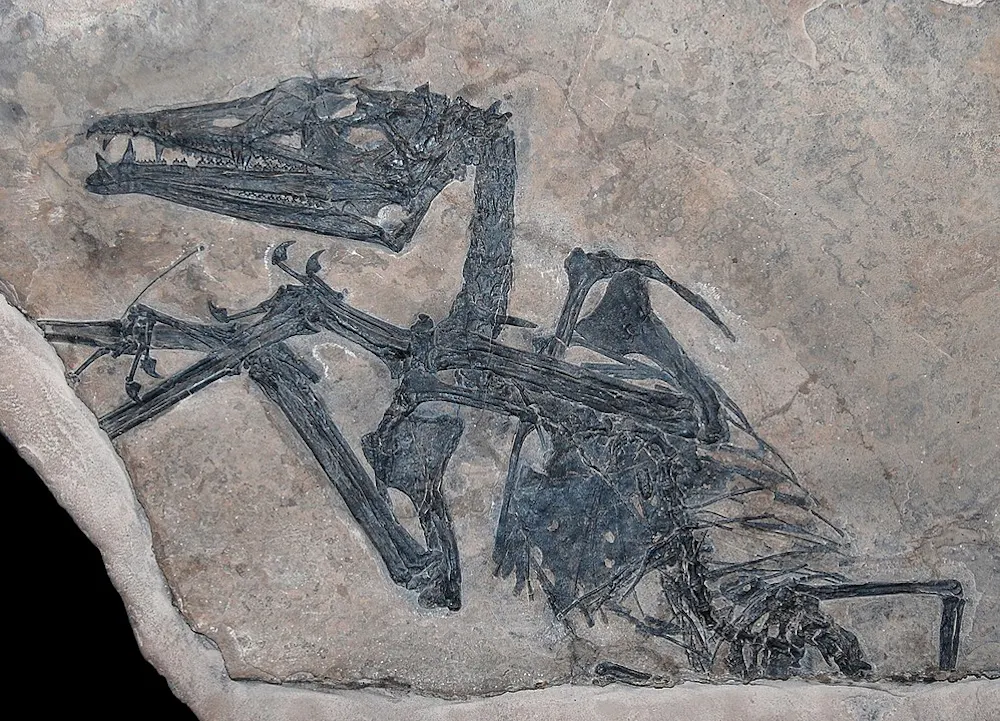
    MIL OSI USA News

  • MIL-OSI USA News: Fact Sheet: President Donald J. Trump Strengthens the Policy of the United States Toward Cuba

    Source: US Whitehouse

    STRENGTHENING THE POLICY OF THE UNITED STATES TOWARD CUBA: Today, President Donald J. Trump signed a National Security Presidential Memorandum (NSPM) to strengthen the policy of the United States toward Cuba.

    • This NSPM restores and strengthens the robust Cuba policy from the President’s first term, reversing the Biden Administration’s revocation that eased pressure on the Cuban regime.
    • The NSPM ends economic practices that disproportionately benefit the Cuban government, military, intelligence, or security agencies at the expense of the Cuban people.
      • Direct or indirect financial transactions with entities controlled by the Cuban military, such as Grupo de Administracion Empresarial S.A. (GAESA), and its affiliates are prohibited, with exceptions for transactions that advance U.S. policy goals or support the Cuban people.
    • It enforces the statutory ban on U.S. tourism to Cuba and ensures compliance through regular audits and mandatory record-keeping of all travel-related transactions for at least five years.
    • The NSPM supports the economic embargo of Cuba and opposes calls in the United Nations and other international forums for its termination.
    • The NSPM amplifies efforts to support the Cuban people through the expansion of internet services, free press, free enterprise, free association, and lawful travel.
    • It ensures the “Wet Foot, Dry Foot” policy remains terminated to discourage dangerous, unlawful migration.
    • The NSPM ensures that engagement between the United States and Cuba advances the interests of the United States and the Cuban people, including through promoting human rights, fostering a private sector independent of government control, and enhancing national security.
    • The NSPM mandates a review of human rights abuses in Cuba, including unlawful detentions and inhumane treatment, and requires a report on fugitives from American justice living in Cuba or being harbored by the Cuban government.

    PROMOTING A STABLE, PROSPEROUS, AND FREE CUBA: President Trump is committed to fostering a free and democratic Cuba, addressing the Cuban people’s long-standing suffering under a Communist regime.

    • The Cuban people have long suffered under a Communist regime that suppresses their legitimate aspirations for freedom and prosperity, arbitrarily detains dissidents, and holds political prisoners in inhumane conditions.
    • Violence and intimidation against dissidents occur with impunity, while families of political prisoners face retaliation for their advocacy.
    • The regime harasses worshippers, blocks free association by civil society organizations, and denies free speech, including through limited internet access and the absence of a free press.
    • The Cuban government harbors fugitives of American justice and fails to meet the basic requirements of a free and just society.

    HOLDING THE CUBAN REGIME ACCOUNTABLE: President Trump is continuing efforts from his first term to stand with the Cuban people and hold the regime accountable.

    • In his first term, President Trump implemented a robust policy towards Cuba, reversing the Obama Administration’s one-sided deal that eased restrictions without securing meaningful reforms for the Cuban people.
    • Now, President Trump is once again implementing a firm policy stance.
      • President Trump is fulfilling his campaign promise: “As president, I will again stand with the people of Cuba in their long quest for justice, liberty and freedom.”
    • President Trump also recently implemented a new travel ban that applies to Cuba.
      • It lists Cuba as a state sponsor of terrorism and cites its failure to cooperate or share sufficient law enforcement information with the United States, its historical refusal to accept back its removable nationals, and its high visa overstay rate.

    MIL OSI USA News