NewzIntel.com

    • Checkout Page
    • Contact Us
    • Default Redirect Page
    • Frontpage
    • Home-2
    • Home-3
    • Lost Password
    • Member Login
    • Member LogOut
    • Member TOS Page
    • My Account
    • NewzIntel Alert Control-Panel
    • NewzIntel Latest Reports
    • Post Views Counter
    • Privacy Policy
    • Public Individual Page
    • Register
    • Subscription Plan
    • Thank You Page

Category: Law

  • MIL-OSI USA: Cornyn Announces DOJ Investigation into EPIC City

    US Senate News:

    Source: United States Senator for Texas John Cornyn
    WASHINGTON – U.S. Senator John Cornyn (R-TX) released the following statement on the U.S. Department of Justice (DOJ) opening an investigation into the East Plano Islamic Center’s (EPIC) proposed Muslim community, EPIC City, in Josephine, Texas, in response to concerns he expressed to U.S. Attorney General Pam Bondi and Assistant Attorney General for Civil Rights Harmeet Dhillon last month:
    “I am grateful to Attorney General Bondi and the Department of Justice for hearing my concerns and opening an investigation into the proposed EPIC City development in North Texas,” said Sen. Cornyn. “Religious discrimination and Sharia Law have no place in the Lone Star State. Any violations of federal law must be swiftly prosecuted, and I know under the Trump administration, they will be.”

    MIL OSI USA News –

    May 10, 2025
  • MIL-OSI USA: Rep. Dan Goldman, Rep. Menendez, Senator Luján, Senator Bennet Lead Democrats in Calling on Trump Administration to Crack Down on U.S. Firearms Flowing to Latin American Drug Cartels

    Source: US Congressman Dan Goldman (NY-10)

    Administration’s Designation of 8 Cartels as Foreign Terrorist Organizations Unlocks New Tools to Crack Down on Southbound Arms Trafficking  


    Over 200,000 American Firearms Flow into Mexico Every Year, Fueling Gang Violence and Drug and Human Trafficking 


    Read the Letter Here 

    Washington, D.C – Congressman Dan Goldman (NY-10), Congressman Rob Menendez (NJ-08) and Senator Ben Ray Luján (D-NM) today led 10 of their colleagues in urging the Trump administration to use its recent designation of Latin American cartels as Foreign Terrorist Organizations (FTOs) to take aggressive action to stop the illegal trafficking of American firearms south across the Southern Border. In a letter addressed to Secretary of Homeland Security Kristi Noem, Secretary of State Marco Rubio, and Attorney General Pam Bondi, the lawmakers called for a coordinated federal response to stem the flow of hundreds of thousands of American firearms that arm violent drug cartels, fuel lawlessness along the Southern Border, and bring drugs into communities across the United States. 

    “We were pleased that President Trump agreed to address the outflow of hundreds of thousands of American-made firearms across the southern border when he initially postponed the implementation of tariffs on our ally Mexico. Accordingly, we urge you to utilize the FTO designation to take aggressive action to stem the flow of American guns to the cartels,” the Members wrote. 

    Anywhere between 200,000 and 500,000 American firearms are smuggled across U.S. borders into Mexico every year, arming Latin American criminal organizations that have used them to undermine domestic law enforcement and assert control over fentanyl and human trafficking operations back into the United States. 

    “The new FTO designation for these cartels provides additional legal tools to bolster interagency coordination, disrupt their financial networks, and impose stricter penalties on those who provide material support to these criminal enterprises. Specifically, under current statute, it is unlawful to knowingly provide material support or resources to a Foreign Terrorist Organization and those who do so can be fined or imprisoned for up to 20 years,” the Members continued. 

    The members urged the administration to effectively and strategically employ the full suite of legal options this new designation enables and offered their assistance to empower it to specifically address the “Iron River” of American firearms that are fueling violence and destruction in communities across the United States and Mexico. 

    “We hope that you move swiftly and use these new legal authorities to combat southbound arms trafficking. We stand ready to assist in this effort in any way we can, including through legislation that expands your programmatic authorities to address this critical issue,” the Members concluded. 

    Read the letter here or below: 

    Dear Secretary Noem, Secretary Rubio, and Attorney General Bondi: 

    We write to you today regarding the Trump Administration’s recent designation of eight Latin American cartels and gangs as Foreign Terrorist Organizations (FTOs), a move aimed at addressing the growing harms these organizations are causing in the United States. As you know, the primary source of strength and control that these criminal organizations exert over the U.S./Mexico border stems from one source: American firearms. We were pleased that President Trump agreed to address the outflow of hundreds of thousands of American-made firearms across the southern border when he initially postponed the implementation of tariffs on our ally Mexico. Accordingly, we urge you to utilize the FTO designation to take aggressive action to stem the flow of American guns to the cartels.  

    It is a well-established fact that the overwhelming majority of the weapons used by Latin American cartels are manufactured in the United States. In fact, anywhere from 200,000 to 500,000 are smuggled into Mexico every single year and a whopping 70 percent of firearms recovered at crime scenes in Mexico are traced to the U.S. Alarmingly, although Mexico has just a single gun store in the entire country, it still endures approximately 30,000 firearm related deaths every year. This steady supply of weapons coming in from the north has allowed these criminal organizations to gain control over fentanyl and human trafficking across the border and undermine Mexican law enforcement. 

    Put simply, if we do not stop the flow of American-made guns across the southern border to Mexico, we cannot stop the flow of fentanyl into our country over that same border.  

    The new FTO designation for these cartels provides additional legal tools to bolster interagency coordination, disrupt their financial networks, and impose stricter penalties on those who provide material support to these criminal enterprises. Specifically, under current statute, it is unlawful to knowingly provide material support or resources to a Foreign Terrorist Organization and those who do so can be fined or imprisoned for up to 20 years. Individuals and entities that provide weapons, funds, equipment, or other tangible support to designated terrorist organizations can face serious federal prosecution if found liable.   

    To leverage this designation most effectively, the Department of Homeland Security (DHS), Department of Justice (DOJ) and Department of State (DOS) must take immediate steps to crack down on the “Iron River” of illegal arms flowing into Mexico by taking the following actions: 

    Increasing interagency cooperation to track, target, and dismantle smuggling rings that facilitate weapons trafficking across the Mexican border.  

    Expanding inspections at border crossings to intercept vehicles carrying firearms, related munitions, and other contraband into Mexico.  

    Increasing law enforcement efforts against straw purchasers and firearm dealers that knowingly provide material support to smugglers.  

    Strengthening our intelligence-sharing with Mexican authorities and trusted partners to target and disrupt arms traffickers and their networks. 

    Given that this issue has been a key topic of discussion between President Trump and President Sheinbaum of Mexico – which has resulted in the U.S. government agreeing to work together to stop the flow of firearms into Mexico – we hope that you move swiftly and use these new legal authorities to combat southbound arms trafficking. We stand ready to assist in this effort in any way we can, including through legislation that expands your programmatic authorities to address this critical issue.  

    Thank you for your consideration and we look forward to continuing to work with you on this issue. 

    ### 

    MIL OSI USA News –

    May 10, 2025
  • MIL-OSI USA: Progressive Caucus Leaders Issue Statement on Acquittals in Tyre Nichols Case

    Source: United States House of Representatives – Congresswoman Pramila Jayapal (7th District of Washington)

    Washington, D.C. — Congressional Progressive Caucus Policing, Constitution, and Equality Task Force Chair Rep. Bonnie Watson Coleman (NJ-12) and Chair Emerita Rep. Pramila Jayapal (WA-07) issued the following statement on acquittals in the Tyre Nichols case:

    “Two years ago, we were horrified by the video that was released of the savage beating of Memphis resident Tyre Nichols. The brutality on display in body cam footage shocked the nation.

    “Today, the country was again shocked to learn that three of the officers involved in Nichols’ killing were acquitted of charges. The lack of justice puts on display for all to see the continuing failure of our justice system to value the lives of Black men and women. 

    “The decision to move the jury pool from the majority Black city of Memphis to the majority white city of Chattanooga raised concerns that the judicial system would fail the family of Mr. Nichols. Sadly, these fears appear to have been justified.

    “Our hearts go out to Mr. Nichols’ family, especially his young child who was robbed of their father, and his parents who were denied justice for their son. Our country has a long way to go to achieve an equitable, color-blind justice system. The Congressional Progressive Caucus remains committed to a future free of police brutality and bias.” 

    Issues: Public Safety & Criminal Justice

    MIL OSI USA News –

    May 10, 2025
  • MIL-OSI Security: Pennsylvania Woman Charged in D.C. with Distributing Child Pornography

    Source: Federal Bureau of Investigation (FBI) State Crime News

    WASHINGTON – Jamie Greer Spies, 24, of Reading, Pennsylvania, was arrested on May 2, 2025, and federally charged with distributing child sexual abuse materials.

    The criminal complaint was announced today by U.S. Attorney Edward R. Martin Jr., FBI Special Agent in Chief Sean Ryan of the Washington Field Office Criminal and Cyber Division, and Chief Pamela Smith of the Metropolitan Police Department (MPD).

    Spies is charged with distribution of child pornography.

    According to court documents, an undercover officer working with the MPD-FBI Child Exploitation and Human Trafficking Task Force was monitoring an online group

    where people meet to discuss and trade original images and videos of underage children. While in the group, an individual later identified as Spies messaged the undercover officer indicating that she was interested in images that portrayed the sexual abuse of young children.

    Spies subsequently distributed multiple images and videos depicting the sexual abuse of children, including the abuse of infants and toddlers.

    This case is being investigated by the MPD-FBI Child Exploitation and Human Trafficking Task Force. Valuable assistance was provided by the FBI’s Philadelphia Field Office, Allentown Resident Agency. It is being prosecuted by Assistant U.S. Attorney Jocelyn Bond.

    This case was brought as part of the Department of Justice’s Project Safe Childhood initiative. In February 2006, the Attorney General created Project Safe Childhood, a nationwide initiative designed to protect children from online exploitation and abuse. Led by the U.S. Attorney’s Offices, Project Safe Childhood marshals federal, state, and local resources to better locate, apprehend, and prosecute individuals who exploit children via the Internet, as well as identify and rescue victims. For more information about Project Safe Childhood, please visit www.projectsafechildhood.gov.

    MIL Security OSI –

    May 10, 2025
  • MIL-OSI Security: Castle Shannon Felon Charged with Drug and Firearms Offenses

    Source: Federal Bureau of Investigation (FBI) State Crime Alerts (c)

    PITTSBURGH, Pa. – A resident of Castle Shannon, Pennsylvania, has been indicted by a federal grand jury in Pittsburgh on charges of violating federal narcotics and firearms laws, Acting United States Attorney Troy Rivetti announced today.

    The three-count Indictment named Vaughn James, 40, as the sole defendant.

    According to the Indictment, on or about June 14, 2023, James possessed with intent to distribute quantities of mixtures and substances containing fentanyl, fluorofentanyl, protonitazene, heroin, MDMA, cocaine, and crack cocaine. The Indictment also alleges that James possessed a firearm in furtherance of his drug trafficking crime and possessed a firearm and ammunition after having been convicted of multiple prior felonies, including for state drug trafficking and firearms offenses. Federal law prohibits possession of a firearm or ammunition by a convicted felon.

    The law provides for a maximum total sentence of not less than 20 years and up to life in prison, a fine of up to $10.5 million, or both. Under the federal Sentencing Guidelines, the actual sentence imposed would be based upon the seriousness of the offenses and the prior criminal history of the defendant.

    Assistant United States Attorney V. Joseph Sonson is prosecuting this case on behalf of the government.

    The Pennsylvania State Police Drug Law Enforcement Division’s Southwest Strike Force Unit and Federal Bureau of Investigation conducted the investigation leading to the Indictment.

    This case is part of Project Safe Neighborhoods (PSN), a program bringing together all levels of law enforcement and the communities they serve to reduce violent crime and gun violence, and to make our neighborhoods safer for everyone. On May 26, 2021, the Department launched a violent crime reduction strategy strengthening PSN based on these core principles: fostering trust and legitimacy in our communities, supporting community-based organizations that help prevent violence from occurring in the first place, setting focused and strategic enforcement priorities, and measuring the results.

    MIL Security OSI –

    May 10, 2025
  • MIL-OSI Security: Justice Department Announces Results of Operation Restore Justice: 205 Child Sex Abuse Offenders Arrested in FBI-Led Nationwide Crackdown, Including One Arrest in the Eastern District of Arkansas

    Source: Federal Bureau of Investigation (FBI) State Crime Alerts (b)

          LITTLE ROCK—On May 7, 2025, the Department of Justice announced the results of Operation Restore Justice, a coordinated enforcement effort to identify, track and arrest child sex predators. The operation resulted in the rescue of 115 children and the arrests of 205 child sexual abuse offenders in the nationwide crackdown. The coordinated effort was executed over the course of five days by all 55 FBI field offices, the Child Exploitation and Obscenity Section in the Department’s Criminal Division, and United States Attorney’s Offices around the country.

          “The Department of Justice will never stop fighting to protect victims — especially child victims — and we will not rest until we hunt down, arrest, and prosecute every child predator who preys on the most vulnerable among us,” said Attorney General Pamela Bondi. “I am grateful to the FBI and their state and local partners for their incredible work in Operation Restore Justice and have directed my prosecutors not to negotiate.”

          “Every child deserves to grow up free from fear and exploitation, and the FBI will continue to be relentless in our pursuit of those who exploit the most vulnerable among us,” said FBI Director Kash Patel. “Operation Restore Justice proves that no predator is out of reach and no child will be forgotten. By leveraging the strength of all our field offices and our federal, state and local partners, we’re sending a clear message: there is no place to hide for those who prey on children.”

          If you harm or exploit a child and we can find a way to federally prosecute you, we will,” said Jonathan D. Ross, U.S. Attorney for the Eastern District of Arkansas. “Protecting children from predators is one of the most important responsibilities we have at the U.S. Attorney’s Office. The partnership among federal, state, and local law enforcement is crucial to bringing justice to the victims of these crimes.”

          “This operation is a testament to the efforts of the FBI and our dedicated law enforcement partners to protect children in our communities,” said FBI Little Rock Special Agent in Charge Alicia D. Corder. “FBI Little Rock will continue to prioritize these investigations, seek justice for victims and hold predators accountable for their actions.”

          As part of Operation Restore Justice, on May 6, 2025, the FBI in the Eastern District of Arkansas arrested a defendant that is alleged to have distributed large amounts of child sexual abuse material (CSAM) in a chatroom dedicated to the sexual exploitation of children.  The day he was arrested, the defendant possessed a cellular telephone that had multiple images of CSAM to include an image depicting a fully nude pre-pubescent female laying on her back. The image also depicted the pre-pubescent female’s hands and feet tied together with a white cord or rope and blindfolded.

          Others arrested around the country are alleged to have committed various crimes including the production, distribution, and possession of child sexual abuse material, online enticement and transportation of minors, and child sex trafficking. In Minneapolis, for example, a state trooper and Army Reservist was arrested for allegedly producing child sexual abuse material while wearing his uniforms. In Norfolk, VA, an illegal alien from Mexico is accused of transporting a minor across state lines for sex. In Washington, D.C., a former Metropolitan Police Department Police Officer was arrested for allegedly trafficking minor victims.

          In many cases, parental vigilance and community outreach efforts played a critical role in bringing these offenders to justice. For example, a California man was arrested about eight hours after a young victim bravely came forward and disclosed their abuse to FBI agents after an online safety presentation at a school near Albany, N.Y.

          This effort follows the Department’s observance of National Child Abuse Prevention Month in April, and underscores the Department’s unwavering commitment to protecting children and raising awareness about the dangers they face. While the Department, including the FBI, investigates and prosecutes these crimes every day, April serves as a powerful reminder of the importance of preventing these crimes, seeking justice for victims, and raising awareness through community education.

          The Justice Department is committed to combating child sexual exploitation. These cases were brought as part of Project Safe Childhood, a nationwide initiative to combat the epidemic of child sexual exploitation and abuse launched in May 2006 by the Department of Justice. Led by U.S. Attorneys’ Offices and CEOS, Project Safe Childhood marshals federal, state, and local resources to better locate, apprehend, and prosecute individuals who exploit children via the internet, as well as to identify and rescue victims. For more information about Project Safe Childhood, visit www.justice.gov/psc.

          The Department partners with and oversees funding grants for the National Center for Missing and Exploited Children (NCMEC), which receives and shares tips about possible child sexual exploitation received through its 24/7 hotline at 1-800-THE-LOST and on missingkids.org.

          The Department urges the public to remain vigilant and report suspected exploitation of a child through the FBI’s tipline at 1-800-CALL-FBI (225-5324), tips.fbi.gov, or by calling your local FBI field office.

          Other online resources:

          Electronic Press Kit

          Violent Crimes Against Children

          How we can help you: Parents and caregivers protecting your kids


    An indictment is merely an allegation. The defendants are presumed innocent until proven guilty beyond a reasonable doubt in a court of law.

    # # #

    Additional information about the office of the

    United States Attorney for the Eastern District of Arkansas, is available online at

    https://www.justice.gov/edar

    X (formerly known as Twitter):

    @USAO_EDAR 

    MIL Security OSI –

    May 10, 2025
  • MIL-OSI Security: Centre Rawdon — RCMP investigates serious collision on Hwy. 14

    Source: Royal Canadian Mounted Police

    East Hants District RCMP is investigating a serious collision that occurred in Centre Rawdon.

    On May 8, at approximately 12:05 p.m., RCMP officers, fire services, and EHS, responded to a report of a two-vehicle collision at the intersection of Hwy. 14 and South Rawdon Rd. Investigators learned that a Freightliner truck was travelling west on Hwy. 14 and a Chevrolet Cruze was travelling north on South Rawdon Rd. when they collided.

    The rear passenger of the Cruze, an infant, suffered life-threatening injuries and was transported to hospital by EHS LifeFlight. The driver and passenger of the vehicle, a 34-year-old South Rawdon woman and a 69-year-old Hantsport woman, suffered non-life-threatening injuries and were transported to hospital by EHS.

    The driver and lone occupant of the truck, a 70-year-old man of Williamswood, suffered minor injuries.

    An RCMP collision reconstructionist attended the scene and the investigation is ongoing.

    The intersection was closed several hours but has since reopened.

    File #: 2025-617980

    MIL Security OSI –

    May 10, 2025
  • MIL-OSI Security: Clarenville — Clarenville RCMP investigates break, enter, and theft at Canada Post office in Port Blandford

    Source: Royal Canadian Mounted Police

    Clarenville RCMP is investigating a break, enter, and theft that occurred on April 26, 2025, at the Canada Post office in Port Blandford.

    The suspect(s) forced entry into the business during the overnight hours of April 25 to April 26, 2025. A number of packages were stolen from inside. A window was smashed, along with other forms of damage to the inside of the property.

    The investigation is continuing.

    Clarenville RCMP asks the public to check for any possible surveillance footage obtained in the area around the time of the crime and to report any suspicious activity.

    Anyone having information about this crime or the person(s) responsible is asked to contact Clarenville RCMP at 709-466-3211. To remain anonymous, contact Crime Stoppers: #SayItHere 1-800-222-TIPS (8477), visit www.nlcrimestoppers.com or use the P3Tips app.

    MIL Security OSI –

    May 10, 2025
  • MIL-OSI Europe: The new Bishop of Rome: Missionary and son of Saint Augustine

    Source: Agenzia Fides – MIL OSI

    Friday, 9 May 2025

    Vatican Media

    Rome (Agenzia Fides) – “I am a son of Saint Augustine,” said Pope Leo XVI in his first address from the central Loggia of St. Peter’s Basilica, to the people gathered in St. Peter’s Square following his election as the 267th Bishop of Rome. In other passages, he recalled that “together we seek how to be a missionary Church, always anxious to work fearlessly, proclaiming the Gospel and evangelizing as men and women faithful to Jesus Christ.” “We are disciples of Christ. Christ precedes us. The world needs His light,” said the new Pope.In the few personal references, the new successor of Peter, in his first brief public address, hinted at two essential characteristics that have marked his path: his belonging to the spiritual family of Saint Augustine, his belonging to the “Church in a state of mission,” which is also expressed in the greeting he delivered in Spanish to his “querida diocesis” of Chiclayo, “where a faithful people accompanied their bishop.” Two characteristics that have become interwoven in the life story of Pope Leo and that the entire Church of Rome can gradually recognize on the path begun with its new Bishop.A missionary son of Saint Augustine Robert Francis Prevost was born on September 14, 1955, in Chicago, Illinois, USA, and entered the novitiate of the Order of Saint Augustine in the Province of Our Lady of Good Counsel in St. Louis at the age of 22. He made his solemn profession on August 29, 1981. He studied at the Catholic Theological Union in Chicago and graduated in Theology. At the age of 27, the Order sent him to Rome to study Canon Law at the Pontifical University of St. Thomas Aquinas, of the Dominican Fathers. He was ordained a priest on June 19, 1982, in Rome by Belgian Archbishop Jean Jadot (1909-2009), then Vice President of the Secretariat for Non-Christians. He earned his Licentiate in 1984 and was then sent to the mission in Chulucanas, Piura, Peru.In 1987, he received his Doctorate with a thesis on the role of the local prior of the Augustinian Order. That same year, he was elected Director of Vocations and Missions for the Augustinian Province of Our Lady of Good Counsel in Olympia Fields, Illinois.In 1988, he was sent to the Trujillo Mission, where he was responsible for the joint formation project for Augustinian aspirants of the Vicariates of Chulucanas, Iquitos, and Apurmac. In his missionary work, he held various offices at the service of his Order and the local Church: Prior of the Community (1988-1992), Director of Formation (1988-1998), and Teacher of the Professed (1992-1998). In the Archdiocese of Trujillo, he also served as Judicial Vicar (1989-1998) and Professor of Canon Law, Patristics, and Morals at the Major Seminary of San Carlos and San Marcelo. In 1999, he was elected Provincial of the Province of Our Lady of Good Counsel (Chicago). After two and a half years, the Ordinary General Chapter elected him Prior General, a position the Order entrusted to him again in the 2007 Ordinary General Chapter. In October 2013, he returned to his Order’s province in Chicago to become Teacher of the Professed and Provincial Vicar. On November 3, 2014, Pope Francis appointed him Apostolic Administrator of the Diocese of Chiclayo, in Peru and elevated him to Titular Bishop of the Diocese of Sufar. He received episcopal ordination on December 12, the Feast of Our Lady of Guadalupe, in the Cathedral of his diocese. On January 30, 2023, Pope Francis appointed him Prefect of the Dicastery for Bishops and President of the Pontifical Commission for Latin America, assigning him the Title of the Suburbicarian Church of Albano. At the consistory of September 30, 2023, Pope Francis created him a Cardinal and conferred on him the titular church of Saint Monica, mother of Saint Augustine. (GV) (Agenzia Fides, 9/5/2025)
    Share:

    MIL OSI Europe News –

    May 10, 2025
  • MIL-OSI Security: Bay Roberts — UPDATE: Arrest warrant issued for Jesse Lewis

    Source: Royal Canadian Mounted Police

    Update: Bay Roberts RCMP advises that wanted man, Jesse Lewis, has been arrested.

    Bay Roberts RCMP is looking to arrest wanted man, 27-year-old Jesse William Lewis, who is actively evading police. Lewis was last seen yesterday evening and is believed to be in the North River to Brigus area.

    Lewis is wanted in relation to a number of charges including:

    • Robbery
    • Theft of a vehicle
    • Dangerous operation of a vehicle
    • Possession of a weapon for dangerous purposes
    • Mischief over $5,000
    • Flight from peace officer
    • Forcible confinement
    • Failure to comply with a probation order

    It is a criminal offence to aid a wanted individual.

    Anyone having information about the current location of Jesse Lewis is asked to contact Bay Roberts RCMP at 709-786-2118. To remain anonymous, contact Crime Stoppers: #SayItHere 1-800-222-TIPS (8477), visit www.nlcrimestoppers.com or use the P3Tips app.

    MIL Security OSI –

    May 10, 2025
  • MIL-OSI Security: Texas Man Indicted For Sex Trafficking

    Source: United States Department of Justice (Human Trafficking)

    Tampa, Florida – United States Attorney Gregory W. Kehoe announces the  unsealing of an indictment charging Jazzmen La Vone Gaskins (38, Texas) with sex trafficking and transportation of an individual to engage in prostitution. If convicted on all counts, Gaskins faces a maximum penalty of life in federal prison. 

    According to the indictment, between July 2023 and March 2024, Gaskins knowingly trafficked Victim 1 knowing and in reckless disregard of the fact that means of force, threats of force, fraud and coercion would be used to cause the victim to engage in a commercial sex act. The indictment also alleges that on December 22, 2023, Gaskins knowingly transported Victim 2 from Texas to Florida with the intent that Victim 2 engage in prostitution and sexual activity.

    An indictment is merely a formal charge that a defendant has committed one or more violations of federal criminal law, and every defendant is presumed innocent unless, and until, proven guilty.

    This case was investigated by Homeland Security Investigations and the Hillsborough County Sheriff’s Office. It will be prosecuted by Assistant United States Attorney Courtney Derry.

    MIL Security OSI –

    May 10, 2025
  • MIL-OSI United Kingdom: Man given suspended jail term for illegal Lincolnshire waste site

    Source: United Kingdom – Executive Government & Departments

    Press release

    Man given suspended jail term for illegal Lincolnshire waste site

    The Environment Agency has successfully prosecuted a Lincolnshire man for running an illegal waste site at Thorpe Farm, Skendleby, in East Lindsey.

    A pile of waste which was on site.

    • Court imposes fines, costs and confiscation order on director and his company for nearly £100,000
    • Judge tells defendant he ran business in ‘arrogant and bullish’ manner
    • Environment Agency officer verbally abused during site inspection.

    At Lincoln Crown Court on Wednesday 7 May 2025, Matthew Berry, 46, of Ivy House Farm, Blyborough, near Gainsborough, received a suspended sentence of 36 weeks. This is on condition that he stays out of trouble and abides by a curfew between 9pm and 5am for a 3 month period. He was also ordered to pay £5,000 in costs and a surcharge of £154.

    Berry’s company, SBR Foxhills Limited, was fined £20,000 and ordered to pay costs of £29,626.35 and a £190 surcharge.

    The defendant and company also have a confiscation order imposed of £45,000, representing the recovery of the proceeds from the crime. Berry was warned that he faces up to 12 months in prison if that sum remains unpaid after 3 months.

    In sentencing Berry, Her Honour Judge Sjolin Knight told him that he had taken an “arrogant and bullish approach.” It was also “remarkable” that he claimed not to have established his environmental obligations.

    She noted that he had run his business in such a way that he, “violated strict environmental laws that are there to protect the environment for everyone.”

    The court was told that in the spring of 2021, Berry, the sole director of SBR Foxhills Limited, became interested in a site at Thorpe Farm.

    With a view to the company purchasing the site, he took over the control in April and began a clearance operation.  The site had no environmental permit or other authorisation to store or treat waste.

    There was a lot of waste already on the site.  He agreed to move baled waste that had been stacked in a building. He also agreed to remove waste vehicles to a breakers’ site and brought heavy plant to the site for that purpose.

    However, rather than clearing and improving the site, he dumped the baled waste on a concrete pad. This was porous, cracked, had no sealed drainage and had an unsealed manhole cover that led to a void.  He then abandoned the site leaving the baled waste exposed to the elements which inevitably caused it to degrade. 

    Environment Agency officers visited the site and Berry told them that he intended to clear the area. They gave him advice and attempted to work with him.  He agreed to provide the requisite waste transfer notes that would prove lawful removal.

    By November 2021, it was clear that the site had not been abandoned.  Officers continued to try to work with him but their attempts were rejected.

    On one occasion, Berry verbally berated a senior officer telling him that he hoped he got cancer and died.  Not content with his verbal abuse, he followed up his unpleasant words a few minutes later with a similarly offensive email. 

    Both Berry and his company entered not guilty pleas at a hearing at Lincoln Crown Court in June 2022.  However, shortly before their trial was due to start, in November 2023, they changed their pleas to guilty.  They were finally sentenced at Lincoln Crown Court on 7 May 2025.

    As part of its investigations, the Environment Agency used drones for routine inspections to safely capture evidence of the waste activities. This use of technology is an on-going feature of the agency’s work.

    Yvonne Daly, an environment manager for the Environment Agency in Lincolnshire and Northamptonshire, said:

    Rogue contractors and operators in the waste sector should take note we will not tolerate illegal waste activities in Lincolnshire.

    We will take enforcement action to protect the environment, people and legitimate businesses.

    And we will not tolerate abuse or bad behaviour to our officers – everyone should be treated with respect.

    We would also like to thank the fantastic support from Lincolnshire Police and East Lindsey District Council throughout this case.

    Anyone with suspicions of waste crime can call our incident hotline, 0800 807060, or Crimestoppers, on 0800 555111.

    The Charges

    Charge 1: operating a non-exempt waste operation without a permit, contrary to Regulations 12 and 38(1)(a) of the Environmental Permitting (England and Wales) Regulations 2016.

    Particulars of offence

    SBR Foxhills Limited, between the 8 April 2021 and 26 February 2022 operated without an environmental permit a regulated facility, namely a waste operation for the treatment and storage of waste at Thorpe Farm, Skendleby. 

    Charge 2: operating a non-exempt waste operation without a permit, contrary to Regulations 12 and 38(1)(a) of the Environmental Permitting (England and Wales) Regulations 2016.

    Particulars of offence

    Matthew Berry, between the 8 April 2021 and 26 February 2022, by consent, connivance or neglect, allowed the company SBR Foxhills Limited to operate without an environmental permit a regulated facility, namely a waste operation for the treatment and storage of waste at Thorpe Farm, Skendleby.

    Share this page

    The following links open in a new tab

    • Share on Facebook (opens in new tab)
    • Share on Twitter (opens in new tab)

    Updates to this page

    Published 9 May 2025

    MIL OSI United Kingdom –

    May 10, 2025
  • MIL-OSI Security: A murder investigation has been launched following the death of an elderly man after an incident in Manor House

    Source: United Kingdom London Metropolitan Police

    A man has been arrested on suspicion of murder and remains in custody.

    At around 17:53hrs on Tuesday, 6 May police were called to Goodchild Road, Manor House, to a report of a robbery.

    The London Ambulance service also attended the scene and an 87-year-old man was taken to hospital with life-threatening injuries.

    Despite the best efforts of the emergency staff, the man sadly died on Thursday, 8 May. His family have been made aware.

    A post-mortem examination will be held in due course.

    On Thursday, 8 May a 59-year-old man was arrested on suspicion of murder and robbery. He was also arrested on suspicion of a racially aggravated public order offence and assault on police and taken into custody.

    Detective Chief Inspector Mark Rogers, from the Met’s Specialist Crime North Unit and leading the investigation, said: “This is a horrific incident which very sadly resulted in an innocent man dying. His family are being supported by specialist officers.

    “At this stage we are not looking for anyone else in connection with the incident. However, this is a fast-paced investigation and I am appealing to anyone who may have been in the area or witnessed what happened to please contact the police.”

    A/Chief Superintendent Brittany Clarke, who leads local policing in the area, said: “We know many people will be very concerned by what has happened and while we have a man in custody, local patrols have been stepped up.

    “If you have any concerns please do speak to those officers. A man has lost his life in a tragic way and our thoughts remain with his family.”

    If you witnessed this incident or have any information, please contact the investigation team on 0208 345 3715 quoting Operation Cedarbirch. If you wish to remain anonymous please contact CrimeStoppers on 0800 555 111.

    MIL Security OSI –

    May 10, 2025
  • MIL-OSI Asia-Pac: Event to promote mediation held

    Source: Hong Kong Information Services

    The Department of Justice today held its biennial “Mediate First” Pledge Event to encourage the community to use mediation for dispute resolution, with around 900 participants from different sectors taking part in the activity.


    Secretary for Justice Paul Lam said in the opening remarks that mediation is the future of dispute resolution, adding that Hong Kong has a mature development in the field of mediation.


    He emphasised that the city will continue to promote mediation in dispute resolution and connect local, regional and global parties, fully demonstrating its vibrancy and charm as the Capital of Mediation.


    A forum was held as the first part of the event, followed by a panel discussion exploring the role of the Judiciary in promoting mediation. Family mediators and mediation institutions from different sectors shared their insights and discussed with stakeholders the direction in promoting family mediation in the future.


    The afternoon session began with another panel discussion, highlighting the collective efforts of the Government and stakeholders on ways to promote and deepen the mediation culture.


    Additionally, students who participated in the peer mediation training spoke on the use of mediation to resolve peer disputes and the benefits it brought.


    The event concluded with Deputy Secretary for Justice Cheung Kwok-kwan delivering closing remarks.


    Fifty-two pledgees were presented awards in recognition of their achievements in promoting and adopting mediation in the course of their business operations. More than 1,000 organisations and individuals have signed the pledge since its launch in 2009.

    MIL OSI Asia Pacific News –

    May 10, 2025
  • MIL-OSI Security: Marystown — Arrest warrant issued for Bradley Stacey (UPDATED)

    Source: Royal Canadian Mounted Police

    Update: Bradley Stacey has been arrested.

    Marystown RCMP is looking to arrest wanted man, 43-year-old Bradley Melvin Stacey, who is actively evading police. Stacey is known to frequent St. John’s and was last seen in Marystown.

    Stacey is wanted in relation the following charges:

    • Possession of property obtained by crime – two counts
    • Possession of a forged document – two counts

    No photo is currently available of Stacey.

    Anyone having information about the current location of Bradley Stacey is asked to contact Marystown RCMP at 709-279-3001. To remain anonymous, contact Crime Stoppers: #SayItHere 1-800-222-TIPS (8477), visit www.nlcrimestoppers.com or use the P3Tips app.

    MIL Security OSI –

    May 10, 2025
  • MIL-OSI Security: Deer Lake — Two suspended drivers stopped by RCMP in Cormack and Deer Lake, vehicles seized

    Source: Royal Canadian Mounted Police

    Two suspended drivers, one located in Cormack and the other in Deer Lake, were stopped by RCMP on May 8, 2025. Both vehicles were seized and impounded.

    At approximately 1:15 p.m. on Thursday, while on patrol in Cormack, RCMP Traffic Services West observed a known suspended driver operating a vehicle on the Main Road. The driver attempted to evade police, turning off onto a dirt road. A traffic stop was conducted and the driver, a 35-year-old man, was ticketed for driving while suspended.

    Later in the afternoon, shortly before 3:00 p.m., Deer Lake RCMP stopped a vehicle on Nicholsville Road in Deer Lake. The driver, a 63-year-old man, held a suspended licence. He was ticketed for driving while suspended.

    Driving while suspended is an offence under the Highway Traffic Act. In addition to a minimum fine of $130.00 and the accumulation of two demerit points, the vehicle is seized and impounded for 30 days.

    MIL Security OSI –

    May 10, 2025
  • MIL-OSI Global: Can Trump strip Harvard of its charitable status? Scholars of nonprofit law and accounting describe the obstacles in his way

    Source: The Conversation – USA – By Philip Hackney, Professor of Law, University of Pittsburgh

    Getting into Harvard University is hard, and so is getting rid of its charitable status. Scott Eisen/Getty Images

    President Donald Trump has repeatedly threatened to revoke Harvard University’s tax-exempt status, and some media outlets have reported that the Internal Revenue Service is taking steps in that direction.

    Harvard President Alan Garber says this would be “highly illegal.” Several U.S. senators, all Democrats, have urged the IRS inspector general to see whether the IRS has begun auditing Harvard or any nonprofits in response to his administration’s requests or whether Trump has violated any laws with his pressure campaign.

    The Conversation U.S. asked Philip Hackney, a nonprofit law professor who previously worked in the office of the chief counsel of the IRS, and Brian Mittendorf, an expert on nonprofit accounting, to explain what it would take for the federal government to revoke a university’s tax-exempt status.

    Can Trump order the IRS to strip Harvard of its tax-exempt status?

    No.

    First, the IRS rarely revokes an organization’s charitable tax-exempt status for failure to operate for a charitable purpose.

    Before the IRS can do that, tax law requires that it first audit that charity. And it’s illegal for U.S. presidents or other officials to force the IRS to conduct an audit or stop one that’s already begun. Even doing either of those things indirectly is a crime. The punishment can include fines and imprisonment.

    Congress strengthened constraints on presidential power after Richard Nixon resigned in the midst of the Watergate investigations. At the time, evidence indicated that he had used the IRS as a weapon to punish his perceived political enemies.

    Worried that future presidents or officials might abuse the IRS, a Republican-led Congress later passed Section 7217 of the IRS Restructuring and Reform Act of 1998.

    That provision prohibits presidents and vice presidents, as well as other officials and their staff, from instructing, “directly or indirectly, any officer or employee of the Internal Revenue Service to conduct or terminate an audit or other investigation of any particular taxpayer with respect to the tax liability of such taxpayer.”

    President Richard M. Nixon holds a tax bill he signed into law in 1970, four years before he resigned. Part of his legacy is that it’s now more clearly illegal for presidents to use the IRS as a political weapon.
    Bettmann/Getty Images

    What does it take for a nonprofit’s tax-exempt status to be revoked?

    This can’t happen on a whim. The IRS first has to audit the nonprofit. If it obtains evidence of wrongdoing – and a court upholds that finding – the IRS can proceed.

    The government has to find that the nonprofit’s operations have a “substantial nonexempt purpose.” That’s because these tax exemptions are provided only to organizations that are organized and operated primarily for charitable purposes, such as education, religion or scientific research.

    Any audit of Harvard would involve a large team of IRS agents familiar with higher education, which would work on this probe for months. The process could take years.

    If, after completing that audit, that team were to determine that Harvard violated the rules, the IRS would have to send Harvard a proposed revocation letter. Harvard then would have 30 days to file an appeal with the IRS. Were the IRS to propose such a revocation, we would be shocked if Harvard didn’t take that step.

    If the IRS Office of Appeals were to uphold the revocation, the IRS would send a revocation letter to Harvard. But Harvard would have the right to challenge that official revocation in court under Section 7428 of the tax code.

    How often does this happen?

    Very rarely. Almost never for private schools. The only legal precedent the Trump administration could perhaps invoke is Bob Jones University v. United States.

    That litigation got underway in the 1970s after the IRS had, following years of civil rights litigation, stopped allowing private schools to have charitable status if they discriminated on the basis of race.

    That policy put the small Christian university on the spot because it barred the admission of Black students until 1971. At that point, it began to accept Black students but only if they were married to another Black person. The school justified this restriction by voicing its belief that the Bible forbids interracial marriage and dating. In 1970, the IRS had notified the university that it intended to cancel Bob Jones’ tax-exempt status.

    The IRS issued a final revocation in 1976 after determining that Bob Jones University continued to discriminate with the ban on interracial dating and marriage. And in 1983, the U.S. Supreme Court upheld the IRS’ action in an 8-1 decision.

    The court’s majority wrote that an institution should be denied charitable status “only where there can be no doubt that the activity involved is contrary to a fundamental public policy.”

    Harvard President Alan Garber responds to Trump’s threats in an interview with The Wall Street Journal.

    What’s the Trump administration’s rationale?

    Many signs indicate the Trump administration would try to use the fundamental policy limitation to revoke Harvard’s status. We’re unaware, though, of what alleged violation of a “fundamental public policy” the IRS might invoke if it were to carry through on Trump’s threat to strip Harvard of its charitable status. The Trump administration has signaled that it might rest its case on Harvard’s diversity, equity and inclusion programs.

    In a related case, a majority found in a 2023 ruling that affirmative action admissions programs violated the Constitution. The case, known as Students for Fair Admissions v. President and Fellows of Harvard College, also considered the University of North Carolina’s policies.

    Harvard subsequently enrolled fewer new Black students, indicating that it had changed its admissions policies. Regardless, there are many precedents finding elements of diversity, equity and inclusion to be activities that do further a charitable purpose.

    We believe the Trump administration would be unlikely to prevail in the courts with an anti-DEI argument should it try to use one to justify stripping Harvard of its tax-exempt status.

    What happens if a big nonprofit loses its charity status?

    Losing nonprofit status can do a lot of damage.

    An organization that loses its status, whether it’s a university like Harvard, a food bank, a homeless shelter or any other kind of charity, is suddenly subject to federal income tax. It also loses the ability to receive tax-deductible gifts from donors who are eligible to make them.

    Because many state and municipal tax breaks are tied to federal tax status, losing tax-exempt status can also lead to local tax penalties. One compelling local tax break afforded to many charities is an exemption from property tax. Universities with large amounts of buildings and land – as Harvard has – would especially feel the pain.

    Without charity status, organizations that rely on grants from local, state and federal government sources, as well as private sources such as other charities, will find many of those sources of funding largely cut off. This is because many grant providers require all recipients to have tax-exempt status.

    The Internal Revenue Manual, which guides IRS agents in carrying out their work, indicates a number of other problems that would arise after revocation. For instance, an agent is required to consider the impact on the organization’s deferred compensation plans and tax-exempt bonds.

    Does the government appear to have a strong case against Harvard?

    There’s been little concrete information about the basis for Harvard losing its status. Most of what we know comes from social media posts and media interviews.

    The Trump administration has attacked Harvard for its efforts to increase its diversity and its response to antisemitism on its campus. In response to concerns about these issues, Harvard has retooled its DEI office and begun to roll out reforms to combat both antisemitism and anti-Muslim bias.

    But it is hard to argue that these issues would be central to Harvard and its educational mission, let alone warrant it losing its tax-exempt status.

    What’s the impact then?

    Given the steep climb it would be to prove that the organization has strayed from its educational mission, and not just taken some actions the White House dislikes, we find it hard to imagine a viable path toward the IRS revoking Harvard’s charitable status.

    That doesn’t mean there will not be any consequences from the administration’s campaign against Harvard.

    The daily onslaught of public attacks coupled with the ongoing legal battles are a drain on Harvard officials’ time and energy.

    The administration has put Harvard and other universities on the defensive in many other ways too. It has cut federal funding for scientific research, sought to revoke international student visas, expressed an interest in reducing federally funded student loans and grants, and floated proposals to increase what is today a small tax on the income some higher education endowments earn.

    If there’s a silver lining for Harvard, we think it’s that Trump’s attacks could spur giving to the nation’s wealthiest university, at least in the short run. Harvard’s supporters stepped up their donations after the administration’s initial efforts to punish Harvard. And giving-as-activism has been a frequent theme in both of Trump’s terms.

    The authors do not work for, consult, own shares in or receive funding from any company or organization that would benefit from this article, and have disclosed no relevant affiliations beyond their academic appointment.

    – ref. Can Trump strip Harvard of its charitable status? Scholars of nonprofit law and accounting describe the obstacles in his way – https://theconversation.com/can-trump-strip-harvard-of-its-charitable-status-scholars-of-nonprofit-law-and-accounting-describe-the-obstacles-in-his-way-255072

    MIL OSI – Global Reports –

    May 10, 2025
  • MIL-OSI Global: Science requires ethical oversight – without federal dollars, society’s health and safety are at risk

    Source: The Conversation – USA – By Christine Coughlin, Professor of Law, Wake Forest University

    Brain organoids, pictured here, raise both many medical possibilities and ethical questions. NIAID/Flickr, CC BY-SA

    As the Trump administration continues to make significant cuts to NIH budgets and personnel and to freeze billions of dollars of funding to major research universities – citing ideological concerns – there’s more being threatened than just progress in science and medicine. Something valuable but often overlooked is also being hit hard: preventing research abuse.

    The National Institutes of Health has been the world’s largest public funder of biomedical research. Its support helps translate basic science into biomedical therapies and technologies, providing funding for nearly all treatments approved by the Food and Drug Administration from 2010 to 2019. This enables the U.S. to lead global research while maintaining transparency and preventing research misconduct.

    While the legality of directives to shrink the NIH is unclear, the Trump administration’s actions have already led to suspended clinical trials, institutional hiring freezes and layoffs, rescinded graduate student admissions, and canceled federal grant review meetings. Researchers at affected universities say that funding will delay or possibly eliminate ongoing studies on critical conditions like cancer and Alzheimer’s.

    The Trump administration has deeply culled U.S. science across agencies and institutions.

    It is clear to us, as legal and bioethics scholars whose research often focuses on the ethical, legal and social implications of emerging biotechnologies, that these directives will have profoundly negative consequences for medical research and human health, with ripple effects that will last decades. Our scholarship demonstrates that in order to contribute to knowledge and, ultimately, to biomedical treatments, medical research at every stage depends on significant infrastructure support and ethical oversight.

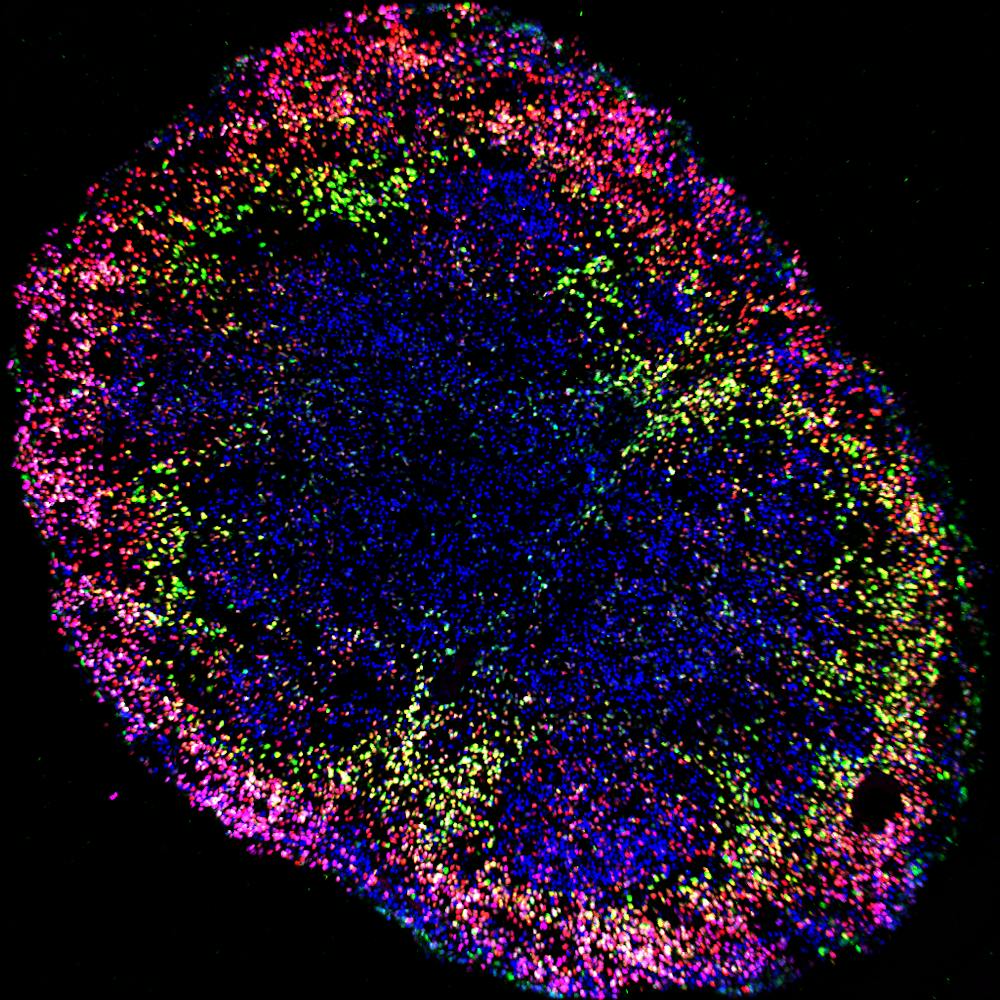
    Our recent focus on brain organoid research – 3D lab models grown from human stem cells that simulate brain structure and function – shows how federal support for research is key to not only promote innovation, but to protect participants and future patients.

    History of NIH and research ethics

    The National Institutes of Health began as a one-room laboratory within the Marine Hospital Service in 1887. After World War I, chemists involved in the war effort sought to apply their knowledge to medicine. They partnered with Louisiana Sen. Joseph E. Ransdell who, motivated by the devastation of malaria, yellow fever and the 1928 influenza pandemic, introduced federal legislation to support basic research and fund fellowships focusing on solving medical problems.

    By World War II, biomedical advances like surgical techniques and antibiotics had proved vital on the battlefield. Survival rates increased from 4% during World War I to 50% in World War II. Congress passed the 1944 Public Health Services Act to expand NIH’s authority to fund biomedical research at public and private institutions. President Franklin D. Roosevelt called it “as sound an investment as any Government can make; the dividends are payable in human life and health.”

    As science advanced, so did the need for guardrails. After World War II, among the top Nazi leaders prosecuted for war crimes were physicians who conducted experiments on people without consent, such as exposure to hypothermia and infectious disease. The verdicts of these Doctors’ Trials included 10 points about ethical human research that became the Nuremberg Code, emphasizing voluntary consent to participation, societal benefit as the goal of human research, and significant limitations on permissible risks of harm. The World Medical Association established complementary international guidelines for physician-researchers in the 1964 Declaration of Helsinki.

    At least 100 participants died in the Tuskegee Untreated Syphilis Study.
    National Archives

    In the 1970s, information about the Tuskegee study – a deceptive and unethical 40-year study of untreated syphilis in Black men – came to light. The researchers told study participants they would be given treatment but did not give them medication. They also prevented participants from accessing a cure when it became available in order to study the disease as it progressed. The men enrolled in the study experienced significant health problems, including blindness, mental impairment and death.

    The public outrage that followed starkly demonstrated that the U.S. couldn’t simply rely on international guidelines but needed federal standards on research ethics. As a result, the National Research Act of 1974 led to the Belmont Report, which identified ethical principles essential to human research: respect for persons, beneficence and justice.

    Federal regulations reinforced these principles by requiring all federally funded research to comply with rigorous ethical standards for human research. By prohibiting financial conflicts of interest and by implementing an independent ethics review process, new policies helped ensure that federally supported research has scientific and social value, is scientifically valid, fairly selects and adequately protects participants.

    These standards and recommendations guide both federally and nonfederally funded research today. The breadth of NIH’s mandate and budget has provided not only the essential structure for research oversight, but also key resources for ethics consultation and advice.

    Brain organoids and the need for ethical inquiry

    Biomedical research on cell and animal models requires extensive ethics oversight systems that complement those for human research. Our research on the ethical and policy issues of human brain organoid research provides a good example of the complexities of biomedical research and the infrastructure and oversight mechanisms necessary to support it.

    Organoid research is increasing in importance, as the FDA wants to expand its use as an alternative to using animals to test new drugs before administering them to humans. Because these models can simulate brain structure and function, brain organoid research is integral to developing and testing potential treatments for brain diseases and conditions like Alzheimer’s, Parkinson’s and cancer. Brain organoids are also useful for personalized and regenerative medicine, artificial intelligence, brain-computer interfaces and other biotechnologies.

    Brain organoids are built on knowledge about the fundamentals of biology that was developed primarily in universities receiving federal funding. Organoid technology began in 1907 with research on sponge cells, and continued in the 1980s with advances in stem cell research. Since researchers generated the first human organoid in 2009, the field has rapidly expanded.

    Brain organoids have come a long way since their beginnings over a century ago.
    Madeline Andrews, Arnold Kriegstein’s lab, UCSF, CC BY-ND

    These advances were only possible through federally supported research infrastructure, which helps ensure the quality of all biomedical research. Indirect costs cover operational expenses necessary to maintain research safety and ethics, including utilities, administrative support, biohazard handling and regulatory compliance. In these ways, federally supported research infrastructure protects and promotes the scientific and ethical value of biotechnologies like brain organoids.

    Brain organoid research requires significant scientific and ethical inquiry to safely reach its future potential. It raises potential moral and legal questions about donor consent, the extent to which organoids should be grown and how they should be disposed, and consciousness and personhood. As science progresses, infrastructure for oversight can help ensure these ethical and societal issues are addressed.

    New frontiers in scientific research

    Since World War II, there has been bipartisan support for scientific innovation, in part because it is an economic and national security imperative. As Harvard University President Alan Garber recently wrote, “[n]ew frontiers beckon us with the prospect of life-changing advances. … For the government to retreat from these partnerships now risks not only the health and well-being of millions of individuals but also the economic security and vitality of our nation.”

    Cuts to research overhead may seem like easy savings, but it fails to account for the infrastructure that provides essential support for scientific innovation. The investment the NIH has put into academic research is significantly paid forward, adding nearly US$95 billion to local economies in fiscal year 2024, or $2.46 for every $1 of grant funding. NIH funding had also supported over 407,700 jobs that year.

    President Donald Trump pledged to “unleash the power of American innovation” to battle brain-based diseases when he accepted his second Republican nomination for president. Around 6.7 million Americans live with Alzheimer’s, and over a million more suffer from Parkinson’s. Hundreds of thousands of Americans are diagnosed with aggressive brain cancers each year, and 20% of the population experiences varying forms of mental illness at any one time. These numbers are expected to grow considerably, possibly doubling by 2050.

    Organoid research is just one of the essential components in the process of learning about the brain and using that knowledge to find better treatment for diseases affecting the brain.

    Science benefits society only if it is rigorous, ethically conducted and fairly funded. Current NIH policy directives and steep cuts to the agency’s size and budget, along with attacks on universities, undermine globally shared goals of increasing understanding and improving human health.

    The federal system of overseeing and funding biomedical science may need a scalpel, but to defund efforts based on “efficiency” is to wield a chainsaw.

    The authors do not work for, consult, own shares in or receive funding from any company or organization that would benefit from this article, and have disclosed no relevant affiliations beyond their academic appointment.

    – ref. Science requires ethical oversight – without federal dollars, society’s health and safety are at risk – https://theconversation.com/science-requires-ethical-oversight-without-federal-dollars-societys-health-and-safety-are-at-risk-252794

    MIL OSI – Global Reports –

    May 10, 2025
  • MIL-OSI Russia: NPC Standing Committee Launches Inspection of Implementation of Food Safety Law

    Translation. Region: Russian Federal

    Source: People’s Republic of China in Russian – People’s Republic of China in Russian –

    Source: People’s Republic of China – State Council News

    BEIJING, May 9 (Xinhua) — The Standing Committee of the National People’s Congress (NPC), China’s top legislature, on Friday launched a new round of inspection on the implementation of the Food Safety Law, aiming to strengthen supervision over food safety and further intensify overall efforts to ensure food safety.

    The Food Safety Law was promulgated and put into effect in 2009, and underwent a comprehensive revision in 2015. The NPC Standing Committee previously conducted inspections on the law’s implementation in 2009, 2011 and 2016.

    During this latest round of inspection, the inspection team will conduct on-site assessments in provincial-level regions such as Heilongjiang, Shanghai, Jiangxi, Henan, Guangxi and Gansu.

    In addition, the standing committees of the people’s congresses of Tianjin, Liaoning, Anhui, Hubei, Guizhou and Qinghai will be instructed to inspect the law enforcement situation in their respective administrative regions.

    The inspection teams will focus on eight key areas, including the establishment of a food safety risk monitoring and assessment system, supervision of food safety in schools and supervision of food imports and exports.

    NPC Standing Committee Vice Chairman Cai Dafeng stressed the importance of strictly implementing the basic principles of food safety, enhancing the efficiency of food safety supervision, and further promoting the comprehensive and effective implementation of the Food Safety Law to provide a strong legal guarantee for public health and safety. -0-

    MIL OSI Russia News –

    May 10, 2025
  • MIL-OSI Security: MEMBERS OF A LOCAL DRUG TRAFFICKING CONSPIRACY SENTENCED TO FEDERAL PRISON

    Source: Office of United States Attorneys

    Acting United States Attorney April M. Leon announced the sentencing of five individuals by U.S. Chief Judge Shelly D. Dick in connection with an extensive federal, state, and local investigation by the Middle District Organized Crime and Drug Enforcement Task Force (OCDETF) aimed at a large-scale cocaine, heroin, and methamphetamine trafficking network based in Iberville Parish.

    Barold Raven, age 47, of St. Gabriel, Louisiana, was sentenced to 120 months imprisonment in federal prison following his conviction for conspiracy to distribute heroin and cocaine, possession with intent to distribute 50 grams or more of methamphetamine and cocaine, and possession of a firearm in furtherance of a drug trafficking crime. The Court further sentenced Raven to serve five years of supervised release following his term of imprisonment.

    Dedrick Ambeau, age 44, of St. Gabriel, Louisiana, was sentenced to 120 months imprisonment in federal prison following his conviction for conspiracy to distribute heroin and cocaine, conspiracy to commit money laundering, and distribution of heroin. The Court further sentenced Ambeau to serve three years of supervised release following his term of imprisonment.

    Jake Henry Gordon III, age 46, of Greenwell Springs, Louisiana, was sentenced to 24 months imprisonment in federal prison following his conviction for conspiracy to distribute heroin, and conspiracy to commit money laundering. The Court further sentenced Gordon to serve three years of supervised release following his term of imprisonment.

    Leo Sternfels, age 65, of Gonzales, Louisiana, was sentenced to 12 months and 1 day imprisonment in federal prison following his conviction for conspiracy to distribute and possess with intent to distribute heroin and cocaine. The Court further sentenced Sternfels to serve three years of supervised release following his term of imprisonment.

    In a separate, but related case, Charles J. Alexander, Jr., age 40, of St. Gabriel, Louisiana, was sentenced to 180 months imprisonment in federal prison following his conviction for possession with intent to distribute cocaine and possession of firearms by a convicted felon. The Court further sentenced Alexander to serve 3 years of supervised release following his term of imprisonment.

    Through their pleas, the defendants admitted involvement in a conspiracy to distribute cocaine, heroin, and methamphetamine between February 2019 and October 2019.  During that time, the defendants worked in concert with each other to distribute drugs throughout Iberville, Ascension, East Baton Rouge, and West Feliciana parishes.

    This investigation was led by the Drug Enforcement Administration, Iberville Parish Sheriff’s Office, Gonzales Police Department, East Baton Rouge Parish Sheriff’s Office, Baton Rouge Police Department, and Louisiana State Police. The case was prosecuted by Assistant United States Attorney William K. Morris.

    This effort is part of an Organized Crime Drug Enforcement Task Forces (OCDETF) operation.  OCDETF identifies, disrupts, and dismantles the highest-level criminal organizations that threaten the United States using a prosecutor-led, intelligence-driven, multi-agency approach.  Additional information about the OCDETF Program can be found at https://www.justice.gov/OCDETF.

    MIL Security OSI –

    May 10, 2025
  • MIL-OSI Security: Three men charged following non-fatal firearm incident

    Source: United Kingdom London Metropolitan Police

    A third person has been charged in relation to a shooting at an address in Newham.

    Mohammed Akbar Khan, 42 (11.04.1983) of Castle Road, Milton Keynes was charged with violent disorder and two counts of grievous bodily harm on Sunday, 5 May.

    He appeared at Thames Magistrates’ Court on Monday, 6 May, and will next appear at Snaresbrook Crown Court on Tuesday, 3 June.

    The charges relate to an incident in Dunbar Road in Forest Gate, Newham at 14:42hrs on Tuesday, 29 April. Police were called to an altercation and arrived to discover a 33-year-old-man suffering from a gunshot wound and two further victims with facial injuries.

    All received treatment at the scene from the London Ambulance Service and were later taken to hospital where their injuries were deemed to be non-life-changing or life-threatening.

    Two other men have already been charged.

    Mohammed Abdullah Khan, 22, (02.07.2002) of Upton Lane, E7 was charged with attempted murder, possession of a firearm with intent to endanger life and possession of a prohibited firearm Saturday, 3 May.

    He is set to appear at the Old Bailey on Friday, 30 May.

    Mohammed Qasam Khan, 37, (08.06.1987) of Sprowston Road, E7 was charged with grievous bodily harm and violent disorder on Friday, 2 May.

    He next appears at Snaresbrook Crown Court on Tuesday, 3 June.

    All three defendants are remanded in custody.

    MIL Security OSI –

    May 10, 2025
  • MIL-OSI Australia: For the record

    Source: New South Wales – News

    In response to inaccurate reporting on Channel 7, SAPOL wishes to correct the record with the following statement.

    Assistant Commissioner (Crime Services) John Venditto is on paid leave.

    Mr Venditto has not been suspended from duty, nor did he “storm out’’ of any police premises and he has not cleared his office out.

    MIL OSI News –

    May 9, 2025
  • MIL-OSI: Top Tribal Loans with Guaranteed Approval for Bad Credit – IOnline Payday Loans

    Source: GlobeNewswire (MIL-OSI)

    SHERIDAN, Wyo., May 09, 2025 (GLOBE NEWSWIRE) — If your credit score isn’t perfect, the search for financial assistance can seem to be very frustrating— but it doesn’t have to be. Tribal loans direct lenders guaranteed approval have proven to be a convenient, easy, and reliable alternative to traditional loans for people with really bad credit, offering quick approval and effortless procedures. In this guide, we’ll cover the best tribal loans for bad credit and introduce you to iOnline Payday Loans, one of its top providers that provides a quick, secure, and entirely online process of tribal loans direct lender guaranteed approval no teletrack.

    >> Click Here to Apply for No Credit Check Loans >>

    According to their website, iOnline Payday Loans is a reliable source that can connect you with tribal lenders who can get you approved for a loan within 24 hours or even less if you’ve been turned down in the past. Moreover, their service is made to help your credit struggles, as opposed to taking advantage of them, you can access the funds you need without fearing you won’t be approved. Keep reading as we discuss the pros, cons, and simple steps to apply, which can help you determine if this is the right choice for your financial situation.

    >> Click Here to Apply for No Credit Check Loans >>

    What Are Tribal Loans?

    Tribal loans no credit check are a form of short-term loan that are typically issued by lenders that are based on tribal land and are operated by the Native American community. Due to the principle of tribal sovereignty, these lenders aren’t subject to the same state-backed regulation that rules the world of traditional financial organisations. This makes it possible for them to provide loans to people with poor credit or no credit, which is attractive to borrowers who have faced difficulties obtaining funds from banks and other lenders.

    >> Click Here to Apply for No Credit Check Loans >>

    Tribal installment loans direct lenders generally have fast approval times and less strict credit standards. Their accessibility, however, can come at a higher interest rate compared to conventional loans. The money from these loans can be used for a variety of things, including unexpected medical bills or car repairs. Keep in mind that tribal payday loans, by definition, will vary by lender since each tribe has their own set of rules and regulations. So, when taking out a guaranteed tribal loan for bad credit, be sure to know all the terms and costs to avoid being scammed.

    Types of Tribal Loans For Bad Credit

    • Tribal loans direct lender guaranteed approval
      These loans are offered by tribal lenders with high approval chances, even for borrowers with poor credit histories.
    • Tribal loans no credit check
      Get quick access to funds without a traditional credit check, ideal for those with damaged or limited credit.
    • Tribal payday loans
      Short-term loans from tribal lenders that offer fast cash, typically due by your next paycheck.
    • Easiest tribal loans to get
      These are simple, fast-approval loans from tribal lenders that require minimal documentation.
    • Tribal loans direct lender guaranteed approval no teletrack
      Loans with no Teletrack checks, providing easy approval directly from tribal lenders for those with poor credit.
    • Tribal installment loans for bad credit direct lenders
      Flexible repayment tribal loans provided in installments, designed specifically for borrowers with bad credit.
    • Guaranteed tribal loans bad credit
      These loans promise high approval odds for bad credit borrowers, thanks to tribal lender protections and regulations.
    • Tribal loans no credit check direct lender
      Direct tribal lenders offer loans without running a credit check, making them accessible for most applicants.
    • Easy tribal loans for bad credit
      These loans offer a quick and hassle-free borrowing experience for people struggling with bad credit.

    How Tribal Loans Work: iOnline Payday Loans

    At iOnline Payday Loans, we want these tribal loans for bad credit to be as accessible as possible for the fastest financial relief. Allow us to simplify the process, so you can secure financing quickly. Here’s how it works:

    1. Loans through Tribal Lenders Available: iOnline Payday Loans links you with a direct lender based out of sovereign tribal lands, which means that your line of credit will be void by the time you successfully repay your loan.
    2. Ease of the Online Application System: The applicant completes a brief online form with minimal personal, employment and income information; there is no paperwork and no in-person visit is required.
    3. No Hard Credit Checks: Tribal lenders typically don’t do a hard credit pull, so this is good news if you have bad credit or no credit.
    4. Fast Approval and Funding: If approved, money is deposited directly into the borrower’s bank account — usually by the next business day.
    5. Flexible Loan Types Offered: With options ranging from payday and personal loans to instalment and auto loans, borrowers can easily find the loan that fits them best and get that loan in the same business day.
    6. Repayment in Instalments: iOnline tribal loans are repaid over time in instalments, rather than paying off the loan in one big single payment.
    7. Regulated by Tribal Laws: Because the loans are subject to tribal law, loan terms may provide for benefits not otherwise available under state-regulated loans.

    Why do iOnline Payday Loans offer the Best Tribal Loans for Bad Credit?

    iOnline Payday Loans has now emerged as a credit favourite for those with a poor score by providing quick, friendly and amazing tribal lending options. Here’s why they stand out:

    1. Easy Application: The application procedure at iOnline Payday Loans is also 100% online and designed to be quick, simple, and to save time. Borrowers can apply in minutes without needing a lot of documentation. This easy system is very helpful for those people who desperately need fast cash and do not want to go through the long process.

    2. No Credit Check Requirement: Unlike conventional loan providers, the advances from iOnline Payday Loans are not determined by credit scores. It enables people with bad credit or no credit to get a loan, so even though it is not always applicable, it is sometimes the best option for people whose applications have been denied elsewhere because of their credit.

    3. Flexible Loan Options: iOnline is a direct lender that has a range of loan options (payday, instalment, personal, and auto loans) to fit everyone’s financial needs. A variety of choices in repayments and loan amounts gives borrowers the ability to select a loan structure they can afford and manage.

    4. Fast Fund Disbursement: After a loan is approved, iOnline Payday Loans guarantee immediate delivery of funds, usually on the same or following business day. This speed is perfect for prospective borrowers who need access to cash right away due to an emergency expense like medical fees or urgent home repair.

    5. Wide Variety of Borrowers are Eligible: iOnline does consider applications from people with a range of financial circumstances, including people on low incomes, those who are self-employed and applicants with previous credit issues. Their accessible lending requirements allow more people to qualify, as not only do they cater to more than just a traditional financial borrower with a 40-hour week job, but they have multiple guidelines for different borrowers.

    6. Clear and simple terms: The details of all loan costs and interest rates are displayed on the iOnline platform so that borrowers can make well-informed decisions. This high level of transparency means there are no hidden costs or shady clauses, a prerequisite for trust between the parties and preventing future repayment disputes.

    7. Secure and Confidential: iOnline Payday Loans is extremely concerned about your security. The site is built with strong encryption and privacy features to keep your personal and financial data secure. Borrowers can rest assured that their information is dealt with safely as they go through the application, approval and repayment process.

    How to Apply for Tribal Payday Loans at iOnline Payday Loans?

    It is quick and easy to apply for a tribal payday loan through iOnline Payday Loans, and the process was created to make it easy for those with bad credit to get approved. It’s all done online and just takes a couple of basic steps:

    1. Visit the Official Website: Go to https://ionlinepaydayloans.com/. This is the site for processing all tribal loans. Please make sure you are on the right site to apply for a safe and secure application.

    2. Click on “Apply Now”: Click the big “Apply Now” button on the homepage. This will direct you to their official application page, from which you can start the process of applying for a tribal loan.

    3. Fill Out the Online Form: Fill out the online loan application form by providing us with all the personal details. They’ll likely ask for:

    • Name and contact 
    • Full Address
    • Current employment status
    • Monthly income estimate
    • Bank account info

    4. Choose Loan Amount: Choose the amount of loan you would like to apply for. iOnline will get you connected to a network of tribal loan providers, so ensure you are borrowing an amount you are comfortable paying back.

    5. Submit the Form for Review: After you fill out the form correctly, click to send. The service will then search through its network of tribal lenders to find the one that best fits your needs.

    6. Receive Loan Offer and Review Terms: If you are matched with a lender, you’ll be presented with a loan offer that includes APR, loan amount, repayment period, fees and any other terms that are specific to the loan. Please read these terms and conditions carefully before you accept them.

    7. E-sign and Accept the Loan: If you are happy with the lender’s terms, you can sign the agreement digitally to accept the loan. Documents don’t have to be sent by fax or mail — it’s all processed online.

    8. Get Money in your Bank Account: Upon approval, your money will be transferred to your bank account by the next business day. It may take your bank a little time to process the disbursement.

    Pros & Cons of Best Tribal Loans: iOnline Payday Loans

    Pros:

    • Fast Funds Access: iOnline Payday Loans provides fast approvals and faster processing times of your loan, so that you can receive your money on the same or next business day.
    • Minimal Documentation: Their application process has less paperwork than normal loans, making it more user-friendly and resulting in faster approval and payout of money.
    • Flexibility & Accessibility: iOnline Payday Loans offers loan amounts and repayment schedules that can be customised to fit borrowers’ specific needs.
    • Consideration of Bad Credit: You can be accepted for a loan if you have a poor credit history in many instances.
    • Quick & Fast: This type of loan is called an unsecured loan, meaning you do not have equity, and they are not protected by a financial institution that grants you the loan, and this type of loan can be as little as $1000 or as much as $25,000.
    • Online Convenience: The whole loan application process is purely online, providing ease and convenience to borrowers.

    Cons:

    • High-Interest Rates & Costs: Payday loans can also be costly, as they generally come with extremely high interest rates and fees.
    • Short Repayment Period: Borrowers who are unable to repay a payday loan when they get paid may require assistance in repaying the loan by the time they receive their next paycheck.
    • Potential Debt Cycle: Some borrowers end up in a “debt trap”, meaning that they continually take out new cash advance loans to cover the costs of previous ones (due to the high fees and the extremely short terms of repayment).
    • Limited Consumer Protections: Because of tribal sovereignty, some tribal loans could have fewer consumer protections than classic loans.

    Other Types of Loans for Bad Credit at iOnline Payday Loans

    iOnline Payday Loans specialises in providing a variety of bad credit loans. Every type of credit loan is made to help you in a financial emergency with minimum qualifications. The following is the type of loan:

    1. Best Payday Loans for Bad Credit: The best payday loan for bad credit is a short-term loan designed to help you handle your current financial commitments. Unlike long-term loans there are fast payout, with a short-term period and an applicant is not stuffed with collateral. They’re dependent on the borrower’s work, paid back if they reach their next wage. Payday loans are available to needy industrious and those with blemishes on their credit.

    2. Personal Loans: Top Personal loans no credit check provide a huge sum of cash that can be used for any purpose, like debt consolidation, medical expenses, or large purchases. These loans often have longer terms for repayment and may have either fixed or variable interest rates. There is a personal loan for borrowers who need a moderate amount of loan with an easy repayment plan.

    3. Installment Loans: best Installment loans no credit check lend you a certain amount of money, to be repaid in a set series of scheduled payments. These loans are great for people who want a simple repayment plan with a set monthly payment and repayment timeline. You can use installment loans however you need them — just like the loans for bad credit.

    4. Auto Loans: Auto loans are meant for anyone wishing to buy a car. These are loans that have competitive interest rates and a great repayment plan. Borrowers can buy a new or used car with the loan, and the vehicle is used as collateral for the purchase. Also, Car financing for all types of credit.

    Eligibility Criteria & Details For Tribal Loans At iOnline Payday Loans

    To be approved in iOnline Payday Loans application process you need to be eligible and to give right information using the online form. The process is meant to be easy, quick, and open to people with bad credit.

    Eligibility Criteria:

    1. Age Criteria: You should have 18 years of age.
    2. Residence: Must have a legal U.S. residence and a verifiable residential address.
    3. Proof of income: You have to be able to demonstrate verifiable income (employment, benefits or self-employment).
    4. Active Bank Account: You must have an account under your name to get the loan amount disbursed.
    5. Real Contact Information: Include a phone number and email to be able to communicate.

    Details Needed

    1. Full legal name.
    2. Date of birth.
    3. Social Security Number (SSN).
    4. Housing (whether you rent or own, ZIP code).
    5. Source of income.
    6. Monthly gross income.
    7. Desired loan amount.

    Conclusion

    If you have bad credit and are in need of a quick and dependable financial assistance, iOnline Payday Loans is a reliable service to consider. Their connection with tribal lenders afford them the ability to accept your loan application fast, fund fast, and control the whole loan process online. For ease and inclusivity, iOnline puts you in touch with the right loan – without all the credit checks or traditional red tape. Whether it is a short-term payday loan, installment loan, or convenient Title loan, they guarantee a hassle free experience that fits your financial situation.

    Frequently Asked Questions—Best Tribal Loans For Bad Credit

    What are tribal payday loans?

    Tribal payday loans are loans offered by lenders that are based on Native American tribal land and that operate under tribal law. Unlike standard loans, they may even have more flexible credit requirements and terms that are ideal for borrowers who have little or no credit.

    Can I qualify for a tribal loan if I have a bad credit at iOnline Payday Loans?

    Yes, iOnline Payday Loans is a lender connecting service, and most of the lenders in its network consider applications from individuals who have bad credit. The decision is more about income and ability to repay than it is about credit score.

    How much can I borrow with a tribal loan?

    The amount of the loan differs by lender and can be any amount from $100 to $5,000. The specific offer will vary based on your income and other eligibility factors.

    Are tribal loans legal and regulated?

    Yes, tribal loans are legal. They are subject to the sovereignty-based tribal law of the Native American tribe that issues them, not state lending laws. But whether or not it is actually legal can depend on rules specific to each state.

    Do I have to fax documents to apply?

    No faxing is needed. iOnline Payday Loans IOnline Payday Loans has a completely online application that can provide all the information that you need to the lender.

    Media Contact:
    Company Name: IOnline Payday Loans
    Registered Office Address: 1095 Sugar View Dr Ste 500 Sheridan, WY 82801
    Company Website: https://ionlinepaydayloans.com/
    Email: mria@ionlinepaydayloans.com
    Phone: 307-777-7311
    Contact person name: Mria

    Disclaimer: This announcement contains general information about IOnline payday loan services and should not be considered financial advice. Ionline Payday Loans does not guarantee loan approval, and loan terms may vary by applicant and lender requirements. Loans are available to U.S. residents only.

    Photos accompanying this announcement are available at

    https://www.globenewswire.com/NewsRoom/AttachmentNg/c02c7d42-6784-4504-889d-e2bf3bff1469

    https://www.globenewswire.com/NewsRoom/AttachmentNg/05822a34-ec00-4f97-9ae1-9f589c4117f7

    The MIL Network –

    May 9, 2025
  • MIL-OSI Global: Missile strikes and drone attacks heighten South Asian crisis – 8 questions answered over the role of Pakistan’s military in responding

    Source: The Conversation – Global Perspectives – By Ayesha Jalal, Professor of History, Tufts University

    A mosque lies in ruins after an Indian airstrike in Muzaffarabad, the capital of Pakistan-administered Kashmir, on May 7, 2025. Zubair Abbasi/Middle East Images//AFP via Getty Images

    Pakistan’s government has pledged to respond “at a time, place and manner of its choosing” following an air attack from India that killed 31 people in Pakistan on May 6, 2025.

    The missile strike comes at a time of increased tension between the two South Asian neighbors following a terror attack in Indian-controlled Kashmir on April 22 that resulted in the deaths of 26 Indian tourists.

    India blamed the assault on its neighbor although has yet to provide any solid proof of a link between the assailants and the Pakistani state.

    To understand more about how Pakistan’s powerful military is viewing the incident, and weighing a response, The Conversation U.S. turned to Ayesha Jalal, an expert on South Asian history and politics who is the Mary Ricardson Professor of History at Tufts University.

    Who will makes the decisions over how Pakistan responds?

    This is clearly a defense issue, so the Pakistani military is going to take the lead. Any decision over how to respond to the Indian airstrikes will have to be done in consultation with the civilian government. But ultimately it will be the powerful Pakistani generals that will be making the decisions.

    In Pakistan, this is the usual way of doing things. The military has dominated politics in Pakistan for decades. Partly, this is due to the very dynamic we are seeing now. From the creation of Pakistan onward, there has been tension with India, including over Kashmir. Indeed the two countries went to war over Kashmir within a year of the partition of India soon after the creation of Pakistan. So the military has always been seen as central to Pakistan’s view of itself as an independent nation.

    Then in 1958, the Pakistani army toppled the civilian government in the country’s first of several military coup attempts, three of which have been successful.

    Since that time onward, no civilian government has been able to govern successfully for long without the support of the army. Recent political developments in the country – the ouster and arrest of former Prime Minister Imran Khan and a 2024 election that resulted in a weak coalition government – have only strengthened the hand of Pakistan’s military.

    What do we know about Pakistan’s army chief Gen. Syed Asim Munir?

    Despite the Pakistani Army’s position of power, Gen. Syed Asim Munir, the Chief of Army Staff, is someone who has tried to keep out of the spotlight. He is known as a very religious character – he is a Hafiz, meaning he has memorized the Quran. And he is seen as a tough, fairly inaccessible soldier.

    He is also a hawk when it comes to relations with India. Speaking after the Kashmir attack and before India’s airstrikes, Munir warned, “Let there be no ambiguity: Any military misadventure by India will be met with a swift, resolute, and notch-up response.”

    Chief of Army Staff Syed Asim Munir on July 16, 2023.
    Iranian Presidency/Anadolu Agency via Getty Images

    This approach is somewhat of a departure from that of the man he replaced in 2022, former Army Chief Qamar Javed Bajwa. Bajwa was more inclined to look for a peaceful resolution with India over Kashmir and other issues.

    Munir, by contrast, presents a a more belligerent front in the face of what many in Pakistan see as Indian aggression, while framing the rivalry between the two nations in religious terms.

    What role has he and the Pakistani army played so far in the crisis?

    A lot has been made, especially in India, of comments that Munir made a few days before the attack in Pahalgam.

    Munir described Kashmir as Pakistan’s “jugular vein” and framed the long-running animosity between Pakistan and India in religious terms, invoking the “two-nation” theory that states that India is a homeland for Hindus; Pakistan is one for Muslims. The theory, conveyed by much of India’s media, is that Munir’s was an inflammatory statement that encouraged the Pahalgam attack.

    But there is nothing in what he said that was entirely original or new: This has been the narrative of the Pakistani military for several decades. It is simply how they talk.

    Is there evidence that Pakistan’s military played a role in the attack?

    None that India has presented as yet.

    India has blamed Pakistan for supporting the Kashmiri militants responsible – but hasn’t articulated what the actual relationship is between Pakistan and the militant group, The Resistance Front.

    Certainly, Pakistan has in the past had ties to some of the many militant groups in Kashmir. For some groups, that has meant crossing over from Indian-controlled Kashmir to Pakistan for training.

    But the argument that “Pakistan used to do it, so they must be doing it now” seems unsupported – certainly, Indian hasn’t presented solid evidence to any international body.

    What has the reaction of the international community been?

    India is not on as strong of ground as it was in 2019, when a suicide bomber in Pulwama, Indian-administerd Kashmir, killed 40 members of the Central Reserve Police Force. On that occasion, the international community swung behind India, with the U.S. offering counterterrorism support while calling on Pakistan to stop sheltering terrorists.

    Without firm evidence of a link between the attack and Pakistan this time around, the international community has found it difficult to go with India’s narrative of the attack. The U.S. has called on both sides to find a “peaceful resolution.”

    Meanwhile China has indicated that it is standing by Pakistan in a statement in which it expressed “regret over India’s military actions” while also calling on both India and Pakistan to “avoid taking actions that further complicate the situation.”

    What pressures will the Pakistani army be under to respond?

    In Pakistan, the view is this is India attempting to assert its dominance and create what analysts have called a “new normal” in relationships between the two countries – one in which India will retaliate to any perceived Pakistani-linked terror attack with missile strikes on Pakistan’s territory.

    The theory here is that India doesn’t mind escalation, in fact it is seen as serving the Hindu nationalist aims of India’s Prime Minister Narendra Modi.

    But I wouldn’t describe it as public pressure on Pakistan’s military to respond, it is more strategic pressure. Pakistan will need to prevent this “new normal” happening, and so will, in my view, very likely respond in kind to the Indian airstrikes.

    What can Pakistan do in response?

    Well, for starters it has, in theory, the capacity to hit over 200 Indian cities with its arsenal of missiles. But Pakistan Defense Minister Khawaja Muhammad Asif has already said that strikes would only target Indian military targets and not civilians. Pakistan also has to weigh how India may respond to any retaliatory strikes.

    But India has expanded the usual terms of engagement when it comes to Kashmir. Typically in recent years, fighting has been contained along the “line of control” – the border between Indian- and Pakistani-controled Kashmir.

    But the Indian airstrike was deep within Pakistan. India says that the targets were all terrorist, but civilians were killed in the process – and Pakistan’s military will not be able to just leave it at that. A response is very much expected, especially now that India has upped the ante by using Israeli made Harop drones in an attempt to target the Pakistani air defense system. Pakistan claims it has shot down 25 of these drones.

    What are the risks of escalation for Pakistan?

    Obviously the most pressing risk is that Pakistan and India are both nuclear states. If Pakistan retaliates in an escalatory way, and then India responds in a similar fashion, this gets to a point where the use of nuclear weapons is a very real risk.

    War would also hit Pakistan’s economy at a time when it is seen to be improving after years of crisis. But that will likely be of secondary importance in the decision-making process for Pakistan’s military if it believes that the country’s integrity is being threatened.

    In addition, Pakistan’s generals will likely be of the view that India, in attacking Pakistan, is trying to thwart any economic recovery in Pakistan – with the belief being that India’s government fears a powerful, more economically stable rival.

    Ayesha Jalal does not work for, consult, own shares in or receive funding from any company or organization that would benefit from this article, and has disclosed no relevant affiliations beyond their academic appointment.

    – ref. Missile strikes and drone attacks heighten South Asian crisis – 8 questions answered over the role of Pakistan’s military in responding – https://theconversation.com/missile-strikes-and-drone-attacks-heighten-south-asian-crisis-8-questions-answered-over-the-role-of-pakistans-military-in-responding-256185

    MIL OSI – Global Reports –

    May 9, 2025
  • MIL-OSI Europe: OSCE advances gender-sensitive law enforcement and border management in Central Asia

    Source: Organization for Security and Co-operation in Europe – OSCE

    Headline: OSCE advances gender-sensitive law enforcement and border management in Central Asia

    Members of the Regional Network of Women in Law Enforcement and Border Agencies in Central Asia during the Network’s meeting, Vienna, 8 May 2025. (OSCE/Micky Kroell) Photo details

    As part of the OSCE’s efforts to empower women in the security sector and strengthen regional security, the OSCE Secretariat, with support from the OSCE Office for Democratic Institutions and Human Rights (ODIHR) and the five OSCE field operations in Central Asia, held the first meeting of the Regional Network of Women in Law Enforcement and Border Agencies in Central Asia in Vienna, Austria, on 7 and 8 May.
    The meeting brought together the Network’s members, which comprises representatives of law enforcement and border agencies from Kazakhstan, Kyrgyzstan, Tajikistan, Turkmenistan and Uzbekistan, and featured representatives from the OSCE Chairpersonship, Secretariat, and several participating States. It aimed to build on two preparatory events from 2023 and 2024 and kickstart the Network’s operation.
    The participants developed the Network’s strategic concept and discussed its next steps. They also took part in capacity-building activities to integrate gender-sensitive approaches for detecting human trafficking at borders, for increasing women’s participation in and good governance of the security sector, and for developing related projects. The event also served as a platform for participants to strengthen the Network’s connections with the representatives from the OSCE Secretariat, Chairpersonship and participating States.
    The meeting was held as part of several OSCE extrabudgetary projects, including “WIN for Women and Men”, “Support, capacity-building and awareness-raising for Security Sector Governance and Reform within the OSCE: Phase III” as well as the Transnational Threat Department’s programme and ODIHR’s Human Rights, Gender and Security programme.

    MIL OSI Europe News –

    May 9, 2025
  • MIL-OSI USA: Kugler, Assessing Maximum Employment

    Source: US State of New York Federal Reserve

    Thank you, Francine, and thank you to the Central Bank of Iceland for the invitation to speak to you today.1
    My subject is the Federal Reserve’s mandate of maximum employment. In the Fed’s monetary policymaking, maximum employment and stable prices are linked in the mandate assigned to the Federal Reserve by U.S. law, which we refer to as the dual mandate. Icelanders, I know, are a seafaring people, and those here will understand what I mean when I say that the dual mandate is our “lodestar,” a word our two languages share. It is our goal and our guide in setting monetary policy.
    There is an important distinction between our dual-mandate goals. For reasons that I will explain, while the Federal Open Market Committee (FOMC) has defined “stable prices” as 2 percent annual inflation, such numerical precision is not possible in defining maximum employment.
    To achieve price stability, the Fed adopted a numerical target for inflation in 2012 that hasn’t changed. It has remained unchanged because the Committee has repeatedly reaffirmed the judgment that it made in 2012 that 2 percent inflation is the rate most consistent with its statutory mandate. In contrast, the Federal Reserve has not spelled out a numerical goal for the unemployment rate or some other measure of employment because maximum employment can move up and down over time and is not directly measurable, and also because the different factors that determine it are either difficult or impossible to measure in real time.
    Plan of the TalkThe unemployment rate is the statistic that the public most often uses to form views about labor market conditions, and it is also the statistic that economists most often use to try to infer maximum employment. And economists frequently refer to u* as the unemployment rate that corresponds to maximum employment. That said, in my speech today, I would like to offer historical examples of why u* varies over time and why it would be a mistake to assume that it is a fixed number.2 Then, I will review the evolution of the unemployment rate over the past two decades and show that this rate has varied over time, moved by the interplay of myriad factors such as demographics, labor market regulations, changes in business or consumer confidence, or cyclical changes in aggregate demand and monetary policy shocks. In contrast, u* is moved mostly by either structural changes, such as skill deterioration or capital depreciation, or by long-run factors in the labor market, such as the demographic and skill composition of the population. As a result, u* does not move as much as the unemployment rate over time.3 This is significant because monetary policy is aimed at managing the business cycle to minimize deviations from maximum employment.
    In reviewing the unemployment rate, I will also note that it certainly bears valuable information, but, in many cases, this needs to be complemented with other labor market indicators to have a fuller picture of the state of the economy.
    As I have noted, maximum employment is not directly measurable. Likewise, we cannot observe u* directly, and it has to be inferred by statistical techniques, which I’ll review.4 One element common to all the approaches that I review is that they use a number of labor market indicators in addition to the unemployment rate in forming their estimates of maximum employment. Another element in common to some of the approaches is that they try to separate transient factors, or higher-frequency variation, from a more permanent, long-run feature of the economy that can be interpreted as u*.
    Case Study: The Assumption of a Fixed Maximum Employment in the 1970sA common assumption in the economics profession during the 1960s was that u* was 4 percent.5
    While this number might have been a decent approximation of u* during that period, it did not consider the possibility of meaningful changes in that value and, specifically, changes due to the rapid growth in labor supply from the post–World War II baby boomers entering the workforce. Especially because younger workers have higher levels of unemployment, the advent of the baby boomers meant that u* in the 1970s was surely higher than 4 percent. The Federal Reserve was slow in revising its estimate of u*. The high unemployment rate and too low fixed estimate of u* minimum unemployment, in conjunction with the failure to recognize the slowdown in trend productivity, led the Federal Reserve to exaggerate the estimate of slack in the economy and maintain monetary policy that was too loose, adding to other factors driving persistently high inflation over that decade.6 This experience led the Federal Reserve to recognize that a fixed 4 percent value for u* was a poor basis for understanding the cyclical position of the economy.
    The experience of the 1960s and 1970s made it clear that demographic changes need to be considered in estimating u*—a topic I will explore further in my speech.
    The U.S. Labor Market over the Past Two DecadesThe U.S. labor market over the past two decades provides some valuable circumstantial evidence for how maximum employment can change over time. Let me start by discussing the Great Recession, which began in late 2007 and was driven by a severe financial crisis. In the months before the recession began, the unemployment rate reached a low of 4.4 percent and then peaked at 10 percent in October 2009. Although the unemployment rate is a useful metric of the severity of that event, an additional variable that reflects the depth and persistence of the downturn in the labor market after the Great Recession was the share of long-term unemployed—the percentage of unemployed people out of work for 27 weeks or more—which was nearly twice as high as during the deep recession of the 1980s. Longer spells of unemployment can generate persistence because the longer the duration of unemployment for workers, the more their skills erode and the harder it is to become reemployed, leading, in turn, to higher unemployment, a phenomenon known as hysteresis. While some have argued that only workers unemployed for shorter durations should be counted in estimating the slack in the economy, hysteresis is an important part of slack during periods with high unemployment.7 Instead, the experience of the Great Recession reinforced the value of consulting other useful measures of slack.
    After the Great Recession, it took eight years for the unemployment rate to reach the pre-recession low, but when it did, in 2016, it continued to fall, reaching 3.5 percent in 2019 and remaining close to this level until the beginning of the COVID-19 recession in 2020. One thing that was remarkable about this period was that this low level of unemployment occurred without any escalation of inflation. Personal consumption expenditures inflation ran well below an annual rate of 2 percent for almost all of the decade after the Great Recession, when monetary policy was highly accommodative. One could infer that u* had moved down over this period.
    Turning to the pandemic recession, the unemployment rate rose to nearly 15 percent in two months, but a distinguishing feature of this increase was that a large fraction of the unemployed were temporarily laid off.8 Economic research suggests that those who lose their jobs via temporary layoffs have a high likelihood of being recalled, with the latest estimates suggesting a 60 percent probability.9 Considering this, it was not surprising that the post-pandemic recovery was characterized by a fast decline in the unemployment rate.10 In this sense, the unemployment rate alone was not a sufficient indicator of the true state of the labor market. In the post-pandemic recovery, the unemployment rate fell to 3.4 percent by April 2023. Again, for a second time we saw the unemployment rate falling to levels that were in the past associated with price pressures, whereas in this case inflation was also falling.
    In summary, the past two recessions underscored that there are useful statistics beyond the unemployment rate that help inform a reading of maximum employment, and the past two recoveries suggest that the U.S. economy may sustain unemployment as low as 3.5 percent.
    Turning to the current state of the labor market, the unemployment rate has risen only very slowly, and it has moved within a tight range of around 4.2 percent, which is its current reading. In addition, temporary layoffs are back at their pre-pandemic level, and vacancies and quits have leveled off. As a consequence, I judge the labor market to be stable. Most likely, the labor market is also close to maximum employment given that the estimates of u* from some of the models that I will consider in the rest of this speech are in the vicinity of 4.2 percent.
    I have used some historical examples to illustrate how the unemployment rate has changed over time, and I have made some informal inference on the movements of u* in certain periods. Now let me explore different ways of estimating maximum employment. I will cover three separate methods: a method that uses the demographic composition of the population; a definition that considers the unemployment rate in conjunction with inflation in order to get closer to a definition of u* consistent with stable prices; and, lastly, a definition that focuses on maximum employment that one can obtain by taking into account that workers take time to find jobs and firms take time to fill job openings. Some of the models that I review also consider the labor force participation rate, as structural variation in this rate also affects maximum employment. Historical experience with the different forces that can move around maximum employment indicates that all three of these approaches could be helpful in the future when trying to estimate maximum employment.11
    Estimation of Maximum Employment Using DemographicsIn describing the impact of the baby boomers on the labor market, I have already provided an example of how the demographic composition of the workforce may affect maximum employment. More generally, the age distribution in the population or educational attainment or skill distribution are always important factors in evaluating the potential workforce. Beyond the composition of the workforce, developments within specific demographic subgroups also may be relevant for maximum employment. For instance, the increase in labor force participation of women over the past 50 years has been an important factor that has augmented the available workforce. Granular data from the Labor Department’s monthly survey of household employment known as the Current Population Survey, sometimes in conjunction with data on job openings and flows in and out of employment, can add demographic details to the estimation of maximum employment.
    The models that exploit demographic data separate the trend or structural factors in both the unemployment rate and labor force participation rate from transient factors in individual demographic groups, allowing an estimate of maximum employment.12 I think of this as a “bottom up” approach.13
    One can add an additional layer of complexity in working with demographic groups. One important aspect of the unemployment rate is its characteristic countercyclical dynamics—that is, the way this rate increases at the onset of recessions due to an increase in the flow out of employment or layoffs, and its decline in expansions as more unemployed workers find jobs and flow into employment. In recognition of the importance of these flows, one alternative to extracting trends by demographic group is to extract trends in the flows by demographic groups and reconstruct u* dynamics from those flows. The implicit assumption is that the trend components of flows into and out of unemployment capture structural characteristics of the labor market, including market imperfections and the cost of job searches for both workers and employers.14 The models in this class estimate a trend unemployment rate in the range between 4.1 and 4.3 percent in the fourth quarter of 2024.15
    Estimation of Maximum Employment Consistent with Stable PricesAs I mentioned, the dual mandate includes stable prices. The models that I have just described do not contain information on prices. However, one may include price information by adding inflation as a measure of aggregate price pressures in order to come up with an estimate of maximum employment consistent with stable prices.16 A higher unemployment rate signals more workers are available to work, indicating more slack. As more workers are employed, the economy is moving to a situation of fewer resources being available for additional output and most likely to more price pressures. Maximum employment consistent with stable prices ideally strikes a balance between additional workers being hired and additional increases in prices. I have alluded to this concept in an informal way when arguing that in the period after the Great Recession, u* may have moved down through 2019.
    In practice, inflation information is folded into the model by adding a relationship between prices and the unemployment rate known as the Philips curve. There is a long tradition in extracting trend employment consistent with stable prices using a various labor market and output measures. I will draw upon that heritage and briefly describe a model that like the statistical methods that I have already reviewed also aims at estimating maximum employment by separating the unemployment rate from cyclical factors, but it does so by using numerous output and labor market indicators in conjunction with price information.17 Output indicators include both gross domestic product and gross domestic income. Among labor market indicators, in addition to the unemployment rate, there are payrolls, the workweek, and labor force participation, which means that the model is not limited to just the unemployment rate in inferring trend unemployment. The purpose of using many indicators is the belief that all of them follow the same cycle, and that it is easier to identify and separate the cycle from trend using a large set of indicators. Coming back to the Phillips curve, I would note that models that estimate u* are somewhat sensitive to the specification of the Phillips curve. For instance, the model that I have just described has a u* estimate of about 5 percent in the fourth quarter of 2024, but alternative Phillips curve specifications may lower it below 5 percent.18
    Estimation of the Efficient Level of EmploymentA third, often less mentioned concept of full employment is the “efficient” level of unemployment. This concept starts with the idea that it is inefficient for society to have unemployed workers and job openings. Society as a whole would gain by matching those workers with those job openings in a productive way. Of course, it is impossible to instantaneously reduce unemployed workers and job openings to zero. Newly unemployed workers take time to find a job, and vacancies take time to fill as firms find and screen applicants with the right skills. The empirical relationship between the unemployment rate and the job openings rate is summarized by the Beveridge curve, a downward-sloping curve along which more unemployed workers are associated with fewer job openings. The Beveridge curve is a structural aspect of the labor market, and it is effectively a constraint on the relationship between the unemployment rate and the job openings rate. However, given the Beveridge curve, monetary policymakers can try to move the economy along the curve closer to a point at which the total number of vacancies plus unemployed is minimized. One can show that this happens somewhere in between the two, precisely around a value of the unemployment rate equal to the geometric average of the unemployment and vacancy rate.19 The current estimate of this full employment concept places the unemployment rate at 4.2 percent in the fourth quarter of 2024.
    Conclusion and Policy MessageI want to draw some conclusions from the points I have made today.
    My discussion has touched upon many different statistics of the labor market, including the possibility of using data that exploits the heterogeneity of different demographic groups, which I judge to be very informative about u*. The reason is that different business cycles are generated by different shocks that affect the economy in different ways, so that useful indicators of slack in past cycles may not be as insightful in the future. For instance, when there is slack in the labor market, measures taking into account unemployment duration can be more informative about the persistence of unemployment and future slack. By contrast, when labor markets are tight, measures of flows into, out of, and across jobs will give a better measure of the job opportunities for workers and potential upward pressures on wages. Similarly, the vacancy and unemployment ratio combination used in the definition of efficient u* can provide an alternative measure of maximum employment.
    Of course, any one of the estimation techniques that I have reviewed has limitations. For instance, there are constraints on the number of indicators that each model can process. This implies that some models will be better at capturing some drivers of maximum employment than others. That is why I cannot point to the best statistic or best model of maximum employment. I can only acknowledge that a rich set of models and indicators only benefits the policymaker. Given the uncertainty in estimating maximum employment in real time and the many options available, I consider it undesirable to adopt one particular measure to guide monetary policy. This is something to bear in mind as I approach the current review of the FOMC’s Statement on Longer-Run Goals and Monetary Policy Strategy, which we call our framework.

    1. The views expressed here are my own and are not necessarily those of my colleagues on the Federal Reserve Board or the Federal Open Market Committee. Return to text
    2. In fact, early on, economists have embarked to estimate the time-varying maximum employment in the economy. At least since Perry (1970), it was noted that u* can vary over time; see George L. Perry (1970), “Changing Labor Markets and Inflation,” (PDF) Brookings Papers on Economic Activity, no. 3, pp. 411–48. Return to text
    3. Consistent with the view that u* moves less than the unemployment rate over time, in this speech, most of the models that I review assume that u* is the trend component of the unemployment rate. For an alternative view that challenges the weaker cyclicality of u* relative to the unemployment rate, see Robert E. Hall and Marianna Kudlyak (2023), “The Active Role of the Natural Rate of Unemployment,” NBER Working Paper Series 31848 (Cambridge, Mass.: National Bureau of Economic Research, November; revised December 2024). Return to text
    4. For some early examples of the use of advanced statistical techniques such as the application of Kalman filtering techniques, see, for instance, the early examples of Peter K. Clark (1987), “The Cyclical Component of U.S. Economic Activity,” Quarterly Journal of Economics, vol. 102 (November), pp. 797–814; and Kenneth N. Kuttner (1994), “Estimating Potential Output as a Latent Variable,” Journal of Business & Economic Statistics, vol. 12 (July), pp. 361–68. For a recent summary of the literature, see Alessandro Barbarino, Travis J. Berge, and Andrea Stella (2024), “The Stability and Economic Relevance of Output Gap Estimates,” Journal of Applied Econometrics, vol. 39 (September/October), pp. 1065–81. Return to text
    5. See Arthur M. Okun (1962), “Potential GNP: Its Measurement and Significance,” Proceedings of the Business and Economics Statistics Section, pp. 98–104. Return to text
    6. See Athanasios Orphanides (2003), “The Quest for Prosperity without Inflation,” Journal of Monetary Economics, vol. 50 (April), pp. 633–63. Return to text
    7. See, for instance, Olivier J. Blanchard and Lawrence H. Summers (1987), “Hysteresis in Unemployment,” European Economic Review, vol. 31 (February–March), pp. 288–95. Return to text
    8. In addition, the rise in temporary layoffs was considered by the Bureau of Labor Statistics to be understated, because many respondents to the Current Population Survey misreported their status as employed but not at work—that is, the properly measured unemployment rate would have risen by much more than was actually reported; see, for example, page 6 of the May 2020 Employment Situation report, which is available on the Bureau of Labor Statistics’ website at https://www.bls.gov/news.release/archives/empsit_06052020.pdf. Return to text
    9. See the classic study of David M. Lilien (1980), “The Cyclical Pattern of Temporary Layoffs in United States Manufacturing,” Review of Economics and Statistics, vol. 62 (February), pp. 24–31. For a more recent paper that makes use of matched employer–employee data, see Arash Nekoei and Andrea Weber (2015), “Recall Expectations and Duration Dependence,” American Economic Review, vol. 105 (May), pp. 142–46. Return to text
    10. Moreover, academic research also suggests that the extent of firms’ recourse to temporary layoffs is correlated with firms’ expectations of near-term economic activity. This would have suggested in real time that a sharp rise in temporary layoffs was not as worrisome as a similar increase in permanent job losses. See Arash Nekoei and Andrea Weber (2020), “Seven Facts about Temporary Layoffs,” CEPR Discussion Paper 14845 (London: Centre for Economic Policy Research, June 3). Return to text
    11. Some studies distinguish long-run unemployment, which would fall in the first category of models that use demographic information, from stable price unemployment, which also adds a Phillips curve to the model. For a recent review, see Richard K. Crump, Christopher J. Nekarda, and Nicolas Petrosky-Nadeau (2020), “Unemployment Rate Benchmarks,” Finance and Economics Discussion Series 2020-072 (Washington: Board of Governors of the Federal Reserve System, August). Return to text
    12. The resulting unemployment rate trend can be thought of as a “natural rate.” The first reference to a “natural rate” of unemployment is from Milton Friedman in 1968. Friedman made it clear that he used the term to try and separate real forces from monetary forces, which are assumed to be more transient; therefore, it seems appropriate to use the term “natural rate” for estimates from demographic trends. See Milton Friedman (1968), “The Role of Monetary Policy,” American Economic Review, vol. 58 (March), pp. 1–17. That said, such a concept is controversial; see Richard Rogerson (1997), “Theory Ahead of Language in the Economics of Unemployment,” Journal of Economic Perspectives, vol. 11 (Winter), pp. 73–92. Return to text
    13. See, for instance, Stephanie Aaronson, Bruce Fallick, Andrew Figura, Jonathan Pingle, and William Wascher (2006), “The Recent Decline in the Labor Force Participation Rate and Its Implications for Potential Labor Supply,” (PDF) Brookings Papers on Economic Activity, pp. 69–154; Daniel Aaronson, Luojia Hu, Arian Seifoddini, and Daniel G. Sullivan (2015), “Changing Labor Force Composition and the Natural Rate of Unemployment,” Chicago Fed Letter 338 (Chicago: Federal Reserve Bank of Chicago); Andreas Hornstein and Marianna Kudlyak (2019), “Aggregate Labor Force Participation and Unemployment and Demographic Trends,” February 28, https://ssrn.com/abstract=3347310; and Didem Tüzemen (2019), “Job Polarization and the Natural Rate of Unemployment in the United States,” Economics Letters, vol. 175 (February), pp. 97–100. Return to text
    14. See, for instance, Mary C. Daly, Bart Hobijn, Ayşegül Şahin, and Robert G. Valletta (2012), “A Search and Matching Approach to Labor Markets: Did the Natural Rate of Unemployment Rise?” Journal of Economic Perspectives, vol. 26 (Summer), pp. 3–26. Return to text
    15. See Murat Tasci (2012), “The Ins and Outs of Unemployment in the Long Run: Unemployment Flows and the Natural Rate,” Working Paper 12-24 (Cleveland: Federal Reserve Bank of Cleveland, November). See also Richard K. Crump, Stefano Eusepi, Marc Giannoni, and Ayşegül Şahin (2019), “A Unified Approach to Measuring u*,” (PDF) BPEA Conference Drafts, March 7–8. Ahn adds unemployment duration in conjunction with flows to estimate u*; see Hie Joo Ahn (2023), “Duration Structure of Unemployment Hazards and the Trend Unemployment Rate,” Journal of Economic Dynamics and Control, vol. 151 (June), 104664. Return to text
    16. Estimates that use prices are sometimes referred to as the non-accelerating inflation rate of unemployment, or NAIRU, although NAIRU is somewhat of a misnomer. In fact, the inflation process in the Great Moderation is not described well by an accelerationist Phillips curve but rather by a mean reverting process around a stable trend, conveniently proxied by long-run inflation expectations. In that case, it would be more accurate to talk about “NIRU,” or non-inflationary rate of unemployment. Return to text
    17. The estimate that I report are from a variant of the model in Charles A. Fleischman and John M. Roberts (2011), “From Many Series, One Cycle: Improved Estimates of the Business Cycle from a Multivariate Unobserved Components Model,” (PDF) Finance and Economics Discussion Series 2011-46 (Washington: Board of Governors of the Federal Reserve System, October). Return to text
    18. For instance, the Phillips curve could be non-linear as in Pierpaolo Benigno and Gauti B. Eggertsson (2023), “It’s Baaack: The Surge in Inflation in the 2020s and the Return of the Non-Linear Phillips Curve,” NBER Working Paper Series 31197 (Cambridge, Mass.: National Bureau of Economic Research, April). Return to text
    19. The efficient level of unemployment is also referred to as the “full employment rate of unemployment” or FERU; see Pascal Michaillat and Emmanuel Saez (2024), “u* = √uv: The Full-Employment Rate of Unemployment in the United States,” (PDF) BPEA Conference Draft, September 26–27. Return to text

    MIL OSI USA News –

    May 9, 2025
  • MIL-OSI Africa: Is Kenya’s president safe in a crowd? Security expert scans VIP protection checklist

    Source: The Conversation – Africa – By Douglas Lucas Kivoi, Principal Policy Analyst, Governance Department, The Kenya Institute for Public Policy Research and Analysis (KIPPRA)

    Protecting any president requires multiple layers of intelligence, physical security and rapid response security protocols. Exact operational details are classified, but there are global best practices in VIP protection.

    The issue of presidential protection in Kenya has become particularly relevant following an incident in early May 2025 when someone in a crowd threw a shoe at President William Ruto during a public event, hitting his hand.

    I have studied policing and security policies in Kenya for over 15 years, interacting closely with the country’s security protocols. In my view this incident exposed several critical security lapses around the elite officers tasked with protecting the president.

    The security of the president is a critical issue in Kenya. The country is exposed to terror groups like the Somalia-based Al-Shabaab and other criminal networks in the region.

    In 2021, a businessman embedded himself into the presidential motorcade and drove into then president Uhuru Kenyatta’s official residence. In 2017, an unidentified man who was said to have illegally accessed the highly protected state house grounds was shot dead by presidential guards.

    There are multiple layers to Kenya’s protection protocols. They include National Intelligence Service officers, the Kenya Defence Force, Presidential Escort Police officers drawn from the highly trained General Service Unit, bomb disposal experts and regular police officers. Their deployment depends on the nature of the presidential engagement.

    While the shoe incident may be passed off as simply embarrassing, it should serve as a wake-up call to tighten security protocols around the president without necessarily compromising his public engagement with citizens.

    What’s in place

    Prior to any presidential visit across the country, security teams conduct a thorough reconnaissance of the destination. This includes coordinating with local policing agencies, clearing airspace, mapping secure transport routes and identifying nearby medical facilities in case of emergencies.

    Presidential motorcade routes are pre-planned and a dry run is made. This often includes mapping alternative routes to avoid predictability should there be assailants along a presidential route. It is common to see some roads temporarily closed and security officers conducting sweeps for any threats or explosives. In areas deemed high risk, counter security sniper teams are covertly deployed in strategic areas.

    Cases of attacks on presidential motorcades are rare in Kenya. However, in 2002 during presidential campaigns, angry opposition supporters stoned then president Daniel Moi’s motorcade. In November 2021, an angry mob hurled rocks at then deputy president Ruto’s motorcade.

    The National Intelligence Service and Presidential Escort Unit covertly scout locations in advance, assessing potential security vulnerabilities. Crowd sizes, and entry and exit points for the head of state are mapped out in advance.

    In cases where meetings are held in town halls or huge tents, attendees are screened using metal detectors and/or physical searches. Uniformed and plainclothes security officers embed themselves in the crowd to monitor any threats.

    The president and any dignitaries accompanying him have at least three layers of security.

    The inner ring consists of close protection officers who are always within an arm’s length of the president to physically thwart any threats. The middle ring has armed security guards who watch for, among others, sudden movements and abnormal behaviour within the crowd. The outer ring consists of regular police and paramilitary units from the General Service Unit who secure the outside perimeter.

    The presidential motorcade is a coordinated convoy of heavily armoured vehicles. It includes lead and chase cars, communication units and emergency response teams. Traffic is managed by local traffic police officers to ensure unobstructed movement. Routes are kept confidential until necessary.

    The president’s security may opt to use a decoy vehicle if there is a security threat, to confuse and derail potential risk sources. In all these cases, there is a contingent of specialised General Service Unit officers, called the Recce unit, that always accompanies the president.

    Kenya’s presidential security precautions follow standard VIP security protection like those for heads of state across the world. However, in some neighbouring countries, for instance, presidents move in heavily armed military convoys. This has not been seen in Kenya.

    If a potential threat is detected, the president is immediately shielded and whisked away to a secure vehicle or evacuated by air in high-risk events. In such cases, the Kenya Defence Forces secures the president.

    Despite stringent security measures, incidents can occur. For instance, in March 2025, a British tourist was fatally hit by a vehicle in Ruto’s motorcade. This prompted investigations and reviews on motorcade safety protocols.

    Such events highlight the challenges of balancing presidential security with public safety, especially in densely populated urban areas.

    Security failures

    The shoe-throwing incident targeting Ruto highlighted five major failures in presidential protection protocols.

    First, crowd screening and access control failures. The alleged assailant was very close to the president, suggesting an inadequate distance between the crowds and the president. The inner ring of security also failed to spot the perpetrator raising a shoe in the air to use as a projectile. This indicates weak front-row eye sweeps and scans by the president’s security.

    Second, there was an apparent delay in security response. The elite officers around the president should have subdued the alleged attacker within seconds. It could mean most had their eyes on the president or cameras, as opposed to scanning the crowds for any sudden movements.

    Third, security allowed the president to stand too close to a crowd that hadn’t been screened. Best practices require a no-go zone of three to five metres for individuals who have not been scanned or screened.

    Fourth, there was an apparent gap in intelligence and threat assessment. Aggressive or agitated people next to the president should draw the attention of security officers. Plainclothes security officers are usually deployed to monitor crowd behaviour. It isn’t enough to rely on uniformed officers.

    Undercover agents are critical for flagging pre-attack signals, such as nervousness or repeated adjustments of positions.

    Fifth, there was no clear evacuation plan for the president. After the incident, the president continued speaking. In high-risk scenarios, protocols often demand instant relocation of the president to a secure vehicle or helicopter, where the military takes over and airlifts him to safety.

    What should change

    Kenya’s presidential security detail may be forced to:

    • increase standoff distance between the president and crowds

    • deploy more plainclothes officers to blend in and monitor crowds around the president

    • mandate stricter screening of those in close proximity to the president

    • conduct more frequent security risks drills for rapid neutralisation of potential threats.

    The exact details of presidential security in Kenya are confidential. However, the overarching structure aims to provide comprehensive protection to the president while maintaining public safety and order during official engagements. No security protocol is 100% foolproof. But a balance needs to be struck between overly aggressive crowd control and accessibility.

    – Is Kenya’s president safe in a crowd? Security expert scans VIP protection checklist
    – https://theconversation.com/is-kenyas-president-safe-in-a-crowd-security-expert-scans-vip-protection-checklist-256268

    MIL OSI Africa –

    May 9, 2025
  • MIL-OSI: Bitget Wallet Launches EIP-7702 Detection Tool Upon Ethereum’s Pectra Upgrade

    Source: GlobeNewswire (MIL-OSI)

    SAN SALVADOR, El Salvador, May 09, 2025 (GLOBE NEWSWIRE) — Bitget Wallet, the leading non-custodial crypto wallet, has introduced a new detection feature for EIP-7702, a key component of Ethereum’s latest Pectra upgrade. The tool allows users to check whether their wallet is bound to this new functionality and disable it with one click, enhancing safety as wallets adopt more advanced capabilities.

    EIP-7702 enables externally owned accounts (EOAs) to temporarily function like smart contracts, allowing features such as stablecoin-based gas payments, third-party fee sponsorship, and batch transactions. These improvements are designed to streamline blockchain interactions and lower technical barriers for everyday users.

    Bitget Wallet plans to fully support EIP-7702 in future releases, viewing it as a step toward broader crypto accessibility. By eliminating the need to hold ETH for gas fees and enabling multiple actions in a single transaction, the standard offers a more efficient and user-friendly experience. However, its added flexibility also requires new safeguards to prevent misuse and protect user assets.

    To address these concerns, Bitget Wallet’s detection feature offers real-time visibility and control, reducing the risk of unintended approvals from malicious contracts. Additional EIP-7702-based tools, including support for stablecoin gas payments, are expected to roll out in future product updates.

    “The shift toward smart account functionality requires wallets to rethink both user experience and security from the ground up,” said Alvin Kan, COO of Bitget Wallet. “EIP-7702 introduces meaningful flexibility, but it also demands clearer visibility and control. Our goal is to ensure users can adopt these new features with confidence, not complexity.”

    About Bitget Wallet
    Bitget Wallet is a non-custodial crypto wallet designed to make crypto simple, seamless and secure for everyone. With over 60 million users, it brings together a full suite of crypto services, including swaps, market insights, staking, rewards, a DApp browser, and crypto payment solutions. Supporting 130+ blockchains, 20,000+ DApps, and a million tokens, Bitget Wallet enables seamless multi-chain trading across hundreds of DEXs and cross-chain bridges. Backed by a $300+ million user protection fund, it ensures the highest level of security for users’ assets.

    For more information, visit: X | Telegram | Instagram | YouTube | LinkedIn | TikTok | Discord | Facebook

    For media inquiries, please contact media.web3@bitget.com

    A photo accompanying this announcement is available at https://www.globenewswire.com/NewsRoom/AttachmentNg/15d5c494-6e25-43e7-922e-27cfae4e8302

    The MIL Network –

    May 9, 2025
  • MIL-OSI USA: Barr, Artificial Intelligence and the Labor Market: A Scenario-Based Approach

    Source: US State of New York Federal Reserve

    Thank you for the opportunity to speak to you today.1 In my remarks, I would like to address a key question facing economists, policymakers, and people all over the world: How will artificial intelligence, particularly generative artificial intelligence, or GenAI, affect workers and the labor market in the years ahead?
    Before I turn to that issue, I’d like to touch on a topic that I expect is also of interest: the outlook for the U.S. economy and the implications for monetary policy.
    The U.S. economy entered this quarter in a relatively strong position: The unemployment rate has been low and stable, and the disinflationary process has continued on a gradual, albeit uneven, path towards our 2 percent objective. Private domestic final purchases have been solid. Overall, the economy has been resilient.
    Against that backdrop, the outlook has been clouded by trade policies that have led to an increase in uncertainty, contributing to declines in measures of consumer and business sentiment. I expect tariffs to lead to higher inflation in the United States and lower growth both in the United States and abroad starting later this year.
    In my view, higher tariffs could lead to disruption to global supply chains and create persistent upward pressure on inflation. Faced with substantial tariffs, businesses will likely change how they source intermediate inputs, and it will take time and investment for them to reroute their distribution networks. Conversely, global trade networks may change rapidly, and some suppliers may not be able to adapt quickly enough to survive these changes. This concern is particularly acute for small businesses, which are less diversified, less able to access credit, and hence more vulnerable to adverse shocks. Small businesses play a vital role in production networks, often providing specialized inputs that can’t easily be sourced elsewhere, and business failures could further disrupt supply chains. As we saw during the pandemic, such disruptions can have large and lasting effects on prices, as well as output.
    I am equally concerned that tariffs will lead to higher unemployment as the economy slows. Thus, the FOMC may be in a difficult position if we were to see both rising inflation and rising unemployment.
    The size and scope of the recent tariff increases are without modern precedent, we don’t know their final form, and it is too soon to know how they will affect the economy. Yet given the economy’s strong starting point and the progress we have made in bringing inflation back toward our 2 percent objective, monetary policy is in a good position to adjust as conditions unfold. Meanwhile, we will also be closely monitoring how technologies like artificial intelligence are being integrated into economic activity and analyzing the implications for how the economy will evolve.
    Let me now return to the longer-term question of how AI will affect the labor market. Debate about machines replacing workers is nothing new, and even artificial intelligence is not particularly new either. AI has, in some form, arguably been around for decades. Computer scientists have been developing machine learning algorithms for many years, and these algorithms have been widely used in commercial applications, such as fraud detection and advertising. Speech and facial recognition are already ubiquitous. These more long-standing forms of AI are continuing to improve, driving progress in domains ranging from finance to medical diagnosis, and becoming so deeply embedded in our daily lives that we scarcely notice them anymore.
    But GenAI promises to go much further. Unlike traditional machine learning techniques, which often focus on relatively simple prediction and classification tasks, the large language models that have emerged in recent years can generate new content—anything from news articles to computer code to images and video to customer service dialogue. Emerging forms of “agentic” AI can undertake complex, multistep tasks—for example, taking a customer through a transaction and then placing an automated order. As AI continues to develop, it will increasingly be combined with physical technologies like autonomous vehicles and advanced robotics, further extending its ability to interact with the real world. And AI may be shaping up to become what the esteemed economist Zvi Griliches called an “invention of a method of inventing” that speeds up the research and development process itself.2
    Growing evidence indicates that AI will be a “general purpose technology”—such as railroads, electricity, or computers—which is characterized by widespread adoption, complementary progress in many downstream applications, and ongoing improvement in the core technology.3 Past general purpose technologies have dramatically improved productivity. So, against this background, the natural question is, what about AI?
    In trying to understand how AI might transform work, it’s useful to consider how it could be applied in individual occupations, each of which comprises a range of tasks that vary in their susceptibility to automation. Like past waves of information technology, AI will substitute for human labor in some tasks, complement human labor in other tasks, and spur the creation of new tasks that humans will perform, at least initially.4 The net effects of AI on employment, both in the aggregate and across demographic and education groups, will depend on the relative size of these offsetting effects.
    A pessimistic view is that AI and robotics could become so capable and cost effective as to render most human labor obsolete, culminating in mass unemployment. Such concerns about technological advances are hardly a novel development. At least since the Luddites of the early 19th century tried to disable textile looms, people have feared that machines would bring about steep declines in employment, wages, and human welfare.5
    Economists have long been skeptical of that view, which suffers from the “lump of labor fallacy”—the presumption that there’s a fixed amount of work to be done, so if machines do it, humans will not.6 New technologies do eliminate some existing occupations, and not all workers benefit from technological change. But technology also creates new occupations, and the many waves of technological advances over the centuries haven’t rendered humans obsolete. For example, many of the tasks that were performed by humans in the 1950s are now performed by computers and robots, and yet the unemployment rate is similar to what it was back then, while the labor force participation rate is higher overall.
    However, the amazing potential capabilities and breadth of applications associated with AI—many of which are already apparent—make it worth asking whether this time may be different. AI holds enormous promise of faster economic growth, advances in human health, and a higher standard of living. But alongside the kinds of labor market disruptions seen in past episodes of revolutionary technological change, we will need to consider the possibility of more sweeping changes in the way we work.
    A Scenario ApproachIn a previous speech, I outlined two hypothetical scenarios describing how AI could evolve.7 In the first scenario, we see only incremental adoption that primarily augments what humans do today but still leads to significant and widespread productivity gains. In the second scenario, we see profound change, in which we extend human capabilities with far-reaching consequences.
    Today, I will apply the same approach to analyze the potential effects of AI on the labor market. Of course, there is tremendous uncertainty about how AI will evolve and how it will affect the economy, as well as society more broadly. Amid this uncertainty, a scenario-based approach can give us a framework for thinking about the potential effects of AI on employment, real wages, and productivity, as well as for considering the possible role that government could play in influencing this transition.
    Scenario 1: Incremental ProgressLet’s start with the “gradual” scenario, in which new AI technologies are adopted at a brisk, but not a breathless, pace or advance quickly at first and then plateau—perhaps because of constraints imposed by computing resources, the exhaustion of novel training data, and rising energy consumption.
    Under this scenario, AI primarily operates by automating some—but not all—tasks within many occupations. We’ve seen some of this task substitution happen already: Computer programmers rely on AI copilots to write code, allowing them to focus on higher-level tasks, while customer support agents can use chatbots to improve and expedite their responses.8 Lawyers draw on GenAI to conduct legal research, while AI-powered safety features improve the performance of human automobile drivers.
    Under this scenario, as foundational models improve, novel use cases are discovered, and businesses continue to integrate AI into their operations, more and more occupations will be affected, and many jobs will use AI tools more intensively. As these technologies improve, even incremental change may allow AI to become accurate and cheap enough to replace some occupations altogether. It’s hard to make predictions at this stage. But a plausible conjecture is that we could see, for example, fewer human programmers, lawyers, or commercial drivers. At the same time, most current occupations would persist in this scenario—albeit in modified and more productive forms.
    Beyond existing occupations, general purpose technologies also encourage the creation of new occupations, fueled by new products and novel ways of doing business. It’s difficult to envision the novel jobs that will replace the ones we might lose to an incremental AI scenario. But one possibility is that the future could bring us managers of AI agents, specialists in human–AI collaboration, ethicists, safety experts, and large numbers of people involved in adopting, maintaining, and educating about AI tools. Technology, and how we use a particular innovation, evolves in unpredictable ways, and we should expect to be surprised.
    Under this scenario, jobs remain plentiful, real wages are buoyed by productivity gains, and employment and labor force participation remain high and could even rise, if strong wage growth entices new labor market entrants and if improvements in health care increase work capacity among older or disabled individuals. If the widespread adoption of AI proceeds gradually, then workers will have time to adjust, reducing the disruption to the labor market—though, as with previous general purpose technologies, AI would likely imply that some groups of workers experience a painful process of dislocation and transition.
    Retraining could help here. A recent survey carried out by the Federal Reserve Bank of New York found that many businesses plan to retrain their workers to use AI rather than laying them off.9 In some cases, AI may disrupt career ladders by automating many entry-level tasks—such as reviewing legal documents or drafting code—that were historically performed by early-career workers. But if labor demand changes slowly enough, students and workers are more likely to have time to predict which skills will be marketable and to make and recoup human capital investments before their skills become obsolete.
    What about the effect of AI on inequality? Some research suggests that GenAI may help less-productive workers catch up to their more-productive peers.10 That said, the AI economy will likely put a premium on digital skills, facility with new technologies, and adaptability. The precedent of the computer revolution suggests that highly educated workers may benefit most, boosting wage inequality—a phenomenon called “skill-biased technological change.”11 Another possibility is that the labor share of income could decline, if capital owners benefit more than wage earners—for example, because the gains accruing from AI adoption go to large, highly capitalized firms whose technical capabilities, consumer networks, and training data allow them to develop state-of-the-art AI techniques.
    Scenario 2: TransformationNow let’s consider an alternative scenario in which AI completely transforms the economy. As I described in my earlier speech, in this transformative scenario, humans employ AI to unleash their imagination and creativity—combined with robust investment in research and development—to make rapid breakthroughs that have the potential to improve our lives. With growth propelled by swift technological progress, society’s resources would be vastly expanded, AI would spur revolutionary advances in health, and many individuals would enjoy more time for leisure activities.
    Indeed, transformative AI could bring about a state of affairs that John Maynard Keynes famously envisioned almost a hundred years ago, one in which there are “ever larger and larger classes and groups of people from whom problems of economic necessity have been practically removed.”12 At the same time, transformative AI could imply a much smaller role for human labor—a development that would entail sweeping social changes and profound challenges for government.
    Under this scenario, AI would take over a broad range of existing jobs. As economist Anton Korinek writes, “AI systems advance toward mastering all forms of cognitive work that can be performed by humans, including new tasks that don’t even exist yet.”13 Building on developments we are already starting to see, improved chatbots and AI agents would outperform their human counterparts in activities ranging from customer support to medical diagnosis. Along similar lines, advanced robotics could increasingly substitute for human workers in manual and production jobs. Widespread automation would bring many benefits. The availability and quality of many services could increase markedly, and many less-desirable jobs—such as those involving tedious tasks or dangerous working conditions—could be transferred to machines.
    What jobs would exist in this more transformative scenario? As in the more gradual scenario—and just as has happened in the past, when earlier general purpose technologies were adopted—we would see the emergence of new occupations. These would notably include jobs that involve managing the new AI-dominated economy. In addition, some existing occupations would likely persist, at least for some time. This would be the case for three key reasons. First, some jobs may prove especially hard to automate. For example, plumbers and mechanics rely on physical dexterity and adaptability to situations—attributes that machines may find difficult to replicate, or to replicate cheaply. Second, in some contexts, consumers may insist on a human touch. Patients may still want human doctors and therapists, while parents may want human teachers and caregivers to look after their children. Third, even when AI has the technical capability to carry out tasks, some jobs are likely to be protected by laws and regulations. For example, legal and political systems would likely continue to insist on human judges and elected officials. Eventually, however, an increasing share of current jobs may be automated. The technological frontier is moving quickly, consumers’ preferences may change as they become more comfortable interacting with AI, and the regulatory landscape could evolve to provide broader roles for AI.
    It’s difficult to say how many jobs will exist under transformative AI. On the one hand, it’s possible that—as has happened so often in the past—the economy will find inventive new ways to keep most people employed. On the other hand, there are concerns that some workers could experience a large enough decline in their earnings potential that paid work may no longer be an available option. Employment and labor force participation could fall; displaced workers may grapple with a loss of daily routines, social connectedness, and the meaning they derived from employment. The risk of a significant decline in employment looms large in many people’s concerns about AI, and it’s important for policymakers to be attentive to that risk.
    Even if AI ultimately creates as many jobs as it eliminates, we should expect that the transition will be difficult. Existing firms would likely reorganize their production, laying off workers in the process. They could also lose market share to technologically sophisticated start-ups, which could scale up with a minimal number of human workers managing AI subordinates.14 Many displaced workers would have obsolete skills, and skill mismatch could lead to a structural increase in unemployment as these workers retool for new occupations. It is possible that unemployment might rise only temporarily. It is also possible, however, that more sustained increases could be observed. That would be the case if technology continued to evolve too quickly for many workers to keep up, leading to continual churn and ongoing dislocation.
    How might transformative AI affect income inequality? Both traditionally high-wage occupations, such as lawyers and financial professionals, and lower-wage occupations, such as factory and retail workers, could be automated, and it is difficult to predict how AI would affect wage structures. But the largest wage gains would likely go to the highest-skilled workers, as they would be best positioned to implement frontier technologies and help oversee the AI economy. In addition, if capital owners are the main beneficiaries, the labor share of income could decline precipitously.
    Transformative AI could bring about profound improvements in living standards, leisure opportunities, and human health. At the same time, society would confront profound distributional changes and potential challenges. Much would depend on how broadly the economic benefits are shared, how policymakers respond, and how society adapts to the rapid pace of change.
    How Will We Know Which Future We Are Living in?The world looks very different across these two scenarios. As AI spreads throughout the economy, how will we know which world we’re living in, particularly in view of the likelihood that AI adoption will proceed at different rates in different occupations and industries?
    First, we will need to track how many businesses are using AI and how it is affecting their operations. Recent surveys give different impressions about AI adoption thus far, but they consistently show rapid increases in usage over time.15
    Second, we will need to monitor AI’s evolving technological capabilities. AI developers test their models against human performance in benchmark activities like standardized tests and visual tasks. Results of these tests will continue to provide important clues about which activities, and thus which occupations, are at risk of being automated. Along these lines, economists have already developed measures of occupations’ exposure to automation. They have based these measures on the characteristics of the tasks involved in different occupations.16 Of course, as the set of tasks that AI can perform expands, these measures can be updated accordingly.
    A third way to judge how AI is changing the economy is that data on job openings will likely be a leading indicator of changes in labor demand. What kinds of jobs are employers creating? What skills do they cite in job ads?17
    And, lastly, job growth by occupation and industry is likely to reflect the emerging effects of AI. So far, the imprint of AI is difficult to discern in the employment statistics, but that is likely to change. It may be difficult to disentangle the effects of AI from the other determinants of employment growth, especially in real time. But in the event of truly sweeping changes in the occupational structure, the effects of AI should show up in the data.
    Looking AheadWhat do these two scenarios imply for society? In scenario 1, the issues that society has to address will be more straightforward. Policymakers will have to decide how to regulate emergent technologies, education and training programs will have to be tailored to shifts in labor demand, and some labor market regulations may need to be updated. In scenario 2, the issues that society will need to address will be more profound. Questions will include how to ensure that the economic gains associated with AI are broadly shared across individuals and households, and how to adapt social institutions to a world in which many more individuals in their prime working years may be working less. Fortunately, although this second scenario would entail many difficult challenges, it also implies a world in which society has many more resources to deploy against those challenges.
    Those are some of the big questions that society may need to grapple with in the future, and most of these questions are not those that will be primarily addressed by monetary policymakers. As a central banker, I can speak more specifically about how structural changes in the economy related to AI could affect monetary policy considerations—in particular, the Federal Reserve’s dual mandate to promote maximum employment and stable prices. Monetary policy considerations could be affected in many ways; I will limit myself to two prominent possibilities.
    First, AI may require monetary policymakers to reassess our estimates of the natural rate of unemployment, which informs our assessment of the cyclical state of the economy and thus the appropriate stance of monetary policy. The natural rate, which we call u*, is the unemployment rate that corresponds to the maximum level of employment that can be maintained without producing undesirably high inflation. Among other things, u* depends on the efficiency with which matches are formed between workers and firms, and it could rise if shifts in labor demand across industries and occupations lead to skill mismatch and lengthy unemployment spells as workers retrain and switch careers. The natural rate also depends on the demographic composition of the labor force, which AI could affect. If AI shifts the workforce toward groups that have higher labor force attachment but lower unemployment rates (such as college graduates), the result could be downward pressure on u*. It should be stressed that u* is never directly observed and is difficult to discern in real time. But economists use a wide range of models to estimate the natural rate, and we can use those models to see how u* is changing as AI is adopted more widely.18
    Another related consideration relevant for monetary policy is how economic changes due to AI will affect the neutral interest rate, or r*, which is the level of the real interest rate consistent with the economy being at its potential and inflation being at our 2 percent objective. Economic theory suggests that a permanently higher growth rate of productivity, of the kind that might arise under either AI scenario, tends to raise r*. When that happens, a higher real interest rate would be required to deliver any desired monetary policy stance. A challenge that we face is that it is difficult to work out in real time how r* is evolving. But we can make judgments about developments in the behavior of r* by monitoring the relationship between economic activity and interest rates and by using financial market information to estimate longer-run real interest rates.
    ConclusionI’ll return to the broader point and conclude. AI is poised to transform our economy, likely in profound ways. But the speed and extent of that transformation are not yet clear. AI is likely to boost productivity, increase scientific discovery, and transform the nature of work. How these developments unfold will have important implications for society and for central bankers.

    1. The views expressed here are my own and are not necessarily those of my colleagues on the Federal Reserve Board or the Federal Open Market Committee. Return to text
    2. See page 502 in Zvi Griliches (1957), “Hybrid Corn: An Exploration in the Economics of Technological Change,” Econometrica, vol. 25 (October), pp. 501–22. See also Iain M. Cockburn, Rebecca Henderson, and Scott Stern (2019), “The Impact of Artificial Intelligence on Innovation: An Exploratory Analysis,” in Ajay Agrawal, Joshua Gans, and Avi Goldfarb, eds., The Economics of Artificial Intelligence: An Agenda (Chicago: University of Chicago Press), pp. 115–48, and Martin Neil Baily, David M. Byrne, Aidan T. Kane, and Paul E. Soto (forthcoming), “Generative AI at the Crossroads: Light Bulb, Dynamo, or Microscope,” Brookings Institution working paper. Return to text
    3. The term “general purpose technology” is typically abbreviated to GPT. To avoid confusion with ChatGPT, I will continue to use the longer term. For a definition and discussion of past general purpose technologies, see Timothy F. Bresnahan and Manuel Trajtenberg (1995), “General Purpose Technologies ‘Engines of Growth’?” Journal of Econometrics, vol. 65 (January), pp. 83–108. For a discussion of whether earlier AI techniques already meet these criteria, see Avi Goldfarb, Bledi Taska, and Florenta Teodoridis (2023), “Could Machine Learning Be a General Purpose Technology? A Comparison of Emerging Technologies Using Data from Online Job Postings,” Research Policy, vol. 52 (January), 104653. For a discussion of GenAI specifically, see Tyna Eloundou, Sam Manning, Pamela Mishkin, and Daniel Rock (2023), “GPTs Are GPTs: An Early Look at the Labor Market Impact Potential of Large Language Models,” (PDF) March 17 (revised August 22). For a contrasting view that AI will have only modest effects on productivity over the next 10 years, see Daron Acemoglu (2025), “The Simple Macroeconomics of AI,” Economic Policy, vol. 40 (January), pp. 13–58. Return to text
    4. See Daron Acemoglu and Pascual Restrepo (2019), “Automation and New Tasks: How Technology Displaces and Reinstates Labor,” Journal of Economic Perspectives, vol. 33 (Spring), pp. 3–30. Return to text
    5. As David Autor writes, “There have been periodic warnings in the last two centuries that automation and new technology were going to wipe out large numbers of middle class jobs. The best-known early example is the Luddite movement of the early 19th century, in which a group of English textile artisans protested the automation of textile production by seeking to destroy some of the machines.” See page 3 in David H. Autor (2015), “Why Are There Still So Many Jobs? The History and Future of Workplace Automation,” Journal of Economic Perspectives, vol. 29 (Summer), pp. 3–30. Return to text
    6. For example, see textbook discussions of automation and unemployment by Paul A. Samuelson (1964), Economics: An Introductory Analysis, 6th ed. (New York: McGraw-Hill), pp. 333–37; and James D. Gwartney and Richard Stroup (1982), Economics: Private and Public Choice, 3rd ed. (New York: Academic Press), pp. 518–19. Return to text
    7. See Michael S. Barr (2025), “Artificial Intelligence: Hypothetical Scenarios for the Future,” speech delivered at the Council on Foreign Relations, New York, February 18. See also Anton Korinek and Donghyun Suh (2024), “Scenarios for the Transition to AGI,” NBER Working Paper Series 32255 (Cambridge, Mass.: National Bureau of Economic Research, March). Return to text
    8. For evidence that GenAI increases the productivity of human programmers, see Sida Peng, Eirini Kalliamvakou, Peter Cihon, and Mert Demirer (2023), “The Impact of AI on Developer Productivity: Evidence from GitHub Copilot,” (PDF) February 13. For similar evidence regarding customer support agents, see Erik Brynjolfsson, Danielle Li, and Lindsey Raymond (2025), “Generative AI at Work,” Quarterly Journal of Economics, vol. 140 (May), pp. 889–942. Return to text
    9. See Jaison R. Abel, Richard Deitz, Natalia Emanuel, and Benjamin Hyman (2024), “AI and the Labor Market: Will Firms Hire, Fire, or Retrain?” Federal Reserve Bank of New York, Liberty Street Economics (blog), September 4. Among surveyed businesses in New York and New Jersey, about half of businesses that planned to use AI within the next six months expected to retrain their current staff to use AI. Return to text
    10. See Shakked Noy and Whitney Zhang (2023), “Experimental Evidence on the Productivity Effects of Generative Artificial Intelligence,” Science, July 13, vol. 381 (6654), pp. 187–92. Return to text
    11. See Claudia Goldin and Lawrence F. Katz (2008), The Race between Education and Technology (Cambridge: Harvard University Press). Return to text
    12. See page 372 in John Maynard Keynes (1930), “Economic Possibilities for Our Grandchildren,” in Essays in Persuasion (New York: W.W. Norton & Company, 1963), pp. 358–73. Return to text
    13. See page 9 in Anton Korinek (2024), “The Economics of Transformative AI,” (PDF) Reporter, no. 4 (Cambridge, Mass.: National Bureau of Economic Research), pp. 9–12. Return to text
    14. See Erin Griffith (2025), “A.I. Is Changing How Silicon Valley Builds Start-Ups,” New York Times, February 20. See also Microsoft (2025), 2025: The Year the Frontier Firm Is Born, Work Trend Index Annual Report, April 23, https://www.microsoft.com/en-us/worklab/work-trend-index/2025-the-year-the-frontier-firm-is-born. Return to text
    15. For a summary of recent survey evidence on AI adoption, see Leland Crane, Michael Green, and Paul Soto (2025), “Measuring AI Uptake in the Workplace,” FEDS Notes (Washington: Board of Governors of the Federal Reserve System, February 5). Across six firm-level surveys, the share of respondents using some form of AI ranges widely—from 5 to 40 percent—likely in part reflecting differences in sample composition, question wording, and the period over which AI usage is measured. Across 10 individual-level surveys, usage of GenAI generally ranges between 20 and 40 percent, with much higher rates among computer programmers. Return to text
    16. For examples of this approach, see Carl Benedikt Frey and Michael A. Osborne (2017), “The Future of Employment: How Susceptible Are Jobs to Computerisation?” Technological Forecasting and Social Change, vol. 114 (January), pp. 254–80; Erik Brynjolfsson, Tom Mitchell, and Daniel Rock (2018), “What Can Machines Learn, and What Does It Mean for Occupations and the Economy?” AEA Papers and Proceedings, vol. 108 (May), pp. 43–47; Edward W. Felten, Manav Raj, and Robert Seamans (2018), “A Method to Link Advances in Artificial Intelligence to Occupational Abilities,” AEA Papers and Proceedings, vol. 108 (May), pp. 54–57; and Eloundou, Manning, Mishkin, and Rock, “GPTs Are GPTs” (see note 3). Return to text
    17. See Daron Acemoglu, David Autor, Jonathon Hazell, and Pascual Restrepo (2022), “Artificial Intelligence and Jobs: Evidence from Online Vacancies,” Journal of Labor Economics, vol. 40 (April), pp. S293–340. Return to text
    18. See Brandyn Bok, Richard K. Crump, Christopher J. Nekarda, and Nicolas Petrosky-Nadeau (2023), “Estimating Natural Rates of Unemployment: A Primer,” (PDF) Working Paper Series 2023-25 (San Francisco: Federal Reserve Bank of San Francisco, August). One approach for estimating u* is to aggregate across demographic groups that differ in their average unemployment rates over long periods. Another common approach is to estimate state-space models that incorporate a Phillips curve relationship between unemployment and inflation, as in Thomas Laubach (2001), “Measuring the NAIRU: Evidence from Seven Economies,” Review of Economics and Statistics, vol. 83 (May), pp. 218–31. In addition, assessments of the natural rate can be informed by models that yield estimates of matching efficiency, such as Regis Barnichon and Andrew Figura (2015), “Labor Market Heterogeneity and the Aggregate Matching Function,” American Economic Journal: Macroeconomics, vol. 7 (October), pp. 222–49; and Hie Joo Ahn and Leland D. Crane (2020), “Dynamic Beveridge Curve Accounting,” Finance and Economics Discussion Series 2020-027 (Washington: Board of Governors of the Federal Reserve System, March). Return to text

    MIL OSI USA News –

    May 9, 2025
  • MIL-OSI Global: Is Kenya’s president safe in a crowd? Security expert scans VIP protection checklist

    Source: The Conversation – Africa – By Douglas Lucas Kivoi, Principal Policy Analyst, Governance Department, The Kenya Institute for Public Policy Research and Analysis (KIPPRA)

    Protecting any president requires multiple layers of intelligence, physical security and rapid response security protocols. Exact operational details are classified, but there are global best practices in VIP protection.

    The issue of presidential protection in Kenya has become particularly relevant following an incident in early May 2025 when someone in a crowd threw a shoe at President William Ruto during a public event, hitting his hand.

    I have studied policing and security policies in Kenya for over 15 years, interacting closely with the country’s security protocols. In my view this incident exposed several critical security lapses around the elite officers tasked with protecting the president.

    The security of the president is a critical issue in Kenya. The country is exposed to terror groups like the Somalia-based Al-Shabaab and other criminal networks in the region.

    In 2021, a businessman embedded himself into the presidential motorcade and drove into then president Uhuru Kenyatta’s official residence. In 2017, an unidentified man who was said to have illegally accessed the highly protected state house grounds was shot dead by presidential guards.

    There are multiple layers to Kenya’s protection protocols. They include National Intelligence Service officers, the Kenya Defence Force, Presidential Escort Police officers drawn from the highly trained General Service Unit, bomb disposal experts and regular police officers. Their deployment depends on the nature of the presidential engagement.

    While the shoe incident may be passed off as simply embarrassing, it should serve as a wake-up call to tighten security protocols around the president without necessarily compromising his public engagement with citizens.

    What’s in place

    Prior to any presidential visit across the country, security teams conduct a thorough reconnaissance of the destination. This includes coordinating with local policing agencies, clearing airspace, mapping secure transport routes and identifying nearby medical facilities in case of emergencies.

    Presidential motorcade routes are pre-planned and a dry run is made. This often includes mapping alternative routes to avoid predictability should there be assailants along a presidential route. It is common to see some roads temporarily closed and security officers conducting sweeps for any threats or explosives. In areas deemed high risk, counter security sniper teams are covertly deployed in strategic areas.

    Cases of attacks on presidential motorcades are rare in Kenya. However, in 2002 during presidential campaigns, angry opposition supporters stoned then president Daniel Moi’s motorcade. In November 2021, an angry mob hurled rocks at then deputy president Ruto’s motorcade.

    The National Intelligence Service and Presidential Escort Unit covertly scout locations in advance, assessing potential security vulnerabilities. Crowd sizes, and entry and exit points for the head of state are mapped out in advance.

    In cases where meetings are held in town halls or huge tents, attendees are screened using metal detectors and/or physical searches. Uniformed and plainclothes security officers embed themselves in the crowd to monitor any threats.

    The president and any dignitaries accompanying him have at least three layers of security.

    The inner ring consists of close protection officers who are always within an arm’s length of the president to physically thwart any threats. The middle ring has armed security guards who watch for, among others, sudden movements and abnormal behaviour within the crowd. The outer ring consists of regular police and paramilitary units from the General Service Unit who secure the outside perimeter.

    The presidential motorcade is a coordinated convoy of heavily armoured vehicles. It includes lead and chase cars, communication units and emergency response teams. Traffic is managed by local traffic police officers to ensure unobstructed movement. Routes are kept confidential until necessary.

    The president’s security may opt to use a decoy vehicle if there is a security threat, to confuse and derail potential risk sources. In all these cases, there is a contingent of specialised General Service Unit officers, called the Recce unit, that always accompanies the president.

    Kenya’s presidential security precautions follow standard VIP security protection like those for heads of state across the world. However, in some neighbouring countries, for instance, presidents move in heavily armed military convoys. This has not been seen in Kenya.

    If a potential threat is detected, the president is immediately shielded and whisked away to a secure vehicle or evacuated by air in high-risk events. In such cases, the Kenya Defence Forces secures the president.

    Despite stringent security measures, incidents can occur. For instance, in March 2025, a British tourist was fatally hit by a vehicle in Ruto’s motorcade. This prompted investigations and reviews on motorcade safety protocols.

    Such events highlight the challenges of balancing presidential security with public safety, especially in densely populated urban areas.

    Security failures

    The shoe-throwing incident targeting Ruto highlighted five major failures in presidential protection protocols.

    First, crowd screening and access control failures. The alleged assailant was very close to the president, suggesting an inadequate distance between the crowds and the president. The inner ring of security also failed to spot the perpetrator raising a shoe in the air to use as a projectile. This indicates weak front-row eye sweeps and scans by the president’s security.

    Second, there was an apparent delay in security response. The elite officers around the president should have subdued the alleged attacker within seconds. It could mean most had their eyes on the president or cameras, as opposed to scanning the crowds for any sudden movements.

    Third, security allowed the president to stand too close to a crowd that hadn’t been screened. Best practices require a no-go zone of three to five metres for individuals who have not been scanned or screened.

    Fourth, there was an apparent gap in intelligence and threat assessment. Aggressive or agitated people next to the president should draw the attention of security officers. Plainclothes security officers are usually deployed to monitor crowd behaviour. It isn’t enough to rely on uniformed officers.

    Undercover agents are critical for flagging pre-attack signals, such as nervousness or repeated adjustments of positions.

    Fifth, there was no clear evacuation plan for the president. After the incident, the president continued speaking. In high-risk scenarios, protocols often demand instant relocation of the president to a secure vehicle or helicopter, where the military takes over and airlifts him to safety.

    What should change

    Kenya’s presidential security detail may be forced to:

    • increase standoff distance between the president and crowds

    • deploy more plainclothes officers to blend in and monitor crowds around the president

    • mandate stricter screening of those in close proximity to the president

    • conduct more frequent security risks drills for rapid neutralisation of potential threats.

    The exact details of presidential security in Kenya are confidential. However, the overarching structure aims to provide comprehensive protection to the president while maintaining public safety and order during official engagements. No security protocol is 100% foolproof. But a balance needs to be struck between overly aggressive crowd control and accessibility.

    Douglas Lucas Kivoi does not work for, consult, own shares in or receive funding from any company or organisation that would benefit from this article, and has disclosed no relevant affiliations beyond their academic appointment.

    – ref. Is Kenya’s president safe in a crowd? Security expert scans VIP protection checklist – https://theconversation.com/is-kenyas-president-safe-in-a-crowd-security-expert-scans-vip-protection-checklist-256268

    MIL OSI – Global Reports –

    May 9, 2025
←Previous Page
1 … 368 369 370 371 372 … 1,000
Next Page→
NewzIntel.com

NewzIntel.com

MIL Open Source Intelligence

  • Blog
  • About
  • FAQs
  • Authors
  • Events
  • Shop
  • Patterns
  • Themes

Twenty Twenty-Five

Designed with WordPress