NewzIntel.com

    • Checkout Page
    • Contact Us
    • Default Redirect Page
    • Frontpage
    • Home-2
    • Home-3
    • Lost Password
    • Member Login
    • Member LogOut
    • Member TOS Page
    • My Account
    • NewzIntel Alert Control-Panel
    • NewzIntel Latest Reports
    • Post Views Counter
    • Privacy Policy
    • Public Individual Page
    • Register
    • Subscription Plan
    • Thank You Page

Category: Machine Learning

  • MIL-OSI: SHAREHOLDER INVESTIGATION: The M&A Class Action Firm Investigates the Merger of Universal Stainless & Alloy Products Inc. – USAP

    Source: GlobeNewswire (MIL-OSI)

    NEW YORK, Oct. 22, 2024 (GLOBE NEWSWIRE) — Monteverde & Associates PC (the “M&A Class Action Firm”), has recovered money for shareholders and is recognized as a Top 50 Firm in the 2018-2022 ISS Securities Class Action Services Report. We are headquartered at the Empire State Building in New York City and are investigating Universal Stainless & Alloy Products Inc. (Nasdaq: USAP), relating to its proposed merger with Aperam US Absolute LLC. Under the terms of the agreement, all USAP shares will be automatically converted into the right to receive $45.00 per share.

    Click here for more information https://monteverdelaw.com/case/universal-stainless-alloy-products-inc/. It is free and there is no cost or obligation to you.

    NOT ALL LAW FIRMS ARE THE SAME. Before you hire a law firm, you should talk to a lawyer and ask:

    1. Do you file class actions and go to Court?
    2. When was the last time you recovered money for shareholders?
    3. What cases did you recover money in and how much?

    About Monteverde & Associates PC

    Our firm litigates and has recovered money for shareholders…and we do it from our offices in the Empire State Building. We are a national class action securities firm with a successful track record in trial and appellate courts, including the U.S. Supreme Court. 

    No company, director or officer is above the law. If you own common stock in the above listed company and have concerns or wish to obtain additional information free of charge, please visit our website or contact Juan Monteverde, Esq. either via e-mail at jmonteverde@monteverdelaw.com or by telephone at (212) 971-1341.

    Contact:
    Juan Monteverde, Esq.
    MONTEVERDE & ASSOCIATES PC
    The Empire State Building
    350 Fifth Ave. Suite 4740
    New York, NY 10118
    United States of America
    jmonteverde@monteverdelaw.com
    Tel: (212) 971-1341

    Attorney Advertising. (C) 2024 Monteverde & Associates PC. The law firm responsible for this advertisement is Monteverde & Associates PC (http://www.monteverdelaw.com). Prior results do not guarantee a similar outcome with respect to any future matter.

    The MIL Network –

    January 24, 2025
  • MIL-OSI Canada: Federal government launches programs to help small and medium-sized enterprises adopt and adapt artificial intelligence solutions

    Source: Government of Canada News (2)

    News release

    Canada is a world leader in artificial intelligence (AI). Our vast AI ecosystem includes researchers, academics, entrepreneurs and more than 1,500 innovative companies, many of which are small or medium-sized enterprises (SME), serving a wide variety of economic sectors that include health, financial services and agriculture.

    October 22, 2024 – Ottawa, Ontario

    Canada is a world leader in artificial intelligence (AI). Our vast AI ecosystem includes researchers, academics, entrepreneurs and more than 1,500 innovative companies, many of which are small or medium-sized enterprises (SME), serving a wide variety of economic sectors that include health, financial services and agriculture.

    Today, the Honourable Chrystia Freeland, Deputy Prime Minister and Minister of Finance, on behalf of the Honourable François-Philippe Champagne, Minister of Innovation, Science and Industry, announced the launch of two programs to grow Canada’s AI ecosystem by supporting the development of new generative AI applications and enabling AI adoption among SMEs to increase productivity. These programs are part of a $2.4 billion package of AI-focused initiatives announced in Budget 2024 to accelerate job growth, boost productivity and ensure AI is used responsibly.

    First, the Regional Artificial Intelligence Initiative (RAII) will invest $200 million to help bring new AI technologies to market and help accelerate AI adoption by SMEs and sectors across the country.

    Second, the AI Assist Program is investing $100 million to help innovative Canadian SMEs that are building or actively incorporating generative AI and deep learning solutions into their core products and services.

    On behalf of Minister Champagne, Deputy Prime Minister Freeland also thanked all the businesses, researchers and AI innovators who responded to the public consultation on artificial intelligence computing infrastructure, which closed in September. The consultations engaged more than 1,000 Canadians and Canadian businesses both online and in person through surveys, roundtables and meetings. This feedback is informing the design and implementation of two initiatives: the new AI Compute Access Fund and the Canadian AI Sovereign Compute Strategy.

    Quotes

    “Small and medium-sized businesses are the backbone of Canada’s AI ecosystem. The investments announced today are designed to serve as a catalyst for quicker AI adoption by this vital section of the economy, be a source of significant Canadian innovation, and enhance productivity and exports. The government will build on this with Canada’s first sovereign compute strategy that will reflect the voices of Canadians from coast to coast to coast.”
    – The Honourable François-Philippe Champagne, Minister of Innovation, Science and Industry

    “AI is not science fiction; it helps businesses get more done—like software that scans a piece of lumber to help a mill increase its yield. It will empower businesses across our region and help grow our economy.”
    – The Honourable Gudie Hutchings, Minister of Rural Economic Development and Minister responsible for the Atlantic Canada Opportunities Agency

    “Artificial intelligence is changing our world, and Quebec is on the cutting edge. With over 750 businesses specializing in AI, our province is among the top ten places in the world for AI investment and innovation. Today’s announcement builds on this success, helping small businesses across Quebec seize the opportunities presented by AI while creating good jobs in our communities.”
    – The Honourable Soraya Martinez Ferrada, Minister of Tourism and Minister responsible for Canada Economic Development for Quebec Regions

    “Small and medium-sized businesses are the backbone of the prairie and northern economies. With the launch of the Regional Artificial Intelligence Initiative, delivered by PrairiesCan and CanNor, we’re helping businesses achieve their innovative goals and create well-paying jobs Canadians can rely on.”
    – The Honourable Dan Vandal, Minister of Northern Affairs and Minister responsible for Prairies Economic Development Canada and the Canadian Northern Economic Development Agency

    “Supporting innovation in Northern Ontario is critical to the long-term prosperity and growth of the region. The Regional AI Initiative, which will be delivered by FedNor in Northern Ontario, will support the development of this important sector; create good, stable jobs for years to come; and help grow an economy that works for everyone.”
    – The Honourable Patty Hajdu, Minister of Indigenous Services and Minister Responsible for the Economic Development Agency for Northern Ontario

    “Southern Ontario is home to future leaders in the AI sector. Our government is supporting them as they grow their businesses and develop new technologies that will lead to advancements in many industries. Together, we are keeping our place at the forefront of the world’s advanced economies, taking the necessary steps to enhance our digital solutions and creating skilled jobs for Canadians.”
    – The Honourable Filomena Tassi, Minister responsible for the Federal Economic Development Agency for Southern Ontario

    “Cutting-edge companies across Canada are developing and adopting AI technologies to increase productivity, drive innovation and attract investment. AI has the potential to transform industries in all regions and sectors of our country. The Government of Canada is committed to leadership in AI to ensure Canadian businesses have the resources they need to integrate this transformative technology and harness its benefits right now and for the future.”
    – The Honourable Harjit S. Sajjan, President of the King’s Privy Council for Canada, Minister of Emergency Preparedness and Minister responsible for the Pacific Economic Development Agency of Canada

    Quick facts

    • Budget 2024’s $2.4 billion investments in artificial intelligence (AI) include funding for sovereign compute (data centres) capacity, the creation of an AI safety institute, skills training and programs to encourage AI adoption across the Canadian economy.

    • Canada’s seven regional development agencies (RDA) will be delivering the $200 million Regional Artificial Intelligence Initiative (RAII) over the next five years. This funding will help bring new AI technologies to market and drive AI adoption by small and medium-sized enterprises (SME) and sectors across the country. For more information, including on how to apply, visit the RDAs’ websites.

    • Delivered by the National Research Council of Canada Industrial Research Assistance Program, the AI Assist Program is designed to help innovative Canadian SMEs navigate the challenges of developing and adapting generative AI and deep learning solutions and assist SMEs with awareness, planning and execution to develop these technologies safely and ethically.

    • It will do this by supporting scientific research, product development, testing and validation, building the next generation of AI technologies and applications for Canada and beyond.

    • The compute initiatives will enable Canada to secure its globally competitive position by ensuring that industry and researchers have access to affordable and cutting-edge infrastructure to support the growing AI ecosystem. 

    Associated links

    Contacts

    Audrey Milette
    Press Secretary
    Office of the Minister of Innovation, Science and Industry
    audrey.milette@ised-isde.gc.ca

    Media Relations
    Innovation, Science and Economic Development Canada
    media@ised-isde.gc.ca

    Media Relations
    National Research Council of Canada
    Toll free: 1-855-282-1637
    media@nrc-cnrc.gc.ca

    Stay connected

    Find more services and information on the Innovation, Science and Economic Development Canada website.

    Follow Canadian Science on social media.
    X (Twitter): @CDNScience | Facebook: Canadian Science | Instagram: @cdnscience

    Follow the department on social media.
    X (Twitter): @ISED_CA | LinkedIn: Innovation, Science and Economic Development Canada

    MIL OSI Canada News –

    January 24, 2025
  • MIL-OSI: Coalesce Recognized as Leader in Snowflake’s Modern Marketing Data Stack Report

    Source: GlobeNewswire (MIL-OSI)

    SAN FRANCISCO, Oct. 22, 2024 (GLOBE NEWSWIRE) — Coalesce, the data transformation company, today announced that it has been recognized as an Integration and Modeling leader in the Modern Marketing Data Stack 2025: How Leading Marketers Are Thriving In a World Redefined By AI, Privacy and Data Gravity executed and launched by Snowflake, the AI Data Cloud company.

    The third annual edition of Snowflake’s Modern Marketing Data Stack report identifies the technologies, tools, and platforms used by Snowflake customers to show how marketers and advertisers can leverage the Snowflake AI Data Cloud with accompanying partner solutions to serve existing customers and convert valuable prospects.

    Snowflake analyzed usage patterns from a pool of approximately 9,800 customers as of April 2024, and identified 10 technology categories that organizations consider when building their marketing data stacks to capitalize on AI.

    The extensive report highlights three core factors throughout the industry that mark a significant departure from the martech ecosystem highlighted in the inaugural report in 2022, creating a new normal where AI, data gravity, and privacy are intertwined.

    The report offers details on how this paradigm shift is giving rise to new trends in the marketing landscape, from truly data-empowered marketers to innovative measurement techniques for marketing effectiveness. The categories include:

    Marketing and Advertising Tools & Platforms

    • Analytics & Data Capture
    • Enrichment & Hygiene
    • Identity & Onboarding
    • Customer Data Platforms
    • Marketing & Customer Engagement
    • Programmatic Solutions
    • Measurement & Optimization

    Data Tools & Platforms

    • Integration & Modeling
    • Consent Management
    • Business Intelligence

    The report explores each of these categories that comprise the Modern Marketing Data Stack, highlighting AI Data Cloud Product Partners and their solutions as “leaders” or “ones to watch” within each category. The report also details how current Snowflake customers leverage a number of these partner technologies to enable data-driven marketing strategies and informed business decisions. Snowflake’s report provides a concrete overview of the partner technology providers and data providers marketers choose to create their data stacks.

    “We’re witnessing a changing of the guard around AI and how marketers capitalize on this massive opportunity as the very shape of the marketing stack evolves, leveraging the Snowflake AI Data Cloud to access and act on data directly where it resides,” said Denise Persson, Chief Marketing Officer at Snowflake. “Coalesce emerged as a leader in the Integration and Modeling Category with joint customers leveraging their platform to build high-quality data products that are accessible for marketing teams, and easily collaborated on with their data experts.”

    Coalesce was identified in Snowflake’s report as a leader in the Integration and Modeling Category for enabling joint customers to build data pipelines on Snowflake’s AI Data Cloud that are accessible and scalable for their marketing teams.

    “We’re proud that Snowflake has identified Coalesce as a leader in Snowflake’s 2025 Modern Marketing Data Stack report,” said Wade Tibke, CMO at Coalesce. “Instant access to trusted and governed data is critical to the success of marketing teams today. Too often, marketing teams feel slowed down or even bottlenecked by centralized data teams that are busy maintaining data infrastructure and pipelines, and overwhelmed with business requests. Our mission is to empower marketing data practitioners of every ability to build data projects at scale, whether that’s updating existing data pipelines feeding critical marketing dashboards, or building entirely new data projects that drive marketing insights and innovation.”

    Click here to read The Modern Marketing Data Stack 2025: How Leading Marketers Are Thriving In a World Redefined By AI, Privacy and Data Gravity.

    About Coalesce
    Coalesce revolutionizes data transformations to accelerate the delivery of data projects. Recognizing data transformation’s critical role in the analytics lifecycle, we’ve created an inclusive developer platform that automates most SQL coding without sacrificing flexibility. Our platform boosts data team efficiency tenfold, allowing faster data pipeline development while empowering organizations to concentrate on extracting maximum value from their data. Discover more at Coalesce.io.

    The MIL Network –

    January 24, 2025
  • MIL-OSI: Fractile licenses Andes Technology’s RISC-V vector processor as it builds radical new chip to accelerate AI inference

    Source: GlobeNewswire (MIL-OSI)

    San Jose, CA, Oct. 22, 2024 (GLOBE NEWSWIRE) — Andes Technology, a leading supplier of high-efficiency, low-power 32/64-bit RISC-V processor cores and Founding Premier member of RISC-V International, are proud to announce a partnership with Fractile, the company building the chips and systems needed to reach the next frontier of AI performance. Fractile is developing AI inference accelerators based on in-memory compute and aim to be able to run frontier AI models – large language, vision and audio models – two orders of magnitude faster than existing hardware, at a tenfold reduction in cost.

    Large language models and other foundation models have become the driving force behind the skyrocketing scale of data center AI compute requirements. From ChatGPT to the open-source Llama model series, LLMs and other foundation models are finding widespread application. Model inference – the process of serving these trained models – is coming to be the dominant portion of compute costs, exceeding the cost of model training.  Fractile has licensed the powerful Andes AX45MPV RISC-V vector processor, combined with ACE (Andes Automated Custom Extension™) and Andes Domain Library, and plans to incorporate the vector processing unit into their first-generation data center AI inference accelerator.  

    Fractile’s uses novel circuits to execute 99.99% of the operations needed to run model inference in on-chip memory. This removes the need to shuttle model parameters to and from processor chips, instead baking computational operations into memory directly.  This architecture drives both much higher energy efficiency (TOPS/W) as well as dramatically improved latency on inference tasks (tokens per second per user in an LLM context, for instance). The company has been betting on inference scaling – leveraging more inference time-compute to improve AI performance – as the next frontier of AI scaling. The AI world seems to agree with OpenAI recently releasing their latest LLM, o1, which requires orders of magnitude more inference compute than previous LLMs. Fractile’s hardware and software stack is built to take models that can still take many seconds to produce an answer on current hardware and make this instantaneous.

    As part of the collaboration, Fractile will integrate Andes Technology’s high-performance RISC-V vector processor with its own groundbreaking in-memory computing architecture via ACE. Fractile’s architecture leverages the strengths of both companies, aiming to deliver an exceptionally fast and cost-effective AI inference system that overcomes the limitations of conventional computing methods – blasting through the memory bottleneck.

    Dr. Charlie Su, President and CTO of Andes Technology, expressed his enthusiasm for the partnership, “AX45MPV, with strong compute capabilities, high memory bandwidth and the flexible ACE tool, has been chosen by innovative AI companies large and small since its debut in 2023. Andes RISC-V vector processors have enabled many AI SoCs to break free from architecture limitation and achieve new levels of performance and efficiency. We are confident that the synergy between Fractile’s In-Memory Computing technologies and Andes’ award-winning RISC-V vector processing will lead to yet another success.”

    Dr. Walter Goodwin, CEO and founder of Fractile, added: “The limitations of existing hardware present the biggest barrier to AI performance and adoption. Andes Technology has unmatched technical and commercial leadership on RISC-V vector processors and is a natural partner for us as we build Fractile’s accelerator systems. Building hardware for AI acceleration is intrinsically hard – the world’s leading models can change overnight, while chips take time to bring to market. Software-programmable vector processors like Andes’ are a key part of staying robust to these changes. We’re delighted to announce this collaboration as Fractile furthers its mission to supercharge inference.

    For more information about Andes Technology and Fractile, please visit their respective websites at https://www.andestech.com and https://www.fractile.ai/

    About Andes Technology

    Nineteen years in business and a Founding Premier member of RISC-V International, Andes is a publicly-listed company (TWSE: 6533; SIN: US03420C2089; ISIN: US03420C1099) and a leading supplier of high-performance/low-power 32/64-bit embedded processor IP solutions, and the driving force in taking RISC-V mainstream. Its V5 RISC-V CPU families range from tiny 32-bit cores to advanced 64-bit Out-of-Order processors with DSP, FPU, Vector, Linux, superscalar, and/or multi/many-core capabilities. By the end of 2023, the cumulative volume of Andes-Embedded™ SoCs has surpassed 14 billion. For more information, please visit https://www.andestech.com . Follow Andes on LinkedIn, Twitter, Bilibili and YouTube! ! 

    About Fractile

    Fractile is an AI hardware company that is building its first groundbreaking new AI chip, capable of running state-of-the-art AI models up to 100x faster and 10x cheaper than existing hardware. Founded in 2022 in London by 28-year-old artificial intelligence PhD Walter Goodwin, Fractile’s transformative computing technology will enhance collective AI capabilities by enabling the largest and most capable neural networks of today and tomorrow to run faster, more efficiently and more sustainably. The company has raised $17.5m (£14m) in funding from investors including the NATO Innovation Fund, Kindred Capital, Oxford Science Enterprises, Cocoa and Inovia Capital, as well as angel investors including Hermann Hauser (founder, Acorn, Amadeus), Stan Boland (ex-Acorn, Icera, NVIDIA and Five AI) and Amar Shah (co-founder, Wayve).

    The MIL Network –

    January 24, 2025
  • MIL-OSI: DeepComputing and Andes Technology Partner to Develop the World’s First RISC-V AI PC with 7nm QiLai SoC, Featuring Ubuntu Desktop

    Source: GlobeNewswire (MIL-OSI)

    San Jose, CA, Oct. 22, 2024 (GLOBE NEWSWIRE) — DeepComputing, a pioneer in RISC-V innovation, today announced a strategic partnership with Andes Technology Corporation, a leading provider of high-efficiency, low-power 32/64-bit RISC-V processor cores. Together, the two companies collaborate to develop the world’s first RISC-V AI PC, powered by Andes’ 7nm QiLai SoC. This innovated low-power PC will come equipped with Ubuntu Desktop and aims to redefine AI computing by combining industry-leading hardware and software designed specifically for RISC-V.

    The collaboration marks a significant milestone in the evolution of AI PCs, which utilize artificial intelligence to enhance productivity, creativity, entertainment, security, and more. The power-efficient RISC-V AI PC, based on the QiLai SoC, integrates a multi-core CPU, vector processor, GPU, and various peripherals for optimal performance, and AI workload handling. This product is designed to cater to developers and enterprises looking for advanced, open-standard RISC-V solutions.

    Revolutionizing AI Computing with RISC-V and Andes Technology

    The Andes QiLai SoC contains 2 Andes RISC-V processors: a high-performance quad-core  AX45MP cluster and an NX27V vector processor. The AX45MP superscalar multicore is optimized for Linux-based applications by configuring a 2MB Level-2 cache and a Memory Management Unit (MMU). The NX27V vector processor, with a 512-bit vector length and data path width, is specifically designed to handle AI workloads efficiently. Running at up to 2.2 GHz (AX45MP) and 1.5 GHz (NX27V), the QiLai SoC delivers high performance while maintaining low power consumption of approximately 5W at full speed. A configuration of the AX45MP is used in the Renesas RZ/Five MPU while two instances of the NX27V help construct the PE’s (Processing Elements) in the 8×8 PE array of the Meta Training and Inference Accelerator (MTIA).

    “We are excited to work with DeepComputing and Canonical for this AI PC project based on our newly-introduced QiLai SoC.” said Frankwell Lin, Chairman and CEO of Andes. “The QiLai leverages TSMC’s 7nm process technology and underscores our commitment to supporting the expansion of the RISC-V ecosystem. As always, Andes continues its position as a pure-play IP provider, not entering the chip business. Andes welcome chip company considering to license QiLai as an SoC IP for production. This AI PC project will demonstrate the power of the RISC-V architecture for general application processing and AI acceleration, and provide a powerful RISC-V platform for application development and processor IP evaluation.”

    The World’s First RISC-V AI PC

    The RISC-V AI PC developed by DeepComputing and Andes will feature Ubuntu Desktop. In addition, there are a suite of tools and frameworks optimized for AI workloads, including the AndeSight™ toolchains, AndeSoft™ software stacks, and AndesAIRE™ NN SDK, which compiles AI/ML models to executables running on the NX27V vector processor.

    The product represents a breakthrough in AI PC design, offering an open and modular approach that caters to the growing RISC-V developer community. Designed for a wide range of use cases, the RISC-V AI PC supports diverse AI-driven applications, from productivity and creativity to gaming and security.

    Gordan Markuš, Director of Silicon Alliances at Canonical noted, “We are thrilled to collaborate with DeepComputing and Andes on this groundbreaking project. By equipping the world’s first RISC-V AI PC with Ubuntu Desktop, we’re not only offering a powerful development platform but also enabling a robust, open-source software ecosystem. This partnership will help accelerate the adoption of RISC-V technology and broaden the possibilities for developers and businesses working with AI at the edge.”

    Expanding the RISC-V Ecosystem

    By offering the world’s first RISC-V AI PC, DeepComputing and Andes aim to accelerate the development of RISC-V-based AI solutions and expand the reach of RISC-V in the broader computing landscape. This collaboration is driven by the growing demand for RISC-V platforms that enable fast software development, evaluation, and deployment.

    “We’re excited to partner with Andes Technology on this innovative project,” said Yuning, CEO of DeepComputing. “This partnership aligns with our mission to push the boundaries of RISC-V technologies and provide developers with the tools and platforms they need to shape the future of AI computing.”

    The RISC-V AI PC platform will be unveiled at the RISC-V Summit NA 2024, where it will be showcased at the DeepComputing booth. The product will be officially available in early 2025.

    About Andes Technology

    Nineteen years in business and a Founding Premier member of RISC-V International, Andes is publicly-listed company (TWSE: 6533; SIN: US03420C2089; ISIN: US03420C1099) and a leading supplier of high-performance/low-power 32/64-bit embedded processor IP solutions, and the driving force in taking RISC-V mainstream. Its V5 RISC-V CPU families range from tiny 32-bit cores to advanced 64-bit Out-of-Order processors with DSP, FPU, Vector, Linux, superscalar, functional safety and/or multi/many-core capabilities. By the end of 2023, the cumulative volume of Andes-Embedded™ SoCs has surpassed 14 billion. For more information, please visit https://www.andestech.com. Follow Andes on LinkedIn、Facebook、X、Bilibili  and YouTube! 

    About Canonical

    Canonical, the publisher of Ubuntu, provides open source security, support and services. Their portfolio covers critical systems, from the smallest devices to the largest clouds, from the kernel to containers, from databases to AI. With customers that include top tech brands, emerging startups, governments and home users, Canonical delivers trusted open source for everyone. Learn more at https://canonical.com/.

    About DeepComputing

    Formed in 2022 by a group of dedicated RISC-V enthusiasts, DeepComputing is a pioneer in RISC-V innovation, leading the way in connecting developer communities, suppliers, tools and systems with the world of RISC-V. We are committed to advancing the adoption and implementation of RISC-V beyond existing ISA chipsets. Together with a diverse and dedicated array of partners, we are focused on driving development of the RISC-V ecosystem through our DeepComputing laptops, pads, workstations, AI speakers and routers, as well as our BravoMonster autonomous remote-control toys and real-world vehicles.

    The MIL Network –

    January 24, 2025
  • MIL-OSI USA: Remarks by Vice President Harris in Press Gaggle | Royal Oak,  MI

    US Senate News:

    Source: The White House
    Royal Oak Music TheatreRoyal Oak, Michigan
    3:59 P.M. EDT
    THE VICE PRESIDENT:  Good afternoon, everyone.  Well, we are here in Michigan, just left Pennsylvania.  And then after Michigan, we’ll be on our way to Wisconsin. 
    And I will mention a couple of things that have just recently come up — for example, that my opponent, Donald Trump, does not believe we should raise minimum wage.  And I think everyone knows that the current federal minimum wage is $7.25 an hour, which means that the person who is working a full day and working full weeks will make $15,000 a year, which is essentially poverty wages. 
    So, there is a big difference between Donald Trump and me on a number of issues, including this, where I absolutely believe we must raise minimum wage and that hardworking Americans, whether they’re working at McDonald’s or anywhere else, should have at least the ability to be able to take care of their family and take care of themselves in a way that allows them to actually be able to sustain their needs.
    The other issue that has come up recently has been the issue of what we are seeing, again, about Donald Trump just being, frankly, hostile to the whole notion and importance of Social Security.  There are many seniors in our country that Social Security is their only form of income.  And now an independent agency has reviewed Donald Trump’s theory about Social Security and his policies and has indicated that his policy would actually render the Social Security fund empty, essentially, in six years.
    Again, if you look at it from minim- — minimum wage to Social Security, Donald Trump clearly does not understand the needs of working people.  With Social Security be- — being rendered insolvent in six years, what that would mean for the seniors of America is catastrophic. 
    And then, lastly, on the issue of contraception, I’m very pleased that our administration today announced a rule that would essentially allow folks to get contraception over the counter.  And as we know, my policy is about making sure that Americans have what they need in terms of their reproductive health.  And Donald Trump, you just look at his plan 20- — his Project 2025 would actually restrict access to contraception, which would just contribute to the public health crisis he’s already created.
    I’ll take any questions.
    AIDE:  We’re going to start with Erica Green at the New York Times.
         Q    Madam President — Vice President, sorry.  Keeps happening.  Could you please speak to your — your messaging today —
    THE VICE PRESIDENT:  Sure.
         Q    — particularly as you go through the suburbs?
    THE VICE PRESIDENT:  Yeah.
         Q    You’re trying to reach swing voters.  Among them are women —
    THE VICE PRESIDENT:  Yep.
         Q    — white women who voted for Donald Trump in the last two elections.  Can you talk about your messaging to them and what you’re hoping will break through to them?
    THE VICE PRESIDENT:  So, today, I am spending the day with former Congresswoman Liz Cheney.  We are traveling to three states to talk with all Americans about what is at stake in this election, but doing it through the lens of a very important point, that what is at stake in this election is so fundamental that it really does cross partisan lines.
    We are talking about whether you will have a president of the United States who takes seriously their duty and their oath to uphold the Constitution of the United States.  And there is a clear distinction here, which is that I will and he will not, as evidenced by many statements he has made, including his intention to be a dictator on day one, his intention to weaponize the Department of Justice against his political enemies. 
    And then you just look at what the people who know him best and worked with him in the Oval Office and the White House have said about him, which is he is unfit to serve and would be dangerous if he were president again.  And he, even by the former chairman of the Joints Chiefs of Staff, has been called a “fascist to his core.”  I am quoting.
    So, what we are talking with folks about today is what I’ve been talking with folks about since I’ve been on the campaign trail these last 70-odd days, which is this is a choice for the American people, and it is a choice between whether we’re going to chart a new way forward that turns the page on the division, the hate, the chaos of Donald Trump. 
    But also, and maybe even more fundamentally, do we have a president of the United States who stands behind the seal of the president of the United States taking seriously their oath and their duty to uphold the Constitution of the United States and abide by the rule of law?
    And so, I’m out here talking with folks to remind them of what’s at stake.  And I’m very pleased and honored that so many people are showing up to these events to have this conversation, because I think they know, regardless of who they voted for in the last election and the party with which they’re registered to vote, on some issues, we just have to all be Americans and put party aside.
    AIDE:  We’re going to go to Colleen at the AP.
    THE VICE PRESIDENT:  Hi. 
    Q    Hi, Madam Vice President.  Do you think that Republican voters — in specific, women voters — will be more likely to vote for you because of the fall of Roe?  And are the Republican votes key to winning the (inaudible) states?
    THE VICE PRESIDENT:  So, I look at what happened in the midterms and in special elections to guide my thinking about this issue.  And what we saw is, in so-called “red” states and so-called “blue” states, when the issue of the freedom of a woman to make decisions about her own body is on the ballot, the American people vote for freedom regardless of the party with which they’re registered to vote.
    And I do believe it is such a fundamental issue, which is understanding you don’t have to abandon your faith or deeply held beliefs to agree the government should not be telling women what to do with their body.  So, I do believe it is a compelling issue, especially when we consider the fact that, for so many of us, our daughter is going to have fewer rights than their grandmother. 
    And America’s strength — one of the attributes of our progress has been the expansion of rights, not the restriction of rights.  And that’s what we’re seeing happen, and it has happened because Donald Trump created this situation when he hand-selected three members of the United States Supreme Court with the intention they would undo the protections of Roe v. Wade, and they did as he intended.
    AIDE:  We have time for one more.  Andrea at Reuters, are you here?
         Q    Yeah.  Hi.  So, Elon Musk is giving away a million dollars a day to voters who sign a petition.  Do you have concerns about that in ter- — in the context of law, you know, the sort of legal framework around elections? 
    And secondly, a Reuters investigation has shown something like 300 cases of political violence already in the run-up to the election.  Can you just address what can be done and what the federal government can do to push back against that?
    THE VICE PRESIDENT:  Well, on the first point, I think people are looking into that.
    On the second point —
         Q    When you say “people,” do you mean the U.S. government?
    THE VICE PRESIDENT:  I mean I hear that folks are looking into it, just based on the stuff you all are reporting.  (Laughs.)
    On the second point, there should be no place in America where we are seeing political violence.  And, sadly, we have seen, if we just look back to January 6th, when that occurred in a way that was most shocking and brought on because, of course, of Donald Trump, who incited a mob — a violent mob that attacked the United States Capitol, wherein over 140 uniformed law enforcement officers were injured and some were killed and where Donald Trump has still yet to acknowledge the travesty of that day and the political violence that occurred that day.
    So, I will say and repeat what I think most people understand: In America, in a democracy, we should have no room for nor should we ever condone any form of political violence.  In a democracy, people will debate, people will disagree, but not resort to violence.  And everyone should speak out about that, including and especially anybody who’s running for president of the United States.
    AIDE:  Thank you, Madam Vice President.
         Q    Thank you.
    THE VICE PRESIDENT:  All right.  Thank you all.
                            END                     4:07 P.M. EDT

    MIL OSI USA News –

    January 24, 2025
  • MIL-OSI Security: Defense News: 2025 Young Investigators

    Source: United States Navy

    Today, the Office of Naval Research (ONR) celebrates the 40th year of its Young Investigator Program (YIP) by honoring the Class of 2025 YIP awardees.

    Approximately $18 million in funding will be shared by 24 university professors to conduct innovative scientific research that will benefit science and technology development for the Department of the Navy.

    “In order for ONR to bring innovative science and technology to the Sailors and Marines we have the privilege of serving, we must identify and attract the brightest scientists and engineers from around the nation,” said Chief of Naval Research Rear Adm. Kurt Rothenhaus. “The Young Investigator Program is crucial to that mission, and I am honored to announce the recipients for 2025.”

    The ONR YIP is a highly competitive program that attracts outstanding early-career academics in science, technology, engineering and mathematics to propose innovative solutions to Navy and Marine Corps warfighter challenges. Prior academic accomplishments and potential for significant scientific breakthroughs are key elements of the evaluation criteria. The 2025 YIP awardees were chosen from more than 230 applicants — all of whom are college and university tenure-track or equivalent faculty and who obtained a Ph.D. on or after Jan. 1, 2017.

    Awardees represent 19 academic institutions in 14 states, supporting a broad range of naval-relevant research topics, including quantum information, mathematical optimization, atmospheric predictions, quantum materials, artificial intelligence, autonomous operations, advanced sensors, soft robotics, cognitive performance, unsteady boundary layers and high-temperature thermal management.

    The YIP awards support postdoctoral and graduate student stipends and scholarships, the acquisition of laboratory equipment, and other expenses critical to the planned research. Typical grants are $750,000 over a three-year period.

    “Congratulations to the ONR Young Investigator Program on 40 years of fostering and advancing scientific discovery and cultivating creative, forward-thinking scientists and engineers,” said ONR Executive Director Dr. Thomas Fu. “This esteemed program is vital to ensuring the Department of the Navy has an abundant pipeline of talent to address naval S&T challenges.”

    Established in 1985, the ONR YIP is one of the nation’s oldest and most selective basic-research, early-career awards in science and technology. Its purpose is to fund tenure-track academic researchers, or equivalent, whose scientific pursuits show outstanding promise for supporting the Department of Defense, while also promoting their professional development.

    View the list of 2025 Office of Naval Research Young Investigator awardees at https://www.onr.navy.mil/2025-young-investigators.

    MIL Security OSI –

    January 24, 2025
  • MIL-OSI Canada: Applications are now open for business growth and artificial intelligence projects

    Source: Government of Canada News

    Eligible southern Ontario businesses and organizations can now apply for support to grow, innovate and diversify, including targeted investments for artificial intelligence projects.

    Eligible southern Ontario businesses and organizations can now apply for support to grow, innovate and diversify, including targeted investments for artificial intelligence projects

    October 22, 2024 – Ottawa, Ontario   

    The Federal Economic Development Agency for Southern Ontario (FedDev Ontario) works with businesses and organizations to support strong and inclusive economic growth throughout Canada’s most populous region.

    Today, the Honourable Filomena Tassi, Minister responsible for the Federal Economic Development Agency for Southern Ontario, announced that the fall intake is open for eligible small- and medium-sized businesses, and the organizations that support them, for projects that support business growth and artificial intelligence (AI).

    FedDev Ontario is delivering the national Regional Artificial Intelligence Initiative (RAII) in southern Ontario. Support is available for projects that accelerate the development of the AI sector in the region and for businesses and organizations to adopt or integrate AI to improve operational efficiency, productivity and competitiveness.

    Targeted regional support is available for projects that help businesses grow, innovate and diversify so they can launch new products, compete in a changing marketplace, or reach new customers. Not-for-profit and community economic development organizations can apply for funding to support businesses, grow economic networks and strengthen the economic resilience of our communities.

    Applications for all initiatives are being accepted until December 20, 2024. For more information and to apply, visit the FedDev Ontario website. Indigenous businesses and organizations are encouraged to contact the Agency’s dedicated team at 1-877-553-5507 or visit Funding and support for Indigenous businesses and organizations.

    Edward Hutchinson
    Press Secretary
    Office of the Minister responsible for the Federal Economic Development Agency for Southern Ontario
    Edward.Hutchinson@feddevontario.gc.ca

    MIL OSI Canada News –

    January 24, 2025
  • MIL-OSI: Buenos Aires Sets Global Precedent by Empowering 3.6 Million Citizens with Blockchain-based Digital Identity on miBA platform

    Source: GlobeNewswire (MIL-OSI)

    BUENOS AIRES, Argentina, Oct. 22, 2024 (GLOBE NEWSWIRE) —

    • QuarkID, powered by ZKsync, marks world’s first government-enabled decentralized digital identity
    • ZKsync-powered QuarkID becomes first decentralized ID enabled by a government entity

    Today, the Government of the City of Buenos Aires announces the integration of QuarkID, a ZKsync-powered decentralized identity solution, into its miBA platform. This groundbreaking initiative makes Buenos Aires the first city worldwide to implement blockchain and zero-knowledge cryptography for creating self-sovereign digital identities. By empowering 3.6 million residents with enhanced control over their personal data, the city sets a new standard in privacy and security for digital identity management.

    Starting October 1, 2024, all active users of miBA, the city’s digital platform for accessing government services and documents, received their own decentralized digital identity (DID). These DIDs are secured by QuarkID’s wallet and settled on Era, a Layer 2 blockchain powered by ZKsync. This initiative positions Buenos Aires as a pioneer in transforming government services through blockchain technology, setting a new global standard for privacy-focused digital identity.

    Empowering Citizens with Ownership and Control

    In a world where governments and institutions traditionally own and manage citizens’ data, Buenos Aires is turning the model upside down by giving citizens direct ownership of their personal information. Through QuarkID, individuals can now access, store, and share their verified credentials — like birth certificates or tax documents — securely and independently.

    This self-sovereign identity approach gives citizens control over their personal data. Rather than relying on physical documents that expose unnecessary information, such as a full name or address when proving one’s age, residents can now verify their credentials peer-to-peer through their mobile devices. This guarantees that no third party, including the government, can track when, how, or why a credential is being used.

    Jorge Macri, Chief of Government of the City of Buenos Aires, commented on the news: “The incorporation of zero-knowledge blockchain technology into the City’s digital identity system is an unprecedented milestone that positions us globally and once again demonstrates that the City of Buenos Aires is at the forefront of innovation. Adopting new technologies that simplify citizens’ processes and grant them full control over their information is a fundamental step to continue offering more secure and transparent digital solutions.”

    The Benefits of Decentralized Identity

    At the core of this initiative are QuarkID’s open-source digital trust framework powered by ZKsync’s zero-knowledge proof blockchain technology, which brings a new level of security, privacy, and transparency to how personal data is managed:

    • Privacy and Zero-Knowledge Proofs: With QuarkID powered by ZKsync Era, citizens can verify the accuracy of their credentials without ever exposing their personal data. Through zero-knowledge proofs, only the necessary information is revealed — for instance, confirming an individual’s age without disclosing their full birthdate, address, or document number. This ensures maximum privacy while maintaining verifiable accuracy.
    • Ownership and Control: Citizens now have full custody over their digital credentials, stored securely on their mobile devices and protected by biometric encryption. They are no longer reliant on centralized systems that retain and manage their data on their behalf, significantly reducing the risks of data breaches and identity theft.
    • Security and Immutability: ZKsync’s decentralized architecture adds an additional layer of security. Proof of citizen’s personal credentials are settled on chain , making them far less vulnerable to cyberattacks.The verification of these credentials occurs through a secure peer-to-peer system, with zero-knowledge proofs ensuring that no personally identifiable information (PII) is ever exposed.
    • Open Source and Scalable: QuarkID’s architecture is open-source and has been recognized as a Digital Public Good (DPG) working towards achieving the SDGs set by the United Nations. By making it accessible to cities, governments, and private enterprises across Latin America and beyond. This framework is designed to scale, encouraging banks, sports teams, artists, and businesses to adopt QuarkID and offer secure login solutions for citizens with endless possibilities such as providing exclusive benefits, including loyalty programs or discounts for verified users.

    “We’ve seen a lot of blockchain-based innovation in financial services, but this initiative demonstrates the power of blockchain to revolutionize other uses cases such as government services by empowering citizens to safely and securely own their data,” said Diego Fernandez, Secretary of Innovation and Digital Transformation of the City of Buenos Aires. “By giving residents control over their identities, we’re not only improving privacy and security, but we’re also setting the foundation for a future where personal data ownership is a basic right, protected by advanced zero-knowledge-based cryptographic proofs.”

    QuarkID: Present and Future

    Since the initial announcement of QuarkID in September 2023, Buenos Aires has worked closely with partners such as Extrimian to transition miBA’s centralized system to a decentralized one. QuarkID allows residents to view, download, and share documents while also serving as the login portal for all government systems to schedule appointments, carry out procedures, or submit requests. Citizens can now access any of the City’s systems (previously miBA login) by simply scanning a QR code—no password required.

    With the integration of QuarkID, miBA users will have access to over 60 digital documents and certificates, including but not limited to:

    • Birth, marriage, and death certificates
    • Student certificates
    • Vaccination certificates
    • Gross income tax certificates
    • Citizen credentials

    In the coming months, additional documents, such as driver’s licenses, public space permits, and high school diplomas, will be added. This innovation will also allow users to add credentials from other organizations that adopt the QuarkID protocol, enhancing the platform’s versatility and usability.

    In addition to its use in Buenos Aires, QuarkID has successfully conducted pilot programs in Mexico, Colombia, and Peru, and is slated for future adoption in other Argentine provinces, including Salta.

    Diego Fernández, Secretary of Innovation and Digital Transformation from the Buenos Aires City Government commented: “When we developed the open-source protocol QuarkID, one of our main goals was for the Government of the City of Buenos Aires to be not its owner but another user, allowing over 3 million citizens to have their official documents in their miBA wallet, secured by the ZKsync Era blockchain. Today, this is a reality, and we are very proud that this development positions us as pioneers in the region and the world”.

    QuarkID: Open-Source Collaboration for Secure Digital Identity

    As an open-source Digital Public Good, QuarkID invites developers, enterprises, and institutions to contribute to its continued growth. The framework offers a secure, decentralized infrastructure that can be adapted for secure logins, identity verification, and even loyalty programs across various industries.

    • Developers: Contribute to QuarkID’s core protocol to help expand secure login capabilities for citizens. Learn more and get involved through the open-source codebase at [GitHub link].
    • Private Enterprises: Banks, sports teams, and businesses are encouraged to enable secure logins and offer exclusive benefits to verified citizens, helping build a more secure and engaging ecosystem for everyone.

    About miBA

    miBA is the digital platform for accessing services and documents issued by the Government of Buenos Aires. Used by more than 3.6 million residents, miBA offers secure access to government services, document viewing, and management, all from a mobile app. Now, with the integration of QuarkID technology, miBA is taking a major step toward self-sovereign digital identity, giving citizens more control and security over their personal data.

    About QuarkID

    QuarkID is a digital protocol that implements a new trust framework for creating and managing digital identities and all their credentials in a decentralized manner, using asymmetric cryptography and the immutability of the blockchain to establish trust in a digital world. It is open-source and based on international standards such as those from W3C, Trust Over IP, and Decentralized Identity Foundation. It is designed to be interoperable with other protocols created around the world.

    About Extrimian

    Extrimian is a leading company in Latin America specializing in digital identity solutions on the blockchain. Its mission is to empower individuals and organizations through decentralized technologies that allow full control over digital identity and personal data.

    About ZKsync

    ZKsync leverages cutting-edge zero-knowledge (ZK) technology to create secure, scalable, and interoperable blockchain solutions. Through its ZK Stack framework, ZKsync enables developers, enterprises, and financial institutions to deploy customizable ZK Chains, forming the Elastic Chain ecosystem. This innovative network offers native, trustless interoperability, enhanced privacy, and unparalleled scalability while maintaining Ethereum’s security. ZKsync’s mission is to bring crypto to the mainstream, empowering millions of developers and billions of users with digital self-ownership and personal freedom. To learn more, users can visit zksync.io.

    Contact

    Henri Vies

    mgroup@matterlabs.dev

    The MIL Network –

    January 24, 2025
  • MIL-OSI Canada: Businesses can now apply to Regional Artificial Intelligence Initiative in the Prairie provinces

    Source: Government of Canada News (2)

    Government of Canada invests $200 million to help businesses adopt AI and bring new technologies and solutions to market

    October 22, 2024 – Edmonton, Alberta – PrairiesCan

    Artificial Intelligence (AI) represents a transformational opportunity for Canadian businesses. To ensure that Canada stays at the forefront of innovation, the Government of Canada is making strategic investments that will help drive AI adoption across the country. This includes $200 million over five years for Canada’s regional development agencies, including PrairiesCan, to deliver the Regional Artificial Intelligence Initiative (RAII) to help businesses bring new AI technologies to market and speed up AI adoption in sectors across the country.

    Today, the Honourable Dan Vandal, Minister responsible for PrairiesCan, announced that businesses and organizations can now apply for the new initiative in the Prairie provinces.

    The funding will support eligible businesses to take their AI projects and technologies from the lab to the marketplace. Funding is also available to not for profits organizations supporting businesses to develop, demonstrate and commercialize their AI applications and solutions.

    Applications are being accepted until December 31, 2028. For more information on eligibility criteria and eligible costs, or to apply to the Regional Artificial Intelligence Initiative, visit the PrairiesCan web page.

    MIL OSI Canada News –

    January 24, 2025
  • MIL-OSI United Kingdom: Collision of two passenger trains at Talerddig, Powys, Wales

    Source: United Kingdom – Executive Government & Departments

    The following press statement is issued by the RAIB about its investigation into the collision of two passenger trains at Talerddig, Powys, Wales

    At around 19:26 on the evening of 21 October 2024, the 18:31 Transport for Wales passenger service from Shrewsbury to Aberystwyth collided with another train on Network Rail’s Cambrian line, approximately 800 metres west of the passing loop located at Talerddig, Powys. Initial evidence suggests that collision occurred at a speed of approximately 24 km/h (15 mph). The second train involved was the 19:09 Machynlleth to Shrewsbury passenger service, also operated by Transport for Wales.

    One passenger tragically died and four other people were seriously injured. Eleven more people sustained injuries which required hospital treatment.

    RAIB was notified of the accident at 19:45 on the night of the accident and immediately dispatched a team of inspectors to examine the site and collect evidence.

    Additional RAIB staff and specialist equipment have arrived at the site of the accident throughout today and we continue to work in conjunction with the British Transport Police, the Office of Rail and Road and the railway companies involved to secure the necessary evidence to support our independent safety investigation. This will include examining the condition of the train and downloading its ‘black box’ data recorder, inspecting the track, analysing data from railway signalling and radio systems, and interviewing witnesses.

    The railway approaching Talerddig from each direction consists of a single track. To allow trains to pass each other a track loop is provided. These loops have points at each end and allow trains to enter a short length of track which lies alongside the single line.

    RAIB’s initial inspection of the track on approach to the point of collision found evidence that wheel/rail adhesion was relatively low, suggesting that the train may have entered into wheel slide when braking. This will be an area of ongoing investigation.

    Our investigation is in its very early stages and an additional update will be available in the coming days once RAIB has gathered and analysed further evidence.

    Share this page

    The following links open in a new tab

    • Share on Facebook (opens in new tab)
    • Share on Twitter (opens in new tab)

    Updates to this page

    Published 22 October 2024

    MIL OSI United Kingdom –

    January 24, 2025
  • MIL-OSI: SMX Awarded Competitive, Single-Award $3.2B SOCPAC Task Order on AAS ASTRO Contract

    Source: GlobeNewswire (MIL-OSI)

    KAPOLEI, Hawaii, Oct. 22, 2024 (GLOBE NEWSWIRE) — SMX®, a leader in next-generation mission support, digital transformation, and IT solutions, announced today that it has been awarded a prime contract to continue its work with Special Operations Command Pacific (SOCPAC) and its mission partners supporting the United States Indo-Pacific Command (USINDOPACOM). With an estimated value of $3.2 Billion (inclusive of option periods), the task order (TO), titled “Long-Range Enterprise Intelligence, Surveillance, and Reconnaissance Activity (LEIA),” was competed and awarded by GSA AAS under its Data Operations Pool ASTRO IDIQ contract (see https://aas.gsa.gov/astro/).

    Over 30 companies were eligible to bid on LEIA. This task order will allow SMX to extend support through 2031 if all option periods are exercised on the seven-year period of performance. Under LEIA, SMX will focus on delivery of advanced C6ISR capabilities across all domains (land, sea, air, cyber, and space). Leveraging its proven expertise in cloud computing, data analytics, artificial intelligence, and machine learning, SMX will build on the current ISR and partner nation capacity enhancements delivered across the Indo-Pacific under its predecessor AAS TO, Combatant Commands C5ISR-Pacific Operations (C3PO).

    “We are honored and excited to be awarded the LEIA contract and to continue to support SOCPAC, USINDOPACOM, and their Mission Partners,” said Dana Dewey, President of SMX Mission Solutions Group. “SMX remains a trusted partner to all of our Global Defense clients, especially here in the vast, complex Indo-Pacific region. With over a decade of intelligence support experience and mission expertise, we have honed the ability to rapidly assemble operational and technical solutions whenever and wherever needed. This award is a testament to our team’s commitment to mission, agile innovation, and partnership.”

    “The LEIA contract represents another key milestone for SMX as we expand our portfolio of high-impact mission-focused programs supporting Global Combatant Commands and other priority National Security clients. At SMX we strive to lead the industry by the innovative ways we deliver solutions, partner with leading tech providers, and relentlessly focus on our clients’ priority mission outcomes,” said Peter LaMontagne, CEO at SMX.

    About SMX
    SMX is a leader in next-generation cloud, C5ISR, and advanced engineering and IT solutions operating in close proximity to clients across the U.S. and around the globe. SMX delivers scalable and secure solutions combined with the mission expertise needed to accelerate outcomes for the Department of Defense, Intelligence Community, Public Sector, Fortune 1000 and other public and private sector clients. For more information on our services, please visit https://www.smxtech.com/.

    For inquiries about this press release, please contact us at communications@smxtech.com.

    The MIL Network –

    January 24, 2025
  • MIL-OSI Banking: Grandoreiro, the global trojan with grandiose ambitions

    Source: Securelist – Kaspersky

    Headline: Grandoreiro, the global trojan with grandiose ambitions

    Grandoreiro is a well-known Brazilian banking trojan — part of the Tetrade umbrella — that enables threat actors to perform fraudulent banking operations by using the victim’s computer to bypass the security measures of banking institutions. It’s been active since at least 2016 and is now one of the most widespread banking trojans globally.

    INTERPOL and law enforcement agencies across the globe are fighting against Grandoreiro, and Kaspersky is cooperating with them, sharing TTPs and IoCs. However, despite the disruption of some local operators of this trojan in 2021 and 2024, and the arrest of gang members in Spain, Brazil, and Argentina, they’re still active. We now know for sure that only part of this gang was arrested: the remaining operators behind Grandoreiro continue attacking users all over the world, further developing new malware and establishing new infrastructure.

    Every year we observe new Grandoreiro campaigns targeting financial entities, using new tricks in samples with low detection rates by security solutions. The group has evolved over the years, expanding the number of targets in every new campaign we tracked. In 2023, the banking trojan targeted 900 banks in 40 countries — in 2024, the newest versions of the trojan targeted 1,700 banks and 276 crypto wallets in 45 countries and territories, located on all continents of the world. Asia and Africa have finally joined the list of its targets, making it a truly global financial threat. In Spain alone, Grandoreiro has been responsible for fraudulent activities amounting to 3.5 million euros in profits, according to conservative estimates — several failed attempts could have yielded beyond 110 million euros for the criminal organization.

    In this article, we will detail how Grandoreiro operates, its evolution over time, and the new tricks adopted by the malware, such as the usage of 3 DGAs (domain generation algorithm) in its C2 communications, the adoption of ciphertext stealing encryption (CTS), and mouse behavior tracking, aiming to bypass anti-fraud solutions. This evolution culminates with the appearance of lighter, local versions, now focused on Mexico, positioning the group as a challenge for the financial sector, law enforcement agencies and security solutions worldwide.

    Grandoreiro: One malware, many operators, fragmented versions

    Grandoreiro is a banking trojan of Brazilian origin that has been active since at least 2016. Grandoreiro is written in the Delphi programming language, and there are many versions, indicating that different operators are involved in developing the malware.

    Since 2016, we have seen the threat actors behind Grandoreiro operations regularly improving their techniques to stay unmonitored and active for a longer time. In 2020, Grandoreiro started to expand its attacks in Latin America and later in Europe with great success, focusing its efforts on evading detection using modular installers.

    Grandoreiro generally operates as Malware-as-a-Service, although it’s slightly different from other banking trojan families. You won’t find an announcement on underground forums selling the Grandoreiro package — it seems that access to the source-code or builders of the trojan is very limited, only for trusted partners.

    After the arrests of some operators, Grandoreiro split its codebase into lighter versions, with fewer targets. These fragmented versions of the trojan are a reaction to the recent law enforcement operations. This discovery is supported by the existence of two distinct codebases in simultaneous campaigns: newer samples featuring updated code, and older samples which rely on the legacy codebase, now targeting only users in Mexico — customers of around 30 banks.

    2022 and 2023 campaigns

    Grandoreiro campaigns commonly start with a phishing email written in the target country language. For example, the emails distributed in most of Latin America are in Spanish. However, we also saw the use of Google Ads (malvertising) in some Grandoreiro campaigns to drive users to download the initial stage of infection.

    Phishing emails use different lures to make the victim interact with the message and download the malware. Some messages refer to a pending phone bill, others mimic a tax notification, and son. In early 2022 campaigns, the malicious email included an attached PDF. As soon as the PDF is opened, the victim is prompted with a blurred image except for a part containing “Visualizar Documento” (“View Document” in Spanish). When the victim clicks the button, they are redirected to a malicious web page which prompts them to download a ZIP file. Since May 2022, Grandoreiro campaigns include a malicious link inside the email body that redirects the victim to a website that then downloads a malicious ZIP archive on the victim’s machine. These ZIP archives commonly contain two files: a legitimate file and a Grandoreiro loader, which is responsible for downloading, extracting and executing the final Grandoreiro payload.

    The Grandoreiro loader is delivered in the form of a Windows Installer (MSI) file that extracts a dynamic link library (DLL) file and executes a function embedded in the DLL. The function will do nothing if the system language is English, but otherwise the final payload is downloaded. Most likely, this means that the analyzed versions didn’t target English-speaking countries. There have also been other cases where a VBS file is used instead of the DLL to execute the final payload.

    Grandoreiro recent infection flow

    As for the malware itself, in August 2022 campaigns, the final payload was an incredibly big 414 MB portable executable file disguised with a PNG extension (which is later renamed to EXE dynamically by the loader). It masked itself as an ASUS driver using the ASUS icon and was signed with an “ASUSTEK DRIVER ASSISTANTE” digital certificate.

    In 2023 campaigns, Grandoreiro used samples with rather low detection rates. Initially, we identified three samples related to these campaigns, compiled in June 2023. All of them were portable executables, 390 MB big, with the original name “ATISSDDRIVER.EXE” and internal name “ATIECLXX.EXE”. The main purpose of these samples is to monitor the victims’ visits to financial institution websites and steal their credentials. The malware also allows threat actors to remotely control the victim machines and perform fraudulent transactions within them.

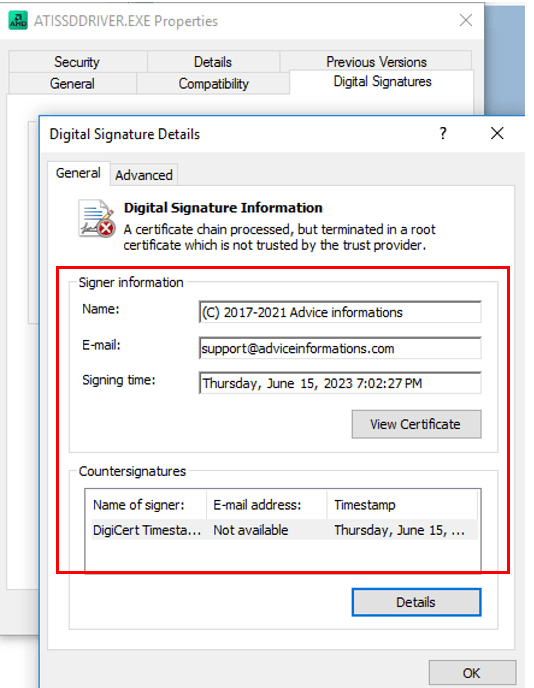
    In the campaign involving the discussed samples, the malware tries to impersonate an AMD External Data SSD driver and is signed with an “Advice informations” digital certificate in order to appear legitimate and evade detection.

    Implant impersonating AMD driver

    Digital certificate used by Grandoreiro malware

    In both cases, the malware is an executable that registers itself to be launched with Windows. However, it is worth noting that in the majority of Grandoreiro attacks, a DLL sideloading technique is employed, using legitimate binaries that are digitally signed to run the malware.

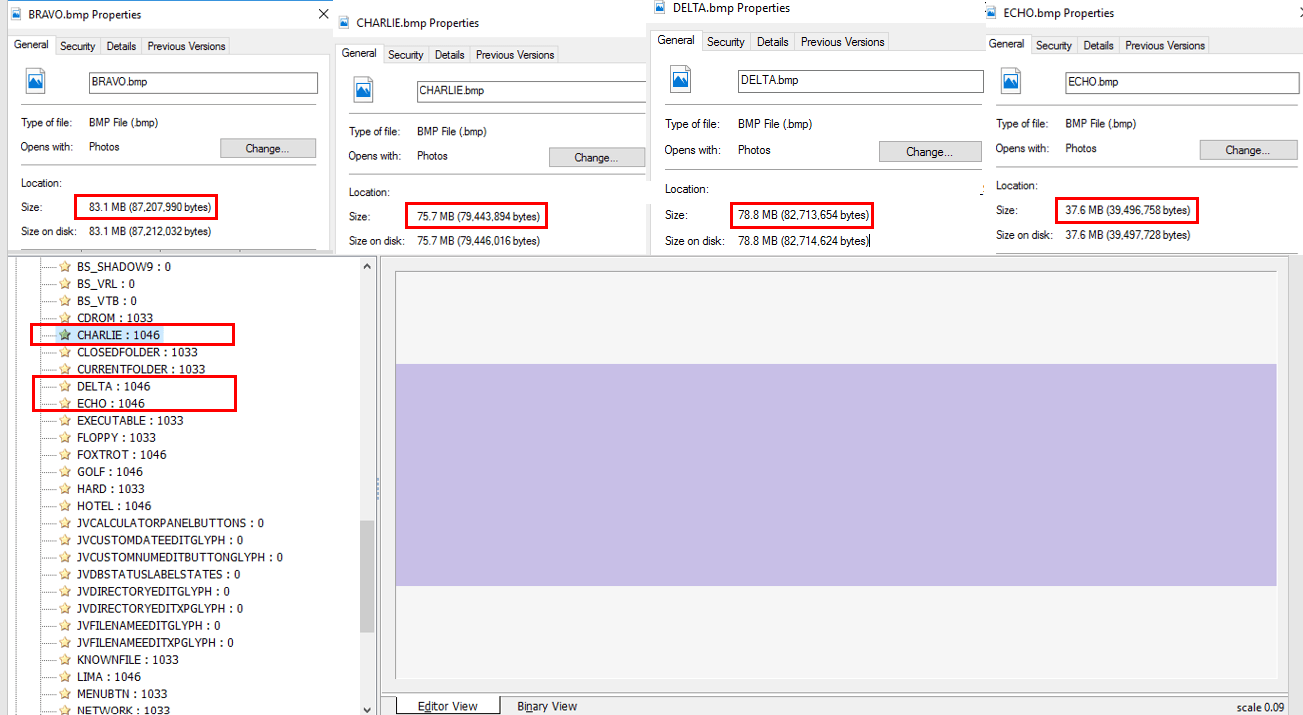
    The considerable size of the executables can be explained by the fact that Grandoreiro utilizes a binary padding technique to inflate the size of the malicious files as a way to evade sandboxes. To achieve this, the attackers add multiple BMP images to the resource section of the binary. In the example below, the sample included several big images. The sizes of the highlighted images are around 83.1 MB, 78.8 MB, 75.7 and 37.6 MB. However, there are more of them in the binary, and together all the images add ~376 MB to the file.

    Binary padding used by Grandoreiro

    In both 2022 and 2023 campaigns, Grandoreiro used a well-known XOR-based string encryption algorithm that is shared with other Brazilian malware families. The difference is the encryption key. For Grandoreiro, some magic values were the following:

    Date Encryption key
    March 2022 F5454DNBVXCCEFD3EFMNBVDCMNXCEVXD3CMBKJHGFM
    March 2022 XD3CMBKJCEFD3EFMF5454NBVDNBVXCCMNXCEVDHGFM
    August 2022 BVCKLMBNUIOJKDOSOKOMOI5M4OKYMKLFODIO
    June 2023 B00X02039AVBJICXNBJOIKCVXMKOMASUJIERNJIQWNLKFMDOPVXCMUIJBNOXCKMVIOKXCJ
    UIHNSDIUJNRHUQWEBGYTVasuydhosgkjopdf

    The various checks and validations aimed at avoiding detection and complicating malware analysis were also changed in the 2022 and 2023 versions. In contrast with the older Grandoreiro campaigns, we found that some of the tasks that were previously executed by the final payload are now implemented in the first stage loader. These tasks include security checks, anti-debugging techniques, and more. This represents a significant change from previous campaigns.

    One of these tasks is the use of the geolocation service http://ip-api.com/json to gather the target’s IP address location data. In a campaign reported in May 2023 by Trustwave, this task is performed by a JScript code embedded in an MSI installer before the delivery of the final payload.

    There are numerous other checks that have been transferred into the loader, although some of them are still present in the banking trojan itself. Grandoreiro gathers host information such as operating system version, hostname, display monitor information, keyboard layout, current time and date, time zone, default language and mouse type. Then the malware retrieves the computer name and compares it against the following strings that correspond to known sandboxes:

    • WIN-VUA6POUV5UP;
    • Win-StephyPC3;
    • difusor;
    • DESTOP2457;
    • JOHN-PC.

    Computer name validation

    It also collects the username and verifies if it matches with the “John” or “WORK” strings. If any of these validations match, the malware stops its execution.

    Grandoreiro includes detection of tools commonly used by security analysts, such as regmon.exe, procmon.exe, Wireshark, and so on. The process list varies across the malware versions, and it was significantly expanded in 2024, so we’ll share the full list later in this post. The malware takes a snapshot of currently executing processes in the system using the CreateToolhelp32Snapshot() Windows API and goes through the process list using Process32FirstW() and Process32NextW(). If any of the analysis tools exists in the system, the malware execution is terminated.

    Grandoreiro also checks the directory in which it is being executed. If the execution paths are D:programming or D:script, it terminates itself.

    Another anti-debugging technique implemented in the trojan involves checking for the presence of a virtual environment by reading data from the I/O Port “0x5658h” (VX) and looking for the VMWare magic number 0x564D5868. The malware also uses the IsDebuggerPresent() function to determine whether the current process is being executed in the context of a debugger.

    Last but not least, Grandoreiro searches for anti-malware solutions such as AVAST, Bitdefender, Nod32, Kaspersky, McAfee, Windows Defender, Sophos, Virus Free, Adaware, Symantec, Tencent, Avira, ActiveScan and CrowdStrike. It also looks for banking security software, such as Topaz OFD and Trusteer.

    In terms of the core functionality, some Grandoreiro samples check whether the following programs are installed:

    • CHROME.EXE;
    • MSEDGE.EXE;
    • FIREFOX.EXE;
    • IEXPLORE.EXE;
    • OUTLOOK.EXE;
    • OPERA.EXE;
    • BRAVE.EXE;
    • CHROMIUM.EXE;
    • AVASTBROWSER.EXE;
    • VeraCrypt;
    • Nortonvpn;
    • Adobe;
    • OneDrive;
    • Dropbox.

    If any of these is present on the system, the malware stores their names to further monitor user activity in them.

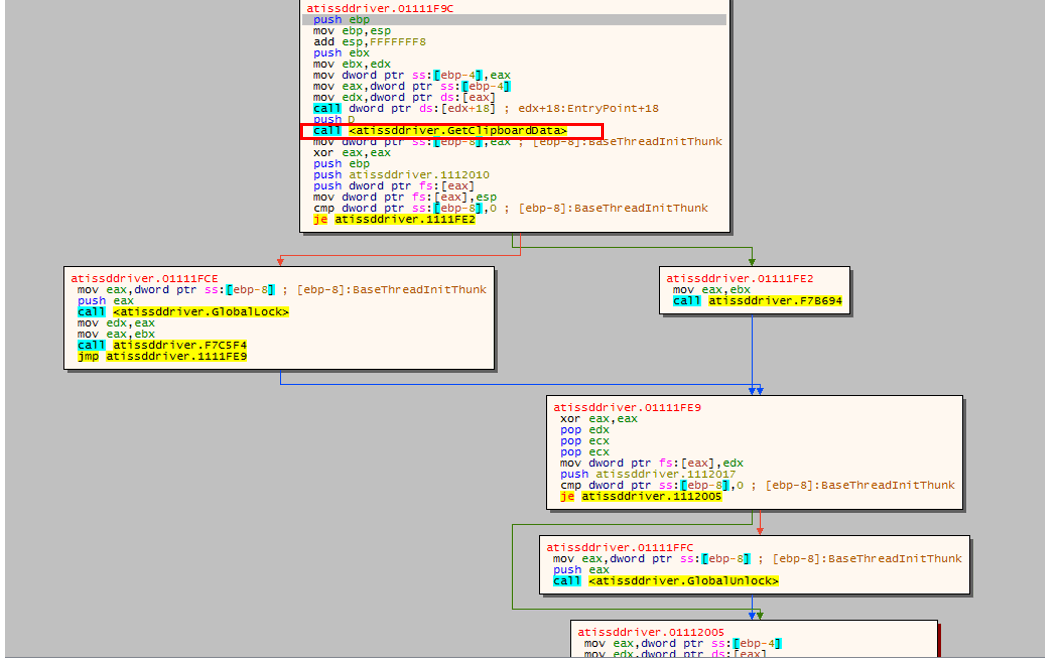
    Grandoreiro also checks for crypto wallets installed on the infected machine. The malware includes a clipboard replacer for crypto wallets, monitoring the user’s clipboard activity and replacing the clipboard data with the threat actor keys.

    Clipboard replacer

    2024 campaigns

    During a certain period of time in February 2024, a few days after the announcement of the arrest of some of the gang’s operators in Brazil, we observed a significant increase in emails detected by spam traps. There was a notable prevalence of Grandoreiro-themed messages masquerading as Mexican CFDI communications. Mexican CFDI, short for “Comprobante Fiscal Digital por Internet” is an electronic invoicing system administered by the Mexican Tax Authority (SAT — Servicio de Administración Tributaria). It facilitates the creation, transmission, and storage of digital tax documents, mandatory for businesses in Mexico to record transactions for tax purposes.

    In our investigation, we have acquired 48 samples associated not only with this instance but also with various other campaigns.

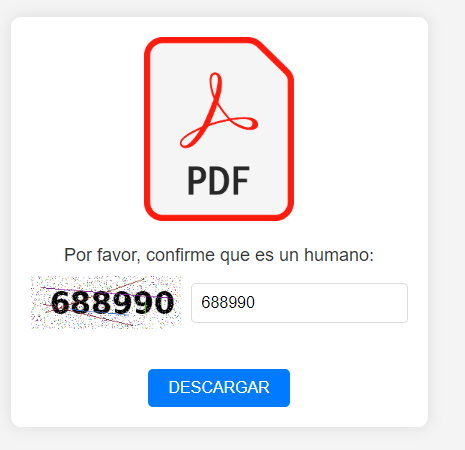
    Notably, this new campaign added a new sandbox detection mechanism, namely a CAPTCHA before the execution of the main payload, as a way to avoid the automatic analysis used by some companies:

    Grandoreiro anti-sandbox CAPTCHA

    It is worth noting that in the 2024 Grandoreiro campaigns, the new sandbox evasion code has been implemented in the downloader. Although the main sample still has anti-sandbox functionality too, if a sandbox is detected, it is simply not downloaded. Besides that, the new version also added detection of many tools to its arsenal, aiming to avoid analysis. Here is whole list of analysis tools detected by the newest versions:

    regmon.exe hopper.exe nessusd.exe OmniPeek.exe
    procmon.exe jd-gui.exe PacketSled.exe netmon.exe
    filemon.exe canvas.exe prtg.exe colasoft.exe
    Wireshark.exe pebrowsepro.exe cain.exe netwitness.exe
    ProcessHacker.exe gdb.exe NetworkAnalyzerPro.exe netscanpro.exe
    PCHunter64.exe scylla.exe OmniPeek.exe packetanalyzer.exe
    PCHunter32.exe volatility.exe netmon.exe packettotal.exe
    JoeTrace.exe cffexplorer.exe colasoft.exe tshark.exe
    ollydbg.exe angr.exe netwitness.exe windump.exe
    ida.exe pestudio.exe netscanpro.exe PRTG Probe.exe
    x64dbg.exe die.exe packetanalyzer.exe NetFlowAnalyzer.exe
    cheatengine.exe ethereal.exe packettotal.exe SWJobEngineWorker2x64.exe
    ollyice.exe Capsa.exe tshark.exe NetPerfMonService.exe
    fiddler.exe tcpdump.exe windump.exe SolarWinds.DataProcessor.exe
    devenv.exe NetworkMiner.exe PRTG Probe.exe ettercap.exe
    radare2.exe smartsniff.exe NetFlowAnalyzer.exe apimonitor.exe
    ghidra.exe snort.exe SWJobEngineWorker2x64.exe apimonitor-x64.exe
    frida.exe pcap.exe NetPerfMonService.exe apimonitor-x32.exe
    binaryninja.exe SolarWinds.NetPerfMon.exe SolarWinds.DataProcessor.exe x32dbg.exe
    cutter.exe nmap.exe ettercap.exe x64dbg.exe
    scylla.exe apimonitor.exe PCHunter64.exe x96dbg.exe
    volatility.exe apimonitor-x64.exe PCHunter32.exe fakenet.exe
    cffexplorer.exe apimonitor-x32.exe JoeTrace.exe hexworkshop.exe
    angr.exe x32dbg.exe ollydbg.exe Dbgview.exe
    pestudio.exe x64dbg.exe ida.exe sysexp.exe
    die.exe x96dbg.exe x64dbg.exe vmtoolsd.exe
    ethereal.exe fakenet.exe cheatengine.exe dotPeek.exe
    Capsa.exe hexworkshop.exe ollyice.exe procexp64.exe
    tcpdump.exe Dbgview.exe fiddler.exe procexp64a.exe
    NetworkMiner.exe sysexp.exe devenv.exe procexp.exe
    smartsniff.exe vmtoolsd.exe radare2.exe cheatengine.exe
    snort.exe dotPeek.exe ghidra.exe ollyice.exe
    pcap.exe procexp64.exe frida.exe pebrowsepro.exe
    cain.exe procexp64a.exe binaryninja.exe gdb.exe
    nmap.exe procexp.exe cutter.exe Wireshark.exe
    nessusd.exe regmon.exe hopper.exe ProcessHacker.exe
    PacketSled.exe procmon.exe jd-gui.exe SolarWinds.NetPerfMon.exe
    prtg.exe filemon.exe canvas.exe NetworkAnalyzerPro.exe

    These are some RAT features that we found in this version:

    • Auto-update feature allows newer versions of the malware to be deployed to the victim’s machine;
    • Sandbox/AV detection, still present in the main module, which includes more tools than previous versions;
    • Keylogger feature;
    • Ability to select country for listing victims;
    • Banking security solutions detection;
    • Checking geolocation information to ensure it runs in the target country;
    • Monitoring Outlook emails for specific keywords;
    • Ability to use Outlook to send spam emails.

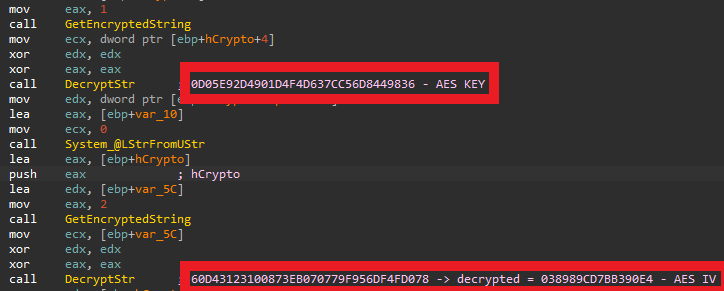
    In terms of static analysis protection, in 2024 versions, Grandoreiro has implemented enhanced encryption measures. Departing from its previous reliance on commonly shared encryption algorithms found in other malware, Grandoreiro has now adopted a multi-layered encryption approach. The decryption process in the newer versions is the following. Initially, the string undergoes deobfuscation through a simple replacement algorithm. Following this, Grandoreiro employs the encryption algorithm based on XOR and conditional subtraction typically utilized by Brazilian malware; however, it differs from them by incorporating a lengthy, 140759-byte string instead of smaller magic strings we saw in 2022 and 2023 samples. Subsequently, the decrypted string undergoes base64 decoding before being subjected to decryption via the AES-256 algorithm. Notably, the AES key and IV are encrypted within Grandoreiro’s code. Upon completion of all these steps, the decrypted string is successfully recovered.

    Grandoreiro AES key and IV

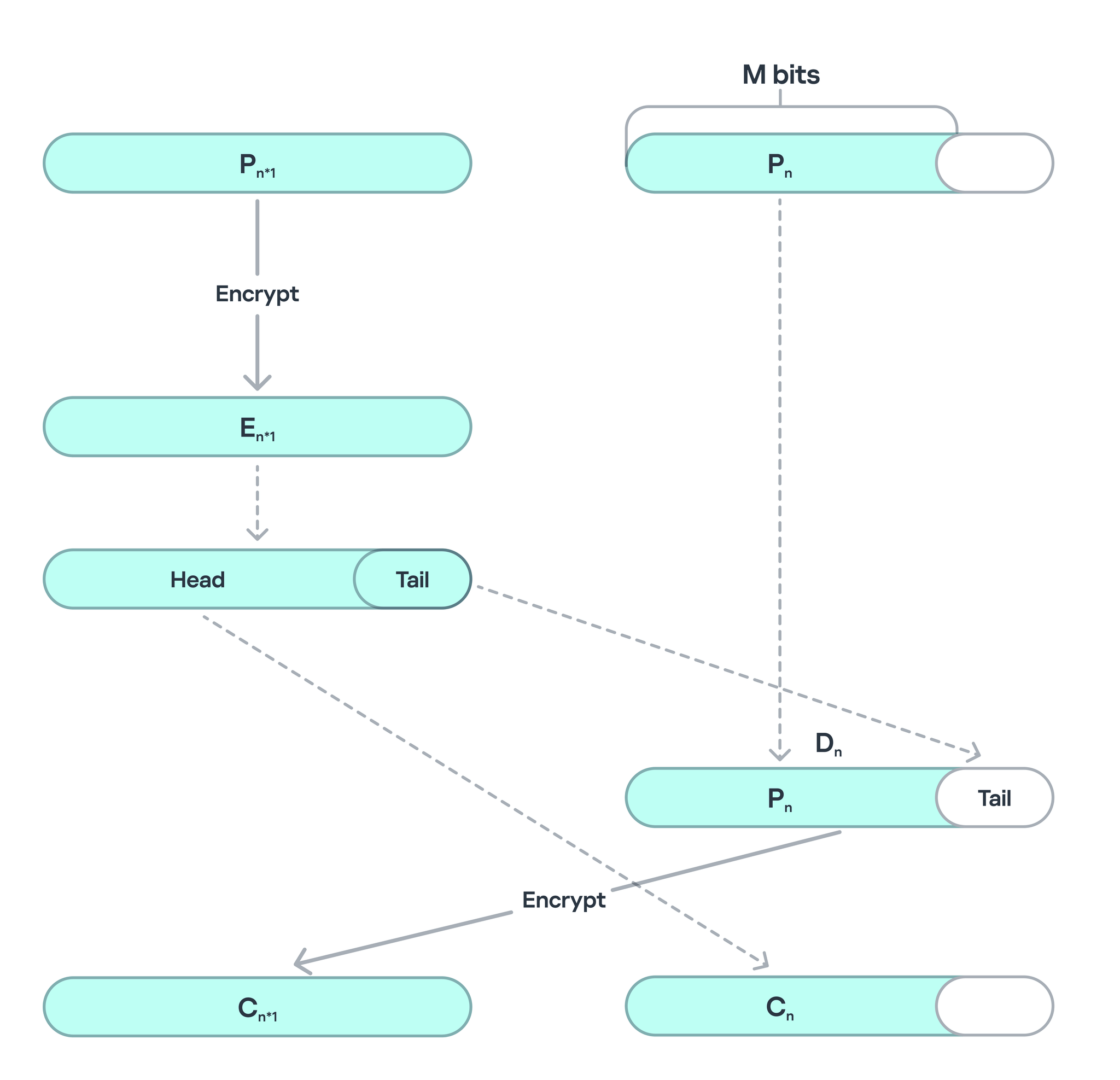
    In newer samples, Grandoreiro upgraded yet again the encryption algorithm using AES with CTS, or Ciphertext Stealing, a specialized encryption mode used when the plaintext is not a multiple of the block size, which in this case is the 128-bit (16-byte) block size used by AES. Unlike more common padding schemes, such as PKCS#7, where the final block is padded with extra bytes to ensure it fits a full block, CTS operates without padding. Instead, it manipulates the final partial block of data by encrypting the last full block and XORing its output with the partial block. This allows encryption of any arbitrary-length input without adding extra padding bytes, preserving the original size of the data.

    ECB Encryption Steps for CTS

    In the case of Grandoreiro, the malware’s encryption routine does not add standard padding to incomplete blocks of data. Their main goal is to complicate analysis: it takes time to figure out that CTS was used, and then more time to implement decryption in this mode, which makes the extraction and obfuscation of strings more complicated. This marks the first time this particular method has been observed in a malware sample.

    As the threat actors continue to evolve their techniques, changing the encryption in every iteration of the malware, the use of CTS in malware may signal a shift toward more advanced encryption practices.

    Local versions: old meets new

    In a recent campaign, our analysis has revealed the existence of an older variant of the malware that utilizes legacy encryption keys, outdated algorithms, and a simplified structure, but which runs in parallel to the campaign using the new code. This variant targets fewer banks — about 30 financial institutions, mainly from Mexico. This analysis clearly indicates that another developer, likely with access to older source code, is conducting new campaigns using the legacy version of the malware.

    How they steal your money

    Operators behind Grandoreiro are equipped with a wide variety of remote commands, including an option to lock the user screen and present a custom image (overlay) to ask the victim for extra information. These are usually OTPs (one-time passwords), transaction passwords or tokens received by SMS, sent by financial institutions.

    A new tactic that we have discovered in the most recent versions found in July 2024 and later suggests that the malware is capturing user input patterns, particularly mouse movements, to bypass machine learning-based security systems. Two specific strings found in the malware — “GRAVAR_POR_5S_VELOCIDADE_MOUSE_CLIENTE_MEDIA” (“Record for 5 seconds the client’s average mouse speed”) and “Medição iniciada, aguarde 5 segundos!” (“Measurement started, please wait 5 seconds!”) — indicate that Grandoreiro is monitoring and recording the user’s mouse activity over a short period. This behavior appears to be an attempt to mimic legitimate user interactions in order to evade detection by anti-fraud systems and security solutions that rely on behavioral analytics. Modern cybersecurity tools, especially those powered by machine learning algorithms, analyze user’s behavior to distinguish between human users and bots or automated malware scripts. By capturing and possibly replaying these natural mouse movement patterns, Grandoreiro could trick these systems into identifying the activity as legitimate, thus bypassing certain security controls.

    This discovery highlights the continuous evolution of malware like Grandoreiro, where attackers are increasingly incorporating tactics designed to counter modern security solutions that rely on behavioral biometrics and machine learning.

    To perform the cash-out in the victim’s account, Grandoreiro operators’ options are to transfer money to the account of local money mules, using transfer apps, buy cryptocurrency or gift cards, or even going to an ATM. Usually, they search for money mules in Telegram channels, paying $200 to $500 USD per day:

    Grandoreiro operator looking for money mules

    Infrastructure

    The newest Grandoreiro version uses 3 Domain Generation Algorithms (DGAs), generating valid domains for command and control (C2) communications. The algorithm uses the current daytime to select strings of predefined lists and concatenates them with a magic key to create the final domain.

    By dynamically generating unique domain names based on various input data, the algorithm complicates traditional domain-based blocking strategies. This adaptability allows the malicious actors to maintain persistent command-and-control communications, even when specific domains are identified and blacklisted, requiring security solutions to base their protection not on a fixed list of domains, but on an algorithm for generating them.

    Since early 2022, Grandoreiro leverages a known Delphi component shared among different malware families named RealThinClient SDK to remotely access victim machines and perform fraudulent actions. This SDK is a flexible and modular framework for building reliable and scalable Windows HTTP/HTTPS applications with Delphi. By using RealThinClient SDK, the program can handle thousands of active connections in an efficient multithreaded manner.

    Grandoreiro C2 Communication

    Operator tool

    Grandoreiro’s Operator is the tool that allows the cybercriminal to remotely access and control the victim’s machine. It’s a Delphi-based software that lists its victims whenever they start browsing a targeted financial institution website.

    Grandoreiro’s Operator tool

    Once the cybercriminal chooses a victim to operate on, they will be presented with the following screen, seen in the image below, which allows many commands to be executed and visualizes the victim’s desktop.

    Grandoreiro’s Operator commands

    Cloud VPS

    One overlooked feature of the Grandoreiro malware is what is called “Cloud VPS” by the attackers — it allows cybercriminals to set up a gateway computer between the victim’s machine and the malware operator, thus hiding the cybercriminal’s real IP address.

    This is also used by them to make investigation harder, as the first thing noted is the gateway’s IP address. When requesting a seizure, an investigator just finds the gateway module. Meanwhile, the criminal has already set up a new gateway somewhere else and new victims connect to the new one through its DGA.

    Grandoreiro Cloud VPS

    Victims and targets

    The Grandoreiro banking trojan is primed to steal the credentials accounts for 1,700 financial institutions, located in 45 countries and territories. After decrypting the strings of the malware, we can see the targeted banks listed separated by countries/territories. This doesn’t mean that Grandoreiro will target a specific bank from the list; it means it is ready to steal credentials and act, if there is a local partner or money mule who can operationalize and complete the action. The banks targeted by Grandoreiro are located in Algeria, Angola, Antigua and Barbuda, Argentina, Australia, Bahamas, Barbados, Belgium, Belize, Brazil, Canada, Cayman Islands, Chile, Colombia, Costa Rica, Dominican Republic, Ecuador, Ethiopia, France, Ghana, Haiti, Honduras, India, Ivory Coast, Kenya, Malta, Mexico, Mozambique, New Zealand, Nigeria, Panama, Paraguay, Peru, Philippines, Poland, Portugal, South Africa, Spain, Switzerland, Tanzania, Uganda, United Kingdom, Uruguay, USA, and Venezuela. It’s important to note that the list of targeted banks and institutions tend to slightly change from one version to another.

    From January to October 2024, our solutions blocked more than 150,000 infections impacting more than 30,000 users worldwide, a clear sign the group is still very active. According to our telemetry, the countries most affected by Grandoreiro infections are Mexico, Brazil, Spain, and Argentina, among many others.

    Conclusion

    We understand how difficult it is to eradicate a malware family, but it is possible to impede their operation with the cooperation of law enforcement agencies and the private sector — modern financial cybercrime can and must be fought.

    Brazilian banking trojans are already an international threat; they’re filling the gaps left by Eastern European gangs who have migrated into ransomware. We know that in some countries, internet banking is declining on desktops, forcing Grandoreiro to target companies and government entities who are still using operating in that way.

    The threat actors behind the Grandoreiro banking malware are continuously evolving their tactics and malware to successfully carry out attacks against their targets and evade security solutions. Kaspersky continues to cooperate with INTERPOL and other agencies around the world to fight the Grandoreiro threat among internet banking users.

    This threat is detected by Kaspersky products as HEUR:Trojan-Banker.Win32.Grandoreiro, Trojan-Downloader.OLE2.Grandoreiro, Trojan.PDF.Grandoreiro and Trojan-Downloader.Win32.Grandoreiro.

    For more information, please contact: crimewareintel@kaspersky.com

    Indicators of Compromise

    Host based
    f0243296c6988a3bce24f95035ab4885
    dd2ea25752751c8fb44da2b23daf24a4
    555856076fad10b2c0c155161fb9384b
    49355fd0d152862e9c8e3ca3bbc55eb0
    43eec7f0fecf58c71a9446f56def0240
    150de04cb34fdc5fd131e342fe4df638
    b979d79be32d99824ee31a43deccdb18

    MIL OSI Global Banks –

    January 24, 2025
  • MIL-OSI Russia: Moscow scientists have assessed diagnostic accuracy indicators for Russian and international artificial intelligence services

    Translation. Region: Russian Federation –

    Source: Center for Diagnostics and Telemedicine

    Moscow scientists have assessed the diagnostic accuracy of various artificial intelligence (AI) services for radiology. The recent study evaluated five AI algorithms, including three developed in Russia and two from India and South Korea. The study found that the Russian AI service demonstrated the highest accuracy in detecting pulmonary nodules, outperforming its foreign counterparts. Research results were published in the Chinese Journal of Quantitative Imaging in Medicine and Surgery.

    Yuri Vasiliev, CEO of the Diagnostics and Telemedicine Center of the Moscow City Health Department, noted the importance of this achievement. “In a recent study involving Russian and foreign artificial intelligence (AI) services, our own AI solution demonstrated the highest accuracy in detecting lung nodules, ahead of similar solutions from India and South Korea. This achievement is a significant advance in our efforts to improve the quality of medical care.” Currently, radiologists use more than 50 AI services to interpret medical images, and in Moscow, more than 13 million studies have been analyzed using neural networks. The growing AI services market is constantly evolving with solutions that optimize the workload of medical workers while maintaining high standards of work,” Vasiliev said.

    “We aim to provide doctors with tools that will not only make their work easier, but also improve the overall quality of medical care. To do this, we have developed a maturity matrix – a comprehensive tool designed to evaluate and compare the effectiveness of various artificial intelligence services. Since the end of 2022, our AI service has consistently occupied a leading position in the field of chest X-ray,” said Yuri Vasiliev.

    The AI service, designed for automatic analysis of chest X-rays, currently identifies 14 signs of various pathologies. In addition, it calculates the cardiothoracic ratio and forms a comprehensive X-ray report.

    “We have prepared a unique data set consisting of 100 radiographs, including 50 with confirmed pulmonary nodules and 50 without pulmonary nodules. Of these, 25 cases were found to have nodules that were initially questioned by radiologists, but were confirmed using computed tomography. At the same time, the presence of pulmonary nodules in all 50 studies was confirmed by computed tomography,” explained Kirill Arzamasov, head of the Department of Medical Informatics, Radiomics and Radiogenomics at the Center for Diagnostics and Telemedicine.

    “The evaluation of AI services was carried out in three stages, at each stage the results were compared with the reference standard confirmed by CT studies. The results showed that the Russian AI service outperforms international analogues in all indicators of diagnostic accuracy.” The dataset is open source access on the website, which allows developers to independently assess the quality of AI services,” said Kirill Arzamasov, head of the Department of Medical Informatics, Radiomics and Radiogenomics at the Center for Diagnostics and Telemedicine of the Moscow Department of Healthcare.

    This study is part of a larger experiment to introduce computer vision technologies into the Moscow healthcare system, which will start in 2020. With the support of the Moscow Social Development Complex and the Department of Information Technology, the project aims to promote innovation in the field of artificial intelligence, in particular by supporting developers.

    The Diagnostics and Telemedicine Center, established in 1996, plays a leading role in the implementation of AI technologies in medicine in Russia. Its activities are aimed at the development of AI in medicine, the development of diagnostic images, the management of medical units, research and training of medical workers.

    MIL OSI Russia News –

    January 24, 2025
  • MIL-OSI Economics: How higher education is reimagining student experiences with Azure OpenAI Service

    Source: Microsoft

    Headline: How higher education is reimagining student experiences with Azure OpenAI Service

    Learn how using Azure OpenAI Service in higher education can help leaders reimagine learning models and reduce administrative burdens.

    Imagine a future where every student has a personalized learning path, where faculty can focus on teaching instead of administrative tasks, and where academic research accelerates breakthrough discoveries. This is not a distant vision—generative AI is making it possible today. AI-driven innovations empower higher education leaders to reimagine learning models, reduce administrative burdens, and advance academic research, positioning institutions to not only enhance student success but also lead in educational innovation, securing a competitive edge in an evolving landscape.

    A July 2024 Forrester report commissioned by Microsoft found that education institutions using Azure OpenAI Service saw improved student outcomes, streamlined operations, and increased access to technology. By Year 3, they are expected to boost content generation efficiency by 30% to 60% and improve chatbot resolution rates by 20% to 50%, driving positive impacts on graduation and employment rates.

    As AI adoption accelerates, institutions must also prioritize trust by focusing on scalable security, data privacy, and governance measures. Microsoft supports this transition with AI solutions that integrate built-in protections, addressing risks such as prompt injections and bias, while maintaining data privacy and compliance to safeguard institutions.

    Reimagine student experiences

    With AI-powered, secure, and flexible solutions, Azure enables educational institutions to modernize confidently.

    Join us as we explore five key use cases of generative AI in higher education, along with examples of institutions that have successfully implemented AI to deliver more equitable and personalized student experiences.

    1. Around-the-clock real-time campus support

    As student expectations evolve, meeting their demand for around-the-clock support has become a critical factor in student satisfaction and institutional efficiency. For example, Tecnológico de Monterrey’s TECgpt is an AI platform that offers quick access to information like tuition, scholarships, and campus services, allowing users to retrieve personal details, such as scholarship status, within minutes.

    Similarly, the University of South Florida improved response times and reduced staff workloads by automating IT ticketing with Azure OpenAI, launching an AI-powered Help Desk in just one week. The University of Hong Kong has also deployed several Azure OpenAI-powered chatbots to handle IT queries, administrative tasks, and course selection, freeing staff to focus on more complex issues. Education leaders are automating routine tasks and delivering personalized academic assistance at scale, boosting retention and accelerating graduation rates while streamlining operations.

    I can invest more time in people now that I don’t have to worry about those recurring repetitive tasks because people are what it’s all about. It is revolutionizing all our workflows, our teaching, and our learning spaces quite rapidly. With Copilot, we’re able to do things bigger, better, but also equitably across the university space. It’s changing the way we do everything, and that is a big deal.

    Tim Henkel, Assistant Vice Provost for Teaching and Learning, University of South Florida (USF)

    AI innovations are reshaping how institutions engage with students by offering around-the-clock support for inquiries about housing, student life, and campus services, significantly enhancing the overall student experience. These AI tools also provide personalized academic and career guidance, helping students select courses, optimize degree plans, and receive tailored advising.

    Additionally, AI-powered virtual assistants streamline the financial aid process, guiding students through eligibility requirements, deadlines, and submissions, ensuring timely completion. Through AI integration, institutions can deliver responsive, student-centered services while improving operational efficiency, ultimately enriching the campus experience.

    With Azure OpenAI, USF can rapidly classify and summarize IT tickets, eliminating that first level of eyes on an issue.

    2. Personalize learning experiences at scale

    In an environment where institutional success depends on student engagement and outcomes, personalized learning is becoming a strategic priority. With Data Science in Microsoft Fabric and Azure AI Services, institutions can integrate real-time data analysis from their LMS, leveraging AI to customize lessons, content, and pacing based on student performance.  AI tutors provide personalized, instant feedback, helping students make continuous progress and tackle challenging tasks with confidence. These tools empower institutions to deliver adaptive learning tailored to each student’s needs.

    The Azure OpenAI Service provided remarkably high-quality hints generated by GPT-4 from a robust and scalable API that reliably handled heavy loads from hundreds of students working simultaneously near homework deadlines.

    John DeNero, Faculty Director and Associate Teaching Professor, UC Berkeley

    Universities around the world are leveraging AI to improve student outcomes and streamline administrative tasks. At the University of Sydney, the Cogniti platform utilizes AI teaching assistants to tailor feedback and adjust learning paths, boosting student engagement and academic success. IU International University of Applied Sciences in Germany offers an AI study buddy, Syntea, with always-available multilingual support and enhanced student engagement through personalized feedback. It also reduces course completion times by 27%, all while seamlessly integrating across platforms like myCampus and Microsoft Teams.

    Similarly, UC Berkeley’s 61A-Bot, a specialized AI assistant powered by Azure OpenAI Service, has significantly enhanced student learning by providing real-time support and reducing homework completion times in their computer science courses. As institutions worldwide adopt AI-driven solutions, education leaders are transforming both learning personalization and operational efficiency, driving significant improvements in student success.

    Get started with Azure

    3. Accelerate learning for all with multi-language support

    AI improves educational access by offering multi-language support through real-time translation, note-taking, and content delivery, enabling all students to engage fully in their preferred language. Flexible learning options allow students to review materials at their own pace, while chatbots offer seamless language transitions and targeted support to enhance comprehension and engagement.

    By utilizing the advanced language models in Azure OpenAI Service, Cool English is taking an innovative step for English education in Taiwan, helping students reach their learning goals and overcome the challenges of limited opportunities for real-life conversational and writing practice.

    Dr. Hao-Jan Howard Chen, Professor, Department of English at National Taiwan Normal University

    This potential is already being realized through initiatives like National Taiwan Normal University’s “Cool English” platform, powered by Azure OpenAI, which has helped over 1.4 million students enhance their English skills through adaptive, conversational practice. Similarly, the Korea Advanced Institute of Science and Technology (KAIST) developed a multilingual chatbot to help EFL students write essays in English, offering seamless language switching and personalized guidance outside class hours. Powered by Azure OpenAI’s advanced models, the chatbot provides feedback and answers questions to help students improve their writing without generating essays for them. AI-powered language tools help create inclusive learning environments, enhance student outcomes, and attract a diverse international student body.

    AI can help higher education institutions provide multi-language support to students.

    4. Accelerate academic research

    AI is transforming academic research by accelerating discovery and innovation, and automating tasks like literature reviews, data analysis, and report generation. In April 2023, Microsoft Research launched the Accelerating Foundation Models Research (AFMR) initiative to accelerate the use of large-scale AI models in academia. Through Azure AI Services, AFMR provides universities with access to powerful foundation models, supporting research in fields such as healthcare, scientific discovery, and multicultural empowerment. With over 200 projects in 15 countries, AFMR is building a global AI research community.

    If you have a really good idea, it’s very hard to just search the literature and try to find everything. This is sort of like having a super adviser, a brilliant astronomer with an encyclopedic memory who can say, ‘Well, that could be a very good idea and here’s why,’ or ‘That’s likely a bad idea and here’s why.’

    Alyssa Goodman, Robert Wheeler Wilson Professor of Applied Astronomy, Harvard University

    Universities are harnessing foundation models to accelerate scientific discovery and hypothesis generation. A collaboration between astronomers at Harvard University and The Australian National University has led to the development of an astronomy-focused chat application that utilizes GPT-4. This tool draws from over 300,000 astronomy papers, helping researchers extract key information and analyze data to develop new theories.

    At Georgia Tech, researchers are utilizing Microsoft’s Azure OpenAI Service to analyze global EV charging data, uncovering insights for policy development and improving infrastructure reliability to support sustainable and equitable EV adoption. With AI solutions like Azure OpenAI Service, higher education institutions can automate repetitive tasks, improve collaboration, and scale research efforts, all while ensuring data security and focusing on high-impact academic work.

    5. Trustworthy AI for education

    There is a critical need for organizations to deploy AI responsibly. As AI transforms education, decision makers must ensure these systems are secure, private, and fair. A key strategy is to choose AI platforms with built-in safeguards, like content filtering and bias detection. For example, South Australia’s Department for Education successfully piloted EdChat, an AI chatbot powered by Azure AI, which protects 1,500 students across eight schools from harmful content while empower educators to focus on the benefits.

    Equally important is the protection of sensitive student information. With built-in features to safeguard text content, including moderation and groundedness detection, institutions can ensure responsible AI deployment while protecting student data with enterprise-grade security and robust privacy measures to prevent breaches.

    South Australia’s Department for Education successfully piloted EdChat, an AI chatbot using Azure AI.

    Key principles of trustworthy AI:

    • Security: AI systems must be resilient against threats.
    • Safety: AI must operate reliably in sensitive environments like classrooms.
    • Privacy: Protecting personal data is essential to maintain trust.

    AI is not just a tool—it’s the catalyst for a new era in education. By enhancing student support, personalizing learning, and accelerating academic research, AI empowers institutions to break down barriers, expand access, and create more inclusive and innovative learning environments. Those who embrace AI today will lead the future of education, building adaptable, forward-thinking institutions focused on student success.

    The question is no longer if AI should be integrated, but how quickly it can be implemented to unlock its full potential. The future of education is here—is your institution ready to lead it?

    Get started with Azure

    Ready to transform your institution with AI? Partner with Microsoft to unlock new possibilities and drive educational success:

    MIL OSI Economics –

    January 24, 2025
  • MIL-OSI Security: Federal Grand Jury Indicts Man in Connection with Robberies of Suburban Chicago Banks

    Source: Federal Bureau of Investigation (FBI) State Crime News

    Ahead of the Threat Podcast: Episode Zero

    Welcome to Ahead of the Threat, the FBI’s new podcast miniseries that brings together an FBI cyber executive and a private sector chief information security officer. Join Bryan Vorndran, assistant director of the FBI’s Cyber Division, and Jamil Farshchi, a strategic engagement advisor for the FBI who also works as an executive vice president and CISO of Equifax, as they discuss emerging cyber threats and the enduring importance of cybersecurity fundamentals. Featuring distinguished guests from the business world and government, Ahead of the Threat will confront some of the biggest questions in cyber: How will emerging technology impact corporate America? How can corporate boards be structured for cyber resilience? What does the FBI think about generative artificial intelligence? Listen to new episodes biweekly and stay Ahead of the Threat.

    Charity and Disaster Fraud

    Charity fraud scams can come in many forms: emails, social media posts, crowdfunding platforms, cold calls, etc. They are especially common after high-profile disasters. Always use caution and do your research when you’re looking to donate to charitable causes.

    RYAN JAMES WEDDING

    Conspiracy to Distribute and Possess with Intent to Distribute Controlled Substances; Conspiracy to Export Cocaine; Continuing Criminal Enterprise; Murder in Connection with a Continuing Criminal Enterprise and Drug Crime; Attempt to Commit…

    Capitol Violence

    The FBI is seeking to identify individuals involved in the violent activities that occurred at the U.S. Capitol and surrounding areas on January 6, 2021. View photos and related information here. If you have any information to provide, visit tips.fbi.gov or call 1-800-CALL-FBI.

    MIL Security OSI –

    January 24, 2025
  • MIL-OSI Security: INDOPACOM and 7th Air Force Commander visits 35th Air Defense Artillery Brigade

    Source: United States INDO PACIFIC COMMAND

    OSAN AIR BASE, Korea  –  

    On October 9th, Adm. Samuel Paparo, commander of the U.S. Indo-Pacific Command, and Lt. Gen. David Iverson, commanding general of the 7th Air Force, visited the 35th Air Defense Artillery Brigade for an important mission and intelligence briefing. The session was led by Maj. Ryan Workman, Military Intelligence Officer, and Capt. April Dybal, commander of the Space Force detachment.

    During the meeting, the leaders discussed current events on the Korean Peninsula and took the opportunity to recognize the outstanding contributions of 1st Lt. Quinn O’Rourke. Serving in the brigade operations shop, Lt. O’Rourke was commended for his exceptional performance in the S3 section, demonstrating a commitment to excellence that impacts the entire brigade

    “Serving in this brigade has been such an incredible experience. I’ve really been able to develop my skills as an air defense officer here. The guidance from my fellow officers senior NCOs, and warrant officers has been invaluable, and they continue to inspire me to grow. Being recognized by ADM Paparo has truly motivated me to keep reaching for greatness within our brigade” said 1LT Quinn O’Rourke, brigade assistance operations officer.

    In conclusion, the meeting served as a critical platform for discussing the evolving security landscape on the Korean Peninsula. Led by Maj. Ryan Workman and Capt. April Dybal, the briefing allowed leaders to align on key intelligence and operational strategies vital to maintaining readiness in the Indo-Pacific region. This engagement not only reinforced the importance of collaboration among military leaders but also highlighted the brigade’s ongoing commitment to addressing contemporary challenges with agility and expertise. As the region continues to evolve, the insights shared during this meeting will play a pivotal role in shaping future missions and ensuring the safety and security of the area.

    MIL Security OSI –

    January 24, 2025
  • MIL-OSI Security: California Drug Supplier Receives Life for Role in Fentanyl Overdose Death of Fairbanks Man

    Source: Federal Bureau of Investigation (FBI) State Crime Alerts (b)

    FAIRBANKS, Alaska – A California drug supplier was sentenced today to life in prison for his connection to the fatal fentanyl overdose of a Fairbanks man in October 2020.

    Junior Gafatasi Tulali, 48, was convicted by a federal jury of distributing fentanyl resulting in death with an enhanced statutory penalty on April 19, 2024. According to court documents and evidence presented at trial, around Oct. 13, 2020, Tulali agreed to sell 500 Oxycodone M30 pills to a Florida resident who agreed to distribute the pills in Fairbanks, where they could be sold for a higher price than Outside. The pills were shipped in a parcel from California and arrived in Fairbanks on Oct. 17. Inside the parcel were at least 480 counterfeit Oxycodone M30 pills containing a mixture of acetaminophen and an unknown amount of fentanyl.

    The individual who retrieved the shipment distributed the counterfeit pills to several other dealers in the area. On Oct. 26, the victim purchased two pills from the shipment. Sometime between the evening of Oct. 26 and Oct. 28, the victim used the pills he obtained and was found dead in his home on Oct. 28. Medical examiners determined cause of death was acute toxic effects of fentanyl, which was contained in the pills that originated from Tulali.

    Evidence presented at trial connected two additional non-fatal fentanyl overdoses to Tulali’s shipment of counterfeit pills. Both of the dealers in Fairbanks who were involved in selling the fentanyl pills to the victim were convicted for their role in the offence in 2022.

    “In 2023, Alaska had the highest overdose death rate in the nation. Fentanyl poisoning is devastating our state, largely due to drug suppliers like Mr. Tulali, who gamble with human lives every time they sell a counterfeit pill,” said U.S. Attorney S. Lane Tucker for the District of Alaska. “Thanks to the outstanding investigative and prosecutorial work done in this case, we traced the pills that tragically killed the victim back to the source and held three people accountable for the irreparable damage they caused. My office is committed to collaborating with law enforcement at all levels to keep fentanyl out of our communities and prosecute those who jeopardize that mission.” 

    “Fentanyl traffickers like Mr. Tulali are willing to risk the lives of their customers in order to make money peddling drugs,” said David F. Reames, Special Agent in Charge, DEA Seattle Field Division. “The sentence today shows that these actions have grave consequences, a lesson Mr. Tulali will spend many years learning.”

    “This case is a great example of how far our officers are ready to go to make sure we provide justice for victims in our community. We take our job of protecting  Fairbanks seriously and will continue to hold criminals responsible when they threaten the safety of our residents,” said Fairbanks Police Chief Ron Dupee.

    The Drug Enforcement Administration, Fairbanks Police Department, North Pole Police Department and Alaska State Troopers, with assistance from the FBI Anchorage Field Office, investigated the case as part of the Fairbanks Area Narcotics Team (FANT) High Intensity Drug Trafficking Area (HIDTA) Task Force.

    Assistant U.S. Attorneys and Carly Vosacek and Alana Weber prosecuted the case.

    ###

    MIL Security OSI –

    January 24, 2025
  • MIL-OSI Security: U.S. Attorney Trina A. Higgin Appoints Election Officer for the District of Utah

    Source: Federal Bureau of Investigation (FBI) State Crime Alerts (c)

    Ahead of the Threat Podcast: Episode Zero

    Welcome to Ahead of the Threat, the FBI’s new podcast miniseries that brings together an FBI cyber executive and a private sector chief information security officer. Join Bryan Vorndran, assistant director of the FBI’s Cyber Division, and Jamil Farshchi, a strategic engagement advisor for the FBI who also works as an executive vice president and CISO of Equifax, as they discuss emerging cyber threats and the enduring importance of cybersecurity fundamentals. Featuring distinguished guests from the business world and government, Ahead of the Threat will confront some of the biggest questions in cyber: How will emerging technology impact corporate America? How can corporate boards be structured for cyber resilience? What does the FBI think about generative artificial intelligence? Listen to new episodes biweekly and stay Ahead of the Threat.

    Charity and Disaster Fraud

    Charity fraud scams can come in many forms: emails, social media posts, crowdfunding platforms, cold calls, etc. They are especially common after high-profile disasters. Always use caution and do your research when you’re looking to donate to charitable causes.

    RYAN JAMES WEDDING

    Conspiracy to Distribute and Possess with Intent to Distribute Controlled Substances; Conspiracy to Export Cocaine; Continuing Criminal Enterprise; Murder in Connection with a Continuing Criminal Enterprise and Drug Crime; Attempt to Commit…

    Capitol Violence

    The FBI is seeking to identify individuals involved in the violent activities that occurred at the U.S. Capitol and surrounding areas on January 6, 2021. View photos and related information here. If you have any information to provide, visit tips.fbi.gov or call 1-800-CALL-FBI.

    MIL Security OSI –

    January 24, 2025
  • MIL-OSI Security: Ketchum Man Sentenced to 20 Years in Federal Prison for Producing and Possessing Child Sexual Abuse Material

    Source: Federal Bureau of Investigation (FBI) State Crime Alerts (c)

    Ahead of the Threat Podcast: Episode Zero

    Welcome to Ahead of the Threat, the FBI’s new podcast miniseries that brings together an FBI cyber executive and a private sector chief information security officer. Join Bryan Vorndran, assistant director of the FBI’s Cyber Division, and Jamil Farshchi, a strategic engagement advisor for the FBI who also works as an executive vice president and CISO of Equifax, as they discuss emerging cyber threats and the enduring importance of cybersecurity fundamentals. Featuring distinguished guests from the business world and government, Ahead of the Threat will confront some of the biggest questions in cyber: How will emerging technology impact corporate America? How can corporate boards be structured for cyber resilience? What does the FBI think about generative artificial intelligence? Listen to new episodes biweekly and stay Ahead of the Threat.

    Charity and Disaster Fraud

    Charity fraud scams can come in many forms: emails, social media posts, crowdfunding platforms, cold calls, etc. They are especially common after high-profile disasters. Always use caution and do your research when you’re looking to donate to charitable causes.

    RYAN JAMES WEDDING

    Conspiracy to Distribute and Possess with Intent to Distribute Controlled Substances; Conspiracy to Export Cocaine; Continuing Criminal Enterprise; Murder in Connection with a Continuing Criminal Enterprise and Drug Crime; Attempt to Commit…

    Capitol Violence

    The FBI is seeking to identify individuals involved in the violent activities that occurred at the U.S. Capitol and surrounding areas on January 6, 2021. View photos and related information here. If you have any information to provide, visit tips.fbi.gov or call 1-800-CALL-FBI.

    MIL Security OSI –

    January 24, 2025
  • MIL-OSI Russia: Scientists in Moscow conducted an assessment of the diagnostic accuracy metrics for both Russian and International AI services

    Source: Center of Diagnostics and Telemedicine

    Moscow scientists have assessed the diagnostic accuracy of various artificial intelligence (AI) services for radiology. In a recent study, five AI algorithms were evaluated, including three developed in Russia and two from India and South Korea. The study revealed that the Russian AI service demonstrated the highest accuracy in detecting pulmonary nodules, outperforming its foreign counterparts. The results were published in the Chinese journal “Quantitative Imaging in Medicine and Surgery.”

    Yuri Vasiliev, CEO of the Center for Diagnostics and Telemedicine of the Moscow City Health Department, highlighted the importance of this achievement. “In a recent study involving both Russian and international artificial intelligence (AI) services, our in-house AI solution demonstrated the highest accuracy in identifying lung nodules, outperforming similar solutions from India and South Korea. This achievement marks a significant advancement in our efforts to enhance medical care quality. Radiologists currently utilize over 50 AI services to interpret medical image studies, and more than 13 million studies in Moscow have been analyzed using neural networks. The growing market for AI services is continuously introducing solutions that streamline the workload of healthcare professionals while maintaining high standards of performance.” said Vasiliev.

    “We aim to provide physicians with tools that not only facilitate their work but also enhance the overall quality of medical care. To achieve this, we have developed a maturity matrix—a comprehensive tool designed to assess and benchmark the performance of various AI services. Since the end of 2022, our AI service has consistently ranked as a leader in the field of chest organ radiography,” as stated by Yuri Vasilev.

    The AI service, designed for the automatic analysis of chest X-rays, currently identifies 14 signs of various pathologies. Additionally, it calculates the cardiothoracic ratio and generates a comprehensive radiology report.

    “We prepared a unique dataset consisting of 100 X-ray studies, including 50 with confirmed pulmonary nodules and 50 without pulmonary nodules. Of those, 25 cases involved nodules that were initially doubted by radiologists, but confirmed by CT scans. However, the presence of pulmonary nodules in all 50 studies was confirmed by CT scans,” explained Kirill Arzamasov, Head of the Department of Health Informatics, Radiomics, and Radiogenomics at the Center for Diagnostics and Telemedicine.

    “The evaluation of AI services was conducted in three stages, with results at each stage compared against a reference standard confirmed by CT studies. The findings demonstrated that the Russian AI service outperformed its international counterparts across all diagnostic accuracy metrics. The dataset is publicly accessible on the website, allowing developers to independently assess the quality of AI services,” said Kirill Arzamasov, Head of the Department of Health Informatics, Radiomics, and Radiogenomics at the Center for Diagnostics and Telemedicine, Moscow Healthcare Department.”

    This study is part of a broader experiment launched in 2020 to integrate computer vision technologies into Moscow’s healthcare system. Supported by the Moscow Social Development Complex and the Department of Information Technologies, the project is designed to foster innovation in AI, particularly by supporting developers.

    The Diagnostics and Telemedicine Centre, established in 1996, plays a leading role in introducing AI technology to medicine in Russia. It focuses on advancing AI in medicine, developing diagnostic imaging, management of medical departments, conducting research, and the training of healthcare professionals.

    MIL OSI Russia News –

    January 24, 2025
  • MIL-OSI Security: Convicted Felon Sentenced to 100 Months in Federal Prison in Connection with Trafficking a Kilogram of Fentanyl, a Kilogram of Methamphetamine, and a Firearm

    Source: Federal Bureau of Investigation (FBI) State Crime Alerts (b)

    Ahead of the Threat Podcast: Episode Zero

    Welcome to Ahead of the Threat, the FBI’s new podcast miniseries that brings together an FBI cyber executive and a private sector chief information security officer. Join Bryan Vorndran, assistant director of the FBI’s Cyber Division, and Jamil Farshchi, a strategic engagement advisor for the FBI who also works as an executive vice president and CISO of Equifax, as they discuss emerging cyber threats and the enduring importance of cybersecurity fundamentals. Featuring distinguished guests from the business world and government, Ahead of the Threat will confront some of the biggest questions in cyber: How will emerging technology impact corporate America? How can corporate boards be structured for cyber resilience? What does the FBI think about generative artificial intelligence? Listen to new episodes biweekly and stay Ahead of the Threat.

    Charity and Disaster Fraud

    Charity fraud scams can come in many forms: emails, social media posts, crowdfunding platforms, cold calls, etc. They are especially common after high-profile disasters. Always use caution and do your research when you’re looking to donate to charitable causes.

    RYAN JAMES WEDDING

    Conspiracy to Distribute and Possess with Intent to Distribute Controlled Substances; Conspiracy to Export Cocaine; Continuing Criminal Enterprise; Murder in Connection with a Continuing Criminal Enterprise and Drug Crime; Attempt to Commit…

    Capitol Violence

    The FBI is seeking to identify individuals involved in the violent activities that occurred at the U.S. Capitol and surrounding areas on January 6, 2021. View photos and related information here. If you have any information to provide, visit tips.fbi.gov or call 1-800-CALL-FBI.

    MIL Security OSI –

    January 24, 2025
  • MIL-OSI Australia: Strengthening education and skills links with India

    Source: Australian Ministers for Education

    Today the Albanese Government welcomes India’s Education Minister Shri Dharmendra Pradhan to Melbourne to further strengthen the education and skills links between our two countries. 

    Minister Pradhan has travelled to Australia for the second Australia-India Education and Skills Council (AIESC) meeting which will be held tomorrow in Sydney. 

    Discussions will focus on Australia’s research strengths and models for industry engagement which support innovation, businesses and economic growth.

    The visit will showcase researchers and research centres who are making a significant contribution to bilateral research collaboration.

    We will also explore further partnerships to deliver Australia’s world-class education in India and how we can bridge skills gaps through education and training. 

    The AIESC meeting coincides with Deakin and Wollongong universities opening in India this year, with more Australian universities expected to follow their lead. 

    Since the first AIESC meeting last November, we have continued to build our bilateral education relationship, completed an agricultural skills program in India, continued to implement the mutual recognition mechanism, and established a new STEM research fellowships program for women.

    A joint communique will be issued after the conclusion of the second AIESC meeting and will be publicly available at South Asia Resources – Department of Education, Australian Government.

    While in Australia, Minister Pradhan will also address the Australian International Education Conference and visit Australian universities, a public school and an early childhood education and care centre.

    Quotes attributable to Minister for Education Jason Clare:

    “It is an honour to welcome Minister Pradhan back to Australia for his second visit since 2022.

    “This is the fourth time we have caught up here or in India in the last two years.  

    “I look forward to showcasing Australia’s education system and working together to further strengthen Australia’s education links with India.”

    Quotes attributable to Minister for Skills and Training, Andrew Giles:

    “Australia and India are close mates and I’m looking forward to discussing how we can collaborate even more effectively to bridge critical skills gaps and strengthen our relationship. 

    “We’ll be exploring how we can work together to build the research workforces we’ll need in the future and better support industries in transition.”

    MIL OSI News –

    January 24, 2025
  • MIL-OSI USA: Secretary of Defense Lloyd J. Austin III Meets With Ukrainian President Volodymyr Zelenskyy in Kyiv

    Source: United States Department of Defense

    UKRAINIAN PRESIDENT VOLODYMYR ZELENSKYY: Thank you very much, dear Secretary Austin. Your colleagues, thank you very much. General Cavoli, thank you very much for coming. And first of all, thank you, American people, President Biden and bipartisan support. We are very thankful for all the support from the United States that’s been done for Ukraine from the very beginning of this war.

    Thank you so much, and thank you for the last hour meeting in Brussels on the platform of the Ukraine NATO Council. Thank you so much. That was an opportunity to make a direct dialog with the ministers of defense of our allies. And after that, I know that it was a very good meeting on the level of ministers, defense ministers of G7+. Thank you so much.

    According to our last dialog, I think very positive dialog with President Biden by phone, we discussed a lot of things. And by the way, thanks for the last package supporting our soldiers. And we discussed a lot of important things about victory plan, about preparing for winter with our air defense capabilities, how to strengthen all this. And we discussed also some details which will be, I think, sorry, out of — came about next packages which are crucial for us, especially now this challenging winter period.

    So — and we discuss all this with the president. I want to continue. Maybe we will have some results — no, I’m sure that we will have some important results. You’re very welcome. Again, thank you.

    SECRETARY OF DEFENSE LLOYD AUSTIN: Mr. President, it’s great to see you again. Thanks for hosting us here in Kyiv. I’m honored to be back in Ukraine for my fourth visit as secretary of defense. And under your leadership, Ukraine has fought valiantly to defend its democracy, its sovereignty and its citizens.

    The United States understands the stakes here, Mr. President. The outcome of Putin’s war of choice matters to us and to the entire world, and that’s why I continue to convene the Ukraine Defense Contact Group. You saw the contact group first hand last month at Ramstein Air Base. We’ve moved heaven and earth to help Ukraine, and that inspiring coalition of more than 50 allies and partners continues to stand united to provide your country with the security assistance that Ukraine needs to prevail.

    Under President Biden’s leadership, the United States remains committed to keeping up this support. And so, I’m pleased to announce today the commitment of a $400 million presidential drawdown package to provide your forces with additional munitions, armored vehicles and anti-tank weapons.

    While the focus on Ukraine’s immediate needs goes on, we’re also committed to sustaining your support as pledged in the bilateral security agreement that you and President Biden signed in July.

    So, I look forward to a good discussion today, Mr. President, and to hearing your thoughts on how to further strengthen our strategic partnership. Thank you again, Mr. President, and it’s great to be here with you.

    PRESIDENT ZELENSKYY: Thank you.

    MIL OSI USA News –

    January 24, 2025
  • MIL-OSI Asia-Pac: Nursing students meet MOS Dr L. Murugan in New Delhi: A call to emphasize their crucial role in shaping the future of healthcare

    Source: Government of India (2)

    Nursing students meet MOS Dr L. Murugan in New Delhi: A call to emphasize their crucial role in shaping the future of healthcare

    Dr. Murugan highlights PM Modi’s vision for a medical college in every district

    MoS Dr. Murugan inspires students to commit to progressive growth and learn new languages for global careers

    Posted On: 22 OCT 2024 7:07PM by PIB Delhi

     91 students and six teachers from the Vellalar College of Nursing in Erode, Tamil Nadu today visited Delh.  During their visit to New Delhi, the Minister of State (MoS) Dr. L. Murugan interacted with the B.Sc. nursing students, emphasizing the nobility of the nursing profession. He highlighted the urgent need for more human resources in this vital field, inspiring the students to recognize their important role in shaping the future of healthcare.


    The event commenced with each student being introduced to the MoS, Dr. Murugan, with great enthusiasm. In his address, Dr. Murugan highlighted the remarkable progress India has made in healthcare under the leadership of Prime Minister Narendra Modi. He mentioned that   number of AIIMS (All India Institute of Medical Sciences) in the country has increased to 23 and Medical seats has increased to more than 1,07,000, as part of Hon’ble PM vision.

    Dr. Murugan further highlighted Prime Minister Modi’s vision of establishing a medical college in every district of India, aiming to position India’s healthcare sector as a global leader.

    He highlighted that the new Parliament building, constructed under Prime Minister Modi’s leadership, showcases the craftsmanship of local artisans from across the country, reflecting the government’s commitment to the “Vocal for Local” initiative. He  further stressed that, young generation  will play leading role in journey towards Vikasit Bharat in 2047.

    During his interaction, Dr. Murugan stressed that the youth are the future of the nation and encouraged the students to pledge for progressive growth. He also emphasized the importance of learning new languages both foreign languages and Indian languages since this would prepare them for job opportunities not only across India but also globally.

    The event concluded on an inspiring note, with Dr. Murugan urging the students to play an active role in shaping the future of India’s healthcare system and contribute to the country’s broader developmental goals.

    ****

    Dharmendra Tewari/Kshitij Singha

    (Release ID: 2067131) Visitor Counter : 49

    MIL OSI Asia Pacific News –

    January 24, 2025
  • MIL-OSI Asia-Pac: English translation of Prime Minister’s opening remarks during bilateral meeting with President of Russia (October 22, 2024)

    Source: Government of India (2)

    Posted On: 22 OCT 2024 7:24PM by PIB Delhi

    Excellency,

    I sincerely express my gratitude for your friendship, warm welcome, and hospitality. I am delighted to have the opportunity to visit such a beautiful city as Kazan for the BRICS summit. This city shares deep and historical ties with India. The opening of a new Indian consulate in Kazan will further strengthen these ties.

    Excellency,

    My two visits to Russia in the past three months reflect our close coordination and deep friendship. Our cooperation in every field has been strengthened by our Annual Summit held in Moscow in July.

    Excellency,

    I congratulate you on the successful chairmanship of BRICS over the past year. In the last fifteen years, BRICS has established its unique identity, and now severeal countries around the world wish to join it. I look forward to participate in the BRICS Summit.

    Excellency,

    We have remained in regular contact regarding the ongoing conflict between Russia and Ukraine. As I have stated before, we believe that the resolution of issues should be achieved through peaceful means only. We fully support the earliest possible restoration of peace and stability. All our efforts prioritize humanity. India remains ready to provide all possible assistance in the future as well.

    Excellency,

    Today is yet another important opportunity to share our thoughts on all these matters. Once again, many thanks.

    DISCLAIMER – This is the approximate translation of Prime Minister’s remarks. Original remarks were delivered

    MIL OSI Asia Pacific News –

    January 24, 2025
  • MIL-OSI Asia-Pac: Union Minister Sh Jyotiraditya M. Scindia unveils BSNL’s new logo and seven customer centric services

    Source: Government of India (2)

    Posted On: 22 OCT 2024 7:58PM by PIB Delhi

    • With the launch of 7 indigenous services, BSNL from now on will always be at the forefront of technological innovations in India: Minister Scindia.
    • BSNL to soon deploy indigenous 5G services, have successfully conducted trials of 5G RAN and core in both the 3.6 GHz and 700 MHz bands.
    • Under PM Sh Narendra Modi Ji’s leadership, BSNL has transformed itself from being a follower to now becoming a leader: Sh Scindia.


    Union Minister of Communications and Development of North Eastern Region, Sh Jyotiraditya M. Scindia today unveiled Bharat Sanchar Nigam Limited (BSNL)’s new logo and its seven citizen centric services. These services represents BSNL’s renewed focus on delivering secure, affordable, and reliable connectivity to every corner of Bharat. The logo was launched in presence of Hon. MoS for Communications & Rural Development, Dr Pemmasani Chandra Sekhar. The launch ceremony was held at Bharat Sanchar Bhavan and was attended by Secretary Telecom, CMD BSNL& senior Officers from DoT, BSNL, CDoT, ITI & TCIL.

    Alongside the new logo, seven pioneering initiatives were also launched, aimed at revolutionizing how India connects, communicates, and enhances its digital security.

    BSNL from now on will always be at the forefront of technological innovations in India: Minister Scindia

    Union Minister of Communication Sh Jyotiraditya M. Scindia while unveiling the new logo shared that BSNL’s new logo is a symbol of our commitment towards customer service. He added that the bouquet of these 7 citizen centric services, are Made in India, Made for India and Made by India.

    He mentioned that BSNL is the only Telecom Service Provider (TSP) in India to launch these seven indigenous services, which from now on will always keep BSNL at the forefront of technological innovations in India.

    BSNL to soon deploy 5G services, have successfully conducted trials of 5G RAN and core in both the 3.6 GHz and 700 MHz bands.

    Talking about India’s indigenous 5G vision, the Minister shared that BSNL has embarked upon several initiatives to strengthen India’s ambitious 5G roll-out. We have conducted successful trials of Indigenous 5G RAN and Core in both 3.6 GHz and 700 MHz bands and India will soon deploy indigenous 5G services. He added that out of the 1,00,000 BSNL 4G sites planned to be set-up by mid-2025, many will also be graduated to 5G connectivity.

    Under PM Sh Narendra Modi Ji’s leadership, BSNL has transformed itself from being a follower to now becoming a leader: Sh Scindia

    Minister Scindia mentioned that under the leadership of Prime Minister Sh Narendra Modi, BSNL has transformed itself from being a follower to now becoming a Leader. He highlighted that the launch of the new logo and seven citizen centric services is a testament to the same.

    The Minister of State for Communication and Rural Development Dr Pemmasani Chandra Sekhar gracing the occasion, highlighted that time and again, BSNL has stood as the nation’s backbone, providing telecom services in remote, challenging terrains. The Minister emphasized that BSNL has unwavering Govt support and has received two revival packages . BSNL is deploying fully indigenous 4G equipment showing the capability of technological advancement . The Minister mentioned that BSNL has skilled manpower and has nationwide reach. Minister stressed that unveiling of new logo  will bring refreshed identity for BSNL and shows the intent of BSNL for readiness to transform and innovate.

    New Logo – Vibrancy, Trust, and Nationwide Reach

    BSNL’s new logo symbolizes strength, trust, and accessibility. The green and white arrows surrounding India emphasize the company’s expansive nationwide reach, while the vibrant orange backdrop signifies warmth and inclusivity. The bold tagline ‘Connecting Bharat‘ highlights BSNL’s unwavering mission to bridge the digital divide by offering a modern, reliable telecom network that connects both urban and rural India.

    Seven New Initiatives Built on Three Key Pillars

    Security:

    1. Spam! Free Network

    BSNL’s spam-blocking solution automatically filtering out phishing attempts and malicious SMS and creates a safer communication environment for user without the need to issue alerts to customers, ensuring seamless and secure communication for all users.

    Affordability:


    1. BSNL National Wi-Fi Roaming

    BSNL is launching a first-of-its-kind seamless Wi-Fi roaming service for its FTTH customers, enabling high-speed internet access at BSNL hotspots at no extra charge, thus minimizing data costs for users.


    1. BSNL IFTV

    A first for India, BSNL’s fiber-based intranet TV service offers 500+ live channels and Pay TV through its FTTH network. This service will be accessible for all BSNL FTTH subscribers without additional charges. The data used for the TV viewing will not be consuming the FTTH Data pack.


    1. Any Time SIM (ATS) Kiosks

    A first of it kind- Automated SIM kiosks allow users to purchase, upgrade, port or replace SIMs on 24/7basis , leveraging UPI/QR-enabled payments with seamless KYC integration and multi-lingual access.


    Reliability:


    1. Direct-to-Device Service

    India’s first Direct-to-Device (D2D) connectivity solution converges satellite and terrestrial mobile networks to deliver seamless, reliable connectivity. This groundbreaking technology is particularly useful in emergency situations and isolated regions, and can enable UPIpayments in such areas.

    1. ‘Public Protection & Disaster Relief’ – as a solution

    BSNL’s scalable, secure network for disaster response is India’s first guaranteed encrypted communication for government and relief agencies during crises, enhancing national disaster management capabilities. The robust network design guarantees uninterrupted connectivity and also uses innovative drone-based and balloon-based systems to extend coverage during disasters.


    1. First Private 5G in Mines

    BSNL introduces reliable, low-latency, 5G connectivity for mining operations in partnership with C-DAC, leveraging Made-in-India equipment and BSNL’s technological expertise. This service enables advanced AI and IoT applications, in underground mines and large opencast mine which require high speed low latency connectivity, such as safety analytics, real-time remote control of AGVs, AR enabled remote maintenance, fleet tracking & optimization, etc.

    These launches signal BSNL’s continuing commitment in transforming India’s telecom landscape, ensuring that secure, affordable and reliable connectivity remains accessible to all.

    Tweet link of the Minister:

    https://x.com/JM_Scindia/status/1848678264157442304

    Speech of the Minister: https://www.youtube.com/watch?v=qthCVOcNyQk

    ******

    SB/DP/ARJ

    (Release ID: 2067144) Visitor Counter : 40

    MIL OSI Asia Pacific News –

    January 24, 2025
  • MIL-OSI Asia-Pac: Hon’ble President of India confers 5th National Water Awards, 2023

    Source: Government of India

    Posted On: 22 OCT 2024 8:42PM by PIB Delhi

    Hon’ble President of India, Smt Droupadi Murmu, conferred the 5th National Water Awards, 2023 at Vigyan Bhawan in New Delhi. 38 winners, including joint winners across 09 categories were awarded for their exemplary work in the field of water conservation and management.  Each award winner was conferred with a citation and a trophy as well as cash prizes in certain categories. The event started with the traditional ‘Jal Kalash’ ceremony.

    Addressing the gathering, Hon’ble President, Smt Droupadi Murmu appreciated the award winners asserting that their contribution towards water conservation and management is extraordinary and will set an example for the coming generations towards the development of the nation. Hon’ble President appreciated the schemes being undertaken by Ministry of Jal Shakti , especially mentioning about the highly effective execution of the Jal Jeevan Mission which exemplifies the objectives of quantity, quality and continuity and asserted that access to safe drinking water is right of every citizen. The president stated that the collective efforts of general public and Government could help achieve the goal of “water secure India” and vouched for every house of country to have a Rain Water Harvesting Structure (RWHS). She lauded the efforts of the water awardees and stated that the recognition of these efforts through National water awards will encourage the masses to take up water conservation activities.

    The Union Minister for Jal Shakti, Shri C.R. Paatil expressed gratitude toward the award winners for their efforts in the field of water management and conservation and said that these Awards have made a deep impact and fostered a healthy competitive environment among those working in the water sector. Shri Paatil congratulated the states of Odisha for winning the first prize in best State category as well as for the second position by Uttar Pradesh and Gujarat and Puducherry for winning the third position jointly. He said that the way these states has worked from the point of view of water management, it will certainly serve as an inspiration for many states and institutions. Hon’ble Minister also focused on the National water awards as  recognition of the good work and efforts made by various stake holders across the country in attaining the government’s vision of a ‘Jal Samridh Bharat’. 

    The Secretary, Department of Drinking Water & Sanitation, Ministry of Jal Shakti, Smt Vini Mahajan in her speech mentioned that water is foundation of our life and Ministry of Jal Shakti is focused on water conservation and management in collaboration with the public to turn it into a Jan Andolan. She highlighted the schemes being undertaken by Ministry of Jal Shakti mentioning the achievements of Jal Jeevan Mission, Namame Gange, Swatch Bharat Abhiyan, and Atal Bhujal Yojana. 

    The Secretary, Department of Water Resources, RD & GR, Ministry of Jal Shakti, Smt Debashree Mukherjee in her concluding remarks gave with a vote of thanks to the Hon’ble  President of India for inaugurating the event and encouraging the national water awardees and mentioned that the 6th National water awards, 2024 are to be launched shortly and urged the media as well as other participants to encourage participation in the water awards on a large scale. 

    The book titled “Jal Shakti Abhiyan: Best Practices” was launched by the Hon’ble Minister of Jal Shakti and dignitaries at the dais.  The book highlights the Best practices of water conservation undertaken by various stakeholders under the Jal Shakti Abhiyan. 

    During the  award distribution ceremony, the  works undertaken by the awardees were highlighted. Odisha state, the first winner in the state category, has made exemplary strides in water conservation by creating about 53,000 water conservation & rain water harvesting structures, 10,800 reuse & recharge structures, 68,700 watershed development and 21,000 waste water treatment plants as well as renovating 11,000 traditional water bodies. Uttar Pradesh, the second winner in the state category, under Jal Jeevan Mission over 1.91 crore households constituting 72.78% of the total rural houses in UP have been provided with tap water. Besides, 133 Sewage Treatment Plants (STPs), &  06 Ganga Biodiversity Parks for cleaning Ganga river & 14,679 Amrit Sarovars have been completed. 

    Winners in best District category, BANDA (UTTAR PRADESH) from North Zone (joint winner)- around 400 ponds rejuvenated, 3,300 farm bunds & 530 farm ponds, 250 rooftop rainwater harvesting structure, 4,690 soak pits, and 460 check dams constructed. GANDERBAL (J&K) from north zone (joint winner) – maintenance works of about 400 km of canals, and lining of 1.35 km of canals to prevent water wastage completed. INDORE (MADHYA PRADESH) from west zone constructed – 420 farm ponds, 180 percolation tanks, 100 Nistari tanks, and 190 Check dams have been constructed. 20 lakh saplings during Hariyali Mahotsav have been planted. Under Mission Amrit Sarovar, 103 water bodies have been renovated.  VISAKHAPATNAM (ANDHRA PRADESH) from south zone – 33 water bodies under Amrit Sarovar scheme & about 2,400 various artificial recharge structures as well as riverbanks on Sarada river have been renovated/restored. BALANGIR (ODISHA) from EAST ZONE – around 260 farm ponds, 170 check dams, 160 diversion weirs, 1,320 water harvesting structures, 460 percolation tanks & 670 groundwater recharge structures have been constructed. DHALAI (TRIPURA) from North East zone- about 740 community recharge structures, 60 ponds, 170 check dams and 137 water tanks for rainwater harvesting have been constructed.  

    Other prominent winners in various categories include Surat, Gujarat in best urban local body, Pullampara, Thiruvananthapuram, Kerala in best village panchayat,  BAIF Development Research Foundation, Pune in best civil society, Pentakli Project Union of Water User Association, Buldhana, Maharashtra in best water user association, and Govt. Upper Primary School, Jethwan Ka Bas, Sikar, Rajasthan in best school/college, Tamil Nadu Agricultural University,  Coimbatore, Tamil Nadu in Best Institution and Aravali Power Company Private Limited, Jhajjar, Haryana in best industry.

    Details of winners 5th National Water Awards.

    5TH NATIONAL WATER AWARDS, 2023

    *****

    DSK

    (Release ID: 2067181) Visitor Counter : 39

    MIL OSI Asia Pacific News –

    January 24, 2025
  • MIL-OSI: Vicor Corporation Reports Results for the Third Quarter Ended September 30, 2024

    Source: GlobeNewswire (MIL-OSI)

    ANDOVER, Mass., Oct. 22, 2024 (GLOBE NEWSWIRE) — Vicor Corporation (NASDAQ: VICR) today reported financial results for the third quarter ended September 30, 2024. These results will be discussed later today at 5:00 p.m. Eastern Time, during management’s quarterly investor conference call. The details for the call are below.

    Revenues for the third quarter ended September 30, 2024 totaled $93.2 million, a 13.6% decrease from $107.8 million for the corresponding period a year ago, and an 8.5% sequential increase from $85.9 million in the second quarter of 2024.

    Gross margin decreased to $45.7 million for the third quarter of 2024, compared to $55.9 million for the corresponding period a year ago but increased from $42.8 million for the second quarter of 2024. Gross margin, as a percentage of revenue, decreased to 49.1% for the third quarter of 2024, compared to 51.8% for the corresponding period a year ago and 49.8% for the second quarter of 2024. Operating expenses increased to $40.4 million for the third quarter of 2024, compared to $40.2 million for the corresponding period a year ago, and decreased sequentially from $42.6 million for the second quarter of 2024.

    Net income for the third quarter was $11.6 million, or $0.26 per diluted share, compared to net income of $16.6 million or $0.37 per diluted share, for the corresponding period a year ago and net loss of $(1.2) million, or $(0.03) per diluted share, for the second quarter of 2024.

    Cash flow from operations totaled $22.6 million for the third quarter, compared to cash flow from operations of $23.8 million for the corresponding period a year ago, and cash flow from operations of $15.6 million in the second quarter of 2024. Capital expenditures for the third quarter totaled $8.4 million, compared to $7.7 million for the corresponding period a year ago and $6.1 million for the second quarter of 2024. Cash and cash equivalents as of September 30, 2024 increased 6.2% sequentially to approximately $267.6 million compared to approximately $251.9 million as of June 30, 2024.

    Backlog for the third quarter ended September 30, 2024 totaled $150.6 million, a 13.8% decrease from $174.7 million for the corresponding period a year ago, and 2.1% sequential decrease from $153.8 million at the end of the second quarter of 2024.

    Commenting on third quarter performance, Chief Executive Officer Dr. Patrizio Vinciarelli stated: “Revenues and cash flow improved in Q3 while gross margins were impacted primarily by product mix. We are close to initial deliveries of 2nd generation, high density VPD systems for leading AI applications with current multipliers achieving superior density, bandwidth and signal integrity. Vicor’s VPD will enable AI processors setting new standards for compute performance and power system efficiency.”

    “We are off to a good start asserting our Intellectual Property against unscrupulous actors playing a game of “catch me if you can”. As indicated in a recent Initial Determination from the International Trade Commission (“ITC”), contract manufacturers may be precluded from importing computing systems using infringing modules. Redesigned modules, or discrete alternatives, may still infringe and OEMs condoning infringement are taking chances with their supply chain. Leaders in Artificial Intelligence licensing Vicor IP are wisely securing a resilient supply chain of enabling power system solutions.”

    For more information on Vicor and its products, please visit the Company’s website at http://www.vicorpower.com.

    Earnings Conference Call

    Vicor will be holding its investor conference call today, Tuesday, October 22, 2024 at 5:00 p.m. Eastern Time. Vicor encourages investors and analysts who intend to ask questions via the conference call to register with Notified, the service provider hosting the conference call. Those registering on Notified’s website will receive dial-in info and a unique PIN to join the call as well as an email confirmation with the details. Registration may be completed at any time prior to 5:00 p.m. on October 22, 2024. For those parties interested in listen-only mode, the conference call will be webcast via a link that will be posted on the Investor Relations page of Vicor’s website prior to the conference call. Please access the website at least 15 minutes prior to the conference call to register and, if necessary, download and install any required software. For those who cannot participate in the live conference call, a webcast replay of the conference call will also be available on the Investor Relations page of Vicor’s website.

    This press release contains certain forward-looking statements within the meaning of Section 27A of the Securities Act of 1933, as amended, and Section 21E of the Securities Exchange Act of 1934, as amended. Any statement in this press release that is not a statement of historical fact is a forward-looking statement, and, the words “believes,” “expects,” “anticipates,” “intends,” “estimates,” “plans,” “assumes,” “may,” “will,” “would,” “should,” “continue,” “prospective,” “project,” and other similar expressions identify forward-looking statements. Forward-looking statements also include statements regarding bookings, shipments, revenue, profitability, targeted markets, increase in manufacturing capacity and utilization thereof, future products and capital resources. These statements are based upon management’s current expectations and estimates as to the prospective events and circumstances that may or may not be within the company’s control and as to which there can be no assurance. Actual results could differ materially from those projected in the forward-looking statements as a result of various factors, including those economic, business, operational and financial considerations set forth in Vicor’s Annual Report on Form 10-K for the year ended December 31, 2023, under Part I, Item I — “Business,” under Part I, Item 1A — “Risk Factors,” under Part I, Item 3 — “Legal Proceedings,” and under Part II, Item 7 — “Management’s Discussion and Analysis of Financial Condition and Results of Operations.” The risk factors set forth in the Annual Report on Form 10-K may not be exhaustive. Therefore, the information contained in the Annual Report on Form 10-K should be read together with other reports and documents filed with the Securities and Exchange Commission from time to time, including Forms 10-Q, 8-K and 10-K, which may supplement, modify, supersede or update those risk factors. Vicor does not undertake any obligation to update any forward-looking statements as a result of future events or developments.

    Vicor Corporation designs, develops, manufactures, and markets modular power components and complete power systems based upon a portfolio of patented technologies. Headquartered in Andover, Massachusetts, Vicor sells its products to the power systems market, including enterprise and high performance computing, industrial equipment and automation, telecommunications and network infrastructure, vehicles and transportation, and aerospace and defense electronics.

    For further information contact:

    James F. Schmidt, Chief Financial Officer
    Office: (978) 470-2900
    Email: invrel@vicorpower.com

                   
    VICOR CORPORATION
                   
    CONDENSED CONSOLIDATED STATEMENT OF OPERATIONS      
    (Thousands except for per share amounts)
                   
      QUARTER ENDED   YEAR ENDED
      (Unaudited)   (Unaudited)
                   
      SEPT 30,   SEPT 30,   SEPT 30,   SEPT 30,
      2024   2023
      2024   2023
                   
                   
    Net revenues $93,166     $107,844     $262,892     $312,407  
    Cost of revenues   47,422       51,966       129,254       154,822  
    Gross margin   45,744       55,878       133,638       157,585  
                   
    Operating expenses:              
    Selling, general and administrative   23,398       22,422       72,715       63,020  
    Research and development   16,960       17,752       51,938       50,556  
    Litigation-contingency expense   –       –       19,500       –  
    Total operating expenses   40,358       40,174       144,153       113,576  
                   
    Income (loss) from operations   5,386       15,704       (10,515 )     44,009  
                   
    Other income (expense), net   3,713       1,917       9,244       5,643  
                   
    Income (loss) before income taxes   9,099       17,621       (1,271 )     49,652  
                   
    Less: (Benefit) provision for income taxes   (2,455 )     1,038       2,832       4,716  
                   
    Consolidated net income (loss)   11,554       16,583       (4,103 )     44,936  
                   
    Less: Net income attributable to noncontrolling interest   2       1       14       9  
                   
    Net income (loss) attributable to Vicor Corporation $11,552     $16,582     ($4,117 )   $44,927  
                   
                   
    Net income (loss) per share attributable to Vicor Corporation:              
    Basic $0.26     $0.37     ($0.09 )   $1.01  
    Diluted $0.26     $0.37     ($0.09 )   $1.00  
                   
    Shares outstanding:              
    Basic   45,117       44,433       44,829       44,275  
    Diluted   45,174       45,187       44,829       45,000  
                   
    VICOR CORPORATION
           
    CONDENSED CONSOLIDATED BALANCE SHEET
    (Thousands)
           
      SEPT 30,   DEC 31,
      2024   2023
      (Unaudited)   (Unaudited)
    Assets      
           
    Current assets:      
    Cash and cash equivalents $ 267,605     $ 242,219  
    Accounts receivable, net   58,525       52,631  
    Inventories   105,761       106,579  
    Other current assets   18,933       18,937  
    Total current assets   450,824       420,366  
           
    Long-term deferred tax assets   288       296  
    Long-term investment, net   2,640       2,530  
    Property, plant and equipment, net   158,779       157,689  
    Other assets   20,231       14,006  
           
    Total assets $ 632,762     $ 594,887  
           
    Liabilities and Equity      
           
    Current liabilities:      
    Accounts payable $ 15,724     $ 12,100  
    Accrued compensation and benefits   12,449       11,227  
    Accrued expenses   6,429       5,093  
    Accrued litigation   26,550       6,500  
    Sales allowances   2,640       3,482  
    Short-term lease liabilities   1,739       1,864  
    Income taxes payable   642       746  
    Short-term deferred revenue and customer prepayments   4,198       3,157  
           
    Total current liabilities   70,371       44,169  
           
    Long-term deferred revenue   –       1,020  
    Long-term income taxes payable   1,916       2,228  
    Long-term lease liabilities   5,605       6,364  
    Total liabilities   77,892       53,781  
           
    Equity:      
    Vicor Corporation stockholders’ equity:      
    Capital stock   402,687       384,395  
    Retained earnings   292,557       296,674  
    Accumulated other comprehensive loss   (1,198 )     (1,273 ) 
    Treasury stock   (139,424 )      (138,927 ) 
    Total Vicor Corporation stockholders’ equity   554,622       540,869  
    Noncontrolling interest   248       237  
    Total equity   554,870       541,106  
           
    Total liabilities and equity $ 632,762     $ 594,887  
           

    The MIL Network –

    January 24, 2025
  • MIL-OSI Security: CSAF, CMSAF visit Korea to engage allies and Airmen

    Source: United States INDO PACIFIC COMMAND

    OSAN AIR BASE, GYEONGGIDO [KYONGGI-DO], South Korea  –  

    U.S. Air Force Chief of Staff Gen. David Allvin met with Republic of Korea Air Force Chief of Staff Gen. Lee, Youngsu at the ROKAF Headquarters in Gyeryongdae, Oct. 17, as part of a weeklong visit to the region.

    The Air Chiefs discussed the current strategic environment and ways their two services can integrate even more effectively to deter aggression.

    “Challengers to a free and open Indo-Pacific are real, from the Korean peninsula to the South China Sea,” Allvin said. “That is why our ironclad alliance with the ROK has never been more important. Together, we continue to strengthen our interoperability and sharpen the combined readiness of our forces.”

    One of the initiatives being tested within Seventh Air Force is the Super Squadron at Osan, which has temporarily shifted F-16 Falcons on the Korean peninsula to optimize combat capability and increase readiness.

    “The ongoing F-16 Super Squadron test is centered on two things — readiness and combat effectiveness,” Allvin said. “This initiative demonstrates our nonstop commitment to the defense of the ROK against any threat or adversary. Our Airmen stand shoulder-to-shoulder with our ROK counterparts and are trained and ready to respond to any provocation or crisis.”

    The meeting with Lee was part of Allvin’s trip to Korea where he, along with his wife, Gina Allvin, and Chief Master Sgt. of the Air Force David Flosi visited Osan Air Base to speak with Airmen and discuss Air Force operations in the Korean theater.
    During the visit Allvin and Flosi held office calls with Air Force leaders from Osan and Kunsan, spoke with Airmen during an all call, and toured facilities on base.

    At the all call, Allvin discussed the evolution of the Air Force in response to changing geopolitical dynamics, emphasizing the importance of readiness. He highlighted the need for reoptimization to adapt to Great Power Competition, focusing on improving current force readiness and developing future capabilities. He also stressed the importance of large-scale exercises, agile combat employment, and human-machine teaming.

    Flosi joined Allvin for the question-and-answer portion of the all call, addressing issues from eliminating barriers to service, to enhancing mission readiness through better training and risk management. The discussion also addressed policy discrepancies and efforts to improve medical care standards and prevention.

    The leadership team closed the all call by discussing the importance of enforcing standards.

    “Take a hard look at the culture of standards in your organization,” said Flosi. “Our ability to execute our mission, do our nation’s bidding, hinges on an organization of Airmen who believe in and enforce standards.”
    Following the all-call, Flosi met with senior NCOs for lunch and had a more in-depth discussion about policies and issues that affect Airmen.

    He also toured the hospital, 51st Security Forces Squadron, and 36th Fighter Generation Squadron to learn about different aspects of the mission at Osan.

    Meanwhile, Mrs. Allvin met with Key Support Liaisons and received briefs about noncombatant evacuation operations and the command sponsorship program. She also toured the Military and Family Readiness Center, base schools, the child development center, and the hospital.

    Allvin concluded the visit by expressing his appreciation for Team Osan.

    “I am leaving here feeling refreshed and energized,” he said. “The Airmen here are leaning forward and doing their very best for our nation in one of the toughest and most consequential parts of the world.”

    MIL Security OSI –

    January 24, 2025
←Previous Page
1 … 664 665 666 667 668 … 735
Next Page→
NewzIntel.com

NewzIntel.com

MIL Open Source Intelligence

  • Blog
  • About
  • FAQs
  • Authors
  • Events
  • Shop
  • Patterns
  • Themes

Twenty Twenty-Five

Designed with WordPress