Category: Middle East

  • MIL-OSI: GAM Holding AG appoints Albert Saporta as Group Chief Executive Officer and Tim Rainsford as Group Chief Distribution Officer

    Source: GlobeNewswire (MIL-OSI)

    Zurich: 18 June 2025

    PRESS RELEASE

    Ad hoc announcement pursuant to Art. 53 Listing Rules:

    GAM Holding AG appoints Albert Saporta as Group Chief Executive Officer and Tim Rainsford as Group Chief Distribution Officer

    GAM Holding AG (SWX: GAM) today announces senior leadership changes as the Group moves into the next phase of sustainable growth. Albert Saporta has been appointed Group Chief Executive Officer (Group CEO) effective from 1 July 2025, succeeding Elmar Zumbuehl who will remain with GAM until 31 December 2025 to support the transition. Additionally, Tim Rainsford will return to GAM to lead its distribution efforts as Group Chief Distribution Officer on 1 October 2025.

    These leadership changes reflect that GAM has successfully transformed and is now well positioned for growth. Under Elmar Zumbuehl’s leadership, GAM has undergone a comprehensive repositioning over the last 21 months; divesting non-core businesses, and rebuilding a lean, scalable platform designed to attract and empower top investment talent and better connect them to clients worldwide through a strengthened global distribution and client servicing network.

    Albert Saporta has over 40 years of experience in the investment management industry and served as Global Head of Investments & Products at GAM since October 2023. He will take over as Group CEO with a clear focus on accelerating growth through building on our existing and new product offerings and external opportunities. His passion for innovative investment strategies, drive for positive client outcomes, and energy is key for GAM’s next phase of growth.  

    Drawing on GAM’s pioneering heritage, combining internal and external investment talent, Albert Saporta has been instrumental in strengthening GAM’s investment team line-up and entering into multiple new partnerships with best-in-class investment managers. GAM is strongly positioned to provide clients with access to differentiated investment strategies across asset classes.

    Tim Rainsford will return to GAM as Group Chief Distribution Officer and a Group Management Board member. He brings extensive experience in leading global distribution functions focused on growth and delivering for clients. Tim Rainsford was CEO of Generali Investments Partners, and latterly, Chief Product and Distribution Officer for Generali Asset Management. 

    Rossen Djounov, Global Head of Client Solutions, will remain a senior member of the distribution leadership team, reporting to Tim, with a focus on driving growth initiatives and deepening strategic client relationships.

    Chairman of the Board, Antoine Spillmann, said: “On behalf of the Board of Directors, I would like to express our deepest gratitude to Elmar for his dedicated service and the significant achievements he has accomplished during his many years at GAM. His leadership has been pivotal in steering the company through transformative changes and setting a solid foundation for future sustainable growth. The Board is looking forward to working with Albert and Tim as GAM enters its next phase as a highly agile and scalable platform with a renewed focus on growth, innovation, and client outcomes.

    Albert Saporta said: “I am honoured to take on the role of GAM’s Group CEO. We have transformed GAM, and it is now well positioned with unique investment talent to deliver differentiated strategies to our clients. I am excited to be leading GAM into this next phase of sustainable growth.”

    Elmar Zumbuehl commented: “I am proud of what we’ve accomplished over the last 21 months, and I want to thank the Board and our anchor shareholder NJJ Holding for their support during this transformational phase. I also extend my heartfelt appreciation to every member of the firm for their unwavering commitment and efforts in successfully transforming GAM.”

    Tim Rainsford commented: “I’m thrilled to be returning to GAM with the firm’s focus on innovative strategies and commitment to client outcomes. I look forward to working closely with Albert and the broader team to drive growth and strengthen our global presence.”

    Biographies

    Albert Saporta:

    Albert has 40 years’ experience in financial markets, with over 30 years in the hedge fund industry. Albert started his career at Paribas in Paris, where he managed the Japan/Asia mutual funds from 1984-85. He joined Merrill Lynch in London as Vice President of Japanese equity sales from 1985-88. In 1988, he joined UBS Securities in London where he headed quantitative research and hedge fund sales for Japanese equities. In 1991, he joined IFM, a hedge fund owned by Jacob Rothschild’s St James’s Place and AIG, where he managed relative value global equity arbitrage strategies. In 1995, he left to set up Geneva-based AIM&R, a hedge fund advisory and research firm, managing the SOG and SOGAsia funds. In March 2006, Albert sold AIM&R ‘s research and hedge fund businesses to ABN Amro Bank (London). As part of the transaction, he set-up the Special Opportunities Group (SOG) at ABN, managing a balance sheet of >USD1bn in global arbitrage strategies and special situations. AIM&R was relaunched in 2011 as a research and trading advisory firm, advising global hedge funds, pension funds, prop trading firms and family offices.

    Albert has a master’s in International Affairs from Columbia University (1984), an MBA (1983) and BSc in economics (1982) from New York University, and a Math/Physics degree from the University of Nice (1980). He is fluent in French, English, Spanish and Portuguese. Albert holds French, Israeli and Spanish citizenships.

    Tim Rainsford:

    Tim Rainsford joins GAM Investments from Generali Investments Partners, where since September 2020 he was the Global Head of Product and Distribution. In this capacity, he led the global team of sales professionals based in Europe, focusing on defining the commercial development plans and strategies aimed at strengthening Generali Investments’ positioning in key markets and expanding its international footprint. 

    He was appointed as the Chief Executive Officer (CEO) of Generali Investments Partners S.p.A. Società di gestione del risparmio (GIP) in April 2021, a key entity within the Generali Group’s Asset & Wealth Management business unit. In this role, he was responsible for steering the regulated entity and focusing on the investment management, product development and global sales efforts of the business unit, maximising the Group’s multi-boutique approach.  

    Before his tenure at Generali, he held significant positions in other major financial institutions. He served as Group Head of Distribution and Marketing at GAM Investments, where he was responsible for the company’s marketing and sales strategic direction. Earlier in his career, he spent thirteen years at Man Investments Ltd, holding various senior roles including Senior Managing Director – Head of European Sales, and Global Co-Head of Sales and Marketing.  

    For further information please contact:

    Colin Bennett | GAM Media Relations
    T +44 (0) 20 73 938 544 
    colin.bennett@gam.com

    Visit us: www.gam.com
    Follow us: X and LinkedIn 

    About GAM

    GAM Investments is a highly scalable global investment platform with strong global distribution capabilities focusing on three core areas, Specialist Active Investing, Alternative Investing and Wealth Management, that is listed in Switzerland. It delivers distinctive and differentiated investment solutions across its Investment and Wealth Management businesses. Its purpose is to protect and enhance clients’ financial future. It attracts and empowers brightest minds to provide investment leadership, innovation and a positive impact on society and the environment. Total assets under management were CHF 16.3 billion as of 31 December 2024. GAM Investments has global distribution with offices in 14 countries and is geographically diverse with clients in almost every continent. Headquartered in Zurich, GAM Investments was founded in 1983, and its registered office is at Hardstrasse 201 Zurich, 8005 Switzerland. For more information about GAM Investments, please visit www.gam.com. 

    Other Important Information

    This release contains or may contain statements that constitute forward-looking statements. Words such as “anticipate”, “believe”, “expect”, “estimate”, “aim”, “project”, “forecast”, “risk”, “likely”, “intend”, “outlook”, “should”, “could”, “would”, “may”, “might”, “will”, “continue”, “plan”, “probability”, “indicative”, “seek”, “target”, “plan” and other similar expressions are intended to or may identify forward-looking statements.

    Any such statements in this release speak only as of the date hereof and are based on assumptions and contingencies subject to change without notice, as are statements about market and industry trends, projections, guidance, and estimates. Any forward-looking statements in this release are not indications, guarantees, assurances or predictions of future performance and involve known and unknown risks, uncertainties and other factors, many of which are beyond the control of the person making such statements, its affiliates and its and their directors, officers, employees, agents and advisors and may involve significant elements of subjective judgement and assumptions as to future events which may or may not be correct and may cause actual results to differ materially from those expressed or implied in any such statements. You are strongly cautioned not to place undue reliance on forward-looking statements and no person accepts or assumes any liability in connection therewith.

    This release is not a financial product or investment advice, a recommendation to acquire, exchange or dispose of securities or accounting, legal or tax advice. It has been prepared without taking into account the objectives, legal, financial or tax situation and needs of individuals. Before making an investment decision, individuals should consider the appropriateness of the information having regard to their own objectives, legal, financial and tax situation and needs and seek legal, tax and other advice as appropriate for their individual needs and jurisdiction.

    Attachments
    The MIL Network

  • MIL-OSI: GAM Holding AG appoints Albert Saporta as Group Chief Executive Officer and Tim Rainsford as Group Chief Distribution Officer

    Source: GlobeNewswire (MIL-OSI)

    Zurich: 18 June 2025

    PRESS RELEASE

    Ad hoc announcement pursuant to Art. 53 Listing Rules:

    GAM Holding AG appoints Albert Saporta as Group Chief Executive Officer and Tim Rainsford as Group Chief Distribution Officer

    GAM Holding AG (SWX: GAM) today announces senior leadership changes as the Group moves into the next phase of sustainable growth. Albert Saporta has been appointed Group Chief Executive Officer (Group CEO) effective from 1 July 2025, succeeding Elmar Zumbuehl who will remain with GAM until 31 December 2025 to support the transition. Additionally, Tim Rainsford will return to GAM to lead its distribution efforts as Group Chief Distribution Officer on 1 October 2025.

    These leadership changes reflect that GAM has successfully transformed and is now well positioned for growth. Under Elmar Zumbuehl’s leadership, GAM has undergone a comprehensive repositioning over the last 21 months; divesting non-core businesses, and rebuilding a lean, scalable platform designed to attract and empower top investment talent and better connect them to clients worldwide through a strengthened global distribution and client servicing network.

    Albert Saporta has over 40 years of experience in the investment management industry and served as Global Head of Investments & Products at GAM since October 2023. He will take over as Group CEO with a clear focus on accelerating growth through building on our existing and new product offerings and external opportunities. His passion for innovative investment strategies, drive for positive client outcomes, and energy is key for GAM’s next phase of growth.  

    Drawing on GAM’s pioneering heritage, combining internal and external investment talent, Albert Saporta has been instrumental in strengthening GAM’s investment team line-up and entering into multiple new partnerships with best-in-class investment managers. GAM is strongly positioned to provide clients with access to differentiated investment strategies across asset classes.

    Tim Rainsford will return to GAM as Group Chief Distribution Officer and a Group Management Board member. He brings extensive experience in leading global distribution functions focused on growth and delivering for clients. Tim Rainsford was CEO of Generali Investments Partners, and latterly, Chief Product and Distribution Officer for Generali Asset Management. 

    Rossen Djounov, Global Head of Client Solutions, will remain a senior member of the distribution leadership team, reporting to Tim, with a focus on driving growth initiatives and deepening strategic client relationships.

    Chairman of the Board, Antoine Spillmann, said: “On behalf of the Board of Directors, I would like to express our deepest gratitude to Elmar for his dedicated service and the significant achievements he has accomplished during his many years at GAM. His leadership has been pivotal in steering the company through transformative changes and setting a solid foundation for future sustainable growth. The Board is looking forward to working with Albert and Tim as GAM enters its next phase as a highly agile and scalable platform with a renewed focus on growth, innovation, and client outcomes.

    Albert Saporta said: “I am honoured to take on the role of GAM’s Group CEO. We have transformed GAM, and it is now well positioned with unique investment talent to deliver differentiated strategies to our clients. I am excited to be leading GAM into this next phase of sustainable growth.”

    Elmar Zumbuehl commented: “I am proud of what we’ve accomplished over the last 21 months, and I want to thank the Board and our anchor shareholder NJJ Holding for their support during this transformational phase. I also extend my heartfelt appreciation to every member of the firm for their unwavering commitment and efforts in successfully transforming GAM.”

    Tim Rainsford commented: “I’m thrilled to be returning to GAM with the firm’s focus on innovative strategies and commitment to client outcomes. I look forward to working closely with Albert and the broader team to drive growth and strengthen our global presence.”

    Biographies

    Albert Saporta:

    Albert has 40 years’ experience in financial markets, with over 30 years in the hedge fund industry. Albert started his career at Paribas in Paris, where he managed the Japan/Asia mutual funds from 1984-85. He joined Merrill Lynch in London as Vice President of Japanese equity sales from 1985-88. In 1988, he joined UBS Securities in London where he headed quantitative research and hedge fund sales for Japanese equities. In 1991, he joined IFM, a hedge fund owned by Jacob Rothschild’s St James’s Place and AIG, where he managed relative value global equity arbitrage strategies. In 1995, he left to set up Geneva-based AIM&R, a hedge fund advisory and research firm, managing the SOG and SOGAsia funds. In March 2006, Albert sold AIM&R ‘s research and hedge fund businesses to ABN Amro Bank (London). As part of the transaction, he set-up the Special Opportunities Group (SOG) at ABN, managing a balance sheet of >USD1bn in global arbitrage strategies and special situations. AIM&R was relaunched in 2011 as a research and trading advisory firm, advising global hedge funds, pension funds, prop trading firms and family offices.

    Albert has a master’s in International Affairs from Columbia University (1984), an MBA (1983) and BSc in economics (1982) from New York University, and a Math/Physics degree from the University of Nice (1980). He is fluent in French, English, Spanish and Portuguese. Albert holds French, Israeli and Spanish citizenships.

    Tim Rainsford:

    Tim Rainsford joins GAM Investments from Generali Investments Partners, where since September 2020 he was the Global Head of Product and Distribution. In this capacity, he led the global team of sales professionals based in Europe, focusing on defining the commercial development plans and strategies aimed at strengthening Generali Investments’ positioning in key markets and expanding its international footprint. 

    He was appointed as the Chief Executive Officer (CEO) of Generali Investments Partners S.p.A. Società di gestione del risparmio (GIP) in April 2021, a key entity within the Generali Group’s Asset & Wealth Management business unit. In this role, he was responsible for steering the regulated entity and focusing on the investment management, product development and global sales efforts of the business unit, maximising the Group’s multi-boutique approach.  

    Before his tenure at Generali, he held significant positions in other major financial institutions. He served as Group Head of Distribution and Marketing at GAM Investments, where he was responsible for the company’s marketing and sales strategic direction. Earlier in his career, he spent thirteen years at Man Investments Ltd, holding various senior roles including Senior Managing Director – Head of European Sales, and Global Co-Head of Sales and Marketing.  

    For further information please contact:

    Colin Bennett | GAM Media Relations
    T +44 (0) 20 73 938 544 
    colin.bennett@gam.com

    Visit us: www.gam.com
    Follow us: X and LinkedIn 

    About GAM

    GAM Investments is a highly scalable global investment platform with strong global distribution capabilities focusing on three core areas, Specialist Active Investing, Alternative Investing and Wealth Management, that is listed in Switzerland. It delivers distinctive and differentiated investment solutions across its Investment and Wealth Management businesses. Its purpose is to protect and enhance clients’ financial future. It attracts and empowers brightest minds to provide investment leadership, innovation and a positive impact on society and the environment. Total assets under management were CHF 16.3 billion as of 31 December 2024. GAM Investments has global distribution with offices in 14 countries and is geographically diverse with clients in almost every continent. Headquartered in Zurich, GAM Investments was founded in 1983, and its registered office is at Hardstrasse 201 Zurich, 8005 Switzerland. For more information about GAM Investments, please visit www.gam.com. 

    Other Important Information

    This release contains or may contain statements that constitute forward-looking statements. Words such as “anticipate”, “believe”, “expect”, “estimate”, “aim”, “project”, “forecast”, “risk”, “likely”, “intend”, “outlook”, “should”, “could”, “would”, “may”, “might”, “will”, “continue”, “plan”, “probability”, “indicative”, “seek”, “target”, “plan” and other similar expressions are intended to or may identify forward-looking statements.

    Any such statements in this release speak only as of the date hereof and are based on assumptions and contingencies subject to change without notice, as are statements about market and industry trends, projections, guidance, and estimates. Any forward-looking statements in this release are not indications, guarantees, assurances or predictions of future performance and involve known and unknown risks, uncertainties and other factors, many of which are beyond the control of the person making such statements, its affiliates and its and their directors, officers, employees, agents and advisors and may involve significant elements of subjective judgement and assumptions as to future events which may or may not be correct and may cause actual results to differ materially from those expressed or implied in any such statements. You are strongly cautioned not to place undue reliance on forward-looking statements and no person accepts or assumes any liability in connection therewith.

    This release is not a financial product or investment advice, a recommendation to acquire, exchange or dispose of securities or accounting, legal or tax advice. It has been prepared without taking into account the objectives, legal, financial or tax situation and needs of individuals. Before making an investment decision, individuals should consider the appropriateness of the information having regard to their own objectives, legal, financial and tax situation and needs and seek legal, tax and other advice as appropriate for their individual needs and jurisdiction.

    Attachments

    The MIL Network

  • DGCA reviews operations of Air India and Air India Express

    Source: Government of India

    Source: Government of India (4)

    The Directorate General of Civil Aviation (DGCA) on Tuesday held a high-level review meeting with senior officials of Air India and Air India Express to assess the operational health and regulatory compliance of both airlines, which collectively operate over 1,000 flights daily.

    The review focused on maintenance-related delays, recent airspace restrictions, and passenger facilitation practices. DGCA flagged concerns over delays linked to engineering and ground handling issues at Air India, urging the airline to improve internal coordination and ensure the availability of spare parts.

    The impact of airspace closures, particularly over Iran, was also discussed. Airlines were advised to communicate proactively with passengers and adopt alternate routing strategies to minimize disruption.

    Officials emphasized adherence to Civil Aviation Requirements regarding timely passenger information in the event of delays or cancellations. DGCA underscored the importance of real-time communication and facilitation through all available channels.

    Regarding safety, the regulator reported that recent surveillance of Air India’s Boeing 787 fleet showed no major safety issues, with maintenance practices found to be compliant. Out of the airline’s 33 B787-8/9 aircraft, 24 have completed an “Enhanced Safety Inspection” as of June 17, while the remaining aircraft are either undergoing maintenance or scheduled for checks.

    DGCA also called for a more robust and real-time defect reporting system to enhance operational coordination and reduce disruptions.

    Reaffirming its commitment to safety and reliability, DGCA stated it will continue to closely monitor the performance of all scheduled airlines.

  • MIL-Evening Report: Can a foreign government hack WhatsApp? A cybersecurity expert explains how that might work

    Source: The Conversation (Au and NZ) – By David Tuffley, Senior Lecturer in Applied Ethics & CyberSecurity, Griffith University

    On The Back Of Camera/Shutterstock

    Earlier today, Iranian officials urged the country’s citizens to remove the messaging platform WhatsApp from their smartphones. Without providing any supporting evidence, they alleged the app gathers user information to send to Israel.

    WhatsApp has rejected the allegations. In a statement to Associated Press, the Meta-owned messaging platform said it was concerned “these false reports will be an excuse for our services to be blocked at a time when people need them most”. It added that it does not track users’ location nor the personal messages people are sending one another.

    It is impossible to independently assess the allegations, given Iran provided no publicly accessible supporting evidence.

    But we do know that even though WhatsApp has strong privacy and security features, it isn’t impenetrable. And there is at least one country that has previously been able to penetrate it: Israel.

    3 billion users

    WhatsApp is a free messaging app owned by Meta. With around 3 billion users worldwide and growing fast, it can send text messages, calls and media over the internet.

    It uses strong end-to-end encryption meaning only the sender and recipient can read messages; not even WhatsApp can access their content. This ensures strong privacy and security.

    Advanced cyber capability

    The United States is the world leader in cyber capability. This term describes the skills, technologies and resources that enable nations to defend, attack, or exploit digital systems and networks as a powerful instrument of national power.

    But Israel also has advanced cyber capability, ranking alongside the United Kingdom, China, Russia, France and Canada.

    Israel has a documented history of conducting sophisticated cyber operations. This includes the widely cited Stuxnet attack that targeted Iran’s nuclear program more than 15 years ago. Israeli cyber units, such as Unit 8200, are renowned for their technical expertise and innovation in both offensive and defensive operations.

    Seven of the top 10 global cybersecurity firms maintain R&D centers in Israel, and Israeli startups frequently lead in developing novel offensive and defensive cyber tools.

    A historical precedent

    Israeli firms have repeatedly been linked to hacking WhatsApp accounts, most notably through the Pegasus spyware developed by Israeli-based cyber intelligence company NSO Group. In 2019, it exploited WhatsApp vulnerabilities to compromise 1,400 users, including journalists, activists and politicians.

    Last month, a US federal court ordered the NSO Group to pay WhatsApp and Meta nearly US$170 million in damages for the hack.

    Another Israeli company, Paragon Solutions, also recently targeted nearly 100 WhatsApp accounts. The company used advanced spyware to access private communications after they had been de-encrypted.

    These kinds of attacks often use “spearphishing”. This is distinct from regular phishing attacks, which generally involve an attacker sending malicious links to thousands of people.

    Instead, spearphishing involves sending targeted, deceptive messages or files to trick specific individuals into installing spyware. This grants attackers full access to their devices – including de-encrypted WhatsApp messages.

    A spearphishing email might appear to come from a trusted colleague or organisation. It might ask the recipient to urgently review a document or reset a password, leading them to a fake login page or triggering a malware download.

    Protecting yourself from ‘spearphishing’

    To avoid spearphishing, people should scrutinise unexpected emails or messages, especially those conveying a sense of urgency, and never click suspicious links or download unknown attachments.

    Hovering the mouse cursor over a link will reveal the name of the destination. Suspicious links are those with strange domain names and garbled text that has nothing to do with the purported sender. Simply hovering without clicking is not dangerous.

    Enable two-factor authentication, keep your software updated, and verify requests coming through trusted channels. Regular cybersecurity training also helps users spot and resist these targeted attacks.

    David Tuffley does not work for, consult, own shares in or receive funding from any company or organisation that would benefit from this article, and has disclosed no relevant affiliations beyond their academic appointment.

    ref. Can a foreign government hack WhatsApp? A cybersecurity expert explains how that might work – https://theconversation.com/can-a-foreign-government-hack-whatsapp-a-cybersecurity-expert-explains-how-that-might-work-259261

    MIL OSI AnalysisEveningReport.nz

  • Indian stock market trades in green amid rising geopolitical tensions

    Source: Government of India

    Source: Government of India (4)

    The domestic benchmark indices opened lower on Wednesday amid rising geopolitical tensions but turned positive in early trade, led by buying in the auto, IT, and PSU bank sectors.

    At around 9:32 a.m., the Sensex was trading 160.49 points, or 0.20 per cent, higher at 81,743.79, while the Nifty added 57.40 points, or 0.23 per cent, to reach 24,910.80.

    The Nifty Bank index was up 33 points, or 0.06 per cent, at 55,747.15. The Nifty Midcap 100 index was trading at 58,358.95, down 20.35 points, or 0.03 per cent. The Nifty Smallcap 100 index was at 18,412.80, declining 7.55 points, or 0.04 per cent.

    According to analysts, hopes for de-escalation in the Middle East conflict have faded, as former U.S. President Donald Trump called for an “unconditional surrender” from Iran. Recent social media posts by Trump and U.S. defence movements in West Asia indicate a possible escalation, market experts noted.

    However, global equity markets have not shown signs of panic. “It appears that the market’s assessment is that this conflict will end soon without impacting the global economy,” said Dr. V.K. Vijayakumar, Chief Investment Strategist at Geojit Financial Services.

    In the Sensex pack, Power Grid, Kotak Mahindra Bank, Infosys, HDFC Bank, Axis Bank, NTPC, and M&M were among the top losers. On the other hand, IndusInd Bank, HCL Tech, Sun Pharma, Eicher Motors, and TCS were the top gainers.

    “Nifty encountered resistance around the 61.8 per cent retracement level of the recent decline and has corrected from there. Yesterday’s high of 24,982 is the immediate resistance level on the way up. On the downside, 24,550–24,450 is a critical support zone,” said Vikram Kasat, Head of Advisory at Prabhudas Lilladher.

    On the institutional side, Foreign Institutional Investors (FIIs) were net buyers, purchasing equities worth ₹1,616.19 crore on June 17. Domestic Institutional Investors (DIIs) bought equities worth ₹7,796.57 crore on the same day.

    In the broader Asian markets, indices in Bangkok, Japan, and Seoul were trading in green, while Jakarta, Hong Kong, and China were in the red.

    In the last trading session, the Dow Jones Industrial Average in the U.S. closed at 42,215.80, down 299.29 points, or 0.70 per cent. The S&P 500 ended with a loss of 50.39 points, or 0.84 per cent, at 5,982.72, while the Nasdaq closed at 19,521.09, down 180.12 points, or 0.91 per cent.

    -IANS

  • Indian stock market trades in green amid rising geopolitical tensions

    Source: Government of India

    Source: Government of India (4)

    The domestic benchmark indices opened lower on Wednesday amid rising geopolitical tensions but turned positive in early trade, led by buying in the auto, IT, and PSU bank sectors.

    At around 9:32 a.m., the Sensex was trading 160.49 points, or 0.20 per cent, higher at 81,743.79, while the Nifty added 57.40 points, or 0.23 per cent, to reach 24,910.80.

    The Nifty Bank index was up 33 points, or 0.06 per cent, at 55,747.15. The Nifty Midcap 100 index was trading at 58,358.95, down 20.35 points, or 0.03 per cent. The Nifty Smallcap 100 index was at 18,412.80, declining 7.55 points, or 0.04 per cent.

    According to analysts, hopes for de-escalation in the Middle East conflict have faded, as former U.S. President Donald Trump called for an “unconditional surrender” from Iran. Recent social media posts by Trump and U.S. defence movements in West Asia indicate a possible escalation, market experts noted.

    However, global equity markets have not shown signs of panic. “It appears that the market’s assessment is that this conflict will end soon without impacting the global economy,” said Dr. V.K. Vijayakumar, Chief Investment Strategist at Geojit Financial Services.

    In the Sensex pack, Power Grid, Kotak Mahindra Bank, Infosys, HDFC Bank, Axis Bank, NTPC, and M&M were among the top losers. On the other hand, IndusInd Bank, HCL Tech, Sun Pharma, Eicher Motors, and TCS were the top gainers.

    “Nifty encountered resistance around the 61.8 per cent retracement level of the recent decline and has corrected from there. Yesterday’s high of 24,982 is the immediate resistance level on the way up. On the downside, 24,550–24,450 is a critical support zone,” said Vikram Kasat, Head of Advisory at Prabhudas Lilladher.

    On the institutional side, Foreign Institutional Investors (FIIs) were net buyers, purchasing equities worth ₹1,616.19 crore on June 17. Domestic Institutional Investors (DIIs) bought equities worth ₹7,796.57 crore on the same day.

    In the broader Asian markets, indices in Bangkok, Japan, and Seoul were trading in green, while Jakarta, Hong Kong, and China were in the red.

    In the last trading session, the Dow Jones Industrial Average in the U.S. closed at 42,215.80, down 299.29 points, or 0.70 per cent. The S&P 500 ended with a loss of 50.39 points, or 0.84 per cent, at 5,982.72, while the Nasdaq closed at 19,521.09, down 180.12 points, or 0.91 per cent.

    -IANS

  • MIL-OSI Russia: US has full control over the skies over Iran – D. Trump

    Translation. Region: Russian Federal

    Source: People’s Republic of China in Russian – People’s Republic of China in Russian –

    Source: People’s Republic of China – State Council News

    NEW YORK, June 17 (Xinhua) — The United States has full control over Iranian airspace, US President Donald Trump said on Tuesday.

    “We now have complete and total control over the Iranian skies,” he said.

    “Iran had good tracking and other defense equipment, and plenty of it, but it doesn’t compare to what was made, designed, and manufactured in America. No one does it better than the good ol’ USA,” Trump wrote on Truth Social.

    D. Trump left the Group of Seven (G7) summit in Canada late Monday, a day earlier than expected, amid an exchange of missile strikes between Israel and Iran.

    Earlier on Tuesday, Trump said he wanted a “real end” to the conflict, not just a truce. He also told the Truth Social website that the United States knows where Iran’s Supreme Leader Ayatollah Ali Khamenei is hiding, calling him an “easy target” and calling for Iran’s “unconditional surrender.”

    “I think they know not to touch our troops,” Trump said of Iran, warning that the United States would not hold back if it had to respond.

    In an interview with ABC News on Sunday, the White House chief said the United States was not involved in Israel’s military strikes on Iran, but did not rule out the possibility.

    Israel has called on the United States to join the conflict with Iran to dismantle its nuclear program, local media reported. –0–

    MIL OSI Russia News

  • Tehran Command Hit, Shadmani Killed: Iran-Israel War Enters Sixth Day

    Source: Government of India

    Source: Government of India (4)

    Israel’s military has confirmed the killing of Ali Shadmani, Iran’s wartime Chief of Staff and a close adviser to Supreme Leader Ayatollah Ali Khamenei, in an airstrike on a command center in Tehran. Shadmani had recently assumed leadership of Iran’s Khatam-al Anbiya Central Headquarters following the death of his predecessor during Israel’s initial offensive on Friday.

    Iran’s Cyber Security Command has accused Israel of launching a widespread cyber war targeting its digital infrastructure, reportedly disrupting essential services, according to the state-run IRIB news agency.

    Israel’s air force has struck deep within Tehran, killing one of Iran’s top military officers, Ali Shadmani — a high-ranking adviser to Supreme Leader Ayatollah Khamenei.

    Continuous and intense explosions are being heard in west Tehran, according to Iranian state news agency IRNA, as the conflict enters its sixth day with no signs of abating.

    Iran’s newly appointed army chief has issued a stark warning, saying the strikes carried out against Israel so far were merely a deterrent message.

    In a televised address, the new army chief General Abdolrahim Mousavi declared that punitive action will be carried out soon, signaling further escalation.

    Meanwhile, United States President Donald Trump made a social media call for Iran to surrender unconditionally.

    As tensions rise, the Pentagon announced it is speeding up the deployment of the USS Nimitz and other naval hardware to the Middle East, the second carrier strike group to be deployed to the area.

    Calls for restraint are growing louder. Egypt has urged both Iran and Israel to pull back, warning that continued escalation could destabilize the entire region.

    Speaking in Brussels, Jordan’s King Abdullah II addressed the European Parliament, cautioning that Israeli strikes on Iran risk igniting a far wider war.

    The G7 summit in Canada issued a collective call for a de-escalation of hostilities across the Middle East, including a ceasefire in Gaza. However, the group stopped short of directly calling for a ceasefire between Israel and Iran.

    Egyptian Foreign Minister Badr Abdelatty urged an immediate cessation of hostilities in phone calls with Iranian Foreign Minister Abbas Araghchi and US Middle East envoy Steve Witkoff. Egypt warned the conflict risked igniting broader regional upheaval, a message echoed by Jordan’s King Abdullah II, who, in an address to the European Parliament, stressed the potential for wider instability triggered by continued Israeli strikes on Iran.

    French President Emmanuel Macron revealed that a US-backed ceasefire proposal is on the table, though its contents remain undisclosed. Tehran, however, has reportedly maintained a hardline stance on nuclear negotiations, with some sources indicating Iran may only consider compromise after retaliatory action against Israel is complete.

    Israeli Prime Minister Benjamin Netanyahu claimed that ongoing operations have dealt a major blow to Iran’s nuclear program, saying, “I estimate we are sending them back a very, very long time.” Israel has reportedly targeted multiple nuclear facilities and eliminated several senior Iranian military commanders in a tightly coordinated campaign.

  • MIL-Evening Report: ER Report: A Roundup of Significant Articles on EveningReport.nz for June 18, 2025

    ER Report: Here is a summary of significant articles published on EveningReport.nz on June 18, 2025.

    Saving species starts at home: how you can help Australia’s 1,000 threatened invertebrates
    Source: The Conversation (Au and NZ) – By Kate Umbers, Associate Professor in Zoology, Western Sydney University Atlas Moth (_Attacus wardi_) Garry Sankowsky/flickr, CC BY When we think about animals, we tend to think of furry four-legged mammals. But 95% of all animal species are invertebrates – bees, butterflies, beetles, snails, worms, octopuses, starfish, corals,

    Matariki and our diminishing night sky: light pollution from cities and satellites is making stars harder to see
    Source: The Conversation (Au and NZ) – By Shea Esterling, Senior Lecturer Above the Bar, University of Canterbury Zhang Jianyong/Xinhua via Getty Images This week, Aotearoa New Zealand officially celebrates Matariki for the fourth time, marked by the reappearance in the night sky of the star cluster also known as the Pleiades. Yet, ironically, the

    Why a US court allowed a dead man to deliver his own victim impact statement – via an AI avatar
    Source: The Conversation (Au and NZ) – By James D Metzger, Senior Lecturer in Law & Justice, UNSW Sydney Composite image: Arrington Watkins Architects / AI avatar: YouTube/StaceyWales, CC BY In November 2021, in the city of Chandler, Arizona, Chris Pelkey was shot and killed by Gabriel Horcasitas in a road rage altercation. Horcasitas was

    What’s the difference between food poisoning and gastro? A gut expert explains
    Source: The Conversation (Au and NZ) – By Vincent Ho, Associate Professor and Clinical Academic Gastroenterologist, Western Sydney University Andrey_Popov/Shutterstock If you’ve got a dodgy tummy, diarrhoea and have been vomiting, it’s easy to blame a “tummy bug” or “off food”. But which is it? Gastro or food poisoning? What’s the difference anyway? What’s gastroenteritis?

    Sharks come in many different shapes and sizes. But they all follow a centuries-old mathematical rule
    Source: The Conversation (Au and NZ) – By Jodie L. Rummer, Professor of Marine Biology, James Cook University Rachel Moore From hand-sized lantern sharks that glow in the deep sea to bus-sized whale sharks gliding through tropical waters, sharks come in all shapes and sizes. Despite these differences, they all face the same fundamental challenge:

    Iran war: from the Middle East to America, history shows you cannot assassinate your way to peace
    ANALYSIS: By Matt Fitzpatrick, Flinders University In the late 1960s, the prevailing opinion among Israeli Shin Bet intelligence officers was that the key to defeating the Palestinian Liberation Organisation was to assassinate its then-leader Yasser Arafat. The elimination of Arafat, the Shin Bet commander Yehuda Arbel wrote in his diary, was “a precondition to finding

    Solomon Islanders safe but unable to leave Israel amid war on Iran
    RNZ Pacific The Solomon Islands Foreign Ministry says five people who completed agriculture training in Israel are safe but unable to come home amid the ongoing war between Israel and Iran. The ministry said in a statement that the Solomon Islands Embassy in Abu Dhabi, United Arab Emirates, was closely monitoring the situation and maintaining

    We tracked Aussie teens’ mental health. The news isn’t good – and problems are worse for girls
    Source: The Conversation (Au and NZ) – By Scarlett Smout, Postdoctoral Research Fellow at The Matilda Centre for Research in Mental Health and Substance Use and Australia’s Mental Health Think Tank, University of Sydney skynesher/Getty Images We know young people in Australia and worldwide are experiencing growing mental health challenges. The most recent national survey

    Australia could become the world’s first net-zero exporter of fossil fuels – here’s how
    Source: The Conversation (Au and NZ) – By Frank Jotzo, Professor, Crawford School of Public Policy and Director, Centre for Climate and Energy Policy, Australian National University Photo by Jie Zhao/Corbis via Getty Images Australia is the world’s third largest exporter of gas and second largest exporter of coal. When burned overseas, these exports result

    Would a corporate tax cut boost productivity in Australia? So far, the evidence is unclear
    Source: The Conversation (Au and NZ) – By Isaac Gross, Lecturer in Economics, Monash University The Conversation, CC BY-NC The first term of the Albanese government was defined by its fight against inflation, but the second looks like it will be defined by a need to kick start Australia’s sluggish productivity growth. Productivity is essentially

    How high can US debt go before it triggers a financial crisis?
    Source: The Conversation (Au and NZ) – By Luke Hartigan, Lecturer in Economics, University of Sydney rarrarorro/Shutterstock The tax cuts bill currently being debated by the US Senate will add another US$3 trillion (A$4.6 trillion) to US debt. President Donald Trump calls it the “big, beautiful bill”; his erstwhile policy adviser Elon Musk called it

    Jaws at 50: how two musical notes terrified an entire generation
    Source: The Conversation (Au and NZ) – By Alison Cole, Composer and Lecturer in Screen Composition, Sydney Conservatorium of Music, University of Sydney Universal Pictures Our experience of the world often involves hearing our environment before seeing it. Whether it’s the sound of something moving through nearby water, or the rustling of vegetation, our fear

    As Luxon heads to China, his government’s pivot toward the US is a stumbling block
    Source: The Conversation (Au and NZ) – By Robert G. Patman, Professor of International Relations, University of Otago Ahead of his first visit to China, Prime Minister Christopher Luxon has been at pains to present meetings with Chinese premier Xi Jinping and other leaders as advancing New Zealand’s best interests. But there is arguably a

    The story of the journalist on the Rainbow Warrior’s last voyage, David Robie
    Report by Dr David Robie – Café Pacific. – In April 2025, several of the Greenpeace crew visited Matauri Bay, Northland, the final resting place of the original flagship, the Rainbow Warrior. This article was one of the reflections pieces written by an oceans communications crew member. COMMENTARY: By Emma Page I was on the

    As Israeli attacks draw tit-for-tat missile responses from Iran and shuts Haifa refinery, Gaza genocide continues
    Israeli media report that Iranian missile strikes on Haifa oil refinery yesterday killed 3 people and closed down the installation. The Israeli death toll has risen to 24, with 400 injured and more than 2700 people displaced. Israeli authorities report 370 missiles fired by Iran in total, 30 reaching their targets. Iranian military report they

    View from the Hill: Cancelled Albanese-Trump meeting a setback on tariffs, AUKUS
    Source: The Conversation (Au and NZ) – By Michelle Grattan, Professorial Fellow, University of Canberra Anthony Albanese’s failure to get his much-anticipated meeting with US President Donald Trump is not the prime minister’s fault, nor should it be characterised as a “snub” by the president. There was always a risk of derailment by outside events,

    Decoding PNG leader Marape’s talks with French President Macron
    ANALYSIS: By Scott Waide, RNZ Pacific PNG correspondent The recent series of high-level agreements between Papua New Guinea and France marks a significant development in PNG’s geopolitical relationships, driven by what appears to be a convergence of national interests. The “deepening relationship” is less about a single personality and more about a calculated alignment of

    There’s a new ban on vaping in childcare centres, but what else do we need to keep kids safe?
    Source: The Conversation (Au and NZ) – By Erin Harper, Lecturer, School of Education and Social Work, University of Sydney On Monday, the federal government announced new rules to boost safety in the early childhood sector. From September there will be mandatory reporting of any allegations or incidents of child physical or sexual abuse within

    Regime change wouldn’t likely bring democracy to Iran. A more threatening force could fill the vacuum
    Source: The Conversation (Au and NZ) – By Andrew Thomas, Lecturer in Middle East Studies, Deakin University The timing and targets of Israel’s attacks on Iran tell us that Prime Minister Benjamin Netanyahu’s short-term goal is to damage Iran’s nuclear facilities in order to severely diminish its weapons program. But Netanyahu has made clear another

    Why is there so much concern over Iran’s nuclear program? And where could it go from here?
    Source: The Conversation (Au and NZ) – By Benjamin Zala, Senior Lecturer, Politics & International Relations, Monash University Maxar satellite imagery overview of the Fordow enrichment facility located southwest of Tehran. Maxar/Contributor/Getty Images Conflict between Israel and Iran is intensifying, after Israeli airstrikes on key nuclear sites and targeted assassinations last week were followed by

    MIL OSI AnalysisEveningReport.nz

  • MIL-Evening Report: ER Report: A Roundup of Significant Articles on EveningReport.nz for June 18, 2025

    ER Report: Here is a summary of significant articles published on EveningReport.nz on June 18, 2025.

    Saving species starts at home: how you can help Australia’s 1,000 threatened invertebrates
    Source: The Conversation (Au and NZ) – By Kate Umbers, Associate Professor in Zoology, Western Sydney University Atlas Moth (_Attacus wardi_) Garry Sankowsky/flickr, CC BY When we think about animals, we tend to think of furry four-legged mammals. But 95% of all animal species are invertebrates – bees, butterflies, beetles, snails, worms, octopuses, starfish, corals,

    Matariki and our diminishing night sky: light pollution from cities and satellites is making stars harder to see
    Source: The Conversation (Au and NZ) – By Shea Esterling, Senior Lecturer Above the Bar, University of Canterbury Zhang Jianyong/Xinhua via Getty Images This week, Aotearoa New Zealand officially celebrates Matariki for the fourth time, marked by the reappearance in the night sky of the star cluster also known as the Pleiades. Yet, ironically, the

    Why a US court allowed a dead man to deliver his own victim impact statement – via an AI avatar
    Source: The Conversation (Au and NZ) – By James D Metzger, Senior Lecturer in Law & Justice, UNSW Sydney Composite image: Arrington Watkins Architects / AI avatar: YouTube/StaceyWales, CC BY In November 2021, in the city of Chandler, Arizona, Chris Pelkey was shot and killed by Gabriel Horcasitas in a road rage altercation. Horcasitas was

    What’s the difference between food poisoning and gastro? A gut expert explains
    Source: The Conversation (Au and NZ) – By Vincent Ho, Associate Professor and Clinical Academic Gastroenterologist, Western Sydney University Andrey_Popov/Shutterstock If you’ve got a dodgy tummy, diarrhoea and have been vomiting, it’s easy to blame a “tummy bug” or “off food”. But which is it? Gastro or food poisoning? What’s the difference anyway? What’s gastroenteritis?

    Sharks come in many different shapes and sizes. But they all follow a centuries-old mathematical rule
    Source: The Conversation (Au and NZ) – By Jodie L. Rummer, Professor of Marine Biology, James Cook University Rachel Moore From hand-sized lantern sharks that glow in the deep sea to bus-sized whale sharks gliding through tropical waters, sharks come in all shapes and sizes. Despite these differences, they all face the same fundamental challenge:

    Iran war: from the Middle East to America, history shows you cannot assassinate your way to peace
    ANALYSIS: By Matt Fitzpatrick, Flinders University In the late 1960s, the prevailing opinion among Israeli Shin Bet intelligence officers was that the key to defeating the Palestinian Liberation Organisation was to assassinate its then-leader Yasser Arafat. The elimination of Arafat, the Shin Bet commander Yehuda Arbel wrote in his diary, was “a precondition to finding

    Solomon Islanders safe but unable to leave Israel amid war on Iran
    RNZ Pacific The Solomon Islands Foreign Ministry says five people who completed agriculture training in Israel are safe but unable to come home amid the ongoing war between Israel and Iran. The ministry said in a statement that the Solomon Islands Embassy in Abu Dhabi, United Arab Emirates, was closely monitoring the situation and maintaining

    We tracked Aussie teens’ mental health. The news isn’t good – and problems are worse for girls
    Source: The Conversation (Au and NZ) – By Scarlett Smout, Postdoctoral Research Fellow at The Matilda Centre for Research in Mental Health and Substance Use and Australia’s Mental Health Think Tank, University of Sydney skynesher/Getty Images We know young people in Australia and worldwide are experiencing growing mental health challenges. The most recent national survey

    Australia could become the world’s first net-zero exporter of fossil fuels – here’s how
    Source: The Conversation (Au and NZ) – By Frank Jotzo, Professor, Crawford School of Public Policy and Director, Centre for Climate and Energy Policy, Australian National University Photo by Jie Zhao/Corbis via Getty Images Australia is the world’s third largest exporter of gas and second largest exporter of coal. When burned overseas, these exports result

    Would a corporate tax cut boost productivity in Australia? So far, the evidence is unclear
    Source: The Conversation (Au and NZ) – By Isaac Gross, Lecturer in Economics, Monash University The Conversation, CC BY-NC The first term of the Albanese government was defined by its fight against inflation, but the second looks like it will be defined by a need to kick start Australia’s sluggish productivity growth. Productivity is essentially

    How high can US debt go before it triggers a financial crisis?
    Source: The Conversation (Au and NZ) – By Luke Hartigan, Lecturer in Economics, University of Sydney rarrarorro/Shutterstock The tax cuts bill currently being debated by the US Senate will add another US$3 trillion (A$4.6 trillion) to US debt. President Donald Trump calls it the “big, beautiful bill”; his erstwhile policy adviser Elon Musk called it

    Jaws at 50: how two musical notes terrified an entire generation
    Source: The Conversation (Au and NZ) – By Alison Cole, Composer and Lecturer in Screen Composition, Sydney Conservatorium of Music, University of Sydney Universal Pictures Our experience of the world often involves hearing our environment before seeing it. Whether it’s the sound of something moving through nearby water, or the rustling of vegetation, our fear

    As Luxon heads to China, his government’s pivot toward the US is a stumbling block
    Source: The Conversation (Au and NZ) – By Robert G. Patman, Professor of International Relations, University of Otago Ahead of his first visit to China, Prime Minister Christopher Luxon has been at pains to present meetings with Chinese premier Xi Jinping and other leaders as advancing New Zealand’s best interests. But there is arguably a

    The story of the journalist on the Rainbow Warrior’s last voyage, David Robie
    Report by Dr David Robie – Café Pacific. – In April 2025, several of the Greenpeace crew visited Matauri Bay, Northland, the final resting place of the original flagship, the Rainbow Warrior. This article was one of the reflections pieces written by an oceans communications crew member. COMMENTARY: By Emma Page I was on the

    As Israeli attacks draw tit-for-tat missile responses from Iran and shuts Haifa refinery, Gaza genocide continues
    Israeli media report that Iranian missile strikes on Haifa oil refinery yesterday killed 3 people and closed down the installation. The Israeli death toll has risen to 24, with 400 injured and more than 2700 people displaced. Israeli authorities report 370 missiles fired by Iran in total, 30 reaching their targets. Iranian military report they

    View from the Hill: Cancelled Albanese-Trump meeting a setback on tariffs, AUKUS
    Source: The Conversation (Au and NZ) – By Michelle Grattan, Professorial Fellow, University of Canberra Anthony Albanese’s failure to get his much-anticipated meeting with US President Donald Trump is not the prime minister’s fault, nor should it be characterised as a “snub” by the president. There was always a risk of derailment by outside events,

    Decoding PNG leader Marape’s talks with French President Macron
    ANALYSIS: By Scott Waide, RNZ Pacific PNG correspondent The recent series of high-level agreements between Papua New Guinea and France marks a significant development in PNG’s geopolitical relationships, driven by what appears to be a convergence of national interests. The “deepening relationship” is less about a single personality and more about a calculated alignment of

    There’s a new ban on vaping in childcare centres, but what else do we need to keep kids safe?
    Source: The Conversation (Au and NZ) – By Erin Harper, Lecturer, School of Education and Social Work, University of Sydney On Monday, the federal government announced new rules to boost safety in the early childhood sector. From September there will be mandatory reporting of any allegations or incidents of child physical or sexual abuse within

    Regime change wouldn’t likely bring democracy to Iran. A more threatening force could fill the vacuum
    Source: The Conversation (Au and NZ) – By Andrew Thomas, Lecturer in Middle East Studies, Deakin University The timing and targets of Israel’s attacks on Iran tell us that Prime Minister Benjamin Netanyahu’s short-term goal is to damage Iran’s nuclear facilities in order to severely diminish its weapons program. But Netanyahu has made clear another

    Why is there so much concern over Iran’s nuclear program? And where could it go from here?
    Source: The Conversation (Au and NZ) – By Benjamin Zala, Senior Lecturer, Politics & International Relations, Monash University Maxar satellite imagery overview of the Fordow enrichment facility located southwest of Tehran. Maxar/Contributor/Getty Images Conflict between Israel and Iran is intensifying, after Israeli airstrikes on key nuclear sites and targeted assassinations last week were followed by

    MIL OSI AnalysisEveningReport.nz

  • MIL-OSI Global: US and Iran have a long, complicated history, spanning far beyond Israel’s strikes on Tehran

    Source: The Conversation – USA – By Jeffrey Fields, Professor of the Practice of International Relations, USC Dornsife College of Letters, Arts and Sciences

    People observe fire and smoke from an Israeli airstrike on an oil depot in Tehran, Iran, on June 15, 2025. Stringer/Getty Images

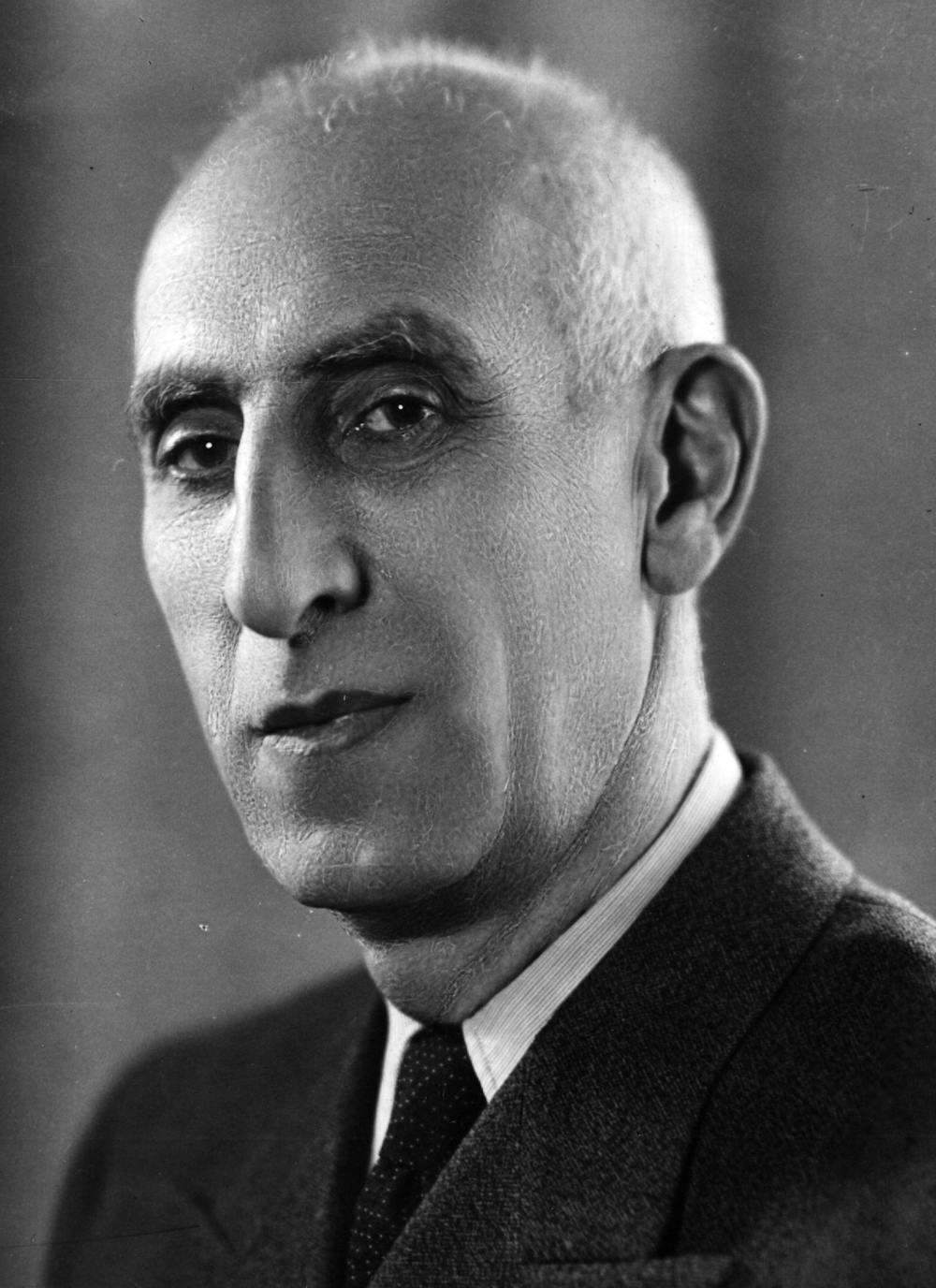
    Relations between the United States and Iran have been fraught for decades – at least since the U.S. helped overthrow a democracy-minded prime minister, Mohammed Mossadegh, in August 1953. The U.S. then supported the long, repressive reign of the Shah of Iran, whose security services brutalized Iranian citizens for decades.

    The two countries have been particularly hostile to each other since Iranian students took over the U.S. Embassy in Tehran in November 1979, resulting in economic sanctions and the severing of formal diplomatic relations between the nations.

    Since 1984, the U.S. State Department has listed Iran as a “state sponsor of terrorism,” alleging the Iranian government provides terrorists with training, money and weapons.

    Some of the major events in U.S.-Iran relations highlight the differences between the nations’ views, but others arguably presented real opportunities for reconciliation.

    1953: US overthrows Mossadegh

    Mohammed Mossadegh.
    Wikimedia Commons

    In 1951, the Iranian Parliament chose a new prime minister, Mossadegh, who then led lawmakers to vote in favor of taking over the Anglo-Iranian Oil Company, expelling the company’s British owners and saying they wanted to turn oil profits into investments in the Iranian people. The U.S. feared disruption in the global oil supply and worried about Iran falling prey to Soviet influence. The British feared the loss of cheap Iranian oil.

    President Dwight Eisenhower decided it was best for the U.S. and the U.K. to get rid of Mossadegh. Operation Ajax, a joint CIA-British operation, convinced the Shah of Iran, the country’s monarch, to dismiss Mossadegh and drive him from office by force. Mossadegh was replaced by a much more Western-friendly prime minister, handpicked by the CIA.

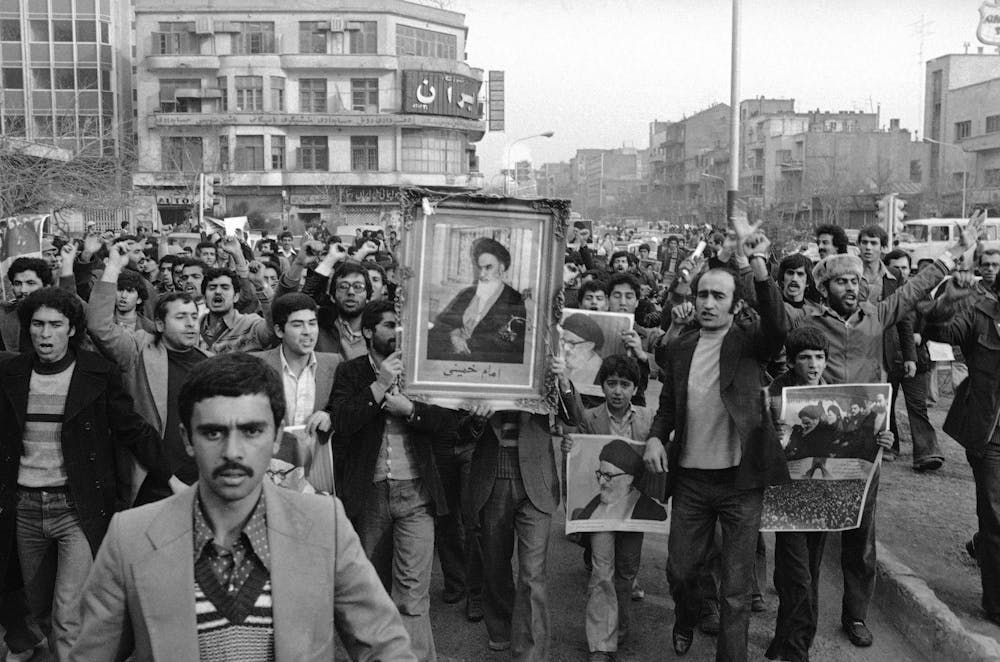
    Demonstrators in Tehran demand the establishment of an Islamic republic.
    AP Photo/Saris

    1979: Revolutionaries oust the shah, take hostages

    After more than 25 years of relative stability in U.S.-Iran relations, the Iranian public had grown unhappy with the social and economic conditions that developed under the dictatorial rule of Shah Mohammad Reza Pahlavi.

    Pahlavi enriched himself and used American aid to fund the military while many Iranians lived in poverty. Dissent was often violently quashed by SAVAK, the shah’s security service. In January 1979, the shah left Iran, ostensibly to seek cancer treatment. Two weeks later, Ayatollah Ruhollah Khomeini returned from exile in Iraq and led a drive to abolish the monarchy and proclaim an Islamic government.

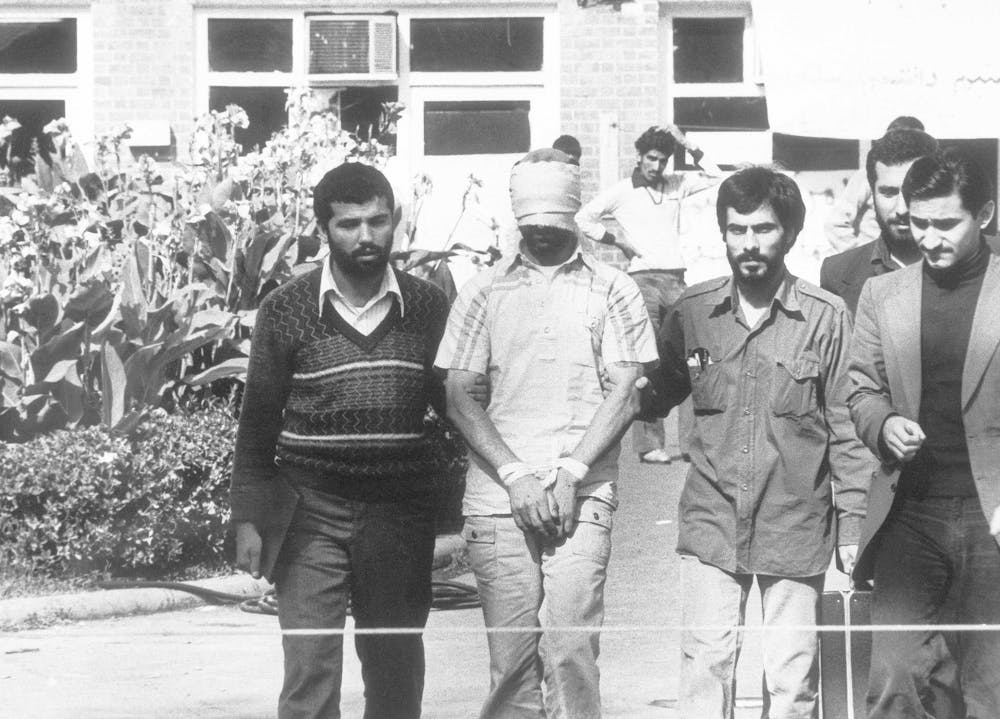
    Iranian students at the U.S. Embassy in Tehran show a blindfolded American hostage to the crowd in November 1979.
    AP Photo

    In October 1979, President Jimmy Carter agreed to allow the shah to come to the U.S. to seek advanced medical treatment. Outraged Iranian students stormed the U.S. Embassy in Tehran on Nov. 4, taking 52 Americans hostage. That convinced Carter to sever U.S. diplomatic relations with Iran on April 7, 1980.

    Two weeks later, the U.S. military launched a mission to rescue the hostages, but it failed, with aircraft crashes killing eight U.S. servicemembers.

    The shah died in Egypt in July 1980, but the hostages weren’t released until Jan. 20, 1981, after 444 days of captivity.

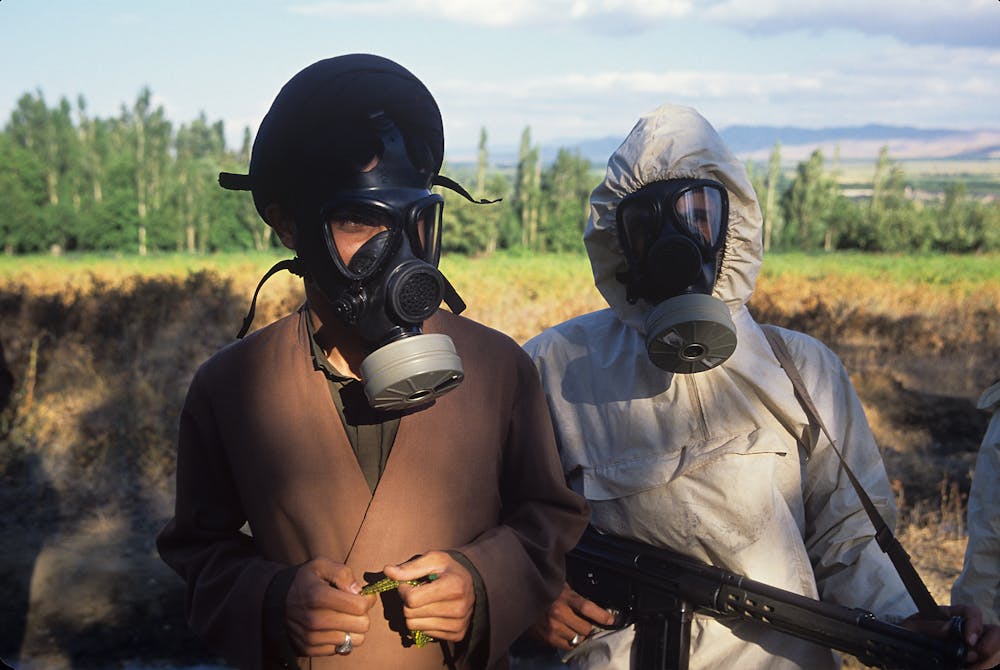
    An Iranian cleric, left, and an Iranian soldier wear gas masks to protect themselves against Iraqi chemical-weapons attacks in May 1988.
    Kaveh Kazemi/Getty Images

    1980-1988: US tacitly sides with Iraq

    In September 1980, Iraq invaded Iran, an escalation of the two countries’ regional rivalry and religious differences: Iraq was governed by Sunni Muslims but had a Shia Muslim majority population; Iran was led and populated mostly by Shiites.

    The U.S. was concerned that the conflict would limit the flow of Middle Eastern oil and wanted to ensure the conflict didn’t affect its close ally, Saudi Arabia.

    The U.S. supported Iraqi leader Saddam Hussein in his fight against the anti-American Iranian regime. As a result, the U.S. mostly turned a blind eye toward Iraq’s use of chemical weapons against Iran.

    U.S. officials moderated their usual opposition to those illegal and inhumane weapons because the U.S. State Department did not “wish to play into Iran’s hands by fueling its propaganda against Iraq.” In 1988, the war ended in a stalemate. More than 500,000 military and 100,000 civilians died.

    1981-1986: US secretly sells weapons to Iran

    The U.S. imposed an arms embargo after Iran was designated a state sponsor of terrorism in 1984. That left the Iranian military, in the middle of its war with Iraq, desperate for weapons and aircraft and vehicle parts to keep fighting.

    The Reagan administration decided that the embargo would likely push Iran to seek support from the Soviet Union, the U.S.’s Cold War rival. Rather than formally end the embargo, U.S. officials agreed to secretly sell weapons to Iran starting in 1981.

    The last shipment, of anti-tank missiles, was in October 1986. In November 1986, a Lebanese magazine exposed the deal. That revelation sparked the Iran-Contra scandal in the U.S., with Reagan’s officials found to have collected money from Iran for the weapons and illegally sent those funds to anti-socialist rebels – the Contras – in Nicaragua.

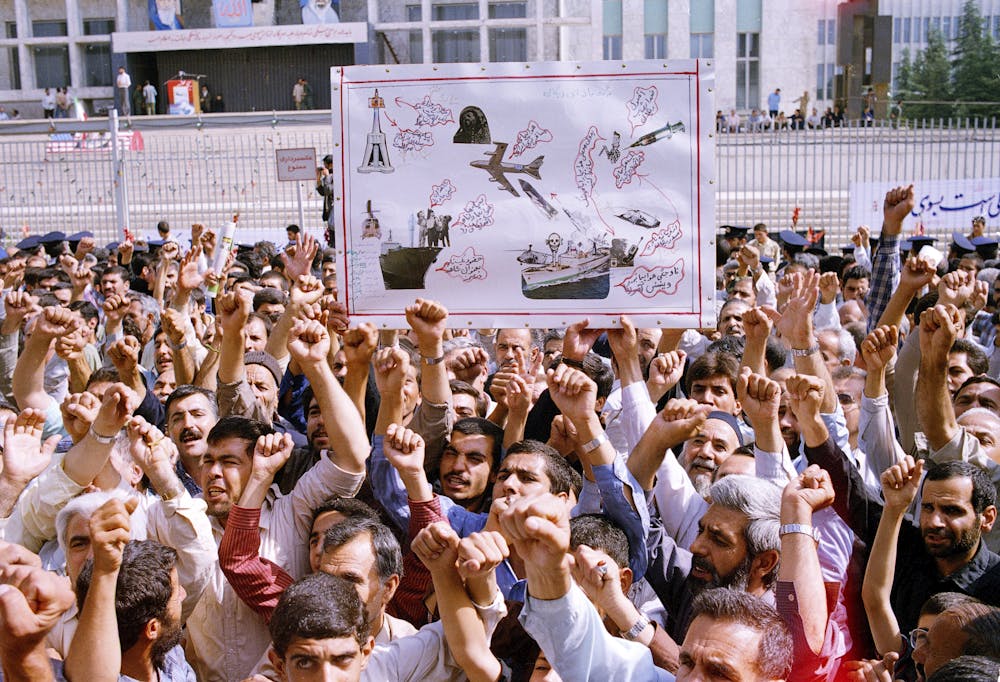
    At a mass funeral for 76 of the 290 people killed in the shootdown of Iran Air 655, mourners hold up a sign depicting the incident.
    AP Photo/CP/Mohammad Sayyad

    1988: US Navy shoots down Iran Air flight 655

    On the morning of July 8, 1988, the USS Vincennes, a guided missile cruiser patrolling in the international waters of the Persian Gulf, entered Iranian territorial waters while in a skirmish with Iranian gunboats.

    Either during or just after that exchange of gunfire, the Vincennes crew mistook a passing civilian Airbus passenger jet for an Iranian F-14 fighter. They shot it down, killing all 290 people aboard.

    The U.S. called it a “tragic and regrettable accident,” but Iran believed the plane’s downing was intentional. In 1996, the U.S. agreed to pay US$131.8 million in compensation to Iran.

    1997-1998: The US seeks contact

    In August 1997, a moderate reformer, Mohammad Khatami, won Iran’s presidential election.

    U.S. President Bill Clinton sensed an opportunity. He sent a message to Tehran through the Swiss ambassador there, proposing direct government-to-government talks.

    Shortly thereafter, in early January 1998, Khatami gave an interview to CNN in which he expressed “respect for the great American people,” denounced terrorism and recommended an “exchange of professors, writers, scholars, artists, journalists and tourists” between the United States and Iran.

    However, Supreme Leader Ayatollah Ali Khamenei didn’t agree, so not much came of the mutual overtures as Clinton’s time in office came to an end.

    In his 2002 State of the Union address, President George W. Bush characterized Iran, Iraq and North Korea as constituting an “Axis of Evil” supporting terrorism and pursuing weapons of mass destruction, straining relations even further.

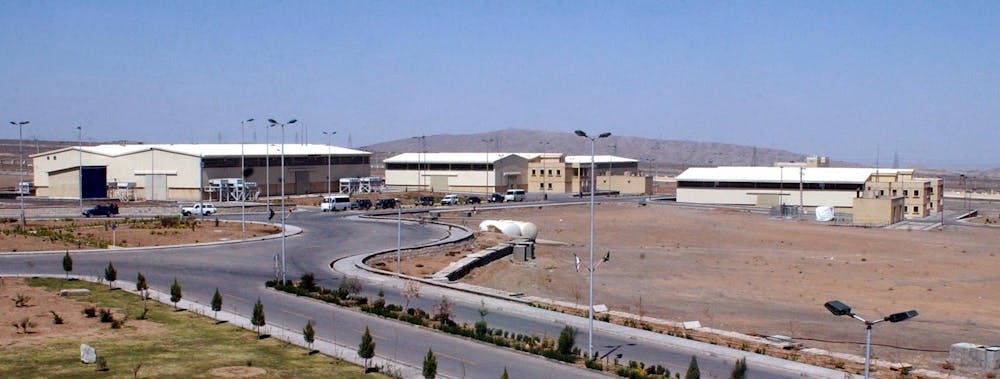
    Inside these buildings at the Natanz nuclear facility in Iran, technicians enrich uranium.
    AP Photo/Vahid Salemi

    2002: Iran’s nuclear program raises alarm

    In August 2002, an exiled rebel group announced that Iran had been secretly working on nuclear weapons at two installations that had not previously been publicly revealed.

    That was a violation of the terms of the Nuclear Nonproliferation Treaty, which Iran had signed, requiring countries to disclose their nuclear-related facilities to international inspectors.

    One of those formerly secret locations, Natanz, housed centrifuges for enriching uranium, which could be used in civilian nuclear reactors or enriched further for weapons.

    Starting in roughly 2005, U.S. and Israeli government cyberattackers together reportedly targeted the Natanz centrifuges with a custom-made piece of malicious software that became known as Stuxnet.

    That effort, which slowed down Iran’s nuclear program was one of many U.S. and international attempts – mostly unsuccessful – to curtail Iran’s progress toward building a nuclear bomb.

    2003: Iran writes to Bush administration

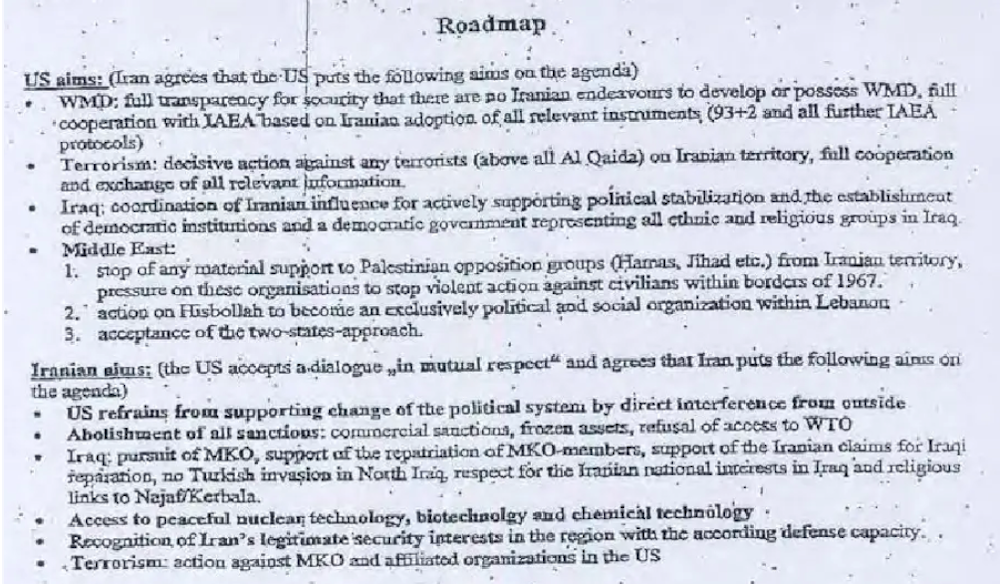
    An excerpt of the document sent from Iran, via the Swiss government, to the U.S. State Department in 2003, appears to seek talks between the U.S. and Iran.
    Washington Post via Scribd

    In May 2003, senior Iranian officials quietly contacted the State Department through the Swiss embassy in Iran, seeking “a dialogue ‘in mutual respect,’” addressing four big issues: nuclear weapons, terrorism, Palestinian resistance and stability in Iraq.

    Hardliners in the Bush administration weren’t interested in any major reconciliation, though Secretary of State Colin Powell favored dialogue and other officials had met with Iran about al-Qaida.

    When Iranian hardliner Mahmoud Ahmadinejad was elected president of Iran in 2005, the opportunity died. The following year, Ahmadinejad made his own overture to Washington in an 18-page letter to President Bush. The letter was widely dismissed; a senior State Department official told me in profane terms that it amounted to nothing.

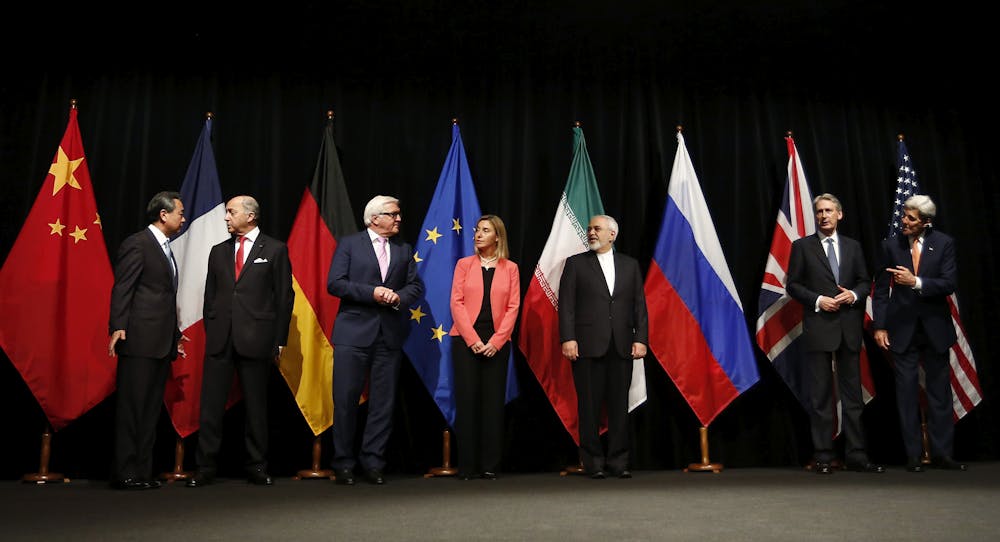
    Representatives of several nations met in Vienna in July 2015 to finalize the Iran nuclear deal.
    Austrian Federal Ministry for Europe, Integration and Foreign Affairs/Flickr

    2015: Iran nuclear deal signed

    After a decade of unsuccessful attempts to rein in Iran’s nuclear ambitions, the Obama administration undertook a direct diplomatic approach beginning in 2013.

    Two years of secret, direct negotiations initially bilaterally between the U.S. and Iran and later with other nuclear powers culminated in the Joint Comprehensive Plan of Action, often called the Iran nuclear deal.

    Two years of secret, direct negotiations conducted bilaterally at first between the U.S. and Iran and later with other nuclear powers culminated in the Joint Comprehensive Plan of Action, often called the Iran nuclear deal.

    Iran, the U.S., China, France, Germany, Russia and the United Kingdom signed the deal in 2015. It severely limited Iran’s capacity to enrich uranium and mandated that international inspectors monitor and enforce Iran’s compliance with the agreement.

    In return, Iran was granted relief from international and U.S. economic sanctions. Though the inspectors regularly certified that Iran was abiding by the agreement’s terms, President Donald Trump withdrew from the agreement in May 2018.

    2020: US drones kill Iranian Maj. Gen. Qassem Soleimani

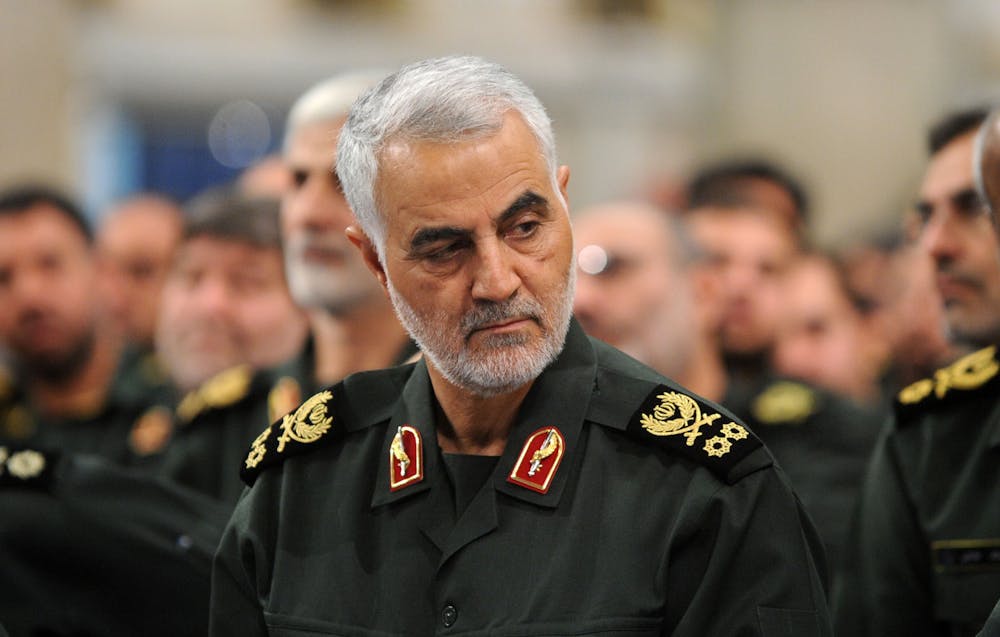
    An official photo from the Iranian government shows Maj. Gen. Qassem Soleimani, who was killed in a Jan. 3 drone strike ordered by President Donald Trump.
    Iranian Supreme Leader Press Office/Anadolu Agency via Getty Images

    On Jan. 3, 2020, an American drone fired a missile that killed Maj. Gen. Qassem Soleimani, the leader of Iran’s elite Quds Force. Analysts considered Soleimani the second most powerful man in Iran, after Supreme Leader Ayatollah Khamenei.

    At the time, the Trump administration asserted that Soleimani was directing an imminent attack against U.S. assets in the region, but officials have not provided clear evidence to support that claim.

    Iran responded by launching ballistic missiles that hit two American bases in Iraq.

    2023: The Oct. 7 attacks on Israel

    Hamas’ brazen attack on Israel on Oct. 7, 2023, provoked a fearsome militarized response from Israel that continues today and served to severely weaken Iran’s proxies in the region, especially Hamas – the perpetrator of the attacks – and Hezbollah in Lebanon.

    2025: Trump 2.0 and Iran

    Trump saw an opportunity to forge a new nuclear deal with Iran and to pursue other business deals with Tehran. Once inaugurated for his second term, Trump appointed Steve Witkoff, a real estate investor who is the president’s friend, to serve as special envoy for the Middle East and to lead negotiations.

    Negotiations for a nuclear deal between Washington and Tehran began in April, but the countries did not reach a deal. They were planning a new round of talks when Israel struck Iran with a series of airstrikes on June 13, forcing the White House to reconsider is position.

    Jeffrey Fields receives funding from the Carnegie Corporation of New York and Schmidt Futures.

    ref. US and Iran have a long, complicated history, spanning far beyond Israel’s strikes on Tehran – https://theconversation.com/us-and-iran-have-a-long-complicated-history-spanning-far-beyond-israels-strikes-on-tehran-259240

    MIL OSI – Global Reports

  • MIL-OSI USA: Video: Kaine Speaks on Senate Floor Regarding His War Powers Resolution to Prevent War with Iran

    US Senate News:

    Source: United States Senator for Virginia Tim Kaine

    VIDEO OF KAINE’S FLOOR SPEECH IS AVAILABLE HERE.

    WASHINGTON, D.C.—Today, U.S. Senator Tim Kaine (D-VA), a member of the Senate Armed Services and Foreign Relations Committees, spoke on the Senate floor about a war powers resolution he filed this week to express concern about the escalating violence in the Middle East and its potential to pull the U.S. into conflict. The resolution requires that any U.S. participation in offensive hostilities against Iran be explicitly authorized by Congress through a declaration of war or specific authorization for use of military force. It does not prevent the U.S. from defending itself from an imminent attack. The resolution is privileged, meaning that the Senate will be required to promptly consider and vote upon the resolution.

    “There’s no part of the Constitution that’s more important than the Article One provision making plain that the United States should not be at war without a vote of Congress,” said Kaine. “Yet the news of the day suggests that we are potentially on the verge of a war with Iran.”

    “I was elected to the Senate in 2012, having served as a Governor from 2006 to 2010 during a tremendous upsurge in the two wars in Iraq and Afghanistan. I visited our troops multiple times in the green zones in Baghdad and in Afghanistan. I went to the deployments and the homecomings. I went to the wakes and the funerals,” Kaine continued. “And I told myself when I came to the Senate that if I ever had the chance to stop this nation from getting into an unnecessary war, I would do everything I could to stop us.”

    “I happen to believe that the United States engaging in a war against Iran – a third war in the Middle East since 2001 – would be a catastrophic blunder for this country,” Kaine said. “I think there are some in this body who have a different point of view than me on that point, but I think we should all be able to agree in the fundamental constitutional principle that says we shouldn’t be in a war if Congress doesn’t have the guts to debate it and vote on it. We should all – having taken an oath to the Constitution – at least support the principle that war is something that should be for Congress to declare.”

    “Our Constitution has, accordingly, with studied care, vested the question of war with the legislature,” said Kaine. “Other countries don’t do this, but the Framers of our Constitution in 1787 decided we’re going to be different. Before we send troops in harm’s way where they could be killed, where they could be injured, where they could see people that they love – their colleagues killed and injured – before we’re going to send troops in harm’s way in war, we want to see the people’s elected bodies – both houses – have a debate about what the stakes are and whether we should force our troops into harm’s way and potentially lose their lives. And that debate will be in full view of the American public, so the American public can understand what’s at stake and then they can call their representatives or write them a letter and tell them what they think about whether war is necessary and whether the sacrifice we ask of our troops should be the ultimate sacrifice that we are often asking of them in war.”

    “The question for this body that we will grapple with over the course of the next couple of weeks is whether the United States should be in another war in the Middle East – in particular, whether we should allow war to start without us, whether we should hide in the tall grass, rather than exercise our constitutional responsibility under Article One. This is fundamentally a debate about Congress being true to its oath of office and actually also being true to the obligations we have to our public,” Kaine said. “The Framers put this in the Constitution so that we wouldn’t be at war without a debate in front of the public.”

    “If we have that debate and we decide that war is in the national interest, then the troops go into war knowing that the civilian leadership of this country have had the hard debate in view of the American public and decided that the stakes are sufficient to ask people to make the ultimate sacrifice,” Kaine said. “How dare we ask people to make the ultimate sacrifice if we don’t have the guts to have a debate and decide whether a war is in the interest of this country?”

    “We need to have this debate in front of the American public,” Kaine said. “Let them watch us debate the stakes of this – and it might be that colleagues in this body or in the House think a war with Iran is a good idea. Let them put a war authorization on the table. Let’s debate that. Let’s debate that in front of Virginians and Kansans and Californians and hear what our constituents have to say. Let’s debate that in the full view of people whose spouses are in the military or whose kids are in the military. Let’s have that debate in front of them and hear what they think before we cast a vote that would be one of the most serious votes that you ever cast on the floor of a body like this. But we should not allow a war of the magnitude of this to begin with Congress hiding.”

    “I will be asking my colleagues to support my simple resolution as early as next week. No war without a vote of Congress. I’ll be asking my colleagues to support it and uphold the oath we’ve all taken to support the Constitution that established that most unusual principle, most unique principle, that is part of what makes this nation special,” Kaine concluded.

    For years, Kaine has been a leading voice in Congress raising concerns over presidents’ efforts to expand the use of military force without congressional authorization. In 2017, Kaine wrote a piece in TIME warning of the consequences if President Donald Trump pulled out of the nuclear deal with Iran. In 2018, Kaine wrote a piece in The Atlantic warning that Trump was blundering toward war with Iran. In March 2020, Congress passed Kaine’s bipartisan war powers resolution to prevent further escalation of hostilities with Iran without congressional authorization. In 2023, the Senate passed bipartisan legislation led by Kaine to repeal the 1991 and 2002 Authorizations for Use of Military Force (AUMFs) and formally end the Gulf and Iraq wars.

    MIL OSI USA News

  • MIL-OSI New Zealand: Advocacy – Statement from the Palestine Forum of New Zealand

    Source: Palestine Forum of New Zealand

    The Palestine Forum of New Zealand notes with deep appreciation the public statement issued today by ninety‑five New Zealand lawyers urging the Government to adopt a stronger stance on Israel amid escalating tensions in the Middle East.

    We stand in solidarity with these respected members of the legal profession who, in highlighting international law, human rights, and the principles underpinning New Zealand’s foreign policy, are calling for moral and political leadership from our nation.

    Their call comes at a critical juncture: New Zealand’s vote at the UN in support of the resolution recommending Israel’s withdrawal from occupied territories was a step in the right direction. However, it must now be followed by coherent action—politically, diplomatically, and legally—consistent with our international obligations scoop.co.nz+12scoop.co.nz+12scoop.co.nz+12.

    We concur with the lawyers’ analysis:

    • That Israel’s occupation of Palestinian land violates international law.

    • That increasing violence and civilian suffering, particularly in Gaza and the West Bank, demand concrete responses.

    • That New Zealand’s standing as a principled actor in world affairs calls for both clear condemnation of abuses and active support for measures that uphold international law, including:

      • Support for ICC proceedings and arrest warrants for war crimes suspects;

      • The use of targeted sanctions;

      • Suspension of government contracts and investment ties with entities complicit in occupation;

      • Advocacy for an immediate ceasefire, unimpeded humanitarian access, and humanitarian visas for Palestinians fleeing conflict.

    As legal voices within our own legal fraternity have acknowledged, our Government holds not only a right but a duty to lead—ahead of electoral cycles—by placing human rights and international justice at the heart of its foreign policy.

    We call on the Government to honour these principles by engaging thoughtfully with the lawyers’ briefing, committing publicly to concrete measures, and joining the global community in holding violators of international law to account.

    Today’s call by our country’s legal community is both timely and courageous. We affirm their voices. And we renew our call for New Zealand to do the same.

    Maher Nazzal
    Palestine Forum of New Zealand

    MIL OSI New Zealand News

  • MIL-OSI Analysis: How does Israel’s famous air defence work? It’s not just the ‘Iron Dome’

    Source: The Conversation – Global Perspectives – By James Dwyer, Lecturer, School of Social Sciences, University of Tasmania

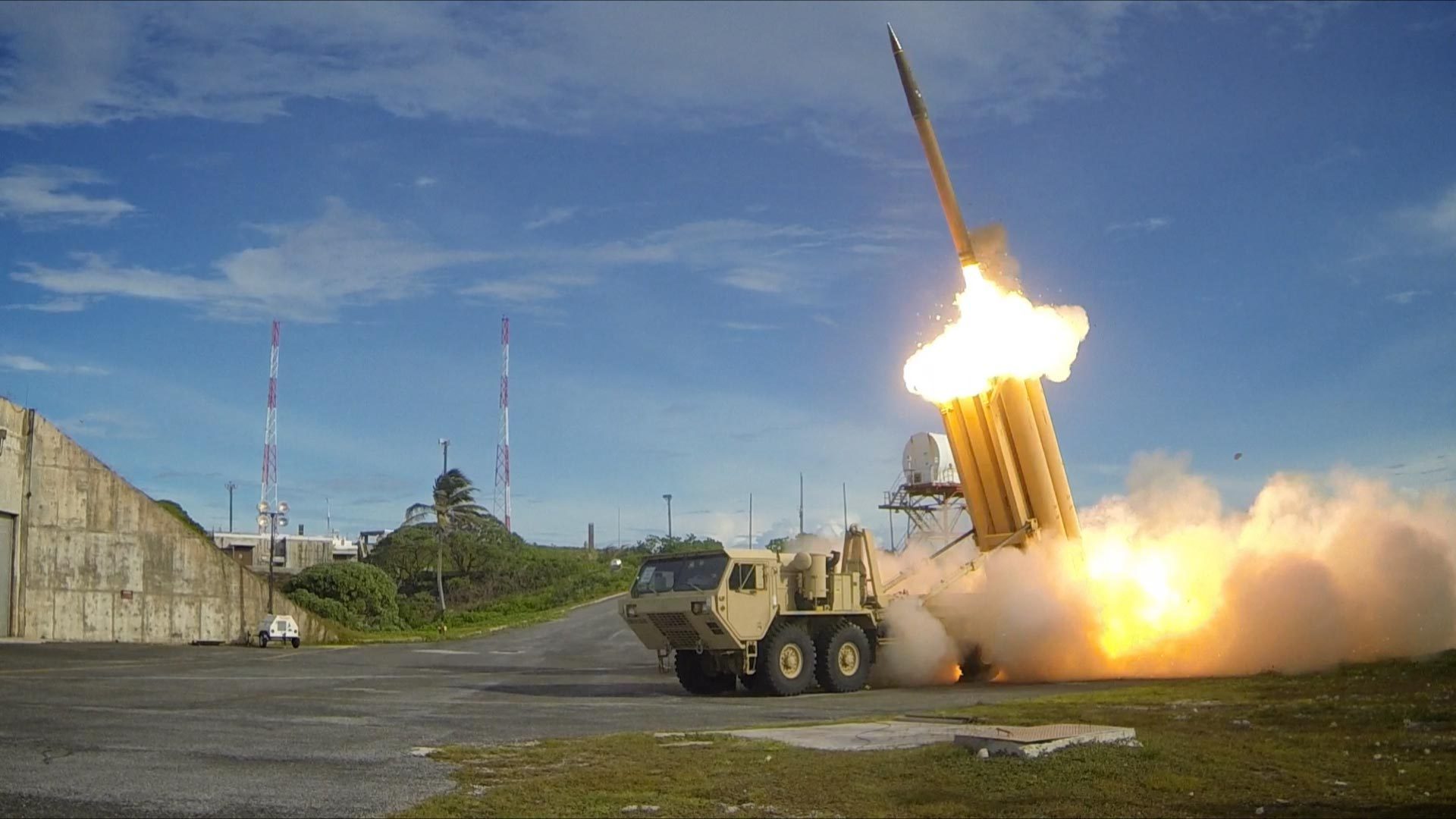
    Israeli defence systems intercept Iranian missiles over the city of Haifa Ahmad Gharabli / AFP via Getty Images

    Late last week, Israel began a wave of attacks on Iran under the banner of Operation Rising Lion, with the stated goal of crippling the Islamic republic’s nuclear program and long-range strike capabilities. At the outset, Israel claimed Iran would soon be able to build nine nuclear weapons, a situation Israel regarded as completely unacceptable.

    Following Israeli strikes against Iranian nuclear facilities, and targeted assassinations of Iranian nuclear scientists and key members of the Iranian armed forces, Iran retaliated with a large barrage of ballistic missiles and drones against Tel Aviv and Jerusalem. The first wave consisted of some 200 ballistic missiles and 200 drones.

    The conflict continues to escalate, with population centres increasingly being targeted. Israel’s missile defence systems (including the vaunted Iron Dome) have so far staved off most of Iran’s attacks, but the future is uncertain.

    Ballistic missiles and how to stop them

    Iran possesses a large arsenal of ballistic missiles and long-range drones, alongside other long-range weapons such as cruise missiles. Ballistic missiles travel on a largely fixed path steered by gravity, while cruise missiles can adjust their course as they fly.

    Iran is approximately 1,000km from Israel, so the current strikes mostly involve what are classified as medium-range ballistic missiles, alongside long-range drones. It is not clear exactly what type of missile Iran has used in its latest strikes, but the country has several including the Fattah-1 and Emad.

    It is very difficult to defend against ballistic missiles. There is not much time between launch and impact, and they come down at very high speed. The longer the missile’s range, the faster and higher it flies.

    An incoming missile presents a small, fast-moving target – and defenders may have little time to react.

    Israel’s missile defence and the Iron Dome

    Israel possesses arguably one of the most effective, battle-tested air defence systems in service today. The system is often described in the media as the “Iron Dome”, but this is not quite correct.

    Israel’s defences have several layers, each designed to address threats coming from different ranges.

    Iron Dome is just one of these layers: a short range, anti-artillery defence system, designed to intercept short-range artillery shells and rockets.

    In essence, Iron Dome consists of a network of radar emitters, command and control facilities, and the interceptors (special surface-to-air missiles). The radar quickly detects incoming threats, the command and control elements decide which are most pressing, and the interceptors are sent to destroy the incoming shells or rockets.

    Ballistic defence systems

    The other layers of Israel’s defence system include David’s Sling, and the Arrow 2 and Arrow 3 interceptors. These are specifically designed to engage longer-range ballistic missiles, both within the atmosphere and at very high altitudes above it (known as exoatmospheric interception).

    Spectacular footage has been captured of what are likely exoatmospheric interceptions taking place during this latest conflict, demonstrating Israel’s capacity to engage longer-range missiles.

    The US military has comparable missile defence systems. The US Army has the Patriot PAC-3 (comparable to David’s Sling) and THAAD (comparable to Arrow 2), while the US Navy has the Aegis and the SM-3 (comparable to Arrow 3) and the SM-6 (comparable again to Arrow 2).

    The US deployed Aegis-equipped warships to support Israel’s defence against missile attacks in 2024, and appears to be preparing to do the same now.

    Iran possesses some air defence systems such as the Russian S300 which has some (very limited) ballistic missile defence capabilities, but only against shorter range (and thus slower) ballistic missiles. Further, Israel has been focusing on degrading Iran’s air defences, so it is not clear how many are still operational.

    Iran has been focusing on developing technology such as maneuverable warheads, which are harder to defend against. However, it is not clear whether these are yet operational and in Iranian service.

    A THAAD interceptor launched during a US Army test in 2013.
    The U.S. Army Ralph Scott/Missile Defense Agency/U.S. Department of Defense/Wikimedia Commons

    Can missile defences last forever?

    Missile defences are finite. The defender is always limited by the number of interceptors it possesses.

    The attacker is also limited by the number of missiles it possesses. However, the defender must often assign multiple interceptors to each attacking missile, in case the first misses or otherwise fails.

    The attacker will plan for some losses to interceptors (or mechanical failures) and send what it determines to be enough missiles for at least some to penetrate the defences.

    When it comes to ballistic missiles, the advantage lies with the attacker. Ballistic missiles can carry large explosive payloads (or even nuclear warheads), so even a handful of missiles “leaking” past defensive systems can still wreak significant damage.

    What now?

    Israel’s missile defences are unlikely to stop working completely. However, as attacks deplete its stocks of interceptors, the system may become less effective.

    As the conflict continues, it may become a race to see who runs out of weapons first. Will it be Iran’s stocks of ballistic missiles and drones, or the interceptors and anti-air munitions of Israel, the US and any other supporters?

    It is impossible to say who would prevail in such a race of stockpile attrition. Some reports suggest Iran has fired approximately 1,000 ballistic missiles of an estimated 3,000. However, this still leaves it with an enormous stockpile to use, and it is unclear how fast Iran can make new missiles to replenish its resources.

    But we should hope it doesn’t come to that. Beyond the tit-for-tat exchange of missiles, the latest conflict between Israel and Iran risks escalating. If it is not resolved soon, and if the US is drawn into the conflict more directly, we may see broader conflict in the Middle East.

    James Dwyer does not work for, consult, own shares in or receive funding from any company or organisation that would benefit from this article, and has disclosed no relevant affiliations beyond their academic appointment.

    ref. How does Israel’s famous air defence work? It’s not just the ‘Iron Dome’ – https://theconversation.com/how-does-israels-famous-air-defence-work-its-not-just-the-iron-dome-259029

    MIL OSI Analysis

  • MIL-OSI Analysis: How does Israel’s famous air defence work? It’s not just the ‘Iron Dome’

    Source: The Conversation – Global Perspectives – By James Dwyer, Lecturer, School of Social Sciences, University of Tasmania

    Israeli defence systems intercept Iranian missiles over the city of Haifa Ahmad Gharabli / AFP via Getty Images

    Late last week, Israel began a wave of attacks on Iran under the banner of Operation Rising Lion, with the stated goal of crippling the Islamic republic’s nuclear program and long-range strike capabilities. At the outset, Israel claimed Iran would soon be able to build nine nuclear weapons, a situation Israel regarded as completely unacceptable.

    Following Israeli strikes against Iranian nuclear facilities, and targeted assassinations of Iranian nuclear scientists and key members of the Iranian armed forces, Iran retaliated with a large barrage of ballistic missiles and drones against Tel Aviv and Jerusalem. The first wave consisted of some 200 ballistic missiles and 200 drones.

    The conflict continues to escalate, with population centres increasingly being targeted. Israel’s missile defence systems (including the vaunted Iron Dome) have so far staved off most of Iran’s attacks, but the future is uncertain.

    Ballistic missiles and how to stop them

    Iran possesses a large arsenal of ballistic missiles and long-range drones, alongside other long-range weapons such as cruise missiles. Ballistic missiles travel on a largely fixed path steered by gravity, while cruise missiles can adjust their course as they fly.

    Iran is approximately 1,000km from Israel, so the current strikes mostly involve what are classified as medium-range ballistic missiles, alongside long-range drones. It is not clear exactly what type of missile Iran has used in its latest strikes, but the country has several including the Fattah-1 and Emad.

    It is very difficult to defend against ballistic missiles. There is not much time between launch and impact, and they come down at very high speed. The longer the missile’s range, the faster and higher it flies.

    An incoming missile presents a small, fast-moving target – and defenders may have little time to react.

    Israel’s missile defence and the Iron Dome

    Israel possesses arguably one of the most effective, battle-tested air defence systems in service today. The system is often described in the media as the “Iron Dome”, but this is not quite correct.

    Israel’s defences have several layers, each designed to address threats coming from different ranges.

    Iron Dome is just one of these layers: a short range, anti-artillery defence system, designed to intercept short-range artillery shells and rockets.

    In essence, Iron Dome consists of a network of radar emitters, command and control facilities, and the interceptors (special surface-to-air missiles). The radar quickly detects incoming threats, the command and control elements decide which are most pressing, and the interceptors are sent to destroy the incoming shells or rockets.

    Ballistic defence systems

    The other layers of Israel’s defence system include David’s Sling, and the Arrow 2 and Arrow 3 interceptors. These are specifically designed to engage longer-range ballistic missiles, both within the atmosphere and at very high altitudes above it (known as exoatmospheric interception).

    Spectacular footage has been captured of what are likely exoatmospheric interceptions taking place during this latest conflict, demonstrating Israel’s capacity to engage longer-range missiles.

    The US military has comparable missile defence systems. The US Army has the Patriot PAC-3 (comparable to David’s Sling) and THAAD (comparable to Arrow 2), while the US Navy has the Aegis and the SM-3 (comparable to Arrow 3) and the SM-6 (comparable again to Arrow 2).

    The US deployed Aegis-equipped warships to support Israel’s defence against missile attacks in 2024, and appears to be preparing to do the same now.

    Iran possesses some air defence systems such as the Russian S300 which has some (very limited) ballistic missile defence capabilities, but only against shorter range (and thus slower) ballistic missiles. Further, Israel has been focusing on degrading Iran’s air defences, so it is not clear how many are still operational.

    Iran has been focusing on developing technology such as maneuverable warheads, which are harder to defend against. However, it is not clear whether these are yet operational and in Iranian service.

    A THAAD interceptor launched during a US Army test in 2013.
    The U.S. Army Ralph Scott/Missile Defense Agency/U.S. Department of Defense/Wikimedia Commons

    Can missile defences last forever?

    Missile defences are finite. The defender is always limited by the number of interceptors it possesses.

    The attacker is also limited by the number of missiles it possesses. However, the defender must often assign multiple interceptors to each attacking missile, in case the first misses or otherwise fails.

    The attacker will plan for some losses to interceptors (or mechanical failures) and send what it determines to be enough missiles for at least some to penetrate the defences.

    When it comes to ballistic missiles, the advantage lies with the attacker. Ballistic missiles can carry large explosive payloads (or even nuclear warheads), so even a handful of missiles “leaking” past defensive systems can still wreak significant damage.

    What now?

    Israel’s missile defences are unlikely to stop working completely. However, as attacks deplete its stocks of interceptors, the system may become less effective.

    As the conflict continues, it may become a race to see who runs out of weapons first. Will it be Iran’s stocks of ballistic missiles and drones, or the interceptors and anti-air munitions of Israel, the US and any other supporters?

    It is impossible to say who would prevail in such a race of stockpile attrition. Some reports suggest Iran has fired approximately 1,000 ballistic missiles of an estimated 3,000. However, this still leaves it with an enormous stockpile to use, and it is unclear how fast Iran can make new missiles to replenish its resources.

    But we should hope it doesn’t come to that. Beyond the tit-for-tat exchange of missiles, the latest conflict between Israel and Iran risks escalating. If it is not resolved soon, and if the US is drawn into the conflict more directly, we may see broader conflict in the Middle East.

    James Dwyer does not work for, consult, own shares in or receive funding from any company or organisation that would benefit from this article, and has disclosed no relevant affiliations beyond their academic appointment.

    ref. How does Israel’s famous air defence work? It’s not just the ‘Iron Dome’ – https://theconversation.com/how-does-israels-famous-air-defence-work-its-not-just-the-iron-dome-259029

    MIL OSI Analysis

  • MIL-OSI Analysis: What is uranium enrichment and how is it used for nuclear bombs? A scientist explains

    Source: The Conversation – Global Perspectives – By Kaitlin Cook, DECRA Fellow, Department of Nuclear Physics and Accelerator Applications, Australian National University

    Uranium ore. RHJPhtotos/Shutterstock

    Late last week, Israel targeted three of Iran’s key nuclear facilities – Natanz, Isfahan and Fordow, killing several Iranian nuclear scientists. The facilities are heavily fortified and largely underground, and there are conflicting reports of how much damage has been done.

    Natanz and Fordow are Iran’s uranium enrichment sites, and Isfahan provides the raw materials, so any damage to these sites would limit Iran’s ability to produce nuclear weapons.

    But what exactly is uranium enrichment and why does it raise concerns?

    To understand what it means to “enrich” uranium, you need to know a little about uranium isotopes and about splitting the atom in a nuclear fission reaction.

    What is an isotope?

    All matter is made of atoms, which in turn are made up of protons, neutrons and electrons. The number of protons is what gives atoms their chemical properties, setting apart the various chemical elements.

    Atoms have equal numbers of protons and electrons. Uranium has 92 protons, for example, while carbon has six. However, the same element can have different numbers of neutrons, forming versions of the element called isotopes.

    This hardly matters for chemical reactions, but their nuclear reactions can be wildly different.

    The difference between uranium-238 and uranium-235

    When we dig uranium out of the ground, 99.27% of it is uranium-238, which has 92 protons and 146 neutrons. Only 0.72% of it is uranium-235 with 92 protons and 143 neutrons (the remaining 0.01% are other isotopes).

    For nuclear power reactors or weapons, we need to change the isotope proportions. That’s because of the two main uranium isotopes, only uranium-235 can support a fission chain reaction: one neutron causes an atom to fission, which produces energy and some more neutrons, causing more fission, and so on.

    This chain reaction releases a tremendous amount of energy. In a nuclear weapon, the goal is to have this chain reaction occur in a fraction of a second, producing a nuclear explosion.

    In a civilian nuclear power plant, the chain reaction is controlled. Nuclear power plants currently produce 9% of the world’s power. Another vital civilian use of nuclear reactions is for producing isotopes used in nuclear medicine for the diagnosis and treatment of various diseases.

    What is uranium enrichment, then?

    To “enrich” uranium means taking the naturally found element and increasing the proportion of uranium-235 while removing uranium-238.

    There are a few ways to do this (including new inventions from Australia), but commercially, enrichment is currently done with a centrifuge. This is also the case in Iran’s facilities.

    Centrifuges exploit the fact that uranium-238 is about 1% heavier than uranium-235. They take uranium (in gas form) and use rotors to spin it at 50,000 to 70,000 rotations per minute, with the outer walls of the centrifuges moving at 400 to 500 metres per second.

    This works much like a salad spinner that throws water to the sides while the salad leaves stay in the centre. The heavier uranium-238 moves to the edges of the centrifuge, leaving the uranium-235 in the middle.

    This is only so effective, so the spinning process is done over and over again, building up the percentage of the uranium-235.

    Most civilian nuclear reactors use “low enriched uranium” that’s been enriched to between 3% and 5%. This means that 3–5% of the total uranium in the sample is now uranium-235. That’s enough to sustain a chain reaction and make electricity.

    What level of enrichment do nuclear weapons need?

    To get an explosive chain reaction, uranium-235 needs to be concentrated significantly more than the levels we use in nuclear reactors for making power or medicines.

    Technically, a nuclear weapon can be made with as little as 20% uranium-235 (known as “highly enriched uranium”), but the more the uranium is enriched, the smaller and lighter the weapon can be. Countries with nuclear weapons tend to use about 90% enriched, “weapons-grade” uranium.

    According to the International Atomic Energy Agency (IAEA), Iran has enriched large quantities of uranium to 60%. It’s actually easier to go from an enrichment of 60% to 90% than it is to get to that initial 60%. That’s because there’s less and less uranium-238 to get rid of.

    This is why Iran is considered to be at extreme risk of producing nuclear weapons, and why centrifuge technology for enrichment is kept secret.

    Ultimately, the exact same centrifuge technology that produces fuel for civilian reactors can be used to produce nuclear weapons.

    Inspectors from the IAEA monitor nuclear facilities worldwide to ensure countries are abiding by the rules set out in the global nuclear non-proliferation treaty. While Iran maintains it’s only enriching uranium for “peaceful purposes”, late last week the IAEA board ruled Iran was in breach of its obligations under the treaty.

    Kaitlin Cook receives funding from the Australian Research Council.

    ref. What is uranium enrichment and how is it used for nuclear bombs? A scientist explains – https://theconversation.com/what-is-uranium-enrichment-and-how-is-it-used-for-nuclear-bombs-a-scientist-explains-259031

    MIL OSI Analysis

  • MIL-OSI Analysis: Iran war: from the Middle East to America, history shows you cannot assassinate your way to peace

    Source: The Conversation – Global Perspectives – By Matt Fitzpatrick, Professor in International History, Flinders University

    In the late 1960s, the prevailing opinion among Israeli Shin Bet intelligence officers was that the key to defeating the Palestinian Liberation Organisation was to assassinate its then-leader Yasser Arafat.

    The elimination of Arafat, the Shin Bet commander Yehuda Arbel wrote in his diary, was “a precondition to finding a solution to the Palestinian problem.”

    For other, even more radical Israelis – such as the ultra-nationalist assassin Yigal Amir – the answer lay elsewhere. They sought the assassination of Israeli leaders such as Yitzak Rabin who wanted peace with the Palestinians.

    Despite Rabin’s long personal history as a famed and often ruthless military commander in the 1948 and 1967 Arab-Israeli Wars, Amir stalked and shot Rabin dead in 1995. He believed Rabin had betrayed Israel by signing the Oslo Accords peace deal with Arafat.

    It’s been 20 years since Arafat died as possibly the victim of polonium poisoning, and 30 years after the shooting of Rabin. Peace between Israelis and the Palestinians has never been further away.

    What Amnesty International and a United Nations Special Committee have called genocidal attacks on Palestinians in Gaza have spilled over into Israeli attacks on the prominent leaders of its enemies in Lebanon and, most recently, Iran.

    Since its attacks on Iran began on Friday, Israel has killed numerous military and intelligence leaders, including Iran’s intelligence chief, Mohammad Kazemi; the chief of the armed forces, Mohammad Bagheri; and the commander of the Islamic Revolutionary Guard Corps, Hossein Salami. At least nine Iranian nuclear scientists have also been killed.

    Israel’s Prime Minister Benjamin Netanyahu reportedly said:

    We got their chief intelligence officer and his deputy in Tehran.

    Iran, predictably, has responded with deadly missile attacks on Israel.

    Far from having solved the issue of Middle East peace, assassinations continue to pour oil on the flames.

    A long history of extra-judicial killings

    Israeli journalist Ronen Bergman’s book Rise and Kill First argues assassinations have long sat at the heart of Israeli politics.

    In the past 75 years, there have been more than 2,700 assassination operations undertaken by Israel. These have, in Bergman’s words, attempted to “stop history” and bypass “statesmanship and political discourse”.

    This normalisation of assassinations has been codified in the Israeli expression of “mowing the grass”. This is, as historian Nadim Rouhana has shown, a metaphor for a politics of constant assassination. Enemy “leadership and military facilities must regularly be hit in order to keep them weak.”

    The point is not to solve the underlying political questions at issue. Instead, this approach aims to sow fear, dissent and confusion among enemies.

    Thousands of assassination operations have not, however, proved sufficient to resolve the long-running conflict between Israel, its neighbours and the Palestinians. The tactic itself is surely overdue for retirement.

    Targeted assassinations elsewhere

    Israel has been far from alone in this strategy of assassination and killing.

    Former US President Barack Obama oversaw the extra-judicial killing of Osama Bin Laden, for instance.

    After what Amnesty International and Human Rights Watch denounced as a flawed trial, former US President George W. Bush welcomed the hanging of Iraqi leader Saddam Hussein as “an important milestone on Iraq’s course to becoming a democracy”.

    Current US President Donald Trump oversaw the assassination of Iran’s leader of clandestine military operations, Qassem Soleimani, in 2020.

    More recently, however, Trump appears to have baulked at granting Netanyahu permission to kill Iran’s Supreme Leader Ayatollah Ali Khamenei.

    And it’s worth noting the US Department of Justice last year brought charges against an Iranian man who said he’d been tasked with killing Trump.

    Elsewhere, in Vladimir Putin’s Russia, it’s common for senior political and media opponents to be shot in the streets. Frequently they also “fall” out of high windows, are killed in plane crashes or succumb to mystery “illnesses”.

    A poor record

    Extra-judicial killings, however, have a poor record as a mechanism for solving political problems.

    Cutting off the hydra’s head has generally led to its often immediate replacement by another equally or more ideologically committed person, as has already happened in Iran. Perhaps they too await the next round of “mowing the grass”.

    But as the latest Israeli strikes in Iran and elsewhere show, solving the underlying issue is rarely the point.

    In situations where finding a lasting negotiated settlement would mean painful concessions or strategic risks, assassinations prove simply too tempting. They circumvent the difficulties and complexities of diplomacy while avoiding the need to concede power or territory.

    As many have concluded, however, assassinations have never killed resistance. They have never killed the ideas and experiences that give birth to resistance in the first place.

    Nor have they offered lasting security to those who have ordered the lethal strike.

    Enduring security requires that, at some point, someone grasp the nettle and look to the underlying issues.

    The alternative is the continuation of the brutal pattern of strike and counter-strike for generations to come.

    Matt Fitzpatrick receives funding from the Australian Research Council.

    ref. Iran war: from the Middle East to America, history shows you cannot assassinate your way to peace – https://theconversation.com/iran-war-from-the-middle-east-to-america-history-shows-you-cannot-assassinate-your-way-to-peace-259038

    MIL OSI Analysis

  • MIL-OSI Analysis: The Middle East is a major flight hub. How do airlines keep passengers safe during conflict?

    Source: The Conversation – Global Perspectives – By Natasha Heap, Program Director for the Bachelor of Aviation, University of Southern Queensland

    Screenshot June 17 2025, Courtesy of Flightradar24

    The Middle East is a region of intense beauty and ancient kingdoms. It has also repeatedly endured periods of geopolitical instability over many centuries.

    Today, geopolitical, socio-political and religious tensions persist. The world is currently watching as longstanding regional tensions come to a head in the shocking and escalating conflict between Israel and Iran.

    The global airline industry takes a special interest in how such tensions play out. This airspace is a crucial corridor linking Europe, Asia and Africa.

    The Middle East is now home to several of the world’s largest international airlines: Emirates, Qatar Airways and Etihad Airways. These airlines’ home bases – Dubai, Doha and Abu Dhabi, respectively – have become pivotal hubs in international aviation.

    Keeping passengers safe will be all airlines’ highest priority. What could an escalating conflict mean for both the airlines and the travelling public?

    Safety first

    History shows that the civil airline industry and military conflict do not mix. On July 3 1988, the USS Vincennes, a US navy warship, fired two surface-to-air missiles and shot down Iran Air Flight 655, an international passenger service over the Persian Gulf.

    More recently, on July 17 2014, Malaysian Airlines Flight MH17 was shot down over eastern Ukraine as the battle between Ukrainian forces and pro-Russian separatists continued.

    Understandably, global airlines are very risk-averse when it comes to military conflict. The International Civil Aviation Organization requires airlines to implement and maintain a Safety Management System (SMS).

    One of the main concerns – known as “pillars” – of the SMS is “safety risk management”. This includes the processes to identify hazards, assess risks and implement risk mitigation strategies.

    The risk-management departments of airlines transiting the Middle East region will have been working hard on these strategies.

    Headquartered in Montreal, Canada, the International Civil Aviation Organization has strict requirements and protocols to keep passengers safe.
    meunierd/Shutterstock

    Route recalculation

    The most immediate and obvious evidence of such strategies being put in place are changes to aircraft routing, either by cancelling or suspending flights or making changes to the flight plans. This is to ensure aircraft avoid the airspace where military conflicts are flaring.

    At the time of writing, a quick look at flight tracking website Flightradar24 shows global aircraft traffic avoiding the airspace of Iran, Iraq, Syria, Israel, Jordan, Palestine and Lebanon. The airspace over Ukraine is also devoid of air traffic.

    Rerouting, however, creates its own challenges. Condensing the path of the traffic into smaller, more congested areas can push aircraft into and over areas that are not necessarily equipped to deal with such a large increase in traffic.

    Having more aircraft in a smaller amount of available safe airspace creates challenges for air traffic control services and the pilots operating the aircraft.

    More time and fuel

    Avoiding areas of conflict is one of the most visible forms of airline risk management. This may add time to the length of a planned flight, leading to higher fuel consumption and other logistical challenges. This will add to the airlines’ operating costs.

    There will be no impact on the cost of tickets already purchased. But if the instability in the region continues, we may see airline ticket prices increase.

    It is not just the avoidance of airspace in the region that could place upward pressure on the cost of flying. Airliners run on Jet-A1 fuel, produced from oil.

    If Iran closes the Strait of Hormuz, the “world’s most important oil transit chokepoint”, this could see the cost of oil, and in turn Jet-A1, significantly increase. Increasing fuel costs will be passed on the paying passenger. However, some experts believe such a move is unlikely.

    A major hub

    The major aviation hubs in the Middle East provide increased global connectivity, enabling passengers to travel seamlessly between continents.

    Increased regional instability has the potential to disrupt this global connectivity. In the event of a prolonged conflict, airlines operating in and around the region may find they have increased insurance costs. Such costs would eventually find their way passed on to consumers through higher ticket prices.

    The Middle East is a major connecting hub for global aviation.
    Art Konovalov/Shutterstock

    Passenger confidence

    Across the globe, airlines and governments are issuing travel advisories and warnings. The onus is on the travelling public to stay informed about changes to flight status, and potential delays.

    Such warnings and advisories can lead to a drop in passenger confidence, which may then lead to a drop in bookings both into and onwards from the region.

    Until the increase in instability in the Middle East, global airline passenger traffic numbers were larger than pre-pandemic figures. Strong growth had been predicted in the coming decades.

    Anything that results in falling passenger confidence could negatively impact these figures, leading to slowed growth and affecting airline profitability.

    Despite high-profile disasters, aviation remains the safest form of transport. As airlines deal with these challenges they will constantly work to keep flights safe and to win back passenger confidence in this unpredictable situation.

    Natasha Heap does not work for, consult, own shares in or receive funding from any company or organisation that would benefit from this article, and has disclosed no relevant affiliations beyond their academic appointment.

    ref. The Middle East is a major flight hub. How do airlines keep passengers safe during conflict? – https://theconversation.com/the-middle-east-is-a-major-flight-hub-how-do-airlines-keep-passengers-safe-during-conflict-259034

    MIL OSI Analysis

  • MIL-OSI Analysis: How high can US debt go before it triggers a financial crisis?

    Source: The Conversation – Global Perspectives – By Luke Hartigan, Lecturer in Economics, University of Sydney

    rarrarorro/Shutterstock

    The tax cuts bill currently being debated by the US Senate will add another US$3 trillion (A$4.6 trillion) to US debt. President Donald Trump calls it the “big, beautiful bill”; his erstwhile policy adviser Elon Musk called it a “disgusting abomination”.

    Foreign investors have already been rattled by Trump’s upending of the global trade system. The eruption of war in the Middle East would usually lead to “flight to safety” buying of the US dollar, but the dollar has barely budged. That suggests US assets are not seen as the safe haven they used to be.

    Greg Combet, chair of Australia’s own sovereign wealth fund, the Future Fund, outlined many of the new risks arising from US policies in a speech on Tuesday.

    As investors turn cautious on the US, at some point the surging US debt pile will become unsustainable. That could risk a financial crisis. But at what point does that happen?

    The public sector holds a range of debt

    When talking about the sustainability of US government debt, we have to distinguish between total debt and public debt.

    Public debt is owed to individuals, companies, foreign governments and investors. This accounts for about 80% of total US debt. The remainder is intra-governmental debt held by government agencies and the Federal Reserve.

    Public debt is a more correct measure of US government debt. And it is much less than the headline total government debt amount that is frequently quoted, which is running at US$36 trillion or 121% of GDP.


    Are there limits to government debt?

    Governments are not like households. They can feasibly roll over debt indefinitely and don’t technically need to repay it, unlike a personal credit card. And countries such as the US that issue debt in their own currency can’t technically default unless they choose to.

    Debt also serves a useful role. It is the main way a government funds infrastructure projects. It is an important channel for monetary policy, because the US Federal Reserve sets the benchmark interest rate that affects borrowing costs across the economy. And because the US government issues bonds, known as Treasuries, to finance the debt, this is an important asset for investors.

    There is probably some limit to the amount of debt the US government can issue. But we don’t really know what this amount is, and we won’t know until we get there. Additionally, the US’s reserve currency status, due to the US dollar’s dominant role in international finance, gives the US government more leeway than other governments.

    Interest costs are surging

    What is important is the government’s ability to service its debt – that is, to pay the interest cost. This depends on two components: growth in economic activity, and the interest rate on government debt.

    If economic growth on average is higher than the interest rate, then the government’s effective interest cost is negative and it could sustainably carry its existing debt burden.

    The interest cost of US government debt has surged recently following a series of Federal Reserve interest rate hikes in 2022 and 2023 to quell inflation.

    The US government is now spending more on interest payments than on defence – about US$882 billion annually. This will soon start crowding out spending in other areas, unless taxes are raised or further spending cuts made.


    Recent policy decisions not helping

    The turmoil caused by Trump’s “Liberation Day” tariffs and heightened uncertainty about future government policy are expected to weaken US economic growth and raise inflation. This, coupled with the recent credit downgrade of US government debt by ratings agency Moody’s, is likely to put upward pressure on US interest rates, further increasing the servicing cost of US government debt.

    Moody’s cited concerns about the growth of US federal debt. This comes as the US House of Representatives passed the “One Big Beautiful Bill Act”, which seeks to extend the 2017 tax cuts indefinitely while slashing social spending. This has caused some to question the sustainability of the US government’s fiscal position.

    The non-partisan Congressional Budget Office estimates the bill will add a further US$3 trillion to government debt over the ten years to 2034, increasing debt to 124% of GDP. And this would increase to US$4.5 trillion over ten years and take debt to 128% of GDP if some tax initiatives were made permanent.

    Also troubling is Section 899 of the bill, known as the “revenge tax”. This controversial provision raises the tax payable by foreign investors and could further deter foreign investment, potentially making US government debt even less attractive.

    A compromised Federal Reserve is the next risk

    The passing of the tax and spending bill is unlikely to cause a financial crisis in the US. But the US could be entering into a period of “fiscal dominance”, which is just as concerning.

    In this situation, the independence of the Federal Reserve might be compromised if it is pressured to support the US government’s fiscal position. It would do this by keeping interest rates lower than otherwise, or buying government debt to support the government instead of targeting inflation. Trump has already been putting pressure on Federal Reserve chair Jerome Powell, demanding he cut rates immediately.

    This could lead to much higher inflation in the US, as occurred in Germany in the 1920s, and more recently in Argentina and Turkey.

    Luke Hartigan receives funding from the Australian Research Council (DP230100959)

    ref. How high can US debt go before it triggers a financial crisis? – https://theconversation.com/how-high-can-us-debt-go-before-it-triggers-a-financial-crisis-258812

    MIL OSI Analysis

  • MIL-OSI Submissions: Marine Environment – Three major French investors reject deep sea mining

    Source: United Nations Ocean Conference (UNOC)

    Three major French financial institutions, including two of the country’s largest banks and the state’s public investment arm, have announced their rejection of deep sea mining during the United Nations Ocean Conference (UNOC) last week in Nice.

    The three institutions are:

    • BNP Paribas – France’s largest and Europe’s second largest bank. BNP Paribasconfirms it does not invest in deep sea mining projects due to the intrinsic environmental and social risks involved.

    • Crédit Agricole – The second largest bank in France and the world’s largest cooperative financial institution. Crédit Agricole stated it will not finance deep sea mining projects until it has been proven that such operations pose no significant harm to marine ecosystems.

    • Groupe Caisse des Dépôts – The public investment arm of the French Government, which also holds a majority stake in La Banque Postale. The Group has pledged to exclude all financing and investment in companies whose main activity is deep sea mining, as well as in deep sea mining projects.

    Amundi Asset Management also made a statement that it seeks to avoid investment in companies “involved in deep sea mining and/or exploration”.

    This now brings to 24 the number of financial institutions who exclude deep sea mining in some form. 

    Deep Sea Mining Campaign Finance Advocacy Officer Andy Whitmore says: “This is a truly significant outcome from UNOC. Until recently no French financiers had matched their Government’s position calling for a ban. This UN Ocean Conference, co-hosted by France, was the perfect opportunity for the most important national players to step up and be counted”

    These financial announcements are a sign of global concern pushing itself on to the agenda. World leaders renewed calls for a global moratorium on the dangerous industry, with French President Emmanuel Macron denouncing it as “madness”, with UN Secretary-General António Guterres responding to recent announcements from President Trump by warning that the deep sea “cannot become the Wild West.” Slovenia, Latvia, Cyprus and the Marshall Islands also announced their support for a moratorium or precautionary pause, bringing the number of like-minded countries to 37. 

    Andy Whitmore concluded “the events at UNOC have added further momentum to the financial establishment rejecting deep sea mining. The recent unseemly rush to mine is creating push-back from the financial world, as much as from governments and civil society.”

    Read the Full List of Financiers Excluding DSM.

    MIL OSI – Submitted News

  • MIL-OSI Russia: The 28th St. Petersburg International Economic Forum opened in Russia

    Translation. Region: Russian Federal

    Source: People’s Republic of China in Russian –

    Source: People’s Republic of China – State Council News

    St. Petersburg, June 18 (Xinhua) — The St. Petersburg International Economic Forum (SPIEF), a key economic event in Russia, opened on Wednesday.

    According to Anton Kobyakov, Advisor to the President of the Russian Federation and Executive Secretary of the SPIEF Organizing Committee, 20,000 representatives from 140 countries and territories are taking part in it, which indicates the high demand for this platform, where practical solutions are developed that determine the directions of international cooperation and sustainable development in the new global conditions.

    In 2025, SPIEF is being held under the motto “Common Values — the Basis for Growth in a Multipolar World.” The Kingdom of Bahrain was the guest country of the forum. The 2025 business program includes more than 150 sessions covering a wide range of topics. The main thematic areas were “World Economy: New Platform for Global Growth,” “Russian Economy: New Quality of Growth,” “Man in the New World,” “Living Environment,” and “Technology: Striving for Leadership.”

    The forum is taking place in St. Petersburg from June 18 to 21, and is being held for the 28th time. –0–

    MIL OSI Russia News

  • MIL-OSI China: China welcomes joint statement by 21 Arab, Islamic countries on Israel-Iran conflict

    Source: People’s Republic of China – State Council News

    Palestinians carry aid boxes in Gaza City, on June 16, 2025. [Photo/Xinhua]

    China welcomes the joint statement on the Israel-Iran conflict issued by 21 Arab and Islamic countries and is ready to work with related parties to promote the easing of the situation, a Foreign Ministry spokesperson said in Beijing on Tuesday.

    The joint statement, issued by the foreign ministers of the 21 countries, called for respect of state sovereignty and territorial integrity, upholding good-neighborliness and resolving disputes peacefully.

    In response, spokesperson Guo Jiakun told a regular press briefing that Israel’s attack on Iran has triggered a sudden escalation of the regional situation, which has drawn high attention from the international community. He said the top priority is to cease fire and stop the war, take effective measures to prevent the escalation of the conflict, prevent the region from falling into greater turmoil, and return to the track of resolving problems through dialogue and negotiation.

    Guo said China welcomes the joint statement and appreciates the efforts made by the relevant countries to cool down the situation, adding that China is willing to maintain communication with all relevant parties and play a constructive role in promoting the easing of the situation.

    MIL OSI China News

  • MIL-OSI China: China steps up efforts to ensure safety of Chinese citizens in Iran, Israel

    Source: People’s Republic of China – State Council News

    The Chinese Foreign Ministry and relevant embassies and consulates are working with other government agencies to do everything possible to keep Chinese nationals in Iran and Israel safe and swiftly organize their evacuation, a foreign ministry spokesperson said on Tuesday.

    Spokesperson Guo Jiakun made the remarks at a regular press briefing when asked whether China has plans to evacuate its citizens from Iran and Israel amid escalating military tensions following Israel’s strikes on Iran.

    Keeping Chinese nationals safe abroad is an absolute priority for the government, Guo said, noting that after the outbreak of the Israel-Iran conflict, the Chinese foreign ministry and Chinese embassies and consulates in both countries immediately activated the consular emergency response mechanism, and asked both countries to effectively ensure the safety of Chinese citizens and institutions.

    “Some Chinese citizens have been safely evacuated to neighboring countries,” the spokesperson said.

    MIL OSI China News

  • MIL-OSI United Nations: 17 June 2025 Departmental update Jordan’s new drink-driving law will save lives on the roads

    Source: World Health Organisation

    Jordan has taken a bold step to make its roads safer with the ratification of a new drink-driving law that meets World Health Organization (WHO) best practice criteria.

    With technical support from WHO, the Hashemite Kingdom of Jordan introduced legislation that lowers the legal blood alcohol concentration (BAC) limit for drivers to 0.05 grams of alcohol per 100 millilitres of blood for the general population, bringing the country closer to global standards that save lives.

    Drinking and driving significantly increases the risk and severity of road crashes. In low- and middle-income countries, where 92% of road deaths occur, between 33% and 69% of drivers killed in crashes have consumed alcohol.

    “Jordan’s landmark drink-driving law is a major step forward in efforts to reduce road deaths,” said Dr Iman Shankiti, WHO Representative to Jordan. “This builds on the commendable progress in reducing preventable road fatalities in recent years. Looking forward, WHO is here to help implement the new law and advance road safety however we can.”

    With an estimated 1514 road traffic fatalities each year and a fatality rate of 13.6 deaths per 100,000 population, Jordan is slightly below the global average of 15 deaths per 100,000 population. Yet while road deaths are declining, the country faces challenges related to legislation around speed limits, seatbelt use, child restraints, helmet use and impaired driving.

    The adoption of the new law follows extensive engagement with WHO, including a series of consultations with countries across the WHO Eastern Mediterranean Region that focused on developing laws that address key road user behaviours.

    The WHO Global Status Report on Road Safety 2023 notes 166 countries report having drink-driving laws, yet only 53 UN Member States meet all three WHO best practice criteria. This requires countries to have a drink-driving law in place, to set blood alcohol concentration at 0.05 grams or below per decilitre for the general population and at 0.02 grams per decilitre or below for novice drivers. Jordan’s new law meets two of the three criteria.

    With WHO support, efforts will focus on ensuring the law is effectively implemented, properly enforced and clearly communicated to enforcement authorities and the public. The WHO Drink-Driving Manual for Decision Makers notes that laws must be evidence-based, context-relevant and supported by robust enforcement and public awareness to save lives.

    “Jordan’s progress demonstrates what is possible when leadership, evidence and commitment come together. With the new drink-driving law in place, the country is taking meaningful action to protect lives and build a safer future on its roads,” said Dr Iman Shankiti, WHO Representative to Jordan.

    MIL OSI United Nations News

  • MIL-OSI: Greystone Housing Impact Investors LP Announces Regular Quarterly Cash Distribution and Listing For Sale of Vantage at Fair Oaks

    Source: GlobeNewswire (MIL-OSI)

    OMAHA, Neb., June 17, 2025 (GLOBE NEWSWIRE) — Greystone Housing Impact Investors LP (NYSE: GHI) (the “Partnership”) announced that the Board of Managers of Greystone AF Manager LLC (“Greystone Manager”) declared a cash distribution to the Partnership’s Beneficial Unit Certificate (“BUC”) holders of $0.30 per BUC.

    The cash distribution will be paid on July 31, 2025 to all BUC holders of record as of the close of trading on June 30, 2025. The BUCs will trade ex-distribution as of June 30, 2025.

    Commenting on the Partnership’s quarterly distribution, Chief Executive Officer Ken Rogozinski stated, “Persistently high interest rates, coupled with higher capitalization rates, have combined to create a more muted environment for sales of certain high quality joint venture properties within our investment portfolio, particularly in Texas markets. As a result, we are reducing our quarterly distribution to appropriately align with the current operating environment. Our quarterly distribution equates to a 9.5% annualized distribution yield based on our net book value as of March 31, 2025, which we believe is attractive in the current operating environment.”

    Greystone Manager is the general partner of America First Capital Associates Limited Partnership Two, the Partnership’s general partner. Distributions to the Partnership’s BUC holders, including regular and any supplemental distributions, are determined by Greystone Manager based on a disciplined evaluation of the Partnership’s current and anticipated operating results, financial condition and other factors it deems relevant. Greystone Manager continually evaluates the factors that go into BUC holder distribution decisions, consistent with the long-term best interests of the BUC holders and the Partnership.

    The Partnership also announced that Vantage at Fair Oaks, a 288-unit market rate multifamily property located in Boerne, TX (the “Property”), was publicly listed for sale by Institutional Property Advisors Texas at the direction of the Property-owning entity’s managing member. The Partnership’s non-controlling investment in the Property was originated in September 2021 and the Partnership contributed equity totaling $12.0 million to date. Construction of the Property was completed in May 2023. Consistent with past Vantage property sales, the managing member controls the listing and sales process under the terms of the Property-owning entity’s operating agreement, with the Partnership entitled to certain net proceeds upon the successful completion of the sale of the Property.

    About Greystone Housing Impact Investors LP

    Greystone Housing Impact Investors LP was formed in 1998 under the Delaware Revised Uniform Limited Partnership Act for the primary purpose of acquiring, holding, selling and otherwise dealing with a portfolio of mortgage revenue bonds which have been issued to provide construction and/or permanent financing for affordable multifamily, seniors and student housing properties. The Partnership is pursuing a business strategy of acquiring additional mortgage revenue bonds and other investments on a leveraged basis. The Partnership expects and believes the interest earned on these mortgage revenue bonds is excludable from gross income for federal income tax purposes. The Partnership seeks to achieve its investment growth strategy by investing in additional mortgage revenue bonds and other investments as permitted by its Second Amended and Restated Limited Partnership Agreement, dated December 5, 2022, (the “Partnership Agreement”), taking advantage of attractive financing structures available in the securities market, and entering into interest rate risk management instruments. Greystone Housing Impact Investors LP press releases are available at www.ghiinvestors.com.

    Safe Harbor Statement

    Certain statements in this press release are intended to be covered by the safe harbor for “forward-looking statements” provided by the Private Securities Litigation Reform Act of 1995. These forward-looking statements generally can be identified by use of statements that include, but are not limited to, phrases such as “believe,” “expect,” “future,” “anticipate,” “intend,” “plan,” “foresee,” “may,” “should,” “will,” “estimates,” “potential,” “continue,” or other similar words or phrases. Similarly, statements that describe objectives, plans, or goals also are forward-looking statements. Such forward-looking statements involve inherent risks and uncertainties, many of which are difficult to predict and are generally beyond the control of the Partnership. The Partnership cautions readers that a number of important factors could cause actual results to differ materially from those expressed in, implied, or projected by such forward-looking statements. Risks and uncertainties include, but are not limited to: defaults on the mortgage loans securing our mortgage revenue bonds and governmental issuer loans; the competitive environment in which the Partnership operates; risks associated with investing in multifamily, student, senior citizen residential properties and commercial properties; general economic, geopolitical, and financial conditions, including the current and future impact of changing interest rates, inflation, and international conflicts (including the Russia-Ukraine war and the Israel-Hamas war) on business operations, employment, and financial conditions; uncertain conditions within the domestic and international macroeconomic environment, including monetary and fiscal policy and conditions in the investment, credit, interest rate, and derivatives markets; adverse reactions in U.S. financial markets related to actions of foreign central banks or the economic performance of foreign economies, including in particular China, Japan, the European Union, and the United Kingdom; the general condition of the real estate markets in the regions in which the Partnership operates, which may be unfavorably impacted by pressures in the commercial real estate sector, incrementally higher unemployment rates, persistent elevated inflation levels, and other factors; changes in interest rates and credit spreads, as well as the success of any hedging strategies the Partnership may undertake in relation to such changes, and the effect such changes may have on the relative spreads between the yield on investments and cost of financing; the aggregate effect of elevated inflation levels over the past several years, spurred by multiple factors including expansionary monetary and fiscal policy, higher commodity prices, a tight labor market, and low residential vacancy rates, which may result in continued elevated interest rate levels and increased market volatility; the Partnership’s ability to access debt and equity capital to finance its assets; current maturities of the Partnership’s financing arrangements and the Partnership’s ability to renew or refinance such financing arrangements; local, regional, national and international economic and credit market conditions; recapture of previously issued Low Income Housing Tax Credits in accordance with Section 42 of the Internal Revenue Code; geographic concentration of properties related to investments held by the Partnership; changes in the U.S. corporate tax code and other government regulations affecting the Partnership’s business; and the other risks detailed in the Partnership’s SEC filings (including but not limited to, the Partnership’s Annual Report on Form 10-K, Quarterly Reports on Form 10-Q, and Current Reports on Form 8-K). Readers are urged to consider these factors carefully in evaluating the forward-looking statements.

    If any of these risks or uncertainties materializes or if any of the assumptions underlying such forward-looking statements proves to be incorrect, the developments and future events concerning the Partnership set forth in this press release may differ materially from those expressed or implied by these forward-looking statements. You are cautioned not to place undue reliance on these statements, which speak only as of the date of this document. We anticipate that subsequent events and developments will cause our expectations and beliefs to change. The Partnership assumes no obligation to update such forward-looking statements to reflect events or circumstances after the date of this document or to reflect the occurrence of unanticipated events, unless obligated to do so under the federal securities laws.

    MEDIA CONTACT:
    Karen Marotta
    Greystone
    212-896-9149
    Karen.Marotta@greyco.com
     
    INVESTOR CONTACT:
    Andy Grier
    Senior Vice President
    402-952-1235
     

    The MIL Network

  • MIL-OSI: Greystone Housing Impact Investors LP Announces Regular Quarterly Cash Distribution and Listing For Sale of Vantage at Fair Oaks

    Source: GlobeNewswire (MIL-OSI)

    OMAHA, Neb., June 17, 2025 (GLOBE NEWSWIRE) — Greystone Housing Impact Investors LP (NYSE: GHI) (the “Partnership”) announced that the Board of Managers of Greystone AF Manager LLC (“Greystone Manager”) declared a cash distribution to the Partnership’s Beneficial Unit Certificate (“BUC”) holders of $0.30 per BUC.

    The cash distribution will be paid on July 31, 2025 to all BUC holders of record as of the close of trading on June 30, 2025. The BUCs will trade ex-distribution as of June 30, 2025.

    Commenting on the Partnership’s quarterly distribution, Chief Executive Officer Ken Rogozinski stated, “Persistently high interest rates, coupled with higher capitalization rates, have combined to create a more muted environment for sales of certain high quality joint venture properties within our investment portfolio, particularly in Texas markets. As a result, we are reducing our quarterly distribution to appropriately align with the current operating environment. Our quarterly distribution equates to a 9.5% annualized distribution yield based on our net book value as of March 31, 2025, which we believe is attractive in the current operating environment.”

    Greystone Manager is the general partner of America First Capital Associates Limited Partnership Two, the Partnership’s general partner. Distributions to the Partnership’s BUC holders, including regular and any supplemental distributions, are determined by Greystone Manager based on a disciplined evaluation of the Partnership’s current and anticipated operating results, financial condition and other factors it deems relevant. Greystone Manager continually evaluates the factors that go into BUC holder distribution decisions, consistent with the long-term best interests of the BUC holders and the Partnership.

    The Partnership also announced that Vantage at Fair Oaks, a 288-unit market rate multifamily property located in Boerne, TX (the “Property”), was publicly listed for sale by Institutional Property Advisors Texas at the direction of the Property-owning entity’s managing member. The Partnership’s non-controlling investment in the Property was originated in September 2021 and the Partnership contributed equity totaling $12.0 million to date. Construction of the Property was completed in May 2023. Consistent with past Vantage property sales, the managing member controls the listing and sales process under the terms of the Property-owning entity’s operating agreement, with the Partnership entitled to certain net proceeds upon the successful completion of the sale of the Property.

    About Greystone Housing Impact Investors LP

    Greystone Housing Impact Investors LP was formed in 1998 under the Delaware Revised Uniform Limited Partnership Act for the primary purpose of acquiring, holding, selling and otherwise dealing with a portfolio of mortgage revenue bonds which have been issued to provide construction and/or permanent financing for affordable multifamily, seniors and student housing properties. The Partnership is pursuing a business strategy of acquiring additional mortgage revenue bonds and other investments on a leveraged basis. The Partnership expects and believes the interest earned on these mortgage revenue bonds is excludable from gross income for federal income tax purposes. The Partnership seeks to achieve its investment growth strategy by investing in additional mortgage revenue bonds and other investments as permitted by its Second Amended and Restated Limited Partnership Agreement, dated December 5, 2022, (the “Partnership Agreement”), taking advantage of attractive financing structures available in the securities market, and entering into interest rate risk management instruments. Greystone Housing Impact Investors LP press releases are available at www.ghiinvestors.com.

    Safe Harbor Statement

    Certain statements in this press release are intended to be covered by the safe harbor for “forward-looking statements” provided by the Private Securities Litigation Reform Act of 1995. These forward-looking statements generally can be identified by use of statements that include, but are not limited to, phrases such as “believe,” “expect,” “future,” “anticipate,” “intend,” “plan,” “foresee,” “may,” “should,” “will,” “estimates,” “potential,” “continue,” or other similar words or phrases. Similarly, statements that describe objectives, plans, or goals also are forward-looking statements. Such forward-looking statements involve inherent risks and uncertainties, many of which are difficult to predict and are generally beyond the control of the Partnership. The Partnership cautions readers that a number of important factors could cause actual results to differ materially from those expressed in, implied, or projected by such forward-looking statements. Risks and uncertainties include, but are not limited to: defaults on the mortgage loans securing our mortgage revenue bonds and governmental issuer loans; the competitive environment in which the Partnership operates; risks associated with investing in multifamily, student, senior citizen residential properties and commercial properties; general economic, geopolitical, and financial conditions, including the current and future impact of changing interest rates, inflation, and international conflicts (including the Russia-Ukraine war and the Israel-Hamas war) on business operations, employment, and financial conditions; uncertain conditions within the domestic and international macroeconomic environment, including monetary and fiscal policy and conditions in the investment, credit, interest rate, and derivatives markets; adverse reactions in U.S. financial markets related to actions of foreign central banks or the economic performance of foreign economies, including in particular China, Japan, the European Union, and the United Kingdom; the general condition of the real estate markets in the regions in which the Partnership operates, which may be unfavorably impacted by pressures in the commercial real estate sector, incrementally higher unemployment rates, persistent elevated inflation levels, and other factors; changes in interest rates and credit spreads, as well as the success of any hedging strategies the Partnership may undertake in relation to such changes, and the effect such changes may have on the relative spreads between the yield on investments and cost of financing; the aggregate effect of elevated inflation levels over the past several years, spurred by multiple factors including expansionary monetary and fiscal policy, higher commodity prices, a tight labor market, and low residential vacancy rates, which may result in continued elevated interest rate levels and increased market volatility; the Partnership’s ability to access debt and equity capital to finance its assets; current maturities of the Partnership’s financing arrangements and the Partnership’s ability to renew or refinance such financing arrangements; local, regional, national and international economic and credit market conditions; recapture of previously issued Low Income Housing Tax Credits in accordance with Section 42 of the Internal Revenue Code; geographic concentration of properties related to investments held by the Partnership; changes in the U.S. corporate tax code and other government regulations affecting the Partnership’s business; and the other risks detailed in the Partnership’s SEC filings (including but not limited to, the Partnership’s Annual Report on Form 10-K, Quarterly Reports on Form 10-Q, and Current Reports on Form 8-K). Readers are urged to consider these factors carefully in evaluating the forward-looking statements.

    If any of these risks or uncertainties materializes or if any of the assumptions underlying such forward-looking statements proves to be incorrect, the developments and future events concerning the Partnership set forth in this press release may differ materially from those expressed or implied by these forward-looking statements. You are cautioned not to place undue reliance on these statements, which speak only as of the date of this document. We anticipate that subsequent events and developments will cause our expectations and beliefs to change. The Partnership assumes no obligation to update such forward-looking statements to reflect events or circumstances after the date of this document or to reflect the occurrence of unanticipated events, unless obligated to do so under the federal securities laws.

    MEDIA CONTACT:
    Karen Marotta
    Greystone
    212-896-9149
    Karen.Marotta@greyco.com
     
    INVESTOR CONTACT:
    Andy Grier
    Senior Vice President
    402-952-1235
     

    The MIL Network

  • MIL-Evening Report: Solomon Islanders safe but unable to leave Israel amid war on Iran

    RNZ Pacific

    The Solomon Islands Foreign Ministry says five people who completed agriculture training in Israel are safe but unable to come home amid the ongoing war between Israel and Iran.

    The ministry said in a statement that the Solomon Islands Embassy in Abu Dhabi, United Arab Emirates, was closely monitoring the situation and maintaining regular contact with the students.

    Ambassador Cornelius Walegerea said that given the volatile nature of the current situation, the safety of their citizens in Israel — particularly the students — remained their top priority.

    “Once the airport reopens and it is deemed safe for them to travel, the students will be able to return home.”

    The five Solomon Islands students have undertaken agricultural training at the Arava International Centre for Agriculture in Israel since September 2024.

    The students completed their training on June 5 and were scheduled to return home on June 17.

    The students have been advised to strictly follow instructions issued by local authorities and to continue observing all precautionary safety measures.

    Ministry updates
    The ministry will continue to provide updates as the situation develops.

    Its travel advisory, issued the day Israel attacked Iran last Friday, said the ministry “wishes to advise all citizens not to travel to Israel and the region”.

    Citizens studying in Israel were told they “should now make every effort to leave Israel”.

    Meanwhile, a friend of a New Zealander stuck in Iran said the NZ government needed to help provide safe passage, and that the advice so far had been “vague and lacking any substance whatsover”.

    The woman told RNZ the advice from MFAT until yesterday had been to “stay put”, before an evacuation notice was issued.

    MFAT declined interview
    MFAT declined an interview, but told RNZ it had heard from a small number of New Zealanders seeking advice about how to depart from Iran and Israel.

    It would not provide any further detail regarding those individuals.

    MFAT said the airspace was currently closed over both countries, which would likely continue.

    The agency understood departure via land border crossings had been taking place, but that carried risks and New Zealanders “should only do so if they feel it is safe”.

    Meanwhile, the NZ government said visitors from war zones in the Middle East could stay in New Zealand until it was safe for them to return home.

    This article is republished under a community partnership agreement with RNZ.

    MIL OSI AnalysisEveningReport.nz

  • MIL-OSI Canada: Chair’s Summary

    Source: Government of Canada – Prime Minister

    The Leaders of the Group of Seven (G7) gathered in Kananaskis, Alberta, from June 15-17, 2025, with the objective of building stronger economies by making communities safer and the world more secure, promoting energy security and accelerating the digital transition, as well as fostering partnerships of the future.  

    Five decades after its founding in 1975, the G7 continues to demonstrate its value as a platform for advanced economies to coordinate financial and economic policy, address issues of peace and security, and cooperate with international partners in response to global challenges.  

    G7 Leaders focused on economic developments. In a context of rising market volatility and shocks to international trade, as well as longer-term trends toward fragmentation and global imbalances, they discussed the need for greater economic and financial stability, technological innovation, and an open and predictable trading regime to drive investment and growth. They considered ways to collaborate on global trade to boost productivity and grow their economies, emphasizing energy security and the digital transition. They acknowledged that both are underpinned by secure and responsible critical mineral supply chains and that more collaboration is required, within and beyond the G7. Leaders undertook to safeguard their economies from unfair non-market policies and practices that distort markets and drive overcapacity in ways that are harmful to workers and businesses. This includes de-risking through diversification and reduction of critical dependencies. Leaders welcomed the new Canada-led G7 initiative – the Critical Minerals Production Alliance – working with trusted international partners to guarantee supply for advanced manufacturing and defence.

    G7 Leaders expressed support for President Trump’s efforts to achieve a just and lasting peace in Ukraine. They recognized that Ukraine has committed to an unconditional ceasefire, and they agreed that Russia must do the same. G7 Leaders are resolute in exploring all options to maximize pressure on Russia, including financial sanctions. The G7 met with President of Ukraine, Volodymyr Zelenskyy, and Secretary General of the North Atlantic Treaty Organization, Mark Rutte to discuss their support for a strong and sovereign Ukraine, including budgetary defence and recovery and reconstruction support.

    G7 Leaders reiterated their commitment to peace and stability in the Middle East. They exchanged on the evolving situation, following Hamas’s terrorist attacks against Israel on October 7, 2023, and the active conflict between Israel and Iran. Leaders discussed the importance of unhindered humanitarian aid to Gaza, the release of all hostages and an immediate and permanent ceasefire. Leaders also talked about the need for a negotiated political solution to the Israeli-Palestinian conflict that achieves lasting peace. Leaders affirmed Israel’s right to defend itself, and were clear that Iran can never have a nuclear weapon. They underlined the importance of protecting civilians. They expressed their readiness to coordinate to safeguard the stability of international energy markets. They urged that the resolution of this crisis leads to a broader de-escalation of hostilities in the Middle East, including a ceasefire in Gaza. G7 Leaders released a statement on recent developments between Israel and Iran.

    Leaders highlighted the importance of a free, open, prosperous and secure Indo-Pacific, based on the rule of law, and discussed growing economic cooperation with the region. They stressed the importance of constructive and stable relations with China, while calling on China to refrain from market distortions and harmful overcapacity, tackle global challenges and promote international peace and security. Leaders discussed their ongoing serious concerns about China’s destabilizing activities in the East and South China Seas and the importance of maintaining peace and stability across the Taiwan Strait. They expressed concern about DPRK’s nuclear weapons and ballistic missile programs and the need to jointly address DPRK cryptocurrency thefts fueling these programs. The need to resolve the abductions issue was also raised. Leaders acknowledged the links between crisis theatres in Ukraine, the Middle East and Indo-Pacific. Leaders discussed other instances of crisis and conflict, including in Africa and Haiti. 

    The G7 Leaders underscored their resolve to ensure the safety and security of communities. They condemned foreign interference, underlining the unacceptable threat of transnational repression to rights and freedoms, national security and state sovereignty. Leaders highlighted the importance of ongoing collaboration to promote border security and counter migrant smuggling and illicit synthetic drug trafficking, noting recent successes. They stressed the need to work with countries of origin and transit countries. Leaders discussed the impacts of increasingly extreme weather events around the world. They highlighted the need for more international collaboration to prevent, fight and respond to wildfires, which are destroying homes and ecosystems, and driving pollution and emissions. 

    The G7 welcomed participation in the Summit by the President of South Africa, Matamela Cyril Ramaphosa, President of Brazil, Luiz Inácio Lula da Silva, President of Mexico, Claudia Sheinbaum, President of the Republic Korea, Lee Jae-myung, Prime Minister of India, Narendra Modi, and Prime Minister of Australia, Anthony Albanese, as well as UN Secretary General, António Guterres, and President of the World Bank, Ajaypal Singh Banga. Together, they identified ways to collaborate on energy security in a changing world, with a focus on advancing technology and innovation, diversifying and strengthening critical mineral supply chains, building infrastructure, and mobilizing investment. They discussed just energy transitions as well as sustainable and innovative solutions to boost energy access and affordability, while mitigating the impact on climate and the environment. They talked about the consequences of growing conflicts for shared prosperity, including energy security, and the need to work towards a shared peace. 

    Leaders and guests had a productive discussion on the importance of building coalitions with reliable partners – existing and new – that include the private sector, development finance institutions and multilateral development banks, to drive inclusive economic growth and advance sustainable development. The upcoming United Nations’ Fourth International Conference on Financing for Development was raised as an opportunity to continue these discussions, including on private capital mobilization. 

    G7 Leaders agreed to collaborate with partners on concrete outcomes that deliver for everyone. To this end, they agreed to six joint statements. Their commitments included: 

    • Securing high-standard critical mineral supply chains that power the economies of the future.
    • Driving secure, responsible and trustworthy AI adoption across public and private sectors, powering AI now and into the future, and closing digital divides.
    • Boosting cooperation to unlock the full potential of quantum technology to grow economies, solve global challenges and keep communities secure.
    • Mounting a multilateral effort to better prevent, fight and recover from wildfires, which are on the rise around the world.
    • Protecting the rights of everyone in society, and the fundamental principle of state sovereignty, by continuing to combat foreign interference, with a focus on transnational repression.
    • Countering migrant smuggling by dismantling transnational organized crime groups. 

    G7 Leaders welcomed the endorsement by many outreach partners of the Critical Minerals Action Plan and the Kananaskis Wildfire Charter. 

    Discussions at the Kananaskis Summit were informed by the recommendations of the G7 Gender Equality Advisory Council (GEAC), which stressed the social and economic benefits of gender equality, and of all G7 engagement groups. 

    The G7 remains committed to working with domestic and international stakeholders and partners, including local governments, Indigenous Peoples, civil society, industry and international organizations, to advance shared priorities. 

    The G7 will continue its work under Canada’s presidency throughout 2025, and looks forward to France’s leadership in 2026.

    MIL OSI Canada News

  • MIL-OSI USA: ICYMI—Hagerty Joins America Reports on Fox News to Discuss Conflict in Middle East

    US Senate News:

    Source: United States Senator for Tennessee Bill Hagerty

    WASHINGTON—Today, United States Senator Bill Hagerty (R-TN), a member of the Senate Appropriations, Banking, and Foreign Relations Committees and former U.S. Ambassador to Japan, joined America Reports on Fox News to discuss the conflict in the Middle East.

    *Click the photo above or here to watch*

    Partial Transcript

    Hagerty on Trump preventing Iran from obtaining a nuclear weapon: “What you’ve heard President [Donald] Trump say time and again, is that he’s not going to allow Iran to have a nuclear weapon. I think you’ve also heard President Trump say that he doesn’t want us to engage in more of these endless wars. So, whatever President Trump does—and I know that he’s three steps ahead of everybody else here—whatever he does, it’s going to be putting America’s interest first. It’s going to be bringing Iran to a point where they do not have a nuclear weapon. That’s the stated objective, and it’s going to have to happen very, very quickly. I don’t think the timeframe that Senator [Tim] Kaine is considering is relevant to this situation at all. President Trump wants to see the carnage come to an end. He’s been clear about that here. He’s been clear about that with Ukraine. He wants to see the loss of lives over. This regime has been extremely difficult to deal with. I’ve seen President Trump deal with this regime before. I served in his administration last time. The ‘Maximum Pressure Campaign’ that he imposed was working. Regretfully, the Biden administration put us back on this same train that [former President Barack] Obama had us on, with respect to Iran marching its way toward a nuclear weapon. President Trump is not going to allow that to happen. He’s had a much more difficult hand to deal with here. That’s why the Israelis have stepped in. They’ve seen the threat. They’re doing what they need to do. And whatever decision President Trump takes, I can assure you this: he’s going to be taking America’s interest to heart. And again, basic principles here, he wants to see an end of the carnage. He wants to see that end come fast, and he’s not going to allow Iran to have a nuclear weapon.”

    Hagerty on the need to resolve the situation quickly: “What I want to be clear about is President Trump has never articulated the need for a regime change. What he wants to do is to bring the Iranians to the table. The Iranians ought to look at this very, very carefully and realize President Trump is not going to allow them to have a nuclear weapon. They may need to consider what the consequence will be if they don’t get to the table and make a deal fast. He’s offering them an offramp here. I think the window’s closing, though. This needs to be resolved quickly.”

    Hagerty on Trump’s America First approach: “I know who the person is responsible for making this decision with the United States. I’m not getting ahead of him. This is President Trump’s decision with respect to that. But I’ll say this: the Iranian people will ultimately make the decision, and if the Ayatollahs continue down this path toward a nuclear weapon, I think the decision’s going to become very clear for the Iranian people too. Again, the Ayatollahs need to wake up. They need to consider the options that they have right now, and those options have narrowed dramatically. This needs to stop, and I think President Trump’s going to make certain that it does in a way that advances America’s interests.”

    MIL OSI USA News

  • MIL-OSI Africa: Statement of the Co-Chairs of the United Nations High-Level International Conference on the Peaceful Settlement of the Question of Palestine and the Implementation of the Two-State Solution

    Source: Government of Qatar

    Riyadh – 18 June 2025

    Statement of the Co-Chairs of the United Nations High-Level International Conference on the Peaceful Settlement of the Question of Palestine and the Implementation of the Two-State Solution — France and Saudi Arabia — and of the Co-Chairs of its Working Groups – Qatar, Brazil, Canada, Egypt, Indonesia, Ireland, Italy, Japan, Jordan, Mexico, Norway, Senegal, Spain, Türkiye, United Kingdom, the European Union, and the League of Arab States:

    We express our deep concern over the recent developments and continued escalation in the region, which has regrettably necessitated the decision to suspend the United Nations High-Level International Conference on the Peaceful Settlement of the Question of Palestine and the Implementation of the Two-State Solution. These events are a stark reminder of the fragility of the current situation and the urgent need to restore calm, uphold international norms, and reinvigorate diplomacy.

    In light of these circumstances, we reaffirm our full commitment to the objectives of the Conference and to continuing its work without interruption. The Roundtables, to be convened shortly, will proceed as an integral part of the Conference process. Building on the contributions of the Working Groups, they will serve to consolidate clear and coordinated commitments and reaffirm the collective resolve to implement the two-State solution.

    The Co-Chairs will announce the convening of the high-level segment at the soonest possible opportunity, in line with their commitment to continuing the work and objectives of the Conference.

    Now more than ever, the situation compels us to double our efforts to call for upholding international law, respecting the sovereignty of states, and advancing peace, liberty, and dignity for all peoples of the region. We remain resolute in our shared determination to support all efforts to bring an end to the war in Gaza, achieve a just and lasting resolution of the Palestinian question through the implementation of the two-State solution, and ensure stability and security for all countries in the region.

    MIL OSI Africa