Category: Middle East

  • MIL-OSI Europe: Chemical and biological weapons – Centennial of the Geneva Protocol (June 17, 2025)

    Source: Republic of France in English
    The Republic of France has issued the following statement:

    Today we celebrate the 100th anniversary of the Protocol for the Prohibition of the Use in War of Asphyxiating, Poisonous or other Gases, and of Bacteriological Methods of Warfare, signed on June 17, 1925. France is the depositary of this Protocol.

    On this occasion, as we recall the determination to prevent a repetition of WWI atrocities, France reaffirms its unwavering commitment to strengthening norms against the use of these weapons “that are an affront to the human conscience.”

    The Protocol’s primary goal was to establish a taboo against the use of chemical and biological weapons. It was the first step toward a wider ban, with the signing of conventions prohibiting the production, stockpiling and use of these weapons in the late 20th century.

    Despite the adoption of the conventions banning chemical and biological weapons, recent experience has shown that this principle, which we believed to be inviolable, could be challenged in actual fact. These weapons were used numerous times over the past decade, both in wartime and against civilians.

    Now that a historic opportunity has arisen to destroy what remains of the chemical weapons program developed in Syria under the Assad regime, we applaud the work carried out by OPCW inspectors and stress that it is crucial for nations to remain committed to preventing their use.

    MIL OSI Europe News

  • MIL-OSI: Institute of Regional Studies: Field Marshal Visits U.S. to Reinforce Role as Regional Stabilizer

    Source: GlobeNewswire (MIL-OSI)

    ISLAMABAD, June 17, 2025 (GLOBE NEWSWIRE) — Pakistan’s Chief of Army Staff, Field Marshal Syed Asim Munir, commenced a high-level visit to the United States this week, signalling a renewed chapter in military diplomacy amid escalating tensions across the Middle East and South Asia.

    The Institute of Regional Studies (IRS) in Islamabad held an event on “What’s next for Iran-US Nuclear negotiations” on the 12th of June 2025 where analysts reflected on Pakistan’s proactive diplomatic and defence engagement with the United States during a critical time for global and regional security. IRS and participating analysts spoke about Pakistan’s foreign policy and regional peace, noting that Pakistan has taken a strategic reset after the altercation with India in May 2025 – choosing to not only rekindle US-Pakistan ties but to take a proactive approach in managing regional peace and security.

    With conflict intensifying between Iran and Israel, and Afghanistan remaining a fragile state following the U.S. withdrawal, Pakistan’s position (geographic, diplomatic and security) makes it a critical player for the US and the world at large. Munir’s visit is seen as part of a broader U.S. effort to cultivate reliable partners who can help contain extremist spill over, mediate regional hostilities, and provide strategic balance against escalating tensions and instability in the region.

    Welcomed by diaspora communities across major American cities, the Field Marshal’s presence has been widely perceived as a message of resilience and a signal of Islamabad’s intent to re-engage proactively with Washington on defense and security matters.

    Key Focus Areas of the Visit

    • Counterterrorism Coordination: Strengthening intelligence sharing to track extremist elements across the Afghan-Iranian corridor.
    • Securing Abandoned U.S. Military Assets: Developing joint protocols for tracking and neutralizing equipment left behind post-Afghanistan.
    • Strategic Dialogue: Opening renewed discussions on Kashmir, regional diplomacy, and economic cooperation.
    • Support to the US: in restoring the peace process with Iran-Israel

    U.S. CENTCOM Chief General Michael Kurilla’s recent acknowledgment of Pakistan as a “phenomenal partner” highlights the importance of this engagement. Analysts view the visit as an inflection point in U.S.–Pakistan relations — moving from transactional ties to a more sustained security alliance.

    About

    The Institute of Regional Studies (IRS) is an Islamabad-based think tank that conducts free, focused research on South Asia’s foreign and national affairs, including geostrategic, defense, economic, cultural, health, education, environment, science, technology, and social issues. IRS also works on China, West Asia, and the Central Asian Republics.

    A photo accompanying this announcement is available at https://www.globenewswire.com/NewsRoom/AttachmentNg/7a493e54-0360-4885-abd7-a6dc8b78d613

    The MIL Network

  • MIL-OSI USA: Reps. Massie, Khanna Introduce Bipartisan War Powers Resolution to Prohibit Involvement in Iran

    Source: United States House of Representatives – Congressman Thomas Massie (4th District of Kentucky)

    For Immediate Release
    Contact: massie.press@mail.house.gov
    Contact #: 202-225-3465

    Washington, D.C.- Rep. Thomas Massie (R-KY) announces that he has introduced a bipartisan War Powers Resolution to prohibit “United States Armed Forces from unauthorized hostilities in the Islamic Republic of Iran.” War Powers Resolutions are privileged in the House of Representatives and can be called up for debate and a floor vote after 15 calendar days without action in committee.

    “The Constitution does not permit the executive branch to unilaterally commit an act of war against a sovereign nation that hasn’t attacked the United States,” said Rep. Massie. “Congress has the sole power to declare war against Iran. The ongoing war between Israel and Iran is not our war. Even if it were, Congress must decide such matters according to our Constitution.”

    Rep. Ro Khanna (D-CA) joined Rep. Massie as co-lead of the Iran War Powers Resolution. 

    “No president should be able to bypass Congress’s constitutional authority over matters of war. The American people do not want to be dragged into another disastrous conflict in the Middle East. I’m proud to lead this bipartisan War Powers Resolution with Rep. Massie to reassert that any military action against Iran must be authorized by Congress,” said Rep. Khanna.

    In addition to Reps. Massie and Khanna, original cosponsors include Rep. Don Beyer (D-VA), Rep. Gregorio Casar (D-TX), Rep. Alexandria Ocasio-Cortez (D-NY), Rep. Lloyd Doggett (D-TX), Rep. Chuy Garcia (D-IL), Rep. Val Hoyle (D-OR), Rep. Pramila Jayapal (D-WA), Rep. Summer Lee (D-PA), Rep. Jim McGovern (D-MA), Rep. Ilhan Omar (D-MN), Rep. Ayanna Presley (D-MA), Rep. Delia Ramirez (D-IL), Rep. Rashida Tlaib (R-MI), and Rep. Nydia Velazquez (D-NY). Senator Tim Kaine (D-VA) has introduced companion legislation in the United States Senate. 

    The text of the Massie-Khanna Iran War Powers Resolution is available here.

    ###

    MIL OSI USA News

  • MIL-OSI Russia: Chinese authorities make every effort to ensure the safety of Chinese citizens in Iran and Israel – Chinese Foreign Ministry

    Translation. Region: Russian Federal

    Source: People’s Republic of China in Russian – People’s Republic of China in Russian –

    Source: People’s Republic of China – State Council News

    BEIJING, June 17 (Xinhua) — China’s Foreign Ministry, relevant embassies and consulates, together with other government agencies, are making every effort to ensure the safety of Chinese citizens in Iran and Israel and promptly organize their evacuation, Foreign Ministry spokesman Guo Jiakun said on Tuesday.

    The diplomat made the statement at a regular briefing, answering a question about China’s plans to evacuate its citizens from Iran and Israel amid the military escalation following Israeli strikes on Iran.

    Protecting the safety of Chinese citizens abroad is an absolute priority for the country’s government, Guo Jiakun emphasized, noting that after the outbreak of the Israeli-Iranian conflict, the Chinese Foreign Ministry, as well as Chinese embassies and consulates in both countries, immediately launched a consular emergency response mechanism and asked the authorities of both countries to effectively ensure the safety of Chinese citizens and institutions.

    “Some Chinese citizens have now been safely evacuated to neighboring countries,” the official said. –0–

    MIL OSI Russia News

  • MIL-OSI USA: ICYMI—Hagerty Joins Mornings With Maria on Fox Business to Discuss Conflict in Middle East, Budget Reconciliation, GENIUS Act

    US Senate News:

    Source: United States Senator for Tennessee Bill Hagerty

    WASHINGTON—Today, United States Senator Bill Hagerty (R-TN), a member of the Senate Appropriations, Banking, and Foreign Relations Committees and former U.S. Ambassador to Japan, joined Mornings With Maria on Fox Business to discuss the conflict in the Middle East, the ongoing negotiations of the budget reconciliation package, and final passage of the GENIUS Act.

    *Click the photo above or here to watch*

    Partial Transcript

    Hagerty on Trump preventing Iran from obtaining a nuclear weapon: “It’s not surprising. President [Donald] Trump has been entirely clear this entire period that Iran needs to come to the table, that he will not allow them to have a nuclear weapon. Yet what does Iran do? Continues to tap the ball. They go past the 60-day window that they’d been given, and they continue to advance their nuclear program. It’s no surprise that Israel has taken the action that they have, Maria. I think they have no choice. This is an existential decision on behalf of [Israel Prime Minister Benjamin] Netanyahu. He cannot let Iran have a nuclear weapon because Iran’s been very clear: death to Israel and also death to America. We have to take them at their word. This regime has been nothing but using every tactic in the book to, basically, buy more time to ‘negotiate’ while, in the background, they continue to develop this weapon. This capability is something we can’t let them finalize. President Trump has been, again, extraordinarily clear. He will not let that happen.”

    Hagerty on the U.S. standing with Israel: “I think President Trump has been very clear. He’s not for these forever wars that go on. I agree with that. At the same time, he’s also been very clear that we stand with Israel. I think most people in America feel the same way. I think President Trump has a spectrum of options before him. I’m not going to get ahead of him and try to predict what he might do, but I’ll say this: Israel’s doing an incredible job. Their intelligence has been impeccable, and I think the Iranians need to wake up and realize they’re on their back foot. They’re on their back heel, and they need to get to the table quickly to get this resolved because they are not winning.”

    Hagerty on China supporting Iran’s terror regime: “They have been supporting Iran, Maria, over time. If you think about it, who’s been buying this illicit oil? Iran’s been evading sanctions. How? They’re selling their oil to China. China’s been providing the funds. The funds have been used, therefore, to build up Hamas, to build up Hezbollah, to build up Houthis. It’s Iranian technology, Iranian knowhow, that’s being used, along with Iranian funds, which are being, basically, funneled from China through Iran, back into these zones of terror. China needs to bring this to a complete halt. They need to join us, and we need to see this come to an end.”

    Hagerty on the ongoing budget reconciliation negotiations: “There’s a lot in that that, I think, is going to be refined. There’s going to be more deficit reduction orientation in what the Senate is working on right now. I’m not going to get in the middle of negotiations, but just take SALT, for example, the state and local tax exemption. It came over from the House with a $40,000 exemption per year. The Senate’s come back with a $10,000 exemption. That’s a negotiation that’s underway. Again, I’m not going to try to get ahead of the negotiators, but this is what’s going to take place. This is how it gets done here in Washington. Overall, though, I’d say this: we have to keep in mind that to not address this, to not address the extension of the 2017 Tax Cuts and Jobs Act, would deliver north of $4 trillion of tax increases to the American people. The White House budget model predicts that there would be a six percent decline in GDP next year, were that to happen. We’re not going to let that happen either, Maria. So, we’re in the process of fine-tuning. Everybody wants this to be as conservative as it can be, but also, it’s imperative that we get this passed and passed quickly, so the capital expenditure plans can firm up, so that the investments that we want to see happen in America do begin to get plans. The 2026 is the best year we’ve seen on record.”

    Hagerty on SALT provisions: “I think you look at the Senate, we don’t have a SALT constituency in the Senate. We don’t have [Republican] senators from California, New York, Illinois. We’re trying to address this, but we’re trying to do this in a fiscally responsible manner. Again, we’re in the middle of a negotiation. [Representative] Mike [Lawler] is at $40,000, the U.S. Senate right now is at $10,000. Again, I’m sure Mike will be clear in his point tomorrow, but we’re in the middle of a negotiation. We’ll see where it lands.”

    Hagerty on the IRA subsidies: “I think they’re going to be scrutinized very, very carefully, Maria. I understand the arguments that is that certain companies are relied, to their detriment, on the tax subsidies that were there, but I think we’re going through this with a fine-tooth comb. Certainly, we don’t want to see anymore new utilization of these types of tools, and I think they’re trying to minimize the disruption in the damage that might have occurred from those companies that have already relied upon it and started projects.”

    Hagerty on final passage of the GENIUS Act: “I’m very enthusiastic about the stablecoin legislation that I’ve led. We’ve been working on this for months. We have a strong bipartisan product. We will deliver that midday today. We’ll have it ready, and I think it’s got a tremendous amount of input from the industry, from my colleagues here. We’ve involved the administration. I think we’re going to have a great product that actually sets the stage for moving into a modern-day payment system into the 21st century. Getting us off the old system that was designed in the 1970s and eighties, making the dollar the key element in the digital arena. And frankly, it will stimulate more demand for U.S. treasuries. It will strengthen the dollar’s position as a reserve currency. We’re going to see that advance in a way that, again, takes a lot of friction out of an old, clunky system, reduces counterparty risk, reduces currency risk, and will bring a lot of working capital back to the companies that need it and back into the economy. With respect to the [Securities and Exchange Commission], I couldn’t ask for a better partner than [SEC Chairman] Paul Atkins. He’s doing a terrific job already. We’re going to be working arm-in-arm to try to help advance the entire cryptocurrency industry, the entirety of this industry, that’ll keep us on the cutting edge of the 21st century. As you mentioned, I want to make my state a hub. We’ve got Bitcoin miners there. We’ve got Bitcoin Park there. We had the great Bitcoin Conference there that President Trump attended. That’s where he announced that he would be firing [Former SEC Chairman] Gary Gensler. I think that received great applause, and I think everybody’s extremely happy to see someone, strong conservative, hard-nosed fellow, like Paul Atkins, coming into office. I’m looking forward to working, arm-in-arm, together with him.”

    MIL OSI USA News

  • MIL-OSI United Kingdom: A peaceful and secure country is in the interests of all Syrians and the wider region: UK statement at the UN Security Council

    Source: United Kingdom – Executive Government & Departments 3

    Speech

    A peaceful and secure country is in the interests of all Syrians and the wider region: UK statement at the UN Security Council

    Statement by Ambassador Barbara Woodward, UK Permanent Representative to the UN, at the emergency UN Security Council meeting on Syria.

    President, I will make three points today.

    First, this remains a pivotal, but fragile, moment for Syria as it seeks a more stable and prosperous future. A peaceful and secure country is in the interests of all Syrians, and the wider region.

    There is a clear risk, as others have highlighted this morning, that the current crisis in the Middle East escalates, with serious implications for security across the region and beyond, including in Syria. We encourage all actors to avoid any activity that will further destabilise the region at this precarious moment.

    Second, June marks six months since the fall of the brutal Assad regime. We welcome the positive steps the Syrian Government has taken so far in advancing a peaceful political transition. 

    This includes diverse Cabinet appointments and internal agreements, including with the Syrian Democratic Forces. We look forward to progress on implementation.

    We welcome the formation, in recent days, of the Supreme Electoral Committee for the People’s Assembly Elections. 

    This is an important step in building legislative and electoral processes that serve the Syrian people and keeping up momentum on the transition process. 

    We urge those involved in the process to prioritise inclusivity and representation in the appointment and election of People’s Assembly members.

    Finally, we note progress on accountability efforts in Syria that pursue justice for victims and survivors, and initiatives for seeking truth for the families of those still awaiting answers.

    We encourage the newly formed National Commissions on Transitional Justice and Missing Persons to work in close partnership with Syrian civil society and the United Nations.
     

    As Ms Khoulani emphasised so eloquently, it is key that efforts are transparent and shaped by the experiences of survivors and families.

    We encourage the Syrian Government to continue to engage positively with UN mechanisms including the Commission of Inquiry, the Independent Institution on Missing Persons, and the International, Impartial and Independent Mechanism, and use their expertise effectively as they lay out the next steps for their own accountability agenda in Syria.

    Updates to this page

    Published 17 June 2025

    MIL OSI United Kingdom

  • MIL-OSI China: Xi says all related parties should work to de-escalate Mideast tension as soon as possible, avoid further escalation 2025-06-17 22:09:18 Chinese President Xi Jinping said here Tuesday that all related parties should work to de-escalate tensions in the Middle East as soon as possible and avoid further escalation.

    Source: People’s Republic of China – Ministry of National Defense

      Chinese President Xi Jinping meets with Uzbek President Shavkat Mirziyoyev on the sidelines of the second China-Central Asia Summit in Astana, Kazakhstan, June 17, 2025. (Xinhua/Zhai Jianlan)

      ASTANA, June 17 (Xinhua) — Chinese President Xi Jinping said here Tuesday that all related parties should work to de-escalate tensions in the Middle East as soon as possible and avoid further escalation.

      Xi made the remarks during his meeting with Uzbek President Shavkat Mirziyoyev on the sidelines of the second China-Central Asia Summit in the Kazakh capital of Astana.

      Xi said China is deeply worried as Israel’s military operation against Iran has caused a sudden escalation of tensions in the Middle East, adding that China opposes any actions that infringe upon sovereignty, security and territorial integrity of other countries.

      He said military conflicts are not the solution to problems, and the escalation of regional situations is not in the common interests of the international community.

      Xi said China is ready to work with all parties to play a constructive role in restoring peace and stability in the Middle East. 

      Chinese President Xi Jinping meets with Uzbek President Shavkat Mirziyoyev on the sidelines of the second China-Central Asia Summit in Astana, Kazakhstan, June 17, 2025. (Xinhua/Yan Yan)

    loading…

    MIL OSI China News

  • MIL-OSI United Kingdom: STATEMENT: UK Government must withdraw support for Israel as conflict grows

    Source: Scottish Greens

    We stand for lasting peace and an end to the UK’s active participation in war

    As the conflict in the Middle East grows threatening a wider war, the Scottish Greens are calling on the UK Government to withdraw their support for the state of Israel. 

    Party co-leader Patrick Harvie MSP has issued this statement:

    The world is an increasingly dangerous place, and the actions of far too many Governments, including the UK, are making that worse.

    Just a few years ago, the vast majority of the world stood solidly against Putin’s invasion of Ukraine and opposed the illegal occupation. Now we’ve seen that unity fractured by a US President who threatens democratic countries and flatters dictators.

    Worse, we have seen a breath-taking failure of the global community to take the same united position against the grotesque violence being inflicted on Palestinians. The US, the UK and others are actively abetting genocide while allowing Israel to block media access to Gaza to prevent the world from seeing the atrocities they are committing. 

    Even a former Israeli Prime Minister has called Netanyahu’s government a gang of thugs, and every day they find new ways to prove him right. 

    Now Israel has expanded its attacks to Iran, in a clear attempt to escalate the conflict and provoke a much wider war. Threats have been made against the whole of Tehran, a city of over 9 million people. 

    The Scottish Greens have long called for a lasting ceasefire and an end to the UK’s active participation in the ongoing genocide of Gaza. The case for boycotts, divestment and sanctions against Israel has grown ever stronger the longer its illegal occupation of Palestine has gone on, and is now urgent.

    Yet Keir Starmer’s Government is still refusing to end the UK’s involvement, actively resourcing and training Israeli forces, and treating the country as an ally instead of the profound threat to global security that it is. 

    The UK must immediately withdraw all support for this violent rogue state, and work with other countries to have its Government held accountable for their war crimes. 

    Any Government, in any country, which fails to act has lives on its conscience, and international law will ultimately hold them complicit for their actions.
     

    MIL OSI United Kingdom

  • MIL-OSI United Nations: IOM Reports 60 Migrants Missing in Two Deadly Shipwrecks off Libya

    Source: International Organization for Migration (IOM)

    Cairo/Tripoli, 17 June 2025 – The International Organization for Migration (IOM) is deeply saddened by two confirmed shipwrecks off the coast of Libya in recent days, with at least 60 people feared missing at sea, according to IOM’s search and rescue teams on the ground. Survivors received urgent medical care from IOM staff immediately upon disembarkation.

    “With dozens feared dead and entire families left in anguish, IOM is once again urging the international community to scale up search and rescue operations and guarantee safe, predictable disembarkation for survivors,” said Othman Belbeisi, Regional Director for Middle East and North Africa (MENA). “We extend our deepest condolences to the families of the victims and all those affected.”

    On 12 June, 21 people were reported missing after a shipwreck near Alshab port in Tripolitania, where only five survivors were found. Among those feared dead are six Eritreans, including three women and three children, five Pakistanis, four Egyptians, and two Sudanese men. The identities of four others remain unknown.

    The second tragedy occurred on 13 June, approximately 35 kilometres west of Tobruk. According to the sole survivor, who was rescued by fishermen, 39 people were lost at sea. In the days that followed, three bodies washed ashore: two on Umm Aqiqih beach on 14 June and another on Elramla beach in downtown Tobruk on 15 June. Identification efforts are ongoing, with support from members of the Sudanese community.

    So far in 2025, at least 743 people have died attempting to cross the Mediterranean to Europe, including 538 on the Central Mediterranean route alone. This remains the deadliest known migration route in the world, marked by increasingly dangerous smuggling practices, limited rescue capacity, and growing restrictions on humanitarian operations.

    IOM Libya’s Search and Rescue programme aims to reduce these risks by providing emergency assistance to migrants upon disembarkation and after desert rescues, while also supporting counterparts with tailored infrastructure and specialized equipment.

    Globally, IOM’s Missing Migrants Project has recorded more than 75,000 deaths and disappearances since 2014. Over 39,000 of those have occurred in or near countries affected by crisis, underscoring the links between displacement, insecurity, and the lack of safe migration pathways.

    IOM renews its call for urgent, coordinated action to prevent further loss of life. The cost of inaction is measured in human lives.

    For more information, please visit IOM’s Media Centre.

    MIL OSI United Nations News

  • MIL-OSI Africa: Minister of State for International Cooperation Meets UNRWA Commissioner-General

    Source: Government of Qatar

    Doha, June 17, 2025

    HE Minister of State for International Cooperation Maryam bint Ali bin Nasser Al Misnad met on Tuesday with HE Commissioner-General of the United Nations Relief and Works Agency for Palestine Refugees in the Near East (UNRWA) Philippe Lazzarini, who is visiting the country.

    During the meeting, they discussed cooperation relations between the State of Qatar and the UNRWA and ways to support and enhance them. They also discussed the developments in the region, in addition to a number of topics of common concern.

    HE Director of International Organizations Department at the Ministry of Foreign Affairs Sheikha Hanouf bint Abdulrahman Al-Thani attended the meeting.

    MIL OSI Africa

  • Iran claims strike on Mossad headquarters as conflict enters fifth day

    Source: Government of India

    Source: Government of India (4)

    Iran’s Islamic Revolutionary Guard Corps (IRGC) claimed successful strikes on Israeli intelligence facilities in Tel Aviv, including a Mossad operational center, as the military conflict between Iran and Israel intensified into its fifth day. The IRGC reported that its ballistic missile attacks targeted two major intelligence facilities, with explosions confirmed in Herzliya, Ramat HaSharon, and Ra’anana. Israeli media reported at least five missiles hit the Tel Aviv metropolitan area, with images indicating damage to a significant command center or warehouse facility.

    The strikes are part of Iran’s “Operation True Promise 3,” which the IRGC described as delivering “precise and painful blows” in retaliation for Israeli airstrikes on Iranian cities and infrastructure. The IRGC’s Aerospace Force announced that a “ninth wave of combined drone and missile attacks” began and will continue until dawn, declaring all Israeli cities and facilities as legitimate military targets.

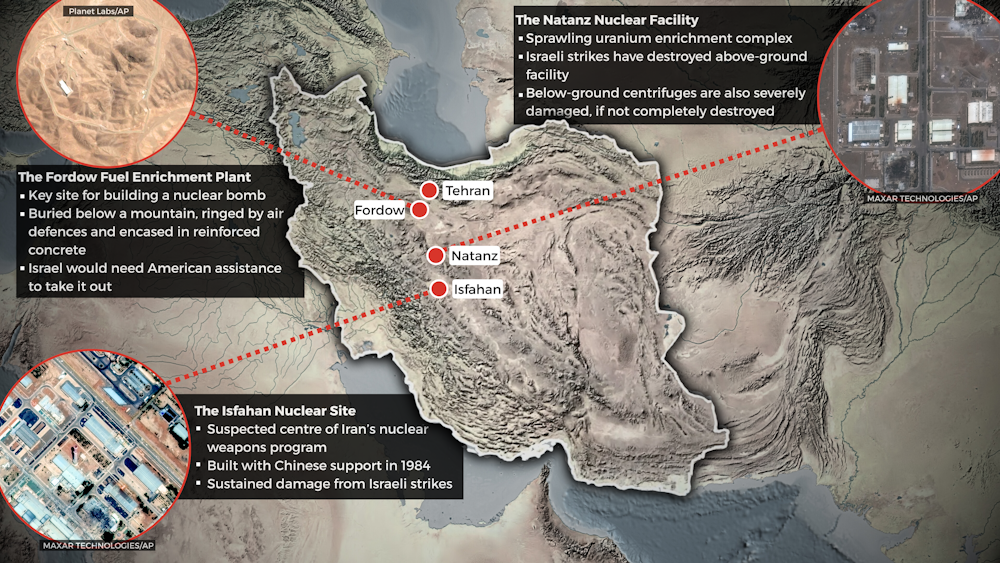
    In response, Israel has intensified airstrikes on Iran, targeting nuclear and military infrastructure around Tehran. The Israeli military claimed it is close to destroying ten additional nuclear targets in the capital, with a focus on the Fordow uranium enrichment facility. However, the International Atomic Energy Agency (IAEA) reported damage only at Iran’s Natanz nuclear site, with no changes noted at the Fordow or Esfahan facilities based on satellite imagery analysis following Friday’s attacks.

    Tensions escalated after Israel rejected Iran’s overnight diplomatic efforts to halt the conflict. The IRGC issued evacuation warnings for Israeli-occupied territories, followed by precision strikes. Conversely, Israeli authorities and U.S. President Donald Trump urged approximately 330,000 residents of central Tehran to evacuate due to the threat of large-scale Israeli attacks. Israel’s air force has reportedly destroyed about one-third of Iran’s ballistic missile stockpiles and launchers, targeting air defenses protecting nuclear sites. Iran has launched over 370 missiles and numerous drones, though most have been intercepted by Israeli air defenses.

    The United States has bolstered its military presence in the region, deploying the USS Nimitz carrier strike group and additional air assets. Nuclear talks between the U.S. and Iran, mediated by Oman, were canceled after Tehran refused to negotiate amid ongoing attacks. President Trump demanded that Iran halt its nuclear program, stating compliance could end the conflict. Israeli Prime Minister Benjamin Netanyahu claimed the strikes have significantly delayed Iran’s nuclear program, though he noted that additional targets remain.

    The Israeli strikes represent the most serious threat to the Iranian regime since 1979, potentially pressuring Tehran to reconsider its nuclear ambitions. As warnings of further attacks persist, civilians in Tehran are fleeing, and expatriate communities are being evacuated, raising fears of a widening regional conflict.

  • MIL-OSI Russia: Urgent: All relevant parties should work to de-escalate tensions in the Middle East as soon as possible – Xi Jinping

    Translation. Region: Russian Federal

    Source: People’s Republic of China in Russian –

    Source: People’s Republic of China – State Council News

    ASTANA, June 17 (Xinhua) — All relevant parties should work to de-escalate tensions in the Middle East as soon as possible and prevent further escalation, Chinese President Xi Jinping said Tuesday during a meeting with Uzbek President Shavkat Mirziyoyev on the sidelines of the second China-Central Asia Summit in Astana, Kazakhstan.

    He said China was deeply concerned that Israel’s military strikes on Iran had led to a sudden escalation of tensions in the Middle East, adding that China opposed any action that violated the sovereignty, security and territorial integrity of other countries.

    Military conflicts are not a solution to problems, and the escalation of the regional situation does not meet the common interests of the international community, the Chinese leader noted.

    China is ready to work with all parties to play a constructive role in restoring peace and stability in the Middle East, he said. –0–

    MIL OSI Russia News

  • MIL-OSI USA: Congressman Baird’s Statement on Israel’s Strikes on Iran

    Source: United States House of Representatives – Congressman Jim Baird (R-IN-04)

    Congressman Baird’s Statement on Israel’s Strikes on Iran

    Washington, June 17, 2025

    Today, Congressman Jim Baird (IN-04) released the following statement after Israel’s strikes on Iran’s nuclear program and military leadership:

    “The U.S. has been clear: Iran cannot and will not obtain a nuclear weapon. President Trump has given Iran every opportunity to dismantle their nuclear program and make a deal in good faith. Iran has failed to come to the table. Iran has also been the largest state sponsor of terrorism in the world. Iran backed Hamas’ horrific October 7th attack that murdered nearly 1,200 Israelis and 46 Americans and took hundreds of innocent people hostage. Iran has long sought the destruction of Israel and used proxies to attack our greatest ally in the Middle East. Israel has the right to take action to defend itself. I will continue to monitor the situation as it unfolds, and I stand with our ally Israel in its fight for its very existence.”

    ###

    MIL OSI USA News

  • MIL-OSI United Kingdom: UN Human Rights Council 59: Joint statement for the Interactive Dialogue with the Commission of Inquiry on the Occupied Palestinian Territories, including East Jerusalem.

    Source: United Kingdom – Executive Government & Departments

    Speech

    UN Human Rights Council 59: Joint statement for the Interactive Dialogue with the Commission of Inquiry on the Occupied Palestinian Territories, including East Jerusalem.

    Joint statement for the Interactive Dialogue with the Commission of Inquiry on the OPTs. Delivered by the UK’s Human Rights Ambassador, Eleanor Sanders.

    Mr President, this statement is on behalf of Australia, Canada, New Zealand, Norway and the UK.

    We regret that the Commission of Inquiry was established on an open-ended basis, against usual practice. Nevertheless, we remain committed to upholding human rights, and we support the Commission in undertaking proportionate scrutiny of the situation in Israel and the Occupied Palestinian Territories.

    We oppose the Israeli Government’s escalating military action in Gaza, and reject its intention to take control of the Gaza strip. 55,000 Palestinians have been killed, including many women and children. The Israeli hostages held by Hamas continue to suffer an unimaginable ordeal.

    The human suffering in Gaza is intolerable; all of Gaza is at risk of famine. We strongly urge Israel to enable food and other critical supplies to reach people safely, and at scale, to address increasing urgent needs. Attacks on UN and other aid workers are outrageous and must be investigated.

    In the West Bank, violent settlers assault and abuse Palestinians. We have announced further sanctions on individuals and entities promoting violence against these communities and will continue to take appropriate action.

    We continue to call on all parties to urgently agree to a ceasefire/hostage deal; the best hope of ending the agony of the hostages and their families, alleviating civilian suffering in Gaza, ending Hamas control and supporting a two-state solution.

    Updates to this page

    Published 17 June 2025

    MIL OSI United Kingdom

  • MIL-OSI USA: Welch Joins Sanders as Cosponsor of No War Against Iran Act 

    US Senate News:

    Source: United States Senator Peter Welch (D-Vermont)

    WASHINGTON, D.C. – Following Israel’s military strikes against Iran, which threaten to further destabilize the Middle East and draw the United States into yet another military conflict, U.S. Senator Peter Welch (D-Vt.) joined U.S. Senator Bernie Sanders (I-Vt.) in introducing the No War Against Iran Act to prohibit the use of federal funds for any use of military force in or against Iran absent specific Congressional authorization. The bill contains an exception for self-defense as enshrined in the War Powers Act and applicable U.S. law. 
    Joining Senators Welch and Sanders on this legislation are Sens. Elizabeth Warren (D-Mass.), Jeff Merkley (D-Ore.), Chris Van Hollen (D-Md.) and Ed Markey (D-Mass.). 
    “Our taxpayer dollars should not be used to fund another reckless, open-ended conflict instigated by Prime Minister Netanyahu,” said Senator Welch. “War has badly damaged this region. Millions of civilians face acute hunger and need lifesaving aid in Gaza right now. Netanyahu just upended U.S.-led negotiations to limit Iran’s nuclear program in favor of recklessly escalating tensions. Congress needs to listen to the American people, as our founders intended, before getting involved.” 
    “Netanyahu’s reckless and illegal attacks violate international law and risk igniting a regional war. Congress must make it clear that the United States will not be dragged into Netanyahu’s war of choice,” said Senator Sanders. “Our Founding Fathers entrusted the power of war and peace exclusively to the people’s elected representatives in Congress, and it is imperative that we make clear that the President has no authority to embark on another costly war without explicit authorization by Congress. Another war in the Middle East could cost countless lives, waste trillions more dollars and lead to even more deaths, more conflict, and more displacement. I will do everything that I can as a Senator to defend the Constitution and prevent the U.S. from being drawn into another war.” 
    “The Constitution is clear: Congress decides when our country goes to war, not the President or the Netanyahu government,” said Senator Warren. “The Trump administration must prioritize de-escalation to prevent this spiraling into a war that jeopardizes U.S. troops and destabilizes the Middle East.” 
    “As strikes between Israel and Iran continue, we need de-escalation and restraint from all sides. Trump’s reckless decision to abandon the JCPOA nuclear agreement, cheered on by Netanyahu, helped bring us to this dangerous moment. This bill makes clear: the President cannot launch another war in the Middle East without Congressional authorization. It’s long past time for Congress to reassert its constitutional role and prevent another disastrous conflict,” said Senator Merkley. 
    “Instead of bringing wars to an end, Trump is facilitating them — leading to civilian deaths and threatening American lives in the region. Only the Congress has the constitutional power to declare war, and President Trump must not drag us further into this conflict without Congressional approval,” said Senator Van Hollen. 
    “Our Constitution and laws give Congress, not the President, the exclusive powers to authorize military force and declare war. Congress must reassert that authority so that we are not drawn into a catastrophic regional war that would further imperil the safety of American citizens and forces, the stability of Middle East, and the lives of innocent civilians,” said Senator Markey. 
    Read and download the full text of the bill. 

    MIL OSI USA News

  • MIL-OSI: Anthem and BGO to develop purpose-built rental community in Coquitlam centre

    Source: GlobeNewswire (MIL-OSI)

    COQUITLAM, British Columbia, June 17, 2025 (GLOBE NEWSWIRE) — Anthem Properties and BGO announced today the formation of a partnership to develop a purpose-built rental, low-rise multi-family residential development on a 2-acre site located at 1184 Inlet Street, Coquitlam, BC. This marks the first joint venture between Anthem and BGO.

    The redevelopment plan for the site consists of two six-storey woodframe buildings that will include 197 homes ranging from studios to spacious three-bedroom apartments. Located adjacent to Lafarge Lake, the project will offer residents excellent access to numerous parks, Douglas College, SkyTrain and West Coast Express, along with ample retail, dining, and services at Coquitlam Centre. The Property will provide tenants with an attractive amenity offering, including dog wash stations, bike storage, parcel storage, a fitness facility, party room, outdoor playground, urban agriculture plots, and BBQ areas. The tenant package will include 3,025 SF of amenity space, 173 parking stalls and 196 storage lockers.

    “We look forward to a productive new partnership between Anthem and BGO to deliver a project that is well-positioned to meet the current market demands for well-located, low-rise rental housing in one of Metro Vancouver’s fastest growing cities,” said Jordan Carlson, Senior Vice President, Investment Group, Anthem Properties.

    “We’re excited to add to our portfolio with the launch of this new development project for our Canadian Value-Add strategy in partnership with Anthem—a highly capable and experienced developer with deep local roots,” said Chetan Baweja, Managing Director, Head of Canadian Value-Add & Separate Accounts, BGO. “1184 Inlet Street is a compelling, amenity-rich, low-rise development that aligns perfectly with our strategy—well-located, community-focused, and built for high quality sustainable living. It reflects our strong conviction in the need for low-rise purpose-built rental housing and the enduring fundamentals driving demand in Coquitlam and the Tri-Cities region.”

    The Property is designed and is expected to be 50% more energy-efficient than the 2018 BC Building Code standards, achieved through enhanced insulation, upgraded glazing, advanced air barriers, and high-performance energy-recovery ventilators.

    Construction financing and municipal approvals have been secured, and the co-owners, with Anthem acting as the Development, Construction and Property Manager, are planning to commence construction immediately. Completion is anticipated for late 2027.

    About Anthem Properties

    Founded in 1991, Anthem is a real estate development, investment and management company of 850+ people driven by creativity, passion, and direct communication. Anthem has invested in, developed or managed – alone or in partnership – more than 400 residential and commercial projects across North America. Our growing residential portfolio includes 44,000 homes that are complete, in design or under construction, from mixed-use residential to townhome, rental and single-family homes. We own, co-own, manage or have previously owned 12 million square feet of retail, industrial and office space, and our land portfolio includes more than 60 communities, spanning 9,100 acres across Canada and the United States. We are Growing Places.

    About BGO

    BGO is a leading, global real estate investment management advisor and a globally-recognized provider of real estate services. BGO serves the interests of more than 750 institutional clients with approximately $86 billion USD of assets under management (as of March 31, 2025) and expertise in the asset management of office, industrial, multi-residential, retail and hospitality property across the globe. BGO has offices in 27 cities across thirteen countries with deep, local knowledge, experience, and extensive networks in the regions where we invest in and manage real estate assets on behalf of our clients in primary, secondary and co-investment markets.

    BGO is a part of SLC Management, the institutional alternatives and traditional asset management business of Sun Life.

    The assets under management shown above includes real estate equity and mortgage investments managed by the BGO group of companies and their affiliates, and as of 1Q21, includes certain uncalled capital commitments for discretionary capital until they are legally expired and excludes certain uncalled capital commitments where the investor has complete discretion over investment.

    For more information, please visit www.bgo.com

    MEDIA CONTACTS

    Elisha McCallum
    Vice President, Communications, Anthem Properties
    Phone: 604.488.3612 Mobile: 778.668.0185
    Email: emccallum@anthemproperties.com

    Rahim Ladha Global Head of Communications, BGO
    Email: media@bgo.com

    A photo accompanying this announcement is available at https://www.globenewswire.com/NewsRoom/AttachmentNg/af12d0e9-d7a1-4043-a6ef-04c55c519c45

    The MIL Network

  • MIL-OSI Russia: Interview with Alexander Novak for Vedomosti newspaper

    Translation. Region: Russian Federal

    Source: Government of the Russian Federation – An important disclaimer is at the bottom of this article.

    Alexander Novak: The main factors of economic development are within our country.

    Question: One of the key tracks of the upcoming SPIEF is: “The World Economy – a New Platform for Global Growth”. Over the past few months, the world economy has experienced not just a series of shocks, but real tectonic shifts. In your opinion, is global growth, in the context of a general movement, possible or is the world steadily moving towards regionalization?

    A. Novak: Global economic growth will continue to some extent until 2030. However, the dynamics of its growth will depend on new challenges and threats that primarily affect global trade flows. This primarily concerns the increasing economic fragmentation of global markets – when trade, investment, exchange of services and technologies are subject to the logic of “mine” and “others”. As a result, investment activity and the well-being of the world’s population are declining.

    These processes did not begin yesterday. Since the early 2000s, the economic center of the world has been shifting from the West to the East. Developing countries, primarily China, are gaining a much greater role in the global economy. Of course, this situation does not suit those who are used to dictating their terms. And we increasingly see how, in order to counteract the growing influence of developing countries on the world economy, Western countries are making active attempts to maintain the status quo on the world stage and preserve their leadership.

    As a consequence, the strengthening of protectionism in the national economy and the revision of the existing results of globalization come to the fore. The main steps in this direction were the actual destruction of the multilateral mechanisms of the WTO, unilateral tariff and non-tariff restrictions on developing countries under the pretext of “threats to national interests”, and the introduction of various sanctions against competitors.

    The current escalation of tariff restrictions is also, of course, another consequence of the confrontation between the West and the rest of the world. The desire to maintain dominant positions in the global economy is happening by “pushing” bilateral agreements instead of multilateral ones. And such steps obviously lead to a new round of regionalization, observed since 2022, and the consolidation of countries within “blocs”.

    In the current conditions, the priority for us is to ensure the implementation of the national development agenda and the construction of sustainable partnerships with friendly countries with their own infrastructure to ensure the interests of these partnerships. This concerns the economic, financial and technological sovereignty of the Russian Federation, which, in the context of involvement in global value chains, requires, first of all, a reconfiguration of foreign economic relations with trading partners.

    I would like to remind you that we took into account the trends of regionalization of the global economy when preparing the Strategy for Foreign Economic Activity adopted by the government at the beginning of last year, therefore, relations with trading partners are built and developed taking into account the influence of geo-economic fragmentation and the opportunities opening up for Russia.

    Question: One of the undisputed leaders of destabilization has become the new US tariffs, which with a high degree of probability will lead to a redrawing of trade flows. What is this primarily for Russia – a risk or an opportunity? How many percent or percentage points of Russia’s GDP can a global trade war take away?

    A. Novak: Subtract or add? No, seriously, from the point of view of forecasting, the situation in world trade is currently the largest zone of uncertainty. There are a great many development options, their implementation depends on a large number of external and internal factors.

    The world is wider than individual Western countries and their circle of partners. Most likely, the situation with trade wars will not be universal. Some commodity flows will be redirected, as usually happens in trade wars.

    At the same time, there will be no repetition of the pandemic situation, when global trade stopped and trade flows collapsed. Therefore, the baseline forecast scenario approved by the government assumes that the growth rate of global trade will slow down, but will not go into recession.

    You are right, for us there are really two sides to the coin: risks and opportunities. The risks are related to the overall slowdown of the global economy, as well as demand and prices for traditional Russian export goods. On the other hand, this is a possible reduction in logistics costs, the opening of new niches, the substitution of Russian products for goods that will leave certain markets. From the point of view of imports, risks arise for our domestic market and domestic producers.

    And yet, no matter how the situation in the world develops, the main factors of the development of the Russian economy are not outside, but inside our country. The main one, with all the importance of the proactive work of the government and the Bank of Russia, is private entrepreneurial initiative. The flexibility and adaptive capacity of national business is the key to the stability of our economy in recent years. The main task of the authorities is to develop and support these qualities in every possible way.

    However, when you think about all the changes that you said were caused by “destabilizing US tariffs,” it is important to understand that tariffs are just a tool, and the goal is not to redirect trade flows. The goal, apparently, is to return key production chains to the native territory of the United States, to return production, competencies, infrastructure. Localization of value chains is what the Trump administration wants to achieve. What level of tariffs is needed to deploy investment? This is an interesting question. I think 10-15% of the final tariff, given how many times goods cross customs borders in the modern world, will be quite enough to create incentives to redirect investment flows. And the current 50% or 100% tariffs are nothing more than a negotiating position from which negotiating tactics have begun to form.

    Question: Is the government considering measures to stimulate investment activity of Russians? Can more active attraction of citizens’ funds to the stock market help businesses solve the problem of lack of financing?

    A. Novak: Yes, of course, measures to stimulate investment activity are being taken, including, as you know, within the framework of the national project “Efficient and Competitive Economy” and the federal project “Development of the Financial Market” included in it. Also, separate support measures of the federal projects “SME” and “Technology” are aimed at the development of SMEs and small technology companies by attracting funds from the financial market, respectively.

    In the context of achieving the “May decree” indicators, our citizens have the opportunity to invest in long-term instruments. For example, one of them is the Long-Term Savings Program, LTS. It involves the state creating conditions for the formation of long-term savings, which are formed both from personal funds and from the pension savings of citizens.

    This program is a new universal savings product that will allow everyone, with the stimulating support of the state, to form capital for their priority goals. PDS is especially relevant for families seeking to provide for the future of their children, create a financial safety net, purchase housing or pay for education. Together with banks, we are trying to actively inform citizens about the availability of such programs and the opportunities they provide.

    Another tool for stimulating investment is more active attraction of citizens’ funds to the stock market, which can have a significant impact on solving the problem of lack of financing for businesses. Firstly, attracting citizens’ funds will help diversify sources of financing for businesses. This will reduce companies’ dependence on bank loans and allow them to more easily adapt to changing economic conditions.

    In addition, active participation of citizens in the stock market can contribute to increasing the financial literacy of the population. Educated investors better understand the risks and opportunities, and accordingly, they make more informed investment decisions. This, in turn, creates a healthier investment environment and promotes economic growth.

    Of course, we understand that the designated incentives will work much better with a reduction in deposit rates. This applies to interest rates on both deposits and loans. According to our estimates, a gradual, correct cooling of the economy is already underway. Citizens will eventually withdraw from deposits and consider the possibility of diversifying their savings.

    Question: What drivers do you think the capital market might have in the current geopolitical and economic conditions?

    A. Novak: There are several such incentives or drivers now. The main “driver” is macroeconomic stability. Reducing inflation expectations, consistent and predictable economic policy contribute to the growth of investor confidence in the stock and bond market.

    Controlling inflation helps reduce investment risks and increases the attractiveness of assets in the capital market.

    In the context of sanctions pressure and limited access to international financial markets, Russian companies are seeking to find new sources of financing within the country. As a result, there is demand for financial instruments such as bonds and shares, and this can contribute to the growth of the stock market. An increase in the number of issuers and an expansion of the range of financial products offered also contribute to the development of the capital market.

    The development of infrastructure for attracting investment can also be an important driver. Authorities and financial institutions can introduce new mechanisms to support business, such as tax incentives for investors, programs to improve the financial literacy of the population, and the creation of more convenient conditions for entering the stock market. This will not only increase the number of investors, but also increase their confidence in financial instruments.

    In addition, in my opinion, digitalization and the development of financial technologies, digital platforms give a significant boost to the capital market. Another plus in this regard is that digital technologies contribute to the growth of liquidity and the reduction of transaction costs.

    Question: At the recent government strategy session on the National Model of Target Conditions for Doing Business, you specifically emphasized that by 2030, Russia should be among the top 20 countries in terms of the investment climate, as assessed by the World Bank B-READY rating. This rating will be discussed at the SPIEF. What do you see as the key priorities for improving the business climate in Russia? In what aspects are there the largest “development zones” today?

    A. Novak: First of all, I would like to clarify that the World Bank’s international rating of the business and investment climate is one of the bases for the formation of the National Model of Target Conditions for Doing Business, along with Russia’s national development goals and the rating of the state of the investment climate.

    When analyzing the data of the pilot study of the business climate in Russia, conducted by the Agency for Strategic Initiatives, “development zones” were identified. Within the areas of engineering infrastructure, labor standards, taxation, dispute resolution, businesses have the most difficulties with the effectiveness of law enforcement of public services, even taking into account the well-developed regulatory framework in the country. We have formed working groups that are currently developing initiatives to improve indicators, such as reducing the number of hours for preparing and submitting tax reports. We are talking about reporting, which currently amounts to about 160 hours per year. Another example: the implementation of initiatives to develop alternative forms of dispute resolution, primarily through arbitration courts and mediation.

    The opposite situation has developed in the areas of business registration, financial services, and bankruptcy procedures. The assessment shows the need to improve regulatory and legal acts in Russian legislation. For example, such initiatives as the development and adoption of norms on restructuring, on pre-trial debt restructuring in order to reduce the period of bankruptcy of companies. In addition, norms are being discussed that change the process of asset sales and asset replacement in bankruptcy proceedings.

    Focusing, among other things, on the international rating, we plan to present the key priorities and results of the formation of the National Model at the St. Petersburg Forum; we are open and will be glad to have as many interested parties as possible participate in the discussion.

    Question: Does the government have a scenario for economic development in which sanctions against Russia are relaxed? If so, which restrictions do you think would be the most realistic to lift?

    A. Novak: Such a scenario is among many forecasts developed by the Ministry of Economic Development, but it is not the main one. The basic forecast scenario approved by the government does not include any drastic changes in terms of sanctions pressure.

    Question: Oil prices are now also under the control of geopolitics. In your opinion, can we say that we are once again entering an “era of low prices”? Is OPEC’s decision to accelerate production growth relevant in this context? Is its adjustment being discussed?

    A. Novak: Global oil prices have historically been under pressure from both political factors and the balance of supply and demand. The key factor of volatility in recent years has been the situation in the Middle East and the risks of supply restrictions through the Strait of Hormuz, as well as the ongoing recovery of the global economy and the risks associated with trade wars unleashed by the United States.

    Historically, affordable prices provoke additional demand for oil while global fuel competition continues. And in general, the world is experiencing a need for additional volumes of raw materials. We believe that OPEC objectively assesses the situation regarding the prospects for global oil demand, and we highly appreciate the competence of OPEC experts.

    As for the issue of adjustment, OPEC countries are in constant contact, monitor the market situation and are ready to respond flexibly and promptly to any changes in the market situation. If necessary, the parameters of the deal can be adjusted in the future to ensure an optimal balance between supply and demand.

    And in the short term, oil prices are always under the power of geopolitics. For example, the current aggravation of the Israeli-Iranian conflict. The key questions that good economists ask in such cases of external shocks are whether the shock is temporary (short-term) or permanent (permanent) and from which side is it – demand or supply? And from these options, the scenario and development of optimal policy occurs.

    Question: The SPIEF is planning to discuss the balance of interests of producers and consumers in the global fuel and energy market. You personally participated in the formation of the current architecture of balance, which allowed the markets to be stabilized. Today, do you see risks of disruption of the balance of supply and demand in the oil market in the medium term?

    A. Novak: The data show that in April, the demand for oil in the world was about 103.1 mbps with supply at 103.7 mbps. Given the current state of the oil market and its overall balance, as well as the traditionally high demand season in the summer, it is extremely important for each country to fulfill its obligations.

    The radical change in the external economic environment (I mean the growing sanctions pressure, the unstable geopolitical situation in the Middle East, as well as the high volatility in the global oil market) confirms that the current mechanism for implementing the agreement is the most effective tool. It ensures maximum efficiency of oil production and state revenues. Thus, OPEC plays and will continue to play a coordinating role in the market, as it has been for the past five years.

    Question: SPIEF is traditionally a platform for international dialogue. In your opinion, what are the most important factors that will determine future relations between energy producing and consuming countries, and how can Russia contribute to strengthening cooperation and stability in this dynamic environment?

    A. Novak: We are witnessing a transformation of the energy market, where, against the backdrop of accelerating energy consumption, accelerated growth is observed in all types of energy resources, both traditional ones – oil, gas, coal, and renewable energy sources. A renaissance in demand for the development of nuclear power plants is observed.

    The key drivers have already become the growth of the population in developing countries and the extensive development of data processing systems. And all this against the backdrop of the introduction of artificial intelligence.

    The recent major power outages in Spain and Portugal show that it is important to provide the population with electricity at economically feasible prices. Also, in addition to domestic generation and the choice of the optimal source in the conditions of inter-fuel competition, it is very important to ensure the possibility of delivering primary resources at acceptable prices.

    In this regard, I cannot help but state the obvious. Russia is a key supplier of energy resources around the world. And not only oil, gas and LNG, but also coal, which in the context of growing demand is an important competitive advantage. Russia is also a reliable partner in the supply of its energy resources, all contract terms are observed, and, given the current realities in the world, only long-term contracts and responsible relationships can become guarantors of a stable supply of energy resources.

    Question: In your opinion, in connection with recent geopolitical events, does the recently approved Energy Strategy need to be adjusted, or does it already take into account all possible risks?

    A. Novak: When developing the Energy Strategy until 2050, a pool of scenarios was considered that assumed various internal and external prerequisites and results of the development of Russian energy. In particular, the Energy Strategy until 2050 takes into account the stress scenario, which assumes a significant decrease in the production indicators of the fuel and energy complex industries against the background of a reduction in export opportunities and a general deterioration in external operating conditions.

    The calculation of quantitative indicators within the framework of the strategy’s stress scenario made it possible to identify the main challenges for the Russian energy sector in each of its sectors and to develop special measures to mitigate the consequences if such a scenario is implemented.

    But, of course, in case of significant changes not taken into account in the wide range of strategy scenarios, adjustments can be made to it. However, the main areas of work will remain the same.

    Question: Is the Power of Siberia 2 project still relevant in the current conditions? Have you managed to reach an agreement with your colleagues from China on the cost of gas? If so, when can a contract be signed for the project and what volume of supplies is currently being discussed?

    A. Novak: China is one of the largest energy consumers in the world, and its rapid economic development, industrial growth and urbanization contribute to a constant increase in energy demand. Particularly noticeable is the growing role of natural gas, which is used as a cleaner alternative to coal. In 2024, gas demand in China amounted to about 430 billion cubic meters, compared to 373 billion cubic meters in 2021, that is, an increase of 15%.

    In recent years, the role of renewable energy sources has also increased significantly in China’s energy sector – the country is the undisputed leader in terms of installed solar and wind generation capacity. If in 2021 the figure was 636 GW, then by 2024 it reached about 1400 GW. However, the growth in the use of renewable energy sources does not mean abandoning natural gas. Gas is expected to be used as a “balancing” fuel in cases of insufficient electricity generation from renewable energy sources and will remain the guarantor of China’s energy security. According to the forecast of the International Energy Agency, in the scenario of current policies, China will increase gas consumption throughout the forecast period, until 2050. By this time, gas demand in China is expected to increase by more than 30% compared to 2023.

    Russia, which is the leader in natural gas reserves (currently 63.4 trillion cubic meters), remains one of the main suppliers of this fuel to China. In this regard, the Power of Siberia 2 project undoubtedly remains relevant. As for the rest, more detailed information directly on the project itself is the subject of commercial negotiations.

    Question: Are there plans to build an oil pipeline to China parallel to Power of Siberia 2? You spoke about the possibility of delivering up to 30 million tons of oil per year through it. Has China confirmed its interest in this project? In what time frame could such a pipeline be built? Is there a preliminary estimate of its cost?

    A. Novak: I repeat: since the implementation of the project is the responsibility of the specialized companies, the details of the agreements are classified as a commercial secret and were not made public. However, I will add that, according to OPEC forecasts, China’s demand for oil in 2023-2050 will grow by an average of 2.5% per year. Against this background, the implementation of new infrastructure projects appears to be an important part of the sphere of interests of China’s fuel and energy sector.

    Question: Are there any risks for the National Welfare Fund due to the reduction in oil and gas budget revenues? The Ministry of Finance is already considering the possibility of adjusting the cutoff price under the budget rule. In this case, what are the prospects for the Russian “piggy bank”? Do you think it is important to continue accumulating the National Welfare Fund?

    A. Novak: Today, the cutoff price according to the budget rule is $60/bbl, and the average Urals FOB in January–April 2025 fluctuates in the range of $59–60/bbl.

    But current world oil prices are a short-term consequence of the current market situation, taking into account the growing factor of trade wars and geopolitical tensions, and do not suit most key oil producers. Therefore, oil prices will be adjusted as the effect of “market shocks” is leveled out and will take on an upward trend.

    As for the National Welfare Fund, it is certainly important to continue to accumulate it. The fund not only allows for the implementation of social projects and the maintenance of the well-being of citizens, but also promotes the development of industry and infrastructure in Russia.

    Question: Is there a need to replace the export of raw materials and first-stage products with new high-tech goods? Are new mechanisms of support from the state needed for this?

    A. Novak: In the context of increased sanctions pressure on the Russian fuel and energy complex, active import substitution is taking place. In parallel, work is actively underway to complete the modernization of oil refineries to improve the quality of manufactured products. The volume of oil and gas engineering currently exceeds 500 billion rubles, and by 2030 it is planned to import-substitute critical equipment by 100%.

    If we look at it from the point of view of petrochemistry, then by 2030 it is planned to increase the volume of production of large-tonnage plastics several times – up to 14 million tons. The development of oil refining will allow to fully provide the domestic market at reasonable prices. In implementing all import substitution projects, Russia is ready to start exporting services and supplying energy on a turnkey basis, that is, from raw materials to the construction of processing complexes in other countries.

    Thus, key measures to support both mechanical engineering and secondary product manufacturing are already being implemented in our country. New measures and mechanisms of support from the state require working out the effects and assessing the impact on the industry.

    Question: The key topic of SPIEF: common values are the basis for growth in a multipolar world. At the beginning of our conversation, we already discussed economic regionalization, but no less important is the division by value orientations. Until recently, carbon neutrality seemed to be a common goal for all countries: programs were adopted, significant budgets were allocated to solve these problems. But Trump’s rise to the presidency of the United States violated the status quo. He said that too much emphasis on renewable energy sources threatens the security of the United States. Do you see in this a general reversal and a paradigm shift in public and political consciousness? In your opinion, how can we maintain a balance between the world of the present and the world of the future, taking into account the priorities of all generations?

    A. Novak: Look what we see today? The aggressive policy of achieving carbon neutrality to the detriment of economic efficiency and the trend towards global replacement of traditional energy sources with renewable energy sources is gradually shifting to a more pragmatic direction. Many countries are adapting their energy policies towards an economically balanced approach to choosing energy sources.

    According to BloombergNEF’s annual report, global energy transition investment in 2024 grew by 11%, exceeding $2 trillion for the first time. However, the growth rate was lower than in the previous three years, when investment grew by 24-29% per year. Thus, to achieve carbon neutrality and net-zero emissions goals by mid-century, global energy transition investment in 2025-2030 will need to average $5.6 trillion per year.

    But investors pulled more than $30 billion out of climate-focused funds last year, ending a four-year boom that saw the value of assets increase sevenfold to $541 billion. Despite a six-fold increase in energy transition investment over the past 10 years, it is still only 37% of what is needed to achieve carbon neutrality. China was the largest such market, with $818 billion in investment.

    Factors that significantly limit the possibilities for large-scale implementation of renewable energy sources include insufficient transmission capacity of electrical networks, the expansion of which significantly reduces the economic efficiency of such generation. There are also limitations associated with the dependence of production on weather conditions. And all this against the background of a low level of maturity of energy storage technologies.

    The recent energy crisis in Spain and Portugal further confirms that today it is the grid complex that is the least prepared element of the energy system to operate in the conditions of the energy transition. Therefore, in the conditions of the current level of development of energy systems and the risks caused by this, it is necessary, first of all, to ensure a balance between economic efficiency, reliability of energy supply and the level of greenhouse gas emissions.

    Source – Vedomosti newspaper

    Please note: This information is raw content directly from the source of the information. It is exactly what the source states and does not reflect the position of MIL-OSI or its clients.

    MIL OSI Russia News

  • MIL-OSI Europe: Schengen area’s IT system celebrates 30 years

    Source: European Union 2

    In 2025, Europe marks two major milestones: 40 years of the Schengen Area and 30 years of the Schengen Information System (SIS) — the IT backbone that helps keep this border-free zone both secure and operational. 

    Since its launch in 1995, SIS has enabled real-time cooperation between national authorities across Europe, safeguarding citizens while supporting one of the EU’s greatest achievements — the freedom to travel without internal borders. 

    SIS is more than just a system — it is a cornerstone of trust, cooperation, and security in Europe. 

    A System at the Heart of European Security

    SIS is much more than a database — it is an operational tool vital to public safety, judicial cooperation, and migration management across the EU.

    Every day, SIS helps authorities locate missing persons, intercept criminals at borders, recover stolen assets, and support cross-border investigations — reinforcing trust between Member States.

    At eu-LISA, we are committed not only to keeping SIS running reliably, but also to ensuring it evolves to meet future needs — by expanding capabilities, integrating new technologies, and supporting the EU’s broader interoperability objectives.


    What is SIS? 

    The Schengen Information System (SIS) is Europe’s largest and most frequently used information-sharing platform for border security and law enforcement. It allows participating countries to issue and consult alerts related to: 

    By enabling instant data exchange, SIS helps police officers, border guards, customs officials, immigration authorities, and judicial actors to make fast, informed decisions across national borders. 

    Who Uses SIS? 

    As of 2025, SIS is used by 30 European countries, including all EU Member States (with both Ireland and Cyprus now connected), as well as Iceland, Liechtenstein, Norway, and Switzerland. 

    In addition, EU agencies such as Europol, Frontex, and Eurojust have access to the system to support their operational mandates. 

    The countries connected to SIS are: 
    Austria, Belgium, Bulgaria, Croatia, Cyprus, Czech Republic, Denmark, Estonia, Finland, France, Germany, Greece, Hungary, Iceland, Ireland, Italy, Latvia, Liechtenstein, Lithuania, Luxembourg, Malta, the Netherlands, Norway, Poland, Portugal, Romania, Slovakia, Slovenia, Spain, Sweden, and Switzerland. 

    Across Europe, more than 250,000 authorised users access SIS, including: 

    • Prosecutors and judges 

    Each participating country operates a SIRENE Bureau (Supplementary Information Request at the National Entry), which coordinates follow-up actions when SIS alerts are triggered. 

    How is SIS Managed? 

    Since 2013, eu-LISA — the EU Agency for the Operational Management of Large-Scale IT Systems in the Area of Freedom, Security and Justice — has been responsible for the management and further development of SIS. 

    eu-LISA’s tasks include: 

    A major upgrade, known as the SIS Recast, went live in March 2023. It introduced new features to better support counter-terrorism efforts, child protection, and the fight against irregular migration. 

    SIS in Numbers – 2024 Highlights 

    According to the SIS Annual Report 2024, the system continues to be a cornerstone of operational cooperation: 

    While alerts on individuals make up less than 2% of all entries, they are among the most critical. These include: 

    MIL OSI Europe News

  • MIL-OSI Africa: Mauritania roundtable raises US$2 billion pledge from the Arab Coordination Group in development funding

    Mauritania’s national development program will see a strong boost with a US$2 billion pledge made by the Arab Coordination Group (ACG) (www.TheACG.org) at a high-level roundtable held in Vienna, Austria. The event was chaired by the President of Mauritania, Mohamed Ould Cheikh El Ghazouani, and was hosted by the OPEC Fund for International Development in the framework of the Annual Meeting of the ACG Heads of Institutions.

    OPEC Fund President Abdulhamid Alkhalifa said: “We are strongly committed to play an active role in the implementation and success of Mauritania’s ambitious development program. With our pledge we are mobilizing our collective capabilities to translate ambition into action and bring about positive change in the lives of the people of our partner country Mauritania.”

    Speaking on behalf of the Arab Coordination Group, the President of the Islamic Development Bank (IsDB), H.E Dr. Muhammed Al Jasser, said: “Our funding will be directed to vital priority sectors, including energy, water, transportation and digital infrastructure, in order to stimulate economic growth and achieve comprehensive and sustainable development in the country.”

    The pledge followed an opening address by President El Ghazouani who reaffirmed Mauritania’s commitment to institutional reform, enhanced transparency and improved governance. He noted that these efforts, combined with macroeconomic stability and modernized public administration, are laying the foundation for long-term, inclusive growth. The President also underscored the country’s ambition to become a competitive investment destination through streamlined investment procedures and strengthened national security.

    During the roundtable, the government of Mauritania presented a portfolio of priority investment projects. Among them was an initiative to hybridize thermal power plants and enhance existing hybrid facilities with advanced energy storage solutions. Two strategic water infrastructure projects were also featured: one at the Taraf Al-Mahroud site and another in the Karakoro Basin. In the transport sector, the rehabilitation of the Nouakchott–Nouadhibou and Rosso–Boghé corridors was highlighted as vital to improving trade and connectivity.

    The ACG pledge will cover the period 2025-2030. Delivery will be “closely coordinated with the government and international partners,” IsDB President Al Jasser announced. The roundtable preceded the OPEC Fund Development Forum on June 17, where Mauritania’s President El Ghazouani will deliver an opening address as guest of honor.

    OPEC Fund President Alkhalifa underscored the institution’s commitment to supporting Mauritania. During a visit to the country in January he signed a Country Partnership Framework Agreement for the period 2025-2027. Under this strategic cooperation, the OPEC Fund will focus on key sectors such as renewable energy, water, food security, transport and clean cooking. The President said: “To be successful, development needs to attract investment. To be sustainable, however, development also needs to generate tangible results for the people. The government’s strategy prudently links both.”

    The Arab Coordination Group is the world’s second-largest development finance group, united around shared values of South-South cooperation and solidarity. Last year, the ACG extended US$19.6 billion collectively to fund nearly 650 operations in more than 90 countries.

    Distributed by APO Group on behalf of Arab Coordination Group (ACG).

    About the Arab Coordination Group (ACG):
    The Arab Coordination Group (ACG) is a strategic alliance that provides a coordinated response to development finance. Since its establishment in 1975, ACG has been instrumental in developing economies and communities for a better future, providing more than 13,000 development loans to over 160 countries around the globe. Comprising ten development funds, ACG is the second-largest group of development finance institutions in the world and works across the globe to support developing nations and create a lasting, positive impact.

    The Group comprises the Abu Dhabi Fund for Development, the Arab Bank for Economic Development in Africa, the Arab Fund for Economic and Social Development, the Arab Gulf Programme for Development, the Arab Monetary Fund, the Islamic Development Bank, the Kuwait Fund for Arab Economic Development, the OPEC Fund for International Development, the Qatar Fund for Development and the Saudi Fund for Development.

    MIL OSI Africa

  • MIL-OSI Africa: Qatar Calls for Negotiations to Reach Diplomatic Resolution to Iranian Nuclear Program-related Issues

    Source: Government of Qatar

    Vienna, June 16, 2025

    The State of Qatar has called for calm, de-escalation, exercising maximum self-restraint, and carrying on with negotiations to reach a diplomatic solution to the issues pertaining to the Iranian nuclear program.

    The State of Qatar added that facts have shown that there is no alternative to dialogue and diplomacy to ensure peace and stability and to spare the region and the world further catastrophes.

    This came in a statement delivered by HE Ambassador and Permanent Representative of the State of Qatar to the United Nations and international organizations in Vienna Jassim bin Yacoub Al Hammadi at the emergency meeting of the International Atomic Energy Agency’s (IAEA) Board of Governors in Vienna.

    His Excellency urged the Director General of the IAEA to engage with the Iranian side to facilitate technical discussions and diplomatic solutions to the nuclear issues concerning Iran.

    His Excellency also reiterated the State of Qatar’s strong condemnation and deep denunciation of the Israeli attack on the territory of the Islamic Republic of Iran, calling on the international community to assume its legal and moral responsibility to urgently stop such violations.

    The Ambassador and Permanent Representative of the State of Qatar to the United Nations and international organizations in Vienna stressed the State of Qatar’s rejection of the use of force outside the framework of the United Nations Charter, pointing out that Israel’s claim that its attack on Iran was a preemptive act of self-defense lacks any legal basis. His Excellency added that respecting state sovereignty and banning the use of force without UN Security Council authorization or in self-defense under Article 51 of the Charter are peremptory norms in international law and the UN Charter.

    He said that the international community and the UN Security Council under its mandate, must firmly uphold these principles and prevent their violation, as doing otherwise creates chaos in international relations and leads to the law of the jungle.

    His Excellency also noted that an armed attack on nuclear facilities under IAEA safeguards is a condemned act, potentially causing wide-scale harm to people and the environment, with serious implications for nuclear safety and security.

    HE Ambassador and Permanent Representative of the State of Qatar to the United Nations and international organizations in Vienna Jassim bin Yacoub Al Hammadi praised IAEA Director General Rafael Grossi’s statement before the UN Security Council on June 13, in which he reaffirmed the IAEA General Conference’s resolutions stating: “Any armed attack on and threat against nuclear facilities devoted to peaceful purposes constitutes a violation of the principles of the United Nations Charter, international law and the Statute of the Agency,” and stating: “An armed attack on a nuclear installation could result in radioactive releases with grave consequences within and beyond the boundaries of the State which has been attacked.”

    MIL OSI Africa

  • MIL-OSI Africa: Minister of State at Ministry of Foreign Affairs Holds Phone Call with IAEA Director General

    Source: Government of Qatar

    Doha, June 17, 2025

    HE Minister of State at the Ministry of Foreign Affairs Dr. Mohammed bin Abdulaziz bin Saleh Al Khulaifi held a phone call Tuesday with HE Director General of the International Atomic Energy Agency (IAEA) Rafael Mariano Grossi.

    During the call, they discussed the latest developments related to the recent Israeli attacks on nuclear facilities in the Islamic Republic of Iran, as well as means to enhance the security of nuclear installations and ensure they are not exposed to any threats that could undermine regional and international security.

    HE the Minister of State at the Ministry of Foreign Affairs pointed out during the call that targeting nuclear facilities constitutes a serious threat to regional and international peace and security, stressing that the State of Qatar is making strenuous efforts with its partners to return all parties to the path of dialogue to address outstanding issues and consolidate security and peace in the region and the world.

    His Excellency reiterated the State of Qatar’s strong condemnation of the Israeli attack on Iranian territory, describing it as a blatant violation of Iran’s sovereignty and security and a clear breach of the rules and principles of international law.

    MIL OSI Africa

  • MIL-OSI Analysis: Israeli aggression and Iranian nuclear brinkmanship made this confrontation all but inevitable

    Source: The Conversation – UK – By Matthew Moran, Professor of International Security, King’s College London

    In the early hours of June 13, Israel launched its largest-ever attack on Iran. Airstrikes involving more than 200 aircraft targeted nuclear and missile facilities, as well as key figures in the Iranian military and nuclear programme leadership. The attack, codenamed “Operation Rising Lion”, appears to have been supported on the ground by Israeli agents operating drones positioned deep within Iranian territory.

    In one sense, this attack has been a long time coming. Over the past 15 years, Israel has repeatedly threatened to attack Iran, arguing that Tehran harbours nuclear weapons aspirations that pose an existential threat to the Israeli state. Israel’s prime minister, Benjamin Netanyahu, said as much in a televised address announcing the same-day military operation in which he placed the nuclear issue front and centre: “We struck at the heart of Iran’s nuclear weaponisation program.” But why has Israel chosen to act now?

    Clearly, we are looking at a dynamic situation from the outside in, but there are some important points worth considering. First, events over the past 12 months or so have undermined Iran’s ability to deter adversaries, which has left the regime exposed. Israel’s response to an Iranian missile attack in October, for example, seriously degraded Iran’s air defences as well as missile production capabilities. This created weaknesses that Israel has since exploited in its renewed military campaign.

    Looking more broadly, the fallout from the October 7 attack by Hamas on Israel has decimated the proxies that Iran spent decades cultivating in the Middle East. The brutal war in Gaza has decimated Hamas, while to the north, Hezbollah is severely degraded after its own 14-month war with Israel.


    Get your news from actual experts, straight to your inbox. Sign up to our daily newsletter to receive all The Conversation UK’s latest coverage of news and research, from politics and business to the arts and sciences.


    Add to this the fall of the Assad regime in Syria, and it is clear that Iran’s so called “axis of resistance”, a key pillar of the country’s deterrence posture, is now a dramatically reduced force. Israel has been emboldened by these events. It now clearly sees a unique opportunity to further degrade a major adversary – and potentially bring about regime change.

    What’s more, Iran’s nuclear programme has continued to advance since Donald Trump withdrew the US in 2018 from the joint comprehensive plan of action (JCPOA). This was the 2015 deal negotiated during Barack Obama’s presidency that rolled back the country’s nuclear capabilities in return for a relaxation of harsh sanctions against Iran.

    In March, the Washington-based – but non-partisan – Institute for Science and International Security reported that Iran could convert its current stock of 60% enriched uranium into enough weapons-grade uranium for seven nuclear weapons at the Fordow fuel enrichment plant. This could be done in as little as three weeks.

    At the same time, the US director of national intelligence, Tulsi Gabbard, told the Senate intelligence committee on March 27 that the intelligence community “continues to assess that Iran is not building a nuclear weapon”.

    So this raises the question of whether the Israeli government had intelligence that the Iranians were moving forward with weaponisation. It is possible that Iran was preparing to make a dash for the bomb, crossing an Israeli red line and triggering action – although there is currently no evidence to support this theory. What is clear, however, is that Iran’s brinkmanship around its effort to hedge its bets on a nuclear option meant it was always operating in a dangerous space.

    Was the Israeli attack inevitable?

    At first sight, the answer to this seems obvious. For years now, Israel has been very clear that it will not accept a nuclear armed Iran. Yet Tehran has insisted on a nuclear programme that appears to go well beyond what is required for civil nuclear purposes. On June 12, the International Atomic Energy Agency declared that Iran was not complying with its nuclear safeguards obligations.

    By most estimates, Iran is not far from the bomb and Israel has finally taken action – ostensibly on this basis.

    Had Iran curbed its nuclear advancement and continued to comply with its IAEA obligations, Israel would have found it more challenging to justify any military action politically. In the same vein, if Iran had made quicker and greater progress in its nuclear talks with the Trump administration on reaching some form of new deal, this would also have made it more difficult for Israel to act.

    The combination of the IAEA declaration and the lack of acceptable progress in talks with the US clearly influenced Israeli decision making. So why did the Iranian regime not take more concrete steps in this direction?

    Iran’s nuclear ‘hedging’

    The answer goes to the heart of Iran’s deterrence posture. Alongside its conventional forces and its infamous axis of resistance, Iran has sought to leverage its nuclear programme for influence.

    Nearly ten years ago, we argued that Iran was engaged in a strategy of “nuclear hedging”. The value of this approach lies in the potential for a state to position itself relatively close to the bomb without incurring all the negative – including potentially military – consequences of a fully-fledged nuclear weapons programme, where the goal is to cross the threshold as quickly as possible.

    Yet hedging is a delicate balancing act that requires plausible deniability of weapons intent. A step too far can undermine any idea that the nuclear development is for civilian use, instead inviting military intervention.

    Conversely, too few steps towards a credible breakout capability and hedging has little value. For any coercive or deterrent benefit to be obtained, a state must be perceived by others as relatively close to having the bomb.

    With the deterioration of Iran’s regional power over the past year, the value to Tehran of its nuclear programme has become much greater. This may help to explain why Iran did not take firm steps to reduce external concerns about its nuclear intentions.

    Tehran is likely to have factored the cost of being seen to give in to external pressure on its nuclear programme. At home there is the risk that the regime’s hold on power could be weakened by capitulation to external pressure from the US, and Israel in particular. Regionally, the power costs would include losing valuable influence over other states across the Middle East.

    At the same time, the US government has changed its stance since the JCPOA deal was struck during Obama’s presidency in 2015, allowing Iran some small degree of enrichment capacity. The first Trump administration pulled the US out of the JCPOA in 2018 depicting it as a flawed agreement.

    In Donald Trump’s second term, his administration has continued to take a hard line, pushing for Iran to give up enrichment. From an Iranian perspective, the benefits of rolling back its capabilities failed to materialise.

    This is a rapidly evolving situation. But even at this early stage, this case demonstrates clearly the risks associated with Iran’s strategy of nuclear hedging.

    The authors do not work for, consult, own shares in or receive funding from any company or organisation that would benefit from this article, and have disclosed no relevant affiliations beyond their academic appointment.

    ref. Israeli aggression and Iranian nuclear brinkmanship made this confrontation all but inevitable – https://theconversation.com/israeli-aggression-and-iranian-nuclear-brinkmanship-made-this-confrontation-all-but-inevitable-259024

    MIL OSI Analysis

  • MIL-OSI Analysis: Israel’s air strength is giving it a free hand over Iran

    Source: The Conversation – UK – By Matthew Powell, Teaching Fellow in Strategic and Air Power Studies, University of Portsmouth

    Israel says it quickly gained air superiority over the Iranian capital, Tehran. Luciano Santandreu / Shutterstock

    Israel’s initial attack on Iranian nuclear and military facilities, alongside its assassination of top military officials and nuclear scientists, on June 13 has been followed by days of escalating strikes. Iran threatened “severe punishment” and quickly launched what were, in relative terms, smaller-scale missile attacks against Israeli territory.

    Israel’s military then expanded its assault on Iran, with the Israeli defence minister, Israel Katz, saying “Tehran will burn” if Iran’s supreme leader, Ayatollah Ali Khamenei, “continues to fire missiles at the Israeli home front”. Israel hit dozens of targets in the Iranian capital, Tehran, on June 15, and has since issued evacuation orders for significant areas of the city.

    The exchange of attacks has put the varying military and defensive capabilities of Israel and Iran on stark display. In particular, it appears that Israel has been able to exercise a high degree of air superiority over Iran.

    Israel was able to use more than 200 manned aircraft in its initial attack, with its air force reportedly suffering zero casualties. Within 48 hours of starting the conflict, Israel said it had gained control of the skies above Tehran.


    Get your news from actual experts, straight to your inbox. Sign up to our daily newsletter to receive all The Conversation UK’s latest coverage of news and research, from politics and business to the arts and sciences.


    This superiority has largely been gained through concerted efforts over the past year to destroy or degrade Iran’s air defence systems. In October 2024, for example, Israeli strikes targeted air defences protecting Iranian oil and gas facilities as well as those defending sites linked to Tehran’s nuclear programme and ballistic missile production.

    With a weakened air defence system, the Iranian military has been less able to prevent missile attacks and Israeli aircraft from entering its air space. This has given the Israeli military greater freedom of action in terms of the targets it chooses to attack – and greater freedom of choice when planning operations.

    Israeli aircraft have been dropping bombs from within Iran, instead of relying on long-range missiles. Iran, on the other hand, has been restricted to using its arsenal of missiles to strike Israel from distance.

    Israel’s prime minister, Benjamin Netanyahu, made reference to the strategic importance of this aerial superiority on June 16. While confirming evacuation orders for the Iranian capital, he said: “The Israeli air force controls the skies over Tehran. This changes the entire campaign.”

    Netanyahu later did not rule out killing Khamenei, saying it would “end the conflict”. Katz repeated the threat the following day, warning Khamenei of a “fate similar to Saddam Hussein”.

    Iran has been far less effective than Israel in its response – which is no great surprise. Israel says it has destroyed “one-third” of the surface-to-surface missile launchers possessed by Iran. And the majority of the missiles and drones that have been fired by Iran into Israeli territory have been intercepted before striking their targets.

    But the strength of Israel’s so-called iron dome air defence system has, somewhat counter-intuitively, also offered Iran some advantages. In order to maintain the Iranian regime’s own internal security and stability, as well as its wider political aims of being a regional power, Tehran had to respond with a certain level of force.

    However, Iran is also fully aware of the protection the iron dome provides to the Israeli population. The Iranian government will still be able to point to the few missiles and drones that have reached their target, and the destruction they have caused, as evidence that it is able to project its power beyond its own borders and respond in the face of aggressive Israeli action.

    It is able to do so in the knowledge that the level of destruction and deaths of Israeli civilians, which so far stands at around 24 people, will be limited to such a degree that any further escalation by Israel will be seen as unjustified by the wider international community.

    However, as the destruction and death toll rises, it will become harder for either government to follow this path of logic. Iran has already criticised the Israeli military’s claim that it has conducted strikes in a precise manner and only against military targets, reporting that over 200 civilians have been killed in the strikes.

    It is here where mistakes and missteps could see events spiral out of control. This may lead to a wider and larger-scale conflict that neither side wants but is unable to prevent occurring. Iran, for its part, is reportedly signalling that it is seeking an end to hostilities and the resumption of talks over its nuclear programme.

    Wider consequences

    If the conflict does escalate, Israel will probably target Iranian military production facilities. The Israeli military has already issued a warning on social media, telling the Iranian people to stay away from all weapons manufacturing facilities.

    Other targets may include nuclear installations – though at least one, the heavily fortified Fordow nuclear site in central Iran, will not be targeted. Fordow is hidden in a mountain, with centrifuges located possibly as deep as 80 metres underground.

    Only the US military has the hardware capable of reaching this facility, so attacking the site would require US intervention. This is something the current Washington administration has proved reluctant to do, so far.

    But any escalation could have ramifications beyond the Middle East. Iran has supplied Shahed-type drones to Russia for use in its war in Ukraine, with them becoming a key part of Russia’s military strategy. However, Russia is now largely producing its own supplies of Shahed drones internally.

    A much more likely effect is the prolonging of the war in Ukraine as international attention shifts to de-escalating tensions between Israel and Iran. The international community has focused on trying to prevent further attacks, with the US president, Donald Trump, advocating for talks rather than more strikes.

    On June 15, Trump wrote on his social media platform, Truth Social: “Iran and Israel should make a deal, and will make a deal, just like I got India and Pakistan to make.” Whether Israel and Iran take heed of his request will become clear over the coming days and weeks.

    Matthew Powell does not work for, consult, own shares in or receive funding from any company or organisation that would benefit from this article, and has disclosed no relevant affiliations beyond their academic appointment.

    ref. Israel’s air strength is giving it a free hand over Iran – https://theconversation.com/israels-air-strength-is-giving-it-a-free-hand-over-iran-259073

    MIL OSI Analysis

  • MIL-OSI: Micropolis Joins Webull Corporate Connect Service Platform

    Source: GlobeNewswire (MIL-OSI)

    Joining Webull enables Micropolis to build a community and foster relationships with the platform’s 24 million registered users

    Connect with the Company on Webull here

    DUBAI, United Arab Emirates, June 17, 2025 (GLOBE NEWSWIRE) — Micropolis Holding Co. (“Micropolis” or the “Company”) (NYSE: MCRP), a pioneer in unmanned ground vehicles and AI-driven security solutions, today announced it is now participating on the Webull Corporate Connect Service (CCS) platform to increase engagement and transparency with its growing investor base.

    Micropolis’s portal on the Webull CCS provides an additional direct communication channel for shareholders and potential investors, reinforcing the Company’s commitment to providing real-time information to the investment community. Through Webull, Micropolis will share timely updates, including company news, earnings reports, presentations, and other key announcements, further increasing visibility among retail investors as well as broadening shareholder engagement.

    “Open and ongoing dialogue with our shareholders and the broader investment community remains a key focus of our corporate governance framework at Micropolis,” said Fareed Aljawhari, Founder & CEO of Micropolis. “As we advance our strategic objectives and expand our operations, we understand how critical it is to enhance our market presence. Integrating Webull’s digital platform into our investor outreach efforts enables us to connect with retail investors on their preferred channels, delivering immediate access to company updates and interactive engagement opportunities.”

    To stay up to date with Micropolis’s recent developments on the Webull Corporate Connect Service Platform, current Webull users can follow MCRP from the app on their smartphone or tablet device. To download the app and register for your free Webull account, visit www.webull.com/trading-platforms.

    About Micropolis Holding Co.
    Micropolis is a UAE-based company specializing in the design, development, and manufacturing of unmanned ground vehicles (UGVs), AI systems, and smart infrastructure for urban, security, and industrial applications. The Company’s vertically integrated capabilities cover everything from mechatronics and embedded systems to AI software and high-level autonomy.

    For more information please visit www.micropolis.ai.

    About Webull Financial
    Webull Corporation owns and operates Webull, a leading digital investment platform built on next-generation global infrastructure. Through its global network of licensed brokerages, Webull offers investment services in 14 markets across North America, Asia Pacific, Europe, and Latin America. Webull serves more than 24 million registered users globally, providing retail investors with 24/7 access to global financial markets. Users can put investment strategies to work by trading global stocks, ETFs, options, futures, and fractional shares through Webull’s trading platform, which seamlessly integrates market data and information, its user community, and investor education resources. Learn more at www.webullcorp.com. You may also access certain information on Webull and its securities on the website of the SEC at http://www.sec.gov, where Webull will, among others, be filing reports, such as Reports on Form 6-K and its Annual Report on Form 20-F.

    Forward-Looking Statements
    This press release contains “forward-looking statements” within the meaning of the “safe harbor” provisions of the Private Securities Litigation Reform Act of 1995You can identify forward-looking statements by the fact that they do not relate strictly to historical or current facts. These statements may include words such as “anticipate”, “estimate”, “expect”, “project”, “plan”, “intend”, “believe”, “may”, “will”, “should”, “can have”, “likely” and other words and terms of similar meaning. Forward-looking statements represent Micropolis’ current expectations regarding future events and are subject to known and unknown risks and uncertainties that could cause actual results to differ materially from those implied by the forward-looking statements. These statements are subject to uncertainties and risks including, but not limited to, the uncertainties related to market conditions and other factors discussed in the “Risk Factors” section of the registration statement filed by the Company with the SEC. For these reasons, among others, investors are cautioned not to place undue reliance upon any forward-looking statements in this press release. Additional factors are discussed in the Company’s filings with the SEC, which are available for review at www.sec.gov. The Company undertakes no obligation to publicly revise these forward-looking statements to reflect events or circumstances that arise after the date hereof.

    Investor Contact:
    KCSA Strategic Communications
    Valter Pinto, Managing Director
    PH: (212) 896-1254
    Valter@KCSA.com

    Media Contact:
    Jessica Starman
    media@elev8newmedia.com

    The MIL Network

  • MIL-OSI Analysis: AI ‘reanimations’: Making facsimiles of the dead raises ethical quandaries

    Source: The Conversation – USA – By Nir Eisikovits, Professor of Philosophy and Director, Applied Ethics Center, UMass Boston

    This screenshot of an AI-generated video depicts Christopher Pelkey, who was killed in 2021. Screenshot: Stacey Wales/YouTube

    Christopher Pelkey was shot and killed in a road range incident in 2021. On May 8, 2025, at the sentencing hearing for his killer, an AI video reconstruction of Pelkey delivered a victim impact statement. The trial judge reported being deeply moved by this performance and issued the maximum sentence for manslaughter.

    As part of the ceremonies to mark Israel’s 77th year of independence on April 30, 2025, officials had planned to host a concert featuring four iconic Israeli singers. All four had died years earlier. The plan was to conjure them using AI-generated sound and video. The dead performers were supposed to sing alongside Yardena Arazi, a famous and still very much alive artist. In the end Arazi pulled out, citing the political atmosphere, and the event didn’t happen.

    In April, the BBC created a deep-fake version of the famous mystery writer Agatha Christie to teach a “maestro course on writing.” Fake Agatha would instruct aspiring murder mystery authors and “inspire” their “writing journey.”

    The use of artificial intelligence to “reanimate” the dead for a variety of purposes is quickly gaining traction. Over the past few years, we’ve been studying the moral implications of AI at the Center for Applied Ethics at the University of Massachusetts, Boston, and we find these AI reanimations to be morally problematic.

    Before we address the moral challenges the technology raises, it’s important to distinguish AI reanimations, or deepfakes, from so-called griefbots. Griefbots are chatbots trained on large swaths of data the dead leave behind – social media posts, texts, emails, videos. These chatbots mimic how the departed used to communicate and are meant to make life easier for surviving relations. The deepfakes we are discussing here have other aims; they are meant to promote legal, political and educational causes.

    Chris Pelkey was shot and killed in 2021. This AI ‘reanimation’ of him was presented in court as a victim impact statement.

    Moral quandaries

    The first moral quandary the technology raises has to do with consent: Would the deceased have agreed to do what their likeness is doing? Would the dead Israeli singers have wanted to sing at an Independence ceremony organized by the nation’s current government? Would Pelkey, the road-rage victim, be comfortable with the script his family wrote for his avatar to recite? What would Christie think about her AI double teaching that class?

    The answers to these questions can only be deduced circumstantially – from examining the kinds of things the dead did and the views they expressed when alive. And one could ask if the answers even matter. If those in charge of the estates agree to the reanimations, isn’t the question settled? After all, such trustees are the legal representatives of the departed.

    But putting aside the question of consent, a more fundamental question remains.

    What do these reanimations do to the legacy and reputation of the dead? Doesn’t their reputation depend, to some extent, on the scarcity of appearance, on the fact that the dead can’t show up anymore? Dying can have a salutary effect on the reputation of prominent people; it was good for John F. Kennedy, and it was good for Israeli Prime Minister Yitzhak Rabin.

    The fifth-century B.C. Athenian leader Pericles understood this well. In his famous Funeral Oration, delivered at the end of the first year of the Peloponnesian War, he asserts that a noble death can elevate one’s reputation and wash away their petty misdeeds. That is because the dead are beyond reach and their mystique grows postmortem. “Even extreme virtue will scarcely win you a reputation equal to” that of the dead, he insists.

    Do AI reanimations devalue the currency of the dead by forcing them to keep popping up? Do they cheapen and destabilize their reputation by having them comment on events that happened long after their demise?

    In addition, these AI representations can be a powerful tool to influence audiences for political or legal purposes. Bringing back a popular dead singer to legitimize a political event and reanimating a dead victim to offer testimony are acts intended to sway an audience’s judgment.

    It’s one thing to channel a Churchill or a Roosevelt during a political speech by quoting them or even trying to sound like them. It’s another thing to have “them” speak alongside you. The potential of harnessing nostalgia is supercharged by this technology. Imagine, for example, what the Soviets, who literally worshipped Lenin’s dead body, would have done with a deep fake of their old icon.

    Good intentions

    You could argue that because these reanimations are uniquely engaging, they can be used for virtuous purposes. Consider a reanimated Martin Luther King Jr., speaking to our currently polarized and divided nation, urging moderation and unity. Wouldn’t that be grand? Or what about a reanimated Mordechai Anielewicz, the commander of the Warsaw Ghetto uprising, speaking at the trial of a Holocaust denier like David Irving?

    But do we know what MLK would have thought about our current political divisions? Do we know what Anielewicz would have thought about restrictions on pernicious speech? Does bravely campaigning for civil rights mean we should call upon the digital ghost of King to comment on the impact of populism? Does fearlessly fighting the Nazis mean we should dredge up the AI shadow of an old hero to comment on free speech in the digital age?

    No one can know with certainty what Martin Luther King Jr. would say about today’s society.
    AP Photo/Chick Harrity

    Even if the political projects these AI avatars served were consistent with the deceased’s views, the problem of manipulation – of using the psychological power of deepfakes to appeal to emotions – remains.

    But what about enlisting AI Agatha Christie to teach a writing class? Deep fakes may indeed have salutary uses in educational settings. The likeness of Christie could make students more enthusiastic about writing. Fake Aristotle could improve the chances that students engage with his austere Nicomachean Ethics. AI Einstein could help those who want to study physics get their heads around general relativity.

    But producing these fakes comes with a great deal of responsibility. After all, given how engaging they can be, it’s possible that the interactions with these representations will be all that students pay attention to, rather than serving as a gateway to exploring the subject further.

    Living on in the living

    In a poem written in memory of W.B. Yeats, W.H. Auden tells us that, after the poet’s death, Yeats “became his admirers.” His memory was now “scattered among a hundred cities,” and his work subject to endless interpretation: “the words of a dead man are modified in the guts of the living.”

    The dead live on in the many ways we reinterpret their words and works. Auden did that to Yeats, and we’re doing it to Auden right here. That’s how people stay in touch with those who are gone. In the end, we believe that using technological prowess to concretely bring them back disrespects them and, perhaps more importantly, is an act of disrespect to ourselves – to our capacity to abstract, think and imagine.

    Nir Eisikovits directs UMass Boston’s Applied Ethics Center, which receives funding from the Institute for Ethics and Emerging Technologies. He’s also a data ethics advisor to mindguard.com

    Daniel J. Feldman does not work for, consult, own shares in or receive funding from any company or organization that would benefit from this article, and has disclosed no relevant affiliations beyond their academic appointment.

    ref. AI ‘reanimations’: Making facsimiles of the dead raises ethical quandaries – https://theconversation.com/ai-reanimations-making-facsimiles-of-the-dead-raises-ethical-quandaries-256771

    MIL OSI Analysis

  • MIL-OSI Europe: Advancing protection from violence against women in conflict: civil society voices at the centre

    Source: Organization for Security and Co-operation in Europe – OSCE

    Headline: Advancing protection from violence against women in conflict: civil society voices at the centre

    Participants of the three-day exchange on improving support for survivors, strengthening access to justice, and ensuring the meaningful participation of women’s organizations in shaping institutional responses, Vienna, 9 June 2025. (OSCE) Photo details

    From 9 to 11 June, 16 women human rights defenders and civil society representatives from Ukraine and Bosnia and Herzegovina met in Vienna to highlight the urgent need to prioritize addressing violence against women and girls in post-conflict reconstruction and recovery efforts.
    The three-day exchange built on previous meetings facilitated by the OSCE Gender Issues Programme in Sarajevo (2022), Vienna (2023), and Tbilisi (2024), fostering providing a platform for grassroots actors to share practical insights from their work in conflict-affected contexts. Discussions focused on improving support for survivors, strengthening access to justice, and ensuring the meaningful participation of women’s organizations in shaping institutional responses.
    Women activists from Syria and Colombia contributed their valuable  cross-regional , offering insights into how rights-based recovery efforts are can be inclusive, effective, and responsive to the needs of women and girls.
    “This exchange is part of our ongoing commitment to ensure that gender justice and survivor-centred responses are integral to sustainable recovery,” said Dr. Lara Scarpitta, OSCE Senior Adviser on Gender Issues. “The lessons we are gathering from grassroots actors are shaping how we support efforts to build back better with safety, dignity, and equality at the core.”
    Participants engaged directly with high-level representatives of the OSCE and its participating States, advocating for flexible and sustained support to survivors of violence, increased investment in shelters and psychosocial and health services, and the continued recognition of women-led civil society as a critical force for stability and inclusion.
    The exchange was organized by the OSCE Gender Issues Programme’s flagship WIN Project, which works to strengthen women’s participation in conflict prevention, mediation, and broader efforts related to comprehensive security. The June event in Vienna was supported by the Permanent Delegation of Norway to the OSCE, and co-hosted by Ambassador Svendsen Ellen.

    MIL OSI Europe News

  • MIL-OSI Europe: Advancing protection from violence against women in conflict: civil society voices at the centre

    Source: Organization for Security and Co-operation in Europe – OSCE

    Headline: Advancing protection from violence against women in conflict: civil society voices at the centre

    Participants of the three-day exchange on improving support for survivors, strengthening access to justice, and ensuring the meaningful participation of women’s organizations in shaping institutional responses, Vienna, 9 June 2025. (OSCE) Photo details

    From 9 to 11 June, 16 women human rights defenders and civil society representatives from Ukraine and Bosnia and Herzegovina met in Vienna to highlight the urgent need to prioritize addressing violence against women and girls in post-conflict reconstruction and recovery efforts.
    The three-day exchange built on previous meetings facilitated by the OSCE Gender Issues Programme in Sarajevo (2022), Vienna (2023), and Tbilisi (2024), fostering providing a platform for grassroots actors to share practical insights from their work in conflict-affected contexts. Discussions focused on improving support for survivors, strengthening access to justice, and ensuring the meaningful participation of women’s organizations in shaping institutional responses.
    Women activists from Syria and Colombia contributed their valuable  cross-regional , offering insights into how rights-based recovery efforts are can be inclusive, effective, and responsive to the needs of women and girls.
    “This exchange is part of our ongoing commitment to ensure that gender justice and survivor-centred responses are integral to sustainable recovery,” said Dr. Lara Scarpitta, OSCE Senior Adviser on Gender Issues. “The lessons we are gathering from grassroots actors are shaping how we support efforts to build back better with safety, dignity, and equality at the core.”
    Participants engaged directly with high-level representatives of the OSCE and its participating States, advocating for flexible and sustained support to survivors of violence, increased investment in shelters and psychosocial and health services, and the continued recognition of women-led civil society as a critical force for stability and inclusion.
    The exchange was organized by the OSCE Gender Issues Programme’s flagship WIN Project, which works to strengthen women’s participation in conflict prevention, mediation, and broader efforts related to comprehensive security. The June event in Vienna was supported by the Permanent Delegation of Norway to the OSCE, and co-hosted by Ambassador Svendsen Ellen.

    MIL OSI Europe News

  • MIL-OSI Analysis: German chancellor’s rebuke of Israel marks a shift in state policy that has long put such criticism out of bounds

    Source: The Conversation – Global Perspectives – By Elisabeth Weber, Professor, University of California, Santa Barbara

    German Chancellor Friedrich Merz and Israeli President Isaac Herzog prepare to shake hands in Berlin on May 12, 2025. Sean Gallup/Getty Images

    Friedrich Merz did something unprecedented for a German chancellor in late May 2025: publicly criticize Israel in unvarnished, unequivocal terms.

    “What the Israeli army is doing in the Gaza Strip, I no longer understand the goal,” he said in a televised interview. He added, “To harm the civilian population in such a way … can no longer be justified as a fight against terrorism.”

    A day later, during a summit with prime ministers of Nordic countries in Finland, Merz doubled down. “I take a very, very critical view of what has happened in Gaza,” he said in reference to Israel’s bombing campaign and the blockade of food and other aid.

    Merz is not alone in the German government. Foreign Minister Johann Wadephul also weighed in, noting that Germany’s stance against antisemitism and its “full support” for the right of Israel to exist “must not be instrumentalized for the conflict and the warfare currently being waged in the Gaza Strip.”

    Criticism by outside governments of Israel’s response to the Oct. 7, 2023, attacks by Hamas that killed close to 1,200 people has been present since the war in Gaza began. At first, it was largely confined to countries in the Global South. But more recently it has included countries in the West.

    Still, as a scholar of the Shoah – the Hebrew term for the Holocaust – I know that this rebuke from Germany hits differently. Post-war Germany has a long-standing political commitment to Israel’s security. It is a commitment rooted in the nation’s historical responsibility for the Nazis’ annihilation of European Jews and that has been staunchly reaffirmed by German governments since the 1952 agreement of reparations between the first chancellor of the Federal Republic of Germany, Konrad Adenauer, and the first prime minister of Israel, David Ben-Gurion.

    ‘Staatsräson’ and its critics

    In 2008, then-chancellor Angela Merkel went so far as to call this commitment to Israel’s security Germany’s “Staatsräson,” or “reason of state.” In a speech she gave to the Israeli parliament, the Knesset, on March 18, 2008, Merkel emphasized that “only if Germany acknowledges its perpetual responsibility for the moral catastrophe of German history can we shape the future humanely.” She went on to assert that Germany’s “historic responsibility” is “part of my country’s raison d’état.” She added: “Israel’s security is never negotiable for me as German chancellor.”

    The argument that Israeli security is Germany’s “reason of state” was reiterated by Merkel’s successor, Olaf Scholz, during his visit to Israel on Oct. 17, 2023 – just 10 days after the Hamas attack. Standing next to Scholz, the Israeli Prime Minister Benjamin Netanyahu called the Palestinian militant group “the new Nazis.”

    Tracing back the term’s origins and history, renowned historian Enzo Traverso recently noted that theorists and practitioners of “reason of state” agree that the concept “denotes the violation by a political power of its own ethical principles in service to a higher interest, generally the safeguarding of its own power.”

    The problem with Germany’s invocation of the “Staatsräson” as prioritizing the security of Israel above other concerns is that it implies defending policies even if they contravene Germany’s foundational ethical principles, such as those declared in its constitution. Article 1 asserts that the German people “acknowledge inviolable and inalienable human rights as the basis of every community, of peace and of justice in the world.”

    Such principles were born out of the recognition of the horrendous violation of human rights under the Nazi regime and the acknowledgment of Germany’s “perpetual responsibility,” as Merkel put it.

    German Chancellor Angela Merkel speaks ahead of a special session of the Israeli parliament on March 18, 2008.
    Sebastian Scheiner/Pool/Getty Images

    In Germany’s public discourse, as well as school curricula, the Shoah is always described as absolutely unique.

    But as Israeli-American genocide and Holocaust scholar Omer Bartov has argued, this assertion is also open to criticism:

    “Germany’s commitment to the uniqueness of the Holocaust, from which it also derives its unique commitment to Israel, has arguably put it in a morally highly dubious position of both long denying its own past colonial crimes [in Namibia] and of denying Israel’s culpability in the present destruction of Gaza, including the killing and starvation of tens of thousands of Palestinian civilians.”

    Germany’s commitment to the uniqueness of the Shoah also leaves little room for an acknowledgment of the Nakba – the violent expulsion of around 800,000 Palestinians before, during and after the foundation of the state of Israel.

    And it leaves no room for a recognition of how both catastrophes, the Shoah and the Nakba, are, as Bartov insists, “inextricably entangled.”

    Antisemitism definitions — and their critics

    As a consequence of Germany’s responsibility for the Shoah and its commitment to its uniqueness, the country has some of the strictest laws to combat antisemitism in the world. But critics also note widespread conflation of antisemitism with criticism of Israel.

    Germany, like the United States,
    has adopted a definition of antisemitism authored in 2004 by American lawyer Kenneth Stern and espoused in 2016 by the International Holocaust Remembrance Alliance. That definition includes 11 examples of antisemitism, seven of which pertain to Israel.

    It has been criticized for being too vague, leading to the labeling of Jewish and non-Jewish people who oppose the current Israeli war in Gaza as “antisemitic.”

    Stern, who describes himself as Zionist, has sharply criticized the misuse of his definition to stifle academic freedom and criticism of the actions of the Israeli nation.

    In an article for the conservative Germany newspaper Frankfurter Allgemeine Zeitung, Israeli legal scholar Itamar Mann
    argued that Germany “needs a new definition of antisemitism.”

    He applauded the recent adoption, by the German leftist party Die Linke, of a separate definition of antisemitism laid out in the Jerusalem Declaration on Antisemitism. Formulated in 2021 by more than 350 respected scholars, many of them Jewish, the declaration rejects labeling as antisemitic political speech that “criticizes or opposes Zionism as a form of nationalism.”

    Mann calls on the German government to implement policies to “protect all Jews, including those who … reject the current Israeli government and insist on a vocabulary that allows us to be Jewish and to criticize Israel.”

    A historic shift?

    The recent remarks of Merz may represent a subtle but sure shift in Germany’s “Staatsräson” and how it engages with its historical debt, Israel and antisemitism.

    And that may be a first step in moving away from a “Staatsräson” that, in the words of scholar of Middle Eastern politics Lena Obermaier, is “detrimental for Palestinians and progressive Jews” and gives Israel international cover when accused of massive violations of international law.

    What Merkel called Germany’s “perpetual responsibility for the moral catastrophe” of the Holocaust would, from my perspective as a scholar of the Shoah, demand nothing less.

    Elisabeth Weber does not work for, consult, own shares in or receive funding from any company or organization that would benefit from this article, and has disclosed no relevant affiliations beyond their academic appointment.

    ref. German chancellor’s rebuke of Israel marks a shift in state policy that has long put such criticism out of bounds – https://theconversation.com/german-chancellors-rebuke-of-israel-marks-a-shift-in-state-policy-that-has-long-put-such-criticism-out-of-bounds-258156

    MIL OSI Analysis

  • MIL-OSI Global: German chancellor’s rebuke of Israel marks a shift in state policy that has long put such criticism out of bounds

    Source: The Conversation – Global Perspectives – By Elisabeth Weber, Professor, University of California, Santa Barbara

    German Chancellor Friedrich Merz and Israeli President Isaac Herzog prepare to shake hands in Berlin on May 12, 2025. Sean Gallup/Getty Images

    Friedrich Merz did something unprecedented for a German chancellor in late May 2025: publicly criticize Israel in unvarnished, unequivocal terms.

    “What the Israeli army is doing in the Gaza Strip, I no longer understand the goal,” he said in a televised interview. He added, “To harm the civilian population in such a way … can no longer be justified as a fight against terrorism.”

    A day later, during a summit with prime ministers of Nordic countries in Finland, Merz doubled down. “I take a very, very critical view of what has happened in Gaza,” he said in reference to Israel’s bombing campaign and the blockade of food and other aid.

    Merz is not alone in the German government. Foreign Minister Johann Wadephul also weighed in, noting that Germany’s stance against antisemitism and its “full support” for the right of Israel to exist “must not be instrumentalized for the conflict and the warfare currently being waged in the Gaza Strip.”

    Criticism by outside governments of Israel’s response to the Oct. 7, 2023, attacks by Hamas that killed close to 1,200 people has been present since the war in Gaza began. At first, it was largely confined to countries in the Global South. But more recently it has included countries in the West.

    Still, as a scholar of the Shoah – the Hebrew term for the Holocaust – I know that this rebuke from Germany hits differently. Post-war Germany has a long-standing political commitment to Israel’s security. It is a commitment rooted in the nation’s historical responsibility for the Nazis’ annihilation of European Jews and that has been staunchly reaffirmed by German governments since the 1952 agreement of reparations between the first chancellor of the Federal Republic of Germany, Konrad Adenauer, and the first prime minister of Israel, David Ben-Gurion.

    ‘Staatsräson’ and its critics

    In 2008, then-chancellor Angela Merkel went so far as to call this commitment to Israel’s security Germany’s “Staatsräson,” or “reason of state.” In a speech she gave to the Israeli parliament, the Knesset, on March 18, 2008, Merkel emphasized that “only if Germany acknowledges its perpetual responsibility for the moral catastrophe of German history can we shape the future humanely.” She went on to assert that Germany’s “historic responsibility” is “part of my country’s raison d’état.” She added: “Israel’s security is never negotiable for me as German chancellor.”

    The argument that Israeli security is Germany’s “reason of state” was reiterated by Merkel’s successor, Olaf Scholz, during his visit to Israel on Oct. 17, 2023 – just 10 days after the Hamas attack. Standing next to Scholz, the Israeli Prime Minister Benjamin Netanyahu called the Palestinian militant group “the new Nazis.”

    Tracing back the term’s origins and history, renowned historian Enzo Traverso recently noted that theorists and practitioners of “reason of state” agree that the concept “denotes the violation by a political power of its own ethical principles in service to a higher interest, generally the safeguarding of its own power.”

    The problem with Germany’s invocation of the “Staatsräson” as prioritizing the security of Israel above other concerns is that it implies defending policies even if they contravene Germany’s foundational ethical principles, such as those declared in its constitution. Article 1 asserts that the German people “acknowledge inviolable and inalienable human rights as the basis of every community, of peace and of justice in the world.”

    Such principles were born out of the recognition of the horrendous violation of human rights under the Nazi regime and the acknowledgment of Germany’s “perpetual responsibility,” as Merkel put it.

    German Chancellor Angela Merkel speaks ahead of a special session of the Israeli parliament on March 18, 2008.
    Sebastian Scheiner/Pool/Getty Images

    In Germany’s public discourse, as well as school curricula, the Shoah is always described as absolutely unique.

    But as Israeli-American genocide and Holocaust scholar Omer Bartov has argued, this assertion is also open to criticism:

    “Germany’s commitment to the uniqueness of the Holocaust, from which it also derives its unique commitment to Israel, has arguably put it in a morally highly dubious position of both long denying its own past colonial crimes [in Namibia] and of denying Israel’s culpability in the present destruction of Gaza, including the killing and starvation of tens of thousands of Palestinian civilians.”

    Germany’s commitment to the uniqueness of the Shoah also leaves little room for an acknowledgment of the Nakba – the violent expulsion of around 800,000 Palestinians before, during and after the foundation of the state of Israel.

    And it leaves no room for a recognition of how both catastrophes, the Shoah and the Nakba, are, as Bartov insists, “inextricably entangled.”

    Antisemitism definitions — and their critics

    As a consequence of Germany’s responsibility for the Shoah and its commitment to its uniqueness, the country has some of the strictest laws to combat antisemitism in the world. But critics also note widespread conflation of antisemitism with criticism of Israel.

    Germany, like the United States,
    has adopted a definition of antisemitism authored in 2004 by American lawyer Kenneth Stern and espoused in 2016 by the International Holocaust Remembrance Alliance. That definition includes 11 examples of antisemitism, seven of which pertain to Israel.

    It has been criticized for being too vague, leading to the labeling of Jewish and non-Jewish people who oppose the current Israeli war in Gaza as “antisemitic.”

    Stern, who describes himself as Zionist, has sharply criticized the misuse of his definition to stifle academic freedom and criticism of the actions of the Israeli nation.

    In an article for the conservative Germany newspaper Frankfurter Allgemeine Zeitung, Israeli legal scholar Itamar Mann
    argued that Germany “needs a new definition of antisemitism.”

    He applauded the recent adoption, by the German leftist party Die Linke, of a separate definition of antisemitism laid out in the Jerusalem Declaration on Antisemitism. Formulated in 2021 by more than 350 respected scholars, many of them Jewish, the declaration rejects labeling as antisemitic political speech that “criticizes or opposes Zionism as a form of nationalism.”

    Mann calls on the German government to implement policies to “protect all Jews, including those who … reject the current Israeli government and insist on a vocabulary that allows us to be Jewish and to criticize Israel.”

    A historic shift?

    The recent remarks of Merz may represent a subtle but sure shift in Germany’s “Staatsräson” and how it engages with its historical debt, Israel and antisemitism.

    And that may be a first step in moving away from a “Staatsräson” that, in the words of scholar of Middle Eastern politics Lena Obermaier, is “detrimental for Palestinians and progressive Jews” and gives Israel international cover when accused of massive violations of international law.

    What Merkel called Germany’s “perpetual responsibility for the moral catastrophe” of the Holocaust would, from my perspective as a scholar of the Shoah, demand nothing less.

    Elisabeth Weber does not work for, consult, own shares in or receive funding from any company or organization that would benefit from this article, and has disclosed no relevant affiliations beyond their academic appointment.

    ref. German chancellor’s rebuke of Israel marks a shift in state policy that has long put such criticism out of bounds – https://theconversation.com/german-chancellors-rebuke-of-israel-marks-a-shift-in-state-policy-that-has-long-put-such-criticism-out-of-bounds-258156

    MIL OSI – Global Reports

  • MIL-OSI Global: Why is there so much concern over Iran’s nuclear program? And where could it go from here?

    Source: The Conversation – Global Perspectives – By Benjamin Zala, Senior Lecturer, Politics & International Relations, Monash University

    Maxar satellite imagery overview of the Fordow enrichment facility located southwest of Tehran. Maxar/Contributor/Getty Images

    Conflict between Israel and Iran is intensifying, after Israeli airstrikes on key nuclear sites and targeted assassinations last week were followed by counter-strikes by Iran on Israel.

    These attacks have come at a moment of growing concern over Iran’s nuclear program, and have prompted larger questions over what this means for the global non-proliferation regime.

    The short answer: it’s not good.

    Where was uranium being enriched in Iran?

    There are two main enrichment sites: one at Natanz and one at Fordow. There’s also a facility at Isfahan, which, among other things, is focused on producing important materials for the enrichment process.

    Natanz has a hall of centrifuges, which are cylindrical devices that spin incredibly quickly to enrich uranium for creating either the fuel for a nuclear power program or the key ingredient for a nuclear weapon.

    Much the same is happening at Fordow, as far as we know. It is a smaller facility than Natanz but much of it is buried deep under a mountain.

    To make it weapons grade, uranium ought to be close to 90% purity. It is possible to create a bomb with uranium enriched to a lower level, but it is a much less efficient method. So around 90% is the target.

    The key nuclear sites being targeted by Israel.
    Maxxar Technologies/AP, Planet Labs/AP, The Conversation, CC BY-NC

    The Obama-era Joint Comprehensive Plan of Action Iran signed in 2015 (in exchange for the US lifting sanctions) limited Iran’s enrichment capacities and its stockpile of enriched uranium. But Trump ripped up that deal in 2018.

    Iran remained in compliance for a while, even while the US resumed its economic sanctions, but in recent years, has started to enrich to higher levels – up to about 60%. We know Iran still hasn’t got weapons-grade enriched uranium, but it’s a lot closer than it was to being able to build a bomb.

    And worse, much of their stockpile of enriched uranium will now be effectively unaccounted for because of the strikes by Israel. There are no inspections by the International Atomic Energy Agency (IAEA) happening there now and probably won’t be for some time.

    Iran could also say some of its stockpile was destroyed in the strikes – and we’ve got no way of knowing if that’s true or not.

    Both Natanz and Fordow have extensive, hardened, underground facilties. The above-ground facility at Natanz, at least, appears to have been badly damaged, based on satellite photos.

    Rafael Grossi, the head of the IAEA, said the centrifuges at Natanz were likely to have been “severely damaged if not destroyed altogether”. This was likely caused by power cuts, despite the fact the underground facility was not directly hit.

    Grossi said there was no visible damage to the underground facilities at Fordow, which is hidden some 80–90 metres beneath a mountain.

    Unlike the United States, Israel doesn’t have the very deep penetrating ordinance that can totally destroy such deeply buried structures.

    So a key question is: has Israel done enough damage to the centrifuges inside? Or have Iran’s efforts at fortifying these facilities been successful? We may not know for some time.

    Was Iran trying to hide its activities?

    In the past, Iran had a clandestine nuclear weapons program laying out the foundation of how it would build a bomb.

    We know that because, as part of the diplomatic process associated with the previous nuclear deal that Trump killed off, the IAEA had issued an assessment confirming that Iran previously had this plan in breach of the Treaty on the Non-Proliferation of Nuclear Weapons (NPT).

    Iran hadn’t actually built weapons or done a test, but it had a plan. And that plan, Project AMAD, was shelved in 2003. We also know that thanks to Israel. In 2018, Israeli special forces undertook a raid in downtown Tehran and stole secret documents revealing this.

    When the Obama administration managed to negotiate the Joint Comprehensive Plan of Action in 2015, part of the deal was Iran had to accept greater oversight of its nuclear facilities. It had to accept restrictions, limit the number of centrifuges and couldn’t maintain large stockpiles of enriched uranium. This was in exchange for the US lifting sanctions.

    These restrictions didn’t make it impossible for Iran to build a weapon. But it made it extremely difficult, particularly without being detected.

    What did the IAEA announce last week and why was it concerning?

    Last week, the IAEA Board of Governors passed a resolution saying that Iran was in breach of its obligations under the NPT.

    This related to Iran being unable to answer questions from inspectors about nuclear activities being undertaken at undeclared sites.

    That’s the first time in 20 years the IAEA has come to this finding. This is not why Israel attacked Iran. But it helps explain the exact timing. It gives Israel a degree of cover, perhaps even legitimacy. That legitimacy is surely limited however, given that Israel itself is not a signatory of the NPT and has maintained its own nuclear arsenal for more than half a century.

    In response to the IAEA announcement last week, Iran announced it would plan to build a third enrichment site in addition to Fordow and Natanz.

    Can a militarised approach to counter-proliferation backfire?

    Yes.

    When Israel hit the Osirak nuclear reactor in Iraq in 1981, it put Iraq’s nuclear program back by a few years. But the Iraqis redoubled their efforts. By the end of that decade, Iraq was very close to a fully-fledged nuclear weapons program.

    Presumably, Israel’s thinking is it will have to redo these strikes – “mowing the grass”, as they say – in an effort to hinder Iran’s attempts to reconstitute the program.

    Overnight, Iranian lawmakers also drafted a bill urging Iran to withdraw from the NPT. That is entirely legal under the treaty. Article X of the treaty allows that if “extraordinary events” jeopardise a state party’s “supreme interests” then there’s a legal process for withdrawal.

    Only one state has done that since the NPT was opened for signature in 1968: North Korea. Now, North Korea is a nuclear-armed state.

    Iran seems likely to withdraw from the treaty under this article. It has experienced a full-scale attack from another country, including strikes on key infrastructure and targeted assassinations of its top leaders and nuclear scientists. If that doesn’t count as a risk to your supreme interests, then I don’t know what does.

    Iran’s withdrawal would pose a significant challenge to the wider non-proliferation regime. It may even trigger more withdrawals from other countries.

    If Iran withdraws from the NPT, the next big questions are how much damage has Israel done to the centrifuge facilities? How quickly can Iran enrich its uranium stockpile up to weapons grade?

    And, ultimately, how much damage has been done to the ever-fragile nuclear non-proliferation regime based around the NPT?

    Benjamin Zala has received funding from the Stanton Foundation, a US philanthropic group that funds nuclear research. He is an honorary fellow at the University of Leicester on a project that is funded by the European Research Council.

    ref. Why is there so much concern over Iran’s nuclear program? And where could it go from here? – https://theconversation.com/why-is-there-so-much-concern-over-irans-nuclear-program-and-where-could-it-go-from-here-259052

    MIL OSI – Global Reports