Category: Eurozone

  • MIL-OSI Canada: Joint statement on behalf of 26 partners on the Occupied Palestinian Territories

    Source: Government of Canada News

    July 21, 2025 – Ottawa, Ontario – Global Affairs Canada

    The Foreign Ministers of Australia, Austria, Belgium, Canada, Denmark, Estonia, Finland, France, Iceland, Ireland, Italy, Japan, Latvia, Lithuania, Luxembourg, The Netherlands, New Zealand, Norway, Poland, Portugal, Slovenia, Spain, Sweden, Switzerland, the United Kingdom, and the European Union Commissioner for Equality, Preparedness and Crisis Management, today issued the following statement:

    “We, the signatories listed below, come together with a simple, urgent message: the war in Gaza must end now.

    “The suffering of civilians in Gaza has reached new depths. The Israeli government’s aid delivery model is dangerous, fuels instability and deprives Gazans of human dignity. We condemn the drip feeding of aid and the inhumane killing of civilians, including children, seeking to meet their most basic needs of water and food. It is horrifying that over 800 Palestinians have been killed while seeking aid. The Israeli Government’s denial of essential humanitarian assistance to the civilian population is unacceptable. Israel must comply with its obligations under international humanitarian law.

    “The hostages cruelly held captive by Hamas since 7 October 2023 continue to suffer terribly. We condemn their continued detention and call for their immediate and unconditional release. A negotiated ceasefire offers the best hope of bringing them home and ending the agony of their families.

    “We call on the Israeli government to immediately lift restrictions on the flow of aid and to urgently enable the UN and humanitarian NGOs to do their life-saving work safely and effectively.

    “We call on all parties to protect civilians and uphold the obligations of international humanitarian law. Proposals to remove the Palestinian population into a “humanitarian city” are completely unacceptable. Permanent forced displacement is a violation of international humanitarian law.

    “We strongly oppose any steps towards territorial or demographic change in the Occupied Palestinian Territories. The E1 settlement plan announced by Israel’s Civil Administration, if implemented, would divide a future Palestinian state in two, marking a flagrant breach of international law, and critically undermine the two-state solution. Meanwhile, settlement building across the West Bank and East Jerusalem has accelerated while settler violence against Palestinians has soared. This must stop.

    “We urge the parties and the international community to unite in a common effort to bring this terrible conflict to an end, through an immediate, unconditional and permanent ceasefire. Further bloodshed serves no purpose.  We reaffirm our complete support to the efforts of the US, Qatar and Egypt to achieve this.

    “We are prepared to take further action to support an immediate ceasefire and a political pathway to security and peace for Israelis, Palestinians and the entire region.”

    This statement has been signed by:

    • The Foreign Ministers of Australia, Austria, Belgium, Canada, Denmark, Estonia, Finland, France, Iceland, Ireland, Italy, Japan, Latvia, Lithuania, Luxembourg, The Netherlands, New Zealand, Norway, Poland, Portugal, Slovenia, Spain, Sweden, Switzerland and the UK
    • The EU Commissioner for Equality, Preparedness and Crisis Management

    MIL OSI Canada News

  • MIL-OSI Asia-Pac: HKETO Berlin sponsors 17th International Dragon Boat Federation World Dragon Boat Racing Championships held in Germany (with photos)

    Source: Hong Kong Government special administrative region

    The Hong Kong Economic and Trade Office in Berlin (HKETO Berlin) sponsored the 17th International Dragon Boat Federation World Dragon Boat Racing Championships (IDBF World Championships) held in Brandenburg an der Havel, Germany, from July 14 to 20 (Berlin time).

    The one-week competition brought together over 4 000 athletes from 33 countries and regions, showcasing the global appeal of dragon boat racing.  The Acting Director of HKETO Berlin, Mr Billy Leung, supported Hong Kong team’s competition and delivered a speech at the event dinner, highlighting Hong Kong as a centre for international major sports events.   

    “Hong Kong is a centre for major sports events. Every year, our annual Hong Kong International Dragon Boat Races attract athletes from around the world, uniting top competitors in a thrilling celebration of athleticism and culture.” 

    This year, the Hong Kong delegation won a total of eight medals, namely one gold, three silver and four bronze medals. Hong Kong will host the next IDBF World Championships in 2027. The closing ceremony held on July 20 was concluded with a symbolic flag handover from the event organisers to the Hong Kong delegation.  

    About HKETO Berlin

    HKETO Berlin is the official representative of the Hong Kong Special Administrative Region Government in commercial relations and other economic and trade matters in Austria as well as Czechia, Germany, Hungary, Poland, the Slovak Republic, Slovenia and Switzerland. 
     

    MIL OSI Asia Pacific News

  • MIL-OSI Security: Four Foreign Nationals Plead Guilty, Two Others Awaiting Trial in a Multi-State ATM and Retail Skimming Conspiracy

    Source: Office of United States Attorneys

    PROVIDENCE – Four foreign nationals illegally present in the United States have admitted to a federal judge in Rhode Island that they participated in a scheme that compromised more than 15,000  credit, debit, and Electronic Benefit Transfer (EBT) cards and that they made hundreds of thousands of dollars in unauthorized bank withdrawals and retail purchases, announced Acting United States Attorney Sara Miron Bloom.

    The defendants admitted that they used credit card “skimming” devices to steal debit and credit card users’ personal financial account information, which they then appropriated for their own use. Skimming devices were placed on retail outlet point-of-sale terminals and on ATMs at various financial institutions

    An investigation revealed that from May 2023 through February 2024, the defendants compromised more than 15,000 bank cards and gained users’ personal financial account information by placing card skimming devices on point-of-sale terminals at various locations of major retailers and on ATMs of various financial institutions in Virginia, Maryland, New Jersey, Pennsylvania, New York, Rhode Island, and Massachusetts.

    In Rhode Island, more than 200 debit cards were compromised at two Rhode Island financial institutions, resulting in over $280,000 of unauthorized ATM withdrawals from 67 customer accounts.

    Robby Vicson Codreanu, 21, a citizen of the United Kingdom; Isabela Ignat Codreanu, 24, a citizen of Romania; and Armando Ion Codreanu, 24, and Nicolas Longin Codreanu, 23, citizens of Ireland, each pleaded guilty to charges of conspiracy to commit access device fraud; producing, using and trafficking in counterfeit access devices; accessing fifteen or more counterfeit and unauthorized access devices; and access device making equipment. Nicolas and Armando Codreanu also pleaded guilty to a charge of access devices issued to another person.

    Nicolas Codreanu will be sentenced on October 14, 2025. Isabella, Armando, and Robby Codreanu will be sentenced on October 21, 2025. The sentences imposed will be determined by a federal district judge after consideration of the U.S. Sentencing Guidelines and other statutory factors.

    Two other defendants, Ionut Zamfir, 38, and Mila Ciuciu, 21, both citizens of Romania, are awaiting trial.

    The cases are being prosecuted by Assistant United States Attorney Ronald R. Gendron 

    The matter was investigated by Homeland Security Investigations and the Bristol Police Department, with the assistance of the Warwick Police Department, Coventry Police Department, Westerly Police Department, Johnston Police Department, Seekonk Police Department, United States Secret Service, and Homeland Security Investigations agents in Lafayette, LA, New York, NY, and Los Angeles, CA.

    ###

    MIL Security OSI

  • MIL-OSI Security: NATO Secretary General highlights new opportunity for support at Ukraine Defence Contact Group meeting

    Source: NATO

    On Monday (21 July 2025) NATO Secretary General Mark Rutte took part in an online meeting of the Ukraine Defence Contact Group (UDCG). The meeting was hosted by the German Minister of Defence, Boris Pistorius, and the UK Defence Secretary, John Healey.

    Speaking to Defence Ministers who joined for the meeting, the Secretary General highlighted the initiative that he and US President Donald J Trump announced last week to boost support for Ukraine by opening additional US assets to Ukraine through investment by Allies in Europe and Canada. This new initiative is open-ended and has already seen numerous Allies express interest in contributing. It complements a range of other initiatives through which Allies support Ukraine and provides new access to US equipment and technology that Ukraine has requested for urgent delivery. This voluntary effort will be coordinated by NATO, given the experience and infrastructure the Alliance provides, including through its command in Wiesbaden, Germany – NATO Security Assistance and Training for Ukraine (NSATU) – that is already coordinating support for Ukraine and has logistical hubs in the eastern part of the Alliance. The UDCG will also continue to play a vital role.

    This initiative and others bring together the three key decisions made by leaders at the NATO Summit in The Hague just a few weeks ago: increasing defence investment, ramping up defence production, and supporting Ukraine. The aim of all Allied security assistance to Ukraine is to bring the conflict to a just and lasting end as quickly as possible.

    MIL Security OSI

  • MIL-OSI United Kingdom: Occupied Palestinian Territories: joint statement, 21 July 2025

    Source: United Kingdom – Executive Government & Departments 3

    News story

    Occupied Palestinian Territories: joint statement, 21 July 2025

    The UK and 25 international partners gave a joint statement on the Occupied Palestinian Territories.

    Joint statement by:

    • foreign ministers of Australia, Austria, Belgium, Canada, Denmark, Estonia, Finland, France, Iceland, Ireland, Italy, Japan, Latvia, Lithuania, Luxembourg, The Netherlands, New Zealand, Norway, Poland, Portugal, Slovenia, Spain, Sweden, Switzerland and the UK
    • EU Commissioner for Equality, Preparedness and Crisis Management

    We, the signatories listed below, come together with a simple, urgent message: the war in Gaza must end now.

    The suffering of civilians in Gaza has reached new depths. The Israeli government’s aid delivery model is dangerous, fuels instability and deprives Gazans of human dignity. We condemn the drip feeding of aid and the inhumane killing of civilians, including children, seeking to meet their most basic needs of water and food. It is horrifying that over 800 Palestinians have been killed while seeking aid. The Israeli Government’s denial of essential humanitarian assistance to the civilian population is unacceptable. Israel must comply with its obligations under international humanitarian law.

    The hostages cruelly held captive by Hamas since 7 October 2023 continue to suffer terribly. We condemn their continued detention and call for their immediate and unconditional release. A negotiated ceasefire offers the best hope of bringing them home and ending the agony of their families.

    We call on the Israeli government to immediately lift restrictions on the flow of aid and to urgently enable the UN and humanitarian NGOs to do their life saving work safely and effectively.

    We call on all parties to protect civilians and uphold the obligations of international humanitarian law. Proposals to remove the Palestinian population into a “humanitarian city” are completely unacceptable. Permanent forced displacement is a violation of international humanitarian law.

    We strongly oppose any steps towards territorial or demographic change in the Occupied Palestinian Territories. The E1 settlement plan announced by Israel’s Civil Administration, if implemented, would divide a Palestinian state in two, marking a flagrant breach of international law and critically undermine the two-state solution. Meanwhile, settlement building across the West Bank including East Jerusalem has accelerated while settler violence against Palestinians has soared. This must stop.

    We urge the parties and the international community to unite in a common effort to bring this terrible conflict to an end, through an immediate, unconditional and permanent ceasefire. Further bloodshed serves no purpose.  We reaffirm our complete support to the efforts of the US, Qatar and Egypt to achieve this.

    We are prepared to take further action to support an immediate ceasefire and a political pathway to security and peace for Israelis, Palestinians and the entire region.

    This statement has been signed by: 

    • The Foreign Ministers of Australia, Austria, Belgium, Canada, Denmark, Estonia, Finland, France, Iceland, Ireland, Italy, Japan, Latvia, Lithuania, Luxembourg, The Netherlands, New Zealand, Norway, Poland, Portugal, Slovenia, Spain, Sweden, Switzerland and the UK 

    • The EU Commissioner for Equality, Preparedness and Crisis Management

    Media enquiries

    Email newsdesk@fcdo.gov.uk

    Telephone 020 7008 3100

    Email the FCDO Newsdesk (monitored 24 hours a day) in the first instance, and we will respond as soon as possible.

    Updates to this page

    Published 21 July 2025

    MIL OSI United Kingdom

  • MIL-OSI Submissions: ‘Democratizing space’ is more than just adding new players – it comes with questions around sustainability and sovereignty

    Source: The Conversation – USA – By Timiebi Aganaba, Assistant Professor of Space and Society, Arizona State University

    A group of people gaze up at the Moon in Germany. AP Photo/Markus Schreiber

    India is on the Moon,” S. Somanath, chairman of the Indian Space Research Organization, announced in August 2023. The announcement meant India had joined the short list of countries to have visited the Moon, and the applause and shouts of joy that followed signified that this achievement wasn’t just a scientific one, but a cultural one.

    India’s successful lunar landing prompted celebrations across the country, like this one in Mumbai.
    AP Photo/Rajanish Kakade

    Over the past decade, many countries have established new space programs, including multiple African nations. India and Israel – nations that were not technical contributors to the space race in the 1960s and ‘70s – have attempted landings on the lunar surface.

    With more countries joining the evolving space economy, many of our colleagues in space strategy, policy ethics and law have celebrated the democratization of space: the hope that space is now more accessible for diverse participants.

    We are a team of researchers based across four countries with expertise in space policy and law, ethics, geography and anthropology who have written about the difficulties and importance of inclusion in space.

    Major players like the U.S., the European Union and China may once have dominated space and seen it as a place to try out new commercial and military ventures. Emerging new players in space, like other countries, commercial interests and nongovernmental organizations, may have other goals and rationales. Unexpected new initiatives from these newcomers could shift perceptions of space from something to dominate and possess to something more inclusive, equitable and democratic.

    We address these emerging and historical tensions in a paper published in May 2025 in the journal Nature, in which we describe the difficulties and importance of including nontraditional actors and Indigenous peoples in the space industry.

    Continuing inequalities among space players

    Not all countries’ space agencies are equal. Newer agencies often don’t have the same resources behind them that large, established players do.

    The U.S. and Chinese programs receive much more funding than those of any other country. Because they are most frequently sending up satellites and proposing new ideas puts them in the position to establish conventions for satellite systems, landing sites and resource extraction that everyone else may have to follow.

    Sometimes, countries may have operated on the assumption that owning a satellite would give them the appearance of soft or hard geopolitical power as a space nation – and ultimately gain relevance.

    Small satellites, called CubeSats, are becoming relatively affordable and easy to develop, allowing more players, from countries and companies to universities and student groups, to have a satellite in space.
    NASA/Butch Wilmore, CC BY-NC

    In reality, student groups of today can develop small satellites, called CubeSats, autonomously, and recent scholarship has concluded that even successful space missions may negatively affect the international relationships between some countries and their partners. The respect a country expects to receive may not materialize, and the costs to keep up can outstrip gains in potential prestige.

    Environmental protection and Indigenous perspectives

    Usually, building the infrastructure necessary to test and launch rockets requires a remote area with established roads. In many cases, companies and space agencies have placed these facilities on lands where Indigenous peoples have strong claims, which can lead to land disputes, like in western Australia.

    Many of these sites have already been subject to human-made changes, through mining and resource extraction in the past. Many sites have been ground zero for tensions with Indigenous peoples over land use. Within these contested spaces, disputes are rife.

    Because of these tensions around land use, it is important to include Indigenous claims and perspectives. Doing so can help make sure that the goal of protecting the environments of outer space and Earth are not cast aside while building space infrastructure here on Earth.

    Some efforts are driving this more inclusive approach to engagement in space, including initiatives like “Dark and Quiet Skies”, a movement that works to ensure that people can stargaze and engage with the stars without noise or sound pollution. This movement and other inclusive approaches operate on the principle of reciprocity: that more players getting involved with space can benefit all.

    Researchers have recognized similar dynamics within the larger space industry. Some scholars have come to the conclusion that even though the space industry is “pay to play,” commitments to reciprocity can help ensure that players in space exploration who may not have the financial or infrastructural means to support individual efforts can still access broader structures of support.

    The downside of more players entering space is that this expansion can make protecting the environment – both on Earth and beyond – even harder.

    The more players there are, at both private and international levels, the more difficult sustainable space exploration could become. Even with good will and the best of intentions, it would be difficult to enforce uniform standards for the exploration and use of space resources that would protect the lunar surface, Mars and beyond.

    It may also grow harder to police the launch of satellites and dedicated constellations. Limiting the number of satellites could prevent space junk, protect the satellites already in orbit and allow everyone to have a clear view of the night sky. However, this would have to compete with efforts to expand internet access to all.

    The amount of space junk in orbit has increased dramatically since the 1960s.

    What is space exploration for?

    Before tackling these issues, we find it useful to think about the larger goal of space exploration, and what the different approaches are. One approach would be the fast and inclusive democratization of space – making it easier for more players to join in. Another would be a more conservative and slower “big player” approach, which would restrict who can go to space.

    The conservative approach is liable to leave developing nations and Indigenous peoples firmly on the outside of a key process shaping humanity’s shared future.

    But a faster and more inclusive approach to space would not be easy to run. More serious players means it would be harder to come to an agreement about regulations, as well as the larger goals for human expansion into space.

    Narratives around emerging technologies, such as those required for space exploration, can change over time, as people begin to see them in action.

    Technology that we take for granted today was once viewed as futuristic or fantastical, and sometimes with suspicion. For example, at the end of the 1940s, George Orwell imagined a world in which totalitarian systems used tele-screens and videoconferencing to control the masses.

    Earlier in the same decade, Thomas J. Watson, then president of IBM, notoriously predicted that there would be a global market for about five computers. We as humans often fear or mistrust future technologies.

    However, not all technological shifts are detrimental, and some technological changes can have clear benefits. In the future, robots may perform tasks too dangerous, too difficult or too dull and repetitive for humans. Biotechnology may make life healthier. Artificial intelligence can sift through vast amounts of data and turn it into reliable guesswork. Researchers can also see genuine downsides to each of these technologies.

    Space exploration is harder to squeeze into one streamlined narrative about the anticipated benefits. The process is just too big and too transformative.

    To return to the question if we should go to space, our team argues that it is not a question of whether or not we should go, but rather a question of why we do it, who benefits from space exploration and how we can democratize access to broader segments of society. Including a diversity of opinions and viewpoints can help find productive ways forward.

    Ultimately, it is not necessary for everyone to land on one single narrative about the value of space exploration. Even our team of four researchers doesn’t share a single set of beliefs about its value. But bringing more nations, tribes and companies into discussions around its potential value can help create collaborative and worthwhile goals at an international scale.

    Tony Milligan receives funding from the European Research Council (ERC) under the European Union’s Horizon 2020 research and innovation programme (Grant agreement No. 856543).

    Adam Fish, Deondre Smiles, and Timiebi Aganaba do not work for, consult, own shares in or receive funding from any company or organization that would benefit from this article, and have disclosed no relevant affiliations beyond their academic appointment.

    ref. ‘Democratizing space’ is more than just adding new players – it comes with questions around sustainability and sovereignty – https://theconversation.com/democratizing-space-is-more-than-just-adding-new-players-it-comes-with-questions-around-sustainability-and-sovereignty-257306

    MIL OSI

  • MIL-OSI Submissions: ‘Democratizing space’ is more than just adding new players – it comes with questions around sustainability and sovereignty

    Source: The Conversation – USA – By Timiebi Aganaba, Assistant Professor of Space and Society, Arizona State University

    A group of people gaze up at the Moon in Germany. AP Photo/Markus Schreiber

    India is on the Moon,” S. Somanath, chairman of the Indian Space Research Organization, announced in August 2023. The announcement meant India had joined the short list of countries to have visited the Moon, and the applause and shouts of joy that followed signified that this achievement wasn’t just a scientific one, but a cultural one.

    India’s successful lunar landing prompted celebrations across the country, like this one in Mumbai.
    AP Photo/Rajanish Kakade

    Over the past decade, many countries have established new space programs, including multiple African nations. India and Israel – nations that were not technical contributors to the space race in the 1960s and ‘70s – have attempted landings on the lunar surface.

    With more countries joining the evolving space economy, many of our colleagues in space strategy, policy ethics and law have celebrated the democratization of space: the hope that space is now more accessible for diverse participants.

    We are a team of researchers based across four countries with expertise in space policy and law, ethics, geography and anthropology who have written about the difficulties and importance of inclusion in space.

    Major players like the U.S., the European Union and China may once have dominated space and seen it as a place to try out new commercial and military ventures. Emerging new players in space, like other countries, commercial interests and nongovernmental organizations, may have other goals and rationales. Unexpected new initiatives from these newcomers could shift perceptions of space from something to dominate and possess to something more inclusive, equitable and democratic.

    We address these emerging and historical tensions in a paper published in May 2025 in the journal Nature, in which we describe the difficulties and importance of including nontraditional actors and Indigenous peoples in the space industry.

    Continuing inequalities among space players

    Not all countries’ space agencies are equal. Newer agencies often don’t have the same resources behind them that large, established players do.

    The U.S. and Chinese programs receive much more funding than those of any other country. Because they are most frequently sending up satellites and proposing new ideas puts them in the position to establish conventions for satellite systems, landing sites and resource extraction that everyone else may have to follow.

    Sometimes, countries may have operated on the assumption that owning a satellite would give them the appearance of soft or hard geopolitical power as a space nation – and ultimately gain relevance.

    Small satellites, called CubeSats, are becoming relatively affordable and easy to develop, allowing more players, from countries and companies to universities and student groups, to have a satellite in space.
    NASA/Butch Wilmore, CC BY-NC

    In reality, student groups of today can develop small satellites, called CubeSats, autonomously, and recent scholarship has concluded that even successful space missions may negatively affect the international relationships between some countries and their partners. The respect a country expects to receive may not materialize, and the costs to keep up can outstrip gains in potential prestige.

    Environmental protection and Indigenous perspectives

    Usually, building the infrastructure necessary to test and launch rockets requires a remote area with established roads. In many cases, companies and space agencies have placed these facilities on lands where Indigenous peoples have strong claims, which can lead to land disputes, like in western Australia.

    Many of these sites have already been subject to human-made changes, through mining and resource extraction in the past. Many sites have been ground zero for tensions with Indigenous peoples over land use. Within these contested spaces, disputes are rife.

    Because of these tensions around land use, it is important to include Indigenous claims and perspectives. Doing so can help make sure that the goal of protecting the environments of outer space and Earth are not cast aside while building space infrastructure here on Earth.

    Some efforts are driving this more inclusive approach to engagement in space, including initiatives like “Dark and Quiet Skies”, a movement that works to ensure that people can stargaze and engage with the stars without noise or sound pollution. This movement and other inclusive approaches operate on the principle of reciprocity: that more players getting involved with space can benefit all.

    Researchers have recognized similar dynamics within the larger space industry. Some scholars have come to the conclusion that even though the space industry is “pay to play,” commitments to reciprocity can help ensure that players in space exploration who may not have the financial or infrastructural means to support individual efforts can still access broader structures of support.

    The downside of more players entering space is that this expansion can make protecting the environment – both on Earth and beyond – even harder.

    The more players there are, at both private and international levels, the more difficult sustainable space exploration could become. Even with good will and the best of intentions, it would be difficult to enforce uniform standards for the exploration and use of space resources that would protect the lunar surface, Mars and beyond.

    It may also grow harder to police the launch of satellites and dedicated constellations. Limiting the number of satellites could prevent space junk, protect the satellites already in orbit and allow everyone to have a clear view of the night sky. However, this would have to compete with efforts to expand internet access to all.

    The amount of space junk in orbit has increased dramatically since the 1960s.

    What is space exploration for?

    Before tackling these issues, we find it useful to think about the larger goal of space exploration, and what the different approaches are. One approach would be the fast and inclusive democratization of space – making it easier for more players to join in. Another would be a more conservative and slower “big player” approach, which would restrict who can go to space.

    The conservative approach is liable to leave developing nations and Indigenous peoples firmly on the outside of a key process shaping humanity’s shared future.

    But a faster and more inclusive approach to space would not be easy to run. More serious players means it would be harder to come to an agreement about regulations, as well as the larger goals for human expansion into space.

    Narratives around emerging technologies, such as those required for space exploration, can change over time, as people begin to see them in action.

    Technology that we take for granted today was once viewed as futuristic or fantastical, and sometimes with suspicion. For example, at the end of the 1940s, George Orwell imagined a world in which totalitarian systems used tele-screens and videoconferencing to control the masses.

    Earlier in the same decade, Thomas J. Watson, then president of IBM, notoriously predicted that there would be a global market for about five computers. We as humans often fear or mistrust future technologies.

    However, not all technological shifts are detrimental, and some technological changes can have clear benefits. In the future, robots may perform tasks too dangerous, too difficult or too dull and repetitive for humans. Biotechnology may make life healthier. Artificial intelligence can sift through vast amounts of data and turn it into reliable guesswork. Researchers can also see genuine downsides to each of these technologies.

    Space exploration is harder to squeeze into one streamlined narrative about the anticipated benefits. The process is just too big and too transformative.

    To return to the question if we should go to space, our team argues that it is not a question of whether or not we should go, but rather a question of why we do it, who benefits from space exploration and how we can democratize access to broader segments of society. Including a diversity of opinions and viewpoints can help find productive ways forward.

    Ultimately, it is not necessary for everyone to land on one single narrative about the value of space exploration. Even our team of four researchers doesn’t share a single set of beliefs about its value. But bringing more nations, tribes and companies into discussions around its potential value can help create collaborative and worthwhile goals at an international scale.

    Tony Milligan receives funding from the European Research Council (ERC) under the European Union’s Horizon 2020 research and innovation programme (Grant agreement No. 856543).

    Adam Fish, Deondre Smiles, and Timiebi Aganaba do not work for, consult, own shares in or receive funding from any company or organization that would benefit from this article, and have disclosed no relevant affiliations beyond their academic appointment.

    ref. ‘Democratizing space’ is more than just adding new players – it comes with questions around sustainability and sovereignty – https://theconversation.com/democratizing-space-is-more-than-just-adding-new-players-it-comes-with-questions-around-sustainability-and-sovereignty-257306

    MIL OSI

  • MIL-OSI Submissions: Comparing ICE to the Gestapo reveals people’s fears for the US – a Holocaust scholar explains why Nazi analogies remain common, yet risky

    Source: The Conversation – USA – By Daniel H. Magilow, Professor of German, University of Tennessee

    U.S. Immigration and Customs Enforcement officers gather for a briefing before an enforcement operation on Jan. 27, 2025, in Silver Spring, Md. Associated Press

    Minnesota Gov. Tim Walz recently sparked controversy by comparing U.S. Immigration and Customs Enforcement to Nazi Germany’s notorious secret police, the Gestapo.

    “Donald Trump’s modern-day Gestapo is scooping folks up off the streets,” Walz said during a May 2025 speech at the University of Minnesota Law School’s commencement ceremony.

    “They’re in unmarked vans, wearing masks, being shipped off to foreign torture dungeons, no chance to mount a defense, not even a chance to kiss a loved one goodbye, just grabbed up by masked agents, shoved into those vans, and disappeared,” Walz added.

    ICE, tasked with enforcing immigration policies, has dramatically increased the number of nationwide arrests of immigrants since President Donald Trump returned to office in January 2025. ICE’s arrests of immigrants have more than doubled in 38 states since then.

    In recent months, other Democratic politicians, including U.S Rep. Dan Goldman of New York, have also compared ICE to the Gestapo, or Adolf Hitler’s “secret police,” as Rep. Seth Moulton of Massachusetts said in April.

    But do ICE’s tactics actually resemble those of the Gestapo?

    Because I am a scholar of modern Germany and the Holocaust, people regularly ask me if this analogy is accurate. The answer is complicated.

    The Gestapo arrests a group of Jewish men hiding in a cellar in Poland in 1939, in what was possibly a staged German propaganda photo.
    Keystone/Hulton Archive/Getty Images

    Understanding the Gestapo

    The Nazi regime established the Gestapo, short for the German phrase Geheime Staatspolizei, meaning secret state police, soon after Hitler became chancellor of Germany in January 1933. Among other responsibilities, the Gestapo was tasked with investigating political crimes and monitoring opposition activity. It later enforced racial laws in Germany and across occupied Europe.

    As part of its daily work, the Gestapo identified and monitored the regime’s political enemies. It arrested, interrogated, detained and tortured suspects and sent others to concentration camps. To identify suspects, it often relied on anonymous denunciations that came not only from zealous Nazis, but also from disgruntled neighbors or business competitors who tipped off the Gestapo to Jews and other people.

    While the Gestapo was relatively small in terms of personnel, it projected an image of being, as one scholar wrote, “omniscient, omnipotent, and omnipresent.”

    It enforced the regime’s will and suppressed dissent not through sheer manpower but by creating a pervasive sense of fear. This aura of menace and terror has long outlived the Nazi regime itself.

    ICE’s operations

    ICE, with around 21,000 officers and staff operating in a country of more than 340 million, is smaller both in absolute terms and on a per capita basis. At its height between 1943 and 1945, the Gestapo had between 40,000 and 50,000 personnel in a country of 79 million.

    ICE is set to expand its work in the next few years with an additional US$75 billion in funding that Congress appropriated in July as part of Trump’s tax and spending bill.

    And while ICE focuses on immigration, the Gestapo had a more expansive role. It was responsible for suppressing all forms of political dissent, not just violations of immigration law.

    ICE operates with vastly more advanced technologies that did not exist in the 1940s, including facial recognition and social media monitoring.

    There is technically more transparency around ICE’s work than the Gestapo’s, since ICE is a federal agency that is subject to its work and information being reviewed by politicians and the public alike. But in June 2020, the first Trump administration reclassified ICE, which is part of the Department of Homeland Security, as a “security/sensitive agency.” This designation makes it harder for people to request and receive information about ICE’s work through Freedom of Information Act records requests.

    Like the Gestapo, ICE can seem performative in its work, like when it carried out a dramatic July raid of a cannabis farm in California in which balaclava-wearing officers used tear gas against protesters.

    The Gestapo in today’s world

    Since World War II and the fall of the Nazi regime, the term Gestapo has become shorthand in the United States to describe police repression.

    Using the word Gestapo to describe the worst possible authoritarian oppression has been popularized in popular movies in everything from the 1943 film “Casablanca” and “The Black Gestapo” in 1975 to “Inglourious Basterds” in 2009 and “Jojo Rabbit” in 2019.

    Walz’s remarks in May, though provocative, were also far from isolated in politics. Politicians from both sides of the aisle, as well as political observers, regularly use Gestapo and Nazi metaphors to attack their opponents.

    In 2022, Rep. Marjorie Taylor Greene of Georgia famously confused the term Gestapo with gazpacho soup in a gaffe that went viral. “Now we have Nancy Pelosi’s gazpacho police spying on members of Congress,” she said.

    In 2024, Trump accused President Joe Biden of running a “Gestapo administration” as the Justice Department prosecuted Trump for attempting to overturn the 2020 election.

    Overall, mentions of the word Gestapo in social media increased by 184% between 2017 and 2024, according to the nonprofit group Foundation to Combat Antisemitism.

    The U.S. Holocaust Memorial Museum is among the organizations that have condemned making comparisons to the Holocaust and the Nazis for many reasons, including their historical inaccuracy and because they are insulting to people whose families remain scarred by the Holocaust.

    A Paraguayan woman whose relative was detained by ICE agents scuffles with officers in the halls of an immigration court in New York City on July 16, 2025.
    Spencer Platt/Getty Images

    What historical comparisons really say

    Analogies can be useful for clarifying complex ideas. But especially when they stretch across decades and vastly different political contexts, they risk oversimplifying and trivializing history.

    I believe that comparing ICE to the Gestapo is less a historical judgment than a reflection of modern anxiety – a fear that the U.S. is veering toward authoritarianism reminiscent of 1930s Germany.

    If politicians and other public figures are looking for historical comparisons to modern law enforcement agencies that use severe tactics, there is, unfortunately, no shortage of options: the Soviet Union’s secret police agencies NKVD and KGB, Iran’s former secret police and intelligence agency SAVAK or East Germany’s Stasi, to name just a few.
    All of those organizations denied suspects due process and grossly violated human rights in order to protect political regimes – but they don’t necessarily easily compare to ICE, either.

    Still, politicians and political observers alike most often turn to the Gestapo and other Nazi references instead.

    Ultimately, the Gestapo, Nazi Germany and the Holocaust serve as a powerful, shared cultural reference point. The catastrophes of World War II epitomize the worst possible outcomes of evil left unchecked.

    They have become the master moral paradigm and an ethical compass for the world today. In an age of polarization, World War II and the Holocaust remain the mirror in which Americans examine their present.

    Daniel H. Magilow received funding from the National Endowment for the Humanities (although DOGE cancelled the grant in April 2025).

    He serves as Co-Editor-in-Chief of Holocaust and Genocide Studies, the journal of the United States Holocaust Memorial Museum’s Jack, Joseph and Morton Mandel Center for Advanced Holocaust Studies

    ref. Comparing ICE to the Gestapo reveals people’s fears for the US – a Holocaust scholar explains why Nazi analogies remain common, yet risky – https://theconversation.com/comparing-ice-to-the-gestapo-reveals-peoples-fears-for-the-us-a-holocaust-scholar-explains-why-nazi-analogies-remain-common-yet-risky-260767

    MIL OSI

  • MIL-OSI Submissions: I watched a simulated oil spill in the Indian Ocean – here’s how island and coastal countries worked together to avoid disaster

    Source: The Conversation – UK – By Kate Sullivan de Estrada, Associate Professor in the International Relations of South Asia, University of Oxford

    Preparing to react to a maritime ’emergency’. Romuald Robert, CC BY

    The coils of black hose, drum skimmers designed to collect oil from the ocean’s surface, and orangey-red containment booms all looked out of place on the white sand of Mombasa’s touristy Nyali beach. But on July 9, dozens of emergency responders in red and orange hi-vis gear took over a portion of this beach. They were braving the wind and choppy Indian Ocean waves as they mock up the onshore response to a simulated oil spill at sea.

    I research how countries in the western Indian Ocean cooperate to make the seas around them safer, and I was there to observe a field training exercise that brought together around 200 participants from ten coastal and island states for one week in east Africa’s largest port city. Codenamed MASEPOLREX25, it put two types of emergency response to the test.

    The first was Kenya’s national-level response to marine oil pollution, guided by its national contingency plan. The second was a regional-level response that can bring in outside help from other nations. The organiser of the exercise, the Indian Ocean Commission (IOC) – an intergovernmental group of Western Indian Ocean islands headquartered in Mauritius – wanted the countries of the region to rehearse a joint response to marine pollution.

    Preparations begin on Kenya’s Nyali beach for the emergency exercise.
    Romuald Robert., CC BY

    The exercise put two IOC-designed regional centres through their paces. Think of them like a pair of regional helpdesks for ocean security, each with a distinct purpose.

    How does it unfold?

    The exercise began the day before with a briefing on the marine pollution scenario. The Kenyan authorities had received a distress call from the fictional captains of two damaged vessels.

    An oil tanker with a deadweight tonnage of 50,000 had collided with a feeder ship in Tanzanian waters, just south of Kenya’s maritime zone. The captain of the tanker suspected that 3,000-to-4,000 metric tonnes of intermediate fuel oil (persistent, thick oil that won’t evaporate by itself) had spilled into the ocean.

    Such an incident is plausible. A 2023 IOC-commissioned internal study pinpointed the Kenya-Tanzania border as a hotspot for marine pollution risk. Two major ports sit in close proximity in a busy maritime transit corridor.

    Clustered around an incident board, Kenya’s incident management team mounted their national response. Nuru Mohammed, liaison officer for the Kenya Maritime Authority, explained that the assessment of the size of the spill and expectations of its behaviour had already led the team to anticipate the need for regional support. At this time of year, the sea current would carry the slick northward into Kenyan waters.

    At the back of everyone’s minds was the 2020 Wakashio incident, in which a bulk carrier owned by a Japanese shipping company but flagged to Panama ran aground to the southeast of Mauritius. An estimated 800-to-1,000 tonnes of fuel oil spilled into the sea, affecting 30km of Mauritian coastline. The cost to marine life, food security and human health were compounded by economic and connectivity challenges posed by the COVID pandemic.

    Responders prepare oil-spill equipment on the beach near Mombasa.
    Romuald Robert, CC BY-SA

    For the exercise, aerial surveillance of the mock spill triggered the first attempt at containment. A live video feed of the offshore national response showed rice husks, a substitute for the oil, afloat on the waves. Two vessels sprayed simulated oil-spill dispersants in challenging winds.

    In real life, as in this exercise, oil properties determine how the spill will behave. IOC consultant Peter Taylor warned that churning waves could mix with the oil forming emulsions that were viscous and not dispersible.

    We turned our attention to the chat feed on SeaVision, an information-sharing platform. A notification popped up. The Regional Maritime Information Fusion Centre (RMIFC) in Madagascar had shared mapped and timestamped projections of the drift of the oil slick for the following 72 hours. The centre’s director, Alex Ralaiarivony, later explained how it could provide other technical support such as satellite imagery, and could calculate the proportions of oil that were likely to become submerged, evaporate, remain adrift and reach the shoreline.

    By July 9, the fictional oil spill had reached the coast. The team on Nyali beach hurried to deploy an oil containment boom, a floating barrier that can shield sensitive areas such as shorelines.

    Back at headquarters, SeaVision was busy with messages. The other centre, the Regional Coordination of Operations Centre (RCOC) in Seychelles, was urgently requesting more shoreline equipment to help with oil spills, such as booms, from regional partners. Mauritius and Madagascar both made offers to help that Kenya accepted, and the RCOC coordinated a Dornier aircraft from Seychelles for collection and delivery.

    How does the emergency response work?

    The two centres help countries in the Western Indian Ocean secure their maritime zones against threats such as piracy, illegal, unreported and unregulated fishing, the trafficking of illicit goods – and marine pollution incidents.

    In Madagascar, the RMIFC gathers and analyses maritime data from multiple sources to detect potential threats at sea. This enables early warning of threats like oil spills, as well as suspicious ships or boats engaged in illicit maritime activities.

    The RCOC in Seychelles responds to these threats. It draws on a shared pool of aircraft and ships belonging to its members, using these to coordinate joint responses – whether through sea patrols, boarding and inspecting ships, or laying the legal groundwork to prosecute offenders.

    The two regional centres serve seven states: IOC island members Comoros, Madagascar, Mauritius, Seychelles and France — through its island territory of La Réunion — as well as East African coastal states Kenya and Djibouti.

    On July 10, the exercise ended with an evaluation. One takeaway was that the two regional centres could have been used even more – for instance, to coordinate technical assistance from different partners. But a key purpose of the exercise was to help participating countries understand what the centres offer, and get them used to a regional-level response.

    Coastal and island states thousands of kilometres apart are being brought closer by maritime threats in their shared ocean. And the two centres are building their operational capacity to support the whole region, while also creating trust among countries. This matters in a geopolitical context of strategic competition in the Indian Ocean, where islands and East African coastal states sometimes want to put their own needs first.

    At the end of the exercise, IOC officer-in-charge Raj Mohabeer reminded participants that the island and coastal states of the Western Indian Ocean have vast maritime zones and face multiple seaborne security threats to their economies, ecologies and livelihoods. “No developing country can deal with a significant marine pollution event alone.”

    Kate Sullivan de Estrada receives funding from Research England’s Policy Support Fund allocation to the University of
    Oxford via the Public Policy Challenge Fund. Her project under the Fund is titled “Balancing ‘Sovereignty Trade-offs’ in Small-State Maritime Security Co-operation: The Case of the Indian Ocean Commission.”

    ref. I watched a simulated oil spill in the Indian Ocean – here’s how island and coastal countries worked together to avoid disaster – https://theconversation.com/i-watched-a-simulated-oil-spill-in-the-indian-ocean-heres-how-island-and-coastal-countries-worked-together-to-avoid-disaster-260895

    MIL OSI

  • MIL-OSI Submissions: A potted history of fermented foods – from pickles to kimchi

    Source: The Conversation – UK – By Serin Quinn, PhD Candidate, Department of History, University of Warwick

    Are you a pro at pickling? How about baking sourdough bread or brewing your own kombucha? If the answer is yes, you’ve probably picked up on one of the recent trends promoting fermented foods, which promise to boost your gut health and save both you and the planet from the scourge of food waste.

    For the uninitiated, fermented foods include anything that uses bacteria to break down organic matter into a new product. Look around an ordinary kitchen and you’ll almost certainly find something fermented: yoghurt (milk), beer and wine (grain/fruit) or vinegar (alcohol). Not all of these will give you the promised health boost, however, which comes from “live” ferments containing probiotic microbes, usually lactic acid bacteria. In alcohol and vinegar the fermenting bacteria die during the process.

    The health benefits of fermented foods are widely promoted. Some advocates, like epidemiologist Tim Spector, suggest the gut microbiome is the key to our health, while others are more cautious: in essence, although kefir is certainly good for your gut, it isn’t a cure-all. Still, the research is ongoing and diversifying: one study has even suggested that probiotics could fight the less pleasant recent phenomenon of microplastics in our stomachs.

    The future of fermented foods is definitely something to keep an eye on, but equally interesting is their long past and the different fermented food fashions we see over time.


    Looking for something good? Cut through the noise with a carefully curated selection of the latest releases, live events and exhibitions, straight to your inbox every fortnight, on Fridays. Sign up here.


    People have been fermenting food since before the written word. Thanks to archaeological discoveries, we know that 13,000 years ago ancient Natufian culture in the Levant was fermenting grain into beer and that around the globe in Jiahu, Northern China, 9,000 years ago, a mixture of rice, honey and fruit was fermented to make early “wines”.

    In fact, most cultures have at some point in their history fermented plants into alcohol, from agave pulque in Mesoamerica to gum-tree way-a-linah in Australia.

    Mosaic depicting a garum jug with a titulus reading ‘from the workshop of the garum importer Aulus Umbricius Scaurus’.
    Claus Ableiter, CC BY-SA

    As to preserving food, archaeologists have found that nearly 10,000 years ago fish was fermented by the Mesolithic inhabitants of Sweden. Today nam pla (fish sauce made from fermented anchovies) is very popular, but fermented fish sauces were a major commodity in the ancient world, including the garum of the Romans. This was made from the blood and guts of mackerel, salt-fermented for two months. Although it might not sound very appealing, garum was an expensive condiment for the Roman nobility and was shipped all the way from Spain to Britain.

    Garum eventually lost its popularity in Europe during the Middle Ages, but fermented fish made a comeback in the 18th century. In Asia fish sauces had continued strong, and colonialism brought the south Asian fish sauce kê-chiap to Europe, alongside soy sauce (fermented soybeans). Salt-fermenting oysters and anchovies in this style became popular in England and North America, and people eventually branched out to preserving tomatoes – giving us modern ketchup.

    Cabbage cultures

    No discussion of fermentation would be complete without pickled vegetables. Today, the most talked-about fermented vegetable is the cabbage, in the form of kimchi and sauerkraut, thanks to its strong probiotic and vitamin C content.

    The historical origins of these dishes are unclear. Online articles might tell you that pickled cabbage was first eaten by the builders of the Great Wall of China 2,000 years ago and brought to Europe in Genghis Khan’s saddlebags. These kinds of apocryphal stories should be taken with more than a grain of salt.

    An illustration of the cultivation of grapes and winemaking in Ming dynasty China (1368–1644).
    Wellcome Collection

    So should the apparent connection to Roman author Pliny the Elder, who made no mention of “salt cabbage” anywhere in his works. While the Greeks and Romans loved cabbage and considered it a cure for many illnesses, they almost always boiled it, which would kill the lactobacillus.

    Still, as Jan Davison, author of Pickles: A Global History, writes, literary evidence suggests that salt pickling in general does have a long precedence. Pickled gourds were eaten in Zhou dynasty China around 3,000 years ago.

    It’s hard to say when sauerkraut became a common dish, but the term was in use by the 16th century and was associated with Germany by the 17th. As to Korean kimchi, research suggests this style of preservation was practised by the 13th century, only using turnips rather than cabbage.

    The popularity of radish and cabbage kimchi only came about in the 16th century, alongside the use of chilli peppers. Now an iconic aspect of this bright-red dish, peppers were not part of “Old World” diets before the Columbian exchange.

    History reveals our long relationship with fermented food. Our pickling ancestors were more interested in food preservation than in their bacterial microbiome – a very modern concept. Looking to past practices might even help us innovate fermentation technologies, as recent research from the Vrije Universiteit Brussels shows. I’m not sure about bringing back fermented fish guts, but more pickled turnips doesn’t sound half bad.


    This article features references to books that have been included for editorial reasons, and may contain links to bookshop.org. If you click on one of the links and go on to buy something from bookshop.org The Conversation UK may earn a commission.

    Serin Quinn does not work for, consult, own shares in or receive funding from any company or organisation that would benefit from this article, and has disclosed no relevant affiliations beyond their academic appointment.

    ref. A potted history of fermented foods – from pickles to kimchi – https://theconversation.com/a-potted-history-of-fermented-foods-from-pickles-to-kimchi-260132

    MIL OSI

  • MIL-OSI Submissions: Filipino sailors dock in Mexico … and help invent tequila?

    Source: The Conversation – USA (2) – By Stephen Acabado, Professor of Anthropology, University of California, Los Angeles

    Bottles of tequila now command premium prices in trendy bars. On Instagram, celebrity-backed brands of the agave-based Mexican spirit jostle for attention. And debates over cultural appropriation and agave sustainability swirl alongside booming tourism in Jalisco, the western Mexican state that serves as the world’s tequila distillation hub.

    But behind the spirit’s flash of marketing and growing popularity lies a rarely asked question: Where did the knowledge to distill agave come from in the first place?

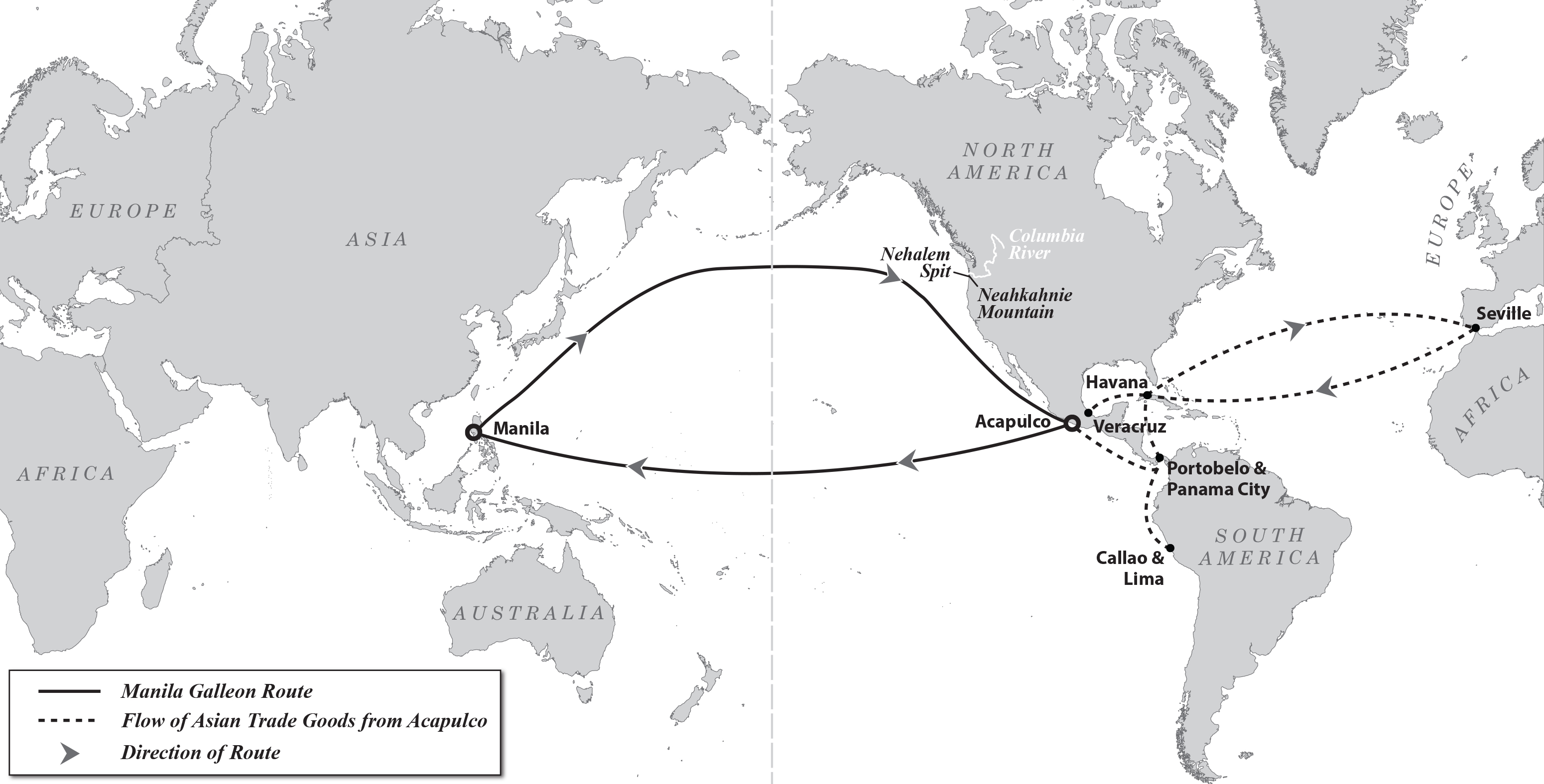
    In recent years, scholars studying how Indigenous communities responded to colonialism and global trade networks have begun to look more closely at the Pacific world. One key focus is the Manila-Acapulco galleon trade route, which linked Asia and the Americas for 250 years, from 1565 to 1815.

    The Manila-Acapulco galleon trade route.
    Jesse Nett/Oregon Encylopedia

    After Spain colonized the Philippines in 1565, Spanish galleons – towering, multidecked sailing ships – carried Chinese silk and Mexican silver across the ocean. But far more than goods traveled aboard those ships. They moved people, ideas and technologies.

    Among them was the craft of distillation.

    This overlooked connection may help explain how distilled agave spirits such as tequila came into being. While tequila is unmistakably a Mexican creation, the techniques used to produce it may owe something to Filipino sailors, who brought with them deep knowledge of transforming coconut sap into a potent spirit known as lambanog.

    3 competing theories

    For centuries, the rise of tequila has been credited to the Spanish. After the conquest of Mexico in the 16th century, colonizers introduced alembic stills, which are based on Moorish and Arabic technology. Unlike simple boiling, distillation requires managing heat and capturing purified vapor. These stills represented a major technological leap, allowing people to transform fermented drinks into distilled spirits.

    Agave, long used to make the fermented drink pulque, soon became the base for something new: tequila and mezcal.

    Colonial records, including the “Relaciones Geográficas,” a massive data-gathering project initiated by the Spanish Crown in the late 16th century, describe local Mesoamerican communities learning distillation from Spanish settlers. This version is well documented. But it assumes that technology moved in only one direction, from Europe to the Americas.

    A second idea suggests that Mesoamerican communities already had some understanding of vapor condensation. Archaeologists have found ceramic vessels in western Mexico that may have been used to capture steam. While distillation requires additional steps, this prior knowledge may have primed Indigenous groups to more readily adopt new techniques.

    As Mexican ethnobotanists Patricia Colunga-GarcíaMarín and Daniel Zizumbo-Villarreal have argued, “The adoption of distillation was likely not simply imposed, but creatively adapted to local knowledge systems.”

    A third perspective, which other researchers and I are exploring, traces a potential Filipino influence. The galleon trade brought thousands of Filipino sailors and laborers to Mexico, particularly along the Pacific coast. In places such as Guerrero, Colima and Jalisco, Filipino migrants introduced methods for fermenting and distilling coconut sap into lambanog, the coconut-based spirit.

    The stills they used, sometimes called Mongolian stills, were built with clay and bamboo and included a condensation bowl. Historian Pablo Guzman-Rivas has noted that these stills more closely resemble the earliest Mexican agave distillation setups than European alembics. He has also documented oral traditions in some coastal Mexican communities to link local distillation practices to their Filipino ancestors.

    The still on the left in Jalisco, Mexico, has similarities to the lambanog on the right from Infanta, Quezon, Philippines.
    Photo on left courtesy of Patricia Colunga-GarcíaMarín and Daniel Zizumbo-Villarreal; photo on right courtesy of Sherry Ann Angeles and Rading Coronacion, CC BY-SA

    Beyond the bottle

    Filipino influence extends beyond the distilling pot.

    In Colima and other Pacific port towns, traces of the Manila galleon trade ripple through daily life – in kitchens, cantinas and even in architecture. The word “palapa,” used in Mexico and Central America today to describe rustic thatched roofs, is exactly the same as the term for coconut fronds that’s primarily used in the Bicol Region of the Philippines.

    Filipino migrants in Mexico also shared knowledge of boatbuilding, fermentation and food preservation. Coconut vinegar, fish sauce and palm sugar-based condiments became part of Mexican cuisine. One of the most enduring legacies is tuba, the fermented coconut sap still popular in coastal areas of the Mexican state of Guerrero, where Filipino sailors once settled. Known locally by the same name, tuba is sold in markets and along roadsides, often enjoyed as a refreshing drink or as a cooking ingredient.

    A replica of a galleon, the Spanish trading ship that traversed the world’s oceans from the 16th century to the 18th century.
    Dennis Jarvis/flickr, CC BY-SA

    Exchange moved both ways. Filipino vessels carried corn, peanuts, sweet potatoes and cacao back across the Pacific, reshaping food in the Philippines. These exchanges took place under the shadow of colonialism and forced labor, but their legacies endure in language, in taste and even in the roofs over people’s heads.

    Technical knowledge rarely travels through official channels alone. It moves with cooks in ship galleys, with carpenters below deck, with laborers who desert ships to settle in unfamiliar ports. Sometimes it was a way to build a roof or preserve a flavor. Other times, it was a method for turning a fermented plant into a spirit that could keep for long voyages. And by the early 1600s, new types of distilled agave spirits were being made in Mexico.

    Tequila is unmistakably a product of Mexico. But it is also a product of movement. Whether Filipino migrants directly introduced distillation methods or whether they emerged from a mix of Indigenous experimentation and European tools, every time you sip tequila, you’re tasting an echo of those long ocean crossings from many centuries ago.

    Stephen Acabado receives funding from the Henry Luce Foundation and the National Science Foundation.

    ref. Filipino sailors dock in Mexico … and help invent tequila? – https://theconversation.com/filipino-sailors-dock-in-mexico-and-help-invent-tequila-258166

    MIL OSI

  • MIL-OSI: Bitcoin Solaris Announces $1 Genesis Event Token Sale Ahead of $20 Launch

    Source: GlobeNewswire (MIL-OSI)

    TALLINN, Estonia, July 21, 2025 (GLOBE NEWSWIRE) — Bitcoin Solaris (BTC-S), a next-generation blockchain ecosystem designed to democratize mining and digital asset ownership, has officially launched its Genesis Event, offering early participants the opportunity to purchase BTC-S tokens for just $1 — down from the current presale price of $13. With only 100 slots remaining, this limited-time event positions early supporters for a potential 1,900% ROI at the confirmed launch price of $20.

    How to Mine Bitcoin Solaris. Simpler, Smarter, Faster

    Forget outdated mining guides. Bitcoin Solaris is making mining accessible, scalable, and mobile-friendly through the upcoming Solaris Nova App. No barriers, no tech headaches.

    Here is how it works:

    • Download the Solaris Nova App (coming post-presale)
    • Available for mobile, desktop, and browser
    • Start mining BTC-S with one click
    • Device adapts mining power automatically based on performance
    • Earn BTC-S without expensive setups

    Why This Mining Is Revolutionary

    • Compatible with ASICs, GPUs, laptops, smartphones
    • Energy-efficient algorithms reduce unnecessary resource consumption
    • Biometric security, end-to-end encryption, remote management
    • Gamified achievements, leaderboards, and community engagement
    • Integrated wallet and tutorials make it beginner-friendly
    • In-app analytics for clear performance tracking

    Through the exciting release of the Solaris Nova App, mining becomes as easy as tapping a screen. This is what crypto mining should look like in the Web3 era.

    Bitcoin Solaris is not just for miners. Its Mining Power Marketplace allows users to rent or sell computing power via smart contracts, matching supply and demand in real-time. This ecosystem makes mining not just accessible but profitable for anyone.

    A Blockchain That Moves Like No Other Bitcoin Solaris Delivers

    Presale Frenzy. Why BTC-S Is Selling Out Fast

    Bitcoin Solaris is wrapping up its explosive presale at Phase 13. Current price sits at $13, but through the Genesis Event it drops to $1 for a short time. Launch price confirmed at $20.

    Key presale highlights:

    • Over $7.7M+ raised already
    • 15,800+ unique users involved
    • Shortest and most explosive presale in the market

    Genesis Event details:

    • Price rollback from $13 to $1 for a limited time
    • Only 100 slots left
    • ROI potential of 1900% when price returns to $20
    • A rare opportunity for early believers

    Genesis Event is a limited-time promotional offer where early participants can purchase the token at a special rollback price of $1. This is a wealth move, not just a presale.

    To receive tokens on launch day, Bitcoin Solaris recommends Trust Wallet or Metamask for seamless delivery.

    Influencers Are Already Talking

    • Token Empire spotlighted the scalability and speed of Bitcoin Solaris
    • Crypto Vlog praised the mobile-first mining revolution
    • Token Galaxy focused on energy efficiency and future potential

    These voices agree: BTC-S is doing things no other project is.

    Why Bitcoin Solaris Tech Outshines Traditional Mining

    • Base Layer delivers 3,000 TPS
    • Solaris Layer achieves 100,000 TPS with 2-second finality
    • Hybrid consensus combines decentralization with speed
    • Rust-based smart contracts support DeFi, gaming, enterprise
    • Cross-chain compatibility future-proofs adoption

    Mining rewards are simple to estimate through the calculator.

    Bitcoin Solaris simply offers the smarter, more scalable way forward.

    Final Verdict. Stop Mining. Start Owning

    Forget running up your electricity bill to chase old-school mining rewards. Bitcoin Solaris is offering $1 entries through its Genesis Event, slashing down from $13, with a $20 launch on the horizon. This is the moment crypto wealth gets simplified.

    For more information on Bitcoin Solaris:
    Website: https://www.bitcoinsolaris.com/
    Telegram: https://t.me/Bitcoinsolaris
    X: https://x.com/BitcoinSolaris

    Media Contact:
    Xander Levine
    press@bitcoinsolaris.com
    Press Kit: Available upon request

    Disclaimer: This content is provided by Bitcoin Solaris. The statements, views, and opinions expressed in this content are solely those of the content provider and do not necessarily reflect the views of this media platform or its publisher. We do not endorse, verify, or guarantee the accuracy, completeness, or reliability of any information presented. We do not guarantee any claims, statements, or promises made in this article. This content is for informational purposes only and should not be considered financial, investment, or trading advice. Investing in crypto and mining-related opportunities involves significant risks, including the potential loss of capital. It is possible to lose all your capital. These products may not be suitable for everyone, and you should ensure that you understand the risks involved. Seek independent advice if necessary. Speculate only with funds that you can afford to lose. Readers are strongly encouraged to conduct their own research and consult with a qualified financial advisor before making any investment decisions. However, due to the inherently speculative nature of the blockchain sector—including cryptocurrency, NFTs, and mining—complete accuracy cannot always be guaranteed. Neither the media platform nor the publisher shall be held responsible for any fraudulent activities, misrepresentations, or financial losses arising from the content of this press release. In the event of any legal claims or charges against this article, we accept no liability or responsibility. Globenewswire does not endorse any content on this page.

    Legal Disclaimer: This media platform provides the content of this article on an “as-is” basis, without any warranties or representations of any kind, express or implied. We assume no responsibility for any inaccuracies, errors, or omissions. We do not assume any responsibility or liability for the accuracy, content, images, videos, licenses, completeness, legality, or reliability of the information presented herein. Any concerns, complaints, or copyright issues related to this article should be directed to the content provider mentioned above

    Photos accompanying this announcement are available at

    https://www.globenewswire.com/NewsRoom/AttachmentNg/2dff3917-113d-4d8a-8ea4-21fdaedf8856

    https://www.globenewswire.com/NewsRoom/AttachmentNg/fc470fa2-349a-4c76-b108-8230c92660e4

    https://www.globenewswire.com/NewsRoom/AttachmentNg/c61ef905-3b5d-403a-9b6a-69036b3a8849

    https://www.globenewswire.com/NewsRoom/AttachmentNg/59fae690-dbd5-45ad-9dba-ea1638d562c1

    The MIL Network

  • MIL-OSI NGOs: IAEA Applied Safeguards for 190 States – IAEA Report

    Source: International Atomic Energy Agency (IAEA) –

    Of the 190 States where the IAEA applied safeguards during 2024, 182 had CSAs in force, of which 137 also had APs in force. Of these 137 States, the IAEA concluded that “all nuclear material remained in peaceful activities” for 75 States. The IAEA drew this conclusion, also known as the ‘broader conclusion’, for the first time for Morocco. For 61 States, the IAEA was only able to conclude that declared nuclear material remained in peaceful activities as evaluations regarding the absence of undeclared nuclear material and activities remained ongoing.

    For 31 States with a CSA but no AP in force, the IAEA was able to conclude that declared nuclear material remained in peaceful activities.

    As of the end of 2024, three non-nuclear-weapon States party to the Treaty on the Non-Proliferation of Nuclear Weapons (NPT) had yet to bring CSAs into force pursuant to Article III of the Treaty. For these States, the IAEA could not draw any safeguards conclusions.

    For the three States in which the IAEA implemented safeguards pursuant to item-specific safeguards agreements (India, Israel and Pakistan), the IAEA concluded that “nuclear material, facilities or other items to which safeguards had been applied remained in peaceful activities”.

    Safeguards were also implemented in the five nuclear-weapon States party to the NPT under their respective voluntary offer agreements. For these five States (China, France, the Russian Federation, the United Kingdom and the United States of America), the IAEA concluded that “nuclear material in selected facilities to which safeguards had been applied remained in peaceful activities or had been withdrawn from safeguards as provided for in the agreements.”

    MIL OSI NGO

  • EU to ramp up retaliation plans as US tariff deal prospects dim

    Source: Government of India

    Source: Government of India (4)

    The European Union is exploring a broader set of possible counter-measures against the United States as prospects for an acceptable trade agreement with Washington fade, according to EU diplomats.

    An increasing number of EU members, including Germany, are now considering using wide-ranging “anti-coercion” measures which would let the bloc target U.S. services and other sectors in the absence of a deal, diplomats say.

    The European Commission, which negotiates trade agreements on behalf of the 27-member bloc, had appeared on course for a agreement in which the EU would still have faced a 10% U.S. tariff on most of its exports, with some concessions.

    Such hopes now seem dashed after President Donald Trump’s threat to impose a 30% tariff by August 1, and following talks between EU Trade Commissioner Maros Sefcovic and U.S. counterparts in Washington last week.

    Sefcovic, who has said a 30% tariff would “practically prohibit” transatlantic trade, delivered a sober report on the current state of play to EU envoys on Friday, diplomats told Reuters.

    U.S. counterparts had come up with diverging solutions during his meetings, including a baseline rate that could be well above 10%, the EU diplomats added.

    “Each interlocutor seemed to have different ideas. No one can tell (Sefcovic) what would actually fly with Trump,” one diplomat said.

    Prospects of easing or removing 50% U.S. tariffs on steel and aluminium and 25% on cars and car parts appear limited.

    ‘NUCLEAR OPTION’

    Washington has also rejected the EU’s demand for a “standstill” arrangement, whereby no further tariffs would be imposed after a deal is struck. The rationale, according to diplomats, is that Trump’s hands cannot be tied on national security, the basis of Section 232 trade investigations into pharmaceuticals, semiconductors and timber.

    Accordingly, the mood has pivoted among EU countries, EU diplomats say, and they are more ready to react, even though a negotiated solution is their preferred option.

    The EU has one package of tariffs on 21 billion euros ($24.5 billion) of U.S. goods that is currently suspended until August 6. The bloc must still decide on a further set of countermeasures on 72 billion euros of U.S. exports.

    Discussions have also increased on using the EU’s wide-ranging “anti-coercion” instrument (ACI) that allows the bloc to retaliate against third countries that put economic pressure on member states to change their policies.

    Brought in more with China in mind, it would allow the bloc to target U.S. services, limit U.S. companies’ access to public procurement or financial services markets or restrict U.S. investment.

    France has consistently advocated using the ACI, but others have baulked at what some see as a nuclear option. Trump has warned he will retaliate if other countries take action against the United States.

    European Commission President Ursula von der Leyen said a week ago that the ACI was created for extraordinary situations, adding: “We are not there yet.”

    The Commission would need a qualified majority of 15 countries making up 65% of the EU population to invoke it. It would not do so unless it was confident of passing it, but there are now growing signs of support building, with Germany among the countries saying it should be considered, EU diplomats say.

    (Reuters)

  • EU to ramp up retaliation plans as US tariff deal prospects dim

    Source: Government of India

    Source: Government of India (4)

    The European Union is exploring a broader set of possible counter-measures against the United States as prospects for an acceptable trade agreement with Washington fade, according to EU diplomats.

    An increasing number of EU members, including Germany, are now considering using wide-ranging “anti-coercion” measures which would let the bloc target U.S. services and other sectors in the absence of a deal, diplomats say.

    The European Commission, which negotiates trade agreements on behalf of the 27-member bloc, had appeared on course for a agreement in which the EU would still have faced a 10% U.S. tariff on most of its exports, with some concessions.

    Such hopes now seem dashed after President Donald Trump’s threat to impose a 30% tariff by August 1, and following talks between EU Trade Commissioner Maros Sefcovic and U.S. counterparts in Washington last week.

    Sefcovic, who has said a 30% tariff would “practically prohibit” transatlantic trade, delivered a sober report on the current state of play to EU envoys on Friday, diplomats told Reuters.

    U.S. counterparts had come up with diverging solutions during his meetings, including a baseline rate that could be well above 10%, the EU diplomats added.

    “Each interlocutor seemed to have different ideas. No one can tell (Sefcovic) what would actually fly with Trump,” one diplomat said.

    Prospects of easing or removing 50% U.S. tariffs on steel and aluminium and 25% on cars and car parts appear limited.

    ‘NUCLEAR OPTION’

    Washington has also rejected the EU’s demand for a “standstill” arrangement, whereby no further tariffs would be imposed after a deal is struck. The rationale, according to diplomats, is that Trump’s hands cannot be tied on national security, the basis of Section 232 trade investigations into pharmaceuticals, semiconductors and timber.

    Accordingly, the mood has pivoted among EU countries, EU diplomats say, and they are more ready to react, even though a negotiated solution is their preferred option.

    The EU has one package of tariffs on 21 billion euros ($24.5 billion) of U.S. goods that is currently suspended until August 6. The bloc must still decide on a further set of countermeasures on 72 billion euros of U.S. exports.

    Discussions have also increased on using the EU’s wide-ranging “anti-coercion” instrument (ACI) that allows the bloc to retaliate against third countries that put economic pressure on member states to change their policies.

    Brought in more with China in mind, it would allow the bloc to target U.S. services, limit U.S. companies’ access to public procurement or financial services markets or restrict U.S. investment.

    France has consistently advocated using the ACI, but others have baulked at what some see as a nuclear option. Trump has warned he will retaliate if other countries take action against the United States.

    European Commission President Ursula von der Leyen said a week ago that the ACI was created for extraordinary situations, adding: “We are not there yet.”

    The Commission would need a qualified majority of 15 countries making up 65% of the EU population to invoke it. It would not do so unless it was confident of passing it, but there are now growing signs of support building, with Germany among the countries saying it should be considered, EU diplomats say.

    (Reuters)

  • MIL-OSI Africa: Minister of Planning, Economic Development, and International Cooperation Receives Her German Counterpart on Her First Visit to Egypt to Discuss Strengthening the Strategic Economic Partnership Between the Two Countries

    Source: APO


    .

    H.E. Dr. Rania Al-Mashat, Minister of Planning, Economic Development, and International Cooperation, received Ms. Reem Alabali-Radovan, Federal Minister for Economic Cooperation and Development of Germany, at the Government Headquarters in New Alamein City during her visit to the Arab Republic of Egypt, within the framework of strengthening bilateral economic cooperation between the two countries. The meeting comes as a follow-up to the fruitful discussions held during the 4th International Conference on Financing for Development (Ff4D) in Seville, Spain.

    At the beginning of the meeting, H.E. Dr. Rania Al-Mashat welcomed the German Minister on her first visit to Egypt and wished her success in her mission in the new German government, emphasizing the Arab Republic of Egypt’s appreciation for for the Egyptian-German economic relations, which represent a strategic partnership that reflects the keenness to advancing mutual interests and promoting development efforts, whether through bilateral governmental partnership, German investments in Egypt, and development cooperation efforts, adding that this visit marks a milestone in the process of cooperation between the two countries and reflects the depth of bilateral relations and common vision towards achieving sustainable development and economic growth.

    The two ministers discussed recent developments in Egyptian-German economic and investment relations, joint development projects, and explored new mechanisms for innovative financing, especially in light of the outcomes of the 4th International Conference on Financing for Development held in Seville, Spain, and the need for the international community to contribute more to financing development in developing countries and emerging economies. They also discussed the implementation of the European Investment Guarantee Mechanism (EFSD+), which comes in light of the Egypt-EU strategic partnership and contributes to increasing foreign direct investments to the local and foreign private sector in Egypt, in addition to the preparations for the convening of the 2025 Egyptian-German governmental negotiations.

    The two sides also discussed the outcomes of the 4th International Conference on Financing for Development, noting the importance of implementing recommendations of the UN expert group report on addressing debt challenges in Global South countries, which included 11 outcomes, such as redirecting and replenishing existing resources from multilateral development banks and the IMF to enhance liquidity, adopting policies to extend maturities, financing debt buybacks, reducing debt servicing during crises, reforming the G20 Common Framework to include all middle-income countries, and updating IMF and World Bank debt sustainability analysis (DSA) to better reflect the situation of low- and middle-income countries, among other measures.

    The Minister of Planning, Economic Development and International Cooperation also reviewed the key features of Egypt’s national narrative for economic development, which aims to achieve a structural transformation in the Egyptian economy towards tradable and exportable sectors by strengthening macroeconomic policies, encouraging foreign direct investment, promoting industrial development, and supporting labor market and employment policies, noting that Egyptian-German relations are reflected in achieving these objectives.

    In this context, H.E. Dr. Al-Mashat praised the success of the Egyptian-German Debt Swap Program, where the Egyptian government succeeded in signing debt swap agreements with a total value of €340 million to finance various development projects across multiple sectors, including the new tranche of the debt swap program worth €100 million for the period 2024–2026, explaining that the program contributed  to using the local currency equivalents of debt repayments to implement development projects in various sectors, including education and technical education, social protection, health, improving renewable energy supply. Ongoing coordination is underway to allocate €50 million from the program to support the energy pillar of the “NWFE” program, financing part of the local component for connecting ACWA Power (1) and (2) wind farms, with a total capacity of 1,100 MW. She reaffirmed that the Egyptian-German Debt Swap Program is a successful model for promoting financing for development.

    The discussion also touched on the Financial Cooperation Agreement between Egypt and Germany, which was signed on May 25, 2025, and includes a €118 million financing package in the form of concessional financing and financial contributions (complementary grants), and includes funding for the following projects: financial support for the Comprehensive Technical Education Initiative and the support for the establishment of 25 Egyptian Centers of Excellence. In the same context, the two sides also discussed the the status of the governmental negotiations to be held between the Egyptian and German sides at the end of this year, expressing their aspiration to enhance economic and development cooperation between the two governments, as well as allocating new financial contributions to finance development projects aimed at driving economic growth.

    Furthermore, H.E. Dr. Al-Mashat pointed out that, In light of the success of the country platform for the “NWFE” program and the international community’s expansion of the concept of national platforms to mobilize investments, work is currently underway, in coordination with the Ministry of Industry, the European Bank for Reconstruction and Development, and other development partners, to launch the first national platform to mobilize financing and technical support for the industrial sector. This aligns with the national narrative for economic development to support the state’s efforts in localizing industry and encouraging domestic production, noting that the narrative sets a unified vision for the Egyptian economy to shift towards tradable sectors.

    H.E. also highlighted the importance of strengthening South-South cooperation and triangular cooperation through German collaboration to stimulate efforts to transfer Egyptian expertise in the field of development to developing and emerging countries, noting Egypt’s keenness to advance the prospects of joint cooperation in the field of water within the “NWFE” program with the German side.

    For her part, the German Minister expressed her aspiration to build on the Egyptian-German strategic relations and the progress achieved in recent years to further advance joint cooperation in light of regional and global challenges.

    In the same context, the two sides addressed the Egyptian-German economic cooperation portfolio, which currently amounts to approximately €1.6 billion, aiming to implement various development projects across priority sectors that contribute to sustainable economic development including energy, climate, water supply, sanitation, irrigation, migration, solid waste management, and enhancing the competitiveness of the private sector, which are funded through multiple mechanisms, such as the Egyptian-German Debt Swap Program, concessional financing, financial contributions, and technical cooperation grants.

    Distributed by APO Group on behalf of Ministry of Planning, Economic Development, and International Cooperation – Egypt.

    MIL OSI Africa

  • UPI revolution pushes India to global lead in real-time digital payments

    Source: Government of India

    Source: Government of India (4)

    India has firmly established itself as a global leader in real-time digital payments, with the Unified Payments Interface (UPI) at the forefront of this transformation. According to a recent IMF note titled “Growing Retail Digital Payments: The Value of Interoperability”, India’s digital infrastructure has become a global benchmark, with UPI now processing over 18 billion transactions each month.

    Launched in 2016 by the National Payments Corporation of India, UPI has redefined how Indians send and receive money – bringing together multiple bank accounts in a single mobile app for instant, secure, and low-cost transactions. In June 2025 alone, the platform handled transactions worth over ₹24.03 lakh crore, showing a 32% increase from the same period last year.

    UPI now accounts for 85% of all digital payments in India, serving 491 million individuals and 65 million merchants, and connecting 675 banks on a unified platform. Globally, it processes 640 million transactions daily, recently surpassing Visa’s volume, and now powers nearly 50% of all real-time payments worldwide.

    The system has expanded beyond India’s borders and is now live in seven countries, including Singapore, UAE, Bhutan, Nepal, Sri Lanka, Mauritius, and France – marking its first entry into Europe. India is also pushing for UPI’s adoption among BRICS nations, aiming to enhance remittances and financial inclusion on a global scale.

    Backed by strong digital infrastructure, policy vision, and inclusive design, UPI is no longer just a domestic innovation but a model for the world. Its success signals India’s growing stature in global fintech and its commitment to building a cashless, connected, and inclusive digital economy.

  • MIL-OSI United Kingdom: UK ramps up Ukraine military support with £150 million of vital air defence and artillery ammunition delivered in just two months

    Source: United Kingdom – Government Statements

    Press release

    UK ramps up Ukraine military support with £150 million of vital air defence and artillery ammunition delivered in just two months

    More than £150 million worth of air defence and artillery has been delivered to Ukraine in the last two months, as procurement of hundreds of air defence missiles and thousands of rounds of artillery to provide to Ukraine ramps up.

    At least £700 million of this support is set to be spent this year on air defence and artillery ammunition including the £150 million already delivered – with other funding going towards procuring more drones, as well as critical contracts to maintain and repair UK weapons already provided to Ukraine, allowing damaged equipment to return to the frontline as quickly as possible.

    With Putin repeatedly targeting Ukraine’s cities in recent weeks with the most intense aerial bombardment since the beginning of the full-scale invasion in 2022, the UK is joining the US and European nations in ramping up deliveries of vital air defence.

    The UK signed an agreement with Ukraine in May to provide an additional £2.26 billion worth of military support that will be repaid using funds raised from immobilised Russian assets, with more than two-thirds of the money allocated for procurement of weapons and munitions in just two months.

    The deal delivers on this Government’s Plan for Change, by spending more on defence and creating jobs we will keep the country safe and boost economic growth. 

    The Defence Secretary will make the announcement at the 29th meeting of the 50-nation strong Ukraine Defence Contact Group (UDCG) which he will chair virtually on Monday alongside German Defence Minister, Boris Pistorius.

    Opening the UDCG meeting, Defence Secretary, John Healey MP, is expected to say:

    Last week, President Trump announced a new plan for large scale NATO weapons transfers and committed to getting these “quickly distributed to the battlefield”.

    The UK government backs this policy, and we will play our full part in its success to bolster Ukraine’s immediate fight and to support our own and wider European security.

    Alongside this, the US has started the clock on a 50-day deadline for Putin to agree to peace or face crippling economic sanctions.

    As members of the Ukraine Defence Contact Group, we need to step up in turn with a “50-day drive” to arm Ukraine on the battlefield and force Putin to the negotiating table.

    It comes as the UK also completed delivery of nearly 50,000 military drones to Ukraine in under six months, in addition to 20,000 drones provided in the same period via the UK-Latvia co-led drone coalition, working closely with British defence companies to speed up procurement and delivery. The UK has committed £350 million this year to increase the supply of drones from 10,000 in 2024 to 100,000 in 2025.

    At the meeting, the UK and Germany will announce a new agreement to partner in providing critical air defence ammunition to Ukraine. Germany will provide more than 170 million Euros worth of funding, which the UK will use to rapidly procure air defence ammunition via the UK-led International Fund for Ukraine for delivery in the coming months. This supports the aims of the Integrated Air and Missile Defence Capability Coalition, co-led by Germany and France.

    The UK’s military support for Ukraine this year is more than ever before, with £4.5 billion allocated for this financial year. In March, the Prime Minister announced a historic £1.6 billion deal to provide more than five thousand air defence missiles for Ukraine.

    Last month, the Prime Minister announced a landmark agreement between the UK and Ukraine to share battlefield technology, boosting Ukraine’s drone production and linking up the UK’s defence industry with the cutting-edge technology being developed on the front lines in Ukraine.

    Updates to this page

    Published 21 July 2025

    MIL OSI United Kingdom

  • MIL-OSI Europe: ASIA/UNITED ARAB EMIRATES – Jubilee of the Youth: more than just a trip, it is a journey of faith

    Source: Agenzia Fides – MIL OSI

    Monday, 21 July 2025

    Avosa

    Abu Dhabi (Agenzia Fides) – A group of 90 faithful from across the Apostolic Vicariate of Southern Arabia (AVOSA) are traveling to Italy for a two-week pilgrimage that includes several spiritual stops before arriving in Rome: Padua, Assisi, and San Giovanni Rotondo, where they will take part in the official Jubilee of the Youth program (July 28 to August 3).The group, around 80 people from the United Arab Emirates and about ten from Oman, will be accompanied by several priests and religious sisters who are involved in youth and vocations ministry.”This is more than just a trip: it is a journey of faith, a time to pray, reflect, and discover that we are part of something much greater than ourselves,” said Fr. Godfrey Rodriques. “For me personally, it’s a chance to renew my own sense of purpose and draw closer to God in the heart of the Church.”On Sunday, July 13, Bishop Paolo Martinelli, OFM Cap., Apostolic Vicar of Avosa, which extends across Oman, Yemen, and the United Arab Emirates, handed over the pilgrimage Cross and the Vicariate flag to the delegates, which they will carry throughout their journey. Bishop Paolo will personally join the youth in Rome to walk with them, cross the Holy Door, and take part in the key Jubilee moments with Pope Leo. “We go on pilgrimage to rediscover the meaning of life: to love and be loved,” he declared.(AP) (Agenzia Fides, 21/7/2025)
    Share:

    MIL OSI Europe News

  • MIL-OSI Europe: Where will we live? The urgent need for affordable housing in Estonia

    Source: European Investment Bank

    To further strengthen our engagement, the EIB has recently opened a local office in Tallinn, enhancing our ability to work closely with partners on the ground.

    The EIB is ready to support Estonia’s efforts to expand access to such housing. This includes supporting innovative and sustainable construction methods, financing energy-efficient renovations to reduce emissions and utility costs, and helping to increase the supply of affordable homes through both direct and intermediated financing.

    Encouragingly, Estonia welcomes our initiative and is already engaged in negotiations to design a model and implementation strategy in collaboration with the EIB.

    To make it easier for local authorities, developers, and communities to access support, we’ve created the “More homes. Better homes.” online portal. It connects housing stakeholders with the advice, funding, and financing they need. The response so far has been encouraging—clear proof of both the urgent demand and the opportunity ahead.

    But the EIB is not acting alone. We are working closely with the European Commission, national governments, cities, and promotional banks. Because solving the housing crisis requires strong partnerships at every level.

    And this is about more than just housing. Affordable homes are essential for economic competitiveness, climate resilience, and social cohesion. They support a more inclusive economy, reduce emissions through energy-efficient living, and help communities thrive. In short, affordable housing is a foundation for a fairer, greener, and more prosperous future.

    That’s why I’m pleased to announce that the EIB Group will soon conduct a roadshow in several EU members led by my colleague Vice-President Ioannis Tsakiris. We aim to bring together housing stakeholders from every corner of Europe as we promote new financing and support opportunities for the sector.

    Estonia has the talent, the tools, and the determination to lead in this space. Together, we can ensure that every Estonian, regardless of income or background, has a place to call home.

    MIL OSI Europe News

  • MIL-OSI Europe: Written question – Risks arising from irregular migration from Libya – E-002835/2025

    Source: European Parliament

    Question for written answer  E-002835/2025/rev.1
    to the Commission
    Rule 144
    Galato Alexandraki (ECR)

    Hundreds of irregular immigrants entering Greece, in particular Crete, by boat from Libya are being transferred to mainland Greece – to the Fylakio reception centre in the border region of Evros – for identification and temporary accommodation. They are held there for 24 days before being released with a temporary residence permit. This allows them to move freely within the country, without any checks, resulting in increased delinquency, fear and insecurity, and wide-ranging effects on the economy and social cohesion.

    The Global Strategy for the European Union’s Foreign and Security Policy (June 2016) lists territorial integrity and the inviolability of borders as key elements of European security, and states that ensuring the security of EU citizens/territories is a common interest. Nonetheless, to date the EU has not taken serious steps to safeguard the inviolability of Greek borders and thus secure those of the EU.

    In view of the above, can the Commission say:

    • 1.What does the EU intend to do in the context of solidarity between the Member States in order to assist Greece, which – owing to its geographical location and proximity to Türkiye and North Africa – is the most exposed country in Europe in terms of illegal immigration?
    • 2.Does it intend to put pressure on the countries of origin of migrants to take them back (refoulement), with clear sanctions if they fail to comply and without merely paying lip service?

    Submitted: 11.7.2025

    Last updated: 21 July 2025

    MIL OSI Europe News

  • MIL-OSI Europe: Written question – Findings of the COVID-19 crisis management unit of the Robert Koch Institute – E-002656/2025

    Source: European Parliament

    Question for written answer  E-002656/2025/rev.1
    to the Commission
    Rule 144
    Gerald Hauser (PfE)

    The Robert Koch Institute is the central federal institute in the field of infection control in the Federal Republic of Germany. Its expertise is also in great demand at international level and it works closely with institutions worldwide, including the European Centre for Disease Prevention and Control (ECDC) and the World Health Organization (WHO). Since Decision No 1082/2013/EU of the European Parliament and of the Council of 22 October 2013 on serious cross-border threats to health, it has been determined that in the event of a pandemic, the Commission shall be responsible for coordinating all measures and there is to be an unrestricted exchange of information between EU Member States and the Commission. Austria’s former Minister of Health, for example, stated that the Austrian Government has been receiving the findings of the Robert Koch Institute’s COVID-19 crisis management unit since March 2020.

    • 1.When did the Commission start receiving the findings of the Robert Koch Institute’s COVID-19 crisis management unit?
    • 2.Since when have other Commission bodies or advisory committees – in particular the ECDC or the EMA – also been receiving the findings of the Robert Koch Institute’s COVID-19 crisis management unit?
    • 3.What protocols, data, recommendations or information has the Robert Koch Institute received in return from the Commission or its bodies and advisory committees since the beginning of the COVID-19 pandemic, and since when?

    Submitted: 1.7.2025

    Last updated: 21 July 2025

    MIL OSI Europe News

  • MIL-OSI Europe: Written question – Libya’s anti-European attitude and increased migration flows to Greece – E-002849/2025

    Source: European Parliament

    Question for written answer  E-002849/2025
    to the Commission
    Rule 144
    Nikolaos Anadiotis (NI)

    Recently, a European delegation – which included Greek ministers – was kicked out of Benghazi, Libya[1]. This is unacceptable, contrary to the principles and values of the EU, an affront to the European institutions and a barrier to the implementation of the common immigration policy.

    At the same time, Libya has sharply increased migratory flows to Greece – in particular to Crete[2] – making migration a leveraging tool to the detriment of the interests of an EU Member State. Türkiye has had a strong influence on the Libyan authorities and on these developments, in particular with the illegal and legally non-existent Turkish-Libyan memorandum of understanding[3], which directly undermines Greece’s sovereign rights and disrupts stability in the south-eastern Mediterranean.

    In view of the above, can the Commission answer the following:

    • 1.What is its view of Libya’s attitude, which is an affront to the institutions and principles of the EU?
    • 2.How does it interpret the growing Turkish influence on the Libyan authorities and the implications thereof for European cohesion and security?
    • 3.What specific measures will it take to ensure that its Member States – and in particular Greece – are protected against such hostile actions?

    Submitted: 12.7.2025

    • [1] https://www.reuters.com/world/africa/libyas-eastern-based-government-bars-entry-eu-migration-commissioner-three-2025-07-08
    • [2] https://apnews.com/article/migration-libya-greece-crete-european-union-2af60f5c888520fe807e264b1c053659
    • [3] https://www.euractiv.com/section/politics/news/greece-pleased-after-eu-parliaments-call-to-annul-turkey-libya-mou
    Last updated: 21 July 2025

    MIL OSI Europe News

  • MIL-OSI Europe: Fighting climate change with financial finesse

    Source: European Investment Bank

    The Central Bank of Kenya. Central Bank of Kenya

    Climate change knows no borders – as Kenya can tell you. The country is routinely hit by weather disasters.

    “Every five to ten years, the country experiences either very heavy rains that cause floods or persistent drought,” says Reuben Chepng’ar, the senior manager in the Banking Supervision Department at the Central Bank of Kenya.

    By the year 2030, Kenya aspires to reduce greenhouse gas emissions by 32%. This work is expected to cost $62 billion, but the government says it can raise only $8 billion. The investment shortfall of $54 billion is expected to come from the private sector and global development institutions, such as the European Investment Bank and the Internal Monetary Fund.

    The Central Bank of Kenya is trying to help commercial banks support more green projects, enhance their climate-related risk reporting and attract foreign investors. The Central Bank used technical assistance from the European Investment Bank to create new climate investing and reporting guidelines in the country.

    The European Investment Bank collaborated with Kenya’s Central Bank to develop two guidelines under a programme known as Greening Financial Systems technical assistance. EIB consultants worked with the Central Bank and local banks from 2023 to 2025 to develop regulations that commercial banks must follow for climate reporting and green investments.

    The EIB support to the Central Bank was financed through the IKI Fund, an EIB trust fund backed by Germany to help climate action initiatives in emerging countries. The IKI Fund highlights the importance of international cooperation and knowledge sharing. Since climate risks transcend borders, coordinated action among global institutions is essential to ensure that local financial systems are aligned with global sustainability objectives. The European Investment Bank oversees a group of trust funds that are financed by EU countries and the European Commission. These funds provide grants, technical assistance and loan guarantees around the world.

    Marjan Stojiljkovic was a team lead for the EIB technical assistance programme in Kenya. He is a climate finance consultant who offers training around the world to banks on sustainability reporting requirements and managing risks related to green lending.

    “One objective of this project was how to internalise and measure the impacts of climate risk on banking operations in Kenya, because climate risks are real and they have impacts on the financial sector,” Stojiljkovic says.

    After a series of meetings and workshops, the central bank created two sets of policy guidelines to help commercial banks improve climate risk reporting. One is the Kenya Green Finance Taxonomy and the other is the Climate Risk Management Framework. The green taxonomy is the fourth to be adopted in Africa, after South Africa, Rwanda and Ghana. The taxonomy is based on the EU green taxonomy that provides a clear classification system for sustainable economic activities and guidance on assessment and reporting. One aim is to prevent greenwashing, or the exaggeration of the benefits projects bring. Another aim is to increase sustainable investments, particularly by attracting foreign investment. The climate risk framework was designed to increase transparency in Kenya’s financial sector and encourage businesses to adopt more sustainable practices.

    MIL OSI Europe News

  • MIL-OSI: Leil Storage Launches SaunaFS 5.0: The First On-Premise HM-SMR Ready Distributed File System Delivering Eco-Efficiency Without Performance Compromise

    Source: GlobeNewswire (MIL-OSI)

    TALLINN, Estonia, July 21, 2025 (GLOBE NEWSWIRE) — Leil Storage announces the release of SaunaFS 5.0, redefining what’s possible for on-premise large-scale enterprise storage empowered by hyperscale efficiency. SaunaFS 5.0 is the industry’s first on-premises distributed file system engineered for true exabyte scale, purpose-built to unlock the exceptional density and efficiency of Host-Managed Shingled Magnetic Recording (HM-SMR) drives. It delivers market-leading eco-efficiency and reliability – with no sacrifice in performance.

    To accelerate adoption, SaunaFS 5.0 supports drives of variable capacity, allowing to combine drives of different series and generations within the same cluster, as well as mix of CMR and SMR drives – all to make an easier start.

    Key Highlights:

    • Unmatched Performance: SaunaFS 5.0 introduces a new chunk-based write algorithm, along with improved parallelization and smarter I/O path management. These upgrades provide dramatically increased sequential and nearline throughput, ensuring HM-SMR drives can outperform expectations – even under production workloads.
    • Effortless Scalability: Enhanced metadata architecture, advanced chunk management, and next-gen erasure coding allow seamless growth from petabyte to exabyte-scale clusters. Administrators can now mix CMR, SMR, and HM-SMR drives within a single deployment, a best-in-class flexibility unmatched by other distributed file systems.
    • Reliability At Scale: The new release features a hardened, resilient failover system and an upgraded floating IP manager designed to maintain high availability during peak operations and site transitions.
    • True Eco-Efficiency: Building on Leil’s proprietary ICE (“Infinite Cold Engine”) platform, SaunaFS 5.0 automatically powers down idle drives, optimizing energy usage and substantially reducing data center operational costs.

    Under-the-Hood Innovations:

    • Streamlined upgrade/downgrade paths
    • Improved concurrency, memory handling, and smart caching
    • Granular drive management and simplified cluster orchestration

    “SaunaFS 5.0 is the result of our two-year pursuit of not just performance, but real, verifiable sustainability. By marrying technical innovation with an eco-first approach, we enable organizations to store vastly more data, faster and greener than ever before,” said David Gerstein, CTO of Leil Storage. “We’re thrilled to bring this advancement both to the industry and our global open-source community.”

    About Leil Storage
    Leil Storage delivers scalable, sustainable file storage solutions, shaping the future of enterprise data infrastructure. SaunaFS is open source and free to use, with commercial modules available for advanced features and support.

    Discover more at leil.io and follow Leil Storage on LinkedIn.

    Aleksandr Ragel
    AR@leil.io

    The MIL Network

  • MIL-OSI United Kingdom: Summer of gigs will boost the economy and show why London is the undisputed capital of music

    Source: Mayor of London

    • Coldplay, Beyoncé, Oasis and Billie Eilish among worldwide stars performing more times in London than anywhere else in the world
    • Capital’s major arenas and stadiums welcoming more 3.6m fans over the summer, with fans travelling from across the world
    • London attracts 7.5m music fans each year, bringing in £2.7bn in revenue

    The Mayor of London, Sadiq Khan, has today celebrated the capital’s incredible summer of gigs that show why London is the undisputed capital of music.

    This Friday, Oasis will become the latest act this year to perform, with more concerts in London than anywhere else in the world. It follows:

    • Beyoncé performing six times at Tottenham Hotspur Stadium in June;
    • Billie Eilish concluding a six-date run at The O2 last week;
    • And Usher performing a 10-night residency at The O2 earlier this year.

    Next month Coldplay will also start a record run of 10 dates at Wembley Stadium.

    Other headlines from the capital’s huge summer of music include Tottenham Hotspur Stadium welcoming Stray Kids and Wembley Stadium hosting BLACKPINK for their only UK performances. BST Hyde Park welcomed more than 500,000 people across its eight sold-out shows, with Noah Kahan playing his largest headline show to date and Zach Bryan and Sabrina Carpenter playing their biggest ever UK shows.

    These world-leading runs from global stars show why London welcomes millions of music fans from across the world. UK Music estimates that 7.5m music tourists attended concerts and festivals in London last year, accounting for £2.7bn of the country’s total £10bn revenue.

    Recent analysis of concert ticket sales by Live Nation has revealed that 61 per of fans have travelled from across the UK to come to London for gigs so far this summer, with 16 per cent from abroad. Figures from AEG Europe show that the O2 – the world’s busiest live entertainment arena – is on track for its biggest year yet, with 1.4m tickets sold already this year.

    London’s 179 grassroots music venues are also hosting a huge range of performances this summer, providing a stage for the next generation of talent and boosting the capital’s economy and nightlife. In the last year, grassroots venues welcomed more than 4.2m audience members, hosted performances by more than 328,000 artists, employed nearly 7,000 people and contributed £313m to the economy.

    In May, London united to champion the incredible impact of the capital’s grassroots music scene with the first ever special Grassroots Music Tube Map, which celebrates all aspects of the capital’s music scene and connects Londoners and visitors with grassroots gigs. The Mayor also continues to encourage councils and businesses to offer more al fresco dining and late-night openings this summer to boost our economy and tourism and offer even more hospitality options for those enjoying the fantastic gigs in our capital.

    The Mayor of London, Sadiq Khan, said: “This summer, some of the world’s biggest music stars are performing more times in London than anywhere else – showing why we are the undisputed capital of music. Our world-renowned venues are drawing more than 3.6m people to enjoy unforgettable experiences and boost our hospitality industry, from Beyoncé’s exclusive performances at the Tottenham Stadium and Billie Eilish’s six-night run at the O2 to Coldplay’s upcoming dates at Wembley Stadium. At the same time, our incredible grassroots venues continue to provide a wide range of performances every night of the week for music fans to enjoy. From the very best stadium and festival headliners to upcoming stars at grassroots venues, I’m proud that London’s music scene is leading the way as we continue to build a better London for everyone.”

    Justine Simons OBE, London’s Deputy Mayor for Culture and Creative Industries, said: “From tens of thousands singing along to their favourite chorus to intimate crowds discovering a new act for the very first time, music has incredible power to bring people together. Nowhere else is that shown more clearly than in London where this summer music-fans can unite to enjoy so many genres of music across a huge variety of venues. There really is something for everyone!”

    Tom Kiehl, Chief Executive of UK Music, said: “London is a global superpower when it comes to the strength and incredibly diversity of our music industry which attracts talent from across the world and draws millions of visitors to the capital. Our latest UK Music figures show that a total of 7.5 million domestic and overseas music tourists came to London in 2024 and spent £2.7 billion enjoying stadium-filling acts like Taylor Swift, festivals like All Points East and British Summer Time and our iconic grassroots venues. The Oasis reunion and Beyoncé tour means that London has another spectacular summer lined up for music fans who deliver a tremendous boost for the capital’s economy by spending in the city’s restaurants, bars and shops to make the most of all that London has to offer. It’s vital that we all continue to celebrate and support the ecosystem that makes up the city’s music scene to deliver jobs, growth and unforgettable experiences for millions of people.”

    John Langford, Chief Operating Officer of AEG Europe, said: “We’re experiencing another phenomenal year of success across our portfolio of iconic venues and festivals. In just the first half of this year alone, The O2 arena has sold over 1.4 million tickets and hosted 115 performances — testament to London’s status as the global capital of live music. From legendary, sold-out headliners like Billie Eilish to emerging voices taking the stage for the first time – 25 debut artists in total already – our line-up has celebrated the full spectrum of talent and genres, from rock and pop to metal and beyond. The energy, diversity, and creativity on display truly reflect the spirit of London. As we celebrate The O2’s 18th anniversary and top the Billboard mid-year charts for both shows and attendance, it’s clear: London is not just participating in the global music scene — it’s leading it.”

    Denis Desmond, Chairman of Live Nation UK & Ireland, said: “This year marks Live Nation’s busiest summer season ever in the UK with over two million attendees in London alone. The growing demand for events is evident with fans continuing to value live experiences – that feeling of seeing your favourite artist in a crowd alongside 90,000 people is unlike anything else. This summer we’re particularly pleased to see artists that we’ve worked with since the beginning of their careers, like Beyonce, Dua Lipa, Imagine Dragons, Kendrick Lamar, Lana Del Rey, Post Malone, Guns N Roses, and Coldplay all performing at stadium level.”

    James Barton, co-founder of Superstruct – the London-based live entertainment group behind events including Field Day, Mighty Hoopla and Cross The Tracks – said: “London remains the most significant and influential music city in Europe with its diversity giving rise to an unprecedented range of festivals catering to different musical tastes. That gives incredible opportunities for artists and music fans and has led to the development of a rich ecosystem of suppliers and technical expertise, supporting thousands of jobs.”

    Kate Nicholls, Chair of UK Hospitality, said: “This year’s summer of music shows that London is the best place in the world to see your favourite musicians and bands, with millions flocking to shows across the capital. The additional visits to pubs, bars and restaurants from show-goers will deliver a huge boost to hospitality businesses and shows the impact live music can have on the wider economy.”

    MIL OSI United Kingdom

  • MIL-OSI Russia: Iranian FM warns EU3 countries against renewing sanctions

    Translation. Region: Russian Federal

    Source: People’s Republic of China in Russian – People’s Republic of China in Russian –

    An important disclaimer is at the bottom of this article.

    Source: People’s Republic of China – State Council News

    TEHRAN, July 21 (Xinhua) — Iranian Foreign Minister Abbas Araghchi on Sunday warned that Britain, France and Germany (the EU3 countries) should not undermine the credibility of the UN Security Council by triggering a “sanctions snapback mechanism” against Tehran.

    A. Araghchi, in a post on the X social network, said these countries do not have the “legal, political and moral authority” to invoke the provisions of the 2015 nuclear deal or UN Security Council Resolution 2231, which allow for the reimposition of international sanctions if Iran is found to be in non-compliance with the agreement.

    He noted that after the US withdrawal from the nuclear agreement /Joint Comprehensive Plan of Action/ in 2018, Iran exhausted dispute resolution mechanisms before taking steps to correct the situation, and the EU3 countries failed to fulfill their obligations and even supported the US “maximum pressure” policy.

    “The EU3 countries must refrain from any actions that will only deepen differences in the Security Council or have serious negative consequences for its work,” Araghchi said, noting that Iran is ready for “meaningful diplomacy,” but will resist hostile measures.

    Earlier in the day, media reported that Iran and the six international mediators had agreed to resume talks on Tehran’s nuclear program.

    The semi-official Tasnim news agency cited an “informed source” as saying that Iran and the six were holding consultations on the date and venue of the talks. The upcoming talks are expected to be held at the deputy foreign minister level. –0–

    Please note: This information is raw content obtained directly from the source of the information. It is an accurate report of what the source claims and does not necessarily reflect the position of MIL-OSI or its clients.

    .

    MIL OSI Russia News

  • MIL-OSI: Vidsyn Discovery Proves Up Commercial Oil and Gas

    Source: GlobeNewswire (MIL-OSI)

    Oslo, 21 July 2025 – DNO ASA, the Norwegian oil and gas operator, today confirmed a gas and condensate discovery on the Vidsyn prospect close to its producing Fenja oil and gas field, both within the Norwegian Sea license PL586. The Company has a 25 percent stake in the license, up from 7.5 percent prior to the recent acquisition of Sval Energi Group AS last month.

    Preliminary estimates put gross recoverable resources in the range of 25 to 40 million barrels of oil equivalent (MMboe) with a mean of 31 MMboe, above the pre-drill estimate range. The Vidsyn discovery was made in Middle Jurassic high-quality reservoir sandstones of the Ile formation. The partnership, including Vår Energi ASA (75 percent and operator), considers the discovery commercial and sees a potential to unlock a larger volume in the licence.

    “Vidsyn is another exciting addition to our string of Norway discoveries,” said Executive Chairman Bijan Mossavar-Rahmani. “Together with Vår Energi, we will work hard to put it into production faster than is the norm in Norway.”

    Vidsyn is located eight kilometers west of the Fenja field, which is tied back to the Equinor-operated Njord field facilities 35 kilometers to the northeast. Njord oil is exported by shuttle tankers while gas is piped to the market via the Åsgard Transport System.

    Since re-entering Norway in 2017, DNO has participated in over a dozen discoveries on the Norwegian Continental Shelf, including three on permits operated by the Company, namely Kjøttkake (2025), Othello (2024) and Norma (2023).

    DNO produces around 80,000 barrels of oil equivalent per day offshore North Sea from more than 30 fields, participates in six ongoing field development projects, is maturing multiple discoveries for project sanction and has interests in a total of 138 permits in the North Sea where it will drill three more exploration wells later this year: Page in PL1086 (50 percent interest and operator), Tyrihans Øst in PL1121 (30 percent) and Camilla Nord in the Vega unit (5.5 percent). Combined North Sea 2P reserves and 2C resources of 435 million barrel of oil equivalent translates into15 years of production at the current run rate.

    For further information, please contact:
    Media: media@dno.no
    Investors: investor.relations@dno.no

    DNO ASA is a Norwegian oil and gas operator active in the Middle East, the North Sea and West Africa. Founded in 1971 and listed on the Oslo Stock Exchange, the Company holds stakes in onshore and offshore licenses at various stages of exploration, development and production in the Kurdistan region of Iraq, Norway, the United Kingdom, Côte d’Ivoire, Netherlands and Yemen. More information is available at www.dno.no.

    This information is subject to the disclosure requirements pursuant to section 5-12 of the Norwegian Securities Trading Act.

    The MIL Network

  • MIL-OSI: WISeKey and SEALSQ Confirm New Cross-Border Center of Excellence for the 4th Industrial Revolution Activated Between La Line and Gibraltar

    Source: GlobeNewswire (MIL-OSI)

    WISeKey and SEALSQ Confirm New Cross-Border Center of Excellence for the 4th Industrial Revolution Activated Between La Line and Gibraltar

    Gibraltar/La Línea – July 21, 2025 – WISeKey International Holding Ltd (“WISeKey” or “Company”) (SIX: WIHN, NASDAQ: WKEY), a leading global cybersecurity, blockchain, and IoT company, and its subsidiary, SEALSQ Corp (NASDAQ: LAES) (“SEALSQ”), a company that focuses on developing and selling Semiconductors, PKI, and Post-Quantum technology hardware and software products today announced that a transformative initiative launched several years ago to establish LLG4IRir.com a Cross-Border Deeptech Center of Excellence (the “Center”) for the 4th Industrial Revolution is now being formally activated, following the historic agreement between Spain and the United Kingdom on Gibraltar’s post-Brexit border status.

    Strategically located near Gibraltar Airport, this innovative Center will act as a shared technological and industrial hub bridging La Línea de la Concepción (Spain) and Gibraltar (UK). It aims to provide a collaborative platform for companies working in advanced technologies including Artificial Intelligence, Quantum Computing, the Internet of Things, AI, Space, Cybersecurity, and Semiconductors, aiming to position the region as a global epicenter of innovation.

    The recent UK–EU agreement facilitates the free and secure movement of people and goods across the border, unlocking opportunity for the Company to realize the full potential of this ambitious project and enabling seamless cooperation between the two jurisdictions.

    Meetings held with the Gibraltar government and the Mayor of La Línea have resulted in unanimous support for the project. The Center is recognized as a mutually beneficial opportunity: Gibraltar-based companies will gain access to European Union technology legislation and platforms, while Spanish businesses located at the Center will benefit from cooperation with Gibraltar and potential partnerships with African innovation ecosystems, reinforcing the region’s status as a tri-continental innovation gateway.

    First Milestone: Manufacturing Plant for Post-Quantum Communication Devices
    Under the LLG4IR.com cross-border framework, the first physical installation is planned to be a secure manufacturing facility in La Línea dedicated to producing post-quantum-ready communication devices. These devices are intended to form the foundation of a secure communications infrastructure designed to operate seamlessly with satellite constellations, providing quantum-resilient, end-to-end communications across industries.

    This facility is also expected to host the initial manufacturing operations for WISeSat.Space, WISeKey’s secure space communication platform. Production would begin as soon as the site becomes operational, establishing La Línea as a new hub for secure aerospace and telecommunications manufacturing.

    In parallel, SEALSQ has allocated a dedicated budget to develop its first post-quantum communication device manufacturing plant, confirming its commitment to secure, satellite-linked, next-generation technologies. This plant will produce devices that connect directly with WISeSat.Space’s satellite constellation, delivering resilient, quantum-secure data flows critical to sectors such as defense, logistics, healthcare, and energy.

    Additionally, WISeKey and SEALSQ have signed a memorandum of understanding with the regional port authority to implement Smart Container Technology, allowing maritime cargo containers, even in mid-sea transit, to connect directly with satellites. This will enable real-time, secure, blockchain-verifiable logistics tracking, bolstering supply chain transparency and resilience on a global scale.

    A Quantum Corridor for Europe’s Digital Sovereignty
    The Center is a vital node in the expanding Post-Quantum Corridor, a high-tech European network being developed by SEALSQ and WISeKey to enable secure, quantum-resilient infrastructure from chip to satellite. This strategic corridor connects key technology hubs including:

    •        La Línea de la Concepción
    •        Gibraltar
    •        Malaga Technology Park
    •        Murcia – home of the QUANTIX Semiconductor Center
    •        Aix-en-Provence – SEALSQ Semiconductor R&D Center and Operational Headquarters
    •        Grenoble – IC’ALPS Advanced Chip Development Lab
    •        Geneva – WISeKey and SEALSQ Global R&D and Cybersecurity Centers

    The Quantum Corridor will also integrate leading universities across the region to foster academic–industry collaboration and talent development. It will provide a dynamic environment for quantum, artificial intelligence, and cybersecurity companies to work together, co-developing the secure, intelligent technologies of the future, from next-generation encryption to space-based AI systems and quantum processors.

    In the coming weeks, SEALSQ will engage a leading international consulting firm to develop a comprehensive business and technology integration plan for the Cross-Border Center. This strategic study will guide the implementation of the project, from infrastructure to ecosystem development. It will be aligned with existing studies already underway in Gibraltar focused on shared prosperity, helping to shape a unified master plan for the successful and coordinated execution of the initiative on both sides of the border.

    Public and Private Funding Synergies
    The project will benefit from grants and allocation of funding available for this type of strategic activity, particularly those supporting innovation, digital infrastructure, and cross-border cooperation. This public support will be complemented by investment from the private sector on a pari passu basis, ensuring a balanced and sustainable funding model that drives both economic development and technological leadership.

    “Think of the Center as an aircraft carrier for innovation,” said Carlos Moreira, CEO of WISeKey. “Companies can land, refuel with knowledge and infrastructure, and take off again stronger. Instead of each company reinventing the wheel, they plug into a common ecosystem, just like plugging into the electricity grid.”

    The LLG4IR.com Cross-Border Center of Excellence will serve as a launchpad for collaborative research, startup incubation, international joint ventures, and workforce training programs, aligned with the long-term strategies of the European Union, the United Kingdom, and key private-sector stakeholders.

    Further announcements regarding the Center’s commissioning, founding partners, and investment roadmap will follow in the coming weeks.

    About WISeKey
    WISeKey International Holding Ltd (“WISeKey”, SIX: WIHN; Nasdaq: WKEY) is a global leader in cybersecurity, digital identity, and IoT solutions platform. It operates as a Swiss-based holding company through several operational subsidiaries, each dedicated to specific aspects of its technology portfolio. The subsidiaries include (i) SEALSQ Corp (Nasdaq: LAES), which focuses on semiconductors, PKI, and post-quantum technology products, (ii) WISeKey SA which specializes in RoT and PKI solutions for secure authentication and identification in IoT, Blockchain, and AI, (iii) WISeSat AG which focuses on space technology for secure satellite communication, specifically for IoT applications, (iv) WISe.ART Corp which focuses on trusted blockchain NFTs and operates the WISe.ART marketplace for secure NFT transactions, and (v) SEALCOIN AG which focuses on decentralized physical internet with DePIN technology and house the development of the SEALCOIN platform.

    Each subsidiary contributes to WISeKey’s mission of securing the internet while focusing on their respective areas of research and expertise. Their technologies seamlessly integrate into the comprehensive WISeKey platform. WISeKey secures digital identity ecosystems for individuals and objects using Blockchain, AI, and IoT technologies. With over 1.6 billion microchips deployed across various IoT sectors, WISeKey plays a vital role in securing the Internet of Everything. The company’s semiconductors generate valuable Big Data that, when analyzed with AI, enable predictive equipment failure prevention. Trusted by the OISTE/WISeKey cryptographic Root of Trust, WISeKey provides secure authentication and identification for IoT, Blockchain, and AI applications. The WISeKey Root of Trust ensures the integrity of online transactions between objects and people. For more information on WISeKey’s strategic direction and its subsidiary companies, please visit www.wisekey.com.

    Disclaimer
    This communication expressly or implicitly contains certain forward-looking statements concerning WISeKey International Holding Ltd and its business. Such statements involve certain known and unknown risks, uncertainties and other factors, which could cause the actual results, financial condition, performance or achievements of WISeKey International Holding Ltd to be materially different from any future results, performance or achievements expressed or implied by such forward-looking statements. WISeKey International Holding Ltd is providing this communication as of this date and does not undertake to update any forward-looking statements contained herein as a result of new information, future events or otherwise.

    This press release does not constitute an offer to sell, or a solicitation of an offer to buy, any securities, and it does not constitute an offering prospectus within the meaning of the Swiss Financial Services Act (“FinSA”), the FinSa’s predecessor legislation or advertising within the meaning of the FinSA. Investors must rely on their own evaluation of WISeKey and its securities, including the merits and risks involved. Nothing contained herein is, or shall be relied on as, a promise or representation as to the future performance of WISeKey.

    Press and Investor Contacts

    WISeKey International Holding Ltd
    Company Contact: Carlos Moreira
    Chairman & CEO
    Tel: +41 22 594 3000
    info@wisekey.com 
    WISeKey Investor Relations (US) 
    The Equity Group Inc.
    Lena Cati
    Tel: +1 212 836-9611
    lcati@theequitygroup.com

    The MIL Network

  • Japan’s shaky government loses upper house control

    Source: Government of India

    Source: Government of India (4)

    Japan’s ruling coalition lost control of the upper house in an election on Sunday, further weakening Prime Minister Shigeru Ishiba’s grip on power even as he vowed to remain party leader, citing a looming tariff deadline with the United States.

    While the ballot does not directly determine whether Ishiba’s administration will fall, it heaps pressure on the embattled leader who also lost control of the more powerful lower house in October.

    Ishiba’s Liberal Democratic Party (LDP) and coalition partner Komeito returned 47 seats, short of the 50 seats it needed to ensure a majority in the 248-seat upper chamber in an election where half the seats were up for grabs.

    That comes on top of its worst showing in 15 years in October’s lower house election, a vote which has left Ishiba’s administration vulnerable to no-confidence motions and calls from within his own party for leadership change.

    Speaking late on Sunday evening after exit polls closed, Ishiba told NHK he “solemnly” accepted the “harsh result”.

    “We are engaged in extremely critical tariff negotiations with the United States…we must never ruin these negotiations. It is only natural to devote our complete dedication and energy to realizing our national interests,” he later told TV Tokyo.

    Asked whether he intended to stay on as premier, he said “that’s right”.

    Japan, the world’s fourth largest economy, faces a deadline of August 1 to strike a trade deal with the United States or face punishing tariffs in its largest export market.

    The main opposition Constitutional Democratic Party finished second with 22 seats.

    Meanwhile, the far-right Sanseito party announced its arrival in mainstream politics, adding 14 seats to one elected previously. Launched on YouTube a few years ago, the populist party found wider appeal with its ‘Japanese First’ campaign and warnings about a “silent invasion” of foreigners.

    ‘HAMMERED HOME’

    Opposition parties advocating for tax cuts and welfare spending struck a chord with voters, as rising consumer prices – particularly a jump in the cost of rice – have sowed frustration at the government’s response.

    “The LDP was largely playing defence in this election, being on the wrong side of a key voter issue,” said David Boling, a director at consulting firm Eurasia Group.

    “Polls show that most households want a cut to the consumption tax to address inflation, something that the LDP opposes. Opposition parties seized on it and hammered that message home.”

    The LDP has been urging fiscal restraint, with one eye on a very jittery government bond market, as investors worry about Japan’s ability to refinance the world’s largest debt pile. Any concessions the LDP must now strike with opposition parties to pass policy will only further elevate those nerves, analysts say.

    “The ruling party will have to compromise in order to gain the cooperation of the opposition, and the budget will continue to expand,” said Yu Uchiyama, a politics professor at the University of Tokyo.

    “Overseas investors’ evaluation of the Japan economy will also be quite harsh.”

    Sanseito, which first emerged during the COVID-19 pandemic spreading conspiracy theories about vaccinations and a cabal of global elites, is among those advocating fiscal expansion.

    But it is its tough talk on immigration that has grabbed attention, dragging once-fringe political rhetoric into the mainstream.

    It remains to be seen whether the party can follow the path of other far-right parties with which it has drawn comparisons, such as Germany’s AfD and Reform UK.

    “I am attending graduate school but there are no Japanese around me. All of them are foreigners,” said Yu Nagai, a 25-year-old student who voted for Sanseito earlier on Sunday.

    “When I look at the way compensation and money are spent on foreigners, I think that Japanese people are a bit disrespected,” Nagai said after casting his ballot at a polling station in Tokyo’s Shinjuku ward.

    Japan, the world’s fastest aging society, saw foreign-born residents hit a record of about 3.8 million last year.

    That is still just 3% of the total population, a much smaller fraction than in the United States and Europe, but comes amid a tourism boom that has made foreigners far more visible across the country.

    (Reuters)