Source: The Conversation – Global Perspectives – By Jorge Heine, Outgoing Interim Director of the Frederick S. Pardee Center for the Study of the Longer-Range Future, Boston University
Brazil President Luiz Inacio Lula da Silva, center, flanked by India Prime Minister Narendra Modi, left, and South Africa President Cyril Ramaphosa, speaks at the summit of Group of 20 leading economies in Rio de Janeiro on Nov. 19, 2024.Mauro Pimentel/AFP via Getty Images
In 2020, as Latin American countries were contending with the triple challenges of the COVID-19 pandemic, a global economic shock and U.S. policy under the first Trump administration, Jorge Heine, research professor at Boston University and a former Chilean ambassador, in association with two colleagues, Carlos Fortin and Carlos Ominami, put forward the notion of “active nonalignment.”
Five years on, the foreign policy approach is more relevant than ever, with trends including the rise of the Global South and the fragmentation of the global order, encouraging countries around the world to reassess their relationships with both the United States and China.
It led Heine, along with Fortin and Ominami, to follow up on their original arguments in a new book, “The Non-Aligned World,” published in June 2025.
The Conversation spoke with Heine on what is behind the push toward active nonalignment, and where it may lead.
For those not familiar, what is active nonalignment?
Active nonalignment is a foreign policy approach in which countries put their own interests front and center and refuse to take sides in the great power rivalry between the U.S. and China.
It takes its cue from the Non-Aligned Movement of the 1950s and 1960s but updates it to the realities of the 21st century. Today’s rising Global South is very different from the “Third World” that made up the Non-Aligned Movement. Countries like India, Turkey, Brazil and Indonesia have greater economic heft and wherewithal. They thus have more options than in the past.
They can pick and choose policies in accordance with what is in their national interests. And because there is competition between Washington and Beijing to win over such countries’ hearts and minds, those looking to promote a nonaligned agenda have greater leverage.
Traditional international relations literature suggests that in relations between nations, you can either “balance,” meaning take a strong position against another power, or “bandwagon” – that is, go along with the wishes of that power. The notion was that weaker states couldn’t balance against the Great Powers because they don’t have the military power to do so, so they had to bandwagon.
What we are saying is that there is an intermediate approach: hedging. Countries can hedge their bets or equivocate by playing one power off the other. So, on some issues you side with the U.S., and others you side with China.
Thus, the grand strategy of active nonalignment is “playing the field,” or in other words, searching for opportunities among what is available in the international environment. This means being constantly on the lookout for potential advantages and available resources – in short, being active, rather than passive or reactive.
So active nonalignment is not so much a movement as it is a doctrine.
Tunisian President Habib Bourguiba, right, and Egyptian President Gamal Abdel Nasser attend the first Conference of Non-Aligned Countries in Belgrade, Yugoslavia, in September 1961. Keystone/Hulton Archive/Getty Images
It’s been five years since you first came up with the idea of active nonalignment. Why did you think it was time to revisit it now?
The notion of active nonalignment came up during the first Trump administration and in the context of a Latin America hit by the triple-whammy of U.S. pressure, a pandemic and the ensuing recession – which in Latin America translated into the biggest economic downturn in 120 years, a 6.6% drop of regional gross domestic product in 2020.
ANA was intended as a guide for Latin American countries to navigate those difficult moments, and it led us to the publication of a symposium volume with contributions by six former Latin American foreign ministers in November 2021, in which we elaborated on the concept.
Three months later, with the Russian invasion of Ukraine and the reaction to it by many countries in Asia and Africa, nonalignment was back with a vengeance.
Countries like India, Pakistan, South Africa and Indonesia, among others, took positions that were at odds with the West on Ukraine. Many of them, though not all, condemned Russian aggression but also wanted no part in the West’s sanctions on Moscow. These sanctions were seen as unwarranted and as an expression of Western double standards – no sanctions were applied on the U.S. for invading Iraq, of course.
And then there were the Hamas attacks on Israel on Oct. 7, 2023, and the resulting war in the Gaza Strip. Countries across the Global South strongly condemned the Hamas attacks, but the West’s response to the subsequent deaths of tens of thousands of Palestinians brought home the notion of double standards when it came to international human rights.
Why weren’t Palestinians deserving of the same compassion as Ukrainians? For many in the Global South, that question hit very hard – the idea that “human rights are limited to Europeans and people who looked like them did not go down well.”
A third development is the expansion of the BRICS bloc of economies from its original five members – Brazil, Russia, India, China and South Africa – to 10 members. Although China and Russia are not members of the Global South, those other founding members are, and the BRICS group has promoted key issues on the Global South’s agenda. The addition of countries such as Egypt and Ethiopia has meant that BRICS has increasingly taken on the guise of the Global South forum. Brazil President Luiz Inácio Lula da Silva, a leading proponent of BRICS, is keen on advancing this Global South agenda.
All three of these developments have made active nonalignment more relevant than ever before.
How are China and the US responding to active nonalignment – or are they?
I’ll give you two examples: Angola and Argentina.
In Angola, the African country that has received most Chinese cooperation to the tune of US$45 billion, you now have the U.S. financing what is known as the Lobito Corridor – a railway line that stretches from the eastern border of the Democratic Republic of the Congo to Angola’s Atlantic coast.
Ten years ago, the notion that the U.S. would be financing railway projects in southern Africa would have been considered unfathomable. Yet it has happened. Why? Because China has built significant railway lines in countries such as Kenya and Ethiopia, and the U.S. realized that it was being left behind.
For the longest time, the U.S. would condemn such Chinese-financed infrastructure projects via the “Belt and Road Initiative” as nothing but “debt-trap diplomacy” designed to saddle developing nations with “white elephants” nobody needed. But a couple of years ago, that tune changed: The U.S. and Europe realized that there is a big infrastructure deficit in Asia, Africa and Latin America that China was stepping in to reduce – and the West was nowhere to be seen in this critical area.
In short, the West changed it approach – and countries like Angola are now able to play the U.S. off against China for its own national interests.
Why? Because Argentina has a very significant foreign debt, and Milei knew that a continued anti-China stance would mean a credit line from Beijing would likely not be renewed. The Argentinian president was under pressure from the International Monetary Fund and Washington to let the credit line with China lapse, but Milei refused to do so and managed to hold his own, playing both sides against the middle.
Milei is a populist conservative; Brazil’s Lula a leftist. So is active nonalignment immune to ideological differences?
Absolutely. When people ask me what the difference is between traditional nonalignment and active nonalignment, one of the most obvious things is that the latter is nonideological – it can be used by people of the right, left and center. It is a guide to action, a compass to navigate the waters of a highly troubled world, and can be used by governments of very different ideological hues.
Brazil President Luiz Inacio Lula da Silva and Argentina President Javier Milei at the 66th Summit of leaders of the Mercosur trading bloc in Buenos Aires on July 3, 2025. Luis Robayo/AFP via Getty Images
The book talks a lot about the fragmentation of the rules-based order. Where do you see this heading?
There is little doubt that the liberal international order that framed world politics from 1945 to 2016 has come to an end. Some of its bedrock principles, like multilateralism, free trade and respect for international law and existing international treaties, have been severely undermined.
We are now in a transitional stage. The notion of the West as a geopolitical entity, as we knew it, has ceased to exist. We now have the extraordinary situation where illiberal forces in Hungary, Germany and Poland, among other places, are being supported by those in power in both Washington and Moscow.
And this decline of the West has not come about because of any economic issue – the U.S. still represents around 25% of global GDP, much as it did in 1970 – but because of the breakdown of the trans-Atlantic alliance.
So we are moving toward a very different type of world order – and one in which the Global South has the opportunity to have much more of a role, especially if it deploys active nonalignment.
How have events since Trump’s inauguration played into your argument?
The pressures on countries across the Global South are very strong, and there is a temptation to give in to Trump and align with U.S. Yet, all indications are that simply giving in to Trump’s demands isn’t a recipe for success. Those countries that have gone down the route of giving in to Trump’s demands only see more demands after that. Countries need a different approach – and that can be found in active nonalignment.
Jorge Heine does not work for, consult, own shares in or receive funding from any company or organization that would benefit from this article, and has disclosed no relevant affiliations beyond their academic appointment.
Booking a GP appointment is a routine task, yet for many people it’s a source of frustration. Long waits, confusing systems and impersonal processes have become all too familiar. While much attention has been paid to how difficult it is to get an appointment, less research has asked a more fundamental question: what do patients actually want from their general practice?
To answer this, my colleagues and I reviewed 33 studies that were a mixture of study designs, and focused on patients’ expectations and preferences regarding access to their GP in England and Scotland.
What people wanted was not complicated or cutting edge. People were looking for connection; a friendly receptionist and good communication from the practice about how they could expect to make an appointment. And they wanted a general practice in their own neighbourhood with clean, calm waiting rooms. So far, so simple.
Get your news from actual experts, straight to your inbox.Sign up to our daily newsletter to receive all The Conversation UK’s latest coverage of news and research, from politics and business to the arts and sciences.
People wanted booking systems that were simple and user-friendly, without long automated phone menus (“press one for reception”). Preferences varied. Some patients valued the option to book appointments in person at the reception desk, while others preferred the convenience of online booking.
Regardless of how they booked, patients wanted shorter waiting times or, at least, clear information about when they could expect an appointment or a callback.
Ideally, general practice would be open on Saturdays and Sundays for those who cannot attend during the week.
Remote consultations – by phone, video or email – have become more common since the pandemic, and many patients found them helpful. For those with caring responsibilities or mobility issues, they offered a convenient way to access care without needing to leave home.
However, remote appointments weren’t suitable for everyone. Some patients lacked privacy at work, while others – particularly those with hearing impairments – found telephone consultations difficult or impossible to use.
What patients consistently wanted was choice, particularly when it came to remote consultations. While in-person appointments were seen as the gold standard, many recognised that telephone or video consultations could be useful in certain situations. Preferences varied widely, which made the ability to choose the type of consultation especially important.
Patients also wanted choice over who they saw, especially for non-urgent issues or when managing ongoing health conditions.
In today’s general practice, care is often delivered by a range of professionals, including nurses, pharmacists and physiotherapists. While many patients were open to seeing different healthcare professionals, older adults and people from minority ethnic backgrounds were more likely to prefer seeing a GP.
Overall, patients wanted the option to choose a GP over another healthcare professional – or at least be involved in that decision.
Satisfaction at all-time low
Unsurprisingly, what patients want from general practice varies, reflecting different lifestyles, needs and circumstances. But what was equally clear is that many people are not able to get what they want from the appointment system.
According to a recent British Social Attitudes survey, patient satisfaction with general practice is at an all-time low, with just below one in three people reporting that they are very or quite satisfied with GP services.
Some elements of the UK government’s recently announced ten-year plan for the NHS in England may address some of these concerns, but it remains far from certain. The emphasis on the NHS app as a “doctor in your pocket” does not align with what many patients are asking for: genuine choice over whether they access care online or in person.
The proposal to open neighbourhood health centres on weekends could benefit those who need more flexible access. However, simply increasing the number of appointments misses the point: patients want more than just availability. They want care that is accessible, personalised and responsive to their individual needs.
The evidence is clear and the solutions simple, yet patient satisfaction remains at an all-time low. The government must stop assuming technology is the answer and start listening to what patients are actually telling them. The cost of ignoring their voices is a healthcare system that serves no one well.
Helen Atherton receives funding from the National Institute for Health Research and the Research Council of Norway.
Recent news from Ukraine has generally been bad. Since the end of May, ever larger Russian air strikes have been documented against Ukrainian cities with devastating consequences for civilians, including in the country’s capital, Kyiv.
Amid small and costly but steady gains along the almost 1,000km long frontline, Russia reportedly took full control of the Ukrainian region of Luhansk, part of which it had already occupied before the beginning of its full-scale invasion of Ukraine in February 2022.
And according to Dutch and German intelligence reports, some of Russia’s gains on the battlefield are enabled by the widespread use of chemical weapons.
Get your news from actual experts, straight to your inbox.Sign up to our daily newsletter to receive all The Conversation UK’s latest coverage of news and research, from politics and business to the arts and sciences.
It was therefore something of a relief that Nato’s summit in The Hague produced a short joint declaration on June 25 in which Russia was clearly named as a “long-term threat … to Euro-Atlantic security”. Member states restated “their enduring sovereign commitments to provide support to Ukraine”. While the summit declaration made no mention of future Nato membership for Ukraine, the fact that US president Donald Trump agreed to these two statements was widely seen as a success.
This was bad news for Ukraine. The halt in supplies weakens Kyiv’s ability to protect its large population centres and critical infrastructure against intensifying Russian airstrikes. It also puts limits on Ukraine’s ability to target Russian supply lines and logistics hubs behind the frontlines that have been enabling ground advances.
Despite protests from Ukraine and an offer from Germany to buy Patriot missiles from the US for Ukraine, Trump has been in no rush to reverse the decision by the Pentagon.
Russia is now claiming to have completed its occupation of the province of Luhansk in eastern Ukraine. Institute for the Study of War
Another phone call with his Russian counterpart, Vladimir Putin, on July 3, failed to change Trump’s mind, even though he acknowledged his disappointment with the clear lack of willingness by the Kremlin to stop the fighting. What’s more, within hours of the call between the two presidents, Moscow launched the largest drone attack of the war against Kyiv.
A day later, Trump spoke with Zelensky. And while the call between them was apparently productive, neither side gave any indication that US weapons shipments to Ukraine would resume quickly.
Trump previously paused arms shipments and intelligence sharing with Ukraine in March, 2025 after his acrimonious encounter with Zelensky in the Oval Office. But the US president reversed course after certain concessions had been agreed – whether that was an agreement by Ukraine to an unconditional ceasefire or a deal on the country’s minerals.
It is not clear with the current disruption whether Trump is after yet more concessions from Ukraine. The timing is ominous, coming after what had appeared to be a productive Nato summit with a unified stance on Russia’s war of aggression. And it preceded Trump’s call with Putin.
This could be read as a signal that Trump was still keen to accommodate at least some of the Russian president’s demands in exchange for the necessary concessions from the Kremlin to agree, finally, the ceasefire that Trump had once envisaged he could achieve in 24 hours.
If this is indeed the case, the fact that Trump continues to misread the Russian position is deeply worrying. The Kremlin has clearly drawn its red lines on what it is after in any peace deal with Ukraine.
These demands – virtually unchanged since the beginning of the war – include a lifting of sanctions against Russia and no Nato membership for Ukraine, while also insisting that Kyiv must accept limits on its future military forces and recognise Russia’s annexation of Crimea and four regions on the Ukrainian mainland.
This will not change as a result of US concessions to Russia but only through pressure on Putin. And Trump has so far been unwilling to apply pressure in a concrete and meaningful way beyond the occasional hints to the press or on social media.
Coalition of the willing
It is equally clear that Russia’s maximalist demands are unacceptable to Ukraine and its European allies. With little doubt that the US can no longer be relied upon to back the European and Ukrainian position, Kyiv and Europe need to accelerate their own defence efforts.
A European coalition of the willing to do just that is slowly taking shape. It straddles the once more rigid boundaries of EU and Nato membership and non-membership, involving countries such as Moldova, Norway and the UK.
and including non-European allies including Canada, Japan and South Korea.
The European commission’s white paper on European defence is an obvious indication that the threat from Russia and the needs of Ukraine are being taken seriously and, crucially, acted upon. It mobilises some €800 billion (£690 billion) in defence spending and will enable deeper integration of the Ukrainian defence sector with that of the European Union.
At the national level, key European allies, in particular Germany, have also committed to increased defence spending and stepped up their forward deployment of forces closer to the borders with Russia.
US equivocation will not mean that Ukraine is now on the brink of losing the war against Russia. Nor will Europe discovering its spine on defence put Kyiv immediately in a position to defeat Moscow’s aggression.
After decades of relying on the US and neglecting their own defence capabilities, these recent European efforts are a first step in the right direction. They will not turn Europe into a military heavyweight overnight. But they will buy time to do so.
Stefan Wolff is a past recipient of grant funding from the Natural Environment Research Council of the UK, the United States Institute of Peace, the Economic and Social Research Council of the UK, the British Academy, the NATO Science for Peace Programme, the EU Framework Programmes 6 and 7 and Horizon 2020, as well as the EU’s Jean Monnet Programme. He is a Trustee and Honorary Treasurer of the Political Studies Association of the UK and a Senior Research Fellow at the Foreign Policy Centre in London.
Source: The Conversation – UK – By Nathalie Seddon, Professor of Biodiversity, Smith School of Enterprise and Environment and Department of Biology, University of Oxford
Skylarks are a red-listed species, which means they are of high conservation concern in the UK.WildlifeWorld/Shutterstock
Nature in the UK appeared to receive a rare funding boost in the June spending review, with the government setting a spending target of up to £2 billion a year for England’s environmental land management (ELM) scheme by 2028-29.
By steering public funds toward farmers who restore hedgerows, soils and wetlands, England’s ELM programme is meant to renew landscapes that absorb carbon, support pollinators and keep water clean while helping rural businesses stay viable in a changing climate.
If delivered in full, the package would elevate the UK’s post-Brexit model of investing public money in shared ecological care (rather than payments based on acreage) to one of the most generously funded in the world.
Yet, scrutinise the details and a more complicated story emerges.
Get your news from actual experts, straight to your inbox.Sign up to our daily newsletter to receive all The Conversation UK’s latest coverage of news and research, from politics and business to the arts and sciences.
The review has trimmed the day-to-day budget of the Department for Environment, Food and Rural Affairs (Defra) in real terms. Defra now faces the unenviable task of signing and monitoring thousands of new ELM agreements with fewer staff and shrinking data resources. Without the capacity to check whether fields really have become richer in skylarks or streams clearer of fertiliser, large sums could be delayed or misdirected.
Scale is another challenge. An independent analysis published in 2024 estimated that roughly £6 billion every year across the UK is needed to bring agriculture in line with the Environment Act targets for habitat restoration and net zero commitments.
Even the full £2 billion promised for England would meet only about half of that evidence-based need. And the “up to” £400 million for trees and peatlands is not new money: it is funding that was first promised in 2024 and the payment schedule has still not been confirmed.
Money could be paid to farmers for allowing woodlands to regenerate. Richard Hepworth, CC BY
While the review earmarked £4.2 billion for flood and coastal defence, it does not specify how much of that will support nature-based measures such as floodplain restoration, or the creation of saltmarshes or riparian woodlands. The Environment Agency is consulting on a funding model that could embed such solutions, but the Treasury papers are silent on who will pay for that shift.
Tech spending dwarfs habitat investment
Contrast this with the sums heading to the Department for Energy Security and Net Zero.
Roughly £30 billion is earmarked for nuclear fission, fusion research and carbon-capture hubs. These projects are heavy on concrete and steel (materials with a hefty carbon cost) but have no immediate ecological benefit.
While new low-carbon technologies are crucial, thriving and resilient soils, wetlands and woodlands nourish food systems, safeguard water and hold vast stores of carbon – benefits that deepen and become more cost-effective over time.
Nature-based solutions can also revitalise local economies. The Office for National Statistics estimates that replacing the benefits flowing from the UK’s forests, rivers and soils – flood buffering, crop pollination, cleaner air, recreation and more – would cost about £1.8 trillion, a figure that only hints at their deeper, immeasurable value.
Yet the review sets out no plan to safeguard these life-support systems, or to factor their decline into the Treasury’s green book (the rule book used to appraise public investments) or the Bank of England’s stress tests, which check how shocks could ripple through the financial system.
This is also a matter of fairness and public health. Growing evidence shows that regular contact with nature lowers the risks of heart disease and anxiety, while improving children’s cognitive development. These are benefits with a value that defies any price tag.
Yet the places with the fewest trees and parks tend to be the same post-industrial towns ministers want to “level up”. The review is silent on biodiversity net gain (the flagship policy meant to channel private finance into local habitats) and on a proposed national nature wealth fund that could blend public and private capital for large-scale restoration.
Housing money could repeat past mistakes
One line in the spending review could still shift the balance.
The chancellor has earmarked £39 billion for building social and affordable housing over the next decade. If every development delivers at least a 10% net gain for biodiversity onsite, and if schemes build in climate-smart design (living roofs, shade-giving street trees, permeable surfaces) with local residents, Britain could pioneer the world’s first large-scale, nature-positive, net-zero housing programme.
Without those safeguards, “levelling up” risks repeating old mistakes: sealing green space under concrete today and paying tomorrow to retrofit drainage, shade and parks.
Green space is scarce on this new housing estate near Cardiff, Wales. Shutterstock
That risk is heightened by the government’s planning and infrastructure bill, now before parliament. In an open letter to MPs, economists and ecologists warn that the bill would let developers “pay cash to trash” irreplaceable habitats by swapping onsite protection for a levy, a move they describe as a “licence to kill nature”.
At the next UN climate summit, Cop30 in Brazil in November 2025, the UK will have to show the world that its domestic spending matches its international rhetoric.
More than 150 UK researchers made that point in an open letter to the prime minister, urging him to put nature at the centre of the UK’s Cop30 stance. Converting the Treasury’s headline figures into habitat gains and locking robust rules into both the planning bill and the housing drive would give ministers credible proof of progress when they update the UK’s climate and nature pledges on the Cop30 stage.
The spending review may have nudged farm policy in the right direction and set a new higher water mark for nature-positive agriculture. Yet amid the squeeze on Defra, the recycling rather than expansion of tree and peat budgets and the continued dominance of technology over habitat, nature still comes a distant second to hard infrastructure in the UK growth model.
There is still time to change course. Guaranteeing Defra’s capacity, publishing a timetable for the tree-and-peat fund, reserving part of the flood budget for community-led nature-based solutions and hardwiring strong biodiversity net gain rules into housing and planning reforms would turn headline promises into projects that enrich daily life while stewarding public money wisely.
Don’t have time to read about climate change as much as you’d like?
Nathalie Seddon receives funding from UKRI and the Leverhulme Trust and sits on the UK Climate Change Committee. She is also a trustee of the Circular Bioeconomy Alliance and is a non-executive director of the social venture, Nature-based Insights.
Professional athletes from around the world spend years training to compete in some of the UK’s biggest summer sporting tournaments: Wimbledon and the British Open. But not all tournament hopefuls will make it to the finals — and some may even be forced to drop out due to a variety of sporting injuries, from torn anterior cruciates to strained shoulders.
Their elbows are at risk too. In fact, two of the most common reasons for elbow pain relate to sporting injuries — the aptly named (and dreaded) tennis and golfer’s elbow.
But it isn’t just professional athletes who are at risk of developing these common elbow injuries. Even those of us sitting on the sidelines or watching from our couches can find ourselves struck down by them – even if we don’t participate in either of these sports.
In general practice, we see patients with elbow conditions fairly frequently. Elbows can become swollen as a result of repetitive strain, gout and can be fractured by a fall.
Get your news from actual experts, straight to your inbox.Sign up to our daily newsletter to receive all The Conversation UK’s latest coverage of news and research, from politics and business to the arts and sciences.
Tennis and golfer’s elbow are also common reasons people visit their GP. Both share root causes, arising from inflammation and degeneration of the forearm tendons, which attach either side of the elbow. These typically cause pain on the sides of the joint, which can radiate down the affected side toward the wrist. Establishing which side is injured is crucial to diagnosis.
The reason these conditions are associated with sports is because of the actions that are typical when playing them – the same actions which can result in injury.
Take tennis and one of its killer moves: a lethal backhand stroke, which was part of the tournament-winning arsenal of champions such as Roger Federer, Justine Henin and Stan Wawrinka. Tennis elbow seems to be more strongly associated with the one-handed backhand, affecting the outer side of the elbow.
The cause of tennis elbow can be pinpointed to a poor technique in the backhand stroke or grip. Problems with equipment, such as an incorrectly strung or a too-heavy racquet, might also exacerbate the problem.
Notably, this problem is actually observed less frequently in professional players compared to recreational players. This is probably because of their expertise, form and access to the best equipment and physiotherapy.
Golfer’s elbow refers to pain on the inner side, closest to the body. One action that can cause it is the golfer’s swing, where the player contracts their arm muscles to control the trajectory of the club. Doing so with poor technique or incorrect grip can irritate and damage the tendons. The golfer’s swing uses different muscles to a backhand stroke, so the injury occurs on the opposite side of the elbow.
Both conditions have some overlapping symptoms despite affecting different tendons. For instance, some patients may note pain when using their wrist – such as turning a doorknob or shaking someone’s hand. It can be also be present at rest too – affecting other simple functions, such as using a keyboard.
Tennis elbow is around five to ten times more common than golfer’s elbow, since these tendons are used more frequently in sport and daily life.
Confusingly, the conditions are actually not exclusive to these sports. Some golfers can develop tennis elbow, while some tennis players can develop golfer’s elbow. This is because both games feature a combination of techniques that can affect the tendons on either side.
Other sports that might also lead to a similar type of elbow injury include throwing sports (such as javelin), and batting or other racket sports – including baseball, cricket or squash. Weightlifting moves such as deadlifts, rows and overhead presses can also put considerable strain on the elbows too.
You can even develop golfer’s or tennis elbow without taking part in either of these sports. Certain hobbies and occupations which strain or damage the tendons come into play here. Workers who are heavy lifters or use vibrating machinery, such as carpenters, sheet metal workers or pneumatic drill operators, are prime candidates.
Treating a sore elbow
If you develop golfer’s or tennis elbow, standard protocol is to “rice” – rest, ice, compress and elevate. Painkillers such as paracetamol and ibuprofen can also help. In many cases, symptoms resolve themselves within a few weeks.
Depending on the severity of the injury, you may also be sent to physiotherapy or given an elbow support or splint. For really severe cases that aren’t getting better with the usual remedies, more invasive treatment is needed.
Steroid injections into the affected area can act to reduce inflammation – but have variable effects, working better for some patients than for others.
Autologous blood injection is a therapy where blood is taken from the patient and then re-injected into the space around the elbow. The thought behind this rather odd-sounding treatment is that the blood induces healing within the damaged tendon. The method is now undergoing a renaissance – and a variation of it, which uses platelet-rich plasma derived from the blood sample.
Surgery is possible, too – but is generally reserved for severe, non-responsive cases or those where a clear anatomical problem (such as damaged tendons or tissue) are causing the symptoms.
Whether or not you’re a tennis or golf pro, persistent elbow pain isn’t normal. It’s best to speak to your doctor to figure out the cause so you can get back to the court or putting green.
Dan Baumgardt does not work for, consult, own shares in or receive funding from any company or organisation that would benefit from this article, and has disclosed no relevant affiliations beyond their academic appointment.
“Are we stopping again already?” It’s a familiar complaint on family road trips and one that’s often aimed at women. From sitcoms to stand-up routines, the idea that women have smaller bladders has become a cultural punchline. But is it anatomically accurate?
The short answer? Not really. The full picture reveals a more complex – and far more interesting – interplay between anatomy, physiology and social conditioning. Women might feel like they need to go more often, but their actual bladder size isn’t significantly different.
The detrusor is a layer of smooth muscle that forms the bladder wall. Its unusual elasticity – a quality known as compliance – allows it to stretch without triggering constant “full” signals. When nature calls, it contracts forcefully to empty the bladder.
An inner lining, the transitional epithelium, behaves like biological origami, it stretches and flattens to accommodate expanding volume, all while shielding underlying tissues from the toxic contents of stored urine.
Thanks to this clever design, your bladder can expand and contract throughout a lifetime without tearing, losing tone, or sounding false alarms – most of the time.
So where does sex come into it?
In structural terms, male and female bladders are more alike than different. Both comfortably hold around 400–600 millilitres of urine. What surrounds the bladder can influence sensation and urgency, and this is where the differences begin.
In men, the bladder nestles above the prostate and in front of the rectum. In women, it sits in a more crowded pelvic compartment, sharing space with the uterus and vagina. During pregnancy, the growing uterus can compress the bladder – hence the dash to the loo every 20 minutes in the third trimester.
Even outside pregnancy, spatial constraints may mean the bladder triggers a sense of urgency earlier. Some studies suggest women are more likely to feel bladder fullness at lower volumes – possibly due to hormonal influences, increased sensory input or the dynamic relationship between pelvic floor support and bladder stretch.
The pelvic floor – a sling of muscles supporting the bladder, uterus and bowel – is crucial. In women, it can be weakened by childbirth, hormonal shifts or simply time, altering the coordination between holding on and letting go.
Much of that control hinges on the external urethral sphincter – a ring of voluntary muscle that acts as the bladder’s gatekeeper, helping you wait for a socially convenient time to void.
A part of the pelvic floor complex, and like any muscle, it can lose tone or be retrained. Meanwhile, urinary tract infections (more common in women due to a shorter urethra) can leave the bladder hypersensitive, upping the frequency of urination even after the infection has passed.
Toileting habits can vary across cultures. But from a young age, many girls are often taught to “go, just in case” or avoid public toilets. These habits can train the bladder to empty prematurely, reducing its capacity to stretch.
Meanwhile, boys are often given more leeway – or encouraged to wait. Anyone who has ever “hovered” over a toilet seat will also recognise that hygiene concerns will influence behaviour. Over time, the bladder learns. You can’t change its size, but you can train its tolerance.
Bladder training, a technique championed by the NHS and the British Association of Urological Surgeons, involves gradually increasing the time between toilet trips. This helps reset the feedback loop between bladder and brain, restoring capacity and reducing the sensation of urgency.
Often combined with pelvic floor exercises, it’s an effective, non-invasive way to take back control – especially for those with overactive bladder syndrome or stress incontinence.
So women may not have smaller bladders, but they may have less room to manoeuvre, both anatomically and socially. The next time someone rolls their eyes at a toilet stop, remind them: it’s not about weak willpower or tiny tanks. It’s about anatomy, habit and hormones.
Michelle Spear does not work for, consult, own shares in or receive funding from any company or organisation that would benefit from this article, and has disclosed no relevant affiliations beyond their academic appointment.
Across much of Europe, the engines of economic growth are sputtering. In its latest global outlook, the International Monetary Fund (IMF) sharply downgraded its forecasts for the UK and Europe, warning that the continent faces persistent economic bumps in the road.
Globally, the World Bank recently said this decade is likely to be the weakest for growth since the 1960s. “Outside of Asia, the developing world is becoming a development-free zone,” the bank’s chief economist warned.
The UK economy went into reverse in April 2025, shrinking by 0.3%. The announcement came a day after the UK chancellor, Rachel Reeves, delivered her spending review to the House of Commons with a speech that mentioned the word “growth” nine times – including promising “a Growth Mission Fund to expedite local projects that are important for growth”:
I said that we wanted growth in all parts of Britain – and, Mr Speaker, I meant it.
Across Europe, a long-term economic forecast to 2040 predicted annual growth of just 0.9% over the next 15 years – down from 1.3% in the decade before COVID. And this forecast was in December 2024, before Donald Trump’s aggressive tariff policies had reignited trade tensions between the US and Europe (and pretty much everywhere else in the world).
Even before Trump’s tariffs, the reality was clear to many economic experts. “Europe’s tragedy”, as one columnist put it, is that it is “deeply uncompetitive, with poor productivity, lagging in technology and AI, and suffering from regulatory overload”. In his 2024 report on European (un)competitiveness, Mario Draghi – former president of the European Central Bank (and then, briefly, Italy’s prime minister) – warned that without radical policy overhauls and investment, Europe faces “a slow agony” of relative decline.
To date, the typical response of electorates has been to blame the policymakers and replace their governments at the first opportunity. Meanwhile, politicians of all shades whisper sweet nothings about how they alone know how to find new sources of growth – most commonly, from the magic AI tree. Because growth, with its widely accepted power to deliver greater productivity and prosperity, remains a key pillar in European politics, upheld by all parties as the benchmark of credibility, progress and control.
But what if the sobering truth is that growth is no longer reliably attainable – across Europe at least? Not just this year or this decade but, in any meaningful sense, ever?
The Insights section is committed to high-quality longform journalism. Our editors work with academics from many different backgrounds who are tackling a wide range of societal and scientific challenges.
For a continent like Europe – with limited land and no more empires to exploit, ageing populations, major climate concerns and electorates demanding ever-stricter barriers to immigration – the conditions that once underpinned steady economic expansion may no longer exist. And in the UK more than most European countries, these issues are compounded by high levels of long-term sickness, early retirement and economic inactivity among working-age adults.
As the European Parliament suggested back in 2023, the time may be coming when we are forced to look “beyond growth” – not because we want to, but because there is no other realistic option for many European nations.
But will the public ever accept this new reality? As an expert in how public policy can be used to transform economies and societies, my question is not whether a world without growth is morally superior or more sustainable (though it may be both). Rather, I’m exploring if it’s ever possible for political parties to be honest about a “post-growth world” and still get elected – or will voters simply turn to the next leader who promises they know the secret of perpetual growth, however sketchy the evidence?
To understand why Europe in particular is having such a hard time generating economic growth, first we need to understand what drives it – and why some countries are better placed than others in terms of productivity (the ability to keep their economy growing).
Economists have a relatively straightforward answer. At its core, growth comes from two factors: labour and capital (machinery, technology and the like). So, for your economy to grow, you either need more people working (to make more stuff), or the same amount of workers need to become more productive – by using better machines, tools and technologies.
Historically, population growth has gone hand-in-hand with economic expansion. In the postwar years, countries such as France, Germany and the UK experienced booming birth rates and major waves of immigration. That expanding labour force fuelled industrial production, consumer demand and economic growth.
Why does economic growth matter? Video: Bank of England.
Ageing populations not only reduce the size of the active labour force, they place more pressure on health and other public services, as well as pension systems. Some regions have attempted to compensate with more liberal migration policies, but public resistance to immigration is strong – reflected in increased support for rightwing and populist parties that advocate for stricter immigration controls.
While the UK’s median age is now over 40, it has a birthrate advantage over countries such as Germany and Italy, thanks largely to the influx of immigrants from its former colonies in the second half of the 20th century. But whether this translates into meaningful and sustainable growth depends heavily on labour market participation and the quality of investment – particularly in productivity-enhancing sectors like green technology, infrastructure and education – all of which remain uncertain.
If Europe can’t rely on more workers, then to achieve growth, its existing workers must become more productive. And here, we arrive at the second half of the equation: capital. The usual hope is that investments in new technologies – particularly AI as it drives a new wave of automation – will make up the difference.
In January, the UK’s prime minister, Keir Starmer, called AI “the defining opportunity of our generation” while announcing he had agreed to take forward all 50 recommendations set out in an independent AI action plan. Not to be outdone, the European Commission unveiled its AI continent action plan in April.
Keir Starmer announces the UK’s AI action plan. Video: BBC.
Despite the EU’s concerted efforts to enhance its digital competitiveness, a 2024 McKinsey report found that US corporations invested around €700 billion more in capital expenditure and R&D, in 2022 alone than their European counterparts, underscoring the continent’s investment gap. And where AI is adopted, it tends to concentrate gains in a few superstar companies or cities.
In fact, this disconnect between firm-level innovation and national growth is one of the defining features of the current era. Tech clusters in cities like Paris, Amsterdam and Stockholm may generate unicorn startups and record-breaking valuations, but they’re not enough to move the needle on GDP growth across Europe as a whole. The gains are often too narrow, the spillovers too weak and the social returns too uneven.
Yet admitting this publicly remains politically taboo. Can any European leader look their citizens in the eye and say: “We’re living in a post-growth world”? Or rather, can they say it and still hope to win another election?
The human need for growth
To be human is to grow – physically, psychologically, financially; in the richness of our relationships, imagination and ambitions. Few people would be happy with the prospect of being consigned to do the same job for the same money for the rest of their lives – as the collapse of the Soviet Union demonstrated. Which makes the prospect of selling a post-growth future to people sound almost inhuman.
Even those who care little about money and success usually strive to create better futures for themselves, their families and communities. When that sense of opportunity and forward motion is absent or frustrated, it can lead to malaise, disillusionment and in extreme cases, despair.
The health consequences of long-term economic decline are increasingly described as “diseases of despair” – rising rates of suicide, substance abuse and alcohol-related deaths concentrated in struggling communities. Recessions reliably fuel psychological distress and demand for mental healthcare, as seen during the eurozone crisis when Greece experienced surging levels of depression and declining self-rated health, particularly among the unemployed – with job loss, insecurity and austerity all contributing to emotional suffering and social fragmentation.
These trends don’t just affect the vulnerable; even those who appear relatively secure often experience “anticipatory anxiety” – a persistent fear of losing their foothold and slipping into instability. In communities, both rural and urban, that are wrestling with long-term decline, “left-behind” residents often describe a deep sense of abandonment by governments and society more generally – prompting calls for recovery strategies that address despair not merely as a mental health issue, but as a wider economic and social condition.
The belief in opportunity and upward mobility – long embodied in US culture by “the American dream” – has historically served as a powerful psychological buffer, fostering resilience and purpose even amid systemic barriers. However, as inequality widens and while career opportunities for many appear to narrow, research shows the gap between aspiration and reality can lead to disillusionment, chronic stress and increased psychological distress – particularly among marginalised groups. These feelings are only intensified in the age of social media, where constant exposure to curated success stories fuels social comparison and deepens the sense of falling behind.
For younger people in the UK and many parts of Europe, the fact that so much capital is tied up in housing means opportunity depends less on effort or merit and more on whether their parents own property – meaning they could pass some of its value down to their children.
‘Deaths of Despair and the Future of Capitalism’, a discussion hosted by LSE Online.
Stagnation also manifests in more subtle but no less damaging ways. Take infrastructure. In many countries, the true cost of flatlining growth has been absorbed not through dramatic collapse but quiet decay.
Across the UK, more than 1.5 million children are learning in crumbling school buildings, with some forced into makeshift classrooms for years after being evacuated due to safety concerns. In healthcare, the total NHS repair backlog has reached £13.8 billion, leading to hundreds of critical incidents – from leaking roofs to collapsing ceilings – and the loss of vital clinical time.
Meanwhile, neglected government buildings across the country are affecting everything from prison safety to courtroom access, with thousands of cases disrupted due to structural failures and fire safety risks. These are not headlines but lived realities – the hidden toll of underinvestment, quietly hollowing out the state behind a veneer of functionality.
Without economic growth, governments face a stark dilemma: to raise revenues through higher taxes, or make further rounds of spending cuts. Either path has deep social and political implications – especially for inequality. The question becomes not just how to balance the books but how to do so fairly – and whether the public might support a post-growth agenda framed explicitly around reducing inequality, even if it also means paying more taxes.
In fact, public attitudes suggest there is already widespread support for reducing inequality. According to the Equality Trust, 76% of UK adults agree that large wealth gaps give some people too much political power.
Research by the Sutton Trust finds younger people especially attuned to these disparities: only 21% of 18 to 24-year-olds believe everyone has the same chance to succeed and 57% say it’s harder for their generation to get ahead. Most believe that coming from a wealthy family (75%) and knowing the right people (84%) are key to getting on in life.
In a post-growth world, higher taxes would not only mean wealthier individuals and corporations contributing a relatively greater share, but the wider public shifting consumption patterns, spending less on private goods and more collectively through the state. But the recent example of France shows how challenging this tightope is to walk.
In September 2024, its former prime minister, Michel Barnier, signalled plans for targeted tax increases on the wealthy, arguing these were essential to stabilise the country’s strained public finances. While politically sensitive, his proposals for tax increases on wealthy individuals and large firms initially passed without widespread public unrest or protests.
However, his broader austerity package – encompassing €40 billion (£34.5 billion) in spending cuts alongside €20 billion in tax hikes – drew vocal opposition from both left‑wing lawmakers and the far right, and contributed to parliament toppling his minority government in December 2024.
Such measures surely mark the early signs of a deeper financial reckoning that post-growth realities will force into the open: how to sustain public services when traditional assumptions about economic expansion can no longer be relied upon.
For the traditional parties, the political heat is on. Regions most left behind by structural economic shifts are increasingly drawn to populist and anti-establishment movements. Electoral outcomes have shown a significant shift, with far-right parties such as France’s National Rally and Germany’s Alternative for Germany (AfD) making substantial gains in the 2024 European parliament elections, reflecting a broader trend of rising support for populist and anti-establishment parties across the continent.
Voters are expressing growing dissatisfaction not only with the economy, but democracy itself. This sentiment has manifested through declining trust in political institutions, as evidenced by a Forsa survey in Germany where only 16% of respondents expressed confidence in their government and 54% indicated they didn’t trust any party to solve the country’s problems.
This brings us to the central dilemma: can any European politician successfully lead a national conversation which admits the economic assumptions of the past no longer hold? Or is attempting such honesty in politics inevitably a path to self-destruction, no matter how urgently the conversation is needed?
Facing up to a new economic reality
For much of the postwar era, economic life in advanced democracies has rested on a set of familiar expectations: that hard work would translate into rising incomes, that home ownership would be broadly attainable and that each generation would surpass the prosperity of the one before it.
However, a growing body of evidence suggests these pillars of economic life are eroding. Younger generations are already struggling to match their parents’ earnings, with lower rates of home ownership and greater financial precarity becoming the norm in many parts of Europe.
Incomes for millennials and generation Z have largely stagnated relative to previous cohorts, even as their living costs – particularly for housing, education and healthcare – have risen sharply. Rates of intergenerational income mobility have slowed significantly across much of Europe and North America since the 1970s. Many young people now face the prospect not just of static living standards, but of downward mobility.
Effectively communicating the realities of a post-growth economy – including the need to account for future generations’ growing sense of alienation and declining faith in democracy – requires more than just sound policy. It demands a serious political effort to reframe expectations and rebuild trust.
History shows this is sometimes possible. When the National Health Service was founded in 1948, the UK government faced fierce resistance from parts of the medical profession and concerns among the public about cost and state control. Yet Clement Attlee’s Labour government persisted, linking the creation of the NHS to the shared sacrifices of the war and a compelling moral vision of universal care.
While taxes did rise to fund the service, the promise of a fairer, healthier society helped secure enduring public support – but admittedly, in the wake of the massive shock to the system that was the second world war.
In 1946, Prime Minister Clement Attlee asked the UK public to help ‘renew Britain’. Video: British Pathé.
Psychological research offers further insight into how such messages can be received. People are more receptive to change when it is framed not as loss but as contribution – to fairness, to community, to shared resilience. This underlines why the immediate postwar period was such a politically fruitful time to launch the NHS. The COVID pandemic briefly offered a sense of unifying purpose and the chance to rethink the status quo – but that window quickly closed, leaving most of the old structures intact and largely unquestioned.
A society’s ability to flourish without meaningful national growth – and its citizens’ capacity to remain content or even hopeful in the absence of economic expansion – ultimately depends on whether any political party can credibly redefine success without relying on promises of ever-increasing wealth and prosperity. And instead, offer a plausible narrative about ways to satisfy our very human needs for personal development and social enrichment in this new economic reality.
The challenge will be not only to find new economic models, but to build new sources of collective meaning. This moment demands not just economic adaptation but a political and cultural reckoning.
If the idea of building this new consensus seems overly optimistic, studies of the “spiral of silence” suggest that people often underestimate how widely their views are shared. A recent report on climate action found that while most people supported stronger green policies, they wrongly assumed they were in the minority. Making shared values visible – and naming them – can be key to unlocking political momentum.
So far, no mainstream European party has dared articulate a vision of prosperity that doesn’t rely on reviving growth. But with democratic trust eroding, authoritarian populism on the rise and the climate crisis accelerating, now may be the moment to begin that long-overdue conversation – if anyone is willing to listen.
Welcome to Europe’s first ‘post-growth’ nation
I’m imagining a European country in a decade’s time. One that no longer positions itself as a global tech powerhouse or financial centre, but the first major country to declare itself a “post-growth nation”.
This shift didn’t come from idealism or ecological fervour, but from the hard reality that after years of economic stagnation, demographic change and mounting environmental stress, the pursuit of economic growth no longer offered a credible path forward.
What followed wasn’t a revolution, but a reckoning – a response to political chaos, collapsing public services and widening inequality that sparked a broad coalition of younger voters, climate activists, disillusioned centrists and exhausted frontline workers to rally around a new, pragmatic vision for the future.
At the heart of this movement was a shift in language and priorities, as the government moved away from promises of endless economic expansion and instead committed to wellbeing, resilience and equality – aligning itself with a growing international conversation about moving beyond GDP, already gaining traction in European policy circles and initiatives such as the EU-funded “post-growth deal”.
But this transformation was also the result of years of political drift and public disillusionment, ultimately catalysed by electoral reform that broke the two-party hold and enabled a new alliance, shaped by grassroots organisers, policy innovators and a generation ready to reimagine what national success could mean.
Taxes were higher, particularly on land, wealth and carbon. But in return, public services were transformed. Healthcare, education, transport, broadband and energy were guaranteed as universal rights, not privatised commodities. Work changed: the standard week was shortened to 30 hours and the state incentivised jobs in care, education, maintenance and ecological restoration. People had less disposable income – but fewer costs, too.
Consumption patterns shifted. Hyper-consumption declined. Repair shops and sharing platforms flourished. The housing market was restructured around long-term security rather than speculative returns. A large-scale public housing programme replaced buy-to-let investment as the dominant model. Wealth inequality narrowed and cities began to densify as car use fell and public space was reclaimed.
For the younger generation, post-growth life was less about climbing the income ladder and more about stability, time and relationships. For older generations, there were guarantees: pensions remained, care systems were rebuilt and housing protections were strengthened. A new sense of intergenerational reciprocity emerged – not perfectly, but more visibly than before.
Politically, the transition had its risks. There was backlash – some of the wealthy left. But many stayed. And over time, the narrative shifted. This European country began to be seen not as a laggard but as a laboratory for 21st-century governance – a place where ecological realism and social solidarity shaped policy, not just quarterly targets.
The transition was uneven and not without pain. Jobs were lost in sectors no longer considered sustainable. Supply chains were restructured. International competitiveness suffered in some areas. But the political narrative – carefully crafted and widely debated – made the case that resilience and equity were more important than temporary growth.
While some countries mocked it, others quietly began to study it. Some cities – especially in the Nordics, Iberia and Benelux – followed suit, drawing from the growing body of research on post-growth urban planning and non-GDP-based prosperity metrics.
This was not a retreat from ambition but a redefinition of it. The shift was rooted in a growing body of academic and policy work arguing that a planned, democratic transition away from growth-centric models is not only compatible with social progress but essential to preventing environmental and societal collapse.
The country’s post-growth transition helped it sidestep deeper political fragmentation by replacing austerity with heavy investment in community resilience, care infrastructure and participatory democracy – from local budgeting to citizen-led planning. A new civic culture took root: slower and more deliberative but less polarised, as politics shifted from abstract promises of growth to open debates about real-world trade-offs.
Internationally, the country traded some geopolitical power for moral authority, focusing less on economic competition and more on global cooperation around climate, tax justice and digital governance – earning new relevance among smaller nations pursuing their own post-growth paths.
So is this all just a social and economic fantasy? Arguably, the real fantasy is believing that countries in Europe – and the parties that compete to run them – can continue with their current insistence on “growth at all costs” (whether or not they actually believe it).
The alternative – embracing a post-growth reality – would offer the world something we haven’t seen in a long time: honesty in politics, a commitment to reducing inequality and a belief that a fairer, more sustainable future is still possible. Not because it was easy, but because it was the only option left.
To hear about new Insights articles, join the hundreds of thousands of people who value The Conversation’s evidence-based news. Subscribe to our newsletter.
Peter Bloom does not work for, consult, own shares in or receive funding from any company or organisation that would benefit from this article, and has disclosed no relevant affiliations beyond their academic appointment. His latest book is Capitalism Reloaded: The Rise of the Authoritarian-Financial Complex (Bristol University Press).
Source: The Conversation – UK – By Simone Abram, Professor in the Department of Anthropology, Director of Durham Energy Institute, Durham University
David Iliff / shutterstock
Thousands of new electricity pylons are to be built across parts of England under the government’s plans to decarbonise the electricity. And some people aren’t happy.
A glance at recent Daily Telegraph articles seem to suggest most of the genteel English countryside is about to be taken over by evil metal monsters. Headlines talk of “noisy” pylons set to “scythe through” “unspoiled countryside”, leading to a “pylon penalty” for house prices and even “mass social unrest”.
While some of the stories are rather over the top, they reflect a genuine unease, and there have been significant campaigns against pylons. In Suffolk, for instance, resistance is building against plans for a 114-mile-long transmission line connecting new offshore wind farms to Norwich and beyond.
So why do these towering steel structures evoke such powerful feelings?
Get your news from actual experts, straight to your inbox.Sign up to our daily newsletter to receive all The Conversation UK’s latest coverage of news and research, from politics and business to the arts and sciences.
Pylons have had a particular fascination since they were first introduced in the 1920s. Even then, the biggest challenge was to get “wayleaves” (permission) to cross farmland. To calm rural protest groups, the government’s electricity board commissioned an architect, Reginald Blomfield, to design transmission towers with an eye to “visual amenity”.
Pylon cleaning, 1946. Smith Archive / Alamy
In the most protected areas, expensive underground cabling was used to hide the transmission lines altogether. The board used its copious marketing materials to emphasise that this option was around six times more expensive, and therefore only for exceptional use. By the 1940s pylons were much cheaper than underground cables, providing a techno-economic rationale that remains politically persuasive today.
Why we love the countryside
One reason pylons are so controversial is related to a particularly English fascination with landscape. The geographer David Matless wrote some years ago of the “powerful historical connection” between Englishness and a vision of its countryside. People feel a degree of ownership over a varied landscape, encompassing lowland and upland, north and south, picturesque and bleak, and often have strong opinions about what “fits”, what constitutes “heritage” and what is “out of place”.
Even if most of England is privately owned and commercially farmed, many people still imagine the land as a public good tied to national sentiments and see pylons as intruders in the landscape.
Intruders? Pylons in England’s Peak District. Martin Charles Hatch / shutterstock
This could also explain why proposals to build infrastructure across the English countryside often provoke significant objections. My research on planning in the Home Counties (the areas surrounding London) back in the 1990s revealed a very determined population of well-educated and well-resourced people willing to spend significant amounts of time and money ensuring that the landscape met their expectations.
Concerted efforts had seen off a proposal from the then Conservative government to build a motorway through the Chiltern Hills to the west of London, for example.
There were, and still are, innumerable village groups willing to turn up to public enquiries and to pay lawyers to launch appeals and legal challenges. They may have been sceptical of the more grungy road protesters (historically embodied by the indomitable Swampy), but there was certainly common purpose.
My conclusion at the time was never to underestimate the effectiveness of local action where people’s vision of the English countryside was challenged. More recently, plans to run the HS2 rail line through those same hills ran into fierce local opposition, which prompted significant redesigns.
That’s all well and good, but today we face catastrophic climate change and biodiversity loss. Wind turbines are one of the most effective ways to decarbonise electricity supplies, but they are in different places from the old coal and gas power stations. Ironically, the same love of landscape that pushed wind farms out to sea now fuels opposition to the cables that bring the power back to land.
Democratic decisions?
One of the challenges here is that decisions over things like high-voltage transmission lines are based on models that seek to “optimise” the design of equipment, on the basis of cost or effectiveness, or both. These models have no way to account for landscape and heritage value or aesthetics and should never be the sole basis for decisions about infrastructure.
Running pylons across Suffolk might be the cheapest route with least electrical loss, but is it the best option? What would the alternatives be? Starting the discussion from the basis of techno-economic modelling often preempts a properly balanced debate.
This isn’t an argument for or against big pylons. It’s a call for more democratic planning and not less.
Studies consistently show that people resent being excluded from decisions that reshape their landscape and environment. Planning is a political process, and in any such process, humiliating your opponent rarely leads to long-term harmony.
Top down decisions about “national infrastructure” may save time on paper but are not a good way to make progress. It appears autocratic and shifts objectors onto the streets or into the courts.
Real consultation takes time and effort. But it builds trust and leads to better outcomes.
Maybe pylons are the least-worst option. Maybe not. But we won’t know unless we ask – and listen.
Don’t have time to read about climate change as much as you’d like?
Simone Abram receives funding from EPSRC for research on integrated energy systems and equality, diversity and inclusion in energy research. She received funding from the Norwegian Research Council for research on socially-inclusive energy transitions. Her Chair is co-funded by Ørsted UK but she does not represent the company in any way and any views expressed here remain independent.
Abschied (Parting) by Sebastian Haffner (1907-1999) is dominating the bestseller charts in Germany. It has been published posthumously, over 25 years after his death, after the manuscript was found in a drawer.
The novel is a love story between Raimund, a young non-Jewish German student of law from Berlin, and Teddy, a young Jewish woman from Vienna. Raimund and Teddy meet on August 31 1930 in Berlin and the novel covers the time they spend in Berlin and Paris together.
Abschied was written between October 18 and November 23 1932, just before the Nazi takeover. It reads in the breathless, immediate manner in which it was clearly conceived. It also gives a personal insight into the zeitgeist of the final months of the Weimar Republic.
Haffner was born Raimund Pretzel in Berlin, where he trained as a lawyer. He disagreed with the Nazi regime and emigrated to London in 1938. There, in order to protect his family in Germany from potential Nazi retribution he changed his name.
Looking for something good? Cut through the noise with a carefully curated selection of the latest releases, live events and exhibitions, straight to your inbox every fortnight, on Fridays. Sign up here.
It is estimated that around 80,000 German-speaking refugees from Nazism lived in the UK by September 1939. Most of these refugees were Jewish, but there was also a sizeable number who, like Haffner, had fled for political reasons. Many politically committed exiles arrived soon after 1933 but this was not the case for Haffner. In the 1930s he was busy being a young man in Berlin, training as a lawyer and enjoying himself.
Haffner’s father was an educationalist who had a library with 10,000 volumes. As a young man Haffner liked reading, and toyed with the idea of becoming a writer and journalist, but his father advised him to study law and aim for a career in the civil service. Political developments in Germany made this option increasingly unpalatable. Initially Haffner found it difficult to see a way out. As he wrote in Defying Hitler: “Daily life […] made it difficult to see the situation clearly.”
In the book he also describes how he and other Germans acquiesced to the new regime. Haffner was disgusted with his own reaction to the SA (the Nazi party’s private army) entering the library of the court building where he was a pupil, asking those present whether they were Aryan and throwing out Jewish members of the court.
When questioned by an SA man, Haffner replied that he was indeed Aryan and felt immediately ashamed: “A moment too late I felt the shame, the defeat. I had said, ‘Yes’. […] What a humiliation to have answered the unjustified question whether I was Aryan so easily, even if the fact was of no importance to me.” Haffner never really took up his career as a lawyer, because it would have meant upholding Nazi laws and Nazi justice. Instead he started working as a journalist and writer, first in Germany and after his escape in 1938 in the UK.
Life in the UK
Soon after his arrival in the UK, Haffner finished a book titled Defying Hitler (1939). The memoir was both autobiographical and a political history of the period – but after the outbreak of the second world war it was considered not polemical enough, and was dismissed as an unsuitable explanation for the rise of Nazism at the time. But the intermingling of private and public history is of great interest to readers in the 21st century. Defying Hitler was published posthumously in German (2000) and in English (2003) and became a bestseller in both languages.
After Defying Hitler, Haffner turned to writing another book, Germany: Jekyll and Hyde (1940). It was more clearly anti-Nazi and focused on his journalism – during the war, he worked for the Foreign Office on anti-Nazi propaganda and he was later employed by The Observer as a political journalist. The book was a success, and Winston Churchill is said to have told his cabinet to read it.
The handwritten manuscript for Abschied, which was never published in Haffner’s lifetime, was found in a drawer by his son Oliver Pretzel, some time after his father’s death.
The German critic Volker Weidemann who wrote the epilogue to Parting toys with the idea that it was never published because its focus on the love story was considered a bit too trivial for such a great writer. Thanks to his work for The Observer after 1941, Haffner was a well-regarded political journalist and historical biographer. He became the paper’s German correspondent in 1954, and was well known for his column in West Germany’s Stern magazine and for his biographies, including one on Churchill (1967).
The perspective of a young non-Jewish German living a relatively ordinary life in the early 1930s makes Abschied a fascinating read. Academics have been exploring everyday life under Nazi rule for nearly half a century now, but it seems that modern readers are still keen to learn about it today.
Perhaps the novel resonates with so many German readers because we live in a time where many struggle with the inevitable continuation of everyday life while politics is becoming ever more extraordinary.
Andrea Hammel does not work for, consult, own shares in or receive funding from any company or organisation that would benefit from this article, and has disclosed no relevant affiliations beyond their academic appointment.
The afterlife is not typically associated with aggressive pets and insatiable worms. But these are exactly the creatures that appeared to an unnamed woman recluse living in Winchester, England, over the course of three nights in the summer of 1422. The woman was an anchoress. That means she had chosen – and subsequently vowed – to live in solitary confinement within a small cell attached to a church for the rest of her life.
The recluse wrote a vivid account of her vision and sent it to her confessor and a circle of influential churchmen. Her letter, known today as A Revelation of Purgatory, makes her one of the earliest known women writers in the English language.
Despite deserving this accolade, the Winchester recluse did not appear alongside her more famous contemporaries or near contemporaries, Julian of Norwich (1342 – after 1416) and Margery Kempe (circa 1373 – after 1438), in the British Library’s hugely successful recent exhibition, Medieval Women: In Their Own Words. One likely reason for this is that the manuscript copy of the full account of the vision was not available for display at the time. That situation has now changed.
Looking for something good? Cut through the noise with a carefully curated selection of the latest releases, live events and exhibitions, straight to your inbox every fortnight, on Fridays. Sign up here.
The British Library has just announced the purchase of five medieval manuscripts from Longleat House in Wiltshire. One of these manuscripts contains the complete surviving version of the recluse’s letter, which, although referred to in an incomplete version elsewhere as “a revelation recently shown to a holy woman”, is untitled in this particular manuscript. This may be another reason for this woman’s writing having been overlooked until very recently. This exciting purchase will hopefully now give the Winchester recluse and her writing the attention they deserve.
Angels feeding souls through a purgatorial furnace in the 15th century manuscript Très Riches Heures du Duc de Berry. Wikimedia Commons
In her vivid, technicolor visions, the recluse watched a dead friend, a nun named Margaret, ushered to the forefront of purgatory by a cat and dog that she had adored and pampered when she was alive.
Transformed into vicious satanic minions, Margaret’s former pets joined the many devils responsible for doling out her punishments. They tore endlessly at her flesh and bit and scratched her relentlessly. They did so to remind her that, as a nun, she had broken her vows by keeping them as her companions in her nunnery and by devoting too much love and attention to them.
In Margaret’s heart, too, a voracious little worm had taken up residence – a so-called “worm of conscience” – that was intent on consuming her from the inside out as part of her torment.
So deeply troubling was this vision of her friend’s suffering that the Winchester recluse immediately summoned her young maid, and the two women started to pray for the nun’s soul. On the very next day the recluse decided there was nothing for it but to document her visions of Margaret’s fate. She not only detailed all she had seen, but also stipulated which prayers, and how many, should be said on behalf of poor Margaret to deliver her from her suffering and help her reach the gates of heaven.
The recluse’s letter is very specific about the date of these visions: they took place on St Lawrence’s day, August 10 1322, which fell on a Sunday that year. There was – and still is – a small church dedicated to this saint very close to the cathedral in Winchester (the so-called Mother Church of Winchester).
As an anchoress, the author would almost certainly have occupied a cell attached to a church somewhere in Winchester. This would also have allowed her the time and the space for contemplation, study and writing.
As has been argued in a recent blog and podcast for the University of Surrey’s Mapping Medieval Women Writers project, it is quite possible that the Church of St Lawrence was the location of her cell, where she experienced her visions, and where she wrote down her account of them.
This manuscript now permanently joins an unparalleled collection of medieval women’s writing in England held in the British Library. It includes not only The Book of Margery Kempe, manuscripts of both the short and long texts of Julian of Norwich’s Revelations, but also the Lais and Fables of Marie de France, the Boke of Saints Albans attributed to Juliana Berners, and the letters of the 15th-century Norfolk gentlewoman Margaret Paston and other female family members.
As such, the work of this unnamed Winchester anchoress now takes up its rightful place alongside the writing of her hitherto better-known literary sisters.
Diane Watt has received funding from the AHRC, British Academy and Leverhulme Trust.
Liz Herbert McAvoy received funding for an associated project from the Leverhulme Trust.
Amy Louise Morgan does not work for, consult, own shares in or receive funding from any company or organisation that would benefit from this article, and has disclosed no relevant affiliations beyond their academic appointment.
Countries have come to rely on a network of cables and pipes under the sea for their energy and communications. So it has been worrying to read headlines about communications cables being cut and, in one case, an undersea gas pipeline being blown up..
Critical undersea infrastructure (CUI) as these connections are known, supports about US$9 trillion (£6.6 trillion) worth of trade per day. A coordinated attack on this network could undoubtedly have devastating consequences.
But, as a former submarine commander who researches maritime security, I believe that attacking and disrupting the network is not as easy as some reports might make it appear. Deliberately snagging a pipeline with a dragging anchor in relatively shallow waters can cause a lot of damage, but it is fairly indiscriminate trick with a shelf life, since the damage can be repaired, and deniability becomes increasingly difficult.
Targeting the cable networks in deeper waters require more sophisticated methods, which are much more challenging to carry out.
A hostile state wishing to attack this network first needs to locate the cables they wish to target. The majority of the newer commercial cables are very clearly charted, but their positions are not exact.
Get your news from actual experts, straight to your inbox.Sign up to our daily newsletter to receive all The Conversation UK’s latest coverage of news and research, from politics and business to the arts and sciences.
Cables and pipelines, even the heaviest ones, will drift somewhat as they are laid, and the deeper the water they sit in, the greater the distance they may drift.
Those newer cables are often buried in a shallow trench to protect them, which
makes locating and accessing them more challenging. Older cables were laid in slightly less exact navigational times, some before the GPS network was
available for civilian use. They are not in pristine or predictable patterns.
The positions of cables used by the military are generally not advertised at all, for reasons of security. Locating the target cable requires a detailed
understanding of the topography and features of the seabed. That sort of picture can only be built up by survey and reconnaissance.
Accurately surveying the seabed takes time and significant effort. And to get certainty of the picture, the survey or reconnaissance operation needs to be conducted in overlapping rows. This is painstaking work which is conditional upon the state of the sea.
Specialist equipment
Identifying a cable against the seabed or in the trench in which it lies requires a sonar resolution of something in the order of one or two metres, requiring specialist equipment.
In 2024, several submarine telecommunications cables were disrupted in the Baltic Sea. Although there had been suspicions about ships dragging their anchors to damage the cables, authorities were not able to confirm this. The damage has not been conclusively attributed to a third party.
There have been fears about “hybrid warfare”: deniable actions taken another nation that are enough to cause disruption, but are not enough to be an attributable act of war.
In 2017, the UK chief of the defence staff said that Russia posed a threat to undersea cables. Russia has spent considerable money, time and effort in developing the platforms and capabilities that could target undersea infrastructure, if the country so wished.
An organisation called the Main Directorate of Deep-Sea Research (GUGI) operates deep-diving nuclear submarines, as well as a survey ship that is equipped with a deep diving submersible capable of operating at 6,000 metres.
Russian navy
The Russian navy also operates survey vessels such as the Akademik Vladimirsky. The precise sensors that the ship is equipped with are unknown – but in a 2012 research expedition to the South Pole it deployed a proton magnetometer, which can be used to discover metallic objects on the seabed such as pipelines.
However, there is no suggestion that these survey vessels have been involved in disrupting undersea infrastructure. Nevertheless, operations by such vessels do not go unobserved by the west. Indicators and warnings of their deployments can be gained from imagery, and western submarines are capable of tracking and observing their patrols.
The threat posed to Europe’s critical undersea infrastructure is real, and the consequences of a successful attack could be catastrophic. But this is a difficult business in a very challenging environment.
The most acute threat is in the littoral (shore zone), where cables make landfall and in the shallows around those landing places. Protecting these chokepoints should be a top priority.
That, in turn, requires adequate numbers of attack submarines capable of
monitoring and, if necessary, deterring or disrupting hostile activity. Vigilance,
investment, and realism – not alarmism – will be the foundation of a credible undersea defence.
John Aitken does not work for, consult, own shares in or receive funding from any company or organisation that would benefit from this article, and has disclosed no relevant affiliations beyond their academic appointment.
Most of us spend around a third of our lives in bed. Sleep isn’t just downtime; it’s essential for normal brain function and overall health. And while we often focus on how many hours we’re getting, the quality of our sleep environment matters too. A clean, welcoming bed with crisp sheets, soft pillowcases and fresh blankets not only feels good, it also supports better rest.
But how often should we really be washing our bed linens?
According to a 2022 YouGov poll, just 28% of Brits wash their sheets once a week. A surprising number admitted to leaving it much longer, with some stretching to eight weeks or more between washes. So what’s the science-backed guidance?
Let’s break down what’s actually happening in your bed every night – and why regular washing is more than just a question of cleanliness.
Get your news from actual experts, straight to your inbox.Sign up to our daily newsletter to receive all The Conversation UK’s latest coverage of news and research, from politics and business to the arts and sciences.
That fresh sweat may be odourless, but bacteria on our skin, particularly staphylococci, break it down into smelly byproducts. This is often why you wake up with body odour, even if you went to bed clean.
But it’s not just about microbes. During the day, our hair and bodies collect pollutants, dust, pollen and allergens, which can also transfer to our bedding. These can trigger allergies, affect breathing, and contribute to poor air quality in the bedroom.
Dust mites, fungi and other unseen bedfellows
The flakes of skin we shed every night become food for dust mites – microscopic creatures that thrive in warm, damp bedding and mattresses. The mites themselves aren’t dangerous, but their faecal droppings are potent allergens that can aggravate eczema, asthma and allergic rhinitis.
If you sleep with pets, the microbial party gets even livelier. Animals introduce extra hair, dander, dirt and sometimes faecal traces into your sheets and blankets, increasing the frequency at which you should be washing them.
When: Weekly, or every three to four days if you’ve been ill, sweat heavily, or share your bed with pets.
Why: To remove sweat, oils, microbes, allergens and dead skin cells.
How: Wash at 60°C or higher with detergent to kill bacteria and dust mites. For deeper sanitisation, tumble dry or iron. To target dust mites inside pillows, freeze for at least 8 hours.
Mattresses
When: Vacuum at least weekly and air the mattress every few days.
Why: Sweat increases moisture levels, creating a breeding ground for mites.
When: Every two weeks, or more often if pets sleep on them.
Why: They trap skin cells, sweat and allergens.
How: Wash at 60°C or as high as the care label allows. Some guidance recommends treating these like towels: regular and hot washes keep them hygienic.
Duvets
When: Every three to four months, depending on usage and whether pets or children share your bed.
Why: Even with a cover, body oils and mites eventually seep into the filling.
How: Check the label: many duvets are machine-washable, others may require professional cleaning.
Your bed may look clean – but it’s teeming with microbes, allergens, mites and irritants that build up fast. Washing your bedding isn’t just about keeping things fresh; it’s a matter of health.
Regular laundering removes the biological soup of sweat, skin, dust and microbes, which helps to reduce allergic reactions, prevent infections and keep odours at bay. And as research continues to show the profound effect of sleep on everything from heart health to mental clarity, a hygienic sleep environment is a small but powerful investment in your wellbeing.
So go ahead – strip the bed. Wash those sheets. Freeze your pillows. Your microbes (and your sinuses) will thank you.
Sweet dreams – and happy laundering.
Primrose Freestone does not work for, consult, own shares in or receive funding from any company or organisation that would benefit from this article, and has disclosed no relevant affiliations beyond their academic appointment.
Sexting – the creating and exchanging of sexual texts, photos and videos – has become part of many people’s sexual and romantic lives. In an age where interpersonal relations often take place through digital technology, particularly since the pandemic, understanding sexting can help us better understand intimacy.
Discussions around this topic inevitably involve concerns about sexual consent, and violation of it. One frequent concern is the risk of intimate image abuse, where private sexual images are shared without the consent of the person depicted. Another is the risk of receiving unsolicited or non-consensual “dick pics”.
These violations can and do affect people of any gender identity. But research suggests that both types of violation particularly affect girls and women, who are more likely to be victims of the non-consensual further sharing of intimate images and to receive unsolicited dick pics. Girls are also more likely than boys to report feeling pressured into sending nudes or other sexual content.
In my research, I have explored how men and women experience and navigate consent when sexting in heterosexual relationships.
Get your news from actual experts, straight to your inbox.Sign up to our daily newsletter to receive all The Conversation UK’s latest coverage of news and research, from politics and business to the arts and sciences.
I have found that consent is central to the sexting practices of both women and men, but that they approach it differently. Overall, the women I spoke to were most concerned about the risk of having their consent violated. The men, on the other hand, were more worried about the risk of accidentally violating the consent of the person they were sexting with.
Women’s experiences
Between June 2016 and February 2017, I interviewed 44 women about their use of digital media and technology in their romantic and sexual relations. A core part of this involved discussion about their experiences of sexting. Our conversations focused especially on their experiences of sexting with men, and on their notions of intimacy, risk and trust.
My participants primarily saw mitigating the risk of intimate image abuse as an individual responsibility. In other words, these women saw themselves as responsible for ensuring that their consent was not violated by a sexting partner.
They reflected on the importance of women taking charge to protect themselves. For example, by not placing their trust in the “wrong” kind of person when sexting. Many employed tactics to reduce risk, from not showing their face in an image, to establishing close connections with the friends and family of their sexting partner.
As one participant in her mid-20s explained: “I do try to meet their family and friends beforehand, just so, if anything does happen, I can kind of go and tell his mum.”
Just as the women focused on their individual responsibility for reducing risk, they also understood men as individually responsible for the sexism of sending unsolicited dick pics. Overall, they saw it as an issue of some men behaving badly, rather than part of a broader, systemic issue. This view differs from that of scholars in this area, who have linked non-consensual dick pics to wider misogyny and social issues like rape culture.
Men’s experiences
The 15 interviews I conducted with men took place between May 2022 and May 2023, five years after the interviews with women. During these intervening years, the #MeToo movement gained global reach. This movement raised awareness about the widespread, social and structural issues that lead to sexual consent violations and abuse of power in sexual relations.
This research, the findings of which will be published in a forthcoming book chapter, coincided with what many have recognised as a backlash to #MeToo. This backlash (in politics, entertainment and wider society) has manifested in, for example, the advance of the manosphere and crackdowns on sexual and reproductive rights.
Only one participant mentioned #MeToo specifically, noting its role in putting sexual consent on the agenda. However, it was clear that the rapidly changing and tumultuous social and political landscape regarding sexual consent informed the mens’ experiences.
One participant in his late thirties stressed how an interest in consent was what made him want to participate in an interview. He said: “I’ve grown up through a period where … understanding about consent has changed a lot. Men of my age … I just think we’re very ill prepared for the expectations of modern society.”
My women participants had been most concerned to protect themselves from having their consent violated. But the men appeared to be most worried about the possibility that they might violate a woman’s consent by not having ensured sexual consent when sexting.
Some participants struggled with managing what they understood as conflicting messages regarding women’s expectations of men when sexting. For some, it meant avoiding sexting they saw as “risky”. For others, it meant continuously establishing consent by checking in with a partner.
Moving forward
Overall, my interviews revealed that both men and women take consent seriously, and are eager to prevent its violation.
This is something I explored further in workshops with other researchers, relevant charities and stakeholders. Our discussions, summarised in the Consent in Digital Sexual Cultures report, stress the importance of creating room (for young men especially) to explore ideas around consent without worrying about social repercussions.
Charities like Beyond Equality and Fumble are already creating spaces for such discussions in their meetings with young people at school, in the university and online. We also need to see more of these discussions taking place in the home, at government level and through collaboration with tech companies.
Navigating consent in sexual relationships has long been a fraught task for many. Digital technology has created new opportunities for sexual interaction, but also for the violation of consent. We need spaces for dialogue, to help us figure out – together – what good sexual consent practice is and should look like, for everyone involved.
Rikke Amundsen has received a British Academy/Leverhulme Small Research Grant with reference number
SRG2223230389. This grant covered the costs of the research outlined in the Consent in Digital Sexual Cultures Report.
It should come as no surprise that United States President Donald Trump’s tariff threats have renewed interest in building pipelines that don’t rely on access to the American market. Almost four million barrels of crude oil cross the Canada-U.S. border each day, generating revenue of more than $100 billion per year — a quarter of Alberta’s GDP.
A February survey by the Angus Reid Institute found that half of Canadians believe the federal government isn’t doing enough to expand pipeline capacity. Meanwhile, two-thirds said they would back reviving the Energy East project — a cancelled pipeline that would have transported oil from western Canada to New Brunswick and Québec.
But would new pipelines truly insulate Canada from the threat of U.S. tariffs? And how much new pipeline capacity is necessary? Despite the apparent urgency of approving new infrastructure projects, these questions remain surprisingly unexplored.
In a recent paper I co-authored with researcher Jotham Peters, which is currently under revision, we applied formal economic modelling techniques to parse through the costs and benefits of new pipelines, and in particular to understand the role of American tariffs in shaping these costs and benefits.
How tariffs could hit Canadian oil producers
In a worst-case scenario where the U.S. follows through on its threat of a 10 per cent tariff on Canadian oil exports, Canadian producers could lose as much as $14 billion in annual revenue — roughly a 10 per cent decrease.
Simply put, Canada’s existing pipeline network severely limits access to markets other than the U.S., and as a consequence oil producers bear the full brunt of American tariffs.
But what if Northern Gateway and Energy East — two previously cancelled pipelines that would have brought Canadian oil to tidewater — had been built?
If Northern Gateway and Energy East were operational in 2025, Canada would be more resilient, but not completely immune, to U.S. tariffs. Instead of a $14 billion loss, tariffs would reduce annual revenue by $9 billion.
Ultimately, the combined capacity of Northern Gateway and Energy East, which would be 1.625 million barrels per day, pales in comparison to the four million barrels per day of existing pipeline capacity connecting Canadian producers with American refineries.
Closing this gap would require an expansion of east-west pipeline capacity far beyond the cancelled pipelines of the last decade.
The economic case for pipelines
So have the recent shifts in U.S. trade policy fundamentally altered the economic case in favour of new east-west pipelines? As with most economic analyses, the answer is complicated.
On the one hand, any progress that mitigates the significant cost of U.S. tariffs are likely dollars well spent. Building new pipelines strengthens the bargaining power of Canadian producers, which carries an additional benefit of potentially increasing the return on each barrel sold to our southern neighbour.
There’s also a long-term capacity issue. Existing pipelines may reach their limit by 2035. In the absence of new pipelines, any new production after 2035 would either need to be transported by rail at a higher cost, or left in the ground.
On the other hand, if the U.S. never follows through on tariffs on energy exports — or if future administrations do not share Trump’s affinity for chaotic trade policy — Canada could end up right back where it started when these projects were cancelled.
All pipelines carry some economic benefit, but such benefits were not enough in 2016 and 2017 to warrant the construction of the Northern Gateway and Energy East pipelines.
Inflated construction costs threaten benefits
The elephant in the room is whether a significant expansion in pipeline capacity could realistically be achieved at reasonable cost. Recent evidence suggests it could be a challenge.
While some of these costs were circumstantial — a major flood affected Trans Mountain, for example — increased efficiency in pipeline construction is necessary for the economic benefits of new pipelines to be realized, regardless of U.S. trade policy.
Beyond economics costs
While our research explores the economic impact of new pipelines in the face of U.S. tariffs, we acknowledge there are other issues that need to be considered.
Chief among them is ensuring Canada meets its constitutional obligation to consult First Nations on decisions, like natural resources projects, that affect their communities and territories. Although this lies beyond our area of expertise, it will inevitably be an important element of consideration for any new pipeline developments.
The environmental impacts of new pipelines are another key concern. These impacts range from local exposure to oil spills to upstream greenhouse gas emissions associated with oil production. While these varying and complex impacts are also beyond the scope of our current work, future research should focus on quantifying the potential environmental impacts of new pipelines.
Our research cannot say whether any new pipeline project is good, bad or in Canada’s national interest. But we can help Canadians reach an informed decision about how changes in U.S. trade policy may or may not alter the economic case for new pipelines in this country.
While Canada would undoubtedly be in a stronger position to respond to U.S. tariffs were Northern Gateway and Energy East operational in 2025, it would still find itself significantly exposed to Trump’s tariff threats.
Fully removing this exposure would require not one but seven pipelines equivalent to Northern Gateway. Whether that’s a goal worth pursuing is a broader question — one we hope our research can help Canadians and policymakers reach on their own.
Torsten Jaccard receives funding from the Social Sciences and Humanities Research Council of Canada.
Source: The Conversation – Canada – By Charlotte Milne, PhD Candidate, Institute for Resources, Environment and Sustainability, University of British Columbia
In British Columbia, erosion is primarily managed by “hardening” riverbanks with large rocks called riprap. These rocks are so prevalent along B.C. rivers that you might think they are part of the natural environment, but they are not.
Hardened riverbanks offer temporary protection from river movement, but riprap can lead to degraded rivers. Erosion is a natural process that helps maintain healthy and diverse river habitat. However, as societies expand, there is more demand to control river movement and prevent erosion.
Through my work as a river scientist and flood risk researcher in New Zealand and Canada, I have witnessed the sometimes devastating impacts of river erosion and have also seen just how lifeless rivers can become when overly restricted.
Of course we need to protect people, property and infrastructure from riverbank erosion. But current erosion management is hurting B.C. rivers.
The problem with riprap
Riprap is essential for stabilizing riverbanks when infrastructure and property are at immediate risk. The rocks are often laid down as “temporary” erosion prevention before or during floods.
The exact impact that riprap is having on B.C. waterways requires more research, but professionals working in the province’s rivers are already seeing the damage.
The good news is that there are bank-stabilizing alternatives to riprap.
Bioengineering involves using vegetation to create or support engineered structures. For example, live tree cuttings can be woven together to create wattles or brush mattresses. This process creates living tree walls and coverings that grow and strengthen over time.
Revegetation is another approach, using riparian planting to strengthen riverbanks with root systems. In some cases, this can be as simple as laying down seeds at the right time of year, often with other erosion control options like mulch terraces.
The key to the success of bioengineering and revegetation efforts is that they need to be done proactively. Unlike riprap, which can be installed as an emergency response measure, vegetation needs time to grow.
Next steps for B.C.
Riprap along part of Vancouver’s False Creek in July 2020. Given the potential for environmental harm, there have been calls to limit riprap use in British Columbia. (Shutterstock)
Is it possible to move on from our over-reliance on riprap in B.C.?
During our workshop, experts discussed what needs to happen to support environmentally friendly bank stabilization options.
First off, we need to be talking about the overuse of riprap more. Currently, decision-makers and property-owners are often unaware of the potential harm that riprap can have on our rivers, or that alternatives exist. While many alternatives won’t be appropriate in extreme erosion cases, for the province’s smaller and healthier rivers, they would be ideal.
For this to happen, the bank-stabilization regulation process in B.C. needs to change. Currently it is hard to receive consent or funding to undertake bank strengthening activities outside of emergency riprap installation.
The B.C. government needs to adapt local guidelines and regulations to allow wider use of alternative methods, prioritizing proactive bank strengthening. They can draw on findings from elsewhere in Canada where alternative bank-stabilization options are already being tested.
Shifting away from a dependence on riprap won’t be easy, but in a province that relies on healthy rivers and fish, it should be a priority.
Charlotte Milne receives funding from the Social Sciences and Humanities Research Council of Canada and the Public Scholars Initiative at UBC. The research mentioned in this article received funding from UBC’s Sustainability Scholars Program and support from Resilient Waters and the Watershed Watch Salmon Society.
Countries have come to rely on a network of cables and pipes under the sea for their energy and communications. So it has been worrying to read headlines about communications cables being cut and, in one case, an undersea gas pipeline being blown up..
Critical undersea infrastructure (CUI) as these connections are known, supports about US$9 trillion (£6.6 trillion) worth of trade per day. A coordinated attack on this network could undoubtedly have devastating consequences.
But, as a former submarine commander who researches maritime security, I believe that attacking and disrupting the network is not as easy as some reports might make it appear. Deliberately snagging a pipeline with a dragging anchor in relatively shallow waters can cause a lot of damage, but it is fairly indiscriminate trick with a shelf life, since the damage can be repaired, and deniability becomes increasingly difficult.
Targeting the cable networks in deeper waters require more sophisticated methods, which are much more challenging to carry out.
A hostile state wishing to attack this network first needs to locate the cables they wish to target. The majority of the newer commercial cables are very clearly charted, but their positions are not exact.
Get your news from actual experts, straight to your inbox.Sign up to our daily newsletter to receive all The Conversation UK’s latest coverage of news and research, from politics and business to the arts and sciences.
Cables and pipelines, even the heaviest ones, will drift somewhat as they are laid, and the deeper the water they sit in, the greater the distance they may drift.
Those newer cables are often buried in a shallow trench to protect them, which
makes locating and accessing them more challenging. Older cables were laid in slightly less exact navigational times, some before the GPS network was
available for civilian use. They are not in pristine or predictable patterns.
The positions of cables used by the military are generally not advertised at all, for reasons of security. Locating the target cable requires a detailed
understanding of the topography and features of the seabed. That sort of picture can only be built up by survey and reconnaissance.
Accurately surveying the seabed takes time and significant effort. And to get certainty of the picture, the survey or reconnaissance operation needs to be conducted in overlapping rows. This is painstaking work which is conditional upon the state of the sea.
Specialist equipment
Identifying a cable against the seabed or in the trench in which it lies requires a sonar resolution of something in the order of one or two metres, requiring specialist equipment.
In 2024, several submarine telecommunications cables were disrupted in the Baltic Sea. Although there had been suspicions about ships dragging their anchors to damage the cables, authorities were not able to confirm this. The damage has not been conclusively attributed to a third party.
There have been fears about “hybrid warfare”: deniable actions taken another nation that are enough to cause disruption, but are not enough to be an attributable act of war.
In 2017, the UK chief of the defence staff said that Russia posed a threat to undersea cables. Russia has spent considerable money, time and effort in developing the platforms and capabilities that could target undersea infrastructure, if the country so wished.
An organisation called the Main Directorate of Deep-Sea Research (GUGI) operates deep-diving nuclear submarines, as well as a survey ship that is equipped with a deep diving submersible capable of operating at 6,000 metres.
Russian navy
The Russian navy also operates survey vessels such as the Akademik Vladimirsky. The precise sensors that the ship is equipped with are unknown – but in a 2012 research expedition to the South Pole it deployed a proton magnetometer, which can be used to discover metallic objects on the seabed such as pipelines.
However, there is no suggestion that these survey vessels have been involved in disrupting undersea infrastructure. Nevertheless, operations by such vessels do not go unobserved by the west. Indicators and warnings of their deployments can be gained from imagery, and western submarines are capable of tracking and observing their patrols.
The threat posed to Europe’s critical undersea infrastructure is real, and the consequences of a successful attack could be catastrophic. But this is a difficult business in a very challenging environment.
The most acute threat is in the littoral (shore zone), where cables make landfall and in the shallows around those landing places. Protecting these chokepoints should be a top priority.
That, in turn, requires adequate numbers of attack submarines capable of
monitoring and, if necessary, deterring or disrupting hostile activity. Vigilance,
investment, and realism – not alarmism – will be the foundation of a credible undersea defence.
John Aitken does not work for, consult, own shares in or receive funding from any company or organisation that would benefit from this article, and has disclosed no relevant affiliations beyond their academic appointment.
Most of us spend around a third of our lives in bed. Sleep isn’t just downtime; it’s essential for normal brain function and overall health. And while we often focus on how many hours we’re getting, the quality of our sleep environment matters too. A clean, welcoming bed with crisp sheets, soft pillowcases and fresh blankets not only feels good, it also supports better rest.
But how often should we really be washing our bed linens?
According to a 2022 YouGov poll, just 28% of Brits wash their sheets once a week. A surprising number admitted to leaving it much longer, with some stretching to eight weeks or more between washes. So what’s the science-backed guidance?
Let’s break down what’s actually happening in your bed every night – and why regular washing is more than just a question of cleanliness.
Get your news from actual experts, straight to your inbox.Sign up to our daily newsletter to receive all The Conversation UK’s latest coverage of news and research, from politics and business to the arts and sciences.
That fresh sweat may be odourless, but bacteria on our skin, particularly staphylococci, break it down into smelly byproducts. This is often why you wake up with body odour, even if you went to bed clean.
But it’s not just about microbes. During the day, our hair and bodies collect pollutants, dust, pollen and allergens, which can also transfer to our bedding. These can trigger allergies, affect breathing, and contribute to poor air quality in the bedroom.
Dust mites, fungi and other unseen bedfellows
The flakes of skin we shed every night become food for dust mites – microscopic creatures that thrive in warm, damp bedding and mattresses. The mites themselves aren’t dangerous, but their faecal droppings are potent allergens that can aggravate eczema, asthma and allergic rhinitis.
If you sleep with pets, the microbial party gets even livelier. Animals introduce extra hair, dander, dirt and sometimes faecal traces into your sheets and blankets, increasing the frequency at which you should be washing them.
When: Weekly, or every three to four days if you’ve been ill, sweat heavily, or share your bed with pets.
Why: To remove sweat, oils, microbes, allergens and dead skin cells.
How: Wash at 60°C or higher with detergent to kill bacteria and dust mites. For deeper sanitisation, tumble dry or iron. To target dust mites inside pillows, freeze for at least 8 hours.
Mattresses
When: Vacuum at least weekly and air the mattress every few days.
Why: Sweat increases moisture levels, creating a breeding ground for mites.
When: Every two weeks, or more often if pets sleep on them.
Why: They trap skin cells, sweat and allergens.
How: Wash at 60°C or as high as the care label allows. Some guidance recommends treating these like towels: regular and hot washes keep them hygienic.
Duvets
When: Every three to four months, depending on usage and whether pets or children share your bed.
Why: Even with a cover, body oils and mites eventually seep into the filling.
How: Check the label: many duvets are machine-washable, others may require professional cleaning.
Your bed may look clean – but it’s teeming with microbes, allergens, mites and irritants that build up fast. Washing your bedding isn’t just about keeping things fresh; it’s a matter of health.
Regular laundering removes the biological soup of sweat, skin, dust and microbes, which helps to reduce allergic reactions, prevent infections and keep odours at bay. And as research continues to show the profound effect of sleep on everything from heart health to mental clarity, a hygienic sleep environment is a small but powerful investment in your wellbeing.
So go ahead – strip the bed. Wash those sheets. Freeze your pillows. Your microbes (and your sinuses) will thank you.
Sweet dreams – and happy laundering.
Primrose Freestone does not work for, consult, own shares in or receive funding from any company or organisation that would benefit from this article, and has disclosed no relevant affiliations beyond their academic appointment.
Abschied (Parting) by Sebastian Haffner (1907-1999) is dominating the bestseller charts in Germany. It has been published posthumously, over 25 years after his death, after the manuscript was found in a drawer.
The novel is a love story between Raimund, a young non-Jewish German student of law from Berlin, and Teddy, a young Jewish woman from Vienna. Raimund and Teddy meet on August 31 1930 in Berlin and the novel covers the time they spend in Berlin and Paris together.
Abschied was written between October 18 and November 23 1932, just before the Nazi takeover. It reads in the breathless, immediate manner in which it was clearly conceived. It also gives a personal insight into the zeitgeist of the final months of the Weimar Republic.
Haffner was born Raimund Pretzel in Berlin, where he trained as a lawyer. He disagreed with the Nazi regime and emigrated to London in 1938. There, in order to protect his family in Germany from potential Nazi retribution he changed his name.
Looking for something good? Cut through the noise with a carefully curated selection of the latest releases, live events and exhibitions, straight to your inbox every fortnight, on Fridays. Sign up here.
It is estimated that around 80,000 German-speaking refugees from Nazism lived in the UK by September 1939. Most of these refugees were Jewish, but there was also a sizeable number who, like Haffner, had fled for political reasons. Many politically committed exiles arrived soon after 1933 but this was not the case for Haffner. In the 1930s he was busy being a young man in Berlin, training as a lawyer and enjoying himself.
Haffner’s father was an educationalist who had a library with 10,000 volumes. As a young man Haffner liked reading, and toyed with the idea of becoming a writer and journalist, but his father advised him to study law and aim for a career in the civil service. Political developments in Germany made this option increasingly unpalatable. Initially Haffner found it difficult to see a way out. As he wrote in Defying Hitler: “Daily life […] made it difficult to see the situation clearly.”
In the book he also describes how he and other Germans acquiesced to the new regime. Haffner was disgusted with his own reaction to the SA (the Nazi party’s private army) entering the library of the court building where he was a pupil, asking those present whether they were Aryan and throwing out Jewish members of the court.
When questioned by an SA man, Haffner replied that he was indeed Aryan and felt immediately ashamed: “A moment too late I felt the shame, the defeat. I had said, ‘Yes’. […] What a humiliation to have answered the unjustified question whether I was Aryan so easily, even if the fact was of no importance to me.” Haffner never really took up his career as a lawyer, because it would have meant upholding Nazi laws and Nazi justice. Instead he started working as a journalist and writer, first in Germany and after his escape in 1938 in the UK.
Life in the UK
Soon after his arrival in the UK, Haffner finished a book titled Defying Hitler (1939). The memoir was both autobiographical and a political history of the period – but after the outbreak of the second world war it was considered not polemical enough, and was dismissed as an unsuitable explanation for the rise of Nazism at the time. But the intermingling of private and public history is of great interest to readers in the 21st century. Defying Hitler was published posthumously in German (2000) and in English (2003) and became a bestseller in both languages.
After Defying Hitler, Haffner turned to writing another book, Germany: Jekyll and Hyde (1940). It was more clearly anti-Nazi and focused on his journalism – during the war, he worked for the Foreign Office on anti-Nazi propaganda and he was later employed by The Observer as a political journalist. The book was a success, and Winston Churchill is said to have told his cabinet to read it.
The handwritten manuscript for Abschied, which was never published in Haffner’s lifetime, was found in a drawer by his son Oliver Pretzel, some time after his father’s death.
The German critic Volker Weidemann who wrote the epilogue to Parting toys with the idea that it was never published because its focus on the love story was considered a bit too trivial for such a great writer. Thanks to his work for The Observer after 1941, Haffner was a well-regarded political journalist and historical biographer. He became the paper’s German correspondent in 1954, and was well known for his column in West Germany’s Stern magazine and for his biographies, including one on Churchill (1967).
The perspective of a young non-Jewish German living a relatively ordinary life in the early 1930s makes Abschied a fascinating read. Academics have been exploring everyday life under Nazi rule for nearly half a century now, but it seems that modern readers are still keen to learn about it today.
Perhaps the novel resonates with so many German readers because we live in a time where many struggle with the inevitable continuation of everyday life while politics is becoming ever more extraordinary.
Andrea Hammel does not work for, consult, own shares in or receive funding from any company or organisation that would benefit from this article, and has disclosed no relevant affiliations beyond their academic appointment.
The afterlife is not typically associated with aggressive pets and insatiable worms. But these are exactly the creatures that appeared to an unnamed woman recluse living in Winchester, England, over the course of three nights in the summer of 1422. The woman was an anchoress. That means she had chosen – and subsequently vowed – to live in solitary confinement within a small cell attached to a church for the rest of her life.
The recluse wrote a vivid account of her vision and sent it to her confessor and a circle of influential churchmen. Her letter, known today as A Revelation of Purgatory, makes her one of the earliest known women writers in the English language.
Despite deserving this accolade, the Winchester recluse did not appear alongside her more famous contemporaries or near contemporaries, Julian of Norwich (1342 – after 1416) and Margery Kempe (circa 1373 – after 1438), in the British Library’s hugely successful recent exhibition, Medieval Women: In Their Own Words. One likely reason for this is that the manuscript copy of the full account of the vision was not available for display at the time. That situation has now changed.
Looking for something good? Cut through the noise with a carefully curated selection of the latest releases, live events and exhibitions, straight to your inbox every fortnight, on Fridays. Sign up here.
The British Library has just announced the purchase of five medieval manuscripts from Longleat House in Wiltshire. One of these manuscripts contains the complete surviving version of the recluse’s letter, which, although referred to in an incomplete version elsewhere as “a revelation recently shown to a holy woman”, is untitled in this particular manuscript. This may be another reason for this woman’s writing having been overlooked until very recently. This exciting purchase will hopefully now give the Winchester recluse and her writing the attention they deserve.
Angels feeding souls through a purgatorial furnace in the 15th century manuscript Très Riches Heures du Duc de Berry. Wikimedia Commons
In her vivid, technicolor visions, the recluse watched a dead friend, a nun named Margaret, ushered to the forefront of purgatory by a cat and dog that she had adored and pampered when she was alive.
Transformed into vicious satanic minions, Margaret’s former pets joined the many devils responsible for doling out her punishments. They tore endlessly at her flesh and bit and scratched her relentlessly. They did so to remind her that, as a nun, she had broken her vows by keeping them as her companions in her nunnery and by devoting too much love and attention to them.
In Margaret’s heart, too, a voracious little worm had taken up residence – a so-called “worm of conscience” – that was intent on consuming her from the inside out as part of her torment.
So deeply troubling was this vision of her friend’s suffering that the Winchester recluse immediately summoned her young maid, and the two women started to pray for the nun’s soul. On the very next day the recluse decided there was nothing for it but to document her visions of Margaret’s fate. She not only detailed all she had seen, but also stipulated which prayers, and how many, should be said on behalf of poor Margaret to deliver her from her suffering and help her reach the gates of heaven.
The recluse’s letter is very specific about the date of these visions: they took place on St Lawrence’s day, August 10 1322, which fell on a Sunday that year. There was – and still is – a small church dedicated to this saint very close to the cathedral in Winchester (the so-called Mother Church of Winchester).
As an anchoress, the author would almost certainly have occupied a cell attached to a church somewhere in Winchester. This would also have allowed her the time and the space for contemplation, study and writing.
As has been argued in a recent blog and podcast for the University of Surrey’s Mapping Medieval Women Writers project, it is quite possible that the Church of St Lawrence was the location of her cell, where she experienced her visions, and where she wrote down her account of them.
This manuscript now permanently joins an unparalleled collection of medieval women’s writing in England held in the British Library. It includes not only The Book of Margery Kempe, manuscripts of both the short and long texts of Julian of Norwich’s Revelations, but also the Lais and Fables of Marie de France, the Boke of Saints Albans attributed to Juliana Berners, and the letters of the 15th-century Norfolk gentlewoman Margaret Paston and other female family members.
As such, the work of this unnamed Winchester anchoress now takes up its rightful place alongside the writing of her hitherto better-known literary sisters.
Diane Watt has received funding from the AHRC, British Academy and Leverhulme Trust.
Liz Herbert McAvoy received funding for an associated project from the Leverhulme Trust.
Amy Louise Morgan does not work for, consult, own shares in or receive funding from any company or organisation that would benefit from this article, and has disclosed no relevant affiliations beyond their academic appointment.
Source: The Conversation – UK – By Simone Abram, Professor in the Department of Anthropology, Director of Durham Energy Institute, Durham University
David Iliff / shutterstock
Thousands of new electricity pylons are to be built across parts of England under the government’s plans to decarbonise the electricity. And some people aren’t happy.
A glance at recent Daily Telegraph articles seem to suggest most of the genteel English countryside is about to be taken over by evil metal monsters. Headlines talk of “noisy” pylons set to “scythe through” “unspoiled countryside”, leading to a “pylon penalty” for house prices and even “mass social unrest”.
While some of the stories are rather over the top, they reflect a genuine unease, and there have been significant campaigns against pylons. In Suffolk, for instance, resistance is building against plans for a 114-mile-long transmission line connecting new offshore wind farms to Norwich and beyond.
So why do these towering steel structures evoke such powerful feelings?
Get your news from actual experts, straight to your inbox.Sign up to our daily newsletter to receive all The Conversation UK’s latest coverage of news and research, from politics and business to the arts and sciences.
Pylons have had a particular fascination since they were first introduced in the 1920s. Even then, the biggest challenge was to get “wayleaves” (permission) to cross farmland. To calm rural protest groups, the government’s electricity board commissioned an architect, Reginald Blomfield, to design transmission towers with an eye to “visual amenity”.
Pylon cleaning, 1946. Smith Archive / Alamy
In the most protected areas, expensive underground cabling was used to hide the transmission lines altogether. The board used its copious marketing materials to emphasise that this option was around six times more expensive, and therefore only for exceptional use. By the 1940s pylons were much cheaper than underground cables, providing a techno-economic rationale that remains politically persuasive today.
Why we love the countryside
One reason pylons are so controversial is related to a particularly English fascination with landscape. The geographer David Matless wrote some years ago of the “powerful historical connection” between Englishness and a vision of its countryside. People feel a degree of ownership over a varied landscape, encompassing lowland and upland, north and south, picturesque and bleak, and often have strong opinions about what “fits”, what constitutes “heritage” and what is “out of place”.
Even if most of England is privately owned and commercially farmed, many people still imagine the land as a public good tied to national sentiments and see pylons as intruders in the landscape.
Intruders? Pylons in England’s Peak District. Martin Charles Hatch / shutterstock
This could also explain why proposals to build infrastructure across the English countryside often provoke significant objections. My research on planning in the Home Counties (the areas surrounding London) back in the 1990s revealed a very determined population of well-educated and well-resourced people willing to spend significant amounts of time and money ensuring that the landscape met their expectations.
Concerted efforts had seen off a proposal from the then Conservative government to build a motorway through the Chiltern Hills to the west of London, for example.
There were, and still are, innumerable village groups willing to turn up to public enquiries and to pay lawyers to launch appeals and legal challenges. They may have been sceptical of the more grungy road protesters (historically embodied by the indomitable Swampy), but there was certainly common purpose.
My conclusion at the time was never to underestimate the effectiveness of local action where people’s vision of the English countryside was challenged. More recently, plans to run the HS2 rail line through those same hills ran into fierce local opposition, which prompted significant redesigns.
That’s all well and good, but today we face catastrophic climate change and biodiversity loss. Wind turbines are one of the most effective ways to decarbonise electricity supplies, but they are in different places from the old coal and gas power stations. Ironically, the same love of landscape that pushed wind farms out to sea now fuels opposition to the cables that bring the power back to land.
Democratic decisions?
One of the challenges here is that decisions over things like high-voltage transmission lines are based on models that seek to “optimise” the design of equipment, on the basis of cost or effectiveness, or both. These models have no way to account for landscape and heritage value or aesthetics and should never be the sole basis for decisions about infrastructure.
Running pylons across Suffolk might be the cheapest route with least electrical loss, but is it the best option? What would the alternatives be? Starting the discussion from the basis of techno-economic modelling often preempts a properly balanced debate.
This isn’t an argument for or against big pylons. It’s a call for more democratic planning and not less.
Studies consistently show that people resent being excluded from decisions that reshape their landscape and environment. Planning is a political process, and in any such process, humiliating your opponent rarely leads to long-term harmony.
Top down decisions about “national infrastructure” may save time on paper but are not a good way to make progress. It appears autocratic and shifts objectors onto the streets or into the courts.
Real consultation takes time and effort. But it builds trust and leads to better outcomes.
Maybe pylons are the least-worst option. Maybe not. But we won’t know unless we ask – and listen.
Don’t have time to read about climate change as much as you’d like?
Simone Abram receives funding from EPSRC for research on integrated energy systems and equality, diversity and inclusion in energy research. She received funding from the Norwegian Research Council for research on socially-inclusive energy transitions. Her Chair is co-funded by Ørsted UK but she does not represent the company in any way and any views expressed here remain independent.
Sexting – the creating and exchanging of sexual texts, photos and videos – has become part of many people’s sexual and romantic lives. In an age where interpersonal relations often take place through digital technology, particularly since the pandemic, understanding sexting can help us better understand intimacy.
Discussions around this topic inevitably involve concerns about sexual consent, and violation of it. One frequent concern is the risk of intimate image abuse, where private sexual images are shared without the consent of the person depicted. Another is the risk of receiving unsolicited or non-consensual “dick pics”.
These violations can and do affect people of any gender identity. But research suggests that both types of violation particularly affect girls and women, who are more likely to be victims of the non-consensual further sharing of intimate images and to receive unsolicited dick pics. Girls are also more likely than boys to report feeling pressured into sending nudes or other sexual content.
In my research, I have explored how men and women experience and navigate consent when sexting in heterosexual relationships.
Get your news from actual experts, straight to your inbox.Sign up to our daily newsletter to receive all The Conversation UK’s latest coverage of news and research, from politics and business to the arts and sciences.
I have found that consent is central to the sexting practices of both women and men, but that they approach it differently. Overall, the women I spoke to were most concerned about the risk of having their consent violated. The men, on the other hand, were more worried about the risk of accidentally violating the consent of the person they were sexting with.
Women’s experiences
Between June 2016 and February 2017, I interviewed 44 women about their use of digital media and technology in their romantic and sexual relations. A core part of this involved discussion about their experiences of sexting. Our conversations focused especially on their experiences of sexting with men, and on their notions of intimacy, risk and trust.
My participants primarily saw mitigating the risk of intimate image abuse as an individual responsibility. In other words, these women saw themselves as responsible for ensuring that their consent was not violated by a sexting partner.
They reflected on the importance of women taking charge to protect themselves. For example, by not placing their trust in the “wrong” kind of person when sexting. Many employed tactics to reduce risk, from not showing their face in an image, to establishing close connections with the friends and family of their sexting partner.
As one participant in her mid-20s explained: “I do try to meet their family and friends beforehand, just so, if anything does happen, I can kind of go and tell his mum.”
Just as the women focused on their individual responsibility for reducing risk, they also understood men as individually responsible for the sexism of sending unsolicited dick pics. Overall, they saw it as an issue of some men behaving badly, rather than part of a broader, systemic issue. This view differs from that of scholars in this area, who have linked non-consensual dick pics to wider misogyny and social issues like rape culture.
Men’s experiences
The 15 interviews I conducted with men took place between May 2022 and May 2023, five years after the interviews with women. During these intervening years, the #MeToo movement gained global reach. This movement raised awareness about the widespread, social and structural issues that lead to sexual consent violations and abuse of power in sexual relations.
This research, the findings of which will be published in a forthcoming book chapter, coincided with what many have recognised as a backlash to #MeToo. This backlash (in politics, entertainment and wider society) has manifested in, for example, the advance of the manosphere and crackdowns on sexual and reproductive rights.
Only one participant mentioned #MeToo specifically, noting its role in putting sexual consent on the agenda. However, it was clear that the rapidly changing and tumultuous social and political landscape regarding sexual consent informed the mens’ experiences.
One participant in his late thirties stressed how an interest in consent was what made him want to participate in an interview. He said: “I’ve grown up through a period where … understanding about consent has changed a lot. Men of my age … I just think we’re very ill prepared for the expectations of modern society.”
My women participants had been most concerned to protect themselves from having their consent violated. But the men appeared to be most worried about the possibility that they might violate a woman’s consent by not having ensured sexual consent when sexting.
Some participants struggled with managing what they understood as conflicting messages regarding women’s expectations of men when sexting. For some, it meant avoiding sexting they saw as “risky”. For others, it meant continuously establishing consent by checking in with a partner.
Moving forward
Overall, my interviews revealed that both men and women take consent seriously, and are eager to prevent its violation.
This is something I explored further in workshops with other researchers, relevant charities and stakeholders. Our discussions, summarised in the Consent in Digital Sexual Cultures report, stress the importance of creating room (for young men especially) to explore ideas around consent without worrying about social repercussions.
Charities like Beyond Equality and Fumble are already creating spaces for such discussions in their meetings with young people at school, in the university and online. We also need to see more of these discussions taking place in the home, at government level and through collaboration with tech companies.
Navigating consent in sexual relationships has long been a fraught task for many. Digital technology has created new opportunities for sexual interaction, but also for the violation of consent. We need spaces for dialogue, to help us figure out – together – what good sexual consent practice is and should look like, for everyone involved.
Rikke Amundsen has received a British Academy/Leverhulme Small Research Grant with reference number
SRG2223230389. This grant covered the costs of the research outlined in the Consent in Digital Sexual Cultures Report.
Professional athletes from around the world spend years training to compete in some of the UK’s biggest summer sporting tournaments: Wimbledon and the British Open. But not all tournament hopefuls will make it to the finals — and some may even be forced to drop out due to a variety of sporting injuries, from torn anterior cruciates to strained shoulders.
Their elbows are at risk too. In fact, two of the most common reasons for elbow pain relate to sporting injuries — the aptly named (and dreaded) tennis and golfer’s elbow.
But it isn’t just professional athletes who are at risk of developing these common elbow injuries. Even those of us sitting on the sidelines or watching from our couches can find ourselves struck down by them – even if we don’t participate in either of these sports.
In general practice, we see patients with elbow conditions fairly frequently. Elbows can become swollen as a result of repetitive strain, gout and can be fractured by a fall.
Get your news from actual experts, straight to your inbox.Sign up to our daily newsletter to receive all The Conversation UK’s latest coverage of news and research, from politics and business to the arts and sciences.
Tennis and golfer’s elbow are also common reasons people visit their GP. Both share root causes, arising from inflammation and degeneration of the forearm tendons, which attach either side of the elbow. These typically cause pain on the sides of the joint, which can radiate down the affected side toward the wrist. Establishing which side is injured is crucial to diagnosis.
The reason these conditions are associated with sports is because of the actions that are typical when playing them – the same actions which can result in injury.
Take tennis and one of its killer moves: a lethal backhand stroke, which was part of the tournament-winning arsenal of champions such as Roger Federer, Justine Henin and Stan Wawrinka. Tennis elbow seems to be more strongly associated with the one-handed backhand, affecting the outer side of the elbow.
The cause of tennis elbow can be pinpointed to a poor technique in the backhand stroke or grip. Problems with equipment, such as an incorrectly strung or a too-heavy racquet, might also exacerbate the problem.
Notably, this problem is actually observed less frequently in professional players compared to recreational players. This is probably because of their expertise, form and access to the best equipment and physiotherapy.
Golfer’s elbow refers to pain on the inner side, closest to the body. One action that can cause it is the golfer’s swing, where the player contracts their arm muscles to control the trajectory of the club. Doing so with poor technique or incorrect grip can irritate and damage the tendons. The golfer’s swing uses different muscles to a backhand stroke, so the injury occurs on the opposite side of the elbow.
Both conditions have some overlapping symptoms despite affecting different tendons. For instance, some patients may note pain when using their wrist – such as turning a doorknob or shaking someone’s hand. It can be also be present at rest too – affecting other simple functions, such as using a keyboard.
Tennis elbow is around five to ten times more common than golfer’s elbow, since these tendons are used more frequently in sport and daily life.
Confusingly, the conditions are actually not exclusive to these sports. Some golfers can develop tennis elbow, while some tennis players can develop golfer’s elbow. This is because both games feature a combination of techniques that can affect the tendons on either side.
Other sports that might also lead to a similar type of elbow injury include throwing sports (such as javelin), and batting or other racket sports – including baseball, cricket or squash. Weightlifting moves such as deadlifts, rows and overhead presses can also put considerable strain on the elbows too.
You can even develop golfer’s or tennis elbow without taking part in either of these sports. Certain hobbies and occupations which strain or damage the tendons come into play here. Workers who are heavy lifters or use vibrating machinery, such as carpenters, sheet metal workers or pneumatic drill operators, are prime candidates.
Treating a sore elbow
If you develop golfer’s or tennis elbow, standard protocol is to “rice” – rest, ice, compress and elevate. Painkillers such as paracetamol and ibuprofen can also help. In many cases, symptoms resolve themselves within a few weeks.
Depending on the severity of the injury, you may also be sent to physiotherapy or given an elbow support or splint. For really severe cases that aren’t getting better with the usual remedies, more invasive treatment is needed.
Steroid injections into the affected area can act to reduce inflammation – but have variable effects, working better for some patients than for others.
Autologous blood injection is a therapy where blood is taken from the patient and then re-injected into the space around the elbow. The thought behind this rather odd-sounding treatment is that the blood induces healing within the damaged tendon. The method is now undergoing a renaissance – and a variation of it, which uses platelet-rich plasma derived from the blood sample.
Surgery is possible, too – but is generally reserved for severe, non-responsive cases or those where a clear anatomical problem (such as damaged tendons or tissue) are causing the symptoms.
Whether or not you’re a tennis or golf pro, persistent elbow pain isn’t normal. It’s best to speak to your doctor to figure out the cause so you can get back to the court or putting green.
Dan Baumgardt does not work for, consult, own shares in or receive funding from any company or organisation that would benefit from this article, and has disclosed no relevant affiliations beyond their academic appointment.
“Are we stopping again already?” It’s a familiar complaint on family road trips and one that’s often aimed at women. From sitcoms to stand-up routines, the idea that women have smaller bladders has become a cultural punchline. But is it anatomically accurate?
The short answer? Not really. The full picture reveals a more complex – and far more interesting – interplay between anatomy, physiology and social conditioning. Women might feel like they need to go more often, but their actual bladder size isn’t significantly different.
The detrusor is a layer of smooth muscle that forms the bladder wall. Its unusual elasticity – a quality known as compliance – allows it to stretch without triggering constant “full” signals. When nature calls, it contracts forcefully to empty the bladder.
An inner lining, the transitional epithelium, behaves like biological origami, it stretches and flattens to accommodate expanding volume, all while shielding underlying tissues from the toxic contents of stored urine.
Thanks to this clever design, your bladder can expand and contract throughout a lifetime without tearing, losing tone, or sounding false alarms – most of the time.
So where does sex come into it?
In structural terms, male and female bladders are more alike than different. Both comfortably hold around 400–600 millilitres of urine. What surrounds the bladder can influence sensation and urgency, and this is where the differences begin.
In men, the bladder nestles above the prostate and in front of the rectum. In women, it sits in a more crowded pelvic compartment, sharing space with the uterus and vagina. During pregnancy, the growing uterus can compress the bladder – hence the dash to the loo every 20 minutes in the third trimester.
Even outside pregnancy, spatial constraints may mean the bladder triggers a sense of urgency earlier. Some studies suggest women are more likely to feel bladder fullness at lower volumes – possibly due to hormonal influences, increased sensory input or the dynamic relationship between pelvic floor support and bladder stretch.
The pelvic floor – a sling of muscles supporting the bladder, uterus and bowel – is crucial. In women, it can be weakened by childbirth, hormonal shifts or simply time, altering the coordination between holding on and letting go.
Much of that control hinges on the external urethral sphincter – a ring of voluntary muscle that acts as the bladder’s gatekeeper, helping you wait for a socially convenient time to void.
A part of the pelvic floor complex, and like any muscle, it can lose tone or be retrained. Meanwhile, urinary tract infections (more common in women due to a shorter urethra) can leave the bladder hypersensitive, upping the frequency of urination even after the infection has passed.
Toileting habits can vary across cultures. But from a young age, many girls are often taught to “go, just in case” or avoid public toilets. These habits can train the bladder to empty prematurely, reducing its capacity to stretch.
Meanwhile, boys are often given more leeway – or encouraged to wait. Anyone who has ever “hovered” over a toilet seat will also recognise that hygiene concerns will influence behaviour. Over time, the bladder learns. You can’t change its size, but you can train its tolerance.
Bladder training, a technique championed by the NHS and the British Association of Urological Surgeons, involves gradually increasing the time between toilet trips. This helps reset the feedback loop between bladder and brain, restoring capacity and reducing the sensation of urgency.
Often combined with pelvic floor exercises, it’s an effective, non-invasive way to take back control – especially for those with overactive bladder syndrome or stress incontinence.
So women may not have smaller bladders, but they may have less room to manoeuvre, both anatomically and socially. The next time someone rolls their eyes at a toilet stop, remind them: it’s not about weak willpower or tiny tanks. It’s about anatomy, habit and hormones.
Michelle Spear does not work for, consult, own shares in or receive funding from any company or organisation that would benefit from this article, and has disclosed no relevant affiliations beyond their academic appointment.
Across much of Europe, the engines of economic growth are sputtering. In its latest global outlook, the International Monetary Fund (IMF) sharply downgraded its forecasts for the UK and Europe, warning that the continent faces persistent economic bumps in the road.
Globally, the World Bank recently said this decade is likely to be the weakest for growth since the 1960s. “Outside of Asia, the developing world is becoming a development-free zone,” the bank’s chief economist warned.
The UK economy went into reverse in April 2025, shrinking by 0.3%. The announcement came a day after the UK chancellor, Rachel Reeves, delivered her spending review to the House of Commons with a speech that mentioned the word “growth” nine times – including promising “a Growth Mission Fund to expedite local projects that are important for growth”:
I said that we wanted growth in all parts of Britain – and, Mr Speaker, I meant it.
Across Europe, a long-term economic forecast to 2040 predicted annual growth of just 0.9% over the next 15 years – down from 1.3% in the decade before COVID. And this forecast was in December 2024, before Donald Trump’s aggressive tariff policies had reignited trade tensions between the US and Europe (and pretty much everywhere else in the world).
Even before Trump’s tariffs, the reality was clear to many economic experts. “Europe’s tragedy”, as one columnist put it, is that it is “deeply uncompetitive, with poor productivity, lagging in technology and AI, and suffering from regulatory overload”. In his 2024 report on European (un)competitiveness, Mario Draghi – former president of the European Central Bank (and then, briefly, Italy’s prime minister) – warned that without radical policy overhauls and investment, Europe faces “a slow agony” of relative decline.
To date, the typical response of electorates has been to blame the policymakers and replace their governments at the first opportunity. Meanwhile, politicians of all shades whisper sweet nothings about how they alone know how to find new sources of growth – most commonly, from the magic AI tree. Because growth, with its widely accepted power to deliver greater productivity and prosperity, remains a key pillar in European politics, upheld by all parties as the benchmark of credibility, progress and control.
But what if the sobering truth is that growth is no longer reliably attainable – across Europe at least? Not just this year or this decade but, in any meaningful sense, ever?
The Insights section is committed to high-quality longform journalism. Our editors work with academics from many different backgrounds who are tackling a wide range of societal and scientific challenges.
For a continent like Europe – with limited land and no more empires to exploit, ageing populations, major climate concerns and electorates demanding ever-stricter barriers to immigration – the conditions that once underpinned steady economic expansion may no longer exist. And in the UK more than most European countries, these issues are compounded by high levels of long-term sickness, early retirement and economic inactivity among working-age adults.
As the European Parliament suggested back in 2023, the time may be coming when we are forced to look “beyond growth” – not because we want to, but because there is no other realistic option for many European nations.
But will the public ever accept this new reality? As an expert in how public policy can be used to transform economies and societies, my question is not whether a world without growth is morally superior or more sustainable (though it may be both). Rather, I’m exploring if it’s ever possible for political parties to be honest about a “post-growth world” and still get elected – or will voters simply turn to the next leader who promises they know the secret of perpetual growth, however sketchy the evidence?
To understand why Europe in particular is having such a hard time generating economic growth, first we need to understand what drives it – and why some countries are better placed than others in terms of productivity (the ability to keep their economy growing).
Economists have a relatively straightforward answer. At its core, growth comes from two factors: labour and capital (machinery, technology and the like). So, for your economy to grow, you either need more people working (to make more stuff), or the same amount of workers need to become more productive – by using better machines, tools and technologies.
Historically, population growth has gone hand-in-hand with economic expansion. In the postwar years, countries such as France, Germany and the UK experienced booming birth rates and major waves of immigration. That expanding labour force fuelled industrial production, consumer demand and economic growth.
Why does economic growth matter? Video: Bank of England.
Ageing populations not only reduce the size of the active labour force, they place more pressure on health and other public services, as well as pension systems. Some regions have attempted to compensate with more liberal migration policies, but public resistance to immigration is strong – reflected in increased support for rightwing and populist parties that advocate for stricter immigration controls.
While the UK’s median age is now over 40, it has a birthrate advantage over countries such as Germany and Italy, thanks largely to the influx of immigrants from its former colonies in the second half of the 20th century. But whether this translates into meaningful and sustainable growth depends heavily on labour market participation and the quality of investment – particularly in productivity-enhancing sectors like green technology, infrastructure and education – all of which remain uncertain.
If Europe can’t rely on more workers, then to achieve growth, its existing workers must become more productive. And here, we arrive at the second half of the equation: capital. The usual hope is that investments in new technologies – particularly AI as it drives a new wave of automation – will make up the difference.
In January, the UK’s prime minister, Keir Starmer, called AI “the defining opportunity of our generation” while announcing he had agreed to take forward all 50 recommendations set out in an independent AI action plan. Not to be outdone, the European Commission unveiled its AI continent action plan in April.
Keir Starmer announces the UK’s AI action plan. Video: BBC.
Despite the EU’s concerted efforts to enhance its digital competitiveness, a 2024 McKinsey report found that US corporations invested around €700 billion more in capital expenditure and R&D, in 2022 alone than their European counterparts, underscoring the continent’s investment gap. And where AI is adopted, it tends to concentrate gains in a few superstar companies or cities.
In fact, this disconnect between firm-level innovation and national growth is one of the defining features of the current era. Tech clusters in cities like Paris, Amsterdam and Stockholm may generate unicorn startups and record-breaking valuations, but they’re not enough to move the needle on GDP growth across Europe as a whole. The gains are often too narrow, the spillovers too weak and the social returns too uneven.
Yet admitting this publicly remains politically taboo. Can any European leader look their citizens in the eye and say: “We’re living in a post-growth world”? Or rather, can they say it and still hope to win another election?
The human need for growth
To be human is to grow – physically, psychologically, financially; in the richness of our relationships, imagination and ambitions. Few people would be happy with the prospect of being consigned to do the same job for the same money for the rest of their lives – as the collapse of the Soviet Union demonstrated. Which makes the prospect of selling a post-growth future to people sound almost inhuman.
Even those who care little about money and success usually strive to create better futures for themselves, their families and communities. When that sense of opportunity and forward motion is absent or frustrated, it can lead to malaise, disillusionment and in extreme cases, despair.
The health consequences of long-term economic decline are increasingly described as “diseases of despair” – rising rates of suicide, substance abuse and alcohol-related deaths concentrated in struggling communities. Recessions reliably fuel psychological distress and demand for mental healthcare, as seen during the eurozone crisis when Greece experienced surging levels of depression and declining self-rated health, particularly among the unemployed – with job loss, insecurity and austerity all contributing to emotional suffering and social fragmentation.
These trends don’t just affect the vulnerable; even those who appear relatively secure often experience “anticipatory anxiety” – a persistent fear of losing their foothold and slipping into instability. In communities, both rural and urban, that are wrestling with long-term decline, “left-behind” residents often describe a deep sense of abandonment by governments and society more generally – prompting calls for recovery strategies that address despair not merely as a mental health issue, but as a wider economic and social condition.
The belief in opportunity and upward mobility – long embodied in US culture by “the American dream” – has historically served as a powerful psychological buffer, fostering resilience and purpose even amid systemic barriers. However, as inequality widens and while career opportunities for many appear to narrow, research shows the gap between aspiration and reality can lead to disillusionment, chronic stress and increased psychological distress – particularly among marginalised groups. These feelings are only intensified in the age of social media, where constant exposure to curated success stories fuels social comparison and deepens the sense of falling behind.
For younger people in the UK and many parts of Europe, the fact that so much capital is tied up in housing means opportunity depends less on effort or merit and more on whether their parents own property – meaning they could pass some of its value down to their children.
‘Deaths of Despair and the Future of Capitalism’, a discussion hosted by LSE Online.
Stagnation also manifests in more subtle but no less damaging ways. Take infrastructure. In many countries, the true cost of flatlining growth has been absorbed not through dramatic collapse but quiet decay.
Across the UK, more than 1.5 million children are learning in crumbling school buildings, with some forced into makeshift classrooms for years after being evacuated due to safety concerns. In healthcare, the total NHS repair backlog has reached £13.8 billion, leading to hundreds of critical incidents – from leaking roofs to collapsing ceilings – and the loss of vital clinical time.
Meanwhile, neglected government buildings across the country are affecting everything from prison safety to courtroom access, with thousands of cases disrupted due to structural failures and fire safety risks. These are not headlines but lived realities – the hidden toll of underinvestment, quietly hollowing out the state behind a veneer of functionality.
Without economic growth, governments face a stark dilemma: to raise revenues through higher taxes, or make further rounds of spending cuts. Either path has deep social and political implications – especially for inequality. The question becomes not just how to balance the books but how to do so fairly – and whether the public might support a post-growth agenda framed explicitly around reducing inequality, even if it also means paying more taxes.
In fact, public attitudes suggest there is already widespread support for reducing inequality. According to the Equality Trust, 76% of UK adults agree that large wealth gaps give some people too much political power.
Research by the Sutton Trust finds younger people especially attuned to these disparities: only 21% of 18 to 24-year-olds believe everyone has the same chance to succeed and 57% say it’s harder for their generation to get ahead. Most believe that coming from a wealthy family (75%) and knowing the right people (84%) are key to getting on in life.
In a post-growth world, higher taxes would not only mean wealthier individuals and corporations contributing a relatively greater share, but the wider public shifting consumption patterns, spending less on private goods and more collectively through the state. But the recent example of France shows how challenging this tightope is to walk.
In September 2024, its former prime minister, Michel Barnier, signalled plans for targeted tax increases on the wealthy, arguing these were essential to stabilise the country’s strained public finances. While politically sensitive, his proposals for tax increases on wealthy individuals and large firms initially passed without widespread public unrest or protests.
However, his broader austerity package – encompassing €40 billion (£34.5 billion) in spending cuts alongside €20 billion in tax hikes – drew vocal opposition from both left‑wing lawmakers and the far right, and contributed to parliament toppling his minority government in December 2024.
Such measures surely mark the early signs of a deeper financial reckoning that post-growth realities will force into the open: how to sustain public services when traditional assumptions about economic expansion can no longer be relied upon.
For the traditional parties, the political heat is on. Regions most left behind by structural economic shifts are increasingly drawn to populist and anti-establishment movements. Electoral outcomes have shown a significant shift, with far-right parties such as France’s National Rally and Germany’s Alternative for Germany (AfD) making substantial gains in the 2024 European parliament elections, reflecting a broader trend of rising support for populist and anti-establishment parties across the continent.
Voters are expressing growing dissatisfaction not only with the economy, but democracy itself. This sentiment has manifested through declining trust in political institutions, as evidenced by a Forsa survey in Germany where only 16% of respondents expressed confidence in their government and 54% indicated they didn’t trust any party to solve the country’s problems.
This brings us to the central dilemma: can any European politician successfully lead a national conversation which admits the economic assumptions of the past no longer hold? Or is attempting such honesty in politics inevitably a path to self-destruction, no matter how urgently the conversation is needed?
Facing up to a new economic reality
For much of the postwar era, economic life in advanced democracies has rested on a set of familiar expectations: that hard work would translate into rising incomes, that home ownership would be broadly attainable and that each generation would surpass the prosperity of the one before it.
However, a growing body of evidence suggests these pillars of economic life are eroding. Younger generations are already struggling to match their parents’ earnings, with lower rates of home ownership and greater financial precarity becoming the norm in many parts of Europe.
Incomes for millennials and generation Z have largely stagnated relative to previous cohorts, even as their living costs – particularly for housing, education and healthcare – have risen sharply. Rates of intergenerational income mobility have slowed significantly across much of Europe and North America since the 1970s. Many young people now face the prospect not just of static living standards, but of downward mobility.
Effectively communicating the realities of a post-growth economy – including the need to account for future generations’ growing sense of alienation and declining faith in democracy – requires more than just sound policy. It demands a serious political effort to reframe expectations and rebuild trust.
History shows this is sometimes possible. When the National Health Service was founded in 1948, the UK government faced fierce resistance from parts of the medical profession and concerns among the public about cost and state control. Yet Clement Attlee’s Labour government persisted, linking the creation of the NHS to the shared sacrifices of the war and a compelling moral vision of universal care.
While taxes did rise to fund the service, the promise of a fairer, healthier society helped secure enduring public support – but admittedly, in the wake of the massive shock to the system that was the second world war.
In 1946, Prime Minister Clement Attlee asked the UK public to help ‘renew Britain’. Video: British Pathé.
Psychological research offers further insight into how such messages can be received. People are more receptive to change when it is framed not as loss but as contribution – to fairness, to community, to shared resilience. This underlines why the immediate postwar period was such a politically fruitful time to launch the NHS. The COVID pandemic briefly offered a sense of unifying purpose and the chance to rethink the status quo – but that window quickly closed, leaving most of the old structures intact and largely unquestioned.
A society’s ability to flourish without meaningful national growth – and its citizens’ capacity to remain content or even hopeful in the absence of economic expansion – ultimately depends on whether any political party can credibly redefine success without relying on promises of ever-increasing wealth and prosperity. And instead, offer a plausible narrative about ways to satisfy our very human needs for personal development and social enrichment in this new economic reality.
The challenge will be not only to find new economic models, but to build new sources of collective meaning. This moment demands not just economic adaptation but a political and cultural reckoning.
If the idea of building this new consensus seems overly optimistic, studies of the “spiral of silence” suggest that people often underestimate how widely their views are shared. A recent report on climate action found that while most people supported stronger green policies, they wrongly assumed they were in the minority. Making shared values visible – and naming them – can be key to unlocking political momentum.
So far, no mainstream European party has dared articulate a vision of prosperity that doesn’t rely on reviving growth. But with democratic trust eroding, authoritarian populism on the rise and the climate crisis accelerating, now may be the moment to begin that long-overdue conversation – if anyone is willing to listen.
Welcome to Europe’s first ‘post-growth’ nation
I’m imagining a European country in a decade’s time. One that no longer positions itself as a global tech powerhouse or financial centre, but the first major country to declare itself a “post-growth nation”.
This shift didn’t come from idealism or ecological fervour, but from the hard reality that after years of economic stagnation, demographic change and mounting environmental stress, the pursuit of economic growth no longer offered a credible path forward.
What followed wasn’t a revolution, but a reckoning – a response to political chaos, collapsing public services and widening inequality that sparked a broad coalition of younger voters, climate activists, disillusioned centrists and exhausted frontline workers to rally around a new, pragmatic vision for the future.
At the heart of this movement was a shift in language and priorities, as the government moved away from promises of endless economic expansion and instead committed to wellbeing, resilience and equality – aligning itself with a growing international conversation about moving beyond GDP, already gaining traction in European policy circles and initiatives such as the EU-funded “post-growth deal”.
But this transformation was also the result of years of political drift and public disillusionment, ultimately catalysed by electoral reform that broke the two-party hold and enabled a new alliance, shaped by grassroots organisers, policy innovators and a generation ready to reimagine what national success could mean.
Taxes were higher, particularly on land, wealth and carbon. But in return, public services were transformed. Healthcare, education, transport, broadband and energy were guaranteed as universal rights, not privatised commodities. Work changed: the standard week was shortened to 30 hours and the state incentivised jobs in care, education, maintenance and ecological restoration. People had less disposable income – but fewer costs, too.
Consumption patterns shifted. Hyper-consumption declined. Repair shops and sharing platforms flourished. The housing market was restructured around long-term security rather than speculative returns. A large-scale public housing programme replaced buy-to-let investment as the dominant model. Wealth inequality narrowed and cities began to densify as car use fell and public space was reclaimed.
For the younger generation, post-growth life was less about climbing the income ladder and more about stability, time and relationships. For older generations, there were guarantees: pensions remained, care systems were rebuilt and housing protections were strengthened. A new sense of intergenerational reciprocity emerged – not perfectly, but more visibly than before.
Politically, the transition had its risks. There was backlash – some of the wealthy left. But many stayed. And over time, the narrative shifted. This European country began to be seen not as a laggard but as a laboratory for 21st-century governance – a place where ecological realism and social solidarity shaped policy, not just quarterly targets.
The transition was uneven and not without pain. Jobs were lost in sectors no longer considered sustainable. Supply chains were restructured. International competitiveness suffered in some areas. But the political narrative – carefully crafted and widely debated – made the case that resilience and equity were more important than temporary growth.
While some countries mocked it, others quietly began to study it. Some cities – especially in the Nordics, Iberia and Benelux – followed suit, drawing from the growing body of research on post-growth urban planning and non-GDP-based prosperity metrics.
This was not a retreat from ambition but a redefinition of it. The shift was rooted in a growing body of academic and policy work arguing that a planned, democratic transition away from growth-centric models is not only compatible with social progress but essential to preventing environmental and societal collapse.
The country’s post-growth transition helped it sidestep deeper political fragmentation by replacing austerity with heavy investment in community resilience, care infrastructure and participatory democracy – from local budgeting to citizen-led planning. A new civic culture took root: slower and more deliberative but less polarised, as politics shifted from abstract promises of growth to open debates about real-world trade-offs.
Internationally, the country traded some geopolitical power for moral authority, focusing less on economic competition and more on global cooperation around climate, tax justice and digital governance – earning new relevance among smaller nations pursuing their own post-growth paths.
So is this all just a social and economic fantasy? Arguably, the real fantasy is believing that countries in Europe – and the parties that compete to run them – can continue with their current insistence on “growth at all costs” (whether or not they actually believe it).
The alternative – embracing a post-growth reality – would offer the world something we haven’t seen in a long time: honesty in politics, a commitment to reducing inequality and a belief that a fairer, more sustainable future is still possible. Not because it was easy, but because it was the only option left.
To hear about new Insights articles, join the hundreds of thousands of people who value The Conversation’s evidence-based news. Subscribe to our newsletter.
Peter Bloom does not work for, consult, own shares in or receive funding from any company or organisation that would benefit from this article, and has disclosed no relevant affiliations beyond their academic appointment. His latest book is Capitalism Reloaded: The Rise of the Authoritarian-Financial Complex (Bristol University Press).
Grief in childhood is often misunderstood and overlooked. A common misconception is that children don’t grieve because they’re too young to understand loss. But just because children don’t express grief the way adults do, it doesn’t mean they aren’t grieving.
Lilo’s grief is never directly named in the film, but it’s everywhere — she lashes out, isolates herself and clings tightly to Stitch. These behaviours mirror how many children express grief through actions rather than words.
Research from the National Child Traumatic Stress Network notes that young children often grieve through behaviour — aggression, regression, somatic complaints or withdrawal. This is tied to their stage of cognitive development.
In one scene, Lilo insists on feeding a sandwich to her pet fish Pudge, believing he controls the weather — an imaginative ritual that helps her feel a sense of control in a world that feels uncertain and unstable. In multiple scenes she refuses to listen to her sister Nani, reflecting how grief often shows up through routines, symbolic actions or emotional withdrawal.
Grief can make children feel ‘different’
The Canadian Alliance for Children’s Grief estimates that one in 14 children in Canada will lose a parent or sibling before age 18. Yet despite how common it is, childhood grief is often overlooked — especially in schools, where emotional pain may go unnoticed.
Feeling ‘different’ may go unnoticed in schools. (Disney)
In Lilo & Stitch, we see this reality through Lilo. She knows she doesn’t fit in and asks her sister why no one likes her. Her classmates tease her for being “weird” and emotionally reactive. In one scene, she tries to share a handmade bracelet during dance class, only to be mocked and excluded. The moment may seem small but it reveals a deeper truth: grief can make children feel isolated, overwhelmed and fundamentally different from their peers.
Research confirms this. Studies in the Journal of School Psychology show that bereaved children often describe themselves as “not normal” or “different,” especially when their peers haven’t experienced a similar loss. Without safe, validating spaces to process their grief, these feelings can lead to loneliness, behavioural struggles and low self-esteem.
Grief grows with us
Grief in childhood isn’t a single moment — it evolves and deepens over time. As children grow, so does their understanding of what they’ve lost. They often revisit their grief at new developmental stages, carrying it in different ways.
Lilo & Stitch reflects this beautifully. Lilo doesn’t talk much about her parents’ death, but we see her grief in the routines she clings to — like listening to Elvis or sharing old family photos. These aren’t just quirks; they’re ways she keeps her parents close.
This reflects what grief researchers call the continuing bonds theory, which emphasizes that maintaining emotional connections to the deceased can support healthy adaptation. Grief isn’t something children “get over.” It’s something they learn to carry — with support, connection and love.
They don’t replace what was lost, but they become a space where grief and love can coexist.
One of the film’s most memorable lines captures this truth:
“This is my family. I found it, all on my own. It’s little and broken but still good. Yeah… still good.”
Connection is the path to healing
Just as grief is rooted in love, healing is rooted in connection.
Lilo’s healing comes from presence. Despite the chaos he brings, Stitch stays. Nani, overwhelmed and unsure, keeps showing up.
Their love and steady, unconditional presence allow Lilo to begin feeling safe enough to grieve and grow.
‘Lilo & Stitch’ trailer.
This reflects what attachment research tells us: strong, secure relationships are among the most powerful protective factors for children navigating loss. When a child feels emotionally safe with a caregiver, they’re better able to regulate emotions, build resilience and integrate the pain of loss into their development. In bereavement, the presence of a stable, responsive adult can determine whether a child’s grief becomes traumatic — or transformative.
In Lilo & Stitch, connection becomes both the container for Lilo’s grief and the bridge to her healing. The film gently reminds us: love may be the reason we grieve, but it’s also the most powerful way through it.
How caregivers can support a grieving child
1. Maintain routine and consistency.
In times of grief, structure helps children feel safe. Predictable routines — like mealtimes, bedtime rituals and daily rhythms — offer a sense of stability when everything else feels uncertain
2. Normalize and validate emotions.
Help your child name what they’re feeling and let them know it’s OK. Say things like, “It’s OK to feel that way,” or “Whatever you feel is welcome here.” Validation helps reduce shame and gives children permission to process their grief openly.
3. Answer questions honestly.
Children need truthful, age-appropriate information about what has happened. Avoid euphemisms like “went to sleep” or “passed away,” which can cause confusion. Instead, use clear, simple language: “Their body stopped working and they died.” Honesty builds trust and supports children’s cognitive and emotional development as they process the permanence of death.
4. Seek support.
Grief can feel overwhelming — for children and their parents or caregivers. Reach out to school counsellors, grief therapists or local support groups, because support can reduce isolation, support expression and improve coping in grieving families.
Elena Merenda does not work for, consult, own shares in or receive funding from any company or organisation that would benefit from this article, and has disclosed no relevant affiliations beyond their academic appointment.
Source: The Conversation – Canada – By Rebecca Woods, Associate Professor, Institute for the History & Philosophy of Science & Technology, University of Toronto
A photograph of a steppe mammoth on display at the Australian Museum in Sydney.(Unsplash/April Pethybridge), CC BY
In just the last several months, de-extinction — bringing back extinct species by recreating them or organisms that resemble them — has moved closer from science fiction to science fact. Colossal Biosciences — an American for-profit de-extinction startup headed by geneticists George Church and Beth Shapiro — announced two major achievements almost back-to-back.
In the first, scientists spliced part of the woolly mammoth’s genome into mice to create “woolly mice,” incredibly cute pom-pom like rodents sporting coats that express the genes of long-extinct woolly mammoths.
Reuters reports on the woolly mice developed by Colossal Biosciences.
Just a few weeks later, Colossal announced an even bigger achievement, claiming to have brought back the dire wolf, a contemporary of the woolly mammoth who, like their Ice Age proboscidean co-travellers, last roamed the Earth roughly 10,000 years ago.
Woolly mammoths are at the forefront of these controversial de-extinction efforts. Despite a deep bench of more recently extinct species — the dodo, the moa, passenger pigeons, the bucardo, quagga, thylacine, aurochs and a whole host of others — readily available to take centre stage in de-extinction efforts, woolly mammoths figure prominently in de-extinction stories, both scientific and popular.
Woolly mammoths featured prominently in the imagery of Revive & Restore, a “genetic rescue” conglomerate of scientists and futurists headed by tech-guru Steward Brand; in 2021, Colossal “established ownership” over woolly mammoth revival. Colossal’s own logo visualizes CRISP-R, the gene-splicing technology that facilitates de-extinction, and the signature spiralled tusks of Mammuthus primigenius.
In popular culture, woolly mammoths have been a source of fascination for the last several centuries. Thomas Jefferson famously held out hope that live mammoths would be found beyond the frontier of American colonialism in the late-1700s, while early excavations of American mastodons were major events in the early 1800s. American painter Charles Willson Peale captured the first such excavation in oils, and later capitalized on that mastadon’s skeleton in his Philadelphia museum.
At the same time, woolly mammoths have also become an emblem of the contemporary climate crisis. During the recent wave of defacing famous artwork in order to draw attention to the climate crisis, environmental activists painted the (fortunately artificial) tusks of the Royal B.C. Museum’s woolly mammoth model bright pink.
In a 2023 publicity stunt, the Australian cultured-meat startup, Vow, unveiled a mammoth meatball produced out of the woolly mammoth’s genome with sheep DNA as filler. Not for sale, the mammoth meatball was scorched before an audience at the Dutch science museum, Nemo.
The stunt was intended to call attention, again, to the plight of the Earth’s climate, the unsustainability of industrialized food systems and the potential for lab-grown meat to square this particular circle.
Model animals
For a creature that no human being has ever seen live and in the flesh, woolly mammoths certainly get a lot of media exposure. How did this long-extinct species become the emblem of contemporary extinction and de-extinction?
People have been interacting with the remains of woolly mammoths for hundreds of years. Dig a hole deep enough almost anywhere in the northern hemisphere, and you are apt to come across the bones or maybe the tusks of extinct mammoths or mastodons.
In early modern Europe, mammoth fossils were famously interpreted as the bones of unicorns and giants before being recognized as belonging to elephant-like creatures around 1700. Only around 1800 were mammoths recognized as a distinct and extinct species of proboscidea.
Local peoples who came across these remains, apparently recently dead but belonging to creatures they never saw walking the Earth’s surface, surmised that they were great burrowing rodent-like animals that tunnelled through the ground and perished if they accidentally came into contact with atmosphere.
Despite their association with the distant past, woolly mammoths have long resonated with modern human cultures as their fossilized or preserved body parts entered economic practices and knowledge systems alike. But as the extinction of once numerous species like the passenger pigeon, the American bison and African elephant began to loom over the late 19th century, woolly mammoths took on new meanings in the context of modern extinction and emergent understandings of human evolution.
A mural by by paleoartist Charles R. Knight depicting wooly mammoths, displayed at the American Museum of Natural History. (United States Geological Survey)
Revolutions in geology, archeology, paleontology and related disciplines were changing long-held assumptions about the origin of humankind.
Narratives of the rise of “man the hunter” arose in natural history institutions such as the American Museum of Natural History and the Field Museum in Chicago. These origin stories were explicitly connected to the presumed extinction of woolly mammoths and their evolutionary relatives, the mastodons.
These led to some of the most powerful expressions of mammoths in visual form, like the frescoes and paintings produced by renowned paleoartist Charles R. Knight.
At the same time, cave paintings in France, Spain and elsewhere came to light in the early 20th century. For example, the 40,000-year-old frescoes at Rouffignac, France clearly depicting woolly mammoths were interpreted as further evidence of this deep and powerful historical connection.
It is this connection — the association of the rise of modern humankind with the decline and extinction of the woolly mammoth — that feeds today’s continued fascination. Notions of human complicity in extinction stories have long been embedded in modern scientific understandings of woolly mammoths. It is no accident that woolly mammoths are so central to de-extinction projects and climate activism alike.
Rebecca Woods received funding from the Social Sciences and Humanities Research Council of Canada.
More than 40 Malian soldiers were killed and one of the country’s military bases was taken over in early June 2025 in a major attack by an al-Qaeda linked group, Jama’a Nusrat ul-Islam wa al-Muslimin (JNIM), on the town of Boulikessi.
The same group launched an attack on the historic city of Timbuktu. The Malian army claimed it repelled the Timbuktu attack and killed 14 terrorists.
Terrorist groups have attacked Boulikessi in large numbers before. In October 2019, 25 Malian soldiers were killed. The target was a G5 Sahel force military camp.
Timbuktu has been in the sights of terrorist groups since 2012. JNIM laid siege to the city for several months in 2023. Timbuktu has a major airport and a key military base.
In neighbouring Burkina Faso, there have been running battles in recent months between the military and terrorist groups. About 40% of the country is under the control of groups linked to al-Qaeda and Islamic State. Military bases in the country have also been targeted.
Mali and Burkina Faso are under military rule. Insecurity, especially increasing terrorist attacks, were key reasons the military juntas gave for seizing power in both countries.
Military camps are attacked to lower the morale of the soldiers and steal ammunition. It also sends a message to locals that military forces are incapable of protecting civilians.
I believe there are four main reasons for an increase in large scale attacks on military bases in the region:
the loss of the US drone base in Niger, which has made surveillance difficult
an increase in human rights abuses carried out in the name of counter terrorism
a lack of a coordinated approach to counter terrorism
constant changes of tactics by the terrorists.
Identifying and addressing these issues are important to counter the trend.
Why are the attacks increasing?
First is the loss of the US drone base in Agadez, Republic of Niger, in 2024 after the military seized power in the country.
I was initially sceptical when the drone base was commissioned in 2019. But it has in fact acted as a deterrent to terrorist groups.
Terrorist organisations operating in the Sahel knew they were being watched by drones operating from the base. They were aware surveillance information was shared with member states. The loss of the base has reduced reconnaissance and surveillance activities in the region.
Second, an increase in human rights abuse in the fight against terrorism in the region is dividing communities and increasing recruitment into terrorist groups. A report by Human Rights Watch in May 2025 accused the Burkina Faso military and allied militias of killing more than 130 civilians during counter-terrorism operations.
The report argued that members of the Fulani ethnic group were targeted in the operations because they were perceived to have relationships with terrorist groups. Terrorist groups are known to use such incidents to win the hearts and minds of local populations.
Third, the lack of a coordinated approach to counter terrorism in the region is reversing the gains made in the last decade. Major developments have included the dissolving of the G5 Sahel. This grouping was created in 2014 to enhance security coordination between members. The members were Mauritania, Burkina Faso, Mali, Chad and Niger. The organisation launched joint counter-terrorism missions across member states but was dissolved in December 2023 after Niger and Burkina Faso withdrew.
The weakening of the Multinational Joint Task Force due to the military coup in Niger and the countries’ strategic repositioning is undermining counter-terrorism initiatives. Task force members were Cameroon, Chad, Niger, Nigeria and Benin.
The mandate of the task force is to combat Boko Haram and other terrorist groups operating around the Lake Chad basin. After its establishment in 2015 the task force achieved significant progress. In January 2025, Niger suspended its membership, putting the fight against terrorism in the region in jeopardy.
Fourth, terrorist groups in the region are becoming more sophisticated in their approach. In April 2025, JNIM terrorists were suspected of launching a suicide drone attack on Togolese military positions.
For its part, the military in the Sahelian countries are struggling to adapt to the terrorists’ new tactics. In the last few years, there has been a proliferation of drones in Africa by states and non-state actors.
Halting the trend
To combat the increasing attacks by terrorist groups, especially large-scale attacks on military positions, four immediate steps are necessary.
First, nation states need to invest in surveillance capabilities. The loss of the drone base in Niger means Sahelian states must urgently find new ways of gathering and sharing intelligence. The topography of the region, which is mainly flat, with scattered vegetation, is an advantage as reconnaissance drones can easily detect suspicious movements, terrorist camps and travel routes.
In addition, countries fighting terrorism must find a way to improve the relationship between the military (and allied militias) and people affected by terrorism. My latest publication on the issue shows that vigilante groups engaged by the military forces are sometimes complicit in human rights abuse.
Training on human rights is essential for military forces and allied militias.
Terrorism funding avenues must be identified and blocked. Large scale terrorist attacks involve planning, training and resources. Funding from illegal mining, trafficking and kidnapping must be identified and eradicated. This will also include intelligence sharing between nation states.
As the numbers and intensity of terrorist activities are increasing across the Sahel, immediate action is necessary to combat this trend.
Olayinka Ajala does not work for, consult, own shares in or receive funding from any company or organisation that would benefit from this article, and has disclosed no relevant affiliations beyond their academic appointment.
Source: The Conversation – Africa (2) – By Luca Bussotti, Professor at the PhD Course in Peace, Democracy, Social Movements and Human Development, Universidade Técnica de Moçambique (UDM)
Samora Moisés Machel, the first president of independent Mozambique, was born in 1933 in Gaza province, in the south of the country. He died in an unexplained plane crash on 19 October 1986, in Mbuzini, South Africa.
Authoritarian and popular, humble and arrogant, visionary and tactical. All these words have been used to describe Machel. Despite these contradictions, there was one quality that everyone recognised in him: his charisma. At the time this gift wasn’t lacking in many political leaders of emerging countries, especially those of Marxist-Leninist inspiration. Cuba’s revolutionary leader Fidel Castro above all.
Their common faith went beyond any personal or family interest. It was a faith for the progress of humanity, for the liberation of oppressed peoples from the colonial yoke, from the chains of capitalism and from traditional values and practices considered regressive.
Machel’s enlightenment programme was as fascinating as it was difficult to achieve in Mozambique in the mid-1970s. Small farmers, with all their “traditional” beliefs, made up the majority of the population. It was a political battle for social justice as well as a cultural crusade.
Machel’s speech on 25 June 1975, at the Machava Stadium in Maputo, proclaiming Mozambique’s independence from Portugal, highlighted the contradictions. The new head of state addressed the “workers”, who represented a small minority of the Mozambican people. At the same time, he called for freedom from colonial-capitalist oppression and the effective, total independence of the new country, already identifying its possible enemies: the unproductive and exploitative bourgeoisie.
The task of nation-building
Machel’s charisma recalled that of the proto-nationalist hero Gungunhana, who had tried to resist the Portuguese occupation at the end of the 19th century. Machel’s grandfather, Maguivelani, was related to the “terrible” Gungunhana, the last emperor of Gaza, who was defeated in 1895 by Mouzinho de Albuquerque after years of struggle. He was deported to Portugal, where he died in 1906.
Paradoxically, the anti-traditionalist Machel was the descendant of a great traditional chief. This heritage played a role in shaping his personality and political action.
Machel’s main task was to build a nation that only existed because of political unification under the Portuguese. The initial choices, embedded in the Cold War atmosphere, forced the nationalist Machel to opt for a rapprochement with the Soviet Union. Mozambique formally adopted a Marxist-Leninist doctrine at its Third Congress in 1977.
The forces opposed to the Marxist-Leninist solution expected democratic elections to be held after the proclamation of independence from Portugal. But this opportunity never came. Portugal handed over power to Frelimo (Lusaka Accords, 1974), ignoring the existence of other political groups.
The treatment of leaders who opposed Frelimo’s vision was harsh. On their return from abroad, many were imprisoned in concentration camps in the north of the country.
About a year after independence, an armed opposition, Renamo, was formed. It was financed first by Ian Smith’s Southern Rhodesian government, and then by the South African apartheid regime.
Renamo, contrary to Machel’s expectations, had a solid popular base in central and northern Mozambique, especially among peasant populations who had expressed opposition to the policies of collectivisation and cooperation imposed by the Marxist-Leninist government.
And it was war which led Machel to a controversial agreement with the South African apartheid enemy. The Nkomati Accords, signed in 1984, provided for the end of Mozambique’s logistical support to the exiled African National Congress in Mozambique and South Africa’s military and financial support to Renamo.
This agreement did not bring peace. On the contrary, the war intensified, as the South African regime continued to finance Renamo.
Machel died in 1986, with the war still raging, unable to see the end of a conflict that had devastated Mozambique and which defeated the socialist principles.
The General Peace Accords between the Mozambican government, represented by the president, Chissano, and Renamo, represented by its leader, Afonso Dhlakama, were only signed in Rome in 1992.
It can be said that with his death the First Mozambican Republic ended, with all its positive and negative elements. The dream of building a fair Mozambique with an equitable distribution of national wealth came to an end.
Machel had worked hard to ensure that health, education, transport, water and energy were distributed equally among Mozambicans. A poor but fair welfare state was born. But it was quickly dismantled in the years following his death. The Mozambican state had very few resources to devote to the welfare state. The rest was done by the rapid abandonment of an ideology, the socialist ideology, which by then the Frelimo elite no longer believed in.
Corruption, which Machel sought to combat with various measures, and which he addressed at many of his rallies, spread across the country and all its institutions. The Frelimo political elite soon became the richest slice of the nation.
Several observers began to speak of a kleptocracy. The country suffered from continuous corruption scandals. One of the biggest became known as “hidden debt,” in which the political elite, including one of ex-president Armando Guebuza’s sons and former intelligence chief, Gregório Leão, were convicted of a scheme that cost the public treasury more than US$2 billion.
However, the main defeat was the fall of an inapplicable socialism.
The adoption of a capitalist, liberal and democratic model, at least formally, put an end to the arbitrary violations of human rights as in the age of the socialist state, such as “Operation Production” of 1983. The programme aimed to move “unproductive” people living in cities to the countryside to promote agricultural production.
At the same time, the end of socialism meant democratic openness. Since the 1990 constitution, Mozambique has had as its fundamental principles respect for civil and political freedoms based on the 1948 Declaration of Human Rights. Still, socio-economic rights have been denied as a result of the dismantling of the welfare state.
How he’s remembered
Today, many people miss Machel’s rule. Those who were close to him, such as José Óscar Monteiro, the former interior minister, recall him as an ethical statesman, intolerant of corruption and abuses against “his” people. So do some of the international media.
Others, since the 1980s, such as Amnesty International, have denounced the serious violations of the most basic human rights by the Mozambican government and its leader.
What remains of Machel today is above all his ethical teaching. He died poor, committed to the cause of his nation, leaving his heirs moral prestige.
It is curious that his figure is associated, even in musical compositions by contemporary rappers from Mozambique, with his historical enemy, Dhlakama, who died in 2018.
This popular tribute is proof of the distance between the country’s current ruling class and a “people” who are looking to the charismatic figure of Venâncio Mondlane, the so-called “people’s president”. But that’s another story that won’t fit here.
Luca Bussotti does not work for, consult, own shares in or receive funding from any company or organisation that would benefit from this article, and has disclosed no relevant affiliations beyond their academic appointment.
Source: The Conversation – Africa – By Maurice Hutton, Research Associate, School of Environment, Education and Development, University of Manchester
Kontuthu Ziyathunqa – Smoke Rising – was what they used to call Bulawayo when the city was the industrial powerhouse of Zimbabwe. Now, many of its factories lie dormant or derelict. The daily torrent of workers flowing eastward at dawn, and back out to the high-density western suburbs at dusk, has diminished to a trickle.
But there is an intriguing industrial-era institution that lives on in most of the older western suburbs (formerly called townships). It is the municipal beer hall or beer garden, built in the colonial days for the racially segregated African worker communities. There are dozens of these halls and garden complexes, still serving customers and emitting muffled sounds of merriment to this day.
Like other urban areas in Rhodesia (colonial Zimbabwe), Bulawayo was informally segregated from its inception, and more formally segregated after the second world war. Under British rule (1893-1965) and then independent white minority rule (1965-1980), municipal drinking amenities were built in the townships to maintain control of African drinking and sociality. At the same time, they raised much-needed revenue for township welfare and recreational services.
I researched the history of these beer halls and gardens as part of my PhD project on the development of the segregated African townships in late colonial Bulawayo. As my historical account shows, they played a key role in the contested township development process.
From beer halls to beer gardens
Bulawayo’s oldest and most famous beer hall, MaKhumalo, also known as Big Bhawa, was built more than a century ago. It still stands at the heart of the historic Makokoba neighbourhood. It’s enormous, but austere, and in the early days it was oppressively managed. Drinkers would describe feeling like prisoners there.
The more picturesque beer gardens began to emerge in the 1950s, reflecting the developmental idealism of Hugh Ashton. The Lesotho-born anthropologist was educated at the Universities of Oxford, London and Cape Town, and took up the new directorship of African administration in Bulawayo in 1949.
He was tuned into new anthropological ideas about social change, as well as developmental ideas spreading through postwar colonial administrations – about “stabilising” and “detribalising” African workers to create a more passive and productive urban working class. He saw a reformed municipal beer system as a key tool for achieving these goals.
Ashton wanted to make the beer system more legitimate and the venues more community-building. He proposed constructing beer garden complexes with trees, rocks, games facilities, food stalls and events like “traditional dancing”. So the atmosphere would be convivial and respectable, but also controllable, enticing all classes and boosting profits to fund better social services. As we shall see, this strategy was full of contradictions…
Industrial beer brewing
MaKhumalo, MaMkhwananzi, MaNdlovu, MaSilela. These beer garden names, emblazoned on the beer dispensaries that stick up above the ramparts of each garden complex, referenced the role that women traditionally played in beer brewing in southern Africa. This helped authenticate the council’s “home brew”.
But the reality was that the beer was now produced in a massive industrial brewery managed by a Polish man. It was piped down from steel tanks at the tops of the dispensary buildings into the plastic mugs of thirsty punters at small bar windows below. (It was also sold in plastic calabashes and cardboard cartons.)
And the beer garden bureaucracy, which offered a rare opportunity for African men to attain higher-grade public sector jobs, became increasingly complex and strictly audited.
As the townships rapidly expanded, with beer gardens dotted about them, sales of the council’s “traditional” beer – the quality of which Ashton and his staff obsessed over – went up and up.
Extensive beer advertising in the council’s free magazine mixed symbols of tradition (beer as food) with symbols of modern middle-classness.
Beer monopoly system
The system’s success relied on the Bulawayo council having a monopoly on the sale of so-called “native beer”. This traditional brew is typically made by malting, mashing, boiling and then fermenting sorghum, millet or maize grains. Racialised Rhodesian liquor laws restricted African access to “European” beers, wines and spirits.
So, the beer hall or garden was the only public venue where Africans could legally drink (apart from a tiny elite, for whom a few exclusive “cocktail lounges” were built). The council cracked down harshly on “liquor offences” like home brewing.
This beer monopoly system was quite prevalent in southern and eastern Africa, though rarely at the scale to which it grew in Bulawayo. Nearly everywhere, the system caused resentment among African townspeople, and so it became politically charged.
In several colonies, beer halls became sites of protest, or were boycotted (most famously in South Africa). And they usually faced stiff competition from illicit drinking dens known as shebeens.
In Bulawayo, the more the city council “improved” its beer system after the Second World War, the more contradictory the system became. It actively encouraged mass consumption of “traditional” beer, so that funds could be raised for “modern” health, housing and welfare services in the townships. Ashton himself was painfully aware of the contradictions.
In his guest introduction to a 1974 ethnographic monograph on Bulawayo’s beer gardens, he wrote:
The ambivalence of my position is obvious. How can one maintain a healthy community and a healthy profit at one and the same time? I can almost hear the critical reader questioning my morality and even my sanity. And why not? I have often done so myself.
Many citizen groups – both African and European – questioned the system too. They called it illogical, if not immoral; even some government ministers said it had gone too far. And when some beer gardens were constructed close to European residential areas, to cater for African domestic workers, many Europeans reacted with fear and fury.
As Zimbabweans’ struggle for independence took off in the 1960s, African residents increasingly associated the beer halls and gardens with state neglect, repression, or pacification. They periodically boycotted or vandalised them. Nevertheless, with few alternative options, attendance rates remained high: MaKhumalo recorded 50,000 visitors on one Sunday in 1970.
After independence
After Zimbabwe gained independence in 1980, the township beer gardens remained in municipal hands. They continued to be popular, even though racial desegregation had finally given township residents access to other social spaces across the city.
The colonial-era municipal beers continued to be produced, with Ngwebu (“The Royal Brew”) becoming a patriotic beverage for the Ndebele – the city’s majority ethnic group.
But with the deindustrialisation of Bulawayo since the late 1990s, tens of thousands of blue collar workers have moved to greener pastures, mostly South Africa. The old drinking rhythm of the city’s workforce has changed, and for the young, the beer gardens hold little allure. Increasingly, they have been leased out to private individuals to run.
Nevertheless, there is always a daily trickle of regulars to the beer gardens, where mugs and calabashes are passed around among friends or burial society members. Some punters play darts or pool. And there are always some who sit alone, ruminating – perhaps in the company of ghosts from the past.
The beer gardens of Bulawayo embody the moral and practical contradictions of late colonial development – and the ways in which such systems and infrastructures may live on, but change meaning, in the post-colony.
Maurice Hutton received funding from the Economic and Social Research Council (ESRC) and the University of Edinburgh’s College of Humanities and Social Sciences to conduct the research on which this article is based.
Thai Prime Minister Paetongtarn Shinawatra is swarmed by members of the media after a cabinet meeting at Government House on July 1, 2025.Anusak Laowilas/NurPhoto via Getty Images
Thai Prime Minister Paetongtarn Shinawatra is currently feeling the sharp end of the country’s powerful judiciary.
On July 2, 2025, Thailand’s Constitutional Court suspended Paetongtarn from office as a result of a leaked phone conversation in which she was heard disparaging Thailand’s military and showing deference to former the prime minister of Cambodia, Hun Sen, despite an ongoing border dispute between the two countries. Initially set for 14 days, many onlookers believe the court’s suspension is likely to become permanent.
Meanwhile, far from the prime minister’s office is Arnon Nampa, another Thai national whose future is at the mercy of the Thai judiciary – in this case, the Criminal Court.
Arnon, a lawyer and internationally recognized human rights defender, is one of 32 political prisoners imprisoned over “lèse majesté,” or insulting the Thai monarchy. He is currently serving a sentence of nearly 30 years for a speech questioning the monarchy during pro-democracy protests in 2020. Unless he is both acquitted in his remaining cases and his current convictions are overturned on appeal, Arnon will likely spend the rest of his life in prison.
The plights of Paetongtarn and Arnon may seem distant. But as a historian of Thai politics, I see the cases as connected by a judiciary using the law and its power to diminish the prospects for democracy in Thailand and constrain the ability of its citizens to participate freely in society.
Familiar troubles
The Shinawatra family is no stranger to the reach of both the Thai military and the country’s courts.
Paetongtarn is the third of her family to be prime minister – and could become the third to be ousted. Her father, Thaksin Shinawatra, was removed in a 2006 military coup. Her aunt, Yingluck Shinawatra, was ousted prior to the May 22, 2014, coup. In common with past coups, the juntas who fomented them were shielded from the law, with none facing prosecution.
For now, it is unclear whether Paetongtarn’s suspension is the precursor to another coup, the dissolution of parliament and new elections, or a reshuffle of the cabinet. But what is clear is that the Constitutional Court’s intervention is one of several in which the nine appointed judges are playing a critical role in the future of Thai democracy.
Protecting the monarchy
The root of the judiciary’s power can be found in the way the modern Thai nation was set up nearly 100 years ago.
But throughout, the monarchy has remained a constant presence – protected by Article 112 of the Criminal Code, which defines the crime and penalty of lese majesté: “Whoever defames, insults, or threatens the king, queen, heir-apparent or regent shall be subject to three-to-fifteen years imprisonment.”
The law is widely feared among dissidents in Thailand both because it is interpreted broadly to include any speech or action that is not laudatory and innocent verdicts are rare.
Although Article 112 has been law since 1957, it was rarely used until after the 2006 coup.
Since then, cases have risen steadily and reached record levels following a youth-led movement for democracy in 2020. At least 281 people have been, or are currently being, prosecuted for alleged violation of Article 112, according to Thai Lawyers for Human Rights.
In protests in Bangkok and in provinces across the country, they called for a new election, a new constitution and an end to state repression of dissent.
On Aug. 3, 2020, Nampa added another demand: The monarchy must be openly discussed and questioned.
Without addressing such a key, unquestionable institution in the nation, Arnon argued, the struggle for democracy would inevitably fail.
This message resonated with many Thai citizens, and despite the fearsome Article 112, protests grew throughout the last months of 2020.
Students at Thammasat University, the center of student protest since the 1950s, expanded Arnon’s call into a 10-point set of demands for reform of the monarchy.
Making it clear that they did not aim to abolish the monarchy, the students’ proposal aimed to clarify the monarchy’s economic, political and military role and make it truly constitutional.
As the protests began to seem unstoppable, with tens of thousands joining, the police began cracking down on demonstrations. Many were arrested for violating anti-COVID-19 measures and other minor laws. By late November 2020, however, Article 112 charges began to be brought against Arnon and other protest leaders for their peaceful speech.
In September 2023, Arnon was convicted in his first case, and he has been behind bars since. He is joined by other political prisoners, whose numbers grow weekly as their cases move through the judicial process.
Capricious courts
Unlike Arnon, Paetongtarn Shinawatra is not facing prison.
But the Constitutional Court’s decision to suspend her from her position as prime minister because of a leaked recording of an indiscreet telephone conversation is, to many legal minds, a capricious response that has the effect of short-circuiting the democratic process.
So too, I believe, does bringing the weight of the law against Arnon and other political prisoners in Thailand who remain behind bars as the current political turmoil plays out.
Tyrell Haberkorn does not work for, consult, own shares in or receive funding from any company or organization that would benefit from this article, and has disclosed no relevant affiliations beyond their academic appointment.

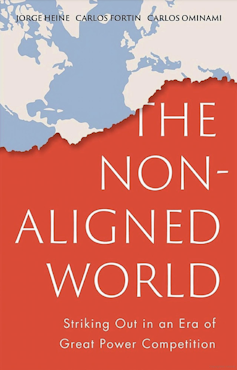
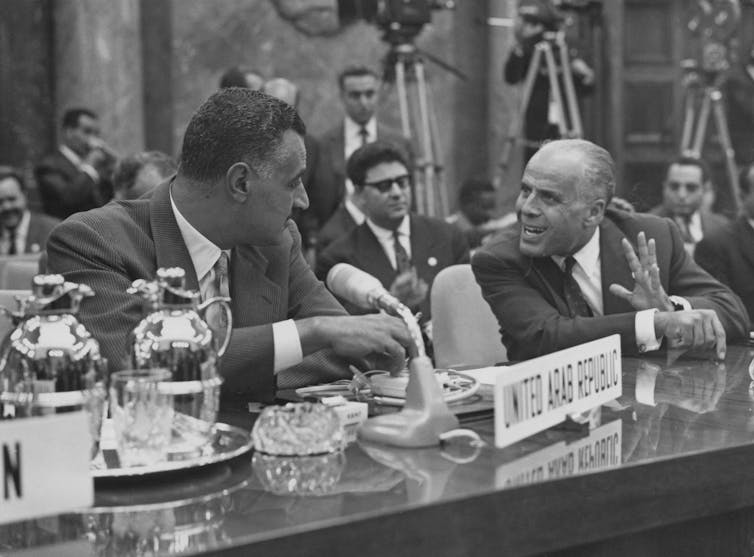










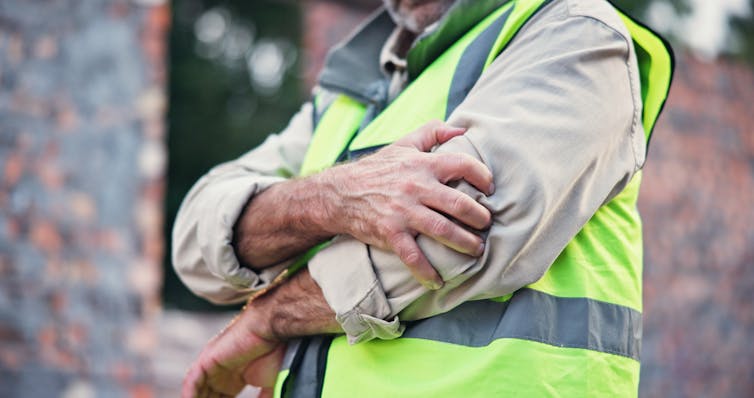





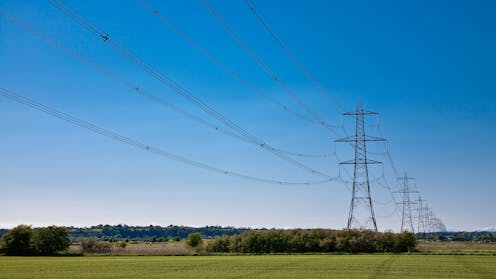











_Sebastian_Haffner_(cropped).jpg)