Category: The Conversation

  • MIL-OSI Submissions: How Donald Trump’s economic policies, including uncertainty around tariffs, are damaging the US economy

    Source: The Conversation – UK – By John Whittaker, Senior Teaching Fellow in Economics, Lancaster University

    Donald Trump set a deadline of July 9 2025 for trade deals to be made before he hits some of the world’s biggest economies with his controversial tariffs. It’s impossible to predict what will happen on the day, but it is already clear that his economic policies are damaging American interests.

    Just look at the state of US government debt for example. Currently it stands at US$36 trillion (£26 trillion). And with total economic output (GDP) worth US$29 trillion per year, that debt is 123% of GDP, the highest it has been since 1946.

    Government debts are alarmingly high in other countries too (the UK’s is at 104% of GDP, with France at 116% and China at 113%), but the US is towards the top of the range.

    The recently passed budget reconciliation bill (what Trump calls the “big beautiful bill”) is projected to add US$3 trillion to that debt over the next decade. With these sorts of numbers, there is little prospect of putting US debt on a downward track.


    Get your news from actual experts, straight to your inbox. Sign up to our daily newsletter to receive all The Conversation UK’s latest coverage of news and research, from politics and business to the arts and sciences.


    In 2024, the US government had to borrow an additional US$1.8 trillion to cover spending not supported by tax revenue (the budget deficit). This is equivalent to 6.2% of GDP, a number that is officially predicted to rise to 7.3% during the next 30 years.

    The predictable consequence of this fiscal profligacy and the chaotic tariff programme is the high rates of interest that the US government is having to pay for its borrowing.

    For instance, the interest rate on ten-year US government debt (otherwise known as its yield) has risen from 0.5% in mid-2020 to 4.3% now. And as government debt yields rise, so do interest rates on mortgages and corporate borrowing.

    The power of the dollar

    For decades, the United States has enjoyed a high level of trust in the strength, openness and stability of its economy.

    As a result, US bonds or “treasuries”, the financial assets that the government sells to raise money for public spending, have long been considered safe investments by financial institutions around the world. And the US dollar has been the dominant currency for international payments and debts.

    Sometimes referred to as “exorbitant privilege”, this status of the US dollar as the world’s reserve currency brings big advantages. It benefits US consumers by making imported goods cheaper (albeit contributing to the trade deficits (when US imports to a country are worth more than its exports) which bother the president so much).

    It also means the US government can borrow a lot of money before doubts arise about its ability to repay. Investors will generally buy as many bonds as the US govt needs to issue to pay for its spending.

    The dominance of the dollar in international transactions also brings political power, such as the ability to exclude Russia from major global payment systems.

    But this privilege is being eroded by the US president’s tariff agenda. Economic motives aside, it is the way they are being applied – their size and the unpredictability – that is really sapping investor confidence.

    It’s costly to adjust trading patterns and supply chains in response to tariffs. So when the scope of future tariffs is unknown, the rational response is to stop investing while awaiting greater certainty.

    The dollar has lost 8% in value since the beginning of the year, reflecting investor doubts about the US economy, and making imports even more expensive.

    Financial markets are vulnerable

    But perhaps the biggest danger to US financial markets is a sudden rise in yields on government debt. No investor wants to be left holding a bond when its yield rises because – as with all fixed-interest debt – the rise in yield causes the bond’s market value to fall. This is because new bonds are issued with a higher yield, making existing bonds less attractive and less valuable.

    A bond holder expecting a rise in yield therefore has an incentive to sell it before the rise occurs. But the rise in yield can become self-reinforcing if the scramble to sell becomes a stampede.

    Indeed, there was a jump in US yields after the increases in trade tariffs announced on “liberation day” in early April, with the yield on ten-year treasuries rising by 0.5% in just four days.

    Damaged dollar?
    Dilok Klaisataporn/Shutterstock

    Fortunately, this rise was halted on April 10 when the tariffs were abruptly paused, allegedly in response to the fall in bond prices and an accompanying fall in share prices. The opinion of a senior central banker, that financial markets had been close to “meltdown”, was one of several such warnings.

    The dollar is unlikely to be quickly dislodged from its pedestal as the world’s reserve currency, as the alternatives are not attractive. The euro is not suitable because it is the currency of 20 EU countries, each with its own separate government debt. Nor is the Chinese yuan a likely contender, given the Chinese government involvement in managing the yuan exchange rate.

    But since March, foreign central banks have been selling off US treasuries, often choosing to hold gold instead.

    On Trump’s watch, the reputation of the US dollar as the ultimate safe asset has been tarnished, leaving the financial system more vulnerable – and borrowing more expensive.

    John Whittaker does not work for, consult, own shares in or receive funding from any company or organisation that would benefit from this article, and has disclosed no relevant affiliations beyond their academic appointment.

    ref. How Donald Trump’s economic policies, including uncertainty around tariffs, are damaging the US economy – https://theconversation.com/how-donald-trumps-economic-policies-including-uncertainty-around-tariffs-are-damaging-the-us-economy-259809

    MIL OSI

  • MIL-OSI Submissions: Underwater lake heatwaves are on the rise, threatening aquatic life

    Source: The Conversation – UK – By Iestyn Woolway, Reader and NERC Independent Research Fellow, Bangor University

    A view of Lake Superior, one of the Great Lakes. Travis J. Camp/Shutterstock

    Lakes are essential to ecosystems, providing freshwater, supporting biodiversity and offering crucial habitat for fish and other aquatic species.

    But a recent study by my colleagues and I shows that lakes around the world are warming, not just at the surface, but deep below as well. Subsurface heatwaves in lakes, defined as extreme periods of high water temperature below the surface, are increasing in frequency, duration and intensity.

    These hidden extremes could have serious consequences for lake ecosystems. Despite that, the issue remains largely unmonitored and poorly understood.

    Lake heatwaves are similar to those in the atmosphere or ocean. They are prolonged periods of excessive warmth. Most research to date has focused on surface temperatures, where climate change has already caused more frequent and intense heatwaves over recent decades.


    Get your news from actual experts, straight to your inbox. Sign up to our daily newsletter to receive all The Conversation UK’s latest coverage of news and research, from politics and business to the arts and sciences.


    These surface events can disrupt the chemical and physical balance of lakes, damage food webs and, in some cases, cause mass fish die-offs.

    Aquatic species respond to surface heatwaves in different ways. Some benefit if the warming expands their preferred temperature range. But many others, particularly those already living near their thermal limits, face significant stress.

    In lakes that stratify during summer – where warm surface water sits above a cooler bottom layer – some species seek refuge from the heat by migrating to deeper water. But what happens when that deeper refuge is no longer cool?

    A closer look beneath the surface

    To investigate, we analysed temperature data from tens of thousands of lakes worldwide. These included one-dimensional lake models, high-resolution simulations for the Great Lakes of North America, and local models calibrated to specific lake conditions.

    By analysing how temperature varies with depth and time, we identified when and where subsurface waters crossed extreme heat thresholds.

    We defined subsurface heatwaves as periods when temperatures at particular depths exceeded their typical seasonal range. We also tracked how these events have changed since 1980, and how they might evolve under different emissions scenarios by the end of this century.

    Lake Huron, one of the Great Lakes.
    Craig Sterken/Shutterstock

    Subsurface heatwaves are already common and they’re becoming more so.

    Since 1980, bottom heatwaves (those occurring at the deepest parts of lakes) have increased by an average of more than seven days per decade in frequency, more than two days per decade in duration and they have risen by around 0.2C per decade.

    Although these deep-water events tend to be slightly less intense than surface ones, they often last longer.

    We also found a rise in “vertically compounding” heatwaves. This is when extreme temperatures happen simultaneously at the surface and bottom of a lake.

    These doubled-up events are now happening more than three days per decade more frequently. When they strike, aquatic species can be left with no place to escape the heat.

    Even more concerning, the deep-water refuges that once offered shelter during surface heatwaves are shrinking or disappearing altogether. In some lakes, the distance fish need to travel to find cooler water has increased by nearly a metre per decade.

    Our simulations suggest that these trends will intensify, especially under high-emission scenarios. By the end of this century, some bottom heatwaves could last for months, with temperature extremes not seen in the historical record.

    Why this matters

    Lake ecosystems rely on thermal structure. When extreme heat reaches deeper into the water column, it can trigger cascading ecological effects, from shifting fish habitats and altering species distribution, to increased nutrient cycling and algal blooms. It could even affect the release of greenhouse gases like methane from lake bed sediments.

    Subsurface heatwaves pose a particular risk to bottom-dwelling species, which may be less mobile or already adapted to cold, stable conditions. The loss of thermal refuges during surface heatwaves also jeopardises species that would otherwise escape to deeper waters.

    By ignoring what’s happening below the surface, we risk underestimating the true ecological effects of climate change on freshwater systems.

    Our study highlights the urgent need to expand lake monitoring efforts to include subsurface temperatures. While satellites have transformed our understanding of surface warming, they can’t capture what’s happening below.

    Future research should examine how different species respond to these deep-water and vertically compounding heatwaves. It should explore how changes in lake thermal structure affect different processes like nutrient cycling and methane production.

    For conservation planners, that means incorporating subsurface heatwaves into risk assessments and habitat models. For climate modellers, it means better representing vertical processes in lakes within global Earth system models.

    As lakes continue to warm, managing and understanding these hidden heat extremes will be critical to protecting biodiversity and the vital ecosystem services lakes provide.

    Iestyn Woolway receives funding from UKRI NERC.

    ref. Underwater lake heatwaves are on the rise, threatening aquatic life – https://theconversation.com/underwater-lake-heatwaves-are-on-the-rise-threatening-aquatic-life-258885

    MIL OSI

  • MIL-OSI Submissions: From glass and steel to rare earth metals, new materials have changed society throughout history

    Source: The Conversation – USA – By Peter Mullner, Distinguished Professor in Materials Science and Engineering, Boise State University

    Steel played a large role in the Industrial Revolution. Monty Rakusen/DigitalVision via Getty Images

    Many modern devices – from cellphones and computers to electric vehicles and wind turbines – rely on strong magnets made from a type of minerals called rare earths. As the systems and infrastructure used in daily life have turned digital and the United States has moved toward renewable energy, accessing these minerals has become critical – and the markets for these elements have grown rapidly.

    Modern society now uses rare earth magnets in everything from national defense, where magnet-based systems are integral to missile guidance and aircraft, to the clean energy transition, which depends on wind turbines and electric vehicles.

    The rapid growth of the rare earth metal trade and its effects on society isn’t the only case study of its kind. Throughout history, materials have quietly shaped the trajectory of human civilization. They form the tools people use, the buildings they inhabit, the devices that mediate their relationships and the systems that structure economies. Newly discovered materials can set off ripple effects that shape industries, shift geopolitical balances and transform people’s daily habits.

    Materials science is the study of the atomic structure, properties, processing and performance of materials. In many ways, materials science is a discipline of immense social consequence.

    As a materials scientist, I’m interested in what can happen when new materials become available. Glass, steel and rare earth magnets are all examples of how innovation in materials science has driven technological change and, as a result, shaped global economies, politics and the environment.

    How innovation shapes society: Pressures from societal and political interests (orange arrows) drive the creation of new materials and the technologies that such materials enable (center). The ripple effects resulting from people using these technologies change the entire fabric of society (blue arrows).
    Peter Mullner

    Glass lenses and the scientific revolution

    In the early 13th century, after the sacking of Constantinople, some excellent Byzantine glassmakers left their homes to settle in Venice – at the time a powerful economic and political center. The local nobility welcomed the glassmakers’ beautiful wares. However, to prevent the glass furnaces from causing fires, the nobles exiled the glassmakers – under penalty of death – to the island of Murano.

    Murano became a center for glass craftsmanship. In the 15th century, the glassmaker Angelo Barovier experimented with adding the ash from burned plants, which contained a chemical substance called potash, to the glass.

    The potash reduced the melting temperature and made liquid glass more fluid. It also eliminated bubbles in the glass and improved optical clarity. This transparent glass was later used in magnifying lenses and spectacles.

    Johannes Gutenberg’s printing press, completed in 1455, made reading more accessible to people across Europe. With it came a need for reading glasses, which grew popular among scholars, merchants and clergy – enough that spectacle-making became an established profession.

    By the early 17th century, glass lenses evolved into compound optical devices. Galileo Galilei pointed a telescope toward celestial bodies, while Antonie van Leeuwenhoek discovered microbial life with a microscope.

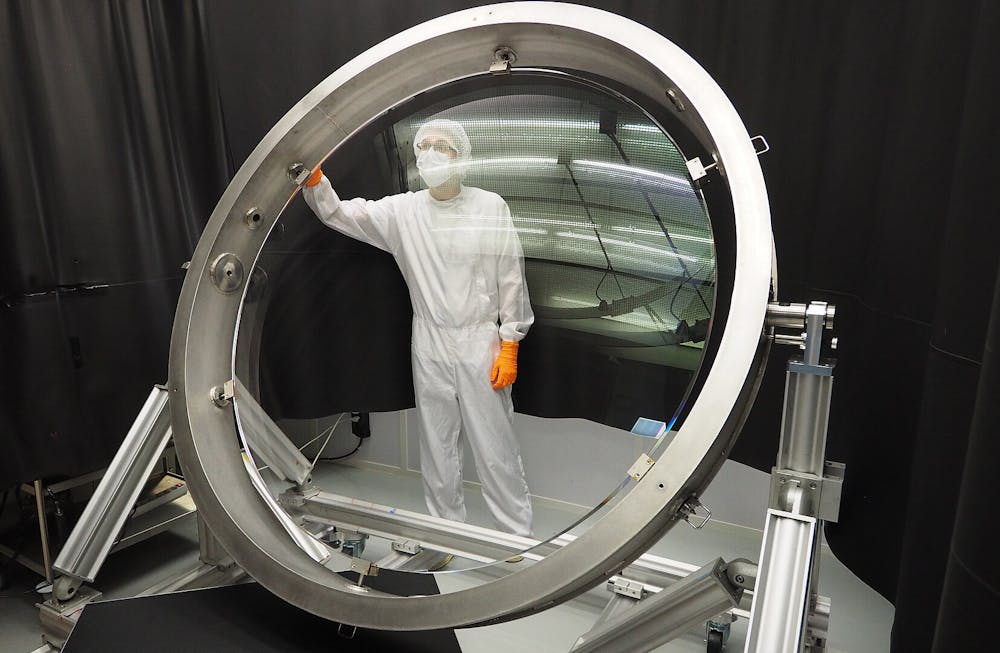
    The glass lens of the Vera Rubin Observatory, which surveys the night sky.
    Large Synoptic Survey Telescope/Vera Rubin Observatory, CC BY

    Lens-based instruments have been transformative. Telescopes have redefined long-standing cosmological views. Microscopes have opened entirely new fields in biology and medicine.

    These changes marked the dawn of empirical science, where observation and measurement drove the creation of knowledge. Today, the James Webb Space Telescope and the Vera C. Rubin Observatory continue those early telescopes’ legacies of knowledge creation.

    Steel and empires

    In the late 18th and 19th centuries, the Industrial Revolution created demand for stronger, more reliable materials for machines, railroads, ships and infrastructure. The material that emerged was steel, which is strong, durable and cheap. Steel is a mixture of mostly iron, with small amounts of carbon and other elements added.

    Countries with large-scale steel manufacturing once had outsized economic and political power and influence over geopolitical decisions. For example, the British Parliament intended to prevent the colonies from exporting finished steel with the iron act of 1750. They wanted the colonies’ raw iron as supply for their steel industry in England.

    Benjamin Huntsman invented a smelting process using 3-foot tall ceramic vessels, called crucibles, in 18th-century Sheffield. Huntsman’s crucible process produced higher-quality steel for tools and weapons.

    One hundred years later, Henry Bessemer developed the oxygen-blowing steelmaking process, which drastically increased production speed and lowered costs. In the United States, figures such as Andrew Carnegie created a vast industry based on Bessemer’s process.

    The widespread availability of steel transformed how societies built, traveled and defended themselves. Skyscrapers and transit systems made of steel allowed cities to grow, steel-built battleships and tanks empowered militaries, and cars containing steel became staples in consumer life.

    White-hot steel pouring out of an electric arc furnace in Brackenridge, Penn.
    Alfred T. Palmer/U.S. Library of Congress

    Control over steel resources and infrastructure made steel a foundation of national power. China’s 21st-century rise to steel dominance is a continuation of this pattern. From 1995 to 2015, China’s contribution to the world steel production increased from about 10% to more than 50%. The White House responded in 2018 with massive tariffs on Chinese steel.

    Rare earth metals and global trade

    Early in the 21st century, the advance of digital technologies and the transition to an economy based on renewable energies created a demand for rare earth elements.

    Offshore turbines use several tons of rare earth magnets to transform wind into electricity.
    Hans Hillewaert/Wikimedia Commons, CC BY-SA

    Rare earth elements are 17 chemically very similar elements, including neodymium, dysprosium, samarium and others. They occur in nature in bundles and are the ingredients that make magnets super strong and useful. They are necessary for highly efficient electric motors, wind turbines and electronic devices.

    Because of their chemical similarity, separating and purifying rare earth elements involves complex and expensive processes.

    China controls the majority of global rare earth processing capacity. Political tensions between countries, especially around trade tariffs and strategic competition, can risk shortages or disruptions in the supply chain.

    The rare earth metals case illustrates how a single category of materials can shape trade policy, industrial planning and even diplomatic alliances.

    Mining rare earth elements has allowed for the widespread adoption of many modern technologies.
    Peggy Greb, USDA

    Technological transformation begins with societal pressure. New materials create opportunities for scientific and engineering breakthroughs. Once a material proves useful, it quickly becomes woven into the fabric of daily life and broader systems. With each innovation, the material world subtly reorganizes the social world — redefining what is possible, desirable and normal.

    Understanding how societies respond to new innovations in materials science can help today’s engineers and scientists solve crises in sustainability and security. Every technical decision is, in some ways, a cultural one, and every material has a story that extends far beyond its molecular structure.

    The National Science Foundation, the Department of Energy, NASA, and other national and regional agencies have funded former research of Peter Mullner.

    ref. From glass and steel to rare earth metals, new materials have changed society throughout history – https://theconversation.com/from-glass-and-steel-to-rare-earth-metals-new-materials-have-changed-society-throughout-history-258244

    MIL OSI

  • MIL-OSI Submissions: Elon Musk says he may launch his own party: but US history tells us that’s not a recipe for success

    Source: The Conversation – UK – By Matthew Mokhefi-Ashton, Lecturer in Politics and International Relations, Nottingham Trent University

    To paraphrase a very old joke, how do you make a small fortune in America? Start with a large fortune and fund a third political party. American political history is littered with the wrecks of challengers who thought they could break the two-party system and failed.

    This makes Elon Musk’s tease that he may launch his own new political party as an act of defiance following his falling out with Donald Trump even more intriguing.

    What do we mean by a two-party system though? Since the 1860s, the Democrats and Republicans have dominated the US political landscape, holding the presidency, Congress and the vast majority of elected positions. Attempts at third parties have usually floundered at the ballot box.


    Get your news from actual experts, straight to your inbox. Sign up to our daily newsletter to receive all The Conversation UK’s latest coverage of news and research, from politics and business to the arts and sciences.


    Some have lasted only for a few electoral cycles, including the Progressive Party in the 1910s and the Citizens Party of the 1980s, while others like the Libertarian Party and Green Party have lasted decades and, in some cases, managed some electoral success at the local level.

    But this is where an important distinction has to be made between third parties and third-party candidates. Because the US system is so personality-driven rather than party focused compared to Europe, quite often third parties have been built around a single person.

    A good example is the previously mentioned Progressive Party. It was founded in 1912 by former president Theodore Roosevelt after he split from the Republicans. Without him it quickly faded away.

    The Reform Party was created by billionaire Ross Perot in 1995 after he managed to get 18.9% of the vote in the 1992 presidential election. While it continued without him for some years, it was a shell of its former self. Other parties like the Socialist, Libertarian and Green parties have sprung from more organic movements and thus have been more successful at a local or state level.

    When you look at recent polling though, it seems strange that the two parties continue to dominate. Public dissatisfaction with politics as usual seems at an all-time high. In a recent Pew Research poll when asked whether “I often wish there were more political parties to choose from” describes their views, 37% of respondents answered: “Very well” and 31% answered: “Somewhat well”.

    In another poll, 25% of respondents said that neither of the two main parties represented their interests.

    So if there is an appetite for some sort of change, why have so few challengers succeeded? The two main parties seem entrenched to the point where it resembles a cartel.

    Odds stacked against third-party insurgency

    The first and arguably most important reason is the electoral system. First past the post does not guarantee a two-party system (look at Britain, for instance). But political scientist Maurice Duverger argued that it does mean that the two main parties have a significant advantage. There are prizes for coming first and second, nothing for third place.

    Equally, many of the big prizes in American politics such as the presidency and state governorships are indivisible and cannot be shared. So it has become received wisdom that voting for anyone other than Democrats or Republicans is a wasted vote.

    In these cases, people either vote for what they perceive to be the lesser of two evils or stay at home, rather than voting for a candidate with no chance or that they may not support.

    The other multi-billion dollar elephant in the room is money. The sheer cost of running for elections in recent years means that any third party is unlikely to be able to raise the funds to be truly competitive. At the last election, the Democrats and Republicans spent hundreds of millions of dollars (which isn’t even counting all of the super-PAC money spent on their behalf).

    Whenever billionaires like Perot have attempted to self-fund a party, they have left themselves open to the accusation that it’s a vanity project, or lacks true mass appeal.

    There is also the fact that to run successfully you must have media coverage. The media tends to focus almost exclusively on the two main parties. This creates a “chicken and egg” situation where you need success to help raise money and media coverage, but it’s difficult to be successful without first having money and media coverage.

    The final reasons are that of the open primary and ideological flexibility of the main parties. Donald Trump briefly considered running as president for the Reform Party back in 2000. In 2016, the open primary system that both main parties use meant that he could impose himself on the Republican Party despite most of the party elite despising him.

    Why bother starting your own party when you can run for one that already exists? It could now be argued that the Republicans have effectively become the Trump or Maga party, although whether this will survive his presidency is open to debate.

    Money, money, money

    Elon Musk has, for the moment, money to burn. Whether he’s willing to invest in the long term to turn this into more than a vanity project remains to be seen.

    He also has charisma and a national platform to amplify his voice like few others. But, having been born outside America, he can’t run for president.

    If he’s serious about electoral success, he’d have to find someone to run, and that would mean, effectively, they’d lead his party. Musk’s public persona suggests that he does not play well with others.

    Founding a third party isn’t impossible, but unless there is a political earthquake it seems difficult to see how one could succeed.

    Matthew Mokhefi-Ashton does not work for, consult, own shares in or receive funding from any company or organisation that would benefit from this article, and has disclosed no relevant affiliations beyond their academic appointment.

    ref. Elon Musk says he may launch his own party: but US history tells us that’s not a recipe for success – https://theconversation.com/elon-musk-says-he-may-launch-his-own-party-but-us-history-tells-us-thats-not-a-recipe-for-success-260480

    MIL OSI

  • MIL-OSI Submissions: War, politics and religion shape wildlife evolution in cities

    Source: The Conversation – USA – By Elizabeth Carlen, Living Earth Collaborative Postdoctoral Fellow, Washington University in St. Louis

    A Buddhist monk in Hong Kong releases fish and chants prayers during a ceremony to free the spirits of tsunami victims. Samantha Sin/AFP via Getty Images

    People often consider evolution to be a process that occurs in nature in the background of human society. But evolution is not separate from human beings. In fact, human cultural practices can influence evolution in wildlife. This influence is highly pronounced in cities, where people drastically alter landscapes to meet their own needs.

    Human actions can affect wildlife evolution in a number of ways. If people fragment habitat, separated wildlife populations can evolve to be more and more different from each other. If people change certain local conditions, it can pressure organisms in new ways that mean different genes are favored by natural selection and passed on to offspring – another form of evolution that can be driven by what people do.

    In a recent review, evolutionary biologists Marta Szulkin, Colin Garroway and I, in collaboration with scientists spread across five continents, explored how cultural processes – including religion, politics and war – shape urban evolution. We reviewed dozens of empirical studies about urban wildlife around the globe. Our work highlights which human cultural practices have and continue to shape the evolutionary trajectory of wild animals and plants.

    Religious practices

    If you’ve traveled internationally, you may have noticed the menu at any one McDonald’s restaurant is shaped by the local culture of its location. In the United Arab Emirates, McDonald’s serves an entirely halal menu. Vegetarian items are common and no beef is served in Indian McDonald’s. And in the United States, McDonald’s Filet-O-Fish is especially popular during Lent when observant Catholics don’t consume meat on Fridays.

    Similarly, ecosystems of cities are shaped by local cultural practices. Because all wildlife are connected to the environment, cultural practices that alter the landscape shape the evolution of urban organisms.

    Populations of fire salamanders have different genes depending on which side of city walls in Oviedo, Spain, they live on.
    Patrice Skrzynski via Getty Images

    For example, in Oviedo, Spain, people constructed walls around religious buildings between the 12th and 16th centuries. This division of the city led to different populations of fire salamanders inside and outside the walls. Because salamanders can’t scale these walls, those on opposite sides became isolated from each other and unable to pass genes back and forth. In a process that scientists call genetic drift, over time salamanders on the two sides became genetically distinct − evidence of the two populations evolving independently.

    Imagine dumping out a handful of M&Ms. Just by chance, some colors might be overrepresented and others might be missing. In the same way, genes that are overrepresented on one side of the wall can be in low numbers or missing on the other side. That’s genetic drift.

    Introducing non-native wildlife is another way people can alter urban ecosystems and evolutionary processes. For example, prayer animal release is a practice that started in the fifth or sixth century in some sects of Buddhism. Practitioners who strive to cause no harm to any living creature release captive animals, which benefits the animal and is meant to improve the karma of the person who released it.

    However, these animals are often captured from the wild or come from the pet trade, thereby introducing non-native wildlife into the urban ecosystem. Non-natives may compete with local species and contribute to the local extinction of native wildlife. Capturing animals nearby has downsides, too. It can diminish local populations, since many die traveling to the release ceremony. The genetic diversity of these local populations in turn decreases, reducing the population’s ability to survive.

    More than a thousand sparrows killed by peasants in 1958 are displayed on a cart near Beijing, China.
    Sovphoto/Universal Images Group via Getty Images

    Influence of politics

    Politically motivated campaigns have shaped wildlife in various ways.

    Starting in 1958, for instance, the Chinese Communist Party led a movement to eliminate four species that were considered pests: rats, flies, mosquitoes and sparrows. While the first three are commonly considered pests around the world, sparrows made the list because they were “public animals of capitalism” due to their fondness for grain. The extermination campaign ended up decimating the sparrow population and damaging the entire ecosystem. With sparrows no longer hunting and eating insects, crop pests such as locusts thrived, leading to crop destruction and famine.

    In the United States, racial politics may be shaping evolutionary processes in wildlife.
    For instance, American highways traverse cities according to political agendas and have often dismantled poor neighborhoods of color to make way for multilane thoroughfares. These highways can change how animals are able to disperse and commingle. For example, they prevent bobcats and coyotes from traveling throughout Los Angeles, leading to similar patterns of population differentiation as seen in fire salamanders in Spain.

    Wildlife during and after war

    Human religious and political agendas often lead to armed conflict. Wars are known to dramatically alter the environment, as seen in current conflicts in Gaza and Ukraine.

    The Russia-Ukraine war affected migration of greater spotted eagles.
    Nimit Virdi via Getty Images

    While documenting evolutionary changes to urban wildlife is secondary to keeping people safe during wartime, a handful of studies on wildlife have come out of active war zones. For example, the current Russia-Ukraine war affected the migration of greater spotted eagles. They made large diversions around the active war zone, arriving later than usual at their breeding grounds. The longer route increased the energy the eagles used during migration and likely influenced their fitness during breeding.

    Wars limit access to resources for people living in active war zones. The lack of energy to heat homes in Ukraine during the winter has led urban residents to harvest wood from nearby forests. This harvesting will have long-term consequences on forest dynamics, likely altering future evolutionary potential.

    A similar example is famine that occurred during the Democratic Republic of Congo’s civil wars (1996-1997, 1998-2003) and led to an increase in bushmeat consumption. This wildlife hunting is known to reduce primate population sizes, making them more susceptible to local extinction.

    Even after war, landscapes experience consequences.

    For example, the demilitarized zone between North Korea and South Korea is a 160-mile (250-kilometer) barrier, established in 1953, separating the two countries. Heavily fortified with razor wire and landmines, the demilitarized zone has become a de facto nature sanctuary supporting thousands of species, including dozens of endangered species.

    The collapse of the Soviet Union and the end of the Cold War led to the establishment of the European Green Belt, which runs along the same path as the Iron Curtain. This protected ecological network is over 7,800 miles (12,500 kilometers) long, allowing wildlife to move freely across 24 countries in Europe. Like the Korean DMZ, the European Green Belt allows for wildlife to move, breed and exchange genes, despite political boundaries. Politics has removed human influence from these spaces, allowing them to be a safe haven for wildlife.

    While researchers have documented a number of examples of wildlife evolving in response to human history and cultural practices, there’s plenty more to uncover. Cultures differ around the world, meaning each city has its own set of variables that shape the evolutionary processes of wildlife. Understanding how these human cultural practices shape evolutionary patterns will allow people to better design cities that support both humans and the wildlife that call these places home.

    Ideas for this article were developed as part of a NSF funded Research Coordination Network (DEB 1840663). Elizabeth Carlen was funded by the Living Earth Collaborative.

    ref. War, politics and religion shape wildlife evolution in cities – https://theconversation.com/war-politics-and-religion-shape-wildlife-evolution-in-cities-260184

    MIL OSI

  • MIL-OSI Submissions: Astronomers have discovered another puzzling interstellar object − this third one is big, bright and fast

    Source: The Conversation – USA – By Darryl Z. Seligman, Assistant Professor, Michigan State University

    The Haleakala Observatory, left, houses one telescope for the ATLAS system. That system first spotted the object 3I/ATLAS, which isn’t visible in this image. AP Photo/Lindsey Wasson

    Astronomers manning an asteroid warning system caught a glimpse of a large, bright object zipping through the solar system late on July 1, 2025. The object’s potentially interstellar origins excited scientists across the globe, and the next morning, the European Space Agency confirmed that this object, first named A11pl3Z and then designated 3I/ATLAS, is the third ever found from outside our solar system.

    Current measurements estimate that 3I/ATLAS is about 12 miles (20 kilometers) wide, and while its path won’t take it close to Earth, it could hold clues about the nature of a previous interstellar object and about planet formation in solar systems beyond ours.

    On July 2 at 3 p.m. EDT, Mary Magnuson, an associate science editor at The Conversation U.S., spoke to Darryl Z. Seligman, an astrophysicist at Michigan State University who has been studying 3I/ATLAS since its discovery.

    What makes 3I/ATLAS different from its predecessors?

    We have discovered two interstellar objects so far, ’Oumuamua and Comet 2I/Borisov. ’Oumuamua had no dust tail and a significant nongravitational acceleration, which led to a wide variety of hypotheses regarding its origin. 2I/Borisov was very clearly a comet, though it has a somewhat unique composition compared to comets in our solar system.

    All of our preparation for the next interstellar object was preparing for something that looked like a ’Oumuamua, or something that looked like Borisov. And this thing doesn’t look like either of them, which is crazy and exciting.

    This object is shockingly bright, and it’s very far away from the Earth. It is significantly bigger than both of the interstellar objects we’ve seen – it is orders of magnitude larger than ’Oumuamua.

    For some context, ’Oumuamua was discovered when it was very close to the Earth, but this new object is so large and bright that our telescopes can see it, even though it is still much farther away. This means observatories and telescopes will be able to observe it for much longer than we could for the two previous objects.

    It’s huge and it’s much farther away, but it is also much faster.

    When I went to bed last night, I saw an alert about this object, but nobody knew what was going on yet. I have a few collaborators who figure out the orbits of things in the solar system, and I expected to wake up to them saying something like “yeah, this isn’t actually interstellar.” Because a lot of times you think you may have found something interesting, but as more data comes in, it becomes less interesting.

    Then, when I woke up at 1 a.m., my colleagues who are experts on orbits were saying things like “no, this is definitely interstellar. This is for real.”

    How can astronomers tell if something is an interstellar object?

    The eccentricity of the object’s orbit is how you know that it’s interstellar. The eccentricity refers to how noncircular an orbit is. So an eccentricity of zero is a pure circle, and as the eccentricity increases, it becomes what’s known as an ellipse – a stretched out circle.

    A hyperbolic orbit isn’t a closed loop, as this rendering of ‘Oumuamua’s trajectory shows. All the planets have oval-shaped elliptical orbits, which close in a loop. The interstellar object instead passes through but doesn’t come back around.
    Tomruen/Wikimedia Commons, CC BY-SA

    And then once you get past an eccentricity of one, you go from an ellipse to a hyperbolic orbit, and that is unbound. So while an elliptical orbit is stretched out, it still orbits and comes back around. An object with a hyperbolic orbit comes through and it leaves, but it never comes back. That type of orbit tells you that it didn’t come from this solar system.

    When researchers are collecting data, they’re getting points of light on the sky, and they don’t know how far away they are. It’s not like they see them and can just tell, “oh, that’s eccentric.” What they’re seeing is how far away the object is compared with other stars in the background, what its position is and how fast it’s moving. And then from that data, they try to fit the orbit.

    This object is moving fast for how far away it is, and that’s what’s telling us that it could be hyperbolic. If something is moving fast enough, it’ll escape from the solar system. So a hyperbolic, unbound object inherently has to be moving faster.

    This is a real-time process. My collaborators have preexisting software, which will, every night, get new observations of all the small bodies and objects in the solar system. It will figure out and update what the orbits are in real time. We’re getting data points, and with more data we can refine which orbit fits the points best.

    What can scientists learn from an interstellar object?

    Objects like this are pristine, primordial remnants from the planet formation process in other planetary systems. The small bodies in our solar system have taught us quite a lot about how the planets in the solar system formed and evolved. This could be a new window into understanding planet formation throughout the galaxy.

    As we’re looking through the incoming data, we’re trying to figure out whether it’s a comet. In the next couple of weeks, there will likely be way more information available to say if it has a cometary tail like Borisov, or if it has an acceleration that’s not due to a gravitational pull, like ’Oumuamua.

    If it is a comet, researchers really want to figure out whether it’s icy. If it contains ices, that tells you a ton about it. The chemistry of these small bodies is the most important aspect when it comes to understanding planet formation, because the chemical composition tells you about the conditions the object’s solar system was in when the object formed.

    For example, if the object has a lot of ices in it, you would know that wherever it came from, it didn’t spend much time near a star, because those ices would have melted. If it has a lot of ice in it, that could tell you that it formed really far away from a star and then got ejected by something massive, such as a planet the size of Jupiter or Neptune.

    Fundamentally, this object could tell astronomers more about a population of objects that we don’t fully understand, or about the conditions in another solar system.

    We’ve had a couple of hours to get some preliminary observations. I suspect that practically every telescope is going to be looking at this object for the next couple of nights, so we’ll get much more information about it very soon.

    Darryl Z. Seligman is supported by an NSF Astronomy and Astrophysics Postdoctoral Fellowship under award AST-2303553. This research award is partially funded by a generous gift of Charles Simonyi to the NSF Division of Astronomical Sciences. The award is made in recognition of significant contributions to Rubin Observatory’s Legacy Survey of Space and Time.

    ref. Astronomers have discovered another puzzling interstellar object − this third one is big, bright and fast – https://theconversation.com/astronomers-have-discovered-another-puzzling-interstellar-object-this-third-one-is-big-bright-and-fast-260391

    MIL OSI

  • MIL-OSI Submissions: Parents who oppose sex education in schools often don’t discuss it at home

    Source: The Conversation – USA (2) – By Robin Pickering, Professor and Chair, Public Health, Gonzaga University

    Lawmakers and school boards across the country have established policies that limit what schools can teach about gender, sexuality and reproductive health. Alexmia/iStock via Getty Images

    Public battles over what schools can teach about sex, identity and relationships, often framed around “parental rights,” have become more intense in recent years.

    Behind the loud debate lies a quiet contradiction. Many parents who say sex education should be taught only at home don’t actually provide it there, either.

    As a scholar of sex education, I found that parents strongly opposed to comprehensive sex education in schools were the least likely to discuss health-promoting concepts such as consent, contraception, gender identity and healthy relationships. I discuss similar themes in my book, “A Modern Approach to the Birds and the Bees.”

    Comprehensive sex education delays sexual activity, increases contraceptive use and reduces teen pregnancy and sexually transmitted infection rates. It has a complex history, but has long received bipartisan support.

    In recent years, however, old debates over sex education and funding have taken a sharper turn.

    In June 2025, the Trump administration ordered California to remove gender-identity materials from sex education lessons or risk losing over US$12 million in federal funding.

    This directive is part of a broader shift. Since the early 1980s, abstinence-focused policy has existed at the federal level under Reagan with the Adolescent Family Life Act. In recent years, however, a wave of state-level legislation, often driven by conservative advocacy groups, has tried to limit what schools can teach about sexuality.

    The parents’ rights movement

    In 2023, Florida expanded its Parental Rights in Education, also known as the “Don’t Say Gay” law, to extend limits on discussing sexual orientation and gender identity to all K–12 grades. The law states that sex can be defined only as strictly binary, limits discussions of gender and sexuality, imposes rules on pronoun use and increases school board authority over curricula.

    Other states, including Texas, Oklahoma, Louisiana and Kentucky, have imposed similar restrictions.

    Federal, state and local efforts have sought to control or limit sex education in schools.
    tupungato/iStock via Getty Images

    Local school boards in states such as Florida, Idaho, Tennessee and Utah have removed textbooks, cut health courses and banned books with LGBTQ+ themes. Conservative, local school boards are reshaping sex education nationwide even though the vast majority of Americans oppose efforts to restrict books in public schools and are confident in public schools’ selection of books.

    Who’s having the talk?

    A national survey on parental attitudes and beliefs about school-based sex education revealed that some families do not practice what they preach.
    diane39/iStock via Getty Images

    As laws limit teaching about sex, gender and identity, I wanted to explore whether parents are stepping in to fill the gaps.

    About 10% of the surveyed parents said sex education should happen only at home. Those parents were also most likely to say they “almost never” or “never” discussed sex, sexuality and romance with their children.

    By contrast, parents who supported comprehensive, school-based sex ed were significantly more likely to discuss subjects including consent, contraception, identity and healthy relationships at home.

    The survey also found that parents who opposed comprehensive sex education were more likely to believe commonly circulated misinformation, such as the idea that talking about sex encourages early sexual activity and that condoms are not effective.

    These preliminary findings align with a robust body of peer-reviewed literature suggesting that parents who are more resistant to school-based sex ed are also less likely and less equipped to have open, informed conversations at home.

    These findings point to a gap between expert recommendations and what parents do.

    At the federal level, the Trump administration slashed funding for comprehensive sex education. The administration also expanded funding for abstinence-only programs, despite evidence of their ineffectiveness.

    Risks rise without education

    Teenagers learn about sex online, and pornography is among the top sources of information.
    redhumv?E+ via Getty Images

    A 2022 report from Common Sense Media found that nearly half of teens report learning about sex online, with pornography among the top sources.

    Research indicates that even when schools and families avoid topics related to sexuality, young people still encounter sexual content. Yet, advocacy groups such as Moms for Liberty support the removal of what it considers “age-inappropriate” or “sexually explicit” materials from classrooms and school libraries.

    The absence of structured, accurate education likely has implications for public health. According to the CDC, individuals ages 15 to 24 account for nearly half of all new sexually transmitted infections in the U.S.

    Mississippi, Alabama and Arkansas have some of the highest teen birth and sexually transmitted infection rates. Yet, these states are also among those with the most restrictive sex education policies and poorest sex ed ratings.

    These communities also face higher poverty, limited health care access and lower educational attainment. The combination deepens health disparities.

    LGBTQ+ youth are especially vulnerable to sexually transmitted infections and related health challenges. This vulnerability is compounded in regions with limited access to inclusive education.

    A 2023 CDC report found that students who receive inclusive sex education feel more connected to school and experience lower rates of depression and bullying. These benefits are especially critical for LGBTQ+ youth.

    As debates over sex education continue, I believe it’s important for policymakers, school boards and communities to weigh parental input and public health data.

    I am the author of the book, “A Modern Approach to the Birds and the Bees” which I mentioned in the article and do benefit from its sale.

    ref. Parents who oppose sex education in schools often don’t discuss it at home – https://theconversation.com/parents-who-oppose-sex-education-in-schools-often-dont-discuss-it-at-home-258892

    MIL OSI

  • MIL-OSI Submissions: How do we define Canadian content? Debates will shape how creatives make a living

    Source: The Conversation – Canada – By Daphne Rena Idiz, Postdoctoral fellow, Department of Arts, Culture and Media, University of Toronto

    What should count as Canadian content (CanCon) in the era of streaming and generative AI (GenAI)?

    That’s the biggest unknown at the heart of the Canadian Radio-television and Telecommunications Commission’s recent (CRTC) public hearing, held in Gatineau, Que., from May 14 to 27.

    The debate is about how Canada’s current points-based CanCon system remains effective in the context of global streaming giants and generative AI. Shows qualify as CanCon by assigning value to roles like director, screenwriter and lead actors being Canadian.

    The outcome will shape who gets to tell Canadian stories and what those stories are, and also which ones count as Canadian under the law. This, in turn, will determine who in the film and television industries can access funding, tax credits and visibility on streaming services.

    It will also determine which Canadian productions big streamers like Netflix will invest in under their Online Streaming Act obligations.

    The federal government’s recent announcement that it’s rescinding the Digital Services Tax reveals the limits of Canada’s leverage over Big Tech, underscoring the significance of CanCon rules as parameters around how streaming giants contribute meaningfully to the country’s creative industries.

    CanCon: Who gets to decide?

    The CRTC’s existing approach to defining CanCon relies on the citizenship of key creative personnel.

    The National Film Board argued that this misses the “cultural elements” of Canadian storytelling. These include cultural expression, narrative themes and connection to Canadian audiences. That is, a production might technically count as CanCon by hiring Canadians, without feeling particularly “Canadian.”

    It’s worth noting there are varied global regulatory frameworks for defining film nationality. The Writers Guild of Canada supports the CRTC’s view that cultural elements shouldn’t be part of CanCon certification, and argues that attempting to further codify cultural criteria risks reducing Canadian identity to superficial symbols like maple leaves or hockey sticks, and could exclude entire genres like sci-fi or fantasy.

    ‘Canadianness’ too broad to regulate?

    The Writers Guild of Canada argues that while Canadians should expect to see cultural elements in programming, the concept of “Canadianness” is too broad and subjective to be effectively regulated.

    Cultural elements are regulated by the 1991 Broadcasting Act as amended by the 2023 Online Streaming Act. Broadcasters and streamers must reflect Canadian stories, identities and cultural expressions.


    Read more:
    How the Online Streaming Act will support Canadian content


    The acts empower broadcasters and streamers to decide which Canadian stories and content will be developed, produced and distributed through commissioning and licensing powers. This implicitly limits the CRTC’s role to setting rules about which creatives are at the table.

    The Writer’s Guild advocates broadening the pool of Canadian key creatives to modernize the CanCon system. It trusts the combined perspectives of a broader pool to make creative decisions about Canadian identity in meaningful ways. Accordingly, it supports the CRTC’s intent to add the showrunner role to the point system since showrunners are the “the chief custodian of the creative vision of a series.

    Battle over Canadian IP

    Streaming introduces more players with financial stakes, complicating who controls content and who profits from it. A seismic shift is happening in how intellectual property (IP) is handled.

    CRTC has proposed that the updated CanCon definition include Canadian IP ownership as a mandatory element to enable Canadian companies and workers to retain some control over their own IP, and thereby earn sustainable income. For example, in a streaming drama, Canadian screenwriters who retain ownership of the IP could earn ongoing revenue through licensing deals, international sales and royalties each time the series is distributed.

    However, the Motion Picture Association-Canada (MPA-Canada), representing industry titans like Netflix, Amazon and Disney, is pushing back against requirements that mandate the sharing of territory or IP.

    Without IP rights, Canadian talent and the industry as a whole may be reduced to becoming service providers for global companies.

    Fair remuneration, IP rights needed

    Our own research highlights how this type of contractual arrangement increases the power asymmetries between producers, distributors and streaming services. We emphasize the critical importance of fair remuneration and IP rights for creators.

    Intervenors shared a range of preferences from 100 per cent Canadian IP ownership to none at all. One hundred per cent Canadian IP ownership means Canadian creators like a producer of a streaming series would control the rights to the content. They would receive the majority of profits from licensing, distribution and future adaptations.

    Even 51 per cent ownership could give them a controlling stake, but would likely require sharing revenue and decision-making with the streaming service.

    AI and CanCon

    And then, of course, there’s the question of how generative AI should be considered within the updated CanCon definition. The Writers Guild of Canada has drawn a firm line in the sand: AI-generated material should not qualify as Canadian content.

    The guild argues that since current AI tools don’t possess identity, nationality or cultural context, their output cannot advance the goals of the Broadcasting Act, centred on promoting Canadian voices and stories.

    The Alliance of Canadian Cinema, Television and Radio Artists (ACTRA) raised a different concern around AI. AI, ACTRA argued, “should not take over the jobs of the creators in the ecosystem that we’re in and we should not treat AI-generated performers as if they are a Canadian actor.”

    Depending on how the CRTC addresses AI, this could mean that streaming content featuring AI-generated scripts, characters, or performances — even if developed by a Canadian creator or set in Canada — would not qualify as CanCon.

    The WGC notes that it has already negotiated restrictions on AI use in screenwriting through its agreement with the Canadian Media Producers Association. These guardrails are being held up as the “emerging industry standard.”

    Follow the money

    Another contested point is how streamers should pay into CanCon: through direct investment or through more traditional modes of financing. Under the Online Streaming Act, streamers are required to pay five per cent of their annual revenues to certain Canadian funds.

    This model echoes previous requirements used to manage decision-making at media broadcasters, some at the much more substantial level of 30 per cent.

    But no payments have been made yet, and streamers are appealing this requirement. Streamers prefer investing directly into Canadian content, taking a risk on its commercial potential to benefit from resulting successes.

    Research in the European Union and Canada highlight how different stakeholders benefit from different forms of financial obligations, suggesting the industry may be best served by a policy mix.

    As Canada rewrites its broadcasting rules, defining Canadian content is a courtroom drama unfolding in real time — and the verdict will have serious ramifications.

    MaryElizabeth Luka receives research project funding from peer-adjudicated grants from the Social Sciences and Humanities Research Council and internal grants at University of Toronto, such as the Creative Labour Critical Futures Cluster of Scholarly Prominence.

    Daphne Rena Idiz does not work for, consult, own shares in or receive funding from any company or organisation that would benefit from this article, and has disclosed no relevant affiliations beyond their academic appointment.

    ref. How do we define Canadian content? Debates will shape how creatives make a living – https://theconversation.com/how-do-we-define-canadian-content-debates-will-shape-how-creatives-make-a-living-258013

    MIL OSI

  • MIL-OSI Submissions: Experiencing extreme weather and disasters is not enough to change views on climate action, study shows

    Source: The Conversation – Global Perspectives – By Omid Ghasemi, Research Associate in Behavioural Science at the Institute for Climate Risk & Response, UNSW Sydney

    STR / AFP via Getty Images

    Climate change has made extreme weather events such as bushfires and floods more frequent and more likely in recent years, and the trend is expected to continue. These events have led to human and animal deaths, harmed physical and mental health, and damaged properties and infrastructure.

    Will firsthand experience of these events change how people think and act about climate change, making it seem immediate and local rather than a distant or future problem?

    Research so far has offered a mixed picture. Some studies suggest going through extreme weather can make people more likely to believe in climate change, worry about it, support climate policies, and vote for Green parties. But other studies have found no such effects on people’s beliefs, concern, or behaviour.

    New research led by Viktoria Cologna at ETH Zurich in Switzerland may help to explain what’s going on. Using data from around the world, the study suggests simple exposure to extreme weather events does not affect people’s view of climate action – but linking those events to climate change can make a big difference.

    Global opinion, global weather

    The new study, published in Nature Climate Change, looked at the question of extreme weather and climate opinion using two global datasets.

    The first is the Trust in Science and Science-related Populism (TISP) survey, which includes responses from more than 70,000 people in 68 countries. It measures public support for climate policies and the extent that people think climate change is behind increases in extreme weather.

    The second dataset estimates how much of each country’s population has been affected each year by events such as droughts, floods, heatwaves and storms. These estimates are based on detailed models and historical climate records.

    Public support for climate policies

    The survey measured public support for climate policy by asking people how much they supported five specific actions to cut carbon emissions. These included raising carbon taxes, improving public transport, using more renewable energy, protecting forests and land, and taxing carbon-heavy foods.

    Responses ranged from 1 (not at all) to 3 (very much). On average, support was fairly strong, with an average rating of 2.37 across the five policies. Support was especially high in parts of South Asia, Africa, the Americas and Oceania, but lower in countries such as Russia, Czechia and Ethiopia.

    Exposure to extreme weather events

    The study found most people around the world have experienced heatwaves and heavy rainfall in recent decades. Wildfires affected fewer people in many European and North American countries, but were more common in parts of Asia, Africa and Latin America.

    Cyclones mostly impacted North America and Asia, while droughts affected large populations in Asia, Latin America and Africa. River flooding was widespread across most regions, except Oceania.

    Do people in countries with higher exposure to extreme weather events show greater support for climate policies? This study found they don’t.

    In most cases, living in a country where more people are exposed to disasters was not reflected in stronger support for climate action.

    Wildfires were the only exception. Countries with more wildfire exposure showed slightly higher support, but this link disappeared once factors such as land size and overall climate belief were considered.

    In short, just experiencing more disasters does not seem to translate into increased support for mitigation efforts.

    Seeing the link between weather and climate change

    In the global survey, people were asked how much they think climate change has increased the impact of extreme weather over recent decades. On average, responses were moderately high (3.8 out of 5) suggesting that many people do link recent weather events to climate change.

    Such an attribution was especially strong in Latin America, but lower in parts of Africa (such as Congo and Ethiopia) and Northern Europe (such as Finland and Norway).

    Crucially, people who more strongly believed climate change had worsened these events were also more likely to support climate policies. In fact, this belief mattered more for policy support than whether they had actually experienced the events firsthand.

    What does this study tell us?

    While public support for climate policies is relatively high around the world, even more support is needed to introduce stronger, more ambitious measures. It might seem reasonable to expect that feeling the effects of climate change would push people to act, but this study suggests that doesn’t always happen.

    Prior research shows less dramatic and chronic events like rainfall or temperature anomalies have less influence on public views than more acute hazards like floods or bushfires. Even then, the influence on beliefs and behaviour tends to be slow and limited.

    This study shows climate impacts alone may not change minds. However, it also highlights what may affect public thinking: helping people recognise the link between climate change and extreme weather events.

    In countries such as Australia, climate change makes up only about 1% of media coverage. What’s more, most of the coverage focuses on social or political aspects rather than scientific, ecological, or economic impacts.

    Many stories about disasters linked to climate change also fail to mention the link, or indeed mention climate change at all. Making these connections clearer may encourage stronger public support for climate action.

    Omid Ghasemi receives funding from the Australian Academy of Science. He was a member of the TISP consortium and a co-author of the dataset used in this study.

    ref. Experiencing extreme weather and disasters is not enough to change views on climate action, study shows – https://theconversation.com/experiencing-extreme-weather-and-disasters-is-not-enough-to-change-views-on-climate-action-study-shows-260308

    MIL OSI

  • MIL-OSI Submissions: AI-powered assistive technologies are changing how we experience and imagine public space

    Source: The Conversation – Canada – By Ron Buliung, Professor, Geography and Planning, University of Toronto

    AI-powered assistive devices, like hearing aids, are changing how the people who use them experience public space. (Shutterstock)

    New applications and the integration of artificial intelligence (AI) with wearable devices are changing the way users interact with their environments and each other. The impacts and reach of these new technologies have yet to be fully understood.

    Connections between technologies and bodies is not a new thing for many disabled persons. Assistive technologies — tools and products designed to support people with disabilities — have played a part in mitigating built and institutional barriers experienced by disabled persons for decades.

    While not strictly considered assistive, immersive and wearable technologies have the potential to change the relationship between disabled users and their experience of place.

    For example, Ray-Ban’s Meta glasses use AI to describe what the cameras are capturing using the Be My Eyes app. Using OpenAI’s large language model, ChatGPT, this effectively turns a user’s smart phone into a vision assistant.

    Beyond wearables, some technologies are more closely tied to or integrated with the body. Examples include brain-computer interfaces, AI-enabled prosthetics and bone-anchored hearing aids.

    The availability and production of environmental data from these technologies may impact how we relate to each other, how we move through and understand space, and how we engage with the physical environment around us at any given moment.

    Sam Seavey, founder of TheBlindLife.com, reviews the possibilities and limitations of Apple’s VisionPro. (The Blind Life)

    We’re at a critical juncture where AI-enabled technologies used by individuals may profoundly impact our urban futures.

    What happens, for example, when wearables make any “place” a digital work or play place? What does a largely private-sector, consumer-driven, AI-enabled digital intervention into a city’s spaces mean for planning, zoning and taxation? What are the environmental costs of the global AI project?

    And crucially, who gets to participate in this digital reimagining?

    AI and the city

    While access can be challenging — wearables are often costly — ableist thinking regarding the use of technology to render invisible Blind and/or Deaf people and culture is also a problem. Some people might naively assume that all Blind and Deaf people are universally seeking a bio-technological “miracle.”

    There are also other challenges: how a technology captures or describes its data may not match up to a user’s pre-existing sense of place. Moreover, access to tech can produce some unintended consequences, including the erosion of in-person community building among disabled people.

    Hearing loss of some kind affects around 1.5 billion people: I am one of those people. I am a disability studies scholar who wears behind-the-ear hearing aids to augment my hearing experience.

    My hearing aids use AI and machine learning to sense and adjust my sound environment. They help me cope with the ways in which the places of my everyday life — such as my home or the lecture hall — are generally configured for people without hearing loss.

    When I use my hearing aids, I find that the city has never sounded so wonderful, and yet sometimes irritatingly loud. The sound of birds is one thing; the grinding sound of a breaking subway is another entirely.

    Cumulative exposure to noisy indoor and outdoor places of the city poses auditory health risks, such as noise-induced hearing loss or tinnitus, and can contribute to poor health more broadly. I have to be careful about ongoing noise exposure, and by adjusting the volume of my hearing aids, I can turn down the city when I want to.

    Future bodies and urban futures

    AI-powered technologies can exacerbate issues of access, privilege and freedom of movement. This happens both through who is able to purchase and use devices, as well as through data and their applications. Data may be biased in terms of race, gender, sexuality and disability.

    Scientific research and media representations tend to highlight the benevolent possibilities of technologies for “repairing” bodies conceived as being functionally medically deficient.

    Much less is said about disabled persons controlling the narrative, taking up key roles in the messy terrain of AI, machine learning and data governance, and in the planning and design of future cities.

    Digital modelling

    We are also witnessing growing interest in the digital twinning — creating highly accurate digital models — of everything from human hearts to entire cities.

    Whether rendered at the scale of the body or city, the motivation for twinning appears centred on planning and performance optimization — a quest for perfection. Like any model, we are dealing with an abstraction from reality. City twins seem to fail to capture many of the fine grain environmental barriers experienced by disabled persons.


    Read more:
    What are digital twins? A pair of computer modeling experts explain


    Ownership limits

    Not everyone can, should or wishes to be technologically “assisted” or augmented. There are medical, identity and culture, affordability, legal, moral and ethical concerns.


    Read more:
    Super-intelligence and eternal life: transhumanism’s faithful follow it blindly into a future for the elite


    Other issues raised by brain-computer interface research, for example, include concerns about legal capacity and ownership of the self, including ownership of device-generated data.

    In a study on the impact of neural technologies, researchers shared the legal repercussions relating to two disabled people deprived of voting rights in Spain. The person who recovered the ability to communicate autonomously using their finger and a computer had their rights restored, while the other, who used a human intermediary, did not.

    Legal questions also arise regarding how liability is assigned when augmented bodies are injured or cause injuries to others.

    Where does the person end and the technology begin, and vice versa? Who gets to decide?

    Future technologies

    As the use of AI and assistive technologies increases in everyday urban life, we will need to address these questions sooner rather than later.

    And if disabled persons are not adequately involved in these discussions and decisions, then cities will be less — rather than more — accessible.

    Ron Buliung does not work for, consult, own shares in or receive funding from any company or organisation that would benefit from this article, and has disclosed no relevant affiliations beyond their academic appointment.

    ref. AI-powered assistive technologies are changing how we experience and imagine public space – https://theconversation.com/ai-powered-assistive-technologies-are-changing-how-we-experience-and-imagine-public-space-229836

    MIL OSI

  • MIL-OSI Submissions: Does eating cheese before bed really give you nightmares? Here’s what the science says

    Source: The Conversation – Global Perspectives – By Charlotte Gupta, Senior Postdoctoral Research Fellow, Appleton Institute, HealthWise Research Group, CQUniversity Australia

    Phoenixns/Shutterstock, The Conversation, CC BY

    Have you heard people say eating cheese before bed will cause you to have vivid dreams or nightmares?

    It’s a relatively common idea. And this week, a new study has landed this suggestion back in the spotlight.

    But is it true? Let’s unpack the evidence.

    A gouda night’s sleep?

    Canadian researchers recently investigated this idea in a sample of 1,082 undergraduate psychology students. The students completed a survey, which included questions about how they perceived their diet influenced their sleep and dreams.

    Some 40% of participants reported certain foods impacted their sleep, with 25% of the whole sample claiming certain foods worsened their sleep, and 20% reporting certain foods improved their sleep.

    Only 5.5% of respondents believed what they ate affected the nature of their dreams. But many of these people thought sweets or dairy products (such as cheese) made their dreams more strange or disturbing and worsened their sleep.

    In contrast, participants reported fruits, vegetables and herbal teas led to better sleep.

    This study used self-reporting, meaning the results rely on the participants recalling and reporting information about their sleep and dreams accurately. This could have affected the results.

    It’s also possible participants were already familiar with the notion that cheese causes nightmares, especially given they were psychology students, many of whom may have studied sleep and dreaming.

    This awareness could have made them more likely to notice or perceive their sleep was disrupted after eating dairy. In other words, the idea cheese leads to nightmares may have acted like a self-fulfilling prophecy and results may overestimate the actual likelihood of strange dreams.

    Nonetheless, these findings show some people perceive a connection between what they eat and how they dream.

    While there’s no evidence to prove cheese causes nightmares, there is evidence that does explain a link.

    The science behind cheese and nightmares

    Humans are diurnal creatures, meaning our body is primed to be asleep at night and awake during the day. Eating cheese before bed means we’re challenging the body with food at a time when it really doesn’t want to be eating.

    At night, our physiological systems are not primed to digest food. For example, it takes longer for food to move through our digestive tract at night compared with during the day.

    If we eat close to going to sleep, our body has to process and digest the food while we’re sleeping. This is a bit like running through mud – we can do it, but it’s slow and inefficient.

    Cheese can be particularly challenging to digest at night because of high concentrations of fat and protein, which slows down our digestion.

    If your body is processing and digesting food instead of focusing all its resources on sleep, this can affect your shut-eye. Research has shown eating close to bedtime reduces our sleep quality, particularly our time spent in rapid eye movement (REM) sleep, which is the stage of sleep associated with vivid dreams.

    People will have an even harder time digesting cheese at night if they’re lactose intolerant, which might mean they experience even greater impacts on their sleep. This follows what the Canadian researchers found in their study, with lactose intolerant participants reporting poorer sleep quality and more nightmares.

    It’s important to note we might actually have vivid dreams or nightmares every night – what could change is whether we’re aware of the dreams and can remember them when we wake up.

    Poor sleep quality often means we wake up more during the night. If we wake up during REM sleep, research shows we’re more likely to report vivid dreams or nightmares that we mightn’t even remember if we hadn’t woken up during them.

    This is very relevant for the cheese and nightmares question. Put simply, eating before bed impacts our sleep quality, so we’re more likely to wake up during our nightmares and remember them.

    What we eat, particularly just before bed, can affect our sleep.
    Ivan Oboleninov/Pexels

    Can I still have brie before bedtime?

    Don’t panic – I’m not here to tell you to give up your cheesy evenings. But what we eat before bed can make a real difference to how well we sleep, so timing matters.

    General sleep hygiene guidelines suggest avoiding meals at least two hours before bed. So even if you’re eating a very cheese-heavy meal, you have a window of time before bed to digest the meal and drift off to a nice peaceful sleep.

    How about other dairy products?

    Cheese isn’t the only dairy product which may influence our sleep. Most of us have heard about the benefits of having a warm glass of milk before bed.

    Milk can be easier to digest than cheese. In fact, milk is a good choice in the evening, as it contains tryptophan, an amino acid that helps promote sleep.

    Nonetheless, we still don’t want to be challenging our body with too much dairy before bed. Participants in the Canadian study did report nightmares after dairy, and milk close to bed might have contributed to this.

    While it’s wise to steer clear of food (especially cheese) in the two hours before lights out, there’s no need to avoid cheese altogether. Enjoy that cheesy pasta or cheese board, just give your body time to digest before heading off to sleep. If you’re having a late night cheese craving, opt for something small. Your sleep (and your dreams) will thank you.

    Charlotte Gupta does not work for, consult, own shares in or receive funding from any company or organisation that would benefit from this article, and has disclosed no relevant affiliations beyond their academic appointment.

    ref. Does eating cheese before bed really give you nightmares? Here’s what the science says – https://theconversation.com/does-eating-cheese-before-bed-really-give-you-nightmares-heres-what-the-science-says-260205

    MIL OSI

  • MIL-OSI Submissions: Moon mining is getting closer to reality: Why we need global rules for extracting space resources

    Source: The Conversation – Canada – By Martina Elia Vitoloni, DCL Candidate Air and Space Law, McGill University

    Mountains on the moon as seen by NASA Lunar Reconnaissance Orbiter. (NASA/GSFC/Arizona State University)

    In science-fiction stories, companies often mine the moon or asteroids. While this may seem far-fetched, this idea is edging closer to becoming reality.

    Celestial bodies like the moon contain valuable resources, such as lunar regolith — also known as moon dust — and helium-3. These resources could serve a range of applications, including making rocket propellant and generating energy to sustaining long missions, bringing benefits in space and on Earth.

    The first objective on this journey is being able to collect lunar regolith. One company taking up this challenge is ispace, a Japanese space exploration company ispace that signed a contract with NASA in 2020 for the collection and transfer of ownership of lunar regolith.

    The company recently attempted to land its RESILIENCE lunar lander, but the mission was ultimately unsuccessful. Still, this endeavour marked a significant move toward the commercialization of space resources.

    These circumstances give rise to a fundamental question: what are the legal rules governing the exploitation of space resources? The answer is both simple and complex, as there is a mix of international agreements and evolving regulations to consider.

    What does the international legal system say?

    The cornerstone legal instrument for space activity is the Treaty on Principles Governing the Activities of States in the Exploration and Use of Outer Space, including the Moon and Other Celestial Bodies, more commonly referred to as the Outer Space Treaty.

    While space law is often considered a novel legal field, the Outer Space Treaty dates back to 1967, making it more than half a century old.


    Read more:
    Space exploration should aim for peace, collaboration and co-operation, not war and competition


    Space activities have exponentially evolved since the treaty’s adoption. In the 60 years following the launch of Sputnik 1 — the first satellite placed in orbit — less than 500 space objects were launched annually. But since 2018, this number has risen into the thousands, with nearly 3,000 launched in 2024.

    Because of this, the treaty is often judged as inadequate to address the current complexities of space activities, particularly resource exploitation.

    A longstanding debate centres on whether Article II of the treaty, which prohibits the appropriation of outer space — including the moon and other celestial bodies — also prohibits space mining.

    The prevailing position is that Article II solely bans the appropriation of territory, not the extraction of resources themselves.

    We are now at a crucial moment in the development of space law. Arguing over whether extraction is legal serves no purpose. Instead, the focus must shift to ensuring resource extraction is carried out in accordance with principles that ensure the safe and responsible use of outer space.

    International and national space laws

    A significant development in the governance of space resources has been the adoption Artemis Accords, which — as of June 2025 — has 55 signatory nations. The accords reflect a growing international consensus concerning the exploitation of space resources.

    Notably, Section 10 of the accords indicates that the exploitation of space resources does not constitute appropriation, and therefore doesn’t violate the Outer Space Treaty.

    Considering the typically slow pace of multilateral negotiations, a handful of nations introduced national legislation. These laws govern the legality of space resource exploitation, allowing private companies to request licenses to conduct this type of activity.

    To date, six nations have enacted this type of legislation: the United States in 2015, Luxembourg in 2017, the United Arab Emirates in 2019, Japan in 2021, Brazil in 2024 and most recently, Italy, which passed its law on June 11, 2025.

    Among these, Luxembourg’s legal framework is the most complete. It provides a series of requirements to provide authorization for the exploitation of space resources. In fact, ispace’s licence to collect lunar regolith was obtained under this regime.

    This first high-resolution image taken on the first day of the Artemis I mission by a camera on the tip of one of Orion’s solar arrays. The spacecraft was 57,000 miles from Earth when the image was captured.
    (NASA)

    The rest of the regulations usually tend to limit themselves to proclaiming the legality of this activity without entering into too much detail and deferring the specifics of implementation to future regulations.

    While these initiatives served to put space resources at the forefront of international forums, they also risk regulatory fragmentation, as different countries adopt varying standards and approaches.

    What does the future hold?

    Recognizing the need for a co-ordinated global approach, the United Nations Committee on Peaceful Uses of Outer Space created a Working Group on Legal Aspects of Space Resource Activities. Its mandate is to develop a set of general principles to guide the development of the activity.

    In May 2025, the chair of the working group, Steven Freeland, presented a draft of recommended principles based on input from member states.

    These principles reaffirm the freedom of use and exploration of outer space for peaceful purposes, while introducing rules pertaining to the safety of the activities and their sustainability, as well as the protection of the environment, both of Earth and outer space.

    The development of a legal framework for space resources is still in its early stages. The working group is expected to submit its final report by 2027, but the non-binding nature of the principles raises concerns about their enforcement and application.

    As humanity moves closer to extracting and using space resources, the need for a cohesive and responsible governance system has never been greater.

    Martina Elia Vitoloni does not work for, consult, own shares in or receive funding from any company or organisation that would benefit from this article, and has disclosed no relevant affiliations beyond their academic appointment.

    ref. Moon mining is getting closer to reality: Why we need global rules for extracting space resources – https://theconversation.com/moon-mining-is-getting-closer-to-reality-why-we-need-global-rules-for-extracting-space-resources-259343

    MIL OSI

  • MIL-OSI Submissions: How far is your closest hospital or clinic? Public health researchers explain why Africa needs up-to-date health facility databases

    Source: The Conversation – Africa (2) – By Peter M Macharia, Senior postdoctoral research fellow, Institute of Tropical Medicine Antwerp

    The lack of reliable information about health facilities across sub-Saharan Africa became very clear during the COVID-19 pandemic. Amid a surge in emergency care needs, information was lacking about the location of facilities, bed capacity and oxygen availability, and even where to find medical specialists. This data could have enabled precise assessments of hospital surge capacity and geographic access to critical care. Peter Macharia and Emelda Okiro, whose research focuses on public health and equity of health service access in low resource settings, share the findings of their recent study, co-authored with colleagues.

    What are open health facility databases?

    A health facility is a service delivery point where healthcare services are provided. The facilities can range from small clinics and doctor’s offices to large teaching and referral hospitals.

    A health facility database is a list of all health facilities in a country or geographic area, such as a district. A typical database should assign each health facility a unique code, name, size, type (from primary to tertiary), ownership (public or private), operational status (working or closed), location and subnational unit (county or district). It should also record services (emergency obstetric care, for example), capacity (number of beds, for example), infrastructure (electricity availability, for example), contact information (address and email), and when this information was last updated.

    The ideal method of compiling this list is to conduct a census, as Kenya did in 2023. But this takes resources. Some countries have compiled lists from existing incomplete ones. Senegal did this and so did Kenya in 2003 and 2008.

    This list should be open to stakeholders, including government agencies, development partners and researchers. Health facility lists must be shared through a governance framework that balances data sharing with protections for data subjects and creators. In some countries, such as Kenya and Malawi, these listings are accessible through web portals without additional permission. In others, such facility lists do not exist or require extra permission.

    Why are they useful to have?

    Facility listings can serve the needs of individuals and communities. They also serve sub-national, national and continental health objectives.

    At the individual level, a facility list offers a choice of alternatives to health seekers. At the community level, the data can guide decisions like where to place community health workers, as seen in Mali and Sierra Leone.

    Health lists are useful when distributing commodities such as bed nets and allocating resources based on the health needs of the areas they serve. They help in planning for vaccination campaigns by creating detailed immunisation microplans.

    By taking account of the disease burden, social dynamics and environmental factors, health services can be tailored to specific needs.

    Detailed maps of healthcare resources enable quicker emergency responses by pinpointing facilities equipped for specific crises. Disease surveillance systems depend on continuously collecting data from healthcare facilities.

    At the continental level, lists are crucial for a coordinated health system response during pandemics and outbreaks. They can facilitate cross-border planning, pandemic preparedness and collaboration.

    During the COVID-19 pandemic, these lists informed where to put additional resources such as makeshift hospitals or transport programmes for adults over  60 years of age.

    The lists are used to identify vulnerable populations at risk of emerging pathogens and populations that can benefit from new health facilities.

    They are important when it comes to making emergency obstetric and newborn care accessible.

    What goes wrong if you don’t have them?

    Many problems arise if we don’t know where health facilities are or what they offer. Healthcare planning becomes inefficient. This can result in duplicate facility lists and the misallocation of resources, which leads to waste and inequities.

    We can’t identify populations that lack services. Emergency responses weaken due to uncertainty about where best to move patients with specific conditions.

    Resources are wasted when there are duplicate facility lists. For example, between 2010 and 2016, six government departments partnered with development organisations, resulting in ten lists of health facilities in Nigeria.

    In Tanzania, over 10 different health facility lists existed in 2009. Maintained by donors and government agencies, the function-specific lists didn’t work together to share information easily and accurately. This prompted the need for a national master facility list.

    What needs to happen to build one?

    A comprehensive list of health facilities can be compiled through mapping exercises or from existing lists. The health ministry should take responsibility for setting up, developing and updating this list.

    Partnerships are crucial for developing facility lists. Stakeholders include donors, implementing and humanitarian partners, technical advisors and research institutions. Many of these have their own project-based lists, which should integrate into a centralised facility list managed by the ministry. The health ministry must foster a transparent environment, encouraging citizens and stakeholders to contribute to enhancing health facility data.

    Political and financial commitment from governments is essential. Creating and maintaining a proper list requires significant investment. Expertise and resources are necessary to keep it updated.

    A commitment to open data is a necessary step. Open access to these lists makes them more complete, reliable and useful.

    Peter Macharia is funded by Fonds voor Wetenschappelijk Onderzoek- Belgium (FWO, number 1201925N) for his Senior Postdoctoral Fellowship.

    Emelda Okiro receives funding for her research from the Wellcome Trust through a Wellcome Trust Senior Fellowship (#224272).

    ref. How far is your closest hospital or clinic? Public health researchers explain why Africa needs up-to-date health facility databases – https://theconversation.com/how-far-is-your-closest-hospital-or-clinic-public-health-researchers-explain-why-africa-needs-up-to-date-health-facility-databases-259190

    MIL OSI

  • MIL-OSI Submissions: Why white clothing is a requirement at Wimbledon

    Source: The Conversation – UK – By Roger Fagge, Associate Professor in the Department of History, University of Warwick

    When Carlos Alcaraz beat Jannik Sinner at the Roland Garros men’s final on June 8 2025, in what is already seen as a classic match, there was some comment on the sartorial choices of the two players.

    They both wore Nike tops. Alcaraz’s was collarless, with horizontal blue bordered green and black stripes, and black shorts. Meanwhile Sinner wore a green polo-style shirt with collar, blue shorts and a blue Nike cap. Sinner’s shirt bore more than a passing resemblance to an Irish rugby union top, and was seen by some as somewhat incongruous on a tennis court.

    In the women’s final on June 7, meanwhile, Coco Gauff brilliantly defeated Aryna Sabalenka, the number one seed. Gauff wore a custom New Balance kit with a dark blue marbled effect, finished off with a stylish grey leather jacket worn to and from the court. Sabalenka wore a colourful Nike tennis dress.

    Technology, design and fashion all play a role in a player’s choice of tennis kit, as does their commercial potential – Sabalenka’s exact dress can be bought from the Nike website. But things are different at the Wimbledon championships, where “almost entirely white” kit is still a requirement.


    Looking for something good? Cut through the noise with a carefully curated selection of the latest releases, live events and exhibitions, straight to your inbox every fortnight, on Fridays. Sign up here.


    Founded in 1877, making it the oldest and most prestigious tennis tournament in the world, at Wimbledon, any colour must be limited to a 10mm strip.

    White clothing was enforced at Wimbledon from the 19th century, in part because it covered up unwelcome signs of sweat. White clothing was also seen as cooler in the summer heat. But as time went on it became tied in with a sense of history and tradition, and the uniqueness of the Wimbledon tournament. Though there have been some occasional notable revisions.

    Many women in the tennis community, including Billie Jean King, Judy Murray and Heather Watson, have argued that women players find white undershorts problematic when they are menstruating. As a result, the All England Club revised the rules in 2023 to allow dark undershorts, “provided they are no longer than their shorts or skirt”.

    There had been earlier controversies over clothing at Wimbledon, sometimes over propriety, as in 1949, when Gertrude Moran challenged dress codes with “visible undergarments”. More recently in 2017 Venus Williams was asked to change during a rain break in a match because of visible fuchsia bras straps. The following year, Roger Federer, chasing his eighth Wimbledon title, was asked to change his orange-soled Nike shoes. They all acquiesced.

    This history of all-white kits

    All-white clothing is also linked to cricket, which shares elements of class and tradition with tennis. Playing in the summer sun meant cricket “whites” were a sensible option. However coloured caps of a player’s county or nation, were allowed by the cricket authorities, and cricket jumpers for the not so sunny days typically had the colours of the team on the v neck.

    White clothing is also associated with cricket.
    Shutterstock

    By 2020 the international Cricket Council (ICC) allowed larger sponsorship on shirts. The move to limited overs games played under floodlights saw the introduction of coloured kit, sometimes displaying a garishness that surpassed football shirts. However Test matches and longer-form cricket like the four-day county championship matches are still played in cricket whites.

    And white shirts and kit have played a role in other sports, including football. If white shirts suggest respectability and style, somewhat ironically, the powerful white-clad Leeds side of the mid 1960s-70s, managed by Don Revie, earned the sobriquet “dirty Leeds” for their feisty approach to the dark arts of football. History and tradition matter as much in football as any sport, and fans of a certain age at other clubs, still refer to the Yorkshire club by this moniker.

    But that’s enough football, as we’re firmly in Wimbledon season. So break out the Pimm’s, scones and jam, and let’s enjoy the tennis. Thankfully for the traditionalists among us there will be no marbled, green or blue kit on the centre court.

    This article features references to books that have been included for editorial reasons, and may contain links to bookshop.org. If you click on one of the links and go on to buy something from bookshop.org The Conversation UK may earn a commission.

    Roger Fagge does not work for, consult, own shares in or receive funding from any company or organisation that would benefit from this article, and has disclosed no relevant affiliations beyond their academic appointment.

    ref. Why white clothing is a requirement at Wimbledon – https://theconversation.com/why-white-clothing-is-a-requirement-at-wimbledon-259469

    MIL OSI

  • MIL-OSI Submissions: Why investing in climate-vulnerable countries makes good business sense

    Source: The Conversation – UK – By Ali Serim, Advisor for the Centre of Geopolitics of Global Change, ODI Global

    A new flood barrier is being built to prevent climate-induced Flooding in Chittagong in Bangladesh. amdadphoto/Shutterstock.com

    At a coastal port in Chittagong, Bangladesh, something remarkable is underway. With support from a US$850 million (£620 million) investment from the World Bank, engineers are building flood-resistant infrastructure that can survive rising seas and stronger storms. A new 3.7-mile-long barrier will protect people, homes, and trade in one of the world’s most climate-vulnerable regions.

    Projects like this do more than save lives. They show why investing in climate
    adaptation is one of the smartest financial opportunities of our time. There are plenty of global conferences where leaders discuss climate change and make big
    promises. Yet, less than 5.5% of global climate finance actually reaches the countries most at risk. That is not just a failure of fairness. It is a missed chance for real impact.

    As the world gathers in Seville, Spain for the fourth international meeting on development financing, the focus must go beyond pledges and shift toward practical, on-the-ground investment in resilience.

    At the previous UN climate finance meeting, also held in Seville, leaders focused
    on fixing how public money flows through global institutions. But just as important is the need to invest in climate adaptation. This means helping people live with the changes already happening, including more floods, longer droughts, rising seas and intense heat.

    While mitigation is about stopping climate change getting worse (by switching to clean energy or protecting forests that absorb carbon, for example), adaptation is about coping with the effects we can no longer avoid. It includes building stronger homes, growing more resilient crops, and improving hospitals and schools so they can keep working during extreme weather. Both approaches are necessary, but adaptation often gets less attention. And less money.

    Private investors have already committed large sums to clean energy projects. But they have done much less to support communities on the frontlines of climate change. Many of these countries struggle with limited budgets, complex rules for accessing finance, and a lack of support to develop viable projects. So promising ideas often go unfunded.

    Children attend a school on a solar-powered boat in Rajshahi district, Bangladesh.
    G.M.B Akash/Panos Pictures, CC BY-NC-ND

    That is beginning to change. New tools are helping investors take on less risk and back more projects. These include low-interest loans, partnerships between public and private institutions, and guarantees that reduce the risk of failure.

    The Green Climate Fund is the largest source of dedicated climate finance for developing countries. By the end of 2023, it had approved US$13.5 billion in funding, rising to US$51.9 billion when co-financing is included. This money helps unlock adaptation efforts that were previously out of reach.

    We can already see progress. In Kenya and Ethiopia, farmers are using drought-resistant seeds to grow more food in changing conditions. In the Caribbean, solar energy is powering schools and clinics in remote communities. And in Bangladesh, the new port infrastructure in Chittagong is protecting a vital economic hub while boosting local businesses.

    Working with nature

    In coastal areas, restoring mangrove forests can reduce the force of incoming storms, protect biodiversity and support fisheries. The Pollination Group, a climate investment firm, is helping turn “nature-based solutions” like these into projects that attract private finance.

    In his previous role as the Prince of Wales, King Charles III launched the Natural Capital Investment Alliance, an initiative that aims to mobilise US$10 billion for projects that restore and protect nature while offering solid financial returns. The alliance also helps investors better understand these kinds of opportunities by creating clearer guidance and standards. This supports the Terra Carta, a charter created by King Charles III that offers a roadmap for businesses to align with the needs of both people and the planet by 2030.

    Investors who step into these emerging spaces gain more than financial returns. They build long-term relationships with governments and local communities. They help shape future policy. And they create lasting foundations for growth in places that are ready to lead if given the chance.

    Adaptation projects also bring real benefits to people. They improve access to clean water, protect food supplies, create jobs, strengthen education and support healthcare systems. For families already facing climate disruption, these changes are not just improvements. They are lifelines.

    By creating stable and welcoming environments for responsible investment, governments can accelerate this shift. By simplifying how money is accessed, international institutions can make it easier for good ideas to become funded projects. Philanthropic groups and development agencies can help build local skills and prepare projects for funding. Private investors can bring capital, innovation and experience.

    Investing in climate adaptation is no longer just a moral issue. It is a smart, scalable and necessary response to a changing world.


    Don’t have time to read about climate change as much as you’d like?

    Get a weekly roundup in your inbox instead. Every Wednesday, The Conversation’s environment editor writes Imagine, a short email that goes a little deeper into just one climate issue. Join the 45,000+ readers who’ve subscribed so far.


    Ali Serim does not work for, consult, own shares in or receive funding from any company or organisation that would benefit from this article, and has disclosed no relevant affiliations beyond their academic appointment.

    ref. Why investing in climate-vulnerable countries makes good business sense – https://theconversation.com/why-investing-in-climate-vulnerable-countries-makes-good-business-sense-259732

    MIL OSI

  • MIL-OSI Submissions: Euro 2025: women’s football has exploded – here’s how it can grow even more

    Source: The Conversation – UK – By Christina Philippou, Associate Professor in Accounting and Sport Finance, University of Portsmouth

    Aside from victory and sporting glory, the players in the women’s Euro 2025 football tournament are playing for more money than ever before. The prize fund of €41 million (£35 million), to be shared among the 16 participating sides, is more than double what it was last time around.

    It’s still a long way off from the prize money on offer to the men’s equivalent tournament (€331 million), but is a clear indication of the continuing rise of interest and investment in women’s football, particularly within England.

    The English team’s hosting and victory of the 2022 women’s Euros were rightly credited with providing a massive boost to the game three years ago. But interest in women’s club football was already on the rise, with an almost sixfold increase in revenue between 2011 (the first season of the Women’s Super League (WSL)) and 2019.


    Get your news from actual experts, straight to your inbox. Sign up to our daily newsletter to receive all The Conversation UK’s latest coverage of news and research, from politics and business to the arts and sciences.


    Other numbers are encouraging too. Generally, match-day attendances have seen a dramatic rise including for the sport’s second tier (now named WSL2).

    Broadcasting income for WSL was up 40% in 2023-24 compared to the previous season. And a new five-year deal with Sky Sports and the BBC, worth £65 million, is worth almost double the previous arrangement.

    However, there’s room for improvement.

    Research suggests that well-considered scheduling (weekend games are best) can have a marked effect on attendances (as does weather and pricing). And stadium capacity matters too, partly because more people can attend but also because a larger (often iconic) stadium tends to act as an attraction in itself.

    For example, Arsenal’s women’s side saw average crowds of just under 29,000 in 2024-25 compared to a WSL average of 6,662. They have the highest revenue from match-day income, with nine games being played at the Emirates stadium last season and all WSL games scheduled to be played there in the next.

    Facilities within the stadiums are another concern, as they were traditionally built for mostly male spectators, so do not cater as well to the more female and family demographic of women’s football.

    This means, for example, that there are often not enough women’s toilets available, while refreshment options may be geared towards drinkers rather than children. Even the gates seem designed for a steady entry trickle of fans over an hour rather than a mass turnout of time-pressured families arriving just before kick-off.

    Some good news on this front is that Brighton and Hove Albion FC are now building a stadium specifically for use by their women’s team, due to be in use by 2027. And Everton have decided to repurpose Goodison Park for use by its women’s side following the men’s move to a new stadium.

    Commercial break

    But aside from people actually watching the matches, the biggest chunk of income for women’s teams comes from commercial enterprises. And while affiliated teams (those linked to a men’s side) can benefit from sharing a brand, there are also a large number of commercial partners emerging specifically in the women’s game.

    Companies selling makeup, baby products, sports bras and period pants are all involved in the business side of women’s football. More will probably follow.

    But while commercial and competition success stories are something to celebrate, women’s football still faces challenges. One of the big ones is to do with building a legacy – the idea that just hosting a major tournament should not be the end goal, but something which ensures lasting change and development.

    Building a legacy is not straightforward, but after England’s success in Euro 2022, the side used their platform to ensure change on issues including access to football for girls in schools and availability of kit.

    As for the club game, attitudes to building a legacy by offering financial support to women’s teams are mixed. Some clubs view the women’s team as different (in terms of marketing, say) but integrated as part of the club (in terms of ticketing and sharing of resources). Others seem to consider a women’s side as good PR or community outreach rather than a genuine commercial opportunity.

    In the last couple of years, we have seen both Reading and Blackburn women’s teams withdraw from the WSL2, while Wolves failed to apply for license to the league.

    All of those teams mentioned worries over costs. And most women’s teams do lose money.

    But men’s teams tend to lose money too, with the majority not only making losses but also being technically insolvent (meaning owners need to pump money in to keep clubs going).

    The difference is that women’s football is essentially in a start-up phase, with lots of commercial, broadcasting and match-day potential, as showcased by annual revenue growth rates. In contrast, the men’s football market is a mature one that has been professional for decades, and shows much lower annual revenue growth.

    Euro 2025 then, needs to play its part in keeping up momentum. It needs to keep the crowds, the commercial partners, the broadcasters and fans on board and committed.

    For while women’s football is connected to men’s football, it is a different business. And celebrating that difference could do the women’s game a world of economic good.

    Christina Philippou does not work for, consult, own shares in or receive funding from any company or organisation that would benefit from this article, and has disclosed no relevant affiliations beyond their academic appointment.

    ref. Euro 2025: women’s football has exploded – here’s how it can grow even more – https://theconversation.com/euro-2025-womens-football-has-exploded-heres-how-it-can-grow-even-more-257864

    MIL OSI

  • MIL-OSI Submissions: The mistakes Keir Starmer made over disability cuts – and how he can avoid future embarrassment

    Source: The Conversation – UK – By Thomas Caygill, Senior Lecturer in Politics, Nottingham Trent University

    Labour MPs have forced a major government climbdown over disability benefit cuts, in an embarrassing turn of events for Keir Starmer. The prime minister has blown a hole in his budget by agreeing to scrap plans to tighten eligibility criteria for disability benefits via the universal credit and personal independence payment bill.

    In return, MPs passed what was left of the bill – although 49 of them still rebelled, voting against the government. The bruising encounter bodes poorly for the future. Starmer’s Number 10 operation has been shown to be unable to communicate effectively with MPs. The team was neither able to win MPs over when the bill was being developed, nor bring them into line when agreement could not be reached.

    The question now must be whether Starmer will ever be able to push through any difficult legislation in the future. He now needs to give serious attention to his relationship with MPs.


    Want more politics coverage from academic experts? Every week, we bring you informed analysis of developments in government and fact check the claims being made.

    Sign up for our weekly politics newsletter, delivered every Friday.


    The government has insisted that welfare costs are becoming unsustainable. Back in March, it unveiled plans to cut sickness and disability benefits in order to save £5 billion a year from the welfare budget by 2030. However, the government’s own figures suggested that 250,000 people could be pushed into poverty because of the changes, which led to criticism from many Labour MPs and disability charities.

    The threat of rebellion forced a partial u-turn by the government which appeased the vast majority of rebels. Although the remaining rebels failed to pass their wrecking amendment in the end, the fact the government was continuing to negotiate and offer concessions well into the debate on the night of the vote shows that the whips still felt there was a prospect of defeat. This behaviour during the debate is highly unusual and could all have been prevented.

    Labour MPs on the night of the vote.
    UK Parliament/Flickr, CC BY-NC-ND

    Whenever there is disagreement between the government and its own backbench MPs, the role of the whips becomes even more vital. The whips have an important role in informing backbench MPs of which way the party leadership expects them to vote during divisions in the House of Commons.

    However, this is in fact a two-way channel of communication. Whips are also responsible for reporting concerns and dissension among MPs to the chief whip, who then has a duty to report such issues to the prime minister and cabinet.

    There has clearly been a breakdown in this two-way channel of communication in the case of the disability benefits cuts. Reports suggest that whips were warning that trouble was brewing to ministers but were being ignored.

    How to avoid a repeat incident

    A key complaint among Labour backbenchers was that they were not consulted on the proposals before they were announced. As the potential consequences of the changes became clearer, more MPs raised concerns about them.

    A lesson for the government here is that adequate groundwork is needed to get MPs on side with policies. That might mean allowing select committees to have more insight into the government’s thinking. It’s notable that select committee chairs were leading figures in this rebellion.

    It might also mean making greater use of departmental groups within the Parliamentary Labour Party to allow backbench MPs to feed into discussions at an earlier stage. Crucially, it also means more one-to-one, informal conversations.

    All this helps MPs feel like they have a vested interest in the policy and have had their voices heard. If you implement such a safety valve early on, the need for views and frustrations to be expressed so publicly later on in the process is reduced. Instead, in this case, we’ve had Labour backbenchers revealing to the media that, a year into office, they’ve still never even met Starmer.

    We have seen a trend in recent years of MPs becoming more focused on their constituency role. This, combined with the large rise in the number of MPs who hold marginal seats (meaning they are at greater risk of losing those seats at the next election) means that they prioritise constituents concerns over the party line. MPs who are worried about holding their seat at the next election have little to lose from threats about losing the whip.

    Labour’s position in the polls over recent months has exacerbated this problem. An analysis by the Disability Poverty Campaign Group in April suggested that for dozens of Labour MPs, the number of people claiming the benefits that were to be cut in their constituencies was greater than the size of their majority. In other words, there was a direct line to be drawn between voting for the bill and election loss.

    An additional factor that must be considered is that the sheer number of Labour MPs currently in parliament means that the usual incentives for loyalty don’t necessarily apply. Loyalty is often negotiated with promises of ministerial office in the future, but Starmer doesn’t turn over his team often and, in any case, there simply aren’t enough such carrots to dangle in front of everyone when a party has more than 400 MPs.

    Labour would also have to win a second term for such promises to be meaningful and that is currently in jeopardy. All this means there are fewer incentives for MPs to play the long game.

    What is clear is that Starmer’s approach to party management is not working. Given how the changing nature of politics in the UK, MPs are likely to get a taste for rebellion – particularly if, as happened in this case, rebellions deliver results. This is something any government should seek to avoid.

    Clearly there is a need for more groundwork to give MPs a sense of ownership over policy. There is also an argument for the prime minister and senior members of the cabinet to spend more time doing the rounds in the House of Commons tearooms, speaking to the parliamentary party at large and listening to their concerns directly. This might improve parliamentary party relations and keep the lid on future rebellions.

    Thomas Caygill is currently in receipt of a British Academy/Leverhulme Small Research Grant for research on post-legislative scrutiny in the Scottish Parliament and has previously received funding from the Economic and Social Research Council.

    ref. The mistakes Keir Starmer made over disability cuts – and how he can avoid future embarrassment – https://theconversation.com/the-mistakes-keir-starmer-made-over-disability-cuts-and-how-he-can-avoid-future-embarrassment-260254

    MIL OSI

  • MIL-OSI Submissions: Ghana and India: Narendra Modi’s visit rekindles historical ties

    Source: The Conversation – Africa (2) – By Pius Siakwah, Senior Research Fellow, Institute of African Studies, University of Ghana

    Narendra Modi’s trip to Ghana in July 2025, part of a five-nation visit, is the first by an Indian prime minister in over 30 years. The two countries’ relationship goes back more than half a century to when India helped the newly independent Ghana set up its intelligence agencies. Ghana is also home to several large Indian-owned manufacturing and trading companies. International relations scholar Pius Siakwah unpacks the context of the visit.

    What is the background to Ghana and India’s relationship?

    It can be traced to links between Kwame Nkrumah, Ghana’s first president, and his Indian counterpart, Prime Minister Jawaharlal Nehru, in 1957. It is not surprising that the Indian High Commission is located near the seat of the Ghana government, Jubilee House.

    Nkrumah and Nehru were co-founders of the Non-Aligned Movement, a group of states not formally aligned with major power blocs during the cold war. Its principles focused on respect for sovereignty, neutrality, non-interference, and peaceful dispute resolution. It was also a strong voice against the neo-colonial ambitions of some of the large powers.

    The movement emerged in the wave of decolonisation after the second world war. It held its first conference in 1961 under the leadership of Josip Bros Tito (Yugoslavia), Gamal Abdel Nasser (Egypt) and Sukarno (Indonesia) as well as Nehru and Nkrumah.

    The relationship between Ghana and India seemingly went into decline after the overthrow of Nkrumah in 1966, coinciding with the decline of Indian presence in global geopolitics.

    In 2002, President John Kufuor re-energised India-Ghana relations. This led to the Indian government’s financial support in the construction of Ghana’s seat of government in 2008.

    Though the concept of the Non-Aligned Movement has faded this century, its principles have crystallised into south-south cooperation. This is the exchange of knowledge, skills, resources and technologies among regions in the developing world.

    South-south cooperation has fuelled India-Ghana relations. Modi’s diplomatic efforts since 2014 have sought to relaunch India’s presence in Africa.

    In recent times, India has engaged Africa through the India–Africa Forum Summit. The first summit was held in 2008 in New Delhi with 14 countries from Africa. The largest one was held in 2015, while the fourth was postponed in 2020 due to COVID-19. The summit has led to 50,000 scholarships, a focus on renewable energy through the International Solar Alliance and an expansion of the Pan-African e-Network to bridge healthcare and educational gaps. Development projects are financed through India’s EXIM Bank.

    India is now one of Ghana’s major trading partners, importing primary products like minerals, while exporting manufactured products such as pharmaceuticals, transport and agricultural machinery. The Ghana-India Trade Advisory Chamber was established in 2018 for socio-economic exchange.

    Modi’s visit supports the strengthening of economic and defence ties.

    The bilateral trade between India and Ghana moved from US$1 billion in 2011-12 to US$4.5 billion in 2018-19. It then dipped to US$2.2 billion in 2020-21 due to COVID. By 2023, bilateral trade amounted to around US$3.3 billion, making India the third-largest export and import partner behind China and Switzerland.

    Indian companies have invested in over 700 projects in Ghana. These include B5 Plus, a leading iron and steel manufacturer, and Melcom, Ghana’s largest supermarket chain.

    India is also one of the leading sources of foreign direct investment to Ghana. Indian companies had invested over US$2 billion in Ghana by 2021, according to the Ghana Investment Promotion Center.

    What are the key areas of interest?

    The key areas of collaboration are economic, particularly:

    • energy

    • infrastructure (for example, construction of the Tema to Mpakadan railway line)

    • defence

    • technology

    • pharmaceuticals

    • agriculture (agro-processing, mechanisation and irrigation systems)

    • industrial (light manufacturing).

    What’s the bigger picture?

    Modi’s visit is part of a broader visit to strengthen bilateral ties and a follow-up to the Brics Summit, July 2025 in Brazil. Thus, whereas South Africa is often seen as the gateway to Africa, Ghana is becoming the opening to west Africa.

    Modi’s visit can be viewed in several ways.

    First, India as a neo-colonialist. Some commentators see India’s presence as just a continuation of exploitative relations. This manifests in financial and agricultural exploitation and land grabbing.

    Second, India as smart influencer. This is where the country adopts a low profile but benefits from soft power, linguistic, cultural and historical advantages, and good relationships at various societal and governmental levels.

    Third, India as a perennial underdog. India has less funds, underdeveloped communications, limited diplomatic capacity, little soft power advantage, and an underwhelming media presence compared to China. China is able to project its power in Africa through project financing and loans, visible diplomatic presence with visits and media coverage in Ghana. Some of the coverage of Chinese activities in Ghana is negative – illegal mining (galamsey) is an example. India benefits from limited negative media presence but its contributions in areas of pharmaceuticals and infrastructure don’t get attention.

    Modi will want his visit to build on ideas of south-south cooperation, soft power and smart operating. He’ll want to refute notions that India is a perennial underdog or a neo-colonialist in a new scramble for Africa.

    In 2025, Ghana has to navigate a complex geopolitical space.

    Pius Siakwah does not work for, consult, own shares in or receive funding from any company or organisation that would benefit from this article, and has disclosed no relevant affiliations beyond their academic appointment.

    ref. Ghana and India: Narendra Modi’s visit rekindles historical ties – https://theconversation.com/ghana-and-india-narendra-modis-visit-rekindles-historical-ties-260281

    MIL OSI

  • MIL-OSI Submissions: Motion sickness drug linked to cases of robbery and assault – here’s what you need to know about ‘devil’s breath’

    Source: The Conversation – UK – By Dipa Kamdar, Senior Lecturer in Pharmacy Practice, Kingston University

    Scopolamine is extracted from brugmansia MaCross-Photography/Shutterstock

    Scopolamine, more chillingly known as “devil’s breath,” is a drug with a dual identity. In medicine, it’s used to prevent motion sickness and nausea. But in the criminal underworld, particularly in parts of South America, it has gained a dark reputation as a substance that can erase memory, strip away free will and facilitate serious crimes. Now, its presence may be sparking fresh concerns in the UK.

    While most reports of devil’s breath come from countries like Colombia, concerns about its use in Europe are not new. In 2015, three people were arrested in Paris for allegedly using the drug to rob victims, turning them into compliant “zombies”.

    The UK’s first known murder linked to scopolamine was reported in 2019 when the Irish dancer Adrian Murphy was poisoned by thieves attempting to sell items stolen from him. In a more recent case in London, a woman reported symptoms consistent with scopolamine exposure after being targeted on public transport.


    Get your news from actual experts, straight to your inbox. Sign up to our daily newsletter to receive all The Conversation UK’s latest coverage of news and research, from politics and business to the arts and sciences.


    Scopolamine, also known as hycosine, is a tropane alkaloid, a type of plant-derived compound found in the nightshade family (Solanaceae). It has a long history: indigenous communities in South America traditionally used it for spiritual rituals due to its potent psychoactive effects.

    In modern medicine, scopolamine (marketed in the UK as hyoscine hydrobromide) is prescribed to prevent motion sickness, nausea, vomiting and muscle spasms. It also reduces saliva production before surgery. Brand names include Kwells (tablets) and Scopoderm (patches).

    As an anticholinergic drug, scopolamine blocks the neurotransmitter acetylcholine, which plays a vital role in memory, learning, and coordination. Blocking it helps reduce nausea by interrupting signals from the balance (vestibular) system to the brain. But it also comes with side effects, especially when used in high doses or outside a clinical setting.

    How it affects the brain

    Scopolamine disrupts the cholinergic system, which is central to memory formation and retrieval. As a result, it can cause temporary but severe memory loss: a key reason it’s been weaponised in crimes. Some studies also suggest it increases oxidative stress in the brain, compounding its effects on cognition.

    The drug’s power to erase memory, sometimes described as “zombifying”, has made it a focus of forensic and criminal interest. Victims often describe confusion, hallucinations and a complete loss of control.

    Uses and misuses

    In clinical settings, scopolamine is sometimes used off-label for depression, excessive sweating, or even to help quit smoking. But outside these uses, it’s increasingly associated with danger.

    Recreational users are drawn to its hallucinogenic effects – but the line between tripping and toxic is razor thin.

    In Colombia and other parts of South America, scopolamine, also known as burundanga, has been implicated in countless robberies and sexual assaults. Victims describe feeling dreamlike, compliant, and unable to resist or recall events. That’s what makes it so sinister – it robs people of both agency and memory.

    The drug is often administered surreptitiously. In its powdered form, it’s odourless and tasteless, making it easy to slip into drinks or blow into someone’s face, as some victims have reported. Online forums detail how to make teas or infusions from plant parts, seeds, roots, flowers – heightening the risk of DIY misuse.

    Once ingested, the drug works quickly and exits the body within about 12 hours, making it hard to detect in routine drug screenings. For some people, even a dose under 10mg can be fatal.

    Devil’s Breath documentary trailer, Journeyman Pictures.

    Signs of scopolamine poisoning include rapid heartbeat and palpitations, dry mouth and flushed skin, blurred vision, confusion and disorientation, hallucinations and drowsiness.

    If you experience any of these, especially after an unexpected drink or interaction, seek medical attention immediately.

    Dipa Kamdar does not work for, consult, own shares in or receive funding from any company or organisation that would benefit from this article, and has disclosed no relevant affiliations beyond their academic appointment.

    ref. Motion sickness drug linked to cases of robbery and assault – here’s what you need to know about ‘devil’s breath’ – https://theconversation.com/motion-sickness-drug-linked-to-cases-of-robbery-and-assault-heres-what-you-need-to-know-about-devils-breath-259720

    MIL OSI

  • MIL-OSI Submissions: The US and Israel’s attack may have left Iran stronger

    Source: The Conversation – UK – By Bamo Nouri, Honorary Research Fellow, City St George’s, University of London

    Israel’s attack on Iran last month and the US bombing of the country’s nuclear facilities, the first-ever direct US attacks on Iranian soil, were meant to cripple Tehran’s strategic capabilities and reset the regional balance.

    The strikes came after 18 months during which Israel had effectively dismantled Hamas in Gaza, dealt a devastating blow to Hezbollah in Lebanon, weakened the Houthis in Yemen, and seen the collapse of the Assad regime in Syria – a longstanding and key Iranian ally.

    From a military standpoint, these were remarkable achievements. But they failed to deliver the strategic outcome Israeli and US leaders had long hoped for: the collapse of Iran’s influence and the weakening of its regime.

    Instead, the confrontation exposed a deeper miscalculation. Iran’s power isn’t built on impulse or vulnerable proxies alone. It is decentralised, ideologically entrenched and designed to endure. While battered, the Islamic Republic did not fall. And now, it may be more determined – and more dangerous – than before.


    Get your news from actual experts, straight to your inbox. Sign up to our daily newsletter to receive all The Conversation UK’s latest coverage of news and research, from politics and business to the arts and sciences.


    Israel’s attack – dubbed “operation rising lion” – began with attacks on Iranian radar systems, followed by precision airstrikes on Iranian enrichment facilities and senior military officers and scientists. Israel spent roughly US$1.45 (£1.06 billion) billion in the first two days and in the first week of strikes on Iran, costs hit US$5 billion, with daily spending at US$725 million: US$593 million on offensive operations and US$132 million on defence and mobilization.

    Iran’s response was swift. More than 1,000 drones and 550 ballistic missiles, including precision-guided and hypersonic variants. Israeli defences were breached. Civilian infrastructure was hit, ports closed, and the economy stalled

    The day after the US strikes, the Israeli prime minister, Benjamin Netanyahu, spoke with Donald Trump about a ceasefire. He and his generals were reportedly keen to bring the conflict to a speedy end. Reports suggest that Netanyahu wanted to avoid a lengthy war of attrition that Israel could not sustain, and was already looking for an exit strategy.

    Crucially, the Iranian regime remained intact. Rather than inciting revolt, the war rallied nationalist sentiment. Opposition movements remain fractured and lack a common platform or domestic legitimacy. Hopes of a popular uprising that might topple the regime expressed by both Trump and Netanyahu were misplaced.

    In the aftermath, Iranian authorities launched a sweeping crackdown on suspected dissenters and what it referred to as “spies”. Former activists, reformists and loosely affiliated protest organisers were arrested or interrogated. What was meant to fracture the regime instead reinforced its grip on power.

    Most notably, Iran’s parliament voted to suspend cooperation with the International Atomic Energy Agency (IAEA), ending inspections and giving Tehran the freedom to expand its nuclear programme – both civilian and potentially military – without oversight.

    Perhaps the clearest misreading came from Israel and the US treating Syria as a template. The 2024 fall of Bashar al-Assad was hailed as a turning point. His successor, Ahmed al-Sharaa – a little-known opposition figure, former al-Qaeda insurgent and IS affiliate – was rebranded as a pragmatic reformer, who Trump praised as “attractive” and “tough”.

    For western and Israeli strategists, Syria offered both a way to weaken Iran and a blueprint of how eventual regime change could play out: collapse the regime, install cooperative leadership in a swift reordering process. But this analogy was dangerously flawed. Iran’s stronger institutions, military depth, resistance-driven identity and existence made it a fundamentally different and more resilient state.

    Tactical wins, strategic ambiguity

    While Iran’s regional network has taken significant hits over the past year –Hamas dismantled, Hezbollah degraded, the Houthis depleted, and the Assad regime toppled – Tehran recalibrated. It deepened military cooperation with Russia and China, secured covert arms shipments, and accelerated its nuclear ambitions.

    Both Israel and Iran, however, came away with new intelligence. Israel learned that its missile defences and economic resilience were not built for prolonged, multi-front warfare. Iran, meanwhile, gained valuable insight into how far its arsenal – drones, missiles and regional proxies – could reach, and where its limits lie.

    Most of Iran’s drones and missiles were intercepted — up to 99% in the cases of drones — exposing critical weaknesses in accuracy, penetration, and survivability against modern air defenses. Yet the few that did break through caused significant damage in Tel Aviv, striking residential areas and critical infrastructure.

    This war was not only a clash of weapons but a real-time stress test of each side’s strategic depth. Iran may now adjust its doctrine accordingly – prioritising survivability, mobility and precision in anticipation of future conflicts.

    Israel’s vulnerabilities

    Internally, Israel entered the war politically fractured and socially strained. Netanyahu’s far-right coalition was already under fire for attempting to weaken judicial independence. The war has temporarily united the country, but the economic and human toll have reignited deeper concerns.

    Israel’s geographic and demographic constraints have become clear. Its high-tech economy, tightly integrated with global markets, could not weather prolonged instability. And critically, the damage inflicted by the US bombing was more limited than hoped for. While Washington joined in the initial strikes, it resisted deeper involvement, partly to avoid broader regional escalation and largely because of the lack of domestic appetite for war and high potential for energy inflation, if Iran was to close the Strait of Hormuz.

    What happens now?

    The war of 2025 did not produce peace. It produced recalibration. Israel emerges militarily capable but politically shaken and economically strained. Iran, though damaged, stands more unified, with fewer international constraints on its nuclear ambitions. Its crackdown on dissent, withdrawal from IAEA oversight, and deepening ties to rival powers suggest a regime preparing not for collapse, but for survival, perhaps even confrontation.

    The broader lesson is sobering. Regime change cannot be engineered through precision strikes. Tactical brilliance does not guarantee strategic victory. And the assumption that Iran could unravel like Syria was not strategy, it was hubris.

    Both sides now better understand each other’s strengths and limits, a clarity that could deter future war – or make the next one more dangerous. In a region shaped by trauma and shifting power, mistaking resistance for weakness or pause for peace remains the gravest miscalculation.

    Bamo Nouri does not work for, consult, own shares in or receive funding from any company or organisation that would benefit from this article, and has disclosed no relevant affiliations beyond their academic appointment.

    ref. The US and Israel’s attack may have left Iran stronger – https://theconversation.com/the-us-and-israels-attack-may-have-left-iran-stronger-260314

    MIL OSI

  • MIL-OSI Submissions: UK may be on verge of triggering a ‘positive tipping point’ for tackling climate change

    Source: The Conversation – UK – By Kai Greenlees, PhD Candidate, Sustainable Futures, University of Exeter

    Nrqemi/Shutterstock

    The UK is now more than halfway (50.4%) to achieving a net zero carbon economy, which means it has reduced its national emissions significantly compared to 1990.

    We should even celebrate that 0.4%. Why? Because every tonne of carbon saved from the atmosphere and every fraction of a degree celsius of warming avoided saves lives and leaves more life-sustaining ecosystems intact for our children and grandchildren.

    It also reduces the risk of triggering irreversible, devastating tipping points in the Earth system. We absolutely do not want to go there. Though, it may already be too late to save 90% of warm-water coral reefs, on which hundreds of millions of people depend for food and protection from storms.

    Luckily, tipping points can also work in our favour. Researchers like us call them positive tipping points, which kickstart irreversible, self-propelling change towards a more sustainable future.


    Get your news from actual experts, straight to your inbox. Sign up to our daily newsletter to receive all The Conversation UK’s latest coverage of news and research, from politics and business to the arts and sciences.


    Solar energy has already crossed a tipping point, having become the cheapest source of power in most of the world. Because it is quick to deploy widely and in a variety of formats and settings, solar is expanding exponentially, including to the roughly 700 million people who don’t have electricity.

    Electric vehicle sales have also crossed tipping points in China and several European markets, as evidenced by the abrupt acceleration of their shares in national vehicle fleets. The more people buy them, the cheaper and better they get, which makes even more people buy them – a self-propelling change towards a low-carbon road transport system.

    Recent findings from the Climate Change Committee, independent advisers to the UK government on climate policy, show that the UK too may be on the cusp of a positive tipping point for electric vehicles (EVs), but that further work is needed to reach a tipping point for heat pumps.

    EV sales are racing ahead

    According to the CCC, more than half of the UK’s success in decarbonising its economy since 2008 can be attributed to the energy sector. Here, the transition from electricity generated by coal to gas and, increasingly, renewable sources like solar and wind, has occurred “behind the scenes”, without much disruption to daily life.

    However, over 80% of the greenhouse gas emission cuts needed between now and 2030 (the UK aims to reduce emissions by 68% by 2030) need to come from other sectors that require the involvement and support of the public and businesses.

    The adoption of low-carbon technologies by households, including the buying of EVs and installing of heat pumps, is a critical next step to determining the success or failure of the UK’s ability to achieve net zero. Cars account for about 15% of the UK’s emissions and home heating a further 18%.

    Encouragingly, and despite concerted misinformation campaigns to discredit EVs, sales in the UK accounted for 19.6% of all new cars in 2024, which puts this sector close to the critical 20-25% range for triggering the phase of self-propelling adoption, according to positive tipping points theory.

    This rise in EV sales is happening for two main reasons. First, the UK has a rule that bans the sale of new petrol and diesel cars from 2035, which gives carmakers and buyers a clear deadline to switch.

    Second, they are becoming a better choice all round. They’re getting cheaper (some are expected to cost the same as petrol cars between 2026 and 2028), more appealing (with longer ranges and faster charging), and easier to use (thanks to more charging points and better infrastructure).

    If this positive trend continues, emissions saved by EV adoption will be sufficient to achieve the UK road transport sector’s 2030 emissions target.

    Where is the heat pump tipping point?

    Heat pumps have been slower on the uptake in the UK, leading the CCC to identify their deployment as one of the biggest risks to achieving the 2030 emissions target.

    Heat pumps use electricity to pump warmth from outside into a home (like a reverse refrigerator) and can be between three and five times more efficient than gas boilers, with approximate emissions savings of 70%.

    The UK government has set a target of installing 600,000 heat pumps a year by 2028. But despite 90% of British homes being suitable for a heat pump, only 1% have one.

    There are signs that installations are picking up pace, however. In 2024, 98,000 heat pumps were installed – an increase of 56% from 2023. Deployment will need to be increased more than six times its current rate over the next three years to reach the installation target. In other words, we urgently need to trigger a positive tipping point in this sector.

    The triggering of self-propelling change depends on the relative strength of feedbacks that either resist change (damping or negative feedback) or drive it forward (positive feedback).

    One important negative feedback highlighted by the CCC is the UK’s high electricity-to-gas price ratio, which increases the running costs of a heat pump on top of the high upfront cost of buying and installing one. Addressing this issue has been at the top of the CCC’s policy recommendations for the last two years.

    One positive feedback that needs to be strengthened is the perception among installers of household demand for heat pumps. When installers perceive demand, they are more likely to invest in the training and certifications needed to meet it.

    Two ways the CCC suggests the government could encourage installer confidence are to extend the boiler upgrade scheme (which provides grants to households to install heat pumps) and clean heat mechanism (which obliges manufacturers and installers to prioritise heat pumps) and to reinstate the 2035 phase-out rule for new fossil fuel boilers.

    An understanding of positive tipping points helps us identify key leverage points where intervention can be most effective in tackling the remaining half of the UK’s emissions. When implemented as part of a coherent national strategy, positive change can be accomplished at the pace and scale required. There is no time to lose.


    Don’t have time to read about climate change as much as you’d like?

    Get a weekly roundup in your inbox instead. Every Wednesday, The Conversation’s environment editor writes Imagine, a short email that goes a little deeper into just one climate issue. Join the 45,000+ readers who’ve subscribed so far.


    Kai Greenlees receives funding from the Economic Social Research Council, through the South West Doctoral Training Partnership.

    Steven R. Smith does not work for, consult, own shares in or receive funding from any company or organisation that would benefit from this article, and has disclosed no relevant affiliations beyond their academic appointment.

    ref. UK may be on verge of triggering a ‘positive tipping point’ for tackling climate change – https://theconversation.com/uk-may-be-on-verge-of-triggering-a-positive-tipping-point-for-tackling-climate-change-260212

    MIL OSI

  • MIL-OSI Submissions: Trump wins again as ‘big beautiful bill’ passes the Senate. What are the lessons for the Democrats?

    Source: The Conversation – UK – By Dafydd Townley, Teaching Fellow in US politics and international security, University of Portsmouth

    Donald Trump is continuing his run of political wins after his keynote legislation, nicknamed the ‘big beautiful bill’, squeaked through the Senate.

    While the bill, which includes major cuts in tax and government spending, must now go back to the House of Representatives for another vote, passing the upper house is highly significant. Trump lost the support of just three Republican senators, and with the help of a tie-breaking vote from Vice-President J.D. Vance managed to push the bill forward.

    Democrats, the minority in both the House and Senate, have been unable to do anything but sit by and watch as Trump claims victory after victory. These include progress in his attempt to end birthright citizenship, the claimed destruction of significant Iranian nuclear sites (yet to be independently verified) and the convincing of Nato member states to increase defence spending to 5% of their GDP. Trump may even be getting closer to a peace deal between Israel and Hamas.

    And now the Democrats have failed in their desperate attempts to stop this bill. In the Senate, it was felt that there could be enough Republican senators concerned about cuts to Medicaid (the US system that provides essential healthcare to those on low incomes), the closure or reduction of services at rural hospitals, and the increase in national debt to potentially hinder the bill’s progress. However, Democrats were unable to do anything apart from delaying the voting process, and the bill is progressing with some changes but not enough to be severely weakened.

    It had seemed likely that the Democrats could work with the Maga-focused Freedom Caucus group of representatives, whose members include Marjorie Taylor Greene, in the early stages in the House to stop its initial passage. But Speaker Mike Johnson managed to calm most of their fears about the rise in the deficit to get the bill through the House.

    The lack of effective opposition from the Democrats reflects their congressional standing. The Republicans control the Senate 53-47, and they also have a majority of 220-212 in the House, with three vacancies.

    While Democrat numbers in Congress is the primary issue in opposing this bill, their future congressional power will rely on strong leadership within the party and, more importantly, a clear set of policies with appeal that can attract more support at the ballot boxes. Failure to address this will probably allow Republicans to dominate Congress and shape American domestic and foreign policy any way they wish for longer.

    Trump’s agenda has now passed the Senate.

    What could Democrats do differently?

    While Democrat Hakeem Jeffries has been a diligent minority leader in the House, he has attempted to operate as an obstacle to Republican policies with little success, rather than reaching across the political divide to create a consensus with dissenting Republicans.

    Outside of Congress, California governor Gavin Newsom, widely touted as a potential candidate for the next presidential election, has offered some resistance to the Trump administration, particularly over Trump’s assumption of national command over the state-controlled National Guard to deal with protests in California against the Immigration and Customs Enforcement agency. However, Newsom’s reputation is still relatively regional, although it is on the rise.

    Zohran Mamdani has won the Democratic nomination for New York mayor.

    There will be jostling over the next couple of years for the Democratic presidential nomination, and this will have an impact on the platform that the party runs on. Party members and those voting for the next presidential nominee will need to decide whether to continue with the mainly centrist position that the party has adopted since the 1990s or adopt something more left-wing.

    A more radical candidate, such as New York representative Alexandria Ocasio-Cortez, might offer a substantially different proposal that could seem attractive to Democratic voters and those Trump supporters who may feel dissatisfied with the current Republican administration.

    However, democratic socialist Zohran Mamdani, recently selected as the Democratic nominee for the New York mayoral election, has already been vilified by some in the Republican party.

    Concerns about such a supposedly “radical” candidate may concern many voters in red states in middle America. However, getting elected is one thing but implementing progressive, left-leaning policies is another thing entirely. They also need to deliver solutions to major issues, such as crime, at all levels, to show their abilities to solve problems.

    It is not just the policies that matter for the Democrats, but who they want to represent. Last year’s election suggested that the Democrats had been ousted as the representatives of the working class. Some significant labour unions, a foundation of Democratic support for the majority of the 20th century, failed to endorse Kamala Harris.

    Mamdani’s success in New York stemmed from the mobilisation of a grassroots campaign that used social media effectively. It targeted young working-class voters disenchanted with the Democratic party. He also resonated with voters in areas that had seen an increase in Republican voters in the 2024 election.

    All this may offer some lessons to the Democrats. They need to reassess their policies, their image and their tactics, and show Americans that they can solve the problems that the public sees as most important, including the high cost of living. While they can expect to gain seats in the House in next year’s midterms, they need to look for a leader and policies that will capture the public’s hearts.

    Dafydd Townley does not work for, consult, own shares in or receive funding from any company or organisation that would benefit from this article, and has disclosed no relevant affiliations beyond their academic appointment.

    ref. Trump wins again as ‘big beautiful bill’ passes the Senate. What are the lessons for the Democrats? – https://theconversation.com/trump-wins-again-as-big-beautiful-bill-passes-the-senate-what-are-the-lessons-for-the-democrats-260038

    MIL OSI

  • MIL-OSI Submissions: ‘Gas station heroin’: the drug sold as a dietary supplement that’s linked to overdoses and deaths

    Source: The Conversation – UK – By Michelle Sahai, Computational Biochemist, Brunel University of London

    US Food and Drug Administration, Office of Regulatory Affairs, Health Fraud Branch

    The US Food and Drug Administration (FDA) has issued an urgent warning about tianeptine – a substance marketed as a dietary supplement but known on the street as “gas station heroin”.

    Linked to overdoses and deaths, it is being sold in petrol stations, smoke shops and online retailers, despite never being approved for medical use in the US.

    But what exactly is tianeptine, and why is it causing alarm?


    Get your news from actual experts, straight to your inbox. Sign up to our daily newsletter to receive all The Conversation UK’s latest coverage of news and research, from politics and business to the arts and sciences.


    Tianeptine was developed in France in the 1960s and approved for medical use in the late 1980s as a treatment for depression.

    Structurally, it resembles tricyclic antidepressants – an older class of antidepressant – but pharmacologically it behaves very differently. Unlike conventional antidepressants, which typically increase serotonin levels, tianeptine appears to act on the brain’s glutamate system, which is involved in learning and memory.

    It is used as a prescription drug in some European, Asian and Latin American countries under brand names like Stablon or Coaxil. But researchers later discovered something unusual, tianeptine also activates the brain’s mu-opioid receptors, the same receptors targeted by morphine and heroin – hence it’s nickname “gas station heroin”.

    As a prescription drug, tianeptine is sold under various brand names, including Stablon.
    Wikimedia Commons

    At prescribed doses, the effect is subtle, but in large amounts, tianeptine can trigger euphoria, sedation and eventually dependence. People chasing a high might take doses far beyond anything recommended in medical settings.

    Despite never being approved by the FDA, the drug is sold in the US as a “wellness” product or nootropic – a substance supposedly used to enhance mood or mental clarity. It’s packaged as capsules, powders or liquids, often misleadingly labelled as dietary supplements.

    This loophole has enabled companies to circumvent regulation. Products like Neptune’s Fix have been promoted as safe and legal alternatives to traditional medications, despite lacking any clinical oversight and often containing unlisted or dangerous ingredients.

    Some samples have even been found to contain synthetic cannabinoids and other drugs. According to US poison control data, calls related to tianeptine exposure rose by over 500% between 2018 and 2023. In 2024 alone, the drug was involved in more than 300 poisoning cases. The FDA’s latest advisory included product recalls and import warnings.

    Users have taken to the social media site Reddit, including a dedicated channel, and other forums to describe their experiences, both the highs and the grim withdrawals. Some report taking hundreds of pills a day. Others struggle to quit, describing cravings and relapses that mirror those seen with classic opioid addiction.

    Since tianeptine doesn’t show up in standard toxicology screenings, health professionals may not recognise it. According to doctors in North America, it could be present in hospital patients without being detected, particularly in cases involving seizures or unusual heart symptoms.

    People report experiencing withdrawal symptoms that resemble those of opioids, like fentanyl, including anxiety, tremors, insomnia, diarrhoea and muscle pain. Some have been hospitalised due to seizures, loss of consciousness and respiratory depression.

    UK legality

    In the UK, tianeptine is not licensed for medical use by the Medicines and Healthcare products Regulatory Agency and it is not classified as a controlled substance under the Misuse of Drugs Act 1971. That puts it in a legal grey area, not formally approved, but not illegal to possess either.

    It can be bought online from overseas vendors, and a quick search reveals dozens of sellers offering “research-grade” powder and capsules.

    There is little evidence that tianeptine is circulating widely in the UK; to date, just one confirmed sample has been publicly recorded in a national drug testing database. It’s not mentioned in recent Home Office or Advisory Council on the Misuse of Drugs briefings, and it does not appear in official crime or hospital statistics.

    But that may simply reflect the fact that no one is looking for it. Without testing protocols in place, it could be present, just unrecorded.

    Because of its chemical structure and unusual effects, if tianeptine did show up in a UK emergency department, it could easily be mistaken for a tricyclic antidepressant overdose, or even dismissed as recreational drug use. This makes it harder to diagnose and treat appropriately.

    It’s possible, particularly among people seeking alternatives to harder-to-access opioids, or those looking for a legal high. With its low visibility, online availability and potential for addiction, tianeptine ticks many of the same boxes that once made drugs like mephedrone or spice popular before they were banned.

    The UK has seen waves of novel psychoactive substances emerge through similar routes, first appearing online or in head shops, then spreading quietly until authorities responded. If tianeptine follows the same path, by the time it appears on the radar, harm may already be underway.

    Michelle Sahai does not work for, consult, own shares in or receive funding from any company or organisation that would benefit from this article, and has disclosed no relevant affiliations beyond their academic appointment.

    ref. ‘Gas station heroin’: the drug sold as a dietary supplement that’s linked to overdoses and deaths – https://theconversation.com/gas-station-heroin-the-drug-sold-as-a-dietary-supplement-thats-linked-to-overdoses-and-deaths-259194

    MIL OSI

  • MIL-OSI Submissions: Can you spot a ‘fake’ accent? It will depend on where you’re from

    Source: The Conversation – UK – By Jonathan R. Goodman, Research Associate, Public Health, University of Cambridge


    Cast Of Thousands/Shutterstock

    We all need to learn how to place trust in others. It’s easy to be misled. Someone who doesn’t deserve trust can appear a lot like someone who does – and part of growing up in a society is developing the ability to tell the difference.

    An important part of this is learning about the signals people give about themselves. These might be a smile, a style of dressing or a way of speaking. In particular, we use accents to make decisions about others – especially in the UK.

    But what if people adapt or change their accents to fit into a certain social group or geographical area? Our past research has shown that native speakers are pretty good at spotting such speech. We’ve now published a follow-up study that supports and further strengthens our original results.


    Get your news from actual experts, straight to your inbox. Sign up to our daily newsletter to receive all The Conversation UK’s latest coverage of news and research, from politics and business to the arts and sciences.


    We associate accents with places, classes and groups. Research shows that even infants use accents to determine whether they think someone is considered trustworthy. This can be a problem – studies have demonstrated that accents can affect someone’s odds of getting a job – and potentially the likelihood of being found guilty of a crime.

    As with most topics in the social sciences, evolutionary theory has a lot to say about this process. Scientists are interested in understanding how people send and receive signals like accents, how those signals affect relationships between people and how, in turn, those relationships affect us.

    But because accents can affect how we treat each other, we’d expect some people to try to change them for personal gain. A social chameleon who can pretend to be a member of any social class or group is likely to win trust within each – assuming they are not caught.

    If that’s true, though, then we’d expect people to also be good at detecting when someone is “faking” it – what we call mimicry – setting up a kind of arms race between those who want to deceive us into trusting them and those who try to catch deceivers out.

    Over the last few years, we’ve looked into how well people detect accent mimicry. Last year we found that generally speaking, people in the UK and Ireland are strong at this, detecting mimicked accents in the UK and Ireland better than we’d expect by chance alone.

    What was more interesting, though, was that native listeners from the specific places of the imitated accent – Belfast, Glasgow and Dublin – were a lot better at this task than were non-natives or native listeners from further away in the UK, like Essex.

    Beyond the UK

    Our new findings went further, though. Of the roughly 2,000 people that participated, more than 1,500 were this time based in English-speaking countries outside the UK, including the US, Canada and Australia. And on average, this group did a lot worse at detecting mimicked accents from seven different regions in the UK and Ireland than did people from the UK.

    In fact, people from places other than the UK barely did better than we’d expect by chance, while people who were native listeners were right between about two-thirds and three-quarters of the time.

    As we argued in our original article, we believe it’s local cultural tensions — tribalism, classism or even warfare — that explain the differences. For example, as someone commented to me some time ago, people living in Belfast in the 1970s and 80s – a time of huge political tension – needed to be attuned to the accents of those around them. Hearing something off, like an out-group member’s accent, could signal an imminent threat.

    This wouldn’t have put the same pressures on people living in a more peaceful regions. In fact, we found that people living in large, multicultural and largely peaceful areas, such as London, didn’t need to pay much attention to the accents of those around them and were worse at detecting mimicked accents.

    The further you move out from the native accent, too, the less likely a listener is to place emphasis on or notice anything wrong with a local accent. Someone living in the US is likely to pay even less attention to an imitation Belfast accent than is someone living in London, and accordingly will be worse at detecting mimicry. Likewise, someone growing up in Australia would be better at spotting a mimicked Australian accent than a Brit.

    So while accents, and our ability to detect differences in accents, probably evolved to help us place trust more effectively at a broad level, it’s the cultural environment that shapes that process at the local level.

    Together, this has the unfortunate effect that we sometimes place a lot more emphasis on accents than we should. How someone speaks should be a lot less important than what is said.

    Still, accents drive how people treat each other at every level of society, just as other signals, be they tattoos, smiles or clothes, that tell us something about another person’s background or heritage.

    Learning how these processes work and why they evolved is critical for overcoming them – and helping us to override the biases that so often prevent us from placing trust in people who deserve it.

    Jonathan R. Goodman receives funding from the Wellcome Trust (grant no. 220540/Z/20/A).

    ref. Can you spot a ‘fake’ accent? It will depend on where you’re from – https://theconversation.com/can-you-spot-a-fake-accent-it-will-depend-on-where-youre-from-260238

    MIL OSI

  • MIL-OSI Submissions: Virgin by Lorde is a layered work of performance art – her smartest references explained

    Source: The Conversation – UK – By Lillian Hingley, Postdoctoral Researcher in English Literature, University of Oxford

    With her latest album, Virgin, Lorde is stretching the concept of the virgin beyond the common definition. Some may consider the album’s title and its cover art – an X-ray of Lorde’s pelvis showing an IUD – to be contradictory.

    But while Lorde could still be using contraception for purposes beyond birth control, its presence shows that the album doesn’t shy away from discussions of sexual activities and the risk of pregnancy (two themes that are clearly discussed in the track Clearblue).

    As she also shows with her approach to gender in the album’s opening song, Hammer (“Some days, I’m a woman, some days, I’m a man”), Lorde is testing and muddying common dualisms.

    The scientific perspective offered by the album art forces the viewer to look through Lorde’s body, but we are also looking beyond her reproductive organs. Certainly, Lorde sometimes conceptualises virginity as something that can only be given once, as she explains on David.


    Looking for something good? Cut through the noise with a carefully curated selection of the latest releases, live events and exhibitions, straight to your inbox every fortnight, on Fridays. Sign up here.


    In Hammer, her quip “don’t know if it’s love or if it’s ovulation” is a comedic musing on whether an experience is profoundly transcendental or just the product of hormones. But what strikes me is the fact that her concepts and themes are not static or singular.

    This album is exploring the idea of being made, or even remade, through experience. In If She Could See Me Now, Lorde recounts how painful moments “made me a woman”.

    Like French philosopher Simone de Beauvoir’s phrase “one is not born, but rather becomes, a woman”, Lorde is exploring how her body is being changed by what she has been through. As she sings in What Was That?: “I try to let whatever has to pass through me pass through.”

    Again, while she on the one hand describes something moving through her body, she’s also describing an attempt to move through something that has happened to her – turning a passive experience into one of acceptance and action. Here we might think of another notion of virginity: a substance before it is processed. Virginity is part of the experience of being changed, or reborn, into something else.

    This is not to say that Virgin is uninterested in the body. Lorde’s discussion of her eating disorder in Broken Glass is a case in point.

    Lorde as performance artist

    The visuals accompanying Virgin emphasise Lorde’s status as a performance artist. The crescendo of the What Was That video is a spontaneous public performance of Virgin’s first single.

    The music video for What Was That.

    When Lorde released the second single, Man of the Year, she posted on her website:

    TRYING TO MAKE IT SOUND LIKE A FONTANA, LIKE PAINTING BITTEN BY A MAN, LIKE THE NEW YORK EARTH ROOM. THE SOUND OF MY REBIRTH.

    The simile here, or the idea of making music sound “like” visual art, emphasises the tactility of Lorde’s work. Each artistic piece referenced here is concerned with physically intervening into the conventional art gallery set-up.

    Italian artist Lucio Fontana’s Spacial Concept series (1960) included slashed canvases a disruption of the body of the artwork with yonic – in other words, vulva-like – imagery (indeed, it challenges how “damaged” artworks are usually hidden from audiences, waiting to be restored).

    Similarly, American artist Jasper Johns’ Painting Bitten by a Man (1961) is an encaustic painting (derived from the Greek word for “burned in”), which shows off the markings of someone who has bitten into the canvas.

    The video for Man of the Year.

    The music video for Man of the Year is filmed in a room that is filled with dirt. This is a clear nod to American sculptor Walter de Maria’s New York Earth Room (1977). The piece also fills a white room in New York with this unexpected material: earth inside a building, where mushrooms can grow.

    The video for Man of the Year may also be referencing another artwork. Lorde is shown using duct tape to bind her breasts. While this points to Lorde’s exploration of her body and gender identity, the material also recalls Italian artist Maurizio Cattelan’s duct-taped banana artwork, Comedian.

    Offering phallic imagery to Fontana’s yonic imagery, Cattelan’s piece mirrors Lorde’s concern with ontology, or definition. What makes something art?

    Prometheus (Un)bound?

    But just as Lorde is binding herself in new ways, she is unbinding herself in others. In If She Could See Me Now, Lorde declares: “I’m going back to the clay.”

    Here that the album recalls the Prometheus myth: the ancient Greek story that Prometheus fashioned humans out of mud (or clay) and gave his creations fire.

    The closing track, David, offers another ancient allusion, this time about David and Goliath. David – who, as a harpist, is a musician like Lorde – kills the giant man with stones. This reference furthers the song’s discussion of the problem of treating a man, a lover, like a god.

    In David Lorde explores similar themes to Mary Shelley.

    This subtle reference to the killing of Goliath adds another layer to the euphemism for male testicles explored in Shapeshifter: “Do you have the stones?”. Perhaps Virgin is doing what Mary Shelley’s Frankenstein (1818) did with the Prometheus tale: both exploring what happens when a man tries to create and determine the fate of another being, whether nature or nurture make a person, and how a new body can be refashioned from old ones.

    After listening to the entire album, I was struck by how Lorde is exploring different facets of another question: who, exactly, is Lorde? Especially now that she is embracing who she is beyond the yoke of other people – or the demons – that have shaped her? Virgin shows that Lorde now wants to return “to the clay”, or to remake who she is, now that she is unbound by Prometheus.

    This article features references to books that have been included for editorial reasons, and may contain links to bookshop.org. If you click on one of the links and go on to buy something from bookshop.org The Conversation UK may earn a commission.

    Lillian Hingley does not work for, consult, own shares in or receive funding from any company or organisation that would benefit from this article, and has disclosed no relevant affiliations beyond their academic appointment.

    ref. Virgin by Lorde is a layered work of performance art – her smartest references explained – https://theconversation.com/virgin-by-lorde-is-a-layered-work-of-performance-art-her-smartest-references-explained-260181

    MIL OSI

  • MIL-OSI Submissions: Gene therapy restores hearing in toddlers and teenagers born with congenital deafness – new research

    Source: The Conversation – UK – By Maoli Duan, Associate Professor, Senior Consultant, Karolinska Institutet

    Hearing improvements were both rapid and significant after patients received the gene therapy we developed. Nina Lishchuk/ Shutterstock

    Up to three in every 1,000 newborns has hearing loss in one or both ears. While cochlear implants offer remarkable hope for these children, it requires invasive surgery. These implants also cannot fully replicate the nuance of natural hearing.

    But recent research my colleagues and I conducted has shown that a form of gene therapy can successfully restore hearing in toddlers and young adults born with congenital deafness.

    Our research focused specifically on toddlers and young adults born with OTOF-related deafness. This condition is caused by mutations in the OTOF gene that produces the otoferlin protein –a protein critical for hearing.

    The protein transmits auditory signals from the inner ear to the brain. When this gene is mutated, that transmission breaks down leading to profound hearing loss from birth.


    Get your news from actual experts, straight to your inbox. Sign up to our daily newsletter to receive all The Conversation UK’s latest coverage of news and research, from politics and business to the arts and sciences.


    Unlike other types of genetic deafness, people with OTOF mutations have healthy hearing structures in their inner ear – the problem is simply that one crucial gene isn’t working properly. This makes it an ideal candidate for gene therapy: if you can fix the faulty gene, the existing healthy structures should be able to restore hearing.

    In our study, we used a modified virus as a delivery system to carry a working copy of the OTOF gene directly into the inner ear’s hearing cells. The virus acts like a molecular courier, delivering the genetic fix exactly where it’s needed.

    The modified viruses do this by first attaching themselves to the hair cell’s surface, then convincing the cell to swallow them whole. Once inside, they hitch a ride on the cell’s natural transport system all the way to its control centre (the nucleus). There, they finally release the genetic instructions for otoferlin to the auditory neurons.

    Our team had previously conducted studies in primates and young children (five- and eight-year-olds) which confirmed the virus therapy was safe. We were also able to illustrate the therapy’s potential to restore hearing – sometimes to near-normal levels.

    But key questions had remained about whether the therapy could work in older patients – and what age is optimal for patients to receive the treatment.

    To answer these questions, we expanded our clinical trial across five hospitals, enrolling ten participants aged one to 24 years. All were diagnosed with OTOF-related deafness. The virus therapy was injected into the inner ears of each participant.

    We closely monitored safety during the 12-months of the study through ear examinations and blood tests. Hearing improvements were measured using both objective brainstem response tests and behavioural hearing assessments.

    From the brainstem response tests, patients heard rapid clicking sounds or short beeps of different pitches while sensors measured the brain’s automatic electrical response. In another test, patients heard constant, steady tones at different pitches while a computer analysed brainwaves to see if they automatically followed the rhythm of these sounds.

    The therapy used a synthetic version of a virus to deliver a functional gene to the inner ear.
    Kateryna Kon/ Shutterstock

    For the behavioural hearing assessment, patients wore headphones and listened to faint beeps at different pitches. They pressed a button or raised their hand each time they heard a beep – no matter how faint.

    Hearing improvements were both rapid and significant – especially in younger participants. Within the first month of treatment, the average total hearing improvement reached 62% on the objective brainstem response tests and 78% on the behavioural hearing assessments. Two participants achieved near-normal speech perception. The parent of one seven-year-old participant said her child could hear sounds just three days after treatment.

    Over the 12-month study period, ten patients experienced very mild to moderate side-effects. The most common adverse effect was a decrease in white blood cells. Crucially, no serious adverse events were observed. This confirmed the favourable safety profile of this virus-based gene therapy.

    Treating genetic deafness

    This is the first time such results have been achieved in both adolescent and adult patients with OTOF-related deafness.

    The findings also reveal important insights into the ideal window for treatment, with children between the ages of five and eight showing the most pronounced benefit.

    While younger children and older participants also showed improvement, their recovery was less dramatic. These counter-intuitive results in younger children are surprising. Although preserved inner-ear integrity and function at early ages should theoretically predict a better response to the gene therapy, these findings suggest the brain’s ability to process newly restored sounds may vary at different ages. The reasons for this are not yet understood.

    This trial is a milestone. By bridging the gap between animal and human studies and diverse patients of different ages, we’re entering a new era in the treatment of genetic deafness. Although questions still remain about how long the effects of this therapy last, as gene therapy continues to advance, the possibility of curing – not just managing – genetic hearing loss is becoming a reality.

    OTOF-related deafness is just the beginning. We, along with other research teams, are working on developing therapies that target other, more common genes that are linked to hearing loss. These are more complex to treat, but animal studies have yielded promising results. We’re optimistic that in the future, gene therapy will be available for many different types of genetic deafness.

    Maoli Duan does not work for, consult, own shares in or receive funding from any company or organisation that would benefit from this article, and has disclosed no relevant affiliations beyond their academic appointment.

    ref. Gene therapy restores hearing in toddlers and teenagers born with congenital deafness – new research – https://theconversation.com/gene-therapy-restores-hearing-in-toddlers-and-teenagers-born-with-congenital-deafness-new-research-258112

    MIL OSI

  • MIL-OSI Submissions: Uganda’s ride-hailing motorbike service promised safety – but drivers are under pressure to speed

    Source: The Conversation – Africa – By Rich Mallett, Research Associate and Independent Researcher, ODI Global

    Motorcycle-taxis are one of the fastest and most convenient ways to get around Uganda’s congested capital, Kampala. But they are also the most dangerous. Though they account for one-third of public transport trips taking place within the city, police reports suggest motorcycles were involved in 80% of all road-crash deaths registered in Kampala in 2023.

    Promising to solve the safety problem while also improving the livelihoods of moto-taxi workers, digital ride-hail platforms emerged a decade ago on the city’s streets. It is no coincidence that Uganda’s ride-hailing pioneer and long-time market leader goes by the name of SafeBoda.

    Conceived in 2014 as a “market-based approach to road safety”, the idea is to give riders a financial incentive to drive safely by making digital moto-taxi work pay better. SafeBoda claimed at the time that motorcyclists who signed up with it would increase their incomes by up to 50% relative to the traditional mode of operation, in which riders park at strategic locations called “stages” and wait for passengers.

    In the years since, the efforts of SafeBoda and its ride-hail competitors to bring safety to the sector have largely been deemed a success. One study carried out in 2017 found that digital riders were more likely to wear a helmet and less likely to drive towards oncoming traffic. Early press coverage was particularly glowing, while recent academic studies continue to cite the Kampala case as evidence that ride-hailing platforms may hold the key to making African moto-taxi sectors a safer place to work and travel.


    Read more:
    Ride-hailing in Lagos: algorithmic impacts and driver resistance


    Is it all as clear-cut as this? In a new paper based on PhD research, I suggest not. Because at its core the ride-hail model – in which riders are classified as independent contractors who do poorly paid “gig work” rather than as wage-earning employees – undermines its own safety ambitions.

    Speed traps

    In my study of Kampala’s vast moto-taxi industry – estimated to employ hundreds of thousands of people – I draw on 112 in-depth interviews and a survey of 370 moto-taxi riders to examine how livelihoods and working conditions have been affected by the arrival of the platforms.

    To date, there has been only limited critical engagement with how this change has played out over the past decade. I wanted to get beneath the big corporate claims and alluring platform promises to understand how riders themselves had experienced the digital “transformation” of their industry, several years after it first began.


    Read more:
    Kenya’s ride-hailing drivers say their jobs offer dignity despite the challenges


    One of the things I found was that, from a safety perspective, the ride-hail model represents a paradox. We can think of it as a kind of “speed trap”.

    On one hand, ride-hail platforms try to moderate moto-taxi speeds and behaviours through managerial techniques. They make helmet use compulsory. They put riders through road safety training before letting them out onto the streets. And they enforce a professional “code of conduct” for riders.

    In some cases, companies also deploy “field agents” to major road intersections around the city. Their task is to monitor the behaviour of riders in company uniform and, should they be spotted breaking the rules, discipline them.

    On the other hand, however, the underlying economic structure of digital ride-hailing pulls transport workers in the opposite direction by systematically depressing trip fares and rewarding speed.

    Under the “gig economy” model used by Uganda’s ride-hail platforms, the livelihood promise hangs not in the offer of a guaranteed wage but in the possibility of higher earnings. Crucially, it is a promise that only materialises if riders are able to reach and maintain a faster, harder work-rate throughout the day – completing enough jobs that pay “little money”, as one rider put it, to make the gig-work deal come good. Or, as summed up by another interviewee:

    We are like stakeholders, I can say that. No basic salary, just commission. So it depends on your speed.

    We already know from existing research that the gig economy places new pressures on transport workers to drive fast and take risky decisions. This is especially the case for workers on low, unsteady pay and without formal safety nets.

    And yet, it is precisely these factors that routinely lead to road traffic accidents. Extensive research from across east Africa has shown that motorcycle crashes are strongly associated with financial pressure and the practices that lead directly from this, such as speeding, working long hours and performing high-risk manoeuvres. All are driven by the need to break even each day in a hyper-competitive informal labour market, with riders compelled to go fast by the raw economics of their work.

    Deepening the pressure

    Ride-hail platforms may not be the reason these circumstances exist in the first place. But the point is that they do not mark a departure from them.

    If anything, my research suggests they may be making things worse. According to the survey data, riders working through the apps make on average 12% higher gross earnings each week relative to their analogue counterparts. This is because the online world gets them more jobs.

    But to stay connected to that world they must shoulder higher operating costs, for: mobile data (to remain logged on); fuel (to perform more trips); the use of helmets and uniforms (which remain company property); and commissions extracted by the platform companies (as much as 15%-20% per trip).

    As soon as these extras are factored in, the difference completely disappears. The digital rider works faster and harder – but for no extra reward.

    Rethinking approaches to safety reform

    Ride-hail platforms were welcomed onto the streets of Kampala as an exciting new solution to unsafe transport, boldly driven by technological innovation and “market-based” thinking.


    Read more:
    Uganda’s speedy motorbike taxis will slow down for cash – if incentives are cleverly designed


    But it is important to remember that these are private enterprises with a clear bottom line: to one day turn a profit. As recent reports and my own thesis show, efforts to reach that point often alienate and ultimately repel the workers on whom these platforms depend – and whose livelihoods and safety standards they claim to be transforming.

    A recent investment evaluation by one of SafeBoda’s first funders perhaps puts it best: it is time to reframe ride-hailing as a “risky vehicle” for safety reform in African cities, rather than a clear road to success.

    Rich received funding for this research from the UK’s Economic and Social Research Council (ESRC).

    ref. Uganda’s ride-hailing motorbike service promised safety – but drivers are under pressure to speed – https://theconversation.com/ugandas-ride-hailing-motorbike-service-promised-safety-but-drivers-are-under-pressure-to-speed-259310

    MIL OSI

  • MIL-OSI Submissions: Eco labels in South Africa don’t do the job: how to help customers make informed choices

    Source: The Conversation – Africa – By Miemie Struwig, Professor, Department of Business Management, Nelson Mandela University

    South Africans want to shop more sustainably, according to research published in the journal Sustainable Development. But most can’t tell which products are environmentally friendly.

    Some food manufacturers have introduced eco labels – a certification symbol placed on product packaging. This indicates the product meets specific environmental standards set by a third party organisation.

    These labels are meant to signal to consumers that a product has been produced in a way that limits harm to the environment. But our recent study with 108 South African consumers showed low recognition of eco labels, widespread confusion, and a need for clearer guidance.

    The results show that most South African shoppers are unfamiliar with these labels or unable to differentiate between real and fictional ones.

    In the European Union eco labels like the EU Energy Label are easily understood and highly visible. They are also usually supported by government awareness campaigns. Other examples of labelling systems that work well include those of Germany and Japan.

    These countries show that long term institutional support, mandatory labelling in key sectors, and consistent public messaging can greatly improve eco label recognition.

    We concluded from our research that South Africa lacks that national visibility and public education, leaving even motivated consumers unsure of what labels to trust. Based on our findings we recommend steps businesses, government and nonprofits can take to ensure that eco labels are clear, visible and understood.

    Eco labelling at its best

    The EU Energy Label is used on appliances such as fridges, washing machines and light bulbs to indicate their energy efficiency on a scale from A (most efficient) to G (least efficient).

    In countries like Germany and Japan, eco labels are government backed as well as being integrated into school curricula, public service announcements and shopping platforms.

    Germany’s Blue Angel label, which states “protects the environment”, has been in use since the 1970s. It appears on over 12,000 products and services, including paper goods, cleaning products, paints and electronics, that meet strict environmental criteria. It is supported by ongoing public education campaigns.

    In Japan the the Eco Mark appears on products with minimal environmental impact. It appears on items like stationery, detergents, packaging and appliances. Many retailers display explanations next to these products to help consumers understand the label.

    South Africans struggle to identify eco labels

    We conducted a structured online survey of 108 South African consumers. Participants were asked about their environmental awareness and their ability to recognise both real and fictional eco labels across ten images. According to the global directory of eco labels and environmental certification schemes, there are around 50 eco labels in South Africa.

    The EU Energy Label was the most recognised (87%).

    The Afrisco Certified Organic label, which is a legitimate South African label, was the least recognised, identified by just 22% of respondents.

    Fictional labels were mistakenly identified as real by many participants, revealing widespread confusion.

    Only 3 out of 10 labels were recognised by at least half the participants, suggesting a general lack of eco label awareness. These include the Energy Star Eco label; the EU Energy label and the Forest Stewardship council label.

    Age and employment status were significantly related to environmental awareness. Older and employed individuals showed higher levels of awareness.

    These findings suggest that consumers are not opposed to eco labels, they simply lack the knowledge and confidence to use them effectively.

    Eco labels have the potential to build brand trust, drive green purchasing behaviour, and support national sustainability goals. But they only work if consumers recognise and trust them.

    In South Africa, inconsistent use, small label size, and a lack of consumer education are holding eco labels back from achieving their purpose.

    What businesses can do

    Based on our findings, we recommend the following:

    • Use recognised and credible labels: Third-party certified labels are more trustworthy and reliable.

    • Improve label visibility: The most recognised label in our study was the EU Energy Label and was also the most prominent. Small, cluttered logos go unnoticed.

    • Educate your market: Explain what eco labels mean through packaging, marketing, and digital platforms.

    • Partner with government and NGOs: Awareness campaigns at national and community levels can help standardise eco label understanding.

    • Tailor communication efforts: Awareness efforts should consider age and employment demographics, as these affect levels of environmental engagement.

    The way forward

    South Africans are willing to support environmentally responsible products, but they need help identifying them.

    Businesses, government and nonprofits all have a role to play in making eco labels clearer, more visible, and more trustworthy.

    Eco labels must become more than symbols. They should be tools for transparency and trust, and a gateway to more sustainable shopping.

    The authors do not work for, consult, own shares in or receive funding from any company or organisation that would benefit from this article, and have disclosed no relevant affiliations beyond their academic appointment.

    ref. Eco labels in South Africa don’t do the job: how to help customers make informed choices – https://theconversation.com/eco-labels-in-south-africa-dont-do-the-job-how-to-help-customers-make-informed-choices-258081

    MIL OSI

  • MIL-OSI Submissions: Jurassic World Rebirth has everything a Jurassic film should – except the wonder

    Source: The Conversation – UK – By Barry Langford, Professor of Film Studies, Royal Holloway University of London

    Stephen Spielberg’s original Jurassic Park film (1993) instilled awe and trepidation in his characters and audience alike. As his protagonists wrestled with the unintended consequences and ethical dilemmas of reanimating extinct apex predators, viewers marvelled at the novel use of CGI. At a keystroke it seemed to consign the hand-crafted stop-motion wonders of dinosaur films past to the archive.

    Alongside pulse-pounding action set pieces delivered with trademark Spielberg panache, that first film flamboyantly inaugurated a new era in fantasy effects. And it solicited delight and wonder from its audience. On opening day in New York the dinosaurs’ first appearance prompted a spontaneous ovation: I was there and clapped too.

    Thirty-two years, six Jurassic iterations and countless monstrous digital apparitions later, that initial wow factor is a distant memory. By Jurassic World: Rebirth (set nearly 35 years after the original film) dinosaurs are treated by their human prey as barely more than inconvenient obstacles. They’re dangerous, of course, but certainly not wondrous.


    Looking for something good? Cut through the noise with a carefully curated selection of the latest releases, live events and exhibitions, straight to your inbox every fortnight, on Fridays. Sign up here.


    Palaeontologist Dr Henry Loomis’s (Jonathan Bailey) delight in coming face-to-face with his objects of study is a pale echo of the giddy euphoria that overtook Sam Neill and Laura Dern’s characters all those years ago.

    In fact, early in the film we’re told that the public have since lost all interest in dinosaurs. Wildlife parks and museum displays are closing and the animals themselves have mostly died off outside their quarantined tropical habitat.

    As this has information has little bearing for the plot, it’s hard not to sense some ironic commentary from screenwriter David Koepp (returning to the franchise for the first time since 1997) on the exhaustion of the Jurassic Park model. Always incipiently reflexive – as a blockbuster set in a theme park – by this stage in the game, the franchise machinery is inescapably visible.

    Almost as ironic is a plot line promoting the open-source sharing of intellectual property for the benefit of the whole world rather than exploitative corporations. I doubt NBCUniversal-Comcast would agree.

    The Jurassic World Rebirth trailer.

    The Jurassic franchise

    The Jurassic Park format is among the most unforgivingly rigid of any current film franchise.

    Each instalment (bar to some extent the last, the convoluted 2022 Jurassic World: Dominion, whose characters and story the new release completely ignores) places humans in perilous proximity to genetically rejuvenated sauropods. And generally does so in a remote, photogenic tropical location with minimal contact with the outside world. (Will the franchise ever run out of uncharted Caribbean islands where demented bio-engineers have wreaked evolutionary havoc?)

    The human characters in this new film are the usual pick-and-mix of daredevil adventurers, amoral corporate types and idealistic palaeontologists. And there are the mandatory school-age children too – important to keep the interest of younger viewers. The real stars of course, are the primeval leviathans who grow larger and more fearsome – though not more interesting – with each new episode of the franchise.

    How this human-dino jeopardy comes about tends not to matter very much. Jurassic World: Rebirth produces one of the least interesting MacGuffins in movie history (meaning something that drives the plot and which the charcters care about but the audience does not). Blood drawn from each of the three largest dinosaur species in the aforesaid remote tropical island will produce a serum to cure human heart disease (dinosaur hearts are huge, you see, so … never mind).

    This feeble contrivance suffices for sneery Big Pharma suit Martin (Rupert Friend) to hire freebooters Zora (Scarlett Johansson) and Duncan (Mahershala Ali) for his expedition. Along the way they encounter a marooned family (dad, two teens, one winsome but plucky grade-schooler) who subsequently have their own largely self-contained adventures before reuniting for the big climax.

    Franchise filmmaking is generally an auteur-free zone. Welsh blockbuster specialist Gareth Edwards is no Spielberg (though he pays homage at several point, notably in a waterborne first act studded with Jaws references). But he handles the action with unremarkable competence.

    In truth, Jurassic World: Rebirth suggests that the intellectual property so expensively vested in the franchise would benefit from some genetic modification.

    Barry Langford does not work for, consult, own shares in or receive funding from any company or organisation that would benefit from this article, and has disclosed no relevant affiliations beyond their academic appointment.

    ref. Jurassic World Rebirth has everything a Jurassic film should – except the wonder – https://theconversation.com/jurassic-world-rebirth-has-everything-a-jurassic-film-should-except-the-wonder-260227

    MIL OSI

  • MIL-OSI Submissions: Comics and graphic novels can empower refugees to tell their stories on their own terms

    Source: The Conversation – UK – By Dominic Davies, Reader in English, City St George’s, University of London

    There are more refugees in the world today than at any other point in history. The United Nations estimates that there are now more than 120 million people forcibly displaced from their homes. That is one in every 69 people on Earth. Some 73% of this population is hosted in lower or middle-income countries.

    From the legacies of European colonialism to global inequality, drone warfare and climate instability, politicians have failed to address the causes driving this mass displacement. Instead, far-right parties exploit the crisis by inflaming cultures of hatred and hostility towards migrants, particularly in high-income western countries.

    This is exacerbated by visual media, which makes refugees an easy target by denying them the means of telling their own stories on their own terms. Pictures of migrants on boats or climbing over border walls are everywhere in tabloid newspapers and on social media. But these images are rarely accompanied by any detailed account of the brutal experiences that force people into these situations.

    In our new book, Graphic Refuge: Visuality and Mobility in Refugee Comics, we show how a growing genre of “refugee comics” is challenging this visual culture through a range of storytelling strategies and innovations in illustration. Comprised of multiple images arranged into sequences and interspersed with speech bubbles and caption boxes, refugee comics disrupt a media landscape that tends to reduce migrants to either threats or victims.


    Looking for something good? Cut through the noise with a carefully curated selection of the latest releases, live events and exhibitions, straight to your inbox every fortnight, on Fridays. Sign up here.


    Many different kinds of visual storytelling live under the umbrella of refugee comics. They include short strips and stories, such as A Perilous Journey (2016) with testimonies from people fleeing the civil war in Syria, and Cabramatta (2019), about growing up as a Vietnamese migrant in a Sydney suburb. They also include codex-bound graphic novels, such as The Best We Could Do by Thi Bui (2017), and interactive web-comics such as Exodus by Jasper Rietman (2018).

    They include documentaries made by journalists about the specific experiences of individual refugees. They also include fiction by artists who combine elements of several refugee testimonies into representative stories. Additionally, there are both fictional and non-fictional artworks made by migrants and refugees themselves.

    Refugee comics address different forced mass displacements over the 20th and 21st centuries. These include the 1948 Nakba in Palestine, the 1970s flight of refugees from Vietnam and the 2010s displacement of people from Syria and other countries across sub-Saharan Africa and the Middle East.

    These refugee comics challenge anti-migrant images in at least three ways. First, they often integrate the direct testimonies of refugees. This is enhanced by the combination of words and pictures that comprise the comics page, which allows refugees to frame the way we see and respond to images of displaced people.

    For example, in The Unwanted by Joe Sacco (2012), familiar images of migrants crossing the Mediterranean on small boats are narrated by a refugee called Jon. Jon’s testimony turns our attention to the fears and desires that drive people to attempt dangerous sea crossings.

    A second way comics challenge anti-migrant images is by allowing refugees to tell their stories without disclosing their identities. Because comics are drawn by hand and use abstract icons rather than photographs, refugees can tell their stories while also avoiding any unwanted scrutiny while also maintaining personal privacy. This reintroduces refugee agency into a visual culture that often seeks to reduce migrants to voiceless victims or security threats.

    For example, in Escaping Wars and Waves: Encounters with Syrian Refugees (2018) German comics journalist Olivier Kugler dedicates two pages to a man he calls “The Afghan” because he didn’t want his name or identity revealed. Kugler presents this man’s testimony of failed attempts to get to the UK, but he never draws his face or refers to him by name.

    The third way comics challenge anti-migrant images is by shifting our attention from refugees themselves to the hostile environments and border infrastructures that they are forced to travel through and inhabit. Refugee researchers describe this different way of seeing as a “places and spaces, not faces” approach.

    For instance, in Undocumented: The Architecture of Migrant Detention (2017), Tings Chak walks her readers through migrant detention centres from the perspective of those who are being processed and detained.

    Drawing displacement

    This emphasis on place and space is built into the structure of our own book, Graphic Refuge. We begin by focusing on graphic stories about ocean crossings, particularly on the Mediterranean sea. We then turn to comics concerned with the experience of refugee camps, and we also ask how interactive online comics bring viewers into virtual refugee spaces in a variety of ways.

    It is the obliteration of homes that forces people to become refugees in the first place. Later in the book, we explore how illustrated stories document the destruction of cityscapes across Syria and also in Gaza. Finally, we turn to graphic autobiographies by second-generation refugees, those who have grown up in places such as the US or Australia, but who must still negotiate the trauma of their parents’ displacement.

    Where most previous studies of refugee comics have focused on trauma and empathy, in Graphic Refuge we take a different approach. We set out to show how refugee comics represent migrant agency and desire, and how we are all implicated in the histories and systems that have created the very idea of the modern refugee.

    As critical refugee scholar Vinh Nguyen writes in our book’s foreword, while it is difficult to truly know what refugee lives are like, those of us who enjoy the privileges of citizenship can at least read these comics to better understand “what we – we who can sleep under warm covers at night – are capable of”.

    This article features references to books that have been included for editorial reasons, and may contain links to bookshop.org. If you click on one of the links and go on to buy something from bookshop.org The Conversation UK may earn a commission.

    The authors do not work for, consult, own shares in or receive funding from any company or organisation that would benefit from this article, and have disclosed no relevant affiliations beyond their academic appointment.

    ref. Comics and graphic novels can empower refugees to tell their stories on their own terms – https://theconversation.com/comics-and-graphic-novels-can-empower-refugees-to-tell-their-stories-on-their-own-terms-258943

    MIL OSI