Source: United States Senator for New Jersey Cory Booker
WASHINGTON, D.C. — Today, U.S. Senator Cory Booker (D-NJ), a member of the Senate Foreign Relations Committee, issued the following statement:
“The Iranian regime is the most destabilizing force in the Middle East and the largest state sponsor of terrorism in the world. A nuclear-armed Iran would pose a grave threat to global security and US national security. Allowing Iran to obtain nuclear weapons is an outcome that must never be allowed.
“President Trump has not eliminated Iran’s nuclear threat.
“Despite his boasts of ‘completely and totally obliterating’ Iran’s nuclear facilities, his administration has already begun to shift its tone—acknowledging uncertainty about what was actually accomplished.
“The American people and Congress still do not know how significantly Iran’s nuclear program was destroyed, degraded, or disrupted or what the Administration’s strategy, if any, is going forward to prevent Iran from obtaining a nuclear weapon in the months or years ahead.
“Instead, President Trump’s decision to strike Iran is a consequential, dangerous gamble. He has put American lives at risk, particularly servicemembers in the region; increased the likelihood of Iranian attacks against the US; and dramatically heightened the danger of an expanded US military entanglement potentially pulling us into another protracted conflict in the Middle East.
“Congress should have been involved in this decision and the American people deserve to understand clearly how such action would lead to a nuclear-free Iran and a safer world.
“We do not know the full consequences of the President’s actions. And there are too many unanswered questions — answers to which the president owes Congress and the American people.
“What we do know is that Iran remains committed to pursuing nuclear capabilities — and that adversaries like Russia are already blustering that they may now more directly assist them.
“This is also a glaring failure of President Trump’s diplomacy. He promised to resolve the Iran crisis through negotiation and has often bragged about his dealmaking prowess. Instead, Trump walked away from the Iran nuclear agreement in his first term without any plan, leaving Iran to develop its nuclear program without restriction or restraint. Donald Trump’s diplomatic and strategic errors have directly led to this present crisis.
“This military escalation was ordered unilaterally, without Congressional authorization or meaningful consultation. There are important Constitutional implications that must be addressed going forward.
“President Trump must immediately brief Congress on any new intelligence, his reasoning and objectives for this strike, what the military operation has accomplished, and what his strategy is going forward.
“This should be a time for leadership; for bipartisan cooperation and for the President and Congress to work together toward a comprehensive plan to ensure American security and safety, the security of Israel and other regional allies, and progress towards a lasting and just peace in the region. This is not a moment for more of Donald Trump’s bluster, exaggeration, and lies.
“Finally, I am thankful for the safety of all US military personnel involved in this mission. And I pray for the continued safety and security of all US service members currently in harm’s way.”
Source: United States Senator for Wisconsin Tammy Baldwin
WASHINGTON, D.C. – Today, U.S. Senator Tammy Baldwin (D-WI) released the following statement in response to President Trump’s attacks on Iranian nuclear facilities:
“I have been clear-eyed that Iran is a threat to the safety of people across the world and cannot have a nuclear weapon, and that’s exactly why I was proud to support the 2015 deal that restricted Iran’s nuclear capability. But, President Trump’s reckless decision to leave that deal allowed Iran’s nuclear program to flourish and got us into this whole situation.
President Trump’s bombing of Iran without Congress’s approval ignores the Constitution, is putting our men and women in uniform at grave risk, and puts us on the verge of an all-out war. President Trump owes the American people some answers on why he thinks he can flout the law and what the path forward is to find a peaceful solution. We should be learning lessons from our war in Iraq and what it means to engulf us in a conflict across the globe. I did not support that war, and I don’t support this one.
Diplomacy, not war, is the answer here. I stand with the people of Wisconsin who do not want to get into another war in the Middle East and put service members at risk. This administration must choose to do the hard work and come to the table to negotiate in good faith with Iran to rein in their nuclear program.”
Iran’s Foreign Ministry said the US had begun a “dangerous war against Iran”, according to a statement shared by Iran’s semi-official Tasnim news agency.
Governor Arnold Palacios of the Northern Marianas said he WAs “monitoring the situation in our region with our US military partners”.
“The Northern Marianas remains alert and we remain positively hopeful and confident that peace and diplomacy reign for the benefit of our fellow brethren here at home and around the world.”
Governor Arnold Palacios of the Northern Marianas . . . “monitoring the situation.” Image: Mark Rabago/RNZ Pacific
Delegate Kimberlyn King-Hinds said the Marianas had long understood “the delicate balance between strategic presence and peace”.
“As tensions rise in the Middle East, I’m hopeful that diplomacy remains the guiding force,” she said.
“My prayers are with the service members and their families throughout the region, most especially those from our islands who quietly serve in defense of global stability.”
No credible threats Guam’s Governor Lou Leon Guerrero said that there were no credible threats to their island, and “we will do everything in our power to keep Guam safe”.
“Our people have always been resilient in the face of uncertainty, and today, as we watch our nation take action overseas, that strength matters more than ever,” she said.
“Guam is proud to support the men and women who serve our country — and we feel the weight of that commitment every day as home to vital military installations.”
She said she and her team have been in close touch with local military leaders.
“I encourage everyone to stay calm and informed by official sources, to look out for one another, and to hold in our thoughts the troops, their loved ones, and all innocent people caught in this conflict.”
Lieutenant-Governor Josh Tenorio said: “What is unfolding in the Middle East is serious, and it reminds us that our prayers and our preparedness must go hand in hand.
“While we stand by our troops and support our national security, we also remain committed to the values of peace and resilience. Our teams are working closely with our Homeland Security advisor, Joint Region Marianas, Joint Task Force-Micronesia, and the Guam National Guard to stay ahead of any changes.”
Long-time warnings Meanwhile, Mark Anufat Terlaje-Pangelinan, one of the protesters during the recent 32nd Pacific Islands Environmental Training Symposium on Saipan, said he was not surprised by the US attack on Iran.
“This is exactly what we concerned citizens have been warning against for the longest time,” he said.
Terlaje-Pangelinan said the potential of CNMI troops and the Marianas itself being dragged into a wider and more protracted conflict was disheartening.
“Perpetuating the concept of the CNMI being a tip of the spear more than being a bridge for peace between the Pacific landscapes does more harm than good.
“The CNMI will never be fully prepped for war. With our only safe havens being the limited number of caves we have on island, we are at more risk to be under attack than any other part of America.”
Iran requested an emergency meeting of the UN Security Council, it said in a letter issued Sunday, urging the council to condemn the US strikes on its nuclear facilities.
UN Secretary-General Antonio Guterres has described the US military action in Iran as a direct threat to world peace and security.
Officials in Iran are downplaying the impact of US strikes on its nuclear facilities, particularly the Fordow site buried deep in the mountains, in sharp contrast with Trump’s claims that the attack “obliterated” them.
This article is republished under a community partnership agreement with RNZ.
US President Donald Trump’s strike on Iran’s nuclear weapons program, which he foreshadowed on and off for the past few days, has revealed a surprisingly broad middle ground in US politics, even as it has provoked controversy in the international community.
Almost immediately after news of the US military action broke, John Fetterman, a Democrat from Pennsylvania, blasted out a statement of support, calling the attack the “correct move”.
Steny Hoyer of Maryland, who spent decades in House Democratic Leadership roles, said the strike “was essential to preventing Iran from developing a nuclear weapon”.
Governor of Pennsylvania Josh Shapiro, a likely presidential candidate in 2028, gave a thoughtful evaluation of the attack, calling Iran’s nuclear weapons program “dangerous”.
Other Democrats were more muted. Leading Senators, including Leader Chuck Schumer, complained about the lack of congressional authorisation and the administration’s failure to consult Congress before the strike, but didn’t specifically oppose the US action.
In the US system, only Congress can declare war, but the president has broad power as commander-in-chief to respond to threats. Most defenders of presidential authority acknowledge his authority to act militarily – particularly when the US’s role is highly limited, such as in the Iran strike. Should US involvement deepen, the calls for a congressional role in authorising the war will become louder and more legitimate.
Some on the far left, including Bernie Sanders and Alexandria Ocasio-Cortez, openly opposed the strike and even called for Trump’s impeachment. Ocasio-Cortez said:
The President’s disastrous decision to bomb Iran without authorization is a grave violation of the Constitution and Congressional War Powers. He has impulsively risked launching a war that may ensnare us for generations. It is absolutely and clearly grounds for impeachment.
On the Republican side, there has also not been unanimous support for the strike.
Even within the president’s coalition, some isolationists have been opposed to any US strike on Iran. They rightly pointed out that Trump campaigned on ending wars, not starting them.
Media personalities Tucker Carlson and Steve Bannon openly urged the president not to strike Iran. Carlson’s interview on the issue with hawkish Republican Ted Cruz gathered huge attention on social media.
Tulsi Gabbard, Trump’s Director of National Intelligence and a member of his cabinet, went so far as to make a video about the horrors of nuclear conflict.
Trump’s reaction to Gabbard’s video was furious. He even suggested he might eliminate her office, which is charged with coordinating America’s many intelligence agencies.
Trump also called Carlson, whose millions-strong following on X is a key component of Trump’s political base, “kooky” for opposing a strike on Iran. Trump later walked that back, saying Carlson had called to apologise, and that Carlson “is a nice guy”.
In Congress, one notable Trump ally opposed the Iran attack. Marjorie Taylor Greene, the controversial congresswoman from Georgia, said:
Every time America is on the verge of greatness, we get involved in another foreign war […] This is not our fight. Peace is the answer.
Trump’s decision has wide cross-party support
It is certainly fair to look closely at Trump’s base and explore divisions and disagreements. However, it is highly likely that Trump’s dominant personality means he will keep the vast majority of his base together.
More revealing about US politics is the support across the aisle for his Iran policy.
Trump’s brash manner and divisive rhetoric make it difficult for Democrats to support him in any circumstance, but the US people’s disdain for Iran appears to be much stronger.
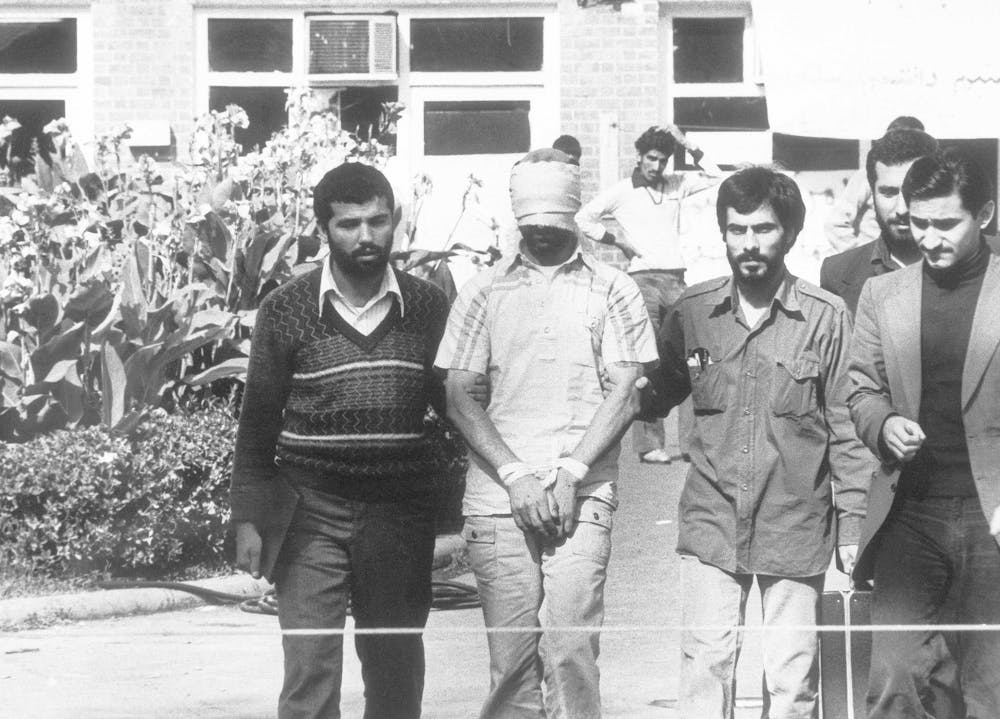
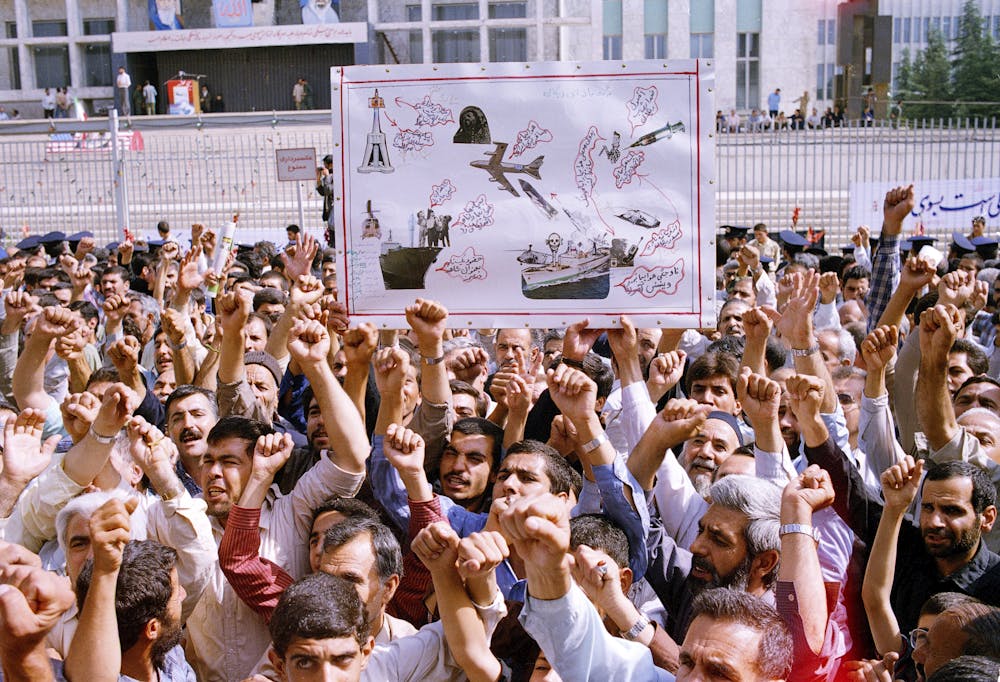
In 1979, Iranian revolutionaries took 52 US diplomats hostage. The image of those captive hostages blindfolded and at the mercy of Iranian radicals is burned into older Americans’ brains.
It has been the standard practice of US presidents to brief the bipartisan leadership of Congress on key national security initiatives, such as a strikes on adversaries. While not a hard-and-fast rule, the practice can produce more bipartisan support for a president’s actions that he might otherwise have. It’s not unreasonable to think senior congressional Democrats might be more openly supportive of the Iran strike if they had been consulted in this manner.
However, Trump and his administration did not do this, for a reason. There is little value in open bipartisanship in America today. Even though both parties are very close on Iran policy, neither wants that to be seen in public as cooperating across the aisle. Each party would much rather make the case to its base that it represents their interests and is not willing to compromise with the other party. Support from Democrats does not strengthen Trump, as his base is highly suspicious of the opposition party.
The reverse is true for elected Democrats, including those in leadership. They will be more vulnerable from progressives in next year’s primary contests if they are seen as insufficiently resisting Trump. There is no Trump-like figure in their party to protect them from this base.
In US politics today, nothing is more dangerous than agreeing with the other party. There is a premium value on publicly opposing your political adversaries, no matter what the issue. It makes for a foreign policy that appears more fractured than it actually is.
Lester Munson receives funding from the U.S. Studies Centre at the University of Sydney. He is affiliated with the Republican Party.
Source: People’s Republic of China – State Council News
China strongly condemns the U.S. attacks on Iran and bombing of nuclear facilities under the safeguards of the International Atomic Energy Agency, a Chinese foreign ministry spokesperson said on Sunday.
The spokesperson made the remarks when asked to comment on U.S. President Donald Trump’s announcement that the United States carried out strikes on three nuclear facilities in Iran.
The actions of the United States seriously violated the purposes and principles of the UN Charter and international law, and have exacerbated tensions in the Middle East, the spokesperson said.
China calls on the parties to the conflict, Israel in particular, to reach a ceasefire as soon as possible, ensure the safety of civilians, and start dialogue and negotiation, the spokesperson said.
China stands ready to work with the international community to pool efforts together and uphold justice, and work for restoring peace and stability in the Middle East, the spokesperson said.
June 22 2025 – The market impact of President Donald Trump’s military strikes on Iranian nuclear facilities is already beginning to reshape investor expectations across asset classes, sectors and geographies, says Nigel Green, CEO of financial advisory giant deVere Group.
As markets reopen, investors are bracing for sharp volatility, with crude oil prices expected to surge and inflation forecasts now under intense scrutiny.
A conflict that had remained largely contained is now threatening to trigger broad-based repricing across the global economy.
“The US strike on Iran’s nuclear sites is a market-defining moment,” says Nigel Green. “It’s a direct hit to the assumptions that have been driving investor positioning: lower inflation, falling rates, and stable energy prices. This framework has just been broken.”
Brent crude had already been climbing steadily in recent weeks, but the decision to target Iranian nuclear facilities has dramatically increased fears of retaliation and disruption.
Any closure or threat to the Strait of Hormuz, through which nearly 20% of the world’s oil flows, would send prices sharply higher.
Some analysts now warn that crude could spike toward $130 per barrel, depending on Iran’s next move.
“Such a price shock would filter through to global inflation, which remains elevated and/or sticky in many regions. Market participants had been pricing in rate cuts from central banks including the Federal Reserve in the second half of the year. That is now in question,” notes the deVere CEO.
“A sustained surge in oil makes rate cuts very difficult to justify. If inflation spikes back up, monetary policymakers will be forced to hold, and possibly even reconsider the easing cycle altogether,” saysNigel Green.
“That fundamentally changes the landscape for equity sectors, currencies, and credit.”
He continues: “In equities, the most immediate reaction is likely to be a rotation out of rate-sensitive and consumer-driven sectors. Travel and tourism companies, which are highly vulnerable to energy costs and geopolitical disruptions, are expected to come under pressure. Tech stocks, particularly those trading on high multiples, may also see selling as the bond market rethinks the rate outlook.”
At the same time, there is likely to be “increased investor appetite for energy producers, commodity firms and companies tied to national defense. With military budgets already rising in several developed economies, firms linked to security, surveillance, aerospace and weapons manufacturing are well-positioned to benefit from a surge in demand.”
Meanwhile, consumer staples and utility companies, with stable earnings profiles and pricing power, may also draw inflows in this higher-volatility environment.
Safe-haven flows are expected to intensify. “Government bond yields may fall sharply on the short end, even as long-term inflation expectations creep higher. Gold, which has already rallied this year, is likely to climb further as investors hedge geopolitical and monetary risk.”
Currency markets could see a short-term bid for the US dollar on safety grounds, but the longer-term picture is more uncertain. With America now deeply embedded in a widening Middle East conflict, and inflation risks rising, the dollar’s appeal could diminish if the US growth outlook deteriorates.
“The dollar may rally initially, but this isn’t a clean safe-haven story,” says Nigel Green.
“If oil drives up inflation and suppresses consumer demand, we may see slower growth in the US and renewed pressure on fiscal stability. That’s not necessarily a supportive environment for the dollar longer-term.”
Green also notes that although past geopolitical events in the region have often led to short-term drawdowns followed by market recoveries, 2025 presents a very different macro backdrop. In previous conflicts, inflation was low, rates were near zero, and central banks had ample room to support asset prices. This is no longer the case.
“This is not 2019. We’re in a tighter, more fragile system now, with less room for error,” he says.
“Investors can’t afford to wait and see. They need to respond now, reposition portfolios, and focus on sectors and strategies that can withstand prolonged uncertainty.”
deVere is advising clients globally to reduce exposure to sectors vulnerable to energy cost spikes and to consider shifting allocations toward energy, commodities, and defensive names. Gold and inflation-linked bonds are also being recommended as part of broader portfolio hedging strategies.
“The time for passive optimism is over,” conclude the chief executive.
“This strike marks a turning point. The smart investors are already repositioning, those who hesitate risk being left exposed.”
deVere Group is one of the world’s largest independent advisors of specialist global financial solutions to international, local mass affluent, and high-net-worth clients. It has a network of offices around the world, more than 80,000 clients, and $14bn under advisement.
In response to U.S. airstrikes inside Iran ordered by President Trump,, DAWN issued the following statements:
“Trump’s unprovoked and unauthorized attacks on Iran not only violate international law but the U.S. Constitution, which grants only Congress the right to declare war,” said Sarah Leah Whitson, DAWN’s Executive Director. “Trump has recklessly launched a war that harms American interests in service of Israeli demands, and broken his promise to the American people to put America first.”
“President Trump’s actions will most likely lead to retaliation from Iran that puts American troops and citizens across the Middle East in harm’s way,” said Raed Jarrar, DAWN’s Advocacy Director. “Congress should immediately pass a War Powers Resolution to prohibit further U.S. military involvement, even in the event of retaliation. We need de-escalation, not more bombs.”
“Trump has completely folded to Netanyahu, dragging the U.S. into a war that undermines American interests,” said Michael Schaeffer Omer-Man, Israel-Palestine Director at DAWN. “The UN General Assembly should immediately pass a ‘Uniting for Peace’ resolution to hold both Israel and the U.S. accountable and demand an end to this regime-change campaign.”
DAWN is a non-profit organization based in Washington, D.C. Please refer to the organization’s name as “DAWN”.
In response to U.S. airstrikes inside Iran ordered by President Trump,, DAWN issued the following statements:
“Trump’s unprovoked and unauthorized attacks on Iran not only violate international law but the U.S. Constitution, which grants only Congress the right to declare war,” said Sarah Leah Whitson, DAWN’s Executive Director. “Trump has recklessly launched a war that harms American interests in service of Israeli demands, and broken his promise to the American people to put America first.”
“President Trump’s actions will most likely lead to retaliation from Iran that puts American troops and citizens across the Middle East in harm’s way,” said Raed Jarrar, DAWN’s Advocacy Director. “Congress should immediately pass a War Powers Resolution to prohibit further U.S. military involvement, even in the event of retaliation. We need de-escalation, not more bombs.”
“Trump has completely folded to Netanyahu, dragging the U.S. into a war that undermines American interests,” said Michael Schaeffer Omer-Man, Israel-Palestine Director at DAWN. “The UN General Assembly should immediately pass a ‘Uniting for Peace’ resolution to hold both Israel and the U.S. accountable and demand an end to this regime-change campaign.”
DAWN is a non-profit organization based in Washington, D.C. Please refer to the organization’s name as “DAWN”.
Source: United States House of Representatives – Representative Mike Kelly (R-PA)
WASHINGTON, D.C. — Today, U.S. Rep. Mike Kelly (R-PA) released this statement following military operations in Iran on the evening of Saturday, June 21.
“President Trump is leading with peace through strength. Let’s be clear: Iran cannot have a nuclear weapon. May God protect our brave service members who carried out this operation, and may God bless America,” said Rep. Kelly. “This is the most significant show of American strength, commitment and resolve by any sitting American President in our recent history. God Bless the men and women of our American Military for their courage, dedication, commitment and the Leadership of President Trump. You are all in our prayers!”
PM call with President Trump of the United States: 22 June 2025
The Prime Minister spoke to the President of the United States Donald Trump this evening.
The Prime Minister spoke to the President of the United States Donald Trump this evening.
The leaders discussed the situation in the Middle East and reiterated the grave risk posed by Iran’s nuclear programme to international security. They discussed the actions taken by the United States last night to reduce the threat and agreed that Iran must never be allowed to develop a nuclear weapon.
They discussed the need for Iran to return to the negotiating table as soon as possible and to make progress on a lasting settlement.
They agreed to stay in close contact in the coming days.
Source: United States House of Representatives – Congresswoman Sydney Kamlager California (37th District)
WASHINGTON, D.C. — Today, Congresswoman Sydney Kamlager-Dove (CA-37), Ranking Member of the House Foreign Affairs Subcommittee on South and Central Asia, released the following statement on the U.S. strikes in Iran:
“The ‘President of peace’ just bombed Iran without Congressional authorization, without clear evidence that Iran is imminently close to having a nuclear weapon, without properly notifying both parties in Congress, and with no clear plan for what comes next.
“I support the longstanding U.S. policy that Iran, an adversary and state-sponsor of terror, must never acquire a nuclear weapon. However, I have not received any classified briefing on the intelligence that shows Iran could imminently develop a nuclear weapon, which directly contradicts DNI Tulsi Gabbard’s testimony to Congress in March. Equally concerning, President Trump and his incompetent national security team have not shown to the American people what their day after plan is and how they will manage the possibility of another forever war in the Middle East.
“The U.S. must not be dragged into a wider war in the Middle East, and I pray for the U.S. servicemembers Trump has now placed in harm’s way. The Trump Administration must come before Congress to seek approval for further actions and my colleagues on both sides of the aisle must reassert Congress’s constitutional authority to ensure we do not repeat the mistakes of past conflicts.”
Source: United States House of Representatives – Congresswoman Jennifer McClellan (Virginia 4th District)
Washington, D.C. – Congresswoman Jennifer McClellan (VA-04) issued the following statement after the U.S. launched direct strikes on Iran:
“President Trump’s decision to launch air strikes on Iran without Congressional consultation or approval absent an imminent threat to the United States risks triggering a broader regional war that drags us deeper into an avoidable conflict with no clear strategy.
“Escalating tensions through force without a coordinated diplomatic effort dangerously undermines our national security and the safety of our allies, and puts our over 40,000 servicemembers stationed throughout the Middle East within reach of Iranian missiles and drones at risk. The American people deserve transparency and accountability when it comes to decisions that could cost American lives. I urge the Administration to brief all members in Congress on the intelligence that compelled these strikes, the effectiveness of the strikes, the plans for what comes next, and the actions that the Administration is taking to protect American servicemembers and potential domestic targets from Iranian reprisals.
“While we remain firm in our commitment to preventing a nuclear armed Iran, using force that at best merely delays nuclear weapons development by a few years will not bring long-term success. Only robust and aggressive diplomatic action has ever successfully contained Iran’s nuclear ambitions in a meaningful way. Unfortunately, the President abandoned the Joint Comprehensive Plan of Action agreement successfully negotiated by the Obama-Biden Administration, without any clear alternatives in mind to avoid the current crisis that we find ourselves in at this moment.
“I urge the Administration to pursue every available diplomatic channel to deescalate this crisis, prevent further bloodshed and achieve a lasting and durable solution to Iran’s nuclear ambitions.”
Source: United States Senator for Vermont – Bernie Sanders
BURLINGTON, Vt. June 22 – Sen. Bernie Sanders (I-Vt.) today released the following statement about President Trump’s military strikes against Iran:
In the 1960s the United States government lied to the American people and took us into a terrible war in Vietnam. The result of that war was that over 58,000 young Americans died and many more came back wounded both in mind and in spirit. Millions of Vietnamese were also killed. Hundreds of billions of dollars of taxpayer money was wasted.
In 2002 we were told that we had to go to war against Iraq, that Iraq was building weapons of mass destruction, and that if we did not act quickly and decisively nuclear weapons would fall on America. Among those who told us that was none other than Benjamin Netanyahu, the Prime Minister of Israel, who stated in testimony before Congress: “There is no question whatsoever that Saddam is seeking… nuclear weapons… If you take out Saddam’s regime, I guarantee you that it will have enormous positive reverberations.” The United States invaded Iraq and became embroiled in a long civil war there. No weapons of mass destruction were ever found. That war was based on a lie – a lie which cost us 4,492 young Americans, 32,000 wounded, over half a million Iraqis and trillions of dollars.
The American people were lied to about Vietnam, with tragic consequences.
The American people were lied to about Iraq, with tragic consequences.
The American people are being lied to again today. We cannot allow history to repeat itself. The U.S. faces enormous problems here at home, which we must address. We cannot allow ourselves to be dragged into another Middle East war based on lies.
Source: United States Senator for New York Kirsten Gillibrand
Addressing U.S. strikes on Iran’s nuclear facilities, U.S. Senator Kirsten Gillibrand, a member of the Senate Armed Services Committee and the Senate Select Committee on Intelligence, issued the following statement:
“I am grateful that no U.S. service members were harmed during the military operation against Iran’s nuclear facilities. I am praying for American troops and citizens in the region, and I will be working with state and local partners to ensure New Yorkers here at home are safe.
Throughout my career, I have been a steadfast champion of Israel, leading U.S. support for Iron Dome and initiatives to strengthen the alliance between our nations. I have long supported efforts to ensure that Iran, the foremost exporter of terrorism in the world, cannot obtain a nuclear weapon.
However, I am deeply concerned by President Trump’s decision to unilaterally launch these attacks without seeking congressional authorization, as required by the Constitution. The Trump administration must fully explain to the American people the rationale for this military action and a strategy to avoid being mired in another Middle Eastern war, and it must give Congress a full intelligence briefing immediately.
No further military actions should be allowed without proper congressional approval.
Avoiding further escalation is essential to the peace and security of Israel, the U.S., and our partners in the region. I urge the president and Iran to pursue a diplomatic resolution to this conflict.”
Washington, D.C. – U.S. Senator Ron Wyden, D-Ore., released the following statement in response to Donald Trump ordering airstrikes on Iranian nuclear facilities:
“Keeping a nuclear weapon out of Iran’s hands and securing Israel’s democratic future has always been crucial to America’s national interest. However, Donald Trump’s reckless attack on Iran without congressional authorization has raised the risks that every U.S. servicemember in the Middle East will be a target for retaliation. As senior senator on the Intelligence Committee I’ll be pushing the Trump administration for answers on what plan, if any, it has to prevent an escalation of violence,” Wyden said.
“I heard loud and clear at four town halls in eastern Oregon and the Columbia Gorge this past weekend that Oregonians do not want U.S. troops to be drawn into another foreign war. Just as I opposed George W. Bush’s Iraq War, I reject the idea that sacrificing more American lives in the Middle East will make our country safer.”
Source: United States Senator Alex Padilla (D-Calif.)
Padilla Statement on Trump Administration’s Strikes on Iranian Nuclear Facilities
WASHINGTON, D.C. — Today, U.S. Senator Alex Padilla (D-Calif.) released the following statement after President Trump announced that the United States had completed strikes on three of Iran’s nuclear facilities:
“Dismantling Iran’s nuclear weapons program is imperative for America’s national security and essential to Israel’s safety and right to exist. However, it is unacceptable that the president disregarded his constitutional responsibility to seek and secure congressional authorization before launching these strikes.
“Before any further military action is taken, President Trump must come before Congress. That’s not just a matter of process — it’s a matter of law. Trump risks igniting a wider war in the region that puts American lives at risk and that he himself has warned repeatedly against. That’s why we must exhaust every diplomatic channel, working with our allies and partners to contain escalation in the region.
“I’m praying for the safety of our service members and all Americans in the region.”
This morning, key leaders of the Trump Administration were out across the airwaves with a clear message: the world is safer today because of President Donald J. Trump’s highly successful precision strikes against the Iranian regime’s key nuclear facilities — and that what happens next is up to them.
Here’s what you missed:
Vice President JD Vance on Meet the Press
On the precision strikes: “We’re not at war with Iran … We destroyed the Iranian nuclear program … and we did it without endangering the lives of American pilots. That’s an incredible thing.”
On achieving peace: “We do not want war with Iran. We actually want peace, but we want peace in the context of them not having a nuclear weapons program — and that’s exactly what the President accomplished last night.”
On diplomacy: “They weren’t taking this seriously. They were trying to draw this process out as long as possible so they could rebuild their nuclear weapons program without the threat of American action … We didn’t blow up the diplomacy. The diplomacy never was given a real chance by the Iranians.”
On potential retaliation: “We’re prepared in the event the that the Iranians do retaliate, but … if the Iranians want to enlarge this by attacking American troops, I think that would be a catastrophic mistake.”
On further conflict: “We have no interest in a protracted conflict. We have no interest in boots on the ground. The President has actually been one of the fiercest critics of 25 years of failed foreign policy in the Middle East, which is why he did what he did — a very precise, a very surgical strike tailored to an American national interest.”
On regime change: “Our view has been very clear that we don’t want a regime change … We want to end their nuclear program, and then we want to talk to the Iranians about a long-term settlement.”
Vice President JD Vance on This Week
On Iranian nuclear capabilities: “I can say to the American people with great confidence that [Iran is] much further away from a nuclear program today than they were 24 hours ago. That was the objective of the mission.”
On the nature of the precision strikes: “If the Iranians attack us, they’re going to be met with overwhelming force … We did not attack the nation of Iran. We did not attack any civilian targets. We didn’t even attack military targets outside of the three nuclear weapons facilities.”
On a peaceful solution: “We believe the way that you achieve peace is through strength … You can’t sit there and allow the Iranians to achieve a nuclear weapon and expect that’s going to lead to peace … The President — more than anybody — is worried about protracted military conflicts. That is NOT what we’re getting ourselves involved in.”
Secretary of State Marco Rubio on Face the Nation
On what happens next: “What happens next will now depend on what Iran chooses to do next. If they choose the path of diplomacy, we’re ready. We can do a deal that’s good for them, the Iranian people, and good for the world. If they choose another route, then there’ll be consequences.”
On the reality of Iran’s nuclear development: “They had everything they need to build nuclear weapons. Why would you bury things in a mountain 300 feet under the ground? Why do they have 60% enriched uranium? … The only countries in the world that have uranium at 60% are countries that have nuclear weapons because they can quickly make it 90%.”
On a peaceful resolution: “We’ll defend our people … but let’s hope they don’t choose that route. Let’s all hope that they actually decide, ‘let’s go negotiate’ because we want a diplomatic and peaceful solution.”
On diplomacy: “This is very simple. The President wants to resolve this diplomatically and peacefully. He gave them a chance to do that … What happens next is up to the regime.”
Secretary of State Marco Rubio on Sunday Morning Futures
On President Trump’s decision: “[Iran] tried to play him along the way they’ve played every American president for the last 35 years and the President told them if we don’t get a deal — which is what we wanted — then I’ll have to have to handle it differently … We didn’t make that choice, they did.”
On U.S. military might: “The President said very clearly, ‘We have 60 days to make progress on a deal and if we don’t, I’m going to deal with it differently’ … [Our military] went in, they did what they needed to do with precision and skill that no other military in the world can do, and they left.”
On President Trump’s leadership: “They thought they could do with President Trump what they’ve done with presidents in the past and get it away with it — and they found out last night that they can’t … This is a President that tells you what he’s going to do and then he does it.”
On the evil of the Iranian regime: “Why did Hezbollah exist? Because of Iran. Why does Hamas exist? Because of Iran. How do the Houthis exist? Because of Iran. Who built the IEDs that maimed and killed American soldiers in Iraq? Iran. They’re behind every problem in this region. They are the sole source of instability in the entire Middle East … Imagine those people having a nuclear weapon … That is unacceptable.”
On the Strait of Hormuz: “If they do that, it will be another terrible mistake. It’s economic suicide for them if they do it, and we retain options to deal with that.”
Source: The Conversation – USA – By Jeffrey Fields, Professor of the Practice of International Relations, USC Dornsife College of Letters, Arts and Sciences
People observe fire and smoke from an Israeli airstrike on an oil depot in Tehran, Iran, on June 15, 2025. Stringer/Getty Images
The two countries have been particularly hostile to each other since Iranian students took over the U.S. Embassy in Tehran in November 1979, resulting in economic sanctions and the severing of formal diplomatic relations between the nations.
Some of the major events in U.S.-Iran relations highlight the differences between the nations’ views, but others arguably presented real opportunities for reconciliation.
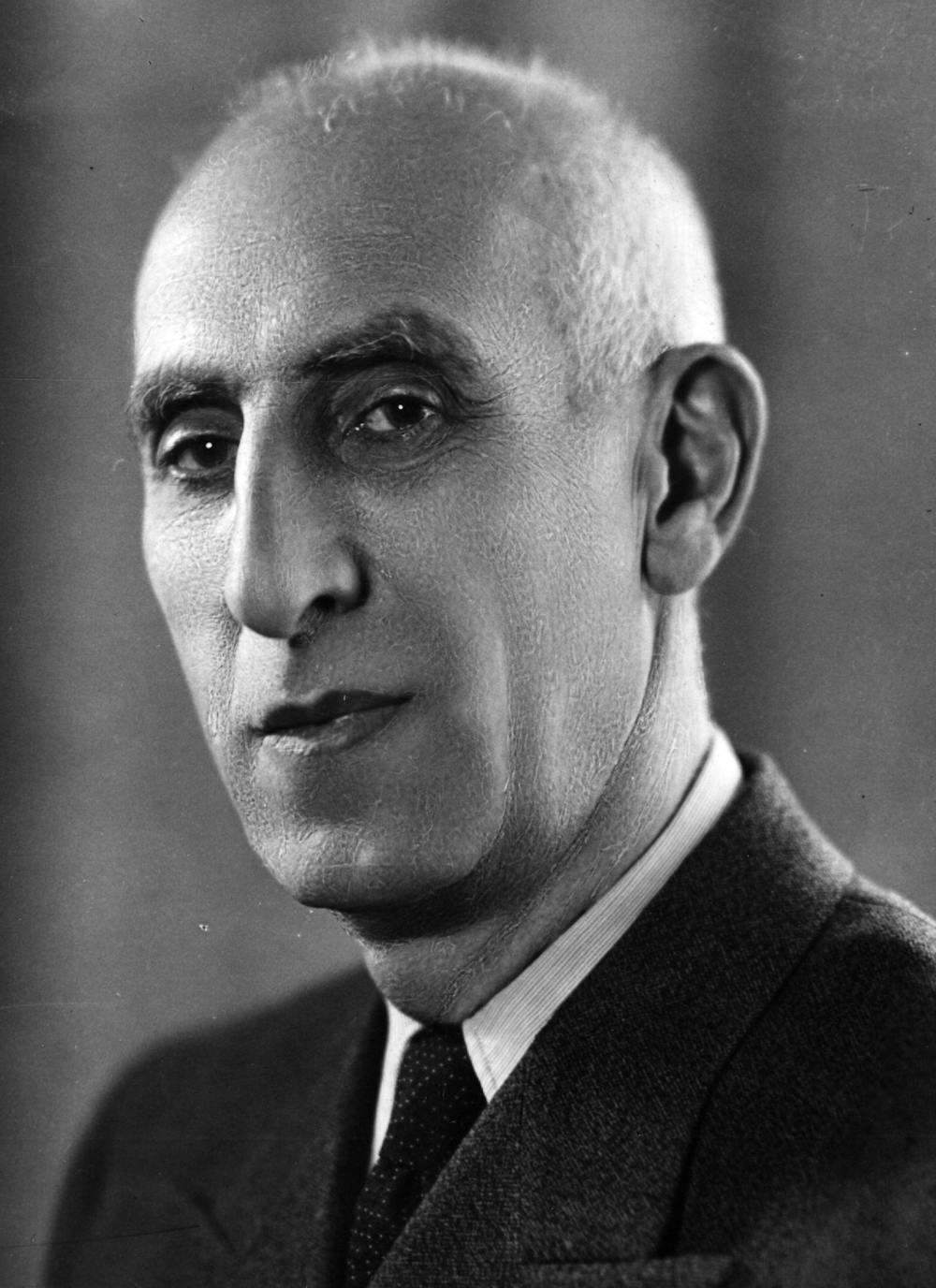
In 1951, the Iranian Parliament chose a new prime minister, Mossadegh, who then led lawmakers to vote in favor of taking over the Anglo-Iranian Oil Company, expelling the company’s British owners and saying they wanted to turn oil profits into investments in the Iranian people. The U.S. feared disruption in the global oil supply and worried about Iran falling prey to Soviet influence. The British feared the loss of cheap Iranian oil.
President Dwight Eisenhower decided it was best for the U.S. and the U.K. to get rid of Mossadegh. Operation Ajax, a joint CIA-British operation, convinced the Shah of Iran, the country’s monarch, to dismiss Mossadegh and drive him from office by force. Mossadegh was replaced by a much more Western-friendly prime minister, handpicked by the CIA.
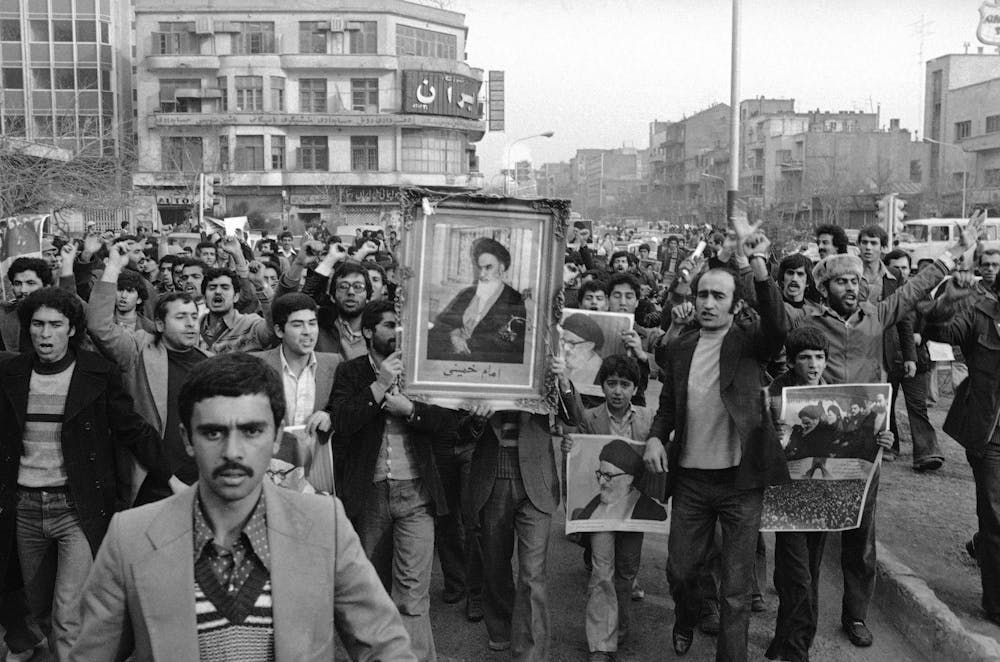
Demonstrators in Tehran demand the establishment of an Islamic republic. AP Photo/Saris
1979: Revolutionaries oust the shah, take hostages
After more than 25 years of relative stability in U.S.-Iran relations, the Iranian public had grown unhappy with the social and economic conditions that developed under the dictatorial rule of Shah Mohammad Reza Pahlavi.
Iranian students at the U.S. Embassy in Tehran show a blindfolded American hostage to the crowd in November 1979. AP Photo
In October 1979, President Jimmy Carter agreed to allow the shah to come to the U.S. to seek advanced medical treatment. Outraged Iranian students stormed the U.S. Embassy in Tehran on Nov. 4, taking 52 Americans hostage. That convinced Carter to sever U.S. diplomatic relations with Iran on April 7, 1980.
Two weeks later, the U.S. military launched a mission to rescue the hostages, but it failed, with aircraft crashes killing eight U.S. servicemembers.
The shah died in Egypt in July 1980, but the hostages weren’t released until Jan. 20, 1981, after 444 days of captivity.
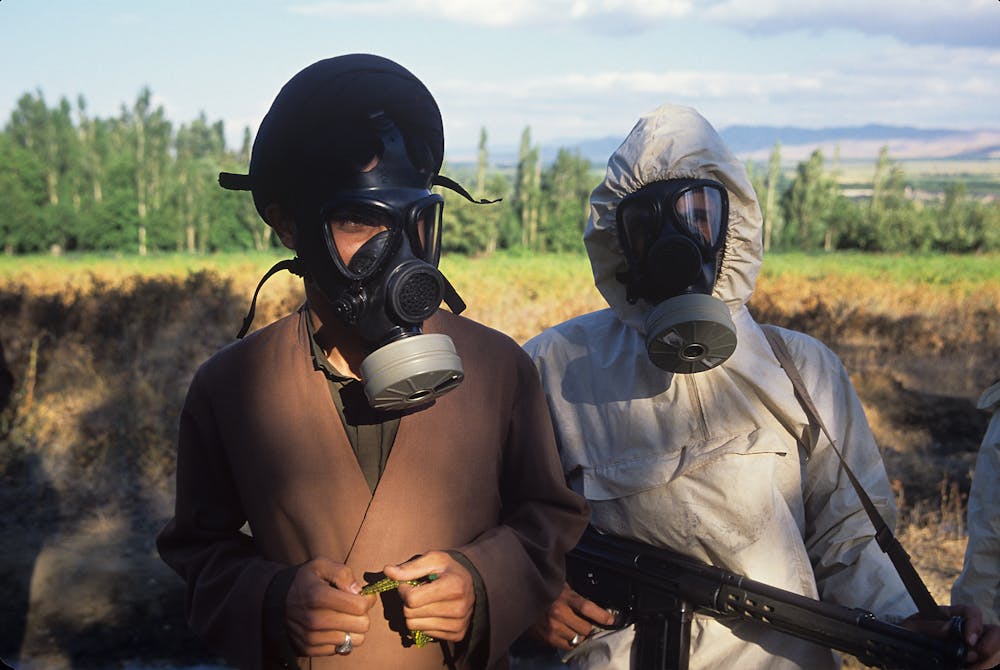
An Iranian cleric, left, and an Iranian soldier wear gas masks to protect themselves against Iraqi chemical-weapons attacks in May 1988. Kaveh Kazemi/Getty Images
The U.S. was concerned that the conflict would limit the flow of Middle Eastern oil and wanted to ensure the conflict didn’t affect its close ally, Saudi Arabia.
U.S. officials moderated their usual opposition to those illegal and inhumane weapons because the U.S. State Department did not “wish to play into Iran’s hands by fueling its propaganda against Iraq.” In 1988, the war ended in a stalemate. More than 500,000 military and 100,000 civilians died.
1981-1986: US secretly sells weapons to Iran
The U.S. imposed an arms embargo after Iran was designated a state sponsor of terrorism in 1984. That left the Iranian military, in the middle of its war with Iraq, desperate for weapons and aircraft and vehicle parts to keep fighting.
The last shipment, of anti-tank missiles, was in October 1986. In November 1986, a Lebanese magazine exposed the deal. That revelation sparked the Iran-Contra scandal in the U.S., with Reagan’s officials found to have collected money from Iran for the weapons and illegally sent those funds to anti-socialist rebels – the Contras – in Nicaragua.
At a mass funeral for 76 of the 290 people killed in the shootdown of Iran Air 655, mourners hold up a sign depicting the incident. AP Photo/CP/Mohammad Sayyad
Either during or just after that exchange of gunfire, the Vincennes crew mistook a passing civilian Airbus passenger jet for an Iranian F-14 fighter. They shot it down, killing all 290 people aboard.
The U.S. called it a “tragic and regrettable accident,” but Iran believed the plane’s downing was intentional. In 1996, the U.S. agreed to pay US$131.8 million in compensation to Iran.
1997-1998: The US seeks contact
In August 1997, a moderate reformer, Mohammad Khatami, won Iran’s presidential election.
U.S. President Bill Clinton sensed an opportunity. He sent a message to Tehran through the Swiss ambassador there, proposing direct government-to-government talks.
Shortly thereafter, in early January 1998, Khatami gave an interview to CNN in which he expressed “respect for the great American people,” denounced terrorism and recommended an “exchange of professors, writers, scholars, artists, journalists and tourists” between the United States and Iran.
However, Supreme Leader Ayatollah Ali Khamenei didn’t agree, so not much came of the mutual overtures as Clinton’s time in office came to an end.
In his 2002 State of the Union address, President George W. Bush characterized Iran, Iraq and North Korea as constituting an “Axis of Evil” supporting terrorism and pursuing weapons of mass destruction, straining relations even further.
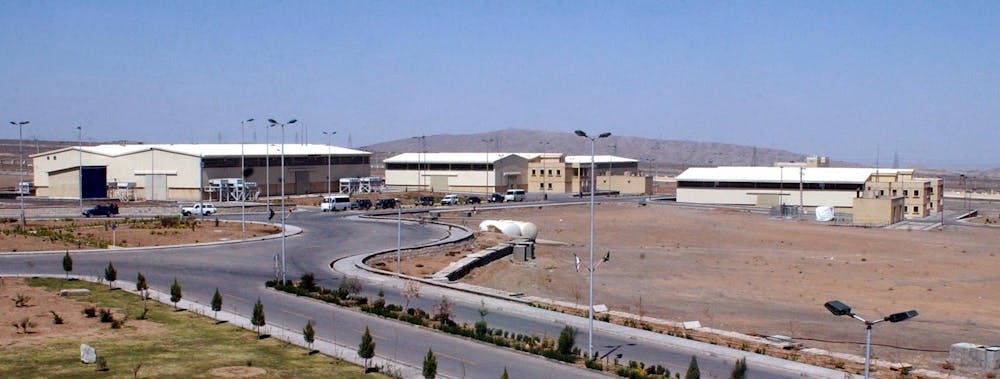
Inside these buildings at the Natanz nuclear facility in Iran, technicians enrich uranium. AP Photo/Vahid Salemi
That was a violation of the terms of the Nuclear Nonproliferation Treaty, which Iran had signed, requiring countries to disclose their nuclear-related facilities to international inspectors.
One of those formerly secret locations, Natanz, housed centrifuges for enriching uranium, which could be used in civilian nuclear reactors or enriched further for weapons.
Starting in roughly 2005, U.S. and Israeli government cyberattackers together reportedly targeted the Natanz centrifuges with a custom-made piece of malicious software that became known as Stuxnet.
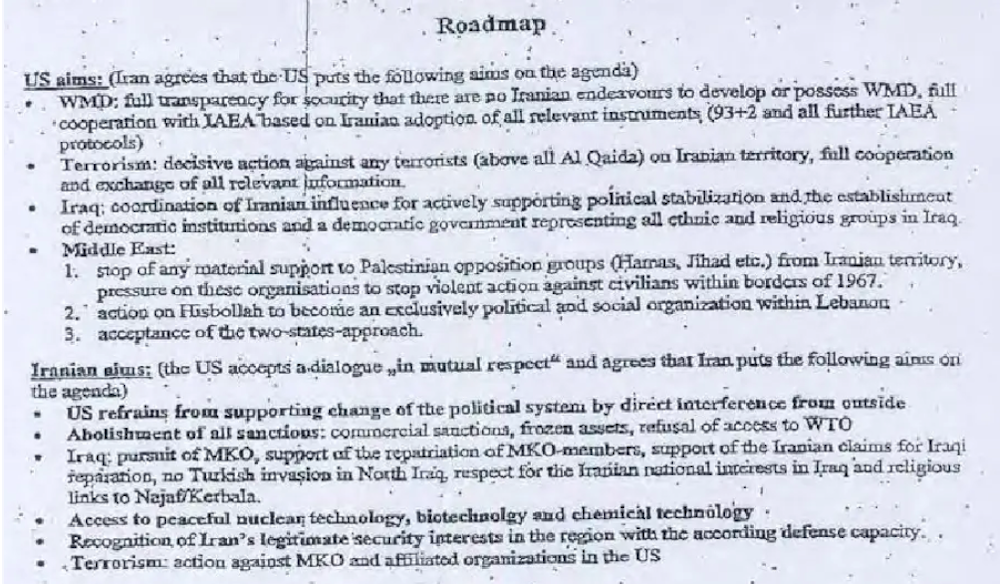
An excerpt of the document sent from Iran, via the Swiss government, to the U.S. State Department in 2003, appears to seek talks between the U.S. and Iran. Washington Post via Scribd
In May 2003, senior Iranian officials quietly contacted the State Department through the Swiss embassy in Iran, seeking “a dialogue ‘in mutual respect,’” addressing four big issues: nuclear weapons, terrorism, Palestinian resistance and stability in Iraq.
Hardliners in the Bush administration weren’t interested in any major reconciliation, though Secretary of State Colin Powell favored dialogue and other officials had met with Iran about al-Qaida.
When Iranian hardliner Mahmoud Ahmadinejad was elected president of Iran in 2005, the opportunity died. The following year, Ahmadinejad made his own overture to Washington in an 18-page letter to President Bush. The letter was widely dismissed; a senior State Department official told me in profane terms that it amounted to nothing.
After a decade of unsuccessful attempts to rein in Iran’s nuclear ambitions, the Obama administration undertook a direct diplomatic approach beginning in 2013.
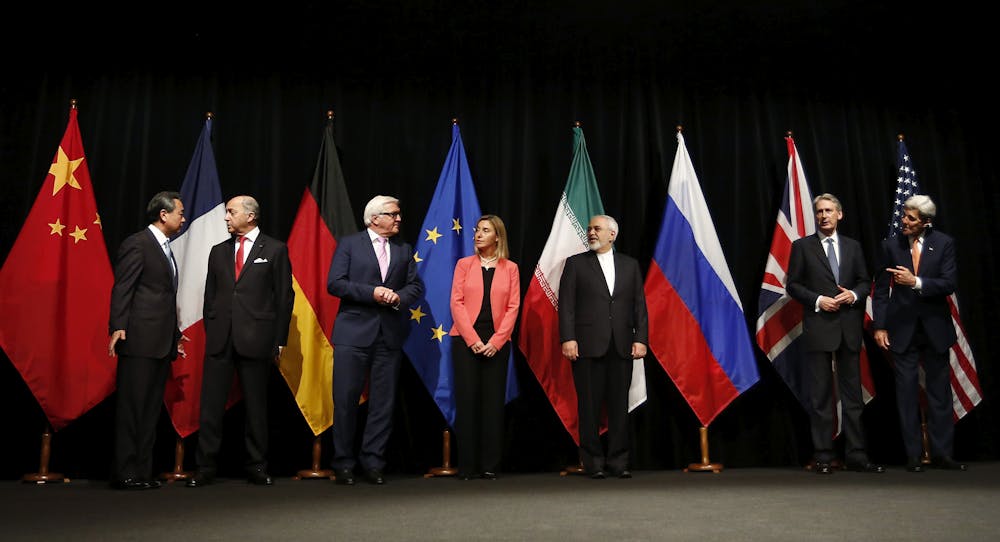
Iran, the U.S., China, France, Germany, Russia and the United Kingdom signed the deal in 2015. It severely limited Iran’s capacity to enrich uranium and mandated that international inspectors monitor and enforce Iran’s compliance with the agreement.
In return, Iran was granted relief from international and U.S. economic sanctions. Though the inspectors regularly certified that Iran was abiding by the agreement’s terms, President Donald Trump withdrew from the agreement in May 2018.
2020: US drones kill Iranian Maj. Gen. Qassem Soleimani
At the time, the Trump administration asserted that Soleimani was directing an imminent attack against U.S. assets in the region, but officials have not provided clear evidence to support that claim.
Hamas’ brazen attack on Israel on Oct. 7, 2023, provoked a fearsome militarized response from Israel that continues today and served to severely weaken Iran’s proxies in the region, especially Hamas – the perpetrator of the attacks – and Hezbollah in Lebanon.
2025: Trump 2.0 and Iran
Trump saw an opportunity to forge a new nuclear deal with Iran and to pursue other business deals with Tehran. Once inaugurated for his second term, Trump appointed Steve Witkoff, a real estate investor who is the president’s friend, to serve as special envoy for the Middle East and to lead negotiations.
Negotiations for a nuclear deal between Washington and Tehran began in April, but the countries did not reach a deal. They were planning a new round of talks when Israel struck Iran with a series of airstrikes on June 13, forcing the White House to reconsider is position.
On June 22, in the early morning hours, the U.S. chose to act decisively in an attempt to cripple Iran’s nuclear capacity, bombing three nuclear sites and causing what Pentagon officials called “severe damage.” Iran vowed to retaliate.
This story has been updated to reflect the U.S. bombing of Iranian nuclear sites on June 22, 2025.
Jeffrey Fields receives funding from the Carnegie Corporation of New York and Schmidt Futures.
Source: United States House of Representatives – Congresswoman Marcy Kaptur (OH-09)
Toledo, Ohio — Today, Congresswoman Marcy Kaptur (OH-09), a senior member of the House Appropriations Defense Subcommittee, released the following statement. Congresswoman has demanded immediate highly secure confidential Congressional briefings of key Defense and Intelligence Committees to address the following questions related to American strikes on Iranian nuclear facilities. Congresswoman Kaptur is one of 44 bipartisan members of the House who are leading H.Con.Res.38 Directing the President pursuant to section 5(c) of the War Powers Resolution to remove United States Armed Forces from unauthorized hostilities in the Islamic Republic of Iran.
“There was no congressional vote, no debate, nor even any discussion with Congress, with leaders of key intelligence committees reportedly left in the dark,” said Congresswoman Marcy Kaptur (OH-09). “This is not the way our Republic is supposed to function because that is not how our Constitution reads. I will continue to demand answers in a secure confidential Congressional briefing in the coming days. May God bless America and our people.”
(1) If not an act of war against Iran, which Constitutionally would require Congressional consent before bombs were dropped, how does President Trump define his actions against Iran?
(2) Who — which individuals — exactly at the National Security Council, Pentagon, and Departments of Defense and State were involved in this decision?
(3) With what other nations, and which international leaders did President Trump consult before making what appears to be a lone decision?
(4) Going forward, the secretive manner in which the White House has made such a consequential, strategic, “Lone Ranger” decision puts at very serious risk American troops, US global assets, and strategic interests both abroad and at home.
(5) This decision appears to have been solely President Trump’s. The consequences that will likely flow from it, however, will attend to the American people at home and abroad and rest squarely on his shoulders alone.
(6) Political retribution can take many forms where religious beliefs do not accommodate compromise nor forgiveness as an accepted behavior.
In the early hours of June 22, 2025, local time, the United States attacked three nuclear facilities in Iran with “bunker buster” bombs and Tomahawk missiles.
The Conversation U.S. turned to Javed Ali, an expert on Middle East affairs at the University of Michigan and a former senior official at the National Security Council during the first Trump administration, to talk through why Trump chose now to act and what the potential repercussions could be.
What do we know about the nature and timing of US involvement?
President Trump has been forcefully hinting for days days that such a strike could happen, while at the same time opening up a window of negotiation by suggesting as late as June 20 that he would make a decision “within the next two weeks.” We know Trump can be very unpredictable, but he must have assessed that the current conditions presented an opportunity for U.S. action.
Trump met with the National Security Council twice in the days leading up to the strike. Typically at such meetings the president is presented with a menu of military options, which usually boil down to three: a narrow option, a middle ground and a “if you really want to go big” strike.
The one he picked, I would argue, is somewhere between the narrow option and the middle ground one.
The “go big” options would have been an attack on nuclear sites and Iranian leadership – be that senior members of Iran’s Revolutionary Guard, or possibly the Supreme Leader Ayatollah Ali Khamenei. The more narrow approach would have been just one facility, likely to have been Fordo – a deeply fortified uranium enrichment site buried within a mountain.
What did occur was a strike there, but also at two other sites – Isfahan and Natanz.
U.S. military chiefs confirmed that that 12 GBU-57s – the so-called 30,000-pound bunker busters – were dropped by B-2 bombers on Fordo, and two on Isfahan.
That suggests to me that the military goal of the operation was to destroy Iran’s ability to produce and or store highly enriched uranium in a one-time strike rather than drag the U.S. into a more prolonged conflict.
Has the strike achieved Trump’s objectives?
It will take some time to properly assess the extent to which Iran’s ability to produce or store highly enriched uranium has been damaged.
Certainly we know that the bombs hit their targets, and they have been damaged – but to what extent is not immediately clear. General Dan Caine, chairman of the Joint Chiefs of Staff, said that all three target sites had suffered “extremely severe damage and destruction” – possibly rolling back from Trump’s “fully obliterated” assessment. Perhaps most tellingly, Iran has not commented yet on the extent of the damage.
But to Trump, the objective was not just military but political, too. Trump has long said “no” to a nuclear Iran while at the same time has expressed that he has no desire to drag the U.S. into another war.
And this strike may allow Trump to achieve those seemingly contradictory goals. If U.S. initial assessments are correct, Iran’s nuclear program will have been severely compromised. But the strikes won’t necessarily pull U.S. into the conflict fully – unless Iran retaliates in such a way that necessitates further U.S. action.
And that is what Iran’s supreme leader and his military generals will need to work out: Should Iran retaliate and, if so, is it prepared to deal with a heavier U.S. military response – especially when there is no end in sight to its current conflict with Israel.
An operational timeline of a strike on Iran is displayed during a news conference with U.S. Chairman of the Joint Chiefs of Staff Gen. Dan Caine and U.S. Defense Secretary Pete Hegseth on June 22, 2025. Andrew Harnik/Getty Images
What options does Iran have to retaliate against US?
Iran has in the past tried to respond proportionately to any attack. But here is the problem for Iran’s leaders: There is no feasible proportionate response to the United States. Iran has no capability to hit nuclear plants in the U.S. – either conventionally or through unconventional warfare.
But there are tens of thousands of U.S. troops in the region, stationed in Iraq, Syria, the United Arab Emirates, Oman, Qatar and Jordan. All are in range of Iran’s ballistic, drones or cruise missiles.
But that military inventory has been depleted – both by using ballistic missiles in waves of attacks against Israel and by Israel hitting missile launch and storage sites in Iran.
Similarly, Tehran’s capacity to respond through one of its proxy or aligned groups in the region has been degraded. Hezbollah in Lebanon and Gaza’s Hamas – both of whom have ties to Iran – are in survival mode following damaging attacks from Israel over the past 18 months.
The Houthis in Yemen are in many ways the “last man standing” in Iran’s so-called “Axis of Resistance.” But the Houthis have limited capability and know that if they do attack U.S. assets, they will likely get hit hard. During Operation Rough Rider from March to May this year, the Trump administration launched over 1,000 strikes against the Houthis.
Meanwhile Shia militias in Iraq and Syria that could be encouraged to attack U.S. bases haven’t been active in months.
Of course, Iran could look outside the region. In the past the country has been involved in assassinations, kidnappings and terror attacks abroad that were organized through its Quds Force or via operatives of MOIS, its intelligence service.
But for Iran’s leaders, it is increasingly looking like a lose-lose proposition. If they don’t respond in a meaningful way, they look weak and more vulnerable. But if they do hit U.S. targets in any meaningful way, they will invite a stronger U.S. involvement in the conflict, as Trump has warned.
On that occasion, Iran promised a strong retaliation. Its retaliatory attack against the U.S. Ain al-Asad air base in Iraq involved 27 ballistic missiles and caused the physical destruction of some of the facilities on base as well as traumatic brain injury-type symptoms to dozens of troops and personnel, but no deaths. Nevertheless, after this both the U.S. and Iran then backed off from deepening the conflict.
The circumstances now are very different. Iran is already at war with Israel. Moreover, the U.S. went after Iran’s crown jewels – its nuclear program – and it was on Iranian territory. Nonetheless, Khameini knows that if he retaliates, he risks provoking a larger response.
Trump suggested ‘further attacks’ could occur. What could that entail?
The U.S. has suggested that it has the intelligence and ability to hit senior leadership in Iran. And any “go big option” would have likely involved strikes on key personnel. Similarly there could be plans to hit the Iranian economy by attacking oil and gas targets.
A satellite image of the Fordo nuclear facility in Iran prior to the U.S. strike on June 22, 2025. Maxar/Getty
But such actions risk either damaging the global economy or drawing the U.S. deeper into the conflict – it would evolve from a “one and done” strike to a cycle of attacks and responses. And that could widen political cracks between hawks in the administration and parts of Trump’s MAGA faithful who are against the U.S. being involved in overseas wars.
Is there any opportunity of a return to diplomacy?
Trump has not closed his “two weeks” window for talks – theoretically it is still open.
But will Iran come to table? Leaders there had already said they were not willing to entertain any deal while under attack from Israel. Araghchi, Iran’s foreign minister, said after the U.S. strikes that the time for diplomacy had now passed.
In any event, you have to ask, what can Iran come to the table with? Do they have much of a nuclear program anymore? And if not, what would they try to negotiate? It would seem, using one of Trump’s phrases, they “don’t have the cards” to make much of a deal.
Javed Ali does not work for, consult, own shares in or receive funding from any company or organization that would benefit from this article, and has disclosed no relevant affiliations beyond their academic appointment.
Source: United States Senator Reverend Raphael Warnock – Georgia
Warnock Statement on President Trump’s Decision to Bomb Iran Without Congressional Approval
Washington, D.C. – Today, U.S. Senator Reverend Raphael Warnock (D-GA) released the following statement on President Trump’s decision to enter another Middle East conflict and bomb Iran without seeking congressional approval:
“The ordering of our service members into battle is the gravest of responsibilities for an American president and should never be undertaken lightly. President Trump, who has said he ‘might or might not’ bomb Iran and has indicated this week that he disagrees with the assessment of his own national intelligence advisers, has now entered another Middle East conflict. He has not sought congressional approval and has not sufficiently explained why this operation was necessary right now. With thousands of American troops at risk for potential retaliation, this is not “the art of the deal.” This is war. And this is not the first time the American people have been told that it will end quickly. The people deserve to hear more than they’ve heard so far and the constitution requires a much more serious engagement with their representatives,” said Senator Reverend Warnock.
Source: United States Senator Reverend Raphael Warnock – Georgia
Warnock Statement on President Trump’s Decision to Bomb Iran Without Congressional Approval
Washington, D.C. – Today, U.S. Senator Reverend Raphael Warnock (D-GA) released the following statement on President Trump’s decision to enter another Middle East conflict and bomb Iran without seeking congressional approval:
“The ordering of our service members into battle is the gravest of responsibilities for an American president and should never be undertaken lightly. President Trump, who has said he ‘might or might not’ bomb Iran and has indicated this week that he disagrees with the assessment of his own national intelligence advisers, has now entered another Middle East conflict. He has not sought congressional approval and has not sufficiently explained why this operation was necessary right now. With thousands of American troops at risk for potential retaliation, this is not “the art of the deal.” This is war. And this is not the first time the American people have been told that it will end quickly. The people deserve to hear more than they’ve heard so far and the constitution requires a much more serious engagement with their representatives,” said Senator Reverend Warnock.
Source: United States House of Representatives – Congressman Jim Baird (R-IN-04)
Congressman Baird Statement on U.S. Airstrikes on Iran’s Nuclear Sites
Washington, June 22, 2025
Today, Congressman Jim Baird (IN-04) released the following statement on the U.S. airstrikes which destroyed three of Iran’s nuclear sites:
“The president has been consistent and clear: Iran cannot have a nuclear weapon. President Trump gave Iran every opportunity to make a deal, but Iran failed to come to an agreement and has terrorized Israel and Americans for decades. Thanks to President Trump’s decisive action, three of Iran’s key nuclear enrichment sites have been decimated. May God bless our brave, heroic troops for successfully completing this mission, and I thank them for their outstanding service to our country. God bless America.”
Source: United States House of Representatives – Congresswoman Julia Letlow (LA-05)
WASHINGTON, D.C. – Congresswoman Julia Letlow (LA-5) released the following statement regarding Saturday’s U.S. strikes against Iranian nuclear sites.
“President Trump’s decisive action protects America’s security and is a key step toward halting Iran’s march toward becoming a nuclear power. I’m grateful to our troops for their bravery in successfully executing this mission.
Military action should never be taken lightly, but the world’s leading sponsor of terrorism obtaining a nuclear weapon would fundamentally threaten our national security. These targeted strikes were the right call, and I pray for the continued protection of our men and women in uniform.”
Source: United States House of Representatives – Representative Jonathan Jackson – Illinois (1st District)
FOR IMMEDIATE RELEASE
WASHINGTON, D.C. – Congressman Jonathan L. Jackson issued the following statement regarding the escalating tensions between Israel, Iran, and the United States:
“The current situation in the Middle East is deeply troubling. I have long maintained that Iran must never be allowed to possess nuclear weapons—nor should any nation in the region. Diplomacy, not unilateral military action, must guide our approach to preventing nuclear proliferation.
I supported the Joint Comprehensive Plan of Action (JCPOA), negotiated through U.S. leadership and in partnership with our allies. While imperfect, it was the most effective means of restraining Iran’s nuclear ambitions at the time. President Trump’s decision to unilaterally withdraw from the deal—against the counsel of our allies—undermined global security and allowed Iran to resume uranium enrichment at alarming levels.
Prime Minister Benjamin Netanyahu’s recent preemptive strike on Iran, on the eve of potential U.S.-Iran negotiations, was unnecessary and provocative. U.S. intelligence agencies and Rafael Grossi, Director General of the International Atomic Energy Agency (IAEA), have confirmed there is no evidence Iran is actively building a nuclear weapon.
Today’s U.S. military strikes on Iranian facilities were equally unjustified, as there was no imminent threat to American security. Moreover, the President failed to consult Congress—the sole branch of government with the constitutional authority to authorize such actions.
I demand that President Trump immediately brief Congress before taking any further military action. The American people deserve transparency. We cannot repeat the mistakes of the Iraq War, launched on false intelligence, which cost thousands of lives and billions of dollars.
It is time for restraint, accountability, and a return to diplomacy.”
Source: United States Senator Ben Ray Luján (D-New Mexico)
Santa Fe, N.M. – U.S. Senator Ben Ray Luján (D-N.M.) issued the following statement following U.S. airstrikes on Iranian nuclear facilities:
“Americans have made it clear they do not want to be dragged into another endless war in the Middle East. Yet President Trump went against the American people without sharing any evidence to prove these military strikes would protect our homeland security.
“This unauthorized and unilateral action puts American troops at risk and threatens to further destabilize the region.
“President Trump must work to deescalate rising tensions in the Middle East and to protect the American people.”
Source: United States Senator Ben Ray Luján (D-New Mexico)
Santa Fe, N.M. – U.S. Senator Ben Ray Luján (D-N.M.) issued the following statement following U.S. airstrikes on Iranian nuclear facilities:
“Americans have made it clear they do not want to be dragged into another endless war in the Middle East. Yet President Trump went against the American people without sharing any evidence to prove these military strikes would protect our homeland security.
“This unauthorized and unilateral action puts American troops at risk and threatens to further destabilize the region.
“President Trump must work to deescalate rising tensions in the Middle East and to protect the American people.”
Source: People’s Republic of China in Russian – People’s Republic of China in Russian –
Source: People’s Republic of China – State Council News
BEIJING, June 22 (Xinhua) — China strongly condemns the U.S. attacks on Iran and the U.S. bombing of nuclear facilities under International Atomic Energy Agency (IAEA) safeguards, a Chinese Foreign Ministry spokesman said Sunday.
The diplomat said this while commenting on the statement by US President Donald Trump that the United States had struck three nuclear facilities in Iran.
As the official representative noted, by its actions the United States seriously violated the purposes and principles of the UN Charter and international law, and also exacerbated tensions in the Middle East.
China calls on all parties to the conflict, first and foremost Israel, to cease fire as soon as possible, ensure the safety of civilians, and begin dialogue and negotiations, the official representative emphasized.
According to him, the Chinese side is ready to cooperate with the international community to consolidate efforts, defend justice, and contribute to the restoration of peace and stability in the Middle East. –0–
Keir Starmer’s response to the bombing of Iran sides with the aggressors and contributes to the escalation of the conflict.
More in External Affairs
The Scottish Greens have condemned Keir Starmer’s response to the bombing of Iran as siding with the aggressors and contributing to the escalation of the conflict.
Iran had previously reached a negotiated solution to their nuclear programme with the US, China, Russa, UK and others, which was unilaterally scrapped by the first Trump administration in 2018.
It has said it is willing to discuss a new deal once it is no longer under attack.
In response to last night’s US bombings, the UK Government and Keir Starmer spoke supportively of the action.
“This is a deplorable response from the UK government, but it’s all too predictable.
“Israel expanding its war at a time when negotiations were imminent, and high-level meetings between Iran and the US were already beginning to take place, is an outrage. UN experts have called it a ‘flagrant violation’ of international law and a ‘blatant act of aggression.’
“The UK’s response has done nothing but encourage this escalation, from its ongoing material support for Israel’s routine atrocities in Gaza, to the political cover it’s now providing Israel and the US as they intensify their bombing of Iran.
“The Iranian regime is unquestionably brutal, and everyone will celebrate if the Iranian people can overthrow it. But this attack will do nothing to make that happen, and only takes the world toward ever wider conflict.
“Rather than being a voice for peace, Keir Starmer has shown a reckless disregard for international law and sided with the aggressors. In doing so he is only contributing to further death, destruction, and instability for people in the middle east and the wider world.”
Source: The Conversation – Canada – By James Horncastle, Assistant Professor and Edward and Emily McWhinney Professor in International Relations, Simon Fraser University
Segment on Trump’s threats against Iran’s leader. (BBC News)
The American military can certainly make an impact in any air campaign against Iran. The problem from a military standpoint, however, is that the U.S., based on its forces’ deployment, will almost certainly seek to keep its involvement limited to its air force to avoid another Iraq-like quagmire.
While doing so could almost certainly disrupt Iran’s nuclear program, it will likely fall short of Israel’s goal of regime change.
In fact, it could reinforce the Iranian government and draw the U.S. into a costly ground war.
The initial stated reason for Israel’s bombing campaign — Iran’s nuclear capabilities — appears specious at best.
Israeli Prime Minister Benjamin Netanyahu has argued several times in the past, without evidence, that Iran is close to achieving a nuclear weapon. U.S. intelligence, however, have assessed that Iran is three years away from deploying a nuclear weapon.
Regardless of the veracity of the claims, Israel initiated the offensive and requires American support.
Israel’s need for U.S. assistance rests on two circumstances:
While Israel succeeded in eliminating key figures from the Iranian military in its initial strikes, Iran’s response appears to have exceeded Israel’s expectations with their Arrow missile interceptors nearing depletion.
Israel’s air strikes can only achieve so much in disrupting Iran’s nuclear ambitions. Most analysts note that Israel’s bombings are only likely to delay the Iranian nuclear program by a few months. This is due to the fact that Israeli missiles are incapable of penetrating the Fordow Fuel Enrichment Plant, which estimates place close to 300 feet underground.
Nonetheless, the efficacy of air power has been vastly overrated in the popular media and various air forces of the world. Air power is great at disrupting an opponent, but has significant limitations in influencing the outcome of a war.
Specifically, air power is likely to prove an inadequate tool for one of the supposed Israeli and American objectives in the war: regime change. For air power to be effective at bringing about regime change, it needs to demoralize the Iranian people to the point that they’re willing to oppose their own government.
Early air enthusiasts believed that a population’s demoralization would be an inevitable consequence of aerial bombardment. Italian general Giulio Douhet, a prominent air power theorist, argued that air power was so mighty that it could destroy cities and demoralize an opponent into surrendering.
Douhet was correct on the first point. He was wrong on the second.
Recent history provides evidence. While considerableink has been spilled to demonstrate the efficacy of air power during the Second World War, close examination of the facts demonstrate that it had a minimal impact. In fact, Allied bombing of German cities in several instances created the opposite effect.
More recent bombing campaigns replicated this failure. The U.S. bombing of North Vietnam during the Vietnam War did not significantly damage North Vietnamese morale or war effort. NATO’s bombing of Serbia in 1999, likewise, rallied support for the unpopular Slobodan Milosevic due to its perceived injustice — and continues to evoke strong emotions to this day.
Iran’s political regime may be unpopular with many Iranians, but Israeli and American bombing may shore up support for the Iranian government.
Nationalism is a potent force, particularly when people are under attack. The attacks on Iran will rally segments of the population to the government that would otherwise oppose it.
Few positive options
The limitations of air power to fuel significant political change in Iran should have given Trump pause about intervening in the conflict.
Some American support, such as providing weapons, is a given due to the close relationship between the U.S. and Israel. But any realization of American and Israeli aspirations of a non-nuclear Iran and a new government will likely require ground forces.
Recent American experiences in Afghanistan and Iraq show such a ground forces operation won’t lead to the swift victory that Trump desires, but could potentially stretch on for decades.
James Horncastle does not work for, consult, own shares in or receive funding from any company or organisation that would benefit from this article, and has disclosed no relevant affiliations beyond their academic appointment.