Category: Military Intelligence

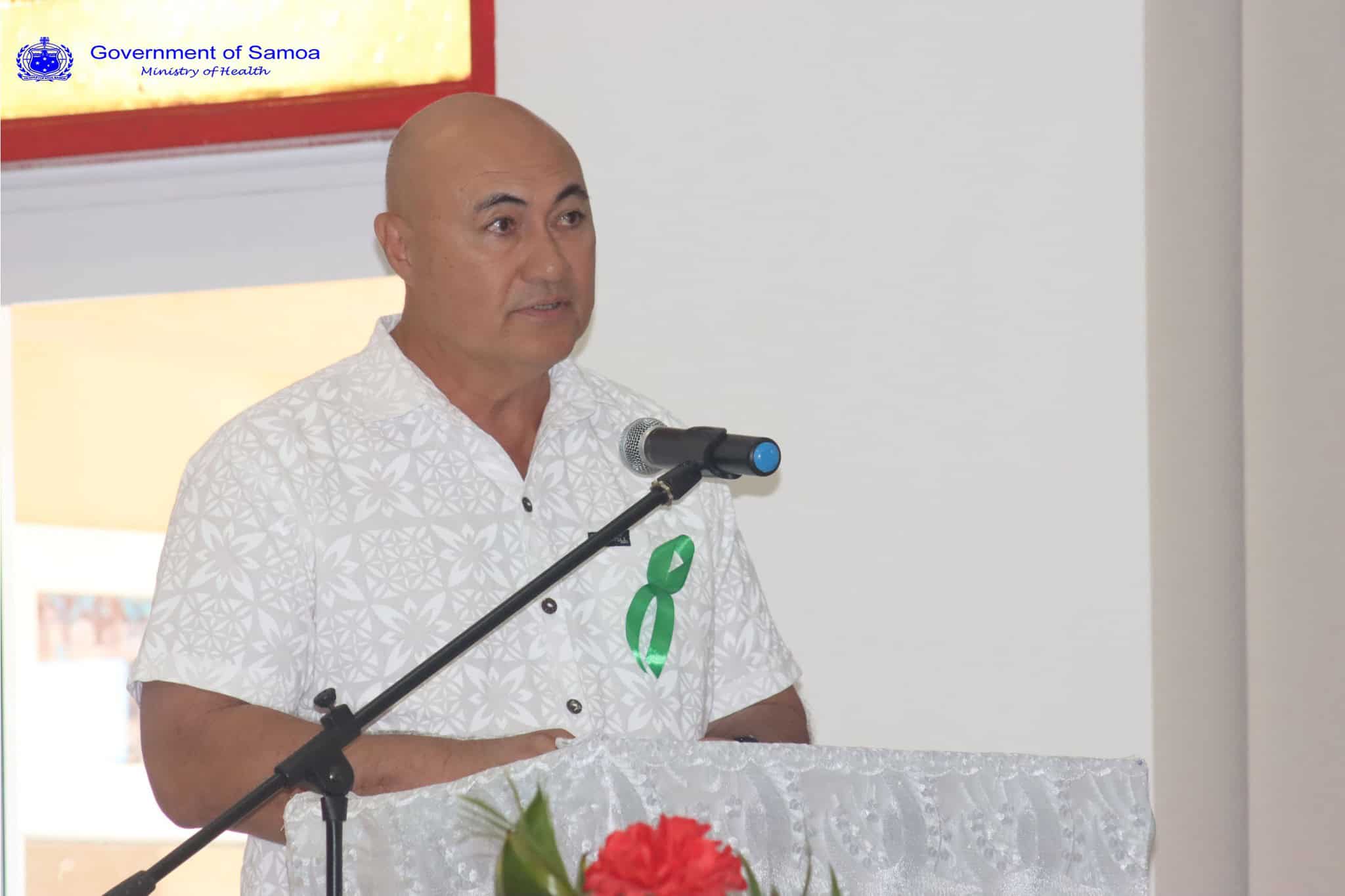
  • MIL-OSI Asia-Pac: KEYNOTE ADDRESS BY HON. TUALA TEVAGA IOSEFO PONIFASIO, HON. ACTING PRIME MINISTER/ DEPUTY PRIME MINISTER/ ACTING MINISTER OF HEALTH MENTAL HEALTH WEEK – OFFICIAL OPENING CEREMONY (EFKS AAI-O-NIUE @ 3.30PM)

    Source: Government of Western Samoa

    Share this:

    Rev. Efu Efu,

    Cabinet Ministers,

    Members of the Parliament,

    Members of the Diplomatic Corps,

    Heads of Governments and Non-Government Organizations,

    Members of the National Mental Health Committee

    Congregation,

    Ladies and gentlemen,

    I am humbled to stand before you today to address a topic that touches the very core of our society – mental health in Samoa. As we gather here today, we are united by a shared commitment to addressing one of the most pressing issues facing our people.

    In Samoa, our culture and sense of community – our ‘Fa’asamoa’ – are our greatest strengths. Our traditions of togetherness, family, and spirituality have sustained us through many challenges. Yet, mental health is a challenge that requires us to confront uncomfortable truths and break the silence that surrounds it.

    Starting today until the 10th of October is the Commemoration of the Mental Health Week in Samoa, with the main objective of raising awareness on mental health issues and to mobilize efforts in support of mental health. This week’s celebration is parallel with the World Mental Health Day that is commemorated every year globally.

    The theme for this year’s Mental Health Week is– ‘Healthy Minds, Healthy Workplaces’. It is an issue that is often overlooked but is increasingly essential in today’s world. We all know that our work plays a significant role in our lives. It is not only a source of income, but also a place where we spend much of our time, contribute to society, and build our identities. However, while we talk a lot about productivity, performance, and success in our workspaces, we don’t talk enough about something just as important, our mental health.

    In Samoa, mental health is often misunderstood or hidden. Many of our people suffer in silence, believing that mental illness is a sign of weakness or a curse. But mental health issues, like depression, anxiety, and stress, are not signs of personal failure – they are illnesses that require care and compassion. These mental health issues have become increasingly common in the workplace, yet many still go unaddressed. In fact, globally it is estimated that one in five employees will experience a mental health challenge in any given year. And yet, many people are hesitant to talk about their mental health at work for fear of being judged, overlooked, or even discriminated against.

    When workplaces neglect mental health, the consequences can be costly, not just in human terms, but financially as well. When an employee is struggling with mental health, their performance may suffer, leading to missed deadlines, errors, or conflicts with colleagues.

    Beyond the economic cost, the personal toll is immense. Employees who face mental health challenges in silence can feel isolated, stressed, and burnt out.

    Our country has seen rising rates of mental health issues, particularly among our youth. The pressures of modern life, unemployment, academic stress, and family conflicts contribute to feelings of hopelessness and isolation. Suicide has tragically become a reality for too many of our young people. The fact that Samoa has one of the highest youth suicide rates in the Pacific should give us all pause. The recent reports stated that majority of people at risk of developing mental disorders are middle aged men living in urban areas and working. Other recent studies indicate that males of less that 30years who were unemployed and living in Apia urban area, were more likely to experience psychological distress due to contributing factors such as alcohol use. Young adults aged 18-29 years living in Apia urban area were more likely to report symptoms of psychological distress than those in other areas. Women were more likely to report symptoms of psychological distress compared to men. Therefore, most of us working and employed are at risk of developing mental disorders and psychological stress.

    Behind these statistics are real stories of our sons and daughters, brothers and sisters, whose lives could have been saved with better mental health support.

    We cannot talk about mental health in Samoa without addressing the stigma. Mental illness is often perceived through a lens of shame, leading many to avoid seeking help. In many cases, mental health conditions are seen as a spiritual or supernatural issue, which delays access to proper care. This stigma prevents open conversations, leaving people feeling alone in their suffering.

    Samoa has made significant strides in addressing mental health, recognizing it as a crucial component of public health. Mental health has been integrated into its national health strategy, reflecting a commitment to addressing mental health as a public health priority. One of the key efforts is the integration of mental health services into primary health care in ensuring that mental health is treated alongside physical health, allowing people to seek help within their local health facilities. The Samoa government and various NGOs launched public awareness campaigns to combat stigma and encourage open discussions about mental health.

    Samoa works closely with international organizations such as the World Health Organization to enhance its mental health services. Some of the local organizations have launched suicide prevention programs, particularly focused on vulnerable groups such as youth. Treatment and care are provided through the Mental Unit at the main hospital in Apia which offers inpatient and outpatient care for those with severe mental health conditions. With extensive care of these patients, service is supported and provided by the GOSHEN Trust. Churches and other organizations such as the Salvation Army have played a pivotal role in promoting mental health particularly programs that focus on building resilience, emotional intelligence, and coping mechanisms. These programs aim to empower our people especially the youth to manage stress, anxiety and reducing the risk of more severe outcomes such as suicide.

    Despite these combined efforts, Samoa still faces several challenges in addressing mental health. These include the resource limitations including shortage of trained mental health professionals in Samoa. Mental Health services are often concentrated in urban areas. There are also geographical barriers and cultural stigma, making it hard for individuals to seek help openly.

    There is still much work to be done, particularly in expanding access to services and reducing stigma. Continued collaboration, investment, and community engagement will be essential to ensure that every Samoan can receive the mental health care they need.

    I would like to reiterate that there is no health without mental health. Therefore, I would like to invite everyone who is present here today, to show your support by joining the National Mental Health Committee and the Health Sector, to the Mental Health Parade. This will be held on Thursday 10th October, which starts from the Fire and Emergency Station and ends in-front of the government building, to end the activities of this important event.

    I acknowledge the support of all our development partners, churches, NGOs, civil society and the wider community towards the work of mental health in Samoa.

    SOIFUA MA IA MANUIA.

    SAUNOAGA AUTU ALE AFIOGA TUALA TEVAGA IOSEFO PONIFASIO

    AFIOGA ILE SUI PALEMIA / SUI MINISITA OLE SOIFUA MALOLOINA

    O LE POLOKALAME O LE “FA’ATAUAINA O LE SOIFUA MALOLOINA O LE MAFAUFAU”

    (EFKS, AAI-O-NIUE I LE 3:30 ILE AOAULI)

    Lau Susuga le Ta’ita’i o le Sauniga,

    Lau Susuga i le Faifeau Toeaina, Susuga i le Fa’afeagaiga

    o le EFKS i Aai-o-Niue nei, Rev. Efu Efu,

    Sui Mamalu o le Kapeneta,

    Le paia o Sui o Malo Aufaatasi,

    Ta’ita’i o Matagaluega ma Faalapotopotoga Eseese,

    Paaga uma a le Soifua Maloloina,

    Le mamalu o le Ekalesia nei i Aai-o-Niue, i ona tupu ma e’e faapea ma le potopotoga,

    O paia ma mamalu, o lā le Atua ia, aua o Samoa ua uma ona fa’ataotooto ana tofiga. Nu’unu’u atu ia fa’atini o tausala.

    Ua tala mai le lagi le mamalu o le Atua, o lē e ou vi’iga na sa’afi ma talatala i ai le susuga i le fa’afeagaiga toeaina. Mua ia le fa’apolo i le taliuta, aua o le Atua o Samoa ma lona vi’iga.

    E fia momoli le agaga fa’afetai i lau susuga i le toeaina, mo le taulaga osi o lenei aso, ma fa’anōnōmanū ai aua lenei fa’amoemoe taua. O le Atua pulepule tetele na te fa’afo’i le mau e tele i lau Susuga aua faiva o tapuaiga mo si o tatou atunu’u.

    O tausaga ta’itasi i le aso 10 Oketopa e fa’amanatuina ai e le lalolagi e aofia ai ma Samoa, le Aso Faapitoa o le “Fa’atauaina o le Soifua Maloloina o le Mafaufau”.

    Ua tolu ai nei o tausaga, ua fa’amanatuina ai e Samoa lenei aso fa’apitoa i le vaiaso atoa. E amata atu nei e tau le Aso Tofi, 10 Oketopa, ua fa’ailogaina ai e Samoa lenei vaiaso taua. O le sini autu o lenei fa’amoemoe, ina ia fa’aauau ona tapisa ma talanoaina le taua o le soifua maloloina o le mafaufau.

    O le anavatau po’o le sini autū o lenei tausaga, ua ave le fa’amamafa i le ‘Soifua Maloloina o le Mafaufau i Totonu o Fale-faigaluega’. O le fale-faigaluega, o se nofoaga po’o se vaipanoa lea o lo’o tele ina mafuta ai tagata faigaluega i aso uma. E ave ai lana fa’amuamua ona o lo’o maua mai ai le alagātupe mo le tausiga o lona aiga. O lo’o mafai ona fa’aauauina ai le maua o tomai ma agava’a, ma toe si’itia ai le malamalama. E mafuta ma feiloa’i ai le tele o tagata eseese. O le nofoaga e tausi ina ia mamā lona si’osi’omaga, ma ia mautinoa o lo’o fa’atino galuega a le aufaigaluega ina ia si’itia tupe maua a le fale faigaluega.

    Ae pe’ita’i e tele ina galo ona talatala ma tali le fesili – “O a mai oe?” O tua atu o lenei fesili o lo’o afīfī ai i totonu le ‘anofale o le fale-faigaluega, o le mafaufau manuia o le tagata faigaluega. Po’o le a le lelei o le totogi, mautū ta’iala ma faigafa’avae, lelei le tino-i-fale o le fale-faigaluega, ae a a’afia le mafaufau o le tagata faigaluega, e faia fua le galuega. A la’ititi fo’i le totogi e le tusa ai ma le galuega fa’atino, e ono o’o ai ina a’afia le mafaufau, ona ua tele mea fai ae le lava le fa’asoa. Ona fa’asolo ai lava lea i le li’o lea, ma ono o’o ai ina le faigaluega le isi tagata, ona o a’afiaga o le mafaufau. O se fa’afitauli fa’amata e le o iloa atu, ae se’iloga ua talanoa ma fa’asoa ai, ona fa’atoa lagona lea e le tagata o le mea moni o lo’o tupu.

    Ua to’atele tagata ua a’afia le mafaufau ona o le tele o mafua’aga. O se mataupu e tele ina lē amana’ia ma leai se fa’amamafa. O le to’atele o tagata ua a’afia le mafaufau, fa’atoa iloa lava ona ua i ai foliga va’aia, ma ua o’o i o’oo’oga. Ae o le to’atele o lo’o a’afia, e le o mafai ona iloa ona o mafua’aga e pei o le; leai o se malamalama i āuga o le a’afia o le mafaufau, o le māasiasi ona o le tusitusilima ua le mafai ona alu e saili ai se fesoasoani, ua fai ma vaisū tu ma aga o lo’o mafua ai e pei o le tagofia o le ava malosi ma laau faasaina, ua leai se lagolago a aiga, matua, nu’u ma le ekalesia. I totonu o le fale-faigaluega ua leai se lagolago a le pule, o tagata faigaluega, faapea isi tagata.

    O le to’atele o lo’o noanoatia ma tutupu ai fa’afitauli e pei o le sauāina i totonu o aiga, nu’u po’o le fale-faigaluega. Ona tupu ai lea o le musuā e talanoa ma fa’asoa e saili fesoasoani. Ua sili atu le mā ma fefe e talanoa atu ona o le popole i le tusitusi lima, ma ua leai se fa’atuatuaga o nisi tagata e ono maua ai le fesoasoani. O nisi o āuga o le mafaufau ua a’afia, a tele galuega ona saili lea o le mea e mapu i ai e pei o le tagofia o le ava po’o laau fa’asaina e tua iai. Ae peita’i, o ī tonu o lo’o amata ai lava le vaisu ma le masani lea ma ono o’o ai i se tulaga ua le mafai ona tu’u, ma i’u ina a’afia ai le mafaufau.

    O fa’amaumauga lata mai i totonu o Samoa, o le toatele lava ua a’afia mafaufau e mafuli aga’i i tupulaga talavou. Ona o le tele o fesuiaiga o tu ma aga, o fa’alavelave i totonu o ā’oga, o āiga, fa’apea ma fale-faigaluega, o lo’o mafua ai le tele o a’afiaga o le mafaufau. O le to’atele o i latou ua maualuga le tulaga o le ono a’afia ai o le soifua maloloina o le mafaufau e mafuli i le itupa o ali’i mai le vai-tausaga 30 aga’i luga le matutua. O le to’atele foi, e nonofo i nofoaga tu taulaga.

    O nisi o tupulaga talavou e i lalo ifo o le 30 tausaga le matutua o lo’o faamauina le a’afia o le mafaufau ona o le tagofia o le ava malosi, ma e le faigaluega. E tusa ai ma fa’amaumauga, o le to’atele o tinā ma tama’ita’i ua o’o le tulaga o le a’afia o le mafaufau pe a fa’atusa i ali’i. O le popolega, ona o nisi ua a’afia le mafaufau ua o’o ina a’afia ai le soifua, aemaise lava i le tulaga o le pule i le soifua.

    O nei fa’amaumauga, e fa’amausalīina ai le tatau ona una’ia ma ave le fa’amuamua i le soifua maloloina o le mafaufau. E le gata i ona a’afiaga, ae o mafua’aga fa’avae e ala ai ona fa’atino e tagata soifua tu ma aga ma o’o ai ina a’afia.

    Ua tele taumafaiga a le Malo o Samoa e tauala atu i le tatou Matagaluega o le Soifua Maloloina ma ana pa’aga galulue, ina ia una’ia le soifua maloloina o le mafaufau. E ui ua i ai ta’iala ma faigafa’avae e ta’ita’itama ai le galuega, o auaunaga e pei ona iai togafitiga ma fa’atalatalanoga, o fa’alauiloa ma polokalame i nu’u ma afio’aga. Ae peita’i, e le o mafai ona fa’aitiitia ai le tele o fa’afitauli.

    O le agaga maualuga, e manuia a tatou taumafaiga, pe afai e lalago fa’atasi tagata uma. O se mafaufau manuia e afua mai totonu o aiga, ekalesia, nu’u, fale-faigaluega ma le Malo. Ia tatou opogi fa’atasi ma fa’asoa, ia taofi le tusitusilima ma le fa’alumaluma, ia saili avanoa e lagolago ai so’o se tagata soifua. Ae aua le sili musa ia tatou ona toso i lalo le isi uso a tagata ma ana taumafaiga. Po’o totonu o le fale-faigaluega, o ekalesia, totonu o le aiga, e taua le galuega a ta’ita’i, o matua, o matai, fa’apea ma le lagolago a tagata ta’ito’atasi, ina ia manuia tagata uma, ma ia sapaia mea uma i le alofa. O le alofa lea o le Atua e lē fa’atuāoia.

    E momoli le fa’amālō i le lagolago a tatou pa’aga galulue, o ekalesia, o so’o se fa’alapotopotoga fa’apea nu’u ma alalafaga aua lenei fa’amoemoe taua.

    E tatalo atu ai i le paia ma le mamalu o le auvala’aulia, ina ia fa’ailoa lau lagolago e ala i lou auai i le “Savali mo le Mafaufau Manuia”, Aso Tofi, 10 Oketopa 2024, e amata atu luma o le Ofisa o Tinei Mu fa’asolo atu luma o le Maota o le Malo i Matagialalua i le 7.30 i le taeao.

    Manuia tele toe taimi o le Aso Sapati Paia o le Atua soifua. Faafetai

    Soifua ma ia manuia !!

    Ata Pueina – Matagaluega o le Soifua Maloloina
    Share this:

    MIL OSI Asia Pacific News

  • MIL-OSI Asia-Pac: Department of Defence undertakes pathbreaking initiatives under Special Campaign 4.0

    Source: Government of India

    Department of Defence undertakes pathbreaking initiatives under Special Campaign 4.0

    Himalayan Mountaineering Institute establishes Darjeeling’s first-ever Sewage Treatment Plant; Can treat 1,000 litres of waste water per day

    Posted On: 16 OCT 2024 1:50PM by PIB Delhi

    The Department of Defence as part of the Pan-India Swachhata Abhiyan initiative, has successfully covered 2,705 sites out of 3,832 locations, creating positive impacts across the country. As on October 15, 2024, over 20,976 physical files have been reviewed, leading to the weeding out of 5,391 files and freeing up 195k square feet of valuable space. Revenue generation of Rs 21.1 lakh has been achieved through the disposal of scrap materials and obsolete IT equipment.

    The sites include those under Military Hospitals, Controller General of Defence Accounts, Border Roads Organisation, Indian Coast Guard National Cadet Corps, Sainik Schools, Canteen Stores Department, Cantonments along with the Nehru Institute of Mountaineering, Uttarkashi and Himalayan Mountaineering Institute, Darjeeling.

    The cantonments have been at the forefront of the campaign and carried out initiatives like mosquito-breeding eradication campaigns and organised waste segregation workshops for local communities in coordination with volunteers. Garbage Vulnerable Points (GVPs) have been transformed into plantation sites, further enhancing public spaces with dry-leaf composting initiatives in parks.

    Himalayan Mountaineering Institute established Darjeeling’s first-ever Sewage Treatment Plant (STP) named Swachhata Se Samriddhi which can treat 1,000 litres of wastewater per day, equivalent to 365 kilo litres annually. The treated water is repurposed for toilet flush systems, ensuring sustainable waste management within the institute. Additionally, the Institute has constructed a Rain Water Storage Plant with a capacity of 1.8 lakh litres, significantly reducing reliance on external water sources.

    The Himalayan Mountaineering Institute also exemplifies the ethos of sustainability by transforming damaged mountaineering gear, such as shoes and ropes, into decorative pieces, highlighting the innovative spirit of recycling and environmental stewardship.

    *****

    SR/MR/KB

    (Release ID: 2065273) Visitor Counter : 8

    MIL OSI Asia Pacific News

  • MIL-OSI Security: NAMRU San Antonio highlights Olivia Cruz during National Hispanic Heritage Month

    Source: United States Navy (Medical)

    JOINT BASE SAN ANTONIO-FORT SAM HOUSTON – (Oct. 15, 2024) – National Hispanic Heritage Month marks a time to showcase and honor the many contributions Hispanic Americans have made to the Department of Defense (DoD) and the nation.

    Possessing a diverse workforce is important to NAMRU San Antonio as it acknowledges individual strengths of each Sailor, Soldier, civilian and contractor, and the potential they bring to accomplishing the command’s mission.

    Olivia Cruz, a budget analyst lead assigned to the command’s Resource Management and Acquisitions Directorate (DRMA), is a representation of the highly professional and diverse civilian workforce within Navy Medicine.

    A 2014 graduate of Texas A&M University at San Antonio, Cruz directly supports the allocation and execution of all Research, Development, Test, and Evaluation (RDT&E) and Operation and Maintenance (O&M) funding received by NAMRU San Antonio. This includes performing or advising on work in any of the phases or systems of budget administration of funds required for command programs. Additionally, she serves as the command’s Time and Attendance clerk.

    A San Antonio native, Cruz began her Navy civilian career in 2021 with Naval Medical Forces Development Command serving as the regional labor and budget analyst.

    “At my previous command, I was the only person on board who was born and raised in San Antonio,” said Cruz. “Most of the times, the comptroller would refer newly arriving personnel to me for places in the city to visit and eat. Eventually, I joked with telling people that I was the unofficial San Antonio Chamber of Commerce.”

    According to Cruz, who has been maintaining and executing government budgets for 15 years, there are countless opportunities to serve locally, out of state and even overseas within Navy Medicine.

    “Working for NAMRU San Antonio has provide me with insight on the numerous opportunities available for my son in science research as he begins his journey in biology,” said Cruz, whose goal is to complete her career at the federal level. “When I initially came on board with the command, I didn’t realize that I would be working directly with some of the Navy’s smartest research scientists.”

    “As analysts, we don’t see the type of research that is being conducted. Usually, all we see is the money side,” added Cruz. “Is there funding? Are the funds committed? The list goes on, but we never see the scientists at work.”

    Cruz feels that being able to observe some of the work being done at NAMRU San Antonio enables her to understand how important her role is in the command.

    “Being able to know how my job directly supports research has motivated me to be a more knowledgeable analyst which allows our scientists to efficiently research projects that will essentially save countless lives,” said Cruz. “Our DRMA team doesn’t allow setbacks and limited staff to stop us from hindering our scientists from their research mission.”

    Perseverance is one of Cruz’s strengths.

    “I have always persevered; however, working for the Navy has instilled in me the motivations to keep going even if I feel that I am not performing to my personal standards,” said Cruz. “However, I have the great opportunity of working with so many diverse personalities and professionals from whom I continue to learn from. They have shown me that there is more for me to learn and how to overcome challenges.”

    Continuing to listen, learn, and apply shared knowledge from others has enhanced Cruz’s importance of her role as an analyst with NAMRU San Antonio. In the future, she wants to share her knowledge with others to guide and help make them better in their profession.

    NAMRU San Antonio’s mission is to conduct gap driven combat casualty care, craniofacial, and directed energy research to improve survival, operational readiness, and safety of DoD personnel engaged in routine and expeditionary operations.

    NAMRU San Antonio is one of the leading research and development laboratories for the U.S. Navy under the DoD and is one of eight subordinate research commands in the global network of laboratories operating under the Naval Medical Research Command in Silver Spring, Md.

    MIL Security OSI

  • MIL-OSI Asia-Pac: PRESS RELEASE – NZDF and Government of Samoa Joint Press Statement – HMNZS MANAWANUI Grounding

    Source: Government of Western Samoa

    Share this:

    Experts from Maritime New Zealand, the New Zealand Defence Force (NZDF) and various Samoan agencies are assisting with understanding the environmental impacts following the sinking of HMNZS MANAWANUI and preparing for clean-up actions.

    As part of this marine scientists are conducting sample testing of the nearby waters and beaches for any traces of oil. New Zealand Navy divers were on the water at first light today to assess the wreckage of the ship and have confirmed the stability of the ship. The ship is in water about 30m deep.

    A range of equipment was sent to Samoa with NZDF personnel to assist with the initial response and help address environmental impacts to the area. This equipment includes remotely operated vehicles used to establish the debris field, and also Maritime NZ spill response equipment, which can be used both in the water and on the land.

    NZDF personnel have begun clearing flotsam from the beach area and have retrieved some equipment from the Ship as well as debris from the water.

    A light oil sheen from the ship’s initial capsizing is being dispersed by wind and waves. So far no oil has been detected on the nearby beach or reefs.

    Work on the site will continue this week and information will be communicated with the public as the operation progresses.

    Share this:

    MIL OSI Asia Pacific News

  • MIL-OSI Asia-Pac: MARINE POLLUTION ADVISORY COMMITTEE UPDATE ON HMNZS MANAWANUI SITUATION

    Source: Government of Western Samoa

    Share this:

    09 October 2024/Press Release/Apia, Samoa – The Marine Pollution Advisory Committee (MPAC) continues to assess the situation relating to the run aground HMNZS Manawanui at Tafitoala.

    On Wednesday, October 9, 2024, the Chairman, Afioga Fui Tupai Mau Simanu, Chief Executive Officer of Ministry of Works, Transport and Infrastructure conducted a meeting with the Ministry of Natural Resources and Environment (MNRE) DMO Division, Samoa Fire Emergency Services Authority, NZ Defense Force, Maritime New Zealand as well as New Zealand’s High Commissioner to Samoa, Her Excellency, Sialei Van Toor.

    The meeting discussed initial findings as well as continued efforts from all parties involved since the occurrence in the early hours of Sunday October 6, 2024. Divers from the NZ Defense Force and Samoa Response team have been deployed since Monday, October 7 to carry out an assessment of the wreck and possible risks to the marine environment.

    It was during this meeting the NZ Defense Force confirmed that there are no explosives onboard.

    As of 8AM on Wednesday, coastal assess

    ment carried out from Safata to Matafa’a by the Committee confirms that there continues to be no oil contamination on the Coast, although diesel sheens have been observed near the wreck, it has drifted out to the high seas.

    Initial assessments suspected fuel leakage and further information of this will be provided today as the weather continues to improve, aiding in the diving teams’ operation this evening. For now, water samples have been collected for chemical analysis to confirm contaminations in the water.

    It is confirmed that there is damage to the reef from the NZ Navy shipwreck and anchor chain. Assessments show that physical destruction to the reef Is approximately 5000 square meters.

    The MPAC Chairman thanks the village of Tafitoala and members of the public for the support and cooperation while the operation is in place.

    CONTACT PERSON:

    Afioga Leulua’ialii Tualamaalii Wendy Pogi

    ACEO Legal, MWTI

    wendy.pogi@mwti.gov.ws

    Share this:

    MIL OSI Asia Pacific News

  • MIL-OSI: NANO Nuclear Energy Appoints Former Chief Financial Officer of the U.S. Department of Energy, John G. Vonglis as Chairman of its Executive Advisory Board for Strategic Initiatives

    Source: GlobeNewswire (MIL-OSI)

    New York, N.Y., Oct. 16, 2024 (GLOBE NEWSWIRE) — NANO Nuclear Energy Inc. (NASDAQ: NNE) (“NANO Nuclear” or “the Company”), a leading advanced nuclear energy and technology company focused on developing portable, clean energy solutions, is proud to announce today that it has appointed The Honorable John G. Vonglis, former Chief Financial Officer of the U.S. Department of Energy (DOE) and Acting Director of DOE’s Advanced Research Projects Agency-Energy, as the Chairman of NANO Nuclear’s Executive Advisory Board for Strategic Initiatives.

    Mr. Vonglis joins a growing, world-class, bipartisan Executive Advisory Board comprised of high ranking and distinguished military, political and scientific leaders which is assisting NANO Nuclear by leveraging their professional networks and relationships to connect the Company with key industry stakeholders, potential partners, clients and other valuable contacts.

    “It is a pleasure to join NANO Nuclear’s advisory team and leverage my expertise in navigating a myriad of DOE and private energy-related projects to advance the development of the Company’s microreactor and other nuclear technology solutions,” said John G. Vonglis, Chairman of the Executive Advisory Board for Strategic Initiatives of NANO Nuclear Energy. “During my time with the Department of Energy, I was exposed to numerous high-impact inventions, and I believe that technologies such as NANO Nuclear’s ‘ZEUS’ and ‘ODIN’ microreactors represent the innovative spirit of the United States at an important moment for nuclear energy.”

    Mr. Vonglis served as the Senate-confirmed Chief Financial Officer and Chief Risk Officer of the DOE from 2017 to 2019. As Chief Financia Officer, Mr. Vonglis oversaw all financial matters for the DOE. He was also appointed by the President as Acting Director of the Advanced Research Projects Agency-Energy (ARPA-E), a federal agency focused on advancing early-stage, high-potential, high-impact energy technologies while minimizing risk to taxpayers.

    Prior to his tenure at the DOE, Mr. Vonglis held several key roles at the U.S. Department of Defense from 2002 to 2009, initially as Director of Management Initiatives for the Under Secretary for Personnel and Readiness (P&R) and lastly as Acting Assistant Secretary of the U.S. Air Force, where he also served as the first Chief Management Officer, performing the duties of the Under Secretary.

    Figure 1 – NANO Nuclear Energy Inc. Appoints Former Chief Financial Officer (CFO) of the Department of Energy (DOE) John G. Vonglis as its Chairman of its Executive Advisory Board for Strategic Initiatives.

    Mr. Vonglis’ private sector experience includes senior financial and operational roles at prominent advisory, aerospace/defense, financial services, and high-technology firms. Mr. Vonglis is a retired U.S. Army Reserve Colonel with 34 years’ experience in Army and Joint special operations, where he also advised ‘SOFWERX’ and the Army Cyber Institute at West Point. He holds a B.S. and M.B.A. from Fordham University and a Master’s in International Public Policy from The Johns Hopkins University School of Advanced International Studies (SAIS).

    “Attracting an exemplary leader like John to serve on our Executive Advisory Board, with his years of experience on the inside of complex government processes and working on cutting edge innovations, is a validation of our vision and mission for NANO Nuclear,” said Jay Yu, Founder and Chairman of NANO Nuclear Energy. “John’s addition brings credibility, valuable insight and a multitude of important contacts to NANO Nuclear and allows us to better position our company to fully capitalize on the significant momentum within the nuclear energy industry. We are honored to welcome him to the team.”

    “We are confident that John’s contribution as an Executive Advisory Board member for NANO Nuclear will be invaluable as we continue to progress our microreactor and other technology solutions through design, testing, regulatory processes and ultimately to market,” said James Walker, Chief Executive Officer and Head of Reactor Development of NANO Nuclear Energy. “Recent natural disaster events, such as the devastation caused by Hurricanes Helene and Milton, highlight the critical need for reliable and portable energy solutions. Our portable nuclear microreactors, ‘ZEUS’ and ‘ODIN,’ are designed to provide power for rescue operations and shelters in the aftermath of such natural disasters. We are committed to advancing these technologies to market and delivering cutting-edge solutions to those who need them most.”

    About NANO Nuclear Energy, Inc.

    NANO Nuclear Energy Inc. (NASDAQ: NNE) is an advanced technology-driven nuclear energy company seeking to become a commercially focused, diversified, and vertically integrated company across four business lines: (i) cutting edge portable microreactor technology, (ii) nuclear fuel fabrication, (iii) nuclear fuel transportation and (iv) nuclear industry consulting services. NANO Nuclear believes it is the first portable nuclear microreactor company to be listed publicly in the U.S.

    Led by a world-class nuclear engineering team, NANO Nuclear’s products in technical development are “ZEUS”, a solid core battery reactor, and “ODIN”, a low-pressure coolant reactor, each representing advanced developments in clean energy solutions that are portable, on-demand capable, advanced nuclear microreactors.

    Advanced Fuel Transportation Inc. (AFT), a NANO Nuclear subsidiary, is led by former executives from the largest transportation company in the world aiming to build a North American transportation company that will provide commercial quantities of HALEU fuel to small modular reactors, microreactor companies, national laboratories, military, and DOE programs. Through NANO Nuclear, AFT is the exclusive licensee of a patented high-capacity HALEU fuel transportation basket developed by three major U.S. national nuclear laboratories and funded by the Department of Energy. Assuming development and commercialization, AFT is expected to form part of the only vertically integrated nuclear fuel business of its kind in North America.

    HALEU Energy Fuel Inc. (HEF), a NANO Nuclear subsidiary, is focusing on the future development of a domestic source for a High-Assay, Low-Enriched Uranium (HALEU) fuel fabrication pipeline for NANO Nuclear’s own microreactors as well as the broader advanced nuclear reactor industry.

    NANO Nuclear Space Inc. (NNS), a NANO Nuclear subsidiary, is exploring the potential commercial applications of NANO Nuclear’s developing micronuclear reactor technology in space. NNS is focusing on applications such as power systems for extraterrestrial projects and human sustaining environments, and potentially propulsion technology for long haul space missions. NNS’ initial focus will be on cis-lunar applications, referring to uses in the space region extending from Earth to the area surrounding the Moon’s surface.

    For more corporate information please visit: https://NanoNuclearEnergy.com/

    For further information, please contact:

    Email: IR@NANONuclearEnergy.com
    Business Tel: (212) 634-9206

    PLEASE FOLLOW OUR SOCIAL MEDIA PAGES HERE:

    NANO Nuclear Energy LINKEDIN
    NANO Nuclear Energy YOUTUBE
    NANO Nuclear Energy TWITTER

    Cautionary Note Regarding Forward Looking Statements

    This news release and statements of NANO Nuclear’s management in connection with this news release or related events contain or may contain “forward-looking statements” within the meaning of Section 21E of the Securities Exchange Act of 1934, as amended, and the Private Securities Litigation Reform Act of 1995. In this context, forward-looking statements mean statements (including statements related to the anticipated benefits of Mr. Vonglis joining the Company’ Executive Advisory Board) related to future events, which may impact our expected future business and financial performance, and often contain words such as “expects”, “anticipates”, “intends”, “plans”, “believes”, “potential”, “will”, “should”, “could”, “would” or “may” and other words of similar meaning. These forward-looking statements are based on information available to us as of the date of this news release and represent management’s current views and assumptions. Forward-looking statements are not guarantees of future performance, events or results and involve significant known and unknown risks, uncertainties and other factors, which may be beyond our control. For NANO Nuclear, particular risks and uncertainties that could cause our actual future results to differ materially from those expressed in our forward-looking statements include but are not limited to the following: (i) risks related to our U.S. Department of Energy (“DOE”) or related state nuclear fuel licensing submissions, (ii) risks related the development of new or advanced technology, including difficulties with design and testing, cost overruns, regulatory delays and the development of competitive technology, (iii) our ability to obtain contracts and funding to be able to continue operations, (iv) risks related to uncertainty regarding our ability to technologically develop and commercially deploy a competitive advanced nuclear reactor or other technology in the timelines we anticipate, if ever, (v) risks related to the impact of government regulation and policies including by the DOE and the U.S. Nuclear Regulatory Commission, including those associated with the recently enacted ADVANCE Act, and (vi) similar risks and uncertainties associated with the business of a start-up business operating a highly regulated industry. Readers are cautioned not to place undue reliance on these forward-looking statements, which apply only as of the date of this news release. These factors may not constitute all factors that could cause actual results to differ from those discussed in any forward-looking statement, and the NANO Nuclear therefore encourages investors to review other factors that may affect future results in its filings with the SEC, which are available for review at http://www.sec.gov and at https://ir.nanonuclearenergy.com/financial-information/sec-filings. Accordingly, forward-looking statements should not be relied upon as a predictor of actual results. We do not undertake to update our forward-looking statements to reflect events or circumstances that may arise after the date of this news release, except as required by law.

    Attachment

    The MIL Network

  • MIL-OSI Security: Defense News: USS Russell Returns Home to San Diego

    Source: United States Navy

    Russell and its crew, known as the Red Dragons, departed San Diego Feb. 10, 2024, and joined TRCSG to conduct global maritime security operations supporting regional stability.

    “Our Red Dragon team performed superbly on deployment. No matter the challenge, our Sailors rose to the occasion and represented our ship, Navy, and country with honor,” said Cmdr. Mike McInerney, commanding officer of Russell. “Keeping Russell in its highest state of readiness for eight months
    straight is no easy feat, yet our crew of 300 did this with a self-sufficient mindset, grit, and determination. We have a proud, combat ready, and battle-minded crew. I’m honored to be part of this fantastic team, and the crew is excited for some well-earned time off with loved ones.”

    While deployed, Russell provided primary ballistic missile defense support and secondary air and missile defense support to the Nimitz-class aircraft carrier USS Theodore Roosevelt (CVN 71). Additionally, Russell executed 161 MH-60 Seahawk helicopter deck hits, to include refueling and personnel and parts transfers, from Helicopter Maritime Strike Squadron (HSM) 75 and Helicopter Sea Combat Squadron (HSC) 8.

    During port visits, the Red Dragons made a point to volunteer their time through community outreach events. While in Singapore, Sailors performed maintenance and cleaning at the Teen Challenge therapeutic center. In Thailand, they volunteered their time at the Father Ray Foundation for underprivileged children. Community outreach events give Sailors a chance to make a positive impact and diversify their cultural knowledge by developing relationships with partner and ally nations.

    “It was really cool to be of service to the Father Ray Foundation in Thailand,” said Personnel Specialist 1st Class Chilee Osuji. “It felt rewarding to provide services to those in need, meet the local people and play soccer with the kids! I’m grateful I had the opportunity to expand my worldview in this way.”

    Russell also conducted various exercises with partner navies, strengthening important relationships with allies and partners. Russell participated in a trilateral exercise in April with TRCSG, the Japan Maritime Self-Defense Force and the Republic of Korea Navy. In September, Russell conducted a bilateral exercise with the Italian Navy, increasing interoperability between the two countries’ navies.

    Maintaining crew proficiency was important for the Red Dragons to sustain readiness while underway. Russell’s training schedule included over 150 casualty response drills, integrating tactical and technical scenarios to include anti-air warfare, anti-surface warfare, anti-submarine warfare, electronic warfare, engineering, damage control and seamanship.

    The Theodore Roosevelt Carrier Strike Group is comprised of Carrier Strike Group 9 staff, Destroyer Squadron (DESRON) 23 staff, the flagship Nimitz-class aircraft carrier USS Theodore Roosevelt (CVN 71), with embarked Carrier Air Wing (CVW) 11, and DESRON 23 ships that include guided-missile destroyers USS Daniel Inouye (DDG 118), USS Halsey (DDG 97), USS John S. McCain (DDG 56) and USS Russell (DDG 59).

    An integral part of U.S. Pacific Fleet, U.S. 3rd Fleet operates naval forces in the Indo-Pacific and provides the realistic, relevant training necessary to execute the U.S. Navy’s role across the full spectrum of military operations – from combat operations to humanitarian assistance and disaster relief. U.S. 3rd Fleet works together with our allies and partners to advance freedom of navigation, the rule of law, and other principles that underpin security for the Indo-Pacific region.

    For more information on Russell, please visit https://www.surfpac.navy.mil/ddg59/ and https://www.dvidshub.net/unit/USSR-DDG59.

    MIL Security OSI

  • MIL-OSI Video: They LITERALLY take care of Soldiers! | U.S. Army

    Source: US Army (video statements)

    CW2 Eric Lejeune, Charlie Company, 3rd Battalion, 25th Aviation Regiment describes his role as part of a medevac team.

    About the U.S. Army:

    The Army Mission – our purpose – remains constant: To deploy, fight and win our nation’s wars by providing ready, prompt & sustained land dominance by Army forces across the full spectrum of conflict as part of the joint force.

    Interested in joining the U.S. Army?
    Visit: spr.ly/6001igl5L
    Connect with the U.S. Army online:
    Web: https://www.army.mil
    Facebook: https://www.facebook.com/USarmy/
    X: https://www.twitter.com/USArmy
    Instagram: https://www.instagram.com/usarmy/
    LinkedIn: https://www.linkedin.com/company/us-army
    #USArmy #Soldiers #Military #Medevac

    https://www.youtube.com/watch?v=1ZsGtBgdajE

    MIL OSI Video

  • MIL-OSI Security: Defense News: Theodore Roosevelt Carrier Strike Group Returns to San Diego After 9-month Deployment

    Source: United States Navy

    TRCSG is a multiplatform team of ships, aircraft, and more than 6,000 Sailors, capable of carrying out a wide variety of missions around the globe. Deploying units of the strike group include Theodore Roosevelt, Destroyer Squadron (DESRON) 23, Carrier Air Wing (CVW) 11, and the Ticonderoga-class guided-missile cruiser USS Lake Erie (CG 70). While the Arleigh Burke-class guided-missile destroyers USS Russell (DDG 59), USS Halsey (DDG 97) and USS Daniel Inouye (DDG 118) also returned to their respective home ports, Lake Erie and Arleigh Burke-class guided-missile destroyer USS John S. McCain (DDG 56) remain deployed in the 7th Fleet area of operations supporting global maritime security operations.

    TRCSG deployed to the Indo-Pacific region to support regional security and stability, keep sea lanes open, and to reassure our allies and partners of the U.S. Navy’s unwavering commitment to the region. The strike group was later ordered to the U.S. Central Command area of responsibility to strengthen U.S. military force posture and capabilities throughout the Middle East in light of escalating regional tensions.

    “The strike group’s ability to quickly adjust from operations in 7th Fleet to 5th Fleet is a testament to both the flexibility of our naval forces as well as the strength and training of our Navy Sailors,” said Commander, Carrier Strike Group 9, Rear Adm. Christopher Alexander. “We had the distinct honor to strengthen our skills and relationships with 10 allied and partner nations, demonstrating our nation’s commitment to the freedom of navigation.”

    The TRCSG strengthened interoperability through dual carrier operations with the Carl Vinson Carrier Strike Group and Abraham Lincoln Carrier Strike Group, participation in exercise Valiant Shield 2024, and numerous bilateral and multilateral maritime exercises in the Philippine and South China seas as well as in the U.S. Central Command area of responsibility.

    Notable key leader engagements and visits aboard Theodore Roosevelt included the president of the Republic of Korea, chief of naval operations for the Republic of Korea Navy, lieutenant governor of Guam, U.S. Pacific Fleet commander, U.S. 7th Fleet commander, Republic of Singapore Navy fleet commander, U.S. ambassadors to the Republic of Korea, Singapore, Thailand and Qatar, and senior officers from the armed forces of the Japan Maritime Self-Defense Force, Republic of Korea and Royal Thai Navy, among others.

    The deployed Sailors from the TRCSG demonstrated their proficiency in enhanced maritime security operations through more than 9,000 sorties including 21,000 flight hours, 28 replenishments-at-sea, and more than 71,000 nautical miles traveled.

    Ships of the TRCSG conducted routine port visits to Bahrain, Diego Garcia, Guam, the Republic of Korea, Singapore and Thailand.

    “The crew worked incredibly hard and maintained mission focus this entire deployment,” said Capt. Brian Schrum, commanding officer, Theodore Roosevelt. “I am extremely proud of our Sailors and the work accomplished across the world’s oceans to keep our nation safe at home.”

    CVW 11 consisted of nine squadrons: the “Blue Blasters” of Strike Fighter Squadron (VFA) 34, the “Fist of the Fleet” of VFA-25, the “Flying Checkmates” of VFA-211, the “Black Knights” of VFA-154, the “Liberty Bells” of Airborne Command and Control Squadron (VAW) 115, the “Rooks” of Electronic Attack Squadron (VAQ) 137, the “Wolf Pack” of Helicopter Maritime Strike Squadron (HSM) 75, the “Eightballers” of Helicopter Sea Combat Squadron (HSC) 8 and the “Rawhides” of Fleet Logistics Support Squadron (VRC) 40.

    As an integral part of U.S. Pacific Fleet, Commander, U.S. 3rd Fleet operates naval forces in the Indo-Pacific and provides the realistic and relevant training necessary to execute the U.S. Navy’s timeless role across the full spectrum of military operations—from combat missions to humanitarian assistance and disaster relief. U.S. 3rd Fleet works in close coordination with other numbered fleets to provide commanders with capable, ready forces to deploy forward and win in day-to-day competition, in crisis, and in conflict.

    For more information about Carrier Strike Group 9 and USS Theodore Roosevelt visit https://www.surfpac.navy.mil/ccsg9/ and https://www.dvidshub.net/unit/COMCARSTRKGRU-9; Facebook: http://www.facebook.com/usstheodoreroosevelt

    MIL Security OSI

  • MIL-OSI China: 6 killed, 43 injured in Israeli airstrike on municipal building in S. Lebanon

    Source: China State Council Information Office

    Six people, including the mayor, were killed, and 43 others wounded on Wednesday in an Israeli airstrike targeting the buildings of the Nabatieh Municipality in southern Lebanon, according to Lebanese medical and military sources.

    The sources, speaking on condition of anonymity, told Xinhua that an Israeli warplane fired four air-to-ground missiles at the Nabatieh Municipality building and the building of the Union of Municipalities, killing the mayor, Ahmad Kahil, and a number of municipality members, injuring several others, and destroying the infrastructure.

    The Civil Defense teams, the Lebanese Red Cross, and the Islamic Health Authority are working to remove the rubble of the two buildings and search for missing persons, the sources said.

    Lebanese caretaker Prime Minister Najib Mikati condemned the attack, saying it deliberately targeted a meeting of the municipal council discussing the city’s service and relief situation.

    The new “aggression” conveys the message that “the international community should act immediately instead of remaining silent about Israeli crimes,” Mikati said.

    Meanwhile, Lebanese Ministry of Foreign Affairs and Emigrants announced on Wednesday that it had filed a new complaint with the UN Security Council regarding the Israeli attacks on Lebanon during the period Oct. 3-14.

    This is part of the periodic complaints submitted by the ministry through the Permanent Mission of Lebanon to the UN headquarters in New York to document the Israeli offensive and pressure the international community and the Security Council to act to stop it.

    Since Sept. 23, the Israeli army has been conducting intensive airstrikes on Lebanon in a sharp escalation with Hezbollah.

    The death toll from Israeli airstrikes on Lebanon since the beginning of the Hezbollah-Israeli conflict on Oct. 8, 2023 has reached 2,350, while injuries went up to 10,906, Health Ministry figures showed on Tuesday.

    MIL OSI China News

  • MIL-OSI China: Over 1.4 mln DPRK youngsters apply to join army following drone incursion incident: report

    Source: China State Council Information Office

    More than 1.4 million youngsters in the Democratic People’s Republic of Korea (DPRK) applied to join or rejoin the military earlier this week, the official Korean Central News Agency (KCNA) reported on Wednesday.

    More than 1.4 million youth league officials and youth and students across the country volunteered to join or rejoin the army on Oct. 14 and 15, said the KCNA, following an alleged South Korean drone infiltration into Pyongyang, the capital of the DPRK.

    The DPRK called the drone incident “a serious provocation of violating its sovereignty.”

    The DPRK’s Foreign Ministry issued a statement late last Friday accusing South Korea of sending drones over Pyongyang. The South Korean military has denied the accusation.

    In the latest sign of the heightened tensions between the two countries, the DPRK military blew up parts of the Gyeongui and Donghae lines north of the Military Demarcation Line on Tuesday, South Korea’s Yonhap News Agency reported.

    The DPRK has yet to respond to the road explosion claim.

    MIL OSI China News

  • MIL-OSI USA: FACT SHEET: U.S. Achievements in the Global Fight Against  Corruption

    US Senate News:

    Source: The White House
    Corruption poses a grave and enduring threat to U.S. national interests and those of our partners. When officials abuse their entrusted power for personal or political gain, the interests of authoritarians and corrupt actors win – at the expense of citizens, honest businesses, and healthy societies. As the Biden-Harris Administration took office, this longstanding challenge had metastasized. In some countries, oligarchs were teaming up with foreign kleptocrats to warp policy and procurement decisions in exchange for kickbacks – with no accountability. Corrupt officials were laundering stolen assets through the U.S. and global financial systems, while local investigators were ill-equipped to follow the money. Reformers in countries saddled with corruption had scarce public resources to actually address development needs. The Biden-Harris Administration tacked these challenges starting Day One, to ensure democracy delivers and corrupt actors are held to account.
    The first National Security Study Memorandum of the Biden-Harris Administration established countering corruption as a “core U.S. national security interest,” leading to the issuance in December 2021 of the first United States Strategy on Countering Corruption. Since then, the United States has taken action at home and around the world to curb illicit finance, hold corrupt actors accountable, forge multilateral partnerships, and equip frontline leaders to take on transnational corruption. The result has been historic progress in protecting the U.S. financial system from money-laundering, including in the residential real estate sector, while enhancing corporate transparency. This Administration has mobilized record levels of foreign assistance dedicated to anti-corruption, including $339 million in Fiscal Year 2023 alone – almost double the yearly average during the previous four years. This new assistance has unlocked support for anti-corruption institutions, leveled the playing field for law-abiding businesses, enabled journalists to team up across borders, and more. Expanded law enforcement cooperation and capacity-building have generated convictions of corrupt actors as well as the seizure, forfeiture, and return of criminal proceeds, while new anti-corruption offices at the Department of State (State) and the U.S. Agency for International Development (USAID) energized diplomatic and stakeholder engagement. The United States imposed sanctions on more than 500 individuals and entities for corruption and related activities, and established – for the first time in any jurisdiction globally – a new visa restriction for those who enable corrupt activity.
    U.S. progress on anti-corruption has produced concrete benefits for the American people and stakeholders around the world – enhancing prosperity, economic security, safety, and democracy, as outlined below. To bolster and sustain this work, the U.S. government has also modernized its approach to addressing corruption as a cross-cutting priority. Today, Deputy National Security Advisor for International Economics Daleep Singh will highlight the benefits of this work to American businesses and workers at a White House anti-corruption roundtable with leaders from 15 major U.S. companies.
    Advancing economic opportunity abroad
    Improving the business enabling environment: U.S. assistance advanced governments’ capacity to prevent, detect, investigate, and prosecute corruption, while encouraging anti-bribery compliance. State expanded its Fiscal Transparency Innovation Fund – to help willing partners improve budget transparency – while holding countries to account for progress in its Fiscal Transparency Report. In the past two years alone, a newly expanded State-Federal Bureau of Investigations (FBI) program facilitated U.S. collaboration with foreign counterparts on more than 50 transnational corruption and money laundering cases with a U.S. nexus. In coordination with State, experienced legal advisors from the U.S. Department of Justice (DOJ) assisted foreign justice partners around the world in investigating and prosecuting corruption and money laundering cases, and recovering assets. And DOJ’s Kleptocracy Asset Recovery Initiative, in partnership with the FBI and the Department of Homeland Security, has recovered more than $1.7 billion and returned or assisted in returning more than $1.6 billion for the benefit of the people harmed by the corruption.
    Enforcing our bans on foreign bribery and money-laundering – and pressing other countries to do the same: To enable honest companies to compete overseas, the United States upheld its commitments under the OECD Anti-Bribery Convention by enforcing its foreign bribery and related laws and working with partners to monitor other countries’ progress in implementing the Convention, which celebrated its 25th anniversary in 2024. Since the start of the Administration, DOJ has imposed more than $3.5 billion in total monetary sanctions under the Foreign Corruption Practices Act (FCPA) in 16 corporate resolutions, and announced charges against more than 70 individuals. For instance, this April the former Comptroller General of Ecuador was convicted of money laundering relating to his receipt of over $10 million in bribes from, among others, the Brazil-based construction conglomerate Odebrecht S.A. The Securities and Exchange Commission continued civil enforcement of the FCPA, with approximately $1 billion in total monetary sanctions in 22 corporate resolutions, spanning conduct in 24 countries, since the start of the Administration. DOJ is also enforcing the recently enacted Foreign Extortion Prevention Act, which criminalizes demands for bribes by foreign officials from U.S. companies and others. In addition, this August DOJ announced a new Corporate Whistleblower Awards Pilot Program to uncover and prosecute corporate crime – with a particular focus on foreign and domestic corruption, as well as violations by financial institutions of their obligations to take steps to detect and deter money laundering.
    Seizing windows of opportunity: U.S. assistance has become more agile via the establishment of USAID’s Anti-Corruption Response Fund (providing flexible support to countries experiencing new opportunities or backsliding), the State-DOJ Global Anti-Corruption Rapid Response Fund (providing assistance and case mentoring to foreign partners on short notice), and USAID’s Democracy Delivers initiative (which has marshalled $500 million in funding from the United States and others to help reformers deliver, including on their anti-corruption commitments). These innovations, informed by USAID’s Dekleptification Guide, are enabling the U.S. government to more nimbly pivot toward environments where local momentum can be bolstered by outside assistance.
    Bolstering integrity in high-risk sectors: In April 2024, the United States and its partners launched the Blue Dot Network – a mechanism to certify infrastructure projects that have met global standards for quality and sustainability, including transparency in procurement and provisions to limit opportunities for corruption. The United States also supported the launch of PROTECT, a collective action project to address corruption risk in the supply chain for critical minerals.
    Strengthening corruption safeguards in the Indo-Pacific: In June, the United States and thirteen other partners held a signing ceremony, after concluding eight rounds of negotiations in record time, for the Indo-Pacific Economic Framework for Prosperity (IPEF) Fair Economy Agreement. The Agreement aims to create a more transparent, predictable trade and investment environment across IPEF partners’ markets, including through binding obligations to prevent and combat corruption. The Department of Commerce (Commerce) and State are accelerating implementation by offering new anti-corruption technical assistance to IPEF partners, including workshops on procurement corruption.
    Dialoguing with the private sector: In 2021, State launched the Galvanizing the Private Sector as Partners in Combatting Corruption initiative, which connects companies and governments to strengthen business integrity and encourage governance reform. Commerce’s International Trade Administration organized the 2024 forum of the Business Ethics for Asia-Pacific Economic Cooperation (APEC) Small and Medium Enterprises Initiative – the world’s largest public-private partnership on ethical business conduct – at which stakeholders formalized policy recommendations on business integrity in public procurement.
    Protecting the U.S. financial system from abuse
    Expanding corporate transparency: To deter kleptocrats and criminals from laundering money through anonymous shell companies, the Department of the Treasury (Treasury) operationalized a new filing system for certain companies operating in the United States to report their beneficial owners – the real people who own or control them – pursuant to the bipartisan Corporate Transparency Act. Treasury held hundreds of outreach events across all states and territories, reaching thousands of stakeholders, to enable companies to quickly and easily comply with this reporting requirement.
    Closing loopholes for money-laundering: Treasury finalized rules to close two major loopholes in the U.S. financial system: (1) to increase transparency in the U.S. residential real estate sector, to ensure that law-abiding homebuyers are not disadvantaged by individuals laundering their ill-gotten gains, and (2) to safeguard the investment adviser industry from illicit finance. Treasury also proposed a rule to modernize financial institutions’ anti-money-laundering/countering the financing of terrorism (AML/CFT) programs, to make them more effective and risk-based. Together, these rulemakings represent historic advances for the U.S. AML/CFT regime, in line with international standards, that will help the United States urge other countries to undertake similar reforms to curb illicit finance. The Biden-Harris Administration has also called on Congress to close even more loopholes that facilitate money-laundering by passing the ENABLERS Act.
    Blocking assets and denying entry to corrupt actors: Since the start of the Administration, Treasury has designated more than 500 individuals and entities for corruption and related activities, across six continents. That includes blocking the assets of 20 individuals and 48 companies in Fiscal Year 2024 for corruption in Afghanistan, Guatemala, Guyana, Paraguay, Western Balkans, and Zimbabwe. In tandem, State publicly issued corruption-related visa restrictions for 76 foreign officials and family members in Fiscal Year 2024, and 292 over the course of the Administration. These actions have protected the U.S. financial system from corrupt actors and promoted accountability in domestic jurisdictions. For example, just one week after the U.S. issuance of a public visa restriction on former Director of Bosnia-Herzegovina (BiH) Intelligence Services Osman Mehmedagic for significant corruption, he was arrested by BiH authorities for abuse of office.
    Taking aim at enablers of corruption: In December 2023, President Biden issued an historic Presidential Proclamation establishing a visa restriction for those who facilitate and enable significant corruption and their immediate family members. This new visa restriction complements existing commitments to use sanction and law enforcement capabilities to target private enablers of public corruption. Earlier this year, the FBI and DOJ secured a guilty plea and a criminal penalty of $661 million from Gunvor – one of the largest commodities trading firms in the world – for facilitating bribery of Ecuadorian officials and laundering those bribes through U.S. banks. In addition, USAID launched new activities to incentivize integrity within professions that serve as gatekeepers to the international financial system.
    Upholding international standards: The United States has helped lead efforts to expand anti-corruption work at the Financial Action Task Force (FATF), including improving assessment tools, mitigating risks associated with “golden passport” programs, and highlighting how non-financial sectors can be abused by corrupt actors.
    Keeping America and our partners safe
    Addressing corruption risk in the security sector: Security sector corruption can divert essential supplies, empower malign actors, threaten the safety of U.S. service members, and undermine U.S. military missions writ large. In the past year, the Department of Defense (DOD) incorporated corruption risk into its security cooperation planning – subjecting certain proposals to further scrutiny and identifying risk mitigation measures as needed. State also created new resources to weigh corruption risk as part of security sector assistance decision-making. In addition, State’s Global Defense Reform Program and DOD’s institutional capacity building programs advanced more transparent, accountable, and professional defense institutions. DOD continued running a training course on combatting corruption for partner military commanders and civilian leaders.
    Tackling organized crime and corruption: Transnational criminal organizations often rely on corruption to enable their criminal activities and evade accountability – which fuels narcotrafficking into the United States, human smuggling, cybercrimes, and more. The U.S. government is deploying anti-corruption tools to target criminal networks and their financial enablers, in line with the 2023 White House Strategy to Combat Transnational Organized Crime.
    Standing up to Russia’s aggression: The United States has adapted to address the wartime needs of Ukraine’s anti-corruption stakeholders, as they close off a key vector for Russian dominance and advance Ukraine’s democratic future. In 2023, Ukrainian anti-corruption investigators and prosecutors achieved an 80 percent increase in prosecutions and a 50 percent increase in convictions, plus opened cases against high-ranking officials including the former head of the Ukrainian Supreme Court.  With U.S. support, Ukraine has advanced significant reforms on asset disclosure, launched a whistleblower portal, strengthened the National Anti-Corruption Bureau, and enhanced transparency and integrity in reconstruction.
    Securing a greener future: The United States has integrated an anti-corruption lens across sectors, with particular emphasis on addressing corruption vulnerabilities that threaten a secure, just energy transition for all. This includes USAID support to the Extractive Industries Transparency Initiative (EITI), increased mining transparency in the Democratic Republic of Congo and Zambia, and innovations that address transnational corruption in green energy mineral supply chains across 15 countries.
    Protecting global health: Corruption curtails the ability of states to respond to pandemics and undercuts access to basic healthcare. USAID is tackling this challenge by releasing cutting-edge guidance on anti-corruption in the health sector and launching integrated programming. For example, in Liberia the United States is working with the government to curb theft of pharmaceuticals through civil society monitoring, law enforcement trainings, and public awareness campaigns.
    Addressing the root causes of migration: Combating corruption is a core component of improving conditions in El Salvador, Guatemala, and Honduras – so people do not feel compelled to leave their homes, in line with the U.S. Strategy for Addressing the Root Causes of Migration in Central America. Recent U.S. actions have included training up to 27,000 justice sector stakeholders in those countries to more effectively address corruption.
    Defending democracy by rooting out corruption
    Tackling electoral corruption: When candidates can be bankrolled by foreign adversaries and institutions captured by kleptocrats, citizens lose faith in their governments—or even in democracy itself. In response, USAID has launched new programs to bolster electoral integrity, strengthen independent media, and increase the transparency of political finance in high-risk locations.
    Lifting up civil society and independent media: The U.S. government has substantially expanded support to frontline activists and journalists, including through the Global Anti-Corruption Consortium. In addition, a new State Department initiative is training hundreds of journalists in transnational corruption investigations, while USAID’s new investigative journalist networks in Asia and Southern Africa are building capacity to track corruption across sectors and across borders. The Secretary of State established a new award for Anti-Corruption Champions, which has honored dozens of courageous civil society leaders and embattled reformers. In 2022, the United States also hosted the largest regular gathering of civil society activists fighting corruption – the International Anti-Corruption Conference – in Washington, DC, with keynote remarks from APNSA Jake Sullivan.
    Protecting sovereignty: Authoritarian actors like Russia and the PRC use bribery to interfere in the policy, procurement, debt, and electoral processes of other countries – undermining both sovereignty and democracy. The United States is standing up to this tactic by building the resilience of frontline actors to detect and deflect foreign-backed strategic corruption, educating partners about the kleptocrats’ playbook, harnessing sanction tools to deter threats, and increasing collaboration between practitioners working on anti-corruption and those addressing foreign malign influence – both within the USG and with likeminded partners. For example, in June the United States joined with Canada and the UK to expose Russia’s use of corruption and covert financing, among other tactics, to undermine democratic processes in Moldova.
    Restoring trust in American democracy: The Biden-Harris Administration has established the strongest ethics standards of any U.S. presidency. On his first day in office, the President signed an Executive Order requiring administration officials to take a stringent ethics pledge, which extends lobbying bans, limits shadow lobbying, and makes ethics waivers more transparent. The Administration also restored longstanding democratic norms by protecting DOJ cases from political interference, releasing the President’s and Vice-President’s taxes, and voluntarily disclosing White House visitor logs. And in the last year, the Office of Government Ethics finalized rules updating the standards for ethical conduct and legal expense funds for executive branch employees.
    Protecting American democracy from malign finance: Just as we defend democracy around the world, the U.S. government is working to keep American democracy safe from foreign adversaries. Actions to curb money laundering in the United States can help reduce the ability of foreign and domestic actors to make illegal campaign contributions and evade U.S. election laws. President Biden has called on Congress to go even further by passing the DISCLOSE Act, which would curb the ability of foreign entities and special interests to use dark money loopholes to influence our elections.
    Revitalizing participation in the Open Government Partnership (OGP): The United States rejoined the Steering Committee of OGP – a platform for civil society and governments to forge joint commitments and learn from each other– and provided assistance for OGP’s work on anti-corruption. Domestically, the United States has turbocharged OGP implementation by creating the U.S. Open Government Secretariat at the General Services Administration, an Open Government Federal Advisory Committee, an Interagency Community of Practice – spanning federal, state, local, tribal, and territorial governments, and engaged with hundreds of stakeholders to exchange lessons and expand transparency, accountability, and public participation. The United States also launched the first-ever Request for Information to feed into the 6th U.S. OGP National Action Plan and announced development of a toolkit to help federal agencies more meaningfully engage with the public.
    Modernizing and coordinating U.S. government efforts to fight corruption
    Institutionalizing anti-corruption as an enduring priority: Over the past four years, Departments and Agencies have made substantial organizational improvements to elevate corruption concerns. For example:
    The State Department’s new Office of the Coordinator on Global Anti-Corruption leads the integration of anti-corruption priorities into bilateral and other policy processes, conducts targeted diplomatic engagements, and drives strategic planning, including through the Department’s senior-level Anti-Corruption Policy Board. In the past year, the Office jumpstarted implementation of the Combating Global Corruption Act and completed an analysis of anti-corruption assistance to inform future State Department decision-making.
    USAID’s new Anti-Corruption Center, within the newly established Bureau for Democracy, Human Rights, and Governance, serves as a hub of technical expertise and thought leadership – driving the integration of corruption considerations across USAID’s portfolio, supporting USAID Missions in developing localized approaches, managing a suite of programming focused on transnational corruption, and using its convening power and policy insights to forge strategic partnerships. Since 2022, USAID has released its first-ever Anti-Corruption Policy, which outlines a cross-sectoral approach to constraining opportunities for corruption, raising the costs of corruption, and incentivizing integrity – plus a host of tools to drive uptake across USAID.
    FBI’s International Corruption Unit expanded an agreement with the State Department to deploy six regional anti-corruption advisors to strategic locations around the world, where they organize regional working groups with local law enforcement officials, provide case-base mentorship, and facilitate coordination with the International Anti-Corruption Coordination Centre.

    Expanded interagency capacity has been complemented by the National Security Council’s establishment of a dedicated Director for Anti-Corruption position, for the first time, to ensure whole-of-government coordination and advance anti-corruption within key policy processes.
    Leading in multilateral fora: The United States has regained its leadership role in the international bodies that shape anti-corruption norms globally and can sustain momentum across time. In particular, the United States stepped into the presidency of the UN Convention against Corruption Conference of States Parties (UNCAC COSP), proudly hosting in December 2023 thousands of stakeholders in Atlanta, Georgia, led by the U.S. Representative to the United Nations Linda Thomas-Greenfield. As part of its commitment to championing the role of non-governmental actors in the fight against corruption, the United States facilitated record civil society participation in UNCAC working group meetings, hosted the first UNCAC Private Sector Forum, and supported inclusive implementation of UNCAC commitments in Latin America, East Africa, and Southeast Asia. The United States also participated in several peer reviews of our own anti-corruption practices over the last three years, and proudly made these results public. Alongside these multilateral fora, we convened the Global Forum on Asset Recovery action series to accelerate practitioner cooperation across the United States, Algeria, Honduras, Iraq, Moldova, Nigeria, Seychelles, Ukraine, the United Kingdom, and Zambia.
    Understanding corruption dynamics: The Intelligence Community developed and disseminated new resources to bolster intelligence prioritization, collection and analysis on corrupt actors and their networks. USAID commissioned research on topics like countering corruption through social and behavioral change and State initiated an interagency anti-corruption learning agenda and a small grants program to support it.
    Deepening external partnerships: The United States convened a series of coordination meetings with other bilateral donors and philanthropies in order to harmonize our anti-corruption approaches and galvanized anti-corruption resources across the donor community through the Integrity for Development campaign. USAID’s Countering Transnational Corruption Grand Challenge for Development brought together technologists, businesses, activists, and others to collaboratively address concrete corruption challenges.

    MIL OSI USA News

  • MIL-OSI USA: Chicago member bounces his way to gold

    Source: US International Brotherhood of Boilermakers

    Working in the union gives me the freedom of lifestyle. If I was working a regular job, I wouldn’t be able to train the way I did for this competition.

    Earl Pote, Local 1

    Earl Pote, a Local 1 Boilermaker from Chicago, discovered a fascination for pogo sticks at age 12, after seeing one at a local carnival. Decades later, his passion and dedication have secured him the 2024 Tech Pogo Stick World Championship, earned at the Pogo World Championships in Pittsburg last summer. He previously won gold in Tech in 2009 and 2010 and claimed silver in 2011, despite competing with a broken foot. 

    Pote said that from 2009 to 2011, he also competed in the Big Air competition, as well as in the Tech. He had to stop because he joined the military in 2012, and said he couldn’t risk getting severely injured while in the military. 

    Pote’s most recent victory came in the Tech category, which requires participants to use steel spring pogo sticks. The tech style keeps pogoers closer to the ground and focuses on technical skills, unlike other categories, like Big Air, which allow for pneumatic pogo sticks that are lighter and can bounce higher. 

    “Pogoing requires a lot of balance,” Pote explained. “The tech side, especially, requires a lot of balance. There are a lot of tricks that demand precise control. It comes with time and hours of practice.”

    Watch Earl Pote practice pogoing!

    Although his love for pogoing came first, joining the union gave him the freedom to practice the hundreds of hours needed to become a champion. 

    Pote’s journey into the Boilermakers began in February 2019, after serving six years in the United States Air Force. He discovered the union through Helmets to Hardhats, a program that helps military veterans transition into civilian trades. His military experience involved working on aircrew egress systems. Joining the union opened new doors for him and gave him a trade he could use to support himself and his pogo ambitions. 

    Before indenturing into the Boilermaker’s apprenticeship program, Pote had no welding experience. “I hadn’t even struck an arc,” he said. “I put a lot of time into learning how to weld. I’d be at the hall for eight hours a day practicing when I was laid off. I also learned layout, something I didn’t know how to do before becoming a Boilermaker.”

    His new boilermaker skills made it possible for Pote to begin crafting his own brand of pogo stick called The Reaper. He began fabricating them out of his garage after the company that originally produced tech pogo sticks stopped making them. He decided if he couldn’t buy the pogo stick he needed, he’d design one himself. 

    “I’m a Boilermaker at the end of the day, and I can make a pogo stick,” Pote said. 

    The biggest challenge he faced in creating The Reaper was sourcing the right spring. After struggling to find a manufacturer, he finally located one in Chicago. They produced a prototype, which he tested and approved with the help of a friend. 

    Pote used his own creation, The Reaper, to win the 2024 championship, a victory driven by skill, hours of practice, and the benefits of the union way of life.

    “Working in the union gives me the freedom of lifestyle,” Pote said. “If I was working a regular job, I wouldn’t be able to train the way I did for this competition.”

    MIL OSI USA News

  • MIL-OSI Security: Defense News: NAS Pensacola Security Force Participates in Training Exercise

    Source: United States Navy

    The exercise was unrelated to any current threats, but was designed to enhance the training and readiness of Navy security personnel and better prepare Department of the Navy (DoN) personnel for potential force protection situations.

    “It’s important that we constantly evaluate our response procedures to a variety of realistic threats to enhance our personnel and force-wide readiness,” said NAS Pensacola Installation Training Officer Erich Brinkmeier. “These exercises test information dissemination, individual response plans, security force response and our ability to coordinate with local emergency responders and the community.”

    The exercise included an unmanned aerial surveillance exercise and an active shooter drill, each of which members of the NAS Pensacola Anti-Terrorism Training Team (ATTT) used to gauge readiness from responding NAS Pensacola Naval Security Forces personnel.

    “As an installation, it’s critical that we remain prepared for any potential threat,” said NAS Pensacola Commanding Officer Capt. Terry ‘Village’ Shashaty. “These exercises test our readiness to communicate efficiently across all departments and ensure the safety and security of our service members, their families and visitors to the installation.”

    For more than one hundred years, NAS Pensacola, referred to as the Cradle of Naval Aviation, has supported the operational and training missions of tenant commands, including Naval Air Technical Training Center (NATTC), Naval Aviation Schools Command (NASC), the Center for Naval Aviation Technical Training (CNATT), Marine Aviation Training Support Groups
    (MATSG) 21 and 23 and is the headquarters for Naval Education and Training Command (NETC).

    MIL Security OSI

  • MIL-OSI Security: Defense News: Carderock Hosts Small Business Industry Day and Navy Small Business Symposium with Capital Tech Bridge

    Source: United States Navy

    WEST BETHESDA, Md. – Naval Surface Warfare Center Carderock Division hosted its annual Industry Day virtually on Oct. 9, 2024. This was followed by the in-person Navy Small Business Symposium, facilitated by the NavalX Capital Tech Bridge and the Pike District Partnership, at the Bethesda North Marriott Hotel and Conference Center on Oct. 10.

    Industry Day provided a virtual platform for Carderock’s technical experts to connect with industry members and showcase Carderock’s mission, focus areas, and technical capabilities. The goal was to expand the pool of small business partners to foster innovation between the Navy and the private sector.

    Carlos Duran, Carderock’s Deputy of Small Business Programs, facilitated the virtual program in collaboration with the Capital Tech Bridge. Duran was also the 2024 recipient of Naval Sea Systems Command’s Excellence Award in Small Business.

    “The intent of Carderock’s Annual Industry Day is to share technical information with industry, so they have a better understanding of our mission and needs. This approach augments the ecosystem of technically available small business concerns that can compete for our contracts,” said Duran.

    The Navy Small Business Symposium, coordinated by Capital Tech Bridge, offered an in-person forum for small businesses to connect with the Navy, specifically Naval Sea Systems Command (NAVSEA), Naval Air Systems Command (NAVAIR), and Naval Information Warfare Systems Command (NAVWAR). The Department of the Navy Office of Small Business Programs (OSBP) provided information for participants explaining how to do business with the Navy. Presenters included Maryland APEX Accelerators and Montgomery County Economic Development Corporation (MCEDC).

    The Department of the Navy Office of Small Business Programs is “bringing more players to the field,” by inclusion of new businesses from atypical sources through its Small Business Innovation Research (SBIR) and Small Business Technology Transfer (STTR) programs.

    “Annually the Navy includes 21% of businesses [that] are owned by socially or economically disadvantaged persons and 41% of the businesses that participate in SBIR and STTR programs are new to the program and to the Navy. The Navy is responsible for 50% of all transitions to the commercialization phase out of the entire DoD,” said Susie Drummond, Naval Sea Systems Command SBIR/STTR Outreach.

    Capital Tech Bridge facilitated the event and continues to seek new venues to provide these connecting opportunities. This effort has expanded since the July announcement of a Partnership Intermediary Agreement between Carderock and the Pike District Partnership.

    Increased local economic development is a shared goal of Naval Surface Warfare Center Carderock Division, Capital Tech Bridge and the Pike District Partnership. By creating a welcoming business environment and new avenues for collaboration, the hope is for Montgomery County to remain a strong economic base that will support the Navy and Marine Corps mission for years to come.

    Eugene Cornelius, Director of Pike District Partnership, shared the objective of the partnership.

    “We are the advocate for economic development here in the North Bethesda area. One of the things that we have learned when it comes to small businesses and government contracting is that a lot of those in this city and [at this symposium] will need technical assistance…We’re learning as we go and we are providing information that we think is valuable to [them] as we go,” said Cornelius.

    The symposium also provided opportunities to network, share ideas and challenges, and connect directly with technical experts during the “Ask Me Anything” panel. The panel included Lauren Hanyok, Carderock’s Capital Tech Bridge director, Eugene Cornelius, Director of Pike District Partnership, and Susie Drummond, Naval Sea Systems Command SBIR/STTR Outreach, who provided keen insight into new applications, emerging technologies and ways to leverage existing capabilities.

    Hanyok provides the logistical glue and serves as a facilitator for connecting efforts like the Navy’s Small Business Symposium. In her role at Capital Tech Bridge, she also understands the value of creating Partnering Intermediary Agreements with organizations like the Pike District Partnership and Navy labs under Carderock.

    “All Navy labs have the ability to enter into Partner Intermediary Agreements with non-profits like the Pike District Partnership. They have access to county resources to help Capital Tech Bridge host its events outside of the Carderock fence line so that we can reach a bigger audience with less barriers to entry,” said Hanyok.

    “Not a lot of people in Montgomery County know what Carderock is, so partnering with a hyper-local PIA helps us better engage with the community and learn that a Navy organization is right in their backyard with not only small business opportunities, but a fantastic STEM program and there are job opportunities in all fields.”

    By fostering innovation and technological advancement, the Capital Tech Bridge aims to strengthen this partnership to driving progress that benefits both the Navy and the region. The Capital Tech Bridge encompasses a vibrant innovation ecosystem for the Navy and Marine Corps, partnering with naval warfare centers and national labs to solve complex problems for Sailors and Marines.

    For more information on the Capital Tech Bridge or upcoming events by the Capital Tech Bridge, please contact Lauren “Tink” Hanyok at lauren.w.hanyok.civ@us.navy.mil

    MIL Security OSI

  • MIL-OSI Security: Iranian Cyber Actors’ Brute Force and Credential Access Activity Compromises Critical Infrastructure Organizations

    Source: US Department of Homeland Security

    Summary

    The Federal Bureau of Investigation (FBI), the Cybersecurity and Infrastructure Security Agency (CISA), the National Security Agency (NSA), the Communications Security Establishment Canada (CSE), the Australian Federal Police (AFP), and Australian Signals Directorate’s Australian Cyber Security Centre (ASD’s ACSC) are releasing this joint Cybersecurity Advisory to warn network defenders of Iranian cyber actors’ use of brute force and other techniques to compromise organizations across multiple critical infrastructure sectors, including the healthcare and public health (HPH), government, information technology, engineering, and energy sectors. The actors likely aim to obtain credentials and information describing the victim’s network that can then be sold to enable access to cybercriminals.

    Since October 2023, Iranian actors have used brute force, such as password spraying, and multifactor authentication (MFA) ‘push bombing’ to compromise user accounts and obtain access to organizations. The actors frequently modified MFA registrations, enabling persistent access. The actors performed discovery on the compromised networks to obtain additional credentials and identify other information that could be used to gain additional points of access. The authoring agencies assess the Iranian actors sell this information on cybercriminal forums to actors who may use the information to conduct additional malicious activity.

    This advisory provides the actors’ tactics, techniques, and procedures (TTPs) and indicators of compromise (IOCs). The information is derived from FBI engagements with entities impacted by this malicious activity.

    The authoring agencies recommend critical infrastructure organizations follow the guidance provided in the Mitigations section. At a minimum, organizations should ensure all accounts use strong passwords and register a second form of authentication.

    Download the PDF version of this report:

    For a downloadable list of IOCs, see:

    Technical Details

    Note: This advisory uses the MITRE ATT&CK® for Enterprise framework, version 15. See the MITRE ATT&CK Tactics and Techniques section in Appendix A for a table of the actors’ activity mapped to MITRE ATT&CK tactics and techniques.

    Overview of Activity

    The actors likely conduct reconnaissance operations to gather victim identity [T1589] information. Once obtained, the actors gain persistent access to victim networks frequently via brute force [T1110]. After gaining access, the actors use a variety of techniques to further gather credentials, escalate privileges, and gain information about the entity’s systems and network. The actors also move laterally and download information that could assist other actors with access and exploitation.

    Initial Access and Persistence

    The actors use valid user and group email accounts [T1078], frequently obtained via brute force such as password spraying [T1110.003] although other times via unknown methods, to obtain initial access to Microsoft 365, Azure [T1078.004], and Citrix systems [T1133]. In some cases where push notification-based MFA was enabled, the actors send MFA requests to legitimate users seeking acceptance of the request. This technique—bombarding users with mobile phone push notifications until the user either approves the request by accident or stops the notifications— is known as “MFA fatigue” or “push bombing” [T1621].

    Once the threat actors gain access to an account, they frequently register their devices with MFA to protect their access to the environment via the valid account:

    • In two confirmed compromises, the actors leveraged a compromised user’s open registration for MFA [T1556.006] to register the actor’s own device [T1098.005] to access the environment.
    • In another confirmed compromise, the actors used a self-service password reset (SSPR) tool associated with a public facing Active Directory Federation Service (ADFS) to reset the accounts with expired passwords [T1484.002] and then registered MFA through Okta for compromised accounts without MFA already enabled [T1556] [T1556.006].

    The actors frequently conduct their activity using a virtual private network (VPN) service [T1572]. Several of the IP addresses in the actors’ malicious activity originate from exit nodes tied to the Private Internet Access VPN service.

    Lateral Movement

    The actors use Remote Desktop Protocol (RDP) for lateral movement [T1021.001]. In one instance, the actors used Microsoft Word to open PowerShell to launch the RDP binary mstsc.exe [T1202].

    Credential Access

    The actors likely use open-source tools and methodologies to gather more credentials. The actors performed Kerberos Service Principal Name (SPN) enumeration of several service accounts and received Kerberos tickets [T1558.003]. In one instance, the actors used the Active Directory (AD) Microsoft Graph Application Program Interface (API) PowerShell application likely to perform a directory dump of all AD accounts. Also, the actors imported the tool [T1105] DomainPasswordSpray.ps1, which is openly available on GitHub [T1588.002], likely to conduct password spraying. The actors also used the command Cmdkey /list, likely to display usernames and credentials [T1555].

    Privilege Escalation

    In one instance, the actors attempted impersonation of the domain controller, likely by exploiting Microsoft’s Netlogon (also known as ”Zerologon”) privilege escalation vulnerability (CVE-2020-1472) [T1068].

    Discovery

    The actors leverage living off the land (LOTL) to gain knowledge about the target systems and internal networks. The actors used the following Windows command-line tools to gather information about domain controllers [T1018], trusted domains [T1482], lists of domain administrators, and enterprise administrators [T1087.002] [T1069.002] [T1069.003]:

    • Nltest /dclist
    • Nltest /domain_trusts
    • Nltest /domain_trusts/all_trusts
    • Net group “Enterprise admins” /domain
    • Net group “Domain admins” /domain

    Next, the actors used the following Lightweight Directory Access Protocol (LDAP) query in PowerShell [T1059.001]to search the AD for computer display names, operating systems, descriptions, and distinguished names [T1082].

                                               $i=0
                                               $D= [System.DirectoryServices.ActiveDirectory.Domain]::GetCurrentDomain()
                                               $L='LDAP://' . $D
                                               $D = [ADSI]$L
                                               $Date = $((Get-Date).AddDays(-90).ToFileTime())
                                               $str = '(&(objectcategory=computer)(operatingSystem=*serv*)(|(lastlogon>='+$Date+')(lastlogontimestamp>='+$Date+')))'
                                               $s = [adsisearcher]$str
                                               $s.searchRoot = $L.$D.distinguishedName
                                               $s.PropertiesToLoad.Add('cn') > $Null
                                               $s.PropertiesToLoad.Add('operatingsystem') > $Null
                                               $s.PropertiesToLoad.Add('description') > $Null
                                               $s.PropertiesToLoad.Add('distinguishedName') > $Null
                                               Foreach ($CA in $s.FindAll()) {
                                                             Write-Host $CA.Properties.Item('cn')
                                                             $CA.Properties.Item('operatingsystem')
                                                             $CA. Properties.Item('description')
                                                             $CA.Properties.Item('distinguishedName')
                                                             $i++
                                               }
                                               Write-host Total servers: $i

    Command and Control

    On one occasion, using msedge.exe, the actors likely made outbound connections to Cobalt Strike Beacon command and control (C2) infrastructure [T1071.001].

    Exfiltration and Collection

    In a couple instances, while logged in to victim accounts, the actors downloaded files related to gaining remote access to the organization and to the organization’s inventory [T1005], likely exfiltrating the files to further persist in the victim network or to sell the information online.

    Detection

    To detect brute force activity, the authoring agencies recommend reviewing authentication logs for system and application login failures of valid accounts and looking for multiple, failed authentication attempts across all accounts.

    To detect the use of compromised credentials in combination with virtual infrastructure, the authoring agencies recommend the following steps:

    • Look for “impossible logins,” such as suspicious logins with changing usernames, user agent strings, and IP address combinations or logins where IP addresses do not align to the user’s expected geographic location.
    • Look for one IP used for multiple accounts, excluding expected logins.
    • Look for “impossible travel.” Impossible travel occurs when a user logs in from multiple IP addresses with significant geographic distance (i.e., a person could not realistically travel between the geographic locations of the two IP addresses during the period between the logins). Note: Implementing this detection opportunity can result in false positives if legitimate users apply VPN solutions before connecting into networks.
    • Look for MFA registrations with MFA in unexpected locales or from unfamiliar devices.
    • Look for processes and program execution command-line arguments that may indicate credential dumping, especially attempts to access or copy the ntds.dit file from a domain controller.
    • Look for suspicious privileged account use after resetting passwords or applying user account mitigations.
    • Look for unusual activity in typically dormant accounts.
    • Look for unusual user agent strings, such as strings not typically associated with normal user activity, which may indicate bot activity.

    Mitigations

    The authoring agencies recommend organizations implement the mitigations below to improve organizations’ cybersecurity posture based on the actors’ TTPs described in this advisory. These mitigations align with the Cross-Sector Cybersecurity Performance Goals (CPGs) developed by CISA. The CPGs, which are organized to align to the National Institute of Standards and Technology (NIST) Cybersecurity Framework, are a subset of cybersecurity practices, aimed at meaningfully reducing risks to both critical infrastructure operations and the American people. These voluntary CPGs strive to help small- and medium-sized organizations kick-start their cybersecurity efforts by prioritizing investment in a limited number of essential actions with high-impact security outcomes. Visit CISA’s Cross-Sector Cybersecurity Performance Goals for more information on the CPGs, including additional recommended baseline protections.

    • Review IT helpdesk password management related to initial passwords, password resets for user lockouts, and shared accounts. IT helpdesk password procedures may not align to company policy for user verification or password strength, creating a security gap. Avoid common passwords (e.g. “Spring2024” or “Password123!”).
    • Disable user accounts and access to organizational resources for departing staff [CPG 2.D]. Disabling accounts can minimize system exposure, removing options actors can leverage for entry into the system. Similarly, create new user accounts as close as possible to an employee’s start date.
    • Implement phishing-resistant MFA [CPG 2.H]. See CISA’s resources Phishing-Resistant Multifactor Authentication and More than a Password for additional information on strengthening user credentials.
    • Continuously review MFA settings to ensure coverage over all active, internet-facing protocols to ensure no exploitable services are exposed [CPG 2.W].
    • Provide basic cybersecurity training to users [CPG 2.I] covering concepts such as:
      • Detecting unsuccessful login attempts [CPG 2.G].
      • Having users deny MFA requests they have not generated.
      • Ensuring users with MFA-enabled accounts have MFA set up appropriately.
    • Ensure password policies align with the latest NIST Digital Identity Guidelines.
      • Meeting the minimum password strength [CPG 2.B] by creating a password using 8-64 nonstandard characters and long passphrases, when possible.
    • Disable the use of RC4 for Kerberos authentication.

    These mitigations apply to critical infrastructure entities across sectors.

    The authoring agencies also recommend software manufacturers incorporate secure by design principles and tactics into their software development practices to protect their customers against actors using compromised credentials, thereby strengthening the security posture of their customers.  For more information on secure by design, see CISA’s Secure by Design webpage and joint guide.

    Validate Security Controls

    In addition to applying mitigations, the authoring agencies recommend exercising, testing, and validating organization security programs against the threat behaviors mapped to the MITRE ATT&CK for Enterprise framework in this advisory. The authoring agencies recommend testing your existing security controls inventory to assess how they perform against the ATT&CK techniques described in this advisory.

    To get started:

    1. Select an ATT&CK technique described in this advisory (see Table 1 to Table 12).
    2. Align your security technologies against the technique.
    3. Test your technologies against the technique.
    4. Analyze your detection and prevention technologies’ performance.
    5. Repeat the process for all security technologies to obtain a set of comprehensive performance data.
    6. Tune your security program, including people, processes, and technologies, based on the data generated by this process.

    The authoring agencies recommend continually testing your security program, at scale, in a production environment to ensure optimal performance against the MITRE ATT&CK techniques identified in this advisory.

    Contact Information

    Organizations are encouraged to report suspicious or criminal activity related to information in this advisory to:

    • CISA via CISA’s 24/7 Operations Center [report@cisa.gov or 1-844-Say-CISA (1-844-729-2472)] or your local FBI field office. When available, please include the following information regarding the incident: date, time, and location of the incident; type of activity; number of people affected; type of equipment used for the activity; the name of the submitting company or organization; and a designated point of contact.
    • For NSA cybersecurity guidance inquiries, contact CybersecurityReports@nsa.gov.

    Disclaimer

    The information in this report is being provided “as is” for informational purposes only. The authoring agencies do not endorse any commercial entity, product, company, or service, including any entities, products, or services linked within this document. Any reference to specific commercial entities, products, processes, or services by service mark, trademark, manufacturer, or otherwise, does not constitute or imply endorsement, recommendation, or favoring by the authoring agencies.

    Intrusion events connected to this Iranian group may also include a different set of cyber actors–likely the third-party actors who purchased access from the Iranian group via cybercriminal forums or other channels. As a result, some TTPs and IOCs noted in this advisory may be tied to these third-party actors, not the Iranian actors. The TTPs and IOCs are in the advisory to provide recipients the most complete picture of malicious activity that may be observed on compromised networks. However, exercise caution if formulating attribution assessments based solely on matching TTPs and IOCs.

    Version History

    October 2, 2024: Initial version.

    Appendix A: MITRE ATT&CK Tactics and Techniques

    See Tables 1–12 for all referenced actors’ tactics and techniques in this advisory. For assistance with mapping malicious cyber activity to the MITRE ATT&CK framework, see CISA and MITRE ATT&CK’s Best Practices for MITRE ATT&CK Mapping and CISA’s Decider Tool.

    Table 1: Reconnaissance
    Technique Title  ID Use
    Gather Victim Identity Information T1589 The actors likely gathered victim information.
    Table 2: Resource Development
    Technique Title  ID Use
    Obtain Capabilities: Tool T1588.002 The actors obtained a password spray tool through an open-source repository.
    Table 3: Initial Access
    Technique Title ID Use
    Valid Accounts T1078 The actors used password spraying to obtain valid user and group email account credentials, allowing them access to the network.
    Valid Accounts: Cloud Accounts T1078.004 The actors used accounts hosted on Microsoft 365, Azure, and Okta cloud environments as additional methods for initial access.
    External Remote Services T1133 The actors exploited Citrix systems’ external-facing remote services as another method for gaining initial access to the system.
    Table 4: Execution
    Technique Title  ID Use
    Command and Scripting Interpreter: PowerShell T1059.001 The actors used PowerShell commands to maintain and expand access.
    Table 5: Persistence
    Technique Title ID Use
    Account Manipulation: Device Registration T1098.005 The actors used PowerShell commands to maintain and expand access.
    Modify Authentication Process T1556 The actors used a public facing Active Directory Federation Service (ADFS) domain to reset the passwords of expired accounts.
    Modify Authentication Process: Multi-Factor Authentication T1556.006 The actors used an MFA bypass method, such as Multi-Factor Authentication Request Generation, providing the ability to modify or completely disable MFA defenses.
    Table 6: Privilege Escalation
    Technique Title ID Use
    Exploitation for Privilege Escalation T1068 The actors attempted impersonation of the domain controller likely by exploiting CVE-2020-1472, Microsoft’s Netlogon Privilege Escalation vulnerability.
    Domain or Tenant Policy Modification: Trust Modification T1484.002 The actors leveraged a public-facing ADFS password reset tool to reactivate inactive accounts, allowing the actor to authenticate and enroll their devices as any user in the AD managed by the victim tenant.
    Table 7: Defense Evasion
    Technique Title ID Use
    Indirect Command Execution T1202 The actors attempted impersonation of the Domain Controller likely by exploiting CVE-2020-1472, Microsoft’s Netlogon Privilege Escalation vulnerability.
    Table 8: Credential Access
    Technique Title ID Use
    Brute Force: Password Spraying T1110.003 The actors targeted applications, including Single Sign-on (SSO) Microsoft Office 365, using brute force password sprays and imported the tool DomainPasswordSpray.ps1.
    Credentials from Password Stores T1555 The actors used the command Cmdkey /list likely to display usernames and credentials.
    Steal or Forge Kerberos Tickets: Kerberoasting T1558.003 The actors performed Kerberos Service Principal Name (SPN) enumeration of several service accounts and received Rivest Cipher 4 (RC4) tickets.
    Multi-Factor Authentication Request Generation T1621 The actors sent MFA requests to legitimate users.
    Table 9: Discovery
    Technique Title ID Use
    Remote System Discovery T1018 The actors used LOTL to return information about domain controllers.
    Permission Groups Discovery: Domain Groups T1069.002 The actors used LOTL to return lists of domain administrators and enterprise administrators.
    Permission Groups Discovery: Cloud Groups T1069.003 The actors used LOTL to return lists of domain administrators and enterprise administrators.
    System Information Discovery  T1082 The actors were able to query the AD to discover display names, operating systems, descriptions, and distinguished names from the computer.
    Account Discovery: Domain Account T1087.002 The actors used LOTL to return lists of domain administrators and enterprise administrators.
    Domain Trust Discovery T1482 The actors used LOTL to return information about trusted domains.
    Table 10: Lateral Movement
    Technique Title  ID Use
    Remote Services: Remote Desktop Protocol T1021.001 The actors used Microsoft Word to open PowerShell to launch RDP binary mstsc.exe.
    Table 11: Collection
    Technique Title ID Use
    Data from Local System T1005 The actors downloaded files related to remote access methods and the organization’s inventory.
    Table 12: Command and Control
    Technique Title ID Use
    Application Layer Protocol: Web Protocols T1071.001 The actors used msedge.exe to make outbound connections likely to Cobalt Strike Beacon C2 infrastructure.
    Ingress Tool Transfer T1105 The actors imported a tool from GitHub and used it to conduct password spraying.
    Protocol Tunneling T1572 The actors frequently conduct targeting using a virtual private network (VPN).

    Appendix B: Indicators of Compromise

    See Tables 13 to 15 for IOCs obtained from FBI investigations.

    Table 13: Malicious Files Associated with Iranian Cyber Actors
    Hash Description
    1F96D15B26416B2C7043EE7172357AF3AFBB002A Associated with malicious activity.
    3D3CDF7CFC881678FEBCAFB26AE423FE5AA4EFEC Associated with malicious activity.

    Disclaimer: The authoring organizations recommend network defenders investigate or vet IP addresses prior to taking action, such as blocking, as many cyber actors are known to change IP addresses, sometimes daily, and some IP addresses may host valid domains. Many of the IP addresses provided below are assessed VPN nodes and as such are not exclusive to the Iranian actors’ use. The authoring organizations do not recommend blocking these IP addresses based solely on their inclusion in this JCSA. The authoring organizations recommend using the below IP addresses to search for previous activity the actors may have conducted against networks. If positive hits for these IP addresses are identified, the authoring organizations recommend making an independent determination if the observed activity aligns with the TTPs outlined in the JCSA. The timeframes included in the table reflect the timeframe the actors likely used the IPs.

    Table 14: Network Indicators
    IP Address Date Range
    95.181.234.12 01/30/2024 to 02/07/2024
    95.181.234.25 01/30/2024 to 02/07/2024
    173.239.232.20 10/06/2023 to 12/19/2023
    172.98.71.191 10/15/2023 to 11/27/2023
    102.129.235.127 10/21/2023 to 10/22/2023
    188.126.94.60 10/22/2023 to 01/12/2024
    149.40.50.45 10/26/2023
    181.214.166.59 10/26/2023
    212.102.39.212 10/26/2023
    149.57.16.134 10/26/2023 to 10/27/2023
    149.57.16.137 10/26/2023 to 10/27/2023
    102.129.235.186 10/29/2023 to 11/08/2023
    46.246.8.138 10/31/2023 to 01/26/2024
    149.57.16.160 11/08/2023
    149.57.16.37 11/08/2023
    46.246.8.137 11/17/2023 to 01/25/2024
    212.102.57.29 11/19/2023 to 01/17/2024
    46.246.8.82 11/22/2023 to 01/28/2024
    95.181.234.15 11/26/2023 to 02/07/2024
    45.88.97.225 11/27/2023 to 02/11/2024
    84.239.45.17 12/04/2023 to 12/07/2023
    46.246.8.104 12/07/2023 to 02/07/2024
    37.46.113.206 12/07/2023
    46.246.3.186 12/07/2023 to 12/09/2023
    46.246.8.141 12/07/2023 to 02/10/2024
    46.246.8.17 12/09/2023 to 01/09/2024
    37.19.197.182 12/15/2023
    154.16.192.38 12/25/2023 to 01/24/2024
    102.165.16.127 12/27/2023 to 01/28/2024
    46.246.8.47 12/29/2023 to 01/29/2024
    46.246.3.225 12/30/2023 to 02/06/2024
    46.246.3.226 12/31/2023 to 02/03/2024
    46.246.3.240 12/31/2023 to 02/06/2024
    191.101.217.10 01/05/2024
    102.129.153.182 01/08/2024
    46.246.3.196 01/08/2024
    102.129.152.60 01/09/2024
    156.146.60.74 01/10/2024
    191.96.227.113 01/10/2024
    191.96.227.122 01/10/2024
    181.214.166.132 01/11/2024
    188.126.94.57 01/11/2024 to 01/13/2024
    154.6.13.144 01/13/2024 to 01/24/2024
    154.6.13.151 01/13/2024 to 01/28/2024
    188.126.94.166 01/15/2024
    89.149.38.204 01/18/2024
    46.246.8.67 01/20/2024
    46.246.8.53 01/22/2024
    154.16.192.37 01/24/2024
    191.96.150.14 01/24/2024
    191.96.150.96 01/24/2024
    46.246.8.10 01/24/2024
    84.239.25.13 01/24/2024
    154.6.13.139 01/26/2024
    191.96.106.33 01/26/2024
    191.96.227.159 01/26/2024
    149.57.16.150 01/27/2024
    191.96.150.21 01/27/2024
    46.246.8.84 01/27/2024
    95.181.235.8 01/27/2024
    191.96.227.102 01/27/2024 to 01/28/2024
    46.246.122.185 01/28/2024
    146.70.102.3 01/29/2024 to 01/30/2024
    46.246.3.233 01/30/2024 to 02/15/2024
    46.246.3.239 01/30/2024 to 02/15/2024
    188.126.89.35 02/03/2024
    46.246.3.223 02/03/2024
    46.246.3.245 02/05/2024 to 02/06/2024
    191.96.150.50 02/09/2024
    Table 15: Devices
    Device Type Description
    Samsung Galaxy A71 (SM-A715F) Registered with MFA
    Samsung SM-G998B Registered with MFA
    Samsung SM-M205F Registered with MFA

    MIL Security OSI

  • MIL-OSI Video: BSC: The Best of the Best! | U.S. Army

    Source: US Army (video statements)

    : AMVID

    The most influential level of leadership is at the Squad — where the majority of our Soldiers reside. “Squad” extends beyond a traditional infantry squad to any small-unit group of Soldiers, connected by a squad leader, who has the most direct impact on their lives. Soldiers never fight alone, the unbreakable bonds forged through shared hardship and unending support for one another are the hallmark of our most successful small units.

    The week-long competition will assess each squad on their technical and tactical proficiency, as well as their ability to work as a disciplined and cohesive team. The competition features a multitude of different fitness and combat related events ranging from the Army Combat Fitness Test and various weapons lanes, to a strenuous 12-mile foot march and detailed individual warrior tasks and squad battle drills.

    About the U.S. Army:

    The Army Mission – our purpose – remains constant: To deploy, fight and win our nation’s wars by providing ready, prompt & sustained land dominance by Army forces across the full spectrum of conflict as part of the joint force.

    Interested in joining the U.S. Army?
    Visit: spr.ly/6001igl5L

    Connect with the U.S. Army online:
    Web: https://www.army.mil
    Facebook: https://www.facebook.com/USarmy/
    X: https://www.twitter.com/USArmy
    Instagram: https://www.instagram.com/usarmy/
    LinkedIn: https://www.linkedin.com/company/us-army
    #USArmy #Soldiers #Military #BSC #BSC2024 #BestSquad2024

    https://www.youtube.com/watch?v=2oeP3vkqFJM

    MIL OSI Video

  • MIL-OSI USA: Two Weeks Later: Action Needed from Governor Whitmer Following CCP Spying

    Source: United States House of Representatives – Congressman John Moolenaar (4th District of Michigan)

    Headline: Two Weeks Later: Action Needed from Governor Whitmer Following CCP Spying

    Two weeks after five Chinese nationals who were studying at the University of Michigan were charged with spying on Michigan National Guard (MNG) assets at Camp Grayling more action is needed from Governor Gretchen Whitmer, the commander-in-chief of the MNG, to secure Camp Grayling and prevent espionage in Michigan.   

    Governor Whitmer needs to:

    • Cancel the millions of dollars in state funding for CCP-affiliated Gotion to bring 20-50 Chinese nationals to build and operate a battery component facility that is less than 100 miles from Camp Grayling. 
    • Issue a statement regarding the CCP espionage incident at Michigan’s largest military base.
    • Answer questions about why the Michigan National Guard failed to stop the espionage from occurring.
    • Call on the University of Michigan to end its partnership with Shanghai Jiao Tong University (SJTU). The U-M students charged with spying were studying at U-M as part of U-M’s partnership with SJTU. SJTU is linked to the cyber-spying unit of China’s People’s Liberation Army (PLA).
    • Call on the legislature to bar U-M from using state funding to support its joint institute with Shanghai Jiao Tong University.

    After federal charges were announced against the U-M students on October 2, Congressman John Moolenaar again called on Whitmer to end state funding for Gotion. He also called for the University of Michigan to shut down its joint institute with SJTU. 

    This is the second time during Whitmer’s governorship that Chinese nationals at U-M have been caught spying on U.S. military installations.  

    Last year, the Wall Street Journal reported the FBI is aware of over 100 incidents of Chinese nationals gate crashing at sensitive sites across the US in the past three years. When asked if the CCP would utilize the Gotion plant for this kind of espionage, Bill Evanina, the former director of the National Counterintelligence and Security Center responded, “100%.” 

    Additionally, earlier this year, Obama Defense Secretary Leon Panetta testified to Congress that the planned Gotion site would be used for espionage by the CCP. He said, “I don’t think there’s any question that they are going to take advantage of that situation and I think we have to be very vigilant about what the hell is going on.” 

    In January 2024, FBI Director Christopher Wray testified to Congress that allowing CCP-affiliated businesses to operate in the United States “can still raise national security concerns because it provides a vehicle for [the CCP] to, if they want to leverage that access, to conduct surveillance or other operations that undermine our national security, and we’ve seen time and time again, where they have used that access, leveraged that access, to do that.”

    Finally, the Department of Defense is prohibited from purchasing products from Gotion because of Gotion High-Tech’s partnerships with China’s People’s Liberation Army.

    MIL OSI USA News

  • MIL-OSI Video: North Carolina National Guard Soldiers go door to door to aid residents affected by Hurricane Helene

    Source: US National Guard (video statements)

    North Carolina National Guard Soldiers provide door to door aid in Haywood County, North Carolina on October 14, 2024, while supporting Hurricane Helene relief efforts. As of Oct. 16, more than 6,000 Guardsmen continue to support Hurricanes Helene and Milton response efforts. (U.S Army National Guard Video by Cpl. Nigel Hatcher)

    https://www.youtube.com/watch?v=Jq00dnL_5Kc

    MIL OSI Video

  • MIL-OSI Russia: Students of SPbGASU met with participants of the Special Military Operation

    MILES AXLE Translation. Region: Russian Federation –

    Source: Saint Petersburg State University of Architecture and Civil Engineering – Saint Petersburg State University of Architecture and Civil Engineering – Valery Zinkevich and Anatoly Noskov

    On October 15–16, the SPbGASU Youth Policy Department organized meetings between our university students and participants of the Special Military Operation Anatoly Noskov, Valery Zinkevich, and Gennady Kuz. They came to the front line by different paths, but with one goal – to defend the Fatherland.

    Captain Anatoly Noskov is a 2022 graduate of SPbGASU. He was mobilized at the same time. Anatoly is a hereditary military man: the grandson of an admiral and the son of a KGB colonel. First, he graduated from the Nakhimov School, then the Frunze Higher Naval School (now the Peter the Great Naval Corps – St. Petersburg Naval Institute). He worked in the criminal investigation service. He started as a deputy company commander for military-patriotic work, and later became the commander of the assault company Z. In total, Captain Noskov’s front-line biography includes 11 assaults, two wounds, one of which was serious.

    Valery Zinkevich has been involved in public activities since 2010 and has traveled to almost all the liberated territories of the new regions as a volunteer since the beginning of the SVO. He admits that what he saw inspired him to decide to go to the front as a volunteer. The commander of the assault platoon of the special forces “Akhmat” has difficult battles and a serious injury behind him. Today, he manages seven charity projects, is the leader of the public-patriotic bloc “For the Fatherland and Faith”, and an adviser to the head of the Moscow district of St. Petersburg on patriotic education of youth.

    Gennady Kuz is a combat veteran who organizes humanitarian aid and solves social problems for the SVO servicemen and their families.

    At the meeting with students, they talked not only about the difficult and dangerous everyday life of the military on the front line, about what success in completing combat missions depends on, and the role of the ability to work in a team. They also talked about what is no less important for each person: goals in life, civic duty, service to the Motherland, moral priorities, family.

    “Our life is formed on the values and traditions that are laid down in childhood and youth. I am talking about the role of family, the importance of traditions and goals. Only together are we strong. Such meetings provide feedback: schoolchildren, students, and their parents contact me. This confirms that we are on the right path,” said Valery Zinkevich.

    Student Andrey Gogenko is one of the most active participants of the meeting. It turned out that he has a good idea of what they are talking about.

    “I am a great-grandson, grandson, son of military personnel, and most of my life was spent in military towns. My father will soon go on a mission to a combat zone. At first, I also wanted to follow in their footsteps, but then I decided to first get a civilian profession. I learn about the situation in the SVO from the media, but from the participants themselves it is perceived completely differently. I agree with them: we must be united, attentive to each other, in order to achieve common and significant goals for all of us,” Andrey said.

    Please note: This information is raw content directly from the source of the information. It is exactly what the source states and does not reflect the position of MIL-OSI or its clients.

    Please note; This information is raw content directly from the information source. It is accurate to what the source is stating and does not reflect the position of MIL-OSI or its clients.

    http://www.spbgasu.ru/nevs-and-events/nevs/students-spbgasu-met-with-participants-of-a-special-military-operation/

    MIL OSI Russia News

  • MIL-OSI Security: Defense News: Fleet to Faculty: GM1 Smith’s Impact as an Instructor at SCSTC San Diego

    Source: United States Navy

    NETC and SCSTC: Delivering Fleet-Ready Training

    SCSTC San Diego, part of the Naval Education and Training Command (NETC), is charged with the vital mission of training Sailors for success in the fleet. NETC’s training infrastructure, including SCSTC and its other subordinate commands, focuses on equipping Sailors with relevant, real-world skills for operational readiness.

    “NETC’s training programs are built on the strength of passionate instructors and fleet-relevant equipment,” Smith shares. “It’s one thing to read about a system, but when Sailors work on the same equipment they’ll use in the fleet, they’re more confident and prepared to fulfill their roles.”

    By combining knowledgeable instructors with real-world technology, NETC ensures that Sailors are ready to apply their skills immediately, contributing directly to mission success.

    Mentorship and Success in the Classroom

    As an instructor at SCSTC, Smith serves as a mentor to students, guiding them through the technical challenges of their coursework. Reflecting on one student’s journey, Smith describes how they struggled initially with the course’s technical depth but demonstrated a steadfast determination to learn.

    “This student had a strong will to learn, so we took the time to break down the lessons into manageable pieces,” Smith explains. “Once they had a solid foundation, it was incredible to see them build on that knowledge and graduate at the top of their class. Moments like these are why I teach.”

    Smith’s dedication to mentorship ensures that Sailors are not only knowledgeable but also empowered to overcome obstacles and succeed.

    Essential Qualities for Success in Navy Training

    Smith emphasizes that success in NETC’s demanding programs goes beyond technical knowledge; personal qualities are just as critical.

    “The best qualities for success here are a positive attitude, willingness to learn, resiliency, and a growth mindset,” she says. “A positive attitude keeps you motivated, resiliency helps you push through challenges, willingness to learn broadens your skills, and a growth mindset allows you to learn from mistakes and continuously improve.”

    These qualities enable Sailors to excel in their training and maximize the opportunities provided by NETC.

    Looking to the Future: A Career of Growth and Opportunity

    From her time aboard USS Pinckney to her current role at SCSTC, Smith’s career reflects the Navy’s commitment to developing combat-ready Sailors. Now serving as a Leading Petty Officer and the Cardiopulmonary Resuscitation (CPR) coordinator for SCSTC, Smith continues to shape the future of the fleet by training and mentoring the next generation of Navy warfighters.

    “The Navy has given me opportunities I never imagined,” she reflects. “As an instructor, I’m honored to help shape the Sailors who will carry out the Navy’s mission in the future.”

    Through NETC’s programs, Smith and her fellow instructors provide a foundation of knowledge, resilience, and dedication, preparing Sailors to tackle the challenges of tomorrow.

    Smith’s journey from fleet Sailor to instructor at SCSTC San Diego demonstrates the vital role of NETC and its subordinate commands in providing top-tier, hands-on training that prepares Sailors for the complex demands of modern naval warfare. Her leadership and dedication continue to inspire Sailors, ensuring that the Navy remains equipped with technically proficient and highly motivated personnel.

    For more information on the training programs offered by NETC and SCSTC, visit https://www.netc.navy.mil/

    MIL Security OSI

  • MIL-OSI Security: Fostering security-related scientific cooperation with Romania through NATO’s SPS Programme

    Source: NATO

    On Wednesday (16 October 2024), members of NATO’s Science for Peace and Security (SPS) team were in Bucharest to announce an upcoming call for proposals on security-related scientific cooperation. The new call invites researchers from Romania, as well as other NATO and partner nations, to submit proposals for collaborative research activities.

    The information day was also an opportunity to mark Romania’s twentieth anniversary in NATO and highlight how Romania’s scientific community has contributed to NATO over the years. Dignitaries and researchers alike gathered to mark past and current successes of cooperation through the Science for Peace and Security Programme.

    Thanks to one project, medical specialists have been able to use telemedicine to remotely assist during major disasters, and another SPS project helped build operational capabilities for civil protection in Mauritania. One of the current SPS activities involving Romania helps strengthen the Republic of Moldova’s capacity to respond to Chemical, Biological, Radiological, and Nuclear (CBRN) incidents.

    The SPS information day was co-organized with the Ministry of Research, Innovation and Digitalization and the Military Technical Academy of the Ministry of Defence of Romania. 

    MIL Security OSI

  • MIL-OSI Canada: Statement by ministers Joly and Hussen on recent events in Middle East

    Source: Government of Canada News

    The Honourable Mélanie Joly, Minister of Foreign Affairs, and the Honourable Ahmed Hussen, Minister of International Development today issued the following statement following recent events in the Middle East.

    October 16, 2024 – Ottawa (Ontario) – Global Affairs Canada

    The Honourable Mélanie Joly, Minister of Foreign Affairs, and the Honourable Ahmed Hussen, Minister of International Development today issued the following statement following recent events in the Middle East: 

    “Canada is deeply disturbed by the recent events in the Middle East. The violence must stop, and a diplomatic solution must be found before further human tragedy ensues.

    “We urgently call for a ceasefire and the immediate release of hostages.  

    “Canada condemns the Israel Defence Forces (IDF) increasing attacks on civilian infrastructure in northern Gaza as well as its attacks on the United Nations Interim Force in Lebanon [UNIFIL] positions along the Blue line. These are unacceptable and must immediately stop. 

    “The latest attacks on Al-Aqsa Hospital, the school in the Nuseirat camp and a food distribution centre have caused the deaths of dozens of civilians seeking refuge, including women and children.

    “The increasingly dire humanitarian situation is unacceptable and continues to deteriorate due to a significant decrease of aid allowed into Gaza. An increase in humanitarian aid is desperately needed to end this suffering.

    “The Palestinian civilian population has been displaced countless times, with nowhere safe to go and is unable to meet its most basic needs. As this conflict escalates, it is civilians who continue to bear the brunt of the violence and suffer through its lasting consequences.

    “We reiterate our call for an immediate ceasefire which is desperately needed to end this suffering in Gaza. We continue to strongly condemn Hamas’ terrorist attacks against Israel.

    “Canada also condemns Hezbollah’s continued attacks on Israel. Hezbollah’s ongoing and unprovoked attacks on Israel serve only to further destabilize the region.

    “Canada calls for an immediate ceasefire between Israel and Hezbollah in Lebanon. We condemn the killing of civilians in Lebanon, Gaza, the West Bank and Israel. We continue to insist that civilians be protected and not be inflicted with damage.

    “We call on all parties to the conflict to uphold their obligations under international law to ensure the safety and security of civilians, as well as the protection of first responders and UNIFIL personnel, at all times. 

    “Canada continues to support calls for a ceasefire and for a political solution to be found through diplomatic efforts.

    “We need a comprehensive, just and lasting peace for the Israeli, Lebanese and Palestinian peoples.”

    MIL OSI Canada News

  • MIL-OSI USA: Hispanic Heritage Month Celebration

    Source: US Department of Veterans Affairs

    Monica Rivera, thanks very much for that kind introduction.

    Katherine Martinez, it’s great to see you again. You are certainly a Veteran “worth knowing,” and I’m glad you could join us today. And thanks very much for your powerful remarks, especially about how VA can fit into Veterans lives, rather than Veterans trying to fit their lives into VA.

    Jaime Areizaga-Soto and our panel members—thank you for the great conversation this morning.

    And thank you, Nathan Maenle and team, for putting together the program today.

    I don’t have to look far to see Hispanic Americans making an impact at VA—serving Vets as well as they’ve served all of us.

    To close today’s program, I’d like to tell you about a few extraordinary VA teammates. One demonstrating leadership in a moment of crisis. Another, an example of a Veteran dedicating his life to serving other Vets. A third, a young cemetery director committed to honoring our fallen Vets and preserving their stories. And finally, an emerging leader dedicated to healing human suffering wherever he finds it.

    First, Fernando Rivera. Fernando’s the Executive Director of the Southeast Louisiana Health Care system and was born in Cuba. His mother was a government public relations professional. His father was a military officer. Both were disillusioned—to put it mildly—with the oppression of Castro’s communist regime, and secretly participated in the movement to overthrow the government. In 1961, Fernando’s father was imprisoned in Havana and paid the ultimate price for his efforts to ensure his family and country could live in freedom. He was executed.

    Fernando immigrated to the United States—New Orleans—in 1969 as a political refugee. He was nine years old. His mother worked three jobs to support him and his grandparents. As a young man he started at VA as a GS-5 Project Engineer—and advanced to roles including Medical Center Director, Network Director, and Acting Deputy Under Secretary. He’s been with VA for 39 years and counting. Along the way, in 1992, he met the love of his life—his wife Stacie—at VA. That’s part of the reason Fernando calls VA his family.

    Ten years ago, he went home—so to speak—when he helped bring VA healthcare back to New Orleans nearly a decade after the devastation caused by Hurricane Katrina. Fernando’s leadership during the COVID-19 pandemic set national standards, caring for over 1,600 infected patients, and coordinating responses across VA and private-sector healthcare systems. Just last month, Fernando’s steady leadership guided the Veterans, staff, and volunteers at VA when Hurricane Francine made landfall in Louisiana. Fernando’s team responded quickly. They kept in close contact with the most vulnerable patients. When the storm had passed, Fernando had the medical center and 6 of 7 community-based outpatient clinics up and running within 24 hours and the final, most impacted clinic, up within 48 hours.

    Every day when Fernando goes to work, he reads a sign at the front of the hospital in New Orleans. It says, “The price of freedom can be seen within these walls.” Fernando says that he can never take for granted those who have served in uniform because they are the reason he and his family are free. Perhaps few can appreciate that freedom more profoundly than Fernando.

    Next, I’d like to talk about Francisco Vazquez. Francisco is the Medical Center Director at the Houston VA. His story of service starts with his beloved father, also named Francisco. His father grew up an orphan in Puerto Rico and saw the Army as a way out of the cycle of poverty and hopelessness he experienced. He joined the famous 65th Infantry Regiment shortly after his 18th birthday in 1951. Within a year, he found himself landing on the shores of Inchon, Korea. He stayed in the Army and Francisco, the younger, was born in Fort Chafee, Arkansas. When Francisco was eight, his father retired from the Army and moved the family back to Puerto Rico where he experienced firsthand the richness and warmth of the family-centered culture there.

    Francisco is very proud of his Puerto Rican heritage—where, as he says, “the island is beautiful … the food is amazing … and the people are welcoming, valiant, and determined.” After graduating from college, Francisco attended Navy Officer Candidate School, following his father in service to the nation. He served on the USS Okinawa for four years. His VA journey began in 1995 at the Central Texas Healthcare System. Since then, Francisco has served in seven VA hospitals. “We have the best mission in the world,” Francisco says. “We help our nation pay back part of the debt of gratitude we owe our Veterans for their service and sacrifice through the delivery of world-class care.”

    And for Francisco, it all goes back to the values his father modeled for him and his siblings during his Army career: honesty, hard work, humility, and putting the needs of others above your own. It was these values that inspired Francisco’s oldest son, Armando, to join the Army. And though Francisco’s father and son are no longer with us, their memory inspires and motivates him every single day to fulfill the second part of what President Biden calls our one truly sacred obligation as Americans, to prepare and equip the troops we send into harm’s way, and then care for them and their families when they come home. Three generations of Hispanic Americans who have put service and love of country at the forefront of their lives and are an example for us all.

    Next, I’d like to tell you about Marcos De Jesus. Marcos is the Director of the South Florida National Cemetery in Lake Worth, Florida. He was born in the Dominican Republic. When he was four, his mother—Maria—and he immigrated to Puerto Rico where he says he truly found his home. Marcos’ commitment to service started with the values taught by his mother—the belief that even if you don’t have much, you should still strive to give back to the world. By the time Marcos left for college it was only natural that he should join the ROTC program there, where the Air Force’s core value of “Service Before Self” resonated with him. Marcos served five years as an Air Force officer, deploying to Colombia and Abu Dhabi. He was impressed with the fact that in the Air Force he met people from all walks of life who were dedicated to one thing: serving their country.

    Like many Vets, when Marcos left the military, he searched for a similar sense of purpose and service. He found that purpose in the National Cemetery Administration in 2021.  His life came full circle when he returned to Puerto Rico for NCA’s Cemetery Director’s Development Program. Marcos takes pride in learning and sharing Veteran stories preserved in our National Cemeteries, especially through the Veterans Legacy Memorial site. Along the way, he met and married his wife, Barbara, from Caracas, Venezuela. Being a part of a Venezuelan family now, Marcos sees similarities in the values he witnessed growing up in Puerto Rico: courage, determination, and perseverance. Marcos jokes that he knows he and his wife will have debates about which heritage their children will claim. But they are certain of one thing—their children will inherit their shared values of hard work and service.

    Finally, I’d like to tell you about Dr. Alexander Tenorio. Alexander is a White House Fellow—one of America’s most prestigious programs for emerging leaders—serving with us here at VACO. Hispanic alumni of this program include the Honorable Carlos Del Toro, Secretary of the Navy, the Honorable Jaime Areizaga-Soto, our Chairman of the Board of Veterans Appeals, and Alberto Ramos, my Chief Speechwriter. Alexander and his family immigrated to the United States from Mexico in the 1980s, fleeing violence in their hometown. Alexander grew up poor in South Los Angeles, selling clothing on the streets to help his family make ends meet. It was on those streets that he saw drug use, gang violence, and the healthcare challenges the people in his community faced.

    So, he decided to go to medical school and become a neurosurgeon, one of the most under-represented specialties. During his residency in San Diego, Alexander came face-to-face with the horrific reality that is all too common along our southern border—individuals sustaining life changing wounds like Traumatic Brain Injury—T.B.I.—and spinal cord damage after falling from the 30-foot border wall—fleeing the same violence his parents did in the ‘80s. He’s dedicated his life to raising awareness of these tragic and preventable accidents, advocating for increased access to care for Hispanic and non-citizen populations. Alexander says that some of the most grateful patients he cared for as a resident in San Diego were our Vets. And that’s part of his motivation to serve his fellowship here at VA. His parents, who sacrificed so much to help him become a neurosurgeon, instilled in him the core value he lives by today: to help the helpless, and to heal human suffering wherever he finds it.

    So, why did I tell you about these extraordinary individuals this morning? Well, because frankly, these folks—Katherine, Francisco, Fernando, Marcos, and Alexander—know better than most what America is all about. And we need more leaders like them at VA. Because a diverse VA is a stronger VA. We all travel our unique journeys in life. Whether from Cuba, Puerto Rico, the Dominican Republic, Mexico, or Minnesota. And the convergence of those varied paths is what makes us stronger. We all cherish our freedoms as Americans. That’s why—you and I—are here to fight like hell for those who raise their hands to defend those freedoms. I thank you all for allowing me to join you this morning. God bless you all. And God bless our Veterans, their families, caregivers, and survivors.

    MIL OSI USA News

  • MIL-OSI Global: Elite corruption has the power to ignite mass protests in Nigeria – why police corruption doesn’t

    Source: The Conversation – Africa – By Jacob Lewis, Assistant Professor, School of Politics, Philosophy and Public Affairs, Washington State University

    Nigerians took to the streets in August 2024 to voice their frustration at a series of government policies. These policies had been ostensibly designed to make Nigeria more attractive for outside investment.

    The removal of fuel subsidies and the removal of the economic peg between the Nigerian naira and the US dollar have sent the Nigerian economy into a tailspin.

    Many Nigerians rely on government subsidies to make ends meet. The economic policy changes have resulted in a big rise in inflation, adding to the challenges for ordinary Nigerians.

    As economic conditions have worsened, the prominence of government corruption has risen. Protests and riots have exploded in the streets across the country in the form of #EndBadGovernance protests that call out government graft and poor governance.

    Does government corruption drive protests and social movements? While some scholars have argued that it does, others have argued that corruption is often a catch-all term for frustration over broad economic and democratic grievances. Others have noted that in some cases, increased perceptions of corruption correlate with less protest.

    These contradictory results reveal an important puzzle: why does corruption only sometimes seem to generate mass uprisings? If, for example, corruption is enough to generate citizen uprisings, then why do we only rarely see unified anti-police protests in countries like Nigeria, where police corruption is rampant?

    I argue that one key to this puzzle is the way different types of corruption are associated with increased or decreased protest mobilisation.

    I am a political scientist whose work focuses in part on African social movements and issues of corruption. I approach this by merging large statistical models with political psychological approaches.

    I conducted research in 2021 on different types of corruption shaping protests. I found that elite corruption had the power to mobilise protest. But that other forms of corruption – such as corruption in the police force – were less likely to lead people to take protest action.

    The implication of my findings is that anti-corruption protests are an imperfect signal for understanding everyday corruption experiences. The fact that people aren’t protesting doesn’t mean there’s nothing to complain about.

    Why elite corruption sparks protest

    To explain why corruption sometimes corresponds with protest movements and other times does not, I think it is useful to consider two types of corruption. Elite corruption refers to forms of graft and venality performed by political elites who seek to either enrich themselves or reshape the political system to their advantage.

    Police corruption refers to acts of self-enrichment or abuse perpetrated by police officers, often during traffic stops or in the process of police procedure.

    My findings show that citizens are generally more likely to mobilise in response to elite corruption than police corruption. Why?

    First, elite corruption tends to be intertwined with macro-level economic crises and scandals.

    Second, elite corruption provides a universal point of focus for protesters across an entire nation, rather than the highly localised experiences of police and bureaucratic graft.

    Finally, anger over police corruption may be suppressed by the safety concerns associated with demonstrating against armed security forces.

    I tested this argument using two methods. First, drawing from a 2017 household survey experiment that I conducted in five Nigerian states, I examined whether exposure to vignettes describing either elite corruption or police corruption shaped a respondent’s self-reported willingness to participate in a protest.

    The elite corruption vignettes included self-dealing and system-changing forms of corruption perpetrated by political elites. The police corruption vignette focused on the solicitation of bribes and unfair detention of citizens by the police. I then asked respondents:

    Many Nigerians join groups that engage in protests, strikes, or demonstrations. Now I would like to ask you about how willing you would be to join a protest or demonstration.

    Respondents were able to select a response between 1 (“not at all willing”) to 5 (“very willing / I already do”).

    I found that individuals who received the elite corruption vignette were statistically more likely to state that they would join a protest or demonstration.

    I then expanded this analysis via a statistical regression that measured whether perceptions of elite and police corruption (sourced from the Afrobarometer dataset) correlated with different levels of observed conflict (sourced from the Social Conflict Analysis Database).

    I thought it was best to test whether the results of my survey experiment, which capture a moment in time, reflected a broader reality, or whether it was just a fluke.

    Using the Afrobarometer data, I identified regions where citizens expressed particularly high or low perceptions of elite and police corruption. Then, using the social conflict analysis data, I measured the number of protest events in those regions.

    I found that while elite corruption perceptions were positively correlated with an increased number of observed protest events, police corruption perceptions were not.

    Together, these methods suggest that it is not enough to argue that citizens will rise up against corrupt governments. Rather, the ways in which a government is corrupt matter.

    Turning back to the August 2024 protests, one might ask: why now? Why did Nigerians spend ten days protesting against corruption when there had been rampant corruption for so long?

    My research suggests that the nature of the corruption claims – specifically, anger over large-scale government graft – is what counts.

    Recent developments seem to support this.

    What’s changed

    First, corruption perceptions have spiked. In 2021, Afrobarometer polled 1,600 Nigerians, asking them whether levels of corruption had risen, stayed the same, or decreased in the past year. At the time, just over 35% stated that corruption had “increased a lot”. One year later, that number had nearly doubled, jumping to just under 65%.

    This drastic increase in perceived corruption reveals a broader lack of faith in the government and concern over the future of the country.

    Second, tipping points help with mobilisation. The protests in early August arose as the financial crisis crystallised and as a series of economic policies brought into sharp relief the economic disparities between the rich and the poor.

    The removal of fuel subsidies is a particularly touchy subject in Nigerian politics. In 2012, Nigerians took to the streets over the same issue, leading to a week-long “occupation” of major Nigerian cities by protesters.

    Implications

    Protests are a highly visible signal that citizens are frustrated; however, it is easy to overlook the possibility that citizens may be widely upset about a broad array of issues, but only willing to speak out in response to some of those issues.

    There is a knock-on consequence to this; namely, that police corruption has a more direct effect on the lives of Nigerians than elite corruption, but often goes unaddressed.

    Jacob Lewis receives funding from the Department of Defense, the U.S. Agency for International Development, the Anti-Defamation League, and the Carnegie Corporation of New York. He consults with the Anti-Defamation League on survey-based research.

    ref. Elite corruption has the power to ignite mass protests in Nigeria – why police corruption doesn’t – https://theconversation.com/elite-corruption-has-the-power-to-ignite-mass-protests-in-nigeria-why-police-corruption-doesnt-239760

    MIL OSI – Global Reports

  • MIL-OSI Security: NATO Defence Ministers to advance work on deterrence and defence, support to Ukraine and global partnerships

    Source: NATO

    As NATO Defence Ministers prepare to meet at NATO Headquarters in Brussels on Thursday and Friday (17-18 October 2024), Secretary General Mark Rutte previewed the expected outcomes of the meeting in a press conference at NATO Headquarters.

    Allies need “to move further and faster to meet the growing threats we face”, he explained, adding that ”this requires more forces, capabilities and investment to meet the ambitious targets set by our defence plans.” Mr Rutte listed expanded defence industrial capacity, more robust supply chains and new technologies as critical to ensuring the Alliance remains resilient across all domains. He said he expected Ministers to greenlight a new NATO initiative to improve standardisation, explaining that “better implementation of standards can help reduce the cost of defence procurement, so this is essential work for NATO.”
     
    The Secretary General reaffirmed that NATO stands shoulder-to-shoulder with Ukraine, both now and into the future. NATO Defence Ministers will meet with their Ukrainian counterpart, Rustem Umerov in the NATO-Ukraine Council on Thursday evening to discuss the battlefield situation and Ukraine’s most urgent needs. Mr Rutte indicated that work is well on track both to set up the new NATO command in Wiesbaden to coordinate security assistance and training for Ukraine, and to deliver on the pledge of 40 billion euros in military aid for Ukraine. He announced that “NATO Allies provided 20.9 billion euros in military assistance to Ukraine during the first half of 2024 and Allies are on track to meet their commitments for the rest of the year”, adding that “the message is clear: NATO is delivering for Ukraine, and we will continue to do so.”
     
    The Defence Ministers’ meeting will also be an opportunity to exchange views on the current global security situation with NATO’s close partners in the Indo-Pacific and with the European Union. For the first time, Defence Ministers from Australia, Japan, New Zealand and the Republic of Korea are joining a NATO Defence Ministers’ meeting. “In this more interconnected world, it is vital that we tackle our shared security challenges together” the Secretary General concluded.

    MIL Security OSI

  • MIL-OSI Security: U.S., UAE Forces Begin Exercise Iron Defender in Arabian Gulf

    Source: United States Naval Central Command

    MANAMA, Bahrain —

    U.S. Navy, Marine Corps and Coast Guard forces joined the United Arab Emirates naval defense force for exercise Iron Defender 24, Oct. 14-24. This maritime exercise will take place in the UAE and its territorial and coastal waters.

    The combined bilateral exercise is designed to broaden levels of cooperation, support long term regional security, and enhance interoperability. Scenarios included: visit, board, search and seizure, unmanned system integration, harbor defense, diving, medical training, and training at sea.

    This is one of many exercises in which the U.S. military participates with partner nations in the Middle East intended to enhance partnerships and interoperability.

    The U.S. 5th Fleet area of operations encompasses nearly 2.5 million square miles of water area and includes the Arabian Gulf, Gulf of Oman, Red Sea, parts of the Indian Ocean and three critical choke points at the Strait of Hormuz, Suez Canal and Bab al-Mandeb.

    MIL Security OSI

  • MIL-OSI China: Chinese peacekeepers to Lebanon strengthen camp security deployment 2024-10-15 18:30:45 Recently, Lebanon and Israel have had frequent fire exchanges, damaging several United Nations Interim Force in Lebanon camps, and even injuring some peacekeepers.

    Source: People’s Republic of China – Ministry of National Defense

      By Wang Ren and Zhuang Xiaohao

      BEIJING, Oct. 15 — Recently, Lebanon and Israel have had frequent fire exchanges, damaging several United Nations Interim Force in Lebanon (UNIFIL) camps, and even injuring some peacekeepers. To address the current complex situation in a steady and prudent manner, the Chinese Peacekeeping Construction Engineering Company to UNIFIL upgraded and renovated the camp defense fortifications, replaced all protective equipment, and also added remote control alarms, optimizing the security protection and alert system.

      Focusing on the long-term reality of working and living in underground bunkers, over 1,000 protective and support items in six categories, such as emergency food supplies, medical materials, communication equipment and daily necessities, have been added to air-raid shelters. Continuous efforts have been made to improve living conditions in the shelters, including the installation of iron mesh at shelter exits to prevent drone attacks and the construction of double-layer bunks in the passages to enhance long-term habitation conditions.

    loading…

    MIL OSI China News

  • MIL-OSI China: Chinese peacekeepers to South Sudan (Wau) pass UN assessment 2024-10-10 17:22:08 Recently, an assessment team from the United Nations Mission in South Sudan (UNMISS) conducted the combat readiness capability assessment for the second half of 2024.

    Source: People’s Republic of China – Ministry of National Defense

      BEIJING, Oct. 10 — Recently, an assessment team from the United Nations Mission in South Sudan (UNMISS) conducted the combat readiness capability assessment for the second half of 2024. The 14th Chinese Peacekeeping Horizontal Engineering Company to the UNMISS, which is stationed in Wau, South Sudan,  passed the assessment with excellent performance.

    loading…

    MIL OSI China News

  • MIL-OSI USA: Hickenlooper, Colleagues Push DOD to Fix Rule Hurting Colo. Springs Children’s Hospitals

    US Senate News:

    Source: United States Senator John Hickenlooper – Colorado

    Rule change has caused financial challenges for Children’s hospitals serving defense communities, limited their ability to provide care

    WASHINGTON – Today, U.S. Senators John Hickenlooper and Michael Bennet and U.S. Representatives Doug Lamborn and Jason Crow, along with 16 of their Senate and House colleagues, sent a letter to Secretary of Defense Lloyd Austin urging the Defense Health Agency (DHA) to address the financial burden caused by a change in the way children’s hospitals are reimbursed for the care they provide to military families covered by TRICARE, the government health care program for active duty service members and their families.

    “We write to express our deep concerns about a 2023 Defense Health Agency (DHA) rule that catalyzed a major shift in the TRICARE reimbursement methodology for children’s hospitals,” wrote the lawmakers. “Children’s hospitals situated in defense communities in our home states are now grappling with the impacts of this change.”

    DHA previously exempted children’s hospitals from the adult Medicare reimbursement process because the program’s policies aren’t applicable to the care children typically need. Over 2.4 million children obtain care from children’s hospitals through TRICARE each year, and the change has placed an outsized burden on children’s hospitals in major defense communities, like Colorado Springs. Specifically, the Children’s Hospital Colorado said one in five patients in their Colorado Springs facility pay with TRICARE. The rule change is expected to cost them over $25 million annually.

    The Children’s Hospital Association (CHA) sent letters to the Department of Defense in 2020 and 2023 expressing their concerns about the proposed rule. However, they did not receive a response before the DHA implemented the change in October 2023.

    The lawmakers specifically asked the following questions:

    • What dialogue has DHA had with the affected children’s hospitals to understand how this new reimbursement methodology impacts operations and access to care?
    • What data and sources informed the agency’s analysis of the impact on children’s hospitals that care for TRICARE patients?
    • How did the agency account for the financial impacts of military families traveling for care in circumstances where local services are no longer available?
    • How did the agency develop the contingency payment and why did the DHA set a lower contingency payment for pediatrics?
    • Can the agency verify the number of children’s hospitals that are expected to qualify for the contingency payment that is outlined in the rule?

    Hickenlooper has publicly supported reversing the rule change and offered an amendment to the annual National Defense Authorization Act that would have defrayed some of these costs.

    The full text of the letter is available HERE.

    MIL OSI USA News