NewzIntel.com

    • Checkout Page
    • Contact Us
    • Default Redirect Page
    • Frontpage
    • Home-2
    • Home-3
    • Lost Password
    • Member Login
    • Member LogOut
    • Member TOS Page
    • My Account
    • NewzIntel Alert Control-Panel
    • NewzIntel Latest Reports
    • Post Views Counter
    • Privacy Policy
    • Public Individual Page
    • Register
    • Subscription Plan
    • Thank You Page

Category: Military Intelligence

  • US strikes on Iran leave hopes for nuclear diplomacy in tatters

    Source: Government of India

    Source: Government of India (4)

    Iran, Israel, United States, Donald Trump, missile strikes, nuclear sites,Iran, Israel, United States, Donald Trump, missile strikes, nuclear sites,In a bid to defuse the conflict over Iran’s nuclear program, foreign ministers from Europe’s top three powers hurried to meet their Iranian counterpart on Friday in Geneva.

    Those hopes collapsed on Saturday when U.S. President Donald Trump ordered airstrikes on Iran’s three main nuclear sites, in support of Israel’s military campaign.

    “It’s irrelevant to ask Iran to return to diplomacy,” Iran’s foreign minister Abbas Araqchi, visibly angry, told reporters in Istanbul on Sunday, promising a “response” to the U.S. strikes. “It’s not time for diplomacy now.”

    Trump, who said the U.S. airstrikes “obliterated” the sites, warned in a televised speech on Saturday the U.S. could attack other targets in Iran if no peace deal was reached and urged Tehran to return to the negotiating table.

    Reuters spoke to seven Western diplomats and analysts who said the prospect of negotiations was negligible for now, with an unbridgeable gap between Washington’s demand for zero enrichment by Iran and Tehran’s refusal to abandon its nuclear program.

    “I think the prospects of effective diplomacy at this point are slim to none,” said James Acton, co-director of the Nuclear Policy Program at the Carnegie Endowment for International Peace, a think tank headquartered in Washington.

    “I’m much more worried about escalation, both in the short and the long term.”

    According to European diplomats, the three European allies – Britain, France and Germany – were not made aware of Trump’s decision to strike Iran ahead of time. French President Emmanuel Macron had promised on Saturday – just before the U.S. strikes – to accelerate the nuclear talks, following a call with his Iranian counterpart.

    One European diplomat, who asked not to be identified, acknowledged there was now no way of holding a planned second meeting with Iran in the coming week.

    In the wake of the U.S. military action, any European diplomatic role appears likely to be secondary. Trump on Friday dismissed Europe’s efforts towards resolving the crisis, saying Iran only wanted to speak to the United States.

    Three diplomats and analysts said any future talks between Iran and Washington would likely be through regional intermediaries Oman and Qatar, once Tehran decides how to respond to the U.S. airstrikes on its nuclear sites at Fordow, Natanz and Isfahan.

    The attacks leave Iran with few palatable options on the table. Since Israel began its military campaign against Iran on June 13, some in Tehran have raised the prospect of withdrawing from the Nuclear Non-Proliferation Treaty (NPT) to signal Iran’s determination to accelerate enrichment, but experts say that would represent a considerable escalation and likely draw a forceful response from Washington.

    Acton, of the Carnegie Endowment, said Iran’s most obvious means for retaliation is its short-range ballistic missiles, that could be used to target U.S. forces and assets in the region. But any military response by Iran carried the risk of miscalculation, he said.

    “On the one hand, they want a strong enough response that they feel the U.S. has actually paid a price. On the other hand, they don’t want to encourage further escalation,” he said.

    EUROPEAN EFFORT ENDED IN FAILURE

    Even before the U.S. strikes, Friday’s talks in Geneva showed little sign of progress amid a chasm between the two sides and in the end no detailed proposals were put forward, three diplomats said. Mixed messaging may have also undermined their own efforts, diplomats said.

    European positions on key issues like Iran’s enrichment program have hardened in the past 10 days with the Israeli strikes and the looming threat of U.S. bombing.

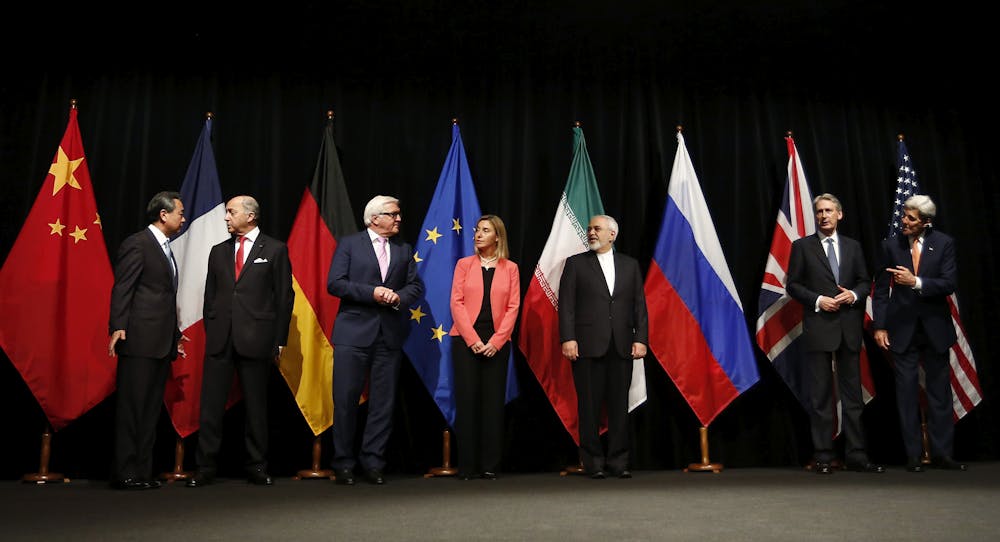
    The three European powers, known as the E3, were parties to a 2015 nuclear deal that Trump abandoned three years later during his first term.

    Both the Europeans and Tehran believed they had a better understanding of how to get a realistic deal given the E3 have been dealing with Iran’s nuclear programme since 2003.

    But the Europeans have had a difficult relationship with Iran in recent months as they sought to pressure it over its ballistic missiles programme, support for Russia and detention of European citizens.

    France, which was the keenest to pursue negotiations, has in the last few days suggested Iran should move towards zero enrichment, which until now was not an E3 demand given Iran’s red line on the issue, two European diplomats said.

    Britain has also adopted a tougher stance more in tune with Washington and that was expressed in Geneva, the diplomats said. And Germany’s new government appeared to go in the same direction, although it was more nuanced.

    “Iran has to accept zero enrichment eventually,” said one EU official.

    A senior Iranian official on Saturday showed disappointment at the Europeans’ new stance, saying their demands were “unrealistic”, without providing further details.

    In a brief joint statement on Sunday, which acknowledged the U.S. strikes, the European countries said they would continue their diplomatic efforts.

    “We call upon Iran to engage in negotiations leading to an agreement that addresses all concerns associated with its nuclear program,” it said, adding the Europeans stood ready to contribute “in coordination with all parties”.

    David Khalfa, co-founder of the Atlantic Middle East Forum, a Paris-based think tank, said Supreme Leader Ali Khamenei’s government had taken advantage of the Europeans for years to gain time as it developed its nuclear program and ballistic missile capabilities.

    “The European attempt ended in failure,” he said.
    However, the Europeans still have one important card to play. They are the only ones who, as party to the nuclear accord, can launch its so-called “snapback mechanism”, which would reimpose all previous UN sanctions on Iran if it is found to be in violation of the agreement’s terms.

    Diplomats said, prior to the U.S. strikes, the three countries had discussed an end-August deadline to activate it as part of a ‘maximum pressure’ campaign on Tehran.

    “MULTIPLE CHANNELS” FOR U.S. TALKS

    In total, the U.S. launched 75 precision-guided munitions, including more than two dozen Tomahawk missiles, and more than 125 military aircraft in the operation against the three nuclear sites, U.S. officials said.

    US Defense Secretary Pete Hegseth on Sunday warned Iran against retaliation and said both public and private messages had been sent to Iran “in multiple channels, giving them every opportunity to come to the table.”

    Five previous rounds of indirect negotiations between the United States and Iran collapsed after a U.S. proposal at the end of May called for Iran to abandon uranium enrichment. It was rejected by Tehran, leading to Israel launching its attack on Iran after Trump’s 60-day deadline for talks had expired.

    Iran has repeatedly said from then on that it would not negotiate while at war.

    Even after Israel struck, Washington reached out to Iran to resume negotiations, including offering a meeting between the Trump and Iranian President Masoud Pezeshkian in Istanbul, according to two European diplomats and an Iranian official.

    That was rebuffed by Iran, but Araqchi did continue direct contacts with US Special envoy Steve Witkoff, three diplomats told Reuters.

    One of the challenges in engaging with Iran, experts say, is that no-one can be sure of the extent of the damage to its nuclear program. With the IAEA severely restricted in its access to Iranian sites, it is unclear whether Tehran has hidden enrichment facilities.

    A senior Iranian source told Reuters on Sunday most of the highly enriched uranium at Fordow, the site producing the bulk of Iran’s uranium refined to up to 60%, had been moved to an undisclosed location before the U.S. attack there.

    Acton, of the Carnegie Endowment, said that – putting aside from the damage to its physical installations – Iran had thousands of scientists and technicians involved in the enrichment program, most of whom had survived the U.S. and Israeli attacks.
    “You can’t bomb knowledge,” said Acton.

    (Reuters)

    June 23, 2025
  • Satellite images indicate severe damage to Fordow, but doubts remain

    Source: Government of India

    Source: Government of India (4)

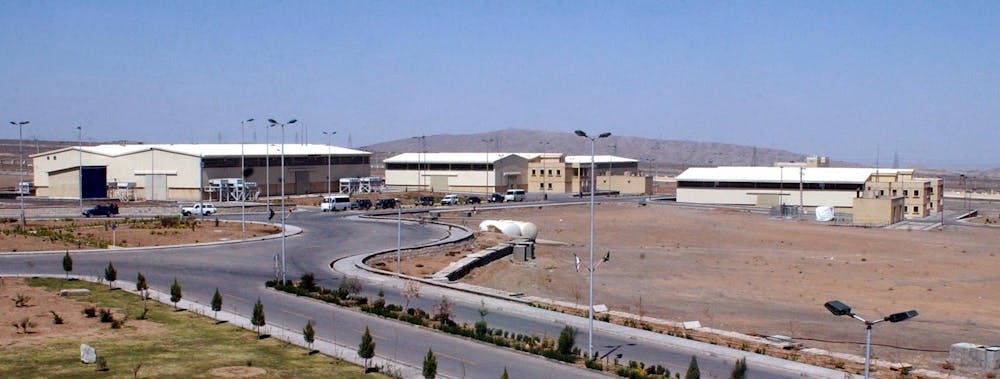
    Commercial satellite imagery indicates the U.S. attack on Iran’s Fordow nuclear plant severely damaged – and possibly destroyed – the deeply-buried site and the uranium-enriching centrifuges it housed, but there was no confirmation, experts said on Sunday.

    “They just punched through with these MOPs,” said David Albright, a former U.N. nuclear inspector who heads the Institute for Science and International Security, referring to the Massive Ordnance Penetrator bunker-busting bombs that the U.S. said it dropped. “I would expect that the facility is probably toast.”

    But confirmation of the below-ground destruction could not be determined, noted Decker Eveleth, an associate researcher with the CNA Corporation who specializes in satellite imagery. The hall containing hundreds of centrifuges is “too deeply buried for us to evaluate the level of damage based on satellite imagery,” he said.

    To defend against attacks such as the one conducted by U.S. forces early on Sunday, Iran buried much of its nuclear program in fortified sites deep underground, including into the side of a mountain at Fordow.

    Satellite images show six holes where the bunker-busting bombs appear to have penetrated the mountain, and then ground that looks disturbed and covered in dust.

    The United States and Israel have said they intend to halt Tehran’s nuclear program. But a failure to completely destroy its facilities and equipment could mean Iran could more easily restart the weapons program that U.S. intelligence and the U.N. International Atomic Energy Agency (IAEA) say it shuttered in 2003.

    ‘UNUSUAL ACTIVITY’

    Several experts also cautioned that Iran likely moved a stockpile of near weapons-grade highly enriched uranium out of Fordow before the strike early Sunday morning and could be hiding it and other nuclear components in locations unknown to Israel, the U.S. and U.N. nuclear inspectors.

    They noted satellite imagery from Maxar Technologies showing “unusual activity” at Fordow on Thursday and Friday, with a long line of vehicles waiting outside an entrance of the facility. A senior Iranian source told Reuters on Sunday most of the near weapons-grade 60% highly enriched uranium had been moved to an undisclosed location before the U.S. attack.

    “I don’t think you can with great confidence do anything but set back their nuclear program by maybe a few years,” said Jeffrey Lewis of the Middlebury Institute of International Studies at Monterey. “There’s almost certainly facilities that we don’t know about.”

    Arizona Sen. Mark Kelly, a Democrat and member of the Senate intelligence committee who said he had been reviewing intelligence every day, expressed the same concern.

    “My big fear right now is that they take this entire program underground, not physically underground, but under the radar,” he told NBC News. “Where we tried to stop it, there is a possibility that this could accelerate it.”

    Iran long has insisted that its nuclear program is for peaceful purposes.

    But in response to Israel’s attacks, Iran’s parliament is threatening to withdraw from the Non-Proliferation Treaty, the cornerstone of the international system that went into force in 1970 to stop the spread of nuclear weapons, ending cooperation with the IAEA.

    “The world is going to be in the dark about what Iran may be doing,” said Daryl Kimball, executive director of the Arms Control Association advocacy group.

    ‘DOUBLE TAP’

    Reuters spoke to four experts who reviewed Maxar Technologies satellite imagery of Fordow showing six neatly spaced holes in two groups in the mountain ridge beneath which the hall containing the centrifuges is believed to be located.

    General Dan Caine, chairman of the U.S. Joint Chiefs of Staff, told reporters that seven B-2 bombers dropped 14 GBU-57/B MOPs, 30,000-pound precision-guided bombs designed to drive up to 200 feet into hardened underground facilities like Fordow, according to a 2012 congressional report.

    Caine said initial assessments indicated that the sites suffered extremely severe damage, but declined to speculate about whether any nuclear facilities remained intact.

    Eveleth said the Maxar imagery of Fordow and Caine’s comments indicated that the B-2s dropped an initial load of six MOPs on Fordow, followed by a “double tap” of six more in the exact same spots.

    Operation Midnight Hammer also targeted Tehran’s main uranium enrichment facility at Natanz, he said, and struck in Isfahan, the location of the country’s largest nuclear research center. There are other nuclear-related sites near the city.

    Israel had already struck Natanz and the Isfahan Nuclear Research Center in its 10-day war with Iran.

    Albright said in a post on X that Airbus Defence and Space satellite imagery showed that U.S. Tomahawk cruise missiles severely damaged a uranium facility at Isfahan and an impact hole above the underground enrichment halls at Natanz reportedly caused by a Massive Ordnance Penetrator bunker-busting bomb that “likely destroyed the facility.”

    Albright questioned the U.S. use of cruise missiles in Isfahan, saying that those weapons could not penetrate a tunnel complex near the main nuclear research center believed to be even deeper than Fordow. The IAEA said the tunnel entrances “were impacted.”

    He noted that Iran recently informed the IAEA that it planned to install a new uranium enrichment plant in Isfahan.

    “There may be 2,000 to 3,000 more centrifuges that were slated to go into this new enrichment plant,” he said. “Where are they?”

    (Reuters)

    June 23, 2025
  • MIL-Evening Report: Why the US strikes on Iran are illegal and can set a troubling precedent

    Source: The Conversation (Au and NZ) – By Donald Rothwell, Professor of International Law, Australian National University

    After the United States bombed Iran’s three nuclear facilities on Sunday, US President Donald Trump said its objective was a “stop to the nuclear threat posed by the world’s number one state sponsor of terror”.

    US Defence Secretary Pete Hegseth echoed this justification, saying:

    The president authorised a precision operation to neutralise the threats to our national interest posed by the Iranian nuclear program and the collective self-defence of our troops and our ally Israel.

    Is this a legitimate justification for a state to launch an attack on another?

    I believe, looking at the evidence, it is not.

    Was it self defence?

    Under the UN Charter, there are two ways in which a state can lawfully use force against another state:

    • the UN Security Council authorises force in exceptional circumstances to restore or maintain international peace and security under Chapter 7

    • the right of self defence when a state is attacked by another, as outlined in Article 51.

    On the first point, there was no UN Security Council authorisation for either Israel or the US to launch an attack on Iran to maintain international peace and security. The security council has long been concerned about Iran’s nuclear program and adopted a series of resolutions related to it. However, none of those resolutions authorised the use of military force.

    With regard to self defence, this right is activated if there is an armed attack against a nation. And there’s no evidence of any recent Iranian attacks on the US.

    There have been incidents involving attacks on US assets by Iranian-backed proxy groups in the region, such as the Houthi rebels in Yemen and Hezbollah. In his address to the nation on Saturday night, Trump made reference to historical incidents the US believes the Iranians were responsible for over the years.

    However, none of these actions is directly related to the strikes on Iran’s nuclear facilities.

    What about a preemptive strike?

    Another possible ground the US can use to mount a case for its bombardments is anticipatory or preemptive self defence.

    Both of these aspects of self defence are controversial. They have never been clearly endorsed by the UN Security Council or the International Court of Justice.

    The US has sought to assert a fairly wide-ranging, robust interpretation of the right of self defence over many years, including both anticipatory self defence and preemptive self defence (which is particularly relevant in the Iran strikes).

    The major point of distinction between the two is whether a potential attack is imminent. Anticipatory self defence is in response to an attack on the brink of happening, such as when armed forces are massing on a border. Preemptive self defence is a step further removed, before a genuine threat materialises.

    Famously, in 2002, the administration of President George W. Bush adopted what is known as the “Bush doctrine” following the September 11 terrorist attacks.

    This doctrine was framed around the notion of preemptive self defence justifying a strike on another nation. This was one of the grounds the US used to justify its military intervention of Iraq in 2003 – that Iraq’s alleged program of weapons of mass destruction posed an imminent threat to the US.

    However, this justification was widely discredited when no evidence of these weapons was found.

    Did Iran pose an imminent threat?

    With regard to Iran’s nuclear program, an imminent threat would require two things: Iran having nuclear weapons capability, and an intent to use them.

    On capability, there have been debates about Iran’s transparency with respect to its cooperation with the International Atomic Energy Agency (IAEA).

    But, importantly, the IAEA is the body that has the authorisation and capability to make judgements about a nation’s nuclear program. And it said, at this point in time, Iran did not yet have nuclear weapons capability.

    As Rafael Grossi, the head of the IAEA told the BBC:

    […]whereas until the early 2000s there used to be […] a structured and systematic effort in the direction of a nuclear device, that is not the case now.

    Trump’s statement in which he referred to the US military operation against Iran’s “nuclear enrichment facilities” was particularly striking. There was no reference to weapons. So, even the language coming out of the White House does not make reference to Iran possessing weapons at this point in time.

    Trump’s address to the nation after the Iran strikes.

    Further, many states have nuclear weapons capability, but they’re not necessarily showing intent to use them.

    Iran has a long track record of aggressive rhetoric against Israel and the US. But the critical question here is whether this equates to an intent to strike.

    What about collective defence?

    Israel began its military campaign against Iran on June 13, also arguing for the need for anticipatory or preemptive self defence to counter the threat posed by Iran’s nuclear program.

    If Israel is exercising its right to self defence consistently with the UN Charter, as it claims, it can legitimately call on the assistance of its allies to mount what is known as “collective self defence” against an attack.

    On all the available evidence, there’s no doubt the Israelis and Americans coordinated with respect to the US strikes on June 22. At face value, this is a case of collective self defence.

    But, importantly, this right is only valid under international law if the original Israeli right to self defence is legitimate.

    And here, we encounter the same legal difficulties as we do with the US claim of self defence. Israel’s claim of an imminent attack from Iran is very dubious and contentious on the facts.


    Read more:
    Are Israel’s actions in Iran illegal? Could it be called self-defence? An international law expert explains


    A concerning precedent

    The overarching concern is these strikes can set a precedent. Other states can use this interpretation of the right of self defence to launch anticipatory or preemptive strikes against other nations any time they want.

    If this practice is allowed to go unchecked and is not subject to widespread condemnation, it can seen by the international community as an endorsement – that this type of conduct is legitimate.

    There are many states acquiring conventional weapons that could be seen to pose a potential threat to their neighbours or other states. And there are several states considering the acquisition of nuclear weapons.

    One example is Japan, where there has been some debate about nuclear weapons as a deterrence to future possible threats from China.

    So, how might Japan’s actions be seen by its neighbours – namely China and North Korea? And how might these countries respond in light of the precedent that’s been set by the US and Israel?

    Should Australia condemn the US strikes?

    Australia’s Foreign Minister Penny Wong has come out in support for the US action, saying “we cannot allow Iran to have a nuclear weapon”. She hasn’t, however, addressed the legality of the US strikes.

    The Albanese government should be discussing this. There’s an expectation, in particular, on the part of Labor governments, given former leader Doc Evatt’s role in the creation of the UN Charter, that they show strong support for the rules-based international order.

    Labor governments were very critical of the way in which the Howard government engaged in the US-led invasion of Iraq, asserting there was no basis for it under international law.

    Accordingly, there’s an expectation that Labor governments should be holding all states accountable for egregious breaches of international law. And, when viewed through the lens of international law, there’s no other way you can characterise the US strikes on Iran.

    Donald Rothwell receives funding from Australian Research Council

    – ref. Why the US strikes on Iran are illegal and can set a troubling precedent – https://theconversation.com/why-the-us-strikes-on-iran-are-illegal-and-can-set-a-troubling-precedent-259542

    MIL OSI Analysis – EveningReport.nz –

    June 23, 2025
  • Iran weighs retaliation against U.S. for strikes on nuclear sites

    Source: Government of India

    Source: Government of India (4)

    Iran and Israel traded air and missile strikes as the world braced on Monday for Tehran’s response to the U.S. attack on its nuclear sites and U.S. President Donald Trump raised the idea of regime change in the Islamic republic.

    Iran vowed to defend itself on Sunday, a day after the U.S. joined Israel in the biggest Western military action against the country since its 1979 Islamic Revolution, despite calls for restraint and a return to diplomacy from around the world.

    Commercial satellite imagery indicated the U.S. attack on Saturday on Iran’s subterranean Fordow nuclear plant severely damaged or destroyed the deeply buried site and the uranium-enriching centrifuges it housed, but the status of the site remained unconfirmed, experts said.

    In his latest social media comments on the U.S. strikes, Trump said “Monumental Damage was done to all Nuclear sites in Iran.”
    “The biggest damage took place far below ground level. Bullseye!!!” he wrote on his Truth Social platform.

    Trump earlier called on Iran to forgo any retaliation and said the government “must now make peace” or “future attacks would be far greater and a lot easier.”

    The U.S. launched 75 precision-guided munitions including bunker-buster bombs and more than two dozen Tomahawk missiles against three Iranian nuclear sites, chairman of the Joint Chiefs of Staff, General Dan Caine, told reporters.

    The U.N. nuclear watchdog, the International Atomic Energy Agency, said no increases in off-site radiation levels had been reported after the U.S. strikes. Rafael Grossi, the agency’s director general, told CNN that it was not yet possible to assess the damage done underground.

    A senior Iranian source told Reuters that most of the highly enriched uranium at Fordow had been moved elsewhere before the attack. Reuters could not immediately corroborate the claim.

    Tehran, which denies its nuclear programme is for anything other than peaceful purposes, sent a volley of missiles at Israel in the aftermath of the U.S. attack, wounding scores of people and destroying buildings in Tel Aviv.

    But it had not acted on its main threats of retaliation, to target U.S. bases or choke off oil shipments that pass through the Strait of Hormuz.

    Attempting to strangle Gulf oil supply by closing the strait could send global oil prices skyrocketing, derail the world economy and invite conflict with the U.S. Navy’s massive Fifth Fleet based in the Gulf.

    Oil prices jumped on Monday to their highest since January. Brent crude futures rose $1.88 or 2.44% at $78.89 a barrel as of 1122 GMT. U.S. West Texas Intermediate crude advanced $1.87 or 2.53% at $75.71.

    Iran’s parliament has approved a move to close the strait, which Iran shares with Oman and the United Arab Emirates. Iran’s Press TV said closing the strait would require approval from the Supreme National Security Council, a body led by an appointee of Iran’s Supreme Leader Ayatollah Ali Khamenei.

    Caine said the U.S. military had increased protection of troops in the region, including in Iraq and Syria. The U.S. State Department issued a security alert for all U.S. citizens abroad, calling on them to “exercise increased caution.”

    The United States already has a sizeable force in the Middle East, with nearly 40,000 troops and warships that can shoot down enemy missiles.

    The Israeli military reported a missile launch from Iran in the early hours of Monday morning, saying it was intercepted by Israeli defences.

    Air raid sirens blared in Tel Aviv and other parts of central Israel. Iran has repeatedly targeted the Greater Tel Aviv – a metropolitan area of around 4 million people – the business and economic hub of Israel where there are also critical military assets.

    Iranian news agencies reported air defences were activated in central Tehran districts to counter “enemy targets”, and that Israeli air strikes hit Parchin, the location of a military complex southeast of the capital.

    REGIME CHANGE

    In a post to the Truth Social platform on Sunday, Trump raised the idea of regime change in Iran.

    “It’s not politically correct to use the term, ‘Regime Change,’ but if the current Iranian Regime is unable to MAKE IRAN GREAT AGAIN, why wouldn’t there be a Regime change??? MIGA!!!” he wrote.

    Trump’s post came after officials in his administration, including U.S. Vice President JD Vance and Defense Secretary Pete Hegseth, stressed they were not working to overthrow Iran’s government.

    Israeli officials, who began the hostilities with a surprise attack on Iran on June 13, have increasingly spoken of their ambition to topple the hardline Shi’ite Muslim clerical establishment.

    Iranian Foreign Minister Abbas Araqchi is expected to hold talks with Russian President Vladimir Putin in Moscow on Monday. The Kremlin has a strategic partnership with Iran, but also close links with Israel.

    Speaking in Istanbul on Sunday, Araqchi said his country would consider all possible responses and there would be no return to diplomacy until it had retaliated.

    Russia’s foreign ministry condemned the U.S. attacks which it said had undermined the Treaty on the Non-Proliferation of Nuclear Weapons.

    “The risk of the conflict spreading in the Middle East, which is already gripped by multiple crises, has increased significantly,” it said.

    The U.N. Security Council met on Sunday to discuss the U.S. strikes as Russia, China and Pakistan proposed the 15-member body adopt a resolution calling for an immediate and unconditional ceasefire in the Middle East.

    U.N. Secretary-General Antonio Guterres told the Security Council the U.S. bombings in Iran marked a perilous turn in the region and urged a return to negotiations over Iran’s nuclear programme.

    (Reuters)

    June 23, 2025
  • MIL-Evening Report: ER Report: A Roundup of Significant Articles on EveningReport.nz for June 23, 2025

    ER Report: Here is a summary of significant articles published on EveningReport.nz on June 23, 2025.

    Illegal US attack on Iran’s nuclear facilities came in spite of no evidence
    BEARING WITNESS: By Cole Martin in occupied Bethlehem Kia ora koutou, I’m a Kiwi journo in occupied Bethlehem, here’s a brief summary of today’s events across the Palestinian and Israeli territories from on the ground. The US struck three of Iran’s nuclear facilities overnight, entering the illegal aggression on Iran with heavy airstrikes despite no

    My kids only want to eat processed foods. How can I get them eating a healthier and more varied diet?
    Source: The Conversation (Au and NZ) – By Nick Fuller, Clinical Trials Director, Department of Endocrinology, RPA Hospital, University of Sydney If it feels like your child’s diet consists entirely of breakfast cereal, chicken nuggets and snacks that’d outlast the apocalypse, you’re not alone. Processed foods are the go-to for many kids, and for some,

    Defence Force to send plane to assist New Zealanders stranded in Iran and Israel
    By Giles Dexter, RNZ News political reporter The Defence Force is sending a plane to the Middle East to assist any New Zealanders stranded in Iran or Israel. The C-130J Hercules, along with government personnel, will leave Auckland on Monday. Airspace is still closed in the region, but Defence Minister Judith Collins said the deployment

    Trump’s decision to bomb Iran exposes fissures in US politics
    Source: The Conversation (Au and NZ) – By Lester Munson, Non-Resident Fellow, United States Studies Centre, University of Sydney US President Donald Trump’s strike on Iran’s nuclear weapons program, which he foreshadowed on and off for the past few days, has revealed a surprisingly broad middle ground in US politics, even as it has provoked

    Leaders in US-affiliated Pacific react to surprise strikes on Iran
    By Mark Rabago, RNZ Pacific Commonwealth of the Northern Marianas correspondent Leaders in the US-affliliated Pacific Islands have reacted to the US strikes on Iran. US president Donald Trump said Iran must now make peace or “we will go after” other targets in Iran, after US strikes on Iranian nuclear sites. Iran’s Foreign Ministry said

    Global warming is changing cloud patterns. That means more global warming
    Source: The Conversation (Au and NZ) – By Christian Jakob, Director, ARC Centre of Excellence for the Weather of the 21st Century, Monash University Caleb Weiner / Unsplash At any given time, about two-thirds of Earth’s surface is covered by clouds. Overall, they make the planet much cooler than it would be without them. But

    NZ’s changing diet: Māori bread and jackfruit join other new foods in the country’s nutritional database
    Source: The Conversation (Au and NZ) – By Nick William Smith, Associate Investigator in Nutritional Science, Te Kunenga ki Pūrehuroa – Massey University Shutterstock/Alesia Bierliezova The latest update to the New Zealand food composition database, a comprehensive collection of nutrient data collated jointly by Plant & Food Research and the Ministry of Health, brings more

    How pregnant women are tested for gestational diabetes is changing. Here’s what this means for you
    Source: The Conversation (Au and NZ) – By Alexis Shub, Obstetrician & Maternal Fetal Medicine specialist, The University of Melbourne How Australian pregnant women are tested for gestational diabetes is set to change, with new national guidelines released today. Changes are expected to lead to fewer diagnoses in women at lower risk, reducing the burden

    Freak wind gusts made worse by climate change threaten airline passenger safety
    Source: The Conversation (Au and NZ) – By Milton Speer, Visiting Fellow, School of Mathematical and Physical Sciences, University of Technology Sydney Unexpected severe turbulence injured crew and passengers on a Qantas Boeing 737 during descent at Brisbane on May 4 2024. The subsequent Australian Transport Safety Bureau investigation suggested the severity of the turbulence

    Labubu plushies aren’t just toys. They’re a brand new frontier for Chinese soft power
    Source: The Conversation (Au and NZ) – By Ming Gao, Research Fellow of East Asia Studies, Lund University Katerina Elagina/Shutterstock One of the most sought-after items of 2025 isn’t a designer handbag or the latest tech gadget. It’s a plush elf with a snaggle-toothed grin. Labubu (拉布布) is a global sensation. From David Beckham and

    Pro-independence advocates urge MSG to elevate West Papua membership
    By Scott Waide, RNZ Pacific PNG correspondent Two international organisations are leading a call for the Melanesian Spearhead Group (MSG) to elevate the membership status of the United Liberation Movement for West Papua (ULMWP) at their upcoming summit in Honiara in September. The collective, led by International Parliamentarians for West Papua (IPWP) and International Lawyers

    Starving Gaza civilians toll climbs at Israeli humanitarian ‘death traps’
    Pacific Media Watch BEARING WITNESS: By Cole Martin in occupied Bethlehem Kia ora koutou, I’m a Kiwi journo in occupied Bethlehem, here’s a brief summary of today’s events across the Palestinian and Israeli territories from on the ground. Israeli forces killed over 200 Palestinians in Gaza over the last 48 hours, injuring over 1037. Countless

    NZ group slams Israeli ‘hoodwinking’ of US over nuclear strikes – Peters calls for talks
    Asia Pacific Report The Palestine Solidarity Network Aotearoa has called on New Zealanders to condemn the US bombing of Iran. PSNA co-chair Maher Nazzal said in a statement that he hoped the New Zealand government would be critical of the US for its war escalation. “Israel has once again hoodwinked the United States into fighting

    The US has entered the Israel-Iran war. Here are 3 scenarios for what might happen next
    Source: The Conversation (Au and NZ) – By Ian Parmeter, Research Scholar, Middle East Studies, Australian National University After prevaricating about whether the United States would enter Israel’s war on Iran, President Donald Trump finally made a decision. Early Sunday, US warplanes struck three of Iran’s nuclear sites at Natanz, Isfahan and Fordow, where the

    What is a ‘bunker buster’? An expert explains what the US dropped on Iran
    Source: The Conversation (Au and NZ) – By James Dwyer, Lecturer, School of Social Sciences, University of Tasmania The jagged silhouette of a B2 stealth bomber seen during a 2015 flyover in the US. Jonathan Daniel / Getty Images Late on Saturday night, local time, the United States carried out strikes against Iranian nuclear enrichment

    Muted response from Albanese government on US attack on Iran
    Source: The Conversation (Au and NZ) – By Michelle Grattan, Professorial Fellow, University of Canberra The Albanese government has given a tepid response to the United States’ bombing of Iran’s nuclear facilities. The Prime Minister’s Office issued a statement from a government spokesperson, but there were no plans on Sunday afternoon for Anthony Albanese or

    What is a ‘bunker buster’? An expert explains what the US dropped on Iran – and what might happen now
    Source: The Conversation (Au and NZ) – By James Dwyer, Lecturer, School of Social Sciences, University of Tasmania The jagged silhouette of a B2 stealth bomber seen during a 2015 flyover in the US. Jonathan Daniel / Getty Images Late on Saturday night, local time, the United States carried out strikes against Iranian nuclear enrichment

    MIL OSI Analysis – EveningReport.nz –

    June 23, 2025
  • MIL-Evening Report: Defence Force to send plane to assist New Zealanders stranded in Iran and Israel

    By Giles Dexter, RNZ News political reporter

    The Defence Force is sending a plane to the Middle East to assist any New Zealanders stranded in Iran or Israel.

    The C-130J Hercules, along with government personnel, will leave Auckland on Monday.

    Airspace is still closed in the region, but Defence Minister Judith Collins said the deployment was part of New Zealand’s contingency plans.

    “Airspace in Israel and Iran remains heavily restricted, which means getting people out by aircraft is not yet possible, but by positioning an aircraft, and defence and foreign affairs personnel in the region, we may be able to do more when airspace reopens,” she said.

    The government was also in discussions with commercial airlines to see what they could do to assist, although it was uncertain when airspace would reopen.

    Foreign Affairs Minister Winston Peters said New Zealanders should do everything they could to leave now, if they could find a safe route.

    “We know it will not be safe for everyone to leave Iran or Israel, and many people may not have access to transport or fuel supplies,” he said.

    ‘Stay in touch’
    “If you are in this situation, you should shelter in place, follow appropriate advice from local authorities and stay in touch with family and friends where possible.”

    Peters reiterated New Zealand’s call for diplomacy and dialogue.

    “Ongoing military action in the Middle East is extremely worrying and it is critical further escalation is avoided,” he said. “New Zealand strongly supports efforts towards diplomacy.

    “We urge all parties to return to talks. Diplomacy will deliver a more enduring resolution than further military action.”

    NZ’s Defence Minister Judith Collins and Foreign Minister Winston Peters address the media . . . “Look, this is a danger zone . . . Get out if you possibly can.” Image: RNZ/Calvin Samuel

    It will take a few days for the Hercules to reach the region.

    New Zealanders in Iran and Israel needing urgent consular assistance should call the Ministry’s Emergency Consular Call Centre on +64 99 20 20 20.

    New Zealand hoped the aircraft and personnel would not be needed, and diplomatic efforts would prevail, Collins re-iterated.

    The ministers would not say where exactly the plane and personnel would be based, for security reasons.

    Registered number in Iran jumps
    Peters told reporters the number of New Zealanders registered in Iran had jumped since the escalation of the crisis.

    How the New Zealand Herald, the country’s largest newspaper, reported the US strike on Iran today. Image: APR

    “We thought, at a certain time, we had them all counted out at 46,” he said. “It’s far more closer to 80 now, because they’re coming out of the woodwork, despite the fact that, for months, we said, ‘Look, this is a danger zone’, and for a number of days we’ve said, ‘Get out if you possibly can’.”

    There were 101 New Zealanders registered in Israel. Again, Peters said the figure had risen recently.

    He indicated people from other nations could be assisted, similar to when the NZDF assisted in repatriations from New Caledonia last year.

    Labour defence spokesperson Peeni Henare supported the move.

    “I acknowledge the news that the New Zealand Defence Force will soon begin a repatriation mission to the Middle East, and thank the crew and officials on this mission for their ongoing work to bring New Zealanders home safely,” he said.

    While he agreed with the government that the attacks were a dangerous escalation of the conflict and supported the government’s calls for dialogue, he said the US bombing of Iran was a breach of international law and the government should be saying it.

    This article is republished under a community partnership agreement with RNZ.

    MIL OSI Analysis – EveningReport.nz –

    June 23, 2025
  • MIL-Evening Report: Defence Force to send plane to assist New Zealanders stranded in Iran and Israel

    By Giles Dexter, RNZ News political reporter

    The Defence Force is sending a plane to the Middle East to assist any New Zealanders stranded in Iran or Israel.

    The C-130J Hercules, along with government personnel, will leave Auckland on Monday.

    Airspace is still closed in the region, but Defence Minister Judith Collins said the deployment was part of New Zealand’s contingency plans.

    “Airspace in Israel and Iran remains heavily restricted, which means getting people out by aircraft is not yet possible, but by positioning an aircraft, and defence and foreign affairs personnel in the region, we may be able to do more when airspace reopens,” she said.

    The government was also in discussions with commercial airlines to see what they could do to assist, although it was uncertain when airspace would reopen.

    Foreign Affairs Minister Winston Peters said New Zealanders should do everything they could to leave now, if they could find a safe route.

    “We know it will not be safe for everyone to leave Iran or Israel, and many people may not have access to transport or fuel supplies,” he said.

    ‘Stay in touch’
    “If you are in this situation, you should shelter in place, follow appropriate advice from local authorities and stay in touch with family and friends where possible.”

    Peters reiterated New Zealand’s call for diplomacy and dialogue.

    “Ongoing military action in the Middle East is extremely worrying and it is critical further escalation is avoided,” he said. “New Zealand strongly supports efforts towards diplomacy.

    “We urge all parties to return to talks. Diplomacy will deliver a more enduring resolution than further military action.”

    NZ’s Defence Minister Judith Collins and Foreign Minister Winston Peters address the media . . . “Look, this is a danger zone . . . Get out if you possibly can.” Image: RNZ/Calvin Samuel

    It will take a few days for the Hercules to reach the region.

    New Zealanders in Iran and Israel needing urgent consular assistance should call the Ministry’s Emergency Consular Call Centre on +64 99 20 20 20.

    New Zealand hoped the aircraft and personnel would not be needed, and diplomatic efforts would prevail, Collins re-iterated.

    The ministers would not say where exactly the plane and personnel would be based, for security reasons.

    Registered number in Iran jumps
    Peters told reporters the number of New Zealanders registered in Iran had jumped since the escalation of the crisis.

    How the New Zealand Herald, the country’s largest newspaper, reported the US strike on Iran today. Image: APR

    “We thought, at a certain time, we had them all counted out at 46,” he said. “It’s far more closer to 80 now, because they’re coming out of the woodwork, despite the fact that, for months, we said, ‘Look, this is a danger zone’, and for a number of days we’ve said, ‘Get out if you possibly can’.”

    There were 101 New Zealanders registered in Israel. Again, Peters said the figure had risen recently.

    He indicated people from other nations could be assisted, similar to when the NZDF assisted in repatriations from New Caledonia last year.

    Labour defence spokesperson Peeni Henare supported the move.

    “I acknowledge the news that the New Zealand Defence Force will soon begin a repatriation mission to the Middle East, and thank the crew and officials on this mission for their ongoing work to bring New Zealanders home safely,” he said.

    While he agreed with the government that the attacks were a dangerous escalation of the conflict and supported the government’s calls for dialogue, he said the US bombing of Iran was a breach of international law and the government should be saying it.

    This article is republished under a community partnership agreement with RNZ.

    MIL OSI Analysis – EveningReport.nz –

    June 23, 2025
  • MIL-OSI USA News: Presidential Message on the 80th Anniversary of the Battle of Okinawa

    Source: US Whitehouse

    On this day 80 years ago, victory was wrested from the depths of hell when American forces triumphed over the Imperial Japanese Army in the Battle of Okinawa—a brutal and blood-soaked triumph that was the single costliest victory in the Pacific Theater of World War II.

    On April 1, 1945, American forces approached the Japanese island of Okinawa expecting a hard-fought but swift battle to secure the island as a vital airbase for the Allies.  Instead, they were met with what was later termed the “Typhoon of Steel”—kamikaze attacks from the air and sea, and Japanese soldiers deeply entrenched in a system of caves, tunnels, and mountain redoubts, committed to fight to the bitter end.  For weeks, our Soldiers, Marines, and Sailors endured a prolonged and gruesome battle of attrition, punctuated by relentless ambushes in the rain and mud and unthinkable psychological torment.  The Battle of Okinawa demonstrated to the world that, while on the back foot, the Japanese would not easily surrender, and that victory would come at an astounding cost.

    Throughout nearly 3 months of grueling warfare, more than 180,000 American service members withstood horrors beyond imagination to secure Okinawa Island.  By the time the Allies prevailed on June 22, 1945, more than 12,000 Americans had perished, with tens of thousands more wounded.  Months later, on September 2, Japan surrendered unconditionally—finally ending the bloodiest war in the history of the world.

    Today, we honor the grit, courage, and unwavering tenacity of every American warrior who withstood unbearable carnage to bring the Allied forces to victory over the forces of imperialism.  Their service and sacrifice, along with that of their fellow brothers in arms, are a tribute to the selflessness and stalwart bravery of their generation—the Greatest Generation. The legacy of that sacrifice includes our alliance with Japan—forged after that terrible conflict—that embodies our shared commitment to freedom and openness, which is a beacon for the world. In southern Okinawa, the Cornerstone of Peace monument rests on the site where the fighting ended, serving as a somber reminder that the shared tragedy of war and loss of life touches every generation.  Every American soul inscribed on that black granite wall will be forever remembered as an immortal champion of valor, liberty, and sacrifice.

    On this 80th anniversary of the Battle of Okinawa, our Nation pays tribute to the fearless young warriors who endured unimaginable devastation—and we honor those who valiantly laid down their lives for the sacred causes of freedom, sovereignty, and human dignity.

    MIL OSI USA News –

    June 23, 2025
  • MIL-OSI Canada: Monday, June 23, 2025

    Source: Government of Canada – Prime Minister

    Note: All times local

    Hoboken, Belgium

    9:20 a.m. The Prime Minister will visit the Antwerp Schoonselhof Military Cemetery and participate in a wreath-laying ceremony.

    Note for media:

    • Open coverage

    Brussels, Belgium

    3:15 p.m. The Prime Minister will meet with the Prime Minister of Belgium, Bart De Wever.

    Note for media:

    5:00 p.m. The Prime Minister will arrive at the Canada-European Union Summit.

    Note for media:

    • Open coverage

    5:05 p.m. The Prime Minister will meet with the President of the European Council, António Costa, and the President of the European Commission, Ursula von der Leyen.

    Note for media:

    5:30 p.m. The Prime Minister will participate in the Canada-European Union Plenary Meeting.

    Note for media:

    7:10 p.m. The Prime Minister will hold a joint media availability with the President of the European Council, António Costa, and the President of the European Commission, Ursula von der Leyen.

    Note for media:

    • Open coverage

    7:45 p.m. The Prime Minister will participate in a working dinner hosted by the President of the European Council, António Costa, and the President of the European Commission, Ursula von der Leyen.

    Note for media:

    MIL OSI Canada News –

    June 23, 2025
  • MIL-OSI Security: Chesterfield Doctor Sentenced to 5 Years in Prison for Healthcare Fraud

    Source: Office of United States Attorneys

    ST. LOUIS – U.S. District Judge Henry E. Autrey on Friday sentenced a doctor who committed healthcare fraud schemes to five years in prison and ordered him to repay $2.87 million.

    Dr. Stanley L. Librach, now 64, of Chesterfield, pleaded guilty in August in U.S. District Court in St. Louis to one count of conspiracy, one count of illegally prescribing controlled substances, one count of paying illegal kickbacks for referrals and one count of health care fraud. He admitted participating in healthcare fraud schemes involving both kickbacks and the illegal prescribing of controlled substances.

    In one scheme, Dr. Librach, Dr. Asim Muhammad Ali, and chiropractor Jerry Dale Leech agreed to send urine samples for testing to Central Diagnostic Laboratory (CDL) in exchange for illegal kickbacks that went to business entities owned by Leech and Denis J. Mikhlin. CDL then sought reimbursement from Medicare and Medicaid for the testing. Dr. Librach also sent urine samples directly from his own separate private practice clinic to CDL. In exchange, Dr. Ali paid the wages of Dr. Librach’s employees.

    In another scheme, Dr. Librach, Dr. Ali and Leech wrote prescriptions for the powerful pain medication oxycodone and other controlled substances when there was no legitimate medical purpose and while acting outside the usual course of professional conduct. Drs. Librach and Ali had not examined the patients at the pain clinics with which they were associated. They did not determine that the patients whose names appeared on prescriptions had a medical need for the controlled substances. Instead, they spent several hours one day a week pre-signing prescriptions that would be used for patients at upcoming visits. The doctors did not examine or evaluate the patients and rarely looked at patient charts before signing prescriptions. The doctors signed prescriptions for patients whose test results indicated that they were selling or otherwise diverting the controlled substances and did not address that obvious drug diversion. The conspirators knew that pharmacies would seek reimbursement for the medications from Medicare and Medicaid.

    “This provider was involved in multiple elaborate healthcare fraud schemes that involved accepting kickbacks and illegally prescribing dangerous and addictive opioids for financial gain,” said Linda T. Hanley, Special Agent in Charge with the U.S. Department of Health and Human Services, Office of the Inspector General (HHS-OIG).  “HHS-OIG remains committed to working closely with our law enforcement partners to protect patients and protect the integrity of federal healthcare programs.”

    Special Agent in Charge Michael A. Davis heads the Drug Enforcement Administration division that leads DEA investigations in Kansas and Missouri. “Because opioids are highly addictive, doctors have a duty to ensure they are prescribing controlled medications according to law to protect their patients’ health and safety,” said Davis.

    Eleven defendants were indicted in 2020, including three doctors, their staff and purported patients. A twelfth was added in 2022. All have pleaded guilty.

    Dr. Ali, 54, of Creve Coeur, pleaded guilty in May of 2024 to charges similar to the ones to which Dr. Librach pleaded. He is scheduled to be sentenced in August. Leech, 52, of Creve Coeur, pleaded guilty in 2021 to one count of conspiracy, one count of obtaining a controlled substance by fraud, one count of paying illegal kickbacks for referrals and one count of health care fraud. He is scheduled to be sentenced in September. Mikhlin, 46, of Chesterfield, was sentenced in 2021 to nine years in prison and ordered to repay $181,265.

    The HHS-OIG, the DEA, the Missouri Attorney General’s Medicaid Fraud Control Unit, the Federal Bureau of Investigation, the Defense Criminal Investigative Service investigated the case. Assistant U.S. Attorneys Amy Sestric, Derek Wiseman and Jonathan Clow are prosecuting the case.

    MIL Security OSI –

    June 23, 2025
  • MIL-OSI Video: US strikes against nuclear facilities in Iran mark “dangerous escalation” -Security Council briefing

    Source: United Nations (video statements)

    Remarks to the Security Council by Miroslav Jenča, Assistant Secretary-General for Europe, Central Asia and Americas, Departments of Political and Peacebuilding Affairs and Peace Operations, on threats to international peace and security.
    —
    Madam President,

    On the evening of 21 June, the President of the United States announced that the US military conducted strikes against the Fordow, Natanz, and Isfahan nuclear facilities in Iran.

    Shortly thereafter, the Atomic Energy Organization of Iran confirmed that the attacks around the nuclear sites had taken place. Iranian state media indicated the three sites had been evacuated and the highly enriched uranium stockpile transferred in advance. Iran has said there were no immediate signs of radioactive contamination at the three locations following the strikes.

    The Crisis Management Bureau of Qom, where Fordow is located, stated that the perimeter of the Fordow nuclear site had been targeted. Iranian state media said only two tunnels—for entry and exit—were destroyed at Fordow. Preliminary open-source satellite imagery shows damage at various points at the facility.

    I urge Iran to allow IAEA inspectors access to the sites to conduct damage assessments as soon as safety conditions allow. I also note that this Council will shortly hear from IAEA Director-General Grossi.

    I reiterate the Secretary-General’s grave alarm over the use of force by the United States against Iran.

    This latest development must be viewed with the utmost seriousness. It marks a dangerous escalation in a conflict that has already devastated many lives in both countries, in a region on the edge. It is a direct threat to international peace and security.

    Madam President,

    Under-Secretary-General DiCarlo opted before this Council only two days ago that we were teetering on the edge of a full-blown conflict. I fear we are now in that dangerous moment.

    Meanwhile, the hostilities between Israel and Iran continue and are now in their 10th day.

    Hours after the US strikes, the Islamic Revolutionary Guard Corps (IRGC) said it had launched some 40 missiles at Israel.

    Israeli authorities reported that more than 85 people were injured in the barrage, and numerous structures in Tel Aviv and its southern suburbs sustained heavy damage, including many residential buildings and an elder care home.

    Israel also said it had launched a series of strikes against military targets in Iran, including in Tehran, Tabriz and Yazd. The Israel Defense Forces (IDF) said 30 fighter jets had struck dozens of military targets across Iran. Iranian media reported several civilian fatalities, including children, and damage to homes and other civilian infrastructure. Earlier on 21 June, Israel attacked, for a second time since 13 June, the Isfahan nuclear complex, hitting six buildings.

    According to Iran’s Ministry of Health, as of 21 June, 430 people have been killed and more than 3,500 others injured due to Israeli strikes across Iran. Most have been civilians.

    According to Israeli authorities, 25 Israelis have been killed and 1,300 more have been injured since the beginning of exchanges with Iran.

    Madam President,

    The conflict risks engulfing the region in further instability and volatility. Some nonstate armed groups aligned with Iran warned against US involvement. The Houthis in Yemen and some armed groups in Iraq vowed to attack if the US intervened in the conflict between Israel and Iran.

    Iran’s parliament unanimously expressed support for measures to close the Strait of Hormuz – a vital maritime route for global energy transit. Iran’s Supreme National Security Council would need to take the final decision.

    I recall the rights and obligations of all States under international law in relation to maritime navigation.

    Madam President,

    The Middle East cannot afford yet another violent conflict where civilians pay the price of military confrontations. And the world will also not be spared from the ramifications of this dangerous conflict.

    I echo the Secretary-General’s call on Member States, and on the members of the Security Council, to de-escalate and to uphold their obligations under the UN Charter, notably the obligation to settle their international disputes by peaceful means and other rules of international law. All states must live up to their nuclear commitments.

    All parties to the conflict must also comply with the relevant rules of international humanitarian law in the conduct of their military operations.

    There is no military solution to this conflict. We need diplomacy, de-escalation and confidence-building is now.

    Thank you, Madam President.
    —

    https://www.youtube.com/watch?v=zg162TAYuzs

    MIL OSI Video –

    June 23, 2025
  • MIL-OSI United Kingdom: Powering Britain’s future: Electricity bills to be slashed for over 7,000 businesses in major industry shake-up

    Source: United Kingdom – Executive Government & Departments

    Press release

    Powering Britain’s future: Electricity bills to be slashed for over 7,000 businesses in major industry shake-up

    Industrial Strategy sets out a ten-year plan to boost investment, create good skilled jobs and make Britain the best place to do business

    • Electricity costs for thousands of businesses to be slashed by up to 25%.
    • New Industrial Strategy to unlock billions in investment and support 1.1 million new well-paid jobs over the next decade.
    • Strategy developed in partnership with business, marking a new era of collaboration between government and high growth industries.
    • Strategy will make the UK the best country to invest in and grow a business, delivering on the Plan for Change.

    More than 7,000 British businesses are set to see their electricity bills slashed by up to 25% from 2027, as the Government unveils its bold new Industrial Strategy today [Monday 23 June].

    The modern Industrial Strategy sets out a ten-year plan to boost investment, create good skilled jobs and make Britain the best place to do business by tackling two of the biggest barriers facing UK industry – high electricity prices and long waits for grid connections.

    British manufacturers currently pay some of the highest electricity prices in the developed world while businesses looking to expand or modernise have faced delays when it comes to connecting to the grid.

    For too long these challenges have held back growth and made it harder for British firms to compete. Today’s announcement marks a decisive shift — with government stepping in to support industry and unlock the UK’s economic potential.

    From 2027, the new British Industrial Competitiveness Scheme will reduce electricity costs by up to £40 per megawatt hour for over 7,000 electricity-intensive businesses in manufacturing sectors like automotive, aerospace and chemicals.

    These firms, which support over 300,000 skilled jobs, will be exempt from paying levies such as the Renewables Obligation, Feed-in Tariffs and the Capacity Market — helping level the playing field and make them more internationally competitive. Eligibility and further details on the exemptions will be determined following consultation, which will be launched shortly.

    The government is also increasing support for the most energy-intensive firms — like steel, chemicals, and glass — by covering more of the electricity network charges they normally have to pay through the British Industry Supercharger. These businesses currently get a 60% discount on those charges, but from 2026, that will increase to 90%. This means their electricity bills will go down, helping them stay competitive, protect jobs, and invest in the future.

    This will help around 500 eligible businesses in sectors such as steel, ceramics and glass reduce their costs and protect jobs in industries that are the backbone of our economy and will be delivered at no additional cost to the taxpayer.

    These reforms complement the government’s long-term mission for clean power, which is the only way to bring down bills for good by ending the UK’s dependency on volatile fossil fuel markets.

    To ensure businesses can grow and hire without delay, the government will also deliver a new Connections Accelerator Service to streamline grid access for major investment projects — including prioritising those that create high-quality jobs and deliver significant economic benefits.

    We will work closely with the energy sector, local authorities, Welsh and Scottish Governments, trade unions, and industry to design this service, which we expect to begin operating at the end of 2025. New powers in the Planning and Infrastructure Bill, currently before parliament, could also allow the Government to reserve grid capacity for strategically important projects, cutting waiting times and unlocking growth in key sectors.

    The Industrial Strategy is a 10-year plan to promote business investment and growth and make it quicker, easier and cheaper to do business in the UK, giving businesses the confidence to invest and create 1.1 million good, well-paid jobs in thriving industries – delivering on this government’s Plan for Change.

    Prime Minister Keir Starmer said:

    This Industrial Strategy marks a turning point for Britain’s economy and a clear break from the short-termism and sticking plasters of the past.

    In an era of global economic instability, it delivers the long term certainty and direction British businesses need to invest, innovate and create good jobs that put more money in people’s pockets as part of the plan for change.

    This is how we power Britain’s future – by backing the sectors where we lead, removing the barriers that hold us back, and setting out a clear path to build a stronger economy that works for working people. Our message is clear – Britain is back and open for business.

    Chancellor of the Exchequer Rachel Reeves said:

     The UK has some of the most innovative businesses in the world and our Plan for Change has provided them with the stability they need to grow and for more to be created.

    Today’s Industrial Strategy builds on that progress with a ten-year plan to slash barriers to investment. It’ll see billions of pounds for investment and cutting-edge tech, ease energy costs, and upskill the nation. It will ensure the industries that make Britain great can thrive. It will boost our economy and create jobs that put more money in people’s pockets.

    Business and Trade Secretary Jonathan Reynolds said:

    We’ve said from day one Britain is back in business under this government, and the £100 billion of investment we’ve secured in the past year shows our Plan for Change is already delivering for working people.

    Our Modern Industrial Strategy will ensure the UK is the best country to invest and do business, delivering economic growth that puts more money in people’s pockets and pays for our NHS, schools and military.

    Not only does this Strategy prioritise investment to attract billions for new business sites, cutting-edge research, and better transport links, it will also make our industrial electricity prices more competitive.

    Tackling energy costs and fixing skills has been the single biggest ask of us from businesses and the greatest challenge they’ve faced – this government has listened, and now we’re taking the bold action needed. Government and business working hand in hand to make working people better of is what this Government promised and what we will deliver.

    Energy Secretary Ed Miliband said: 

    For too long high electricity costs have held back British businesses, as a result of our reliance on gas sold on volatile international markets.

    As part of our modern industrial strategy we’re unlocking the potential of British industry by slashing industrial electricity prices in key sectors.

    We’re also doubling down on our clean power strengths with increased investment in growth industries from offshore wind to nuclear. This will deliver on our clean power mission and Plan for Change to bring down bills for households and businesses for good.

    The Supercharger and British Industrial Competitiveness Scheme will be funded through reforms to the energy system. The government is reducing costs within the system to free up funding without raising household bills or taxes and intends to also use additional funds from the strengthening of UK carbon pricing, including as a result of linking with the EU carbon market.

    We have set out an intention to link emissions trading systems, as part of our new agreement with the European Union to support British businesses. Without an agreement to do this, British industry would have to pay the EU’s carbon tax.

    We intend to link our carbon pricing system with the EU’s, we will ensure that money stays in the UK—which allows us to support British companies and British jobs through these schemes.

    Building on the Spending Review and the recently announced 10-Year Infrastructure Strategy, the Industrial Strategy is the latest step forward in our plans to deliver national renewal. It will include targeted support for the areas of the country and economy that have the greatest potential to grow, while introducing reforms that will make it easier for all businesses to get ahead.

    The Strategy’s bold plan of action includes:

    • Slash electricity costs by up to 25% from 2027 for electricity-intensive manufacturers in our growth sectors and foundational industries in their supply chain, bringing costs more closely in line with other major economies in Europe.
    • Unlocking billions in finance for innovative business, especially for SMEs by increasing British Business Bank financial capacity to £25.6 billion, crowding in tens of billions of pounds more in private capital. The includes an additional £4bn for Industrial Strategy Sectors, crowding in billions more in private capital. By investing largely through venture funds, the BBB will back the UK’s most high-growth potential companies.
    • Upskilling the nation with an extra £1.2 billion each year for skills by 2028-29, and delivering more opportunities to learn and earn in our high-growth sectors including new short courses in relevant skills funded by the Growth and Skills Levy and skills packages targeted at defence digital and engineering.
    • Reducing regulatory burdens by cutting the administrative costs of regulation for business by 25% and reduce the number of regulators. 
    • Supporting 5,500 more SMEs to adopt new technology through the Made Smarter programme while centralising government support in one place through the Business Growth Service.
    • Boosting R&D spending to £22.6bn per year by 2029-30 to drive innovation across the IS-8, with more than £2bn for AI over the Spending Review, and £2.8bn for advanced manufacturing over the next ten years. This will leverage in billions more from private investors. Regulatory changes will further clear the path for fast-growing industries and innovative products such as biotechnology, AI, and autonomous vehicles.
    • Attracting elite global talent to our key sectors, via visa and migration reforms and the new Global Talent Taskforce.
    • Deepening economic and industrial collaboration with our partners, building on our Industrial Strategy Partnership with Japan and recent deals with the US, India, and the EU.
    • Reducing planning timelines and cutting costs for developers, by hiring more planners, streamlining pre-application requirements and combining environmental obligations, removing burdens on businesses as well as accelerating house building. 
    • Revolutionising public procurement and reducing barriers for new entrants and SMEs to bolster domestic competitiveness.
    • Supporting the UK’s city regions and clusters by increasing the supply of investible sites through a new £600m Strategic Sites Accelerator, enhanced regional support from the Office for Investment, National Wealth Fund, and British Business Bank, and more.

    The plan focuses on 8 sectors where the UK is already strong and there’s potential for faster growth: Advanced Manufacturing, Clean Energy Industries, Creative Industries, Defence, Digital and Technologies, Financial Services, Life Sciences, and Professional and Business Services. Each growth sector has a bespoke 10-year plan that will attract investment, enable growth and create high-quality, well-paid jobs.

    Dame Clare Barclay DBE, Chair of the Industrial Strategy Advisory Council and President of Enterprise & Industry EMEA at Microsoft said:

    I welcome today’s Industrial Strategy, which sets out a clear plan to back the UK’s growth driving sectors. It is particularly positive to see the strong focus on skills in areas such as engineering, technology and defence. Commitments such as £187 million for the TechFirst programme will ensure the UK has the skills it needs to support our growth industries and seize transformative opportunities like AI.

    Rain Newton-Smith, Chief Executive, CBI said:

    Today’s Industrial Strategy announcement is a significant leap forward in the partnership between government and business that sets us on the path to our shared goal of raising living standards across the country.  

    It sends an unambiguous, positive signal about the nation’s global calling card as well as the direction of travel for the wider economy for the next decade and beyond.

    The CBI has long been advocating for a comprehensive industrial strategy, based on the UK’s USP – the sectors and markets where we can compete to win on the global stage.

    More competitive energy prices, fast-tracked planning decisions and backing innovation will provide a bedrock for growth. But the global race to attract investment will require a laser-like and unwavering focus on the UK’s overall competitiveness. 

    Today marks the beginning of delivering this strategy in close partnership, at pace, and with a shared purpose.

    Stephen Phipson CBE, CEO at Make UK said:

    British industry has been in desperate need for a government who understands our sector and had the strategic vision for a plan for growth. Today’s Industrial Strategy is a giant and much needed step forward taken by the Secretary of State who has seen the potential and provided the keys to help unlock it.

    Make UK has led the campaign for a new industrial strategy for many years, highlighting the three major challenges that were diminishing our competitiveness, hampering growth and frustrating productivity gains: a skills crisis, crippling energy costs and, an inability to access capital for new British innovators.

    The strategy announced today sets out plans to address all three of these structural failings. Clearly there is much to do as we move towards implementation but, this will send a message across the Country and around the world that Britain is back in business.

    Tufan Erginbilgic, Rolls-Royce CEO, said:

    The UK Government’s Industrial Strategy commitment to support our world-leading aerospace and nuclear industries shows long-term strategic foresight. Rolls-Royce’s highly differentiated technologies in gas turbines and nuclear capabilities- including SMRs and AMRs- are uniquely placed to deliver economic growth, skilled jobs and attract investment into the UK.

    Mike Hawes OBE, SMMT Chief Executive said:

    The publication of an Industrial Strategy – one with automotive at its heart – is the policy framework the sector has long-sought and Government has now addressed. Such a strategy – long-term, aligned to a trade strategy and supported by all of Government – is the basis on which the UK automotive sector can regain its global competitiveness. Making the UK the best place to invest now depends on implementation, and implementation at pace, because investment decisions are being made now against a backdrop of fierce competition and geopolitical uncertainty. The number one priority must be addressing the UK’s high cost of energy, enabling the sector to invest in the technologies, the products and the people that will give the UK its competitive edge.

    Five sector plans have been published today:

    • Advanced Manufacturing – Backing our Advanced Manufacturing sector with up to £4.3 billion in funding, including up to £2.8 billion in R&D over the next five years, with the aim of anchoring supply chains in the UK – from increasing vehicle production to 1.35 million, to leading the next generation of technologies for zero emission flight.
    • Clean Energy Industries – Doubling investment in Clean Energy Industries by 2035, with Great British Energy helping to build the clean power revolution in Britain with a further £700 million in clean energy supply chains, taking the total funding for the Great British Energy Supply Chain fund to £1 billion.
    • Creative Industries – Maximizing the value of our Creative Industries through a £380 million boost for film and TV, video games, advertising and marketing, music and visual and performing arts will improve access to finance for scale-ups and increase R&D, skills and exports.
    • Digital and Technologies – Making the UK the European leader for creating and scaling Digital and Technology businesses, with more than £2 billion to drive the AI Action Plan, including a new Sovereign AI Programme, £187 million for training one million young people in tech skills and targeting R&D investment at frontier technologies such as cyber security in Northern Ireland, semiconductors in Wales and quantum technologies in Scotland. 
    • Professional and Business Services – Ensuring our Professional and Business Services becomes the world’s most trusted adviser to global industry, revolutionising the sector across the world through adoption of UK-grown AI and working to secure mutual recognition of professional qualifications agreements overseas.  

    Notes to editors

    • The Industrial Strategy will be published on Gov.UK tomorrow.
    • The Defence, Financial Services and Life Sciences sector plans will be published shortly.
    • The 7000 businesses are an indicative estimate of how many businesses could be in scope of the scheme. The full scope and eligibility of the scheme will be determined following consultation.

    Share this page

    The following links open in a new tab

    • Share on Facebook (opens in new tab)
    • Share on Twitter (opens in new tab)

    Updates to this page

    Published 22 June 2025

    MIL OSI United Kingdom –

    June 23, 2025
  • MIL-OSI USA: Kelly statement on U.S. military operations in Iran

    Source: United States House of Representatives – Representative Mike Kelly (R-PA)

    WASHINGTON, D.C. — Today, U.S. Rep. Mike Kelly (R-PA) released this statement following military operations in Iran on the evening of Saturday, June 21.

    “President Trump is leading with peace through strength. Let’s be clear: Iran cannot have a nuclear weapon. May God protect our brave service members who carried out this operation, and may God bless America,” said Rep. Kelly. “This is the most significant show of American strength, commitment and resolve by any sitting American President in our recent history. God Bless the men and women of our American Military for their courage, dedication, commitment and the Leadership of President Trump. You are all in our prayers!”

    MIL OSI USA News –

    June 23, 2025
  • MIL-OSI Russia: At least 19 killed in suicide bombing at church in eastern Damascus

    Translation. Region: Russian Federal

    Source: People’s Republic of China in Russian – People’s Republic of China in Russian –

    Source: People’s Republic of China – State Council News

    DAMASCUS, June 22 (Xinhua) — A suicide bomber detonated an explosive device at Mar Elias Church in the Syrian capital Damascus on Sunday during a mass, killing at least 19 people and wounding dozens more, the Syrian Observatory for Human Rights said.

    According to local media, the explosion occurred in the Mar Elias church in the Al-Dueila area.

    Syria’s internal security agency said the attacker belonged to the extremist group Islamic State, also known as Daesh.

    The explosion caused numerous civilian casualties, the Syrian Civil Defense said, without giving exact figures.

    Authorities have called on residents not to gather at the scene of the incident so as not to interfere with the work of emergency services.

    At this time, no one has claimed responsibility for the attack. –0–

    MIL OSI Russia News –

    June 23, 2025
  • MIL-OSI USA: Statement from Rep. Cuellar on U.S. Strikes in Iran

    Source: United States House of Representatives – Congressman Henry Cuellar (TX-28)

    Washington, DC – Today, U.S. Congressman Henry Cuellar, Ph.D. (TX-28), released the following statement in response to United States strikes against Iranian nuclear facilities:

    “Iran’s pursuit of nuclear weapons is a direct threat to the safety of the United States, our allies, and the stability of the Middle East. The regime has made its intentions clear by developing its nuclear program in secret, violating international agreements, and refusing transparency with global inspectors.

    “At the same time, Iran has built and sustained a violent network of terrorist proxies across the region. The regime trains, funds, and commands Hezbollah in Lebanon, Hamas in Gaza, and the Houthis in Yemen. These groups launch attacks on civilians, American military personnel, and our regional partners. Their actions are not spontaneous. They are orchestrated by a regime that embraces terrorism as a tool of statecraft.

    “The United States has responded with precision and purpose. Our forces have taken necessary action to dismantle Iran’s nuclear infrastructure and disrupt its military capabilities. These operations reflect our determination to defend American lives, protect our partners, and hold the Iranian regime accountable. But let me be clear: Congress must play a decisive role in any decision involving the deployment of American troops into harm’s way.

    “As a senior member of the House Appropriations Subcommittee on Defense, I remain focused on ensuring our military and national security agencies have the tools they need to keep our country safe. We owe it to our servicemembers and the American people to approach this moment with bipartisan resolve and constitutional responsibility. Congress needs to be actively engaged to achieve these goals.”

    MIL OSI USA News –

    June 23, 2025
  • MIL-OSI Canada: Statement by Prime Minister Carney on the passing of the Honourable John McCallum

    Source: Government of Canada – Prime Minister

    “Deeply saddened to learn of the passing of John McCallum, who was an inspiration, a mentor, and a friend. 

    “John served Canada and academia with great distinction, helping us to find solutions to our biggest economic challenges, and always with good humour and grace.   

    “As an exemplary public servant, economist, diplomat, and parliamentarian, John’s contributions to Canada were as deep as they were diverse. Outside of politics, his ideas and analysis established him as one of Canada’s foremost economists. As Chief Economist at the Royal Bank of Canada, his insights shaped national conversations on fiscal policy, growth, and competitiveness.

    “As a Member of Parliament, he brought that same purpose and conviction to public service. His leadership in Canada’s Cabinet included serving as Minister of National Defence, Veterans Affairs, Immigration, and more. As Canada’s Ambassador to China, he brought his expertise to shaping one of Canada’s most consequential bilateral relationships.

    “John believed in Canada as a place of opportunity and enormous potential. With his values of humility and service, John leaves a lasting legacy to his community and country. With my deepest condolences to John’s friends and family at this difficult time.”

    MIL OSI Canada News –

    June 23, 2025
  • MIL-OSI USA: Hegseth, Caine laud success of U.S. strike on Iran nuke sites

    Source: United States Air Force

    Headline: Hegseth, Caine laud success of U.S. strike on Iran nuke sites

    During a press conference at the Pentagon, Defense Secretary Pete Hegseth and Air Force Gen. Dan Caine, chairman of the Joint Chiefs of Staff, lauded the success of the U.S. Central Command’s overnight strike on three Iranian nuclear facilities. 

    MIL OSI USA News –

    June 23, 2025
  • MIL-OSI Security: Hegseth, Caine laud success of U.S. strike on Iran nuke sites

    Source: United States Air Force

    During a press conference at the Pentagon, Defense Secretary Pete Hegseth and Air Force Gen. Dan Caine, chairman of the Joint Chiefs of Staff, lauded the success of the U.S. Central Command’s overnight strike on three Iranian nuclear facilities. 

    MIL Security OSI –

    June 23, 2025
  • MIL-OSI Security: Defense News in Brief: Hegseth, Caine Laud Success of U.S. Strike on Iran Nuke Sites

    Source: United States Department of Defense

    During a press conference at the Pentagon, Defense Secretary Pete Hegseth and Air Force Gen. Dan Caine, chairman of the Joint Chiefs of Staff, lauded the success of the U.S. Central Command’s overnight strike on three Iranian nuclear facilities. 

    MIL Security OSI –

    June 23, 2025
  • MIL-OSI Global: US and Iran have a long, complicated history, spanning decades before US strikes on nuclear sites

    Source: The Conversation – USA – By Jeffrey Fields, Professor of the Practice of International Relations, USC Dornsife College of Letters, Arts and Sciences

    People observe fire and smoke from an Israeli airstrike on an oil depot in Tehran, Iran, on June 15, 2025. Stringer/Getty Images

    With the U.S. bombing of three nuclear sites in Iran, relations between the two countries have arguably reached one of the lowest points in modern times. But the bad blood between the two countries isn’t new: The U.S. and Iran have been in conflict for decades – at least since the U.S. helped overthrow a democracy-minded prime minister, Mohammed Mossadegh, in August 1953. The U.S. then supported the long, repressive reign of the Shah of Iran, whose security services brutalized Iranian citizens for decades.

    The two countries have been particularly hostile to each other since Iranian students took over the U.S. Embassy in Tehran in November 1979, resulting in economic sanctions and the severing of formal diplomatic relations between the nations.

    Since 1984, the U.S. State Department has listed Iran as a “state sponsor of terrorism,” alleging the Iranian government provides terrorists with training, money and weapons.

    Some of the major events in U.S.-Iran relations highlight the differences between the nations’ views, but others arguably presented real opportunities for reconciliation.

    1953: US overthrows Mossadegh

    Mohammed Mossadegh.
    Wikimedia Commons

    In 1951, the Iranian Parliament chose a new prime minister, Mossadegh, who then led lawmakers to vote in favor of taking over the Anglo-Iranian Oil Company, expelling the company’s British owners and saying they wanted to turn oil profits into investments in the Iranian people. The U.S. feared disruption in the global oil supply and worried about Iran falling prey to Soviet influence. The British feared the loss of cheap Iranian oil.

    President Dwight Eisenhower decided it was best for the U.S. and the U.K. to get rid of Mossadegh. Operation Ajax, a joint CIA-British operation, convinced the Shah of Iran, the country’s monarch, to dismiss Mossadegh and drive him from office by force. Mossadegh was replaced by a much more Western-friendly prime minister, handpicked by the CIA.

    Demonstrators in Tehran demand the establishment of an Islamic republic.
    AP Photo/Saris

    1979: Revolutionaries oust the shah, take hostages

    After more than 25 years of relative stability in U.S.-Iran relations, the Iranian public had grown unhappy with the social and economic conditions that developed under the dictatorial rule of Shah Mohammad Reza Pahlavi.

    Pahlavi enriched himself and used American aid to fund the military while many Iranians lived in poverty. Dissent was often violently quashed by SAVAK, the shah’s security service. In January 1979, the shah left Iran, ostensibly to seek cancer treatment. Two weeks later, Ayatollah Ruhollah Khomeini returned from exile in Iraq and led a drive to abolish the monarchy and proclaim an Islamic government.

    Iranian students at the U.S. Embassy in Tehran show a blindfolded American hostage to the crowd in November 1979.
    AP Photo

    In October 1979, President Jimmy Carter agreed to allow the shah to come to the U.S. to seek advanced medical treatment. Outraged Iranian students stormed the U.S. Embassy in Tehran on Nov. 4, taking 52 Americans hostage. That convinced Carter to sever U.S. diplomatic relations with Iran on April 7, 1980.

    Two weeks later, the U.S. military launched a mission to rescue the hostages, but it failed, with aircraft crashes killing eight U.S. servicemembers.

    The shah died in Egypt in July 1980, but the hostages weren’t released until Jan. 20, 1981, after 444 days of captivity.

    An Iranian cleric, left, and an Iranian soldier wear gas masks to protect themselves against Iraqi chemical-weapons attacks in May 1988.
    Kaveh Kazemi/Getty Images

    1980-1988: US tacitly sides with Iraq

    In September 1980, Iraq invaded Iran, an escalation of the two countries’ regional rivalry and religious differences: Iraq was governed by Sunni Muslims but had a Shia Muslim majority population; Iran was led and populated mostly by Shiites.

    The U.S. was concerned that the conflict would limit the flow of Middle Eastern oil and wanted to ensure the conflict didn’t affect its close ally, Saudi Arabia.

    The U.S. supported Iraqi leader Saddam Hussein in his fight against the anti-American Iranian regime. As a result, the U.S. mostly turned a blind eye toward Iraq’s use of chemical weapons against Iran.

    U.S. officials moderated their usual opposition to those illegal and inhumane weapons because the U.S. State Department did not “wish to play into Iran’s hands by fueling its propaganda against Iraq.” In 1988, the war ended in a stalemate. More than 500,000 military and 100,000 civilians died.

    1981-1986: US secretly sells weapons to Iran

    The U.S. imposed an arms embargo after Iran was designated a state sponsor of terrorism in 1984. That left the Iranian military, in the middle of its war with Iraq, desperate for weapons and aircraft and vehicle parts to keep fighting.

    The Reagan administration decided that the embargo would likely push Iran to seek support from the Soviet Union, the U.S.’s Cold War rival. Rather than formally end the embargo, U.S. officials agreed to secretly sell weapons to Iran starting in 1981.

    The last shipment, of anti-tank missiles, was in October 1986. In November 1986, a Lebanese magazine exposed the deal. That revelation sparked the Iran-Contra scandal in the U.S., with Reagan’s officials found to have collected money from Iran for the weapons and illegally sent those funds to anti-socialist rebels – the Contras – in Nicaragua.

    At a mass funeral for 76 of the 290 people killed in the shootdown of Iran Air 655, mourners hold up a sign depicting the incident.
    AP Photo/CP/Mohammad Sayyad

    1988: US Navy shoots down Iran Air flight 655

    On the morning of July 8, 1988, the USS Vincennes, a guided missile cruiser patrolling in the international waters of the Persian Gulf, entered Iranian territorial waters while in a skirmish with Iranian gunboats.

    Either during or just after that exchange of gunfire, the Vincennes crew mistook a passing civilian Airbus passenger jet for an Iranian F-14 fighter. They shot it down, killing all 290 people aboard.

    The U.S. called it a “tragic and regrettable accident,” but Iran believed the plane’s downing was intentional. In 1996, the U.S. agreed to pay US$131.8 million in compensation to Iran.

    1997-1998: The US seeks contact

    In August 1997, a moderate reformer, Mohammad Khatami, won Iran’s presidential election.

    U.S. President Bill Clinton sensed an opportunity. He sent a message to Tehran through the Swiss ambassador there, proposing direct government-to-government talks.

    Shortly thereafter, in early January 1998, Khatami gave an interview to CNN in which he expressed “respect for the great American people,” denounced terrorism and recommended an “exchange of professors, writers, scholars, artists, journalists and tourists” between the United States and Iran.

    However, Supreme Leader Ayatollah Ali Khamenei didn’t agree, so not much came of the mutual overtures as Clinton’s time in office came to an end.

    In his 2002 State of the Union address, President George W. Bush characterized Iran, Iraq and North Korea as constituting an “Axis of Evil” supporting terrorism and pursuing weapons of mass destruction, straining relations even further.

    Inside these buildings at the Natanz nuclear facility in Iran, technicians enrich uranium.
    AP Photo/Vahid Salemi

    2002: Iran’s nuclear program raises alarm

    In August 2002, an exiled rebel group announced that Iran had been secretly working on nuclear weapons at two installations that had not previously been publicly revealed.

    That was a violation of the terms of the Nuclear Nonproliferation Treaty, which Iran had signed, requiring countries to disclose their nuclear-related facilities to international inspectors.

    One of those formerly secret locations, Natanz, housed centrifuges for enriching uranium, which could be used in civilian nuclear reactors or enriched further for weapons.

    Starting in roughly 2005, U.S. and Israeli government cyberattackers together reportedly targeted the Natanz centrifuges with a custom-made piece of malicious software that became known as Stuxnet.

    That effort, which slowed down Iran’s nuclear program was one of many U.S. and international attempts – mostly unsuccessful – to curtail Iran’s progress toward building a nuclear bomb.

    2003: Iran writes to Bush administration

    An excerpt of the document sent from Iran, via the Swiss government, to the U.S. State Department in 2003, appears to seek talks between the U.S. and Iran.
    Washington Post via Scribd

    In May 2003, senior Iranian officials quietly contacted the State Department through the Swiss embassy in Iran, seeking “a dialogue ‘in mutual respect,’” addressing four big issues: nuclear weapons, terrorism, Palestinian resistance and stability in Iraq.

    Hardliners in the Bush administration weren’t interested in any major reconciliation, though Secretary of State Colin Powell favored dialogue and other officials had met with Iran about al-Qaida.

    When Iranian hardliner Mahmoud Ahmadinejad was elected president of Iran in 2005, the opportunity died. The following year, Ahmadinejad made his own overture to Washington in an 18-page letter to President Bush. The letter was widely dismissed; a senior State Department official told me in profane terms that it amounted to nothing.

    Representatives of several nations met in Vienna in July 2015 to finalize the Iran nuclear deal.
    Austrian Federal Ministry for Europe, Integration and Foreign Affairs/Flickr

    2015: Iran nuclear deal signed

    After a decade of unsuccessful attempts to rein in Iran’s nuclear ambitions, the Obama administration undertook a direct diplomatic approach beginning in 2013.

    Two years of secret, direct negotiations initially bilaterally between the U.S. and Iran and later with other nuclear powers culminated in the Joint Comprehensive Plan of Action, often called the Iran nuclear deal.

    Two years of secret, direct negotiations conducted bilaterally at first between the U.S. and Iran and later with other nuclear powers culminated in the Joint Comprehensive Plan of Action, often called the Iran nuclear deal.

    Iran, the U.S., China, France, Germany, Russia and the United Kingdom signed the deal in 2015. It severely limited Iran’s capacity to enrich uranium and mandated that international inspectors monitor and enforce Iran’s compliance with the agreement.

    In return, Iran was granted relief from international and U.S. economic sanctions. Though the inspectors regularly certified that Iran was abiding by the agreement’s terms, President Donald Trump withdrew from the agreement in May 2018.

    2020: US drones kill Iranian Maj. Gen. Qassem Soleimani

    An official photo from the Iranian government shows Maj. Gen. Qassem Soleimani, who was killed in a Jan. 3 drone strike ordered by President Donald Trump.
    Iranian Supreme Leader Press Office/Anadolu Agency via Getty Images

    On Jan. 3, 2020, an American drone fired a missile that killed Maj. Gen. Qassem Soleimani, the leader of Iran’s elite Quds Force. Analysts considered Soleimani the second most powerful man in Iran, after Supreme Leader Ayatollah Khamenei.

    At the time, the Trump administration asserted that Soleimani was directing an imminent attack against U.S. assets in the region, but officials have not provided clear evidence to support that claim.

    Iran responded by launching ballistic missiles that hit two American bases in Iraq.

    2023: The Oct. 7 attacks on Israel

    Hamas’ brazen attack on Israel on Oct. 7, 2023, provoked a fearsome militarized response from Israel that continues today and served to severely weaken Iran’s proxies in the region, especially Hamas – the perpetrator of the attacks – and Hezbollah in Lebanon.

    2025: Trump 2.0 and Iran

    Trump saw an opportunity to forge a new nuclear deal with Iran and to pursue other business deals with Tehran. Once inaugurated for his second term, Trump appointed Steve Witkoff, a real estate investor who is the president’s friend, to serve as special envoy for the Middle East and to lead negotiations.

    Negotiations for a nuclear deal between Washington and Tehran began in April, but the countries did not reach a deal. They were planning a new round of talks when Israel struck Iran with a series of airstrikes on June 13, forcing the White House to reconsider is position.

    On June 22, in the early morning hours, the U.S. chose to act decisively in an attempt to cripple Iran’s nuclear capacity, bombing three nuclear sites and causing what Pentagon officials called “severe damage.” Iran vowed to retaliate.

    This story has been updated to reflect the U.S. bombing of Iranian nuclear sites on June 22, 2025.

    Jeffrey Fields receives funding from the Carnegie Corporation of New York and Schmidt Futures.

    – ref. US and Iran have a long, complicated history, spanning decades before US strikes on nuclear sites – https://theconversation.com/us-and-iran-have-a-long-complicated-history-spanning-decades-before-us-strikes-on-nuclear-sites-259240

    MIL OSI – Global Reports –

    June 23, 2025
  • MIL-OSI USA: Kaptur Releases Statement And Demands Answers Following American Strikes On Iranian Nuclear Facilities

    Source: United States House of Representatives – Congresswoman Marcy Kaptur (OH-09)

    Toledo, Ohio — Today, Congresswoman Marcy Kaptur (OH-09), a senior member of the House Appropriations Defense Subcommittee, released the following statement. Congresswoman has demanded immediate highly secure confidential Congressional briefings of key Defense and Intelligence Committees to address the following questions related to American strikes on Iranian nuclear facilities. Congresswoman Kaptur is one of 44 bipartisan members of the House who are leading H.Con.Res.38 Directing the President pursuant to section 5(c) of the War Powers Resolution to remove United States Armed Forces from unauthorized hostilities in the Islamic Republic of Iran. 

    “There was no congressional vote, no debate, nor even any discussion with Congress, with leaders of key intelligence committees reportedly left in the dark,” said Congresswoman Marcy Kaptur (OH-09). “This is not the way our Republic is supposed to function because that is not how our Constitution reads. I will continue to demand answers in a secure confidential Congressional briefing in the coming days. May God bless America and our people.”

    (1) If not an act of war against Iran, which Constitutionally would require Congressional consent before bombs were dropped, how does President Trump define his actions against Iran? 

    (2) Who — which individuals — exactly at the National Security Council, Pentagon, and Departments of Defense and State were involved in this decision?

    (3) With what other nations, and which international leaders did President Trump consult before making what appears to be a lone decision?

    (4) Going forward, the secretive manner in which the White House has made such a consequential, strategic, “Lone Ranger” decision puts at very serious risk American troops, US global assets, and strategic interests both abroad and at home.

    (5) This decision appears to have been solely President Trump’s. The consequences that will likely flow from it, however, will attend to the American people at home and abroad and rest squarely on his shoulders alone. 

    (6) Political retribution can take many forms  where religious beliefs do not accommodate compromise nor forgiveness as an accepted behavior. 

    # # #

    MIL OSI USA News –

    June 23, 2025
  • MIL-OSI Global: US bombs Iran’s nuclear sites: What led to Trump pulling the trigger – and what happens next?

    Source: The Conversation – Global Perspectives – By Javed Ali, Associate Professor of Practice of Public Policy, University of Michigan

    US President Donald Trump addresses the nation on Iran strikes on June 21, 2025 Carlos Barria/AFP via Getty Images

    In the early hours of June 22, 2025, local time, the United States attacked three nuclear facilities in Iran with “bunker buster” bombs and Tomahawk missiles.

    Following more than a week of Israeli strikes on various targets in Iran – which had prompted retaliatory strikes from Tehran – the U.S. move marks a possible inflection point in the conflict. In initial comments on the strikes at the Fordo, Isfahan and Natanz facilities, President Donald Trump said that Iran’s nuclear program had been “completely and fully obliterated.” In response, Iran’s Foreign Minister Abbas Araghchi said the U.S. had “crossed a very big red line.”

    The Conversation U.S. turned to Javed Ali, an expert on Middle East affairs at the University of Michigan and a former senior official at the National Security Council during the first Trump administration, to talk through why Trump chose now to act and what the potential repercussions could be.

    What do we know about the nature and timing of US involvement?

    President Trump has been forcefully hinting for days days that such a strike could happen, while at the same time opening up a window of negotiation by suggesting as late as June 20 that he would make a decision “within the next two weeks.” We know Trump can be very unpredictable, but he must have assessed that the current conditions presented an opportunity for U.S. action.

    Trump met with the National Security Council twice in the days leading up to the strike. Typically at such meetings the president is presented with a menu of military options, which usually boil down to three: a narrow option, a middle ground and a “if you really want to go big” strike.

    The one he picked, I would argue, is somewhere between the narrow option and the middle ground one.

    The “go big” options would have been an attack on nuclear sites and Iranian leadership – be that senior members of Iran’s Revolutionary Guard, or possibly the Supreme Leader Ayatollah Ali Khamenei. The more narrow approach would have been just one facility, likely to have been Fordo – a deeply fortified uranium enrichment site buried within a mountain.

    What did occur was a strike there, but also at two other sites – Isfahan and Natanz.

    U.S. military chiefs confirmed that that 12 GBU-57s – the so-called 30,000-pound bunker busters – were dropped by B-2 bombers on Fordo, and two on Isfahan.

    That suggests to me that the military goal of the operation was to destroy Iran’s ability to produce and or store highly enriched uranium in a one-time strike rather than drag the U.S. into a more prolonged conflict.

    Has the strike achieved Trump’s objectives?

    It will take some time to properly assess the extent to which Iran’s ability to produce or store highly enriched uranium has been damaged.

    Certainly we know that the bombs hit their targets, and they have been damaged – but to what extent is not immediately clear. General Dan Caine, chairman of the Joint Chiefs of Staff, said that all three target sites had suffered “extremely severe damage and destruction” – possibly rolling back from Trump’s “fully obliterated” assessment. Perhaps most tellingly, Iran has not commented yet on the extent of the damage.

    But to Trump, the objective was not just military but political, too. Trump has long said “no” to a nuclear Iran while at the same time has expressed that he has no desire to drag the U.S. into another war.

    And this strike may allow Trump to achieve those seemingly contradictory goals. If U.S. initial assessments are correct, Iran’s nuclear program will have been severely compromised. But the strikes won’t necessarily pull U.S. into the conflict fully – unless Iran retaliates in such a way that necessitates further U.S. action.

    And that is what Iran’s supreme leader and his military generals will need to work out: Should Iran retaliate and, if so, is it prepared to deal with a heavier U.S. military response – especially when there is no end in sight to its current conflict with Israel.

    An operational timeline of a strike on Iran is displayed during a news conference with U.S. Chairman of the Joint Chiefs of Staff Gen. Dan Caine and U.S. Defense Secretary Pete Hegseth on June 22, 2025.
    Andrew Harnik/Getty Images

    What options does Iran have to retaliate against US?

    Iran has in the past tried to respond proportionately to any attack. But here is the problem for Iran’s leaders: There is no feasible proportionate response to the United States. Iran has no capability to hit nuclear plants in the U.S. – either conventionally or through unconventional warfare.

    But there are tens of thousands of U.S. troops in the region, stationed in Iraq, Syria, the United Arab Emirates, Oman, Qatar and Jordan. All are in range of Iran’s ballistic, drones or cruise missiles.

    But that military inventory has been depleted – both by using ballistic missiles in waves of attacks against Israel and by Israel hitting missile launch and storage sites in Iran.

    Similarly, Tehran’s capacity to respond through one of its proxy or aligned groups in the region has been degraded. Hezbollah in Lebanon and Gaza’s Hamas – both of whom have ties to Iran – are in survival mode following damaging attacks from Israel over the past 18 months.

    The Houthis in Yemen are in many ways the “last man standing” in Iran’s so-called “Axis of Resistance.” But the Houthis have limited capability and know that if they do attack U.S. assets, they will likely get hit hard. During Operation Rough Rider from March to May this year, the Trump administration launched over 1,000 strikes against the Houthis.

    Meanwhile Shia militias in Iraq and Syria that could be encouraged to attack U.S. bases haven’t been active in months.

    Of course, Iran could look outside the region. In the past the country has been involved in assassinations, kidnappings and terror attacks abroad that were organized through its Quds Force or via operatives of MOIS, its intelligence service.

    But for Iran’s leaders, it is increasingly looking like a lose-lose proposition. If they don’t respond in a meaningful way, they look weak and more vulnerable. But if they do hit U.S. targets in any meaningful way, they will invite a stronger U.S. involvement in the conflict, as Trump has warned.

    The parallel I see here is with the killing of Iranian general and commander of the Quds Force, Qassem Soleimani, in January 2020 by a U.S. drone strike.

    On that occasion, Iran promised a strong retaliation. Its retaliatory attack against the U.S. Ain al-Asad air base in Iraq involved 27 ballistic missiles and caused the physical destruction of some of the facilities on base as well as traumatic brain injury-type symptoms to dozens of troops and personnel, but no deaths. Nevertheless, after this both the U.S. and Iran then backed off from deepening the conflict.

    The circumstances now are very different. Iran is already at war with Israel. Moreover, the U.S. went after Iran’s crown jewels – its nuclear program – and it was on Iranian territory. Nonetheless, Khameini knows that if he retaliates, he risks provoking a larger response.

    Trump suggested ‘further attacks’ could occur. What could that entail?

    The U.S. has suggested that it has the intelligence and ability to hit senior leadership in Iran. And any “go big option” would have likely involved strikes on key personnel. Similarly there could be plans to hit the Iranian economy by attacking oil and gas targets.

    A satellite image of the Fordo nuclear facility in Iran prior to the U.S. strike on June 22, 2025.
    Maxar/Getty

    But such actions risk either damaging the global economy or drawing the U.S. deeper into the conflict – it would evolve from a “one and done” strike to a cycle of attacks and responses. And that could widen political cracks between hawks in the administration and parts of Trump’s MAGA faithful who are against the U.S. being involved in overseas wars.

    Is there any opportunity of a return to diplomacy?

    Trump has not closed his “two weeks” window for talks – theoretically it is still open.

    But will Iran come to table? Leaders there had already said they were not willing to entertain any deal while under attack from Israel. Araghchi, Iran’s foreign minister, said after the U.S. strikes that the time for diplomacy had now passed.

    In any event, you have to ask, what can Iran come to the table with? Do they have much of a nuclear program anymore? And if not, what would they try to negotiate? It would seem, using one of Trump’s phrases, they “don’t have the cards” to make much of a deal.

    Javed Ali does not work for, consult, own shares in or receive funding from any company or organization that would benefit from this article, and has disclosed no relevant affiliations beyond their academic appointment.

    – ref. US bombs Iran’s nuclear sites: What led to Trump pulling the trigger – and what happens next? – https://theconversation.com/us-bombs-irans-nuclear-sites-what-led-to-trump-pulling-the-trigger-and-what-happens-next-259519

    MIL OSI – Global Reports –

    June 23, 2025
  • MIL-OSI USA: Letlow Statement on Iran Strikes

    Source: United States House of Representatives – Congresswoman Julia Letlow (LA-05)

    WASHINGTON, D.C. –  Congresswoman Julia Letlow (LA-5) released the following statement regarding Saturday’s U.S. strikes against Iranian nuclear sites. 

    “President Trump’s decisive action protects America’s security and is a key step toward halting Iran’s march toward becoming a nuclear power. I’m grateful to our troops for their bravery in successfully executing this mission.

    Military action should never be taken lightly, but the world’s leading sponsor of terrorism obtaining a nuclear weapon would fundamentally threaten our national security. These targeted strikes were the right call, and I pray for the continued protection of our men and women in uniform.”

    MIL OSI USA News –

    June 23, 2025
  • MIL-OSI USA News: WHAT THEY ARE SAYING: President Trump’s Display of Peace Through Strength

    Source: US Whitehouse

    President Donald J. Trump’s bold, decisive action against Iran — the world’s leading state sponsor of terrorism — and its key nuclear facilities was met with bipartisan praise from lawmakers across Capitol Hill.

    Here’s what they’re saying:

    Speaker Mike Johnson: “The President made the right call, and did what he needed to do. Leaders in Congress were aware of the urgency of this situation and the Commander-in-Chief evaluated that the imminent danger outweighed the time it would take for Congress to act. The world’s largest state sponsor of terrorism, which chants ‘Death to America,’ simply could not be allowed the opportunity to obtain and use nuclear weapons. The President fully respects the Article I power of Congress, and tonight’s necessary, limited, and targeted strike follows the history and tradition of similar military actions under presidents of both parties.”

    Senate Majority Leader John Thune: “The regime in Iran, which has committed itself to bringing ‘death to America’ and wiping Israel off the map, has rejected all diplomatic pathways to peace. The mullahs’ misguided pursuit of nuclear weapons must be stopped. As we take action tonight to ensure a nuclear weapon remains out of reach for Iran, I stand with President Trump and pray for the American troops and personnel in harm’s way.”

    Senate Majority Whip John Barrasso: “President @realDonaldTrump’s decision to strike Iran’s nuclear program is the right one. The greatest threat to the safety of the United States and the world is Iran with a nuclear weapon. God Bless our troops”

    Senate Republican Conference Chair Tom Cotton: “Iran has waged a war of terror against the United States for 46 years. We could never allow Iran to get nuclear weapons. God bless our brave troops. President Trump made the right call and the ayatollahs should recall his warning not to target Americans.”

    Senate Foreign Relations Committee Chair Jim Risch: “As President Trump has said over and over again – as have I – Iran cannot have a nuclear weapon. Why? A nuclear-armed Iran would without doubt spark a nuclear arms race that would take off around the world. This is a direct threat to American national security if left unchecked. This war is Israel’s war not our war, but Israel is one of our strongest allies and is disarming Iran for the good of the world. I’ve also always said that Israel would not allow Iran to have a nuclear weapon. For Israel this is existential. The Iranians literally want to wipe Israel and all Jews off the face of the earth. This strike will put an end to those ambitions. President Trump took decisive action today to assist the Israelis in their efforts to stop the Iranian nuclear program. Only American weapons could do what has been done. This has made America safer, in addition to the Israelis, and the world more broadly. This is not the start of a forever war. There will not be American boots on the ground in Iran. This was a precise, limited strike, which was necessary and by all accounts was very successful. As President Trump has stated, now is the time for peace.”

    Sen. Jim Banks: “I trust President Trump!”

    Sen. Marsha Blackburn: “@realDonaldTrump knows peace can only be achieved through strength. This is a victory for the United States.”

    Sen. Katie Britt: “I stand by President Trump. Strong and surgical. Please pray for peace.”

    Sen. Ted Budd: “Tonight, the United States dealt a decisive blow to Iran’s nuclear program. The U.S. military alone had the capability to destroy these facilities deep underground, and I commend President Trump for standing with our Israeli allies in their efforts to end the threat of a nuclear Iran once and for all. May God bless and protect our troops, who continue to keep us safe around the world.”

    Sen. Bill Cassidy: “Iran’s nuclear program is a threat to peace and stability. Peace must remain the goal.”

    Sen. John Cornyn: “President Trump made the courageous and correct decision to eliminate the Iranian nuclear threat. God Bless the USA. Thank you to our extraordinary military and our indomitable @POTUS This is what leadership on the world stage looks like.”

    Sen. Kevin Cramer: “When only we can do what needs doing, we must do it. Great call Mr. President and great job @usairforce ! God Bless The USA! #PeaceThroughStrength #GodBlessIsrael.”

    Sen. Ted Cruz: “I commend our pilots and servicemembers, our intelligence personnel, and his national security staff on tonight’s successful and critical operation. The prospect of the Iranian regime acquiring nuclear weapons represents the most acute immediate threat to America and our allies. When the Ayatollah chants ‘Death to America’ he means it, and the reason he is building nuclear weapons is because he intends to use them. President Trump has consistently and unequivocally stated that those threats cannot be countered without dismantling the Iranian regime’s enrichment capacity. The President and his negotiators spent two months exploring whether the regime would agree to a negotiated settlement that met America’s national security needs. At the end of that period, Iranian regime officials declared that instead of agreeing to deal they would open a new enrichment facility and install more advanced centrifuges. After that declaration, our Israeli allies launched a preemptive attack against the regime and its nuclear infrastructure, which was enormously successful. It could not disable the nuclear activities at Fordow, an underground enrichment bunker built into a mountain which was legitimized by the Obama-era deal. As long as Iran was able to access and enrich uranium, they could still rush to build a nuclear arsenal. Tonight’s actions have gone far in foreclosing that possibility, and countering the apocalyptic threat posed by an Iranian nuclear arsenal.”

    Sen. John Curtis: “Iran’s relentless pursuit of nuclear weapons is a direct threat to American interests, our allies, and global stability. Today’s action was a serious and necessary response to that danger. I honor the brave servicemembers who carried out the mission with skill and courage. Strength paired with genuine diplomacy is how we create peace, prevent conflict, and preserve freedom. I join the President in calling for a return to diplomacy.”

    Sen. Steve Daines: “Thank you President Trump and the men and women of our armed forces. America, Israel and the rest of the world are safer tonight as a result of your bravery, courage and unrivaled skill. Iran is the world’s largest state sponsor of terror, has killed hundreds of U.S. service members, attempted to assassinate President Trump, and calls the United States ‘big Satan’ and Israel ‘little Satan.’ Stopping Iran’s pursuit of nuclear weapons is a major step toward achieving peace.”

    Sen. Joni Ernst: “By leading with peace through strength, President Trump is making the world a safer place and protecting Americans. Iran must never be able to threaten America with a nuclear weapon. God bless our commander in chief and our servicemembers!”

    Sen. Deb Fischer: “For decades, Iran has chanted ‘death to America’ and pledged to wipe Israel off the map. When foreign adversaries pledge to destroy us, we should believe them. President Trump has always been clear: Iran must never obtain a nuclear weapon – and I agree. Today, his administration took the necessary steps to keep a nuclear weapon out of Iran’s reach, and I am grateful to the service members who successfully carried out the mission.”

    Sen. Bill Hagerty: “@POTUS’s decisive leadership enforced deadlines and redlines. This was a tough decision, one that, as always, President Trump put the interests of the American people first in making. May this be the end of Iran’s nuclear weapon ambitions and lay the groundwork for lasting peace.”

    Sen. Lindsey Graham: “Good. This was the right call. The regime deserves it. Well done, President @realDonaldTrump To my fellow citizens: We have the best Air Force in the world. It makes me so proud. Fly, Fight, Win.”

    Sen. Chuck Grassley: “Our commander in chief & brave military forces hv carried out a mission in Iran to prevent nuclear enrichment Iran believes in “Death to Israel Death to America” Keeping USA safe is number 1 responsibility of Pres Trump”

    Sen. John Fetterman: “As I’ve long maintained, this was the correct move by @POTUS. Iran is the world’s leading sponsor of terrorism and cannot have nuclear capabilities. I’m grateful for and salute the finest military in the world.”

    Sen. James Lankford: “I continue to be grateful for the skill and professionalism of our United States service members. Cindy and I are praying for our military, the President and for a lasting peace.”

    Sen. Mike Lee: “Tonight, the Iranian nuclear program was wiped out. Please join me in praying for the safety of the brave men and women of America’s armed forces in the Middle East and around the world, and that these strikes may lead to the lasting peace called for by President Trump.”

    Sen. Roger Marshall: “Thank you to our brave American Air Force and their successful mission as no Americans were harmed. We stand tall with President Trump who is protecting the world from a nuclear capable Iran.”

    Sen. Dave McCormick: “As I have said all along, Iran must not have a nuclear weapon. This targeted attack on Iran’s nuclear facilities is the result of the Iranian regime’s failure to make a deal despite months of President Trump’s good faith efforts to negotiate. I applaud President Trump’s strong leadership and his continued commitment to peace through strength. Once again, America’s detractors around the world should know President Trump means what he says. And I am so grateful for America’s brave warriors, who appear to have achieved their mission successfully and are returning home safely. I look forward to being briefed along with my Senate colleagues on this action.  This is an important step toward ensuring that the world’s largest state sponsor of terror never obtains a nuclear weapon.”

    Sen. Ashley Moody: “This is a solemn and important moment for security and peace. We stand with and pray for our President, the service members who carried out this mission, and the people affected by this conflict.”

    Sen. Markwayne Mullin: “To those concerned about U.S. involvement— this isn’t a “forever war” in fact, it’s ending one. @POTUS was clear: Iran must never have a nuclear weapon. The Republican-led @SenateGOP trusts President Trump to keep America safe, free, and prosperous. Peace through strength.”

    Sen. Pete Ricketts: “President Trump gave Iran ample time to come to the negotiating table on its nuclear program. Tonight’s strikes mean Iran is further from possessing a nuclear weapon. I’m thankful for the heroes who carried out this strike and for our service members in the Middle East and around the world.”

    Sen. Rick Scott: “Thank you, @POTUS, @SecDef, and our brave American warriors for a successful strike on three Iranian nuclear sites. This is what peace through strength looks like. The United States and the world are a safer place without Iran possessing a nuclear weapon.”

    Sen. Tim Scott: “Decisive American leadership. Americans and the world can thank President Trump for his courage to lead.”

    Sen. Tim Sheehy: “The right decision. Iran had every opportunity to give up their nukes. To the naysayers out there, this isn’t starting a war, this is ending one. Iran has been at war with America for 46 years. The Iranian people should rise up and put an end to this murderous regime.”

    Sen. Dan Sullivan: “President Trump meant what he said—Iran will never get a nuclear bomb. I commend @POTUS and his national security team for making this important but difficult decision and our brave military members for carrying it out. The terrorist leaders of Iran have, in essence, been at war with the United States for decades—targeting, wounding and killing thousands of American service members for years. Making sure the world’s largest state sponsor of terrorism never gets a nuclear weapon is part of the work of reestablishing deterrence against Iran, which was lost during the appeasement of the Biden Administration. This is difficult work, but critical for our national security. I fully support the President and his national security team in these critical efforts.”

    Sen. Thom Tillis: “This was the right decision by @POTUS: we cannot allow Iran to build nuclear weapons. God Bless our brave servicemembers who supported and executed this mission.”

    Sen. Tommy Tuberville: “God bless our Troops. God bless President Trump. And may God continue to bless the United States of America.”

    Sen. Roger Wicker: “Our commander-in-chief has made a deliberate —and correct— decision to eliminate the existential threat posed by the Iranian regime. We now have very serious choices ahead to provide security for our citizens and our allies and stability for the middle-east. Well-done to our military personnel. You’re the best!”

    Sen. Todd Young: “Thank you to our brave service members who executed this mission. The world will be safer if Iran’s nuclear capability is destroyed. I look forward to briefings in the coming days.”

    House Majority Whip Tom Emmer: “A nuclear Iran posed a threat to the Middle East and to the world. @POTUS has been consistent that this dangerous regime should NEVER possess a nuclear weapon. He was right then, and he is right today: NOW IS THE TIME FOR PEACE.”

    House Republican Conference Chair Lisa McClain: “President Trump is delivering PEACE THROUGH STRENGTH. Today’s successful mission destroyed Iran’s nuclear capabilities, protected American lives, and will make the world safer. Now, it’s time for peace.  God bless America and our warfighters!”

    Rep. Robert Aderholt: “I fully support President Trump’s decision to take out Iran’s nuclear facilities. As I have said, I believe that if Iran gets a functioning nuclear weapon they would not hesitate to use it against Israel or the United States. When they say death to Israel and death to America, we have no reason not to believe them. I pray this action has made the world safer. President Trump has pledged to get us out of “forever wars.” This could be a step toward ending the war we have been in with Iran since 1979. They have killed hundreds and hundreds of Americans in the past half century.”

    Rep. Mark Alford: “PEACE THROUGH STRENGTH REQUIRES STRENGTH We strongly support President Trump’s targeted strikes against Iranian nuclear facilities. The Ayatollah must never be allowed to obtain a nuclear weapon and we will always stand with Israel.”

    Rep. Don Bacon: “Iran with a nuclear weapon is an existential threat. Pres. Trump is protecting America.”

    Rep. Troy Balderson: “Thank you @realDonaldTrump for taking decisive action. The world is a whole lot safer tonight.”

    Rep. Michael Baumgartner: “There is no greater threat to the world than nuclear proliferation, let alone from a regime that has consistently used radical Islamic terrorists to attack and kill Americans for nearly 4 decades. I fully support President Trump’s decision to bomb Iran’s nuke reactor. Trump gave Iran a choice. The Ayatollah chose poorly.”

    Rep. Andy Barr: “God Bless Donald J. Trump, God Bless our military, and God Bless the United States of America! America thanks you, @realdonaldtrump! The world thanks you too.”

    Rep. Tom Barrett: “I anticipate a full briefing of our military strike in Iran immediately upon my return to Washington. Tonight, I am praying for wisdom in our decisions, President Trump and his team, and the safety of our troops. God bless the United States of America.” 

    Rep. Aarron Bean: “The rogue Iranian regime has murdered American soldiers and been the world’s leading sponsor of terrorism for decades. Peace through strength is a strategy that works. God bless our brave American troops and God bless the USA!”

    Rep. Mike Bost: “I trust that President Trump made the decision to target Iran’s nuclear program tonight due to intelligence that indicates the regime was within reach of developing nuclear weapons that could threaten the lives of American citizens and U.S. troops stationed across the globe. He showed the strength to ensure that never happens.”

    Rep. Ken Calvert: “Like President Trump, I have consistently said Iran cannot be allowed to obtain a nuclear weapon. I support his decision to use the force and precision of the U.S. military in coordination with our ally Israel to uphold this redline with tonight’s targeted strike.”

    Rep. Buddy Carter: “I support President Trump. Peace through strength!  Thank you to the brave troops who defended us and our ally, Israel.”

    Rep. Mike Collins: “Peace through strength. Thank God we have President Trump as Commander in Chief.”

    Rep. Jeff Crank: “Tonight, President Trump took decisive action to stop Iran from obtaining a nuclear weapon, protect Americans and build peace in the Middle East.  Congratulations to the Department of Defense on a successful mission.”

    Rep. Rick Crawford: “As I have said multiple times recently, I regret that Iran has brought the world to this point. That said, I am thankful President Trump understood that the red line—articulated by Presidents of both parties for decades—was real. The United States and our allies, including Israel, are making it clear that the world would never accept Iran’s development of a nuclear weapon. I have been in touch with the White House before this action and will continue to track developments closely with them in the coming days. I commend President Trump for taking decisive action and I am grateful to the U.S. servicemembers who carried out these precise and successful strikes. I continue to pray for the safety of the forces engaged to protect the free world.”

    Rep. Dan Crenshaw: “Support President Trump. You think these decisions were easy? They weren’t. You think this means WW3? You’re wrong. You think it means American soldiers deploying to Iran? You’re wrong. You think it means long term stability in the Middle East and a safer future for Americans? You’re right. Because the regime that wanted ‘Death to the Great Satan’ is at its end.  Support the President.”

    Rep. Scott DesJarlais: “I stand with President Trump’s decision to take out the last of Iran’s nuclear sites and his call for peace. My full statement & the DOJ indictment on Iran’s attempt to assassinate Trump.”

    Rep. Mario Diaz-Balart: “I stand with our Commander-in-Chief President @realDonaldTrump in making sure the terrorist regime in Iran never gets a nuclear weapon. Proud of our exceptional military and proud to stand by our ally Israel.”

    Rep. Neal Dunn: “Iran’s nuclear ambitions are a threat not just to Israel but also to all our allies and the entire free world. The Ayatollah’s regime forced the President’s hand. It was imperative that President Trump act decisively to eliminate that existential threat. Prayers for the Iranian people and peace in the Middle East.”

    Rep. Gabe Evans: “I’m glad to see @POTUS take action to prevent Iran from acquiring a nuclear weapon. As a veteran of a Global War on Terror, I know we achieve peace through strength. Prayers and thanks to our brave men and women who carried out this necessary operation.”

    Rep. Pat Fallon: “President Trump today made the tough, but absolutely correct decision in the best interest of America’s national security to order strikes on Iran’s nuclear sites. Let me be clear — Iran cannot possess nuclear weapons under any circumstances. Thank you to our brave servicemembers for getting the job done.”

    Rep. Brian Fitzpatrick: “Tonight, the United States executed a successful strike on Iran’s nuclear sites at Fordow, Natanz, and Esfahan. All our aircraft are safely out of Iranian airspace and headed home. This was the right call—and a necessary one. Make no mistake: a nuclear Iran is an existential threat—not just to Israel, but to the entire free world. Peace through strength is how we lead. And tonight, the greatest military on Earth delivered —for America, for our allies, and for the cause of global security. God bless our Troops. God bless America. And God Bless the enduring cause of liberty, now and forever.”

    Rep. Chuck Fleischmann: “President Trump is showing strong leadership that will protect America and the entire world by ensuring Iran never acquires a nuclear weapon. Iran is the world’s largest state-sponsor of terrorism, responsible for the murder of thousands globally. The Iranian regime must NEVER have access to nuclear weapons. I applaud President Trump for his steadfast leadership as our Commander in Chief and our outstanding Armed Forces for their successful mission.”

    Rep. Mike Flood: “Tonight, President Trump took bold steps to ensure that Iran never obtains a nuclear weapon. Keeping Iran from becoming a nuclear power will not only help keep America safe but can provide peace and stability around the world.  Thank you to our brave service members who skillfully carried out this mission.”

    Rep. Vince Fong: “President Trump’s decisive action to eliminate the nuclear capabilities posed by the Iranian regime was a necessary one to prevent a real and catastrophic threat. Iran can NEVER be allowed to have a nuclear weapon. We’re grateful for the bravery of the @usairforce and all our military personnel. May God protect them and all Americans in harm’s way as we continue the necessary work to preserve peace and stability.”

    Rep. Russell Fry: “I stand with President Trump—Iran CANNOT have a nuclear weapon. Peace through strength.”

    Rep. Brandon Gill: “’Peace through strength’ means ensuring our existential enemies don’t acquire the most lethal and catastrophic weapons known to man.”

    Rep. Carlos Gimenez: “God bless America! God bless the Jewish State of Israel! God bless President Donald J. Trump! The people of #Iran will soon taste freedom again, Israel will be at peace, & democracy will be safe from this radical Islamist terrorist regime!”

    Rep. Lance Gooden: “PEACE THROUGH STRENGTH! Thank you, Mr. President, and our great military! And thanks, especially, to God, for our pilots’ safe return.”

    Rep. Mark Green: “The United States has given Tehran every opportunity to forgo its nuclear ambitions; it has repeatedly refused. President Trump made the right decision. A nuclear armed Iran would be detrimental to the existence of our ally Israel, the stability of the Middle East, and our own national security.”

    Rep. Abe Hamadeh: “Iran has limited internet access. The news of Trump’s successful military operation should be spread far and wide in Iran, DROP LEAFLETS. The Iranian people need to know how weak the regime truly is, and now is their time to chart their own destiny if they choose.”

    Rep. Mike Haridopolos: “I support the actions taken by President Trump to end Iran’s nuclear ambitions. The world is a much safer place due to his actions taken today.”

    Rep. Pat Harrigan: “President Trump gave Iran a diplomatic off-ramp—60 days to deescalate and come to the table. They kept enriching uranium, kept making threats, and ignored every warning, including the one not to target Americans. We tried peace through strength. With American lives at risk, I support @POTUS’s actions to advance peace in the Middle East.”

    Rep. Andy Harris: “A nuclear-armed Iran endangers America, Israel, and the entire free world. The U.S. took decisive action to destroy Iran’s nuclear capability, protecting American lives, our allies, and global stability. This is peace through strength.

    Rep. Mark Harris: “I am grateful for President Trump’s thoughtful and wise approach that has gone into the decision and action which has been carried out this evening in a determined approach to make certain Iran does not have a nuclear weapon!! Pray for our nation’s military, the most powerful courageous fighting force in the world!!”

    Rep. Diana Harshbarger: “President Trump has tried over and over again to come to a peaceful agreement with Iran, but they have refused to work with us. While I believe war should never be an option, I am proud of President Trump and our military on a successful operation to deter the spread of war in the Middle East.”

    Rep. Ashley Hinson: “Thanks to President Trump’s decisive leadership, our military carried out successful strikes on Iran’s nuclear sites tonight. Iran is the largest state sponsor of terrorism & President Trump made it clear: Iran can never have a path to a nuclear weapon. Now they won’t. Thank you to our brave warriors who carried out these attacks & are now on their way back safely home. God Bless President Trump and the USA.”

    Rep. Richard Hudson: “President Donald Trump has been consistent and resolute that Iran- the world’s leading sponsor of terrorism- will not be allowed to build a nuclear weapons capability. He negotiated in good faith and offered Iran peace in exchange for ending their nuclear ambition. Iran did not take President Trump seriously and they have learned tonight that was a mistake. It would be another mistake for Iran to retaliate against Americans anywhere in the world. I support President Trump, I stand with Israel and I pray for the safety of our brave men and women in uniform around the world. America leads with resolve, and the world is safer when we do.”

    Rep. Bill Huizenga: “After attempting to negotiate peace through diplomacy, President Trump took decisive action. We must ensure that Iran does not obtain a nuclear weapon and usher in a new age of nuclear terrorism. I commend the men and women of our Armed Forces for their performance in this operation to make the world a safer place. It is now time for Iran to come to the table and abandon its nuclear ambitions.”

    Rep. Wesley Hunt: “When faced with a clear choice between peace and violence, Iran chose violence. That was a grave mistake. Underestimating the resolve of the United States, the leadership of President Trump, and the unmatched strength of the most advanced military force on Earth is not just unwise, it’s fatal. I commend our Commander-in-Chief for acting decisively to dismantle Iran’s nuclear ambitions at the source. This was not just a mission of military precision, it was a message: the United States will not tolerate threats to our national security or to global stability. To the brave men and women of our Armed Forces who carried out this operation with courage and excellence, thank you. The nation stands in awe of your service.”

    Rep. Jeff Hurd: “Iran cannot be allowed to possess nuclear capabilities. We must always stand up for the safety and security of the U.S. and its allies. I fully support actions taken to prevent an evil regime from being able to harm us, Israel, and our other allies.”

    Rep. Darrell Issa: “Tonight, @realDonaldTrump is showing the world the true meaning of peace through strength. And American strength is making peace with Iran possible for the first time in 46 years.”

    Rep. Brian Jack: “I stand with our brave military stationed across the world and President Trump, our Commander in Chief.”

    Rep. Ronny Jackson: “President Trump once again demonstrated the bold, decisive leadership the American people elected him for. He has long maintained that Iran must NEVER obtain a nuclear weapon and he kept that promise. A nuclear Iran is a direct threat to America and our allies. Tonight, the world is safer because OUR COMMANDER IN CHIEF, PRESIDENT TRUMP acted. Thank you President Trump and the servicemembers who carried out the strike. GOD BLESS THE USA!!!”

    Rep. Jim Jordan: “God Bless the United States Military. God Bless President Trump.”

    Rep. Tom Kean: “The world is a far safer place without Iranian nuclear sites. Thank you to President Trump and our second-to-none American military for carrying out this successful series of strikes. It is time for security and peace for all.”

    Rep. Jen Kiggans: “The American military remains the greatest in the world … God bless our troops. I support President Trump’s decision to bomb the three sites in Iran because Iran cannot have nuclear weapons. Iran should heed the president’s warning to not retaliate against U.S. forces or U.S. citizens anywhere in the world. Peace through strength remains our goal.”

    Rep. Young Kim: “The military’s targeted actions tonight against Iranian nuclear sites are necessary to deter Tehran’s nuclear ambitions and save lives. I thank our military for their service in this critical operation to restore peace through strength and am glad they are safely on the way home. I look forward to additional briefings from the administration soon.”

    Rep. David Kustoff: “Thank you, @realDonaldTrump, for demonstrating strong leadership on the World stage. Iran should never have a nuclear weapon. This is peace through strength!”

    Rep. Darin LaHood: “@POTUS and the United States have been clear: under no circumstances can Iran be allowed to develop a nuclear weapon. I thank our brave service members, Intelligence Community, and the Administration’s national security team for holding this red line to protect U.S. national security.”

    Rep. Nick LaLota: “Tonight’s American response makes it clear: Iran will be held accountable for its proxies killing Americans and its blatant ambition to bring death to America through nuclear weapons. Tehran must return to the table, abandon its nuclear ambitions, and choose peace. Praying for our brave troops and American citizens in the region.”

    Rep. Doug LaMalfa: “The President’s decision to carry out a targeted strike on Iranian nuclear sites was the right move. It was necessary, and sent a clear message. No other country has the capability to take out this type of threat. I support President Trump’s decision to take action before it was too late. Iran’s leaders chant “Death to America” and “Death to Israel” as official policy and they mean it. They’ve made it clear that if they ever got their hands on a nuclear weapon, they’d use it on America and Israel. We could not leave major Iranian nuclear sites operational and intact.  I hope Iran will take the President’s offer now. They’ve had many chances to give up their weapons ambitions.”

    Rep. Nick Langworthy: “God bless the United States of America and the brave men and women in uniform who sacrifice so much to protect our freedoms and do the extraordinary every day. We pray for their safety, and we pray for wisdom and strength for our Commander in Chief.”

    Rep. Bob Latta: “Iran, the world’s leading state sponsor of terrorism, must never be allowed to obtain a nuclear weapon. The president took decisive action to stop Iran’s nuclear program. Now is the time for peace. God bless and protect our troops.”

    Rep. Mike Lawler: “President Trump made the right decision — and like when President Obama struck Libya, Syria, Pakistan, and Yemen — he did so under the terms of the 2001 and 2002 AUMF. War has not been declared, however, a Nuclear Iran has been prevented. I fully support the President’s decision.”

    Rep. Barry Loudermilk: “Thanks to this bold and decisive action by President Trump, and our amazing military, America and the rest of the world are much safer. Putting America first means prioritizing the safety and security of the United States; and Iran has been a serious threat to the U.S. and our ally, Israel, for decades. President Trump exercised incredible restraint while seeking diplomatic solutions with Iran these past few months; unfortunately, Iran was unwilling to cooperate.”

    Rep. Anna Paulina Luna: “May God protect our brave service members until they return home safely, along with our foreign service officers and the dedicated men and women of the State Department. Pray for our country. We need peace.”

    Rep. Nicole Malliotakis: “There’s no other military in the world that can do what was just done. God bless America and our brave service members.”

    Rep. Tracey Mann: “Audrey and I join the nation in praying for the safety of our troops and civilians in the Middle East. We pray for wisdom for President Trump and his team as they promote American peace through strength. God bless our troops.”

    Rep. Rich McCormick: “President Trump gave Iran every opportunity to give up its nuclear ambitions. They are now very aware that this President will not be dropping pallets of cash to bribe them to stop developing nukes, we will be delivering ordinances that ensures they do.”

    Rep. Addison McDowell: “President Trump protects America and our interests: A nuclear Iran was never an option. God bless America and the brave men and women who serve our nation.”

    Rep. Carol Miller: “Iran was persistent in their refusal to stop enriching uranium. We gave them every opportunity to stop and agree to nuclear disarmament. They refused, so America ended their nuclear weapons program tonight. The Commander in Chief has my full support.”

    Rep. Mary Miller: “A great victory for the United States! President Trump understands that PEACE THROUGH STRENGTH keeps America, and the world, safe and secure.”

    Rep. Max Miller: “As President Trump has stated before, Iran will not have a nuclear weapon. Promises made, promises kept”

    Rep. Mariannette Miller-Meeks: “Under the constitutional authority granted to the president as Commander-in-Chief under Article II, @POTUS took decisive action tonight to keep America, our allies and the world, safe. His bold leadership and commitment to peace through strength delivered results. Our military successfully struck Iran’s nuclear sites, sending a clear message: the world’s top sponsor of terrorism will never obtain a nuclear weapon.  Proud of our warriors and our President.”

    Rep. John Moolenaar: “President Trump has been consistent. A nuclear Iran poses a grave threat to our nation, our military, and our allies. His decision to strike Iran is necessary to keep us and our allies safe, and ensure the largest sponsor of terror in the world does not develop nuclear weapons.”

    Rep. Barry Moore: “I stand with President Trump. God bless him and our brave service members.”

    Rep. Tim Moore: “Iran’s radical regime is a threat to freedom everywhere and has spent decades spreading terror across the globe. President Trump made clear that any attack on Americans or our allies would be met with overwhelming force. May God bless and protect our troops as we confront the evil of Iran and its terrorist proxies.”

    Rep. Nathaniel Moran: “Peace through strength in action. This was a necessary step to protect America and its ally Israel from the clear and present danger presented by Iran and its advanced nuclear program. This is the kind of leadership the moment demands. @POTUS”

    Rep. Troy Nehls: “Iran cannot have a nuclear weapon. I’m glad the mission was successful, and I’m glad we have President Trump in the White House. Peace through strength.”

    Rep. Ralph Norman: “President Trump’s bold leadership didn’t just defend democracy around the world — it helped save it. God bless the USA”

    Rep. Zach Nunn: “As President Trump takes decisive action to eliminate Iran’s nuclear threat, I also remain committed to ensuring our troops—including Iowa’s Guardsmen deploying to the region—are protected and not engaged in a forever war. America remains a strong force for Peace through Strength.”

    Rep. Andy Ogles: “We must end Iran’s nuclear ambitions and protect American lives. Praise God for a successful mission—keep praying for our country.”

    Rep. Burgess Owens: “We have a peace through strength President who doesn’t bluff and knows the world is safer without a nuclear Iran. God bless our U.S. Armed Forces”

    Rep. August Pfluger: “Today, American airmen executed an operation at the direction of President Trump to eliminate Iranian nuclear facilities. I commend President Trump, the national security team, and the men and women who executed these orders on this successful mission. The Iranian regime is the largest sponsor of terrorism and the choice is now theirs… I hope they choose peace and a return to normalized society. But one thing is clear, they will not have a nuclear weapon.”

    Rep. Guy Reschenthaler: “President Trump was right to strike Iran’s nuclear program. A nuclear Iran was a direct threat to our national security and our allies in the region. Iran is responsible for the deaths of hundreds if not thousands of our servicemembers. May God bless our nation and our troops.”

    Rep. John Rose: “Our brave troops executed a well-planned and successful strike in Iran that signals a new chapter in the Middle East, a chapter where there is no misunderstanding about American tolerance of a nuclear-armed Iran. @POTUS is leading with strength, and I fully support this action.”

    Rep. David Rouzer: “I commend President Trump for taking decisive and resolute action to destroy Iran’s nuclear capabilities. Regardless of any Iranian response which may occur, the President and those in our great military responsible for successfully carrying out this difficult mission have provided a meaningful opportunity for lasting peace in the Middle East and safety to the United States and our allies.”

    Rep. Maria Salazar: “Thank you, President Trump, for leading with strength and clarity. Iran must never be allowed to obtain nuclear weapons. May God protect our troops, and may peace prevail through strength.”

    Rep. Austin Scott: “I commend the President for his decisive action to attack Iran’s nuclear program. I also commend the bravery and skill of our warfighters who participated in this important mission. There was no scenario in which Iran could be allowed to continue their nuclear weapons program. The time is now for the Iranian people to rise up against the radical regime.”

    Rep. Keith Self: “This is what leadership from a Commander in Chief looks like.”

    Rep. Adrian Smith: “Through months of talks between negotiators from his administration and Iranian officials, President Trump has shown he is committed to achieving peace for the United States and our allies. Today, he and brave American servicemembers acted decisively when it became clear the Iranian regime, which openly threatened to wield nuclear weapons, was not open to diplomatic engagement. America stands with the friends of freedom, and our forces will defend our people against all threats.”

    Rep. Pete Stauber: “Iran has been wanting to eliminate the United States and Israel for decades. President Trump’s decision to surgically remove this threat was decisive leadership with the power of our extraordinary military force! This is peace through strength.”

    Rep. Greg Steube: “President Trump made every effort to give Iran a peaceful off-ramp to dismantle its nuclear ambitions. The Ayatollah’s refusal to negotiate in good faith confirms what we’ve long known: Iran cannot be trusted with nuclear weapons. I’m deeply grateful to our brave men and women in uniform for executing their mission with courage and precision. And I thank President Trump for his decisive leadership during this critical moment.”

    Rep. Dale Strong: “A nuclear-armed Iran is a threat to the entire world. They had ample time to come to the table and make a deal, but forced President Trump to take action to ensure the safety of our country and our allies.”

    Rep. Marlin Stutzman: “Peace through strength means you have to be willing to prove your strength when adversaries will not accept the peaceful option. I support President Trump’s decision and am thankful the strikes were successful. God Bless America!”

    Rep. Claudia Tenney: “President Trump has shown unwavering resolve in defending the U.S. & the free world. We are grateful for the bravery of our servicemembers who carried out these successful airstrikes & for President Trump’s leadership as our Commander in Chief!  God Bless America”

    Rep. William Timmons: “President Trump took decisive action against Iran’s nuclear threat. This sends a clear message: the U.S. will defend our interests and our allies. Grateful our Airmen carried out the mission safely — their courage keeps us safe. FLY FIGHT WIN”

    Rep. Derrick Van Orden: “Peace Through Strength. The terrorist regime in Iran’s time in the sun is over.”

    Rep. Tim Walberg: “Tonight, President @realDonaldTrump displayed decisive action to eliminate the nuclear program of the world’s largest state sponsor of terrorism. President Trump pursued and exhausted diplomatic options, and to protect the security of our nation, this moment called for strong leadership. God bless America and God bless our troops.”

    Rep. Ann Wagner: “Iran was given every chance to get rid of its nuclear program, but instead of choosing peace the Ayatollah embraced violence and chaos. President Trump was absolutely right to send our bombers in and strike the Fordow, Natanz, and Esfahan nuclear facilities, and this decision will save American lives and protect our national security. He and I are in full agreement that we must achieve peace through strength, and today’s decisive strikes are a testament to that shared commitment. Iran cannot and will not have nuclear weapons and today is a direct result of the Ayatollah’s reckless choices…”

    Rep. Randy Weber: “Iran should NEVER have their hands on a nuclear weapon. President Trump ensured that won’t happen. Congratulations on a successful mission.”

    Rep. Roger Williams: “We must always stand with Israel.  Iran should never have a nuclear weapon and I’m thankful that under @realDonaldTrump, our country is stronger than ever.  God bless our military.  We pray for their safety and for peace.”

    Rep. Joe Wilson: “President Trump has been consistent in his willingness to engage in negotiations. Enemies of America insult this effort instead pursuing apocalyptic delusions. Ultimately, Peace is achieved through deterrence and Strength. Assad was warned in 2017. The Iranian regime was warned. War criminal Putin has been warned. President Trump will not hesitate to act when tested.”

    Rep. Rob Wittman: “The President was right – Iran refused to commit to nuclear disarmament. This was the right decision. America must secure peace through strength. God bless our servicemen and women in uniform – I am praying for their safe return.”

    Rep. Steve Womack: “I support the President’s decisive action to thwart Iran from completing a nuclear weapon. Our Israeli allies were instrumental in setting the conditions for these strikes, and President Trump’s decision ultimately makes America and our allies safer. I thank God for the bravery and safety of our servicemembers who made this mission a success.”

    Rep. Rudy Yakym: “Thank you to our brave warfighters for defending the greatest nation on earth. God bless our troops and the United States of America!”

    Rep. Ryan Zinke: “We gave Iran a chance, they didn’t take it. The President has been crystal clear: Iran must not have nuclear weapons. If they don’t give up their nuclear program, this will continue to escalate. They will lose their Army, Navy, what’s left of their Air Force AND they will lose their refineries. This is a fight they will not win. I pray for the freedom loving Iranian people who have lived under extremism for too long.”
    MIL OSI USA News –

    June 23, 2025
  • MIL-OSI Africa: Investigation into SANDF Macadamia Military Base incident

    Source: South Africa News Agency

    Sunday, June 22, 2025

    The South African National Defence Force (SANDF) and the South African Police Service (SAPS) have launched a joint investigation into the deaths of two soldiers at the at Macadamia Military Base in Mpumalanga.

    The SANDF confirmed Saturday’s incident near Komatipoort in a statement.

    “A SANDF member, who had been approved for withdrawal from duty, attacked fellow soldiers in his accommodation. One member died during the incident. The attacker later died from self-inflicted wounds when he stabbed himself on the neck,” said the SANDF on Saturday.

    The SANDF said Military Health and Chaplain Services were sent to support the affected members.

    “The SANDF and the South African Police Service (SAPS) launched a joint investigation. The names of the deceased were withheld until their families had been informed. Further details will be shared as the investigation continues.”

    The Minister of Defence and Military Veterans Angie Motshekga and the Chief of the SANDF, General Rudzani Maphwanya have sent their deepest condolences to the families of the deceased. –SAnews.gov.za

    Share this post:

    MIL OSI Africa –

    June 23, 2025
  • MIL-OSI Russia: Israeli army says it hit fighter jets, missile sites in Iran

    Translation. Region: Russian Federal

    Source: People’s Republic of China in Russian –

    Source: People’s Republic of China – State Council News

    JERUSALEM, June 22 (Xinhua) — The Israel Defense Forces (IDF) said in a statement that its fighter jets struck two warplanes at Dezful airport in western Iran on Sunday morning.

    The statement said eight rocket launchers had been “neutralized” in separate strikes earlier in the morning, six of which were poised to fire into Israeli territory.

    It reported that on Saturday evening, about 20 Israeli fighter jets struck dozens of military targets in Iran.

    According to the statement, the targets hit included a military facility housing components for the production of explosives, a weapons depot and production facilities, as well as air defense systems. –0–

    MIL OSI Russia News –

    June 23, 2025
  • MIL-OSI Russia: |Sirens sound in Israel as Iran launches new wave of missiles

    Translation. Region: Russian Federal

    Source: People’s Republic of China in Russian – People’s Republic of China in Russian –

    Source: People’s Republic of China – State Council News

    JERUSALEM, June 22 (Xinhua) — Sirens sounded in central and northern Israel and in Israeli-controlled Jerusalem as Iran launched a new wave of ballistic missiles.

    Israelis in the affected areas were advised to remain in bomb shelters.

    It was Iran’s first ballistic missile strike on Israel in more than a day – and the first since the United States attacked three Iranian nuclear sites.

    Israel closed its airspace as an apparent precaution following the US strike on Iran’s nuclear facilities, the Israel Airports Authority said earlier.

    The IDF said in a statement that with the approval of Defense Minister Israel Katz and after assessing the situation, it was determined that changes would be made to the Home Front Command instructions immediately as of 03:45 Sunday /00:45 GMT/.

    Earlier on Saturday, US President Donald Trump said the United States had completed attacks on three nuclear sites in Iran, namely “Fordo, Natanz and Isfahan.” –0–

    MIL OSI Russia News –

    June 23, 2025
  • MIL-OSI Europe: President Meloni chairs conference call on Middle East crisis

    Source: Government of Italy (English)

    Following the worsening of the crisis in the Middle East, the President of the Council of Ministers, Giorgia Meloni, urgently convened and chaired a conference call this morning.

    The call was attended by Vice-President of the Council of Ministers and Minister of Foreign Affairs Antonio Tajani, Vice-President of the Council of Ministers Matteo Salvini, Minister of the Interior Matteo Piantedosi, Minister of Defence Guido Crosetto, Minister of Economy and Finance Giancarlo Giorgetti, Undersecretaries of State to the Presidency of the Council of Ministers Alfredo Mantovano and Giovanbattista Fazzolari, and the heads of Italy’s intelligence services.

    The conversation analysed the situation of Iranian sites following the attacks. A precise damage assessment will only be possible in the coming hours.

    The Government is focused on all aspects of the crisis, from the situation of compatriots in the region, with whom the Ministry of Foreign Affairs and International Cooperation is in constant contact, to the economic and security impacts.

    President Meloni will remain in contact with key allies and leaders in the region over the coming hours. Italy will continue to work hard to bring the parties to the negotiating table.

    MIL OSI Europe News –

    June 23, 2025
  • PM Modi speaks to Iranian President, reiterates call for de-escalation

    Source: Government of India

    Source: Government of India (4)

    Prime Minister Narendra Modi on Sunday spoke to Iranian President Masoud Pezeshkian and reiterated call for immediate de-escalation and diplomatic measures to restore regional peace in the region.

    “Spoke with President of Iran @drpezeshkian. We discussed in detail about the current situation. Expressed deep concern at the recent escalations. Reiterated our call for immediate de-escalation, dialogue and diplomacy as the way forward and for early restoration of regional peace, security and stability,” said PM Modi on X.

    PM Modi’s call for restoring dialogue and diplomacy came on a day when the United States bombed three nuclear facilities of Iran, triggering wave of reactions from global powers. Iran strongly condemned the United States’ strikes on its nuclear facilities, calling it a “brutal military aggression” and gross violation of international law and the UN Charter.

    In the aftermath of coordinated US airstrikes on three nuclear sites, Fordow, Natanz, and Isfahan, Iran also urged the United Nations and the International Atomic Energy Agency (IAEA) to take immediate action.

    In its official statement, Iran’s Ministry of Foreign Affairs declared, “The Ministry of Foreign Affairs of the Islamic Republic of Iran condemns in the strongest terms the brutal US military aggression against Iran’s peaceful nuclear facilities, which was committed in flagrant and unprecedented violation of the most fundamental principles of the United Nations Charter and the rules of international law, and holds the warmongering and law-breaking US government responsible for the extremely dangerous effects and consequences of this great crime.”

    Earlier, the Israeli Defense Forces (IDF) announced that the Israeli Air Force (IAF) began a series of strikes targeting military sites in western Iran following a missile attack conducted by Iran earlier that day.

    “The IAF has begun a series of strikes towards military targets in western Iran,” said the IDF on X.

    “Additionally, this morning, the IAF struck missile launchers ready to launch toward Israeli territory, soldiers in the Iranian Armed Forces, and swiftly neutralised the launchers that launched missiles toward Israeli territory a short while ago,” it added.

    Iran launched more than 30 ballistic missiles at Israel on Sunday, the IDF had said earlier in the day.

    Israeli authorities claimed their offensive against Iran was a pre-emptive measure to stop Tehran from acquiring nuclear weapons – an ambition Iran has consistently denied.

    (With inputs from IANS)

    June 22, 2025
  • MIL-OSI Security: Pacific Partnership 2025 Commences Mission Stop in the Kingdom of Tonga, June 18, 2025

    Source: United States Navy (Logistics Group Western Pacific)

    NUKU’ALOFA, Tonga – Pacific Partnership has returned to the Kingdom of Tonga to conduct the largest annual multinational humanitarian assistance and disaster response readiness mission present in the Indo-Pacific region, June 18, 2025.

    Pacific Partnership brings together U.S. and Tongan personnel to collaborate on engineering projects and medical engagements, strengthening the host-nation’s capacities and forging new, enduring partnerships in the region.

    “The various medical and engineering endeavors the United States and the Kingdom of Tonga are scheduled to accomplish together are a reflection of our various shared values, with an emphasis on strong cooperation and adaptability,” said U.S. Navy Capt. Mark B. Stefanik, mission commander of Pacific Partnership. “The U.S., our Navy and our partners stand proud in our prevailing commitment to the Kingdom of Tonga and its more than 100,000 residents.”

    During their stop in the Kingdom of Tonga, the Pacific Partnership medical team is scheduled to lead community health engagements in the fields of ophthalmology, nursing, nutrition, environmental health and healthcare.

    “This is another example of our enduring commitment to engage with the Tongan people,” said Marcus Jackson, Chargé d’affaires a.i. of United States Embassy Nukuʻalofa. “His Majesty’s Armed Forces and U.S. forces have historically trained together, deployed together and, through Pacific Partnership, build together.”

    These engagements are tailored to the individual needs of the local Tongan citizens, repeating and expanding on the trust and rapport developed between the two groups through past iterations of the annual exercise.

    The Pacific Partnership 2025 engineering team plans to accomplish numerous engineering repairs on a Technical School Building in Ha’ateiho. The U.S. and Tongan-formed team is also on track to finish multiple repairs on a Mobile Utilities Support Equipment generator, and conduct several subject matter expert exchanges throughout the mission.

    “It is an honor to be here in the Kingdom of Tonga and have a role in continuing this partnership,” said Lt. Cmdr. Benjamin Carrington, Pacific Partnership Tonga mission lead. “By working alongside our host Tongans, either through repairing important infrastructure or sharing medical expertise, we are building lasting capacity and enhancing interoperability. So, when disaster strikes, our nations stand readier than ever to work together.”

    Now in its 21st iteration, Pacific Partnership series is the largest annual multinational humanitarian assistance and disaster management preparedness mission conducted in the Indo-Pacific. Pacific Partnership works collaboratively with host and partner nations to enhance regional interoperability and disaster response capabilities, increase security and stability in the region, and foster new and enduring friendships in the Indo-Pacific.

    Date Taken: 06.18.2025
    Date Posted: 06.22.2025 04:39
    Story ID: 501189
    Location: NUKU’ALOFA, TO

    Web Views: 9
    Downloads: 0

    PUBLIC DOMAIN  

    This work, Pacific Partnership 2025 Commences Mission Stop in the Kingdom of Tonga, June 18, 2025, by PO2 Moises Sandoval, identified by DVIDS, must comply with the restrictions shown on https://www.dvidshub.net/about/copyright.

    MIL Security OSI –

    June 22, 2025
←Previous Page
1 … 83 84 85 86 87 … 420
Next Page→
NewzIntel.com

NewzIntel.com

MIL Open Source Intelligence

  • Blog
  • About
  • FAQs
  • Authors
  • Events
  • Shop
  • Patterns
  • Themes

Twenty Twenty-Five

Designed with WordPress