NewzIntel.com

    • Checkout Page
    • Contact Us
    • Default Redirect Page
    • Frontpage
    • Home-2
    • Home-3
    • Lost Password
    • Member Login
    • Member LogOut
    • Member TOS Page
    • My Account
    • NewzIntel Alert Control-Panel
    • NewzIntel Latest Reports
    • Post Views Counter
    • Privacy Policy
    • Public Individual Page
    • Register
    • Subscription Plan
    • Thank You Page

Category: Military Intelligence

  • MIL-OSI United Kingdom: RAF 60 Second Update Ep 5018 Jun 2025

    Source: United Kingdom – Royal Air Force

    In this Royal Air Force 60 Second Update we’re at RAF Gibraltar, seeing how movers load aircraft that use one of the world’s most challenging runways.

    In this episode:

    As part of Op Highmast, the RAF worked with the Italian Strike Group on Exercise Med Strike, combining with 21 warships, three submarines, 41 fast jets and over 8,000 personnel, testing air defence capabilities against aerial drone threats.

    The RAF’s own Air Show took place at RAF Cosford, the sold-out event celebrates the work of the RAF, NATO Allies and partner nations, aiming to inspire the next generation of aviators.

    RAF Scuba Divers are in Gibraltar taking part in training exercises on the newest Eagles Scheme, which uses adventurous training to produce resilient, motivated and agile personnel who thrive in work, at home and on operations.

    A big congratulations to everyone in the RAF recognised in the latest King’s Birthday and Op Honours Lists.

    How did you find this week’s episode? 

    Thanks for watching and see you next time!

    MIL OSI United Kingdom –

    June 18, 2025
  • MIL-OSI Russia: Xi Jinping leaves Astana after attending the second China-Central Asia summit

    Translation. Region: Russian Federal

    Source: People’s Republic of China in Russian –

    Source: People’s Republic of China – State Council News

    ASTANA, June 18 (Xinhua) — Chinese President Xi Jinping on Wednesday headed back to Beijing after attending the second China-Central Asia Summit in Astana, the capital of Kazakhstan.

    Xi Jinping was seen off at the airport by Kazakh President Kassym-Jomart Tokayev and other senior officials.

    Kazakh Air Force fighter jets escorted Xi Jinping’s special flight after its takeoff.

    On the way to the airport, representatives of Chinese enterprises and Chinese students lined the streets waving the national flags of China and Kazakhstan to warmly congratulate Xi Jinping on his successful participation in the summit. –0–

    MIL OSI Russia News –

    June 18, 2025
  • MIL-OSI China: Full text of Xi’s keynote speech at second China-Central Asia Summit 2025-06-18 15:11:20 Chinese President Xi Jinping delivered a keynote speech Tuesday at the second China-Central Asia Summit in Astana, Kazakhstan. The following is the full text of the speech:

    Source: People’s Republic of China – Ministry of National Defense

    ASTANA, June 18 (Xinhua) — Chinese President Xi Jinping delivered a keynote speech Tuesday at the second China-Central Asia Summit in Astana, Kazakhstan.

    The following is the full text of the speech:

    Championing the China-Central Asia Spirit For High-Quality Cooperation in the Region

    Keynote Speech by H.E. Xi Jinping

    President of the People’s Republic of China

    At the Second China-Central Asia Summit

    Astana, June 17, 2025

    Your Excellency President Kassym-Jomart Tokayev,

    Distinguished Colleagues,

    Friends,

    I am delighted to join you at the second China-Central Asia Summit in the beautiful city of Astana. I’d like to thank President Tokayev and the government of Kazakhstan for the gracious hospitality and thoughtful arrangement.

    During our meeting in Xi’an two years ago, we jointly outlined the Xi’an Vision for China-Central Asia cooperation. The six pomegranate trees we planted together are in full bloom today, auguring the vitality of the cooperation among the six nations.

    Two years on, China and Central Asian countries have further deepened and substantiated Belt and Road cooperation. Our trade has grown by 35 percent, and we have made important progress in industrial investment, green mining, technological innovation, and other fields of cooperation. The package of projects with Chinese financial support are well underway. While more and more Chinese new energy vehicles and photovoltaic products are entering Central Asian markets, Central Asian agricultural products, including honey, fruits, wheat and poultry, are diversifying the dinner tables of Chinese families.

    Two years on, the China-Kyrgyzstan-Uzbekistan railway project has been officially launched. We are making steady progress in planning for the third railway link between China and Kazakhstan, in phase-II restoration of the China-Tajikistan highway, and in China-Turkmenistan energy cooperation. Freight train services are connecting more and more Chinese cities to Central Asia. The Trans-Caspian International Transport Route has been upgraded and expanded. Green industries, digital economy, artificial intelligence, aviation and space are becoming new drivers of our cooperation. Cross-border e-commerce, online education, and other new business models are benefiting more and more people in China and Central Asia.

    Two years on, China and Central Asian countries have made progress in establishing cultural centers in each other as well as in opening branches of Chinese universities and Luban Workshops. China has made mutual visa-free arrangements with Kazakhstan and Uzbekistan, facilitating more than 1.2 million travels between China and Kazakhstan alone in 2024. Tourism and culture years and art festivals of Central Asian countries are very popular in China. Chinese films and TV dramas, such as Min-Ning Town and To the Wonder, have become great hits in Central Asia. The China-Central Asia train services for cultural tourism have been successfully inaugurated. And today, we will witness the number of sister cities between China and Central Asia reach the milestone of 100 pairs.

    Two years on, we have launched 13 ministerial cooperation platforms under the China-Central Asia mechanism. The Secretariat is fully functioning, and the core framework of the mechanism is largely in place.

    I am pleased to see that our consensus at the first Summit has been implemented across the board — from the millennium-old Xi’an to Astana “the pearl of the steppe,” from the coast of the Yellow Sea to the shores of the Caspian Sea, from the Tianshan Mountain Range to the Pamir Plateau. The path of our cooperation is steadily widening, and our friendship is blooming ever more brightly.

    Distinguished Colleagues,

    Friends,

    Our cooperation is rooted in more than 2,000 years of friendly exchanges, cemented by solidarity and mutual trust cultivated through more than three decades of diplomatic ties, and taken forward via openness and win-win cooperation of the new era. Building on our collective efforts over the years, we have forged a China-Central Asia Spirit of “mutual respect, mutual trust, mutual benefit, and mutual assistance for the joint pursuit of modernization through high-quality development.”

    — We practice mutual respect and treat each other as equals. All countries, big or small, are equal. We handle issues through consultation and make decisions by consensus.

    — We seek to deepen mutual trust and enhance mutual support. We firmly support each other in safeguarding independence, sovereignty, territorial integrity, and national dignity. We do not do anything harmful to the core interests of any party.

    — We pursue mutual benefit and win-win cooperation and strive for common development. We view each other as priority partners, and share development opportunities together. We accommodate each other’s interests, and work to build a win-win and symbiotic relationship.

    — We help each other in time of need and stand together through thick and thin. We support each other in choosing development paths suitable to our respective national conditions and in taking domestic matters into our own hands. We work together to address various risks and challenges, and uphold regional security and stability.

    This China-Central Asia Spirit is an important guideline for our endeavor to carry forward friendship and cooperation from generation to generation. We should always uphold it and let it shine forever.

    Distinguished Colleagues,

    Friends,

    Today, unprecedented changes are unfolding at a faster pace across the globe, thrusting the world into a new state of heightened turbulence and volatility. A strong belief in fairness and justice and an unyielding commitment to mutual benefit and win-win cooperation are the only way to maintain world peace and achieve common development. There is no winner in tariff wars or trade wars. Unilateralism, protectionism and hegemonism will surely backfire while hurting others.

    I always maintain that history should move forward, not backward; and the world should be united, not divided. Humanity must not regress to the law of the jungle. Instead, we should build a community with a shared future for mankind.

    Three years ago, we announced together that we would build a China-Central Asia community with a shared future, setting out the goal and direction of our six nations in building consensus, overcoming challenges and pursuing development. We should act on the China-Central Asia Spirit, enhance cooperation with renewed vigor and more practical measures, promote high-quality development of the Belt and Road Initiative, and forge ahead toward our goal of a community with a shared future for the region.

    First, we should stay committed to our fundamental goal of unity, and always trust and support each other. China consistently takes Central Asia as a priority in its neighborhood diplomacy. With a firm belief in an amicable, secure and prosperous neighborhood as well as a strong dedication to amity, sincerity, mutual benefit and inclusiveness, China interacts with Central Asian countries on the basis of equality and sincerity. We always wish our neighbors well.

    Today, we will sign together a treaty on eternal good-neighborliness, friendship and cooperation to enshrine the principle of everlasting friendship in the form of law. This is a new landmark in the history of the relations between our six countries and a pioneering initiative in China’s diplomatic engagement with its neighbors. It is a milestone for today and a foundation for tomorrow.

    Second, we should optimize our cooperation framework to make it more results-oriented, more efficient, and more deeply integrated. We have agreed to designate 2025 and 2026 as the Years of High-Quality Development of China-Central Asia Cooperation. We should focus our cooperation on smooth trade, industrial investment, connectivity, green mining, agricultural modernization and personnel exchanges, and roll out more projects on the ground. We should do our best to get early harvests as soon as possible.

    China is ready to share with Central Asian countries development experience and latest technological advances, promote connectivity in digital infrastructure, enhance cooperation on artificial intelligence, and foster new quality productive forces.

    In order to promote relevant cooperation, China has decided to establish three cooperation centers, i.e. on poverty reduction, on education exchange, and on desertification prevention and control, as well as a cooperation platform on smooth trade under the China-Central Asia cooperation framework. China will provide a grant of RMB 1.5 billion yuan to Central Asian countries this year to be used in livelihood and development projects high on their agenda. China will also provide 3,000 training opportunities to Central Asian countries in the next two years.

    Third, we should develop a security framework for peace, tranquility and solidarity. We should step up regional security governance, deepen law enforcement and security cooperation, jointly prevent and thwart extreme ideologies, and resolutely fight terrorism, separatism and extremism, so as to maintain peace and stability in our region.

    China supports Central Asian countries in modernizing their national defense, law enforcement and security capacities. We will do our best to help Central Asian countries combat terrorism and transnational organized crime and safeguard cybersecurity and biosecurity. We will launch more Safe City projects, and conduct more joint exercises and joint training cooperation.

    Afghanistan is our close neighbor. We should strengthen coordination to help the country boost its development capacity and achieve peace, stability, reconstruction and development at an early date.

    Fourth, we should cement the bonds of shared vision, mutual understanding and mutual affection between our peoples. China will enhance cooperation between legislatures, political parties, women, youth, media and think tanks with Central Asian countries, conduct in-depth exchange of governance experience, and share experience in green development, poverty reduction and anti-corruption.

    China is ready to set up more cultural centers, university branches and Luban Workshops in Central Asia, and launch new majors in Central Asian languages in Chinese universities. We will continue to carry out effectively the “China-Central Asia technology and skills improvement scheme” to train more high-caliber talent for Central Asian countries.

    China supports deepening subnational cooperation with Central Asia. We will make good use of sister-city relations and people-to-people exchanges to nurture heart-to-heart connections at central and subnational levels, between official and non-governmental actors, and from adjacent to broader areas.

    I hope that the travel-facilitation measures we adopt today will be implemented as soon as possible to help our people visit each other more conveniently, efficiently and frequently like relatives, and in the course help them become ever closer to each other.

    Fifth, we should uphold a fair and equitable international order and an equal and orderly world structure. China supports Central Asian countries in playing a bigger role in international affairs. We stand ready to work with all parties to defend international fairness and justice, oppose hegemonism and power politics, and promote an equal and orderly multipolar world and a universally beneficial and inclusive economic globalization.

    This year marks the 80th anniversary of the victory of the Chinese People’s War of Resistance Against Japanese Aggression and the World Anti-Fascist War, and the 80th anniversary of the founding of the United Nations. In the strenuous times of war, Chinese and Central Asian peoples supported each other through adversity, and jointly made important contributions to the cause of justice of humanity. We should promote the correct view of history, defend the fruits of the victory of World War II, uphold the UN-centered international system, and provide more stability and certainty for world peace and development.

    Distinguished Colleagues,

    Friends,

    China is building a great modern socialist country in all respects and advancing the great rejuvenation of the Chinese nation on all fronts through Chinese modernization. No matter how the international situation changes, China will remain unwavering in opening up to the outside world, and embrace higher-quality cooperation with Central Asian countries to deepen the integration of interests and achieve common development.

    Distinguished Colleagues,

    Friends,

    Ancient Chinese philosophy advocates “mutual care and mutual benefit.” Similarly, a Central Asian proverb compares harmony and unity to happiness and wealth. China is ready to work with all parties to carry forward the China-Central Asia Spirit, pursue the goal of a community with a shared future, and strive for new progress in China-Central Asia cooperation.

    Thank you.

    MIL OSI China News –

    June 18, 2025
  • MIL-OSI China: Xi urges China, Central Asian countries to promote high-quality Belt and Road cooperation 2025-06-18 15:08:08 Chinese President Xi Jinping on Tuesday called on China and Central Asian countries to promote high-quality Belt and Road cooperation and forge ahead toward the goal of building a China-Central Asia community with a shared future under the guidance of the China-Central Asia Spirit.

    Source: People’s Republic of China – Ministry of National Defense

    Chinese President Xi Jinping delivers a keynote speech during the second China-Central Asia Summit in Astana, Kazakhstan, June 17, 2025. The second China-Central Asia Summit was held in Astana on Tuesday. Kazakh President Kassym-Jomart Tokayev chaired the summit. Xi, Kyrgyz President Sadyr Japarov, Tajik President Emomali Rahmon, Turkmen President Serdar Berdimuhamedov and Uzbek President Shavkat Mirziyoyev attended the summit. (Xinhua/Huang Jingwen)

    ASTANA, June 17 (Xinhua) — Chinese President Xi Jinping on Tuesday called on China and Central Asian countries to promote high-quality Belt and Road cooperation and forge ahead toward the goal of building a China-Central Asia community with a shared future under the guidance of the China-Central Asia Spirit.

    Xi made the remarks in his keynote speech at the second China-Central Asia Summit hosted by Kazakh President Kassym-Jomart Tokayev. Kyrgyz President Sadyr Japarov, Tajik President Emomali Rahmon, Turkmen President Serdar Berdimuhamedov and Uzbek President Shavkat Mirziyoyev also attended the summit.

    Xi pointed out that during their meeting in Xi’an two years ago, they jointly outlined the Xi’an Vision for China-Central Asia cooperation. Two years on, China and Central Asian countries have further deepened and substantiated Belt and Road cooperation, he said, recalling advanced cooperation in various fields.

    The core framework of the China-Central Asia mechanism is largely in place, and the consensus at the first Summit has been implemented across the board, Xi said, adding that the path of cooperation among the countries is steadily widening, and their friendship is blooming ever more brightly.

    Xi stressed that the cooperation between China and Central Asian countries is rooted in more than 2,000 years of friendly exchanges, cemented by solidarity and mutual trust cultivated through more than three decades of diplomatic ties, and taken forward via openness and win-win cooperation of the new era.

    Xi said building on their collective efforts over the years, the six countries have forged a China-Central Asia Spirit of “mutual respect, mutual trust, mutual benefit and mutual assistance for the joint pursuit of modernization through high-quality development.”

    The spirit connotes four aspects of practices. First, Xi said that China and Central Asian countries practice mutual respect and treat each other as equals, and all countries, big or small, are equal, adding that the six countries handle issues through consultation and make decisions by consensus.

    Second, he said that China and Central Asian countries seek to deepen mutual trust and enhance mutual support, firmly support each other in safeguarding independence, sovereignty, territorial integrity and national dignity, and do not do anything harmful to the core interests of any party.

    Third, Xi said China and Central Asian countries pursue mutual benefit and win-win cooperation and strive for common development, view each other as priority partners, and share development opportunities together, adding that they accommodate each other’s interests, and work to build a win-win and symbiotic relationship.

    Fourth, he said China and Central Asian countries help each other in time of need and stand together through thick and thin, supporting each other in choosing development paths suitable to respective national conditions and in taking domestic matters into their own hands, adding that the countries work together to address various risks and challenges, and uphold regional security and stability.

    This China-Central Asia Spirit is an important guideline for their endeavor to carry forward friendship and cooperation from generation to generation, and the six countries should always uphold it and let it shine forever, Xi noted.

    Today, unprecedented changes are unfolding at a faster pace across the globe, thrusting the world into a new state of heightened turbulence and volatility, Xi pointed out, noting that a strong belief in fairness and justice, and an unyielding commitment to mutual benefit and win-win cooperation are the only way to maintain world peace and achieve common development.

    There is no winner in tariff wars or trade wars, and unilateralism, protectionism and hegemonism will surely backfire while hurting others, he noted.

    Maintaining that history should move forward, not backward, and the world should be united, not divided, Xi said humanity must not regress to the law of the jungle, but should instead build a community with a shared future for mankind.

    Xi called on the six countries to act on the China-Central Asia Spirit, and enhance cooperation with renewed vigor and more practical measures.

    To achieve this, he made five points.

    First, China and Central Asian countries should stay committed to the fundamental goal of unity, and always trust and support each other, he said.

    China consistently takes Central Asia as a priority in its neighborhood diplomacy, Xi noted, adding that with a firm belief in an amicable, secure and prosperous neighborhood as well as a strong dedication to amity, sincerity, mutual benefit and inclusiveness, China interacts with Central Asian countries on the basis of equality and sincerity, and the six countries always wish their neighbors well.

    The six countries will sign together a treaty on eternal good-neighborliness, friendship and cooperation to enshrine the principle of everlasting friendship in the form of law, he said, deeming it as a new landmark in the history of the relations of the six countries and a pioneering initiative in China’s diplomatic engagement with its neighbors, which constitutes a milestone for today and a foundation for tomorrow.

    Second, China and Central Asian countries should optimize the cooperation framework to make it more results-oriented, more efficient and more deeply integrated, Xi said.

    Recalling that the six countries have agreed to designate 2025 and 2026 as the Years of High-Quality Development of China-Central Asia Cooperation, he said that all sides should focus the cooperation on smooth trade, industrial investment, connectivity, green mining, agricultural modernization and personnel exchanges, roll out more projects on the ground and foster new quality productive forces.

    He said China has decided to establish three cooperation centers, i.e. on poverty reduction, on education exchange, and on desertification prevention and control, as well as a cooperation platform on smooth trade under the China-Central Asia cooperation framework.

    China supports Central Asian countries in developing livelihood and development projects, Xi said, adding that China will provide 3,000 training opportunities to Central Asian countries in the next two years.

    Third, China and Central Asian countries should develop a security framework for peace, tranquility and solidarity, step up regional security governance, deepen law enforcement and security cooperation, jointly prevent and thwart extreme ideologies, and resolutely fight terrorism, separatism and extremism, so as to maintain peace and stability in the region, Xi said.

    China will do its best to help Central Asian countries combat terrorism and transnational organized crime and safeguard cybersecurity and biosecurity, he said.

    Fourth, China and Central Asian countries should cement the bonds of shared vision, mutual understanding and mutual affection between peoples, he noted, saying that China will enhance cooperation between legislatures, political parties, women, youth, media and think tanks with Central Asian countries, conduct in-depth exchange of governance experience, and is ready to set up more cultural centers, university branches and Luban Workshops in Central Asia to train more high-caliber talent for Central Asian countries.

    China supports deepening subnational cooperation with Central Asia, Xi said, adding that China and Central Asian countries should nurture heart-to-heart connections at central and subnational levels, between official and non-governmental actors, and from adjacent to broader areas.

    Fifth, China and Central Asian countries should uphold a fair and equitable international order and an equal and orderly world structure, stand ready to work with all parties to defend international fairness and justice, oppose hegemonism and power politics, and promote an equal and orderly multipolar world and a universally beneficial and inclusive economic globalization, Xi said.

    This year marks the 80th anniversary of the victory of the Chinese People’s War of Resistance Against Japanese Aggression and the World Anti-Fascist War, and the 80th anniversary of the founding of the United Nations, he said, recalling that in the strenuous times of war, Chinese and Central Asian peoples supported each other through adversity, and jointly made important contributions to the cause of justice of humanity.

    He also noted the need to promote the correct view of history, defend the fruits of the victory of World War II, uphold the UN-centered international system, and provide more stability and certainty for world peace and development.

    Xi pointed out that China is building a great modern socialist country in all respects and advancing the great rejuvenation of the Chinese nation on all fronts through Chinese modernization.

    No matter how the international situation changes, China will remain unwavering in opening up to the outside world, he said, noting that China is ready to embrace higher-quality cooperation and deepen the integration of interests with Central Asian countries, so as to achieve common development and strive for new progress in China-Central Asia cooperation.

    Tokayev and the other four Central Asian leaders unanimously stated that the China-Central Asia mechanism has become an important platform for promoting dialogue and cooperation, as well as for advancing the economic and social development of Central Asian countries.

    In a world full of uncertainties, the strategic significance of the mechanism has become increasingly prominent, and China’s growing prosperity and strength are benefiting its neighboring countries, they said, noting that China is a strategic partner and a true friend that Central Asian countries can always count on.

    The Central Asian countries highly value the model of cooperation with China based on mutual respect, equality and mutual benefit, and look forward to deepening all-round cooperation with China and expanding trade and investment, the five leaders added.

    They also expressed the hope to jointly pursue high-quality Belt and Road cooperation, promote cooperation in such fields as industry, agriculture, science and technology, infrastructure, new energy and connectivity, strengthen regional security collaboration, and enhance people-to-people and cultural exchanges in fields like culture, education and tourism.

    The leaders of the five Central Asian countries expressed their intention to build the China-Central Asia mechanism into a model of regional cooperation, share development and prosperity, jointly promote peace and stability, and build a closer community with a shared future.

    The five parties highly appreciate China’s constructive role in international and regional affairs, and actively support the concept of building a community with a shared future for mankind, as well as the three major global initiatives proposed by President Xi.

    They also expressed the willingness to closely coordinate and cooperate with China to firmly safeguard free trade and the multilateral trading system, and jointly defend international equity and justice.

    During the summit, Xi and the heads of state of the Central Asian nations signed the Astana Declaration of the second China-Central Asia Summit, and a treaty on eternal good-neighborliness, friendship and cooperation.

    The meeting also announced the signing of 12 cooperation agreements regarding the Belt and Road cooperation, facilitation of personnel exchanges, green mining, trade, connectivity, industry and customs.

    At the summit, China signed multiple sister city agreements with the five Central Asian countries, thus the pairs of sister cities between the two sides have exceeded 100.

    Xi and other leaders also witnessed the inauguration of three China-Central Asia cooperation centers and a trade platform, namely the China-Central Asia poverty reduction cooperation center, the China-Central Asia education exchange cooperation center, the China-Central Asia desertification prevention and control cooperation center, as well as the China-Central Asia smooth trade cooperation platform.

    All parties also agreed that China will host the third China-Central Asia Summit in 2027.

    Chinese President Xi Jinping, Kazakh President Kassym-Jomart Tokayev, Kyrgyz President Sadyr Japarov, Tajik President Emomali Rahmon, Turkmen President Serdar Berdimuhamedov and Uzbek President Shavkat Mirziyoyev pose for a group photo in Astana, Kazakhstan, June 17, 2025. The second China-Central Asia Summit was held in Astana on Tuesday. Tokayev chaired the summit. Xi, Japarov, Rahmon, Berdimuhamedov and Mirziyoyev attended the summit. (Xinhua/Xie Huanchi)

    Chinese President Xi Jinping walks into the venue of the second China-Central Asia Summit in Astana, Kazakhstan, June 17, 2025. The second China-Central Asia Summit was held in Astana on Tuesday. Kazakh President Kassym-Jomart Tokayev chaired the summit. Xi, Kyrgyz President Sadyr Japarov, Tajik President Emomali Rahmon, Turkmen President Serdar Berdimuhamedov and Uzbek President Shavkat Mirziyoyev attended the summit. (Xinhua/Ding Lin)

    Chinese President Xi Jinping shakes hands with Kazakh President Kassym-Jomart Tokayev in Astana, Kazakhstan, June 17, 2025. The second China-Central Asia Summit was held in Astana on Tuesday. Tokayev chaired the summit. Xi, Kyrgyz President Sadyr Japarov, Tajik President Emomali Rahmon, Turkmen President Serdar Berdimuhamedov and Uzbek President Shavkat Mirziyoyev attended the summit. (Xinhua/Xie Huanchi)

    Chinese President Xi Jinping delivers a keynote speech during the second China-Central Asia Summit in Astana, Kazakhstan, June 17, 2025. The second China-Central Asia Summit was held in Astana on Tuesday. Kazakh President Kassym-Jomart Tokayev chaired the summit. Xi, Kyrgyz President Sadyr Japarov, Tajik President Emomali Rahmon, Turkmen President Serdar Berdimuhamedov and Uzbek President Shavkat Mirziyoyev attended the summit. (Xinhua/Yin Bogu)

    Chinese President Xi Jinping, Kazakh President Kassym-Jomart Tokayev, Kyrgyz President Sadyr Japarov, Tajik President Emomali Rahmon, Turkmen President Serdar Berdimuhamedov and Uzbek President Shavkat Mirziyoyev witness inauguration of the China-Central Asia poverty reduction cooperation center, the China-Central Asia education exchange cooperation center, the China-Central Asia desertification control cooperation center and the China-Central Asia trade facilitation cooperation platform in Astana, Kazakhstan, June 17, 2025. The second China-Central Asia Summit was held in Astana on Tuesday. Tokayev chaired the summit. Xi, Japarov, Rahmon, Berdimuhamedov and Mirziyoyev attended the summit. (Xinhua/Yin Bogu)

    MIL OSI China News –
    June 18, 2025
  • MIL-OSI China: Xi leaves Astana after attending 2nd China-Central Asia Summit 2025-06-18 15:13:46 Chinese President Xi Jinping left Wednesday for Beijing after attending the second China-Central Asia Summit in Astana.

    Source: People’s Republic of China – Ministry of National Defense

      ASTANA, June 18 (Xinhua) — Chinese President Xi Jinping left Wednesday for Beijing after attending the second China-Central Asia Summit in Astana.

      Upon Xi’s departure, Kazakh President Kassym-Jomart Tokayev and other senior officials saw him off at the airport.

      Kazakh Air Force fighter jets escorted Xi’s plane after it took off.

      On the way to the airport, representatives of Chinese enterprises and Chinese overseas students lined the streets, waving the national flags of China and Kazakhstan to warmly congratulate Xi on his successful attendance at the summit. 

    loading…

    MIL OSI China News –

    June 18, 2025
  • MIL-OSI China: Xi leaves Astana after attending 2nd China-Central Asia Summit

    Source: People’s Republic of China – State Council News

    ASTANA, June 18 — Chinese President Xi Jinping left Wednesday for Beijing after attending the second China-Central Asia Summit in Astana.

    Upon Xi’s departure, Kazakh President Kassym-Jomart Tokayev and other senior officials saw him off at the airport.

    Kazakh Air Force fighter jets escorted Xi’s plane after it took off.

    On the way to the airport, representatives of Chinese enterprises and Chinese overseas students lined the streets, waving the national flags of China and Kazakhstan to warmly congratulate Xi on his successful attendance at the summit.

    MIL OSI China News –

    June 18, 2025
  • Axiom Mission 4 launch to ISS rescheduled for June 22

    Source: Government of India

    Source: Government of India (4)

    NASA has once again rescheduled the launch of the fourth private astronaut mission to the International Space Station (ISS), Axiom Mission 4 (Ax-4), to no earlier than June 22.

    The decision comes as NASA, in collaboration with Axiom Space and SpaceX, continues to evaluate recent repair work conducted in the aft (rear) segment of the ISS’s Russian Zvezda service module.

    Originally scheduled for May 29, the launch has been deferred multiple times. It was first deferred to June 8, then to June 10, June 11, and June 19.

    The crew is now scheduled to lift off aboard a SpaceX Falcon 9 rocket from Launch Complex 39A at NASA’s Kennedy Space Center in Florida.

    ISRO confirmed the revised launch timeline in a statement on X: “Teams from @isro, Poland, and Hungary engaged in a detailed discussion with @Axiom_Space regarding the probable launch timeline of Axiom Mission 4. Following this, @Axiom_Space held consultations with @NASA and @SpaceX to assess multiple readiness parameters. Based on the readiness status of the @SpaceX Falcon 9 launch vehicle, the Dragon spacecraft, repairs in the Zvezda module of the @Space_Station, ascent corridor weather conditions, and the health and preparedness of the crew in quarantine, @Axiom_Space has informed that the next probable launch date is 22 June 2025.”

    Union Minister of State for Science and Technology Jitendra Singh also confirmed the postponement of Axiom-4 on X. He said, “Update | Axiom Mission 04 to International Space Station (ISS). After assessing the key parameters including Module Fitness, Crew Health, Weather etc… Axiom Space has indicated that 22 June 2025 may be the next likely launch date of Axiom-04 Mission carrying, among others, the Indian astronaut Shubhanshu Shukla, to the International Space Station. Further updates, if any, shall be shared accordingly.”

    The Ax-4 mission marks another milestone in the growing field of commercial spaceflight, showcasing international collaboration and private sector innovation. The mission will be led by Peggy Whitson, a veteran former NASA astronaut and now Director of Human Spaceflight at Axiom Space. She will serve as the mission commander.

    Joining Whitson on the SpaceX Dragon spacecraft are three other astronauts: Shubhanshu Shukla, an astronaut from the Indian Space Research Organisation (ISRO), who will serve as the mission’s pilot; Sławosz Uznanski-Wiśniewski, a Polish project astronaut from the European Space Agency (ESA); and Tibor Kapu from Hungary—both serving as mission specialists.

    Once aboard the ISS, Shukla will conduct pioneering experiments related to food and space nutrition. These experiments, developed through a collaboration between ISRO and the Department of Biotechnology (DBT), with support from NASA, aim to enhance understanding of sustainable life-support systems—a crucial aspect of future long-duration space travel.

    Indian Air Force Group Captain Shubhanshu Shukla will become the second Indian to travel to space after Rakesh Sharma’s 1984 mission.

    The Ax-4 mission is Axiom Space’s fourth private astronaut flight to the ISS. The Ax-4 crew includes astronauts from India, Poland, and Hungary. According to Axiom, this will be the first government-sponsored human spaceflight for the three nations since the 1980s.

    (With inputs from IANS)

    June 18, 2025
  • Axiom Mission 4 launch to ISS rescheduled for June 22

    Source: Government of India

    Source: Government of India (4)

    NASA has once again rescheduled the launch of the fourth private astronaut mission to the International Space Station (ISS), Axiom Mission 4 (Ax-4), to no earlier than June 22.

    The decision comes as NASA, in collaboration with Axiom Space and SpaceX, continues to evaluate recent repair work conducted in the aft (rear) segment of the ISS’s Russian Zvezda service module.

    Originally scheduled for May 29, the launch has been deferred multiple times. It was first deferred to June 8, then to June 10, June 11, and June 19.

    The crew is now scheduled to lift off aboard a SpaceX Falcon 9 rocket from Launch Complex 39A at NASA’s Kennedy Space Center in Florida.

    ISRO confirmed the revised launch timeline in a statement on X: “Teams from @isro, Poland, and Hungary engaged in a detailed discussion with @Axiom_Space regarding the probable launch timeline of Axiom Mission 4. Following this, @Axiom_Space held consultations with @NASA and @SpaceX to assess multiple readiness parameters. Based on the readiness status of the @SpaceX Falcon 9 launch vehicle, the Dragon spacecraft, repairs in the Zvezda module of the @Space_Station, ascent corridor weather conditions, and the health and preparedness of the crew in quarantine, @Axiom_Space has informed that the next probable launch date is 22 June 2025.”

    Union Minister of State for Science and Technology Jitendra Singh also confirmed the postponement of Axiom-4 on X. He said, “Update | Axiom Mission 04 to International Space Station (ISS). After assessing the key parameters including Module Fitness, Crew Health, Weather etc… Axiom Space has indicated that 22 June 2025 may be the next likely launch date of Axiom-04 Mission carrying, among others, the Indian astronaut Shubhanshu Shukla, to the International Space Station. Further updates, if any, shall be shared accordingly.”

    The Ax-4 mission marks another milestone in the growing field of commercial spaceflight, showcasing international collaboration and private sector innovation. The mission will be led by Peggy Whitson, a veteran former NASA astronaut and now Director of Human Spaceflight at Axiom Space. She will serve as the mission commander.

    Joining Whitson on the SpaceX Dragon spacecraft are three other astronauts: Shubhanshu Shukla, an astronaut from the Indian Space Research Organisation (ISRO), who will serve as the mission’s pilot; Sławosz Uznanski-Wiśniewski, a Polish project astronaut from the European Space Agency (ESA); and Tibor Kapu from Hungary—both serving as mission specialists.

    Once aboard the ISS, Shukla will conduct pioneering experiments related to food and space nutrition. These experiments, developed through a collaboration between ISRO and the Department of Biotechnology (DBT), with support from NASA, aim to enhance understanding of sustainable life-support systems—a crucial aspect of future long-duration space travel.

    Indian Air Force Group Captain Shubhanshu Shukla will become the second Indian to travel to space after Rakesh Sharma’s 1984 mission.

    The Ax-4 mission is Axiom Space’s fourth private astronaut flight to the ISS. The Ax-4 crew includes astronauts from India, Poland, and Hungary. According to Axiom, this will be the first government-sponsored human spaceflight for the three nations since the 1980s.

    (With inputs from IANS)

    June 18, 2025
  • MIL-OSI Russia: The CPC Central Committee held a symposium to mark the 120th anniversary of Comrade Chen Yun’s birth, at which Xi Jinping delivered an important speech.

    Translation. Region: Russian Federal

    Source: People’s Republic of China in Russian – People’s Republic of China in Russian –

    Source: People’s Republic of China – State Council News

    BEIJING, June 18 (Xinhua) — The Central Committee of the Communist Party of China (CPC) held a symposium to mark the 120th anniversary of Comrade Chen Yun’s birth at the Great Hall of the People on the morning of June 13. General Secretary of the CPC Central Committee and Chinese President and Chairman of the Central Military Commission Xi Jinping delivered an important speech, stressing that Comrade Chen Yun’s life was truly great and glorious. The high moral principles he established, the rich leadership experience he gained, and the scientific thinking and work he systematized are all priceless assets for eternity. This precious spiritual heritage should be thoroughly studied, creatively applied, and developed and glorified in keeping with contemporary realities. With the determination to move forward with determination and work hard in the new era and new campaign, we will make unremitting efforts to comprehensively advance China’s development into a great country and the great rejuvenation of the Chinese nation through Chinese modernization.

    Li Qiang, Wang Huning, Cai Qi, Ding Xuexiang and Li Xi attended the event. Zhao Leji, a member of the Standing Committee of the Politburo of the CPC Central Committee, chaired the symposium.

    In his speech, Xi Jinping paid tribute to Comrade Chen Yun’s brilliant life and summed up his immortal merits in the historical process of revolution, construction and reform of the country, stressing that Comrade Chen Yun was a great proletarian revolutionary and political figure, an outstanding Marxist, one of the pioneers of the formation of socialist economy in China, and a time-tested outstanding leader of the Party and state. As an important member of both the first-generation leading staff of the CPC Central Committee with Comrade Mao Zedong at its core and the second-generation leading staff of the CPC Central Committee with Comrade Deng Xiaoping at its core, Comrade Chen Yun made great contributions to the cause of the Party and the people.

    In his many years of revolutionary activity, Comrade Chen Yun upheld and defended unwavering adherence to his ideals and convictions, unwavering adherence to Party principles, a pragmatic work style based on the pursuit of truth, sincere and devoted service to the people, and an unremitting pursuit of learning, Xi Jinping noted. These qualities embody the lofty moral values inherent in a communist. Following Comrade Chen Yun’s example, we should cultivate high moral qualities and strengthen faith in our ideals and convictions, remain confident of inevitable victory, and demonstrate political steadfastness in the face of a changing and complex situation characterized by a mixture of instability and uncertainty. At the same time, we must consciously implement selfless service to the people as the fundamental purpose of the Party, firmly adhere to the Party’s mass line in the new era, and, relying on the creative power of the people, accomplish the great historical cause. It is important to ensure that the spirit of the “Eight Points” of the CPC Central Committee is deeply implemented, backed up by real achievements in improving the work style, and thereby gain broad support from the people.

    Xi Jinping focused on the fact that, regardless of the leading position and the scope of responsibility, Comrade Chen Yun invariably demonstrated exceptional zeal in his studies, the depth of analysis of issues, the ability to identify patterns and penetrate the essence of the matter. Outstanding leadership qualities and the rich experience of the leadership of comrade Chen Yunya are a valuable heritage that retains its relevance to this day. We must study and master the extensive experience of the leadership of comrade Chen Yun, directing our efforts both to build the party’s potential in the leadership of socio-economic development, and to increase the efficiency of party construction. It is fundamentally important to strengthen the leading role of the party in economic work, deepening the understanding of the objective laws of socialist economic construction. It is necessary to fully, accurately and comprehensively implement a new concept of development, accelerate the formation of new development architecture and steadily contribute to the achievement of high -quality development. The dynamic and confident stimulation of a comprehensive deepening of the reforms in the future, along with the decisive and consistent expansion of the horizons of high -level openness to the outside world, are designed to give a new impetus and inexhaustible energy process of Chinese modernization. The intensive promotion of the comprehensive arrangement of the intra -party management and continuous contribution to self -purification, self -improvement, self -renewal and its own growth of the party makes it possible to create reliable guarantees so that the party always serves strong leading core in socialism with Chinese specifics.

    As Xi Jinping pointed out, steady adherence to the principle of realistic analysis of reality based on facts was a distinctive feature of comrade Chen Yun. In his creative arsenal there is a quintessence of materialistic dialectics, expressed in the laconic “fifteen -eared motto”: “Do not lift the opinions of the authorities over yourself, do not follow blindly book dogmas, rely only on facts, exchange opinions, compare and rethink.” Possessing the ability to apply strategic thinking, Comrade Chen Yun considered a preliminary study and study a prerequisite for making reasonable decisions. It is necessary to master the scientific methods of thinking and work embodied by Comrade Chen Yun. Adhering to the ideological line of the party, we must deeply study and effectively apply the worldview and methodological foundations of ideas about socialism with the Chinese specificity of the new era, as well as the positions, points of view and methods contained in them. This will provide us with the opportunity to adequately evaluate the current situation, in a scientific plan to plan development prospects and consistently increase the systemicity, prudence and creative potential of our work. It is necessary to pay special attention to improving the quality of examination and study in order to timely identify and correctly evaluate new circumstances, new problems and new trends in socio-economic development. Only on the basis of a clear definition of needs at the lower level and a deep understanding of the aspects of the masses can be developed and decisions that are more consistent with the realities and expectations of the people.

    Chairmaning at the Symposium, Zhao Lesji noted that in his important speech, General Secretary of Xi Jinping with spiritual warmth and deep respect paid tribute to the life of Chang Yun’s life path, characterizing him as great and glorious. Highly appreciating the immortal contribution of Chen Yun to the Communist Party of China and the Chinese people, Xi Jinping addressed all members of the party calling for an example of Chen Yuni and comprehend the depth of his spiritual heritage, which includes high moral qualities, the rich experience of managing work and a scientific-based approach to thinking and work. Zhao Lesji noted that the performance of the Secretary General, made by him from the dominant height of strategic wisdom and far -sighted planning, has significant political, ideological and directive value. It is of great importance for the CCP in terms of firmly following the path of socialism with Chinese specifics, a steady continuation of the policy of reform and the openness and advance of the Chinese modernization, and requires a thorough study, deep understanding and effective implementation in practice. Zhao Lesji called for more closely rally around the CPC Central Committee, whose core is Comrade Xi Jinping, to comprehensively implement the spirit of the 20th All-Chinese Congress of the CPC, the 2nd and 3rd plenums of the Central Committee of the CPC of the 20th convocation under the guidance of the ideas of Xi Jinping about socialism with the Chinese specificity of the new era, and it is not good to fight for the comprehensive Promoting the great work of building a powerful power and national revival at the expense of Chinese modernization.

    The symposium featured speeches by Qu Qingshan, Director of the Institute for the Study of Party History and Documentation under the CPC Central Committee; Liu Qi, Secretary General of the Standing Committee of the National People’s Congress; Wang Zhijun, Deputy Secretary General of the State Council; and Gong Zheng, Mayor of Shanghai.

    The symposium was attended by members of the Secretariat of the CPC Central Committee, relevant leading comrades from the Standing Committee of the National People’s Congress, the State Council, the National Committee of the Chinese People’s Political Consultative Conference and the Central Military Commission.

    The participants of the symposium included responsible comrades from the competent bodies of the central party, government and military departments, mass organizations, responsible comrades from the cities of Beijing and Shanghai, relatives of Comrade Chen Yun, representatives from his small homeland, as well as comrades who worked alongside him in different years. -0-

    MIL OSI Russia News –

    June 18, 2025
  • MIL-OSI Security: Chair of the NATO Military Committee visits Türkiye

    Source: NATO

    Ankara, 16-17 June 2025 – The Chair of the NATO Military Committee (CMC), Admiral Giuseppe Cavo Dragone, visited Türkiye, upon the invitation of the Chief of the Turkish General Staff, General Metin Gürak.

    During his engagements with General Metin Gurak, the discussions focused on the road to the NATO Summit in The Hague, next week. Among other priorities, Admiral Cavo Dragone underscored in particular the importance for Allies to invest more in deterrence and defence. ​The CMC also praised Türkiye’s significant contributions within the Alliance, highlighting the country’s support and participation in NATO missions and exercise activities. Türkiye devotes more than 2 percent of its GDP in defence, and is channeling significant investment into its defence industrial base, working in close conjunction with countries across Europe and the United States.

    While in Ankara, the Chair paid his respects to the memory of Türkiye’s fallen soldiers, by participating in a wreath-laying ceremony in Antikabir. In addition, he took the opportunity to engage with Turkish defence industry.

    MIL Security OSI –

    June 18, 2025
  • MIL-OSI USA: LaMalfa Recognizes Service Academy Appointments from Northern California

    Source: United States House of Representatives – Congressman Doug LaMalfa 1st District of California

    Washington, D.C.—Congressman Doug LaMalfa (R-Richvale) announced the appointment of five students selected to attend one of America’s military academies. The service academy appointees from California’s First District are as follows: 

    Nathaniel Brockhoff  – Plumas Lake
    U.S. Naval Academy
    Josiah McCormick – Redding 
    U.S. Air Force Academy 
    Lily Miller – Yuba City
    U.S. Air Force Academy
    Caden Stickney – Chico
    U.S. Air Force Academy 
    Alexander Willingham – Chico
    U.S. Air Force Academy

    Congressman LaMalfa based his nominations on the recommendations of his Military Academy Nomination Selection Committee, which is responsible for reviewing their files, interviewing the applicants, and recommending a slate of nominees. 

    “Being appointed to one of our nation’s Service Academies is a tremendous achievement and a clear reflection of these students’ hard work, character, and dedication to serving our country,” said Rep. LaMalfa. “After a competitive process, they’ve earned the chance to receive a world-class education while preparing to lead in our armed forces. I’m pleased to see such outstanding young people from Northern California take this next step, and I have no doubt they’ll represent our region and our nation well in the years ahead.” 

    From Left to Right: Josiah McCormick , Alexander Willingham , Lily Miller, Caden Stickney

    Any student with a strong desire to serve our nation as an officer in the United States Armed Forces is invited to contact Congressman LaMalfa in the spring of their junior year. Please visit his website www.lamalfa.house.gov for his nomination application and instructions. You may also call his Chico District office and speak with his U.S. Service Academy Advisor at (530) 343-1000.

    Congressman Doug LaMalfa is Chairman of the Congressional Western Caucus and a lifelong farmer representing California’s First Congressional District, including Butte, Colusa, Glenn, Lassen, Modoc, Shasta, Siskiyou, Sutter, Tehama and Yuba Counties.

    ###

    MIL OSI USA News –

    June 18, 2025
  • Israeli tanks kill 59 people in Gaza crowd trying to get food aid, medics say

    Source: Government of India

    Source: Government of India (4)

    Israeli tanks fired into a crowd trying to get aid from trucks in Gaza on Tuesday, killing at least 59 people, according to medics, in one of the bloodiest incidents yet in mounting violence as desperate residents struggle for food.

    Video shared on social media showed around a dozen mangled bodies lying in a street in Khan Younis in the southern Gaza Strip. The Israeli military, at war with Hamas-led Palestinian militants in Gaza since October 2023, acknowledged firing in the area and said it was looking into the incident.

    Witnesses interviewed by Reuters said Israeli tanks had launched at least two shells at a crowd of thousands who had gathered on the main eastern road through Khan Younis in the hope of obtaining food from aid trucks that use the route.

    “All of a sudden, they let us move forward and made everyone gather, and then shells started falling, tank shells,” said Alaa, an eyewitness, interviewed by Reuters at Nasser Hospital, where wounded victims lay sprawled on the floor and in corridors due to the lack of space.

    “No one is looking at these people with mercy. The people are dying, they are being torn apart, to get food for their children. Look at these people, all these people are torn to get flour to feed their children.”

    Palestinian medics said at least 59 people were killed and 221 wounded in the incident, at least 20 of them in critical condition. Casualties were being rushed into the hospital in civilian cars, rickshaws and donkey carts. It was the worst death toll in a single day since aid resumed in Gaza in May.

    In a statement, the Israel Defense Forces said: “Earlier today, a gathering was identified adjacent to an aid distribution truck that got stuck in the area of Khan Younis, and in proximity to IDF troops operating in the area.

    “The IDF is aware of reports regarding a number of injured individuals from IDF fire following the crowd’s approach. The details of the incident are under review. The IDF regrets any harm to uninvolved individuals and operates to minimise harm as much as possible to them while maintaining the safety of our troops.”

    Medics said at least 14 other people were also killed by Israeli gunfire and airstrikes elsewhere in the densely populated enclave, taking Tuesday’s overall death toll to at least 73.

    The health ministry said 397 Palestinians, among those trying to get food aid, had been killed and more than 3,000 were wounded since late May.

    The incident was the latest in nearly daily large-scale killings of Palestinians seeking aid in the three weeks since Israel partially lifted a total blockade on the territory it had imposed for nearly three months.

    Israel has been channelling much of the aid it is now allowing into Gaza through a new U.S.- and Israeli-backed group, the Gaza Humanitarian Foundation, which operates a handful of distribution sites in areas guarded by Israeli forces.

    “The incident in question did not occur at a GHF site, but rather near a United Nations World Food Programme (WFP) location,” the foundation said of the incident on Tuesday.

    The United Nations rejects the GHF delivery system as inadequate, dangerous and a violation of humanitarian impartiality rules. Israel says it is needed to prevent Hamas fighters from diverting aid, which Hamas denies.

    Gaza authorities say hundreds of Palestinians have been killed trying to reach GHF sites.

    The GHF said in a press release late on Monday that it had distributed more than three million meals at its four distribution sites without incident.

    The Gaza war was triggered in October 2023, when Palestinian Hamas militants attacked Israel, killing 1,200 people and taking 251 hostages, according to Israeli allies. Israel’s subsequent military assault on Gaza has killed nearly 55,000 Palestinians, according to Gaza’s health ministry, while displacing nearly the entire population of 2.3 million and causing a hunger crisis.

    Since last week, Gaza Palestinians have kept an eye on the new air war between Israel and Iran, which has long been a major supporter of Hamas.

    Gaza residents have circulated images of buildings in Israel wrecked by Iranian missiles, some saying they are happy to see Israelis experiencing a measure of the fear of airstrikes that they have endured for 20 months.

    (Reuters)

    June 18, 2025
  • MIL-OSI Russia: The Zaryadye Park will host the Theatre Weekends festival

    Translation. Region: Russian Federal

    Source: Moscow Government – Government of Moscow –

    A large-scale festival will be held for the third time in Zaryadye Park on June 21 and 22 “Theatre Weekend”. He will become part of the project. “Summer in Moscow” and will be dedicated to important historical dates: the 165th anniversary of Anton Chekhov’s birth and the 80th anniversary of the victory in the Great Patriotic War. The program includes street performances, plays, concerts and master classes, which will take place from 2:00 PM to 11:00 PM. Admission to all events is free.

    This year’s festival is expected to be a record-breaking one in terms of the number of participants and the program’s content — 13 theaters and theater schools, 16 productions. Guests will get acquainted with both recognized stage masters and talented debutants.

    Visitors will be able to see productions by students of the Russian Institute of Theatre Arts – GITIS, the Moscow Art Theatre School and the Moscow State Institute of Culture. In addition, they will be shown fragments of plays performed by actors of the Russian Academic Youth Theatre and the Praktika Theatre, as well as works by young directors. The special guest of the festival will be the team of the Donetsk Republican Academic Youth Theatre. In addition, viewers will see fragments of plays by the Moscow Art Theatre named after A.P. Chekhov, the Moscow Sovremennik Theatre, the Et Cetera Theatre under the direction of Alexander Kalyagin, the Moscow Academic Theatre named after Vladimir Mayakovsky and the Central Academic Theatre of the Russian Army.

    Watch performances dedicated to Anton Chekhov

    The festival days will traditionally be themed. The first day, June 21, will be dedicated to the 165th anniversary of the birth of writer Anton Chekhov. Spectators will see multi-genre productions on the stage of the large amphitheater. At 16:00, the A.P. Chekhov Moscow Art Theater will present fragments of the play “My Life” directed by Sergei Tonyshev. At 17:00, the bright program “Chekhov-gala” directed by Alexei Borodin of the Russian Academic Youth Theater will begin.

    In addition, the anniversary day program will include excerpts from the play “Your Chekhov” (starts at 17:40) directed by Anna Artamonova of the Et Cetera Theater under the direction of Alexander Kalyagin, as well as fragments of the production “Ward No. 6” (starts at 22:00) directed by Evgeny Zakirov of the Mayakovsky Theater. Fourth-year students of Sergei Zhenovach’s workshop and graduates of Yuri Butusov’s course of the Russian Institute of Theatre Arts – GITIS will show a series of sketches “Chekhov. Stories” (starts at 20:00). The evening will continue with second-year students of Marina Brusnikina and Sergei Shchedrin’s workshop from the Moscow Art Theater School. They have prepared a performance of “Chekhov’s Stories” (starting at 19:00) and a dedication concert “The Seagull” (starting at 21:05).

    Remember the Great Victory

    On June 22, the Day of Remembrance and Sorrow, the stage of the large amphitheater of Zaryadye Park will feature performances dedicated to the 80th anniversary of the victory in the Great Patriotic War. At 4:00 PM, actors of the Russian State Academic Youth Theater will show the production “Amazement Before Life” directed by Alexey Mishakov based on the works of the war veteran writer Viktor Rozov. At 5:00 PM, third-year students of the Moscow State Institute of Culture will perform the literary and musical composition “Frontline Brigades” directed by Alena Khovanskaya. The play “On a Clear Day,” directed by Marina Brusnikina based on the story of the war veteran writer Viktor Astafyev, will be presented at 6:15 PM by actors of the Donetsk Republican Youth Theater.

    At 19:30, actors from the Moscow Sovremennik Theatre will show fragments of the play “A Tale. The Story of an Extraordinary Love”, staged by Marina Brusnikina based on Anna Baturina’s play “Front-line Soldier”. At 20:10, students from the Moscow Art Theatre School will present a musical and literary programme “Russian Poets about the Great Patriotic War”. It will feature works by Bulat Okudzhava, Alexander Tvardovsky, Andrei Voznesensky, Olga Berggolts, Vladimir Lugovskoy, Yuna Moritz and other authors.

    People’s Artist of Russia Konstantin Raikin will read the poem “Snowfall” by David Samoilov at 21:00. The festival will end with a musical and theatrical program of actors from the Central Academic Theater of the Russian Army. Director – Yulia Shulva. The open rehearsal will begin at 21:15, the concert – at 22:00.

    Take a trial exam

    Over the course of two days, June 21 and 22, in the small amphitheater from 4:00 PM to 6:00 PM, anyone who wishes will be able to take trial exams to enter a theater school and demonstrate their talents to a professional admissions committee. The committee will include theater figures, including Marina Zudina, Svetlana Kolpakova, Igor Gordin, Oleg Topolyansky, and Igor Vernik. In addition, the participants’ performances will be assessed by directors — artistic director of the A.S. Pushkin Theater Yevgeny Pisarev, artistic director of the Mayakovsky Theater Yegor Peregudov, as well as chief director of the Russian State Academic Youth Theater and artistic director of the Praktika Theater Marina Brusnikina.

    Participants in trial exams will be able to demonstrate themselves in various genres: read prose or poetry, sing a song. Everyone will receive a professional assessment and useful recommendations from stage masters. Improvised auditions will help aspiring actors test their strength before entering theater universities and gain valuable experience communicating with professionals who are ready to share their knowledge and suggest the future path in an acting career.

    Learn improvisation and stage speech

    On June 21 and 22 from 2:00 PM to 4:00 PM, the Big Meadow will host acting, improvisation and stage speech classes for the youngest guests, “Theater from Childhood.” They will be conducted by Oleg Sapiro, an actor from the Mayakovsky Theater. Participants will not talk about theater — they will play it: recall lines from different works, complete tasks for imagination, liberation and improvisation. Both children and adults will enjoy body warm-ups, speech and rhythm, as well as acting training.

    See open-air performances

    A stage for street children’s (family) performances will be located near the Zapovednoye Posledstvo pavilion. On June 21, from 4:00 PM to 6:30 PM, viewers will see the premiere – the play “Tales of the Resourceful Soldier” directed by Olga Levitina. Actors from Akulina Svetelkina’s artel will show an interactive, fun performance about the extraordinary valor and ingenuity of ordinary soldiers during Peter the Great’s time. On June 22, there will be a play “Theater on the Carpet” (from 5:15 PM to 6:15 PM) – a project of the Taste Theater, a resident of the Praktika Theater, as well as the production “My First Business” (from 4:00 PM to 5:00 PM) by the Russian State Academic Youth Theater.

    What has been prepared for children at the Summer in Moscow sites from June 18 to 22Young readers are invited to new meetings at Literary Boulevard

    Project “Summer in Moscow” — the main event of the season, uniting the brightest events of the capital. Every day in all districts of the city there are charity, cultural and sports events, most of which are free. The project “Summer in Moscow” is held for the second time, and the new season will be more intense: new festivals and events will be added to the traditional ones — original and colorful.

    Get the latest news quicklyofficial telegram channel the city of Moscow.

    Please note: This information is raw content directly from the source of the information. It is exactly what the source states and does not reflect the position of MIL-OSI or its clients.

    Please Note; This Information is Raw Content Directly from the Information Source. It is access to What the Source Is Stating and Does Not Reflect

    https: //vv.mos.ru/nevs/ite/155392073/

    MIL OSI Russia News –

    June 18, 2025
  • MIL-OSI Russia: More than 108 thousand young Muscovites attended educational days at the museum

    Translation. Region: Russian Federal

    Source: Moscow Government – Government of Moscow –

    Last academic year, over 108 thousand schoolchildren took part in the project “School Day at the Museum”. Young Muscovites attended over 4.2 thousand educational classes. This was reported by the press service of the capital’s Department of Education and Science.

    “The “School Day at the Museum” project allows students in grades 1-11 to attend educational lessons at cultural institutions, where they study school subjects and complete various assignments. This format helps to better absorb the material and practice research skills. The project unites more than 40 different sites in city, federal, departmental and private museums. Among the most popular in the past academic year were the Cosmonautics Museum, the Moscow Zoo, the Tsaritsyno Museum-Reserve, the State Sports Museum and the State Museum of the Defense of Moscow,” the department’s press service reported.

    More than 250 interactive lessons in all subjects have been developed for students in grades 1–11. More than 110 of them can be used online. For example, in a math lesson at the Cosmonautics Museum, fourth-graders learn how Yuri Gagarin landed, down to the mileage and time. They determine at what altitude and for how long the cosmonauts can find themselves in zero gravity on board the laboratory aircraft. Young researchers also analyze infographics from the Soyuz-Apollo program to build a chronology of the crews’ flights. And in a chemistry lesson at the State Sports Museum, eighth-ninth-graders study the properties of metals and alloys from which sports awards from different years are made.

    Each school day has three to five lessons taught by school subject teachers. They use materials developed by museum staff and specialists from the Institute for the Development of Specialized Education at the Moscow City Pedagogical University.

    Elizaveta Illarionova, a sixth-grader at School No. 2087 Otkrytie, said that this year she attended study days at the Timiryazev State Biological Museum and the Cosmonautics Museum. She liked the biological museum the most because she loves biology and wants to become an anesthesiologist in the future. Elizaveta noted that there was a large exposition with plants and animals, and they also carried out interesting tasks. The children compared the characteristics of various fungi and bacteria, looked for answers to questions in the halls, redrew tree bark and found out what it was needed for. According to the schoolgirl, it was as dark as space in the Cosmonautics Museum. She remembered the models of asteroids and rockets, as well as the story of the launch of the first artificial satellite and animal flights.

    New sites regularly join the project. This year, its participants included the Borodino Battle Panorama Museum, the State Archives of the Russian Federation, the Alfred Mirek Museum of Russian Accordion, and the Radio and Television Museum of the Interactive Polytechnic Museum Dedushkin Attic.

    “The “School Day at the Museum” project allows schoolchildren to leave the formal environment for an informal one, learn to work in a team and expand their horizons with the help of the educational opportunities of Moscow museums. Every year, new sites join the project, which are able to give children an interesting experience in studying school subjects. This format allows for the best use of the museum exposition opportunities to achieve subject results, familiarize themselves with the rich history and culture of our country, and effectively use the socio-cultural space of the capital in the educational activities of schoolchildren,” the press service noted.

    Department of Culture of the City of Moscow.

    The project “Educational Day at the Museum” was launched in 2017. It was developed by the capital’s Department of Education and Science AndDepartment of CultureThe operator on behalf of the Department of Education and Science was the Institute for the Development of Specialized Education Moscow City Pedagogical University, and from the Department of Culture – Moscow Directorate for the Development of Cultural Centers (Mosrazvitie).

    Any school in the city can join the project. To do this, the teacher needs to fill out an electronic application atproject websiteThe materials necessary for conducting classes are also located here.

    A conscious choice of a professional trajectory, as well as providing conditions for satisfying the creative interests and abilities of schoolchildren are the key tasks of the “Professionalism” and “All the Best for Children” projects of the national project “Youth and Children”.

    Get the latest news quicklyofficial telegram channel the city of Moscow.

    Please note: This information is raw content directly from the source of the information. It is exactly what the source states and does not reflect the position of MIL-OSI or its clients.

    Please Note; This Information is Raw Content Directly from the Information Source. It is access to What the Source Is Stating and Does Not Reflect

    https: //vv.mos.ru/nevs/ite/155379073/

    MIL OSI Russia News –

    June 18, 2025
  • MIL-OSI China: Regular Press Briefing of the Ministry of National Defense on June 9, 2025 2025-06-18 On the afternoon of June 9, 2025, Senior Colonel Jiang Bin, Deputy Director-General of the Information Office of China’s Ministry of National Defense and Spokesperson for the MND, responded to recent media queries concerning the military.

    Source: People’s Republic of China – Ministry of National Defense

    On the afternoon of June 9, 2025, Senior Colonel Jiang Bin, Deputy Director-General of the Information Office of China’s Ministry of National Defense (MND) and Spokesperson for the MND, responded to recent media queries concerning the military.

    On the afternoon of June 9, 2025, Senior Colonel Jiang Bin, Deputy Director-General of the Information Office of China’s Ministry of National Defense (MND) and Spokesperson for the MND, answers recent media queries concerning the military. (Photo by Li Xiaowei)

    (The following English text is for reference. In case of any divergence of interpretation, the Chinese text shall prevail.)

    Jiang Bin: First, I would like to announce two pieces of information.

    First, at the invitation of the Ministry of Defense of Mongolia, PLA Army soldiers will go to Mongolia in mid-June to participate in the Khaan Quest-2025 multinational peacekeeping exercise.

    Secondly, the 20th meeting of the Experts’ Working Group on Peacekeeping Operations under the ASEAN Defence Ministers’ Meeting Plus (ADMM-Plus) will be held in Nanjing from June 11 to 14. The member states and observer states of the ADMM-Plus, as well as the United Nations and the ASEAN Secretariat will send representatives to the event. Themed on “Technology and Innovation: Enhancing Military Cooperation in Peacekeeping Operations”, the meeting aims to deepen military mutual trust and security cooperation among regional countries and enhance their capacities for peacekeeping operations.

    Journalist: President Xi Jinping, Chairman of the Central Military Commission, recently signed an order to release the Regulation on Awarding Military Scientific Research. Please provide more information about this.

    Jiang Bin: As the first military-wide document on awarding military scientific research, the Regulation features three characteristics. First, it incorporates the standard of combat effectiveness throughout the entire awarding process, takes the contribution to the generation of combat capabilities as the primary criterion for evaluation, and assigns it the greatest weight. Second, it categorizes awards as theoretical research, scientific and technological advancement, and technological innovation, and establishes different levels of rewards including special, first-class, second-class, and third-class awards, constituting a well-structured military research award system with sound classification and evaluation methods. Third, it adjusts the awarding process, sets limits on the total number of awards, and emphasizes discipline and conduct. This will let researchers stay focused on their work and pursue innovation through solid efforts. The Regulation is expected to enhance innovation in military research, accelerate breakthroughs in military theory and defense technology, and support the building of a strong military in the new era with high-quality technology.

    Journalist: It is reported that the British government recently released its Strategic Defense Review, claiming that China is leveraging its economic, technological, and military capabilities to establish dominance in the Indo-Pacific, posing a “sophisticated and persistent challenge.” What’s your comment on this?

    Jiang Bin: China stays committed to the path of peaceful development and a defense policy that is defensive in nature. China has worked all along to uphold, promote and contribute to security in the Asia Pacific region. China’s development brings opportunities, not challenges, to other countries, and contributes stability and positive energy to world peace. We hope that the UK side adopts a right perception of China, respect facts, take a rational view of China and its military development, stop hyping up the so-called “China threat”, and do more to facilitate the development of bilateral ties and military relations between the two countries.

    On the afternoon of June 9, 2025, Senior Colonel Jiang Bin, Deputy Director-General of the Information Office of China’s Ministry of National Defense (MND) and Spokesperson for the MND, answers recent media queries concerning the military. (Photo by Li Xiaowei)

    Journalist:It is reported that the US is transporting a new batch of M1A2 tanks to Taiwan and plans to increase its arms sales to Taiwan over the next four years. New arms sales may surpass that of the first Trump administration. In addition, a former official of the US military said that about 500 US military personnel are operating in Taiwan, which is over ten times of the number previously disclosed by the US Congress. What’s your comment on this?

    Jiang Bin: This is another solid piece of evidence that the US side and the “Taiwan independence” separatist forces are taking efforts to violate China’s core interests, change the status quo across the Taiwan Strait and escalate regional tensions. Who is making provocations despite strong opposition from the Chinese side? Who is undermining cross-Strait stability and repeatedly stirring up troubles? We believe we all know the answers. The Chinese side is strongly dissatisfied and firmly opposed to this act.

    The Taiwan question is at the very core of China’s core interests, and is the first red line that must not be crossed in China-US relations. We urge the US side to stop its military collusion with Taiwan in any form; otherwise it will get burnt for playing with fire and gain more harm than good. We warn the DPP authorities that US weapons cannot save them, and soliciting external support for “Taiwan independence” will only fail. The PLA will continue to strengthen military training and combat readiness and enhance its capability to fight and win. We will take resolute measures to thwart “Taiwan independence” separatist activities and external interference.

    MIL OSI China News –

    June 18, 2025
  • MIL-OSI Global: US and Iran have a long, complicated history, spanning far beyond Israel’s strikes on Tehran

    Source: The Conversation – USA – By Jeffrey Fields, Professor of the Practice of International Relations, USC Dornsife College of Letters, Arts and Sciences

    People observe fire and smoke from an Israeli airstrike on an oil depot in Tehran, Iran, on June 15, 2025. Stringer/Getty Images

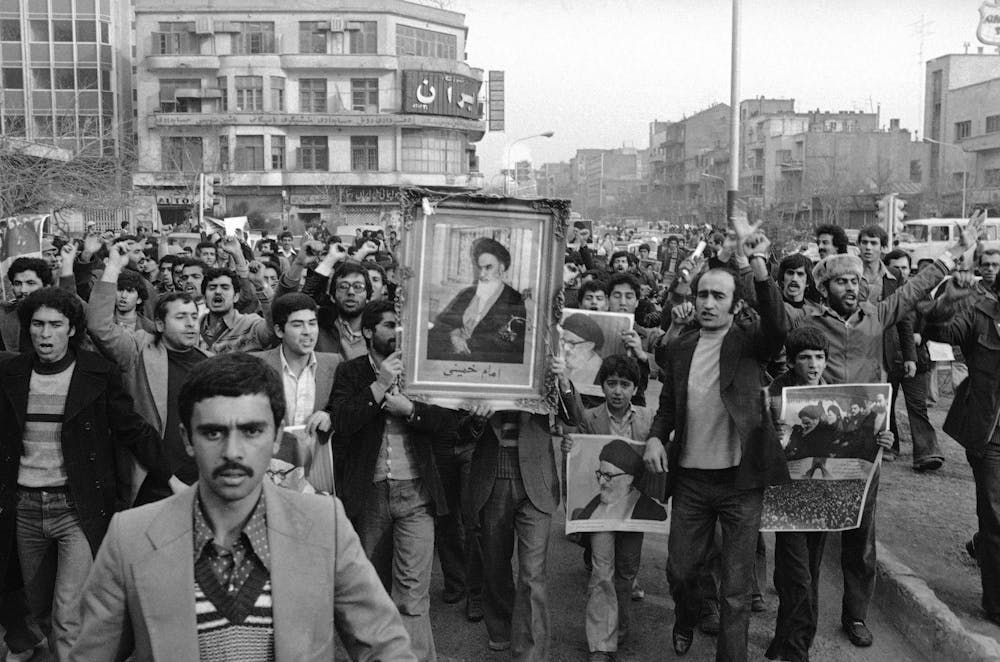
    Relations between the United States and Iran have been fraught for decades – at least since the U.S. helped overthrow a democracy-minded prime minister, Mohammed Mossadegh, in August 1953. The U.S. then supported the long, repressive reign of the Shah of Iran, whose security services brutalized Iranian citizens for decades.

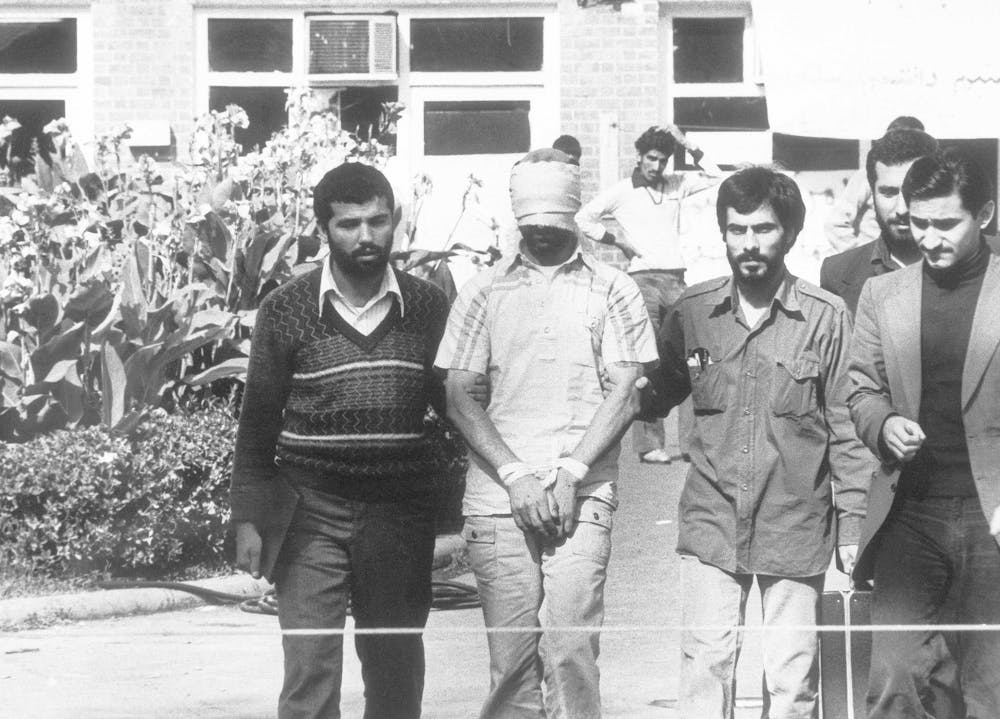
    The two countries have been particularly hostile to each other since Iranian students took over the U.S. Embassy in Tehran in November 1979, resulting in economic sanctions and the severing of formal diplomatic relations between the nations.

    Since 1984, the U.S. State Department has listed Iran as a “state sponsor of terrorism,” alleging the Iranian government provides terrorists with training, money and weapons.

    Some of the major events in U.S.-Iran relations highlight the differences between the nations’ views, but others arguably presented real opportunities for reconciliation.

    1953: US overthrows Mossadegh

    Mohammed Mossadegh.
    Wikimedia Commons

    In 1951, the Iranian Parliament chose a new prime minister, Mossadegh, who then led lawmakers to vote in favor of taking over the Anglo-Iranian Oil Company, expelling the company’s British owners and saying they wanted to turn oil profits into investments in the Iranian people. The U.S. feared disruption in the global oil supply and worried about Iran falling prey to Soviet influence. The British feared the loss of cheap Iranian oil.

    President Dwight Eisenhower decided it was best for the U.S. and the U.K. to get rid of Mossadegh. Operation Ajax, a joint CIA-British operation, convinced the Shah of Iran, the country’s monarch, to dismiss Mossadegh and drive him from office by force. Mossadegh was replaced by a much more Western-friendly prime minister, handpicked by the CIA.

    Demonstrators in Tehran demand the establishment of an Islamic republic.
    AP Photo/Saris

    1979: Revolutionaries oust the shah, take hostages

    After more than 25 years of relative stability in U.S.-Iran relations, the Iranian public had grown unhappy with the social and economic conditions that developed under the dictatorial rule of Shah Mohammad Reza Pahlavi.

    Pahlavi enriched himself and used American aid to fund the military while many Iranians lived in poverty. Dissent was often violently quashed by SAVAK, the shah’s security service. In January 1979, the shah left Iran, ostensibly to seek cancer treatment. Two weeks later, Ayatollah Ruhollah Khomeini returned from exile in Iraq and led a drive to abolish the monarchy and proclaim an Islamic government.

    Iranian students at the U.S. Embassy in Tehran show a blindfolded American hostage to the crowd in November 1979.
    AP Photo

    In October 1979, President Jimmy Carter agreed to allow the shah to come to the U.S. to seek advanced medical treatment. Outraged Iranian students stormed the U.S. Embassy in Tehran on Nov. 4, taking 52 Americans hostage. That convinced Carter to sever U.S. diplomatic relations with Iran on April 7, 1980.

    Two weeks later, the U.S. military launched a mission to rescue the hostages, but it failed, with aircraft crashes killing eight U.S. servicemembers.

    The shah died in Egypt in July 1980, but the hostages weren’t released until Jan. 20, 1981, after 444 days of captivity.

    An Iranian cleric, left, and an Iranian soldier wear gas masks to protect themselves against Iraqi chemical-weapons attacks in May 1988.
    Kaveh Kazemi/Getty Images

    1980-1988: US tacitly sides with Iraq

    In September 1980, Iraq invaded Iran, an escalation of the two countries’ regional rivalry and religious differences: Iraq was governed by Sunni Muslims but had a Shia Muslim majority population; Iran was led and populated mostly by Shiites.

    The U.S. was concerned that the conflict would limit the flow of Middle Eastern oil and wanted to ensure the conflict didn’t affect its close ally, Saudi Arabia.

    The U.S. supported Iraqi leader Saddam Hussein in his fight against the anti-American Iranian regime. As a result, the U.S. mostly turned a blind eye toward Iraq’s use of chemical weapons against Iran.

    U.S. officials moderated their usual opposition to those illegal and inhumane weapons because the U.S. State Department did not “wish to play into Iran’s hands by fueling its propaganda against Iraq.” In 1988, the war ended in a stalemate. More than 500,000 military and 100,000 civilians died.

    1981-1986: US secretly sells weapons to Iran

    The U.S. imposed an arms embargo after Iran was designated a state sponsor of terrorism in 1984. That left the Iranian military, in the middle of its war with Iraq, desperate for weapons and aircraft and vehicle parts to keep fighting.

    The Reagan administration decided that the embargo would likely push Iran to seek support from the Soviet Union, the U.S.’s Cold War rival. Rather than formally end the embargo, U.S. officials agreed to secretly sell weapons to Iran starting in 1981.

    The last shipment, of anti-tank missiles, was in October 1986. In November 1986, a Lebanese magazine exposed the deal. That revelation sparked the Iran-Contra scandal in the U.S., with Reagan’s officials found to have collected money from Iran for the weapons and illegally sent those funds to anti-socialist rebels – the Contras – in Nicaragua.

    At a mass funeral for 76 of the 290 people killed in the shootdown of Iran Air 655, mourners hold up a sign depicting the incident.
    AP Photo/CP/Mohammad Sayyad

    1988: US Navy shoots down Iran Air flight 655

    On the morning of July 8, 1988, the USS Vincennes, a guided missile cruiser patrolling in the international waters of the Persian Gulf, entered Iranian territorial waters while in a skirmish with Iranian gunboats.

    Either during or just after that exchange of gunfire, the Vincennes crew mistook a passing civilian Airbus passenger jet for an Iranian F-14 fighter. They shot it down, killing all 290 people aboard.

    The U.S. called it a “tragic and regrettable accident,” but Iran believed the plane’s downing was intentional. In 1996, the U.S. agreed to pay US$131.8 million in compensation to Iran.

    1997-1998: The US seeks contact

    In August 1997, a moderate reformer, Mohammad Khatami, won Iran’s presidential election.

    U.S. President Bill Clinton sensed an opportunity. He sent a message to Tehran through the Swiss ambassador there, proposing direct government-to-government talks.

    Shortly thereafter, in early January 1998, Khatami gave an interview to CNN in which he expressed “respect for the great American people,” denounced terrorism and recommended an “exchange of professors, writers, scholars, artists, journalists and tourists” between the United States and Iran.

    However, Supreme Leader Ayatollah Ali Khamenei didn’t agree, so not much came of the mutual overtures as Clinton’s time in office came to an end.

    In his 2002 State of the Union address, President George W. Bush characterized Iran, Iraq and North Korea as constituting an “Axis of Evil” supporting terrorism and pursuing weapons of mass destruction, straining relations even further.

    Inside these buildings at the Natanz nuclear facility in Iran, technicians enrich uranium.
    AP Photo/Vahid Salemi

    2002: Iran’s nuclear program raises alarm

    In August 2002, an exiled rebel group announced that Iran had been secretly working on nuclear weapons at two installations that had not previously been publicly revealed.

    That was a violation of the terms of the Nuclear Nonproliferation Treaty, which Iran had signed, requiring countries to disclose their nuclear-related facilities to international inspectors.

    One of those formerly secret locations, Natanz, housed centrifuges for enriching uranium, which could be used in civilian nuclear reactors or enriched further for weapons.

    Starting in roughly 2005, U.S. and Israeli government cyberattackers together reportedly targeted the Natanz centrifuges with a custom-made piece of malicious software that became known as Stuxnet.

    That effort, which slowed down Iran’s nuclear program was one of many U.S. and international attempts – mostly unsuccessful – to curtail Iran’s progress toward building a nuclear bomb.

    2003: Iran writes to Bush administration

    An excerpt of the document sent from Iran, via the Swiss government, to the U.S. State Department in 2003, appears to seek talks between the U.S. and Iran.
    Washington Post via Scribd

    In May 2003, senior Iranian officials quietly contacted the State Department through the Swiss embassy in Iran, seeking “a dialogue ‘in mutual respect,’” addressing four big issues: nuclear weapons, terrorism, Palestinian resistance and stability in Iraq.

    Hardliners in the Bush administration weren’t interested in any major reconciliation, though Secretary of State Colin Powell favored dialogue and other officials had met with Iran about al-Qaida.

    When Iranian hardliner Mahmoud Ahmadinejad was elected president of Iran in 2005, the opportunity died. The following year, Ahmadinejad made his own overture to Washington in an 18-page letter to President Bush. The letter was widely dismissed; a senior State Department official told me in profane terms that it amounted to nothing.

    Representatives of several nations met in Vienna in July 2015 to finalize the Iran nuclear deal.
    Austrian Federal Ministry for Europe, Integration and Foreign Affairs/Flickr

    2015: Iran nuclear deal signed

    After a decade of unsuccessful attempts to rein in Iran’s nuclear ambitions, the Obama administration undertook a direct diplomatic approach beginning in 2013.

    Two years of secret, direct negotiations initially bilaterally between the U.S. and Iran and later with other nuclear powers culminated in the Joint Comprehensive Plan of Action, often called the Iran nuclear deal.

    Two years of secret, direct negotiations conducted bilaterally at first between the U.S. and Iran and later with other nuclear powers culminated in the Joint Comprehensive Plan of Action, often called the Iran nuclear deal.

    Iran, the U.S., China, France, Germany, Russia and the United Kingdom signed the deal in 2015. It severely limited Iran’s capacity to enrich uranium and mandated that international inspectors monitor and enforce Iran’s compliance with the agreement.

    In return, Iran was granted relief from international and U.S. economic sanctions. Though the inspectors regularly certified that Iran was abiding by the agreement’s terms, President Donald Trump withdrew from the agreement in May 2018.

    2020: US drones kill Iranian Maj. Gen. Qassem Soleimani

    An official photo from the Iranian government shows Maj. Gen. Qassem Soleimani, who was killed in a Jan. 3 drone strike ordered by President Donald Trump.
    Iranian Supreme Leader Press Office/Anadolu Agency via Getty Images

    On Jan. 3, 2020, an American drone fired a missile that killed Maj. Gen. Qassem Soleimani, the leader of Iran’s elite Quds Force. Analysts considered Soleimani the second most powerful man in Iran, after Supreme Leader Ayatollah Khamenei.

    At the time, the Trump administration asserted that Soleimani was directing an imminent attack against U.S. assets in the region, but officials have not provided clear evidence to support that claim.

    Iran responded by launching ballistic missiles that hit two American bases in Iraq.

    2023: The Oct. 7 attacks on Israel

    Hamas’ brazen attack on Israel on Oct. 7, 2023, provoked a fearsome militarized response from Israel that continues today and served to severely weaken Iran’s proxies in the region, especially Hamas – the perpetrator of the attacks – and Hezbollah in Lebanon.

    2025: Trump 2.0 and Iran

    Trump saw an opportunity to forge a new nuclear deal with Iran and to pursue other business deals with Tehran. Once inaugurated for his second term, Trump appointed Steve Witkoff, a real estate investor who is the president’s friend, to serve as special envoy for the Middle East and to lead negotiations.

    Negotiations for a nuclear deal between Washington and Tehran began in April, but the countries did not reach a deal. They were planning a new round of talks when Israel struck Iran with a series of airstrikes on June 13, forcing the White House to reconsider is position.

    Jeffrey Fields receives funding from the Carnegie Corporation of New York and Schmidt Futures.

    – ref. US and Iran have a long, complicated history, spanning far beyond Israel’s strikes on Tehran – https://theconversation.com/us-and-iran-have-a-long-complicated-history-spanning-far-beyond-israels-strikes-on-tehran-259240

    MIL OSI – Global Reports –

    June 18, 2025
  • MIL-OSI USA: Video: Kaine Speaks on Senate Floor Regarding His War Powers Resolution to Prevent War with Iran

    US Senate News:

    Source: United States Senator for Virginia Tim Kaine

    VIDEO OF KAINE’S FLOOR SPEECH IS AVAILABLE HERE.

    WASHINGTON, D.C.—Today, U.S. Senator Tim Kaine (D-VA), a member of the Senate Armed Services and Foreign Relations Committees, spoke on the Senate floor about a war powers resolution he filed this week to express concern about the escalating violence in the Middle East and its potential to pull the U.S. into conflict. The resolution requires that any U.S. participation in offensive hostilities against Iran be explicitly authorized by Congress through a declaration of war or specific authorization for use of military force. It does not prevent the U.S. from defending itself from an imminent attack. The resolution is privileged, meaning that the Senate will be required to promptly consider and vote upon the resolution.

    “There’s no part of the Constitution that’s more important than the Article One provision making plain that the United States should not be at war without a vote of Congress,” said Kaine. “Yet the news of the day suggests that we are potentially on the verge of a war with Iran.”

    “I was elected to the Senate in 2012, having served as a Governor from 2006 to 2010 during a tremendous upsurge in the two wars in Iraq and Afghanistan. I visited our troops multiple times in the green zones in Baghdad and in Afghanistan. I went to the deployments and the homecomings. I went to the wakes and the funerals,” Kaine continued. “And I told myself when I came to the Senate that if I ever had the chance to stop this nation from getting into an unnecessary war, I would do everything I could to stop us.”

    “I happen to believe that the United States engaging in a war against Iran – a third war in the Middle East since 2001 – would be a catastrophic blunder for this country,” Kaine said. “I think there are some in this body who have a different point of view than me on that point, but I think we should all be able to agree in the fundamental constitutional principle that says we shouldn’t be in a war if Congress doesn’t have the guts to debate it and vote on it. We should all – having taken an oath to the Constitution – at least support the principle that war is something that should be for Congress to declare.”

    “Our Constitution has, accordingly, with studied care, vested the question of war with the legislature,” said Kaine. “Other countries don’t do this, but the Framers of our Constitution in 1787 decided we’re going to be different. Before we send troops in harm’s way where they could be killed, where they could be injured, where they could see people that they love – their colleagues killed and injured – before we’re going to send troops in harm’s way in war, we want to see the people’s elected bodies – both houses – have a debate about what the stakes are and whether we should force our troops into harm’s way and potentially lose their lives. And that debate will be in full view of the American public, so the American public can understand what’s at stake and then they can call their representatives or write them a letter and tell them what they think about whether war is necessary and whether the sacrifice we ask of our troops should be the ultimate sacrifice that we are often asking of them in war.”

    “The question for this body that we will grapple with over the course of the next couple of weeks is whether the United States should be in another war in the Middle East – in particular, whether we should allow war to start without us, whether we should hide in the tall grass, rather than exercise our constitutional responsibility under Article One. This is fundamentally a debate about Congress being true to its oath of office and actually also being true to the obligations we have to our public,” Kaine said. “The Framers put this in the Constitution so that we wouldn’t be at war without a debate in front of the public.”

    “If we have that debate and we decide that war is in the national interest, then the troops go into war knowing that the civilian leadership of this country have had the hard debate in view of the American public and decided that the stakes are sufficient to ask people to make the ultimate sacrifice,” Kaine said. “How dare we ask people to make the ultimate sacrifice if we don’t have the guts to have a debate and decide whether a war is in the interest of this country?”

    “We need to have this debate in front of the American public,” Kaine said. “Let them watch us debate the stakes of this – and it might be that colleagues in this body or in the House think a war with Iran is a good idea. Let them put a war authorization on the table. Let’s debate that. Let’s debate that in front of Virginians and Kansans and Californians and hear what our constituents have to say. Let’s debate that in the full view of people whose spouses are in the military or whose kids are in the military. Let’s have that debate in front of them and hear what they think before we cast a vote that would be one of the most serious votes that you ever cast on the floor of a body like this. But we should not allow a war of the magnitude of this to begin with Congress hiding.”

    “I will be asking my colleagues to support my simple resolution as early as next week. No war without a vote of Congress. I’ll be asking my colleagues to support it and uphold the oath we’ve all taken to support the Constitution that established that most unusual principle, most unique principle, that is part of what makes this nation special,” Kaine concluded.

    For years, Kaine has been a leading voice in Congress raising concerns over presidents’ efforts to expand the use of military force without congressional authorization. In 2017, Kaine wrote a piece in TIME warning of the consequences if President Donald Trump pulled out of the nuclear deal with Iran. In 2018, Kaine wrote a piece in The Atlantic warning that Trump was blundering toward war with Iran. In March 2020, Congress passed Kaine’s bipartisan war powers resolution to prevent further escalation of hostilities with Iran without congressional authorization. In 2023, the Senate passed bipartisan legislation led by Kaine to repeal the 1991 and 2002 Authorizations for Use of Military Force (AUMFs) and formally end the Gulf and Iraq wars.

    MIL OSI USA News –

    June 18, 2025
  • MIL-OSI USA: WATCH: Padilla Delivers Floor Speech Following His Forcible Removal From DHS Press Conference

    US Senate News:

    Source: United States Senator Alex Padilla (D-Calif.)

    WATCH: Padilla Delivers Floor Speech Following His Forcible Removal From DHS Press Conference

    WATCH: Padilla: “If this Administration is this afraid of just one Senator with a question, colleagues, imagine what the voices of tens of millions of Americans peacefully protesting can do.”
     
    “If that is what the Administration is willing to do to a United States Senator for having the [audacity] to simply ask a question, imagine what they’ll do to any American who dares to speak up. If what you saw happen can happen when the cameras are on, imagine not only what can happen — but what is happening — in so many places where there are no cameras.”
     
    Video of Senator Padilla’s full speech can be viewed here and downloaded here.

    WASHINGTON, D.C. — Today, U.S. Senator Alex Padilla (D-Calif.), Ranking Member of the Senate Judiciary Immigration Subcommittee, spoke on the Senate floor following his forcible removal from Secretary of Homeland Security Kristi Noem’s press conference, where he was thrown to the ground and handcuffed after attempting to ask a question. Padilla delivered a strong rebuke to the Trump Administration’s unprecedented militarization of Los Angeles and called for his colleagues on both sides of the aisle, as well as the American people, to speak up against Trump’s abuse of power.

    Last week, Trump deployed approximately 4,000 National Guard troops and 700 active-duty Marines to Los Angeles amid unrest caused by his indiscriminate immigration raids across the region. Padilla flew to Los Angeles to conduct oversight over the Trump Administration’s unprecedented military deployment to California — without Governor Newsom’s consent — and was in the high-security Los Angeles Federal Building for a scheduled oversight meeting with the commanding general in charge of the military presence in the region before law enforcement escorted him into Secretary Noem’s briefing room.

    • “The Trump Administration has done everything in their power but to provide transparency to the American people about their mission in Los Angeles. And so last week, I chose to go home to try to get answers from the Administration as they are literally militarizing our city.”
    • “I want to share what I learned. I want to share what I heard because it should shock the conscience of our country.”

    In the hopes of learning new information after having his requests ignored for months, Padilla tried to ask a question in response to Noem’s demonizing rhetoric toward immigrants and Los Angeles’ democratically elected leadership.

    • “At one point, the United States Secretary of Homeland Security said that the purpose of federal law enforcement and the purpose of the United States military was to ‘liberate’ Los Angeles from our governor and our mayor. To somehow liberate us from the very people that we democratically elected to lead our city and our state.”
    • “Colleagues, let that fundamentally un-American mission statement sink in. That is not a mission focused on public safety. And that simply is not, and cannot be, the mission of federal law enforcement and the United States military.”
    • “To my colleagues on both sides of the aisle, are we truly prepared to live in a country where the President can deploy the Armed Forces to decide which duly elected governors and mayors should be allowed to lead their constituents? Is that really the precedent that we’re okay with setting?”
    • “Throughout the country’s history, we’ve had conflict, we’ve had tumult, but we’ve never had a tyrant as a commander-in-chief.”

    Padilla detailed his own background as the proud son of immigrants from Mexico who left behind his MIT engineering degree to protest against the vile anti-immigrant rhetoric in the 1990s that a Republican governor up for reelection spread across California. He said he felt he had to speak out against the Trump Administration’s “un-American” scapegoating of immigrants and California, and detailed the violent reaction to his question.

    • “So last week, when I heard something so blatantly un-American from the Secretary of Homeland Security, a cabinet official — of course I was compelled, both as a Senator and as an American, to speak up.”
    • “But before I could even get out my question, I was physically and aggressively forced out of the room — even as I repeatedly announced I was a United States Senator, and I had a question for the Secretary. And even as the National Guardsman and the FBI agent who served as my escorts and brought me into that press briefing room stood by, silently, knowing full well who I was.”
    • “You’ve seen the video. I was pushed and pulled, struggled to maintain my balance. I was forced to the ground — first on my knees and then flat on my chest. And as I was handcuffed and marched down a hallway, repeatedly asking why am I being detained, not once did they tell me why.”

    Padilla expressed his gratitude for the immense support for him and his family that poured in since his forcible removal. However, he emphasized that this fight was not about him but about the fundamental democratic rights of all Americans across the country.

    • “If you watched what unfolded last week and thought what happened is just about one politician and one press conference, you’re missing the point.”
    • “If that is what the Administration is willing to do to a United States Senator for having the [audacity] to simply ask a question, imagine what they’ll do to any American who dares to speak up. If what you saw happen can happen when the cameras are on, imagine not only what can happen — but what is happening — in so many places where there are no cameras.”
    • “Colleagues, this isn’t about me. In fact, it’s not just about immigrant communities or even just the State of California. It’s about every single American who values their Constitutional rights. It’s about anyone who’s ever exercised their First Amendment rights, or anyone who’s ever disagreed with a president, or anyone who simply values our democracy and wants to keep it.”

    Padilla set the record straight on Republican misinformation on undocumented immigrants as Trump has used the same playbook when the headlines turn against him: scapegoat immigrants and manufacture a crisis. Public reporting shows that the majority of immigrants currently in ICE custody have no prior criminal conviction, and under 10 percent of immigrants taken into ICE custody since October have serious criminal convictions. Yet, President Trump has blamed immigrants to distract from his failed policies, including Republicans’ billionaire-first budget reconciliation bill that would cut critical services like health care and nutrition for millions of working families across the country.

    As President Trump takes unprecedented action to militarize Los Angeles without justification or the Governor’s request, Padilla warned of the stakes for cities across the United States and American democracy.

    • “Donald Trump is continuing to test the boundaries of his power. And he’s surrounded himself with yes-men and underqualified attack dogs — from the DHS Secretary to the FBI Director to the Secretary of Defense — who will rubberstamp every anti-democratic step he takes.”
    • “This Administration’s officials and maybe not all, but many Republicans in Congress may choose not to do their job, but they cannot stop me from doing mine.”
    • “Again, if you really think this is just about immigrants and immigration, it’s time to wake up. What’s happening is not just a threat to California; it’s a threat to everyone in every state. If Donald Trump can bypass the Governor and activate the National Guard to put down protests on immigrant rights, he can do it to suppress your rights, too. If he can deploy the Marines to Los Angeles without justification, he can deploy them to your state, too. And if he can ignore due process, strip away First Amendment rights, and disappear people to foreign prisons without their day in court, he can do it to you too.”
    • “California is just the test case for the rest of the country. Last week for many was a warning shot. But I pray that it also serves as a wakeup call.”

    Padilla concluded his speech with a call to action for Angelenos and millions of Americans to stand up and keep peacefully protesting against the Trump Administration’s attack on fundamental rights.

    • “It doesn’t matter if you’re a Republican, or a Democrat, or an Independent — we all have a responsibility to speak up and to push back, before it’s too late. So I do encourage people to keep peacefully protesting. There’s nothing more patriotic than to peacefully protest for your rights.”
    • “Because no one will liberate Los Angeles but Angelenos. No one will redeem America but Americans. No one is coming to save us but us.”
    • “And we know that the cameras are not on in every corner of the country. But if this Administration is this afraid of just one Senator with a question, colleagues, imagine what the voices of tens of millions of Americans peacefully protesting can do.”

    Senator Padilla has been outspoken in calling out the Immigration and Customs Enforcement (ICE) raids in Los Angeles and Trump’s misguided deployment of the National Guard and U.S. Marine Corps. This weekend, Padilla led the entire Senate Democratic Caucus in demanding that President Trump immediately withdraw all military forces from Los Angeles and cease all threats to deploy the National Guard or active-duty servicemembers to American cities. Last week, Padilla and Senator Adam Schiff (D-Calif.) demanded answers regarding the Trump Administration’s decision to deploy approximately 700 Marines to Los Angeles. Padilla has spoken at a spotlight hearing and on the Senate floor multiple times to blast President Trump for manufacturing a crisis by launching indiscriminate ICE raids across Los Angeles and deploying the National Guard and active-duty servicemembers to the region. He also joined all Senate Judiciary Committee Democrats today in calling on Chairman Grassley to schedule Department of Homeland Security Secretary Noem for a broad oversight hearing for testimony before the committee.

    Padilla’s full remarks as prepared for delivery are available below:

    [Mr./Madam] President,

    Over the last two weeks in Los Angeles – my hometown – we’ve seen masked federal agents in tactical gear ordered into our communities . . .

    We’ve seen a disturbing pattern of extreme and cruel immigration enforcement operations, targeting non-violent people at places of worship, schools, and courthouses.

    All to meet an arbitrary quota.

    Now, we’re seeing President Trump federalize and deploy the National Guard without the Governor’s consent . . .

    Active-duty Marines have been deployed, escalating tensions in our city . . .

    All without coordination with the state and local law enforcement.

    Despite repeated requests for justification for these extreme actions…and after months of little to no response from the Administration on their aggressive and theatrical immigration raids…

    The Trump administration has done everything in their power BUT provide transparency to the American people about their mission in Los Angeles.

    So last week, I went home to try to get answers from the administration as they militarize our city.

    What I heard should shock the conscience of our country.

    One of the first items on my schedule last Thursday was a meeting with General Guillot, the four-star general in charge of U.S. Northern Command at the Federal Building in west Los Angeles, where they are overseeing these military operations.

    When the United States military is deployed domestically…

    When our own troops are deployed against the wishes of the Governor for the first time since 1965, against the wishes of the mayor, against even the wishes of local law enforcement — then we’re in uncharted territory.

    So in an effort to do my duty to conduct congressional oversight — and to try to get answers from the Department of Defense that state and local officials were not receiving— I went to the federal building in West LA.

    I was met at the entrance by a National Guardsman and an FBI agent, who escorted me through the security screening and up to a conference room for my scheduled briefing.

    While waiting for my scheduled briefing with General Guillot, I learned that Homeland Security Secretary Kristi Noem was holding a press conference just down the hall and that the press conference was causing my briefing to be delayed.

    The thought occurred to me that maybe I could attend and listen in, in the hopes of hearing Secretary Noem provide some new information that could help us make sense of what was happening.

    I asked and was escorted by my National Guard and FBI escorts into the press conference. They opened the door for me. They accompanied me into the press briefing room.

    It was there that I listened as the United States Secretary of Homeland Security said that the purpose of federal law enforcement and the United States military was to “liberate” Los Angeles from our governor and our mayor . . .

    . . . To somehow liberate us from the very people we democratically elected to lead our city and our state.

    Colleagues, let that fundamentally un-American mission statement sink in.

    That’s not a mission focused on public safety.

    That simply is not, and cannot be, the mission of federal law enforcement and the United States military.

    To my colleagues on the other side of the aisle, are you truly prepared to live in a country where the President can deploy the armed forces to decide which duly elected governors and mayors should be allowed to lead their constituents?

    Is that really the precedent you’re okay with setting?

    As Secretary Noem herself said last year when serving as Governor of South Dakota, “If Joe Biden federalizes the National Guard, that would be a direct attack on states’ rights.”

    Throughout the country’s history, we’ve had conflict, and we’ve had tumult. But we have never had a tyrant as a commander-in-chief.

    That’s not by coincidence!

    It’s because the American people have always been willing to speak up and exercise their First Amendment right to protest – especially when our fundamental rights have been threatened.

    As the proud son of immigrants from Mexico, it’s that same right I came to revere when marching through the streets of Los Angeles in 1994 alongside friends and family protesting against the vile anti-immigrant rhetoric that was growing in California.

    It was that year that a Republican Governor up for reelection and down in the polls, turned to scapegoating immigrants to try to improve his political standing.

    That fight is what got me to leave an engineering career behind and dedicate myself to influencing government and politics. So, I’ve seen this before. Californians have seen this before.

    So last week, when I heard something so blatantly un-American from the Secretary of Homeland Security — I was compelled, both as a Senator AND as an American, to speak up.

    But before I could even get out my question, I was physically and aggressively forced out of the room — even as I announced I was a United States Senator, and I had a question for the Secretary.

    And even as the National Guardsman and FBI agent who escorted me into the press conference stood by, silently, knowing full well who I was.

    You’ve seen the video.

    I was pushed and pulled, struggling to maintain my balance.

    I was forced to the ground — first to my knees and then flat on my chest.

    As I was handcuffed and marched down a hallway, I repeatedly asked why I was being detained. Not once did they tell me why.

    In that moment, a lot of questions run through your head.

    Where are they taking me?

    Am I being arrested?

    What will a city already on edge from being militarized think when they see their Senator has been handcuffed just for trying to ask a question? Or . . .

    What will my wife and our three boys think?

    I also remember asking myself: if this aggressive escalation is the result of speaking up against the abuses and overreach of the Trump administration, was it really worth it?

    But colleagues, how many Americans in our nation’s history have marched, have protested, have shed blood and lost their lives to protect our rights?

    How many Americans have served in wars overseas to protect our freedoms here at home?

    And how many Americans in the year 2025 see a vindictive president on a tour of retribution, unrestrained by the majority of this separate but co-equal branch of government in this building, and wonder if it’s worth it to stand up or to speak out?

    If a United States Senator is too afraid to speak up, how can we expect any other American to do the same?

    Colleagues, you know me.

    I’m not aware of anyone who would describe me as a flamethrower. I try to be respectful and considerate to every member of this body— regardless of your politics.

    So I want to thank all of my colleagues on both sides of the aisle who reached out to share messages of support — whether it was public or in private.

    In means a great deal to me and my family.

    But if you watched what unfolded last week and thought this was about one politician or one press conference, you’re missing the point.

    If that’s what this Administration will do to a United States Senator for having the audacity to simply ask a question, imagine what they’ll do to any American who dares to speak up.

    If that’s what can happen when the cameras are on, imagine not only what can happen — but what is happening — when the cameras are off.

    This isn’t about me. In fact, it’s not even just about immigrant communities or about Californians.

    It’s about every single American who values their constitutional rights. It’s about anyone who’s ever exercised their First Amendment rights, or ever disagreed with a president, or who simply values living in a democracy and wants to keep it.

    The President will tell you this is about undocumented immigrants, and about law and order and about targeting dangerous, violent criminals.

    But we know differently.

    Public data released by the administration shows that the majority of immigrants currently in ICE custody do not have a prior criminal conviction.

    And new reporting shows that less than 10 percent of immigrants taken into ICE custody since October have serious criminal convictions.

    Less than 10 percent!

    Two weeks ago, Donald Trump was at the lowest point in his presidency so far.

    He was drowning in a week of terrible headlines.

    The American people were finally waking up to the realities of the budget reconciliation bill that will cut health care, nutrition assistance, and good paying clean energy jobs in order to cut taxes for billionaires.

    He was losing his tariff wars as the costs of everyday goods were continuing to rise.

    His promises to end Russia’s invasion of Ukraine were falling flat.

    He’d been handed loss after loss in federal court.

    And maybe the most embarrassing part was his public breakup with Elon Musk.

    But we know what happens when the headlines turn on Donald Trump. Donald Trump turns to the same tired playbook he always has: when in doubt, scapegoat immigrants. And manufacture a crisis to distract the media from your failures.

    That’s the reason he ramped up ICE raids in California.

    And when Californians took to the streets to peacefully protest, that’s the reason he bypassed the Governor and federalized the National Guard. And as things began to settle in Los Angeles, he escalated even further by sending in the Marines.

    He wants the spectacle — not just to distract, but to justify his undemocratic crackdowns and his authoritarian power grabs.

    That’s the reason why even while the vast majority of protests have remained peaceful, the President, the Vice President, and their allies have called protestors insurrectionists!

    Yes, this is the same man who provoked an actual insurrection on our Capitol on January 6th.

    The same man who incited a violent mob, carrying confederate flags, against Congress.

    The same man who then pardoned the convicted felons who assaulted our brave Capitol Police officers.

    Trump is testing the boundaries of his power. And he’s surrounded himself with yes-men and underqualified attack dogs — from the DHS Secretary to the FBI Director to the Secretary of Defense — who will rubberstamp every anti-democratic step he takes.

    This Administration’s officials and Congressional Republicans may choose not to do their job, but they cannot stop me from doing mine.

    And I refuse to let immigrants be pawns on the path to fascism.

    Again, if you really think this is just about immigrants, it’s time to wake up.

    What’s happening isn’t just a threat to California, it’s a threat to everyone in every state.

    If Donald Trump can bypass the Governor and activate the National Guard to put down protests for immigrant rights, he can do it to suppress your rights, too.

    If he can deploy Marines to Los Angeles without justification, he can deploy them to your city, too.

    If he can ignore due process, strip away First Amendment rights, and disappear people to foreign prisons without their day in court, he can do it to you too.

    California is just Trump’s test case for the rest of the country.

    Last week was a warning shot.

    But I pray that it can be our wakeup call, too.

    We’ve now seen Trump threaten to do the same in other cities run by elected Democrats.

    It doesn’t matter if you’re a Republican, a Democrat, or an independent — we all have a responsibility to speak up and to push back, before it’s too late.

    So I encourage people to keep peacefully protesting. There’s nothing more patriotic than peacefully protesting for your rights.

    No one will liberate Los Angeles but Angelenos.

    No one will redeem America but Americans.

    No one is coming to save us but us.

    The cameras won’t always be on.

    But if this Administration is this scared of just one Senator with a question, imagine what the voices of tens of millions of Americans in the streets can do.

    Thank you, [Mr./Madam] President, I yield the floor.

    MIL OSI USA News –

    June 18, 2025
  • MIL-OSI New Zealand: Culture – Honouring service and sacrifice: 75th Anniversary of the Korean War

    Source: Ministry for Culture and Heritage

    This year marks the 75th anniversary of the outbreak of the Korean War, a pivotal moment in global history and a significant chapter in New Zealand’s military heritage. A national commemorative service will be held at Pukeahu National War Memorial Park in Wellington on Wednesday 25 June 2025 from 11am.
    “The 25th of June is a day where people can take the opportunity to honour and reflect on the courage and sacrifice of New Zealanders who served in the Korean War,” said Stacey Richardson, Director Office of the Secretary at Manatū Taonga Ministry for Culture and Heritage.
    The commemoration is held on the anniversary of the beginning of the Korean War on 25 June 1950 when communist North Korean forces crossed the 38th Parallel into South Korea.
    “New Zealand was one of the first nations to respond to the United Nations Security Council’s call for military assistance following the invasion of South Korea in June 1950.
    “Over 6,000 New Zealanders served during the Korean War. Around 4,700 New Zealand Army personnel served in Kayforce, with about 1300 others on Royal New Zealand Navy frigates.
    “The ramifications of this war were felt across the world and in Aotearoa. Forty-five New Zealanders lost their lives, and many more were wounded or affected by the conflict”.
    “Our national commemorations provide a space for individual and collective reflection. They bring together veterans, service personnel, communities and members of the public to honour together and reflect on the enduring legacy of war.
    “As we reflect, we can also look forward. We acknowledge the enduring bonds forged between Aotearoa and the Republic of Korea, which have shaped the strong partnership our nations enjoy today,” said Richardson.
    Veterans, their whānau, and members of the public are warmly invited to attend the national commemoration. Anyone who would like to attend should arrive at the Hall of Memories at Pukeahu National War Memorial Park at 10.45am for an 11.00am start.
    For more information about the Korean War and New Zealand’s involvement, visit Manatū Taonga Ministry for Culture and Heritage’s website:  www.mch.govt.nz/news/time-remember-korean-war-commemoration

    MIL OSI New Zealand News –

    June 18, 2025
  • MIL-OSI Analysis: How does Israel’s famous air defence work? It’s not just the ‘Iron Dome’

    Source: The Conversation – Global Perspectives – By James Dwyer, Lecturer, School of Social Sciences, University of Tasmania

    Israeli defence systems intercept Iranian missiles over the city of Haifa Ahmad Gharabli / AFP via Getty Images

    Late last week, Israel began a wave of attacks on Iran under the banner of Operation Rising Lion, with the stated goal of crippling the Islamic republic’s nuclear program and long-range strike capabilities. At the outset, Israel claimed Iran would soon be able to build nine nuclear weapons, a situation Israel regarded as completely unacceptable.

    Following Israeli strikes against Iranian nuclear facilities, and targeted assassinations of Iranian nuclear scientists and key members of the Iranian armed forces, Iran retaliated with a large barrage of ballistic missiles and drones against Tel Aviv and Jerusalem. The first wave consisted of some 200 ballistic missiles and 200 drones.

    The conflict continues to escalate, with population centres increasingly being targeted. Israel’s missile defence systems (including the vaunted Iron Dome) have so far staved off most of Iran’s attacks, but the future is uncertain.

    Ballistic missiles and how to stop them

    Iran possesses a large arsenal of ballistic missiles and long-range drones, alongside other long-range weapons such as cruise missiles. Ballistic missiles travel on a largely fixed path steered by gravity, while cruise missiles can adjust their course as they fly.

    Iran is approximately 1,000km from Israel, so the current strikes mostly involve what are classified as medium-range ballistic missiles, alongside long-range drones. It is not clear exactly what type of missile Iran has used in its latest strikes, but the country has several including the Fattah-1 and Emad.

    It is very difficult to defend against ballistic missiles. There is not much time between launch and impact, and they come down at very high speed. The longer the missile’s range, the faster and higher it flies.

    An incoming missile presents a small, fast-moving target – and defenders may have little time to react.

    Israel’s missile defence and the Iron Dome

    Israel possesses arguably one of the most effective, battle-tested air defence systems in service today. The system is often described in the media as the “Iron Dome”, but this is not quite correct.

    Israel’s defences have several layers, each designed to address threats coming from different ranges.

    Iron Dome is just one of these layers: a short range, anti-artillery defence system, designed to intercept short-range artillery shells and rockets.

    In essence, Iron Dome consists of a network of radar emitters, command and control facilities, and the interceptors (special surface-to-air missiles). The radar quickly detects incoming threats, the command and control elements decide which are most pressing, and the interceptors are sent to destroy the incoming shells or rockets.

    Ballistic defence systems

    The other layers of Israel’s defence system include David’s Sling, and the Arrow 2 and Arrow 3 interceptors. These are specifically designed to engage longer-range ballistic missiles, both within the atmosphere and at very high altitudes above it (known as exoatmospheric interception).

    Spectacular footage has been captured of what are likely exoatmospheric interceptions taking place during this latest conflict, demonstrating Israel’s capacity to engage longer-range missiles.

    The US military has comparable missile defence systems. The US Army has the Patriot PAC-3 (comparable to David’s Sling) and THAAD (comparable to Arrow 2), while the US Navy has the Aegis and the SM-3 (comparable to Arrow 3) and the SM-6 (comparable again to Arrow 2).

    The US deployed Aegis-equipped warships to support Israel’s defence against missile attacks in 2024, and appears to be preparing to do the same now.

    Iran possesses some air defence systems such as the Russian S300 which has some (very limited) ballistic missile defence capabilities, but only against shorter range (and thus slower) ballistic missiles. Further, Israel has been focusing on degrading Iran’s air defences, so it is not clear how many are still operational.

    Iran has been focusing on developing technology such as maneuverable warheads, which are harder to defend against. However, it is not clear whether these are yet operational and in Iranian service.

    A THAAD interceptor launched during a US Army test in 2013.
    The U.S. Army Ralph Scott/Missile Defense Agency/U.S. Department of Defense/Wikimedia Commons

    Can missile defences last forever?

    Missile defences are finite. The defender is always limited by the number of interceptors it possesses.

    The attacker is also limited by the number of missiles it possesses. However, the defender must often assign multiple interceptors to each attacking missile, in case the first misses or otherwise fails.

    The attacker will plan for some losses to interceptors (or mechanical failures) and send what it determines to be enough missiles for at least some to penetrate the defences.

    When it comes to ballistic missiles, the advantage lies with the attacker. Ballistic missiles can carry large explosive payloads (or even nuclear warheads), so even a handful of missiles “leaking” past defensive systems can still wreak significant damage.

    What now?

    Israel’s missile defences are unlikely to stop working completely. However, as attacks deplete its stocks of interceptors, the system may become less effective.

    As the conflict continues, it may become a race to see who runs out of weapons first. Will it be Iran’s stocks of ballistic missiles and drones, or the interceptors and anti-air munitions of Israel, the US and any other supporters?

    It is impossible to say who would prevail in such a race of stockpile attrition. Some reports suggest Iran has fired approximately 1,000 ballistic missiles of an estimated 3,000. However, this still leaves it with an enormous stockpile to use, and it is unclear how fast Iran can make new missiles to replenish its resources.

    But we should hope it doesn’t come to that. Beyond the tit-for-tat exchange of missiles, the latest conflict between Israel and Iran risks escalating. If it is not resolved soon, and if the US is drawn into the conflict more directly, we may see broader conflict in the Middle East.

    James Dwyer does not work for, consult, own shares in or receive funding from any company or organisation that would benefit from this article, and has disclosed no relevant affiliations beyond their academic appointment.

    – ref. How does Israel’s famous air defence work? It’s not just the ‘Iron Dome’ – https://theconversation.com/how-does-israels-famous-air-defence-work-its-not-just-the-iron-dome-259029

    MIL OSI Analysis –

    June 18, 2025
  • MIL-OSI Analysis: How does Israel’s famous air defence work? It’s not just the ‘Iron Dome’

    Source: The Conversation – Global Perspectives – By James Dwyer, Lecturer, School of Social Sciences, University of Tasmania

    Israeli defence systems intercept Iranian missiles over the city of Haifa Ahmad Gharabli / AFP via Getty Images

    Late last week, Israel began a wave of attacks on Iran under the banner of Operation Rising Lion, with the stated goal of crippling the Islamic republic’s nuclear program and long-range strike capabilities. At the outset, Israel claimed Iran would soon be able to build nine nuclear weapons, a situation Israel regarded as completely unacceptable.

    Following Israeli strikes against Iranian nuclear facilities, and targeted assassinations of Iranian nuclear scientists and key members of the Iranian armed forces, Iran retaliated with a large barrage of ballistic missiles and drones against Tel Aviv and Jerusalem. The first wave consisted of some 200 ballistic missiles and 200 drones.

    The conflict continues to escalate, with population centres increasingly being targeted. Israel’s missile defence systems (including the vaunted Iron Dome) have so far staved off most of Iran’s attacks, but the future is uncertain.

    Ballistic missiles and how to stop them

    Iran possesses a large arsenal of ballistic missiles and long-range drones, alongside other long-range weapons such as cruise missiles. Ballistic missiles travel on a largely fixed path steered by gravity, while cruise missiles can adjust their course as they fly.

    Iran is approximately 1,000km from Israel, so the current strikes mostly involve what are classified as medium-range ballistic missiles, alongside long-range drones. It is not clear exactly what type of missile Iran has used in its latest strikes, but the country has several including the Fattah-1 and Emad.

    It is very difficult to defend against ballistic missiles. There is not much time between launch and impact, and they come down at very high speed. The longer the missile’s range, the faster and higher it flies.

    An incoming missile presents a small, fast-moving target – and defenders may have little time to react.

    Israel’s missile defence and the Iron Dome

    Israel possesses arguably one of the most effective, battle-tested air defence systems in service today. The system is often described in the media as the “Iron Dome”, but this is not quite correct.

    Israel’s defences have several layers, each designed to address threats coming from different ranges.

    Iron Dome is just one of these layers: a short range, anti-artillery defence system, designed to intercept short-range artillery shells and rockets.

    In essence, Iron Dome consists of a network of radar emitters, command and control facilities, and the interceptors (special surface-to-air missiles). The radar quickly detects incoming threats, the command and control elements decide which are most pressing, and the interceptors are sent to destroy the incoming shells or rockets.

    Ballistic defence systems

    The other layers of Israel’s defence system include David’s Sling, and the Arrow 2 and Arrow 3 interceptors. These are specifically designed to engage longer-range ballistic missiles, both within the atmosphere and at very high altitudes above it (known as exoatmospheric interception).

    Spectacular footage has been captured of what are likely exoatmospheric interceptions taking place during this latest conflict, demonstrating Israel’s capacity to engage longer-range missiles.

    The US military has comparable missile defence systems. The US Army has the Patriot PAC-3 (comparable to David’s Sling) and THAAD (comparable to Arrow 2), while the US Navy has the Aegis and the SM-3 (comparable to Arrow 3) and the SM-6 (comparable again to Arrow 2).

    The US deployed Aegis-equipped warships to support Israel’s defence against missile attacks in 2024, and appears to be preparing to do the same now.

    Iran possesses some air defence systems such as the Russian S300 which has some (very limited) ballistic missile defence capabilities, but only against shorter range (and thus slower) ballistic missiles. Further, Israel has been focusing on degrading Iran’s air defences, so it is not clear how many are still operational.

    Iran has been focusing on developing technology such as maneuverable warheads, which are harder to defend against. However, it is not clear whether these are yet operational and in Iranian service.

    A THAAD interceptor launched during a US Army test in 2013.
    The U.S. Army Ralph Scott/Missile Defense Agency/U.S. Department of Defense/Wikimedia Commons

    Can missile defences last forever?

    Missile defences are finite. The defender is always limited by the number of interceptors it possesses.

    The attacker is also limited by the number of missiles it possesses. However, the defender must often assign multiple interceptors to each attacking missile, in case the first misses or otherwise fails.

    The attacker will plan for some losses to interceptors (or mechanical failures) and send what it determines to be enough missiles for at least some to penetrate the defences.

    When it comes to ballistic missiles, the advantage lies with the attacker. Ballistic missiles can carry large explosive payloads (or even nuclear warheads), so even a handful of missiles “leaking” past defensive systems can still wreak significant damage.

    What now?

    Israel’s missile defences are unlikely to stop working completely. However, as attacks deplete its stocks of interceptors, the system may become less effective.

    As the conflict continues, it may become a race to see who runs out of weapons first. Will it be Iran’s stocks of ballistic missiles and drones, or the interceptors and anti-air munitions of Israel, the US and any other supporters?

    It is impossible to say who would prevail in such a race of stockpile attrition. Some reports suggest Iran has fired approximately 1,000 ballistic missiles of an estimated 3,000. However, this still leaves it with an enormous stockpile to use, and it is unclear how fast Iran can make new missiles to replenish its resources.

    But we should hope it doesn’t come to that. Beyond the tit-for-tat exchange of missiles, the latest conflict between Israel and Iran risks escalating. If it is not resolved soon, and if the US is drawn into the conflict more directly, we may see broader conflict in the Middle East.

    James Dwyer does not work for, consult, own shares in or receive funding from any company or organisation that would benefit from this article, and has disclosed no relevant affiliations beyond their academic appointment.

    – ref. How does Israel’s famous air defence work? It’s not just the ‘Iron Dome’ – https://theconversation.com/how-does-israels-famous-air-defence-work-its-not-just-the-iron-dome-259029

    MIL OSI Analysis –

    June 18, 2025
  • MIL-OSI USA: Ernst, Nunn Support Servicemembers’ Mental Health in Transition to Civilian Life

    US Senate News:

    Source: United States Senator Joni Ernst (R-IA)

    WASHINGTON – U.S. Senator Joni Ernst (R-Iowa), a combat veteran, is leading bipartisan legislation alongside U.S. Senator Sheldon Whitehouse (D-R.I.), Congressman Zach Nunn (R-Iowa), and Congressman Seth Magaziner (D-R.I.) to support the mental health of servicemembers as they transition into civilian life.
    The Daniel J. Harvey Jr. and Adam Lambert Improving Servicemember Transition to Reduce Veteran Suicide Act is named to honor the memory of two Marines who died by suicide, including Iowan Cpl. Adam Lambert. 
    “Servicemembers put their lives on the line to protect our freedoms, and America owes them a debt of gratitude,” said Ernst. “We will never forget the life of Cpl. Adam Lambert. This bill honors his memory by fully supporting veterans in their transition into civilian life and providing them access to the highest quality of mental health care.”
    “America is the land of the free and home of the brave because of people like Cpl. Adam Lambert. A proud Marine from Iowa, Adam raised his hand to serve our country,”?said Nunn. “Unfortunately, too often the transition back to civilian life is more difficult than it should be. In honor of Adam’s memory, I’m grateful to work with Adam’s parents to make the transition easier for America’s veterans by improving mental health services.”
    Specifically, the bill amends the Department of Defense’s Transition Assistance Program for Survivors (TAPS) to cover counseling for the treatment of Post-Traumatic Stress Disorder (PTSD), Traumatic Brain Injury (TBI), anxiety disorders, depression, chronic pain, sleep disorders, suicidal ideation, potential effects of the loss of community and support systems experienced by a member separating from the armed forces, and other mental health conditions associated with service in the armed forces.
    The bill also strengthens treatment options and resources to address substance abuse, including alcohol, prescription drug, and opioid abuse.
    Click here to view the bill.

    MIL OSI USA News –

    June 18, 2025
  • MIL-OSI USA: Tuberville Introduces Legislation to Restore Lethality in the U.S. Military

    US Senate News:

    Source: United States Senator Tommy Tuberville (Alabama)

    WASHINGTON – Today, U.S. Senator Tommy Tuberville (R-AL) introduced the Restoring Lethality Act, which eliminates the existence of DEI-related requirements within the U.S. Department of Defense (DOD). Senator Tuberville has been leading the charge to eliminate Biden-era woke policies from the Pentagon and ensure the military is solely focused on lethality and readiness. Last year, Senator Tuberville successfully killed all DEI funding from the National Defense Authorization Act (NDAA), and this bill would ensure it stays dead.

    “Joe Biden and Kamala Harris treated the Pentagon like a trial run for their latest DEI initiatives,” said Senator Tuberville.“Thankfully, President Trump and Secretary Hegseth are working around the clock to eradicate this poisonous ideology from the military, but there’s still more to be done. We have to make sure zero taxpayer dollars go towards this divisive propaganda that distracts from the core mission of the military: to protect the security of the United States.”  

    MORE:

    Tuberville Fights for Alabama, Strengthens Military as NDAA Passes Committee

    Tuberville, Schmitt Introduce Legislation To Dismantle DEI

    Tuberville Supporting Elimination of DEI, Restoration of Lethality in Armed Forces

    Tuberville Introduces Bill to Boost American Manufacturing, Remove Woke DEI Requirements from CHIPS Act

    Tuberville Introduces Legislation to Protect Women’s Sports at Military Service Academies 

    Tuberville: “We need a military that is 100% focused on protecting our country and enhancing national security.”

    ICYMI: Tuberville op-ed: Pete Hegseth Isn’t the Hero We Deserve, But the Hero We Need

    Senator Tommy Tuberville represents Alabama in the United States Senate and is a member of the Senate Armed Services, Agriculture, Veterans’ Affairs, HELP and Aging Committees.

    MIL OSI USA News –

    June 18, 2025
  • MIL-OSI USA: Warren to Hegseth: Gutting Military Weapons Testing Office Could Violate the Law, “Will Cost Service Members’ Lives and Waste Taxpayer Dollars”

    US Senate News:

    Source: United States Senator for Massachusetts – Elizabeth Warren

    June 17, 2025

    “This decision jeopardizes the safety and military effectiveness of every weapons program overseen by [the weapons testing office].”

    “Your reported refusal to publicly release or provide Congress any study justifying this change raises questions about whether such a study even exists.” 

    Text of Letter (PDF)

    Washington, D.C. — U.S. Senator Elizabeth Warren (D-Mass.), Ranking Member of the Senate Armed Services Subcommittee on Personnel, wrote to the Secretary of the Department of Defense (DoD), Pete Hegseth, criticizing his drastic cuts to the Director of Operational Test and Evaluation (DOT&E) Office, which provides oversight and testing of weapons to ensure they will be safe to operate and effective in combat. 

    “For over 40 years this office has provided critical oversight over U.S. weapons programs…I urge you to reverse this decision, which will cost service members’ lives and waste taxpayer dollars, immediately,” said Senator Warren. 

    The independent testing office was created in response to concerns that the military services were failing to adequately test weapons and that Congress was not receiving the information necessary to conduct oversight over weapons programs. In May 2025, Secretary Hegseth issued a memo directing DOT&E to “immediately eliminate any non-statutory” functions of the office, reducing the office’s staff by 74 percent and slashing its budget by almost 80 percent. 

    “I am concerned that these reductions would violate the law, cutting so deep that the office would no longer be able to meet its statutory functions,” wrote Senator Warren. 

    Since its creation, DOT&E has made sure that urgently needed equipment is safe and effective. At the beginning of the Afghan surge, then-Secretary of Defense Robert Gates said “75 percent of all casualties were due to” improvised explosive devices (IEDs). DOT&E’s testing of Mine-Resistant Ambush Protected (MRAP) vehicles helped save more than 2,000 American lives. In another instance, DOT&E’s testing revealed a defect in the Marine Corps’ Enhanced Combat Helmet “presented a serious risk of injury or death” and risks of snapping the necks of lightweight pilots ejecting from an F-35.

    The results of ignoring or forgoing DOT&E’s testing can be deadly for service members. In 2000, DOT&E found that the V-22 Osprey “was not operationally suitable, primarily because of reliability, maintainability, availability, human factors, and interoperability issues.” Despite the office’s warning, the Pentagon continued to fly the aircraft, which eventually killed 64 service members, including two Massachusetts constituents, Air Force Staff Sergeant Jake Galliher and Marine Corps Captain Ross A. Reynolds.

    Past testing by DOT&E has also revealed that Army battlefield communications were vulnerable to hacking and that DoD’s “cyber posture remains at risk.” 

    “If the cuts are made, it remains unclear whether decisions about which programs to prioritize for oversight will be made based on objective criteria or by program managers who would hide significant program failures from Congress and the public,” Senator Warren continued. 

    To date, Secretary Hegseth has not publicly released or provided any study or review justifying the cuts to DOT&E, raising concerns about whether such a study exists.  

    Senator Warren asked Secretary Hegseth to provide the following by July 2, 2025: any study or analyses justifying the cuts, a list of DOT&E’s current oversight list, whether the office will continue its cyber assessment program, whether the Golden Dome project should be excluded from oversight, and whether the Pentagon required DOT&E staff to meet with the Department of Government Efficiency (DOGE). 

    MIL OSI USA News –

    June 18, 2025
  • MIL-OSI USA: Warren to Hegseth: Gutting Military Weapons Testing Office Could Violate the Law, “Will Cost Service Members’ Lives and Waste Taxpayer Dollars”

    US Senate News:

    Source: United States Senator for Massachusetts – Elizabeth Warren

    June 17, 2025

    “This decision jeopardizes the safety and military effectiveness of every weapons program overseen by [the weapons testing office].”

    “Your reported refusal to publicly release or provide Congress any study justifying this change raises questions about whether such a study even exists.” 

    Text of Letter (PDF)

    Washington, D.C. — U.S. Senator Elizabeth Warren (D-Mass.), Ranking Member of the Senate Armed Services Subcommittee on Personnel, wrote to the Secretary of the Department of Defense (DoD), Pete Hegseth, criticizing his drastic cuts to the Director of Operational Test and Evaluation (DOT&E) Office, which provides oversight and testing of weapons to ensure they will be safe to operate and effective in combat. 

    “For over 40 years this office has provided critical oversight over U.S. weapons programs…I urge you to reverse this decision, which will cost service members’ lives and waste taxpayer dollars, immediately,” said Senator Warren. 

    The independent testing office was created in response to concerns that the military services were failing to adequately test weapons and that Congress was not receiving the information necessary to conduct oversight over weapons programs. In May 2025, Secretary Hegseth issued a memo directing DOT&E to “immediately eliminate any non-statutory” functions of the office, reducing the office’s staff by 74 percent and slashing its budget by almost 80 percent. 

    “I am concerned that these reductions would violate the law, cutting so deep that the office would no longer be able to meet its statutory functions,” wrote Senator Warren. 

    Since its creation, DOT&E has made sure that urgently needed equipment is safe and effective. At the beginning of the Afghan surge, then-Secretary of Defense Robert Gates said “75 percent of all casualties were due to” improvised explosive devices (IEDs). DOT&E’s testing of Mine-Resistant Ambush Protected (MRAP) vehicles helped save more than 2,000 American lives. In another instance, DOT&E’s testing revealed a defect in the Marine Corps’ Enhanced Combat Helmet “presented a serious risk of injury or death” and risks of snapping the necks of lightweight pilots ejecting from an F-35.

    The results of ignoring or forgoing DOT&E’s testing can be deadly for service members. In 2000, DOT&E found that the V-22 Osprey “was not operationally suitable, primarily because of reliability, maintainability, availability, human factors, and interoperability issues.” Despite the office’s warning, the Pentagon continued to fly the aircraft, which eventually killed 64 service members, including two Massachusetts constituents, Air Force Staff Sergeant Jake Galliher and Marine Corps Captain Ross A. Reynolds.

    Past testing by DOT&E has also revealed that Army battlefield communications were vulnerable to hacking and that DoD’s “cyber posture remains at risk.” 

    “If the cuts are made, it remains unclear whether decisions about which programs to prioritize for oversight will be made based on objective criteria or by program managers who would hide significant program failures from Congress and the public,” Senator Warren continued. 

    To date, Secretary Hegseth has not publicly released or provided any study or review justifying the cuts to DOT&E, raising concerns about whether such a study exists.  

    Senator Warren asked Secretary Hegseth to provide the following by July 2, 2025: any study or analyses justifying the cuts, a list of DOT&E’s current oversight list, whether the office will continue its cyber assessment program, whether the Golden Dome project should be excluded from oversight, and whether the Pentagon required DOT&E staff to meet with the Department of Government Efficiency (DOGE). 

    MIL OSI USA News –

    June 18, 2025
  • MIL-OSI USA: CSAF and CMSAF visit MacDill AFB

    Source: United States Air Force

    Headline: CSAF and CMSAF visit MacDill AFB

    U.S. Air Force Chief of Staff Gen. David Allvin and Chief Master Sgt. of the Air Force David Flosi hosted an all-call for Airmen at MacDill Air Force Base, highlighting the base’s vital contributions to force readiness, talent development and global power projection.

    MIL OSI USA News –

    June 18, 2025
  • MIL-OSI United Kingdom: Defence Secretary RUSI Land Warfare Conference 2025 speech

    Source: United Kingdom – Executive Government & Departments

    Speech

    Defence Secretary RUSI Land Warfare Conference 2025 speech

    Defence Secretary John Healey MP addressed the RUSI Land Warfare Conference on 17 June 2025

    David, thank you very much. Thank you all for inviting me here.

    Under your leadership, this institution RUSI really has gone from strength to strength in your last five years despite your first two years as Chair being that very tough period for us all during Covid.

    So David let me thank you this afternoon, to Rachel and the hugely impressive team here at RUSI, not just for this conference, for hosting us for these two days but also for serving as not just simply a long-standing critical friend to government – yes long standing but much needed critic of the government.

    And really in the way that the world changing the way as it is and defence is changing in the way that it is – I think we need this institution’s expert independent voice to be heard more loudly now than ever.

    So thank you for the work that you have done and thank you all of you involved in RUSI.

    At the outset now perhaps I can take the opportunity to say a few words on the deteriorating situation in the Middle East.

    Because this is a dangerous moment for the entire region. And we as a government have been consistent, clear and strong.

    We have always supported Israel’s right to security and we have had grave concerns about Iran’s nuclear programme.

    And I repeat the call on all sides to show restraint this afternoon.

    Because a diplomatic resolution rather than military action is the only route to lasting stability in the region.

    And in terms of our UK operational response, the military assets including the additional Typhoon jets announced by the Prime Minister have begun arriving – the first wave have already arrived and the rest will follow in coming days.

    And I have ensured that force protection is now at its highest level.

    So this operational response is to protect our personnel, it is to reassure our partners and it is to reinforce the urgent need for de-escalation.

    Returning to today, to your programme – I remember last year’s Land Warfare Conference – I think it was one of if not the first public speech I gave after having the privilege of taking up this job. And it came just a week after the Prime Minister kicked off the Strategic Defence Review.

    And I told you in this room actually back then that it would be a Review that would be done with the Army, and not to the Army.

    And I hope with General Walker giving the SDR what he called his “unequivocal support and commitment” this morning – you’re confidence that we met that promise.

    And some of you in the room here, you were part of dozens of submissions that we had from serving personnel, for which we are really grateful.

    And not just the submissions including formal discussions with senior Army officers but actually I hope you see in the SDR the proposals in the core submissions from the Army have been accepted in the review by the reviewers almost in full.

    And this is an SDR that will transform our Army – transform it to meet the challenges and threats in the decades ahead.

    And it will do so by combining the future technology of drones and AI with the heavy metal of our tanks and artillery to the deter threats we may face.

    Many of you have been around for long enough to have seen previous reviews. Many of you have been around for long enough probably to be thinking – well great promises but we’ve seen so many of these reviews put on shelves and gather dust next to the previous reviews that came before.

    The point that I stress today is that for me and everyone in defence, the ten months of hard work to get to the point where we have launched the SDR is just the start not the end of the work that is needed.

    So our adversaries aren’t hanging around and nor are we.

    And have a plan now in government to make Britain safer, secure at home and strong abroad.

    2.6 per cent of GDP on defence in 2027 as the Chancellor confirmed last week in the Spending Review. This gives us the means to implement the SDR.

    And the SDR is a review, a defence review – the first for a generation – which aims to build out rather than hollow out our armed forces.

    A review that is backed by an ambition to hit 3 per cent of GDP spending in the next parliament. And a review that is matched and underwritten by the prospect of a decade of rising defence investment.

    It will bring big changes to our armed forces.

    You discussed it this afternoon with that top level distinguished panel – the SDR will see an integrated force – greater than the sum of its parts – but that does not mean a lessening the importance of the Army.

    The SDR made promises of an Army that is larger in size and greater in lethality.

    And today, I’ll speak about how I’ll play a role as Defence Secretary alongside General Roly to deliver on those pledges.

    Let me start with what matters most to me and that’s our people.

    To maintain advantage, every Army must evolve with the times. Technologies emerge. Tactics advance but the one thing that stays constant is the need for talent.

    Ultimately, it is people who win, it’s the people who prevail, it’s the people who win wars.

    The British Army has in its ranks some of the finest soldiers the world over.

    But for too long, our Army has been asked to do more with less.

    And like most things in life, building up is actually harder than cutting down.

    But we are acting already to stem the losses that we’ve seen long term in recent years, and while reversing that long-term decline can’t be done overnight – that will take time – but I want the number of full-time soldiers to rise to at least 76,000 into the next parliament.

    And let me set out some of the elements of how we will do that.  

    First, I really don’t recognise the claims that you often hear in the media and from the commentators that somehow the next generation don’t want to fight for their country.

    In the last decade, one million young people applied to join the military. They are the very lifeblood of the Army.

    Every day, young men and women stepping forward in search of the opportunity, the sense of purpose and pride, in search of something greater than they have in their lives at present.

    And yet of that million, more than 3 in 4 simply gave up in large part because of long delays in the process.

    They gave up before they were even recruited or rejected.

    So in response, we’ve set new targets, we’ve scrapped old policies and red tape and we’re starting to turn those numbers around.

    And my pledge to you is that the Army will have the pipeline of people it needs to defend our nation and our nation’s interests.

    And just as we’ll encourage more people to join, we’ll persuade more people to stay. And we’ll do that by renewing the nation’s contract with those who serve and the families who support them as they serve.

    Better pay, better housing, better conditions, better kit.

    The thing that really has troubled me most in the last month was the Continuous Attitude Survey that found that only 1 in 4 service personnel believe that they’re valued by society.

    That has plummeted over the last 12 years. The best way to prove to those people, to our personnel that the nation cares is not just what we say but it’s what we do.

    And that’s why it was important to me that last year we were able to award our service personnel the biggest pay increase for over 20 years. It was important to me that we could follow it up this year with another above inflation pay award.  

    Homes with mould, damp and leaks are a betrayal of their service and we’re starting to put that right.

    We’ve bought back now 36,000 military family homes from a private funds into public control. We’ve pledged an extra £1.5 billion to put into military family homes in this Parliament as part of £7 billion investment that will go into military accommodation in the next few years.

    We’re introducing a new Consumer Charter – the basics that any of us would expect from any home that we occupy, any home that we rent – we’re doing that for our forces families.

    We’re extending Wraparound Childcare to those deployed overseas just to help make family life a little easier.

    We’ve legislated in Parliament for a new independent voice – the Armed Forces Commissioner that will help improve service life and I’m happy to say that from last week applications for that post are now open.

    Me, the ministerial team, General Roly, we all share a determination to make life better for members of our armed forces and the families that support them.

    And in doing so, we will – for the first time in a generation – grow the British Army.

    Warfighting and the welfare of our forces are not in conflict or competition. They go hand in hand.

    We cannot have our soldiers worried about a broken boiler or how they’ll make ends meet if we want the Army’s organising principle to be – as General Roly said – “warfighting at scale”.

    And in a more dangerous world, this is a shift we simply have to make.

    Before I go further, I want to note that at least 15 people were killed and more than 100 injured last night in Kyiv, a grim reminder that whatever else is happening in the world, Putin’s war still rages on eastern flank of Europe.

    Ukrainians are continuing to fight with huge courage – civilians and military alike and I just say to you that the UK and the UK Government’s commitment to those Ukrainians remains as steadfast as it has been from the start and we will stand with the Ukrainian people for as long as it takes.

    We will stand with them and we will work with them and for the purposes of this conference we will also learn from them.

    Because the revolutionary technology in Ukraine – helped by the UK – has been the drone.

    So lethal in force, they’re now killing more people than artillery – the first time Offensive Support has been overtaken since World War One.

    So systemic to strategy and tactics as the invention of the machine gun or to the heavy armour specialists in the audience – the tank.

    So effective in targeting, that the Russian military has swapped armour for motorbikes to evade detection.

    And so maximum in impact that we saw a little over 100 drones destroy or damaged more than 50 of Putin’s strategic bombers in Operation Spider Web.

    This is why the SDR calls for that tenfold increase in the Army’s lethality. Credit must go to Roly for his foresight and his ambition in setting that out.

    He set the ambition. He set the vision. And I’m backing that as Defence Secretary with the funding to deliver it.

    So today I’m announcing and confirming that we from this year will be investing more than £100 million in new, initial funding to develop land drone swarms.

    Our Autonomous Collaborative Platforms will fly alongside the Apache attack helicopters and enhance the Army’s ability to strike, survive and win on the battlefield.

    You’ve seen the vision in the SDR, you’ve heard the plan from Roly earlier – this will be a game-changer. It will be applying the lessons from Ukraine in a world-leading way, it will be putting the UK at the leading edge of innovation in NATO.

    Alongside our ability to move forward with greater combat mass, we’re investing in AI and drones to strike further and faster through Project ASGARD.

    In well under a year, we’ve developed and procured these recce-strike systems that allow our soldiers to connect the sensor to the shooter in record beating time.

    These are systems already tested. These are systems that in part are already in Estonia. These are systems that we plan to deploy in 2027 as part of NATO’s Steadfast Defender Exercise.

    The lessons from ASGARD will inform our new integrated Digital Targeting Web as recommended in the SDR. The SDR has challenged us to develop this over the next two years. And so in order to meet that challenge, I’ve also made the commitment that we will back that by £1 billion of new investment.

    Finally, this isn’t just about the world-leading programmes that I’ve mentioned, but it’s also about embedding drones into our training, in our psyche and in our culture.

    And by doubling spending to £4 billion on uncrewed systems in this Parliament through the SDR and by establishing a new Drone Centre we’ll accelerate the use of uncrewed air systems across all of our services.

    The Army will train thousands of operators on First Person View, Surveillance and Dropper drones.

    This summer, the Army will begin the rollout of 3,000 strike drones followed by a further rollout of over 1,000 surveillance drones.

    And we will equip every Section with a drone.

    And together, this work marks a crucial shift in our deterrence. It sends a clear signal to anyone seeking to do us or our allies harm and sets the pathway to an Army that can indeed be ten times more lethal.

    Let me draw if I may to an end by saying that the British Army has always been a force feared by our adversaries and respected by allies.

    And in this new era of threat, we will be asking more of our soldiers. And it is only right our soldiers expect more of their government.

    In return, they’ll be members of an Army with better pay, with better housing, with better kit. They’ll be members of an Army greater in lethality, greater in size.

    An Army that makes Britain safer – secure at home and strong abroad.

    Updates to this page

    Published 17 June 2025

    MIL OSI United Kingdom –

    June 18, 2025
  • MIL-OSI Canada: A new mission: helping heroes find civilian success

    [. Whether protecting the country abroad or ensuring the safety of communities at home, these individuals have made immense sacrifices in the name of duty. As their time in uniform comes to a close, Alberta’s government is committed to standing behind them – just as they have stood for us.

    Transitioning to civilian life can present unique challenges, especially when it comes to finding meaningful employment that reflects the skills and leadership developed through service. To help ease this transition, Alberta’s government is investing $1.2 million in Prospect Human Services’ Forces@WORK program, which provides specialized supports to help former military and public service personnel rejoin the workforce.

    “Our government is committed to ensuring that veterans and public safety personnel have the support they need to build meaningful careers beyond their service. Through this partnership, we’re honouring Alberta’s heroes by helping them transition into rewarding careers in the civilian workforce.”

    Jason Nixon, Minister of Assisted Living and Social Services

    “Every Albertan deserves an opportunity to pursue meaningful employment, especially those who have served our country as public safety personnel or in the Canadian Armed Forces. This funding will make it possible for more veterans and former public safety personnel to connect with jobs that fit within their needs and contribute their success.”

    Joseph Schow, Minister of Jobs, Economy, Trade and Immigration

    “As military liaison, I know the immense value of former military and public safety personnel’s unique skill sets. The strength, determination, and discipline developed in their line of work are valuable assets to any industry. This investment helps ensure those strengths are recognized and supported as they transition into meaningful civilian careers.”

    Justin Wright, Alberta government’s Military Liaison to the Canadian Armed Forces

    The transition from military and public safety careers to civilian employment often involves addressing both personal and professional factors, such as physical, psychological, or emotional barriers, as well as the need to adapt highly specialized skills to new work environments. The Forces@WORK program is specifically designed to address these challenges and help participants move forward with confidence as they enter the next chapter of their careers.

    Participants receive individualized assessments and customized supports tailored to their unique experiences and goals. The program offers a range of services, including peer support, career planning, job search assistance, resume and interview preparation, on-the-job training opportunities, as well as ongoing support to help maintain long-term employment. By addressing both the practical and personal aspects of career transition, Forces@WORK helps ensure participants are able to find fulfilling work and are well-equipped for success in the civilian workforce.

    “The Forces@WORK program is life-changing, helping veterans and public safety personnel overcome physical and psychological challenges during career transitions. Forces@WORK changed my life after I medically retired following 25 years in the Canadian Army, and I’m grateful for the opportunity to help others through the program now. Prospect is pleased to partner with the provincial government, so that more Albertans are able to benefit from the same support I have.”

    Major (retired) David Blackburn, senior manager of program operations and director of military employment services, Prospect Human Services

    “Within OSI-CAN Alberta, a common belief amongst new participants is that their skills are not relevant for the civilian workforce. Being able to connect them to the Forces@WORK program provides them hope and reassurance. Before long, they’ve found meaning and purpose through a follow-on career, thanks to the work done by this important program.”

    Sergeant (retired) Jason Trenholm, provincial services coordinator, OSI-CAN

    Quick facts

    • The Forces@WORK: Public Safety Personnel Program helps former military and public safety personnel including corrections workers, dispatchers, firefighters, paramedics, police officers, and RCMP members.
    • Founded in 1980, Prospect Human Services Society helps Albertans overcome barriers to employment through skill development, job search support and career services.

    Related information

    • Supports for employees and job seekers

    Related news

    • Boosting job support for parents (May 29, 2025)
    • Helping young Albertans get jobs (May 26, 2025)
    • Investing to help Albertans get hired (April 30, 2025)

    Multimedia

    • Watch the new conference

    MIL OSI Canada News –

    June 18, 2025
  • MIL-OSI Security: CSAF and CMSAF visit MacDill AFB

    Source: United States Air Force

    U.S. Air Force Chief of Staff Gen. David Allvin and Chief Master Sgt. of the Air Force David Flosi hosted an all-call for Airmen at MacDill Air Force Base, highlighting the base’s vital contributions to force readiness, talent development and global power projection.

    MIL Security OSI –

    June 18, 2025
  • MIL-OSI USA: June 17th, 2025 Heinrich, Luján, Senate Democrats Demand Trump Withdraw Military Forces from Los Angeles

    US Senate News:

    Source: United States Senator for New Mexico Martin Heinrich

    WASHINGTON – U.S. Senators Martin Heinrich (D-N.M.) and Ben Ray Luján (D-N.M.) joined U.S. Senator Alex Padilla (D-Calif.) and the entire Senate Democratic Caucus in demanding that President Trump immediately withdraw all military forces from Los Angeles and cease threats to deploy the National Guard or active-duty troops to American cities without the request of state or local leaders.

    The letter comes after Trump’s unprecedented move to federalize and deploy the California National Guard without the consent of the California Governor and mobilize U.S. Marine Corps elements, deploying approximately 4,000 National Guard troops and 700 active-duty Marines to Los Angeles amid unrest created by the President’s indiscriminate and intentionally inflammatory immigration enforcement raids across the region. The first 200 Marines arrived at the Los Angeles Federal Building on Friday, marking the first time in over 30 years that the Marines have been deployed in the United States.

    Trump deployed these military personnel without the request or support of Governor Gavin Newsom, manufacturing a crisis and repeatedly escalating the conflict in order to create a spectacle. The federalizing of California’s National Guard marked the first time the Guard had been deployed without a Governor’s consent since 1965, when President Lyndon Johnson federalized the Alabama National Guard to protect civil rights protesters in Selma.

    “We write to express deep concern over your decision to deploy the National Guard and United States Marine Corps to Los Angeles without consultation or coordination with the Governor and local leaders,” wrote Heinrich, Luján, Padilla, and the entire Democratic Senate Caucus. “This unilateral action represents an alarming abuse of executive authority, continues to inflame the situation on the ground, and undermines the constitutional balance of power between the federal government and the states. We urge you to immediately withdraw all military personnel that have been deployed to Los Angeles unless their presence is explicitly requested by the Governor and local leaders.”

    The senators slammed the deployment of military personnel as an abuse of power that undermines state and local leadership, interferes with critical law enforcement operations, and wastes military resources and taxpayer dollars. They also expressed concern for the dangerous precedent Trump’s misguided deployment of military forces could set for mobilizing military personnel to other cities across the country.

    “For the federal government to deploy military forces into American cities without consulting the Governor and local leaders is a dangerous misuse of federal power that has actively disrupted local law enforcement efforts to maintain peace and order,”continued the senators. “Deploying military personnel should always be a last resort – not a first step – and should only occur when local law enforcement makes a specific request for such federal resources. The decision to use military personnel to create a spectacle has escalated tensions on the ground and created confusion among local law enforcement. Significantly, it also pulls military assets away from other critical missions and is a waste of taxpayer dollars.”

    “We urge you to immediately withdraw all military personnel that have been deployed to Los Angeles in recent days and to cease any further threats of deploying National Guard or active-duty military personnel into American cities absent a request from the Governor,” concluded the senators. “Respect for our Constitution and for our civilian law enforcement demands nothing less.”

    The Trump Administration has repeatedly utilized excessive force and aggressive tactics in its immigration enforcement operations in Los Angeles and across the country. This pattern of unnecessary violence was evident on Thursday when Padillawas forcibly removed from Secretary of Homeland Security Kristi Noem’s press conference, thrown to the ground, and handcuffed after simply trying to ask a question.

    The legality of Trump’s federalizing of California’s National Guard without the Governor’s consent is currently being disputed in federal court. The Ninth Circuit Court of Appeals recently issued a stay to pause a lower court’s ruling, which had returned command of the California National Guard to Governor Newsom.

    The district court ruled that the President did not follow the statutorily mandated procedure necessary to deploy the National Guard and ordered him to return control of the Guard to California. The Court ruled that Trump violated the 10th Amendment and 10 USC § 12406, the provision that authorizes the President to federalize the Guard in the event of insurrection or rebellion. The court held that California was also likely to prevail on the merits of its suit — there was no rebellion or insurrection, and local, county, and state law enforcement were fully capable of enforcing the law.

    “At this early stage of the proceedings, the Court must determine whether the President followed the congressionally mandated procedure for his actions. He did not. His actions were illegal—both exceeding the scope of his statutory authority and violating the Tenth Amendment to the United States Constitution. He must therefore return control of the California National Guard to the Governor of the State of California forthwith,” wrote the court.

    “We’re talking about the president exercising his authority, and the president is, of course, limited to his authority,” the court continued. “That’s the difference between a constitutional government and King George. It’s not that a leader can simply say something, and it becomes it.”

    In addition to Heinrich, Luján, and Padilla, the letter to President Trump was signed by the entire Senate Democratic Caucus, including Democratic Leader Chuck Schumer (D-N.Y.) and Senators Angela Alsobrooks (D-Md.), Tammy Baldwin (D-Wis.), Michael Bennet (D-Colo.), Richard Blumenthal (D-Conn.), Lisa Blunt Rochester (D-Del.), Cory Booker (D-N.J.), Maria Cantwell (D-Wash.), Chris Coons (D-Del.), Catherine Cortez Masto (D-Nev.), Tammy Duckworth (D-Ill.), Dick Durbin (D-Ill.), John Fetterman (D-Pa.), Ruben Gallego (D-Ariz.), Kirsten Gillibrand (D-N.Y.), Maggie Hassan (D-N.H.),  John Hickenlooper (D-Colo.), Mazie Hirono (D-Hawaii), Tim Kaine (D-Va.), Mark Kelly (D-Ariz.), Andy Kim (D-N.J.), Angus King (I-Maine), Amy Klobuchar (D-Minn.), Edward J. Markey (D-Mass.), Jeff Merkley (D-Ore.), Chris Murphy (D-Conn.), Patty Murray (D-Wash.), Jon Ossoff (D-Ga.), Gary Peters (D-Mich.), Jack Reed (D-R.I.), Jacky Rosen (D-Nev.), Bernie Sanders (I-Vt.), Brian Schatz (D-Hawaii), Adam Schiff (D-Calif.), Jeanne Shaheen (D-N.H.), Elissa Slotkin (D-Mich.), Tina Smith (D-Minn.), Chris Van Hollen (D-Md.), Mark Warner (D-Va.), Raphael Warnock (D-Ga.), Elizabeth Warren (D-Mass.), Peter Welch (D-Vt.), Sheldon Whitehouse (D-R.I.), and Ron Wyden (D-Ore.).

    Full text of the letter is available here and below:

    Dear President Trump,

    We write to express deep concern over your decision to deploy the National Guard and United States Marine Corps to Los Angeles without consultation or coordination with the Governor and local leaders. This unilateral action represents an alarming abuse of executive authority, continues to inflame the situation on the ground, and undermines the constitutional balance of power between the federal government and the states. We urge you to immediately withdraw all military personnel that have been deployed to Los Angeles unless their presence is explicitly requested by the Governor and local leaders.

    For the federal government to deploy military forces into American cities without consulting the Governor and local leaders is a dangerous misuse of federal power that has actively disrupted local law enforcement efforts to maintain peace and order. Deploying military personnel should always be a last resort – not a first step – and should only occur when local law enforcement makes a specific request for such federal resources. The decision to use military personnel to create a spectacle has escalated tensions on the ground and created confusion among local law enforcement. Significantly, it also pulls military assets away from other critical missions and is a waste of taxpayer dollars.

    We are particularly concerned by the precedent that this ill-conceived deployment of military personnel to Los Angeles sets for other cities and states. Governors are the Commanders in Chief of their National Guards when operating within state borders. As Secretary of Homeland Security Kristi Noem said last year when serving as Governor of South Dakota, “If Joe Biden federalizes the National Guard, that would be a direct attack on states’ rights.”

    We urge you to immediately withdraw all military personnel that have been deployed to Los Angeles in recent days and to cease any further threats of deploying National Guard or active-duty military personnel into American cities absent a request from the Governor. Respect for our Constitution and for our civilian law enforcement demands nothing less.

    MIL OSI USA News –

    June 18, 2025
←Previous Page
1 … 95 96 97 98 99 … 420
Next Page→
NewzIntel.com

NewzIntel.com

MIL Open Source Intelligence

  • Blog
  • About
  • FAQs
  • Authors
  • Events
  • Shop
  • Patterns
  • Themes

Twenty Twenty-Five

Designed with WordPress