Category: Natural Disasters

  • MIL-OSI Africa: Basic Education Committee Chairperson Deeply Saddened by Eastern Cape Floods, Express Condolences


    Download logo

    The Chairperson of the Portfolio Committee on Basic Education, Ms Joy Maimela, has expressed her profound sadness and concern following the devastating floods in the Eastern Cape province, which have led to significant loss of life, displacement and widespread damage to infrastructure, including critical school facilities and scholar transport.

    The committee is particularly heartbroken by the tragic incident in which a scholar transport minibus, carrying learners, was swept away by raging floodwaters near Mthatha. “We extend our deepest condolences to the families and communities who have lost their loved ones in this unimaginable tragedy. Our thoughts are with those who are still searching for missing children and adults,” said Ms Maimela.

    “This is a national tragedy that has deeply impacted our education sector. The reports of learners being caught in these devastating floods underscore the urgent need for robust disaster preparedness and response mechanisms, particularly as they relate to the safety and wellbeing of our children. This disruption to schooling, coupled with the tragic loss of life, presents an immense challenge to the provincial education system.”

    Ms Maimela said the committee calls on the authorities to prioritise search and rescue operations and to ensure all available resources are deployed to continue the search for missing individuals, to provide psycho-social support to learners, educators and families impacted by this disaster and to assess and repair school infrastructure to minimise disruption to learning.

    On Tuesday, a 22-seater scholar transport minibus was swept off the R61, carrying 13 learners, two other passengers and the driver. Search and rescue operation are ongoing and several learners are still unaccounted for.

    “We pray with you that our young learners and all those impacted by the floods will be found safe and sound. Furthermore, we call on all to take extra precautions with our precious cargo during this rainy season,” emphasised Ms Maimela.

    Distributed by APO Group on behalf of Republic of South Africa: The Parliament.

    MIL OSI Africa

  • MIL-OSI Africa: Committee on Cooperative Governance and Traditional Affairs (COGTA) Committee Chairperson Calls for Assistance for Flood Victims in Eastern Cape and KZN


    Download logo

    The Chairperson of the Portfolio Committee on Cooperative Governance and Traditional Affairs, Dr Zweli Mkhize, has noted with sadness the severe flooding that has left 49 people dead so far and others without homes as flood waters washed away houses and destroyed road infrastructure in the Eastern Cape.

    According to media reports, the disruptive rains, strong winds and snowfall that have hit the province hard started on Monday. Schooling has been suspended in the affected areas and some 58 schools have been damaged in the OR Tambo coastal area, Amathole East and Alfred Nzo West, the most affected areas in the province.

    The bodies of four children, a driver and a conductor who were on a bus that was carried away in flood waters as it was crossing a bridge near Mthatha on Tuesday morning are among those that have been recovered.

    Dr Mkhize said the committee calls for assistance from all those who are able to assist the families affected by floods in the Eastern Cape, particularly in the worst affected districts. Dr Mkhize said disasters of this nature are not new, they come and go, even this one is certainly going to pass. “We note its catastrophic consequences with broken hearts, however,” emphasised Dr Mkhize.

    He said the committee extends its heartfelt condolences to the bereaved families and relatives of those who passed away as a result of the floods. “We are with you in this very difficult and heavy time of loss of the loved ones. May their souls rest in eternal peace.” As floods continue, according to media reports, the number of victims may rise.

    KwaZulu-Natal also experienced flooding and at least 68 schools across nine districts in KZN have been damaged, although no fatalities have been recorded according to media reports. The committee has noted reports of injuries arising from damage to houses and other infrastructure in parts of KZN in the past few days as a result of adverse weather conditions.

    Distributed by APO Group on behalf of Republic of South Africa: The Parliament.

    MIL OSI Africa

  • MIL-OSI Africa: Committee Chairperson Calls on Eastern Cape (EC) Education Department to Attend to Infrastructure Damage


    Download logo

    The Select Committee on Education, Sciences and the Creative Industries has called on the provincial Department of Education in the Eastern Cape to proactively determine infrastructure damage and the number of learners affected by the weekend floods.

    The Chairperson of the committee, Mr Makhi Feni, said the floods happened just when mid-year exams were in full swing and children should be allowed access once schools have been thoroughly cleaned.

    The committee sends its heartfelt condolences to families and friends of the deceased. “It hurts to realise that no circuit or district decision was made with regards to closure of schools on Monday when warning of two cold fronts across the country had been issued by SA Weather Service. This calls for proper and proactive leadership from circuit level right up to the province.”

    The provincial government revised the number of the deceased due to floods to be around 49. A number of young learners were affected when their school transport was swept away by the floods.

    Mr Feni said the Department of Education must attend to school infrastructure and the cleaning of affected schools. “Parents should be bold and refuse with their children when these kinds of warnings are issued. We want empowered parents who are aware of their surroundings and the debates around such matters as the climate change and its impact. But young children cannot make these decisions.”

    Mr Feni said if children writing exams were from the impacted schools they should be provided with all the support they need, including catching up of the lost day. “But before children are allowed back in schools those should be allowed only once the schools had been thoroughly cleaned and are conducive to learning.”

    Distributed by APO Group on behalf of Republic of South Africa: The Parliament.

    MIL OSI Africa

  • Families across India mourn loss of loved ones in Ahmedabad plane crash

    Source: Government of India

    Source: Government of India (4)

    As the nation comes to terms with the devastating crash of Air India Flight AI-171, grief has swept across households, with families mourning the loss of loved ones in what is being counted among India’s worst aviation disasters.

    The Boeing 787-8 Dreamliner, flying from Ahmedabad to London Gatwick, crashed seconds after takeoff from Ahmedabad airport on June 12, ramming into a nearby hostel. Only one passenger survived, while casualties on the ground are also feared.

    Among the victims was Anju Sharma, originally from Kurukshetra and living in Vadodara with her family. She was on her way to London to visit her elder daughter when the crash occurred.

    Her uncle, Balkishan Sharma, said he was deeply shaken. “I rarely watch TV. She was my brother’s eldest daughter. I found out about the tragedy from the news.”

    In Uttarsanda village in Gujarat’s Kheda district, the family of Rupal Patel is mourning her death. A resident of London for 15 years and mother of three, Rupal had returned to India for medical treatment.

    “My sister came for a week for treatment. After her operation, she was feeling well. She was happy to return to her husband and three children in London. I dropped her at the airport, and by the time I got home, I heard the devastating news,” said her brother, Pawan Patel.

    Rupal was seated in 19J on the flight. After being informed of the crash, her husband left London immediately with their children — a 13-year-old and twin 7-year-olds — to travel to Gujarat. “The kids were waiting for their mother to return. They had no idea she would never come back,” her husband said.

    In Ahmedabad, families waited overnight outside BJ Medical College as forensic teams carried out DNA sampling to identify the deceased, many of whom were burned beyond recognition.

    “Smoke suddenly rose high in the sky. There was fire. The flight had crashed, there were many people on board,” said Jairam, an eyewitness who lives around two kilometres from the site.

    The list of passengers on flight AI-171 showed that at least 33 of them were from Gujarat’s Anand district, 19 from Vadodara, and 17 from Kheda.

    The government has promised full support to the victims’ families and a thorough investigation into the cause of the crash.

    IANS

  • MIL-OSI China: 12 crew members rescued from ship as Typhoon Wutip closes in

    Source: People’s Republic of China – State Council News

    Twelve crew members were rescued from a ship in south China’s island province of Hainan early Friday morning as Typhoon Wutip approaches, said local authorities.

    The Nanhai Rescue Bureau of the Ministry of Transport received messages on Thursday evening that, due to Wutip, 12 people on a cargo ship about 14 nautical miles (about 26 kilometers) off a headland in southwestern Hainan needed evacuation.

    The rescue vessel departed at 6:30 p.m. on Thursday and arrived at the site at 11:50 p.m., where gales generated waves as high as three meters. Rescuers managed to lift those crew members to safety 43 minutes later, and they are expected to return to an anchorage at noon on Friday.

    The evacuees will stay on the rescue vessel, where they will be provided with daily necessities and medical services. They will be taken ashore when weather permits.

    Wutip intensified into a severe tropical storm at 8 p.m. Thursday. As of 10 a.m. on Friday, it was located near Ledong Li Autonomous County, Hainan, with winds reaching up to 101 kilometers per hour and moving northwest at a speed of 5 to 10 kilometers per hour.

    All kindergartens, schools, construction sites and tourist attractions in Sanya have been closed. Ships are prohibited from sailing, and Sanya airport suspended all flights from 10 p.m. Thursday. High-speed rail services across Hainan have been halted, with operations expected to resume on Saturday.

    The Nanhai Rescue Bureau is closely monitoring Wutip, with seven rescue vessels and four helicopters on standby to respond to emergencies.

    MIL OSI China News

  • MIL-OSI USA: LEADER JEFFRIES: “IF THEY CAN ATTACK A SITTING SENATOR, JUST IMAGINE WHAT THEY HAVE IN STORE FOR THE AMERICAN PEOPLE”

    Source: United States House of Representatives – Congressman Hakeem Jeffries (8th District of New York)

    Tonight, House Democratic Leader Hakeem Jeffries appeared on MSNBC’s The Last Word with Lawrence O’Donnell to discuss the Trump administration’s unprecedented assault of Senator Alex Padilla:

    LAWRENCE O’DONNELL: Leading off our breaking news coverage tonight is House Democratic Leader Hakeem Jeffries. Mr. Jeffries, thank you very much for joining us tonight. There is so much for you to consider for us. First of all, let’s begin with Governor Newsom and his big victory in court tonight. This decision that I’ve read by the judge just finds in the governor’s favor all the way through ordering the California National Guard back under the command of Gavin Newsom.

    LEADER JEFFRIES: It’s a big victory for the people of California, for the governor, for the rule of law and for democracy itself. Donald Trump had engaged in aggressive overreach. That was never a need for this deployment. Things were being managed by the LAPD, the California Highway Patrol, as well as local Los Angeles County sheriffs. We all object and reject any efforts to assault police officers, to be disruptive, to engage in unlawful and unruly behavior. That was not the issue here. The issue is, how do we make sure that we can continue to protect the peaceful assembly that is guaranteed by the United States Constitution as part of the right of every American to petition their government to try to get grievances redressed.

    LAWRENCE O’DONNELL: Judge Breyer, Charles Breyer, very carefully reviewed every single event that has happened there that could be called in any way close to violent, every single thing, every mango that was thrown, every bottle that was thrown, every fire in a dumpster that happened. The fires of those driverless cars that happened over the weekend. And he concluded that none of that was beyond the control of LAPD, and in fact, described exactly how local officials, local law enforcement, brought all of those situations under control relatively quickly, thereby proving just in terms of what actually has been happening in Los Angeles, that it was completely under control and no federal support was needed. So he has that finding, in addition to Donald Trump illegally ordered those troops to move into Los Angeles.

    LEADER JEFFRIES: It was an extremely meticulous decision, and this was all about political theater for Donald Trump. He doesn’t want the American people to lock in on the fact that he’s collapsing the economy. He’s failed to lower costs. The GOP Tax Scam is going to rip away healthcare for more than 16 million people, snatch food out of the mouths of children and seniors and veterans, all in service of giving their billionaire donors massive tax breaks. These are all deeply unpopular things. And so, Donald Trump wanted to create a massive distraction in this particular instance. If Donald Trump really believed that we were on the verge of insurrection, then he wouldn’t have attended a Broadway play last evening at the Kennedy Center. It would have been in the Situation Room. Instead, he was out on a night on the town. So this was a fraudulent thing that Donald Trump and his minions at the Department of Homeland Security had engaged in, and it’s now all been exposed in a meticulous decision by Judge Breyer.

    LAWRENCE O’DONNELL: I mean, you know, I said at the outset, when Donald Trump first sent the troops to Los Angeles, that this was specifically, specifically to try to get us to turn our cameras to Los Angeles and away from those senators walking down the halls in Washington who have not been able to come to an agreement on how to do the Trump budget bill in the Senate and to take the focus away from that bill. What are we going to find? What are voters going to find when they put their focus back on this bill and what this bill is trying to do to voters?

    LEADER JEFFRIES: You know, Brendan Boyle, the top Democrat in the House on the Budget Committee, has done a tremendous job of pointing out, one, this is the largest cut to Medicaid in American history, on top of the largest cut to nutritional assistance in American history, all in service of trying to bring about the largest set of tax breaks for billionaires in American history. It’s extraordinary. And they are going to increase the debt and the deficit by trillions of dollars, force our children and grandchildren to pay for it. And as a result of this one big ugly bill, hospitals will close, nursing homes will shut down, community based health clinics are not going to be able to operate. People are going to die because of the lack of being able to receive the medical service that they need. And so Trump is certainly trying to hide the ball from the American people. But this is a disgusting abomination. And the more the American people learn about the GOP Tax Scam, the worse it gets for them.

    LAWRENCE O’DONNELL: Senator Alex Padilla obviously became the news of the day in Washington when that video spread of him being attacked like that in a federal building, a completely secure federal building, that you have to go through metal detectors and have an appointment to get into. Here’s the United States Senator in a federal building being attacked by federal agents, with a Cabinet Secretary looking on, lying about California while that was happening. Where were you when you first saw that video and what was your reaction, maybe holding your phone in your hand looking at that video?

    LEADER JEFFRIES: It was disgusting when the news broke. I was on the Hill, we were preparing for a series of votes on the Floor of the House. And when you looked at the video, first of all, to know Senator Padilla, he is just a kind and decent person, a salt-of-the-earth type of individual. He has an extraordinary story, humble beginnings, eventually became an engineer at MIT, educated, and then walked away from what could have been a very lucrative career in order to serve his community and ultimately his state. And to see him assaulted in this fashion, manhandled, and then for the Secretary to lie about it, and the Department of Homeland Security, these people have zero credibility. And so the California Delegation, the Congressional Hispanic Caucus, every single part of the House Democratic Caucus stands in solidarity with Senator Padilla. If they can attack a sitting Senator in his home state in this fashion, just imagine what they have in store for the American people. That’s why all of us should be concerned. All of us need to push back, and all of us need to stand up for the principle that in the United States of America, there are no kings.

    LAWRENCE O’DONNELL: Senator Padilla has insisted that this story is not about him, it’s what it means to the rest of us. It’s what it means about the people who the ICE agents and the federal agents are going after every day. Let’s listen to what Senator Padilla said when he came out of that federal building after being the– becoming the first United States Senator in history to be manhandled, pushed by federal agents, thrown to the ground and handcuffed for speaking. That has never happened before in American history. Let’s listen to what Senator Padilla said when he emerged from the federal building today.

    SENATOR PADILLA (VIDEO): I came to the press conference to hear what she had to say, to see if I could learn any new additional information. And at one point, I had a question. And let me emphasize, the right for people to peacefully protest and to stand up for their First Amendment rights, for our fundamental rights. I was there peacefully. At one point I had a question and so I began to ask a question. I was almost immediately forcibly removed from the room. I was forced to the ground and I was handcuffed. I was not arrested. I was not detained. I will say this, if this is how this administration responds to a Senator with a question, if this is how the Department of Homeland Security responds to a Senator with a question, you can only imagine what they’re doing to farmworkers, to cooks, to day laborers out in the Los Angeles community and throughout California and throughout the country. Pero una gran pregunta es esta: si esta es la reacción a un senador con una pregunta, imagínense lo que están haciendo con cocineros, jornaleros, campesinos y otros inmigrantes no violentos en la comunidad de Los Ángeles, en otras áreas de el estado de California y en el país.

    LAWRENCE O’DONNELL: Leader Jeffries that statement about imagine, just imagine what they’re doing to other people if this is what they do to the United States senators does seem to be the lesson of the day.

    LEADER JEFFRIES: It’s incredibly powerful words from Senator Padilla. I think it’s one of the reasons why there was such a visceral reaction on the Hill both because we know him to be such a good man and this is just an example of how out of control the Trump administration is at this point. We’ve seen an unprecedented assault on the economy, on healthcare, on Social Security and of course, on the rule of law, on the American way of life, on democracy itself. But that’s why it’s going to be important for all of us to continue to show up and speak up and stand up, push back aggressively against the Trump administration, their extremism against Donald Trump and his minions in Congress who are nothing more than a Reckless Rubber Stamp for his extreme agenda. And we’ll continue to do that in the Congress, in the courts, and in communities all across the country.

    LAWRENCE O’DONNELL: In any other presidency, I would expect you to be getting briefed very soon, if not already, about what has happened on Israel’s strike against Iran tonight. Have you been briefed in any way by the intelligence services about what is happening tonight?

    LEADER JEFFRIES: I have not received an extensive briefing. There was minimal outreach from the administration, but I do expect sooner rather than later that we will receive a more comprehensive briefing about the state of affairs and the situation that exists. I mean, one of the things that Donald Trump, of course, promised on day one of his presidency, in addition to lowering the cost of living that, of course, has not happened. He talked about ending the war in Ukraine. That hasn’t happened. Talked about restoring peace to the Middle East. That has not happened. And so the whole Trump presidency has been a complete failure characterized by chaos, cruelty and corruption. And, you know, I’m hopeful that cooler heads will prevail in the Middle East and the situation is de-escalated. We certainly believe that Iran should never be allowed to become nuclear capable. They are an enemy not just to Israel, but to the United States and to the free world. But we also want to see a reduction in hostilities.

    LAWRENCE O’DONNELL: House Democratic Leader Hakeem Jeffries, thank you very much for joining us in our breaking news coverage tonight on this important night.

    LEADER JEFFRIES: Thank you, Lawrence.

    LAWRENCE O’DONNELL: Thank you.

    The full interview can be watched here.

    ###

    MIL OSI USA News

  • MIL-OSI Russia: China welcomes UNGA resolution on ceasefire in Gaza

    Translation. Region: Russian Federal

    Source: People’s Republic of China in Russian – People’s Republic of China in Russian –

    Source: People’s Republic of China – State Council News

    UNITED NATIONS, June 13 (Xinhua) — China’s permanent representative to the United Nations Fu Cong welcomed the UN General Assembly resolution adopted on Thursday calling for an immediate ceasefire in the Gaza Strip and access to large-scale humanitarian aid.

    According to Fu Tsung, this document reflects the call of the international community, is a powerful political signal and embodies solidarity and consensus among the vast majority of UN member states.

    The Chinese envoy expressed regret that the UN Security Council failed to adopt a similar resolution last week due to a US veto. He also called on Israel to stop its military operation in the Gaza Strip.

    “Israel continues to escalate its military offensive on Gaza, and every day a large number of innocent people are killed,” he said.

    An immediate and permanent ceasefire is the surest way to save lives and bring the hostages home. China calls on Israel to immediately stop all military operations in the enclave. The Chinese diplomat said the country, which wields considerable influence, should take an impartial and responsible stance and take effective and decisive action.

    He said China opposes the use of humanitarian aid as a weapon.

    The UN and humanitarian organizations have warned that Gazans are facing imminent large-scale famine. Meanwhile, huge amounts of food have accumulated in warehouses on Gaza’s borders and cannot be delivered to starving civilians, Fu Cong emphasized.

    “Such forced deprivation of people’s right to food is a violation of international law. It is cruel and unacceptable,” said China’s permanent representative to the UN.

    “China firmly opposes the use of humanitarian aid as a weapon and urges Israel to fulfill its obligations as an occupying power by immediately lifting the blockade on Gaza, fully restoring access to humanitarian supplies, and supporting the United Nations and other humanitarian organizations in carrying out their work.” –0–

    MIL OSI Russia News

  • MIL-OSI USA: SPC Jun 13, 2025 0100 UTC Day 1 Convective Outlook

    Source: US National Oceanic and Atmospheric Administration

     For best viewing experience, please enable browser JavaScript support.

    Jun 13, 2025 0100 UTC Day 1 Convective Outlook

    Updated: Fri Jun 13 00:33:01 UTC 2025 (Print Version |   |  )

    Probabilistic to Categorical Outlook Conversion Table

     Forecast Discussion

    SPC AC 130033

    Day 1 Convective Outlook
    NWS Storm Prediction Center Norman OK
    0733 PM CDT Thu Jun 12 2025

    Valid 130100Z – 131200Z

    …THERE IS A SLIGHT RISK OF SEVERE THUNDERSTORMS ACROSS PORTIONS OF
    THE CENTRAL AND NORTHERN PLAINS…

    …SUMMARY…
    Scattered thunderstorms, a few severe, will spread across portions
    of the central and northern Plains this evening. Hail and wind are
    the primary risks.

    …01z Update…

    Low-amplitude short-wave trough is ejecting across the northern High
    Plains of eastern MT/northeast WY early this evening. Scattered
    strong-severe thunderstorms have developed along the southern
    influence of this feature, particularly from southeast WY into north
    central NE, along a synoptic boundary draped across this region.
    While LLJ is not forecast to be particularly strong overnight, some
    increase is possible into this boundary over the next few hours and
    this could encourage additional storms as well as support ongoing
    activity. Latest radar data suggests large hail is occurring with
    the strongest updrafts, perhaps as many as half a dozen storms along
    the frontal zone. As heights are suppressed across the northern
    Plains tonight, low-level warm advection will likely support at
    least one or more MCS-type clusters to evolve and propagate toward
    the upper MS Valley by daybreak.

    ..Darrow.. 06/13/2025

    CLICK TO GET WUUS01 PTSDY1 PRODUCT

    .html”>Latest Day 2 Outlook/Today’s Outlooks/Forecast Products/Home

    MIL OSI USA News

  • MIL-OSI Global: What do we know about the Air India crash? How did one man survive? What now? An aviation safety expert explains

    Source: The Conversation – Global Perspectives – By Guido Carim Junior, Senior Lecturer in Aviation, Griffith University

    The back of Air India flight 171 after it crashed into a residential building in Ahmedabad. Sam Panthaky / AFP via Getty Images

    An Air India flight crashed shortly after takeoff from Ahmedabad in northwest India on Thursday afternoon local time, killing more than 260 people.

    The Boeing 787-8 Dreamliner, Flight AI171, was carrying 242 people bound for London. Only one passenger, a British man, survived.

    The plane crashed less than a minute after takeoff, coming down on top of a college hostel around 1.5 kilometres from the runway. Little is known so far about the cause of the incident.

    As an aviation safety expert, it is hard to avoid a sense of disbelief that an event such as this – involving one of the most advanced passenger jets in the world, built on the lessons of many earlier accidents – could happen in the 21st century.

    Trouble after takeoff

    Air crashes such as this one, in which a plane experiences trouble immediately after takeoff, are now extremely rare. They were more common in the past.

    In one infamous 1999 incident, 32 people died when LAPA Flight 3142 crashed during takeoff from Buenos Aires. During the accident investigation, it emerged that the Boeing 737’s wing flaps had not been in the right position for takeoff and the crew had ignored alarms from the plane’s internal warning system.

    The 2009 emergency landing of US Airways Flight 1549 on New York’s Hudson River also occurred shortly after takeoff. In that case, the problem was quite different: a collision with a flock of Canada geese shut down both engines, leading to a powerless aircraft.

    However, the aviation industry puts a lot of resources into learning from accidents so they don’t happen again. LAPA Flight 3142 led to recommended improvements in pilot training and flight procedures. The rules for engine design were changed after the “miracle on the Hudson”.

    So whatever caused the Air India crash, it may not be something we have seen before.

    How did one passenger survive?

    One passenger survived the crash. We don’t know exactly how.

    He was sitting in seat 11A, next to an emergency exit. Reports say the plane “broke in half”, and the passenger found himself in the front half while the rear caught fire. He then walked from the wreckage and was found by rescuers.

    Why did he survive when everybody else died? Research suggests that, in general, the seats at the back of the plane are the safest place to be in a crash – but this man was quite close to the front.

    Based on what we know so far, my expert opinion is that we have no better explanation than to call it luck or a miracle.

    Where to from here?

    We won’t have a clear idea of what happened until a full investigation has been carried out. Air crash investigations follow a protocol laid out by an International Civil Aviation Organization document called Annex 14.

    India’s Aircraft Accident Investigation Bureau will lead this investigation, putting together a team that will be assisted by representatives from the US National Transport Safety Bureau and the UK Air Accidents Investigation Branch, representing the countries of the plane’s manufacturer and passengers aboard.

    Rescuers sift through the wreckage of Flight AI171 in Ahmedabad.
    Sam Panthaky / AFP via Getty Images

    The team will conduct a forensic investigation of the crash site to make sense of what happened. Alongside material evidence found at the site, they will look at the data stored in the plane’s “black box”, which includes data from the flight recorder and cockpit voice recorder, to learn about what happened in the leadup to the crash.

    A slow, steady process

    Air crash investigations can take a long time. Typically a preliminary report will be published 3 to 6 months after the crash, followed by a final report a year or two later.

    The report will provide factual information on the cause of the accident and make recommendations. Depending on the cause, these might be changes to maintenance procedures, pilot and crew procedures, or even the design of parts of the aircraft.

    Indian authorities will then disseminate these recommendations to whoever needs them around the world. The process is slow, but it moves in the direction of safer air travel. Everyone will be waiting to find out and learn.

    In the meantime, it’s best to remember that we still don’t know what happened or why. Everyone wants answers, but speculation can do more harm than good.

    Guido Carim Junior does not work for, consult, own shares in or receive funding from any company or organisation that would benefit from this article, and has disclosed no relevant affiliations beyond their academic appointment.

    ref. What do we know about the Air India crash? How did one man survive? What now? An aviation safety expert explains – https://theconversation.com/what-do-we-know-about-the-air-india-crash-how-did-one-man-survive-what-now-an-aviation-safety-expert-explains-258910

    MIL OSI – Global Reports

  • MIL-OSI Global: Speculation about the cause of Air India crash is rife. An aviation expert explains why it’s a problem

    Source: The Conversation – Global Perspectives – By Natasha Heap, Program Director for the Bachelor of Aviation, University of Southern Queensland

    It has only been a few hours since Air India flight AI171 crashed in Ahmedabad, killing more than 260 people, yet public speculation about the causes of the disaster is already rife.

    Parts of the media seem to be encouraging this. For example, earlier today I was contacted by an international news organisation for an interview about the tragedy. While I agreed, I cautioned that I could only say “it is too early to speculate”. They decided not to proceed with the interview. No reason was given, but perhaps it was my aversion to speculation.

    Of course, I want to know as much as anyone else what caused this disaster. But publicly speculating at such an early stage, when there is so little evidence available, is more than unhelpful. It is also harmful, as many examples throughout history have shown.

    Like an archaeological excavation

    Aviation accident investigations start as soon as first responders have extinguished the fires and completed the search for survivors – the first and foremost driver when responding to such a disaster – and have declared the site safe. The identification of the victims will then commence, completed by a different agency, parallel to the accident investigation.

    State authorities aren’t the only people involved. The aircraft manufacturer (in this case Boeing) will usually send representatives to assist the investigation, as can the home countries of victims. Investigators in the country where the accident occurred may also request assistance from countries with more experience in aviation accident investigation.

    An early step for investigators is finding the black boxes (flight data recorders and cockpit voice recorder) among the debris. These contain data about the flight itself, what the aircraft was doing, and what the pilots were saying.

    But a plane crash investigation involves much more than just finding the black box.

    An aviation accident investigation is akin to an archaeological excavation – methodical and painstaking. If the evidence is not collected and preserved for later analysis at the time, it will be irrevocably lost.

    In the case of Air India Flight 171 the scene is further complicated by the crash location – a building. It will take time for the aeroplane wreckage, victims and personal belongings to be sorted from the building debris. This must occur before the search for answers can commence.

    Investigators will also gather witness statements and any video of the event. Their analysis will be further informed by company documentation, training, and regulatory compliance information.

    Around 80% of aviation accidents are due to “human factors”.

    According to the International Civil Aviation Organisation human factors are:

    what we know about human beings including their abilities, characteristics, and limitations, the design of procedures and equipment people use, and the environment in which they function and the tasks they perform.

    It could take several years for the full forensic investigation into this disaster to run its full course. For example, the final report into the Sea World helicopter crash in Queensland, Australia, back in 2023, which claimed the lives of four people and injured nine others, was only released in April this year.

    A history of speculation – and vilification

    There is a long history of undue and harmful public speculation about the possible causes of a plane crash.

    For example, since the disappearance of Malaysia Airlines flight MH370 on March 8, 2014, speculation has swirled about whether chief pilot Zaharie Ahmad Shah was responsible for the disaster and the deaths of the other 238 people on board. This has deeply upset his sister, Sakinab Shah. In 2016, she told CNN she feels her brother is a “scapegoat” she must defend.

    Similarly, the pilots of the British Midlands accident near Kegworth in 1989, in which 47 people died, were also publicly vilified.

    The pilots, who survived the crash, were experienced but misidentified which engine had failed, and shut down the wrong one. They were widely criticised in the press for the error, tarnishing their reputations, losing their jobs, and no doubt causing more stress to their families. The investigation later revealed the pilots themselves had not received any simulator training as they transitioned to a newer variant of the aircraft they were flying.

    This shows how undue public speculation about an airline disaster can add to the distress of victims and their families.

    Respect the process

    No doubt pilots and aviation experts are speculating in private right now about the causes of this particular disaster. Cafes, pubs and crew rooms will be rife with discussions and opinions. It is human nature to want to know what happened.

    But to speculate in public won’t assist the investigative process. Nor will it help the families of the victims, or the first responders and investigators themselves, get through this horrible time.

    Investigators need to work without external pressures to ensure accurate findings. Respecting this process maintains integrity and supports the many people who are currently experiencing unimaginable grief.

    Natasha Heap does not work for, consult, own shares in or receive funding from any company or organisation that would benefit from this article, and has disclosed no relevant affiliations beyond their academic appointment.

    ref. Speculation about the cause of Air India crash is rife. An aviation expert explains why it’s a problem – https://theconversation.com/speculation-about-the-cause-of-air-india-crash-is-rife-an-aviation-expert-explains-why-its-a-problem-258911

    MIL OSI – Global Reports

  • Air India crash in Ahmedabad: 241 dead, only one survivor among 242 on board

    Source: Government of India

    Source: Government of India (2)

    nly one passenger survived after an Air India flight carrying 242 people crashed shortly after take-off in Ahmedabad on Thursday, the airline said in a statement.

    “We regret to inform that, of the 242 aboard, there are 241 confirmed fatalities. The sole survivor is being treated in a hospital,” Air India said.

    “The survivor is a British national of Indian origin,” it added.

    Air India also released a breakdown of the nationalities of those on board: 169 were Indian nationals, 53 British, seven Portuguese, and one Canadian.

    Flight AI-171, bound for London Gatwick, went down minutes after departing Sardar Vallabhbhai Patel International Airport at 1:38 p.m. IST. The aircraft crashed into a residential complex near BJ Medical College, sparking a massive fire and triggering a large-scale emergency response.

    In a separate post on X, the airline said it has established support centers at multiple airports to assist the families of the victims.

    “Air India has set up Friends & Relatives Assistance Centres at Ahmedabad, Mumbai, Delhi and Gatwick airports to provide support and take care of the needs of the families and loved ones of those on flight AI171. These centres are facilitating the travel of family members to Ahmedabad,” the airline said.

    Emergency contact numbers have also been shared for those seeking information: 1800 5691 444 for calls from within India, and +91 8062779200 for international callers.

  • MIL-OSI Asia-Pac: Expansion works of Aberdeen Typhoon Shelter proposed

    Source: Hong Kong Government special administrative region

    Expansion works of Aberdeen Typhoon Shelter proposed 
    The proposed works will create additional sheltered space to address the strong regional demand in Hong Kong Island South, particularly for pleasure vessels. The proposed works will include the construction of two new breakwaters and the provision of public landing facilities at the proposed eastern breakwater, construction of a pedestrian walkway to connect the proposed eastern breakwater to Ocean Drive and an associated vessel impact protection system, demolition of part of the existing breakwater at the eastern side of Ap Lei Chau, and construction of a wave wall in the form of a floating breakwater. The proposed works are tentatively scheduled to commence in 2026 for completion in 2030. At the same time, the Government would also like to seize the opportunity of the expansion of the Aberdeen Typhoon Shelter to utilise part of the expanded waterbody for the market to develop a marina and promote yacht tourism.
     
    The notice and its related plan are posted near the site. The plan is also available for inspection at:
    * Survey and Mapping Office of the Lands Department (6/F, North Point Government Offices, 333 Java Road, North Point, Hong Kong) (where copies can be purchased on order);
    * Southern Home Affairs Enquiry Centre of the Southern District Office (G/F, Ocean Court, 3 Aberdeen Praya Road, Aberdeen, Hong Kong); and
    * Lands Department’s website (www.landsd.gov.hk 
    Any person who considers that he has an interest, right or easement in or over the foreshore and seabed involved may submit a written objection to the Director of Lands, 20/F, North Point Government Offices, 333 Java Road, North Point, Hong Kong, within two months from the gazette date, i.e. on or before August 13. The objector shall describe in the notice of objection his interest, right or easement, and the manner in which he will be allegedly affected.
    Issued at HKT 12:00

    NNNN

    MIL OSI Asia Pacific News

  • MIL-Evening Report: What do we know about the Air India crash? How did one man survive? What now? An aviation safety expert explains

    Source: The Conversation (Au and NZ) – By Guido Carim Junior, Senior Lecturer in Aviation, Griffith University

    The back of Air India flight 171 after it crashed into a residential building in Ahmedabad. Sam Panthaky / AFP via Getty Images

    An Air India flight crashed shortly after takeoff from Ahmedabad in northwest India on Thursday afternoon local time, killing more than 260 people.

    The Boeing 787-8 Dreamliner, Flight AI171, was carrying 242 people bound for London. Only one passenger, a British man, survived.

    The plane crashed less than a minute after takeoff, coming down on top of a college hostel around 1.5 kilometres from the runway. Little is known so far about the cause of the incident.

    As an aviation safety expert, it is hard to avoid a sense of disbelief that an event such as this – involving one of the most advanced passenger jets in the world, built on the lessons of many earlier accidents – could happen in the 21st century.

    Trouble after takeoff

    Air crashes such as this one, in which a plane experiences trouble immediately after takeoff, are now extremely rare. They were more common in the past.

    In one infamous 1999 incident, 32 people died when LAPA Flight 3142 crashed during takeoff from Buenos Aires. During the accident investigation, it emerged that the Boeing 737’s wing flaps had not been in the right position for takeoff and the crew had ignored alarms from the plane’s internal warning system.

    The 2009 emergency landing of US Airways Flight 1549 on New York’s Hudson River also occurred shortly after takeoff. In that case, the problem was quite different: a collision with a flock of Canada geese shut down both engines, leading to a powerless aircraft.

    However, the aviation industry puts a lot of resources into learning from accidents so they don’t happen again. LAPA Flight 3142 led to recommended improvements in pilot training and flight procedures. The rules for engine design were changed after the “miracle on the Hudson”.

    So whatever caused the Air India crash, it may not be something we have seen before.

    How did one passenger survive?

    One passenger survived the crash. We don’t know exactly how.

    He was sitting in seat 11A, next to an emergency exit. Reports say the plane “broke in half”, and the passenger found himself in the front half while the rear caught fire. He then walked from the wreckage and was found by rescuers.

    Why did he survive when everybody else died? Research suggests that, in general, the seats at the back of the plane are the safest place to be in a crash – but this man was quite close to the front.

    Based on what we know so far, my expert opinion is that we have no better explanation than to call it luck or a miracle.

    Where to from here?

    We won’t have a clear idea of what happened until a full investigation has been carried out. Air crash investigations follow a protocol laid out by an International Civil Aviation Organization document called Annex 14.

    India’s Aircraft Accident Investigation Bureau will lead this investigation, putting together a team that will be assisted by representatives from the US National Transport Safety Bureau and the UK Air Accidents Investigation Branch, representing the countries of the plane’s manufacturer and passengers aboard.

    Rescuers sift through the wreckage of Flight AI171 in Ahmedabad.
    Sam Panthaky / AFP via Getty Images

    The team will conduct a forensic investigation of the crash site to make sense of what happened. Alongside material evidence found at the site, they will look at the data stored in the plane’s “black box”, which includes data from the flight recorder and cockpit voice recorder, to learn about what happened in the leadup to the crash.

    A slow, steady process

    Air crash investigations can take a long time. Typically a preliminary report will be published 3 to 6 months after the crash, followed by a final report a year or two later.

    The report will provide factual information on the cause of the accident and make recommendations. Depending on the cause, these might be changes to maintenance procedures, pilot and crew procedures, or even the design of parts of the aircraft.

    Indian authorities will then disseminate these recommendations to whoever needs them around the world. The process is slow, but it moves in the direction of safer air travel. Everyone will be waiting to find out and learn.

    In the meantime, it’s best to remember that we still don’t know what happened or why. Everyone wants answers, but speculation can do more harm than good.

    Guido Carim Junior does not work for, consult, own shares in or receive funding from any company or organisation that would benefit from this article, and has disclosed no relevant affiliations beyond their academic appointment.

    ref. What do we know about the Air India crash? How did one man survive? What now? An aviation safety expert explains – https://theconversation.com/what-do-we-know-about-the-air-india-crash-how-did-one-man-survive-what-now-an-aviation-safety-expert-explains-258910

    MIL OSI AnalysisEveningReport.nz

  • MIL-Evening Report: Speculation about the cause of Air India crash is rife. An aviation expert explains why it’s a problem

    Source: The Conversation (Au and NZ) – By Natasha Heap, Program Director for the Bachelor of Aviation, University of Southern Queensland

    It has only been a few hours since Air India flight AI171 crashed in Ahmedabad, killing more than 260 people, yet public speculation about the causes of the disaster is already rife.

    Parts of the media seem to be encouraging this. For example, earlier today I was contacted by an international news organisation for an interview about the tragedy. While I agreed, I cautioned that I could only say “it is too early to speculate”. They decided not to proceed with the interview. No reason was given, but perhaps it was my aversion to speculation.

    Of course, I want to know as much as anyone else what caused this disaster. But publicly speculating at such an early stage, when there is so little evidence available, is more than unhelpful. It is also harmful, as many examples throughout history have shown.

    Like an archaeological excavation

    Aviation accident investigations start as soon as first responders have extinguished the fires and completed the search for survivors – the first and foremost driver when responding to such a disaster – and have declared the site safe. The identification of the victims will then commence, completed by a different agency, parallel to the accident investigation.

    State authorities aren’t the only people involved. The aircraft manufacturer (in this case Boeing) will usually send representatives to assist the investigation, as can the home countries of victims. Investigators in the country where the accident occurred may also request assistance from countries with more experience in aviation accident investigation.

    An early step for investigators is finding the black boxes (flight data recorders and cockpit voice recorder) among the debris. These contain data about the flight itself, what the aircraft was doing, and what the pilots were saying.

    But a plane crash investigation involves much more than just finding the black box.

    An aviation accident investigation is akin to an archaeological excavation – methodical and painstaking. If the evidence is not collected and preserved for later analysis at the time, it will be irrevocably lost.

    In the case of Air India Flight 171 the scene is further complicated by the crash location – a building. It will take time for the aeroplane wreckage, victims and personal belongings to be sorted from the building debris. This must occur before the search for answers can commence.

    Investigators will also gather witness statements and any video of the event. Their analysis will be further informed by company documentation, training, and regulatory compliance information.

    Around 80% of aviation accidents are due to “human factors”.

    According to the International Civil Aviation Organisation human factors are:

    what we know about human beings including their abilities, characteristics, and limitations, the design of procedures and equipment people use, and the environment in which they function and the tasks they perform.

    It could take several years for the full forensic investigation into this disaster to run its full course. For example, the final report into the Sea World helicopter crash in Queensland, Australia, back in 2023, which claimed the lives of four people and injured nine others, was only released in April this year.

    A history of speculation – and vilification

    There is a long history of undue and harmful public speculation about the possible causes of a plane crash.

    For example, since the disappearance of Malaysia Airlines flight MH370 on March 8, 2014, speculation has swirled about whether chief pilot Zaharie Ahmad Shah was responsible for the disaster and the deaths of the other 238 people on board. This has deeply upset his sister, Sakinab Shah. In 2016, she told CNN she feels her brother is a “scapegoat” she must defend.

    Similarly, the pilots of the British Midlands accident near Kegworth in 1989, in which 47 people died, were also publicly vilified.

    The pilots, who survived the crash, were experienced but misidentified which engine had failed, and shut down the wrong one. They were widely criticised in the press for the error, tarnishing their reputations, losing their jobs, and no doubt causing more stress to their families. The investigation later revealed the pilots themselves had not received any simulator training as they transitioned to a newer variant of the aircraft they were flying.

    This shows how undue public speculation about an airline disaster can add to the distress of victims and their families.

    Respect the process

    No doubt pilots and aviation experts are speculating in private right now about the causes of this particular disaster. Cafes, pubs and crew rooms will be rife with discussions and opinions. It is human nature to want to know what happened.

    But to speculate in public won’t assist the investigative process. Nor will it help the families of the victims, or the first responders and investigators themselves, get through this horrible time.

    Investigators need to work without external pressures to ensure accurate findings. Respecting this process maintains integrity and supports the many people who are currently experiencing unimaginable grief.

    Natasha Heap does not work for, consult, own shares in or receive funding from any company or organisation that would benefit from this article, and has disclosed no relevant affiliations beyond their academic appointment.

    ref. Speculation about the cause of Air India crash is rife. An aviation expert explains why it’s a problem – https://theconversation.com/speculation-about-the-cause-of-air-india-crash-is-rife-an-aviation-expert-explains-why-its-a-problem-258911

    MIL OSI AnalysisEveningReport.nz

  • Air India Dreamliner crashes after takeoff from Ahmedabad, 241 dead, one survivor: Air India

    Source: Government of India

    Source: Government of India (4)

    An Air India Boeing 787-8 Dreamliner crashed shortly after takeoff from Ahmedabad on Thursday afternoon, killing 241 people in what is being described as one of the worst aviation disasters in India’s history. Only one passenger survived.

    Flight AI-171, en route from Ahmedabad to London Gatwick, went down minutes after departing from Sardar Vallabhbhai Patel International Airport at 1:38 p.m. IST. The aircraft plunged into a residential complex near BJ Medical College, triggering a massive fire and a large-scale emergency response across the city.

    According to Air India, the flight was carrying 242 people — 230 passengers and 12 crew members, including two pilots. The sole survivor, a British national of Indian origin seated in 11A, is currently undergoing treatment at a local hospital.

    The airline confirmed the tragedy in an official statement on X, saying, “UPDATE: Air India confirms that flight AI171, operating from Ahmedabad to London Gatwick on 12 June 2025, was involved in an accident. The 12-year-old Boeing 787-8 aircraft departed from Ahmedabad at 1338 hrs, carrying 230 passengers and 12 crew. The aircraft crashed shortly after take-off. We regret to inform that, of the 242 aboard, there are 241 confirmed fatalities. The sole survivor is being treated in a hospital.”

    Air India also released a breakdown of the passengers’ nationalities: 169 were Indian, 53 British, seven Portuguese, and one Canadian.

    The airline extended its condolences to the families of the deceased and said a dedicated team has been deployed in Ahmedabad to provide support.
    “Our efforts now are focused entirely on the needs of all those affected, their families and loved ones,” the statement read.

    Air India has pledged full cooperation with the authorities investigating the cause of the crash. Dedicated helplines have been set up for families seeking information. Domestic callers can reach 1800 5691 444, while international callers can dial +91 8062779200.

    -IANS

  • MIL-OSI Russia: Hainan Province Prepares for Typhoon Wutip

    Translation. Region: Russian Federal

    Source: People’s Republic of China in Russian – People’s Republic of China in Russian –

    Source: People’s Republic of China – State Council News

    HAIKOU, June 13 (Xinhua) — South China’s island province of Hainan is on high alert as Typhoon Wutip (Butterfly), the first typhoon of the year, is expected to make landfall in the province on Friday.

    Typhoon Wutip strengthened into a severe tropical storm at 8:00 p.m. Thursday, with its center about 95 km south of Sanya, packing maximum sustained winds of 10 points (25 meters per second) near the center, according to the local meteorological department.

    Heavy rainfall exceeding 100mm is expected in six towns and counties on the island over the next 24 hours, with warnings of heavy rain and flash floods also issued.

    Sanya City issued a Level 2 flood and typhoon alert at 6 p.m. Thursday. Local major reservoirs gradually opened their floodgates to release water, while water supply and sewage systems continued to operate normally.

    All kindergartens, schools, construction sites and tourist attractions in Sanya have been closed. Ships are banned from sailing and Fenghuang International Airport has suspended all flights from 10 p.m. on Thursday. High-speed rail service on Hainan has been suspended and is expected to resume on Saturday.

    The typhoon is moving northwest at 10-15 km/h and is gaining strength. It is expected to make landfall in the coastal area between the cities of Sanya and Dongfang on Friday morning and then hit Guangdong Province and Guangxi Zhuang Autonomous Region in southern China on Saturday. -0-

    MIL OSI Russia News

  • MIL-OSI Asia-Pac: Proposed road works for expansion of Aberdeen Typhoon Shelter gazetted

    Source: Hong Kong Government special administrative region

    The Government gazetted today (June 13) the proposed road works for the expansion of the Aberdeen Typhoon Shelter to provide two open spaces at the existing breakwater connecting Shum Wan Road and at a proposed breakwater in Tai Shue Wan respectively, and a pedestrian walkway to link Ocean Drive and the open space at the proposed breakwater in Tai Shue Wan.

    Details of the proposal are set out in the Annex. The plans and scheme of the works are available for public inspection at the following government offices during office hours:

    Central and Western Home Affairs Enquiry Centre,
    G/F, Harbour Building,
    38 Pier Road, Central, Hong Kong

    Southern Home Affairs Enquiry Centre,
    G/F, Ocean Court,
    3 Aberdeen Praya Road, Aberdeen, Hong Kong

    District Lands Office, Hong Kong West and South,
    20/F, Southorn Centre,
    130 Hennessy Road, Wan Chai, Hong Kong

    The gazette notice, scheme, plan and location plan are available at www.tlb.gov.hk/eng/publications/transport/gazette/gazette.html.

    Any person who wishes to object to the works or the use, or both, is required to address to the Secretary for Transport and Logistics an objection in writing, which can be submitted via the following means:
     

    • By post or by hand to the Transport and Logistics Bureau’s Drop-in Box No. 6 located at the entrance on 2/F, East Wing, Central Government Offices, 2 Tim Mei Avenue, Tamar, Hong Kong. The box is available for use between 8am and 7pm from Monday to Friday (except public holidays);
    • By fax to 2868 4643; or
    • By email to gazettetlb@tlb.gov.hk.
       

    A notice of objection should describe the objector’s interest and the manner in which he or she alleges that he or she will be affected by the works or the use. Objectors are requested to provide contact details to facilitate communication. A notice of objection should be delivered to the Secretary for Transport and Logistics not later than August 12, 2025.

    MIL OSI Asia Pacific News

  • MIL-OSI USA: June 12th, 2025 Heinrich Presses Forest Service Chief on Visiting the Pecos Watershed, DOGE Causing Trash to Pile Up on Public Lands, Trump’s Budget Eliminating Funding for the New Mexico Forest and Watershed Restoration Institute

    US Senate News:

    Source: United States Senator for New Mexico Martin Heinrich

    VIDEO: U.S. Senator Martin Heinrich (D-N.M.) questions U.S. Forest Chief Tom Schultz at an Appropriations Subcommittee hearing on June 11, 2025.

    WASHINGTON — At an Interior, Environment, and Related Agencies Appropriations Subcommittee hearing on President Trump’s Fiscal Year 2026 (FY26) budget request, U.S. Senator Martin Heinrich (D-N.M.) pressed U.S. Forest Chief Tom Schultz on visiting the Pecos Watershed in Northern New Mexico, DOGE procedures causing trash to pile up on public lands, and Trump’s budget eliminating funding for the New Mexico Forest and Watershed Restoration Institute at New Mexico Highlands University.

    Heinrich’s questioning follows a letter he sent yesterday, in his capacity as the Ranking Member of the Senate Energy and Natural Resources Committee, to U.S. Department of Agriculture (USDA) Secretary Brooke Rollins on the harmful impacts of the “Department of Government Efficiency’s” (DOGE) actions on the United States Forest Service (USFS). Heinrich’s letter stressed that operational failures that are now occurring at the USFS, such as accumulating garbage at recreational sites and a lack of firefighting equipment ahead of fire season, are due to new layers of red tape required by DOGE.

    On Forest Chief Schultz visiting the Pecos Watershed in Northern New Mexico:

    Heinrich began, “The Santa Fe National Forest manages the vast majority of the headwaters of the Pecos watershed, which is one of the most important watersheds in the state of New Mexico. And for decades, this is a community that has really worked very hard with very few resources to try to recover from historic pollution and protect that resource from future pollution. This is a river that supports traditional farming, recreation, fishing, fisheries and many other uses that are economically critical to that that community. But we still have legacy pollution from a pretty disastrous mines spill some 30 years ago.”

    Heinrich continued, asking, “I know I communicated with you recently, I sent you a letter, inviting you to visit this community and meet with my constituents. Is that something that you can commit to doing?”

    Schultz responded, “Senator, thank you for the question. So, my staff is looking at that request, and we’re trying to figure out if we can make that work. So that’s something we’re actively working on right now.”

    Heinrich underscored the importance of visiting the Pecos Watershed, “I hope you can make that a priority. I think it’s really helpful to get that community perspective. . . And so, I would very much welcome you to join us in New Mexico for that and I will make any logistics that you need help with a priority.”

    On the DOGE contract approvals process causing trash to pile up on public lands:

    Heinrich stated, “I’m all for making government more efficient, but one of the things I’m concerned about is that there are some things that DOGE seems to be making less efficient. And one of those has been contract approvals and that seems to be having real consequences in the [Forest] Service: trash piling up at recreation sites, bathroom challenges, equipment not getting replaced in a timely way.”

    Heinrich highlighted his efforts to keep our public lands safe and accessible, asking, “I sent you and Secretary Rollins a letter on this yesterday. But can you give me a sense, why is it taking so long to get simple things like a contract extension for custodial services authorized?”

    Schultz responded, “So what I will tell you is initially, when we first started looking at some of the existing contracts that we had for prior obligations, there was a process we had to get in place — and I think we’ve worked through all of the existing obligations. There should not be anything that’s hung up there. When it comes to new obligations, we, as the Forest Service, instituted our own policies and procedures in addition to review from the Department and from the Efficiency folks. So, we have put a process in place to make sure that it’s thorough and responsive when it comes to certain things like toilets and cleaning up toilets, which has been a huge issue that I’ve weighed in on in numerous cases.”

    “We have figured out that process and some of that is on the Forest Service, for the process that we put in place it is going to slow somethings down, but it’s something that we have addressed. And there should not be toilets that are not being cleaned at this point in time. So, if you’re hearing about that, please let me know, because we’ve really jumped on this issue,” Schultz continued.

    Schultz then turned to contracting in general, stating, “I think there is a review in place for contracts, grants, and agreements. It’s not just contracts; it’s all three of those. And that’s something we are looking at, how we make that process more efficient, but there is a very thorough review. You’re absolutely right, and is it different than it has been historically? Yes, it is, because there’s more attention to detail in those contracts, but we’re looking to make that process more effective and more timely than it has been over the last month. But it is something that — we have a new process we just instituted about a month ago, and we’re working on making that better.”

    Heinrich responded, “I understand the need for analysis and review. I just want to make sure that we’re not, you know, adding layers of bureaucracy in the name of efficiency.”

    On Trump’s FY26 budget eliminating funding for the Southwest Ecological Restoration Institutes (SWERI) and the Forest Service decreasing FY25 funding, which includes the New Mexico Forest and Watershed Restoration Institute at New Mexico Highlands University:

    Heinrich highlighted that, “The Southwest Ecological Restoration Institutes — in New Mexico, Colorado and Arizona — these are institutes that offer unique opportunities for dedicated research in forest science and watershed health. They represent the future of science for our forest management. Yet, this plan cuts the institutes’ budget by more than 50% and that’s just not a number that they could swallow in a single year.”

    “Why did you decide to reduce the funding for the institutes this year, and what is your plan for them in FY26?” Heinrich asked.

    Schultz responded, “Okay, so I think first of all, the FY25 budget is what your question is. I think on the first one, so we did cut $3 million in FY25. So, for this budget, they currently have $23 million on hand in prior appropriation dollars. So, that was part of the consideration. So, we’re trying to align the FY25 budget as we move toward the FY26 president’s budget. So, we’re moving in that direction. So, the ‘why’ is: We’re trying to align this year’s FY25 budget with where we’re going in FY26. In FY26, it does not include resources to provide funding for SWERI. So, there are resources this year, they are reduced, but next year — in the FY26 budget — there are none. That’s correct. And that’s tied to R&D’s overall look. And the reason that R&D is treated differently in the FY26 budget: There’s going to be a greater reliance on the states and the universities. So, a lot of the land grant universities — and I’m a — was a member of the advisory board.”

    Heinrich asked, “That institute is at Highlands University?”

    Schultz responded, “Yes, sir, I understand. Yes, sir. My point is, though, that the funding in the future is going to have to come more from those universities themselves and other grant opportunities. The Forest Service is going to be shifting its funding away from R&D in general in the budget.”

    Heinrich pressed Schultz on the Forest Service eliminating funding for the Southwest Ecological Restoration Institutes by emphasizing, “I think that’s a mistake. And I think these institutes have really provided the Forest Service an enormous amount of science at a time when management has needed to change because conditions have been changing. And so, I hope that as we approach the appropriations process that we consider this President’s budget as it should be considered: Advisory.”

    MIL OSI USA News

  • MIL-Evening Report: ER Report: A Roundup of Significant Articles on EveningReport.nz for June 13, 2025

    ER Report: Here is a summary of significant articles published on EveningReport.nz on June 13, 2025.

    As Antarctic sea ice shrinks, iconic emperor penguins are in more peril than we thought
    Source: The Conversation (Au and NZ) – By Dana M Bergstrom, Honorary Senior Fellow in Ecology, University of Wollongong When winter comes to Antarctica, seals and Adélie penguins leave the freezing shores and head for the edge of the forming sea ice. But emperor penguins stay put. The existence of emperor penguins seems all but

    Bougainville legal dept looking towards sorcery violence policy
    RNZ Pacific The Department of Justice and Legal Services in Bougainville is aiming to craft a government policy to deal with violence related to sorcery accusations. The Post-Courier reports that a forum, which wrapped up on Wednesday, aimed to dissect the roots of sorcery/witchcraft beliefs and the severe violence stemming from accusations. An initial forum

    NZ has a vast sea territory but lags behind other nations in protecting the ocean
    Source: The Conversation (Au and NZ) – By Conrad Pilditch, Professor of Marine Sciences, University of Auckland, Waipapa Taumata Rau Getty Images For the past fortnight, the city of Nice in France has been the global epicentre of ocean science and politics. Last week’s One Ocean Science Congress ended with a unanimous call for action

    US Army’s image of power and flag-waving rings false to Gen Z weary of gun violence − and long-term recruitment numbers show it
    Source: The Conversation (Au and NZ) – By Jacob Ware, Adjunct Professor of Domestic Terrorism, Georgetown University A recruit participates in the Army’s future soldier prep course at Fort Jackson in Columbia, S.C., on Sept. 25, 2024. AP Photo/Chris Carlson The U.S. Army will celebrate its 250th birthday on Saturday, June 14, 2025, with a

    It took more than a century, but women are taking charge of Australia’s economy – here’s why it matters
    Source: The Conversation (Au and NZ) – By Duygu Yengin, Associate Professor of Economics, University of Adelaide For the first time in its 124-year history, Treasury will be led by a woman. Jenny Wilkinson’s appointment is historic in its own right. Even more remarkable is the fact she joins Michele Bullock at the Reserve Bank

    With Trump undoing years of progress, can the US salvage its Pacific Islands strategy?
    Source: The Conversation (Au and NZ) – By Alan Tidwell, Director, Center for Australian, New Zealand and Pacific Studies, Georgetown University Donald Trump signs a proclamation expanding fishing rights in the Pacific Islands, April 17. Getty Images Since 2018, the United States has worked, albeit often haltingly, to regain its footing with Pacific Island countries.

    Workers need better tools and tech to boost productivity. Why aren’t companies stepping up to invest?
    Source: The Conversation (Au and NZ) – By John Hawkins, Head, Canberra School of Government, University of Canberra As Prime Minister Anthony Albanese and Treasurer Jim Chalmers turn their attention to improving productivity growth across the economy, it will be interesting to see what the business community brings to a planned summit in August. Labour

    AI overviews have transformed Google search. Here’s how they work – and how to opt out
    Source: The Conversation (Au and NZ) – By T.J. Thomson, Senior Lecturer in Visual Communication & Digital Media, RMIT University cosma/Shutterstock People turn to the internet to run billions of search queries each year. These range from keeping tabs on world events and celebrities to learning new words and getting DIY help. One of the

    ‘Like an underwater bushfire’: SA’s marine algal bloom is still killing almost everything in its path
    Source: The Conversation (Au and NZ) – By Erin Barrera, PhD Candidate, School of Public Health, University of Adelaide Paul Macdonald of Edithburgh Diving South Australian beaches have been awash with foamy, discoloured water and dead marine life for months. The problem hasn’t gone away; it has spread. Devastating scenes of death and destruction mobilised

    Sunday Too Far Away at 50: how a story about Aussie shearers launched a local film industry
    Source: The Conversation (Au and NZ) – By Michael Walsh, Associate Professor, Screen and Media, Flinders University Released 50 years ago, Sunday Too Far Away deals episodically with a group of shearers led by Foley (Jack Thompson), and the events leading up to the national shearers’ strike of 1956. The shearers are a ragtag group

    Khartoum before the war: the public spaces that held the city together
    Source: The Conversation (Au and NZ) – By Ibrahim Z. Bahreldin, Associate Professor of Urban & Environmental Design, University of Khartoum What makes a public space truly public? In Khartoum, before the current conflict engulfed Sudan, the answer was not always a park, a plaza or a promenade. The city’s streets, tea stalls (sitat al-shai),

    Politics with Michelle Grattan: Senator Tammy Tyrrell on wild days in Tasmania
    Source: The Conversation (Au and NZ) – By Michelle Grattan, Professorial Fellow, University of Canberra Tasmanian politics has been thrown into chaos after a Labor motion of no confidence forced Premier Jeremy Rockliff to either resign or call for a new election. The premier opted for the latter, with Tasmanians to vote on July 19,

    Chris Hedges: The last days of Gaza
    Report by Dr David Robie – Café Pacific. – The genocide is almost complete. When it is concluded it will have exposed the moral bankruptcy of Western civilisation, writes Chris Hedges. ANALYSIS: By Chris Hedges This is the end. The final blood-soaked chapter of the genocide. It will be over soon. Weeks. At most. Two

    Grattan on Friday: the galahs are chattering about ‘productivity’, but can Labor really get it moving?
    Source: The Conversation (Au and NZ) – By Michelle Grattan, Professorial Fellow, University of Canberra Former prime minister Paul Keating famously used to say the resident galah in any pet shop was talking about micro-economic policy. These days, if you encounter a pet shop with a galah, she’ll be chattering about productivity. Productivity is currently

    Greenpeace activists aboard Rainbow Warrior disrupt Pacific industrial fishing operation
    By Emma Page Greenpeace activists on board the Greenpeace flagship Rainbow Warrior disrupted an industrial longlining fishing operation in the South Pacific, seizing almost 20 km of fishing gear and freeing nine sharks — including an endangered mako — near Australia and New Zealand. Crew retrieved the entire longline and more than 210 baited hooks

    View from The Hill: Is the US playing cat and mouse ahead of expected Albanese-Trump talks?
    Source: The Conversation (Au and NZ) – By Michelle Grattan, Professorial Fellow, University of Canberra For the first time in memory, an Australian prime minister is approaching a prospective meeting with a US president with a distinct feeling of wariness. Of course Anthony Albanese would deny it. But it’s undeniable the government is relieved that

    Caitlin Johnstone: Staring down the barrel of war with Iran once again
    Report by Dr David Robie – Café Pacific. – COMMENTARY: By Caitlin Johnstone Well it looks like the US is on the precipice of war with Iran again. US officials are telling the press that they anticipate a potential impending Israeli attack on Iran while the family members of US military personnel are being assisted

    Global outrage over Gaza has reinforced a ‘siege mentality’ in Israel – what are the implications for peace?
    Source: The Conversation (Au and NZ) – By Eyal Mayroz, Senior Lecturer in Peace and Conflict Studies, University of Sydney After more than 20 months of devastating violence in Gaza, the right-wing Israeli government’s pursuit of two irreconcilable objectives — “destroying” Hamas and releasing Israeli hostages — has left the coastal strip in ruins. At

    The weight loss drug Mounjaro has been approved to treat sleep apnoea. How does it work?
    Source: The Conversation (Au and NZ) – By Yaqoot Fatima, Professor of Sleep Health, University of the Sunshine Coast coldsnowstorm/Getty Images Last week, Australia’s Therapeutic Goods Administration (TGA) approved the weight-loss drug Mounjaro to treat sleep apnoea, a condition in which breathing stops and starts repeatedly during sleep. The TGA has indicated Mounjaro can be

    Not all insecure work has to be a ‘bad job’: research shows job design can make a big difference
    Source: The Conversation (Au and NZ) – By Rose-Marie Stambe, Adjunct Research Fellow, social and economic marginalisation, The University of Queensland Matej Kastelic/Shutterstock Inflation has steadied and interest rates are finally coming down. But for many Australians, especially those in low-paid, insecure or precarious work, the cost-of-living crisis feels far from over. The federal government

    MIL OSI AnalysisEveningReport.nz

  • MIL-OSI China: The true China being discovered by more and more people: Spokesperson

    Source: People’s Republic of China – State Council News

    Chinese and American students pose for a photo at Shijiazhuang Zoo in Shijiazhuang, north China’s Hebei Province, April 21, 2024. [Photo/Xinhua]

    The true China, with its multiple facets and dimensions, is being discovered by more and more people around the world, a Chinese foreign ministry spokesperson said on Thursday.

    It is very much a result of China’s steadfast opening-up, entry facilitation policies, high-quality development, and rapid progress in promoting new quality productive forces and innovation-driven development, spokesperson Lin Jian said at a regular news briefing.

    He made the remarks when asked to comment on the views of foreign commentators who have said that Chinese technology, gaming and culture have taken the world by storm, which makes the country “cooler” and burnishes its image overseas.

    “From China travel to China shopping, and from DeepSeek to wildly popular collectible toys, films and TV series, more and more people around the world are learning about China and becoming familiar with our country,” Lin said, noting that many have discovered that there is so much they share with the Chinese people, and that there are so many ways they can connect emotionally with the Chinese people — just like people elsewhere — by breaking the “information cocoon.”

    “This fully shows that the pursuit of good things and a better life knows no borders or ethnicity. It is something that no one can stop,” he added.

    “It is all the more a result of the fact that China has and will always be a source of stability and certainty in a turbulent and changing world, enabling global development through Chinese modernization,” Lin said.

    China will open up wider to the world, expand the scope of innovation, and deepen cooperation to share more opportunities and benefits with the rest of the world, and give people all over the world more opportunities to see and experience an ever-cooler China, said Lin.

    MIL OSI China News

  • MIL-OSI China: Local media report says 1 black box of crashed Air India plane found

    Source: People’s Republic of China – State Council News

    Aviation authorities have found one of the two black boxes of the Air India flight that crashed in the western Indian state of Gujarat, killing 241 on board, local newspaper Hindustan Times said.

    The London-bound flight crashed on Thursday afternoon shortly after takeoff from the Sardar Vallabhbhai Patel International Airport in Ahmedabad, about 17 km south of Gandhinagar, the capital city of Gujarat.

    “Of the two black boxes, the one in the rear of the aircraft has been located and safely guarded. The Directorate General of Civil Aviation will collect the equipment to analyse the recordings. The second black box, in the aircraft’s front portion, is yet to be found,” the newspaper quoting a source said.

    Black boxes are electronic data recorders in the aircraft. The bright orange or yellow rectangular boxes are designed to withstand high-speed crashes, explosions, fire and water pressure.

    Experts said the answer to what went wrong for Air India Flight 171 may lie in these small machines. It contains flight and cockpit recordings, and flight data, which can help investigators to understand the reason behind the plane crash. However, it takes days to analyse the data.

    The Boeing 787-8 Dreamliner had 169 Indian nationals, 53 British nationals, seven Portuguese nationals and one Canadian, apart from two pilots and 10 cabin crew members on board when it crashed at the premises of a medical college.

    Air India on Friday confirmed the crash killed 241 passengers on board, and the only survivor in the incident is being treated in a hospital.

    The Indian government’s Aircraft Accident Investigation Bureau has initiated a formal investigation into the crash.

    Boeing President and Chief Executive Officer Kelly Ortberg said he has spoken with Air India Chairman N Chandrasekaran following the crash and expressed readiness to support the investigation by Indian authorities.

    The 12-year-old Boeing 787-8 aircraft bearing number AI171 went down after takeoff at an altitude of 825 feet and crashed on the premises of B J Medical College, causing severe damage to the buildings.

    According to the Federation of All India Medical Associations Doctors Association, one person was killed, while at least five medical students and four relatives of resident doctors were reported missing, and 50 others were injured at the premises of B J Medical College. 

    MIL OSI China News

  • MIL-OSI China: Smart tech fuels dynamic growth in northwest China wine industry

    Source: People’s Republic of China – State Council News

    In early summer, the eastern foot of Helan Mountain in northwest China comes alive as wine grapes reach full bloom. At one grape planting base, drip irrigation tubes with evenly spaced holes dangle along the vines, controlled simply using a smartphone app.

    “This integrated drip irrigation system allows for precise water and fertilizer management,” said Liu Huibin, deputy manager of the management department at GreatWall Terroir’s grape planting base. “Sensors transmit key data such as soil temperature and humidity, weather conditions and irrigation flow to an intelligent control platform to support vineyard operations.”

    According to Liu, compared with traditional flood irrigation, which consumed 700 to 800 cubic meters of water per mu (about 0.07 hectares) annually, the new system requires only 220 to 260 cubic meters. This enhancement not only conserves water but also improves fertilizer efficiency, benefiting vine growth and stabilizing grape quality.

    “Smart irrigation also saves labor. Flood-irrigating 300 mu used to require at least five workers. Now, with drip irrigation across over 7,000 mu, only five workers are needed. It’s both efficient and convenient,” Liu added.

    Situated near 38 degrees north latitude in Ningxia Hui Autonomous Region, the eastern foot of Helan Mountain is recognized as a “golden zone” for grape cultivation. Its abundant sunshine, well-aerated soil, significant day-night temperature differences and access to Yellow River irrigation make it ideal for high-end wine production.

    By the end of 2024, the region had more than 600,000 mu of wine grape plantations and an annual wine output of 140 million bottles. These wines were successfully exported to more than 40 countries and regions.

    In recent years, Ningxia has embraced technology to transform its wine industry. The region has established more than 30 scientific research platforms and made breakthroughs in virus-free seedling propagation, soil-fertilizer-water management, ecological planting and modern winemaking techniques. Digitalization is also driving the industry towards greater intelligence, integration and high-end development.

    Huangkou Winery, a well-known local wine producer, has adopted a digital fermentation control system that monitors key indicators such as temperature, density, dissolved oxygen and liquid level in fermentation tanks.

    “With the mobile app, we can monitor and adjust fermentation conditions in real time, avoiding inaccuracies and delays caused by manual checks and ensuring stable wine quality,” said Li Dan, a lab technician at the winery.

    The winery has also utilized Internet of Things (IoT) technologies to monitor vineyard conditions in real time, deployed drones and remote sensing for rapid inspections and eco-friendly pest control, and used blockchain for transparent product traceability. This allows consumers to access detailed production information by scanning QR codes, according to Zhang Xueyan, the winery’s director.

    Zhang added that the winery has secured over 20 technological patents and R&D breakthroughs through collaborations with universities. Innovations include fermentation tanks with longer legs and conical discharge ports, as well as novel oxygen-permeable polymer barrels, which have significantly improved production efficiency and product quality.

    In January last year, the wine industry technology collaborative innovation center was established at the eastern foot of Helan Mountain. As China’s first open and shared platform for the wine industry, it aims to improve the innovation system and promote intelligent management across vineyards and wineries.

    “We will continue to prioritize innovation and integrate resources to build a digital platform covering the entire wine industry chain, creating smart vineyards and boosting the global competitiveness of Ningxia’s premium wines,” said Li Jun, director of the management committee of the wine industry park on the eastern foot of Helan Mountain. 

    MIL OSI China News

  • MIL-OSI USA: Sullivan Chairs Hearing on Combatting Chinese & Russian IUU Fishing Threat

    US Senate News:

    Source: United States Senator for Alaska Dan Sullivan

    06.12.25

    WASHINGTON—U.S. Senator Dan Sullivan (R-Alaska), chairman of the Senate Commerce, Science, and Transportation Subcommittee on Coast Guard, Maritime, and Fisheries, today chaired a hearing on the threat of foreign illegal, unreported, and unregulated (IUU) fishing to Alaska’s fishermen and coastal communities. The hearing focused on strategies to combat foreign IUU fishing, many of which are found in Sen. Sullivan’s Fighting Foreign Illegal Seafood Harvest (FISH) Act. These strategies include blacklisting offending vessels from U.S. ports and waters, bolstering the U.S. Coast Guard’s enforcement capabilities and partnerships, and advancing international and bilateral negotiations to achieve enforceable agreements and treaties. On April 30, 2025, the Senate Commerce Committee unanimously passed Sen. Sullivan’s FISH Act, co-led by Sen. Sheldon Whitehouse (D-R.I).

    The hearing featured testimony from a panel of expert witnesses, including Gabriel Prout, president of the Alaska Bering Sea Crabbers.

    [embedded content]

    “There was a senior Russian official who publicly declared, ‘We know we’re at war with American fishermen.’…What more should we be doing with regard to the unfair competition with Chinese and Russian fleets?” Sen. Sullivan asked. “We’ve talked about their IUU practices, their slave labor practices. Another thing that happens is their governments heavily subsidize their fleet…What are the other things we can be doing and how has the ban on Russian seafood into the U.S. market, including the Chinese communist loophole that we also shut down, helped your industry and other fishermen throughout the country?”

    “The effect of IUU and the importation of it into our markets has been nothing short of devastating,” said Mr. Prout. “When Russia floods the market with illegal, under-priced crab, or any other seafood commodity for that matter, it puts downward pressure on our prices and destabilizes the processors. Processors within Alaska especially rely on numerous revenue sources of different seafood commodities…They use that method to stay afloat, diversifying their portfolio a little bit. If they take a major loss on crab or salmon, it really destabilizes their efforts and it threatens their whole operation. Additionally, fishermen then are potentially looking at a loss of a place to deliver, because the processors are unable to compete with the importation of IUU products, just because of the price difference that is associated with it.

    “As far as the impact of your efforts, it’s had a tremendous impact—banning the importation of Russian crab. One of the most notable products in Alaska, of course, is the Alaskan red king crab. This past season, myself and my family, and all the rest of the fishermen who participated in that, experienced record prices at the dock for their catch. I can confidently say that I believe that wouldn’t have taken effect had there still been a large importation of Russian product coming into the domestic market. So your efforts to stem the flow of that IUU [seafood] have been very obvious to my family and many of the fishermen within Alaska.”

    Other hearing witnesses included Gregory Poling, director and senior fellow of the Southeast Asia Program and the Asia Maritime Transparency Initiative at the Center for Strategic & International Studies (CSIS); Nathan Rickard, partner at Picard Kentz & Rowe; and Whitley Saumweber, director of the Stephenson Ocean Security Project at CSIS.

    Below is a full transcript of Senator Sullivan’s opening statement at the hearing.

    Today’s hearing will focus on international conflict, criminal activity, and, yes, even slave labor associated with the ocean. We’re particularly focused on the fight for fisheries resources, geopolitical flashpoints where conflict is likely to arise, and the role of both state and non-state actors involved in conflict with criminal activity in the fishing sector. And, of course, we want sustainable, lasting fisheries.

    Additionally, we’ll discuss measures being taken to address the growing challenges and criminal activity surrounding these resources and conflicts, and what more can be done. Illegal, unreported and unregulated fishing, also known as IUU fishing, poses a significant threat to global marine ecosystems, economies, sustainable fisheries, and food security.

    It is estimated that IUU fishing accounts for up to 20 percent of the global catch, which translates to global losses between $10 billion and $50 billion annually for fishing fleets that actually fish legally, like ours in America. The scale of IUU fishing varies by region, with some areas experiencing more severe impacts due to lax enforcement, corruption, and high demand for seafood. Of course, the Chinese Communist Party in China plays a significant role in this problem in the global fishing industry, and is the worst offender of IUU fishing, by far. No surprise.

    The Chinese government has provided billions of dollars in subsidies to its distant water fishing fleets, “gray fleets,” as we sometimes call them, enabling their fishing sector to grow exponentially. According to Global Fishing Watch, China operates approximately 57,000 fishing vessels—57,000—which accounts for 44 percent of the world’s total fishing activity.

    Operating in tandem with the Chinese military to protect its fishing fleet, the Chinese fishing boats benefit from the protection of the Chinese Coast Guard and Navy, ensuring their ability to pilfer resources around the globe. If you care about the environment and healthy ecosystems, this should be a top concern of yours. China is ravaging our oceans.

    The scale of China’s fishing activities raises concerns about the sustainability of global fish stocks around the world, and the geopolitical tensions that can arise from maritime disputes.

    China is a concern, but Russia is as well. Close to Alaska, Russian and other vessels conduct IUU fishing near our exclusive economic zone, our EEZ. Although Russia banned imports of U.S. seafood into Russia over ten years ago, Russia has been able to bring their seafood into the U.S., sometimes using loopholes through China as recently as late 2023.

    IUU fishing is not an issue just for the United States. U.S. fisheries are the most sustainable fisheries in the world, but sustainably sourced, legally caught, high quality seafood can’t compete with illegally sourced seafood that is being plundered from our oceans.

    I might add, due to some great reporting—and I’m going to reference it here in this hearing—from Politico magazine, [and] the New Yorker, China also uses slave labor on many of its fishing vessels. Pretty hard to compete against slave labor if you’re an American fisherman. IUU fishing not only distorts the true cost of seafood sold in markets, but it is often linked overseas with transnational crime, forced and slave labor, and even human and drug trafficking.

    The key to preventing IUU fishing is to lead international efforts to address the issue at its sources globally. Through the years, Congress and the executive branch, Democrats and Republicans, have worked together with global partners and have focused on IUU fishing. I’m proud to see my colleague and friend, Senator Whitehouse, here. He and I recently introduced our Fighting Foreign Illegal Seafood Harvest, also known as the FISH Act, a bipartisan bill that just recently in this committee passed unanimously. It puts IUU fishing vessels on a blacklist, raises costs for IUU vessel owners and importers, and supports increased Coast Guard enforcement and work with our partners. It builds on previous bipartisan legislation that this committee has championed, particularly Senator Wicker’s Maritime Safe Act.

    In April, President Trump signed an executive order entitled, “Restoring American Seafood Competitiveness.” My office, my team and I were proud to work closely with the Trump administration on this important executive order. This order aims at strengthening measures to combat IUU fishing, including preventing IUU seafood from entering the U.S. market, and supporting international efforts to address the issue at its source. We look forward to working with the administration on these efforts.

    But it’s not all bad news. This is, after all, the subcommittee in charge of the Coast Guard. I believe we are going to be embarking on a golden age for our Coast Guard. In the budget reconciliation bill right now, there is $24.6 billion focused on the Coast Guard of the United States. That will likely be the biggest investment in the Coast Guard in the history of the United States of America. There are a lot of good things happening with regard to our Coast Guard.

    The U.S. has a vital role to play, a leading role to play, in combating IUU fishing through regulatory measures, international cooperation, consumer awareness, and passing the FISH Act. By preventing IUU seafood from entering our market, the U.S. can help protect legitimate fishermen, some of whom we’ll hear from today, and promote sustainable fishing practices worldwide.

    Below is a full transcript of Mr. Prout’s opening statement at the hearing.

    Thank you for the opportunity to appear today to discuss the devastating impact of IUU—illegal, unreported and unregulated—crab fishing, and unfair Russian and Chinese trade practices on American crab fishermen and coastal communities. I’d like to first start by acknowledging and thanking Senator Sullivan, as well as Senator Cantwell, for their long-standing support of independent crab harvesters like myself. Thank you. My name is Gabriel Prout and I am the President of Alaska Bering Sea Crabbers. I represent the majority of quota and vessel owners harvesting king, snow, and bairdi crab in the Bering Sea. I’m also a third-generation commercial fisherman and a vessel owner from Kodiak, Alaska, a seafood powerhouse where hundreds of millions of pounds of product cross the docks each year.

    For nearly 20 years, I’ve worked in the Bering Sea and Gulf of Alaska with two of my brothers, continuing a livelihood passed down from our father and grandfather. In recent years, the collapse of snow crab and red king crab stocks hit us hard. Boats sat tied up, crews were out of work, and families like mine faced deep uncertainty. This fishery isn’t just our livelihood, it is our identity. Crab stocks now appear to be rebounding, but we still need action to protect small fishing families, like mine, especially from the harms of IUU fishing.

    For over 20 years, Russian IUU crab has undercut the economic foundation of our industry. A 2021 U.S. International Trade Commission report found that, in 2019, over 20 percent of U.S. imports of snow and king crab from the Russian far east came from IUU sources. Fortunately, U.S. imports of Russian crab have largely ceased thanks to the embargo that began under President Biden, continued under President Trump, and was strengthened by Senator Sullivan’s work to close the China trans-shipment loophole.

    Still, Russia’s IUU crab continues entering global markets through other channels, suppressing prices and creating unfair competition for U.S. harvesters who follow the law. Russia’s actions extend far beyond IUU. The following are just a few key points.

    It has heavily subsidized its seafood industry to deliberately undercut U.S. competitors; flooded international markets with underpriced seafood following its 2022 invasion of Ukraine to help fund its war; and contributed to an estimated $1.8 billion in losses for the Alaska seafood industry during 2022 and 2023.

    There are also national security concerns. Russian crab is being funneled into the global market through North Korean smuggling networks, where it’s reprocessed and relabeled in China. This collaboration between two sanctioned regimes undermines trade restrictions and raises serious concerns about enforcement and global seafood supply chain integrity.

    Based on years of experience witnessing the impact of Russian IUU on Alaskan crabbers, I respectfully urge the following actions.

    One, expand the seafood import monitoring program and ensure it focuses on species at highest risk for IUU fishing; [and] mandate country-of-origin labeling, also known as “cool labeling” that also applies to cooked crab products.

    Two, expand economic sanctions and trade restrictions, which would extend and strengthen sanctions on Russian-origin seafood and ensure enforcement on the ban of Russian seafood entering through third countries, especially China.

    Expand intelligence sharing agreements with allies. This is under point three. Increase international cooperation and enforcement, increase support for international bodies working to combat IUU fishing, and push for stronger enforcement of port state measure agreements, especially with countries still importing Russian crab around the world.

    Four, provide economic relief to affected communities, establish emergency relief similar to the Seafood Trade Relief Program, and create low-interest loans to help crabbers and fishing fleets modernize gear and remain competitive throughout the world; prioritize support for small, independent, family-owned fishing operations like those that I represent.

    And five, strengthen U.S. enforcement against IUU fishing. Congress should pass Senate Bill 688, the FISH Act, and provide full funding and direction for the U.S. Coast Guard and NOAA to expand patrols, inspections, and enforcements targeting IUU threats.

    For over two decades, Russian IUU crab has undermined American fishermen who follow the rules, invest in sustainability, and support our coastal communities. This isn’t just about statistics. It’s about lost livelihoods, struggling towns and an industry fighting for survival.

    Congress has the opportunity to protect American harvesters and ensure global seafood is harvested legally and sustainably. Thank you for your attention to this critical issue affecting thousands of American fishing families. I look forward to your questions and working with the Committee on effective solutions.
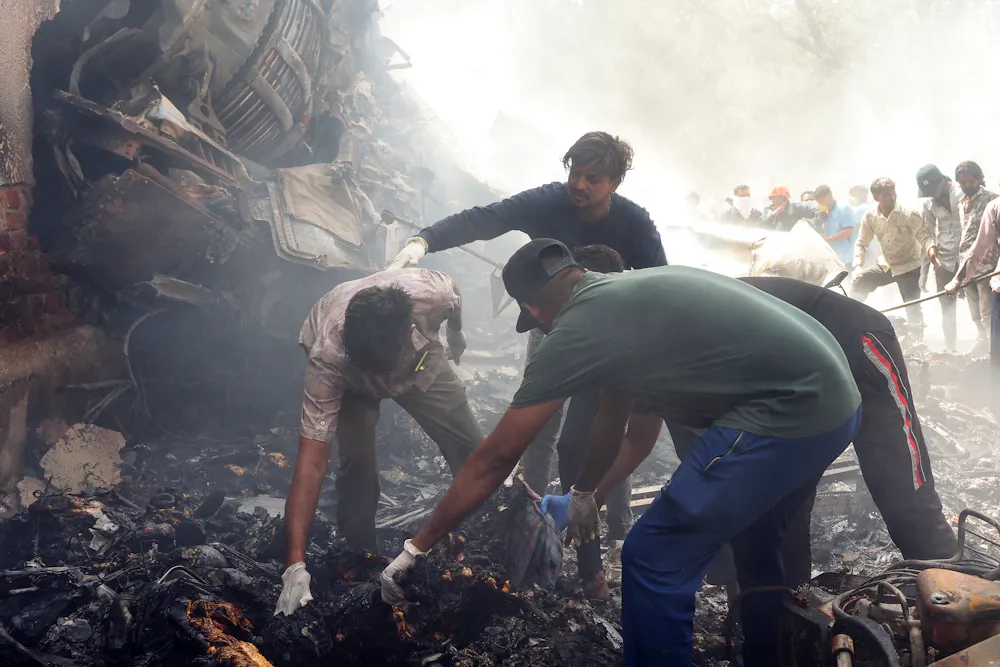
    MIL OSI USA News

  • MIL-OSI Australia: Increase in illegal dumping in State forests

    Source: Tasmania Police

    Issued: 13 Jun 2025

    Rangers are reminding people leave footprints, not rubbish when visiting our State forests and national parks ahead of school holidays, to avoid hefty fines.

    After noticing an increase in illegal dumping in State forests, rangers are warning people of the potential consequences.

    Environmental vandals left behind a stove, a surfboard and piles of other waste in Benarkin State Forest – demonstrating a clear disregard for the natural environment and the cost of the clean-up.

    Rangers will issue fines to those found responsible as illegal dumping can cause irreparable damage to the environment, tarnishing the experience for other visitors.

    Those who fail to comply with a compliance regulation can face significant fines, including:

    • $2,580 penalty infringement notice for illegally dumping waste less than 2500L as an individual, and a maximum penalty of $64,520 if the matter proceeds to court.
    • $8,065 penalty infringement notice for illegally dumping waste less than 2500L for a corporation, and maximum penalty of $322,600 if the matter proceeds to court.
    • $3,226 penalty infringement notice for illegally dumping waster greater than 2500L as an individual, and maximum penalty of $161,300 if the matter proceeds to court.
    • $12,097 penalty infringement notice for illegally dumping waster greater than 2500L for a corporation, and maximum penalty of $806,500 if the matter proceeds to court.

    Senior Ranger Mark is reminding all visitors of the dangers of illegal dumping, warning the vandals of the penalties that can apply.

    “Rangers have a zero tolerance to people who illegally dump waste, and when necessary, we take strong enforcement action, which can include large fines,” Ranger Mark said.

    “We just recently discovered a range of materials dumped illegally including tyres, Garden waste, general rubbish and household items.

    “Illegal dumping can pollute our water, soil and air, posing a serious risk to our ecosystems.

    “Careless people who dump waste that is flammable create fire hazards that can be quite devastating for our State forests.

    “Most people treat national parks and State forests with respect, but when people illegally dump waste, it ruins the experience for other park goers looking to enjoy nature.

    “Visitors must take their rubbish with them when they leave, to protect our protected areas.”

    Anyone with information about illegally dumped waste is encouraged to call the department on the Pollution Hotline 1300 130 372.

    Media contact: DETSI Media Unit on (07) 3339 5831 or media@des.qld.gov.au

    MIL OSI News

  • MIL-OSI USA: Warnock Demands Transparency from HHS Secretary Kennedy After Abruptly Firing Scientists from CDC’s Vaccine Safety Board

    US Senate News:

    Source: United States Senator Reverend Raphael Warnock – Georgia

    Warnock Demands Transparency from HHS Secretary Kennedy After Abruptly Firing Scientists from CDC’s Vaccine Safety Board

    Senators Reverend Warnock, Luján, and 20 Senators pressed HHS Secretary Kennedy about the sudden firing of every member of the ACIP

    The unprecedented action threatens the health of all Americans and hurts the legitimacy of the historically non-partisan board

    Senator Warnock voted against Secretary Kennedy to lead HHS, the agency that oversees the CDC, due to concerns over disturbing comments and long-held beliefs of Kennedy that would threaten health care costs, quality, and access for millions of Georgians and Americans

    Washington, D.C. – Today, U.S. Senator Reverend Raphael Warnock (D-GA) led 21 Senate colleagues in demanding answers from Health and Human Services (HHS) Secretary Robert F. Kennedy Jr. on his sudden decision to fire every member of the Centers for Disease Control and Prevention (CDC) Advisory Committee on Immunization Practices (ACIP). In a letter sent to Secretary Kennedy, Senators Warnock, Ben Ray Luján (D-NM), and 20 other Senate colleagues stressed the importance of protecting ACIP’s longstanding reputation as a trusted national authority on the use of vaccines to prevent and control disease.

    “This unprecedented action will strip Americans of the ability to make informed decisions about the benefits and risks of vaccinations – the complete opposite of ‘radical transparency’ and ‘good science’. We are troubled by your recent announcement to appoint several members to the committee who have a documented history of anti-vaccine ideology and peddling misinformation. We urge you to restore legitimacy to this historically non-partisan, science-based, and data driven committee and immediately reinstate the members of ACIP you have baselessly fired,” 
    the Senators said.

    “This decision appears to be a deliberate effort to repopulate the committee with anti-vaccine demagogues and continue pushing vaccine misinformation to the American people. According to the Kaiser Family Foundation, over 80 percent of parents with children under age 18 report that their children receive routine immunizations; however, a divide based on political ideology is growing. The reality is that most Americans trust the science behind vaccines – but through inaccurate information and politicization, you are eroding the trust in vaccines,” 
    the Senators continued.

    At the conclusion of the letter, the Senators pressed for greater transparency and emphasized the immediate risk Kennedy’s decision has on Americans’ public health.

    “Patient safety and transparency is at the heart of ACIP – Americans deserve the ability to make informed decisions about their health. You are stripping Americans of the freedom to choose by your recent appointments to the committee by centering anti-vaccine ideology. Therefore, we demand that you recuse your personal views on vaccines and restore the ACIP. We urge you to immediately reappoint the members of the committee that you fired and remove those that you have recently appointed that have a documented history of peddling misinformation or undermining vaccine confidence,” the Senators closed.

    Earlier this year, Senator Warnock voted against Secretary Kennedy to lead HHS, the agency that oversees the CDC, due to concerns over disturbing comments and long-held beliefs of Kennedy that would threaten health care costs, quality, and access for millions of Georgians and Americans. Since the CDC and its employees became a target of this administration, Senator Warnock has led several efforts defending their employment and the crucial role they play in keeping the nation safe. This includes joining them at a rally, delivering a floor speech opposing Secretary Kennedy’s nomination, demanding answers from administration nominees at Congressional hearings, and more.

    In addition to Senators Warnock and Luján, the letter was signed by U.S. Senators Lisa Blunt Rochester (D-DE), Dick Durbin (D-IL), Adam Schiff (D-CA), Martin Heinrich (D-NM), Tammy Duckworth (D-IL), Jacky Rosen (D-NV), Richard Blumenthal (D-CT), Angus King (I-ME), Peter Welch (D-VT), John Fetterman (D-PA), Brian Schatz (D-HI), Ruben Gallego (D-AZ), Kristen Gillibrand (D-NY), Jon Ossoff (D-GA), Mazie Hirono (D-HI), Angela Alsobrooks (D-MD), Gary Peters (D-MI), Andy Kim (D-NJ), Tina Smith (D-MN), and Jack Reed (D-RI).

    Read the full letter 
    HERE, and the text is below

    Dear Secretary Kennedy,

    We are deeply concerned by your decision to fire every member of the Centers for Disease Control and Prevention (CDC) Advisory Committee on Immunization Practices (ACIP). This unprecedented action will strip Americans of the ability to make informed decisions about the benefits and risks of vaccinations — the complete opposite of “radical transparency” and “good science”. We are troubled by your recent announcement to appoint several members to the committee who have a documented history of anti-vaccine ideology and peddling misinformation. We urge you to restore legitimacy to this historically non-partisan, science- based, and data-driven committee and immediately reinstate the members of ACIP you have baselessly fired.

    ACIP is a longstanding, trusted national source of science- and data-backed advice and guidance on the use of vaccines to prevent and control disease. Members that serve on this committee must undergo extensive vetting and disclose any conflicts of interest. Firing every member of the committee just before their next meeting scheduled for June 25-27 eliminates the advisory board’s ability to debate and make well-informed recommendations, putting American lives at risk. This reckless move is also happening as our nation faces the largest measles outbreak in over 30 years. 

    This decision appears to be a deliberate effort to repopulate the committee with anti-vaccine demagogues and continue pushing vaccine misinformation to the American people. According to the Kaiser Family Foundation, over 80 percent of parents with children under age 18 report that their children receive routine immunizations; however, a divide based on political ideology is growing. The reality is that most Americans trust the science behind vaccines — but through inaccurate information and politicization, you are eroding the trust in vaccines.

    This is just one action of many that the Department of Health and Human Services (HHS) has recently taken to undermine vaccine confidence in the United States. Just over two weeks ago, HHS reversed the CDC recommendations on COVID-19 vaccination. This decision was made without the consultation of ACIP or CDC, narrowing recommendations to exclude healthy pregnant people despite pregnancy increasing the risk for severe infection. Just a day later, HHS announced the termination of a contract with Moderna to develop a bird flu vaccine despite warnings of a future pandemic from infectious disease doctors and public health professionals. These deliberate efforts to sow doubt in the safety and efficacy of vaccines have real consequences — people will die.

    In addition to advising everyday Americans on their health decisions, ACIP recommendations also influence whether insurance will cover certain vaccines, making them accessible to insured Americans. Furthermore, ACIP determines the vaccine recommendations for the Vaccines for Children program, which ensures underinsured and uninsured children across the nation can access vaccines at no cost. Without these recommendations, vaccines will become out of reach for far too many Americans. These actions contradict your written responses to questions for the record from the Senate Finance Committee, in which you said “yes” in response to a question about your commitment to ensure there are no financial barriers to accessing safe and effective vaccines.

    Vaccines are safe and effective and have significantly reduced, and in some cases entirely eliminated, disease. With recent scientific advances in mRNA technology, vaccines are becoming easier and faster to produce in addressing today’s public health crises. It is critical that ACIP maintains its ability to develop science- and data-driven recommendations on vaccination without interference from anti-vaccine ideology.

    Patient safety and transparency is at the heart of ACIP — Americans deserve the ability to make informed decisions about their health. You are stripping Americans of the freedom to choose by your recent appointments to the committee by centering anti-vaccine ideology. Therefore, we demand that you recuse your personal views on vaccines and restore the ACIP. We urge you to immediately reappoint the members of the committee that you fired and remove those that you have recently appointed that have a documented history of peddling misinformation or undermining vaccine confidence.

    MIL OSI USA News

  • MIL-OSI China: India’s foreign ministry says lot of people lost their lives in plane crash in Gujarat

    Source: People’s Republic of China – State Council News

    Debris of an Air India plane is seen at the crash site in Ahmedabad of India’s Gujarat state, June 12, 2025. India’s foreign ministry said a lot of people have lost their lives in the plane crash with 242 people on board the flight to London in the western state of Gujarat. [Photo/Xinhua]

    India’s foreign ministry said a lot of people have lost their lives in Thursday’s plane crash with 242 people on board an Air India flight to London in the western state of Gujarat.

    The Air India flight had 169 Indian nationals, 53 British nationals, seven Portuguese nationals and one Canadian on board when it crashed shortly after takeoff from the Sardar Vallabhbhai Patel International Airport in Ahmedabad, about 17 km south of Gandhinagar, the capital city of Gujarat.

    There were also 12 cabin crew members on board.

    The ministry, however, has not put out an exact figure on the death toll in the plane crash.

    “What has happened in Ahmedabad is a very tragic accident. We have lost a lot of people. We extend our deepest condolences to all those who have lost their loved ones. There are several foreigners. You will receive the updates from the relevant departments — Ministry of Civil Aviation, Air India, and others. That is the latest I can share. It is an evolving situation. The rescue operations are on. We need to wait a little more time for exact details to be put out,” India’s foreign ministry spokesperson Randhir Jaiswal said during a press briefing.

    Local media reports said that there are no survivors from the ill-fated plane.

    A video of the aircraft flying low and struggling to gain altitude shows the plane going down and exploding in a massive ball of fire.

    Other videos from the site show thick columns of black smoke rising from the ground.

    According to police, the plane crashed directly on the B J Medical College undergraduate hostel mess in Meghani Nagar. The crash caused severe damage to buildings on the premises and several people were reported to be injured.

    A part of the crashed plane landed atop a student hostel, eyewitnesses said.

    Immediately after the crash, authorities rushed fire engines and over two dozen ambulances to the spot to carry out rescue work.

    Police have diverted traffic from the area, and a green corridor has also been established to ferry the injured quickly to the hospital.

    Air India has expressed condolences to the families of all those affected by this devastating event. The airline has changed its logo on social media handles to black after the deadly plane crash.

    The British government has issued a travel advisory, saying they were aware of the plane crash in Ahmedabad.

    “We are aware of a plane crash in Ahmedabad. The UK is working with local authorities in India to urgently establish the facts and provide support to those involved,” reads the advisory.

    Reports said former Gujarat chief minister Vijay Rupani was onboard the crashed flight. Web check-in documents obtained by local media said Rupani had completed his check-in in business class on the ill-fated flight.

    Indian Prime Minister Narendra Modi described the plane crash incident as a tragedy and heartbreaking beyond words.

    “The tragedy in Ahmedabad has stunned and saddened us. It is heartbreaking beyond words. In this sad hour, my thoughts are with everyone affected by it. Have been in touch with ministers and authorities who are working to assist those affected,” Modi wrote on social media.

    Meanwhile, world leaders have expressed condolences to the families of the Air India plane crash in Ahmedabad. 

    People conduct rescue work at the site of an Air India plane crash in Ahmedabad of India’s Gujarat state, June 12, 2025. India’s foreign ministry said a lot of people have lost their lives in the plane crash with 242 people on board the flight to London in the western state of Gujarat. (Str/Xinhua)

    MIL OSI China News

  • MIL-OSI New Zealand: Hundreds of firearms seized from Gore property

    Source: New Zealand Police

    Police have seized nearly 500 firearms from a property in Gore – a shocking discovery that is believed to be one of New Zealand’s largest seizures of weaponry.

    Police are now piecing together exactly how the man came to be in possession of so many firearms, and have begun the process of logging each one into evidence.

    Concerns about the man’s purchasing history led officers to his home in Gore on Friday 6 June to serve a notice of temporary suspension – an order allowing Police to retain a firearms licence holder’s licence and uplift any firearms in the person’s possession.

    A total of 478 firearms of different descriptions were seized, including five pistols, some that may be prohibited firearms, and some that may be restricted weapons, for which the man was not licenced. Significant quantities of ammunition, and firearm parts were also recovered.

    Only six of the 478 firearms were registered in the man’s name, and while some were locked in safes, a large number were unsecure.

    “It’s shocking to see so many firearms unsecured… the scale of it is concerning,” said Southland Area Commander Inspector Mike Bowman.

    It was largest seizure of firearms ever seen in the Southern District “by far”.

    No charges have been laid, but that may change, depending on the investigation, Inspector Bowman said. It will look at why the weapons weren’t registered or stored properly, and what was the purpose of such a vast collection.

    Inspector Bowman said it was too soon to say if any of the firearms were destined to be sold to criminal groups. “A number of enquiries are being made into this discovery, but the sheer number of firearms involved means that will take some time.”

    Unusual purchases

    It was the man’s purchase history that caught the attention of officials.

    “Through the Firearms Registry, the Firearms Safety Authority was able to establish the man had purchased multiple firearms since 2023, and not all were registered as they should have been after purchase,” Inspector Bowman said.

    “In buying a firearm, the man was required to register older firearms already in his possession, and we allege that did not happen.”

    Because of the number of firearms located, multiple Police vehicles were required to transport them from the property.

    The firearms, ammo and parts will be held securely by Police until the investigation, and any legal action that may follow, is complete.

    Their future is unclear: “It’s still early days in the investigation and we have a lot of work to do before we get to that point.”

    Swift action after red flags raised

    Firearms Safety Authority Executive Director Angela Brazier, said the case highlighted the value of the Firearms Registry, and of close co-operation between the Authority and frontline Police.

    “Information shared by Police enabled us to quickly suspend the man’s licence for failing to comply with his Registry obligations. Once his licence was suspended, Police could rapidly respond to remove this considerable number of unlawfully held firearms.

    “The majority of firearms licence holders are good law-abiding people. The review of the Firearms Registry released in May confirmed that diversion of firearms to the black market remains a threat to public safety and the Registry mitigates that risk.

    “I acknowledge all licence holders who have filled in the Registry and are doing their bit to make it harder for criminals and other unlicensed people to access firearms.”

    Two years into its five-year journey there are more than 86,000 active licence holders registered, or 38 per cent of active licence holders. Around 29 per cent of those registered did so proactively, without waiting for the legal requirement of an activating circumstance.

    There are more than 425,000 firearms listed in the Registry.

    ENDS

    Issued by Police Media Centre

    MIL OSI New Zealand News

  • MIL-OSI Security: Methamphetamine And Gun Trafficker Is Sentenced To 15 Years In Prison

    Source: United States Bureau of Alcohol Tobacco Firearms and Explosives (ATF)

    ASHEVILLE, N.C. – Jamal Marqui McDaniel, 46, was sentenced today to 180 months in prison followed by five years of supervised release for trafficking methamphetamine and firearms offenses, announced Russ Ferguson, U.S. Attorney for the Western District of North Carolina.

    According to court documents and evidence presented during court proceedings, the Drug Enforcement Administration (DEA), the Bureau of Alcohol, Tobacco, Firearms and Explosives (ATF), and the Asheville Police Department (APD) launched a joint investigation after receiving information that McDaniel was engaged in the illegal sale of narcotics and firearms in the Asheville area. Over the course of the investigation, McDaniel sold methamphetamine, firearms, and ammunition on multiple occasions to individuals who were cooperating with law enforcement. Court records show that, in total, McDaniel is accountable for distributing nearly half a kilogram of methamphetamine, and illegally selling eight firearms.

    McDaniel pleaded guilty February 21, 2025, to distribution of methamphetamine, possession of a firearm in furtherance of a drug trafficking crime, and possession of a firearm by a felon. He remains in the custody of the U.S. Marshals Service pending placement by the federal Bureau of Prisons.

    In making today’s announcement, U.S. Attorney Ferguson thanked the ATF, the DEA, the APD, and the Buncombe Country Sheriff’s Office for their investigation of the case.

    Assistant U.S. Attorney Christopher S. Hess of the U.S. Attorney’s Office in Asheville handled the prosecution.

    This case is part of Operation Take Back America a nationwide initiative that marshals the full resources of the Department of Justice to repel the invasion of illegal immigration, achieve the total elimination of cartels and transnational criminal organizations (TCOs), and protect our communities from the perpetrators of violent crime. Operation Take Back America streamlines efforts and resources from the Department’s Organized Crime Drug Enforcement Task Forces (OCDETFs) and Project Safe Neighborhood (PSN).


    MIL Security OSI

  • MIL-OSI USA: SPC MD 1265

    Source: US National Oceanic and Atmospheric Administration

    Mesoscale Discussion 1265

    Mesoscale Discussion 1265
    NWS Storm Prediction Center Norman OK
    0514 PM CDT Thu Jun 12 2025

    Areas affected…portions of southeast Colorado and eastern New
    Mexico

    Concerning…Severe potential…Watch unlikely

    Valid 122214Z – 130015Z

    Probability of Watch Issuance…5 percent

    SUMMARY…Occasional severe gusts and large hail may occur this
    afternoon across portions of southeast Colorado and eastern New
    Mexico. A watch is not anticipated.

    DISCUSSION…Convection has developed in weak upslope surface flow
    along the lee of the higher terrain across portions of central
    Colorado and New Mexico. Strong mixing on the High Plains has
    resulted in inverted-V thermodynamic profiles with approximately
    1000 J/kg MLCAPE per mesoanalysis and short-term RAP forecast
    profiles. Generally, low-level and deep-layer shear are marginal for
    supercells, particularly across northeast New Mexico and southeast
    Colorado, and some transient mid-level mesocyclones are apparent on
    WSR-88D radar. Some clustering of storms may occur with time given
    strong cold pools, and this may result in a risk for severe gusts.
    Additionally, given the weak low-level shear and low freezing
    levels, some marginally severe hail may be possible. Due to the
    expected sparse coverage of severe weather, a watch is not
    anticipated.

    ..Supinie/Smith.. 06/12/2025

    …Please see www.spc.noaa.gov for graphic product…

    ATTN…WFO…MAF…PUB…BOU…ABQ…EPZ…

    LAT…LON 37570523 38560477 38590381 38110350 36160348 34310369
    33160418 32870473 32990530 33860555 35790556 37570523

    MOST PROBABLE PEAK WIND GUST…55-70 MPH
    MOST PROBABLE PEAK HAIL SIZE…UP TO 1.25 IN

    Top/All Mesoscale Discussions/Forecast Products/Home

    MIL OSI USA News

  • MIL-OSI USA: Baldwin Statement on Reports Secretary Kennedy Allegedly Rehired CDC Staff, Including Lead Prevention Staff

    US Senate News:

    Source: United States Senator for Wisconsin Tammy Baldwin
    WASHINGTON, D.C. – Today, U.S. Senator Tammy Baldwin (D-WI), Ranking Member of the Senate Appropriations Subcommittee on Labor, Health and Human Services, and Education (LHHS), released the following statement after reports that the Trump Administration reinstated some of the Centers for Disease Control and Prevention (CDC) staff that were previously fired as part of the administration’s mass layoffs across HHS:
    “If Secretary Kennedy thinks he deserves kudos for putting out part of the fire he started, he’s looking at the wrong person. This administration recklessly fired the very experts who should have been on the ground helping communities address serious public health threats – like in Milwaukee, which is grappling with a lead poisoning crisis. I have heard the harrowing stories from Milwaukee families who have children suffering from lead contamination – and it’s simply unconscionable that this administration fired the experts who could have helped them. I have been demanding that Secretary Kennedy rehire these experts for weeks, not only because Wisconsinites need and deserve it, but also because it’s the law and this administration is not above it. This administration has shown they play fast and loose with the truth, and I will not rest until I see boots on the ground in Milwaukee – and other communities just like it – to deal with this crisis.”
    In Milwaukee, lead exposure has shuttered six Milwaukee Public Schools (MPS) and displaced 1,800 children. However, after applying for support from the CDC to help mitigate the lead found in school classrooms, MPS was notified that their request for support was denied because the Trump administration fired the agency’s entire Childhood Lead Poisoning Prevention Surveillance Branch.
    Senator Baldwin and Congresswoman Gwen Moore (D-WI-04) demanded that the Trump Administration reinstate the fired CDC lead poisoning experts and approve Milwaukee’s plea for federal assistance to help keep children safe. Senator Baldwin also pressed Kennedy on the firings at a Senate Health, Education, Labor, and Pensions Committee hearing. Senator Baldwin visited Milwaukee Public Schools’ Frances Starms Discovery Learning Center to meet with parents whose children’s health was at risk and whose schools were closed this year because of lead hazards. Yesterday, Senators Baldwin and Jack Reed (D-RI) demanded written answers from Secretary Kennedy in response to detailed questions on the Trump Administration’s firing of childhood lead experts at CDC.
    Local officials continue to confirm that the requested aid is not being provided, and Secretary Kennedy has provided no documentation that the fired employees have been rehired, as Senator Baldwin demanded.

    MIL OSI USA News