Category: Natural Disasters

  • MIL-OSI Security: Law Enforcement Seize Record Amounts of Illegal Drugs, Firearms, and Drug Trafficking Proceeds in International Operation Against Darknet Trafficking of Fentanyl and Opioids; 270 Arrested Across Four Continents

    Source: United States Attorneys General 13

    WASHINGTON — Today, the Attorney General and the Department of Justice’s Joint Criminal Opioid and Darknet Enforcement (JCODE) team, and international law enforcement partners announced the results of Operation RapTor, including the arrests of 270 dark web vendors, buyers, and administrators in Austria, Brazil, France, Germany, the Netherlands, South Korea, Spain, Switzerland, the United Kingdom, and the United States. Operation RapTor resulted in the highest number of seizures of any JCODE operation, including more than $200 million in currency and digital assets, over two metric tons of drugs, 144 kilograms of fentanyl or fentanyl-laced narcotics, and over 180 firearms.

    Operation RapTor was a global, coordinated effort by law enforcement in the United States, Europe, South America, and Asia to disrupt fentanyl and opioid trafficking, as well as the sales of other illicit goods and services, on the darknet, or dark web. Operation RapTor builds on the successes of prior years’ operations and takedowns of marketplaces, which resulted in the seizure of darknet infrastructure from Nemesis, Tor2Door, Bohemia, and Kingdom Markets, providing investigators across the world with investigative leads and evidence. JCODE and Europol’s European Cybercrime Centre (EC3) continue to compile intelligence packages to identify entities of interest. These leads allow U.S. and international law enforcement agencies to identify darknet drug vendors and buyers, resulting in a series of coordinated, but separate, law enforcement investigations, reflected in the statistics announced today. In furtherance of Operation RapTor and in its first action as a JCODE member agency, the Office of Foreign Assets Control (OFAC) additionally sanctioned Iranian national Behrouz Parsarad for his role as the founder and operator of Nemesis Market following seizure of the market. Parsarad was also indicted by a federal grand jury on drug trafficking charges related to the illegal business he ran on the dark web.

    “This historic international seizure of firearms, deadly drugs, and illegal funds will save lives,” said Attorney General Pam Bondi. “Criminals cannot hide behind computer screens or seek refuge on the dark web – this Justice Department will identify and eliminate threats to the American people regardless of where they originate.”

    “By cowardly hiding online, these traffickers have wreaked havoc across our country and directly fueled the fentanyl crisis and gun violence impacting our American communities and neighborhoods. But the ease and accessibility of their crimes ends today,” said FBI Director Kash Patel. “The FBI could not do this work without our partners both at home and abroad, and the staggering success of this year’s record-breaking amount of fentanyl, guns, and drugs seized prove that our efforts are working. Anyone looking to anonymously harm our citizens through illicit darknet trafficking: your days of recklessness are numbered.”

    “These predators who peddled poison on the dark web might have thought they are untouchable — hiding behind screens, pushing fentanyl, fueling overdoses, and cashing in on misery. However, Operation RapTor just proved them wrong,” said DEA Acting Administrator Robert Murphy. “DEA and our global partners reached across borders, across platforms, and across currencies to rip their networks apart. Let this stand as a warning: no mask, no marketplace, and no digital wallet can hide you from facing justice.”

    “Operation RapTor shows that the dark web is not beyond the reach of law enforcement,” said Head of Europol’s European Cybercrime Centre, Edvardas Šileris. “Through close cooperation and intelligence sharing, officers across three continents identified and arrested suspects, sending a clear message to those who think they can hide in the shadows. Europol will continue working with our partners to make the internet safer for everyone.”

    “This unprecedented operation is a testament to the power of global partnership and the unwavering dedication of our team,” said Chief Guy Ficco of IRS Criminal Investigation (IRS-CI). “Working through the JCODE initiative, IRS Criminal Investigation and our international partners led the largest and most impactful takedown to date—seizing over $200 million in assets, removing deadly drugs and weapons from circulation, and holding more than 270 individuals accountable. This critical strike against dark web networks fueling the fentanyl crisis marks a proud moment in our ongoing effort to protect communities worldwide.”

    “This record-breaking operation sends a clear message to every trafficker hiding behind a screen—your anonymity ends where our global reach begins,” said Acting Director Todd Lyons of U.S. Immigration and Customs Enforcement (ICE). “Thanks to the unwavering efforts by ICE’s Homeland Security Investigations (HSI), Europol and our international partners, we’re cracking the code of the so-called ‘safe spaces’ for cybercriminals—they are in our sights and we’re not backing down.”

    “Operation RapTor shows what’s possible when the U.S. Postal Inspection Service and our partners around the world stand united,” said Chief Postal Inspector Gary Barksdale of the United States Postal Inspection Service. “No matter where criminals hide, we will find them, dismantle their operations, and bring them to justice. This operation was about protecting innocent people from predatory criminals who profit from violence, addiction, and fear. Our commitment is unwavering.”

    “The FDA is committed to continuing its work to disrupt and dismantle the illegal sales of drugs on the dark web, where such sales far too often have tragic consequences,” said Deputy Director Chad Menster of the Food and Drug Administration’s Office of Criminal Investigations (FDA OCI). “We will continue to monitor, investigate and bring to justice those who misuse the internet in a quest for profits with reckless disregard for the risk to public health and safety.”  

    The impact of Operation RapTor can be attributed to the tireless work of U.S. and international law enforcement partners. For example:

    On Dec. 16, 2024, Rui-Siang Lin pleaded guilty to charges brought by the U.S. Attorney’s Office for the Southern District of New York of narcotics conspiracy, money laundering, and conspiracy to sell adulterated and misbranded medication for owning and operating Incognito Market, one of the largest narcotics marketplaces on the internet.

    According to court documents and statements made in court, Incognito Market was an online narcotics bazaar that started on the dark web in October 2020. Until it shut down in March 2024, Incognito Market sold more than $100 million of narcotics—including hundreds of kilograms of cocaine and methamphetamine. Incognito Market was available globally to anyone with internet access using the Tor web browser on the “dark web” or “darknet.” Incognito Market was designed to facilitate seamless narcotics transactions, incorporating many features of legitimate e-commerce sites such as branding, advertising, and customer service. Upon visiting the site, users were met by a splash page and graphic interface, which is pictured below:

    Figure 1: Incognito Market homepage

    While concealing their identities with a unique username or “moniker,” users were able to search thousands of listings for narcotics of their choice. Incognito Market sold illegal narcotics including heroin, cocaine, LSD, MDMA, oxycodone, methamphetamine, ketamine, and alprazolam, as well as misbranded prescription medication. An example of listings on Incognito market is below:

    Figure 2: Listings for various drugs on the Incognito Market.

    Listings included offerings of prescription medication that was falsely advertised as being authentic. For example, in November 2023, while operating in an undercover capacity on Incognito Market, a law enforcement agent purchased and received several tablets purported to be oxycodone. Testing revealed that these tablets were not oxycodone and were, in fact, fentanyl pills.

    The FBI, HSI, DEA, FDA OCI, and the New York Police Department investigated the case.

    In a second example, in January 2025, the U.S. Attorney’s Office for the Central District of California secured a 17-year sentence for Adan Ruiz, of Orange County, and a 15-year sentence for Omar Navia, of Los Angeles, for supplying fentanyl-laced pills to a drug trafficking ring that sold these drugs to more than 1,000 customers nationwide via the darknet. In imposing the sentences, U.S. District Judge David O. Carter called this case “the most sophisticated fentanyl distribution ring that this court has seen.”

    Navia and Ruiz admitted in their plea agreements that, from at least August 2021 to December 2022, they supplied fentanyl-laced pills to Michael Ta, 26, of Westminster, and Rajiv Srinivasan, 38, of Houston, who used the darknet and encrypted messaging applications to sell more than 120,000 fentanyl-laced pills, 20 pounds of methamphetamine, and other drugs directly to more than 1,000 customers in all 50 states, causing several fatal overdoses.

    According to court documents and statements made in court, Srinivasan and Ta used the “redlightlabs” darknet account to advertise and sell counterfeit M30 oxycodone pills containing fentanyl and other illicit drugs. Srinivasan also used the encrypted messaging application Wickr to communicate with and sell drugs to customers. Srinivasan received virtual currency as payment for the drugs and then routed that virtual currency through cryptocurrency exchanges.

    The court record also shows that Ta communicated with Srinivasan about drug orders, obtained fentanyl-laced pills and methamphetamine from sources of supply, stored those drugs in his residence, and mailed out packages with drugs to customers who had ordered them from Srinivasan on the “redlightlabs” account.

    Ta and Srinivasan admitted in their plea agreements to causing the fentanyl overdose deaths of three victims. Both defendants further admitted to distributing fentanyl-laced pills to two additional victims, both of whom suffered fatal drug overdoses shortly after they received the pills from Ta and Srinivasan. Prosecutors wrote in a sentencing memorandum, “The five victims of defendants’ crimes ranged in age from 19 to 51. They lived across the country, from California to Florida, Colorado to Arkansas. Each of the five victims leaves behind a family that has been forever and fundamentally changed by defendants’ actions. [Ta and Srinivasan] also victimized countless others as part of an epidemic of addiction and despair plaguing our district and our country.”

    The FBI investigated this case, with substantial assistance from the U.S. Postal Inspection Service (USPIS), the DEA’s Fayetteville Resident Office, and the Northern Colorado Drug Task Force.

    In a third example, in February 2024, the U.S. Attorney’s Office for the Eastern District of Virginia charged Joshua Vasquez, Joseph Vasquez, and Rafael Roman by criminal complaint with conspiracy to distribute 500 grams or more of methamphetamine. Joshua Vasquez, Joseph Vasquez, and Roman conspired to sell counterfeit Adderall containing methamphetamine on darknet markets such as Bohemia and Tor2Door. The defendants allegedly sold drugs on darknet marketplaces in exchange for cryptocurrency under the monikers “NuveoDelux,” “Mrjohnson,” and “AllStateRx.”

    According to court documents and statements made in court, these three prolific darknet vendors were collectively responsible for fulfilling over 13,000 drug orders shipped throughout the United States, ranging in size from user quantities, e.g., 5 pills, to “reseller” quantities, e.g., 10,000 pills. Joshua and Joseph Vasquez collectively ran the NuveoDeluxe and AllStateRx accounts. A fourth co-conspirator, Gregory Castillo-Rosario, who was arrested in October 2024, ran the Mrjohnson account. Roman assisted his co-conspirators by pressing counterfeit Adderall pills, packaging them, and distributing drug orders into the mail using the U.S. Postal Service. The conspiracy also laundered funds associated with darknet drug proceeds.

    While executing search warrants in New Jersey and New York, federal law enforcement officers seized more than $330,000, close to 80,000 counterfeit Adderall pills, one firearm, and two industrial pill press machines. Additionally, two vehicles and several pieces of property were seized during the search warrants. An additional 30 kilograms of suspected counterfeit Adderall pills were seized on May 2, 2024, in New York. Photographs of some of the seized items are below: 

    Figure 3: Counterfeit Adderall pills laced with methamphetamine stored in 5-gallon buckets

    Figure 4: Bags ready to be shipped to customers nationwide.

    Figure 5: Illegal pill press machines used by drug traffickers to make counterfeit pharmaceutical pills.

    Figure 6: Trash bags full of counterfeit Adderall pills laced with methamphetamine.

    Joshua Vasquez pleaded guilty on April 24, 2024, and was sentenced on July 25, 2024, to 12 years in prison. Joseph Vasquez pleaded guilty on April 15, 2024, and was sentenced on Aug. 8, 2024, to 10 years in prison. Roman pleaded guilty on May 30, 2024, and was sentenced on Nov. 14, 2024, to 10 years in prison. They all pleaded guilty to conspiracy to create a counterfeit substance and distribute 500 grams or more of a mixture and substance containing methamphetamine.

    The FBI, FDA, and USPIS investigated this matter with significant contributions from DEA, HSI, the Ocean County Sheriff’s Office, the Howell Township Police Department, the Lakewood Township Police Department, the Orlando Police Department, the Orange County Sheriff’s Office, the Arlington County Police Department, and the New York Police Department.

    In a fourth example, a San Fernando Valley man, Brian McDonald, 23, was sentenced to more than 20 years in federal prison in the Central District of California for using darknet marketplaces to sell hundreds of thousands of dollars’ worth of fentanyl-laced pills and cocaine to buyers nationwide. He admitted in court documents to causing one fatal fentanyl overdose.

    From at least April 2021 until May 2023, McDonald and others conspired to sell fentanyl and cocaine via multiple darknet marketplaces. McDonald operated under the monikers “Malachai Johnson,” “SouthSideOxy,” and “JefeDeMichoacan.” McDonald created, monitored, and maintained the darknet vendor profiles, including by updating drug listings and shipment options, tracking drug orders, and offloading Monero cryptocurrency received as drug deal payments into cryptocurrency wallets that McDonald controlled.

    McDonald recruited and hired accomplices to help package and ship the narcotics they sold on the darknet. McDonald directed and helped these accomplices package and ship the narcotics. McDonald purchased bulk quantities of fentanyl and cocaine and then directed others to complete hundreds of drug sales involving large quantities of both fentanyl and cocaine.

    The FBI and DEA investigated this matter.

    Operation RapTor involves law enforcement actions taken by JCODE member agencies, including the DEA, FBI, FDA OCI, HSI, IRS-CI, and USPIS. Credible reporting from the referenced agencies, in addition to contributions from ATF, Army Criminal Investigation Division, Customs and Border Protection, the Treasury Department’s Financial Crimes Enforcement Network (FinCEN) and OFAC, and Naval Criminal Investigative Service, enabled domestic law enforcement actions in support of Operation RapTor. State, local, and other federal agencies also contributed to Operation RapTor investigations through task force participation and regional partnerships, as well as the multi-agency Special Operations Division.

    The investigations leading to Operation RapTor were significantly aided by support and coordination from the Criminal Division’s Narcotic and Dangerous Drug Section and Computer Crime and Intellectual Property Section, with valuable assistance from the Criminal Division’s Money Laundering and Asset Recovery Section, Fraud Section, and Office of International Affairs.

    Key international partners include Europol; Eurojust; Austria’s Criminal Intelligence Service with various Provincial Criminal Police Departments (Bundeskriminalamt und Landeskriminalämter); Brazil’s Civil Police of the State of Pará (Polícia Civil do Estado do Pará) and Civil Police of the State of São Paulo (Polícia Civil do Estado do São Paulo); France’s French Customs (Douane), National Gendarmerie (Gendarmerie Nationale); Germany’s Federal Criminal Police Office (Bundeskriminalamt), Prosecutor’s Office in Cologne – Central Cybercrime Contact Point (Staatsanwaltschaft Köln, Zentral- und Ansprechstelle Cybercrime), Central Criminal Investigation in Oldenburg (Zentrale Kriminalinspektion Oldenburg) various police departments (Dienststellen der Länderpolizeien), and German Customs Investigation (Zollfahndungsämter); the Netherlands’ Team High Tech Crime (National Investigations and Special Operations (NIS) and Post Interventie Team (PIT), National Intelligence, Expertise and Operational Support (NIEO);  Spain’s National Police (Policía Nacional); South Korea’s Seoul Central District Prosecutors’ Office – Darknet Investigations Unit; Switzerland’s Zurich Cantonal Police (Kantonspolizei Zürich) and Public Prosecutor’s Office II of the Canton of Zurich (Staatsanwaltschaft II); and the United Kingdom’s National Crime Agency (NCA), National Police Chiefs’ Council (NPCC).

    Federal investigations spanned the United States, and 26 United States Attorneys’ Offices are prosecuting cases, including the Central District of California, the Northern District of California, the Southern District of California, the District of Colorado, the District of Connecticut, the District of Columbia, the Middle District of Florida, the Southern District of Florida, the Middle District of Georgia, the District of Hawaii, the Northern District of Illinois, the Southern District of Indiana, the Eastern District of Kentucky, the District of Massachusetts, the Eastern District of Michigan, the Western District of Michigan, the Eastern District of Missouri, the District of New Jersey, the Southern District of New York, the District of North Dakota, the Northern District of Ohio, the Southern District of Ohio, the Northern District of Oklahoma, the Eastern District of Pennsylvania, the Eastern District of Virginia, and the Western District of Washington.

    The Justice Department established the FBI-led JCODE team to lead and coordinate government efforts to detect, disrupt, and dismantle major criminal enterprises reliant on the darknet for trafficking opioids and other illicit narcotics, along with identifying and dismantling their supply chains.

    An indictment is merely an allegation. All defendants are presumed innocent until proven guilty beyond a reasonable doubt in a court of law.

    MIL Security OSI

  • MIL-OSI Africa: Africa’s Energy Future: Now!

    Source: Africa Press Organisation – English (2) – Report:

    CAPE TOWN, South Africa, May 22, 2025/APO Group/ — 
    “The future of African power infrastructure starts with Sun Africa, and the conversation about Africa’s energy future continues at the Africa Energy Forum. We are proud to be the Forum Sponsor of an event that will unite visionaries and unite people from across the continent.” – Adam Cortese, CEO, Sun Africa. 

    Bringing together community and sport, the 2025 edition of eaf also features the Africa Challenge Cup, a special evening of football at Cape Town’s iconic DHL Stadium. Four teams will face off in friendly matches under the floodlights, offering a chance for delegates, partners, and peers to connect in a spirited, relaxed setting alongside friends and family. 

    The Youth Energy Summit (YES!), held in parallel with aef, is expected to welcome more than 4,000 participants, making it one of the largest gatherings focused on youth engagement in the African energy sector. Many companies are supporting the initiative not just as sponsors, but as active partners in youth participation across the continent. These include the DBSA, Nedbank, Pele Green Energy, Seriti Green, Siemens Energy, Genesis, and others from the energy and mining sectors. 

    MIL OSI Africa

  • MIL-OSI Europe: Frank Elderson: Nature’s bell tolls for thee, economy!

    Source: European Central Bank

    Keynote speech by Frank Elderson, Member of the Executive Board of the ECB and Vice-Chair of the Supervisory Board of the ECB, at the Naturalis Biodiversity Center

    Leiden, 22 May 2025

    Thank you for inviting me to speak at this annual biodiversity dinner. The wide range of speakers here this evening – on international biodiversity day – is testament to the relevance of biodiversity across disciplines.

    Nature isn’t just the roots and shoots of biologists, macroecologists and natural scientists. Beyond its intrinsic value, nature provides vital services that are relevant for all of us – for entrepreneurs, workers, policymakers and bankers, but also for central bankers and financial supervisors.

    A thriving natural environment provides vital benefits that sustain our well-being and serve as a crucial driving force for the global economy. Think of fertile soils, pollination, timber, fishing stocks, clean water and clean air.

    But we are well aware of the daunting facts that confirm the dire state of ecosystem services. Intensive land use, the climate crisis, pollution, overexploitation and other human pressures are rapidly and severely damaging our natural resources.

    75% of land surface ecosystems and 66% of ocean ecosystems have been damaged, degraded or modified.

    We are using natural resources 1.7 times faster than ecosystems can regenerate them. Consequently, the contribution that nature can make to our economies – and our way of life – is steadily diminishing every day.

    These fateful facts and figures confront us as vividly as Edvard Munch’s iconic scream. Yet, accounting for nature and the services it provides is challenging. What nature provides to the economy is typically not measured directly in statistics like GDP.

    We price portfolios instead of pollinators, we monitor markets instead of mangroves and we watch wages instead of water supplies. However, the reality is that while our economies are heavily reliant on ecosystem services, the economic value of those pollinators, mangroves and water supplies is not sufficiently taken into account.

    Nature is too often still wrongly seen as a free good, readily available and abundant in supply, without opportunity costs. For such a good, there is no market – and therefore no price.

    So, why can’t governments intervene by pricing and creating a market for nature as has been done for emissions?

    Unlike for the climate crisis – which can be quantified through carbon emissions and their direct links to rising temperatures – there is no single metric that can be used to quantify the wide range of ecosystem services.

    What is the common denominator of clean air, fertile soils and coasts protected by mangrove forests? Nature is beautifully complex, but this complexity makes it harder to establish a market for nature than a market for climate, such as the carbon markets created through emissions trading systems.

    For central banks to effectively fulfil their mandates, we need to enhance our capacity to measure the vital services that nature provides to our economy and identify the financial risks caused by the degradation of these services. And while this is admittedly not an easy task, it is encouraging that multiple stakeholders are making progress, including academia, firms and also the ECB. We are enhancing our tools, methodologies and data to assess the economic implications of ecosystems and their degradation. And I am pleased to be able to share some of our latest insights this evening.

    I will argue that while nature services may appear to be freely available, they are in fact not abundant at all and there are substantial costs to using and losing them. Costs that we currently overlook when headlines report on GDP growth.

    Accounting for nature in monetary policy and banking supervision

    Nature being of vital importance for the economy and the financial system is hardly a novel insight. Besides scientists, a number of central banks and prudential supervisors have also been highlighting their interlinkages for several years now.[1] And while the climate crisis has received most of the attention, it is encouraging that work on nature-related risks has also significantly evolved.

    Moreover, the ECB has taken significant steps to account for nature-related risks in the pursuit of its mandate. For instance, we take into account the effects nature degradation can have on banks’ balance sheets. The degradation of nature could damage companies’ production processes and consequently weaken their creditworthiness, which might in turn impair loans granted by banks. In our role as the supervisor of Europe’s largest banks, we therefore aim to ensure that the banks we supervise adequately manage both climate-related and nature-related risks.[2] Encouragingly, we are seeing a growing set of good practices among the banks we supervise in terms of identifying, quantifying and managing nature-related risks.

    But are we fully aware of – and sufficiently alert to – how nature degradation could eventually hit balance sheets?

    Advancing our understanding does not mean that economists and supervisors should start studying ants in Aragon, ladybirds in Lombardy or honeybees in Holland (although it is very important that entomologists do!).

    Instead, central banks and supervisors need to gain a better understanding of just how vulnerable the economy and the financial system are to nature degradation.[3]

    Capturing the risks related to ecosystem degradation

    An ECB study in 2023 found that nearly 75% of banks’ corporate lending goes to firms that are highly dependent on at least one ecosystem service.[4] This finding underscores just how interconnected nature, the economy and the financial system really are.[5] But that study does not tell us exactly how much of our economic activity is at risk, or which economic sectors and regions will be most affected.

    To better understand this impact, the ECB has teamed up with the Resilient Planet Finance Lab at the University of Oxford.

    The interdisciplinary team has developed systemic risk indicators that move beyond dependency analysis to a comprehensive assessment of nature-related financial risks. In essence, this indicator assesses the economic implications of the deteriorating state of ecosystems. It shows how much of the economic value added by a particular industry– what economists call “gross value added” – is at risk when ecosystem services degrade. Tomorrow we will publish a blog post showing some of the preliminary results of our work, but I can already share some findings with you this evening.

    Water – the natural currency underwriting purchases, investments and trades

    Our preliminary findings indicate two things. First, water – too little, too much or too dirty water that is –has been identified as posing the most significant risk to the euro area economy. Losses related to water scarcity, poor water quality and flood protection emerge as the most critical from a value added perspective. Concretely, surface water scarcity alone puts almost 15% of the euro area’s economic output at risk. This is not surprising because water is not just any resource – it is one of the most essential natural resources we possess. Second, agriculture is the most exposed sector, as it would suffer the largest proportional output losses due to a decline in surface water. But other sectors are also likely to be significantly affected.

    Chart 1

    Proportion of national gross value added (GVA) at risk due to surface water scarcity in Europe and globally (supply chain risks)

    Water is, for instance, an indispensable resource in industry. In the Netherlands, industry alone uses over 2.6 trillion litres of fresh water a year.[6] This water usage is more than three times the total annual water consumption of all households in the Netherlands. Water is also essential for energy production, not only in hydropower plants but also in thermal power plants – including nuclear – where it is used for cooling and steam generation. It is consumed in vast quantities for mining and mineral processing, which are crucial for the energy transition, as well as in the construction sector for producing concrete, to name just a few examples.

    The risk posed by water scarcity is not hypothetical, we are already experiencing the impact today. I am sure that many of you remember when the summers of 2018, 2019 and 2020 brought severe droughts and heatwaves even to the Netherlands. In 2018 alone, economic losses in the Netherlands were up to €1.9 billion for agriculture and €155 million for shipping, with widespread but hard-to-quantify damage to ecosystems. This year’s drought is especially alarming: spring 2025 is on track to become the driest ever recorded in the Netherlands, likely surpassing the previous record set nearly 50 years ago. And droughts are only projected to increase further as the climate crisis continues to develop. Worryingly, in the driest scenario an average summer in the 2040s will be about as dry as an extremely dry summer now.

    Effective water management will thus be crucial for sustaining production. However, the risk persists that during periods of drought, production might need to be scaled down. Some industrial processes may become economically unviable and might need to relocate.

    For example, some have even gone as far as to point at a risk that more frequent droughts could render traditional tulip-growing regions such as the Bollenstreek unsuitable for bulb cultivation.[7] This may compel growers to explore better-positioned locations where water is more reliably available to safeguard the iconic Dutch tulip industry.

    Hence, as a consequence of water scarcity, our economies could produce less, and production costs are likely to rise during any inevitable transition phase.

    Let me also point out that biodiversity is a critical – and often underestimated – factor in ensuring the availability and quality of fresh water. Ecosystems such as forests and wetlands regulate the quantity, timing and purity of water flows by stabilising soils and filtering pollutants. Maintaining healthy and diverse ecosystems will be crucial for resilient water provisioning as climate change intensifies, particularly in regions facing growing water stress.

    Beyond these macroeconomic impacts, ecosystem degradation can significantly affect financial stability, for example through the loans that banks grant to households and firms. In essence, the greater the impact on firms, the higher the risk of defaults and the higher the risk on banks’ balance sheets.

    For example, in our research with the University of Oxford we found that more than 34% of banks’ total outstanding nominal amount – over €1.3 trillion – is currently extended to sectors exposed to high water scarcity risk.

    As the next step in our research, we will examine changes in the probability of default in the sectors most affected by dwindling ecosystems. Think about it as stress-testing the resilience of banks’ credit portfolios to nature degradation. We plan to publish these results later this year, complete with a more in-depth analysis on the topic, so stay tuned.

    Multiple stakeholders are taking action

    Encouragingly, our work with the University of Oxford is not an isolated case. We are in fact seeing a wide range of stakeholders taking action to better account for ecosystem services.

    For instance, I hear that our host this evening – the Naturalis Biodiversity Center – has teamed up with banks to combine insights from science and finance to further develop indicators quantifying ecosystem services.

    We are also seeing a growing set of good practices among the banks we supervise in terms of identifying, quantifying and managing nature-related risks. Banks typically conduct materiality assessments to understand where they are most affected. And banks also grapple with the challenge that nature-related risks are difficult to express in a single metric. Once they know where they are exposed, they then typically conduct deep dives on specific topics.

    One bank, for example, has conducted a quantitative scenario analysis to understand how the profitability of its customers could be affected if a water pollution tax were to be implemented.

    Other banks design customer scorecards and engage with the most vulnerable counterparties, sometimes offering small discounts or other incentives when customers meet key performance indicators that increase their resilience.

    It is also encouraging that progress is being made at the international level. The Network for Greening the Financial System (NGFS) – a network of 145 central banks and supervisors from around the world – has developed a conceptual framework offering central banks and supervisors a common understanding of nature-related financial risks and a principle-based risk assessment approach.[8][9] And the Financial Stability Board recently took stock of supervisory and regulatory initiatives among its members, finding that a growing number of financial authorities are considering the potential implications of nature-related risks for the financial sector.[10]

    So scientists, banks, policymakers and supervisors are in fact taking action. That’s good news. Given the high level of uncertainty regarding impacts, non-linearities, tipping points and irreversibility, continuous scientific input and engagement are essential to determine the transmission channels from nature to our economies.

    Reliable and comparable data are key to managing risks and identifying opportunities

    Before I conclude, let me stress a vital enabler to better measure ecosystem services: data. Closer cooperation with natural scientists can help us better understand the data they have available on the status of nature and the ecosystem services it provides. The National Hub for Biodiversity Information provided by our host tonight is an excellent example.[11]

    Moreover, continuous engagement with the scientific community can also help improve our understanding of non-linearities, tipping points and the irreversibility of the biodiversity crisis.

    Similarly, the availability of reliable and comparable data from companies is essential for us to know where the risks are hiding and where opportunities can be found. Such data can, for example, provide insights into companies’ reliance on fresh water for their production processes. In this context, the reporting requirements in the EU’s sustainable finance framework are not merely a “nice to have”, they are providing indispensable information about financial risks and are a solution to the patchwork of different reporting criteria.

    Does that mean that there is no room for simplification? Does it mean that there is no room to ease the reporting burden on smaller firms?

    Of course not.

    As the ECB noted in its recent opinion[12] on the Commission’s omnibus package, striking the right balance is crucial – the balance between how much data firms report and how many firms are required to do so. Excluding too many firms from the Corporate Sustainability Reporting Directive may reduce the availability of vital data needed to assess climate-and nature related financial risks.

    So when carefully calibrating a balanced degree of simplification, one should look at what data points we need most and make sure that sufficient companies report on precisely those data. Not only because reliable and comparable data are important for identifying economic impacts and managing financial risks, but also because such data helps identify investment opportunities to unlock a clean, green and competitive European economy.

    Conclusion

    Let me conclude.

    Encouragingly, multiple stakeholders are making progress in better accounting for ecosystem services. That’s good news, and this work must continue. Because dwindling ecosystems are no longer peripheral – they are central to financial stability, the economy and, ultimately, our daily lives.

    When you saw the title of my remarks this evening, some of you might have recognised a reference to John Donne’s poem “For Whom the Bell Tolls”. Donne beautifully expresses that we are all part of a bigger whole: “No man is an island, Entire of itself.”

    Nor is our economy an island – it is not “entire of itself”, it depends on nature.

    If nature’s services suffer,
    And they do!
    Send not to know
    For whom the bell tolls.
    It tolls for thee, ECOnomy!

    Thank you for your attention.

    MIL OSI Europe News

  • MIL-OSI USA: SBA Relief Still Available to Missouri Small Businesses and Private Nonprofits Affected by Drought

    Source: United States Small Business Administration

    SACRAMENTO, Calif. – The U.S. Small Business Administration (SBA) is reminding eligible small businesses and private nonprofit (PNP) organizations in Missouri of the June 23 deadline to apply for low interest federal disaster loans to offset economic losses caused by drought beginning Oct 15, 2024.

    The disaster declaration covers the Missouri counties of Barton, Bates, Cedar, St. Clair and Vernon as well as the Kansas counties of Bourbon, Crawford and Linn.

    Under this declaration, SBA’s Economic Injury Disaster Loan (EIDL) program is available to small businesses, small agricultural cooperatives, nurseries, and PNPs with financial losses directly related to the disaster. The SBA is unable to provide disaster loans to agricultural producers, farmers, or ranchers, except for small aquaculture enterprises.

    EIDLs are available for working capital needs caused by the disaster and are available even if the small business or PNP did not suffer any physical damage. The loans may be used to pay fixed debts, payroll, accounts payable and other bills not paid due to the disaster.

    “Through a declaration by the U.S. Secretary of Agriculture, SBA provides critical financial assistance to help communities recover,” said Chris Stallings, associate administrator of the Office of Disaster Recovery and Resilience at the SBA. “We’re pleased to offer loans to small businesses and private nonprofits impacted by these disasters.”

    The loan amount can be up to $2 million with interest rates as low as 4% for small businesses and 3.25% for PNPs with terms up to 30 years. Interest does not accrue, and payments are not due until 12 months from the date of the first loan disbursement. The SBA sets loan amounts and terms based on each applicant’s financial condition.

    To apply online, visit sba.gov/disaster. Applicants may also call SBA’s Customer Service Center at (800) 659-2955 or email disastercustomerservice@sba.gov for more information on SBA disaster assistance. For people who are deaf, hard of hearing, or have a speech disability, please dial 7-1-1 to access telecommunications relay services.

    Submit completed loan applications to the SBA no later than June 23.

    ###

    About the U.S. Small Business Administration

    The U.S. Small Business Administration helps power the American dream of business ownership. As the only go-to resource and voice for small businesses backed by the strength of the federal government, the SBA empowers entrepreneurs and small business owners with the resources and support they need to start, grow, expand their businesses, or recover from a declared disaster. It delivers services through an extensive network of SBA field offices and partnerships with public and private organizations. To learn more, visit www.sba.gov.

    MIL OSI USA News

  • MIL-OSI USA: SBA Relief Still Available to Confederated Tribes and Bands of the Yakama Nation Private Nonprofits Affected by Wildfires

    Source: United States Small Business Administration

    SACRAMENTO, Calif. – The U.S. Small Business Administration (SBA) is reminding eligible private nonprofit (PNP) organizations in the Confederated Tribes and Bands of the Yakama Nation of the June 24 deadline to apply for low interest federal disaster loans to offset economic losses caused by wildfires occurring June 22-July 8, 2024.

    Under this declaration, SBA’s Economic Injury Disaster Loan (EIDL) program is available to PNPs providing non-critical services of a governmental nature who suffered financial losses directly related to the disaster. Examples of eligible non-critical PNPs include, but are not limited to, food kitchens, homeless shelters, museums, libraries, community centers, schools and colleges.

    EIDLs are available for working capital needs caused by the disaster and are available even if the PNP did not suffer any physical damage. The loans may be used to pay fixed debts, payroll, accounts payable and other bills not paid due to the disaster.

    “SBA loans help eligible small businesses and private nonprofits cover operating expenses after a disaster, which is crucial for their recovery,” said Chris Stallings, associate administrator of the Office of Disaster Recovery and Resilience at the SBA. “These loans not only help business owners get back on their feet but also play a key role in sustaining local economies in the aftermath of a disaster.”

    The loan amount can be up to $2 million with interest rates as low as 3.25% and terms up to 30 years. Interest does not accrue, and payments are not due until 12 months from the date of the first loan disbursement. The SBA sets loan amounts and terms based on each applicant’s financial condition.

    The SBA encourages applicants to submit their loan applications promptly. Applications will be prioritized in the order they are received, and the SBA remains committed to processing them as efficiently as possible.

    Applicants may apply online and receive additional disaster assistance information at sba.gov/disaster. Applicants may also call SBA’s Customer Service Center at (800) 659-2955 or email disastercustomerservice@sba.gov for more information on SBA disaster assistance. For people who are deaf, hard of hearing, or have a speech disability, please dial 7-1-1 to access telecommunications relay services.

    Submit completed loan applications to the SBA no later than June 24.

    ###

    About the U.S. Small Business Administration

    The U.S. Small Business Administration helps power the American dream of business ownership. As the only go-to resource and voice for small businesses backed by the strength of the federal government, the SBA empowers entrepreneurs and small business owners with the resources and support they need to start, grow, expand their businesses, or recover from a declared disaster. It delivers services through an extensive network of SBA field offices and partnerships with public and private organizations. To learn more, visit www.sba.gov.

    MIL OSI USA News

  • MIL-OSI USA: SBA Opens Disaster Loan Outreach Center in Cleveland

    Source: United States Small Business Administration

    SACRAMENTO, Calif. – The U.S. Small Business Administration (SBA) announced today the opening of a Disaster Loan Outreach Center (DLOC) in Pawnee County to assist small businesses, private nonprofit (PNP) organizations, and residents affected by wildfires occurring March 14-15.

    Beginning Thursday, May 22, SBA customer service representatives will be on hand at the Disaster Loan Outreach Center in Cleveland to answer questions and assist with the disaster loan application process. No appointment is necessary, walk-ins are welcome. Those who prefer to schedule an in-person appointment in advance can do so at appointment.sba.gov.

    The center’s hours of operation are as follows:

    PAWNEE COUNTY
    Disaster Loan Outreach Center
    Cleveland Fire Department
    The Courtroom
    201 N. Broadway St.
    Cleveland, OK  74020

    Opens at 1:00 p.m., Thursday, May 22
    Mondays – Fridays, 8:00 a.m. – 5:00 p.m.

    Closed Monday, May 26 for Memorial Day

    “When disasters strike, SBA’s Disaster Loan Outreach Centers perform an important role by assisting small businesses and their communities,” said Chris Stallings, associate administrator of the Office of Disaster Recovery and Resilience at the U.S. Small Business Administration. “At these centers, our SBA specialists help business owners and residents apply for disaster loans and learn about the full range of programs available to support their recovery.”

    The following DLOCs are open now:

    LINCOLN COUNTY
    Disaster Loan Outreach Center
    Iowa Tribe of Oklahoma Fire Department
    335174 E. 750 Rd.
    Perkins, OK   74059

    Thursday, 8:30 a.m. – 4:30 p.m.
    Friday, 8:30 a.m. – 4:30 p.m.

    Closes permanently at COB Friday, May 23

    LOGAN COUNTY
    Disaster Loan Outreach Center
    Logan County Courthouse Annex
    (Across the street north of Courthouse in
    the old Girl Scout Room)
    312 E. Harrison Ave.
    Guthrie, OK  73044

    Mondays – Fridays, 9:00 a.m. – 6:00 p.m.

    Closed Monday, May 26 for Memorial Day

    PAYNE COUNTY
    Disaster Loan Outreach Center
    City of Stillwater Community Center, Room 102
    315 W. Eighth Ave.
    Stillwater, OK  74074
    Mondays – Fridays, 9:00 a.m. – 6:00 p.m.

    Closed Monday, May 26 for Memorial Day

    Closes permanently at COB Wednesday, June 11

    Businesses and nonprofits are eligible to apply for business physical disaster loans and may borrow up to $2 million to repair or replace disaster-damaged or destroyed real estate, machinery and equipment, inventory, and other business assets.

    Homeowners and renters are eligible to apply for home and personal property loans and may borrow up to $100,000 to replace or repair personal property, such as clothing, furniture, cars, and appliances. Homeowners may apply for up to $500,000 to replace or repair their primary residence.

    Applicants may be eligible for a loan increase of up to 20% of their physical damages, as verified by the SBA, for mitigation purposes. Eligible mitigation improvements include insulating pipes, walls and attics, weather stripping doors and windows, and installing storm windows to help protect property and occupants from future disasters.

    The SBA’s Economic Injury Disaster Loan (EIDL) program is available to small businesses, small agricultural cooperatives, nurseries, and private nonprofit organizations impacted by financial losses directly related to these disasters. The SBA is unable to provide disaster loans to agricultural producers, farmers, or ranchers, except for small aquaculture enterprises.

    EIDLs are available for working capital needs caused by the disaster and are available even if the business or PNP did not suffer any physical damage. The loans may be used to pay fixed debts, payroll, accounts payable, and other bills not paid due to the disaster.

    Interest rates are as low as 4% for small businesses, 3.62% for nonprofits, and 2.75% for homeowners and renters with terms up to 30 years. Interest does not begin to accrue, and payments are not due until 12 months from the date of the first loan disbursement. The SBA determines eligibility and sets loan amounts and terms based on each applicant’s financial condition.

    To apply online, visit sba.gov/disaster. Applicants may also call SBA’s Customer Service Center at (800) 659-2955 or email disastercustomerservice@sba.gov for more information on SBA disaster assistance. For people who are deaf, hard of hearing, or have a speech disability, please dial 7-1-1 to access telecommunications relay services.

    The filing deadline to return applications for physical property damage is July 21, 2025. The deadline to return economic injury applications is Feb. 20, 2026.

    ###

    About the U.S. Small Business Administration

    The U.S. Small Business Administration helps power the American dream of business ownership. As the only go-to resource and voice for small businesses backed by the strength of the federal government, the SBA empowers entrepreneurs and small business owners with the resources and support they need to start, grow, expand their businesses, or recover from a declared disaster. It delivers services through an extensive network of SBA field offices and partnerships with public and private organizations. To learn more, visit www.sba.gov.

    MIL OSI USA News

  • MIL-OSI USA: SPC May 22, 2025 1300 UTC Day 1 Convective Outlook

    Source: US National Oceanic and Atmospheric Administration

     For best viewing experience, please enable browser JavaScript support.

    May 22, 2025 1300 UTC Day 1 Convective Outlook

    Updated: Thu May 22 12:37:53 UTC 2025 (Print Version |   |  )

    Probabilistic to Categorical Outlook Conversion Table

     Forecast Discussion

    SPC AC 221237

    Day 1 Convective Outlook
    NWS Storm Prediction Center Norman OK
    0737 AM CDT Thu May 22 2025

    Valid 221300Z – 231200Z

    …THERE IS A SLIGHT RISK OF SEVERE THUNDERSTORMS FOR NORTHERN
    PORTIONS OF TEXAS AND SOUTHERN OKLAHOMA…

    …SUMMARY…
    Severe storms are possible across parts of the southern Plains this
    afternoon and evening. Large hail is the main threat, along with
    severe gusts. A few instances of 2+ inch diameter hail are
    possible.

    …Southern Plains…
    Weak short-wave ridging will shift into the central High Plains
    later today and mid-level heights are forecast to rise from the
    southern Rockies into the northern Plains. As this occurs, a
    synoptic front draped across OK will sag south and sharpen over the
    TX South Plains/southern OK by mid-late afternoon. Strong heating
    south of the boundary will contribute to a moderately to very
    unstable airmass. Scattered thunderstorms will likely evolve and
    mature within this steep lapse-rate environment with 0-6km bulk
    shear around 40kt. Wind profiles favor supercells and hodographs
    suggest very large hail is likely with the most robust updrafts.
    Severe gusts are possible with the stronger downdrafts and upscale
    growth into a couple of thunderstorm clusters is forecast during the
    evening as this activity moves into northwest/north-central TX
    during the evening hours.

    …Southern/Eastern Florida…
    Seasonally cool 500-mb temperatures (-8 to -10 deg C) and moderately
    steep mid-level lapse rates are forecast equatorward of a
    large-scale eastern U.S. upper trough. Deep westerly flow favors an
    east coast sea breeze, and this should be where convection focuses
    as temperatures warm through the upper 80s and lower 90s. Localized
    severe gusts and large hail are the primary threats with this
    diurnally driven convection.

    …Central High Plains…
    The aforementioned mid-level ridge and an eastward-migrating
    mid-level trough over the northern Rockies will favor southeasterly
    low-level upslope flow into the central High Plains. Modest
    moisture coupled with strong heating will yield 250-750 J/kg SBCAPE
    by mid afternoon east of the Front Range. Recent model runs of the
    HRRR show a dearth of storm coverage, but the 00z HREF implies at
    least isolated storms. Elongated straight-line hodographs will
    support east-southeastward moving storms within an environment
    featuring steep 700-500 mb lapse rates (8 deg C/km). A couple of
    stronger storms may result in an isolated risk for large hail/severe
    gusts.

    ..Smith/Marsh.. 05/22/2025

    CLICK TO GET WUUS01 PTSDY1 PRODUCT

    .html”>Latest Day 2 Outlook/Today’s Outlooks/Forecast Products/Home

    MIL OSI USA News

  • MIL-OSI USA: SPC MD 927

    Source: US National Oceanic and Atmospheric Administration

    Mesoscale Discussion 0927
    NWS Storm Prediction Center Norman OK
    0937 AM CDT Thu May 22 2025

    Areas affected…parts of south central Oklahoma into north central
    Texas

    Concerning…Severe potential…Watch possible

    Valid 221437Z – 221700Z

    Probability of Watch Issuance…60 percent

    SUMMARY…Isolated to widely scattered strong thunderstorm
    development posing a risk for severe hail and, perhaps, locally
    strong surface gusts, is likely to continue into early afternoon,
    before much more prominent thunderstorm development begins to
    initiate near the Ardmore vicinity toward 1-3 PM CDT. Trends are
    being monitored for a severe weather watch.

    DISCUSSION…Scattered thunderstorm development is well underway,
    and appears likely to persist into this afternoon across central
    into east central and southeastern Oklahoma. This is being
    supported by lower/mid-tropospheric warm advection on the
    northeastern periphery of a plume of warm elevated mixed layer air,
    which appears based around 850 mb across central Oklahoma. However,
    warmer (and increasingly inhibitive to convective development) air a
    bit further aloft (8-10 C around the 700 mb level), is forecast to
    gradually advect toward the Interstate 35 corridor through midday.

    Initial elevated moist return remains a bit modest, and only appears
    to be supporting CAPE on the order of 1000 J/kg, despite the steep
    mid-level lapse rates. However, strong shear within the convective
    layer (aided by pronounced veering of winds with height beneath
    modest northwesterly mid/upper flow) has contributed to cells
    producing marginally severe hail.

    The hail risk appears greatest near/just north of the Red River in
    south central Oklahoma. where convection appears rooted closest to
    the surface. Toward 18-20Z, Rapid Refresh and NAM forecast
    soundings suggest that boundary layer warming and moistening
    around/east of the Ardmore vicinity may become supportive of sizable
    boundary-layer based CAPE, with inhibition weak enough to support
    continuing convective development. This likely will including more
    rapid intensification of supercells, posing increasing risk for
    large hail, damaging wind gusts, and potential for tornadoes.

    ..Kerr/Guyer.. 05/22/2025

    …Please see www.spc.noaa.gov for graphic product…

    ATTN…WFO…TSA…FWD…OUN…

    LAT…LON 35389717 35339683 34399548 33739573 33159717 33579787
    34199827 34659811 35179796 35389717

    MOST PROBABLE PEAK WIND GUST…55-70 MPH
    MOST PROBABLE PEAK HAIL SIZE…1.50-2.50 IN

    MIL OSI USA News

  • MIL-OSI USA: SPC Severe Thunderstorm Watch 311

    Source: US National Oceanic and Atmospheric Administration

    Note:  The expiration time in the watch graphic is amended if the watch is replaced, cancelled or extended.Note: Click for Watch Status Reports.
    SEL1

    URGENT – IMMEDIATE BROADCAST REQUESTED
    Severe Thunderstorm Watch Number 311
    NWS Storm Prediction Center Norman OK
    1055 AM CDT Thu May 22 2025

    The NWS Storm Prediction Center has issued a

    * Severe Thunderstorm Watch for portions of
    Southern and East-Central Oklahoma
    North Texas

    * Effective this Thursday morning and afternoon from 1055 AM
    until 400 PM CDT.

    * Primary threats include…
    Scattered large hail likely with isolated very large hail events
    to 2.5 inches in diameter possible
    Scattered damaging wind gusts to 70 mph possible

    SUMMARY…Clusters of storms will continue to spread generally
    east-southeastward across the region, with large hail possible. The
    most intense storms are expected across southern Oklahoma into parts
    of North Texas, where damaging wind potential may also increase this
    afternoon.

    The severe thunderstorm watch area is approximately along and 70
    statute miles east and west of a line from 40 miles west northwest
    of Muskogee OK to 35 miles south of Sherman TX. For a complete
    depiction of the watch see the associated watch outline update
    (WOUS64 KWNS WOU1).

    PRECAUTIONARY/PREPAREDNESS ACTIONS…

    REMEMBER…A Severe Thunderstorm Watch means conditions are
    favorable for severe thunderstorms in and close to the watch area.
    Persons in these areas should be on the lookout for threatening
    weather conditions and listen for later statements and possible
    warnings. Severe thunderstorms can and occasionally do produce
    tornadoes.

    &&

    AVIATION…A few severe thunderstorms with hail surface and aloft to
    2.5 inches. Extreme turbulence and surface wind gusts to 60 knots. A
    few cumulonimbi with maximum tops to 500. Mean storm motion vector
    29020.

    …Guyer

    SEL1

    URGENT – IMMEDIATE BROADCAST REQUESTED
    Severe Thunderstorm Watch Number 311
    NWS Storm Prediction Center Norman OK
    1055 AM CDT Thu May 22 2025

    The NWS Storm Prediction Center has issued a

    * Severe Thunderstorm Watch for portions of
    Southern and East-Central Oklahoma
    North Texas

    * Effective this Thursday morning and afternoon from 1055 AM
    until 400 PM CDT.

    * Primary threats include…
    Scattered large hail likely with isolated very large hail events
    to 2.5 inches in diameter possible
    Scattered damaging wind gusts to 70 mph possible

    SUMMARY…Clusters of storms will continue to spread generally
    east-southeastward across the region, with large hail possible. The
    most intense storms are expected across southern Oklahoma into parts
    of North Texas, where damaging wind potential may also increase this
    afternoon.

    The severe thunderstorm watch area is approximately along and 70
    statute miles east and west of a line from 40 miles west northwest
    of Muskogee OK to 35 miles south of Sherman TX. For a complete
    depiction of the watch see the associated watch outline update
    (WOUS64 KWNS WOU1).

    PRECAUTIONARY/PREPAREDNESS ACTIONS…

    REMEMBER…A Severe Thunderstorm Watch means conditions are
    favorable for severe thunderstorms in and close to the watch area.
    Persons in these areas should be on the lookout for threatening
    weather conditions and listen for later statements and possible
    warnings. Severe thunderstorms can and occasionally do produce
    tornadoes.

    &&

    AVIATION…A few severe thunderstorms with hail surface and aloft to
    2.5 inches. Extreme turbulence and surface wind gusts to 60 knots. A
    few cumulonimbi with maximum tops to 500. Mean storm motion vector
    29020.

    …Guyer

    Note: The Aviation Watch (SAW) product is an approximation to the watch area. The actual watch is depicted by the shaded areas.
    SAW1
    WW 311 SEVERE TSTM OK TX 221555Z – 222100Z
    AXIS..70 STATUTE MILES EAST AND WEST OF LINE..
    40WNW MKO/MUSKOGEE OK/ – 35S GYI/SHERMAN TX/
    ..AVIATION COORDS.. 60NM E/W /22SSW TUL – 28NE TTT/
    HAIL SURFACE AND ALOFT..2.5 INCHES. WIND GUSTS..60 KNOTS.
    MAX TOPS TO 500. MEAN STORM MOTION VECTOR 29020.

    LAT…LON 35889478 33219546 33219788 35889728

    THIS IS AN APPROXIMATION TO THE WATCH AREA. FOR A
    COMPLETE DEPICTION OF THE WATCH SEE WOUS64 KWNS
    FOR WOU1.

    Watch 311 Status Report Message has not been issued yet.

    Note:  Click for Complete Product Text.Tornadoes

    Probability of 2 or more tornadoes

    Low (10%)

    Probability of 1 or more strong (EF2-EF5) tornadoes

    Low (10%)

    Wind

    Probability of 10 or more severe wind events

    Mod (40%)

    Probability of 1 or more wind events > 65 knots

    Low (20%)

    Hail

    Probability of 10 or more severe hail events

    Mod (60%)

    Probability of 1 or more hailstones > 2 inches

    Mod (40%)

    Combined Severe Hail/Wind

    Probability of 6 or more combined severe hail/wind events

    High (80%)

    For each watch, probabilities for particular events inside the watch (listed above in each table) are determined by the issuing forecaster. The “Low” category contains probability values ranging from less than 2% to 20% (EF2-EF5 tornadoes), less than 5% to 20% (all other probabilities), “Moderate” from 30% to 60%, and “High” from 70% to greater than 95%. High values are bolded and lighter in color to provide awareness of an increased threat for a particular event.

    MIL OSI USA News

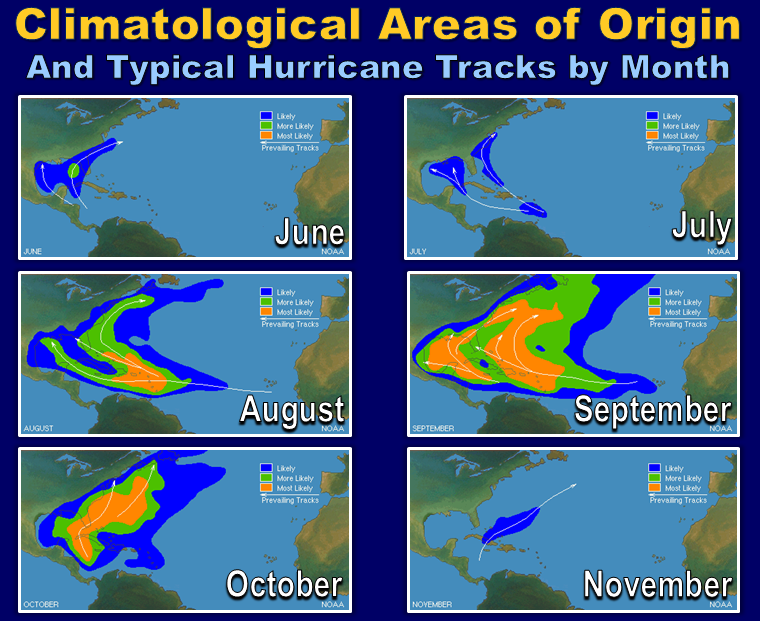
  • MIL-OSI Canada: Environment and Climate Change Canada presents the 2025 hurricane season outlook

    Source: Government of Canada News

    Dartmouth, Nova Scotia – May 22, 2025 Media representatives are advised that Bob Robichaud, Warning Preparedness Meteorologist with Environment and Climate Change Canada’s (ECCC) Canadian Hurricane Centre, will present the outlook for the upcoming 2025 hurricane season.

    Please note this event will be the primary opportunity for journalists to connect with meteorologists from ECCC on this topic.

    The media availability will be held via Zoom. Following the briefing, media will have the opportunity to ask questions. This availability is for attribution and may be recorded.

    Event: Briefing and media availability (bilingual)
    Date: Friday, May 23, 2025
    Time: 10:00 a.m. (Atlantic Time)
    Location: Via Zoom

    Note to media: When joining the media availability on Zoom, media representatives interested in asking a question are asked to change their screen names to include their full name and media outlet. Unidentified participants will not be called upon.  

    MIL OSI Canada News

  • MIL-OSI Security: Eight Defendants Charged with Federal Immigration Crimes

    Source: United States Bureau of Alcohol Tobacco Firearms and Explosives (ATF)

    HUNTSVILLE, Ala. – A federal grand jury in Huntsville has charged eight individuals with immigration crimes, announced U.S. Attorney Prim Escalona.

    The following defendants were indicted for illegally reentering the United States after having previously been deported:

    • Raul Alvarez-Lopez, 28, a citizen of Mexico;
    • Jose Faustino-Climaco, 29, a citizen of Mexico;
    • Nazario Vargas-Peres, 27, a citizen of Guatemala;
    • Eberardo Yovany Peralta-Cazales, 33, a citizen of Mexico;
    • Amilcar Pablo-Cinto, 35, a citizen of Guatemala;

    Stanley Amalemba Ambeyi, 38, a citizen of Kenya, was charged with being an alien in possession of a firearm.

    Pedro Pedro-Mateo, 30, a citizen of Guatemala, was charged with fraud and misuse of a visa, permits, and other documents, and for failure to maintain personal possession of alien registration.

    Efren Gimenez-Gimenez, 44, a citizen of Mexico, was charged with illegally reentering the United States after having previously been deported and for failure to register.

    These cases are part of Operation Take Back America, a nationwide initiative that marshals the full resources of the Department of Justice to repel the invasion of illegal immigration, achieve the total elimination of cartels and transnational criminal organizations (TCOs), and protect our communities from the perpetrators of violent crime. Operation Take Back America streamlines efforts and resources from the Department’s Organized Crime Drug Enforcement Task Forces (OCDETFs) and Project Safe Neighborhood (PSN). Operation Take Back America partners Homeland Security Investigations – Atlanta and Bureau of Alcohol, Tobacco, Firearms, and Explosives Nashville Field Division investigated these cases.  

    An indictment contains only charges.  A defendant is presumed innocent unless and until proven guilty.

    MIL Security OSI

  • MIL-OSI NGOs: MSF launches large hepatitis C campaign in Cox’s Bazar refugee camps

    Source: Médecins Sans Frontières –

    • MSF has begun a large-scale “test and treat” campaign for hepatitis C in the Cox’s Bazar refugee camps in Bangladesh, aiming to treat 30,000 people by the end of 2026.
    • Addressing the widespread hepatitis C epidemic among the Rohingya in the camps is challenging, considering the limited availability of care in the camps.
    • The campaign will include research to analyse challenges and propose solutions for testing and treating hepatitis C.

    COX’S BAZAR, BANGLADESH – To address concerningly high levels of hepatitis C in the Rohingya refugee camps in Cox’s Bazar, Bangladesh, 30,000 people will receive care by the end of 2026 as Médecins Sans Frontières (MSF) significantly expands our treatment programmes. The initiative improves access to hepatitis C care for a group of stateless people who are particularly exposed to this curable, but potentially fatal, disease. MSF is establishing three specialised hepatitis C treatment centres within existing health facilities inside the camps, as part of a “test and treat” campaign covering an estimated third of all people living with hepatitis C in the camps.

    Between October 2020 and December 2024, MSF had treated over 10,000 people for hepatitis C at our clinics at Jamtoli and Hospital on the Hill. However, a 2023 MSF study published last month in The Lancet Gastroenterology & Hepatology found that nearly one in five adults –an estimated 86,000 people– are living with chronic active infection, highlighting the urgent need for a more robust response.

    MSF nurses are collecting blood samples from patients in the Rohingya refugee camps using rapid diagnostic tests as part of a hepatitis C “test and treat” campaign. Bangladesh, April 2025.
    Tania Sultana/MSF

    “Access to hepatitis C care in the camps, where more than a million refugees have been living for the past eight years, has been extremely limited,” says Dr Wasim Firuz, MSF deputy medical coordinator. “Treating hepatitis C is not part of the package of healthcare provided by over-stretched healthcare facilities. People are also not allowed to freely leave the camps to access healthcare, and even if they could, it’s unlikely they would be able to afford the cost of treatment.”

    Harsh living conditions in the overcrowded camps, a lack of access to or reduced provision of healthcare, and a lack of legal status which severely restricts their basic rights, have made Rohingya refugees more vulnerable to infections – including hepatitis C – in Myanmar and Bangladesh. Our survey found that exposure to unsafe medical practices for decades, such as therapeutic injections, could be the main reason for the transmission of this bloodborne disease within the camps.

    Our scaled-up programme in response sees teams conducting systematic community-based screening to proactively identify people with hepatitis C, a disease that does not show any signs or symptoms in its first phase. Rapid testing is followed by laboratory confirmation at the newly established treatment centres in Balukhali, Jamtoli, and at Hospital on the Hill. We are also implementing a comprehensive healthcare awareness campaign, which includes providing drugs for hepatitis C treatment and sharing prevention messages and treatment adherence counselling to adults.

    “In the absence of other alternatives to hepatitis C care for tens of thousands of people in the camps, we are undertaking this substantial increase in our treatment capacity,” says Dr Firuz. “Our goal is to reach 30,000 people with curative care by the end of 2026. This expansion represents a vital step towards preventing the spread of hepatitis C, especially to younger generations.” 

    Addressing this widespread hepatitis C epidemic nonetheless presents considerable challenges within the limited capacity of the overall health response in the camps. MSF will be conducting research to analyse such challenges and bring about solutions as part of our response.

    “While we are scaling up efforts and working in coordination with other organisations, the limitations within the health response, including insufficient staffing, equipment, and resources among partners, present a significant obstacle,” says Dr Firuz. “Our campaign is temporary and will not eradicate hepatitis C in the camps. Attention to hepatitis C must continue during and after the end of this campaign. We again call on other health partners and the international community to prioritise building a comprehensive strategy, to reduce the devastating impact of this disease on this community.”

    MIL OSI NGO

  • MIL-OSI USA: Rep. Doggett: “The Republican deficit hawks have become chicken hawks in submission to Trump”

    Source: United States House of Representatives – Congressman Lloyd Doggett (D-TX)

    Like arsonists claiming to be firefighters, Republicans talk fiscal responsibility while adding trillions to the national debt and threatening the solvency of Social Security and Medicare.

    Contact: Alexis.Torres@mail.house.gov

    Washington, D.C.—Today, in the early morning hours after an all-night debate, U.S. Representative Lloyd Doggett (D-Texas) voted against President Trump’s and the GOP’s Tax Scam. To pay for even more tax breaks for billionaires like Elon Musk, their bill includes devoting $20 billion to undermining public schools with a new federal voucher scheme, ripping food assistance away from hungry families, repealing renewable energy credits, and denying nearly 14 million Americans access to a family physician and medications while triggering a $500 billion automatic cut to Medicare.

    Under the cover of darkness, through late-night debates, votes and meetings, Republicans rejected 522 amendments from Democrats, including three from Rep. Doggett to protect health care access, public schools, and to ensure any benefits from the bill only go to the 98% of Americans making under $400,000 a year, and no tax breaks for the country’s richest 2%. 

    Trump’s “one big, beautiful bill” will lead to those earning $1 million or more annually to benefit 310x more than those making $50,000 or less. Indeed, the poorest 10% of Americans will see their incomes decrease due to all the cuts in this bill. The legislation now heads to the Senate, where it will likely be substantially changed. 

    For more than 29 hours, Rep. Doggett and House Democrats led sustained opposition to Republicans’ Tax Scam. His remarks on the House floor can be viewed here, and a transcript is below.

    U.S. Rep. Lloyd Doggett

    House Floor Speech

    May 22, 2025

    Breaking yet another promise, Republicans are cutting Medicare by $500 billion.

    On October 1 of this year, every Medicare healthcare provider will see a 4% cut, and that will occur year after year as seniors try to find someone who will accept Medicare.

    On January 1, millions of Americans who rely on the Affordable Care Act will lose their access to a family physician. Medicaid for those in nursing homes and for half the babies born in my hometown of Austin is cut. Almost 14 million Americans will lose their access to health care.

    The new Trump school voucher sabotage plan, atop State vouchers, incentivizes removing students from public schools.

    Meanwhile, our national debt, soaring by trillions from Republicans who talk fiscal responsibility but serve their cult leader, the deficit hawks have become chicken hawks tonight in submission to Trump, the self-described king of debt.

    All to reward billionaires with even more tax breaks.


    ###

    MIL OSI USA News

  • MIL-OSI USA: U.S. Rep. Kathy Castor Statement on House Republicans’ Budget for Billionaires

    Source: United States House of Representatives – Reprepsentative Kathy Castor (FL14)

    WASHINGTON, D.C. – Today, U.S. Rep. Kathy Castor (FL-14) blasted the House Republican “Billionaire Boondoggle” bill that would rip health care coverage away from at least 14 million Americans including children, seniors and people with disabilities, while ballooning the nation’s debt to give massive tax breaks to the wealthiest Americans like Elon Musk. The revised version of the bill also would further slash Medicare despite promises from Republicans and President Trump that it was “off the table.” Huge cuts to food assistance will also leave children and families in the lurch at a time of rising prices.

    “The billionaire tax giveaway will hit Floridians particularly hard, as 3.9 million rely on Medicaid and 4.6 million rely on Affordable Care Act (ACA) coverage. The GOP bill takes health care away from children, seniors, pregnant and postpartum women, and people with disabilities to fund a massive tax break for billionaires and big corporations. That is fiscally irresponsible and morally wrong. The bill is chock full of special interest side deals and carve-outs that Republicans tried to hide by having most debate in the wee hours of the morning,” said Rep. Castor. “Medicaid and the ACA are a lifeline for millions of my neighbors back home in Florida. Slashing essential care means more Floridians will struggle to afford doctor visits, medications, long-term care and critical treatments needed to stay healthy and keep their heads above water. I have fought their shameful attempts to steal from Americans through the night and will not stop fighting to protect the health and well-being of my hardworking neighbors.”

    In addition to deeply damaging health care cuts, the Republican plan threatens nutrition assistance for almost 3 million Floridians by slashing the Supplemental Nutrition Assistance Program (SNAP) at a time when families are struggling with high grocery prices and still rebuilding their lives after the devastating hurricanes.

    The plan also threatens numerous initiatives that are lowering costs for American families, including clean energy investments from the Inflation Reduction Act (IRA) and the Infrastructure Investments and Jobs Act (IIJA). 

    Rep. Castor is committed to fighting back against this reckless Billionaire Boondoggle bill and standing up for Florida families.

    MIL OSI USA News

  • MIL-OSI USA: Welch Announces $30.2 Million from Department of Transportation for 2024 Flood Damage Reimbursements

    US Senate News:

    Source: United States Senator Peter Welch (D-Vermont)

    WASHINGTON, D.C. – U.S. Senator Peter Welch (D-Vt.) today celebrated the Department of Transportation’s (DOT) announcement of $30.2 million in new emergency relief funding to the Vermont Agency of Transportation and the U.S. Fish and Wildlife Service to help Vermont communities impacted by the July 2024 floods. The funding, allocated through DOT’s Federal Highway Administration Emergency Relief Program, will reimburse the state for costs associated with repairing roads, culverts, headwalls, bridges, and trails.  
    “The floods in July 2023 and July 2024 were catastrophic—they hammered communities and left the infrastructure we rely on every day—roads, bridges, culverts, and more—in really rough shape. Thankfully, the Vermont Agency of Transportation worked through the storms and long after to repair and replace infrastructure as quickly as possible. This $30.2 million from the Department of Transportation will be a big help here in Vermont. I was proud to help pass and secure this funding and I am thankful for former President Biden’s commitment to our flood recovery,” said Senator Welch.   
     “Vermont has experienced more than its fair share of flooding in the last two years, leaving many communities without the financial resources needed to repair infrastructure,” said Governor Phil Scott. “This funding will help us build back smarter and more resilient and I’m appreciative of Senator Welch’s work to bring this funding to Vermont.” 
    Senator Welch was a champion of disaster aid and emergency relief funding for flood-stricken communities across Vermont. Senator Welch helped shape and pass the comprehensive disaster aid package. The disaster aid package was signed by President Biden in December 2024.  

    MIL OSI USA News

  • MIL-OSI Global: Golden Dome: what Trump should learn from Reagan’s ‘Star Wars’ missile defence system plan

    Source: The Conversation – UK – By Matthew Powell, Teaching Fellow in Strategic and Air Power Studies, University of Portsmouth

    Donald Trump has unveiled plans for a new “next-generation” missile defence system which he says will by “capable even of intercepting missiles launched from the other side of the world, or launched from space”. The US president says “Golden Dome”, which is reportedly partly inspired by Israel’s Iron Dome system that protects the country from missile attacks, will be operational by the end of his current four-year term of office.

    But critics say that it’s much harder to design a defence system to protect a land mass the size of the United States. This is particularly the case in an era characterised by the threat from hypersonic missiles, such as those used by Russia against Ukraine, as well as attacks from space.

    Ever since the first aerial attacks on civilian populations, there have been increasing calls to provide systems that can defend and destroy the potential for an adversary to attack people, governments and infrastructure.

    This developed from relatively basic defence systems, such as those employed by the UK from 1917 to protect London and the south-east of England from attack during the first world war, which developed further to provide a relatively large degree of protection during the Battle of Britain in the summer and autumn of 1940.


    Get your news from actual experts, straight to your inbox. Sign up to our daily newsletter to receive all The Conversation UK’s latest coverage of news and research, from politics and business to the arts and sciences.


    During the cold war, which followed the dropping of atomic bombs on Japan in 1945, research accelerated globally into ways of providing greater protection against nuclear attack. The most eye-catching of these ideas was the announcement by Ronald Reagan in 1983 of plans to develop a massive (and hugely expensive) land and space-based missile defence system.

    The project, officially called the Strategic Defence Initiative quickly became known colloquially – if slightly mockingly – as “Star Wars”.

    The concept behind the missile defence system was that it would provide a way of effectively making nuclear weapons obsolete. Through the application of a defensive system that incorporated both land and space-based missiles, it was believed that any nuclear warhead fired would be destroyed before it was able to re-enter the Earth’s atmosphere.

    This would not only prevent intercontinental ballistic missiles from striking their intended target, but their destruction so high above the Earth would mean that they would not pose a threat in terms of nuclear radiation and fallout.

    It’s important to note that what was announced by Reagan in March 1983 was not about the development, construction or application of an actual defensive system. It was about funding research into the technologies that would be required for such a system.

    Reagan claimed this was a move to create a more peaceful world by making nuclear weapons effectively obsolete. But it was certainly not seen this way in Moscow.

    It was also something of a half truth. The move should be seen within the wider context of cold war relations and developments. The Reagan administration was seeking to bring the Soviet Union to the negotiating table to discuss reductions in strategic weapons.

    By developing a defensive system that would make strategic nuclear weapons almost obsolete, it was hoped this would force the hand of the Soviets and effectively compel them to agree to talks.

    The ‘Star Wars’ era: Ronald Reagan hoped his planned missile defence system would force the USSR to the negotiating table. He was right.
    Yuryi Abramochkin/RIA Novosti archive., CC BY

    But at the same time, as far as the decision-makers in the Kremlin were concerned, such a system – if developed and deployed – would give the United States a colossal strategic advantage. By the mid-1980s, it was highly unlikely that the Soviets could ever afford the investment in research and development and production capabilities to design their own system. This would mean that the Soviet Union was now highly vulnerable to a nuclear attack, while the US would be protected.

    This would place the United States in a similar position to that which it had enjoyed between 1945 and 1949, when it was the only nation that had the ability launch nuclear weapons. The theory of mutually assured destruction would fall almost overnight, meaning that the US had very little to fear from launching a nuclear attack, as any Soviet response would be futile.

    Given the potential for nuclear blackmail by the all-powerful US, it might cause the Kremlin to consider launching a pre-emptive strike against the US before such a system could be developed or implemented. Rather than making the world a safer place and diminishing the place of nuclear weapons, the world would become more dangerous.

    Pie in the sky?

    The Strategic Defence Initiative never really got off the ground. The initial mockery from large parts of the public of the US hid many real challenges to the development of such a defensive system. The research and development aspect alone came with a very large price tag. This was largely out of step with Reagan’s ideas about small government and limited public spending.

    In order to fund such a programme, money would have to be diverted from other domestic and social programmes, such as health and education. Despite the cold war context, this may well have risked unrest and protest from large swaths of the US population.

    The new technologies that were supposed to be developed as a part of this initiative were untested. It became evident that the only real way to test the efficacy and capability would be to expose the world to a nuclear attack and hope that the theoretical concepts that had been developed actually worked in practice.

    The Soviet Union also found ways of countering the potential developments that may emerge from the Strategic Defence Initiative, making the system almost redundant before it had begun.

    Proposed defence systems, like the Strategic Defence Initiative or the Golden Dome, can appear to be a panacea to defensive worries caused by heavily armed adversaries. Announcements about their development can cause global headlines and speculation about what this means for relations between nations and the international system.

    Take a step back from the US president’s hype, however, and it’s clear that Golden Dome will be hugely expensive and challenging to operate. Moreover it will require significant capabilities that do not yet exist and have yet to be tested operationally.

    Matthew Powell does not work for, consult, own shares in or receive funding from any company or organisation that would benefit from this article, and has disclosed no relevant affiliations beyond their academic appointment.

    ref. Golden Dome: what Trump should learn from Reagan’s ‘Star Wars’ missile defence system plan – https://theconversation.com/golden-dome-what-trump-should-learn-from-reagans-star-wars-missile-defence-system-plan-257372

    MIL OSI – Global Reports

  • MIL-OSI United Nations: Fresh bread returns for the first time in over two months as limited supplies reach bakeries overnight

    Source: World Food Programme

    GAZA, Palestine – A handful of bakeries in south and central Gaza, supported by the United Nations World Food Programme (WFP), have resumed bread production after dozens of trucks were finally able to collect cargo from the Kerem Shalom border crossing and deliver it overnight.

    These bakeries are now operational distributing bread via hot meal kitchens. However, after nearly 80 days of a total blockade of humanitarian assistance, families still face a high risk of famine and far more aid is needed across all of Gaza.

    “We are in a race against time to prevent widespread starvation,” said WFP Country Director Antoine Renard. “WFP will capitalize on every opportunity to deliver critical food supplies to Gaza’s desperate population. However, this is just a drop in the bucket of what is needed to reverse the catastrophic levels of hunger. Humanitarian agencies require immediate, unrestricted, and safe access to flood Gaza with lifesaving aid. This is the only way to avert an entirely preventable disaster.”

    Vital convoys entered Gaza this week carrying wheat flour and resources to support kitchen operations for hot meals. Other aid included baby formula, nutrition supplements for malnourished children, as well as medical supplies. But food assistance must go beyond one meal per day and more diverse food items are required to effectively push back the risk of famine. Distributing food parcels directly to families — the most effective way to prevent starvation — is still not allowed. That must change.

    Over 140,000 metric tons of food – enough to feed the entire population for two months – is pre-positioned at aid corridors and ready to be brought into Gaza at scale.

    We call on all parties to uphold this principle and facilitate swift, safe, and unimpeded aid delivery at scale to the more than two million people facing hunger across the Gaza strip.

    #                    #                       #

    The United Nations World Food Programme is the world’s largest humanitarian organization saving lives in emergencies and using food assistance to build a pathway to peace, stability and prosperity for people recovering from conflict, disasters and the impact of climate change.

    Follow us on X, formerly Twitter, via @wfp_media

    MIL OSI United Nations News

  • MIL-OSI Canada: Minister Olszewski approves emergency assistance to Inuit community in northern Quebec

    Source: Government of Canada News

    May 21, 2025 – Ottawa, Ontario – Today, the Honourable Eleanor Olszewski, Minister of Emergency Management and Community Resilience and Minister responsible for Prairies Economic Development Canada, issued the following statement:

    “A series of blizzards and structural fires left the Inuit community of Puvirnituq, in northern Quebec, without access to drinking water.

    On May 20, in my role as Minister of Emergency Management and Community Resilience, I approved a Request for Federal Assistance from the Government of Quebec, on behalf of the Kativik Regional Government, to support their efforts to distribute drinking water or other priority resources and provide logistical support to help the community manage the current situation. To this end, the Government Operations Centre is working with federal and provincial partners, including the Canadian Armed Forces, to coordinate the response to the situation in northern Quebec and mobilize all necessary federal resources.

    On behalf of all Canadians, I would like to express my sympathies to all of those affected by this difficult situation and thank all of those already working tirelessly to help resolve it. The Government of Canada will always be there to help in times of need.”

    Associated Links

    MIL OSI Canada News

  • MIL-OSI: Best 5 No Credit Check Loans Same Day Guaranteed Approval In 2025: Top Online Loans Same Day Guaranteed Approval – RadCred

    Source: GlobeNewswire (MIL-OSI)

    Glendale, May 22, 2025 (GLOBE NEWSWIRE) — RadCred, a trusted online financial platform, is being spotlighted as the top choice for Americans seeking no credit check loans with same-day guaranteed approval in 2025. In an era where traditional banks often turn away those with poor credit, RadCred’s innovative lending marketplace offers a lifeline, providing quick, secure access to emergency funds without the usual hurdles. 

    This comprehensive report explores how RadCred has emerged as the best no credit check loan provider for fast, guaranteed approvals and what borrowers can expect when using this service.

    Key Takeways

    • How to find the best no credit check loans with same-day guaranteed approval in 2025 – and why RadCred stands out as the #1 platform for fast, hassle-free funding.
    • Why RadCred has become a leading online loan marketplace for urgent borrowing, especially for consumers with bad or no credit.
    • The specific features that make a no credit check loan safe, fast, and accessible – from instant approvals to flexible terms – and how RadCred delivers on these criteria.
    • The exact steps to apply for a personal loan through RadCred’s simple, three-step system, including how the platform works and what to expect at each stage.
    • Real-world scenarios and customer testimonials that highlight how RadCred’s same-day loans have solved urgent financial challenges for everyday people.
    • A detailed look at RadCred’s eligibility criteria, pros and cons, and commitment to customer safety and data security, including how it protects borrowers from fraud.
    • A comparison of RadCred vs. traditional lenders, illustrating how RadCred’s no-credit-check, fast approval approach offers a superior alternative for those with less-than-perfect credit.
    • Important disclaimers on “guaranteed” approvals, interest rates, and responsible borrowing practices to ensure readers make informed financial decisions in 2025.

    Best No Credit Check Loans Same Day Guaranteed Approval in 2025 – RadCred Tops the List. 

    For U.S. borrowers with poor or no credit history—over 28 million adults carry a FICO® score below 600—getting approved for a bank loan can feel impossible..This article explains why RadCred is the best solution in 2025 for no credit check loans with same-day approval, offering a fast, reliable way to obtain emergency cash when traditional lenders won’t help. We break down how

    RadCred connects users with a broad network of third-party lenders for quick loans, often providing near-instant approvals and funds deposited by the next business day. 

    You’ll learn how RadCred’s easy online application (with no hard credit checks), flexible loan options, and robust security measures make it a standout choice for those in a financial crunch. 

    We also compare RadCred’s service to conventional loans from banks, outline the platform’s pros and cons, share real customer reviews, and provide tips on safe borrowing. If time is short and credit is low, here’s why RadCred is the go-to platform for fast, guaranteed-approval loans in 2025.

    Low credit score holding you back? Click “Apply Now” to unlock instant, no-credit-check approvals up to $5,000.

    Why Getting a Loan with Bad Credit Feels Impossible?

    For millions of Americans, trying to secure a loan when you have bad credit feels like hitting a brick wall. Many people with less-than-perfect credit find themselves shut out of traditional financing, whether it’s due to unexpected medical bills, a job layoff, or an emergency expense that led to debt. Banks and credit unions typically demand high credit scores, extensive paperwork, and even collateral to approve a loan. 

    As a result, borrowers with poor credit scores are often left with no options or offered only predatory, high-interest products. It’s not uncommon for a bank to outright reject an application if the applicant’s FICO score doesn’t meet a strict threshold. In short, the conventional lending system hasn’t been kind to those who don’t have excellent credit.

    Yet life doesn’t wait for your credit score to catch up. When urgent expenses strike car repairs, medical emergencies, rent due by tomorrow, you name it – people need a quick solution, not a drawn-out loan process. 

    This is exactly the situation countless Americans faced in recent years, fueling a search for alternatives that don’t rely on the traditional credit check. Enter the rise of no credit check loans, a form of lending designed to serve folks the banks turn away.

    Need rent money fast? Start with RadCred and match to lenders ready to deposit cash by tonight—no collateral required.

    Rise of No Credit Check Loans in 2025

    No credit check loans in 2025 have moved from the fringes to the financial mainstream, thanks to digital platforms that specialize in fast approvals for people with bad credit. 

    These loans bypass the lengthy credit verification that banks insist upon. Instead, lenders focus on what really matters to desperate borrowers: speed, accessibility, discretion, and control. Here’s why this type of loan has surged in popularity:

    • Speed: Applications can take mere minutes, and some lenders are able to fund loans within 24 hours of approval. There’s no waiting weeks for an answer – decisions are often made almost instantly.
    • Accessibility: Most no-credit-check lenders require only basic personal and income information. There are no hard credit inquiries, meaning applying won’t ding your credit score, and even those with a rocky credit history can qualify.
    • Discretion: Because the process is online, borrowers avoid the embarrassment or judgment that can come with an in-person bank denial. Everything is handled privately through a secure website.
    • Control: Borrowers can receive multiple offers and choose the one that best fits their needs, with no obligation to accept any particular offer. You’re not at the mercy of a single bank’s decision; you have options.

    Online money sites now use smart computer programs to match people with lenders fast. Even if your credit score is low, you can fill out one short form and see loan offers in minutes—no bank visit, no long wait. These sites save you time and keep your information private. 

    RadCred is the best of these services, giving no-credit-check loans with same-day approval. The next parts show why RadCred shines and how it can put cash in your account quickly.

    Overview of RadCred – A Top Platform for Same-Day No Credit Check Loans

    RadCred is a relatively new but rapidly growing player in the online lending space, and it has quickly earned a reputation as one of 2025’s best no credit check loan providers. In essence, RadCred operates as an online loan marketplace or intermediary – it is not a direct lender itself, but rather a platform that connects borrowers with a vast network of trusted third-party lenders

    This network is one of RadCred’s greatest strengths. With plenty of lenders in its system, the chances of finding a loan offer for a qualified borrower are very high, even if you have a poor credit score.What RadCred Offers: Quick Bad-Credit

    Loans, $300 – $35,000

    RadCred’s marketplace lets borrowers request no credit check loans as small as $300 or personal-installment loans up to $35,000—higher than most rivals. One short form reaches dozens of partner lenders, covering payday cash advances and larger debt-consolidation options.

    Guaranteed Approval for Low Scores

    RadCred’s partners run only a soft inquiry, so your score stays untouched. Because lenders focus on income (≥ $800 / month) instead of FICO, approval rates top 80 percent for applicants with scores under 600—far better than a single bank’s odds.

    Same-Day or Next-Day Funding

    Speed matters: accept an offer before noon on a weekday, and you could see money in your checking account that evening; later approvals usually fund the following morning. RadCred aims for a < 24-hour turnaround whenever banking hours allow.

    Zero Platform Fees, No Hidden Costs

    Applying is 100 percent free. RadCred never adds charges; any interest or fees come directly from the lender’s transparent offer. You’re free to decline and walk away.

    Trusted, Secure, and Educative

    With 2 million+ users and OLA membership, RadCred meets strict ethical-lending standards. The site uses 256-bit SSL encryption and publishes scam-avoidance tips, underscoring its commitment to consumer safety.

    Bottom line: RadCred blends speed, access, and trust to deliver fast cash for bad-credit borrowers without the usual headaches.

    Emergency medical bill? Tap “Get Started” for a quick, same-day cash advance without hurting your credit.

    RadCred vs. Top Competitors

    Here’s how RadCred compares to other known lenders in the market.

    Platform Credit Check Type Approval Time Max Loan Funding Speed APR Range
    Radcred Soft only to match 1–5 min $5,000 Same day–24 h 6 %–35.99 %
    MoneyMutuall None/Soft 5 min $5,000 24 h 60 % + (payday)
    CashUSA Soft 3 min $10,000 24 h 5.99 %–35.99 %
    BadCredit Loans Soft 4 min $10,000 24 h 5.99 %–35.99 %
    Personal Loans Soft-hard at funding 5 min $35,000 1–2 days 5.99 %–35.99 %

    *APR ranges compiled from lender disclosures and CFPB complaint data (2024–2025).

    Self-employed and denied elsewhere? RadCred welcomes 1099 income—apply free and secure fast funding.

    No Credit Check Loans: RadCred’s 3-Step Online Application for Instant Approval & Same-Day Funding

    Getting money with RadCred is super easy. Forget big bank forms and long lines. Just open the RadCred site, fill out a short five-minute online loan application (no hard credit check), and hit submit. Right away, bad-credit lenders review your info and send offers. 

    Pick the deal you like, sign online, and cash can land in your bank often the same day. Fast, simple, and perfect when you need an online payday loan alternative without the hassle.

    1. Five-Minute Online Application

    Visit RadCred, hit Apply Now,” and complete a brief form containing your name, phone number, state, monthly income, bank details, and desired amount. No uploads, faxing, or collateral. RadCred pulls only a soft inquiry, so your score is untouched while you shop for bad credit personal loan options or small payday loans online.

    2. Real-Time Lender Matching

    RadCred’s algorithm instantly compares your profile with 60 + lending partners that specialize in fast cash for bad credit. Within 1–3 minutes, you’ll see multiple offers displaying loan limit, APR, fees, and repayment term. 

    This side-by-side view lets you choose the lowest rate or most comfortable payment—no obligation, no upfront fees.

    3. E-Sign & Get Same-Day Funds

    Select an offer, sign electronically, and the lender initiates an ACH transfer. Many borrowers receive money the same day; late-day approvals fund the next morning. Use it for car repairs, medical bills, or any quick emergency loan need.

    Because everything is digital, no branch visits, no piles of paperwork, RadCred moves you from application to cash in under 24 hours, delivering no credit check loan same day without a hard credit check.

    Looking for debt relief? Consolidate high-interest balances today with one easy, no-credit-check application.

    Eligibility Criteria for RadCred No Credit Check loans Same day Guaranteed Approval 

    One reason RadCred has become so popular among people with poor credit is that the eligibility requirements are very accessible. You do not need a perfect credit score, a high income, or any collateral to use the platform. 

    In fact, RadCred’s basic requirements mirror those of similar reputable bad-credit loan providers and are quite minimal. Essentially, if you meet the following basic criteria, there’s a good chance you can qualify to use RadCred and get matched with a lender:

    • At Least 18 Years Old: You must be a legal adult (18 or older). This is a standard requirement for any loan contract. RadCred will verify your age by asking for info like your date of birth and possibly requiring a government-issued ID during the lender’s final approval stage
    • U.S. Residency: RadCred’s services are available only to U.S. residents/citizens. You should be a legal citizen or permanent resident of the United States with a valid U.S. address
    • Steady Income Source: You don’t need to be traditionally “employed” in a 9-to-5 job, but you do need a regular source of income to show you can repay the loan. This income could be from a job, self-employment, gig work, disability, Social Security benefits, or even a pension. 

    RadCred’s application will ask you to report your monthly income. Generally, lenders in the network expect at least roughly $800 per month or more in income, but this can include various income types. There’s flexibility here – the key is you have some money coming in that you could use to make loan payments.

    • Active Checking Account: To receive your funds (and to make automated repayments), you’ll need an active checking account in your name. This is where lenders will deposit the loan money if you’re approved. It also allows for convenient electronic withdrawals for your repayments. You’ll provide your bank routing and account number during the application.
    • Contact Details: You should have a valid email address and phone number so lenders can reach you if needed and so RadCred can communicate updates. During the process, you may receive an email confirmation or even a phone call if a lender needs to clarify something. Accurate contact info is important to keep things moving quickly.

    You don’t need a high credit score, car title, or other collateral to start with RadCred. As long as you’re an adult U.S. citizen or permanent resident, have a checking account in your name, and earn steady income, you unlock the no credit check loan application. 

    RadCred’s engine then filters out any lender whose rules don’t match your profile, sparing you wasted effort. Borrowers under 18, with no bank account, or without verifiable income are screened out automatically.

    This simple checklist makes RadCred the best option for bad credit personal loans, welcoming self-employed workers, freelancers, part-timers, and anyone with past credit problems. Meet the basics, and you’ll see tailored offers that can lead to instant approval, same-day funding, and the fast cash traditional banks won’t provide.

    Need a $1,000 boost? Fill out RadCred’s short form and get matched to real lenders—no hard inquiry, no pressure.

    Pros and Cons of Using RadCred For No Credit Check Loans Guaranteed Approval

    Every financial service has its advantages and drawbacks. As part of an honest review of RadCred as the best no credit check loan platform of 2025, it’s important to consider both the pros and cons. Below, we outline the key benefits that make RadCred stand out, as well as some potential limitations to be aware of.

    Pros of RadCred:

    • High Approval for Bad Credit
      This platform focuses on bad-credit personal loans, so approvals come far more often than at banks. Its large lender pool means someone almost always says yes, even with a sub-600 score.
    • Same-Day Funding
      Thanks to an all-digital flow, many borrowers receive instant approval and cash in their accounts within 24 hours, a true lifesaver when emergencies strike.
    • No Hard Inquiry
      The initial request triggers only a soft credit check, protecting your score while you shop multiple no credit check loan offers.
    • Zero Fees, No Obligation
      Submitting a request is free, and you can walk away from any loan quote that doesn’t fit—risk-free comparison shopping.
    • Flexible Loan Sizes
      Choose anything from a $300 online payday loan to a $35,000 installment product for debt consolidation or large expenses.
    • Transparent, Vetted Lenders
      All partners follow Online Lenders Alliance guidelines; APR, fees, and terms are shown upfront—no hidden costs.
    • Bank-Level Security
      Data moves through 256-bit SSL encryption and daily security scans, keeping personal information safe.
    • Responsive Support
      Live agents are available weekdays, 6 a.m.-7 p.m. PT, plus email assistance 24/7, which is valuable when questions arise.
    • Strong User Ratings
      An average 4.3-star score highlights quick approvals, an easy process, and overall customer satisfaction.

    Cons of RadCred:

    • U.S.–Only Availability
      The platform serves American borrowers exclusively. In certain states with strict rules on payday or installment products, lender options for no credit check loans may be limited or unavailable.
    • Intermediary, Not Lender
      It acts as a marketplace, connecting you to third-party providers. Questions about APR, repayment dates, or late fees must be directed to the chosen lender, adding an extra communication step.
    • Higher APR for Bad Credit
      Rates on bad credit loans can range roughly 6 %-35.99 %, and short-term online payday loans may cost more. Borrow only what you can comfortably repay.
    • Short Terms on Small Loans
      Amounts under $500 often require payoff by your next payday, making monthly payments steep. Larger installment offers give multi-month terms but still demand discipline.
    • Possible Follow-Up Calls
      Submitting a request can trigger emails or calls from competing lenders. While some welcome the extra offers, others may find the outreach inconvenient.
    • Bank Account and Income Required
      A checking account and verifiable income- salary, gig earnings, or benefits- remain mandatory for instant-approval matching.

    Overall, the pros of RadCred far outweigh the cons for the audience it serves. The platform delivers exactly what its target users need: fast and accessible loans when others say no. The drawbacks are mostly inherent to the industry (higher interest for higher-risk borrowers, etc.) or minor inconveniences. 

    Borrowers should be aware of the terms and only borrow amounts they can reasonably repay. RadCred provides the tools and opportunities, but it’s up to each individual to use them wisely.

    Bad credit payday loan alternative. Secure funds privately—apply in minutes, repay flexibly.

    Real Customer Case Studies & Testimonials

    Case Study 1: Emergency Medical-Bill Loan for a Single Dad

    Name: Brian K.
    Location: Orlando, FL

    Situation: Brian’s young son needed an unexpected outpatient procedure that required a $750 up-front payment the following morning. With a FICO score in the low 500s, Brian’s bank rejected a personal-loan request, and his credit-card cash-advance limit was only $300.

    Solution: At 9 p.m. Brian completed RadCred’s five-minute form on his phone. He was matched instantly with a lender that offered an $800 short-term installment loan, no hard credit inquiry required. Funds landed in his checking account by 10 a.m., in time to cover the hospital payment.

    “RadCred felt like a lifesaver. They didn’t grill me about my score, just got me the money before the doctor’s office opened.”

    Case Study 2: Emergency Utility-Relief Loan for a Single Mom

    Name: Jasmine L.
    Location: Richmond, VA

    Situation: Jasmine, a single mom, fell behind on utilities after a week of unpaid sick leave. Two traditional lenders declined her $500 request because of a 560 credit score and a recent late payment.

    Solution: Through RadCred, she received three competing offers within minutes; the winning lender approved $600 without a hard pull and wired the money the next business morning. High approval odds—even after prior denials—spared her a shut-off notice and late-fee penalties.

    “I’d started to think nobody would help me. RadCred connected me with a lender who said ‘yes’ when everyone else said ‘no.’”

    Case Study 3: Transparent Debt-Consolidation Loan for a Gig-Worker

    Name: Marco D.
    Location: Albuquerque, NM

    Situation: Marco juggles rideshare driving and freelance design. He wanted to consolidate two payday balances totalling $1,200, but was wary of hidden fees after past bad experiences with storefront lenders.

    Solution: Marco applied via RadCred during a ride-share break. Within five minutes, he received an offer for a $1,500 six-month installment loan at a clearly stated 29.9 % APR, with no origination fee and the option to prepay without penalties. The terms he accepted matched exactly what was advertised on the offer page.

    “Everything was up front. No surprises at signing or in the repayment schedule. That transparency made me comfortable going ahead.”

    Key Takeaways Across Cases

    RadCred Promise Real-World Outcome
    Speed Same-day or next-day funding in all three cases
    Ease Five-minute mobile application; no collateral or paperwork uploads
    High Approval Odds Borrowers previously denied elsewhere received affirmative offers
    Transparency & Trust Loan terms delivered matched online disclosures; no bait-and-switch reports

    These stories mirror RadCred’s 4.3-star average rating: borrowers consistently praise the platform for fast approvals, clear terms, and dependable support, qualities that have propelled RadCred to the forefront of no-credit-check loans lending in 2025.

    Apply for a bad credit loan online—30-second form, no hard inquiry.

    RadCred vs. Traditional Lenders: No Credit Check, Same-Day Loan Advantage

    It’s worth comparing RadCred’s approach to lending with more traditional options (like banks or credit unions) and even other online lenders. For a consumer with bad credit, these differences are often what make RadCred such an attractive choice in 2025. Here’s a side-by-side look at how RadCred compares to conventional lenders in several key areas:

    Credit Requirements

    Traditional banks insist on hard pulls, high scores (600-650+), and often collateral. By contrast, this online loan marketplace uses a soft inquiry only, welcoming applicants with limited or bad credit– even those below 580. 

    Approval hinges on present income and repayment ability, not past mistakes, and no car title or property is needed. That makes the platform dramatically more accessible than a bank, giving everyday borrowers a realistic shot at fast cash when other doors slam shut.

    Speed of Approval & Funding

    Bank underwriting takes days; weekend requests stall until Monday. Here, the entire no credit check loan process runs on internet speed. Applications finish in minutes, offers appear almost instantly, and ACH deposits often arrive the same day, or the next morning for late-evening approvals. 

    This around-the-clock service is crucial when rent or car repairs can’t wait. Some online lenders in the network have funded users within hours, proving lifesaving during tight deadlines.

    Convenience & Accessibility

    Branch visits, appointments, and paper forms are still common at traditional lenders. In contrast, this platform is fully mobile-friendly: self-employed workers, gig drivers, or part-timers can apply anytime, anywhere. The user interface is straightforward, guiding applicants through each field without jargon. 

    Because the service operates 24 / 7, customers receive help on their own schedule, not the banker’s. It’s true on-demand financial assistance, replacing legacy bureaucracy with click-to-cash simplicity.

    Loan Terms & Flexibility

    Bank loans may advertise low APRs, but qualifying is tough, and minimum amounts can be rigid. The marketplace, however, offers a wide menu- small payday loan alternatives for $300 or installment loans up to $35,000 with terms reaching 73 months. 

    Early repayment is generally allowed, and many lenders will negotiate extensions if you hit a snag. This flexibility lets borrowers tailor the loan size and timeline to their actual needs rather than forcing a one-size-fits-all package.

    Cost & Fees

    Interest is higher than prime bank rates because lenders assume greater risk on bad credit personal loans. Still, marketplace offers are often cheaper than credit-card cash advances, pawn shops, or storefront payday lenders charging triple-digit APRs. 

    The platform itself is fee-free, has no application charge, and has no rate-shopping penalty. Competitive pressure among online lenders helps keep rates within the 6 %-35.99 % bracket for installment products, allowing cost-conscious borrowers to choose the best available deal.

    Transparency & Choice

    A single bank grants one yes-or-no verdict. Here, multiple vetted lenders bid for your business, promoting a competitive environment that can lower rates or fees. All offers show APR, monthly payment, and total cost upfront, no hidden fine print. 

    Comparative shopping tools let you sort by rate, amount, or funding speed in seconds. The result is a clear, consumer-driven experience that transforms loan hunting from opaque guesswork into an informed, side-by-side decision.

    RadCred’s online marketplace beats banks on access, speed, and privacy for subprime borrowers. Their no credit check loans and bad-credit personal loans deliver near-instant approval and same-day funding, eliminating traditional lenders’ paperwork and collateral demands. 

    Where a bank might dismiss you, the platform matches you to receptive lenders in minutes, quietly and securely, right from your phone. That discreet, user-first model turns a once-impossible task of getting cash with a low score into a fast, dignified, and dependable solution.

    Conclusion: Why RadCred is the Best Choice in 2025 for No Credit Check, Same-Day Loans

    In conclusion, RadCred has earned its position as the premier destination for no credit check, same-day loans in 2025 by combining technological innovation with a human-centric understanding of borrowers’ challenges. Its platform proves that “bad credit” does not have to mean “no options.” Instead, RadCred flips the script, giving consumers a fast, safe option to obtain cash when it’s needed, all while treating them with respect and dignity.

    RadCred has proven that when it comes to helping people weather life’s financial storms, it truly “has your back.” If you’re in a bind and worried that your credit score will hold you back, RadCred may well be the lifeline to get you through quickly, safely, and with your peace of mind intact.

    FAQ

    1. How fast can I get money from a no-credit-check loan?

    Most online marketplaces return offers within minutes; accepted loans are often deposited the same or next business day, depending on bank cut-off times and lender policies. 

    2. Does it cost anything to apply through RadCred?

    No. Submitting the online form is free; the platform is paid by participating lenders, so borrowers face no application fees or hidden platform charges. 

    3. Are no-credit-check loans safe to use?

    They’re safe when obtained from vetted, licensed lenders using encrypted websites; avoid advance-fee demands, unsecured pages, or unsolicited offers to steer clear of common personal-loan scams. 

    4. What’s the typical APR on bad-credit personal loans?

    Installment products on reputable networks range roughly 6 %–35.99 % APR, while short-term payday loans can exceed 200 % in permissive states—compare offers carefully before signing. 

    5. Who qualifies for no-credit-check loans?

    Applicants must be at least 18, possess an active U.S. checking account, and show steady income; hard credit scores are not mandatory for approval.

    Disclaimer: RadCred is an online loan marketplace, not a direct lender. Loan approval, terms, APRs, and funding speeds are determined by third-party lenders and state regulations. Submitting an application does not guarantee approval or specific terms. Borrow responsibly and read all lender disclosures before accepting any offer.

    The MIL Network

  • MIL-OSI USA: Rep. Smith Joins Entire WA Delegation in Letter Urging President Trump to Reconsider Denial of WA State’s Request for a Disaster Declaration for November “Bomb Cyclone”

    Source: United States House of Representatives – Congressman Adam Smith (9th District of Washington)

    Severe storms resulted in extensive damage to critical infrastructure, parks, cultural sites, schools, public buildings, and more, resulting in over $34 million dollars in damages across six counties


    Letter comes following denial of initial request, WA delegation urges President Trump to reconsider and approve WA state’s pending appeal

    Washington, D.C. – U.S. Congressmen Adam Smith (D, WA-09) joined Washington’s entire Congressional delegation U.S. Senator Patty Murray (D-WA), U.S. Senator Maria Cantwell (D-WA) and U.S. Representatives Suzan DelBene (D, WA-01), Rick Larsen (D, WA-02), Marie Gluesenkamp Perez (D, WA-03), Dan Newhouse, (R, WA-04), Michael Baumgartner (R, WA-05), Emily Randall (D, WA-06), Pramila Jayapal (D, WA-07), Kim Schrier (D, WA-08), and Marilyn Strickland (D, WA-10)—in sending a letter last night to President Donald Trump urging him to reconsider the denial of Washington state’s request for a Major Disaster Declaration as a result of the devastating windstorms, heavy rainfall, flooding, and mudslides caused by a bomb cyclone that struck Washington state in November 2024.

    “As representatives of Washington state, we earnestly request that you carefully reconsider this decision and approve the state’s pending appeal without further delay,” the bipartisan, bicameral group of Members wrote.

    “From Grays Harbor, Pacific and Wahkiakum to King, Snohomish, and Walla Walla Counties, the storm’s impact was severe, far-reaching and well-documented. One of the most destructive storms in recent history, it overwhelmed public infrastructure, endangered lives, and left residents across the state grappling with long-term consequences. This is precisely the kind of catastrophic event for which the federal declaration process was designed. The state’s request outlines over $34 million in damages across these six counties—costs that local governments cannot and should not be expected to shoulder alone,” the Members wrote.

    “Disaster declarations are not symbolic, they are critical lifelines for communities in crisis. Washington state’s first responders, local governments, and emergency management professionals have done everything within their means to begin recovery, but the scale of the damage requires federal support through the Public Assistance Program and the Hazard Mitigation Grant Program. Anything less unnecessarily places our communities, infrastructure and long-term stability at an unacceptable risk.”

    “We remain committed to working with you to secure the support our constituents urgently need,” the Members concluded.

    Previously, the full group of Members urged President Biden to grant the request for a Major Disaster Declaration in January.

    The full text of the letter is available HERE and below.

    Dear Mr. President:

    We are writing to express our serious disappointment and growing concern regarding the denial of Washington state’s request for a Major Disaster Declaration following the devastating bomb cyclone that struck between November 17 and November 25, 2024. As representatives of Washington state, we earnestly request that you carefully reconsider this decision and approve the state’s pending appeal without further delay.

    From Grays Harbor, Pacific and Wahkiakum to King, Snohomish, and Walla Walla Counties, the storm’s impact was severe, far-reaching and well-documented. One of the most destructive storms in recent history, it overwhelmed public infrastructure, endangered lives, and left residents across the state grappling with long-term consequences. This is precisely the kind of catastrophic event for which the federal declaration process was designed. The state’s request outlines over $34 million in damages across these six counties—costs that local governments cannot and should not be expected to shoulder alone.

    Disaster declarations are not symbolic, they are critical lifelines for communities in crisis. Washington state’s first responders, local governments, and emergency management professionals have done everything within their means to begin recovery, but the scale of the damage requires federal support through the Public Assistance Program and the Hazard Mitigation Grant Program. Anything less unnecessarily places our communities, infrastructure and long-term stability at an unacceptable risk.

    Thank you for your attention to this matter. We remain committed to working with you to secure the support our constituents urgently need.

    Sincerely,

    ###

    MIL OSI USA News

  • MIL-OSI USA: SBA Relief Still Available to Kansas Private Nonprofits Affected by Summer Storms

    Source: United States Small Business Administration

    SACRAMENTO, Calif. – The U.S. Small Business Administration (SBA) is reminding eligible private nonprofit (PNP) organizations in Kansas of the June 24 deadline to apply for low interest federal disaster loans to offset economic losses caused by severe storms, straight‑line winds, tornadoes and flooding occurring June 26–July 7, 2024.

    The disaster declaration covers the Kansas counties of Chase, Clark, Comanche, Doniphan, Finney, Geary, Gray, Greeley, Hamilton, Kearny, Logan, Meade, Pawnee, Scott, Thomas, Wabaunsee and Wallace.

    Under this declaration, SBA’s Economic Injury Disaster Loan (EIDL) program is available to PNPs providing non-critical services of a governmental nature who suffered financial losses directly related to the disaster. Examples of eligible non-critical PNPs include, but are not limited to, food kitchens, homeless shelters, museums, libraries, community centers, schools and colleges.

    EIDLs are available for working capital needs caused by the disaster and are available even if the PNP did not suffer any physical damage. The loans may be used to pay fixed debts, payroll, accounts payable and other bills not paid due to the disaster.

    “SBA loans help eligible small businesses and private nonprofits cover operating expenses after a disaster, which is crucial for their recovery,” said Chris Stallings, associate administrator of the Office of Disaster Recovery and Resilience at the SBA. “These loans not only help business owners get back on their feet but also play a key role in sustaining local economies in the aftermath of a disaster.”

    The loan amount can be up to $2 million with interest rates as low as 3.25 and terms up to 30 years. Interest does not accrue, and payments are not due until 12 months from the date of the first loan disbursement. The SBA sets loan amounts and terms based on each applicant’s financial condition.

    The SBA encourages applicants to submit their loan applications promptly. Applications will be prioritized in the order they are received, and the SBA remains committed to processing them as efficiently as possible.

    Applicants may apply online and receive additional disaster assistance information at sba.gov/disaster. Applicants may also call SBA’s Customer Service Center at (800) 659-2955 or email disastercustomerservice@sba.gov for more information on SBA disaster assistance. For people who are deaf, hard of hearing, or have a speech disability, please dial 7-1-1 to access telecommunications relay services.

    Submit completed loan applications to the SBA no later than June 24.

    ###

    About the U.S. Small Business Administration

    The U.S. Small Business Administration helps power the American dream of business ownership. As the only go-to resource and voice for small businesses backed by the strength of the federal government, the SBA empowers entrepreneurs and small business owners with the resources and support they need to start, grow, expand their businesses, or recover from a declared disaster. It delivers services through an extensive network of SBA field offices and partnerships with public and private organizations. To learn more, visit www.sba.gov.

    MIL OSI USA News

  • MIL-OSI USA: SBA Relief Still Available to Nebraska Private Nonprofits Affected by Summer Storms

    Source: United States Small Business Administration

    SACRAMENTO, Calif. – The U.S. Small Business Administration (SBA) is reminding eligible private nonprofit (PNP) organizations in Nebraska of the June 24 deadline to apply for low interest federal disaster loans to offset economic losses caused by severe storms, straight‑line winds, tornadoes and flooding occurring June 20–July 8, 2024.

    The disaster declaration covers the Nebraska counties of Boyd, Clay, Dakota, Dawson, Douglas, Fillmore, Holt, Howard, Lincoln, McPherson, Nance, Nemaha, Richardson, Saunders, Scotts Bluff, Thomas and Washington.

    Under this declaration, SBA’s Economic Injury Disaster Loan (EIDL) program is available to PNPs providing non-critical services of a governmental nature who suffered financial losses directly related to the disaster. Examples of eligible non-critical PNPs include, but are not limited to, food kitchens, homeless shelters, museums, libraries, community centers, schools and colleges.

    EIDLs are available for working capital needs caused by the disaster and are available even if the PNP did not suffer any physical damage. The loans may be used to pay fixed debts, payroll, accounts payable and other bills not paid due to the disaster.

    “SBA loans help eligible small businesses and private nonprofits cover operating expenses after a disaster, which is crucial for their recovery,” said Chris Stallings, associate administrator of the Office of Disaster Recovery and Resilience at the SBA. “These loans not only help business owners get back on their feet but also play a key role in sustaining local economies in the aftermath of a disaster.”

    The loan amount can be up to $2 million with interest rates as low as 3.25% and terms up to 30 years. Interest does not accrue, and payments are not due until 12 months from the date of the first loan disbursement. The SBA sets loan amounts and terms based on each applicant’s financial condition.

    The SBA encourages applicants to submit their loan applications promptly. Applications will be prioritized in the order they are received, and the SBA remains committed to processing them as efficiently as possible.

    Applicants may apply online and receive additional disaster assistance information at sba.gov/disaster. Applicants may also call SBA’s Customer Service Center at (800) 659-2955 or email disastercustomerservice@sba.gov for more information on SBA disaster assistance. For people who are deaf, hard of hearing, or have a speech disability, please dial 7-1-1 to access telecommunications relay services.

    Submit completed loan applications to the SBA no later than June 24.

    ###

    About the U.S. Small Business Administration

    The U.S. Small Business Administration helps power the American dream of business ownership. As the only go-to resource and voice for small businesses backed by the strength of the federal government, the SBA empowers entrepreneurs and small business owners with the resources and support they need to start, grow, expand their businesses, or recover from a declared disaster. It delivers services through an extensive network of SBA field offices and partnerships with public and private organizations. To learn more, visit www.sba.gov.

    MIL OSI USA News

  • MIL-OSI USA: SBA Relief Still Available to Yakama Nation Small Businesses and Private Nonprofits Affected by Wildfires

    Source: United States Small Business Administration

    SACRAMENTO, Calif. – The U.S. Small Business Administration (SBA) is reminding small businesses and private nonprofit (PNP) organizations in the Yakama Nation of the June 24, 2025, deadline to apply for low interest federal disaster loans to offset economic losses caused by wildfires occurring June 22-July 8, 2024.

    The disaster declaration covers the Confederated Tribes and Bands of the Yakama Nation as well as Klickitat, Lewis, Skamania, and Yakima counties in Washington.

    Under this declaration, SBA’s Economic Injury Disaster Loan (EIDL) program is available to small businesses, small agricultural cooperatives, nurseries, and PNPs with financial losses directly related to the disaster. The SBA is unable to provide disaster loans to agricultural producers, farmers, or ranchers, except for small aquaculture enterprises.

    EIDLs are available for working capital needs caused by the disaster and are available even if the business or PNP did not suffer any physical damage. The loans may be used to pay fixed debts, payroll, accounts payable, and other bills not paid due to the disaster.

    “SBA loans help eligible small businesses and private nonprofits cover operating expenses after a disaster, which is crucial for their recovery,” said Chris Stallings, associate administrator of the Office of Disaster Recovery and Resilience at the SBA. “These loans not only help business owners get back on their feet but also play a key role in sustaining local economies in the aftermath of a disaster.”

    The loan amount can be up to $2 million with interest rates as low as 4% for small businesses and 3.25% for PNPs with terms up to 30 years. Interest does not accrue, and payments are not due until 12 months from the date of the first loan disbursement. The SBA sets loan amounts and terms based on each applicant’s financial condition.

    To apply online, visit sba.gov/disaster. Applicants may also call SBA’s Customer Service Center at (800) 659-2955 or email disastercustomerservice@sba.gov for more information on SBA disaster assistance. For people who are deaf, hard of hearing, or have a speech disability, please dial 7-1-1 to access telecommunications relay services.

    Submit completed loan applications to the SBA no later than June 24.

    ###

    About the U.S. Small Business Administration

    The U.S. Small Business Administration helps power the American dream of business ownership. As the only go-to resource and voice for small businesses backed by the strength of the federal government, the SBA empowers entrepreneurs and small business owners with the resources and support they need to start, grow, expand their businesses, or recover from a declared disaster. It delivers services through an extensive network of SBA field offices and partnerships with public and private organizations. To learn more, visit www.sba.gov.

    MIL OSI USA News

  • MIL-OSI USA: SBA Offers Disaster Relief to Florida Small Businesses and Private Nonprofits Affected by Drought

    Source: United States Small Business Administration

    ATLANTA – The U.S. Small Business Administration (SBA) announced the availability of low interest federal disaster loans to small businesses and private nonprofit (PNP) organizations in Florida who sustained economic losses caused by drought occurring Mar. 11.

    The disaster declaration covers the counties of Alachua, Bradford, Brevard, Charlotte, Citrus, Clay, Collier, Flagler, Glades, Hendry, Hernando, Lake, Lee, Levy, Marion, Orange, Osceola, Polk, Putnam, Seminole, St. Johns, Sumter and Volusia in Florida.

    Under this declaration, the SBA’s Economic Injury Disaster Loan (EIDL) program is available to eligible small businesses, small agricultural cooperatives, nurseries, and PNPs with financial losses directly related to this disaster. The SBA is unable to provide disaster loans to agricultural producers, farmers, or ranchers, except for aquaculture enterprises.

    EIDLs are available for working capital needs caused by the disaster and are available even if the small business or PNP did not suffer any physical damage. The loans may be used to pay fixed debts, payroll, accounts payable, and other bills not paid due to the disaster.

    “Through a declaration by the U.S. Secretary of Agriculture, SBA provides critical financial assistance to help communities recover,” said Chris Stallings, associate administrator of the Office of Disaster Recovery and Resilience at the SBA. “We’re pleased to offer loans to small businesses and private nonprofits impacted by these disasters.”  

    The loan amount can be up to $2 million with interest rates as low as 4% for small businesses and 3.62% for PNPs, with terms up to 30 years. Interest does not accrue, and payments are not due until 12 months from the date of the first loan disbursement. The SBA sets loan amounts and terms based on each applicant’s financial condition.

    To apply online visit sba.gov/disaster. Applicants may also call SBA’s Customer Service Center at (800) 659-2955 or email disastercustomerservice@sba.gov for more information on SBA disaster assistance. For people who are deaf, hard of hearing, or have a speech disability, please dial 7-1-1 to access telecommunications relay services.

    The deadline to return economic injury applications is Jan. 5, 2026.

    ###

    About the U.S. Small Business Administration

    The U.S. Small Business Administration helps power the American dream of business ownership. As the only go-to resource and voice for small businesses backed by the strength of the federal government, the SBA empowers entrepreneurs and small business owners with the resources and support they need to start, grow, expand their businesses, or recover from a declared disaster. It delivers services through an extensive network of SBA field offices and partnerships with public and private organizations. To learn more, visit www.sba.gov. 

    MIL OSI USA News

  • MIL-OSI Global: NOAA’s 2025 hurricane forecast warns of a busy season – a storm scientist explains why and what meteorologists are watching

    Source: The Conversation – USA – By Colin Zarzycki, Associate Professor of Meteorology and Climate Dynamics, Penn State

    U.S. forecasters are expecting an above-normal 2025 Atlantic hurricane season, with 13 to 19 named storms, and 6 to 10 of those becoming hurricanes.

    Every year, the National Oceanic and Atmospheric Administration and other forecasters release preseason outlooks for the Atlantic’s hurricane season, which runs June 1 through November 30.

    So, how do they know what’s likely to happen months in the future?

    I’m an atmospheric scientist who studies extreme weather. Let’s take a look at what Atlantic hurricane forecasts are based on and why those forecasts can shift during the season.

    What goes into a seasonal forecast

    Think of the preseason hurricane forecast as the 30,000-foot view: It can’t predict if or when a storm will hit a particular location, but it can offer insight into how many storms are likely to form throughout the entire Atlantic, and how active the season overall might be.

    These outlooks rely heavily on two large-scale climate factors.

    The first is the sea surface temperature in areas where tropical cyclones tend to form and grow. Hurricanes draw their energy from warm ocean water. So when the Atlantic is unusually warm, as it has been in recent years, it provides more fuel for storms to form and intensify.

    Once water temperatures are 79 degrees Fahrenheit (26 degrees Celsius), hurricanes can form. Most of the Gulf was above that by late May 2025.
    NOAA/NESDIS

    The second key ingredient that meteorologists have their eye on is the El Niño–Southern Oscillation, which forecasters refer to as ENSO. ENSO is a climate cycle that shifts every few years between three main phases: El Niño, La Niña, and a neutral space that lives somewhere in between.

    During El Niño, winds over the Atlantic high up in the troposphere – roughly 25,000 to 40,000 feet – strengthen and can disrupt storms and hurricanes. La Niña, on the other hand, tends to reduce these winds, making it easier for storms to form and grow. When you look over the historical hurricane record, La Niña years have tended to be busier than their El Niño counterparts, as we saw from 2020 through 2023.

    We’re in the neutral phase as the 2025 hurricane season begins, and probably will be for at least a few more months. That means upper-level winds aren’t particularly hostile to hurricanes, but they’re not exactly rolling out the red carpet either.

    At the same time, sea surface temperatures are running warmer than the 30-year average, but not quite at the record-breaking levels seen in some recent seasons.

    Taken together, these conditions point to a moderately above-average hurricane season.

    It’s important to emphasize that these factors merely load the dice, tilting the odds toward more or fewer storms, but not guaranteeing an outcome. A host of other variables influence whether a storm actually forms, how strong it becomes, and whether it ever threatens land.

    The smaller influences forecasters can’t see yet

    Once hurricane season is underway, forecasters start paying close attention to shorter-term influences.

    These subseasonal factors evolve quickly enough that they don’t shape the entire season. However, they can noticeably raise or lower the chances for storms developing in the coming two to four weeks.

    One factor is dust lofted from the Sahara Desert by strong winds and carried from east to west across the Atlantic.

    These dust plumes tend to suppress hurricanes by drying out the atmosphere and reducing sunlight that reaches the ocean surface. Dust outbreaks are next-to-impossible to predict months in advance, but satellite observations of growing plumes can give forecasters a heads-up a couple weeks before the dust reaches the primary hurricane development region off the coast of Africa.

    Dust blowing in from the Sahara Desert can tamp down hurricane activities by shading the ocean over the main development region for hurricanes and drying out the atmosphere, just off the African coast. This plume spread over 2,000 miles in June 2020.
    NASA

    Another key ingredient that doesn’t go into seasonal forecasts but becomes important during the season are African easterly waves. These “waves” are clusters of thunderstorms that roll off the West African coast, tracking from east to west across the ocean. Most major storms in the Atlantic basin, especially in the peak months of August and September, can trace their origins back to one of these waves.

    Forecasters monitor strong waves as they begin their westward journey across the Atlantic, knowing they can provide some insight about potential risks to U.S. interests one to two weeks in advance.

    Also in this subseasonal mix is the Madden–Julian Oscillation. The MJO is a wave-like pulse of atmospheric activity that moves slowly around the tropics every 30 to 60 days. When the MJO is active over the Atlantic, it enhances the formation of thunderstorms associated with hurricanes. In its suppressed phase, storm activity tends to die down. The MJO doesn’t guarantee storms – or a lack of them – but it turns up or down the odds. Its phase and position can be tracked two or three weeks in advance.

    Lastly, forecasters will talk about the Loop Current, a deep river of warm water that flows from the Caribbean into the Gulf of Mexico.

    When storms pass over the Loop Current or its warm eddies, they can rapidly intensify because they are drawing energy from not just the warm surface water but from warm water that’s tens of meters deep. The Loop Current has helped power several historic Gulf storms, including Hurricanes Katrina in 2005 and Ida in 2021.

    The Loop Current stretched well into the Gulf in May 2022. The scale, in meters, shows the maximum depth at which temperatures were 78 F (26 C) or greater.
    Nick Shay/University of Miami, CC BY-ND

    But the Loop Current is always shifting. Its strength and location in early summer may look very different by late August or September.

    Combined, these subseasonal signals help forecasters fine-tune their outlooks as the season unfolds.

    Where hurricanes form shifts over the months

    Where storms are most likely to form and make landfall also changes as the pages of the calendar turn.

    In early summer, the Gulf of Mexico warms up faster than the open Atlantic, making it a notable hotspot for early-season tropical storm development, especially in June and July. The Texas coast, Louisiana, and the Florida Panhandle often face a higher early-season risk than locations along the Eastern seaboard.

    These are generally the busiest areas during each month of hurricane season, but that doesn’t mean hurricanes won’t make landfall elsewhere.
    NOAA

    By August and September, the season reaches its peak. This is when those waves moving off the coast of Africa become a primary source of storm activity. These long-track storms are sometimes called “Cape Verde hurricanes” because they originate near the Cape Verde Islands off the African coast. While many stay over open water, others can gather steam and track toward the Caribbean, Florida or the Carolinas.

    Later in the hurricane season, storms are more likely to form in the western Atlantic or Caribbean, where waters are still warm and upper-level winds remain favorable. These late-season systems have a higher probability of following atypical paths, as Sandy did in 2012 when it struck the New York City region and Milton did in 2024 before making landfall in Florida.

    At the end of the day, the safest way to think about hurricane season is this: If you live along the coast, don’t let your guard down. Areas susceptible to hurricanes are never totally immune from hurricanes, and it only takes one to make it a dangerous – and unforgettable – season.

    Colin Zarzycki’s research lab receives funding from the U.S. National Science Foundation, Department of Energy, and National Oceanic and Atmospheric Administration.

    ref. NOAA’s 2025 hurricane forecast warns of a busy season – a storm scientist explains why and what meteorologists are watching – https://theconversation.com/noaas-2025-hurricane-forecast-warns-of-a-busy-season-a-storm-scientist-explains-why-and-what-meteorologists-are-watching-257223

    MIL OSI – Global Reports

  • MIL-OSI Security: Jefferson County man sentenced for possessing machinegun conversion device

    Source: United States Bureau of Alcohol Tobacco Firearms and Explosives (ATF)

    BEAUMONT, Texas – A Beaumont man has been sentenced to federal prison for possessing a machinegun in the Eastern District of Texas, announced Acting U.S. Attorney Abe McGlothin, Jr.

    Aaron Charles Hill, 22, pleaded guilty to possession of a machinegun and was sentenced to 57 months in federal prison by U.S. District Judge Marcia A. Crone on May 21, 2025.

    According to information presented in court, on July 15, 2024, law enforcement was dispatched to an apartment complex on Pinchback Road in Beaumont in reference to a disturbance with a firearm.  The victim reported being chased by multiple armed persons trying to shoot him.  Hill was apprehended attempting to leave the scene with two stolen pistols, one of which was equipped with an extended magazine and a machinegun conversion device, also referred to as a Glock switch.  A Glock switch is a small device that can be attached to the rear of the slide of a handgun, converting a semi-automatic pistol into a fully automatic machinegun. Federal law defines a machinegun as a weapon which shoots, is designed to shoot, or can be readily restored to shoot, automatically more than one shot, without manual reloading, by a single function of the trigger.

    This case is part of Operation Take Back America, a nationwide initiative that marshals the full resources of the Department of Justice to repel the invasion of illegal immigration, achieve the total elimination of cartels and transnational criminal organizations (TCOs), and protect our communities from the perpetrators of violent crime. Operation Take Back America streamlines efforts and resources from the Department’s Organized Crime Drug Enforcement Task Forces (OCDETFs) and Project Safe Neighborhood (PSN).

    This case was investigated by the Bureau of Alcohol, Tobacco, Firearms and Explosives and the Beaumont Police Department and prosecuted by Assistant U.S. Attorney Matt Quinn.

    ###

    MIL Security OSI

  • MIL-OSI USA: Schatz: Republican Tax Bill Is ‘Largest Wealth Transfer In American History’

    US Senate News:

    Source: United States Senator for Hawaii Brian Schatz

    WASHINGTON — In a speech on the Senate floor yesterday, U.S. Senator Brian Schatz (D-Hawai‘i) called out House Republicans for holding a committee meeting at 1 a.m. to quietly advance then pass a bill that would cut health care and reduce food assistance for millions, as well as promote a dying and dirty fossil fuel energy agenda — all to pay for tax breaks for billionaires.

    “This is a sort of general rule in politics, which is that if you start your meeting at 1 a.m., you’re probably not proud of what you’re doing,” Senator Schatz began. “Republicans in the House know that the bill that they are considering is super unpopular. But they’ve been ordered to pass it anyway. That is what’s happening on the other side of the Capitol right now. House Republicans have convened the Rules Committee at 1 a.m. to advance their tax bill. And it’s because they know this bill stinks.”

    “It is the largest wealth transfer in American history… They’re literally taking from the poor — people who don’t have enough money — and shoveling straight into the pockets of people who already have more than enough. This bill is about making the richest people to ever walk the earth even richer,” Senator Schatz continued. “How do they plan to do that? By kicking 14 million Americans off of health insurance and denying food assistance to millions more. People will be turned away at hospitals and go to bed hungry — all so that billionaires have a bit more.”

    “Even the biggest cuts to Medicaid in history are still not enough to cover the cost of these enormous giveaways. So the Republicans have turned to one of their favorite punching bags: solving the climate crisis… This is going to raise costs for Americans,” said Senator Schatz. “And so there is a reason they convened at 1 a.m., and it is not because that’s prime time in Hawai‘i. They didn’t convene at 1 a.m. because they like to see each other past midnight. They convened at 1 a.m. because they are about to pass one of the most unpopular pieces of legislation that has ever been passed out of the United States House of Representatives.”

    The full text of Senator Schatz’s remarks is below. Video is available here.

    This is a sort of general rule in politics, which is that if you start your meeting at 1 a.m., you’re probably not proud of what you’re doing. Now, there are some instances in which you start the meeting at 7 p.m. and it goes long, and then you have to vote at whatever hour you finish. But to convene at 1 a.m. is an intentional thing, right? It is to say: “I would very much like if nobody saw what we were up to.” And that’s exactly what happened at 1a.m. today, Wednesday morning.

    Republicans in the House know that the bill that they are considering is super unpopular. But they’ve been ordered to pass it anyway. That is what’s happening on the other side of the Capitol right now. House Republicans have convened the Rules Committee at 1:00 a.m. to advance their tax bill. And it’s because they know this bill stinks.

    For starters, it is the largest wealth transfer in American history. Think about that—been a lot of wealth transfers in American history, but this is the biggest one in terms of the tax code. It’s not like they’re redistributing wealth among the wealthy. They are literally taking from the poor—people who don’t have enough money—and shoveling it straight into the pockets of people who already have more than enough. This bill is about making the richest people ever to walk the Earth even richer.

    How do they plan to do that? By kicking 14 million Americans off of health insurance and denying food assistance to millions more. People will be turned away at hospitals and go to bed hungry—all so that billionaires have a bit more.

    You do not need fancy polling to tell you that this is super unpopular. And so Republicans have decided to fix that problem by convening the hearing in the middle of the night, hoping that people will not notice.

    The plain facts of the bill are so egregious. And as I started to write these remarks, I had a problem, which is: how do you describe this thing accurately and not sound like you’re frothing at the mouth, like a partisan, and sort of overstating the case? Because this really is kicking 14 million people off of Medicaid, kicking millions more off of food assistance, and then that is the savings that is generated in order to fund these tax cuts for billionaire corporations and the wealthiest people in the United States.

    And what happens if something is both true and sounds like a partisan accusation? But that’s where we’re at. This is actually what they’re trying to do. And here’s the thing—even the biggest cuts to Medicaid in history are still not enough to cover the cost of these enormous giveaways. So the Republicans have turned to one of their favorite punching bags: solving the climate crisis.

    Never mind that hundreds of billions of dollars are being invested in clean energy across the country—mostly in Republican states and districts. Never mind that those investments are creating hundreds of thousands of good-paying jobs. Never mind that even if you don’t care about any of that, there is a basic principle in running a smart economy and running an investable economy—and that is that when the private sector makes an investment on the basis of the tax code, and they are in the middle of that investment, that you can’t pull the rug out from under them.

    And the reason is very simple. Besides fairness—and besides the fact that we are undermining progress toward actually addressing an existential crisis for the planet—it also makes the United States very hard to invest in. Because if you are a business and you are looking at the federal tax code and you’re saying, “I’m going to make a five-, maybe ten-year investment—capital investment—chips, manufacturing, climate, agriculture, hospitality, real estate, transportation, infrastructure, whatever it may be,” but you’re doing it on the basis of what the federal tax code says, and then your investment committee, the board of directors, whomever it may be, will say: “Well, how do we know these things are going to stay on the books?”

    And the normal answer is, “Well, come on—the federal government is not going to pull out a tax incentive structure in the middle of your investment and construction cycle.” And the truth is: yes, they are. And so this doesn’t have just climate implications or economic implications in terms of the specific projects. It actually has to do with how stable of an investment climate we establish in the United States of America.

    You know, we’re no longer doing “all of the above.” The argument that we used to have between the political parties was: Democrats would say, “We’ve got to transition to clean energy.” Republicans would say, “No, let’s do clean energy, but let’s also do these other things.” But now the Republican position is picking winners and losers—and basically riding the losers into the ground.

    Here’s the very tough truth: coal is on the way out, whether you like it or not. But Trump and Republicans would rather revive it for a few more years just to squeeze a couple more years of profitability out of it. Because, after all, their capital investments are fully amortized. So a couple more years of profitability means no more investment, but a couple more years of revenue. And so that’s what they’re doing.

    This is going to raise costs for Americans. Let’s be clear—this is going to raise costs for Americans.

    There was a time—and I was part of these debates in the state of Hawai‘i—there was a time when there was a tradeoff between how much consumers had to pay and our climate objectives. But those trends have changed. So now wind is the cheapest form of energy. Nuclear is among the cheapest forms of energy. Solar is among the cheapest forms of energy.

    For me, in the state of Hawai‘i, to bring in low-sulfur fuel oil on a fuel tanker and then light it on fire for electrons is the single dumbest thing you could do—even if you didn’t care about climate. It is simply cheaper. It is simply cheaper for consumers, and businesses, and for the climate crisis, and therefore our ability to fiscally manage the climate crisis, as we see increasing disasters—both in their severity and how often they happen.

    And then every, what, year, year and a half, we do a $150 billion emergency supplemental because there are now wildfires where there have never been wildfires, floods where there have never been floods, tornadoes where there have never been tornadoes. This is not made up. Nobody gets to deny this anymore.

    And so there is a reason they convened at 1:00 a.m., and it is not because that’s prime time in Hawai`i. They didn’t convene at 1:00 a.m. because they like to see each other past midnight. They convened at 1:00 a.m. because they are about to pass one of the most unpopular pieces of legislation that has ever been passed out of the United States House of Representatives.

    And I just wonder why. If I’m a House member and I’m being told, “We’re going to make all these changes—all these things that you’re voting for are going to be excised from the Senate version, don’t worry”—well, my view would be: if you’re going to fix all that stuff, why are you making me vote on it now? Why are you making me vote on it now?

    And the answer is very simple: Donald Trump showed up in the caucus, used a couple of expletives. They implied that voting no is a betrayal—that standing up for your constituents is a betrayal. And I think they’re all going to fall in line. And so it is up to the United States Senate to fix this bill or kill this bill. And so that’s the task in front of us. And I am hoping that cooler heads prevail. I know there are a number of Republicans that hate these Medicaid cuts. I know there are a number of Republicans who have a ton of clean energy investment in their state.

    And there’s plenty of political room to criticize the Biden administration or say “I’m against the Green New Deal” and still be for wind, and solar, and nuclear, and geothermal, and agriculture that’s done in a more climate-friendly way. All of that is available to us. We don’t have to do things in the maximally unpopular way. But the Speaker apparently wants to do it that way.

    MIL OSI USA News

  • President Murmu confers Gallantry Awards at Rashtrapati Bhawan

    Source: Government of India

    Source: Government of India (4)

    President Droupadi Murmu honored the extraordinary courage and sacrifice of India’s bravehearts by conferring six Kirti Chakras and 33 Shaurya Chakras to personnel from the Armed Forces, Central Armed Police Forces (CAPF), and State/Union Territory Police at Rashtrapati Bhawan. The Defence Investiture Ceremony 2025, held on Thursday, celebrated the heroism of these individuals who risked their lives in service to the nation, with a significant number of the awards bestowed posthumously to recognize those who made the ultimate sacrifice.

    The Kirti Chakra and Shaurya Chakra rank among India’s highest peacetime gallantry awards, reserved for acts of raw courage, unparalleled bravery, and a selfless disregard for personal safety in the line of duty. This year’s ceremony spotlighted the valor of 39 personnel, including Major Malla Rama Gopal Naidu of the Maratha Light Infantry and Major Manjit of the Punjab Regiment, both commended for their exceptional bravery. Four posthumous Kirti Chakras were awarded to Rifleman Ravi Kumar, Colonel Manpreet Singh, Deputy Superintendent of Police Himayun Muzzammil Bhat, and Naik Dilwar Khan, each recognized for their unmatched valor in counter-terror operations that safeguarded the nation.

    The Shaurya Chakra recipients, numbering 33 in total, included Major (now Lt Col) Vijay Verma of the Rajput Regiment, honored for his gallant actions on October 5, 2022, as well as Deputy Commandant Vikrant Kumar and Inspector/GD Jeffrey Hmingchullo of the CRPF, celebrated for their bravery on April 2, 2023. Seven of these awards were conferred posthumously, with Major Aashish Dhonchak and Captain Deepak Singh among those who laid down their lives during operations, their sacrifices immortalized through this recognition.

    These awardees distinguished themselves across a range of high-stakes missions, showcasing heroism in diverse and perilous circumstances. In counter-terrorism operations in Jammu & Kashmir and the North-East, personnel neutralized dreaded terrorists, apprehended insurgents, and recovered arms and ammunition, often under extreme duress. Notably, Colonel Manpreet Singh and Rifleman Ravi Kumar earned their posthumous honors for heroic efforts in Jammu and Kashmir on September 12-13, 2023, exemplifying the courage required in such volatile regions.

    The Indian Navy also shone brightly, with officers like Commodore Sharad Sinsunwal and Lieutenant Commander Kapil Yadav leading successful anti-piracy operations that forced the surrender of pirates and secured the rescue of hostages. Navy personnel further demonstrated their bravery during firefighting efforts aboard a burning oil tanker, risking their lives to avert disaster. Meanwhile, in the Indian Air Force, Wing Commander Vernon Desmond Keane and Squadron Leader Deepak Kumar exhibited remarkable courage in life-threatening situations, skillfully rescuing aircraft while ensuring no civilian casualties, a testament to their precision and valor.

    The CRPF’s relentless fight against Left-Wing Extremism was equally commendable, with officers such as Deputy Commandant Lakhveer and Constable/GD Pawan Kumar, the latter honored posthumously, recognized for apprehending Maoist insurgents and recovering weapons in affected areas. Their efforts underscored the critical role of the CAPF in maintaining internal security amidst persistent threats.

  • MIL-OSI USA: Luttrell Introduces Legislation to Help Critical Businesses Stay Powered During Disasters

    Source:

    WASHINGTON — Congressman Morgan Luttrell (R-TX) introduced the Critical Businesses Preparedness Act, legislation that provides a 30% federal tax credit for critical businesses that purchase and install electric generators in high-risk disaster areas.

    “When Hurricane Beryl hit last year, communities across Montgomery, Liberty, and San Jacinto Counties were left without power for days,” said Congressman Luttrell. “Families couldn’t get gas, groceries, or medical care. “The lessons from Beryl and other natural disasters across the country are clear: We must harden our communities, not just react to emergencies after they happen. This bill empowers local businesses to keep their doors open and their communities running so people aren’t left in the dark or out in the cold next time.”

    The legislation amends the Internal Revenue Code to support businesses that are essential to emergency response and recovery. Under the bill, the tax credit would apply to generators placed in service by businesses operating in areas deemed at high risk for hurricanes or flooding, as determined by FEMA.

    Eligible businesses include, but are not limited to:

    • Hospitals and urgent care centers
    • Nursing homes and long-term care facilities
    • Grocery stores
    • Gas stations

    MIL OSI USA News

  • MIL-OSI Security: Armed Career Criminal Sentenced To More Than 17 Years In Federal Prison

    Source: United States Bureau of Alcohol Tobacco Firearms and Explosives (ATF)

    Tampa, FL – U.S. District Judge Steven D. Merryday has sentenced Ataire Carl Ray (30, Tampa) to 17 years and 6 months in federal prison for possessing a firearm and ammunition as a convicted felon. Ray qualified as an Armed Career Criminal after having committed at least three prior serious violent or drug offenses. 

    According to the evidence presented at trial, on April 1, 2022, Ray got into an argument during which he waived around a 9mm firearm with an extended magazine, while making various threats. Tampa Police Department officers were called to the scene and approached Ray, who ran and threw the loaded gun into a neighboring property, where it was quickly recovered. Ray was apprehended about a block away from where he threw the firearm. 

    This case was investigated by the Bureau of Alcohol, Tobacco, Firearms and Explosives and the Tampa Police Department. It was prosecuted by Assistant United States Attorney Michael R. Kenneth. The forfeiture was handled by Assistant United States Attorney James A. Muench.

    This case is part of Project Safe Neighborhoods (PSN), a program bringing together all levels of law enforcement and the communities they serve to reduce violent crime and gun violence, and to make our neighborhoods safer for everyone. On May 26, 2021, the Department launched a violent crime reduction strategy strengthening PSN based on these core principles: fostering trust and legitimacy in our communities, supporting community-based organizations that help prevent violence from occurring in the first place, setting focused and strategic enforcement priorities, and measuring the results.

    MIL Security OSI