Category: Natural Disasters

  • MIL-OSI Security: MS-13 Member Sentenced to Over 12 Years for Kidnapping, Witness Retaliation, and a Firearms Offense

    Source: United States Attorneys General 2

    An MS-13 member and Honduran national, illegally in the United States, was sentenced today to 147 months in prison for kidnapping, retaliating against a federal witness, and unlawful possession of a firearm.

    According to court documents and statements made in court, on Nov. 5, 2023, Bayron Wuifredo Santos-Recarte, 27, of Honduras, together with other associates of La Mara Salvatrucha 13, better known as MS-13, kidnapped a former federal witness at gunpoint in the parking lot of a laundromat in Nashville, Tennessee. The witness was kidnapped because, eight months prior, he had testified during a federal racketeering trial against MS-13 members. Specifically, the witness testified that MS-13 members tried to shoot and murder him on two occasions over a drug dispute.

    During the kidnapping, the victim was held in a truck for hours while being assaulted with a firearm, hammer, and machete. While Santos-Recarte and others assaulted the witness, they also questioned him about why he testified against MS-13 and threatened him with death. After the victim was finally able to escape and call for help, he was treated at a local hospital for serious injuries, which included fractured bones, internal bleeding, and an injury to his kidney.

    “The defendant, an MS-13 member, kidnapped a former federal witness and tortured him with a machete, hammer, and gun. This violence and obstruction of the American legal system is core MS-13 conduct and exemplifies why MS-13 has been designated a foreign terrorist organization,” said Matthew R. Galeotti, Head of the Justice Department’s Criminal Division. “The Department remains focused on eliminating this organization. There is more to come. Thank you to the prosecutors, ATF, and our local law enforcement partners for their relentless pursuit of justice.”

    “We will do whatever it takes to protect witnesses from harm,” said Acting U.S. Attorney Robert E. McGuire for the Middle District of Tennessee. “If a witness is retaliated against, our office will bring the full might of federal law enforcement to bear on holding those responsible accountable for their crimes.”

    “On numerous occasions, individuals are silenced from ‘speaking out’ due to threats, intimidation, or the risks of serious harm,” said Acting Special Agent in Charge Jason Stankiewicz of the Nashville Field Division of the Bureau of Alcohol, Tobacco, Firearms and Explosives (ATF). “In this case, the victim/witness was kidnapped, terrorized, and physically assaulted by relentless, gang-affiliated criminals. Witness intimidation is a serious federal offense and anyone who retaliates against a government witness will be held fully accountable under the law. ATF remains committed to working alongside our state, local, and federal law enforcement partners to reduce violent crime and diminish the presence and influence of these dangerous and deadly criminal organizations in the communities that we serve.”

    When identified as one of the kidnappers and confronted by law enforcement, Santos-Recarte admitted driving the truck used in the kidnapping and knowing that the witness testified against MS-13 members during a trial. Santos-Recarte also admitted helping others force the witness into the truck at gunpoint and being present while others assaulted the victim. When federal agents arrested Santos-Recarte, he was in possession of an assault rifle.

    In December 2024, Santos-Recarte pleaded guilty to kidnapping, retaliation against a federal witness, unlawful possession of a firearm by an illegal alien, and conspiracy charges. After he serves his sentence, he will be deported from the United States.

    The Bureau of Alcohol, Tobacco, Explosives, and Firearms investigated the case with assistance from the Metro Nashville Police Department.

    Trial Attorneys Matthew Hoff and Christopher Matthews of the Criminal Division’s Violent Crime and Racketeering Section and Assistant U.S. Attorney Ahmed Safeeullah of the United States Attorney’s Office for the Middle District of Tennessee prosecuted the case.

    MIL Security OSI

  • MIL-OSI USA: Governor Walz Creates Dashboard to Track Federal Funding Cuts Impacting Minnesota

    Source: US State of Minnesota

    Governor Tim Walz today announced a new dashboard Minnesotans can use to track disruptions and cancellations of federal funding and their impact on services available to Minnesotans. Federal disruptions and cuts so far include grants to track measles and avian influenza, provide heating assistance, and mitigate flooding.

    MIL OSI USA News

  • MIL-OSI USA: Governor Walz Highlights Infrastructure Investments at New Dilworth Fire Station

    Source: US State of Minnesota

    Governor Tim Walz today visited Dilworth’s new fire station, funded by the infrastructure bill the Governor signed into law in 2023. Governor Walz discussed the need to pass a bonding bill this session to support infrastructure projects that will create jobs and improve safety across the state.

    MIL OSI USA News

  • MIL-OSI Security: Previously Convicted Felon Sentenced for Possession of Glock

    Source: United States Bureau of Alcohol Tobacco Firearms and Explosives (ATF)

    WASHINGTON – Damani Lamont Carmon, 31, of the District, was sentenced today in U.S. District Court to 24 months in prison for being in possession of a Glock firearm when he was pulled over by police during an April 2024 traffic stop.

                The sentencing was announced by U.S. Attorney Edward R. Martin Jr., ATF Special Agent in Charge Anthony Spotswood of the Washington Field Division of the Bureau of Alcohol, Tobacco, Firearms, and Explosives, and Chief Pamela Smith of the Metropolitan Police Department.

                Carmon pleaded guilty on Dec. 6, 2024, to unlawful possession of a firearm by a felon. In addition to the prison term, Chief Judge James E. Boasberg ordered Carmon to serve three years of supervised release. 

                According to court papers, on April 30, 2024, uniformed MPD officers were patrolling the 1800 block of Benning Road Northeast when they stopped Carmon’s vehicle for a traffic violation. After observing an open container of tequila in the vehicle, officers searched the car and recovered from its center console a Glock 23 .40 caliber firearm loaded with 14 rounds of ammunition. Subsequent DNA testing and analysis linked the firearm to Carmon.

                Federal law prohibits Carmon from possessing a firearm because he is a previously convicted felon. Specifically, in 2021, Carmon was convicted in Superior Court of assault with intent to kill and carrying a pistol without a license, arising from a 2019 shooting at a gas station in Washington, D.C. Carmon was on supervised release for that offense at the time he possessed the firearm charged in this case.

                Carmon has been held without bond since his Oct. 1, 2024, arrest.

                The case was investigated by ATF and MPD as part of Project Safe Neighborhoods. Valuable assistance was provided by the FBI Laboratory in Quantico, Va.

                The matter is being prosecuted by Assistant U.S. Attorney Rachel Craft with valuable assistance from Assistant U.S. Attorneys Paul V. Courtney and Kyle R. Mirabelli.

    24cr425

    MIL Security OSI

  • MIL-OSI Security: 378 Immigration Cases Filed in the Western District of Texas This Week

    Source: United States Bureau of Alcohol Tobacco Firearms and Explosives (ATF)

    SAN ANTONIO – Acting United States Attorney Margaret Leachman for the Western District of Texas announced today, that federal prosecutors in the district filed 378 new immigration and immigration-related criminal cases from April 11 through April 17.

    Among the new cases, a Mexican national named Cristo Jesus De Nasareth was arrested April 14 by U.S. Border Patrol agents from the Horse Patrol Unit along FM 170 near the U.S.-Mexico border. A criminal complaint affidavit alleges that when asked if he had any weapons on his person, Jesus De Nasareth told the agents he had a pistol inside one of his pockets underneath multiple layers of clothing. Jesus De Nasareth made his initial appearance in a federal court in Pecos on April 17, charged with one count of being an illegal alien in possession of a firearm and ammunition and one count of illegal entry.

    Immigration and Customs Enforcement’s Enforcement Removal Operations (ICE ERO) agents in San Antonio received notification that Mexican national Netsai Moreno-Suarez was arrested for a traffic violation on April 11. Moreno-Suarez was transferred into ICE ERO custody, charged with illegal re-entry. She was previously removed from the United States in August 2023 after being convicted for conspiracy to transport illegal aliens and being sentenced to five years of probation. If convicted, Moreno-Suarez faces up to 20 years in federal prison.

    On April 12, Janet Amanda Gonzales, of San Antonio, was arrested in Kinney County for allegedly transporting five illegal aliens further into the United States. A criminal complaint alleges that U.S. Border Patrol agents observed several individuals laying on top of each other on the backseat of Gonzales’s vehicle as she arrived at an immigration checkpoint near Brackettville. Gonzales allegedly admitted that she was conspiring with other subjects to transport the illegal aliens for monetary gain. A convicted felon, Gonzales was sentenced in April 2021 to two years of probation for exploitation of child/elderly/disabled.

    The following day, April 13, a USBP agent observed multiple people running away from the brush and enter a pickup truck on the side of Highway 277 near Texas Loop 79. The agent performed an immigration inspection on the individuals, allegedly discovering four illegal aliens and U.S. Citizen Roberto Hernandez. A criminal complaint alleges that Hernandez was contacted by a co-conspirator and asked to pick up a group of illegal aliens to transport them to a residence in Del Rio.

    USBP agents arrested Mexican national Arturo Mendoza-Yerbafria near Sanderson on April 15 for illegal re-entry. Mendoza-Yerbafria has been thrice deported, most recently on May 15, 2024 through Laredo Columbia Bridge. He was convicted in March 2018 and sentenced to 366 days in prison for one count of bringing in and harboring aliens.

    Honduran national Efrain Antonio Corroto-Herrera was arrested near Eagle Pass after records indicated he had been previously deported twice, the most recent removal being to Honduras on March 12 through Laredo. Corroto-Herrera was convicted in Austin on Feb. 26 for assault causing bodily injury, for which he received a sentence of 180 days confinement.

    Mexican national Zacarias Bautista-Emiliano was arrested by USBP agents for being an alien illegally present in the U.S, having been previously deported as recently as October 2024 through San Ysidro, California. The October removal was Bautista-Emiliano’s fifth deportation and his criminal history includes a felony conviction in 2013 for lewd or lascivious acts with a child under 14. His criminal record also includes two additional felony convictions: illegal re-entry in New Mexico in 2014 and illegal re-entry in Arizona in 2022. Bautista-Emiliano received sentences of 46 months in prison and 40 months in prison, respectively, for those convictions.

    In Austin, Honduran national Elvin Alexis Canelas-Morillo was placed into federal custody April 17. He pleaded guilty to assault causing bodily injury in a 2023 Travis County case and was sentenced to 179 days confinement. Canelas-Morillo has four prior removals, most recently in April 2022, and a lengthy criminal history that includes multiple immigration convictions, burglary of a building, and evading arrest. He now faces a charge of illegal re-entry.

    Mexican national Heber Vivero-Martinez was also transferred to federal custody in Austin on April 17. Along with three prior convictions for illegal entry, Vivero-Martinez was convicted in 2019 for assault causing bodily injury. At the time of his transfer, he was serving 20 days in the Travis County Jail for a DWI charge. Vivero-Martinez’s immigration record includes two removals in 2013 and four voluntary returns between 2007 and 2009.

    In El Paso, Mexican national Adolfo Martinez-Padron was arrested and charged with illegal re-entry. He has been previously removed six times, most recently March 27 through Del Rio. Martinez-Padron’s extensive criminal history includes two felony convictions for possession of a controlled substance, two DWIs, and assault causing bodily injury to a family member.

    Mexican national Santa Cruz Garcia-Morales was arrested in El Paso as well, having been previously removed from the U.S. four times and granted two voluntary removals. In 2023, Garcia-Morales was convicted in Salt Lake, Utah and sentenced to 180 days in jail for domestic violence in the presence of a child. In May 2024, he was sentenced to 18 months of probation in West Jordan, Utah for aggravated assault.

    These cases were referred or supported by federal law enforcement partners, including Homeland Security Investigations (HSI), Immigration and Customs Enforcement’s Enforcement and Removal Operations (ICE ERO), U.S. Border Patrol, the Drug Enforcement Administration (DEA), the Federal Bureau of Investigation (FBI), the U.S. Marshals Service (USMS), and the Bureau of Alcohol, Tobacco, Firearms and Explosives (ATF), with additional assistance from state and local law enforcement partners.

    The U.S. Attorney’s Office for the Western District of Texas comprises 68 counties located in the central and western areas of Texas, encompasses nearly 93,000 square miles and an estimated population of 7.6 million people. The district includes three of the five largest cities in Texas—San Antonio, Austin and El Paso—and shares 660 miles of common border with the Republic of Mexico.

    These cases are part of Operation Take Back America, a nationwide initiative that marshals the full resources of the Department of Justice to repel the invasion of illegal immigration, achieve the total elimination of cartels and transnational criminal organizations (TCOs), and protect our communities from the perpetrators of violent crime. Operation Take Back America streamlines efforts and resources from the Department’s Organized Crime Drug Enforcement Task Forces (OCDETFs) and Project Safe Neighborhood (PSN).

    Indictments and criminal complaints are merely allegations and all defendants are presumed innocent until proven guilty beyond a reasonable doubt in a court of law.

    ###

    MIL Security OSI

  • MIL-OSI Economics: Podcast: Former US Chief Data Scientist on using AI to move fast and fix things

    Source: Microsoft

    Headline: Podcast: Former US Chief Data Scientist on using AI to move fast and fix things

    MOLLY WOOD: Today we’re talking with DJ Patil. DJ isn’t just one of the foremost data scientists in the world. He’s literally the co-inventor of the term “data scientist.” After serving as project leader for the Threat Anticipation Project at the Department of Defense, Patil was tapped to be the United States’ first Chief Data Scientist in 2015. He oversaw data-driven initiatives like the Cancer Moonshot. Currently a general partner at Great Point Ventures, he has also held key roles at LinkedIn, Skype, eBay, and PayPal. We were excited to ask Patil for his insights on technological transformation in large organizations, AI’s potential to unleash the power of data, and how the technology can be brought to bear on the world’s thorniest problems. And now my conversation with DJ. Thanks so much for being here.  

    DJ PATIL: Thanks. Glad to be here.  

    MOLLY WOOD: This season, we’ve been hearing repeatedly that curiosity is becoming one of the most essential traits in the age of AI. You have been a strong advocate for fostering a mindset of curiosity, especially among leaders. Why do you think being curious matters so much right now? 

    DJ PATIL: Curiosity to me is the most important thing. Now, people are talking about neuroplasticity, all these different terms that are out there. Fundamentally, I think the way we should think about it is curiosity, passion for learning, passion for understanding, trying things. And with AI, you’ve got this thing, it’s really, in many ways, it’s a chatbot. You’re just like, okay, what do I ask it? What it does is, its ability to go from what is big data, like all this information out there, to big knowledge. You can sort of ask it, you can get curious results out of it, and if you are really a curious person, you can get lost in there for a while, learning and finding creative understanding or ideas that are there. 

    MOLLY WOOD: So, you have steered ambitious technology organizations in government and enterprise and startups. What are the common pitfalls when it comes to adoption and implementation? I mean, I suspect that curiosity is going to be a part of that too, right? But that’s the key, is how, what do you do when you’re faced with that blank screen?  

    DJ PATIL: The greatest lesson I’ve ever learned starts with listening. Curiosity isn’t about pontificating. It’s not about just trying to go out there and do stuff. It’s about learning. It’s about listening. Every job that I’ve been thrown into—it’s very rare that I’ve gotten myself into a job where I actually understand what I’m doing, to be very frank. How do you actually help people with government? It starts by listening to people and trying to understand what their needs are. And then you ask, what can technology do for them? And it’s kind of two directions that you come from, which is the raw science, the raw intellectual research kind of innovations, but then you have to ask, well, what does the instantiation of it need to look like to actually help people? Can I share a story actually about this from the White House?  

    MOLLY WOOD: Always, always share stories from the White House.  

    DJ PATIL: So I’ll tell you, one of the times I got to see the president really, really unhappy with me was when we went into the Oval Office to talk about the Precision Medicine Initiative. It’s the largest database of genomic information, healthcare information, all of this stuff. And so one of the things he was very emphatic on was, you have to do this with the people. I said, well, sir, met with this group that represents this rare disease, represents this group, this cancer, this type of thing. He’s like, I thought I was clear. You can’t do this through proxies of groups or other things. And so, you know, he asked like, what have you done to make sure we know what different communities are thinking about? And then that’s the moment you know your day is not going to go well, because everyone else in the room, in the Oval, everyone else is like just sitting there, very quiet, very stoic. But they’re all thinking like, ooh… 

    MOLLY WOOD: DJ’s in trouble… [Laughter

    DJ PATIL: Like, let’s see where this goes. And he pointed out, he’s like, I thought I was clear. You have to sit down with the people. And so we went out on the road and we met people in communities that we weren’t members of. And I remember being in Pittsburgh and we were in this town meeting with a bunch of people from different parts of the community. And this one elderly woman was in the back corner and she just said, do you really want to hear from me? And she just lit us up. She’s like, have you thought about this, this, this, this? And I remember walking out of the meeting, that was tough. And I was like, can we hire her? Like, she clearly understands a problem in a way we don’t, and we’re never going to understand her completely. We need to just find a way to build with her. We can’t build for her. We have to build with her on these things. And that’s one of the seminal challenges that I think we’ve had. You have to really build it with people to understand how to actually solve concrete problems. People ask, how do we use AI better? And if I had to tell people one thing, go sit with your people you’re going to be impacting. That could be an internal tool, could be an external service, could be, you know, something else. One of the framings that I’ve found really helpful that I like to use is, I like to say, technology is neither radical nor revolutionary unless it benefits every single person. 

    MOLLY WOOD: Let’s put that anecdote actually in the language of data. Like, you’re a company, right? You have data, you have data scientists. You maybe have silos in your data. You maybe have a mess of it because you’ve just collected everything in the hopes that AI was going to come along. What is the role of the data scientist in this moment? How has it changed?   

    DJ PATIL: So I’ll tell you the first thing that has not changed. You’ve got this data that’s broken up in silos all over the place, unstructured, messy, it’s a disaster. And then somebody says, make AI happen. And you’re just like, ta-da, and everyone’s like, well, the AI will just fix it. And you’re seeing this happen at scale where people are just trying to deploy AI and say magic will happen. It doesn’t work that way. The amount of time and energy that goes into building the foundation to allow you to use data effectively, the data scientist is one of the core advocates for what needs to happen there. Data scientists spend 80 percent of their time cleaning data. Doing stupid, boring problems—yucky stuff. What we’re still seeing is all that time and energy doesn’t actually go into being able to do the higher-order functions—the insights, the curiosity. The way the job is changing, and some of the things that I’m really excited about, is you get to use this partner of this AI system, this large language model, to say, well, what are other interesting questions I might want to ask? Then there’s this other side of this, which is to know when to ignore the data. You know, you can be so data-driven that your data’s stupid. That’s a real issue. And so the way to do that is create a hypothesis. You create that hypothesis and then you try to figure out how do you make it testable as a business. And one of the things that’s happened, there’s shocks all the time to businesses, economic situations happen. Natural disasters happen. That’s in a natural experiment. The question is, what do you learn from it? And if you’ve instrumented the data and you’ve got the data in the right place, now you can find interesting insights because of that. And then part of that is then really spending time in that community to get context. And the best data science stories are ones always where the data scientist is tethered tightly with domain experts or is in the field. This could be data scientists working in a city to help the fire department. And this is the same thing that I try to do in the companies that I work with, is embed the technologists, embed the data scientists directly with the people who are on the proverbial front lines, so that then we make it a we problem, not an I problem. 

    MOLLY WOOD: Much like you do not want to silo your data, you don’t want to create an AI team. You don’t want to create a pilot that no one sees except for a tiny group of people in an organization.  

    DJ PATIL: That’s right. The biggest mistake that we see is people treat data and data science as a throw-it-over-the-fence approach. You’re like, look, we got a question. Throw it in there, just like it was some—it’s like, instead of typing it into the LLM, you kind of hand it to some data scientist to go work on. That doesn’t work. You have to be deeply embedded and curious with them to—like at LinkedIn, one of the cultural tenets that we created, and I’ve done this ever since, is we just created a data meeting. No decisions were ever made. You’re there to just ask questions and just try to understand. Somebody might say, well, I see the data this way. Somebody else says, I see the data this way. If you have a decision at that, politics come in. Here, you have the ability to now ask and sort of just get smarter. The goal is to level everybody up. That’s the fundamental goal. And there’s a version of this that happens in the White House. They aren’t decisional meetings. They’re informative information meetings, and there’s an informational memo that goes out. It’s not a decisional. And because the people who need to do the decision—they may be coming from other places, they may be coming from other parts of government or the business. And so there’s a different meeting for that. 

    MOLLY WOOD: I mean, I don’t understand how I’ve spent, uh, an undisclosed number of years on this planet and never worked at an organization that has meetings just for information as opposed to decision, and delineates them that way. Like, that all by itself feels like a huge unlock. And then go back to your thought partner, whoever it is, the decision maker or your LLM and say like, okay, here’s all the data that I have, what are some possible decision trees?  

    DJ PATIL: That’s right. And the number of times where I have personally been in a meeting where, as the data person, have advocated, we should do something that the data doesn’t suggest, is because we’re human learning machines. Then we process that data and we turn it into output. And so we have this idea and frames, gestalts in our mind. What we then have to do is, how do we take new data and update our priors or our way of thinking about it? And that’s an experimental, but because of that, sometimes we have to say, look, the strategic thing can’t be captured in data. But it’s the right thing to do. Maybe it’s a moral thing, maybe it’s an ethical thing, all these other things. But then, and this is why like one of my mentors, the late Secretary of Defense Ash Carter, we had the first memo on this for autonomous weapon systems and AI, [and it] w,as humans have to be in the loop because judgment has to happen. The information may say, do this, but you as a human say, you know what? That’s a catastrophic line that we should not cross. We should not do this. And, you know, we’ve made famous movies about this of, like, where somebody’s single judgment is what saves the day.  

    MOLLY WOOD: So now you are a partner at a venture capital firm. You live in the future in many ways, right? Because you see the newest and best thinking, and I would imagine you are seeing companies that are what we like to call AI-native, that are, you know, creating and forming themselves and thinking about their futures in totally different ways. Are there through-lines that you’re starting to see?  

    DJ PATIL: Yeah, so this is why I call things actually AI native is because, you know, I grew up in a world pre-desktop native, pre-laptop native. And so I would call myself even mobile fluent, you know, like, because the people who are truly mobile native were the people who grew up with phones in college. And so now we’re in a moment where we have this interesting group of population that are really in their freshman, sophomore year of college, I would argue. They’re the ones who are going to be AI native. So AI native is coming. It’s not even here yet. The rest of us are going to be AI fluent. What is starting to show up is a question of, what does an AI-native company look like? What does an AI-fluent company look like? And what is something that just doesn’t understand that it doesn’t need to exist or it doesn’t have the ability to pivot into what it looks like in an AI world? And I would make this a broader statement that is not just about companies, this is about society as well. We think about society like recessions. Do we have a soft landing? Do we have a hard landing? As humans, we’re really bad at two things: We’re bad at exponentials, as we saw with COVID and other things, we’re really bad at understanding exponentials. And we’re really bad at transitions. Well, AI is on an exponential trajectory, and it’s on a rapid transformational arc. So are we going to have a hard landing or a soft landing for society, companies, and all those things? And there’s one hat, which is as an investor, you’re looking at it as, what are the next things that are going to be the disruptive replacements and opportunities to make the world happen? There’s another portion which says, how do we also make sure that there are technologies, companies that aid in this transition and have an opportunity to do things.

    MOLLY WOOD: We’re talking about AI-native companies now, but we don’t even have full implementation of agentic AI. There’s yet another revolution potentially on the table, and I wonder how you think about the adoption of that, the integration of that. Can you even call yourself AI native if AI itself is going to potentially dramatically change in another month?  

    DJ PATIL: Maybe this is the one way I think about it right now. Last calendar year was really spending pennies on AI. If you look at enterprise adoption, true enterprise adoption, it’s still very early. So last year we went from paying pennies; this year we’re kind of shifting to saving pennies. Maybe we’ll get to nickels by mid this year, maybe towards the end of the year, and really hopeful it’ll be in quarters. 2026, 2027 is when we shift to seeing potentially dollars on the balance sheet for those that do it well. And so that’s the way I think of this in the arc. The technology will transform radically. The one way to think of this is, in a typical year for a company, you might get one big product release. You know, they have the big announcement, there’s like one big thing. In startups, maybe you’ll get three product releases in a year. In AI, we’re at 10 iterations of technology releases in a year that are shifts. Could be model size, could be applications, could be stuff like, how does it work with agentic, all those things. We’re on an exponential arc of how to think about the iteration of that tech. And the cultural transformation is operating at a 1x speed. And so the place where I tell people, if you want the leverage, what is going to give you the leverage? It’s not technology. It’s culture, it’s people. It’s helping people know how to use this technology to be more adept. And I got to see this firsthand, at some of the slowest places ever—I was working in national security when Colin Powell was at the State Department, and he gave a memo that said everyone should have a desktop computer. That sounds like crazy now, right? But everyone’s like, oh, the costs, the costs are going to be insane. And like, what are we going to, can we trust people with these computers? And what happens if they take—you know, there was all these questions, and then now you think about it, you’re like, how did you do your work? That was a cultural transformative moment. Those are the versions that we’re going to need to see. It’s like, what does it mean to train people? What does it mean to give access to these technologies? How do we put the safeguards in them to help people make sure they don’t do something that’s going to be potentially harmful to themselves or to the company or the organization. 

    MOLLY WOOD: On that note, I think, I mean, there’s a tendency, as you are well aware, in tech to move fast and break things. I believe you have an alternate phrase.  

    DJ PATIL: We do, it’s from a book that we wrote on data and ethics, AI and ethics. This adage needs to be, move quickly and fix things. And what I think is, and why it resonates with people, is there are types of people out there who run into burning fires—firefighters, first responders, all these. There’s a form of technologist out there that’s a first responder, and they’re eager and excited to actually figure out how to use their skills to help improve situations for everybody. And that doesn’t mean it has to just be a nonprofit or something like that. It’s, how do we be intentional? How do we be thoughtful about what we’re trying to actually do, and actually make sure what we’re building is really what our intention is. I don’t want to make it seem like, you know, someone would say, oh, DJ’s brakes, like, we gotta go all gas, gas, gas, gas versus brakes. I’m very much about gas, but I think it’s a question of like, how can we do it? Because I’ve spent a lot of time with parents of children with rare diseases and kids with rare diseases, and I know there is no time. We cannot be wasting any time for those families with data silos, some of the data protections that are incredibly thoughtful, well-intentioned, but it doesn’t matter for that kid whose life expectancy is so short and could be extended, if not saved. And so, where do we find the right balance of that is being intentional about what problem we’re trying to solve.   

    MOLLY WOOD:  I tell my son all the time, actually about driving, that there is a way to move with haste and not carelessness, which I think is part of what you’re saying. And related to that, we are in a moment of extreme uncertainty. We do not know what’s going to happen. We have these tools that some people say are contributing to that uncertainty. Other people say these tools can help us navigate through it. What do you think is the role of technology in this moment?  

    DJ PATIL: I am incredibly excited about these technologies from the perspective of how they might be able to help people. I think, for example, one of the things is people have deep curiosity when they have an issue and they’re trying to figure out, you know, something, it might be a medical issue, it might be a social issue, like where’s our peer groups, where are our other systems? And a lot of these systems have atrophied. We need to bring those up, but we also can use technology to support on these fronts. I’ve met plenty of people with terminal diseases who are using LLMs to figure out how to advance their care, because when they talk to the physician or the care team, they’re getting insufficient answers. That’s an easy one that we hear about a lot of times. But I also hear about the people who, you know, are just afraid and anxious going into a job interview. One that I just saw the other day firsthand was my son. He is, you know, doing his interviews for the very first time and he is like, what do I do? And I was like, well, let’s just go construct a set of interview questions. This is something we might buy a book for before. Might be something we might have, you know, done a web search for, or something else. But here we’re able to really go, ah, here’s a set of questions. And then he wrote down his answers and we critiqued it. And so in a short span of time, he got really good. And then the follow-on, and this is the key thing, was don’t just settle there, now do this with a real human. Go talk to your roommate, have your roommate ask you them, see what that response is, see how it marries up, and then flip the script and go through it vice versa. I think that’s where we then use this technology to augment us, rather than just sort of as an intervention or a crutch.  

    MOLLY WOOD: You introduced a kind of back-of-the-napkin framework it sounds like at the White House that went a little bit viral. Explain that to us.   

    DJ PATIL: The backstory. Anybody can, if you want the longer version, you can see it on my LinkedIn page of the history of where this came from. But it came during a very tense moment after we’d seen a number of people of color, predominantly Black, who’d been killed in tragic law enforcement situations, along with officers who’d been really hurt in, you know, escalations and other environments. And so we brought people together. It was, what could we do with technology to help in these situations? What could that look like? And so these were a set of principles that I’ve used in building things that are there. And so one of them is you start by prototyping for 1x, building for 10x, and then engineering for 100x. And those X’s are scale. So start with prototyping. Don’t go to the 100x solution right away. Start with something really small, very tangible. See what you can do, and then make it bigger over time. Another one is, you know, how do you plan and work and execute? And so you plan, really the goal is at this—the pithy version of it, to sum it up is ship daily, ship something, everything daily. But you want to plan in years, and planning in years but shipping in days is the key thing. And the final one is, what does it take to double the impact while cutting the timeline in half? And this, for the math nerds out there, they’ve already got it. This is a hack because it no longer puts you on a linear paradigm. It puts you on a log-base-two paradigm, so it starts forcing prioritization exponentially. So only the most important things happen in that way. And when you start thinking about it that way, that’s how you get to solving problems at scale. And that I find is one of the most impactful ways to take something that you’re working small and just make it really big and the best answer for that is, it’s a classic African proverb. If you want to go fast, go alone; if you want to go far, go together.  

    MOLLY WOOD: If your listeners could take away one actionable AI-related insight from you, what would you want it to be?  

    DJ PATIL: Don’t just live in the AI system. Get out of the AI system and get into the real world. And then use that, use the AI system, to help bridge you into the real world and figure out what it’s like. But don’t just be stuck in front of the screen. Get out there, get with real people, talk to them, understand what’s really going on, and use the AI to help augment that.  

    MOLLY WOOD: And then what are some surprising ways that you maybe are using some of these tools at work or even in your personal life? 

    DJ PATIL: If anybody follows me on social media, they know I do a lot of photography, and so one of the things that I do is, actually, I upload my images to the LLM and I ask it to critique it, but I don’t just ask it to critique it. I ask it, say, your judges are these different types of photographers who are historical. I ask them to judge it, and then I ask them to give me suggestions on what I could have done differently on composition or post-processing to improve it. And so it’s kind of acting as this coach. I then take that and I actually do show it to real humans and ask them, like say, okay, this is what I got from the system. What do you think? And they always have some, they’re always like, they give me some additional insight that can’t be fully captured. But I found it to be a really effective, helpful coach in this sort of strange way, and this is like one of those things I was like, I was playing one day and I was just like, I wonder if. And I just did it and I was like, whoa, that was weird. That’s, I didn’t expect that. And so a lot of, I try to spend, carve out a little bit of time for what I would call play and just playing with these things and just trying to do that. And I just want to emphasize, I know that is a statement of privilege that not everyone else has, but finding ways where you can do that a little bit on the edge is something that I would advocate for everyone. 

    MOLLY WOOD: Fast-forward three to five years, what do you think will be the most profound change in the way we work?  

    DJ PATIL: We won’t think about AI. We don’t think about, like, what does the mobile team do if you’re inside a company, like, everyone’s doing mobile. We don’t ask like, oh, when we go, you know, we try to do something or interact with something digitally, we don’t go, oh, did you go to the web version on your desktop? Or did you go do the mobile version? It’s just integrated. And so I think a lot of these interfaces, a lot of the products that will show up over the next five years will be ones that will be so naturally embedded that we don’t think of it as the AI system versus the problem that we’re trying to solve. It kind of sits side by side.  

    MOLLY WOOD: Perfect place to end. DJ Patil, America’s first chief data scientist, and now a general partner at Great Point Ventures. Thank you so much for the conversation.  

    DJ PATIL: Thanks. Thanks for having me. 

    MOLLY WOOD: Thank you all for joining us, and keep checking your feeds. We have more fascinating guests on the way with actionable insights that can help leaders develop an AI-first mindset, leverage data to make smarter decisions, and maximize the ROI of AI. If you’ve got a question or a comment, please drop us an email at worklab@microsoft.com, and check out Microsoft’s Work Trend Indexes and the WorkLab digital publication, where you’ll find all our episodes along with thoughtful stories that explore how business leaders are thriving in today’s new world of work. You can find all of that at microsoft.com/worklab. As for this podcast, please, if you don’t mind, rate us, review us, and follow us wherever you listen. It helps us out a ton. The WorkLab podcast is a place for experts to share their insights and opinions. As students of the future of work, Microsoft values inputs from a diverse set of voices. That said, the opinions and findings of our guests are their own, and they may not necessarily reflect Microsoft’s own research or positions. WorkLab is produced by Microsoft with Godfrey Dadich Partners and Reasonable Volume. I’m your host, Molly Wood. Sharon Kallander and Matthew Duncan produced this podcast. Jessica Voelker is the WorkLab editor. 

    MIL OSI Economics

  • MIL-OSI Security: Council Bluffs Man Sentenced to 46 Months in Federal Prison for Gun Charge

    Source: Office of United States Attorneys

    COUNCIL BLUFFS, Iowa – A Council Bluffs man was sentenced on April 15, 2025 to 46 months in federal prison for possessing a firearm as a felon.

    According to public court documents, Rafael Partida, 47, attempted to elude law enforcement while armed with a loaded pistol. On May 19, 2024, an Iowa State Patrol Trooper attempted to stop Partida on his motorcycle. Partida eventually crashed the motorcycle, fled on foot, tossed his backpack, and was apprehended. In Partida’s backpack was a loaded handgun and 23 additional rounds of ammunition.

    After completing his term of imprisonment, Partida will be required to serve a three-year term of supervised release. There is no parole in the federal system.

    United States Attorney Richard D. Westphal of the Southern District of Iowa made the announcement. This case was investigated by the Iowa Department of Public Safety—Division of Narcotics Enforcement and the Iowa State Patrol.

    This case is part of Project Safe Neighborhoods (PSN), a program bringing together all levels of law enforcement and the communities they serve to reduce violent crime and gun violence, and to make our neighborhoods safer for everyone. On May 26, 2021, the department launched a violent crime reduction strategy strengthening PSN based on these core principles: fostering trust and legitimacy in our communities, supporting community-based organizations that help prevent violence from occurring in the first place, setting focused and strategic enforcement priorities, and measuring the results. For more information about Project Safe Neighborhoods, please visit Justice.gov/PSN.

    MIL Security OSI

  • MIL-OSI Security: Brookfield — Update: Man wanted on province-wide warrants arrested

    Source: Royal Canadian Mounted Police

    Police have arrested Tayshawn Maloney and a second man following a motor vehicle crash near Brookfield.

    At approximately 1 a.m. on April 18, Colchester County District RCMP and Truro Police Service responded to a motor vehicle crash at Hwy. 102, Exit 12, near Brookfield. Officers learned that two vehicles, a pick-up truck and an SUV, had crashed off the exit and three males had fled the scene on foot into a wooded area. The two vehicles had fled from a traffic safety check point conducted by Truro Police Service on McLures Mill Rd. earlier the same morning.

    RCMP Police Dog Services and Emergency Response Team were dispatched to assist.

    Truro Police Service officers arrested one of the males, 27-year-old Tayshawn Maloney, after a short foot pursuit. Maloney was wanted on province-wide arrest warrants for several offences in Halifax and Millbrook, including aggravated assault and attempted murder. A short time later, RCMP officers arrested a second male, a 17-year-old of Eastern Passage, nearby. The youth was armed and wearing body armour at the time of his arrest. Efforts to locate and arrest the third male are ongoing.

    Truro Police Service seized three firearms, two sets of body armour, ammunition, and the two vehicles, one of which is believed to have been stolen, at the scene.

    The investigation in relation to the crash and firearms is ongoing, led by Truro Police Service with assistance of the Nova Scotia RCMP.

    File #: 2024-1254792

    MIL Security OSI

  • MIL-OSI Security: Washington Jury Finds Mexican National with Ties to the Jalisco Cartel Guilty of Trafficking in Hundreds of Pounds of Fentanyl, Heroin, Methamphetamine, and Cocaine in Eastern Washington and Montana

    Source: Office of United States Attorneys

    Spokane, Washington – A federal jury returned a guilty verdict in the trial of Luis Esquivel-Bolanos (a/k/a “Colorado”), age 45, of Guerrero, Mexico. Esquivel-Bolanos was found guilty on multiple drug trafficking and firearms charges.

    United States District Judge Thomas O. Rice presided over Esquivel-Bolanos’s trial, which began April 14, 2025. At sentencing, which is set for July 16, 2025, Esquivel-Bolanos faces a maximum term of imprisonment of life in prison. He may also face removal from the United States.

    The evidence presented at trial established that in January 2023, the Bureau of Indian Affairs (BIA) and the Drug Enforcement Administration (DEA) identified Esquivel-Bolanos as a member of a drug trafficking organization, which had flooded the Eastern District of Washington, including the Oroville area and the Colville Indian Reservation, with methamphetamine and fentanyl. The organization spread as far as central Montana, where many of the illegal drugs were being sold on Tribal land, including on the Crow, Northern Cheyenne, Rocky Boy’s, Fort Belknap, and Flathead Reservations. Within Eastern Washington, the organization was run by Esquivel-Bolanos and his co-defendant, Erubey Arciga Medrano. Esquivel-Bolanos was directly below Medrano, who previously pled guilty to his role in the drug trafficking conspiracy.

    The evidence at trial further established that the organization used threatening tactics to maintain control over their drug-distribution activities.  In one instance, the organization threatened that the Jalisco Cartel, who supplied drugs to Esquivel-Bolanos and his associates, would kill a confidential informant, who was strip searched when the informant was accused of being a “snitch.” On a separate occasion – not long before police were able to intervene and shut down the organization – Esquivel-Bolanos and others arranged for members of the organization to go to the home of a person suspected of stealing more than thirty pounds of methamphetamine from the organization and to threaten to kill that the suspected thief.     

    On April 19, 2023, BIA, DEA, the North Central Washington Narcotics Task Force, and other Federal, State, Local, and Tribal law enforcement, executed a series of federal search warrants at a number of homes in rural Okanogan County, near Oroville, Washington. In total, investigators seized approximately 161,000 fentanyl-laced pills (to include Mexi-blues and rainbow-colored pills), approximately 80 pounds of methamphetamine, approximately 6 pounds of heroin, and more than 2 pounds of cocaine. The BIA, DEA, and their partners also seized approximately 12 firearms. Many of these drugs were obtained inside a trailer, where Esquivel-Bolanos was living at the time.  

    “I was able to work on this case and the investigation from the outset,” stated Acting U.S. Attorney Richard Barker, who tried the case along with his colleagues Nowles Heinrich and Echo Fatsis. Acting U.S. Attorney Barker continued, “The volume of drugs removed from Eastern Washington and Montana communities, including from Tribal land, is staggering.  At the time of Mr. Esquivel-Bolanos’s arrest, and even now, the seizure from the Medrano-Bolanos drug trafficking organization was one of the largest ever in rural Washington. I am grateful for the tremendous law enforcement efforts by the BIA, DEA, and others, who put an end to the dangerous and threatening tactics used by Mr. Esquivel-Bolanos and his associates.” 

    “Those who traffic drugs into our tribal communities need to know that they will be caught and prosecuted to full extent of the law.  I want to thank Acting U. S. Attorney Barker, the BIA Division of Drug Enforcement, the DEA, and all of the law enforcement agencies and AUSAs in Montana and Washington for their dedicated work on these cases,” said Kurt Alme, U. S. Attorney for Montana.

    “The conviction of this drug trafficker, who was part of a Mexican Cartel, is the result of intense collaboration and coordination between many Tribal, Federal, State, and Local law enforcement agencies.  These agencies came together to address the drug trafficking occurring across many communities in Eastern Washington and Montana, including seven different Indian Reservations,” said Deputy Associate Director Tom Atkinson of the Bureau of Indian Affairs, Division of Drug Enforcement.  “This investigation revealed the purposeful and specific exploitation of Indian Country by the members of this criminal network, illustrating the importance of continued vigilance and cooperation among law enforcement agencies.  This conviction sends a strong message that drug trafficking and the exploitation of vulnerable communities will not be tolerated.  The Bureau of Indian Affairs remains committed to empowering tribal law enforcement and to working with its partners to ensure the safety and well-being of all communities affected by drug trafficking.”

    “Mr. Esquivel- Bolanos was second in command of the drug trafficking ring responsible for flooding the Oroville area and Colville Indian Reservation with deadly fentanyl and meth,” said David F. Reames, Special Agent in Charge, DEA Seattle Field Division. “Drug traffickers who purposely prey on our tribal communities are the worst offenders, and with the help of the jury this Mexican National will be held accountable.”

    This case was prosecuted under the Organized Crime Drug Enforcement Task Force (OCDETF) program. The OCDETF program provides supplemental federal funding to the federal and state agencies involved in the investigation of transnational drug trafficking and related offenses. The U.S. Attorney’s Office is partnering with federal, state, local, and Tribal law enforcement to specifically identify the criminals responsible for these drug related offenses in the Eastern District of Washington and pursue criminal prosecution.

    The case was investigated by the Bureau of Indian Affairs Division of Drug Enforcement, the Drug Enforcement Administration, and the North Central Washington Narcotics Task Force.  The investigation team was assisted by the U.S. Marshals Service, U.S. Customs and Border Protection, the Okanogan County Sheriff, Colville Tribal Police Department, and the Kalispel Tribal Police Department. The Eastern Washington cases are being prosecuted by Acting United States Attorney Richard R. Barker, Assistant United States Attorney Nowles H. Heinrich, and Contractor Echo D. Fatsis. Twenty-seven defendants were charged and convicted through a parallel prosecution handled by AUSAs and support staff in the District of Montana.  

    2:23-cr-00047-TOR

    MIL Security OSI

  • MIL-OSI Security: USAO Charges Multiple Defendants with Immigration-related Violations

    Source: Office of United States Attorneys

    CLEVELAND – The U.S. Attorney’s Office (USAO) has announced that federal grand juries in the Northern District of Ohio have returned indictments for the following individuals on charges of immigration-related law violations. These are separate cases and are not related.

    Ana Alvarez-Limonche, 20, a citizen of Venezuela, was indicted on two charges of fraud and misuse of visas, permits, and other documents for having fraudulent permanent resident and Social Security cards. The investigation preceding the indictment was conducted by U.S. Customs and Border Patrol (CBP).

    Gildardo Alvarez-Rodriguez, 59, a citizen of Mexico, has been charged with illegal reentry. He was previously removed from the United States on at least one occasion with the last being Sept. 24, 2020. The investigation preceding the indictment was conducted by CBP.

    Franklin Calix-Romero, 34, a citizen of Honduras, has been charged with possession of a firearm by a prohibited person for possessing a Ruger 9mm semiautomatic pistol and 9mm ammunition. The investigation preceding the indictment was conducted by a joint FBI/State/Local Task Force.

    Jose Cruz-Aguilar, 41, a citizen of Mexico, has been charged with illegal reentry. He was previously removed from the United States on at least one occasion with the last being Feb. 27, 2017. The investigation preceding the indictment was conducted by a joint FBI/State/Local Task Force.

    Carlos Garcia-Garcia, 45, a citizen of Mexico, has been charged with illegal reentry. He was previously removed from the United States on at least one occasion with the last being Feb. 19, 2005. The investigation preceding the indictment was conducted by CBP.

    Jhofran Andres Laya-Gutierrez, 28, a citizen of Venezuela, has been charged with assaulting, resisting, or impeding a federal officer; destruction, alteration, or falsification or records; fraud and misuse of visas, permits, and other documents; and misrepresentation of a Social Security number. The investigation preceding the indictment was conducted by CBP and the FBI Toledo Field Office.

    Jeyson Martinez, aka, Jayson Martinez-Juarez, 32, a citizen of Honduras, has been charged with illegal reentry. He was previously removed from the United States on at least one occasion with the last being Nov. 23, 2018. The investigation preceding the indictment was conducted by CBP.

    Jose Maximiliano Zepeda-Gutierrez, 45, a citizen of Guatemala, has been charged with illegal reentry. He was previously removed from the United States on at least one occasion with the last being July 10, 2019. The defendant was previously convicted in 2018 for conspiracy to transport an undocumented alien. The investigation preceding the indictment was conducted by the FBI Toledo Field Office.

    An indictment is only a charge and is not evidence of guilt.  Each defendant is entitled to a fair trial in which it will be the government’s burden to prove guilt beyond a reasonable doubt.

    If convicted, the defendant’s sentence will be determined by the Court after a review of factors unique to this case, including the defendant’s prior criminal records, if any, the defendant’s role in the offense and the characteristics of the violation.  In all cases, the sentence will not exceed the statutory maximum and in most cases, it will be less than the maximum.

    A team of Assistant U.S. Attorneys in the USAO’s criminal division are prosecuting these cases.

    These cases are part of Operation Take Back America, a nationwide initiative that marshals the full resources of the Department of Justice to repel the invasion of illegal immigration, achieve the total elimination of cartels and transnational criminal organizations, and protect communities from the perpetrators of violent crime.

    MIL Security OSI

  • MIL-OSI Security: Seven-Time Convicted Felon Sentenced To 15 Years For Possession Of A Firearm

    Source: Office of United States Attorneys

    Tampa, FL – United States District Court Judge William F. Jung has sentenced Martez Manning (27, St. Petersburg) to 15 years in prison for possession of a firearm by a convicted felon. Manning was subject to an enhanced penalty based on his prior convictions. Manning pled guilty on December 20, 2024.

    The indictment charged that, on January 2, 2023, Manning knowingly possessed a Beretta model 21A Bobcat semiautomatic pistol and two rounds of CCI 22 Long Rifle ammunition. According to court documents, Manning had previously been convicted of seven felonies, including possession of cocaine, tampering with physical evidence, and five convictions for either sale or delivery of cocaine. As a previously convicted felon, he is prohibited from possessing a firearm or ammunition under federal law.

    This case was investigated by the Bureau of Alcohol, Tobacco, Firearms and Explosives and the St. Petersburg Police Department. It was prosecuted by Assistant United States Attorney Samantha Newman. The forfeiture was handled by Assistant United States Attorney Suzanne Nebesky.

    This case is part of Project Safe Neighborhoods (PSN), a program bringing together all levels of law enforcement and the communities they serve to reduce violent crime and gun violence, and to make our neighborhoods safer for everyone. On May 26, 2021, the Department launched a violent crime reduction strategy strengthening PSN based on these core principles: fostering trust and legitimacy in our communities, supporting community-based organizations that help prevent violence from occurring in the first place, setting focused and strategic enforcement priorities, and measuring the results.

    MIL Security OSI

  • MIL-OSI Security: Felon Charged with Possession of Stolen Firearm and Oxycodone Following U Street Arrest

    Source: Office of United States Attorneys

    WASHINGTON – Don Diego Chase, 25, of the District has been indicted on federal firearms and drug charges as part of the “Make D.C. Safe Again” initiative. The indictment was announced by U.S. Attorney Edward R. Martin Jr., Special Agent in Charge Anthony Spotswood of the Bureau of Alcohol, Tobacco, Firearms and Explosives (ATF), and Chief Pamela Smith of the Metropolitan Police Department (MPD).

                Make D.C. Safe Again is a public safety initiative led by U.S. Attorney Martin that is surging resources to reduce violent crime in the District of Columbia. This initiative was created to address gun violence in the District, prioritize federal firearms violations, pursue tougher penalties for offenders, and seek detention for federal firearms violators.

                Chase is charged in a three-count indictment unsealed in federal court with unlawful possession of a firearm by a felon, possession with intent to distribute Oxycodone, and using, carrying, and possessing a firearm during, in relation to, and in furtherance of a drug trafficking offense.

                According to court documents, on July 24, 2024, officers from the Third District Crime Suppression Unit were patrolling the U Street Corridor when they encountered an individual, later identified as Chase. When officers attempted to engage Chase, Chase fled on foot, leading to a brief pursuit. It is alleged that during the pursuit, officers observed a black, L-shaped object fall from Chase.  The object was recovered and subsequently confirmed to be a 9mm HS Product (imported by Springfield Armory) XDM firearm, which had been reported stolen out of Atlanta, Georgia.  At the time of Chase’s arrest, the firearm was loaded with one round in the chamber and fifteen additional rounds in a large-capacity magazine.

                A search incident to arrest revealed that Chase was also carrying over 500 Oxycodone pills and $11,621.96 in U.S. currency.   

                Officers determined that Chase did not have a license to carry a firearm in the District of Columbia and that Chase had prior convictions which prohibited him from possessing a firearm or ammunition.  Authorities also discovered that Chase had several outstanding arrest warrants for carjacking and armed robbery.

                This case is being investigated by the ATF Washington Field Office and the Metropolitan Police Department. This case is being prosecuted by Special Assistant U.S. Attorney Emily Reeder-Ricchetti. 

                An indictment is merely an allegation. All defendants are presumed innocent until proven guilty beyond a reasonable doubt in a court of law.

    MIL Security OSI

  • MIL-OSI Security: Convicted Felon Sentenced To More Than Five Years In Federal Prison For Possessing A Loaded Firearm

    Source: Office of United States Attorneys

    Tampa, FL – United States District Court Judge Virginia M. Covington has sentenced Darrius Lovett (28, St. Petersburg) to 5 years and 10 months in federal prison for possessing a firearm and ammunition as a convicted felon. Lovett pled guilty on January 14, 2025.

    According to court documents, on November 2, 2023, the St. Petersburg Police Department Surveillance Unit located Lovett to arrest him on a felony warrant. A police officer who located Lovett told him to get on the ground, and Lovett refused and ran away from the officer. During the short pursuit, the officer observed Lovett toss a firearm from his right hand. The firearm was located in the area of Lovett’s arrest. A second witness, who was working construction in the area, also observed Lovett toss the firearm. Lovett has numerous felony convictions, including a prior felony conviction for felonious possession of a firearm. As such, he is prohibited from possessing a firearm or ammunition under federal law.

    This case was investigated by Bureau of Alcohol, Tobacco, Firearms and Explosives and the St. Petersburg Police Department. It was prosecuted by Assistant United States Attorney Samantha Newman.

    This case is part of Project Safe Neighborhoods (PSN), a program bringing together all levels of law enforcement and the communities they serve to reduce violent crime and gun violence, and to make our neighborhoods safer for everyone. On May 26, 2021, the Department launched a violent crime reduction strategy strengthening PSN based on these core principles: fostering trust and legitimacy in our communities, supporting community-based organizations that help prevent violence from occurring in the first place, setting focused and strategic enforcement priorities, and measuring the results.

    MIL Security OSI

  • MIL-OSI Global: ‘I never issued a criminal contempt citation in 19 ½ years on the bench’ – a former federal judge looks at the ‘relentless bad behavior’ of the Trump administration in court

    Source: The Conversation – USA – By John E. Jones III, President, Dickinson College

    ‘You just didn’t mess around with federal judges,’ says a former federal judge. ‘It was a good way to get your head handed to you.’ sesame, DigitalVision Vectors/Getty Images

    Legal battles between the Trump administration and advocates for deportees flown to prison in El Salvador have turned into conflicts between the government and the judges overseeing those cases. One federal judge, James Boasberg, accused Trump administration lawyers of the “willful disregard” of his order in March to halt those flights, saying there was “probable cause” to hold officials in criminal contempt. Another federal judge, Paula Xinis, strongly chastised government lawyers for their failure to follow her order – affirmed by the U.S. Supreme Court – to “facilitate” the return of a man, Kilmar Abrego Garcia, wrongly deported to El Salvador. Xinis cited the government’s “repeated refusal to provide even the most basic information as to any steps they have taken.”

    All this happened as administration officials made public statements disparaging the judges. Trump aide Stephen Miller described Xinis as a “Marxist judge” who “now thinks she’s president of El Salvador.” President Donald Trump had earlier called Boasberg a “Radical Left Lunatic Judge” in a social media post and demanded his impeachment.

    Politics editor Naomi Schalit interviewed Dickinson College President John E. Jones III about this extraordinary conflict. Jones is a former trial lawyer, former federal judge, and a one-time GOP candidate for the U.S. House.

    Right now we’re seeing two judges have a tough time with attorneys from the government. What governs behavior in the courtroom?

    For all the time that I was on the bench, and certainly before that, it was a pretty awe-inspiring thing to go into federal court. The federal court was the big leagues; you just didn’t mess around with federal judges. It was a good way to get your head handed to you, not because judges have hair triggers, but simply because there is a certain decorum that obtains in federal court, a gravity about the proceedings. It’s deference to the court and working within the boundaries of professional ethics. It’s being respectful when the court asks you a question. It involves never criticizing that judge in a personal way outside the courtroom, no matter how much you may disagree with the judge.

    I’m struck by the discourteousness of the government attorneys. They’re treating life-appointed district judges like they’re just impediments to what they want to do. It is something that has not ever happened, I think, in the annals of federal jurisprudence.

    Judge James E. Boasberg, chief judge of the U.S. District Court in the District of Columbia.
    Carolyn Van Houten/The Washington Post via Getty Images

    Attorney General Pam Bondi said Boasberg was “trying to protect terrorists who invaded our country over American citizens.” Is this unusual coming from a U.S. attorney general?

    I think we’re seeing unusual behavior from the Department of Justice in every single high-profile instance. I have never seen anything like it.

    Even in the most strident disputes, I do not recall an attorney general of the United States or the DOJ senior leadership team so personalizing their criticisms of individual district judges. It borders on unethical, and these are, in many cases, contrived and ad hominem attacks on the integrity of these judges.

    Besides professionalism and ethics, one of the reasons you’ve not seen it before is because it puts the DOJ attorneys who are out there on the line in a very difficult spot in front of the judges. You need only look to the unfortunate DOJ career attorney who was suspended and fired when he essentially did nothing more than fulfill his duty of candor to the court in answering questions.

    What is expected of an attorney in the courtroom?

    In federal court, attorneys need to bring their A game. The proceedings move more quickly. The requirements to be well-versed in the law and the facts are much greater. The judges are of a different caliber than in some state courts and county courts. So you you have to be on the ball.

    What judges really don’t like are circumstances where attorneys are being disrespectful to them, where they’re blatantly being disingenuous and where they are unresponsive to the court’s entreaties. Judges practice law before they get on the bench; they understand that lawyers have a duty to zealously advocate for their client. But when lawyers appear to be misrepresenting what is taking place, that is a cardinal sin in federal court.

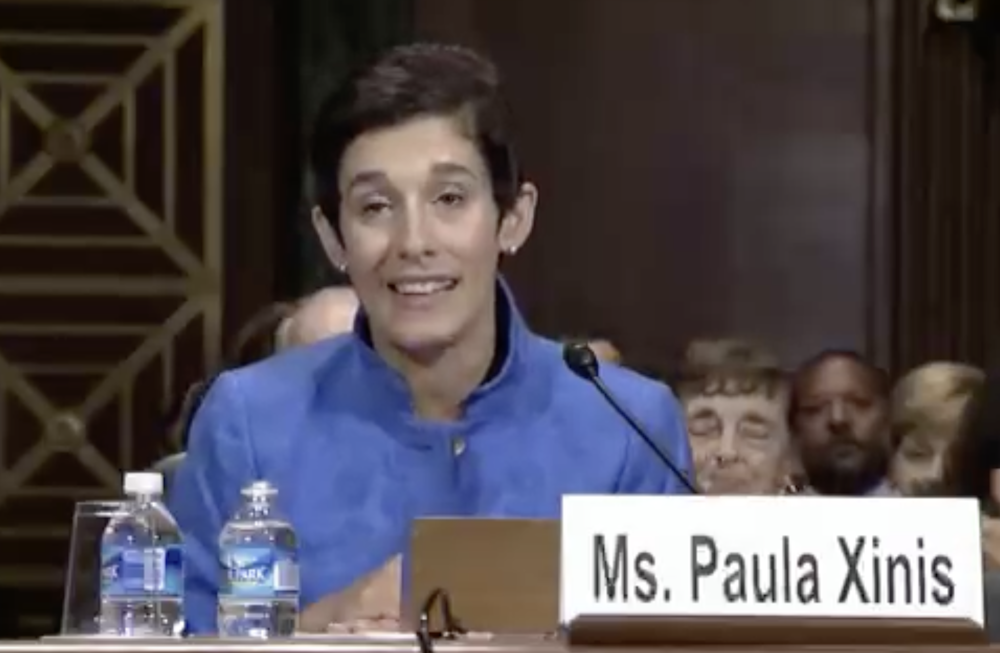
    Paula Xinis at the U.S. Senate Committee on the Judiciary hearing on her nomination to be a U.S. district judge for the District of Maryland on July 22nd, 2015.
    U.S. Senate Committee on the Judiciary

    Can you connect what’s going on with Judge Xinis to Judge Boasberg’s finding that probable cause existed to hold the Trump administration in contempt?

    Judge Boasberg tied it up beautifully in the memorandum opinion he wrote – the whole panoply from when the president’s Alien Enemies Act proclamation was signed in the middle of the night but not published until the next day, to the fact that three airplanes flew deportees to El Salvador after Boasberg had ordered them not to.

    It’s one big show of contempt for the court, rife with dishonest behavior, and I think Boasberg is entirely right to vindicate the authority of the court and commence these contempt proceedings.

    In the case of Judge Xinis, she’s not there yet. What she’s doing, in stages, is attempting to test the government’s compliance with the word “facilitate.” The Supreme Court had upheld her earlier order, saying “The order properly requires the Government to ‘facilitate’ Abrego García’s release from custody in El Salvador.”

    I don’t think the government’s going to do anything. The government’s position now is, if they don’t like any single thing that a federal judge does, they immediately appeal it with the idea that they want to get it to the Supreme Court. Assuming that the appeal is denied, or is granted, that means that down the road, there’s a showdown.

    Unfortunately, in Xinis’ case, I think the situation calls for some clarification. The government’s going to just be obdurate and they’re going to continue to be difficult and espouse their definition of “facilitate” versus what I think is a commonsense reading of the Supreme Court’s opinion.

    I don’t think the Supreme Court in any way meant for the government not to bring Abrego Garcia back. But in writing the opinion they were too soft, afraid of traipsing into the executive’s power to run foreign affairs.

    You have two judges seriously considering holding someone in the Trump administration in contempt, possibly even criminal contempt. What does it mean for a judge to be in that specific position?

    I never issued a criminal contempt citation in 19 ½ years on the bench against anyone or any entity. Never.

    The only contempt that I was ever in the business of issuing was civil contempt. Typically it would happen in a civil case when somebody wouldn’t produce a particular record.

    But in Boasberg’s case, I think it’s the relentless bad behavior of the government, as he details amply in his opinion, that has gotten him to this point. He’s not going to allow the bad behavior of the government to go unpunished. It’s a signal to the government that he sees their behavior in the worst possible light.

    Could the president pardon anyone Boasberg convicts of criminal contempt?

    I think he probably could. We’ll see. I think from Boasberg’s standpoint, he can play that out in his mind and say, “This might be an exercise in futility.” But I don’t think that’s the point. I think that the point is that he’s got to vindicate the authority of the court – and that happens even if the executive chooses to exercise the pardon power.

    John E. Jones III does not work for, consult, own shares in or receive funding from any company or organization that would benefit from this article, and has disclosed no relevant affiliations beyond their academic appointment.

    ref. ‘I never issued a criminal contempt citation in 19 ½ years on the bench’ – a former federal judge looks at the ‘relentless bad behavior’ of the Trump administration in court – https://theconversation.com/i-never-issued-a-criminal-contempt-citation-in-19-1-2-years-on-the-bench-a-former-federal-judge-looks-at-the-relentless-bad-behavior-of-the-trump-administration-in-court-254877

    MIL OSI – Global Reports

  • MIL-OSI USA: SBA Relief Still Available to Oklahoma Private Nonprofits Affected by November Storms

    Source: United States Small Business Administration

    SACRAMENTO, Calif. – The U.S. Small Business Administration (SBA) is reminding private nonprofit (PNP) organizations in Oklahoma of the the May 19, deadline to apply for low interest federal disaster loans to offset physical damage caused by the severe storms, straight-line winds, tornadoes and flooding occurring Nov. 2–5, 2024.

    The disaster declaration covers the Oklahoma counties of Adair, Garvin, Jefferson, Lincoln, Okfuskee, Oklahoma, Stephens and Washita.

    Under this declaration, PNPs providing non-critical services of a governmental nature are eligible to apply for business physical disaster loans. Eligible PNPs may borrow up to $2 million to repair or replace disaster-damaged or destroyed real estate, machinery and equipment, inventory, and other business assets.

    Applicants may be eligible for a loan amount increase of up to 20% of their physical damages, as verified by the SBA, for mitigation purposes. Eligible mitigation improvements might include insulating pipes, walls and attics, weather stripping doors and windows, and installing storm windows to help protect property and occupants from future damage caused by any disaster. 

    “One distinct advantage of SBA’s disaster loan program is the opportunity to fund upgrades reducing the risk of future storm damage,” said Chris Stallings, associate administrator of the Office of Disaster Recovery and Resilience at the SBA. “I encourage businesses and homeowners to work with contractors and mitigation professionals to improve their storm readiness while taking advantage of SBA’s mitigation loans.”

    PNPs are also eligible to apply for Economic Injury Disaster Loans (EIDLs) to help meet working capital needs. The loans may be used to pay fixed debts, payroll, accounts payable, and other bills not paid due to the disaster. EIDL assistance is available regardless of whether the PNP suffered any physical property damage. 

    Interest rates can be as low as 3.625%, with terms up to 30 years. Interest does not begin to accrue, and payments are not due, until 12 months from the date of the first loan disbursement. The SBA sets loan amounts and terms based on each applicant’s financial condition.

    To apply online, visit sba.gov/disaster. Applicants may also call SBA’s Customer Service Center at (800) 659-2955 or email disastercustomerservice@sba.gov for more information on SBA disaster assistance. For people who are deaf, hard of hearing, or have a speech disability, please dial 7-1-1 to access telecommunications relay services.

    The deadline to return applications for physical property damage is May 19. The deadline to return economic injury applications is Dec. 18.

    ###

    About the U.S. Small Business Administration

    The U.S. Small Business Administration helps power the American dream of business ownership. As the only go-to resource and voice for small businesses backed by the strength of the federal government, the SBA empowers entrepreneurs and small business owners with the resources and support they need to start, grow, expand their businesses, or recover from a declared disaster. It delivers services through an extensive network of SBA field offices and partnerships with public and private organizations. To learn more, visit www.sba.gov.

    MIL OSI USA News

  • MIL-OSI USA: Colorado Lt. Governor Primavera Urges Congress to Protect AmeriCorps and Critical Services Across the State

    Source: US State of Colorado

    DENVER — Today, Lt. Governor Dianne Primavera expressed deep concern over the Trump administration demobilizing AmeriCorps National Civilian Community Corps (NCCC) teams and placing 85% of the AmeriCorps federal agency staff on administrative leave — moves that would immediately impact thousands of Coloradans and undercut vital community services across the state.

    “Since its founding in 1993, AmeriCorps has empowered Coloradans across the state to serve their neighbors, solve real problems, and strengthen communities,” said Lt. Governor Primavera. “To dismantle these programs now, when so many Coloradans rely on them, would be devastating. These actions will impact service members and result in a loss of tax support for working families, wildfire response teams, those who build affordable housing, and behavioral health support in our schools. These are the people behind the numbers — and the work they do matters deeply.”

    In 2024 alone, more than 6,600 AmeriCorps members and AmeriCorps Seniors served at over 700 local sites across Colorado. Serve Colorado, housed in the Office of the Lt. Governor, supported nearly 1,400 AmeriCorps State and National members who contributed over one million hours of service across all 64 counties last year alone. This year, $19.6 million in federal funds and $10.3 million in community funds, which includes state grants, federal  match grants, philanthropy, and private donors, jointly support these AmeriCorps programs to provide critical social services across every Congressional District. A recent study estimated a return of up to $34.26 for every federal dollar invested in AmeriCorps — a testament to its value not just in service, but in economic impact.

    With over 2,000 NCCC members deployed nationally each year, including more than 300 from the Aurora campus alone, this decision threatens to unravel years of progress and partnerships built on trust, teamwork, and service.

    NCCC teams, based out of the Aurora campus, supported wildfire recovery, accessible trail repair, Habitat for Humanity affordable housing projects, and even tax preparation support for low-income families. Through a partnership with local Volunteer Income Tax Assistance (VITA) sites, NCCC members have helped return over $30 million in tax refunds to Coloradans since 2022. During COVID-19, 300 NCCC members staffed contact tracing and vaccine outreach across the state.

    Eliminating AmeriCorps would gut services for schools, senior centers, food banks, housing agencies, and public health providers across Colorado, especially in rural and underserved areas, and other vital programs. It would also cut off access to education awards that help thousands of AmeriCorps alumni pursue college degrees or pay off student loans.

    “The numbers tell a powerful story, but behind each one is a Coloradan who’s been lifted up — a student, a veteran, a wildfire survivor. Now is not the time to recklessly cut programs with a proven record of significant impact,” said Lt. Governor Primavera. “I urge Congress to stand with the thousands of Coloradans who serve with AmeriCorps and the communities that count on them every day.”

    Since 1994, AmeriCorps members in Colorado have gone on to careers in education, conservation, public health, and emergency response as well as other critical industries. Many NCCC alumni join FEMA or continue in public service, building a resilient national workforce rooted in experience.

    ###
     

    MIL OSI USA News

  • MIL-OSI Security: Omaha Woman Sentenced for Purchasing Firearms for Convicted Felon

    Source: Federal Bureau of Investigation (FBI) State Crime News

    Acting United States Attorney Matthew R. Molsen announced that Stephanie Kessel, 41, of Omaha, Nebraska, was sentenced on April 16, 2025, in federal court in Omaha for making a false statement in connection with the acquisition of a firearm. United States District Court Judge Brian C. Buescher sentenced Kessel to three years of probation

    On July 28, 2023, Kessel met with an individual cooperating with law enforcement in the parking lot of Cabela’s in La Vista, Nebraska. The cooperator told Kessel that the cooperator was a convicted felon and the cooperator could not buy firearms legally. After hearing about the cooperator’s criminal history, Kessel walked into Cabela’s and purchased two Taurus 9mm handguns. After the sale, she walked back out to the parking lot and sold the guns to the cooperator for $1,000. To purchase the handguns, Kessel filled out a mandatory ATF firearms purchase form indicating that she was the actual transferee/buyer of the firearms even though the firearms were actually purchased by the cooperator.

    This case was investigated by the Federal Bureau of Investigation and the Omaha Police Department.

    MIL Security OSI

  • MIL-OSI Security: Grant County Man Sentenced for Armed Drug Trafficking

    Source: Office of United States Attorneys

    COVINGTON, Ky. – A Dry Ridge, Ky., man, Rodney Ruggles, 45, was sentenced on Thursday to 120 months in prison by Chief U.S. District Judge David Bunning, for possession with intent to distribute methamphetamine and oxycodone and possession of a firearm in furtherance of drug trafficking.

    According to his plea agreement, on December 13, 2023, law enforcement stopped a vehicle operated by Ruggles for several driving violations. After Ruggles consented to a search of the vehicle, law enforcement found a firearm safe containing five grams of methamphetamine, a small bag of marijuana, 3.5 oxycodone pills, 50 to 100 baggies, and a pistol. Ruggles admitted to possessing the methamphetamine and oxycodone with the intent to distribute and that he possessed the firearm in furtherance of drug trafficking. Ruggles also admitted to distributing methamphetamine for several weeks before he was arrested. Specifically, he admitted from November 2023 to December 2023, he obtained approximately one ounce of methamphetamine from his source of supply, every two days. 

    Under federal law, Ruggles must serve 85 percent of his prison sentence. Upon his release from prison, he will be under the supervision of the U.S. Probation Office for five years. 

    Paul McCaffrey, Acting United States Attorney for the Eastern District of Kentucky; Jim Scott, Special Agent in Charge, DEA, Louisville Field Division; and Sheriff Michael Helmig, Boone County Sheriff’s Office, jointly announced the sentence.

    The investigation was conducted by the DEA and Boone County Sheriff’s Office. Assistant U.S. Attorney Joel King is prosecuting the case on behalf of the United States.

    – END –


    MIL Security OSI

  • MIL-OSI Security: Boone County Man Sentenced for Illegal Possession of a Machinegun

    Source: Office of United States Attorneys

    COVINGTON, Ky. – A Burlington, Ky., man, Juan Velazquez-Rodriguez, 48, was sentenced on Thursday to 85 months in prison by Chief U.S. District Judge David Bunning, for illegal possession of a machine gun. 

    According to his plea agreement, in January 2024, a law enforcement source reported that Rodriguez offered to sell the source, who was a convicted felon, a machinegun conversion device (MCD). Law enforcement searched Rodriguez’ residence and found a MCD in his dresser. The MCD was not marked with a serial number, and Rodriguez admitted he knew it was designed to convert a firearm into a machinegun.

    A search of Rodriguez’ social media and cell phone revealed messages between Rodriguez and another individual about 3D printing firearm parts.  Rodriguez later messaged this same associate from jail, and instructed him to remove everything that had to do with the 3D printer from the associate’s apartment. Rodriguez also offered to sell MCDs to multiple other individuals, explaining that the “switch,” or MCD, would convert a Glock handgun or AR-15 rifle to fully automatic. 

    Under federal law, Rodriguez must serve 85 percent of his prison sentence. Upon his release from prison, he will be under the supervision of the U.S. Probation Office for three years. 

    Paul McCaffrey, Acting United States Attorney for the Eastern District of Kentucky; Rana Saoud, Special Agent in Charge, Department of Homeland Security, Homeland Security Investigations (HSI); and Sheriff Les Hill, Boone County Sheriff’s Office, jointly announced the sentence.

    The investigation was conducted by HSI and Boone County Sheriff’s Office. Assistant U.S. Attorney Joel King is prosecuting the case on behalf of the United States.

    This case is part of Project Safe Neighborhoods (PSN), a program bringing together all levels of law enforcement and the communities they serve to reduce violent crime and gun violence, and to make our neighborhoods safer for everyone. On May 26, 2021, the Department launched a violent crime reduction strategy strengthening PSN based on these core principles: fostering trust and legitimacy in our communities, supporting community-based organizations that help prevent violence from occurring in the first place, setting focused and strategic enforcement priorities, and measuring the results.

    – END –


    MIL Security OSI

  • MIL-OSI Security: Ethiopian Man Sentenced to Armed Robbery of a Gulfport Supermarket

    Source: Office of United States Attorneys

    Gulfport, MS – An Ethiopian national was sentenced today to 12 years in prison for armed robbery of a local supermarket in Gulfport.

    According to court documents, Milki Ibrahim walked into the supermarket on February 23, 2024, pulled out a black handgun and said, “Give me the money or I will shoot y’all right now.” The employee behind the cash register complied and gave Ibrahim $1200. Ibrahim threatened to come back and kill the people in the store if they went to the police.

    Employees of the store were able to positively identify Ibrahim as the armed robber. A subsequent review of Ibrahim’s cellphone showed he took pictures of himself wearing the same clothes that were worn during the robbery just one day prior. Those same clothes were found in the defendant’s residence along with a firearm that matched the description to the one used in the robbery.

    In December 2024, Ibrahim pled guilty to the charge.

    Acting U.S. Attorney Patrick A. Lemon of the Southern District of Mississippi and Special Agent in Charge Robert Eikhoff of the Federal Bureau of Investigation made the announcement.

    The case was investigated by the FBI and the Gulfport Police Department.

    Assistant U.S. Attorney Lee Smith is prosecuting the case.

    For non- HSTF cases pursuant to Op. TBA

    This case is part of Operation Take Back America (https://www.justice.gov/dag/media/1393746/dl?inline), a nationwide initiative that marshals the full resources of the Department of Justice to repel the invasion of illegal immigration, achieve the total elimination of cartels and transnational criminal organizations (TCOs), and protect our communities from the perpetrators of violent crime. Operation Take Back America streamlines efforts and resources from the Department’s Organized Crime Drug Enforcement Task Forces (OCDETFs) and Project Safe Neighborhood (PSN).

    MIL Security OSI

  • MIL-OSI Security: FBI Houston Statement on Law Enforcement Activity

    Source: Federal Bureau of Investigation (FBI) State Crime Alerts (c)

    FBI Houston is on location in the 13000 block of Milan Drive in south Houston responding to an agent-involved shooting. Preliminary information at this time is that on Thursday, April 17, at approximately 5:30 p.m., an FBI Houston agent was at the intersection of Milan Drive and East Anderson Road conducting authorized law enforcement activity when a woman armed with a machete threatened him. In response, the agent fired his weapon. The woman was taken to a local hospital. The agent was not physically harmed. The scene is currently being processed by the FBI’s Evidence Response Team who will be on-site for several hours. Per FBI policy, FBI’s Inspection Division will conduct an independent and objective investigation of the incident. To protect the investigation’s integrity, no more details will be released at this time.

    MIL Security OSI

  • MIL-OSI Asia-Pac: Security-themed open day held

    Source: Hong Kong Information Services

    The Customs & Excise Department today held an open day at the Customs College to promote national security education, with more than 1,000 students taking part.

    Deputy Chief Secretary Cheuk Wing-hing attended the event and officiated at an eye-dotting ceremony for a dragon and lion dance performance.

    Besides an exhibition on the department’s work to safeguard national security, the open day featured performances by its detection dog team, and a dragon and lion dance team. There was also a display of firearms and weapons, while game booths and an inflatable jumping castle were set up for children to enjoy.

    Games, including virtual reality simulations of customs operations, showcased the department’s gatekeeping role in an interactive manner. 

    Meanwhile, a recruitment booth featuring fitness tests – including an isometric strength test and a standing long jump test – gave attendees an understanding of the department’s fitness requirements.

    MIL OSI Asia Pacific News

  • MIL-OSI USA: Ranking Member Juan Vargas Reaffirms Importance of Federal Reserve Independence

    Source: United States House of Representatives – Congressman Juan Vargas (CA-51)

    April 17, 2025

    WASHINGTON – Today, U.S. Representative Juan Vargas (CA-52), Ranking Member of the House Financial Services Committee Task Force on Monetary Policy, Treasury Market Resilience, and Economic Prosperity, released the statement below following President Trump’s comments on Federal Reserve Chair Jerome Powell and new reports alleging that the President has discussed attempting to fire Chair Powell. 

    “An independent central bank is at the heart of nearly every modern, functional democracy. The Federal Reserve must be free to make decisions about how to best achieve its dual-mandate goals based on economic data and analysis, not politics. Donald Trump has repeatedly attacked the Federal Reserve’s independence, but any attempt to fire Chair Powell would cross the line and put us in unprecedented territory. We cannot let this happen. In Congress, we’ll use every tool available to combat Trump’s unlawful power grabs.”

    ###

    MIL OSI USA News

  • MIL-OSI USA: SPC Apr 18, 2025 1300 UTC Day 1 Convective Outlook

    Source: US National Oceanic and Atmospheric Administration

    SPC AC 181200

    Day 1 Convective Outlook
    NWS Storm Prediction Center Norman OK
    0700 AM CDT Fri Apr 18 2025

    Valid 181300Z – 191200Z

    …THERE IS A SLIGHT RISK OF SEVERE THUNDERSTORMS FROM PARTS OF THE
    SOUTHERN PLAINS INTO THE MID MISSISSIPPI VALLEY AND UPPER GREAT
    LAKES…

    …SUMMARY…
    Scattered severe thunderstorms are possible from parts of the
    southern Plains northeastward toward the upper Great Lakes, mainly
    from late afternoon into early Saturday morning. Large to very large
    hail and severe wind gusts should be the main hazards, especially
    across the southern Plains where storms will be more concentrated. A
    few tornadoes also appear possible.

    …Upper Great Lakes to Mid Mississippi Valley…
    Ongoing, mostly elevated thunderstorms aided by persistent low-level
    warm/moist advection and steep mid-level lapse rates should continue
    to pose a large hail and damaging wind threat as they spread quickly
    eastward across southern WI this morning. This activity should
    eventually weaken later this morning as it continues moving across
    Lower MI into a less unstable environment. Behind this initial
    activity, the surface warm sector will attempt to spread northward
    across parts of the Upper Midwest and Great Lakes today, as longwave
    troughing gradually develops eastward over the northern/central
    Plains and Southwest. Given the positive tilt/orientation of this
    upper troughing and enhanced southwesterly flow aloft expected to
    persist through the period, a strong cold front should make only
    slow southeastward progress.

    A cap will likely inhibit surface-based convective development until
    peak afternoon heating and frontal forcing can help lift parcels to
    their LFC. Given nebulous forcing aloft, there is still a fair
    amount of uncertainty regarding overall convective coverage this
    afternoon/evening. Even so, any thunderstorms that can develop along
    or ahead of the front could pose a threat for severe hail and
    damaging winds, with strong deep-layer shear aiding updraft
    organization. This severe threat may persist for much of the
    evening, and perhaps continuing into the early overnight hours.

    …Southern Plains to the Ozarks…
    The southern portion of the cold front is forecast to decelerate and
    eventually stall over parts of OK later today. A dryline will extend
    southward from a weak frontal low across northwest to west-central
    TX by late afternoon. Even with widespread mid/high-level cloudiness
    present, robust daytime heating of the moist warm sector is
    anticipated across the southern Plains today. The low-level cap
    should eventually be breached by late afternoon/early evening
    (around 22-00Z), particularly along/near the cold front, and perhaps
    the front/dryline intersection as well. Strong southwesterly flow
    aloft and related deep-layer shear will likely support organized
    severe convection.

    Initial supercell development should pose a threat for large to very
    large hail, potentially up to 2-3 inches in diameter. With time,
    upscale growth into multiple clusters/short line segments is
    expected through the evening into early Saturday morning, as a
    south-southwesterly low-level jet gradually strengthens. An increase
    in the severe/damaging wind threat is anticipated as this mode
    transition occurs. The threat for a few tornadoes remains apparent,
    especially across parts of OK along/south of the front, as favorable
    low-level shear will be present this evening where supercells may
    still exist. Even with a higher concentration of thunderstorms
    expected across the southern Plains, the messy convective mode this
    evening and tendency for convection to be undercut by the cold front
    currently limit confidence in delineating a corridor of greater
    severe hail/wind potential.

    ..Gleason/Broyles.. 04/18/2025

    CLICK TO GET WUUS01 PTSDY1 PRODUCT

    NOTE: THE NEXT DAY 1 OUTLOOK IS SCHEDULED BY 1630Z

    MIL OSI USA News

  • MIL-OSI USA: SPC MD 468

    Source: US National Oceanic and Atmospheric Administration

    Mesoscale Discussion 0468
    NWS Storm Prediction Center Norman OK
    0936 AM CDT Fri Apr 18 2025

    Areas affected…portions of Lake Michigan through southern and
    central Lower Michigan

    Concerning…Severe potential…Watch unlikely

    Valid 181436Z – 181630Z

    Probability of Watch Issuance…20 percent

    SUMMARY…A continuing risk for severe hail and/or increasing
    potential for strong, damaging wind gusts appears low, as a small,
    organizing cluster of storms, or its remnants, spreads inland of
    Lake Michigan across parts of central/southern Lower Michigan
    through midday. A new watch is not anticipated, but trends are
    being monitored.

    DISCUSSION…Strongest convection has become focused above the
    convectively generated cold pool, within forcing associated with
    low-level warm advection, trailing to the southwest of a weakening
    MCV now approaching Michigan coastal areas near/north of Muskegon.
    Currently moving eastward at speeds of 45-50 kt, the small,
    organizing cluster is on track to overspread the Grand Rapids,
    Lansing and Flint vicinities of south central Lower Michigan through
    15-17Z.

    However, the latest Rapid Refresh suggests that southerly low-level
    wind fields and associated forcing for ascent will weaken through
    mid to late morning, while warmer and more strongly capping elevated
    mixed layer air advects northeastward across the region. So, it
    remains uncertain how much longer ongoing activity will be
    maintained.

    Furthermore, while an initially cool, dry and stable boundary-layer
    across southern into central Lower Michigan is in the process of
    gradually warming and moistening ahead of the approaching
    convection, the extent to which low-level thermodynamic profiles
    become unstable to downdrafts and/or downward mixing of stronger
    momentum aloft remains unclear. Currently, potential for a
    continuing risk for severe hail and/or an increasing risk for
    damaging wind gusts appears low, at least in the near term, but
    trends will continue to be monitored.

    ..Kerr/Smith.. 04/18/2025

    …Please see www.spc.noaa.gov for graphic product…

    ATTN…WFO…DTX…IWX…GRR…MKX…

    LAT…LON 43918706 44048635 43378327 42268295 41998647 42718813
    43918706

    MOST PROBABLE PEAK WIND GUST…UP TO 60 MPH
    MOST PROBABLE PEAK HAIL SIZE…UP TO 1.25 IN

    MIL OSI USA News

  • MIL-OSI Security: Cook’s Cove — Multi-agency search underway for child in Guysborough County

    Source: Royal Canadian Mounted Police

    A multi-agency search is underway for a child who fell into the water in Cook’s Cove.

    On April 17, at approximately 1:40 p.m., Guysborough County RCMP, fire services and EHS were dispatched to a report of a chid who had fallen into the water while fishing with a man and another child. The man entered the water immediately to rescue the child but was unsuccessful.

    Initial responders were joined by multiple fire services, EHS LifeFlight, several ground search and rescue teams (Pictou County Volunteer GSAR, Straight Area GSAR, Inverness County GSAR, Colchester GSAR), Fisheries and Oceans Canada (DFO), Joint Rescue Coordination Centre (JRCC), Nova Scotia Department of Resources and Renewables Air Services, Civil Air search and Rescue Association (CASARA), and multiple RCMP units.

    Residents are asked to avoid the area as the search continues.

    RCMP victim services is engaged, and our thoughts are with the child’s loved ones at this difficult time.

    File #: 2025-504441

    MIL Security OSI

  • MIL-OSI USA: Magaziner Joins Amicus Briefs Against Illegal Firings at Independent Agencies by Trump Administration

    Source: US Representative Seth Magaziner (RI-02)

    WASHINGTON, DC –  U.S. Rep. Seth Magaziner (RI-02), member of House Democrats’ Litigation and Rapid Response Task Force, joined two amicus briefs to challenge the unlawful attempted firings of independent agency officials by the Trump Administration. 

    One amicus brief is to be submitted in consolidated cases before the U.S. Court of Appeals for the D.C. Circuit Court to argue against the firing of Gwynne Wilcox, a member of the National Labor Relations Board (NLRB), and Cathy Harris, a member of the Merit Systems Protection Board (MSPB). The second brief challenges the legal basis for firing Commissioners Rebecca Slaughter and Alvaro Bedoya of the Federal Trade Commission (FTC) in the case, Slaughter and Bedoya v. Trump, et al.

    He released the following statement: 

    “Independent agencies like the NLRB, MSPB, and FTC exist to protect working people, ensure fair competition, and uphold the rule of law—not to serve the whims of any president.

    Donald Trump’s repeated attempts to fire and illegally purge independent commissioners are unconstitutional power grabs that threaten the checks and balances our democracy depends on.

    That’s why I’m joining these legal fights—to defend the independence of agencies, assert Congress’ constitutional authority, and push back against Trump’s dangerous abuse of power.”

    You can read the full amicus brief arguing against the firing of NLRB and MSPB employees here.

    You can read the full amicus brief in the case Slaughter and Bedoya v. Trump, et al. here.

    MIL OSI USA News

  • MIL-OSI Australia: Seasonal safety tips

    Source: Northern Territory Police and Fire Services

    In summer, keep your dog healthy and happy by walking in the early morning or evening.

    In brief:

    • There are a lot of things to think about during the summer holiday period.
    • It’s important to do what you can to keep yourself, your family and your things safe.
    • This article overviews some actions you can take.

    From festive parties to trips away, there are so many things to do and enjoy at this time of year.

    Taking a moment to read the following tips will help ensure you can celebrate free of unexpected problems.

    Travel safely

    If you’re hitting the road this summer, remember to take plenty of breaks and drive to the conditions.

    It’s also a good idea to pack supplies just in case the car you’re travelling in breaks down.

    Never leave a child or pet in the car, even with the windows down or for short periods. Car interiors can heat to over 60 degrees in just five minutes.

    Protect your home while you’re away

    House break-ins often increase over holiday periods, because offenders know an empty house can be an easy target.

    Try to leave your house looking lived-in with the help of a neighbour or house-sitter.

    Keeping windows and doors locked, your mail collected, and your lawn mown while you are away can help.

    Find more tips in ACT Policing’s property crime prevention page.

    Take note of public transport changes

    Staying in the ACT? It’s worth noting changes to bus and light rail timetables during the summer school holidays – from Monday 23 December 2024 to Sunday 2 February 2025.

    School services and ‘s’ trip diversions will not be in place during the six-week holiday period.

    Bus and light rail services will be free on Christmas Day and New Year’s Eve (from 5pm). There will be a special bus timetable in place. You don’t even need a MyWay+ card – but if you have one, please tap on and off.

    If you choose to leave the car at home on New Year’s Eve, you can take advantage of an extended Tuesday timetable with additional bus and light rail services.

    And remember, public transport is free on Fridays.

    Make your trip even easier by using the MyWay+ app or TC Journey Planner.

    Stay up to date with public transport service alerts

    Keep your pets safe and well

    As the temperature rises, pets rely on their owners to keep them happy, healthy and safe.

    There are some easy ways to do this.

    • Avoid walks in heat of the day. Early morning and evening walks are best, and this will also protect their paws from burning.
    • Make sure they have access to fresh drinking water and shade around your house and backyard all day.
    • Help your pets stay cool with an icy pet treat. There are lots of online recipes to make your own pet-safe summer treats.
    • Visit one of the dog swimming spots or fill a kids’ splash pool with water to help your pooch cool down.
    • Arrange for someone to care for your pets if you go on holidays.
    • Make sure your pet is microchipped and registered so if they escape – such as during a storm – they can easily be returned.
    • And remember, never leave your dog in an unattended parked car. Even if you leave the windows down, your dog is still at risk of suffering heat exhaustion within minutes.

    Find a dog swimming spot or learn more about recreation with your dog.

    Christmas present safety

    There’s nothing like nailing that perfect gift, but some presents – particularly those for kids – need a bit of extra care and supervision.

    • Portable pools: remember, children can drown in portable pools. Always watch them carefully.
    • Button batteries can be deadly if swallowed. Always check the battery compartment is secure on items before buying.
    • Choose age-appropriate toys to help prevent injury and choking.
    • Trampolines: check and maintain your trampoline. Always watch young children as they bounce.
    • Pool toys and floatation aids are for fun, not safety. Stay close and supervise children.
    • eRideables: children should only ride age-appropriate devices. They should wear a helmet and have only one person per device.
    • Always monitor and unplug lithium-ion products once items are charged. This helps avoid fires and injuries.

    Take care of your gas bottles

    If you’re planning some barbecues this summer, chances are you have a gas bottle around the house.

    You can minimise risk by following these simple safety tips.

    • Always ensure adequate ventilation and never use indoors or in confined spaces.
    • Always read the manufacturer’s operating instructions.
    • Do not connect or disconnect cylinders near a naked flame.
    • Do not use LPG in windy conditions.
    • Always keep cylinders cool and away from flames, sparks and heat.
    • Only use approved or certified hoses and connections designed for gas. Never use home-made ones.

    Read more about gas bottle safety

    Read more like this:


    Get ACT news and events delivered straight to your inbox, sign up to our email newsletter:


    MIL OSI News

  • MIL-OSI Security: PENSACOLA MAN CHARGED IN FEDERAL INDICTMENT FOR ATTEMPTED MURDER OF LAW ENFORCEMENT OFFICER

    Source: Office of United States Attorneys

    PENSACOLA, FLORIDA – Austin James McCastler II, 35, was indicted by a federal grand jury this week charging him with two counts of distribution of methamphetamine, possession with intent to distribute fentanyl and marijuana, possession of a firearm in furtherance of a drug trafficking offense, possession of a firearm and ammunition by a convicted felon, attempted prevention of the government’s authority to take property during an authorized search and seizure, attempted murder and assault of a Special Agent of the Drug Enforcement Administration, and discharging a firearm during a violent crime. Michelle Spaven, Acting United States Attorney for the Northern District of Florida, announced the charges today.

    McCastler is scheduled for his arraignment in federal court before United States Magistrate Judge Hope Thai Cannon on April 22, 2025, at 2:00 p.m. in Pensacola, Florida. If convicted, McCastler faces up to life imprisonment.

    The Bureau of Alcohol, Tobacco, Firearms and Explosives, the Drug Enforcement Administration, the Florida Department of Law Enforcement, the Escambia County Sheriff’s Office, the Pensacola Police Department, and the Santa Rosa County Sheriff’s Office are investigating the case. Assistant United States Attorneys David L. Goldberg and Jessica S. Etherton are prosecuting the case.

    An indictment is merely an allegation by a grand jury that a defendant has committed a violation of federal criminal law and is not evidence of guilt. All defendants are presumed innocent and entitled to a fair trial, during which it will be the government’s burden to prove guilt beyond a reasonable doubt at trial.

    This case is part of Operation Take Back America (https://www.justice.gov/dag/media/1393746/dl?inline ) a nationwide initiative that marshals the full resources of the Department of Justice to repel the invasion of illegal immigration, achieve the total elimination of cartels and transnational criminal organizations (TCOs), and protect our communities from the perpetrators of violent crime. Operation Take Back America streamlines efforts and resources from the Department’s Organized Crime Drug Enforcement Task Forces (OCDETFs) and Project Safe Neighborhood (PSN).

    The United States Attorney’s Office for the Northern District of Florida is one of 94 offices that serve as the nation’s principal litigators under the direction of the Attorney General. To access available public court documents online, please visit the U.S. District Court for the Northern District of Florida website. For more information about the United States Attorney’s Office, Northern District of Florida, visit http://www.justice.gov/usao/fln/index.html.

    MIL Security OSI

  • MIL-OSI USA: United States – Italy Joint Leaders’ Statement

    US Senate News:

    Source: The White House
    President Donald J. Trump and Prime Minister Giorgia Meloni held their first official meeting yesterday in Washington, D.C., where they confirmed their resolve to promote a mutually beneficial relationship and further strengthen the U.S. – Italy strategic alliance across security, economic, and technological issues.
    U.S.- Italy Cooperation for SecurityThe U.S. and Italy underscore that the war in Ukraine must end, and fully endorse President Trump’s leadership in brokering a ceasefire and delivering a just and lasting peace.     The U.S. and Italy reiterate the unwavering commitment to NATO and to the principle of developing their collective and individual capacity to contribute to the Alliance’s goals. We therefore commit to ensuring our national security and defense are aligned and funded to meet the challenges of today, and critically, the risks of tomorrow.     Our defense cooperation must rely on a deep and extensive transatlantic supply chain. We are facing a complex security environment, and we are ready to further increase defense equipment and technology cooperation, including co-production and co-development that strengthen U.S. and Italian defense industrial capacity and protect it from foreign adversaries.     The U.S. and Italy reaffirm their shared commitment to counter illegal immigration and to ensure that legal migration is used as a tool to benefit our nations and not to create a security problem for our citizens. We will step up our common efforts to eradicate international organized crime groups engaged in migrant smuggling and human trafficking.     The U.S. and Italy confirm their joint effort to fight the production, distribution, and sale of illicit synthetic drugs, especially synthetic opioids and the criminal networks trafficking these drugs, which collectively damage the health, security, and well-being of our citizens and people around the world.
    U.S. – Italy Cooperation for Shared ProsperityThe United States and Italy agree to work to ensure that trade between the United States and Europe is mutually beneficial, fair, and reciprocal.     We highlight the importance of information technology to enabling free enterprise across the Atlantic. We agreed that a non-discriminatory environment in terms of digital services taxation is necessary to enable investments from cutting-edge tech companies.     We welcome American investments in AI computing and cloud services in Italy to maximize the opportunities of digital transformation and support Italy as the key regional data hub for the Mediterranean and North Africa.      Developing a workforce that can deliver on the needs of our economies is vital. The United States and Italy are proud partners in industrial endeavors that will benefit employment in both countries, playing a vital role for each other’s supply chains and strengthening our industrial bases. Italy will contribute to the maritime renaissance of the U.S. shipbuilding sector, while the U.S. will look into the investment opportunities offered by the increasingly positive Italian business environment, including through the incentives granted by the new Single Special Economic Zone (SEZ) established in Italy.     The U.S. and Italy cooperate to strengthen energy security by further encouraging the diversification of Italy’s energy supply source and by increasing exports of U.S. liquefied natural gas to Italy in a mutually beneficial manner.     The U.S. and Italy will work together to develop the India–Middle East–Europe Economic Corridor, one of the greatest economic integration and connectivity projects of this century, connecting partners by ports, railways, and undersea cables and stimulating economic development and integration from India, to the Gulf to Israel, to Italy, and onward to the United States.      Following the example of the President Trump’s successful Abraham Accords approach, the U.S. and Italy will cooperate on crucial infrastructural projects and consider leveraging on the Mattei Plan’s potential.
    U.S. – Italy Cooperation for TechnologyThe United States and Italy recognize the need to protect our national critical and sensitive infrastructure and technology, which is why we commit to using only trusted vendors in these networks. There is no higher trust than our strategic alliance, which is why there can be no discrimination when it comes to U.S. and Italian vendors.     We are proud to partner on Space Technology, including through two Mars Missions in 2026 and 2028, and lunar surface exploration on future Artemis missions.     As we transition to and innovate on the technologies of the future, such as 6G, AI, quantum computing, and biotechnology, we also commit to exploring opportunities for enhanced partnerships in these critical industries that protect our data from adversaries that would exploit it.
    Invitation to Visit ItalyPresident Trump accepted Prime Minister Meloni’s invitation to pay an official visit to Italy in the very near future. There is also consideration to hold, on such occasion, a meeting between U.S. and Europe.

    MIL OSI USA News