Category: Natural Disasters

  • MIL-OSI China: Over 15,000 charity organizations registered in China

    Source: People’s Republic of China – State Council News

    BEIJING, Oct. 23 — China has over 15,000 registered charity organizations, a three-fold increase compared to five years ago, the country’s Ministry of Civil Affairs announced Wednesday.

    A total of 2,062 charitable trusts have been registered with the government, 15 times the figure from five years ago, the ministry said at a press conference.

    From 2018 to 2020, the critical period of China’s poverty eradication campaign, the country’s charity organizations spent approximately 50 billion yuan (about 7 billion U.S. dollars) annually on poverty alleviation, especially on supporting people living in poverty in the country’s less-developed areas, according to the ministry.

    Since 2023, nearly 6 billion yuan worth of charitable donations have been raised to aid people affected by earthquakes, floods and other natural disasters across the country, the ministry said.

    MIL OSI China News

  • MIL-OSI USA: Mitigation: Build Back Safer, Stronger

    Source: US Federal Emergency Management Agency

    Headline: Mitigation: Build Back Safer, Stronger

    Mitigation: Build Back Safer, Stronger

    HARRISBURG, Pa. – If you are eligible for disaster assistance under the Individuals and Households Program (IHP) you may receive additional FEMA funds within the grant to help you take specific mitigation measures to make your home stronger and more durable. Why the additional funds? Because mitigation works! Mitigation is an action taken to reduce or eliminate long-term risk to hazards. It is part of FEMA’s commitment to make communities more resilient to disaster.In addition, the U.S. Small Business Administration may increase an approved disaster loan by twenty percent of the verified loss for mitigation improvements.Homeowners who suffer losses from a presidentially-declared disaster and apply for FEMA assistance will be informed if they qualify for Home Repair Assistance that provides for: Elevating a water heater or furnace to avoid future flood damage. Elevating or moving an electrical panel to avoid flood damage. FEMA believes that incorporating proven techniques which make buildings more resistant to disaster can lessen the cost of restoring the property and shorten the time survivors are out of their homes.  If you are interested in learning more about mitigation techniques, you can refer to a FEMA brochure, “Mitigation Ideas: A Resource for Reducing Risk to Natural Hazards, Jan. 2013.” (https://www.fema.gov/sites/default/files/2020-06/fema-mitigation-ideas_02-13-2013.pdf ) The brochure covers hazards from drought and earthquake to flood and wildfire.Whatever technique you choose, remember to get the proper permits required in your locality, and to build back safely, up to local codes and professional standards.                                                                                          ###                                                                                             FEMA’s mission is helping people before, during, and after disasters. FEMA Region 3’s jurisdiction includes Delaware, the District of Columbia, Maryland, Pennsylvania, Virginia and West Virginia. Follow us on X at x.com/FEMAregion3 and on LinkedIn at linkedin.com/company/femaregion3.Disaster recovery assistance is available without regard to race, color, religion, nationality, sex, age, disability, English proficiency, or economic status. If you or someone you know has been discriminated against, call FEMA toll-free at 833-285-7448. If you use a relay service, such as video relay service (VRS), captioned telephone service or others, give FEMA the number for that service. Multilingual operators are available (press 2 for Spanish and 3 for other languages).
    erika.osullivan
    Wed, 10/23/2024 – 12:02

    MIL OSI USA News

  • MIL-OSI United Kingdom: UK commits additional £3 million to bolster aid to Syria

    Source: United Kingdom – Executive Government & Departments

    The UK has announced an additional £3 million to bolster aid to Syria.

    • FCDO will provide emergency healthcare and protection assistance to women and girls fleeing the conflict in Lebanon.
    • £3m package to support those most in need, as 400,000 people are displaced into Syria due to conflict in Lebanon.
    • Minister for Development Anneliese Dodds continues UK call for displaced civilians to be protected and given safe passage away from the violence.

    The most vulnerable civilians fleeing the Lebanon conflict into Syria will be provided with life-saving emergency assistance and healthcare, as the UK boosts its humanitarian support with a £3 million package.

    Taking refuge from the escalating conflict, more than 400,000 people – over half of whom are women and children – are estimated by the UN to have been displaced from Lebanon into Syria since September. The majority of those who have been displaced are Syrians, who initially fled to Lebanon after the Syrian civil war which began in 2014.

    The UK funding will help trusted aid organisations to deliver immediate healthcare at border crossings, including trauma and injury support, as well as targeted protection assistance for women and girls.

    Minister for Development Anneliese Dodds said:

    The humanitarian situation in Lebanon and the wider Middle East is extremely concerning. It is critical that vulnerable civilians fleeing the conflict in Lebanon are given safe passage, and for their lives to be protected.

    Today’s package of emergency assistance will provide support to those most in need as they continue to risk their lives to make this dangerous journey.

    Of the £3 million in funding, £2 million has been allocated to the UN OCHA led Syria Humanitarian Fund, with £500,000 given to both the International Medical Corps UK and UNFPA.

    International Medical Corps UK Country Director Wafaa Sadek said:

    This new contribution builds on the generous support from the FCDO, helping the International Medical Corps to deliver essential healthcare and humanitarian aid to people crossing from Lebanon into Syria.

    Thanks to FCDO funding, International Medical Corps has already deployed three Mobile Medical Teams to address the growing needs—one serving Damascus and Rural Damascus, another covering Latakia and Tartous, and a third focusing on Hama and Homs governorates.

    This announcement follows more than £4 billion of funding that the UK has contributed since 2011 in lifesaving and life-sustaining assistance for the victims of the crisis in Syria – its largest ever response to a single humanitarian crisis.

    In Lebanon, we have already announced £10 million of aid to respond to a widespread lack of shelter, and reduced access to clean water, hygiene and healthcare. This is in addition to £5 million already provided to UNICEF. The government is also supporting the DEC Middle East Humanitarian Appeal, with the government aid matching up to £10 million raised by the public. 

    The UK is clear that a wider regional conflict must be avoided at all costs and is committed to working with partners to secure a ceasefire on all sides.

    Notes to Editors:

    • Today’s allocation of funding comes from the UK’s annual Overseas Development Assistance (ODA) package for Syria, which is totalled at £97m for FY 24-25.
    • In addition, £6m will be released from the Central Emergency Response Fund (CERF) – to which the UK contributes centrally and is a leading donor– for the UN response to new arrivals from Lebanon in Syria.
    • Syria remains an unsafe destination for vulnerable people, including Syrian refugees, who should only return to Syria voluntarily in a safe and dignified manner.
    • UK commits additional £10 million of aid to Lebanon – GOV.UK

    Media enquiries

    Email newsdesk@fcdo.gov.uk

    Telephone 020 7008 3100

    Contact the FCDO Communication Team via email (monitored 24 hours a day) in the first instance, and we will respond as soon as possible.

    Updates to this page

    Published 23 October 2024

    MIL OSI United Kingdom

  • MIL-OSI United Kingdom: Lord Mayor of London’s Dinner for HM Judges 2024: Lord Chancellor’s Speech

    Source: United Kingdom – Executive Government & Departments

    At this annual event for HM Judges the Rt Hon Shabana Mahmood MP spoke about the importance of prisons in maintaining the rule of law.

    Political content has been removed from this transcript

    My Lord Mayor, Lady Mayoress, my Lady Chief Justice, members of His Majesty’s judiciary, ladies and gentlemen.

    I want to thank Michael [Mainelli, Lord Mayor] and Elisabeth [Reuß, Lady Mayoress] for hosting us this evening…

    And express my gratitude for their year of service to the City of London…

    I am looking forward to welcoming the next Lord Mayor, Alastair King, in a ceremony at the House of Lords on Monday.

    As the first Muslim Lord Chancellor, I’m afraid I won’t partake in sipping port from the Loving Cups…

    But I am looking forward to the shortbread.

    Let me say what an honour it is to be here for the first time as Lord Chancellor.

    Unlike most of my 11 predecessors across the last 14 years…

    It will not also be my last.

    I understand that, in the past, my predecessors have peppered these speeches with humour.

    But you may have seen the very serious announcements that I made earlier today…

    And so, sadly, this is not a time for levity.

    Instead, I want to take this opportunity to explain why I had to make them and what they mean.  

    But let me start with something that should never be contentious: the rule of law.

    My parents came to the UK just a few decades ago…

    Leaving a country created by partition. 

    They were so-called ‘Mangla Dam affectees’…

    A people whose land was seized and then flooded by an overbearing and unaccountable state.

    But when they came here, to Britain…

    They found a home where no one is above the law – not even a government… 

    And where no one can fall below it either.

    It was that inheritance…

    And an argumentative disposition…

    That led me to the bar…

    And left me with an enduring belief in the sanctity of the rule of law…

    The most enduring of British values.

    That defines who we are and how our country works.

    Here, the law rules, not the mob…

    And our disagreements are resolved through the careful crafting of arguments.

    This Great British value is also of great value to Britain…

    Underpinning our economy…

    Giving businesses, large and small, the confidence to trade….

    In the knowledge that any disputes that arise will be settled fairly.

    In every instance, those who come before the courts…

    Know that their case will be decided on the facts by learned judges – by you…

    And that those judgments will be done without interference or commentary…

    From politicians like me or my colleagues.

    The oath that I swore when I took this job: to respect the rule of law and defend the independence of the judiciary…

    Is one that I take extremely seriously.

    It was at the forefront of my mind when I was appointed as Lord Chancellor.

    Our prisons were not just in crisis…

    They were on the point of collapse.

    Weeks away from running out of space altogether.

    And had that happened, the consequences are hard to contemplate:

    The police unable to make arrests…

    Your courts forced to cancel trials.

    Justice would have come to a grinding halt.

    As my officials explained the enormity of the situation…

    My oath rang in my ears.

    Would I be the Lord Chancellor who days after swearing to uphold the rule of law…

    Oversaw the breakdown of law and order?

    I had no choice but to take drastic action…

    To make sure the justice system could continue to function…

    Anything else would have been a betrayal of my constitutional duty.

    I simply could not allow that to happen.

    So, I took the decision to bring forward the release point for some prisoners serving standard determinate sentences…

    From the usual 50 percent to 40 percent…

    Spending the remainder on strict licence conditions in the community.

    The first releases happened in September and more took place today.

    Given the disgraceful disorder just a few weeks after we took office, the necessity of that decision was soon apparent.

    At one point, the prison places remaining in the adult male estate…

    Fell into double figures.

    And let me place on record, once again, my deepest thanks for all that you did this summer…

    Handing down justice, swiftly, to those responsible.

    I have no doubt at all that your work brought that disorder to a halt.

    The measures that I was forced to take…

    To bring our prisons back from the brink…

    Were not a long-term solution.

    So today, in parliament, I set out a long-term plan for our prisons…

    To ensure the scenes that we have witnessed today, of the emergency release of prisoners, are never witnessed again.

    And that starts by building more prisons.

    But we must be honest:  

    We cannot build our way out of this crisis.

    This isn’t a matter of ideology.

    It is simple mathematics.

    Every year, our prison population grows by around 4,500 prisoners…

    To keep up with that demand would require us to build the equivalent of HMP Birmingham, in my own constituency, four and a half times over, every single year.  

    We simply cannot build that fast.

    For that reason, I have today launched a landmark review of sentencing.

    It will have one clear goal:

    To ensure we are never again in a position where we have more prisoners than space in our prisons.

    The review will follow 3 principles:

    First, sentences must punish offenders and protect the public.

    For dangerous offenders, prison will always remain the answer.

    Punishment and public protection will be this government’s first priority.

    There will be dangerous offenders who must always receive a custodial sentence…

    And there must always be space in our prisons for them.

    The second principle of the review is that sentences must encourage offenders to turn their backs on lives of crime.

    The system needs both sticks and carrots.

    In this, I will be encouraging the reviewers to learn from those who have succeeded in other jurisdictions.

    The third principle of the review will be to expand punishment that offenders receive outside of prison.

    There are already ways that we severely constrain offenders…

    Limiting their freedom outside of prison.

    Those under Home Detention Curfews are, in practice, under a highly effective form of house arrest.

    And sobriety tags enforce teetotalism almost as strict as my own.

    And we must explore how the next generation of technology can ensure the eyes of the state follow an offender on the outside…

    As closely – or even more so – than a prison officer, on the inside.

    Moving punishment out of prison – for those who can be safely managed there – has huge benefits:

    Outside of prison, offenders can engage in work that pays back the communities and individuals who they have harmed.

    And the evidence is clear that those who serve their sentences outside prison are far less likely to reoffend…

    Making our streets safer…

    And reducing the cost to society of reoffending, which has been most recently valued at over £22bn a year.

    I am pleased to say that the review will be led by a former Lord Chancellor, David Gauke…

    A highly regarded Minister who served in multiple roles across government…

    And who I know earned the trust and respect of many of you in the room this evening.

    I will work with him to assemble a panel of reviewers who will draw together deep expertise and experience in the criminal justice system…

    Including judicial colleagues.

    And the review will take a bipartisan and evidence-based look at an issue that has – for far too long – been a political football, booted around by both sides.

    David Gauke will report back with his recommendations in the Spring…

    And I look forward to discussing them with the senior judiciary then.

    I know that for many in this room, it may seem like this government is preoccupied with what is happening in our prisons…

    Where an acute crisis could easily shroud the great challenges that we face across our justice system.

    I want you to know that I fully recognise all of those challenges…

    I know our courts backlogs are at historic highs…

    That, for far too many victims, justice delayed now means justice denied.

    I know you are working under immense pressure…

    In the delivery of justice…

    And in the defence of the rule of law.

    This government will support you.

    Speaking before a budget, my lips are – by necessity – sealed.

    But let me say this:

    This government will pursue the hard work of restoring and reforming our justice system.

    We will support you in delivering justice more swiftly…

    We will promote this country’s standing as a global beacon of the rule of law…

    And we will back our legal sector, which is so vital to this government’s mission to kickstart economic growth.

    All this, I must acknowledge, will take time.

    I know that you have grown weary of the merry-go-round of Lord Chancellors…

    Holding this ancient office for the blink of an eye…

    With every judges’ dinner yet another introduction…

    More warm words and bromides from the new Lord Chancellor…

    Who promises the world but goes out with a whimper.

    This time, it will be different.

    I am a Lord Chancellor who is here for the long haul.

    I won’t hide the difficulty of the job at hand.

    But nor will I resile from the hard work of pursuing it.

    I will, I must admit, need your support along the way.

    When times are good…

    And when we agree…

    We will support each other.

    And when we disagree, as I am sure we will on occasion…

    We must be frank with each other, albeit in private…

    Always critical friends in the pursuit of a shared endeavour.

    As I mentioned earlier, the rule of law runs strongly through my background.

    My parents did not study Magna Carta, Habeas Corpus and the Bill of Rights, as I would go on to do.  

    But they had a strong sense when they arrived here from rural Kashmir…

    That this country was different…

    Because it has rules to which all people are subject.

    That inheritance from my parents only grew stronger…

    As I went on to practise and was then elected to Parliament.  

    My personal commitment to the rule of law is something you should never doubt.  

    I hope I have shown already that I am willing to take the difficult and even unpopular decisions required to ensure that justice can be done in this country.

    It is a habit I intend to keep…

    As we, together, uphold the rule of law and promote justice…

    Through a period of great challenge, but also of great opportunity.

    It is an honour to be here with you this evening, as we embark upon it.

    Which leaves me only to thank our gracious hosts, who have brought us here together…

    So let’s raise our glasses and toast:

    The Lord Mayor and Lady Mayoress!  

    Thank you.

    Updates to this page

    Published 23 October 2024

    MIL OSI United Kingdom

  • MIL-OSI Global: How beef became a marker of American identity

    Source: The Conversation – USA – By Hannah Cutting-Jones, Assistant Professor, Department of Global Studies; Director of Food Studies, University of Oregon

    Beef dominates American diets. In 2022, Americans consumed almost 30 billion pounds of beef. Johnrob/E+ via Getty Images

    Beef is one of America’s most beloved foods. In fact, today’s average American eats three hamburgers per week.

    American diets have long revolved around beef. On an 1861 trip to the United States, the English novelist Anthony Trollope marveled that Americans consumed twice as much beef as Englishmen. Through war, industry, development and settlement, America’s love of beef continued. In 2022, the U.S. as a whole consumed almost 30 billion pounds (13.6 billion kilograms) of it, or 21% of the world’s beef supply.

    Beef has also reached iconic status in American culture. As “Slaughterhouse-Five” author Kurt Vonnegut once penned, “Being American is to eat a lot of beef, and boy, we’ve got a lot more beef steak than any other country, and that’s why you ought to be glad you’re an American.”

    In part, the dominance of beef in American cuisine can be traced to settler colonialism, a form of colonization in which settlers claim – and then transform – lands inhabited by Indigenous people. In America, this process centered on the systemic and often violent displacement of Native Americans. Settlers brought with them new cultural norms, including beef-heavy diets that required massive swaths of land for grazing cattle.

    As a food historian, I am interested in how, in the 19th century, the beef industry both propelled and benefited from colonialism, and how these intertwined forces continue to affect our diets, culture and environment today.

    Cattle and cowboys

    Beginning in the 16th century, the first Europeans to settle across the Americas – and later, Australia and New Zealand – brought their livestock with them. A global economy built on appropriated Indigenous territories allowed these nations to become among the highest consumers and producers of meat in the world.

    The United States in particular tied its burgeoning national identity and westward expansion to the settlement and acquisition of cattle-ranching lands. Until 1848, Arizona, California, Texas, Nevada, Utah, western Colorado and New Mexico were part of Mexico and inhabited by numerous tribes, Indigenous cowboys and Mexican ranchers.

    The Mexican-American War, which lasted from 1846-48, led to 525,000 square miles being ceded to the United States – land that became central to American beef production. Gold, discovered in the northern Sierra by 1849, drew hundreds of thousands more settlers to the region.

    The desire for cattle-supporting land played an integral role in the systematic decimation of bison populations, as well. For thousands of years, Native Americans relied on bison for physical and cultural survival. At least 30 million roamed the western United States in 1800; by 1890, 60 million head of cattle had taken their place.

    Beef replaces bison

    It is no coincidence that the rise of an extensive and powerful American beef industry coincided with the near-elimination of bison across the United States.

    Bison populations were already in steep decline by the mid-1800s, but after the Civil War, as industrialization transformed transportation, communication and mass production, the U.S. Army actively encouraged the wholesale slaughter of bison herds.

    In 1875, Philip Sheridan, a general in the U.S. Army, applauded the impact bison hunters could have on the beef industry. Hunters “have done more in the last two years, and will do more in the next year, to settle the vexed Indian question, than the entire regular army has done in the last forty years,” Sheridan said. “They are destroying the Indians’ commissary … (and so) for a lasting peace, let them kill, skin and sell until the buffaloes are exterminated. Then your prairies can be covered with speckled cattle.”

    In 1884, with no hint of irony, the U.S. Department of Indian Affairs constructed a slaughterhouse on the Blackfeet Reservation in Montana and required tribal members to provide the factory’s labor in exchange for its beef.

    By 1888, New York politician and sometimes rancher Theodore Roosevelt described Western stockmen as “the pioneers of civilization,” who with “their daring and adventurousness make the after settlement of the region possible.” Later, during Roosevelt’s presidency – from 1900 to 1908 – the U.S. claimed another 230 million acres of Indigenous lands for public use, further opening the West to ranching and settlement.

    The Union Stock Yards in Chicago, the most modern slaughterhouse of the era, opened on Christmas Day in 1865 and marked a turning point for industrial beef production. No longer delivered “on the hoof” to cities, cattle were now slaughtered in Chicago and sent East as tinned meat or, after the 1870s, in refrigerated railcars.

    Processing over 1 million head of cattle annually at its height, the Union Stock Yards, a global technological marvel and international tourist attraction, symbolized industrial progress and inspired national pride.

    Beef consumption has become part of the American origin myth of rugged individualism.
    pastorscott via Getty Images.

    Where’s the beef?

    By the turn of the 20th century, beef was solidly linked to American identity both at home and globally. In 1900, the average American consumed over 100 pounds of beef per year, almost twice the amount eaten by Americans today.

    Canadian food writer Marta Zaraska argues in her 2021 book “Meathooked” that beef became a key part of the American origin myth of rugged individualism that was emerging at this time. And cowboys, working the grueling cattle drives, came to embody values linked to the frontier: self-reliance, strength and independence.

    Popular for decades as a street food, America’s proudest culinary invention – the hamburger – debuted at the St. Louis World’s Fair in 1904 alongside other novelties such as Dr. Pepper and ice cream.

    After World War II, suburban markets and fast-food chains dominated the American foodscape, where beef burgers reigned supreme. By the end of the century, more people around the globe recognized the golden arches of McDonald’s than the Christian cross.

    At the same time, national programs reinforced food insecurity for Native Americans. In efforts to eventually dissolve reservations and open these lands to private development, for example, in 1952 the U.S. government launched the Voluntary Relocation Program, in which the Bureau of Indian Affairs persuaded many living on reservations to move to cities. The promised well-paying jobs did not materialize, and most of those who relocated traded rural for urban poverty.

    The true cost of a burger

    Plant- and lab-based meat companies are making headway into restaurants and food markets.
    coldsnowstorm/iStock via Getty Images Plus

    Policies encouraging settler colonialism ultimately led to more sedentary lifestyles and a dependence on fast, convenient and processed foods – such as hamburgers – regardless of the individual or environmental costs.

    In recent decades, scientists have warned that industrial meat production, and beef in particular, fuels climate change and leads to deforestation, soil erosion, species extinction, ocean dead zones and high levels of methane emissions. It is also a threat to biodiversity. Nutritionist Diego Rose believes the best way “to reduce your carbon footprint (is to) eat less beef,” a view shared by other sustainability experts.

    As of January 2022, about 10% of Americans over the age of 18 considered themselves vegetarian or vegan. Another recent study found that 47% of American adults are “flexitarians” who eat primarily, but not wholly, plant-based diets.

    At the same time, small-scale farmers and cooperatives are working to restore soil health by reintegrating cows and other grazing animals into sustainable farming practices to produce more high-quality, environmentally friendly meat.

    More encouraging still, tribes in Montana – Blackfeet Nation, Fort Belknap Indian Community, Fort Peck Assiniboine and Sioux Tribes, and South Dakota’s Rosebud Sioux – have reintroduced bison to the northern Great Plains to revive the prairie ecosystem, tackle food insecurity and lessen the impacts of climate change.

    Even so, in the summer of 2024, Americans consumed 375 million hamburgers in celebration of Independence Day – more than any other food.

    Hannah Cutting-Jones does not work for, consult, own shares in or receive funding from any company or organization that would benefit from this article, and has disclosed no relevant affiliations beyond their academic appointment.

    ref. How beef became a marker of American identity – https://theconversation.com/how-beef-became-a-marker-of-american-identity-214824

    MIL OSI – Global Reports

  • MIL-OSI Global: Americans use the Book of Revelation to talk about immigration – and always have

    Source: The Conversation – USA – By Yii-Jan Lin, Associate Professor of New Testament and Public Voices Fellow, Yale University

    A French tapestry depicts Saint John the Evangelist gazing at the New Jerusalem. Octave 444 via Wikimedia Commons

    During a campaign speech in Latrobe, Pennsylvania, on Oct. 19, 2024, Donald Trump promised to save the country from immigrants: “I will rescue every town across America that has been invaded and conquered, and we will put these vicious and bloodthirsty criminals in a jail or kick them out of our country.”

    Depicting immigrants as a threat has been a pillar of Trump’s message since 2015. And the types of terms he uses aren’t just disparaging. It might not seem like it, but Trump is continuing a long tradition in American politics: using language shaped by the Bible.

    When the former president says those at the border are “poisoning the blood of our country,” “animals” and “rapists,” his vocabulary mirrors verses from the New Testament. The Book of Revelation, the last book of the Bible, says those kept out of the city of God are “filthy”; they are “dogs and sorcerers and sexually immoral and murderers and idolaters and everyone who loves and practices falsehood.”

    In fact, Americans have been using the Bible for centuries to talk about immigrants, especially those they want to keep out. As a scholar of the Bible and politics, I’ve studied how language from Revelation shaped American ideas about who belongs in the United States – the focus of my book, “Immigration and Apocalypse.”

    The shining city

    The Book of Revelation describes a vision of the end of the world, when the wicked are punished and the good rewarded. It tells the story of God’s enemies, who worship the evil Beast of the Sea, bear his mark on their body and threaten God’s people. Because of their wickedness, they suffer diseases, catastrophes and war until they are finally destroyed in the lake of fire.

    God’s followers, however, enter through the gates of the walls surrounding the New Jerusalem, a holy city that comes down from heaven. God’s chosen people enter through the gates and live in the shining city for eternity.

    18th century evangelists like the English preacher John Wesley urged sinners to take the path of righteousness, toward the New Jerusalem.
    Photo 12/Universal Images Group via Getty Images

    Throughout American history, many of its Christian citizens have imagined themselves as God’s saints in the New Jerusalem. Puritan colonists believed they were establishing God’s kingdom, both metaphorically and literally. Ronald Reagan likened the nation to the New Jerusalem by describing America as a “shining city … built on rocks stronger than oceans, wind-swept, God-blessed, and teeming with people of all kinds living in harmony and peace,” but with city walls and doors.

    Reagan was specifically quoting Puritan John Winthrop, one of the founders of Massachusetts Bay Colony, whose use of the “city on a hill” phrase quotes Jesus’ Sermon on the Mount. But Reagan’s detailed description closely matches that of the New Jerusalem in Revelation 21. Like God’s heavenly city, Reagan’s picture of America also has strong foundations, walls and gates, and people from every nation bringing in tribute.

    Barring the gates

    If people imagine the U.S. as God’s city, then it’s easy also to imagine enemies who want to invade that city. And this is how unwanted immigrants have been depicted through American history: as enemies of God.

    In the 19th century, when virtually all politicians were Protestant, anti-Catholic politicians accused Irish immigrants of bearing the “mark of the Beast” and being loyal to the “Antichrist”: the pope. They claimed that Irish immigrants could form an unholy army against the nation.

    At the turn of the century, “yellow peril” novels against Chinese immigration imagined a heathen horde taking over the U.S. At the end of one such book, China itself is depicted as a satanic “Black Dragon,” forcing its way through “the Golden Gate” of America.

    ‘Uncle Sam’s Farm in Danger’: an 1878 cartoon by G. F. Keller depicts Chinese emigrants fleeing famine.
    The Wasp via Wikimedia Commons

    And all immigrant groups who were unwanted at one time or another have been accused of being “filthy” and diseased, like the enemies of God in Revelation. Italians, Jews, Irish, Chinese and Mexicans were all, at some point, targeted as unhealthy and carrying illness.

    In political cartoons from the turn of the 20th century, Eastern European and Jewish immigrants were depicted as rats, while Chinese immigrants were portrayed as a horde of grasshoppers – echoing imagery from Revelation, where locusts with human faces swarm the Earth. During COVID-19, an event itself considered apocalyptic, xenophobic fear has focused on Asian Americans and migrants at the U.S.-Mexico border.

    This constellation of labels from Revelation – plague-bearing, bestial, invading, sexually corrupt, murderous – has been reused and recycled throughout American history.

    A 1909 political cartoon by S.D. Ehrhart.
    Library of Congress

    ‘Heaven has a wall’

    Trump himself has described immigrants as diseased, “not human,” sexual assaulters, violent and those “who don’t like our religion.”

    Others have more explicitly used images from Revelation to talk about immigration. Pastor Robert Jeffress, who preached at Trump’s 2017 inauguration church service, told viewers on Fox News’ “Fox & Friends,” “God is not against walls, walls are not ‘un-Christian,’ the Bible says even heaven is going to have a wall around it.” The Conservative Political Action Conference held a panel in 2017 titled “If Heaven Has a Gate, A Wall, and Extreme Vetting, Why Can’t America?” There are even bumper stickers that say, “Heaven Has A Wall and Strict Immigration Policy / Hell Has Open Borders.”

    Revelation 21 indeed describes the heavenly New Jerusalem with a massive shining wall, “clear as crystal,” with pearls for gates. Trump, similarly, talks about his “big, beautiful door,” set in a “beautiful,” massive wall that also has to be “see-through.”

    The city of God metaphor has long been a tool for American leaders – both to idealize the nation and to warn against immigration. But the concept of a walled-in city seems increasingly outdated in a digitally connected, global world.

    As migration continues to rise around the world due to climate change and conflict, I’d argue that these metaphors and the attitudes they drive are not just obsolete, but exacerbating crisis.

    Yii-Jan Lin does not work for, consult, own shares in or receive funding from any company or organization that would benefit from this article, and has disclosed no relevant affiliations beyond their academic appointment.

    ref. Americans use the Book of Revelation to talk about immigration – and always have – https://theconversation.com/americans-use-the-book-of-revelation-to-talk-about-immigration-and-always-have-240969

    MIL OSI – Global Reports

  • MIL-OSI Global: North Carolina is not really a red or blue state − and that makes political predictions much more difficult

    Source: The Conversation – USA – By Christopher A. Cooper, Professor of Political Science & Public Affairs, Western Carolina University

    Lt. Gov. Mark Robinson shares the stage with former U.S. President Donald Trump during a 2022 rally in Selma, N.C. Allison Joyce/Getty Images

    For all its prominence as a key battleground state, North Carolina hasn’t done much swinging in U.S. presidential elections.

    The last time a majority of North Carolinians voted for a Democratic candidate was 2008 for Barack Obama. The time before that was 1976 for Jimmy Carter. In the past 12 presidential elections, Republicans have won 10. Those Republicans include Donald Trump in 2016 and 2020.

    But as I demonstrate in my 2024 book, “Anatomy of a Purple State: A North Carolina Politics Primer,” simply looking at the outcome of presidential voting gives a skewed understanding of voting behavior in other elections across the state.

    Consider 2020 again. While it is true that Trump won North Carolina’s 15 electoral college votes – it now has 16, based on 2020 U.S Census Bureau data — his margin of victory was only about 74,000 votes out of some 5.4 million votes cast. It was the smallest margin of any state that Trump won.

    Part of the reason is the nearly even split among voters in the two major parties and the emergence of registered voters who claim they are unaffiliated.

    As of September 2024, North Carolina had 7.6 million registered voters. Of these, the largest group at 38% were registered as unaffiliated, followed by registered Democrats at 32% and registered Republicans at 30%.

    Despite being considered a red state, North Carolina’s congressional delegation is split evenly between Democrats and Republicans with seven each. In addition, four of the state’s 10 statewide, elected Council of State officeholders, including Gov. Roy Cooper, are Democrats.

    In no other Southern state does a single elected Democrat hold a similar statewide seat.

    Though both of North Carolina’s U.S. senators are Republicans and the GOP holds supermajorities in both houses of the state Legislature, North Carolina is not entirely red or blue. It is undeniably purple – and that gives rise to further uncertainty over how the state will vote in the 2024 presidential election.

    The Kamala Harris factor

    Before U.S. President Joe Biden dropped out of the race in July 2024, polls showed that he lagged behind Trump by 5 percentage points in North Carolina.

    As in many other battleground states, it appeared that Trump had a small but fairly durable lead over Biden.

    Vice President Kamala Harris campaigns in Greenville, N.C., on Oct. 13, 2024.
    Alex Wong/Getty Images

    But soon after Vice President Kamala Harris became the Democratic nominee, several national polls showed Harris had an immediate bump and closed the gap – in some polls actually taking a lead. Trump has since regained a slight lead – less than a percentage point – in one October 2024 poll.

    But Harris’ impact wasn’t just on national polls.

    For the first time in years, Democratic Party registration began to exceed Republican Party registration in the state.

    From July 20-26, 2,351 people registered as Democrats in North Carolina – a 44% increase compared with the previous week. During the same period, Republican and unaffiliated voter registrations were down 23% and 14%, respectively, from the previous week.

    The rise and fall of Mark Robinson

    In spring 2024, during the height of primary season, Trump stepped into the North Carolina gubernatorial race by endorsing Lt. Gov. Mark Robinson, a Black Republican with a history of derogatory comments about Muslims and members of the LGBTQ community.

    “This is a Martin Luther King on steroids,” Trump said of Robinson during a rally in Greensboro, North Carolina, on March 2, 2024.

    Given Trump’s two wins in the state, his endorsement was expected to help Robinson beat Democrat Josh Stein in one of the nation’s most competitive state elections.

    But Trump’s enthusiasm all but vanished after a series of negative stories about Robinson. They included a Sept. 19, 2024, CNN report alleging that Robinson frequented a porn web site called “Nude Africa” years ago where he described himself as a “Black Nazi.” Robinson also allegedly made a number of misogynistic and racist statements such as “slavery is not bad.”

    Robinson denied the allegations and called the CNN report “salacious tabloid lies.”

    Trump made another campaign stop in Wilmington on Sept. 21, 2024. Robinson, who had frequently appeared with Trump at previous North Carolina rallies, was not on the stage.

    Polling conducted after CNN’s bombshell report showed an election that had shifted from competitive to one where the Democrat Stein is favored by a large margin to become North Carolina’s governor.

    It is unclear whether Robinson’s apparent demise will affect the top of the ticket – or other state GOP candidates.

    Natural disasters

    Hurricane Helene hit western North Carolina on Sept. 28 and brought high winds, flooding, an estimated US$47 billion in property damages and 250 deaths.

    It also caused questions about access to voting in areas devastated by Helene and then, two weeks later, Hurricane Milton.

    A woman in North Carolina places an American flag near a mobile home that was destroyed in October 2024 by Hurricane Helene.
    Mario Tama/Getty Images

    Twenty-nine counties in North Carolina were affected by the storm, although 13 counties received the brunt of the damage. Analysis of data from the North Carolina Board of Elections reveals that Trump led Biden by about a 10 percentage-point margin among voters in those affected counties.

    Given this, lower turnout in this region might hurt Trump more than Harris. It’s little surprise then that the Trump campaign has called for expanding voting access in those areas.

    But there’s no way to know who will receive North Carolina’s 16 Electoral College votes. Such is the unpredictable politics of a purple state.

    Christopher A. Cooper does not work for, consult, own shares in or receive funding from any company or organization that would benefit from this article, and has disclosed no relevant affiliations beyond their academic appointment.

    ref. North Carolina is not really a red or blue state − and that makes political predictions much more difficult – https://theconversation.com/north-carolina-is-not-really-a-red-or-blue-state-and-that-makes-political-predictions-much-more-difficult-240844

    MIL OSI – Global Reports

  • MIL-OSI United Kingdom: Additional Translink services for Derry Halloween announced

    Source: Northern Ireland – City of Derry

    Additional Translink services for Derry Halloween announced

    23 October 2024

    Translink has announced additional and enhanced services for bus and rail in Derry~Londonderry for the upcoming Halloween festival, ensuring thousands of locals and visitors are better-connected to the celebrations.

    As Europe’s biggest Halloween festival prepares to descend upon the Northwest, public transport provides people with a safe, convenient, and sustainable way of travelling to, from and around the city.


    On Halloween night (Thursday 31st October), Translink will be running a number of additional Foyle Metro, Ulsterbus and Goldliner services from Foyle Street Bus Station:

    • 21:00 – additional 1a service to Culmore
    • 21:10 – additional 3n service covering Kilfennan, Currynierin and Drumahoe
    • 21:10 – additional 98 service to Strabane via Newbuildings
    • 22:00 – additional 212 service to Castledawson


    The public are also advised to note some service adjustments:

    • 4c – 20:25 from Foyle Street and 20:45 from Currynierin not running due to road closures for the fireworks display. Passengers can instead avail of the 3n service from Foyle Street at 21:10.
    • 6a – 20:20 to Newbuildings and 20:35 return not running due to road closures for the fireworks display. Passengers can avail of the 98 service to Newbuildings at 21:10.
    • 8b – 20:50 from Foyle Street to Creggan moved to 21:00, with return moving from 21:05 to 21:15.
    • 10a – 20:40 Ballymagroarty service moved to 21:00, with return moved from 21:00 to 21:20
    • 11a – 20:40 to Woodbrook moved to 21:00


    At the North West Transport Hub, additional capacity has been added to the 21:38 train departure to Belfast Grand Central Station, followed by an additional rail service at 22:38 to Coleraine Station.


    A special coach service will also operate from Belfast Grand Central Station on Halloween at 3pm, making its return journey from Foyle Street Bus Centre at 9pm. Tickets for this service are available to book online by visiting: translink.co.uk/events.


    Mayor of Derry City & Strabane District Council, Cllr Lilian Seenoi Barr, said: “I am delighted that Translink is once again supporting our world-famous Halloween celebrations by providing additional services that will allow families and individuals to use public transport to access and enjoy our events.


    “Halloween continues to be our biggest event of the year and it’s fantastic that we have additional services to encourage the public to attend our events and help ease traffic congestion and parking in our city centre. A huge thanks to Translink and our partners for their continued support in helping us promote sustainability and accessibility at our festival.”


    Sarah Simpson, Northern Area Manager at Translink, added: “Our commitment to sustainability and providing greener travel options aligns perfectly with the city’s own aspirations, so we are delighted to be running these additional and enhanced services for Derry~Londonderry, ensuring better connectivity to Europe’s biggest Halloween festival.


    “With these services, we aim to encourage even more people to make the switch away from private motoring, enjoy the many benefits of public transport and help create a cleaner, greener region for everyone.”


    Contactless ticketing is now available on all Translink buses and coaches, providing even more convenience and flexibility, reducing cash payments and ensuring faster boarding. Those planning on travelling to the city from further afield during the Halloween period can also avail of Translink’s Family and Friends ticket for just £24, including unlimited day travel on all services – both bus and rail – within Northern Ireland. This ticket permits up to two adults and four children.


    Full timetable and fare information is available at http://www.translink.co.uk, Translink’s Journey Planner, or by calling into Foyle Street Bus Station. 

    MIL OSI United Kingdom

  • MIL-OSI Europe: Debates – Monday, 21 October 2024 – Strasbourg – Provisional edition

    Source: European Parliament

    Verbatim report of proceedings
     413k  815k
    Monday, 21 October 2024 – Strasbourg Provisional edition


    IN THE CHAIR: ROBERTA METSOLA
    President

     
    1. Resumption of the session


      President. – I declare resumed the session of the European Parliament adjourned on Thursday, 10 October 2024.


    2. Opening of the sitting


    (The sitting opened at 17:03)


    3. Statements by the President


      President. – Dear colleagues, on the results of the presidential election and referendum in Moldova, the people in Moldova have chosen their future: they chose hope, stability, opportunity. They chose Europe.

    (Applause)

    The European Parliament strongly condemns any activities and interferences in Moldova’s presidential election and constitutional referendum on EU integration.

    We are proud to be one of Moldova’s strongest allies and supporters. We understand that Moldova’s future lies within the European Union and we fully support its EU accession path.

    President Maia Sandu and her government have already made remarkable progress in implementing reforms. And while the road ahead may not always be easy, I want to assure our European Moldovan friends that the European Parliament will continue to be with them every step of the way.

    Also, dear colleagues, on 16 October we marked 7 years since the brutal assassination of Daphne Caruana Galizia, a Maltese investigative journalist who exposed corruption and organised crime. Those who thought they could silence her were wrong. In fact, her work sparked a movement that echoes in every corner where we pursue a Europe that protects journalists, that respects the rule of law.

    I am grateful to have known Daphne beyond her writing: as a woman battling the odds; as a mother who was so proud of the men her boys grew into; as a daughter, wife and sister who wanted more from her country. And she raised the bar for all of us in politics. But most of all, today I think about how we must keep Daphne’s memory alive; how the European Parliament will keep pushing for the truth, for justice and for accountability.

    It is for this reason that the European Parliament is proud to be hosting the fourth edition of the Daphne Caruana Galizia Prize for outstanding journalism. And I take this moment to encourage you to attend the award ceremony this Wednesday in the Daphne Caruana Galizia Press Room, to honour the bravery of all those who continue to carry her legacy forward.

    This House remembers her and we honour her legacy.

    (Applause)


    4. Approval of the minutes of the previous sitting


      President. – The minutes and the texts adopted of the sitting of 10 October 2024 are available. Are there any comments? No? The minutes are therefore approved.


    5. Composition of Parliament


      President. – The competent authorities of Poland have notified me of the election of Hanna Gronkiewicz-Waltz to the European Parliament, replacing Marcin Kierwiński with effect from 10 October 2024.

    I wish to welcome our new colleague and recall that she takes her seat in Parliament and its bodies in full enjoyment of her rights, pending the verification of her credentials.


    6. Composition of committees and delegations


      President. – The PfE Group has notified me of decisions relating to changes to appointments within the committees and delegations. These decisions will be set out in the minutes of today’s sitting and take effect on the date of this announcement.


    7. Negotiations ahead of Council’s first reading (Rule 73)


      President. – The TRAN Committee has decided to enter into interinstitutional negotiations ahead of Council’s first reading, pursuant to Rule 73 of the Rules of Procedure.

    The positions adopted by Parliament at first reading, which constitute the mandates for those negotiations, are available on the plenary webpage, and their titles will be published in the minutes of this sitting.


    8. Corrigenda (Rule 251)


      President. – The competent committees have transmitted nine corrigenda to texts adopted by Parliament.

    Pursuant to Rule 251, these corrigenda will be deemed approved unless, no later than 24 hours after their announcement, a request is made by a political group or Members reaching at least the low threshold that they be put to the vote.

    The corrigenda are available on the plenary webpage. Their titles will be published in the minutes of this sitting.


    9. Signing of acts adopted in accordance with the ordinary legislative procedure (Rule 81)


      Marc Botenga (The Left). – Madame la Présidente, vous savez que, sur la base de l’article 188, les députés européens gagnent facilement 14 000 euros par mois. Pourtant, chaque année, notre groupe demande de baisser ces salaires pour que les députés soient un tout petit peu plus en phase avec la réalité des travailleurs, qui, eux, peinent à boucler les fins de mois. Chaque année, ce vote permet de démasquer les députés qui, d’une part, prêchent l’austérité et la misère pour les travailleurs, mais, d’autre part, s’octroient, eux, un salaire généreux de 14 000 euros par mois.

    Mais aujourd’hui, en coulisses, vous nous dites que ce n’est plus acceptable et vous voulez empêcher ce vote – je sais bien, chers collègues, que vous ne voulez pas que l’on touche à vos privilèges. Vous nous dites que ces revenus sont garantis par d’autres textes. Mais justement, en refusant aujourd’hui de voter le budget nécessaire, nous pouvons ouvrir cette porte pour faire le premier pas et revoir tout cela.

    L’année dernière, vous aviez permis ces amendements. Qu’est-ce qui a changé, qui ne serait plus vrai aujourd’hui? Serait-ce parce que la campagne électorale est terminée? Madame la Présidente, je vous prie, revoyez cette décision. La politique sert à servir et non à se servir.


      President. – Thank you very much, Mr Botenga. I will give you the explanation.

    You file a point of order under Rule 188, which is actually a point of order, but I will answer you. The amendments tabled by your group on the lines and figures of the general budget 2025 concerning salaries and allowances, etc., have been examined and declared inadmissible, simply because we want to apply the rules.

    And I will tell you why: it is because they are in contradiction with the existing regulations, in other words, the Statute for Members of the European Parliament and the Council Regulation determining the emoluments of EU high-level public office holders, based on Articles 243 TFEU and 223 TFEU. So the right procedure would be to call on the responsible institutions to amend the mentioned regulations.

    However, you will have seen as well, in this spirit, that the corresponding amendment that you tabled to the resolution on the general budget calling for this change has been declared admissible, because that can be declared admissible.


      João Oliveira (The Left). – Senhora Presidente, quero expressar o meu total desacordo com a sua decisão discricionária e sem fundamento de recusar, sem justificação, a proposta de debate sobre o agravamento da situação humanitária em Gaza, na sequência das declarações do coordenador especial da ONU para o processo de paz no Médio Oriente. Na quinta-feira, a ONU declarou que mais de um milhão e oitocentos mil palestinianos enfrentam fome extrema. Ontem mesmo, aquele coordenador especial da ONU emitiu um comunicado falando de pesadelo, cenas horripilantes na zona norte, ataques israelitas implacáveis e uma crise humanitária cada vez pior e, cito, que «nenhum lugar é seguro em Gaza», condenando os contínuos ataques contra civis. Aquele responsável disse: «A guerra tem de parar agora».

    Apesar de tudo isto ter acontecido em condições que permitiam que o debate aqui fosse feito, a senhora presidente recusou aceitar sequer a proposta. Desafio-a a colocar à votação este pedido de debate. Enquanto continuarem a chover bombas em Gaza, a morrer crianças, mulheres e civis, este debate será sempre urgente e imprescindível.


      Virginie Joron (PfE). – Madame la Présidente, chers collègues, chers démocrates, chers légalistes, je souhaite faire un rappel au règlement. Son article 219 prévoit le respect de l’égalité des genres dans la composition des bureaux des commissions. Cette égalité n’est pourtant pas respectée, pas plus que le résultat des urnes, c’est-à-dire de la démocratie.

    En effet, Madame la Présidente, vous avez accepté de ne pas respecter la démocratie en accordant une dérogation au principe de l’égalité des genres pour M. Weber dans plusieurs bureaux de commissions, ignorant par là même plus de 20 millions de nos électeurs.

    Comment pouvez-vous accepter que la commission CONT, qui contrôle le budget de l’Union européenne – et qui doit donner l’exemple –, continue de ne pas respecter nos règles? Vous souhaitez exporter l’égalité des genres jusqu’au Kazakhstan ou encore lui consacrer une semaine en décembre, mais ce principe n’est déjà pas respecté au sein de la commission CONT, au cœur même de notre institution. En ne disposant pas d’une quatrième vice-présidence, la composition du bureau de la commission CONT viole notre règlement.

    Madame la Présidente, je vous remercie de faire le nécessaire pour mettre un terme à cette hypocrisie et respecter notre devise, «Unie dans la diversité».


      Manon Aubry (The Left). – Madame la Présidente, chers collègues, ça tombe bien, j’avais envie de vous parler de démocratie et de faire un rappel au règlement sur la base de l’article 154, qui traite des accords interinstitutionnels, pour évoquer l’état des négociations entre l’Union européenne et le Mercosur. Je vais commencer, chers collègues, par une question assez simple: qui trouve normal que le plus important accord de libre-échange jamais conclu par l’Union européenne soit en train d’être signé en catimini, sans que notre Parlement ait la moindre information, quelle qu’elle soit? Allez-y, dites-moi qui est d’accord avec cela et levez la main.

    Vous le voyez bien – et j’ai fait le compte –, cela fait exactement cinq ans que la Commission européenne n’a pas donné ni publié le moindre compte-rendu officiel sur l’état des négociations. Bien entendu, cet accord de libre-échange aura un impact désastreux sur nos agriculteurs, qui souffrent déjà, sur la santé et sur la planète.

    Mes chers collègues, c’est aussi un scandale démocratique. Comment accepter d’être ainsi tenus à l’écart? C’est pourquoi, Madame la Présidente, je vous prierais de demander des comptes à la Commission européenne afin qu’elle nous tienne enfin informés, parce qu’on ne peut pas se laisser ainsi «bananer». Il est temps!


      President. – As you can see, your colleagues agree with you. This is something that has been an outstanding issue and we can put pressure on the incoming Commission to respect the deadlines that we have set.


    10. Order of business


      Terry Reintke, on behalf of the Verts/ALE Group. – Madam President, dear colleagues, last Friday, an Italian court invalidated the detention of 16 asylum applicants sent to Albania by the Italian Government. Italy is a democracy, with an independent judiciary and courts that can freely rule on existing cases, also to stop illegal actions by the government. Still, members of the ruling far-right coalition, including members of the government, attacked this independent judiciary and the judges that ruled in this case.

    Colleagues, we cannot stay silent on this: rule of law, including separation of powers, is a key fundament of the European Union. We have waited for far too long regarding Hungary to speak up. We cannot make the same mistake again. That is why my group requests a debate with the following title: ‘Commission statement regarding the ruling of the Italian court related to the agreement between Italy and Albania on migration’.


      Tomas Tobé (PPE). – Madam President, I think it is clear and already stated that this request should not be supported. It’s very clear. It’s not about a protocol about Italy and Albania, as you say in what you’re asking for. Also, it’s not even a final decision in the court, and it’s also a decision based on an EU directive that actually will be replaced once the new migration pact is fully adopted.

    I think it’s also about the general question, because we had a request in plenary before, from the Patriots, about another decision. We could, of course, make this Chamber nothing else than debating different court decisions. I think when it comes to migration policy, we should be serious, we should be balanced, and we should use our time to actually debate real things and not only try to make court decisions that you may like or not like to be in favour of them.

    So that is why the EPP will reject this request.


      Fabienne Keller, au nom du groupe Renew. – Madame la Présidente, nous savons que le nouveau pacte sur la migration et l’asile et la politique migratoire ont occupé l’essentiel du Conseil européen de la fin de la semaine dernière. C’est un sujet de préoccupation pour nos concitoyens.

    Nous sommes fiers, tous ici dans cette Chambre, d’avoir adopté un pacte, d’avoir trouvé un équilibre pour traiter la question de la migration illégale, tout en respectant nos valeurs. Nous savons aussi, chers collègues, qu’il nous faudra encore deux années pour le mettre en œuvre. Nous ne pouvons dès lors pas accepter qu’un État membre utilise une voie détournée pour contourner ce que prévoit le pacte et les règles précises que nous avons définies ensemble.

    C’est pourquoi nous proposons de rebondir sur la proposition des Verts et d’ajouter la dimension «mise en œuvre du pacte» dans son ensemble, c’est-à-dire vis-à-vis de ses devoirs, de l’application de ses règles, mais aussi des garanties des droits de l’homme et du respect des droits fondamentaux que nous y avons intégrés. C’est dans cet esprit que nous proposons ce débat amendé.


      President. – Ms Reintke, do you agree with the alternative proposal? So the Green Group does not. Therefore, I will put the original request by the Green Group to a vote by roll call.

    (Parliament rejected the request)

    I now ask Ms Keller: do you want to keep your request? Yes, Ms Keller wants to keep the request, so the proposal from the Renew Group is now put to a vote by roll call.

    (Parliament rejected the request)

    So the agenda remains unchanged.

    The agenda is now adopted and the order of business is thus established.


    11. International Day for the Eradication of Poverty (debate)


      President. – The first item is the debate on Parliament’s statement on the International Day for the Eradication of Poverty (2024/2881(RSP)).

    Dear colleagues, last week, on 17 October, we marked the International Day of the Eradication of Poverty. Poverty is not inevitable. It is a challenge that we can – and we must – overcome. Across the world, far too many people still struggle. Far too many people do not have access to clean water, to clothing, shelter, health care or education. And far too many people are excluded from society, denied the possibility of a dignified job, not given the opportunities to achieve their potential. Given that 1 in 5 Europeans and 1 in 4 children under the age of 18 in the European Union is at risk of poverty or social exclusion, the reality is as serious as it is alarming.

    Here in the European Parliament, we refuse to be bystanders. We are proud of all the work we have done already in making our Europe a front-liner in the fight against poverty, and yet more work remains. Poverty is a symptom of inequality, and we understand the responsibility that we bear to ensure that every person – no matter who they are or where they come from – has a chance to live with dignity, with purpose.

    This is why the European Parliament is looking forward to seeing the European Union’s first anti-poverty strategy that was announced in the 2024-2029 Political Guidelines of the European Commission. This is a positive step forward. By investing in education, affordable housing and job creation, by ensuring our social safety net works, we can lift millions out of poverty.

    This House will continue turning our policies into concrete action, and we will continue to fight for fairness, for dignity and for opportunity for all.


      Gabriele Bischoff, im Namen der S&D-Fraktion. – Frau Präsidentin, werte Kolleginnen und Kollegen! In der Tat: Wir sprechen inzwischen von 100 Millionen Menschen, die in Europa, einem der reichsten Kontinente, von Armut und sozialer Ausgrenzung bedroht sind; Frau Präsidentin hat es gesagt: mehr als jeder fünfte Mensch hier in Europa. Und dieser Internationale Tag zur Abschaffung der Armut, der muss wirklich ein Weckruf hier sein, weil wir mehr brauchen.

    Ja, wir brauchen eine Armutsstrategie, aber wir brauchen auch konkrete Politiken, und eine davon ist in der Tat, dass wir ein festes Budget von 20 Milliarden in einem eigenen ESF+ für die Kindergarantie brauchen, um die 19 Millionen Kinder – 19 Millionen, denen die Zukunft gestohlen wurde – besser vor Armut zu schützen, und wir brauchen Maßnahmen.

    Aber wir dürfen nicht nur national bleiben, sondern nach den Verträgen ist Armutsbekämpfung auch das Hauptziel der europäischen Entwicklungspolitik. Das muss so bleiben und muss unser Kompass sein zur Bekämpfung der Armut auf der ganzen Welt.


      Malika Sorel, au nom du groupe PfE. – Madame la Présidente, chers collègues, 34 % des Européens renoncent à des soins médicaux, et nombre de jeunes, de nos jeunes, sont en grande souffrance. C’est la tiers-mondisation de nos nations. L’Europe d’Hippocrate, de Pasteur et de Marie Curie n’est même plus capable de soigner les siens, tandis qu’elle érige en dogme la préférence extra-européenne.

    Alors que la pauvreté touche chacune de nos nations, la Commission va verser 1,8 milliard d’euros à la Moldavie. De plus, l’immigration issue des couches sociales les plus pauvres bat des records. Pour Enrico Letta, aucune réforme, aucun progrès ne sera possible sans la participation des citoyens. Cette participation, je vous le dis, est impossible, car ces conditions ne sont pas réunies.

    Relisons Jean-Jacques Rousseau: «Voulons-nous que les peuples soient vertueux? Commençons donc par leur faire aimer la patrie: mais comment l’aimeront-ils si la patrie ne leur accorde que ce qu’elle ne peut refuser à personne?». Nous sommes là au cœur du mal qui détruit l’Europe. Chers collègues, j’aimerais comprendre: est-ce l’indifférence – ou pire: le cynisme – qui conduit à nous lamenter sur une pauvreté que nous organisons?


      Chiara Gemma, a nome del gruppo ECR. – Signora Presidente, onorevoli colleghi, la povertà non è soltanto una questione economica: è una piaga sociale che mina la dignità e la speranza delle persone. Combatterla è un dovere morale e una responsabilità politica che deve impegnarci tutti, senza eccezioni.

    C’è un aspetto che merita una particolare attenzione e che troppo spesso viene trascurato: la condizione delle persone con disabilità, che sono tra le più esposte al rischio di povertà. I dati parlano chiaro: il 28,8% delle persone con disabilità in Europa vive in condizioni di povertà e di esclusione sociale.

    Questo dato è inaccettabile, soprattutto se pensiamo che stiamo parlando di una categoria già vulnerabile, che deve affrontare non solo le difficoltà economiche, ma anche le barriere strutturali, culturali e sociali che la società impone.

    Non possiamo tollerare che in un’Europa che si proclama “paladina dei diritti umani e dell’inclusione”, quasi un terzo delle persone con disabilità viva in condizioni di disagio economico. La nostra forza si misura dalla capacità di includere chi è già più debole.


      Charles Goerens, au nom du groupe Renew. – Madame la Présidente, Monsieur le Commissaire, la lutte contre la pauvreté doit se manifester tant à l’intérieur qu’à l’extérieur de l’Union européenne. Cela étant, la pratique semble confirmer ce propos.

    L’Union européenne n’a certes pas réussi à éliminer la pauvreté, comme chacun de nous le souhaiterait. À sa décharge, rappelons que ses compétences sont insuffisantes pour régler ce problème. Les États membres, par contre, disposent de moyens ô combien supérieurs à ceux dont dispose la Commission. À ce propos, l’on constate que les États membres qui ont de meilleurs résultats en matière de lutte contre la misère chez eux sont souvent les mêmes que ceux qui s’impliquent le plus dans la coopération au développement en faveur des pays du Sud.

    Cette corrélation n’est pas anodine. Elle nous fait penser que la solidarité est indivisible. C’est donc une question de cohérence, une question d’équité, qui s’applique dans le même esprit tant à l’intérieur qu’à l’extérieur de l’Union européenne. Pour appuyer mon propos, il suffit de lire les rapports annuels du Programme des Nations unies pour le développement et d’en comparer les résultats à ceux obtenus en matière de lutte contre la misère au sein des États membres.


      Leila Chaibi, au nom du groupe The Left. – Madame la Présidente, Monsieur le Commissaire, chers collègues, en France, 1 jeune sur 4 vit sous le seuil de pauvreté, et 1 étudiant sur 2 est obligé de sauter un repas par jour. Vous vous souvenez de ces files d’attente interminables devant l’aide alimentaire pendant la pandémie de COVID-19? Ces images, elles avaient fait le tour du monde. C’était il y a quatre ans. Et que s’est il passé depuis? Rien.

    Pourquoi l’Union européenne ne demande-t-elle pas aux gouvernements de proposer le repas à 1 euro pour les étudiants? Pourquoi continuons-nous à agir comme si la pauvreté était un phénomène météorologique, une espèce de catastrophe naturelle? Non, la pauvreté ne tombe pas du ciel. Sans inégalités, il n’y a pas de pauvreté. Bernard Arnault, l’homme le plus riche du monde, a vu sa fortune dépasser les 200 milliards d’euros, soit plus que le PIB de la Slovaquie. Imaginez ce qu’on pourrait faire avec cette somme. On pourrait faire 200 000 hôpitaux, 40 000 écoles.

    Vous voulez agir contre la pauvreté? Taxez les plus riches, taxez les multinationales, allez chercher l’argent là où il est.


      Petar Volgin, от името на групата ESN. – Скъпи колеги, дълго време силните на деня обясняваха, че когато глобализацията окончателно победи, когато бъдат премахнати всички държавни граници и всички държавни пречки пред бизнеса, ние ще станем богати и щастливи. Разказваха ни, че когато милионерът стане милиардер, това ще направи и нас, обикновените хора богати. Защото нали според постулатите на така наречената „трикъл даун” икономика („trickle down economy“) или икономика на просмукването, приливът повдигал всички лодки. Само че действителността се оказа много по-различна.

    Да, богатите ставаха още по-богати, милионерите ставаха милиардери, но лодките на обикновенните хора не се повдигаха, даже много от тях потънаха. Колкото повече държавата минаваше на заден план, толкова повече се увеличаваха неравенствата и бедността. Има само един начин, по който може да бъде преодоляно това. Държавата отново трябва да стане активна. Тя трябва да създаде такива правила, които да помагат на работещите хора да живеят по-добре. Наднационалните институции няма да направят това. Те се грижат за интересите на мега корпорациите. Нужна ни е повече държава и по-малко транснационални институции.


      Georgiana Teodorescu (ECR), în scris. – Prin acțiunile sale, Uniunea Europeană s-a declarat responsabilă pentru înverzirea Globului, pentru eliminarea surplusului de carbon, pentru tot ce e „eco” și „bio” la nivel mondial, pentru salvarea migranților, precum și pentru încetarea unor războaie din afara granițelor UE.

    Totuși, când vine vorba de sărăcia în care trăiesc unii dintre europeni, mai ales despre construirea unor programe concrete și asigurarea unui buget corespunzător pentru acest lucru, rămânem la stadiul de discuții frumoase. Iată că marcăm o zi oficială pentru eradicarea sărăciei, în loc să o eradicăm efectiv. În România, unul din cinci cetățeni trăiește sub pragul sărăciei, cifrele fiind mult mai ridicate în rândul tinerilor. Pe acești oameni, ziua internațională a eradicării sărăciei nu îi ajută. Este nevoie de bani și de măsuri concrete.

    Sigur, e onorabil să avem o astfel de zi, nu ne opunem, dar haideți să ne concentrăm mai mult pe fapte și mai puțin pe discursuri pompoase, care au zero efect în asigurarea hranei copiilor săraci ai Europei sau în oferirea unor programe care să-i încurajeze să-și continue studiile.


    12. Address by Enrico Letta – Presentation of the report ‘Much More Than a Market’


      President. – The next item is the debate on the address by Enrico Letta – presentation of the report ‘Much more than a market’.

    We have today with us former Prime Minister of Italy Enrico Letta to present his report ‘Much more than a market’. Caro Enrico, welcome back to the European Parliament. Your report came at an extremely timely moment.

    As we embark on a new legislative term, this House recognises that the future of Europe will be defined by our ability to make ourselves more competitive; how we are able to grow our economies and pay back our debts, to fuel our innovation and turn seemingly impossible challenges into opportunities, to create jobs and futures with dignity. That is what our people are asking from us. It is why Europeans went to the polls last June, and what our voters are expecting us to deliver on.

    To do all this, we do not need to reinvent the wheel. We already have many tools in place. For over 30 years, the single market has been our Union’s unique growth model, a powerful engine of convergence and our most valuable asset. But we are again at a moment where the single market is in need of a boost.

    The time is now for us to renew our engagement to it, to deepen it, especially when it comes to energy, to finance, telecoms, banking, capital markets and services – to bring it back on par with the needs of the current context.

    Boosting it also means doing more to level the playing field, to reduce excessive bureaucracy and to cut red tape. This is how our single market works best. So, Mr Letta, dear Enrico, the European Parliament is eager to hear your findings and recommendations on how we can bolster our single market and make Europe more competitive.


      Enrico Letta, author of the report ‘Much more than a market’. – Madam President, esteemed Members, I would like to express my deepest gratitude to President Roberta Metsola, the Members of the European Parliament and the groups. It is a particularly emotional moment for me to do so in this Chamber once chaired by David Sassoli. The last time I spoke from this very place was to commemorate him some days after his death. His legacy and his commitment to European values continues to guide and inspire all of us.

    I must also express my deep gratitude to those who commissioned this report and entrusted me with the responsibility to undertake it: the Belgian and Spanish presidencies of the Council of the European Union, along with the President of the Commission and the President of the European Council. It is a great honour for me to be here today, especially after a year of engaging with the European Parliament: more than 20 meetings, groups, committees – the IMCO Committee in particular, subcommittees fostering meaningful dialogue and collaboration.

    This is a decisive moment for the life of the report. The pragmatic proposals it contains can only make a real impact if this very Chamber embraces and advances them.

    This report is not mine. I bear full responsibility for it, of course, but above all, it is the result of a collective exercise developed during a journey that spanned almost the entire European Union, reaching out also to candidate countries for accession and non-EU countries that share with us the single market. Throughout this journey across Europe, I visited 65 cities and took part in over 4 400 meetings, I engaged open social dialogue with all stakeholders. This was not an ideological pursuit, but a pragmatic endeavour. I traveled across Europe and engaged with all stakeholders to find common ground for tangible solutions. And there is one thing I want to stress out here: all the proposals contained in the report do not require Treaty changes. They are very concrete and can be implemented immediately.

    Madame la Présidente, par cette méthode j’ai cherché à honorer l’esprit même du projet d’intégration européenne. Un projet qui s’épanouit dans le dialogue entre les grands et les petits pays, entre les grandes villes et les petites communes, entre des modèles divers de relations industrielles, ainsi qu’entre différentes cultures et histoires. C’était la vision de Jacques Delors, à la mémoire duquel ce rapport est dédié.

    Jacques Delors visait à poser une base solide sur laquelle les grands idéaux européens pourraient prospérer. Il reconnaissait que la passion seule ne pouvait bâtir l’Europe. Il fallait des projets pragmatiques, qui améliorent concrètement la vie des citoyens. Jacques Delors croyait fermement que le succès de l’intégration européenne ne se mesurait pas à l’aune des bénéfices pour les États, mais à l’amélioration de la vie des citoyens. C’est cette approche que j’ai poursuivie et qui m’a inspiré en rédigeant ce rapport.

    The single market has been our greatest achievement. It has fuelled prosperity and it embodies our values. But it was born in a very different era, an era in which both the European Union and the world were smaller, simpler and far less interconnected. More than 20 years ago, we succeeded in integrating our currencies. We created the euro. We integrated this critical dimension which carries important emotional and practical significance for our citizens.

    However, we have not achieved the same level of integration in other key strategic sectors that, paradoxically, would have been far less difficult to integrate: sectors that are now vital for the future of the European economy, in particular. At the inception, three sectors were deliberately kept outside the single market, considered too strategic to extend beyond national borders: finance, electronic communications and energy. In reality, when it comes to these issues, Europe is merely a geographical expression. We are 27, not 1, on telecommunication. We have 27 financial markets, not 1 financial market. The exclusion of these sectors from the completion of the single market was motivated by the belief at that time that domestic control would better serve strategic interests.

    In an increasingly interconnected world and a vastly larger global market, the national dimension is no longer sufficient. It is becoming a ceiling in these sectors. We need to address this paradox, which is one of the main drivers of the current gap with other global powers, and we must act now. Inertia or inaction on this front risks reducing our choices to a single question: whether we want to become a colony of the United States or of China in ten years’ time. Telecommunications, energy and financial markets must be integrated, as we did for the euro. The integration of these sectors is a precondition for our competitiveness and security. There can be no security without independence in connectivity, energy and finance.

    In the report, I propose a roadmap for telecommunications to move from 27 separate markets to 1, from the approximately 80 operators of today to 10, 20 operators. I am not suggesting that we mimic the American or Chinese models here in Europe. These models do not adequately protect consumers as we aim to do in the European Union, but with a single telecoms market, 10, 20 operators can compete while ensuring consumer protection. At the same time, they will be larger and stronger on the global stage. That is what is not happening today with the fragmentation in 27 different markets.

    For energy, the key mission is to invest in interconnections. We must reduce the energy prices in Europe, and the only way is to maximise the diversification of energy sources through a highly interconnected European system. We win through cooperation, not through fragmentation. However, the most important sector to integrate is the financial one, which is in reality today the sum of 27 separate financial markets. This fragmentation is a major factor in Europe’s loss of competitiveness, creating the paradox of having a single currency, the euro, without a fully integrated financial market. We are falling behind the US, which has surged ahead in this sector over the last 15 years, and we are paying a steep price for it. Without a unified financial system, we will be unable to create a new paradigm for economic development, unable to innovate and unable to ensure our security.

    Having unified and significantly larger financial markets would allow Europe to invest in innovation and support its real economy. It would also enable Europe to effectively finance the Green Deal.

    During my journey, one topic has emerged as a priority everywhere: how to support and finance the just, green and digital transition. Let’s be very clear: the Green Deal remains the top priority for the coming years. It is no longer a question of whether Europe will pursue it, but rather how it will be achieved. The legislative term began with a debate on how to approach the Green Deal. In the report, I propose solutions for implementing it that reduce the potential social and economic consequences for Europe. We cannot allow the Green Deal to become a luxury that only the wealthy can afford in our societies. The social and economic dimensions of the Green Deal are essential.

    If we are committed to this, we must also clearly outline how we intend to finance it. Otherwise, we risk engaging in an unrealistic declaration of intent. Without a concrete plan on how to finance it, political backlash and delays are inevitable – outcomes that neither the EU nor the planet can afford. That is why all our energy must be focused on financially supporting the transition. We need an innovative set of tools that can leverage both public and private financing, as both are crucial to meet our massive investment needs.

    There are differing views within the European Union on how to address this funding challenge. We have to be honest: there are often opposing views on this matter. It makes no sense to ignore or hide these differences. But I firmly believe that the single market is not only a fundamental tool, but also the common ground where these diverse positions can converge.

    The initial priority should be to mobilise private capital, where the EU lags behind and has enormous untapped potential. Let me offer two clear as significant examples. Each year, EUR 300 billion of European savings cross the Atlantic to fuel the American financial markets and their real economy. This happens because our financial markets, fragmented as they are, are unable to absorb these resources. But the effect is a paradox. This money ultimately strengthens American companies, which then return to Europe to buy our European companies with our European savers’ money.

    We need a change in mindset. The current lack of integration of Europe’s financial markets is unacceptable. Take also the case of international payment systems: every day, each of us makes several credit or debit card transactions, billions of transactions in total. Yet Italians aren’t happy using a French system. The French aren’t happy using a German system. The Germans aren’t happy to use a Spanish one. As a result, we are all end up being happy to rely on an American system. This example alone highlights the inefficiency of our fragmented approach.

    We have to be pragmatic, not ideological. The fragmentation of Europe’s financial markets plays directly into the hands of other global players, keeping Wall Street and China satisfied and very happy. And this is why, in the report, I proposed the creation of the savings and investments union, building on the incomplete capital markets union. By fully integrating financial markets, the savings and investments union aims to close the gap in a sector where we have enormous potential and provide a concrete tool to finance our ambitions.

    What I want to emphasise is the importance of forging a strong link between the fair, green and digital transition and the financial integration of the single market. One of the main reasons the capital markets union failed to succeed is that it was seen as an end in itself. True financial market integration in Europe will only be achieved when both citizens and policymakers recognise that this integration is not just beneficial for the financial sector, but it is essential for achieving broader, more critical goals such as the fair, green and digital transition.

    Ultimately, progress in the area of private investments will enable us to tackle the role, structures and regulations governing public investments. As I have noted, this is a divisive issue, but it is essential that we confront it openly. Closing the current gap in private investments is a critical first step in moving this debate forward. The massive investment needs of the European Union require both private and public sources of funding. We must strike a balance between different sensibilities and pave the way for a more constructive, integrated and efficient funding strategy.

    This also extends to the debate on state aid. In the report, I have presented some ideas to overcome the current impasse. We need new solutions that can swiftly mobilise targeted national public support for industry, while also preventing fragmentation of the single market and ensuring a level playing field.

    Combining private resources and public investments, considering various instruments, is the only way to achieve a compromise in this chamber and within the European Council. Finance, energy and telecommunications are interconnected and serve as critical boost within a broader concept of security. However, the current geopolitical situation compels us to accelerate the strengthening of our common defence capabilities.

    Greater integration within our common market can serve as a pivotal tool to overcome existing duplications and inefficiencies, yet substantial investments are required. We need to act on this front, and we must do swiftly in order to preserve a crucial level of autonomy in our foreign security and defence policy.

    The EU must continue its unwavering support for Ukraine in its fight for freedom, while also striving to play a pivotal role in ending the conflict in the Middle East. Both are essential steps towards securing long-term peace and stability. To address this significant challenge, we must consider innovative financing mechanisms here as well. In the report, I propose several options, but I believe, and I want to underline here, the most pragmatic and impactful approach involves the use of the ESM, the European Stability Mechanism.

    One of the consequences of fragmentation and the lack of unity in key sectors is the difficulty we are facing in terms of innovation. The EU has not yet developed a robust industry capable of harnessing the benefits of the new wave of technological advancements. As a result, we have become increasingly reliant on external technologies that are now critical to European companies. It is essential that we unlock the full potential of the single market, and to do so, we need to leverage our unexploited common strength in research and development.

    The single market, as we know, was built on four fundamental freedoms: the free movement of goods, services, capital and people. However, this structure is outdated and too closely aligned with the 20th century vision. I believe something is missing in today’s complex and dynamic environment, something intangible yet vital. The economy of the future will be driven by innovation, knowledge and tangible assets, a dimension that is vital to our progress.

    In the report, I argue for the addition of a fifth freedom, one that encompasses a range of essential fields: research, data, skills, knowledge, education. This is possible within the framework of the existing Treaties, as demonstrated in the report. This new fifth freedom will not just be about facilitating the movement of research and innovation outputs; it will embed the drivers of research and innovation at the heart of the single market. With this framework, the EU will not only better position itself as a global leader in setting ethical standards for innovation, but also as a creator and pioneer of new technologies.

    The EU’s ability to innovate depends also on creating an ecosystem where businesses can thrive. This is why the simplification of the single market rules is a central theme. It is a topic that I have heard repeatedly during my travels. However, when we speak of simplification, too frequently, these words are not followed by concrete, actionable proposals. In the report, I present two pragmatic proposals to significantly ease businesses’ access to the benefits of the single market. The first proposal is that EU institutions should unequivocally prioritise the use of regulations over directives when setting single market rules. This would reduce uncertainty and eliminate barriers. The second proposal is the idea of the ’28th regime’ to operate within the single market, a virtual 28th state that companies could choose for smoother, more practical operation at the European level. Both these proposals cover regulatory aspects that help to reduce bureaucracy without in an in any way undermining social standards, on which we do not want to see any race to the bottom. I’m very happy to speak on behalf and in front of the Commission on these topics.

    I conclude, Madam President: Jacques Delors always insisted on the crucial point of the importance of a single market with convergence, and the success of the single market is fundamental. If we add to the freedom to move the freedom to stay, the freedom to stay is fundamental for the people who want to stay in their own regions, with the idea to be allowed to grow up there and to have services of general interest across all the EU regions and also in the periphery regions.

    My conclusion: President von der Leyen’s decision to outline an ambitious plan for reform and relaunch of the European project, drawing on some of these ideas from both my report and that of Mario Draghi opens a window of opportunity we cannot afford to miss. In a time when divisions among us – between countries, political parties and populations are growing – I stand before you to affirm that the single market is what keeps us united. We must rally around it and remain firm in our commitment to the relaunch and completion of the single market. The question before us is clear: if not now, when? Now more than ever, we must defend, strengthen and relaunch the single market.

    I hope that with all these arguments, I have convinced you that, as I wrote in the title of my report, the single market is really much more than a market.


    PRZEWODNICTWO: EWA KOPACZ
    Wiceprzewodnicząca


      President. – Thank you very much, Mr Letta.


    13. Empowering the Single Market to deliver a sustainable future and prosperity for all EU citizens (debate)


      Andreas Schwab, im Namen der PPE-Fraktion. – Frau Präsidentin, lieber Enrico Letta, Herr Kommissar! Zunächst einmal im Namen der EVP-Fraktion einen großen Glückwunsch für diese intensive Arbeit und auch für die Präsentation der Ergebnisse hier.

    Es ist deutlich geworden, dass der Bericht und auch Sie ganz persönlich, Herr Letta, nochmals in Erinnerung rufen, dass der Binnenmarkt der Motor unseres europäischen Wohlstandes ist. Das finde ich beachtlich, weil natürlich ein Stück weit in den vergangenen Jahren in Vergessenheit geraten ist, dass der wirtschaftliche Austausch – egal ob es um Waren oder Dienstleistungen, egal ob es um Autos oder um Tourismus geht – im Zentrum dessen steht, was uns als Europäerinnen und Europäer reich und viele auch zufrieden macht.

    Deswegen, glaube ich, muss man an dieser Stelle noch einmal sagen: Der Binnenmarkt kann eben am besten entscheiden, was die richtige Leistung ist. Deswegen sollten wir den Bürgerinnen und Bürgern auch die Möglichkeit geben, dass sie entscheiden können in einem offenen Markt in Europa, welche Leistung, welchen Tourismusort, welches Auto sie kaufen können. Dafür ist der Titel vielleicht ein bisschen gefährlich, denn mehr als ein Markt bedeutet ja im Umkehrschluss, dass wir einen echten Binnenmarkt vollständig schon haben. Da, glaube ich, müssen wir sagen, gibt es noch einiges zu tun.

    Es gibt noch einiges zu tun, damit Arbeitnehmerinnen und Arbeitnehmer problemlos von einem Land in ein anderes fahren können. Auch wenn sie das Recht, dort zu bleiben, wo sie sein wollen, behalten sollen, müssen sie die Freiheit genießen können – in der Überarbeitung der Verordnung (EG) Nr. 883/2004 –, die Grenze zu überschreiten. Deswegen, liebe Freundinnen und Freunde, meine Damen und Herren, glaube ich, die Anpassung an eine neue geopolitische Bedingung, die rasche Entbürokratisierung und die Kapitalmarktunion sind sicher Kernforderungen des Berichts, die wir alle unterstützen.

    Ich bin froh, dass Enrico Letta in die gleiche Richtung wie Mario Draghi gegangen ist. Deswegen, glaube ich, gilt es jetzt, dass die Europäische Kommission liefert: ein 28. Regime dort, wo es notwendig ist, eine neue Grundfreiheit und einen einheitlichen Telekommunikationsbinnenmarkt. Es gibt viel zu tun.


      Gabriele Bischoff, on behalf of the S&D Group. – Madam President and dear Enrico Letta, I think it is very important that we still keep a vision of what we could do and what is possible, but where we lack the courage so far to do so. Jacques Delors always said that no one falls in love with the common market. That was true in the past, it’s also true today, but you show that it’s not only a single market, but it is what it does for people, how it enables people. And therefore we really have to boost the common market indeed, but also – in the spirit of Jacques Delors – to always have in mind that this always needs a strong social dimension going for it, if we want to also convince the citizens that it’s in their interest to do so.

    But I also have to say I could comment on many things, because your report is very rich. I want to highlight the fifth freedom, a fair mobility, a new push here for innovation, and to deliver for our citizens.


      Svenja Hahn, im Namen der Renew-Fraktion. – Frau Präsidentin! Liebe Kollegen, wenn wir in der Welt über Werte wie Demokratie reden, hat man uns zugehört, weil wir ein attraktiver Markt waren. Der Binnenmarkt ist das Herzstück der EU – er hat uns wirtschaftlich stark werden und zusammenwachsen lassen. Doch der Binnenmarkt kränkelt vor sich hin, auch weil die Kommission zu wenig für seine Zukunft getan hat.

    Herr Letta gibt uns eine lange To-do-Liste mit: allem voran sind es massive Überregulierung, hohe Energiekosten, Steuern und Abgaben und on top noch ein mindset, das Innovation und unternehmerischem Erfolg misstraut. Das ist Gift für unseren Binnenmarkt, das ist Gift für Wirtschaftswachstum.

    Und wer jetzt die Lösung in neuen Steuern, Umverteilung und Subventionen sieht, ist doch aus der Zeit gefallen. Wir machen die EU nicht fit für die Zukunft mit Ideen von gestern, sondern mit strukturellen Reformen. Für mehr Wirtschaftswachstum brauchen wir jetzt einen radikalen Bürokratieabbau und eine Fastenkur für neue EU-Gesetze. Und es muss Schluss sein mit Protektionismus in unserem Binnenmarkt.

    Wachstum muss das Ziel sein, denn eine starke Wirtschaft schafft Arbeitsplätze, finanziert Bildung und unseren Sozialstaat und sorgt auch dafür, dass wir uns verteidigen können. Ein starker Binnenmarkt ist die Grundlage für unsere Gesellschaft, unseren Zusammenhalt und unsere Sicherheit.


      Anna Cavazzini, im Namen der Verts/ALE-Fraktion. – Frau Präsidentin, liebe Kolleginnen und Kollegen! Lieber Enrico Letta, erst einmal vielen Dank für deinen Bericht und die gute Zusammenarbeit mit diesem Haus, insbesondere mit dem Ausschuss für Binnenmarkt und Verbraucherschutz. Einige Leute sind ja fest davon überzeugt – und Gabriele hat es schon gesagt –, dass man sich nicht in einen EU-Binnenmarkt verlieben kann; einer davon hieß Jacques Delors.

    Aber ich muss schon sagen, dass die aktuelle Binnenmarktgesetzgebung ziemlich attraktiv ist, ein Schlüssel gegen die multiplen Krisen unserer Zeit. Mit dem Gesetz über digitale Dienste und dem Gesetz über digitale Märkte legen wir demokratische Regeln für die Onlinewelt fest. Mit der Gesetzgebung für die Kreislaufwirtschaft und dem Recht auf Reparatur machen wir Nachhaltigkeit zur Norm auf dem Binnenmarkt. Und – das ist wirklich ein Projekt zum Verlieben – das gemeinsame Ladekabel macht endlich Schluss mit unserem Kabelsalat in den Schubladen. Diese Beispiele zeigen, dass sich die Aufgabe, einen gemeinsamen europäischen Markt zu schaffen, in den letzten 30 Jahren weiterentwickelt hat.

    Von der Veränderung des Marktes mit seinen vier Freiheiten – Waren, Dienstleistungen, Kapital und Menschen – nutzen wir ihn heute immer mehr, um unsere gemeinsamen politischen Ziele zu erreichen: Souveränität, die Regulierung von großen Tech-Unternehmen, die Stärkung von Rechten von Verbrauchern und vor allem auch der Schutz unseres Planeten und des Klimas.

    Und das ist auch die Geschichte – finde ich –, die wir den Bürgern heute erzählen müssen. Tatsächlich wird sich niemand in die abstrakte Idee der wirtschaftlichen Integration verlieben. Aber die Bürgerinnen und Bürger in der EU wollen hohe Verbraucherschutzstandards, eine gesunde Wirtschaft, Umweltschutz; und der Binnenmarkt und unsere Binnenmarktregeln können all das liefern, wenn wir es richtig machen.

    Ich finde, wenn wir die Unterstützung unserer Bürger erhalten wollen, muss der Binnenmarkt sie schützen. Riesige Proteste in ganz Europa und zwei gescheiterte EU-Verfassungsreferenden waren damals die Folge, als die Kommission bei der Marktintegration mit der Dienstleistungsrichtlinie zu weit gegangen ist. Dieses Parlament hat damals, 2006, den Vorschlag geändert und ausgewogener gestaltet. Wir haben in den vergangenen Jahren erfolgreich für eine stärkere soziale Dimension des Binnenmarktes gekämpft und müssen dies auch weiterhin tun.

    Ja, viele unsinnige Hürden im Binnenmarkt müssen schnellstens abgebaut werden. Aber Marktintegration darf niemals, aber auch niemals zum Abbau von Schutzstandards führen.


      Νικόλας Φαραντούρης, εξ ονόματος της ομάδας The Left. – Κυρία Πρόεδρε, αγαπητέ κύριε Letta, σας καλωσορίζω στο Ευρωπαϊκό Κοινοβούλιο. Καλωσορίζουμε κάποιες από τις προτάσεις σας, όπως αυτές για μια κοινή φορολογική πολιτική ή για μια κοινή ευρωπαϊκή βιομηχανική πολιτική. Δεν με βρίσκει όμως σύμφωνο η περαιτέρω απορρύθμιση των εργασιακών σχέσεων και η αποκλειστική έμφαση μονάχα στην κινητικότητα των επενδύσεων.

    Επίσης, σας καλώ, εσάς και την Ευρωπαϊκή Επιτροπή, να λάβετε υπόψη σας το γεγονός ότι ένας βασικός πυλώνας της εσωτερικής αγοράς από δημιουργίας της Ευρωπαϊκής Ένωσης, η πολιτική ανταγωνισμού, οι κανόνες ανταγωνισμού και η αντιμονοπωλιακή νομοθεσία, σε πολλές χώρες της Ευρωπαϊκής Ένωσης και στην ίδια την Ευρωπαϊκή Ένωση δεν λειτουργεί. Υπάρχουν χώρες, όπως για παράδειγμα η δική μου χώρα, η Ελλάδα, όπου είναι απολύτως καρτελοποιημένοι κάποιοι κρίσιμοι κλάδοι της οικονομίας, όπως επίσης και κλάδοι βασικών κοινωνικών αγαθών. Γι’ αυτό, θα πρέπει να ενταθούν οι προσπάθειες, ξανά από την αρχή, ώστε οι βασικοί πυλώνες της εσωτερικής αγοράς, όπως είναι οι κανόνες ανταγωνισμού, να γίνονται σεβαστοί και εφαρμόζονται αυστηρά.

    Καλώ, λοιπόν, την Ευρωπαϊκή Επιτροπή, στο πλαίσιο του ευρωπαϊκού δικτύου ανταγωνισμού, να δείξει μεγαλύτερη προσοχή σε καρτελοποιημένες αγορές και να δώσει μεγαλύτερη έμφαση στην κοινωνική διάσταση της εσωτερικής αγοράς.


      René Aust, im Namen der ESN-Fraktion. – Frau Präsidentin! Der Binnenmarkt ist eine der größten Errungenschaften der europäischen Zusammenarbeit. Er ist ein lebendiges Beispiel dafür, wie souveräne Nationen gemeinsam ihre Ziele erreichen können, wenn sie ihre Kräfte in einem wichtigen Bereich bündeln. Der Binnenmarkt hat Innovationen angeregt und für zusätzlichen Wohlstand in Europa gesorgt.

    Doch heute sehen wir leider, dass sich die Europäische Union immer weiter von diesen zentralen Aufgaben entfernt. Statt sich auf ihre wenigen, aber entscheidenden Aufgaben zu konzentrieren, wie eben den Binnenmarkt, den Schutz unserer gemeinsamen europäischen Außengrenzen oder auch die Koordination einer gesamteuropäischen Verteidigungsgemeinschaft, mischt sie sich in immer mehr Lebensbereiche ein, in denen sie eigentlich nichts zu suchen hat.

    Anstatt den Schwerpunkt auf grenzüberschreitende Herausforderungen wie Handel, Wettbewerb, Innovation oder gemeinsame Sicherheitsstandards zu legen, wird die EU zunehmend zu einem Gemischtwarenladen, der sich um alles Mögliche kümmert, vom Weltklima bis zur Genderideologie, aber das Wesentliche vernachlässigt. Diese Überdehnung der EU-Aufgaben schreckt private Investoren und Entrepreneure ab und schadet damit ganz Europa. Doch jede Kritik an dieser Entwicklung wird sofort als antieuropäisch verunglimpft und sehr schnell in die Ecke der Europafeinde gesteckt.

    Dabei braucht Europa eine Rückbesinnung auf das, was wirklich wichtig ist, und nationale Souveränität ist eine Voraussetzung für eine funktionierende europäische Zusammenarbeit. Darum kann man uns Patrioten auch die Zukunft Europas anvertrauen, weil wir eben verstanden haben, dass mehr nicht immer besser ist. Wir wollen eine handlungsfähige Gemeinschaft europäischer Nationalstaaten, die den Binnenmarkt fortentwickelt, die Außengrenzen sichert und unseren Kontinent schützt.


      Lídia Pereira (PPE). – Senhora Presidente, a participação da União Europeia na economia global está a cair. As economias asiáticas ultrapassam‑nos a uma velocidade vertiginosa, tal como o relatório de Enrico Letta e o relatório de Mário Draghi o confirmam. As condições de vida dos europeus estão a degradar‑se. O PIB per capita nos Estados Unidos cresceu o dobro do europeu desde que foi criado o Mercado Único, em 1993. Portanto, não podemos continuar a ficar para trás.

    E o mais chocante é a nossa produção de bens essenciais, incluindo em áreas como a saúde, que desceu de 53 % para menos de 25 % em pouco mais de duas décadas. Estamos dependentes de outros, quando nunca precisámos tanto de garantir a nossa autonomia estratégica.

    Enrico Letta disse‑o ainda há pouco, mas continuamos, infelizmente, a ver mais de 300 mil milhões de EUR das poupanças dos europeus serem desviadas para fora da Europa. É trágico, porque estamos a financiar a economia dos outros, em vez de fortalecermos a nossa.

    Queremos ter um mercado mais competitivo, então precisamos de uma união bancária completa. Queremos proteger as poupanças dos nossos cidadãos e relançar a inovação, precisamos de uma união de mercado de capitais. E, acima de tudo, precisamos mesmo de reformar o mercado único europeu, acrescentando‑lhe a livre circulação do conhecimento, porque só com investigação e inovação seremos capazes de ter mais empresas competitivas a nível global.

    Creio que já temos relatórios o quanto basta. Precisamos mesmo é de decisões, e está na hora de as tomarmos.

    (A oradora aceita responder a uma pergunta «cartão azul»)


      João Oliveira (The Left), Pergunta segundo o procedimento «cartão azul». – Senhora Presidente, fazer a defesa do mercado único a partir da apologia da política de concorrência, ignorando a concentração e a centralização a que essa política e esse mercado têm conduzido, não nos serve de muito. Basta olhar para o setor bancário português e perceber que, sem o aprofundamento do mercado único, ficaram os bancos todos nas mãos de capital estrangeiro, com exceção da Caixa Geral de Depósitos, que, por ser pública, continua a ser nacional.

    Trazer aqui a defesa do mercado único a partir da ideia de que é isso que permite reduzir os preços – quando o setor energético mostra exatamente o contrário, com o aumento dos custos da energia – ou agora a partir do setor financeiro, achando que é isso que resolve os problemas, pode servir às multinacionais, mas não serve um país como Portugal, Senhora Deputada.


      Camilla Laureti (S&D). – Signora Presidente, onorevoli colleghi, grazie a Enrico Letta per il rapporto. Alexander Langer diceva che la conversione ecologica potrà affermarsi solo se apparirà socialmente desiderabile: per questo in Europa servono investimenti comuni, perché il Green Deal è una rivoluzione necessaria che impatta sul modello di sviluppo e sulla vita delle persone, e nelle persone può generare paura.

    Se sapremo realizzarlo, avremo i cittadini al nostro fianco, le aziende più competitive e un’Europa più forte. Gli Stati Uniti, la Cina e l’India stanno andando veloci e in questa direzione – l’Europa non può permettersi di restare indietro. La risposta è un sistema comunitario di aiuti di Stato: dobbiamo integrare i principi dell’economia circolare per spingere sostenibilità e competitività.

    La libertà di muoversi, dice anche Letta nel rapporto, deve essere una scelta – oggi non lo è. Un terzo della popolazione europea vive in regioni che da anni sono immobili: le aree interne d’Europa. Qui si vince la sfida della crescita sostenibile, fatta di investimenti comuni, capaci di garantire i servizi di interesse generale per non lasciare indietro nessuno.


      Enikő Győri (PfE). – Tisztelt Elnök Asszony! Az egységes piac az Unió legközérthetőbb értéke. Az olcsóbb repülés, vagy annak előnye, hogy otthoni szeretteinkkel ingyen telefonálhatunk, nem szorul magyarázatra. Persze szereztünk keserű tapasztalatokat is. Szolgáltatási irányelv, kiküldött munkavállalók, mobilitási csomag. Ezek elfogadásakor a Bizottság mindig a nyugat-európaiak érdekét tartotta előbbre valónak.

    Ahol az EU keleti fele versenyképesebb, ott nem akarta lebontani az akadályokat. A feladat tehát csak, hogy olyan területeken mélyítsük az egységes piacot, mely fokozza a versenyképességet, és földrajzi helytől függetlenül megkönnyíti a polgárok és cégek életét. Ne központosítsunk ott, ahol a kisebbek vagy fejletlenebbek rosszul állnak. Több összeköttetés tehát, de például az energia- vagy telekommunikációs szektor centralizáltásával bánjunk csínján, ne tűnjenek el a helyi szereplők, ne dráguljon a szolgáltatás. A pénzügyi piacok közötti átjárhatóság jó irány, de legyünk óvatosak a nemzeti felügyeletek egységesítésével, ne fojtsuk meg a kisebb nemzeti tőkepiacokat, amelyek nélkül nincs helyi ökoszisztéma.

    Elnök úr említette az ötödik szabadságot, a tudás mozgását. Ez nagyon klassz. Csak kérdezem, hogy az Európai Bizottság miért blokkolja a magyar kutatók részvételét a Horizont programban, vagy a magyar diákok mozgását az Erasmus program keretein belül? Regionális különbségek kiegyenlítése nélkül nincs versenyképesség. Az agyelszívás ellen tenni kell. Ösztönözni kell a helyben boldogulást. Tartsuk meg a kohéziós politikát, hiszen ezt az egységes piac ellensúlyozására találták ki, hol nehézségeket okozott. Ezt fenn kell tartani kondicionalitás nélkül, mert az durva politikai eszközzé vált a Bizottság kezében.


      Denis Nesci (ECR). – Signora Presidente, onorevoli colleghi, Presidente Letta, la relazione che discutiamo oggi mette in luce una delle sfide cruciali: il rafforzamento del mercato unico è senza dubbio un obiettivo fondamentale per il futuro dell’Unione europea.

    Tuttavia, non possiamo ignorare le criticità evidenti. Le eccessive regolamentazioni burocratiche rappresentano un ostacolo reale che rischia di soffocare l’innovazione e la crescita delle PMI. Se poi ci troviamo di fronte a perfidie come quella della direttiva ETS, giusto per citarne una, che mette a rischio la competitività delle infrastrutture portuali del Mediterraneo – come il porto di Gioia Tauro – con forti ricadute anche sul livello occupazionale, non parliamo di mercato unico, bensì di un distorto mercato unico.

    Per rilanciare la nostra competitività nell’ambito del mercato unico abbiamo bisogno di una politica economica adeguata e solidale, accompagnata da regole che vadano incontro alle esigenze di tutti gli Stati membri. Per questo è essenziale che il mercato unico non diventi un vantaggio riservato solo ad alcune aree: serve un mercato unico realmente inclusivo, che possa offrire opportunità anche alle regioni meno sviluppate, mettendo al centro l’uomo e non le “eco-follie”, e che sia a favore di famiglie, consumatori e imprese.


      Sandro Gozi (Renew). – Madame la Présidente, chers collègues, caro Enrico, le plus grand succès de l’Union, le marché unique, doit être renouvelé et complété. «Rico» Letta l’affirme avec force, et il a raison.

    Renouvelé, car il est impossible de réussir la transition écologique et numérique sans rendre le marché unique plus durable et plus simplifié pour les producteurs et pour les consommateurs. Complété, car il faut éliminer tous les obstacles qui empêchent les PME d’en profiter pleinement et qui nous empêchent d’avoir une union de l’énergie, des télécoms, des capitaux et des investissements. Le coût de la «non-Europe» est trop grand pour ne pas agir. L’approfondissement du marché européen pourrait générer jusqu’à 1,1 trillion d’euros de production économique supplémentaire par an.

    Il est aussi urgent – le rapport le dit très bien – de dégager les ressources sociales et économiques nécessaires à l’accompagnement du pacte vert et de la transition numérique.

    Enfin, nous devons développer une dimension extérieure du marché unique en lien avec notre politique commerciale. Dans ce cadre, nous devons également réformer les marchés publics, qui doivent aussi nous aider à réduire notre dépendance vis-à-vis des pays tiers. Cela doit être notre grande mission pour l’innovation et la compétitivité.


      Marcin Sypniewski (ESN). – Pani Przewodnicząca, Szanowni Państwo, jestem posłem od kilku miesięcy i jestem szczerze zdumiony, że w tym krótkim czasie po raz kolejny debatujemy nad nowym sprawozdaniem, które ma nam wskazać, jak mamy stać się bardziej konkurencyjni, bogatsi, silniejsi czy piękniejsi. Najwyraźniej oprócz biegunki legislacyjnej mamy również do czynienia z biegunką ekspertyz, analiz i sprawozdań. Zamiast tego polecam poczytać Rothbarda, Misesa czy Hayeka, których dzieła przetrwały próbę czasu we wskazywaniu, co jest dobre dla rozwoju gospodarczego i wolności jednostki.

    Noblista Fryderyk von Hayek wskazuje, że wiedza w swojej naturze jest rozproszona. To rynek za pośrednictwem cen przesyła informacje do przedsiębiorców i konsumentów. Dzięki temu rynek samodzielnie się stabilizuje i dostosowuje się do zmieniających się warunków i potrzeb. Politycy i urzędnicy nie są do tego w ogóle potrzebni. Alternatywą dla takiego spontanicznego i rozproszonego działania jest centralne planowanie, które wielokrotnie wprowadzane zawsze zawodziło, ponieważ politycy nigdy nie posiądą całości rozproszonej wiedzy.

    Rynek nie jest tabelką w Excelu, ale żywym, dynamicznie zmieniającym się organizmem, a prawdziwymi przywódcami na rynku są konsumenci. To ich wymagania starają się spełnić przedsiębiorcy. Rozwiązaniem, które ewentualnie pobudziłoby rynek, jest porzucenie praw własności intelektualnej w postaci chociażby patentów. Informacja może przecież znajdować się w kilku miejscach jednocześnie, bez wzajemnej szkody. Nie jest to dobro rzadkie, dlatego nie powinno być chronione jak własność prywatna. Własność intelektualna to sztuczny twór, a jej ochrona jest fikcją prawną. Chcecie bogactwa i dobrej przyszłości? Postawcie na rynek, a nie na biurokrację i na sprawozdania.


      Mohammed Chahim (S&D). – Voorzitter, de heer Letta is vrij helder in zijn analyse, net zoals de heer Draghi kort daarna. Het gaat echt ergens over, namelijk hoe kunnen we onze interne markt versterken? Hoe kunnen we de eenheid van Europa versterken? Hoe zorgen we ervoor dat we een sterke concurrentie krijgen binnen Europa, maar vooral ook met de rest van de wereld? En dit gebaseerd op een gelijk speelveld, op innovatie en op vergroening?

    Simpel gezegd zijn er twee stromingen in Europa: enerzijds conservatief rechts, dat de ontwikkelingen buiten de EU negeert, blind is voor de massale groene investeringen in de VS en wegkijkt van de modernisering van de Chinese economie; anderzijds een stroming die deze ontwikkelingen wil inhalen door meer – en niet minder – op Europese schaal samen te werken, te investeren in groene technologieën en ons niet te blijven blindstaren, zoals Draghi zei, op onze deels verouderde industrie.

    De keuze is simpel. Kiezen we voor modernisering en vergroening en dus voor vooruitgang? Of kiezen we voor nostalgie en stilstand?

    (De spreker stemt ermee in om te antwoorden op een “blauwe kaart”-vraag)


      Roman Haider (PfE). – Frau Präsidentin! Der Letta-Bericht benennt viele Probleme des Binnenmarkts richtig: steigende Energiepreise, mangelhafte Infrastruktur, vor allem bei den Hochleistungsbahnstrecken, Rückstand bei den Zukunftstechnologien, Überbürokratisierung vor allem. Das ist alles richtig; es ist nicht neu, aber es stimmt. So richtig aber die Analyse und die Diagnose im Letta-Bericht ist, so falsch sind leider die Vorschläge zur Verbesserung. Das war beim Draghi-Bericht so, und das ist auch beim Letta-Bericht so.

    Den beiden fällt zur Lösung der Probleme der EU nur eines ein: noch mehr EU, noch mehr Kompetenzen für Brüssel, noch mehr EU-Institutionen, eine neue Fiskalkapazität, die Kapitalunion, und dabei ist aber genau das das Problem. Noch mehr Kompetenzen für Brüssel bedeuten noch mehr Bürokratie, noch mehr unnütze Vorschriften, noch weniger Flexibilität für die Mitgliedstaaten.

    Es ist höchst an der Zeit für neue Wege, für weniger Zentralismus, für weniger EU, für mehr Flexibilität für die Mitgliedstaaten, mehr Subsidiarität und mehr Freiheit.


      Kosma Złotowski (ECR). – Pani Przewodnicząca! Panie Premierze! Od sukcesu jednolitego rynku zależy przyszłość Unii Europejskiej. Ten bardzo dobry projekt gospodarczy wciąż jest jednak daleki od ideału, gdyż ogranicza potencjał rozwojowy wszystkich państw członkowskich. Wreszcie możemy o tym głośno mówić.

    Istnieje wiele barier dla firm, zwłaszcza małych i średnich, które chcą prowadzić działalność ponad granicami w sektorze usług, transporcie, budownictwie czy handlu internetowym. Już zidentyfikowane problemy, takie jak geoblocking, gold-plating czy nadmierne i uciążliwe kontrole, skutecznie należy zwalczać. Europejski Zielony Ład jest wyłącznie kolejną taką barierą dla wzrostu gospodarczego.

    Nierealistyczne cele klimatyczne w takich obszarach jak rolnictwo, motoryzacja, transport czy budownictwo muszą zostać w tej kadencji Parlamentu zmienione. Zacznijmy w końcu deregulować, umożliwiać małym i średnim przedsiębiorstwom dostęp do rynków zagranicznych, wspierać innowacje i cyfryzację. To przełoży się na wzrost zatrudnienia oraz niższe ceny towarów i usług dla Europejczyków.


      Billy Kelleher (Renew). – Madam President, the Letta report and the Draghi report are a wake-up call for the European Union in terms of digitisation, the Green Deal, our knowledge economy, investing in innovation, research and development, ensuring that we have growth and competitiveness. The single market, the internal market, is a cornerstone on which all of this is built, and we have to protect it and ensure that it prospers and flourishes.

    The fact of the matter is, at the moment we are very short on capital in the European Union to invest in all of the above. So we have to advance the Capital Markets Union and the Banking Union to ensure that we have the capital to invest in the knowledge economy, in the Green Deal and other areas of research and development.

    The free movement of people, goods and services and capital is the cornerstone. Of course, we do have some in this Chamber who are even trying to undermine the basic principle of free movement of people. We have to be very conscious that we can’t cherry‑pick the Single Market – free movement of capital, goods, services and people is the cornerstone and we must all defend it to the last.

    More broadly, over the next number of months, we have to ensure that we respond to the Letta report and the Draghi report in what they observe are the challenges ahead for our competitiveness.


      Fulvio Martusciello (PPE). – Signora Presidente, onorevoli colleghi, come sottolineato nella sua relazione e in quella di Mario Draghi, un solido mercato unico europeo è essenziale per la competitività delle imprese, perché può stimolare la crescita economica e l’innovazione, garantendo accesso al mercato ed eliminando la burocrazia inutile.

    L’Europa però ha bisogno di una forte strategia industriale per le tecnologie e le catene del valore, che promuova competitività, sostenibilità e innovazione. Questa strategia deve sviluppare una visione coerente, che dia priorità ad un quadro normativo, con politiche basate su dati scientifici e valutazioni di impatto approfondite, fornendo alle imprese la stabilità di cui hanno bisogno. Da questo punto di vista riteniamo molto positive le lettere di missione sulla creazione di una vera e propria economia circolare competitiva.

    Negli ultimi decenni le aziende europee hanno infatti investito miliardi di euro in tecnologie all’avanguardia, hanno generato enormi progressi nell’eco-design di prodotti, nella sicurezza dei consumatori e nell’industria del riciclo, dove l’Italia e l’Europa detengono posizioni di leadership mondiale, sia in termini di innovazione industriale che di sostenibilità ambientale.

    Purtroppo, l’eccesso di regolamentazione degli ultimi anni ha generato un’enorme incertezza, spingendo interi settori industriali a posticipare i propri investimenti, compromettendo gli obiettivi di crescita complessivi, con spreco di tempo e di risorse.

    In questo mandato sarà dunque necessario evitare a tutti i costi di produrre ulteriori iniziative legislative motivate da logiche falsamente ambientaliste e non basate su evidenze scientifiche, che rischiano di penalizzare le imprese europee. Sarà imperativo garantire la conformità con le norme europee da parte dei Paesi terzi, garantendo standard che riducano la dipendenza dai fornitori esteri e rafforzino la competitività dell’industria e delle economie europee per affrontare le sfide delle concorrenze globali di Cina e Stati Uniti.


      Laura Ballarín Cereza (S&D). – Señora presidenta, señor Letta, señorías, treinta años después de su creación, el informe Letta nos brinda una oportunidad única para avanzar hacia el futuro del mercado único en tres aspectos clave:

    En primer lugar, inspirados por Jacques Delors, apoyamos su idea de añadir una nueva libertad a la libertad de movimiento, que es la libertad de permanecer en el rincón de la Unión Europea que queramos. No queremos solo una Unión donde podamos movernos libremente en busca de una vida mejor: también queremos cohesión, oportunidades y desarrollo en todas las regiones de la Unión Europea, y acceso a la vivienda para proteger las zonas rurales y las más pobladas.

    En segundo lugar, necesitamos profundizar en la integración del mercado de capitales y el de las telecomunicaciones porque, como bien dice el señor Letta, no es coherente que compartamos una moneda única, pero tengamos aún fronteras digitales y prefijos nacionales.

    Y, en tercer lugar, la quinta libertad, la del conocimiento y la innovación. Nos quedan cinco años para profundizar en el mercado único y hacer que más europeos se enamoren de esta idea, tal como quería Jacques Delors, en contra de la extrema derecha que está aquí en esta Cámara sentada.


      Roberts Zīle (ECR). – Priekšsēdētājas kundze! Godātais Lettes kungs, es pilnīgi piekrītu jūsu ziņojumam, ka vienotais tirgus ir kaut kas vairāk kā tirgus, un arī jūsu norādītām nepilnībām gan sektoru ziņā: finanses, enerģētika, telekomunikācijas un it īpaši privātā kapitāla izvietošana.

    Ja kopumā Eiropā ir 33 triljonu eiro uzkrātā kapitāla un katru gadu 300 miljardi eiro tiek investēti ārpus Eiropas Savienības, Amerikā un citās vietās, tad kaut kas nav kārtībā ar šo. Un ar publisko naudu vien mēs nespēsim izdarīt tos uzdevumus, kas ir nepieciešami Eiropas Savienībai gan militārās industrijas jomā, gan zaļā kursa, gan paplašināšanās, gan citās jomās.

    Jūsu ieteiktās zāles arī ļoti vērā ņemamas par piekto pamatbrīvību, par Uzkrājumu un investīciju savienību. Bet dažas zāles, kā, teiksim, radīt siltumnīcas apstākļos Eiropas čempionus, kas var kļūt par globāliem čempioniem, es ļoti baidos, ka tas to nesasniegs. Vēl jo vairāk tas var noplicināt no perifērijas gan naudas resursus, gan arī cilvēku – gudrāko cilvēku – resursus uz dažiem centriem Eiropā, kas varbūt nebūs Eiropas Savienības veiksmes stāsts.


      Regina Doherty (PPE). – Madam President, Mr Letta, you’re absolutely right when you say that the single market is the best tool that we have to increase opportunities, improve our well-being and the living standards for all of the citizens across the European Union. And we absolutely can’t take it for granted, because if we do, it’s going to fail. Your report, which is really welcome, helps to illuminate many of the current problems that we are seeing and that the single market is facing.

    Europe’s economy is not growing strongly enough. Our small businesses are not given the opportunity to grow and to scale up. Approximately 30 % of the high-value companies founded in the EU between 2008 and 2021 relocated their headquarters out of the EU, and mostly to the US. Some 60 % of the issues that we identified by businesses in 2002 still exist in the European market today, because progress on removing the barriers has been so slow, and it’s particularly true in the case of our service industry.

    We see the distorting effects of current rules around the EU state aid rules, which allow larger countries to subsidise businesses at the expense of smaller ones, like my own, Ireland. In 2023, almost 80 % of EU state aid came from just two Member States, and 85 % from three Member States.

    Europe will not be able to spend its way out to growth. Instead, we must reduce the unnecessary red tape and bureaucracy that everybody has been speaking about daily since I arrived here in June. But it’s also vital to avoid EU protectionism in the form of high external tariffs, a hostility towards investment from third countries and an over-reliance on those subsidies.


      Estelle Ceulemans (S&D). – Madame la Présidente, Monsieur Letta, Mesdames et Messieurs les Commissaires, chers collègues, il est aussi bon de rappeler que le rapport de M. Letta sera – Mme von der Leyen l’a elle-même dit – l’un des fils rouges de la prochaine Commission. Il était donc vraiment important que vous veniez nous le présenter et que nous puissions en débattre aujourd’hui.

    Merci, Monsieur Letta, de reprendre les mots de Jacques Delors, artisan du marché unique, qui nous dit que le marché n’est pas une fin en soi: il est là pour améliorer la vie des citoyens, qui ne sont pas que des consommateurs. Le marché unique a en effet permis de développer la prospérité et la compétitivité, mais il a aussi creusé les disparités et la pauvreté – comme cela a été dit dans le débat précédent, qui nous rappelle que, malheureusement, 1 Européen sur 5 fait face à un risque de pauvreté.

    Merci, donc, Monsieur Letta, de rappeler que le marché ne peut fonctionner que sur la base de politiques sociales fortes, et de rappeler aussi qu’il faut, sous cette législature, investir dans les deux transitions, pour qu’elles soient justes. Je voudrais rappeler aussi que nous attendons de la prochaine Commission qu’elle s’engage, tout comme l’a fait M. Nicolas Schmit, sur des matières sociales importantes.


      Adrian-George Axinia (ECR). – Doamnă președintă, piața unică europeană este o idee foarte bună, care, din păcate, în anumite domenii de activitate nu funcționează așa cum trebuie. Vă dau trei exemple: piața de energie, acolo unde România, care produce mai multă electricitate decât consumă, plătește cele mai mari facturi din Uniunea Europeană. A doua disfuncționalitate, care este încă nerezolvată, ține de agricultură. În continuare, cerealele și anumite produse alimentare exportate din Ucraina ajung pe piața românească, bulgărească sau poloneză și creează o concurență neloială producătorilor agricoli autohtoni.

    Merită subliniat și refuzul implementării procesului de convergență externă, care ar trebui să ducă la egalizarea subvențiilor pentru fermieri în toate țările Uniunii Europene. Nu în ultimul rând, recent, Curtea de Justiție a Uniunii Europene a declarat nelegale mai multe prevederi din pachetul de mobilitate orientate împotriva transportatorilor din România, ceea ce confirmă raportul Draghi. Există în continuare o suprareglementare a pieței unice și aceasta afectează competiția liberă. Aș mai puncta și faptul că uciderea spațiului Schengen de către țările care introduc controale generale la frontieră și statele care țin încă România și Bulgaria pe margine afectează în continuare buna funcționare a pieței unice.


      Ľudovít Ódor (Renew). – Vážená pani predsedajúca, tak ako vidíme aj z tejto diskusie, skutočný jednotný trh je niečo, na čom vieme stavať aj v tomto Parlamente, a musíme v najbližších rokoch urobiť maximum pre to, aby sme tento koncept rozšírili aj na ďalšie sektory. Rád by som upozornil na tri veci, ktoré sú pre mňa prioritné. Po prvé, svet sa zmenšil a trhy sa trošku zmenili. V digitálnom svete dominujú tí najlepší. Víťaz berie takmer všetko, dosť dobre už nestačí. Potrebujeme naozaj silných európskych globálnych hráčov, a nie desiatky trpaslíkov. Po druhé, svet inovácií je aj o riziku. Bohužiaľ, náš bankami dominovaný finančný systém, a ako aj občania preferujú menej rizika, a preto bez Únie, úspor a investícií, ako aj lepšej finančnej gramotnosti to tak aj zostane. Peniaze máme, no nevieme ich dostať k inovatívnym firmám. A po tretie, pri dobrých nápadoch a podnikaní nemôžeme tolerovať bariéry pri prechode každej vnútornej hranice.


      Marc Angel (S&D). – Madam President, the single market is the crown jewel of the European construction, and in my eyes gives the EU a competitive advantage. A stronger single market means a more competitive Europe.

    Mr Letta, as your excellent report shows, we can improve a lot and we must perfect it. We need better implementation of the existing rules. We need to ensure that it contributes to a more sustainable and a more social Europe, and we need to consider strengthening integration in crucial sectors, as a stronger single energy market, for example, driven notably by better interconnectivity, can lead to more secure and affordable energy and cheaper electricity bills for companies and our citizens.

    Furthermore, for the S&D Group, more integration means more competitiveness for our companies, better consumer protection and more prosperity for Europeans – while adopting national solutions will lead to more fragmentation and ultimately a weaker Europe.

    Further harmonisation of rules also means less bureaucracy and a reduced administrative burden for our companies, especially for SMEs, which will no longer have to navigate through a jungle of 27 different sets of national rules.

    So let us leverage the power of integration to tap into the full potential of the single market.


      Ivars Ijabs (Renew). – Madam President, thank you, Mr Letta, for your excellent report. Well, of course, the single market is a strength of the EU: it’s the main instrument. This is how we achieve our goals. But what are actually our goals today? Let me remind you that the Russian aggression in Ukraine is still going on. And the Russian attack on an EU country is possibly, still, a question of the nearest future.

    And that’s why I really like the part in your report which deals with a common market for security and defence industries. This is a real necessity for the EU right now. Some 80 % of the military help to Ukraine is right now spent on non-European materials.

    But how to achieve that common market? European investment in defence is lagging. It is very seriously hindered by red tape, by excessive regulatory requirements, by fragmentation. There is an immense potential of a single market in defence industry, but one must have a political will to implement it – and quickly. Time is running out.


      Salvatore De Meo (PPE). – Signora Presidente, onorevoli colleghi, la relazione Letta, unitamente a quella del Presidente Draghi, arrivano all’inizio di questa legislatura, che io vorrei diventasse riformatrice, ambiziosa, coraggiosa ma responsabile, perché l’Unione europea non sia più spettatrice in una scena globale ma diventi protagonista.

    E abbiamo gli strumenti per farlo: un mercato unico che in questi anni non solo è stato strumento di integrazione ma ha consentito la nostra crescita economica e la prosperità, uno strumento che va semplificato da un punto di vista burocratico, ma soprattutto rafforzato, per esprimere ulteriormente le sue potenzialità e affrontare le nuove opportunità.

    Così come è necessario arrivare a un mercato unico dell’energia, un mercato finanziario che permetta ovviamente di garantire condizioni di competitività. E allora noi abbiamo davanti a noi sfide importanti, per le quali solo un mercato unico forte potrà garantirci un futuro all’altezza delle nostre ambizioni climatiche, sociali e produttive.


      Jonás Fernández (S&D). – Señora presidenta, señor comisario, señor Letta, es un placer tenerle aquí en un momento en el que estamos empezando a definir las prioridades de este mandato y, sin duda, acelerar la integración del mercado único —especialmente en el ámbito de los servicios, donde aún tenemos relevantes problemas, como ha expuesto en su informe— es absolutamente necesario.

    Pero me va a permitir decirle que lo que más me ha llamado la atención del informe es la exigencia de evitar la huida de ahorro europeo a otras jurisdicciones. Porque algunos llevamos años en esta Cámara pidiendo reducir los superávits por cuenta corriente de algunos países —superávits por cuenta corriente que, en algunos casos, llegan a dos dígitos en relación con el PIB de esos países— y, ciertamente, en los debates que teníamos aquí en estos años, nadie o muy pocos me seguían.

    Y yo creo que es importante que, ahora que pedimos que el ahorro se invierta en Europa, seamos capaces de explicar a la Cámara que lo que estamos pidiendo es más demanda interna y reducir los superávits por cuenta corriente que ahogan el crecimiento de la Unión Europea.


      Biljana Borzan (S&D). – Poštovana predsjedavajuća, zajedničko tržište jedno je od najvećih europskih postignuća.

    Svaka kriza produbljuje nejednakosti na tržištu, bogati se još više bogate, siromašni postaju još siromašniji. Troškovi života najveći su problem u cijeloj Europskoj uniji, a nejednakosti između i unutar država članica u cijenama, plaćama, mirovinama i stopi siromaštva se samo povećavaju.

    Izvješće ističe zaštitu potrošača kao jedan od uvjeta za pošteno tržište, ali geoblocking, teritorijalne barijere, viši rast cijena hrane u istočnoj Europi samo su neki od gorućih problema. Izvješće hvali Zakon o osnaživanju potrošača u zelenoj tranziciji na koju sam i sama ponosna, ali rješenje je provedba naših pravila u svakom dijelu Europske unije. Više od 80 posto građana moje zemlje smatra da su potrošači nezaštićeni protiv tržišnih igrača.

    Moramo ojačati europske alate, potrošačke udruge, inspekcijski nadzor i svijest građana o vlastitim pravima. Ne smijemo biti oni tamo negdje u Bruxellesu. Mi moramo raditi za ljude.


    Zgłoszenia z sali


      Davor Ivo Stier (PPE). – Poštovana predsjedavajuća, gospodin Letta ispravno govori o tome što ubrzanje integracije unutarnjeg tržišta ima jednu geopolitičku važnost u današnjim uvjetima.

    Ja bih to nadopunio time što unutarnje tržište moramo isto tako i povezati s procesom proširenja. Pogledajmo, na primjer, situaciju na zapadnom Balkanu, ima puno političkih problema. Ne smijemo čekati da se oni riješe, da te zemlje postanu punopravne članice, nego bismo ih već prije mogli, doduše možda na jedan postupni način, ali već prije mogli integrirati u naše jedinstveno tržište. Kao što, na primjer, činimo kada je u pitanju roaming. Mislim da je to jedan dobar primjer, ali moramo to proširiti i na druge slobode.

    Na taj način će i ljudi u toj regiji imati svoje pravo na ostanak, a Europska unija će imati veći utjecaj i više će pridonijeti stabilnosti tog dijela europskog kontinenta.


      Maria Grapini (S&D). – Doamnă președintă, domnule comisar, domnule Letta, vă salut și în această săptămână. Aș spune multe. În primul rând vă felicit: este o radiografie corectă, dar nu numai o radiografie, sunt și măsuri concrete. V-aș întreba, estimați dumneavoastră oare cât din acest raport se va aplica? Pentru că, iată, noua comisie nu are un comisar, nu există un portofoliu pentru piața internă. Cine se ocupă atunci de piața internă? Cum să ne ducem la măsurile concrete pe care le-ați spus dumneavoastră? Ați spus că piața unică ne unește; este oare o piață unică acum?

    Sunt de acord să avem cea de a cincea libertate de mișcare, dar cel puțin o libertate de mișcare ne lipsește acum, domnule Letta. Știți oare cât a pierdut o țară care de 17 ani nu este în spațiul Schengen și are costuri la transport? Cât a pierdut economia țării mele? Apoi, avem acum, când vorbim, îngrădirea în interiorul spațiului Schengen a granițelor. Deci trebuie – toată piața unică, e adevărat, ați spus că ne unește – dar trebuie să luăm cu pragmatism măsuri care să ducă la rezultate și la o viață mai bună a oamenilor.


      Silvia Sardone (PfE). – Signora Presidente, onorevoli colleghi, le istituzioni europee hanno deciso di affidare ad Enrico Letta l’incarico di scrivere una relazione sul futuro dell’Europa. Eh, niente, fa già ridere così.

    Letta è l’ex leader del Partito democratico, ex premier della sinistra in Italia, volto di punta dei socialisti europei: rappresenta praticamente tutti i responsabili del disastro dell’Unione europea degli ultimi anni, tra l’altro sonoramente sconfitti in Italia.

    Per Letta la transizione verde è indispensabile e bisogna accompagnare agricoltori, imprese, industria dell’auto: esattamente ciò che però la sua maggioranza non ha fatto. Anzi, grazie a voi questi settori sono in crisi. Letta ci ricorda che l’Europa non deve cedere sul ruolo di leader nel settore manifatturiero: ma è proprio grazie ai vincoli, tasse e burocrazia volute dall’Europa che ci troviamo in questa condizione.

    Enrico Letta: uno che ha uno strano concetto di democrazia e ci ha tenuto a dire che i cordoni sanitari sono fondamentali per fermare le destre. Lui, proprio lui, che ha ribadito che servono più migranti regolari per lo sviluppo, andando contro diversi Paesi, anche socialisti, che finalmente dicono che bisogna fermare l’immigrazione.

    Insomma, veramente vogliamo farci dare lezioni da Letta, colui che dice che l’ex ministro Fornero è stato un ministro ottimo quando invece ha solo distrutto il nostro Paese?


      João Oliveira (The Left). – Senhora Presidente, visto a partir do conselho de administração de uma multinacional, o aprofundamento do mercado único pode parecer um filão; visto a partir da realidade dos trabalhadores e dos povos, das micro, pequenas e médias empresas, das possibilidades de desenvolvimento de um país como Portugal, o aprofundamento do mercado único é um pesado fardo que nos arrasta para o fundo.

    Há algumas décadas atrás, o militante do PCP e ex‑deputado deste Parlamento, Sérgio Ribeiro, antecipava que a transferência de instrumentos de política para a esfera supranacional, nomeadamente através da transferência da política monetária e financeira para o BCE, conduziria a uma política tendencialmente única. Por meio do mercado único e das políticas que lhe estão associadas, que o senhor Letta hoje adjetiva de motor de mudança da União Europeia, retirou‑se capacidade de decisão aos governos nacionais, abriu‑se mais espaço à concentração e centralização do capital, colocaram‑se sob ataque os direitos sociais e laborais.

    O aprofundamento do mercado único serve às multinacionais, mas não serve ao desenvolvimento económico nem à justiça social.


      Lukas Sieper (NI). – Madam President, dear honourable House, dear people of Europe, Mr Letta, before I came here to this Parliament, I finished my law studies at the University of Cologne. During this time, I put a lot of effort into learning the four European freedoms: the freedom to move people, services, goods and capital. And I can tell you, learning all the law-related details – especially the court rulings – that was a pain in the ass, indeed. Names like Dassonville or Cassis de Dijon, who will tell you here nothing, send a shiver down the spine of every law student.

    But at the same time, whenever I opened my books, I felt love for Europe. Because what is Europe if not the idea of freedom? And that’s why, Mr Letta, I would like to take the time to give you my deepest support for one of the main ideas of your report: the implementation of a fifth freedom – the freedom of research, innovation, knowledge and education. Because as Europe is an idea, ideas should roam free on this continent.


    (Koniec zgłoszeń z sali)


      Giuseppe Lupo (S&D), per iscritto. – Penso che il Parlamento europeo debba condividere e sostenere la strategia della relazione Letta per modernizzare il mercato unico dell’UE.

    Condivido in particolare che, se vogliamo che il mercato unico migliori davvero la vita della gente, deve avere un’anima che è il dialogo sociale, che deve fare partecipare e coinvolgere le persone, la società, i corpi sociali intermedi, i sindacati dei lavoratori e delle imprese, rilanciando il dialogo sociale come lo ha voluto e praticato con successo Jacques Delors, anche grazie alla collaborazione dell’allora segretario della CES, Emilio Gabaglio.

    La grande sfida da affrontare, credo, sia adesso la promozione di una politica fiscale comune, per sostenere con condizioni fiscali di vantaggio le aree territoriali più deboli, superando le differenze dei sistemi fiscali nazionali che ostacolano la leale concorrenza.


    14. Implementation of the Single European Sky (debate)


      Jens Gieseke, Berichterstatter. – Sehr geehrte Frau Präsidentin, sehr geehrter Herr Kommissar Hoekstra, liebe Kolleginnen und Kollegen! 30 000 Flüge täglich, 600 Mio. Passagiere jährlich, über 500 000 Arbeitsplätze bei Fluggesellschaften, weniger als 17 000 Arbeitsplätze in der nationalen Verkehrskontrolle, überlastete Flughäfen, ein Flickenteppich an Strecken aufgrund der Flugsicherung entlang nationaler Grenzen – das ist das Bild des letzten europäischen Monopols: die Flugsicherungsdienste.

    Ich bin heute hier, um Sie zu bitten: Sagen Sie Ja zu kürzeren Strecken, zu mehr Effizienz, zu mehr Leistungen, zu mehr Zusammenarbeit, und Ja zu einem wirklich europäischen einheitlichen Luftraum. Warum gibt es kein Leistungsüberprüfungsgremium? Warum gibt es nicht ein gemeinsames Leistungssystem? Warum gibt es nicht einen europäischen Netzwerkmanager? Das sind alles wichtige Elemente, um die Leistungen der Flugsicherung zu verbessern und den Schaden für die Passagiere zu begrenzen. Fluglotsen behalten ihren Arbeitsplatz, sie werden weniger gestresst arbeiten, sie werden besser arbeiten, weil sie mit ihren Nachbarn zusammenarbeiten. Ich bin hier, um Ihnen zu sagen: Ja, wir können Flüge sicherer, kürzer, umweltfreundlicher und erschwinglicher für den Durchschnittsbürger der Europäischen Union machen.

    Wir haben hier ein riesiges Potenzial. Milliarden Euro wurden sowohl von der Europäischen Union als auch von privaten Interessenträgern im Rahmen des SESAR-Projektes investiert. SESAR liefert den digitalen europäischen Luftraum. Es liegt nun in unserer Hand, aber wir können uns nicht nur auf Investitionen in Technologien verlassen. Während der technologische Fortschritt durch das SESAR-Programm fortgeschritten ist, sind die Strukturreformen, die hier erforderlich sind, um sowohl die Kapazitäts- als auch die Umweltperformance zu erreichen, seit mehr als einem Jahrzehnt ins Stocken geraten und halten uns in der Vergangenheit fest. Hier haben die Mitgliedstaaten auch nicht mitgemacht, die standen auf der Bremse.

    Sehen Sie sich nun allein diesen Sommer an: Von Juni bis August haben die Flugsicherungen in Europa 16,9 Millionen – ich wiederhole: 16,9 Millionen – Minuten an Verspätungen im europäischen Netzwerk angehäuft. Das waren 41 % mehr als im gesamten Sommer 2023. Zum Vergleich: Im Jahr 2017 – im ganzen Jahr – gab es 15,9 Millionen Minuten. Wenn man die wetterbedingten Verspätungen herausnimmt, dann haben sich die Verspätungen im Vergleich zum Sommer 2023 um 82 % erhöht, und nur sieben nationale Flugsicherungen haben 85 % dieser Verspätungen verursacht.

    Das zeigt, dass die Situation von Jahr zu Jahr schlechter wird – leider –, insbesondere jetzt, da der Flugverkehr wieder das Niveau von vor der Pandemie erreicht hat. Diese Reform, die wir nun hier haben, die wird gebraucht, sie wird dringend gebraucht! Die Schaffung eines wirklich einheitlichen europäischen Luftraums wurde viel zu lange von den Mitgliedstaaten blockiert, die nicht bereit waren, sich auf eine Restrukturierung der Flugsicherung zum Wohle der Allgemeinheit, zum Wohle der Passagiere einzulassen.

    Dank der unermüdlichen Arbeit von Herrn Marian-Jean Marinescu, unserem Berichterstatter der EVP, für den einheitlichen europäischen Luftraum und für EASA in den letzten 16 Jahren werden wir nun in der Lage sein, diese neue Luftraumverordnung umzusetzen. Hier möchte ich aber auch an die großartige Arbeit von Herrn David Maria Sassoli, unserem verstorbenen Parlamentspräsidenten, erinnern, mit dem Herr Marinescu zusammen an der EASA-Grundverordnung gearbeitet hat. Ich möchte aber auch meinen sozialistischen Kollegen Bogusław Liberadzki nicht vergessen, der mit Herrn Marinescu stark zusammengearbeitet hat, so wie es jetzt Johan Danielsson mit mir tut.

    Gestatten Sie mir, Frau Präsidentin, die Mitgliedstaaten nun aufzufordern, die Fehler, die wir noch haben, nun zügig bei der Umsetzung umzuarbeiten. Es besteht ein riesiges Potenzial zum Wohle der Bürgerinnen und Bürger und um am Ende auch die Klimaziele einzuhalten. Also, wir müssen weiterarbeiten.


      Johan Danielsson, Föredragande. – Fru talman! Varje år genomförs omkring en miljard resor med flyg inom EU. Över tid har flyget blivit en allt viktigare del av vår vardag och vår ekonomi. För ett land som Sverige är en välfungerande flygtrafik avgörande. Vi har stora avstånd och är glest befolkade. Flyget knyter samman vårt land, vår kontinent och kopplar oss till omvärlden.

    Men sektorn står inför stora utmaningar. Under 2023 var nästan tre av tio flyg mer än 15 minuter försenade. Den genomsnittliga förseningen per flygning i Europa är cirka 18 minuter. Samtidigt står flyget globalt för omkring 2 till 3 % av våra totala koldioxidutsläpp.

    I dag liknar Europas luftrum ett stort pussel där varje land har sin egen bit, och tyvärr passar inte alla bitar ihop. Det leder till omvägar, till väntetider och till onödiga kostnader. Singel European Sky ska lösa delar av detta pussel. Efter mer än ett decennium av förhandlingar har vi äntligen nått fram till en överenskommelse.

    Lagstiftningen handlar om att göra flyget säkrare, punktligare och klimatvänligare. Det gynnar resenärer, det kommer att gynna industrin och det kommer att gynna klimatet. Och det är ett viktigt steg för att modernisera Europas luftrum.

    Jag vill tacka alla som arbetat med det här förslaget. Ett särskilt tack till tidigare föredragande Bogusław Liberadzki och Marian-Jean Marinescu, som jobbade med detta oförtröttligt under den föregående mandatperioden. Och så ett tack till Jens Gieseke, min medföredragande den här gången. Det visar vad vi kan åstadkomma om vi arbetar tillsammans över partigränserna i det här huset.

    Men låt mig vara tydlig: Singel European Sky är ingen revolution – det är en evolution. Det är en kompromiss som tar oss i rätt riktning. Vi kommer att se förbättringar och effektivitet och samordning. Men även om förändringarna kanske inte blev så stora som vi hade tänkt oss, innehåller det viktiga steg framåt.

    Vi stärker till exempel övervakningen på EU-nivå, vilket kommer att vara avgörande för att säkerställa att våra europeiska regler efterföljs. Förändringarna ger oss en god plattform att bygga vidare på mot ett enhetligt, effektivt och hållbart europeiskt luftrum.

    Enligt beräkningarna kan Singel European Sky bidra till att minska koldioxidutsläppen med upp till 10 % per flygning. Det här är ett viktigt steg och en del av lösningen för att också göra flyget mer hållbart.

    Men vi måste fortsätta arbetet på flera fronter. Vi kommer att behöva säkerställa en marknad för hållbara flygbränslen. Vi kommer att behöva fortsätta arbeta med ökad effektivitet i bränsleförbrukningen i flyget. Vi kommer också att se till att de fantastiska innovationer som är på väg fram, inte minst för att elektrifiera regionalflyget, kan få en praktisk omsättning på vår europeiska flygmarknad. Jag ser fram emot en bra debatt i dag och ett bra beslut senare i veckan. Och jag är hoppfull om att resultatet kommer att bli ett bättre europeiskt luftrum.


      Wopke Hoekstra, Member of the Commission. – Madam President, honourable Members, let me start by wholeheartedly thanking Mr Gieseke, Mr Danielsson and the TRAN Committee for all the great work that they have been doing. But let me also thank the former rapporteurs, Mr Marinescu and Mr Liberadzki, who might be with us virtually, for successfully concluding the interinstitutional negotiations with the Council on the regulation on the implementation of the Single European Sky.

    Ladies and gentlemen, our skies – and the two rapporteurs have said that – need fixing for the good of passengers, airlines and the environment. And to illustrate what is really at stake here, let me just recall this summer, when every second flight was delayed. Every second flight was delayed. And we all know how that feels and what it is like.

    Now some of those delays were unavoidable, for example because of bad weather conditions. But if you then go into the details, you will find that many of those delayed and cancelled flights could actually simply have been reduced by improving the way we manage air traffic today. And that is, of course, the ultimate aim. That is the ultimate aim of this new regulation.

    This agreement will update rules which are 15 years old. Let me be clear – and it was said here before – it is not as ambitious as the Commission, and I feel many in this room, would have wanted. And some would consider it far away from our original plan. But what is also true is that it does represent a clear step forward, and it improves the performance of the European airspace and the provision of air navigation services in the years to come.

    The new rules will strengthen the European network, tackling the fragmentation of European airspace, and they will reduce congestion and suboptimal flight routes, which today create delays for our passengers, extra fuel consumption and unnecessary CO2 emissions.

    Ladies and gentlemen, the agreement will also stimulate innovation and facilitate new services for air traffic management. It will create incentives to reduce the environmental footprint of aviation. For example, air navigation service providers will now have to introduce environment and climate performance targets on a wider range of services. The charges that airlines will need to pay for flying over our skies will be more favourable for those carriers emitting fewer CO2 emissions and with less impact on the environment.

    Finally, more know-how will be introduced when we regulate the performance of monopoly air navigation service providers. A new performance review board will be created to support the Commission, bringing independent expertise and improving the temporary solutions that we have today.

    Madam President, honourable Members, please allow me to conclude. More than 10 years have passed since the Commission presented what was then its original proposal. Believe me, it was not an easy task. In order to reap the benefits that the agreement brings, in my view it is now urgent that the Parliament finalises the adoption of the regulation by supporting the Council’s first reading position this week. Implementation work can then start as soon as possible.

    Thank you very much, once again, in particular to the TRAN Committee and the rapporteurs, and I’m very much looking forward to the continuation of our interaction today.


      Sophia Kircher, im Namen der PPE-Fraktion. – Sehr geehrte Frau Präsidentin, Herr Kommissar, liebe Kolleginnen und Kollegen! Wir reisen heute fast grenzenlos durch Europa. Doch über den Wolken, wo die Freiheit wohl grenzenlos scheint, stoßen wir im EU-Luftraum immer noch auf viele unsichtbare Grenzbalken – dadurch wird der europäische Luftverkehr stark eingeschränkt. Flugzeuge fliegen oft unnötige Umwege, weil veraltete nationale Vorschriften das erzwingen. Das führt zu Verspätungen, zu Kosten und 10 % mehr CO2-Ausstoß pro Jahr.

    Der Grund dafür: Der europäische Luftraum gleicht aktuell einem komplizierten Fleckerlteppich aus vielen nationalen Vorschriften. Statt eines gemeinsamen europäischen Systems mit einheitlichen Bestimmungen überwacht derzeit jeder Mitgliedstaat seinen Luftraum eigenständig, ohne eine ausreichende Zusammenarbeit mit anderen EU-Staaten.

    Mit diesem Gesetzespaket schaffen wir nun die Grundlage für mehr Zusammenarbeit mit anderen EU-Staaten, die wir so dringend brauchen, und somit werden wir in Zukunft günstiger, schneller und nachhaltiger fliegen können. Das ist eine Win-win-Situation für uns alle. Trotz dessen bleibt noch viel zu tun. Mit diesem Gesetzespaket gelingt uns ein wichtiger Schritt, aber es liegen noch viele Meilen vor uns.


      Matteo Ricci, a nome del gruppo S&D. – Signora Presidente, onorevoli colleghi, dopo oltre dieci anni di trattative, siamo finalmente giunti a un accordo sul cielo unico europeo, un tema che incide direttamente sulla vita quotidiana di milioni di cittadini.

    Tuttavia, dobbiamo essere chiari: il testo che adotteremo domani non è all’altezza delle aspettative. L’Europa ha bisogno di uno spazio aereo unificato con una gestione integrata e rotte dirette per ridurre ritardi, costi e soprattutto l’impatto ambientale.

    Oggi la frammentazione del nostro spazio aereo genera inefficienze gravi, costando ai passeggeri tempo e denaro. Ogni ritardo si traduce in maggiori emissioni e questo è un prezzo che il nostro pianeta non può più permettersi di pagare.

    Il regolamento che ci apprestiamo a votare promuove una maggiore cooperazione tra le autorità nazionali ma non impone regole vincolanti per una vera integrazione dello spazio aereo europeo. È un compromesso necessario, ma non sufficiente.

    Personalmente lo considero solo un primo passo. Non dobbiamo fermarci: l’Europa ha bisogno di un cielo unico europeo per essere più competitiva.


      Julien Leonardelli, au nom du groupe PfE. – Madame la Présidente, nous nous défions de tout projet qui penche vers le fédéralisme, à plus forte raison lorsqu’il est placé sous l’égide de la Commission européenne. Cela ne nous empêche pas d’être pragmatiques et responsables. Le projet de ciel unique européen vise, nous dit-on, à faciliter les trajets aériens à l’intérieur de l’Union européenne et à faire économiser 5 milliards d’euros par an de kérosène pour les compagnies aériennes.

    La Commission européenne ne pouvait que briller sur ce sujet technique, qui bénéficie d’un véritable consensus européen. Cette initiative, soutenue par une large majorité, ne devait être qu’une formalité. Mais la Commission, trop occupée à outrepasser ses compétences, en oublie ses objectifs premiers. Ce texte ne verra pas l’instauration d’un ciel unique européen, malgré des années de tractations. La montagne a accouché d’une souris. C’est en tout cas ce qui ressort des positions des professionnels du transport aérien, qui ne cachent pas leur déception à l’égard de ce texte.

    Le maintien d’un millefeuille à la fois administratif et technocratique ne plaît à personne. Pendant que l’Europe brasse du vent et se penche sur un texte ridicule, qui ne change rien tant ces changements sont insignifiants, les Etats-Unis, eux, produisent déjà en très grande partie la nouvelle génération de carburants par des subventions massives dans la recherche et l’industrie. En matière d’industrie comme d’énergie, les pays européens restent à la traîne, et la Commission européenne n’y est pas pour rien. Madame von der Leyen, sur la souveraineté faites preuve de plus de retenue, et sur le ciel unique montrez plus d’ambition.


    PREȘEDINȚIA: VICTOR NEGRESCU
    Vicepreședinte


      Jan-Christoph Oetjen, im Namen der Renew-Fraktion. – Herr Präsident, Herr Kommissar, verehrte Kolleginnen und Kollegen! Zehn Jahre hat es gedauert, dass wir dieses Gesetz, diesen einheitlichen europäischen Luftraum, auf den Weg gebracht haben. Nicht etwa, weil wir hier im Parlament lange gebraucht hätten, sondern es hat an den Mitgliedstaaten gelegen, die sich sehr lange hinter nationalen Kompetenzen versteckt haben. Diese nationalen Kompetenzen haben dazu gedient, zu kaschieren, dass es in den Mitgliedstaaten staatliche Monopole in der Flugsicherung gibt, die sie nicht angetastet sehen wollen. Und zur Wahrheit gehört: So richtig antasten tun wir sie jetzt auch nicht. Das, was wir machen, ist keine Reform, sondern ein Reförmchen, aber sie adressiert wichtige Themen.

    Wir kriegen endlich dieses performance review, das heißt endlich ein Benchmark für die Flugsicherung – ob sie gut funktionieren, ob sie genügend Leute haben, wie es klappt mit den Verspätungen, an denen – nicht immer, aber sehr häufig – eben auch die Flugsicherung mit Schuld ist.

    Wir haben eine Kapazitätsfrage, die sich dadurch adressieren lässt, und von daher können wir am Ende dieser Reform zustimmen. Aber sie ist weit von dem entfernt, was wir uns eigentlich erhoffen und was wir bräuchten, damit wir die Verspätungen in Europa endlich in den Griff bekommen.


      Merja Kyllönen, The Left-ryhmän puolesta. – Arvoisa puhemies, yhtenäisellä eurooppalaisella ilmatilalla on pitkä historia. Tavoitteena on vähentää viivytyksiä, lisätä turvallisuutta, lieventää ympäristövaikutuksia ja alentaa palvelujen tarjoamiseen liittyviä kustannuksia ilmailualalla. Euroopan ilmatilan pirstoutumisen vähentäminen tehokkaammalla ilmaliikenteen hallintajärjestelmällä on enemmän kuin tarpeellista. Vaikka politiikka on edennyt, niin SES ei ole onnistunut saavuttamaan täysin siltä odotettua edistystä. Tämän seurauksena Euroopan ilmatila on edelleen valitettavan pirstoutunut, kallis, tehoton ja kapasiteettiongelmat jatkuvat nopeasti kasvavan lentoliikenteen vuoksi. Työn on siis jatkuttava, paikoilleen emme voi jämähtää.

    Nykyinen sääntelykehys on pitkän aikavälin työ. Siinä on ollut mukana monenlaisia toimijoita. Siinä on ollut mukana monenlaista vääntöä sellaisia historian paloja, taisteluita, joita muun muassa Yhdistynyt kuningaskunta ja Espanja kävivät aikanaan, esimerkiksi Gibraltarin osalta. Kun Brexit poisti tämän esteen, komissio on muuttanut alkuperäistä ehdotustaan, ja hyvä niin.

    Jäsenvaltiot tarvitsevat laajaa yhteistyötä ja koordinointia toiminnallisissa ilmatilan lohkoissa, myös yhtenäisen eurooppalaisen ilmatilan sääntelykehyksen luomisen jälkeen. Tässä säädöksessä tunnustetaan olemassa olevien yhteistyöjärjestelyjen arvo ilmatilan hallinnan tehostamisessa ja lentoliikennevirtojen optimoinnissa tietyillä maantieteellisillä alueilla.

    Liikenteessä yleisesti, mutta lentoliikenteessä erityisesti, turvallisuusnäkökulma korostuu ja siksi kaikissa muutoksissa on mentävä ehdottomasti turvallisuusnäkökulma edellä. Safety first! Ja ihan pakko on sanoa rakkaat terveiset aina upealle taisteluparilleni Marinesculle. Ja rakkaat terveiset myös britti Jodie Fosterille, jota ei voi kyllä tämä talo unohtaa. Olisinpa videoinut parhaat palat uusille päättäjille. Piccolino, magnifico, amato David Sassoli.


      Siegbert Frank Droese, im Namen der ESN-Fraktion. – Herr Präsident! Seit 20 Jahren plant die EU einen einheitlichen Luftraum, aber wenig ist passiert. Wir teilen die Kritik der Airlines an dem Vorschlag der Kommission zum einheitlichen europäischen Luftraum. Es wird zu höheren Steuern führen, mehr Bürokratie, mehr Berichtspflichten – all das wollen wir nicht. Europa ist bisher schon ein sehr sicherer Luftraum. Warum also auf Biegen und Brechen die Kompetenzen der nationalen Flugsicherungsdienste beschneiden und alles in den EU-Topf werfen?

    Es muss nicht alles harmonisiert oder einheitlich zertifiziert werden. Wichtig dagegen wäre für uns die Abschaffung von Sanktionen, z. B. gegenüber Russland. Dann könnten Flugzeuge schneller und vor allem umweltschonender nach Asien fliegen und so CO2 reduzieren. Aber immer neue Steuern und Vorschriften vertreiben Fluggesellschaften aus Europa und verteuern das Fliegen unnötig. Wir wollen, dass auch in Zukunft sich der Arbeiter noch seinen wohlverdienten Urlaubsflug leisten kann und nicht nur die Eurokraten.

    Die Kommission könnte sich unserer Meinung nach mal mit wichtigen Dingen beschäftigen, beispielsweise mit der Migration, oder vielleicht gibt es in Zukunft auch Tausende von Abschiebeflügen zu organisieren – da würden wir gern mal einen schönen Vorschlag hören. Diesem Vorschlag, der hier vorliegt, können wir nicht zustimmen.


      Lukas Sieper (NI). – Herr Präsident, verehrte Damen und Herren! Der berühmte deutsche Lyriker Reinhard Mey sang einst „Über den Wolken, da muss die Freiheit wohl grenzenlos sein“, und in diesen Worten steckt aus europapolitischer Sicht endlos viel Wahrheit. Denn über den Wolken gibt es keine Grenzen, da ist man einfach irgendwo über Europa. Deswegen unterstütze ich die Aktualisierung des Einheitlichen Europäischen Luftraums, auch wenn sie halb so lange gedauert hat, wie ich auf dieser Welt bin.

    Gleichzeitig sollten wir aber nicht aufhören, wo wir jetzt angefangen haben, und über weitere Dinge nachdenken. Ich möchte Ihnen da zwei Sachen vorschlagen.

    Zum einen braucht es eine Gebührenanpassung für klimafreundliche Flüge. Wir haben in der Vergangenheit gemerkt, dass wir vor allen Dingen über so etwas die Entwicklung in der Gesellschaft steuern können, und der Klimawandel kennt nun mal keine Grenzen.

    Zum anderen benötigen wir einen einheitlichen europäischen Luft-Datenraum. Wir müssen also den Datenaustausch zwischen den Mitgliedstaaten im Luftverkehr optimieren und damit effizienter machen, denn auch Daten kennen keine Grenzen. Die Arbeit am Einheitlichen Europäischen Luftraum ist wertvoll – sie ist noch nicht vorbei.


      Alvise Pérez (NI). – Señor presidente, ¿de verdad este Parlamento no entiende lo que se pretende hoy aquí, imponiendo el Cielo Único Europeo?

    No se trata de fomentar la competencia, no se trata de mejorar ninguna descentralización ni de ahorrarnos un 10 % más de CO2. Esa es la gran farsa: ¿qué poder en Europa está más centralizado que la propia Comisión Europea? ¿Qué entidad ha centralizado más poder que la Comisión? Ninguna. ¿Y siguen de verdad creyéndose estas iniciativas en pro del supuesto medio ambiente?

    Lo que busca con esto la Comisión es que hasta nuestros cielos dependan de una nueva entidad europea bajo el control férreo de Von der Leyen con la excusa del CO2. El Cielo Único Europeo no es más que un instrumento para expandir la supervisión y la regulación comunitaria imponiendo aún más objetivos ambientales, aún más cargas y aún más tarifas contra los usuarios de este continente. La señora Von der Leyen demuestra un desprecio absoluto por la soberanía de los países, y esta Cámara, también.

    Y aquí, un orgulloso español les responde que el desprecio, evidentemente, es mutuo. Solo que hay una diferencia esencial: quien parasita y esclaviza a nuestro país es ella, mientras que nosotros solo anhelamos libertad.

    Si queremos preocuparnos por el cielo europeo, defendámonos de las intrusiones y las amenazas militares por cielo, mar y aire con las que Marruecos y todas las falsas ONG del sur de Europa están atentando contra nuestro país.

    Esta no era la Europa que nos prometieron. Esta es una Europa mesiánica en la que no nos reconocemos.


    Intervenții la cerere


      Maria Grapini (S&D). – Domnule președinte, domnule comisar, stimați colegi, zece ani am fost în Comisia pentru transport și am tot dezbătut nevoia de îmbunătățire a Cerului unic european. Transportul prin aviație este extrem de important. Vorbeam mai devreme la raportul domnului Letta despre conectivitate, despre libera circulație. Domnule comisar, am patru zboruri pe săptămână – nu numai datorită condițiilor meteorologice sunt întârzieri. Întârzierile, așa cum ați spus și dumneavoastră, sunt frecvente și din alte cauze: lipsa de organizare, să stai pe pistă să aștepți că nu ai culoar de zbor.

    Asta înseamnă că este nevoie să aplicăm acest regulament și îl susțin, pentru că s-a lucrat la el, îmbunătățește Cerul unic european și cred că avem nevoie de un transport reformat și pe aviație pentru, sigur, eficiență economică în piața internă și, de ce nu, pentru protejarea drepturilor pasagerilor. Prețurile nu se schimbă când ai întârziere, dar ajungi foarte târziu la destinație și câteodată îți pierzi practic întâlnirile pe care ți le-ai programat.


      Γεάδης Γεάδη (ECR). – Κύριε Πρόεδρε, η εισήγηση για δημιουργία ενιαίου ευρωπαϊκού ουρανού αποτελεί μια προσπάθεια για βελτίωση της ασφάλειας, της αποδοτικότητας και της περιβαλλοντικής βιωσιμότητας των αεροπορικών υπηρεσιών, όπως έχει αναφερθεί.

    Όμως, πώς μπορούμε να μιλάμε για ασφάλεια όταν κλείνουμε τα μάτια στις παρανομίες; Θα γίνω πιο συγκεκριμένος. Η λειτουργία του παράνομου αεροδρομίου της κατεχόμενης Τύμπου στην Κύπρο θέτει σε κίνδυνο τις πτήσεις και χιλιάδες πολίτες καθημερινώς, αφού ελλοχεύει τεράστιος κίνδυνος για αεροπορικά ατυχήματα.

    Διερωτώμαι: δεν θα αντιδρούσατε αν λίγα μέτρα από το αεροδρόμιο της Φρανκφούρτης, δίπλα από το αεροδρόμιο στο Παρίσι, πλησίον του αεροδρομίου της Ρώμης, των Βρυξελλών, της Μαδρίτης, του Βερολίνου, λειτουργούσε ένα παράνομο αεροδρόμιο με δικούς του κανόνες; Φυσικά.

    Επομένως, ας αφήσουμε τα λόγια και ας περάσουμε στις πράξεις, που δεν είναι ο συντονισμός και η επικοινωνία με κατοχικές αρχές —κάτι που θα οδηγούσε στην κανονικοποίηση της παρανομίας— αλλά η απαγόρευση της λειτουργίας του, που θα συνοδεύεται με αυστηρότατες κυρώσεις σε αεροπορικές εταιρείες που χρησιμοποιούν το παράνομο αεροδρόμιο.


      João Oliveira (The Left). – Senhor Presidente, é certo que esta nova versão do Regulamento Céu Único Europeu não vai tão longe como a posição que o Parlamento Europeu havia aprovado, com tudo o que ela representava de ataque sem equívocos à soberania nacional, numa abordagem abertamente mercantilista e de liberalização ainda maior do setor aéreo, visando a sua concentração e centralização. Mas, esses não deixam de ser traços que persistem no documento final, mesmo que de forma matizada, traços que rejeitamos.

    Em nome do que esta proposta não é, não faltará certamente quem procure ir além dela, nomeadamente em Portugal, dando continuidade e consequência às ameaças que têm recaído sobre a NAV, com vista ao desmembramento da sua atividade, com prejuízo para a soberania nacional e para a economia.

    Pela nossa parte, daqui reafirmamos que continuaremos a intervir, rejeitando o caminho de liberalização do controlo aéreo e em defesa da NAV, empresa pública estratégica para o desenvolvimento nacional.


    (Încheierea intervențiilor la cerere)


      Wopke Hoekstra, Member of the Commission. – Mr President, ladies and gentlemen, dear Members, let me mention two quick points in response. The first one is on sovereignty. For those who are concerned about the impacts on the sovereignty of Member States over their airspace, let me be clear, and let me underline that all the provisions aim to foster better coordination within Europe. Member States will continue to decide whether and which parts of their airspace they open or they close. Full stop. It’s that simple. So I feel sovereignty will continue to be fully in place.

    Secondly, in response to the Members who have been speaking, let me reiterate what I said in the first term, and that is that more is needed. More needs to be done, and more today would have been better. But politics is also quite often the art of the possible. We are where we are today. Let’s seal this now and then let’s move forward from there.


      Jens Gieseke, Berichterstatter. – Herr Präsident, Herr Kommissar Hoekstra, liebe Kolleginnen und Kollegen! Ich danke für diesen konstruktiven Austausch. Obwohl das natürlich ganz rechts und ganz links schwerfällt, bei so einem sachlichen Thema konstruktiv mitzuarbeiten, glaube ich, dass wir insgesamt eine gute Debatte hatten.

    Der einheitliche europäische Luftraum zeigt einmal mehr unser europäisches und auch unser EVP-Engagement für die kontinuierliche Unterstützung der Fluggäste, der Luftfahrtindustrie, der Forschung und Entwicklung, auch im Luftfahrt- und im Raumfahrtsektor, sowie auch die Einhaltung der Umweltversprechen. Wir streben ganz sicher nach effizienteren Flugsicherungsdiensten, weniger Verspätungen, einem geringeren ökologischen Fußabdruck und auch geringeren Kosten für Passagiere und Fluggesellschaften.

    Der einheitliche europäische Luftraum ist ein erster Schritt vorwärts, um die Engpässe im Luftraum zu beseitigen, um endlich einen wirklich einheitlichen EU-Raum zu schaffen, ohne die nationale Souveränität zu beeinträchtigen. Das wird dann auch zu weniger Kosten und zu einer besseren Umweltleistung führen.

    Ich glaube, morgen kann wirklich ein guter Tag werden für Europa. Von daher mein klarer Appell an alle Kolleginnen und Kollegen, morgen pünktlich zur Abstimmung zu kommen und für diese Neufassung zu stimmen. Ich stimme mit dem Kommissarsanwärter, aktuellen Kommissar und demnächst hoffentlich wiedergewählten Kommissar Hoekstra überein: Das ist ein erster Schritt heute, es werden weitere in den nächsten fünf Jahren folgen müssen. Aber für die EVP kann ich sagen: Wir sind bereit, diese Arbeit fortzusetzen. Unsere Bürger werden es sicherlich danken.


      Johan Danielsson, Föredragande. – Herr talman! Jag blir glad över det engagemang som visats under debatten. Avslutningsvis vill jag betona att vårt arbete inom flygsektorn inte slutar här. Vi har, som många konstaterat, fortfarande mycket att göra för att säkerställa en rättvis och hållbar flygsektor i Europa.

    Smidiga gränsöverskridande transporter är viktiga men får aldrig ske på bekostnad av arbetstagares rättigheter. Under denna mandatperiod hoppas jag därför att vi kan ta itu också med andra viktiga frågor som berör sektorn.

    En revidering av EU:s förordning om luftfartstjänster står högt på agendan. För det första måste vi stärka reglerna kring så kallad wet leasing, där flygbolag hyr in plan med besättning. Wet leasing ska naturligtvis kunna användas för att möta oförutsedda händelser, men inte för att konkurrera med löner och arbetsvillkor.

    Utvecklingen – där på ytan seriösa flygbolag skapar dotterbolag med enda syftet att pressa tillbaka personalens arbetsvillkor – är inte värdig och måste få ett slut. För det andra behöver vi tydligare definitioner kring personalens hemmabas. Vi har sett hur bolag i dag utnyttjar skillnader i nationell lagstiftning för att pressa ner lönekostnaderna. Också detta måste få ett slut.

    Med det sagt återstår nu att genomföra Single European Sky. Det kommer att kräva fortsatt hårt arbete från EU-kommissionen i övervakningen av de regler som vi nu ändå får på plats, för att säkerställa att det verkligen blir ett steg framåt och inte ett slag i luften. Jag hoppas att alla är här och röstar för förslaget i morgon.


      President. – The debate is closed.

    The vote will take place tomorrow.


    15. A stronger Europe for safer products to better protect consumers and tackle unfair competition: boosting EU oversight in e-commerce and imports (debate)


      Didier Reynders, membre de la Commission. – Monsieur le Président, Mesdames et Messieurs les députés, je suis ravi d’être parmi vous aujourd’hui pour débattre des défis que pose le commerce électronique, tant en matière de protection des consommateurs que de concurrence loyale ou de durabilité. Ces dernières années, des milliards de colis individuels ont été expédiés directement aux consommateurs de l’Union, notamment par voie aérienne, et de nouveaux acteurs du commerce électronique, principalement installés en dehors de l’Union, dominent désormais le marché. Quatre milliards de colis devraient être livrés en 2024.

    La Commission est consciente que cet afflux de marchandises achetées en ligne pose des défis en matière de conformité au cadre juridique applicable et de sécurité, de concurrence déloyale et de durabilité. En effet, bon nombre de ces produits s’avèrent dangereux, non conformes ou contrefaits.

    En raison de l’urgence de la situation, nous devons identifier une réponse européenne collective pour garantir la sécurité et la conformité des produits vendus sur ces plateformes de commerce électronique situées dans des pays tiers, pour préserver les consommateurs de pratiques commerciales déloyales et pour assurer des conditions de concurrence justes et équitables aux entreprises européennes.

    The Commission is ready to act in cooperation with the market surveillance authorities, the consumer protection and customs authorities, as well as with the digital services coordinators under the DSA to effectively enforce Union legislation and increase the controls on those platforms and products. We have instruments at our disposal that we are already using.

    First, the Digital Services Act is a powerful tool and it is a priority to enforce this regulation. The Commission is fully committed to ensuring strong and effective enforcement against very large online platforms, notably marketplaces not complying with all rules, which risk fines up to 6% of their global turnover. The DSA gives the Commission unprecedented enforcement powers that are already available. The recent enforcement action by the Commission, which resulted in TikTok’s commitment to withdraw its ‘lite rewards’ system from the EU market, as it raised concerns of addictiveness, is a good example of what the DSA can deliver for the whole European Union.

    More specifically, regarding e-commerce, the Commission has already launched an investigation in relation to AliExpress’ practices, including on suspicions related to the risk of dissemination of illegal products and the possible negative impact to consumer protection. We have also recently designated Temu and Shein as very large online platforms under the DSA, and already launched investigative actions in relation to these two online marketplaces. Consumer protection and compliance by online marketplaces is and will remain one of our enforcement priorities. We take this responsibility seriously and will not refrain to act decisively. The Commission will also coordinate closely with the digital services coordinators, which are responsible for the smaller online marketplaces, to ensure that smaller online marketplaces also follow the rules, and that these rules are consistently applied in the European Union. The European Board for Digital Services is crucial in this respect.

    Second, customs authorities are the first line of defence when it comes to products imported from third countries. They are also key actors in the supply chain to identify and suspend the release of non-compliant and dangerous goods. The customs reform, proposed by the Commission in 2023, is currently being discussed by the European Parliament and the Council. Under this proposed reform, the implementation of an EU customs data hub would enable risk management at EU level, making the enforcement of compliance with product requirements more targeted and effective. Additionally, the proposal includes an abolition of the current threshold that exempts goods valued at less than EUR 150 from customs duties. These measures would be important tools for combating fraud and abuse. However, customs authorities cannot act alone. It is crucial for them to collaborate with market surveillance authorities and digital services coordinators to combine their tools, capacity and expertise.

    Third, the Consumer Protection Cooperation Network, under the coordination of the Commission, has carried out several enforcement actions in recent years against key market players, such as Amazon and AliExpress, to bring them into line with EU consumer protection legislation. In May, the consumer organisation BEUC informed the Commission about practices of the e-commerce platform Temu and its alleged non-compliance with, among others, EU consumer laws. The Commission has immediately informed the CPC Network about this complaint, and discussions under that format are ongoing. Compliance by major e-commerce players, including those targeting European consumers from third countries, is a top priority for the Commission and national authorities. The Commission will continue to fully support and coordinate the enforcement work of the network.

    Looking ahead, it will be essential to further tackle challenges with e-commerce platforms and strengthen measures to prevent non-EU compliant products from entering the EU market. This would include ensuring an optimal articulation between the General Product Safety Regulation, the Market Surveillance Regulation and the Digital Services Act. To further improve online product safety and compliance with relevant rules, it will be our priority to fully use the enforcement toolbox provided for under these regulations, for example, by organising product safety control to check and improve compliance of the e-commerce sector with EU product safety requirements, organising joint product sampling and testing activities involving online mystery shopping, and facilitating further the cooperation between market surveillance and customs authorities to give an unified response to the challenges of e-commerce.

    To ensure that manufacturers outside the EU comply with all rules, the new GPSR also introduces a new obligation to appoint a responsible person for their products. This will guarantee traceability and responsibility for any goods sold on the open market. To address the issue at its source, it is also paramount to continue cooperating with manufacturing third countries. We are, for example, committed to continue the awareness-raising and training activities on EU product safety rules with Chinese companies. Apart from legal obligations, it is also important to explore voluntary cooperation mechanisms, such as the product safety pledge, which has enabled the removal of close to 60 000 unsafe products listings in the past six months.

    It will also be crucial to further improve the current enforcement framework for cross-border infringement of EU consumer law, in order to preserve the level playing field in the Union and the competitiveness of EU businesses. To achieve this aim, we will continue to explore possible approaches to strengthen the Commission’s role in specific circumstances that affect consumers throughout the Union and to further improve the enforcement cooperation among national authorities. Moreover, the Commission encouraged the swift adoption of some proposed legislative initiatives, namely the ‘VAT in the digital age’ package and the customs reform, that aim to structurally improve the transparency and control on the flow of goods entering and leaving the union, starting by e-commerce goods.

    I thank you for your attention. Of course, I am now looking forward to our debate and to try to collect your proposals, remarks, or maybe some criticism.


      Andreas Schwab, im Namen der PPE-Fraktion. – Herr Präsident, Herr Kommissar, liebe Kolleginnen und Kollegen! Onlineplattformen haben die Art und Weise, wie Verbraucher einkaufen, grundlegend geändert. Verbraucherinnen und Verbraucher sind nicht mehr auf lokale Anbieter beschränkt, sondern können Waren bei internationalen Händlern einkaufen, wodurch ihre Auswahl erweitert wird und sie oft bessere Preise finden. Sie haben ja gerade angesprochen, Herr Kommissar: 4 Milliarden Pakete allein in diesem Jahr zeigen, dass die europäischen Verbraucherinnen und Verbraucher an internationalen Produkten interessiert sind und auf den besten Preis achten. Aber viele Drittstaatenplattformen stehen in der Kritik wegen mangelhafter Produktqualität, unzureichender Kontrollen und damit unfairer Wettbewerbsbedingungen.

    Deswegen ist es gut, Herr Kommissar, dass Sie den Dreiklang aus Maßnahmen, die greifen können, dargestellt haben. Zoll: Wir haben nach wie vor 27 unterschiedliche Zollsysteme, obwohl das einheitliche europäische Zollrecht angewendet werden muss, und es wird leider unterschiedlich angewendet. Wir haben zum Zweiten die Marktaufsichtsbehörden, die alle in nationaler Hand sind und unterschiedlich stark ausgestattet sind, und wir haben das Gesetz über digitale Dienste. Und hier, Herr Kommissar, hätte ich mir etwas mehr erwartet, denn das Gesetz über digitale Dienste wird jetzt schon zum zweiten Mal gegenüber Temu in Anwendung gebracht – aber immer mit der Bitte um Auskunftserteilung und nicht mit Entscheidungen.

    Hier müssen wir schneller vorankommen, denn mit dem Gesetz über digitale Dienste und dem Gesetz über digitale Märkte hat das Europäische Parlament hier – dieses Haus – in den vergangenen Jahren wichtige Schritte unternommen, um das Vertrauen der Bürger in die Sicherheit des Internets zu stärken und um europäischen Unternehmen fairen Wettbewerb anzubieten. Daran wollen wir festhalten, und deshalb ist die Europäische Kommission gefordert, hier Schritte folgen zu lassen.


      Laura Ballarín Cereza, en nombre del Grupo S&D. – Señor presidente, señor comisario, un 71 % de la población europea compra bienes y servicios en línea. El comercio en línea es cómodo, es barato, pero tiene muchos riesgos. Por ello, regularlo bien es ya inaplazable.

    Sabemos que plataformas de comercio electrónico, como Amazon, Aliexpress, Temu o Shein, están afectando a nuestro comercio en tres aspectos clave.

    En primer lugar, en la seguridad de productos que consumimos: juguetes, ropa, etc. Todos conocemos esos productos que nos llegan a casa y que no cumplen las condiciones mínimas.

    En segundo lugar, en el enorme impacto que tienen sobre el comercio local de nuestros municipios, que está siendo asfixiado por la competencia desleal de estas plataformas a nuestras pymes europeas.

    Y, en tercer lugar, en el medio ambiente, porque sabemos que estas empresas abandonan a su suerte toneladas de paquetes devueltos por clientes en Europa y en otros continentes, lo que pone en riesgo la salud de todo el planeta.

    Para eso tenemos leyes, apliquémoslas: más controles en las aduanas, y comercio y consumo responsable para proteger nuestro medio ambiente, a nuestros consumidores y nuestro comercio local.


      Virginie Joron, au nom du groupe PfE. – Monsieur le Président, chers collègues, Monsieur le Commissaire, nous voici en marche vers cinq ans de teutonneries supplémentaires. On avait espéré en 2019 que le premier mandat von der Leyen ferait état d’une gestion saine et honnête. Mais on a eu le matraquage des automobilistes, un dérapage budgétaire et les fourberies de Pfizer.

    Ce soir, nous parlons donc de la surveillance européenne des marchés du commerce en ligne, pendant que nos commerces de proximité ferment les uns après les autres. La vente de produits dangereux, illicites, contrefaits ou volés est encore légion sur les grandes plateformes. Cette lutte, c’était pourtant ce que vous aviez promis lors de l’adoption de toutes les législations précédentes sur la question. Votre slogan? «Le règlement sur les services numériques protégera vos enfants.» Aujourd’hui, ce n’est plus un règlement sur les services numériques, mais un règlement sur la surveillance numérique qui a été mis en place, sous l’impulsion du démissionnaire Thierry Breton. Les associations de consommateurs ont signalé en avril dernier le géant chinois Temu, parce qu’il n’assurait pas l’identification des vendeurs. C’est l’article 30 du règlement sur les services numériques. Ces mêmes associations ont fait état de cas où le consommateur est manipulé par des prix qui changent ou qui ne correspondent pas au produit choisi. C’est l’article 25 du règlement sur les services numériques. On a eu la directive de 1998 sur les indications de prix, la directive de 2005 sur les pratiques commerciales prohibées, les nouvelles règles de sécurité des jouets ou encore la réforme du code des douanes.

    Mais la réalité, c’est une jungle de normes qui empêchent nos entreprises françaises ou européennes de se développer, et des pays tiers, comme la Chine, leader mondial du commerce électronique, qui contournent sans problème nos règles – dixit un inspecteur de l’OLAF – ou, pis, qui bénéficient d’exemptions des frais de douane pour les achats dont la valeur ne dépasse pas 150 euros. Une jungle où, finalement, c’est Bruxelles qui tire une balle dans le pied du commerce électronique européen.


      Piotr Müller, w imieniu grupy ECR. – Panie Przewodniczący! Panie Komisarzu! Szanowni Państwo! Regulacje dotyczące bezpieczeństwa produktów w Europie są niezwykle ważne. One powodują, że z jednej strony konsumenci są bezpieczni, a z drugiej strony, że standaryzujemy pewnego rodzaju rozwiązania produkcyjne w Europie, co oczywiście też przynosi wymierne korzyści i bezpieczeństwo dla konsumentów. Jednak widzimy tę rosnącą konkurencję ze strony w szczególności rynków azjatyckich i moją obawą jest to, że te przepisy w praktyce nie będą obowiązywały właśnie wobec tych krajów, które dostają się na rynek europejski w sposób inny niż produkcja na naszym rodzimym rynku.

    W związku z tym mam pytanie do Pana Komisarza, jakie działania tutaj można byłoby podjąć (chociażby być może zapisując w nowej perspektywie budżetowej, nad którą będziemy pracować, dodatkowe środki dla urzędów, dla instytucji krajowych i unijnych, ale przede wszystkim krajowych, bo one najczęściej kontrolują jakość produktów), aby właśnie rzeczywista kontrola tych produktów, które pochodzą w szczególności z Azji, miała miejsce.


      Svenja Hahn, im Namen der Renew-Fraktion. – Herr Präsident! Wenn Spielzeuge für Babys so leicht auseinanderfallen, dass sie daran ersticken können, dann haben Eltern zu Recht Angst. Vor allem, wenn Untersuchungen zeigen, dass mehr als die Hälfte von Spielzeugen aus Drittländern wie China gefährlich ist.

    Wenn Designs von kleinen europäischen Designern kopiert werden und die Klamotten aus fragwürdiger Produktion mit giftigen Chemikalien belastet sind und dann auch noch über Plattformen wie Temu und Shein zu Billigpreisen verschleudert werden, dann leiden wir Verbraucher, unsere Umwelt und unsere Unternehmen, die sich an Recht und Gesetz halten.

    Illegale und unsichere Produkte dürfen nicht in unseren Binnenmarkt kommen, am besten, weil sie bereits vor Verkauf gestoppt werden. Die Kommission und die Mitgliedstaaten müssen geltendes Recht rigoros durchsetzen: das Gesetz über digitale Dienste und die neuen Regeln zu Produktsicherheit. Wir müssen gemeinsam unsere Marktüberwachung und unseren Zoll stärken. Vor allem die Digitalisierung des Zolls muss schneller vorangehen, damit wir die digitale Voranmeldung und auch den Wegfall der Freigrenze für illegale Produkte haben können, damit wir illegale Produkte aus unserem Markt fernhalten können.

    Ich baue darauf, dass die Kommission zügig einen Aktionsplan mit den Mitgliedstaaten umsetzen wird, damit unsere Kleinsten sicher sind, damit Shopping weder zur Ausbeutung von Umwelt noch von Menschen führt und Wettbewerb fair ist.


      Saskia Bricmont, au nom du groupe Verts/ALE. – Monsieur le Président, Monsieur le Commissaire, vous l’avez dit: Temu, Shein, AliExpress, Amazon et de plus petites plateformes inondent le marché européen de produits à faible coût. Mais, derrière ces bas prix, il y a des coûts énormes, notamment des techniques de manipulation en ligne incitant à l’hyperconsommation ou des produits de mauvaise qualité pouvant s’avérer dangereux pour la santé et la sécurité.

    Une enquête a même révélé que 80 % des jouets testés ayant été importés par le biais de ces plateformes ne respectaient pas les normes de sécurité européennes. Cela induit aussi une concurrence déloyale pour les entreprises européennes qui respectent les normes sociales, environnementales, de produits, de sécurité. Ces normes existent au niveau européen pour de bonnes raisons: la protection des consommateurs, des travailleurs, de l’environnement. Elles doivent donc être respectées par tout le monde, y compris par les entreprises importatrices et par les plateformes de pays tiers.

    Des centaines de milliers de colis arrivent chez nous tous les jours, en un clic et sans avoir fait l’objet de contrôles. Autant de produits potentiellement dangereux, qui ne respectent pas les normes européennes. Cette concurrence déloyale touche tous les secteurs et constitue souvent un frein au développement de filières locales durables et sociétalement responsables. C’est le cas notamment du secteur textile, où la concurrence déloyale de l’«ultrafast fashion» venant des plateformes chinoises menace l’émergence d’un secteur textile durable en Europe.

    L’Union européenne est bien là pour protéger les consommateurs et nos entrepreneurs: il faut donc assurer effectivement le respect des règles, la transparence et l’information des consommateurs, mais aussi des contrôles douaniers renforcés et les moyens nécessaires à de tels contrôles, des droits de douane même pour les achats de moins de 150 euros, et un renforcement des sanctions à l’égard des plateformes qui ne respectent pas les règles.


      Hanna Gedin, för The Left gruppen. – Herr talman! Jag ska börja med att säga att jag är glad att vi har den här diskussionen, för situationen är ohållbar.

    Från Vänstern har vi länge krävt ett stramare regelverk för e-handelsplattformar. Ett test som nyligen gjordes av leksaksbranschen visar att åtta av tio leksaker som importeras till EU och kan köpas på olika internetsajter riskerar att kväva eller förgifta barn – kväva och förgifta våra barn.

    De uppfyller inte EU:s säkerhetskrav. Vår uppgift som lagstiftare är att se till att minska risken för olyckor, att se till att medborgarna är trygga och säkra. Det gör vi genom att premiera miljövänliga och säkra produkter, samtidigt som vi ser till att arbetsvillkoren för dem som producerar de här sakerna är bra.

    Det är inte bara barn och andra konsumenter i Europa som riskerar att skadas. Det finns återkommande indikationer på att många av de här produkterna, förutom att de är skadliga, dessutom är tillverkade genom tvångsarbete.

    Kommissionen måste agera – inte bara för att den här slapphäntheten mot utländska internetsajter konkurrerar med lägre standarder och sämre arbetsvillkor än varor som produceras i enlighet med EU-lagstiftning. Dagens regelverk leder faktiskt till stora risker för alla medborgare – inte minst för våra barn. Lösningen måste vara att även utländska sajter får samma skyldigheter som inhemska aktörer, att tullen får större resurser och att varor som importeras, till exempel från Kina, inte längre ska subventioneras när det kommer till exempelvis fraktkostnader.


      Zsuzsanna Borvendég, a ESN képviselőcsoport nevében. – Tisztelt Elnök Úr! A helyi termelők által helyben előállított termékek védik a környezetet és a nemzetgazdaságot is erősítik, vagyis minden szempontból a társadalom jólétét szolgálják. Emiatt kezdett pártom, a Mi Hazánk Mozgalom hazai termelői vásárokat szervezni Magyarországon, ezzel is népszerűsítve a jó minőségű helyi termékek fogyasztását. Az élelmiszeripar különösen veszélyeztetett ezen a területen. Vissza kell szorítani a globális élelmiszerláncok sokszor gyenge minőségű, földrészeken át utaztatott, agyonvegyszerezett termékeinek dömpingjét.

    A multik gazdasági érdekei nem írhatják felül az emberek egészséges élethez való jogát, de meg kell akadályozni azt is, hogy politikai elfogultság alapján olyan mezőgazdasági termékeknek nyissunk szabad utat, amelyek nem felelnek meg az EU-s előírásoknak, ahogy az számos ukrán termék esetében megtörténik. Azonnali hatállyal meg kell tiltani a harmadik országokból érkező hamisított méz importját is. Ennek érdekében egy előterjesztést is készítettem, amelyet az ESN frakció benyújtott, de az AGRI bizottság napirendre sem volt hajlandó ezt tűzni. Kérem, gondolják ezt át újra!


      Christel Schaldemose (S&D). – Hr. Formand, kommissær. Flere og flere handler på nettet. Legetøj, tøj, gaver. Det er nemt, det er bekvemt, og det er praktisk. Men hvis man handler på platforme som Temu, så kan det altså skade både din sundhed, vores miljø og den europæiske konkurrenceevne, og alt for mange af f.eks. Temu’s produkter de lever simpelthen ikke op til de europæiske regler. De er sundhedsskadelige, miljøskadelige, og så er de også ødelæggende for vores konkurrencesituation for vores europæiske virksomheder. Derfor er der brug for, at der sker noget. Vi har fået mange nye regler, men vi har brug for, at de bliver håndhævet. Derfor vil jeg gerne opfordre EU-Kommissionen til at komme i gang med at håndhæve reglerne og gøre det lidt hurtigere, end det, der sker i dag. Vi har fået nogle gode regler i det, jeg sagde. Spørgsmålet er, om de er gode nok, spørgsmålet er, om der skal mere til. Noget af det, som jeg tror, vi skal kigge på, er, om vi egentlig ikke burde give disse handelsplatforme et importøransvar, så de fik et meget konkret og direkte ansvar for at sikre, at de produkter, de sælger, overholder de europæiske regler. Så hurtigere og bedre, og hvis ikke det er nok, så tror jeg, at vi skal se på, om der skal endnu flere strammere regler til.


      Ernő Schaller-Baross (PfE). – Tisztelt Elnök Úr! A termékbiztonság egyre sürgetőbb kérdés Európában, különösen az e-kereskedelem gyors ütemű terjedése révén. Mondjuk ki őszintén, a piacfelügyelet rendszere ma nem elég hatékony, hogy lépést tartson a digitális világ kihívásaival. A fellépés hiánya komoly kockázatot jelent polgáraink biztonságára nézve, és hosszú távon veszélyezteti Európa versenyképességét is. Az e-kereskedelem gyors üteme és a határokon átnyúló eladások miatt a tagállami hatóságoknak nehéz feladatuk van, hogy minden egyes terméket ellenőrizzenek.

    Így a fogyasztók biztonsága gyakran veszélybe kerül, és a szabályozás átláthatóságának fenntartására s kihívásokkal szembesül. Az Európai Parlament nem blokkolhatja tovább a háromoldalú tárgyalásokat, kezdje el a munkát. Kezdje el a termékbiztonságot érintő javaslatok, többek között a játékbiztonságról szóló szabályok tárgyalását is. Ne hagyjuk, hogy a késlekedés ára az európai polgárok vagy gyermekeink biztonsága legyen! Tegyük meg a szükséges lépéseket közösen, hogy Európa továbbra is az innováció és a biztonságos termékek kontinense lehessen. A jelenlévő vagy nem jelenlévő TISZA párti képviselőknek pedig azt üzenem, hogy ne féljenek, ha kérdést tesznek föl ebben a Házban, ebben a teremben válaszolni is lehet.


      Denis Nesci (ECR). – Signor Presidente, onorevoli colleghi, la protezione dei consumatori e la lotta alla concorrenza sleale, soprattutto nel commercio online, sono una questione prioritaria per l’Europa.

    Troppi prodotti non conformi agli standard europei continuano a entrare nel nostro mercato attraverso l’e-commerce, mettendo a rischio la sicurezza dei consumatori e penalizzando le nostre aziende, in particolare le piccole e medie imprese italiane ed europee.

    Non possiamo più accettare che le nostre imprese siano costrette a competere ad armi impari con prodotti di bassa qualità provenienti da paesi che non rispettano le nostre regole. Le aziende che rispettano rigorosamente la normativa europea su sicurezza e qualità sono penalizzate da una concorrenza sleale.

    Dobbiamo rafforzare i controlli alle frontiere, garantire che i prodotti importati rispettino gli stessi standard che le nostre imprese sono tenute a seguire. Chiediamo che l’Unione europea intervenga con decisione: è fondamentale che le piattaforme di e-commerce non diventino un canale privilegiato per la vendita di prodotti non conformi. Questo è un punto essenziale per difendere la sovranità economica italiana e quella europea, proteggendo il nostro tessuto produttivo.

    Come abbiamo spesso sottolineato, la nostra economia non può continuare a subire le conseguenze di politiche commerciali che favoriscono attori esterni a scapito delle nostre eccellenze.


      Majdouline Sbai (Verts/ALE). – Monsieur le Président, chers collègues, en dix ans, le chiffre d’affaires du commerce électronique a été multiplié par trois. Rien qu’en France, le chiffre d’affaires du site Shein se monte à 1,63 milliard d’euros. C’est un tsunami économique.

    Alors oui, oui à la protection des consommateurs, oui à la fin de l’exonération des droits de douane en dessous de 150 euros d’achats, oui à une enquête précise sur les soupçons de subventions chinoises et de concurrence déloyale, oui à la fin de la publicité mensongère, oui, encore oui au contrôle sur la toxicité, la propriété intellectuelle et la sécurité des données personnelles.

    Oui, mais quand? Combien d’enseignes et de marques européennes auront fermé entre-temps? Combien de chaussures pour enfants intoxiquées au plomb aurons-nous achetées? Combien de jeunes auront adopté des comportements de consommation détestables pour notre avenir?

    Alors, oui à tout cela, mais quand? Je vous le dis: agissons maintenant!


      Leila Chaibi (The Left). – Monsieur le Président, chers collègues, des ballons de baudruche à gonfler soi-même bourrés de substances cancérigènes, des jouets comprenant des pièces qui peuvent être avalées, des casques de moto pour enfants qui, en fait ne protègent pas du tout, des détecteurs de fumée qui ne détectent pas la fumée… Ces produits dangereux ne sont pas des exceptions: ils pullulent sur des plateformes de vente en ligne comme Amazon, Temu ou Wish. Les associations de consommateurs les ont testées, et le constat est alarmant.

    Comment est-il possible que ces objets puissent envahir le marché européen? La réponse est simple. Pour les géants du commerce électronique, la priorité c’est: les profits, et le marché européen, c’est le jackpot.

    C’est un triple jackpot, en réalité. D’abord, un jackpot sur les normes de sécurité, car ces plateformes ignorent les normes de sécurité en vigueur chez nous. Elles inondent l’Union européenne de produits qui ne respectent pas les réglementations en matière de sécurité, et mettent donc les Européens en danger.

    C’est un jackpot sur les conditions de travail, car ces produits sont fabriqués dans des conditions inacceptables, en exploitant les travailleurs et en détruisant la planète.

    C’est un jackpot sur les obligations fiscales, car, pour couronner le tout, ces plateformes trouvent le moyen d’échapper à leurs obligations fiscales. Et tout cela permet à ces plateformes de commerce électronique de casser les prix et d’écraser nos entreprises européennes, qui ne peuvent pas rivaliser face à cette concurrence déloyale.

    Chers collègues, il est temps de sonner la fin de la récré pour Amazon, pour Temu, pour Alibaba et compagnie. L’Union européenne passe beaucoup de temps à discuter, à légiférer sur le poids des pommes ou sur la pulpe des poires. Je ne dis pas que ce n’est pas intéressant, que ce n’est pas important, mais je crois qu’il y a plus important et plus urgent en matière de normalisation au sein du marché unique.

    Les plateformes de commerce électronique doivent assumer leurs responsabilités et se soumettre à nos règles communes. Elles doivent être tenues pour responsables des produits qu’elles vendent, comme n’importe quel commerçant en réalité. Si elles veulent jouer dans notre cour, alors elles doivent se conformer à nos règles. Pas de passe-droit. La santé et la sécurité des Européennes et des Européens passent avant leurs profits.


      Kateřina Konečná (NI). – Pane předsedající, kolegyně a kolegové, hračky pro batolata, které se snadno rozbijí na malé kousky, u nichž hrozí vdechnutí, nefungující plynové alarmy či hračky a kosmetika obsahující nebezpečné chemikálie – zkrátka produkty, které ohrožují spotřebitele a které jsou v Evropské unii zakázány vyrábět i prodávat.

    Jenže e-shopy až do této chvíle dokáží naše pravidla zdatně obcházet a společně s nimi je obchází i výrobci ze zemí mimo Evropskou unii. Tyto zdraví i život ohrožující výrobky, jež často cílí na děti, nadále zaplavují evropský trh díky e-shopům a nízkým nákladům na jejich výrobu. Budu ráda, pokud konečně tuto skulinu, jednou provždy, odstraníme. On-line platformy musí také nést odpovědnost za produkty, které na svých stránkách nabízejí. Jejich stahování musí mít jasná pravidla. Informační systémy musí být lépe připraveny a pokuty za jejich prodávání musí být značně vyšší, než byly dosud. Jsem ráda, že alespoň zde se věci mají s novými pravidly ubírat správným směrem.


      Kamila Gasiuk-Pihowicz (PPE). – Panie Komisarzu! Koledzy, koleżanki! Unia Europejska jest liderem we wprowadzaniu regulacji chroniących konsumentów na rynku cyfrowym, a jednocześnie miliony Europejczyków korzystają z niespełniających standardów Unii Europejskiej produktów. Dlaczego? Po pierwsze dlatego, że europejski rynek jest zalewany przez chińskie subsydiowane towary sprzedawane po bezkonkurencyjnie niskich cenach. 2023 rok 2 miliardy paczek, 2024 rok dwa razy tyle paczek – 4 miliardy.

    Po drugie wjeżdżają niebezpieczne produkty. W liście, który otrzymałam od 100 producentów zabawek z Polski, wskazano na sprawozdanie Toy Industries of Europe, z którego dowiadujemy się, że 18 z 19 zabawek kupionych na platformie Temu stanowi rzeczywiste zagrożenie dla bezpieczeństwa dzieci. Po trzecie chińskie platformy sprzedażowe stosują agresywny marketing i manipulują klientami. Często informacje o tym, kto sprzedaje i za ile sprzedaje wymagają dziesiątki kliknięć, a i tak na koniec są podawane po chińsku.

    Co możemy zrobić, żeby przywrócić uczciwą konkurencję? Po pierwsze wprowadzić poza nielicznymi wyjątkami cła na paczki o wartości do 150 euro. Po drugie Komisja musi skutecznie i szybko egzekwować istniejące prawo. Po trzecie działania organów nadzoru krajowych i unijnych muszą być skoordynowane. Musimy to zatrzymać, zanim będzie za późno, zanim miliony produktów niespełniających standardów bezpieczeństwa trafią do naszych domów, do rąk naszych dzieci, zanim setki tysięcy miejsc w Europie znikną. Musimy to zrobić teraz.


      Maria Grapini (S&D). – Domnule președinte, stimați colegi, discutăm de protecția consumatorului și concurența loială în piață, domnule comisar. Sigur, am dezbătut astăzi și dezbatem comerțul online. Avem foarte multe reglementări, le-ați enumerat și dumneavoastră. Întreb: poate un cetățean, un consumator care a achiziționat online un produs să se apere dacă produsul e defect, dacă se îmbolnăvește, dacă produsul nu este conform? Avem reglementare de la etichetare până la dreptul la repararea produselor.

    Totuși, în piața internă sunt extrem de multe produse neconforme din țări terțe și – sigur nu vă dau, cred, o noutate – și în comerțul online avem produse din țări terțe pentru că acordurile nu sunt bine comercial făcute. Nu este subliniată respectarea standardelor de produs, cele europene, și atunci întrebarea este: cum le aplicăm? Reformarea vămilor – pentru prima dată vom avea o autoritate europeană pentru vămi. Problema este de aplicare, nu de reglementare. Am rămas în urmă cu implementarea și cred că aici trebuie să punem accent împreună cu statele membre, evident, ca să protejăm cu adevărat consumatorii.


      Gilles Pennelle (PfE). – Monsieur le Président, nous ne pouvons bien évidemment, au groupe des Patriotes pour l’Europe, que saluer l’intention de protéger les consommateurs européens. Cependant, le rapport Letta nous démontre que nous assistons à une augmentation des fraudes, à une augmentation de la concurrence déloyale et à ces fameuses importations de produits dangereux.

    Alors certes, on a beaucoup parlé des jouets. Je voudrais aussi parler des médicaments, par exemple, qui sont extrêmement dangereux pour la santé lorsqu’ils sont achetés sur des sites que personne ne contrôle. Dans la réalité, vous récoltez, à la Commission et dans cette Union européenne, les fruits de votre politique. C’est le résultat du dogme suprême du libre-échange qui nous amène là où nous en sommes.

    En effet, comment contrôler cette jungle qu’est devenu aujourd’hui le commerce électronique, où les géants du numérique règnent en maîtres. Je pense que les solutions ne sont, comme d’habitude, pas celles que vous proposez. Les solutions sont nationales. Il faut renforcer les douanes nationales pour contrôler ces importations de produits dangereux.

    Je voudrais, puisqu’il me reste quelques secondes, rappeler que, dans la plus grande opacité, dans le plus grand secret, la Commission européenne négocie actuellement le traité de libre-échange avec le Mercosur. Mais, là aussi, nous allons probablement importer des produits dangereux, des viandes de très mauvaise qualité, nourries par des produits interdits dans l’Union européenne.

    Finalement, vous êtes face à vos contradictions. Il est temps de changer de politique.


      Francesco Torselli (ECR). – Signor Presidente, onorevoli colleghi, oggi l’Unione europea sta subendo un vero e proprio attacco da parte di certe nazioni straniere a colpi di prodotti non conformi, di bassissima qualità, spesso anche pericolosi per il consumatore finale.

    Un attacco che sfrutta due falle esistenti nel nostro sistema di difesa: la prima, la possibilità di aggirare facilmente le regole da parte di certe piattaforme online; e la seconda, il fatto che l’Europa negli ultimi anni ha promulgato una serie di regolamenti autolesionisti, che spesso sembravano più favorire chi stava fuori dall’Europa piuttosto che le nostre imprese.

    È essenziale che oggi l’Unione europea intensifichi i controlli alle frontiere, protegga i consumatori, contrasti la concorrenza sleale. Dobbiamo migliorare la cooperazione, responsabilizzare le piattaforme online. Cooperazione e responsabilità: queste sono le ricette per un’Europa più forte che contrasti il commercio illegale.


      Nikola Minchev (Renew). – Mr President, the European Union is a global leader in setting high standards with the aim of ensuring quality and protecting our consumers. ‘Made in the EU’ is not just a label; it’s an unmatched guarantee of quality and safety. Yet we allow unreasonably cheap, low-quality, sometimes even dangerous, products to flood our markets, undercutting our industries. This must change.

    We need stronger enforcement of anti-dumping measures to defend the integrity of our single market. The European Commission has made recent strides, improving trade defence instruments by over 40 % to allow faster investigations and duties on unfair imports. But more action and especially enforcement of the existing rules is needed.

    Take my own country, Bulgaria. As the EU’s sixth largest exporter of electric bikes, our manufacturers face competition from cheap, lower quality imports from non-EU countries. These imports threaten to destabilise the growing sector. Robust enforcement, like recent EU actions against Chinese e-bikes, is essential to protect jobs, innovation and fair competition across Europe.


      Anna Cavazzini (Verts/ALE). – Herr Präsident, liebe Kolleginnen und Kollegen! Der Teddybär auf der Onlineplattform Temu, der sieht süß und flauschig aus und kostet auch nur zwölf Euro. Aber wenn die Verbraucherinnen und Verbraucher diesen Teddy bestellen, besteht die 95-prozentige Wahrscheinlichkeit, dass er den europäischen Vorgaben für Produktsicherheit nicht entspricht. In anderen Worten: Das Kuscheltier ist gefährlich: Seine Augen können verschluckt werden, oder das Fell ist vielleicht giftig.

    Dem immer schneller wachsenden Anteil des Onlinehandels, besonders mit Billigprodukten aus China, stehen Zoll und Marktüberwachung hier in Europa hilflos gegenüber. Dieses Jahr gehen Schätzungen zufolge vier Milliarden Pakete in die Europäische Union ein, die unter der Zollgrenze von 150 Euro liegen, und sie landen direkt bei den Verbraucherinnen und Verbrauchern.

    Es ist allerhöchste Zeit, unseren hohen europäischen Verbraucherschutz auch im Onlinehandel durchzusetzen. Die Kommission muss das Gesetz über digitale Dienste konsequent umsetzen und Online-Marktplätze mehr in die Verantwortung nehmen. Die EU-Zollreform ist der Schlüssel, um Kontrollen an unseren Grenzen zu verbessern. Das Parlament hat seine Hausaufgaben gemacht; der Rat schleicht und blockiert, und wir verlieren kostbare Zeit.

    Wir brauchen endlich mehr rechtliche und finanzielle Verantwortung für die Onlineplattformen. Den großen Wurf hat leider die konservative Seite dieses Parlaments in der letzten Legislatur blockiert; jetzt erkennen alle, glaube ich, dass es ein Fehler war.


      Christian Doleschal (PPE). – Herr Präsident, Herr Kommissar, liebe Kolleginnen und Kollegen! Ein T-Shirt für drei Euro, eine Jacke für sieben oder ein Kinder-Plüschtier für wenige Cents: E-Commerce-Händler wie Temu oder Shein überfluten mit aggressiven Vermarktungsstrategien und Dumpingpreisen unsere Märkte. Allein 2023 exportierten Shein und Temu zusammen täglich 9000 Tonnen Fracht nach Europa. Mit ihren unlauteren Praktiken setzen sie unsere Onlinehändler, aber auch unsere Geschäfte in unseren schönen Innenstädten unter enormen Druck. Während diese sich an strenge europäische Vorschriften halten, verstoßen Temu und Shein gegen Vorgaben zur Produktsicherheit, Arbeitsbedingungen, Nachhaltigkeit, Urheberrecht und Datenschutz – ohne spürbare Konsequenzen.

    Doch eigentlich mangelt es nicht an Regeln, sondern an deren konsequenter Durchsetzung. E-Commerce-Plattformen wie Temu oder Shein nutzen geschickt Lücken in der Marktüberwachung und bei der Wareneinfuhr zu ihrem Vorteil. Fehlende innereuropäische Vernetzung beim Datenaustausch, unzureichende Zollkontrollen und die aktuell noch gültigen Zollbestimmungen begünstigen die oftmals ungeprüfte Einfuhr von Waren aus dem Ausland in massenhaften Paketen mit geringem Warenwert.

    Ja, es ist wichtig, die Aufhebung der Zollbefreiung von Waren unter 150 Euro im Rahmen der EU-Zollreform anzuregen, und dafür danke ich der Kommission. Wir müssen sehen, dass diese neuen Regeln so schnell wie möglich in Kraft treten und durchgesetzt werden. Es geht nicht darum, Protektionismus zu fördern, vielmehr geht es um fairen Wettbewerb – wenn unsere Innenstädte leer gefegt und unsere europäischen Onlinehändler zerstört sind, ist es zu spät.


      Bernd Lange (S&D). – Herr Präsident, Herr Kommissar, liebe Kolleginnen und Kollegen! Die Temu-Schlagzeile „Shoppen wie ein Millionär“ müsste man wahrscheinlich umdichten in „Verkaufen wie ein Milliardär“. Wir haben gehört, vier Milliarden Päckchen kommen dieses Jahr von den Onlineplattformen Temu, Shein und AliExpress, und da frage ich mich schon, Herr Kommissar: Warum haben wir da nicht eine Gleichbehandlung mit Verkäufen innerhalb der Europäischen Union?

    Ich möchte ja nicht den Markt zumachen, überhaupt nicht. Aber es kann doch nicht sein, wenn wir innerhalb der Europäischen Union RAPEX haben, andere Möglichkeiten haben und wenn da ein Laden Produkte verkauft, die nicht akzeptabel sind, wird der Laden zugemacht, und hier fragen wir immer nur nach Informationen und machen im Grunde nicht klar, wenn ein Produkt auf der Plattform ist, und das ist mehrmals passiert, dass diese Plattform eben nicht mehr liefern kann.

    Oder auch – Sie sagen, die 150 Euro müssen fallen. Fallen die 2028, wie die Kommission vorschlägt, oder eben früher? Und was ist mit dem Rat und der Zollreform? Auch hier passiert zu wenig. Nicht nur klagen, sondern auch handeln für einen fairen Wettbewerb.


      Valérie Deloge (PfE). – Monsieur le Président, quand on entend parler de contrefaçons, on ne pense pas tout de suite à la nourriture. Pourtant, rien qu’en 2023, ce sont 1 150 000 produits alimentaires contrefaits qui ont été saisis en France. Yaourts, pâtes, fromages, mais aussi vin, cognac, huîtres et petits pots pour bébé: tout y passe. Ces produits sont faits pour ressembler à s’y méprendre aux originaux, mais ils ne répondent pas à nos normes et peuvent causer des risques pour notre santé. Pis: ces contrefaçons sont souvent 20 % à 70 % moins chères que les originaux. Nombreux sont les consommateurs qui les achètent, pensant profiter d’offres attrayantes sur des lots de déstockage.

    Cette situation est aussi dangereuse qu’intolérable. Elle signifie que nos agriculteurs et nos transformateurs ne sont pas seulement en concurrence avec les pays étrangers qui inondent notre marché à cause d’accords de libre-échange irresponsables, ils sont aussi en concurrence avec ces fraudes, qui ternissent l’image des filières et véhiculent une image négative des produits.

    Après les manifestations de l’an dernier, vous avez dit entendre la colère du monde agricole. Vous prétendez vouloir rétablir la réputation des agriculteurs et défendre les filières européennes: voici une bonne occasion de le faire. Traquez ces produits, contrôlez l’entrée des marchandises de mauvaise qualité ou qui ne répondent pas à nos normes et rendez au consommateur l’assurance qu’en achetant des produits européens ils achèteront de la qualité. La colère des agriculteurs, elle, est toujours là. À vous maintenant de prouver que vous pouvez vraiment agir.


      Nicolas Bay (ECR). – Monsieur le Président, à quoi bon avoir les normes les plus strictes et les plus exigeantes du monde si c’est pour laisser notre marché être inondé par des importations qui ne les respectent pas? À quoi bon étouffer nos producteurs par la paperasse, les taxes, les règles, si c’est pour laisser leurs concurrents tricher?

    Face à la concurrence déloyale, l’Union doit autant protéger ses consommateurs que défendre ses entreprises et ses producteurs. La réciprocité et des conditions équitables de concurrence sont nécessaires pour que le commerce soit bénéfique à tous. Il est impératif de multiplier les contrôles sur les importations et il est surtout impératif de ne pas nouer des accords commerciaux déséquilibrés. Le traité avec le Mercosur, en particulier, que la Commission cherche à conclure dans la précipitation, sacrifiera comme toujours nos agriculteurs. C’est une telle certitude, d’ailleurs, qu’un fonds est déjà prévu pour les indemniser.

    Nos producteurs sont les plus respectueux à la fois des consommateurs, de leurs animaux et de l’environnement. Leurs produits sont les meilleurs au monde. Ils ne veulent pas vivre de la charité. Ils veulent vivre du plus vieux et du plus noble des métiers: le travail de la terre, le travail de nos pères. Libérons-les et laissons-les se battre à armes égales en cessant d’organiser la concurrence déloyale, qui les condamne à la disparition.


      Anna Stürgkh (Renew). – Herr Präsident! Ja, bei fast jeder Diskussion zur EU fällt ein Wort wie das Amen im Gebet: Regulierung. Die EU als Regulierungsweltmeister und die Regulierung als quasi Endgegner der Innovation, ganz nach dem Motto „Du, glückliches Europa, reguliere“. Dabei steckt ja hinter den Regulierungen eigentlich ein wichtiges Ziel: nämlich Menschen und Unternehmen zu schützen und sie zu unterstützen, sicherzugehen, dass sie nicht Produzentinnen und Produzenten ausgeliefert werden, die Gesetze mit Füßen treten und Profit am Ende sogar noch mit dem Leben ihrer Konsumentinnen und Konsumenten machen.

    Dafür müssen wir aber die richtige Regulierung machen, und dafür müssen wir uns auch trauen, manchmal hinderliche Regulierungen wegzulassen. Wir müssen Menschen die Sicherheit geben, dass die Produkte, die sie in Europa auch online kaufen, nicht ihre Gesundheit oder ihr Leben gefährden. Wir müssen dafür sorgen, dass die Regeln, die für europäische Produzentinnen und Produzenten gelten, auch für Produkte gelten, die in unserem Land aus Drittstaaten in unsere Haushalte kommen. Wir müssen sichergehen, dass europäische Regeln auch europäisch gelten und nicht 27-mal unterschiedlich ausgelegt werden.

    Die Ziele sind richtig, der Weg noch holprig. Aber ja, „Du glückliches Europa – reguliere“.


      Δημήτρης Τσιόδρας (PPE). – Κύριε Πρόεδρε, αγαπητοί συνάδελφοι, οι Ευρωπαίοι πολίτες σε πολλές περιπτώσεις νιώθουν απροστάτευτοι από αθέμιτες πρακτικές, αλλά και από τον τρόπο με τον οποίο γίνονται πολλές συναλλαγές, ιδιαίτερα στο νέο ψηφιακό περιβάλλον.

    Στο ηλεκτρονικό εμπόριο πολλές φορές οι καταναλωτές δεν αισθάνονται ότι έχουν τον πλήρη έλεγχο των συναλλαγών τους λόγω των πολύπλοκων κανόνων και των ρητρών που περιλαμβάνονται στα περιβόητα ψιλά γράμματα. Σε πολλές περιπτώσεις υπάρχουν συγκαλυμμένες χρεώσεις, ενώ ο σχεδιασμός πολλών ψηφιακών υπηρεσιών δημιουργεί εθισμό στα παιδιά και οδηγεί σε πρόσθετες χρεώσεις μέσω βιντεοπαιχνιδιών. Παράλληλα, κάθε χρόνο, καταναλωτές στην Ευρωπαϊκή Ένωση αγοράζουν, χωρίς να το γνωρίζουν, προϊόντα τα οποία δεν πληρούν τα ευρωπαϊκά πρότυπα ποιότητας και ασφάλειας.

    Ένα άλλο σημαντικό θέμα είναι ότι μεγάλες πολυεθνικές εταιρείες εκμεταλλεύονται τη δεσπόζουσα θέση τους στην αγορά για να επιβάλουν γεωγραφικούς εφοδιαστικούς περιορισμούς, επιβάλλοντας αδικαιολόγητα υψηλές τιμές. Ο πρωθυπουργός Κυριάκος Μητσοτάκης έχει στείλει στην Επιτροπή μια σχετική επιστολή και πιστεύω ότι θα πρέπει να επιληφθεί του θέματος. Είναι αναγκαία η αυστηρή τήρηση των κανόνων και, όπου χρειάζεται, περαιτέρω αυστηροποίηση της νομοθεσίας και συνεργασία των αρχών, προκειμένου οι Ευρωπαίοι καταναλωτές να αισθάνονται ότι προστατεύονται.


      Biljana Borzan (S&D). – Gospodine predsjedavajući, potrošačke organizacije čak 17 država prijavile se Europskoj komisiji najnoviji kineski div Temu. Propituje se sigurnost proizvoda, štetnost za zdravlje, pa čak i prodajni lanac u smislu prodaje ilegalnih proizvoda. Temu i dalje prodaje, ljudi i dalje kupuju.

    Prije nekoliko godina 18 potrošačkih organizacija prijavilo je Tik Tok europskim tijelima radi štetnog utjecaja na maloljetnike, koji čine 30 posto njihovih korisnika. Narušavanje mentalnog zdravlja, izazivanje ovisnosti, poticanje nezdravih navika i ponašanja kod djece gorući su problemi koji traže hitnu reakciju. Unatoč tome, promjene na platformi su minimalne.

    Kako prisiliti internetske divove da poštuju europska pravila? Treba dati veće ovlasti Europskoj komisiji u slučaju povrede potrošačkih prava. Pokažimo građanima da nisu sami, da je udar na naše ljude, udar i na naše institucije i da će one brzo i efikasno odgovoriti ondje gdje ih najviše boli. One koji rade greške – udarimo ih po džepu.


      Philippe Olivier (PfE). – Monsieur le Président, la question de la sécurité des produits n’est pas toujours affaire de développement juridique ou de normes, mais de contrôles. Elle pose la question des portes d’entrée de l’Europe, et les portes d’entrée de l’Europe, ce sont les ports. Sur Le Havre, sur 6 000 conteneurs, seuls 5 sont contrôlés. D’une manière générale, tous les ports européens tendent à être pris en main par les mafias, soit par la peur et par la menace, soit par la corruption. Personne ne s’en préoccupe.

    Comment croire que le libre-échange puisse être vertueux quand même les règles les plus élémentaires de surveillance sont en pratique bafouées aux endroits où les contrôles devraient être implacables? Que dire des matières premières qui sont vendues en Europe par des pays qui ne les possèdent pas, mais qui les volent? La République démocratique du Congo est ainsi pillée par son voisin, le Rwanda, et l’Europe commet des actes de recel en achetant à Kigali de telles matières premières.

    Si vous souhaitez ramener un peu d’éthique dans le commerce sans limites et sans règles, rétablissez les contrôles nécessaires.


      Henrik Dahl (PPE). – Hr. Formand. Tak for ordet. Kinesiske online platforme som Temu og Sheen presser det europæiske marked med produkter, der for det første er lodret ulovlige og for det andet er farlige. Disse produkter er for det første en risiko for forbrugerne, men de er også en direkte trussel imod det indre marked. Temu undergraver systematisk de regler, vi har bygget op for at beskytte de europæiske borgere. De regler overholder de europæiske virksomheder i modsætning til Temu. Når Temu udnytter huller i lovgivningen, så får de en unfair konkurrencefordel, som de bruger til at udkonkurrere europæiske virksomheder. EU har skabt et robust regelsæt for forbrugersikkerhed, men uden en effektiv håndhævelse er de regler ikke noget værd. Vi skal ikke tolerere, at kinesiske platforme systematisk bryder reglerne og underminerer europæiske virksomheder. Derfor er det på tide at tage kampen op mod de aktører, der misbruger systemet, skader forbrugerne og fører en form for økonomisk krig imod Europa. Europa skal være stærkt, og derfor skal Europa sanktionere de kinesiske virksomheder, som bevidst bryder reglerne.


      Pierre Jouvet (S&D). – Monsieur le Président, chers collègues, pour éviter un anniversaire ou un Noël sans cadeaux, des parents achètent à bas prix des jouets sur des sites chinois. Comment leur en vouloir, quand les fins de mois sont devenues si difficiles? C’est pourtant un cadeau empoisonné, parce que ces jouets sont certes peu chers, mais très probablement toxiques. D’après des tests menés en laboratoire, près de 80 % d’entre eux sont dangereux.

    En plus de ces jouets toxiques, combien de parfums irritants, de lunettes de soleil inefficaces, de jeans de contrefaçon seront vendus par ces plateformes chinoises qui inondent le marché? Temu, Shein, AliExpress importeront près de 4 milliards d’articles en Europe cette année. Ce chiffre a triplé en trois ans. Ces plateformes profitent du seuil douanier de 150 euros sur les colis internationaux pour échapper à tout contrôle. Ces entreprises violent les droits des consommateurs et nuisent aux fabricants européens, qui, eux, respectent les normes sociales et environnementales.

    L’Europe doit se réveiller et faire respecter un principe simple: «Notre marché, nos règles.»


      Zala Tomašič (PPE). – Gospod predsednik. V skladu s Temujevo politiko zasebnosti se osebni podatki, kot so ime, priimek, naslov, zgodovina nakupov in lokacija, lahko delijo s tretjimi oglaševalci, ponudniki storitev in poslovnimi partnerji. Temu včasih ponuja storitve, Temu včasih ponuja izdelke celo brezplačno. Ampak potrebno se je zavedati, da nič ni brezplačno.

    V zameno platforma pridobiva osebne podatke in spremlja obnašanje potrošnikov na spletu. Obstajajo pa tudi skrbi, da se ti podatki potem prodajajo tudi naprej. Le malokateri potrošnik pa se tega tudi zaveda.

    Poleg tega je kvaliteta teh izdelkov vprašljiva. Slišali smo že, kako otroške igrače takoj razpadejo na majhne dele, kako detektorji dima dima ne zaznajo. Ampak problem so tudi kozmetični izdelki, ki lahko pustijo nepopravljive poškodbe sluznice in kože.

    Močno podpiram prosti trg in konkurenčnost na trgu, vendar pa moramo zaščititi tako potrošnike pred zlorabo osebnih podatkov in škodljivimi izdelki kot tudi naše podjetnike pred nelojalno konkurenco.


      Maria Guzenina (S&D). – Arvoisa puhemies, komission edustajat, EU:n pitäisi olla maailman turvallisin alue ostaa tavaraa. Meillä on tiukat standardit sille, millaisia tuotteita täällä saa myydä, joten miten ihmeessä on mahdollista, että tuoreissa testeissä jopa 80 prosenttia leluista, joita myydään muun muassa kiinalaisissa verkkokaupoissa, eivät täyttäneet lelujen turvallisuusvaatimuksia. Kyse on kuluttajien, erityisesti lasten terveydestä. Kyse on ympäristömme suojelemisesta. Kyse on turvallisuudesta ja kyse on eurooppalaisten yritysten mahdollisuudesta pärjätä.

    Kiinalaiset säännöistä piittaamattomat jättimäiset verkkokaupat toimittavat kiihtyvällä vauhdilla tavaroita Eurooppaan. Suomen tullin mukaan kiinalaisten pakettien valtava määrä vaarantaa jo tullinkin toimintakyvyn.

    Tuoteturvallisuusdirektiivi, se on hyvä alku, mutta on tärkeää, että me emme lisää vastuullisten eurooppalaisten yritysten sääntelyä, vaan meidän pitää varmistaa, että kiinalaiset kaupat noudattavat eurooppalaisia sääntöjä.

    Tämän asian ratkaisemisella on kiire. Komission on tehtävä tässä tehtävänsä. Euroopan on oltava yhtenäinen tässä asiassa. Kyse on eurooppalaisten terveydestä.


      Niels Flemming Hansen (PPE). – Mr President, dear Commissioner, honourable colleagues, e-commerce has rapidly expanded, offering consumers access to products from around the globe. A recent study found that 30 out of 38 products from the Temu platform failed to meet European safety standards, posing a serious risk to consumers. Some 30 out of 38, my dear friends: that’s 78 %.

    This is not about protectionism. It’s about ensuring fairness and safety. Non-compliance puts the consumers at risk and creates an uneven playing field, especially for European SMEs that follow EU rules. SMEs, which are the backbone of our economy, will suffer the most.

    The scale of e-commerce makes it impossible for national customs to manage alone. In Germany, it’s estimated that there are around 400 000 packages a day from China; 78 % of that is 320 000 packages.

    Finally, this is a test of the EU’s ability to address the challenges of a globalised marketplace. We must be decisive, not only to protect our consumers, but to prove that Europe can enforce its own rules and uphold fairness in the single market.


      Pierfrancesco Maran (S&D). – Signor Presidente, onorevoli colleghi, caro Commissario, come ha ben sottolineato, è necessario sistemare alcuni aspetti del mercato online e questo va fatto rapidamente.

    Oggi il 70% dei cittadini europei compra beni e servizi online. Eppure esistono due mercati: uno per chi rispetta le regole e uno per chi non le rispetta e le aggira. In molti abbiamo sottolineato come alcuni soggetti sono certamente protagonisti delle violazioni.

    Operatori come Temu, Shein, AliExpress – che insieme contano 300 milioni di utenti in Europa – immettono sul mercato migliaia di prodotti non sicuri a prezzi stracciati. Loro lo sanno bene e sanno che possono farlo, perché non mettiamo ancora in campo azioni strutturali che li rendano corresponsabili.

    Questo è il punto di lavoro principale, perché non possiamo pensare di andare ad inseguire ogni consegna alle dogane. È necessario agire alla fonte nei loro confronti, perché si adoperino per una svolta nei loro comportamenti commerciali.

    Lo dobbiamo ai cittadini europei, che devono sapere che i prodotti che comprano sono sempre sicuri e non essere tentati dalla convenienza del low cost senza regole. E lo dobbiamo alle aziende che invece rispettano le regole e che meritano di non avere questa concorrenza.


      Elisabeth Grossmann (S&D). – Herr Präsident, Herr Kommissar, meine sehr geehrten Damen und Herren! Die Digitalisierung und der wachsende E-Commerce haben unsere Märkte grundlegend verändert, und es ist unerlässlich, dass wir als EU entschlossen handeln, um Sicherheit und Fairness zu gewährleisten. Der europäische Handel gerät durch das Onlineangebot aus dem EU-Ausland zunehmend unter Druck, und große Plattformen, vorwiegend aus China, überschwemmen gerade den europäischen Markt mit Billigangeboten und nutzen die bestehenden Schlupflöcher aus, was den Wettbewerb verzerrt und europäische Unternehmen stark benachteiligt und auch europäische Arbeitsplätze kostet und natürlich auch europäische Wertschöpfung.

    Und ich sage Ihnen: Es ist nicht fünf vor zwölf, es ist fünf nach zwölf, weil es hat sich bereits das Kaufverhalten der Menschen erheblich verändert, und es sind bereits zahlreiche Unternehmen im Produktionsbereich und auch im Handelsbereich insolvent. Und hier haben wir in Zukunft mitunter auch ein Problem mit der Versorgungssicherheit.

    Deshalb ist dringendes Handeln, rasches Handeln geboten. Es ist mit dem Gesetz über digitale Dienste und dem Gesetz über digitale Märkte einiges gelungen – aber diese Gesetze gehören auch konsequent umgesetzt, und zwar sofort.


    IN THE CHAIR: ESTEBAN GONZÁLEZ PONS
    Vice-President


      Regina Doherty (PPE). – Mr President, Commissioner, EU consumer rights are worth absolutely nothing unless they are effectively enforced. We have made some progress with the General Product Safety Regulation, which is going to come into effect later on this year, and we are working on ambitious reforms, but it’s not just about laws.

    The EU’s many market surveillance authorities have to work together in order to take risk-based market surveillance seriously, because when it comes to illegal products coming into EU countries, we should be really, really vigilant. According to the Commission, last year, 2.3 billion items worth less than EUR 150 entered the EU last year. And we’re facing what could only be described as a flood of cheap products. Member State authorities are frequently overwhelmed and sometimes just to verify whether something meets a product safety standard is next to impossible. So we need to support these authorities and make sure that they have the resources they need to do their work online markets such as China’s Temu must meet the standards that we uphold every single European company to in order to have the right to operate in the EU market.

    We don’t want protectionism, we don’t want to reduce global trade. We just want to make sure that the level playing field is level and that the people who are consuming the goods are safe from them.


      Salvatore De Meo (PPE). – Signor Presidente, onorevoli colleghi, in questi mesi ricorre insistentemente il tema della competitività, soprattutto in quest’Aula. Però leggiamo dalla recente relazione Letta che il 75% dei prodotti pericolosi in circolazione in Europa deriva da Paesi terzi ed è un dato in crescita preoccupante.

    Potete ben capire che questo non solo mette a rischio la competitività delle nostre imprese ma anche la salute dei nostri consumatori, ai quali invece dobbiamo garantire prodotti sicuri con controlli rigorosi, in particolare quelli acquistati sull’e-commerce, piattaforme esplose durante il periodo del COVID.

    Dobbiamo intervenire con urgenza per contrastare l’eccessiva presenza di prodotti dei Paesi terzi, che attraverso le piattaforme riescono a raggiungere con comodità milioni di utenti in tempi rapidissimi. Questa situazione crea una concorrenza sleale che penalizza le nostre imprese, che invece sono obbligate a rispettare norme sempre più stringenti, mentre molti prodotti sono importati senza i dovuti controlli.

    E allora particolare attenzione va rivolta soprattutto ai giocattoli, oppure ai farmaci, perché rivolti ai bambini e alle persone che hanno bisogno di cure. Dobbiamo garantire standard di sicurezza.

    In questo contesto, l’unione doganale può fare ovviamente molto di più e auspichiamo che, ovviamente, la riforma che è stata avviata possa essere portata a termine per garantire una vigilanza più stringente sulle importazioni, proteggendo il nostro mercato e soprattutto i nostri cittadini.

    Solo così potremo assicurare una concorrenza equa e un futuro di crescita e sicurezza per tutti.


    Catch-the-eye procedure


      Lukas Sieper (NI). – Herr Präsident, sehr geehrte Menschen Europas, Hohes Haus! Wir haben heute bereits über die Wichtigkeit des europäischen Binnenmarkts gesprochen. Umso glücklicher bin ich über diese Debatte, denn wir müssen unseren Binnenmarkt auch schützen. Wir können es nicht akzeptieren, wenn Produkte den Markt fluten, die unter Missachtung der Menschenrechte, teilweise sogar von uigurischen Zwangsarbeitern in Konzentrationslagern hergestellt werden. Wir können es nicht hinnehmen, wenn Produkte den Markt fluten, die unseren Sicherheitsstandards nicht gerecht werden. Wir können es nicht tatenlos geschehen lassen, wenn diese Produkte von autoritären Staaten gezielt subventioniert werden.

    Wir können es uns nicht leisten, wenn diese Produkte von internationalen Großkonzernen unter bewusstem Ausnutzen verschiedener Steuersysteme innerhalb der EU vertrieben werden. Schließlich: Wir können es uns nicht leisten, wenn der Binnenmarkt zerstört wird, indem er von ausländischer Konkurrenz ausgespielt wird.

    Die Menschen wollen einen starken Binnenmarkt, nicht einen auf Wish bestellt; und das fängt, wie viele meiner Kollegen zu Recht betont haben, beim Zollsystem an.


    (End of catch-the-eye procedure)


      Didier Reynders, membre de la Commission. – Monsieur le Président, Mesdames et Messieurs les députés, je voudrais d’abord vous remercier pour ce débat sur le marché intérieur et la manière dont des produits arrivent sur ce marché intérieur. Les plateformes jouent un rôle de plus en plus important en la matière. J’entends bien l’ensemble des remarques sur les règles – qui, pour une grande part, existent, même s’il y a encore du travail à faire – et sur le besoin d’un contrôle renforcé.

    Je dirais tout d’abord que nous devons mieux utiliser les outils qui arrivent et qui sont parfois déjà à notre disposition. Je voudrais féliciter les autorités chargées de la protection des consommateurs dans les États membres, que nous avons organisées en réseau. Ce réseau d’acteurs, le réseau CPC, fait déjà aujourd’hui, en relation avec les associations de consommateurs, un travail sur le terrain remarquable pour détecter et retirer des produits régulièrement, non seulement des magasins, mais aussi des plateformes en ligne. Nous avons d’ailleurs développé au sein de la Commission un outil numérique qui permet de vérifier que ces produits ne reviennent pas sur les plateformes.

    Je ne dis pas que nous détectons l’ensemble des produits ou que nous retirons l’ensemble des produits dangereux, que ce soit pour la sécurité proprement dite ou pour la santé des consommateurs, mais je voudrais saluer ce travail, sur lequel il faudra d’ailleurs à nouveau se pencher. Beaucoup ont évoqué le rôle particulier des douanes. Je voudrais confirmer que la Commission souhaite avancer en la matière. Le dossier est entre les mains des colégislateurs pour l’instant. Plusieurs ont évoqué la limite des 150 euros: nous souhaitons l’abolir. J’espère que nous pourrons aboutir prochainement à un accord entre les colégislateurs sur ce sujet. Le travail des douanes est un travail important dans le cadre de la protection des consommateurs.

    Le règlement sur les services numériques est en vigueur. Des pouvoirs ont été octroyés à la Commission, des pouvoirs que nous avons commencé à utiliser, y compris dans les domaines que vous avez évoqués et en particulier dans le cadre de plateformes qui inondent l’Union européenne de produits à bas prix. Le règlement général sur la sécurité des produits, que j’ai évoqué tout à l’heure, entrera en vigueur le 13 décembre. À travers ce règlement, comme plusieurs d’entre vous l’ont évoqué, la responsabilité personnelle des plateformes pourra être mise en cause, non seulement celle des grandes plateformes, mais aussi celle des plus petites, puisque nous avons prévu qu’une personne responsable devait être désignée dans l’Union européenne lorsque des produits sont effectivement importés sur le marché. Mais, je le répète, ce règlement général, que nous avons souhaité mettre en place pour remplacer une directive, entre en vigueur le 13 décembre prochain. Je vous invite donc à utiliser, pour le moment, les outils à disposition ou dont disposeront bientôt les différents acteurs chargés de la protection des consommateurs.

    Pour ce qui est de la poursuite du dialogue avec nos partenaires, j’ai mis en place au cours de la législature écoulée un dialogue avec les autorités américaines, notamment en matière de protection des produits. En ce qui concerne la politique des consommateurs, il y a aux États-Unis trois agences différentes, et la commission américaine chargée de la sécurité des produits est en dialogue constant avec la Commission européenne. Nous développons un dialogue similaire avec le Royaume-Uni, le Canada, le Japon, ou la Corée du Sud.

    Pour la première fois, nous avons tenu, à Paris, au sein de l’OCDE, une réunion ministérielle concernant la politique des consommateurs. Et l’OCDE, pour une fois, s’est penchée non plus seulement sur la production, mais aussi sur la consommation, et donc, réellement, sur la sécurité des produits pour les consommateurs. On voit que ce thème progresse. Nous avons d’ailleurs tenu à Bruxelles, très récemment, une semaine consacrée à la sécurité des produits, avec l’ensemble des acteurs internationaux.

    Il est vrai que nous devons aussi poursuivre le travail entamé avec la Chine. Nous le faisons par un dialogue direct, nous le faisons aussi, parfois, en collaboration avec des partenaires internationaux – nous avons mené une action trilatérale avec nos collègues américains. Je ne suis pas naïf, mais on doit continuer à tenter de convaincre nos partenaires chinois qu’il s’agit aussi d’un enjeu de réputation pour leurs produits et pour leurs entreprises, et probablement pour un nombre croissant de consommateurs chinois, qui souhaitent eux-mêmes une plus grande sécurité de leurs produits. C’est un travail qui a aussi été entamé au cours de ces dernières années.

    Enfin, vous avez évoqué des cas concrets de sécurité des produits sur des plateformes, mais aussi de produits à bas prix – je pense à Temu ou à Shein. Je l’ai dit, des actions sont en cours. Nous avons saisi le réseau des agences chargées de la protection des consommateurs sur ce sujet. Le réseau CPC y travaille. Le règlement sur les services numériques est lui aussi à l’œuvre dans le cadre de procédures visant ces plateformes, lesquelles ne posent pas seulement un problème de sécurité de produits ou de santé des consommateurs, mais aussi, vous l’avez rappelé, de concurrence déloyale, en raison de prix très faibles, de prix particulièrement bas. Elles ne sont pas seulement en concurrence avec la production de nouveaux produits en Europe, elles le sont aussi avec le marché de seconde main.

    Nous avons, avec certains d’entre vous, beaucoup travaillé au développement du droit à la réparation, qui concerne chaque consommateur et qui permet par ailleurs de renforcer le marché de seconde main. Il est clair que nous devons la protéger contre l’évolution de la concurrence déloyale, tout en demandant bien entendu au secteur de la seconde main de garantir la sécurité de ses produits au même titre que le respect d’un certain nombre de règles européennes.

    Alors, bien entendu, je ne voudrais pas conclure sans évoquer un ou deux aspects, notamment une remarque plus personnelle. La Commission a vu ses compétences directes renforcées: aussi bien celles qu’elle détient, depuis longtemps, dans le domaine de la concurrence que celles acquises plus récemment dans celui des plateformes – à travers le règlement sur les services numériques.

    Pour ce qui est des consommateurs, il est peut-être temps aussi de se poser la question, au-delà du réseau des acteurs nationaux, d’une action possible et plus directe de la Commission pour des cas qui le méritent – des cas manifestement transfrontaliers et qui concernent l’ensemble des consommateurs européens. Cela nécessite des moyens, bien entendu. C’est donc un débat qui reviendra, je l’espère, dans les prochaines années: le travail en la matière ne doit plus se limiter aux agences nationales, il doit aussi advenir à l’échelon de la Commission.

    Je terminerai en vous disant que plusieurs ont évoqué la nécessité d’agir vite. J’ai notamment entendu des remarques sur la manière dont on produit un certain nombre de biens vendus sur le marché européen, parfois en violation des règles environnementales ou des droits de l’homme. Nous avons mis cinq ans à faire adopter une directive sur le devoir de vigilance. Maintenant, il faut en entamer la mise en œuvre.

    J’espère donc que la détermination de l’ensemble des acteurs – des colégislateurs comme des États membres – sera très grande pour agir: pas uniquement quand un produit arrive sur le marché européen, mais aussi sur les chaînes d’approvisionnement, en réfléchissant à la manière de faire respecter les règles environnementales aussi bien que celles en matière de droits de l’homme, tant par les entreprises européennes que par les entreprises de pays tiers qui viennent sur le marché intérieur – y compris à travers des plateformes.

    Beaucoup reste à faire, mais je crois que des règles sont en place. Il faut maintenant les rendre effectives et, surtout, renforcer le contrôle, pour une part à l’échelon européen – lorsque c’est nécessaire.


      President. – The debate is closed.


    16. One-minute speeches on matters of political importance


      Φρέντης Μπελέρης (PPE). – Κύριε Πρόεδρε, αγαπητοί συνάδελφοι, θα ήθελα να μοιραστώ μαζί σας μια όμορφη πρωτοβουλία στην Ελλάδα και συγκεκριμένα στη Φουρνά Ευρυτανίας, ένα ελληνικό χωριό όπου Δήμος, Περιφέρεια και Εκκλησία συνεργάζονται αρμονικά, προσφέροντας μια καλύτερη ζωή σε μέλη νέων οικογενειών με στόχο να τους πείσουν να εγκατασταθούν στον τόπο τους. Θέλω να σας πω ότι αυτές ακριβώς τις μικρές νίκες πρέπει να αναζητούμε απέναντι στη δημογραφική κρίση· τις μάχες, δηλαδή, που δίνονται μεμονωμένα, ώστε η ευρωπαϊκή ύπαιθρος να μη «σβήσει».

    Ας δούμε όμως και τη μεγάλη εικόνα. Είναι αναγκαία η άμεση επανεκκίνηση της ευρωπαϊκής περιφέρειας. Αυτό θα το πετύχουμε με την αξιοποίηση επιτυχημένων πολιτικών και σωστή αναδιάρθρωση του ευρωπαϊκού προϋπολογισμού. Η Ευρώπη δεν πρέπει να επανέλθει στις διαφορετικές ταχύτητες με τις οποίες εξαπλώνεται το δημογραφικό πρόβλημα στα 27 κράτη μέλη, αλλά να χρηματοδοτήσει δράσεις με την ίδια ένταση και να δώσει ουσιαστικά κίνητρα.

    Κλείνοντας, κύριοι συνάδελφοι, οφείλουμε να φροντίσουμε ώστε να μη νιώθουν οι περιφέρειες και τα νησιά μας απομονωμένα. Κάθε κουκκίδα στον ευρωπαϊκό χάρτη που διασυνδέουμε με μια άλλη, είναι αυτομάτως μια μεγάλη κατάκτηση προς τον κοινό μας στόχο: να δώσουμε ξανά πνοή στην ήπειρό μας.


      Gabriela Firea (S&D). – Domnule președinte, vinerea trecută, tocmai a trecut, a marcat Ziua Europeană de Luptă împotriva Traficului de Persoane, o zi care ne amintește cât de fragilă este siguranța pentru multe femei și mulți copii din Europa. Din păcate, traficul de persoane, care este strâns legat de violența domestică, continuă să fie o problemă gravă. Observăm la nivelul Uniunii Europene că se fac pași importanți. A fost adoptată o versiune revizuită a directivei antitrafic, cu măsuri mai stricte pentru combaterea noilor forme de exploatare, inclusiv a celor din mediul online. Programe precum Fondul pentru azil, migrație și integrare și Programul „Cetățeni, egalitate, drepturi și valori” sprijină victimele și încearcă să prevină traficul de persoane.

    Totuși, nu este suficient și este clar că avem nevoie de o mai bună coordonare între statele membre și de o utilizare mai eficientă a fondurilor, inclusiv prin Mecanismul de redresare și reziliență. Este vital să investim mai mult în educație, în prevenție și mai ales în protecția reală a victimelor, iar cei care comit aceste crime să fie aduși în fața justiției, pentru că asta înseamnă să facem dreptate: să-i protejăm pe cei vulnerabili și să nu lăsăm nicio victimă fără voce.


      Julien Sanchez (PfE). – Monsieur le Président, mes chers collègues, le récent rapport de la Cour des comptes européenne sur le fonds fiduciaire d’urgence en faveur de la stabilité et de la lutte contre les causes profondes de la migration irrégulière et du phénomène des personnes déplacées en Afrique, fonds doté rappelons-le de 5 milliards d’euros d’argent public de nos concitoyens, est édifiant et accablant.

    Si les besoins sont réels et la situation préoccupante, les exemples de gaspillage sans aucun contrôle sont hélas innombrables et choquants. Oui, la Commission européenne gère notre argent avec amateurisme et légèreté. Ainsi, en Gambie, des bénéficiaires ont reçu deux fois la même aide pour des projets agricoles qui, en plus, sont des projets fictifs. En Afrique subsaharienne, des mixeurs ont été distribués dans des écoles qui n’ont même pas accès à l’électricité. Il y a des dizaines d’exemples dans ce rapport, que j’invite chacun à lire.

    J’ai trois questions. Ce programme existe-t-il juste pour se donner bonne conscience? Comment peut-on balancer des milliards et se désintéresser à ce point de l’utilisation réelle et concrète de ces fonds? Enfin: n’avez-vous pas honte de voir l’argent des contribuables ainsi dilapidé? Comment tout cela est-il possible, et pourquoi les gens qui laissent faire cela ne sont-ils pas limogés?


      Barry Andrews (Renew). – Mr President, Commissioner and colleagues, we are broadly agreed across this House that nothing we do or say would reward Russia for its aggression and its contempt for human rights. Equally, we are broadly agreed that we would not do or say anything that would reward Iran for its aggression. Yet we are now slowly embarking on a policy to do just that, under the banner of so-called normalisation of relations with Assad’s Syria. This will send a clear message to Russia and Iran.

    Having stood by those who sought freedom, having passed countless resolutions condemning Assad’s prisons and gulags and executions, and his use of chemical warfare, and looking for an end to impunity, now we quietly return to restore normal relations at a time that can only send one clear message: the EU will stand by those who seek freedom, but if autocrats have the patience and seek the protection of Iran and Russia, they might just succeed.


      Vicent Marzà Ibáñez (Verts/ALE). – Señor presidente, mientras en este Parlamento, hace unos años, y en el Consejo, justo este mes, se ha aprobado una normativa, la nueva Directiva de calidad del aire ambiente, mucho más restrictiva de acuerdo con los criterios científicos, en la ciudad de Elx, en nuestra tercera ciudad valenciana, el Gobierno da rienda suelta a la contaminación y lo que hace es destruir carriles bici, pervertir la zona de bajas emisiones promoviendo el uso del coche y, además, poner en peligro doce millones de euros de fondos europeos que no va a ejecutar con el fin para el que fueron asignados.

    Por eso, desde aquí queremos lanzar esta denuncia, en relación con todas las denuncias ciudadanas que están luchando contra esta situación en Elx, en la tercera ciudad valenciana, y pedimos a la Comisión Europea que tome cartas en el asunto. Le queremos preguntar si va a seguir permitiendo que se destinen fondos europeos contra la salud de los ilicitanos y las ilicitanas.


      Katarína Roth Neveďalová (NI). – Vážený pán predsedajúci, v týchto dňoch si pripomíname osemdesiate výročie Slovenského národného povstania, ktoré vypuklo 29. augusta 1944, a osemdesiate výročie karpatsko-duklianskej operácie, ktorá bola najväčšou horskou bitkou druhej svetovej vojny a najväčšou bitkou v Československu. Bohužiaľ, dnes nás opustil jeden z posledných žijúcich partizánov na Slovensku, pán Karol Kuna, ktorý sa dožil 96 rokov, a tých pamätníkov Slovenského národného povstania máme stále menej a menej. Rada by som citovala pána Kunu, ktorý povedal: Keby nebolo toľkých, ktorí pretrhli putá zotročenia, dnes by sme nežili v slobodnej krajine. Slovenskí partizáni bojovali za hodnoty odboja proti fašizmu, ako bola sloboda, spravodlivosť a rovnosť, a len vďaka nim bolo nakoniec Československo a Slovenská republika slobodnou krajinou, ktorá stála na strane víťazov. Rada by som dnes vzdala česť týmto ľuďom, ktorí padli za našu slobodu. V Slovenskom národnom povstaní padlo približne desaťtisíc ľudí, ktorí boli nielen vojaci, nielen partizáni, ale takisto civilisti, ktorí pomáhali týmto ľuďom prežiť v horách. A takisto pri duklianskej operácii padlo asi 150 tisíc ľudí. Buď stratili svoj život, svoje zdravie, alebo boli zajatí. Česť ich pamiatke.


      Michele Picaro (ECR). – Signor Presidente, onorevoli colleghi, il turismo dentale nei paesi extra-UE è un fenomeno in crescita che solleva importanti preoccupazioni per la salute pubblica.

    Negli ultimi anni molti pazienti europei, in particolare italiani, si sono rivolti a destinazioni come Albania e Turchia per trattamenti odontoiatrici a prezzi competitivi. Tuttavia, un’indagine della British Dental Association ha evidenziato che il 70% dei pazienti che hanno cercato cure all’estero ha sperimentato eventi avversi gravi, come infezioni e ascessi o difficoltà masticatoria, condizioni che hanno compromesso non solo la loro salute, ma anche la durata di protesi e impianti, vanificando così il vantaggio economico iniziale.

    Le norme sanitarie in questi Paesi spesso mancano di una regolamentazione rigorosa. Per questo è necessario promuovere campagne informative che forniscano ai cittadini dati chiari e affidabili sui rischi e i benefici delle cure odontoiatriche all’estero. Informare i pazienti riguardo alle normative sanitarie dei Paesi di destinazione, alla formazione del personale medico, agli standard di qualità delle strutture è cruciale per consentire scelte consapevoli.

    Per tale ragione è imperativo che il Parlamento europeo consideri queste problematiche e promuova iniziative per garantire la sicurezza e la qualità delle cure odontoiatriche. Al contrario, si tratta di garantire ad ogni paziente scelte informate, sicure e supportate da normative adeguate. Solo così potremo garantire e proteggere la salute dei cittadini e mantenere la fiducia nel sistema sanitario.


      Ciaran Mullooly (Renew). – Mr President, reports along the corridors of this building say a trade deal with the Mercosur countries has all but been agreed by our Commission, and talk of compensation for Irish farmers and others is widespread. But I come here this evening to give you one message, and a message back to those who send those briefs. No way! No way will we accept this.

    A study by the Irish Government Department of Enterprise in 2021 indicated that Ireland’s beef sector would lose between EUR 44 million and EUR 55 million if the EU-Mercosur deal goes ahead.

    We are the fifth largest beef exporter in the world and the biggest EU exporter, with more than 90 % traded internationally on an annual basis.

    It is not acceptable that Ireland and key other European Member States incur high environmental food-safety traceability charges, while third countries just sail in here and are simply allowed to avoid such costs and undercut our beef in prime EU markets.

    This Parliament has and must insist on one rule for everyone equally applied to the Mercosur countries, and until this equality rule applies, Ireland says no deal and no sell-out!


      Christophe Clergeau (S&D). – Monsieur le Président, chers collègues, jeudi matin, j’étais dans ma ville de Nantes, aux côtés des salariés de General Electric, qui s’apprête à supprimer près de 400 emplois dans son usine et son centre de recherche-développement consacrés à la production d’éoliennes maritimes.

    Il y a plus de dix ans, alors que j’étais vice-président de ma région, j’avais œuvré à la naissance de cette filière et montré aux citoyens que l’écologie pouvait créer des centaines d’emplois: d’ouvriers, de techniciens et d’ingénieurs. Aujourd’hui, je vois ces emplois disparaître parce que l’Europe et la France sont incapables de développer des projets éoliens en mer à un tarif qui permettrait de rémunérer une chaîne de valeur et des emplois européens, incapables d’imposer un contenu européen là où il y a pourtant un soutien public important.

    Nos usines risquent de fermer alors que nous en aurons besoin pour équiper les nouveaux parcs éoliens en mer. Pendant ce temps, les Chinois construisent des usines en Écosse et en Italie pour assembler des éoliennes essentiellement fabriquées en Chine. Nous parlons de politique industrielle et de compétitivité, mais, dans la vie réelle, nous laissons s’effondrer les filières des industries vertes et nous sacrifions les emplois.

    L’Europe va-t-elle enfin se réveiller, ou va-t-elle s’enferrer dans ce lent suicide collectif? Il est temps de réagir et de lutter.


      Mélanie Disdier (PfE). – Monsieur le Président, mes chers collègues, si je m’adresse à vous aujourd’hui, c’est pour vous parler d’une filière en danger: celle du bois.

    En 2020, toutes les grandes centrales syndicales et patronales du secteur de l’industrie de transformation du bois ont pris l’initiative d’une déclaration commune pour dire stop à l’exportation massive de grumes en Asie, et particulièrement en Chine. L’exportation du bois non transformé prend des proportions inquiétantes, et pas uniquement pour le chêne – comme c’est le cas dans la forêt de Mormal, qui m’est chère. Toutes les essences sont concernées ou le seront à court terme. Les menuisiers, artisans, constructeurs, fabricants de parquets sont très nombreux à s’alarmer, car ils sont inquiets pour leur avenir. Si les scieries sont privées d’approvisionnement, c’est toute la filière qui va être touchée à court terme.

    Dans un contexte de pénurie de matériaux, il est donc suicidaire de laisser perdurer la situation sans réagir. Le bois est devenu une ressource stratégique, qui fait partie intégrante de notre souveraineté, et une clé de la neutralité carbone. Il est grand temps que l’Union européenne s’empare de ce dossier. Des milliers d’emplois sont en jeu en France et en Europe.


      Dick Erixon (ECR). – Herr talman! Efter polisrazzior i Öst- och Sydeuropa tidigare i år beslagtogs Rolexklockor, guld, diamanter, smycken, lägenheter, villor, kryptovaluta, Lamborghini, Porsche och en Audi Q8.

    Ett enda kriminellt gäng misstänks ha stulit över sex miljarder kronor från coronafonden Next Generation, med hjälp av experter på bidragsansökningar, AI-verktyg och bluffbolag. När socialdemokrater och moderater släppte igenom coronafonden lovades rigorösa kontroller. Så blev det inte. Den överdimensionerade EU-budgeten göder korruption och slöseri, men hjälper även kriminella som hittat en ny kassako att mjölka genom ekobrottslighet.

    Bidragen är så stora och mottagarna så många att rigorösa kontroller inte är möjliga. Detta måste få ett slut.


      João Oliveira (The Left). – Senhor Presidente, o inquérito pós‑eleitoral feito pelo Parlamento Europeu mostrou que a principal preocupação dos povos é o custo de vida. Este Parlamento deveria estar a discutir as soluções para esse problema, mas nenhum outro grupo político aceitou fazer esse debate. Nenhum outro grupo político quis discutir as opções para combater o aumento do custo de vida, as medidas de controlo e fixação dos preços dos bens essenciais, medidas de combate aos preços especulativos que garantem lucros milionários dos grupos da distribuição da energia e dos combustíveis, das telecomunicações ou da banca.

    Deveríamos também estar a discutir as consequências das novas regras da governação económica. Em Portugal, o Governo acabou de apresentar uma proposta de Orçamento do Estado que mostra bem os impactos dessas novas regras, que mostra os condicionamentos e restrições orçamentais, as limitações nos serviços públicos e nas funções sociais do Estado, as restrições ao investimento; tudo isso em contraste com as políticas de privilégio aos grupos económicos e às multinacionais. Também este debate foi travado, porque, para grande parte deste Parlamento, verdadeiramente as condições de vida dos povos pouco interessam.


      Juan Fernando López Aguilar (S&D). – Señor presidente, señor comisario, la solidaridad y la cohesión son el modelo social europeo y si hay una amenaza que pende sobre ese modelo es la dificultad de acceso a la vivienda que recorre toda Europa.

    Este último fin de semana en Canarias, de nuevo, miles de personas han vuelto a salir a la calle para protestar contra lo que consideran que es un exceso de presión turística, porque en Canarias se ha producido un incremento de población de un 30 % en los últimos veinte años y porque, además, se han declarado en los últimos años 60 000 ofertas alojativas extrahoteleras, lo que equivale a doce hoteles con 250 camas cada uno. Pero no se han realizado las inversiones correspondientes ni en hospitales, ni en residencias, ni en redes eléctricas, ni en aeropuertos, ni en conexiones marítimas, ni tampoco en el ciclo del agua y en relación con los vertidos al mar.

    Y tenemos puestas nuestras esperanzas en la próxima Comisión Von der Leyen, en la que va a haber por fin un comisario encargado de vivienda, el danés Dan Jørgensen, que podrá movilizar fondos europeos contra los fondos de inversión, contra los fondos buitre, para generar, por fin, oferta de vivienda en alquiler o en venta que permita la emancipación de la gente joven y el acceso a la vivienda de la clase trabajadora. Eso significará una oportunidad de restaurar el modelo social europeo con una política de vivienda europea.


      Csaba Dömötör (PfE). – Tisztelt Elnök Úr! A legutóbbi uniós csúcson a felek arra jutottak, hogy fokozni kell az erőfeszítéseket az uniós versenyképesség növelésére. Ezzel egyet is értünk, de azt is szomorúan állapíthatjuk meg, hogy hiányzik a szókimondó párbeszéd arról, hogy mi is okozza Európa egyre nagyobb leszakadását a versenyképességi versenyben. Sok okot azonosíthatunk, de a legfontosabb mégiscsak az, hogy elszálltak az energiaárak.

    Azért szálltak el, mert Európa a brüsszeli intézmények nyomására ideológiai okokból hátat fordított a vezetékes gáznak. A helyette beszerzett cseppfolyós gáz jóval drágább. A zöld energia a legtöbb esetben sajnos szintén drágább, és ez drasztikus terhet ró az európai vállalatokra, kicsikre és nagyokra is. Nem véletlen, hogy egyre több vállalat helyezi át a termelését máshová. A Draghi-jelentés szerint Európában ma kétszer-háromszor magasabbak az áramárak az Egyesült Államokhoz képest, a gázárak pedig négyszer-ötször. Ha ez tartósan így marad, akkor Európa maradék versenyképessége is megy a levesbe. Nem kell beletörődnünk, hogy ez így legyen, újratervezésre van szükség.


      Thierry Mariani (PfE). – Monsieur le Président, le Liban est en danger de mort. Ni l’Union européenne ni la France ne sont à la hauteur du drame humain qui s’y joue. Face à cette guerre impitoyable, l’Union européenne s’entête dans ses certitudes et refuse de venir en aide à Damas, qui est pourtant en première ligne pour gérer l’accueil des réfugiés dans cette crise.

    Chaque jour, des milliers de personnes traversent la frontière pour chercher refuge et protection en Syrie. Aujourd’hui, ce sont déjà près de 240 000 personnes qui ont fait le choix de passer en Syrie, considérant que ce pays est un territoire sûr. Mais l’Europe et la France restent immobiles, tandis que l’Italie, elle, plaide pour renouer le dialogue avec la République arabe syrienne. La situation au Liban ne fait qu’empirer, et avec elle, si rien n’est fait, plane la menace d’une nouvelle vague migratoire de réfugiés vers l’Europe.

    Les Syriens, derrière Bachar el-Assad, ont résisté vaillamment aux islamistes qu’une partie d’entre vous, dans cet hémicycle, avait soutenus. Il est urgent de renouer les liens avec la Syrie. C’est l’intérêt des réfugiés qu’elle accueille, mais également des pays de la région, et c’est aussi l’intérêt de l’Europe.


      Marko Vešligaj (S&D). – Poštovani predsjedavajući, uvažene kolege, ruralna područja čine 83 posto teritorija Europske unije, a u njima živi 137 milijuna ljudi.

    Ova područja su ključna za proizvodnju temeljnih resursa poput hrane i energije. Ipak, unatoč njihovoj važnosti, ruralne zajednice sustavno se marginaliziraju konkretnim politikama i programima financiranja. Da, postoje dokumenti poput Ruralnog pakta i dugoročne vizije za ruralna područja, koje su dobre smjernice, ali njihova implementacija je spora, a problemi se gomilaju.

    Iseljavanje, manjak javnih usluga, neadekvatna infrastruktura svakodnevica su lokalnih zajednica u ruralnim prostorima, a nedostatak podrške viših razina vlasti stvara neodrživu situaciju. Danas je dodatno ruralna Europa uslijed klimatskih promjena suočena i s prirodnim katastrofama, od klizanja tla, suša, poplava do potresa i požara.

    I za takve situacije trebamo brže i jednostavnije financijske mehanizme. Zato je nužno osigurati izravna i lako dostupna europska sredstva kao garanciju razvoja i održivosti ruralnih područja i ostanka ljudi u njima.


      Angéline Furet (PfE). – Monsieur le Président, sous couvert d’un humanisme totalement dévoyé et de faux bons sentiments, des politiciens traîtres aux peuples européens promeuvent une idéologie fanatique qu’ils ont érigée en dogme: l’immigrationnisme.

    Malheureusement, cette volonté de suicide altruiste imposée aux Européens a des conséquences concrètes au quotidien. La ville du Mans, en France, en est un triste exemple. L’immigration y a plus que doublé en quinze ans et, avec elle, les délits et les crimes. Augmentation des vols de plus de 300 %, augmentation des viols de plus de 500 % et augmentation des attaques au couteau, elle, de 1 000 %, carrément. Oui, dix fois plus qu’avant l’arrivée sur notre sol de ces étrangers délinquants, de ces criminels importés aux frais des Européens que vous appelez les «migrants».

    Le sang des victimes de cette abomination est sur les mains des membres de la Commission européenne qui ont ordonné cette submersion et sur les mains des députés qui l’ont votée.


      President. – That concludes this item.


    17. Agenda of the next sitting


      President. – The next sitting is tomorrow, Tuesday, 22 October 2024 at 09:00. The agenda has been published and is available on the European Parliament website.


    18. Approval of the minutes of the sitting


      President. – The minutes of the sitting will be submitted to Parliament for its approval tomorrow, at the beginning of the afternoon.


    19. Closure of the sitting


    (The sitting closed at 22:02)


    MIL OSI Europe News

  • MIL-OSI: First Community Bankshares, Inc. Announces Third Quarter 2024 Results and Quarterly Cash Dividend

    Source: GlobeNewswire (MIL-OSI)

    BLUEFIELD, Va., Oct. 22, 2024 (GLOBE NEWSWIRE) — First Community Bankshares, Inc. (NASDAQ: FCBC) (http://www.firstcommunitybank.com) (the “Company”) today reported its unaudited results of operations and other financial information for the quarter ended September 30, 2024. The Company reported net income of $13.03 million, or $0.71 per diluted common share, for the quarter ended September 30, 2024.  Net income for the nine months ended September 30, 2024, was $38.56 million or $2.09 per diluted common share.   

    The Company also declared a quarterly cash dividend to common shareholders of thirty-one cents, $0.31 per common share. The quarterly dividend is payable to common shareholders of record on November 8, 2024, and is expected to be paid on or about November 22, 2024. This marks the 39th consecutive year of regular dividends to common shareholders.

    The Company is working with borrowers and customers in North Carolina, Tennessee, Virginia, and southern West Virginia affected by the devastating floods, power outages, and water shortages from Hurricane Helene.  This includes payment relief for affected borrowers.  We will continue to monitor the situation over the coming weeks as it relates to asset quality.

    Third Quarter 2024 Highlights

    Income Statement

    • Net income of $13.03 million for the third quarter of 2024, was a decrease of $1.61 million, or 10.98%, from the same quarter of 2023.  Net income of $38.56 million for the first nine months of 2024, was an increase of $2.33 million, or 6.42%, from the same period of 2023.  
    • Net interest income decreased $1.75 million compared to the same quarter in 2023, primarily due to increases in rates paid on interest-bearing deposits.    
    • Net interest margin of 4.41% was a decrease of 10 basis points over the same quarter of 2023.  The yield on earning assets increased 26 basis points from the same period of 2023 and is attributable to an increase in interest income resulting from an increase in yield.  While there was an increase in yield for both loans and securities available for sale; the average balances decreased.  The average balance for interest-bearing deposits with banks increased $219.59 million over the same period of 2023; however, there was no change in the yield from the same period of 2023.  The yield on interest-bearing liabilities increased 58 basis points when compared with the same period of 2023 and is primarily attributable to increased rates on interest-bearing deposit liabilities.  
    • Noninterest income increased approximately $830 thousand, or 8.63%, when compared to the same quarter of 2023.  Noninterest income for the third quarter of 2024 included a gain of $825 thousand from the sale of  two closed branch properties; noninterest income for the same period of 2023 included a gain of $204 thousand for the sale of a closed branch property.  Noninterest expense increased $1.26 million, or 5.52%.    
    • Annualized return on average assets (“ROA”) was 1.60% for the third quarter and 1.60% for the first nine months of 2024 compared to 1.74% and 1.49% for the same periods, respectively, of 2023. Annualized return on average common equity (“ROE”) was 10.04% for the third quarter and 10.08% for the first nine months of 2024 compared to 11.63% and 10.25% for the same periods, respectively, of 2023.  Annualized return on average tangible common equity (“ROTCE”) was 14.46% for the third quarter and 14.61% for the first nine months of 2024 compared to 17.11% and 14.94% for the same periods, respectively, of 2023.

    Balance Sheet and Asset Quality

    • Consolidated assets totaled $3.22 billion at September 30, 2024.  
    • Loans decreased $128.19 million, or 4.98%, from December 31, 2023.  Securities available for sale decreased $114.29 million, or 40.68%, from December 31, 2023.  Deposits decreased $63.07 million, or 2.32%.  The net effect of these balance sheet changes resulted in an increase in cash and cash equivalents of $198.92 million, or 170.86%.    
    • The Company repurchased 12,854 common shares during the third quarter of 2024 at a total cost of $469 thousand.  The Company repurchased 257,294 common shares during the first nine months of 2024 at a total cost of $8.72 million.  
    • Non-performing loans to total loans increased to 0.82% when compared with the same quarter of 2023.  The Company experienced net charge-offs for the third quarter of 2024 of $1.13 million, or 0.18% of annualized average loans, compared to net charge-offs of $1.46 million, or 0.22%, of annualized average loans for the same period in 2023.
    • The allowance for credit losses to total loans was 1.44% at September 30, 2024, compared to 1.41% at December 31, 2023, and 1.39% for September 30, 2023.
    • Book value per share at September 30, 2024, was $ 28.47, an increase of $1.27 from year-end 2023.

    Non-GAAP Financial Measures

    In addition to financial statements prepared in accordance with U.S. generally accepted accounting principles (“GAAP”), the Company uses certain non-GAAP financial measures that provide useful information for financial and operational decision making, evaluating trends, and comparing financial results to other financial institutions. The non-GAAP financial measures presented in this news release include “tangible book value per common share,” “return on average tangible common equity,” “adjusted earnings,” “adjusted diluted earnings per share,” “adjusted return on average assets,” “adjusted return on average common equity,” “adjusted return on average tangible common equity,” and certain financial measures presented on a fully taxable equivalent (“FTE”) basis. FTE basis is calculated using the federal statutory income tax rate of 21%.  Where non-GAAP financial measures are used, the comparable GAAP financial measure, as well as a reconciliation to that comparable GAAP financial measure can be found in the attached tables to this press release.  While the Company believes certain non-GAAP financial measures enhance the understanding of its business and performance, they are supplemental and not a substitute for, or more important than, financial measures prepared in accordance with GAAP and may not be comparable to those reported by other financial institutions.

    About First Community Bankshares, Inc.

    First Community Bankshares, Inc., a financial holding company headquartered in Bluefield, Virginia, provides banking products and services through its wholly owned subsidiary First Community Bank. First Community Bank operated 53 branch banking locations in Virginia, West Virginia, North Carolina, and Tennessee as of September 30, 2024. First Community Bank offers wealth management and investment advice and services through its Trust Division and through its wholly owned subsidiary, First Community Wealth Management, which collectively managed and administered $1.64 billion in combined assets as of September 30, 2024. The Company reported consolidated assets of $3.22 billion as of September 30, 2024. The Company’s common stock is listed on the NASDAQ Global Select Market under the trading symbol, “FCBC”. Additional investor information is available on the Company’s website at http://www.firstcommunitybank.com.

    This news release may include forward-looking statements. These forward-looking statements are based on current expectations that involve risks, uncertainties, and assumptions. Should one or more of these risks or uncertainties materialize or should underlying assumptions prove incorrect, actual results may differ materially. These risks include: changes in business or other market conditions; the timely development, production and acceptance of new products and services; the challenge of managing asset/liability levels; the management of credit risk and interest rate risk; the difficulty of keeping expense growth at modest levels while increasing revenues; changes in banking laws and regulations; the degree of competition by traditional and non-traditional competitors; the impact of natural disasters, extreme weather events, military conflict , terrorism or other geopolitical events; and other risks detailed from time to time in the Companys Securities and Exchange Commission reports including, but not limited to, the Annual Report on Form 10-K for the most recent fiscal year end. Pursuant to the Private Securities Litigation Reform Act of 1995, the Company does not undertake to update forward-looking statements to reflect circumstances or events that occur after the date the forward-looking statements are made.

     
    CONDENSED CONSOLIDATED STATEMENTS OF INCOME (Unaudited)
    (Amounts in thousands, except share and per share data)                                                        
      Three Months Ended     Nine Months Ended  
      September 30,     June 30,     March 31,     December 31,     September 30,     September 30,  
      2024     2024     2024     2023     2023     2024     2023  
    Interest income                                                        
    Interest and fees on loans   $ 32,120     $ 32,696     $ 33,418     $ 33,676     $ 33,496     $ 98,234     $ 93,051  
    Interest on securities     1,070       1,211       1,698       1,888       1,912       3,979       6,068  
    Interest on deposits in banks     3,702       2,882       913       438       697       7,497       2,044  
    Total interest income     36,892       36,789       36,029       36,002       36,105       109,710       101,163  
    Interest expense                                                        
    Interest on deposits     5,298       4,877       4,365       3,935       2,758       14,540       5,406  
    Interest on borrowings                 35       4             35       136  
    Total interest expense     5,298       4,877       4,400       3,939       2,758       14,575       5,542  
    Net interest income     31,594       31,912       31,629       32,063       33,347       95,135       95,621  
    Provision for credit losses     1,360       144       1,011       1,029       1,109       2,515       6,956  
    Net interest income after provision     30,234       31,768       30,618       31,034       32,238       92,620       88,665  
    Noninterest income     10,452       9,342       9,259       10,462       9,622       29,053       26,990  
    Noninterest expense     24,177       24,897       23,386       26,780       22,913       72,460       68,397  
    Income before income taxes     16,509       16,213       16,491       14,716       18,947       49,213       47,258  
    Income tax expense     3,476       3,527       3,646       2,932       4,307       10,649       11,022  
    Net income   $ 13,033     $ 12,686     $ 12,845     $ 11,784     $ 14,640     $ 38,564     $ 36,236  
                                                             
                                                             
    Earnings per common share                                                        
    Basic   $ 0.71     $ 0.69     $ 0.70     $ 0.64     $ 0.78     $ 2.10     $ 2.03  
    Diluted   $ 0.71     $ 0.71     $ 0.71     $ 0.66     $ 0.79     $ 2.09     $ 2.06  
    Cash dividends per common share                                                        
    Regular     0.31       0.29       0.29       0.29       0.29       0.89       0.87  
    Weighted average shares outstanding                                                        
    Basic     18,279,612       18,343,958       18,476,128       18,530,114       18,786,032       18,366,249       17,816,505  
    Diluted     18,371,907       18,409,876       18,545,910       18,575,226       18,831,836       18,432,023       17,857,494  
    Performance ratios                                                        
    Return on average assets     1.60 %     1.58 %     1.60 %     1.43 %     1.74 %     1.60 %     1.49 %
    Return on average common equity     10.04 %     10.02 %     10.18 %     9.39 %     11.63 %     10.08 %     10.25 %
    Return on average tangible common equity(1)     14.46 %     14.54 %     14.82 %     13.82 %     17.11 %     14.61 %     14.94 %
    ____________
    (1) A non-GAAP financial measure defined as net income divided by average stockholders’ equity less average goodwill and other intangible assets.
     
    CONDENSED CONSOLIDATED QUARTERLY NONINTEREST INCOME AND EXPENSE  (Unaudited)
     
    (Amounts in thousands)   Three Months Ended     Nine Months Ended  
      September 30,     June 30,     March 31,     December 31,     September 30,     September 30,  
      2024     2024     2024     2023     2023     2024     2023  
    Noninterest income                                                        
    Wealth management   $ 1,071     $ 1,064     $ 1,099     $ 1,052     $ 1,145     $ 3,234     $ 3,127  
    Service charges on deposits     3,661       3,428       3,310       3,637       3,729       10,399       10,359  
    Other service charges and fees     3,697       3,670       3,450       3,541       3,564       10,817       10,106  
    (Loss) gain on sale of securities                                         (21 )
    Other operating income     2,023       1,180       1,400       2,232       1,184       4,603       3,419  
    Total noninterest income   $ 10,452     $ 9,342     $ 9,259     $ 10,462     $ 9,622     $ 29,053     $ 26,990  
    Noninterest expense                                                        
    Salaries and employee benefits   $ 13,129     $ 12,491     $ 12,581     $ 12,933     $ 12,673     $ 38,201     $ 36,954  
    Occupancy expense     1,270       1,309       1,378       1,252       1,271       3,957       3,715  
    Furniture and equipment expense     1,574       1,687       1,545       1,489       1,480       4,806       4,389  
    Service fees     2,461       2,427       2,449       2,255       2,350       7,337       6,653  
    Advertising and public relations     967       933       796       843       968       2,696       2,457  
    Professional fees     221       330       372       787       172       923       780  
    Amortization of intangibles     536       530       530       536       536       1,596       1,195  
    FDIC premiums and assessments     365       364       369       376       392       1,098       1,135  
    Merger expense                                         2,393  
    Litigation expense           1,800             3,000             1,800        
    Other operating expense     3,654       3,026       3,366       3,309       3,071       10,046       8,726  
    Total noninterest expense   $ 24,177     $ 24,897     $ 23,386     $ 26,780     $ 22,913     $ 72,460     $ 68,397  
     
    RECONCILIATION OF GAAP NET INCOME TO NON-GAAP ADJUSTED EARNINGS (Unaudited)
     
    (Amounts in thousands, except per share data)   Three Months Ended     Nine Months Ended  
      September 30,     June 30,     March 31,     December 31,     September 30,     September 30,  
      2024     2024     2024     2023     2023     2024     2023  
    Adjusted Net Income for diluted earnings per share   $ 13,033     $ 12,686     $ 12,845     $ 12,314     $ 14,855     $ 38,564     $ 36,828  
    Non-GAAP adjustments:                                                        
    Loss (gain) on sale of securities                                         21  
    Merger expense                                         2,393  
    Day 2 provision for allowance for credit losses – Surrey                                         1,614  
    Litigation expense           1,800             3,000             1,800        
    Other items(1)     (825 )                       (204 )     (825 )      
    Total adjustments     (825 )     1,800             3,000       (204 )     975       4,028  
    Tax effect     (198 )     432             720       (49 )     234       532  
    Adjusted earnings, non-GAAP   $ 12,406     $ 14,054     $ 12,845     $ 14,594     $ 14,700     $ 39,305     $ 40,324  
                                                             
    Adjusted diluted earnings per common share, non-GAAP   $ 0.68     $ 0.76     $ 0.69     $ 0.79     $ 0.78     $ 2.13     $ 2.26  
    Performance ratios, non-GAAP                                                        
    Adjusted return on average assets     1.53 %     1.75 %     1.60 %     1.77 %     1.75 %     1.63 %     1.66 %
    Adjusted return on average common equity     9.56 %     11.10 %     10.18 %     11.63 %     11.68 %     10.27 %     11.40 %
    Adjusted return on average tangible common equity (2)     13.77 %     16.11 %     14.82 %     17.11 %     17.18 %     14.89 %     16.62 %
    ____________
    (1) Includes other non-recurring income and expense items.
    (2) A non-GAAP financial measure defined as adjusted earnings divided by average stockholders’ equity less average goodwill and other intangible assets.
     
    AVERAGE BALANCE SHEETS AND NET INTEREST INCOME ANALYSIS (Unaudited)
     
        Three Months Ended September 30,  
        2024     2023  
        Average             Average
    Yield/
        Average             Average
    Yield/
     
    (Amounts in thousands)   Balance     Interest(1)     Rate(1)     Balance     Interest(1)     Rate(1)  
    Assets                                                
    Earning assets                                                
    Loans(2)(3)   $ 2,455,807     $ 32,201       5.22 %   $ 2,604,885     $ 33,566       5.11 %
    Securities available for sale     133,654       1,099       3.27 %     284,659       1,952       2.72 %
    Interest-bearing deposits     270,440       3,701       5.44 %     50,855       697       5.44 %
    Total earning assets     2,859,901       37,001       5.15 %     2,940,399       36,215       4.89 %
    Other assets     371,358                       393,001                  
    Total assets   $ 3,231,259                     $ 3,333,400                  
                                                     
    Liabilities and stockholders’ equity                                                
    Interest-bearing deposits                                                
    Demand deposits   $ 656,780     $ 234       0.14 %   $ 699,066     $ 165       0.09 %
    Savings deposits     886,766       3,735       1.68 %     862,121       1,941       0.89 %
    Time deposits     245,020       1,329       2.16 %     263,940       652       0.98 %
    Total interest-bearing deposits     1,788,566       5,298       1.18 %     1,825,127       2,758       0.60 %
    Borrowings                                                
    Retail repurchase agreements     1,054             0.05 %     1,254             N/M  
    Total borrowings     1,054             0.05 %     1,254             N/M  
    Total interest-bearing liabilities     1,789,620       5,298       1.18 %     1,826,381       2,758       0.60 %
    Noninterest-bearing demand deposits     877,472                       964,093                  
    Other liabilities     47,892                       43,574                  
    Total liabilities     2,714,984                       2,834,048                  
    Stockholders’ equity     516,275                       499,352                  
    Total liabilities and stockholders’ equity   $ 3,231,259                     $ 3,333,400                  
    Net interest income, FTE(1)           $ 31,703                     $ 33,457          
    Net interest rate spread                     3.97 %                     4.29 %
    Net interest margin, FTE(1)                     4.41 %                     4.51 %
    ____________
    (1) Interest income and average yield/rate are presented on a FTE, non-GAAP, basis using the federal statutory income tax rate of 21%.
    (2) Nonaccrual loans are included in the average balance; however, no related interest income is recorded during the period of nonaccrual.
    (3) Interest on loans includes non-cash and accelerated purchase accounting accretion of $592 thousand and $874 thousand for the three months ended September 30, 2024 and 2023, respectively.
     
    AVERAGE BALANCE SHEETS AND NET INTEREST INCOME ANALYSIS (Unaudited)
     
        Nine Months Ended September 30,  
        2024     2023  
        Average             Average
    Yield/
        Average             Average
    Yield/
     
    (Amounts in thousands)   Balance     Interest(1)     Rate(1)     Balance     Interest(1)     Rate(1)  
    Assets                                                
    Earning assets                                                
    Loans(2)(3)   $ 2,501,209     $ 98,479       5.26 %   $ 2,523,814     $ 93,261       4.94 %
    Securities available for sale     172,331       4,073       3.16 %     306,435       6,191       2.70 %
    Interest-bearing deposits     182,773       7,499       5.48 %     51,759       2,047       5.29 %
    Total earning assets     2,856,313       110,051       5.15 %     2,882,008       101,499       4.71 %
    Other assets     372,663                       366,243                  
    Total assets   $ 3,228,976                     $ 3,248,251                  
                                                     
    Liabilities and stockholders’ equity                                                
    Interest-bearing deposits                                                
    Demand deposits   $ 662,433     $ 570       0.11 %   $ 682,820     $ 225       0.04 %
    Savings deposits     875,797       10,730       1.64 %     850,411       3,731       0.59 %
    Time deposits     247,088       3,240       1.75 %     272,435       1,450       0.71 %
    Total interest-bearing deposits     1,785,318       14,540       1.09 %     1,805,666       5,406       0.40 %
    Borrowings                                                
    Federal funds purchased     839       35       5.52 %     3,532       135       5.11 %
    Retail repurchase agreements     1,061             0.05 %     1,674       1       0.06 %
    Total borrowings     1,900       35       2.46 %     5,206       136       3.49 %
    Total interest-bearing liabilities     1,787,218       14,575       1.09 %     1,810,872       5,542       0.41 %
    Noninterest-bearing demand deposits     883,013                       924,591                  
    Other liabilities     47,772                       40,014                  
    Total liabilities     2,718,003                       2,775,477                  
    Stockholders’ equity     510,973                       472,774                  
    Total liabilities and stockholders’ equity   $ 3,228,976                     $ 3,248,251                  
    Net interest income, FTE(1)           $ 95,476                     $ 95,957          
    Net interest rate spread                     4.06 %                     4.30 %
    Net interest margin, FTE(1)                     4.46 %                     4.45 %
    ____________
    (1) Interest income and average yield/rate are presented on a FTE, non-GAAP, basis using the federal statutory income tax rate of 21%.
    (2) Nonaccrual loans are included in the average balance; however, no related interest income is recorded during the period of nonaccrual.
    (3) Interest on loans includes non-cash and accelerated purchase accounting accretion of $2.04 million and $1.95 million for the nine months ended September 30, 2024 and 2023, respectively.
     
    CONDENSED CONSOLIDATED QUARTERLY BALANCE SHEETS (Unaudited)
     
        September 30,     June 30,     March 31,     December 31,     September 30,  
    (Amounts in thousands, except per share data)   2024     2024     2024     2023     2023  
    Assets                                        
    Cash and cash equivalents   $ 315,338     $ 329,877     $ 248,905     $ 116,420     $ 113,397  
    Debt securities available for sale, at fair value     166,669       129,686       166,247       280,961       275,332  
    Loans held for investment, net of unearned income     2,444,113       2,473,268       2,519,833       2,572,298       2,593,472  
    Allowance for credit losses     (35,118 )     (34,885 )     (35,461 )     (36,189 )     (36,031 )
    Loans held for investment, net     2,408,995       2,438,383       2,484,372       2,536,109       2,557,441  
    Premises and equipment, net     49,654       50,528       51,333       50,680       51,205  
    Other real estate owned     346       100       374       192       243  
    Interest receivable     9,883       9,984       10,719       10,881       10,428  
    Goodwill     143,946       143,946       143,946       143,946       143,946  
    Other intangible assets     13,550       14,085       14,615       15,145       15,681  
    Other assets     115,980       116,230       115,470       114,211       116,552  
    Total assets   $ 3,224,361     $ 3,232,819     $ 3,235,981     $ 3,268,545     $ 3,284,225  
                                             
    Liabilities                                        
    Deposits                                        
    Noninterest-bearing   $ 869,723     $ 889,462     $ 902,396     $ 931,920     $ 944,301  
    Interest-bearing     1,789,530       1,787,810       1,779,819       1,790,405       1,801,835  
    Total deposits     2,659,253       2,677,272       2,682,215       2,722,325       2,746,136  
    Securities sold under agreements to repurchase     954       894       1,006       1,119       1,029  
    Interest, taxes, and other liabilities     43,460       45,769       45,816       41,807       41,393  
    Total liabilities     2,703,667       2,723,935       2,729,037       2,765,251       2,788,558  
                                             
    Stockholders’ equity                                        
    Common stock     18,291       18,270       18,413       18,502       18,671  
    Additional paid-in capital     168,691       168,272       173,041       175,841       180,951  
    Retained earnings     342,121       334,756       327,389       319,902       313,489  
    Accumulated other comprehensive loss     (8,409 )     (12,414 )     (11,899 )     (10,951 )     (17,444 )
    Total stockholders’ equity     520,694       508,884       506,944       503,294       495,667  
    Total liabilities and stockholders’ equity   $ 3,224,361     $ 3,232,819     $ 3,235,981     $ 3,268,545     $ 3,284,225  
                                             
    Shares outstanding at period-end     18,290,938       18,270,273       18,413,088       18,502,396       18,671,470  
    Book value per common share   $ 28.47     $ 27.85     $ 27.53     $ 27.20     $ 26.55  
    Tangible book value per common share(1)     19.86       19.20       18.92       18.60       18.00  
    ____________
    (1) A non-GAAP financial measure defined as stockholders’ equity less goodwill and other intangible assets, divided by shares outstanding.
     
    SELECTED CREDIT QUALITY INFORMATION (Unaudited)
     
        September 30,     June 30,     March 31,     December 31,     September 30,  
    (Amounts in thousands)   2024     2024     2024     2023     2023  
    Allowance for Credit Losses                                        
    Balance at beginning of period:                                        
    Allowance for credit losses – loans   $ 34,885     $ 35,461     $ 36,189     $ 36,031     $ 36,177  
    Allowance for credit losses – loan commitments     441       746       746       758       964  
    Total allowance for credit losses beginning of period     35,326       36,207       36,935       36,789       37,141  
    Adjustments to beginning balance:                                        
    Allowance for credit losses – loans – Surrey acquisition for purchased credit deteriorated loans                              
    Allowance for credit losses – loan commitments                              
    Net Adjustments                              
    Provision for credit losses:                                        
    Provision for credit losses – loans     1,360       449       1,011       1,041       1,315  
    (Recovery of) provision for credit losses – loan commitments           (305 )           (12 )     (206 )
    Total provision for credit losses – loans and loan commitments     1,360       144       1,011       1,029       1,109  
    Charge-offs     (1,799 )     (1,599 )     (2,448 )     (2,105 )     (2,157 )
    Recoveries     672       574       709       1,222       696  
    Net (charge-offs) recoveries     (1,127 )     (1,025 )     (1,739 )     (883 )     (1,461 )
    Balance at end of period:                                        
    Allowance for credit losses – loans     35,118       34,885       35,461       36,189       36,031  
    Allowance for credit losses – loan commitments     441       441       746       746       758  
    Ending balance   $ 35,559     $ 35,326     $ 36,207     $ 36,935     $ 36,789  
                                             
    Nonperforming Assets                                        
    Nonaccrual loans   $ 19,754     $ 19,815     $ 19,617     $ 19,356     $ 18,366  
    Accruing loans past due 90 days or more     176       19       30       104       59  
    Modified loans past due 90 days or more                              
    Total nonperforming loans     19,930       19,834       19,647       19,460       18,425  
    OREO     346       100       374       192       243  
    Total nonperforming assets   $ 20,276     $ 19,934     $ 20,021     $ 19,652     $ 18,668  
                                             
                                             
    Additional Information                                        
    Total modified loans   $ 2,320     $ 2,290     $ 2,177     $ 1,873     $ 1,674  
                                             
    Asset Quality Ratios                                        
    Nonperforming loans to total loans     0.82 %     0.80 %     0.78 %     0.76 %     0.71 %
    Nonperforming assets to total assets     0.63 %     0.62 %     0.62 %     0.60 %     0.57 %
    Allowance for credit losses to nonperforming loans     176.21 %     175.88 %     180.49 %     185.97 %     195.55 %
    Allowance for credit losses to total loans     1.44 %     1.41 %     1.41 %     1.41 %     1.39 %
    Annualized net charge-offs (recoveries) to average loans     0.18 %     0.16 %     0.27 %     0.14 %     0.22 %
    FOR MORE INFORMATION, CONTACT:
    David D. Brown
    (276) 326-9000

    The MIL Network

  • MIL-OSI New Zealand: Rob Roy Glacier bridge open again

    Source: Department of Conservation

    Date:  23 October 2024

    DOC Operations Manager Charlie Sklenar says this is fantastic news ahead of summer.

    “Rob Roy is a popular area of Tititea/Mt Aspiring National Park and sees a huge number of visitors, especially during the summer months.

    Rob Roy suspension bridge
    Image: DOC

    “Engineering advice sought by DOC last year showed both Rob Roy and Blue Pools bridges could not sustain their current usage, and the Makarora River suspension bridge needed to be fully replaced.

    “For the Rob Roy Glacier Track, visitor numbers were projected to increase from their previous daily averages of 180 people. As a result, a safety assessment was made which led to the decision to upgrade the bridge.”

    Work to upgrade the Rob Roy suspension bridge included in-depth engineering, geotechnical and design assessments, complex rock drilling and structural work to improve the bridge’s ability to bear weight.

    “Engineers have now inspected the completed bridge work and with all testing successfully certified late last week, we are happy to say the bridge is now open again to the public.

    “Our field team has now removed the closure signage, and the DOC website has been updated to show that the track has reopened.

    “We know people will take the opportunity to make the most of the Rob Roy Track and its upgraded bridge, and we’re looking forward to a great summer,” says Charlie.

    Construction work on the Blue Pools and Makarora River bridges and replacement of the raised timber boardwalk connecting these two bridges is ongoing. Some delays have been experienced due to severe weather in previous months. These delays will unfortunately extend the closure period for this site; however, DOC remains committed to reopening it this summer.

    Background information

    The Makarora and Blue Pools bridges provide high-water access to the Young Valley and Gillespie Pass Circuit. Trampers should have river crossing skills and experience if they are undertaking this advanced tramp.

    Do not cross if the river is flooded, you cannot find safe entry and exit points or are unsure it’s safe. Turn back or wait for the river to drop. If in doubt, stay out.

    There is no access to the Blue Pools, however a shortened forest walk remains open. 

    Note: There are public conservation areas across the region that remain under snow and at risk of avalanche. With Labour Day fast approaching, trampers and adventurers are recommended to check the conditions before they head out.

    Contact

    For media enquiries contact:

    Email: media@doc.govt.nz

    MIL OSI New Zealand News

  • MIL-OSI Asia-Pac: Brainstorming Session and First Meeting of Nodal Officers for the Mission on Science & Technology for Sustainable Livelihood System

    Source: Government of India

    Posted On: 22 OCT 2024 6:29PM by PIB Delhi

    The Office of the Principal Scientific Adviser (PSA) convened the Brainstorming Session and First Meeting of Nodal Officers for the Mission on Science & Technology for Sustainable Livelihood System today (October 22nd, 2024) at Vigyan Bhawan Annexe in New Delhi.

    The meeting was chaired by Dr. (Mrs.) Parvinder Maini, Scientific Secretary, O/o PSA and was joined by key government officials, identified as nodal officers from various ministries/departments including Department of Science & Technology, Ministry of Rural Development, Ministry of Social Justice and Empowerment, Indian Council of Agricultural Research, Department of Agriculture & Farmers Welfare, Ministry of Micro, Small and Medium Enterprises, Council of Scientific and Industrial Research, Department of Biotechnology, Ministry of Earth Sciences, Ministry of Electronics and Information Technology, Ministry of Environment, Forest and Climate Change and Ministry of Health and Family Welfare.

    This mission aims to leverage scientific advancements and technological innovations to enhance livelihoods and promote sustainable development across communities. The mission, to be implemented by DST, was recommended during the 22nd Prime Minister’s Science, Technology & Innovation Advisory Council (PM-STIAC) meeting held on January 19, 2023, to strengthen the technology delivery mechanism for improving quality of life.

    In her opening remarks, Dr. Maini highlighted the need for collaboration across sectors, bringing convergence of existing programs to create scalable and inclusive livelihood models for ensuring last mile connectivity of the STI interventions in the mission. The key objective of today’s meeting included defining the roles and responsibilities of each ministry/department in the different components of the program and formulating a strategy for selecting pilot sites for implementation.

    Presentation was made by Dr. Sangeeta Agarwal, Scientist-F, O/o PSA highlighting the objectives of the mission, importance of definite roles of each participating ministry/department for successful implementation of the program and also presented the strategy for the selection of sites for pilot initiation of the mission. This was followed by presentation by Dr. Anita Aggarwal, DST on the SEED Division programs and IIT Delhi on Unnat Bharat Abhiyan.

    After the presentations, the Chair invited interventions from the nodal officers of each ministry/department. Each ministry/department clearly brought out the efforts being made by them in implementing their flagship schemes at the district and village levels. They shared insights on how these schemes may converge and contribute to the national mission.

    The session concluded with all the nodal officers agreeing to provide inputs regarding ongoing schemes/programs and their geographical spread. These inputs shall aid in identification and selection of sites for pilot scale implementation of the mission.

    *****

    MJPS/ST

    (Release ID: 2067109) Visitor Counter : 38

    MIL OSI Asia Pacific News

  • MIL-OSI United Nations: Experts of the Human Rights Committee Commend Greece on Measures Taken for Unaccompanied Minors, Raise Questions on Domestic Violence and Allegations of Border Pushbacks

    Source: United Nations – Geneva

    The Human Rights Committee today concluded its consideration of the third periodic report of Greece on how it implements the provisions of the International Covenant on Civil and Political Rights.  Committee Experts commended Greece for the measures taken for unaccompanied minors, while raising questions on domestic violence, and allegations of pushbacks at the border. 

    One Committee Expert said the Committee welcomed measures taken by the State party, including the establishment of the Special Secretariat for the Protection of Unaccompanied Minors, the Emergency Response Mechanism, and law 4960/2022 on the establishment of a National Guardianship System for unaccompanied minors.  The Committee also appreciated the national protection strategy (2021–2025) and the mechanism for unaccompanied children living in precarious conditions. 

    Another Expert asked how the State party addressed the root causes of gender-based violence? Was there a comprehensive strategy to prevent, raise awareness on, and respond to gender-based violence?  Was there mandatory and continuous capacity building for judges, prosecutors, and other law enforcement officials about gender-based violence? 

    A Committee Expert said numerous reports documented instances of pushbacks by the Hellenic police and Hellenic coast guards, including patterns of excessive use of force, cruel, inhuman and degrading treatment, incommunicado detention, and unlawful destruction of personal belongings.  How would Greece ensure thorough, systematic, effective, and independent investigations into allegations of pushbacks and hold those responsible accountable?  Reports before the Committee indicated that from January 2020 to June 2024, there were 1,452 incidents at the borders affecting approximately 46,649 people. What measures were being taken to ensure that border control operations prioritised the protection of life and that rescue efforts were conducted in compliance with human rights?

    The delegation said violence against women had increased significantly during the pandemic. In April 2020, there was a significant increase of more than 200 per cent regarding phone calls to the hotline for reporting violence.  Psychosocial support was provided upon request, including both online and in-person. An awareness raising campaign was launched in 2024 and was displayed in the Athens urban rail network.  A panic button application was launched, enabling women in immediate danger to call for help in a safe manner by pressing a button on their phone which was linked to the police. 

    The delegation said pushbacks were not the policy of the Greek Government in any way, shape, or form; the Government policy was clear.  Actions taken by Hellenic authorities at the sea borders were carried out in full compliance with international obligations.  Allegations on so-called pushbacks were not compatible with the well-established operations of the Hellenic authorities.  However, any allegations of pushbacks or mistreatment of third country nationals were thoroughly investigated.  From 2015 to the present, the Hellenic coast guards had rescued more than 254,000 people.  Several mechanisms allowed complaints against pushbacks to be submitted to the Hellenic authorities, and the coast guards had a robust disciplinary mechanism.

    Introducing the report, Katerina Patsogianni, Secretary General for Equality and Human Rights, Ministry of Social Cohesion and Family of Greece and head of the delegation, said in recent years, Greece had confronted the combined effects of the economic crisis, the migration crisis, and the COVID-19 pandemic.  The country was now on a path to long-term progress and sustainability, benefiting its human rights framework.  Greece had developed one of Europe’s most efficient asylum services and continued to improve its capacities and infrastructure.  The fight against human trafficking was a top priority for authorities, who worked closely with non-governmental organizations in a strategic alliance. 

    In concluding remarks, Ioannis Ghikas, Permanent Representative of Greece to the United Nations Office at Geneva, thanked the Committee for the frank and honest exchange.  Greece had worked hard to improve the situation, particularly on migration; the number of deaths in the Aegean Sea had fallen by 40 per cent. Greece had a vibrant society with few resources but was working to do better. 

    Tania María Abdo Rocholl, Committee Chairperson, thanked the delegation for the dialogue, which had covered a wide range of subjects under the Covenant.   The Committee aimed to ensure the highest level of implementation of the Covenant in Greece. 

    The delegation of Greece was made up of representatives of the Ministry of Foreign Affairs; the Ministry of Social Cohesion and Family; the Ministry of Justice; the Ministry of Citizen Protection; the Ministry of Maritime Affairs and Insular Policy; the Ministry of Migration and Asylum; the Ministry of National Defence; the Ministry of Interior; the Ministry of Education, Religious Affairs and Sports; the Ministry of Health; the Presidency of the Government; and the Permanent Mission of Greece to the United Nations Office at Geneva.

    The Human Rights Committee’s one hundred and forty-second session is being held from 14 October to 7 November 2024.  All the documents relating to the Committee’s work, including reports submitted by States parties, can be found on the session’s webpage.  Meeting summary releases can be found here.  The webcast of the Committee’s public meetings can be accessed via the UN Web TV webpage.

    The Committee will next meet in public at 3 p.m. on Tuesday, 22 October, to begin its consideration of the sixth periodic report of France (CCPR/C/FRA/6).

    Report

    The Committee has before it the third periodic report of Greece (CCPR/C/GRC/3).

    Presentation of Report

    IOANNIS GHIKAS, Permanent Representative of Greece to the United Nations Office at Geneva, said since the last review, Greece had made significant progress in key areas, including the protection of vulnerable groups, ensuring gender equality, and promoting human rights safeguards.  Despite unprecedented challenges, Greece had remained committed to protecting and promoting human rights and looked forward to the Committee’s recommendations. 

    KATERINA PATSOGIANNI, Secretary General for Equality and Human Rights, Ministry of Social Cohesion and Family of Greece and head of the delegation, said in recent years, Greece had confronted the combined effects of the economic crisis, the migration crisis, and the COVID-19 pandemic.  The country was now on a path to long-term progress and sustainability, benefiting its human rights framework.  Faced with the COVID-19 pandemic, Greece implemented restrictive measures to curb the spread of the disease, which were proportionate, non-discriminatory, and scientifically evaluated.  At the same time, the authorities enacted policies to protect public health and mitigate the social and economic effects of the pandemic. The National Vaccination Programme ran smoothly and efficiently, targeting specific and vulnerable groups. Following recommendations to improve policy coordination, Greece launched national human rights action plans with input from independent bodies and civil society. 

    Significant progress had been made on gender equality, including ratifying the Council of Europe Convention on Violence against Women and the International Labour Organization Convention on Sexual Harassment in the Workplace.  The Labour Inspection Body was now an independent authority, and the Greek Ombudsperson’s role in equal treatment had been strengthened. In 2019, Greece introduced a comprehensive legal framework to promote gender equality.  The new national action plan 2026-2030 would guide future policies with civil society input. 

    This year marked a significant milestone for the rights of lesbian, gay, bisexual, transgender and intersex persons, with the enactment of marriage equality for all, without gender discrimination.  On the rights of the child, key policy actions were focused on strengthening foster care and adoption, preventing child abuse, and setting rules for child protection units and childcare centres. 

    Greece was actively implementing the Roma National Strategy 2021–2030, guided by the principle “for the Roma, with the Roma.”  Key committees, including the Roma Forum, were fully operational. All available European Union funding was being used to enhance Roma’s employment, education, healthcare, and housing participation.  Harsher penalties now applied to crimes with racist characteristics. The National Council against Racism and Intolerance, an inter-ministerial body with the participation of independent bodies, adopted the first national action plan in December 2020. 

    For persons with disabilities, Greece established a National Accessibility Authority and was developing a national strategy for 2024-2030.  Key policies included deinstitutionalisation and a personal assistant programme for independent living.  A 2023 law improved access to justice for persons with disabilities and removed derogatory language from the legislation.  Additionally, the Ministry of Health had enacted legislation for psychiatric reform, shifting from institutional to community-based care.

    Greece had developed one of Europe’s most efficient asylum services and continued to improve its capacities and infrastructure.  Since 2021, the National Emergency Response Mechanism had supported thousands of unaccompanied minors in precarious conditions.  This year, Greece launched the new national guardianship system to serve vulnerable asylum applicants better at the first reception stage. In 2023, the General Secretariat of Vulnerable People and Institutional Protection was established in the Ministry of Migration and Asylum to address challenges faced by vulnerable refugees and migrants. 

    Greek law enforcement authorities fulfilled their border protection responsibilities in compliance with domestic, European and international law.  Allegations regarding violations of the principle of non-refoulement at land or sea borders did not correspond to the operational activities of law enforcement agencies.  Greece applied a firm policy for the effective monitoring of fundamental rights and the assessment of complaints of ill treatment at the border, comprised of internal disciplinary procedures; prosecutorial supervision under criminal law; and independent monitoring by the Greek Ombudsman and the National Transparency Authority.  In addition, a Special Committee for Compliance with Fundamental Rights and the position of the Fundamental Rights Officer were established in the Ministry of Migration and Asylum in 2022. 

    The fight against human trafficking was a top priority for authorities, who worked closely with non-governmental organizations in a strategic alliance.  In 2019, the National Referral Mechanism for trafficking victims was launched, which trained staff on standard operating procedures for victim protection, including in reception and identification centres.  A key development in the field of justice was the recent reform of the judicial map for civil and criminal courts, which aimed to reorganise courts geographically, streamline procedures, and speed up case resolution.  Greece had also undertaken several key initiatives to further develop a resilient and pluralistic media ecosystem, focusing on protecting, ensuring safety, and empowering journalists.  Ms. Patsogianni expressed gratitude for being able to engage in a constructive and frank dialogue with the Committee.

    Questions by Committee Experts

    A Committee Expert said the Committee noted that awareness raising on the Covenant was part of training activities for judges, lawyers and law enforcement officials. What were the channels used by the State party, the number of beneficiaries of these training courses, and the number of cases in which the provisions of the Covenant were invoked by the national courts?  What measures were taken by Greece to ensure the full implementation of the Committee’s views, including by providing victims with an effective remedy for the violation of their rights in several cases in the courts? 

    According to the information received, the measures taken by the State party during the COVID-19 pandemic had particularly wider implications for the human rights of asylum seekers, refugees and migrants, who were subject to mandatory quarantine, late vaccinations, lack of access to vaccination for certain groups, and policing people’s movements.  To what extent and how long were asylum procedures suspended due to restrictions imposed as a result of the COVID-19 pandemic?  Could figures be provided on the number criminal investigations opened, and prosecutions and convictions of the perpetrators of domestic violence and femicide committed during the prolonged COVID-19 quarantine?  What measures had been taken by the State party to ensure effective reparation for the damage suffered by the victims?

    The Committee welcomed the decision taken by the Court of Appeal of Athens in a landmark judgment handed down on 7 October 2020 against the neo-Nazi party “Golden Dawn”, which was described as a criminal organization.  The report also provided figures on the number of alleged racist incidents.  However, information received indicated that there was not enough prosecution to punish the perpetrators of the wrongdoings.  What measures were being taken to encourage victims of discrimination to report the situation to authorities?  How was it ensured that victims of hate crimes had access to support services? 

    Another Expert said the Committee appreciated the adoption of several laws, including amendments to the whistleblower protection law, increasing the fines for foreign bribery offenses, as well as the creation of new anti-corruption institutions, including the National Transparency Authority in 2019.  However, the Committee was concerned about the limited practical impact of these reforms.  Could statistics on corruption efforts be provided, including the number of investigations, prosecutions and convictions in corruption cases?  How did the State party ensure thorough and impartial investigations into all allegations of corruption, regardless of the officials or institutions involved?  Could more information on technical initiatives be provided?  How were whistleblower protection mechanisms being implemented? 

    The Committee remained concerned about the use of excessive force during pushbacks of migrants and asylum seekers, including instances of pointing guns, hitting with batons, slapping, and pushing asylum seekers.  Could the State party comment on these reports?  Could the State party also comment on allegations that no investigations had been conducted into police violence against Roma communities nearly five years after the incidents?

    The Committee commended Greece for adopting the 10-year national action plan for mental health in 2023, and for adopting law 5129/2024 for the completion of the psychiatric reform.  What steps were being taken to reduce overcrowding and improve the overall quality and supervision of psychiatric care?  How was the State party working to improve the capacity of the Committee for the Protection of the Rights of People with Psychosocial Disability and the Health Quality Assurance Body?

    While the Committee commended Greece for making the reduction of involuntary hospitalisations a priority, how did the State party ensure that patients being evaluated for involuntary commitment were provided with appropriate legal safeguards.  How was the State party working to reduce the total number of involuntary commitments to psychiatric care?  The Committee was concerned by the use of physical and chemical restraints in psychiatric care; what was being done to ensure that the use of restraints was properly regulated and minimised. 

    One Committee Expert said the Committee welcomed measures taken by the State party, including the establishment of the Special Secretariat for the Protection of Unaccompanied Minors, the Emergency Response Mechanism, and law 4960/2022 on the establishment of a National Guardianship System for unaccompanied minors.  The Committee also appreciated the national protection strategy (2021–2025) and the mechanism for unaccompanied children living in precarious conditions.  It was hoped these measures were robust and effective. 

    However, the Committee had been informed that unaccompanied minors were still sometimes detained in police stations and subjected to heavy restrictions of movement. How did the State party ensure that short-term detention and restrictions did not amount to a disproportionate limitation of the rights to liberty, security, and freedom of movement of unaccompanied minors?  The Committee was aware of the National Guardianship System for unaccompanied minors and of the Hippocrates project on medical and psychosocial services.  How would the State party ensure that the system and project had sufficient resources to be effective, that available guardians were appointed, and that services would be provided in practice? How did Greece ensure that the age determination procedure was multidisciplinary, scientifically based, harmonised across the country, and used only in cases of serious doubts about the claimed age?

    The Committee understood that law 4800/2021 allowed perpetrators of domestic violence or sexual offences to retain child custody and unrestricted contact with their children until they were convicted by a first instance court.  What measures had Greece taken to protect the safety of women and children who were forced into contact with alleged abusers under shared custody arrangements?  It was understood that in cases of imminent danger to a child’s mental or physical health, a prosecutor could take immediate protection measures for up to 90 days and renewable.  How often was this measure taken?  How well-known was this option to prosecutors and lawyers, as well as to women and children involved?  Why did Greece decide not to include femicide as a crime within the law?  What other measures had it taken to protect women against femicide?  What measures had been taken to increase the availability of shelters across the country?

    Could the State party inform the Committee on how it addressed the root causes of gender-based violence?  Was there a comprehensive strategy to prevent, raise awareness on, and respond to gender-based violence?  Was there mandatory and continuous capacity building for judges, prosecutors, and other law enforcement officials about gender-based violence?  The Committee had received information that Greek coast guards were involved in incidents where women, including pregnant women, were beaten and sexually assaulted.  What concrete measures had the State party taken to protect women from assaults and to prosecute and punish perpetrators?

    Another Expert welcomed information from the State party regarding measures taken to improve conditions in reception and detention centres.  However, reports indicated that migrants and asylum seekers continued to be held in poor and prison-like conditions of detention, and that their living conditions may be considered as amounting to inhuman and degrading treatment. What measures did Greece plan to take to address inadequate conditions of detention in reception and detention centres?  Did the State party have any policies in place to ensure adequate resources were available for migrants and asylum seekers at times of increased arrivals? What steps would Greece take to prevent the detention of third country nationals and asylum seekers and ensure that measures of detention were only used as a last resort? 

    Would Greece consider abolishing the administrative detention of asylum seekers on the grounds of illegal entry, particularly those belonging to vulnerable groups?  Would Greece consider putting in place a proper procedure for individualised risk assessment before imposing a detention order for an asylum seeker or a third party national?  What steps would be taken to ensure that all persons deprived of their liberty enjoyed fundamental legal safeguards against ill treatment from the outset of their detention, including the rights to be assisted by a lawyer without delay?  How was it ensured that all foreign nationals deprived of their liberty were granted access to a lawyer and doctor? 

    Another Expert asked what steps were being taken to develop a comprehensive statistical system on trafficking and improve early identification and referral systems? Could disaggregated data be provided on the number of trafficking cases investigated, convictions secured, and sentences imposed?  What steps was the State party taking to adopt a new national action plan and ensure sufficient resources for its implementation?  The situation on support and redress for victims was concerning, as there was a lack of adequately funded and inclusive shelters for trafficking victims and no victims had successfully obtained compensation.  What measures were being taken to increase the capacity of shelters and ensure that they were accessible to all victims?  How did Greece ensure the quality of services provided in shelters, and what long-term reintegration programmes were available?  What steps were being taken to facilitate access to compensation for victims, ensuring they received legal assistance? 

    It was reported that in 2023, of the 10,973 asylum appeals submitted to the Appeals Committees, only 5,915 cases, around 53 per cent, received legal aid.

    What steps were being taken to streamline the legal aid application process and court fee waivers for vulnerable populations?  What measures were being considered to increase the capacity and resources of the legal aid system to ensure timely and effective representation?  How was the State party addressing delays in providing legal aid, especially during critical stages such as police investigations and initial detention?  How did Greece plan to resolve ongoing delays in compensating legal aid lawyers? 

    Responses by the Delegation

    The delegation said that once ratified, international conventions formed part of domestic law. The national school of the judiciary provided training to judges and prosecutors.  Initial training was mandatory since 2022 and covered topics including human rights, gender law, and the treatment of victims.  Thirteen seminars were held online and in-person for judges in 2023, while 15 seminars were planned for 2024.  Greece did not have specific legislation to receive Views from the Committee. 

    During the COVID-19 pandemic, Greek authorities resorted to a wide array of restrictive measures to protect public health.  All these measures were necessary and applied in a non-discriminatory manner.  The Greek Ministry of Justice recently amended the Criminal Code concerning the fight against corruption with a new law in 2024.  Greece had an increased number of ongoing corruption investigations and cases and looked forward to final judgments in the immediate future. 

    In 2021, Greece significantly amended the provisions relating to family law.  The law had since triggered widespread concerns regarding its impact on custody in situations of domestic violence.  The Greek legal system offered certain possibilities to suspend or regulate the parental rights of parents who had been abusive to their spouses or children. 

    The National Council against Racism, through strengthened collaboration, would focus on enhancing victims’ access to services, improving the skills of public officials to draft the second national action plan against racism and intolerance, and raising public awareness through a national campaign which reached over 100,000 people. 

    Violence against women had increased significantly during the pandemic.  In April 2020, there was a significant increase of more than 200 per cent regarding phone calls to the hotline for reporting violence. Psychosocial support was provided upon request, including both online and in-person.  A social media campaign had succeeded in raising awareness on the gender-based violence issue.  Since 2010, a comprehensive strategy had been implemented to combat gender-based violence, comprised of prevention measures.  An awareness raising campaign was launched in 2024 and was displayed in the Athens urban rail network.  A panic button application was launched, enabling women in immediate danger to call for help in a safe manner by pressing a button on their phone which was linked to the police. 

    The National Centre for Social Solidarity operated two support centres in Athens for families that faced psychosocial crises, with an emphasis on victims of violence and trafficking.  Short-term accommodation was provided. 

    One thousand and one hundred persons with disabilities had received personal assistance to enhance their independent living.  A protection officer was stationed at each institution to report any cases of abuse. The Transparent Authority was the intendent mechanism responsible for conducting inspections in institutions where there were allegations or suspicions of abuse. 

    From 2019 to 2023, incidents of domestic violence had increased from 5,221 victims to 11,589. There had been 10 homicides of female victims by male perpetrators last year and six so far this year.  Five offices for the protection of minors had been established and a special hotline was operational, enabling citizens to call and make complaints. 

    Foreigners in prison who did not have sufficient knowledge of the Greek language had the right to appear before courts with an interpreter.  Alternative detention measures were applied under certain conditions. Detainees were immediately informed of their rights upon arrival at the prisons.  Information, lawyer representation, and linguistic assistance were provided to any foreign prisoners.  There were plans to recruit interpreters for implementing linguistic projects.

    Sixty-eight offices had been established in the country to combat violence which arose due to racist motives.  A special hotline was put into operation for reporting hate motivated crimes.  The cybercrime division had developed a series of actions aimed at informing the public on hate speech.  Police personnel were trained in the use of weapons and carried appropriate weapons when performing their duties.  The promotion of ethical standards and the code of conduct of police officers was received through training. 

    For people who tried to illegally cross the maritime borders of Greece, Hellenic officers undertook all legal and necessary measures.  There were clear legal rules that governed the use of force during law enforcement and border control activities.  When Hellenic officers used firearms, it was mandatory to inform the local prosecutor.  Detailed instructions had been disseminated to coast guard officers, and it was ensured that vulnerable groups were immediately provided with appropriate medical care.  It was important to recognise the humanitarian efforts of the coast guard officers; hundreds of thousands of migrants had been rescued by the Hellenic coast guard officers throughout the migrant crisis. 

    Since 2002, the Hellenic police had been dealing with the issue of human trafficking.  There were 12 human trafficking teams and officers had received specialised training in identifying victims and providing support. The fight against trafficking remained a top priority for the Greek authorities.  The establishment of the Office of a National Rapporteur on Trafficking was followed by the National Referral Mechanism.  The Office of the National Rapporteur was responsible for a national strategy to combat trafficking, and was mandated to cooperate closely with all national authorities.  The National Referral Mechanism was in its fifth year of operation; it specialised in victim protection and facilitated training sessions. 

    The national crisis management plan for refugees had been activated during the COVID-19 pandemic and consisted of allocating specific areas for medical care and a temporary restriction on movement for foreign nationals.  This did not constitute a detour from the rights in the Covenant.  Regardless of their legal status, migrants and asylum seekers were offered vaccinations free of charge.  Free transport was provided to asylum seekers to reach the local markets and health centres. Restriction on freedom of movement procedures for third country nationals was temporary and was done to verify a person’s identity.  This did not apply to people who urgently required medical support. 

    The work of the Special Secretariat for Unaccompanied Minors had been remarkable.  The National Guardianship System aimed to ensure that every unaccompanied minor had a guardian.  It was a new system that was implemented in January 2024.  There was a system for submitting complaints and a national registry for unaccompanied minors.  There were 137 guardians active in Greece, with more than 500 minors under the programme.  Greece was following an established procedure regarding age assessment. 

    Current penitentiary legislation provided for the protection of prisoners, including the right to appeal their sentence in an appeals court.  A total of 226 appeals had been launched, of which 15 had been awarded a compensation amount, a favourable sentence, or transfer to another penitentiary.  A working group had been set up to develop a short, easy to use guide for prisoners, informing them of their rights.   

    A training programme had been implemented for mental health service professionals, related to the de-escalation of violence and issues of chemical restraints, to ensure the protection of the rights of those with mental disabilities.   

    Questions by Committee Experts

    A Committee Expert said femicide was more than murder; it had specific gender motives and was driven by wider issues.  Could the delegation respond to this?  How were women made aware of the panic/warning application on the phone? What happened if men checked the phones? Did the police have sufficient capacity to respond?  Was it also available in rural areas? 

    Another Expert asked if all detention centres had good conditions?  Previously, the alterative to detention was determined by the asylum office, but now it was done by police officers.  Were individual assessments made before detention? 

    An Expert asked what concrete successes had been achieved in corruption cases, and what had been the challenges?  Could information about timely investigations into excessive use of force be provided? 

    One Expert said domestic violence was a real issue facing Greece.  Could information be provided on the sentences handed down and financial types of reparations to victims during the COVID-19 pandemic? 

    A Committee Expert asked for clarification on services available for trafficking victims. 

    Responses by the Delegation

    The delegation said more medical staff were joining the reception centres every day. Referrals were also made to local public hospitals for serious cases.  Two reception centres had been established on the mainland, which accepted many applicants from the islands and helped to decongest the islands’ reception centres.  There were centres for women victims of violence and accommodation to child victims was also guaranteed.  Access to compensation was provided by Hellenic authorities.  There had been a strong campaign for raising awareness of domestic violence, including a campaign on the nightly news.  The legal framework would not be changed. 

    The delegation said that at the borders, persons were obliged to remain within the premises to be registered for a minimum of five days, up to a maximum of 25.  Usually, registration was completed before the five days and then the restriction on movement was lifted.  Work was done to promote alternative measures to imprisonment, including electronic monitoring and community services. 

    The root causes of violence against women were identified as persistent gender stereotypes. The national action ban to combat violence against women addressed many areas to combat this scourge.  The panic button had specific features to ensure it remained undetectable by the abuser.  Only the victim was aware of its presence on the phone. 

    In Greece, persons with low income could apply for free legal aid.  Victims of trafficking and domestic violence could receive free legal aid regardless of their income.  The new legislation of the Penal Code made sanctions for violence against women more severe, with a victim-centred approach.

    Questions by Committee Experts

    A Committee Expert said the Committee was concerned about the system for the appointment of the most senior judges and prosecutors, including the President and Vice-President of the Council of State, the Supreme Court, and the Court of Audit. 

    Did the State party have any plans to revise the current system for appointing the highest positions of the judiciary and ensure the involvement of the judiciary in the process?  Were there any other measures in place to ensure that the highest positions of the judiciary were not subject to a strong influence from the executive and to safeguard the independence of the judiciary? 

    Greece had yet to establish a statelessness determination procedure; could the State party clarify its plans to finalise and implement a Presidential Decree establishing a statelessness determination procedure?  Would the State party consider ratifying the 1961 Convention on the Reduction of Statelessness?

    The Committee was concerned about reports that unregistered Roma people faced lengthy and costly judicial procedures to acquire Greek citizenship, and that children born to stateless parents faced substantial barriers to obtaining Greek nationality.  Did Greece have any plans to amend the list of documents required to apply for Greek nationality on the basis of birth and non-acquisition of a foreign nationality at birth, especially for children born to stateless parents?  What concrete steps were in place to eliminate the barriers that stateless Roma faced to acquiring Greek nationality and to address the risk of statelessness within this community? 

    Concerns persisted about the application of the “safe third country” concept, particularly with the designation of Türkiye as a safe third country for asylum seekers from Syria, Afghanistan, Pakistan, Bangladesh, and Somalia.  Despite the lack of readmissions to Türkiye since March 2020, Greece continued to reject numerous applications as inadmissible under this concept, leaving many individuals in prolonged legal limbo without access to international protection.  What measures had been taken to reconsider the extensive use of the safe third country concept given the non-implementation of returns to Türkiye?  How was the State party addressing the protracted legal limbo experienced by asylum seekers, and what protections and support were available for their rights?  What had been done to 

    ensure the implementation of law 4939/2022, which mandated an in-merit examination when a third country did not permit entry?  What support mechanisms were in place for those whose applications had been deemed inadmissible? 

    Another Expert said the State party had asserted that pushbacks had never been practiced as a de facto border policy of the State party and that the Hellenic police and Hellenic coast guard consistently followed the established legal and procedural frameworks.  Yet numerous reports documented instances of pushbacks, including patterns of excessive use of force, cruel, inhuman and degrading treatment, incommunicado detention, and unlawful destruction of personal belongings.  Reports before the Committee indicated that from January 2020 to June 2024, there were 1,452 incidents at the borders affecting approximately 46,649 people.  Could the State party comment on such allegations and provide information on measures in place to prevent such practices and to safeguard the principle of non-refoulement? 

    Could information be provided on the outcome of investigations undertaken by the National Transparency Authority and other monitoring mechanisms on pushback allegations, and whether there was any follow-up or redress measures taken on allegations of pushbacks?  How would Greece ensure thorough, systematic, effective, and independent investigations into allegations of pushbacks and hold those responsible accountable?  What was the outcome of the 200 documented complaints of pushback cases?  What measures were being taken to ensure that border control operations prioritised the protection of life and that rescue efforts were conducted in compliance with human rights?

    Another Expert said according to the information received, conscientious objectors who performed civilian service would receive either food and accommodation without any salary, or €223.53, which was well below the legal minimum wage.  In addition, the law provided for the possibility for persons over the age of 33 to perform only part of their service and to buy back the rest, at a significantly higher rate than that for military service.  Could the State party comment on this information?  What measures did the State party intend to take to avoid imposing repeated sanctions on conscientious objectors?  What measures did the State party intend to take to ensure non-punitive alternative civilian service?

    It was evident that Roma were considered as a vulnerable social group, and could exercise all civil and political rights.  What measures were being taken to prevent, combat and eliminate all forms of discrimination against Roma children in the education system?  What measures were being taken to limit the use of forced evictions by adopting viable alternatives to eviction, including alternative housing for evicted families?

    The Committee was concerned that stricter registration and financial regulations could compromise civil society’s capacity to monitor human rights, particularly those of asylum seekers, refugees and displaced people.  How did the State party ensure that registration and financial requirements were necessary and proportionate?  How was it guaranteed that these requirements did not indirectly discriminate? 

    The Committee continued to receive information that human rights defenders, especially those working with migrants, asylum seekers and refugees, and on pushbacks, were regularly subjected to smear campaigns, harassment, threats and criminal prosecution. In one case, a human rights defender faced restrictions, including a travel ban.  How were these measures considered proportionate?  How were human rights defenders protected in order to ensure that they could carry out their work safely?

    The Committee had received reports linking blanket bans on assemblies to political events. Could the State party confirm that authorities limited their discretion to prohibit assemblies to those strictly necessary and not merely due to their political content?  Now that the COVID-19 emergency measures had ended, what steps had the State party taken to prevent the imposition of blanket bans on all demonstrations?

    One Expert said credible reports indicated that police officers had used excessive force against, and caused serious injuries to, protestors and journalists participating in demonstrations.  What measures were being taken to ensure that police officers used the minimum force necessary in response to high-tension demonstrations?  Could updates be provided about the installation and use of surveillance systems in public demonstrations, including any efforts to establish clear criteria for identifying the persons and places subjected to surveillance, to limit the time period of data retention, and to make information about the systems publicly accessible? 

    What specific reform measures had been adopted to strengthen internal oversight and accountability within the Hellenic Police, especially regarding protest management? How was it ensured that all police officers consistently complied with the requirement to wear visible identification during public assemblies?

    Greece’s Ethics Committee had the authority to exclude media from state advertising and funds for up to two years, raising concerns that government control could have a chilling effect on press freedom.  How was it ensured that the Ethics Committee operated independently from government influence and respected journalistic integrity?  Would the State party revise the legal framework to protect journalists against the use of retaliatory lawsuits?  How were journalists informed about their rights and responsibilities during public demonstrations? 

    Responses by the Delegation 

    The delegation said the Supreme Judicial Council decided on the placements, postings and promotion of judicial officers. The principle of non-refoulment was a cornerstone of the framework for the protection of refugees. Strict adherence to this principle applied, and the Hellenic police had circulated clear guidelines for Hellenic police staff regarding the protection of those arriving in the country, particularly women and children.  It was clarified that no third country national who applied for international protection should be returned until their application had been reviewed. 

    The Hellenic police conducted border surveillance duties with full respect of the human rights of third country nationals.  Particular emphasis was given in the provisions of the European Convention of Human Rights.  Land border activities conducted by the Hellenic police aimed at detecting all illegal crossings.  Greece’s legislative framework did not have a specific framework for protecting human rights defenders.  However, an article within the Penal Code set out a special aggravating condition for crimes or misdemeanours committed out of hatred. 

    Actions taken by Hellenic authorities at the sea borders were carried out in full compliance with international obligations. Allegations of so-called pushbacks were not compatible with the well-established operations of the Hellenic authorities.  However, any allegations of pushbacks or mistreatment of third country nationals were thoroughly investigated.  Hellenic coast guards demonstrated a high level of professionalism and were trained to respect the rights of all who were crossing the borders.  From 2015 to the present, the Hellenic coast guards had rescued more than 254,000 people. 

    Several mechanisms allowed complaints against pushbacks to be submitted to the Hellenic authorities, and the coast guards had a robust disciplinary mechanism. Upon receiving a complaint on human rights violations, an administration investigation was launched, and depending on findings, disciplinary sanctions were carried out.  An independent investigation had been launched by the Greek Ombudsman, the results of which were pending.  The law aimed to ensure people in distress at sea and migrants received the highest level of assistance. 

    Greece enacted a law in 2020, followed by a presidential decree, pertaining to public assembly.  This law clearly defined the power of police authorities while ensuring protection, fully protecting the right to freedom of assembly. The Greek police had imposed assembly bans during COVID-19 based on exceptional public health concerns. Greece’s primary aim was to promote the right to assembly, not to restrict it.  In 2023, only three rallies had been banned.  The Hellenic police prioritised de-escalation and the use of “soft measures”, with force being used as a last resort.  Around 34 cases of excessive use of force had been recorded against journalists in 2021, and were sent to the Ombudsman for review. 

    The use of the surveillance system in the context of public open-air assemblies was limited to the assemblies only, without focusing on particular people and without recording sound.  Police officers were obliged to wear a badge of identity on their uniforms during the assemblies. 

    The Greek asylum service had significantly expanded its operational capacity, now operating in 26 different locations across the country, including islands such as Lesbos; these islands were the frontlines of migratory flows.  The number of employees had tripled after 2019 to manage the high volume of cases. By implementing reforms, the Greek asylum service managed to reduce the large number of pending asylum cases to around 18,000 in 2024, down from over 200,000.  Asylum seekers whose appeal had been rejected had the right to file for the annulment of the decision within 30 days.  During 2023, refugee and protection status had been granted to 873 applicants.  This number was around 400 so far in 2024. 

    Greece had designated Türkiye as a safe third country concerning asylum seekers from certain countries.  Based on this information, it could safely be assumed that Türkiye respected the principle of non-refoulment.  Since March 2020, Türkiye had not been responding to requests from nationals from countries such as Bangladesh, Pakistan, Syria and other countries and was therefore not implementing its obligations. 

    Free legal aid was provided to asylum applicants.  Appeals committees were instructed to rule that the applicants were stateless if asylum applicants could not prove which country they came from.  Acquisition of Greek citizenship did not discriminate, and children born to Greek Roma parents were awarded Greek citizenship from birth.  The Greek Citizenship Code aimed to prevent statelessness.  Stateless children enjoyed a right to Greek citizenship if they resided permanently in Greece and had between six to nine years of Greek schooling, even if they had not been born in Greece.   

    Several laws referred to the requirements of registration for non-governmental organizations.  The new registration process aimed to set the same rules for all non-governmental organizations and was free of charge.  This year, 10 registrations had been accepted and only one was rejected. 

    In July 2022, the revision of the school curriculum for primary and secondary education was completed, seeking to foster a more equitable educational environment.  In this framework, the teaching of religious education in Greece was viewed as an essential component.  Like other subjects, religious education was intended to foster critical thinking and respect for diverse beliefs and values.  This course would be provided with alternative educational opportunities for students who did not participate in religious education due to their beliefs or backgrounds.

    Military service was a universal obligation in Greece.  Those who identified as conscientious objectors could fulfil this duty through another service, other than within the armed forces.  In the case of the person banned from leaving the country, this ban had been lifted. 

    The Greek authorities had gone the extra mile regarding the adoption of a law in 2022 to strengthen the transparency of print and electronic media. The conditions which had been set out for print and electronic media enhanced the protection of journalists. Regarding the two-year penalty of exclusion from media, this only occurred following a careful examination. This two-year penalty had been approved by the federal journalistic organizations of Greece. 

    More than 200 print media and 400 electronic media had been approved in Greece.  In July 2022, a taskforce was created to focus on issues including gender-based challenges in the media area.  Most recently, a training was conducted in collaboration with the United Nations Educational, Scientific and Cultural Organization for law enforcement operators and media professionals to foster better cooperation between the two groups. From this taskforce, a law was developed to protect journalists covering sports events from violence. 

    A new programme was being designed to help Roma people with no documents acquire them.  There was no specific legislation on minority associations or organizations.  Over 200 associations had been formed by members of the Muslim minority. 

    Questions by Committee Experts

    A Committee Expert asked how often demonstrations were completely prohibited?  How were associations informed about procedural rights? 

    Another Expert asked for more information regarding the income of conscientious objectors? 

    An Expert said there were overwhelming reports that had documented instances of forced returns.  How was it possible to follow the principle of non-refoulment in these instances?   

    Another Expert thanked the delegation for their thorough answers.  Could further clarification be provided about the State party’s plan to develop a statelessness determination procedure? 

    Responses by the Delegation 

    The delegation said each case of public assembly was evaluated directly, taking into account proportionality and necessity.  The police aimed to facilitate the legal rights to assembly without incident.  The new Penitentiary Code introduced a remedy, enabling those serving in pretrial detention to lodge complaints about the conditions of their living conditions and medical care. 

    Pushbacks were not the policy of the Greek Government in any way, shape, or form; the Government policy was clear.  Greece had significantly approved the asylum system for migration and was now the fourth most productive in the European Union. The State had made all the progress it could considering the difficult region.  Legislation protected everyone, including human rights defenders. Alleged “smear campaigns” needed to be examined by the courts; they could not always be presumed. 

    Closing Remarks

    IOANNIS GHIKAS, Permanent Representative of Greece to the United Nations Office at Geneva, thanked the Committee for the frank and honest exchange.  Although progress had been made, there was still work which needed to be done. Greece had worked hard to improve the situation, particularly on migration; the number of deaths in the Aegean Sea had fallen by 40 per cent.  Greece had a vibrant society with few resources but was working to do better. 

    TANIA MARÍA ABDO ROCHOLL, Committee Chairperson, thanked the delegation for the dialogue, which had covered a wide range of subjects under the Covenant.   The Committee aimed to ensure the highest level of implementation of the Covenant in Greece. 

    ____

    CCPR.24.023E

    Produced by the United Nations Information Service in Geneva for use of the information media; not an official record.

    English and French versions of our releases are different as they are the product of two separate coverage teams that work independently.

    Follow UNIS Geneva on: Website Facebook Twitter Twitter [fr] | Instagram  | LinkedIn YouTube |Flickr

    MIL OSI United Nations News

  • MIL-OSI USA News: Readout of President Joe  Biden’s Meeting with Prime Minister Robert Golob of the Republic of  Slovenia

    Source: The White House

    President Joseph R. Biden, Jr. met today with Prime Minister Robert Golob of the Republic of Slovenia at the White House.  The leaders had an in-depth discussion on a range of foreign policy issues of mutual interest.  President Biden expressed his gratitude for Slovenia’s role in the historic deal that secured the release of three Americans unjustly detained by Russia, as well as an American green card holder who won a Pulitzer Prize while in Russian detention, and 12 other human rights defenders and political dissidents.  They discussed U.S.-Slovenian cooperation on clean energy and advanced technologies, and a joint approach to Western Balkans – an area of strategic interest for both  the United States and the Republic of Slovenia.  They reaffirmed their unwavering support for Ukraine as it continues to defend against Russia’s aggression.  They discussed the latest developments in the Middle East, the need to reach a diplomatic resolution to the conflict between Israel and Hezbollah that allows civilians on both sides of the Blue Line to safely return to their homes, to ensure civilians – including humanitarians and journalists – are protected, and to address the humanitarian crisis in Gaza, and to achieve a ceasefire deal that secures the release of the hostages.  President Biden underscored the need for increased defense investments to ensure NATO is properly resourced to face tomorrow’s challenges.

    ###

    MIL OSI USA News

  • MIL-OSI USA: NEWS: Sanders Leads Call on Biden, Blinken, Garland to Investigate Israeli Attack on American Journalist

    US Senate News:

    Source: United States Senator for Vermont – Bernie Sanders
    WASHINGTON, Oct. 22 — Sen. Bernie Sanders (I-Vt.), Sen. Peter Welch (D-Vt.), Rep. Becca Balint (D-Vt.), and nine other Members of Congress today wrote to the Biden Administration demanding the United States open an independent investigation into an Israeli attack on a group of journalists, including American journalist and Vermonter Dylan Collins.
    “It has now been more than one year since Mr. Collins was injured in a targeted Israeli strike while on assignment for AFP,” wrote the members in the letter to President Biden, U.S. Secretary of State Antony Blinken, and U.S. Attorney General Merrick Garland. “To date, Mr. Collins has received no explanation for the attack, and there have been no steps toward accountability. Given the inaction of Prime Minister Benjamin Netanyahu’s government, the United States must open an independent investigation into this incident.”
    On October 13, 2023, American journalist Dylan Collins was injured in a targeted Israeli strike while on assignment for Agence France-Presse (AFP). Collins was part of a group of journalists covering the conflict between Israel and Hezbollah in southern Lebanon. The group was clearly marked as press and had selected an open and highly visible position to minimize the risk of misidentification – one that was clearly visible to several Israeli military positions. The group had been filming from that location for close to an hour when they were struck twice by Israeli tank rounds and machine gun fire.
    Reuters journalist Issam Abdallah was killed. Six other journalists from Reuters, AFP, and Al Jazeera were seriously wounded. Collins – the only U.S. citizen involved in the incident – sustained shrapnel wounds to his face, arms, and back. Despite Collins’s efforts to apply a tourniquet, his colleague lost her leg in the attack.
    Six rigorous investigations – by UNIFIL, Reuters, AFP, Human Rights Watch, Amnesty International, and the Netherlands Organisation for Applied Scientific Research – have all independently corroborated these details, based on video footage and multiple first-hand accounts, and concluded that it was an unlawful attack on civilians. 
    In response to an earlier letter sent in May by the Vermont delegation, the State Department indicated that the incident was under investigation in Israel. In fact, more than one year later, no survivors or other witnesses have been approached to provide testimony. No updates have been provided to the public, the survivors, or the media organizations that they worked for. Given the Israeli government’s failure to investigate numerous similar attacks on journalists, “there is no reason to believe the Netanyahu government will take any action,” wrote the members. “The U.S. government must therefore act to ensure accountability for attacks on its citizens.
    In addition to criminal culpability under the War Crimes Act of 1996 (18 USC 2441), as well as other relevant U.S. and customary international law, the U.S. must also credibly establish whether the Israeli attack violated applicable laws governing the use of U.S. security assistance. 
    This is particularly important as the U.S. Congress will soon consider Joint Resolutions of Disapproval – introduced in September by Sen. Sanders, Welch, and Merkley – regarding the sale of additional arms to Israel, including 32,739 additional 120mm tank cartridges, the same rounds used against Collins and his journalist colleagues.
    Joining Sanders on the letter are Sens. Peter Welch (D-Vt.), Jeff Merkley (D-Ore.), Chris Van Hollen (D-Md.), and Reps. Becca Balint (D-Vt.), Cori Bush (D-Mo.), Pramila Jayapal (D-Wash.), Barbara Lee (D-Calif.), Jim McGovern (D-Mass.), Delia Ramirez (D-Ill.), Melanie Stansbury (D-N.M.), and Rashida Tlaib. (D-Mich.).
    “Mr. Collins deserves better from his own government,” wrote the members.
    Read the full letter, here.

    MIL OSI USA News

  • MIL-OSI Canada: Manitoba Government Increases Investment in Ste. Agathe Infrastructure Project

    Source: Government of Canada regional news

    The Manitoba government is investing $48.6 million in a major bridge crossing, named after Louis Riel, the first premier of Manitoba, to ensure the safe, efficient movement of people, goods and services, Premier Wab Kinew and Transportation and Infrastructure Minister Lisa Naylor announced today.

    “Our government is committed to improving infrastructure across the province and will continue to consult with municipalities to identify the highest priority projects.” said Naylor. “The rehabilitation of the Louis Riel Bridge will improve safety as well as enhance and streamline inter-community travel.”

    The major structure rehabilitation contract for the Louis Riel Bridge on Provincial Road (PR) 305 began this August. The rehabilitation of the bridge will include major foundation works and feature the construction of a new bridge riding surface, which will be wider than the existing with two 3.7-metre travel lanes with 1.8-metre shoulders, plus a 2.7-metre-wide pedestrian pathway. The rehabilitation work will be completed in stages with both stages scheduled to be completed by September 2026. Completion of all work is scheduled for later in the fall-winter of 2026, noted the minister.

    “Our government is committed to improving infrastructure across the province,” said Naylor. “This project will improve safety and enhance inter-community connections.”

    The Louis Riel Bridge in Ste. Agathe was originally constructed in 1959 and is a vital east-west link over the Red River connecting people, businesses and agricultural land to Provincial Trunk Highway (PTH) 75. Named in honour of Louis Riel, founder of the province of Manitoba and his contributions toward justice for Métis rights and cultural representation, investment in the ongoing integrity of this structure is a priority for the Manitoba government, noted the premier.

    “The rehabilitation of the Louis Riel Bridge is an important project for our community and the region. This bridge serves as a critical link for residents, businesses, and agricultural operations, and its modernization will ensure safe and efficient travel for all,” said Mayor Chris Ewen, Ritchot. “We are deeply grateful for the provincial investment in this infrastructure, which honours the legacy of Louis Riel and supports our growth and prosperity for generations to come.”

    The bridge will remain open during construction with a single lane controlled by signal lights at each end of the bridge. This is an active construction area and drivers are encouraged to move through with extra caution and consider allowing extra time when traveling in this area.

    Information on this project, frequently asked questions and design details can be found on the Manitoba Transportation and Infrastructure website at http://www.gov.mb.ca/mti/projects.html.

    This project supports Manitoba’s multi-year infrastructure investment strategy, which outlines planned strategic investments in roads, highways, bridges, airports and flood protection over the next five years in Manitoba.

    For more information on Manitoba’s Multi-Year Infrastructure Investment Strategy, visit: http://www.gov.mb.ca/mti/myhis/index.html.

    MIL OSI Canada News

  • MIL-OSI USA: A Deluge for Roswell  

    Source: NASA

    Fall and summer tend to be the rainiest seasons in New Mexico, but the deluge that fell on parts of the state in late October 2024 stands out for its intensity.
    According to the Albuquerque office of the National Weather Service, the Roswell airport received 5.78 inches (147 millimeters) of rain on October 19, an all-time daily record. That’s more than four times the average October rainfall for the region and half of its average annual rainfall. Other areas surrounding Roswell received as much as 9 inches (229 millimeters) in a matter of hours, according to the National Weather Service.
    Much of the flooding in Roswell spilled from the Spring River, which runs through the city. By the time clouds had cleared enough for NASA’s Terra satellite to capture this image (right) on October 21, much of that water had receded. However, floodwaters were still visible along the Pecos River, to the east of Roswell. Terra acquired the other image (left) on October 14, before the extreme rainfall. Both images were captured by the MODIS (Moderate Resolution Imaging Spectroradiometer) sensor.
    The false-color images were composed from a combination of infrared and visible light (MODIS bands 7-2-1), to make it easier to distinguish the water. Floodwater appears dark blue; saturated soil is light blue; vegetation is bright green; and bare ground is brown.
    The unusual amount of rain was produced by an upper-level cut-off low that stalled over Arizona and funneled large amounts of moisture to New Mexico from the Gulf of Mexico, according to meteorologist Jeff Berardelli. The flash floods that ensued caused widespread damage to the town of 48,000 people. Floodwaters inundated roads, swept away and submerged cars, and damaged bridges and buildings. Authorities rescued 290 people, according to a statement from the New Mexico National Guard.
    National Weather Service forecasts indicate that storms could bring another round of flash flooding to Roswell in the coming days. Flood monitoring resources and tools powered by NASA satellite data include the Flood Dashboard from the NASA Disasters Program, the Global Flood Monitoring System from the University of Maryland, a data pathfinder from the Earth Science Data Systems Program, and flooding monitoring and modeling training from the Applied Remote Sensing Training Program.
    NASA Earth Observatory images by Wanmei Liang, using MODIS data from NASA EOSDIS LANCE and GIBS/Worldview. Story by Adam Voiland.

    MIL OSI USA News

  • MIL-OSI Global: The Canadian Arctic shows how understanding the effects of climate change requires long-term vision

    Source: The Conversation – Canada – By James Schaefer, Professor of Biology, Trent University

    Embrace change, they say, or become a casualty. This adage weighed heavily on my mind during my latest research trip to the Arctic. Repeatedly, I found myself clutching the .303 calibre rifle over my shoulder — a piece of equipment I once considered unnecessary.

    As my research assistants and I crossed the tundra of Victoria Island in northern Canada, firearms were only the most obvious addition to our gear. Each of us carried a whistle around our neck, a canister of bear spray on our hip, and new alertness in our routine. Back at our camp near Wellington Bay, Nunavut, an electric fence surrounded our tents. Grizzly bears were new inhabitants on this island. Safety called for different provisions and a different mindset.

    After three decades, I had returned north with a purpose: to assess how tundra plants were responding in a rapidly changing climate. For my assistants and me, the plan was straightforward. We would return to the exact sites I had studied some 30 years earlier, to evaluate how they had changed during those intervening years.

    By the end, I learned a more fundamental point: that perseverance, and long-term planning, are the key to enabling scientific progress and unlocking ecological secrets.


    Read more:
    2023 was the hottest year in history — and Canada is warming faster than anywhere else on earth


    Alarming pace of change

    In the Arctic, the pace of environmental change is especially troubling. Species like grizzlies and orcas are advancing northward, weather is more volatile and sea ice is shrinking — driven by temperatures rising nearly four times more quickly than the global average.

    The Arctic is the earth’s air conditioner. Disruptions at the top of the world could reverberate elsewhere.

    While the significance of the Arctic is planetary, an encounter with the land is intensely personal.

    North of the treeline, in the expanse of arctic tundra, you take in the whole horizon. In summer, you hear the distant bugling of cranes and geese as you walk boundlessly in the midnight sun.

    In winter, you may come upon a band of caribou as you travel atop the wind-sculpted snow. Once you’ve stood north of the treeline, your worldview is transformed.

    I am one of those transformed individuals. As a graduate student in the 1990s, I resided at Ekalluktok — a special place on the south coast of Victoria Island where the migrations of char and caribou intersect, where Inuit have lived for thousands of years. Here I studied the abundance and variety of tundra plants.

    Today, the Arctic has already blown past 2 C of warming. Understanding the effects of climate change on this island could provide insights into the dynamics of change across the entire Arctic region.

    Plants, foundation of the food chain, are a top research priority. Shifts in the flora are likely to be consequential to herbivores such as muskoxen and caribou — and therefore to people.

    Measuring change

    Nature reveals her swings and proclivities with reluctance. To prise open those mysteries, I added a key ingredient: time. On this return trip, I intended to walk back decades to uncover the response of plants in an altered climate by using precisely the same methods at precisely the same locations as I had in the 1990s.

    For deciphering ecological change, it’s a potent recipe: measure, add decades, repeat.

    Measuring the vegetation, I knew, would be straightforward. In the wry words of the pioneering British botanist, John Harper, “plants stand still and wait to be counted.”

    Our more immediate challenge was finding those same locations. Three decades earlier, in the days before GPS, I had marked each location with a metal stake. Now, I trusted that stakes, too, “stand still and wait to be revisited.”

    For weeks, my assistants and I scoured the land for those stakes, guided by maps, memory and a metal detector. And our search — sometimes easy and direct, sometimes meandering and desperate — yielded 98 per cent of them.


    Read more:
    Accepting uncertainty in sustainable fisheries is essential in a rapidly changing Arctic


    At each stake, we bent low, occasionally on hands and knees, to tally the abundance of sedges, shrubs, lichens and diminutive wildflowers. It was a repeat performance from my original study almost three decades earlier.

    Those repeat observations revealed long-term shifts in vegetation, some unexpected.

    Grasses and sedges increased substantially, an example of arctic greening, regarded as one of the world’s clearest illustrations of climate change effects. Some species — notably purple saxifrage, the official flower of Nunavut — declined dramatically, contributing to arctic browning.

    Many other plants showed no apparent change, suggesting climatic resilience, at least over decades. But across the Arctic, the picture of vegetation change remains incomplete, complicated by variations among species and regions. Sustained science will be needed to unravel this ecological complexity.

    Funding the long-term

    That broader message, unforeseen to me at the outset, is now clear.

    Without precisely paired observations, the vegetation shifts at Ekalluktok would have been indistinct. Elegant in their simplicity, repeat observations offer a double vantage point: an instant retrospective for decoding the past and a foundation for monitoring the future.

    But long-term studies are still uncommon. They demand sustained investment, at odds with conventional, short-term cycles of scientific training and funding.

    Managing change starts with awareness. And in a changing world, sustained science will be essential to interpret, mitigate and steer us along a favourable path. Conservation is not a sprint, but a determined trek toward better understanding and a better future.

    James Schaefer received funding from Arctic Species Conservation Fund (WWF-Canada), Kenneth M. Molson Charitable Foundation, Northern Studies Training Program (Polar Knowledge Canada), Symons Trust for Canadian Studies, and Trent University.

    ref. The Canadian Arctic shows how understanding the effects of climate change requires long-term vision – https://theconversation.com/the-canadian-arctic-shows-how-understanding-the-effects-of-climate-change-requires-long-term-vision-238496

    MIL OSI – Global Reports

  • MIL-OSI USA: California seizes over $70 million in illegal cannabis since July

    Source: US State of California 2

    Oct 22, 2024

    What you need to know: Since January 2024, California has seized more than $191 million worth of illegal cannabis, with $70.7 million worth of illegal cannabis seized in the last three months alone. 

    SACRAMENTO – Governor Gavin Newsom today announced the continued progress of California’s Unified Cannabis Enforcement Task Force (UCETF), which has seized $70.7 million worth of illegal cannabis since July and over $191 million worth across 13 counties since January 2024. Through enforcement efforts, UCETF continues to demonstrate California’s commitment to protecting public safety, preserving natural resources, and supporting the integrity of the licensed cannabis market. 

    “Our communities are safer with over 42,000 pounds of illicit cannabis taken off the streets since the beginning of the year. Through the UCETF, California continues the charge in cracking down on the illicit cannabis market for the safety of consumers and the support of the legal cannabis industry.”

    Governor Gavin Newsom

    Governor Newsom created the UCETF in 2022 to further align state efforts and increase cannabis enforcement coordination between state, local, and federal partners. The enforcement actions protect consumer and public safety, safeguard the environment, and deprive illegal cannabis operators and transnational criminal organizations of illicit revenue that harms consumers and undercuts the regulated cannabis market in California.

    “UCETF continues to make significant progress by targeting illegal operations that harm California’s environment and natural resources,” said Nathaniel Arnold, Chief of the Law Enforcement Division at the Department of Fish and Wildlife. “The dedication and skill of the officers involved in these operations are truly commendable — they’re on the front lines, protecting our natural resources, ensuring public safety, and safeguarding vulnerable workers.”

    “This quarter we targeted unlicensed cannabis operators misusing the California cannabis universal symbol on their packaging,” said Bill Jones, Chief of the California Department of Cannabis Control’s Law Enforcement Division. “This deceptive practice confuses consumers and puts them at risk. We are stepping up enforcement across the supply chain and shutting these operations down.”

    Today’s UCETF update follows actions announced earlier this month in which over $2.3 million in illegal cannabis and toxic pesticide products, including 2,652 plants, were seized under a single operation.

    Taking down illicit cannabis

    Governor Newsom has directed state agencies to aggressively target the organized criminal enterprises involved in the illicit cannabis market. These illegal schemes not only threaten California’s legal cannabis market, but the use of illegal pesticides and unregulated practices harm California’s environment and water quality. California is also focused on ending the exploitation of vulnerable workers at these sites, who are often victims of labor violations and human trafficking. 

    Protecting California’s consumers

    Last month, Governor Newsom announced emergency hemp regulations in response to increasing health incidents related to intoxicating hemp food and beverage products, which state regulators found sold across the state. The new regulations ban any detectable quantity of THC from consumable hemp products to protect youth and mitigate the risk of adverse health effects. The emergency regulations will also better align the sale of hemp products with restrictions currently seen in the California legal cannabis market by limiting serving and package size and establishing a minimum age of 21 to legally purchase industrial hemp food, beverage and dietary products.

    This month, Governor Newsom issued a statement following the Los Angeles County Superior Court’s recent decision to reject the industry’s attempt to block enforcement of the regulations.

    Successful enforcement by the Alcoholic Beverage Control

    Since the emergency hemp regulations were put in place, agents from California’s Alcoholic Beverage Control (ABC) have visited 673 locations and seized 1,622 illegal hemp products. ABC will continue to visit licensed locations throughout the state to enforce the new regulations and ensure illegal products are not being sold.

    A unified strategy across California 

    Since inception, UCETF has seized and destroyed over 162 tons worth of illegal cannabis worth an estimated $536 million through over 350 operations. The taskforce has also eradicated 526,037 plants, seized 167 firearms, and arrested 59 individuals.

    To learn more about the legal California cannabis market, state licenses, and laws, visit cannabis.ca.gov.

    Recent news

    News What you need to know: California is deploying 10,000 service members in the upcoming service year, offering paid positions and higher education financial support for young Californians looking to give back to their communities.  SACRAMENTO – Governor Gavin…

    News Welcome to The California Weekly, your Saturday morning recap of top stories and announcements you might have missed. News you might have missed 1. CELEBRATING THE CHUMASH NATIONAL MARINE SANCTUARY California celebrated the federal designation of the Chumash…

    News What you need to know: California created 14,700 new jobs in September, averaging 16,500 new jobs per month this year, as the state’s economy has grown faster than the nation’s over the past 25 years and per capita GDP outranks the largest economies in the world….

    MIL OSI USA News

  • MIL-OSI USA: Statement Regarding Administrative Proceedings against SolarWinds Customers

    Source: Securities and Exchange Commission

    According to the Government Accountability Office, the 2019-2020 cyberattacks against SolarWinds Corporation (“SolarWinds”) and its Orion software were “one of the most widespread and sophisticated hacking campaigns ever conducted against the federal government and the private sector.”[1] It was an attack against America.[2] How has the Commission responded? By first charging SolarWinds in district court[3] and, in today’s settled proceedings,[4] charging four customers of its Orion software, with violations of the federal securities laws. Today’s proceedings impose nearly $7 million in penalties against these victims of the cyberattacks.

    The four proceedings can be divided into two categories. Two of the companies – Avaya Holdings Corp. (“Avaya”) and Mimecast Limited (“Mimecast”) – disclosed information about the cyberattack.[5] However, the Commission finds that the disclosures omitted certain material information.[6] The other two companies – Check Point Software Technologies Ltd. (“Check Point”) and Unisys Corporation (“Unisys”) – did not update an existing risk factor in response to the cyberattack.[7] The Commission finds that those risk factors became materially misleading without disclosure that the Orion software in the companies’ respective network had been compromised.[8]

    The common theme across the four proceedings is the Commission playing Monday morning quarterback. Rather than focusing on whether the companies’ disclosure provided material information to investors, the Commission engages in a hindsight review to second-guess the disclosure and cites immaterial, undisclosed details to support its charges. Accordingly, we dissent.

    Avaya and Mimecast

    Avaya

    With respect to Avaya, the Commission highlights “the likely attribution of the [cyberattack] to a nation-state threat actor” as an example of omitted material information.[9] The Commission’s view that such information is material is troubling for a couple of reasons.

    First, in its 2023 rulemaking on cybersecurity incident disclosure (the “2023 Cybersecurity Rule”),[10] neither investors nor the Commission expressed a view that the identity of the threat actor is material information. When proposing the 2023 Cybersecurity Rule, the Commission sought public feedback on whether there were specific types of information that should be disclosed for a material cybersecurity incident.[11] Not a single one of the 150-plus comment letters submitted on the proposal requested disclosure of the identity of the threat actor.[12] Accordingly, it is highly unlikely that investors consider this information to be material. When adopting the 2023 Cybersecurity Rule, the Commission stated that disclosure of cybersecurity incidents should “focus…primarily on the impacts of…[the]…incident, rather than on…details regarding the incident itself.”[13] The identity of the threat actor, while an obvious “detail…regarding the incident,” lacks a clear link to the “impact” of the incident. By using a settled proceeding to convey the view that this information is material, the Commission regulates by enforcement.

    Second, by the time Avaya disclosed information about the cyberattack in February 2021, there had already been widespread media reports[14] and a joint statement by government agencies[15] that Russia was the likely threat actor. Although Avaya’s disclosure did not tie its incident to the SolarWinds cyberattack, it is unlikely that attribution of the incident to Russia would have “significantly altered the ‘total mix’ of information”[16] about Avaya to a reasonable investor in light of the existing public information about the cyberattack.

    The Commission’s other factors for why Avaya omitted material information are equally unconvincing. The Commission cites “the long-term unmonitored presence of the threat actor in Avaya’s systems, the access to at least 145 shared files some of which contained confidential and/or proprietary information, and the fact that the mailbox the threat actor accessed belong to one of Avaya’s cybersecurity personnel.”[17] These are the “details regarding the incident itself” – as opposed to the “impact” of incident – that the Commission has said do not need to be disclosed.[18]

    Mimecast

    Although the Form 8-K requirements for disclosing material cybersecurity incidents, which were adopted as part of the 2023 Cybersecurity Rule, did not yet apply to Mimecast, it filed three Form 8-Ks related to the intrusion of the Orion software on its network.[19] In the third Form 8-K, Mimecast filed its three-page incident report for the cyberattack as an exhibit.[20] Mimecast’s efforts to inform its investors would not be rewarded; the Commission finds fault with its disclosures, particularly regarding “the large number of impacted customers and the percentage of code exfiltrated by the threat actor.”[21]

    The Commission highlights Mimecast’s failure to disclose that “the threat actor had accessed a database containing encrypted credentials for approximately 31,000 [of 40,000] customers.”[22] Where the compromised information consists of a large percentage of customer credentials, disclosure of such fact can be material. In assessing materiality in the Commission’s case against SolarWinds, the court stated that “perspective and context are critical” to evaluating whether a Form 8-K is materially misleading and that a filing is not misleading if “[the] disclosure, read as a whole, captured the big picture.”[23]

    Mimecast disclosed, without providing a percentage or number, that encrypted customer credentials had been accessed.[24] It said that the company was “resetting the affected…credentials.”[25] Mimecast further disclosed that it found “no evidence that the threat actor accessed email or archive content held by [it] on behalf of [its] customers.”[26]

    In bringing charges against Mimecast, the Commission focuses on the detail of the threat actor accessing a database containing customer credentials, as opposed to the larger picture of the effects of the incident. Access to credentials, by itself, may not be material if the threat actor does not use the credentials to misappropriate customer information. Mimecast’s disclosure, read as a whole, conveys the complete story about the unauthorized access of credentials and the lack of misappropriated information.

    With respect to disclosure of exfiltrated source code, Mimecast stated in its incident report that the threat actor had downloaded a “limited number” of its source code repositories but the company believed that the downloaded code was “incomplete and would be insufficient to build and run any aspect of the Mimecast service.”[27] The Commission finds that these statements were materially misleading because Mimecast did not disclose that the threat actor had exfiltrated “58% of its exgestion source code, 50% of its M365 authentication source code, and 76% of its M365 interoperability source code, representing the majority of the source code for those three areas.”[28]

    By calling for disclosure of specific percentages and types of source code, the Commission ignores the reasonable investor standard embedded within the materiality concept and the types of information that such investor would consider important in making an investment decision. We are doubtful that a reasonable investor would understand how exfiltration of such precise percentages of those three types of source code affects Mimecast. Similar to the Avaya case, such information is “details regarding the incident itself”[29] that do not need to be disclosed. For us, the material disclosure by Mimecast is that the cyberattack did not result in modifications of the company’s source code or have effects on its products.[30] Notably, the Commission did not find that such statement was materially misleading.

    Effect on Form 8-K, Item 1.05 Disclosure

    In addition to our concerns about the charges against Avaya and Mimecast, we are also concerned about how the proceedings against them will shape disclosure provided pursuant to new Item 1.05 of Form 8-K, which was adopted as part of the 2023 Cybersecurity Rule. This item requires companies to disclose “the material aspects of the nature, scope, and timing” of a material cybersecurity incident.[31]

    Companies reviewing today’s proceedings[32] reasonably could conclude that the Commission will evaluate their Item 1.05 disclosure with a hunger for details that runs contrary to statements in the adopting release.[33] To avoid being second-guessed by the Commission, companies may fill their Item 1.05 disclosures with immaterial details about an incident, or worse, provide disclosure under the item about immaterial incidents. The Commission staff has already identified the latter practice as an issue,[34] and today’s proceedings may exacerbate the problem. As the Commission recognized when adopting the 2023 Cybersecurity Rule, immaterial disclosure about cybersecurity incidents may “divert investor attention” and result in “mispricing of securities.”[35] However, if the Commission’s enforcement actions have the practical effect of requiring immaterial disclosure, then the benefits and underlying rationale used to support the 2023 Cybersecurity Rule may be undermined.

    Check Point and Unisys

    The Commission’s proceedings against Check Point and Unisys both rest on a similar theory: the company failed to update its cybersecurity risk factor for the Orion software compromise and left its risk factor generic (in the case of Check Point)[36] or as a hypothetical (in the case of Unisys).[37]

    Check Point

    In the SolarWinds case, the Commission argued that the SolarWinds risk factor was “unacceptably boilerplate and generic” because of “the company’s internal recognition that its security systems were faulty.”[38] The court rejected the argument after a detailed review of SolarWinds’ risk disclosure and concluded that “[v]iewed in totality, [such] disclosure was sufficient to alert the investing public of the types and nature of cybersecurity risks SolarWinds faced and the grave consequences these could present for the company’s financial health and future.”[39]

    In its proceeding against Check Point, the Commission argues that the company’s risk disclosure was generic and should have been revised because its cybersecurity risk profile had materially changed.[40] This contention, however, merits cautious consideration in light of the SolarWinds court’s reasoning in dismissing portions of the Commission’s case against SolarWinds, which, as illustrated below, was based on arguably similar disclosures.

    Court’s reason for why SolarWinds risk disclosure was not generic[41]

    SolarWinds risk factor, as quoted by the court[42]

    Check Point risk factor[43]

    Disclosed specific risks the company faced given its business model

    [SolarWinds was] vulnerable to damage or interruption from… traditional computer “hackers,” malicious code (such as viruses and worms)…denial-of-service attacks[, and] sophisticated nation-state and nation-state-supported actors (including advanced persistent threat intrusions).

    We or our products are a frequent target of computer hackers and organizations that intend to sabotage, take control of, or otherwise corrupt our manufacturing or other processes and products. We are also a target of malicious attackers who attempt to gain access to our network or data centers or those of our customers or end users; steal proprietary information related to our business, products, employees, and customers; or interrupt our systems or those of our customers or others.

    Warned about the increasing frequency of attacks

    The risk of a security breach or disruption, particularly through cyberattacks or cyber intrusion, including by computer hacks, foreign governments, and cyber terrorists, has generally increased the number, intensity and sophistication of attempted attacks.

    We believe such attempts are increasing in number.

    Warned that the company might prove unable to anticipate, prevent, or detect attacks

    Because the techniques used to obtain unauthorized access or to sabotage systems change frequently and generally are not identified until they are launched against a target, we may be unable to anticipate these techniques or to implement adequate preventative measures. We may also experience security breaches that may remain undetected for an extended period and, therefore, have a greater impact on the products we offer, the proprietary data contained therein, and ultimately on our business.

    While we seek to detect and investigate all unauthorized attempts and attacks against our network and products, and to prevent their recurrence where practicable through changes to our internal processes and tools and/or changes or patches to our products, we remain potentially vulnerable to additional known or unknown threats.

    Alerted investors to the potential for a security breach to have very damaging consequences to the company

    The foregoing security problems could result in, among other consequences, damage to our own systems or our customers’ IT infrastructure or the loss or theft of our customers’ proprietary or other sensitive information. The costs to us to eliminate or address the foregoing security problems and security vulnerabilities before or after a cyber incident could be significant. Our remediation efforts may not be successful and could result in interruptions, delays or cessation of service and loss of existing or potential customers that may impede sales of our products or other critical functions. We could lose existing or potential customers in connection with any actual or perceived security vulnerabilities in our websites or our products.

    Such incidents, whether successful or unsuccessful, could result in our incurring significant costs related to, for example, rebuilding internal systems, reduced inventory value, providing modifications to our products and services, defending against litigation, responding to regulatory inquiries or actions, paying damages, or taking other remedial steps with respect to third parties. Publicity about vulnerabilities and attempted or successful incursions could damage our reputation with customers or users and reduce demand for our products and services.

    Unisys

    The Commission’s case against Unisys[44] rests on the finding that Unisys’s risk factor framed cybersecurity events as hypothetical, even though a compromise of the Orion software on the company’s network already had occurred.[45]

    Risk factors are designed to warn investors about events that could occur and materially affect the company. To the extent that an event has occurred and has materially affected the company, it is generally required to be disclosed in another part of a filing, such as the description of the business, management’s discussion and analysis, or the financial statements and notes thereto. Whether risk factors need to be updated because certain hypothetical risks have materialized is not always a straightforward matter,[46] and the Commission should be judicious in bringing charges in this area. If the Commission does not exercise restraint, it could find a violation in every company’s risk disclosure because risk factors cover a wide range of topics and are inherently disclosure of hypothetical events. Aggressive enforcement by the Commission may cause companies to fill their risk disclosures with occurrences of immaterial events, for fear of being second-guessed by the Commission. Such a result would frustrate the Commission’s goal of preventing a lengthy risk factor section filled with immaterial disclosure.[47]

    In light of these considerations, the case against Unisys is one that did not need to be brought. The Commission advances three reasons for why the company’s cybersecurity risk profile changed materially and its risk factor should have been updated.[48]

    First, the Commission states that a “persistent and reportedly nation-state supported threat actor compromised the company’s environment.”[49] This factor does not show materiality because it merely says that a cybersecurity incident occurred, and not every incident is material.

    Second, the Commission finds that “the threat actor persisted in the environment unmonitored for a combined span of at least sixteen months.”[50] While this fact is concerning from an information security perspective, the Commission fails to elaborate on why it is material from a securities law perspective. Notably, the Commission did not find that Unisys’s financial results were adversely affected or its reputation had measurably declined, especially relative to its peers given the widespread nature of the SolarWinds cyberattack.

    Finally, the Commission says that “[Unisys]’s investigation of the activity suffered from gaps that prevented it from identifying the full scope of the compromise.”[51] It is unclear to us how an after-the-fact investigation of a cybersecurity incident affects the materiality of the incident itself. The Commission did not find that the unidentified aspect of the compromise materially affected Unisys. Similar to the second reason, the Commission fails to explain how a subpar investigation relates to adverse effects on the company.

    Because we are not persuaded by the Commission’s arguments on the materiality of Unisys’s cybersecurity incident, we do not support the charges against the company.

    Conclusion

    Cybersecurity incidents are one of a myriad of issues that most companies face. The Commission needs to start treating companies subject to cyberattacks as victims of a crime, rather than perpetrators of one. Yes, the Commission must protect investors by ensuring that companies disclose material incidents, but donning a Monday morning quarterback’s jersey to insist that immaterial information be disclosed — as the Commission did in today’s four proceedings — does not protect investors. It does the opposite.


    [3] The court recently dismissed most of the claims the Commission brought against SolarWinds. SEC v. SolarWinds Corp., 2024 WL 3461952 (S.D.N.Y. July 18, 2024).

    [4] In the Matter of Avaya Holdings Corp., Release No. 34-101398 (Oct. 22, 2024) (“Avaya Order”), available at https://www.sec.gov/files/litigation/admin/2024/33-11320.pdf; In the Matter of Check Point Software Technologies Ltd., Release No. 34-101399 (Oct. 22, 2024) (“Check Point Order”), available at https://www.sec.gov/files/litigation/admin/2024/33-11321.pdf; In the Matter of Mimecast Limited, Release No. 34-101400 (Oct. 22, 2024) (“Mimecast Order”), available at https://www.sec.gov/files/litigation/admin/2024/33-11322.pdf; and In the Matter of Unisys Corporation, Release No. 34-101401 (Oct. 22, 2024) (“Unisys Order”), available at https://www.sec.gov/files/litigation/admin/2024/33-11323.pdf.

    [5] Avaya Order at paragraph 10 and Mimecast Order at paragraphs 9-13 and 15-16.

    [6] Avaya Order at paragraph 10 and Mimecast Order at paragraphs 9, 14, and 16-17.

    [7] Check Point Order at paragraph 13 and Unisys Order at paragraph 19.

    [8] Check Point Order at paragraphs 15-16 and Unisys Order at paragraph 19.

    [9] Avaya Order at paragraph 10.

    [10] While the facts of the proceedings against Avaya and the other three companies predate the 2023 Cybersecurity Rule, the new requirements inform our analysis of, and dissent on, these proceedings.

    [16] TSC Industries, Inc. v. Northway, Inc., 426 U.S. 438, 449 (1976).

    [17] Avaya Order at paragraph 10. The Commission also takes issue with Avaya’s disclosure that there was “no current evidence” of access to its “other internal systems.” Id. The Commission acknowledges that the statement was facially accurate but finds that it was made misleading because Avaya did not disclose the threat actor’s access to 145 shared files in an external cloud environment. Id. For the same reason that we do not believe that disclosure about 145 files being accessed is material, we also do not believe that Avaya’s statement about its internal systems is materially misleading.

    [18] Note 13, supra.

    [19] Mimecast Order at paragraphs 10-13.

    [21] Mimecast Order at paragraphs 9, 14, and 16.

    [22] Mimecast Order at paragraphs 6 and 14. The Commission also finds that Mimecast’s disclosure was materially misleading because it failed to disclose that the threat actor accessed server and configuration information for approximately 17,000 customers. Mimecast Order at paragraph 14. Mimecast disclosed in its incident report that the threat actor accessed server information. Mimecast Incident Report at p.1 (“[T]he threat actor accessed certain Mimecast-issued certificates and related customer server connection information.”). The Commission fails to explain why the specific number of customers whose server and configuration information was accessed is material when the company had already disclosed that server information was accessed.

    [23] SolarWinds Corp., supra note 3, at 44, 46.

    [24] Mimecast Incident Report at p.1 (“The threat actor also accessed a subset of email addresses and other contact information, as well as encrypted and/or hashed and salted credentials.”).

    [28] Mimecast Order at paragraph 16.

    [29] Note 13, supra.

    [30] Mimecast Incident Report at p.1 (“[W]e found no evidence of any modifications to our source code nor do we believe there was any impact on our products.”).

    [31] Item 1.05(a) of Form 8-K.

    [32] Although the charges against Avaya stem from the company’s risk factor disclosure, at issue is disclosure about a cybersecurity incident and so these charges may inform how companies provide disclosure under Item 1.05.

    [33] See note 13, supra, and accompanying text.

    [35] 2023 Cybersecurity Adopting Release at 51929 (“Item 1.05 is thus expected to elicit more pertinent information to aid investor decision-making. Additionally, the materiality requirement should minimize immaterial incident disclosure that might divert investor attention, which should reduce mispricing of securities.”).

    [36] Check Point Order at paragraphs 13 and 15-16.

    [37] Unisys Order at paragraph 19.

    [38] SolarWinds Corp., supra note 3, at 35.

    [39] Id. at 35-36. The court also expressed the view that cautionary language, such as risk factors, do not need to be “articulated with maximum specificity” and that doing so “may backfire.” Id. at 36. Additionally, the SolarWinds court dismissed the Commission’s charges against SolarWinds for not updating its allegedly hypothetical risk factor for incidents that had materialized. Id. at 37-39.

    [40] Check Point Order at paragraphs 12-13 and 15-16.

    [41] SolarWinds Corp., supra note 3, at 35.

    [44] In addition to fraud and reporting violations, the Commission also finds that Unisys did not maintain disclosure controls and procedures, in violation of rule 13a-15(a) under the Securities Exchange Act of 1934. Unisys Order at paragraphs 26 and 31. While we disagree with that finding, we do not address the issue in this statement. However, we note that in discussing Unisys’s cooperation, the Commission states that “Unisys took certain steps to remediate its control deficiencies, including…augmenting its cybersecurity personnel and tools, both internally and externally, to strengthen its cybersecurity risk management and protections.” Unisys Order at paragraph 32. The Commission lacks authority to require the use of certain tools, to compel the adoption of specific risk management practices, or to dictate the personnel decisions of companies in connection with cybersecurity.

    [45] Unisys Order at paragraph 19.

    MIL OSI USA News

  • MIL-OSI Security: Illegal export of multiple firearms sends Mexican national to prison

    Source: Office of United States Attorneys

    McALLEN, Texas – A 54-year-old man has been sentenced for illegally exporting firearms from the United States into Mexico, announced U.S. Attorney Alamdar S. Hamdani.

    Elmer Espinoza-Ortega pleaded guilty July 11.

    U.S. District Judge Drew B. Tipton has now ordered Espinoza-Ortega to serve 36 months in federal prison to be immediately followed by two years of supervised release.

    “Many guns exported from the United States into Mexico are used for criminal activity or end up in the hands of the cartels,” said Hamdani. “My office is committed to preventing transnational gun violence by stopping the export of firearms from the United States.”

    On May 26, Espinoza-Ortega attempted to exit the United States through the Anzalduas Port of Entry. Upon further inspection, law enforcement discovered a firearm magazine in Espinoza-Ortega’s pocket.

    A subsequent search of his vehicle revealed four firearms and five firearm magazines concealed in the bumper of the vehicle.

    At the time of his plea, Espinoza-Ortega admitted he did not possess a license to export firearms or ammunition, he knew the firearms were in his vehicle and he intended to transport the firearms into Mexico.

    Espinoza-Ortega will remain in custody pending transfer to a U.S. Bureau of Prisons facility to be determined in the near future.

    Customs and Border Protection and Homeland Security Investigations conducted the investigation.

    Assistant U.S. Attorney Amanda McColgan prosecuted the case.

    This case is being prosecuted as part of the joint federal, state and local Project Safe Neighborhoods (PSN) Program, the centerpiece of the Department of Justice’s violent crime reduction efforts. PSN is an evidence-based program proven to be effective at reducing violent crime. Through PSN, a broad spectrum of stakeholders work together to identify the most pressing violent crime problems in the community and develop comprehensive solutions to address them. As part of this strategy, PSN focuses enforcement efforts on the most violent offenders and partners with locally based prevention and reentry programs for lasting reductions in crime.

    MIL Security OSI

  • MIL-OSI Security: Missoula man sentenced to 15 years in prison for meth, fentanyl trafficking

    Source: Office of United States Attorneys

    MISSOULA — A Missoula man convicted by a federal jury of trafficking methamphetamine and fentanyl in the community and possessing firearms in relation to drug dealing was sentenced today to 15 years in prison, to be followed by five years of supervised release, U.S. Attorney Jesse Laslovich said today.

    After a two-day trial in June, the jury found Keith Andre Green, 50, guilty of conspiracy to possess with intent to distribute controlled substances, possession with intent to distribute controlled substances and possession of firearms and ammunition in furtherance of a drug trafficking crimes as charged in an indictment.

    U.S. District Judge Donald W. Molloy presided. 

    “Green flooded the Missoula area with pounds of meth and thousands of fentanyl pills, poisoning an untold number of Montanans. But he was even more dangerous because he traded drugs in exchange for firearms. It’s the kind of danger we should not have on our streets and indeed, he won’t be after today’s significant sentence. For the next 15 years, Green will no longer be able to peddle drugs and guns, and we will continue to pursue those like him to ensure they end up in federal prison, too,” U.S. Attorney Laslovich said.

    In court documents and at trial, the government alleged that from about May 2022 until September 2023, Green and others trafficked methamphetamine and fentanyl in Missoula and Mineral counties and possessed firearms. Law enforcement received information that Green was a major drug distributor and that he went to Spokane, Washington, three to five days a week and received about one pound of meth and a boat of fentanyl, which is 1,000 pills, on each trip. Green also traded drugs for firearms. Law enforcement executed search warrants in February 2023 on Green’s vehicle and residence and another search warrant on his residence in September 2023. Officers seized a total of 4,205 fentanyl pills and approximately 2,204 grams, which is approximately 4.8 pounds, of meth. Officers located approximately six firearms and ammunition at his residence.

    The U.S. Attorney’s Office prosecuted the case. The Bureau of Alcohol, Tobacco, Firearms and Explosives, Drug Enforcement Administration, Missoula High Intensity Drug Trafficking Area Task Force, Montana Division of Criminal Investigation and Missoula County Attorney’s Office conducted the investigation.

    This case is part of Project Safe Neighborhoods (PSN), a program bringing together all levels of law enforcement and the communities they serve to reduce violent crime and gun violence, and to make our neighborhoods safer for everyone. On May 26, 2021, the Department launched a violent crime reduction strategy strengthening PSN based on these core principles: fostering trust and legitimacy in our communities, supporting community-based organizations that help prevent violence from occurring in the first place, setting focused and strategic enforcement priorities, and measuring the results. For more information about Project Safe Neighborhoods, please visit Justice.gov/PSN.

    XXX

    MIL Security OSI

  • MIL-OSI Security: Two South Carolina Men Plead Guilty to Hate Crimes, Conspiracy and Other Charges for Bias-Motivated Armed Robberies Targeting Hispanic Victims

    Source: Office of United States Attorneys

    Two South Carolina men pleaded guilty in U.S. District Court in Columbia, South Carolina, to federal hate crime and other charges in connection with a string of racially-motivated armed robberies targeting Hispanic victims.

    According to court documents, beginning in January 2021 and continuing through February 2021, Charles Antonio Clippard, 27, and Michael Joseph Knox, 29, both of Columbia, conspired to target people the defendants identified as Mexican or Hispanic at places of public accommodation, including gas stations and grocery stores. After identifying these targets, the defendants would rob their victims at gunpoint. The defendants targeted their victims because of their victims’ race and national origin.

    Both defendants admitted their involvement in a Jan. 22, 2021, armed robbery in which the defendants followed their victims from a grocery store and restaurant to their home and then robbed the victims at gunpoint, stealing cash and a cellphone. They also admitted their involvement in a Jan. 30, 2021, armed robbery and carjacking targeting a Hispanic victim after following him from a gas station to his home. The defendants admitted their involvement in another Jan. 30, 2021, armed robbery in which they targeted a Hispanic victim, followed him from a gas station to his home and then robbed him and others at gunpoint after following him into his home. In total, the defendants pleaded to three hate crime charges, one count of carjacking, one count of conspiracy and two firearms charges. Two other co-conspirators, Gabriel Brunson, 21, and Sierra Fletcher, 34, both of Columbia, previously pleaded guilty to hate crime, conspiracy and firearm offenses.

    “These defendants targeted Hispanic victims for violent acts of armed robbery because of their race, national origin and perceived vulnerability,” said Assistant Attorney General Kristen Clarke of the Justice Department’s Civil Rights Division. “Every person, regardless of their race or national origin, is entitled to the full protection of the law, and no person should have to fear for their lives or property because of their race or ethnicity.  The Justice Department will continue to protect all Americans and will vigorously prosecute those who commit bias-motivated crimes.”

    “While these defendants sparked fear for an entire community by targeting members of our Hispanic community, today’s hearing sends a louder message: we will not tolerate bias-based crimes in South Carolina,” said U.S. Attorney Adair Ford Boroughs for the District of South Carolina. “The Justice Department will continue to relentlessly protect and enforce the civil rights of everyone in South Carolina.”

    “These defendants used violent acts of armed robbery to purposely target Hispanic victims simply because of their race,” said Assistant Director Chad Yarbrough of the FBI Criminal Investigative Division. “We hope the guilty plea by these two defendants serves notice that violence borne from hate will never be tolerated in our communities. The FBI remains steadfast in its mission to uphold the Constitution and protect the civil rights of everyone, fairly and equally.”

    “Clippard and Knox egregiously sought to exploit and intimidate their victims based on their Hispanic ethnicity,” said Special Agent in Charge Steve Jensen of the FBI Columbia Field Office. “Their violent robberies instilled fear in their victims and innocent working people within the Hispanic community. These criminal acts have no place in our society, and we are committed to ensuring the safety of all individuals, regardless of their background.”

    The defendants face a mandatory minimum penalty of 14 years in prison for the firearms offenses, a maximum penalty of 10 years in prison on each hate crime count and a maximum penalty of 15 years in prison on the carjacking count. The plea agreements require both defendants to pay restitution to all victims. A federal district court judge will determine any sentence after considering the U.S. Sentencing Guidelines and other statutory factors.

    The FBI Columbia Field Office investigated the case, with assistance from the Bureau of Alcohol, Tobacco, Firearms and Explosives, Columbia Police Department, Town of Lexington Police Department and Richland County Sheriff’s Department.

    Assistant U.S. Attorneys Ben Garner and E. Elizabeth Major for the District of South Carolina and Trial Attorneys Katherine McCallister and Andrew Manns of the Civil Rights Division’s Criminal Section are prosecuting the case.

    MIL Security OSI

  • MIL-OSI Security: Jefferson County Man Admits to Firearms Charge

    Source: Office of United States Attorneys

    MARTINSBURG, WEST VIRGINIA – Bradley Charles Reckert, Jr., 32, of Harpers Ferry, West Virginia, has admitted to the possession of a firearm by a prohibited person.

    According to court documents, Reckert possessed a privately manufactured AR-style pistol in his home. Reckert is prohibited from having firearms because of his use and abuse of drugs.

    The Bureau of Alcohol, Tobacco, Firearms and Explosives; the West Virginia State Police; the Berkeley County Sheriff’s Office; and the Loudoun County, Virginia, Sheriff’s Office investigated.

    Assistant U.S. Attorney Daniel Salem is prosecuting the case on behalf of the government.

    U.S. Magistrate Judge Robert W. Trumble presided.

    MIL Security OSI

  • MIL-OSI Security: Benicia Man Pleads Guilty to Possessing a Firearm in His Second Federal Felon in Possession Case

    Source: Office of United States Attorneys

    SACRAMENTO, Calif. — Jeremiah Malik Jefferson, 27, of Benicia, pleaded guilty today to being a felon in possession of a firearm, U.S. Attorney Phillip A. Talbert announced.

    According to court documents, during a November 2023 search of his residence, Jefferson was found to be in possession of a firearm that was loaded with a high-capacity magazine that had previously been reported stolen. Jefferson is prohibited from possessing a firearm due to multiple prior felony convictions, including for burglary and a previous conviction for being a felon in possession of a firearm.

    Jefferson is scheduled to be sentenced on Feb. 11, 2025, by U.S. District Judge John A. Mendez. Jefferson faces a maximum statutory penalty of 15 years in prison and a $250,000 fine. The actual sentence, however, will be determined at the discretion of the court after consideration of any applicable statutory factors and the Federal Sentencing Guidelines, which take into account a number of variables.

    This case is the product of an investigation by the U.S. Probation Office, the Benicia Police Department, the Bureau of Alcohol, Tobacco, Firearms and Explosives, and the FBI’s Solano County Violent Crimes Task Force. Assistant U.S. Attorney Adrian T. Kinsella is prosecuting the case.

    This case is part of Project Safe Neighborhoods (PSN), a program bringing together all levels of law enforcement and the communities they serve to reduce violent crime and gun violence, and to make our neighborhoods safer for everyone. On May 26, 2021, the U.S. Department of Justice launched a violent crime reduction strategy strengthening PSN based on these core principles: fostering trust and legitimacy in our communities, supporting community-based organizations that help prevent violence from occurring in the first place, setting focused and strategic enforcement priorities, and measuring the results.

    MIL Security OSI

  • MIL-OSI Economics: Transcript of World Economic Outlook October 2024 Press Briefing

    Source: International Monetary Fund

    October 22, 2024

    Speakers:
    Pierre‑Olivier Gourinchas, Director, Research Department, IMF
    Petya Koeva Brooks, Deputy Director, Research Department, IMF
    Jean‑Marc Natal, Division Chief, Research Department, IMF

    Moderator:
    Jose Luis De Haro, Communications Officer, IMF

    Mr. De Haro: OK. I think we can start. First of all, welcome, everyone. Good morning for those who are joining, as online. I am Jose Luis De Haro with the Communications Department here at the IMF. And once again, we are gathered here today for the release of our new World Economic Outlook, titled Policy Pivot Raising Threats. I hope that by this time, all of you have had access to a copy of the flagship. If not, I would encourage you to go to IMF.org. There, you’re going to find the document, but also, you’re going to find Pierre‑Olivier’s blog, the underlying data for the charts, videos, and other assets that I think are going to be very, very helpful for your reporting. And what’s best, that to discuss all the details of the World Economic Outlook that, to be joined here today by Pierre‑Olivier Gourinchas, the Economic Counsellor Chief Economist and the Director of the Research Department. Next to him are Petya Koeva Brooks. She is the Deputy Director of the Research Department. And also with us, Jean‑Marc Natal, the Division Chief at the Research Department. We are going to start with some opening remarks from Pierre‑Olivier, and then we will proceed to take your questions. I want to remind everyone that this press conference is on the record and that we will also be taking questions online.

    With no further ado, Pierre‑Olivier, the floor is yours.

    Mr. Gourinchas: Thank you, Jose, and good morning, everyone. Let me start with the good news. The battle against inflation is almost won. After peaking at 9.4 percent year on year in the third quarter of 2022, we now project headline inflation will fall to 3.5 percent by the end of next year, and in most countries, inflation is now hovering close to central bank targets.

    Now, inflation came down while the global economy remained resilient. Growth is projected to hold steady at 3.2 percent in 2024 and 2025. The United States is expected to cool down, while other advanced economies will rebound. Performance in emerging Asia remains robust, despite the slight downward revision for China to 4.8 percent in 2024. Low‑income countries have seen their growth revised downwards, some of it because of conflicts and climate shocks.

    Now, the decline in inflation without a global recession is a major achievement. Much of that disinflation can be attributed to the unwinding of the unique combination of supply and demand shocks that caused the inflation in the first place, together with improvements in labor supply due to immigration in many advanced countries. But monetary policy played a decisive role, keeping inflation expectations anchored.

    Now, despite the good news, on inflation, risks are now tilted to the downside. This downside risks include an escalation in regional conflicts, especially in the Middle East, which could cause serious risks for commodity markets. Policy shifts toward undesirable trade and industrial policies could also significantly lower output, a sharp reduction in migration into advanced economies, which can unwind some of the supply gains that helped ease inflation in recent quarters. This could trigger an abrupt tightening of global financial conditions that would further depress output. And together, these represent about a 1.6 percent of global output in 2026.

    Now, to mitigate these downside risks and to strengthen growth, policymakers now need to shift gears and implement a policy triple pivot.

    The first pivot on monetary policy is already underway. The decline in inflation paved the way for monetary easing across major central banks. This will support activity at a time when labor markets are showing signs of cooling, with rising unemployment rates. So far, however, this rise has been gradual and does not point to an imminent slowdown. Lower interest rates in major economies will also ease the pressure on emerging market economies. However, vigilance remains key. Inflation in services remains too elevated, almost double prepandemic levels, and a few emerging market economies are seeing rising price pressures, calling for higher policy rates. Furthermore, we have now entered a world dominated by supply shocks, from climate, health, and geopolitical tensions. And this makes the job of central banks harder.

    The second pivot is on fiscal policy. It is urgent to stabilize debt dynamics and rebuild much‑needed fiscal buffers. For the United States and China, current fiscal plans do not stabilize debt dynamics. For other countries, despite early improvements, there are increasing signs of slippage. The path is narrow. Delaying consolidation increases the risk of disorderly adjustments, while an excessively abrupt turn toward fiscal tightening could hurt economic activity. Success requires implementing, where necessary, and without delay, a sustained and credible multi‑year fiscal adjustment.

    The third pivot and the hardest is toward growth‑enhancing reform. This is the only way we can address many of the challenges we face. Many countries are implementing industrial and trade policy measures to protect domestic workers and industries. These measures can sometimes boost investment and activity in the short run, but they often lead to retaliation and ultimately fail to deliver sustained improvements in standards of living. They should be avoided when not carefully addressing well‑identified market failures or narrowly defined national security concerns.

    Economic growth must come, instead, from ambitious domestic reforms that boost innovation, increase human capital, improve competition and resource allocation. Growth‑enhancing reforms often face significant social resistance. Our report shows that information strategies can help improve support, but they only go so far. Building trust between governments and citizens and inclusion of proper compensation measures are essential features.

    Building trust is an important lesson that should also resonate when thinking about ways to further improve international cooperation to address common challenges in the year that we celebrate the 80th anniversary of the Bretton Woods Institutions. Thank you.

    Mr. De Haro: Thank you, Pierre‑Olivier. Before we open the floor for your questions, let’s remind some ground rules. First of all, if you have any question that it is related to a country program or a country negotiation, I would recommend not to formulate that question here. Basically, those questions can be formulated in the different regional press briefings that are going to happen later this week.

    Also, if you want to ask a question, just raise your hand, wait until I call you. Identify yourself and the outlet that you represent. And let’s try to keep it to just one question. I know that there are going to be many, many questions. We might not be able to take all of you. So please be patient. There are going to be many other opportunities to ask questions throughout the week.

    Let me start—how I am going to start. I am going to start in the center. A couple of questions here. Then I am going to go to my right, and then I am going to go there. I am going to start in the first row, the lady with the white jacket, thank you.

    QUESTION: Thank you, Jose, for taking my question. I am Moaling Xiong from Xinhua News Agency. I want to ask about the geopolitical tensions that was mentioned in the report. It says there are rising geopolitical tensions. So far, the impact has been limited. But further intensification of geopolitical rifts could weigh on trade, investment, and beyond. I wonder whether Pierre‑Olivier, could you talk a little bit about what are the economic impacts of growing geopolitical tensions? Thank you.

    Mr. Gourinchas: Thank you. This is, of course, a very important question. This is something that we are very concerned about, the rising geoeconomic fragmentation, trade tensions between countries, measures that are disrupting trade, disrupting cross‑border investment. This is something that we have looked at in our World Economic Outlook report. In Chapter 1, we have a box that evaluates the impact of various adverse measures, measures that could be taken by policymakers or various of shocks that would impact output. And when we look at the impact that rising trade tensions could have, there are two dimensions of this. One is, of course, you are increasing tariffs, for instance, between different blocs. That would disrupt trade. That will misallocate resources. That will weigh down on economic activity. But there is also an associated layer that comes from the uncertainty that increases related to future trade policy. And that will also depress investment, depress economic activity and consumption. When we put these two together, what we find is, we find an impact on world output that is on the order of about 0.5 percent of output levels in 2026. So it’s a quite sizable effect of both an increase in tariffs between different countries and an increase in trade policy uncertainty.

    Mr. De Haro: OK. I’m going to continue here in the center. We’re going to go to the gentleman on the third row. Yep. There. There, third row, there. Third row. Thank you.

    QUESTION: Hi. Thanks very much for taking my question. I just want to ask about the inflation side of the WEO. You mentioned just now inflation, you know, the battle is almost won. I am just wondering, there’s sort of a divergence between the advanced economies and emerging markets and developing economies. When do you expect inflation to sort of fall toward that 2 percent target in emerging markets and developing economies? Thanks.

    Mr. Gourinchas: Yes. So inflation, the progress on inflation has been more pronounced for advanced economies, and now we expect advanced economies to be back to their target sometime in 2025 for most of them. For emerging markets and developing economies, there is more variation, and we see an increase in dispersion of inflation, so a lot of countries have made a lot of progress. You look, for instance, at emerging Asia. There are inflation levels very similar to advanced economies for a number of them. You look at other regions—in the Middle East, for instance, or sub‑Saharan Africa—and you have countries that still have double‑digital inflation rates and will maybe take more time to converge back. So we see an increased divergence that reflects some of the shocks that are specific to some of these regions. Of course, conflict or climate‑related shocks can have an impact on inflation, and that’s what we’re seeing in these two regions I mentioned.

    Mr. De Haro: OK. Now I’m going to move to my right. The first row here, the lady with the red suit.

    QUESTION: Hello. This is Norah from Asharq Business with Bloomberg from Dubai.

    Pierre, you mentioned that the geopolitical tensions could account for 0.5 percent of output if things kind of get out of hand. To what extent is this a very optimistic number here? Because we’re talking about tensions not only in the Middle East. You have things going down in the Taiwan Strait. We have the Russian‑Ukraine war still ongoing. And there is a very big risk that shipping lines, straits might get disrupted. And this would affect very substantially the price of oil and other commodities. To what extent this would affect output—again, global output and inflation levels? Would inflation be a big risk again if major commodities prices increased substantially?

    Mr. Gourinchas: Yes. So you are absolutely right. The scenario I was referring to earlier is a scenario where we have increased trade disruptions, tariffs, and trade policy uncertainty. But one can think also about geopolitical tensions impacting commodity market or shipping. Now, this is not something that we looked at in this report. That’s something that we had looked at in our April report. And in April, when we looked at the potential for escalation in conflicts in the Middle East, the impact it could have on oil prices or on shipping costs, we found that this would very much be in the nature of adverse supply shock. It would negatively impact output, and it would increase inflation pressures. Now, the numbers we had when we did that exercise back in April, they’re still very relevant for the environment we’re in now. And that was one of the layers I showed today, is that it would reduce output by another about 0.4 percent by 2026 and would increase inflation by something on the order of 0.7 percent higher inflation in 2025. So this is something that is very much on top of the other tensions that I mentioned. This is why we are living in this world where there are multiple layers of risk that could be compounding each other.

    Mr. De Haro: I’m going to stay here. First row, here. Thank you.

    QUESTION: Thank you. My name is Simon Ateba. I am with Today News Africa Washington, D.C. I would like you to talk a little bit more about the situation in Africa. I know two years ago it was about COVID and then Ukraine. What do you see now? And what are some of the recommendations for sub‑Saharan Africa? Thank you.

    Mr. Gourinchas: So sub‑Saharan African region is one that is seeing growth rates that are fairly steady this year, compared to last year, at about 3.6 percent, and then expected to increase to about 4.2 percent next year. So we’re seeing some pickup in growth from this year to next year. But now, this is certainly a region that’s been adversely impacted by weather shocks and, in some cases, conflict. So the growth remains subdued and somewhat uneven, and that’s certainly something that we are concerned about.

    Let me turn it over to my colleague Jean‑Marc Natal to add some color.

    Mr. Natal: I would be happy to. Do you hear me? OK.

    So yes, so there has been over the last year, year and a half, there has been some progress in the region. You saw, you know, inflation stabilizing in some countries going down even. And reaching close—level close to the target. But half of them is still at distance, large distance from the target. And a third of them are still having double‑digital inflation.

    In terms of growth, as Pierre‑Olivier mentioned, it’s quite uneven, but it remains too low. The other issue is debt in the region. Obviously, it is still high. It has not increased. It has stopped increasing, and in some countries already starting to consolidate. But it’s still too high. And the debt service is correspondingly still high in the region. So the challenges are still there. There has been some progress. So in terms of the recommendation, in countries where inflation is very high, you would recommend, you know, tight monetary policy and in some cases, when possible, helped by consolidation on the fiscal side.

    It’s complicated. In many countries, you know, there are trade‑offs, and, you know, consolidating fiscal is difficult when you also have to provide for relief, like in Nigeria, for example, due to the flooding. So targeting the support to the poor and the vulnerable is part of the package when you consolidate. I will stop here.

    Mr. De Haro: OK. I am moving to my left. I am going to go to the gentleman in the first row.

    QUESTION: Thank you very much. Joel Hills from ITV News. We know that the chancellor in the United Kingdom is planning on changing the fiscal rule on debt to allow for—to borrow more for investment. Pierre‑Olivier, do you support this idea? And what, in your view, are the risks? And should the U.K. government continue to target a fall in debt of some description or a rise in public sector net worth?

    Mr. De Haro: Pierre‑Olivier, before you answer, are there any other questions on the U.K. in the room? I am going to take just two more from this group of U.K. reporters on my right that they are very eager. Just two questions more. We do not want to overwhelm—

    QUESTION: Alex Brummer from the Daily Mail in London. Again, around the chancellor’s upcoming budget. In your opening remarks, you referred to the possibility of abrupt changes in fiscal policy, disrupting what might happen to economies. U.K., according to your forecast, is in a quite good place in terms of growth heading upward. Do you fear that too strong a change in direction in fiscal policy in the U.K. could affect future growth?

    Mr. De Haro: Just one more question.

    QUESTION: Mehreen Khan from The Times. You mentioned that there are some countries at risk of fiscal slippage because governments have promised to do their consolidation have struggled to execute. Is the U.K. in that group? Also, the IMF has previously recommended that countries are under fiscal strain should—can keep sort of investment flowing if they do shift to measures like public sector net worth. Is that still a recommendation that you stand by in particular relevance for the U.K.?

    Mr. De Haro: And to give Pierre‑Olivier a little bit of time, I just want to remind everyone that we will have regional press briefings later this week, and some of these questions can be brought to all heads of departments that are going to be talking later on in the week. Pierre‑Olivier?

    Mr. Gourinchas: First, I will make three quick remarks. We are going to wait and see at the end of this month, on October 30, the details of the budget that will be announced by the U.K. government. And at that point, we’ll be able to evaluate and see the detail of the measures and how they will impact the U.K. economy.

    The broader question, I think, is relevant for many countries, not just the U.K. And it goes to the second pivot I mentioned, this narrow path in terms of fiscal consolidation. I think when countries have elevated debt levels, when interest rates are high, when growth is OK but not great, there is a risk that things could escalate or get out of control quickly. And so there is a need to bring debt levels down, stabilize them when they are not stabilized and rebuild fiscal buffers. That is true for many countries around the world. And if you are not doing that—and that is getting to the question that was asked by the gentleman on the right here—if you’re not doing that, that’s when you find yourself potentially later on at the mercy of market pressures that will force an adjustment that is uncontrolled to a large extent. At which point you have very few degrees of freedom, so you do not want to get in that position. And I think the effort to stabilize public debt has to be seen in that context.

    Now, the other side of the narrow path is, of course, if you try to do too much too quickly, you might have an adverse impact on growth. And you have to be careful there because we do have important—most countries have important needs when it comes to spending, whether it’s about central services, what we think about healthcare, or if we think about public investment and climate transition. So we need to protect also the type of spending that can be good for growth. So finding ways—and this is something that our colleagues in the Fiscal Monitor report emphasize, finding ways to consolidate by reducing expenditures where it’s needed. Maybe raising revenues. Often, it’s a combination of both but doing so in a way that is least impactful on growth. It’s country by country. There is no general formula. But that’s kind of the nature of the exercise.

    That pivot, that second pivot is absolutely essential. At the point we’re at again precisely because we’re in a world in which there will be more shocks and countries need to be prepared and need to have some room on the fiscal side to be able to build that.

    Mr. De Haro: OK. Last question on this side. Then I will go online, and then I will go around the room again. The gentleman in the second row.

    QUESTION: Thanks, Jose. Pierre‑Olivier, a question on Argentina. The IMF is maintaining its projections for the country for next year, improving GDP and inflation, 45 percent at the end of the year. Oh, yes. Sorry. Alam Md Hasanul from International.

    A question on Argentina. The IMF is maintaining its projections for next year, but I wanted to see if you could give us a little bit more detail on, where do you see the economy going. And if it’s accurate to say at this point that the worst of the crisis is in the past? Thanks.

    Mr. De Haro: We have received other questions regarding Argentina online from Lilliana Franco. Basically, she wants to know what’s behind our expectations for inflation for 2025. And I think that there are other Argentine reporters in the room. I see them in the back. Please, if somebody can get them the mic and we can get all the questions on Argentina and then move on to other regions. There. There. Those two, please. Try to keep it short.

    QUESTION: Hi. Patricia Valli from El Cronista. You mentioned the need to keep going with the reforms. And the government in Argentina is implementing a series of reforms. What’s the take of the IMF in terms of these? And if they are perhaps hurting the most vulnerable due to the increase of poverty numbers in Argentina in the past report?

    QUESTION: Hello. Juan Manuel Barca from Clarín Newspaper. I want to know if you raised your employment projection compared to the April—compared to the July forecast.

    Mr. Gourinchas: Yes. So let me first state at the outset that our projections for Argentina have not been updated since July, and the reason for this is because there are ongoing program discussions between the authorities and the Fund. And so while that process is going on, we did not update the projections for the October round.

    Now, to come to the question that was asked on the left. There are two things that are relevant for Argentina, two main things. One is what’s happening on the inflation side. Here, I think the progress has been very substantial. We are now seeing month‑on‑month inflation in Argentina close to 3.5 percent, and this is down from about 25 percent month on month back in December of last year. So very, very significant decline in the inflation rate. So that’s something to acknowledge. And the hope is, of course, that the measures in place will continue to improve the situation on that front.

    On the growth front, what we are saying is that activity has contracted substantially in the first half of the year, but there are signs that it’s starting to gradually recover. Now how much again, I cannot give you an update because we do not have it as of now. But there are signs that there is a recovery in real wages and in private credit and activity.

    Now, of course, this has been difficult for the Argentine economy, the decline in growth of that nature. And that’s something that, again, we are engaged in discussions with the authorities on the best way forward. I cannot comment more than that.

    Mr. De Haro: OK. Now I am going to get a question from our colleagues on WebEx. I think that Weier is there.

    QUESTION: I have a question on China. Given China’s recent implementation of various stimulus measures, such as support for the real estate—real sector and interest rate reductions and other economic incentives, we’ve already seen a major boost in its capital market. So how do you assess the potential impact of these developments on China’s economic recovery and growth perspective?

    Also, how the external effects, such as the Federal Reserve’s easing monetary path, will play a role here. Thank you.

    Mr. De Haro: Before you answer on the Federal Reserve, there’s other questions on China of a similar nature. Recent stimulus announced by the Governor and its effects.

    Mr. Gourinchas: OK. So China, as I mentioned in my opening remarks, we have a slight downward revision for its 2024 growth, compared to our July projections to 4.8 percent. And that’s a revision that’s coming largely due to a weaker second quarter of the year. And that weaker second quarter of the year is reflecting continued decline in confidence in the household and corporate sector and also the continued problems in the property sector in China.

    Now, this is something that, of course, is a top priority to address for the Chinese authorities. And we’ve seen a number of measures that have been announced since the end of last month. First measures, monetary and financial measures announced by the People’s Bank of China, and then some fiscal measures that were announced a few weeks ago.

    These measures in general go in the right direction, from our perspective. They are trying to improve the situation in the property sector. They’re trying to, for instance, lowering borrowing rates or trying to improve the balance sheet of the property developers.

    In our view, in our assessment, the measures announced at the end of last month by the PBOC, although they go in the right direction, are not sufficient to lift growth in a substantially material way. And that’s why our forecast is still at about 4.8 percent for 2024 and is unchanged for next year, at 4.5 percent.

    The new, more recent measures announced a few weeks ago by the Ministry of Finance are not incorporated in our forecast. We are waiting to see the details. I should mention, however, that since then, there has also been a release of the Q3 growth for China, and this has also been a little bit on the disappointing side. So I would say that what we’re seeing in terms of where the Chinese economy might be going is a little bit of a downward revision coming from the Q3 forecast and then potentially some measures that will help lift the economy going forward.

    Mr. De Haro: OK. So we have an additional question online. Basically, it comes from a reporter in Israel who wants to know how the current conflict is affecting the region and the global economy. Also, if there’s any other questions regarding the ongoing conflict, we can go here in the first row, please.

    QUESTION: Hi. Amir Goumma from Asharq with Bloomberg. With the GCC countries increasingly focusing and diversifying their economies away from oil now, how the IMF sees the progress and how you assess that with geopolitical tensions that may affect the attraction of the investment?

    Mr. Gourinchas: OK. So on the impact of the conflict in the Middle East on the countries in the region, and more broadly, let me ask my colleague Petya Koeva Brooks to come in.

    Ms. Koeva Brooks: Sure. Indeed, the conflict has inflicted a heavy toll on the region, and our hearts go to all who have been affected by it. We are monitoring the situation very closely. And what we could say at this stage is apart from the enormous uncertainty that we see is that the fallout has been the hardest in the countries in the region, at the epicenter of the conflict. We’ve seen significant declines in output in West Bank, in Gaza. Lebanon has also been hard hit. Now, we’ve also seen impact in the—on the economy in Israel, although there, I think the—so far at least, the impact has been smaller.

    Now, beyond that, there has also been an impact on commodity prices, on oil prices. We’ve seen quite a lot of volatility, though, as other factors have also come in, such as the concerns about global demand kind of have pushed prices in the opposite direction.

    Now, beyond that, when it comes to specific countries in the GCC region, when it comes to, for instance, Saudi Arabia, we’ve seen there, actually the non‑oil output has done very well, and we do have a small downward revision in the overall growth rate, but that is pretty much because of the voluntary oil cuts that have now been extended through November. Let me stop here. Thank you.

    Mr. De Haro: OK. We are coming here to the center of the room. I’m going to go way back. The gentleman in the blue shirt that I think is the third row from the back. Yep. There. He has—there, there, there. A little bit. Can you stand up? Yep. Perfect. And then I will go with you, with the lady.

    QUESTION: Thank you for doing this. Your alternative scenario about the trade war does not seem so far from reality. Indeed, especially if Trump wins the elections. So could you augment about that? Thank you.

    Mr. De Haro: We have a couple of questions similar to that nature.

    Mr. Gourinchas: Yes. So, I mean, of course, I will first preface by saying we are not commenting on elections or potential platforms here at the IMF. What we are seeing and when we’re looking at the world economy goes beyond what might be happening in a single country. This is why the scenario that we are looking at in Box 1.2 of our World Economic Outlook is one that focuses on, if you want, an escalation of trade tensions between different regions—whether the U.S., the European Union, or China. And the numbers I quoted earlier are reflecting our model estimates of the cumulative impact of this increase in tensions. So I think that this is something that we are very concerned about. We’ve seen a very sharp increase in a number of trade‑distorting measures implemented by countries since 2019, roughly. They’ve gone from 1,000 to 3,000, so tripling of trade‑distorting measures implemented by countries, and 2019 was not a low point. That was already something that was above what we were seeing in the 2010s. So there is definitely, you know, a direction of travel here that we are very concerned about because a lot of these trade‑distorting measures could reflect decisions by countries that are self‑centered but could be ultimately harmful not just to the global economy, but this is the benefits of doing a scenario analysis like the one we did. They are also hurtful for the countries that want to implement them, as well, because the impact on global trade also makes the residents of a country poorer.

    Mr. De Haro: OK. I’m going to take a question from WebEx and then I’m going to go to you. I think that we have a question on the U.S. Please go ahead.

    QUESTION: My question would be regarding the U.S. resilience toward inflation shock. I remember talks about this during the April meetings and the April report. And I wanted to ask you whether you’re still committed to this forecast of the U.S. resiliency, and whether we can still see the risk of recession in the U.S. since recent talks about the unemployment data, it has not always come to the expectations of what the bond market or the stock exchange thinks.

    So is the U.S. still as resilient as you saw it in April this year?

    Mr. Gourinchas: Yes. So, I mean, the news on the U.S. is good in a sense. We have had an upgrade in growth forecasts for 2024 and 2025. The historical numbers have also been revised, so even upgraded 2023, that is already sort of behind us. But the numbers came in, and they were stronger than what was realized. And that strong growth performance has been happening in a context of a continued disinflation. There have been some bumps in the road. The disinflation may not have been proceeding, especially earlier in the year, as quickly as was projected, but lately it has been quite substantial.

    So what accounts for this is two things that are really important there. One is, there is strong productivity growth that we see when we look at the U.S. That’s somewhat unlike other advanced economies, in fact. When we look around the world. And the second is also a very significant role that immigration has played, the increase in foreign‑born workers in the U.S. that have been integrated fairly quickly into the labor force. Now, the increase in unemployment that we’ve seen recently—I just showed it in my opening remarks—reflects to a large extent the fact that you have this increase in foreign‑born workers. And it takes—they have been integrated quickly in the labor force, but still there was an influx of them or there was an influx of them, and it’s taken a little bit of time to absorb them. And that’s what is reflected in the increased unemployment rate. So the labor market picture remains one that is fairly, fairly robust, even though it has cooled off but from very, very tight levels. Growth is solid. So I think the answer to the question that was posed, I think a risk of a recession in the U.S. in the absence of a very sharp shock would be somewhat diminished.

    Now, that is really what paved the way when you think about what the Federal Reserve is doing, seeing this inflation coming down a lot but noticing the increase in unemployment, pivoting away from just fighting inflation, that fight is almost done, and now being more concerned about, maybe what might be happening going forward with the labor market and wanting to make sure that that cooling off of the labor market does not turn into something that is more negative.

    Mr. De Haro: OK. The clock here says that I have seven minutes that I can push a little bit, but we go there. Then we will go to this side. And come back here and maybe end around here.

    QUESTION: Thank you very much. My name is Hope Moses‑Ashike from Business Day Nigeria. So I am right here in this room, in April, you projected the Nigeria economy to grow by 3.3 percent, and you cited improved oil sector, security, and then agriculture. So I want to understand, what has changed since then in terms of Nigeria’s growth and the factors you mentioned? Thank you.

    Mr. Gourinchas: Thank you. Jean‑Marc, do you want to comment on Nigeria?

    Mr. Natal: Yes. Rightly so. We revised growth for Nigeria in 2024 by .2 down. And, you know, things are volatile, I suppose, because the reason for the revision is precisely issues in agriculture related to flooding. And also issues in the production of oil related to security issues, and also maintenance issues that have pushed down the production of oil. So these two factors have played a role.

    Mr. De Haro: OK. We go to this side. I’m going to go to the front row, the lady with the white jacket. Thank you.

    QUESTION: Thank you. So this is still a follow‑up question since you just answered on Nigeria. What’s the IMF’s projection for the social impacts on full subsidy removal, especially when you—full subsidy removal and forex unification in terms of poverty, inequality, and food insecurity? And also, can give us your medium‑term projections for Nigeria’s growth? Thank you.

    Mr. Gourinchas: So I am afraid on this one I will have to go back and check because I do not have the number ready on the impact of the removal of the fuel subsidies specifically that you asked about. I do not know if my colleagues—

    Mr. De Haro: And I would encourage you to formulate this question in the press briefing for the regional outlook for the African Department. Probably there, you will get your answer, but reach out to us bilaterally and then we will get you the question.

    We are going to stay—we’re going to go to the gentleman in the back. Yep.

    QUESTION: Thanks very much. Andy Robinson of La Vanguardia, Barcelona, Spain. There seems to be a strange sort of divergence in the euro zone economy in which Spain—you have revised upwards Spain’s GDP growth forecast a whole point, percentage point, whilst Germany is languishing. Could I ask you, is Spain’s performance sustainable? And Germany’s in a recession?

    Also, one other question. You seem in your box on inflation and wage share and profit share, wage share you seem to be suggesting if there’s any danger of increasing inflation in the future, it’s more an excessive profit share than exactly wage? Could you tell me if that’s a correct interpretation? Thanks.

    Mr. Gourinchas: Yes. So just a few words on the euro area in general. And then I will let my colleague Petya come in on Spain. We do see some divergence across the different countries of the euro area. And one of the drivers is how reliant they are on manufacturing, as one of the key sectors in domestic production. And what you are seeing is, there is a general weakness in manufacturing and that’s heating countries like Germany. While countries that are maybe a bit more reliant on services, including tourism—and Spain is one of them—are seeing a better performance.

    Now, on the second part of your question, and I will turn it over to Petya, on the profit share and wages. We’re seeing now wage growth that is in excess of inflation. And sometimes people say, well, that’s a problem because that means, you know, maybe that cannot be sustained and therefore there will be more inflation. Well, not quite. That’s not the view we have here at the Fund. A lot of the increase in wages in excess of inflation right now—so that’s an improvement in real wages in standards of living—is reflecting a catchup phenomenon. It’s after years during which inflation was higher than wage inflation, wage increase. So real wages are catching up. They are covering lost ground.

    Now, during those years when inflation was higher than wages, profit margins somewhere were higher in the economy. And that is the profit margin that is being eroded back. So it’s not that we’re squeezing profits inordinately right now. It’s just they’re coming back more toward their historical level as real wages are catching up, and that’s not necessarily a concern in terms of inflation dynamics going forward. With this, let me turn it over to Petya.

    Ms. Koeva Brooks: Thank you. Indeed Spain does stand out as one of the countries with a substantial upward revision for this year. We’re now projecting growth to be 2.9, after last year, when it was 2.7. So what’s behind this revision is the positive surprises that we’ve already seen, especially in the second quarter, as well as some of the revisions to the back data.

    And then when we look at the composition of these surprises, again, it was net exports and the receipts from tourism that were a substantial contributor. But also, private consumption and investment also played a role, which may imply that some of the impact of the national recovery plan and the EU funds that are being used could—we could already be seeing the impact of that. And then when we move forward, we are expecting a slowdown in growth next year, but, again, if these—if this investment continues, of course, that would be a very positive factor behind the recovery. Thanks.

    Mr. De Haro: OK. I have time for just one question because literally, we have 15 seconds. So I’m going to go with the gentleman here.

    QUESTION: Thank you. Barry Wood, Hong Kong Radio. Mr. Gourinchas, in April you said likely we will see one rate cut in the United States. We’ve seen it. The data, as you just said, is very good. Would further rate cuts be counterproductive?

    Mr. Gourinchas: Well, in our projections, of course, we need to make some assumptions about what central banks, and this round of projection is no exception. So in our projections just released today, we’re assuming that there will be two more rate cuts by the Fed in 2024 and then four additional rate cuts in 2025. And that would bring the policy rate towards the terminal rate that is around 2.75, 3. Why do we see the additional rate cuts? Well, in part it’s the progress on inflation. And then as I mentioned earlier, as an answer to an earlier question, the fact that we’re seeing the labor markets cooling and therefore the concern for the Fed is now to make sure that that last part of the disinflation process is not one that is going to hit activity. In the Chapter 2 of our report, we describe how that last mile could be somewhat more costly because, as the supply constraints have eased and moved away, it becomes harder to bring down inflation in that last mile without hurting economic activity, so it’s important to also adjust the policy rate path in a direction of a little bit more easing, as the economy is smooth landing.

    Mr. De Haro: OK. As in life, all good things have to come to an end. But before that, I want to thank you all, on behalf of Pierre‑Olivier, Petya, and Jean‑Marc. Also, on behalf of the Communications Department and a couple of reminders for all of you, the Global Financial Stability Report press briefing is going to happen in this same room at around 10:15 a.m. Tomorrow morning, you have the press briefing for the Fiscal Monitor, and later on in the week, you will have the Managing Director’s press briefing and all the regional press briefings that we’ve been talking about. I want to encourage you to go to IMF.org, download the flagships, the World Economic Outlook, and if you have any questions, comments, feedback, everything to media at IMF.org. So have a great day.

    IMF Communications Department
    MEDIA RELATIONS

    PRESS OFFICER:

    Phone: +1 202 623-7100Email: MEDIA@IMF.org
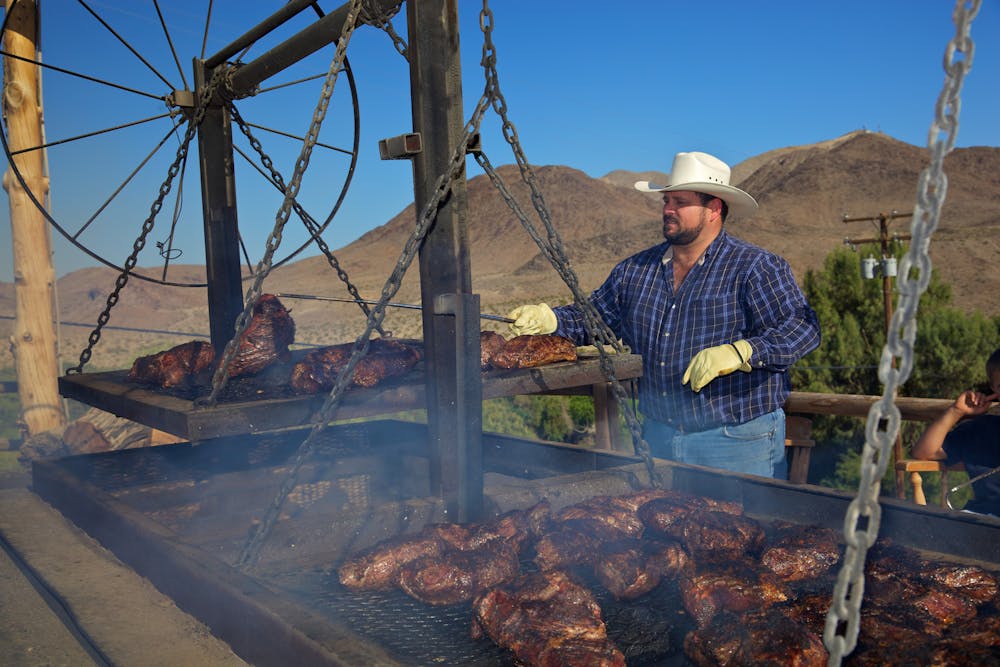
    @IMFSpokesperson

    MIL OSI Economics

  • MIL-OSI: First Busey Corporation Announces 2024 Third Quarter Earnings

    Source: GlobeNewswire (MIL-OSI)

    CHAMPAIGN, Ill., Oct. 22, 2024 (GLOBE NEWSWIRE) — First Busey Corporation (Nasdaq: BUSE)

     Net Income of $32.0 million
    Diluted EPS of $0.55


    THIRD QUARTER 2024 HIGHLIGHTS

    • Adjusted net income1 of $33.5 million, or $0.58 per diluted common share
    • Noninterest income of $36.0 million, or 30.5% of operating revenue1
    • Record high quarterly revenue for the Wealth Management operating segment
    • Tangible book value per common share1 of $18.19 at September 30, 2024, compared to $16.97 at June 30, 2024, and $15.07 at September 30, 2023, a year-over-year increase of 20.7%
    • Tangible common equity1 increased to 8.96% of tangible assets at September 30, 2024, compared to 8.36% at June 30, 2024, and 7.06% at September 30, 2023
    • Announced transformative partnership with CrossFirst Bankshares

    For additional information, please refer to the 3Q24 Earnings Investor Presentation.

    MESSAGE FROM OUR CHAIRMAN & CEO

    Third Quarter Financial Results

    Net income for First Busey Corporation (“Busey,” “Company,” “we,” “us,” or “our”) was $32.0 million for the third quarter of 2024, or $0.55 per diluted common share, compared to $27.4 million, or $0.47 per diluted common share, for the second quarter of 2024, and $30.7 million, or $0.54 per diluted common share, for the third quarter of 2023. Adjusted net income1, which excludes the impact of acquisition and restructuring expenses, was $33.5 million, or $0.58 per diluted common share, for the third quarter of 2024, compared to $29.0 million, or $0.50 per diluted common share, for the second quarter of 2024 and $30.7 million or $0.55 per diluted common share for the third quarter of 2023. Annualized return on average assets and annualized return on average tangible common equity1 were 1.06% and 12.80%, respectively, for the third quarter of 2024. Annualized adjusted return on average assets1 and annualized adjusted return on average tangible common equity1 were 1.11% and 13.41%, respectively, for the third quarter of 2024.

    Third quarter results included $0.8 million in net securities gains, nearly all of which were unrealized, as well as immaterial follow-on adjustments from the mortgage servicing rights sale previously announced in the first quarter of 2024. Excluding these items, adjusted noninterest income1 was $35.1 million, or 29.9% of operating revenue1, during the third quarter of 2024, compared to $33.9 million, or 29.1% of operating revenue, for the second quarter of 2024 and $31.3 million, or 28.7% of operating revenue, for the third quarter of 2023. Further adjusted net income1 was $32.9 million for the third quarter of 2024 with these items excluded, equating to further adjusted earnings1 of $0.57 per diluted common share.

    Pre-provision net revenue1 was $41.7 million for the third quarter of 2024, compared to $41.1 million for the second quarter of 2024 and $38.1 million for the third quarter of 2023. Pre-provision net revenue to average assets1 was 1.38% for the third quarter of 2024, compared to 1.37% for the second quarter of 2024, and 1.24% for the third quarter of 2023. Adjusted pre-provision net revenue1 was $44.1 million for the third quarter of 2024, compared to $42.6 million for the second quarter of 2024 and $40.5 million for the third quarter of 2023. Adjusted pre-provision net revenue to average assets1 was 1.46% for the third quarter of 2024, compared to 1.42% for the second quarter of 2024 and 1.32% for the third quarter of 2023.

    Our fee-based businesses continue to add revenue diversification. Total noninterest income was $36.0 million for the third quarter of 2024, compared to $33.8 million for the second quarter of 2024 and $31.0 million for the third quarter of 2023. Busey’s Wealth Management and FirsTech operating segments contributed $16.2 million and $5.6 million, respectively, to our noninterest income for the third quarter of 2024, representing 60.4% of noninterest income on a combined basis.

    Busey views certain non-operating items, including acquisition-related expenses and restructuring charges, as adjustments to net income reported under U.S. generally accepted accounting principles (“GAAP”). Non-operating pretax adjustments for acquisition and restructuring expenses1 were $1.9 million in the third quarter of 2024. Busey believes that its non-GAAP measures (which are identified with the endnote labeled as 1) facilitate the assessment of its financial results and peer comparability. For more information and a reconciliation of these non-GAAP measures in tabular form, see Non-GAAP Financial Information.

    We remain deliberate in our efforts to prudently manage our expense base and operating efficiency given the economic outlook. Noninterest expense was $75.9 million in the third quarter of 2024, compared to $75.5 million in the second quarter of 2024 and $70.9 million in the third quarter of 2023. Adjusted core expense1, which excludes the amortization of intangible assets and new markets tax credits, acquisition and restructuring expenses, and the provision for unfunded commitments, was $71.0 million in the third quarter of 2024, compared to $71.1 million in the second quarter of 2024 and $66.0 million in the third quarter of 2023. The year-over-year comparable period growth in adjusted core expense can be attributed primarily to the acquisition of M&M and general inflationary pressures on compensation and benefits and to a lesser extent certain other expense categories.

    Quarterly pre-tax expense synergies resulting from our acquisition of Merchants and Manufacturers Bank Corporation (the “M&M acquisition”) are anticipated to be $1.6 million to $1.7 million per quarter when fully realized. Quarterly run-rate savings are projected to be achieved by the first quarter of 2025. During the third quarter of 2024, we achieved approximately 79% of the full quarterly savings. We expect to continue to prudently manage our expenses and to realize increased rates of M&M acquisition synergies during the final quarter of 2024.

    Planned Partnership with CrossFirst

    On August 26, 2024, Busey and CrossFirst Bankshares, Inc. (“CrossFirst”) entered into an agreement and plan of merger (the “merger agreement”) pursuant to which CrossFirst will merge with and into Busey (the “merger”) and CrossFirst’s wholly-owned subsidiary, CrossFirst Bank, will merge with and into Busey Bank. This partnership will create a premier commercial bank in the Midwest, Southwest, and Florida, with 77 full-service locations across 10 states—Arizona, Colorado, Florida, Illinois, Indiana, Kansas, Missouri, New Mexico, Oklahoma, and Texas—and approximately $20 billion in combined assets, $17 billion in total deposits, $15 billion in total loans, and $14 billion in wealth assets under care.

    Under the terms of the merger agreement, CrossFirst stockholders will have the right to receive for each share of CrossFirst common stock 0.6675 of a share of Busey’s common stock. Upon completion of the transaction, Busey’s stockholders will own approximately 63.5% of the combined company and CrossFirst’s stockholders will own approximately 36.5% of the combined company, on a fully-diluted basis. Busey common stock will continue to trade on the Nasdaq under the “BUSE” stock ticker symbol.

    Completion of the merger is subject to customary closing conditions, including the approval of both Busey and CrossFirst stockholders and the regulatory approvals for the merger and the bank merger. With approvals, the parties expect to close the merger in the first or second quarter of 2025. The combined holding company will continue to operate under the First Busey Corporation name and the combined bank will operate under the Busey Bank name. It is anticipated that CrossFirst Bank will merge with and into Busey Bank in mid-2025. At the time of the bank merger, CrossFirst Bank locations will become banking centers of Busey Bank. In connection with the merger, Busey incurred one-time pretax acquisition-related expenses of $1.3 million during the third quarter of 2024.

    For further details on the merger, see Busey’s Current Report on Form 8‑K announcing the merger, which was filed with the U.S. Securities and Exchange Commission (the “SEC”) on August 27, 2024.

    Busey’s Conservative Banking Strategy

    Busey’s financial strength is built on a long-term conservative operating approach. That focus will not change now or in the future.

    The quality of our core deposit franchise is a critical value driver of our institution. Our granular deposit base continues to position us well, with core deposits1 representing 96.5% of our deposits as of September 30, 2024. Our retail deposit base was comprised of more than 253,000 accounts with an average balance of $22 thousand and an average tenure of 16.7 years as of September 30, 2024. Our commercial deposit base was comprised of more than 33,000 accounts with an average balance of $97 thousand and an average tenure of 12.6 years as of September 30, 2024. We estimate that 29% of our deposits were uninsured and uncollateralized2 as of September 30, 2024, and we have sufficient on- and off-balance sheet liquidity to manage deposit fluctuations and the liquidity needs of our customers.

    Asset quality remains strong by both Busey’s historical and current industry trends. Non-performing assets decreased to $8.3 million during the third quarter of 2024, representing 0.07% of total assets. Busey’s results for the third quarter of 2024 include an insignificant provision expense for credit losses and a $0.4 million provision expense for unfunded commitments. The allowance for credit losses was $85.0 million as of September 30, 2024, representing 1.09% of total portfolio loans outstanding, and providing coverage of 10.34 times our non-performing loan balance. Busey recorded net charge-offs of $0.2 million in the third quarter of 2024. As of September 30, 2024, our commercial real estate loan portfolio of investor-owned office properties within Central Business District3 areas was minimal at $2.1 million. Our credit performance continues to reflect our highly diversified, conservatively underwritten loan portfolio, which has been originated predominantly to established customers with tenured relationships with our company.

    The strength of our balance sheet is also reflected in our capital foundation. In the third quarter of 2024, our Common Equity Tier 1 ratio4 was 13.78% and our Total Capital to Risk Weighted Assets ratio4 was 18.19%. Our regulatory capital ratios continue to provide a buffer of more than $580 million above levels required to be designated well-capitalized. Our Tangible Common Equity ratio1 increased to 8.96% during the third quarter of 2024, compared to 8.36% for the second quarter of 2024 and 7.06% for the third quarter of 2023. Busey’s tangible book value per common share1 increased to $18.19 at September 30, 2024, from $16.97 at June 30, 2024, and $15.07 at September 30, 2023, reflecting a 20.7% year-over-year increase. During the third quarter of 2024, we paid a common share dividend of $0.24.

    Community Banking

    In July 2024—based on their community involvement and academic achievements—Busey awarded 10 deserving students from across Busey’s footprint in Illinois, Missouri, Florida, and Indiana, a $2,500 scholarship to support their continuing education and bright futures. With 70 applications received, and a record number of eligible applicants, the students with the top scores, as determined by Busey’s Scholarship Committee, averaged a 4.16 GPA. Since the inception of the Busey Bank Bridge Scholarship program in 2022, Busey has awarded 30 scholarships to deserving students for a total $75,000. Full details on the scholarship’s eligibility criteria and application process can be found at https://www.busey.com/busey/busey-bank-bridge-scholarship.

    As we build upon Busey’s forward momentum and our strategic growth plans, we are grateful for the opportunities to consistently earn the business of our customers, based on the contributions of our talented associates and the continued support of our loyal shareholders. With our strong capital position, an attractive core funding base, and a sound credit foundation, we remain confident that we are well positioned as we move into the final quarter of 2024 and into 2025. We are mindful of the evolving economic outlook and remain focused on balance sheet strength, profitability, and growth, in that order. The pending CrossFirst transaction fits with our acquisition strategy and we are excited to welcome our CrossFirst colleagues into the Busey family.

        Van A. Dukeman
        Chairman and Chief Executive Officer
        First Busey Corporation
     
    SELECTED FINANCIAL HIGHLIGHTS (unaudited)
    (dollars in thousands, except per share amounts)
                       
      Three Months Ended   Nine Months Ended
      September 30,
    2024
      June 30,
    2024
      September 30,
    2023
      September 30,
    2024
      September 30,
    2023
    EARNINGS & PER SHARE AMOUNTS                  
    Net income $ 32,004     $ 27,357     $ 30,666     $ 85,586     $ 96,816  
    Diluted earnings per common share   0.55       0.47       0.54       1.49       1.72  
    Cash dividends paid per share   0.24       0.24       0.24       0.72       0.72  
    Pre-provision net revenue1, 2   41,744       41,051       38,139       129,168       125,593  
    Operating revenue2   117,688       116,311       109,084       343,676       336,146  
                       
    Net income by operating segment:                  
    Banking   33,221       26,697       31,189       86,410       98,689  
    FirsTech   (61 )     28       317       53       505  
    Wealth Management   5,618       5,561       4,781       16,177       14,571  
                       
    AVERAGE BALANCES                  
    Cash and cash equivalents $ 502,127     $ 346,381     $ 252,730     $ 480,979     $ 237,370  
    Investment securities   2,666,269       2,737,313       3,148,759       2,769,862       3,254,054  
    Loans held for sale   11,539       9,353       2,267       8,585       1,955  
    Portfolio loans   7,869,798       8,010,636       7,834,285       7,826,741       7,767,378  
    Interest-earning assets   10,936,611       10,993,907       11,118,167       10,976,660       11,142,780  
    Total assets   12,007,702       12,089,692       12,202,783       12,040,414       12,225,232  
                       
    Noninterest-bearing deposits   2,706,858       2,816,293       2,925,244       2,743,777       3,082,884  
    Interest-bearing deposits   7,296,921       7,251,582       7,217,463       7,292,884       6,886,277  
    Total deposits   10,003,779       10,067,875       10,142,707       10,036,661       9,969,161  
                       
    Federal funds purchased and securities sold under agreements to repurchase   132,688       144,370       190,112       151,835       207,014  
    Interest-bearing liabilities   7,731,459       7,725,832       7,864,355       7,762,867       7,748,218  
    Total liabilities   10,643,325       10,757,877       10,994,376       10,716,295       11,029,374  
    Stockholders’ equity – common   1,364,377       1,331,815       1,208,407       1,324,119       1,195,858  
    Tangible common equity2   994,657       955,591       850,382       957,788       835,204  
                       
    PERFORMANCE RATIOS                  
    Pre-provision net revenue to average assets1, 2, 3   1.38 %     1.37 %     1.24 %     1.43 %     1.37 %
    Return on average assets3   1.06 %     0.91 %     1.00 %     0.95 %     1.06 %
    Return on average common equity3   9.33 %     8.26 %     10.07 %     8.63 %     10.82 %
    Return on average tangible common equity2, 3   12.80 %     11.51 %     14.31 %     11.94 %     15.50 %
    Net interest margin2, 4   3.02 %     3.03 %     2.80 %     2.94 %     2.93 %
    Efficiency ratio2   62.15 %     62.32 %     62.38 %     60.87 %     59.97 %
    Adjusted noninterest income to operating revenue2   29.86 %     29.13 %     28.69 %     29.95 %     27.91 %
                       
    NON-GAAP FINANCIAL INFORMATION                  
    Adjusted pre-provision net revenue1, 2 $ 44,104     $ 42,617     $ 40,491     $ 125,359     $ 132,067  
    Adjusted net income2   33,533       29,016       30,730       89,080       96,889  
    Adjusted diluted earnings per share2   0.58       0.50       0.55       1.55       1.72  
    Adjusted pre-provision net revenue to average assets2, 3   1.46 %     1.42 %     1.32 %     1.39 %     1.44 %
    Adjusted return on average assets2, 3   1.11 %     0.97 %     1.00 %     0.99 %     1.06 %
    Adjusted return on average tangible common equity2, 3   13.41 %     12.21 %     14.34 %     12.42 %     15.51 %
    Adjusted net interest margin2, 4   2.97 %     3.00 %     2.79 %     2.92 %     2.91 %
    Adjusted efficiency ratio2   60.50 %     60.57 %     62.31 %     60.91 %     59.95 %

    ___________________________________________

    1. Net interest income plus noninterest income, excluding securities gains and losses, less noninterest expense.
    2. See Non-GAAP Financial Information for reconciliation.
    3. For quarterly periods, measures are annualized.
    4. On a tax-equivalent basis, assuming a federal income tax rate of 21%.
     
    CONDENSED CONSOLIDATED BALANCE SHEETS (unaudited)
    (dollars in thousands, except per share amounts)
     
      As of
      September 30,
    2024
      June 30,
    2024
      September 30,
    2023
    ASSETS          
    Cash and cash equivalents $ 553,709     $ 285,269     $ 337,919  
    Debt securities available for sale   1,818,117       1,829,896       2,182,841  
    Debt securities held to maturity   838,883       851,261       882,614  
    Equity securities   10,315       9,618       8,782  
    Loans held for sale   11,523       11,286       3,051  
               
    Commercial loans   5,631,281       5,799,214       5,824,800  
    Retail real estate and retail other loans   2,177,816       2,199,698       2,031,360  
    Portfolio loans   7,809,097       7,998,912       7,856,160  
               
    Allowance for credit losses   (84,981 )     (85,226 )     (91,710 )
    Premises and equipment   120,279       121,647       122,538  
    Right of use asset   11,100       11,137       11,500  
    Goodwill and other intangible assets, net   368,249       370,580       356,343  
    Other assets   530,548       567,036       588,212  
    Total assets $ 11,986,839     $ 11,971,416     $ 12,258,250  
               
    LIABILITIES & STOCKHOLDERS’ EQUITY          
    Liabilities          
    Deposits:          
    Noninterest-bearing deposits $ 2,683,543     $ 2,832,776     $ 2,918,574  
    Interest-bearing checking, savings, and money market deposits   5,739,773       5,619,470       5,747,136  
    Time deposits   1,519,925       1,523,889       1,666,652  
    Total deposits   9,943,241       9,976,135       10,332,362  
               
    Securities sold under agreements to repurchase   128,429       140,283       183,702  
    Short-term borrowings               12,000  
    Long-term debt   227,482       227,245       243,666  
    Junior subordinated debt owed to unconsolidated trusts   74,754       74,693       71,946  
    Lease liability   11,470       11,469       11,783  
    Other liabilities   198,579       207,781       212,633  
    Total liabilities   10,583,955       10,637,606       11,068,092  
               
    Stockholders’ equity          
    Retained earnings   279,868       261,820       224,698  
    Accumulated other comprehensive income (loss)   (170,913 )     (220,326 )     (290,730 )
    Other1   1,293,929       1,292,316       1,256,190  
    Total stockholders’ equity   1,402,884       1,333,810       1,190,158  
    Total liabilities & stockholders’ equity $ 11,986,839     $ 11,971,416     $ 12,258,250  
               
    SHARE AND PER SHARE AMOUNTS          
    Book value per common share $ 24.67     $ 23.50     $ 21.51  
    Tangible book value per common share2 $ 18.19     $ 16.97     $ 15.07  
    Ending number of common shares outstanding   56,872,241       56,746,937       55,342,017  

    ___________________________________________

    1. Net balance of common stock ($0.001 par value), additional paid-in capital, and treasury stock.
    2. See Non-GAAP Financial Information for reconciliation.
     
    CONDENSED CONSOLIDATED STATEMENTS OF INCOME (unaudited)
    (dollars in thousands, except per share amounts)
                       
      Three Months Ended   Nine Months Ended
      September 30,
    2024
      June 30,
    2024
      September 30,
    2023
      September 30,
    2024
      September 30,
    2023
    INTEREST INCOME                  
    Interest and fees on loans $ 111,336     $ 109,641     $ 99,844     $ 320,302     $ 284,423  
    Interest and dividends on investment securities   18,072       19,173       21,234       57,182       62,360  
    Other interest income   5,092       3,027       1,591       14,590       3,890  
    Total interest income $ 134,500     $ 131,841     $ 122,669     $ 392,074     $ 350,673  
                       
    INTEREST EXPENSE                  
    Deposits $ 46,634     $ 43,709     $ 37,068     $ 134,311     $ 78,576  
    Federal funds purchased and securities sold under agreements to repurchase   981       1,040       1,327       3,393       3,772  
    Short-term borrowings   26       418       1,964       676       12,527  
    Long-term debt   3,181       3,181       3,528       9,767       10,631  
    Junior subordinated debt owed to unconsolidated trusts   1,137       1,059       991       3,185       2,849  
    Total interest expense $ 51,959     $ 49,407     $ 44,878     $ 151,332     $ 108,355  
                       
    Net interest income $ 82,541     $ 82,434     $ 77,791     $ 240,742     $ 242,318  
    Provision for credit losses   2       2,277       364       7,317       1,944  
    Net interest income after provision for credit losses $ 82,539     $ 80,157     $ 77,427     $ 233,425     $ 240,374  
                       
    NONINTEREST INCOME                  
    Wealth management fees $ 15,378     $ 15,917     $ 14,235     $ 46,844     $ 43,594  
    Fees for customer services   8,168       7,798       7,502       23,022       21,560  
    Payment technology solutions   5,265       5,915       5,226       16,889       15,772  
    Mortgage revenue   355       478       311       1,579       871  
    Income on bank owned life insurance   1,189       1,442       1,001       4,050       3,682  
    Realized net gains (losses) on the sale of mortgage servicing rights   (18 )     277             7,724        
    Net securities gains (losses)   822       (353 )     (285 )     (5,906 )     (2,960 )
    Other noninterest income   4,792       2,327       3,018       10,550       8,349  
    Total noninterest income $ 35,951     $ 33,801     $ 31,008     $ 104,752     $ 90,868  
                       
    NONINTEREST EXPENSE                  
    Salaries, wages, and employee benefits $ 44,593     $ 43,478     $ 39,677     $ 130,161     $ 119,867  
    Data processing expense   6,910       7,100       5,930       20,560       17,472  
    Net occupancy expense of premises   4,633       4,590       4,594       13,943       13,896  
    Furniture and equipment expense   1,647       1,695       1,638       5,155       5,065  
    Professional fees   3,118       2,495       1,542       7,866       4,573  
    Amortization of intangible assets   2,548       2,629       2,555       7,586       7,953  
    Interchange expense   1,352       1,733       1,786       4,696       5,509  
    FDIC insurance   1,413       1,460       1,475       4,273       4,483  
    Other noninterest expense   9,712       10,357       11,748       27,992       31,735  
    Total noninterest expense $ 75,926     $ 75,537     $ 70,945     $ 222,232     $ 210,553  
                       
    Income before income taxes $ 42,564     $ 38,421     $ 37,490     $ 115,945     $ 120,689  
    Income taxes   10,560       11,064       6,824       30,359       23,873  
    Net income $ 32,004     $ 27,357     $ 30,666     $ 85,586     $ 96,816  
                       
    SHARE AND PER SHARE AMOUNTS                  
    Basic earnings per common share $ 0.56     $ 0.48     $ 0.55     $ 1.52     $ 1.75  
    Diluted earnings per common share $ 0.55     $ 0.47     $ 0.54     $ 1.49     $ 1.72  
    Average common shares outstanding   57,033,359       56,919,025       55,486,700       56,458,430       55,441,980  
    Diluted average common shares outstanding   57,967,848       57,853,231       56,315,492       57,411,299       56,230,624  
                                           

    BALANCE SHEET STRENGTH

    Our balance sheet remains a source of strength. Total assets were $11.99 billion as of September 30, 2024, compared to $11.97 billion as of June 30, 2024, and $12.26 billion as of September 30, 2023.

    We remain steadfast in our conservative approach to underwriting and disciplined approach to pricing, particularly given our outlook for the economy in the coming quarters, and this approach has impacted loan growth as predicted. Portfolio loans totaled $7.81 billion at September 30, 2024, compared to $8.00 billion at June 30, 2024, and $7.86 billion at September 30, 2023.

    Average portfolio loans were $7.87 billion for the third quarter of 2024, compared to $8.01 billion for the second quarter of 2024 and $7.83 billion for the third quarter of 2023. Average interest-earning assets were $10.94 billion for the third quarter of 2024, compared to $10.99 billion for the second quarter of 2024, and $11.12 billion for the third quarter of 2023.

    Total deposits were $9.94 billion at September 30, 2024, compared to $9.98 billion at June 30, 2024, and $10.33 billion at September 30, 2023. Average deposits were $10.00 billion for the third quarter of 2024, compared to $10.07 billion for the second quarter of 2024 and $10.14 billion for the third quarter of 2023. Deposit fluctuations over the last several quarters were driven by a number of elements, including (1) seasonal factors, including ordinary course public fund flows and fluctuations in the normal course of business operations of certain core commercial customers, (2) the macroeconomic environment, including prevailing interest rates and inflationary pressures, (3) depositors moving some funds to accounts at competitors offering above-market rates, and (4) deposits moving within the Busey ecosystem between deposit accounts and our wealth management group. Core deposits1 accounted for 96.5% of total deposits as of September 30, 2024. Cost of deposits was 1.85% in the third quarter of 2024, which represents an increase of 10 basis points from the second quarter of 2024. Excluding time deposits, Busey’s cost of deposits was 1.50% in the third quarter of 2024, an increase of 14 basis points from the second quarter of 2024. Non-maturity deposit cost of funds has increased as Busey Bank continues to offer savings account specials to customers with larger account balances, with the intention of migrating maturing CDs to these managed rate products. Pressure on non-interest bearing deposits along with some elevated balances of higher rate seasonal business and public funds accounts also contributed to increases in overall deposit funding cost during the quarter. Spot rates on total deposit costs, including noninterest bearing deposits, increased by 5 basis points from 1.75% at June 30, 2024, to 1.80% at September 30, 2024. Spot rates on interest bearing deposits increased by 1 basis point from 2.45% at June 30, 2024 to 2.46% at September 30, 2024.

    There were no short term borrowings as of September 30 or June 30, 2024, compared to $12.0 million at September 30, 2023. We had no borrowings from the Federal Home Loan Bank (“FHLB”) at the end of the third quarter of 2024, the second quarter of 2024, or the third quarter of 2023. We have sufficient on- and off-balance sheet liquidity5 to manage deposit fluctuations and the liquidity needs of our customers. As of September 30, 2024, our available sources of on- and off-balance sheet liquidity totaled $6.37 billion. We have executed various deposit campaigns to attract term funding and savings accounts at a lower rate than our marginal cost of funds. New certificate of deposit production in the third quarter of 2024 had a weighted average term of 8.1 months at a rate of 4.18%, 67 basis points below our average marginal wholesale equivalent-term funding cost during the quarter. Furthermore, our balance sheet liquidity profile continues to be aided by the cash flows we expect from our relatively short-duration securities portfolio. Those cash flows were approximately $81.1 million in the third quarter of 2024. For the remainder of 2024, cash flows from our securities portfolio are expected to be approximately $97.1 million with a current book yield of 2.18%.

    ASSET QUALITY

    Credit quality continues to be strong. Loans 30-89 days past due totaled $10.1 million as of September 30, 2024, compared to $23.5 million as of June 30, 2024, and $5.9 million as of September 30, 2023. The decrease in loans that were 30-89 days past due is primarily attributable to a single commercial real estate loan in the second quarter that is no longer past due as of September 30, 2024. Non-performing loans were $8.2 million as of September 30, 2024, compared to $9.1 million as of June 30, 2024, and $12.0 million as of September 30, 2023. Continued disciplined credit management resulted in non-performing loans as a percentage of portfolio loans of 0.11% as of both September 30, 2024, and June 30, 2024, and 0.15% as of September 30, 2023. Non-performing assets were 0.07% of total assets for the third quarter of 2024, compared to 0.08% for the second quarter of 2024 and 0.10% for the third quarter of 2023. Our total classified assets were $89.0 million at September 30, 2024, compared to $95.8 million at June 30, 2024, and $59.6 million at September 30, 2023. Our ratio of classified assets to estimated bank Tier 1 capital4 and reserves remains low by historical standards, at 5.9% as of September 30, 2024, compared to 6.4% as of June 30, 2024, and 4.1% as of September 30, 2023.

    Net charge-offs were $0.2 million for the third quarter of 2024, compared to $9.9 million for the second quarter of 2024, and $0.3 million for the third quarter of 2023. Charge-offs in the second quarter of 2024 were primarily in connection with a single commercial and industrial credit relationship that also experienced a partial charge-off during the first quarter of 2024. The allowance as a percentage of portfolio loans was 1.09% as of September 30, 2024, compared to 1.07% as of June 30, 2024, and 1.17% as of September 30, 2023. The ratio was impacted in 2024 by the acquisition of M&M’s Life Equity Loan® portfolio, as Busey did not record an allowance for credit loss for these loans due to no expected credit loss at default, as permitted under the practical expedient provided within the Accounting Standards Codification 326-20-35-6. The allowance coverage for non-performing loans was 10.34 times as of September 30, 2024, compared to 9.36 times as of June 30, 2024, and 7.64 times as of September 30, 2023.

    Busey maintains a well-diversified loan portfolio and, as a matter of policy and practice, limits concentration exposure in any particular loan segment.

     
    ASSET QUALITY (unaudited)
    (dollars in thousands)
               
      As of
      September 30,
    2024
      June 30,
    2024
      September 30,
    2023
    Total assets $ 11,986,839     $ 11,971,416     $ 12,258,250  
    Portfolio loans   7,809,097       7,998,912       7,856,160  
    Loans 30 – 89 days past due   10,141       23,463       5,934  
    Non-performing loans:          
    Non-accrual loans   8,192       8,393       11,298  
    Loans 90+ days past due and still accruing   25       712       709  
    Non-performing loans $ 8,217     $ 9,105     $ 12,007  
    Non-performing loans, segregated by geography:          
    Illinois / Indiana $ 3,981     $ 5,793     $ 7,951  
    Missouri   3,530       3,089       3,747  
    Florida   706       222       309  
    Other non-performing assets   64       90       96  
    Non-performing assets $ 8,281     $ 9,195     $ 12,103  
               
    Allowance for credit losses $ 84,981     $ 85,226     $ 91,710  
               
    RATIOS          
    Non-performing loans to portfolio loans   0.11 %     0.11 %     0.15 %
    Non-performing assets to total assets   0.07 %     0.08 %     0.10 %
    Non-performing assets to portfolio loans and other non-performing assets   0.11 %     0.11 %     0.15 %
    Allowance for credit losses to portfolio loans   1.09 %     1.07 %     1.17 %
    Coverage ratio of the allowance for credit losses to non-performing loans 10.34 x   9.36 x   7.64 x
    NET CHARGE-OFFS (RECOVERIES) AND PROVISION EXPENSE (RELEASE) (unaudited)
    (dollars in thousands)
                       
      Three Months Ended   Nine Months Ended
      September 30,
    2024
      June 30,
    2024
      September 30,
    2023
      September 30,
    2024
      September 30,
    2023
    Net charge-offs (recoveries) $ 247     $ 9,856     $ 293     $ 15,319     $ 1,842  
    Provision expense (release)   2       2,277       364       7,317       1,944  
                                           

    NET INTEREST MARGIN AND NET INTEREST INCOME

    Net interest margin1 was 3.02% for the third quarter of 2024, compared to 3.03% for the second quarter of 2024 and 2.80% for the third quarter of 2023. Excluding purchase accounting accretion, adjusted net interest margin1 was 2.97% for the third quarter of 2024, compared to 3.00% in the second quarter of 2024 and 2.79% in the third quarter of 2023. Net interest income was $82.5 million in the third quarter of 2024, compared to $82.4 million in the second quarter of 2024 and $77.8 million in the third quarter of 2023.

    After raising federal funds rates by a total of 525 basis points between March 2022 and July 2023, the Federal Open Market Committee (“FOMC”) lowered rates by 50 basis points in September 2024. In anticipation of the FOMC pivot to an easing cycle, we limited our exposure to term funding structures and intentionally priced savings specials to encourage maturing CD balances to migrate to managed rate non-maturity products. During September we began lowering rates on special priced deposit accounts and other managed rate products to benefit from the FOMC rate cuts. In addition, approximately 6% of our deposit portfolio is indexed and immediately repriced with the rate cuts by the FOMC. With our short duration CD balances comprising only 15% of the deposit funding base, we also have the ability to quickly reprice the book at lower market rates. We continue to offer CD specials with shorter term structures as well as offering attractive premium savings rates to encourage rotation of maturing CD deposits into nimble pricing products. Components of the 1 basis point decrease in net interest margin1 during the third quarter of 2024 include:

    • Increased cash and securities portfolio yield contributed +3 basis points
    • Increased loan portfolio and held for sale loan yields contributed +2 basis points
    • Increased purchase accounting contributed +2 basis points
    • Reduced borrowing expense +2 basis points
    • Reduced time deposit funding costs contributed +1 basis point
    • Increased non-maturity deposit funding costs contributed -11 basis points

    Based on our most recent Asset Liability Management Committee (“ALCO”) model, a +100 basis point parallel rate shock is expected to increase net interest income by 2.1% over the subsequent twelve-month period. Busey continues to evaluate off-balance sheet hedging and balance sheet restructuring strategies as well as embedding rate protection in our asset originations to provide stabilization to net interest income in lower rate environments. Time deposit and savings specials have provided funding flows, and we had excess earning cash during the third quarter of 2024. Since the onset of the current FOMC tightening cycle that began in the first quarter of 2022, our cumulative interest-bearing non-maturity deposit beta peaked at 41%. Our total deposit beta for the completed tightening cycle was 34%. Deposit betas were calculated based on an average federal funds rate of 5.43% during the third quarter of 2024. The average federal funds rate decreased by 7 basis points compared to the average rate of 5.50% in the second quarter of 2024.

    NONINTEREST INCOME

    Noninterest income was $36.0 million for the third quarter of 2024, as compared to $33.8 million for the second quarter of 2024 and $31.0 million for the third quarter of 2023. Excluding the impact of net securities gains and losses and immaterial follow-on adjustments from the previously announced mortgage servicing rights sale, adjusted noninterest income1 was $35.1 million, or 29.9% of operating revenue1, during the third quarter of 2024, $33.9 million, or 29.1% of operating revenue, for the second quarter of 2024, and $31.3 million, or 28.7% of operating revenue, for the third quarter of 2023.

    Consolidated wealth management fees were $15.4 million for the third quarter of 2024, compared to $15.9 million for the second quarter of 2024 and $14.2 million for the third quarter of 2023. Wealth management fees for the third quarter of 2024 declined by 3.4% compared to the second quarter of 2024 primarily based on seasonal tax preparation fees. On a segment basis, Wealth Management generated $16.2 million in revenue during the third quarter of 2024, a 12.7% increase over revenue of $14.4 million for the third quarter of 2023. Approximately $0.8 million of revenue attributed to the wealth segment is reported on a consolidated basis as part of other noninterest income. Third quarter of 2024 results marked a new record high reported quarterly revenue for the Wealth Management operating segment. The Wealth Management operating segment generated net income of $5.6 million in both the third quarter of 2024 and the second quarter of 2024, compared to $4.8 million in the third quarter of 2023. Busey’s Wealth Management division ended the third quarter of 2024 with $13.69 billion in assets under care, compared to $13.02 billion at the end of the second quarter of 2024 and $11.55 billion at the end of the third quarter of 2023. Our portfolio management team continues to focus on long-term returns and managing risk in the face of volatile markets and has outperformed its blended benchmark6 over the last three and five years.

    Payment technology solutions revenue was $5.3 million for the third quarter of 2024, compared to $5.9 million for the second quarter of 2024 and $5.2 million for the third quarter of 2023. Excluding intracompany eliminations, the FirsTech operating segment generated revenue of $5.6 million during the third quarter of 2024, compared to $6.2 million in the second quarter of 2024 and $5.7 million in the third quarter of 2023.

    Noninterest income generated from our Wealth Management and FirsTech operating segments comprised 60.4% of our total noninterest income for the quarter ended September 30, 2024, providing a balance to spread-based revenue from traditional banking activities.

    Fees for customer services were $8.2 million for the third quarter of 2024, compared to $7.8 million in the second quarter of 2024 and $7.5 million in the third quarter of 2023.

    Net securities gains were $0.8 million for the third quarter of 2024, comprised primarily of unrealized gains on equity securities.

    Other noninterest income was $4.8 million in the third quarter of 2024, compared to $2.3 million in the second quarter of 2024 and $3.0 million in the third quarter of 2023. Revenue associated with certain wealth management activities reported as other noninterest income on a consolidated basis was $0.8 million for the third quarter of 2024, compared to $0.2 million for the second quarter of 2024 and $0.1 million for the third quarter of 2023. Fluctuations in other noninterest income are primarily attributable to increases in venture capital investments, referral fees, and swap origination fees, partially offset by decreases in commercial loan sales gains. Increases for the year also reflect the addition of Life Equity Loan® servicing income beginning in the second quarter of 2024.

    OPERATING EFFICIENCY

    Noninterest expense was $75.9 million in the third quarter of 2024, compared to $75.5 million in the second quarter of 2024 and $70.9 million for the third quarter of 2023. The efficiency ratio1 was 62.1% for the third quarter of 2024, compared to 62.3% for the second quarter of 2024, and 62.4% for the third quarter of 2023. Adjusted core expense1 was $71.0 million in the third quarter of 2024, compared to $71.1 million in the second quarter of 2024 and $66.0 million in the third quarter of 2023. The adjusted core efficiency ratio1 was 60.2% for the third quarter of 2024, compared to 60.9% for the second quarter of 2024, and 60.2% for the third quarter of 2023. We expect to continue to prudently manage our expenses and to realize increased rates of M&M acquisition synergies during the final quarter of 2024.

    Noteworthy components of noninterest expense are as follows:

    • Salaries, wages, and employee benefits expenses were $44.6 million in the third quarter of 2024, compared to $43.5 million in the second quarter of 2024 and $39.7 million in the third quarter of 2023. Busey recorded $0.1 million of non-operating salaries, wages, and employee benefit expenses in the third quarter of 2024, compared to $1.1 million in the second quarter of 2024 and none in the third quarter of 2023. The increase in the third quarter of 2024 over the second quarter of 2024 was primarily attributable to performance metrics tied to bonus and equity compensation. Our associate-base consisted of 1,510 full-time equivalents as of September 30, 2024, compared to 1,520 as of June 30, 2024, and 1,484 as of September 30, 2023. The increase in our associate-base in the second quarter of 2024 was largely due to the M&M acquisition.
    • Data processing expense was $6.9 million in the third quarter of 2024, compared to $7.1 million in the second quarter of 2024 and $5.9 million in the third quarter of 2023. Busey recorded $0.1 million of non-operating data processing expenses in the third quarter of 2024, compared to $0.3 million in the second quarter of 2024 and none in the third quarter of 2023. Busey has continued to make investments in technology enhancements and has also experienced inflation-driven price increases.
    • Professional fees were $3.1 million in the third quarter of 2024, compared to $2.5 million in the second quarter of 2024 and $1.5 million in the third quarter of 2023. Busey recorded $1.4 million of non-operating professional fees in the third quarter of 2024, as compared to $0.4 million in the second quarter of 2024 and $0.1 million in the third quarter of 2023.
    • Other noninterest expense was $9.7 million for the third quarter of 2024, compared to $10.4 million in the second quarter of 2024 and $11.7 million in the third quarter of 2023. Busey recorded $0.4 million of non-operating costs in other noninterest expense in the third quarter of 2024, compared to $0.3 million in the second quarter of 2024 and none in the third quarter of 2023. In connection with Busey’s adoption of ASU 2023-02 on January 1, 2024, Busey began recording amortization of New Markets Tax Credits as income tax expense instead of other operating expense, which resulted in a decrease to other operating expenses of $2.3 million compared to the third quarter of 2023. Other items contributing to the fluctuations in other noninterest expense included the provision for unfunded commitments, mortgage servicing rights valuation expenses, fixed asset impairment, marketing, business development, and expenses related to recruiting and onboarding.

    Busey’s effective tax rate for the third quarter of 2024 was 24.8%, which was lower than the combined federal and state statutory rate of approximately 28.0% due to the impact of tax exempt interest income, such as municipal bond interest, bank owned life insurance income, and investments in various federal and state tax credits.

    Effective tax rates were higher in 2024, compared to 2023, due to the adoption of ASU 2023-02 in January 2024. Upon adoption of ASU 2023-02 Busey elected to use the proportional amortization method of accounting for equity investments made primarily for the purpose of receiving income tax credits. The proportional amortization method results in the cost of the investment being amortized in proportion to the income tax credits and other income tax benefits received, with the amortization of the investment and the income tax credits being presented net in the income statement as a component of income tax expense as opposed to being presented on a gross basis on the income statement as a component of noninterest expense and income tax expense.

    CAPITAL STRENGTH

    Busey’s strong capital levels, coupled with its earnings, have allowed the Company to provide a steady return to its stockholders through dividends. On October 25, 2024, Busey will pay a cash dividend of $0.24 per common share to stockholders of record as of October 18, 2024. Busey has consistently paid dividends to its common stockholders since the bank holding company was organized in 1980.

    As of September 30, 2024, Busey continued to exceed the capital adequacy requirements necessary to be considered “well-capitalized” under applicable regulatory guidelines. Busey’s Common Equity Tier 1 ratio is estimated4 to be 13.78% at September 30, 2024, compared to 13.20% at June 30, 2024, and 12.52% at September 30, 2023. Our Total Capital to Risk Weighted Assets ratio is estimated4 to be 18.19% at September 30, 2024, compared to 17.50% at June 30, 2024, and 16.72% at September 30, 2023.

    Busey’s tangible common equity1 was $1.04 billion at September 30, 2024, compared to $970.9 million at June 30, 2024, and $841.2 million at September 30, 2023. Tangible common equity1 represented 8.96% of tangible assets at September 30, 2024, compared to 8.36% at June 30, 2024, and 7.06% at September 30, 2023. Busey’s tangible book value per common share1 increased to $18.19 at September 30, 2024, from $16.97 at June 30, 2024, and $15.07 at September 30, 2023, reflecting a 20.7% year-over-year increase. The ratios of tangible common equity to tangible assets1 and tangible book value per common share have been impacted by the fair value adjustment of Busey’s securities portfolio as a result of the current rate environment, which is reflected in the accumulated other comprehensive income (loss) component of shareholder’s equity.

    THIRD QUARTER EARNINGS INVESTOR PRESENTATION

    For additional information on Busey’s financial condition and operating results, please refer to the Q3 2024 Earnings Investor Presentation furnished via Form 8-K on October 22, 2024, in connection with this earnings release.

    CORPORATE PROFILE

    As of September 30, 2024, First Busey Corporation (Nasdaq: BUSE) was an $11.99 billion financial holding company headquartered in Champaign, Illinois.

    Busey Bank, a wholly-owned bank subsidiary of First Busey Corporation, had total assets of $11.95 billion as of September 30, 2024, and is headquartered in Champaign, Illinois. Busey Bank currently has 62 banking centers, with 21 in Central Illinois markets, 17 in suburban Chicago markets, 20 in the St. Louis Metropolitan Statistical Area, three in Southwest Florida, and one in Indianapolis. More information about Busey Bank can be found at busey.com.

    Through Busey’s Wealth Management division, the Company provides a full range of asset management, investment, brokerage, fiduciary, philanthropic advisory, tax preparation, and farm management services to individuals, businesses, and foundations. Assets under care totaled $13.69 billion as of September 30, 2024. More information about Busey’s Wealth Management services can be found at busey.com/wealth-management.

    Busey Bank’s wholly-owned subsidiary, FirsTech, specializes in the evolving financial technology needs of small and medium-sized businesses, highly regulated enterprise industries, and financial institutions. FirsTech provides comprehensive and innovative payment technology solutions, including online, mobile, and voice-recognition bill payments; money and data movement; merchant services; direct debit services; lockbox remittance processing for payments made by mail; and walk-in payments at retail agents. Additionally, FirsTech simplifies client workflows through integrations enabling support with billing, reconciliation, bill reminders, and treasury services. More information about FirsTech can be found at firstechpayments.com.

    For the first time, Busey was named among the World’s Best Banks for 2024 by Forbes, earning a spot on the list among 68 U.S. banks and 403 banks worldwide. Additionally, Busey Bank was honored to be named among America’s Best Banks by Forbes magazine for the third consecutive year. Ranked 40th overall in 2024, Busey was the second-ranked bank headquartered in Illinois of the six that made this year’s list and the highest-ranked bank of those with more than $10 billion in assets. Busey is humbled to be named among the 2023 Best Banks to Work For by American Banker, the 2023 Best Places to Work in Money Management by Pensions and Investments, the 2024 Best Places to Work in Illinois by Daily Herald Business Ledger, the 2024 Best Places to Work in Indiana by the Indiana Chamber of Commerce, and the 2024 Best Companies to Work For in Florida by Florida Trend magazine. We are honored to be consistently recognized globally, nationally and locally for our engaged culture of integrity and commitment to community development.

    For more information about us, visit busey.com.

    Category: Financial
    Source: First Busey Corporation

    Contacts:

    Jeffrey D. Jones, Chief Financial Officer
    217-365-4130

    NON-GAAP FINANCIAL INFORMATION

    This earnings release contains certain financial information determined by methods other than GAAP. Management uses these non-GAAP measures, together with the related GAAP measures, in analysis of Busey’s performance and in making business decisions, as well as for comparison to Busey’s peers. Busey believes the adjusted measures are useful for investors and management to understand the effects of certain non-core and non-recurring noninterest items and provide additional perspective on Busey’s performance over time.

    Below is a reconciliation to what management believes to be the most directly comparable GAAP financial measures—specifically, net interest income, total noninterest income, net security gains and losses, and total noninterest expense in the case of pre-provision net revenue, adjusted pre-provision net revenue, pre-provision net revenue to average assets, and adjusted pre-provision net revenue to average assets; net income in the case of adjusted net income, adjusted diluted earnings per share, adjusted return on average assets, average tangible common equity, return on average tangible common equity, adjusted return on average tangible common equity; net income and net security gains and losses in the case of further adjusted net income and further adjusted diluted earnings per share; net interest income in the case of adjusted net interest income and adjusted net interest margin; net interest income, total noninterest income, and total noninterest expense in the case of adjusted noninterest income, adjusted noninterest expense, noninterest expense excluding non-operating adjustments, adjusted core expense, efficiency ratio, adjusted efficiency ratio, and adjusted core efficiency ratio; net interest income, total noninterest income, net securities gains and losses, and net gains and losses on the sale of mortgage servicing rights in the case of operating revenue and adjusted noninterest income to operating revenue; total assets and goodwill and other intangible assets in the case of tangible assets; total stockholders’ equity in the case of tangible book value per common share; total assets and total stockholders’ equity in the case of tangible common equity and tangible common equity to tangible assets; and total deposits in the case of core deposits and core deposits to total deposits.

    These non-GAAP disclosures have inherent limitations and are not audited. They should not be considered in isolation or as a substitute for operating results reported in accordance with GAAP, nor are they necessarily comparable to non-GAAP performance measures that may be presented by other companies. Tax effected numbers included in these non-GAAP disclosures are based on estimated statutory rates, estimated federal income tax rates, or effective tax rates, as noted with the tables below.

    RECONCILIATION OF NON-GAAP FINANCIAL MEASURES (Unaudited)

    Pre-Provision Net Revenue, Adjusted Pre-Provision Net Revenue,
    Pre-Provision Net Revenue to Average Assets, and
    Adjusted Pre-Provision Net Revenue to Average Assets
    (dollars in thousands)
                         
        Three Months Ended   Nine Months Ended
        September 30,
    2024
      June 30,
    2024
      September 30,
    2023
      September 30,
    2024
      September 30,
    2023
    PRE-PROVISION NET REVENUE                     
    Net interest income   $ 82,541     $ 82,434     $ 77,791     $ 240,742     $ 242,318  
    Total noninterest income     35,951       33,801       31,008       104,752       90,868  
    Net security (gains) losses     (822 )     353       285       5,906       2,960  
    Total noninterest expense     (75,926 )     (75,537 )     (70,945 )     (222,232 )     (210,553 )
    Pre-provision net revenue     41,744       41,051       38,139       129,168       125,593  
    Non-GAAP adjustments:                    
    Acquisition and restructuring expenses     1,935       2,212       79       4,555       91  
    Provision for unfunded commitments     407       (369 )     13       (640 )     (357 )
    Amortization of New Markets Tax Credits                 2,260             6,740  
    Realized (gain) loss on the sale of mortgage service rights     18       (277 )           (7,724 )      
    Adjusted pre-provision net revenue   $ 44,104     $ 42,617     $ 40,491     $ 125,359     $ 132,067  
                         
    Pre-provision net revenue, annualized [a] $ 166,069     $ 165,106     $ 151,312     $ 172,538     $ 167,917  
    Adjusted pre-provision net revenue, annualized [b]   175,457       171,405       160,644       167,450       176,573  
    Average total assets [c]   12,007,702       12,089,692       12,202,783       12,040,414       12,225,232  
                         
    Reported: Pre-provision net revenue to average total assets1 [a÷c]   1.38 %     1.37 %     1.24 %     1.43 %     1.37 %
    Adjusted: Pre-provision net revenue to average total assets1 [b÷c]   1.46 %     1.42 %     1.32 %     1.39 %     1.44 %

    ___________________________________________

    1. Annualized measure.
     
    Adjusted Net Income, Adjusted Diluted Earnings Per Share, Adjusted Return on Average Assets, Average Tangible Common Equity, Return on Average Tangible Common Equity, and Adjusted Return on Average Tangible Common Equity
    (dollars in thousands, except per share amounts)
                         
        Three Months Ended   Nine Months Ended
        September 30,
    2024
      June 30,
    2024
      September 30,
    2023
      September 30,
    2024
      September 30,
    2023
    NET INCOME ADJUSTED FOR NON-OPERATING ITEMS                    
    Net income [a] $ 32,004     $ 27,357     $ 30,666     $ 85,586     $ 96,816  
    Non-GAAP adjustments for non-operating expenses:                    
    Acquisition expenses:                    
    Salaries, wages, and employee benefits     73       1,137             1,210        
    Data processing     90       344             534        
    Professional fees, occupancy, furniture and fixtures, and other     1,772       731       79       2,688       91  
    Restructuring expenses:                    
    Salaries, wages, and employee benefits                       123        
    Acquisition and restructuring expenses     1,935       2,212       79       4,555       91  
    Related tax benefit1     (406 )     (553 )     (15 )     (1,061 )     (18 )
    Adjusted net income [b] $ 33,533     $ 29,016     $ 30,730     $ 89,080     $ 96,889  
                         
    DILUTED EARNINGS PER SHARE                    
    Diluted average common shares outstanding [c]   57,967,848       57,853,231       56,315,492       57,411,299       56,230,624  
                         
    Reported: Diluted earnings per share [a÷c] $ 0.55     $ 0.47     $ 0.54     $ 1.49     $ 1.72  
    Adjusted: Diluted earnings per share [b÷c] $ 0.58     $ 0.50     $ 0.55     $ 1.55     $ 1.72  
                         
    RETURN ON AVERAGE ASSETS                    
    Net income, annualized [d] $ 127,320     $ 110,029     $ 121,664     $ 114,323     $ 129,443  
    Adjusted net income, annualized [e]   133,403       116,702       121,918       118,990       129,540  
    Average total assets [f]   12,007,702       12,089,692       12,202,783       12,040,414       12,225,232  
                         
    Reported: Return on average assets2 [d÷f]   1.06 %     0.91 %     1.00 %     0.95 %     1.06 %
    Adjusted: Return on average assets2 [e÷f]   1.11 %     0.97 %     1.00 %     0.99 %     1.06 %
                         
    RETURN ON AVERAGE TANGIBLE COMMON EQUITY                    
    Average common equity   $ 1,364,377     $ 1,331,815     $ 1,208,407     $ 1,324,119     $ 1,195,858  
    Average goodwill and other intangible assets, net     (369,720 )     (376,224 )     (358,025 )     (366,331 )     (360,654 )
    Average tangible common equity [g] $ 994,657     $ 955,591     $ 850,382     $ 957,788     $ 835,204  
                         
    Reported: Return on average tangible common equity2 [d÷g]   12.80 %     11.51 %     14.31 %     11.94 %     15.50 %
    Adjusted: Return on average tangible common equity2 [e÷g]   13.41 %     12.21 %     14.34 %     12.42 %     15.51 %

    ___________________________________________

    1. Year-to-date tax benefits were calculated by multiplying year-to-date acquisition and restructuring expenses by the effective income tax rate for each year-to-date period, which for 2024 excludes a one-time deferred tax valuation adjustment resulting from a change in Illinois apportionment rate due to recently enacted regulations and deductibility of certain acquisition expenses. Tax rates used in these calculations were 23.3% and 19.8% for the nine months ended September 30, 2024 and 2023, respectively. Quarterly tax benefits were calculated as the year-to-date tax benefit amounts less the sum of amounts applied to previous quarters during the year, equating to tax rates of 21.0%, 25.0%, and 19.7% for the three months ended September 30, 2024, June 30, 2024, and September 30, 2023, respectively.
    2. Annualized measure.
     
    Further Adjusted Net Income and Further Adjusted Diluted Earnings Per Share
    (dollars in thousands, except per share amounts)
                         
        Three Months Ended   Nine Months Ended
        September 30,
    2024
      June 30,
    2024
      September 30,
    2023
      September 30,
    2024
      September 30,
    2023
    Adjusted net income1 [a] $ 33,533     $ 29,016     $ 30,730     $ 89,080     $ 96,889  
    Further non-GAAP adjustments:                    
    Net securities (gains) losses     (822 )     353       285       5,906       2,960  
    Realized net (gains) losses on the sale of mortgage servicing rights     18       (277 )           (7,724 )      
    Tax effect for further non-GAAP adjustments2     199       (19 )     (52 )     453       (585 )
    Tax effected further non-GAAP adjustments3     (605 )     57       233       (1,365 )     2,375  
    Further adjusted net income3 [b] $ 32,928     $ 29,073     $ 30,963     $ 87,715     $ 99,264  
    One-time deferred tax valuation adjustment4           1,446             1,446        
    Further adjusted net income, excluding one-time deferred tax valuation adjustment3 [c] $ 32,928     $ 30,519     $ 30,963     $ 89,161     $ 99,264  
                         
    Diluted average common shares outstanding [d]   57,967,848       57,853,231       56,315,492       57,411,299       56,230,624  
                         
    Adjusted: Diluted earnings per share [a÷d] $ 0.58     $ 0.50     $ 0.55     $ 1.55     $ 1.72  
    Further Adjusted: Diluted earnings per share3 [b÷d] $ 0.57     $ 0.50     $ 0.55     $ 1.53     $ 1.77  
    Further Adjusted, excluding one-time deferred tax valuation adjustment: Diluted earnings per share3 [c÷d] $ 0.57     $ 0.53     $ 0.55     $ 1.55     $ 1.77  

    ___________________________________________

    1. Adjusted net income is a non-GAAP measure. See the table on the previous page for a reconciliation to the nearest GAAP measure.
    2. Tax effects for further non-GAAP adjustments were calculated by multiplying further non-GAAP adjustments by the effective income tax rate for each period. For the nine months ended September 30, 2024, the rate that we used excluded a one-time deferred tax valuation adjustment resulting from a change in Illinois apportionment rate due to recently enacted regulations. Effective income tax rates that we used to calculate the tax effect were 24.8%, 25.0%, and 18.2% for the three months ended September 30, 2024, June 30, 2024, and September 30, 2023, respectively, and were 24.9% and 19.8% for the nine months ended September 30, 2024 and 2023, respectively.
    3. Tax-effected measure.
    4. An estimated one-time deferred tax valuation adjustment of $1.4 million resulted from a change to our Illinois apportionment rate due to recently enacted regulations.
     
    Adjusted Net Interest Income and Adjusted Net Interest Margin
    (dollars in thousands)
                         
        Three Months Ended   Nine Months Ended
        September 30,
    2024
      June 30,
    2024
      September 30,
    2023
      September 30,
    2024
      September 30,
    2023
    Net interest income   $ 82,541     $ 82,434     $ 77,791     $ 240,742     $ 242,318  
    Non-GAAP adjustments:                    
    Tax-equivalent adjustment1     396       402       553       1,247       1,672  
    Tax-equivalent net interest income     82,937       82,836       78,344       241,989       243,990  
    Purchase accounting accretion related to business combinations     (1,338 )     (812 )     (277 )     (2,354 )     (1,093 )
    Adjusted net interest income   $ 81,599     $ 82,024     $ 78,067     $ 239,635     $ 242,897  
                         
    Tax-equivalent net interest income, annualized [a] $ 329,945     $ 333,165     $ 310,821     $ 323,241     $ 326,214  
    Adjusted net interest income, annualized [b]   324,622       329,899       309,722       320,096       324,752  
    Average interest-earning assets [c]   10,936,611       10,993,907       11,118,167       10,976,660       11,142,780  
                         
    Reported: Net interest margin2 [a÷c]   3.02 %     3.03 %     2.80 %     2.94 %     2.93 %
    Adjusted: Net interest margin2 [b÷c]   2.97 %     3.00 %     2.79 %     2.92 %     2.91 %

    ___________________________________________

    1. Tax-equivalent adjustments were calculated using an estimated federal income tax rate of 21%, applied to non-taxable interest income on investments and loans.
    2. Annualized measure.
     
    Adjusted Noninterest Income, Operating Revenue, Adjusted Noninterest Income to Operating Revenue, Noninterest Expense Excluding Amortization of Intangible Assets, Adjusted Noninterest Expense,
    Adjusted Core Expense, Noninterest Expense Excluding Non-Operating Adjustments,
    Efficiency Ratio, Adjusted Efficiency Ratio, and Adjusted Core Efficiency Ratio
    (dollars in thousands)
                         
        Three Months Ended   Nine Months Ended
        September 30,
    2024
      June 30,
    2024
      September 30,
    2023
      September 30,
    2024
      September 30,
    2023
    Net interest income [a] $ 82,541     $ 82,434     $ 77,791     $ 240,742     $ 242,318  
    Non-GAAP adjustments:                    
    Tax-equivalent adjustment1     396       402       553       1,247       1,672  
    Tax-equivalent net interest income [b]   82,937       82,836       78,344       241,989       243,990  
                         
    Total noninterest income     35,951       33,801       31,008       104,752       90,868  
    Non-GAAP adjustments:                    
    Net security (gains) losses     (822 )     353       285       5,906       2,960  
    Noninterest income excluding net securities gains and losses [c]   35,129       34,154       31,293       110,658       93,828  
    Further adjustments:                    
    Realized net (gains) losses on the sale of mortgage servicing rights     18       (277 )           (7,724 )      
    Adjusted noninterest income [d] $ 35,147     $ 33,877     $ 31,293     $ 102,934     $ 93,828  
                         
    Tax-equivalent revenue [e = b+c] $ 118,066     $ 116,990     $ 109,637     $ 352,647     $ 337,818  
    Adjusted tax-equivalent revenue [f = b+d]   118,084       116,713       109,637       344,923       337,818  
    Operating revenue [g = a+d]   117,688       116,311       109,084       343,676       336,146  
                         
    Adjusted noninterest income to operating revenue [d÷g]   29.86 %     29.13 %     28.69 %     29.95 %     27.91 %
                         
    Total noninterest expense   $ 75,926     $ 75,537     $ 70,945     $ 222,232     $ 210,553  
    Non-GAAP adjustments:                    
    Amortization of intangible assets [h]   (2,548 )     (2,629 )     (2,555 )     (7,586 )     (7,953 )
    Noninterest expense excluding amortization of intangible assets [i]   73,378       72,908       68,390       214,646       202,600  
    Non-operating adjustments:                    
    Salaries, wages, and employee benefits     (73 )     (1,137 )           (1,333 )      
    Data processing     (90 )     (344 )           (534 )      
    Professional fees, occupancy, furniture and fixtures, and other     (1,772 )     (731 )     (79 )     (2,688 )     (91 )
    Adjusted noninterest expense [j]   71,443       70,696       68,311       210,091       202,509  
    Provision for unfunded commitments     (407 )     369       (13 )     640       357  
    Amortization of New Markets Tax Credits                 (2,260 )           (6,740 )
    Adjusted core expense [k] $ 71,036     $ 71,065     $ 66,038     $ 210,731     $ 196,126  
                         
    Noninterest expense, excluding non-operating adjustments [j-h] $ 73,991     $ 73,325     $ 70,866     $ 217,677     $ 210,462  
                         
    Reported: Efficiency ratio [i÷e]   62.15 %     62.32 %     62.38 %     60.87 %     59.97 %
    Adjusted: Efficiency ratio [j÷f]   60.50 %     60.57 %     62.31 %     60.91 %     59.95 %
    Adjusted: Core efficiency ratio [k÷f]   60.16 %     60.89 %     60.23 %     61.10 %     58.06 %

    ___________________________________________

    1. Tax-equivalent adjustments were calculated using an estimated federal income tax rate of 21%, applied to non-taxable interest income on investments and loans.
     
    Tangible Book Value and Tangible Book Value Per Common Share
    (dollars in thousands, except per share amounts)
                 
        As of
        September 30,
    2024
      June 30,
    2024
      September 30,
    2023
    Total stockholders’ equity   $ 1,402,884     $ 1,333,810     $ 1,190,158  
    Non-GAAP adjustments:            
    Goodwill and other intangible assets, net     (368,249 )     (370,580 )     (356,343 )
    Tangible book value [a] $ 1,034,635     $ 963,230     $ 833,815  
                 
    Ending number of common shares outstanding [b]   56,872,241       56,746,937       55,342,017  
                 
    Tangible book value per common share [a÷b] $ 18.19     $ 16.97     $ 15.07  
     
    Tangible Assets, Tangible Common Equity, and Tangible Common Equity to Tangible Assets
    (dollars in thousands)
                 
        As of
        September 30,
    2024
      June 30,
    2024
      September 30,
    2023
    Total assets   $ 11,986,839     $ 11,971,416     $ 12,258,250  
    Non-GAAP adjustments:            
    Goodwill and other intangible assets, net     (368,249 )     (370,580 )     (356,343 )
    Tax effect of other intangible assets1     7,178       7,687       7,354  
    Tangible assets2 [a] $ 11,625,768     $ 11,608,523     $ 11,909,261  
                 
    Total stockholders’ equity   $ 1,402,884     $ 1,333,810     $ 1,190,158  
    Non-GAAP adjustments:            
    Goodwill and other intangible assets, net     (368,249 )     (370,580 )     (356,343 )
    Tax effect of other intangible assets1     7,178       7,687       7,354  
    Tangible common equity2 [b] $ 1,041,813     $ 970,917     $ 841,169  
                 
    Tangible common equity to tangible assets2 [b÷a]   8.96 %     8.36 %     7.06 %

    ___________________________________________

    1. Net of estimated deferred tax liability, calculated using the estimated statutory tax rate of 28%.
    2. Tax-effected measure.
     
    Core Deposits, Core Deposits to Total Deposits, and Portfolio Loans to Core Deposits
    (dollars in thousands)
                 
        As of
        September 30,
    2024
      June 30,
    2024
      September 30,
    2023
    Portfolio loans [a] $ 7,809,097     $ 7,998,912     $ 7,856,160  
                 
    Total deposits [b] $ 9,943,241     $ 9,976,135     $ 10,332,362  
    Non-GAAP adjustments:            
    Brokered deposits, excluding brokered time deposits of $250,000 or more     (13,089 )     (43,089 )     (6,055 )
    Time deposits of $250,000 or more     (338,808 )     (314,461 )     (350,276 )
    Core deposits [c] $ 9,591,344     $ 9,618,585     $ 9,976,031  
                 
    RATIOS            
    Core deposits to total deposits [c÷b]   96.46 %     96.42 %     96.55 %
    Portfolio loans to core deposits [a÷c]   81.42 %     83.16 %     78.75 %
                             

    FORWARD-LOOKING STATEMENTS

    This press release may contain “forward-looking statements” within the meaning of the Private Securities Litigation Reform Act of 1995 with respect to Busey’s financial condition, results of operations, plans, objectives, future performance, and business. Forward-looking statements, which may be based upon beliefs, expectations and assumptions of Busey’s management and on information currently available to management, are generally identifiable by the use of words such as “believe,” “expect,” “anticipate,” “plan,” “intend,” “estimate,” “may,” “will,” “would,” “could,” “should,” “position,” or other similar expressions. Additionally, all statements in this document, including forward-looking statements, speak only as of the date they are made, and Busey undertakes no obligation to update any statement in light of new information or future events.

    A number of factors, many of which are beyond Busey’s ability to control or predict, could cause actual results to differ materially from those in any forward-looking statements. These factors include, among others, the following: (1) risks related to the proposed transaction with CrossFirst, including (i) the possibility that the proposed transaction will not close when expected or at all because required regulatory, stockholder, or other approvals are not received or other conditions to the closing are not satisfied on a timely basis or at all, or are obtained subject to conditions that are not anticipated (and the risk that required regulatory approvals may result in the imposition of conditions that could adversely affect the combined company or the expected benefits of the proposed transaction); (ii) the possibility that the anticipated benefits of the proposed transaction will not be realized when expected or at all, including as a result of the impact of, or problems arising from, the integration of the two companies or as a result of the strength of the economy and competitive factors in the areas where Busey and CrossFirst do business; (iii) the possibility that the merger may be more expensive to complete than anticipated, including as a result of unexpected factors or events; (iv) diversion of management’s attention from ongoing business operations and opportunities; (v) the possibility that Busey may be unable to achieve expected synergies and operating efficiencies in the merger within the expected timeframes or at all, and to successfully integrate CrossFirst’s operations with those of Busey or that such integration may be more difficult, time consuming or costly than expected; (vi) revenues following the proposed transaction may be lower than expected; and (vii) shareholder litigation that could prevent or delay the closing of the proposed transaction or otherwise negatively impact our business and operations; (2) the strength of the local, state, national, and international economy (including effects of inflationary pressures and supply chain constraints); (3) the economic impact of any future terrorist threats or attacks, widespread disease or pandemics, or other adverse external events that could cause economic deterioration or instability in credit markets (including Russia’s invasion of Ukraine and the conflict in the Middle East); (4) changes in state and federal laws, regulations, and governmental policies concerning Busey’s general business (including changes in response to the failures of other banks or as a result of the upcoming 2024 presidential election); (5) changes in accounting policies and practices; (6) changes in interest rates and prepayment rates of Busey’s assets (including the impact of sustained elevated interest rates); (7) increased competition in the financial services sector (including from non-bank competitors such as credit unions and fintech companies) and the inability to attract new customers; (8) changes in technology and the ability to develop and maintain secure and reliable electronic systems; (9) the loss of key executives or associates; (10) changes in consumer spending; (11) unexpected results of other transactions (including the acquisition of M&M); (12) unexpected outcomes of existing or new litigation, investigations, or inquiries involving Busey (including with respect to Busey’s Illinois franchise taxes); (13) fluctuations in the value of securities held in Busey’s securities portfolio; (14) concentrations within Busey’s loan portfolio (including commercial real estate loans), large loans to certain borrowers, and large deposits from certain clients; (15) the concentration of large deposits from certain clients who have balances above current FDIC insurance limits and may withdraw deposits to diversify their exposure; (16) the level of non-performing assets on Busey’s balance sheets; (17) interruptions involving information technology and communications systems or third-party servicers; (18) breaches or failures of information security controls or cybersecurity-related incidents; and (19) the economic impact of exceptional weather occurrences such as tornadoes, hurricanes, floods, blizzards, and droughts. These risks and uncertainties should be considered in evaluating forward-looking statements and undue reliance should not be placed on such statements.

    Additional information concerning Busey and its business, including additional factors that could materially affect Busey’s financial results, is included in Busey’s filings with the Securities and Exchange Commission.

    ADDITIONAL INFORMATION ABOUT THE TRANSACTION AND WHERE TO FIND IT

    Busey has filed a registration statement on Form S‑4 with the SEC to register the shares of Busey’s common stock that will be issued to CrossFirst stockholders in connection with the proposed transaction. The registration statement includes a preliminary joint proxy statement of Busey and CrossFirst, which also constitutes a prospectus of Busey. The definitive joint proxy statement/prospectus will be sent to the stockholders of each of Busey and CrossFirst seeking certain approvals related to the proposed transaction. INVESTORS AND SECURITY HOLDERS OF BUSEY AND CROSSFIRST AND THEIR RESPECTIVE AFFILIATES ARE URGED TO READ THE REGISTRATION STATEMENT ON FORM S‑4 AND THE JOINT PROXY STATEMENT/PROSPECTUS TO BE INCLUDED WITHIN THE REGISTRATION STATEMENT ON FORM S‑4 WHEN THEY BECOME AVAILABLE AND ANY OTHER RELEVANT DOCUMENTS FILED OR TO BE FILED WITH THE SEC IN CONNECTION WITH THE PROPOSED TRANSACTION, AS WELL AS ANY AMENDMENTS OR SUPPLEMENTS TO THOSE DOCUMENTS, BECAUSE THEY WILL CONTAIN IMPORTANT INFORMATION ABOUT BUSEY, CROSSFIRST, AND THE PROPOSED TRANSACTION. Investors and security holders may obtain a free copies of these documents, as well as other relevant documents filed with the SEC containing information about Busey and CrossFirst, without charge, at the SEC’s website (http://www.sec.gov). Copies of documents filed with the SEC by Busey will be made available free of charge in the “SEC Filings” section of Busey’s website, https://ir.busey.com. Copies of documents filed with the SEC by CrossFirst will be made available free of charge in the “Investor Relations” section of CrossFirst’s website, https://investors.crossfirstbankshares.com.

    PARTICIPANTS IN SOLICITATION

    Busey, CrossFirst, and certain of their respective directors and executive officers may be deemed to be participants in the solicitation of proxies in respect of the proposed transaction under the rules of the SEC. Information regarding Busey’s directors and executive officers is available in its definitive proxy statement, which was filed with the SEC on April 12, 2024, and certain other documents filed by Busey with the SEC. Information regarding CrossFirst’s directors and executive officers is available in its definitive proxy statement, which was filed with the SEC on March 26, 2024, and certain other documents filed by CrossFirst with the SEC. Other information regarding the participants in the solicitation of proxies in respect of the proposed transaction and a description of their direct and indirect interests, by security holdings or otherwise, will be contained in the joint proxy statement/prospectus and other relevant materials filed or to be filed with the SEC when they become available. Free copies of these documents, when available, may be obtained as described in the preceding paragraph.

    END NOTES

    1 Represents a non-GAAP financial measure. For a reconciliation to the most directly comparable financial measure calculated and presented in accordance with Generally Accepted Accounting Principles (“GAAP”), see Non-GAAP Financial Information.”
    2 Estimated uninsured and uncollateralized deposits consist of account balances in excess of the $250 thousand FDIC insurance limit, less intercompany accounts and collateralized accounts (including preferred deposits).
    3 Central Business District areas within Busey’s footprint include downtown St. Louis, downtown Indianapolis, and downtown Chicago.
    4 Capital amounts and ratios for the third quarter of 2024 are not yet finalized and are subject to change.
    5 On- and off-balance sheet liquidity is comprised of cash and cash equivalents, debt securities excluding those pledged as collateral, brokered deposits, and Busey’s borrowing capacity through its revolving credit facility, the FHLB, the Federal Reserve Bank, and federal funds purchased lines.
    6 The blended benchmark consists of 60% MSCI All Country World Index and 40% Bloomberg Intermediate US Government/Credit Total Return Index.

    The MIL Network

  • MIL-OSI: Baker Hughes Company Announces Third-Quarter 2024 Results

    Source: GlobeNewswire (MIL-OSI)

     Third-quarter highlights

    • Orders of $6.7 billion, including $2.9 billion of IET orders.
    • RPO of $33.4 billion, including record IET RPO of $30.2 billion.
    • Revenue of $6.9 billion, up 4% year-over-year.
    • Attributable net income of $766 million.
    • GAAP diluted EPS of $0.77 and adjusted diluted EPS* of $0.67.
    • Adjusted EBITDA* of $1,208 million, up 23% year-over-year.
    • Cash flows from operating activities of $1,010 million and free cash flow* of $754 million.
    • Returns to shareholders of $361 million, including $152 million of share repurchases.

    HOUSTON and LONDON, Oct. 22, 2024 (GLOBE NEWSWIRE) — Baker Hughes Company (Nasdaq: BKR) (“Baker Hughes” or the “Company”) announced results today for the third quarter of 2024.

    “We delivered another quarter of record EBITDA, highlighted by exceptional operational performance across both segments. Our margins continue to improve at an accelerated pace, with total company EBITDA margins increasing to 17.5%. This marks the highest margin quarter since the company was formed. On the back of our solid third-quarter results and stable outlook, we remain confident in achieving our full-year EBITDA guidance midpoint,” said Lorenzo Simonelli, Baker Hughes Chairman and Chief Executive Officer.

    “Orders remain at solid levels, with IET orders of $2.9 billion marking the eighth consecutive quarter at or above these levels. IET continued to demonstrate strong order momentum for gas infrastructure and FPSOs, booking the largest ever ICL compressor award from Dubai Petroleum Establishment for the Margham Gas storage facility and two FPSO awards with separate offshore operators.”

    “Overall, our segments continue to make strong progress on their journey toward 20% EBITDA margins, with both segments achieving high-teen margins during the quarter. Our operational discipline and rigor continue to gain traction.”

    “We are also benefiting from the life-cycle attributes of our service offerings and the breadth of our portfolio. With significant recurring IET service revenue, strong production-levered businesses, untapped market opportunities, and improved cost structure, we are becoming less cyclical and capable of generating more durable earnings and free cash flow across cycles.”

    “We are successfully executing our strategy, and this is a testament to the strength of our people and the culture we are building,” concluded Simonelli.

    * Non-GAAP measure. See reconciliations in the section titled “Reconciliation of GAAP to non-GAAP Financial Measures.”

      Three Months Ended   Variance
    (in millions except per share amounts) September 30,
    2024
    June 30,
    2024
    September 30,
    2023
      Sequential Year-over-year
    Orders $ 6,676 $ 7,526 $ 8,512   (11%)   (22%)  
    Revenue   6,908   7,139   6,641   (3%)   4%  
    Net income attributable to Baker Hughes   766   579   518   32%   48%  
    Adjusted net income attributable to Baker Hughes*   666   568   427   17%   56%  
    Operating income   930   833   714   12%   30%  
    Adjusted operating income*   930   847   716   10%   30%  
    Adjusted EBITDA*   1,208   1,130   983   7%   23%  
    Diluted earnings per share (EPS)   0.77   0.58   0.51   33%   51%  
    Adjusted diluted EPS*   0.67   0.57   0.42   18%   59%  
    Cash flow from operating activities   1,010   348   811   F   25%  
    Free cash flow*   754   106   592   F   27%  

    * Non-GAAP measure. See reconciliations in the section titled “Reconciliation of GAAP to non-GAAP Financial Measures.”

    “F” is used when variance is above 100%. Additionally, “U” is used when variance is below (100)%.

    Certain columns and rows in our tables and financial statements may not sum up due to the use of rounded numbers.

    Quarter Highlights

    Industrial & Energy Technology (“IET”) experienced a strong quarter for its Integrated Compressor Line (“ICL”) technology. In its largest ICL award to-date, and booked under Climate Technology Solutions (“CTS”), Baker Hughes will supply 10 units to Dubai Petroleum Establishment for the Margham Gas storage facility. These ICL units will support gas infrastructure, providing stability to Dubai’s energy supply by strengthening the system’s ability to switch between natural gas and solar power.

    IET’s Gas Technology Equipment (“GTE”) was also awarded a significant contract to supply advanced compression solutions to Saipem for TotalEnergies’ all-electric Kaminho Floating Production Storage and Offloading (“FPSO”) project in Angola. Baker Hughes’ centrifugal BCL compressor and ICL technology were selected because of the capability to minimize greenhouse emissions and eliminate routine flaring by reinjecting associated gas into the reservoir for storage. Separately, IET was selected to provide electric motor-driven process compressors for an FPSO project in Latin America.

    IET’s Gas Technology Services (“GTS”) secured a multi-decade agreement for an LNG facility in the Middle East. The scope encompasses extensive maintenance services and digital solutions, leveraging Baker Hughes’ iCenter™ Remote Monitoring and Diagnostics capabilities.

    Oilfield Services & Equipment (“OFSE”) strengthened the Company’s relationship with Petrobras, receiving contracts to supply 43 miles of flexible pipe systems in Brazil’s Santos Basin. A significant portion of these risers and flowlines will be manufactured in-country at Baker Hughes’ Niteroi plant. The contracts, awarded through an open tender, include multi-year service agreements to support maintenance activities through the life of the project and demonstrate Baker Hughes’ dedication to providing equipment and services critical to help Petrobras achieve its strategic plan to expand operations.

    In OFSE, mature assets solutions (“MAS”) delivered a strong order quarter, illustrating confidence in the Company’s full range of workflows and solutions to accelerate production and total recovery. OFSE won a MAS award to supply Santos Energy’s strategic and historic Cooper Basin Development in Australia with drilling fluids and wireline services, marking Baker Hughes’ return to the basin. Additionally, OFSE signed a multi-year contract extension with a customer in the Middle East for completions and well intervention.

    Baker Hughes saw increased adoption of Leucipa™, the Company’s intelligent automated field production digital solution. A major global operator expanded the use of Leucipa across multiple fields in the Permian Basin, enabling the customer to optimize production through real-time field orchestration to generate lower-carbon, short-cycle barrels. Additionally, a new strategic collaboration was established early in the fourth quarter with Repsol, a major customer of Leucipa, to develop and deploy next-generation artificial intelligence capabilities for this digital solution. The companies will share knowledge and expertise to optimize and enhance production across Repsol’s global portfolio while creating new commercial opportunities for Baker Hughes.

    Baker Hughes continues to innovate new digital technologies to support customers on their decarbonization journey. The Company launched CarbonEdge™, powered by Cordant™, an end-to-end, risk-based digital solution that delivers precise, real-time data and alerts on carbon dioxide (CO2) flows across CCUS infrastructure from subsurface to surface. This solution enables operators to mitigate risk, improve decision-making, enhance operational efficiency, and simplify regulatory reporting across the entire project lifecycle.

    Consolidated Revenue and Operating Income by Reporting Segment

    (in millions) Three Months Ended   Variance
      September 30,
    2024
    June 30,
    2024
    September 30,
    2023
      Sequential Year-over-year
    Oilfield Services & Equipment $ 3,963   $ 4,011   $ 3,951     (1%)   —%  
    Industrial & Energy Technology   2,945     3,128     2,691     (6%)   9%  
    Segment revenue   6,908     7,139     6,641     (3%)   4%  
                 
    Oilfield Services & Equipment   547     493     465     11%   18%  
    Industrial & Energy Technology   474     442     346     7%   37%  
    Corporate(1)   (91 )   (88 )   (95 )   (3%)   4%  
    Restructuring, impairment & other       (14 )   (2 )   F   F  
    Operating income   930     833     714     12%   30%  
    Adjusted operating income*   930     847     716     10%   30%  
    Depreciation & amortization   278     283     267     (2%)   4%  
    Adjusted EBITDA* $ 1,208   $ 1,130   $ 983     7%   23%  

    * Non-GAAP measure. See reconciliations in the section titled “Reconciliation of GAAP to non-GAAP Financial Measures.”

    “F” is used when variance is above 100%. Additionally, “U” is used when variance is below (100)%.

    (1)   Corporate costs are primarily reported in “Selling, general and administrative” in the condensed consolidated statements of income (loss).

    Revenue for the quarter was $6,908 million, a decrease of 3% sequentially and an increase of 4% year-over-year. The increase in revenue year-over-year was driven by IET.

    The Company’s total book-to-bill ratio in the quarter was 1.0; the IET book-to-bill ratio in the quarter was also 1.0.

    Operating income as determined in accordance with accounting principles generally accepted in the United States of America (“GAAP”), for the third quarter of 2024 was $930 million. Operating income increased $97 million sequentially and increased $216 million year-over-year.

    Adjusted operating income (a non-GAAP financial measure) for the third quarter of 2024 was $930 million. There were no adjustments to operating income in the third quarter. A list of the adjusting items and associated reconciliation from GAAP has been provided in Table 1a in the section titled “Reconciliation of GAAP to non-GAAP Financial Measures.” Adjusted operating income for the third quarter of 2024 was up 10% sequentially and up 30% year-over-year.

    Depreciation and amortization for the third quarter of 2024 was $278 million.

    Adjusted EBITDA (a non-GAAP financial measure) for the third quarter of 2024 was $1,208 million. There were no adjustments to EBITDA in the third quarter. See Table 1b in the section titled “Reconciliation of GAAP to non-GAAP Financial Measures.” Adjusted EBITDA for the third quarter was up 7% sequentially and up 23% year-over-year.

    The sequential increase in adjusted operating income and adjusted EBITDA was driven by higher pricing in both segments and structural cost-out initiatives, partially offset by lower volume in both segments. The year-over-year increase in adjusted operating income and adjusted EBITDA was driven by higher pricing in both segments, higher volume in IET, and structural cost-out initiatives, partially offset by cost inflation in IET and unfavorable business mix in both segments.

    Other Financial Items

    Remaining Performance Obligations (“RPO”) in the third quarter ended at $33.4 billion, a decrease of $0.1 billion from the second quarter of 2024. OFSE RPO was $3.2 billion, down 5% sequentially, while IET RPO was $30.2 billion, up $44 million sequentially. Within IET RPO, GTE RPO was $11.9 billion and GTS RPO was $14.8 billion.

    Income tax expense in the third quarter of 2024 was $235 million.

    Other non-operating income in the third quarter of 2024 was $134 million. Included in other non-operating income were net mark-to-market gains in fair value for certain equity investments of $99 million.

    GAAP diluted earnings per share was $0.77. Adjusted diluted earnings per share (a non-GAAP financial measure) was $0.67. Excluded from adjusted diluted earnings per share were all items listed in Table 1c in the section titled “Reconciliation of GAAP to non-GAAP Financial Measures.”

    Cash flow from operating activities was $1,010 million for the third quarter of 2024. Free cash flow (a non-GAAP financial measure) for the quarter was $754 million. A reconciliation from GAAP has been provided in Table 1d in the section titled “Reconciliation of GAAP to non-GAAP Financial Measures.”

    Capital expenditures, net of proceeds from disposal of assets, were $256 million for the third quarter of 2024, of which $182 million for OFSE and $62 million for IET.

    Results by Reporting Segment
     

    The following segment discussions and variance explanations are intended to reflect management’s view of the relevant comparisons of financial results on a sequential or year-over-year basis, depending on the business dynamics of the reporting segments.

    Oilfield Services & Equipment

    (in millions) Three Months Ended   Variance
    Segment results September 30,
    2024
    June 30,
    2024
    September 30,
    2023
      Sequential Year-over-year
    Orders $ 3,807   $ 4,068   $ 4,178     (6%)   (9%)  
    Revenue $ 3,963   $ 4,011   $ 3,951     (1%)   —%  
    Operating income $ 547   $ 493   $ 465     11%   18%  
    Operating margin   13.8 %   12.3 %   11.8 %   1.5pts   2pts  
    Depreciation & amortization $ 218   $ 223   $ 206     (2%)   6%  
    EBITDA* $ 765   $ 716   $ 670     7%   14%  
    EBITDA margin*   19.3 %   17.8 %   17.0 %   1.5pts   2.3pts  
    (in millions) Three Months Ended   Variance
    Revenue by Product Line September 30,
    2024
    June 30,
    2024
    September 30,
    2023
      Sequential Year-over-year
    Well Construction $ 1,050 $ 1,090 $ 1,128   (4%)   (7%)  
    Completions, Intervention & Measurements   1,009   1,118   1,085   (10%)   (7%)  
    Production Solutions   983   958   967   3%   2%  
    Subsea & Surface Pressure Systems   921   845   770   9%   20%  
    Total Revenue $ 3,963 $ 4,011 $ 3,951   (1%)   —%  
    (in millions) Three Months Ended   Variance
    Revenue by Geographic Region September 30,
    2024
    June 30,
    2024
    September 30,
    2023
      Sequential Year-over-year
    North America $ 971 $ 1,023 $ 1,064   (5%)   (9%)  
    Latin America   648   663   695   (2%)   (7%)  
    Europe/CIS/Sub-Saharan Africa   933   827   695   13%   34%  
    Middle East/Asia   1,411   1,498   1,497   (6%)   (6%)  
    Total Revenue $ 3,963 $ 4,011 $ 3,951   (1%)   —%  
                 
    North America $ 971 $ 1,023 $ 1,064   (5%)   (9%)  
    International   2,992   2,988   2,887   —%   4%  

    * Non-GAAP measure. See reconciliations in the section titled “Reconciliation of GAAP to non-GAAP Financial Measures.” EBITDA margin is defined as EBITDA divided by revenue.

    OFSE orders of $3,807 million for the third quarter decreased by $261 million sequentially. Subsea and Surface Pressure Systems orders were $776 million, down 13% sequentially, and down 23% year-over-year.

    OFSE revenue of $3,963 million for the third quarter was down 1% sequentially, and up $12 million year-over-year.

    North America revenue was $971 million, down 5% sequentially. International revenue was $2,992 million, an increase of $4 million sequentially, driven by growth in Europe/CIS/Sub-Saharan Africa regions partially offset by decline in Middle East/Asia.

    Segment operating income for the third quarter was $547 million, an increase of $54 million, or 11%, sequentially. Segment EBITDA for the third quarter was $765 million, an increase of $49 million, or 7% sequentially. The sequential increase in segment operating income and EBITDA was driven by positive price and productivity, partially offset by pressure from negative business mix and lower volume.

    Industrial & Energy Technology

    (in millions) Three Months Ended   Variance
    Segment results September 30,
    2024
    June 30,
    2024
    September 30,
    2023
      Sequential Year-over-year
    Orders $ 2,868   $ 3,458   $ 4,334     (17%)   (34%)  
    Revenue $ 2,945   $ 3,128   $ 2,691     (6%)   9%  
    Operating income $ 474   $ 442   $ 346     7%   37%  
    Operating margin   16.1 %   14.1 %   12.9 %   2pts   3.2pts  
    Depreciation & amortization $ 54   $ 55   $ 57     (2%)   (6%)  
    EBITDA* $ 528   $ 497   $ 403     6%   31%  
    EBITDA margin*   17.9 %   15.9 %   15.0 %   2pts   2.9pts  
    (in millions) Three Months Ended   Variance
    Orders by Product Line September 30,
    2024
    June 30,
    2024
    September 30,
    2023
      Sequential Year-over-year
    Gas Technology Equipment $ 1,088 $ 1,493 $ 2,813   (27%)   (61%)  
    Gas Technology Services   778   769   724   1%   7%  
    Total Gas Technology   1,866   2,261   3,537   (17%)   (47%)  
    Industrial Products   494   524   477   (6%)   4%  
    Industrial Solutions   293   281   271   4%   8%  
    Total Industrial Technology   787   805   748   (2%)   5%  
    Climate Technology Solutions   215   392   49   (45%)   F  
    Total Orders $ 2,868 $ 3,458 $ 4,334   (17%)   (34%)  
    (in millions) Three Months Ended   Variance
    Revenue by Product Line September 30,
    2024
    June 30,
    2024
    September 30,
    2023
      Sequential Year-over-year
    Gas Technology Equipment $ 1,281 $ 1,539 $ 1,227   (17%)   4%  
    Gas Technology Services   697   691   637   1%   9%  
    Total Gas Technology   1,978   2,230   1,865   (11%)   6%  
    Industrial Products   520   509   520   2%   —%  
    Industrial Solutions   257   262   243   (2%)   6%  
    Total Industrial Technology   777   770   763   1%   2%  
    Climate Technology Solutions   191   128   63   49%   F  
    Total Revenue $ 2,945 $ 3,128 $ 2,691   (6%)   9%  

    * Non-GAAP measure. See reconciliations in the section titled “Reconciliation of GAAP to non-GAAP Financial Measures.” EBITDA margin is defined as EBITDA divided by revenue.

    “F” is used when variance is above 100%. Additionally, “U” is used when variance is below (100)%.

    IET orders of $2,868 million for the third quarter decreased by $1,465 million, or 34% year-over-year. The decrease was driven primarily by GTE orders which were down $1,725 million or 61% year-over-year.

    IET revenue of $2,945 million for the quarter increased $254 million, or 9% year-over-year. The increase was driven primarily by Climate Technology Solutions, up favorably year-over-year, and by Gas Technology, up 6% year-over-year.

    Segment operating income for the quarter was $474 million, up 37% year-over-year. Segment EBITDA for the quarter was $528 million, up $125 million, or 31% year-over-year. The year-over-year increase in segment operating income and EBITDA was primarily driven by higher volume, pricing and productivity, partially offset by cost inflation.

    Reconciliation of GAAP to non-GAAP Financial Measures
     

    Management provides non-GAAP financial measures because it believes such measures are widely accepted financial indicators used by investors and analysts to analyze and compare companies on the basis of operating performance (including adjusted operating income; EBITDA; EBITDA margin; adjusted EBITDA; adjusted net income attributable to Baker Hughes; and adjusted diluted earnings per share) and liquidity (free cash flow) and that these measures may be used by investors to make informed investment decisions. Management believes that the exclusion of certain identified items from several key operating performance measures enables us to evaluate our operations more effectively, to identify underlying trends in the business, and to establish operational goals for certain management compensation purposes. Management also believes that free cash flow is an important supplemental measure of our cash performance but should not be considered as a measure of residual cash flow available for discretionary purposes, or as an alternative to cash flow from operating activities presented in accordance with GAAP.

    Table 1a. Reconciliation of GAAP and Adjusted Operating Income

      Three Months Ended
    (in millions) September 30,
    2024
    June 30,
    2024
    September 30,
    2023
    Operating income (GAAP) $ 930 $ 833 $ 714
    Restructuring, impairment & other     14   2
    Total operating income adjustments     14   2
    Adjusted operating income (non-GAAP) $ 930 $ 847 $ 716

    Table 1a reconciles operating income, which is the directly comparable financial result determined in accordance with GAAP, to adjusted operating income. Adjusted operating income excludes the impact of certain identified items.

    Table 1b. Reconciliation of Net Income Attributable to Baker Hughes to EBITDA and Adjusted EBITDA

      Three Months Ended
    (in millions) September 30,
    2024
    June 30,
    2024
    September 30,
    2023
    Net income attributable to Baker Hughes (GAAP) $ 766   $ 579   $ 518  
    Net income attributable to noncontrolling interests   8     2     6  
    Provision for income taxes   235     243     235  
    Interest expense, net   55     47     49  
    Other non-operating income, net   (134 )   (38 )   (94 )
    Operating income (GAAP)   930     833     714  
           
    Depreciation & amortization   278     283     267  
    EBITDA (non-GAAP)   1,208     1,116     981  
    Total operating income adjustments(1)       14     2  
    Adjusted EBITDA (non-GAAP) $ 1,208   $ 1,130   $ 983  

    (1)   See Table 1a for the identified adjustments to operating income.

    Table 1b reconciles net income attributable to Baker Hughes, which is the directly comparable financial result determined in accordance with GAAP, to EBITDA. Adjusted EBITDA excludes the impact of certain identified items.

    Table 1c. Reconciliation of Net Income Attributable to Baker Hughes to Adjusted Net Income Attributable to Baker Hughes

      Three Months Ended
    (in millions, except per share amounts) September 30,
    2024
    June 30,
    2024
    September 30,
    2023
    Net income attributable to Baker Hughes (GAAP) $ 766   $ 579   $ 518  
    Total operating income adjustments(1)       14     2  
    Other adjustments (non-operating)(2)   (99 )   (19 )   (95 )
    Tax adjustments(3)   (1 )   (6 )   2  
    Total adjustments, net of income tax   (100 )   (11 )   (91 )
    Less: adjustments attributable to noncontrolling interests            
    Adjustments attributable to Baker Hughes   (100 )   (11 )   (91 )
    Adjusted net income attributable to Baker Hughes (non-GAAP) $ 666   $ 568   $ 427  
           
           
    Denominator:      
    Weighted-average shares of Class A common stock outstanding diluted   999     1,001     1,017  
    Adjusted earnings per share – diluted (non-GAAP) $ 0.67   $ 0.57   $ 0.42  

    (1)   See Table 1a for the identified adjustments to operating income.

    (2)   All periods primarily reflect the net gain or loss on changes in fair value for certain equity investments.

    (3)   All periods reflect the tax associated with the other operating and non-operating adjustments.

    Table 1c reconciles net income attributable to Baker Hughes, which is the directly comparable financial result determined in accordance with GAAP, to adjusted net income attributable to Baker Hughes. Adjusted net income attributable to Baker Hughes excludes the impact of certain identified items.

    Table 1d. Reconciliation of Net Cash Flows From Operating Activities to Free Cash Flow

      Three Months Ended
    (in millions) September 30,
    2024
    June 30,
    2024
    September 30,
    2023
    Net cash flows from operating activities (GAAP) $ 1,010   $ 348   $ 811  
    Add: cash used for capital expenditures, net of proceeds from disposal of assets   (256 )   (242 )   (219 )
    Free cash flow (non-GAAP) $ 754   $ 106   $ 592  

    Table 1d reconciles net cash flows from operating activities, which is the directly comparable financial result determined in accordance with GAAP, to free cash flow. Free cash flow is defined as net cash flows from operating activities less expenditures for capital assets plus proceeds from disposal of assets.

    Financial Tables (GAAP)
     
    Condensed Consolidated Statements of Income (Loss)
     
    (Unaudited)
      Three Months Ended
    September 30,
    Nine Months Ended
    September 30,
    (In millions, except per share amounts)   2024     2023     2024     2023  
    Revenue $ 6,908   $ 6,641   $ 20,465   $ 18,671  
    Costs and expenses:        
    Cost of revenue   5,366     5,298     16,155     14,867  
    Selling, general and administrative   612     627     1,873     1,977  
    Restructuring, impairment and other       2     21     161  
    Total costs and expenses   5,978     5,927     18,049     17,005  
    Operating income   930     714     2,416     1,666  
    Other non-operating income, net   134     94     200     638  
    Interest expense, net   (55 )   (49 )   (143 )   (171 )
    Income before income taxes   1,009     759     2,473     2,133  
    Provision for income taxes   (235 )   (235 )   (656 )   (614 )
    Net income   774     524     1,817     1,519  
    Less: Net income attributable to noncontrolling interests   8     6     17     16  
    Net income attributable to Baker Hughes Company $ 766   $ 518   $ 1,800   $ 1,503  
             
    Per share amounts:      
    Basic income per Class A common stock $ 0.77   $ 0.51   $ 1.81   $ 1.49  
    Diluted income per Class A common stock $ 0.77   $ 0.51   $ 1.80   $ 1.48  
             
    Weighted average shares:        
    Class A basic   993     1,009     996     1,010  
    Class A diluted   999     1,017     1,001     1,016  
             
    Cash dividend per Class A common stock $ 0.21   $ 0.20   $ 0.63   $ 0.58  
             
    Condensed Consolidated Statements of Financial Position
     
    (Unaudited)
    (In millions) September 30,
    2024
    December 31,
    2023
    ASSETS
    Current Assets:    
    Cash and cash equivalents $ 2,664 $ 2,646
    Current receivables, net   6,920   7,075
    Inventories, net   5,254   5,094
    All other current assets   1,730   1,486
    Total current assets   16,568   16,301
    Property, plant and equipment, less accumulated depreciation   5,150   4,893
    Goodwill   6,167   6,137
    Other intangible assets, net   3,995   4,093
    Contract and other deferred assets   1,904   1,756
    All other assets   3,746   3,765
    Total assets $ 37,530 $ 36,945
    LIABILITIES AND EQUITY
    Current Liabilities:    
    Accounts payable $ 4,431 $ 4,471
    Short-term and current portion of long-term debt   52   148
    Progress collections and deferred income   5,685   5,542
    All other current liabilities   2,622   2,830
    Total current liabilities   12,790   12,991
    Long-term debt   5,984   5,872
    Liabilities for pensions and other postretirement benefits   991   978
    All other liabilities   1,422   1,585
    Equity   16,343   15,519
    Total liabilities and equity $ 37,530 $ 36,945
         
    Outstanding Baker Hughes Company shares:    
    Class A common stock   989   998
             
    Condensed Consolidated Statements of Cash Flows
     
    (Unaudited)
      Three Months
    Ended
    September 30,
    Nine Months Ended
    September 30,
    (In millions)   2024     2024     2023  
    Cash flows from operating activities:      
    Net income $ 774   $ 1,817   $ 1,519  
    Adjustments to reconcile net income to net cash flows from operating activities:      
    Depreciation and amortization   278     844     813  
    Stock-based compensation cost   53     154     148  
    Gain on equity securities   (99 )   (171 )   (639 )
    Provision for deferred income taxes   2     35     68  
    Other asset impairments           43  
    Working capital   (21 )   (57 )   19  
    Other operating items, net   23     (480 )   159  
    Net cash flows provided by operating activities   1,010     2,142     2,130  
    Cash flows from investing activities:      
    Expenditures for capital assets   (300 )   (925 )   (868 )
    Proceeds from disposal of assets   44     145     150  
    Proceeds from sale of equity securities       21     372  
    Proceeds from business dispositions           293  
    Net cash paid for acquisitions           (301 )
    Other investing items, net   (13 )   (40 )   (149 )
    Net cash flows used in investing activities   (269 )   (799 )   (503 )
    Cash flows from financing activities:      
    Repayment of long-term debt   (9 )   (134 )    
    Dividends paid   (209 )   (628 )   (586 )
    Repurchase of Class A common stock   (152 )   (476 )   (219 )
    Other financing items, net   6     (55 )   (56 )
    Net cash flows used in financing activities   (364 )   (1,293 )   (861 )
    Effect of currency exchange rate changes on cash and cash equivalents   3     (32 )   (53 )
    Increase in cash and cash equivalents   380     18     713  
    Cash and cash equivalents, beginning of period   2,284     2,646     2,488  
    Cash and cash equivalents, end of period $ 2,664   $ 2,664   $ 3,201  
    Supplemental cash flows disclosures:      
    Income taxes paid, net of refunds $ 397   $ 733   $ 463  
    Interest paid $ 49   $ 199   $ 205  
                       

    Supplemental Financial Information

    Supplemental financial information can be found on the Company’s website at: investors.bakerhughes.com in the Financial Information section under Quarterly Results.

    Conference Call and Webcast

    The Company has scheduled an investor conference call to discuss management’s outlook and the results reported in today’s earnings announcement. The call will begin at 9:30 a.m. Eastern time, 8:30 a.m. Central time on Wednesday, October 23, 2024, the content of which is not part of this earnings release. The conference call will be broadcast live via a webcast and can be accessed by visiting the Events and Presentations page on the Company’s website at: investors.bakerhughes.com. An archived version of the webcast will be available on the website for one month following the webcast.

    Forward-Looking Statements

    This news release (and oral statements made regarding the subjects of this release) may contain forward-looking statements within the meaning of Section 27A of the Securities Act of 1933, as amended, and Section 21E of the Securities Exchange Act of 1934, as amended, (each a “forward-looking statement”). Forward-looking statements concern future circumstances and results and other statements that are not historical facts and are sometimes identified by the words “may,” “will,” “should,” “potential,” “intend,” “expect,” “would,” “seek,” “anticipate,” “estimate,” “overestimate,” “underestimate,” “believe,” “could,” “project,” “predict,” “continue,” “target”, “goal” or other similar words or expressions. There are many risks and uncertainties that could cause actual results to differ materially from our forward-looking statements. These forward-looking statements are also affected by the risk factors described in the Company’s annual report on Form 10-K for the annual period ended December 31, 2023 and those set forth from time to time in other filings with the Securities and Exchange Commission (“SEC”). The documents are available through the Company’s website at: http://www.investors.bakerhughes.com or through the SEC’s Electronic Data Gathering and Analysis Retrieval system at: http://www.sec.gov. We undertake no obligation to publicly update or revise any forward-looking statement, except as required by law. Readers are cautioned not to place undue reliance on any of these forward-looking statements.

    Our expectations regarding our business outlook and business plans; the business plans of our customers; oil and natural gas market conditions; cost and availability of resources; economic, legal and regulatory conditions, and other matters are only our forecasts regarding these matters.

    These forward-looking statements, including forecasts, may be substantially different from actual results, which are affected by many risks, along with the following risk factors and the timing of any of these risk factors:

    • Economic and political conditions – the impact of worldwide economic conditions and rising inflation; the effect that declines in credit availability may have on worldwide economic growth and demand for hydrocarbons; foreign currency exchange fluctuations and changes in the capital markets in locations where we operate; and the impact of government disruptions and sanctions.
    • Orders and RPO – our ability to execute on orders and RPO in accordance with agreed specifications, terms and conditions and convert those orders and RPO to revenue and cash.
    • Oil and gas market conditions – the level of petroleum industry exploration, development and production expenditures; the price of, volatility in pricing of, and the demand for crude oil and natural gas; drilling activity; drilling permits for and regulation of the shelf and the deepwater drilling; excess productive capacity; crude and product inventories; liquefied natural gas supply and demand; seasonal and other adverse weather conditions that affect the demand for energy; severe weather conditions, such as tornadoes and hurricanes, that affect exploration and production activities; Organization of Petroleum Exporting Countries (“OPEC”) policy and the adherence by OPEC nations to their OPEC production quotas.
    • Terrorism and geopolitical risks – war, military action, terrorist activities or extended periods of international conflict, particularly involving any petroleum-producing or consuming regions, including Russia and Ukraine; and the recent conflict in the Middle East; labor disruptions, civil unrest or security conditions where we operate; potentially burdensome taxation, expropriation of assets by governmental action; cybersecurity risks and cyber incidents or attacks; epidemic outbreaks.

    About Baker Hughes:

    Baker Hughes (Nasdaq: BKR) is an energy technology company that provides solutions for energy and industrial customers worldwide. Built on a century of experience and conducting business in over 120 countries, our innovative technologies and services are taking energy forward – making it safer, cleaner and more efficient for people and the planet. Visit us at bakerhughes.com

    For more information, please contact:

    Investor Relations

    Chase Mulvehill
    +1 346-297-2561
    investor.relations@bakerhughes.com

    Media Relations

    Adrienne Lynch
    +1 713-906-8407
    adrienne.lynch@bakerhughes.com

    The MIL Network

  • MIL-OSI United Kingdom: Governments launch largest review of sector since privatisation

    Source: United Kingdom – Executive Government & Departments

    The UK and Welsh Governments have introduced major legislation with new powers to bring criminal charges against water executives and a ban on bonuses.

    An Independent Commission into the water sector and its regulation will be launched by the government tomorrow (Wednesday 23 October), in what is expected to form the largest review of the industry since privatisation.   

    The Commission forms the next stage in the Government’s long-term approach to ensuring we have a sufficiently robust and stable regulatory framework to attract the investment needed to clean up our waterways, speed up infrastructure delivery and restore public confidence in the sector. 

    It follows the Government’s inaugural International Investment Summit last week at which the Prime Minister spoke of the need for regulation and regulators to support growth and investment in the UK.  

    Launched by the UK and Welsh governments, the Commission will report back next year with recommendations to the Government on how to tackle inherited systemic issues in the water sector to restore our rivers, lakes and seas to good health, meet the challenges of the future and drive economic growth. 

    These recommendations will form the basis of further legislation to attract long-term investment and clean up our waters for good – injecting billions of pounds into the economy, speeding up delivery on infrastructure to support house building and addressing water scarcity, given the country needs to source an additional 5 billion litres of water a day by 2050.  

    Former Deputy Governor of the Bank of England, Jon Cunliffe, will chair the Commission. With several decades of economic and regulatory experience, his appointment demonstrates the Government’s serious ambitions.  

    The Commission will draw upon a panel of experts from across the regulatory, environment, health, engineering, customer, investor and economic sectors. It forms part of the Government’s reset of the water sector by establishing a new partnership between government, water companies, customers, investors, and all those who enjoy our waters and work to protect our environment.  

    Launching the review, Secretary of State Steve Reed said:    

    Our waterways are polluted and our water system urgently needs fixing.   

    That is why today we have launched a Water Commission to attract the investment we need to clean up our waterways and rebuild our broken water infrastructure.  

    The Commission’s findings will help shape new legislation to reform the water sector so it properly serves the interests of customers and the environment. 

    Water Commission Chair Sir Jon Cunliffe said:  

    I’m honoured to be appointed as chair of the government’s new Water Commission. It is vital we deliver a better system to attract stable investment and speed up the building of water infrastructure.

    Working over many years in the public sector, in environment, transport and the Treasury, and the Bank of England, I have seen how the regulation of private firms can be fundamental to incentivising performance and innovation, securing resilience and delivering public policy objectives.  

    I am looking forward to working with experts from across the water sector, from environment and customer groups and investors, to help deliver a water sector that works successfully for both customers, investors and our natural environment.

    Huw Irranca Davies, Wales’ Deputy First Minister with responsibility for Climate Change and Rural Affairs, added:  

    This vital review couldn’t come at a more urgent time for our water environment and water industry.      

    This shows the fresh approach of our two governments working together on an issue which affects us all as consumers, investors and as stewards of the natural world.   

    Both the Welsh and UK Governments are determined to improve water quality and the resilience of the water sector for future generations. We have clear priorities for reform and a shared sense of the work needed across both countries’ policy and regulatory regimes to make this change happen.

    A set of recommendations will be delivered to the Defra Secretary of State, and Deputy First Minister and Cabinet Secretary for Climate Change and Rural Affairs next year. The UK Government and Welsh Government will then respond with the proposals they intend to take forward.  

    The objectives of the Commission are to recommend measures to ensure the regulatory system delivers:  

    • Clear Vision: Establishing clear outcomes for the future and a long-term vision for delivering environmental, public health, customer, and economic outcomes.  

    • Strategic Planning: Adopting a collaborative, strategic, catchment approach to managing water, tackling pollution and restoring nature.  

    • Better Regulation: Rationalising and clarifying requirements for companies to secure better customer and environmental outcomes. 

    • Empowered Regulators: Ensuring regulators are effective in holding water companies accountable, for example for illegal pollution.    

    • Improved Delivery: Enhancing the sector’s ability to meet obligations, including clean rivers, lakes, and seas, while driving innovation. 

    • Stable Framework: Ensuring a regulatory environment that attracts investment and supports financial resilience for water companies.  

    • Consumer Protection: Safeguarding consumer interests and affordability through transparent and fair governance.  

    • Resilient Infrastructure: Delivering and maintaining robust infrastructure on time, anticipating future needs and climate challenges.   

    The independent commission is the third stage of the government’s water strategy. In his first week in office, the Secretary of State secured an agreement from water companies and Ofwat to ringfence money for vital infrastructure upgrades so it cannot be diverted to shareholder payouts and bonus payments.   

    In just 70 days, the Government also introduced the Water (Special Measures) Bill, which sets out tough new measures to crack down on water companies failing their customers. This includes:    

    • Bringing criminal charges against persistent lawbreakers, including imprisonment.  

    • Strengthening regulation to ensure water bosses face personal criminal liability for lawbreaking.  

    • Giving the water regulator new powers to ban the payment of bonuses if environmental standards are not met.  

    • Boost accountability for water executives through a new ‘code of conduct’ for water companies, so customers can summon board members and hold executives to account.  

    • Introduce new powers to bring automatic and severe fines.  

    • Require water companies to install real-time monitors at every sewage outlet with data independently scrutinised by the water regulators.  

    In addition, the cost recovery powers of regulators will be expanded to ensure that water companies bear the cost of enforcement action taken in response to their failings. The Environment Agency will undertake a consultation on the implementation of these new powers.

    Further quotes

    Jon Phillips, Chief Executive of the Global Infrastructure Investor Association said:

    The Secretary of State should be congratulated for acting swiftly to put in place this much needed review and reset of the water sector. No parties involved in the sector can be happy with the current arrangements, and that includes investors whose capital is vital to addressing current and future environmental challenges.

    The government has heard loud and clear that the sector needs both a long-term plan and a regulatory framework that places greater emphasis on attracting investment. We look forward to the opportunity to support the Commission’s work and hope that its findings can be put into practice at the earliest opportunity.

    Gail Davies-Walsh, CEO of Afonydd Cymru, said:

    This independent review of Welsh and English water companies is very welcome news and something that we hope will ultimately result in a much needed boost for river health.

    We would like to understand how long-term water company investment can be secured to deliver the environmental performance that we need.

    Afonydd Cymru welcome the collaboration of Welsh Government and the UK Government on this matter, particularly given the current cross-border management issues that hinder river restoration efforts.

    Richard Benwell, CEO of Wildlife and Countryside Link, said:

    The water sector is a perfect example of where stronger, better enforced regulation can drive up investment and drive down pollution.

    We welcome this significant review as the next step in Defra’s work to clean up our water environment. We’ll be looking for strong new rules that tie the industry into environmental investment and improve the way that money is spent in every river catchment to deliver quick, clean results for nature and communities.

    Jamie Cook, CEO of Angling Trust, said:

    The Angling Community has been calling for a root and branch review of Britain’s failing water sector, so we are pleased the Government has moved swiftly to set up an independent commission to deliver this.

    However, there is inevitably going to be a difficult balancing act between economic, consumer and environmental priorities that this review will need to address. We are pleased the views of water users, like the two million anglers, are going to be a key part of this review. 

    The Angling Trust is committed to working with the commission to ensure the health of our rivers, lakes and seas remains front and centre of its work.

    Mark Lloyd, CEO of Rivers Trust, said:

    35 years after water privatisation, this review is long overdue, which makes it even more welcome.  Our rivers have been flatlining for far too long, alongside the failure of our current systems to manage ageing infrastructure and population increase they face huge strategic challenges from climate change and biodiversity decline.

    Incremental policy tweaks will not fix our water system, and the review must look beyond the water industry to include land and water management in both urban and rural areas.  There needs to be much more focus on delivery of cost-effective solutions, through an integrated systems approach. 

    We will be keeping a close eye on the work of the commission to ensure it considers land use, nature, drought, flood and pollution in concert, because they are all intrinsically linked.  We look forward to working closely with Sir Jon Cunliffe and his team on a new system.

    Nicci Russell, CEO of Waterwise, said:

    We welcome this review, its wide scope and the collaborative way the government is approaching it. We agree with the government that now is the time for a reset in the water sector – nothing happens without water, so access to water needs to be at the heart of everything the government does.

    We will aim to put water efficiency at the heart of the Commission’s work, and look forward to working with Sir Jon and his team of experts to do this. The first objective in our Water Efficiency Strategy to 2030 is that governments and regulators show clear, visible leadership for water efficiency and reflect this in their policy and regulatory frameworks. 

    We are also delighted to see that Ministers are placing environmental and social outcomes as equally important to economic ones – because nothing happens without water. This is a great opportunity for the water sector to play a part in the Government’s mission of national renewal – not just in delivering a vital public service, but also in playing a proactive role to ensure a just society and a strong economy.

    Joan Edwards, Director Policy and Public Affairs at The Wildlife Trusts, said:

    This review comes not a moment too soon, given the precarious and polluted state of our waters, and the looming threat of future water shortages.

    It’s crucial that regulation drives companies to invest in the solutions that can best deliver improvements for nature at the same time as limiting bill increases.

    We look forward to supporting the Commission’s work by feeding in on the importance of a healthy environment and the changes needed to get us there.

    Updates to this page

    Published 22 October 2024

    MIL OSI United Kingdom

  • MIL-OSI USA: Rep. Banks Calls on Biden Admin to Stop Withholding Weapons from Israel

    Source: United States House of Representatives – Congressman Jim Banks (IN-03)

    Following the death of Hamas terrorist leader and architect of the October 7th, 2023 attack on Israel, Yahya Sinwar, Rep. Jim Banks (IN-03) sent a letter to Secretary of Defense Lloyd Austin and Secretary of State Anthony Blinken calling on the Biden administration to cease withholding the weapons that Israel needs to finish the fight against terrorists in Gaza and Lebanon. In the letter, Rep. Banks also condemns the Biden administration’s threatening Israeli officials with an arms embargo.

    Excerpt from Rep. Banks’ letter: “Your administration’s attempts to tie Israel’s hands have instead prolonged the war and only achieved record numbers of fruitless diplomatic meetings.”

    Find a copy of Rep. Banks’ letter to Secretaries Austin and Blinken here.

    The full text of the letter is below:

    Dear Secretary Blinken and Secretary Austin,

    I write to urge the Biden-Harris administration to cease withholding the weapons that Israel needs to finish the fight against terrorists in Gaza and Lebanon and for you to retract the absurd letter that you sent to Israeli officials this week threatening to impose an arms embargo.

    Now that the terror mastermind Yahya Sinwar has been killed in Rafah – a location which this administration spent months trying to prevent Israel from clearing of Hamas – it is vital that the United States provide our greatest ally in the region with what it needs to rescue the hostages and crush Hamas for good. As such, the Biden-Harris administration must immediately stop holding up arms shipments to Israel, including 2,000 lbs. bombs and other critical arms, on the false pretext that a ceasefire which leaves terrorist organizations such as Hamas intact will bring peace and return the hostages.

    Your administration’s attempts to tie Israel’s hands have instead prolonged the war and only achieved record numbers of fruitless diplomatic meetings. With the death of Sinwar, Israel has brought a hostage deal closer by killing the greatest obstacle to a hostage deal. With the death of Hamas and Hezbollah leaders like Hassan Nasrallah, Israel is forcing the conditions for a lasting peace upon the greatest obstacles to peace. Your opposition to Israel’s strategy and unjustified belief that victory was impossible has delayed this moment but not stopped it.

    The only path forward is to recognize the bankruptcy of your administration’s whole perspective on this conflict, retract your irrational letter threatening an arms embargo, and give Israel the weapons they need to end the threat of Hamas, Hezbollah, and their Iranian terrorist supporters. Despite your best efforts to the contrary, Israel is achieving peace through victory, on their terms and in America’s interests.

    Thank you for your consideration of this important matter. I look forward to your response.

    Sincerely,

    Jim Banks

    Member of Congress

    MIL OSI USA News