Category: Natural Disasters

  • MIL-OSI USA: Romney Joins Senate Republican Colleagues in Standing with Israel, Condemning Iran-backed Hamas

    US Senate News:

    Source: United States Senator Mitt Romney (R-UT)
    WASHINGTON—One year since the October 7 terrorist attacks that killed dozens of Americans, U.S. Senator Mitt Romney (R-UT) joined every Senate Republican, led by Senator Joni Ernst (R-IA), in fully condemning Iran-backed Hamas for its actions, supporting Israel’s right to self-defense, and calling for the safe release of the remaining American hostages.
    The entire Senate Republican Conference stands united in opposing violent antisemitic protests and Iran-backed Hamas’ use of rape as a weapon of war. They also reiterate Israel’s right to defend itself and emphasize the importance of denying Hamas the ability to reconstitute in the region to ensure the horrific events of that day are never repeated. Text of the resolution can be found here.
    “One year ago today, we witnessed the horrific, inhumane, and depraved terrorist acts perpetuated by Hamas against the people of Israel,” said Senator Romney. “I continue to stand with Israel and pray for the safe return of hostages and for the Israeli soldiers defending their country. I also pray for an end to the rampant antisemitism we are witnessing in our own country and across the world. Hamas’ reign of terror must end.”
    “This time last year, I woke up in the Middle East to the unbearable news that Israel was under attack by Iran-backed terrorists and Americans were being killed and taken hostage,” said Senator Ernst. “I immediately traveled into Israel to show that our nation’s friendship is unwavering, in good times and bad. Regardless of whether I have been in Jerusalem, Washington, or Iowa, I have worked around the clock to hold the White House accountable to its ‘ironclad’ commitment, bring our hostages home, and cut off the source of terrorism in Tehran. One year since that day, as Israel remains under attack on all fronts, Senate Republicans stand united with our greatest ally in the Middle East.”
    “The United States stands with Israel, on this solemn anniversary and every day, as it defends itself against terrorist entities that seek to undermine peace and stability in the region. We must be unwavering in our support for our great friend and ally,” said Senate Republican Whip Thune.
    “The world watched in horror a year ago as Hamas slaughtered innocent men, women and children in Israel. Our nation must provide unwavering support to Israel’s mission to defend itself and defeat Hamas. We must unite and bring back peace through strength. Our resolution underscores how now more than ever, the American people need to stand with our ally Israel,” said Senate Republican Conference Chair Barrasso.
    “Today, people across the world are remembering those lives lost and the hostages who remain in captivity in Gaza. Unfortunately, a year later, Iran-backed groups continue to threaten the safety and security of the Israeli people. Hamas continues to hold innocent hostages in Gaza, while the Houthis in Yemen and Hezbollah in Lebanon fire rockets and missiles towards Israel. The United States can and should continue to do all it can to support our ally Israel and hold Iran and its proxies accountable for their brutal attacks. This resolution is an important message to the people of Israel that we remain committed to defending them,” said Senate Foreign Relations Committee Ranking Member Risch.
    “Hamas and its Iranian sponsors are intent on nothing less than the destruction of the Jewish state. On this anniversary, we remember the victims, demand freedom for the remaining hostages, and declare our strong and abiding support for our Israeli partners to ensure that these terrorist regimes are relegated to the dustbin of history,” said Senate Armed Services Committee Ranking Member Wicker.

    MIL OSI USA News

  • MIL-OSI USA: SBA Economic Injury Disaster Loans Available to Hawaii Small Businesses

    Source: United States Small Business Administration

    SACRAMENTO, Calif. – Small nonfarm businesses in Hawaii, Honolulu, Kalawao, Kauai and Maui counties are now eligible to apply for low‑interest federal disaster loans from the U.S. Small Business Administration, announced Francisco Sánchez Jr., associate administrator for the Office of Disaster Recovery and Resilience at the Small Business Administration. These loans offset economic losses because of reduced revenues caused by drought in Honolulu and Kauai counties that began Aug. 6.

    “SBA eligibility covers both the economic impacts on businesses dependent on farmers and ranchers that have suffered agricultural production losses caused by the disaster and businesses directly impacted by the disaster,” Sánchez said.

    When farmers face crop losses and a disaster is declared by the Secretary of Agriculture, SBA working capital loans become a lifeline for eligible small businesses. “These loans are the backbone that helps rural communities bounce back and thrive after a disaster strikes,” Sánchez continued.

    Small nonfarm businesses, small agricultural cooperatives, small businesses engaged in aquaculture and most private nonprofit organizations of any size may qualify for Economic Injury Disaster Loans of up to $2 million to help meet financial obligations and operating expenses which could have been met had the disaster not occurred.

    “Eligibility for these loans is based on the financial impact of the disaster only and not on any actual property damage. These loans have an interest rate of 4 percent for businesses and 3.25 percent for private nonprofit organizations, a maximum term of 30 years and are available to small businesses and most private nonprofits without the financial ability to offset the adverse impact without hardship,” Sánchez added.

    Interest does not begin to accrue until 12 months from the date of the initial disaster loan disbursement. SBA disaster loan repayment begins 12 months from the date of the first disbursement.

    By law, SBA makes Economic Injury Disaster Loans available when the U.S. Secretary of Agriculture designates an agricultural disaster. The Secretary declared this disaster on Sept. 30.

    Businesses primarily engaged in farming or ranching are not eligible for SBA disaster assistance. Agricultural enterprises should contact the Farm Service Agency about the U.S. Department of Agriculture assistance made available by the Secretary’s declaration. However, nurseries are eligible for SBA disaster assistance in drought disasters.

    Applicants may apply online and receive additional disaster assistance information at SBA.gov/disaster. Applicants may also call SBA’s Customer Service Center at (800) 659-2955 or email disastercustomerservice@sba.gov for more information on SBA disaster assistance. For people who are deaf, hard of hearing, or have a speech disability, please dial 7-1-1 to access telecommunications relay services.

    The deadline to apply for economic injury is May 30, 2025.

    ###

    About the U.S. Small Business Administration

    The U.S. Small Business Administration helps power the American dream of business ownership. As the only go-to resource and voice for small businesses backed by the strength of the federal government, the SBA empowers entrepreneurs and small business owners with the resources and support they need to start, grow, expand their businesses, or recover from a declared disaster. It delivers services through an extensive network of SBA field offices and partnerships with public and private organizations. To learn more, visit http://www.sba.gov.

    MIL OSI USA News

  • MIL-OSI USA: PHOTOS AVAILABLE: Governor Cooper, FEMA Administrator Criswell Meet with Military Leaders in Western North Carolina

    Source: US State of North Carolina

    Headline: PHOTOS AVAILABLE: Governor Cooper, FEMA Administrator Criswell Meet with Military Leaders in Western North Carolina

    PHOTOS AVAILABLE: Governor Cooper, FEMA Administrator Criswell Meet with Military Leaders in Western North Carolina
    mseets

    Today, Governor Roy Cooper and FEMA Administrator Deanne Criswell met with U.S. Northern Command Commander General Gregory Guillot and Dual Status Commander Brigadier General Wes Morrison in Western North Carolina. More than 2,500 Soldiers and Airmen are now working in Western North Carolina with approximately 500 more on their way.

    After the meeting, Governor Cooper traveled to Chimney Rock and Lake Lure to thank volunteers and assess damage from Hurricane Helene. While in Chimney Rock, Governor Cooper met with Mayor Peter O’Leary and walked through Main Street to survey damage of the area. The Governor also visited the fire department where he thanked first responders. In Lake Lure, Governor Cooper and Mayor Carol Pritchett stopped at the Lake Lure Inn before touring damage of the area.

    “Today, I visited with military personnel and traveled to Chimney Rock and Lake Lure to talk with people there and see firsthand the devastation caused by Hurricane Helene,” said Governor Cooper. “These communities are home to family-owned businesses and neighbors who are helping one another. We will continue to work with Western North Carolina to respond and recover from this catastrophic storm.”

    Photos from today’s visit can be found here.

    North Carolina National Guard and Military Response

    More than 2,500 Soldiers and Airmen are now working in Western North Carolina area with approximately 500 more on their way. Joint Task Force- North Carolina, the task force led by the North Carolina National Guard is made up of Soldiers and Airmen from 12 different states, two different XVIII Airborne Corps units from Ft. Liberty, a unit coming from Ft. Campbell’s 101st Airborne Division, and numerous civilian entities are working side-by-side to get the much-needed help to the citizens in western North Carolina.

    National Guard and military personnel are operating more than 40 helicopters and more than 1,100 specialized vehicles in Western North Carolina to facilitate these missions. The U.S. Army Corps of Engineers is helping to assess water and wastewater plants and dams. Residents can track the status of the public water supply in their area through a website launched on Saturday.

    FEMA Assistance

    More than $33 million in FEMA Individual Assistance funds have been paid so far to Western NC disaster survivors and more than 109,000 people have registered for Individual Assistance. Nearly 2,111 people are now housed in hotels through FEMA’s Transitional Sheltering Assistance. Federal partners have delivered more than 9.36 million liters of water and more than 7.06 million meals in North Carolina to support both responders and people living in the affected communities.

    More than 800 FEMA staff are in the state to help with the western North Carolina relief effort. In addition to search and rescue and providing commodities, they are meeting with disaster survivors in shelters and neighborhoods to provide rapid access to relief resources. They can be identified by their FEMA logo apparel and federal government identification.

    The Major Disaster Declaration requested by Governor Cooper and granted by President Biden now includes 27 North Carolina counties (Alexander, Alleghany, Ashe, Avery, Buncombe, Burke, Caldwell, Catawba, Clay, Cleveland, Gaston, Haywood, Henderson, Jackson, Lincoln, Macon, Madison, McDowell, Mecklenburg, Mitchell, Polk, Rutherford, Swain, Transylvania, Watauga, Wilkes and Yancey) and the Eastern Band of Cherokee Indians.

    North Carolinians can apply for Individual Assistance by calling 1-800-621-3362 from 7am to 11pm daily or by visiting www.disasterassistance.gov, or by downloading the FEMA app. FEMA may be able to help with serious needs, displacement, temporary lodging, basic home repair costs, personal property loss or other disaster-caused needs.

    Help from Other States

    More than 1,300 responders from 35 state and local agencies have performed 107 missions supporting the response and recovery efforts through the Emergency Management Assistance Compact (EMAC). This includes public health nurses, emergency management teams supporting local governments, veterinarians, teams with search dogs and more.

    Beware of Misinformation

    North Carolina Emergency Management and local officials are cautioning the public about false Helene reports and misinformation being shared on social media. NCEM has launched a fact versus rumor response webpage to provide factual information in the wake of this storm. FEMA also has a rumor response webpage.

    Food, Water and Commodity Points of Distribution

    Efforts continue to provide food, water and basic necessities to residents in affected communities, using both ground resources and air drops from the NC National Guard. More than 20,000 hot meals a day are being prepared and served by mobile kitchens. Food, water and commodity points of distribution are open throughout western North Carolina. For information on these sites in your community, visit your local emergency management and local government social media and websites or visit ncdps.gov/Helene.

    Missing Persons

    To report a missing person or request non-emergency support, please call NC 211 or 1-888-892-1162 if calling from out-of-state. NC 211 also has a registry page for missing persons and welfare check requests.

    Shelters

    A total of 19 shelters are open in Western North Carolina and Saturday night served more than 780 people and 95 pets.

    Storm Damage Cleanup

    If your home has damages and you need assistance with clean up, please call Crisis Cleanup for access to volunteer organizations that can assist you at 844-965-1386.

    Power Outages

    Across Western North Carolina, approximately 139,000 customers remained without power, down from a peak of more than 1 million. Overall power outage numbers will fluctuate up and down as power crews temporarily take circuits or substations offline to make repairs and restore additional customers.

    Road Closures

    Travel remains dangerous, with approximately 650 roads closed. More than 100 of those roads are primary routes connecting the region. As connectivity and reporting measures improve, these number may increase.

    NCDOT is asking people to avoid unnecessary travel to or in Western North Carolina. NCDOT has posted at ncdot.gov an interstate detour map for travelers to avoid western N.C. NCDOT currently has more than 2,050 employees and 1,100 pieces of equipment working on more than 4,100 damaged road sites.

    Fatalities

    Seventy-seven storm-related deaths have been confirmed in North Carolina by the Office of Chief Medical Examiner. We expect that this number will continue to rise over the coming days. The North Carolina Office of the Chief Medical Examiner will continue to confirm numbers twice daily. If you have an emergency or believe that someone is in danger, please call 911. To report that you have been unable to reach a person in Western North Carolina, please call 211.

    Volunteers and Donations

    Due to dangerous road conditions and the need to maintain open routes for emergency operations, travel to Western North Carolina is strongly discouraged. Instead, consider the following options for donations and volunteer opportunities:

    • If you would like to donate to the North Carolina Disaster Relief Fund, visit nc.gov/donate. Donations will help to support local nonprofits working on the ground.
    • For information on volunteer opportunities, please visit nc.gov/volunteernc

    Additional Assistance

    There is no right or wrong way to feel in response to the trauma of a hurricane. If you have been impacted by the storm and need someone to talk to, call or text the Disaster Distress Helpline at 1-800-985-5990. Help is also available to anyone, anytime in English or Spanish through a call, text or chat to 988. Learn more at 988Lifeline.org.

    If you are seeking a representative from the North Carolina Joint Information Center, please email ncempio@ncdps.gov or call 919-825-2599.

    For general information, access to resources, or answers to frequently asked questions, please visit ncdps.gov/helene.

    If you are seeking information on resources for recovery help for a resident impacted from the storm, please email IArecovery@ncdps.gov.

    ###

    Oct 7, 2024

    MIL OSI USA News

  • MIL-OSI USA: Cassidy Participates in Ribbon-Cutting Ceremony for Monroe Street Project in Ruston

    US Senate News:

    Source: United States Senator for Louisiana Bill Cassidy
    MONROE – This afternoon, U.S. Senator Bill Cassidy, M.D. (R-LA) participated in the ribbon-cutting ceremony for the Monroe Street Corridor Project, which will improve roads and create more space for runners and cyclists in Ruston, including at Louisiana Tech University.
    “This street is an example of when Louisiana leaders serving in Washington connect with local leaders in Louisiana. I was pleased to combine my efforts with those locally to carry out a vision that makes Ruston and Louisiana better for our citizens,” said Dr. Cassidy. 
    Thanks in part to a $17.1 million RAISE Transportation Discretionary Grant, the Monroe Street Corridor Project has reached completion, and will yield over $3.47 in net public benefits compared to every single dollar invested. By revitalizing brownfield sites, embracing features like LED lighting and via other measures, Ruston is making the Monroe Street corridor safer for drivers, joggers, and cyclists, including at Louisiana Tech.
    The Infrastructure Investment and Jobs Act (IIJA) provides $7.5 billion for similar projects around the state. Just this year, over $10 million was distributed from the IIJA for projects in Lafourche, Plaquemines, and St. Tammany Parishes. Additionally, $900,000 was granted from the IIJA for the Ruston Regional Airport, and $7.5 million was secured in separate appropriations by Cassidy for utility upgrades in Ruston and for domestic semiconductor technology research at Louisiana Tech.
    Cassidy was hosted at the ribbon-cutting ceremony by Louisiana Tech President Jim Henderson and Ruston Mayor Ronny Walker, who praised his leadership and advocacy for the City of Ruston.
    “This project will make it easier for our neighbors, students and visitors to travel through Ruston, to get to work or class, or to enjoy our downtown,” said Mayor Walker. “And it will make it safer to drive, and add to the more than 30 miles of walking and biking trails in our great city. We appreciate Senator Cassidy’s support of this project, and his continued work to help us meet our infrastructure needs.”
    Earlier, Cassidy spoke to the Ruston-Lincoln Chamber of Commerce and with members of the Lincoln Parish Police Jury, to discuss many of the opportunities available for the parish in the IIJA and via separate appropriations. Money is still available in the IIJA for roads, water and sewage projects, and flood mitigation, and Cassidy will be hosting a series of rural community funding summits this month to expose local leaders to those opportunities.
    “Lincoln Parish and Louisiana Tech are examples for the rest of the state on how to build safe and livable cities and campuses. That is only possible thanks to our partnership with elected officials, business leaders and university officials dedicated to this community,” said Dr. Cassidy. 
    At the Chamber, he was introduced to the group by Mr. Thomas Graham, chair of the Ruston-Lincoln Chamber of Commerce Board of Directors, and was welcomed to the Lincoln Parish Police Jury office by Mr. Courtney Hall, the administrator for Lincoln Parish.
    “We always enjoy hosting Senator Cassidy and want to thank him for providing such an engaging update to our business community,” said Mr. Graham. “We are grateful to Senator Cassidy for his steadfast leadership in Washington, D.C., and for representing our interests in North Louisiana.”
    “We are grateful that Senator Cassidy and his staff have taken time out of their busy schedule to meet with the Lincoln Parish Police Jury to discuss Federal funding opportunities for local projects,” said Mr. Hall. “Lincoln Parish is experiencing unprecedented growth and getting these Federal tax dollars back and working at the local level is critical to ensuring that our transportation infrastructure keeps up with that rapid growth.”

    MIL OSI USA News

  • MIL-OSI USA: Disaster Recovery Center Opens in Dixmoor

    Source: US Federal Emergency Management Agency

    Headline: Disaster Recovery Center Opens in Dixmoor

    Disaster Recovery Center Opens in Dixmoor

    SPRINGFIELD – A FEMA/State Disaster Recovery Center will open Tuesday, October 8, 2024, to help residents kickstart their recovery after the July 13 – 16, 2024, severe storms, tornadoes, straight-line winds and flooding.

    Specialists from FEMA, the state of Illinois and the U.S. Small Business Administration will be at the center to help survivors apply for federal disaster assistance, upload documents, get their questions answered in person, access other types of help that may be available and learn ways to make their property more disaster resistant.

    The center will be open at the following location, days and hours:

    Dixmoor Village Community Center
    14336 Paulina St.
    Dixmoor, IL 60426
    Hours: Mon. – Sun. 8 a.m. – 7 p.m.

    Additional recovery centers will be opening in other impacted counties soon. To find the center nearest you, visit FEMA.gov/DRC. Survivors may visit any center for assistance.

    Assistance in languages other than English, including American sign language, and translated materials are available at these centers. Disaster Recovery Center locations are chosen for their accessibility, with the goal of reaching as many people as possible. Accessible parking spaces are available at all centers.

    Survivors don’t need to visit a Disaster Recovery Center to apply for FEMA assistance. To apply without visiting a center, go online to DisasterAssistance.gov, download the FEMA mobile app or call the FEMA Helpline at 800-621-3362. If you use a relay service such as video relay service, captioned telephone service or others, give FEMA your number for that service when you apply.

    For even more information about the disaster recovery operation in Illinois, visit www.fema.gov/disaster/4819.  

    kimberly.keblish

    MIL OSI USA News

  • MIL-OSI USA: Rep. Watson Coleman Gathers Community Partners to Celebrate $715,000 in Funding for Delaware River Basin Commission

    Source: United States House of Representatives – Congresswoman Bonnie Watson Coleman

    October 07, 2024

    Today, Congresswoman Bonnie Watson Coleman (NJ-12) visited the Delaware River Basin Commission’s (DRBC) West Trenton offices, joined by New Jersey Deputy Commissioner of Environmental Protection Jane Rosenblatt Birkhofer, DRBC Executive Director Steve Tambini, DRBC Deputy Executive Director Kristen Bowman Kavanagh, Trenton Mayor Reed Gusciora, Ewing Mayor Bert Steinmann and invited guests and partners in Greater Trenton.

    The Congresswoman announced $715,000 in funding, which she secured for the second year in a row, to support DRBC’s water resources work in the region. This funding came as a part of the omnibus government funding legislation that Congress passed March 23rd. Together with prior funding, the DRBC has committed to set aside a total of $1 million to advance climate resilience.

    “Clean water is not a luxury, it’s a basic human right,” said Rep. Bonnie Watson Coleman (NJ-12). “This $715,000 federal investment will help ensure the over 14 million Americans who rely on the Delaware River Basin for drinking, agriculture, and industrial usage continue to have access to a clean source of water. It will support the 600,000 jobs and $20 billion in industrial activity that the river facilitates. And it will make our communities more resilient to the growing impacts of climate change. I am so grateful to the Delaware River Basin Commission for the crucial work they do to support our communities. And to the Biden-Harris Administration for making this investment possible.”

    “The DEP is proud to partner with the Delaware River Basin Commission to protect this critical waterway serving millions of residents and multiple communities across four states,” said New Jersey Department of Environmental Protection Deputy Commissioner Jane Rosenblatt Birkhofer. “By working together and through the Commission, we are securing a more resilient New Jersey. DEP thanks Congresswoman Watson Coleman not only for her leadership, but her unwavering commitment to protecting the vital resources of the Delaware River Basin.”

    “Congresswoman Watson Coleman is a true champion for the Greater Trenton community and the water resources of the Delaware River Basin,” said DRBC Executive Director Steve Tambini. “With support from our federal and state partners, DRBC is embarking on agency-wide work to enhance the resilience of the Basin’s water resources into the future, and we are thrilled to accept this funding for the benefit of over 14 million people in four states.”

    “Today’s announcement by Congresswoman Bonnie Watson Coleman highlights the critical importance of investing in our water resources and climate resilience,” said Mayor W. Reed Gusciora. “Securing $715,000 in funding for the Delaware River Basin Commission for the second consecutive year is a testament to her unwavering dedication and leadership. This investment not only strengthens our state’s environmental initiatives but also serves as an example of how we can unite and collaborate across jurisdictions to enhance climate resilience, ensuring a legacy of clean and safe water for future generations.”

    “Getting this funding is a huge win for our community,” said Mayor Bert H. Steinmann. “Thanks to Congresswoman Watson Coleman, we’re making sure our water stays clean and safe, which is vital for everyone. It takes a lot of teamwork to tackle these big issues, and the Delaware River Basin Commission has been a great partner in this. We’re all about rolling up our sleeves and working together—whether it’s building new infrastructure or keeping our waterways healthy for the long haul. This money is going to help us do just that.”

    Following the funding announcement, the Commission and Congresswoman Waston Coleman’s staff hosted Trenton community partners to hear about recent projects and funding opportunities.

    “Partnership is core to our work, and only through partnership can we face the challenges posed by a changing climate to our shared waters. This committed funding fuels our goals for collaborative and meaningful progress,” said DRBC Deputy Executive Director Kristen Bowman Kavanagh. “We were pleased to welcome so many partners working in the Greater Trenton community to highlight their work and connect with our staff to learn about funding opportunities.”

    “From supporting local events and initiatives to engaging in critical environmental projects, Princeton Hydro is proud to play a role in shaping a more sustainable, inclusive, and vibrant Trenton,” said Geoffrey M. Goll, PE, President, Princeton Hydro. “Trenton has welcomed our business with open arms, and we are grateful to be part of this community. We hope to inspire other businesses to join us here in Trenton.”

    “It is such a pleasure to work alongside so many incredible partners to ensure a sustainable future for the Greater Trenton community, where residents are experiencing disproportionate impacts of climate change,” said Jay Watson, Co-Executive Director, New Jersey Conservation Foundation. “New Jersey Conservation Foundation is proud to play a role in the protection of critical natural resources in our capital city and across the state.”

    “The African American Cultural Collaborative of Mercer County is proud to participate in honoring Congresswoman Bonnie Watson Coleman and recognizing the impactful contributions of DRBC,” said Latarsha Burke, CEO/Executive Director of The African American Cultural Collaborative of Mercer County. “Since 2020, in partnership with NJ Legislative District 15, Mercer County Administration, and the City of Trenton, we have successfully produced the annual Juneteenth Celebration. Thanks to the investment and support of DRBC and many others, the Juneteenth Celebration has become a cherished event that unites people of all races and ethnicities. It is now our most anticipated event of the year!”

    About the Delaware River Basin

    The Delaware River Basin spans 13,539 square miles, includes parts of four states, all or portions of 42 counties, 868 municipalities, multiple government entities and jurisdictions, and twenty-two congressional districts. The Basin serves 14.2 million users including 2 million in New Jersey. 

    About the Delaware River Basin Commission

    The DRBC is a federal/interstate government agency created in 1961 by concurrent compact legislation, marking the first time that the federal government and a group of states joined together as equal partners in a river basin planning, development and regulatory agency. The five Commission members are the governors of the Basin states (Delaware, New Jersey, New York and Pennsylvania) and the commander of the U.S. Army Corps of Engineers’ North Atlantic Division, who represents the federal government.

    Commission Signatory funding supports DRBC engineering, science, research, monitoring and regulatory programs providing: clean and healthy water for people and wildlife; water resiliency to address climate change and extreme conditions such as floods and droughts; water availability and economic growth by having enough water to meet all of our current and future needs; and water equity to ensure that everyone in our communities share equally in the benefits and stewardship of our shared water resources.

    To learn more about the Commission, please visit http://www.drbc.gov or follow DRBC on X at @DRBC1961.

    MIL OSI USA News

  • MIL-OSI Submissions: Energy Sector – Equinor reports on Norwegian development projects

    Source: Equinor

    07 OCTOBER 202422:14(GMT+13) – Equinor is the operator of 19 projects currently under development in Norway. In the proposed National Budget for 2025, the Ministry of Energy listed the status of 13 Equinor-operated projects currently under development or recently completed.

    The projects in question have a total investment framework of 198 billion kroner, from commencement to commissioning.

    “Equinor has a good portfolio of profitable projects being developed in Norway, which will contribute to long-term security of supply of oil and gas to Europe. In 2023, our developments contributed to high activity and 25 billion kroner to the Norwegian supplier industry. Together with our partners and the industry, we have completed six projects during the past year,” says Trond Bokn, head of project development in Equinor.

    The reported projects have seen a cost increase of 6.5 billion 2024-NOK over the past year, which is about 3 per cent. The overall increase since the plans for development and operation (PDOs) is 32.9 billion 2024-NOK. Currency effects account for 12.4 billion of this. If the Johan Castberg project and currency effects are omitted, the cost increase for the reported projects is around 3 percent since PDOs.

    Two of the projects, Johan Castberg and Oseberg gas compression and partial electrification, have experienced a post-PDO increase of more than 20 percent, and are therefore mentioned specifically in the proposed national budget.

    Johan Castberg

    The production ship is now anchored at the field and Johan Castberg is on track for start-up towards the end of the year.

    The cost increase in the project is 2.2 billion 2024-NOK since last year. This is due to a longer stay than estimated at Aker Solutions at Stord, currency effects and a general cost increase. Of this, almost NOK 800 million is currency effects. Since the PDO, estimated costs have grown by 25.7 billion 2024-NOK. Currency effects account for 8.1 billion of this.

    Oseberg gas phase 2 and power from shore (OGP)

    OGP is composed of partial electrification of the Oseberg Field Centre and Oseberg sør, as well as installation of a new compressor module at the field centre.

    The cost increase over the past year is 1.2 billion 2024-NOK. Since the PDO, the cost increase is about NOK 2.5 billion in 2024-NOK. Since the PDO, estimated costs have grown by around 2.5 billion 2024-NOK. This is a result of longer delivery times for new transformers that were destroyed in a fire at Hitachi’s factory in Vaasa in 2023, as well as delays related to increased complexity. Planned commissioning has been postponed from 2026 to late 2027.

    Snøhvit Future

    Snøhvit Future encompasses onshore compression and electrification of Hammerfest LNG on Melkøya. Since the PDO, the cost increase is 1.9 billion 2024-NOK. More than 500 million of this relates to currency effects.

    One of the main reasons for the higher costs is the joint venture’s decision to change the design of an electric boiler as a result of safety considerations.

    Projects included in the National Budget overview

    Breidablikk
    Gina Krog alternative oil export
    Halten Øst
    Johan Castberg
    Kristin Sør phase 1
    Oseberg gas phase 2 and power from shore
    Sleipner power from shore
    Troll Vest electrification
    Irpa
    Verdande
    Snøhvit Future
    Njord Electrification
    Eirin

    Completed projects

    Breidablikk
    Sleipner power from shore
    Kristin Sør phase 1
    Troll Vest electrification
    Gina Krog alternative oil export
    Northern Lights.

    MIL OSI – Submitted News

  • MIL-OSI New Zealand: Nigeria

    Source: New Zealand Ministry of Foreign Affairs and Trade – Safe Travel

    • Reviewed: 4 October 2024, 15:33 NZDT
    • Still current at: 8 October 2024

    Related news features

    If you are planning international travel at this time, please read our COVID-19 related travel advice here, alongside our destination specific travel advice below.

    Do not travel to the states of Abia, Adamawa, Akwa Ibom, Anambra, Bauchi, Bayelsa, Borno, Delta, Gombe, Imo, Jigawa, Kaduna, Kano, Katsina, Kebbi, Niger, Plateau, Rivers (including Port Harcourt and Bonny Island), the river areas of Cross River state, Sokoto, Taraba, Yobe and Zamfara. There is an ongoing significant threat from terrorism and a very high threat of kidnapping, localised conflict, and armed attacks in these areas. The security situation is volatile. If you are in one of these areas you should consider departing as soon as it is safe to do so. (Level 4 of 4).

    Avoid non-essential travel elsewhere in Nigeria (except the cities of Calabar, Abuja and Lagos), due to the threat from terrorism, kidnapping and violent crime (level 3 of 4).

    Exercise increased caution in the cities of Calabar, Abuja and Lagos due to the threat of terrorism and violent crime (level 2 of 4).

    Nigeria

    Terrorism
    There is a very high threat from terrorism, especially in northern and northeastern states, and bandit groups are increasingly active in the northwest. No location in Nigeria should be viewed as being outside the scope of terrorist groups. Terror attacks occur very regularly in Nigeria. There have been many serious attacks which have resulted in a significant number of deaths and injuries. The terrorist group Boko Haram regularly mounts large-scale attacks in Nigeria, including bombings, gun assaults, assassinations, arson and mass kidnappings. Future attacks are highly probable, most likely by Boko Haram or Islamic State West Africa (ISWA). Attacks by bandit groups on civilians, motorists and local communities can involve gunfire, explosives, machetes and kidnapping.

    Most attacks take place in areas where we advise Do Not Travel, future attacks could occur anywhere in Nigeria. The Federal Capital Territory (Abuja) has been targeted in several attacks in recent years, resulting in high numbers of deaths and injuries. Further attacks in Abuja, Lagos and elsewhere are likely and could be indiscriminate.

    Armed groups often target transport routes. Avoid intercity transport via road or rail. If despite our advice you undertake travel within Nigeria, we advise that you seek professional security advice and support before departing.

    Other common targets include churches and mosques during times of worship, government and security institutions, hotels, restaurants, shopping centres, markets, educational facilities and police stations. Many attacks have occurred around religious or public holidays or festivals in public and crowded places. We advise New Zealanders to remain vigilant at all times. Locations frequented by foreigners have been attacked and may be targeted again. 

    Military operations against Boko Haram in northern and north-eastern parts of Nigeria are ongoing. New Zealanders in Nigeria should be aware that any increase in violence between security forces and terrorist groups is likely to increase the possibility of terrorism throughout Nigeria.

    Local authorities in Nigeria often impose, amend and lift curfews in response to security incidents at short notice. New Zealanders in areas affected by violence are advised to monitor local media for the latest information on possible curfews and restrictions on movement, and follow any advice from local authorities.

    Local authorities may also interrupt telecommunication services in the northeastern states without notice and for indeterminate periods of time. Neighbouring states may also be affected by these disruptions.

    New Zealanders throughout Nigeria are also advised to keep themselves informed of potential risks to safety and security by monitoring the media and other local information sources.

    Kidnapping
    There is a high threat of kidnapping throughout Nigeria, particularly in North and North-Eastern Nigeria and in the Niger Delta states. Attacks are often indiscriminate – residents and foreigners alike have been abducted and held captive, with some deaths being reported. Humanitarian aid workers may be targeted.

    There is an increasing risk of kidnapping by bandit groups throughout Nigeria, including in Abuja and Lagos. Kidnappers often target transport routes.

    Expatriate workers at oil and gas facilities in the Niger Delta states are at particular risk of kidnapping, which is typically financially motivated. New Zealanders working in the Niger Delta states against our advice are advised to seek professional security advice and ensure appropriate personal security measures are in place at all times.

    Violent Crime
    There are high rates of violent crime such as armed robbery, home invasion, mugging, carjacking, sexual assault and violent assault throughout Nigeria. Crime is more prevalent at night, particularly in urban areas, such as Lagos, and on the main highways.

    New Zealanders in Nigeria are advised to be security conscious at all times and should avoid walking and travelling at night, particularly to isolated areas. No resistance should be given if you are the victim of a robbery, mugging or carjacking as this could lead to an escalation in violence. As victims of robbery are often targeted due to their perceived wealth, it is advisable to avoid wearing or displaying items that appear valuable, such as electronic devices and jewellery. We also recommend carrying the minimum amount of cash required.   

    When driving you should keep doors locked, windows up and keep any valuables out of sight. Don’t use public transportation throughout Nigeria due to safety reasons. We recommend using prearranged transport only or making bookings through your hotel.

    Civil Unrest
    Numerous deaths and injuries have occurred as a result of violent civil unrest and inter-communal violence in Nigeria in recent years.  In the past government security forces have sometimes used live ammunition to disperse demonstrations. There is an ongoing heightened risk of violence, particularly in central and northern regions. Bystanders can get caught up in the violence directed at others. 

    New Zealanders are advised to avoid all large public gatherings, protests, demonstrations and political rallies as even those intended to be peaceful  have the potential to turn  violent. If you are in an area affected by unrest, you should leave the immediate vicinity, stay indoors and monitor local media to stay informed of developments.

    Piracy
    Piracy, including against off-shore oil rigs, is a significant problem in Nigerian waters. There have been armed robberies targeting ships in the coastal areas of the Gulf of Guinea, including in the Niger Delta region.

    Mariners are advised to take appropriate precautionary measures. For more information view the International Maritime Bureau’s piracy report

    Scams
    Commercial and internet fraud is common in Nigeria, including internet relationship scams. New Zealanders should be wary of any offers that seem too good to be true, as they may be a scam. For further information see our advice on Internet Fraud and International Scams and Internet dating scams.

    General Information
    As there is no New Zealand diplomatic presence in Nigeria, the ability of the government to provide assistance to New Zealand citizens is severely limited, particularly in areas where we advise against all travel.

    We offer advice to New Zealanders about contingency planning that travellers to Nigeria should consider.

    Modesty and discretion should be exercised in both dress and behaviour in Nigeria to avoid offending local sensitivities. Sharia law operates in many Northern states. Same-sex relationships are illegal in all parts of Nigeria.

    Photography of airports, government buildings and military installations is illegal, and can result in fines or imprisonment.

    Penalties for possession, use or trafficking of illegal drugs are severe and can include lengthy imprisonment or fines.

    Keep your passport in a safe place and only carry a photocopy for identification purposes. Checkpoints operate throughout the country. Police officers and individuals posing as police officers have been known to solicit bribes. New Zealanders should carry relevant personal identification and vehicle registration papers with them at all times.

    The possession, sale and export of African art, particularly antiquities, without authorisation may carry heavy penalties.

    New Zealanders travelling or living in Nigeria should have a comprehensive travel insurance policy in place that includes provision for medical evacuation by air.

    New Zealanders in Nigeria are strongly encouraged to register their details with the Ministry of Foreign Affairs and Trade.


    Travel tips


    The New Zealand Embassy Addis Ababa, Ethiopia is accredited to Nigeria

    Street Address Bole Sub City, Woreda 03, House No 111, Behind Atlas Hotel/close to Shala Park, (Namibia Street), Addis Ababa, Ethiopia Postal Address New Zealand Embassy, Ministry of Foreign Affairs and Trade, Private Bag 18-901 Wellington Mail Centre 5045, Wellington Telephone +251-11-515-1269 Fax +251-11-552-6115 Email aue@mfat.govt.nz Web Site https://www.mfat.govt.nz/ethiopia Hours Open to the public: Monday – Friday, 9am-12pm by appointment Note In an emergency or if you require urgent assistance after hours, please call the New Zealand Ministry of Foreign Affairs and Trade’s 24/7 Consular Emergency line on +64 99 20 20 20.

    See our regional advice for Africa

    MIL OSI New Zealand News

  • MIL-Evening Report: Manawanui sinking: an expert explains why a speedy cleanup will be crucial – and the main challenges ahead

    Source: The Conversation (Au and NZ) – By Christopher Battershill, Professor in Coastal Science, University of Waikato

    HMNZS Manawanui arrives at Devonport Naval Base in 2019 still bearing its original Norwegian name,
    Edda Fonn.
    Getty Images

    Speed will be of the essence as salvage crews attempt to stop fuel leaking from the sunken New Zealand naval ship off the coast of Samoa.

    The HMNZS Manawanui ran aground last weekend on a reef about one nautical mile off the south coast of Upolu, Samoa’s most populated island. The specialist dive and hydrographic vessel was on its third deployment, conducting a reef survey, when it caught fire and sank.

    Manawanui listing on the reef, October 6.
    Samoa Fire and Emergency Services Authority via Facebook

    The ship has come to rest at a depth of up to 150 metres, which means it may be relatively undisturbed even during storms. Any hull cracks from the impact should not be exacerbated.

    But depth makes the salvage operation challenging. Crew may need decompression chambers, and there’s only a narrow window of time to seal any fuel leaks – and, ideally, pipe out more than 900 tonnes of marine diesel the ship carries.

    Fuel leaks the first priority

    The Manawanui’s sinking is a marine disaster. But it arguably poses a lesser risk than the oil spill caused by the container ship MV Rena, which ran aground near the Astrolabe Reef off Tauranga in 2011.

    The Rena was loaded with 1,368 containers, some of which contained hazardous materials, as well as 1,700 tonnes of heavy fuel oil. It also carried thousands of tonnes of dairy products, which effectively fertilised the ocean and caused massive algal blooms, visible from space.

    The fuel oil on board the Manawanui is lighter. Its most toxic short-chain hydrocarbons will likely evaporate with wave action. But if the remaining slick washes up on beaches, it will be harder to remove. During low tides, it will be running onto the reef, likely killing off corals and fish in a swath moving inshore or driven by wind and currents.

    The salvage crew’s first focus will probably be on mitigating fuel leaks. But they will also need to clean up any crushed coral and contaminated sediment around the reef and wreck as quickly as possible, as it may have been exposed to the ship’s anti-fouling paint. In calm weather this would be possible as it’s shallow on the reef crest.

    Ships in the past have been painted with the anti-fouling paint Tributylin. It has now been banned because of its toxicity, but many ships simply painted over it with modern paints. Any damage to the hull could expose old layers. Without a thorough cleanup, this could preclude coral recovery.

    My experience, and that of colleague’s both in New Zealand and in tropical Australia, shows a speedy cleanup can make all the difference for the environmental recovery after ships ground on reefs and sometimes sink.

    When the Malaysian-flagged container ship Bunga Teratai Satu ran into the Sudbury Reef in the Great Barrier Reef in 2001, the vessel was refloated without losing any cargo or fuel. But it had scraped against the reef, spreading tributyltin-coated fragments. The salvage operation cleaned up the toxic material and the coral was on a recovery trajectory within four years.

    In contrast, the sinking of the Shen Neng 1 in 2010 flattened 8,000 square metres of reef east of Great Keppel Island on Queensland’s Capricorn coast. While the ship was also refloated and removed, there was no cleanup and no signs of coral recovery a decade after the disaster.

    Should oil dispersants be used?

    All 75 crew and passengers have been taken off the Manawanui by life rafts and other boats that came to the rescue. A Court of Inquiry is under way to establish exactly what caused the sinking.

    Rescued crew and passengers from Manawanui on Upolu’s southern coast.
    Samoa Fire and Emergency Services Authority via Facebook

    The focus is now on mitigating environmental impacts.

    At this point, there are no signs of oil on the beaches where the vessel sank, but locals are reporting an oil-like substance in the water around the wreck.

    Should fuel oil spill ashore, locals will have to find ways of harnessing the public for the beach cleanup. When the oil slick from the Rena contaminated local beaches, thousands of volunteers helped with the recovery operation.

    Locals will likely also face decisions about using oil dispersants, which break up oil into smaller droplets into the water column.

    At the time of the Rena operation, there was a public outcry against the use of dispersants because they spread the pollution further into the marine environment, and the chemical combination of oil and dispersant can be more toxic than either alone.

    The use of dispersants makes sense however, if an oil spill threatens turtle nesting areas for example, as it did when the cargo ship Pacific Adventurer was caught in a cyclone off Queensland in 2009 and 270 tonnes of oil created a 5.5 kilometre long slick.

    The reef where the Manawanui struck is well known for its large population of sea turtles, which come to feed in the area. They are likely to sense the pollution and eventually stay away, as will pelagic fish.

    Given the area is the local villagers’ food basket and a tourist destination, any deleterious effects on the coastal environment and coral reefs will be keenly felt. As in Aotearoa, the intimate bond between people and the sea is profound. Drawing on past experiences will empower speedy action and hasten ecological restoration.

    Christopher Battershill received funding from the Ministry for the Environment to examine the environmental effects of the MV Rena ship wreck. He is affiliated with the Oil Pollution Advisory Committee and has previously worked with the Australian Institute of Marine Science.

    ref. Manawanui sinking: an expert explains why a speedy cleanup will be crucial – and the main challenges ahead – https://theconversation.com/manawanui-sinking-an-expert-explains-why-a-speedy-cleanup-will-be-crucial-and-the-main-challenges-ahead-240775

    MIL OSI AnalysisEveningReport.nz

  • MIL-OSI New Zealand: Kyrgyzstan

    Source: New Zealand Ministry of Foreign Affairs and Trade – Safe Travel

    Kyrgyzstan

    Border Areas
    Tensions exist over recognition of the Kyrgyzstan-Uzbekistan and Kyrgyzstan-Tajikistan borders. There have been violent clashes along the borders involving shelling and the exchange of gunfire.

    Border regions with Kyrgyzstan are known to be used as a transit point for smuggling and cross-border criminal activity.

    MIL OSI New Zealand News

  • MIL-OSI New Zealand: Federated Farmers – Flood-hit farmers encouraged to ask for help

    Source: Federated Farmers

    Federated Farmers leaders in Otago and Southland are urging any farmers struggling with their mental health to reach out for help.
    “In Southland, it’s been raining pretty much constantly since April and a lot of farmers here are really battling,” Federated Farmers Southland president Jason Herrick says.
    “As farmers, we take immense pride in our animals and in our farms and it’s not easy slogging it out day after day in wet weather gear.
    “Morale is low and, with more rain expected this week, we need to be looking out for each other and working together as a rural community to get through this.
    “I can’t say this strongly enough: if you’re doing it tough, please pick up the phone and ask for help because there’s a lot of support out there.”
    Herrick says Rural Support Trust (0800 787 254) has excellent local people who know farming and are trained to help farmers through all kinds of situations.
    He recommends the free 1737 phone service for people who need a chat.
    Luke Kane, Federated Farmers Otago president, says the prolonged wet conditions and past week’s flooding in some parts of the province have left many farmers in a bad state.
    “It’s fair to say that stress levels are pretty high around the place, and a lot of farmers are doing it tough as they move into recovery from the flooding.
    “The feed situation is dire in some areas here, and in Southland too, so we need to be pulling together to look out for each other.”
    Kane says it’s easy to get isolated and feel like you’re the only one not coping.
    “I encourage farmers to lean over the fence or go for a drive to talk with your friends and neighbours to get some perspective and clear the head.
    “This is also about checking in on others too, making sure they’re okay and not shutting themselves off.”
    He says those in a slightly better situation could consider organising a potluck dinner and getting some of the neighbours over to lift the mood.
    “It’s times like these we need to dig deep and support each other.”
    Having been through a mental breakdown in 2018, partly as a result of similar weather conditions, Herrick is a strong advocate for rural mental health.
    “When it rains and rains, you get to a point where just hearing the rain on the roof at night can cause you to lie awake worrying.
    “I’ve been talking to some guys down here who are completely overwhelmed by what’s in front of them – stock losses, flooded paddocks, blown out culverts, and so on – and they don’t know what to start on first.
    “But what I’ve learned over the years is that, in these conditions, we just have to do the best we can and make the best farm management decisions possible until the sun comes out again – which it will.
    “If you grab the opportunity to get your farm teams in the ute and do a tour around your patch, you’ll see we’re all in this together and the decisions you’re making are the best decisions you can.”
    Herrick says it may sound like a basic message, but getting enough sleep is also crucial.
    “You can’t function effectively or make good decisions without it.”
    Federated Farmers wants to commend farmers for doing the best for their stock and their people during these tough times, Kane says.
    “There are some great initiatives coming from right across the industry, and we’re hearing awesome stories about how the community is pulling together to wrap around support.”
    Kane adds that farmers may not have a lot of dry ground right now, but they do have some common ground.
    “We’re all sick of the rain and we all need each other.”

    MIL OSI New Zealand News

  • MIL-OSI New Zealand: Lebanon struggles to cope as over a million people flee Israel’s military invasion

    Source: Oxfam Aotearoa

    The Lebanese authorities, communities and humanitarian agencies are struggling to shelter and provide the necessities of life to over one million people fleeing Israel’s airstrikes and invasion to the south, Oxfam said today.
    Oxfam is working with local partners in Lebanon and alongside other aid agencies as part of the government’s humanitarian response plan following Israel’s invasion of Southern Lebanon and aerial bombardment.
    Oxfam assessments in shelters across Lebanon have found people most need mattresses, bedding, and cooking and sanitation items. Women also need sanitary pads, towels, and underwear. Oxfam and partners have started distributing some of this aid as well as water.
    Gheith Bittar, Executive Director for Oxfam partner SHIFT – Social Innovation Hub, said more displaced people are arriving by the day and he fears shelters may buckle under the strain.
    “The shelters are not ready to host the number of IDPs we are taking on and 629 are already full. They are public schools that are not equipped to be shelters and we are facing problems. For example, we don’t have hot water for showers. We will get to a point where we won’t be able to cope. Without funds, we cannot sustain our support to the shelters. The ground invasion will only increase the number of IDPs, and we have already seen an increase in the number of displaced people on a daily basis with the continuous bombardment. The situation will only get worse as winter approaches.
    “People are coming to us traumatised. Most of them have lost their houses and relatives. Some of them were scared because of the scale of bombardment as they were fleeing, and many others because of their fear of the unknown coming to a new city. People are suffering, they have many, many, issues to think about,”
    Oxfam says without a ceasefire the greenlight by Israel to a ground invasion in southern Lebanon will likely lead to a further escalation of the conflict and fighting, that will cause even more destruction of communities and inflame an already volatile region.
    “The ground invasion and bombardment that includes Beirut and the southern suburbs will create a serious challenge for the humanitarian system in a few short days. People are being forced to flee with little to no notice, and often having to leave everything behind to shelters that are inadequate or sharing crowded homes with few essential supplies. None know when they can return. Without a ceasefire the number of people desperately in need will only grow, as will their needs. The shelter system is set to collapse if there is no peace on the horizon,” said Oxfam’s Lebanon Country Director, Bachir Ayoub.
    “The needs of people in Lebanon who’ve been injured, traumatised and displaced, in fear of what the future might hold for them, are already huge. No other solution other than a ceasefire can alleviate the crisis they are facing,” Ayoub said.
    There must be an end to this violence. All parties must stop fighting. We need safe space to get people the aid they need,” he said.
    • Oxfam has worked in Lebanon since 1993, in partnership with local organisations, to support disadvantaged people with cash, clean water, and proper sanitation, as well as income-generating opportunities, advocating for women’s rights and reproductive health services, and renewable energy solutions.
    • We also work with Syrian and Palestinian refugees, as well as Lebanese communities, including people with disabilities and migrant workers.
    • We work with 30 local partner organisations in North Lebanon, the Bekaa Valley, and Beirut who deeply understand the needs of the communities they are part of.
    • Over the past decade, we have responded to the multiple crises Lebanon has faced, including the Syria crisis, the COVID-19 pandemic, the Beirut Blast, the Economic crisis, the 2022 cholera outbreak, and violent conflicts.

    MIL OSI New Zealand News

  • MIL-OSI New Zealand: Europe: Severe Flooding

    Source: New Zealand Ministry of Foreign Affairs and Trade – Safe Travel

    Share this page:

    Latest News features

    MIL OSI New Zealand News

  • MIL-OSI New Zealand: Mexico & United States: Hurricane Milton

    Source: New Zealand Ministry of Foreign Affairs and Trade – Safe Travel

    Hurricane Milton, a Category 5 hurricane is expected to impact the northern coast of the Yucatan Peninsula with dangerous hurricane-force winds, life-threatening storm surges, and heavy rainfall in the coming days.

    The National Water Commission of Mexico (CONAGUA) and the Mexican Civil Defence agency are issuing advice on their X accounts @conagua_mx and @CNPC_MX.

    You can also track the information in English on the National Oceanic and Atmospheric Administration website: HURRICANE MILTON (noaa.gov).

    Hurricane Milton is then expected to make landfall in Florida on Wednesday 9 October as a Category 4 hurricane or stronger.  The National Hurricane Centre (NHC) is issuing advice on their website: https://www.nhc.noaa.gov/ and additional information is available on the State of Florida’s website: 
    https://www.stateofflorida.com/articles/hurricane-preparedness-guide

    We also advise New Zealanders in the affected areas to follow the advice of local authorities at all times (including any evacuation orders) and seek suitable shelter. Visitors and tourists staying in travel accommodation should follow the guidance of hotel/resort management. It is considered sensible practice not to venture outdoors during a hurricane and remain well away from the sea and rivers. We recommend you stay informed of developments by monitoring local news and weather reports.

    Please also ensure you keep your family and friends in New Zealand informed of your safety and well-being, including after the hurricane has passed.

    New Zealanders in Mexico or the United States requiring emergency assistance should contact the local emergency services by calling 911.

    If you require consular assistance, please contact:

    New Zealand Embassy in Mexico City on: +52 55 5283 9460 or nzmexico@mfat.govt.nz

    New Zealand Embassy in Washington DC on: +1 202 438 4800 or WSHinfo@mfat.govt.nz

    For consular emergencies only after-hours on +64 99 20 20 20.

    Associated Advisories:

    Share this page:

    Share this page:

    Latest News features

    MIL OSI New Zealand News

  • MIL-OSI New Zealand: Israel, the Occupied Palestinian Territories and Iran: Security Situation

    Source: New Zealand Ministry of Foreign Affairs and Trade – Safe Travel

    On 7 October 2023, rockets were fired from Gaza across southern and central Israel, including Tel Aviv and Jerusalem. There is currently a large-scale ongoing conflict occurring in areas of southern Israel close to the border with Gaza and within Gaza. Israel has expanded its ground operations in Gaza and military operations are ongoing.

    There are also ongoing Israeli military airstrikes in southern Beirut and southern Lebanon as well as regular exchanges of mortar and artillery fire. We are providing more information on the security situation in Lebanon here.

    The security situation remains highly volatile and fluid. New Zealanders should leave Israel, the Occupied Palestinian Territories, Lebanon and Iran now, while options remain available. International borders (air and land) could close at short notice. Your travel may be impacted.

    Regional tensions in the Middle East are high and could escalate quickly, and the security situation could deteriorate further with little or no notice. In an attack or other armed conflict, you should follow the advice of local authorities. Increased tensions may also result in airspace closures, flight cancellations and diversions and other travel disruptions.

    Demonstrations and unrest linked to the situation in the Middle East are occurring in countries worldwide. If you’re travelling overseas, it’s important to be aware of your surroundings and follow the instructions of the local authorities. Monitor local and international media for information about possible safety or security risks.

    Departures – Israel
    New Zealanders who are wanting to leave Israel, but are unable to, can contact the New Zealand 24/7 consular emergency line on + 64 99 20 20 20.

    Flight schedules and operations could change or be interrupted at any time. We strongly recommend that New Zealanders in Israel depart now, while options remain available.

    Departures – Occupied Palestinian Territories
    Options to depart the Occupied Palestinian Territories are extremely limited.

    If you are a New Zealander in the Occupied Palestinian Territories and wish to depart, please contact the New Zealand 24/7 consular emergency line on + 64 99 20 20 20.

    Iran
    Regional tensions in the Middle East are high and could escalate quickly. This may result in airspace closures, flight cancellations, diversions and other travel disruptions.

    The security situation could deteriorate further with little or no notice. In an attack or other armed conflict, support from the New Zealand government may be limited.  

    Current advice for New Zealanders in Israel and the Occupied Palestinian Territories
    Read our full updated travel advisory here. New Zealanders in Israel and the Occupied Palestinian Territories should adhere to any restrictions and instructions issued by the local authorities, such as curfews and travel restrictions. Areas of military activity should be avoided at all times. If you are in an affected area, shelter in place until it is safe to leave.

    New Zealanders throughout the region are advised to remain security conscious. The security situation remains volatile, and violence could escalate at short notice. Should New Zealanders wish to remain in Israel and the Occupied Palestinian Territories against our advice, we advise you to monitor the media and stay informed of developments. Please also contact your loved ones back home to let them know that you are safe.

    We provide general advice on contingency planning for New Zealanders overseas to consider here.

    Advice for New Zealanders considering travel elsewhere in the Middle East
    If you are currently travelling in, or considering travel to, other countries in the region, you should read our travel advice before travelling for the latest information. Make sure you register your details on SafeTravel so that you receive any updates to our advice while travelling.

    Monitor the media to stay informed about current events in your travel destination.

    All New Zealanders travelling overseas should take out comprehensive travel insurance.

    Consular Assistance
    If you require consular assistance, please contact the New Zealand 24/7 Consular Emergency Line on +64 99 20 20 20.

    The New Zealand Embassy in Ankara, Türkiye covers Israel and can be contacted at +90 312 446 3333 or at newzealandembassyankara@gmail.com.

    The New Zealand Embassy in Cairo, Egypt covers the Occupied Palestinian Territories and can be contacted at +202 2461 9186 or at enquiries@nzembassy.org.eg.

    The New Zealand Embassy in Tehran, Iran can be contacted on +98 212 273 5962 or at nzembassytehran@hotmail.co.nz

    Associated Advisories:

    Share this page:

    MIL OSI New Zealand News

  • MIL-OSI New Zealand: Taiwan: Typhoon Krathon

    Source: New Zealand Ministry of Foreign Affairs and Trade – Safe Travel

    Typhoon Krathon is expected to impact Taiwan from Wednesday 2 October. You should expect strong winds, heavy rain and storm surges during this time.

    Up to date information on Typhoon Krathon can be found on the Central Weather Administration website: Home | Central Weather Administration (cwa.gov.tw) We also recommend that you stay informed of developments by monitoring local media.

    We advise New Zealanders in Taiwan to follow the advice of the local authorities at all times and seek suitable shelter. Visitors and tourists staying in travel accommodation should follow the guidance of hotel/resort management. It is considered sensible practice not to venture outdoors during a typhoon and remain well away from the sea and rivers. 

    Please also ensure you keep your family and friends in New Zealand informed of your safety and well-being, including after the typhoon has passed.

    If you require emergency assistance, local emergency services can be contacted via the following numbers: Fire and Ambulance (119) and Police (110).

    New Zealanders requiring consular assistance can contact the New Zealand Commerce and Industry Office in Taipei between 9am to 5pm Monday to Thursday and between 9am and 12.30pm on Friday on +886 2 2720 5228 or email nzcio.tpe@msa.hinet.net. For after-hours emergency consular assistance for New Zealanders please call +64 9 920 2020.

    Associated Advisories:

    Share this page:

    Share this page:

    Latest News features

    MIL OSI New Zealand News

  • MIL-OSI China: NASA, SpaceX postpone Europa Clipper mission launch

    Source: China State Council Information Office

    NASA and SpaceX are standing down from the launch attempt of the agency’s Europa Clipper mission due to anticipated hurricane conditions in the area, NASA said on Monday.

    The mission was originally planned to launch on Oct. 10 from the Kennedy Space Center in Florida.

    Hurricane Milton is expected to move from the Gulf of Mexico this week eastward to the Space Coast. High winds and heavy rain are expected in the Cape Canaveral and Merritt Island regions on Florida’s east coast.

    Launch teams have secured Europa Clipper spacecraft in SpaceX’s hangar at Launch Complex 39A at the Kennedy Space Center ahead of the severe weather, and the center began hurricane preparations Sunday, according to NASA.

    NASA will determine the next launch opportunity. Europa Clipper has launch windows until Nov. 6.

    The mission’s main science goal is to determine whether there are places below the surface of Jupiter’s icy moon, Europa, that could support life, according to NASA.

    Europa Clipper spacecraft will conduct detailed reconnaissance of Europa and investigate whether the icy moon could have conditions suitable for life. The spacecraft will perform dozens of close flybys of Europa, gathering detailed measurements to investigate the moon, according to NASA. 

    MIL OSI China News

  • MIL-OSI Security: Coast Guard sets port conditions for Georgia, South Carolina

    Source: United States Coast Guard

    News Release  

    U.S. Coast Guard 7th District PA Detachment Jacksonville
    Contact: Coast Guard PA Detachment Jacksonville
    Office: 904-714-7606/7607
    After Hours: 786-393-4138
    PA Detachment Jacksonville online newsroom


    10/07/2024 08:54 PM EDT

    JACKSONVILLE, Fla. — Coast Guard captains of the ports (COTP) set port conditions, Tuesday, for the Ports of Brunswick, Savannah, coastal South Carolina and all other terminals and facilities due to forecasted sustained tropical storm force winds generated by Hurricane Milton that may arrive within 24 to 48 hours.

    MIL Security OSI

  • MIL-OSI Australia: Wangaratta training campus celebrates 40 years

    Source: Victoria Country Fire Authority

    Volunteers exhibited their firefighting skills in front of onlookers on Saturday 5 October. Pictures by Marc Bongers

    One of CFA’s eight training facilities used by firefighters celebrated its 40th anniversary with members and families on the weekend.

    On Saturday 5 October, hot fire drills and vehicle displays were part of the event at Wangaratta’s Victorian Emergency Management Training Centre (VEMTC). 

    PAD Supervisor Richie Gardner said the facility, which provides volunteers with training in various scenarios including structural firefighting and breathing apparatus, began its journey over four decades ago.  

    “In 1979, Wangaratta Council was approached by some of the local brigades that were looking for somewhere to be able to do hot fire training, which was not something you could do in the town,” Richie said.  

    “An area adjacent to the saleyards was open and free and council agreed they could start utilising it from 1984.” 

    The Wangaratta facility boasts fire attack buildings, props and training facilities for brigades from Kerang to Wallan, the Alpine region, back to Corryong and to the Murray region.   

    Crews can utilise simulations of motor vehicle accidents and structure fires to boost their skills, as well as breathing apparatus equipment.  

    “It gives our brigades the opportunity to come and train to meet the risk of their area,” Richie said.   

    “They have the ability to go to a training ground and be taught in a controlled environment, but still very similar to the hot smoky environment of a real fire.”  

    On the weekend, South Wangaratta and Wangaratta Fire Brigade members participated in a simulation of a service station fire gas attack to present their skills to the welcoming crowd.  

    A yesteryear drill also saw old international pumpers members utilised in the facility’s early days restored for senior members to use once again.  

    “The good thing about this facility, or any of our facilities, is they’re not only firefighting facilities, they’re for emergency service training, so Victoria Police, Ambulance Victoria and other emergency service organisations also utilise our training campus,” Richie said.   

    “You never know when you or your family may need one of these services, and for us to be able to enhance their skills and assist them in their development is sensational. 

    “It’s something firefighters can’t do in their work environments, so they come here, and they utilise this facility, and it makes it a safer place and a safer world for all of us.” 

    Former CFA members who helped establish the facility gathered alongside current members to formally celebrate the occasion on Friday 4 October. 

    CFA Deputy Chief Officer Garry Cook said it was important to pay respects to those who had the foresight and tenacity to bring training to volunteers as opposed to the other way around. 

    “We now have another seven facilities like Wangaratta all owned and maintained by CFA geographically dispersed around Victoria, providing that very same vision that those pioneers had in the early days of District 23, being a first-class training facility accessible to volunteers,” Garry said.  

    “It’s a great facility and one that everybody who has had anything to do with over the years is exceptionally proud of. 

    “We look forward to the opportunity to provide our volunteers with a base to access their training for years to come.”  

    • Firefighters attack a simulated service station fire
    • (Back row): Brett Eastwood, Peter Dedman, Tony Owen, David Maxwell, Daryl Owen and Paul Scragg. (Front row): Trevor Franklin, Stewart Kreltszheim and Eddie Tichelaar in front of a restored vehicle
    • A restored vehicle
    • CFA Deputy Chief Officer Garry Cook speaking at an event for past and current members on Friday 4 October
    • From left to right: PAD Supervisor Richie Gardner and PAD operators Steve Phillips, Steve McDonald, David Stone, David Salau, Kane Waring, Warren Honey, John Barnard, Dave Muskee and Jason Allisey
    Submitted by CFA Media

    MIL OSI News

  • MIL-OSI United Nations: Statement by UNFPA Executive Director, Dr. Natalia Kanem on the suffering of women and girls in the Middle East

    Source: United Nations Population Fund

    Today marks one year since the horrific 7 October terror attacks by Hamas and other armed groups on Israel in which more than 1,250 people were killed, hundreds taken hostage and acts of egregious sexual violence reported. This has been followed by Israel’s deadly military campaign in Gaza, where months of relentless bombardment and ground operations have killed more than 41,000 people – most of them women and children – and caused untold pain and destruction. 
     

    More than 2 million people in Gaza lack the basic necessities to survive – sanitation, health care, shelter, electricity and protection. Families have been forcibly displaced multiple times, moving from one unsafe place to another, with no escape and no home to which to return. Two million people have lost everything, their neighborhoods reduced to rubble. Around 96 per cent of the population faces crisis levels of hunger or worse. At the same time, the situation in the occupied West Bank, including East Jerusalem, continues to deteriorate. Life for millions in Palestine, Israel, and now across the region has changed forever. The rights and dignity of women and girls have been severely compromised. 
     

    The 155,000 pregnant women and new mothers in Gaza struggle every day to keep themselves and their babies alive, with the healthcare system in ruins and facilities deprived of the supplies they need to operate. Women’s chances of miscarriage or dying in childbirth have trebled. New mothers have spoken to us of giving birth alone in their tents at night; or seeking early Caesarean sections for fear they won’t survive until their due date.
     

    In conflict, it is vulnerable civilians who suffer most – pregnant women, children and newborns; the sick, the elderly, people living with disabilities.
     

    Among those affected are our colleagues, who continue to assist the vulnerable, despite having lost family members and their homes.
     

    More than 280 aid workers have been killed since the conflict began. 
     

    As families are packed into overcrowded, unsanitary temporary shelter areas, with no clean water or soap available, menstruation is impossible to manage. Some 10.3 million menstrual pads are needed every month in Gaza, yet nowhere near enough are permitted entry.
     

    Amid this suffering, UNFPA and its partners have helped around 45,000 women give birth safely since October 2023.  We are operating six mobile maternal health units in Gaza, which are equipped to manage obstetric emergencies, including Caesarean sections. UNFPA has also distributed reproductive health kits with medicines, equipment and supplies to support safe births, and deployed teams of midwives and healthcare workers to provide essential antenatal and postnatal care.
     

    UNFPA is deeply concerned for the safety and wellbeing of all women and girls caught up in the conflict. The situation they face is beyond catastrophic. It is time for the international community and all parties concerned to forge a future without fighting, where lives, homes and communities can be rebuilt. We need a ceasefire now. All parties must adhere to international humanitarian law and international human rights law. All hostages and all those arbitrarily detained must be released immediately and unconditionally. Rapid, safe and unimpeded humanitarian access to all in need must be guaranteed. 
     

    The atrocities must end. The fate of humanity does not belong in the hands of those wielding weapons. It must rest with women and young people and their allies standing together to wage peace.

    ####

    MIL OSI United Nations News

  • MIL-OSI USA: Jayapal Statement on One Year Since October 7th Attack

    Source: United States House of Representatives – Congresswoman Pramila Jayapal (7th District of Washington)

    SEATTLE, WA — U.S. Representative Pramila Jayapal released the following statement regarding one year since the October 7th attack:

    “One year ago today, Hamas committed a horrific terrorist attack on Israel that brutally killed nearly 1,200 people, wounded more than 5,000, and took 251 individuals hostage — many of them children. I strongly condemned Hamas for the attack and called immediately for a return of all hostages.  

    “In the year since October 7, 2023, hundreds of hostage families have watched, waited and advocated for the return of their loved ones; hoping and praying every day for the good news that they would see their loved ones released and returned home. Far too few have gotten that news, and far too many have seen their loved ones killed, leaving behind crushed hopes, devastated families, and deep, lasting pain and emptiness.

    “I’ve made it a priority to meet with many of the hostage families, including in my own district, and to hear their stories and bear witness to their grief.  As a parent, I have wept with those parents who braved the unbearable pain of not knowing what had happened to their children to summon the resilience, courage and determination to come and advocate to Congress that the US government do all it could to bring them home.

    “Here at home and across the country, our Jewish community has also been overtaken by grief, fear and trauma.  Hate crimes against Jewish Americans have surged, including in the most sacred of places: synagogues and other places of worship. Antisemitic tropes have re-emerged, reminding us that the absolute necessity of eradicating antisemitism—indeed, all forms of hate and discrimination—is painstaking and requires constant education and re-education of all of our communities.  Every American of every political stripe must be a part of this.  There is no protection for any of us unless we fight for all of us.  As Dr. Martin Luther King Jr. said: An injustice against one is an injustice against all.

    “I have always believed in achieving peace through diplomatic means, to de-escalate and to recognize that returning violence with violence that injures more innocent civilians—even in the most horrific of circumstances— only solidifies and fosters hate and makes it even more impossible to achieve peace and security for all involved.  That is why I have advocated so strongly for a ceasefire, a return of all hostages, an end to the killing of innocent Palestinians, and a brokered peace plan with real accountability for all parties that provides security and self-determination for both the Israeli and Palestinian people.  Without that, no one can be safe and tens of thousands more innocent Israeli, Palestinian, Lebanese and other civilians will die.  

    “One year after October 7, I continue to push for this outcome to save as many lives as possible.  This past year has been filled with so much devastation and loss, including 40,000 Palestinians who have been killed and over 90,000 who have been injured and thousands of Israelis displaced from their homes. Now, we face an escalating regional war in the Middle East, and we must work harder than ever to find a way forward, toward long-term peace and rebuilding in the region.

    “As tensions continue to rise and innocent civilians are killed around the region, we must be clear that our work is both on the global stage but also right here at home in our communities, with each other, through conversation and understanding, through empathy and solidarity.  Let us respect the generational trauma that unites so many otherwise diverse populations.  Let us lead with our hearts to denounce hate, to recognize today the specific trauma of October 7 with our Jewish community, and to recommit ourselves to working for a true and sustained peace for all people.”

    Since the start of this conflict, Jayapal has been a constant advocate for a negotiated ceasefire, the return of all hostages, and the protection of innocent civilian lives:

    • Ten days after the October 7th attack, Jayapal reaffirmed her condemnation of Hamas and first called for an immediate ceasefire.
    • She worked with federal agencies to help evacuate a constituent from Gaza at the outbreak of the war.
    • Jayapal lauded a short-term negotiated ceasefire, which resulted in the return of 50 hostages, and reiterated her call for the release of all hostages and a permanent ceasefire.
    • Jayapal co-led a letter condemning Hamas, calling for Israeli military operations to follow the rules of international humanitarian law, and continuing to work toward peace in the region.
    • Jayapal voted against H.R. 8034, the Israel Security Supplemental Appropriations Act, which provided offensive military aid while humanitarian aid to Gaza was severely limited.
    • Jayapal led an effort calling on the Administration to use all tools possible to dissuade the Israeli government from moving forward with an offensive invasion of Rafah. 
    • She skipped Prime Minister Netanyahu’s Congressional address, instead spending the day with the families of hostages as well as organizations working toward peace and security. 

    Issues: Foreign Affairs & National Security

    MIL OSI USA News

  • MIL-OSI USA: Remarks by Vice President Harris Before Air Force Two Departure | Joint Base Andrews,  MD

    US Senate News:

    Source: The White House
    Joint Base AndrewsPrince George’s County, Maryland
    5:09 P.M. EDT
    THE VICE PRESIDENT:  Hi.  So, I just got off the phone with Administrator Criswell at FEMA, and I cannot stress enough to all the folks in Florida, in the Tampa area: Please listen to evacuation orders.  Please listen to your local officials, because I know a lot of folks out there have survived these hurricanes before — this one is going to be very, very serious.  
    And I urge you to please just grab whatever you need.  Listen to the orders you’re getting from your local officials.  They know what they’re telling you, and they know what Milton is about to be.  So, please do that.
    The other point I’d make is that there is a lot of mis- and disinformation being pushed out there by the former president about what is available, in particular, to the survivors of Helene.  And first of all, it’s extraordinarily irresponsible.  It’s about him; it’s not about you.
    And the reality is that FEMA has so many resources that are available to folks who desperately need them now and resources that are about helping people get back on their feet and rebuild and have places to go.  You are entitled to these resources. 
    People are entitled to these resources, and it is critically important that people apply for the help that is there to support.  That — all of those resources were created for just these kinds of moments, in an emergency situation, knowing that folks are entitled to have the relief that they so rightly need at this moment in time.
    So, listen to your sheriffs.  Around the places that have been impacted by Helene, listen to your local sheriff, who’s going to tell you straight about what’s available to you and how, for so many reasons and ways, there are no conditions attached to the relief that’s available to you.
    Q    Madam Vice President, Governor DeSantis — NBC is reporting Governor DeSantis is ignoring your calls on hurricanes’ resources and — and help.  How does that hurt the situation here?
    THE VICE PRESIDENT:  You know, moments of crisis, if — if nothing else, should really be the moment that anyone who calls themselves a leader says they’re going to put politics aside and put the people first. 
     People are in desperate need of support right now, and playing political games with this moment, in these crisis situations — these are the height of emergency situations — is just utterly irresponsible, and it is selfish, and it is about political gamesmanship, instead of doing the job that you took an oath to do, which is to put the people first.
         Q    Madam Vice President, Milton’s arrival —
         THE VICE PRESIDENT:  Thank you. 
         Q    — what does it mean for resources?
                            END                     5:12 P.M. EDT

    MIL OSI USA News

  • MIL-OSI Asia-Pac: Pollution down 80% in key districts

    Source: Hong Kong Information Services

    In the 2022 Policy Address, the Government set a target of reducing by half the pollution loading at stormwater outfalls with serious pollution problems on both sides of Victoria Harbour, in particular at Tsuen Wan, Sham Shui Po, and Kowloon City, by the end of this year.

    Thanks to the combined efforts of the Buildings Department, Drainage Services Department (DSD) and Environmental Protection Department (EPD), as of the second quarter of 2024, the pollution levels not only met but exceeded the target, dropping by about 80%.

    A recent survey by the EPD at the Tsuen Wan waterfront showed that 75% of respondents noted an improvement in odour levels, with nearly half of them reporting a significant improvement.

    Moreover, the concentration of hydrogen sulphide, a key indicator of odour intensity, has dropped significantly by about 80% from April 2022 to this August in the area.

    “Unlike past years, in the morning, it was very smelly. The wind is so fresh today. I don’t smell anything,” said a Tsuen Wan resident, who has been living in the area for two years. 

    Misconnections of sewage pipes to the stormwater drainage system in old districts can cause major odour problems because the sewage is then discharged through stormwater drains to the three main underground box culverts in Tsuen Wan District, and eventually flows out to the waterfront.

    The EPD plays a crucial role in locating the pollution sources.

    “We first collect and analyse water samples to identify areas with potential pollution sources. We then, based on the drainage map of the DSD, trace the exact location of misconnection from downstream to upstream through dye tracing, pipeline closed-circuit television robots and other smart tools,” Environmental Protection Department Senior Environmental Protection Officer Fanny Wong explained.

    The Buildings Department then steps in to follow up with misconnections.

    “Once we confirm there is misconnection in private buildings, we will issue an order to the liable party or the owners of the building, requiring them to rectify the situation,” said Buildings Department Senior Structural Engineer Sonny Kan.

    Similar misconnections exist in public sewers, which are followed up by the DSD, which also expands infrastructure to accommodate population growth and sustainable development in Tsuen Wan.

    “The DSD is constructing approximately 7km of sewers through public works projects. The project started in July 2020 and the progress is satisfactory. The project is anticipated for completion in phases by mid-2026,” Drainage Services Department Senior Engineer John Leung added.

    Between 2022 and the third quarter of 2024, 36 cases in Tsuen Wan have been rectified, addressing 89% of its total pollution. Sham Shui Po resolved 16 cases, tackling 66% of its total pollution, while Kowloon City rectified 32 cases, eliminating 99% of its total pollution.

    MIL OSI Asia Pacific News

  • MIL-OSI USA: VIDEO: Pressley Observes Anniversary of October 7th Attack with Impacted Families, Faith Leaders, Advocates

    Source: United States House of Representatives – Congresswoman Ayanna Pressley (MA-07)

    “Every life is a universe. And every life lost to this violence is a tragedy. Our moral compass must never waver. Our shared humanity is counting on it. Our destinies and freedoms are tied.”

    Video | Photo

    BOSTON – This evening, Congresswoman Ayanna Pressley (MA-07) joined impacted families, faith leaders, and advocates to observe the anniversary of the horrific October 7, 2023 attack and commemorate the 1,200 Israelis killed by Hamas, the hostages killed and those still kidnapped, and the over 41,000 Palestinians in Gaza killed by the Israeli military over the past year. Congresswoman Pressley issued a statement marking the anniversary of the attack earlier today.

    At the Boston Public Garden, Rep. Pressley joined IfNotNow, faith leaders, and community advocates to deliver remarks at a memorial service to grieve lost Israeli, Palestinian, and Lebanese lives. At the Wang Theater, Rep. Pressley joined Combined Jewish Philanthropies and the Jewish Community Relations Council of Greater Boston for an Evening of Remembrance and Hope.

    A transcript of her remarks at the memorial service is available below and full video is available here. For photo of the event, click here.

    Transcript: Pressley’s Remarks at October 7th Memorial Service for Israeli, Palestinian, and Lebanese Lives

    October 7, 2024

    Boston Public Garden

    Good evening, movement family. And I mean it when I say family.

    We’re all here because we recognize, as one human family, that our destinies are tied. 

    Today is a heavy day. It is a solemn day. 

    The grief and trauma run deep in our communities. 

    I share in your heartbreak. Not only as your Congresswoman but as a woman of faith.

    A faith that affords me clarity, anchoring, a faith that was gifted to me by my mother, now an ancestor.

    My faith is enduring and abiding.

    It is a faith in a power that is greater than me, that is greater than you, that is greater than all of us. 

    It is a faith in the divine, a faith in humanity, a faith in the power and the practice of radical love.

    As someone who grew up in a small storefront church, pastored by my grandfather, I believe in the power of prayer and tradition.

    I believe that we are one human family, and I know that there is something truly powerful and transformative about the beloved, collective community that I’m bearing witness to in this moment.

    A year ago today, October 7, tragedy befell us.

    And today, 365 days later, we are still grieving.

    Grieving for the nearly 1,200 Israeli lives stolen in the horrific attack conducted by Hamas militants.

    Grieving for the over 250 Israeli hostages taken captive, torn away from their families, many of whom have been killed.

    I am grieving for the loved ones and communities they leave behind. 

    I am praying for the remaining hostages’ safe return.

    As people of faith, we believe we are all God’s children—Palestinian, Israeli, Americans alike.

    So I know we are all grieving. We have witnessed devastating losses and held space for the vulnerability that so many grapple with daily, including right here. 

    And we grieve for the Israelis murdered, and for the tens of thousands of Palestinians in Gaza murdered by the Israeli military in the last year.

    That number does not account for those still trapped under the rubble of their homes, their houses of worship, their hospitals.

    That number does not account for those slowly dying of hunger, from infections and from the cold.

    Horrific massacres. Severed limbs. Mass starvation. Forced displacement.

    While bomb after bomb continue rain down. U.S. made bombs. Shameful.

    Every life is a universe. We have been robbed of siblings and cousins, parents and elders, babies, people of flesh and bone who loved and were loved. 

    Today, I’m thinking of a young woman I met named Sara. A brilliant creative with a penchant for black leather jackets like me. 

    A 17-year-old from Gaza. She was severely burned and injured in an Israeli airstrike and her two younger brothers were killed.

    I’m thinking of the children of a mother and father—peace activists—who were murdered by Hamas on their daily morning walk. 

    The mother used to write haikus on her Facebook page. Her last poem was about a flower blooming with kindness and tolerance.

    I sat in horror as American doctors described in graphic detail what they witnessed when they returned from a field hospital in Gaza treating pediatric patients. 

    Every child deserves a future. These are babies who knew only pain for the few precious days and weeks that they were on this earth.

    A five-year-old whose body was covered in burns. A seven-year-old with gunshot wounds to the head and torso.

    No one should ever endure such horror and pain.

    I am outraged and I am heartbroken by the genocide we are witnessing of the Palestinian people. Babies, children, elders, entire generations of Palestinian families decimated.

    And as we reflect on the horrors of the past year, we must remember that are indeed one human family—regardless of religion or nation of birth—and our destinies are tied.

    And if this past year has taught us anything, it is that death and destruction beget death and destruction.

    Vengeance is not a foreign policy doctrine. And diplomacy is the only path forward.

    Since that horrific day exactly one year ago, I have been clear that diplomacy and saving lives must be the priority.

    As a policymaker, we have a moral, humanitarian, and righteous mandate to save lives.

    And every action taken by policymakers—from Congress to the White House to the Knesset—should be in pursuit of de-escalation, saving lives, and preventing a broader regional war.

    We need a permanent ceasefire now.

    And we must bring every last hostage safely home.

    We must stop sending bombs and bullets that will be used to kill women and children. Not another bomb.

    And we must save lives. We must save lives. In Israel, in Gaza, in Lebanon, and all across the region.

    Tonight, I am holding space for every Jewish, Muslim, Arab, American, Palestinian and Israeli person grieving today.

    Every life is sacred. 

    As Judaism reminds us, every life is a universe. And every life lost to this violence is a tragedy.

    Our moral compass must never waver. 

    Our shared humanity is counting on it. 

    Our destinies and freedoms are tied.

    So today and always, may we continue to pray for peace, to call for peace, to work for peace, to pursue a more just and equitable world.

    Thank you all for the honor of sharing this sacred space with you today. 

    It is an honor to be your interfaith sister in solidarity in the pursuit of justice and healing.

    Since the horrific October 7th attack, Congresswoman Pressley has consistently and stridently called for a ceasefire to save lives, return all hostages, and surge humanitarian aid to Gaza. To date, over 41,000 Palestinians have been killed by Israeli airstrikes and over 100 hostages are still held captive by Hamas in Gaza. Rep. Pressley delivered a floor speech in which she called for urgent de-escalation in the Middle East and renewed her calls for a ceasefire in Gaza and Israel to prevent a broader regional war. Rep. Pressley has also introduced an amendment to place a one-year moratorium on the transfer of offensive weapons to the Israeli military. 

    Throughout the Israel and Hamas conflict, Rep. Pressley has been a vocal and consistent advocate of diplomacy, de-escalation, and saving lives.

    • Rep. Pressley joined Congresswoman Haley Stevens (D-MI) and their colleagues on a resolution condemning Hamas’ brutal attack and hostage-taking, and demanding Hamas immediately release all hostages.
    • Rep. Pressley joined Reps. Jan Schakowsky (IL-09), Mark Pocan (WI-02), Pramila Jayapal (WA-07), James P. McGovern (MA-02), and 50 colleagues on a letter condemning the terrorist attacks by Hamas on the people of Israel, calling for Israeli military operations to follow the rules of international humanitarian law, and continuing to work toward peace in the region.
    • Rep. Pressley joined her colleagues in announcing a resolution urging the Biden Administration to call for an immediate de-escalation and ceasefire in Israel and Gaza, to send humanitarian aid and assistance to Gaza, and to save as many lives as possible. She later joined her colleagues and a multi-faith, multiracial coalition of faith leaders and organizers for a prayer and press conference to renew their calls for a ceasefire. Rep. Pressley also joined dozens of rabbis and Members of Congress for a press conference to renew calls for a ceasefire in Gaza.
    • Instead of attending Prime Minister Netanyahu’s address to Congress, Rep. Pressley spent the day centering people directly impacted by Israel’s ongoing war in Gaza
    • Rep. Pressley delivered a floor speech in which she condemned antisemitism, Islamophobia, and all forms of hate on college campuses.
    • Rep. Pressley joined a coalition of nearly 100 interfaith clergy and faith leaders on a joint statement on Martin Luther King Jr. Day calling for a ceasefire in Gaza.
    • Rep. Pressley joined Reps. Grace Meng (D-NY), Nicole Malliotakis (R-NY), and nearly 150 colleagues in urging the State Department to use all tools at its disposal help get Americans out of Israel and back home to the United States. She applauded the State Department for heeding her calls on October 12, 2023 and continues to press for the urgent evacuation of Americans in Gaza.
    • Rep. Pressley issued a statement following the safe evacuation of Massachusetts constituents Wafaa and Abood Okal and their one-year-old Yousef from Gaza.
    • Rep. Pressley and Rep. Jamie Raskin led a group of 60 House lawmakers in urging the State Department to affirm the United States’ strong opposition to the forced and permanent displacement of Palestinians from Gaza, and to support an increase in humanitarian aid to the region.
    • Rep. Pressley joined Representatives Alexandria Ocasio-Cortez (NY-14), Mark Pocan (WI-2), Betty McCollum (MN-4) and 20 of their colleagues in sending a letter to President Biden, asking him to support a bilateral ceasefire in Gaza to protect the one million children living there.
    • Rep. Pressley joined a coalition of interfaith clergy and faith leaders for a vigil to mourn the tens of thousands of Palestinians, Israelis, and innocent civilians killed since October 7th, and to renew calls for a ceasefire to save lives, return all hostages, and deliver humanitarian aid to the region.
    • Rep. Pressley joined her colleagues at a press conference to condemn the Israeli government’s pending invasion of Rafah and continued her calls for a ceasefire in Gaza.
    • Rep. Pressley joined her colleagues in calling for full funding of the United Nations Relief and Works Agency (UNRWA) to provide urgent humanitarian relief to Gaza.
    • Rep. Pressley joined Representatives Joaquín Castro, Jamie Raskin, Jan Schakowsky and 33 House Democrats to President Biden urging him to prevent an Israeli ground invasion of Rafah.
    • Rep. Pressley, amid heightened tensions in the region, delivered a floor speech in which she called for urgent de-escalation in the Middle East and renewed her calls for a ceasefire in Gaza to prevent a broader regional war.
    • Rep. Pressley filed a pair of amendments to increase funding to global humanitarian assistance and place a one-year moratorium on the transfer of offensive weapons to the Israeli military. The amendments were not adopted in the final legislation. 
    • Rep. Pressley voted against HR 8034 to send more offensive weapons and funding to the Israeli military, citing the Israeli military’s callous disregard for human life in Gaza and significant human rights violations.
    • Rep. Pressley issued a statement on the peaceful student protests taking place in Massachusetts and across the country.
    • Rep. Pressley issued a statement applauding the Boston City Council for passing a resolution calling for a ceasefire in Gaza.
    • Rep. Pressley joined Representatives Pramila Jayapal (WA-07), Madeleine Dean (PA-04) and 54 additional lawmakers in calling on the Biden Administration to use all tools possible to dissuade the Israeli government from moving forward with an offensive invasion into Rafah.
    • Rep. Pressley issued a statement in response to the escalating situation in the Middle East.

    ###

    MIL OSI USA News

  • MIL-OSI New Zealand: Release: Politics over police safety puts shame on PM

    Source: New Zealand Labour Party

    The Prime Minister’s decision to back his firearms minister on gun law changes despite multiple warnings shows his political judgement has failed him yet again.

    “It is the second time in two weeks Christopher Luxon has backed a junior minister from a coalition party rather than listening to warnings about public safety,” Labour firearms spokesperson Ginny Andersen said.

    “This time it’s Nicole McKee who is the ‘ace out of place’ as Christopher Luxon would say, having made changes to legislation loosening reporting requirements for clubs and ranges.

    “Police have raised safety concerns, given this change may create a loophole for gangs, extremists, or other criminals to get easy access to ammunition. But the changes were labelled ‘minor tweaks’ by the Prime Minister to media yesterday, and by doing so he effectively threw police and concerns for their safety under a bus.

    “Christopher Luxon is putting the interests of New Zealanders second to the short-term political deals that have seen him back incompetent ministerial decisions. We need better leadership than this and he should end the distraction Nicole McKee is causing.

    The Government has:

    • Dismissed warnings from Police in a Cabinet paper about the loophole Nicole McKee is creating for ammunition sales
    • Dismissed former Police Minister and deputy PM Paula Bennett’s version of events about advice she received from Nicole McKee
    • Ignored pleas from ethnic communities to not weaken firearms laws
    • Failed to heed the advice of Parliament’s cross party Petitions Committee that questioned the capability of gun clubs and shooting range operators to screen, assess, monitor and report their users. According to the Firearms Safety Authority this can legally include unlicensed people if they shoot under supervision of a licence holder.

    “Christopher Luxon fails to understand the risks he is opening up and should heed the report of the Royal Commission into the terror attacks, which are under renewed scrutiny this week at the Coronial inquiry in Christchurch,” Ginny Andersen said.


    Stay in the loop by signing up to our mailing list and following us on FacebookInstagram, and X.

    MIL OSI New Zealand News

  • MIL-OSI China: Humanitarian situation in Lebanon continues to deteriorate

    Source: China State Council Information Office

    Smoke billows after Israeli airstrikes in the town of Adaisseh, Lebanon, Oct. 5, 2024. [Photo/Xinhua]

    Driven by increasingly intense exchange of hostilities across the Blue Line, the humanitarian situation in Lebanon continues to rapidly deteriorate, UN humanitarians said on Monday.

    The UN Office for the Coordination of Humanitarian Affairs (OCHA) said it continues to be concerned over attacks on the health system, with airstrikes expanding geographically affecting civilians and civilian infrastructure.

    The office said that according to Lebanese authorities, 36 incidents targeting health care facilities were reported between Oct. 8, 2023, and Oct. 4, 2024. At least 96 primary health care centers, and three hospitals have been forced to close due to the hostilities.

    “Attacks have not only impacted facilities but also health personnel with the World Health Organization putting the number of health workers on duty killed in the same period to 77,” OCHA said. Water infrastructure is also affected with at least 25 water facilities damaged affecting more than 300,000 people.

    The ongoing hostilities and displacement orders continue to displace people, particularly from the south of the country and the capital’s southern suburbs, the office said. The International Organization for Migration has recorded more than 540,000 displaced people since Oct. 8 last year.

    The United Nations and its partners in Lebanon, in close collaboration with the Lebanese government, continues to lead and coordinate relief efforts for displaced and affected populations. OCHA said that on the health front, health partners are supporting the Lebanese health authorities and delivering additional trauma and emergency surgery kits to hospitals. They are also providing medicines.

    “The 426 million U.S. dollars Flash Appeal for Lebanon is currently 12 percent funded with 53 million dollars received,” the office said.

    Meanwhile, the UN Special Coordinator for Lebanon, Jeannine Hennis-Plasschaert, continues her close engagements with all actors, urging an immediate ceasefire and that space be created for diplomatic initiatives, said Stephane Dujarric, spokesperson for UN Secretary-General Antonio Guterres, at a daily briefing on Monday.

    Heavy strikes in both directions across the Blue Line continued through the weekend and Monday, with casualties reported from Israeli strikes including in Beirut and southern Lebanon, he said.

    The spokesperson said the UN Interim Force in Lebanon (UNIFIL) noted in a statement their deep concern with respect to recent activities by the Israeli army immediately adjacent to one of the peacekeeping mission’s position, southeast of Marun ar Ras in Sector West, which is inside Lebanese territory.

    “It is unacceptable to compromise the safety of UN peacekeepers carrying out their mandate handed over to them by the Security Council, and UNIFIL reminds all actors of their obligations to protect United Nations personnel and United Nations property,” he said.

    MIL OSI China News

  • MIL-Evening Report: I have a stuffy nose, how can I tell if it’s hay fever, COVID or something else?

    Source: The Conversation (Au and NZ) – By Deryn Thompson, Eczema and Allergy Nurse; Lecturer, University of South Australia

    Lysenko Andrii/Shutterstock

    Hay fever (also called allergic rhinitis) affects 24% of Australians. Symptoms include sneezing, a runny nose (which may feel blocked or stuffy) and itchy eyes. People can also experience an itchy nose, throat or ears.

    But COVID is still spreading, and other viruses can cause cold-like symptoms. So how do you know which one you’ve got?

    Remind me, how does hay fever cause symptoms?

    Hay fever happens when a person has become “sensitised” to an allergen trigger. This means a person’s body is always primed to react to this trigger.

    Triggers can include allergens in the air (such as pollen from trees, grasses and flowers), mould spores, animals or house dust mites which mostly live in people’s mattresses and bedding, and feed on shed skin.

    When the body is exposed to the trigger, it produces IgE (immunoglobulin E) antibodies. These cause the release of many of the body’s own chemicals, including histamine, which result in hay fever symptoms.

    People who have asthma may find their asthma symptoms (cough, wheeze, tight chest or trouble breathing) worsen when exposed to airborne allergens. Spring and sometimes into summer can be the worst time for people with grass, tree or flower allergies.

    However, animal and house dust mite symptoms usually happen year-round.

    Ryegrass pollen is a common culprit.
    bangku ceria/Shutterstock

    What else might be causing my symptoms?

    Hay fever does not cause a fever, sore throat, muscle aches and pains, weakness, loss of taste or smell, nor does it cause you to cough up mucus.

    These symptoms are likely to be caused by a virus, such as COVID, influenza, respiratory syncytial virus (RSV) or a “cold” (often caused by rhinoviruses). These conditions can occur all year round, with some overlap of symptoms:


    Natasha Yates/The Conversation

    COVID still surrounds us. RSV and influenza rates appear higher than before the COVID pandemic, but it may be due to more testing.

    So if you have a fever, sore throat, muscle aches/pains, weakness, fatigue, or are coughing up mucus, stay home and avoid mixing with others to limit transmission.

    People with COVID symptoms can take a rapid antigen test (RAT), ideally when symptoms start, then isolate until symptoms disappear. One negative RAT alone can’t rule out COVID if symptoms are still present, so test again 24–48 hours after your initial test if symptoms persist.

    You can now test yourself for COVID, RSV and influenza in a combined RAT. But again, a negative test doesn’t rule out the virus. If your symptoms continue, test again 24–48 hours after the previous test.

    If it’s hay fever, how do I treat it?

    Treatment involves blocking the body’s histamine release, by taking antihistamine medication which helps reduce the symptoms.

    Doctors, nurse practitioners and pharmacists can develop a hay fever care plan. This may include using a nasal spray containing a topical corticosteroid to help reduce the swelling inside the nose, which causes stuffiness or blockage.

    Nasal sprays need to delivered using correct technique and used over several weeks to work properly. Often these sprays can also help lessen the itchy eyes of hay fever.

    Drying bed linen and pyjamas inside during spring can lessen symptoms, as can putting a smear of Vaseline in the nostrils when going outside. Pollen sticks to the Vaseline, and gently blowing your nose later removes it.

    People with asthma should also have an asthma plan, created by their doctor or nurse practitioner, explaining how to adjust their asthma reliever and preventer medications in hay fever seasons or on allergen exposure.

    People with asthma also need to be alert for thunderstorms, where pollens can burst into tinier particles, be inhaled deeper in the lungs and cause a severe asthma attack, and even death.

    What if it’s COVID, RSV or the flu?

    Australians aged 70 and over and others with underlying health conditions who test positive for COVID are eligible for antivirals to reduce their chance of severe illness.

    Most other people with COVID, RSV and influenza will recover at home with rest, fluids and paracetamol to relieve symptoms. However some groups are at greater risk of serious illness and may require additional treatment or hospitalisation.

    For RSV, this includes premature infants, babies 12 months and younger, children under two who have other medical conditions, adults over 75, people with heart and lung conditions, or health conditions that lessens the immune system response.

    For influenza, people at higher risk of severe illness are pregnant women, Aboriginal people, people under five or over 65 years, or people with long-term medical conditions, such as kidney, heart, lung or liver disease, diabetes and decreased immunity.

    If you’re concerned about severe symptoms of COVID, RSV or influenza, consult your doctor or call 000 in an emergency.

    If your symptoms are mild but persist, and you’re not sure what’s causing them, book an appointment with your doctor or nurse practitioner. Although hay fever season is here, we need to avoid spreading other serious infectious.

    For more information, you can call the healthdirect helpline on 1800 022 222 (known as NURSE-ON-CALL in Victoria); use the online Symptom Checker; or visit healthdirect.gov.au or the Australian Society of Clinical Immunology and Allergy.

    Deryn Thompson is affiliated with Loreal, Ego Pharmaceuticals and Quality Use of Medicines Alliance having received honorariums for educational talks or advisory work.

    ref. I have a stuffy nose, how can I tell if it’s hay fever, COVID or something else? – https://theconversation.com/i-have-a-stuffy-nose-how-can-i-tell-if-its-hay-fever-covid-or-something-else-240453

    MIL OSI AnalysisEveningReport.nz

  • MIL-Evening Report: 700 million plastic bottles: we worked out how much microplastic is in Queensland’s Moreton Bay

    Source: The Conversation (Au and NZ) – By Elvis Okoffo, PhD candidate in Environmental Science, The University of Queensland

    M-Productions/Shutterstock

    When it rains heavily, plastic waste is washed off our streets into rivers, flowing out to the ocean. Most plastic is trapped in estuaries and coastal ecosystems, with a small fraction ending up offshore in the high seas.

    In the coastal ocean, waves and tides break down plastic waste into smaller and smaller bits. These micro and nanoplastics linger in the environment indefinitely, impacting the health of marine creatures from microorganisms all the way up to seabirds and whales, which mistake them for food.

    When we look at the scale of the problem of microplastics (smaller than 5mm) and nanoplastics (defined as 1 micrometer or less), we find something alarming. Our new research shows the shallow embayment of Moreton Bay, off Brisbane in Southeast Queensland now has roughly 7,000 tonnes of accumulated microplastics, the same as 700 million half-litre plastic bottles.

    This bay accumulates plastics fast, as the Brisbane River funnels the city’s waste into it, along with several other urban rivers. The research hasn’t yet been done, but we would expect similar rates of microplastics in Melbourne’s Port Phillip Bay and Sydney Harbour.

    Our research shows how much plastic waste from a big city makes it into its oceans.

    Brisbane’s Moreton Bay has mangroves and seagrass meadows as well as a port and many urban rivers.
    Ecopix/Shutterstock

    Plastic buildup in Moreton Bay

    What volume of microplastics does a large city accumulate offshore? It’s hard to measure this for cities built on open coastlines. That’s because sediments and microplastics are rapidly washed away from the original source by waves and currents.

    But Moreton Bay is different. The large sand islands, Moreton (Mugulpin) and North Stradbroke (Minjerribah) Islands largely protect the bay from the open ocean. This is why the bay is better described as an enclosed embayment. These restricted bays act as a trap for sediments and pollutants, as waves and currents have limited ability to wash them out. These bays make it possible to accurately measure a city’s microplastic build-up.

    The bay supports a range of marine habitats from mangroves, seagrass and coral reefs, as well as an internationally recognised wetland for migrating seabirds. Dugong and turtles have long grazed the seagrass in Moreton Bay’s shallow protected waters, while dolphins and whales are also present. But microplastic buildup may threaten their existence.

    Most types of plastic are denser than water, which means most microplastics in coastal seas will eventually sink to the seafloor and accumulate in sediment. Mangroves and seagrass ecosystems are particularly good at trapping sediment, which means they trap more microplastics.

    We wanted to determine whether Moreton Bay’s varying ecosystems had accumulated different amounts of plastics in the sediment.

    We measured the plastic stored in 50 samples of surface sediment (the top 10cm) from a range of different ecosystems across Moreton Bay, including mangroves, seagrass meadows and mud from the main tidal channels.

    The result? Microplastics were present in all our samples, but their concentrations varied hugely. We found no clear pattern in how plastics had built up. This suggests plastics were entering the bay from many sources.

    We tested for seven common plastics: polycarbonate (PC), polyethylene (PE), polyethylene terephthalate (PET), poly (methyl methacrylate) (PMMA), polypropylene (PP), polystyrene (PS), and polyvinyl chloride (PVC).

    Of these, the most abundant microplastic was polyethylene (PE). This plastic is widely used for single-use plastic items such as chip packets, plastic bags and plastic bottles. It’s the most commonly produced and used plastic in Australia and globally.

    In total, we estimate the bay now holds about 7,000 tonnes of microplastic in its surface sediments.

    In our follow-up paper we explored how rapidly these plastics had built up over time. We took two sediment cores from the central part of the bay, where sediment is accumulating. Cores like this act as an archive of sediment and environmental changes over time.

    The trend was clear. Before the 1970s, there were no microplastics in Moreton Bay. They began appearing over the next three decades. But from the early 2000s onwards, the rate rose exponentially. This is in line with the soaring rate of plastic production and use globally. Our analysis shows a direct link between microplastic concentration and population growth in Southeast Queensland.

    The challenge of measuring microplastics

    To date, we have had limited knowledge of how much plastic is piling up on shallow ocean floors. This is because measuring microplastics is challenging. Traditionally, we’ve used observation by microscope and a technique called absorption spectroscopy, in which we shine infrared light on samples to determine what it’s made up of. But these methods are time-consuming and can only spot plastic particles larger than 20 micrometres, meaning nanoplastics weren’t being measured.

    Our research team has been working to get better estimates of microplastic and nanoplastic using a different technique: pyrolysis-gas chromatography mass spectrometry. Here, a sample is dissolved in a solvent and then heated until it vaporises. Once in vapour form, we can determine the concentration of plastic and what types of plastics are present.

    This method can be used to estimate how much plastic pollution is present in everything from water to seafood to biosolids and wastewater.

    What’s next?

    It’s very likely microplastics are building up rapidly in other restricted bays and harbours near large cities, both in Australia and globally.

    While we might think microplastics are safe once buried in sediment, they can be consumed by organisms that live in the sediments. Currents, tides and storms can also wash them out again, where marine creatures can eat them.

    This is not a problem that will solve itself. We’ll need clear management strategies and policies to cut plastic consumption and improve waste disposal. Doing nothing means microplastics will keep building up, and up, and up.

    Elvis Okoffo receives funding from the Goodman Foundation, The Australian Academy of Science and The Australian Research Council (ARC) Training Centre for Hyphenated Analytical Separation Technologies (HyTECH).

    Alistair Grinham has received funding from state and federal government, industry and NGOs. He has an honorary role at the University and works for environmental monitoring company Fluvio.

    Ben Tscharke receives funding from the Australian Criminal Intelligence Commission and the Australian Research Council.

    Helen Bostock receives funding from the Australian Research Council.

    Kevin Thomas receives funding from the Australian Criminal Intelligence Commission, Australian Research Council, Goodman Foundation, Minderoo Foundation, National Health and Medical, Research Council, Queensland Corrective Services, Queensland Health and Research Council of Norway.

    ref. 700 million plastic bottles: we worked out how much microplastic is in Queensland’s Moreton Bay – https://theconversation.com/700-million-plastic-bottles-we-worked-out-how-much-microplastic-is-in-queenslands-moreton-bay-238892

    MIL OSI AnalysisEveningReport.nz

  • MIL-OSI Europe: Frank Elderson: Interview with Delo

    Source: European Central Bank

    Interview with Frank Elderson, Member of the Executive Board of the ECB and Vice-Chair of the Supervisory Board of the ECB, conducted by Miha Jenko

    8 October 2024

    You hold two high positions in the European Central Bank: you are a member of the ECB’s Executive Board as well as the Vice-Chair of its Supervisory Board. You are responsible for both monetary matters and banking supervision in the euro area. Can you explain your dual role at the ECB?

    Let me clarify that, at the ECB, decision-making on monetary policy and banking supervision is separate, and for good reason. We want these two functions to pursue their specific objectives and we want to avoid potential conflicts of interest.

    That being said, it is important for each side to be aware of what the other is thinking and to understand how the decisions being taken affect the other side. Let me give you a couple of examples. During our strategy review in 2021 we explicitly recognised the importance of safe and sound banks for our price stability mandate, acknowledging that financial stability is a precondition for price stability. Moreover, banks that are safe and sound are able to effectively pass through our monetary policy.

    So in the governance of the ECB there is a bridge between the two sides. And I currently occupy this bridge as a member of the Executive Board, which has six members including President Lagarde, as a member of the Governing Council and as Vice-Chair of the Supervisory Board. In practice, this means that I inform the Executive Board about what was discussed in the Supervisory Board, and I debrief the Supervisory Board on the decisions taken by the Governing Council. In short, my role is to help ensure that the ECB does not carry out these two separate tasks in isolation.

    What is the purpose of your current visit to Slovenia?

    The ECB’s two decision-making bodies – the Supervisory Board and the Governing Council – will meet in Slovenia in the space of a week. The Supervisory Board will meet for its regular retreat to discuss strategic issues, while the Governing Council will hold its next monetary policy meeting here. Our colleagues at Banka Slovenije are kindly hosting both events.

    Turning to banking supervision, how are banks’ activities and lending affected by the current environment of weak economic growth and deteriorating economic trends, which include increasing bankruptcies in some euro area countries? How resilient is the banking sector in Europe?

    European banks are resilient. They have sufficient and adequate capital and liquidity buffers which enable them to absorb losses and withstand shocks. But they should not be complacent, especially in the context of the worsening geopolitical environment, which could have direct and indirect effects on banks. Near-term growth prospects have deteriorated and are subject to high uncertainty because of these rising geopolitical risks. And banks also face several medium-term, more structural challenges.

    In this context, our supervisory priorities, which we update every year, help us focus on both the near-term and medium-term challenges faced by banks. We want to ensure that banks are resilient not only today, but also in the long run. As part of our priorities, we want to increase their resilience to sudden macroeconomic and geopolitical shocks and to accelerate the remediation of shortcomings in the governance and management of climate-related and environmental risks. At the same time, banks need to make further progress with their digital transformation and build up their operational resilience.

    In short, banks are resilient, but we should not be complacent amid these longer-term challenges, which we will address through our supervision over the coming years.

    What lessons have the ECB and the Eurosystem learned from the last financial crisis in order to be better prepared for a possible new crisis, which will not necessarily originate in the banking sector itself, but in companies connected to it?

    Since the global financial crisis we have created strong pan-European supervision – the Single Supervisory Mechanism. The financial reforms implemented after that crisis have strengthened banks without compromising their lending capacity. Several things have happened since the global financial crisis: we have had a pandemic, Russia’s invasion of Ukraine, an energy shock and high inflation. So European economies have been exposed to unforeseen challenges. We also witnessed turmoil in international banking markets last year, which exposed fragilities in banks’ risk management and internal governance.

    The European banking sector has shown itself to be resilient in the face of these challenges. Take non-performing loans, for example, which have fallen significantly in the European banking system. In 2015, their share was 7%, while in 2023 it was below 2%. That is a big step forward. And as I said, capital and liquidity indicators are now much higher than they were a decade ago. But as supervisors, we should never be complacent, especially given the new risk drivers, such as energy prices, cyberattacks, climate and nature-related risks and geopolitical risks.

    Turning now to current developments in the European banking sector, where UniCredit Group’s intention to take over the German bank Commerzbank has recently made headlines. What is your view as euro area banking supervisor?

    Let me first say that I cannot comment on individual banks, so my answer will be more general.

    We have been crystal clear that cross-border consolidation can be an instrument for further integration of the European banking sector, and we stand by that. Consolidation can also help address long-standing issues in the European banking sector, such as low profitability.

    Nonetheless, mergers always carry risks and, as supervisors, we assess them carefully, always applying the limitative criteria set out in Article 23 of the Capital Requirements Directive. Our job is to ensure that every banking transaction – whether at cross-border or national level – results in a banking group that can comply with supervisory requirements in the foreseeable future.

    What is your view of the banking sector in our country? What is your message to Slovenia?

    Thanks to the reforms implemented after the great financial crisis, banks in Slovenia have come a long way, and in the right direction. When the crisis hit, the Government had to support the three largest banks with a recapitalisation of €3.5 billion. And, naturally, it has taken several years for lending to strengthen. More recently, the privatisation of state-owned banks increased competition in the sector, and this has attracted international banks. Slovenian banks are now well-capitalised, highly profitable and are above the euro area average for profitability, mainly on account of very high net interest margins. Some of this progress can also be attributed to the work of supervisors, including those at Banka Slovenije, with whom we work very well.

    So, like in the rest of Europe, your banks are robust but they will continue to face a number of headwinds stemming from the macro-financial environment, geopolitical shocks and challenges related to the green and digital transitions.

    As mentioned, our central bank will host a Governing Council meeting next week. Do you expect a new interest rate decision at this meeting?

    We will come to Slovenia with an open mind, so I am looking forward to the trip to Ljubljana and to a very genuine and open discussion. Before the meeting, we will take note of all the data and analysis and, as we have said many times before, we will take a meeting-by-meeting approach. A number of recent indicators suggest that downside risks to economic growth are already materialising, so we will need to carefully assess whether this has any implications for our inflation outlook.

    What is very clear, however, is the direction of travel in the period ahead. If our projections that inflation will converge towards our 2% target in the second half of 2025 continue to be confirmed, we will continue to gradually ease our restrictive policy stance. At the same time, we need to maintain flexibility regarding the pace of adjustments. This will depend on incoming data, on the economic situation and on inflation. The latest data will of course be taken into account in whatever decision we take in Slovenia.

    What specific downside risks to growth do you have in mind?

    Economic growth came in at 0.2% in the second quarter, falling somewhat short of our projections. We look at a broad range of data, but we have seen that households are consuming less than anticipated and firms are less keen to invest than we had projected.

    What is your view on the exact nature of inflation in the euro area? In particular, services price inflation remains very persistent. Why?

    We expect inflation to decline to our target in the second half of 2025. Headline inflation is projected to average 2.5% in 2024, then 2.2% in 2025 and 1.9% in 2026. Services inflation remains strong but, according to our projections, we will see a deceleration going into the new year.

    We always look at the upside and downside risks surrounding these projections. Geopolitical tensions could raise energy prices, shipping costs and other transport costs in the short term, which could also lead to disruptions to global trade, which would push prices up. Inflation could also increase if wages rise more than expected or if profit margins increase, and extreme weather events and the climate crisis could increase food prices. However, there are also downside risks to inflation, such as lower than expected demand or an unexpected deterioration in the economic environment in the United States and globally.

    At the ECB, you are also responsible for monitoring the effects of climate change, in addition to the dual tasks mentioned at the beginning. This year we saw the catastrophic effects of floods in some central European countries, and last year we experienced them in Slovenia as well. Greece, Spain and other parts of southern Europe are ravaged by catastrophic droughts and fires. Can the ECB and national central banks contribute more effectively to mitigating the effects of climate change? After all, you have the power – you have monetary policy and banking supervision in your hands…

    I am very aware of the consequences of floods, and of those last year in Slovenia. They caused €10 billion of damage and more than two-thirds of the country was affected. Some places in the Koroška region were cut off from the world and most roads were completely submerged. Recently, we have seen similar things in several other EU countries.

    When talking about climate, nature and the ECB, I always say that we are not climate policymakers. We are not involved in climate policy. This is a task for governments, who implement legislation and policies like the European Climate Law and the EU “Fit for 55” plan, for example.

    But this topic is also extremely relevant for our mandate, because extreme events like flooding, wildfires and summer droughts also lead to financial risks for banks and the wider economy. In our banking supervision, we check whether banks are adequately managing their climate and nature-related risks. We also take climate and nature into account in our macroeconomic projections.

    Are you in favour of introducing more decisive measures that would offer banks more targeted incentives to grant loans for more environmentally friendly or “greener” purposes?

    It would be speculative to talk about possible measures that we might hypothetically take in the future. What is clear is that any measure we implement must be consistent with our primary objective of price stability. Our current monetary policy stance is restrictive, so a green lending facility would be something for us to consider in the future, in another phase of the cycle.

    That being said, climate change is part of our monetary policy strategy, and we have committed to regularly reviewing our climate-related measures to ensure that we continue to support a decarbonisation path that is consistent with the EU’s climate objectives. For this, within our mandate, all options are on the table. If we were to design new instruments in the future, it’s fair to assume that they would include climate considerations.

    In terms of global competitiveness, the EU is falling behind the United States and China. Former ECB President Mario Draghi recently presented a very ambitious plan to increase European competitiveness, including investments of up to €800 billion per year. In his opinion, this money could also be raised through European borrowing, so common European debt. What is your take on this proposal and Mr Draghi’s other recommendations?

    We welcome the publication of this report, how concrete it is and its call for urgent action. Competitiveness is critical for sustainable growth, improving the living standards of citizens and boosting economic resilience, especially in the current environment of heightened geopolitical fragmentation. We strongly support this urgent call for coordinated action at the European and national levels. It is now a matter of turning these proposals into concrete measures.

    Meeting the strategic investment needs identified in the report requires completing the capital markets union, which we have been advocating for a long time.

    The private sector will not be able to finance all of these investment needs alone. European initiatives, including financing through common European funds, could help finance common European public goods such as defence, public procurement, energy grids, disruptive innovation and cross-border infrastructure. Under the right conditions, the potential issuance of common European debt could help bridge the financing gap.

    Finally, a new European Commission is expected to start its work in a few weeks’ time. How do you see your cooperation, including on the common objective of making Europe more competitive?

    I am very much looking forward to continuing our excellent interactions with the European Commission, both with the outgoing Commission and the incoming one. There are a number of common European initiatives that we both have a very strong interest in. I have already mentioned the capital markets union. Further progress could be made on that, as well as on finalising all aspects of the banking union. And we know from the ECB’s stress tests that the longer we take to complete the green transition, the more it will cost us, so we would very much welcome further progress on that front as well.
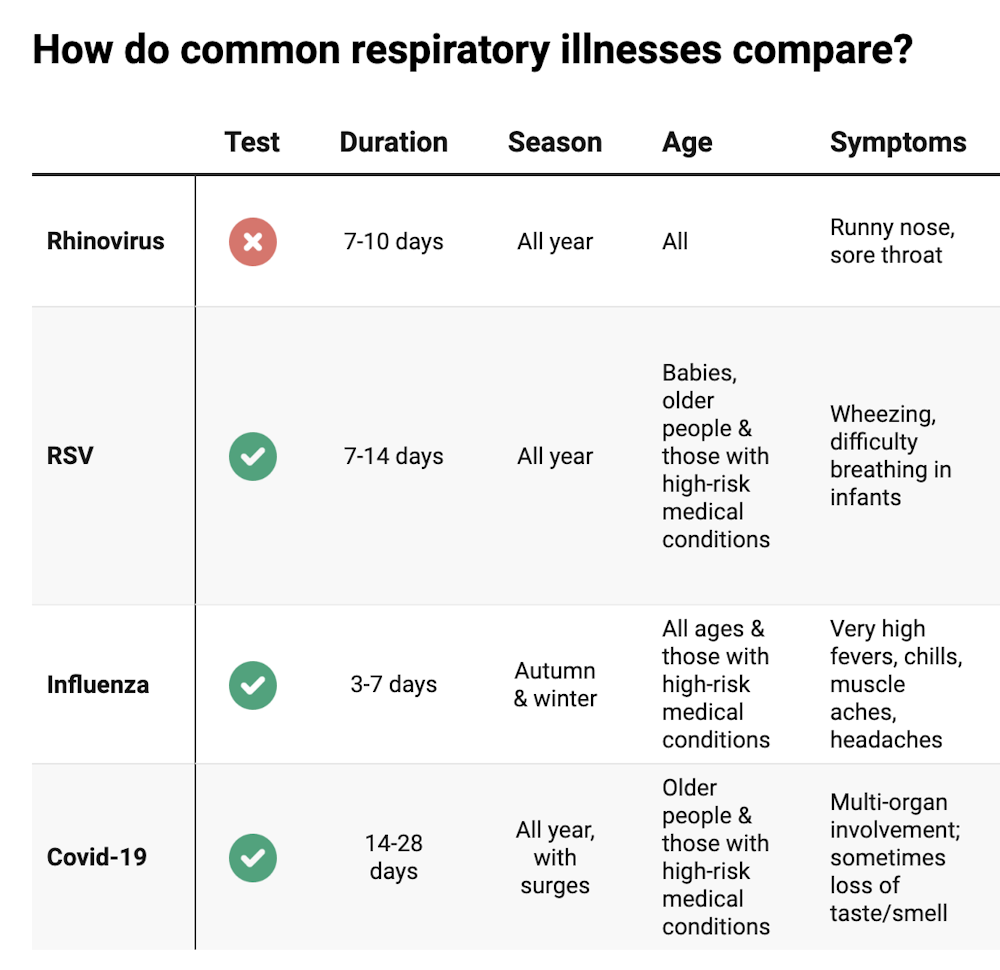
    MIL OSI Europe News

  • MIL-OSI Australia: Prepare for the High-Risk Weather Season

    Source: Northern Territory Police and Fire Services

    The Northern Territory Emergency Service (NTES) is urging all Territorians to prepare for the High Risk Weather Season.

    The Bureau of Meteorology reminds the community that the period from October to April is the Territory’s peak time for heatwaves, severe thunderstorms, tropical lows, cyclones, flooding, and, particularly in the south, bushfires.

    Acting Commissioner Fleur O’Connor said preparation is key to ensuring safety during the upcoming season. “Territorians are no strangers to severe weather, and the High-Risk Weather Season serves as a reminder to prepare your homes, families, and businesses. Simple actions like clearing gutters, securing outdoor items, and developing an emergency plan can make all the difference in a crisis.”

    The Bureau predicts the first significant rains of the wet season are likely to be earlier than usual.

    “Rainfall in September was above average across most of the Territory and the highest on record across parts of the west, but we’ve also seen an early start to our Heatwave Warning Service, and a number of dangerous fires continue across the Territory,” Shenagh Gamble, NT Manager of Hazard Preparedness and Response, said. “While we are expecting an average risk of tropical cyclones this year, it only takes one to significantly impact our communities.

    Download the BoM app and enable push notifications to ensure you are up to date with warnings for your location.”

    Margaret Pratten, TIO Head of Operations, emphasises the importance of preparedness, “TIO’s free SMS weather alerts ensure Territorians, whether you are a TIO customer or not, are informed and can prepare when severe weather is on its way. These real-time alerts provide the opportunity to safeguard your home, property, and family. Early warnings enable Territorians to take quick action, whether it’s securing outdoor items or making those final preparations to help protect their homes.”

    To register for TIO SMS severe weather alerts, visit https://www.tiofi.com.au/alerts

    NTES advises all residents to review their emergency kits, stay updated with the latest weather information, and follow safety advice throughout the season.

    For more information on how to prepare, visit the Northern Territory Emergency Service website.

    MIL OSI News