Category: Natural Disasters

  • MIL-OSI Submissions: The toxic management handbook: six guaranteed ways to make your best employees flee

    Source: The Conversation – France – By George Kassar, Full-time Faculty, Research Associate, Performance Analyst, Ascencia Business School

    If performance management is not implemented properly, it can demotivate and drive out employees. PeopleImages.comYuri A/Shutterstock

    Who said that an organization’s main resource and true competitive advantage lies in its employees, their talent or their motivation? After all, maybe your real goal is to empty out your offices, permanently discourage your staff and methodically sabotage your human capital.

    If that’s the case, research in performance management offers everything you need.

    Originally rooted in early 20th-century rationalization methods, performance management has become a cornerstone of modern management. It has evolved to adapt to contemporary HR needs, focusing more on employee development, engagement and strategic alignment. In theory, it should help guide team efforts, clarify expectations and support individual development. But if poorly implemented, it can become a powerful tool to demotivate, exhaust and push out your most valuable employees.

    Here’s how to scare off your best talent. Although the following guidelines are meant to be taken tongue-in-cheek, they remain active in the daily work of some managers.

    Management by ‘vague’ objectives

    Start by setting vague, unrealistic or contradictory goals. Above all, avoid giving goals meaning, linking them to a clear strategy or backing them with appropriate resources. In short, embrace the “real” SMART goals: stressful, arbitrary, ambiguous, repetitive, and totally disconnected from the field!

    According to research in organizational psychology, this approach guarantees anxiety, confusion and disengagement among your teams, significantly increasing their intention to leave the company.

    Silence Is Golden

    Avoid all forms of dialogue and communication. Never give feedback. And if you absolutely must, do it rarely and irregularly, make sure it’s disconnected from actual work, and preferably in the form of personal criticism. The absence of regular, task-focused and actionable feedback leaves employees in uncertainty, catches them off-guard during evaluations and gradually undermines their engagement.

    How your employees interpret your intentions and feedback matters most. Be careful though: if feedback is perceived as constructive, it may actually boost motivation and learning engagement. But if the same feedback is seen as driven by a manager’s personal agenda (or, ego-based attribution), it backfires, leading to demotivation, withdrawal and exit.


    A weekly e-mail in English featuring expertise from scholars and researchers. It provides an introduction to the diversity of research coming out of the continent and considers some of the key issues facing European countries. Get the newsletter!

    Performance evaluation ‘trials’

    Hold annual performance review meetings in which you focus solely on mistakes and completely ignore successes or invisible efforts. Be rigid, critical and concentrate only on weaknesses. Make sure to take full credit when the team succeeds; after all, without you, nothing would have been possible. On the other hand, when results fall short, don’t hesitate to highlight errors, assign individual blame and remind them that “you did warn them!”

    This kind of performance evaluation, better described as a punitive trial, ensures deep demotivation and accelerates team turnover.

    Internal competition, maxed out

    Promote a culture of rivalry among colleagues: circulate internal rankings regularly, reward only the top performers, systematically eliminate the lowest ranked without even thinking of helping them improve, devalue the importance of cooperation and let internal competition do the rest. After all, these are the core features of the “famous” method popularized by the late Jack Welch at General Electric.

    If you notice a short-term boost of motivation, don’t worry. The long-term effects of Welch’s “vitality curve” will be far more harmful than beneficial. Fierce internal competition is a great tool for destroying trust among teammates and creating a persistently toxic atmosphere, leading to an increase in the number of voluntary departures.

    Ignore wellbeing and do not listen, no matter what

    We’ve already established that feedback and dialogue should be avoided. But if, by misfortune, they do occur, make sure not to listen to complaints or warning signs related to stress or exhaustion. Offer no support or assistance, and of course, completely ignore the right to disconnect.

    By neglecting mental health and refusing to help your employees find meaning in their work – especially when they perform tasks seen as meaningless, repetitive or emotionally draining – you directly increase the risk of burnout and chronic absenteeism.

    In addition, always favour highly variable and poorly designed performance bonuses: this will heighten income instability and kill off whatever engagement remains.


    À lire aussi :
    Meditation and mindfulness at work are welcome, but do they help avoid accountability for toxic culture?


    The subtle art of wearing people down

    Want to take your talent-repelling skills even further? Draw inspiration from what research identifies as practices and experiences belonging to the three major forms of workplace violence. These include micromanagement, constant pressure, lack of recognition, social isolation and others that generate long-term suffering. Though often invisible, their reoccurence gradually wears employees down mentally, then physically, until they finally break.


    Obviously, these tips are meant to be taken ironically.

    Yet, unfortunately, these toxic practices are all too real in the daily routines of certain managers. If the goal is truly to retain talent and ensure lasting business success, it is essential to centre performance management practices around meaning, fairness and the genuine development of human potential.

    George Kassar ne travaille pas, ne conseille pas, ne possède pas de parts, ne reçoit pas de fonds d’une organisation qui pourrait tirer profit de cet article, et n’a déclaré aucune autre affiliation que son organisme de recherche.

    ref. The toxic management handbook: six guaranteed ways to make your best employees flee – https://theconversation.com/the-toxic-management-handbook-six-guaranteed-ways-to-make-your-best-employees-flee-260733

    MIL OSI

  • MIL-OSI United Kingdom: Flood protection for more people in West Kent one step closer

    Source: United Kingdom – Executive Government & Departments

    Press release

    Flood protection for more people in West Kent one step closer

    Another major milestone has been reached at the Leigh Flood Storage Area (FSA) after new central gate is installed as part of works to increase its capacity.

    Leigh Flood Storage Area centre gate being installed (Environment Agency)

    • Second flood gate installed at Leigh Flood Storage Area as part of major upgrade.
    • Once completed approximately 25% more floodwater can be stored – bringing the total storage capacity up to the equivalent of 2,800 Olympic swimming pools.
    • Over 1,800 homes and 575 non-residential properties better protected from flooding.

    Another major milestone has been reached at the Leigh Flood Storage Area (FSA) after the new central gate, the second of three new gates, has been installed as part of works to increase its capacity.

    The Leigh Flood Storage Area, the largest Environment Agency-owned and operated flood storage reservoir in Kent, currently reduces the risk of flooding from the River Medway to 1,200 homes and businesses in Tonbridge and Hildenborough.

    The scheme works by storing additional water in a storage area, similar to a large lake, and is operated during periods of heavy rain to reduce the volume of water travelling downstream to protect vulnerable homes and businesses.

    Over the last year, the Environment Agency has been working tirelessly to reduce the flood risk to a further 600 homes and 575 businesses by replacing the 44-year-old original gates and raising sections of the embankment. Replacing the gates has extended the life of the structure to at least 2060.

    Ian Nunn, Flood and Coastal Risk Management Operations Manager, Environment Agency, said:

    The installation of the new centre gate is a huge achievement and another great step forward in the project to reduce the flood risk to over 1,800 homes and 575 non-residential properties in Tonbridge and Hildenborough.

    People can be assured that the flood storage area will remain operational throughout the project, to continue to protect people, homes and businesses.

    Thank you to local residents for their continued patience while the work is ongoing.

    The Environment Agency are currently delivering the government’s long-term funding programme of flood defences, investing £2.65 billion over 2024/5 and 2025/6 to scale up national resilience through building new and improving existing flood defences. The improvement works at the Leigh Flood Storage Area are part of this programme. The Environment Agency prioritises maintenance work on assets to provide the greatest flood risk reduction for people, homes, and businesses.

    Leigh Flood Storage Area centre gate being lifted by crane (Environment Agency)

    The new central gate, lifted into place by a 300-tonne crane, is the second of the three new gates that will be installed during construction. The third and final gate is expected to be installed in late summer. The new gates were delivered in pieces and welded together on site. Each gate weighs around 12.5 tonnes – equivalent to the weight of a single-decker bus!

    By replacing the gates and raising the clay core in sections of the embankment, the flood storage area will be able to store approximately 25% more water than it does now.

    Increasing the current capacity of 5.58 million cubic metres to over 7 million cubic metres of flood water, the equivalent of 2,800 Olympic size swimming pools, will help to better protect more than 600 additional homes from flooding, as well as 575 non-residential properties.

    Cllr Matt Boughton, Leader of Tonbridge and Malling Borough Council, said:

    It’s fantastic to see the construction of this vital project progressing so well. The scale of the engineering involved is truly impressive, not least the installation of the enormous gates which will provide reassurance for thousands of homes and businesses in our borough who will see their properties far better protected from the devastating impact that flooding can have.

    I’d like to thank the Environment Agency and all involved for their work so far and very much look forward to successful completion of the scheme in the coming months.   

    Liz Gibney, Kent and Medway Economic Partnership (KMEP) Chair said:

    While we are going through a dry spell currently, we ought not to forget the devastating effect that flooding can have on local businesses, residents, and communities. KMEP prioritised this project for investment to provide peace of mind to business leaders, knowing their premises and livelihoods are better protected.

    The second new gate at Leigh marks a significant milestone in this important project, and is a vital step towards a safer, more resilient future for everyone. We thank the Environment Agency and partners for their hard work.

    Ends

    Media enquiries

    Notes to Editors

    There are around 90,000 Environment Agency maintained assets, worth £26 billion, that reduce the risk of flooding to 2.3 million properties. These assets benefit the economy by reducing the annual average flood damages of £2.8 billion.   

    For more information – please visit the scheme’s GOV.UK page: https://www.gov.uk/government/publications/leigh-expansion-and-hildenborough-embankments-scheme/leigh-expansion-and-hildenborough-embankments-scheme

    To find out more about how the two elements of the scheme work, you can view our YouTube animations:

    Working in partnership

    The Environment Agency is working to deliver the scheme in partnership with:

    • Kent County Council
    • Tonbridge and Malling Borough Council
    • Kent and Medway Economic Partnership

    Funding is through the government’s Flood Defence Grant in Aid (FDGiA), with contributions from Tonbridge and Malling Borough Council, Kent County Council and the South East Local Enterprise Partnership (now the Kent and Medway Economic Partnership).

    Scheme progress

    It is expected that the scheme will be completed by the end of winter 2025/26.

    This is a complex programme and timings could change depending on external factors, such as the weather. Regular scheme updates are provided to residents and stakeholders via newsletters and on GOV.UK.

    Updates to this page

    Published 9 July 2025

    MIL OSI United Kingdom

  • MIL-OSI Security: Fairbanks man sentenced to 22 years for distributing fentanyl resulting in a fatal overdose

    Source: Office of United States Attorneys

    The defendant is one of over 60 charged in large-scale drug trafficking ring targeting Alaska.

    ANCHORAGE, Alaska – A Fairbanks man was sentenced today to 22 years in prison and, upon release, will serve five years on supervised release for distributing fentanyl that resulted in the overdose death of a local man in 2022.

    According to court documents, beginning in May 2022 and continuing to July 2022, Edward Ginnis, 39, agreed with co-conspirators to distribute and possess with the intent to distribute controlled substances in the Fairbanks area. Specifically, Ginnis distributed controlled substances to a co-conspirator, who then sold the substances to others. Ginnis’ actions were a small part of a larger drug trafficking enterprise allegedly being directed by an inmate in a California prison.

    On June 7, 2022, Ginnis sent an overnight package containing money to a co-conspirator in California, paying in advance for a shipment of drugs intended for a co-conspirator in Fairbanks. On June 11, a package arrived for the co-conspirator in Fairbanks. Ginnis and the alleged leader of the enterprise had orchestrated this shipment. Drug ledgers found in the alleged leader’s prison cell indicate that the shipment contained “chocolate,” which was a term that members of the enterprise used for heroin. The alleged leader also arranged to have additional packages containing heroin sent to Alaska, and Ginnis received more packages on June 16 and 21, 2022.

    Later in the day on June 11, 2022, Ginnis sent text messages to several distributors asking if they had potential purchasers. One of the distributors, the co-defendant in this case, allegedly offered to help sell drugs. On June 25, Adam Sakkinen, 32, an individual who struggled with heroin usage, messaged the co-defendant asking to purchase drugs. Around noon, the co-defendant allegedly agreed to sell drugs to Sakkinen and he sent the co-defendant $50.00 before messaging that he was on his way.

    Later, at 12:58 p.m. that same day, local fire and emergency medical services responded to a single car accident on the side of a road in Badger. First responders found Sakkinen unconscious behind the wheel of a car with drug paraphernalia in his hands and near him. Law enforcement officials tested the paraphernalia, and it tested positive for fentanyl.

    First responders administered six doses of Narcan to Sakkinen and he regained a pulse. Sakkinen was transported to two hospitals and was put on life support at a hospital in Anchorage. Sakkinen spent 11 days in the intensive care unit before he passed away. A sample of Sakkinen’s blood was sent for testing and lab results found that he had 20 nanograms per milliliter of fentanyl in his bloodstream at the time of his death. Reports show that the average lethal level of fentanyl in the bloodstream is eight nanograms per milliliter.

    On July 14, 2022, Ginnis was arrested in Fairbanks based on a violation of his state probation. He was in possession of fentanyl that he intended to distribute to others in furtherance of the drug trafficking conspiracy. He also possessed over $13,000 in cash.

    On Jan. 18, 2025, Ginnis and a co-defendant were indicted on federal drug trafficking charges. On April 3, 2025, Ginnis pleaded guilty to one count of conspiracy to distribute controlled substance resulting in death. His co-defendant is awaiting trial.

    “The U.S. Attorney’s Office thanks the law enforcement agencies that came together to investigate this crime and help bring justice to the family of the victim,” said Acting U.S. Attorney William Narus for the District of Oregon.

    “Fentanyl traffickers choose profit over people when they sell drugs that lead to addiction and death,” said David F. Reames, Special Agent in Charge, DEA Seattle Field Division. “This sentence holds Mr. Ginnis accountable for this choice and sends a clear message that the DEA and our partners will bring to justice those who seek to poison and destroy our communities.”

    “The Alaska State Troopers are committed to working with our federal and local partners to bring dangerous drug traffickers to justice,” said Colonel Maurice Hughes, Director of the Alaska State Troopers. “Drug dealers have no place in our great state. This sentencing sends a clear message: if you traffic dangerous drugs in Alaska, law enforcement will find you, and you will face serious consequences for your actions.”

    The U.S. Attorney’s Office for the District of Alaska has been recused from this case with the exception of certain personnel. Assistant U.S. Attorney Steven D. Clymer from the U.S. Attorney’s Office for the Northern District of New York has been appointed as Special Attorney to the United States Attorney General to assist with this and other recused cases.  He reports to and acts under the direction of the Deputy Attorney General, or his delegee, or Acting U.S. Attorney Narus in these cases. Special Attorney Clymer supervises personnel from the District of Alaska who have been exempted from the recusal.

    The Drug Enforcement Administration Seattle Field Division and Anchorage District Office, Alaska State Troopers, North Slope Borough Police Department, North Pole Police Department and Fairbanks Police Department investigated the case.

    Assistant U.S. Attorneys Stephan Collins, Chris Schroeder and Alana Weber are prosecuting the case.

    The case was investigated under the Organized Crime Drug Enforcement Task Forces (OCDETF). OCDETF identifies, disrupts, and dismantles the highest-level criminal organizations that threaten the United States using a prosecutor-led, intelligence-driven, multi-agency approach. For more information about Organized Crime Drug Enforcement Task Forces, please visit Justice.gov/OCDETF.

    ###

    MIL Security OSI

  • MIL-OSI Security: Fairbanks man sentenced to 22 years for distributing fentanyl resulting in a fatal overdose

    Source: Office of United States Attorneys

    The defendant is one of over 60 charged in large-scale drug trafficking ring targeting Alaska.

    ANCHORAGE, Alaska – A Fairbanks man was sentenced today to 22 years in prison and, upon release, will serve five years on supervised release for distributing fentanyl that resulted in the overdose death of a local man in 2022.

    According to court documents, beginning in May 2022 and continuing to July 2022, Edward Ginnis, 39, agreed with co-conspirators to distribute and possess with the intent to distribute controlled substances in the Fairbanks area. Specifically, Ginnis distributed controlled substances to a co-conspirator, who then sold the substances to others. Ginnis’ actions were a small part of a larger drug trafficking enterprise allegedly being directed by an inmate in a California prison.

    On June 7, 2022, Ginnis sent an overnight package containing money to a co-conspirator in California, paying in advance for a shipment of drugs intended for a co-conspirator in Fairbanks. On June 11, a package arrived for the co-conspirator in Fairbanks. Ginnis and the alleged leader of the enterprise had orchestrated this shipment. Drug ledgers found in the alleged leader’s prison cell indicate that the shipment contained “chocolate,” which was a term that members of the enterprise used for heroin. The alleged leader also arranged to have additional packages containing heroin sent to Alaska, and Ginnis received more packages on June 16 and 21, 2022.

    Later in the day on June 11, 2022, Ginnis sent text messages to several distributors asking if they had potential purchasers. One of the distributors, the co-defendant in this case, allegedly offered to help sell drugs. On June 25, Adam Sakkinen, 32, an individual who struggled with heroin usage, messaged the co-defendant asking to purchase drugs. Around noon, the co-defendant allegedly agreed to sell drugs to Sakkinen and he sent the co-defendant $50.00 before messaging that he was on his way.

    Later, at 12:58 p.m. that same day, local fire and emergency medical services responded to a single car accident on the side of a road in Badger. First responders found Sakkinen unconscious behind the wheel of a car with drug paraphernalia in his hands and near him. Law enforcement officials tested the paraphernalia, and it tested positive for fentanyl.

    First responders administered six doses of Narcan to Sakkinen and he regained a pulse. Sakkinen was transported to two hospitals and was put on life support at a hospital in Anchorage. Sakkinen spent 11 days in the intensive care unit before he passed away. A sample of Sakkinen’s blood was sent for testing and lab results found that he had 20 nanograms per milliliter of fentanyl in his bloodstream at the time of his death. Reports show that the average lethal level of fentanyl in the bloodstream is eight nanograms per milliliter.

    On July 14, 2022, Ginnis was arrested in Fairbanks based on a violation of his state probation. He was in possession of fentanyl that he intended to distribute to others in furtherance of the drug trafficking conspiracy. He also possessed over $13,000 in cash.

    On Jan. 18, 2025, Ginnis and a co-defendant were indicted on federal drug trafficking charges. On April 3, 2025, Ginnis pleaded guilty to one count of conspiracy to distribute controlled substance resulting in death. His co-defendant is awaiting trial.

    “The U.S. Attorney’s Office thanks the law enforcement agencies that came together to investigate this crime and help bring justice to the family of the victim,” said Acting U.S. Attorney William Narus for the District of Oregon.

    “Fentanyl traffickers choose profit over people when they sell drugs that lead to addiction and death,” said David F. Reames, Special Agent in Charge, DEA Seattle Field Division. “This sentence holds Mr. Ginnis accountable for this choice and sends a clear message that the DEA and our partners will bring to justice those who seek to poison and destroy our communities.”

    “The Alaska State Troopers are committed to working with our federal and local partners to bring dangerous drug traffickers to justice,” said Colonel Maurice Hughes, Director of the Alaska State Troopers. “Drug dealers have no place in our great state. This sentencing sends a clear message: if you traffic dangerous drugs in Alaska, law enforcement will find you, and you will face serious consequences for your actions.”

    The U.S. Attorney’s Office for the District of Alaska has been recused from this case with the exception of certain personnel. Assistant U.S. Attorney Steven D. Clymer from the U.S. Attorney’s Office for the Northern District of New York has been appointed as Special Attorney to the United States Attorney General to assist with this and other recused cases.  He reports to and acts under the direction of the Deputy Attorney General, or his delegee, or Acting U.S. Attorney Narus in these cases. Special Attorney Clymer supervises personnel from the District of Alaska who have been exempted from the recusal.

    The Drug Enforcement Administration Seattle Field Division and Anchorage District Office, Alaska State Troopers, North Slope Borough Police Department, North Pole Police Department and Fairbanks Police Department investigated the case.

    Assistant U.S. Attorneys Stephan Collins, Chris Schroeder and Alana Weber are prosecuting the case.

    The case was investigated under the Organized Crime Drug Enforcement Task Forces (OCDETF). OCDETF identifies, disrupts, and dismantles the highest-level criminal organizations that threaten the United States using a prosecutor-led, intelligence-driven, multi-agency approach. For more information about Organized Crime Drug Enforcement Task Forces, please visit Justice.gov/OCDETF.

    ###

    MIL Security OSI

  • MIL-OSI Security: Mexican National Sentenced To Prison For Armed Carjacking

    Source: Office of United States Attorneys

    CHARLOTTE, N.C. – Solamon Flores-Garcia, 43, of Mexico, was sentenced to 10 years in prison today for carjacking and possession and brandishing of a firearm in furtherance of a crime of violence, announced Russ Ferguson, U.S. Attorney for the Western District of North Carolina.

    James C. Barnacle, Jr., Special Agent in Charge of the FBI in North Carolina, and Chief Rhett Bolen of the Monroe Police Department, join U.S. Attorney Ferguson in making today’s announcement.

    According to court documents and court proceedings, on October 24, 2023, Flores-Garcia, a previously deported alien that was residing illegally in Monroe, N.C., went to a neighbor’s home. When the neighbor answered the door, Flores-Garcia pointed a red handgun at the neighbor and demanded her wallet and car keys. Flores-Garcia then drove the victim’s car to La Chiquita Mexican store, where he robbed that establishment. During the robbery, Flores-Garcia pointed a red firearm at the head of the clerk before taking money from the store and fleeing the scene in the stolen vehicle. Flores-Garcia was arrested shortly thereafter.

    Flores-Garcia remains in custody pending transfer to the Federal Bureau of Prisons upon designation of a federal facility.

    The FBI and CMPD investigated the case. The U.S. Attorney’s Office in Charlotte prosecuted the case.


    MIL Security OSI

  • MIL-OSI Security: Mexican National Sentenced To Prison For Armed Carjacking

    Source: Office of United States Attorneys

    CHARLOTTE, N.C. – Solamon Flores-Garcia, 43, of Mexico, was sentenced to 10 years in prison today for carjacking and possession and brandishing of a firearm in furtherance of a crime of violence, announced Russ Ferguson, U.S. Attorney for the Western District of North Carolina.

    James C. Barnacle, Jr., Special Agent in Charge of the FBI in North Carolina, and Chief Rhett Bolen of the Monroe Police Department, join U.S. Attorney Ferguson in making today’s announcement.

    According to court documents and court proceedings, on October 24, 2023, Flores-Garcia, a previously deported alien that was residing illegally in Monroe, N.C., went to a neighbor’s home. When the neighbor answered the door, Flores-Garcia pointed a red handgun at the neighbor and demanded her wallet and car keys. Flores-Garcia then drove the victim’s car to La Chiquita Mexican store, where he robbed that establishment. During the robbery, Flores-Garcia pointed a red firearm at the head of the clerk before taking money from the store and fleeing the scene in the stolen vehicle. Flores-Garcia was arrested shortly thereafter.

    Flores-Garcia remains in custody pending transfer to the Federal Bureau of Prisons upon designation of a federal facility.

    The FBI and CMPD investigated the case. The U.S. Attorney’s Office in Charlotte prosecuted the case.


    MIL Security OSI

  • MIL-OSI Security: El Salvadoran with prior sex offense pleads guilty to illegally reentering United States

    Source: Office of United States Attorneys

    COLUMBUS, Ohio – An illegal alien from El Salvador pleaded guilty in U.S. District Court today to illegally reentering the United States after being convicted of a felony. 

    Adiel Hernandez-Orellana, 39, was previously convicted in Arkansas of sexual assault.

    In 2003, Hernandez-Orellana was arrested for unlawfully entering the United States. In 2004, he was ordered removed from the United States after failing to appear for an immigration court hearing. In 2010, he was convicted of sexual assault in Sebastian County, Arkansas, and sentenced to seven years in prison. Following his prison sentence, he was removed from the United States.

    In March 2025, the defendant was detained at the Delaware County jail in Ohio for outstanding traffic warrants. He was then processed for the instant immigration offense of illegally reentering the United States after being convicted of a felony.

    Illegally reentering the United States is a federal crime punishable by up to two years in prison. If the offender has a prior felony conviction (or multiple prior misdemeanor convictions of certain types), the penalty is increased to up to 10 years in prison, and if the offender has been previously convicted of an aggravated felony, the defendant faces up to 20 years in prison. Transporting illegal aliens is punishable by up to 10 years in prison. Possessing a firearm as an illegal alien is a federal crime punishable by up to 15 years in prison.

    Kelly A. Norris, Acting United States Attorney for the Southern District of Ohio; Jared Murphey, acting Special Agent in Charge, U.S. Immigration and Customs Enforcement’s (ICE) Homeland Security Investigations (HSI) Detroit; and Kevin Raycraft, Acting Field Office Director, ICE Enforcement and Removal Operations (ERO) Detroit Field Office; announced the guilty plea entered today before Chief U.S. District Judge Sarah D. Morrison. Assistant United States Attorney Noah R. Litton is representing the United States in this case.

    This case was investigated and prosecuted by the Southern District of Ohio Homeland Security Task Force (HSTF) as part of Operation Take Back America. HSTFs, which were established by President Trump in Executive Order 14159, Protecting the American People Against Invasion, are joint operations led by the Department of Justice and the Department of Homeland Security. Operation Take Back America is a nationwide federal initiative that marshals the full resources of the Department of Justice to repel the invasion of illegal immigration, achieve the total elimination of cartels and transnational criminal organizations (TCOs), and protect our communities from the perpetrators of violent crime. Operation Take Back America streamlines efforts and resources from the Department’s Organized Crime Drug Enforcement Task Forces (OCDETFs) and Project Safe Neighborhood (PSN).

    # # #

    MIL Security OSI

  • MIL-OSI Security: Previously convicted felon sentenced to five years in prison for illegally possessing a firearm

    Source: United States Bureau of Alcohol Tobacco Firearms and Explosives (ATF)

    RICHMOND, Va. – A Richmond man was sentenced yesterday to five years in prison for being a felon in possession of a firearm.

    According to court documents, on July 16, 2024, Richmond Police officers approached Terry B. Matthews, 41, in a parking lot in Richmond. When the officers engaged Matthews in conversation, Matthews fled on foot and the officers pursued. Matthews jumped from a ledge and injured himself when he landed. Officers observed a loaded handgun in Matthews’ waistband and recovered it. Matthews also possessed a knotted plastic baggie containing over five grams of cocaine.

    In 2005, Matthews was convicted of possession with intent to distribute cocaine. He then was convicted of assault and battery for beating his 17-year-old former girlfriend with a wooden board and a stick. Matthews was later convicted of second-degree murder after using a tree branch to strike the head of a victim who allegedly owed him money. As a previously convicted felon, Matthews cannot legally possess firearms or ammunition.

    Erik S. Siebert, U.S. Attorney for the Eastern District of Virginia; Anthony A. Spotswood, Special Agent in Charge of the Bureau of Alcohol, Tobacco, Firearms and Explosives Washington Field Division; and Rick Edwards, Chief of Richmond Police, made the announcement after sentencing by U.S. District Judge Roderick C. Young.

    Assistant U.S. Attorney Patrick J. McGorman prosecuted the case.

    This case is part of Project Safe Neighborhoods (PSN), a program bringing together all levels of law enforcement and the communities they serve to reduce violent crime and gun violence, and to make our neighborhoods safer for everyone. On May 26, 2021, the Department launched a violent crime reduction strategy strengthening PSN based on these core principles: fostering trust and legitimacy in our communities, supporting community-based organizations that help prevent violence from occurring in the first place, setting focused and strategic enforcement priorities, and measuring the results.

    A copy of this press release is located on the website of the U.S. Attorney’s Office for the Eastern District of Virginia. Related court documents and information are located on the website of the District Court for the Eastern District of Virginia or on PACER by searching for Case No. 3:24-cr-160.

    MIL Security OSI

  • MIL-OSI Security: Previously convicted felon sentenced to five years in prison for illegally possessing a firearm

    Source: United States Bureau of Alcohol Tobacco Firearms and Explosives (ATF)

    RICHMOND, Va. – A Richmond man was sentenced yesterday to five years in prison for being a felon in possession of a firearm.

    According to court documents, on July 16, 2024, Richmond Police officers approached Terry B. Matthews, 41, in a parking lot in Richmond. When the officers engaged Matthews in conversation, Matthews fled on foot and the officers pursued. Matthews jumped from a ledge and injured himself when he landed. Officers observed a loaded handgun in Matthews’ waistband and recovered it. Matthews also possessed a knotted plastic baggie containing over five grams of cocaine.

    In 2005, Matthews was convicted of possession with intent to distribute cocaine. He then was convicted of assault and battery for beating his 17-year-old former girlfriend with a wooden board and a stick. Matthews was later convicted of second-degree murder after using a tree branch to strike the head of a victim who allegedly owed him money. As a previously convicted felon, Matthews cannot legally possess firearms or ammunition.

    Erik S. Siebert, U.S. Attorney for the Eastern District of Virginia; Anthony A. Spotswood, Special Agent in Charge of the Bureau of Alcohol, Tobacco, Firearms and Explosives Washington Field Division; and Rick Edwards, Chief of Richmond Police, made the announcement after sentencing by U.S. District Judge Roderick C. Young.

    Assistant U.S. Attorney Patrick J. McGorman prosecuted the case.

    This case is part of Project Safe Neighborhoods (PSN), a program bringing together all levels of law enforcement and the communities they serve to reduce violent crime and gun violence, and to make our neighborhoods safer for everyone. On May 26, 2021, the Department launched a violent crime reduction strategy strengthening PSN based on these core principles: fostering trust and legitimacy in our communities, supporting community-based organizations that help prevent violence from occurring in the first place, setting focused and strategic enforcement priorities, and measuring the results.

    A copy of this press release is located on the website of the U.S. Attorney’s Office for the Eastern District of Virginia. Related court documents and information are located on the website of the District Court for the Eastern District of Virginia or on PACER by searching for Case No. 3:24-cr-160.

    MIL Security OSI

  • MIL-OSI Security: Previously convicted felon sentenced to five years in prison for illegally possessing a firearm

    Source: United States Bureau of Alcohol Tobacco Firearms and Explosives (ATF)

    RICHMOND, Va. – A Richmond man was sentenced yesterday to five years in prison for being a felon in possession of a firearm.

    According to court documents, on July 16, 2024, Richmond Police officers approached Terry B. Matthews, 41, in a parking lot in Richmond. When the officers engaged Matthews in conversation, Matthews fled on foot and the officers pursued. Matthews jumped from a ledge and injured himself when he landed. Officers observed a loaded handgun in Matthews’ waistband and recovered it. Matthews also possessed a knotted plastic baggie containing over five grams of cocaine.

    In 2005, Matthews was convicted of possession with intent to distribute cocaine. He then was convicted of assault and battery for beating his 17-year-old former girlfriend with a wooden board and a stick. Matthews was later convicted of second-degree murder after using a tree branch to strike the head of a victim who allegedly owed him money. As a previously convicted felon, Matthews cannot legally possess firearms or ammunition.

    Erik S. Siebert, U.S. Attorney for the Eastern District of Virginia; Anthony A. Spotswood, Special Agent in Charge of the Bureau of Alcohol, Tobacco, Firearms and Explosives Washington Field Division; and Rick Edwards, Chief of Richmond Police, made the announcement after sentencing by U.S. District Judge Roderick C. Young.

    Assistant U.S. Attorney Patrick J. McGorman prosecuted the case.

    This case is part of Project Safe Neighborhoods (PSN), a program bringing together all levels of law enforcement and the communities they serve to reduce violent crime and gun violence, and to make our neighborhoods safer for everyone. On May 26, 2021, the Department launched a violent crime reduction strategy strengthening PSN based on these core principles: fostering trust and legitimacy in our communities, supporting community-based organizations that help prevent violence from occurring in the first place, setting focused and strategic enforcement priorities, and measuring the results.

    A copy of this press release is located on the website of the U.S. Attorney’s Office for the Eastern District of Virginia. Related court documents and information are located on the website of the District Court for the Eastern District of Virginia or on PACER by searching for Case No. 3:24-cr-160.

    MIL Security OSI

  • MIL-OSI United Nations: Deputy Secretary-General’s remarks at the Opening Ceremony of the International Conference on the Blue Economy in the Gulf of Guinea [as delivered]

    Source: United Nations secretary general

    H.E. Mr. Joseph Dion Ngute, Prime Minister of the Republic of Cameroon; Personal Representative of the President of Cameroon, H.E. Mr. Paul Biya; H.E. Mr. Philemon Yang, President of the UN General Assembly; H.E. Mr. José Mba Abeso, Executive Secretary of the Gulf of Guinea Commission; Mr. Peter Thomson, UN Special Envoy for the Ocean; Honourable Ministers; Excellencies; Ladies and Gentlemen;

    I wish to express my deep appreciation to the President, Government, and people of Cameroon for hosting this landmark conference on the Blue Economy in the Gulf of Guinea – a region whose waters and people I hold close to heart, as a Nigerian and UN partner over the decades.

    Allow me also to thank the President of the UN General Assembly for his leadership and shining the spotlight on the Blue Economy – in the Gulf of Guinea and globally.

    Excellencies,

    We gather at a moment of both urgency and opportunity. The ocean – our planet’s blue heart – is under threat. But it is also a source of solutions and the attainment of our Global Goals.

    As the Secretary-General reminded us last month in Nice, the destinies of Africa and the ocean are deeply intertwined. For millions across this continent, the ocean is not only a source of life and identity but it is also a source of hope.

    Nowhere is this truer than in the Gulf of Guinea. Our coastal waters, rich in biodiversity and cultural heritage, hold immense potential for economic transformation. Yet, this potential remains largely untapped. Today, the ocean economy accounts for less than 10% of GDP in the region and we must change that with a sense of urgency and scale.

    Therefore, I propose three areas of action that will ensure the Blue Economy delivers for the people in the region which provides a home and livelihood to the over 100 million people in coastal areas, 60 % of which are young people.

    First, we must protect the ocean that sustains us.

    Climate change is warming and acidifying our seas, eroding coastlines, and threatening the livelihoods of coastal communities. Coral reefs are bleaching. Fisheries are collapsing. Sea levels are rising – swallowing homes, ports, deltas, and futures.

    This is not just an environmental crisis. It is a human crisis. Hundreds of millions of people face a future shaped by flooding, food insecurity, transnational crime and displacement. We must act now to safeguard biodiversity, cut emissions, reduce maritime pollution, and build coastal resilience.

    That is why I urge all countries in the Gulf of Guinea to integrate ocean-based climate action into their Nationally Determined Contributions ahead of COP30.

    As we advance on the roadmap from Baku to Belém, these NDCs must reflect the full potential of the Blue Economy – not only as a strategy for mitigation and adaptation, but as a transformative engine for inclusive growth, scaling climate finance, and long-term prosperity.

    This journey offers a critical opportunity to align regional ambition with global momentum and deliver tangible progress for people and planet.

    In this context, the near-finalization of the Treaty on Biodiversity Beyond National Jurisdiction – known as the BBNJ Treaty – is a historic milestone. This agreement is vital to protecting marine biodiversity in areas beyond national jurisdiction, which make up nearly two-thirds of the ocean.

    I urge countries who have not yet ratified the BBNJ Treaty to do so without delay and to accelerate implementation.

    There has also been significant progress towards the Global Biodiversity Framework’s target of protecting 30% of the ocean by 2030 and the launch of the 30×30 Ocean Action Plan. The United Nations stands ready to support all countries national efforts to translate this global commitment into local action.

    As marine ecosystems are choking with plastic pollution, we must accelerate progress toward a legally binding global treaty on plastic pollution. The mounting crisis of microplastics and toxic chemicals infiltrating our oceans demands urgent and coordinated action to sustain fisheries, protect biodiversity, and reduce negative impact on tourism and people’s sources of income.

    This requires not only industry reform but also changes in our daily consumption and waste management systems. Let us apply existing tools based on the polluter pays principle and work with the private sector to keep our oceans clean.

    The launch of the Ocean Rise and Coastal Resilience Coalition in Nice is a call to action. I encourage cities and communities across the Gulf of Guinea to join this global movement for adaptation and innovation to find sustainable solutions to rising sea levels, for the cities of our future. 

    Second, we must unlock the economic power of the ocean.

    Africa’s share of global ocean exports remains modest. But the potential is vast – from sustainable aquaculture and offshore wind to marine biotechnology and eco-tourism.

    Two-thirds of marine species remain undiscovered. They hold the keys to new medicines, low-carbon foods, and bio-based materials. This is a nearly $11 billion market opportunity waiting to be seized for our young people.

    It also holds the key to nourishing our communities, improving nutrition, and building resilient livelihoods across the region. As we head to the 2nd UN Food System Stocktake in Addis Ababa its role in transforming the food systems will be central.

    But to do so, we need investment. At last week’s Financing for Development Conference in Sevilla, we were reminded of the $4 trillion annual gap in sustainable development financing. Reforming the global financial architecture is essential – but so is aligning capital with climate resilience and nature-positive growth.

    This is not just as a sectoral opportunity, but an integrated part of our global financing agenda. We need to work hand in hand with the private sector to unlock new forms of financing and to create an enabling environment for entrepreneurship to drive innovation, create jobs, and unlock new opportunities across the Blue Economy, especially for young people and women.

    Third, and critically, we must ensure security at sea.

    Piracy, trafficking, and transnational crime continue to threaten the Gulf of Guinea. These are not isolated threats – they are linked to broader patterns of instability and terrorism, particularly in the Sahel.

    ECOWAS, ECCAS, and the Gulf of Guinea Commission have demonstrated commendable leadership in advancing regional cooperation to enhance maritime security across the Gulf of Guinea.

    Their efforts have led to the establishment of Regional Maritime Security Centers in West and Central Africa, as well as Multinational Maritime Coordination Centres in countries such as Cabo Verde, Congo, and Ghana. These institutions form a vital architecture for regional stability and ocean governance.

    I therefore call on regional governments, international partners, and the private sector to build on this foundation – recognizing that maritime security is not only a matter of safety, but a cornerstone for sustainable development.

    Excellencies,

    The Secretary-General has called for a political and financial surge to protect our ocean and unleash its potential. That surge must begin here, in the Gulf of Guinea.

    Let us translate the momentum from Nice to Yaoundé into action.

    Let us scale local innovations and forge partnerships that cross borders and sectors.

    And let us remember: the Blue Economy is not only central to SDG 14 – Life Below Water – it is also a powerful enabler of the entire 2030 Agenda and Agenda 2063.

    From ending poverty and hunger, to advancing health, education, gender equality, and climate action, the ocean connects and sustains every dimension of sustainable development.

    The tide is with us. Now we must sail it forward – together in solidarity.

    Thank you.

    ***
     

    MIL OSI United Nations News

  • MIL-OSI Submissions: Should the UK name heatwaves like storms? It won’t make people take them more seriously

    Source: The Conversation – UK – By Andrea Taylor, Associate Professor in Risk Communication, University of Leeds

    The UK Met Office has given storms forenames for the past decade as part of an effort to raise public awareness of extreme weather before it strikes. Heatwaves are becoming increasingly frequent and severe due to greenhouse gas emissions, predominantly from burning fossil fuel, which are raising global temperatures by trapping more heat in Earth’s atmosphere.

    These extreme heat events aren’t named in the UK. Should that change?

    Effective communication strategies are necessary to make people aware of upcoming heatwaves and help them understand how to reduce their risk. Spain started naming them in 2023, with Heatwave Zoe. Italy has a longstanding but unofficial tradition of naming heatwaves according to mythology and classical history.

    The results include Lucifero (Lucifer, another name for the devil) and Cerbero (Cerberus, the three-headed dog that guards the underworld in Greek myth), popularised by the private weather service il Meteo (ilmeteo.it).

    Severe heatwaves in summer 2023 and 2024 prompted a campaign to name heatwaves after fossil fuel companies, to increase awareness of their role in climate change.

    However, there is limited evidence to indicate whether this would be effective in encouraging people to take proper safety precautions during heatwaves, such as staying in the shade between 11am and 3pm, closing the curtains of sun-facing windows during the day and making sure to have enough water if travelling and looking out for those who may struggle to keep themselves cool and hydrated, such as elderly people living alone.

    To explore how effective naming heatwaves might be, my research team conducted online experiments with 2,152 people in England and 1,981 people in Italy.

    Lucifer is scarier than Arnold

    Participants were asked to imagine that next summer, they were to receive a warning that a heatwave was about to affect their country. Participants were randomly assigned information about an event that was was either unnamed, given a threatening name (Lucifer/Lucifero), or a more neutral name (Arnold).

    Then they were asked how much of a risk they though that the event would pose and the actions they would anticipate taking. English participants were also asked about their thoughts on storm-naming practices in the UK and whether they felt that this should be extended to heatwaves.

    We found that naming a heatwave had no effect on the intention of people to take protective measures against it in either country. In Italy, there was no difference between how people perceived the unnamed heatwave and Lucifero, but Arnold was judged to be slightly less concerning and severe.

    This suggests that, while naming a heatwave does not increase concern, departing from Italy’s established convention of using threatening names does reduce it slightly.

    Isolated older people are typically most at risk during heatwaves.
    Ground Picture/Shutterstock

    Our participants in England rated Lucifer as more severe and concerning than an unnamed heatwave, though not by much. When asked about their thoughts on naming weather events more broadly, English participants tended to agree that naming storms made people more likely to engage with weather warnings, but only a minority were in favour of naming heatwaves. Overall we found that, while some people were generally supportive of naming weather events, others worried it could sensationalise them.

    It probably won’t help much

    We did not find enough evidence to support naming heatwaves in the UK.

    Despite a large sample, we found only a very small effect on perceived risk and did not detect any greater intention to take safety precautions for a named heatwave. We also found that responses differed between England and Italy.

    Heatwaves can cross national borders. The fact that there are national differences in how people respond to naming them could lead to unintended differences in how people interpret the risk in different places.

    And unlike storms, which usually take place over a single day with a clearer start and end, heatwaves can last from days to weeks – it’s not always clear whether a prolonged hot spell is one heatwave or a series of them, which could lead to confusion if named.

    Heatwaves are an opportunity to discuss the risks posed by climate change. But naming heatwaves risks coming across as sensationalist to some members of the public. This might have the opposite effect, and make people less likely to heed safety messaging about severe heat.


    Don’t have time to read about climate change as much as you’d like?

    Get a weekly roundup in your inbox instead. Every Wednesday, The Conversation’s environment editor writes Imagine, a short email that goes a little deeper into just one climate issue. Join the 45,000+ readers who’ve subscribed so far.


    Andrea Taylor receives funding from The Lloyds Register Foundation, UKRI and Horizon Europe.

    ref. Should the UK name heatwaves like storms? It won’t make people take them more seriously – https://theconversation.com/should-the-uk-name-heatwaves-like-storms-it-wont-make-people-take-them-more-seriously-260635

    MIL OSI

  • Heavy rains lash Delhi-NCR, IMD issues red alert amid traffic chaos

    Source: Government of India

    Source: Government of India (4)

    A sudden spell of heavy rain battered Delhi and the National Capital Region (NCR) on Wednesday, leading to widespread waterlogging, traffic disruptions, and a red alert from the India Meteorological Department (IMD).

    The IMD, in its latest advisory, warned that the weather system moving eastward is expected to bring moderate rainfall across most parts of the region, with isolated pockets likely to witness heavy downpours over the next few hours.

    Light to moderate rain had already begun in several eastern parts of Delhi by evening, and conditions were rapidly intensifying.

    Authorities have flagged a high risk of localized flooding on roads, particularly in low-lying areas across Delhi-NCR. Several underpasses in vulnerable zones may face temporary closures due to rising water levels, while traffic movement across key stretches is expected to slow down significantly.

    The IMD cautioned that heavy rain could lead to occasional reductions in visibility, especially for motorists navigating slippery and waterlogged roads, raising the risk of accidents and extended traffic snarls. Daily life and outdoor business operations are also likely to be impacted.

    In addition to urban disruptions, the downpour could potentially damage plantations, horticultural assets, and standing crops. Temporary structures and weak constructions, particularly in informal settlements, may suffer partial damage due to strong winds and water seepage.

    The IMD has urged residents to follow all advisories issued by civic authorities and to avoid non-essential travel. People are advised to stay indoors, keep doors and windows securely shut, and avoid taking shelter under trees during the storm due to the risk of lightning.

    Meanwhile, the IMD also issued an orange alert for the national capital, forecasting moderate rainfall accompanied by light thunderstorms and lightning across Delhi and adjoining areas. The day’s maximum temperature was expected to settle around 35°C, with the minimum hovering near 24°C.

    —IANS

  • MIL-OSI United Kingdom: Report warns of rising health risks in Leeds from increasing temperatures due to climate change

    Source: City of Leeds

    A new report has warned rising temperatures due to climate change pose serious health risks to the city’s population.

    ‘Heat in the City: Our Health in a Warming Leeds’ – this year’s annual report by Director of Public Health, Victoria Eaton – highlights the growing threat of heat-related illness and calls for collective city-wide action to protect residents now and in the future.

    Leeds has seen record-breaking temperatures in recent years, including the 2022 heatwave when the city hit 40 degrees Celsius (C) for the first time.

    The report warns of the link between hot weather and a rise in hospital admissions and deaths – as seen in the 2022 heatwaves, when an estimated 2,985 died in England during the hottest periods.

    Extreme heat can make breathing harder and put extra strain on the heart, circulatory system and kidneys as they work to cool the body, with vulnerable groups – such as older adults, children, pregnant woman, people with long-term health conditions – most at risk.

    Densely-populated, inner-city areas, where manmade surfaces such as concrete and asphalt absorb and retain heat, greenspace is reduced and tall buildings block airflow, creates a phenomenon known as the ‘urban heat island effect’, where temperatures can be up to 8 degrees Celsius (C) hotter than in rural areas.

    Increasing temperatures due to climate change also introduce new threats such as longer pollen seasons, increased asthma cases during thunderstorms and the potential spread of diseases such as Lyme disease from ticks and mosquito-borne diseases like dengue and Zika.

    The report highlights some of the creative projects and initiatives already happening across the city to combat climate change, including work to enhance biodiversity such as through the creation of the city centre ‘Aire Park’ and the planting of 100 community orchards – with Leeds set to reach the most in the UK outside of London – as well as the distribution of hot weather packs for people most at risk.

    Key recommendations for city-wide action within the report include:

    • Expanding access to cool spaces;
    • Integrating more heat resilience into urban planning;
    • Continuing to prioritise investment in energy-efficient housing;
    • Raising public awareness of the impacts of heat on health as well as ensuring frontline workers have the tools they need to support vulnerable groups.

    Victoria Eaton, Leeds City Council’s director of public health, said “Rising temperatures affect everyone but the health risks aren’t equal.

    “People in our most deprived and densely-populated areas – especially older adults, young children, pregnant women and those with long-term conditions – face the greatest risks.”

    Councillor Fiona Venner, executive member for equality, health and wellbeing, said “Climate change is a health crisis. The choices we make today will shape the wellbeing of future generations.

    “Together we can create a Leeds that not only adapts to rising temperatures but thrives in spite of them.”

    The report was praised by the Association of Directors of Public Health as “particularly innovative,” and supports Leeds’s ambition to become the UK’s first net-zero city by 2030.

    To view the report and accompanying film, visit https://observatory.leeds.gov.uk/dph-report/

    MIL OSI United Kingdom

  • MIL-OSI: MEXC Launchpad Debuts PUMP Token with Exclusive 40% Discount for New Users

    Source: GlobeNewswire (MIL-OSI)

    VICTORIA, Seychelles, July 09, 2025 (GLOBE NEWSWIRE) — Leading global cryptocurrency exchange MEXC is scheduled to officially launch a new round of Launchpad subscriptions on July 12, 2025, at 14:00 UTC, in collaboration with pump.fun, the world’s leading crypto launchpad. This event marks the debut of pump.fun’s utility token, PUMP, with a total of 1.3125 billion PUMP tokens available. To promote fair and easy access to early-stage Solana projects, MEXC is offering a limited-time 40% discount exclusively for new users.

    Dual-Pool Subscription Model with Incentive Programs

    MEXC Launchpad, known for its innovation, transparency, security, and efficiency, continues to spotlight high-potential projects for its global user base. The PUMP token launch introduces a dual-pool subscription model to accommodate users with varying needs:

    Exclusive Pool for New Users:

    • Subscription Price: 0.0024 USDT (40% off market rate)
    • Individual Limit: 5–75 USDT
    • Total Allocation: 312.5 million PUMP tokens

    Open Pool for All Users:

    • Subscription Price: 0.004 USDT
    • Individual Limit: 5–100,000 USDT
    • Total Allocation: 1 billion PUMP tokens

    To further incentivize participation, MEXC has launched a referral rewards program featuring a 10,000 USDT Futures bonus pool. Users can earn 20 USDT in Futures bonuses for each successful referral, with a cap of 20 referrals and a maximum bonus of 400 USDT per user.

    pump.fun Ecosystem Surges as Memecoin Trend Gains Global Momentum

    As the leading memecoin launch platform within the Solana ecosystem, pump.fun has demonstrated remarkable growth and user engagement since its inception. As of July 4, 2025, the platform has generated over $778 million in cumulative revenue, launched 11,801,786 tokens, and recorded a peak of 424,548 daily active wallet addresses, highlighting its robust ecosystem activity and strong user retention. With an accessible, no-barrier token creation and launch model, pump.fun is at the forefront of the global meme token movement. The launch of its governance token, PUMP, has further captured the attention of the broader crypto community.

    Strategic Partnership Unlocks Solana Ecosystem Opportunities

    Through a deep strategic collaboration, MEXC and pump.fun are bringing global investors a unique opportunity to participate in the Solana ecosystem’s ongoing innovation. As one of the exclusive launch platforms for the PUMP token, MEXC ensures fair and transparent access to high-potential projects through a rigorous selection process and deep market insight, enabling users to engage early in emerging trends.

    Event Details and Timeline

    • Full subscription model
    • Timeline:
      • Pre-Hype Period: July 9, 2025, 14:00 UTC – July 12, 2025, 14:00 UTC
      • Subscription Period: July 12, 2025, 14:00 UTC – July 15, 2025, 14:00 UTC (or until fully subscribed)
    • Token Distribution: PUMP tokens and any remaining funds will be distributed directly to participants’ Spot accounts within 48 hours of the subscription period’s conclusion.

    Cryptocurrency investments involve a high degree of risk and price volatility. Investors may experience significant losses, including the potential loss of principal. Participants are advised to carefully review the project details, assess associated risks, and make informed investment decisions. For full PUMP event details and participation guidelines, please visit MEXC.

    About MEXC

    Founded in 2018, MEXC is committed to being “Your Easiest Way to Crypto.” Serving over 40 million users across 170+ countries, MEXC is known for its broad selection of trending tokens, everyday airdrop opportunities, and low trading fees. Our user-friendly platform is designed to support both new traders and experienced investors, offering secure and efficient access to digital assets. MEXC prioritizes simplicity and innovation, making crypto trading more accessible and rewarding.

    MEXC Official Website | X  | Telegram | How to Sign Up on MEXC

    A photo accompanying this announcement is available at https://www.globenewswire.com/NewsRoom/AttachmentNg/68d8f983-df96-4254-bccb-33d31803c5d0

    The MIL Network

  • MIL-OSI China: China earmarks 150 million yuan for natural disaster response

    Source: People’s Republic of China – State Council News

    BEIJING, July 9 — China has earmarked 150 million yuan (about 20.97 million U.S. dollars) from its central natural-disaster-relief fund to support relief efforts in regions affected by flooding, typhoons and geological disasters, the Ministry of Finance (MOF) said on Wednesday.

    An MOF statement said that emergency funds, allocated by the MOF and the Ministry of Emergency Management, were distributed to six provincial-level regions: Zhejiang, Fujian, Sichuan, Chongqing, the Xizang Autonomous Region and Gansu.

    As China has now entered its main flood season, certain regions have been hit frequently by flooding and geological disasters, and Danas — the fourth typhoon of this year — has impacted several southeastern coastal regions and caused secondary disasters, the MOF said.

    The funds will be used to support emergency rescue and relief efforts, focusing on search, rescue and relocation for residents affected by disasters. They will also be used for the detection of secondary disasters, and to repair damaged houses, among other tasks.

    MIL OSI China News

  • MIL-OSI United Nations: Secretary-General’s message to the United Nations-Organization of Islamic Cooperation Conference on the Question of Jerusalem

    Source: United Nations secretary general

    I thank the United Nations Committee on the Exercise of the Inalienable Rights of the Palestinian People and the Organisation of Islamic Cooperation for co-organizing this conference.

    I salute Senegal for hosting — a powerful example of African solidarity with the Palestinian people.

    You come together at a time when Palestinian suffering has reached new heights and hopes for a just and lasting solution have reached new depths. 

    Following the terror attacks by Hamas and other Palestinian armed groups on 7 October 2023 — which I have unequivocally condemned — the Israeli military operations have created a humanitarian crisis of horrific proportions, more dire today than at any point in this long and brutal crisis.

    It is time for an immediate ceasefire in Gaza. The immediate and unconditional release of all hostages in a dignified manner. Full, safe and sustained humanitarian access.

    UNRWA’s mandated role in supporting Palestinian refugees must be respected.

    And obligations under international humanitarian law and Security Council resolutions must also be respected.

    Meanwhile, the situation in the occupied West Bank, including East Jerusalem, is in freefall.
    This year alone, over 150 Palestinians, including over 20 children, were killed in the occupied West Bank, including East Jerusalem, in Israeli security forces operations, attacks by settlers and other incidents.

    Armed Israeli settler violence has surged, with many Palestinians killed, including sometimes in the proximity — and with the support — of Israeli security forces.

    Since early 2025, tens of thousands of Palestinians have been forced to flee by Israeli security forces operations.

    Illegal settlement expansion, large-scale land seizures and demolitions of Palestinian-owned structures continue unabated.

    Israel’s policies in East Jerusalem, including restrictions on Palestinian access and worship, are deeply troubling.

    Jerusalem — Al-Quds — holds a unique place in the hearts of millions of Muslims, Jews and Christians around the world.

    What happens in Jerusalem — including continued provocations and incitements to violence — reverberates globally.

    The position of the United Nations is clear:

    The status of Jerusalem cannot be altered by unilateral actions, including settlement activities in occupied East Jerusalem.

    It can only be resolved through negotiations between the parties.

    Jerusalem’s demographic and historical character must be preserved.

    Respecting and upholding the status quo at the Holy Sites is essential.

    The International Court of Justice, in its Advisory Opinion of 19 July 2024, affirmed that Israel’s occupation of the Palestinian Territory, including East Jerusalem and Gaza, is unlawful.

    Israel has an obligation to bring an end to its presence in the Occupied Palestinian Territory as rapidly as possible.
    The only realistic, just, and sustainable path is the two-State solution, with Israel and an independent, democratic, contiguous, viable and sovereign Palestinian State, with Gaza as an integral part — living side by side in peace within secure, recognized pre-1967 borders, and with Jerusalem as the capital of both States.

    The two-State solution remains the only framework rooted in international law, endorsed by numerous General Assembly resolutions, and supported by the international community.  

    This conference offers a timely platform to mobilize collective efforts towards this solution, and the just and lasting peace that Palestinians and Israelis deserve.  

    Now is the time to choose the path of peace.

    For Palestinians. For Israelis. For the people of the Middle East and the world. 

    ***
     

    MIL OSI United Nations News

  • MIL-OSI Analysis: The dangers of romanticising Britain’s 1976 heatwave

    Source: The Conversation – UK – By Stephanie Brown, Lecturer in Criminology, University of Hull

    As I scrolled through social media on a hot afternoon in late June, a meme caught my attention. A black and white photo. A smiling young woman with water up to her knees. She appeared to be in a fountain, with many others dipping their legs in the water.

    The caption read “On this day in 1976, the British heatwave started. It would last until the 27th August, during which time Britain would experience extreme temperatures and widespread droughts. And we all had a wonderful summer and survived.”

    This immediately struck me: it was a boiling hot day. As I sat at my office desk keeping hydrated with a fan pointed directly at my face, I felt the rage burning inside me. How could people be so irresponsible? Heat can be dangerous. But the implication of the meme was clear: if people managed back then, surely today’s warnings about heatwaves, climate change, and public health are exaggerated. These rose-tinted memories obscure a darker truth.

    I am a historical criminologist. This meme had the rare effect of deeply troubling both of my areas of expertise.

    As a historian, this meme concerns me because it perpetuates the myth of the “good old days”. A selective, nostalgic vision of the past that smooths over complexity and hardship in favour of a comforting, idealised narrative. Flattening history into feelgood folklore, erasing the social inequalities and governmental failures.

    It echoes a broader cultural tendency: from “Make America great again” to the “Blitz spirit”, representing Britain’s nostalgia for wartime resilience, a romanticised past is often used by politicians to legitimise political ideas in the present. But history is not a comfort blanket. It is a critical tool.

    My work explores how institutions respond to crisis and how narratives of success or failure are constructed. In 1976, advice for dealing with the water shortage was to share a bath with the wife and drive a dirty car. Areas without domestic tap water had to use communal street pipes.

    The government did not appoint a minister for drought until the end of August, despite mounting evidence from meteorologists and public health officials. Emergency measures were piecemeal and unevenly applied.


    Get your news from actual experts, straight to your inbox. Sign up to our daily newsletter to receive all The Conversation UK’s latest coverage of news and research, from politics and business to the arts and sciences.


    The suggestion that “we all had a wonderful summer and survived” is misleading. It was reported that “200 people a day were apparently dying who would not have died if the weather had been normal”. During the peak of the heatwave, deaths increased by 28% in the southeast England and 33% in Greater London.

    As a criminologist, I know that it is not only natural deaths that can increase during a hot weather. The number of violent deaths also increased in 1976 as well as in other heatwaves. Thermic law is the concept that violent crime is higher in hotter seasons. These patterns might be explained by temperature-aggression theory: that hot weather can cause an increase in aggressive behaviours.

    For other criminologists, it is not the temperature itself that causes increased violence, but how people’s behaviour changes due to the heat. For example, people are taking time off work or school, socialising, and drinking. Unstructured time and spaces, combined with alcohol and a holiday feel all lead to increases in violence.

    Misrepresenting risk

    By sentimentalising the summer of 1976, we strip away its lessons. Worse, we risk repeating its mistakes. One Conservative MP described people concerned about the 2022 heatwave as “snowflakes” and “cowards”. Quite an odd response after the British public was asked to “protect the NHS” during the COVID-19 pandemic.

    This protection apparently did not extend to looking after each other in a heatwave. In fact, heatwaves are largely an invisible risk. We are told not to fuss, but there is often little communication on how to keep safe.

    A lack of policy and examples of political scepticism connect with a key theme in the comments under that meme: climate change denial. If we had a heatwave in 1976 then what we are experiencing now is nothing new, right? Wrong.

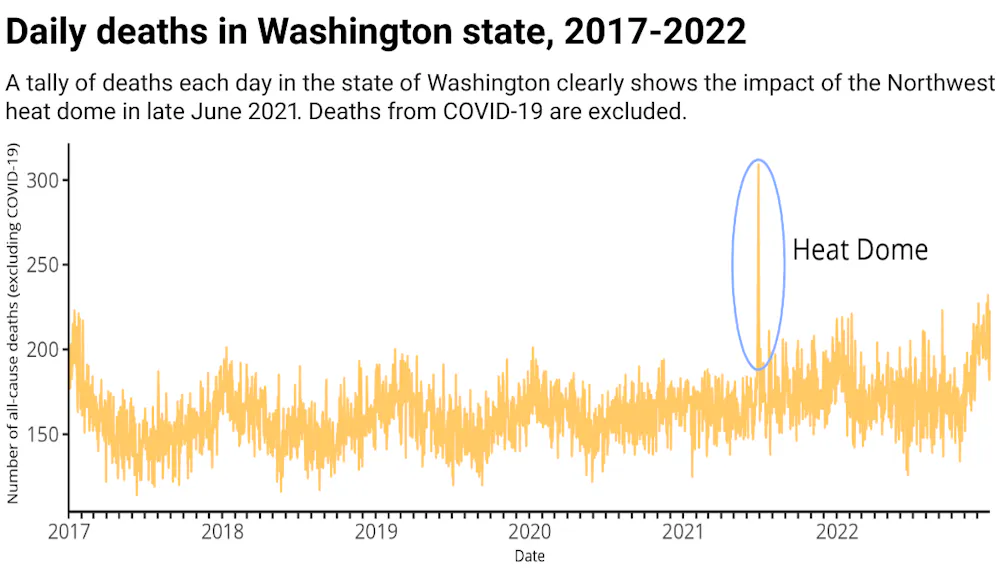
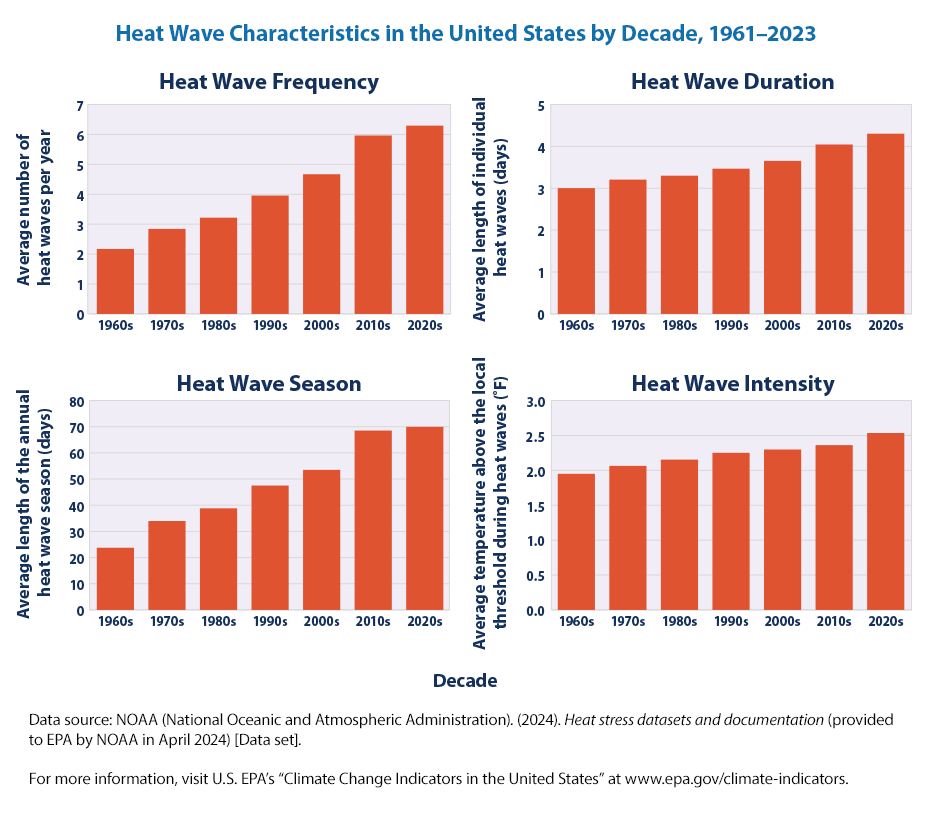
    The heatwave in 1976 was bad: thousands died, fires raged, and water ran dry. But it was also an anomaly; a hot summer in a relatively cool decade. Heatwaves are now more frequent, more intense and longer lasting. Temperatures reached over 40°C in 2022, while the maximum in 1976 was 4°C-5°C cooler.

    Still, each time a weather warning is issued, it is met with a wave of derision. There is the same online discourse as is expressed in this meme. This attitude is not just flippant, it is dangerous. It undermines vital public messaging, discourages precautionary action, and fuels complacency among those least at risk, while leaving the most vulnerable even more exposed.

    History can offer crucial perspective. But only if we treat it honestly. That means moving beyond memeified memories of the past and reckoning with the complexity of what really happened. It means challenging the stories we tell ourselves. Many did live through the 1976 heatwave. But many also died: quietly, invisibly and avoidably. Their stories are not part of the nostalgia. They should be.


    Don’t have time to read about climate change as much as you’d like?

    Get a weekly roundup in your inbox instead. Every Wednesday, The Conversation’s environment editor writes Imagine, a short email that goes a little deeper into just one climate issue. Join the 45,000+ readers who’ve subscribed so far.


    Stephanie Brown does not work for, consult, own shares in or receive funding from any company or organisation that would benefit from this article, and has disclosed no relevant affiliations beyond their academic appointment.

    ref. The dangers of romanticising Britain’s 1976 heatwave – https://theconversation.com/the-dangers-of-romanticising-britains-1976-heatwave-260046

    MIL OSI Analysis

  • MIL-OSI USA: Honoring West Colesville Fire Chief James Sitek

    Source: US State of New York

    Official websites use ny.gov

    A ny.gov website belongs to an official New York State government organization.

    Secure ny.gov websites use HTTPS

    A lock icon or https:// means you’ve safely connected to a ny.gov website. Share sensitive information only on official, secure websites.

    July 9, 2025

    Albany, NY

    Flags To Be Flown at Half-Staff Across New York State on Thursday, July 10

    Governor Kathy Hochul today directed flags on all State government buildings to be flown at half-staff in honor of West Colesville Fire Chief James Sitek, who passed away on July 6 in the line of duty, while responding to a fire in Conklin. Flags will be at half-staff from sunrise to sunset on Thursday, July 10.

    “Our first responders are admirable — stepping up for our communities in times of need, ensuring all are safe and protected from harm,” Governor Hochul said. “First responders go above and beyond, and I join the West Colesville community, family and loved ones in mourning the loss of their fearless Fire Chief, James Sitek.”

    You are leaving the official State of New York website.

    The State of New York does not imply approval of the listed destinations, warrant the accuracy of any information set out in those destinations, or endorse any opinions expressed therein. External web sites operate at the direction of their respective owners who should be contacted directly with questions regarding the content of these sites.

    Visit Site

    MIL OSI USA News

  • MIL-OSI Submissions: How the Catholic Church helped change the conversation about capital punishment in the United States

    Source: The Conversation – USA (3) – By Austin Sarat, William Nelson Cromwell Professor of Jurisprudence and Political Science, Amherst College

    Helen Prejean has been one of the most high-profile opponents of the death penalty for decades. Brooks Kraft LLC/Sygma via Getty Images

    Thirty years ago, the film “Dead Man Walking” had its debut in movie theaters around the United States. It was a box office hit, and critics lavished it with praise. Lead actress Susan Sarandon won an Academy Award for her portrayal of Sister Helen Prejean, the spiritual adviser to a death row inmate played by Sean Penn.

    But the film’s impact went far beyond the artistic realm. It exposed a mass audience to a perspective on the death penalty informed by the Catholic faith of a devout, if somewhat unconventional, nun.

    The actual Sister Helen had published her memoir, “Dead Man Walking,” two years before, raising her profile as an activist against the death penalty. Recalling her experience outside the execution chamber of Elmo Patrick Sonnier, one of the people she counseled, Prejean later wrote, “I touched him in the only way I could. I told him: ‘Look at my face. I will be the face of Christ, the face of love for you.’”

    She made it her mission to show that “everybody’s worth more than the worst thing they’ve ever done in their life.” As she once told an interviewer, “Jesus said, ‘Love your enemy.’ Jesus didn’t say, ‘Execute the hell out of the enemy.’”

    That belief was featured prominently in the film and offered a counterpoint to the popular tough-on-crime rhetoric of the 1990s. Back then, 80% of the American public supported capital punishment.

    Today, that is no longer true. Support for the death penalty has declined to around 50%.

    As a death penalty scholar, I have studied those changes. The church’s anti-death penalty teaching has helped provide both a moral foundation and political respectability for those working to end the death penalty.

    The 1995 film was inspired by Prejean’s memoir.

    Church teachings

    But that teaching is relatively new in the church, dating back to the past half-century. For most of its history, the Catholic Church did not oppose the death penalty.

    During the Middle Ages, the church endorsed the execution of heretics and held firm that secular authorities could and should put people to death for serious crimes. And in the early 20th century, Vatican City’s penal code permitted the death penalty for anyone who attempted to kill a pope. Pope Paul VI changed that in 1969.

    When John Paul II became pope a decade later, he pushed the church further away from its historic embrace of the death penalty, calling it “cruel and unnecessary.” And in 2018, under Pope Francis, the Vatican revised the section on capital punishment in the Catechism, the summary of Catholic doctrine.

    The death penalty “is inadmissible because it is an attack on the inviolability and dignity of the person,” and deprives “the guilty of the possibility of redemption,” the new version says. This teaching committed the church to work for its abolition.

    In his 2020 encyclical Fratelli Tutti, Francis stated that the death penalty is “inadequate from a moral standpoint and no longer necessary from that of penal justice.” In 2024, he again called for “the abolition of the death penalty, a provision at odds with Christian faith and one that eliminates all hope of forgiveness and rehabilitation.”

    Impact in the US

    The changed situation of capital punishment in this country is largely attributable to a change in the strategy and tactics of the abolitionist movement. Instead of talking about the death penalty in abstract terms, activists began to focus on the day-to-day realities of its administration.

    Today, advocates in what I have called the “new abolitionism” focus on the prospect of executing the innocent, racial discrimination in capital sentencing, and the financial costs associated with the death penalty. Among Catholics working to end the death penalty, however, the moral questions about state killing have long been a central focus.

    The U.S. Conference of Catholic Bishops focused on morality in its own campaign to end capital punishment, which was launched in 2005. And from time to time, popes have made special appeals to government officials in the U.S., asking them to spare the life of someone awaiting execution.

    A seminarian attends a public hearing in Connecticut in 2011 on legislation to replace capital punishment with life in prison for certain murders.
    AP Photo/Jessica Hill

    Legal historian Sara Mayeux argues that Catholic anti-death penalty activism in the U.S. has been less intense than anti-abortion work. Nevertheless, the impact of the church is reflected in the fact that in the past 50 years, Catholic support for capital punishment fell more than it did among evangelicals, mainline Protestants, Black Protestants and other religious groups.

    In December 2024, as the term of President Joe Biden, a devout Catholic, was coming to a close, the Catholics Mobilizing Network, which advocates against capital punishment, called on the president to commute the sentences of the 40 people then on federal death row. Francis, too, publicly prayed for their sentences to be commuted.

    Biden did so for 37 federal death row inmates, changing their sentences to life in prison without parole.

    Anti-death penalty superstar

    As the church’s official position against capital punishment has evolved, Prejean has been a consistent voice asking Americans to recognize and respond to the humanity of all those touched by murder. She is, in words I am sure she would resist, a superstar in the movement, thanks to her countless public appearances, interviews, protests and actions to lobby legislators.

    Sister Helen Prejean talks to detainees during a discussion of ‘Dead Man Walking’ at Department Of Corrections Division 11 in Chicago.
    AP Photo/Nam Y. Huh

    In 2021, she wrote, “I’m on fire to abolish government killing because I’ve seen it far too close-up, and I have a pretty good idea by now how it works – or doesn’t.”

    Thirty years ago, “Dead Man Walking” gave its viewers a chance to see capital punishment “close-up.” It didn’t preach or hit anyone over the head with an overtly abolitionist message. Instead, it asked viewers to see the death penalty from many sides and make up their own minds about whether anyone should be put to death, even for the most horrible crimes.

    Between then and now, America has undertaken precisely the kind of conversation about capital punishment that the film exemplified and inspired.

    Austin Sarat does not work for, consult, own shares in or receive funding from any company or organization that would benefit from this article, and has disclosed no relevant affiliations beyond their academic appointment.

    ref. How the Catholic Church helped change the conversation about capital punishment in the United States – https://theconversation.com/how-the-catholic-church-helped-change-the-conversation-about-capital-punishment-in-the-united-states-260481

    MIL OSI

  • MIL-OSI Submissions: How the Catholic Church helped change the conversation about capital punishment in the United States

    Source: The Conversation – USA (3) – By Austin Sarat, William Nelson Cromwell Professor of Jurisprudence and Political Science, Amherst College

    Helen Prejean has been one of the most high-profile opponents of the death penalty for decades. Brooks Kraft LLC/Sygma via Getty Images

    Thirty years ago, the film “Dead Man Walking” had its debut in movie theaters around the United States. It was a box office hit, and critics lavished it with praise. Lead actress Susan Sarandon won an Academy Award for her portrayal of Sister Helen Prejean, the spiritual adviser to a death row inmate played by Sean Penn.

    But the film’s impact went far beyond the artistic realm. It exposed a mass audience to a perspective on the death penalty informed by the Catholic faith of a devout, if somewhat unconventional, nun.

    The actual Sister Helen had published her memoir, “Dead Man Walking,” two years before, raising her profile as an activist against the death penalty. Recalling her experience outside the execution chamber of Elmo Patrick Sonnier, one of the people she counseled, Prejean later wrote, “I touched him in the only way I could. I told him: ‘Look at my face. I will be the face of Christ, the face of love for you.’”

    She made it her mission to show that “everybody’s worth more than the worst thing they’ve ever done in their life.” As she once told an interviewer, “Jesus said, ‘Love your enemy.’ Jesus didn’t say, ‘Execute the hell out of the enemy.’”

    That belief was featured prominently in the film and offered a counterpoint to the popular tough-on-crime rhetoric of the 1990s. Back then, 80% of the American public supported capital punishment.

    Today, that is no longer true. Support for the death penalty has declined to around 50%.

    As a death penalty scholar, I have studied those changes. The church’s anti-death penalty teaching has helped provide both a moral foundation and political respectability for those working to end the death penalty.

    The 1995 film was inspired by Prejean’s memoir.

    Church teachings

    But that teaching is relatively new in the church, dating back to the past half-century. For most of its history, the Catholic Church did not oppose the death penalty.

    During the Middle Ages, the church endorsed the execution of heretics and held firm that secular authorities could and should put people to death for serious crimes. And in the early 20th century, Vatican City’s penal code permitted the death penalty for anyone who attempted to kill a pope. Pope Paul VI changed that in 1969.

    When John Paul II became pope a decade later, he pushed the church further away from its historic embrace of the death penalty, calling it “cruel and unnecessary.” And in 2018, under Pope Francis, the Vatican revised the section on capital punishment in the Catechism, the summary of Catholic doctrine.

    The death penalty “is inadmissible because it is an attack on the inviolability and dignity of the person,” and deprives “the guilty of the possibility of redemption,” the new version says. This teaching committed the church to work for its abolition.

    In his 2020 encyclical Fratelli Tutti, Francis stated that the death penalty is “inadequate from a moral standpoint and no longer necessary from that of penal justice.” In 2024, he again called for “the abolition of the death penalty, a provision at odds with Christian faith and one that eliminates all hope of forgiveness and rehabilitation.”

    Impact in the US

    The changed situation of capital punishment in this country is largely attributable to a change in the strategy and tactics of the abolitionist movement. Instead of talking about the death penalty in abstract terms, activists began to focus on the day-to-day realities of its administration.

    Today, advocates in what I have called the “new abolitionism” focus on the prospect of executing the innocent, racial discrimination in capital sentencing, and the financial costs associated with the death penalty. Among Catholics working to end the death penalty, however, the moral questions about state killing have long been a central focus.

    The U.S. Conference of Catholic Bishops focused on morality in its own campaign to end capital punishment, which was launched in 2005. And from time to time, popes have made special appeals to government officials in the U.S., asking them to spare the life of someone awaiting execution.

    A seminarian attends a public hearing in Connecticut in 2011 on legislation to replace capital punishment with life in prison for certain murders.
    AP Photo/Jessica Hill

    Legal historian Sara Mayeux argues that Catholic anti-death penalty activism in the U.S. has been less intense than anti-abortion work. Nevertheless, the impact of the church is reflected in the fact that in the past 50 years, Catholic support for capital punishment fell more than it did among evangelicals, mainline Protestants, Black Protestants and other religious groups.

    In December 2024, as the term of President Joe Biden, a devout Catholic, was coming to a close, the Catholics Mobilizing Network, which advocates against capital punishment, called on the president to commute the sentences of the 40 people then on federal death row. Francis, too, publicly prayed for their sentences to be commuted.

    Biden did so for 37 federal death row inmates, changing their sentences to life in prison without parole.

    Anti-death penalty superstar

    As the church’s official position against capital punishment has evolved, Prejean has been a consistent voice asking Americans to recognize and respond to the humanity of all those touched by murder. She is, in words I am sure she would resist, a superstar in the movement, thanks to her countless public appearances, interviews, protests and actions to lobby legislators.

    Sister Helen Prejean talks to detainees during a discussion of ‘Dead Man Walking’ at Department Of Corrections Division 11 in Chicago.
    AP Photo/Nam Y. Huh

    In 2021, she wrote, “I’m on fire to abolish government killing because I’ve seen it far too close-up, and I have a pretty good idea by now how it works – or doesn’t.”

    Thirty years ago, “Dead Man Walking” gave its viewers a chance to see capital punishment “close-up.” It didn’t preach or hit anyone over the head with an overtly abolitionist message. Instead, it asked viewers to see the death penalty from many sides and make up their own minds about whether anyone should be put to death, even for the most horrible crimes.

    Between then and now, America has undertaken precisely the kind of conversation about capital punishment that the film exemplified and inspired.

    Austin Sarat does not work for, consult, own shares in or receive funding from any company or organization that would benefit from this article, and has disclosed no relevant affiliations beyond their academic appointment.

    ref. How the Catholic Church helped change the conversation about capital punishment in the United States – https://theconversation.com/how-the-catholic-church-helped-change-the-conversation-about-capital-punishment-in-the-united-states-260481

    MIL OSI

  • MIL-OSI Submissions: ‘Big Beautiful Bill’ will have Americans paying higher prices for dirtier energy

    Source: The Conversation – USA (2) – By Daniel Cohan, Professor of Civil and Environmental Engineering, Rice University

    Congress passed Donald Trump’s tax and spending bill on July 3, 2025. Kevin Carter/Getty Images

    When congressional Republicans decided to cut some Biden-era energy subsidies to help fund their One Big Beautiful Bill Act, they could have pruned wasteful subsidies while sparing the rest. Instead, they did the reverse. Americans will pay the price with higher costs for dirtier energy.

    The nearly 900-page bill that President Donald Trump signed on July 4, 2025, slashes incentives for wind and solar energy, batteries, electric cars and home efficiency while expanding subsidies for fossil fuels and biofuels. That will leave Americans burning more fossil fuels despite strong public and scientific support for shifting to renewable energy.

    As an environmental engineering professor who studies ways to confront climate change, I think it is important to distinguish which energy technologies could rapidly cut emissions or need a financial boost to become viable from those that are already profitable but harm the environment. Unfortunately, the Republican bill favors the latter while stifling the former.

    The Spring Creek Mine in Decker, Mont., is just one mine in the Powder River Basin, the most productive coal-producing region in the U.S.
    AP Photo/Matthew Brown

    Cuts to renewable electricity

    Wind and solar power, often paired with batteries, provide over 90% of the new electricity added nationally and around the world in recent years. Natural gas turbines are in short supply, and there are long lead times to build nuclear power plants. Wind and solar energy projects – with batteries to store excess power until it’s needed – offer the fastest way to satisfy growing demand for power. Recent technological breakthroughs put geothermal power on the verge of rapid growth.

    However, the One Big Beautiful Bill Act rescinds billions of dollars that the Inflation Reduction Act, enacted in 2022, devoted to boosting domestic manufacturing and deployments of renewable energy and batteries.

    It accelerates the phaseout of tax credits for factories that manufacture equipment needed for renewable energy and electric vehicles. That would disrupt the boom in domestic manufacturing projects that had been stimulated by the Inflation Reduction Act.

    Efforts to build new wind and solar farms will be hit even harder. To receive any tax credits, those projects will need to commence construction by mid-2026 or come online by the end of 2027. The act preserves a slower timeline for phasing out subsidies for nuclear, geothermal and hydrogen projects, which take far longer to build than wind and solar farms.

    However, even projects that could be built soon enough will struggle to comply with the bill’s restrictions on using Chinese-made components. Tax law experts have called those provisions “unworkable,” since some Chinese materials may be necessary even for projects built with as much domestic content as possible. For example, even American-made solar panels may rely on components sourced from China or Chinese-owned companies.

    Princeton University professor Jesse Jenkins estimates that the bill will mean wind and solar power generate 820 fewer terawatt-hours in 2035 than under previous policies. That’s more power than all U.S. coal-fired power plants generated in 2023.

    That’s why BloombergNEF, an energy research firm, called the bill a “nightmare scenario” for clean energy proponents.

    However, one person’s nightmare may be another man’s dream. “We’re constraining the hell out of wind and solar, which is good,” said U.S. Rep. Chip Roy, a Texas Republican who is backed by the oil and gas industry.

    Federal tax credits for homeowners who install solar panels will now expire at the end of 2025.
    AP Photo/Michael Conroy

    Electric cars and efficiency

    Cuts fall even harder on Americans who are trying to reduce their carbon footprints and energy costs. The quickest phaseout comes for tax credits for electric vehicles, which will end on Sept. 30, 2025. And since the bill eliminates fines on car companies that fail to meet fuel economy standards, other new cars are likely to guzzle more gas.

    Tax credits for home efficiency improvements such as heat pumps, efficient windows and energy audits will end at the end of 2025. Homeowners will also lose tax credits for installing solar panels at the end of the year, seven years earlier than under the previous law.

    The bill also rescinds funding that would have helped cut diesel emissions and finance clean energy projects in underserved communities.

    Federal tax credits for buying electric vehicles will end on Sept. 30, 2025.
    AP Photo/Jae C. Hong

    Support for biofuels and fossil fuels

    Biofuels and fossil fuels fared far better under the bill. Tens of billions of dollars will be spent to extend tax credits for biofuels such as ethanol and biodiesel.

    Food-based biofuels do little good for the climate because growing, harvesting and processing crops requires fertilizers, pesticides and fuel. The bill would allow forests to be cut to make room for crops because it directs agencies to ignore the effects of biofuels on land use.

    Meanwhile, the bill opens more federal lands and waters to leasing for oil and gas drilling and coal mining. It also slashes the royalties that companies pay to the federal government for fuels extracted from publicly owned land. And a new tax credit will subsidize metallurgical coal, which is mainly exported to steelmakers overseas.

    The bill also increases subsidies for using captured carbon dioxide to extract more oil and gas from the ground. That makes it less likely that captured emissions will only be sequestered to combat climate change.

    Summing it up

    With fewer efficiency improvements, fewer electric vehicles and less clean power on the grid, Princeton’s Jenkins projects that the law will increase household energy costs by over $280 per year by 2035 above what they would have been without the bill. The extra fossil fuel-burning will negate 470 million tons of anticipated emissions reductions that year, a 7% bump.

    The bill will also leave America’s clean energy transition further behind China, which is deploying more solar and wind power and electric vehicles than the rest of the world combined.

    No one expected President Joe Biden’s Inflation Reduction Act to escape unscathed with Republicans in the White House and dominating both houses of Congress, even though many of its projects were in Republican-voting districts. Still, pairing cuts to clean energy with support for fossil fuels makes Trump’s bill uniquely harmful to the world’s climate and to Americans’ wallets.

    This article includes some material previously published on June 10, 2025.

    Daniel Cohan receives research funding from the Carbon Hub at Rice University. He previously received research funding from Project InnerSpace, the Mitchell Foundation, the National Science Foundation, NASA, and the Environmental Protection Agency.

    ref. ‘Big Beautiful Bill’ will have Americans paying higher prices for dirtier energy – https://theconversation.com/big-beautiful-bill-will-have-americans-paying-higher-prices-for-dirtier-energy-260588

    MIL OSI

  • MIL-OSI Submissions: ‘Big Beautiful Bill’ will have Americans paying higher prices for dirtier energy

    Source: The Conversation – USA (2) – By Daniel Cohan, Professor of Civil and Environmental Engineering, Rice University

    Congress passed Donald Trump’s tax and spending bill on July 3, 2025. Kevin Carter/Getty Images

    When congressional Republicans decided to cut some Biden-era energy subsidies to help fund their One Big Beautiful Bill Act, they could have pruned wasteful subsidies while sparing the rest. Instead, they did the reverse. Americans will pay the price with higher costs for dirtier energy.

    The nearly 900-page bill that President Donald Trump signed on July 4, 2025, slashes incentives for wind and solar energy, batteries, electric cars and home efficiency while expanding subsidies for fossil fuels and biofuels. That will leave Americans burning more fossil fuels despite strong public and scientific support for shifting to renewable energy.

    As an environmental engineering professor who studies ways to confront climate change, I think it is important to distinguish which energy technologies could rapidly cut emissions or need a financial boost to become viable from those that are already profitable but harm the environment. Unfortunately, the Republican bill favors the latter while stifling the former.

    The Spring Creek Mine in Decker, Mont., is just one mine in the Powder River Basin, the most productive coal-producing region in the U.S.
    AP Photo/Matthew Brown

    Cuts to renewable electricity

    Wind and solar power, often paired with batteries, provide over 90% of the new electricity added nationally and around the world in recent years. Natural gas turbines are in short supply, and there are long lead times to build nuclear power plants. Wind and solar energy projects – with batteries to store excess power until it’s needed – offer the fastest way to satisfy growing demand for power. Recent technological breakthroughs put geothermal power on the verge of rapid growth.

    However, the One Big Beautiful Bill Act rescinds billions of dollars that the Inflation Reduction Act, enacted in 2022, devoted to boosting domestic manufacturing and deployments of renewable energy and batteries.

    It accelerates the phaseout of tax credits for factories that manufacture equipment needed for renewable energy and electric vehicles. That would disrupt the boom in domestic manufacturing projects that had been stimulated by the Inflation Reduction Act.

    Efforts to build new wind and solar farms will be hit even harder. To receive any tax credits, those projects will need to commence construction by mid-2026 or come online by the end of 2027. The act preserves a slower timeline for phasing out subsidies for nuclear, geothermal and hydrogen projects, which take far longer to build than wind and solar farms.

    However, even projects that could be built soon enough will struggle to comply with the bill’s restrictions on using Chinese-made components. Tax law experts have called those provisions “unworkable,” since some Chinese materials may be necessary even for projects built with as much domestic content as possible. For example, even American-made solar panels may rely on components sourced from China or Chinese-owned companies.

    Princeton University professor Jesse Jenkins estimates that the bill will mean wind and solar power generate 820 fewer terawatt-hours in 2035 than under previous policies. That’s more power than all U.S. coal-fired power plants generated in 2023.

    That’s why BloombergNEF, an energy research firm, called the bill a “nightmare scenario” for clean energy proponents.

    However, one person’s nightmare may be another man’s dream. “We’re constraining the hell out of wind and solar, which is good,” said U.S. Rep. Chip Roy, a Texas Republican who is backed by the oil and gas industry.

    Federal tax credits for homeowners who install solar panels will now expire at the end of 2025.
    AP Photo/Michael Conroy

    Electric cars and efficiency

    Cuts fall even harder on Americans who are trying to reduce their carbon footprints and energy costs. The quickest phaseout comes for tax credits for electric vehicles, which will end on Sept. 30, 2025. And since the bill eliminates fines on car companies that fail to meet fuel economy standards, other new cars are likely to guzzle more gas.

    Tax credits for home efficiency improvements such as heat pumps, efficient windows and energy audits will end at the end of 2025. Homeowners will also lose tax credits for installing solar panels at the end of the year, seven years earlier than under the previous law.

    The bill also rescinds funding that would have helped cut diesel emissions and finance clean energy projects in underserved communities.

    Federal tax credits for buying electric vehicles will end on Sept. 30, 2025.
    AP Photo/Jae C. Hong

    Support for biofuels and fossil fuels

    Biofuels and fossil fuels fared far better under the bill. Tens of billions of dollars will be spent to extend tax credits for biofuels such as ethanol and biodiesel.

    Food-based biofuels do little good for the climate because growing, harvesting and processing crops requires fertilizers, pesticides and fuel. The bill would allow forests to be cut to make room for crops because it directs agencies to ignore the effects of biofuels on land use.

    Meanwhile, the bill opens more federal lands and waters to leasing for oil and gas drilling and coal mining. It also slashes the royalties that companies pay to the federal government for fuels extracted from publicly owned land. And a new tax credit will subsidize metallurgical coal, which is mainly exported to steelmakers overseas.

    The bill also increases subsidies for using captured carbon dioxide to extract more oil and gas from the ground. That makes it less likely that captured emissions will only be sequestered to combat climate change.

    Summing it up

    With fewer efficiency improvements, fewer electric vehicles and less clean power on the grid, Princeton’s Jenkins projects that the law will increase household energy costs by over $280 per year by 2035 above what they would have been without the bill. The extra fossil fuel-burning will negate 470 million tons of anticipated emissions reductions that year, a 7% bump.

    The bill will also leave America’s clean energy transition further behind China, which is deploying more solar and wind power and electric vehicles than the rest of the world combined.

    No one expected President Joe Biden’s Inflation Reduction Act to escape unscathed with Republicans in the White House and dominating both houses of Congress, even though many of its projects were in Republican-voting districts. Still, pairing cuts to clean energy with support for fossil fuels makes Trump’s bill uniquely harmful to the world’s climate and to Americans’ wallets.

    This article includes some material previously published on June 10, 2025.

    Daniel Cohan receives research funding from the Carbon Hub at Rice University. He previously received research funding from Project InnerSpace, the Mitchell Foundation, the National Science Foundation, NASA, and the Environmental Protection Agency.

    ref. ‘Big Beautiful Bill’ will have Americans paying higher prices for dirtier energy – https://theconversation.com/big-beautiful-bill-will-have-americans-paying-higher-prices-for-dirtier-energy-260588

    MIL OSI

  • MIL-OSI China: China issues orange alerts for rainstorms, mountain torrents

    Source: People’s Republic of China – State Council News

    BEIJING, July 9 — China’s national observatory issued an orange alert on Wednesday, warning of downpours in some regions of the country.

    From 8:00 p.m. Wednesday to 8:00 p.m. Thursday, heavy rains and rainstorms are forecast to hit parts of the provincial-level regions of Fujian, Guangdong, Taiwan, Jiangxi, Hunan, Guizhou, Yunnan, Sichuan, Chongqing, Hubei, Henan, Hebei and Inner Mongolia, the National Meteorological Center said.

    Parts of Fujian in east China and Guangdong in south China are expected to experience torrential rains — with precipitation of up to 300 mm, the center added.

    The center has advised local authorities to take precautions for heavy rainstorms, and suggested that necessary drainage measures be implemented in urban areas and across farmlands.

    The Ministry of Water Resources and the China Meteorological Administration, meanwhile, issued an orange alert for mountain torrents in Fujian, east China’s Jiangxi and Guangdong on Wednesday.

    Authorities in the above-mentioned regions are urged to strengthen real-time monitoring work, issue timely warnings and carry out evacuations, if necessary.

    China has a four-tier weather warning system, with red representing the most severe warning, followed by orange, yellow and blue.

    MIL OSI China News

  • MIL-OSI United Kingdom: Southsea beach set to double in size

    Source: City of Portsmouth

    Southsea’s beach between the Pyramids and the Coffee Cup café in Eastney will be rebuilt this winter when more than one million tonnes of shingle is imported by dredger between October 2025 and March 2026.

    The significant increase will see the beach double in size when shingle is dredged locally from the Solent near the Isle of Wight and deposited onto the beach by a pipeline from the dredger.

    Similar work was undertaken on a smaller scale earlier this year during beach import work along the beach in front of Southsea Common.

    Southsea Coastal Scheme Project Executive Marc Bryan said:

    “We’ve chosen to build a larger shingle beach in this area because they’re great at absorbing wave energy which in turn helps reduce erosion and protects homes and businesses from coastal flooding.

    “The new beach will adapt to rising seas and our changing climate while still providing the required standard of protection.

    “It will be easily maintained and can be topped up if needed in the future.”

    Initial works will start in October 2025 with the installation of a new outfall extension from Canoe Lake.

    From November 2025, a one metre diameter pipeline will be laid across the beach to the west of South Parade Pier to discharge the new shingle.

    During the shingle discharging, access to the beach will be limited for safety reasons with some stepped access over the pipeline available.

    MIL OSI United Kingdom

  • MIL-OSI Security: McKeesport Felon Sentenced to Prison for Illegal Possession of Firearms and Ammunition

    Source: US FBI

    PITTSBURGH, Pa. – A resident of McKeesport, Pennsylvania, has been sentenced in federal court to 37 months of imprisonment on his conviction of illegally possessing firearms and ammunition as a convicted felon, Acting United States Attorney Troy Rivetti announced today.

    United States District Judge Christy Criswell Wiegand imposed the sentence on Richard L. Edwards Jr., 49.

    According to information presented to the Court, Edwards was serving probation following a 2023 conviction for which he was sentenced to five years of county probation and 18 months of electronic home monitoring. While on approved grocery windows on both May 25, 2024, and June 1, 2024, Edwards stopped with his wife at a local firearms store, where his wife purchased a firearm on each occasion. In light of the two unauthorized stops, Westmoreland County Adult Probation conducted a search of Edwards’ residence on August 9, 2024, where they located multiple firearms and ammunition in Edwards’ bedroom and requested the assistance of the McKeesport Police Department. In total, law enforcement seized four firearms, including a sawed-off shotgun, and numerous rounds of ammunition from Edwards’ bedroom. Edwards is prohibited from possessing firearms or ammunition based upon his prior convictions for robbery and simple assault—both of which involved his use and threatened use of a firearm.

    Assistant United States Attorney Rebecca L. Silinski prosecuted this case on behalf of the government.

    Acting United States Attorney Rivetti commended Westmoreland County Adult Probation, the McKeesport Police Department, and the Federal Bureau of Investigation for the investigation leading to the successful prosecution of Edwards.

    MIL Security OSI

  • MIL-OSI Security: Fatal fire in Lewisham

    Source: United Kingdom London Metropolitan Police

    Met Officers are supporting the London Fire Brigade in an investigation following the death of a boy in a fire in Lewisham.

    Police were called to Lewisham Road, SE13 at 23:54hrs on Tuesday, 8 July following a report of a fire in a flat.

    Officers attended with the London Fire Brigade and London Ambulance Service.

    Sadly, despite the best efforts of the emergency services, a 12-year-old boy died at the scene. His family have been informed and are being supported by specialist officers.

    A woman, aged 54, was taken to hospital by paramedics. Her injuries are not believed to be life-threatening or life-changing.

    Detective Chief Inspector Danian Reid, from the Met’s local investigations team in south east London, said: “This is a tragic incident and our thoughts are with everyone involved.

    “We continue to work alongside investigators from the London Fire Brigade to establish the cause of the fire.

    “We understand the impact this will have on the community and there will be local neighbourhood officers, and other emergency services, in the area as enquiries continue.”

    The cause of the fire is being investigated by the London Fire Brigade but is not believed to be suspicious at this stage.

    MIL Security OSI

  • MIL-OSI Analysis: My city was one of hundreds expecting federal funds to help manage rising heat wave risk – then EPA terminated the grants

    Source: The Conversation – USA – By Brian G. Henning, Professor of Philosophy and Environmental Studies and Science, Gonzaga University

    The Pacific Northwest heat wave of 2021 left cities across Washington state sweltering in dangerous temperatures. AP Photo/Ted S. Warren

    In June 2021, a deadly heat wave pushed temperatures to 109 degrees Fahrenheit (43 Celsius) in Spokane, Washington, a northern city near the Idaho border where many homes weren’t built with central air conditioning.

    As the heat lingered for over a week, 19 people died in Spokane County and about 300 visited hospitals with signs of heat-related illnesses.

    Scientists say it’s not a matter of if, but when, another deadly heat wave descends on the region. To help save lives, the city teamed up with my university, Gonzaga, to start preparing for a hotter future.

    A chart of all deaths, excluding COVID-19, shows the extraordinary impact the 2021 heat dome had in Washington.
    ‘In the Hot Seat’ report, 2022

    We were excited and relieved when the community was awarded a US$19.9 million grant from the Environmental Protection Agency to help it take concrete steps to adapt to climate change and boost the local economy in the process. The grant would help establish resilience hubs with microgrids and help residents without air conditioning install energy-efficient cooling systems. The city doesn’t have the means to make these improvements on its own, even if they would save lives and money in the long run.

    Less than a year later, the Trump administration abruptly terminated the funding.

    Spokane’s grant wasn’t the only one eliminated – about 350 similar grants that had been awarded to help communities across the country manage climate changes, from extreme heat and wildfire smoke to rising seas and flooding, were also terminated on the grounds that they don’t meet the White House’s priorities. Many other grants to help communities have also been terminated.

    Many of the communities that lost funding are like Spokane: They can’t afford to do this kind of work on their own.

    Why cities like Spokane need the help

    Like many communities in the American West, Spokane was founded in the late 19th century on wealth from railroads and resource extraction, especially gold, silver and timber.

    Today, it is a city of 230,000 in a metro area of a half-million people, the largest on the I-90 corridor between Minneapolis and Seattle. In many ways, Spokane could be on the cusp of a renaissance.

    In January 2025, the U.S. Department of Commerce announced a $48 million grant to develop a tech hub that could put the Inland Northwest on a path to become a global leader in advanced aerospace materials. But then, in May, the Trump administration rescinded that grant as well.

    The lost grants left the economy – and Spokane’s ability to adapt fast enough to keep up with climate changes – uncertain.

    Heat waves are becoming a growing risk in Spokane, known for its river and falls that tumble near downtown.
    Roman Eugeniusz/Wikimedia Commons, CC BY-SA

    This is not a wealthy area. The median household income is nearly $30,000 less than the state average. More than 13 out of every 100 people in Spokane live in poverty, above the national average, and over 67% of the children are eligible for free or reduced lunch.

    The city is a light blue island in a dark red sea, politically speaking, with a moderate mayor. Its congressional district has voted Republican by wide margins since 1995, the year that then-House Speaker Tom Foley lost his reelection bid.

    Lessons from the 2021 heat dome

    The 2021 heat wave was a catalyzing event for the community. The newly formed Gonzaga Institute for Climate, Water and the Environment brought together a coalition of government and community partners to apply for the EPA’s Climate and Environmental Justice Community Change Grant Program. The grants, funded by Congress under the Inflation Reduction Act of 2022, were intended to help communities most affected by pollution and climate change build adaptive capacity and boost the safety of their residents.

    A key lesson from the 2021 heat dome was that temporary, or pop-up, cooling centers don’t work well. People just weren’t showing up. Our research found that the best approach is to strengthen existing community facilities that people already turn to in moments of difficulty.

    Half the $19.9 million award was for outfitting five resilience hubs in existing libraries and community centers with solar arrays and battery backup microgrids, allowing them to continue providing a safe, cool space during a heat wave if the power shuts down.

    The locations and plans for five resilience hubs to serve Spokane, and the infrastructure they would receive.
    Gonzaga Institute for Climate, Water and the Environment

    Another $8 million in grant funding was meant to provide 300 low- to moderate-income homeowners with new high-efficiency electric heat pump heating, ventilation and air conditioning systems, providing more affordable utility bills while improving their ability to cool their homes and reducing fossil fuel emissions.

    Communities are left with few options

    Now, this and other work is at risk in Spokane and cities and towns like it around the country that also lost funding.

    According to the Trump administration, the program – designed to help hundreds of communities around the country become safer – was “no longer consistent with EPA funding priorities.”

    A class action lawsuit was recently filed over the termination of the grants by a coalition that includes Earth Justice and the Southern Environmental Law Center. If the case is successful, Spokane could see its funding restored.

    Meanwhile, the city and my team know we have to move fast, with whatever money and other resources we can find, to help Spokane prepare for worsening heat. We formed the Spokane Climate Resilience Collaborative – a partnership between community organizations, health officials and the city – as one way to advance planning for and responding to climate hazards such as extreme heat and wildfire smoke.

    As concentrations of heat-trapping gasses accumulate in the atmosphere, both the frequency and severity of heat waves increase. It is only a matter of time before another deadly heat dome arrives.

    Brian G. Henning receives funding from the Environmental Protection Agency.

    ref. My city was one of hundreds expecting federal funds to help manage rising heat wave risk – then EPA terminated the grants – https://theconversation.com/my-city-was-one-of-hundreds-expecting-federal-funds-to-help-manage-rising-heat-wave-risk-then-epa-terminated-the-grants-259009

    MIL OSI Analysis

  • MIL-OSI Russia: All forest fires in Russian Transbaikalia have been extinguished

    Translation. Region: Russian Federal

    Source: People’s Republic of China in Russian – People’s Republic of China in Russian –

    An important disclaimer is at the bottom of this article.

    Source: People’s Republic of China – State Council News

    Vladivostok, July 9 (Xinhua) — Forest fires in Russia’s Zabaikalsky Krai, which have been raging since the start of the fire season, have been completely extinguished, RIA Novosti reported on Wednesday, citing the region’s Ministry of Natural Resources.

    The fire season in 2025 in Zabaikalsky Krai was declared on March 24, when the first forest fire occurred in the region. Since then, the forest fire service has extinguished 665 fires on an area of 2.6 million hectares in the region. As of the morning of July 9, there is not a single fire in Zabaikalsky Krai.

    A regional emergency regime was in effect in the forests of the region from April 7 due to wildfires. A federal emergency regime was introduced in Zabaikalsky Krai on April 23. On July 5, the Governor of Zabaikalsky Krai, Aleksandr Osipov, lifted the emergency regime in the forests of the region, which had been in effect since April due to the fire hazard. At the end of June, the region extended the restriction on staying in the forests until July 10 inclusive. –0–

    Please note: This information is raw content obtained directly from the source of the information. It is an accurate report of what the source claims and does not necessarily reflect the position of MIL-OSI or its clients.

    .

    MIL OSI Russia News

  • MIL-OSI USA: Governor Newsom deploys firefighter strike team to support Oregon wildfire response

    Source: US State of California 2

    Jul 8, 2025

    SACRAMENTO — As wildfire conditions intensify across the Pacific Northwest, Governor Newsom has directed the deployment of a CAL FIRE Type 3 engine strike team to assist firefighting efforts in southern Oregon. The deployment includes five fire engines and a strike team leader who will join suppression operations just north of the California–Oregon border.

    “Just as Oregon supported our state during the Los Angeles firestorms, we’re glad to support our Northern neighbors with strike teams and fire engines to aid in their wildfire response efforts. I’m proud California can lend a helping hand to fellow Americans in their time of need.” 

    Governor Gavin Newsom

    CAL FIRE engines being sent to support wildfire suppression in Oregon

    This mobilization comes in response to a significant lightning event that ignited numerous wildfires across the region. Southern Oregon has experienced more than 2,000 lightning strikes in recent days, compounded by high temperatures and gusty winds. The National Weather Service has issued Red Flag Warnings through July 8 for much of southern and central Oregon, signaling elevated fire danger and the need for immediate firefighting reinforcements.

    Upon arrival in Medford, CAL FIRE resources will seamlessly integrate into Oregon’s Department of Forestry command structure to support suppression efforts on active fires. This response is part of a long-standing interstate mutual aid agreement that strengthens wildfire readiness across the western United States.

    California remains prepared to send additional resources should conditions escalate.

    “We stand with Oregon during this critical time, just as they’ve stood with us during some of California’s toughest fire seasons,” said Anale Burlew, Chief Deputy Director of CAL FIRE. “These mutual aid partnerships are built on trust, coordination, and a shared commitment to public safety.”

    Press releases, Recent news

    Recent news

    News What you need to know: The $101 million being made available today will support the development of affordable multifamily rental housing in Los Angeles, prioritizing the needs of displaced residents in the fire-devastated regions. Los Angeles, California – Six…

    News SACRAMENTO – Governor Gavin Newsom today announced the deployment of an additional 18 highly skilled Urban Search and Rescue Team members to Texas to assist with ongoing response efforts related to severe flooding impacts.The deployment includes a total of four…

    News Perris, California — On June 18, 2025, the First Partner visited the Inland Empire to meet with California communities impacted by the Trump Administration’s federal immigration raids. The First Partner visited TODEC, a local nonprofit organization that’s become…

    Jul 8, 2025

    What you need to know: The passage of Proposition 1 by California voters adds rocket fuel to Governor Gavin Newsom’s transformational overhaul of the state’s behavioral health system. These reforms refocus existing funds to prioritize Californians with the most serious mental health and substance use issues, who are too often experiencing homelessness. They also fund more than 11,150 new behavioral health beds and supportive housing units and 26,700 outpatient treatment slots.

    Los Angeles, California – California took a major step forward in correcting the damage from 50 years of neglect to the state’s mental health system with the passage of Proposition 1. This historic measure — a signature priority of Governor Gavin Newsom — adds rocket fuel to California’s overhaul of the state’s behavioral health systems. It provides a full range of mental health and substance abuse care, with new accountability metrics to ensure local governments deliver for their communities.

    This is the biggest reform of the California mental health system in decades and will finally equip partners to deliver the results all Californians need and deserve. Treatment centers will prioritize mental health and substance use support in the community like never before. Now, it’s time to roll up our sleeves and begin implementing this critical reform – working closely with city and county leaders to ensure we see results.

    Governor Gavin Newsom

    newsom-news-template
    IMG_3682-min
    contact-governor-landing
    workers-FxAJ5fkakAAtVI3
    priorities-and-progress-image
    economy-F-isBKpbsAAxdab
    gun-violence-San Diego Guns Package 2.18.22_2

    What they’re saying: 

    • Sacramento Mayor Darrell Steinberg, original author of the Mental Health Services Act: “Twenty years ago, I never could have dreamed that we would have the strong leadership we have today, committing billions and making courageous policy changes that question the conventional wisdom on mental health. Now, with the passage of Proposition 1. California is delivering on decades old promises to help people living with brain-based illnesses, to live better lives, to live independently and to live with dignity in our communities. This is a historic moment and the hard work is ahead of us.“
    • Senator Susan Eggman (D-Stockton), author of Senate Bill 326: “Today marks a day of hope for thousands of Californians who are struggling with mental illness – many of whom are living unhoused. I am tremendously grateful to my fellow Californian’s for passing this important measure.  And I am very appreciative of this Governor’s leadership to transform our behavioral health care system!”
    • Assemblymember Jacqui Irwin (D-Thousand Oaks), author of Assembly Bill 531: “This started as an audacious proposal to address the root cause of homelessness and today, Californians can be proud to know that they did the right thing by passing Proposition 1. Now, it’s time for all of us to get to work, and make sure these reforms are implemented and that we see results.”

    Bigger picture: Transforming the Mental Health Services Act into the Behavioral Health Services Act and building more community mental health treatment sites and supportive housing is the last main pillar of Governor Newsom’s Mental Health Movement – pulling together significant recent reforms like 988 crisis line, CalHOPE, CARE Court, conservatorship reform, CalAIM behavioral health expansion (including mobile crisis care and telehealth), Medi-Cal expansion to all low-income Californians, Children and Youth Behavioral Health Initiative (including expanding services in schools and on-line), Older Adult Behavioral Health Initiative, Veterans Mental Health Initiative, Behavioral Health Community Infrastructure Program, Behavioral Health Bridge Housing, Health Care Workforce for All and more.

    More details on next step here

    Press releases, Recent news

    Recent news

    News What you need to know: The $101 million being made available today will support the development of affordable multifamily rental housing in Los Angeles, prioritizing the needs of displaced residents in the fire-devastated regions. Los Angeles, California – Six…

    News SACRAMENTO – Governor Gavin Newsom today announced the deployment of an additional 18 highly skilled Urban Search and Rescue Team members to Texas to assist with ongoing response efforts related to severe flooding impacts.The deployment includes a total of four…

    News Perris, California — On June 18, 2025, the First Partner visited the Inland Empire to meet with California communities impacted by the Trump Administration’s federal immigration raids. The First Partner visited TODEC, a local nonprofit organization that’s become…

    Jul 8, 2025

    What you need to know: The passage of Proposition 1 by California voters adds rocket fuel to Governor Gavin Newsom’s transformational overhaul of the state’s behavioral health system. These reforms refocus existing funds to prioritize Californians with the most serious mental health and substance use issues, who are too often experiencing homelessness. They also fund more than 11,150 new behavioral health beds and supportive housing units and 26,700 outpatient treatment slots.

    Los Angeles, California – California took a major step forward in correcting the damage from 50 years of neglect to the state’s mental health system with the passage of Proposition 1. This historic measure — a signature priority of Governor Gavin Newsom — adds rocket fuel to California’s overhaul of the state’s behavioral health systems. It provides a full range of mental health and substance abuse care, with new accountability metrics to ensure local governments deliver for their communities.

    This is the biggest reform of the California mental health system in decades and will finally equip partners to deliver the results all Californians need and deserve. Treatment centers will prioritize mental health and substance use support in the community like never before. Now, it’s time to roll up our sleeves and begin implementing this critical reform – working closely with city and county leaders to ensure we see results.

    Governor Gavin Newsom

    newsom-news-template
    IMG_3682-min
    contact-governor-landing
    workers-FxAJ5fkakAAtVI3
    priorities-and-progress-image
    economy-F-isBKpbsAAxdab
    gun-violence-San Diego Guns Package 2.18.22_2

    What they’re saying: 

    • Sacramento Mayor Darrell Steinberg, original author of the Mental Health Services Act: “Twenty years ago, I never could have dreamed that we would have the strong leadership we have today, committing billions and making courageous policy changes that question the conventional wisdom on mental health. Now, with the passage of Proposition 1. California is delivering on decades old promises to help people living with brain-based illnesses, to live better lives, to live independently and to live with dignity in our communities. This is a historic moment and the hard work is ahead of us.“
    • Senator Susan Eggman (D-Stockton), author of Senate Bill 326: “Today marks a day of hope for thousands of Californians who are struggling with mental illness – many of whom are living unhoused. I am tremendously grateful to my fellow Californian’s for passing this important measure.  And I am very appreciative of this Governor’s leadership to transform our behavioral health care system!”
    • Assemblymember Jacqui Irwin (D-Thousand Oaks), author of Assembly Bill 531: “This started as an audacious proposal to address the root cause of homelessness and today, Californians can be proud to know that they did the right thing by passing Proposition 1. Now, it’s time for all of us to get to work, and make sure these reforms are implemented and that we see results.”

    Bigger picture: Transforming the Mental Health Services Act into the Behavioral Health Services Act and building more community mental health treatment sites and supportive housing is the last main pillar of Governor Newsom’s Mental Health Movement – pulling together significant recent reforms like 988 crisis line, CalHOPE, CARE Court, conservatorship reform, CalAIM behavioral health expansion (including mobile crisis care and telehealth), Medi-Cal expansion to all low-income Californians, Children and Youth Behavioral Health Initiative (including expanding services in schools and on-line), Older Adult Behavioral Health Initiative, Veterans Mental Health Initiative, Behavioral Health Community Infrastructure Program, Behavioral Health Bridge Housing, Health Care Workforce for All and more.

    More details on next step here

    Press releases, Recent news

    Recent news

    News What you need to know: The $101 million being made available today will support the development of affordable multifamily rental housing in Los Angeles, prioritizing the needs of displaced residents in the fire-devastated regions. Los Angeles, California – Six…

    News SACRAMENTO – Governor Gavin Newsom today announced the deployment of an additional 18 highly skilled Urban Search and Rescue Team members to Texas to assist with ongoing response efforts related to severe flooding impacts.The deployment includes a total of four…

    News Perris, California — On June 18, 2025, the First Partner visited the Inland Empire to meet with California communities impacted by the Trump Administration’s federal immigration raids. The First Partner visited TODEC, a local nonprofit organization that’s become…

    MIL OSI USA News