Category: Pandemic

  • MIL-Evening Report: Do parties win elections because of their leaders, or in spite of them? History shows it’s a bit of both

    Source: The Conversation (Au and NZ) – By Pandanus Petter, Postdoctoral Research Fellow, School of Politics and International Relations, Australian National University

    The upcoming federal election will see the incumbent Labor prime minister, Anthony Albanese, face off against Liberal opposition leader, Peter Dutton. We’ll likely see a strong focus on the personal qualities and performance of the two leaders.

    We tend to think a popular leader can win an election for their party while an unpopular one can lose it. Much of the commentary on the Coalition’s 2022 election loss, for example, centred on the widespread dislike of Scott Morrison.

    But how much do party leaders actually affect their party’s vote share, and ultimately, the outcome of an election? We looked at 40 years of opinion polling to find out.

    Our research

    Opinion polls in Australia have been conducted since the 1940s, but it was not until the 1980s that they began to regularly ask questions about leader satisfaction and voting intention. In recent decades, the proliferation of polls has seen a greater consistency in question wording and protocols.

    We have been analysing the polling data on government popularity and responsiveness in Australia. This enables us to track and compare leaders over an extended period.

    We’ve crunched the numbers on voter intention and leader satisfaction from September 1985 until December 2024.

    We can cross-reference these statistics to show which prime ministers and opposition leaders were a net benefit to their party (more popular than their party overall) and which were a net drag (less popular than their party).

    Prime ministers: who helped and who hindered?

    By this measure, the prime minister who provided the most electoral benefit to their party was Kevin Rudd between 2007 and 2010.

    Rudd achieved some of the highest levels of voter satisfaction recorded since the early Bob Hawke years, averaging 60% satisfaction, a 14-point net benefit for his party.


    His popularity declined considerably just before his replacement by Julia Gillard in 2010, and never fully recovered when he became prime minister again in 2013.

    John Howard ranks second, with Morrison and Albanese (so far) sharing third place in terms of satisfaction. However, there’s a larger difference between Albanese’s personal popularity and his party’s vote intention.

    Morrison’s tenure in office was skewed by the COVID pandemic, which saw a “rally around the flag” effect, seeing a spike in voters’ trust in government.

    Paul Keating comes at the bottom of the list. His personal popularity trailed his party’s by eight percentage points on average, with an upset victory in 1993 not enough to win over the public to defeat a resurgent Howard in 1996.

    Similiarly, Tony Abbott, although party leader when the Coalition returned to power after the Rudd-Gillard-Rudd years, was consistently less popular than his party – by seven points in opposition and four as prime minister.

    What about opposition leaders?

    Among opposition leaders, Rudd again tops the list. He was more popular than Labor overall in the year prior to winning the election in December 2007, peaking at 65.5% satisfaction.

    Mark Latham comes in second, perhaps surprisingly. This is due, at least in part, to the unpopularity of the Coalition government at the time.

    The opposition leader who represents the greatest drag on their party was Andrew Peacock in the late 1980s, in what was his second incarnation as Liberal leader.


    Overall, prime ministers have a greater impact on their party’s fortunes than opposition leaders. This is expected as incumbency has advantages, with prime ministers usually given more opportunity for media attention, greater recognition with the public, and hopefully a record of achievements in government to point to.

    Prime ministers register a net gain to their party of about four percentage points, compared with minus three points for opposition leaders.

    Labor leaders show a net gain to their party of two points, compared to minus four points for their Liberal counterparts.

    The personalisation of politics

    Since at least the 1970s, political leaders have attracted increasing attention in democratic elections around the world.

    This trend has not been restricted to countries with presidential systems, such as the United States. It’s also playing out in parliamentary systems such as Australia’s and the United Kingdom’s. This is despite the fact voters elect local members to parliament, rather than voting for the prime minister directly.


    Read more:
    Strong political leaders are electoral gold – but the trick is in them knowing when to stand down


    This profound shift in democratic politics has been based on several social changes.

    First, the rise of television, and more recently social media, has provided the visual images that direct voters’ attention towards the leader.

    While television’s heyday has passed – in both the 2019 and 2022 elections, the Australian Election Study surveys show more people followed the election on the internet than on television – visual images of the leaders dominate the media, both traditional and social.

    Second, party de-alignment has seen voters moving away from their traditional party loyalties, with the personalities of the leaders filling this gap.

    In the 1960s, around one in ten voters said they did not identify with a party, compared with one in four in the 2022 election.

    Third, the unprecedented expansion in university education has produced critical voters who are more volatile in their voting than any groups in the past.

    One factor that can sway their vote is policies, but another is the leader they find most competent.

    What does this mean for the next election?

    For Australian voters, leaders matter, rightly or wrongly, for evaluating the performance of a government and choosing which party to vote for.

    As we close in on an election in 2025, voters will be looking to Albanese and Dutton. In the chart below, we can see that while on average Dutton has been only marginally beneficial for his party compared with Albanese, this gap has narrowed in the latter half of 2024.


    Although Albanese started at a historically very strong position, it appears his popularity began to decline in May 2023. The defeat of the Voice to Parliament Referendum in November sped up the decline.

    Dutton received a short-term boost after the result, after which his popularity declined and then has steadily built over time. Current projections indicate the next election will likely be close-run.

    It also appears the two current leaders, whatever their other merits, have fallen short of the levels reached by the most popular prime ministers and opposition leaders of the past.

    Albanese’s early popularity has waned, while the Coalition and Dutton’s fortunes rise in step with one another.

    This reflects a return to a normal vote share for the party after their loss in 2022. While it may prove problematic for the government, it doesn’t necessarily indicate a meteoric increase in Dutton’s personal popularity.

    Pandanus Petter is employed at the Australian National University with funding from The Australian Research Council.

    Ian McAllister receives funding from the Australian Research Council.

    ref. Do parties win elections because of their leaders, or in spite of them? History shows it’s a bit of both – https://theconversation.com/do-parties-win-elections-because-of-their-leaders-or-in-spite-of-them-history-shows-its-a-bit-of-both-248868

    MIL OSI AnalysisEveningReport.nz

  • MIL-Evening Report: To achieve real growth, the NZ government needs to relax the rules around housing

    Source: The Conversation (Au and NZ) – By James Graham, Senior Lecturer in Economics, University of Sydney

    Ufuk Zivana/Shutterstock

    Prime Minister Christopher Luxon wants New Zealand to “go for growth”.

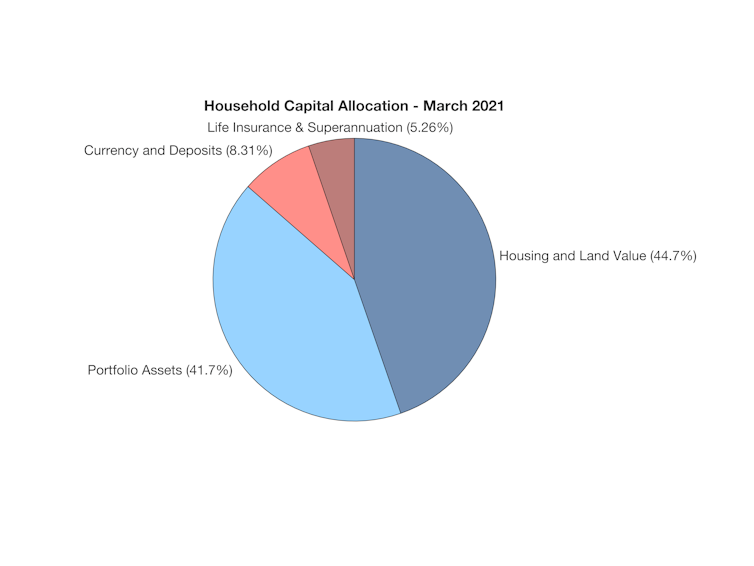
    But his plan, focused on reforming foreign investment, planning and competition laws, as well as boosting the tourism and mining sectors, is hampered by a fundamental reality of New Zealand’s economy: much of the country’s capital is tied up in unproductive (and expensive) housing.

    While this issue is not new, with New Zealand’s economy once described as “a housing market with bits tacked on”, the solution may lie in making housing more readily available through deregulation and policy reform. This would free up capital for drivers of growth such as infrastructure and business investment.


    Pie chart of household capital allocation.
    Household capital allocation March, 2021. Data source: RBNZ Household Balance Sheet.
    Author provided

    The temptation of housing

    Rapidly growing house prices over the past two decades have provided strong incentives to direct investment to the housing market.

    On average, the price of a typical house has grown by around 8% per year, far outpacing household income growth. For example, in 2005 the median house price was roughly five times the average household income. By the middle of the pandemic house values had ballooned to nine times the average income.

    Soaring prices have made residential investment extremely profitable for a long time. This means savings and investments have tended to flow into residential property rather than other productive sectors of the economy.

    Constraints on housing supply

    The problem is that in recent decades additional residential investment has not led to a substantial increase in new homes.

    Local and central government rules and regulations have long hampered the construction of new houses. Instead, more investment in real estate has generally led to even higher prices.

    As concerning as this is, it does not mean investments in housing have been misplaced. Rather, high prices and profits are what the market required in order to encourage those willing to build (few that there are) despite the costs, delays and uncertainties associated with bureaucratic battles with councils, planners and local NIMBY groups.

    Banning property speculation might have kept prices down and reallocated investment to other productive uses. But in the absence of those speculators, the supply constraints would not have been any looser. Lower prices mean lower returns over building costs, leading to even fewer houses built.

    Shifting capital out of the housing market in this way would not have benefited the country – we might have produced more and goods and services but fewer homes in which to live.

    Chirstopher Luxon speaks in parliament.
    Christopher Luxon is pushing forward his plan for growth focused on reforming foreign investment, planning and competition laws, as well as boosting the tourism and mining sectors.
    Hagen Hopkins/Getty Images

    Reforming housing supply

    Fortunately, New Zealand has made meaningful progress on housing supply recently. For example, Auckland and Lower Hutt changed zoning laws in the 2010s making it easier to build, and Wellington City has recently followed suit.

    These changes have led to local construction booms and, crucially, lower house prices and rents.

    More recently, central governments of both stripes introduced policies like the National Policy Statement on Urban Development, Medium Density Residential Standards, and housing growth targets for local councils.

    These reforms make it easier to build, reduce house prices and mean less investment capital is required for each new house built. So these policies have the dual benefit of improving housing affordability and freeing up capital for other productive sectors of the economy.

    As prices come down, New Zealanders will no longer need to pour nine times their income into a home.

    That will free up funds for investments in new bridges and tunnels, small businesses, and exciting new startups that will help drive innovation and generate the long-run growth we seek.

    New Zealand need not give up its housing dreams in order to get business moving. Rather, it can do both.

    All that requires is for local and central government to continue to let people build the housing they want so that we can free up the capital our infrastructure and businesses need.

    The Conversation

    James Graham has received research funding from the Australian Housing and Urban Research Institute and is a member of Sydney YIMBY.

    ref. To achieve real growth, the NZ government needs to relax the rules around housing – https://theconversation.com/to-achieve-real-growth-the-nz-government-needs-to-relax-the-rules-around-housing-249000

    MIL OSI AnalysisEveningReport.nz

  • MIL-OSI Europe: r* in the monetary policy universe: navigational star or dark matter? | Lecture at the London School of Economics and Political Science

    Source: Deutsche Bundesbank in English

    Check against delivery.
    1 Introduction
    Ladies and gentlemen, It’s a pleasure and an honour for me to speak here before such a distinguished audience.
    Remember to look up at the stars and not down at your feet. This was advice from Stephen Hawking, the famous English physicist and author of numerous books on the cosmos. And who would want to contradict the genius?
    So today I invite you to join me on a stargazing tour. If you don’t have a telescope with you, no worries. However, I should add a disclaimer here: When a couple look up at the stars, things could get romantic. When astronomers observe the stars, impressive images can come into view. When economists talk about stars, it usually gets complicated. Now you know what you’re getting into! 
    I’m sure you’ve already guessed what topic I have in mind: the natural rate of interest – also known as r-star. It is a concept that economists have been grappling with for more than 125 years.[1] And it has perhaps never received more attention than in the current era of monetary policy.
    From a central banker’s perspective, I would like to discuss what role r-star can and should play in the monetary policy universe. I will structure my lecture around four key questions: What is r-star and why is it of interest for monetary policy? How have estimates for r-star evolved over the past decades? What drives uncertainty about current estimates and the future evolution of r-star? What conclusions should monetary policy draw from this?
    2 Definition of r-star and use for monetary policy
    Let’s start with the definition. The natural rate is the real interest rate that would prevail if the economy were operating at its potential and prices were stable. R-star is commonly thought to be driven by real forces that structurally affect the balance between saving and investment. Think of technological progress and demographics, for example. This also means that r-star should, by definition, be independent of monetary policy. The latter follows from the widely held belief that monetary policy can affect real variables only temporarily, but is neutral in the long term.
    At first glance, the natural rate could be a guiding star for the conduct of monetary policy. If a central bank sets its policy rates so that the real interest rate is above r-star, monetary policy is restrictive or “tight”. Consequently, economic activity slows and the inflation rate should decrease. If the real rate is below r-star, monetary policy is expansionary or “loose”. It provides incentives for consumers to purchase more and for enterprises to step up investment and output. Hence, this should result in more economic activity and a higher inflation rate.
    However, the idea of the natural rate serving as a guiding star for monetary policy comes with profound challenges. Perhaps the name r-star evokes associations with astronomy and navigation. But these would be misleading. If r-star were like a star in the sky, it would be relatively easy to locate. Stars emit light and are therefore observable.
    The natural rate is a theoretical concept. It is based on a hypothetical state of the world. That means the natural rate is, by nature, unobservable. It can only be estimated. For example, models use assumptions about the relationship between measurable variables and r-star. In this respect, the natural rate is not so much like a star shining brightly in the sky. It is more a case of dark matter. As it is invisible, astronomers infer dark matter indirectly by observing its gravitational effects.
    If something is hard to find, it only spurs researchers to look even harder – whether they are astronomers or economists. Therefore, we can draw on a variety of estimation methods for the evolution of the natural rate.
    3 Estimates for r-star over time
    Since around the 1980s various estimates of different types have been pointing to a downward trend for r-star over several decades and across many advanced economies.[2] In the wake of the global financial crisis, the estimates slumped to exceptionally low levels.[3] This development was roughly in line with the observed trajectory of actual real interest rates of short- and long-term government bonds during this period. And no wonder: In the long run, both should be driven by the same fundamental forces affecting the balance between saving and investment.
    So the question is this: what has lifted saving and depressed investment? A simple answer would be: in the long term, the most important driver is potential growth. But this finding is not very enlightening. Potential growth is also not observable. It is determined by underlying forces such as demographics and technological progress. This is where we need to look for the causes.
    Indeed, according to a number of recent studies, waning productivity growth and population ageing were the key factors in pushing saving up and investment down.[4] Lower productivity reduces the return on investment, so people are less willing to invest. As they expect to live longer, they are more willing to save.
    In addition, inequality, risk aversion and fiscal policy could be other factors. For example, growing inequality raises saving, as richer households save a larger share of their income. Similarly, higher risk aversion leads to higher saving, especially in safe assets, while lowering investment.[5] 
    Many of the estimates for r-star reached their lowest point in the pandemic years 2020 and 2021. After that, there were signs of a partial reversal. A recent analysis by Eurosystem economists across a suite of models and data up to the end of 2024 suggests that estimates of r-star range from − ½ % to ½ % in real terms. In nominal terms, they find that it ranges between 1¾ % and 2¼ %.[6]
    It is clear that these ranges depend on the estimating approaches considered. Taking into account an even wider array of measures, Bundesbank staff calculations using data up to the end of 2024 reveal a range of 1.8 % to 2.5 %.[7] And the ECB found for the third quarter of 2024: When three estimates derived from versions of the Holston-Laubach-Williams model are factored in, the range of real r-star is − ½ % to 1 % and the nominal range is 1¾ % to 3 %.
    All in all, the results suggest that the range of r-star estimates most likely increased by about one percentage point from their lows. The latest estimates by economists from the Bank for International Settlements come to similar findings.[8]
    The reasons for the increase after the pandemic are not yet fully clear. For example, high fiscal spending with rising public debt levels could play a role. Or higher needs for capital, as companies make their value chains more resilient by duplicating structures and increasing stock levels.
    4 Uncertainties around r-star estimates
    Stargazing tours in economics are a journey into the uncertain. This is also and especially true for r-star. Estimates of the natural rate of interest are subject to major uncertainties, shaped by three M’s: megatrends, methodology and monetary policy.
    First, we are facing a number of megatrends. Think of climate change, ageing societies, digitalisation, and the risks of de-globalisation and increasing geopolitical divisions. The effects of these megatrends on natural rates are difficult to gauge and may change over time.
    On the one hand, they could contribute to a higher natural rate. Here are some examples: The widespread uptake of artificial intelligence could boost productivity growth. The green transition could lead to higher investment. Fiscal deficits could persist at an elevated level due to higher defence spending given geopolitical tensions. The entry of the baby boomer generation into retirement could reduce savings.
    On the other hand, life expectancy is predicted to keep rising; the high hopes for the productivity-enhancing effect of AI could turn out to be too optimistic; and given high public debt levels, fiscal space for additional spending is limited in many countries. Overall, it is virtually impossible to predict which developments will prevail in affecting r-star.
    The second factor of uncertainty is methodology. The methods used to define and estimate r-star differ in important ways, especially in terms of time and risk. 
    Ricardo Reis demonstrates this impressively in a recent paper.[9] He presents four different “r-stars”. They are based on four different conceptual approaches. And they developed quite differently between 1995 and 2019. 
    One major difference is the risk dimension. Knut Wicksell’s original definition of the natural rate was the rate of return on physical capital in equilibrium.[10] The rate of return on physical capital is the return on investment in the real economy. And this rate is very much associated with risks. 
    However, this perspective has been lost in virtually all of the model approaches. Generally, they use rather secure government bond yields as a starting point. Again, with regard to the real economy, a risky return on capital would be a more appropriate yardstick. When we look at measures for the return on private capital, we see a strong contrast with risk-free rates. Returns on private capital have remained broadly stable over the last decades in the US,[11] Germany[12] and the euro area as a whole.[13] 
    From these observations, Ricardo Reis draws the following conclusion: focusing exclusively on the return on government bonds as the measure of r-star, while neglecting the return on private capital, leads to the wrong policy advice.[14]
    Another case in point is the time horizon that is considered. Commonly cited estimates seek to assess the real rate that prevails in the longer run, when all shocks have dissipated. Most of these estimates are highly imprecise. Many methods simply project the current or the historical level of real rates into the future. This may confound permanent trends with cyclical factors, which may not be representative for the future. As a result, such methods could miss important turning points in real rate trends. 
    Other approaches characterise a short-run real rate in a hypothetical world without frictions. While interesting, this concept is of limited value for actual policymaking in the real world. Methods based on a short-term equilibrium tend to produce more volatile estimates of r-star.
    There is a third reason for caution: monetary policy itself may play a role in shaping the natural rate or its estimates. A number of studies challenge the view that money is neutral in the long run.[15] 
    There are different channels through which monetary policy could have lasting effects on real interest rates. Prolonged tight monetary policy, for example, may lower investment, innovation and productivity growth.[16] By contrast, persistent monetary easing could fuel financial imbalances and contribute to zombification.[17] 
    Moreover, recent research suggests that central bank announcements provide guidance about the trend in real rates. For instance, a narrow window around Fed meetings captures most of the trend decline in US real long-term yields since 1980.[18] This could mean: when central banks look for r-star in financial market prices, they might actually be looking in a mirror.[19] Feedback loops between monetary policy and markets could unduly reinforce their perceptions about r-star. And shifts in perceived r-star could affect actual r-star as it influences saving and investment decisions.
    5 Conclusions for monetary policy
    Against the backdrop of these major uncertainties, the final key question of my speech is this: what role can and should r-star play for monetary policy in practice?
    Let’s approach the answer with a thought experiment: Put yourself in the shoes of a monetary policymaker who only looks at r-star. The relevant interest rate with which you steer the monetary policy stance is currently 2.75 %. After a previous series of interest rate cuts, you consider whether a further cut would be appropriate.
    Your staff inform you that various point estimates of r-star range from around 1.8 % to 2.5 % in nominal terms. If r-star were at the upper end of the estimates, the policy rate would become neutral with the next rate cut. Things would be different if r-star were at the lower end of the estimates: Monetary policy would continue to be restrictive, even after several further rate cuts.
    So how would you proceed, given a certain stance you want to achieve? Beware: If you rely on a wrong estimate, your decision may have a different effect on inflation than you intended. Simply choosing the middle of the range might not be a happy medium. Around the point estimates, there are often uncertainty bands of different sizes and with asymmetries.
    As you have probably guessed: It is no coincidence that I have described this particular decision-making situation. It looks similar in the euro area ahead of the next monetary policy meeting of the ECB Governing Council at the beginning of March. After several rate cuts, the neutral rate could already be near – or there may still be some way to go.
    The President of the New York Fed, John Williams, put the problem in a nutshell when he said: as we have gotten closer to the range of estimates of neutral, what appeared to be a bright point of light is really a fuzzy blur.[20]
    The bottom line here is this: The closer we get to the neutral rate, the more appropriate it becomes to take a gradual approach. For this purpose, r-star is a helpful concept: it indicates when we need to be more cautious with policy rate moves so that we don’t take a wrong step. 
    At the same time, the limits of the concept are also clear: it would be risky to base decisions mainly on r-star estimates. Much more is needed to assess the current monetary policy stance and the optimal policy path for the near future.
    That is why the Eurosystem uses a variety of financial, real economic and other indicators along the monetary policy transmission mechanism. We want the fullest picture possible. And, of course, r-star also has a place in this picture. For instance, r-star is included in model-based optimal policy projections that we use in the decision-making process.
    In my opinion, proceeding in a data-driven and gradual manner has served the ECB Governing Council well. There is no reason to act hastily in the present uncertain environment. The data will tell us where we need to go.
    Away from day-to-day monetary policymaking, the concept of the natural rate of interest provides a useful framework. This is also exemplified in the policy scenarios that Ricardo Reis presented last week in Brussels.[21]
    He works with the assumption that government bond rates remain around current levels. I would add the assumption that inflation stays on target – actually, that is what I am in office for and committed to. Assuming output is at capacity, policy rates would be persistently higher than in the past. But the recommendations on actual monetary policy depend on the driving forces: is the new setting caused by less demand for safe and liquid assets or by an increase in productivity? And he has two more scenarios in his paper!
    That provides a good example of why we should take a close look at the factors behind r-star estimates. Here it is important to even better understand the forces that are shifting real interest rate trends. We need to find out how these forces and trends affect our work to ensure price stability.
    Reviewing our monetary policy strategy from time to time is therefore vital. That is precisely what we are doing right now in the Eurosystem. And, of course, in this process, we look at all the questions I mentioned about r-star.
    Our stargazing tour is drawing to a close. It turns out we were dealing more with dark matter than with a shining star. Just as dark matter is an exciting field for astronomers, r-star is a rewarding topic for economists.
    Using r-star alone to navigate the monetary policy universe could be like flying almost blind. But having it as one of many instruments in your cockpit is highly useful.
    I would like to end by quoting Stephen Hawking again: Mankind’s greatest achievements have come about by talking, and its greatest failures by not talking.
    Footnotes: 
    Wicksell, K. (1898), Geldzins und Güterpreise: eine Studie über die den Tauschwert des Geldes bestimmenden Ursachen, Jena, G. Fischer (English version as ibid. (1936), Interest and prices: a study of the causes regulating the value of money, London, Macmillan).
    Obstfeld, M., Natural and Neutral Real Interest Rates: Past and Future, NBER Working Paper, No 31949, December 2023.
    Brand, C., M. Bielecki and A. Penalver (2018), The natural rate of interest: estimates, drivers, and challenges to monetary policy, ECB Occasional Paper, No 217.
    Cesa-Bianchi, A., R. Harrison and R. Sajedi (2023), Global R*, CEPR Discussion Paper No 18518; Davis, J., C. Fuenzalida, L. Huetsch, B. Mills and A. M. Taylor (2024), Global natural rates in the long run: Postwar macro trends and the market-implied r* in 10 advanced economies, Journal of International Economics, Vol. 149; International Monetary Fund (2023), The natural rate of interest: drivers and implications for policy, World Economic Outlook, April, Chapter 2.
    On the development of risk appetite in financial markets, see Deutsche Bundesbank, Risk appetite in financial markets and monetary policy, Monthly Report, January 2025.
    Brand, C., N. Lisack and F. Mazelis (2025), Natural rate estimates for the euro area: insights, uncertainties and shortcomings, ECB Economic Bulletin, 1/2025.
    Additional models would also provide values outside this range, but are currently not deemed sufficiently robust.
    Benigno, G., B. Hofmann, G. Nuño and D. Sandri (2024), Quo vadis, r*? The natural rate of interest after the pandemic, BIS Quarterly Review, March.
    Reis, R. (2025), The Four R-stars: From Interest Rates to Inflation and Back, draft working paper. 
    Wicksell, K. (1898), op. cit.
    Caballero, R., E. Farhi and P.-O. Gourinchas (2017), Rents, Technical Change, and Risk Premia Accounting for Secular Trends in Interest Rates, Returns on Capital, Earning Yields, and Factor Shares, American Economic Review: Papers & Proceedings 107(5), pp. 614‑620.
    Deutsche Bundesbank, The natural rate of interest, Monthly Report, October 2017.
    Brand, C., M. Bielecki and A. Penalver (2018), The natural rate of interest: estimates, drivers, and challenges to monetary policy, ECB Occasional Paper, No 217.
    Reis, R., Which r-star, public bonds or private investment? Measurement and policy implications, Unpublished manuscript, September 2022.
    Jordà, Ò., S. Singh and A. Taylor, The long-run effects of monetary policy, NBER Working Papers, No 26666, January 2020, revised September 2024; Benigno, G., B. Hofmann, G. Nuño and D. Sandri (2024), Quo vadis, r*? The natural rate of interest after the pandemic, BIS Quarterly Review, March.
    Baqaee, D., E. Farhi and K. Sangani, The supply-side effects of monetary policy, NBER Working Paper, No 28345, January 2021, revised March 2023; Ma, Y. and K. Zimmermann, Monetary Policy and Innovation, NBER Working Paper, No 31698, September 2023.
    Borio, C., P. Disyatat, M. Juselius and P. Rungcharoenkitkul (2022), Why so low for so long? A long-term view of real interest rates, International Journal of Central Banking, Vol. 18, No 3.
    Hillenbrand, S. (2025), The Fed and the Secular Decline in Interest Rates, The Review of Financial Studies, forthcoming. 
    Williams, J. C. (2017), Comment on “Safety, Liquidity, and the Natural Rate of Interest”, by M. Del Negro, M. P. Giannoni, D. Giannone, and A. Tambalotti, Brookings Papers on Economic Activity, Vol. 1, pp. 235‑316; Rungcharoenkitkul, P. and F. Winkler, The natural rate of interest through a hall of mirrors, BIS Working Paper No 974, November 2021.
    Williams, J. C., Remarks at the 42nd Annual Central Banking Seminar, Federal Reserve Bank of New York, New York City, 1 October 2018.
    Reis, R. (2025), op. cit.

    MIL OSI

    MIL OSI Europe News

  • MIL-OSI Security: Bienville Parish Woman Sentenced to Federal Prison for Committing Wire Fraud Involving the Cares Act and Paycheck Protection Program

    Source: Office of United States Attorneys

    SHREVEPORT, La. – Acting United States Attorney Alexander C. Van Hook announced that Shaquaila Lewis a/k/a Shaquaila Lewis-Chatman, 36, of Gibsland, Louisiana, has been sentenced on one count of wire fraud. United States District Judge S. Maurice Hicks, Jr. sentenced Lewis to 27 months in prison, followed by 3 years of supervised release. Restitution will be determined at a later date. 

    In March 2020 Congress enacted the Coronavirus Aid, Relief and Economic Security (CARES) Act which was designed to provide emergency financial assistance to the millions of Americans who were suffering the economic effects caused by the COVID-19 pandemic. As part of the CARES Act, the Small Business Administration (SBA) provided Economic Injury Disaster Loans (EIDL), which were low-interest financing to small businesses, renters and homeowners in regions affected by declared disasters. The CARES Act also provided authorization of up to $349 billion in forgivable loans to small businesses for job retention and certain other expenses, through a program referred to as the Paycheck Protection Program (“PPP”).

    Lewis devised a scheme to defraud the SBA and various financial institutions by falsifying PPP and EIDL Program loan applications, forms, and other documents, and submitting fraudulent loan applications. At the sentencing hearing, the court found that Lewis was responsible for over $1.1 million in loss as a result of multiple fraudulent loans involving herself and others.

    As an example, in February 2021, Lewis electronically submitted a false and fraudulent PPP application to Square Capital in the name of Perfect Memories Travel seeking approximately $20,833 in PPP funds. Lewis signed the application and falsely certified that the application and all information provided was true and accurate. Lewis falsely certified that the funds would be used “to retain workers and maintain payroll.” She also falsely certified that she had used the full loan amount from a prior PPP application submitted on behalf of Perfect Memories Travel only for eligible expenses. A few days later, Square Capital disbursed approximately $20,583 in loan benefits to a bank account held by Lewis, and she used those funds for personal expenses.

    The case was investigated by the Internal Revenue Service-Criminal Investigation and prosecuted by Assistant U.S. Attorney Seth D. Reeg and Assistant Chief Justin M. Woodard of the Department of Justice Criminal Division – Fraud Section.

    # # #

    MIL Security OSI

  • MIL-OSI Global: Trump White House’s disengagement from HIV/AIDS response could have lethal consequences

    Source: The Conversation – Canada – By Yolaine Frossard de Saugy, PhD Candidate, International Relations, McGill University

    With the endless stream of announcements, reversals, measures and countermeasures coming from the new administration of United States President Donald Trump, it has become difficult to make sense of what is just noise or opening negotiation offers and what constitutes actual policy change.

    Unfortunately, in the case of the global response against HIV/AIDS, it seems the attacks go beyond bluster.

    The methods used in the fight against HIV/AIDS have long been disputed, but overall commitment to the response was one of the few deeply bipartisan endeavours left, until now. Undercutting this decades-long consensus would mean endangering millions of lives.

    U.S. role in global HIV/AIDS response

    As a PhD candidate in international relations working on the politics of the response to HIV/AIDS, I am very aware of the central role that the U.S. has played in building and sustaining a global response to the epidemic in the past 25 years.

    The U.S. is the largest provider of funds for HIV/AIDS programs worldwide. It does so mainly through the bilateral President’s Emergency Program for AIDS Relief (PEPFAR) as well as through its contribution to the Global Fund to Fight AIDS, Tuberculosis and Malaria. Overall U.S. funding for global AIDS reached $7 billion in 2020, 2021 and 2022. PEPFAR alone is estimated to provide treatment to 20 million people.

    The U.S. is also a fundamental participant in HIV/AIDS research, including through the work of the Centers for Disease Control (CDC) and the National Institutes of Health (NIH), as well as USAID.

    All of this involvement has already been dangerously jeopardized by the actions taken by the White House since Trump took office for his second term.

    Many activities of the CDC and NIH have been halted. Funding for PEPFAR was caught in the freeze on foreign aid announced in January. Though an exemption was later made and the order has since been blocked by a federal judge, it has already forced recipients of aid to lay off personnel and close clinics and programs in places like Kenya and South Africa.

    USAID, the primary implementer of bilateral HIV/AIDS funds, is at risk of being dismantled.

    Current changes

    The chaos wrought by these measures has impacted the response to HIV/AIDS in deep ways, even if they may be contested or reversed by the courts and Congress.

    The uncertainty in itself is damaging for programs that need reliable funding and long-term planning, not to mention the clinical trials that have been brutally interrupted. What’s more, there are indications the Trump administration and other Republicans have abandoned the longstanding commitment to the response itself, which may lead to irreparable damage.

    American involvement in the global response to HIV/AIDS has long been shaped by domestic politics. Most notably, PEPFAR’s first rounds of funding were deeply constrained by the views of George W. Bush’s evangelical constituency, including in its focus on abstinence as prevention and denial of funding for sex workers.

    But the overall commitment to fighting HIV/AIDS had enjoyed bipartisan support for over two decades. Even during the first Trump administration, the U.S. maintained its involvement, though this was also due to Congress’s resistance to the White House’s attempts at reducing funding.

    There are indications that things might be different this time. Entire pages on HIV/AIDS have disappeared from government websites.

    The Heritage Foundation, the conservative think-tank behind the potential blueprint for Trump’s government known as Project 2025, has referred to HIV/AIDS as a lifestyle disease, like tobacco consumption. This language is reminiscent of the 1980s playbook of opponents on AIDS action and negates both the nature of the epidemic and the realities of those who live with the virus, casting doubts on the need to engage meaningfully with the response.

    Most ominously, the last reauthorization of PEPFAR in 2024 was limited to one year instead of the customary five, as some Republican representatives sought to end it altogether. This means the entire program is to be re-examined this March with no guarantee of how the debates will unfold, especially in the current climate.


    Read more:
    As the United States disavows the World Health Organization, Canada must double down on its support


    Ultimately most will depend on Congress, including the amount pledged by the U.S. to the Global Fund at its replenishment conference sometime this year.

    Its decisions will be the real test of the depth of change on this matter, though everything that has unfolded so far hints at a far-reaching shattering of the consensus. If conservative Republicans maintain their pressure on PEPFAR, the program could be significantly diminished, and it is unlikely that a White House that withdrew from the World Health Organization on day one will act decisively to save it or insist on a sustained contribution to the Global Fund.

    Consequences of U.S. disengagement

    The consequences of a U.S. retreat from the global response to HIV/AIDS would be immense.

    In the short-term, millions of people would lose access to the treatment they depend on for their survival. In the long term, shrinking American funding would undermine health systems around the world and risk the resurgence of the pandemic and the rise of resistant virus strains.

    This would jeopardize 40 years of progress, returning us to a time when AIDS was considered a key security risk and threat to development.

    Even if funding is maintained, all of this shows that for the next few years the U.S. is unlikely to be reliable. This means others will have to take up the leadership to ensure the worst-case scenario is avoided.

    Among these, Canada could have a crucial role to play. It has long been a key entity in its own right — the seventh largest contributor to the Global Fund — though Ottawa has remained discreet in this area so far. Washington’s withdrawal from the field may force it to step into a more visible role and contribute to reframe Canada’s international involvement.

    Yolaine Frossard de Saugy does not work for, consult, own shares in or receive funding from any company or organisation that would benefit from this article, and has disclosed no relevant affiliations beyond their academic appointment.

    ref. Trump White House’s disengagement from HIV/AIDS response could have lethal consequences – https://theconversation.com/trump-white-houses-disengagement-from-hiv-aids-response-could-have-lethal-consequences-249261

    MIL OSI – Global Reports

  • MIL-OSI Security: Aiken Man Pleads Guilty to Conspiracy to Commit Bank Fraud

    Source: Office of United States Attorneys

    COLUMBIA, S.C. —Cody Lee Anderson, 37, of Aiken, pleaded guilty to one count of conspiracy to commit bank fraud in connection with the signing of a will of an 88-year-old woman who passed away in 2022.

    Evidence presented in court showed that sometime during the pandemic, a will was executed by a woman in Aiken that purported to leave the entirety of her estate, which was worth approximately $20 million to co-conspirator Thomas Allen Bateman, Jr. Anderson was designated as the personal representative and stood to be paid a fee of 5%. Evidence developed during the investigation indicated the 88-year-old woman did not have the mental capacity to make an informed decision regarding the disposition of her assets.

    Anderson faces a maximum penalty of 30 years in federal prison. He also faces a fine of up to $1,000,000, and a total of five years of supervision to follow the term of imprisonment.  Senior United States District Judge Joseph F. Anderson, Jr. accepted the guilty plea and will sentence Anderson at a future date after receiving and reviewing a sentencing report prepared by the U.S. Probation Office.  Anderson’s co-conspirator, Bateman, previously plead guilty on Aug. 13, 2024, and is scheduled to be sentenced on March 3.

    This case was investigated by the FBI Columbia Field Office and the South Carolina Attorney General’s Office Vulnerable Adults and Medicaid Provider Fraud unit (VAMPF). Assistant U.S. Attorneys Scott Matthews and Winston Holliday are prosecuting the case.

    ###

    MIL Security OSI

  • MIL-OSI Europe: Have your say on the next EU long-term budget

    Source: European Union 2

    A Commission Communication outlining the key policy and budgetary challenges that will shape the the next EU long-term budget is now available. The long-term budget – known as the Multiannual Financial Framework – sets out the EU’s spending priorities for several years. It supports millions of people, farmers, researchers, businesses and regions across the EU and beyond. It is essential for improving our lives, helping us only recently to overcome a pandemic and energy crisis while saving millions of jobs during lockdown. 

    EU countries, businesses and citizens need to reconsider the way the EU budget works to make it fit for the future. To continue to support a free, democratic, secure, prosperous and competitive Europe, the long-term budget needs to be simpler, more impactful, and more targeted

    The new approach for a modern EU budget should include: 

    – a plan for each country with key reforms and investments, designed in partnership with national, regional, and local authorities 

    – a European Competitiveness Fund that will establish an investment capacity to support strategic sectors and critical technologies 

    –  financing for external action that is more impactful, targeted and aligned with strategic interests 

    –  additional safeguards protecting the rule of law 

    The Commission is now inviting all Europeans to have their say on the next budget and the policies it should support, ahead of presenting a formal proposal in July 2025. It has started a series of public consultations that will remain open for the next 12 weeks. You can find the links to these consultations below.  

    Some 150 Europeans will also have the chance to debate and make concrete recommendations for the next EU budget in a Citizens’ panel. This debate will be accompanied by an online platform offering everyone the opportunity to take part. 

    Once agreed later this year, the next long-term budget will take effect in January 2028. 

    For more information 

    Public consultations 

    European Citizens’ Panel on a new European Budget 

    The long-term EU budget 

    Press release: Shaping the future of the EU together: the Commission sets out the road to the next EU long-term budget 

    MIL OSI Europe News

  • MIL-OSI Russia: Eastern Caribbean Currency Union: IMF Staff Concluding Statement of the 2025 Mission on Common Policies for Member Countries

    Source: IMF – News in Russian

    February 12, 2025

    A Concluding Statement describes the preliminary findings of IMF staff at the end of an official staff visit (or ‘mission’), in most cases to a member country. Missions are undertaken as part of regular (usually annual) consultations under Article IV of the IMF’s Articles of Agreement, in the context of a request to use IMF resources (borrow from the IMF), as part of discussions of staff monitored programs, or as part of other staff monitoring of economic developments.

    The authorities have consented to the publication of this statement. The views expressed in this statement are those of the IMF staff and do not necessarily represent the views of the IMF’s Executive Board. Based on the preliminary findings of this mission, staff will prepare a report that, subject to management approval, will be presented to the IMF Executive Board for discussion and decision.

    Washington, DC:

    The Eastern Caribbean Currency Union (ECCU) has been providing a strong anchor for macroeconomic stability in a shock-prone region, demonstrated most recently by Hurricane Beryl with its devastating impact on Grenada and Saint Vincent and the Grenadines. The recovery from successive external shocks has been strong, driven by a rebound in tourism, with ECCU economies expected to converge to modest pre-pandemic average growth rates over the medium term. To effectively manage downside risks while supporting long-term inclusive growth and the continued robustness of the quasi-currency board, policies should aim to address supply-side bottlenecks, build resilient fiscal frameworks to support fiscal sustainability, and continue to enhance financial system resilience and intermediation. Greater leveraging of synergies in regional data collection and processing could help strengthen data provision and thereby evidence-based policymaking.

    The ECCU has achieved a strong rebound from successive adverse shocks. A strong tourism season and continued infrastructure investments supported robust growth in 2024. Inflation has moderated in tune with global trends from a post-pandemic peak of more than 9 percent to less than 2 percent. Nevertheless, public debt remains high and generally well above the regional 2035 debt ceiling of 60 percent of GDP. Meanwhile, Citizenship-by-Investment (CBI) revenues have shown signs of slowing amidst heightened international scrutiny and regulatory tightening. The financial system remains stable, partly due to a prolonged period of cautious bank lending. Despite persistently elevated current account deficits, the ECCB’s reserve position has remained stable and currency backing ratio high, supporting confidence in the currency union.

    Going forward, GDP growth is set to moderate, and risks remain mostly on the downside. As most parts of the region approach full tourism capacity, average growth in the region is expected to slow from 6½ percent in 2021-24 to around 2½ percent in the medium term amid weak productivity growth and investment, a shrinking labor force, and reduced fiscal space. Moreover, given the region’s long-standing vulnerabilities of high dependence on energy imports, exposure to natural disasters (NDs), persistently high public debt, and some economies’ heavy reliance on uncertain CBI revenues, the outlook is subject to significant downside risks.

    Addressing Supply-Side Bottlenecks to Enhance Growth

    The ECCU economies have exhibited a trend slowdown in growth due to structural factors. Supporting strong, resilient, and inclusive growth is key to reducing fiscal and external imbalances and raising living standards. An updated growth accounting analysis finds that potential growth has dropped in recent decades, reflecting declines across all components of growth, notably total factor productivity (TFP). These trends reflect a series of persistent structural impediments to economic efficiency, such as impediments to credit growth, burdensome administrative and licensing processes, and labor force skills gaps and mismatches. Recurring NDs also impair productive infrastructure and hinder human capital formation, placing additional limits on TFP growth. Against this backdrop, the regional “Big Push” effort that calls for a doubling of ECCU GDP in the coming decade is a welcome aspirational initiative, both in sensitizing the membership to key growth impediments and in helping to build a regional consensus on a roadmap for reform.

    A multipronged and coordinated set of policies that build on ongoing efforts is recommended to alleviate major structural impediments to growth. Improving labor market outcomes requires a renewed effort to attune human capital to economic needs and development priorities. This involves expanding vocational training and modernizing education systems, supplemented by policies to alleviate youth and gender employment gaps, such as active labor market policies and greater access to child and elderly care. Enhancing efficient and resilient capital investment could be supported by coordinated regional efforts to accelerate the green energy transition (GET), safeguard and optimize the CBI funding model, and strengthen disaster preparedness of the capital stock. Regional mechanisms such as the ECCB’s Renewable Energy Infrastructure Investment Facility (REIIF) hold potential to scale up countries’ access to finance that can be usefully supported through regional frameworks to pool procurement and harmonize modern regulatory standards. Last year’s regional agreement to buttress the integrity of CBI regimes through enhanced regulatory, information exchange, and pricing frameworks is a welcome step to safeguard critical investment inflows. The planned regional CBI regulator provides an opportunity to address gaps in institutional reporting and strengthen accountability frameworks to ensure the productive allocation of all CBI inflows. Fallout from Hurricane Beryl highlights a potential role for common building standards across the region and the importance of prioritizing resilient infrastructure investment. Finally, policies to enhance the business environment—such as by digitalizing key services, streamlining cumbersome licensing and administrative processes, and improving financial intermediation—are essential to boost productivity and growth potential.

    Building Resilient Fiscal Frameworks to Support Fiscal Sustainability and Inclusive Growth

    The regional priority remains to rebuild fiscal buffers, reduce public debt levels consistent with the regional debt anchor, and improve fiscal resilience to shocks. Fiscal resilience is essential for macro stability and continuing to protect the quasi-currency board. The region’s high vulnerability to recurring NDs, coupled with periodic procyclical fiscal policies, are key drivers of the ECCU’s ongoing fiscal sustainability challenges. With 2035 only a decade away, sizable efforts are needed in some countries to achieve the regional debt target. Fiscal space is also needed to guard against risks and finance social spending and growth- and resilience-enhancing investment.

    This calls for a region-wide establishment of robust national fiscal resilience strategies and frameworks. Strong national medium-term fiscal frameworks (MTFFs), that incorporate well-designed country-specific fiscal rules, supported by specific fiscal measures and plans and strong fiscal institutions, will help instill prudence and create policy space. While many ECCU members have continued to upgrade their MTFFs, there is a need to enhance effective operational frameworks and underpinning fiscal policy and contingency plans that link fiscal operations with longer-term objectives. In addition, comprehensive ex-ante resilience strategies to enable resilient investment and adequate insurance against NDs would support debt sustainability and resilient growth. Integrating green budget tagging and a pipeline of projects into MTFFs will help anchor sustainable multi-year climate resilient investment plans and unlock global concessional financing. Expediting efforts to adopt a disaster risk financing strategy with self-insurance, contingent debt financing plans, and risk transfer arrangements will support liquidity for relief and reconstruction while safeguarding public finances. The relevant authorities should also consider frameworks with clear provisions for use of CBI revenue to avoid budget overreliance on these revenues given their potential volatility and to complement efforts with buffer and resilience building.

    Regional coordination and oversight of these efforts would help reinforce fiscal discipline and the credibility of the regional debt ceiling. To ensure the success of regional fiscal policy coordination, a strong governance framework to provide independent macroeconomic and budgetary projections and transparently assess fiscal plans, the implementation of fiscal rules, and fiscal sustainability would be beneficial. These efforts could be supported by national and/or regional independent fiscal oversight entities. International experience suggests that these entities have played an increasingly significant role in strengthening fiscal frameworks. A helpful first step could be to operationalize regular ECCB Monetary Council peer reviews of members’ fiscal strategies and progress toward the regional debt target.

    Safeguarding Financial Stability and Supporting Private Investment

    Banks’ legacy balance sheet weaknesses warrant continued policy focus. Close monitoring of agreed timelines and action plans for all extensions of implementing regional provisioning standards is important, and timely interventions should be made where necessary. Transitioning from reserve-based regulatory loan loss allowances to loss-bearing provisions would ensure appropriate recording and treatment of banks’ capital positions. Streamlining costly foreclosure and collateral sale processes and strengthening the capacity of the Eastern Caribbean Asset Management Company would support impaired asset disposal. Risks from rising overseas investments and some banks’ elevated local sovereign exposures warrant close monitoring.

    Stepped-up regional coordination would help mitigate non-bank financial system vulnerabilities. The continued rapid expansion of credit unions warrants strengthening provisioning standards, monitoring of forbearance measures, and enhancing supervisory capacity, including through greater sharing of best practices. The planned common minimum regulatory standards for non-bank financial institutions (NBFIs) under the recently endorsed Eastern Caribbean Financial Standards Board (ECFSB) represent an important opportunity to establish a more level regulatory playing field between credit unions and banks. More centralized NBFI supervision would support more efficient and effective region-wide financial stability monitoring and is more acutely needed for consolidated oversight of pan-ECCU insurance companies. The ECCU’s high dependence on global property reinsurance makes it vulnerable to the evolving reassessment of climate liability risks. The risk of more sustained hardening of the reinsurance market could worsen existing underinsurance by driving up costs and reducing capacity. Strengthening monitoring of reinsurance coverage, including through more targeted data collection, would support policy preparedness to manage these risks and narrow protection gaps.

    A more systematic approach is needed to strengthen financial intermediation and private investment. Slow bank lending growth, particularly in business credit, has long limited growth-supporting investment. Notwithstanding some recovery in construction and real estate credit, much of the high system liquidity is invested overseas and the unmet credit demand has partly fueled growth of the more risk-tolerant credit unions. The region has taken important steps to address credit access constraints through the ongoing rollout of the Credit Bureau and more demand-tailored products under the Eastern Caribbean Partial Credit Guarantee Corporation. Closer coordination of these regional initiatives and national MSME development policies would support development of regional best practices in enhancing small businesses’ bankability. This would also allow more efficient scaling up of active outreach programs to foster business formalization. Competing lending programs under national development banks should closely consider their risk-bearing capacity. Strengthening the collateral infrastructure through modernized foreclosure and insolvency frameworks, development of market-based real estate indices, and reviewing any policy impediments to secondary property market liquidity can help derisk local lending opportunities and reduce credit costs. The potential credit pricing distortions from the minimum savings rate should be reviewed alongside the ongoing efforts to encourage regional retail investment and capital market development.

    Strengthening of AML/CFT frameworks remains crucial amidst the scrutiny of CBI programs and thin correspondent banking relationships. This includes completing the long-pending designation of the ECCB as the AML/CFT supervisor for banks and centralization of AML/CFT regulatory standards under the ECFSB.

    Strengthening data provision

    Greater leveraging of synergies in regional data collection and processing could help address persistent resource and capacity gaps. Regional data provision has some shortcomings that somewhat hamper surveillance. While continued IMF/CARTAC technical assistance has proven valuable in improving data timeliness and quality, progress is often impeded by persistent staffing shortages and high turnover. A regional framework with centralization of data compilation and analysis could limit processing overlaps, enhance cross-country comparability, and better leverage the limited staffing resources.


    The IMF team thanks the authorities and private sector counterparts for their warm hospitality and insightful and constructive discussions.

    IMF Communications Department
    MEDIA RELATIONS

    PRESS OFFICER: Meera Louis

    Phone: +1 202 623-7100Email: MEDIA@IMF.org

    https://www.imf.org/en/News/Articles/2025/02/12/021225-mcs-east-carib-currency-union-imf-cs-2025-mission-on-common-policies-for-member-countries

    MIL OSI

    MIL OSI Russia News

  • MIL-OSI: Usio Announces Participation in Upcoming Investor Conferences

    Source: GlobeNewswire (MIL-OSI)

    February 25-26 – Oppenheimer 10th Annual Emerging Growth Conference- Virtual

    March 16-18 – The 37th Annual Roth Conference, Laguna Beach, CA

    April 9-10 – LD Micro Conference, New York, NY

    May 21 – Ladenburg Thalmann Tech Conference, New York, NY

    SAN ANTONIO, Feb. 12, 2025 (GLOBE NEWSWIRE) — Usio, Inc. (Nasdaq: USIO), a leading provider of integrated, cloud-based electronic payment and embedded financial solutions, announced today its participation in a series of high-profile investor conferences. These events will include both in-person and virtual appearances, featuring presentations by Louis Hoch, CEO, or other senior company executives.

    Upcoming Conference Schedule:
    Oppenheimer 10th Annual Emerging Growth Conference
    Date: February 25-26
    Location: Virtual

    • CEO Louis Hoch will be available for one-on-one meetings. To schedule a meeting, please contact Usio or your Oppenheimer representative.

    The 37th Annual Roth Conference  
    Date: March 16-18
    Location: Laguna Beach, CA

    • The Company will be hosting one-on-one meetings with institutional investors. To schedule a meeting, please contact Usio or your Roth representative.

    LD Micro Conference,  
    Date: April 9-10
    Location: New York, NY

    • For registration information, please contact registration@ldmicro.com.

    Ladenburg Thalmann Tech Conference
    Date: May 21
    Location: New York, NY

    • To schedule a meeting, please contact your Ladenburg Thalmann representative.

    About Usio, Inc.

    Usio, Inc. (Nasdaq: USIO), a leading, cloud-based, integrated FinTech electronic payment solutions provider, offers a wide range of payment solutions to merchants, billers, banks, service bureaus, integrated software vendors and card issuers. The Company operates credit, debit/prepaid, and ACH payment processing platforms to deliver convenient, world-class payment solutions and services to clients through its unique payment facilitation platform as a service. The Company, through its Usio Output Solutions division offers services relating to electronic bill presentment, document composition, document decomposition and printing and mailing services. The strength of the Company lies in its ability to provide tailored solutions for card issuance, payment acceptance, and bill payments as well as its unique technology in the card issuing sector. Usio is headquartered in San Antonio, Texas, and has offices in Austin, Texas. Websites: www.usio.com, www.payfacinabox.com, www.akimbocard.com and www.usiooutput.com. Find us on Facebook® and Twitter.

    FORWARD-LOOKING STATEMENTS DISCLAIMER
    Except for the historical information contained herein, the matters discussed in this release include forward-looking statements which are covered by safe harbors. Those statements include, but may not be limited to, all statements regarding management’s intent, belief and expectations, such as statements concerning our future and our operating and growth strategy. These forward-looking statements are identified by the use of words such as “believe,” “intend,” “look forward,” “anticipate,” “schedule,” and “expect” among others. Forward-looking statements in this press release are subject to certain risks and uncertainties inherent in the Company’s business that could cause actual results to vary, including such risks related to an economic downturn as a result of the COVID-19 pandemic, the realization of opportunities from the IMS acquisition, the management of the Company’s growth, the loss of key resellers, the relationships with the Automated Clearinghouse network, bank sponsors, third-party card processing providers and merchants, the security of our software, hardware and information, the volatility of the stock price, the need to obtain additional financing, risks associated with new tax legislation, and compliance with complex federal, state and local laws and regulations, and other risks detailed from time to time in the Company’s filings with the Securities and Exchange Commission including its annual report on Form 10-K for the fiscal year ended December 31, 2023. One or more of these factors have affected, and in the future, could affect the Company’s businesses and financial results in the future and could cause actual results to differ materially from plans and projections. The Company believes that the assumptions underlying the forward-looking statements included in this release will prove to be accurate. In light of the significant uncertainties inherent in the forward-looking statements included herein, the inclusion of such information should not be regarded as a representation by us or any other person that the objectives and plans will be achieved. All forward-looking statements made in this release are based on information presently available to management. The Company assumes no obligation to update any forward-looking statements, except as required by law.

    Contact:

    Paul Manley
    Senior Vice President, Investor Relations
    paul.manley@usio.com
    612-834-1804

    The MIL Network

  • MIL-OSI Africa: Sustainable economic growth in South Africa will come from renewables, not coal: what our model shows

    Source: The Conversation – Africa – By Andrew Phiri, Associate Professor of Economics, Nelson Mandela University

    Coal fired power stations produce 85% of South Africa’s electricity, making the country the biggest producer of harmful greenhouse-gas emissions in Africa. To move away from coal and meet its commitment to reaching net zero emissions by 2050, South Africa needs to dramatically increase production of renewable energy. New research by economics associate professor Andrew Phiri looked at the relationship between renewable and non-renewable energy consumption and GDP growth in South Africa to find out which energy source is most compatible with economic development.

    Non-renewables, renewables and economic growth: what’s there to know?

    We set out to discover whether renewable energy in South Africa, such as wind or solar power, supports sustainable economic growth. We also wanted to find out if renewables can replace non-renewable energy as a source and enabler of economic growth.

    Together with student Tsepiso Sesoai, I did research comparing the impact of renewable and non-renewable energy on economic growth in South Africa.

    South Africa currently faces a dual challenge when it comes to energy. It is heavily dependent on non-renewable energy (coal), which also worsens global warming and speeds up climate change. But it desperately needs to grow the economy at a faster rate, given very high unemployment, poverty and inequality.

    It’s therefore important to find out whether South Africa would be able to make a smooth transition from non-renewable energy to cleaner energy, and grow the economy at the same time.

    Past studies have looked into the role of energy in South Africa’s economic growth, but their methods have provided only limited information about whether South Africa can make a smooth transition from dirty to clean energy.


    Read more: African economic expansion need not threaten global carbon targets: study points out the path to green growth


    To get a deeper understanding, we conducted a modelling exercise. We used an analytical tool called “continuous complex wavelets” to see how renewable and non-renewable energy influences growth over time.

    Our model shows that an increased supply and higher consumption of non-renewable energy causes long-term economic growth over 10-15 year cycles. Renewables, at best, have short-term growth effects over six months to one year.

    After 2000, there was a very sharp increase of almost 25% in the use of renewable energy throughout the decade. According to our model, this sharp increase was enough to have an impact on economic growth over the short term but not over the long term.

    This is because South African energy regulators have not adopted strong enough measures for renewable energy to enable long-term growth. They have not funded the mass rollout of renewable energy, or connected renewables to the national grid. We found that renewables can only sustain growth over six to 12 month cycles whereas policymakers work towards longer cycles such as the 2030 and 2050 sustainable development goals.

    Economic growth and coal consumption: what did you find?

    In 2003, the government started taking climate change seriously with the release of the White Paper on Renewable Energy. The government started intentionally trying to increase the use of renewable energy while decreasing the use of dirty energy, such as coal. Before this, South Africa’s economic growth was heavily driven by coal consumption.

    Courtesy Andrew Phiri

    Renewable energy saw its biggest surge after the 2010 launch of the Renewable Energy Independent Power Producer Procurement Programme. This opened competitive bidding for renewable energy providers to supply electricity to the grid.

    The transition to renewable energy had begun. But coal-fired power, while declining, remained the main source of electricity.

    In 2019 carbon taxes were formally introduced. This resulted in a further slowdown in consumption of non-renewable energy. The COVID-19 pandemic in 2020 and 2021 coincided with severe power cuts. These two events combined caused a general slowdown in non-renewable and renewable energy use, and in economic growth.

    At this point, the drop in coal consumption was actively dragging down the economy. This in turn reduced society’s income, as measured by the gross national product. And because incomes were constrained, fewer private households purchased renewable energy systems. People didn’t spend on solar panels.

    What do your findings mean?

    Our research suggests that relying on non-renewable energy, like coal, won’t lead to long-term growth for South Africa. This is because non-renewables are not a reliable source of energy, as shown by loadshedding.

    Our research further suggests that renewable energy policies, subsidies and programmes made some positive short-term impacts on economic growth, measured as gross domestic product.

    Overall, our findings highlight that policymakers have treated renewables as a “nice-to-have” gesture for humanity, instead of a key driver of long-term economic growth.

    This has led to weak policies, poor regulation, and under-investment in renewable energy. These have held the sector back from making a bigger contribution to economic growth.


    Read more: Africa doesn’t have a choice between economic growth and protecting the environment: how they can go hand in hand


    For example, the government has not taken renewables seriously enough to include them in the power grid. This has largely limited the use of renewable energy to private homes and businesses. Coal-fired electricity from the country’s power utility, Eskom, is still cheaper for households than leaving the grid and purchasing their own renewable energy infrastructure (solar energy systems). The government has not funded the infrastructure needed to unlock South Africa’s vast renewable energy potential.

    The planet is at a critical state with global warming. The government should urgently set up policies and actions to overcome the barriers to using renewable energy. Only then will renewable energy have a permanent, positive influence on economic growth.

    South Africa has huge potential in renewables like solar, wind and biomass, thanks to its diverse geography. Yet, when people think about moving away from coal, they worry about job losses in the coal industry. But historically, energy transitions have never been instant. African countries that embraced the change early on reaped the benefits. They became more industrialised and prosperous.

    The South African government must act now if it wants to use renewable energy to drive future economic growth and stay ahead in the global shift to clean energy. Climate change affects us deeply. But it also presents a chance for Africa to leap ahead technologically.

    – Sustainable economic growth in South Africa will come from renewables, not coal: what our model shows
    – https://theconversation.com/sustainable-economic-growth-in-south-africa-will-come-from-renewables-not-coal-what-our-model-shows-239339

    MIL OSI Africa

  • MIL-OSI Global: Sustainable economic growth in South Africa will come from renewables, not coal: what our model shows

    Source: The Conversation – Africa – By Andrew Phiri, Associate Professor of Economics, Nelson Mandela University

    Coal fired power stations produce 85% of South Africa’s electricity, making the country the biggest producer of harmful greenhouse-gas emissions in Africa. To move away from coal and meet its commitment to reaching net zero emissions by 2050, South Africa needs to dramatically increase production of renewable energy. New research by economics associate professor Andrew Phiri looked at the relationship between renewable and non-renewable energy consumption and GDP growth in South Africa to find out which energy source is most compatible with economic development.

    Non-renewables, renewables and economic growth: what’s there to know?

    We set out to discover whether renewable energy in South Africa, such as wind or solar power, supports sustainable economic growth. We also wanted to find out if renewables can replace non-renewable energy as a source and enabler of economic growth.

    Together with student Tsepiso Sesoai, I did research comparing the impact of renewable and non-renewable energy on economic growth in South Africa.

    South Africa currently faces a dual challenge when it comes to energy. It is heavily dependent on non-renewable energy (coal), which also worsens global warming and speeds up climate change. But it desperately needs to grow the economy at a faster rate, given very high unemployment, poverty and inequality.

    It’s therefore important to find out whether South Africa would be able to make a smooth transition from non-renewable energy to cleaner energy, and grow the economy at the same time.

    Past studies have looked into the role of energy in South Africa’s economic growth, but their methods have provided only limited information about whether South Africa can make a smooth transition from dirty to clean energy.


    Read more:
    African economic expansion need not threaten global carbon targets: study points out the path to green growth


    To get a deeper understanding, we conducted a modelling exercise. We used an analytical tool called “continuous complex wavelets” to see how renewable and non-renewable energy influences growth over time.

    Our model shows that an increased supply and higher consumption of non-renewable energy causes long-term economic growth over 10-15 year cycles. Renewables, at best, have short-term growth effects over six months to one year.

    After 2000, there was a very sharp increase of almost 25% in the use of renewable energy throughout the decade. According to our model, this sharp increase was enough to have an impact on economic growth over the short term but not over the long term.

    This is because South African energy regulators have not adopted strong enough measures for renewable energy to enable long-term growth. They have not funded the mass rollout of renewable energy, or connected renewables to the national grid. We found that renewables can only sustain growth over six to 12 month cycles whereas policymakers work towards longer cycles such as the 2030 and 2050 sustainable development goals.

    Economic growth and coal consumption: what did you find?

    In 2003, the government started taking climate change seriously with the release of the White Paper on Renewable Energy. The government started intentionally trying to increase the use of renewable energy while decreasing the use of dirty energy, such as coal. Before this, South Africa’s economic growth was heavily driven by coal consumption.

    Renewable energy saw its biggest surge after the 2010 launch of the Renewable Energy Independent Power Producer Procurement Programme. This opened competitive bidding for renewable energy providers to supply electricity to the grid.

    The transition to renewable energy had begun. But coal-fired power, while declining, remained the main source of electricity.

    In 2019 carbon taxes were formally introduced. This resulted in a further slowdown in consumption of non-renewable energy. The COVID-19 pandemic in 2020 and 2021 coincided with severe power cuts. These two events combined caused a general slowdown in non-renewable and renewable energy use, and in economic growth.

    At this point, the drop in coal consumption was actively dragging down the economy. This in turn reduced society’s income, as measured by the gross national product. And because incomes were constrained, fewer private households purchased renewable energy systems. People didn’t spend on solar panels.

    What do your findings mean?

    Our research suggests that relying on non-renewable energy, like coal, won’t lead to long-term growth for South Africa. This is because non-renewables are not a reliable source of energy, as shown by loadshedding.

    Our research further suggests that renewable energy policies, subsidies and programmes made some positive short-term impacts on economic growth, measured as gross domestic product.

    Overall, our findings highlight that policymakers have treated renewables as a “nice-to-have” gesture for humanity, instead of a key driver of long-term economic growth.

    This has led to weak policies, poor regulation, and under-investment in renewable energy. These have held the sector back from making a bigger contribution to economic growth.


    Read more:
    Africa doesn’t have a choice between economic growth and protecting the environment: how they can go hand in hand


    For example, the government has not taken renewables seriously enough to include them in the power grid. This has largely limited the use of renewable energy to private homes and businesses. Coal-fired electricity from the country’s power utility, Eskom, is still cheaper for households than leaving the grid and purchasing their own renewable energy infrastructure (solar energy systems). The government has not funded the infrastructure needed to unlock South Africa’s vast renewable energy potential.

    The planet is at a critical state with global warming. The government should urgently set up policies and actions to overcome the barriers to using renewable energy. Only then will renewable energy have a permanent, positive influence on economic growth.

    South Africa has huge potential in renewables like solar, wind and biomass, thanks to its diverse geography. Yet, when people think about moving away from coal, they worry about job losses in the coal industry. But historically, energy transitions have never been instant. African countries that embraced the change early on reaped the benefits. They became more industrialised and prosperous.

    The South African government must act now if it wants to use renewable energy to drive future economic growth and stay ahead in the global shift to clean energy. Climate change affects us deeply. But it also presents a chance for Africa to leap ahead technologically.

    Andrew Phiri does not work for, consult, own shares in or receive funding from any company or organisation that would benefit from this article, and has disclosed no relevant affiliations beyond their academic appointment.

    ref. Sustainable economic growth in South Africa will come from renewables, not coal: what our model shows – https://theconversation.com/sustainable-economic-growth-in-south-africa-will-come-from-renewables-not-coal-what-our-model-shows-239339

    MIL OSI – Global Reports

  • MIL-OSI: LeddarTech Reports Fiscal First Quarter 2025 Financial Results

    Source: GlobeNewswire (MIL-OSI)

    QUEBEC CITY, Canada, Feb. 12, 2025 (GLOBE NEWSWIRE) — LeddarTech® Holdings Inc. (“LeddarTech”) (Nasdaq: LDTC), an automotive software company that provides patented disruptive AI-based low-level sensor fusion and perception software technology, LeddarVision™, today provided a corporate update and announced financial results for the fiscal first quarter ended December 31, 2024.

    “2025 is off to a very exciting start for LeddarTech, as we continue to make substantial progress on our strategic plan. In fiscal Q1, we announced our collaboration and license agreement with Texas Instruments (“TI”), a premier semiconductor partner in the automotive space. Following that, we recently announced our first OEM design win from a major commercial vehicle OEM,” said Frantz Saintellemy, President and CEO of LeddarTech. “These commercial successes demonstrate strong validation by industry leaders of our products and are accelerating interest from potential customers and partners across the ADAS and AD landscape, building on our already substantial pipeline of opportunities.”

    Recent Business and Technology Highlights

    • Announced first OEM design win for LeddarVision. One of the world’s leading commercial vehicle OEMs has selected LeddarTech as the fusion and perception software supplier for their advanced driver assistance system (ADAS) program for 2028 model year vehicles. We expect to start generating engineering services revenue this fiscal year (FY2025).
    • Received US$8 million advanced royalty payments from TI. In January, LeddarTech received the second advanced royalty payment of US$3 million as part of its collaboration and license agreement with TI. This is in addition to the US$5 million received in December 2024.
    • Raised US$11.3 million under a standby equity purchase agreement (SEPA). In January, LeddarTech raised US$1.1 million (CA$1.4 million) by selling 600,000 shares at an average price of US$1.76. This is in addition to the US$10.2 million (CA$14.4 million) raised in fiscal Q1 2025 by selling 6.6 million shares at an average price of US$1.55 per share.
    • Conducted successful CES participation. LeddarTech completed a strong showing at the 2025 Consumer Electronics Show (CES), including the successful demonstration of LeddarVision Surround (LVS-2+) software utilizing TI TDA4VH-Q1 processor.
    • Announced listing transfer to Nasdaq Capital Market. Via this transfer, LeddarTech had cured the Nasdaq deficiencies and met the applicable listing standards.
    • Received ISO/IEC 27001 certification. LeddarTech proudly announced that the International Organization for Standardization (ISO) and the International Electrotechnical Commission (IEC) have awarded LeddarTech ISO/IEC 27001 certification, a key requirement for automotive customers.

    Customer Traction and Development

    LeddarTech has a robust pipeline of over 30 active opportunities with original equipment manufacturers (OEMs) and Tier 1 automotive suppliers to support consumer demands for improved safety features and satisfy upcoming regulatory deadlines.

    During 2025, LeddarTech will continue to develop two new, revenue-generating products that are designed to accelerate revenue and adoption of LeddarVision. More information will be shared on these products when available.

    Fiscal First Quarter 2025 Financial Highlights1

    Revenue: Revenue from continuing operations for the fiscal first quarter of 2025, ending December 31, 2024, was $51,900, compared to $52,000 in the fiscal quarter ending December 31, 2023. Revenue excludes our discontinued modules and components business.

    Net loss: Net loss for the fiscal first quarter of 2025, ending December 31, 2024, was $27.0 million, compared to a net loss of $61.5 million in the fiscal quarter ending December 31, 2023, representing a 56% decrease, primarily due to transaction costs that were incurred in fiscal Q1, 2024 and did not reoccur in 2025.

    EBITDA and adjusted EBITDA2:  EBITDA loss for the fiscal first quarter of 2025, ending December 31, 2024, was $22.1 million, compared to a $60.3 million loss in the fiscal quarter ending December 31, 2023, representing a 63% decrease, primarily due to transaction costs that were incurred in fiscal Q1, 2024 and did not reoccur in 2025. Adjusted EBITDA loss for the fiscal first quarter of 2025, ending December 31, 2024, was $11.1 million, compared to adjusted EBITDA loss of $8.6 million in the fiscal quarter ending December 31, 2023, representing a 11% increase, primarily due to a change in the amount of capitalized development costs.

    Continuing operations Q1-2025
      Q1-2024
     
    Revenues $51,878   $52,000  
    Loss from operations (13,218,705)   (63,912,986)  
    Finance costs, net 13,746,884   (2,422,558)  
    Loss before income taxes (27,012,529)   (61,490,428)  
    Net loss and comprehensive loss (27,012,664)   (61,490,428)  
    Net loss and comprehensive loss attributable to Shareholders of the Company (27,012,664)   (61,188,116)  
    Loss per share    
    Net loss per share (basic and diluted) (in dollars) (0.86)   (17.06)  
    Weighted average common shares outstanding (basic and diluted) 31,483,617   3,587,572  
    EBITDA (loss) (22,059,095)   (60,290,981)  
    Adjusted EBITDA (loss) (11,143,209)   (8,572,571)  
             

    The following table sets forth a reconciliation of adjusted EBITDA and EBITDA to net loss reported in accordance with IFRS for the three months ended December 31, 2024 and 2023.

      Q1-2025
      Q1-2024
     
    Net loss from continued operations ($27,012,664)   ($61,490,428)  
    Deferred income taxes 135    
    Depreciation of property and equipment 170,977   189,639  
    Depreciation of right-of-use assets 112,822   108,365  
    Amortization of intangible assets 165,134   137,112  
    Interest expenses 4,504,501   764,330  
    EBITDA loss from continuing operations (22,059,095)   (60,290,981)  
         
    Foreign exchange loss (gain) 3,635,140   (67,715)  
    Loss (gain) on revaluation of financial instruments carried at fair value 5,602,056   (2,963,283)  
    Gain on lease modification   (166,661)  
    Stock-based compensation 1,678,690   (5,985,250)  
    Listing expense   59,139,572  
    Transaction costs   1,761,747  
    Adjusted EBITDA loss from continuing operations (11,143,209)   (8,572,571)  
             

    Balance Sheet and Liquidity3

    As of December 31, 2024, LeddarTech’s consolidated cash and cash equivalents balance totaled $17.7 million, compared to $5.3 million on September 30, 2024. Subsequent to the end of the quarter, the Company raised approximately $5.9 million, using a recent exchange rate of 1.43 Canadian dollars per US dollar. This included a US$3 million advance royalty payment from Texas Instruments and US$1.1 million from the sale of stock issuance under our standby equity purchase agreement or SEPA. LeddarTech’s cash balance as of Monday, February 10, 2025, was approximately $15.9 million.

    Non-IFRS Financial Measures

    A non-IFRS financial measure is a financial measure used to depict our historical or expected future financial performance, financial position or cash flow and, with respect to its composition, either excludes an amount that is included in, or includes an amount that is excluded from, the composition of the most directly comparable financial measure disclosed in Company’s consolidated primary financial statements.

    In Q2-2024, the Company started to use two new non-IFRS financial measures because we believe these non-IFRS financial measures are reflective of our ongoing operating results and provide readers with an understanding of management’s perspective on and analysis of our performance.

    Below are descriptions of the non-IFRS financial measures that we use to explain our results and reconciliations to the most directly comparable IFRS financial measures.

    EBITDA (loss) is calculated as net earnings (loss) before interest expenses (income), deferred income taxes, depreciation of property and equipment, depreciation of right-of-use assets and amortization of intangible assets.

    EBITDA (loss) should not be considered an alternative to net loss in measuring performance or used as a measure of cash flow.

    Adjusted EBITDA (loss) is calculated as EBITDA (loss), adjusted for foreign exchange gain (loss), loss (gain) on revaluation of financial instruments carried at fair value, gain or loss on lease modification, share‐based compensation, listing expense, transaction costs, restructuring costs and impairment loss on intangible assets.

    About LeddarTech

    A global software company founded in 2007 and headquartered in Quebec City with additional R&D centers in Montreal and Tel Aviv, Israel, LeddarTech develops and provides comprehensive AI-based low-level sensor fusion and perception software solutions that enable the deployment of ADAS, autonomous driving (AD) and parking applications. LeddarTech’s automotive-grade software applies advanced AI and computer vision algorithms to generate accurate 3D models of the environment to achieve better decision making and safer navigation. This high-performance, scalable, cost-effective technology is available to OEMs and Tier 1-2 suppliers to efficiently implement automotive and off-road vehicle ADAS solutions.

    LeddarTech is responsible for several remote-sensing innovations, with over 170 patent applications (87 granted) that enhance ADAS, AD and parking capabilities. Better awareness around the vehicle is critical in making global mobility safer, more efficient, sustainable and affordable: this is what drives LeddarTech to seek to become the most widely adopted sensor fusion and perception software solution.

    Additional information about LeddarTech is accessible at www.leddartech.com and on LinkedIn, Twitter (X), Facebook and YouTube.

    Forward-Looking Statements

    Certain statements contained in this Press Release may be considered forward-looking statements within the meaning of the U.S. Private Securities Litigation Reform Act of 1995, Section 27A of the Securities Act of 1933, as amended, and Section 21E of the Securities Exchange Act of 1934, as amended (which forward-looking statements also include forward-looking statements and forward-looking information within the meaning of applicable Canadian securities laws), including, but not limited to, statements relating to LeddarTech’s selection by the OEM referred to above, anticipated strategy, future operations, prospects, objectives and financial projections and other financial metrics and ability to comply with Nasdaq Capital Market listing standards in the future. Forward-looking statements generally include statements that are predictive in nature and depend upon or refer to future events or conditions, and include words such as “may,” “will,” “should,” “would,” “expect,” “anticipate,” “plan,” “likely,” “believe,” “estimate,” “project,” “intend” and other similar expressions among others. Statements that are not historical facts are forward-looking statements. Forward-looking statements are based on current beliefs and assumptions that are subject to risks and uncertainties and are not guarantees of future performance. Actual results could differ materially from those contained in any forward-looking statement as a result of various factors, including, without limitation, our ability to continue to maintain compliance with Nasdaq continued listing standards following our transfer to the Nasdaq Capital Market, as well as: (i) the risk that LeddarTech and the OEM referred to above are unable to agree to final terms in definitive agreements; (ii) the volume of future orders (if any) from this OEM, actual revenue derived from expected orders, and timing of revenue, if any; (iii) our ability to timely access sufficient capital and financing on favorable terms or at all; (iv) our ability to maintain compliance with our debt covenants, including our ability to enter into any forbearance agreements, waivers or amendments with, or obtain other relief from, our lenders as needed; (v) our ability to execute on our business model, achieve design wins and generate meaningful revenue; (vi) our ability to successfully commercialize our product offering at scale, whether through the collaboration agreement with Texas Instruments, a collaboration with a Tier 2 supplier or otherwise; (vii) changes in our strategy, future operations, financial position, estimated revenues and losses, projected costs and plans; (viii) changes in general economic and/or industry-specific conditions; (ix) our ability to retain, attract and hire key personnel; (x) potential adverse changes to relationships with our customers, employees, suppliers or other parties; (xi) legislative, regulatory and economic developments; (xii) the outcome of any known and unknown litigation and regulatory proceedings; (xiii) unpredictability and severity of catastrophic events, including, but not limited to, acts of terrorism, outbreak of war or hostilities and any epidemic, pandemic or disease outbreak, as well as management’s response to any of the aforementioned factors; and (xiv) other risk factors as detailed from time to time in LeddarTech’s reports filed with the U.S. Securities and Exchange Commission (the “SEC”), including the risk factors contained in LeddarTech’s Form 20-F filed with the SEC. The foregoing list of important factors is not exhaustive. Except as required by applicable law, LeddarTech does not undertake any obligation to revise or update any forward-looking statement, or to make any other forward-looking statements, whether as a result of new information, future events or otherwise.

    Contact:
    Chris Stewart, Chief Financial Officer, LeddarTech Holdings Inc.

    Tel.: + 1-514-427-0858, chris.stewart@leddartech.com

    Leddar, LeddarTech, LeddarVision, LeddarSP, VAYADrive, VayaVision and related logos are trademarks or registered trademarks of LeddarTech Holdings Inc. and its subsidiaries. All other brands, product names and marks are or may be trademarks or registered trademarks used to identify products or services of their respective owners.

    LeddarTech Holdings Inc. is a public company listed on the Nasdaq under the ticker symbol “LDTC.”


    1    All amounts in Canadian dollars except where otherwise noted.

    2    EBITDA and adjusted EBITDA are non-IFRS measures and are presented by the Company as they are used to assess operating performance. These non-IFRS measures do not have standardized meanings under IFRS and are not likely comparable to similarly designated measures reported by other corporations. The reader is cautioned that these measures are being reported in order to complement, and not replace, the analysis of financial results in accordance with IFRS. See “Non-IFRS Financial Measures” below.

    3    All amounts in Canadian dollars except where otherwise noted.

    The MIL Network

  • MIL-OSI Asia-Pac: LCQ9: COVID-19 oral drugs

    Source: Hong Kong Government special administrative region

         Following is a question by the Hon Judy Chan and a written reply by the Secretary for Health, Professor Lo Chung-mau, in the Legislative Council today (February 12):Question:     In 2022, in consultation with experts, the Government introduced the COVID-19 oral drugs Paxlovid and Molnupiravir through the Hospital Authority (HA), and prescribed the two drugs to suitable patients through various channels such as public hospitals, designated clinics and residential care homes for the elderly. The Government has indicated that the fee for each course of treatment in respect of the two drugs is over $6,000. There are views that the fees for the two drugs are excessively high, and the Government should expeditiously introduce other less expensive drugs with similar efficacy. In this connection, will the Government inform this Council:(1) of the details of the vetting and approval process for introducing the two drugs by the Government in consultation with experts at that time, and whether such vetting and approval process was different from the general approval process for introducing new drugs; if so, of the reasons for and details of that;(2) of the current clinical guidelines for prescribing the two drugs, and the number of revisions made in the past;(3) whether it knows the following information on the use of each of the two drugs by HA in each of the past three years: (i) the quantity purchased and expenditure incurred, (ii) the quantity used (with a breakdown by the channels through which they were used), and (iii) the quantity discarded due to expiry or other reasons;(4) whether there has been any change to the approved shelf life of the two drugs since their introduction, and of the current respective shelf life; whether it knows the respective stock of the two drugs currently kept by HA; and(5) whether the authorities have plans to introduce other drugs with efficacy similar to that of the two drugs; if so, of the progress and timetable; if not, the reasons for that?Reply:President,     With the ever evolvement of the SARS-CoV-2 virus, the prevention and treatment capacities of the local healthcare system and the handling capacity of society as a whole have been enhanced significantly. COVID-19 has been managed as an upper respiratory tract illness by the Government since early 2023. Despite this, the World Health Organization still highlights the importance of ensuring access to appropriate treatments for patients with COVID-19, including providing oral antiviral drugs to high-risk patients on a need basis taking the local situation into account. High-risk persons concerned include the elderly, immunocompromised individuals or persons with chronic illnesses.     The Health Bureau, together with the Department of Health (DH) and the Hospital Authority (HA), have been keeping abreast of the latest development of clinical treatment and scientific evidence-based research relating to SARS-CoV-2 virus, while making reference to the latest data from drug regulatory authorities and drug manufacturers globally so as to provide appropriate treatment for COVID-19 patients.     In consultation with the DH and the HA, the reply to the question raised by the Hon Judy Chan is as follows: (1) According to the Pharmacy and Poisons Ordinance (Cap. 138), pharmaceutical products must satisfy the criteria of safety, efficacy and quality for registration with the Pharmacy and Poisons Board of Hong Kong (Board) before they can be sold or supplied in Hong Kong.      During the COVID-19 pandemic, the then Pharmacy and Poisons (Registration of Pharmaceutical Products and Substances: Certification of Clinical Trial/Medicinal Test) Committee (Committee) established under the Board considered that, in view of the public health emergency and the local medical need at the time, together with the relevant scientific evidence, the benefits of the use of COVID-19 oral antiviral drugs, namely Paxlovid and Molnupiravir, in the treatment of mild-to-moderate COVID-19 outweighed the risks and hence conditionally approved the applications of the relevant drugs for registration in February and March 2022 respectively. As part of the conditional approval of registration, the corresponding drug registration certificate holders were required to submit additional data through clinical studies and post-marketing report to the Board according to the conditions imposed by the Committee (including that the concerned products can only be supplied to doctors or medical institutions). The certificate holders of the drugs have been continuously providing relevant reports and data to substantiate their products’ safety, efficacy and quality. In this connection, Paxlovid was granted full registration in February 2024.(2) According to the existing mechanism, the expert panel formed by the DH and the HA closely monitors the efficacy and possible side-effects of the relevant drugs in light of the evolving scientific evidence, and also evaluates various drugs treating COVID-19 while reviewing and updating the clinical guidelines in a timely manner with reference to the latest clinical development and research data in the Mainland and overseas, with a view to providing patients with appropriate treatments to reduce their risk of severe complications and death.     Based on the above principle, the relevant clinical guidelines have been updated for 27 times so far. Under the current guidelines, healthcare professionals will consider prescribing relevant drugs to patients aged 70 or above, and patients aged below 70 with high-risk conditions or chronic diseases according to their clinical needs.(3) Apart from providing antiviral drugs for treating COVID-19 at public hospitals/clinics under the HA, the Government has been providing private doctors with the two aforementioned COVID-19 oral drugs procured by the HA for free prescription to eligible COVID-19 confirmed patients since April 2022. Private doctors who have registered under the Electronic Health Record Sharing System (eHRSS) can make requests for provision of the two COVID-19 oral drugs via the dedicated online platform. Private doctors must follow the aforementioned treatment guidelines set out by the HA. Besides, the DH’s clinic dispensaries also distributed a small amount of treatment courses.     From 2022 to 2024, the HA has prescribed the two COVID-19 oral drugs to about 471 300 HA patients (a single patient may be prescribed with COVID-19 oral antivirals for more than once), including about 314 600 patients prescribed with Paxlovid and about 156 700 with Molnupiravir. Separately, about 181 700 treatment courses were prescribed by private doctors to eligible COVID-19 confirmed patients for free, in which about 104 000 Paxlovid treatment courses and about 77 700 Molnupiravir treatment courses were prescribed. About 1 500 treatment courses were prescribed by clinics under the DH (including Families Clinics and Elderly Health Centres).     Detailed figures on the quantity and expenditure incurred by the HA in purchasing the two COVID-19 oral drugs are tabulated below: * Figures adjusted to the nearest thousands     Following the prevailing practice, the HA dispenses drugs before the expiration dates based on the “first-expired, first-out” principle. For those drugs requiring disposal, including unserviceable ones, the HA will dispose of them in accordance with the established procedures. There has not been any disposal of COVID-19 oral drugs so far.(4) The shelf-life of the two COVID-19 oral antiviral drugs, namely Paxlovid and Molnupiravir, are 24 and 30 months respectively. The HA has sufficient stock of drugs for prescription to COVID-19 patients, and will continue to closely monitor the supply and utilisation of the relevant drugs in order to cater for the needs of patients.(5) The DH and the HA will continue to keep in view the latest data from drug regulatory authorities and drug manufacturers globally (including the Mainland) and introduce suitable drugs in a timely manner based on the available scientific evidence to ensure that patients are prescribed with drugs of proven safety and efficacy.     Apart from Paxlovid and Molnupiravir, no other COVID-19 oral antivirals drugs are currently registered in Hong Kong. Based on the latest scientific evidence, there are no other COVID-19 oral antiviral drugs in the market that can provide the same level of appropriate treatment especially for high-risk patients.

    MIL OSI Asia Pacific News

  • MIL-OSI Europe: Romanian firms as likely as others in EU to tackle impacts of weather and reduce carbon emissions, EIB Investment Survey shows

    Source: European Investment Bank

    • Around three in 10 Romanian firms reported innovation activity, in line with EU average.
    • Romanian businesses are also on par with other EU-based companies in use of digital technologies.
    • Romanian firms perform better than counterparts elsewhere in EU in gender balance

    Most Romanian firms – 90% – have acted to reduce greenhouse gas emissions, in line with companies elsewhere in Europe, according to a European Investment Bank (EIB) Group survey. Companies in Romania have taken steps such as curbing waste, recycling, saving energy and embracing cleaner technologies, new country results from the EIB Group Investment Survey (EIBIS) show.

    Romanian firms are more likely than other EU-based businesses to have limited waste, recycled and invested in less-polluting technologies but less likely to have pursued energy efficiency, according to the national data.

    EIBIS is an annual report based on polling of approximately 13,000 firms in all EU Member States plus a sample from the United States. Its main results were released in October 2024, showing that EU businesses lead way in investments in climate mitigation and adaptation.

    The detailed country reports for individual member states were released today. Key takeaways for Romania include:

    • Investments stand at 27% above pre-pandemic levels.
    • The share of investing firms is 70%, below an EU average of 87%.
    • The share of innovative firms in Romanian is like the EU average, with three in ten reporting innovation activity.
    • Uncertainty about the future, energy costs and an insufficiency of skilled staff remain key concerns for businesses in Romania.

    “Romanian businesses are demonstrating resilience and optimism, even amid global economic uncertainties,” said EIB Vice-President Ioannis Tsakiris. “The EIB Group remains committed to supporting the country’s investment ambitions, ensuring that local businesses on the ground in Romania have access to the financing they need to thrive in a competitive global landscape.”

    The full country report about Romania is available here.

    Survey results feed into the annual Investment Report, the flagship publication of the EIB Group’s Economics Department, gauging the investment outlook for Europe’s economy. The next Investment Report will be released on 5 March 2025 during the annual EIB Group Forum in Luxembourg.

    The annual Forum brings together key stakeholders from the government, business and finance domains to exchange views on investment priorities that support Europe’s policies, including industrial decarbonisation, artificial intelligence, the Capital Markets Union, security, housing and EU enlargement. The theme of this year’s event is Investing in a more sustainable and secure Europe.

    Background information

    The European Investment Bank (ElB) is the long-term lending institution of the European Union, owned by its Member States. Built around eight core priorities, we finance investments that contribute to EU policy objectives by bolstering climate action and the environment, digitalisation and technological innovation, security and defence, cohesion, agriculture and bioeconomy, social infrastructure, the capital markets union, and a stronger Europe in a more peaceful and prosperous world. 

    The EIB Group, which also includes the European Investment Fund (EIF), signed nearly €89 billion in new financing for over 900 high-impact projects in 2024, boosting Europe’s competitiveness and security.   

    MIL OSI Europe News

  • MIL-OSI Europe: EIB Investment Survey 2024: Investment in Portugal remains strong, yet companies face regulatory and financial challenges above the EU average

    Source: European Investment Bank

    • Investment in Portugal continues to grow, standing 14% above pre-pandemic levels.
    • Compliance with new regulations and logistical challenges are the main barriers to business activity.
    • Financial constraints are increasing, with more Portuguese companies facing financing restrictions above the EU average.
    • Regulation and bureaucracy hinder investment, posing greater obstacles in Portugal than in the rest of Europe.

    Investment in Portugal is nearly 14% above pre-pandemic levels in real terms, continuing to grow despite some volatility in the first half of 2024. The percentage of companies planning to increase investment remains stable (20%) and above the EU average.

    The EIB Group Investment Survey (EIBIS), is an annual report based on polling of approximately 13,000 companies across all EU member states, with an additional sample from the United States. Its main results released in October, indicate, among other findings, that many businesses in EU remain optimistic about investment over the past three years.

    The detailed country reports are available today, with key takeaways for Portugal including:

    • Regulatory and logistical challenges weigh on Portuguese businesses – Compliance with new regulations, standards, and certifications, as well as logistical challenges, are the main obstacles to business activity. Compared to EU companies, Portuguese businesses express greater concern over access to raw materials and components.
    • Financial constraints are increasing and exceed the EU average – The percentage of Portuguese companies struggling to access financing has risen significantly and is now above the European average, due to loan rejections, difficulties in securing sufficient financing, and high credit costs.
    • Key barriers to investment – Portuguese companies identify the main obstacles to expansion as uncertainty about the future, lack of skilled labor, regulation, and energy costs. Bureaucracy and business regulations remain more significant challenges in Portugal than in the rest of the EU.

    “Portugal’s strong investment performance, despite financial and regulatory pressures, demonstrates the resilience of its businesses”, said EIB Chief Economist Debora Revoltella. “While compliance costs, bureaucracy, and financing difficulties remain key challenges, Portuguese companies continue to adapt and innovate. As the EU bank, the EIB will continue to support investments that enhance resilience, sustainability, and long-term growth.”

    The full country report about Portugal is available here.

    Survey results feed into the annual Investment Report, the flagship publication of the EIB Group’s Economics Department, gauging the investment outlook for Europe’s economy. The next Investment Report will be released on 5 March 2025 during the annual EIB Group Forum in Luxembourg. 

    The annual Forum brings together key stakeholders from the government, business and finance domains to exchange views on investment priorities that support Europe’s policies, including industrial decarbonisation, artificial intelligence, the Capital Markets Union, security, housing and EU enlargement. The theme of this year’s event is Investing in a more sustainable and secure Europe.

    Background information

    The European Investment Bank (ElB) is the long-term lending institution of the European Union, owned by its Member States. Built around eight core priorities, we finance investments that contribute to EU policy objectives by bolstering climate action and the environment, digitalisation and technological innovation, security and defence, cohesion, agriculture and bioeconomy, social infrastructure, the capital markets union, and a stronger Europe in a more peaceful and prosperous world. 

    The EIB Group, which also includes the European Investment Fund (EIF), signed nearly €89 billion in new financing for over 900 high-impact projects in 2024, boosting Europe’s competitiveness and security.   

    In 2024, the EIB Group reached a funding volume of €2.1 billion in Portugal, focusing on energy transition and support for SMEs and midcaps, the backbone of the Portuguese economy.

    MIL OSI Europe News

  • MIL-OSI United Nations: WRRC Webinar: Driving Resilience: The Critical Role of Private Sector’s Readiness for Recovery

    Source: UNISDR Disaster Risk Reduction

    Venue

    Online participation via Zoom

    This webinar aims to address the critical role of private sector resilience in disaster recovery, highlighting the economic and social impacts of disasters on business operations. The session will explore lessons from past disasters, the links between climate change and operational resilience, and public-private collaboration in building resilience. Through expert insights and interactive discussions, it will highlight practical strategies for disaster adaptation and recovery, featuring contributions from key resilience networks. The discussion will also initiate dialogue on principles for private sector engagement in Disaster Risk Management (DRM) and emergency response, assessing their business case and gathering stakeholder feedback. Participants will gain actionable insights to strengthen organizational resilience and contribute to shaping emerging guidelines for private sector involvement in DRM.

    This webinar is co-organized by the Corporate Chief Resilience Officers (CCRO) Network, ARISE Private Sector Alliance for Disaster Resilient Societies, Asian Disaster Preparedness Center (ADPC), and the United Nations Office for Disaster Risk Reduction (UNDRR).

    Background

    Disasters disrupt communities and private sector operations, which form the backbone of economies and livelihoods. With businesses accounting for 70-80% of economic activity in most countries, their resilience is vital for recovery and stability. However, disasters often expose weaknesses in operational readiness, leading to financial losses, supply chain disruptions and prolonged recovery periods, affecting both businesses and national economies.

    Recent events such as Hurricane Katrina, the 2011 Great East Japan Earthquake, and the COVID-19 pandemic have demonstrated the severe impact disasters can have on private sector continuity. Climate change further intensifies these risks, with rising sea levels, extreme weather and resource scarcity threatening business sustainability, particularly in vulnerable regions. Strengthening private sector preparedness is essential to mitigate these cascading effects and ensure resilient recovery.

    Objectives

    This webinar will serve as a precursor to the technical session at the World Resilient Recovery Conference (WRRC), focusing on enhancing the operational readiness of private sector actors for resilient recovery. It will explore key challenges and data gaps related to private sector resilience, including operational continuity, financial preparedness, climate change impacts, and public-private collaboration. It will identify good practices for business resilience, outline potential strategies to address these challenges, and highlight areas for further discussion at the WRRC Technical Session. The session will also emphasize enhanced collaboration between businesses, governments, NGOs, and financial institutions to foster resilience and drive sustainable recovery efforts.

    The session further aims to:

    1. To synthesize good practices in operational readiness across diverse business scales, from large corporations to MSMEs, drawing on case studies and lessons learned from past events.
    2. To discuss a framework for climate-resilient business operations, examining the unique challenges posed by increasingly frequent and severe climate-driven disasters.
    3. To forge consensus on a standardized framework for declaring public-private partnerships in disaster resilience, identifying concrete opportunities to enhance collaboration in preparedness and recovery efforts in alignment with Sendai Framework Priority 4.  

    How to register:

    Online (Zoom) 10 April, 2-3.30 pm CET:

    MIL OSI United Nations News

  • MIL-OSI Asia-Pac: CONSUMER PRICE INDEX NUMBERS ON BASE 2012=100 FOR RURAL, URBAN AND COMBINED FOR THE MONTH OF January 2025

    Source: Government of India (2)

    Posted On: 12 FEB 2025 4:00PM by PIB Delhi

    I. Key highlights:

    1. Headline Inflation: Year-on-year inflation rate based on All India Consumer Price Index (CPI) for the month of January 2025 over January 2024 is 4.31% (Provisional). There is decline of 91 basis points in headline inflation of January, 2025 in comparison to December 2024. It is the lowest year-on-year inflation after August, 2024.

    1. Food Inflation: Year-on-year inflation rate based on All India Consumer Food Price Index (CFPI) for the month of January 2025 over January, 2024 is 6.02% (Provisional). Corresponding inflation rate for rural and urban are 6.31% and 5.53%, respectively. All India inflation rates for CPI(General) and CFPI over the last 13 months are shown below. A sharp decline of 237 basis point is observed in food inflation in January, 2025 in comparison to December, 2024. The food inflation in January, 2025 is the lowest after August, 2024.

    1. Rural Inflation: Significant decline in headline and food inflation in rural sector observed in January 2025. It is 4.64% (provisional) in January, 2025 while the same was 5.76% in December, 2024. The CFPI based food inflation in rural sector is observed as 6.31% in January, 2025 in comparison to 8.65% in December, 2024.

    2. Urban Inflation: Sharp decline from 4.58% in December, 2024 to 3.87% (Provisional) in January, 2025 is observed in headline inflation of urban sector. Similar decline is observed in food inflation which is decreased from 7.9% in December, 2024 to 5.53% in January, 2025.

    3. Housing Inflation: Year-on-year Housing inflation rate for the month of January, 2025 is 2.76%. Corresponding inflation rate for the month of December, 2024 was 2.71%. The housing index is compiled for urban sector only.

    4. Education Inflation: Year-on-year Education inflation rate for the month of January, 2025 is 3.83%. Corresponding inflation rate for the month of December, 2024 was 3.95%. It is combined education inflation for both rural and urban sector.

    5. Health Inflation: Year-on-year Health inflation rate for the month of January, 2025 is 3.97%. Corresponding inflation rate for the month of December, 2024 was 4.05%. It is combined health inflation for both rural and urban sector.

    6. Transport & Communication: Year-on-year Transport & communication inflation rate for the month of January, 2025 is 2.76%. Corresponding inflation rate for the month of December, 2024 was 2.64%. It is combined inflation rate for both rural and urban sector.

    7. Fuel & light: Year-on-year Fuel & light inflation rate for the month of January, 2025 is -1.38 %. Corresponding inflation rate for the month of December, 2024 was -1.33%. It is combined inflation rate for both rural and urban sector.

    8. The significant decline in headline inflation and food inflation during the month of January, 2025 is mainly attributed to decline in inflation of Vegetables, Egg, Pulses & Products, Cereals and Products, Education, Clothing and Health.

    9. Top five items with highest inflation: The top five items showing highest year on year Inflation at All India level in January 2025 are Coconut oil (54.20%), potato (49.61%), coconut (38.71%), garlic (30.65%), peas [vegetables] (30.17%).

    10. Top five items with lowest inflation: The key items having lowest year on year inflation in January, 2025 are jeera (-32.25%), ginger (-30.92%), dry chilies (-11.27%), brinjal (-9.94%), LPG (excl. conveyance) (-9.29%). For other data related to All India Item Index and Inflation, please visit the website www.cpi.mospi.gov.in.

    11. Top five major states with high Year on Year inflation for the month of January 2025 are shown in the graph below.


    1. All India Inflation rates (on point to point basis i.e. current month over same month of last year, i.e.

    January 2025 over January 2024), based on General Indices and CFPIs are given as follows:


    All India year-on-year inflation rates (%) based on CPI (General) and CFPI: January 2025 over January 2024


    January 2025 (Prov.)

    December 2024 (Final)

    January 2024

    Rural

    Urban

    Combd.

    Rural

    Urban

    Combd.

    Rural

    Urban

    Combd.

    Inflation

    CPI (General)

    4.64

    3.87

    4.31

    5.76

    4.58

    5.22

    5.34

    4.92

    5.10

    CFPI

    6.31

    5.53

    6.02

    8.65

    7.9

    8.39

    7.91

    9.02

    8.30

    Index

    CPI (General)

    196.0

    190.6

    193.5

    198.4

    192.0

    195.4

    187.3

    183.5

    185.5

    CFPI

    198.8

    204.1

    200.7

    204.7

    210.3

    206.7

    187.0

    193.4

    189.3

                          Notes: Prov.  – Provisional, Combd. – Combined


    1. Monthly changes in the General Indices and CFPIs are given below:

         Monthly changes (%) in All India CPI (General) and CFPI: January 2025 over December 2024

    Indices

    January 2025 (Prov.)

    December 2024 (Final)

    Monthly change (%)

    Rural

    Urban

    Combd.

    Rural

    Urban

    Combd.

    Rural

    Urban

    Combd.

    CPI (General)

    196.0

    190.6

    193.5

    198.4

    192.0

    195.4

    -1.21

    -0.73

    -0.97

    CFPI

    198.8

    204.1

    200.7

    204.7

    210.3

    206.7

    -2.88

    -2.95

    -2.90


    Note: Figures of January 2025 are provisional.

    1. Response rate: The price data are collected from selected 1114 urban Markets and 1181 villages covering all States/UTs through personal visits by field staff of Field Operations Division of NSO, MoSPI on a weekly roster. During the month of January 2025, NSO collected prices from 99.7% villages and 98.5% urban markets while the market-wise prices reported therein were 88.7% for rural and 93.1% for urban.

    2. Next date of release for February 2025 CPI is 12th March 2025 (Wednesday). For more details, please visit the website www.cpi.mospi.gov.in or esankhyiki.mospi.gov.in

    List of Annex

    Annex

    Title

    I

    All-India General, Group and Sub-group level CPI and CFPI numbers for December 2024(Final) and January2025(Provisional) for Rural, Urban and Combined (Annexure I)

    II

    All-India inflation rates (%) for General, Group and Sub-group level CPI and CFPI numbers for January 2025 (Provisional) for Rural, Urban and Combined (Annexure II)

    III

    General CPI for States for Rural, Urban and Combined for December 2024 (Final) and January 2025 (Provisional) (Annexure III)

    IV

    Year-on-year inflation rates (%) of major States for Rural, Urban and Combined for January 2025(Provisional) (Annexure IV)

    V

     Time Series Data for All India General CPI (Base 2012 =100) Since January 2013 (Annexure V)

    VI

     Time Series Data for All India Year-on-year inflation rates (%) based on General CPI (Base 2012=100) Since January 2014 (Annexure VI)


                                                                                                                                                                                                            Annex I

    All-India General, Group and Sub-group level CPI and CFPI numbers for December 2024 (Final) and January 2025 (Provisional) for Rural, Urban and Combined (Base: 2012=100)


    Group Code

    Sub-group Code

    Description

    Rural

    Urban

    Combined

    Weights

    Dec. 24 Index
    (Final)

    Jan. 25 Index
    (Prov.)

    Weights

    Dec. 24 Index
    (Final)

    Jan. 25 Index
    (Prov.)

    Weights

    Dec.24 Index
    (Final)

    Jan. 25 Index
    (Prov.)

    (1)

    (2)

    (3)

    (4)

    (5)

    (6)

    (7)

    (8)

    (9)

    (10)

    (11)

    (12)


    1.1.01

    Cereals and products

    12.35

    198.9

    199.8

    6.59

    196.5

    197.5

    9.67

    198.1

    199.1


    1.1.02

    Meat and fish

    4.38

    219.1

    220.9

    2.73

    228.7

    230.8

    3.61

    222.5

    224.4


    1.1.03

    Egg

    0.49

    209.8

    206.1

    0.36

    215.8

    210.8

    0.43

    212.1

    207.9


    1.1.04

    Milk and products

    7.72

    187.3

    187.7

    5.33

    187.9

    188.2

    6.61

    187.5

    187.9


    1.1.05

    Oils and fats

    4.21

    189.0

    189.0

    2.81

    174.6

    175.6

    3.56

    183.7

    184.1


    1.1.06

    Fruits

    2.88

    189.0

    192.1

    2.90

    192.4

    193.8

    2.89

    190.6

    192.9


    1.1.07

    Vegetables

    7.46

    242.4

    203.6

    4.41

    289.2

    245.6

    6.04

    258.3

    217.8


    1.1.08

    Pulses and products

    2.95

    212.4

    207.8

    1.73

    217.4

    213.0

    2.38

    214.1

    209.6


    1.1.09

    Sugar and Confectionery

    1.70

    130.0

    129.6

    0.97

    132.7

    132.4

    1.36

    130.9

    130.5


    1.1.10

    Spices

    3.11

    229.0

    227.3

    1.79

    224.1

    222.9

    2.50

    227.4

    225.8


    1.2.11

    Non-alcoholic beverages

    1.37

    186.7

    187.7

    1.13

    175.5

    176.6

    1.26

    182.0

    183.1


    1.1.12

    Prepared meals, snacks, sweets etc.

    5.56

    201.2

    201.7

    5.54

    211.7

    212.9

    5.55

    206.1

    206.9

    1


    Food and beverages

    54.18

    203.9

    198.8

    36.29

    209.4

    204.6

    45.86

    205.9

    200.9

    2


    Pan, tobacco and intoxicants

    3.26

    208.7

    208.2

    1.36

    212.2

    212.6

    2.38

    209.6

    209.4


    3.1.01

    Clothing

    6.32

    200.4

    200.6

    4.72

    190.0

    190.3

    5.58

    196.3

    196.5


    3.1.02

    Footwear

    1.04

    193.7

    193.9

    0.85

    175.6

    176.0

    0.95

    186.2

    186.5

    3


    Clothing and footwear

    7.36

    199.4

    199.7

    5.57

    187.8

    188.1

    6.53

    194.8

    195.1

    4


    Housing

    21.67

    181.7

    182.5

    10.07

    181.7

    182.5

    5


    Fuel and light

    7.94

    182.3

    183.1

    5.58

    170.5

    170.6

    6.84

    177.8

    178.4


    6.1.01

    Household goods and services

    3.75

    187.0

    187.3

    3.87

    178.3

    178.8

    3.80

    182.9

    183.3


    6.1.02

    Health

    6.83

    200.2

    200.8

    4.81

    194.5

    195.4

    5.89

    198.0

    198.8


    6.1.03

    Transport and communication

    7.60

    176.7

    177.2

    9.73

    165.8

    166.1

    8.59

    171.0

    171.4


    6.1.04

    Recreation and amusement

    1.37

    181.5

    181.6

    2.04

    176.7

    177.0

    1.68

    178.8

    179.0


    6.1.05

    Education

    3.46

    192.2

    192.5

    5.62

    187.9

    188.0

    4.46

    189.7

    189.9


    6.1.06

    Personal care and effects

    4.25

    206.3

    208.4

    3.47

    208.0

    210.2

    3.89

    207.0

    209.1

    6


    Miscellaneous

    27.26

    190.8

    191.5

    29.53

    182.0

    182.6

    28.32

    186.5

    187.2

    General Index (All Groups)

    100.00

    198.4

    196.0

    100.00

    192.0

    190.6

    100.00

    195.4

    193.5

    Consumer Food Price Index (CFPI)

    47.25

    204.7

    198.8

    29.62

    210.3

    204.1

    39.06

    206.7

    200.7

    Notes:

    1. Prov.       : Provisional.

    2. CFPI        : Out of 12 sub-groups contained in ‘Food and Beverages’ group, CFPI is based on ten sub-groups, excluding ‘Non-alcoholic beverages’ and ‘Prepared meals, snacks, sweets etc.’.

    1. –   : CPI (Rural) for housing is not compiled.

    Annex II

    All-India year-on-year inflation rates (%) for General, Group and Sub-group level CPI and CFPI numbers for January 2025 (Provisional) for Rural, Urban and Combined (Base: 2012=100)


    Group Code

    Sub-group Code

    Description

    Rural

    Urban

    Combined


    Jan. 24 Index
    (Final)

    Jan. 25

    Index
    (Prov.)

    Inflation Rate
    (%)

    Jan. 24 Index
    (Final)

    Jan. 25

    Index
    (Prov.)

    Inflation Rate
    (%)

    Jan. 24 Index
    (Final)

    Jan. 25

    Index
    (Prov.)

    Inflation Rate
    (%)


    (1)

    (2)

    (3)

    (4)

    (5)

    (6)

    (7)

    (8)

    (9)

    (10)

    (11)

    (12)


    1.1.01

    Cereals and products

    187.5

    199.8

    6.56

    187.1

    197.5

    5.56

    187.4

    199.1

    6.24


    1.1.02

    Meat and fish

    209.9

    220.9

    5.24

    219.4

    230.8

    5.20

    213.2

    224.4

    5.25


    1.1.03

    Egg

    204.8

    206.1

    0.63

    206.1

    210.8

    2.28

    205.3

    207.9

    1.27


    1.1.04

    Milk and products

    182.6

    187.7

    2.79

    182.8

    188.2

    2.95

    182.7

    187.9

    2.85


    1.1.05

    Oils and fats

    161.2

    189.0

    17.25

    155.8

    175.6

    12.71

    159.2

    184.1

    15.64


    1.1.06

    Fruits

    169.7

    192.1

    13.20

    174.5

    193.8

    11.06

    171.9

    192.9

    12.22


    1.1.07

    Vegetables

    179.9

    203.6

    13.17

    226.2

    245.6

    8.58

    195.6

    217.8

    11.35


    1.1.08

    Pulses and products

    202.5

    207.8

    2.62

    207.7

    213.0

    2.55

    204.3

    209.6

    2.59


    1.1.09

    Sugar and Confectionery

    129.7

    129.6

    -0.08

    131.0

    132.4

    1.07

    130.1

    130.5

    0.31


    1.1.10

    Spices

    245.9

    227.3

    -7.56

    235.5

    222.9

    -5.35

    242.4

    225.8

    -6.85


    1.2.11

    Non-alcoholic beverages

    182.3

    187.7

    2.96

    169.8

    176.6

    4.00

    177.1

    183.1

    3.39


    1.1.12

    Prepared meals, snacks, sweets etc.

    195.0

    201.7

    3.44

    203.1

    212.9

    4.83

    198.8

    206.9

    4.07


    1

    Food and beverages

    187.7

    198.8

    5.91

    194.2

    204.6

    5.36

    190.1

    200.9

    5.68


    2

    Pan, tobacco and intoxicants

    203.2

    208.2

    2.46

    208.9

    212.6

    1.77

    204.7

    209.4

    2.30


    3.1.01

    Clothing

    195.3

    200.6

    2.71

    185.1

    190.3

    2.81

    191.3

    196.5

    2.72


    3.1.02

    Footwear

    190.4

    193.9

    1.84

    171.8

    176.0

    2.44

    182.7

    186.5

    2.08


    3

    Clothing and footwear

    194.6

    199.7

    2.62

    183.1

    188.1

    2.73

    190.0

    195.1

    2.68


    4

    Housing

    177.6

    182.5

    2.76

    177.6

    182.5

    2.76


    5

    Fuel and light

    184.1

    183.1

    -0.54

    175.7

    170.6

    -2.90

    180.9

    178.4

    -1.38


    6.1.01

    Household goods and services

    182.9

    187.3

    2.41

    173.0

    178.8

    3.35

    178.2

    183.3

    2.86


    6.1.02

    Health

    193.2

    200.8

    3.93

    187.8

    195.4

    4.05

    191.2

    198.8

    3.97


    6.1.03

    Transport and communication

    172.0

    177.2

    3.02

    162.1

    166.1

    2.47

    166.8

    171.4

    2.76


    6.1.04

    Recreation and amusement

    177.2

    181.6

    2.48

    172.2

    177.0

    2.79

    174.4

    179.0

    2.64


    6.1.05

    Education

    185.8

    192.5

    3.61

    180.8

    188.0

    3.98

    182.9

    189.9

    3.83


    6.1.06

    Personal care and effects

    188.6

    208.4

    10.50

    189.9

    210.2

    10.69

    189.1

    209.1

    10.58


    6

    Miscellaneous

    183.4

    191.5

    4.42

    175.2

    182.6

    4.22

    179.4

    187.2

    4.35


    General Index (All Groups)

    187.3

    196.0

    4.64

    183.5

    190.6

    3.87

    185.5

    193.5

    4.31


    Notes:

    1. Prov.       : Provisional.

    2. –               : CPI (Rural) for housing is not compiled.


    Annex III

    General CPI for States for Rural, Urban and Combined for December 2024 (Final) and January 2025 (Provisional) (Base: 2012=100)


    Sl. No.

    Name of the State/UT

    Rural

    Urban

    Combined

    Weights

    Dec. 24 Index
    (Final)

    Jan. 25 Index
    (Prov.)

    Weights

    Dec. 24 Index
    (Final)

    Jan. 25 Index
    (Prov.)

    Weights

    Dec. 24 Index
    (Final)

    Jan. 25 Index
    (Prov.)

    (1)

    (2)

    (3)

    (4)

    (5)

    (6)

    (7)

    (8)

    (9)

    (10)

    (11)

    1

    Andhra Pradesh

    5.40

    199.5

    199.1

    3.64

    199.4

    199.2

    4.58

    199.5

    199.1

    2

    Arunachal Pradesh

    0.14

    199.1

    197.6

    0.06

    0.10

    199.1

    197.6

    3

    Assam

    2.63

    200.1

    198.4

    0.79

    196.7

    194.8

    1.77

    199.4

    197.7

    4

    Bihar

    8.21

    195.7

    189.7

    1.62

    203.1

    199.1

    5.14

    196.8

    191.1

    5

    Chhattisgarh

    1.68

    193.1

    188.9

    1.22

    185.9

    182.6

    1.46

    190.3

    186.5

    6

    Delhi

    0.28

    176.5

    175.2

    5.64

    171.2

    171.7

    2.77

    171.5

    171.9

    7

    Goa

    0.14

    183.6

    183.1

    0.25

    181.9

    182.7

    0.19

    182.6

    182.9

    8

    Gujarat

    4.54

    193.4

    191.0

    6.82

    182.8

    179.9

    5.60

    187.4

    184.7

    9

    Haryana

    3.30

    200.3

    197.5

    3.35

    186.3

    184.7

    3.32

    193.7

    191.5

    10

    Himachal Pradesh

    1.03

    182.9

    180.9

    0.26

    187.4

    185.3

    0.67

    183.7

    181.7

    11

    Jharkhand

    1.96

    191.5

    186.7

    1.39

    193.6

    191.0

    1.69

    192.3

    188.3

    12

    Karnataka

    5.09

    200.2

    199.9

    6.81

    200.9

    201.2

    5.89

    200.6

    200.6

    13

    Kerala

    5.50

    204.2

    205.4

    3.46

    199.1

    200.3

    4.55

    202.4

    203.6

    14

    Madhya Pradesh

    4.93

    196.6

    193.4

    3.97

    196.0

    193.8

    4.48

    196.4

    193.6

    15

    Maharashtra

    8.25

    196.3

    193.8

    18.86

    188.2

    186.8

    13.18

    190.9

    189.1

    16

    Manipur

    0.23

    239.4

    233.9

    0.12

    193.0

    191.0

    0.18

    224.7

    220.3

    17

    Meghalaya

    0.28

    179.5

    177.8

    0.15

    187.3

    187.4

    0.22

    181.9

    180.8

    18

    Mizoram

    0.07

    207.7

    207.4

    0.13

    183.1

    181.9

    0.10

    192.7

    191.8

    19

    Nagaland

    0.14

    202.5

    201.1

    0.12

    187.7

    186.9

    0.13

    196.2

    195.1

    20

    Odisha

    2.93

    204.9

    201.3

    1.31

    191.8

    189.4

    2.18

    201.2

    198.0

    21

    Punjab

    3.31

    191.3

    189.4

    3.09

    181.8

    179.9

    3.21

    187.0

    185.1

    22

    Rajasthan

    6.63

    193.6

    192.0

    4.23

    191.3

    189.2

    5.51

    192.8

    191.0

    23

    Sikkim

    0.06

    205.9

    203.7

    0.03

    189.9

    189.0

    0.05

    200.7

    198.9

    24

    Tamil Nadu

    5.55

    204.2

    203.8

    9.20

    200.8

    200.2

    7.25

    202.2

    201.7

    25

    Telangana

    3.16

    207.3

    205.9

    4.41

    200.2

    199.4

    3.74

    203.4

    202.3

    26

    Tripura

    0.35

    216.5

    209.9

    0.14

    207.7

    203.4

    0.25

    214.2

    208.2

    27

    Uttar Pradesh

    14.83

    198.5

    194.9

    9.54

    193.8

    191.2

    12.37

    196.8

    193.6

    28

    Uttarakhand

    1.06

    190.8

    188.5

    0.73

    195.8

    193.7

    0.91

    192.7

    190.4

    29

    West Bengal

    6.99

    201.9

    198.2

    7.20

    195.1

    193.4

    7.09

    198.7

    195.9

    30

    Andaman & Nicobar Islands

    0.05

    206.1

    203.2

    0.07

    192.0

    191.8

    0.06

    198.9

    197.4

    31

    Chandigarh

    0.02

    195.8

    192.0

    0.34

    181.2

    179.3

    0.17

    182.0

    180.0

    32

    Dadra & Nagar Haveli

    0.02

    183.8

    182.2

    0.04

    190.5

    188.5

    0.03

    188.3

    186.4

    33

    Daman & Diu

    0.02

    200.6

    199.5

    0.02

    190.3

    189.0

    0.02

    196.3

    195.1

    34

    Jammu & Kashmir*

    1.14

    205.8

    204.7

    0.72

    199.6

    197.5

    0.94

    203.6

    202.2

    35

    Lakshadweep

    0.01

    199.9

    197.5

    0.01

    190.8

    185.5

    0.01

    195.2

    191.4

    36

    Puducherry

    0.08

    210.8

    208.1

    0.27

    199.4

    198.8

    0.17

    202.3

    201.2

    All India

    100.00

    198.4

    196.0

    100.00

    192.0

    190.6

    100.00

    195.4

    193.5

    Notes:

    1. Prov.:  Provisional

    2. –:  indicates the receipt of price schedules is less than 80% of allocated schedules and therefore indices are not compiled.

    3. *: Figures of this row pertain to the prices and weights of the combined Union Territories of Jammu & Kashmir

    and Ladakh (erstwhile State of Jammu & Kashmir).

    Annex IV


    Year-on-year inflation rates (%) of major@ States for Rural, Urban and Combined for January 2025 (Provisional) (Base: 2012=100)


    Sl. No.

    Name of the State/UT

    Rural

    Urban

    Combined

    Jan. 24 Index
    (Final)

    Jan. 25

    Index
    (Prov.)

    Inflation Rate
    (%)

    Jan. 24 Index
    (Final)

    Jan. 25

    Index
    (Prov.)

    Inflation Rate
    (%)

    Jan. 24 Index
    (Final)

    Jan. 25

    Index
    (Prov.)

    Inflation Rate
    (%)

    (1)

    (2)

    (3)

    (4)

    (5)

    (6)

    (7)

    (8)

    (9)

    (10)

    (11)

    1

    Andhra Pradesh

    191.4

    199.1

    4.02

    191.5

    199.2

    4.02

    191.4

    199.1

    4.02

    2

    Assam

    189.3

    198.4

    4.81

    186.4

    194.8

    4.51

    188.7

    197.7

    4.77

    3

    Bihar

    180.9

    189.7

    4.86

    188.0

    199.1

    5.90

    181.9

    191.1

    5.06

    4

    Chhattisgarh

    176.8

    188.9

    6.84

    175.2

    182.6

    4.22

    176.2

    186.5

    5.85

    5

    Delhi

    169.9

    175.2

    3.12

    168.4

    171.7

    1.96

    168.5

    171.9

    2.02

    6

    Gujarat

    183.9

    191.0

    3.86

    173.2

    179.9

    3.87

    177.8

    184.7

    3.88

    7

    Haryana

    187.1

    197.5

    5.56

    176.6

    184.7

    4.59

    182.2

    191.5

    5.10

    8

    Himachal Pradesh

    173.6

    180.9

    4.21

    178.2

    185.3

    3.98

    174.4

    181.7

    4.19

    9

    Jharkhand

    183.3

    186.7

    1.85

    184.1

    191.0

    3.75

    183.6

    188.3

    2.56

    10

    Karnataka

    190.0

    199.9

    5.21

    191.8

    201.2

    4.90

    191.0

    200.6

    5.03

    11

    Kerala

    191.4

    205.4

    7.31

    189.3

    200.3

    5.81

    190.7

    203.6

    6.76

    12

    Madhya Pradesh

    183.9

    193.4

    5.17

    187.5

    193.8

    3.36

    185.4

    193.6

    4.42

    13

    Maharashtra

    188.9

    193.8

    2.59

    179.9

    186.8

    3.84

    182.9

    189.1

    3.39

    14

    Odisha

    188.5

    201.3

    6.79

    182.0

    189.4

    4.07

    186.7

    198.0

    6.05

    15

    Punjab

    180.6

    189.4

    4.87

    173.7

    179.9

    3.57

    177.5

    185.1

    4.28

    16

    Rajasthan

    184.3

    192.0

    4.18

    183.3

    189.2

    3.22

    183.9

    191.0

    3.86

    17

    Tamil Nadu

    193.4

    203.8

    5.38

    191.3

    200.2

    4.65

    192.2

    201.7

    4.94

    18

    Telangana

    201.2

    205.9

    2.34

    195.2

    199.4

    2.15

    197.9

    202.3

    2.22

    19

    Uttar Pradesh

    185.5

    194.9

    5.07

    184.3

    191.2

    3.74

    185.1

    193.6

    4.59

    20

    Uttarakhand

    180.6

    188.5

    4.37

    183.4

    193.7

    5.62

    181.6

    190.4

    4.85

    21

    West Bengal

    191.0

    198.2

    3.77

    187.9

    193.4

    2.93

    189.5

    195.9

    3.38

    22

    Jammu & Kashmir*

    194.3

    204.7

    5.35

    190.2

    197.5

    3.84

    192.9

    202.2

    4.82

    All India

    187.3

    196.0

    4.64

    183.5

    190.6

    3.87

    185.5

    193.5

    4.31

    Notes:

    1. Prov.     :  Provisional.

    2. *               : Figures of this row pertain to the prices and weights of the combined Union Territories of Jammu &                            Kashmir and Ladakh (erstwhile State of Jammu & Kashmir).

    3. @               : States having population more than 50 lakhs as per Population Census 2011.


    Annexure V

    Time Series Data for All India General CPI (Base 2012 =100) Since January 2013


    Year

    Jan

    Feb

    Mar

    Apr

    May

    Jun

    Jul

    Aug

    Sep

    Oct

    Nov

    Dec

    2013

    104.6

    105.3

    105.5

    106.1

    106.9

    109.3

    111.0

    112.4

    113.7

    114.8

    116.3

    114.5

    2014

    113.6

    113.6

    114.2

    115.1

    115.8

    116.7

    119.2

    120.3

    120.1

    120.1

    120.1

    119.4

    2015

    119.5

    119.7

    120.2

    120.7

    121.6

    123.0

    123.6

    124.8

    125.4

    126.1

    126.6

    126.1

    2016

    126.3

    126.0

    126.0

    127.3

    128.6

    130.1

    131.1

    131.1

    130.9

    131.4

    131.2

    130.4

    2017

    130.3

    130.6

    130.9

    131.1

    131.4

    132.0

    134.2

    135.4

    135.2

    136.1

    137.6

    137.2

    2018

    136.9

    136.4

    136.5

    137.1

    137.8

    138.5

    139.8

    140.4

    140.2

    140.7

    140.8

    140.1

    2019

    139.6

    139.9

    140.4

    141.2

    142.0

    142.9

    144.2

    145.0

    145.8

    147.2

    148.6

    150.4

    2020

    150.2

    149.1

    148.6

    151.4

    150.9

    151.8

    153.9

    154.7

    156.4

    158.4

    158.9

    157.3

    2021

    156.3

    156.6

    156.8

    157.8

    160.4

    161.3

    162.5

    162.9

    163.2

    165.5

    166.7

    166.2

    2022

    165.7

    166.1

    167.7

    170.1

    171.7

    172.6

    173.4

    174.3

    175.3

    176.7

    176.5

    175.7

    2023

    176.5

    176.8

    177.2

    178.1

    179.1

    181.0

    186.3

    186.2

    184.1

    185.3

    186.3

    185.7

    2024

    185.5

    185.8

    185.8

    186.7

    187.7

    190.2

    193.0

    193.0

    194.2

    196.8

    196.5

    195.4

    2025

    193.5*

    Notes:

    1. * :Index Value for January 2025  is  Provisional.

    Annexure VI


    Time Series Data for All India Year-on-year inflation rates (%) based on General CPI (Base 2012=100) Since January 2014


    Year

    Jan

    Feb

    Mar

    Apr

    May

    Jun

    Jul

    Aug

    Sep

    Oct

    Nov

    Dec

    2014

    8.60

    7.88

    8.25

    8.48

    8.33

    6.77

    7.39

    7.03

    5.63

    4.62

    3.27

    4.28

    2015

    5.19

    5.37

    5.25

    4.87

    5.01

    5.40

    3.69

    3.74

    4.41

    5.00

    5.41

    5.61

    2016

    5.69

    5.26

    4.83

    5.47

    5.76

    5.77

    6.07

    5.05

    4.39

    4.20

    3.63

    3.41

    2017

    3.17

    3.65

    3.89

    2.99

    2.18

    1.46

    2.36

    3.28

    3.28

    3.58

    4.88

    5.21

    2018

    5.07

    4.44

    4.28

    4.58

    4.87

    4.92

    4.17

    3.69

    3.70

    3.38

    2.33

    2.11

    2019

    1.97

    2.57

    2.86

    2.99

    3.05

    3.18

    3.15

    3.28

    3.99

    4.62

    5.54

    7.35

    2020

    7.59

    6.58

    5.84

    6.23

    6.73

    6.69

    7.27

    7.61

    6.93

    4.59

    2021

    4.06

    5.03

    5.52

    4.23

    6.30

    6.26

    5.59

    5.30

    4.35

    4.48

    4.91

    5.66

    2022

    6.01

    6.07

    6.95

    7.79

    7.04

    7.01

    6.71

    7.00

    7.41

    6.77

    5.88

    5.72

    2023

    6.52

    6.44

    5.66

    4.70

    4.31

    4.87

    7.44

    6.83

    5.02

    4.87

    5.55

    5.69

    2024

    5.10

    5.09

    4.85

    4.83

    4.80

    5.08

    3.60

    3.65

    5.49

    6.21

    5.48

    5.22

    2025

    4.31*

    Notes:

    1. * :Inflation Value for January  2025  is Provisional.

    2. – :Inflation was not compiled and released due to Covid-19 pandemic outbreak. 

    Click here to Download PDF:

    ****

    Samrat/Allen

    (Release ID: 2102267) Visitor Counter : 200

    MIL OSI Asia Pacific News

  • MIL-OSI Europe: Written question – Tackling medicines shortages in the EU – P-000606/2025

    Source: European Parliament

    Priority question for written answer  P-000606/2025
    to the Commission
    Rule 144
    Aurelijus Veryga (ECR)

    Addressing the issue of medicines shortages in the EU requires taking into account not only the physical shortage of medicines – caused as much by the lack of production of active pharmaceutical ingredients as by disruptions in the production of medicines themselves and the inadequate forecasting of demand – but also the relative shortage of medicines resulting from issues related to the availability of medicines at competitive prices and the reimbursement regime. In most cases, long-established and widely used medicines are considered to be critical, but occasionally new and innovative medicines with different mechanisms for ensuring accessibility should also be considered critical. The completely uneven situation and the opacity of the process lead to very different prices and timelines for inclusion in reimbursement schemes across the EU.

    In 2017-2019, the Visegrad + Lithuania initiative to jointly negotiate on medicines and explore opportunities for the joint purchasing of expensive innovative medicines was implemented. The COVID-19 pandemic led to the discontinuation of this initiative. During the COVID-19 pandemic, a mechanism was put in place where not only were the prices and procurement of vaccines agreed at EU level, but Member States also contributed financially to the funding of vaccine development.

    • 1.What measures does the Commission intend to take in the new Critical Medicines Act to ensure the affordability and availability of new and innovative medicines and medical devices?
    • 2.Are there plans to establish a common EU procurement mechanism for innovative medicines based on the voluntary principle?
    • 3.Is consideration being given to entrusting the coordination and implementation of public procurement at EU level to the European Medicines Agency?

    Submitted: 10.2.2025

    Last updated: 12 February 2025

    MIL OSI Europe News

  • MIL-OSI Europe: Highlights – EoV with Dr Hans Kluge on the current challenges in the area of Public Health – Committee on Public Health

    Source: European Parliament

    On 19 February, Members of the SANT Committee will have an exchange of views with Dr Hans Kluge, WHO Regional Director for Europe, on the current challenges in the area of Public Health.

    Public Health has been facing important challenges, in particular in the European region. The m-pox health emergency in the aftermath of the Covid-19 pandemic, the impact of the climate crisis, and antimicrobial resistance are only three on the many examples we can give.

    WHO is an international organisation of 194 Member States aiming at coordinating the world response to health emergencies, promoting well-being, preventing disease and expanding access to health care.

    MIL OSI Europe News

  • MIL-OSI: Radware Reports Fourth Quarter and Full Year 2024 Financial Results

    Source: GlobeNewswire (MIL-OSI)

    Fourth Quarter 2024 Financial Results and Highlights

    • Revenue of $73 million, an increase of 12% yearoveryear
    • Non-GAAP diluted EPS of $0.27 vs. $0.13 in Q4 2023; GAAP diluted EPS of $0.06 vs. $(0.14) in Q4 2023

    Full Year 2024 Financial Results and Highlights

    • Revenue of $275 million, an increase of 5% year-over-year
    • Cloud ARR of $77.3 million, an increase of 19% year-over-year
    • Non-GAAP diluted EPS of $0.87 vs. $0.43 in 2023; GAAP diluted EPS of $0.14 vs. $(0.50) in 2023
    • Cash flow from operations of $71.6 million compared to $(3.5) million last year

    TEL AVIV, Israel, Feb. 12, 2025 (GLOBE NEWSWIRE) — Radware® (NASDAQ: RDWR), a global leader in application security and delivery solutions for multi-cloud environments, today announced its consolidated financial results for the fourth quarter ended December 31, 2024.

    “We are pleased to report a strong finish to 2024, growing revenue 12% year-over-year and more than doubling non-GAAP EPS to $0.27 in the fourth quarter. Our full year results were driven by accelerated cloud ARR growth of 19%, the success of our DefensePro X DDoS protection refresh, and strong performance from our OEM partnerships,” said Roy Zisapel, Radware’s president and CEO. “Looking ahead, we plan to increase investment in and accelerate our cloud security growth by further expanding our market leading AI enabled security capabilities, opening new cloud security service centers and expanding our cloud channels. We are confident in our strategy, excited about the opportunities ahead, and believe in our ability to deliver long-term success.”

    Financial Highlights for the Fourth Quarter and Full Year 2024

    Revenue for the fourth quarter and full year of 2024 totaled $73.0 million and $274.9 million, respectively:

    • Revenue in the Americas region was $32.8 million for the fourth quarter of 2024, an increase of 33% from $24.6 million in the fourth quarter of 2023. Revenue in the Americas region for the full year of 2024 was $117.7 million, an increase of 14% from $103.4 million in the full year of 2023.
    • Revenue in the Europe, Middle East, and Africa (“EMEA”) region was $23.3 million for the fourth quarter of 2024, a decrease of 6% from $24.9 million in the fourth quarter of 2023. Revenue in the Europe, Middle East, and Africa (“EMEA”) region for the full year of 2024 was $94.1 million, a decrease of 2% from $96.5 million in the full year of 2023.
    • Revenue in the Asia-Pacific (“APAC”) region was $16.9 million for the fourth quarter of 2024, an increase of 8% from $15.5 million in the fourth quarter of 2023. Revenue in the Asia-Pacific (“APAC”) region for the full year of 2024 was $63.1 million, an increase of 3% from $61.4 million in the full year of 2023.

    GAAP net income for the fourth quarter of 2024 was $2.5 million, or $0.06 per diluted share, compared to GAAP net loss of $5.9 million, or $(0.14) per diluted share, for the fourth quarter of 2023. GAAP net income for the full year of 2024 was $6.0 million, or $0.14 per diluted share, compared to GAAP net loss of $21.6 million, or $(0.50) per diluted share, for the full year of 2023.

    Non-GAAP net income for the fourth quarter of 2024 was $11.9 million, or $0.27 per diluted share, compared to non-GAAP net income of $5.5 million, or $0.13 per diluted share, for the fourth quarter of 2023. Non-GAAP net income for the full year of 2024 was $37.7 million, or $0.87 per diluted share, compared to non-GAAP net income of $18.9 million, or $0.43 per diluted share, for the full year of 2023.

    As of December 31, 2024, the Company had cash, cash equivalents, short-term and long-term bank deposits, and marketable securities of $419.7 million. Cash flow from operations was $12.7 million and $71.6 million in the fourth quarter and full year of 2024, respectively.

    Non-GAAP results are calculated excluding, as applicable, the impact of stock-based compensation expenses, amortization of intangible assets, litigation costs, acquisition costs, restructuring costs, exchange rate differences, net on balance sheet items included in financial income, net, and tax-related adjustments. A reconciliation of each of the Company’s non-GAAP measures to the most directly comparable GAAP measure is included at the end of this press release.

    Conference Call
    Radware management will host a call today, February 12, 2025, at 8:30 a.m. EST to discuss its fourth quarter and full year 2024 results and first quarter 2025 outlook. To participate on the call, please use the following numbers:
    U.S. participants call toll free: 1-877-704-4453
    International participants call: 1-201-389-0920

    A replay will be available for seven days, starting two hours after the end of the call, on telephone number 1-844-512-2921 (US toll-free) or 1-412-317-6671. Access ID 13750817.

    The call will be webcast live on the Company’s website at: http://www.radware.com/IR/. The webcast will remain available for replay during the next 12 months.

    Use of Non-GAAP Financial Information and Key Performance Indicators
    In addition to reporting financial results in accordance with generally accepted accounting principles (GAAP), Radware uses non-GAAP measures of gross profit, research and development expense, selling and marketing expense, general and administrative expense, total operating expenses, operating income, financial income, net, income before taxes on income, taxes on income, net income and diluted earnings per share, which are adjustments from results based on GAAP to exclude, as applicable, stock-based compensation expenses, amortization of intangible assets, litigation costs, acquisition costs, restructuring costs, exchange rate differences, net on balance sheet items included in financial income, net, and taxrelated adjustments. Management believes that exclusion of these charges allows for meaningful comparisons of operating results across past, present, and future periods. Radware’s management believes the non-GAAP financial measures provided in this release are useful to investors for the purpose of understanding and assessing Radware’s ongoing operations. The presentation of these non-GAAP financial measures is not intended to be considered in isolation or as a substitute for results prepared in accordance with GAAP. A reconciliation of each non-GAAP financial measure to the most directly comparable GAAP financial measure is included with the financial information contained in this press release. Management uses both GAAP and non-GAAP financial measures in evaluating and operating the business and, as such, has determined that it is important to provide this information to investors.

    Annual recurring revenue (“ARR”) is a key performance indicator defined as the annualized value of booked orders for term-based cloud services, subscription licenses, and maintenance contracts that are in effect at the end of a reporting period. ARR should be viewed independently of revenue and deferred revenue and is not intended to be combined with or to replace either of those items. ARR is not a forecast of future revenue, which can be impacted by contract start and end dates and renewal rates and does not include revenue reported as perpetual license or professional services revenue in our consolidated statement of operations. We consider ARR a key performance indicator of the value of the recurring components of our business.

    Safe Harbor Statement

    This press release includes “forward-looking statements” within the meaning of the Private Securities Litigation Reform Act of 1995. Any statements made herein that are not statements of historical fact, including statements about Radware’s plans, outlook, beliefs, or opinions, are forward-looking statements. Generally, forward-looking statements may be identified by words such as “believes,” “expects,” “anticipates,” “intends,” “estimates,” “plans,” and similar expressions or future or conditional verbs such as “will,” “should,” “would,” “may,” and “could.” Because such statements deal with future events, they are subject to various risks and uncertainties, and actual results, expressed or implied by such forward-looking statements, could differ materially from Radware’s current forecasts and estimates. Factors that could cause or contribute to such differences include, but are not limited to: the impact of global economic conditions, including as a result of the state of war declared in Israel in October 2023 and instability in the Middle East, the war in Ukraine, and the tensions between China and Taiwan; our dependence on independent distributors to sell our products; our ability to manage our anticipated growth effectively; a shortage of components or manufacturing capacity could cause a delay in our ability to fulfill orders or increase our manufacturing costs; our business may be affected by sanctions, export controls, and similar measures, targeting Russia and other countries and territories, as well as other responses to Russia’s military conflict in Ukraine, including indefinite suspension of operations in Russia and dealings with Russian entities by many multi-national businesses across a variety of industries; the ability of vendors to provide our hardware platforms and components for the manufacture of our products; our ability to attract, train, and retain highly qualified personnel; intense competition in the market for cyber security and application delivery solutions and in our industry in general, and changes in the competitive landscape; our ability to develop new solutions and enhance existing solutions; the impact to our reputation and business in the event of real or perceived shortcomings, defects, or vulnerabilities in our solutions, if our end-users experience security breaches, if our information technology systems and data, or those of our service providers and other contractors, are compromised by cyber-attackers or other malicious actors, or by a critical system failure; outages, interruptions, or delays in hosting services; the risks associated with our global operations, such as difficulties and costs of staffing and managing foreign operations, compliance costs arising from host country laws or regulations, partial or total expropriation, export duties and quotas, local tax exposure, economic or political instability, including as a result of insurrection, war, natural disasters, and major environmental, climate, or public health concerns, such as the COVID-19 pandemic; our net losses in the past two years and possibility we may incur losses in the future; a slowdown in the growth of the cyber security and application delivery solutions market or in the development of the market for our cloud-based solutions; long sales cycles for our solutions; risks and uncertainties relating to acquisitions or other investments; risks associated with doing business in countries with a history of corruption or with foreign governments; changes in foreign currency exchange rates; risks associated with undetected defects or errors in our products; our ability to protect our proprietary technology; intellectual property infringement claims made by fourth parties; laws, regulations, and industry standards affecting our business; compliance with open source and fourth-party licenses; and other factors and risks over which we may have little or no control. This list is intended to identify only certain of the principal factors that could cause actual results to differ. For a more detailed description of the risks and uncertainties affecting Radware, refer to Radware’s Annual Report on Form 20-F, filed with the Securities and Exchange Commission (SEC), and the other risk factors discussed from time to time by Radware in reports filed with, or furnished to, the SEC. Forward-looking statements speak only as of the date on which they are made and, except as required by applicable law, Radware undertakes no commitment to revise or update any forward-looking statement in order to reflect events or circumstances after the date any such statement is made. Radware’s public filings are available from the SEC’s website at www.sec.gov or may be obtained on Radware’s website at www.radware.com.

    About Radware
    Radware® (NASDAQ: RDWR) is a global leader in application security and delivery solutions for multi-cloud environments. The company’s cloud application, infrastructure, and API security solutions use AI-driven algorithms for precise, hands-free, real-time protection from the most sophisticated web, application, and DDoS attacks, API abuse, and bad bots. Enterprises and carriers worldwide rely on Radware’s solutions to address evolving cybersecurity challenges and protect their brands and business operations while reducing costs. For more information, please visit the Radware website.

    Radware encourages you to join our community and follow us on: Facebook, LinkedIn, Radware Blog, X, YouTube, and Radware Mobile for iOS.

    ©2025 Radware Ltd. All rights reserved. Any Radware products and solutions mentioned in this press release are protected by trademarks, patents, and pending patent applications of Radware in the U.S. and other countries. For more details, please see: https://www.radware.com/LegalNotice/. All other trademarks and names are property of their respective owners.

    Radware believes the information in this document is accurate in all material respects as of its publication date. However, the information is provided without any express, statutory, or implied warranties and is subject to change without notice.

    The contents of any website or hyperlinks mentioned in this press release are for informational purposes and the contents thereof are not part of this press release.

    CONTACTS
    Investor Relations:
    Yisca Erez, +972-72-3917211, ir@radware.com

    Media Contact:
    Gerri Dyrek, gerri.dyrek@radware.com

    Radware Ltd.  
    Condensed Consolidated Balance Sheets  
    (U.S. Dollars in thousands)  
             
      December 31,   December 31,  
      2024    2023   
      (Unaudited)   (Unaudited)  
    Assets        
             
    Current assets        
    Cash and cash equivalents 98,714   70,538  
    Marketable securities 72,994   86,372  
    Short-term bank deposits 104,073   173,678  
    Trade receivables, net 16,823   20,267  
    Other receivables and prepaid expenses 14,242   9,529  
    Inventories 14,030   15,544  
      320,876   375,928  
             
    Long-term investments        
    Marketable securities 29,523   33,131  
    Long-term bank deposits 114,354    
    Other assets 2,171   2,166  
      146,048   35,297  
             
             
    Property and equipment, net 15,632   18,221  
    Intangible assets, net 11,750   15,718  
    Other long-term assets 37,906   37,967  
    Operating lease right-of-use assets 18,456   20,777  
    Goodwill 68,008   68,008  
    Total assets 618,676   571,916  
             
    Liabilities and equity        
             
    Current liabilities        
    Trade payables 5,581   4,298  
    Deferred revenues 106,303   105,012  
    Operating lease liabilities 4,750   4,684  
    Other payables and accrued expenses 51,836   41,021  
      168,470   155,015  
             
    Long-term liabilities        
    Deferred revenues 64,708   60,499  
    Operating lease liabilities 13,519   16,020  
    Other long-term liabilities 14,904   17,108  
      93,131   93,627  
             
    Equity        
    Radware Ltd. equity        
    Share capital 754   742  
    Additional paid-in capital 555,154   529,209  
    Accumulated other comprehensive income 1,103   77  
    Treasury stock, at cost (366,588)   (365,749)  
    Retained earnings 125,850   119,812  
    Total Radware Ltd. shareholder’s equity 316,273   284,091  
             
    Non–controlling interest 40,802   39,183  
             
    Total equity 357,075   323,274  
             
    Total liabilities and equity 618,676   571,916  
             
    Radware Ltd.
    Condensed Consolidated Statements of Income (Loss)
    (U.S Dollars in thousands, except share and per share data)
                     
        For the three months ended   For the twelve months ended
        December 31,   December 31,
        2024   2023   2024   2023
        (Unaudited)   (Unaudited)   (Unaudited)   (Unaudited)
                     
    Revenues   73,031   65,032     274,880     261,292  
    Cost of revenues   13,992   12,824     53,252     51,710  
    Gross profit   59,039   52,208     221,628     209,582  
                     
    Operating expenses, net:                
    Research and development, net   18,472   19,712     74,723     82,617  
    Selling and marketing   32,505   31,869     122,450     126,237  
    General and administrative   7,071   8,030     28,342     32,408  
    Total operating expenses, net   58,048   59,611     225,515     241,262  
                     
    Operating income (loss)   991   (7,403)     (3,887)     (31,680)  
    Financial income, net   3,570   3,239     16,552     13,927  
    Income (loss) before taxes on income   4,561   (4,164)     12,665     (17,753)  
    Taxes on income   2,109   1,686     6,627     3,837  
    Net income (loss)   2,452   (5,850)     6,038     (21,590)  
                     
       Basic net income (loss) per share attributed to Radware Ltd.’s shareholders   0.06   (0.14)     0.14     (0.50)  
                     
       Weighted average number of shares used to compute basic net income (loss) per share   42,238,469   41,806,042     41,982,851     42,871,770  
                     
       Diluted net income (loss) per share attributed to Radware Ltd.’s shareholders   0.06   (0.14)     0.14     (0.50)  
                     
       Weighted average number of shares used to compute diluted net income (loss) per share   43,725,803   41,806,042     43,362,906     42,871,770  
                           
      Radware Ltd.
      Reconciliation of GAAP to Non-GAAP Financial Information
      (U.S Dollars in thousands, except share and per share data)
                       
        For the three months ended   For the twelve months ended  
        December 31,   December 31,  
        2024   2023   2024   2023  
        (Unaudited)   (Unaudited)   (Unaudited)   (Unaudited)  
    GAAP gross profit 59,039   52,208   221,628   209,582  
      Share-based compensation 126   112   366   515  
      Amortization of intangible assets 992   992   3,968   3,968  
    Non-GAAP gross profit 60,157   53,312   225,962   214,065  
                       
    GAAP research and development, net 18,472   19,712   74,723   82,617  
      Share-based compensation 1,434   2,305   6,113   8,505  
    Non-GAAP Research and development, net 17,038   17,407   68,610   74,112  
                       
    GAAP selling and marketing 32,505   31,869   122,450   126,237  
      Share-based compensation 3,173   3,489   10,881   12,554  
      Restructuring costs   578     1,851  
    Non-GAAP selling and marketing 29,332   27,802   111,569   111,832  
                       
    GAAP general and administrative 7,071   8,030   28,342   32,408  
      Share-based compensation 2,187   2,965   8,667   12,448  
      Acquisition costs 130   359   701   1,128  
    Non-GAAP general and administrative 4,754   4,706   18,974   18,832  
                       
    GAAP total operating expenses, net 58,048   59,611   225,515   241,262  
      Share-based compensation 6,794   8,759   25,661   33,507  
      Acquisition costs 130   359   701   1,128  
      Restructuring costs   578     1,851  
    Non-GAAP total operating expenses, net 51,124   49,915   199,153   204,776  
                       
    GAAP operating income (loss) 991   (7,403)   (3,887)   (31,680)  
      Share-based compensation 6,920   8,871   26,027   34,022  
      Amortization of intangible assets 992   992   3,968   3,968  
      Acquisition costs 130   359   701   1,128  
      Restructuring costs   578     1,851  
    Non-GAAP operating income 9,033   3,397   26,809   9,289  
                       
    GAAP financial income, net 3,570   3,239   16,552   13,927  
      Exchange rate differences, net on balance sheet items included in financial income, net 1,463   563   1,232   (207)  
    Non-GAAP financial income, net 5,033   3,802   17,784   13,720  
                       
    GAAP income (loss) before taxes on income 4,561   (4,164)   12,665   (17,753)  
      Share-based compensation 6,920   8,871   26,027   34,022  
      Amortization of intangible assets 992   992   3,968   3,968  
      Acquisition costs 130   359   701   1,128  
      Restructuring costs   578     1,851  
      Exchange rate differences, net on balance sheet items included in financial income, net 1,463   563   1,232   (207)  
    Non-GAAP income before taxes on income 14,066   7,199   44,593   23,009  
                       
    GAAP taxes on income 2,109   1,686   6,627   3,837  
      Tax related adjustments 61   61   246   246  
    Non-GAAP taxes on income 2,170   1,747   6,873   4,083  
                       
    GAAP net income (loss) 2,452   (5,850)   6,038   (21,590)  
      Share-based compensation 6,920   8,871   26,027   34,022  
      Amortization of intangible assets 992   992   3,968   3,968  
      Acquisition costs 130   359   701   1,128  
      Restructuring costs   578     1,851  
      Exchange rate differences, net on balance sheet items included in financial income, net 1,463   563   1,232   (207)  
      Tax related adjustments (61)   (61)   (246)   (246)  
    Non-GAAP net income 11,896   5,452   37,720   18,926  
                       
    GAAP diluted net income (loss) per share 0.06   (0.14)   0.14   (0.50)  
      Share-based compensation 0.16   0.21   0.60   0.78  
      Amortization of intangible assets 0.02   0.02   0.09   0.09  
      Acquisition costs 0.00   0.01   0.02   0.03  
      Restructuring costs 0.00   0.02   0.00   0.04  
      Exchange rate differences, net on balance sheet items included in financial income, net 0.03   0.01   0.03   0.00  
      Tax related adjustments (0.00)   (0.00)   (0.01)   (0.01)  
    Non-GAAP diluted net earnings per share 0.27   0.13   0.87   0.43  
                       
                       
    Weighted average number of shares used to compute non-GAAP diluted net earnings per share 43,725,803   42,462,751   43,362,906   43,655,555  
    Radware Ltd.
    Condensed Consolidated Statements of Cash Flow
    (U.S. Dollars in thousands)
                     
        For the three months ended   For the twelve months ended
        December 31,   December 31,
        2024   2023   2024   2023
        (Unaudited)   (Unaudited)   (Unaudited)   (Unaudited)
    Cash flow from operating activities:                
                     
    Net income (loss)   2,452   (5,850)   6,038   (21,590)
    Adjustments to reconcile net income (loss) to net cash provided by operating activities:                
    Depreciation and amortization   2,918   3,028   11,836   12,244
    Share-based compensation   6,920   8,871   26,027   34,022
    Amortization of premium, accretion of discounts and accrued interest on marketable securities, net   (190)   638   (417)   1,754
    Loss (income) related to securities, net     (1)     243
    Increase (decrease) in accrued interest on bank deposits   (1,279)   549   3,366   (3,265)
    Increase (decrease) in accrued severance pay, net   (151)   207   (45)   (299)
    Decrease (increase) in trade receivables, net   3,140   (7,895)   3,444   (2,515)
    Decrease (increase) in other receivables and prepaid expenses and other long-term assets   (1,252)   2,236   (97)   (305)
    Decrease (increase) in inventories   (487)   (2,550)   1,514   (4,116)
    Increase (decrease) in trade payables   (970)   (1,771)   1,283   (2,166)
    Increase (decrease) in deferred revenues   (4,829)   (3,856)   5,500   (14,951)
    Increase (decrease) in other payables and accrued expenses   6,222   9,383   13,274   (1,415)
    Operating lease liabilities, net   255   (336)   (114)   (1,141)
    Net cash provided by (used in) operating activities   12,749   2,653   71,609   (3,500)
                     
    Cash flows from investing activities:                
                     
    Purchase of property and equipment   (1,059)   (936)   (5,279)   (5,429)
    Proceeds from other long-term assets, net   41   (11)   81   66
    Proceeds from (investment in) bank deposits, net   (46,682)   29,686   (48,115)   81,031
    Investment in, redemption of and purchase of marketable securities ,net   23,249   16,764   18,793   17,111
    Investment in other deposits   (5,000)     (5,000)  
    Net cash provided by (used in) investing activities   (29,451)   45,503   (39,520)   92,779
                     
    Cash flows from financing activities:                
                     
    Proceeds from exercise of share options     63   3   371
    Repurchase of shares     (10,103)   (839)   (63,234)
    Payment of contingent consideration related to acquisition       (3,077)   (2,063)
    Net cash used in financing activities     (10,040)   (3,913)   (64,926)
                     
    Increase (decrease) in cash and cash equivalents   (16,702)   38,116   28,176   24,353
    Cash and cash equivalents at the beginning of the period   115,416   32,422   70,538   46,185
    Cash and cash equivalents at the end of the period   98,714   70,538   98,714   70,538
                     
      Radware Ltd.
      RECONCILIATION OF GAAP NET INCOME (LOSS) TO EBITDA AND ADJUSTED EBITDA (NON-GAAP)
      (U.S Dollars in thousands)
                     
        For the three months ended   For the twelve months ended
        December 31,   December 31,
        2024   2023   2024   2023
        (Unaudited)   (Unaudited)   (Unaudited)   (Unaudited)
    GAAP net income (loss) 2,452   (5,850)   6,038   (21,590)
      Exclude: Financial income, net (3,570)   (3,239)   (16,552)   (13,927)
      Exclude: Depreciation and amortization expense 2,918   3,028   11,836   12,244
      Exclude: Taxes on income 2,109   1,686   6,627   3,837
    EBITDA 3,909   (4,375)   7,949   (19,436)
                     
      Share-based compensation 6,920   8,871   26,027   34,022
      Restructuring costs   578     1,851
      Acquisition costs 130   359   701   1,128
    Adjusted EBITDA 10,959   5,433   34,677   17,565
                     
                     
        For the three months ended   For the twelve months ended
        December 31,   December 31,
        2024   2023   2024   2023
      Amortization of intangible assets 992   992   3,968   3,968
      Depreciation 1,926   2,036   7,868   8,276
        2,918   3,028   11,836   12,244
                     

    The MIL Network

  • MIL-OSI Economics: John C Williams: From where we are now

    Source: Bank for International Settlements

    It’s great to be back at Pace University-particularly here at 15 Beekman. I’ve watched this building rise from the ground, and it’s been wonderful to see it develop as a new focal point for the school.

    The New York Fed has a number of connections to Pace. We’re close neighbors and anchor institutions here in Lower Manhattan. More than 100 of our employees are proud Pace alumni. And through the years, Pace students have represented the Second District well in the College Fed Challenge competitions.

    I’m sure the members of the Economics Society who are here today have come armed with thought-provoking questions about the economy and monetary policy. And I look forward to answering them. But first, I’m going to take this opportunity to talk about where the economy’s been, where it is today, and where it’s going. I’ll discuss how the Fed is working to achieve its dual mandate of maximum employment and price stability. And I’ll give my economic outlook.

    Before I go further, I must give the standard Fed disclaimer that the views I express today are mine alone and do not necessarily reflect those of the Federal Open Market Committee (FOMC) or others in the Federal Reserve System.

    Where We’ve Been

    Now that most economic data for 2024 have come in, it’s a good time to talk about the key developments of the past year and what they mean going forward. In a nutshell, what the data tell us is that 2024 is the year the economy returned to balance, or “equipoise” as I like to say.

    The FOMC defines price stability as 2 percent inflation over the longer run. And the 12-month percent change in the personal consumption expenditures price index-the measure the FOMC uses to gauge inflation against its goal-ended 2024 at just above 2-1/2 percent.

    While inflation remains somewhat elevated, and the path to 2 percent has been bumpy at times, we have made significant strides since June of 2022, when inflation reached a 40-year high of 7-1/4 percent. And the disinflation process has been broad-based, across all the major categories of goods and services.

    We’ve also made great progress on the employment side of our mandate. The labor market-red hot in 2021 and 2022-has cooled considerably and is back to more normal levels. And over the past six months, several labor market indicators are showing signs of stabilizing. For example, at 4 percent, the unemployment rate is little changed from the middle of last year.

    Despite the cooling of the labor market, the economy has continued to grow at a solid rate. Real GDP increased 2-1/2 percent in 2024, on the heels of more than 3 percent growth in 2023. This strong growth has been powered by robust gains in the labor force and productivity.

    Since the Federal Reserve’s mandate is to achieve maximum employment and price stability, we want to see demand in line with supply and keep the risks to achieving our goals in balance. Now that balance has been achieved, our job is to ensure the risks remain in balance.

    Against this backdrop, the FOMC began moving its monetary policy stance from one that tightly constrains demand to one that is less restrictive. Over the course of three meetings in the latter part of 2024, the Committee lowered the target range for the federal funds rate by a total of 100 basis points.

    We are not alone in this. Other central banks around the world have made similar policy moves. In many countries, inflation rose in 2021 and 2022 and has since come down. Central banks have responded to the global disinflationary process by shifting monetary policy to a less restrictive posture.

    Where We Are Now

    As we enter 2025, the economy is in a good place. Growth has remained solid, supported by robust consumer spending.

    And from where we are now, a number of signs indicate that inflation will continue to move toward our 2 percent longer-run goal-although it will take time before we can achieve that target on a sustained basis.

    First, with the labor market now in balance, we have seen wage growth slow to levels broadly consistent with productivity trends and 2 percent inflation. Based on the latest reading of the New York Fed’s Heise-Pearce-Weber Tightness Index, the labor market is now about as tight as it was in in the first half of 2017, a period when wage growth and price inflation were low.1 In short, the labor market is not a source of inflationary pressure today.

    Second, measures of underlying persistent inflation have moved in the right direction. For example, the New York Fed’s Multivariate Core Trend inflation estimate has fallen to about 2-1/4 percent.2 Although the decline has been choppy at times and has slowed over the past year and a half, this measure is well below the high of 5-1/2 percent that it reached in the summer of 2022.

    And third, inflation expectations remain well anchored. Well-anchored expectations are a bedrock of modern central banking and are important to ensuring low and stable inflation. Survey- and market-based measures currently show that longer-term expectations remain at levels consistent with our 2 percent target. In particular, the New York Fed’s Survey of Consumer Expectations shows inflation expectations are within their pre-pandemic ranges across all horizons.3

    That’s where things stand in terms of our price stability mandate. On the employment side of our mandate, as I said earlier, the labor market is in a good balance. Importantly, the cooling from unsustainably tight conditions a few years back appears to have mostly run its course. Overall, the labor market looks solid, although some indicators, such as the rates of hires and quits, are a touch below where they were in the final years before the pandemic.

    With the labor market in balance and inflation moving toward our price stability goal, the FOMC decided at its most recent meeting in January to leave the target range for the federal funds rate unchanged at 4-1/4 to 4-1/2 percent.4 In terms of the Fed’s balance sheet, the process of gradually reducing our securities holdings is proceeding smoothly.

    Where We’re Going

    So, where do I expect the economy will go in 2025 and beyond?

    Based on the data we have today, I anticipate the growth rates of supply and demand will continue to slow while staying in balance. I expect real GDP growth to move to around 2 percent in 2025 and 2026, which is near my estimate of its long-run potential rate.

    With growth in supply and demand well balanced, I anticipate the unemployment rate to remain essentially flat at around 4 to 4-1/4 percent.

    And I expect overall inflation to remain around 2-1/2 percent this year, and then decline to our 2 percent goal in the coming years.

    Monetary policy is well positioned to achieve maximum employment and price stability. The modestly restrictive stance of policy should support the return to 2 percent inflation while sustaining solid economic growth and labor market conditions. But it’s important to note that the economic outlook remains highly uncertain, particularly around potential fiscal, trade, immigration, and regulatory policies.

    Conclusion

    From where the economy has been to where it’s going, one commonality is that it’s faced tremendous uncertainties. From where we are now, the economy is in a very good place. The labor market is in balance. And inflation is on a path to reach our 2 percent longer-run goal over the next few years.

    The Committee’s decisions on future monetary policy actions will continue to be based on the totality of the data, the evolution of the economic outlook, and the risks to achieving our goals.

    I remain strongly committed to bringing inflation back to our 2 percent target on a sustained basis, while being watchful to risks to both sides of our dual mandate.

    With that, I look forward to taking your questions.

    MIL OSI Economics

  • MIL-OSI Economics: Gabriel Makhlouf: The importance of foresight

    Source: Bank for International Settlements

    Good morning, and welcome to today’s Strategic Foresight Symposium. This morning’s program seeks to cultivate debate, foster exploration, and encourage reflection on how strategic foresight and anticipatory governance can shape our strategies, plans, and policy decisions for the future. 

    To maintain trust and credibility as public institutions, we must demonstrate to our stakeholders a capacity to anticipate and plan for the future. Over the past decades, we have witnessed transformative shifts, not least the rise of the Internet, other rapid technological advancements, the internationalisation of supply chains, and the global financial crisis. More recently, the past five years have brought a global pandemic, significant military conflicts, the resurgence of extreme political movements, and the accelerating impact of climate change. In my view the interconnected trends and signals of change highlight the need to build strategic foresight capacity to help navigate an increasingly complex and uncertain world. Being future-focused is one of the four themes of our strategy, emphasising the importance of preparing for the challenges and opportunities ahead. 

    Let me mention some of them.

    As we look to the future, it is clear that we are navigating a new era of great power competition, marked by the rapid shift to a multipolar world and the erosion of the international order that has underpinned global cooperation since World War II. Policy-induced geoeconomic fragmentation has moved from being a risk to becoming a reality, disrupting trade and foreign direct investment flows. As a small, open economy, Ireland finds itself at the crossroads of these geopolitical headwinds, deeply exposed to its challenges and complexities. 

    Ireland’s ageing demographics pose significant challenges to our future labour supply and productivity, and to the sustainability of our long-term growth. As the more productive segments of our population shrink, the resulting pressure on government finances will intensify. This trend is not unique to Ireland. Across the EU, populations are nearing their peak and are projected to decline, with implications for the Union’s economic growth and geopolitical influence. The IMF predicts that total hours worked in Europe will decline over the next five years. These shifts carry far-reaching policy implications, impacting working age and pension sustainability, healthcare resourcing, infrastructure, and our broader fiscal resilience. Addressing these challenges requires forward-thinking strategies. 

    The pandemic catalysed a significant acceleration in digitalisation, enabled by the expanded adoption of cloud computing. Alongside this we are witnessing a rapid evolution in artificial intelligence, reshaping not only the financial services industry but also the broader economy and the future of work. However, these transformative technologies come with complex challenges. AI’s integration will spark critical debates around privacy and ethical use. And while continued digitalisation in financial services offers opportunities to streamline transactions, it also heightens the need to address operational resilience, including ensuring robust defences against information and cyber security risks. 

    An increasingly insidious challenge is the growing risk of misinformation or alternative truths or straightforward lies, amplified by the rise of social media and the retreat from content moderation and fact-checking. This trend poses serious threats to the values that we have become used to and to democracy itself. Misinformation can undermine the stability of public institutions by corroding trust. This presents new challenges for all of us, as individuals, as institutions and as a community of citizens. 

    Strategic foresight is the ability of an organisation to continuously perceive, interpret, and respond to emerging ideas about the future. Rather than attempting to predict what lies ahead, foresight broadens our perspective, fostering dialogue that incorporates peripheral viewpoints and explores how multiple potential futures might unfold. To achieve this, we must augment our toolkit with methods such as horizon scanning and scenario analysis, empowering us to embrace anticipatory governance and navigate uncertainty through future-focused insights and dialogue. 

    I hope this morning’s event inspires you to explore how strategic foresight can help future-proof our strategies and policies. Let me leave you with three takeaways: 

    • The status quo is unlikely to prevail: in the uncertain world we are now navigating, there is a requirement to augment our approach to governance, to be more future-focused, and the use of strategic foresight can help;
    • Make time for foresight: amid daily challenges, it’s essential to set aside governance time, and to develop the capability and tooling to support effective horizon scanning;
    • Be open and engaged: the challenges we face are deeply interconnected, affecting multiple policy areas. To future-proof effectively, we must break down silos, share insights, challenge perspectives, and adopt a collaborative, horizontal approach. 

    Thank you for coming and I hope you have a good morning. 

    MIL OSI Economics

  • MIL-OSI United Nations: From Declaration to action: Antimicrobial resistance initiatives centre stage at Jeddah conference

    Source: United Nations MIL OSI b

    Health

    Antimicrobial resistance initiatives are back in the spotlight as stakeholders gather in Jeddah, on the Saudi Arabian coast, a few months after a high-level meeting in New York led to the unanimous adoption of a political declaration by the UN General Assembly. With that declaration the 193-member body pledged concerted action against the under-recognized but serious health concern.

    Concerned parties from around the world gathered on Thursday at the Ritz-Carlton in the Red Sea city ahead of the 4th Global Ministerial Conference on AMR for a session focused on non-state actors – non-governmental organizations, private sector, academia and others – to work across sectors to address “one of the most urgent global health threats and development challenges”.

    The conference is expected to bring together representatives of 57 states, including 48 Ministers and Vice-Ministers, and more than 450 participants from leading international and civil society organizations, including UN offices and agencies.

    The aim is to move from “declaration to implementation” through multisectoral partnerships in the combat against antimicrobial resistance, which has had disastrous effects on health, economies, and societies, particularly in low- and middle-income countries.

    A silent pandemic

    When bacteria, viruses, fungi, and parasites stop responding to antimicrobial medications, it’s known as antimicrobial resistance. Drug resistance raises the risk of disease transmission, serious sickness, disability, and death by making antibiotics and other antimicrobial medications ineffective and making it harder or impossible to treat infections.

    In the political declaration adopted by the General Assembly, world leaders agreed to reduce the estimated five million human deaths associated with AMR annually by 10 per cent by 2030. They further called for sustainable national financing and $100 million in catalytic funding, to help achieve a target of at least 60 percent of countries having funded national action plans on AMR by 2030.

    It also formalized the Quadripartite Joint Secretariat on Antimicrobial Resistance, which includes the UN World Health Organization (WHO), the UN Development Programme (UNEP) and the UN Food and Agriculture Organization (FAO) along with the World Organization for Animal Health (WOAH), as the central coordinating structure to support the global response.

    Minsitry of Health/Saudi Arabia

    Opening session of AMR, the urgent global health and socioeconomic crisis that threatens all age groups in all regions, especially with low- and middle-income countries most affected.

    Saudi Minister of Health Fahad Al-Jalajel has stressed the need to adopt a “One Health” approach that systematically addresses the obstacles hindering progress as AMR impacts humans, animals, and the environmental alike. “The Jeddah meeting is a crucial opportunity to strengthen our collective global response to the risks of this growing, silent pandemic”, he has said.

    The meeting will address priorities, including surveillance and stewardship, capacity building, funding provision, governance, innovation, research and development.

    UN News/Nabil Midani

    Political commitment at the highest level

    UN News is in Jeddah covering this global conference and spoke to Kathrine Urbaez, Executive Director of the Geneva-based non-governmental organization (NGO), Health Diplomacy Alliance.

    The Alliance focuses on advocacy and diplomacy to advance global health issues. She told us that the COVID-19 pandemic has proven the vital importance of ‘One Health’ policies and of garnering cooperation and awareness across sectors and stakeholders.

    Ms. Urbaez underscored the need to move from commitments to practical actions and added that the General Assembly’s Political Declaration and the Jeddah Conference are great steps in the right direction, and what is needed is to ensure that the political momentum continues. The Executive Director insisted that implementing commitments is feasible if there is a political will to do so, and establishing “a monitoring and accountability mechanism” is key.

    She added: “We have to see antimicrobial resistance from a really holistic global health perspective. I think it is important to have the involvement of politicians at the highest level, not only Ministers of Health, Environment, Agriculture or Finance. We really need political commitment to advance AMR policies and to engage in the one health approach”.

    More than a health threat

    The complexity of the issue, a lack of funding, and political will in some nations “with the competing health issues that governments have to grapple with” have made it difficult to move from policy documents to action, according to Julian Nyamupachitu, Deputy Director of ReAct Africa, a global network that works to catalyze action on AMR primarily in low- and middle-income countries.

    UN News/Nabil Midani

    As countries are reviewing and weighing new national plans, Ms. Nyamupachitu said ReAct Africa is helping them prioritize activities that are more practical, and use tools that are available to them to help inform their policy making, such as the WHO costing and budgeting tool.

    The Deputy Director said the Political Declaration was an improvement over its 2016 predecessor, but it would have been “good to see commitments, and not just targets” on funding.

    She said the theme “moving from declaration to implementation” is very timely and she hoped to see a serious commitment by Ministers in Jeddah.

    “I believe awareness has been raised. They have appreciated the statistics that have been shared. This is indeed a global health threat, not just affecting the health sector, not just affecting the agriculture, environment, and animal sectors, but it’s actually an economic problem as well”, she added.

    ‘The antibiotics market is broken’

    Michiel Peters is the Secretariat Representative of the AMR Industry Alliance, which includes companies and industry organizations in the fields of research and development (R&D), pharmaceuticals, generics, biotech and diagnostics. He also represents the broader private sector on the AMR Multi-Stakeholder Partnership Platform Steering Committee, which was established and is facilitated by the four organizations supporting the global response.

    UN News/Nabil Midani

    Mr. Peters said antibiotics are “fundamentally different” than any other product brought to market “where your goal would be to sell as much of it as possible”. He said with antibiotics, the goal is to get the “right drug to the right person when they need it”, which is not always a lucrative business. He also noted that developing antibiotics requires an “incredible amount of time and investment” and in many cases the drugs don’t reach the market, and so “the marketplace for antibiotics is broken”.

    Mr. Peter’s added that there is a serious lack of government funding and incentives for antibiotic R&D, but the larger concern is that “the researchers actually needed to do the science in the laboratories are leaving this field”, as opposed to diseases like cancer, for example, where research is strong.

    The private sector representative said a lot of progress was made since the first High-Level Meeting on AMR took place in 2016, but there is still so much more to do and “nobody can tackle this problem alone”. 

    He said the Jeddah conference and the plenary meeting for the Multi-Stakeholder Partnership Platform, running in parallel on the closing day, are both very important to see “not just what we can put on paper, but what it is that we are actually going to do”.

    MIL OSI United Nations News

  • MIL-Evening Report: Powerless – another Asia-Pacific angle on the long siege of USAID

    COMMENTARY: By Robin Davies

    Much has been and much more will be written about the looming abolition of USAID.

    It’s “the removal of a huge and important tool of American global statecraft” (Konyndyk), or the wood-chipping of a “viper’s nest of radical-left marxists who hate America” (Musk) or, more reasonably, the unwarranted cancellation of an organisation that should have been reviewed and reformed.

    Commentators will have a lot to say, some of it exaggerated, about the varieties of harm caused by this decision, and about its legality.

    Some will welcome it from a conservative perspective, believing that USAID was either not aligned with or acting against the interests of the United States, or was proselytising wokeness, or was a criminal organisation.

    Some, often more quietly, will welcome it from an anti-imperialist or “Southern” perspective, believing that the agency was at worst a blunt instrument of US hegemony or at least a bastion of Western saviourism.

    I want to come at this topic from a different angle, by providing a brief personal perspective on USAID as an organisation, based on several decades of occasional interaction with it during my time as an Australian aid official.

    Essentially, I view USAID as a harried, hamstrung and traumatised organisation, not as a rogue agency or finely-tuned vehicle of US statecraft.

    Peer country representative
    My own experience with USAID began when I participated as a peer country representative in an OECD Development Assistance Committee (DAC) peer review of the US’s foreign assistance programme in the early 1990s, which included visits to US assistance programmes in Bangladesh and the Philippines, as well as to USAID headquarters in Washington DC.

    I later dealt with the agency in many other roles, including during postings to the OECD and Indonesia and through my work on global and regional climate change and health programmes, up to and including the pandemic years.

    An image is firmly lodged in my mind from that DAC peer review visit to Washington. We had had days of back-to-back meetings in USAID headquarters with a series of exhausted-looking, distracted and sometimes grumpy executives who didn’t have much reason to care what the OECD thought about the US aid effort.

    It was a muggy summer day. At one point a particularly grumpy meeting chair, who now rather reminds of me of Gary Oldman’s character in Slow Horses, mopped the sweat from his forehead with his necktie without appearing to be aware of what he was doing. Since then, that man has been my mental model of a USAID official.

    But why so exhausted, distracted and grumpy?

    Precisely because USAID is about the least freewheeling workplace one could construct. Certainly it is administratively independent, in the sense that it was created by an act of Congress, but it also receives its budget from the President and Congress — and that budget comes with so many strings attached, in the form of country- or issue-related “earmarks” or other directives that it might be logically impossible to allocate the funds as instructed.

    Some of these earmarks are broad and unsurprising (for example, specific allocations for HIV/AIDS prevention and treatment under the Bush-era PEPFAR program) while others represent niche interests (Senator John McCain once ridiculed earmarks pertaining to “peanuts, orangutans, gorillas, neotropical raptors, tropical fish and exotic plants”) — but none originates within USAID.

    Informal earmarks calculation
    I recall seeing an informal calculation showing that one could only satisfy all the percentage-based earmarks by giving most of the dollars several quite different jobs to do. A 2002 DAC peer review noted with disapproval some 270 earmarks or other directive provisions in aid legislation; by the time of the most recent peer review in 2022, this number was more like 700.

    Related in part to this congressional micro-management of its budget — along with the usual distrust of organisations that “send” money overseas — USAID labours under particularly gruelling accountability and reporting requirements.

    Andew Natsios — a former USAID Administrator and lifelong Republican who has recently come to USAID’s defence (albeit with arguments that not everybody would deem helpful) — wrote about this in 2010. In terms reminiscent of current events, he described the reign of terror of Lieutenant-General Herbert Beckington, a former Marine Corps officer who led USAID‘s Office of the Inspector General (OIG) from 1977 to 1994.

    He was a powerful iconic figure in Washington, and his influence over the structure of the foreign aid programME remains with USAID today. … Known as “The General” at USAID, Beckington was both feared and despised by career officers. Once referred to by USAID employees as “the agency’s J. Edgar Hoover — suspicious, vindictive, eager to think the worst” …

    At one point, he told the Washington Post that USAID’s white-collar crime rate was “higher than that of downtown Detroit.” … In a seminal moment in this clash between OIG and USAID, photographs were published of two senior officers who had been accused of some transgression being taken away in handcuffs by the IG investigators for prosecution, a scene that sent a broad chill through the career staff and, more than any other single event, forced a redirection of aid practice toward compliance.

    Labyrinthine accountability systems
    On top of the burdens of logically impossible programming and labyrinthine accountability systems is the burden of projecting American generosity. As far as humanly possible, and perhaps a little further, ways must be found of ensuring that American aid is sourced from American institutions, farms or factories and, if it is in the form of commodities, that it is transported on American vessels.

    Failing that, there must be American flags. I remember a USAID officer stationed in Banda Aceh after the 2004 Indian Ocean tsunami spending a non-trivial amount of his time seeking to attach sizeable flags to the front of trucks transporting US (but also non-US) emergency supplies around the province of Aceh.

    President Trump’s adviser Stephen Miller has somehow determined to his own satisfaction that the great majority (in fact 98 percent) of USAID personnel are donors to the Democratic Party. Whether or not that is true, let alone relevant, Democrat administrations have arguably been no kinder to USAID than Republican ones over the years.

    Natsios, in the piece cited above, notes that The General was installed under Carter, who ran on anti-Washington ticket, and that there were savage cuts — over 400 positions — to USAID senior career service staffing under Clinton. USAID gets battered no matter which way the wind blows.

    Which brings me back to necktie guy. It has always seemed to me that the platonic form of a USAID officer, while perhaps more likely than not to vote Democrat, is a tired and dispirited person, weary of politicians of all stripes, bowed under his or her burdens, bound to a desk and straitjacketed by accountability requirements, regularly buffeted by new priorities and abrupt restructures, and put upon by the ignorant and suspicious.

    Radical-left Marxists and vipers probably wouldn’t tolerate such an existence for long. Who would? I guess it’s either thieves and money-launderers or battle-scarred professionals intent on doing a decent job against tall odds.

    Robin Davies is an honorary professor at the Australian National University’s (ANU) Crawford School of Public Policy and managing editor of the Devpolicy Blog. He previously held senior positions at Australia’s Department of Foreign Affairs and Trade (DFAT) and AusAID.

    MIL OSI AnalysisEveningReport.nz

  • MIL-OSI United Nations: Baku talks heat up: New climate finance deal, urban challenges in COP29 spotlight

    Source: United Nations MIL OSI b

    Climate and Environment

    As intense round-the-clock COP29 climate talks enter their final stretch in Baku, delegates on Wednesday are eagerly awaiting updates on the progress of negotiations regarding a new climate finance target. Meanwhile, high-level discussions also continued, with a focus on key issues such as urbanization, transport, and tourism.

    The source of the hundreds of billions, if not trillions, of funds that developing nations say will be needed to adapt to a fast-changing climate – governments, multilateral banks, or the private sector – has become a major subject of contention during the last eight days.

    The good, the bad about cities

    Meanwhile, away from the COP29 negotiations, the urgent need to cut emissions, adapt to a changing climate, lessen the effects of the crisis, and shield people from catastrophic weather events are among the themes in the many speeches given by government officials, heads of UN organizations, climate experts and leaders of civil society.

    Home to half the world’s population, with some 2.4 billion more expected to move to urban areas within the next 20 years, cities contribute significantly to global emissions while also being disproportionately impacted the effects of climate change.

    In its latest World Cities report, UN-Habitat, the UN agency dealing with human settlements and sustainable urban development, says billions of people currently living in cities could experience an additional temperature rise of at least 0.5 degrees Celsius by 2040.

    At the same time, measures to offset the impact of climate change on urban populations still do not match the scale and intensity of the challenges faced by cities.

    Addressing a ministerial meeting at COP29 today, Anaclaudia Rossbach, the Executive Director of UN-Habitat, warned that rapid and unplanned urban development pose threats to biodiversity, the environment, and food security.

    This also leads to social fragmentation and financial deterioration. While the construction sector accounts for 40 per cent of greenhouse gas emissions, the UN-Habitat chief said 96 homes need to be built every day to meet the targets of the Sustainable Development Goals by 2030.

    As such adequate funding and cooperation at all levels are necessary to address these twin challenges.

    “There is only one road to pursue, one track, one we walk collectively where social, urban, and climate needs are addressed harmoniously over solid economic ground,” Ms. Rossbach stressed.

    She added: “Yes, we do need more finance flowing to cities. We need to plan and prioritize. Land is scarce and needs to fulfill its social and ecological functions. Social and housing needs are vast.”

    “We take care of people; people take care of the planet. And we should leave no one behind,” she concluded.

    UNFCCC/Kiara Worth

    Anacláudia Rossbach, Executive Director of UN-Habitat, addresses a Ministerial meeting on urbanization and climate change, at COP29 in Baku, Azerbaijan.

    Emissions rising

    In a separate session today, speakers noted an ongoing issue that could seriously hamper many efforts to address climate-driven impacts in cities, and elsewhere.

    According to the latest report from the UN Environment Programme (UNEP), global emissions increased by 1.3 per cent in 2023 – when they should have decreased.

    “To limit warming to 1.5°C, updated National Contributions – climate commitments that each country makes – should enable a 42 per cent reduction in greenhouse gas emissions by 2030 and 57 per cent by 2035,” said UNEP Executive Director Inger Andersen.

    She highlighted that 52 per cent of all greenhouse gas emissions come from just 25 megacities, including, among others, Shanghai, Beijing, Tokyo, Moscow, and New York City.

    “This means the actions you take in setting standards for energy efficiency, determining energy sources, managing waste and methane emissions, improving public transport, encouraging electric mobility, and promoting pedestrian-friendly cities can make a massive impact,” she told mayors from around the world gathered at the event.

    Tourism and climate change

    For the first time ever the issue of tourism is being discussed at a COP, formally the Conference of Parties to the UN Framework Convention on Climate Change (UNFCC) in the context of its impact on climate.

    In 2023, the tourism sector recovered from the doldrums of the COVID-19 pandemic, as international arrivals rebounded to almost 90 per cent of pre-pandemic levels. That year, the sector contributed three per cent to the global gross domestic product (GDP), amounting to $3.3 trillion, and employed one in every ten people worldwide.

    In an interview with UNifeed, Ms. Andersen reiterated her call on stakeholders at COP29 to make sure tourism industry lessens its carbon footprint.

    “We need to understand that the tourism sector is impacted by climate change. And so, it is both a victim of and a contributor to climate change. That is why having this first tourism focus at a COP is very important.”

    Renewable energy transition

    Meanwhile, Selwyn Hart, Special Adviser to the UN Secretary-General on Climate Action, reminded attendees at COP29 that humanity already has the knowledge and tools needed to effectively combat climate change.

    “A revolution in the transition to renewable energy is already underway. It cannot be stopped,” he said.

    “However, the question remains whether the speed of this transition will prevent its worst consequences. And secondly, whether it will be fair enough to reduce inequality within and between countries.”

    UNFCCC/Kiara Worth

    Negotiating teams at COP29 in Baku, Azerbaijan, pictured here during a break in the talks, are working to reach agreement on a new climate financing deal.

    Will a breakthrough at COP29 be possible?

    The results of the negotiations in Baku will provide answers to some of these questions.

    The focus of the Baku talks is on agreeing a new climate finance goal that will provide countries – especially the most vulnerable – with the means to take stronger climate action. At stake are trillions of dollars that developing countries need to mitigate the effects of climate change and adapt to rapidly changing conditions.

    According to UNEP, Cedric Schuster, chair of the Alliance of Small Island States (AOSIS), stated yesterday that the “top-level priority is minimum allocation floors for small island developing States of $39 billion a year, and $220 billion a year for least developed countries, both in grant-equivalent terms. Any [outcome] texts that do not include these aspects will not be acceptable for these groups.”

    Sierra Leone’s Minister of Environment and Climate Change, Jiwoh Abdulai, emphasized the concern many developing countries share, namely, the form this money should take.

    “Don’t use the word ‘donor,’” he said on Tuesday. “That implies charity. There is a climate debt that needs to be paid. We are talking about lives and livelihoods. Our people are paying with their lives.”

    Discussions also touched on the very definition of a ‘developing country.’ Some negotiators have argued that countries like China or certain Gulf states no longer fall into this category, given the growth of their economies since the adoption of the UN Framework Convention on Climate Change in 1992.

    Cecilia Kinuthia-Njenga, Director of the Division of Intergovernmental Support and Collective Progress of the UNFCCC, noted that every delegation comes to COP29 with its aspirations and hopes.

    “In multilateralism, the results are sometimes different from what any one country imagines. This underscores the importance of flexibility, cooperation, and the willingness to adapt to changing circumstances and international relations,” she said.

    Want to know more? Check out our special events page, where you can find all our coverage of COP29, including stories and videos, explainers and our newsletter.

    MIL OSI United Nations News

  • MIL-OSI Asia-Pac: President Lai meets Deputy Prime Minister Thulisile Dladla of the Kingdom of Eswatini

    Source: Republic of China Taiwan

    Details
    2025-02-08
    Presidential Office thanks US and Japan for joint leaders’ statement
    On February 7 (US EST), President Donald Trump of the United States and Prime Minister Ishiba Shigeru of Japan issued a joint leaders’ statement reiterating “the importance of maintaining peace and stability across the Taiwan Strait as an indispensable element of security and prosperity for the international community.” In the statement, the two leaders also “encouraged the peaceful resolution of cross-strait issues, and opposed any attempts to unilaterally change the status quo by force or coercion” and “expressed support for Taiwan’s meaningful participation in international organizations.” Presidential Office Spokesperson Karen Kuo (郭雅慧) on February 8 expressed sincere gratitude on behalf of the Presidential Office to the leaders of both countries for taking concrete action to demonstrate their firm support for peace and stability across the Taiwan Strait and for Taiwan’s international participation. Spokesperson Kuo pointed out that there is already a strong international consensus on the importance of peace and stability in the Indo-Pacific region. The spokesperson emphasized that Taiwan, as a responsible member of the international community, is capable and willing to work together with the international community and will continue strengthening its self-defense capabilities as it deepens its trilateral security partnership with the US and Japan and works alongside like-minded countries to uphold the rules-based international order. The spokesperson said that Taiwan will work toward ensuring a free and open Taiwan Strait and Indo-Pacific region, as well as global peace, stability, and prosperity, as it continues to act as a force for good in the world.

    Details
    2025-02-08
    President Lai’s response to Pope Francis’s 2025 World Day of Peace message  
    President Lai Ching-te recently sent a letter to Pope Francis of the Catholic Church in response to his message marking the 58th World Day of Peace. The following is the full text of the president’s letter to the pope: Your Holiness, In your message for the 2025 World Day of Peace entitled Forgive us our trespasses: grant us your peace, you called for a cultural change that would bring an end to the governance of interpersonal and international relations by a logic of exploitation and oppression and herald true and lasting peace. I wholeheartedly admire and identify with your point of view. Since transitioning from a medical career to politics, I have remained true to my original intentions in the sense that, while a doctor can help only one person at a time, a public servant can simultaneously assist many people in resolving the difficulties affecting their lives. In my inaugural address in May 2024, I pledged that every day of my term, I would strive to act justly, show mercy, and be humble, which accord with the teachings of the Bible. I promised to treat the Taiwanese people as family and prove myself worthy of their trust and expectations. With an unwavering heart, I have accepted the people’s trust and taken on the solemn responsibility of leading the nation forward and building a democratic, peaceful, and prosperous new Taiwan. In this new year, the changing international landscape continues to present many grave challenges to democratic nations around the world. As the Russia-Ukraine war persists, the steady convergence of authoritarian regimes, including China, Russia, North Korea, and Iran, threatens the rules-based international order and severely impacts peace and stability in the Indo-Pacific and the world at large. Your Holiness has stated that war is a defeat for everyone. I, too, firmly believe that peace is priceless and that war has no winners. A high level of consensus has formed in the international community on upholding peace and stability across the Taiwan Strait. The Taiwanese people also maintain an unyielding commitment to safeguarding a way of life that encompasses freedom, equality, democracy, and human rights. Taiwan will continue to spare no effort in preserving regional peace and stability and serving as a pilot for global peace. In your World Day of Peace message, you urged prosperous countries to assist poorer ones. This compassion is truly touching. Taiwan is proactively implementing values-based diplomacy and, under the Diplomatic Allies Prosperity Project, enhancing allies’ development through a range of initiatives. Over many years, Taiwan has accumulated abundant and unique experience of providing foreign assistance. Seeking to foster self-reliance among disadvantaged countries, we have extended genuine support to help alleviate poverty through such avenues as strengthening basic infrastructure, transferring technology, and cultivating talent. In your message, you reminded countries worldwide that assistance should not be merely an isolated act of charity and pointed to the need to devise a new global financial framework so that food crises, climate change, and other challenges could be jointly addressed. I hold this view in high regard. I therefore earnestly hope that international organizations will stop excluding Taiwan for political reasons. Taiwan is willing to shoulder its international responsibilities so that it can contribute and share its valuable experience through many global platforms.  On behalf of the government and people of the Republic of China (Taiwan), I again express our interest in collaborating with the Holy See to advance world peace through concrete action. We also aspire to demonstrate Taiwanese values and the Taiwanese spirit and work together with the Holy See to uphold the core values of justice, democracy, freedom, and peace.  Please accept, Your Holiness, the renewed assurances of my highest consideration, as well as my best wishes for your good health and the continued growth of the Catholic Church.

    Details
    2025-02-08
    President Lai meets former US Vice President Mike Pence
    On the afternoon of January 17, President Lai Ching-te met with former Vice President of the United States Mike Pence. In remarks, President Lai thanked former Vice President Pence for his contributions to the deepening of Taiwan-US relations, noting that he actively helped to strengthen Taiwan-US cooperation and facilitate the normalization of military sales to Taiwan, and did his utmost to deepen the Taiwan-US economic partnership. The president indicated that former Vice President Pence also spoke up for Taiwan on numerous occasions at international venues, backing Taiwan’s international participation. President Lai expressed hope for a stronger Taiwan-US partnership to maintain peace and stability throughout the world, and that the two sides can advance bilateral exchanges in such areas as the economy, trade, and industry. A translation of President Lai’s remarks follows: I am delighted to welcome former Vice President Pence and Mrs. Karen Pence to the Presidential Office. Former Vice President Pence is not only an outstanding political leader in the US, but also a staunch supporter of Taiwan on the international stage. On behalf of the people of Taiwan, I would like to take this opportunity to extend our deepest gratitude to former Vice President Pence for his contributions to the deepening of Taiwan-US relations. Thanks to former Vice President Pence’s strong backing, ties between Taiwan and the US rose to unprecedented heights during President Donald Trump’s first administration. Former Vice President Pence actively helped to strengthen Taiwan-US security cooperation and facilitate the normalization of military sales to Taiwan, helping Taiwan reinforce its self-defense capabilities. He also did his utmost to deepen the Taiwan-US economic partnership. Former Vice President Pence also paid close attention to the military threats and diplomatic isolation faced by Taiwan. He spoke up for Taiwan on numerous occasions at international venues, taking concrete action to back Taiwan’s international participation. We were truly grateful for this. As we speak, China’s political and military intimidation against Taiwan persist. China and other authoritarian regimes, such as Russia, North Korea, and Iran, are continuing to converge and present serious challenges to democracies around the globe. At this moment, free and democratic nations must come together to bolster cooperation. I believe that a stronger Taiwan-US partnership can be an even more powerful force in maintaining peace and stability throughout the world. Former Vice President Pence has previously supported the signing of a trade agreement between Taiwan and the US. Taiwan looks forward to continuing to work with the new US administration and Congress to advance bilateral exchanges in such areas as the economy, trade, and industry. This is the first time that former Vice President Pence and Mrs. Pence are visiting Taiwan, and their visit is significantly meaningful for Taiwan-US exchanges. On behalf of the people of Taiwan, I want to extend a warm welcome. Moving forward, I hope we will jointly realize even more fruitful achievements through Taiwan-US cooperation. Former Vice President Pence then delivered remarks, thanking President Lai for his hospitality on his and his wife’s first visit to Taiwan, saying that it is an honor to be here to reaffirm the bonds of friendship between the people of America and the people of Taiwan, which are strong and longstanding. The former vice president indicated that the American people admire the people of Taiwan and all that has been accomplished in a few short decades for Taiwan to rise to one of the world’s preeminent economic powers and free societies. He said that he is grateful for President Lai’s courageous and bold leadership of Taiwan, and grateful to be able to express the support of the overwhelming majority of the American people for this alliance. Former Vice President Pence indicated that the values shared by Taiwan and the US, including freedom, the rule of law, and respect for human rights, bind us together in a partnership that transcends geographic boundaries and cultures. He then assured President Lai that China’s increasingly aggressive posture in the Taiwan Strait and across the Indo-Pacific, for the values and interests that both sides share, is deeply concerning to the American people. Former Vice President Pence stated that America is a Pacific nation, and is committed to the status quo, adding that they recognize it is China that wants to change the status quo that America, Taiwan, and other allies in the region want to preserve, which has created an environment of extraordinary growth and prosperity. The former vice president concluded by once again thanking President Lai and his team for their gracious hospitality and conveying best wishes to him and the people of Taiwan. Former Vice President Pence then assured President Lai that just as Taiwan will never surrender its freedom, he will continue to be a voice for a strong US-Taiwan relationship in the defense and the benefit of Taiwan, the US, and the free world. Later that day, Vice President Bi-khim Hsiao hosted a banquet for former Vice President Pence and his delegation at Taipei Guest House to thank him for his longstanding friendship and staunch support for Taiwan-US ties.  

    Details
    2025-02-08
    President Lai meets delegation to 60th Inaugural Ceremonies of US president and vice president
    On the morning of January 16, President Lai Ching-te met with Taiwan’s delegation to the 60th Inaugural Ceremonies of the President and Vice President of the United States. In remarks, President Lai stated that democratic Taiwan stands united, working hard to deepen Taiwan-US ties together. He then entrusted the delegation with three missions: to convey best wishes from the people of Taiwan, convey our firm commitment to democracy, and help Taiwan-US relations reach a new milestone. A translation of President Lai’s remarks follows: The 60th Inaugural Ceremonies of the President and Vice President of the US will be held on January 20. I want to thank Speaker Han Kuo-yu (韓國瑜), president of the Legislative Yuan, for accepting my invitation to lead our nation’s representative delegation to the event. I also thank Legislative Yuan Members Ko Chih-en (柯志恩), Wang Ting-yu (王定宇), Ko Ju-chun (葛如鈞), Lee Yen-hsiu (李彥秀), Chen Kuan-ting (陳冠廷), Kuo Yu-ching (郭昱晴), and Chen Gau-tzu (陳昭姿) for joining this visit to the US to attend the inauguration of President Donald Trump and Vice President J.D. Vance. We have gathered together today despite differences in party affiliation because in democratic Taiwan, while parties may compete domestically, when it comes to engagement externally, they stand united and share responsibility, working hard to deepen Taiwan-US ties and strive for the best interests of the nation. We share the value of defending freedom and democracy, and we share the goal of advancing peace and prosperity. Today, we engage with the world together as those from the same country – the Republic of China (Taiwan). In this complex and volatile new international landscape, and as the nation faces difficulties and challenges, I want to stress that in Formosa, there is no hostility that cannot be let go, and no hardship that cannot be overcome. Unity is the most important, and I hope that Taiwan can stand united, because there is true strength in unity. Democratic Taiwan must stand united in engaging with the world and initiate exchanges with confidence. On that ground, I am entrusting this delegation with three key missions. First, convey best wishes from the people of Taiwan. Just last year, Taiwan and the US celebrated the 45th anniversary of the passage of the Taiwan Relations Act. And on May 20, the US sent a senior bipartisan delegation to congratulate me and Vice President Bi-khim Hsiao on our inauguration. As the leader of this cross-party delegation, Speaker Han must clearly convey the well-wishes of the people of Taiwan, congratulate President Trump and Vice President Vance on their inauguration, and wish success to the new administration and prosperity to the US. Second, clearly convey the firm commitment of the people of Taiwan to democracy. The theme of these inaugural ceremonies is “Our Enduring Democracy: A Constitutional Promise.” Taiwan and the US share the universal value of democracy and are staunch allies. I hope that the delegation can faithfully convey the firm commitment to democracy that the people of Taiwan have, which will not change even in the face of authoritarian threats. Taiwan is willing to stand side by side with the US and other members of the democratic community to defend the sustainable development of global democracy and prevent the expansion of authoritarianism. Third, help Taiwan-US relations reach a new milestone. In recent years, Taiwan-US relations have continued to grow, with the first agreement under the Taiwan-US Initiative on 21st Century Trade having formally taken effect last month. This morning, the House of Representatives also passed the US-Taiwan Expedited Double-Tax Relief Act. I hope that the delegation can help Taiwan-US relations reach a new milestone through these exchanges so that our relations continue to grow, our cooperation expands even more, and so that we can achieve even greater success after the new administration takes office. Four years ago, Taiwan’s representative to the US inaugural ceremonies was Vice President Hsiao, who was then our representative to the US. Everyone has a lot to learn from her. I have specially invited everyone here to converse so that you can draw from Vice President Hsiao’s experience and ensure an even smoother visit. Washington, DC was also hit by a rare blizzard recently, and the weather has been very cold, so make sure to stay warm. I am sending everyone off with hand warmers and thermoses so that you can bring some warmth from Taiwan with you on your journey. And I ask that Speaker Han exercise his wisdom to help generate some warmth between the ruling and opposition parties through cooperation, which they can then bring back to Taiwan. Let us unite to give our all for diplomacy so that we can unite to give our all for Taiwan. I wish the delegation a smooth and safe trip, and hope your missions can be carried out successfully. Speaker Han then delivered remarks, stating that it was an honor to be invited by President Lai to organize a delegation to represent our nation at the 60th Inaugural Ceremonies of the President and Vice President of the US in Washington, DC, and express the Republic of China’s sincere and cordial best wishes. The Legislative Yuan’s president has assumed this important task numerous times in the past, he said, not only to represent the government of the Republic of China, but also to take on the mission of conveying the voices of 23 million people. He went on to say that he is honored to take up the baton, lead eight legislators to the US to attend this celebration that will attract global attention, and express sincere best wishes to newly elected President Trump, Vice President Vance, and the new administration’s team. As enjoined by President Lai, he hopes the delegation’s trip will help open a new chapter in Taiwan-US exchanges. Speaker Han stated that the US is the most free and democratic country in the world. He noted that in 1776 in the US Declaration of Independence, founding father Thomas Jefferson propounded the concept of “unalienable rights,” and emphasized that the people have a right to freedom and the pursuit of happiness, democratic ideas that have long been rooted in the people’s hearts. Today, he said, democracy is also embedded in the DNA of Taiwan’s 23 million people, and this hard-won democratic achievement is a result of the concerted efforts of our pioneering predecessors, thinkers, and activists over the past 100 years. Speaker Han stated that during this visit, the Legislative Yuan delegation hopes to convey the voice of Taiwan as a democratic country. Taiwan’s security, he said, is like the four legs of a table: The first leg is defending the Republic of China, the second is defending freedom and democracy, the third is maintaining Taiwan-US relations, and the fourth is maintaining cross-strait peace. The delegation will travel to the US amidst severe cold weather to show that we value our relationship with the US, and our citizens have great hopes and expectations. Speaker Han stated that this will be a cross-party delegation of eight legislators, all of whom have a strong sense of mission. He hopes that all democratic nations will acknowledge Taiwan’s importance, and pay attention to Taiwan’s 23 million people. The delegation, he said, will do its utmost to convey the goodwill and warmth that the people of Taiwan give to each and every one of our good friends.

    Details
    2025-02-08
    President Lai confers decoration on former Lithuanian Foreign Minister Gabrielius Landsbergis
    On the morning of January 14, President Lai Ching-te conferred the Order of Brilliant Star with Special Grand Cordon upon former Minister of Foreign Affairs Gabrielius Landsbergis of the Republic of Lithuania in recognition of his remarkable contributions to deepening Taiwan-Lithuania relations. In remarks, President Lai thanked former Minister Landsbergis for standing firmly with Taiwan and remaining a staunch defender of democratic values, yielding fruitful cooperative results. The president expressed hope that the two countries will engage in even more cooperation and exchanges in such areas as the economy, trade, technology, and culture, and continue to advocate for the values of freedom and democracy so that together we can contribute even more to our nations’ development and to peace and prosperity throughout the world. A translation of President Lai’s remarks follows: Today, by conferring the Order of Brilliant Star with Special Grand Cordon upon former Minister Landsbergis, we recognize his outstanding contributions during his time as foreign minister of Lithuania. On behalf of the people of Taiwan, I thank him for the key role he has played in deepening Taiwan-Lithuania relations. During the COVID-19 pandemic, thanks to the efforts of former Minister Landsbergis, Lithuania was the first European nation to donate vaccines to Taiwan. On that occasion, he stated that “freedom-loving people should look out for each other.” His statement was very moving and left a deep impression on many Taiwanese people. We will never forget it. Former Minister Landsbergis has continued to express the spirit of those words through his concrete actions. With his staunch support, Taiwan and Lithuania have mutually established representative offices. Moreover, our representative office in Lithuania was the first in Europe to incorporate “Taiwan” in its name. As for bilateral cooperation, Taiwan and Lithuania have seen fruitful results in such fields as semiconductors, laser technology, finance, and medicine. Be it overcoming the challenges posed by the pandemic or resisting expanding authoritarianism, former Minister Landsbergis has stood firmly with Taiwan and remained a staunch defender of democratic values. We greatly admire and appreciate his spirit. Today, authoritarian regimes continue to converge, posing threats and challenges to democracies around the world. Taiwan, Lithuania, and other democratic countries must come closer together, drawing on the strength of unity, so as to jointly safeguard freedom and democracy and uphold the rules-based international order. Looking ahead, we hope that Taiwan and Lithuania will engage in even more cooperation and exchanges in such areas as the economy, trade, technology, and culture. Let us continue to advocate for the values of freedom and democracy. Together, we can contribute even more to our nations’ development and to peace and prosperity throughout the world. In closing, I once again thank you, former Minister Landsbergis, for your support and for all that you have done for Taiwan. We welcome you and your wife to visit often. I wish you both a smooth and successful visit in Taiwan, and hope you leave with lasting memories.    Former Minister Landsbergis then delivered remarks, saying that it is a great honor to receive the decoration today. He noted that only partially can he accept the honor, as there have been many people who worked together with him in the ministry and in the whole country who support the people of Taiwan and see the benefit of supporting democracy in Taiwan. He often says that in Lithuania they remember well the fight for their freedom, and just today, he mentioned, he was shown the permanent exhibition in the Presidential Office, where he saw similar pictures of Taiwanese people fighting for democracy. He emphasized that not even one generation has passed since these events took place here in Taipei or similar events took place in Vilnius. Former Minister Landsbergis said that decision-makers in the Lithuanian government are either people who were themselves fighting for freedom, or, as in his case, those who were sitting on the shoulders of parents who were fighting for freedom. So for them, he underlined, freedom, democracy, liberty, and sovereignty are very real concepts that they cherish, not just things read about in a history book. He said that this is the main connector between Lithuania and Taiwan, a feeling of freedom and support for each other. Former Minister Landsbergis stated that in the face of authoritarians who do not wish us prosperity, who do not wish us freedom and future achievements, what he expects from the future is that the friendship, collaboration, and mutual support between Lithuania and Taiwan will inspire others to join in. This, he said, will make other countries not be afraid to support freedom and democracy, and will allow our group of friends to continue to grow. Lithuanian history, the former minister said, is difficult, and a big part of it was fighting for their freedom. He explained that during the 19th century when Lithuania was part of Russia’s empire, they had several revolutions and uprisings with the aim of becoming free, and that they were fighting for that freedom alongside Poland and Belarus. He then applied a phrase that they used in the revolution of 1864 – “for your freedom and ours,” meaning that they will continue to fight for their freedom while helping Taiwan fight for ours. Also in attendance at the ceremony were former Minister Landsbergis’ wife Dr. Austėja Landsbergienė and Lithuanian Representative to Taiwan Paulius Lukauskas.

    Details
    2025-01-01
    President Lai delivers 2025 New Year’s Address
    On the morning of January 1, President Lai Ching-te delivered his 2025 New Year’s Address, titled “Bolstering National Strength through Democracy to Enter a New Global Landscape,” in the Reception Hall of the Presidential Office. President Lai stated that today’s Taiwan is receiving international recognition for its performance in many areas, among them democracy, technology, and economy. In this new year, he said, Taiwan must be united, and we must continue on the right course. The president expressed hope that everyone in the central and local governments, regardless of party, can work hard together, allowing Taiwan sure footing as it strides forward toward ever greater achievements.  President Lai emphasized that in 2025, we must keep firm on the path of democracy, continue to bolster our national strength, make Taiwan more economically resilient, enhance the resilience of supply chains for global democracies, and continue working toward a Balanced Taiwan and generational justice, ensuring that the fruits of our economic growth can be enjoyed by all our people. The president said that Taiwan will keep going strong, and we will keep walking tall as we enter the new global landscape. A translation of President Lai’s address follows: Today is the first day of 2025. With a new year comes new beginnings. I wish that Taiwan enjoys peace, prosperity, and success, and that our people lead happy lives. Taiwan truly finished 2024 strong. Though there were many challenges, there were also many triumphs. We withstood earthquakes and typhoons, and stood firm in the face of constant challenges posed by authoritarianism. We also shared glory as Taiwan won the Premier12 baseball championship, and now Taiwanese people around the world are all familiar with the gesture for Team Taiwan. At the Paris Olympics, Wang Chi-lin (王齊麟) and Lee Yang (李洋) clinched another gold in men’s doubles badminton. Lin Yu-ting (林郁婷) took home Taiwan’s first Olympic gold in boxing. At the International Junior Science Olympiad, every student in our delegation of six won a gold medal. And Yang Shuang-zi’s (楊双子) novel Taiwan Travelogue, translated into English by King Lin (金翎), became a United States National Book Award winner and a tour de force of Taiwan literature on the international level. Our heroes of Taiwan are defined by neither age nor discipline. They have taken home top prizes at international competitions and set new records. They tell Taiwan’s story through their outstanding performances, letting the world see the spirit and culture of Taiwan, and filling all our citizens with pride. My fellow citizens, we have stood together through thick and thin; we have shared our ups and downs. We have wept together, and we have laughed together. We are all one family, all members of Team Taiwan. I want to thank each of our citizens for their dedication, fueling Taiwan’s progress and bringing our nation glory. You have given Taiwan even greater strength to stand out on the global stage. In this new year, we must continue bringing Taiwan’s stories to the world, and make Taiwan’s successes a force for global progress. In 2025, the world will be entering a new landscape. Last year, over 70 countries held elections, and the will of the people has changed with the times. As many countries turn new pages politically, and in the midst of rapid international developments, Taiwan must continue marching forward with steady strides. First, we must keep firm on the path of democracy. Taiwan made it through a dark age of authoritarianism and has since become a glorious beacon of democracy in Asia. This was achieved through the sacrifices of our democratic forebears and the joint efforts of all our citizens. Democracy’s value to Taiwan lies not just in our free way of life, or in the force driving the diverse and vigorous growth of our society. Democracy is the brand that has earned us international trust in terms of diplomacy. No matter the threat or challenge Taiwan may face, democracy is Taiwan’s only path forward. We will not turn back. Domestic competition among political parties is a part of democracy. But domestic political disputes must be resolved democratically, within the constitutional system. This is the only way democracy can continue to grow. The Executive Yuan has the right to request a reconsideration of the controversial bills passed in the Legislative Yuan, giving it room for reexamination. Constitutional institutions can also lodge a petition for a constitutional interpretation, and through Constitutional Court adjudication, ensure a separation of powers, safeguard constitutional order, and gradually consolidate the constitutional system. The people also have the right of election, recall, initiative, and referendum, and can bring together even greater democratic power to show the true meaning of sovereignty in the hands of the people. In this new year, the changing international landscape will present democratic nations around the world with many grave challenges. Russia’s invasion of Ukraine and conflict between Israel and Hamas rage on, and we are seeing the continued convergence of authoritarian regimes including China, Russia, North Korea, and Iran, threatening the rules-based international order and severely affecting peace and stability in the Indo-Pacific region and the world at large. Peace and stability in the Taiwan Strait are essential components for global security and prosperity. Taiwan needs to prepare for danger in times of peace. We must continue increasing our national defense budget, bolster our national defense capabilities, and show our determination to protect our country. Everyone has a responsibility to safeguard Taiwan’s democracy and security. We must gather together every bit of strength we have to enhance whole-of-society defense resilience, and build capabilities to respond to major disasters and deter threats or encroachment. We must also strengthen communication with society to combat information and cognitive warfare, so that the populace rejects threats and enticements and jointly guards against malicious infiltration by external forces. Here at home, we must consolidate democracy with democracy. Internationally, we must make friends worldwide through democracy. This is how we will ensure security and peace. The more secure Taiwan, the more secure the world. The more resilient Taiwan, the sounder the defense of global democracy. The global democratic community should work even closer together to support the democratic umbrella as we seek ways to resolve the war in Ukraine and conflict between Israel and Hamas. Together, we must uphold stability in the Taiwan Strait and security in the Indo-Pacific, and achieve our goal of global peace. Second, we must continue to bolster our national strength, make Taiwan more economically resilient, and enhance the resilience of supply chains for global democracies. In the first half of 2024, growth in the Taiwan Stock Index was the highest in the world. Our economic growth rate for the year as a whole is expected to reach 4.2 percent, leading among the Four Asian Tigers. Domestic investment is soaring, having exceeded NT$5 trillion, and inflation is gradually stabilizing. Export orders from January to November totaled US$536.6 billion, up 3.7 percent from the same period in 2023. And compared over the same period, exports saw a 9.9 percent increase, reaching US$431.5 billion. Recent surveys also show that in 2024, the average increase in salaries at companies was higher than that in 2023. Additionally, over 90 percent of companies plan to raise salaries this year, which is an eight-year high. All signs indicate that Taiwan’s economic climate continues to recover, and that our economy is growing steadily. Our overall economic performance is impressive; still, we must continue to pay attention to the impact on Taiwan’s industries from the changing geopolitical landscape, uncertainties in the global economic environment, and dumping by the “red supply chain.”  For a nation, all sectors and professions are equally important; only when all our industries are strong can Taiwan be strong as a nation. Our micro-, small-, and medium-sized enterprises (MSMEs) are the lifeblood of Taiwan, and the development of our various industrial parks has given Taiwan the impetus for our prosperity. We must carry the spirit of “Made in Taiwan” forward, bringing it to ever greater heights. Thus, beyond just developing our high-tech industry, our Executive Yuan has already proposed a solution that will help traditional industries and MSMEs comprehensively adopt technology applications, engage in the digital and net-zero twin transition, and develop channels, all for better operational structures and higher productivity. Taiwan must continue enhancing its economic resilience. In recent years, Taiwan has significantly increased its investments in the US, Japan, Europe, and the New Southbound countries, and such investment has already surpassed investment in China. This indicates that our efforts in diversifying markets and reducing reliance on any single market are working. Moving forward, we must keep providing assistance so that Taiwan industries can expand their global presence and market internationally from a solid base here in Taiwan. At the same time, Taiwan must use democracy to promote economic growth with the rest of the world. We must leverage our strengths in the semiconductor and AI industries. We must link with democratic countries so that we can together enhance the resilience of supply chains for global democracies. And through international cooperation across many sectors, such as UAVs, low-orbit communications satellites, robots, military, security and surveillance, or biopharmaceuticals, renewable energy technology, new agriculture, and the circular economy, we must keep abreast of the latest cutting-edge technology and promote diverse development. This approach will help Taiwan remain a leader in advancing global democratic supply chains, ensuring their security and stability. Third, we must continue working toward a Balanced Taiwan and generational justice, ensuring that the fruits of our economic growth can be enjoyed by all our people. Democracy means the people have the final say. Our nation belongs to all 23 million of us, without regard for ethnic group, generation, political party, or whether we live in urban or rural areas. In this new year, we must continue to pursue policies that promote the well-being of the nation and the people. But to that end, the central government needs adequate financial resources to ensure that it can enact each of these measures. Therefore, I hope that the ruling and opposition parties can each soberly reconsider the amendments to the Act Governing the Allocation of Government Revenues and Expenditures and find a path forward that ensures the lasting peace and stability of our country. For nine consecutive years, the minimum wage has continued to rise. Effective today, the minimum monthly salary is being raised from NT$27,470 to NT$28,590, and the hourly salary from NT$183 to NT$190. We hope by raising the pay for military personnel, civil servants, and educators for two consecutive years, coupled with benefits through wage increases and tax reductions, that private businesses will also raise wages, allowing all our people to enjoy the fruits of our economic growth. I know that everyone wants to pay lower taxes and rent. This year, we will continue to promote tax reductions. For example, unmarried individuals with an annual income of NT$446,000 or less can be exempt from paying income tax. Dual-income families with an annual income of NT$892,000 or less and dual-income families with two children aged six or younger with an annual income of NT$1,461,000 or less are also exempt from paying income tax. Additionally, the number of rent-subsidized housing units will also be increased, from 500,000 to 750,000 units, helping lighten the load for everyone. This year, the age eligibility for claiming Culture Points has been lowered from 16 to 13 years, so that now young people aged between 13 and 22 can receive government support for experiencing more in the arts. Also, our Taiwan Global Pathfinders Initiative is about to take effect, which will help more young people in Taiwan realize their dreams by taking part in education and exchange activities in many places around the world. We are also in the process of establishing a sports ministry to help young athletes achieve their dreams on the field, court, and beyond. The ministry will also be active in developing various sports industries and bringing sports and athletics more into the lives of the people, making our people healthier as a result. This year, as Taiwan becomes a “super-aged society,” we will launch our Long-term Care 3.0 Plan to provide better all-around care for our seniors. And we will expand the scope of cancer screening eligibility and services, all aimed at creating a Healthy Taiwan. In addition, Taiwan will officially begin collecting fees for its carbon fee system today. This brings us closer in line with global practices and helps us along the path to our goal of net-zero emissions by 2050. We will also continue on the path to achieving a Balanced Taiwan. Last month, the Executive Yuan launched the Trillion NT Dollar Investment National Development Plan and its six major regional flagship projects. Both of these initiatives will continue to expand the investment in our public infrastructure and the development of local specialty industries, narrowing urban-rural and wealth gaps so that all our people can live and work in peace and happiness. My fellow citizens, today’s Taiwan is receiving international recognition for its performance in many areas, among them democracy, technology, and economy. This tells us that national development is moving in the right direction. In this new year, Taiwan must be united, and we must continue on the right course. We hope that everyone in the central and local governments, regardless of party, can work hard together to ensure that national policies are successfully implemented, with the people’s well-being as our top priority. This will allow Taiwan sure footing as it strides forward toward ever greater achievements. In this new year, we have many more brilliant stories of Taiwan to share with the world, inspiring all Taiwanese, both here and around the world, to cheer time and again for the glory of Taiwan. Taiwan will keep going strong. And we will keep walking tall as we enter the new global landscape. Thank you.

    MIL OSI Asia Pacific News

  • MIL-OSI USA: News 02/11/2025 Blackburn, Ernst Bill Pursuing $200 Billion in COVID Fraud Advances

    US Senate News:

    Source: United States Senator Marsha Blackburn (R-Tenn)

    WASHINGTON, D.C. – U.S. Senators Marsha Blackburn (R-Tenn.) and Joni Ernst’s (R-Iowa) Complete COVID Collections Act to extend the life of the watchdog tasked with tracking down criminals who stole COVID relief designed for small businesses.

    “During the pandemic, small business owners in need of financial assistance were turned away because criminals, gang members, and drug traffickers stole money from the relief program,” said Senator Blackburn. “This legislation would help ensure we recoup every penny of funding that was wrongly awarded to criminals who gamed the system.”

    “I will not allow fraudsters to get away with stealing hundreds of billions of dollars from taxpayers,” said Senator Ernst. “We are going to recoup every cent and end the cycle in Washington of shrugging off a few billion here and a few hundred million there. That irresponsible mindset is why the federal government is more than $36 trillion in debt. I’m proud to lead this step forward to treat tax dollars like a family treats its budget instead of like a bottomless slush fund.”

    “Programs designed to provide relief to our small businesses were repeatedly taken advantage of, leaving small businesses hurting and taxpayers on the hook,” said Senator Young. “I’m glad to see this effort to recover taxpayer dollars and protect Americans from fraud and abuse pass out of committee. I look forward to voting for this bill on the Senate floor.”

    “Family-owned businesses in Utah played the rules and used COVID-19 relief funds as intended, but bad actors exploited the system and defrauded taxpayers,” said Senator Curtis. “By extending oversight authority over these programs, our legislation strengthens enforcement efforts and holds criminals accountable for stealing from the American people. I’m proud to see our bill pass out of the Small Business Committee.”

    BACKGROUND:

    • While SBA ran the relief programs on a “first come, first serve” basis, the money ran out quickly, and many qualifying businesses were turned away as felons, gang members, and drug traffickers raked in cash. Some swindlers uploaded pictures of Barbie dolls as photo identification on SBA loan applications that were approved.
    • One alleged fraudster took home $8 million while nearly 2,000 struggling restaurants in Iowa were left empty-handed. 
    • Senators Blackburn and Ernst led several of their Republican colleagues in introducing the bill after the Special Inspector General for Pandemic Recovery (SIGPR) warned its authority was expiring and con artists would get away with stealing more than $200 billion.

    CO-SPONSORS: 

    • The bill is cosponsored by Senators Todd Young (R-Ind.), James Lankford (R-Okla.), Josh Hawley (R-Mo.), Eric Schmitt (R-Mo.), and John Curtis (R-Utah).

    Click here to view the bill text.

    MIL OSI USA News

  • MIL-OSI United Nations: Successful localization of disaster risk reduction efforts in Nepal is supported through well-coordinated UN partners present at the provincial levels, and innovative research partnership

    Source: UNISDR Disaster Risk Reduction

    Nepal is exposed to a range of natural hazards, such as floods, landslides, droughts, and severe weather events including lightning storms. Nepal’s population is very vulnerable to the impacts of climate change as it largely relies on agriculture, tourism and natural resources, with a shift towards services and away from agriculture in recent years. The accelerated melting of the glaciers in the Himalayas increases the risk from related hazards such as glacial lake outburst floods and avalanches. It also impacts the availability of water and hydropower for 2 billion people downstream of major Asian rivers originating in the Himalayas in the longer term. Nepal is further prone to earthquakes as it is located above the collision of the Indian and Eurasian tectonic plates. Environmental sustainability, climate and disaster resilience are a priority of the United Nations Sustainable Development Cooperation Framework 2023-2027 for Nepal, including a focus area on the reduction of vulnerabilities, disaster risk reduction, preparedness and effective response and recovery. The Results Group on Disaster Risk Reduction is co-chaired by WFP and UNDP, who coordinate closely with the Resident Coordinator’s Office and the Humanitarian Country Team. Leaving no-one behind and the localization of sustainable development efforts cut across the four priorities of the Framework and translates into targeting the most vulnerable through household-level data gathering and supporting social protection systems.

    The United Nations organizations are supporting Nepal’s localised approach to resilience building and disaster risk reduction at the federal, provincial, and local levels of government. Close and sustained cooperation at all levels of government since the federalisation in 2017 has led to the creation of disaster risk reduction plans that are implemented with government resources, with the United Nations organizations mainly being requested to provide specialised technical support.

    An innovative system of providing single entry points for government officials is the Provincial Focal Point Agencies concept, which nominates one of the UN organizations present at the provincial level as the focal point to liaise with provincial governments, relay information, convene development partners around the request for support, and hold coordination meetings. The Provincial Focal Point Agencies are supported in their function through a direct line of communication with the UN Resident Coordinator. This concept has already demonstrated its efficiency for disaster risk governance and emergency management. For example, during the beginning of the COVID-19 pandemic when travel restrictions were in place and around 100,000 migrant workers were returning to Nepal at once, the conditions in more than 1,000 quarantine sites were assessed by locally-based development partners. At the request of the Government of Nepal, the Provincial Focal Points Agencies reached out to the partners, trained them on the survey provided by the Government, and the assessment of quarantine sites was completed within two weeks.

    In 2023, the Promoting Action for Disaster Risk Governance and Working to Achieve Preparedness for Risk Reduction through Technical Assistance in Nepal (PARIWARTAN) project concluded. It was implemented by the International Organization for Migration (IOM) in consortium with the National Society for Earthquake Technology – Nepal, Practical Action Consulting, and Lutheran World Federation. It provided technical assistance to the three tiers of government (federal level, 7 provinces, 753 local levels) in implementing the Disaster Risk Reduction and Management Act in a coordinated and inclusive manner. The Disaster Risk Management Localization Manual: An Operational Training Manual for Disaster Risk Management Capacity Building of Local Governments was developed in close coordination with the Government of Nepal. More than 19,900 government officials were trained on disaster risk reduction and management in all 753 local level municipalities that supported strengthening community resilience. The training has spurred local government actions such as the formulation or amendment of legal documents, standards and guidelines to implement disaster preparedness and response activities, the increase of budgets allocated for disaster risk management, the formation of disaster risk management committees, as well as a shift in focus from response to preparedness prioritizing multiple hazards prevalent in the local context.

    Over the last 10 years the United Nations Country Team has built a unique and innovative research partnership with a consortium of universities to provide new forms of evidence to guide disaster risk governance. This consortium, called Sajag-Nepal, includes organisations in Nepal, the UK, Canada, and New Zealand. Working together, the consortium and the Resident Coordinator’s Office have pioneered a new scenario ensemble[1] approach to understanding hazards, enabling risk-informed contingency planning for both the annual monsoon and for infrequent large earthquakes. For earthquakes, the Resident Coordinator’s Office worked with researchers to develop an ensemble of possible impacts in a future earthquake, irrespective of where that earthquake occurs. This ensemble now forms the basis of both cluster contingency plans and provincial preparedness planning. For the monsoon, Sajag-Nepal researchers are using data on past monsoon impacts recorded in the government’s portal to anticipate the possible pattern of impacts in the next monsoon, helping the humanitarian clusters and the National Disaster Risk Reduction and Management Authority (NDRRMA) to develop a more informed preparedness plan. The research has also developed a novel way of anticipating landslide impacts during the monsoon using 14-day rainfall forecasts. The Resident Coordinator’s Office is exploring the use of this approach as a readiness trigger for possible anticipatory action. The project is also using participatory mapping in several landslide-prone areas of Nepal to understand how people move and how their exposure to landslides varies over different time scales – with the ultimate goal of being able to better map the risks that residents face in these communities.

    The Strengthening Urban Preparedness, Earthquake Preparedness and Response in Western Regions of Nepal (SUPER) project is being implemented by a UNDP, UNICEF, UN Women consortium along with local implementing partners across three provinces and four municipalities in Western Nepal. The project works in close coordination with the NDRRMA at the federal level, as well as with provincial and local level decision makers. The project uses the earthquake scenario ensembles that were co-created by the Resident Coordinator’s Office and the Sajag-Nepal team. It enhances and institutionalizes municipal and provincial preparedness for urban and earthquake risks in 3 provinces and 4 municipalities in the western regions of Nepal. It does so by enhancing the understanding of risk, preparedness measures, reducing risk, including through reinforcing building codes and retrofitting practices. The project works with multiple stakeholders at all three federal tiers, including the community, private ector, academia, international governmental organizations, UN organizations, the Nepal Red Cross Society, and international and national non-governmental organizations.

    As the government has ownership of the project and provides it with a budget in its annual plans the sustainability of the work is ensured. The project results are delivered under the leadership of respective government authorities and include impact modelling of potential earthquake scenarios, vulnerability and capacity assessments, strengthening Emergency Operation Centres and capacity building – for example supporting the development of earthquake contingency plans for clusters (such as Health, Protection, Water, Sanitation and Hygiene), which were developed with the leadership of relevant provincial ministries and were referred to extensively during the 2023 Jajarkot earthquake response.

    The SUPER consortium collaborates with the UN Resident Coordinator’s Office, and partners such as WHO, WFP, and IFRC to strengthen humanitarian architecture and cluster mechanisms in provinces, also through the development of cluster contingency plans. This strengthening proved very effective in response to the Jajarkot earthquake in 2023. For example, the implementation of the Health Contingency Plan was endorsed within the same day, and all sectoral information was efficiently relayed by WFP as the Provincial Focal Point Agency. The project has been working towards enabling gender equality, disability and social inclusion mainstreaming in disaster risk reduction through developing a checklist for disaster preparedness, as well as a gender-responsive costing framework for earthquakes and urban flooding, conducting a women’s safety audit together with women-led community-based organizations, and a simulation exercise on resource pooling with gender-responsive considerations.

    UNICEF’s Child-Centred Disaster Risk Reduction Programme emphasizes the importance of disaster and climate risk assessments to take children’s vulnerabilities and special needs into account. This includes raising children’s awareness of hazards and what to do as prevention and preparedness measures and empowering them to act as multipliers within their communities.

    Nepal has a UN Central Emergency Response Fund (CERF) Anticipatory Action pilot framework to provide collective anticipatory humanitarian action to people at risk of predicted severe monsoon flooding with delivery planned through UNFPA, UNICEF, UN Women, WFP and WHO in partnership with the Nepal Red Cross Society (NRCS) and national NGOs and in close collaboration with the federal, provincial and local authorities.

    Also, IOM, jointly with the Ministry of Labour, Employment and Social Security (MoLESS), Tribhuvan University’s Central Department of Population Studies (CDPS) and the National Planning Commission have established a Migration School in 2023, a two-week academic forum to foster collaboration among educational institutions, policymakers and experts on human mobility, including climate and disaster displacement.


    [1] scenario ensembles: estimation of the likelihood and scale of future hazard impacts, determining locations where impacts are most likely to occur, along with the average and worst-case impacts for all locations, so that both emergency relief and disaster risk reduction activities can be prioritized; source: Robinson, T.; Rosser, N.; Densmore, A.; Oven, K.; Shrestha, S.; Guragain, R. (2018) Use of scenario ensembles for deriving seismic risk

    MIL OSI United Nations News

  • MIL-OSI United Nations: 31 January 2025 A family affair: Traversing the seas to bring vital immunizations to island communities

    Source: World Health Organisation

    Though Mimi stayed home while her mother was at work, she’d often spend her free time playing doctor. Years later, Rabiah, a single mother, would send Mimi to midwifery school following in her footsteps. Her three other siblings would also become health workers.  

    “She is the greatest inspiration in my life,” says Mimi. “Since I was a child, I saw her fighting for the community. So, I also feel the desire to be like her, to be dedicated to the island communities.” 

    Braving big waves to prevent diseases 

    With over 17 500 islands in Indonesia, many people face challenges accessing sufficient medical care, including routine immunizations. As a result, the risk of disease is very high, especially for vaccine-preventable diseases, like measles. 

    On Sanane Island in South Sulawesi Province, where Mimi provides care, more than 95% of children have received their routine immunizations, thanks to the extraordinary efforts of the country’s health workers and health cadres. 

    Because some islands are small and remote, it is difficult for each one to have a dedicated immunization centre or clinic. Without an immunization centre, some islands lack the ice or refrigeration needed to keep vaccines cold.  

    Midwife Rahmi (Mimi) prepares vaccines at Baring Primary Health Care Centre in Pangkep, Indonesia, for transport to a remote island, while her daughter watches. © WHO / Harrison Thane 

    However, the District Health Office organizes specific vaccination days in the communities where Mimi works. On those occasions, Mimi wakes up well before dawn, gathers her vaccine carrier and collects the vaccines she needs from the primary health care centre. She then boards a boat and starts her long journey to the island, storing her vaccine carrier within the boat’s ice box to further keep the vaccine vials cold—the same journey her mother took throughout her career before retiring in 2013.  

    Once she arrives on the island, she and other health workers and volunteers spend the afternoons educating families and caregivers about the importance of immunization, and building trust among the community, a skill Mimi’s mother handed down to her.  

    “When you go to an island, first, be nice to the people,” advises Rabiah to Mimi. “Be kind to them. Promote your work well, using gentle words. If they don’t accept your promotion the first time, try again.” 

    The efforts to build trust in the community have paid off. On this day, Mimi is vaccinating children at Pala Island Public School #24 in South Sulawesi against human papillomavirus (HPV) and measles and rubella depending on each child’s immunization schedule. 

    Kurniati Yasin, Pala Island Public School #24 headmistress says, “When the health workers came to our school, braving the big waves, I felt happy, moved, proud. The programme at our school has helped our students understand the importance of health, how to take care of themselves, how to protect themselves, especially through the immunizations they received.” 

    Rahmi (Mimi), a midwife, applies an adhesive bandage to 10-year-old Fitriani, after she receives her vaccination against human papillomavirus (HPV). © WHO / Harrison Thane 

    The immunizations have improved the children’s health, says Mimi. “I see that the children are healthier. The diseases that usually affect children who aren’t vaccinated don’t affect the children who are vaccinated. That’s why I continue this immunization programme.” Besides providing immunization for children, Mimi also provides immunization for pregnant women, protecting them against tetanus and diphtheria.  

    Reaching all children with immunizations 

    The Government of Indonesia has been intensifying efforts to address the decline in immunization rates caused by the COVID-19 pandemic, with a focus on reaching un- and under-vaccinated children, particularly in remote and underserved areas like Pangkep, where Mimi operates. The pandemic caused significant disruptions to routine immunization services in the country, resulting in a drop in immunization coverage from 85% in 2019 to 67% in 2021. 

    In response, the government has implemented comprehensive and multi-faceted strategies to restore immunization coverage. A new electronic immunization registry has been introduced to ensure accurate tracking and improve follow-up efforts.  

    To catch up on missed vaccinations, three rounds of nationwide periodic intensification of routine immunization have been conducted, targeting children under age 5 who missed their doses. Technical assistance has been strengthened for priority provinces, and WHO’s Sustainable outreach services approach ensures immunization services are delivered to even the most remote communities, such as those on isolated islands.  

    “Every child, no matter where they live, has the right to immunization to protect them from life-threatening diseases. Together, let’s ensure no child is left behind—because every dose matters, and every child counts,” says Dr Prima Yosephine, Director of Immunization at the Indonesia Ministry of Health. These combined efforts aim to rebuild immunization coverage, strengthen health systems, and protect every child in Indonesia from preventable diseases.  

    ———–

    Do you want to receive the latest news on vaccines and immunization? Click here to subscribe to the Global Immunization Newsletter.

    “,”datePublished”:”2025-01-31T10:48:53.0000000+00:00″,”image”:”https://www.who.int/images/default-source/departments/immunization-ivb/feature-stories/indonesia/midwife-carries-cold-box-filled-with-vaccine-indonesia.jpg?sfvrsn=7f9f8956_3″,”publisher”:{“@type”:”Organization”,”name”:”World Health Organization: WHO”,”logo”:{“@type”:”ImageObject”,”url”:”https://www.who.int/Images/SchemaOrg/schemaOrgLogo.jpg”,”width”:250,”height”:60}},”dateModified”:”2025-01-31T10:48:53.0000000+00:00″,”mainEntityOfPage”:”https://www.who.int/news-room/feature-stories/detail/a-family-affair–traversing-the-seas-to-bring-vital-immunizations-to-island-communities”,”@context”:”http://schema.org”,”@type”:”Article”};
    ]]>

    MIL OSI United Nations News

  • MIL-OSI United Nations: The climate crisis: 5 things to watch out for in 2025

    Source: United Nations MIL OSI

    By Conor Lennon

    Climate and Environment

    The Amazonian city of Belém, Brazil, will be the global focus of efforts to tackle the climate crisis in November 2025, when it hosts one of the most significant UN climate conferences in recent years. 

    However, throughout the years there will be plenty of opportunities to make important progress on several climate-related issues, from the staggering levels of plastic pollution to financing the shift to a cleaner global economy.

    1 Can we keep 1.5 alive?

    Keep 1.5 alive” has been the UN’s rallying cry for a number of years, a reference to the goal of ensuring that average global temperatures don’t soar beyond 1.5 degrees higher than pre-industrial levels. The scientific consensus is that a lack of action would have catastrophic consequences, not least for the so-called “frontline States”, such as developing island nations which could disappear under the ocean, as sea levels rise.

    © UNICEF/Lasse Bak Mejlvang

    A man fishes sitting on sandbags which protect the Pacific Ocean island nation Tuvalu against sea erosion.

    At COP30, the UN climate conference scheduled to take place between 10 and 21 November 2025, mitigation (in other words, actions and policies designed to reduce the greenhouse gas emissions that contribute to rising temperatures) is likely to a key focus.

    The nations of the world will arrive with upgraded, more ambitious commitments to lowering greenhouse gases. This is both a recognition that existing pledges are wholly inadequate, in terms of getting temperatures down, and part of the deal that Member States signed up to in 2015 at the Paris COP (nations are expected to “ratchet up” their commitments every five years. The last time this happened was at the 2021 Glasgow COP, delayed by one year because of the COVID-19 pandemic).

    2 Protecting nature

    Holding COP30 in the Amazonian rainforest region of Brazil is of symbolic importance. It harks back to the early days of international attempts to protect the environment: the pivotal “Earth Summit”, which led to the establishment of three environmental treaties on climate change, biodiversity, and desertification, took place in the Brazilian city of Rio de Janeiro in 1992.

    © Unsplash/Sreenivas

    A parrot stands on a tree branch in Maharashtra, India.

    The location also highlights the role that nature has to play in the climate crisis. The rainforest is a massive “carbon sink”, a system that sucks up and stores CO2, a greenhouse gas, and prevents it from entering the atmosphere, where it contributes to warming.

    Unfortunately, rainforests and other “nature-based solutions” face threats from human development, such as illegal logging which has devastated huge swathes of the region. The UN will continue efforts begun in 2024 to improve the protection of the rainforest and other ecosystems, at biodiversity talks due to be resumed in Rome in February.

    3 Who’s going to pay for all this?

    Finance has long been a thorny issue in international climate negotiations. Developing countries argue that wealthy nations should contribute far more towards projects and initiatives that will enable them to move away from fossil fuels, and power their economies on clean energy sources. The pushback from the rich countries is that fast-growing economies such as China, which is now the biggest emitter of greenhouse gases in the world, should also pay their share.

    © UNFCCC/Habib Samadov

    Activists protest against fossil fuels at COP29 in Baku, Azerbaijan.

    At COP29 in Baku, Azerbaijan, a breakthrough of sorts was made, with the adoption of an agreement to triple the amount of climate finance paid to developing countries, to $300 billion per year, by 2035. The deal is a definite step forward, but the final sum is far less than the $1.3 trillion that climate experts say these countries need in order to adapt to the crisis.

    Expect more progress to be made on financing in 2025, at a summit in Spain at the end of June. The Financing for Development conferences only take place once every 10 years, and next year’s edition is being billed as an opportunity to make radical changes to the international financial architecture. Environmental and climate concerns will be raised, and potential solutions such as green taxation, carbon pricing and subsidies will all be on the table.

    4 Laying down the law

    When the attention of the International Court of Justice turned to climate change in December, it was hailed as a landmark moment with regards to States’ legal obligations under international law.

    © UNDP/Silke von Brockhausen

    Vanuatu often experiences destructive extreme weather, such as typhoons, which are being exacerbated by climate change.

    Vanuatu, a Pacific island state particularly vulnerable to the crisis, asked the court for an advisory position, in order to clarify the obligations of States with regard to climate change, and inform any future judicial proceedings.

    Over a two-week period, 96 countries and 11 regional organizations took part in public hearings before the Court, including Vanuatu and a group of other Pacific islands States, and major economies including China and the USA.

    The ICJ will deliberate for several months before delivering its advisory opinion on the subject. Although this opinion will be non-binding, it is expected to guide future international climate law.

    5 Plastic pollution

    UN-convened talks on getting to grips with the global epidemic of plastic pollution edged closer to a deal during negotiations in Busan, South Korea.

    Some key advances were made during the November 2024 talks – the fifth round of negotiations following the 2022 UN Environment Assembly resolution calling for an international legally binding instrument on plastic pollution, including in the marine environment.

    Agreement on three pivotal areas needs to be ironed: plastic products, including the issue of chemicals; sustainable production and consumption; and financing.

    UNDP India

    Plastic bottles are collected for recycling in India.

    Member States are now charged with finding political solutions to their differences before the resumed session begins, and with landing a final deal that addresses the full lifecycle of plastics and delivers on the growing global momentum to end plastic pollution.

    “It is clear that the world still wants and demands an end to plastic pollution,” said UN Environment Programme (UNEP) Executive Director Inger Andersen. “We need to ensure we craft an instrument that hits the problem hard instead of punching below its potential weight. I call on all Member States to lean in.”

    MIL OSI United Nations News