Category: Pandemic

  • MIL-OSI USA: Governor Phil Scott Announces Retirement of Health Commissioner Mark A. Levine, MD

    Source: US State of Vermont

    Montpelier, Vt. – Governor Phil Scott today announced Commissioner of Health Mark A. Levine MD will be retiring at the end of March 2025.

    “Dr Levine has been a tremendous asset, to not only me, but the entire State of Vermont. I know this decision weighed heavily on him, as he deeply loves helping others, which was apparent throughout his career in medicine as well as his last eight years in public service,” said Governor Phil Scott. “I will be forever grateful for his advice and counsel over the years, but especially during the pandemic, as he appeared with me daily at press conferences during those difficult days, giving much comfort to Vermonters as our very own “Country Doc.” I wish him well in the next chapter of his life.”

    Dr. Levine, 71, of Shelburne was first appointed by Governor Scott in 2017 and is currently one of the Administration’s longest-tenured commissioners. He led his department through the COVID-19 pandemic and has served as a key advisor on public health matters.

    “The opportunity to serve Vermonters has been truly career and life-changing for me,” said Dr. Levine. “The work we do is so meaningful, challenging, necessary, and gratifying. While proud of our accomplishments, none of them would have been possible without the professional, dedicated, resilient, and passionate team at the Department of Health. They join me each day in enthusiastically getting up for work and striving to honor and accomplish the mission of the department.”

    “Dr. Levine was a steady, reassuring voice through the pandemic, and in the months of recovery that followed,” said Secretary of Human Services Jenney Samuelson. “Each week, during marathon press conferences, he calmly tackled complex topics in epidemiology and public health. I am incredibly grateful for the service and partnership of my friend and colleague, and I wish him all the best in a well-deserved change of pace.”

    Key Accomplishments at the Department of Health 

    Under Commissioner Levine’s leadership, the Department focused on critical public health initiatives including: protecting children’s health through nurse home visiting programs for newborn children, lead exposure reduction, and prevention of adolescent drug, alcohol and tobacco use and vaping; opioid overdose and suicide deaths; health equity; and better emergency preparedness for infectious diseases, natural disasters, and potential biological threats.

    About Doctor Mark Levine

    Prior to joining the Health Department, Commissioner Levine had an active practice in general internal medicine and served as a Professor and Associate Dean for Graduate Medical Education at UVM’s Larner College of Medicine, where he continues to teach medical students and residents. He served on the American College of Physicians Board of Regents, and as vice president and president-elect of the Vermont Medical Society. Commissioner Levine holds a Bachelor of Arts in biology from the University of Connecticut and an M.D. from the University of Rochester. He completed his residency in internal medicine at UVM, where he served as chief resident, before a fellowship at the University of North Carolina.

    ###

    MIL OSI USA News

  • MIL-OSI Global: ‘There has never been a more dangerous time to take drugs’: the rising global threat of nitazenes and synthetic opioids

    Source: The Conversation – UK – By Philip A. Berry, Visiting Research Fellow, King’s College London

    US Drug Enforcement Administration images accompanying a warning about the emergence of nitazenes in Washington DC, June 2022 USDEA

    In the early hours of September 14 2021, three men parked in a quiet car park in the southern English market town of Abingdon-on-Thames. The men, returning from a night out, had pulled over to smoke heroin.

    Unknown to them, the drug had been fortified with a nitazene compound called isotonitazene, a highly potent new synthetic opioid. Two of the men, Peter Haslam and Adrian Davies, overdosed and went into cardiac arrest. The third, Michael Parsons, tried to save them and himself by injecting naloxone, an opioid overdose antidote. Despite paramedics also trying to resuscitate Haslam and Davies, both died at the scene.

    Their deaths were among at least 27 fatalities linked to nitazenes that year in the UK. Since then, nitazenes – otherwise known as 2-benzylbenzimidazole opioids – have become more prevalent in the UK’s illegal drug supply, leading some experts to warn that they are a major new threat because of their extreme potency.

    In June 2023, the UK’s most recent outbreak of deaths linked to synthetic opioids emerged in the West Midlands when drug dealers used nitazenes to fortify low-purity heroin. By August, there were 21 nitazene-related fatalities in Birmingham alone. In some cases, dealers also added xylazine (colloquially known as “tranq”), a non-opioid sedative used by vets.

    The increasing availability of these and other synthetic drugs led the UK’s National Crime Agency (NCA) to warn in August 2024 that “there has never been a more dangerous time to take drugs”. Like Haslam and Davies, many heroin users are unaware they might also be consuming nitazenes, which significantly increase the risk of overdose.

    Given their potency, only a small amount of nitazene is required to produce a fatal dose. While some studies have concluded that nitazenes are even more potent than the synthetic opioid fentanyl, which causes many thousands of deaths in the US, the NCA judges it a “realistic possibility” that the potency of both substances are “broadly equivalent” – making them roughly 50 times more potent than heroin.


    Illicit drug use is damaging large parts of the world socially, politically and environmentally. Patterns of supply and demand are changing rapidly. In our new longform series Addicted, leading drug experts bring you the latest insights on drug use and production as we ask: is it time to declare a planetary emergency?


    Officially, more than 400 deaths plus many non-fatal overdoses were linked to nitazenes in the UK between June 2023 and January 2025. But this is likely to be an underestimate because of gaps within forensic and toxicology reporting. These figures come amid record levels of drug-related deaths in England and Wales. In 2023, there were 5,448 deaths related to drug poisoning, an 11% increase on the previous year and the highest total since records began in 1993.

    This is of particular concern given that the UK has the largest heroin market in Europe, comprising around 300,000 users in England alone. While nitazene-related deaths are still relatively low (although by no means insignificant) compared with those from heroin and other opioids, these new synthetic opioids are cheap and easy to buy, and offer dealers multiple advantages over traditional plant-based drugs.

    Unlike opium, nitazenes and other synthetic opioids can be produced anywhere in the world using precursor chemicals that are often uncontrolled and widely available. Producer countries including China and India have not yet banned all nitazene compounds, meaning they are sold legally – mostly online. Chemical manufacturing companies in these countries can synthesise nitazenes at scale using a comparatively easy three or four-step process.

    Opioid use death rates around the world:

    Estimated deaths from opioid use disorders per 100,000 people in 2021.
    Our World In Data, CC BY

    For the past 15 years, I have researched and advised on the international narcotics industry, especially the Afghan drug trade, as an academic, UK Home Office official and consultant. I’ve observed many shifts within global drug markets, and I believe the increasing availability of synthetic drugs in the UK and Europe may represent a new chapter in illicit drug use here – with the emergence of nitazenes only adding to these concerns.

    A brief history of synthetic opioids

    New synthetic opioids (NSOs) are one of the fastest-growing groups of new psychoactive substances around the world. The EU Drugs Agency (EUDA) currently monitors 81 NSOs – the fourth-largest group of drugs under observation.

    NSOs largely fall into two broad groups: fentanyl and its analogues, and non-fentanyl-structured compounds – these include nitazenes, among many other substances.

    Many of these “new” synthetic opioids have, in fact, existed for decades. Nitazenes were first synthesised in the 1950s by the Swiss pharmaceutical company, Ciba Aktiengesellschaft, as pain-relieving analgesics, although they were never approved for medical use.

    Prior to 2019, there had only been limited reports of nitazenes in the illegal drug supply – including a “brownish looking powder” found in Italy in 1966; the discovery of a lab in Germany in 1987; several nitazene-related deaths in Moscow in 1998; and a US chemist illegally producing the drug for personal use in 2003. But since nitazenes re-emerged at the end of the last decade, over 20 variants have been discovered.

    Paul Janssen, the Belgian chemist who first made fentanyl.
    Johnson & Johnson

    The most common NSO in the illegal drug market, fentanyl, was first synthesised by Belgian chemist Paul Janssen in 1960. Fentanyl, which is roughly 100 times more potent than morphine, was approved in the US in 1968 for pharmaceutical use as an analgesic.

    Over the next four decades, however, illegally produced fentanyl resulted in three relatively small outbreaks of deaths in the US. A fourth, larger fentanyl outbreak in Chicago, Detroit and Philadelphia resulted in about 1,000 deaths between 2005 and 2007.

    The current US fentanyl crisis started in 2013, expanding to affect much of the country. Between 2014 and 2019, Chinese companies were the main manufacturers of finished fentanyl substances in the US – to combat this, both the Obama and Trump administrations lobbied Beijing to curtail the fentanyl industry.

    The Chinese government responded by controlling specific fentanyl analogues. However, every time an analogue was banned, chemists there would slightly adjust the formula to produce a new compound that mirrored the banned substance.

    China finally banned all fentanyl-related substances in May 2019, prompting two significant changes in the drug’s supply: a slowdown in the development of new fentanyl analogues, and a reduction in their direct sale to the US from China. Instead, Chinese companies increasingly sent fentanyl precursors to Mexican drug cartels who would synthesise fentanyl (or counterfeit medication) in clandestine labs, before smuggling it across the US border. Consequently, Mexico is now the primary source of fentanyl in the US.

    But these supply changes led to another shift in the global drugs arena, as China’s chemical and pharmaceutical businesses – keen to develop new markets – adjusted their focus to producing uncontrolled synthetic substances, including nitazenes. At the same time, they expanded their geographical focus from North America to include Europe and the UK.

    The nitazene supply chain

    Producing nitazenes is a relatively low-cost exercise. They are largely manufactured in laboratories – both legal and illegal – in China, before being smuggled to the UK and Europe via fast parcel and post networks.

    Nitazenes’ high potency means only small quantities are required, making them easier to transport and harder for border officials to detect. Some Chinese vendors have reportedly been offering to hide nitazenes in legitimate goods such as dog food and catering supplies, to circumvent custom controls. All of this decreases the risk to sellers, and lessens the price of doing business.

    In March 2024, two China-based sellers operating on the dark web were selling a kilo of nitazene for between €10,000 and €17,000 (£12,000-£20,000). During roughly the same period, a kilo of heroin at the wholesale level in the UK was selling for between £23,000 and £26,000. Once bought, nitazenes are largely used to fortify low-purity heroin, although the drug can also be made into pills.

    Video by The Guardian.

    Nitazenes are not limited to the dark web. They are widely and openly advertised on the internet, social media and music streaming platforms. In February 2024, one China-based e-commerce site displayed 85 advertisements for nitazenes. Such sites also sell a range of other synthetic drugs, including fentanyl analogues and precursors, xylazines, cannabinoids and methamphetamine.

    This means drug dealers in the UK and across the world no longer need to have established connections to underworld figures to source illegal drugs. With a click of a mouse, they can have them delivered to their home address. In this sense, the internet has democratised the drug trade by widening access beyond “traditional” criminals.

    In the UK, while the supply of nitazenes is currently assessed as “low”, a number of smaller-scale organised crime groups are importing them to fortify low-purity heroin, before largely dealing it at the “county lines” level. This involves organised crime groups moving drugs – primarily heroin and crack cocaine – across towns, cities and county borders within the UK, using mobile phones or another form of “deal line” to sell to customers.

    In November 2023, Leon Brown from West Bromwich was imprisoned for seven years for dealing drugs containing nitazenes – a verdict described as “a great result in our ongoing efforts to tackle county lines drug dealing” by detective sergeant Luke Papps of the South Worcestershire county lines team.

    A few larger UK criminal networks have also been involved in nitazene distribution. In October 2023, the police and Border Force conducted raids across north London, arresting 11 people. They dismantled a drug processing site and seized 150,000 tablets containing nitazene – the UK’s largest ever seizure of synthetic opioids – as well as a pill-pressing machine, a firearm, more than £60,000 in cash and £8,000 in cryptocurrency. The police suspected the group had been selling the tablets on the dark web.

    Anecdotal reports suggest there have been mixed reactions to the introduction of nitazenes into the illegal drug supply. Richard, a recovering heroin user from Bristol, told Vice magazine that, given their potency, some “people are scared of [nitazenes]” while others are “actively seeking” them.

    As has been the case with fentanyl in the US, users build up tolerance and therefore seek stronger doses. Manny, a heroin user from Bristol, told Vice: “I smoked [heroin cut with nitazenes] and it felt like the first time I’d ever taken drugs.”

    Video by Vice.

    UK-based criminals also use the dark web to export nitazenes abroad. In October 2023, the Australian Border Force identified 22 nitazene discoveries in packages shipped to the country via mail cargo from the UK. British criminals have also trafficked counterfeit medicines containing nitazenes to Ireland and Norway.

    Use of nitazenes is now being detected all over the world. Within Europe, Ireland experienced several nitazene outbreaks in 2023-24 while in Estonia, nitazenes now account for a large share of overdose deaths – a trend also seen (to a lesser extent) in Latvia. Preliminary data suggests at least 150 deaths were linked to nitazenes in Europe in 2023.

    Nitazenes have also been discovered in fake pain medication such as benzodiazepines, oxycodone and diazepam, which widens the number of people at risk to include those with no opioid tolerance. The death in July 2023 of Alex Harpum, a 23-year-old British student who was preparing for a career as an opera singer, was a stark reminder of the danger of buying fake medicine online that may have been contaminated with nitazenes.

    The nitazene ‘boom’ and the global heroin trade

    For decades, Afghanistan was the world’s largest opium producer and the source of most of Europe’s heroin. Then in April 2022, the ruling Taliban announced a comprehensive prohibition on the use, trade, transport, production, import and export of all drugs. As a result, poppy cultivation has fallen to historically low levels for a second consecutive year.

    While this has not, as yet, translated into a shortage of heroin on European streets, including in the UK and Germany, some indicators suggest a slowdown in heroin supplies to the UK. In the year March 2023-24, the quantity of heroin seized in the UK fell by 54%, from 950kg to 441kg. This is the lowest quantity of heroin seized since 1989, when about 350kg was intercepted.

    The NCA assesses that the Taliban ban has created market “uncertainty”. The wholesale price of heroin has increased from roughly £16,000 per kilo prior to the COVID-19 pandemic to about £26,000, while anecdotal reports suggest average heroin purity for users dropped to under 30% (often to 10-20%) in 2024, compared with around 35% in 2023 and 45% in 2022.

    Video by UN Story.

    Even without the Taliban’s ban, heroin is not easy to produce and supply. Cultivating opium poppy is labour-intensive, taking five or six months. The static nature of opium fields means they are visible and susceptible to eradication; poppy crops can also be negatively affected by blight or drought.

    Converting opium into heroin base is also a labour-intensive process that can involve (depending on the production method) at least 17 steps. Acetic anhydride, the main chemical used to convert morphine into heroin, is relatively expensive compared with synthetic precursors. Moreover, heroin is a bulky product, which means it is harder to move in large volumes.

    While the relationship between events in opiate-producer countries and the introduction of synthetic opioids to consumer markets should not be overstated, this new type of drug offers economic advantages to criminals whose “sole motivation is greed”.

    For decades, Turkish, Kurdish and Pakistani criminal networks have been responsible for importing heroin into the UK. Once in the UK, both Turkish and British groups largely control its wholesale supply, with some participation of Albanian gangs.

    To date, there is little evidence to suggest these groups have transitioned to supplying NSOs, including nitazenes. The shifting dynamics in the global drug supply chain, however, could upend traditional markets and the gangs who profit from them.

    America’s synthetic drug crisis

    The synthetic opioid fentanyl has devastated the US, having been linked to about 75,000 deaths in 2023 alone. It is the primary cause of death for Americans aged 18-49. Canada, too, has experienced a wave of deaths: between January 2016 and June 2024, there were 49,105 apparent opioid deaths there, with fentanyl implicated in a large proportion.

    While the North American nitazene market is still small in comparison, the US, followed by Canada, has reported the highest number of unique nitazenes to the UN Office on Drugs and Crime’s Early Warning Advisory on New Psychoactive Substances.

    More than 4,300 reports of nitazenes have reached the US National Forensic Laboratory Information System since 2019. They are typically used to fortify fentanyl and other opioids, which can produce a fatal concoction.

    Efforts to stem the flow of NSOs, including nitazenes, from China to the US and elsewhere will prove challenging. And even if China does implement stricter controls, other countries could step in to fill the void. According to the Commission on Combating Synthetic Opioid Trafficking:

    The overall sizes of these industries, limited oversight efforts and political incentives contribute to an atmosphere of impunity among firms and individuals associated with those industries.

    While US and Chinese counter-narcotics cooperation ended in 2022 amid increasing geopolitical tensions, the following November’s summit in Woodside, California, between presidents Joe Biden and Xi Jinping saw them agree to recommence collaboration.

    As a result, China recently closed several chemical companies that were shipping fentanyl precursors and nitazenes to the US. These vendors used encrypted platforms and cryptocurrency to conduct the deals, and mislabelled the consignments to try to ensure the substances evaded border controls. China has also outlawed more chemicals and substances, including several nitazene variants.

    But President Trump’s imposition of tariffs on imports from China – which sit alongside proposed taxes on imports from Canada and Mexico, in part for supposedly not doing enough to curb the trafficking of fentanyl and its precursors to the US – threatens this counter-narcotics cooperation.

    While nitazenes are not yet widely available in the US, their presence within some fentanyl batches is complicating the US opioid crisis – and according to some experts, has the potential to further increase the already shocking number of synthetic opioid-related deaths.

    The UK response to nitazenes

    Successive UK governments have made tackling NSOs a high priority. Shortly after the most recent nitazene-related deaths were discovered in the UK in summer 2023, the NCA launched Project Housebuilder to lead and coordinate the law enforcement and public health response.

    This was soon followed by the establishment of a government-wide Synthetic Opioids Taskforce “to improve…understanding, preparedness and mitigation against this evolving threat”. Chris Philp, then the UK’s combatting drugs minister, stated that “synthetic opioids are at the top of [this government’s] list because of the harm they cause”.

    The taskforce has taken a range of measures, such as controlling more NSOs as class A drugs, conducting more intelligence operations at UK borders, widening access to naloxone, and enhancing the UK’s real-time, multi-source drug surveillance system. The government also worked with the US and Canada to learn from their experiences.

    Recently, the current UK government banned a further six synthetic opioids and introduced a generic definition of nitazenes as class A drugs. And the UK’s current government, unlike its Conservative predecessor, has also indicated its willingness to consider evidence from the UK’s first drug consumption facility, which recently opened in Glasgow.


    Read more:
    Drug deaths are rising and overdose prevention centres save lives, so why is the UK unwilling to introduce them?


    Other policy measures worthy of consideration include expanding drug checking services whereby drug users submit drugs to a lab to test what is in them, then are provided with information about the sample. These services offer vital information to the public and authorities about current drug trends.

    While there is high uncertainty about what is going to happen next in the UK regarding illicit drug trends, the evolution of the US drug landscape over generations provides some important lessons.

    Lessons from the US

    The US fentanyl crisis shows drug markets can change quickly with long-lasting consequences. Most heroin on US streets contains – or has been replaced by – fentanyl. According to DEA seizure data, US heroin seizures declined by nearly 70% between 2019 and 2023, whereas fentanyl seizures have increased by 451%.

    However, illegal drug markets evolve in different ways and at different paces. In May 1989, Douglas Hogg, a UK Home Office minister, travelled to the US and the Bahamas on a fact-finding mission about crack cocaine, a drug that was predicted to spread from the US to the UK. Upon his return, Hogg noted:

    The ethnic, social and economic characters of many of our big cities are very similar to those in the US. If they have a crack problem, why should not we? … The use of crack in Great Britain is likely to develop very substantially over the next few years.

    But this “crack invasion”, as some called it, did not materialise in the UK to the extent it had in the US – and the same was true about a predicted wave of methamphetamine use in the UK, which remains low compared with the US.

    It is also unlikely the UK and Europe will experience a synthetic opioid crisis on the same scale as the US. The first wave of the US crisis was driven by extensive overprescription of opioids for pain relief. This increased the number of people addicted to opioids, some of whom later turned to heroin, before transitioning to fentanyl. In contrast, large-scale opioid prescriptions have not been a major issue in the UK or Europe, although there is some diversion of legal fentanyl into the illegal drug market in Europe.

    Video by The Brookings Institution.

    According to Alex Stevens, professor of criminology at the University of Sheffield, another factor differentiating the US and Europe is the provision of drug treatment and harm reduction programmes. Opioid users in Europe, and to a lesser extent in the UK, are much more likely to be in medication-assisted treatment than their US counterparts, thus reducing the number of people at risk. These interventions are reinforced by different socioeconomic factors in much of Europe, such as lower economic inequality, stronger social protections, and better healthcare systems.

    None of this, though, means the nitazene threat in the UK and Europe should be underestimated, nor that use and supply of these drugs (and other NSOs) will not increase from its current relatively low base. As the NCA recently warned:

    While a zero-tolerance approach from law enforcement, plus advice to users on the heightened dangers, may contain or slow the current uptake, we must prepare for these substances to become widely available, both unadvertised in fortified mixes and in response to user demand as a more potent high.

    The future of new synthetic opioids

    Predicting the future of NSO use and trafficking is a challenging task. Projections for Europe range from existing opiate stockpiles ensuring that heroin consumer markets remain serviced (assuming the Taliban ban is short-lived), to a heroin shortage which results in more drug dealers turning to NSOs to plug the shortfall, which in turn could lead to lasting changes in European drug markets (as happened in a few countries following the Taliban’s first opium ban in 2000-01).

    In such a scenario, it is possible that Turkish criminal networks may exploit their links with Mexico’s Sinaloa cartel to source NSOs. Mexican criminal gangs also operate in Europe, which may increase the likelihood of them trying to open a new NSO market on the continent.

    There is also evidence that some Italian criminal organisations have entered the NSO marketplace. In November 2023, Italian authorities announced the seizure of 100,000 doses of synthetic drugs, including fentanyl, as part of operation Painkiller, a joint Italian-American initiative.

    Given the many advantages for criminal groups of NSOs, it seems likely they are here to stay. A key question is whether nitazenes (or other NSOs) will supplant traditional heroin as the opioid of choice, as they have done in the US, or remain at relatively low levels in Europe, co-existing with or mixed into the heroin supply.

    In December 2023, Paul Griffiths, the EUDA’s scientific director, told Vice: “We’re not seeing much new initiation of heroin use in Europe. So in five to ten years … as heroin users get older and more vulnerable, we’re not going to have much of an opiate problem left.”

    But he warned that if heroin use does dry up: “You might then see opioids appearing in other forms and preparations, such as pills, that could potentially become popular among younger age groups who currently do not appear attracted to injecting heroin.”

    While previous NSO outbreaks in the UK were relatively short-lived and limited in scale, the most recent nitazene outbreak, which started in summer of 2023, has been more sustained, covered more parts of the UK, and involved more fatalities. The broader trend in Europe also suggests the prevalence and variations of NSOs are increasing at a faster pace than in previous years.

    Notwithstanding, nitazene use and supply in the UK currently remains relatively low. In fact, the rate of nitazene-linked deaths – at least those officially reported – decreased between spring 2024 and the end of the year.

    In the short term, then, it seems unlikely there will be a nitazene “explosion”. Rather, criminal groups will probably try to increasingly embed nitazenes into the UK drug market at a similar pace to the last 18 months.

    However, this situation could change rapidly in future, especially if larger criminal networks involved in heroin importation switch to smuggling NSOs, and there is a genuine shortage of Afghan heroin. This problem would be compounded if drug users start seeking nitazenes, thus creating demand for them.

    Either way, the UK government, along with its European partners, should continue to reinforce the whole drug system, to prepare for the worst-case scenario.


    For you: more from our Insights series:

    To hear about new Insights articles, join the hundreds of thousands of people who value The Conversation’s evidence-based news. Subscribe to our newsletter.

    Philip A. Berry does not work for, consult, own shares in or receive funding from any company or organisation that would benefit from this article, and has disclosed no relevant affiliations beyond their academic appointment.

    ref. ‘There has never been a more dangerous time to take drugs’: the rising global threat of nitazenes and synthetic opioids – https://theconversation.com/there-has-never-been-a-more-dangerous-time-to-take-drugs-the-rising-global-threat-of-nitazenes-and-synthetic-opioids-247268

    MIL OSI – Global Reports

  • MIL-OSI Global: 3 ways the Trump administration could reinvest in rural America’s future

    Source: The Conversation – USA – By Randolph Hubach, Professor of Public Health, Purdue University

    Rural America can be idyllic, but many communities still need support. Mint Images via Getty Images

    Rural America faces many challenges that Congress and the federal government could help alleviate under the new Trump administration.

    Rural hospitals and their obstetrics wards have been closing at a rapid pace, leaving rural residents traveling farther for health care. Affordable housing is increasingly hard to find in rural communities, where pay is often lower and poverty higher than average. Land ownership is changing, leaving more communities with outsiders wielding influence over their local resources.

    As experts in rural health and policy at the Center for Rural and Migrant Health at Purdue University, we work with people across the United States to build resilient rural communities.

    Here are some ways we believe the Trump administration could work with Congress to boost these communities’ health and economies.

    1. Rural health care access

    One of the greatest challenges to rural health care is its vulnerability to shifts in policy and funding cuts because of rural areas’ high rates of Medicare and Medicaid beneficiaries.

    About 25% of rural residents rely on Medicaid, a federal program that provides health insurance for low-income residents. A disproportionate share of Medicare beneficiaries – people over 65 who receive federal health coverage – also live in rural areas. At the same time, the average health of rural residents lags the nation as a whole.

    Rural clinics and hospitals

    Funding from those federal programs affects rural hospitals, and rural hospitals are struggling.

    Nearly half of rural hospitals operate in the red today, and over 170 rural hospitals have closed since 2010. The low population density of rural areas can make it difficult for hospitals to cover operating costs when their patient volume is low. These hospital closures have left rural residents traveling an extra 20 miles (32 km) on average to receive inpatient health care services and an extra 40 miles (64 km) for specialty care services.

    The government has created programs to try to help keep hospitals operating, but they all require funding that is at risk. For example:

    • The Low-volume Hospital Adjustment Act, first implemented in 2005, has helped numerous rural hospitals by boosting their Medicare payments per patient, but it faces regular threats of funding cuts. It and several other programs to support Medicare-dependent hospitals are set to expire on March 31, 2025, when the next federal budget is due.

    • The rural emergency hospital model, created in 2020, helps qualifying rural facilities to maintain access to essential emergency and outpatient hospital services, also by providing higher Medicare payments. Thus far, only 30 rural hospitals have transitioned to this model, in part because they would have to eliminate inpatient care services, which also limits outpatient surgery and other medical services that could require overnight care in the event of an emergency.

    Rural emergency hospitals can get extra funding, but there’s a catch: They have no inpatient beds, so people in need of longer care must go farther.
    AP Photo/Rogelio V. Solis

    Services for pregnant women have also gotten harder to find in rural areas.

    Between 2011 and 2021, 267 rural hospitals discontinued obstetric services, representing 25% of the United States’ rural obstetrics units. In response, the federal government has implemented various initiatives to enhance access to care, such as the Rural Hospital Stabilization Pilot Program and the Rural Maternal and Obstetric Management Strategies Program. However, these programs also require funding.

    Expanding telehealth

    Before the COVID-19 pandemic, telehealth – the ability to meet with your doctor over video – wasn’t widely used. It could be difficult for doctors to ensure reimbursement, and the logistics of meeting federal requirements and privacy rules could be challenging.

    The pandemic changed that. Improving technology allowed telehealth to quickly expand, reducing people’s contact with sick patients, and the government issued waivers for Medicare and Medicaid to pay for telehealth treatment. That opened up new opportunities for rural patients to get health care and opportunities for providers to reach more patients.

    However, the Medicare and Medicaid waivers for most telehealth services were only temporary. Only payments for mental and behavioral health teleheath services continued, and those are set to expire with the federal budget in March 2025, unless they are renewed.

    One way to expand rural health care would be to make those waivers permanent.

    Increasing access to telehealth could also support people struggling with opioid addiction and other substance use disorders, which have been on the rise in rural areas.

    2. Affordable housing is a rural problem too

    Like their urban peers, rural communities face a shortage of affordable housing.

    Unemployment in rural areas today exceeds levels before the COVID-19 pandemic. Job growth and median incomes lag behind urban areas, and rural poverty rates are higher.

    Rural housing prices have been exacerbated by continued population growth over the past four years, lower incomes compared with their urban peers, limited employment opportunities and few high-quality homes available for rent or sale. Rural communities often have aging homes built upon outdated or inadequate infrastructure, such as deteriorating sewer and water lines.

    Rental homes in older towns can become run down. Community maintenance of pipes and other services also requires funding.
    LawrenceSawyer/E+ via Getty Images

    One proposal to help people looking for affordable rural housing is the bipartisan Neighborhood Homes Investment Act, which calls for creating a new federal tax credit to spur the development and renovation of family housing in distressed urban, suburban and rural neighborhoods.

    Similarly, the Section 502 Direct Loan Program through the U.S. Department of Agriculture, which subsidizes mortgages for low-income applicants to obtain safe housing, could be expanded with additional funding to enable more people to receive subsidized mortgages.

    3. Locally owned land benefits communities

    Seniors age 65 and older own 40% of the agricultural land in the U.S., according to the American Farmland Trust. That means that more than 360 million acres of farmland could be transferred to new owners in the next few decades. If their heirs aren’t interested in farming, that land could be sold to large operations or real estate developers.

    That affects rural communities because locally owned rural businesses tend to invest in their communities, and they are more likely to make decisions that benefit the community’s well-being.

    A farmer carries organic squash during harvest. Young farmers often struggle to find land to expand their operations.
    Thomas Barwick/Stone via Getty Images

    Congress can take some steps to help communities keep more farmland locally owned.

    The proposed Farm Transitions Act, for example, would establish a commission on farm transitions to study issues that affect locally owned farms and provide recommendations to help transition agricultural operations to the next generation of farmers and ranchers.

    About 30% of farmers have been in business for less than 10 years, and many of them rent the land they farm. Programs such as USDA’s farm loan programs and the Beginning Farmer and Rancher Development Program help support local land purchases and could be improved to identify and eliminate barriers that communities face.

    We believe that by addressing these issues, Congress and the new administration can help some of the country’s most vulnerable citizens. Efforts to build resilient and strong rural communities will benefit everyone.

    Randolph Hubach receives funding from the National Institutes of Health and the Health Resources and Services Administration.

    Cody Mullen receives funding from the Health Resources and Services Administration. He is affiliated with the National Rural Health Association.

    ref. 3 ways the Trump administration could reinvest in rural America’s future – https://theconversation.com/3-ways-the-trump-administration-could-reinvest-in-rural-americas-future-245451

    MIL OSI – Global Reports

  • MIL-OSI: Arq Provides Update on Transformational GAC Project

    Source: GlobeNewswire (MIL-OSI)

    Construction of Arq’s GAC production facility remains on schedule, with initial production expected in Q1 2025

    Customer negotiations for GAC contracts progressing well

    GAC production ramp-up set to begin in H1 2025, with full run-rate of 25 million pounds targeted for H2 2025

    GREENWOOD VILLAGE, Colo., Feb. 07, 2025 (GLOBE NEWSWIRE) — Arq, Inc. (NASDAQ: ARQ) (the “Company” or “Arq”), a producer of activated carbon and other environmentally efficient carbon products for use in purification and sustainable materials, today provided an update on the continued execution of its Granular Activated Carbon (“GAC”) project.

    GAC Production and Ramp-Up Timeline

    Arq confirmed that initial production of its proprietary GAC at the Red River facility (“Red River”) remains on track to commence in Q1 2025, in line with most recent guidance. Following first production, the Company expects a ramp-up period to reach full production capacity of 25 million pounds annual run-rate of GAC in H2 2025. Once full run-rate capacity is achieved, the Company will have greater visibility on potential additional capacity enhancements.

    GAC Customer Engagement & Contract Update

    Arq continues to make meaningful progress in commercial discussions for GAC and continues to engage with a range of customers and testing opportunities. As noted on its Q3 2024 earnings call, in addition to PFAS-related customers, discussions with biogas and other industrial customers are advancing positively, with early pricing indications indicating a strong commercial opportunity. Given the need for in-situ pilot testing as a condition to securing long-term contracts from these customers, Arq has elected to strategically hold back additional contract commitments to diversify end-use markets and focus on profitability over volumes. The Company is planning to match its contracting and sales with the production ramp-up timeline in H2 2025.

    Capital Expenditures & Cost Management

    Arq reported capital expenditures related to its GAC expansion at Red River in Q4 2024 were slightly above expectations, bringing full-year 2024 capex for this project to approximately $80 million. The Company attributes this recent increase to several factors, including the need for additional external professional services, increased small-bore piping needs, and a commitment to maintaining previously communicated timelines. Given knowledge and experience gained from the first phase of construction, the Company does not anticipate similar cost overruns for a second phase of GAC development at the site. Arq continues to evaluate opportunities for additional cost optimization and efficiency gains as the Company scales production.

    Commencement of Legal Proceedings

    The Company announced today that it had commenced legal proceedings against its design firm for the GAC expansion project at Red River. The Company believes that the design firm was negligent and breached its contract with the Company and as a direct result of this negligence and breach of contract, the Company suffered a material increase in costs and time delays associated with the project versus original forecasts. The Company is seeking damages related to the increased costs and delays it believes resulted from such negligence and contractual breaches. Because of prior actions by the Company to bring certain professional services in-house and to other parties, including those previously disclosed, the Company believes there will be no impact on product performance and as noted above, GAC production is expected to commence in Q1 2025.

    Q4 & FY 2024 Earnings Conference Call

    Arq will release its Q4 and full-year 2024 financial results on March 5, 2025. The Company will provide separately additional details related to its earnings conference call, as well as its participation in upcoming investor conferences in the near term.

    Forward Looking Statements

    This press release contains forward-looking statements within the meaning of Section 21E of the Securities Exchange Act of 1934, which provides a “safe harbor” for such statements in certain circumstances. When used in this press release, the words “can,” “will,” “may,” “intends,” “expects,” “continuing,” “believes,” similar expressions and any other statements that are not historical facts are intended to identify those assertions as forward-looking statements. All statements that address activities, events or developments that the Company intends, expects or believes may occur in the future are forward-looking statements. These forward-looking statements include, but are not limited to, statements or expectations regarding: the estimated costs and timing associated with capital improvements at our facilities and the related anticipated production capacities, the expected timing for commercial production of the Company’s GAC products, potential future capacity enhancements at the Company’s facilities, anticipated commercial opportunities in various GAC markets, cost optimization and efficiency efforts associated with future phases of the Company’s GAC project and the Company’s GAC product performance. . These forward-looking statements involve risks and uncertainties. Actual events or results could differ materially from those discussed in the forward-looking statements as a result of various factors including, but not limited to, the Company’s ability to maintain relationships with customers, suppliers and others with whom it does business and meet supply requirements, or its results of operations and business generally; risks related to diverting management’s attention from the Company’s ongoing business operations; changes in construction costs or availability of construction materials; our inability to effectively manage construction and startup of the Red River facility or Corbin facility; our inability to ramp up our operations to effectively address recent and expected growth in our business; the timing and cost of capital expenditures and the resultant impact to our liquidity and cash flows; our inability to obtain required financing or obtain financing on terms that are favorable to us; opportunities for additional sales of our activated carbon products and end-market diversification; the Company’s ability to meet customer supply requirements; the rate of coal-fired power generation in the United States; timing and scope of new and pending regulations and any legal challenges to or extensions of compliance dates of them; impact of competition; availability, cost of and demand for alternative energy sources and other technologies; technical, start up and operational difficulties; competition within the industries in which the Company operates; loss of key personnel; ongoing effects of the inflation and macroeconomic uncertainty, including from the lingering effects of the pandemic and armed conflicts around the world, and such uncertainty’s effect on market demand and input costs, as well as other factors relating to our business, as described in our filings with the SEC, with particular emphasis on the risk factor disclosures contained in those filings. You are cautioned not to place undue reliance on the forward-looking statements and to consult filings we have made and will make with the SEC for additional discussion concerning risks and uncertainties that may apply to our business and the ownership of our securities. In addition to causing our actual results to differ, the factors listed above may cause our intentions to change from those statements of intention set forth in this press release. Such changes in our intentions may also cause our results to differ. We may change our intentions, at any time and without notice, based upon changes in such factors, our assumptions, or otherwise. The forward-looking statements speak only as to the date of this press release and the Company disclaims any duty to update such statements unless required by law.

    About Arq

    Arq (NASDAQ: ARQ) is a diversified, environmental technology Company with products that enable a cleaner and safer planet while actively reducing our environmental impact. As the only vertically integrated producer of activated carbon products in North America, we deliver a reliable domestic supply of innovative, hard-to-source, high-demand products. We apply our extensive expertise to develop groundbreaking solutions to remove harmful chemicals and pollutants from water, land and air. Learn more at: www.arq.com.

    Source: Arq, Inc.

    Investor Contact:
    Anthony Nathan, Arq
    Marc Silverberg, ICR
    investors@arq.com

    The MIL Network

  • MIL-OSI USA: Sowing the Seeds of Change in Danbury Schools

    Source: US State of Connecticut

    Gardens welcome students, employees, and visitors at all of Danbury’s schools, thanks to Anne Mead, the director of family, school, and community partnerships for Danbury Public Schools, and the many people and organizations she works with on the school garden initiatives. Her role includes working with partners and developing strategies for families to engage with the schools.

    Mead ’06 (BGS) has a master’s and doctoral degree in educational and organizational systems and the Danbury Schools recruited her to lead the partnerships initiatives in 2008.

    Mead is a UConn Extension Master Gardener volunteer and collaborates with this program and UConn Extension’s Expanded Food and Nutrition Education Program (EFNEP) in her work with Danbury Schools.

    “I came into the district with a farm and garden approach to schools, and we have gardens at many schools now. We have a Farm to School Institute team and are implementing the 3C’s classroom, curriculum, and cafeteria,” she says.

    Students have opportunities for experiential learning through the gardens, including planting, watering, and caring for the plants. This fosters their education, and nutrition awareness as they harvest produce from the garden and help prepare healthy meals.

    Mead’s Extension involvement began as a child, growing up in Redding. Her mother was an avid gardener and healthy cook; a 4-H leader, as well as a cookbook committee member. Mead always loved gardening because of this early introduction. She and her husband live in Danbury and have extensive gardens on their property as well.

    During the pandemic, Mead enrolled in UConn Extension’s Master Gardener Program and earned her certification.

    “The Master Gardeners brought my horticultural understanding to a different level intellectually because of the amount of knowledge you walk away with; you understand the whys, permaculture, and wind patterns.” She also recently became an Advanced Master Gardener.

    In addition to the skills and knowledge she has gained, Mead also appreciates the community connections Extension programming provides. She helps families who visit the Master Gardeners at the farmers market, providing resources and recommendations on types of vegetables to grow and scaling up their garden each year. She continues volunteering with the program and helping people with gardening and food choices, in addition to her role with the schools.

    “I encourage everyone to visit an Extension location; there is one in every county,” Mead says. “Talk to the program coordinator and graduates, spend some time volunteering with the Master Gardeners or sit in on a class. Look at the projects in your community. Becoming a Master Gardener is one way to become informed and spend time in your community.”

    Mead’s building in the Danbury School System is connected to the elementary school building, and this year, she received a grant from the Connecticut Master Gardener Association to add a pollinator garden for butterflies and insects on their playscape. She also serves on the district’s health and wellness committee, and they are developing healthier snacks, cutting down on highly processed, sugar-laden foods, and adding more fresh fruits and vegetables to the menus. The 3- to 5-year-olds participate in making the meals and then filling their plates.

    “Anne Mead is a dynamic partner. She brings in-depth knowledge about greater Danbury and coupled with her knowledge of public education, especially understanding the needs of area students and their families, exemplifies how Extension increases its reach even further as we support and help grow these important initiatives,” Bonnie Burr, the assistant director of UConn Extension says.

    One of her next projects will be helping bring a Green Academy to Danbury High School’s Wall to Wall Academy. This will include gardening aspects and career pathways, and she’s excited to incorporate her horticultural knowledge and Master Gardener experiences in this new initiative.

    The gardening and nutrition projects are one aspect of Mead’s work with Danbury Public Schools, but the impact is far-reaching.

    “We hope to see much better nutrition,” Mead shares. “Gardening with the students is a time without a lot of competition and very little technology, they can be themselves in the garden. The parents are participating too, and it’s building a sense of community with the youth and families.”

    Follow UConn CAHNR on social media

    MIL OSI USA News

  • MIL-OSI Europe: Forssmed: We must not forget the lessons learned during the COVID-19 pandemic

    Source: Government of Sweden

    “Our capacity to manage a pandemic is better today than it was in 2020. However, a crisis requires more than preparedness in the form of regulatory frameworks,” writes Minister for Social Affairs and Public Health Jakob Forssmed (Christian Democrats).

    This week marks five years since the first COVID-19 case was reported in Sweden. In this short time, society has undergone a comprehensive crisis and long since returned to normality. But for the people and families in our country, COVID-19 has left lasting scars in the form of grief and loss. Many lost their lives and many still experience long-term health issues as a result of COVID-19. Long-term isolation and loneliness have also left deep scars.

    Sweden could face a new crisis

    Other crises and difficulties have arisen in place of the pandemic, and seemingly part of human nature – in our country at least – is the wish to leave the preceding crisis behind us. But we must not forget the lessons of the COVID-19 pandemic, because unfortunately, we cannot rule out that Sweden will be faced with another pandemic – it is actually very likely that we will. That is why I am grateful for all the efforts that we are currently undertaking and that have been undertaken within the Government Offices to ensure that Sweden is better equipped to deal with any future pandemics.

    A few examples:

    • Inquiry Chair Professor Jan Albert has been tasked with reviewing the regulation of communicable diseases to better adapt it to situations of extensive spread of infectious diseases. He will also submit information for a strategy for future pandemic management, including analyses of issues of allocation of responsibilities in the event of another pandemic.
    • The Public Health Agency of Sweden has been tasked with ensuring continued access to vaccines for the population in the event of an influenza pandemic. Currently, the avian influenza H5N1 has caused extensive outbreaks globally among both tame and wild animals in a short period of time. There are cases of the infection passing from animals to humans as well.
    • The Public Health Agency of Sweden has also been tasked with ensuring continued access to antiviral medicines in the event of a pandemic.
    • The National Board of Health and Welfare has been tasked with establishing a national collaboration structure for health and welfare’s supply preparedness of medical care products and any other equipment required to ensure the provision of proper care, together with the Medical Products Agency, the Swedish eHealth Agency, the Public Health Agency of Sweden and the Swedish Association of Local Authorities and Regions.
    • The Public Health Agency of Sweden’s mandate in relation to communication and information for the public has been clarified. The Agency plays a natural role in the dissemination of information and communication to the public.

    Critical flaws in pandemic management

    Important measures have been taken within the Public Health Agency of Sweden as well, including building a stronger system for surveillance of communicable diseases. This system includes increased epidemiological and microbiological surveillance with a higher degree of automation than previously.

    The Agency is also working to integrate its different surveillance systems and automate the collection of data on infectious diseases within the health policy platform. This will enable real-time data sharing between national and regional actors, gathered within a shared user interface with different authorisation levels and tools to analyse cases of illness and outbreaks.

    The Agency was tasked with strengthening its capacity to discover and analyse viruses spread via wastewater. All the above will ensure that we are better equipped to manage a pandemic today than in 2020. There were critical flaws at that time, which the COVID-19 Commission has highlighted.

    But the COVID-19 Commission also points out that crisis management requires more than preparedness in the form of regulatory frameworks. It also requires a capacity to act in an entirely new set of circumstances where one does not have all the answers. One needs to be able to be act proactively and with force in peacetime crisis situations as well as in wartime and when there is a risk of war. In relation to this, the Government has made changes to the instructions to the Public Health Agency of Sweden to include a clear expectation for the Agency to act.

    Sweden is better equipped

    A clear conclusion from the pandemic is the requirement for clear political responsibility. The Government governs the state in times of crisis as well and that responsibility cannot be handed over to public authorities. Finally, it is important to remember what was perhaps the COVID-19 Commission’s main conclusion – everything centres around our society, values and people.

    Sweden made it through the COVID-19 pandemic, despite the errors in management and initial passivity. This was achieved by virtue of a strong sense of duty, particularly among health and social care staff, caring for others and a fundamental trust in society. These assets, together with all the initiatives taken by the Government and public authorities, mean that Sweden is now much better equipped should another pandemic befall our country.

    MIL OSI Europe News

  • MIL-OSI: Plains All American Reports Fourth-Quarter and Full-Year 2024 Results; Provides Update on Efficient Growth Initiatives and Announces 2025 Guidance

    Source: GlobeNewswire (MIL-OSI)

    HOUSTON, Feb. 07, 2025 (GLOBE NEWSWIRE) — Plains All American Pipeline, L.P. (Nasdaq: PAA) and Plains GP Holdings (Nasdaq: PAGP) today reported fourth-quarter and full-year 2024 results, announced 2025 guidance and provided the following highlights:

    2024 Results

    • Fourth-quarter and full-year 2024 Net income attributable to PAA of $36 million and $772 million, respectively, and 2024 Net cash provided by operating activities of $726 million and $2.49 billion, respectively
    • Delivered strong fourth-quarter and full-year 2024 Adjusted EBITDA attributable to PAA above the top-end of guidance with $729 million and $2.78 billion, respectively
    • Generated full-year 2024 Adjusted Free Cash Flow (excluding changes in Assets & Liabilities; including impact from legal settlements) of $1.17 billion and exited the year with leverage at 3.0x
    • Net income for the quarter includes the impact of a $225 million charge resulting from the write-off of a receivable for Line 901 insurance proceeds and $140 million of non-cash charges related to the write-down of two U.S. NGL terminals

    Efficient Growth Initiatives

    • Closed all three previously announced bolt-on acquisitions for approximately $670 million net to PAA, including the acquisition of Ironwood Midstream Energy
    • Closed on previously announced purchase of approximately 12.7 million units, or 18%, of its Series A Preferred Units for a purchase price of approximately $330 million
    • Continue pursuing a long runway of synergistic and strong return bolt-on opportunities across the asset footprint

    2025 Outlook

    • Expect full-year 2025 Adjusted EBITDA attributable to PAA of $2.80 – $2.95 billion
    • Announced distribution increase of $0.25 per unit payable February 14, 2025, representing a 20% aggregate increase in the annualized distribution versus 2024 levels (new annual distribution of $1.52 per unit)
    • In January, successfully raised $1 billion in aggregate senior unsecured notes at 5.95% due 2035
    • Anticipate leverage ratio to be at or below the low-end of leverage target range of 3.25x to 3.75x, continuing to provide significant balance sheet optionality and flexibility
    • Expect to generate approximately $1.15 billion of Adjusted Free Cash Flow (excluding changes in Assets & Liabilities), which is reduced by approximately $580 million for previously announced bolt-on transactions closed in the first quarter
    • Remain focused on disciplined capital investments, anticipating full-year 2025 Growth Capital of +/- $400 million and Maintenance Capital of +/- $240 million net to PAA

    “We continue delivering strong financial and operating results and increasing return of capital to unitholders. As evidenced by our recently announced acquisitions, we have the ability to leverage our integrated asset base and financial strength to drive accretive transactions and deliver value to our customers and unitholders,” said Plains Chairman and CEO Willie Chiang. “We remain confident entering 2025, with strong operational momentum and focus on executing our efficient growth strategy. Our strong performance and positive outlook combined with the contribution from recent bolt-on acquisitions continues driving meaningful cash flow and underpins increasing returns to unitholders all while maintaining capital discipline and financial flexibility.”

    Plains All American Pipeline

    Summary Financial Information (unaudited)
    (in millions, except per unit data)

        Three Months Ended
    December 31,
      %     Twelve Months Ended
    December 31,
      %
    GAAP Results   2024   2023
      Change     2024
      2023
      Change
    Net income attributable to PAA   $ 36     $ 312       (88 )%     $ 772     $ 1,230       (37 )%
    Diluted net income/(loss) per common unit   $ (0.04 )   $ 0.35       (111 )%     $ 0.73     $ 1.40       (48 )%
    Diluted weighted average common units outstanding     704       701       %       702       699       %
    Net cash provided by operating activities   $ 726     $ 1,011       (28 )%     $ 2,490     $ 2,727       (9 )%
    Distribution per common unit declared for the period   $ 0.3800     $ 0.3175       20 %     $ 1.3325     $ 1.1200       19 %
                                                       
        Three Months Ended
    December 31,
      %     Twelve Months Ended
    December 31,
      %
    Non-GAAP Results (1)   2024   2023
      Change     2024
      2023
      Change
    Adjusted net income attributable to PAA   $ 357     $ 355       1 %     $ 1,318     $ 1,250       5 %
    Diluted adjusted net income per common unit   $ 0.42     $ 0.42       %     $ 1.51     $ 1.42       6 %
    Adjusted EBITDA   $ 867     $ 875       (1 )%     $ 3,326     $ 3,167       5 %
    Adjusted EBITDA attributable to PAA (2)   $ 729     $ 737       (1 )%     $ 2,779     $ 2,711       3 %
    Implied DCF per common unit and common unit equivalent   $ 0.64     $ 0.68       (6 )%     $ 2.49     $ 2.46       1 %
    Adjusted Free Cash Flow   $ 365     $ 710     **     $ 1,247     $ 1,798       (31 )%
    Adjusted Free Cash Flow after Distributions   $ 79     $ 458     **     $ 102     $ 809       (87 )%
    Adjusted Free Cash Flow (Excluding Changes in Assets & Liabilities) (3)   $ 134     $ 402       **     $ 1,173     $ 1,604       (27 )%
    Adjusted Free Cash Flow after Distributions (Excluding Changes in Assets & Liabilities) (3)   $ (152 )   $ 150     **     $ 28     $ 615       (95 )%
         
    ** Indicates that variance as a percentage is not meaningful.
    (1) See the section of this release entitled “Non-GAAP Financial Measures and Selected Items Impacting Comparability” and the tables attached hereto for information regarding our Non-GAAP financial measures, including their reconciliation to the most directly comparable measures as reported in accordance with GAAP, and certain selected items that PAA believes impact comparability of financial results between reporting periods.
    (2) Excludes amounts attributable to noncontrolling interests in the Plains Oryx Permian Basin LLC joint venture, Cactus II Pipeline LLC and Red River Pipeline LLC.
    (3) Fourth-quarter and full-year 2024 Adjusted Free Cash Flow (Excluding Changes in Assets & Liabilities) includes the negative impact of a $225 million charge resulting from the write-off of a receivable for Line 901 insurance proceeds.
         

    Summary of Selected Financial Data by Segment (unaudited)
    (in millions)

      Segment Adjusted EBITDA
      Crude Oil   NGL
    Three Months Ended December 31, 2024 $ 569     $ 154  
    Three Months Ended December 31, 2023 $ 563     $ 169  
    Percentage change in Segment Adjusted EBITDA versus 2023 period 1 %   (9 )%
               
      Segment Adjusted EBITDA
      Crude Oil   NGL
    Twelve Months Ended December 31, 2024 $ 2,276     $ 480  
    Twelve Months Ended December 31, 2023 $ 2,163     $ 522  
    Percentage change in Segment Adjusted EBITDA versus 2023 period 5 %   (8 )%
               

    Fourth-quarter 2024 Crude Oil Segment Adjusted EBITDA increased 1% versus comparable 2023 results primarily due to higher tariff volumes on our pipelines, tariff escalations and contributions from acquisitions. These items were partially offset by fewer market-based opportunities, as well as an increase in estimated costs for long-term environmental remediation obligations.

    Fourth-quarter 2024 NGL Segment Adjusted EBITDA decreased 9% versus comparable 2023 results primarily due to lower weighted average frac spreads in the fourth quarter of 2024.

    Plains GP Holdings

    PAGP owns an indirect non-economic controlling interest in PAA’s general partner and an indirect limited partner interest in PAA. As the control entity of PAA, PAGP consolidates PAA’s results into its financial statements, which is reflected in the condensed consolidating balance sheet and income statement tables attached hereto.

    Conference Call and Webcast Instructions

    PAA and PAGP will hold a joint conference call at 9:00 a.m. CT on Friday, February 7, 2025 to discuss fourth-quarter performance and related items.

    To access the internet webcast, please go to https://edge.media-server.com/mmc/p/xp2zqt6q/.

    Alternatively, the webcast can be accessed on our website at https://ir.plains.com/news-events/events-presentations. Following the live webcast, an audio replay will be available on our website and will be accessible for a period of 365 days. Slides will be posted prior to the call at the above referenced website.

    Non-GAAP Financial Measures and Selected Items Impacting Comparability

    To supplement our financial information presented in accordance with GAAP, management uses additional measures known as “non-GAAP financial measures” in its evaluation of past performance and prospects for the future and to assess the amount of cash that is available for distributions, debt repayments, common equity repurchases and other general partnership purposes. The primary additional measures used by management are Adjusted EBITDA, Adjusted EBITDA attributable to PAA, Implied Distributable Cash Flow (“DCF”), Adjusted Free Cash Flow and Adjusted Free Cash Flow after Distributions.

    Our definition and calculation of certain non-GAAP financial measures may not be comparable to similarly-titled measures of other companies. Adjusted EBITDA, Adjusted EBITDA attributable to PAA, Implied DCF and certain other non-GAAP financial performance measures are reconciled to Net Income, and Adjusted Free Cash Flow, Adjusted Free Cash Flow after Distributions and certain other non-GAAP financial liquidity measures are reconciled to Net Cash Provided by Operating Activities (the most directly comparable measures as reported in accordance with GAAP) for the historical periods presented in the tables attached to this release, and should be viewed in addition to, and not in lieu of, our Consolidated Financial Statements and accompanying notes. In addition, we encourage you to visit our website at www.plains.com (in particular the section under “Financial Information” entitled “Non-GAAP Reconciliations” within the Investor Relations tab), which presents a reconciliation of our commonly used non-GAAP and supplemental financial measures. We do not reconcile non-GAAP financial measures on a forward-looking basis as it is impractical to do so without unreasonable effort.

    Non-GAAP Financial Performance Measures

    Adjusted EBITDA is defined as earnings before (i) interest expense, (ii) income tax (expense)/benefit, (iii) depreciation and amortization (including our proportionate share of depreciation and amortization, including write-downs related to cancelled projects and impairments, of unconsolidated entities), (iv) gains and losses on asset sales, asset impairments and other, net, (v) gains and losses on investments in unconsolidated entities and (vi) interest income on promissory notes by and among PAA and certain Plains entities, and (vii) adjusted for certain selected items impacting comparability. Adjusted EBITDA attributable to PAA excludes the portion of Adjusted EBITDA that is attributable to noncontrolling interests.

    Management believes that the presentation of Adjusted EBITDA, Adjusted EBITDA attributable to PAA and Implied DCF provides useful information to investors regarding our performance and results of operations because these measures, when used to supplement related GAAP financial measures, (i) provide additional information about our core operating performance and ability to fund distributions to our unitholders through cash generated by our operations and (ii) provide investors with the same financial analytical framework upon which management bases financial, operational, compensation and planning/budgeting decisions. We also present these and additional non-GAAP financial measures, including adjusted net income attributable to PAA and basic and diluted adjusted net income per common unit, as they are measures that investors, rating agencies and debt holders have indicated are useful in assessing us and our results of operations. These non-GAAP financial performance measures may exclude, for example, (i) charges for obligations that are expected to be settled with the issuance of equity instruments, (ii) gains and losses on derivative instruments that are related to underlying activities in another period (or the reversal of such adjustments from a prior period), gains and losses on derivatives that are either related to investing activities (such as the purchase of linefill) or purchases of long-term inventory, and inventory valuation adjustments, as applicable, (iii) long-term inventory costing adjustments, (iv) items that are not indicative of our core operating results and/or (v) other items that we believe should be excluded in understanding our core operating performance. These measures may be further adjusted to include amounts related to deficiencies associated with minimum volume commitments whereby we have billed the counterparties for their deficiency obligation and such amounts are recognized as deferred revenue in “Other current liabilities” in our Consolidated Financial Statements. We also adjust for amounts billed by our equity method investees related to deficiencies under minimum volume commitments. Such amounts are presented net of applicable amounts subsequently recognized into revenue. Furthermore, the calculation of these measures contemplates tax effects as a separate reconciling item, where applicable. We have defined all such items as “selected items impacting comparability.” Due to the nature of the selected items, certain selected items impacting comparability may impact certain non-GAAP financial measures, referred to as adjusted results, but not impact other non-GAAP financial measures. We do not necessarily consider all of our selected items impacting comparability to be non-recurring, infrequent or unusual, but we believe that an understanding of these selected items impacting comparability is material to the evaluation of our operating results and prospects.

    Although we present selected items impacting comparability that management considers in evaluating our performance, you should also be aware that the items presented do not represent all items that affect comparability between the periods presented. Variations in our operating results are also caused by changes in volumes, prices, exchange rates, mechanical interruptions, acquisitions, divestitures, investment capital projects and numerous other factors. These types of variations may not be separately identified in this release, but will be discussed, as applicable, in management’s discussion and analysis of operating results in our Annual Report on Form 10-K.

    Non-GAAP Financial Liquidity Measures

    Management uses the non-GAAP financial liquidity measures Adjusted Free Cash Flow and Adjusted Free Cash Flow after Distributions to assess the amount of cash that is available for distributions, debt repayments, common equity repurchases and other general partnership purposes. Adjusted Free Cash Flow is defined as Net Cash Provided by Operating Activities, less Net Cash Provided by/(Used in) Investing Activities, which primarily includes acquisition, investment and maintenance capital expenditures, investments in unconsolidated entities and the impact from the purchase and sale of linefill, net of proceeds from the sales of assets and further impacted by distributions to and contributions from noncontrolling interests and proceeds from the issuance of related party notes. Adjusted Free Cash Flow is further reduced by cash distributions paid to our preferred and common unitholders to arrive at Adjusted Free Cash Flow after Distributions.

    We also present these measures and additional non-GAAP financial liquidity measures as they are measures that investors have indicated are useful. We present the Adjusted Free Cash Flow (Excluding Changes in Assets & Liabilities) for use in assessing our underlying business liquidity and cash flow generating capacity excluding fluctuations caused by timing of when amounts earned or incurred were collected, received or paid from period to period. Adjusted Free Cash Flow (Excluding Changes in Assets & Liabilities) is defined as Adjusted Free Cash Flow excluding the impact of “Changes in assets and liabilities, net of acquisitions” on our Condensed Consolidated Statements of Cash Flows. Adjusted Free Cash Flow (Excluding Changes in Assets & Liabilities) is further reduced by cash distributions paid to our preferred and common unitholders to arrive at Adjusted Free Cash Flow after Distributions (Excluding Changes in Assets & Liabilities).

           
    PLAINS ALL AMERICAN PIPELINE, L.P. AND SUBSIDIARIES
    FINANCIAL SUMMARY (unaudited)
    CONDENSED CONSOLIDATED STATEMENTS OF OPERATIONS
    (in millions, except per unit data)
           
      Three Months Ended
    December 31,
      Twelve Months Ended
    December 31,
      2024   2023   2024   2023
    REVENUES $ 12,402     $ 12,698     $ 50,073     $ 48,712  
                   
    COSTS AND EXPENSES              
    Purchases and related costs   11,227       11,558       45,560       44,531  
    Field operating costs (1)   578       363       1,768       1,425  
    General and administrative expenses   93       87       381       350  
    Depreciation and amortization   258       273       1,026       1,048  
    (Gains)/losses on asset sales, asset impairments and other, net   159       (9 )     160       (152 )
    Total costs and expenses   12,315       12,272       48,895       47,202  
                   
    OPERATING INCOME   87       426       1,178       1,510  
                   
    OTHER INCOME/(EXPENSE)              
    Equity earnings in unconsolidated entities   154       92       452       369  
    Gain on investments in unconsolidated entities, net   15             15       28  
    Interest expense, net (2)   (112 )     (97 )     (430 )     (386 )
    Other income, net (2)   20       17       65       102  
                   
    INCOME BEFORE TAX   164       438       1,280       1,623  
    Current income tax expense (3)   (52 )     (41 )     (195 )     (145 )
    Deferred income tax benefit   7       2       28       24  
                   
    NET INCOME   119       399       1,113       1,502  
    Net income attributable to noncontrolling interests   (83 )     (87 )     (341 )     (272 )
    NET INCOME ATTRIBUTABLE TO PAA $ 36     $ 312     $ 772     $ 1,230  
                   
    NET INCOME/(LOSS) PER COMMON UNIT:              
    Net income/(loss) allocated to common unitholders — Basic and Diluted $ (27 )   $ 248     $ 514     $ 976  
    Basic and diluted weighted average common units outstanding   704       701       702       699  
    Basic and diluted net income/(loss) per common unit $ (0.04 )   $ 0.35     $ 0.73     $ 1.40  
         
    (1) Field operating costs include $225 million and $345 million for the three and twelve months ended December 31, 2024, respectively, resulting from adjustments related to the Line 901 incident that occurred in May 2015, including the write-off of a receivable for Line 901 insurance proceeds in the fourth quarter of 2024 and settlements in the third quarter of 2024.
    (2) PAA and certain Plains entities have issued promissory notes by and among such entities to facilitate financing. “Interest expense, net” and “Other income, net” each include $17 million and $48 million for the three and twelve months ended December 31, 2024, respectively, related to interest on such notes. These amounts offset and do not impact Net Income or Non-GAAP metrics such as Adjusted EBITDA, Implied DCF and Adjusted Free Cash Flow.
    (3) The increase in current income tax expense for the 2024 periods was largely associated with Canadian withholding tax on dividends from our Canadian entities to other Plains entities driven by timing of dividend payments.
         
    PLAINS ALL AMERICAN PIPELINE, L.P. AND SUBSIDIARIES
    FINANCIAL SUMMARY (unaudited)
    CONDENSED CONSOLIDATED BALANCE SHEET DATA
    (in millions)
           
      December 31,
    2024
      December 31,
    2023
    ASSETS      
    Current assets (including Cash and cash equivalents of $348 and $450, respectively) $ 4,802     $ 4,913  
    Property and equipment, net   15,424       15,782  
    Investments in unconsolidated entities   2,811       2,820  
    Intangible assets, net   1,677       1,875  
    Linefill   968       976  
    Long-term operating lease right-of-use assets, net   332       313  
    Long-term inventory   280       265  
    Other long-term assets, net   268       411  
    Total assets $ 26,562     $ 27,355  
           
    LIABILITIES AND PARTNERS’ CAPITAL      
    Current liabilities $ 4,950     $ 5,003  
    Senior notes, net   7,141       7,242  
    Other long-term debt, net   72       63  
    Long-term operating lease liabilities   313       274  
    Other long-term liabilities and deferred credits   990       1,041  
    Total liabilities   13,466       13,623  
           
    Partners’ capital excluding noncontrolling interests   9,813       10,422  
    Noncontrolling interests   3,283       3,310  
    Total partners’ capital   13,096       13,732  
    Total liabilities and partners’ capital $ 26,562     $ 27,355  
                   

    DEBT CAPITALIZATION RATIOS
    (in millions)

      December 31,
    2024
      December 31,
    2023
    Short-term debt $ 408     $ 446  
    Long-term debt   7,213       7,305  
    Total debt $ 7,621     $ 7,751  
           
    Long-term debt $ 7,213     $ 7,305  
    Partners’ capital excluding noncontrolling interests   9,813       10,422  
    Total book capitalization excluding noncontrolling interests (“Total book capitalization”) $ 17,026     $ 17,727  
    Total book capitalization, including short-term debt $ 17,434     $ 18,173  
           
    Long-term debt-to-total book capitalization   42 %     41 %
    Total debt-to-total book capitalization, including short-term debt   44 %     43 %
                   
    PLAINS ALL AMERICAN PIPELINE, L.P. AND SUBSIDIARIES
    FINANCIAL SUMMARY (unaudited)
    COMPUTATION OF BASIC AND DILUTED NET INCOME/(LOSS) PER COMMON UNIT (1)
    (in millions, except per unit data)
           
      Three Months Ended
    December 31,
      Twelve Months Ended
    December 31,
      2024   2023   2024   2023
    Basic and Diluted Net Income/(Loss) per Common Unit              
    Net income attributable to PAA $ 36     $ 312     $ 772     $ 1,230  
    Distributions to Series A preferred unitholders   (44 )     (44 )     (175 )     (173 )
    Distributions to Series B preferred unitholders   (19 )     (20 )     (78 )     (76 )
    Amounts allocated to participating securities   (1 )     (1 )     (10 )     (10 )
    Other   1       1       5       5  
    Net income/(loss) allocated to common unitholders $ (27 )   $ 248     $ 514     $ 976  
                   
    Basic and diluted weighted average common units outstanding (2) (3)   704       701       702       699  
                   
    Basic and diluted net income/(loss) per common unit $ (0.04 )   $ 0.35     $ 0.73     $ 1.40  
         
    (1) We calculate net income/(loss) allocated to common unitholders based on the distributions pertaining to the current period’s net income. After adjusting for the appropriate period’s distributions, the remaining undistributed earnings or excess distributions over earnings, if any, are allocated to common unitholders and participating securities in accordance with the contractual terms of our partnership agreement in effect for the period and as further prescribed under the two-class method.
    (2) The possible conversion of our Series A preferred units was excluded from the calculation of diluted net income/(loss) per common unit for each of the three and twelve months ended December 31, 2024 and 2023 as the effect was antidilutive.
    (3) Our equity-indexed compensation plan awards that contemplate the issuance of common units are considered potentially dilutive unless (i) they become vested only upon the satisfaction of a performance condition and (ii) that performance condition has yet to be satisfied. Equity-indexed compensation plan awards that are deemed to be dilutive are reduced by a hypothetical common unit repurchase based on the remaining unamortized fair value, as prescribed by the treasury stock method in guidance issued by the FASB.
         
    PLAINS ALL AMERICAN PIPELINE, L.P. AND SUBSIDIARIES
    FINANCIAL SUMMARY (unaudited)
    CONDENSED CONSOLIDATED CASH FLOW DATA
    (in millions)
       
      Twelve Months Ended
    December 31, 2024
      2024   2023
    CASH FLOWS FROM OPERATING ACTIVITIES      
    Net income $ 1,113     $ 1,502  
    Reconciliation of net income to net cash provided by operating activities:      
    Depreciation and amortization   1,026       1,048  
    (Gains)/losses on asset sales, asset impairments and other, net   160       (152 )
    Deferred income tax benefit   (28 )     (24 )
    Change in fair value of Preferred Distribution Rate Reset Option         (58 )
    Equity earnings in unconsolidated entities   (452 )     (369 )
    Distributions on earnings from unconsolidated entities   505       458  
    Gain on investments in unconsolidated entities, net   (15 )     (28 )
    Other   107       156  
    Changes in assets and liabilities, net of acquisitions   74       194  
    Net cash provided by operating activities   2,490       2,727  
           
    CASH FLOWS FROM INVESTING ACTIVITIES      
    Net cash used in investing activities (1)   (1,504 )     (702 )
           
    CASH FLOWS FROM FINANCING ACTIVITIES      
    Net cash used in financing activities (1)   (1,077 )     (1,976 )
           
    Effect of translation adjustment   (11 )      
           
    Net increase/(decrease) in cash and cash equivalents and restricted cash   (102 )     49  
           
    Cash and cash equivalents and restricted cash, beginning of period   450       401  
    Cash and cash equivalents and restricted cash, end of period $ 348     $ 450  
         
    (1)  PAA and certain Plains entities have issued promissory notes by and among such entities to facilitate financing. For the twelve months ended December 31, 2024, “Net cash used in investing activities” includes a cash outflow of $629 million associated with our investment in related party notes. An equal and offsetting cash inflow associated with our issuance of related party notes is included in “Net cash used in financing activities.”
         

    CAPITAL EXPENDITURES
    (in millions)

      Net to PAA (1)   Consolidated
      Three Months Ended
    December 31,
      Twelve Months Ended
    December 31,
      Three Months Ended
    December 31,
      Twelve Months Ended
    December 31,
      2024
      2023
      2024
      2023
      2024
      2023
      2024
      2023
    Investment capital expenditures:                              
    Crude Oil $ 55     $ 75     $ 214     $ 245     $ 80     $ 100     $ 300     $ 334  
    NGL   41       14       115       65       41       14       115       65  
    Total Investment capital expenditures   96       89       329       310       121       114       415       399  
    Maintenance capital expenditures   68       58       242       214       73       63       261       231  
      $ 164     $ 147     $ 571     $ 524     $ 194     $ 177     $ 676     $ 630  
         
    (1)  Excludes expenditures attributable to noncontrolling interests.
         
    PLAINS ALL AMERICAN PIPELINE, L.P. AND SUBSIDIARIES
    FINANCIAL SUMMARY (unaudited)
    NON-GAAP RECONCILIATIONS
    (in millions, except per unit and ratio data)
           
    Computation of Basic and Diluted Adjusted Net Income Per Common Unit (1):
           
      Three Months Ended
    December 31,
      Twelve Months Ended
    December 31,
      2024   2023   2024   2023
    Basic and Diluted Adjusted Net Income per Common Unit              
    Net income attributable to PAA $ 36     $ 312     $ 772     $ 1,230  
    Selected items impacting comparability – Adjusted net income attributable to PAA (2)   321       43       546       20  
    Adjusted net income attributable to PAA $ 357     $ 355     $ 1,318     $ 1,250  
    Distributions to Series A preferred unitholders   (44 )     (44 )     (175 )     (173 )
    Distributions to Series B preferred unitholders   (19 )     (20 )     (78 )     (76 )
    Amounts allocated to participating securities   (1 )     (1 )     (11 )     (10 )
    Other   1       1       5       5  
    Adjusted net income allocated to common unitholders $ 294     $ 291     $ 1,059     $ 996  
                   
    Basic and diluted weighted average common units outstanding (3) (4)   704       701       702       699  
                   
    Basic and diluted adjusted net income per common unit $ 0.42     $ 0.42     $ 1.51     $ 1.42  
         
    (1) We calculate adjusted net income allocated to common unitholders based on the distributions pertaining to the current period’s net income. After adjusting for the appropriate period’s distributions, the remaining undistributed earnings or excess distributions over earnings, if any, are allocated to the common unitholders and participating securities in accordance with the contractual terms of our partnership agreement in effect for the period and as further prescribed under the two-class method.
    (2) See the “Selected Items Impacting Comparability” table for additional information.
    (3) The possible conversion of our Series A preferred units was excluded from the calculation of diluted adjusted net income per common unit for each of the three and twelve months ended December 31, 2024 and 2023 as the effect was antidilutive.
    (4) Our equity-indexed compensation plan awards that contemplate the issuance of common units are considered potentially dilutive unless (i) they become vested only upon the satisfaction of a performance condition and (ii) that performance condition has yet to be satisfied. Equity-indexed compensation plan awards that are deemed to be dilutive are reduced by a hypothetical common unit repurchase based on the remaining unamortized fair value, as prescribed by the treasury stock method in guidance issued by the FASB.
         

    Net Income/(Loss) Per Common Unit to Adjusted Net Income Per Common Unit Reconciliation:

      Three Months Ended
    December 31,
      Twelve Months Ended
    December 31,
      2024   2023
      2024
      2023
    Basic and diluted net income/(loss) per common unit $ (0.04 )   $ 0.35     $ 0.73     $ 1.40  
    Selected items impacting comparability per common unit (1)   0.46       0.07       0.78       0.02  
    Basic and diluted adjusted net income per common unit $ 0.42     $ 0.42     $ 1.51     $ 1.42  
         
    (1)  See the “Selected Items Impacting Comparability” and the “Computation of Basic and Diluted Adjusted Net Income/(Loss) Per Common Unit” tables for additional information.
         
    PLAINS ALL AMERICAN PIPELINE, L.P. AND SUBSIDIARIES
    FINANCIAL SUMMARY (unaudited)
    Net Income to Adjusted EBITDA attributable to PAA and Implied DCF Reconciliation:
           
      Three Months Ended
    December 31,
      Twelve Months Ended
    December 31,
      2024   2023   2024   2023
    Net Income $ 119     $ 399     $ 1,113     $ 1,502  
    Interest expense, net of certain items (1)   95       97       382       386  
    Income tax expense   45       39       167       121  
    Depreciation and amortization   258       273       1,026       1,048  
    (Gains)/losses on asset sales, asset impairments and other, net   159       (9 )     160       (152 )
    Gain on investments in unconsolidated entities, net   (15 )           (15 )     (28 )
    Depreciation and amortization of unconsolidated entities (2)   26       20       84       87  
    Selected items impacting comparability – Adjusted EBITDA (3)   180       56       409       203  
    Adjusted EBITDA $ 867     $ 875     $ 3,326     $ 3,167  
    Adjusted EBITDA attributable to noncontrolling interests   (138 )     (138 )     (547 )     (456 )
    Adjusted EBITDA attributable to PAA $ 729     $ 737     $ 2,779     $ 2,711  
                   
    Adjusted EBITDA $ 867     $ 875     $ 3,326     $ 3,167  
    Interest expense, net of certain non-cash items (4)   (92 )     (92 )     (365 )     (367 )
    Maintenance capital   (73 )     (63 )     (261 )     (231 )
    Investment capital of noncontrolling interests (5)   (24 )     (24 )     (86 )     (87 )
    Current income tax expense   (52 )     (41 )     (195 )     (145 )
    Distributions from unconsolidated entities in excess of/(less than) adjusted equity earnings (6)         (15 )     11       (37 )
    Distributions to noncontrolling interests (7)   (114 )     (97 )     (425 )     (333 )
    Implied DCF $ 512     $ 543     $ 2,005     $ 1,967  
    Preferred unit cash distributions paid (7)   (63 )     (64 )     (254 )     (241 )
    Implied DCF Available to Common Unitholders $ 449     $ 479     $ 1,751     $ 1,726  
                   
    Weighted Average Common Units Outstanding   704       701       702       699  
    Weighted Average Common Units and Common Unit Equivalents   775       772       773       770  
                   
    Implied DCF per Common Unit (8) $ 0.64     $ 0.68     $ 2.49     $ 2.47  
    Implied DCF per Common Unit and Common Unit Equivalent (9) $ 0.64     $ 0.68     $ 2.49     $ 2.46  
                   
    Cash Distribution Paid per Common Unit $ 0.3175     $ 0.2675     $ 1.2700     $ 1.0700  
    Common Unit Cash Distributions (7) $ 223     $ 188     $ 891     $ 748  
    Common Unit Distribution Coverage Ratio 2.01x   2.55x   1.97x   2.31x
                   
    Implied DCF Excess $ 226     $ 291     $ 860     $ 978  
         
    (1)  Represents “Interest expense, net” as reported on our Condensed Consolidated Statements of Operations, net of interest income associated with promissory notes by and among PAA and certain Plains entities.
    (2) Adjustment to exclude our proportionate share of depreciation and amortization expense (including write-downs related to cancelled projects and impairments) of unconsolidated entities.
    (3) See the “Selected Items Impacting Comparability” table for additional information.
    (4) Amount excludes certain non-cash items impacting interest expense such as amortization of debt issuance costs and terminated interest rate swaps.
    (5) Investment capital expenditures attributable to noncontrolling interests that reduce Implied DCF available to PAA common unitholders.
    (6)  Comprised of cash distributions received from unconsolidated entities less equity earnings in unconsolidated entities (adjusted for our proportionate share of depreciation and amortization, including write-downs related to cancelled projects and impairments, and selected items impacting comparability of unconsolidated entities).
    (7) Cash distributions paid during the period presented.
    (8) Implied DCF Available to Common Unitholders for the period divided by the weighted average common units outstanding for the period.
    (9) Implied DCF Available to Common Unitholders for the period, adjusted for Series A preferred unit cash distributions paid, divided by the weighted average common units and common unit equivalents outstanding for the period. Our Series A preferred units are convertible into common units, generally on a one-for-one basis and subject to customary anti-dilution adjustments, in whole or in part, subject to certain minimum conversion amounts.
         
    PLAINS ALL AMERICAN PIPELINE, L.P. AND SUBSIDIARIES
    FINANCIAL SUMMARY (unaudited)
    Net Income Per Common Unit to Implied DCF Per Common Unit and Common Unit Equivalent Reconciliation:
           
      Three Months Ended
    December 31,
      Twelve Months Ended
    December 31,
      2024   2023
      2024
      2023
    Basic net income/(loss) per common unit $ (0.04 )   $ 0.35     $ 0.73     $ 1.40  
    Reconciling items per common unit (1) (2)   0.68       0.33       1.76       1.07  
    Implied DCF per common unit $ 0.64     $ 0.68     $ 2.49     $ 2.47  
                   
    Basic net income/(loss) per common unit $ (0.04 )   $ 0.35     $ 0.73     $ 1.40  
    Reconciling items per common unit and common unit equivalent (1) (3)   0.68       0.33       1.76       1.06  
    Implied DCF per common unit and common unit equivalent $ 0.64     $ 0.68     $ 2.49     $ 2.46  
         
    (1) Represents adjustments to Net Income to calculate Implied DCF Available to Common Unitholders. See the “Net Income to Adjusted EBITDA attributable to PAA and Implied DCF Reconciliation” table for additional information.
    (2) Based on weighted average common units outstanding for the period of 704 million, 701 million, 702 million and 699 million, respectively.
    (3) Based on weighted average common units outstanding for the period, as well as weighted average Series A preferred units outstanding of 71 million for each of the periods presented.
         
    PLAINS ALL AMERICAN PIPELINE, L.P. AND SUBSIDIARIES
    FINANCIAL SUMMARY (unaudited)
    Net Cash Provided by Operating Activities to Non-GAAP Financial Liquidity Measures Reconciliation:
           
      Three Months Ended
    December 31,
      Twelve Months Ended
    December 31,
      2024   2023   2024   2023
    Net cash provided by operating activities $ 726     $ 1,011     $ 2,490     $ 2,727  
    Adjustments to reconcile Net cash provided by operating activities to Adjusted Free Cash Flow:              
    Net cash used in investing activities (1)   (264 )     (257 )     (1,504 )     (702 )
    Cash contributions from noncontrolling interests   17       53       57       106  
    Cash distributions paid to noncontrolling interests (2)   (114 )     (97 )     (425 )     (333 )
    Proceeds from the issuance of related party notes (1)               629        
    Adjusted Free Cash Flow (3) $ 365     $ 710     $ 1,247     $ 1,798  
    Cash distributions (4)   (286 )     (252 )     (1,145 )     (989 )
    Adjusted Free Cash Flow after Distributions (3)(5) $ 79     $ 458     $ 102     $ 809  
                   
      Three Months Ended
    December 31,
      Twelve Months Ended
    December 31,
      2024   2023   2024   2023
    Adjusted Free Cash Flow (3) $ 365     $ 710     $ 1,247     $ 1,798  
    Changes in assets and liabilities, net of acquisitions (6)   (231 )     (308 )     (74 )     (194 )
    Adjusted Free Cash Flow (Excluding Changes in Assets & Liabilities) (7)(8) $ 134     $ 402     $ 1,173     $ 1,604  
    Cash distributions (4)   (286 )     (252 )     (1,145 )     (989 )
    Adjusted Free Cash Flow after Distributions (Excluding Changes in Assets & Liabilities) (7)(8) $ (152 )   $ 150     $ 28     $ 615  
         
    (1)  PAA and certain Plains entities have issued promissory notes by and among such entities to facilitate financing. “Proceeds from the issuance of related party notes” has an equal and offsetting cash outflow associated with our investment in related party notes, which is included as a component of “Net cash used in investing activities.”
    (2)  Cash distributions paid during the period presented.
    (3)  Management uses the non-GAAP financial liquidity measures Adjusted Free Cash Flow and Adjusted Free Cash Flow after Distributions to assess the amount of cash that is available for distributions, debt repayments, common equity repurchases and other general partnership purposes. Adjusted Free Cash Flow after Distributions shortages, if any, may be funded from previously established reserves, cash on hand or from borrowings under our credit facilities or commercial paper program.
    (4)  Cash distributions paid to preferred and common unitholders during the period.
    (5)  Excess Adjusted Free Cash Flow after Distributions is retained to establish reserves for future distributions, capital expenditures, debt reduction and other partnership purposes. Adjusted Free Cash Flow after Distributions shortages may be funded from previously established reserves, cash on hand or from borrowings under our credit facilities or commercial paper program.
    (6)  See the “Condensed Consolidated Cash Flow Data” table.
    (7)   Management uses the non-GAAP financial liquidity measures Adjusted Free Cash Flow (Excluding Changes in Assets & Liabilities) and Adjusted Free Cash Flow after Distributions (Excluding Changes in Assets & Liabilities) to assess the underlying business liquidity and cash flow generating capacity excluding fluctuations caused by timing of when amounts earned or incurred were collected, received or paid from period to period.
    (8)  Fourth-quarter and full-year 2024 Adjusted Free Cash Flow (Excluding Changes in Assets & Liabilities) includes the negative impact of a $225 million charge resulting from the write-off of a receivable for Line 901 insurance proceeds.
         
    PLAINS ALL AMERICAN PIPELINE, L.P. AND SUBSIDIARIES
    FINANCIAL SUMMARY (unaudited)
    SELECTED ITEMS IMPACTING COMPARABILITY
    (in millions)
           
      Three Months Ended
    December 31,
      Twelve Months Ended
    December 31,
      2024   2023   2024   2023
    Selected Items Impacting Comparability: (1)              
    Derivative activities and inventory valuation adjustments (2) $ (6 )   $ 43     $ (85 )   $ (101 )
    Long-term inventory costing adjustments (3)   17       (62 )     9       (35 )
    Deficiencies under minimum volume commitments, net (4)   41       (8 )     31       (12 )
    Equity-indexed compensation expense (5)   (8 )     (8 )     (36 )     (36 )
    Foreign currency revaluation (6)   1       (11 )     17       (8 )
    Line 901 incident (7)   (225 )     (10 )     (345 )     (10 )
    Transaction-related expenses (8)                     (1 )
    Selected items impacting comparability – Adjusted EBITDA $ (180 )   $ (56 )   $ (409 )   $ (203 )
    Gain on investments in unconsolidated entities, net   15             15       28  
    Gains/(losses) on asset sales, asset impairments and other, net (9)   (159 )     9       (160 )     152  
    Tax effect on selected items impacting comparability   3       4       13       13  
    Aggregate selected items impacting noncontrolling interests               (5 )     (10 )
    Selected items impacting comparability – Adjusted net income attributable to PAA $ (321 )   $ (43 )   $ (546 )   $ (20 )
         
    (1)  Certain of our non-GAAP financial measures may not be impacted by each of the selected items impacting comparability. See the “Net Income to Adjusted EBITDA attributable to PAA and Implied DCF Reconciliation” and “Computation of Basic and Diluted Adjusted Net Income Per Common Unit” table for additional details on how these selected items impacting comparability affect such measures.
    (2) We use derivative instruments for risk management purposes and our related processes include specific identification of hedging instruments to an underlying hedged transaction. Although we identify an underlying transaction for each derivative instrument we enter into, there may not be an accounting hedge relationship between the instrument and the underlying transaction. In the course of evaluating our results, we identify differences in the timing of earnings from the derivative instruments and the underlying transactions and exclude the related gains and losses in determining adjusted results such that the earnings from the derivative instruments and the underlying transactions impact adjusted results in the same period. In addition, we exclude gains and losses on derivatives that are related to (i) investing activities, such as the purchase of linefill, and (ii) purchases of long-term inventory. We also exclude the impact of corresponding inventory valuation adjustments, as applicable. For applicable periods, we excluded gains and losses from the mark-to-market of the embedded derivative associated with the Preferred Distribution Rate Reset Option of our Series A preferred units.
    (3) We carry crude oil and NGL inventory that is comprised of minimum working inventory requirements in third-party assets and other working inventory that is needed for our commercial operations. We consider this inventory necessary to conduct our operations and we intend to carry this inventory for the foreseeable future. Therefore, we classify this inventory as long-term on our balance sheet and do not hedge the inventory with derivative instruments (similar to linefill in our own assets). We treat the impact of changes in the average cost of the long-term inventory (that result from fluctuations in market prices) and write-downs of such inventory that result from price declines as a selected item impacting comparability.
    (4) We, and certain of our equity method investees, have certain agreements that require counterparties to deliver, transport or throughput a minimum volume over an agreed upon period. Substantially all of such agreements were entered into with counterparties to economically support the return on capital expenditure necessary to construct the related asset. Some of these agreements include make-up rights if the minimum volume is not met. We record a receivable from the counterparty in the period that services are provided or when the transaction occurs, including amounts for deficiency obligations from counterparties associated with minimum volume commitments. If a counterparty has a make-up right associated with a deficiency, we defer the revenue attributable to the counterparty’s make-up right and subsequently recognize the revenue at the earlier of when the deficiency volume is delivered or shipped, when the make-up right expires or when it is determined that the counterparty’s ability to utilize the make-up right is remote. We include the impact of amounts billed to counterparties for their deficiency obligation, net of applicable amounts subsequently recognized into revenue or equity earnings, as a selected item impacting comparability. We believe the inclusion of the contractually committed revenues associated with that period is meaningful to investors as the related asset has been constructed, is standing ready to provide the committed service and the fixed operating costs are included in the current period results.
    (5) Our total equity-indexed compensation expense includes expense associated with awards that will be settled in units and awards that will be settled in cash. The awards that will be settled in units are included in our diluted net income per unit calculation when the applicable performance criteria have been met. We consider the compensation expense associated with these awards as a selected item impacting comparability as the dilutive impact of the outstanding awards is included in our diluted net income per unit calculation, as applicable. The portion of compensation expense associated with awards that will be settled in cash is not considered a selected item impacting comparability.
    (6) During the periods presented, there were fluctuations in the value of the Canadian dollar to the U.S. dollar, resulting in the realization of foreign exchange gains and losses on the settlement of foreign currency transactions as well as the revaluation of monetary assets and liabilities denominated in a foreign currency. The associated gains and losses are not integral to our results and were thus classified as a selected item impacting comparability.
    (7) Includes costs recognized during the period related to the Line 901 incident that occurred in May 2015. For the 2024 periods, includes the write-off of a receivable for Line 901 insurance proceeds in the fourth quarter of 2024 and the impact of settlements in the third quarter of 2024.
    (8) Includes expenses associated with the Rattler Permian Transaction.
    (9) For the 2024 periods, primarily includes non-cash charges related to the write-down of two U.S. NGL terminals. For the twelve months ended December 31, 2023 primarily includes gains related to the sale of our Keyera Fort Saskatchewan facility.
         
    PLAINS ALL AMERICAN PIPELINE, L.P. AND SUBSIDIARIES
    FINANCIAL SUMMARY (unaudited)
    SELECTED FINANCIAL DATA BY SEGMENT
    (in millions)
             
      Three Months Ended
    December 31, 2024
        Three Months Ended
    December 31, 2023
      Crude Oil   NGL     Crude Oil   NGL
    Revenues (1) $ 11,959     $ 535       $ 12,187     $ 623  
    Purchases and related costs (1)   (11,019 )     (300 )       (11,306 )     (364 )
    Field operating costs (2)(3)   (503 )     (75 )       (274 )     (89 )
    Segment general and administrative expenses (2) (4)   (74 )     (19 )       (68 )     (19 )
    Equity earnings in unconsolidated entities   154               92        
                     
    Other segment items: (5)                
    Depreciation and amortization of unconsolidated entities   26               20        
    Derivative activities and inventory valuation adjustments   (16 )     22         (52 )     9  
    Long-term inventory costing adjustments   (9 )     (8 )       58       4  
    Deficiencies under minimum volume commitments, net   (41 )             8        
    Equity-indexed compensation expense   8               8        
    Foreign currency revaluation   (4 )     (1 )       18       5  
    Line 901 incident   225               10        
    Segment amounts attributable to noncontrolling interests (6)   (137 )             (138 )      
    Segment Adjusted EBITDA $ 569     $ 154       $ 563     $ 169  
                     
    Maintenance capital expenditures $ 48     $ 25       $ 39     $ 24  
         
    (1) Includes intersegment amounts.
    (2) Field operating costs and Segment general and administrative expenses include equity-indexed compensation expense.
    (3) Field operating costs for the three months ended December 31, 2024 include higher expenses related to (i) $225 million resulting from the write-off of a receivable for Line 901 insurance proceeds and (ii) an increase in estimated costs for long-term environmental remediation obligations.
    (4) Segment general and administrative expenses reflect direct costs attributable to each segment and an allocation of other expenses to the segments. The proportional allocations by segment require judgment by management and are based on the business activities that exist during each period.
    (5) Represents adjustments utilized by our CODM in the evaluation of segment results. Many of these adjustments are also considered selected items impacting comparability when calculating consolidated non-GAAP financial measures such as Adjusted EBITDA. See the “Selected Items Impacting Comparability” table for additional discussion.
    (6) Reflects amounts attributable to noncontrolling interests in the Permian JV, Cactus II Pipeline LLC and Red River Pipeline LLC.
         
    PLAINS ALL AMERICAN PIPELINE, L.P. AND SUBSIDIARIES
    FINANCIAL SUMMARY (unaudited)
    SELECTED FINANCIAL DATA BY SEGMENT
    (in millions)
             
      Twelve Months Ended
    December 31, 2024
        Twelve Months Ended
    December 31, 2023
      Crude Oil   NGL     Crude Oil   NGL
    Revenues (1) $ 48,720     $ 1,724       $ 47,174     $ 1,935  
    Purchases and related costs (1)   (45,033 )     (898 )       (43,805 )     (1,123 )
    Field operating costs (2)(3)   (1,440 )     (328 )       (1,053 )     (372 )
    Segment general and administrative expenses (2) (4)   (298 )     (83 )       (271 )     (79 )
    Equity earnings in unconsolidated entities   452               369        
                     
    Other segment items: (5)                
    Depreciation and amortization of unconsolidated entities   84               87        
    Derivative activities and inventory valuation adjustments   5       80         17       142  
    Long-term inventory costing adjustments   1       (10 )       22       13  
    Deficiencies under minimum volume commitments, net   (31 )             12        
    Equity-indexed compensation expense   36               35       1  
    Foreign currency revaluation   (22 )     (5 )       19       5  
    Line 901 incident   345               10        
    Transaction-related expenses                 1        
    Segment amounts attributable to noncontrolling interests (6)   (543 )             (454 )      
    Segment Adjusted EBITDA $ 2,276     $ 480       $ 2,163     $ 522  
                     
    Maintenance capital expenditures $ 183     $ 78       $ 145     $ 86  
         
    (1) Includes intersegment amounts.
    (2) Field operating costs and Segment general and administrative expenses include equity-indexed compensation expense.
    (3) Field operating costs for the twelve months ended December 31, 2024 include higher expenses related to (i) $225 million resulting from the write-off of a receivable for Line 901 insurance proceeds, (ii) $120 million associated with settlements related to the Line 901 incident that occurred in May 2015 and (iii) an increase in estimated costs for long-term environmental remediation obligations.
    (4) Segment general and administrative expenses reflect direct costs attributable to each segment and an allocation of other expenses to the segments. The proportional allocations by segment require judgment by management and are based on the business activities that exist during each period.
    (5) Represents adjustments utilized by our CODM in the evaluation of segment results. Many of these adjustments are also considered selected items impacting comparability when calculating consolidated non-GAAP financial measures such as Adjusted EBITDA. See the “Selected Items Impacting Comparability” table for additional discussion.
    (6) Reflects amounts attributable to noncontrolling interests in the Permian JV, Cactus II Pipeline LLC and Red River Pipeline LLC.
         
    PLAINS ALL AMERICAN PIPELINE, L.P. AND SUBSIDIARIES
    FINANCIAL SUMMARY (unaudited)
    OPERATING DATA BY SEGMENT
           
      Three Months Ended
    December 31,
      Twelve Months Ended
    December 31,
      2024
      2023
      2024
      2023
    Crude Oil Segment Volumes                              
    Crude oil pipeline tariff (by region) (1)                              
    Permian Basin (2)   6,846       6,710       6,731       6,356  
    South Texas / Eagle Ford (2)   421       411       403       410  
    Mid-Continent (2)   478       503       506       507  
    Gulf Coast (2)   214       250       218       260  
    Rocky Mountain (2)   461       452       474       372  
    Western   259       237       256       214  
    Canada   349       340       346       341  
    Total crude oil pipeline tariff (1) (2)   9,028       8,903       8,934       8,460  
                                   
    Commercial crude oil storage capacity (2) (3)   72       72       72       72  
                                   
    Crude oil lease gathering purchases (1)   1,661       1,518       1,586       1,452  
                                   
    NGL Segment Volumes (1)                              
    NGL fractionation   138       127       132       115  
    NGL pipeline tariff   224       188       213       180  
    Propane and butane sales   127       125       92       86  
         
    (1) Average volumes in thousands of barrels per day calculated as the total volumes (attributable to our interest for assets owned by unconsolidated entities or through undivided joint interests) for the period divided by the number of days in the period. Volumes associated with assets acquired during the period represent total volumes for the number of days we actually owned the assets divided by the number of days in the period.
    (2) Includes volumes (attributable to our interest) from assets owned by unconsolidated entities.
    (3) Average monthly capacity in millions of barrels calculated as total volumes for the period divided by the number of months in the period.
         
    PLAINS ALL AMERICAN PIPELINE, L.P. AND SUBSIDIARIES
    FINANCIAL SUMMARY (unaudited)
    NON-GAAP SEGMENT RECONCILIATIONS
    (in millions)
           
    Supplemental Adjusted EBITDA attributable to PAA Reconciliation:      
           
      Three Months Ended
    December 31,
      Twelve Months Ended
    December 31,
      2024
      2023
      2024
      2023
    Crude Oil Segment Adjusted EBITDA $ 569     $ 563     $ 2,276     $ 2,163  
    NGL Segment Adjusted EBITDA   154       169       480       522  
    Adjusted other income, net (1)   6       5       23       26  
    Adjusted EBITDA attributable to PAA (2) $ 729     $ 737     $ 2,779     $ 2,711  
         
    (1)  Represents “Other income, net” as reported on our Condensed Consolidated Statements of Operations, excluding interest income on promissory notes by and among PAA and certain Plains entities, as well as other income, net attributable to noncontrolling interests, adjusted for selected items impacting comparability. See the “Selected Items Impacting Comparability” table for additional information.
    (2) See the “Net Income to Adjusted EBITDA attributable to PAA and Implied DCF Reconciliation” table for reconciliation to Net Income.
         
    PLAINS GP HOLDINGS AND SUBSIDIARIES
    FINANCIAL SUMMARY (unaudited)
    CONDENSED CONSOLIDATING STATEMENTS OF OPERATIONS
    (in millions, except per share data)
             
      Three Months Ended
    December 31, 2024
        Three Months Ended
    December 31, 2023
          Consolidating             Consolidating    
      PAA   Adjustments (1)   PAGP     PAA   Adjustments (1)   PAGP
    REVENUES $ 12,402     $     $ 12,402       $ 12,698     $     $ 12,698  
                             
    COSTS AND EXPENSES                        
    Purchases and related costs   11,227             11,227         11,558             11,558  
    Field operating costs   578             578         363             363  
    General and administrative expenses   93       1       94         87       1       88  
    Depreciation and amortization   258             258         273             273  
    (Gains)/losses on asset sales, asset impairments and other, net   159             159         (9 )           (9 )
    Total costs and expenses   12,315       1       12,316         12,272       1       12,273  
                             
    OPERATING INCOME   87       (1 )     86         426       (1 )     425  
                             
    OTHER INCOME/(EXPENSE)                        
    Equity earnings in unconsolidated entities   154             154         92             92  
    Gain on investments in unconsolidated entities, net   15             15                      
    Interest expense, net   (112 )     17       (95 )       (97 )           (97 )
    Other income, net   20       (17 )     3         17             17  
                             
    INCOME BEFORE TAX   164       (1 )     163         438       (1 )     437  
    Current income tax expense   (52 )           (52 )       (41 )           (41 )
    Deferred income tax (expense)/benefit   7       (2 )     5         2       (16 )     (14 )
                             
    NET INCOME   119       (3 )     116         399       (17 )     382  
    Net income attributable to noncontrolling interests   (83 )     (44 )     (127 )       (87 )     (243 )     (330 )
    NET INCOME/(LOSS) ATTRIBUTABLE TO PAGP $ 36     $ (47 )   $ (11 )     $ 312     $ (260 )   $ 52  
                             
    Basic and diluted weighted average Class A shares outstanding     197                 196  
                             
    Basic and diluted net income/(loss) per Class A share   $ (0.05 )             $ 0.27  
         
    (1)  Represents the aggregate consolidating adjustments necessary to produce consolidated financial statements for PAGP.
         
    PLAINS GP HOLDINGS AND SUBSIDIARIES
    FINANCIAL SUMMARY (unaudited)
    CONDENSED CONSOLIDATING STATEMENTS OF OPERATIONS
    (in millions, except per share data)
             
      Twelve Months Ended
    December 31, 2024
        Twelve Months Ended
    December 31, 2023
          Consolidating             Consolidating    
      PAA   Adjustments (1)   PAGP     PAA   Adjustments (1)   PAGP
    REVENUES $ 50,073     $     $ 50,073       $ 48,712     $     $ 48,712  
                             
    COSTS AND EXPENSES                        
    Purchases and related costs   45,560             45,560         44,531             44,531  
    Field operating costs   1,768             1,768         1,425             1,425  
    General and administrative expenses   381       6       387         350       6       356  
    Depreciation and amortization   1,026             1,026         1,048       3       1,051  
    (Gains)/losses on asset sales, asset impairments and other, net   160             160         (152 )           (152 )
    Total costs and expenses   48,895       6       48,901         47,202       9       47,211  
                             
    OPERATING INCOME   1,178       (6 )     1,172         1,510       (9 )     1,501  
                             
    OTHER INCOME/(EXPENSE)                        
    Equity earnings in unconsolidated entities   452             452         369             369  
    Gain on investments in unconsolidated entities, net   15             15         28             28  
    Interest expense, net   (430 )     48       (382 )       (386 )           (386 )
    Other income, net   65       (48 )     17         102             102  
                             
    INCOME BEFORE TAX   1,280       (6 )     1,274         1,623       (9 )     1,614  
    Current income tax expense   (195 )           (195 )       (145 )           (145 )
    Deferred income tax (expense)/benefit   28       (37 )     (9 )       24       (68 )     (44 )
                             
    NET INCOME   1,113       (43 )     1,070         1,502       (77 )     1,425  
    Net income attributable to noncontrolling interests   (341 )     (626 )     (967 )       (272 )     (955 )     (1,227 )
    NET INCOME ATTRIBUTABLE TO PAGP $ 772     $ (669 )   $ 103       $ 1,230     $ (1,032 )   $ 198  
                             
    Basic and diluted weighted average Class A shares outstanding     197                 195  
                             
    Basic and diluted net income per Class A share   $ 0.52               $ 1.01  
         
    (1)  Represents the aggregate consolidating adjustments necessary to produce consolidated financial statements for PAGP.
         
    PLAINS GP HOLDINGS AND SUBSIDIARIES
    FINANCIAL SUMMARY (unaudited)
    CONDENSED CONSOLIDATING BALANCE SHEET DATA
    (in millions)
             
      December 31, 2024     December 31, 2023
          Consolidating             Consolidating    
      PAA   Adjustments (1)   PAGP     PAA   Adjustments (1)   PAGP
    ASSETS                        
    Current assets $ 4,802     $ (26 )   $ 4,776       $ 4,913     $ 3     $ 4,916  
    Property and equipment, net   15,424             15,424         15,782             15,782  
    Investments in unconsolidated entities   2,811             2,811         2,820             2,820  
    Intangible assets, net   1,677             1,677         1,875             1,875  
    Deferred tax asset         1,220       1,220               1,239       1,239  
    Linefill   968             968         976             976  
    Long-term operating lease right-of-use assets, net   332             332         313             313  
    Long-term inventory   280             280         265             265  
    Other long-term assets, net   268             268         411             411  
    Total assets $ 26,562     $ 1,194     $ 27,756       $ 27,355     $ 1,242     $ 28,597  
                             
    LIABILITIES AND PARTNERS’ CAPITAL                        
    Current liabilities $ 4,950     $ (26 )   $ 4,924       $ 5,003     $ 2     $ 5,005  
    Senior notes, net   7,141             7,141         7,242             7,242  
    Other long-term debt, net   72             72         63             63  
    Long-term operating lease liabilities   313             313         274             274  
    Other long-term liabilities and deferred credits   990             990         1,041             1,041  
    Total liabilities   13,466       (26 )     13,440         13,623       2       13,625  
                             
    Partners’ capital excluding noncontrolling interests   9,813       (8,462 )     1,351         10,422       (8,874 )     1,548  
    Noncontrolling interests   3,283       9,682       12,965         3,310       10,114       13,424  
    Total partners’ capital   13,096       1,220       14,316         13,732       1,240       14,972  
    Total liabilities and partners’ capital $ 26,562     $ 1,194     $ 27,756       $ 27,355     $ 1,242     $ 28,597  
         
    (1)  Represents the aggregate consolidating adjustments necessary to produce consolidated financial statements for PAGP.
         
    PLAINS GP HOLDINGS AND SUBSIDIARIES
    FINANCIAL SUMMARY (unaudited)
    COMPUTATION OF BASIC AND DILUTED NET INCOME/(LOSS) PER CLASS A SHARE
    (in millions, except per share data)
           
      Three Months Ended
    December 31,
      Twelve Months Ended
    December 31,
      2024   2023
      2024
      2023
    Basic and Diluted Net Income/(Loss) per Class A Share              
    Net income/(loss) attributable to PAGP $ (11 )   $ 52     $ 103     $ 198  
    Basic and diluted weighted average Class A shares outstanding   197       196       197       195  
                   
    Basic and diluted net income/(loss) per Class A share $ (0.05 )   $ 0.27     $ 0.52     $ 1.01  
                                   

    Forward-Looking Statements

    Except for the historical information contained herein, the matters discussed in this release consist of forward-looking statements that involve certain risks and uncertainties that could cause actual results or outcomes to differ materially from results or outcomes anticipated in the forward-looking statements. These risks and uncertainties include, among other things, the following:

    • general economic, market or business conditions in the United States and elsewhere (including the potential for a recession or significant slowdown in economic activity levels, the risk of persistently high inflation and supply chain issues, the impact of global public health events, such as pandemics, on demand and growth, and the timing, pace and extent of economic recovery) that impact (i) demand for crude oil, drilling and production activities and therefore the demand for the midstream services we provide and (ii) commercial opportunities available to us;
    • declines in global crude oil demand and/or crude oil prices or other factors that correspondingly lead to a significant reduction of North American crude oil and NGL production (whether due to reduced producer cash flow to fund drilling activities or the inability of producers to access capital, or both, the unavailability of pipeline and/or storage capacity, the shutting-in of production by producers, government-mandated pro-ration orders, or other factors), which in turn could result in significant declines in the actual or expected volume of crude oil and NGL shipped, processed, purchased, stored, fractionated and/or gathered at or through the use of our assets and/or the reduction of the margins we can earn or the commercial opportunities that might otherwise be available to us;
    • fluctuations in refinery capacity and other factors affecting demand for various grades of crude oil and NGL and resulting changes in pricing conditions or transportation throughput requirements;
    • unanticipated changes in crude oil and NGL market structure, grade differentials and volatility (or lack thereof);
    • the effects of competition and capacity overbuild in areas where we operate, including downward pressure on rates, volumes and margins, contract renewal risk and the risk of loss of business to other midstream operators who are willing or under pressure to aggressively reduce transportation rates in order to capture or preserve customers;
    • the successful operation of joint ventures and joint operating arrangements we enter into from time to time, whether relating to assets operated by us or by third parties, and the successful integration and future performance of acquired assets or businesses;
    • the availability of, and our ability to consummate, acquisitions, divestitures, joint ventures or other strategic opportunities and realize benefits therefrom;
    • environmental liabilities, litigation or other events that are not covered by an indemnity, insurance or existing reserves;
    • negative societal sentiment regarding the hydrocarbon energy industry and the continued development and consumption of hydrocarbons, which could influence consumer preferences and governmental or regulatory actions that adversely impact our business;
    • the occurrence of a natural disaster, catastrophe, terrorist attack (including eco-terrorist attacks) or other event that materially impacts our operations, including cyber or other attacks on our or our service providers’ electronic and computer systems;
    • weather interference with business operations or project construction, including the impact of extreme weather events or conditions (including wildfires and drought);
    • the impact of current and future laws, rulings, legislation, governmental regulations, executive orders, trade policies, tariffs, accounting standards and statements, and related interpretations that (i) prohibit, restrict or regulate the development of oil and gas resources and the related infrastructure on lands dedicated to or served by our pipelines, (ii) negatively impact our ability to develop, operate or repair midstream assets, or (iii) otherwise negatively impact our business or increase our exposure to risk;
    • negative impacts on production levels in the Permian Basin or elsewhere due to issues associated with (or laws, rules or regulations relating to) hydraulic fracturing and related activities (including wastewater injection or disposal), including earthquakes, subsidence, expansion or other issues;
    • the pace of development of natural gas or other infrastructure and its impact on expected crude oil production growth in the Permian Basin;
    • the refusal or inability of our customers or counterparties to perform their obligations under their contracts with us (including commercial contracts, asset sale agreements and other agreements), whether justified or not and whether due to financial constraints (such as reduced creditworthiness, liquidity issues or insolvency), market constraints, legal constraints (including governmental orders or guidance), the exercise of contractual or common law rights that allegedly excuse their performance (such as force majeure or similar claims) or other factors;
    • loss of key personnel and inability to attract and retain new talent;
    • disruptions to futures markets for crude oil, NGL and other petroleum products, which may impair our ability to execute our commercial or hedging strategies;
    • the effectiveness of our risk management activities;
    • shortages or cost increases of supplies, materials or labor;
    • maintenance of our credit ratings and ability to receive open credit from our suppliers and trade counterparties;
    • our inability to perform our obligations under our contracts, whether due to non-performance by third parties, including our customers or counterparties, market constraints, third-party constraints, supply chain issues, legal constraints (including governmental orders or guidance), or other factors or events;
    • the incurrence of costs and expenses related to unexpected or unplanned capital or maintenance expenditures, third-party claims or other factors;
    • failure to implement or capitalize, or delays in implementing or capitalizing, on investment capital projects, whether due to permitting delays, permitting withdrawals or other factors;
    • tightened capital markets or other factors that increase our cost of capital or limit our ability to obtain debt or equity financing on satisfactory terms to fund additional acquisitions, investment capital projects, working capital requirements and the repayment or refinancing of indebtedness;
    • the amplification of other risks caused by volatile or closed financial markets, capital constraints, liquidity concerns and inflation;
    • the use or availability of third-party assets upon which our operations depend and over which we have little or no control;
    • the currency exchange rate of the Canadian dollar to the United States dollar;
    • inability to recognize current revenue attributable to deficiency payments received from customers who fail to ship or move more than minimum contracted volumes until the related credits expire or are used;
    • significant under-utilization of our assets and facilities;
    • increased costs, or lack of availability, of insurance;
    • fluctuations in the debt and equity markets, including the price of our units at the time of vesting under our long-term incentive plans;
    • risks related to the development and operation of our assets; and
    • other factors and uncertainties inherent in the transportation, storage, terminalling and marketing of crude oil, as well as in the processing, transportation, fractionation, storage and marketing of NGL as discussed in the Partnerships’ filings with the Securities and Exchange Commission.

    About Plains:

    PAA is a publicly traded master limited partnership that owns and operates midstream energy infrastructure and provides logistics services for crude oil and natural gas liquids (“NGL”). PAA owns an extensive network of pipeline gathering and transportation systems, in addition to terminalling, storage, processing, fractionation and other infrastructure assets serving key producing basins, transportation corridors and major market hubs and export outlets in the United States and Canada. On average, PAA handles over 8 million barrels per day of crude oil and NGL.

    PAGP is a publicly traded entity that owns an indirect, non-economic controlling general partner interest in PAA and an indirect limited partner interest in PAA, one of the largest energy infrastructure and logistics companies in North America.

    PAA and PAGP are headquartered in Houston, Texas. For more information, please visit www.plains.com.

    Contacts:

    Blake Fernandez
    Vice President, Investor Relations
    (866) 809-1291
     
    Michael Gladstein
    Director, Investor Relations
    (866) 809-1291

    The MIL Network

  • MIL-OSI Europe: Written question – Lack of transparency in how the COVID-19 pandemic was managed – E-000421/2025

    Source: European Parliament

    Question for written answer  E-000421/2025
    to the Commission
    Rule 144
    Jorge Martín Frías (PfE)

    The US House of Representatives recently published an investigation offering an in-depth assessment of the United States’ response to the COVID-19 pandemic, its causes and the vaccination campaigns.

    The investigation concludes that the measures adopted, such as quarantining and requiring masks to be worn, were arbitrary and not based on any scientific evidence, and, what is more, that they were ineffective and detrimental.

    Regarding the vaccines, the investigation indicates that they did not prevent the spread of the virus as hoped for and that the decisions taken in respect of the vaccines were partly politically motivated.

    In light of these conclusions:

    • 1.Does the Commission intend to launch an investigation – one that includes the full declassification of documents between pharmaceutical companies and Commission President, Ursula von der Leyen – into what took place in the European Union?
    • 2.Will there be an assessment of the way in which the COVID-19 passport was used to restrict the freedoms of European citizens in some Member States, despite this being contrary to the intent of the legislator?
    • 3.Does any data exist on the cost of these measures, both economically and to mental health, in the EU?

    Submitted: 30.1.2025

    Last updated: 7 February 2025

    MIL OSI Europe News

  • MIL-OSI: Defiance Launches ORCX, The First 2X Leveraged Single-Stock ETF on Oracle Corporation.

    Source: GlobeNewswire (MIL-OSI)

    MIAMI, Feb. 07, 2025 (GLOBE NEWSWIRE) — Defiance ETFs is proud to unveil ORCX, the first 2X long ETF for Oracle Corporation. ORCX seeks to provide 200% long daily targeted exposure to Oracle Corporation (NYSE: ORCL) (the “Underlying Security” or “ORCL”). Defiance’s single-stock ETFs provide leveraged exposure to disruptive companies without the need for a margin account.

    “Defiance is excited to launch ORCX, which seeks to provide amplified exposure to Oracle. Oracle’s Stargate initiative is a game-changer, enhancing multi-cloud connectivity and driving seamless data integration across platforms. This innovation enhances Oracle’s position in enterprise AI and cloud infrastructure, presenting a potential growth avenue for investors interested in the evolving tech landscape,” said Sylvia Jablonski, CEO of Defiance ETFs.

    The Fund is not intended to be used by, and is not appropriate for, investors who do not intend to actively monitor and manage their portfolios. The Fund pursues a daily leveraged investment objective, which means that the Fund is riskier than alternatives that do not use leverage because the Fund magnifies the performance of its Underlying Security. The Fund is not suitable for all investors. The Fund is designed to be utilized only by knowledgeable investors who understand the potential consequences of seeking daily leveraged (2X) investment results, understand the risks associated with the use of leverage, and are willing to monitor their portfolios frequently. The Fund is not intended to be used by, and is not appropriate for, investors who do not intend to actively monitor and manage their portfolios. For periods longer than a single day, the Fund will lose money if the Underlying Security’s performance is flat, and it is possible that the Fund will lose money even if the Underlying Security’s performance increases over a period longer than a single day. An investor could lose the full principal value of his/her investment within a single day.

    An investment in the ETF is not an investment in Oracle Corporation.

    About Defiance ETFs

    Founded in 2018, Defiance is at the forefront of ETF innovation. Defiance is a leading ETF issuer specializing in thematic, income, and leveraged ETFs.

    Our first-mover leveraged single-stock ETFs empower investors to take amplified positions in high-growth companies, providing precise leverage exposure without the need to open a margin account.

    Important Disclosures

    The fund attempts to provide daily investment results that correspond to two times (200%) the share price performance of an underlying exchange-traded fund (an “Underlying Security”). The Fund is not intended to be used by, and are not appropriate for, investors who do not intend to actively monitor and manage their portfolios. The Fund is very different from most mutual funds and exchange-traded funds. The Fund may not achieve investment results, before fees and expenses, that correspond to two times (2x) the daily performance of the Underlying Security, and may return substantially less during such periods. During such periods, the Fund’s actual leverage levels may differ substantially from its intended target, both intraday and at the close of trading, potentially resulting in significantly lower returns.

    The Fund’s investment adviser will not attempt to position a Fund’s portfolio to ensure that the Fund does not gain or lose more than a maximum percentage of its net asset value on a given trading day. As a consequence, if an Underlying Security’s share price referenced by a Fund decreases by more than 50% on a given trading day, the corresponding Fund’s investors could lose all of their money.

    Defiance ETFs LLC is the ETF sponsor. The Fund’s investment adviser is Tidal Investments, LLC (“Tidal” or the “Adviser”).

    The Funds’ investment objectives, risks, charges, and expenses must be considered carefully before investing. The prospectus contains this and other important information about the investment company. Please read carefully before investing. A hard copy of the prospectuses can be requested by calling 833.333.9383.

    Investing involves risk. Principal loss is possible. As an ETF, the funds may trade at a premium or discount to NAV. Shares of any ETF are bought and sold at market price (not NAV) and are not individually redeemed from the Fund. A portfolio concentrated in a single industry or country, may be subject to a higher degree of risk.

    Underlying Security Risk. The Fund invests in swap contracts and options that are based on the share price of ORCL. This subjects the Fund to certain of the same risks as if it owned shares of ORCL, even though it does not.

    Indirect Investment in ORCL Risk. ORCL is not affiliated with the Trust, the Fund, or the Adviser, or their respective affiliates and is not involved with this offering in any way and has no obligation to consider your Shares in taking any corporate actions that might affect the value of Shares.

    ORCL Trading Risk. The trading price of ORCL may be subject to volatility and could experience wide fluctuations due to various factors. Short sellers may also play a significant role in trading ORCL, potentially affecting the supply and demand dynamics and contributing to market price volatility. Public perception and external factors beyond the company’s control may influence ORCL’s stock price disproportionately.

    ORCL Performance Risk. ORCL may fail to meet its publicly announced guidelines or other expectations about its business, which could cause the price of ORCL to decline. ORCL provides guidance regarding its expected financial and business performance, such as projections regarding sales and production, as well as anticipated future revenues, gross margins, profitability and cash flows. Correctly identifying key factors affecting business conditions and predicting future events is inherently an uncertain process, and the guidance ORCL provides may not ultimately be accurate.

    Software Industry Risk. The software industry can be significantly affected by intense competition, aggressive pricing, technological innovations, and product obsolescence. Companies in the software industry are subject to significant competitive pressures, such as aggressive pricing, new market entrants, competition for market share, short product cycles due to an accelerated rate of technological developments and the potential for limited earnings and/or falling profit margins.

    Operations and Business Risks. ORCL may be unsuccessful in developing and selling new products and services, integrating acquired products and services and enhancing its existing products and services.

    Data Security Risks. If ORCL’s security measures for its products and services are compromised and as a result, its data, its customers’ data or its IT systems are accessed improperly, made unavailable, or improperly modified, ORCL’s products and services may be perceived as vulnerable, its brand and reputation could be damaged, the IT services ORCL provides to its customers could be disrupted, and customers may stop using ORCL’s products and services, any of which could reduce ORCL’s revenue and earnings, increase its expenses and expose it to legal claims and regulatory actions.

    Intellectual Property Risks. ORCL relies on copyright, trademark, patent and trade secret laws, confidentiality procedures, controls and contractual commitments to protect its intellectual property. Despite ORCL’s efforts, these protections may be limited.

    Leverage Risk. The Fund obtains investment exposure in excess of its net assets by utilizing leverage and may lose more money in market conditions that are adverse to its investment objective than a fund that does not utilize leverage. An investment in the Fund is exposed to the risk that a decline in the daily performance of the Underlying Security will be magnified.

    High Portfolio Turnover Risk. Daily rebalancing of the Fund’s holdings pursuant to its daily investment objective causes a much greater number of portfolio transactions when compared to most ETFs.

    Liquidity Risk. Some securities held by the Fund may be difficult to sell or be illiquid, particularly during times of market turmoil. Markets for securities or financial instruments could be disrupted by a number of events, including, but not limited to, an economic crisis, natural disasters, epidemics/pandemics, new legislation or regulatory changes inside or outside the United States.

    Derivatives Risk. The Fund’s investments in derivatives may pose risks in addition to, and greater than, those associated with directly investing in securities or other ordinary investments, including risk related to the market, leverage, imperfect daily correlations with underlying investments or the Fund’s other portfolio holdings, higher price volatility, lack of availability, counterparty risk, liquidity, valuation and legal restrictions.

    Compounding and Market Volatility Risk. The Fund has a daily leveraged investment objective and the Fund’s performance for periods greater than a trading day will be the result of each day’s returns compounded over the period, which is very likely to differ from two times (200%) the Underlying Security’s performance, before the Fund’s management fee and other expenses.

    Fixed Income Securities Risk. When the Fund invests in fixed income securities, the value of your investment in the Fund will fluctuate with changes in interest rates. Typically, a rise in interest rates causes a decline in the value of fixed income securities owned by the Fund.

    Single Issuer Risk. Issuer-specific attributes may cause an investment in the Fund to be more volatile than a traditional pooled investment which diversifies risk or the market generally. The value of the Fund, which focuses on an individual security, may be more volatile than a traditional pooled investment or the market as a whole and may perform differently from the value of a traditional pooled investment or the market as a whole.

    New Fund Risk. The Fund is a recently organized management investment company with no operating history. As a result, prospective investors do not have a track record or history on which to base their investment decisions.

    Diversification does not ensure a profit nor protect against loss in a declining market.

    Brokerage Commissions may be charged on trades.

    Distributed by Foreside Fund Services, LLC

    Contact Information:

    David Hanono

    833.333.9383
    info@defianceetfs.com

    A photo accompanying this announcement is available at https://www.globenewswire.com/NewsRoom/AttachmentNg/9a2f6854-1043-4edc-8250-60065d17e319

    The MIL Network

  • MIL-OSI United Kingdom: Phenomenal figures released for York’s Park & Ride

    Source: City of York

    Figures released today show that 2024 was the busiest year for York’s Park & Ride since 2017, with the total number of journeys exceeding 4.5 million, almost one million higher than in 2023.

    December saw the most trips for a decade, recording nearly 500,000 journeys, a 3.5% increase on the previous highest monthly total set in December 2016.

    City of York Council estimates that people boarding at the Park & Ride sites in December resulted in over 61,700 cars not travelling into central York – equivalent to a line of traffic that would be long enough to reach central London.

    In December, First Bus sold 148,310 tickets at the Park & Ride sites alone (the remaining journeys being people who joined the bus along the route or were returning from the city centre). Industry standard definition of occupancy per car for a leisure trip is 2.4 people. This gives us a total of 61,700 cars that didn’t come into the city centre over Christmas. Google Maps shows that the road route from York Minster to Westminster Abbey is 210 miles. If we say a car takes up 6 metres of space on the road, 61,700 times 6 metres is 230 miles. Therefore, 61,700 cars would stretch all the way to central London.

    York’s Enhanced Bus Partnership, which oversees £17.2 million of government funding for the Bus Service Improvement Plan, ran a marketing campaign to promote the Park & Ride as well as direct bus services for six weeks before Christmas. Working with Make It York and all bus operators, the social media posts and adverts reached over 2.2 million people in a campaign targeting towns and cities where previous research has shown Christmas Market visitors come from.

    Councillor Kate Ravilious, Executive Member for Economy and Transport at City of York Council, said:

    Just shy of half a million journeys in one month is an incredible milestone to reach, so thank you to all the residents and visitors for using the Park & Ride, and thank you to First Bus for increasing the number of buses available during this incredibly busy period.

    First Bus invested in more services on the network in November and December, increasing frequency on several routes to support the York local and visitor economy in anticipation of customer demand. First Bus replicates this investment during other busy periods to keep York visitors and commuters moving sustainably throughout the year.

    Cllr Ravilious continued:

    The numbers are phenomenal but we do also need to recognise that York still experienced congested streets in the run up to Christmas, so while we are delighted, we continue our work throughout the year to support and promote the city’s bus services as well as other sustainable forms of transport.

    “Our young people’s ticketing and marketing campaigns, which and are funded by central government, have over the last 12 months helped make bus use more attractive and given more people more options, and we will soon be consulting on improvements to the Park & Ride sites.”

    Kayleigh Ingham, Commercial Director of First Bus North & West Yorkshire, said:

    The superb performance throughout 2024 is a tribute to the commitment and high standards of service delivered by the First Bus team.

    “We’ve demonstrated that bus is an easy and sustainable way to travel into York. We’re attracting more customers due to good value fares, zero-emission buses, and our service, which is delivered with a smile. The benefits this brings, with cleaner air and quieter city centre roads, contributes to York’s environmental targets.”

    Sarah Loftus, Managing Director of Make It York, said:

    It is wonderful to see the great results for bus travel for the year and 500,000 journeys during the Christmas period is fantastic.

    “We are very fortunate to have a bus service within the city that supports both demand and sustainability. Collaboration between all parties on communicating key messages was key and we look forward to working with and supporting the transport sector throughout 2025.”

    These Park & Ride figures follow the Department for Transport’s own statistics released late in 2024 which show that York’s bus services as a whole (including all local services and the Park & Ride) are once again in the top ten of all local authorities for the number of bus trips per resident. An average of 70.6 journeys per head of population in 2023 and 2024 ranks York the best in Yorkshire and nationally sits 9th out of 90 English local authority areas.

    The data also showed that York’s bus trips are up 35% from 2021 and 2022, almost quadrupled from 2020 and 2021 and now back within 3% of the level they were in 2019 and 2020 (the year before COVID-19). This is one of the best post-pandemic recovery rates in the country.

    In addition to December’s figures, November 2024 was the busiest November ever recorded, with 10% more passengers than the previous record set in 2016.

    MIL OSI United Kingdom

  • MIL-OSI Economics: Robust corporate governance a strategic imperative for business resilience and growth, says GlobalData

    Source: GlobalData

    Robust corporate governance a strategic imperative for business resilience and growth, says GlobalData

    Posted in Strategic Intelligence

    Effective corporate governance is essential for sustainable business growth. As regulatory scrutiny intensifies, companies must strengthen governance frameworks, including risk management and anti-corruption measures, to ensure compliance and long-term resilience. Weak governance can undermine trust, while a well-structured approach enhances competitiveness, drives value creation, and positions businesses for sustained success, according to GlobalData, a leading data and analytics company.

    GlobalData’s latest Strategic Intelligence report, “ESG – Governance Factors,” reveals that poor governance practices are at the root of many corporate scandals. In 2024, the US regulators criticized Boeing’s board for failing to hold management accountable for a deterioration of controls around safety standards. The company’s challenges predate the COVID-19 pandemic and labor strikes, with the 737 MAX crashes exposing serious lapses in production quality, oversight, and regulatory compliance.

    Pinky Hiranandani, Senior Strategic Intelligence Analyst at GlobalData, comments: “Governance failures have led to the demise of several companies. In 2024, Sam Bankman-Fried, founder and CEO of cryptocurrency exchange FTX, was sentenced to 25 years in prison for defrauding investors. The collapse of FTX underscores the critical importance of robust corporate governance and highlights the need for investors to prioritize governance risks in their due diligence processes.”

    Indian edtech startup Byju’s saw its valuation collapse from $22 billion in 2022 to just $1 billion in 2024. Aggressive acquisitions, coinciding with a post-pandemic slowdown in edtech demand, exacerbated its challenges. Governance concerns, including a lack of transparency in management, further eroded investor confidence, underscoring the critical role of sound governance in sustaining business stability.

    Hiranandani concludes: “Companies with poor corporate structure and risk management, weak internal controls, and unethical practices can quickly become the target of consumer and shareholder ire, which can jeopardize their future viability. As regulatory expectations rise, businesses must view governance not as a compliance burden but as a strategic advantage that fosters innovation, enhances reputation, and drives sustainable growth.”

    MIL OSI Economics

  • MIL-OSI New Zealand: Seventy-three graduate in first police wing for 2025

    Source: New Zealand Police (National News)

    Commissioner Richard Chambers, the Minister of Police, Hon Mark Mitchell, Associate Minister of Police Casey Costello and Wing Patron, Glenn Dunbier ONZM congratulated the 73 graduating constables from wing 381 today.
    Families and friends joined the newly attested constables at Te Rauparaha Arena, Porirua this morning to watch them parade out from their initial police training course.

    Constable Brent Edwards, Ngāti Awa, recipient of the Minister’s Award for top recruit of the wing, who was previously a police officer is pleased to be back on the front line; “I missed the job and the sense of satisfaction you get from helping people and holding offenders to account.  There is no other job like it.   But the main reason I’ve returned is the people, the organisation is full of good people, who are doing things for the right reasons.  It is great to be part of it again.”

    The Commissioner’s Award for Leadership and the Patron’s award was awarded to Constable Aleksandar Banjac. “This recognition is not a reflection of my individual efforts, but a testament to the hard work and commitment of the entire wing. This award is a shared achievement, and I accept it with deep respect and gratitude to my peers for the nominations.  I would like to thank everyone involved with their continued support in this journey.”

    All Awards:
    Minister’s Award recognising top student: Constable Brent Edwards, Ngāti Awa, posted to Tasman District. 
    Commissioner’s Award for Leadership and the Patron’s Award for second in wing, recognising second top student: Constable Aleksandar Banjac , posted to Auckland City District.
    Driver Training and Road Policing Practice Award: Constable Lucas Lowe posted to Bay of Plenty District.
    Physical Training and Defensive Tactics Award: Constable Eli Marsters, Ngāti Whanaunga,  posted to Bay of Plenty District.
    Firearms Award: Constable Michael Tooley, posted to Wellington District.

    Deployment:
    The new constables will start their first day of duty in their Police districts on Monday 17 February 2025 and will continue their training on the job as probationary constables.
    Northland 6, Tāmaki Makaurau a total of 23 and broken down as follows: Auckland – 5, Waitematā – 5, Counties Manukau – 13, Waikato – 4, Bay of Plenty – 8, Eastern – 9, Central – 3, Wellington – 9, Tasman – 2, Canterbury – 4, Southern – 5.

    Demographics:
    23.3 percent are female, 76.7 percent are male. New Zealand European make up 58.9 percent of the wing, with Māori 16.4 percent, Pasifika 8.2 percent, Asian 11.0 percent, LAAM 1.4 percent and Other is 4.1 percent.

    381 Wing Patron
    Former Deputy Commissioner Dunbier joined Police in 1985. He has worked across frontline, investigative, covert policing, and numerous leadership roles. He was appointed Area Commander for Eastern Waikato in 2006, District Commander for Bay of Plenty in 2010, then promoted to Deputy Commissioner in 2014. He served as lead police liaison officer in Turkey, coordinating the tri-lateral Australia – New Zealand – Turkey commemorations for the Anzac centenary of Gallipoli in 2015.
    Following a three-year secondment to the Australian Department of Defence in 2017, he became deputy commissioner of operations in early 2020, with responsibility for more than 10,000 New Zealand Police staff. Dunbier led the police response to the Covid-19 pandemic, which included the policing of lockdown restrictions, staffing and managing the managed isolation and quarantine facilities across the country and operating the alert level boundary checkpoints. In 2022, he was made an Officer of the New Zealand Order of Merit (ONZM) for services to New Zealand Police and the community.  Glenn retired from New Zealand Police in 2023.  He now volunteers with two organisations – one dedicated to combatting food poverty/food waste and the other caring for the aged, as well as participating on boards and committees.

    Watch out for our Ten One story coming soon with more images and stories.

    ENDS

    Issued by Police Media Centre

    MIL OSI New Zealand News

  • MIL-OSI USA: Senator Coons leads Democratic colleagues in resolution reaffirming USAID’s role in safeguarding U.S. national security

    US Senate News:

    Source: United States Senator for Delaware Christopher Coons

    WASHINGTON – U.S. Senator Chris Coons (D-Del.) introduced a resolution reaffirming that the U.S. Agency for International Development (USAID) is essential for advancing the national security interests of the United States in the wake of President Trump’s efforts to halt U.S. foreign assistance operations and dismantle USAID. The resolution is cosponsored by Senators Brian Schatz (D-Hawaii), Mark Warner (D-Va.), and 40 other members of the Senate Democratic Caucus. 

    Senator Coons went to the Senate floor Monday evening to introduce and ask for unanimous consent on the resolution; U.S. Senator Jim Risch (R-Idaho) objected. You can watch his full remarks here.

    “President Donald Trump’s unprecedented attacks on USAID and our entire foreign aid apparatus weaken our standing in the world, create power vacuums for our adversaries to fill, and put American lives in danger,” said Senator Coons. “For less than one percent of the federal budget, USAID and foreign aid stop pandemics before they reach America, prevent terrorism, human trafficking and organized crime from finding footholds, and prevent Chinese and Russian disinformation from spreading. Congress created USAID as an independent agency and only Congress can reverse that. I’m glad to see so many of my colleagues standing with me to defend the separation of powers and our foreign aid programs.”

    “There will be suffering all over the world because of Trump and Musk’s illegal steps to dismantle USAID,” said Senator Schatz, Ranking Member of the Senate Appropriations Subcommittee on State and Foreign Operations. “Right now, families are waiting for medicine and food that’s already been paid for, including food produced by American farmers, and Musk just cut them off. The law is on our side, but in the meantime, the Trump administration is illegally fueling chaos that will lead to death across the world and make America less safe.”

    “For a small fraction of the overall U.S. budget, USAID promotes global health and stability, fights terrorism, and strengthens U.S. relationships abroad. As Vice Chairman of the Senate Intelligence Committee, I want to be clear: The latest attempt by the Trump administration to freeze U.S.-funded foreign aid assistance and punish the men and women who are working at the agency is a gift to our adversaries that will make us less safe. No one is more delighted that the United States is retreating from its global leadership role than the Communist Party of China,” said Senator Warner.

    The resolution is a direct response to the efforts by President Donald Trump and Elon Musk to eliminate USAID and pause the vast majority of U.S. foreign assistance programs, including reports that President Trump would sign an executive order folding the agency into the State Department— moves that are illegal without congressional approval. Senator Coons and his Senate Democratic colleagues are demanding clarity amid purges of USAID’s top personnel, aid freezes, and chaos. 

    Accounting for less than one percent of the federal budget, our foreign assistance programs, many of which are led by USAID, play an indispensable role in promoting global stability and protecting our nation. Examples include the agency’s vital humanitarian assistance work during global conflicts, efforts to combat infectious diseases before they spread to the United States, to counter terrorism recruitment worldwide and to reduce the number of children pulled into gangs supporting organized crime and human trafficking.

    In addition to Senators Coons, Schatz, and Warner, this resolution is cosponsored by Senators Jeanne Shaheen (D-N.H.), Tammy Baldwin (D-Wis.) Michael Bennet (D-Colo.), Richard Blumenthal (D-Conn.) Lisa Blunt Rochester, (D-Del.), Cory Booker (D-N.J.), Catherine Cortez Masto (D-Nev.), Tammy Duckworth (D-Ill.), Dick Durbin (D-Ill.), Maggie Hassan (D-N.H.), Martin Heinrich (D-N.M.), John Hickenlooper (D-Colo.), Mazie Hirono (D-Hawaii), Ruben Gallego (D-Ariz.), Kirsten Gillibrand (D-N.Y.), Tim Kaine (D-Va.), Mark Kelly (D-Ariz.), Andy Kim (D-N.J.), Amy Klobuchar (D-Minn.), Angus King (I-Maine), Ben Ray Luján (D-N.M.), Ed Markey (D-Mass.), Jeff Merkley (D-Ore.), Chris Murphy (D-Conn.), Patty Murray, (D-Wash.), Alex Padilla (D-Calif.), Gary Peters (D-Mich.), Jack Reed (D-R.I.), Jacky Rosen (D-Nev.), Bernie Sanders (I-Vt.), Adam Schiff (D-Calif.), Chuck Schumer (D-N.Y.), Elissa Slotkin (D-Mich.), Tina Smith (D-Minn.), Chris Van Hollen (D-Md.), Ron Wyden (D-Ore.), Elizabeth Warren (D-Mass.), Raphael Warnock (D-Ga.), Sheldon Whitehouse (D-R.I.), and Jon Ossoff (D-Ga.).

    The full text of the resolution is available here. 

    MIL OSI USA News

  • MIL-OSI Australia: Recent decisions cast doubt on state-based trade mark removal actions

    Source: Allens Insights

    A low bar for ‘intention to use’ 6 min read

    The Australian Trade Marks Office recently decided two related actions for removal for non-use against registered marks owned by Mae Watson: the first, ‘Whiplash’, and the second ‘WHIPLASHED’, both for beauty salon and beauty-related services including lash extensions.

    The decisions shed light on whether an applicant can limit a removal action under section 92 of the Trade Marks Act 1995 (Cth) (TMA) to particular states in Australia and the threshold question of the ‘intention to use’ under s92(4)(a).

    In this Insight, we outline the details of each decision and what trade mark owners can do to avoid the risk of removal actions being brought.

    Key takeaways

    • If, after filing a s92 TMA removal action (which requires an applicant to be satisfied, on its enquiries into use, that the owner has not used the relevant mark in Australia), it becomes clear throughout the evidentiary process or at hearing that there is some use, but only in a specific geographical location, the applicant may, in certain circumstances seek that the Registrar invoke the s102 TMA discretion, and request that the mark remain on the register but be subject to a geographical limitation.
    • ‘Intention to use’ in a s92(4)(a) TMA removal action is a low bar. The act of filing the trade mark application combined with a positive statement by the owner confirming an intention can be enough to shift the onus to the removal applicant to show a lack of intention.

    Delegate declines two related non-use removal actions

    Beauty salon, Whiplash’d Pty Ltd (the Removal Applicant), brought two related removal actions against Mae Watson (the Owner)’s registered marks ‘Whiplash’ and ‘WHIPLASHED’:

    • an application for complete removal (excluding WA) of ‘Whiplash’, brought on the basis of non-use for a period of three years in all states except WA (s92(4)(b)); and
    • an application for complete removal of WHIPLASHED brought on the basis of a lack of intention to use in good faith and non-use in the relevant period (s92(4)(a)).

    Action for removal of ‘Whiplash’

    The Owner argued that she had used Whiplash in all states in Australia, predominately in WA, in connection with lash extension services throughout the relevant three-year period, and further that the COVID pandemic was an impediment to broader use of the mark in Australia.

    The Removal Applicant sought to qualify the removal action to removal except for the state of WA. The Delegate, however, considered that there is no provision in s92 for a removal application to be qualified in that manner. Section 92(4) requires that a removal applicant seek removal for all or any of the goods and/or services in respect of which the trade mark is registered in Australia (and not a part of Australia).

    Section 102 provides the Registrar with a discretion to impose a territorial restriction on the registration of a trade mark where there has been no use of the mark in a particular place in Australia for a three-year period, where certain conditions are met. These include that the applicant for such an action is either the registered owner of a trade mark that is:

    • substantially identical with or deceptively similar to the challenged mark,
    • registered in respect of the same goods and/or services specified in the application, and
    • subject to the condition that the use of the trade mark be restricted to a specific place in Australia;

    or the Registrar is of the opinion that the trade mark may be registered by the applicant with that condition or limitation.

    The quirk of s102 is that it can only be invoked if an applicant has a removal action (s92(4)(b)) on foot for all of Australia. In this case, as the Removal Applicant had not invoked s102, the Delegate considered the removal action as if it applied to all of Australia. The Owner exhibited evidence of use of the mark in respect of beauty salon services in the relevant period in (at least) WA. Given that the Delegate was satisfied there was use in WA, it was unnecessary to consider whether the mark had been used outside of WA. Further, even if that Applicant had invoked s102, it had not made any arguments that it would satisfy the criteria outlined above. Ultimately, the Delegate found the ‘Whiplash’ trade mark had been used in the three-year period in Australia, and so, could remain on the register unamended.

    Action for removal of ‘WHIPLASHED’

    To succeed in opposing the action against WHIPLASHED, the Owner had to rebut the allegation that, at the time of filing, she had no intention in good faith to use the mark, or show that the trade mark was used in good faith in the relevant period.

    The Delegate noted that the burden on the Owner of establishing the requisite intention is not high and that the filing of a trade mark is prima facie evidence of an intention to use the mark in respect of all the services claimed. The act of filing, combined with a positive statement by the Owner (such as ‘when I registered WHIPLASHED I was committed to using it’ or ‘I had an intention to provide services under the WHIPLASHED brand throughout Australia’) was sufficient to shift the onus to the Removal Applicant to prove a lack of intention. The Removal Applicant did not cast any doubt on the genuineness or reliability of the Owner’s evidence of intention to use, so the Delegate was satisfied that the intention was made out.

    In terms of demonstrating actual use, the Owner provided evidence of use in the relevant period in relation to beauty services and the Removal Applicant failed to cast doubt on this evidence. The Owner also provided evidence of use of ‘Whiplash’ in relation to beauty salon services, and the Delegate accepted that use of ‘Whiplash’ constituted use of WHIPLASHED under s100(2)(a), as it was use with ‘alterations not substantially affecting the identity’ of the mark.

    In the result, the Owner had established both an intention to use as at the filing date, and use of the mark during the relevant period, and the mark remained on the register.

    Actions you can take now

    • Companies seeking to limit a competitor’s registered trade mark to exclude the state in which they operate should consider if they meet the criteria to invoke s102 (for instance, whether they own a similar mark on the register that is itself subject to a geographical limitation). Removal applicants face somewhat of a conundrum, in that, the initial non-use removal application would have to be framed to claim that there is no use in Australia, and the subsequent invoking of s102 could then seek to limit the registration to a particular geographical location.
    • Once a company settles on branding, it should register any relevant marks it intends to use as soon as possible to avoid competing marks being entered onto the register and gaining priority.
    • If a competing mark has priority on the register, a company can nevertheless consider investigating whether the competing mark is being used in all the geographical locations, and in respect to all the goods and/or services for which it is registered, to inform whether to bring a non-use action.
    • Companies intending to operate Australia-wide should ensure that all relevant registered marks are being used as trade marks in all relevant jurisdictions—particularly where there are competing marks on the register subject to geographical limitations—to avoid the risk of a removal action being brought that invokes s102.

    MIL OSI News

  • MIL-OSI Economics: IMF Press Briefing Transcript – Julie Kozack

    Source: International Monetary Fund

    February 6, 2025

    INTERNATIONAL MONETARY FUND PRESS BRIEFING

    Washington, D.C. Thursday, February 6, 2025

    P R O C E E D I N G S

    1. KOZACK: Good morning, everyone. It’s great to see you all, here in person and online. Welcome to the first IMF press briefing for 2025. I’m Julie Kozak, Director of the Communication Department. As usual, this briefing is embargoed until 11:00 a.m. U.S. Eastern Time. I’ll start with a few announcements and then I’ll move to take your questions in person, on WebEx, and via the Press Center.

       First, Managing Director Kristalina Georgieva will travel to Ethiopia, the United Arab Emirates, and Saudi Arabia. The Managing Director will visit Ethiopia on February 8th and 9th to meet Prime Minister Abiy and his team, and this visit will take stock of the economic reforms and progress that is being made by the country. She will also meet with stakeholders, including representatives of the private sector.

    The Managing Director will also travel to the United Arab Emirates to participate in the Arab Fiscal Forum on February 10th and the World Government Summit on February 11th where she will deliver keynote remarks. On February 16th and 17th, the Managing Director will participate in a two-day conference in Saudi Arabia on building resilience of emerging market economies. The conference is co-organized by the IMF and the Saudi Finance Ministry.

    The First Deputy Managing Director Gita Gopinath will travel to Japan to join the Article IV mission. She will participate in meetings with the authorities and hold a press conference on February 7th at 10:30 a.m. Tokyo time.

    Finally, Deputy Managing Director Okamura will travel to Japan to participate in a jointly organized IMF-JICA conference on Economic and Fiscal Policy Challenges and Prospects for Asia. And this is scheduled for February 12 and 13.

    And with that I will now open the floor for your questions. For those connecting virtually, please do turn on both your camera and the microphone when speaking. Let’s get started.

    QUESTIONER: Hi,I was just wondering, you mentioned Ethiopia. How concerned are you about sort of countries with large IMF programs which also receive a substantial amount of support from USAID, considering the recent executive order, countries like Ethiopia and Ukraine, for example. Thanks.

    KOZACK: Thanks very much. So with respect to your question, you know we are closely following the announcements and developments regarding USAID. At this stage it’s too early to gauge the precise impact on the countries that it supports. We’ll wait for clarity on the next steps, including any changes to the scope of the work of USAID.

    QUESTIONER: So, the IMF mission is going to start working in Ukraine this month. Could you specify please what main issues will the Fund plan to focus on during the Seventh Review of the EFF program. And the second question is about the pension reform in Ukraine. Ukrainian government committed to starting this reform this year. Could you elaborate on what key changes the IMF expects from Ukraine on this area? Thank you.

    KOZACK: Are there any other questions on Ukraine?

    QUESTIONER: So, according to latest information, the review of the EFF is scheduled to begin this month. When the decision on the disbursement is going to be made and what amount of funds are going to be provided with this fund? And the follow-up, how much money is left in the EFF according to the current situation? Are there any plans to expand this program? Thank you.

    QUESTIONER: Just to follow up on the question about Ethiopia. Obviously, the USAID cuts also affect Ukraine pretty significantly. And I wonder, you know, both in those cases and in all cases involving USAID funding, whether you are working with the US ED here and sort of sending a message about the impact. So, whether you’ve kind of figured it out across the enterprise and across all the countries that the IMF works with as well. Thanks.

    KOZACK: Anything else on Ukraine online? Okay. So, on Ukraine, just to remind everyone of the context. So, on December 20th, the IMF’s Executive Board approved the Sixth Review of the EFF program. That enabled the disbursement of $1.1 billion and that brought total disbursements under the program to $9.8 billion. And the total size of the program, I believe, was $15.6 billion. So, the difference between those two is what would be remaining. At that time, the Board assessed that program performance remained strong. The authorities had met all of the benchmarks and prior actions for the review.

    With respect to the next mission, the technical work for the upcoming review is underway. The mission dates are in the process of being finalized, and once we have them, we’ll be sure to communicate that. During this upcoming mission, the IMF staff will engage with the authorities on fiscal policy, including progress on revenue mobilization, monetary policies for 2025, and also progress in ensuring that debt sustainability and fiscal sustainability are restored. Staff will also be reviewing governance reforms, which remain a key pillar for the program. Based on the approved calendar of disbursements, subject to completion of the next review and, of course, subject to Board approval, Ukraine would have access to about $900 million for that next review.

    With respect to pension reform, the government has committed to launch pension reforms this year in 2025, and they would be spearheaded by the Ministry of Social Policy. And those reforms are supported by external partners, notably the World Bank. What I can also add is that the authorities are in the process of developing a comprehensive set of proposals for pension reforms, but it’s too early to tell exactly what will be included in those proposals and what the changes may be.

    And on the second question, I don’t really have much to add to what I already said, other than obviously we’re paying close attention and we’re awaiting further details.

    QUESTIONER: Hi, good morning. Thank you for taking my question. Just on Syria, can you give us an update if the IMF has made any contact with the new government and if there are any plans to provide a loan package to the country? Thank you.

    KOZACK: We’re closely monitoring, obviously, the situation in Syria, and we stand ready to support the international community’s efforts to assist Syria’s reconstruction as needed and when conditions allow. With respect to our engagement, we have not had a meaningful engagement with Syria since 2009, which was the time of the last Article IV Consultation, and this has been due to the difficult security situation in the country.

    QUESTIONER: I have two questions, and they’re Caribbean-related questions. Can you provide a breakdown of the growth projections for the Caribbean region, more specifically, focusing on St. Kitts and Nevis, and what factors are driving the projected growth or decline outlook for the region, more specifically, the Caribbean region?

    KOZACK: Okay. All right, let me step back and give a little bit of an overview of where we stand, what our view is on the Caribbean. So, following the rapid recovery after the Pandemic, real GDP growth in the region has normalized in recent years. Average GDP growth for the region, and this is excluding Guyana and Haiti, is estimated at 2.2 percent for 2023, 2.4 percent for 2024. And growth, our projection is for growth to remain relatively stable at 2.4 percent in 2025.

    Broadly speaking, there are sort of two groups of countries in the Caribbean. So, we look at tourism-dependent economies, and there we see that growth in tourism economies has slowed as tourism arrivals have returned to pre-Pandemic levels. And then for commodity-exporting countries, they have faced challenges in the energy sector but have overall benefited from robust performance in their non-energy sector, and that has been driven by supportive and economic policies.

    I can also add that inflation in most Caribbean countries has moderated significantly over the past few years, and the decline was due to lower global commodity prices and easing of supply chain disruptions. And we expect inflation to remain moderate in the years to come.

    QUESTIONER: My question is on the comment by Managing Director Georgieva in Davos. MD mentioned in Davos clearly that more cooperation in the regional levels might be needed in the future in such a fragmented world and IMF would support such a movement. And could you give me some more detailed plans?

    KOZACK: Thanks very much for the question. What the Managing Director noted in Davos is that we are seeing shifting patterns in global cooperation, in trade, and in other areas, including financial and capital flows. And of course, as a global institution, what will be important for us is as we engage with our membership, right, to take all of this into account to ensure that we can give our members the best policy advice within our mandate of economic and financial stability.

    QUESTIONER: Thanks so much, Julie. I wanted to ask you very broadly about the changes that are happening in the United States and the tariffs that President Trump has announced. Now the implementation of the tariffs on Canada and Mexico has been delayed to March 1st. And, you know, it’s not clear what will happen there exactly. But one of the, you know, the tariffs on China have stayed in place. China has now announced tariffs that will kick in on February 10th. The IMF has warned repeatedly against rising protectionism and also kind of cataloged the thousands of trade restrictions that have been put in place and growing over time since COVID. Can you just walk us through what your perception is right now? The markets have been really all over the place, you know, sort of up and down depending on the day’s mood. Do you see this period of trade uncertainty that you warned about in the WEO, kind of really affecting and dampening global growth prospects? Thanks.

    KOZACK: Thanks very much. Let me see if anyone else has questions on this broad topic.

    QUESTIONER: Thank you. Yeah, I was just wondering, just to follow on the previous question, how you sort of think about the unpredictability of of these tariffs or the discussions around the tariffs, the uncertainty that that kind of brings up, and potentially how that could affect monetary policy. We’ve seen a lot of analysts talking about how they no longer expect the Fed to cut, or they expect the Fed to cut maybe only once this year. I’m just sort of wondering how you’re kind of in real time or as close to real time as you can, sort of taking on board that unpredictability when you think about the U.S. economy and the impacts for global growth. Thanks.

    KOZACK: Great. And you also had a question.

    QUESTIONER: Yes. Just following up with my colleagues. What sort of study, if any, has the IMF undertaken to better understand the global ramifications of these tariffs? We know they’re on pause for another 30 days or so or less. And what sort of impact would small states that are heavily dependent on the United States feel going forward?

    KOZACK: And let me go online to see if anyone online has a question along these lines.

    QUESTIONER: It is very similar. Just wondering the fact that it’s not just tariffs that have imposed on China, but the threat of tariffs on countries across the EU, Canada, and Mexico, and what effect that has on the global outlook. Thank you.

    KOZACK: Okay. Thank you. Anyone else online want to come in on this topic? Okay. So, what I can say on this issue is we’re following the announcements by the U.S. with respect to tariffs on Chinese goods and potentially Canadian and Mexican goods. We’re following these announcements. We believe that it’s in the interest of all to find a constructive way forward to resolve this issue.

    With respect to the assessment, assessing the full impact of these measures of tariffs, it’s actually going to depend on several factors, and let me lay those out. One of those factors is going to be the responses of the countries concerned. Another factor will be how firms and consumers react. And finally, how the measures evolve over time will also have an impact.

    So, at this stage, that’s what I can share with you. We will, of course, have more information over time and in due course as the situation evolves.

    QUESTIONER: Julie, I’m sorry, I think the question is, like, can you say something about what uncertainty does to the global economy? I mean, you’ve talked about this in WEO’s before, but do you see this as a period of heightened uncertainty now that Trump has taken office? And, you know, what is the impact of that uncertainty on things like investment and all this, you know, the sort of categories of economic indicators that we look at?

    KOZACK: So, I think what I can say is, of course, I would refer you to the WEO for some of those analysis. And again, assessing the full impact of this will include all of the factors that I just laid out. And we would take into account issues related to uncertainty, market reactions, et cetera, in an assessment that we will ultimately undertake as the situation evolves and once we have more information.

    Let me now go online. I see a couple of hands up. So, if you’re online, please go ahead and jump in.

    QUESTIONER: Hi, good morning. Thank you for taking my question. Well, has the letter of intent between the IMF and Argentina been prepared? Or let me ask in a different way. Are the negotiations between Argentina and the IMF already in the final stage?

    KOZACK: Thanks. Other questions on Argentina?

    QUESTIONER: Could you give me any updates on the negotiations of the new agreement and what are the most challenging issues they are facing right now? And also yesterday, Minister Luis Caputo said a new agreement will not imply a devaluation of the peso or the exit of the exchange restrictions the next day. Does the IMF agree with this statement?

    KOZACK: Thanks. Others on Argentina?

    QUESTIONER: Hi, Julie. I was wondering also if you could give some input regarding the meetings that the mission in Buenos Aires had, if they have only been talking to government officials or if they are also contacting unions and other opposition representatives. And also, the new crawling peg of 1 percent has started this February. I was wondering if that was a matter of discussion between the staff and the government.

    KOZACK: Thanks, other questions?

    QUESTIONER: Yes, thank you, Julie. So, my question is also on the crawling peg. So, is the IMF concerned about the greater exchange rate delay generated by this reduction of the crawling peg from 2 percent to 1 percent started the 1st of February?

    KOZACK: Any other questions on Argentina? Okay, I hear two more. Please go ahead.

    QUESTIONER: Hi, Julie, I wanted to know if Argentina has already paid a debt due on February 1st or when is it expected to do so? And if there is a meeting plan between Argentina authorities and the IMF network staff in Washington.

    KOZACK: Thank you. Next.

    QUESTIONER: Good morning. The question is if Argentina and the IMF comes to a new agreement, should it be like we are talking here in Argentina about $5 million? It will be for anything special, for example, to leave what we call cepo, or it depends on the Argentine authorities.

    KOZACK: Any other questions on Argentina? Okay, I do not see anyone coming in.

    So, on Argentina, what I can share is first that, as the Managing Director highlighted after her meeting with President Milei last month, we recognize Argentina’s tremendous progress in reducing inflation, stabilizing the economy, returning to growth, and with poverty finally starting to decline. We continue to engage constructively with the Argentine authorities. And a staff mission did recently visit Buenos Aires to advance discussions on a new program. The new program will aim to build on the gains that have been achieved so far, while also addressing the remaining challenges that the country faces. Constructive and frequent discussions continue, and we will provide further details on next steps when we have them.

    I can also just add that to sustain early gains, there is a shared recognition between the Fund staff and the Argentine authorities about the need to continue to adopt a consistent set of fiscal, monetary, and foreign exchange policies while furthering growth-enhancing reforms. I also know that you have a lot of interest, and there were a lot of detailed questions here, but given that the discussions are continuing and there has been good progress so far, we do want to ensure that there is space for staff and the authorities to continue these constructive discussions. And of course, we will communicate more when we have further details.

    Okay, let us go online because I see a few hands up.

    QUESTIONER: My question is, when do we expect Board of Directors to discuss Egypt Fourth Review?

    KOZACK: Do we have other questions on Egypt?

    QUESTIONER: Hi, I’d like to ask, in addition to that, when the board does discuss Egypt’s Fourth Review, will it also be discussing an additional RSF for Egypt? There have been some reports that Egypt is in line to receive as much as $1 billion.

    KOZACK: Other questions?

    QUESTIONER:  I just wanted to ask, in terms of the assessment of Egypt, but also other countries in the region, to what extent you are calculating additional costs and spending needs that have to do with Gaza and with the potential absorption of Palestinian refugees that has been proposed.

    KOZACK: Okay, any other questions on Egypt? I see I have two questions that have come through the press center, which I will read aloud. So, the first is when will the IMF’s Executive Board complete the Fourth Review of the Extended Arrangement under the Extended Fund Facility for Egypt?

    The second question is regarding the Executive Board’s approval of the Fourth Review of Egypt’s program, could it be this month? Does the IMF have updates on your projections for Egypt’s economy in light of regional updates?

    Let me share with you where we are on Egypt. On December 24, the IMF staff and the Egyptian authorities reached a staff-level agreement on the Fourth Review of the EFF. This review is subject to approval of our Executive Board and subject to that approval, Egypt would have access to about $1.2 billion. Preparations for Board consideration are underway, and the Board meeting is expected to take place in the coming weeks.

    In light of the difficult external conditions and challenging domestic environment, the IMF staff and the Egyptian authorities agreed to recalibrate the fiscal consolidation path, and this was agreed in December, I would highlight, to create fiscal space for critical social programs benefiting vulnerable groups and the middle class while ensuring debt sustainability.

    Looking forward, reform priorities comprise lowering inflation, sustaining exchange rate flexibility, and liberalized access to foreign exchange. In addition, the program aims to boost domestic revenues. It aims to improve the business environment. It aims to accelerate disinvestment or divestment rather and leveling [of] the playing field between state-owned enterprises and the private sector. And of course, it also aims to enhance governance and transparency.

    With respect to the question on the RSF, a policy package of reforms will be considered by the Fund’s Executive Board along with the Fourth Review of Egypt’s program.

    And lastly, there is no connection at the moment between some of the announcements in Gaza and the and the Egypt program.

    QUESTIONER: Hi, I wonder if I can just clarify. On the RSF, you say a policy package of reforms that also presumably comes with some additional funding. Can you confirm whether the amount of up to $1 billion is accurate?

    KOZACK: I can’t confirm now the precise amount of the RSF, but of course as we have more information, we will provide that.

    QUESTIONER: Thank you so much.

    KOZACK: Let us go online. I see another hand online and then we will come back. Just one follow up, a follow up. Go ahead.

    QUESTIONER: You cannot confirm the amount of the RSF. So just so we are clear, are you confirming that there are discussions around an RSF? Thanks.

    KOZACK: Yes, there’s discussions on an RSF and the intention is to present the RSF with its package of reforms to our Executive Board at the same time as we present the Fourth Review of the EFF.

    QUESTIONER: Question about Rwanda and Eastern Congo. I wanted to know, I know that the IMF has programs with both Rwanda and the DRC. And I wanted to know, you know, given the M23 incursion, the fall of Goma, how the programs can react to it, if there is anything you can say about that. And also, obviously, in El Salvador, they changed their cryptocurrency law, but it is also reported that they recently bought 50 bitcoins. So, some people are for the kind of national treasury. Some people are confused in terms of what the contours of the limitations put on. And I wonder if you could comment on that. Thanks a lot.

    KOZACK: Okay, thank you. Any other questions on these countries? DRC, Rwanda, El Salvador?

    Okay, let me start with DRC and I want to start by saying that, you know, we are deeply saddened by the loss of lives and the humanitarian crisis in the Eastern part of DRC. We are closely monitoring the situation, including its potential impact on neighboring countries and the region. And of course, we are also closely monitoring with respect to potential impact on our program.

    With respect to Rwanda, what I can say on Rwanda is simply that the country continues to demonstrate a robust commitment to advancing policy reforms. And In December of 2024, our Executive Board concluded the Fourth Review of Rwanda’s programs.

    With respect to El Salvador, just to step back and remind, IMF staff and the Salvadorian authorities reached a staff-level agreement on December 18th for a new arrangement, a new EFF arrangement. The arrangement would be for about $1.4 billion to support the government’s reform agenda, and this agreement is subject to approval by the IMF’s Executive Board.

    I can also add that as explained in the press release that we issued following the staff-level agreement, the new Fund supported program aims to reduce the potential risks of the bitcoin project. Once in place, purchases of bitcoin will be confined under the program as agreed.

    QUESTIONER: Thank you, Julie. Good morning, everyone. A few things. In Zimbabwe, when you expect a deal for the Staff Monitored Program? And on Lebanon, have you had any contact with the new government? Are there any signs that you are going to be able to work with them? Also on Senegal, can you give us any update on the resolution of the suspension of the financing program there? And lastly, are there any concerns of a drop in the commitment of funding from the U.S.? The 2025 project calls for the U.S. to stop putting money into the World Bank and the IMF. So, are you guys concerned about that?

    KOZACK: Okay, thanks. Starting with Zimbabwe, I do not have an update for you for today on Zimbabwe, but we will come back to you bilaterally.

    On Lebanon, what I can share is that, you know, we welcome the election of General Aoun as president of Lebanon, and we look forward to working with him and his new government to address the challenges facing the Lebanese economy. And just to remind, Lebanon continues to face profound economic challenges, and the conflict had exacerbated an already fragile macroeconomic and social situation. The election of the president, the formation of a new government, as well as the ceasefire, are critical to support policy actions and reforms that would allow the gradual return to the normalization of economic activity in Lebanon.

    And what I can share on Senegal is that we are actively engaged in discussions with the authorities on addressing the misreporting case. Senegal’s Court of Auditors is expected to issue its final report this month. In parallel, IMF staff are working closely with the authorities to identify their capacity development needs and to implement corrective measures needed to address the root causes of the misreporting. These efforts are aimed at enhancing transparency, strengthening accountability, and preventing a recurrence of similar misreporting in the future.

    And I think, on your final question, all I can say here is that the United States is the IMF’s largest shareholder, and it plays an extremely valuable role in helping ensure global financial stability. We have a long history of working with successive U.S. administrations, and we look forward to continuing to do so.

    QUESTIONER: Thanks, Julie. Thank you for taking my question. When do you think we can expect the Executive Board’s approval on the next tranche for the Island Nation? And if there is any delay, what sort of reason is there? Is there more for the government to do? And secondly, the budget for the country is expected in a few weeks. Has the IMF given any input on preparing this budget, given the fact that the country is still in the EFF program?

    KOZACK: Thanks. So, your question was on Sri Lanka? And yes, I see you nodding. So, if anyone else has questions on Sri Lanka, I can take them now. Okay. If not, let me go ahead with Sri Lanka.

    So, on Sri Lanka on November 23rd, IMF staff and the Sri Lankan authorities reached a staff-level agreement on the Third Review of Sri Lanka’s EFF program. Once approved by the IMF’s Executive Board, Sri Lanka will have access to about $333 million in financing. And we expect the Board meeting to take place in the coming weeks.

    Here, I would also just like to take the opportunity to emphasize that Sri Lanka’s ambitious reform agenda is delivering commendable outcomes. The economy expanded by 5.5 percent in the fourth — third quarter of 2024. Average headline and core inflation remain contained well below the target during the fourth quarter of 2024. And international reserves increased to $6.1 billion at the end of 2024.

    With respect to the specific question on the budget, what I can share is that the staff-level agreement that I mentioned, which was reached in November, will be presented to the Executive Board or is subject to Executive Board approval, but it’s also contingent upon, among other things, implementation by the authorities of prior actions, including submission of the 2025 budget that is consistent with parameters identified under the program.

    QUESTIONER: Most of the questions we had have been touched upon, and I would just reinforce as well what colleagues had said earlier about trying to get a sense of what all this uncertainty around tariffs will mean. I know there is a tendency to talk about the policies once they are implemented and the impact. But given the fact that policies get announced and withdrawn and swung around, it seems like the uncertainty has more of the impact than the actual policy. But all that seems to be covered. I will get to — actually, the only outstanding question we have now is if you could update us on the status of the Mozambique program and if there is a risk to that program’s existence right now, given what is going on. That is for our Africa colleagues. Everything else was covered. Thank you so much. I appreciate it.

    1. KOZACK: Thank you very much. So, on Mozambique, what I can share is that the Article IV Consultation and the Fourth Review of the Extended Credit Facility, or ECF, were completed back in July of 2024. An IMF team will visit Maputo in the coming weeks to engage with the new government. We do remain engaged to support the country’s efforts toward remaining macroeconomic stability, accelerating growth and making growth more inclusive, in line with the arrangements. But given that there is a mission in the coming weeks, we will have more to report toward the end of that engagement.

    QUESTIONER: Julie, regarding Russia, are there any developments concerning the postponed mission to Russia to evaluate progress in economy that was stopped in September due to necessity to gather additional information and make additional analysis. Anything we should expect this year, probably? Thank you.

    KOZACK: Unfortunately, I don’t yet have an update for you or a timeline for the Article IV.

    QUESTIONER: One final question. Thank you. Sorry, Julie, I’m going to try again with a sort of a similar question. But, you know, we are seeing a fundamental shift in the global and potentially in the support that is available for developing countries. The United States has ended foreign assistance. It has frozen funding for the World Food Program. It is pulling out of and talking about pulling out of the World Health Organization. These are institutions that are part, writ large, of the Bretton Woods system in which the IMF is such a key player.

    So, I do not think it’s unfair of us to be asking for some guidance from you about how you at an institution like the IMF are approaching this period of time that is marked by uncertainty, not just for the markets or for global trade, but also for the institutions themselves. And, you know, we have seen some initial reports that Elon Musk’s DOGE employees or people who work with DOGE are starting to look at the World Bank and other institutions.

    And I, you know, so I guess we want to hear something from you that is a little bit broader about the time that we’re in and what it means, because it obviously has implications for other countries, too, if they’re going to fill the gap in the developing thing. And, you know, you have been warning for years that the developing economies face a kind of perfect storm of different difficult circumstances. This seems like it adds to, to it. Thanks.

    KOZACK: Thanks very much. Look, what I can say now is really what I’ve been saying. I really do not have much to add other than that we are a global institution. We have a clearly defined mandate to support economic and financial stability globally and just ultimately support growth and employment in the world economy. We are continuing as an institution to remain laser-focused, of course, on that mandate. And we, as a global institution, take our responsibility to serve our membership very, very seriously. And we will continue to do everything that we need to do to serve our membership in the best possible way. You know, we do, as I said, have a long history of working with successive U.S. administrations, and we look forward to continuing to do so as an institution for which the U.S. is our largest shareholder.

    And with this, I’m going to bring this press briefing to an end. Thank you all for your participation today. As a reminder, this briefing is embargoed until 11:00 a.m. Eastern Time today. A transcript will be made available later on IMF.org, and as usual, in case of clarifications, additional queries, or anything else, please reach out to my colleagues at media@mf.org.

    This does conclude our first press briefing of the year. I wish everyone a wonderful day and I do look forward to seeing you next time. Thank you all so much for joining, and please be safe given the weather outside here in D.C. Thank you, everyone.

    * * * * *

    IMF Communications Department
    MEDIA RELATIONS

    PRESS OFFICER:

    Phone: +1 202 623-7100Email: MEDIA@IMF.org

    MIL OSI Economics

  • MIL-OSI USA: Duckworth Holds Senate Floor to Protest Project 2025 Architect Russell Vought’s Cabinet Nomination and Trump’s Illegal Power Grabs That Are Harming the Middle Class and Our National Security

    US Senate News:

    Source: United States Senator for Illinois Tammy Duckworth

    February 06, 2025

    [WASHINGTON, D.C.] – Today, U.S. Senator Tammy Duckworth (D-IL) joined Senate Democrats’ 30-hour protest opposing Project 2025 architect Russell Vought’s nomination to serve as the Director of the Office of Management and Budget (OMB) under President Donald Trump. Holding the floor, Duckworth delivered an impassioned speech slamming Trump and unelected billionaire Elon Musk’s ongoing illegal power grabs—including his unlawful federal grant freeze and his shuttering of USAID—that are inflicting pain on middle-class Americans and endangering our national security. Video of Duckworth’s opening remarks can be found on the Senator’s YouTube and her full speech can be found on the Senator’s Twitter/X and Facebook.

    Key quotes:

    • “Decades before I ever considered a career in politics, when I was just starting out in the Army, I raised my right hand and took an oath. I swore to support and defend the Constitution of the United States. I vowed to protect our nation against all enemies—foreign and domestic. And in this moment, at this precipice for our country, I need to make good on that promise. Because in the just 18 days since Donald Trump was inaugurated, we have witnessed an all-out assault on the system of checks and balances that our government was founded upon. We have seen the President both overreach and underdeliver: proving through executive orders and Twitter marching orders that he cares more about the billionaires who belong to Mar-a-Lago than the middle-class folks he pretended to care for on the campaign trail.”
    • “Last week, news broke that Trump had declared a blanket freeze on all federal grants. Ignoring the fact that Congress had already appropriated those funds. Ignoring that he point-blank did not have the authority to do so. Ignoring that his action would—and already has—hurt countless folks who rely on these grants for their most basic needs… He manufactured a crisis that has left that single mom working a double shift in a Southside nursing home unsure whether her Medicaid will be stripped away in the dark of the night. He’s created a crisis that has left Veterans wondering if they’ll be able to access the benefits they earned with the blood they were brave enough to shed for our country. He’s fabricated a nightmarish reality where homeless shelters might have to close their doors and turn back onto the streets the at-risk teenagers who rely on their care.”
    • “Elon Musk is unelected, unvetted and unqualified—he does not have the legal authority to dismantle entire agencies. Yet in Trump’s America, the size of his bank account and how far he is willing to bend the knee is enough for our President to bestow on him unchecked power. Musk is willing to bow down to Trump’s throne made of fool’s gold and false promises. So in return, Elon gets to run wild, run rampant. He for some reason gets to have full access to Americans’ social security numbers and Veterans’ personal information—for what reason, no one knows and all of us should fear. He gets to hijack our systems to enrich himself rather than the middle class. He gets to stomp on those in need, then fire anyone who dares stand up for what’s right—or what’s legal…They aren’t making America great. They’re making it authoritarian.”

    Duckworth’s opening remarks as prepared below:

    I take the verbal baton from Senator King after hours and hours of arguments from my Democratic colleagues, not because I woke up this morning with a strong desire to hear my own voice for as long as I could on the Senate floor, but because decades before I ever considered a career in politics—when I was just starting out in the Army—I raised my right hand and took an oath. I swore to support and defend the Constitution of the United States. I vowed to protect our nation against all enemies—foreign and domestic.

    And in this moment, at this precipice for our country, I need to make good on that promise.

    Because in the just 18 days since Donald Trump was inaugurated, we have witnessed an all-out assault on the system of checks and balances that our government was founded upon.

    We have seen the President both overreach and underdeliver—proving through executive orders and Twitter marching orders that he cares more about the billionaires who belong to Mar-a-Lago than the middle-class folks he pretended to care for on the campaign trail.

    Look, 250 years ago this April, a few brave patriots grabbed their muskets and risked their lives at Lexington and Concord, sacrificing for a country that was still more of an idea, more of an ideal, than reality.

    They did so because they could no longer stand living under a tyrannical leader. 

    They did so because they had dreamt up the notion of a government of, by and for the people—and they knew that a system based on checks and balances was the best way to keep this new nation’s leaders from turning into the kind of tyrant they’d fled England to escape.  A system of checks and balances.

    Well, two weeks into Trump’s America, the only checks I see are the ones going into the pockets of Trump’s rich friends. The only balance I see is Trump’s balancing act between ripping off the middle class and endangering our national security.

    Our system of government is being eroded before our eyes. It is being perverted to work for the few—the billionaires—rather than the many, the people.

    And it is sickening to see so many of my colleagues on the other side of the aisle put their hands over their eyes and pretend they don’t see what’s happening, refusing to speak up as our President turns into more of a despot every day, as his power-grabs get more extreme, more insidious, more cruel. 

    Even if we took the full 30 hours of debate on this nomination, I don’t think we could get through all the ways that Trump’s absolute disregard for the rule of law over the past two weeks has already harmed America—and Americans. But let me use my time to try.

    Last week, news broke that Trump had declared a blanket freeze on all federal grants. Ignoring the fact that Congress had already appropriated those funds. Ignoring that he point-blank did not have the authority to do so. Ignoring that his action would—and already has—hurt countless folks who rely on these grants for their most basic needs.

    President Trump may think that he “owned the Libs” by causing havoc in our federal government. But what he’s really done is create a reality where his own voters who depend on groups like Meals on Wheels aren’t sure how they’re going to put food on the table next week.

    He may think he “destroyed woke culture” with this freeze. But no. No, he didn’t. Instead, he manufactured a crisis that has left that single mom working a double shift in a Southside nursing home unsure whether her Medicaid will be stripped away in the dark of the night.

    He’s created a crisis that has left Veterans wondering if they’ll be able to access the benefits they earned with the blood they were brave enough to shed for our country.

    He’s fabricated a nightmarish reality where homeless shelters might have to close their doors and turn back onto the streets the at-risk teenagers who rely on their care.

    Listen, when I was in high school, my family struggled. We had no money and some days had no food. I still remember going to the grocery store and counting out our last five one-dollar food stamps to buy as much bread and bologna as possible—then praying we’d have enough to last the week. I still remember the hours my dad spent walking from payphone to payphone, hoping to find just 50 cents so my brother and I could buy lunch at school the next afternoon. A lot of times, that hot lunch at school was the only meal I could count on.

    So as a former hungry kid, and now as a mom of two little girls, I cannot imagine the pain of parents who rely on school meals to feed their own kids and who are now terrified that Trump’s vanity project of a federal freeze will force their five-year-old to go hungry as the grants that fund cafeteria meal programs may now get gutted.

    Shame on Donald Trump. And shame on the Republicans who can’t seem to find the ounce of courage necessary to stand up and say what all of us in this Chamber so obviously know: That this is wrong. That this is outrageous. And that this is a wild, unlawful abuse of power.

    But Trump didn’t stop with the grant freeze. Last weekend, he gave Elon Musk—the world’s richest person—the power to cut off aid from the world’s most vulnerable people. He gave him the authority to dismantle an entire agency in one illegal, fell swoop. Together, they are now actively gutting USAID, completely undermining the United States’ national security and global standing—knowingly, intentionally—jeopardizing the safety of countless innocent people worldwide who rely on the organization for humanitarian assistance.

    Now, bad actors in the PRC and Russia will be able to step in to fill the leadership vacuum that Trump created—forcing folks in need across the world to turn to our adversaries, not us, for help.

    Let me be clear: USAID is an organization dedicated to doing good around the globe—but the good that it does also has a direct, tangible impact on the safety and economic security of families here at home.

    It is an organization that helps allies detect fentanyl—in part so we can stop it before it comes across our own borders.

    It’s an organization that help feeds starving families worldwide—but it does so using 2 billion dollars of food purchased from American farmers, with the paychecks going into their red, white and blue pockets so they can keep their family farms for another generation.

    It is an organization that helps stop global pandemics. And it’s an organization that works to make sure the poorest children in the poorest countries don’t die from drinking dirty water—a mission that also happens to be critical to our national strength, as when countries experience water insecurity, they’re more likely to undergo political instability as well, increasing the odds that their governments fail and power falls into the wrong hands—a sequence of events that often leads to the kind of immigration crisis we’re already facing at our border.

    I know there is waste, fraud and abuse in our government—and I am all for rooting that out. In fact, I’ve written and passed legislation to do just that.  But eliminating an entire agency with such a vital mission is not the way to go about this.

    USAID makes up just 1% of our federal budget. And these short-sighted cuts will end up costing the American taxpayer even more in the long term, as there will be more global instability, more migrations crises, more pandemics to contend with as a result of this frankly idiotic decision.

    It’s ironic. The guy charged with making our government more efficient is making it more costly and more chaotic. Case in point: He’s threatening to use American troops to bring home USAID workers if they don’t leave their overseas posts in the next 30 days—a move that in itself would cost Americans an estimated 100 million dollars.

    Elon Musk is unelected, unvetted and unqualified—he does not have the legal authority to dismantle entire agencies. Yet in Trump’s America, the size of his bank account and how far he is willing to bend the knee is enough for our President to bestow on him unchecked power.

    Musk is willing to bow down to Trump’s throne made of fool’s gold and false promises. So in return, Elon gets to run wild, run rampant.

    He for some reason gets to have full access to Americans’ social security numbers and Veterans’ personal information—for what reason, no one knows and all of us should fear.

    He gets to hijack our systems to enrich himself rather than the middle class.

    He gets to stomp on those in need, then fire anyone who dares stand up for what’s right—or what’s legal.

    Trump and Musk are not bringing back the good ole days of Ronald Reagan. Reagan believed in international aid. He is the one whose name is on the front of USAID’s building.

    They aren’t making America great. They’re making it authoritarian. And we should all be asking ourselves—if we let them gut USAID, then what’s next?

    The answer is the Department of Education. And then your Social Security. Your Medicaid. The things you and your families need to get by are right behind.

    Look, Trump ran his campaign on the idea of lowering costs for the middle class. He said he’d reverse inflation on day one. Well, day one has come and gone. So has day two, three, four.

    Here we are, weeks in, and all he’s done is take actions that have hurt everyday Americans to help his rich buddies afford another private jet. Under his wise stewardship, egg prices have skyrocketed. Inflation remains sky-high. A needless trade war seems to be getting closer every day, which could raise the price of gas and groceries even further. And all of us are in greater danger from bad actors the world-over.

    Enough is enough. Enough was enough a very long time ago. Donald Trump is unchecked. The scales of our government have become unbalanced. Every day those scales tip more and more away from serving the needs of the working class and toward feeding the greed of the billionaires who pal around with the President on the golf course.

    It was Ronald Reagan who once said, quote: “[T]he genius of our constitutional system is its recognition that no one branch of government alone could be relied on to preserve our freedoms… The great safeguard of our liberty is the totality of the constitutional system, with no one part getting the upper hand.”

    Reagan also described the Constitution as a “covenant” — a covenant that, quote: “[W]e have made not only with ourselves, but with all of mankind.”

    Today, I am asking my Republican colleagues to honor the covenant so cherished by their own conservative hero, Ronald Reagan. I am asking them to heed his words. To heed his warning. To heed his plea to us all.

    Under Donald Trump, our government is not of, by or for the people. It is of, by and for the people with the deepest pockets. “E pluribus unum,” “out of many one,” is supposed to signify the strength of our union—the solidarity of our nation.

    Do not let Donald Trump pervert it to mean that out of the many people, he is the only one who matters.

    To my colleagues on the other side of the aisle: All I am asking of you today is to do the jobs you were elected to do. 

    All I am begging for is that you make good on the oath you took when you were first sworn into this chamber: To support and defend our Constitution.

    Trump is acting as if he believes that the Constitution is just an old, yellowing piece of paper that he can crumble up at his will. My colleagues, you know better. And you know your constituents deserve better. 

    Please, find the courage to stand up and say so. It’s the least each of us can do for the country that we are lucky enough to have been elected to protect.

    You can do that, today, by voting no on Trump’s latest unqualified, unfit cabinet nominee, Russell Vought:

    A man who doesn’t even care to hide that he will happily rubber-stamp Trump’s worst instincts. 

    -30-

    MIL OSI USA News

  • MIL-OSI USA: Cantwell Tells Trade Nominee to Focus on Opening More Export Markets, Not a Tariff-First Approach

    US Senate News:

    Source: United States Senator for Washington Maria Cantwell

    02.06.25

    Cantwell Tells Trade Nominee to Focus on Opening More Export Markets, Not a Tariff-First Approach

    “The biggest task at hand is to […] get U.S. products into more places,” Cantwell tells Trump’s pick for U.S. Trade Representative; In fallout of Trump’s tariff threats, Cantwell paints a clear path forward: Instead of imposing tariffs, we need to open new markets;

    WASHINGTON, D.C. – Today, U.S. Senator Maria Cantwell (D-WA), a senior member of the Senate Finance Committee and the ranking member of the Senate Committee on Commerce, Science, and Transportation, emphasized the importance of open markets for farmers and exporters in the State of Washington and across the country during a Finance Committee hearing to consider the nomination of Jamieson Greer for U.S. Trade Representative.

    “When you look at apples — and about [50%] of our market export is to Canada and Mexico,” said Sen. Cantwell, “and the U.S. Free Trade Agreement increased that capacity … why are we arguing with our closest neighbors, our biggest export markets for apples? And in the meantime, not going out and opening up more apple markets?

    “The tariffs that were put on cost us an unbelievable retaliatory tariff in India,” Sen. Cantwell added. “It basically decimated the market. It went from 120 million in India down to 1 million. …. I fought hard and did get the Biden administration to work with India and reverse that tariff on apples. And I have to say we are now back to recapturing that market. But I don’t understand why you think a tariff-first approach is the way to capitalize on the biggest task at hand.

    As a front page article in today’s Yakima Herald-Republic warns: Potential trade war could hit Yakima Valley agriculture.

    Yesterday, Sen. Cantwell voted against advancing the nomination of Howard Lutnick, President Trump’s choice to be Secretary of the Department of Commerce, citing concerns with Lutnick’s support for Trump’s proposed tariffs.

    Tuesday, Sen. Cantwell delivered a major speech on the Senate floor, arguing that the President’s arbitrary tariffs threaten domestic job creation and economic growth in an Information Age. She outlined a strategy focused on building coalitions, growing exports, and establishing principles to support innovation in the Information Age.

    Sen. Cantwell has remained a steadfast supporter of free trade to grow the economy in the State of Washington and nationwide. Sen. Cantwell was the leading voice in negotiations to end India’s 20 percent retaliatory tariff on American apples, which devastated Washington state’s apple exports. India had once been the second-largest export market for American apples, but after then-President Trump imposed tariffs on steel and aluminum in his first term, India imposed retaliatory tariffs in response and U.S. apple exports plummeted. The impact on Washington apple growers was severe:  apple exports from the state dropped from $120 million in 2017 to less than $1 million by 2023.  In September 2023, following several years of Sen. Cantwell’s advocacy, India ended its retaliatory tariffs on apples and pulse crops which was welcome news to the state’s more than 1,400 apple growers and the 68,000-plus workers they support.

    In May 2023, Sen. Cantwell sent a letter urging the Biden Administration to help U.S. potato growers finally get approval to sell fresh potatoes in Japan. In June 2023, Sen. Cantwell hosted U.S. Sen. Debbie Stabenow (D-MI), then-chair of the Committee on Agriculture, Nutrition, and Forestry, in Washington state for a forum with 30 local agricultural leaders in Wenatchee to discuss the Farm Bill.

    In 2022, Sen. Cantwell spearheaded passage of the Ocean Shipping Reform Act, a law to crack down on skyrocketing international ocean shipping costs and ease supply chain backlogs that raise prices for consumers and make it harder for U.S. farmers and exporters to get their goods to the global market.

    In August 2020, during the height of the COVID-19 pandemic, Sen. Cantwell sent a letter to then-Secretary of Agriculture Sonny Perdue requesting aid funds be distributed to wheat growers. In December 2018, Sen. Cantwell celebrated the passage of the Farm Bill, which included $500 million of assistance for farmers, including those who grow wheat.

    In 2019, Sen. Cantwell helped secure a provision in the $16 billion USDA relief package, ensuring sweet cherry growers could access emergency funding to offset the impacts of tariffs and other market disruptions.

    In Washington state: Two out of every five jobs are tied to trade and related industries. In 2023, the state imported $19.9 billion of goods from Canada – primarily oil, gas, lumber, and electrical power — making our northern neighbors Washington state’s largest trade partner. Also in 2023, the state imported $1.7 billion in goods from Mexico, including motor vehicles, vehicle parts, and household appliances. More information about how President Trump’s proposed tariffs will impact businesses and consumers in the State of Washington is HERE.

    Video of Sen. Cantwell’s remarks during today’s hearing is available HERE, audio is available HERE, and a transcript is available HERE.

    MIL OSI USA News

  • MIL-OSI Russia: IMF Press Briefing Transcript – Julie Kozack

    Source: IMF – News in Russian

    February 6, 2025

    INTERNATIONAL MONETARY FUND PRESS BRIEFING

    Washington, D.C. Thursday, February 6, 2025

    P R O C E E D I N G S

    1. KOZACK: Good morning, everyone. It’s great to see you all, here in person and online. Welcome to the first IMF press briefing for 2025. I’m Julie Kozak, Director of the Communication Department. As usual, this briefing is embargoed until 11:00 a.m. U.S. Eastern Time. I’ll start with a few announcements and then I’ll move to take your questions in person, on WebEx, and via the Press Center.

       First, Managing Director Kristalina Georgieva will travel to Ethiopia, the United Arab Emirates, and Saudi Arabia. The Managing Director will visit Ethiopia on February 8th and 9th to meet Prime Minister Abiy and his team, and this visit will take stock of the economic reforms and progress that is being made by the country. She will also meet with stakeholders, including representatives of the private sector.

    The Managing Director will also travel to the United Arab Emirates to participate in the Arab Fiscal Forum on February 10th and the World Government Summit on February 11th where she will deliver keynote remarks. On February 16th and 17th, the Managing Director will participate in a two-day conference in Saudi Arabia on building resilience of emerging market economies. The conference is co-organized by the IMF and the Saudi Finance Ministry.

    The First Deputy Managing Director Gita Gopinath will travel to Japan to join the Article IV mission. She will participate in meetings with the authorities and hold a press conference on February 7th at 10:30 a.m. Tokyo time.

    Finally, Deputy Managing Director Okamura will travel to Japan to participate in a jointly organized IMF-JICA conference on Economic and Fiscal Policy Challenges and Prospects for Asia. And this is scheduled for February 12 and 13.

    And with that I will now open the floor for your questions. For those connecting virtually, please do turn on both your camera and the microphone when speaking. Let’s get started.

    QUESTIONER: Hi,I was just wondering, you mentioned Ethiopia. How concerned are you about sort of countries with large IMF programs which also receive a substantial amount of support from USAID, considering the recent executive order, countries like Ethiopia and Ukraine, for example. Thanks.

    KOZACK: Thanks very much. So with respect to your question, you know we are closely following the announcements and developments regarding USAID. At this stage it’s too early to gauge the precise impact on the countries that it supports. We’ll wait for clarity on the next steps, including any changes to the scope of the work of USAID.

    QUESTIONER: So, the IMF mission is going to start working in Ukraine this month. Could you specify please what main issues will the Fund plan to focus on during the Seventh Review of the EFF program. And the second question is about the pension reform in Ukraine. Ukrainian government committed to starting this reform this year. Could you elaborate on what key changes the IMF expects from Ukraine on this area? Thank you.

    KOZACK: Are there any other questions on Ukraine?

    QUESTIONER: So, according to latest information, the review of the EFF is scheduled to begin this month. When the decision on the disbursement is going to be made and what amount of funds are going to be provided with this fund? And the follow-up, how much money is left in the EFF according to the current situation? Are there any plans to expand this program? Thank you.

    QUESTIONER: Just to follow up on the question about Ethiopia. Obviously, the USAID cuts also affect Ukraine pretty significantly. And I wonder, you know, both in those cases and in all cases involving USAID funding, whether you are working with the US ED here and sort of sending a message about the impact. So, whether you’ve kind of figured it out across the enterprise and across all the countries that the IMF works with as well. Thanks.

    KOZACK: Anything else on Ukraine online? Okay. So, on Ukraine, just to remind everyone of the context. So, on December 20th, the IMF’s Executive Board approved the Sixth Review of the EFF program. That enabled the disbursement of $1.1 billion and that brought total disbursements under the program to $9.8 billion. And the total size of the program, I believe, was $15.6 billion. So, the difference between those two is what would be remaining. At that time, the Board assessed that program performance remained strong. The authorities had met all of the benchmarks and prior actions for the review.

    With respect to the next mission, the technical work for the upcoming review is underway. The mission dates are in the process of being finalized, and once we have them, we’ll be sure to communicate that. During this upcoming mission, the IMF staff will engage with the authorities on fiscal policy, including progress on revenue mobilization, monetary policies for 2025, and also progress in ensuring that debt sustainability and fiscal sustainability are restored. Staff will also be reviewing governance reforms, which remain a key pillar for the program. Based on the approved calendar of disbursements, subject to completion of the next review and, of course, subject to Board approval, Ukraine would have access to about $900 million for that next review.

    With respect to pension reform, the government has committed to launch pension reforms this year in 2025, and they would be spearheaded by the Ministry of Social Policy. And those reforms are supported by external partners, notably the World Bank. What I can also add is that the authorities are in the process of developing a comprehensive set of proposals for pension reforms, but it’s too early to tell exactly what will be included in those proposals and what the changes may be.

    And on the second question, I don’t really have much to add to what I already said, other than obviously we’re paying close attention and we’re awaiting further details.

    QUESTIONER: Hi, good morning. Thank you for taking my question. Just on Syria, can you give us an update if the IMF has made any contact with the new government and if there are any plans to provide a loan package to the country? Thank you.

    KOZACK: We’re closely monitoring, obviously, the situation in Syria, and we stand ready to support the international community’s efforts to assist Syria’s reconstruction as needed and when conditions allow. With respect to our engagement, we have not had a meaningful engagement with Syria since 2009, which was the time of the last Article IV Consultation, and this has been due to the difficult security situation in the country.

    QUESTIONER: I have two questions, and they’re Caribbean-related questions. Can you provide a breakdown of the growth projections for the Caribbean region, more specifically, focusing on St. Kitts and Nevis, and what factors are driving the projected growth or decline outlook for the region, more specifically, the Caribbean region?

    KOZACK: Okay. All right, let me step back and give a little bit of an overview of where we stand, what our view is on the Caribbean. So, following the rapid recovery after the Pandemic, real GDP growth in the region has normalized in recent years. Average GDP growth for the region, and this is excluding Guyana and Haiti, is estimated at 2.2 percent for 2023, 2.4 percent for 2024. And growth, our projection is for growth to remain relatively stable at 2.4 percent in 2025.

    Broadly speaking, there are sort of two groups of countries in the Caribbean. So, we look at tourism-dependent economies, and there we see that growth in tourism economies has slowed as tourism arrivals have returned to pre-Pandemic levels. And then for commodity-exporting countries, they have faced challenges in the energy sector but have overall benefited from robust performance in their non-energy sector, and that has been driven by supportive and economic policies.

    I can also add that inflation in most Caribbean countries has moderated significantly over the past few years, and the decline was due to lower global commodity prices and easing of supply chain disruptions. And we expect inflation to remain moderate in the years to come.

    QUESTIONER: My question is on the comment by Managing Director Georgieva in Davos. MD mentioned in Davos clearly that more cooperation in the regional levels might be needed in the future in such a fragmented world and IMF would support such a movement. And could you give me some more detailed plans?

    KOZACK: Thanks very much for the question. What the Managing Director noted in Davos is that we are seeing shifting patterns in global cooperation, in trade, and in other areas, including financial and capital flows. And of course, as a global institution, what will be important for us is as we engage with our membership, right, to take all of this into account to ensure that we can give our members the best policy advice within our mandate of economic and financial stability.

    QUESTIONER: Thanks so much, Julie. I wanted to ask you very broadly about the changes that are happening in the United States and the tariffs that President Trump has announced. Now the implementation of the tariffs on Canada and Mexico has been delayed to March 1st. And, you know, it’s not clear what will happen there exactly. But one of the, you know, the tariffs on China have stayed in place. China has now announced tariffs that will kick in on February 10th. The IMF has warned repeatedly against rising protectionism and also kind of cataloged the thousands of trade restrictions that have been put in place and growing over time since COVID. Can you just walk us through what your perception is right now? The markets have been really all over the place, you know, sort of up and down depending on the day’s mood. Do you see this period of trade uncertainty that you warned about in the WEO, kind of really affecting and dampening global growth prospects? Thanks.

    KOZACK: Thanks very much. Let me see if anyone else has questions on this broad topic.

    QUESTIONER: Thank you. Yeah, I was just wondering, just to follow on the previous question, how you sort of think about the unpredictability of of these tariffs or the discussions around the tariffs, the uncertainty that that kind of brings up, and potentially how that could affect monetary policy. We’ve seen a lot of analysts talking about how they no longer expect the Fed to cut, or they expect the Fed to cut maybe only once this year. I’m just sort of wondering how you’re kind of in real time or as close to real time as you can, sort of taking on board that unpredictability when you think about the U.S. economy and the impacts for global growth. Thanks.

    KOZACK: Great. And you also had a question.

    QUESTIONER: Yes. Just following up with my colleagues. What sort of study, if any, has the IMF undertaken to better understand the global ramifications of these tariffs? We know they’re on pause for another 30 days or so or less. And what sort of impact would small states that are heavily dependent on the United States feel going forward?

    KOZACK: And let me go online to see if anyone online has a question along these lines.

    QUESTIONER: It is very similar. Just wondering the fact that it’s not just tariffs that have imposed on China, but the threat of tariffs on countries across the EU, Canada, and Mexico, and what effect that has on the global outlook. Thank you.

    KOZACK: Okay. Thank you. Anyone else online want to come in on this topic? Okay. So, what I can say on this issue is we’re following the announcements by the U.S. with respect to tariffs on Chinese goods and potentially Canadian and Mexican goods. We’re following these announcements. We believe that it’s in the interest of all to find a constructive way forward to resolve this issue.

    With respect to the assessment, assessing the full impact of these measures of tariffs, it’s actually going to depend on several factors, and let me lay those out. One of those factors is going to be the responses of the countries concerned. Another factor will be how firms and consumers react. And finally, how the measures evolve over time will also have an impact.

    So, at this stage, that’s what I can share with you. We will, of course, have more information over time and in due course as the situation evolves.

    QUESTIONER: Julie, I’m sorry, I think the question is, like, can you say something about what uncertainty does to the global economy? I mean, you’ve talked about this in WEO’s before, but do you see this as a period of heightened uncertainty now that Trump has taken office? And, you know, what is the impact of that uncertainty on things like investment and all this, you know, the sort of categories of economic indicators that we look at?

    KOZACK: So, I think what I can say is, of course, I would refer you to the WEO for some of those analysis. And again, assessing the full impact of this will include all of the factors that I just laid out. And we would take into account issues related to uncertainty, market reactions, et cetera, in an assessment that we will ultimately undertake as the situation evolves and once we have more information.

    Let me now go online. I see a couple of hands up. So, if you’re online, please go ahead and jump in.

    QUESTIONER: Hi, good morning. Thank you for taking my question. Well, has the letter of intent between the IMF and Argentina been prepared? Or let me ask in a different way. Are the negotiations between Argentina and the IMF already in the final stage?

    KOZACK: Thanks. Other questions on Argentina?

    QUESTIONER: Could you give me any updates on the negotiations of the new agreement and what are the most challenging issues they are facing right now? And also yesterday, Minister Luis Caputo said a new agreement will not imply a devaluation of the peso or the exit of the exchange restrictions the next day. Does the IMF agree with this statement?

    KOZACK: Thanks. Others on Argentina?

    QUESTIONER: Hi, Julie. I was wondering also if you could give some input regarding the meetings that the mission in Buenos Aires had, if they have only been talking to government officials or if they are also contacting unions and other opposition representatives. And also, the new crawling peg of 1 percent has started this February. I was wondering if that was a matter of discussion between the staff and the government.

    KOZACK: Thanks, other questions?

    QUESTIONER: Yes, thank you, Julie. So, my question is also on the crawling peg. So, is the IMF concerned about the greater exchange rate delay generated by this reduction of the crawling peg from 2 percent to 1 percent started the 1st of February?

    KOZACK: Any other questions on Argentina? Okay, I hear two more. Please go ahead.

    QUESTIONER: Hi, Julie, I wanted to know if Argentina has already paid a debt due on February 1st or when is it expected to do so? And if there is a meeting plan between Argentina authorities and the IMF network staff in Washington.

    KOZACK: Thank you. Next.

    QUESTIONER: Good morning. The question is if Argentina and the IMF comes to a new agreement, should it be like we are talking here in Argentina about $5 million? It will be for anything special, for example, to leave what we call cepo, or it depends on the Argentine authorities.

    KOZACK: Any other questions on Argentina? Okay, I do not see anyone coming in.

    So, on Argentina, what I can share is first that, as the Managing Director highlighted after her meeting with President Milei last month, we recognize Argentina’s tremendous progress in reducing inflation, stabilizing the economy, returning to growth, and with poverty finally starting to decline. We continue to engage constructively with the Argentine authorities. And a staff mission did recently visit Buenos Aires to advance discussions on a new program. The new program will aim to build on the gains that have been achieved so far, while also addressing the remaining challenges that the country faces. Constructive and frequent discussions continue, and we will provide further details on next steps when we have them.

    I can also just add that to sustain early gains, there is a shared recognition between the Fund staff and the Argentine authorities about the need to continue to adopt a consistent set of fiscal, monetary, and foreign exchange policies while furthering growth-enhancing reforms. I also know that you have a lot of interest, and there were a lot of detailed questions here, but given that the discussions are continuing and there has been good progress so far, we do want to ensure that there is space for staff and the authorities to continue these constructive discussions. And of course, we will communicate more when we have further details.

    Okay, let us go online because I see a few hands up.

    QUESTIONER: My question is, when do we expect Board of Directors to discuss Egypt Fourth Review?

    KOZACK: Do we have other questions on Egypt?

    QUESTIONER: Hi, I’d like to ask, in addition to that, when the board does discuss Egypt’s Fourth Review, will it also be discussing an additional RSF for Egypt? There have been some reports that Egypt is in line to receive as much as $1 billion.

    KOZACK: Other questions?

    QUESTIONER:  I just wanted to ask, in terms of the assessment of Egypt, but also other countries in the region, to what extent you are calculating additional costs and spending needs that have to do with Gaza and with the potential absorption of Palestinian refugees that has been proposed.

    KOZACK: Okay, any other questions on Egypt? I see I have two questions that have come through the press center, which I will read aloud. So, the first is when will the IMF’s Executive Board complete the Fourth Review of the Extended Arrangement under the Extended Fund Facility for Egypt?

    The second question is regarding the Executive Board’s approval of the Fourth Review of Egypt’s program, could it be this month? Does the IMF have updates on your projections for Egypt’s economy in light of regional updates?

    Let me share with you where we are on Egypt. On December 24, the IMF staff and the Egyptian authorities reached a staff-level agreement on the Fourth Review of the EFF. This review is subject to approval of our Executive Board and subject to that approval, Egypt would have access to about $1.2 billion. Preparations for Board consideration are underway, and the Board meeting is expected to take place in the coming weeks.

    In light of the difficult external conditions and challenging domestic environment, the IMF staff and the Egyptian authorities agreed to recalibrate the fiscal consolidation path, and this was agreed in December, I would highlight, to create fiscal space for critical social programs benefiting vulnerable groups and the middle class while ensuring debt sustainability.

    Looking forward, reform priorities comprise lowering inflation, sustaining exchange rate flexibility, and liberalized access to foreign exchange. In addition, the program aims to boost domestic revenues. It aims to improve the business environment. It aims to accelerate disinvestment or divestment rather and leveling [of] the playing field between state-owned enterprises and the private sector. And of course, it also aims to enhance governance and transparency.

    With respect to the question on the RSF, a policy package of reforms will be considered by the Fund’s Executive Board along with the Fourth Review of Egypt’s program.

    And lastly, there is no connection at the moment between some of the announcements in Gaza and the and the Egypt program.

    QUESTIONER: Hi, I wonder if I can just clarify. On the RSF, you say a policy package of reforms that also presumably comes with some additional funding. Can you confirm whether the amount of up to $1 billion is accurate?

    KOZACK: I can’t confirm now the precise amount of the RSF, but of course as we have more information, we will provide that.

    QUESTIONER: Thank you so much.

    KOZACK: Let us go online. I see another hand online and then we will come back. Just one follow up, a follow up. Go ahead.

    QUESTIONER: You cannot confirm the amount of the RSF. So just so we are clear, are you confirming that there are discussions around an RSF? Thanks.

    KOZACK: Yes, there’s discussions on an RSF and the intention is to present the RSF with its package of reforms to our Executive Board at the same time as we present the Fourth Review of the EFF.

    QUESTIONER: Question about Rwanda and Eastern Congo. I wanted to know, I know that the IMF has programs with both Rwanda and the DRC. And I wanted to know, you know, given the M23 incursion, the fall of Goma, how the programs can react to it, if there is anything you can say about that. And also, obviously, in El Salvador, they changed their cryptocurrency law, but it is also reported that they recently bought 50 bitcoins. So, some people are for the kind of national treasury. Some people are confused in terms of what the contours of the limitations put on. And I wonder if you could comment on that. Thanks a lot.

    KOZACK: Okay, thank you. Any other questions on these countries? DRC, Rwanda, El Salvador?

    Okay, let me start with DRC and I want to start by saying that, you know, we are deeply saddened by the loss of lives and the humanitarian crisis in the Eastern part of DRC. We are closely monitoring the situation, including its potential impact on neighboring countries and the region. And of course, we are also closely monitoring with respect to potential impact on our program.

    With respect to Rwanda, what I can say on Rwanda is simply that the country continues to demonstrate a robust commitment to advancing policy reforms. And In December of 2024, our Executive Board concluded the Fourth Review of Rwanda’s programs.

    With respect to El Salvador, just to step back and remind, IMF staff and the Salvadorian authorities reached a staff-level agreement on December 18th for a new arrangement, a new EFF arrangement. The arrangement would be for about $1.4 billion to support the government’s reform agenda, and this agreement is subject to approval by the IMF’s Executive Board.

    I can also add that as explained in the press release that we issued following the staff-level agreement, the new Fund supported program aims to reduce the potential risks of the bitcoin project. Once in place, purchases of bitcoin will be confined under the program as agreed.

    QUESTIONER: Thank you, Julie. Good morning, everyone. A few things. In Zimbabwe, when you expect a deal for the Staff Monitored Program? And on Lebanon, have you had any contact with the new government? Are there any signs that you are going to be able to work with them? Also on Senegal, can you give us any update on the resolution of the suspension of the financing program there? And lastly, are there any concerns of a drop in the commitment of funding from the U.S.? The 2025 project calls for the U.S. to stop putting money into the World Bank and the IMF. So, are you guys concerned about that?

    KOZACK: Okay, thanks. Starting with Zimbabwe, I do not have an update for you for today on Zimbabwe, but we will come back to you bilaterally.

    On Lebanon, what I can share is that, you know, we welcome the election of General Aoun as president of Lebanon, and we look forward to working with him and his new government to address the challenges facing the Lebanese economy. And just to remind, Lebanon continues to face profound economic challenges, and the conflict had exacerbated an already fragile macroeconomic and social situation. The election of the president, the formation of a new government, as well as the ceasefire, are critical to support policy actions and reforms that would allow the gradual return to the normalization of economic activity in Lebanon.

    And what I can share on Senegal is that we are actively engaged in discussions with the authorities on addressing the misreporting case. Senegal’s Court of Auditors is expected to issue its final report this month. In parallel, IMF staff are working closely with the authorities to identify their capacity development needs and to implement corrective measures needed to address the root causes of the misreporting. These efforts are aimed at enhancing transparency, strengthening accountability, and preventing a recurrence of similar misreporting in the future.

    And I think, on your final question, all I can say here is that the United States is the IMF’s largest shareholder, and it plays an extremely valuable role in helping ensure global financial stability. We have a long history of working with successive U.S. administrations, and we look forward to continuing to do so.

    QUESTIONER: Thanks, Julie. Thank you for taking my question. When do you think we can expect the Executive Board’s approval on the next tranche for the Island Nation? And if there is any delay, what sort of reason is there? Is there more for the government to do? And secondly, the budget for the country is expected in a few weeks. Has the IMF given any input on preparing this budget, given the fact that the country is still in the EFF program?

    KOZACK: Thanks. So, your question was on Sri Lanka? And yes, I see you nodding. So, if anyone else has questions on Sri Lanka, I can take them now. Okay. If not, let me go ahead with Sri Lanka.

    So, on Sri Lanka on November 23rd, IMF staff and the Sri Lankan authorities reached a staff-level agreement on the Third Review of Sri Lanka’s EFF program. Once approved by the IMF’s Executive Board, Sri Lanka will have access to about $333 million in financing. And we expect the Board meeting to take place in the coming weeks.

    Here, I would also just like to take the opportunity to emphasize that Sri Lanka’s ambitious reform agenda is delivering commendable outcomes. The economy expanded by 5.5 percent in the fourth — third quarter of 2024. Average headline and core inflation remain contained well below the target during the fourth quarter of 2024. And international reserves increased to $6.1 billion at the end of 2024.

    With respect to the specific question on the budget, what I can share is that the staff-level agreement that I mentioned, which was reached in November, will be presented to the Executive Board or is subject to Executive Board approval, but it’s also contingent upon, among other things, implementation by the authorities of prior actions, including submission of the 2025 budget that is consistent with parameters identified under the program.

    QUESTIONER: Most of the questions we had have been touched upon, and I would just reinforce as well what colleagues had said earlier about trying to get a sense of what all this uncertainty around tariffs will mean. I know there is a tendency to talk about the policies once they are implemented and the impact. But given the fact that policies get announced and withdrawn and swung around, it seems like the uncertainty has more of the impact than the actual policy. But all that seems to be covered. I will get to — actually, the only outstanding question we have now is if you could update us on the status of the Mozambique program and if there is a risk to that program’s existence right now, given what is going on. That is for our Africa colleagues. Everything else was covered. Thank you so much. I appreciate it.

    1. KOZACK: Thank you very much. So, on Mozambique, what I can share is that the Article IV Consultation and the Fourth Review of the Extended Credit Facility, or ECF, were completed back in July of 2024. An IMF team will visit Maputo in the coming weeks to engage with the new government. We do remain engaged to support the country’s efforts toward remaining macroeconomic stability, accelerating growth and making growth more inclusive, in line with the arrangements. But given that there is a mission in the coming weeks, we will have more to report toward the end of that engagement.

    QUESTIONER: Julie, regarding Russia, are there any developments concerning the postponed mission to Russia to evaluate progress in economy that was stopped in September due to necessity to gather additional information and make additional analysis. Anything we should expect this year, probably? Thank you.

    KOZACK: Unfortunately, I don’t yet have an update for you or a timeline for the Article IV.

    QUESTIONER: One final question. Thank you. Sorry, Julie, I’m going to try again with a sort of a similar question. But, you know, we are seeing a fundamental shift in the global and potentially in the support that is available for developing countries. The United States has ended foreign assistance. It has frozen funding for the World Food Program. It is pulling out of and talking about pulling out of the World Health Organization. These are institutions that are part, writ large, of the Bretton Woods system in which the IMF is such a key player.

    So, I do not think it’s unfair of us to be asking for some guidance from you about how you at an institution like the IMF are approaching this period of time that is marked by uncertainty, not just for the markets or for global trade, but also for the institutions themselves. And, you know, we have seen some initial reports that Elon Musk’s DOGE employees or people who work with DOGE are starting to look at the World Bank and other institutions.

    And I, you know, so I guess we want to hear something from you that is a little bit broader about the time that we’re in and what it means, because it obviously has implications for other countries, too, if they’re going to fill the gap in the developing thing. And, you know, you have been warning for years that the developing economies face a kind of perfect storm of different difficult circumstances. This seems like it adds to, to it. Thanks.

    KOZACK: Thanks very much. Look, what I can say now is really what I’ve been saying. I really do not have much to add other than that we are a global institution. We have a clearly defined mandate to support economic and financial stability globally and just ultimately support growth and employment in the world economy. We are continuing as an institution to remain laser-focused, of course, on that mandate. And we, as a global institution, take our responsibility to serve our membership very, very seriously. And we will continue to do everything that we need to do to serve our membership in the best possible way. You know, we do, as I said, have a long history of working with successive U.S. administrations, and we look forward to continuing to do so as an institution for which the U.S. is our largest shareholder.

    And with this, I’m going to bring this press briefing to an end. Thank you all for your participation today. As a reminder, this briefing is embargoed until 11:00 a.m. Eastern Time today. A transcript will be made available later on IMF.org, and as usual, in case of clarifications, additional queries, or anything else, please reach out to my colleagues at media@mf.org.

    This does conclude our first press briefing of the year. I wish everyone a wonderful day and I do look forward to seeing you next time. Thank you all so much for joining, and please be safe given the weather outside here in D.C. Thank you, everyone.

    * * * * *

    IMF Communications Department
    MEDIA RELATIONS

    PRESS OFFICER:

    Phone: +1 202 623-7100Email: MEDIA@IMF.org

    https://www.imf.org/en/News/Articles/2025/02/06/020625-tr-imf-press-briefing-julie-kozack

    MIL OSI
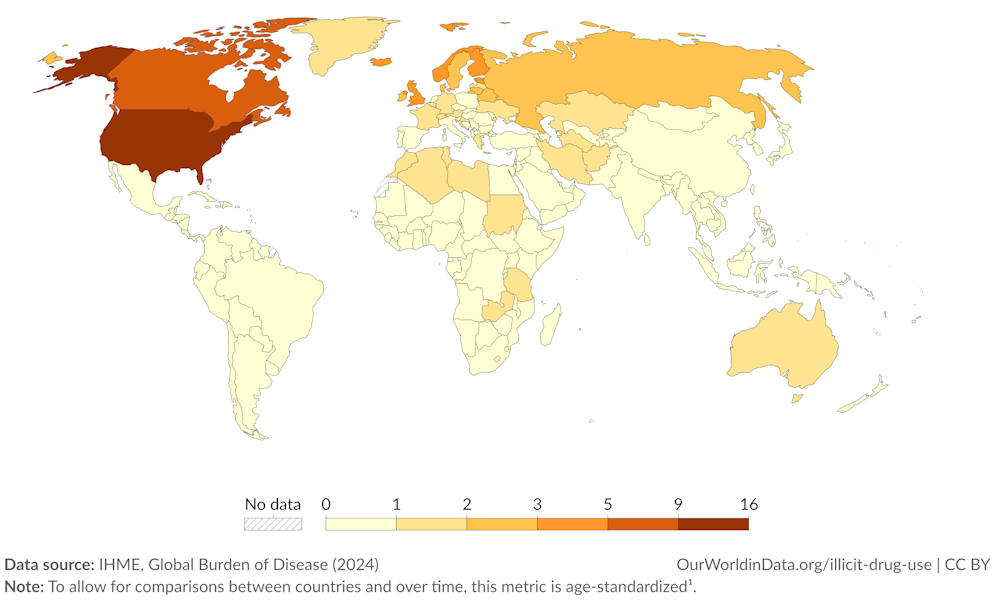
    MIL OSI Russia News

  • MIL-OSI Canada: Structural change, supply shocks and hard choices

    Source: Bank of Canada

    Good afternoon. I’m pleased to be able to join you virtually to talk about the challenges that lie ahead for central banks. There’s a lot to discuss.

    But my first order of business is to congratulate and thank Agustín Carstens for his leadership as General Manager of the Bank for International Settlements (BIS). Your term, Agustín, has been marked by significant global upheaval—from pandemic shutdowns to war in Europe and double-digit inflation. These past few years have not been easy.

    Through it all, you have been a source of unwavering wisdom. Your clear thinking in the face of the unknown, your long view and your deep understanding of our global interdependence—all combined with the experience and pragmatism of a former minister of finance and then central bank governor—have made you an invaluable leader.

    More than that, through the BIS, you’ve brought us together with your friendship and your ability to get directly to the heart of the issue. You’ve helped us learn from each other. And you’ve made us better together.

    I know there will be an opportunity to celebrate you in Basel as your retirement in June approaches. But I wanted to recognize your exceptional leadership in your home country. For those of us in the Americas, your special interest in our region has been deeply appreciated. Whatever you do next, I know Mexico and the Americas will be an important part. Thank you, my friend.

    Now, let me turn to the challenges ahead. We are facing a global economic landscape that has shifted in recent years, and this shift has important implications for central banks.

    As Agustín has highlighted in a series of insightful speeches, the structural tailwinds of peace, globalization and demographics are turning into headwinds—and the world looks increasingly shock-prone.

    Higher long-term interest rates, elevated sovereign debt, slower economic growth and lagging productivity make all of our economies more vulnerable. Compounding these vulnerabilities are war, rising trade protectionism and economic fragmentation. In addition, new technologies—including artificial intelligence—are set to disrupt existing industries and create new ones. And we are seeing more frequent catastrophic weather events as the impacts of climate change become more pervasive.

    As 2025 begins, we are facing new uncertainty with a shift in policy direction in the United States. President Donald Trump’s threats of new tariffs are already affecting business and household confidence, particularly in Canada and Mexico. The longer this uncertainty persists, the more it will weigh on economic activity in our countries.

    If significant broad-based tariffs are indeed imposed, they will test the resilience of our economies in the short run and reduce long-run prosperity. Tariffs mean economies work less efficiently. There will be less investment and lower productivity. That means our countries will produce less and earn less. Monetary policy can’t change that.

    What monetary policy can do is help with the short-run adjustment. But even here, monetary policy has to strike a balance. Significant, broad-based tariffs will sharply reduce demand for our exports. At the same time, a weaker exchange rate, retaliatory tariffs and supply chain disruptions will raise import prices, putting upward pressure on inflation.   

    With a single instrument—our policy interest rate—central banks can’t lean against weaker output and higher inflation at the same time. So we will need to carefully assess the downward pressure on inflation from weaker economic activity, and weigh that against the upward pressures from higher input prices and supply chain disruptions.

    Other structural headwinds pose similar challenges for monetary policy. They’ll impact both demand and supply, slowing growth while adding cost. Monetary policy cannot address these headwinds directly or offset their economic consequences.

    In a world with more structural change and more negative supply shocks, central banks will be faced with harder choices. And harder choices bring risks of public disappointment and frustration. We will face criticism about our decisions—and about how well monetary policy is seen to have worked when confronted with forces that are mostly out of our hands. We will be called ineffective or criticized for not doing enough. And some will challenge our independence.

    So, what can all of us do?

    First, we can be humble about what we don’t know, but also confident in the effectiveness of our frameworks. We didn’t get everything right through the pandemic. And elevated inflation and higher interest rates have been difficult for our citizens. But in Canada, as in many other countries, inflation has come down. And we restored low inflation without causing a recession or major job losses.

    Guided by our frameworks, we can maintain confidence in price stability.

    Second, we can be just as clear about what monetary policy cannot do. There will always be forces beyond our influence, and while we need to understand those forces, we should also be clear that understanding is not the same as controlling. And we need to avoid the temptation to overload monetary policy by expecting more of it than it can deliver.

    Third, we can recognize that the world has changed. Structural headwinds and supply shocks require different types of information and analysis. This means investing in richer information about the supply side of the economy and building models that can analyze sectoral shocks and their transmission. It means reaching out and listening to households and businesses. It means looking at our economies through different lenses, regularly challenging our assumptions, and using scenarios to help manage uncertainty.

    Fourth, let’s acknowledge that working together has never been easy and it’s getting harder. But let’s also remember that it’s important. We are more effective if we confront our shared challenges together. The shared resolve of central banks to fight the post-pandemic surge in inflation helped all of us bring inflation down. This was a positive international spillover and, together, we can generate other positive international spillovers.

    Finally, we need to remain evidence-based, technocratic and professional, and free of political influence. We need to be open, accountable and transparent. And we need to be learning institutions—when faced with valid criticism, we should critically evaluate our policy actions and be willing to improve. Being independent and accountable and continuously learning is how we build trust.

    The world is a tougher place today than it was a few short years ago. And facing the headwinds before us will not be easy. But that’s why we have independent central banks—we are designed for tough times.

    I look forward to hearing from my esteemed colleagues on this panel.

    MIL OSI Canada News

  • MIL-OSI USA: VIDEO: Hickenlooper Calls Out Vought’s Project 2025 Agenda on Senate Floor, Vows to Use Every Tool to Fight

    US Senate News:

    Source: United States Senator John Hickenlooper – Colorado

    Hickenlooper: “It’s time to use every tool at our disposal to disrupt what Mr. Vought and his Project [2025] are trying to do.”

    Senate Democrats held the Senate floor overnight to oppose Vought’s nomination

    WASHINGTON – Today, U.S. Senator John Hickenlooper spoke on the Senate floor against the nomination of Russell Vought, President Trump’s pick to lead the Office of Budget and Management (OMB). Hickenlooper’s remarks come ahead of the final confirmation vote, where he will vote “No” on Vought.

    “If confirmed, Mr. Vought and Project 2025 could have devastating consequences for Colorado,” Hickenlooper said on the Senate floor.

    “…At a time when grocery prices are rising on everything from eggs to meat, Project 2025 is going to make life harder for Colorado farmers and ranchers – and more risky,” he continued. “Project 2025 would cut safety nets for our Ag producers when they have a bad season…Hanging small farmers out to dry does nothing to lower grocery prices for [Americans].”

    “…I will oppose every nominee that poses a genuine threat to Coloradans. That’s why I’m here on the floor and will vote “No” on Mr. Vought today.”

    “…It’s time to use every tool at our disposal to disrupt what Mr. Vought and his Project [2025] are trying to do.”

    The OMB oversees the performance of federal agencies and administers the federal budget. Vought previously served as acting OMB director during President Donald Trump’s first term and was a primary architect of Project 2025, which details MAGA Republicans’ far-right agenda to dismantle the federal government under a Trump administration.

    Last week, in response to an executive order from President Trump, the OMB ordered a freeze on all federal grants and loans. The pause threatened hundreds of millions of dollars in federal funding, which would have impacted thousands of organizations in Colorado and hurt millions of Americans. 

    On Monday, a federal court issued a restraining order against the Trump administration, extending a temporary pause on the President’s plan.

    More information about how a freeze would impact Coloradans is available HERE.

    Yesterday, Hickenlooper posted a video to social media where he commits to use every tool at his disposal, including opposing any nominees who will harm Colorado, to disrupt the administration’s illegal actions. This morning, Hickenlooper joined Democrats in holding the Senate floor overnight to oppose Trump’s nominee.

    To download a full video of Hickenlooper’s remarks, click HERE. A full transcript of his remarks is available below:

    “Mr. President,

    “I take to the floor today to urge my colleagues to vote “No” on President Trump’s nominee to the Office of Budget and Management, Russell Vought.

    “Some remember Mr. Vought from when he served as the head of the same agency during President Trump’s first term. He is one of the very few “repeat” appointments – clearly a reflection of his loyalty.

    “You may also know him for his leadership – his authoring – of Project 2025, that far-right agenda that the President – during the campaign – swore up and down he had no idea about. 

    “And I believe that, although I think he understood many discussions, perhaps outlined the framework.  

    “Project 2025 would gut our longstanding and globally admired framework of checks and balances. It would gut them.  It would ensure civil servants would be hired and fired on the basis of political loyalty – something that this country has struggled for many decades to get rid of.

    “It would truly weaponize our system of justice. Again something that almost everyone works towards keeping nonpartisan.

    “It lays out in detail a plan to dramatically change our American system of government – perhaps for a very long time.

    “It’s really not a question of “if” anymore. The plan and the people putting it in place are disregarding laws and norms dating back to the Constitution. They are throwing everything at the wall to see what sticks.

    “This means firing or pushing out vast swaths of the federal workforce of civil servants. These are career civil servants, many of whom have devoted their lives to keeping our government running – from processing social security checks, and keeping our weather systems afloat, or helping to stop waste, fraud and abuse.

    “Some would say our federal workers don’t do anything. But they are honest, hard-working Americans.

    “Project 2025 is just getting started. If confirmed, Mr.Vought and Project 2025 could have devastating consequences for Colorado.

    “Deep in Project 2025 are plans to heavily restrict access to contraceptives and abortion medication, denying women and families the freedom to make their own reproductive decisions. 

    “Plans to make health care more expensive by repealing policies that empower Medicare to negotiate prescription drug prices and drive down the cost of health care for seniors.

    “Plans to make Colorado less resilient to these increasingly frequent disasters caused by extreme weather.

    “And they’re already reinstating cruel immigration policies, and threatening to come after the LGBTQ+ community.

    “At a time when grocery prices are rising on everything from eggs to meat, Project 2025 is going to make life harder for Colorado farmers and ranchers – and more risky. 

    “Project 2025 would cut safety nets for our Ag producers when they have a bad season. It includes plans to gut essential crop insurance. Project 2025 even wants government to get involved in the specific techniques our ranchers use to farm.

    “Now, our Colorado farmers know their land better than anyone else. Hanging small farmers out to dry does nothing to lower grocery prices for America. 

    “We’ve been hearing in our offices from producers across the state who are very concerned about what this Project 2025 means to them. We have over 38,000 farm operations in Colorado. Some harvest wheat, some raise meat or poultry, some specialize in dairy. All of them help support our rural communities and play an essential role in feeding families really all across the country.

    “We don’t have to speculate about what Mr.Vought would do to the Office of Management and Budget – he’s really laid it all out in Project 2025. He wrote Project 2025 to a large extent himself.

    “One of his finest contributions: a section championing the Executive Branch’s ability to overreach and “impound funds.”

    “Let’s not mince words: This is, by all historic measures, blatantly unconstitutional.

    “Congress alone has the authority to decide how the government spends its money.

    “This isn’t an opinion. It says explicitly in Article I, Section 9, Clause 7: “No Money shall be drawn from the Treasury, but in Consequence of Appropriations made by Law.”

    “Made by law, designated by Congress.

    “And again in Article I, Section 8, Clause 1: “Congress shall have Power To lay and collect Taxes, Duties, Imposts and Excises, to pay the Debts and provide for the common Defence and general Welfare of the United States.”

    “We got a taste of how Mr. Vought would attempt to execute something like this last week.

    “In a truly chaotic late-night, two-page memo, the Trump administration halted all federal grants and loans. We’re talking about hundreds of millions of dollars in federal spending for a staggering number of programs. Programs that provide Americans health care, food, nutrition, housing, child care, so much else.

    “The memo stemmed from an executive order calling on federal agencies to review and eliminate spending on “woke” ideologies or “The [Green New] Deal” – both things that aren’t clearly defined and don’t in any specific way exist. 

    “In this rush to create chaos and jumbled policy, the implementors didn’t bother to specify which programs would continue and which programs would end. 

    “Our office and staff were immediately flooded with calls. Hundreds and then thousands of calls. We heard from folks in every corner of Colorado – big cities, small towns – asking ‘what does this mean’ for them and their families. There was real fear, real worry, and for good reason.

    “The Trump administration tried to walk back the original memo to clarify that the freeze wouldn’t affect individual payments, like Social Security or food stamp benefits.

    “But that didn’t clear up too much. And it certainly didn’t help that the White House Press Secretary couldn’t answer specific questions like pertaining to specific government programs like Medicaid, whether they were going to be affected. Frustrating as it is – and I get how frustrating it is – there are reasons why government moves slowly. 

    “All of this, if implemented as requested, would’ve had a devastating impact on Colorado. A devastating impact.

    “Federal programs and funds make up roughly 25 percent of our state’s effort to build transportation and infrastructure, provide needed services for the most needy in our state. 

    “Head Start, a truly vital service for over 9,000 low-income kids in Colorado, would be forced to shutter its operations that provide for these low-income kids of all communities with the early childhood education, health, and nutrition that they need. Even as we speak, there are reports that Head Start providers around the nation are not able to access funds.

    “If implemented it would cut off 83,000+ low-income Colorado families from the Low Income Home Energy Assistance Program (LIHEAP), which helps heat their homes in the cold winter. These are folks that in many cases are unable to pay their heating bills or wouldn’t be able to heat their homes without this assistance.

    “Our public safety and law enforcement would be weakened. The pause would strip funding that helps our local agencies prevent terrorism, helps them crack down on drug trafficking, and prevent crimes and provide services for those who have been victimized by crime.

    “Colorado has one of the largest veteran populations in the country, something we’re very proud of. But this funding [pause] would cut resources for those vets. It would cut resources for community-based suicide prevention efforts, organizations that provide care for veterans experiencing homelessness, and services for veterans living with disabilities – many of them taken in the defense of our nation. Hard to be cruel to those who have given their country so much.

    “Before entering public service, I was in the restaurant business. At our brewpub in downtown Denver, we’d cook, pack, and donate meals every year to Meals on Wheels to feed seniors throughout the Metro Denver area. I’ve seen firsthand the difference this makes, the relief it provides to seniors who need it. Many of them don’t leave the house, and are so grateful to have someone come and they can talk to as they get their meal. 

    “But the federal funding freeze left Meals on Wheels in Colorado, but all across the country, unsure of how and whether they’ll be able to continue serving meals. Over 25,000 Coloradan seniors everyday rely on Meals on Wheels to access food. Why would we leave our seniors hungry and unsure of where their next hot lunch is going to come?

    “Our office also heard directly from a Colorado rural health organization about how this federal funding freeze would have life-or-death effects on Coloradans in 47 rural counties. 

    “When we’re in towns like Cortez or Hugo or Julesburg, we hear all the time about how our rural hospitals, clinics, and community health centers are already strained by workforce shortages, by rising costs. 

    “These medical providers are on the frontlines of dealing with our nation’s mental health and opioid crisis. And we’re cutting their ability to provide these services.

    “These folks in rural Colorado, and in suburbs around every city in Colorado, are watching their friends, family, and neighbors struggle with mental health issues that rose up after the pandemic.  

    “This funding freeze wouldn’t just strip funding from these programs. It would force our critical rural hospitals to lay off staff or turn away patients at a time when they need it the most.

    “We should be fighting to increase access to quality, affordable health care no matter where people live – not take it away.

    “The federal funding freeze has already been blocked by the courts several times because it is blatantly illegal. It makes no sense.

    “But make no mistake, Mr. Vought and the Trump administration will keep poking and prodding our courts and our Constitution until they get their way.  

    “All of these actions serve a sinister purpose: to completely transform our government into one that gives enormous, enormous tax cuts, largely directed at those who don’t need them – and in many cases in Colorado don’t want them – and puts working-class Americans out to pasture.

    “The federal funding freeze is just one of many chaotic actions that Mr.Vought and the administration are pushing. We see Project 2025 come into clarity in this administration’s illegal attempts to dismantle agencies without congressional approval, or their attempts to access Americans’ sensitive data.

    “Look, I’m all for cutting government waste. If you want to seriously look at how we spend money and where we can cut actual fraud, waste, and abuse – I’m game. A more efficient government will help us all, but that’s not what’s happening. 

    “I’ve worked as hard as I could to find ways to work across the aisle, and that’s not going to change. When I was Mayor of Denver, when I was Governor of Colorado, we balanced the budget every year and we worked hard to try and streamline government processes. Just like every mayor and every governor in this country.

    “You can’t just shove working families under the bus or violate the law to do it.

    “We’ll fight these attempts in the courts, on the floor of the Senate – like now – and everywhere else we can to defend Colorado and the Constitution.

    “It’s time to use every tool at our disposal to disrupt what Mr. Vought and his Project [2025] are trying to do. We’ve supported these lawsuits, opposed executive actions, and voted against nominees. 

    “But if we need to hold the Senate floor like we’re doing now, vote all night, disrupt business as usual, we’ll do that too.

    “I will oppose every nominee that poses a genuine threat to Coloradans. That’s why I’m here on the floor and will vote “No” on Mr. Vought today.

    “Coloradans sent us to Washington to solve problems, not to create more. Project 2025, it’s a brutal plan to wreak havoc on our nation, and really change the way our government operates, the way our democracy functions. 

    “I hope people all over the state emulate that old movie “Network”, that they can shout out on every corner, “I’m mad as hell, and I’m not going to stand for it!”

    “Let’s hope they get so loud that they can’t be drowned out.

    “Mr. President, I yield back the floor.”

    MIL OSI USA News

  • MIL-OSI Security: Slovakian Man Sentenced for $738,000 Pandemic Loan Fraud

    Source: Office of United States Attorneys

    ST. LOUIS – U.S. District Judge Stephen R. Clark on Thursday sentenced a man from the Slovak Republic who fraudulently obtained pandemic relief loans to 38 months in prison and ordered him to repay $738,118.

    While in the Slovak Republic, Mark Ethan Jermain submitted three false and fraudulent Paycheck Protection Program (PPP) loan applications from April 26, 2020, to July 16, 2021. Jermain used his prior legal name, Arsene Millogo. The April 26, 2020, application sought $80,000 for Crazyeats LLC, which Jermain established in Missouri in 2017. On May 13, 2020, Jermain sought $325,275 for a company he’d set up called Unimentors LLC. After the loan was approved, Jermain submitted a Second Draw PPP loan application for $325,275 on Feb. 5, 2021.

    Jermain transferred the loan money to Slovakia. The PPP loans were intended to help struggling American businesses and jobs during the COVID-19 pandemic. Jermain instead used the money for personal purchases and other unapproved purposes.

    “Mark Ethan Jermain fraudulently applied for and received PPP loans for businesses that didn’t exist anywhere but on paper. Furthermore, he used the identity of a former business partner, unbeknownst to the partner, to defraud the taxpayer funded program out of nearly three quarters of a million dollars,” said FBI St. Louis Special Agent in Charge Ashley Johnson. “Jermain is being held accountable in timely fashion after FBI special agents nabbed him at the airport in New York before he tried to fly out of the country.”

    Jermain returned to the U.S. on August 17, 2023. He was indicted on August 30 and arrested by FBI agents on September 7, the day he was scheduled to leave the country.

    Jermain, now 42, pleaded guilty in June to three counts of wire fraud.

    The FBI investigated the case. Assistant U.S. Attorney Gwen Carroll prosecuted the case.

    Anyone with information about pandemic fraud should call the Department of Justice’s National Center for Disaster Fraud (NCDF) Hotline at 866-720-5721 or report via the NCDF Web Complaint Form at https://www.justice.gov/disaster-fraud/ncdf-disaster-complaint-form.

    MIL Security OSI

  • MIL-OSI: Lantronix Reports Results for Second Quarter of Fiscal 2025

    Source: GlobeNewswire (MIL-OSI)

    • Second Quarter Net Revenue of $31.2 Million
    • Second Quarter GAAP EPS of ($0.06)
    • Second Quarter Non-GAAP EPS of $0.04

    IRVINE, Calif., Feb. 06, 2025 (GLOBE NEWSWIRE) — Lantronix Inc. (NASDAQ: LTRX), a global leader of compute and connectivity for the Internet of Things (IoT) solutions enabling Artificial Intelligence (AI) Edge Intelligence, today reported results for its second quarter of fiscal 2025.

    Net revenue totaled $31.2 million, near the midpoint of the guidance range provided for the quarter.

    GAAP EPS of ($0.06), compared to ($0.07) in the prior year and $(0.07) in the prior quarter.

    Non-GAAP EPS of $0.04, compared to $0.08 in the prior year and $0.06 in the prior quarter.

    “Lantronix has the key assets in Compute and Connect to drive Edge Intelligence, and the company remains focused on three key vertical markets: Enterprise; Smart Cities including critical infrastructure; and Transportation,” said Lantronix President and CEO Saleel Awsare. “We are actively advancing Edge AI solutions, integrating the recently acquired IoT assets from Netcomm, and positioning Lantronix for exciting future growth.”

    Business Outlook

    For the third fiscal quarter of 2025, the company expects revenue in a range of $27.0 million to $31.0 million and non-GAAP EPS of $0.01 to $0.05 per share.

    Conference Call and Webcast

    Management will host an investor conference call and audio webcast on Thursday, Feb. 6, 2025, at 1:30 p.m. Pacific Time (4:30 p.m. Eastern Time) to discuss its results for the second quarter of fiscal 2025 that ended Dec. 31, 2024. To access the live conference call, investors should dial 1-844-802-2442 (US) or 1-412-317-5135 (international) and indicate that they are participating in the Lantronix Q2 FY 2025 call. The webcast will be available simultaneously via the investor relations section of the company’s website.

    Investors can access a replay of the conference call starting at approximately 7:00 p.m. Pacific Time on Feb. 6, 2025, at the Lantronix website. A telephonic replay will also be available through Feb. 13, 2025, by dialing 1-877-344-7529 (US) or 1-412-317-0088 (international) or Canada toll-free at 1-855-669-9658 and entering passcode 3433776.

    About Lantronix

    Lantronix Inc. is a global leader of compute and connectivity IoT solutions that target high-growth markets, including Smart Cities, Enterprise and Transportation. Lantronix’s products and services empower companies to succeed in the growing IoT markets by delivering customizable solutions that enable AI Edge Intelligence. Lantronix’s advanced solutions include Intelligent Substations infrastructure, Infotainment systems and Video Surveillance, supplemented with advanced Out-of-Band Management (OOB) for Cloud and Edge Computing.

    For more information, visit the Lantronix website.

    Discussion of Non-GAAP Financial Measures

    Lantronix believes that the presentation of non-GAAP financial information, when presented in conjunction with the corresponding GAAP measures, provides important supplemental information to management and investors regarding financial and business trends relating to the company’s financial condition and results of operations. Management uses the aforementioned non-GAAP measures to monitor and evaluate ongoing operating results and trends to gain an understanding of our comparative operating performance. The non-GAAP financial measures disclosed by the company should not be considered a substitute for, or superior to, financial measures calculated in accordance with GAAP, and the financial results calculated in accordance with GAAP and reconciliations of the non-GAAP financial measures to the financial measures calculated in accordance with GAAP should be carefully evaluated. The non-GAAP financial measures used by the company may be calculated differently from, and therefore may not be comparable to, similarly titled measures used by other companies. The company has provided reconciliations of the non-GAAP financial measures to the most directly comparable GAAP financial measures.

    Non-GAAP net income consists of net loss excluding (i) share-based compensation and the employer portion of withholding taxes on stock grants, (ii) depreciation and amortization, (iii) interest income (expense), (iv) other income (expense), (v) income tax provision (benefit), (vi) restructuring, severance and related charges, (vii) acquisition related costs, (viii) impairment of long-lived assets, (ix) amortization of purchased intangibles, (x) amortization of manufacturing profit in acquired inventory, (xi) fair value remeasurement of earnout consideration, and (xii) loss on extinguishment of debt.

    Non-GAAP EPS is calculated by dividing non-GAAP net loss by non-GAAP weighted-average shares outstanding (diluted). For purposes of calculating non-GAAP EPS, the calculation of GAAP weighted-average shares outstanding (diluted) is adjusted to exclude share-based compensation, which for GAAP purposes is treated as proceeds assumed to be used to repurchase shares under the GAAP treasury stock method.

    Guidance on earnings per share growth is provided only on a non-GAAP basis due to the inherent difficulty of forecasting the timing or amount of certain items that have been excluded from the forward-looking non-GAAP measures, and a reconciliation to the comparable GAAP guidance has not been provided because certain factors that are materially significant to Lantronix’s ability to estimate the excluded items are not accessible or estimable on a forward-looking basis without unreasonable effort.

    Forward-Looking Statements

    This news release contains forward-looking statements, including statements concerning our revenue and earnings expectations for the third fiscal quarter of 2025, the market opportunities offered by the current shift towards edge computing and our positioning to capitalize on this trend, and our expectations regarding the benefits of our acquisition of Netcomm Wireless Pty Ltd. and our cost reduction initiatives. These forward-looking statements are intended to qualify for the safe harbor from liability established by the Private Securities Litigation Reform Act of 1995. We have based our forward-looking statements on our current expectations and projections about trends affecting our business and industry and other future events. Although we do not make forward-looking statements unless we believe we have a reasonable basis for doing so, we cannot guarantee their accuracy. Forward-looking statements are subject to substantial risks and uncertainties that could cause our results or experiences, or future business, financial condition, results of operations or performance, to differ materially from our historical results or those expressed or implied in any forward-looking statement contained in this news release. Other factors which could have a material adverse effect on our operations and future prospects or which could cause actual results to differ materially from our expectations include, but are not limited to: the effects of negative or worsening regional and worldwide economic conditions or market instability on our business, including effects on purchasing decisions by our customers; our ability to mitigate any disruption in our and our suppliers’ and vendors’ supply chains due to a pandemic or similar outbreak, wars and recent conflicts in Europe, Asia and the Middle East, hostilities in the Red Sea, or other causes; our ability to successfully convert our backlog and current demand;  the impact of a pandemic or similar outbreak on our business, employees, customers, supply and distribution chains and the global economy; our ability to successfully implement our acquisition strategy or integrate acquired companies; uncertainty as to the future profitability of acquired businesses, and delays in the realization of, or the failure to realize, any accretion from acquisition transactions; acquiring, managing and integrating new operations, businesses or assets, and the associated diversion of management attention or other related costs or difficulties; our ability to continue to generate revenue from products sold into mature markets; our ability to develop, market, and sell new products; our ability to succeed with our new software offerings; our use of AI may result in reputational, competitive or financial harm and liability; fluctuations in our revenue due to the project-based timing of orders from certain customers; unpredictable timing of our revenues due to the lengthy sales cycle for our products and services and potential delays in customer completion of projects; our ability to accurately forecast future demand for our products; delays in qualifying revisions of existing products; constraints or delays in the supply of, or quality control issues with, certain materials or components; difficulties associated with the delivery, quality or cost of our products from our contract manufacturers or suppliers; risks related to the outsourcing of manufacturing and international operations; difficulties associated with our distributors or resellers; intense competition in our industry and resultant downward price pressure; rises in inventory levels and inventory obsolescence; undetected software or hardware errors or defects in our products; cybersecurity risks; our ability to obtain appropriate industry certifications or approvals from governmental regulatory bodies; changes in applicable U.S. and foreign government laws, regulations, and tariffs; our ability to protect patents and other proprietary rights and avoid infringement of others’ proprietary technology rights; issues relating to the stability of our financial and banking institutions and relationships; the level of our indebtedness, our ability to service our indebtedness and the restrictions in our debt agreements; the impact of rising interest rates; our ability to attract and retain qualified management; and any additional factors included in our Report on Form 10-K for the fiscal year ended June 30, 2024, filed with the Securities and Exchange Commission (the “SEC”) on Sept. 9, 2024, including in the section entitled “Risk Factors” in Item 1A of Part I of that report; in our Quarterly Report on Form 10-Q for the fiscal quarter ended December 31, 2024, to be filed with the SEC on Feb. 7, 2025, including in the section entitled “Risk Factors” in Item 1A of Part II of such report; and in our other public filings with the SEC. In addition, actual results may differ as a result of additional risks and uncertainties of which we are currently unaware or which we do not currently view as material to our business. For these reasons, investors are cautioned not to place undue reliance on any forward-looking statements. The forward-looking statements we make speak only as of the date on which they are made. We expressly disclaim any intent or obligation to update any forward-looking statements after the date hereof to conform such statements to actual results or to changes in our opinions or expectations, except as required by applicable law or the rules of the Nasdaq Stock Market LLC. If we do update or correct any forward-looking statements, investors should not conclude that we will make additional updates or corrections.

    © 2025 Lantronix Inc. All rights reserved. Lantronix is a registered trademark.

    Lantronix Investor Relations Contact:
    investors@lantronix.com

    LANTRONIX, INC.
    UNAUDITED CONDENSED CONSOLIDATED BALANCE SHEETS
     (In thousands)
           
      December 31,
      June 30,
        2024       2024  
    Assets      
    Current assets:      
    Cash and cash equivalents $ 19,210     $ 26,237  
    Accounts receivable, net   30,472       31,279  
    Inventories, net   29,070       27,698  
    Contract manufacturers’ receivables   3,473       1,401  
    Prepaid expenses and other current assets   3,329       2,335  
    Total current assets   85,554       88,950  
    Property and equipment, net   3,155       4,016  
    Goodwill   30,491       27,824  
    Intangible assets, net   4,910       5,251  
    Lease right-of-use assets   9,430       9,567  
    Other assets   683       600  
    Total assets $ 134,223     $ 136,208  
           
    Liabilities and stockholders’ equity      
    Current liabilities:      
    Accounts payable $ 15,975     $ 10,347  
    Accrued payroll and related expenses   2,968       5,836  
    Current portion of long-term debt, net   3,056       3,002  
    Other current liabilities   11,436       10,971  
    Total current liabilities   33,435       30,156  
    Long-term debt, net   11,630       13,219  
    Other non-current liabilities   11,245       11,478  
    Total liabilities   56,310       54,853  
           
    Commitments and contingencies      
           
    Stockholders’ equity:      
    Common stock   4       4  
    Additional paid-in capital   305,433       304,001  
    Accumulated deficit   (227,895 )     (223,021 )
    Accumulated other comprehensive income   371       371  
    Total stockholders’ equity   77,913       81,355  
    Total liabilities and stockholders’ equity $ 134,223     $ 136,208  
           
    LANTRONIX, INC.
    UNAUDITED CONDENSED CONSOLIDATED STATEMENTS OF OPERATIONS
    (In thousands, except per share data)
                       
                       
      Three Months Ended   Six Months Ended
      December 31,   September 30,   December 31,   December 31,
        2024       2024       2023       2024       2023  
    Net revenue $ 31,161     $ 34,423     $ 37,038     $ 65,584     $ 70,069  
    Cost of revenue   17,877       19,948       22,007       37,825       40,941  
    Gross profit   13,284       14,475       15,031       27,759       29,128  
    Operating expenses:                  
    Selling, general and administrative   8,811       9,467       10,224       18,278       19,394  
    Research and development   4,984       4,956       4,725       9,940       9,831  
    Restructuring, severance and related charges   193       900       530       1,093       550  
    Acquisition-related costs   208       29             237        
    Fair value remeasurement of earnout consideration                           (9 )
    Amortization of intangible assets   1,248       1,251       1,310       2,499       2,694  
    Total operating expenses   15,444       16,603       16,789       32,047       32,460  
    Loss from operations   (2,160 )     (2,128 )     (1,758 )     (4,288 )     (3,332 )
    Interest expense, net   (126 )     (119 )     (232 )     (245 )     (570 )
    Other income (loss), net   8       (37 )     (23 )     (29 )     (4 )
    Loss before income taxes   (2,278 )     (2,284 )     (2,013 )     (4,562 )     (3,906 )
    Provision for income taxes   94       218       580       312       573  
    Net loss $ (2,372 )   $ (2,502 )   $ (2,593 )   $ (4,874 )   $ (4,479 )
    Net loss per share – basic and diluted $ (0.06 )   $ (0.07 )   $ (0.07 )   $ (0.13 )   $ (0.12 )
    Weighted-average common shares – basic and diluted   38,631       38,024       37,354       38,330       37,170  
                       
    LANTRONIX, INC.
    UNAUDITED RECONCILIATION OF NON-GAAP ADJUSTMENTS
    (In thousands, except per share data)
                       
      Three Months Ended   Six Months Ended
      December 31,   September 30,   December 31,   December 31,
        2024       2024       2023       2024       2023  
                       
    GAAP net loss $ (2,372 )   $ (2,502 )   $ (2,593 )   $ (4,874 )   $ (4,479 )
    Non-GAAP adjustments:                  
    Cost of revenue:                  
    Share-based compensation   48       64       64       112       105  
    Employer portion of withholding taxes on stock grants   2       5       1       7       5  
    Amortization of manufacturing profit in acquired inventory               189             506  
    Depreciation and amortization   114       123       109       237       195  
    Total adjustments to cost of revenue   164       192       363       356       811  
    Selling, general and administrative:                  
    Share-based compensation   1,044       1,126       1,628       2,170       2,901  
    Employer portion of withholding taxes on stock grants   20       78       10       98       47  
    Depreciation and amortization   348       351       338       699       672  
    Total adjustments to selling, general and administrative   1,412       1,555       1,976       2,967       3,620  
    Research and development:                  
    Share-based compensation   421       410       484       831       912  
    Employer portion of withholding taxes on stock grants   2       19       5       21       18  
    Depreciation and amortization   111       69       52       180       160  
    Total adjustments to research and development   534       498       541       1,032       1,090  
    Restructuring, severance and related charges   193       900       530       1,093       550  
    Acquisition related costs   208       29             237        
    Fair value remeasurement of earnout consideration                           (9 )
    Amortization of purchased intangible assets   1,248       1,251       1,310       2,499       2,694  
    Litigation settlement cost   158       40             198        
    Total non-GAAP adjustments to operating expenses   3,753       4,273       4,357       8,026       7,945  
    Interest expense, net   126       119       232       245       570  
    Other (income) expense, net   (8 )     37       23       29       4  
    Provision for income taxes   94       218       580       312       573  
    Total non-GAAP adjustments   4,129       4,839       5,555       8,968       9,903  
    Non-GAAP net income $ 1,757     $ 2,337     $ 2,962     $ 4,094     $ 5,424  
                       
                       
    Non-GAAP net income per share – diluted $ 0.04     $ 0.06     $ 0.08     $ 0.10     $ 0.14  
                       
    Denominator for GAAP net income (loss) per share – diluted   38,631       38,024       37,354       38,330       37,170  
    Non-GAAP adjustment   953       1,257       1,228       901       938  
    Denominator for non-GAAP net income per share – diluted   39,584       39,281       38,582       39,231       38,108  
                       
    GAAP cost of revenue $ 17,877     $ 19,948     $ 22,007     $ 37,825     $ 40,941  
    Non-GAAP adjustments to cost of revenue   (164 )     (192 )     (363 )     (356 )     (811 )
    Non-GAAP cost of revenue   17,713       19,756       21,644       37,469       40,130  
    Non-GAAP gross profit $ 13,448     $ 14,667     $ 15,394     $ 28,115     $ 29,939  
    Non-GAAP gross margin   43.2 %     42.6 %     41.6 %     42.9 %     42.7 %
                       
    LANTRONIX, INC.
    UNAUDITED NET REVENUES BY PRODUCT LINE AND REGION
    (In thousands)
                       
      Three Months Ended   Six Months Ended
      December 31, 2024   September 30, 2024   December 31, 2023   December 31, 2024   December 31, 2023
    Embedded IoT Solutions $ 10,784     $ 13,387     $ 11,764     $ 24,171     $ 23,137  
    IoT System Solutions   18,592       18,759       23,022       37,351       42,058  
    Software & Services   1,785       2,277       2,252       4,062       4,874  
      $ 31,161     $ 34,423     $ 37,038     $ 65,584     $ 70,069  
                       
                       
      Three Months Ended   Six Months Ended
      December 31, 2024   September 30, 2024   December 31, 2023   December 31, 2024   December 31, 2023
    Americas $ 16,386     $ 17,420     $ 20,601     $ 33,806     $ 43,534  
    EMEA   9,036       10,484       12,886       19,520       19,477  
    Asia Pacific Japan   5,739       6,519       3,551       12,258       7,058  
      $ 31,161     $ 34,423     $ 37,038     $ 65,584     $ 70,069  
                       

    The MIL Network

  • MIL-OSI: Cerence Announces First Quarter Fiscal 2025 Results

    Source: GlobeNewswire (MIL-OSI)

    BURLINGTON, Mass., Feb. 06, 2025 (GLOBE NEWSWIRE) — Cerence Inc. (NASDAQ: CRNC) (“Cerence AI”), a global industry leader in AI for transportation, today reported its first quarter fiscal year 2025 results for the quarter ended December 31, 2024.

     
    ResultsSummary(1,2)
    (in millions, except per share data)
           
        Three Months Ended  
        December 31,  
        2024     2023  
    GAAP revenue   $ 50.9     $ 138.3  
    GAAP gross margin     65.0 %     81.0 %
    Non-GAAP gross margin     65.9 %     81.5 %
    GAAP operating margin     -33.3 %     42.3 %
    Non-GAAP operating margin     -1.0 %     49.4 %
    GAAP net (loss) income   $ (24.3 )   $ 23.9  
    GAAP net (loss) income margin     -47.7 %     17.2 %
    Non-GAAP net (loss) income   $ (1.5 )   $ 54.3  
    Adjusted EBITDA   $ 1.4     $ 70.4  
    Adjusted EBITDA margin     2.7 %     50.9 %
    GAAP net (loss) income per share – diluted   $ (0.57 )   $ 0.53  
    Non-GAAP net (loss) income per share – diluted   $ (0.03 )   $ 1.12  
    (1) As previously disclosed, Q1FY24 revenue includes the non-cash revenue associated with the Toyota “Legacy” contract and related impacts totaling $86.6M.
    (2) Please refer to the “Discussion of Non-GAAP Financial Measures” and “Reconciliations of GAAP Financial Measures to Non-GAAP Financial Measures” included elsewhere in this release for more information regarding our use of non-GAAP financial measures.
       

    “I’m incredibly proud of the team’s progress and our performance in Q1, most notably beating the upper end of guidance on top-line revenue and adjusted EBITDA and showing strong free cash flow,” said Brian Krzanich, CEO, Cerence AI. “We believe we have solid momentum for 2025: we’ve made significant progress on our generative AI roadmap, achieving critical development milestones for our next-gen agentic, conversational AI platform. We have continued momentum with our automaker customers, including six design wins and two wins for our generative AI solutions, as well as six major customer SOPs and two generative AI SOPs within the quarter. In addition, our transformation and cost reduction initiatives are having a solid impact on the business. As we look to the future, we believe we are well positioned to continue on our path to long-term, sustainable growth and profitability.”

    Cerence Key Performance Indicators
    To help investors gain further insight into the Cerence business and its performance, management provides a set of key performance indicators that includes:

    Key Performance Indicator1   Q1FY25  
    Percent of worldwide auto production with Cerence Technology (TTM)     51 %
    Change in number of Cerence connected cars shipped2 (TTM over prior year TTM)     5 %
    Change in Adjusted Total Billings (TTM over prior year TTM)     3 %
    (1) Please refer to the “Key Performance Indicators” section included elsewhere in this release for more information regarding the definitions and our use of key performance indicators.
    (2) Based on IHS Markit data, global auto production decreased 2% over the same time period ended on December 31, 2024.
       

    Second Quarter and Full Year Fiscal 2025 Outlook
    For the fiscal quarter ending March 31, 2025, revenue is expected to be in the range of $74 million to $77 million. This includes $20 million of projected Fixed License revenue expected to be signed during the quarter. Gross margins are projected between 74% and 76% and net income is projected in the range of $1 million to $5 million. Adjusted EBITDA is expected to be in the range of $18 million to $22 million.

    Guidance for the full fiscal year ending September 30, 2025 remains unchanged.

    The adjusted EBITDA guidance excludes amortization of acquired intangible assets, stock-based compensation, restructuring and other costs.

    Additional details regarding guidance will be provided during the earnings call.

    Cerence Conference Call and Webcast
    The company will host a live conference call and webcast with slides to discuss the results today at 5:00pm Eastern Time / 2:00pm Pacific Time. Interested investors and analysts are invited to dial into the conference call by registering here.

    Webcast access will also be available on the Investor Information section of the company’s website at https://www.cerence.com/investors/events-and-resources.

    A replay of the webcast can be accessed by visiting the company’s website 90 minutes following the conference call at https://www.cerence.com/investors/events-and-resources.

    Forward Looking Statements
    Statements in this press release regarding: Cerence’s future performance, results and financial condition; expected growth and profitability; outlook and momentum; transformation plans and cost efficiency initiatives, including the estimated net annualized cost savings; strategy; opportunities; business, industry and market trends; strategy regarding fixed contracts and its impact on financial results; backlog; revenue visibility; revenue timing and mix; demand for Cerence products; innovation and new product offerings, including AI technology; expected benefits of technology partnerships; cost efficiency initiatives; and management’s future expectations, estimates, assumptions, beliefs, goals, objectives, targets, plans or prospects constitute forward-looking statements within the meaning of the Private Securities Litigation Reform Act of 1995. Any statements that are not statements of historical fact (including statements containing the words “believes,” “plans,” “goal,” “anticipates,” “projects,” “forecasts,” “expects,” “intends,” “continues,” “will,” “may,” or “estimates” or similar expressions) should also be considered to be forward-looking statements. Although we believe forward-looking statements are based upon reasonable assumptions, such statements involve known and unknown risk, uncertainties and other factors, which may cause actual results or performance of the company to be materially different from any future results or performance expressed or implied by such forward-looking statements including but not limited to: the highly competitive and rapidly changing market in which we operate; adverse conditions in the automotive industry, the related supply chain and semiconductor shortage, or the global economy more generally; volatility in the political, legal and regulatory environment in which we operate, including trade, tariffs and other policies implemented by the new administration or actions taken by other countries in response; automotive production delays; changes in customer forecasts; the impacts of the COVID-19 pandemic on our and our customers’ businesses; the ongoing conflicts in Ukraine and the Middle East; our inability to control and successfully manage our expenses and cash position; our inability to deliver improved financial results from process optimization efforts and cost reduction actions; escalating pricing pressures from our customers; the impact on our business of the transition to a lower level of fixed contracts, including the failure to achieve such a transition; our failure to win, renew or implement service contracts; the cancellation or postponement of existing contracts; the loss of business from any of our largest customers; effects of customer defaults; our inability to successfully introduce new products, applications and services; our strategies to increase cloud offerings and deploy generative AI and large language models (LLMs); the inability to expand into adjacent markets; the inability to recruit and retain qualified personnel; disruptions arising from transitions in management personnel, including the transition to our new Chief Executive Officer; cybersecurity and data privacy incidents; failure to protect our intellectual property; defects or interruptions in service with respect to our products; fluctuating currency rates and interest rates; inflation; financial and credit market volatility; restrictions on our current and future operations under the terms of our debt, the use of cash to service or repay our debt; and our inability to generate sufficient cash from our operations; and the other factors discussed in our most recent Annual Report on Form 10-K, quarterly reports on Form 10-Q, and other filings with the Securities and Exchange Commission. We disclaim any obligation to update any forward-looking statements as a result of developments occurring after the date of this document.

    Discussion of Non-GAAP Financial Measures
    We believe that providing the non-GAAP information in addition to the GAAP presentation, allows investors to view the financial results in the way management views the operating results. We further believe that providing this information allows investors to not only better understand our financial performance, but more importantly, to evaluate the efficacy of the methodology and information used by management to evaluate and measure such performance. The non-GAAP information should not be considered superior to, or a substitute for, financial statements prepared in accordance with GAAP.

    We utilize a number of different financial measures, both GAAP and non-GAAP, in analyzing and assessing the overall performance of the business, for making operating decisions and for forecasting and planning for future periods. While our management uses these non-GAAP financial measures as a tool to enhance their understanding of certain aspects of our financial performance, our management does not consider these measures to be a substitute for, or superior to, the information provided by GAAP financial statements.

    Consistent with this approach, we believe that disclosing non-GAAP financial measures to the readers of our financial statements provides such readers with useful supplemental data that, while not a substitute for GAAP financial statements, allows for greater transparency in the review of our financial and operational performance. In assessing the overall health of the business during the three months ended December 31, 2024 and 2023, our management has either included or excluded the following items in general categories, each of which is described below.

    Adjusted EBITDA.
    Adjusted EBITDA is defined as net income attributable to Cerence Inc. before net income (loss) attributable to income tax (benefit) expense, other income (expense) items, net, depreciation and amortization expense, and excluding amortization of acquired intangible assets, stock-based compensation, and restructuring and other costs, net or impairment charges related to fixed and intangible assets and gains or losses on the sale of long-lived assets, if any. From time to time we may exclude from Adjusted EBITDA the impact of events, gains, losses or other charges (such as significant legal settlements) that affect the period-to-period comparability of our operating performance. Other income (expense) items, net include interest expense, interest income, and other income (expense), net (as stated in our Condensed Consolidated Statement of Operations). Our management and Board of Directors use this financial measure to evaluate our operating performance. It is also a significant performance measure in our annual incentive compensation programs.

    Restructuring and other costs, net.
    Restructuring and other costs, net include restructuring expenses as well as other charges that are unusual in nature, are the result of unplanned events, and arise outside the ordinary course of our business such as employee severance costs, consulting costs relating to our transformation initiatives, and costs for consolidating duplicate facilities.

    Amortization of acquired intangible assets.
    We exclude the amortization of acquired intangible assets from non-GAAP expense and income measures. These amounts are inconsistent in amount and frequency and are significantly impacted by the timing and size of acquisitions. Providing a supplemental measure which excludes these charges allows management and investors to evaluate results “as-if” the acquired intangible assets had been developed internally rather than acquired and, therefore, provides a supplemental measure of performance in which our acquired intellectual property is treated in a comparable manner to our internally developed intellectual property. Although we exclude amortization of acquired intangible assets from our non-GAAP expenses, we believe that it is important for investors to understand that such intangible assets contribute to revenue generation. Amortization of intangible assets that relate to past acquisitions will recur in future periods until such intangible assets have been fully amortized. Future acquisitions may result in the amortization of additional intangible assets.

    Non-cash expenses.
    We provide non-GAAP information relative to the following non-cash expenses: (i) stock-based compensation; and (ii) non-cash interest. These items are further discussed as follows:

    i) Stock-based compensation. Because of varying valuation methodologies, subjective assumptions and the variety of award types, we exclude stock-based compensation from our operating results. We evaluate performance both with and without these measures because compensation expense related to stock-based compensation is typically non-cash and awards granted are influenced by the Company’s stock price and other factors such as volatility that are beyond our control. The expense related to stock-based awards is generally not controllable in the short-term and can vary significantly based on the timing, size and nature of awards granted. As such, we do not include such charges in operating plans. Stock-based compensation will continue in future periods.
    ii) Non-cash interest. We exclude non-cash interest because we believe that excluding this expense provides management, as well as other users of the financial statements, with a valuable perspective on the cash-based performance and health of the business, including the current near-term projected liquidity. Non-cash interest expense will continue in future periods.
       

    Other expenses.
    We exclude certain other expenses that result from unplanned events outside the ordinary course of continuing operations, in order to measure operating performance and current and future liquidity both with and without these expenses. By providing this information, we believe management and the users of the financial statements are better able to understand the financial results of what we consider to be our organic, continuing operations. Included in these expenses are items such as other charges (credits), net, (gains) losses from extinguishment of debt, and changes in indemnification assets corresponding with the release of pre-spin liabilities for uncertain tax positions.

    Adjustments to income tax provision.
    Adjustments to our GAAP income tax provision to arrive at non-GAAP net income is determined based on our non-GAAP pre-tax income. Additionally, as our non-GAAP profitability is higher based on the non-GAAP adjustments, we adjust the GAAP tax provision to remove valuation allowances and related effects based on the higher level of reported non-GAAP profitability. We also exclude from our non-GAAP tax provision certain discrete tax items as they occur.

    Key Performance Indicators
    We believe that providing key performance indicators (“KPIs”) allows investors to gain insight into the way management views the performance of the business. We further believe that providing KPIs allows investors to better understand information used by management to evaluate and measure such performance. KPIs should not be considered superior to, or a substitute for, operating results prepared in accordance with GAAP. In assessing the performance of the business during the three months ended December 31, 2024, our management has reviewed the following KPIs, each of which is described below:

    • Percent of worldwide auto production with Cerence Technology: The number of Cerence enabled cars shipped as compared to IHS Markit car production data.
    • Change in number of Cerence connected cars shipped: The year-over-year change in the number of cars shipped with Cerence connected solutions. Amounts calculated on a TTM basis.
    • Change in Adjusted total billings YoY (TTM): The year over year change in total billings excluding Professional Services, prepay billings and adjusted for prepay consumption.

    ____________

    See the tables at the end of this press release for non-GAAP reconciliations to the most directly comparable GAAP measures.

    To learn more about Cerence AI, visit www.cerence.ai, and follow the company on LinkedIn.

    About Cerence Inc.
    Cerence Inc. (NASDAQ: CRNC) is a global industry leader in creating intuitive, seamless, AI-powered experiences across automotive and transportation. Leveraging decades of innovation and expertise in voice, generative AI, and large language models, Cerence powers integrated experiences that create safer, more connected, and more enjoyable journeys for drivers and passengers alike. With more than 500 million cars shipped with Cerence technology, the company partners with leading automakers, transportation OEMs, and technology companies to advance the next generation of user experiences. Cerence is headquartered in Burlington, Massachusetts, with operations globally and a worldwide team dedicated to pushing the boundaries of AI innovation. For more information, visit www.cerence.ai.

    Contact Information
    Investor Relations | Email: investorrelations@cerence.com 

     
    CERENCE INC.
    Condensed Consolidated Statements of Operations
    (in thousands, except per share data)
           
        Three Months Ended  
        December 31,  
        2024     2023  
    Revenues:            
    License   $ 22,725     $ 20,823  
    Connected services     13,707       96,820  
    Professional services     14,464       20,692  
    Total revenues     50,896       138,335  
    Cost of revenues:            
    License     1,782       1,604  
    Connected services     6,311       7,303  
    Professional services     9,731       17,325  
    Amortization of intangible assets           103  
    Total cost of revenues     17,824       26,335  
    Gross profit     33,072       112,000  
    Operating expenses:            
    Research and development     20,869       33,306  
    Sales and marketing     4,766       6,071  
    General and administrative     12,754       12,793  
    Amortization of intangible assets     554       545  
    Restructuring and other costs, net     11,062       705  
    Total operating expenses     50,005       53,420  
    (Loss) income from operations     (16,933 )     58,580  
    Interest income     1,437       1,432  
    Interest expense     (3,393 )     (3,236 )
    Other income, net     272       1,422  
    (Loss) income before income taxes     (18,617 )     58,198  
    Provision for income taxes     5,671       34,341  
    Net (loss) income   $ (24,288 )   $ 23,857  
    Net (loss) income per share:            
    Basic   $ (0.57 )   $ 0.58  
    Diluted   $ (0.57 )   $ 0.53  
    Weighted-average common share outstanding:            
    Basic     42,897       41,186  
    Diluted     42,897       49,255  
                     
     
    CERENCE INC.
    Condensed Consolidated Balance Sheets
    (in thousands, except per share amounts)
                 
        December 31,     September 30,  
        2024     2024  
        (Unaudited)        
    ASSETS            
    Current assets:            
    Cash and cash equivalents   $ 104,103       121,485  
    Marketable securities     3,889       5,502  
    Accounts receivable, net of allowances of $53 and $1,613     47,671       62,755  
    Deferred costs     4,739       5,286  
    Prepaid expenses and other current assets     39,670       70,481  
    Total current assets     200,072       265,509  
    Long-term marketable securities     2,552       3,453  
    Property and equipment, net     29,371       30,139  
    Deferred costs     15,539       18,051  
    Operating lease right of use assets     13,156       12,879  
    Goodwill     288,886       296,858  
    Intangible assets, net     1,059       1,706  
    Deferred tax assets     46,035       51,398  
    Other assets     20,858       22,365  
    Total assets   $ 617,528     $ 702,358  
    LIABILITIES AND STOCKHOLDERS’ EQUITY            
    Current liabilities:            
    Accounts payable   $ 7,609     $ 3,959  
    Deferred revenue     47,626       52,822  
    Short-term operating lease liabilities     3,828       4,528  
    Short-term debt     59,954       87,094  
    Accrued expenses and other current liabilities     32,967       68,405  
    Total current liabilities     151,984       216,808  
    Long-term debt     196,208       194,812  
    Deferred revenue, net of current portion     113,444       114,354  
    Long-term operating lease liabilities     10,071       8,803  
    Other liabilities     25,119       26,484  
    Total liabilities     496,826       561,261  
    Stockholders’ Equity:            
    Common stock, $0.01 par value, 560,000 shares authorized; 42,988 and 41,924 shares issued and outstanding, respectively     430       419  
    Accumulated other comprehensive loss     (29,785 )     (25,912 )
    Additional paid-in capital     1,096,085       1,088,330  
    Accumulated deficit     (946,028 )     (921,740 )
    Total stockholders’ equity     120,702       141,097  
    Total liabilities and stockholders’ equity   $ 617,528     $ 702,358  
                     
     
    CERENCE INC.
    Condensed Consolidated Statements of Cash Flows
    (in thousands)
           
        Three Months Ended  
        December 31,  
        2024     2023  
    Cash flows from operating activities:            
    Net (loss) income   $ (24,288 )   $ 23,857  
    Adjustments to reconcile net (loss) income to net cash provided by (used in) operations:            
    Depreciation and amortization     2,445       2,686  
    Provision for expected credit loss reserve     207        
    Stock-based compensation     7,771       8,380  
    Non-cash interest expense     1,861       1,468  
    Gain on debt extinguishment     (327 )      
    Deferred tax provision     4,927       30,298  
    Unrealized foreign currency transaction losses (gains)     1,997       (2,012 )
    Other, net     (33 )     382  
    Changes in operating assets and liabilities:            
    Accounts receivable     8,800       4,933  
    Prepaid expenses and other assets     27,201       1,170  
    Deferred costs     1,859       2,589  
    Accounts payable     3,814       2,382  
    Accrued expenses and other liabilities     (33,087 )     3,712  
    Deferred revenue     6,107       (82,660 )
    Net cash provided by (used in) operating activities     9,254       (2,815 )
    Cash flows from investing activities:            
    Capital expenditures     (1,360 )     (931 )
    Sale and maturities of marketable securities     2,493       2,442  
    Other investing activities     (374 )     (322 )
    Net cash provided by investing activities     759       1,189  
    Cash flows from financing activities:            
    Principal payments of short-term debt     (26,964 )      
    Common stock repurchases for tax withholdings for net settlement of equity awards     (1,369 )     (6,209 )
    Principal payment of lease liabilities arising from a finance lease     (115 )     (122 )
    Proceeds from the issuance of common stock     1,364       6,201  
    Net cash used in financing activities     (27,084 )     (130 )
    Effects of exchange rate changes on cash and cash equivalents     (311 )     (662 )
    Net change in cash and cash equivalents     (17,382 )     (2,418 )
    Cash and cash equivalents at beginning of period     121,485       101,154  
    Cash and cash equivalents at end of period   $ 104,103     $ 98,736  
                     
     
    CERENCE INC.
    Reconciliations of GAAP Financial Measures to Non-GAAP Financial Measures
    (unaudited – in thousands)
           
        Three Months Ended  
        December 31,  
        2024     2023  
    GAAP revenue   $ 50,896     $ 138,335  
                 
    GAAP gross profit   $ 33,072     $ 112,000  
    Stock-based compensation     490       641  
    Amortization of intangible assets           103  
    Non-GAAP gross profit   $ 33,562     $ 112,744  
    GAAP gross margin     65.0 %     81.0 %
    Non-GAAP gross margin     65.9 %     81.5 %
                 
    GAAP operating (loss) income   $ (16,933 )   $ 58,580  
    Stock-based compensation*     4,808       8,380  
    Amortization of intangible assets     554       648  
    Restructuring and other costs, net*     11,062       705  
    Non-GAAP operating (loss) income   $ (509 )   $ 68,313  
    GAAP operating margin     -33.3 %     42.3 %
    Non-GAAP operating margin     -1.0 %     49.4 %
                 
    GAAP net (loss) income   $ (24,288 )   $ 23,857  
    Stock-based compensation*     4,808       8,380  
    Amortization of intangible assets     554       648  
    Restructuring and other costs, net*     11,062       705  
    Depreciation     1,891       2,038  
    Total other expense, net     (1,684 )     (382 )
    Provision for income taxes     5,671       34,341  
    Adjusted EBITDA   $ 1,382     $ 70,351  
    GAAP net (loss) income margin     -47.7 %     17.2 %
    Adjusted EBITDA margin     2.7 %     50.9 %
    * – $3.0 million in stock-based compensation is included in Restructuring and other costs, net for Q1’25.            
                 
     
    CERENCE INC.
    Reconciliations of GAAP Financial Measures to Non-GAAP Financial Measures (cont.)
    (unaudited – in thousands, except per share data)
           
        Three Months Ended  
        December 31,  
        2024     2023  
    GAAP net (loss) income   $ (24,288 )   $ 23,857  
    Stock-based compensation*     4,808       8,380  
    Amortization of intangible assets     554       648  
    Restructuring and other costs, net*     11,062       705  
    Gain on debt extinguishment     (327 )      
    Non-cash interest expense     1,861       1,468  
    Other     (33 )     (27 )
    Adjustments to income tax expense     4,895       19,259  
    Non-GAAP net (loss) income   $ (1,468 )   $ 54,290  
                 
    Adjusted EPS:            
    GAAP Numerator:            
    Net (loss) income attributed to common shareholders – basic   $ (24,288 )   $ 23,857  
    Interest on the Notes, net of tax           2,250  
    Net (loss) income attributed to common shareholders – diluted   $ (24,288 )   $ 26,107  
                 
    Non-GAAP Numerator:            
    Net (loss) income attributed to common shareholders – basic   $ (1,468 )   $ 54,290  
    Interest on the Notes, net of tax           1,120  
    Net (loss) income attributed to common shareholders – diluted   $ (1,468 )   $ 55,410  
                 
    GAAP Denominator:            
    Weighted-average common shares outstanding – basic     42,897       41,186  
    Adjustment for diluted shares           8,069  
    Weighted-average common shares outstanding – diluted     42,897       49,255  
                 
    Non-GAAP Denominator:            
    Weighted-average common shares outstanding- basic     42,897       41,186  
    Adjustment for diluted shares           8,069  
    Weighted-average common shares outstanding – diluted     42,897       49,255  
                 
    GAAP net (loss) income per share – diluted   $ (0.57 )   $ 0.53  
    Non-GAAP net (loss) income per share – diluted   $ (0.03 )   $ 1.12  
                 
    GAAP net cash provided by (used in) operating activities   $ 9,254     $ (2,815 )
    Capital expenditures     (1,360 )     (931 )
    Free Cash Flow   $ 7,894     $ (3,746 )
    * – $3.0 million in stock-based compensation is included in Restructuring and other costs, net for Q1’25.            
                 
     
    CERENCE INC.
    Reconciliations of GAAP Financial Measures to Non-GAAP Financial Measures (cont.)
    (unaudited – in thousands)
                 
        Q2 2025     FY2025  
        Low     High     Low     High  
    GAAP revenue   $ 74,000     $ 77,000     $ 236,000     $ 247,000  
                             
    GAAP gross profit   $ 54,700     $ 58,700     $ 158,400     $ 169,400  
    Stock-based compensation     700       700       2,500       2,500  
    Amortization of intangible assets                        
    Non-GAAP gross profit   $ 55,400     $ 59,400     $ 160,900     $ 171,900  
    GAAP gross margin     74 %     76 %     67 %     69 %
    Non-GAAP gross margin     75 %     77 %     68 %     70 %
                             
    GAAP operating income (loss)   $ 7,100     $ 11,100     $ (27,100 )   $ (16,100 )
    Stock-based compensation     7,000       7,000       22,500       22,500  
    Amortization of intangible assets     500       500       1,600       1,600  
    Restructuring and other costs, net     1,300       1,300       8,100       8,100  
    Non-GAAP operating income   $ 15,900     $ 19,900     $ 5,100     $ 16,100  
    GAAP operating margin     10 %     14 %     -11 %     -7 %
    Non-GAAP operating margin     21 %     26 %     2 %     7 %
                             
    GAAP net income (loss)   $ 1,200     $ 5,200     $ (39,600 )   $ (28,600 )
    Stock-based compensation     7,000       7,000       22,500       22,500  
    Amortization of intangible assets     500       500       1,600       1,600  
    Restructuring and other costs, net     1,300       1,300       8,100       8,100  
    Depreciation     1,900       1,900       10,200       10,200  
    Total other expense, net     (1,300 )     (1,300 )     (5,100 )     (5,100 )
    Provision for income taxes     4,600       4,600       7,400       7,400  
    Adjusted EBITDA   $ 17,800     $ 21,800     $ 15,300     $ 26,300  
    GAAP net income (loss) margin     2 %     7 %     -17 %     -12 %
    Adjusted EBITDA margin     24 %     28 %     6 %     11 %
                                     
     
    CERENCE INC.
    Reconciliations of GAAP Financial Measures to Non-GAAP Financial Measures (cont.)
    (unaudited – in thousands)
                 
        Q2 2025     FY2025  
        Low     High     Low     High  
    GAAP net income (loss)   $ 1,200     $ 5,200     $ (39,600 )   $ (28,600 )
    Stock-based compensation     7,000       7,000       22,500       22,500  
    Amortization of intangibles     500       500       1,600       1,600  
    Restructuring and other costs, net     1,300       1,300       8,100       8,100  
    Non-cash interest expense     1,500       1,500       5,500       5,500  
    Other                 (100 )     (100 )
    Adjustments to income tax expense     1,500       1,500       (4,600 )     (4,600 )
    Non-GAAP net income (loss)   $ 13,000     $ 17,000     $ (6,600 )   $ 4,400  
                             
    Adjusted EPS:                        
    GAAP Numerator:                        
    Net income (loss) attributed to common shareholders – basic and diluted   $ 1,200     $ 5,200     $ (39,600 )   $ (28,600 )
                             
    Non-GAAP Numerator:                        
    Net income (loss) attributed to common shareholders – basic   $ 13,000     $ 17,000     $ (6,600 )   $ 4,400  
    Interest on the Notes, net of tax     900       900              
    Net income (loss) attributed to common shareholders – diluted   $ 13,900     $ 17,900     $ (6,600 )   $ 4,400  
                             
    GAAP Denominator:                        
    Weighted-average common shares outstanding – basic     43,000       43,000       43,000       43,000  
    Adjustment for diluted shares     100       100              
    Weighted-average common shares outstanding – diluted     43,100       43,100       43,000       43,000  
                             
    Non-GAAP Denominator:                        
    Weighted-average common shares outstanding- basic     43,000       43,000       43,000       43,000  
    Adjustment for diluted shares     6,800       6,800             100  
    Weighted-average common shares outstanding – diluted     49,800       49,800       43,000       43,100  
                             
    GAAP net income (loss) per share – diluted   $ 0.03     $ 0.12     $ (0.92 )   $ (0.67 )
    Non-GAAP net income (loss) per share – diluted   $ 0.28     $ 0.36     $ (0.15 )   $ 0.10  
                             
    GAAP net cash provided by operating activities               $ 34,000     $ 40,000  
    Capital expenditures                 (14,000 )     (10,000 )
    Free Cash Flow               $ 20,000     $ 30,000  
                                 

    The MIL Network

  • MIL-OSI: Northeast Bank Reports Second Quarter Results and Declares Dividend

    Source: GlobeNewswire (MIL-OSI)

    PORTLAND, Maine, Feb. 06, 2025 (GLOBE NEWSWIRE) — Northeast Bank (the “Bank”) (NASDAQ: NBN), a Maine-based full-service bank, today reported net income of $22.4 million, or $2.74 per diluted common share, for the quarter ended December 31, 2024, compared to net income of $14.1 million, or $1.85 per diluted common share, for the quarter ended December 31, 2023. Net income for the six months ended December 31, 2024 was $39.5 million, or $4.85 per diluted common share, compared to $29.2 million, or $3.86 per diluted common share, for the six months ended December 31, 2023.

    The Board of Directors declared a cash dividend of $0.01 per share, payable on March 4, 2025, to shareholders of record as of February 18, 2025.

    Discussing these results, Rick Wayne, Chief Executive Officer, said, “Our National Lending Division generated $260.4 million in originated and purchased volume for the quarter, including record originations of $246.4 million. Our small balance SBA 7(a) program with Newity LLC as our loan service provider has continued to grow. For the quarter, we originated $100.3 million, compared to $82.4 million for the quarter ended September 30, 2024 and $13.6 million for the quarter ended December 31, 2023. During the current quarter we sold $64.5 million of the guaranteed portion of our SBA loans, generating a gain on sale of $5.6 million. Additionally, we approved and initiated an additional at-the-market (“ATM”) offering of up to $75.0 million of our voting common stock, which provides the Bank with the ability to raise capital if and as needed. We are reporting earnings of $2.74 per diluted common share, a return on average equity of 21.1%, and a return on average assets of 2.2%.”

    As of December 31, 2024, total assets were $4.08 billion, an increase of $950.9 million, or 30.4%, from total assets of $3.13 billion as of June 30, 2024.

    1.  The following table highlights the changes in the loan portfolio, including loans held for sale, for the six months ended December 31, 2024:

      Loan Portfolio Changes  
      December 31, 2024
    Balance
      June 30, 2024
    Balance
          Change ($)     Change (%)
      (Dollars in thousands)
    National Lending Purchased $ 2,392,417   $ 1,708,551     $ 683,866     40.03 %
    National Lending Originated   1,109,192     981,497       127,695     13.01 %
    SBA National   103,554     48,405       55,149     113.92 %
    Community Banking   20,857     22,704       (1,847 )   (8.14 %)
    Total $ 3,626,020   $ 2,761,157     $ 864,863     31.32 %
                               

    Loans generated by the Bank’s National Lending Division for the quarter ended December 31, 2024 totaled $260.5 million, which consisted of $14.0 million of purchased loans at an average price of 94.8% of unpaid principal balance, and $246.4 million of originated loans.

    An overview of the Bank’s National Lending Division portfolio follows:

      National Lending Portfolio
      Three Months Ended December 31,
      2024     2023  
      Purchased   Originated   Total   Purchased   Originated   Total
      (Dollars in thousands)
    Loans purchased or originated during the period:                                  
    Unpaid principal balance $ 14,815     $ 246,417     $ 261,232     $ 208,045     $ 63,485     $ 271,530  
    Initial net investment basis (1)   14,039       246,417       260,456       186,131       63,485       249,616  
                                       
    Loan returns during the period:                                  
    Yield   8.84%       9.06%       8.91%       9.19%       9.81%       9.43%  
    Total Return on Purchased Loans (2)   8.86%       N/A       8.86%       9.21%       N/A       9.21%  
                                       
      Six Months Ended December 31,
      2024     2023  
      Purchased   Originated   Total   Purchased   Originated   Total
      (Dollars in thousands)
    Loans purchased or originated during the period:                                  
    Unpaid principal balance $ 822,549     $ 373,309     $ 1,195,858     $ 271,741     $ 131,528     $ 403,269  
    Initial net investment basis (1)   746,932       373,309       1,120,241       238,477       131,528       370,005  
                                       
    Loan returns during the period:                                  
    Yield   8.84 %     9.18%       8.95%       9.10%       9.92%       9.41%  
    Total Return on Purchased Loans (2)   8.85%       N/A       8.85%       9.13%       N/A       9.13%  
                                       
    Total loans as of period end:                                  
    Unpaid principal balance $ 2,598,354     $ 1,109,192     $ 3,707,546     $ 1,831,183     $ 910,213     $ 2,741,396  
    Net investment basis   2,392,417       1,109,192       3,501,609       1,646,756       910,213       2,556,969  
                                       

    (1) Initial net investment basis on purchased loans is the initial amortized cost basis net of initial allowance for credit losses (credit mark).
    (2) The total return on purchased loans represents scheduled accretion, accelerated accretion, gains (losses) on real estate owned, release of allowance for credit losses on purchased loans, and other noninterest income recorded during the period divided by the average invested balance on an annualized basis. The total return on purchased loans does not include the effect of purchased loan charge-offs or recoveries during the period. Total return on purchased loans is considered a non-GAAP financial measure. See reconciliation in below table entitled “Total Return on Purchased Loans.”

    2. Deposits increased by $811.9 million, or 34.7%, from June 30, 2024. The increase was primarily attributable to increases in time deposits of $773.5 million, or 59.2%. The significant drivers in the change in time deposits were the increase in brokered time deposits, which increased by $660.5 million, and Community Banking Division time deposits, which increased by $90.5 million compared to June 30, 2024.

    3. Federal Home Loan Bank (“FHLB”) advances increased by $62.6 million, or 18.1%, from June 30, 2024. The increase was attributable to one new short-term borrowing, partially offset by net paydowns on amortizing advances.

    4. Shareholders’ equity increased by $67.5 million, or 17.9%, from June 30, 2024, primarily due to net income of $39.5 million and $28.1 million of net proceeds on shares issued in connection with the Bank’s ATM program.

    Net income increased by $8.4 million to $22.4 million for the quarter ended December 31, 2024, compared to net income of $14.1 million for the quarter ended December 31, 2023.

    1.  Net interest and dividend income before provision for credit losses increased by $11.5 million to $48.5 million for the quarter ended December 31, 2024, compared to $37.0 million for the quarter ended December 31, 2023. The increase was primarily due to the following:

    • An increase in interest income earned on loans of $20.2 million, primarily due to higher average balances in the National Lending Division purchased and originated and Small Business Administration (“SBA”) portfolios, partially offset by lower rates earned across the portfolio;
    • An increase in interest income earned on short-term investments of $925 thousand, due to higher average balances, partially offset by lower rates earned; and
    • A decrease in FHLB borrowings interest expense of $2.0 million, primarily due to lower average balances; partially offset by,
    • An increase in deposit interest expense of $11.6 million, primarily due to higher average balances, partially offset by lower rates on interest-bearing deposits.

    The following table summarizes interest income and related yields recognized on the loan portfolios:

      Interest Income and Yield on Loans
      Three Months Ended December 31,
      2024     2023  
      Average   Interest       Average   Interest    
      Balance (1)   Income   Yield   Balance (1)   Income   Yield
      (Dollars in thousands)
    Community Banking $ 21,481   $ 369   6.82 %   $ 25,559   $ 419   6.51 %
    SBA National   93,831     2,751   11.63 %     28,331     888   12.47 %
    National Lending:                              
    Originated   1,041,301     23,769   9.06 %     939,383     23,155   9.81 %
    Purchased   2,407,132     53,655   8.84 %     1,551,038     35,849   9.19 %
    Total National Lending   3,448,433     77,424   8.91 %     2,490,421     59,004   9.43 %
    Total $ 3,563,745   $ 80,544   8.97 %   $ 2,544,311   $ 60,311   9.43 %
     

    Six Months Ended December 31,

      2024     2023  
      Average   Interest       Average   Interest    
      Balance (1)   Income   Yield   Balance (1)   Income   Yield
      (Dollars in thousands)
    Community Banking $ 21,945   $ 738   6.67 %   $ 26,355   $ 857   6.47 %
    SBA National   76,788     5,170   13.36 %     27,294     1,674   12.20 %
    National Lending:                              
    Originated   1,019,347     47,176   9.18 %     950,006     47,375   9.92 %
    Purchased   2,082,969     92,797   8.84 %     1,520,215     69,519   9.10 %
    Total National Lending   3,102,316     139,973   8.95 %     2,470,221     116,894   9.41 %
    Total $ 3,201,049   $ 145,881   9.04 %   $ 2,523,870   $ 119,425   9.41 %

    (1) Includes loans held for sale.

    The components of total income on purchased loans are set forth in the table below entitled “Total Return on Purchased Loans.” When compared to the quarter ended December 31, 2023, transactional income increased by $541 thousand for the quarter ended December 31, 2024, and regularly scheduled interest and accretion increased by $17.3 million primarily due to the increase in average balances. The total return on purchased loans for the quarter ended December 31, 2024 was 8.9%, a decrease from 9.2% for the quarter ended December 31, 2023. The following table details the total return on purchased loans:

      Total Return on Purchased Loans
      Three Months Ended December 31,
      2024     2023  
      Income   Return (1)   Income   Return (1)
      (Dollars in thousands)
    Regularly scheduled interest and accretion $ 50,747   8.36 %   $ 33,430   8.57 %
    Transactional income:                  
    Release of allowance for credit losses on purchased loans   97   0.02 %     46   0.02 %
    Accelerated accretion and loan fees   2,908   0.48 %     2,419   0.62 %
    Total transactional income   3,005   0.50 %     2,465   0.64 %
    Total $ 53,752   8.86 %   $ 35,895   9.21 %
       
      Six Months Ended December 31,
      2024     2023  
      Income   Return (1)   Income   Return (1)
      (Dollars in thousands)
    Regularly scheduled interest and accretion $ 87,906   8.37 %   $ 64,460   8.44 %
    Transactional income:                  
    Release of allowance for credit losses on purchased loans   161   0.01 %     226   0.03 %
    Accelerated accretion and loan fees   4,891   0.47 %     5,059   0.66 %
    Total transactional income   5,052   0.48 %     5,285   0.69 %
    Total $ 92,958   8.85 %   $ 69,745   9.13 %
                           

    (1) The total return on purchased loans represents scheduled accretion, accelerated accretion, and gains (losses) on real estate owned, and release of allowance for credit losses on purchased loans recorded during the period divided by the average invested balance on an annualized basis. The total return does not include the effect of purchased loan charge-offs or recoveries in the quarter. Total return is considered a non-GAAP financial measure.

    2. Provision for credit losses increased by $1.5 million to $1.9 million for the quarter ended December 31, 2024, compared to $436 thousand in the quarter ended December 31, 2023. The increase was primarily related to loan growth and increases in specific reserves on certain loans.

    3. Noninterest income increased by $4.5 million for the quarter ended December 31, 2024, compared to the quarter ended December 31, 2023, primarily due to an increase in gain on sale of SBA loans of $5.0 million, due to the sale of $64.5 million in SBA loans during the quarter ended December 31, 2024 as compared to the sale of $11.5 million during the quarter ended December 31, 2023.

    4. Noninterest expense increased by $3.4 million for the quarter ended December 31, 2024 compared to the quarter ended December 31, 2023, primarily due to the following:

    • An increase in salaries and employee benefits expense of $1.4 million, primarily due to increases in regular and stock compensation expense;
    • An increase in loan expense of $1.1 million primarily related to increased expenses in connection with the origination of SBA 7(a) loans; and
    • An increase in FDIC insurance expense of $669 thousand, due to the growth of the Bank’s asset size and an increased assessment rate.

    5. Income tax expense increased by $2.7 million to $11.0 million, or an effective tax rate of 32.9%, for the quarter ended December 31, 2024, compared to $8.3 million, or an effective tax rate of 37.1%, for the quarter ended December 31, 2023. The decrease in effective tax rate is primarily due to a write-down of the Bank’s deferred tax asset of $957 thousand in the quarter ended December 31, 2023 as a result of a change in Massachusetts income tax law.

    As of December 31, 2024, nonperforming assets totaled $31.3 million, or 0.77% of total assets, compared to $28.3 million, or 0.90% of total assets, as of June 30, 2024.

    As of December 31, 2024, past due loans totaled $30.5 million, or 0.85% of total loans, compared to past due loans totaling $26.3 million, or 0.95% of total loans, as of June 30, 2024.

    As of December 31, 2024, the Bank’s Tier 1 leverage capital ratio was 11.2%, compared to 12.3% at June 30, 2024, and the Total risk-based capital ratio was 13.9% at December 31, 2024, compared to 14.8% at June 30, 2024. Capital ratios decreased primarily due to the increase in risk-weighted assets and average assets from significant loan growth during the six months ended December 31, 2024, partially offset by increased retained earnings and additional capital raised under the Bank’s ATM program.

    Investor Call Information
    Rick Wayne, Chief Executive Officer, Richard Cohen, Chief Financial Officer, and Pat Dignan, Chief Operating Officer and Chief Credit Officer of Northeast Bank, will host a conference call to discuss second quarter earnings and business outlook at 10:00 a.m. Eastern Time on Friday, February 7th. To access the conference call by phone, please go to this link (Phone Registration), and you will be provided with dial in details. The call will be available via live webcast, which can be viewed by accessing the Bank’s website at www.northeastbank.com and clicking on the About Us – Investor Relations section. To listen to the webcast, attendees are encouraged to visit the website at least fifteen minutes early to register, download and install any necessary audio software. Please note there will also be a slide presentation that will accompany the webcast. For those who cannot listen to the live broadcast, a replay will be available online for one year at www.northeastbank.com.

    About Northeast Bank
    Northeast Bank (NASDAQ: NBN) is a full-service bank headquartered in Portland, Maine. We offer personal and business banking services to the Maine market via seven branches. Our National Lending Division purchases and originates commercial loans on a nationwide basis. ableBanking, a division of Northeast Bank, offers online savings products to consumers nationwide. Information regarding Northeast Bank can be found at www.northeastbank.com.

    Non-GAAP Financial Measures
    In addition to results presented in accordance with generally accepted accounting principles (“GAAP”), this press release contains certain non-GAAP financial measures, including tangible common shareholders’ equity, tangible book value per share, total return on purchased loans, and efficiency ratio. The Bank’s management believes that the supplemental non-GAAP information is utilized by regulators and market analysts to evaluate a company’s financial condition and therefore, such information is useful to investors. These disclosures should not be viewed as a substitute for financial results determined in accordance with GAAP, nor are they necessarily comparable to non-GAAP performance measures that may be presented by other companies. Because non-GAAP financial measures are not standardized, it may not be possible to compare these financial measures with other companies’ non-GAAP financial measures having the same or similar names.

    Forward-Looking Statements
    Statements in this press release that are not historical facts are forward-looking statements within the meaning of Section 27A of the Securities Act of 1933, as amended, and Section 21E of the Securities Exchange Act of 1934, as amended, and are intended to be covered by the safe harbor provisions of the Private Securities Litigation Reform Act of 1995. We may also make forward-looking statements in other documents we file with the Federal Deposit Insurance Corporation (the “FDIC”), in our annual reports to our shareholders, in press releases and other written materials, and in oral statements made by our officers, directors or employees. You can identify forward-looking statements by the use of the words “believe,” “expect,” “anticipate,” “intend,” “estimate,” “assume,” “outlook,” “will,” “should,” and other expressions that predict or indicate future events and trends and which do not relate to historical matters. Although the Bank believes that these forward-looking statements are based on reasonable estimates and assumptions, they are not guarantees of future performance and are subject to known and unknown risks, uncertainties, contingencies, and other factors. You should not place undue reliance on our forward-looking statements. You should exercise caution in interpreting and relying on forward-looking statements because they are subject to significant risks, uncertainties and other factors which are, in some cases, beyond the Bank’s control. The Bank’s actual results could differ materially from those expressed or implied by such the forward-looking statements as a result of, among other factors, changes in interest rates and real estate values; changes in employment levels, general business and economic conditions on a national basis and in the local markets in which the Bank operates; changes in customer behavior due to changing business and economic conditions (including inflation and concerns about liquidity) or legislative or regulatory initiatives; the possibility that future credits losses are higher than currently expected due to changes in economic assumptions, customer behavior or adverse economic developments; turbulence in the capital and debt markets; competitive pressures from other financial institutions; changes in loan defaults and charge-off rates; changes in the value of securities and other assets, adequacy of credit loss reserves, or deposit levels necessitating increased borrowing to fund loans and investments; changes in legislation and regulation under the new U.S. presidential administration; operational risks including, but not limited to, cybersecurity, fraud, natural disasters, climate change and future pandemics; the risk that the Bank may not be successful in the implementation of its business strategy; the risk that intangibles recorded in the Bank’s financial statements will become impaired; changes in assumptions used in making such forward-looking statements; and the other risks and uncertainties detailed in the Bank’s Annual Report on Form 10-K, as amended by Amendment No. 1 to the Annual Report on Form 10-K/A as updated in the Bank’s Quarterly Reports on Form 10-Q and other filings submitted to the FDIC. These statements speak only as of the date of this release and the Bank does not undertake any obligation to update or revise any of these forward-looking statements to reflect events or circumstances occurring after the date of this communication or to reflect the occurrence of unanticipated events.

    NBN-F

     
    NORTHEAST BANK
    BALANCE SHEETS
    (Unaudited)
    (Dollars in thousands, except share and per share data)
      December 31, 2024   June 30, 2024  
    Assets            
    Cash and due from banks $ 2,538   $ 2,711    
    Short-term investments   362,332     239,447    
    Total cash and cash equivalents   364,870     242,158    
                 
                 
    Available-for-sale debt securities, at fair value   27,616     48,978    
    Equity securities, at fair value   7,171     7,013    
    Total investment securities   34,787     55,991    
                 
    SBA loans held for sale   35,234     14,506    
                 
    Loans:            
    Commercial real estate   2,703,938     2,028,280    
    Commercial and industrial   778,189     618,846    
    Residential real estate   108,427     99,234    
    Consumer   232     291    
    Total loans   3,590,786     2,746,651    
    Less: Allowance for credit losses   44,773     26,709    
    Loans, net   3,546,013     2,719,942    
                 
                 
    Premises and equipment, net   25,739     27,144    
    Real estate owned and other possessed collateral, net   1,200        
    Federal Home Loan Bank stock, at cost   17,798     15,751    
    Loan servicing rights, net   841     984    
    Bank-owned life insurance   19,078     18,830    
    Accrued interest receivable   16,939     15,163    
    Other assets   20,555     21,734    
    Total assets $ 4,083,054   $ 3,132,203    
                 
    Liabilities and Shareholders’ Equity            
    Deposits:            
    Demand $ 159,002   $ 146,727    
    Savings and interest checking   782,570     732,029    
    Money market   130,063     154,504    
    Time   2,079,703     1,306,203    
    Total deposits   3,151,338     2,339,463    
                 
    Federal Home Loan Bank and other advances   407,824     345,190    
    Lease liability   19,461     20,252    
    Other liabilities   60,330     50,664    
    Total liabilities   3,638,953     2,755,569    
                 
    Commitments and contingencies          
                 
    Shareholders’ equity            
    Preferred stock, $1.00 par value, 1,000,000 shares authorized; no shares          
    issued and outstanding at December 31 and June 30, 2024          
    Voting common stock, $1.00 par value, 25,000,000 shares authorized;            
    8,492,856 and 8,127,690 shares issued and outstanding at          
    December 31 and June 30, 2024, respectively   8,493     8,128    
    Non-voting common stock, $1.00 par value, 3,000,000 shares authorized;            
    No shares issued and outstanding at December 31 and June 30, 2024      
    Additional paid-in capital   92,292     64,762    
    Retained earnings   343,302     303,927    
    Accumulated other comprehensive income (loss)   14     (183 )  
    Total shareholders’ equity   444,101     376,634    
    Total liabilities and shareholders’ equity $ 4,083,054   $ 3,132,203    
     
    NORTHEAST BANK
    STATEMENTS OF INCOME
    (Unaudited)
    (Dollars in thousands, except share and per share data)
        Three Months Ended December 31,   Six Months Ended December 31,
        2024     2023     2024   2023  
      Interest and dividend income:                      
      Interest and fees on loans $ 80,544     $ 60,311     $ 145,881   $ 119,425  
      Interest on available-for-sale securities   436       560       1,031     1,043  
      Other interest and dividend income   4,186       3,261       8,108     6,361  
      Total interest and dividend income   85,166       64,132       155,020     126,829  
                             
      Interest expense:                      
      Deposits   32,777       21,175       59,367     40,433  
      Federal Home Loan Bank advances   3,666       5,701       7,696     11,847  
      Obligation under capital lease agreements   233       256       467     425  
      Total interest expense   36,676       27,132       67,530     52,705  
                             
      Net interest and dividend income before provision for credit losses   48,490       37,000       87,490     74,124  
      Provision for credit losses   1,944       436       2,366     625  
      Net interest and dividend income after provision for credit losses   46,546       36,564       85,124     73,499  
                             
      Noninterest income:                      
      Fees for other services to customers   391       492       834     899  
      Gain on sales of SBA loans   5,570       570       8,901     822  
      Net unrealized gain (loss) on equity securities   (163 )     230       27     72  
      Loss on real estate owned, other repossessed collateral and premises and equipment, net         (9 )         (9 )
      Bank-owned life insurance income   125       116       248     231  
      Correspondent fee income   23       52       54     143  
      Other noninterest income   3       15       5     87  
      Total noninterest income   5,949       1,466       10,069     2,245  
                             
      Noninterest expense:                      
      Salaries and employee benefits   11,287       9,905       22,470     19,625  
      Occupancy and equipment expense   1,103       1,101       2,182     2,206  
      Professional fees   562       499       1,315     1,281  
      Data processing fees   1,622       1,347       3,109     2,447  
      Marketing expense   94       221       230     482  
      Loan acquisition and collection expense   2,063       939       3,355     1,589  
      FDIC insurance expense   956       287       1,288     644  
      Other noninterest expense   1,379       1,370       2,802     2,784  
      Total noninterest expense   19,066       15,669       36,751     31,058  
                             
      Income before income tax expense   33,429       22,361       58,442     44,686  
      Income tax expense   10,989       8,307       18,896     15,460  
      Net income $ 22,440     $ 14,054     $ 39,546   $ 29,226  
                             
      Weighted-average shares outstanding:                      
      Basic   8,044,345       7,505,109       7,965,486     7,492,310  
      Diluted   8,197,568       7,590,913       8,153,368     7,572,450  
      Earnings per common share:                      
      Basic $ 2.79     $ 1.87     $ 4.96   $ 3.90  
      Diluted   2.74       1.85       4.85     3.86  
      Cash dividends declared per common share $ 0.01     $ 0.01     $ 0.02   $ 0.02  
     
    NORTHEAST BANK
    AVERAGE BALANCE SHEETS AND ANNUALIZED YIELDS
    (Unaudited)
    (Dollars in thousands)
      Three Months Ended December 31,
      2024     2023  
          Interest   Average       Interest   Average
      Average   Income/   Yield/   Average   Income/   Yield/
      Balance   Expense   Rate   Balance   Expense   Rate
    Assets:                              
    Interest-earning assets:                              
    Investment securities $ 40,004   $ 436   4.32 %   $ 59,797   $ 560   3.73 %
    Loans (1) (2) (3)   3,563,745     80,544   8.97 %     2,544,311     60,311   9.43 %
    Federal Home Loan Bank stock   15,458     346   8.88 %     21,222     468   8.77 %
    Short-term investments (4)   325,118     3,840   4.69 %     206,090     2,793   5.39 %
    Total interest-earning assets   3,944,325     85,166   8.57 %     2,831,420     64,132   9.01 %
    Cash and due from banks   2,216               2,508          
    Other non-interest earning assets   30,982               69,245          
    Total assets $ 3,977,523             $ 2,903,173          
                                   
    Liabilities & Shareholders’ Equity:                              
    Interest-bearing liabilities:                              
    NOW accounts $ 581,969   $ 5,932   4.04 %   $ 511,217   $ 5,636   4.39 %
    Money market accounts   128,787     953   2.94 %     229,154     2,009   3.49 %
    Savings accounts   187,701     1,653   3.49 %     122,643     917   2.97 %
    Time deposits   2,080,911     24,239   4.62 %     1,022,767     12,613   4.91 %
    Total interest-bearing deposits   2,979,368     32,777   4.36 %     1,885,781     21,175   4.47 %
    Federal Home Loan Bank advances   336,762     3,666   4.32 %     481,824     5,701   4.71 %
    Lease liability   19,599     233   4.72 %     21,361     256   4.77 %
    Total interest-bearing liabilities   3,335,729     36,676   4.36 %     2,388,966     27,132   4.52 %
                                   
    Non-interest bearing liabilities:                              
    Demand deposits and escrow accounts   190,135               167,358          
    Other liabilities   30,501               24,616          
    Total liabilities   3,556,365               2,580,940          
    Shareholders’ equity   421,158               322,233          
    Total liabilities and shareholders’ equity $ 3,977,523             $ 2,903,173          
                                   
    Net interest income       $ 48,490             $ 37,000    
                                   
    Interest rate spread             4.21 %               4.49 %
    Net interest margin (5)             4.88 %               5.20 %
                                   
    Cost of funds (6)             4.13 %               4.22 %
                                   
    (1)  Interest income and yield are stated on a fully tax-equivalent basis using the statutory tax rate.
    (2)  Includes loans held for sale.
    (3)  Nonaccrual loans are included in the computation of average, but unpaid interest has not been included for purposes of determining interest income.
    (4)  Short-term investments include FHLB overnight deposits and other interest-bearing deposits.
    (5)  Net interest margin is calculated as net interest income divided by total interest-earning assets.
    (6)  Cost of funds is calculated as total interest expense divided by total interest-bearing liabilities plus demand deposits and escrow accounts.
     
    NORTHEAST BANK
    AVERAGE BALANCE SHEETS AND ANNUALIZED YIELDS
    (Unaudited)
    (Dollars in thousands)
      Six Months Ended December 31,
      2024     2023  
          Interest   Average       Interest   Average
      Average   Income/   Yield/   Average   Income/   Yield/
      Balance   Expense   Rate   Balance   Expense   Rate
    Assets:                              
    Interest-earning assets:                              
    Investment securities $ 47,708   $ 1,031   4.29 %   $ 59,986   $ 1,043   3.46 %
    Loans (1) (2) (3)   3,201,049     145,881   9.04 %     2,523,870     119,425   9.41 %
    Federal Home Loan Bank stock   15,961     676   8.40 %     21,790     881   8.04 %
    Short-term investments (4)   285,330     7,432   5.17 %     203,946     5,480   5.34 %
    Total interest-earning assets   3,550,048     155,020   8.66 %     2,809,592     126,829   8.98 %
    Cash and due from banks   2,164               2,500          
    Other non-interest earning assets   62,527               62,753          
    Total assets $ 3,614,739             $ 2,874,845          
                                   
    Liabilities & Shareholders’ Equity:                              
    Interest-bearing liabilities:                              
    NOW accounts $ 572,849   $ 12,312   4.26 %   $ 499,331   $ 10,781   4.29 %
    Money market accounts   138,738     2,219   3.17 %     243,725     4,142   3.38 %
    Savings accounts   183,141     3,210   3.48 %     106,820     1,477   2.75 %
    Time deposits   1,735,372     41,626   4.76 %     999,993     24,033   4.78 %
    Total interest-bearing deposits   2,630,100     59,367   4.48 %     1,849,869     40,433   4.35 %
    Federal Home Loan Bank advances   349,678     7,696   4.37 %     496,169     11,847   4.75 %
    Lease liability   19,808     467   4.68 %     21,568     425   3.92 %
    Total interest-bearing liabilities   2,999,586     67,530   4.47 %     2,367,606     52,705   4.43 %
                                   
    Non-interest bearing liabilities:                              
    Demand deposits and escrow accounts   182,648               168,348          
    Other liabilities   28,337               24,842          
    Total liabilities   3,210,571               2,560,796          
    Shareholders’ equity   404,168               314,049          
    Total liabilities and shareholders’ equity $ 3,614,739             $ 2,874,845          
                                   
    Net interest income       $ 87,490             $ 74,124    
                                   
    Interest rate spread             4.19 %               4.55 %
    Net interest margin (5)             4.89 %               5.25 %
                                   
    Cost of funds (6)             4.21 %               4.04 %
                                   
    (1)  Interest income and yield are stated on a fully tax-equivalent basis using the statutory tax rate.
    (2)  Includes loans held for sale.
    (3)  Nonaccrual loans are included in the computation of average, but unpaid interest has not been included for purposes of determining interest income.
    (4)  Short-term investments include FHLB overnight deposits and other interest-bearing deposits.
    (5)  Net interest margin is calculated as net interest income divided by total interest-earning assets.
    (6)  Cost of funds is calculated as total interest expense divided by total interest-bearing liabilities plus demand deposits and escrow accounts.
     
    NORTHEAST BANK
    SELECTED FINANCIAL HIGHLIGHTS AND OTHER DATA
    (Unaudited)
    (Dollars in thousands, except share and per share data)
      Three Months Ended
      December 31, 2024   September 30, 2024   June 30, 2024   March 31, 2024   December 31, 2023
    Net interest income $ 48,490     $ 39,000     $ 37,935     $ 36,512     $ 37,000  
    Provision for credit losses   1,944       422       547       596       436  
    Noninterest income   5,949       4,119       2,092       1,542       1,466  
    Noninterest expense   19,066       17,685       17,079       16,429       15,669  
    Net income   22,440       17,106       15,140       13,865       14,054  
                       
    Weighted-average common shares outstanding:                  
    Basic   8,044,345       7,886,148       7,765,868       7,509,320       7,505,109  
    Diluted   8,197,568       8,108,688       7,910,692       7,595,124       7,590,913  
    Earnings per common share:                  
    Basic $ 2.79     $ 2.17     $ 1.95     $ 1.85     $ 1.87  
    Diluted   2.74       2.11       1.91       1.83       1.85  
                       
    Dividends declared per common share $ 0.01     $ 0.01     $ 0.01     $ 0.01     $ 0.01  
                       
    Return on average assets   2.24%       2.09%       1.99%       1.87%       1.93%  
    Return on average equity   21.14%       17.53%       16.56%       16.45%       17.35%  
    Net interest rate spread (1)   4.21%       4.18%       4.41%       4.27%       4.49%  
    Net interest margin (2)   4.88%       4.90%       5.13%       5.01%       5.20%  
    Efficiency ratio (non-GAAP) (3)   35.02%       41.01%       42.67%       43.17%       40.73%  
    Noninterest expense to average total assets   1.90%       2.16%       2.24%       2.21%       2.15%  
    Average interest-earning assets to average interest-bearing liabilities   118.24%       118.48%       118.78%       119.28%       118.52%  
                       
      As of:
      December 31, 2024   September 30, 2024   June 30, 2024   March 31, 2024   December 31, 2023
    Nonperforming loans:                  
    Originated portfolio:                  
    Residential real estate $ 2,446     $ 3,976     $ 2,502     $ 2,573     $ 2,582  
    Commercial real estate   3,662       4,682       1,407       2,075       2,075  
    Commercial and industrial   6,696       6,684       6,520       6,928       6,950  
    Consumer   5                          
    Total originated portfolio   12,809       15,342       10,429       11,576       11,607  
    Total purchased portfolio   17,257       21,830       17,832       16,370       19,165  
    Total nonperforming loans   30,066       37,172       28,261       27,946       30,772  
    Real estate owned and other repossessed collateral, net   1,200                          
    Total nonperforming assets $ 31,266     $ 37,172     $ 28,261     $ 27,946     $ 30,772  
                       
    Past due loans to total loans   0.85%       0.89%       0.95%       1.13%       1.22%  
    Nonperforming loans to total loans   0.84%       1.06%       1.02%       1.05%       1.18%  
    Nonperforming assets to total assets   0.77%       0.94%       0.90%       0.93%       1.04%  
    Allowance for credit losses to total loans   1.25%       1.25%       0.97%       0.98%       1.06%  
    Allowance for credit losses to nonperforming loans   148.92%       117.40%       94.51%       92.83%       89.67%  
    Net charge-offs (recoveries) $ 869     $ 1,604     $ 1,347     $ 2,225     $ 995  
    Commercial real estate loans to total capital (4)   542.12%       604.38%       482.13%       509.08%       544.34%  
    Net loans to deposits   112.52%       110.70%       116.88%       118.15%       121.31%  
    Purchased loans to total loans   66.63%       69.11%       61.88%       60.99%       63.07%  
    Equity to total assets   10.88%       9.96%       12.02%       11.73%       11.03%  
    Common equity tier 1 capital ratio   12.66%       11.45%       13.84%       13.24%       12.63%  
    Total risk-based capital ratio   13.91%       12.70%       14.82%       14.22%       13.71%  
    Tier 1 leverage capital ratio   11.16%       12.06%       12.30%       11.79%       11.28%  
                       
    Total shareholders’ equity $ 444,101     $ 392,557     $ 376,634     $ 351,913     $ 327,540  
    Less: Preferred stock                            
    Common shareholders’ equity   444,101       392,557       376,634       351,913       327,540  
    Less: Intangible assets (5)                            
    Tangible common shareholders’ equity (non-GAAP) $ 444,101     $ 392,557     $ 376,634     $ 351,913     $ 327,540  
                       
    Common shares outstanding   8,492,856       8,212,026       8,127,690       7,977,690       7,804,052  
    Book value per common share $ 52.29     $ 47.80     $ 46.34     $ 44.11     $ 41.97  
    Tangible book value per share (non-GAAP) (6)   52.29       47.80       46.34       44.11       41.97  
                       
    (1) The net interest rate spread represents the difference between the weighted-average yield on interest-earning assets and the weighted-average cost of interest-bearing liabilities for the period.
    (2) The net interest margin represents net interest income as a percent of average interest-earning assets for the period.
    (3) The efficiency ratio represents noninterest expense divided by the sum of net interest income (before the credit loss provision) plus noninterest income.
    (4) For purposes of calculating this ratio, commercial real estate includes all non-owner occupied commercial real estate loans defined as such by regulatory guidance, including all land development and construction loans.
    (5) Includes the loan servicing rights asset.
    (6) Tangible book value per share represents total shareholders’ equity less the sum of preferred stock and intangible assets divided by common shares outstanding.
     

    For More Information:
    Richard Cohen, Chief Financial Officer
    Northeast Bank, 27 Pearl Street, Portland, Maine 04101
    207.786.3245 ext. 3249
    www.northeastbank.com

    The MIL Network

  • MIL-OSI: NMI Holdings, Inc. Reports Fourth Quarter and Full Year 2024 Financial Results; Announces Additional $250 Million Share Repurchase Authorization

    Source: GlobeNewswire (MIL-OSI)

    EMERYVILLE, Calif., Feb. 06, 2025 (GLOBE NEWSWIRE) — NMI Holdings, Inc. (Nasdaq: NMIH) today reported net income of $86.2 million, or $1.07 per diluted share, for the fourth quarter ended December 31, 2024, which compares to $92.8 million, or $1.15 per diluted share, for the third quarter ended September 30, 2024 and $83.4 million, or $1.01 per diluted share, for the fourth quarter ended December 31, 2023. Adjusted net income for the quarter was $86.1 million, or $1.07 per diluted share, which compares to $92.8 million, or $1.15 per diluted share, for the third quarter ended September 30, 2024 and $83.4 million, or $1.01 per diluted share, for the fourth quarter ended December 31, 2023.

    Net income for the full year ended December 31, 2024 was $360.1 million, or $4.43 per diluted share, which compares to $322.1 million, or $3.84 per diluted share, for the year ended December 31, 2023. Adjusted net income for the year was $365.6 million, or $4.50 per diluted share, which compares to $322.1 million, or $3.84 per diluted share, for the year ended December 31, 2023. The non-GAAP financial measures adjusted net income and adjusted diluted earnings per share are presented in this release to enhance the comparability of financial results between periods. See “Use of Non-GAAP Financial Measures” and our reconciliation of such measures to their most comparable GAAP measures, below.

    The company also announced today that its Board of Directors has authorized an additional $250 million share repurchase plan effective through December 31, 2027.

    Adam Pollitzer, President and Chief Executive Officer of National MI, said, “The fourth quarter capped another year of standout success for National MI. In 2024, we delivered strong operating performance, generated significant NIW volume and consistent growth in our insured portfolio, and achieved record financial results and a 17.4% return on equity. We have a strong customer franchise, a talented team driving us forward every day, an exceptionally high-quality book covered by a comprehensive set of risk transfer solutions, and a robust balance sheet supported by the significant earnings power of our platform. Looking forward, we’re well-positioned to continue delivering differentiated growth, returns and value for our shareholders, and today’s incremental $250 million share repurchase authorization will provide investors with further ability to access value as we continue to perform, grow our earnings and compound book value.”

    Selected fourth quarter 2024 highlights include:

    • Primary insurance-in-force at quarter end was $210.2 billion, compared to $207.5 billion at the end of the third quarter and $197.0 billion at the end of the fourth quarter of 2023.
    • Net premiums earned were $143.5 million, compared to $143.3 million in the third quarter and $132.9 million in the fourth quarter of 2023.
    • Total revenue was $166.5 million, compared to $166.1 million in the third quarter and $151.4 million in the fourth quarter of 2023.
    • Insurance claims and claim expenses were $17.3 million, compared to $10.3 million in the third quarter and $8.2 million in the fourth quarter of 2023. Loss ratio was 12.0%, compared to 7.2% in the third quarter and 6.2% in the fourth quarter of 2023.
    • Underwriting and operating expenses were $31.1 million, compared to $29.2 million in the third quarter and $29.7 million in the fourth quarter of 2023. Expense ratio was 21.7%, compared to 20.3% in the third quarter and 22.4% in the fourth quarter of 2023.
    • Net income was $86.2 million, compared to $92.8 million in the third quarter and $83.4 million in the fourth quarter of 2023. Diluted EPS was $1.07, compared to $1.15 in the third quarter and $1.01 in the fourth quarter of 2023.
    • Shareholders’ equity was $2.2 billion at quarter end and book value per share was $28.21. Book value per share excluding the impact of net unrealized gains and losses in the investment portfolio was $29.80, up 4% compared to $28.71 in the third quarter and 17% compared to $25.54 in the fourth quarter of 2023.
    • Annualized return on equity for the quarter was 15.6%, compared to 17.5% in the third quarter and 18.0% in the fourth quarter of 2023.
    • At quarter-end, total PMIERs available assets were $3.1 billion and net risk-based required assets were $1.8 billion.
        Quarter
    Ended
    Quarter
    Ended
    Quarter
    Ended
    Change(1) Change(1)
        12/31/2024 9/30/2024 12/31/2023 Q/Q Y/Y
    INSURANCE METRICS ($billions)
    Primary Insurance-in-Force $ 210.2   $ 207.5   $ 197.0   1  % 7  %
    New Insurance Written – NIW   11.9     12.2     8.9   (2 )% 34  %
               
    FINANCIAL HIGHLIGHTS (Unaudited, $millions, except per share amounts)
    Net Premiums Earned $ 143.5   $ 143.3   $ 132.9   0  % 8  %
    Net Investment Income   22.7     22.5     18.2   1  % 25  %
    Insurance Claims and Claim Expenses   17.3     10.3     8.2   67  % 110  %
    Underwriting and Operating Expenses   31.1     29.2     29.7   7  % 5  %
    Net Income   86.2     92.8     83.4   (7 )% 3  %
    Diluted EPS $ 1.07   $ 1.15   $ 1.01   (7 )% 6  %
    Book Value per Share (excluding net unrealized gains and losses) (2) $ 29.80   $ 28.71   $ 25.54   4  % 17  %
    Loss Ratio   12.0  %   7.2  %   6.2  %    
    Expense Ratio   21.7  %   20.3  %   22.4  %    

    (1) Percentages may not be replicated based on the rounded figures presented in the table.
    (2) Book value per share (excluding net unrealized gains and losses) is defined as total shareholders’ equity, excluding the after-tax effects of unrealized gains and losses on our investment portfolio, divided by shares outstanding.

    Conference Call and Webcast Details

    The company will hold a conference call, which will be webcast live today, February 6, 2025, at 2:00 p.m. Pacific Time / 5:00 p.m. Eastern Time. The webcast will be available on the company’s website, www.nationalmi.com, in the “Investor Relations” section. The conference call can also be accessed by dialing (844) 481-2708 in the U.S., or (412) 317-0664 internationally, by referencing NMI Holdings, Inc.

    About NMI Holdings, Inc.

    NMI Holdings, Inc. (NASDAQ: NMIH), is the parent company of National Mortgage Insurance Corporation (National MI), a U.S.-based, private mortgage insurance company enabling low down payment borrowers to realize home ownership while protecting lenders and investors against losses related to a borrower’s default. To learn more, please visit www.nationalmi.com.

    Cautionary Note Regarding Forward-Looking Statements

    Certain statements contained in this press release or any other written or oral statements made by or on behalf of the Company in connection therewith may constitute forward-looking statements within the meaning of Section 27A of the Securities Act of 1933, as amended, Section 21E of the Securities Exchange Act of 1934, as amended, and the U.S. Private Securities Litigation Reform Act of 1995 (the “PSLRA”). The PSLRA provides a “safe harbor” for any forward-looking statements. All statements other than statements of historical fact included in or incorporated by reference in this release are forward-looking statements, including any statements about our expectations, outlook, beliefs, plans, predictions, forecasts, objectives, assumptions or future events or performance. These statements are often, but not always, made through the use of words or phrases such as “anticipate,” “believe,” “can,” “could,” “may,” “predict,” “assume,” “potential,” “should,” “will,” “estimate,” “perceive,” “plan,” “project,” “continuing,” “ongoing,” “expect,” “intend” and similar words or phrases. All forward-looking statements are only predictions and involve estimates, known and unknown risks, assumptions and uncertainties that may turn out to be inaccurate and could cause actual results to differ materially from those expressed in them. Many risks and uncertainties are inherent in our industry and markets. Others are more specific to our business and operations. Important factors that could cause actual events or results to differ materially from those indicated in such statements include, but are not limited to: changes in general economic, market and political conditions and policies (including changes in interest rates and inflation) and investment results or other conditions that affect the U.S. housing market or the U.S. markets for home mortgages, mortgage insurance, reinsurance and credit risk transfer markets, including the risk related to geopolitical instability, inflation, an economic downturn (including any decline in home prices) or recession, and their impacts on our business, operations and personnel; changes in the charters, business practices, policies, pricing or priorities of Fannie Mae and Freddie Mac (collectively, the GSEs), which may include decisions that have the impact of decreasing or discontinuing the use of mortgage insurance as credit enhancement generally, or with first time homebuyers or on very high loan-to-value mortgages; or changes in the direction of housing policy objectives of the Federal Housing Finance Agency (“FHFA”), such as the FHFA’s priority to increase the accessibility to and affordability of homeownership for low-and-moderate income borrowers and underrepresented communities; our ability to remain an eligible mortgage insurer under the private mortgage insurer eligibility requirements (“PMIERs”) and other requirements imposed by the GSEs, which they may change at any time; retention of our existing certificates of authority in each state and the District of Columbia (“D.C.”) and our ability to remain a mortgage insurer in good standing in each state and D.C.; our future profitability, liquidity and capital resources; actions of existing competitors, including other private mortgage insurers and government mortgage insurers such as the Federal Housing Administration, the U.S. Department of Agriculture’s Rural Housing Service and the U.S. Department of Veterans Affairs, and potential market entry by new competitors or consolidation of existing competitors; adoption of new or changes to existing laws, rules and regulations that impact our business or financial condition directly or the mortgage insurance industry generally or their enforcement and implementation by regulators, including the implementation of the final rules defining and/or concerning “Qualified Mortgage” and “Qualified Residential Mortgage”; U.S. federal tax reform and other potential changes in tax law and their impact on us and our operations; legislative or regulatory changes to the GSEs’ role in the secondary mortgage market or other changes that could affect the residential mortgage industry generally or mortgage insurance industry in particular; potential legal and regulatory claims, investigations, actions, audits or inquiries that could result in adverse judgements, settlements, fines or other reliefs that could require significant expenditures or have other negative effects on our business; our ability to successfully execute and implement our capital plans, including our ability to access the equity, credit and reinsurance markets and to enter into, and receive approval of, reinsurance arrangements on terms and conditions that are acceptable to us, the GSEs and our regulators; lenders, the GSEs, or other market participants seeking alternatives to private mortgage insurance; our ability to implement our business strategy, including our ability to write mortgage insurance on high quality low down payment residential mortgage loans, implement successfully and on a timely basis, complex infrastructure, systems, procedures, and internal controls to support our business and regulatory and reporting requirements of the insurance industry; our ability to attract and retain a diverse customer base, including the largest mortgage originators; failure of risk management or pricing or investment strategies; decrease in the length of time our insurance policies are in force; emergence of unexpected claim and coverage issues, including claims exceeding our reserves or amounts we had expected to experience; potential adverse impacts arising from natural disasters including, with respect to affected areas, a decline in new business, adverse effects on home prices, and an increase in notices of default on insured mortgages; climate risk and efforts to manage or regulate climate risk by government agencies could affect our business and operations; potential adverse impacts arising from the occurrence of any man-made disasters or public health emergencies, including pandemics; the inability of our counter-parties, including third party reinsurers, to meet their obligations to us; failure to maintain, improve and continue to develop necessary information technology systems or the failure of technology providers to perform; effectiveness and security of our information technology systems and digital products and services, including the risks these systems, products or services may fail to operate as expected or planned, or expose us to cybersecurity or third-party risks (including the exposure of our confidential customer and other information); and ability to recruit, train and retain key personnel. These risks and uncertainties also include, but are not limited to, those set forth under the heading “Risk Factors” detailed in Item 1A of Part I of our Annual Report on Form 10-K for the year ended December 31, 2023, as subsequently updated through other reports we file with the SEC. All subsequent written and oral forward-looking statements attributable to the Company or persons acting on its behalf are expressly qualified in their entirety by these cautionary statements. We caution you not to place undue reliance on any forward-looking statement, which speaks only as of the date on which it is made, and we undertake no obligation to publicly update or revise any forward-looking statement to reflect new information, future events or circumstances that occur after the date on which the statement is made or to reflect the occurrence of unanticipated events except as required by law.

    Use of Non-GAAP Financial Measures

    We believe the use of the non-GAAP measures of adjusted income before tax, adjusted net income, adjusted diluted EPS, adjusted return-on-equity, adjusted expense ratio, adjusted combined ratio and book value per share (excluding net unrealized gains and losses) enhances the comparability of our fundamental financial performance between periods, and provides relevant information to investors. These non-GAAP financial measures align with the way the company’s business performance is evaluated by management. These measures are not prepared in accordance with GAAP and should not be viewed as alternatives to GAAP measures of performance. These measures have been presented to increase transparency and enhance the comparability of our fundamental operating trends across periods. Other companies may calculate these measures differently; their measures may not be comparable to those we calculate and present.

    Adjusted income before tax is defined as GAAP income before tax, excluding the pre-tax effects of net realized gains or losses from our investment portfolio, periodic costs incurred in connection with capital markets transactions, and other infrequent, unusual or non-operating items in the periods in which such items are incurred.

    Adjusted net income is defined as GAAP net income, excluding the after-tax effects of net realized gains or losses from our investment portfolio, periodic costs incurred in connection with capital markets transactions, and other infrequent, unusual or non-operating items in the periods in which such items are incurred. Adjustments to components of pre-tax income are tax effected using the applicable federal statutory tax rate for the respective periods.

    Adjusted diluted EPS is defined as adjusted net income divided by adjusted weighted average diluted shares outstanding. Adjusted weighted average diluted shares outstanding is defined as weighted average diluted shares outstanding, adjusted for changes in the dilutive effect of non-vested shares that would otherwise have occurred had GAAP net income been calculated in accordance with adjusted net income. There will be no adjustment to weighted average diluted shares outstanding in the periods that non-vested shares are anti-dilutive under GAAP.

    Adjusted return on equity is calculated by dividing adjusted net income on an annualized basis by the average shareholders’ equity for the period.

    Adjusted expense ratio is defined as GAAP underwriting and operating expenses, excluding the pre-tax effects of periodic costs incurred in connection with capital markets transactions, divided by net premiums earned.

    Adjusted combined ratio is defined as the total of GAAP underwriting and operating expenses, excluding the pre-tax effects of periodic costs incurred in connection with capital markets transactions and insurance claims and claims expenses, divided by net premiums earned.

    Book value per share (excluding net unrealized gains and losses) is defined as total shareholders’ equity, excluding the after-tax effects of unrealized gains and losses on investments, divided by shares outstanding.

    Although adjusted income before tax, adjusted net income, adjusted diluted EPS, adjusted return-on-equity, adjusted expense ratio, adjusted combined ratio and book value per share (excluding net unrealized gains and losses) exclude certain items that have occurred in the past and are expected to occur in the future, the excluded items: (1) are not viewed as part of the operating performance of our primary activities; or (2) are impacted by market, economic or regulatory factors and are not necessarily indicative of operating trends, or both. These adjustments, and the reasons for their treatment, are described below.

    (1) Net realized investment gains and losses. The recognition of the net realized investment gains or losses can vary significantly across periods as the timing is highly discretionary and is influenced by factors such as market opportunities, tax and capital profile, and overall market cycles that do not reflect our current period operating results.
    (2) Capital markets transaction costs. Capital markets transaction costs result from activities that are undertaken to improve our debt profile or enhance our capital position through activities such as debt refinancing and capital markets reinsurance transactions that may vary in their size and timing due to factors such as market opportunities, tax and capital profile, and overall market cycles.
    (3) Other infrequent, unusual or non-operating items. Items that are the result of unforeseen or uncommon events, and are not expected to recur with frequency in the future. Identification and exclusion of these items provides clarity about the impact special or rare occurrences may have on our current financial performance. Past adjustments under this category include infrequent, unusual or non-operating adjustments related to severance, restricted stock modification and other expenses incurred in connection with the CEO transition announced in September 2021 and the effects of the release of the valuation allowance recorded against our net federal and certain state net deferred tax assets in 2016 and the re-measurement of our net deferred tax assets in connection with tax reform in 2017. We believe such items are infrequent or non-recurring in nature, and are not indicative of the performance of, or ongoing trends in, our primary operating activities or business.
    (4) Net unrealized gains and losses on investments. The recognition of the net unrealized gains or losses on investment can vary significantly across periods and is influenced by factors such as interest rate movement, overall market and economic conditions, and tax and capital profiles. These valuation adjustments may not necessarily result in economic gains or losses and not reflective of ongoing operations.

    Investor Contact
    Gregory Epps
    Manager, Investor Relations and Treasury
    Investor.relations@nationalmi.com

    Consolidated statements of operations and comprehensive income (unaudited) For the three months ended
    December 31,
      For the year ended
    December 31,
        2024       2023       2024       2023  
      (In Thousands, except for per share data)
    Revenues              
    Net premiums earned $ 143,520     $ 132,940     $ 564,688     $ 510,768  
    Net investment income   22,718       18,247       85,316       67,512  
    Net realized investment gains (losses)   33             23       (33 )
    Other revenues   233       193       944       756  
    Total revenues   166,504       151,380       650,971       579,003  
    Expenses              
    Insurance claims and claim expenses   17,253       8,232       31,544       22,618  
    Underwriting and operating expenses   31,092       29,716       118,397       110,699  
    Service expenses   184       185       723       771  
    Interest expense   7,102       8,066       36,896       32,212  
    Total expenses   55,631       46,199       187,560       166,300  
                   
    Income before income taxes   110,873       105,181       463,411       412,703  
    Income tax expense   24,706       21,768       103,305       90,593  
    Net income $ 86,167     $ 83,413     $ 360,106     $ 322,110  
                   
    Earnings per share              
    Basic $ 1.09     $ 1.03     $ 4.51     $ 3.91  
    Diluted $ 1.07     $ 1.01     $ 4.43     $ 3.84  
                   
    Weighted average common shares outstanding              
    Basic   78,997       81,005       79,844       82,407  
    Diluted   80,623       82,685       81,273       83,854  
                   
    Loss ratio (1)   12.0  %     6.2  %     5.6  %     4.4  %
    Expense ratio (2)   21.7  %     22.4  %     21.0  %     21.7  %
    Combined ratio (3)   33.7  %     28.5  %     26.6  %     26.1  %
                   
    Net income $ 86,167     $ 83,413     $ 360,106     $ 322,110  
    Other comprehensive (loss) income, net of tax:              
    Unrealized (losses) gains in accumulated other comprehensive loss, net of tax (benefit) expense of $(11,374) and $19,580 for the three months ended December 31, 2024 and 2023, and $3,921 and $17,113 for the years ended December 31, 2024 and 2023, respectively   (42,787 )     73,660       15,113       64,380  
    Reclassification adjustment for realized (gains) losses included in net income, net of tax expense (benefit) of $7 and $0 for the three months ended December 31, 2024 and 2023, and $0 and $(7) for the years ended December 31, 2024, and 2023, respectively   (26 )                 26  
    Other comprehensive (loss) income, net of tax   (42,813 )     73,660       15,113       64,406  
    Comprehensive income $ 43,354     $ 157,073     $ 375,219     $ 386,516  

    (1) Loss ratio is calculated by dividing insurance claims and claim expenses by net premiums earned.
    (2) Expense ratio is calculated by dividing underwriting and operating expenses by net premiums earned.
    (3) Combined ratio may not foot due to rounding.

    Consolidated balance sheets (unaudited) December 31, 2024   December 31, 2023
    Assets (In Thousands, except for share data)
    Fixed maturities, available-for-sale, at fair value (amortized cost of $2,876,343 and $2,542,862 as of December 31, 2024 and December 31, 2023, respectively) $ 2,723,541     $ 2,371,021  
    Cash and cash equivalents (including restricted cash of $90 and $1,338 as of December 31, 2024 and December 31, 2023, respectively)   54,308       96,689  
    Premiums receivable, net   82,804       76,456  
    Accrued investment income   22,386       19,785  
    Deferred policy acquisition costs, net   64,327       62,905  
    Software and equipment, net   25,681       30,252  
    Intangible assets and goodwill   3,634       3,634  
    Reinsurance recoverable   32,260       27,514  
    Prepaid federal income taxes   322,175       235,286  
    Other assets   18,857       16,965  
    Total assets $ 3,349,973     $ 2,940,507  
           
    Liabilities      
    Debt $ 415,146     $ 397,595  
    Unearned premiums   65,217       92,295  
    Accounts payable and accrued expenses   103,164       86,189  
    Reserve for insurance claims and claim expenses   152,071       123,974  
    Deferred tax liability, net   386,192       301,573  
    Other liabilities   10,751       12,877  
    Total liabilities   1,132,541       1,014,503  
           
    Shareholders’ equity      
    Common stock – $0.01 par value; 87,902,626 shares issued and 78,600,726 shares outstanding as of December 31, 2024 and 87,334,138 shares issued and 80,881,280 shares outstanding as of December 31, 2023 (250,000,000 shares authorized)   879       873  
    Additional paid-in capital   1,004,692       990,816  
    Treasury stock, at cost: 9,301,900 and 6,452,858 common shares as of December 31, 2024 and December 31, 2023, respectively   (246,594 )     (148,921 )
    Accumulated other comprehensive loss, net of tax   (124,804 )     (139,917 )
    Retained earnings   1,583,259       1,223,153  
    Total shareholders’ equity   2,217,432       1,926,004  
    Total liabilities and shareholders’ equity $ 3,349,973     $ 2,940,507  
    Non-GAAP Financial Measure Reconciliations (unaudited)
      As of and for the three months ended   For the year ended December 31,
      12/31/2024   9/30/2024   12/31/2023     2024       2023  
    As Reported (In Thousands, except for per share data)
    Revenues                  
    Net premiums earned $ 143,520     $ 143,343     $ 132,940     $ 564,688     $ 510,768  
    Net investment income   22,718       22,474       18,247       85,316       67,512  
    Net realized investment gains (losses)   33       (10 )           23       (33 )
    Other revenues   233       285       193       944       756  
    Total revenues   166,504       166,092       151,380       650,971       579,003  
    Expenses                  
    Insurance claims and claim expenses   17,253       10,321       8,232       31,544       22,618  
    Underwriting and operating expenses   31,092       29,160       29,716       118,397       110,699  
    Service expenses   184       208       185       723       771  
    Interest expense   7,102       7,076       8,066       36,896       32,212  
    Total expenses   55,631       46,765       46,199       187,560       166,300  
                       
    Income before income taxes   110,873       119,327       105,181       463,411       412,703  
    Income tax expense   24,706       26,517       21,768       103,305       90,593  
    Net income $ 86,167     $ 92,810     $ 83,413     $ 360,106     $ 322,110  
                       
    Adjustments:                  
    Net realized investment (gains) losses   (33 )     10             (23 )     33  
    Capital markets transaction costs                     6,966        
    Adjusted income before taxes   110,840       119,337       105,181       470,354       412,736  
                       
    Income tax (benefit) expense on adjustments (1)   (7 )     2             1,458       7  
    Adjusted net income $ 86,141     $ 92,818     $ 83,413     $ 365,591     $ 322,136  
                       
    Weighted average diluted shares outstanding   80,623       81,045       82,685       81,273       83,854  
                       
    Diluted EPS $ 1.07     $ 1.15     $ 1.01     $ 4.43     $ 3.84  
    Adjusted diluted EPS $ 1.07     $ 1.15     $ 1.01     $ 4.50     $ 3.84  
                       
    Return on equity   15.6  %     17.5  %     18.0  %     17.4  %     18.2  %
    Adjusted return on equity   15.6  %     17.5  %     18.0  %     17.6  %     18.2  %
                       
    Expense ratio (2)   21.7  %     20.3  %     22.4  %     21.0  %     21.7  %
    Adjusted expense ratio (3)   21.7  %     20.3  %     22.4  %     21.0  %     21.7  %
                       
    Combined ratio (4)   33.7  %     27.5  %     28.5  %     26.6  %     26.1  %
    Adjusted combined ratio (5)   33.7  %     27.5  %     28.5  %     26.6  %     26.1  %
                       
    Book value per share (6) $ 28.21     $ 27.67     $ 23.81          
    Book value per share (excluding net unrealized gains and losses) (7) $ 29.80     $ 28.71     $ 25.54          

    (1) Marginal tax impact of non-GAAP adjustments is calculated based on our statutory U.S. federal corporate income tax rate of 21%, except for those items that are not eligible for an income tax deduction.
    (2) Expense ratio is calculated by dividing underwriting and operating expenses by net premiums earned.
    (3) Adjusted expense ratio is calculated by dividing adjusted underwriting and operating expense (underwriting and operating expenses excluding costs related to capital markets reinsurance transactions) by net premiums earned.
    (4) Combined ratio is calculated by dividing the total of underwriting and operating expenses and insurance claims and claim expenses by net premiums earned.
    (5) Adjusted combined ratio is calculated by dividing the total of adjusted underwriting and operating expenses (underwriting and operating expenses excluding costs related to capital market reinsurance transaction) and insurance claims and claim expenses by net premiums earned.
    (6) Book value per share is calculated by dividing total shareholders’ equity by shares outstanding.
    (7) Book value per share (excluding net unrealized gains and losses) is defined as total shareholders’ equity, excluding the after-tax effects of unrealized gains and losses on our investment portfolio, divided by shares outstanding.

    Historical Quarterly Data  2024    2023 
      December 31   September 30   June 30   March 31   December 31
      (In Thousands, except for per share data)
    Revenues                  
    Net premiums earned $ 143,520     $ 143,343     $ 141,168     $ 136,657     $ 132,940  
    Net investment income   22,718       22,474       20,688       19,436       18,247  
    Net realized investment gains (losses)   33       (10 )                  
    Other revenues   233       285       266       160       193  
    Total revenues   166,504       166,092       162,122       156,253       151,380  
    Expenses                  
    Insurance claims and claim expenses   17,253       10,321       276       3,694       8,232  
    Underwriting and operating expenses   31,092       29,160       28,330       29,815       29,716  
    Service expenses   184       208       194       137       185  
    Interest expense   7,102       7,076       14,678       8,040       8,066  
    Total expenses   55,631       46,765       43,478       41,686       46,199  
                       
    Income before income taxes   110,873       119,327       118,644       114,567       105,181  
    Income tax expense   24,706       26,517       26,565       25,517       21,768  
    Net income $ 86,167     $ 92,810     $ 92,079     $ 89,050     $ 83,413  
                       
    Earnings per share                  
    Basic $ 1.09     $ 1.17     $ 1.15     $ 1.10     $ 1.03  
    Diluted $ 1.07     $ 1.15     $ 1.13     $ 1.08     $ 1.01  
                       
    Weighted average common shares outstanding                  
    Basic   78,997       79,549       80,117       80,726       81,005  
    Diluted   80,623       81,045       81,300       82,099       82,685  
                       
    Other data                  
    Loss ratio (1)   12.0  %     7.2  %     0.2  %     2.7  %     6.2  %
    Expense ratio (2)   21.7  %     20.3  %     20.1  %     21.8  %     22.4  %
    Combined ratio (3)   33.7  %     27.5  %     20.3  %     24.5  %     28.5  %

    (1) Loss ratio is calculated by dividing insurance claims and claim expenses by net premiums earned.
    (2) Expense ratio is calculated by dividing underwriting and operating expenses by net premiums earned.
    (3) Combined ratio may not foot due to rounding.

    Portfolio Statistics

    The table below highlights trends in our primary portfolio as of the date and for the periods indicated.

    Primary portfolio trends As of and for the three months ended
      December 31,
    2024
      September 30,
    2024
      June 30,
    2024
      March 31,
    2024
      December 31,
    2023
      ($ Values In Millions, except as noted below)
    New insurance written (NIW) $ 11,925     $ 12,218     $ 12,503     $ 9,398     $ 8,927  
    New risk written   3,134       3,245       3,335       2,486       2,354  
    Insurance-in-force (IIF) (1)   210,183       207,538       203,501       199,373       197,029  
    Risk-in-force (RIF) (1)   56,113       55,253       53,956       52,610       51,796  
    Policies in force (count) (1)   659,567       654,374       645,276       635,662       629,690  
    Average loan size ($ value in thousands) (1) $ 319     $ 317     $ 315     $ 314     $ 313  
    Coverage percentage (2)   26.7  %     26.6  %     26.5  %     26.4  %     26.3  %
    Loans in default (count) (1)   6,642       5,712       4,904       5,109       5,099  
    Default rate (1)   1.01  %     0.87  %     0.76  %     0.80  %     0.81  %
    Risk-in-force on defaulted loans (1) $ 545     $ 468     $ 401     $ 414     $ 408  
    Average net premium yield (3)   0.27  %     0.28  %     0.28  %     0.28  %     0.27  %
    Earnings from cancellations $ 0.8     $ 0.8     $ 1.0     $ 0.6     $ 1.0  
    Annual persistency (4)   84.6 %     85.5 %     85.4 %     85.8 %     86.1 %
    Quarterly run-off (5)   4.5 %     4.0 %     4.2 %     3.6 %     3.4 %

    (1) Reported as of the end of the period.
    (2) Calculated as end of period RIF divided by end of period IIF.
    (3) Calculated as net premiums earned, divided by average primary IIF for the period, annualized.
    (4) Defined as the percentage of IIF that remains on our books after a given twelve-month period.
    (5) Defined as the percentage of IIF that is no longer on our books after a given three-month period.

    NIW, IIF and Premiums

    The tables below present primary NIW and primary IIF, as of the dates and for the periods indicated.

    Primary NIW For the three months ended
      December 31,
    2024
      September 30,
    2024
      June 30,
    2024
      March 31,
    2024
      December 31,
    2023
      (In Millions)
    Monthly $ 11,688   $ 11,978   $ 12,288   $ 9,175   $ 8,614
    Single   237     240     215     223     313
    Total $ 11,925   $ 12,218   $ 12,503   $ 9,398   $ 8,927
    Primary IIF As of
      December 31,
    2024
      September 30,
    2024
      June 30,
    2024
      March 31,
    2024
      December 31,
    2023
      (In Millions)
    Monthly $ 192,228   $ 189,241   $ 184,862   $ 180,343   $ 177,764
    Single   17,955     18,297     18,639     19,030     19,265
    Total $ 210,183   $ 207,538   $ 203,501   $ 199,373   $ 197,029

    The following table presents the amounts related to the company’s quota-share reinsurance transactions (the 2016 QSR Transaction, 2018 QSR Transaction, 2020 QSR Transaction, 2021 QSR Transaction, 2022 QSR Transaction, 2022 Seasoned QSR Transaction, 2023 QSR Transaction, and 2024 QSR Transaction and collectively, the QSR Transactions), insurance-linked note transactions (the 2021-1 ILN Transaction, and 2021-2 ILN Transaction and collectively, the ILN Transactions), and traditional reinsurance transactions (the 2022-1 XOL Transaction, 2022-2 XOL Transaction, 2022-3 XOL Transaction, 2023-1 XOL Transaction, 2023-2 XOL Transaction, and 2024 XOL Transaction and collectively, the XOL Transactions) for the periods indicated.

      For the three months ended
      December 31,
    2024
      September 30,
    2024
      June 30,
    2024
      March 31,
    2024
      December 31,
    2023
      (In Thousands)
    The QSR Transactions                  
    Ceded risk-in-force $ 13,024,200     $ 12,968,039     $ 12,815,434     $ 12,669,207     $ 12,626,541  
    Ceded premiums earned   (41,596 )     (41,761 )     (41,555 )     (41,269 )     (41,218 )
    Ceded claims and claim expenses (benefits)   4,075       2,449       (138 )     659       2,447  
    Ceding commission earned   9,997       10,152       10,222       10,292       9,561  
    Profit commission   20,149       21,883       24,351       23,407       22,057  
                       
    The ILN Transactions (1)                  
    Ceded premiums $ (4,217 )   $ (4,302 )   $ (5,858 )   $ (5,976 )   $ (6,305 )
                       
    The XOL Transactions                  
    Ceded premiums $ (9,969 )   $ (9,760 )   $ (9,403 )   $ (9,223 )   $ (8,302 )

    (1) Effective July 25, 2024 and December 27, 2024, NMIC exercised its optional termination rights to terminate and commute its previously outstanding excess-of-loss reinsurance agreements with Oaktown Re III Ltd. and Oaktown Re V Ltd., respectively. In connection with the terminations and commutations, the insurance-linked notes issued by Oaktown Re III Ltd. and Oaktown Re V Ltd. were redeemed in full with a distribution of remaining collateral assets.

    The tables below present our total primary NIW by FICO, loan-to-value (LTV) ratio, and purchase/refinance mix for the periods indicated.

    Primary NIW by FICO For the three months ended   For the year ended
      December 31,
    2024
      September 30,
    2024
      December 31,
    2023
      December 31,
    2024
      December 31,
    2023
      (In Millions)
    >= 760 $ 6,508   $ 6,615   $ 4,564   $ 24,808   $ 22,995
    740-759   2,090     2,057     1,542     8,098     6,769
    720-739   1,621     1,529     1,280     5,907     5,484
    700-719   890     1,040     816     3,794     2,816
    680-699   575     652     568     2,392     1,946
    <=679   241     325     157     1,045     463
    Total $ 11,925   $ 12,218   $ 8,927   $ 46,044   $ 40,473
    Weighted average FICO   758     757     755     757     760
    Primary NIW by LTV For the three months ended   For the year ended
      December 31,
    2024
      September 30,
    2024
      December 31,
    2023
      December 31,
    2024
      December 31,
    2023
      (In Millions)
    95.01% and above $ 1,510     $ 1,568     $ 990     $ 5,908     $ 3,713  
    90.01% to 95.00%   5,370       5,720       4,107       21,149       18,929  
    85.01% to 90.00%   3,740       3,584       2,947       13,994       13,597  
    85.00% and below   1,305       1,346       883       4,993       4,234  
    Total $ 11,925     $ 12,218     $ 8,927     $ 46,044     $ 40,473  
    Weighted average LTV   92.1  %     92.3  %     92.2  %     92.3  %     92.1  %
    Primary NIW by purchase/refinance mix For the three months ended   For the year ended
      December 31,
    2024
      September 30,
    2024
      December 31,
    2023
      December 31,
    2024
      December 31,
    2023
      (In Millions)
    Purchase $ 10,799   $ 11,708   $ 8,759   $ 43,921   $ 39,629
    Refinance   1,126     510     168     2,123     844
    Total $ 11,925   $ 12,218   $ 8,927   $ 46,044   $ 40,473

    The table below presents a summary of our primary IIF and RIF by book year as of December 31, 2024.

    Primary IIF and RIF As of December 31, 2024
      IIF   RIF
    Book Year (In Millions)
    2024 $ 43,560   $ 11,552
    2023   34,284     9,047
    2022   47,598     12,703
    2021   50,699     13,634
    2020   21,145     5,795
    2019 and before   12,897     3,382
    Total $ 210,183   $ 56,113

    The tables below present our total primary IIF and RIF by FICO and LTV, and total primary RIF by loan type as of the dates indicated.

    Primary IIF by FICO As of
      December 31, 2024   September 30, 2024   December 31, 2023
      (In Millions)
    >= 760 $ 105,315   $ 103,764   $ 98,034
    740-759   37,321     36,830     34,829
    720-739   29,343     28,930     27,755
    700-719   19,766     19,654     18,734
    680-699   13,374     13,326     12,867
    <=679   5,064     5,034     4,810
    Total $ 210,183   $ 207,538   $ 197,029
    Primary RIF by FICO As of
      December 31, 2024   September 30, 2024   December 31, 2023
      (In Millions)
    >= 760 $ 27,883   $ 27,396   $ 25,523
    740-759   10,006     9,850     9,207
    720-739   7,926     7,788     7,387
    700-719   5,383     5,337     5,021
    680-699   3,615     3,590     3,433
    <=679   1,300     1,292     1,225
    Total $ 56,113   $ 55,253   $ 51,796
    Primary IIF by LTV As of
      December 31, 2024   September 30, 2024   December 31, 2023
      (In Millions)
    95.01% and above $ 23,555   $ 22,644   $ 19,609
    90.01% to 95.00%   103,472     101,872     95,415
    85.01% to 90.00%   64,290     63,568     60,348
    85.00% and below   18,866     19,454     21,657
    Total $ 210,183   $ 207,538   $ 197,029
    Primary RIF by LTV As of
      December 31, 2024   September 30, 2024   December 31, 2023
      (In Millions)
    95.01% and above $ 7,345   $ 7,054   $ 6,062
    90.01% to 95.00%   30,563     30,100     28,184
    85.01% to 90.00%   15,956     15,777     14,961
    85.00% and below   2,249     2,322     2,589
    Total $ 56,113   $ 55,253   $ 51,796
    Primary RIF by Loan Type As of
      December 31, 2024   September 30, 2024   December 31, 2023
               
    Fixed 98  %   98  %   98  %
    Adjustable rate mortgages:          
    Less than five years          
    Five years and longer 2     2     2  
    Total 100  %   100  %   100  %

    The table below presents a summary of the change in total primary IIF during the periods indicated.

    Primary IIF As of and for the three months ended
      December 31, 2024   September 30, 2024   December 31, 2023
      (In Millions)
    IIF, beginning of period $ 207,538     $ 203,501     $ 194,781  
    NIW   11,925       12,218       8,927  
    Cancellations, principal repayments and other reductions   (9,280 )     (8,181 )     (6,679 )
    IIF, end of period $ 210,183     $ 207,538     $ 197,029  


    Geographic Dispersion

    The following table shows the distribution by state of our primary RIF as of the periods indicated:

    Top 10 primary RIF by state As of
      December 31, 2024   September 30, 2024   December 31, 2023
    California 10.1  %   10.1  %   10.2  %
    Texas 8.6     8.7     8.7  
    Florida 7.3     7.4     7.6  
    Georgia 4.1     4.1     4.1  
    Washington 3.9     3.9     4.0  
    Illinois 3.8     3.9     4.0  
    Virginia 3.7     3.8     3.9  
    Pennsylvania 3.4     3.4     3.4  
    Ohio 3.3     3.2     3.0  
    North Carolina 3.2     3.1     3.0  
    Total 51.4  %   51.6  %   51.9  %

    The table below presents selected primary portfolio statistics, by book year, as of December 31, 2024.

      As of December 31, 2024
    Book year Original
    Insurance
    Written
      Remaining
    Insurance
    in Force
      %
    Remaining
    of Original
    Insurance
      Policies
    Ever in
    Force
      Number
    of Policies
    in Force
      Number
    of Loans
    in
    Default
      # of
    Claims
    Paid
      Incurred
    Loss Ratio
    (Inception
    to Date)
    (1)
      Cumulative
    Default Rate
    (2)
      Current
    Default
    Rate
    (3)
      ($ Values in Millions)    
    2015 and prior $ 16,035   $ 885   6  %   67,989   4,903   99   208   2.7  %   0.5  %   2.0  %
    2016   21,187     1,498   7  %   83,626   8,076   158   187   1.7  %   0.4  %   2.0  %
    2017   21,582     1,867   9  %   85,897   10,577   267   184   1.9  %   0.5  %   2.5  %
    2018   27,295     2,433   9  %   104,043   13,152   420   184   2.5  %   0.6  %   3.2  %
    2019   45,141     6,214   14  %   148,423   27,442   511   97   2.0  %   0.4  %   1.9  %
    2020   62,702     21,145   34  %   186,174   73,926   598   51   1.4  %   0.3  %   0.8  %
    2021   85,574     50,699   59  %   257,972   167,892   1,679   74   3.5  %   0.7  %   1.0  %
    2022   58,734     47,598   81  %   163,281   138,915   2,002   68   17.9  %   1.3  %   1.4  %
    2023   40,473     34,284   85  %   111,994   98,711   725   10   14.4  %   0.7  %   0.7  %
    2024   46,044     43,560   95  %   120,747   115,973   183     6.2  %   0.2  %   0.2  %
    Total $ 424,767   $ 210,183       1,330,146   659,567   6,642   1,063            

    (1) Calculated as total claims incurred (paid and reserved) divided by cumulative premiums earned, net of reinsurance.
    (2) Calculated as the sum of the number of claims paid ever to date and number of loans in default divided by policies ever in force.
    (3) Calculated as the number of loans in default divided by number of policies in force.

    The following table provides a reconciliation of the beginning and ending reserve balances for primary insurance claims and claim expenses:

      For the three months ended
    December 31,
      For the year ended
    December 31,
        2024       2023       2024       2023  
      (In Thousands)
    Beginning balance $ 135,520     $ 116,078     $ 123,974     $ 99,836  
    Less reinsurance recoverables (1)   (29,214 )     (25,956 )     (27,514 )     (21,587 )
    Beginning balance, net of reinsurance recoverables   106,306       90,122       96,460       78,249  
                   
    Add claims incurred:              
    Claims and claim expenses incurred:              
    Current year (2)   21,674       17,298       93,206       78,285  
    Prior years (3)   (4,421 )     (9,789 )     (61,662 )     (56,390 )
    Total claims and claim expenses incurred (4)   17,253       7,509       31,544       21,895  
                   
    Less claims paid:              
    Claims and claim expenses paid:              
    Current year (2)   458       481       638       600  
    Prior years (3)   3,290       1,181       7,555       3,575  
    Reinsurance terminations         (491 )           (491 )
    Total claims and claim expenses paid   3,748       1,171       8,193       3,684  
                   
    Reserve at end of period, net of reinsurance recoverables   119,811       96,460       119,811       96,460  
    Add reinsurance recoverables (1)   32,260       27,514       32,260       27,514  
    Ending balance $ 152,071     $ 123,974     $ 152,071     $ 123,974  

    (1) Related to ceded losses recoverable under the QSR Transactions
    (2) Related to insured loans with their most recent defaults occurring in the current year. For example, if a loan defaulted in a prior year and subsequently cured and later re-defaulted in the current year, the default would be included in the current year. Amounts are presented net of reinsurance and included $83.5 million attributed to net case reserves and $8.1 million attributed to net IBNR reserves for the year ended December 31, 2024, $70.6 million attributed to net case reserves and $6.3 million attributed to net IBNR reserves for the year ended December 31, 2023.
    (3) Related to insured loans with defaults occurring in prior years, which have been continuously in default before the start of the current year. Amounts are presented net of reinsurance and included $54.1 million attributed to net case reserves and $6.3 million attributed to net IBNR reserves for the year ended December 31, 2024, $50.9 million attributed to net case reserves and $4.5 million attributed to net IBNR reserves for the year ended December 31, 2023.
    (4) Excludes a $0.7 million termination fee for the year ended December 31, 2023 incurred in connection with the amendment of the 2020 QSR Transaction.

    The following table provides a reconciliation of the beginning and ending count of loans in default:

      For the three months ended
    December 31,
      For the year ended
    December 31,
      2024    2023    2024    2023 
    Beginning default inventory 5,712     4,594     5,099     4,449  
    Plus: new defaults 2,742     2,039     8,757     6,758  
    Less: cures (1,684 )   (1,458 )   (6,899 )   (5,892 )
    Less: claims paid (108 )   (70 )   (276 )   (199 )
    Less: rescission and claims denied (20 )   (6 )   (39 )   (17 )
    Ending default inventory 6,642     5,099     6,642     5,099  

    The following table provides details of our claims paid, before giving effect to claims ceded under the QSR Transactions, for the periods indicated:

      For the three months ended
    December 31,
      For the year ended
    December 31,
        2024       2023       2024       2023  
      ($ Values In Thousands)
    Number of claims paid (1)   108       70       276       199  
    Total amount paid for claims $ 4,777     $ 2,060     $ 10,491     $ 5,192  
    Average amount paid per claim $ 44     $ 29     $ 38     $ 26  
    Severity (2)   65  %     64  %     61  %     55  %

    (1) Count includes 32 and 88 claims settled without payment during the three months and year ended December 31, 2024, respectively, and 23 and 70 claims settled without payment during the three months and year ended December 31, 2023, respectively.
    (2) Severity represents the total amount of claims paid including claim expenses divided by the related RIF on the loan at the time the claim is perfected, and is calculated including claims settled without payment.

    The following table shows our average reserve per default, before giving effect to reserves ceded under the QSR Transactions, as of the dates indicated:

    Average reserve per default: As of
      December 31, 2024   December 31, 2023
      (In Thousands)
    Case (1) $ 21.0   $ 22.4
    IBNR (1) (2)   1.9     1.9
    Total $ 22.9   $ 24.3

    (1) Defined as the gross reserve per insured loan in default.
    (2) Amount includes claims adjustment expenses.

    The following table provides a comparison of the PMIERs available assets and net risk-based required asset amount as reported by NMIC as of the dates indicated:

      As of
      December 31, 2024   September 30, 2024   December 31, 2023
      (In Thousands)
    Available assets $ 3,108,211   $ 3,006,892   $ 2,717,804
    Net risk-based required assets   1,828,807     1,735,790     1,516,140

    The MIL Network

  • MIL-OSI: Monolithic Power Systems Earnings Commentary for the Quarter and Year Ended December 31, 2024

    Source: GlobeNewswire (MIL-OSI)

    KIRKLAND, Wash., Feb. 06, 2025 (GLOBE NEWSWIRE) — MPS will report its results after the market closes on February 6, 2025 and host a question-and-answer webinar at 2:00 p.m. PT / 5:00 p.m. ET. The live event will be held via a Zoom webcast, which can be accessed at https://mpsic.zoom.us/j/96816578886.

    2024 Financial Summary  (Unaudited)
    GAAP
        2024     2023     YoY Change YoY Change (%)
    Revenue ($k) $ 2,207,100   $ 1,821,072     Up $ 386,028 Up 21.2%
    Gross Margin   55.3 %   56.1 %   Down 0.8 pts Down 1.4%
    Opex ($k) $ 681,512   $ 539,383     Up $ 142,129 Up 26.4%
    Operating Margin   24.4 %   26.5 %   Down 2.1 pts Down 7.9%
    Net income ($k) $ 1,786,700   $ 427,374     Up $ 1,359,326 Up 318.1%
    Diluted EPS $ 36.59   $ 8.76     Up $ 27.83 Up 317.7%
        2024     2023     YoY Change YoY Change (%)
    Revenue ($k) $ 2,207,100   $ 1,821,072     Up $ 386,028 Up 21.2%
    Gross Margin   55.8 %   56.4 %   Down 0.6 pts Down 1.1%
    Opex ($k) $ 466,379   $ 385,395     Up $ 80,984 Up 21.0%
    Operating Margin   34.6 %   35.2 %   Down 0.6 pts Down 1.7%
    Net income ($k) $ 689,755   $ 574,647     Up $ 115,108 Up 20.0%
    Diluted EPS $ 14.12   $ 11.78     Up $ 2.34 Up 19.9%
    Revenue by End Market
        Revenue   YoY Change   % of Total Rev
    End Market ($M)     2024     2023     $   %     2024   2023  
    Enterprise Data   $ 716.2 $ 323.0   $ 393.2   121.7 %   32.5 % 17.7 %
    Storage & Computing     501.6   491.1     10.5   2.1 %   22.7   27.0  
    Automotive     414.0   394.7     19.3   4.9 %   18.8   21.7  
    Communications     225.9   204.9     21.0   10.2 %   10.2   11.3  
    Consumer     202.0   234.7     (32.7 ) (13.9 %)   9.1   12.9  
    Industrial     147.4   172.7     (25.3 ) (14.6 %)   6.7   9.4  
    Total   $ 2,207.1 $ 1,821.1   $ 386.0   21.2 %   100 % 100 %
    Q4 2024 Financial Summary  (Unaudited)
    GAAP
        Q4’24     Q3’24     Q4’23     QoQ Change YoY Change
    Revenue ($k) $ 621,665   $ 620,119   $ 454,012     Up 0.2% Up 36.9%
    Gross Margin   55.4 %   55.4 %   55.3 %   Flat Up 0.1 pts
    Opex ($k) $ 181,101   $ 179,415   $ 141,554     Up 0.9% Up 27.9%
    Operating Margin   26.3 %   26.5 %   24.1 %   Down 0.2 pts Up 2.2 pts
    Net income ($k) $ 1,449,363   $ 144,430   $ 96,905     Up 903.5% Up 1395.7%
    Diluted EPS $ 29.88   $ 2.95   $ 1.98     Up 912.9% Up 1409.1%
      Q4’24   Q3’24     Q4’23     QoQ Change YoY Change
    Revenue ($k) $ 621,665   $ 620,119   $ 454,012     Up 0.2% Up 36.9%
    Gross Margin   55.8 %   55.8 %   55.7 %   Flat Up 0.1 pts
    Opex ($k) $ 126,117   $ 125,169   $ 96,745     Up 0.8% Up 30.4%
    Operating Margin   35.5 %   35.6 %   34.4 %   Down 0.1 pts Up 1.1 pts
    Net income ($k) $ 198,401   $ 198,786   $ 140,852     Down 0.2% Up 40.9%
    Diluted EPS $ 4.09   $ 4.06   $ 2.88     Up 0.7% Up 42.0%
    Revenue by End Market
        Revenue   YoY Change   % of Total Rev
    End Market ($M)     Q4’24     Q4’23   $   %   Q4’24   Q4’23  
    Enterprise Data   $ 194.9 $ 128.9   $ 66.0 51.2 %   31.3 % 28.4 %
    Storage & Computing     136.5   117.3     19.2 16.4 %   22.0   25.8  
    Automotive     128.4   89.8     38.6 43.0 %   20.6   19.8  
    Communications     63.8   40.9     22.9 55.9 %   10.3   9.0  
    Consumer     57.3   43.7     13.6 31.0 %   9.2   9.6  
    Industrial     40.8   33.4     7.4 22.3 %   6.6   7.4  
    Total   $ 621.7 $ 454.0   $ 167.7 36.9 %   100 % 100 %

    Ongoing Business Conditions

    In 2024, MPS’s revenue grew 21.2% year-over-year and achieved record revenue of $2.2 billion. This is our 13th consecutive year of revenue growth driven by consistent execution, continued innovation, and strong customer focus.

    Highlights from 2024 include:

    • We introduced a Silicon Carbide inverter for high power clean energy applications. Initial revenue is expected to ramp in late 2025. Other Silicon Carbide-based applications are expected to be introduced in multiple geographies during 2025 and 2026.
    • We developed a family of high quality, cost efficient automotive audio products utilizing DSP technology from our 2024 Axign acquisition powered by MPS solutions.
    • For enterprise notebooks, we launched a battery management solution and are sampling our new mini-phase power stage. These products enable faster charge time and significantly improve notebook battery life.
    • Building on our first analog to digital converter design win in 2024, we are developing new high accuracy 24-bit converters which are expected to ramp in the second half of 2025.
    • We executed a $640M stock repurchase program offsetting dilution for our shareholders.

    In Q4 2024, MPS achieved record quarterly revenue of $621.7 million, slightly higher than revenue in the third quarter of 2024 and 36.9% higher than revenue in the fourth quarter of 2023.   Our performance during the quarter reflected the continued strength of our diversified market strategy and a continued trend of the improved ordering patterns we saw in Q3 2024.

    MPS continues to focus on innovation, solving our customers’ most challenging problems, and maintaining the highest level of quality. We continue to invest in new technology, expand into new markets, and to diversify our end-market applications and global supply chain. This will allow us to capture future growth opportunities, maintain supply stability, and swiftly adapt to market changes as they occur.

    “Our proven, long-term growth strategy remains intact as we continue our transformation from being a chip-only, semiconductor supplier to a full service, silicon-based solutions provider,” said Michael Hsing, CEO and founder of MPS.

    2024 Full Year Revenue Results

    Our full year 2024 revenue by market segment was as follows:

    Full year 2024 Enterprise Data revenue grew $393.2 million to $716.2 million. This 121.7% increase was due to higher sales of our power management solutions for AI and server applications. Enterprise Data revenue represented 32.5% of MPS’s total revenue in 2024 compared with 17.7% in 2023.

    Communications revenue grew by $21.0 million in 2024 to $225.9 million. This 10.2% increase was a result of higher sales of power solutions for optical modules and routers, partially offset by lower sales of networking solutions. Communications revenue represented 10.2% of our 2024 revenue compared with 11.3% in 2023.

    Automotive revenue grew $19.3 million year-over-year to $414.0 million in 2024. This 4.9% gain was driven by increased sales of our highly integrated applications supporting advanced driver assistance systems. Automotive revenue represented 18.8% of MPS’s full year 2024 revenue compared with 21.7% in 2023.

    Storage and Computing revenue for 2024 grew $10.5 million over the prior year to $501.6 million. This 2.1% increase was primarily driven by increased sales of products for notebooks. Storage and Computing revenue represented 22.7% of MPS’s total revenue in 2024 compared with 27.0% in 2023.

    Consumer revenue decreased $32.7 million to $202.0 million in 2024. This 13.9% year-over-year decrease was a result of broad market weakness. Consumer revenue represented 9.1% of MPS’s full year 2024 revenue compared with 12.9% in 2023.

    Industrial revenue fell by $25.3 million to $147.4 million in 2024. This 14.6% decrease was due to general market weakness across all industrial segments. Industrial revenue represented 6.7% of MPS’s full year 2024 revenue compared with 9.4% in 2023.

    Q4’24 Revenue Results

    MPS reported fourth quarter revenue of $621.7 million, slightly higher than the third quarter of 2024 and 36.9% higher than the fourth quarter of 2023. Compared with the third quarter of 2024, sales in Automotive and Enterprise Data improved sequentially.

    Fourth quarter Automotive revenue of $128.4 million increased 15.3% from the third quarter of 2024 primarily from higher sales in ADAS and infotainment power solutions. Fourth quarter 2024 Automotive revenue was up 43.0% year over year. Automotive revenue represented 20.6% of MPS’s fourth quarter 2024 revenue compared with 19.8% in the fourth quarter of 2023.

    In our Enterprise Data market, fourth quarter 2024 revenue of $194.9 million increased 5.6% from the third quarter of 2024. Fourth quarter 2024 Enterprise Data revenue was up 51.2% year over year. Enterprise Data revenue represented 31.3% of MPS’s fourth quarter 2024 revenue compared with 28.4% in the fourth quarter of 2023.

    Fourth quarter 2024 Storage and Computing revenue of $136.5 million decreased 5.2% from the third quarter of 2024. The sequential decrease was primarily driven by lower sales in notebooks, partially offset by stronger sales in graphic cards. Fourth quarter 2024 Storage and Computing revenue was up 16.4% year over year. Storage and Computing revenue represented 22.0% of MPS’s fourth quarter 2024 revenue compared with 25.8% in the fourth quarter of 2023.

    Fourth quarter 2024 Industrial revenue of $40.8 million decreased 7.3% from the third quarter of 2024 due to lower sales for security and power sources. Fourth quarter 2024 Industrial revenue was up 22.3% year over year. Industrial revenue represented 6.6% of our total fourth quarter 2024 revenue compared with 7.4% in the fourth quarter of 2023.

    Fourth quarter Consumer revenue of $57.3 million decreased 11.0% from the third quarter of 2024 primarily from lower sales in smart TVs, home appliance and gaming solutions. Fourth quarter 2024 Consumer revenue was up 31.0% year over year. Consumer revenue represented 9.2% of MPS’s fourth quarter 2024 revenue compared with 9.6% in the fourth quarter of 2023.

    Fourth quarter 2024 Communications revenue of $63.8 million was down 11.2% from the third quarter of 2024 reflecting lower sales in networking solutions, partially offset by higher sales in optical solutions. Fourth quarter 2024 Communications revenue was up 55.9% year over year. Communications sales represented 10.3% of our total fourth quarter 2024 revenue compared with 9.0% in the fourth quarter of 2023.

    Q4’24 Gross Margin & Operating Income

    GAAP gross margin was 55.4%, flat to the third quarter of 2024. Our GAAP operating income was approximately $163.3 million compared to $164.0 million reported in the third quarter of 2024.

    Non-GAAP gross margin for the fourth quarter of 2024 was 55.8%, flat to the third quarter of 2024. Our non-GAAP operating income was $220.7 million compared to $220.8 million reported in the third quarter of 2024.

    Q4’24 Operating Expenses

    Our GAAP operating expenses were $181.1 million in the fourth quarter of 2024 compared with $179.4 million in the third quarter of 2024.

    Our Non-GAAP operating expenses were approximately $126.1 million, up from $125.2 million in the third quarter of 2024.

    The differences between non-GAAP operating expenses and GAAP operating expenses for the quarters discussed here are primarily stock-based compensation and related expense and deferred compensation plan expense.

    Total stock-based compensation and related expenses, including approximately $1.7 million charged to cost of goods sold, was $56.3 million compared with $52.4 million recorded in the third quarter of 2024.

    The Bottom Line

    Fourth quarter 2024 GAAP net income was $1.4 billion or $29.88 per fully diluted share, compared with $144.4 million or $2.95 per share in the third quarter of 2024. Fourth quarter GAAP net income and EPS included the recognition of a tax benefit granted to a foreign subsidiary.

    Fourth quarter 2024 non-GAAP net income was $198.4 million or $4.09 per fully diluted share, compared with $198.8 million or $4.06 per fully diluted share in the third quarter of 2024.

    There were 48.5 million fully diluted shares outstanding at the end of the fourth quarter of 2024. MPS repurchased $622M in stock during the fourth quarter of 2024.

    Balance Sheet and Cash Flow

    Cash, cash equivalents and short-term investments were $862.9 million at the end of the fourth quarter of 2024 compared to $1.46 billion at the end of the third quarter of 2024. The change was driven primarily by the share repurchases made in the fourth quarter. For the fourth quarter of 2024, MPS generated operating cash flow of approximately $167.7 million compared with the third quarter of 2024 operating cash flow of $231.7 million.

    Accounts receivable at the end of the fourth quarter of 2024 at $172.5 million, representing 25 days of sales outstanding, which was 1 day higher than the 24 days reported at the end of the third quarter of 2024.

    Our internal inventories at the end of the fourth quarter of 2024 were $419.6 million, down from $424.9 million at the end of the third quarter of 2024. Days of inventory of 138 days at the end of the fourth quarter of 2024 was 2 days lower than at the end of the third quarter of 2024.

    We have carefully managed our internal inventories throughout the year, balancing the uncertainty in the market with being prepared to capture market upturns when they occur. Comparing current inventory levels using next quarter’s projected revenue, days of inventory at the end of the fourth quarter of 138 days was 2 days lower than at the end of the third quarter of 2024.

    Selected Balance Sheet and Inventory Data (Unaudited)
           
      Q4’24 Q3’24 Q4’23
    Cash, Cash Equivalents, and Short-Term Investments $ 862.9 M $ 1,462.4 M $ 1,108.5 M
    Operating Cash Flow $ 167.7 M $ 231.7 M $ 153.3 M
    Accounts Receivable $ 172.5 M $ 164.7 M $ 179.9 M
    Days of Sales Outstanding 25 Days 24 Days 36 Days
    Internal Inventories $ 419.6 M $ 424.9 M $ 383.7 M
    Days of Inventory (current quarter revenue) 138 Days 140 Days 172 Days
    Days of Inventory (next quarter revenue) 138 Days 140 Days 170 Days

    Q1’25 Business Outlook

    For the first quarter of 2025 ending March 31, we are forecasting:

    • Revenue in the range of $610 million to $630 million.
    • GAAP gross margin in the range of 55.1% to 55.7%.
    • Non-GAAP gross margin in the range of 55.4% to 56.0%, which excludes the impact from stock-based compensation and related expenses as well as the impact from amortization of acquisition-related intangible assets.
    • Total stock-based compensation and related expenses in the range of $55.0 million to $57.0 million including approximately $1.7 million that would be charged to cost of goods sold.
    • GAAP operating expenses between $180.2 million and $186.2 million.
    • Non-GAAP operating expenses in the range of $126.9 million to $130.9 million. This estimate excludes stock-based compensation and related expenses in the range of $53.3 million to $55.3 million.
    • Interest and other income in the range from $5.8 million to $6.2 million before foreign exchange gains or losses.
    • Non-GAAP tax rate of 15% for 2025.
    • Fully diluted shares outstanding in the range of 47.8 to 48.2 million shares.

    Our quarterly dividend will increase 25% to $1.56 per share from $1.25 per share for stockholders of record as of March 31, 2025.

    In addition, our board of directors has authorized a new $500 million stock repurchase program effective over the next 3 years. The $640 million share repurchase program authorized in October of 2023 has been fully executed.

    For further information, contact:

    Bernie Blegen
    Executive Vice President and Chief Financial Officer
    Monolithic Power Systems, Inc.
    408-826-0777
    MPSInvestor.Relations@monolithicpower.com

    Safe Harbor Statement

    This earnings commentary contains, and statements that will be made during the accompanying webinar will contain, forward-looking statements, as that term is defined in the Private Securities Litigation Reform Act of 1995, including under the “Q1’25 Business Outlook” section herein, our statement regarding our business focus, our statement regarding the expansion and diversification of our global supply chain and the quote from our CEO and founder, including, among other things, (i) projected revenue, GAAP and non-GAAP gross margin, GAAP and non-GAAP operating expenses, stock-based compensation and related expenses, amortization of acquisition-related intangible assets, other income before foreign exchange gains or losses, and fully diluted shares outstanding, (ii) our outlook for the first quarter of fiscal year 2025 and the near-term, medium-term and long-term prospects of MPS, including our ability to adapt to changing market conditions, performance against our business plan, our ability to grow despite the various challenges facing our business, our industry and the global economic environment, revenue growth in certain of our market segments, potential new business segments, our continued investment in research and development (“R&D”), expected revenue growth, customers’ acceptance of our new product offerings, the prospects of our new product development, our expectations regarding market and industry segment trends and prospects, and our projected expansion of capacity and the impact it may have on our business, (iii) our ability to penetrate new markets and expand our market share, (iv) the seasonality of our business, (v) our ability to reduce our expenses, and (vi) statements regarding the assumptions underlying or relating to any statement described in (i), (ii), (iii), (iv), or (v). These forward-looking statements are not historical facts or guarantees of future performance or events, are based on current expectations, estimates, beliefs, assumptions, goals, and objectives, and involve significant known and unknown risks, uncertainties and other factors that may cause actual results to be materially different from the results expressed by these statements. Readers of this earnings commentary and listeners to the accompanying conference call are cautioned not to place undue reliance on any forward-looking statements, which speak only as of the date hereof. Factors that could cause actual results to differ include, but are not limited to, continued uncertainties in the global economy, including due to the Russia-Ukraine and Middle East conflicts, inflation, consumer sentiment and other factors; adverse events arising from orders or regulations of governmental entities, including such orders or regulations that impact our customers or suppliers, and adoption of new or amended accounting standards; adverse changes in laws and government regulations such as tariffs on imports of foreign goods, export regulations and export classifications, and tax laws or the interpretation of same, including in foreign countries where MPS has offices or operations; the effect of export controls, trade and economic sanctions regulations and other regulatory or contractual limitations on our ability to sell or develop our products in certain foreign markets, particularly in China; our ability to obtain governmental licenses and approvals for international trading activities or technology transfers, including export licenses; acceptance of, or demand for, our products, in particular the new products launched recently, being different than expected; our ability to increase market share in our targeted markets; difficulty in predicting or budgeting for future customer demand and channel inventories, expenses and financial contingencies (including as a result of any continuing impact from the Russia-Ukraine and Middle East conflicts); our ability to efficiently and effectively develop new products and receive a return on our R&D expense investment; our ability to attract new customers and retain existing customers; our ability to meet customer demand for our products due to constraints on our third-party suppliers’ ability to manufacture sufficient quantities of our products or otherwise; our ability to expand manufacturing capacity to support future growth; adverse changes in production and testing efficiency of our products; any political, cultural, military, regulatory, economic, foreign exchange and operational changes in China, where a significant portion of our manufacturing capacity comes from; any market disruptions or interruptions in our schedule of new product development releases; our ability to manage our inventory levels; adequate supply of our products from our third-party manufacturing partners; adverse changes or developments in the semiconductor industry generally, which is cyclical in nature, and our ability to adjust our operations to address such changes or developments; the ongoing consolidation of companies in the semiconductor industry; competition generally and the increasingly competitive nature of our industry; our ability to realize the anticipated benefits of companies and products that MPS acquires, and our ability to effectively and efficiently integrate these acquired companies and products into our operations; the risks, uncertainties and costs of litigation in which MPS is involved; the outcome of any upcoming trials, hearings, motions and appeals; the adverse impact on our financial performance if its tax and litigation provisions are inadequate; our ability to effectively manage our growth and attract and retain qualified personnel; the effect of epidemics and pandemics on the global economy and on our business; the risks associated with the financial market, economy and geopolitical uncertainties, including the Russia-Ukraine and Middle East conflicts; and other important risk factors identified under the caption “Risk Factors” and elsewhere in our Securities and Exchange Commission (“SEC”) filings, including, but not limited to, our Annual Report on Form 10-K filed with the SEC on February 29, 2024. MPS assumes no obligation to update the information in this earnings commentary or in the accompanying webinar.

    Non-GAAP Financial Measures

    This CFO Commentary contains references to certain non-GAAP financial measures. Non-GAAP net income, non-GAAP net income per share, non-GAAP gross margin, non-GAAP operating expenses, non-GAAP other income, net, non-GAAP operating income and non-GAAP income before income taxes differ from net income, net income per share, gross margin, operating expenses, other income, net, operating income and income before income taxes determined in accordance with U.S. Generally Accepted Accounting Principles (“GAAP”). Non-GAAP net income and non-GAAP net income per share exclude the effect of stock-based compensation and related expenses, which include stock-based compensation expense and employer payroll taxes in relation to the stock-based compensation, net deferred compensation plan expense, amortization of acquisition-related intangible assets and related tax effects. Non-GAAP net income and non-GAAP net income per share also exclude the recognition of a tax benefit granted to a foreign subsidiary. Non-GAAP gross margin excludes the effect of stock-based compensation and related expenses, amortization of acquisition-related intangible assets and deferred compensation plan expense. Non-GAAP operating expenses exclude the effect of stock-based compensation and related expenses, amortization of acquisition-related intangible assets and deferred compensation plan expense. Non-GAAP operating income excludes the effect of stock-based compensation and related expenses, amortization of acquisition-related intangible assets and deferred compensation plan expense. Non-GAAP other income, net excludes the effect of deferred compensation plan income. Non-GAAP income before income taxes excludes the effect of stock-based compensation and related expenses, amortization of acquisition-related intangible assets and net deferred compensation plan expense. Projected non-GAAP gross margin excludes the effect of stock-based compensation and related expenses, and amortization of acquisition-related intangible assets. Projected non-GAAP operating expenses exclude the effect of stock-based compensation and related expenses. These non-GAAP financial measures are not prepared in accordance with GAAP and should not be considered as a substitute for, or superior to, measures of financial performance prepared in accordance with GAAP. A schedule reconciling non-GAAP financial measures is included at the end of this press release. MPS utilizes both GAAP and non-GAAP financial measures to assess what it believes to be its core operating performance and to evaluate and manage its internal business and assist in making financial operating decisions. MPS believes that the inclusion of non-GAAP financial measures, together with GAAP measures, provides investors with an alternative presentation useful to investors’ understanding of MPS’s core operating results and trends. Additionally, MPS believes that the inclusion of non-GAAP measures, together with GAAP measures, provides investors with an additional dimension of comparability to similar companies. However, investors should be aware that non-GAAP financial measures utilized by other companies are not likely to be comparable in most cases to the non-GAAP financial measures used by MPS. See the GAAP to Non-GAAP reconciliations in the tables set forth below.

    RECONCILIATION OF NET INCOME TO NON-GAAP NET INCOME
    (Unaudited, in thousands, except per share amounts)
        Three Months Ended
    December 31,
      Year Ended December 31,
        2024   2023   2024   2023
    Net income   $ 1,449,363     $ 96,905     $ 1,786,700     $ 427,374  
                                     
    Adjustments to reconcile net income to non-GAAP net income:                                
    Stock-based compensation and related expenses*     56,320       41,107       213,209       149,711  
    Amortization of acquisition-related intangible assets     320       33       1,303       132  
    Deferred compensation plan expense, net     573       288       867       1,055  
    Tax effect of non-GAAP adjustments     (22,773 )     2,519       (26,922 )     (3,625 )
    Recognition of a tax benefit granted to a foreign subsidiary     (1,285,402 )           (1,285,402 )      
    Non-GAAP net income   $ 198,401     $ 140,852     $ 689,755     $ 574,647  
                                     
    Non-GAAP net income per share:                                
    Basic   $ 4.11     $ 2.94     $ 14.19     $ 12.07  
    Diluted   $ 4.09     $ 2.88     $ 14.12     $ 11.78  
                                     
    Shares used in the calculation of non-GAAP net income per share:                                
    Basic     48,317       47,936       48,599       47,610  
    Diluted     48,506       48,881       48,835       48,771  

    *Prior periods exclude stock-based compensation related employer payroll taxes from non-GAAP measures due to immateriality.

    RECONCILIATION OF GROSS MARGIN TO NON-GAAP GROSS MARGIN
    (Unaudited, in thousands)
        Three Months Ended
    December 31,
      Year Ended December 31,
        2024   2023   2024   2023
    Gross profit   $ 344,408     $ 251,123     $ 1,220,870     $ 1,021,119  
    Gross margin     55.4 %     55.3 %     55.3 %     56.1 %
                                     
    Adjustments to reconcile gross profit to non-GAAP gross profit:                                
    Stock-based compensation and related expenses*     1,745       1,228       6,975       4,545  
    Amortization of acquisition-related intangible assets     287             1,171        
    Deferred compensation plan expense     417       486       1,500       871  
    Non-GAAP gross profit   $ 346,857     $ 252,837     $ 1,230,516     $ 1,026,535  
    Non-GAAP gross margin     55.8 %     55.7 %     55.8 %     56.4 %

    *Prior periods exclude stock-based compensation related employer payroll taxes from non-GAAP measures due to immateriality.

    RECONCILIATION OF OPERATING EXPENSES TO NON-GAAP OPERATING EXPENSES
    (Unaudited, in thousands)
        Three Months Ended
    December 31,
      Year Ended December 31,
        2024   2023   2024   2023
    Total operating expenses   $ 181,101     $ 141,554     $ 681,512     $ 539,383  
                                     
    Adjustments to reconcile total operating expenses to non-GAAP total operating expenses:                                
    Stock-based compensation and related expenses*     (54,575 )     (39,879 )     (206,234 )     (145,166 )
    Amortization of acquisition-related intangible assets     (33 )     (33 )     (132 )     (132 )
    Deferred compensation plan expense     (376 )     (4,897 )     (8,767 )     (8,690 )
    Non-GAAP operating expenses   $ 126,117     $ 96,745     $ 466,379     $ 385,395  

    *Prior periods exclude stock-based compensation related employer payroll taxes from non-GAAP measures due to immateriality.

    RECONCILIATION OF OPERATING INCOME TO NON-GAAP OPERATING INCOME
    (Unaudited, in thousands)
        Three Months Ended
    December 31,
      Year Ended December 31,
        2024   2023   2024   2023
    Total operating income   $ 163,307     $ 109,569     $ 539,358     $ 481,736  
                                     
    Adjustments to reconcile total operating income to non-GAAP total operating income:                                
    Stock-based compensation and related expenses*     56,320       41,107       213,209       149,711  
    Amortization of acquisition-related intangible assets     320       33       1,303       132  
    Deferred compensation plan expense     793       5,383       10,267       9,561  
    Non-GAAP operating income   $ 220,740     $ 156,092     $ 764,137     $ 641,140  

    *Prior periods exclude stock-based compensation related employer payroll taxes from non-GAAP measures due to immateriality.

    RECONCILIATION OF OTHER INCOME, NET, TO NON-GAAP OTHER INCOME, NET
    (Unaudited, in thousands)
        Three Months Ended
    December 31,
      Year Ended December 31,
        2024   2023   2024   2023
    Total other income, net   $ 6,224     $ 9,976     $ 33,554     $ 24,105  
                                     
    Adjustments to reconcile other income, net to non-GAAP other income, net:                                
    Deferred compensation plan income     (220 )     (5,095 )     (9,400 )     (8,506 )
    Non-GAAP other income, net   $ 6,004     $ 4,881     $ 24,154     $ 15,599  
    RECONCILIATION OF INCOME BEFORE INCOME TAXES TO NON-GAAP INCOME BEFORE INCOME TAXES
    (Unaudited, in thousands)
        Three Months Ended
    December 31,
      Year Ended December 31,
        2024   2023   2024   2023
    Total income before income taxes   $ 169,531     $ 119,545     $ 572,912     $ 505,841  
                                     
    Adjustments to reconcile income before income taxes to non-GAAP income before income taxes:                                
    Stock-based compensation and related expenses*     56,320       41,107       213,209       149,711  
    Amortization of acquisition-related intangible assets     320       33       1,303       132  
    Deferred compensation plan expense, net     573       288       867       1,055  
    Non-GAAP income before income taxes   $ 226,744     $ 160,973     $ 788,291     $ 656,739  

    *Prior periods exclude stock-based compensation related employer payroll taxes from non-GAAP measures due to immateriality.

    2025 FIRST QUARTER OUTLOOK
    RECONCILIATION OF GROSS MARGIN TO NON-GAAP GROSS MARGIN
    (Unaudited)
        Three Months Ending
    March 31, 2025
       
        Low   High
    Gross margin     55.1 %     55.7 %
    Adjustment to reconcile gross margin to non-GAAP gross margin:                
    Stock-based compensation and other expenses     0.3 %     0.3 %
    Non-GAAP gross margin     55.4 %     56.0 %
    RECONCILIATION OF OPERATING EXPENSES TO NON-GAAP OPERATING EXPENSES
    (Unaudited, in thousands)
        Three Months Ending
    March 31, 2025
       
        Low   High
    Operating expenses   $ 180,200     $ 186,200  
    Adjustments to reconcile operating expenses to non-GAAP operating expenses:                
    Stock-based compensation and other expenses     (53,300 )     (55,300 )
    Non-GAAP operating expenses   $ 126,900     $ 130,900  

    The MIL Network

  • MIL-OSI: Monolithic Power Systems Announces Results for the Fourth Quarter and Year Ended December 31, 2024 and an Increase in Quarterly Cash Dividend

    Source: GlobeNewswire (MIL-OSI)

    KIRKLAND, Wash., Feb. 06, 2025 (GLOBE NEWSWIRE) — Monolithic Power Systems, Inc. (“MPS”) (Nasdaq: MPWR), a fabless global company that provides high-performance, semiconductor-based power electronics solutions, today announced financial results for the quarter and year ended December 31, 2024. MPS also announced that its Board of Directors has approved an increase in the quarterly cash dividend from $1.25 per share to $1.56 per share. The first quarter dividend of $1.56 per share will be paid on April 15, 2025 to all stockholders of record as of the close of business on March 31, 2025.

    The financial results for the quarter ended December 31, 2024 were as follows:

    • Revenue was $621.7 million for the quarter ended December 31, 2024, a 0.2% increase from $620.1 million for the quarter ended September 30, 2024 and a 36.9% increase from $454.0 million for the quarter ended December 31, 2023.
    • GAAP gross margin was 55.4% for the quarter ended December 31, 2024, compared with 55.3% for the quarter ended December 31, 2023.
    • Non-GAAP gross margin (1) was 55.8% for the quarter ended December 31, 2024, excluding the impact of $1.7 million for stock-based compensation and related expenses, $0.4 million for deferred compensation plan expense and $0.3 million for amortization of acquisition-related intangible assets, compared with 55.7% for the quarter ended December 31, 2023, excluding the impact of $1.2 million for stock-based compensation expense and $0.5 million for deferred compensation plan expense.
    • GAAP operating expenses were $181.1 million for the quarter ended December 31, 2024, compared with $141.6 million for the quarter ended December 31, 2023.
    • Non-GAAP operating expenses (1) were $126.1 million for the quarter ended December 31, 2024, excluding $54.6 million for stock-based compensation and related expenses, and $0.4 million for deferred compensation plan expense, compared with $96.7 million for the quarter ended December 31, 2023, excluding $39.9 million for stock-based compensation expense and $4.9 million for deferred compensation plan expense.
    • GAAP operating income was $163.3 million for the quarter ended December 31, 2024, compared with $109.6 million for the quarter ended December 31, 2023.
    • Non-GAAP operating income (1) was $220.7 million for the quarter ended December 31, 2024, excluding $56.3 million for stock-based compensation and related expenses, $0.8 million for deferred compensation plan expense and $0.3 million for amortization of acquisition-related intangible assets, compared with $156.1 million for the quarter ended December 31, 2023, excluding $41.1 million for stock-based compensation expense and $5.4 million for deferred compensation plan expense.
    • GAAP other income, net was $6.2 million for the quarter ended December 31, 2024, compared with $10.0 million for the quarter ended December 31, 2023.
    • Non-GAAP other income, net (1) was $6.0 million for the quarter ended December 31, 2024, excluding $0.2 million for deferred compensation plan income, compared with $4.9 million for the quarter ended December 31, 2023, excluding $5.1 million for deferred compensation plan income.
    • GAAP income before income taxes was $169.5 million for the quarter ended December 31, 2024, compared with $119.5 million for the quarter ended December 31, 2023.
    • Non-GAAP income before income taxes (1) was $226.7 million for the quarter ended December 31, 2024, excluding $56.3 million for stock-based compensation and related expenses, $0.6 million for net deferred compensation plan expense and $0.3 million for amortization of acquisition-related intangible assets, compared with $161.0 million for the quarter ended December 31, 2023, excluding $41.1 million for stock-based compensation expense and $0.3 million for net deferred compensation plan expense.
    • GAAP net income was $1.4 billion and $29.88 per diluted share for the quarter ended December 31, 2024. Comparatively, GAAP net income was $96.9 million and $1.98 per diluted share for the quarter ended December 31, 2023. GAAP net income and income per diluted share for the quarter ended December 31, 2024 included $1.3 billion for the recognition of a tax benefit granted to a foreign subsidiary.
    • Non-GAAP net income (1) was $198.4 million and $4.09 per diluted share for the quarter ended December 31, 2024 excluding $1.3 billion for the recognition of a tax benefit granted to a foreign subsidiary. Non-GAAP net income (1) for the quarter ended December 31, 2024 also excluded $56.3 million for stock-based compensation and related expenses, $0.6 million for net deferred compensation plan expense, $0.3 million for amortization of acquisition-related intangible assets and $22.8 million for the related tax effects, compared with $140.9 million and $2.88 per diluted share for the quarter ended December 31, 2023, excluding $41.1 million for stock-based compensation expense, $0.3 million for net deferred compensation plan expense and $2.5 million for the related tax effects.


    The financial results for the year ended December 31, 2024 were as follows:

    • Revenue was $2.2 billion for the year ended December 31, 2024, a 21.2% increase from $1.8 billion for the year ended December 31, 2023.
    • GAAP gross margin was 55.3% for the year ended December 31, 2024, compared with 56.1% for the year ended December 31, 2023.
    • Non-GAAP gross margin (1) was 55.8% for the year ended December 31, 2024, excluding the impact of $7.0 million for stock-based compensation and related expenses, $1.5 million for deferred compensation plan expense and $1.2 million for amortization of acquisition-related intangible assets, compared with 56.4% for the year ended December 31, 2023, excluding the impact of $4.5 million for stock-based compensation expense and $0.9 million for deferred compensation plan expense.
    • GAAP operating expenses were $681.5 million for the year ended December 31, 2024, compared with $539.4 million for the year ended December 31, 2023.
    • Non-GAAP operating expenses (1) were $466.4 million for the year ended December 31, 2024, excluding $206.2 million for stock-based compensation and related expenses, $8.8 million for deferred compensation plan expense and $0.1 million for amortization of acquisition-related intangible assets, compared with $385.4 million for the year ended December 31, 2023, excluding $145.2 million for stock-based compensation expense, $8.7 million for deferred compensation plan expense and $0.1 million for amortization of acquisition-related intangible assets.
    • GAAP operating income was $539.4 million for the year ended December 31, 2024, compared with $481.7 million for the year ended December 31, 2023.
    • Non-GAAP operating income (1) was $764.1 million for the year ended December 31, 2024, excluding $213.2 million for stock-based compensation and related expenses, $10.3 million for deferred compensation plan expense and $1.3 million for amortization of acquisition-related intangible assets, compared with $641.1 million for the year ended December 31, 2023, excluding $149.7 million for stock-based compensation expense, $9.6 million for deferred compensation plan expense and $0.1 million for amortization of acquisition-related intangible assets.
    • GAAP other income, net was $33.6 million for the year ended December 31, 2024, compared with $24.1 million for the year ended December 31, 2023.
    • Non-GAAP other income, net (1) was $24.2 million for the year ended December 31, 2024, excluding $9.4 million for deferred compensation plan income, compared with $15.6 million for the year ended December 31, 2023, excluding $8.5 million for deferred compensation plan income.
    • GAAP income before income taxes was $572.9 million for the year ended December 31, 2024, compared with $505.8 million for the year ended December 31, 2023.
    • Non-GAAP income before income taxes (1) was $788.3 million for the year ended December 31, 2024, excluding $213.2 million for stock-based compensation and related expenses, $1.3 million for amortization of acquisition-related intangible assets and $0.9 million for net deferred compensation plan expense, compared with $656.7 million for the year ended December 31, 2023, excluding $149.7 million for stock-based compensation expense, $1.1 million for net deferred compensation plan expense and $0.1 million for amortization of acquisition-related intangible assets.
    • GAAP net income was $1.8 billion and $36.59 per diluted share for the year ended December 31, 2024. Comparatively, GAAP net income was $427.4 million and $8.76 per diluted share for the year ended December 31, 2023. GAAP net income and income per diluted share for the year ended December 31, 2024 included $1.3 billion for the recognition of a tax benefit granted to a foreign subsidiary.
    • Non-GAAP net income (1) was $689.8 million and $14.12 per diluted share for the year ended December 31, 2024 excluding $1.3 billion for the recognition of a tax benefit granted to a foreign subsidiary. Non-GAAP net income (1) for the year ended December 31, 2024 also excluded $213.2 million for stock-based compensation and related expenses, $1.3 million for amortization of acquisition-related intangible assets, $0.9 million for net deferred compensation plan expense and $26.9 million for the related tax effects, compared with $574.6 million and $11.78 per diluted share for the year ended December 31, 2023, excluding $149.7 million for stock-based compensation expense, $1.1 million for net deferred compensation plan expense, $0.1 million for amortization of acquisition-related intangible assets and $3.6 million for the related tax effects.

    The following is a summary of revenue by end market (in thousands):

        Three Months Ended December 31,   Year Ended December 31,
    End Market   2024   2023   2024   2023
    Enterprise Data   $ 194,867     $ 128,897     $ 716,264     $ 322,980  
    Storage and Computing     136,507       117,312       501,576       491,139  
    Automotive     128,344       89,758       413,973       394,665  
    Communications     63,810       40,926       225,905       204,911  
    Consumer     57,311       43,741       202,015       234,660  
    Industrial     40,826       33,378       147,367       172,717  
    Total   $ 621,665     $ 454,012     $ 2,207,100     $ 1,821,072  
                                     

    “Our proven, long-term growth strategy remains intact as we continue our transformation from being a chip-only, semiconductor supplier to a full service, silicon-based solutions provider,” said Michael Hsing, CEO and founder of MPS. 

    Business Outlook

    The following are MPS’s financial targets for the first quarter ending March 31, 2025:

    • Revenue in the range of $610.0 million to $630.0 million.
    • GAAP gross margin between 55.1% and 55.7%. Non-GAAP gross margin (1) between 55.4% and 56.0%, which excludes estimated stock-based compensation and related expenses of $1.7 million as well as the impact from amortization of acquisition-related intangible assets.
    • GAAP operating expenses between $180.2 million and $186.2 million. Non-GAAP operating expenses (1) between $126.9 million and $130.9 million, which excludes estimated stock-based compensation and related expenses in the range of $53.3 million to $55.3 million.
    • Total stock-based compensation and related expenses of $55.0 million to $57.0 million including approximately $1.7 million that would be charged to cost of goods sold.
    • Interest and other income in the range of $5.8 million to $6.2 million before foreign exchange gains or losses.
    • Non-GAAP tax rate of 15.0% for 2025.
    • Fully diluted shares outstanding between 47.8 million and 48.2 million. 

    (1) Non-GAAP net income, non-GAAP net income per share, non-GAAP gross margin, non-GAAP operating expenses, non-GAAP other income, net, non-GAAP operating income and non-GAAP income before income taxes differ from net income, net income per share, gross margin, operating expenses, other income, net, operating income and income before income taxes determined in accordance with U.S. Generally Accepted Accounting Principles (“GAAP”). Non-GAAP net income and non-GAAP net income per share exclude the effect of stock-based compensation and related expenses, which include stock-based compensation expense and employer payroll taxes in relation to the stock-based compensation, net deferred compensation plan expense, amortization of acquisition-related intangible assets and related tax effects. Non-GAAP net income and non-GAAP net income per share also exclude the recognition of a tax benefit granted to a foreign subsidiary. Non-GAAP gross margin excludes the effect of stock-based compensation and related expenses, amortization of acquisition-related intangible assets and deferred compensation plan expense. Non-GAAP operating expenses exclude the effect of stock-based compensation and related expenses, amortization of acquisition-related intangible assets and deferred compensation plan expense. Non-GAAP operating income excludes the effect of stock-based compensation and related expenses, amortization of acquisition-related intangible assets and deferred compensation plan expense. Non-GAAP other income, net excludes the effect of deferred compensation plan income. Non-GAAP income before income taxes excludes the effect of stock-based compensation and related expenses, amortization of acquisition-related intangible assets and net deferred compensation plan expense. Projected non-GAAP gross margin excludes the effect of stock-based compensation and related expenses, and amortization of acquisition-related intangible assets. Projected non-GAAP operating expenses exclude the effect of stock-based compensation and related expenses. These non-GAAP financial measures are not prepared in accordance with GAAP and should not be considered as a substitute for, or superior to, measures of financial performance prepared in accordance with GAAP. A schedule reconciling non-GAAP financial measures is included at the end of this press release. MPS utilizes both GAAP and non-GAAP financial measures to assess what it believes to be its core operating performance and to evaluate and manage its internal business and assist in making financial operating decisions. MPS believes that the inclusion of non-GAAP financial measures, together with GAAP measures, provides investors with an alternative presentation useful to investors’ understanding of MPS’s core operating results and trends. Additionally, MPS believes that the inclusion of non-GAAP measures, together with GAAP measures, provides investors with an additional dimension of comparability to similar companies. However, investors should be aware that non-GAAP financial measures utilized by other companies are not likely to be comparable in most cases to the non-GAAP financial measures used by MPS. See the GAAP to non-GAAP reconciliations in the tables set forth below.

    Earnings Commentary
    Earnings commentary on the results of operations for the quarter and year ended December 31, 2024 is available under the Investor Relations page on the MPS website.

    Earnings Webinar
    MPS plans to host a question-and-answer conference call covering its financial results at 2:00 p.m. PT / 5:00 p.m. ET, February 6, 2025. The live event will be held via a Zoom webcast, which can be accessed at: https://mpsic.zoom.us/j/96816578886. The Zoom webcast can also be accessed live over the phone by dialing (669) 444-9171; the webcast ID is 96816578886. A replay of the event will be archived and available for replay for one year under the Investor Relations page on the MPS website.

    Safe Harbor Statement
    This press release contains, and statements that will be made during the accompanying webinar will contain, forward-looking statements, as that term is defined in the Private Securities Litigation Reform Act of 1995, including under the “Business Outlook” section and the quote from our CEO herein, including, among other things, (i) projected revenue, GAAP and non-GAAP gross margin, GAAP and non-GAAP operating expenses, stock-based compensation and related expenses, amortization of acquisition-related intangible assets, other income before foreign exchange gains or losses, and fully diluted shares outstanding, (ii) our outlook for the first quarter of fiscal year 2025 and the near-term, medium-term and long-term prospects of MPS, including our ability to adapt to changing market conditions, performance against our business plan, our ability to grow despite the various challenges facing our business, our industry and the global economic environment, revenue growth in certain of our market segments, potential new business segments, our continued investment in research and development (“R&D”), expected revenue growth, customers’ acceptance of our new product offerings, the prospects of our new product development, our expectations regarding market and industry segment trends and prospects, and our projected expansion of capacity and the impact it may have on our business, (iii) our ability to penetrate new markets and expand our market share, (iv) the seasonality of our business, (v) our ability to reduce our expenses, and (vi) statements regarding the assumptions underlying or relating to any statement described in (i), (ii), (iii), (iv), or (v). These forward-looking statements are not historical facts or guarantees of future performance or events, are based on current expectations, estimates, beliefs, assumptions, goals, and objectives, and involve significant known and unknown risks, uncertainties and other factors that may cause actual results to be materially different from the results expressed by these statements. Readers of this press release and listeners to the accompanying conference call are cautioned not to place undue reliance on any forward-looking statements, which speak only as of the date hereof. Factors that could cause actual results to differ include, but are not limited to, continued uncertainties in the global economy, including due to the Russia-Ukraine and Middle East conflicts, inflation, consumer sentiment and other factors; adverse events arising from orders or regulations of governmental entities, including such orders or regulations that impact our customers or suppliers, and adoption of new or amended accounting standards; adverse changes in laws and government regulations such as tariffs on imports of foreign goods, export regulations and export classifications, and tax laws or the interpretation of same, including in foreign countries where MPS has offices or operations; the effect of export controls, trade and economic sanctions regulations and other regulatory or contractual limitations on our ability to sell or develop our products in certain foreign markets, particularly in China; our ability to obtain governmental licenses and approvals for international trading activities or technology transfers, including export licenses; acceptance of, or demand for, our products, in particular the new products launched recently, being different than expected; our ability to increase market share in our targeted markets; difficulty in predicting or budgeting for future customer demand and channel inventories, expenses and financial contingencies (including as a result of any continuing impact from the Russia-Ukraine and Middle East conflicts); our ability to efficiently and effectively develop new products and receive a return on our R&D expense investment; our ability to attract new customers and retain existing customers; our ability to meet customer demand for our products due to constraints on our third-party suppliers’ ability to manufacture sufficient quantities of our products or otherwise; our ability to expand manufacturing capacity to support future growth; adverse changes in production and testing efficiency of our products; any political, cultural, military, regulatory, economic, foreign exchange and operational changes in China, where a significant portion of our manufacturing capacity comes from; any market disruptions or interruptions in our schedule of new product development releases; our ability to manage our inventory levels; adequate supply of our products from our third-party manufacturing partners; adverse changes or developments in the semiconductor industry generally, which is cyclical in nature, and our ability to adjust our operations to address such changes or developments; the ongoing consolidation of companies in the semiconductor industry; competition generally and the increasingly competitive nature of our industry; our ability to realize the anticipated benefits of companies and products that MPS acquires, and our ability to effectively and efficiently integrate these acquired companies and products into our operations; the risks, uncertainties and costs of litigation in which MPS is involved; the outcome of any upcoming trials, hearings, motions and appeals; the adverse impact on our financial performance if its tax and litigation provisions are inadequate; our ability to effectively manage our growth and attract and retain qualified personnel; the effect of epidemics and pandemics on the global economy and on our business; the risks associated with the financial market, economy and geopolitical uncertainties, including the collapse of certain banks in the U.S. and elsewhere and the Russia-Ukraine and Middle East conflicts; and other important risk factors identified under the caption “Risk Factors” and elsewhere in our Securities and Exchange Commission (“SEC”) filings, including, but not limited to, our Annual Report on Form 10-K filed with the SEC on February 29, 2024. MPS assumes no obligation to update the information in this press release or in the accompanying webinar.

    About Monolithic Power Systems

    Monolithic Power Systems, Inc. (“MPS”) is a fabless global company that provides high-performance, semiconductor-based power electronics solutions. MPS’s mission is to reduce energy and material consumption to improve all aspects of quality of life. Founded in 1997 by our CEO Michael Hsing, MPS has three core strengths: deep system-level knowledge, strong semiconductor expertise, and innovative proprietary technologies in the areas of semiconductor processes, system integration, and packaging. These combined advantages enable MPS to deliver reliable, compact, and monolithic solutions that are highly energy-efficient, cost-effective, and environmentally responsible while providing a consistent return on investment to our stockholders. MPS can be contacted through its website at www.monolithicpower.com or its support offices around the world.

    Monolithic Power Systems, MPS, and the MPS logo are registered trademarks of Monolithic Power Systems, Inc. in the U.S. and trademarked in certain other countries. 

    Contact:
    Bernie Blegen
    Executive Vice President and Chief Financial Officer
    Monolithic Power Systems, Inc.
    408-826-0777
    MPSInvestor.Relations@monolithicpower.com

     
    Monolithic Power Systems, Inc.
    Condensed Consolidated Balance Sheets
    (Unaudited, in thousands, except par value)
     
        December 31,   December 31,
        2024   2023
    ASSETS                
    Current assets:                
    Cash and cash equivalents   $ 691,816     $ 527,843  
    Short-term investments     171,130       580,633  
    Accounts receivable, net     172,518       179,858  
    Inventories     419,611       383,702  
    Other current assets     109,978       147,463  
    Total current assets     1,565,053       1,819,499  
    Property and equipment, net     494,945       368,952  
    Acquisition-related intangible assets, net     9,938        
    Goodwill     25,944       6,571  
    Deferred tax assets, net     1,326,840       28,054  
    Other long-term assets     194,377       211,277  
    Total assets   $ 3,617,097     $ 2,434,353  
                     
    LIABILITIES AND STOCKHOLDERS’ EQUITY                
    Current liabilities:                
    Accounts payable   $ 102,526     $ 62,958  
    Accrued compensation and related benefits     63,918       56,286  
    Other accrued liabilities     128,123       115,791  
    Total current liabilities     294,567       235,035  
    Income tax liabilities     65,193       60,724  
    Other long-term liabilities     111,570       88,655  
    Total liabilities     471,330       384,414  
    Commitments and contingencies                
    Stockholders’ equity:                
    Common stock and additional paid-in capital: $0.001 par value; shares authorized: 150,000; shares issued and outstanding: 47,823 and 48,028, respectively     706,817       1,129,937  
    Retained earnings     2,487,461       947,064  
    Accumulated other comprehensive loss     (48,511 )     (27,062 )
    Total stockholders’ equity     3,145,767       2,049,939  
    Total liabilities and stockholders’ equity   $ 3,617,097     $ 2,434,353  
     
    Monolithic Power Systems, Inc.
    Condensed Consolidated Statements of Operations
    (Unaudited, in thousands, except per share amounts)
     
        Three Months Ended December 31,   Year Ended December 31,
        2024   2023   2024   2023
    Revenue   $ 621,665     $ 454,012     $ 2,207,100     $ 1,821,072  
    Cost of revenue     277,257       202,889       986,230       799,953  
    Gross profit     344,408       251,123       1,220,870       1,021,119  
    Operating expenses:                                
    Research and development     85,762       71,459       324,748       263,643  
    Selling, general and administrative     95,339       70,095       356,764       275,740  
    Total operating expenses     181,101       141,554       681,512       539,383  
    Operating income     163,307       109,569       539,358       481,736  
    Other income, net     6,224       9,976       33,554       24,105  
    Income before income taxes     169,531       119,545       572,912       505,841  
    Income tax expense (benefit), net     (1,279,832 )     22,640       (1,213,788 )     78,467  
    Net income   $ 1,449,363     $ 96,905     $ 1,786,700     $ 427,374  
                                     
    Net income per share:                                
    Basic   $ 30.00     $ 2.02     $ 36.76     $ 8.98  
    Diluted   $ 29.88     $ 1.98     $ 36.59     $ 8.76  
    Weighted-average shares outstanding:                                
    Basic     48,317       47,936       48,599       47,610  
    Diluted     48,506       48,881       48,835       48,771  
     
    SUPPLEMENTAL FINANCIAL INFORMATION
    STOCK-BASED COMPENSATION EXPENSE
    (Unaudited, in thousands)
     
        Three Months Ended December 31,   Year Ended December 31,
        2024   2023   2024   2023
    Cost of revenue   $ 1,720     $ 1,228     $ 6,305     $ 4,545  
    Research and development     12,166       10,204       45,626       36,611  
    Selling, general and administrative     42,124       29,675       153,709       108,555  
    Total stock-based compensation expense   $ 56,010     $ 41,107     $ 205,640     $ 149,711  
     
    RECONCILIATION OF NET INCOME TO NON-GAAP NET INCOME
    (Unaudited, in thousands, except per share amounts)
     
        Three Months Ended December 31,   Year Ended December 31,
        2024   2023   2024   2023
    Net income   $ 1,449,363     $ 96,905     $ 1,786,700     $ 427,374  
                                     
    Adjustments to reconcile net income to non-GAAP net income:                                
    Stock-based compensation and related expenses*     56,320       41,107       213,209       149,711  
    Amortization of acquisition-related intangible assets     320       33       1,303       132  
    Deferred compensation plan expense, net     573       288       867       1,055  
    Tax effect of non-GAAP adjustments     (22,773 )     2,519       (26,922 )     (3,625 )
    Recognition of a tax benefit granted to a foreign subsidiary     (1,285,402 )           (1,285,402 )      
    Non-GAAP net income   $ 198,401     $ 140,852     $ 689,755     $ 574,647  
                                     
    Non-GAAP net income per share:                                
    Basic   $ 4.11     $ 2.94     $ 14.19     $ 12.07  
    Diluted   $ 4.09     $ 2.88     $ 14.12     $ 11.78  
                                     
    Shares used in the calculation of non-GAAP net income per share:                                
    Basic     48,317       47,936       48,599       47,610  
    Diluted     48,506       48,881       48,835       48,771  
     
    *Prior periods exclude stock-based compensation related employer payroll taxes from non-GAAP measures due to immateriality.
     
    RECONCILIATION OF GROSS MARGIN TO NON-GAAP GROSS MARGIN
    (Unaudited, in thousands)
     
        Three Months Ended December 31,   Year Ended December 31,
        2024   2023   2024   2023
    Gross profit   $ 344,408     $ 251,123     $ 1,220,870     $ 1,021,119  
    Gross margin     55.4 %     55.3 %     55.3 %     56.1 %
                                     
    Adjustments to reconcile gross profit to non-GAAP gross profit:                                
    Stock-based compensation and related expenses*     1,745       1,228       6,975       4,545  
    Amortization of acquisition-related intangible assets     287             1,171        
    Deferred compensation plan expense     417       486       1,500       871  
    Non-GAAP gross profit   $ 346,857     $ 252,837     $ 1,230,516     $ 1,026,535  
    Non-GAAP gross margin     55.8 %     55.7 %     55.8 %     56.4 %
     
    *Prior periods exclude stock-based compensation related employer payroll taxes from non-GAAP measures due to immateriality.
     
    RECONCILIATION OF OPERATING EXPENSES TO NON-GAAP OPERATING EXPENSES
    (Unaudited, in thousands)
     
        Three Months Ended December 31,   Year Ended December 31,
        2024   2023   2024   2023
    Total operating expenses   $ 181,101     $ 141,554     $ 681,512     $ 539,383  
                                     
    Adjustments to reconcile total operating expenses to non-GAAP total operating expenses:                                
    Stock-based compensation and related expenses*     (54,575 )     (39,879 )     (206,234 )     (145,166 )
    Amortization of acquisition-related intangible assets     (33 )     (33 )     (132 )     (132 )
    Deferred compensation plan expense     (376 )     (4,897 )     (8,767 )     (8,690 )
    Non-GAAP operating expenses   $ 126,117     $ 96,745     $ 466,379     $ 385,395  
     
    *Prior periods exclude stock-based compensation related employer payroll taxes from non-GAAP measures due to immateriality.
     
    RECONCILIATION OF OPERATING INCOME TO NON-GAAP OPERATING INCOME
    (Unaudited, in thousands)
     
        Three Months Ended December 31,   Year Ended December 31,
        2024   2023   2024   2023
    Total operating income   $ 163,307     $ 109,569     $ 539,358     $ 481,736  
                                     
    Adjustments to reconcile total operating income to non-GAAP total operating income:                                
    Stock-based compensation and related expenses*     56,320       41,107       213,209       149,711  
    Amortization of acquisition-related intangible assets     320       33       1,303       132  
    Deferred compensation plan expense     793       5,383       10,267       9,561  
    Non-GAAP operating income   $ 220,740     $ 156,092     $ 764,137     $ 641,140  
     
    *Prior periods exclude stock-based compensation related employer payroll taxes from non-GAAP measures due to immateriality.
     
    RECONCILIATION OF OTHER INCOME, NET, TO NON-GAAP OTHER INCOME, NET
    (Unaudited, in thousands)
     
        Three Months Ended December 31,   Year Ended December 31,
        2024   2023   2024   2023
    Total other income, net   $ 6,224     $ 9,976     $ 33,554     $ 24,105  
                                     
    Adjustments to reconcile other income, net to non-GAAP other income, net:                                
    Deferred compensation plan income     (220 )     (5,095 )     (9,400 )     (8,506 )
    Non-GAAP other income, net   $ 6,004     $ 4,881     $ 24,154     $ 15,599  
     
    RECONCILIATION OF INCOME BEFORE INCOME TAXES TO NON-GAAP INCOME BEFORE INCOME TAXES
    (Unaudited, in thousands)
     
        Three Months Ended December 31,   Year Ended December 31,
        2024   2023   2024   2023
    Total income before income taxes   $ 169,531     $ 119,545     $ 572,912     $ 505,841  
                                     
    Adjustments to reconcile income before income taxes to non-GAAP income before income taxes:                                
    Stock-based compensation and related expenses*     56,320       41,107       213,209       149,711  
    Amortization of acquisition-related intangible assets     320       33       1,303       132  
    Deferred compensation plan expense, net     573       288       867       1,055  
    Non-GAAP income before income taxes   $ 226,744     $ 160,973     $ 788,291     $ 656,739  
     
    *Prior periods exclude stock-based compensation related employer payroll taxes from non-GAAP measures due to immateriality.
     
    2025 FIRST QUARTER OUTLOOK
    RECONCILIATION OF GROSS MARGIN TO NON-GAAP GROSS MARGIN
    (Unaudited)
     
        Three Months Ending
        March 31, 2025
        Low   High
    Gross margin     55.1 %     55.7 %
    Adjustment to reconcile gross margin to non-GAAP gross margin:                
    Stock-based compensation and other expenses     0.3 %     0.3 %
    Non-GAAP gross margin     55.4 %     56.0 %
     
    RECONCILIATION OF OPERATING EXPENSES TO NON-GAAP OPERATING EXPENSES
    (Unaudited, in thousands)
     
        Three Months Ending
        March 31, 2025
        Low   High
    Operating expenses   $ 180,200     $ 186,200  
    Adjustments to reconcile operating expenses to non-GAAP operating expenses:                
    Stock-based compensation and other expenses     (53,300 )     (55,300 )
    Non-GAAP operating expenses   $ 126,900     $ 130,900  

    The MIL Network

  • MIL-OSI New Zealand: Universities – ‘Inequities stick out to me’, says new Professor Sir Collin Tukuitonga – UoA

    Source: University of Auckland (UoA)

    This month, Sir Collin Tukuitonga became one of two professors of Niuean descent in the world.

    Professor Sir Collin says it’s an honour to join the ranks of his University of Auckland colleague, Professor of Pacific Health Vili Nosa, also from Niue – one of the smallest countries on the globe, with a population of less than 1,700 people.

    “I’m not a true-blue academic. I didn’t do a PhD and stay in the university forever. I gained a lot of practical experience elsewhere, so it’s nice to be accepted by my peers in academic medicine,” says Sir Collin.

    He is a director of Poutoko Ora a Kiwa – Centre for Pacific and Global Health at the University, was knighted in 2022 and is a man with his own Wikipedia page. His ‘practical experience’ spans everything from being chief executive of the New Zealand Ministry of Pacific Affairs from 2007 to 2012 to developing a global strategy to improve diet and physical activity that was adopted by the World Health Organisation (WHO) in 2004.

    Addressing health inequities faced by Pacific and Māori people has been the motivating force behind Sir Collin’s career over the past 45 years.

    “People with the means often get too much medicine and those who need it the most get the least.

    “Those inequities stick out to me – Māori and Pacific people have poorer health and it’s entrenched.

    “We have the resources, skills, equipment and facilities to make a change and yet we haven’t.

    “It seems unfair, unacceptable to me – and that’s the key driver, why I’m involved in public health,” he says.

    Growing up in Niue, seeds of caring for family and community were planted that have borne fruit during his career in public health.

    “We didn’t have much, not many books. We first had the radio when I was 10, electricity wasn’t a regular thing, so it was a pretty basic existence.

    “You didn’t expect much for yourself – you didn’t think about whether you had the latest flashy clothes or shoes.

    “You helped in the plantation, going fishing, it was all centred around contributing to the family and helping in the village.

    “I guess that’s where I got my sense of social justice – your talents are not just for yourself.”

    At the age of 15, Sir Collin’s fate was shaped by gaining a scholarship to study medicine.

    “I was lucky I had a decent brain and I got one of two New Zealand government scholarships to go to university in Fiji.

    “I had always been interested in helping people, so medicine was a natural selection, but the availability of the scholarship was a big factor.

    “My family would not have been able to send me to university – I would have been a fisherman,” he says.

    Leaving behind his “charmed life” in Niue, where he had been pampered by three sisters and surrounded by cousins, was a huge step, but Fiji still offered the simple pleasures of island life.

    Sir Collin graduated as a junior doctor in 1979 and worked as a “real doctor” in family medicine for about 15 years.

    He returned to Niue to offer his skills to his island community, before being appointed to teach public health at the Fiji School of Medicine in 1987. A military coup later that year raised fears for the safety of his first wife and their young children, so they fled to New Zealand – a place Sir Collin has called home ever since.

    In the late 1980s, he was a key figure involved in setting up a Pacific healthcare clinic in West Auckland, which is now called The Fono.

    Having mainly Pasifika staff and low fees has helped make healthcare more accessible for many Pacific people.

    While working as a GP in West Auckland, he saw patterns of hardship and poor health that made him determined to help change the health system.

    “It was predominantly families with young children and you saw the same things over and over again – chesty coughs, skin infections, those kinds of things, which if you’re a thinking person, you have to say, ‘there has to be a better way than waiting for them to come back to the clinic with the same thing’.

    “Those things were to do with cold, damp, overcrowded housing, poor nutrition and delayed access to health care.

    “I thought if I was involved in public health, you could theoretically prevent those problems.”

    He became Director of Public Health at the New Zealand Ministry of Health in 2001.

    In this role, he contributed to programmes designed to reduce smoking harm in Pacific communities. Over the past 30 years, smoking rates have halved, though about twice as many Māori and Pacific people still smoke, compared to Pakeha New Zealanders.

    “Smoking in young people in New Zealand is now 4.2 percent, compared to 27 percent of adults smoking in 1993. So that’s a significant achievement for New Zealand and I helped contribute to that.”

    Sir Collin helped introduce a vaccine for meningitis B, during an epidemic of the disease in the early 2000s.

    “We had high mortality rates among young Māori and Pacific people in New Zealand and the vaccine led to a significant drop in occurrence of the disease, so I was pleased to help that along.”

    His overseas roles have included three years at the World Health Organisation in Geneva, Switzerland, and seven years in New Caledonia, where he was director-general of the Pacific Community.

    More recently, he played an important role in advising the New Zealand government and communicating with Pacific communities during the Covid pandemic.

    However, in December 2023, he resigned from his role as chairperson of Te Whatu Ora Pacific Senate and spoke out regarding his concerns about the new government’s direction.

    “I was really incensed when they repealed our smoke-free legislation. I know that by undoing that world-leading legislation, Māori and Pacific people are going to be the worst affected – and all for the purpose of them meeting their commitment to their friends to make tax cuts.

    “I couldn’t continue on the advisory committees when clearly they were not interested in anything apart from what was on their agenda.”

    The roots of Pacific people having higher rates of health problems, ranging from cancer to measles, lie in deeper disadvantages, says Sir Collin.

    “Health is a symptom of underlying social conditions. It’s an extension of disparities in education, income, housing and diet.

    “We can’t just deal with it in the health sector, we have to deal with those issues – and they’re difficult issues.”

    Through the hard times, Sir Collin has been buoyed up by Pacific people thanking him for looking out for their wellbeing and speaking up for them.

    These days, the 67-year-old father of five is enjoying mentoring and supporting young people at the University, while much of his spare time is spent developing and planting native trees on his family’s lifestyle block near Pakiri.

    “There’s no set retirement age these days and I love working with my many clever colleagues at the university.

    “My friends say that when you retire and you don’t use your brain, it rots. I’m terrified of that possibility,” he laughs.

    MIL OSI New Zealand News

  • MIL-OSI Security: Siblings Plead Guilty to COVID Relief Fraud

    Source: Federal Bureau of Investigation (FBI) State Crime News

    Hattiesburg, MS – A Forrest County man and woman pled guilty to conspiring with each other to fraudulently obtain unemployment insurance benefits related to the COVID-19 pandemic.

    According to court documents and statements made in court, Artista Garner, 36, of Hattiesburg, assisted her brother, Thaddieus Cooper, 31, in applying for benefits with the Mississippi Department of Employment Security. As an inmate in the Mississippi Department of Corrections (MDOC), Cooper was not entitled to receive unemployment insurance benefits. Cooper was serving a sentence of six years in MDOC custody for armed robbery. Garner used the unemployment funds for her personal benefit and transferred some of the funds to Cooper via his commissary fund.

    The unemployment insurance benefits were federally subsidized through the CARES Act in response to the pandemic.

    A federal grand jury returned an indictment against Cooper and Garner on September 10, 2024. Both Cooper and Garner pled guilty on January 30, 2025, to conspiracy to commit wire fraud. They are scheduled to be sentenced on June 12, 2025, and they each face a maximum penalty of 20 years in prison. A federal district court judge will determine any sentence after considering the U.S. Sentencing Guidelines and other statutory factors.

    Acting United States Attorney Patrick A. Lemon, Mississippi State Auditor Shad White, and Special Agent in Charge Mathew Broadhurst of the U.S. Department of Labor, Office of Inspector General, Southeast Region made the announcement.

    The U.S. Department of Labor, Office of Inspector General and the Mississippi Office of the State Auditor investigated the case.

    Assistant U.S. Attorney Kimberly T. Purdie is prosecuting the case.

    This case is being prosecuted as part of the Department of Justice’s National Unemployment Insurance Fraud Task Force (NUIFTF). In response to the unprecedented scope of Unemployment Insurance (UI) fraud, the Department of Justice established the NUIFTF. The NUIFTF is a prosecutor-led multi-agency task force with representatives from FBI, DOL-OIG, IRS-CI, HSI, DHS-OIG, USPIS, USSS, SSA-OIG, FDIC-OIG, and other agencies. Members of the NUIFTF are working with state workforce agencies, financial institutions, and other law enforcement partners across the country to fight UI fraud, and consumers should be vigilant in light of these threats and take the appropriate steps to safeguard themselves.

    The CARES Act is a federal law enacted on March 29, 2020, designed to provide emergency financial assistance to the millions of Americans who are suffering the economic effects caused by the COVID-19 pandemic. One source of relief provided by the CARES Act is the authorization that expands states’ ability to provide unemployment insurance for many workers impacted by COVID-19, including for workers who are not ordinarily eligible for unemployment insurance benefits.

    Anyone with information about attempted fraud involving COVID-19 can report it by calling the Department of Justice’s National Center for Disaster Fraud Hotline at 866‑720‑5721 or via the NCDF Web Complaint Form at: https://www.justice.gov/disaster-fraud/ncdf-disaster-complaint-form.

    MIL Security OSI

  • MIL-OSI Canada: Minister’s statement on Richmond supportive housing

    Source: Government of Canada regional news

    Ravi Kahlon, Minister of Housing and Municipal Affairs, has released the following statement about supportive housing in Richmond: 

    “Our government is committed to connecting people with the housing and supports they need to get on a better path and live full, healthy lives. We’re also dedicated to keeping communities and businesses safe.

    “In summer 2024, we temporarily paused moving forward with the proposed supportive housing project at 3780 Sexsmith Rd. in Richmond so BC Housing staff could explore other potential sites.

    “Since then, staff have evaluated five other locations within the community.

    “Upon review, it was determined that these sites would not meet the needs for supportive housing for various reasons, such as location, lot size and proximity to key services. These are important factors that support residents’ abilities to stabilize their lives, successfully integrate within the community and access required services.

    “Furthermore, shifting to a new location at this stage would require new project designs, adding significant delays to project completion.

    “After careful consideration and exploring all viable options within the community, we have determined the Sexsmith site remains the best option for a supportive housing site in Richmond.

    “This project is crucial to helping address the urgent need for long-term, supportive housing to deal with the growing number of people facing homelessness in Richmond, which has increased 91% since the pandemic to more than 160 people at last count.  

    “We will now initiate engagement with neighbours by organizing facilitated dialogue sessions starting in March 2025. Invitations will be sent to neighbours, providing an opportunity to further discuss the project. We will also continue working with city staff and stakeholders to safely integrate this housing into the community.

    “Following this engagement, the site will be put forward to Richmond city council for final consideration. I would like to acknowledge the work of Richmond city council to date, and members of council’s assertions on the need to move forward with permanent supportive housing in Richmond.

    “Lastly, there has been a significant amount of misinformation about this project. I encourage neighbours to engage directly with BC Housing on the project, either through the upcoming neighbourhood dialogue sessions, submitting questions and feedback directly to BC Housing, and learning more about the proposal online. 

    “This building will be purpose-built for supportive housing, allowing residents to gather indoors. It will have 24/7 staffing and security features, such as cameras, fencing and lighting. Clean-up teams will help keep surroundings tidy, and neighbours will be able to report concerns via a dedicated phone line with the housing provider.

    “We will continue working with BC Housing, the City of Richmond and residents, to bring inside people who are sheltering outdoors, and build a safer and healthier community for everyone.”

    Learn More:

    Learn more about BC Housing’s proposal here: 
    https://letstalkhousingbc.ca/richmond-cambie-sexsmith

    MIL OSI Canada News