Category: Pandemic

  • MIL-Evening Report: I have a stuffy nose, how can I tell if it’s hay fever, COVID or something else?

    Source: The Conversation (Au and NZ) – By Deryn Thompson, Eczema and Allergy Nurse; Lecturer, University of South Australia

    Lysenko Andrii/Shutterstock

    Hay fever (also called allergic rhinitis) affects 24% of Australians. Symptoms include sneezing, a runny nose (which may feel blocked or stuffy) and itchy eyes. People can also experience an itchy nose, throat or ears.

    But COVID is still spreading, and other viruses can cause cold-like symptoms. So how do you know which one you’ve got?

    Remind me, how does hay fever cause symptoms?

    Hay fever happens when a person has become “sensitised” to an allergen trigger. This means a person’s body is always primed to react to this trigger.

    Triggers can include allergens in the air (such as pollen from trees, grasses and flowers), mould spores, animals or house dust mites which mostly live in people’s mattresses and bedding, and feed on shed skin.

    When the body is exposed to the trigger, it produces IgE (immunoglobulin E) antibodies. These cause the release of many of the body’s own chemicals, including histamine, which result in hay fever symptoms.

    People who have asthma may find their asthma symptoms (cough, wheeze, tight chest or trouble breathing) worsen when exposed to airborne allergens. Spring and sometimes into summer can be the worst time for people with grass, tree or flower allergies.

    However, animal and house dust mite symptoms usually happen year-round.

    Ryegrass pollen is a common culprit.
    bangku ceria/Shutterstock

    What else might be causing my symptoms?

    Hay fever does not cause a fever, sore throat, muscle aches and pains, weakness, loss of taste or smell, nor does it cause you to cough up mucus.

    These symptoms are likely to be caused by a virus, such as COVID, influenza, respiratory syncytial virus (RSV) or a “cold” (often caused by rhinoviruses). These conditions can occur all year round, with some overlap of symptoms:


    Natasha Yates/The Conversation

    COVID still surrounds us. RSV and influenza rates appear higher than before the COVID pandemic, but it may be due to more testing.

    So if you have a fever, sore throat, muscle aches/pains, weakness, fatigue, or are coughing up mucus, stay home and avoid mixing with others to limit transmission.

    People with COVID symptoms can take a rapid antigen test (RAT), ideally when symptoms start, then isolate until symptoms disappear. One negative RAT alone can’t rule out COVID if symptoms are still present, so test again 24–48 hours after your initial test if symptoms persist.

    You can now test yourself for COVID, RSV and influenza in a combined RAT. But again, a negative test doesn’t rule out the virus. If your symptoms continue, test again 24–48 hours after the previous test.

    If it’s hay fever, how do I treat it?

    Treatment involves blocking the body’s histamine release, by taking antihistamine medication which helps reduce the symptoms.

    Doctors, nurse practitioners and pharmacists can develop a hay fever care plan. This may include using a nasal spray containing a topical corticosteroid to help reduce the swelling inside the nose, which causes stuffiness or blockage.

    Nasal sprays need to delivered using correct technique and used over several weeks to work properly. Often these sprays can also help lessen the itchy eyes of hay fever.

    Drying bed linen and pyjamas inside during spring can lessen symptoms, as can putting a smear of Vaseline in the nostrils when going outside. Pollen sticks to the Vaseline, and gently blowing your nose later removes it.

    People with asthma should also have an asthma plan, created by their doctor or nurse practitioner, explaining how to adjust their asthma reliever and preventer medications in hay fever seasons or on allergen exposure.

    People with asthma also need to be alert for thunderstorms, where pollens can burst into tinier particles, be inhaled deeper in the lungs and cause a severe asthma attack, and even death.

    What if it’s COVID, RSV or the flu?

    Australians aged 70 and over and others with underlying health conditions who test positive for COVID are eligible for antivirals to reduce their chance of severe illness.

    Most other people with COVID, RSV and influenza will recover at home with rest, fluids and paracetamol to relieve symptoms. However some groups are at greater risk of serious illness and may require additional treatment or hospitalisation.

    For RSV, this includes premature infants, babies 12 months and younger, children under two who have other medical conditions, adults over 75, people with heart and lung conditions, or health conditions that lessens the immune system response.

    For influenza, people at higher risk of severe illness are pregnant women, Aboriginal people, people under five or over 65 years, or people with long-term medical conditions, such as kidney, heart, lung or liver disease, diabetes and decreased immunity.

    If you’re concerned about severe symptoms of COVID, RSV or influenza, consult your doctor or call 000 in an emergency.

    If your symptoms are mild but persist, and you’re not sure what’s causing them, book an appointment with your doctor or nurse practitioner. Although hay fever season is here, we need to avoid spreading other serious infectious.

    For more information, you can call the healthdirect helpline on 1800 022 222 (known as NURSE-ON-CALL in Victoria); use the online Symptom Checker; or visit healthdirect.gov.au or the Australian Society of Clinical Immunology and Allergy.

    Deryn Thompson is affiliated with Loreal, Ego Pharmaceuticals and Quality Use of Medicines Alliance having received honorariums for educational talks or advisory work.

    ref. I have a stuffy nose, how can I tell if it’s hay fever, COVID or something else? – https://theconversation.com/i-have-a-stuffy-nose-how-can-i-tell-if-its-hay-fever-covid-or-something-else-240453

    MIL OSI AnalysisEveningReport.nz

  • MIL-Evening Report: Productivity is often mistaken for wages. What does it really mean? How does it work?

    Source: The Conversation (Au and NZ) – By David Peetz, Laurie Carmichael Distinguished Research Fellow at the Centre for Future Work, and Professor Emeritus, Griffith Business School, Griffith University

    Alexey_Rezvykh/Shutterstock

    Australia’s productivity growth has reverted to the same stagnant pattern as before the pandemic, according to the Productivity Commission’s latest quarterly report.

    Productivity is complex and often misunderstood in media and policy debates. So before we read too much into this latest data, here are six key things to understand about productivity.

    1. It’s about quantities, not costs

    Productivity “measures the rate at which output of goods and services are produced per unit of input”. So it’s about how many workers does it take to make how many widgets?

    Most Australian workplace managers don’t know how to measure productivity correctly.

    If someone says “higher wages mean lower productivity”, they don’t know what they’re talking about. Wages aren’t part of the productivity equation. People often cite “productivity” as a reason for a policy they like because they can’t say “we like higher profits”.

    In fact, high wages can encourage firms to introduce new technology that improves productivity. If labour becomes more expensive, it may be more profitable for firms to invest in labour-saving technology.

    But lower productivity isn’t always a bad thing. Sometimes higher selling prices can lower productivity. It seems odd, but works like this: if prices for commodities such as iron ore or coal are high, it becomes profitable for mining companies to dig through more rock to get to it.

    This takes more time. But it’s now worth extracting these small quantities, because they’re so valuable. For this reason, with high commodity prices, mining labour productivity fell by 13% between 2019-20 and 2022-23. Mining productivity had the largest negative impact on national productivity growth in 2022-23.

    2. Productivity is directed by management, not workers

    The biggest single factor that shapes productivity is technology. Who’s responsible for what technology a business introduces? Management. Workers often don’t have much of a say.

    OECD research suggests new technology such as artificial intelligence (AI) meets lower resistance from employees when they are consulted over its introduction. That’s because new technology makes their firms more competitive and they want to keep their jobs.

    Not surprisingly, there’s lots of research showing management that engages and consults workers gets greater output.

    Output will also be better with an educated and skilled workforce. If people can do more things with their brains, they’ll be more productive.

    3. Measuring productivity is dodgier the more complex it gets

    Measuring labour productivity – output per unit of labour input – is fairly straightforward if you’ve got a single output that is sold in a free market, and you’re looking at a single input (labour). It’s not hard to measure, or describe, the number of cars produced per worker in a week.

    It gets very tricky when you’re looking at multi-factor productivity (output per unit of, say, labour-and-capital input). Economists can’t even describe the denominator. (What even is a unit of “labour-and-capital”?) So they express what they measure as an index (giving it a value of 100 in some base year). All sorts of bold assumptions get made.

    Estimates are highly creative. In its report, the Productivity Commission looked at revisions to quarterly growth figures and found productivity estimates are “constantly being revised”.

    On almost a third of occasions, initial estimates are out by 0.5 percentage points or more. When your estimate is that productivity increased by 0.5% – the number for the year to this June quarter – the potential for error is huge.

    Even more creative assumptions are made when you try to measure productivity in the public sector, when the market is not the aim.

    Productivity is higher in classrooms when there are fewer teachers per student. At least, the bean-counters will tell you that, but the students will tell you the opposite.

    So you should be very wary when someone says the “productivity challenge is […] greater and more pressing in the non-market sector”, when the meaning is so contested.

    4. It is best measured over long periods

    Productivity growth is so erratic, that you can tell very little from one quarter’s figures. “Revise, revise, revise again”, as the PC report said.

    Often the best thing to do, as the Australian Bureau of Statistics recognised long ago is to average it over the whole of a “growth cycle”, that is, between one peak of growth and the next.

    Trouble is, growth cycles vary in length, and the end point is not easy to pick when it happens, only later.


    Growth averaged over a long period is a lot more meaningful than growth measured over a short period. At least the Productivity Commission showed five-year averages alongside it’s latest quarterly estimates. But chances are your start date will be at a different stage in the growth cycle to your end date, so it’s not that good a measure.

    5. Productivity is falling here and overseas

    In Australia, productivity growth has been on a long-term decline since the 1960s, with a brief, unsustained upturn in the mid 1990s.

    That pattern gives pause for thought: if big reforms to competition policy, industrial relations and wage fixing were aimed at improving productivity growth, why was that unsustainable, and why did it then continue to decline? It pays to remember that a lot of reforms people advocate in the name of productivity growth have quite different aims and effects anyway.

    Internationally, the picture is not much different.

    Productivity growth across industrialised countries has unevenly but gradually declined since the 1950s and 1960s. The world-wide adoption of what were often called neoliberal reforms from the 1980s failed to improve productivity growth.

    6. Productivity growth once drove living standards. Not any more

    In theory, higher labour productivity enables higher living standards. In practice, that is driven by the ability of workers to negotiate for higher wages.


    It depends on how you measure it and what years you focus on, but from at least the early 2010s, productivity growth was much faster than hourly compensation per employee.

    Again, it’s not just Australia. The OECD calls this the “decoupling” of wages and productivity.

    Just because something can increase potential earnings growth, it does not follow that it will.

    As a university employee and since then, David Peetz has undertaken research over many years with occasional financial support from governments from both sides of politics, employers and unions. He has been and is involved in several Australian Research Council-funded and approved projects, some of which included contributions from an employer body, a superannuation fund, and two unions. The projects do not concern the subject matter of this article.

    ref. Productivity is often mistaken for wages. What does it really mean? How does it work? – https://theconversation.com/productivity-is-often-mistaken-for-wages-what-does-it-really-mean-how-does-it-work-240113

    MIL OSI AnalysisEveningReport.nz

  • MIL-OSI Europe: Frank Elderson: Interview with Delo

    Source: European Central Bank

    Interview with Frank Elderson, Member of the Executive Board of the ECB and Vice-Chair of the Supervisory Board of the ECB, conducted by Miha Jenko

    8 October 2024

    You hold two high positions in the European Central Bank: you are a member of the ECB’s Executive Board as well as the Vice-Chair of its Supervisory Board. You are responsible for both monetary matters and banking supervision in the euro area. Can you explain your dual role at the ECB?

    Let me clarify that, at the ECB, decision-making on monetary policy and banking supervision is separate, and for good reason. We want these two functions to pursue their specific objectives and we want to avoid potential conflicts of interest.

    That being said, it is important for each side to be aware of what the other is thinking and to understand how the decisions being taken affect the other side. Let me give you a couple of examples. During our strategy review in 2021 we explicitly recognised the importance of safe and sound banks for our price stability mandate, acknowledging that financial stability is a precondition for price stability. Moreover, banks that are safe and sound are able to effectively pass through our monetary policy.

    So in the governance of the ECB there is a bridge between the two sides. And I currently occupy this bridge as a member of the Executive Board, which has six members including President Lagarde, as a member of the Governing Council and as Vice-Chair of the Supervisory Board. In practice, this means that I inform the Executive Board about what was discussed in the Supervisory Board, and I debrief the Supervisory Board on the decisions taken by the Governing Council. In short, my role is to help ensure that the ECB does not carry out these two separate tasks in isolation.

    What is the purpose of your current visit to Slovenia?

    The ECB’s two decision-making bodies – the Supervisory Board and the Governing Council – will meet in Slovenia in the space of a week. The Supervisory Board will meet for its regular retreat to discuss strategic issues, while the Governing Council will hold its next monetary policy meeting here. Our colleagues at Banka Slovenije are kindly hosting both events.

    Turning to banking supervision, how are banks’ activities and lending affected by the current environment of weak economic growth and deteriorating economic trends, which include increasing bankruptcies in some euro area countries? How resilient is the banking sector in Europe?

    European banks are resilient. They have sufficient and adequate capital and liquidity buffers which enable them to absorb losses and withstand shocks. But they should not be complacent, especially in the context of the worsening geopolitical environment, which could have direct and indirect effects on banks. Near-term growth prospects have deteriorated and are subject to high uncertainty because of these rising geopolitical risks. And banks also face several medium-term, more structural challenges.

    In this context, our supervisory priorities, which we update every year, help us focus on both the near-term and medium-term challenges faced by banks. We want to ensure that banks are resilient not only today, but also in the long run. As part of our priorities, we want to increase their resilience to sudden macroeconomic and geopolitical shocks and to accelerate the remediation of shortcomings in the governance and management of climate-related and environmental risks. At the same time, banks need to make further progress with their digital transformation and build up their operational resilience.

    In short, banks are resilient, but we should not be complacent amid these longer-term challenges, which we will address through our supervision over the coming years.

    What lessons have the ECB and the Eurosystem learned from the last financial crisis in order to be better prepared for a possible new crisis, which will not necessarily originate in the banking sector itself, but in companies connected to it?

    Since the global financial crisis we have created strong pan-European supervision – the Single Supervisory Mechanism. The financial reforms implemented after that crisis have strengthened banks without compromising their lending capacity. Several things have happened since the global financial crisis: we have had a pandemic, Russia’s invasion of Ukraine, an energy shock and high inflation. So European economies have been exposed to unforeseen challenges. We also witnessed turmoil in international banking markets last year, which exposed fragilities in banks’ risk management and internal governance.

    The European banking sector has shown itself to be resilient in the face of these challenges. Take non-performing loans, for example, which have fallen significantly in the European banking system. In 2015, their share was 7%, while in 2023 it was below 2%. That is a big step forward. And as I said, capital and liquidity indicators are now much higher than they were a decade ago. But as supervisors, we should never be complacent, especially given the new risk drivers, such as energy prices, cyberattacks, climate and nature-related risks and geopolitical risks.

    Turning now to current developments in the European banking sector, where UniCredit Group’s intention to take over the German bank Commerzbank has recently made headlines. What is your view as euro area banking supervisor?

    Let me first say that I cannot comment on individual banks, so my answer will be more general.

    We have been crystal clear that cross-border consolidation can be an instrument for further integration of the European banking sector, and we stand by that. Consolidation can also help address long-standing issues in the European banking sector, such as low profitability.

    Nonetheless, mergers always carry risks and, as supervisors, we assess them carefully, always applying the limitative criteria set out in Article 23 of the Capital Requirements Directive. Our job is to ensure that every banking transaction – whether at cross-border or national level – results in a banking group that can comply with supervisory requirements in the foreseeable future.

    What is your view of the banking sector in our country? What is your message to Slovenia?

    Thanks to the reforms implemented after the great financial crisis, banks in Slovenia have come a long way, and in the right direction. When the crisis hit, the Government had to support the three largest banks with a recapitalisation of €3.5 billion. And, naturally, it has taken several years for lending to strengthen. More recently, the privatisation of state-owned banks increased competition in the sector, and this has attracted international banks. Slovenian banks are now well-capitalised, highly profitable and are above the euro area average for profitability, mainly on account of very high net interest margins. Some of this progress can also be attributed to the work of supervisors, including those at Banka Slovenije, with whom we work very well.

    So, like in the rest of Europe, your banks are robust but they will continue to face a number of headwinds stemming from the macro-financial environment, geopolitical shocks and challenges related to the green and digital transitions.

    As mentioned, our central bank will host a Governing Council meeting next week. Do you expect a new interest rate decision at this meeting?

    We will come to Slovenia with an open mind, so I am looking forward to the trip to Ljubljana and to a very genuine and open discussion. Before the meeting, we will take note of all the data and analysis and, as we have said many times before, we will take a meeting-by-meeting approach. A number of recent indicators suggest that downside risks to economic growth are already materialising, so we will need to carefully assess whether this has any implications for our inflation outlook.

    What is very clear, however, is the direction of travel in the period ahead. If our projections that inflation will converge towards our 2% target in the second half of 2025 continue to be confirmed, we will continue to gradually ease our restrictive policy stance. At the same time, we need to maintain flexibility regarding the pace of adjustments. This will depend on incoming data, on the economic situation and on inflation. The latest data will of course be taken into account in whatever decision we take in Slovenia.

    What specific downside risks to growth do you have in mind?

    Economic growth came in at 0.2% in the second quarter, falling somewhat short of our projections. We look at a broad range of data, but we have seen that households are consuming less than anticipated and firms are less keen to invest than we had projected.

    What is your view on the exact nature of inflation in the euro area? In particular, services price inflation remains very persistent. Why?

    We expect inflation to decline to our target in the second half of 2025. Headline inflation is projected to average 2.5% in 2024, then 2.2% in 2025 and 1.9% in 2026. Services inflation remains strong but, according to our projections, we will see a deceleration going into the new year.

    We always look at the upside and downside risks surrounding these projections. Geopolitical tensions could raise energy prices, shipping costs and other transport costs in the short term, which could also lead to disruptions to global trade, which would push prices up. Inflation could also increase if wages rise more than expected or if profit margins increase, and extreme weather events and the climate crisis could increase food prices. However, there are also downside risks to inflation, such as lower than expected demand or an unexpected deterioration in the economic environment in the United States and globally.

    At the ECB, you are also responsible for monitoring the effects of climate change, in addition to the dual tasks mentioned at the beginning. This year we saw the catastrophic effects of floods in some central European countries, and last year we experienced them in Slovenia as well. Greece, Spain and other parts of southern Europe are ravaged by catastrophic droughts and fires. Can the ECB and national central banks contribute more effectively to mitigating the effects of climate change? After all, you have the power – you have monetary policy and banking supervision in your hands…

    I am very aware of the consequences of floods, and of those last year in Slovenia. They caused €10 billion of damage and more than two-thirds of the country was affected. Some places in the Koroška region were cut off from the world and most roads were completely submerged. Recently, we have seen similar things in several other EU countries.

    When talking about climate, nature and the ECB, I always say that we are not climate policymakers. We are not involved in climate policy. This is a task for governments, who implement legislation and policies like the European Climate Law and the EU “Fit for 55” plan, for example.

    But this topic is also extremely relevant for our mandate, because extreme events like flooding, wildfires and summer droughts also lead to financial risks for banks and the wider economy. In our banking supervision, we check whether banks are adequately managing their climate and nature-related risks. We also take climate and nature into account in our macroeconomic projections.

    Are you in favour of introducing more decisive measures that would offer banks more targeted incentives to grant loans for more environmentally friendly or “greener” purposes?

    It would be speculative to talk about possible measures that we might hypothetically take in the future. What is clear is that any measure we implement must be consistent with our primary objective of price stability. Our current monetary policy stance is restrictive, so a green lending facility would be something for us to consider in the future, in another phase of the cycle.

    That being said, climate change is part of our monetary policy strategy, and we have committed to regularly reviewing our climate-related measures to ensure that we continue to support a decarbonisation path that is consistent with the EU’s climate objectives. For this, within our mandate, all options are on the table. If we were to design new instruments in the future, it’s fair to assume that they would include climate considerations.

    In terms of global competitiveness, the EU is falling behind the United States and China. Former ECB President Mario Draghi recently presented a very ambitious plan to increase European competitiveness, including investments of up to €800 billion per year. In his opinion, this money could also be raised through European borrowing, so common European debt. What is your take on this proposal and Mr Draghi’s other recommendations?

    We welcome the publication of this report, how concrete it is and its call for urgent action. Competitiveness is critical for sustainable growth, improving the living standards of citizens and boosting economic resilience, especially in the current environment of heightened geopolitical fragmentation. We strongly support this urgent call for coordinated action at the European and national levels. It is now a matter of turning these proposals into concrete measures.

    Meeting the strategic investment needs identified in the report requires completing the capital markets union, which we have been advocating for a long time.

    The private sector will not be able to finance all of these investment needs alone. European initiatives, including financing through common European funds, could help finance common European public goods such as defence, public procurement, energy grids, disruptive innovation and cross-border infrastructure. Under the right conditions, the potential issuance of common European debt could help bridge the financing gap.

    Finally, a new European Commission is expected to start its work in a few weeks’ time. How do you see your cooperation, including on the common objective of making Europe more competitive?

    I am very much looking forward to continuing our excellent interactions with the European Commission, both with the outgoing Commission and the incoming one. There are a number of common European initiatives that we both have a very strong interest in. I have already mentioned the capital markets union. Further progress could be made on that, as well as on finalising all aspects of the banking union. And we know from the ECB’s stress tests that the longer we take to complete the green transition, the more it will cost us, so we would very much welcome further progress on that front as well.

    MIL OSI Europe News

  • MIL-OSI USA: Kugler, The Global Fight Against Inflation

    Source: US State of New York Federal Reserve

    Thank you, Isabel, and thank you for the opportunity to speak here at the ECB today.1 I am particularly pleased to be part of this year’s conference because the theme you have chosen has, for some time now, also been a theme of my career as an academic and public servant. Every day, of course, central bankers must bridge science and practice, drawing on the insights that research provides, specifically, because the economy and the world are continuously subject to new circumstances. We must do so, and put those insights into practice, because everyone in the United States, and in Europe, and around the world, depends on a healthy and growing economy, and depends on policymakers making the right decisions to help keep it that way.

    But well before I came to the Federal Reserve, I was also bridging science and practice. First, as a labor economist, when, for example, I was exploring how employment, productivity, and earnings are influenced not only by educational attainment and experience, but also by policies. Later, as chief economist at the Department of Labor, I brought science to bear in carrying out its mission of supporting workers. As the U.S. representative at the World Bank, economic science was likewise crucial in deciding how to best direct the institution’s resources to where they were needed the most. In each of these roles, I have learned a bit more about the need to balance rigorous scientific understanding of the problems that people face with the real-world experiences of those people, which sometimes do not fit so neatly into an economic theorem or principle.
    Most recently, my colleagues and I on the Federal Open Market Committee (FOMC) have been focused on the very practical task of reducing inflation while keeping employment at its maximum level. To understand the recent experience of high inflation in the United States, it is helpful to consider how inflation behaved around the world after the advent of the COVID-19 pandemic. In the remainder of my remarks, I will discuss the global dimensions of the recent bout of high inflation in different economies, both comparing similarities and contrasting differences, with a special emphasis on the factors that enabled the United States to achieve disinflation while having stronger economic activity relative to its peers. I will then conclude with some comments on the U.S. economic outlook and the implications for monetary policy.
    Starting with the similarities in our inflationary experiences, in early 2020, a worldwide pandemic disrupted the global economy and ultimately caused a surge of inflation around the world. Global goods production was hobbled, transportation and other aspects of supply chains became entangled, and there were significant labor shortages, all combining to cause a severe imbalance between supply and demand in much of the world. Sharp increases in commodity prices were exacerbated by Russia’s invasion of Ukraine. The result was a global escalation of inflation. As you can see by the black line on slide 2, a measure of world headline inflation in 26 economies accounting for 60 percent of global gross domestic product (GDP) rose to a degree that had not been experienced since the early 1980s.
    This worldwide increase of inflation was synchronized and widespread across advanced and emerging economies. To measure the synchronization and breadth of this inflationary period, Federal Reserve Board researchers have employed a dynamic factor model to estimate a common component of inflation across these 26 economies.2 As you can see by the blue line on slide 2, the estimated global component accounts for a large share of the variation of headline inflation among these economies after inflation began rising sharply in 2021. This evidence is consistent with the familiar story of widespread lockdowns, shutdowns of manufacturing plants in different parts of the world, disrupted logistic networks, increases in shipping costs, and longer delivery times. In the recovery, we also saw globally higher demand for commodities, intermediate inputs, and final goods and services, with demand exceeding a still-constrained supply.
    Indeed, one important contributor to the recent co-movement in inflation across the world has been food and energy prices. As you know, most of the time variations in inflation are heavily influenced by food and energy prices, which tend to be more volatile than the prices for other goods and services. Because many food and energy commodities are traded internationally, retail prices paid by consumers also tend to have some degree of global synchronization. Thus, as you would expect, the black line in the left chart on slide 3 shows that food and energy inflation faced by consumers around the world—here called noncore inflation—rose substantially in the recent inflationary episode. Moreover, world noncore inflation is largely accounted for by its global component in yellow, thus also showing a high degree of global synchronization.
    Another thing we can say about the recent worldwide escalation of inflation is how widely diffused it was across different price categories. Core inflation excludes food and energy prices, and it includes many categories more exposed to domestic conditions such as housing and medical services. Yet, as shown by the black and red lines in the right chart on slide 3, the recent rise in core inflation showed a high degree of global synchronization, with the global component accounting for a large share of the post-pandemic inflation. Looking back in history, this is the first time since the 1970s that we saw a rise in core inflation so widespread across such a large number of countries. Moreover, underlying this rise in core inflation in the United States and other advanced economies, research carried out by Federal Reserve Board economists shows that there was a widespread rise in prices across the whole range of categories within the core basket.3
    Academics and policymakers have debated about the possible reasons explaining the recent co-movement of inflation around the world. The COVID-19 pandemic was a global phenomenon and had effects on supply and demand that were similar in many countries. On the supply side, businesses closed, affecting goods production and the provision of services. There were labor shortages due to illness, social distancing, early retirements, and declines in immigration, with all of these factors making it harder to produce goods and services.4 Production disruptions and labor shortages propagated around the world due to long and intricate supply chains forged over several decades of growing globalization in trade. The imbalance between supply and demand widened as consumers switched their spending from services to goods, straining transportation capacity that further disrupted supply chains.5 This re-allocation of demand from services to goods also strained the ability of firms to produce, as they struggled to find qualified workers due to the needed re-allocation of workers across sectors.6 This demand was also likely fueled by the fiscal response to COVID-19 in 2020 and 2021. All of these factors drove up costs, and there were others. Russia’s war on Ukraine intensified the increases in energy and food commodity prices during the recovery from the pandemic. And the interaction of these different forces also likely played a role.7 For example, as Asia increased production to meet higher demand for goods in the U.S., this may have driven up wages and other input costs in Asia, increasing demand for imports from other places and, in turn, raising costs there, and so on. My assessment is that both supply and demand contributed to the recent global inflationary episode, including in the United States, with international trade of goods, including commodities, and services playing an important role in disseminating these forces around the world.
    One salient aspect of past inflationary episodes is the observation that core inflation typically falls more slowly than it increases. As we can see by the red lines on slide 4, world core inflation rose more quickly than it decreased in the three most recent episodes of significant inflation and disinflation—from a trough in 1972 to a new trough in 1978; from 1978 to a trough in 1986; and then the recent episode, from the end of 2020 through the first quarter of 2024. In these episodes, the escalation of four-quarter core inflation increased by an average of 7/10 percentage point per quarter to its peak, while it decreased by an average of only 3/10 percentage point per quarter to the trough.8
    Still, it is important that central bankers not only compare similarities across economies in the recent inflation fight, but also contrast the differences. Notably, another important feature of the last three inflation and disinflation periods is that though the share of core inflation explained by the common component increases when inflation rises, this share decreases when inflation falls, as can be seen by the black shaded areas of the three panels on slide 4. This suggests that while the reasons underlying the co-movement of inflation across the world—such as global supply disruptions and commodity price shocks—may have been important when prices were increasing, they have been less important when prices have decreased. This evidence indicates that factors that vary from economy to economy become more relevant in the disinflationary period.
    Economic researchers have raised several possible explanations for the different inflation trajectories experienced by different economies during this post-pandemic period. For example, some point to differences in the magnitudes of the demand and supply imbalances driven by the shutdown and reopening of each economy, with this imbalance possibly playing a larger role on inflation in the euro area relative to the United States.9 While noting that differences in the size of fiscal stimulus in different countries were likely important, the targeting of that stimulus also differed, in some cases with a greater emphasis on addressing supply disruptions.10 Global factors also affect various economies differently, with studies showing that the exposures to fluctuations in commodity prices are an important issue.11 For instance, Europe was heavily affected by natural gas shortages related to Russia’s war on Ukraine, while gas supplies in the United States were more plentiful during this period. Also, supply chains were untangled at different speeds in different parts of the world, with, for instance, low water levels in the Panama Canal and attacks in the Red Sea by Houthi rebels affecting different shipping routes differently around the world. And, last but not least, differences in labor market tightness very likely played a role, with evidence pointing to its importance in the United States in driving up nominal wage growth, a factor that likely helped keep employment and economic activity at healthy levels.12
    Researchers at the Board of Governors also find that differences in the pace of disinflation across countries have been largely driven by different trajectories of services price inflation.13 As shown on slide 5, they find that the dispersion of inflation across countries peaked in 2023 and has been declining since then for headline and core goods, but not so much for core services inflation, with housing developments helping to account for the differences in services inflation. Other cross-country research suggests that wage developments help explain services inflation dynamics.14 Indeed, services inflation from both the United States and the euro area have been elevated. Still, while U.S. housing services inflation has been running higher than the wage-driven nonhousing component, the reverse is true in the euro area.
    While the cross-country differences during the recent bout of high inflation have emerged more prominently during the disinflationary period, economic growth has been very heterogenous since the onset of the COVID-19 pandemic. Generally speaking, the U.S. has experienced a significantly stronger recovery than other advanced economies. As we can see in the left panel on slide 6, real GDP has grown substantially more in the United States since 2021. This is also the case with respect to the larger components of GDP, such as consumption and investment, shown in the right two panels.
    In explaining why the U.S. has managed to bring down inflation and experience strong economic activity, I believe that the combination of restrictive monetary policy together with convex supply curves can help explain these developments.15 In addition, there are three supply-related factors that have also made significant contributions to the combination of rapid disinflation together with continued and resilient growth.
    First, there are important factors that have affected total factor productivity differently across countries. For instance, the U.S. has seen greater business dynamism, as reflected in a higher rate of new business formation, shown in the left panel on slide 7. This is important because while most new firms fail, a small share of those that survive grow rapidly and make significant contributions to aggregate productivity.16 Moreover, the pandemic-era business creation surge has been particularly strong in high-tech sectors, such as computer systems design as well as research and development services.17 In fact, we have also seen greater growth in total factor productivity in the U.S. relative to other advanced economies, as shown in the right figure on slide 7. In addition, while the artificial intelligence (AI) technology is still in its nascency, U.S. businesses across different sectors of the economy are investing in and adopting AI. According to the Business Trends and Outlook Survey of the Census, more than 20 percent of companies in 15 sectors have adopted AI.18 It may be too early to tell, but additional productivity gains may be coming from tasks that are enhanced by AI through process improvements.19
    Second, we have seen a stronger rate of labor productivity growth in the United States as shown in the left panel on slide 8.20 The economic policy response to the pandemic in the U.S. was robust, but it was different from the response in many other advanced economies. In other economies, the emphasis was on maintaining employment, and specifically keeping workers employed in their existing firms when the pandemic arrived. This was the case, for example, in the euro area, and the middle panel indeed shows that the unemployment rate peaked several times higher in the United States. This approach minimized euro-area job losses, but it may have limited the flow of workers to more-productive sectors of the economy, which is supported by Federal Reserve Board research showing substantially more sectoral re-allocation of workers in the United States compared to the euro area, as seen in the right figure on slide 8.21
    Third, the U.S. labor supply has grown in the post-pandemic period. The labor force participation rate increased solidly, especially from the beginning of 2021 through the middle of 2023, and the U.S. population increased strongly because of high levels of immigration. While recent immigration flows into some European countries have been comparable in proportion to those into the U.S., as seen in the left figure on slide 9, new immigrants may have contributed relatively more to U.S. growth because they often integrate more quickly into the labor force, as seen in the right figure.22
    Finally, and turning our focus to monetary policy, this stronger economic performance, with falling inflation, has allowed the FOMC to be patient about the timing in reducing our policy rate. This performance gave us time to strongly focus on the inflation side of our mandate. And this, together with the bump in inflation early this year, helps explain why we began to ease monetary policy to less-restrictive levels only after other central banks of advanced economies had done so. But now, the combination of significant ongoing progress in reducing inflation and a cooling in the labor market means that the time has come to begin easing monetary policy, and I strongly supported the decision by the FOMC in our September meeting to cut the federal funds rate by 50 basis points.
    Looking ahead, while I believe the focus should remain on continuing to bring inflation to 2 percent, I support shifting attention to the maximum-employment side of the FOMC’s dual mandate as well. The labor market remains resilient, but I support a balanced approach to the FOMC’s dual mandate so we can continue making progress on inflation while avoiding an undesirable slowdown in employment growth and economic expansion. If progress on inflation continues as I expect, I will support additional cuts in the federal funds rate to move toward a more neutral policy stance over time.
    Still, my approach to any policy decision will continue to be data dependent and to rely on multiple and diverse sources of data to form my view of how the economy is evolving. For instance, I am closely monitoring the economic effects from Hurricane Helene and from geopolitical events in the Middle East, since these could affect the U.S. economic outlook. If downside risks to employment escalate, it may be appropriate to move policy more quickly to a neutral stance. Alternatively, if incoming data do not provide confidence that inflation is moving sustainably toward 2 percent, it may be appropriate to slow normalization in the policy rate.
    As I have described, the escalation of inflation unleashed by the pandemic was global in scope, and the fight to reduce inflation has also been global. Each of our economies faces its own unique mixture of challenges, but by comparing our similarities and contrasting our differences, I believe we can learn from each other’s experiences.
    In conclusion, let me thank those of you in this room who contribute to bridging science and practice. For those working on the policy side, thank you for the hard work you do each day to analyze the economic data that allows not only policymakers like me, but also consumers and businesses to gain a better understanding of ongoing developments in the global economy. On the academic side, thank you for your creativity and ingenuity in asking policy-relevant questions and pushing the boundaries of our understanding of an ever-changing economic landscape.

    1. The views expressed here are my own and are not necessarily those of my colleagues on the Federal Reserve Board or the Federal Open Market Committee. Return to text
    2. See Danilo Cascaldi-Garcia, Luca Guerrieri, Matteo Iacoviello, and Michele Modugno (2024), “Lessons from the Co-Movement of Inflation around the World,” FEDS Notes (Washington: Board of Governors of the Federal Reserve System, June 28). Return to text
    3. I refer to updated estimates from the following works: Hie Joo Ahn and Matteo Luciani (2020), “Common and Idiosyncratic Inflation,” Finance and Economics Discussion Series 2020-024 (Washington: Board of Governors of the Federal Reserve System, March; revised August 2024); and Eli Nir, Flora Haberkorn, and Danilo Cascaldi-Garcia (2021), “International Measures of Common Inflation,” FEDS Notes (Washington: Board of Governors of the Federal Reserve System, November 5). Return to text
    4. See Danilo Cascaldi-Garcia, Musa Orak, and Zina Saijid (2023), “Drivers of Post-Pandemic Inflation in Selected Advanced Economies and Implications for the Outlook,” FEDS Notes (Washington: Board of Governors of the Federal Reserve System, January 13). Return to text
    5. See Gianluca Benigno, Julian di Giovanni, Jan J.J. Groen, and Adam I. Noble (2022), “The GSCPI: A New Barometer of Global Supply Chain Pressures,” Staff Reports 1017 (New York: Federal Reserve Bank of New York, May). Return to text
    6. See Francesco Ferrante, Sebastian Graves, and Matteo Iacoviello (2023), “The Inflationary Effects of Sectoral Reallocation,” Journal of Monetary Economics, vol. 140, supplement (November), pp. S64–S81. Return to text
    7. See Paul Ho, Pierre-Daniel Sarte, and Felipe Schwartzman (2022), “Multilateral Comovement in a New Keynesian World: A Little Trade Goes a Long Way (PDF),” Working Paper Series 22-10 (Richmond: Federal Reserve Bank of Richmond, November). Return to text
    8. For the 1972–78 period, we define the inflation ascent path as 1972:Q3 to 1974:Q4, while its descent path is 1975:Q1 to 1978:Q2. For the 1978–86 period, we define the inflation ascent path as 1978:Q3 to 1980:Q2, while its descent path is 1980:Q3 to 1986:Q2. For the 2020–24 period, we define the inflation ascent path as 2021:Q1 to 2022:Q4, while its descent path is 2023:Q1 to 2024:Q1 because it is the latest available data. Return to text
    9. See Domenico Giannone and Giorgio Primiceri (2024), “The Drivers of Post-Pandemic Inflation,” NBER Working Paper Series 32859 (Cambridge, Mass.: National Bureau of Economic Research, August). Return to text
    10. For the economic effects on the size of fiscal stimuli, see Oscar Jorda and Fernanda Nechio (2023), “Inflation and Wage Growth since the Pandemic,” European Economic Review, vol. 156, 104474. Return to text
    11. See Christiane Baumeister, Gert Peersman, and Ine Van Robays (2010), “The Economic Consequences of Oil Shocks: Differences across Countries and Time (PDF),” in Renee Fry, Callum Jones, and Christopher Kent, eds., Inflation in an Era of Relative Price Shocks (Sydney: Reserve Bank of Australia), pp. 91–128; and Andrea De Michelis, Thiago Ferreira, and Matteo Iacoviello (2020), “Oil Prices and Consumption across Countries and U.S. States,” International Journal of Central Banking, vol. 16 (March), pp. 3–43. Return to text
    12. For the effects of labor market tightness on price and wage inflation, see Olivier J. Blanchard and Ben S. Bernanke (2022), “What Caused the U.S. Pandemic-Era Inflation?” NBER Working Paper Series 31417 (Cambridge, Mass.: National Bureau of Economic Research, June); Olivier J. Blanchard and Ben S. Bernanke (2024), “An Analysis of Pandemic-Era Inflation in 11 Economies,” NBER Working Paper Series 32532 (Cambridge, Mass.: National Bureau of Economic Research, May). Return to text
    13. See Maria Aristizabal-Ramirez, Dylan Moore, and Eva Van Leemput (forthcoming), “What Goes Up Together Must Not Come Down Together: An Analysis of Services Disinflation,” Forthcoming as an International Finance Discussion Paper (Washington: Board of Governors of the Federal Reserve System). Return to text
    14. See Pongpitch Amatyakul, Deniz Igan, and Marco Jacopo Lombardi (2024), “Sectoral Price Dynamics in the Last Mile of Post-COVID-19 Disinflation,” BIS Quarterly Review, March, pp. 45–57. Return to text
    15. See Adriana D. Kugler (2024), “Disinflation without a Rise in Unemployment? What Is Different This Time Around,” speech delivered at the 2024 Stanford Institute for Economic Policy Research Economic Summit, Stanford University, Stanford, Calif., March 1. Return to text
    16. See Titan Alon, David Berger, Robert Dent, and Benjamin Pugsley (2018), “Older and Slower: The Startup Deficit’s Lasting Effects on Aggregate Productivity Growth,” Journal of Monetary Economics, vol. 93 (January), pp. 68–85; and Ryan Decker, John Haltiwanger, Ron Jarmin, and Javier Miranda (2014), “The Role of Entrepreneurship in U.S. Job Creation and Economic Dynamism,” Journal of Economic Perspectives, vol. 28 (Summer), pp. 3–24. Return to text
    17. See Ryan Decker and John Haltiwanger (2024), “High Tech Business Entry in the Pandemic Era,” FEDS Notes (Washington: Board of Governors of the Federal Reserve System, April 19). Return to text
    18. In data released September 23, 2024, the share of firms reporting the use of AI to perform tasks previously done by employees in producing goods or services was 27 percent. Return to text
    19. See Lisa D. Cook (2024), “Artificial Intelligence, Big Data, and the Path Ahead for Productivity,” speech delivered at “Technology-Enabled Disruption: Implications of AI, Big Data, and Remote Work,” a conference organized by the Federal Reserve Banks of Atlanta, Boston, and Richmond, Atlanta, October 1. Return to text
    20. See Francois de Soyres, Joaquin Garcia-Cabo Herrero, Nils Goernemann, Sharon Jeon, Grace Lofstrom, and Dylan Moore (2024), “Why Is the U.S. GDP Recovering Faster than Other Advanced Economies?” FEDS Notes (Washington: Board of Governors of the Federal Reserve System, May 17). Return to text
    21. See Joaquin García-Cabo, Anna Lipińska, and Gaston Navarro (2023), “Sectoral Shocks, Reallocation, and Labor Market Policies,” European Economic Review, vol. 156 (July), 104494. Return to text
    22. See Courtney Brell, Christian Dustmann, and Ian Preston (2020), “The Labor Market Integration of Refugee Migrants in High-Income Countries,” Journal of Economic Perspectives, vol. 34 (Winter), pp. 94–121. Return to text

    MIL OSI USA News

  • MIL-Evening Report: Politics with Michelle Grattan: Danielle Wood on the keys to growing Australia’s weak productivity

    Source: The Conversation (Au and NZ) – By Michelle Grattan, Professorial Fellow, University of Canberra

    “Productivity” might sound a nerdy word to many, but improving it is vital for a more affluent life for Australians in coming years. At the moment it is languishing.

    Investigating ways in which our national productivity can be improved is at the heart of the work of the Productivity Commission, headed by Danielle Wood.

    Wood is an economist and former CEO of the Grattan Institute. Picked by Treasurer Jim Chalmers for the PC job, she has already acquired a reputation for being willing to express forthright views, even when they don’t suit the government. She joins us today to talk about the tasks ahead, the commission’s work and some of the current big issues.

    On Australia’s weak productivity numbers, Wood highlights what steps the government can and can’t take:

    There’s a lot in productivity that’s outside of government’s control. So we sometimes talk about it like it’s something that government does to the economy. There’s a lot around technology, the pace of change and diffusion of change that are critically important for productivity that’s largely outside of government’s hands.

    There’s no sort of single lever that you pull that makes all the difference. And, you know, if you looked at the Productivity Commission’s last big review of productivity released at the start of last year, you definitely get that sense.

    If I was to pick just a small number […] of what I think are critically important areas. Sensible, durable, long-term market-based approach to climate policy that’s going to allow us to make the huge transition, including the energy transition that we need in the lowest possible cost way. That’s hugely important for long-run productivity. Housing: fixing the housing challenge and that’s got to go to some pretty serious work being done on planning policy, which I think is really important.

    Then I would point to policies that support the rollout of new technologies. As I said before technological change is critical for productivity growth. So policies that build the right environment, particularly for big changes in technology like AI. So there you’re looking at the regulatory environment, your data policies, your IP policies. They all need to be working together.

    If I can sneak in one more, I would put the government’s announcement that it will revitalise national competition policy, and I think that’s a really exciting one. And if it’s done well, if they can actually get the states to come to the table and agree on areas where we can reduce regulatory and other barriers to competition across the country, that’s a really important lever for getting economic dynamism moving again.

    How has working from home has affected productivity?

    Look, it’s a very big change, and you don’t often get these kinds of really sharp structural shifts in behaviour and in labour markets, and we’re still learning about it.

    The research tends to suggest that hybrid work, so working at home sometimes and in the office sometimes, […] doesn’t seem to have negative productivity impacts If anything, slightly positive productivity benefits, and it has big benefits to individuals in terms of giving them flexibility, avoiding the commute and particularly for things like women’s workforce participation. I think it’s been really helpful and positively influential.

    On the other hand, fully remote work, which is rarer – there is some evidence if you’re not ever coming into the office, you miss out on some of the spill-over benefits of sharing ideas, the kind of water-cooler effects, training and development.

    I work from home one day a week, on Monday, and I do no meetings or calls on that day. And I do all my deep, deep work on Monday, and then the rest of the week I’m in the office and back to back.

    With housing policy front and centre and a debate about whether changes to negative gearing and the capital gains discount should be made, Wood hoses down how much difference that would make:

    It’s not a silver bullet on the house price front. There may be other reasons that you make those changes, particularly if you were doing a kind of broader base tax reform exercise. I would say that you’d want to have those on the table. But when it comes to housing challenges, there’s probably some bigger ones there. The ones […] around planning, around construction productivity, around workforce, are going to be more important in the long term to getting the housing challenge right.

    Wood was initially had concerns about the Future Made in Australia policy. Now she says she now is pleased with where the government has landed:

    Look, I’m certainly very pleased with the guardrails that the government have put in place. I think the publishing of the national interest framework, which puts a lot more economic rigour around the assessments of particular sectors looking for support, was a really important development.

    Certainly puts my mind at ease that there is a lot of rigour around who gets support. Because as you said there is always a risk with these types of policies that we end up wasting money for supporting industries that don’t have a good case for economic support from the taxpayer.

    — Transcript —

    Michelle Grattan: Danielle Wood is almost a year into her post as head of the Productivity Commission. A leading economist and formerly chief of the think tank the Grattan Institute, Wood has taken the Commission’s message out into the public arena. She’s been refreshingly forthright in her willingness to critique government policies, most notably the Future Made in Australia industry policy, for which legislation is due to pass Parliament soon. Languishing productivity is one of Australia’s major economic challenges. In this podcast, Danielle Wood joins us to discuss this and other issues.

    Danielle Wood in your relatively brief time as head of the Productivity Commission, you’ve been out and about and publicly vocal a good deal more, I think, than your predecessors, sometimes criticising government policies. Did you decide on this strategy when you accepted the job? And how important do you think it is for the head of key institutions like the Commission and indeed the Reserve Bank to be willing to use their voices even when that might make the Government squirm a bit?

    Danielle Wood: A very interesting question, Michelle. Look, I mean, I have been out and about a lot, and I certainly did make that a deliberate strategy. And that’s largely because I think organisations like the Productivity Commission have a really important role in informing and shaping debate and making the case for difficult policy reform. I think it’s true to say that any time I say something that might be seen as politically inconvenient for the government the media get excited. And there’s probably a lot more reporting on those comments than perhaps a lot of the other commentary I’ve been making. Making those sort of criticisms is definitely not something I do lightly. But I think there are circumstances where the PC has deep expertise and research in areas. And I think if the policy’s not as well designed as it could be that there can be a case for independent agencies like the PC to speak up. And in doing so I really hope that makes the debate stronger. I think it makes the policy responses stronger. And I think we’re fortunate to have a system with the degree of political maturity that allows that to happen. You know, there are actually not that many countries with an independent, broad ranging policy institution like the Productivity Commission. The fact that governments of various stripes have supported that role over several decades now – I think it makes it a really important and unique part of the policy landscape.

    Michelle Grattan: Now productivity in Australia is languishing. What are the reasons, do you think, for this? And what are the top performing countries when it comes to productivity and how are they performing better?

    Danielle Wood: This is a complicated one and I think it’s really important to differentiate, as I’ll do, Michelle, between what’s happened since COVID and the more business as usual world pre-COVID, because we’ve been on this crazy rollercoaster ride when it comes to productivity in the post-COVID period. It shot up very rapidly early on in COVID as we shut down parts of the economy because they were the lower productivity services sectors that mechanically made it go up. We then came down that hump as things reopened.

    On the other side of COVID we’ve also had a very strong labour market just because of the very fast increase in working hours we’ve seen as unemployment’s come down, as borders have reopened, as people are working more hours. Our capital stock hasn’t kept up and that’s kept productivity really subdued in the post-COVID period. So we’re running at only about half a percent in the year to June.

    In that period, most countries have been going through similar challenges. The US actually stands out as a very strong performer in this post-COVID period and we’re doing some work with the RBA at the moment looking at that and trying to understand that – it may be because of their COVID policies or because they’ve got a fairly substantial investment boom underway. It can be about differences in the labour market. But we’re looking at that question.

    The more substantive piece, given that a lot of that is about the macro environment, is really the question of what are we recovering to? You’ll recall that that decade sandwiched between COVID and the GFC leading up to 2020 saw really weak productivity growth. We were running about 1.1% a year on average – the lowest level in 60 years. That was not just an Australian phenomenon. At that point, if you looked around the industrialised world, we saw that same sluggish productivity growth basically everywhere.

    There’s a number of structural factors at play that we think contributed to that. One is the expansion of services sectors– they tend to be lower productivity. We’ve seen fewer gains from technological advancements – at least up to that point technology hadn’t played the same role in driving productivity improvements as it had in the past. A reduction in economic dynamism, so fewer new businesses being started, fewer people changing jobs. And just more generally lower levels of investment – it looked like businesses were scarred in a post-GFC world and were not investing in the way they had in the past. So there’s a lot of common factors across countries. The real question going forward is can we break free of some of those constraints and see productivity moving again?

    Michelle Grattan: So what would you say would be the three most productivity enhancing measures that Australia could take in the short term?

    Danielle Wood: You’re really going to try and pin my colours to the mast Michelle! So two things I think are really important to say at the outset of this conversation. First, there’s a lot in productivity that’s outside of government’s control. So we sometimes talk about it like it’s something that government does to the economy. There’s a lot around technology, the pace of change and diffusion of change that are critically important for productivity, largely outside of government’s hands.

    The other thing to say is it’s a game of inches. You actually need governments to move across a range of different policy fronts at once. There’s no single lever that you pull that makes all the difference. And if you look at the Productivity Commission’s last big review of productivity released at the start of last year, you definitely get that sense. There were 70 recommendations, five big areas for reform.

    But if I was to pick just a small number of critically important areas, and we will take some political constraints off the table here maybe for the purposes of this conversation… a sensible, durable, long-term market-based approach to climate policy that’s going to allow us to make the huge transition, including the energy transition that we need in the lowest possible cost way. That’s hugely important for long-run productivity.

    Housing. Fixing the housing challenge. And that’s got to go to some pretty serious work being done on planning policy, which I think is really important. But there are a lot of other barriers to housing supply around the regulatory environment and workforce. And that matters because if you can’t build houses where people live close to jobs, if people can’t get into housing, they have reduced capacity to start their own businesses and take risks in the economy. That is a big drag on productivity over time.

    Then I would point to policies that support the rollout of new technologies. As I said before, technological change is critical for productivity growth. So policies that build the right environment, particularly for big changes in technology like AI. There you’re looking at the regulatory environment, your data policies, your IP policies. They all need to be working together, of course we need to manage the risks associated with these new technologies, but we don’t want to be putting unnecessary impediments that would slow down technological change across the economy.

    So those are three big areas. Actually, if I can sneak in one more… the Government has announced that it will revitalise national competition policy, and I think that’s a really exciting one. And if it’s done well, if they can actually get the states to come to the table and agree on areas where we can reduce regulatory and other barriers to competition across the country, that’s a really important lever for getting economic dynamism moving again.

    Michelle Grattan: Just on housing, there’s been a lot of controversy lately, of course, around negative gearing and the discount. Do you think that it would be useful to change negative gearing arrangements and the capital gains discount? The Grattan Institute, where you came from, was a supporter of change. Do you agree with that?

    Danielle Wood: You know, it’s not something that the Productivity Commission has done work on so I can’t talk about it from a PC perspective.

    Michelle Grattan: But you are, beyond tax, you’re a tax expert.

    Danielle Wood: Yes, indeed. But look, what we said in that Grattan work, which I think is important, is it’s not a silver bullet on the house price front. There might be other reasons that you make those changes, particularly if you were doing a kind of broader base tax reform exercise I would see that you’d want to have those on the table. But when it comes to housing challenges, there’s probably some bigger ones there. You know, the ones I was talking about before around planning, around construction productivity, around workforce, that are going to be more important in the long term to getting the housing challenge right.

    Michelle Grattan: So you would say it is a second-order issue in terms of housing policy?

    Danielle Wood: In terms of housing affordability that’s right. But there may be other reasons that you would look at it if you were looking at the tax system more broadly.

    Michelle Grattan: Now, you mentioned services before, and they’re obviously an increasingly large part of our economy, and yet it’s hard to define productivity in this sector. For example, if you have a carer spending a longer time with a person in a nursing home, is that actually increasing productivity? Probably not, but it has other obvious benefits. So how do you deal with this non-market part of the economy?

    Danielle Wood: It’s an incredibly important question and it’s a very difficult one, and I think there are two parts to it. So the thing you’re picking up with your aged care example is essentially the challenge of trying to measure service quality. Across the national accounts when we work out productivity we try and adjust for quality, and I think the ABS does that really well in some areas like housing and technology, there are ways that they control for quality change over time, but that is very hard to do in services.

    The PC did some recent work where we looked at this question for health and we tried to control for improvements in health outcomes across a range of chronic diseases. And what we found is productivity is much higher than what would be measured using traditional techniques because we’ve seen these really big improvements in outcomes for treating chronic diseases that don’t get captured in the statistics. And that gets even harder, as you say, in areas like aged care. How do you measure the warmth of care or the quality of care? I think we just have to recognise that there will always be gaps in the statistics and they are not perfect when it comes to measuring quality of services.

    The other big challenge when it comes to services is that historically we haven’t seen the same productivity gains in services as we’ve seen in areas like manufacturing or agriculture. Going forward, I think we can look at new technologies like AI and see potential for gains in some areas of government-provided services like health and perhaps education. But there are going to be other sectors, particularly those care sectors, where it is irreducibly human. You know, I say labour is the product, that spending time with people is what you are providing. And that means it’s just going to be harder to get productivity gains in those sectors. So none of that is to say that we shouldn’t provide these services and continue to support them and expand them where there is a good economic or social policy case to do so. But we need to recognise that the productivity gains will not be there in those areas as they are in other parts of the economy.

    Michelle Grattan: Now you have a long-term interest in childcare and the Commission has just recommended a major expansion in government spending on early childhood education and care, but it does not envisage that this will in fact lift women’s participation in the workforce to any great degree. So is expanding childcare now mainly about educational equity rather than participation and productivity?

    Danielle Wood: Well, I think the first thing to say is that childcare has been transformative for women’s workforce participation. And even in the last few years, Michelle, as you would know, as it’s become more affordable, we have seen big gains in workforce participation. Women’s workforce participation is now at record levels.

    But it is true that you expect some of those gains to start to slow down as participation rises. And what we found in our report is not that there aren’t barriers to access and affordability that constrain women’s choices, but that childcare is a smaller part of that now. And things like the tax and transfer system, withdrawal of family tax benefits play a bigger role in the sort of workforce disincentives that we’ve been worried about for a long time. Critically, though, as you say, it’s the education benefits that really loom large here. And we found that kids that are going to get the most out of childcare in terms of their development and education are the ones that are accessing it least. So children from disadvantaged backgrounds tend to use care a lot less than other children. Helping those children get the benefits of care for development, for being school ready, is a critical social and economic opportunity.

    Michelle Grattan: The pandemic saw a big shift to many people working from home, and this has continued to a considerable degree. Workers want it and indeed, in some companies, are demanding it. What are the productivity implications of this shift?

    Danielle Wood: Yeah, look, it’s a very big change and you don’t often get these really sharp structural shifts in behaviour and in labour markets. And we’re still learning about it, you need to be modest about these things, but from the research and data we’ve seen to date, I’m much less concerned that it’s going to have a big negative impact as we might have been earlier on. And by that, I mean the research tends to suggest that hybrid work, so working at home sometimes and in the office sometimes, particularly well-managed hybrid work, doesn’t seem to have negative productivity impacts. If anything, it has slightly positive productivity benefits. And it has big benefits to individuals in terms of giving them flexibility, avoiding the commute. And particularly for things like women’s workforce participation I think it’s been really helpful and positively influential.

    On the other hand, fully remote work, which is rarer… there is some evidence, again, the data is mixed, but some studies suggest that it may negatively affect productivity. If you’re not ever coming into the office, you miss out on some of the spill-over benefits of sharing ideas, the kind of watercooler effects, training, development. So, if we were in a world where everyone was working fully remotely I think I would be more concerned. But I think broadly, when it comes to hybrid work, the best evidence we have suggests it’s unlikely to be a drag on productivity.

    Michelle Grattan: What about your own work? Do you work from home at all?

    Danielle Wood: I work from home one day a week on Monday, and I do no meetings or calls on that day. And I do all my deep work on Monday. Then the rest of the week I’m in the office and back-to-back.

    Michelle Grattan: Now, the government has made a number of important changes in the industrial relations area. It’s been a priority for it. How important are workplace arrangements to productivity and have the recent changes been positive or negative or mixed for our productivity challenge?

    Danielle Wood: Look, it’s definitely fair to say that workplace relations policies matter for productivity. This is not an area that the Commission has been asked to look into for some time. I think the last time we did a serious review into workplace relations was a decade or so ago, Michelle. And in that review, we really talked about the balancing act that exists – the need to balance the need for good standards in the workplace and protections for workers, against the benefits that come with flexibility and the advantages of that for business. And at that time, we had suggestions for improvements, but we found that the system was working relatively well. There have been a number of changes since then, including in recent years. But without reviewing those in any detail, it’s difficult for me to comment on the broader impact of those particular changes.

    Michelle Grattan: Treasurer Jim Chalmers indicated some time ago when he was talking about the reform of the PC that he wanted it to be active in the sphere of the energy transition. How have you responded to this?

    Danielle Wood: Something that I’ve done since taking on the role of Chair is to recognise the need to build expertise in some key policy areas that aren’t going away. So we’ve developed a number of research streams, energy and climate being one of those. We are really building up a team that will continue to work on those issues and put out research on those issues over time. We have a new Commissioner, Barry Sterland, who has deep expertise in climate policy, so that’s an important part of building that internal expertise. So you will see us putting out a whole series of pieces on energy and climate and I think we’re really well-placed to make a constructive contribution in that sphere. So watch this space.

    Michelle Grattan: Could you give us any detail of time or topic?

    Danielle Wood: I am not able to do that at the moment for various complicated reasons, but there will certainly be material coming out next year.

    Michelle Grattan: One thing that you made a media splash on was the Government’s Future Made in Australia program, its industry program aimed at supporting Australian industry in the transition to the green economy. You expressed some concern about it at the time. Are you now convinced that there are enough guardrails around this policy that it doesn’t become a waste of taxpayer money and that money won’t be going to rent seekers who don’t deserve or need it?

    Danielle Wood: Look, I’m certainly very pleased with the guardrails that the Government has put in place. I think the publishing of the National Interest Framework, which puts a lot more economic rigour around the assessments of particular sectors looking for support, was a really important development. We think that it’s really important that those sector assessments be done before the government offers support to new areas. And we’ve encouraged things like the sort of public release of those assessments, which I believe will occur. So, I think provided that process gets used, it certainly puts my mind at ease that there is a lot of rigour around who gets support. Because as you said, you know, there is always a risk with these types of policies that we end up wasting money supporting industries that don’t have a good case for economic support from the taxpayer.

    Michelle Grattan: So would the Commission be doing its own assessment of how this program is working after some time?

    Danielle Wood: We are putting in a submission to the Treasury consultation process on the frameworks that might underpin the national interest assessments and the legislation, if it passes, I think requires ongoing consultation with the Commissioners as Treasury does these assessments. So we will continue to play an active role in this process going forward.

    Michelle Grattan: Now, just finally, in a speech recently, you defended the role of economists in assessing government policies and programs. You were saying that they were able to tell, in your words, inconvenient truths, but you also had a go at your profession saying that many have been willfully blind to questions of distribution, arguing that it’s not their job to consider economic inequality. Can you just say what you’re getting at here and perhaps give some examples of this failing? And why do you think this blind spot is there?

    Danielle Wood: Well let me let me give the plug for economists, Michelle, before we talk about all our failures. As I was trying to say in that speech, economists bring something really important to the table in policy discussions, and that is, you know, rigorous frame frameworks for thinking about trade-offs. And that’s really important in the policy world because you’ve got a million good ideas out there, as you know, but you’ve got scarce resources. Scarce time, scarce money. You need to prioritise and you need to make trade-offs. So economists can and should play a really important role in policy for that reason.

    The blind spots I was talking about, as I said, there had been a sort of strain in the economics profession, I think, for a long time that basically said we’re focussed on questions of efficiency, we don’t do distribution. And I think that came from the fact that that was seen to involve value judgements that we don’t want to contend with. We’ve since learned a lot more about the way in which inequality can feed into growth, around the importance of issues like economic mobility. I think most economists would now understand that these are actually really important economic as well as social questions. In terms of where that played out – probably the place where it was most evident, and I think this is probably more squarely in the US and Australia, was around fallout to trade policy and trade liberalization. It was all about increasing the size of the pie, which it did very effectively. But it certainly never said that, you know, there wouldn’t be any losers from that. I think the learning was that you really have to care about the transition, that you have to work with the communities and workers that are affected if you’re doing a policy that’s broadly in the public good, but sees some people go backwards. I think we did that better in Australia than the US, but there are probably still some lessons to learn there.

    The other area I was pointing out where I think economists haven’t always covered themselves with glory, more in the Australian context, was around opening up human services markets to competition. I think there were a number of areas where we were too enamoured with the idea that competition and consumer choice would drive good outcomes, and we just didn’t give enough thought to questions of provider incentives, the regulatory frameworks we would need in place. I think employment services and vocational education and training are key examples of that, and probably some of the challenges we face with the NDIS at the moment as well. So I think they were areas where some economists were a bit naive and certainly I think the thinking and the profession has progressed a lot about how we could do better in those types of markets.

    Michelle Grattan: Danielle Wood, thank you so much for joining us today. We hope to hear continued bold words from you in the months and years ahead. That’s all for today’s Conversation Politics podcast. Thank you to my producer, Ben Roper. We’ll be back with another interview soon, but goodbye for now.

    Michelle Grattan does not work for, consult, own shares in or receive funding from any company or organisation that would benefit from this article, and has disclosed no relevant affiliations beyond their academic appointment.

    ref. Politics with Michelle Grattan: Danielle Wood on the keys to growing Australia’s weak productivity – https://theconversation.com/politics-with-michelle-grattan-danielle-wood-on-the-keys-to-growing-australias-weak-productivity-240793
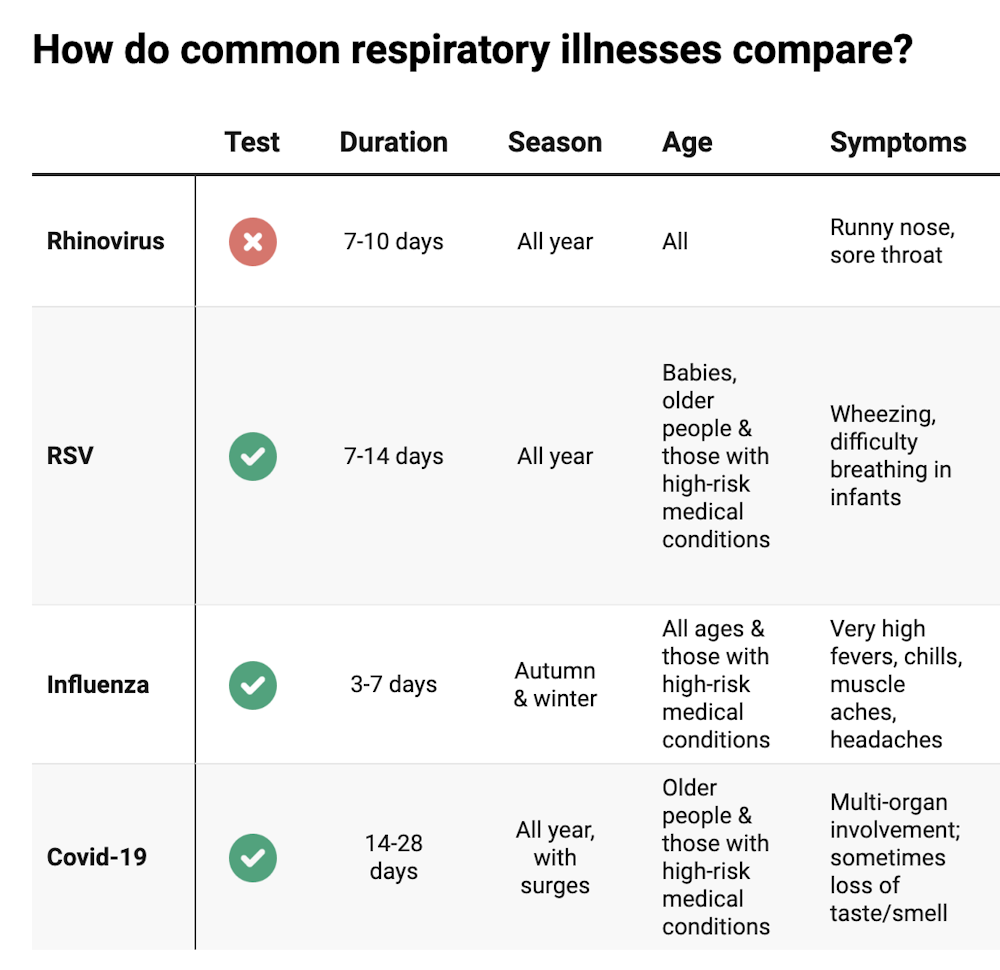
    MIL OSI AnalysisEveningReport.nz

  • MIL-OSI: Himax Technologies, Inc. Schedules Third Quarter 2024 Financial Results Conference Call on Thursday, November 7 at 8:00 AM EST

    Source: GlobeNewswire (MIL-OSI)

    TAINAN, Taiwan, Oct. 08, 2024 (GLOBE NEWSWIRE) — Himax Technologies, Inc. (Nasdaq: HIMX) (“Himax” or “Company”), a leading supplier and fabless manufacturer of display drivers and other semiconductor products, today announced that it will hold a conference call with investors and analysts on Thursday, November 7 at 8:00 a.m. US Eastern Standard Time and 9:00 p.m. Taiwan Time to discuss the Company’s third quarter 2024 financial results.

    HIMAX TECHNOLOGIES THIRD QUARTER 2024 EARNINGS CONFERENCE CALL
    DATE: Thursday, November 7, 2024
    TIME: U.S. 8:00 a.m. EST  
      Taiwan 9:00 p.m.  
     
    Live Webcast (Video and Audio): http://www.zucast.com/webcast/naEJkyEo
    Toll Free Dial-in Number (Audio Only):
      Hong Kong 2112-1444
      Taiwan 0080-119-6666
      Australia 1-800-015-763
      Canada 1-877-252-8508
      China (1) 4008-423-888
      China (2) 4006-786-286
      Singapore 800-492-2072
      UK 0800-068-8186
      United States (1) 1-800-811-0860
      United States (2) 1-866-212-5567
    Dial-in Number (Audio Only):
      Taiwan Domestic Access 02-3396-1191
      International Access +886-2-3396-1191
         
    Participant PIN Code: 1407507 #
       

    If you choose to attend the call by dialing in via phone, please enter the Participant PIN Code 1407507 # after the call is connected. A replay of the webcast will be available beginning two hours after the call on http://www.himax.com.tw. This webcast can be accessed by clicking on this link or Himax’s website, where the webcast can be accessed through November 7, 2025.

    About Himax Technologies, Inc.

    Himax Technologies, Inc. (NASDAQ: HIMX) is a leading global fabless semiconductor solution provider dedicated to display imaging processing technologies. The Company’s display driver ICs and timing controllers have been adopted at scale across multiple industries worldwide including TVs, PC monitors, laptops, mobile phones, tablets, automotive, ePaper devices, industrial displays, among others. As the global market share leader in automotive display technology, the Company offers innovative and comprehensive automotive IC solutions, including traditional driver ICs, advanced in-cell Touch and Display Driver Integration (TDDI), local dimming timing controllers (Local Dimming Tcon), Large Touch and Display Driver Integration (LTDI) and OLED display technologies. Himax is also a pioneer in tinyML visual-AI and optical technology related fields. The Company’s industry-leading WiseEye™ Ultralow Power AI Sensing technology which incorporates Himax proprietary ultralow power AI processor, always-on CMOS image sensor, and CNN-based AI algorithm has been widely deployed in consumer electronics and AIoT related applications. Himax optics technologies, such as diffractive wafer level optics, LCoS microdisplays and 3D sensing solutions, are critical for facilitating emerging AR/VR/metaverse technologies. Additionally, Himax designs and provides touch controllers, OLED ICs, LED ICs, EPD ICs, power management ICs, and CMOS image sensors for diverse display application coverage. Founded in 2001 and headquartered in Tainan, Taiwan, Himax currently employs around 2,200 people from three Taiwan-based offices in Tainan, Hsinchu and Taipei and country offices in China, Korea, Japan, Germany, and the US. Himax has 2,683 patents granted and 390 patents pending approval worldwide as of September 30, 2024.

    http://www.himax.com.tw

    Forward Looking Statements

    Factors that could cause actual events or results to differ materially from those described in this conference call include, but are not limited to, the effect of the Covid-19 pandemic on the Company’s business; general business and economic conditions and the state of the semiconductor industry; market acceptance and competitiveness of the driver and non-driver products developed by the Company; demand for end-use applications products; reliance on a small group of principal customers; the uncertainty of continued success in technological innovations; our ability to develop and protect our intellectual property; pricing pressures including declines in average selling prices; changes in customer order patterns; changes in estimated full-year effective tax rate; shortage in supply of key components; changes in environmental laws and regulations; changes in export license regulated by Export Administration Regulations (EAR); exchange rate fluctuations; regulatory approvals for further investments in our subsidiaries; our ability to collect accounts receivable and manage inventory and other risks described from time to time in the Company’s SEC filings, including those risks identified in the section entitled “Risk Factors” in its Form 20-F for the year ended December 31, 2023 filed with the SEC, as may be amended.

    Company Contacts:

    Eric Li, Chief IR/PR Officer
    Himax Technologies, Inc.
    Tel: +886-6-505-0880
    Fax: +886-2-2314-0877
    Email: hx_ir@himax.com.tw
    http://www.himax.com.tw

    Karen Tiao, Investor Relations
    Himax Technologies, Inc.
    Tel: +886-2-2370-3999
    Fax: +886-2-2314-0877
    Email: hx_ir@himax.com.tw
    http://www.himax.com.tw

    Mark Schwalenberg, Director
    Investor Relations – US Representative
    MZ North America
    Tel: +1-312-261-6430
    Email: HIMX@mzgroup.us
    http://www.mzgroup.us

    The MIL Network

  • MIL-OSI United Kingdom: A strong foundation in Reception and key stage 1 sets children up for success

    Source: United Kingdom – Executive Government & Departments

    Ofsted has today published a report looking at how schools support children to develop the foundational knowledge and skills they need by the end of key stage 1, to give them the best chance of educational success later on.

    • Not all children are finishing key stage 1 with the foundational skills and knowledge they need – particularly the most vulnerable and disadvantaged.
    • Evidence that teaching of early reading is improving, but weaknesses remain in some schools’ English curriculums.
    • Strong curriculum and teaching have greatest impact on children who begin school with the lowest starting points.

    Schools continue to face significant challenges in dealing with the impact of the COVID-19 pandemic on the behaviour and social skills of children currently in Reception and key stage 1. Today’s report identifies areas it might be particularly important for schools to focus on.

    While all schools recognise the importance of the earliest years of a child’s education, the report finds that disadvantaged children who need the most help to secure strong learning aren’t always finishing key stage 1 with the foundational knowledge and skills they will need throughout the rest of their education – the ability to communicate, read, write and calculate as well as strong physical, emotional and social development. This is making it harder for these children to learn in later key stages.

    The report highlights that the teaching of early reading is improving but notes that, beyond the teaching of phonics, schools’ English curriculums are often not effective. Inspectors found that too often children are asked to complete complex reading and writing tasks before they have been taught and practised the knowledge and skills needed to be successful.

    The report also makes clear that strong curriculum and teaching have the greatest impact on children who begin school with the lowest starting points. As a result, any weaknesses in curriculum, teaching or assessment are widening the gaps that already exist between these children, particularly those with special educational needs, and their peers.

    Inspectors found that one of the main barriers to children’s learning in Reception and key stage 1 is where the foundational knowledge they need to know is not clearly identified in the curriculum. This often leaves teachers unsure about what to prioritise in their teaching and assessment.

    The report also notes that chosen teaching methods are not always helping children learn what they need to know, and assessment sometimes fails to help teachers understand what children are able to do. For example, children may be expected to write a story before they have been taught how to form letters and spell the words they want to write.

    Ofsted identifies several examples of good practice. For example, some schools have adapted their curriculum to emphasise language development in response to an increasing number of children joining Reception with speech, language and communication difficulties.

    The report makes a series of recommendations for schools to ensure children build the foundational knowledge and skills they need by the end of key stage 1, including:

    • making sure that the foundational knowledge and skills that children will need for later learning are clearly set out in the curriculum
    • providing children with sufficient opportunities to practise using their foundational knowledge and skills so they become fully embedded
    • making sure that teaching methods are suited to the subject being taught and what children already know
    • ensuring that assessment can pick up children’s misunderstandings quickly so that teachers are able to support those who need extra help at the earliest possible stage
    • making sure that end of key stage assessments do not disproportionately influence decisions about curriculum and teaching methods

    Sir Martyn Oliver, His Majesty’s Chief Inspector, said:

    A child’s first few years at school are vitally important to their future learning and development. We know that by providing children with an excellent early education, we can set them up with the tools they need to flourish throughout the later stage of their education.

    It’s encouraging that there has been some good progress in improving the teaching of early reading and mathematics in primary schools. But schools are still having to navigate the impact of the pandemic, and many children are still catching up on lost learning. It is those children who are most vulnerable who benefit most from a strong start to their education. I hope this report helps teachers and school leaders in developing a curriculum that provides all children with the knowledge and skills that they need.

    Notes to editors

    1. The report draws on evidence from Ofsted’s previous publications as well as 20 visits by His Majesty’s Inspectors (HMI) to schools.
    2. In light of this report’s findings, Ofsted will be reviewing and updating guidance for inspectors to ensure they focus more on how well curriculum, teaching and assessment is enabling children in Reception and key stage 1 to learn foundational knowledge.

    Press office

    8.30am to 6pm Monday to Friday 0300 013 0415

    Updates to this page

    Published 8 October 2024

    MIL OSI United Kingdom

  • MIL-OSI Asia-Pac: President Lai meets Senate President Alvina Reynolds and Speaker Claudius J. Francis of Saint Lucia

    Source: Republic of China Taiwan

    President Lai meets Senate President Alvina Reynolds and Speaker Claudius J. Francis of Saint Lucia
    President Lai meets Senate President Alvina Reynolds and Speaker Claudius J. Francis of Saint Lucia
    2024-10-08

    On the morning of October 8, President Lai Ching-te met with a delegation led by Senate President Alvina Reynolds and Speaker Claudius J. Francis of Saint Lucia. In remarks, President Lai thanked the delegation for joining us to mark our National Day celebration, demonstrating the friendly relations between the governments and parliaments of our two countries. The president noted that Saint Lucia is one of Taiwan’s key allies in the Caribbean, and that over the years, our diplomatic alliance has continued to deepen as our bilateral cooperation in several areas has yielded fruitful results. He stated that going forward, Taiwan will continue to promote values-based diplomacy and economic diplomacy, and he expressed his hope that we will continue to enhance the well-being of our peoples and contribute more to global peace and prosperity.
    A translation of President Lai’s remarks follows:
    I extend a warm welcome to Senate President Reynolds and Speaker Francis as they visit Taiwan once again. It is a pleasure to have you and your delegation join us to mark our National Day Celebration. Your presence demonstrates the friendly relations between the governments and parliaments of our two countries.
    Saint Lucia is one of Taiwan’s key allies in the Caribbean. It has continued to voice support and call for Taiwan’s international participation at numerous international venues, including the Central American Parliament and the General Debate during this year’s United Nations General Assembly. I would like to take this opportunity to express my sincere thanks to the government and parliament of Saint Lucia.
    Taiwan and Saint Lucia share such universal values as freedom, democracy, and the rule of law. Over the years, our diplomatic alliance has continued to deepen. At the same time, bilateral cooperation in such areas as the economy, agriculture, and education has yielded fruitful results. In working toward post-pandemic economic recovery, Taiwan and Saint Lucia have cooperated on promoting vocational training and empowerment projects for women and the youth. This has helped enhance industrial processing technology, boosted the competitiveness of goods, and created even more job opportunities.
    Furthermore, with regard to the cultivation of talent, Taiwan’s youth ambassadors visited Saint Lucia last year and shared their experiences with local students. I thank Senate President Reynolds and Speaker Francis for their warm reception of our students. And I believe that the ongoing promotion of bilateral projects designed to nurture talent will facilitate even more cooperation and exchanges.
    In closing, I want to thank you all for your longstanding support for our diplomatic relations. Going forward, Taiwan will continue to promote values-based diplomacy, strengthening ties with Saint Lucia. We will also engage in economic diplomacy, spurring further industrial development together with our democratic partners and Saint Lucia for the benefit of our peoples. Let us move forward together as we continue to enhance the well-being of our peoples and contribute more to global peace and prosperity.
    Senate President Reynolds then delivered remarks, first extending greetings to President Lai from the government, people, and members of parliament of Saint Lucia. She extended sincere congratulations to President Lai on his election success, expressing her confidence that he will lead this great country into realizing greater success. 
    Senate President Reynolds remarked that it is her distinct honor to be back in our beautiful country once again, this time to join with us as we celebrate our 113th anniversary of National Day. She noted that they celebrate our great advancements in education, technology, trade and manufacturing, community development, health and wellness, arts and culture, climate, smart agriculture, sustainable development, and our values in diplomacy. 
    Senate President Reynolds pointed out that their visit is more than a symbol of the warm and friendly relations that Taiwan and Saint Lucia have enjoyed for many years; it is also a celebration and a reaffirmation of the deep diplomatic bonds that have existed between our peoples. Over the years, this partnership has significantly impacted the lives of Saint Lucians, especially the women, children, and persons with disabilities who are the most vulnerable among them.
    On behalf of Prime Minister Philip J. Pierre and the government and people of Saint Lucia, Senate President Reynolds offered their profound gratitude for Taiwan’s kind generosity over the years. She added that as Taiwan prospers and shares selflessly with the rest of the world, Saint Lucia has also benefited. Taiwan’s kind gestures, she noted, contribute to improving the lives and livelihoods of so many Saint Lucians. 
    As a former minister for health and member of parliament in Saint Lucia, Senate President Reynolds said that she was able to see firsthand the significant contributions that Taiwan has made and continues to make to Saint Lucia’s health sector. This includes, she said, the scholarships Taiwan offers to many young Saint Lucians to pursue studies in the field of medicine. She added that Taiwan has also offered opportunities for biomedical, health promotion, and health technology training, and that it has given professional assistance for the prevention and control of non-communicable diseases.
    In closing, Senate President Reynolds once again expressed gratitude to the people of Taiwan. Stating that she looks forward to us continuing to work together for the further growth and development of the peoples of Saint Lucia and Taiwan, she wished Taiwan a happy National Day.
    Speaker Francis then delivered remarks, saying that he is honored to extend heartfelt congratulations to President Lai on his election as president. He said he is confident that in assuming this role of leadership, President Lai will guide our nation toward prosperity, peace, and progress. The speaker noted that Taiwan has long been a beacon of democracy, innovation, and resilience, and that it is a shining example to nations across the globe. He added that our strides in areas such as technology, healthcare, and sustainable development have not only elevated Taiwan’s standing but have also inspired admiration and respect worldwide.
    Speaker Francis expressed gratitude on behalf of the government and people of Saint Lucia for the unwavering support that Taiwan has extended to their nation. Through partnerships in healthcare, education, agriculture, and infrastructure, Taiwan has stood by them, he said, fostering growth and enriching the lives of all Saint Lucians. He emphasized that Taiwan’s generosity and friendship have made a tangible difference in Saint Lucia, enabling them to achieve significant milestones and overcome challenges together. That spirit of collaboration between our two nations, he noted, serves as a testament to the enduring bonds of solidarity and shared values that unite us.
    Speaker Francis stated that the resilience and determination demonstrated by Taiwan in the face of global challenges exemplify the spirit of leadership and compassion that defines a true partner on the world stage. The speaker expressed his hope that we will reaffirm our commitment to working hand in hand towards a brighter, more inclusive future for both of our countries, and that together we can forge paths of progress, equity, and sustainability that leave a lasting impact on generations to come. He then expressed his wish for our partnership to continue to flourish, nurturing a legacy of friendship for both Taiwan and Saint Lucia.
    Also in attendance at the meeting was Saint Lucia Senator Embert Charles. The delegation was accompanied to the Presidential Office by Saint Lucia Ambassador Robert Kennedy Lewis.

    MIL OSI Asia Pacific News

  • MIL-OSI Europe: Hearings – Public hearing on “Simplification and Transparency” – 17-10-2024 – Subcommittee on Tax Matters

    Source: European Parliament

    On 17 October 2024, from 9:00 to 10:30, the FISC Subcommittee will host a public hearing on “Simplification and transparency: Role of simplified tax policy to encourage growth, job creation, competitiveness and cross-border business within the EU”.

    Over the past years, stakeholders have been raising more and more concerns about compliance costs and administrative burden. At the same time, the recent publication of two reports, one by Enrico Letta and one by Mario Draghi, have ignited a new debate on how to improve the competitiveness of the EU’s economy in the aftermath of the COVID-pandemic and the economic hardships caused by the war in Ukraine.

    Against this background, this public hearing will gather information and discuss in which ways reducing both taxpayers’ tax compliance and governmental administrative costs could foster cross-border business, increase competitiveness, and eventually lead to more job creation and economic growth.

    MIL OSI Europe News

  • MIL-OSI Europe: Highlights – Public hearing on “Simplification and Transparency” – Subcommittee on Tax Matters

    Source: European Parliament

    On 17 October 2024, from 9:00 to 10:30, the FISC Subcommittee will host a public hearing on “Simplification and transparency: Role of simplified tax policy to encourage growth, job creation, competitiveness and cross-border business within the EU”.

    Over the past years, stakeholders have been raising more and more concerns about compliance costs and administrative burden. At the same time, the recent publication of two reports, one by Enrico Letta and one by Mario Draghi, have ignited a new debate on how to improve the competitiveness of the EU’s economy in the aftermath of the COVID-pandemic and the economic hardships caused by the war in Ukraine.

    Against this background, this public hearing will gather information and discuss in which ways reducing both taxpayers’ tax compliance and governmental administrative costs could foster cross-border business, increase competitiveness, and eventually lead to more job creation and economic growth.

    MIL OSI Europe News

  • MIL-OSI USA: Camaraderie, Enthusiasm Punctuate Wolff New Venture Competition

    Source: US State of Connecticut

    A novel treatment for long-term pain management that could revolutionize post-operative care and eliminate the need for opioids for many, won the first-place, $30,000 grand prize at the Wolff New Venture Competition last week.

    Professors and esteemed UConn Health researchers Lakshmi Nair, Ph.D. and Yusuf Khan, Ph.D. say they were both surprised and thrilled that their startup, Soleia Biosciences, received the award. With the financial and business support they’ve received, they hope to advance the treatment that has been in development for 10 years.

    “This prize will really set the stage for everything else we need to do; without it we would have been stuck,’’ Khan says. “Now we can move forward with determining exactly what we need to do to show our product is both safe and effective, and get it into the hands of doctors so they can start treating patients as soon as possible.’’

    “Our job has always been to figure out how to solve medical problems that don’t have a good solution,’’ Khan says. “With the Wolff Prize, we are even closer to that reality.’’

    Competition Awarded $115,000 in Cash and Prizes

    The Wolff New Venture Competition is the School of Business’ pinnacle entrepreneurship challenge. The event on Tuesday night drew dozens of UConn entrepreneurs and their supporters to the Dunkin Park YG Club for a night of competition, camaraderie, networking, and socializing.

    This year marks the ninth anniversary of the Wolff event, which invites five outstanding UConn-affiliated startups to compete annually. Since its inception, the amount of the awards has risen from $15,000 to more than $$115,000 in cash and in-kind services.

    The five 2024 Wolff finalists have developed a diverse set of companies, from toys to e-commerce to a business-travel planning app. Preparation for the event begins in March when 10 startups are selected to participate in the Connecticut Center for Entrepreneurship & Innovation’s (CCEI) Summer Fellowship Accelerator, where they develop their businesses to become market ready.

    “This was by far the best Wolff New Venture Competition to date,’’ says Jennifer Mathieu, executive director of CCEI. “The room was packed with members of our entrepreneurial ecosystem including investors, community partners, dozens of CCEI’s entrepreneurs showcasing their startups, and many of our alumni just there to support.

    “There was an energy in the space; it was one of collaboration, community, and this level of overall excitement that everyone seemed to have about being there. I feel proud of what my team has accomplished in their support of the hundreds of startups that have participated in CCEI programs,’’ she says. “The five teams that pitched have made tremendous progress since working with CCEI. I can’t wait to see what impact they are going to have on the world.’’

    Medical Company Wins Grand Prize

    In addition to the grand prize, Soleia Biosciences also received the Legal Services Award valued at $10,000 and presented by Wiggin and Dana’s emerging companies division.

    The startup is on the cusp of a breakthrough pain-reduction treatment that can extend the duration of local anesthetics, enabling patients to be nearly pain-free and mobile. Nair says the $15 billion post-surgical pain management industry is ready for change.

    “Since opioid use can have such a negative impact on a person, it’s really critical to find non-addictive solutions for both short- and long-term pain,’’ Nair says. “This applies to everyone, young and old; nobody is exempt from these needs.  In younger people it may be part of recovering from a painful sports injury, and in older people more about managing something like osteoarthritis. Regardless of the age or disease, there is a critical need for opioid alternatives.’’

    The company already has patents and compelling pre-clinical data. The founders are looking to hire a consultant to help them begin the FDA approval process.

    Started by Two Car Enthusiasts, WheelPrice Earned Three Honors

    The $10,000 Second-Place Prize, sponsored by Santander Bank, went to WheelPrice, an online marketplace that facilitates the sales of new, used and vintage wheels. The company also won a ​$5,000 Audience Choice Award.
    sponsored by Fiondella Milone & Lasaracina (FML) and a $35,000 pro bono Digital Product Development Award from Revyrie.

    Co-founder Kyle Mayers ’13 (BUS) says the company has something for everyone. “We have wheels for every car from a Honda Civic to a Ferrari,” he says.

    Mayers and co-founder Wally Namane ’13 (BUS), ’18 MBA, both car enthusiasts, met as students through mutual friends at UConn. “We’ve had a life-long obsession with cars,’’ Mayers says.

    Today they hope to become the number one marketplace for the 67 million car enthusiasts in the U.S. Globally, consumers spend $5 billion on wheels annually. They believe their easy-to-use platform and some high-tech features, now in development, will put them in the industry’s drivers’ seat.

    Business-Travel App Took Third Place

    Since the onset of the pandemic, the number of fully remote companies has grown 400%. And although their employees may be on different coasts, Vamos founder Niko Zurita ’10 (BUS) believes every growing business requires face-to-face meetings between colleagues. He is developing an app to tailor meetings and locations to company needs, while also saving them money.

    Vamos received the $7,500 Third Place Prize sponsored by Prime Materials Recovery Inc., and a Digital Surgeons brand consulting award, valued at $10,000.

    Toy Dinosaurs, Natural Food Preservative Captivated Audience

    Lyla Andrick ’24 (CAHNR), created Happy Dinosaur, a company that sells brightly colored dinosaur stuffed animals, from her dorm room at UConn. The plush animals have become so popular that the New England boutiques that stock them can’t keep them on the shelves. As part of her presentation, she passed around a half-dozen dinosaurs, and members of the audience were delighted.

    Happy Dinosaur won a ​$5,000 Community Impact Award, sponsored by Baystate Financial, that will help Andrick create books about the main characters and create a format for children to share imaginative stories about them.

    Meanwhile Atlas, formerly Atlantic Sea Solutions, a company using seaweed extracts as a tasteless, texture-less coating to preserve the shelf-life of peaches, berries and other produce, won a $5,000 Innovation Award, sponsored by Mark and Jamie Summers. The company plans to use the winning to purchase more equipment.

    “What I love about my work and what motivates me is using science and technology to do cool things with food,’’ says co-founder Anuj Purohit, a research associate in the Department of Nutritional Sciences in the College of Agriculture, Health and Natural Resources. “The world population is growing, and we all need good, nutritious food. That’s what drew me to agriculture and what keeps me going.’’

    Experienced Entrepreneurs Say Their Companies are Thriving

    The event also welcomed more than 25 previous Wolff participants who have made great strides with their startups. They were eager to cheer on the next wave of entrepreneurs.

    Jake Winter ’22 (ENG), co-founder and CTO of PatentPlusAI, a company using AI to generate comprehensive patent search reports in less than 24 hours, says the startup has grown exponentially in four years.

    “We’re hustling,’’ says Winter, noting that their client base includes corporate giant IBM. If he could offer advice to the newer entrepreneurs, it would be to “get ridiculously familiar with your market, and once you understand your customer, test as soon as you can,’’ he says.

    For graduate student Amelia Martin, the year since her participation in the Wolff competition has been one of extraordinary growth.

    “A year ago, I didn’t know what to expect. I had the mindset of a student,’’ she says. “Now I think like a CEO.’’

    Her company, Mud Rat, an eco-friendly alternative to the standard Styrofoam surfboard core, has participated in two business accelerators, won a small grant, and is completing its first protype this month. She’s also added to her team. Martin advises those who follow in her footsteps to just keep going when the going is tough. “If you stick with it, you’ll hit all your goals eventually,’’ she says.

    In the last year, alumna Hayley Segar, founder of onewith, a direct-to-consumer swimwear and accessory company, has been featured in People and InStyle magazines. She now employs four manufacturers to make her swimwear and this year sold 50,000 units. She hasn’t lost touch with her roots; her mom still packs her orders.

    She tells the new entrepreneurs to avoid distraction. “They need to be focused and heads-down in the early stages of their company,’’ she says. “It’s exciting, there is a lot of sacrifice, but in the end, owning your own business is extremely satisfying.’’

    She credits UConn for setting her up for success. As she speaks with entrepreneurs who attended other colleges, none of them had the expert entrepreneurial support that UConn offered, Segar says.

    Judges Were Impressed by What They Heard

    Competition judge Luke Steinberger, COO at Revyrie, a company that helps build and scale companies and a sponsor of the event, says he was very impressed with all the presentations.

    “They were well prepared, and I loved the diversity of ideas,’’ he says. “The program exceeded my expectations. I’m very happy to be involved and will be back next year.’’

    Judge Adam Silverman, partner at law firm Wiggin and Dana, says he didn’t know exactly what to expect before the competition. “It was great to be a part of the competition. I was impressed by the quality of the companies, the focus of the founders, and the exciting use of technology,’’ he says.

    School of Business Dean John A. Elliott spoke about how entrepreneurship has grown in the 13 years he has been here.

    “We used to think entrepreneurship was something for juniors and seniors to explore but now we welcome many students who begin their companies as freshmen,’’ he says. “The excitement around entrepreneurship has grown rapidly.’’

    Elliott also thanked the Wolff family, including Greg Wolff who was in attendance, for starting the competition and advocating for entrepreneurship at UConn. Elliott says their influence helped create additional competitions and great support for startups at UConn.

    Alycia Chrosniak, Assistant Director of Brand & Venture Development at CCEI, says working with the startups and watching them grow has been rewarding.

    “But my favorite part will be three months from now when I get the emails about what these new companies and their founders have accomplished,’’ she says. “What we do here is life changing.’’

    MIL OSI USA News

  • MIL-OSI Asia-Pac: Keynote address for the Honorable Minister of Health Official Handover of the Vaccine Van

    Source: Government of Western Samoa

    Share this:

    25th September, 2024; Pharmaceutical Warehouse @ 12noon

    Lau Susuga le Ta’ita’i o le Sauniga; Rev. Saaga Tuiletufuga

    Australian High Commissioner to Samoa – H.E Will Robinson

    and the Australian Department of Foreign and Trade in Samoa

    UNICEF Chief of Field Office in Samoa – Ms. Khin Moe Aye and

    the UNICEF office in Samoa

    Ladies and Gentlemen,

    Samoa has been making steady progress in terms of reaching all

    eligible children with the vaccines as per the National

    Immunisation Schedule. There has been successful roll out of 4

    lifesaving childhood vaccines in the last 3 years like Rotavirus

    vaccine, Pneumococcal Vaccine, HPV vaccine and Typhoid vaccine

    to protect our children respectively from Diarrhoea, Pneumonia,

    Cervical cancer and Typhoid fever. This year the coverage for the 2

    doses of Measles vaccine has been quite encouraging for Samoa.

    The coverage of first dose of Measles has reached 91% for the first time in the last 5 years after the Measles outbreak and the 2nd dose of Measles vaccine is around 64%. I am confident that our

    Immunization Program or EPI team will be able to reach the

    missed children in the remaining months of this year to achieve a

    good coverage for the year through our continuous and existing

    outreach vaccinations.

    The new vaccine introduction initiative, Post-Measles Outbreak

    recovery plan and COVID-19 Pandemic, brought in a C-change to

    the immunization domain of Samoa. There are significant

    developments in Cold Chain, capacity building of health workers,

    documentation and reporting to strengthen the Health System

    with regards to Immunization with technical support from UNICEF.

    The transportation and distribution of vaccines in the country was

    identified as a gap. Now with this new vehicle procured with the

    funding support from Australian Government, transportation of

    vaccines will be faster, which means a boost in efficient and timely

    vaccine supply of vaccines and logistics to the healthcare facilities.

    The vehicle is also covered to protect vaccines against

    unfavourable weather conditions. Though this vehicle will have

    priority for vaccines, it may be considered to accommodate the

    pharmaceutical supplies for distribution to the health facilities

    across the country to improve the cost efficiency.

    We are immensely grateful to Australian Government for their

    timely support and also to UNICEF for their able technical guidance

    and support for strengthening our Health system to get equipped

    to provide quality services in a cost-effective way.

    SOIFUA MA IA MANUIA!

    Lauga a le Afioga le Minisita o le Soifua Maloloina

    Tatala Aloaia le Tauaaoina o le Ta’avale mo le tufaina/kilivaina o Tui Puipui ma Vailaau

    Lau Susuga le Ta’ita’i le Sauniga – Rev. Saaga Tuiletufuga

    Lau Susuga le Komisina Maualuga o Ausetalia i Samoa, H.E

    Will Robinson

    Lau Susuga le Sui o le Ofisa o le Faalapotopotoga o le UNICEF i

    Samoa – Khin Moe Aye

    Le paia o le aofia ua potopoto,

    Ua molimauina e tusa ai ma fa’amaumauga lata mai, le alualu i

    luma o taumafaiga a Samoa, e ala i le to’atele o alo ma fanau ua

    fa’atino o latou tui puipui fa’aauau. I totonu o le 3 tausaga talu ai,

    na fa’amauina le lelei o le faatinoina o nisi o tui Puipui fou na

    fa’amanuiaina ai lo tatou atunu’u mo le puipuiga o alo ma fanau

    mai le tele o fa’ama’i.

    O nei tui Puipui e aofia ai tui e puipuia mai fa’ama’i e pei o le

    manava tatā, o fa’ama’i e aofia ai le nimonia, o le fa’ama’i o le

    taifoi, faapea ma tui puipui mo alo ma fanau teine e puipuia mai

    nisi o Kanesa o tama’ita’i.

    O le tausaga lenei, e fa’alototeleina lava le auaunaga, ona o le

    maoa’e o le tulaga ua o’o iai le fa’atinoga o tui Puipui o le Misela.

    O le tui muamua lava o le Misela (MR1) e 91% le faitau aofa’i o alo

    ma fanau e agava’a na faia tui Puipui. Ao le tui lona lua o le Misela (MR2) e 64%. O lo’o mafanafana lava, o le a fa’aauau le una’i a le aufaigaluega ina ia ausia le 90-100% o le tui puipui lenei o le Misela i nai masina o totoe o lenei tausaga.

    O le o’o mai o nisi o tui Puipui fou e faaopoopo i tui Puipui fa’aauau a le fanau e puipuia mai fa’ama’i e pei ona ou ta’ua, o

    taumafaiga o le una’i o le faia o tui ina ua mae’a le pipisi o le

    Misela, faapea ma le KOVITI-19 o ni matati’a sili ia mo le

    Polokalame o Tui Puipui mo Samoa. Ua si’itia fo’i le tulaga o le

    mata’itūina o le mālūlū ma le vevela talafeagai e teu malu ai tui

    Puipui, aemaise le taimi e feavea’i ma kiliva ai i tua i falema’i ma

    nofoaga o lo’o faatino ai tūiga.

    O lo’o fa’aauau pea a’oa’oga mo le si’itia o le silafia o tausi soifua

    i le fa’atinoga o tui Puipui. E le gata i lea a’o le si’itia o le silafia e

    fa’aleleia atili ai fa’amaumauga e ala i metotia fa’aona-po-nei. O

    le naunautaiga o nei taumafaiga uma, ina ia mautinoa e faia uma

    tui Puipui o alo ma fanau faapea ma tagata matutua e agava’a. Ia

    mafai ai ona puipuia mai le tele o fa’ama’i pipisi. E le galo Afia i si

    ona vao, ma e faafetai ai le lagolago a le Faalapotopotoga o le

    UNICEF faapea ma le Polokalame mo Tui Puipui Fou o lo’o

    faatupeina e le ADB mo nei taumafaiga.

    A’o le meaalofa o le a tau’aaoina nei, e pei ona iai le ta’avale

    faapitoa mo le kilivaina o tui Puipui, o se foa’i sili lea ua

    fa’aopoopo e unaia ai le auaunaga o tūiga. E le gata ina ia mautinoa e vave ona taunu’u le tufaina ma le kilivaina o Tui Puipui mana’omia mo falema’i uma. Ae faapea fo’i ma le puipuia mai o nei vailaau ma tui mai le vevela ma vave ona fa’aleaogāinaai.

    O lenei foa’i o le a fesoasoani tele, e le na’o le fa’aaogaina mo Tui

    Puipui, ae mo le kilivaina o nisi o vailaau mo’omia i tua i falema’i

    fa’aitūmalo ma nofoaga mamao o lo’o faatinoina ai le auaunaga

    fa’asoifua maloloina.

    O le agaga fa’agae’etia mai le Malo o Samoa e tauala atu le

    Matagaluega o le Soifua Maloloina, e fa’afetaia ai le Malo o

    Ausetalia faapea ma le Faalapotopotoga o le UNICEF mo lenei

    foa’i, ina ia si’itia le auaunaga mo le mamalu o le atunu’u.

    Ia fa’aauau ai pea le tatou galulue fa’atasi aua se Samoa

    maloloina mo nei ma le lumana’i.

    SOIFUA MA IA MANUIA

    Share this:

    MIL OSI Asia Pacific News

  • MIL-OSI: Silicon Motion Announces Preliminary Third Quarter 2024 Revenue and Earnings Conference Call Details

    Source: GlobeNewswire (MIL-OSI)

    TAIPEI, Taiwan and MILPITAS, Calif., Oct. 08, 2024 (GLOBE NEWSWIRE) — Silicon Motion Technology Corporation (NasdaqGS: SIMO) (“Silicon Motion” or the “Company”), a global leader in NAND flash controllers for solid state storage devices, announces that based on its preliminary third quarter financial results, sequential revenue growth is expected to be above the midpoint of its original guidance range of $205 million to $216 million, which the company issued on August 2, 2024. Gross margin (non-GAAP) is expected to be in the upper half of the company’s original 46.0% to 47.0% guidance range.

    The Company will release its third quarter 2024 financial results after the market closes on October 30, 2024, and will host a conference call on October 31 at 8:00 a.m. Eastern Time. Participants must pre-register using the link below to participate in the live call.  

    CONFERENCE CALL DETAILS:

    Participants must register in advance to join the conference call using the link provided below. Conference access information (including dial-in information and a unique access PIN) will be provided in the email received upon registration.

    Participant Online Registration:
    https://register.vevent.com/register/BI3e5d77077ee94ca9b9fd61325f52a0e9

    This call will be webcasted on the Company’s website at http://www.siliconmotion.com.

    ABOUT SILICON MOTION:

    We are the global leader in supplying NAND flash controllers for solid state storage devices.  We supply more SSD controllers than any other company in the world for servers, PCs and other client devices and are the leading merchant supplier of eMMC and UFS embedded storage controllers used in smartphones, IoT devices and other applications.  We also supply customized high-performance hyperscale data center and specialized industrial and automotive SSD solutions. Our customers include most of the NAND flash vendors, storage device module makers and leading OEMs.  For further information on Silicon Motion, visit us at http://www.siliconmotion.com.

    FORWARD-LOOKING STATEMENTS:

    This press release contains “forward-looking statements” within the meaning of Section 27A of the Securities Act of 1933, as amended, and Section 21E of the Securities Exchange Act of 1934, as amended. In some cases, you can identify forward-looking statements by terminology such as “may,” “will,” “should,” “expect,” “intend,” “plan,” “anticipate,” “believe,” “estimate,” “predict,” “potential,” “continue,” or the negative of these terms or other comparable terminology. Although such statements are based on our own information and information from other sources we believe to be reliable, you should not place undue reliance on them. These statements involve risks and uncertainties, and actual market trends or our actual results of operations, financial condition or business prospects may differ materially from those expressed or implied in these forward-looking statements for a variety of reasons. Potential risks and uncertainties include, but are not limited to the unpredictable volume and timing of customer orders, which are not fixed by contract but vary on a purchase order basis; the loss of one or more key customers or the significant reduction, postponement, rescheduling or cancellation of orders from one or more customers; general economic conditions or conditions in the semiconductor or consumer electronics markets; the impact of inflation on our business and customer’s businesses and any effect this has on economic activity in the markets in which we operate; the functionalities and performance of our information technology (“IT”) systems, which are subject to cybersecurity threats and which support our critical operational activities, and any breaches of our IT systems or those of our customers, suppliers, partners and providers of third-party licensed technology; the effects on our business and our customer’s business taking into account the ongoing U.S.-China tariffs and trade disputes; the uncertainties associated with any future global or regional pandemic; the continuing tensions between Taiwan and China including enhanced military activities; decreases in the overall average selling prices of our products; changes in the relative sales mix of our products; changes in our cost of finished goods; supply chain disruptions that have affected us and our industry as well as other industries on a global basis; the payment, or non-payment, of cash dividends in the future at the discretion of our board of directors and any announced planned increases in such dividends; changes in our cost of finished goods; the availability, pricing, and timeliness of delivery of other components and raw materials used in the products we sell given the current raw material supply shortages being experienced in our industry; our customers’ sales outlook, purchasing patterns, and inventory adjustments based on consumer demands and general economic conditions; any potential impairment charges that may be incurred related to businesses previously acquired or divested in the future; our ability to successfully develop, introduce, and sell new or enhanced products in a timely manner; and the timing of new product announcements or introductions by us or by our competitors. For additional discussion of these risks and uncertainties and other factors, please see the documents we file from time to time with the U.S. Securities and Exchange Commission, including our Annual Report on Form 20-F filed with the U.S. Securities and Exchange Commission on April 30, 2024. Other than as required under the securities laws, we do not intend, and do not undertake any obligation to, update or revise any forward-looking statements, which apply only as of the date of this press release.

    Investor Contacts:          
    Tom Sepenzis Selina Hsieh
    Senior Director of IR & Strategy Investor Relations
    tsepenzis@siliconmotion.com ir@siliconmotion.com

    The MIL Network

  • MIL-OSI Economics: Frank Elderson: Interview with Delo

    Source: European Central Bank

    Interview with Frank Elderson, Member of the Executive Board of the ECB and Vice-Chair of the Supervisory Board of the ECB, conducted by Miha Jenko

    8 October 2024

    You hold two high positions in the European Central Bank: you are a member of the ECB’s Executive Board as well as the Vice-Chair of its Supervisory Board. You are responsible for both monetary matters and banking supervision in the euro area. Can you explain your dual role at the ECB?

    Let me clarify that, at the ECB, decision-making on monetary policy and banking supervision is separate, and for good reason. We want these two functions to pursue their specific objectives and we want to avoid potential conflicts of interest.

    That being said, it is important for each side to be aware of what the other is thinking and to understand how the decisions being taken affect the other side. Let me give you a couple of examples. During our strategy review in 2021 we explicitly recognised the importance of safe and sound banks for our price stability mandate, acknowledging that financial stability is a precondition for price stability. Moreover, banks that are safe and sound are able to effectively pass through our monetary policy.

    So in the governance of the ECB there is a bridge between the two sides. And I currently occupy this bridge as a member of the Executive Board, which has six members including President Lagarde, as a member of the Governing Council and as Vice-Chair of the Supervisory Board. In practice, this means that I inform the Executive Board about what was discussed in the Supervisory Board, and I debrief the Supervisory Board on the decisions taken by the Governing Council. In short, my role is to help ensure that the ECB does not carry out these two separate tasks in isolation.

    What is the purpose of your current visit to Slovenia?

    The ECB’s two decision-making bodies – the Supervisory Board and the Governing Council – will meet in Slovenia in the space of a week. The Supervisory Board will meet for its regular retreat to discuss strategic issues, while the Governing Council will hold its next monetary policy meeting here. Our colleagues at Banka Slovenije are kindly hosting both events.

    Turning to banking supervision, how are banks’ activities and lending affected by the current environment of weak economic growth and deteriorating economic trends, which include increasing bankruptcies in some euro area countries? How resilient is the banking sector in Europe?

    European banks are resilient. They have sufficient and adequate capital and liquidity buffers which enable them to absorb losses and withstand shocks. But they should not be complacent, especially in the context of the worsening geopolitical environment, which could have direct and indirect effects on banks. Near-term growth prospects have deteriorated and are subject to high uncertainty because of these rising geopolitical risks. And banks also face several medium-term, more structural challenges.

    In this context, our supervisory priorities, which we update every year, help us focus on both the near-term and medium-term challenges faced by banks. We want to ensure that banks are resilient not only today, but also in the long run. As part of our priorities, we want to increase their resilience to sudden macroeconomic and geopolitical shocks and to accelerate the remediation of shortcomings in the governance and management of climate-related and environmental risks. At the same time, banks need to make further progress with their digital transformation and build up their operational resilience.

    In short, banks are resilient, but we should not be complacent amid these longer-term challenges, which we will address through our supervision over the coming years.

    What lessons have the ECB and the Eurosystem learned from the last financial crisis in order to be better prepared for a possible new crisis, which will not necessarily originate in the banking sector itself, but in companies connected to it?

    Since the global financial crisis we have created strong pan-European supervision – the Single Supervisory Mechanism. The financial reforms implemented after that crisis have strengthened banks without compromising their lending capacity. Several things have happened since the global financial crisis: we have had a pandemic, Russia’s invasion of Ukraine, an energy shock and high inflation. So European economies have been exposed to unforeseen challenges. We also witnessed turmoil in international banking markets last year, which exposed fragilities in banks’ risk management and internal governance.

    The European banking sector has shown itself to be resilient in the face of these challenges. Take non-performing loans, for example, which have fallen significantly in the European banking system. In 2015, their share was 7%, while in 2023 it was below 2%. That is a big step forward. And as I said, capital and liquidity indicators are now much higher than they were a decade ago. But as supervisors, we should never be complacent, especially given the new risk drivers, such as energy prices, cyberattacks, climate and nature-related risks and geopolitical risks.

    Turning now to current developments in the European banking sector, where UniCredit Group’s intention to take over the German bank Commerzbank has recently made headlines. What is your view as euro area banking supervisor?

    Let me first say that I cannot comment on individual banks, so my answer will be more general.

    We have been crystal clear that cross-border consolidation can be an instrument for further integration of the European banking sector, and we stand by that. Consolidation can also help address long-standing issues in the European banking sector, such as low profitability.

    Nonetheless, mergers always carry risks and, as supervisors, we assess them carefully, always applying the limitative criteria set out in Article 23 of the Capital Requirements Directive. Our job is to ensure that every banking transaction – whether at cross-border or national level – results in a banking group that can comply with supervisory requirements in the foreseeable future.

    What is your view of the banking sector in our country? What is your message to Slovenia?

    Thanks to the reforms implemented after the great financial crisis, banks in Slovenia have come a long way, and in the right direction. When the crisis hit, the Government had to support the three largest banks with a recapitalisation of €3.5 billion. And, naturally, it has taken several years for lending to strengthen. More recently, the privatisation of state-owned banks increased competition in the sector, and this has attracted international banks. Slovenian banks are now well-capitalised, highly profitable and are above the euro area average for profitability, mainly on account of very high net interest margins. Some of this progress can also be attributed to the work of supervisors, including those at Banka Slovenije, with whom we work very well.

    So, like in the rest of Europe, your banks are robust but they will continue to face a number of headwinds stemming from the macro-financial environment, geopolitical shocks and challenges related to the green and digital transitions.

    As mentioned, our central bank will host a Governing Council meeting next week. Do you expect a new interest rate decision at this meeting?

    We will come to Slovenia with an open mind, so I am looking forward to the trip to Ljubljana and to a very genuine and open discussion. Before the meeting, we will take note of all the data and analysis and, as we have said many times before, we will take a meeting-by-meeting approach. A number of recent indicators suggest that downside risks to economic growth are already materialising, so we will need to carefully assess whether this has any implications for our inflation outlook.

    What is very clear, however, is the direction of travel in the period ahead. If our projections that inflation will converge towards our 2% target in the second half of 2025 continue to be confirmed, we will continue to gradually ease our restrictive policy stance. At the same time, we need to maintain flexibility regarding the pace of adjustments. This will depend on incoming data, on the economic situation and on inflation. The latest data will of course be taken into account in whatever decision we take in Slovenia.

    What specific downside risks to growth do you have in mind?

    Economic growth came in at 0.2% in the second quarter, falling somewhat short of our projections. We look at a broad range of data, but we have seen that households are consuming less than anticipated and firms are less keen to invest than we had projected.

    What is your view on the exact nature of inflation in the euro area? In particular, services price inflation remains very persistent. Why?

    We expect inflation to decline to our target in the second half of 2025. Headline inflation is projected to average 2.5% in 2024, then 2.2% in 2025 and 1.9% in 2026. Services inflation remains strong but, according to our projections, we will see a deceleration going into the new year.

    We always look at the upside and downside risks surrounding these projections. Geopolitical tensions could raise energy prices, shipping costs and other transport costs in the short term, which could also lead to disruptions to global trade, which would push prices up. Inflation could also increase if wages rise more than expected or if profit margins increase, and extreme weather events and the climate crisis could increase food prices. However, there are also downside risks to inflation, such as lower than expected demand or an unexpected deterioration in the economic environment in the United States and globally.

    At the ECB, you are also responsible for monitoring the effects of climate change, in addition to the dual tasks mentioned at the beginning. This year we saw the catastrophic effects of floods in some central European countries, and last year we experienced them in Slovenia as well. Greece, Spain and other parts of southern Europe are ravaged by catastrophic droughts and fires. Can the ECB and national central banks contribute more effectively to mitigating the effects of climate change? After all, you have the power – you have monetary policy and banking supervision in your hands…

    I am very aware of the consequences of floods, and of those last year in Slovenia. They caused €10 billion of damage and more than two-thirds of the country was affected. Some places in the Koroška region were cut off from the world and most roads were completely submerged. Recently, we have seen similar things in several other EU countries.

    When talking about climate, nature and the ECB, I always say that we are not climate policymakers. We are not involved in climate policy. This is a task for governments, who implement legislation and policies like the European Climate Law and the EU “Fit for 55” plan, for example.

    But this topic is also extremely relevant for our mandate, because extreme events like flooding, wildfires and summer droughts also lead to financial risks for banks and the wider economy. In our banking supervision, we check whether banks are adequately managing their climate and nature-related risks. We also take climate and nature into account in our macroeconomic projections.

    Are you in favour of introducing more decisive measures that would offer banks more targeted incentives to grant loans for more environmentally friendly or “greener” purposes?

    It would be speculative to talk about possible measures that we might hypothetically take in the future. What is clear is that any measure we implement must be consistent with our primary objective of price stability. Our current monetary policy stance is restrictive, so a green lending facility would be something for us to consider in the future, in another phase of the cycle.

    That being said, climate change is part of our monetary policy strategy, and we have committed to regularly reviewing our climate-related measures to ensure that we continue to support a decarbonisation path that is consistent with the EU’s climate objectives. For this, within our mandate, all options are on the table. If we were to design new instruments in the future, it’s fair to assume that they would include climate considerations.

    In terms of global competitiveness, the EU is falling behind the United States and China. Former ECB President Mario Draghi recently presented a very ambitious plan to increase European competitiveness, including investments of up to €800 billion per year. In his opinion, this money could also be raised through European borrowing, so common European debt. What is your take on this proposal and Mr Draghi’s other recommendations?

    We welcome the publication of this report, how concrete it is and its call for urgent action. Competitiveness is critical for sustainable growth, improving the living standards of citizens and boosting economic resilience, especially in the current environment of heightened geopolitical fragmentation. We strongly support this urgent call for coordinated action at the European and national levels. It is now a matter of turning these proposals into concrete measures.

    Meeting the strategic investment needs identified in the report requires completing the capital markets union, which we have been advocating for a long time.

    The private sector will not be able to finance all of these investment needs alone. European initiatives, including financing through common European funds, could help finance common European public goods such as defence, public procurement, energy grids, disruptive innovation and cross-border infrastructure. Under the right conditions, the potential issuance of common European debt could help bridge the financing gap.

    Finally, a new European Commission is expected to start its work in a few weeks’ time. How do you see your cooperation, including on the common objective of making Europe more competitive?

    I am very much looking forward to continuing our excellent interactions with the European Commission, both with the outgoing Commission and the incoming one. There are a number of common European initiatives that we both have a very strong interest in. I have already mentioned the capital markets union. Further progress could be made on that, as well as on finalising all aspects of the banking union. And we know from the ECB’s stress tests that the longer we take to complete the green transition, the more it will cost us, so we would very much welcome further progress on that front as well.

    MIL OSI Economics

  • MIL-OSI Global: Trump and Harris are sharply divided on science, but share common ground on US technology policy

    Source: The Conversation – USA – By Kenneth Evans, Scholar in Science and Technology Policy, Baker Institute for Public Policy, Rice University

    Science topics don’t always come up during presidential debates – but they did on Sept. 10, 2024. Mario Tama via Getty Images

    For the first time in American history, quantum computing was mentioned by a candidate during a presidential debate, on Sept. 10, 2024. After Vice President Kamala Harris brought up quantum technology, she and former President Donald Trump went on to have a heated back-and-forth about American chipmaking and China’s rise in semiconductor manufacturing. Science and technology policy usually takes a back seat to issues such as immigration, the economy and health care during election season.

    What’s changed for 2024?

    From COVID-19 to climate change, ChatGPT to, yes, quantum computers, science-related issues are on the minds of American policymakers and voters alike. The federal government spends nearly US$200 billion each year on scientific research and development to address these challenges and many others. Presidents and Congress, however, rarely agree on how – and how much – money should be spent on science.

    With the increasing public focus on global competitiveness, the climate crisis and artificial intelligence, a closer look at Trump’s and Harris’ records on science and technology policy could provide a hint about how they’d approach these topics if elected this fall.

    Two distinct visions for science funding

    If politics can be described as “who gets what and when,” U.S. science and technology policy can be assessed through the annual budget process for R&D. By this measure, the differences between the Trump and Biden-Harris administrations couldn’t be starker.

    In his first budget request to Congress, in 2017, Trump spurned decades of precedent, proposing historic cuts across nearly every federal science agency. In particular, Trump targeted climate-related programs at the Department of Energy, the National Oceanic and Atmospheric Administration and the Environmental Protection Agency.

    Trump’s fiscal policy took a page from Reagan-era conservative orthodoxy, prioritizing military spending over social programs, including R&D. Unlike Reagan, however, Trump also took aim at basic research funding, an area with long-standing bipartisan support in Congress. His three subsequent budget proposals were no different: across-the-board reductions to federal research programs, while pushing for increases to defense technology development and demonstration projects.

    Congress rebuked nearly all of Trump’s requests. Instead, it passed some of the largest increases to federal R&D programs in U.S. history, even before accounting for emergency spending packages funded as part of the government’s pandemic response.

    In contrast, the Biden-Harris administration made science and innovation a centerpiece of its early policy agenda – with budgets to match. Leveraging the slim Democratic majority during the 117th Congress, Biden and Harris shepherded three landmark bills into law: the Infrastructure Investment and Jobs Act, the Inflation Reduction Act and the CHIPS and Science Act. These laws contain significant R&D provisions focused on environmental projects (IIJA), clean energy (IRA) and American semiconductor manufacturing (CHIPS).

    CHIPS set up programs within the National Science Foundation and the Department of Commerce to create regional technology hubs in support of American manufacturing. The act also set ambitious funding targets for federal science agencies, especially at NSF, calling for its budget to be doubled from $9 billion to over $18 billion over the course of five years.

    Despite its initial push for R&D, the Biden-Harris administration’s final two budget proposals offered far less to science. Years of deficit spending and a new Republican majority in the House cast a cloud of budget austerity over Congress. Instead of moving toward doubling NSF’s budget, the agency suffered an 8% decrease in fiscal year 2024 – its biggest cut in over three decades. For FY2025, which runs from Oct. 1, 2024, through Sept. 30, 2025, Biden and Harris requested a meager 3% increase for NSF, billions of dollars short of CHIPS-enacted spending levels.

    An emerging consensus on China

    On technology policy, Biden and Harris share more with Trump than they let on.

    Their approach to competing with China on tech follows Trump’s lead: They’ve expanded tariffs on Chinese goods and severely limited China’s access to American-made computer chips and semiconductor manufacturing equipment.

    Biden and Harris have also ramped up research security efforts intended to protect U.S. ideas and innovation from China. Trump launched the China Initiative as an attempt to stop the Chinese government from stealing American research. The Biden-Harris administration ended the program in 2022, but pieces of it remain in place. Scientific collaborations between the United States and China continue to decline, to the detriment of American scientific leadership.

    Semiconductor manufacturing is a key to many technologies; by extension, where it happens can be a security issue.
    Costfoto/NurPhoto via Getty Images

    The Biden-Harris administration has also drawn from Trump-era policy to strengthen America’s leadership in “industries of the future.” The term, coined by Trump’s then-chief science adviser Kelvin Droegemeier, refers to five emerging technology areas: AI, quantum science, advanced manufacturing, advanced communications and biotechnology. This language has been parroted by the Biden-Harris administration as part of its focus on American manufacturing and throughout Harris’ campaign, including during the debate.

    In short, both candidates align with the emerging Washington bipartisan consensus on China: innovation policy at home, strategic decoupling abroad.

    Science advice not always a welcome resource

    Trump’s dismissal of and at times outright contempt for scientific consensus is well documented. From “Sharpiegate,” when he mapped his own projected path for Hurricane Dorian, to pulling out of the Paris climate agreement, World Health Organization and the Iran nuclear deal, Trump has demonstrated an unwillingness to accept any advice, let alone from scientists.

    Indeed, Trump took over two years to hire Droegemeier as director of the White House Office of Science and Technology Policy, or OSTP, doubling the previous record for the length of time a president has gone without a scientific adviser. This absence was no doubt reflected in Trump’s short-on-science budget requests to Congress, especially during the beginning of his administration.

    On the other hand, the Biden-Harris administration has promoted science and innovation as a core part of its broader economic policy agenda. It elevated the role of OSTP: Biden is the first president to name his science adviser – a position currently held by Arati Prabhakar – as a member of his Cabinet.

    By law, the president is required to appoint an OSTP director. But it is up to the president to decide how and when to use their advice. If the new White House wants the U.S. to remain a global leader in R&D, the science adviser will need to continue to fight for it.

    Kenneth Evans receives funding from the National Science Foundation, the American Institute of Physics, and the Clinton Foundation. He is affiliated with Rice University and Rice University’s Baker Institute for Public Policy.

    ref. Trump and Harris are sharply divided on science, but share common ground on US technology policy – https://theconversation.com/trump-and-harris-are-sharply-divided-on-science-but-share-common-ground-on-us-technology-policy-239053

    MIL OSI – Global Reports

  • MIL-OSI Global: Is it COVID-19? Flu? At-home rapid tests could help you and your doctor decide on a treatment plan

    Source: The Conversation – USA – By Julie Sullivan, Chief Operating Officer of RADx Tech, Emory University

    Over-the-counter multiplex tests for more than one illness may soon come to a pharmacy near you. Paco Burgada/iStock via Getty Images

    A scratchy, sore throat, a relentless fever, a pounding head and a nasty cough – these symptoms all scream upper respiratory illness. But which one?

    Many of the viruses that cause upper respiratory infections such as influenza A or B and the virus that causes COVID-19 all employ similar tactics. They target the same areas in your body – primarily the upper and lower airways – and this shared battleground triggers a similar response from your immune system. Overlapping symptoms – fever, cough, fatigue, aches and pains – make it difficult to determine what may be the underlying cause.

    Now, at-home rapid tests can simultaneously determine whether someone has COVID-19 or the flu. Thanks in part to the National Institutes of Health’s Rapid Acceleration of Diagnostics, or RADx, program, the Food and Drug Administration has provided emergency use authorization for seven at-home rapid tests that can distinguish between COVID-19, influenza A and influenza B.

    Our team in Atlanta – composed of biomedical engineers, clinicians and researchers at Emory University, Children’s Healthcare of Atlanta and Georgia Institute of Technology – is part of the RADx Test Verification Core. We closely collaborate with other institutions and agencies to determine whether and how well COVID-19 and influenza diagnostics work, effectively testing the tests. Our center has worked with almost every COVID and flu diagnostic on the market, and our data helped inform the instructions you might see in many of the home test kits on the market.

    While no test is perfect, to now be able to test for certain viruses at home when symptoms begin can help patients and their doctors come up with appropriate care plans sooner.

    A new era of at-home tests

    Traditionally, identifying the virus causing upper respiratory illness symptoms required going to a clinic or hospital for a trained medical professional to collect a nasopharyngeal sample. This involves inserting a long, fiber-tipped swab that looks like a skinny Q-tip into one of your nostrils and all the way to the back of your nose and throat to collect virus-containing secretions. The sample is then typically sent to a lab for analysis, which could take hours to days for results.

    The COVID-19 pandemic made over-the-counter tests for respiratory illnesses commonplace.
    DuKai/Moment via Getty Images

    Thanks to the COVID-19 pandemic, the possibility of using over-the-counter tests to diagnose respiratory illnesses at home became a reality. These tests used a much gentler and less invasive nasal swab and could also be done by anyone, anytime and in their own home. However, these tests were designed to diagnose only COVID-19 and could not distinguish between other types of illnesses.

    Since then, researchers have developed over-the-counter multiplex tests that can screen for more than one respiratory infection at once. In 2023, Pfizer’s Lucira test became the first at-home diagnostic test for both COVID-19 and influenza to gain emergency use authorization.

    What are multiplex rapid tests?

    There are two primary forms of at-home COVID-19 and COVID-19/flu combination tests: molecular tests such as PCR that detect genetic material from the virus, and antigen tests – commonly referred to as rapid tests – that detect proteins called antigens from the virus.

    The majority of over-the-counter COVID-19 and COVID-19/flu tests on the market are antigen tests. They detect the presence of antigens in your nasal secretions that act as a biological signature for a specific virus. If viral antigens are present, that means you’re likely infected.

    Respiratory illnesses such as flu, COVID-19 and RSV can be hard to tell apart.

    To detect these antigens, rapid tests have paper-like strips coated with specially engineered antibodies that function like a molecular Velcro, sticking only to a specific antigen. Scientists design and manufacture specialized strips to recognize specific viral antigens, like those belonging to influenza A, influenza B or the virus that causes COVID-19.

    The antibodies for these viral targets are placed on the strip, and when someone’s nasal sample has viral proteins that are applied to the test strip, a line will appear for that virus in particular.

    Advancing rapid antigen tests

    Like all technologies, rapid antigen tests have limitations.

    Compared with lab-based PCR tests that can detect the presence of small amounts of pathogen by amplifying them, antigen tests are typically less sensitive than PCR and could miss an infection in some cases.

    All at-home COVID-19 and COVID-19/flu antigen tests are authorized for repeat use. This means if someone is experiencing symptoms – or has been exposed to someone with COVID-19 but is not experiencing symptoms – and has a negative result for their first test, they should retest 48 hours later.

    Another limitation to rapid antigen tests is that currently they are designed to test only for COVID-19, influenza A and influenza B. Currently available over-the-counter tests aren’t able to detect illnesses from pathogens that look like these viruses and cause similar symptoms, such as adenovirus or strep.

    Because multiplex texts can detect several different viruses, they can also produce findings that are more complex to interpret than tests for single viruses. This may increase the risk of a patient incorrectly interpreting their results, misreading one infection for another.

    Researchers are actively developing even more sophisticated tests that are more sensitive and can simultaneously screen for a wider range of viruses or even bacterial infections. Scientists are also examining the potential of using saliva samples in tests for bacterial or viral infections.

    Additionally, scientists are exploring integrating multiplex tests with smartphones for rapid at-home diagnosis and reporting to health care providers. This may increase the accessibility of these tests for people with vision impairment, low dexterity or other challenges with conducting and interpreting at-home tests.

    Faster and more accurate diagnoses lead to more targeted and effective treatment plans, potentially reducing unnecessary antibiotic use and improving patient outcomes. The ability to rapidly identify and track outbreaks can also empower public health officials to better mitigate the spread of infectious diseases.

    Research conducted by ACME POCT received funding by the National Institutes of Health.

    Wilbur Lam receives funding from the National Institutes of Health.

    ref. Is it COVID-19? Flu? At-home rapid tests could help you and your doctor decide on a treatment plan – https://theconversation.com/is-it-covid-19-flu-at-home-rapid-tests-could-help-you-and-your-doctor-decide-on-a-treatment-plan-231253

    MIL OSI – Global Reports

  • MIL-OSI USA: ‘Hidden Gem’ at UConn Helps International Studies Scholars Find their Academic Home

    Source: US State of Connecticut

    A decade ago, Sercan Canbolat ’17 MA ’23 Ph.D. was a graduate student in his home country of Turkey. His focus was studying the political psychology of leaders.

    What makes them think?

    How do they make decisions?

    What influences them in their decision making?

    His particular focus was on political leaders in the Middle East, where he had grown up and completed his undergraduate degrees.

    But as a master’s student at Bilkent University in Turkey’s capital city of Ankara, he knew first-hand some of the challenges he would face as he tried to present his research to a broader, international audience.

    “I’m from Turkey,” Canbolat says, “and I know in the broader Middle East and North Africa regions, we don’t have a lot of opportunities to get our work published, to present our work to top scholars in the field, and to get good feedback – to learn and acquire the best research skills and presentation skills.”

    Sercan Canbolat ’17 MA ’23 Ph.D. at the ISA International Conference 2017 in Hong Kong. (Contributed photo)

    It was during his master’s studies that his advisor, Özgür Özdamar, first introduced him to the International Studies Association, or ISA – one of the oldest interdisciplinary organizations dedicated to understanding international, transnational, and global affairs.

    “I was writing my MA thesis with him,” Canbolat explains, “and he offered for me to write a paper that we could present at ISA. But I couldn’t get a visa. So, my advisor went to the conference instead, and he presented our paper.”

    The following year, though – in 2014 – Canbolat was able to travel to the ISA conference in Toronto, where he put himself in front of a global audience for the first time to present his research.

    “I got some feedback from the chair and from the audience, and it was great,” he says. “It helped me to build self-confidence, and actually, through ISA, I met many scholars based in the U.S., Canada, and Western Europe. Those connections helped me to apply for and receive a Fulbright scholarship to come to the U.S. for my Ph.D.”

    That Fulbright Ph.D. grant led Canbolat to UConn in 2014, where he started his doctoral studies in political science.

    And in 2015, the organization that helped Canbolat make those connections and first share his research on a global stage – the International Studies Association – also came to UConn.

    Best-Kept Secret

    Founded in 1959, the ISA has long served as a central hub for the exchange of ideas, for networking, and for programmatic initiatives among those involved in the study, teaching, and practice of international studies.

    Through its international and regional conferences and its academic journals, the organization works to promote rigorous discussion, research, and writing on a broad range of topics, including foreign policy, environmental studies, global health, diplomacy, human rights, peace studies, law, and religion.

    ISA has been headquartered at UConn since 2015. Under agreements with UConn’s Office of Global Affairs, it will remain in residence at UConn until at least 2030.

    Sarah Dorr, Ph.D., ISA director of professional development (Contributed photo)

    From 2015 to 2024, ISA was under the leadership of Mark Boyer, Board of Trustees Distinguished Professor Emeritus at UConn. As of July 1, 2024, Mike Bosia, professor of political science and international relations and director of gender and sexuality studies at Saint Michael’s College, took over the role of ISA’s executive director.

    “ISA is a hidden gem – one of the best kept secrets at UConn,” says Sarah Dorr, the ISA’s director of professional development. “We have over 7,000 members in 120 countries.”

    UConn and ISA are a good fit for each other, says Daniel Weiner, a professor of geography and UConn’s vice president for global affairs, because both the organization and the University share similar missions to foster a sense of global-mindedness and facilitate life-transformative educational and research experiences.

    “ISA is really a success story about the positive impact of international collaboration,” Weiner says. “One of our major goals in Global Affairs is to support interdisciplinary research and engagement on issues of worldwide importance and impact, so partnership with ISA here at UConn is really a natural pairing.”

    Evolving and Growing

    In a complex and ever-changing world, adapting to the needs of the time is important for any organization – ISA included.

    “Our organization is constantly evolving and growing,” says Dorr, “and we offer different levels of interaction to help people make connections and foster dialogue – something that we feel is particularly critical at this point in time in our increasingly polarized world.”

    The ISA publishes seven academic journals, co-sponsors an eighth, and partners with Oxford University Press to publish the International Studies Encyclopedia, the most comprehensive reference work of its kind for the fields of international studies and international relations.

    The organization has steadily grown its online and social media presence and, in response to the pandemic in 2020, launched a roster of unique virtual programs to broaden its reach to scholars who might not otherwise have the ability to take part in global opportunities.

    Not all students and academics have access to the same resources at their institution. ISA’s virtual initiative provides these programs to level the playing field and create community whilst doing so. &#8212 Sarah Dorr, ISA’s director of professional development

    “Not all students and academics have access to the same resources at their institution,” says Dorr, who curates virtual programming as part of her role at ISA. “ISA’s virtual initiative provides these programs to level the playing field and create community whilst doing so. Virtual programming allows people to interact with the association throughout the year, and it widens participation and increases accessibility to ISA’s pedagogical and research communities.”

    ISA’s virtual programming is available to all members of the UConn community, regardless of membership. To date in 2024, ISA has produced more than 30 programs, with additional virtual events scheduled for the remainder of the calendar year on topics including banal nationalism, Fulbright scholar opportunities, and the impending results of the 2024 U.S. Presidential Election.

    But what ISA has historically been known for are its national and regional conferences – gatherings where scholars from all walks of life and levels of experience come together to share their research, build new networks, and contribute to scholarship on a global level.

    An Academic Home

    Canbolat’s first ISA conference was in Toronto, but in the years since, ISA has taken him to San Francisco, Nashville, Atlanta, and even Hong Kong.

    “It was a great experience; my first time in that part of the world,” he recalls about the 2017 Hong Kong conference. “It was amazing. I really enjoyed it.”

    ISA supported Canbolat’s travel to its conferences through a grant program that assists junior scholars, senior graduate students, and scholars from low-income countries in attending conferences that would otherwise be out of reach.

    “Grad students don’t have a great budget to go to conferences, and it’s expensive,” Canbolat says. “Travel, accommodations – ISA is really great at providing financial help, especially to students and junior scholars. I benefitted a lot from my ISA travel grants. It really helped make it happen, to go and attend the conferences.”

    While on those trips, Canbolat says he had opportunities to meet eminent scholars in his field, network and build relationships with them, attend panel discussions, and meet and workshop with both journal editors and book publishers.

    UConn President Radenka Maric delivers remarks at the ISA International Conference 2024 at the University of Rijeka in Croatia. (Photo Courtesy of UNIRI)

    “Even if you don’t present, it’s still a great experience to go to panels, listen to state-of-the-art research being presented by both prominent scholars and rising scholars,” he says. “I’ve really enjoyed meeting top scholars, prominent scholars, in a personal setting – not in a panel or in a workshop, but at a reception, and to really make personal connections. Tell them about my family. Tell them about my background. Tell them about my plans. And they were very helpful, listening and giving great feedback.

    “I think that stands out, meeting those big names. We always read their books, their articles, but it’s something else to meet them, especially in a personal setting, a relaxed environment. Having a coffee with them. That stands out,” he says.

    ISA holds a series of regional conferences throughout each year as well as an annual convention, which will be held in Chicago in 2025.

    “One of the major benefits of attending ISA regional conferences is they become a source of intellectual community,” says Dorr. “But ISA’s annual convention is where people go to find their ‘academic home.’”

    In June 2024, the ISA built on its long-standing collaboration with the Central and Eastern European International Studies Association, or CEEISA, to host a joint international conference at the University of Rijeka in Croatia.

    Focused on “Knowing the Global-Local: Imagining Pasts, Debating Futures,” the conference hosted 800 participants – including Weiner and UConn President Radenka Maric – from 65 countries to discuss global and local political science and international relations.

    The conference marked the largest gathering of experts in international relations in Croatia to date.

    Full Circle

    Canbolat wasn’t able to travel to Croatia in June, but earlier this year, he attended an ISA conference in San Francisco – to accept the ISA Foreign Policy Analysis Section Best Book Award for 2024.

    In 2023, Canbolat and his co-author, Özdamar, published their book, Leaders in the Middle East and North Africa: How Ideology Shapes Foreign Policy, through Cambridge University Press in 2023.

    The book is based on the initial research that Canbolat presented at his very first ISA conference in Toronto in 2014.

    Co-authors Sercan Canbolat ’17 MA ’23 Ph.D. (center) and Özgür Özdamar, professor of international relations at Bilkent University in Ankara, Turkey, (right) — with Danielle Lupton, associate professor of political science at Colgate University (left) — accept the 2024 ISA Best Book in Foreign Policy Analysis Award at the ISA 2024 Annual Convention in San Francisco. (Contributed photo)

    “We published it as a journal article first,” he says. “After I presented at ISA, I got feedback. We published it in a good journal. It was well-received, and we got great feedback. And then, we discussed and decided to turn it into a book, into a larger project, and we worked on it for like five, six years. It was a blast, because it kept giving.”

    Also in 2023, Canbolat completed his Ph.D. at UConn. He’s now serving as the inaugural director of Abrahamic Programs at UConn Global Affairs, and he’s teaching as a postdoctoral lecturer in the Department of Political Science.

    He says he tells all his students about ISA – how it’s headquartered at UConn and how they can access the programs and opportunities ISA has to offer.

    And he tells other faculty at UConn as well.

    “I was surprised that some faculty don’t know that ISA is here at UConn,” Canbolat says. “I strongly suggest for anyone to try and at least give ISA a shot. Attend one year, and actually, they will be hooked.”

    To learn more about or connect with the International Studies Association, headquartered at UConn Storrs, visit isanet.org. To stay up-to-date on the latest ISA virtual programs, sign up for ISA Connected at isanet.org/Programs/Virtual-Programs/ISA-Connected.

    For more information about global learning, research, and entrepreneurship opportunities available through UConn’s Office of Global Affairs, visit global.uconn.edu.

    MIL OSI USA News

  • MIL-OSI Asia-Pac: Interdepartmental working group on festival arrangements summarises visitor arrivals to Hong Kong during National Day Golden Week

    Source: Hong Kong Government special administrative region

         The seven-day National Day Golden Week of the Mainland ended yesterday (October 7), with the overall number of inbound visitors aligning with earlier estimates. The number recorded on National Day (October 1) reached a daily record high since the post-pandemic full opening of the borders.     During the seven-day National Day Golden Week, the Immigration Department recorded a total of around 1.38 million visitors coming to Hong Kong through various sea, land and air control points. Among them, Mainland visitors accounted for about 1.22 million, representing 88 per cent of the total arrivals. The daily average of Mainland visitors was around 170 000, which exceeded that of the 2023 National Day Golden Week and the 2024 Labour Day Golden Week around 27 per cent and some 13 per cent respectively.     Mainland inbound visitor arrivals peaked on National Day with around 220 000 visitors arriving in Hong Kong, marking a daily record high since the post-pandemic opening of the borders and setting a corresponding record for the overall number of visitors to Hong Kong in a single day. During the National Day Golden Week, the Lok Ma Chau Spur Line and the Express Rail Link West Kowloon were the two ports with the highest daily average number of Mainland visitors, and operations at various control points and transport services ran smoothly.     Regarding large-scale events, the National Day Fireworks Display over Victoria Harbour on October 1 attracted over 330 000 spectators. The event concluded with effective crowd control arrangements and was well-received by local residents and tourists.     Visitors went to different parts of Hong Kong during the National Day Golden Week, with high visitor flow observed at major tourist attractions including the West Kowloon Cultural District, Ocean Park, Hong Kong Disneyland, the Peak Tram and Ngong Ping 360. Smooth and effective crowd management measures were implemented. In addition, according to the information provided by the hotel industry, the overall hotel occupancy rate during the first four days of the Golden Week (October 1 to 4) reached 90 per cent.      In terms of tour groups, according to the Travel Industry Authority’s information, around 1 050 Mainland inbound tour groups visited Hong Kong during the National Day Golden Week, with around 80 per cent engaged in overnight itineraries. These tour groups involved around 36 000 visitors, accounting for around 3 per cent of all Mainland visitors, and they were generally in good order.     The interdepartmental working group on festival arrangements, led by the Chief Secretary for Administration, Mr Chan Kwok-ki, is pleased to note that the rich array of National Day special offers from the Government and various sectors of society were well-received by the public. Among them, the 1st October Movie Fiesta: Half-Price Spectacular 2024 organised by the Hong Kong Theatres Association and subsidised by the Government took place in 59 commercial theatres across Hong Kong. On the day of the event, there were nearly 2 000 screenings, with cumulative admissions reaching 189 000, breaking last year’s record of 155 000 and representing an increase of 22 per cent. Free admission was offered to museums and art spaces under the Leisure and Cultural Services Department on October 1, attracting nearly 60 000 attendees. Among them, there were more than 11 000 visitors to the Hong Kong Space Museum, setting a record for single-day attendance.     In addition, several public transportation services provided free rides or discounts during National Day, benefitting a total of approximately 4.43 million passengers. Different sectors such as catering and retail actively launched special offers to attract spending from both locals and visitors, contributing to a festive atmosphere throughout the city. Various trade representatives and merchants reported increased customer flow and business during National Day.     The embarkation and disembarkation arrangements for two homeport deployments of a mega cruise ship at Kai Tak Cruise Terminal (KTCT) during the National Day Golden Week of the Mainland were smooth, with various transport services arranged to adequately meet visitor needs. Notably, direct coach services connecting the Heung Yuen Wai Boundary Control Point and KTCT were arranged by the Hong Kong Tourism Board in collaboration with a local coach operator to provide facilitation for a total of 3 500 Mainland visitors.     Mr Chan said, “Thanks to the concerted efforts of relevant government departments, organisations and industries in making preparations and responses, this year’s arrangements for receiving visitors during the National Day Golden Week operated smoothly, enabling both locals and visitors to celebrate National Day together. The Government will draw on this experience and further enhance various arrangements in future to provide an even better experience for visitors to Hong Kong during festive periods.”

    MIL OSI Asia Pacific News

  • MIL-OSI: Need for Vehicle Affordability Becoming More Pronounced, According to New CarGurus Report

    Source: GlobeNewswire (MIL-OSI)

    Analysis of third quarter trends also highlights hybrid demand overtaking electric vehicles, the ongoing balance between new car inventory and sales, and more

    BOSTON, Oct. 08, 2024 (GLOBE NEWSWIRE) — CarGurus, Inc. (Nasdaq: CARG), the No. 1 visited digital auto platform for shopping, buying, and selling new and used vehicles1, today released its Quarterly Review for Q3 2024, identifying areas of opportunity as the consumer need for affordability becomes more pronounced.

    “As we near the end of 2024, it’s clear that consumers are speaking loudly with their wallets. After years of post-pandemic revenge spending, consumers are becoming more prudent as they face economic uncertainty, still-high interest rates, and vehicle prices that remain elevated,” said Kevin Roberts, Director of Economic and Market Intelligence at CarGurus. “As a result, we’re seeing concentrated demand for more affordable cars, with sales of certain price segments—$20,000 to $30,000 for new and $15,000 to $20,000 for used—accounting for the greatest share of annual sales growth, 43% and 59% respectively.”

    According to CarGurus data, the shift is especially pronounced in the used market, with vehicles $30,000 and under driving year-over-year sales growth, while cars over $30,000 declined. Further reflecting this trend, used cars over $35,000 are remaining on dealer lots longer compared to more affordable options.

    Additional highlights from the report include:

    • Hybrids are having the year many expected for electric vehicles (EVs): There were big expectations for EV demand in 2024, but hybrids have taken the spotlight with more affordable pricing and fewer concerns around range and charging. Year-to-date, new hybrids accounted for nearly 11% of total retail sales, while EVs were 4% (excluding direct-to-consumer sales volumes). New hybrid retail sales volumes are up nearly 44% year-over-year.
    • New car inventory working to find equilibrium with demand: As automakers try to balance new inventory with demand, a larger share of aging new cars remain on dealer lots. At the end of September, about 58,000 new listings nationwide were two years or older (a nearly 58% increase compared to pre-Covid averages). With 2025 models rolling onto lots, the surplus of these new, but slightly older, models could present an opportunity for price-conscious shoppers.
    • The upcoming election could impact new and used sales demand: In analyzing vehicle sales from 2002 onward—and comparing the seasonality of non-presidential election years to presidential election years—presidential election years tend to see a decline in sales demand in August, October, and November before rebounding at year-end.
    • Immediate impact of interest rate cuts might be muted: While interest rate reductions are a welcome update, the September cuts will do little to improve near-term affordability concerns. Because auto rates tend to follow two- and five-year treasury rates as opposed to the short-term Federal Funds Rate, consumers will not immediately see significant declines. Additionally, with auto loan delinquencies rising, financial institutions may be more hesitant to lend credit or quickly lower rates.

    To read about these trends and more, the complete Quarterly Review for Q3 2024 is available here.

    About CarGurus, Inc.

    CarGurus (Nasdaq: CARG) is a multinational, online automotive platform for buying and selling vehicles that is building upon its industry-leading listings marketplace with both digital retail solutions and the CarOffer online wholesale platform. The CarGurus platform gives consumers the confidence to purchase and/or sell a vehicle either online or in-person, and it gives dealerships the power to accurately price, effectively market, instantly acquire and quickly sell vehicles, all with a nationwide reach. The company uses proprietary technology, search algorithms and data analytics to bring trust, transparency, and competitive pricing to the automotive shopping experience. CarGurus is the most visited automotive shopping site in the U.S.1

    CarGurus also operates online marketplaces under the CarGurus brand in Canada and the United Kingdom. In the United States and the United Kingdom, CarGurus also operates the Autolist and PistonHeads online marketplaces, respectively, as independent brands.

    To learn more about CarGurus, visit http://www.cargurus.com, and for more information about CarOffer, visit http://www.caroffer.com.

    CarGurus® is a registered trademark of CarGurus, Inc., and CarOffer® is a registered trademark of CarOffer, LLC. All other product names, trademarks and registered trademarks are the property of their respective owners.

    1Similarweb: Traffic Insights (Cars.com, Autotrader.com, TrueCar.com), Q2 2024, U.S.

    Media Contact:
    Maggie Meluzio
    Director, Public Relations & External Communications
    pr@cargurus.com

    Investor Contact:
    Kirndeep Singh
    Vice President, Investor Relations
    investors@cargurus.com

    The MIL Network

  • MIL-OSI: iLearningEngines Aims to Serve European Insurtech Market with Enterprise AI Platform and Knowledge Cloud

    Source: GlobeNewswire (MIL-OSI)

    BETHESDA, Md., Oct. 08, 2024 (GLOBE NEWSWIRE) — iLearningEngines, Inc. (Nasdaq: AILE) (“iLearningEngines” or “the Company”), a leader in AI-powered learning and work automation, today announced the launch of its Insurtech Enterprise AI Knowledge Cloud and hyper apps aiming to serve the European Insurtech industry. iLearningEngines aims to help private insurers and their industry associations adopt and scale their AI projects, particularly where telematics application development can be accelerated and hyper-automated. This will be achieved by leveraging Generative AI partners such as Genlab Venture Studio, a founding member of CoSAI (Coalition for Safe AI), and global cloud service providers, global systems integrators, assurance and audit partners.

    The decision to serve the European Insurtech market builds on the capabilities of the ILE’s Telematics Hyper-App, a cloud marketplace application that is now a cornerstone of the ILE Hyper-App portfolio. The company aims to introduce ILE’s Knowledge Cloud service to insurers across Denmark, Sweden, Switzerland, The Netherlands, and the UK – markets known for their mature digital ecosystems.

    Harish Chidambaran, CEO of iLearningEngines, commented: “The European Insurtech industry can now leverage iLearningEngines’ expertise in hyper-automation, AIOps, and AI model development to drive innovation and operational efficiency. Our AI solutions, which include telematics for industrial fleets and claims automation, can help insurers fast-track their digital transformation and deliver enhanced value to their customers.”

    Balakrishnan Arackal, President of iLearningEngines, added: “We are excited to formally introduce the iLearningEngines offering to Europe. Our strong digital transformation team, led by experts from leading tech companies, combined with our AI platform and marketplace partnerships, positions us uniquely to accelerate the hyper-automation journey of Europe’s top insurers.”

    About iLearningEngines

    iLearningEngines (Nasdaq: AILE) is a leading Applied AI platform for learning and work automation. iLearningEngines enables Enterprises to rapidly productize and deploy a wide range of AI applications and use cases (AI Engines) at scale. 

    iLearningEngines is powered by proprietary vertical specific AI models and data with a flexible No Code AI canvas to drive rapid out-of-the-box deployment while offering low latency and high levels of data security and compliance. Serving over 1,000 enterprise end customers, iLearningEngines is deployed globally into some of the most demanding vertical markets including Healthcare, Education, Insurance, Retail, Energy, Manufacturing and Public Sector to achieve mission critical outcomes.

    For more information about iLearningEngines, please visit: http://www.ilearningengines.com.

    About GenLab Venture Studio

    GenLab Studio is a venture studio focused on business models that leverage the impact, application, and growth of generative AI. By focusing on solid design principles and engaging a diverse community, GenLab Studio aims to create groundbreaking products that help build a more robust AI ecosystem. GenLab is also a founding sponsor of CoSAI.

    For more information about GenLab Studio, please visit: https://genlab.studio/.

    Forward-Looking Statements

    Certain statements included in this press release that are not historical facts are forward-looking statements for purposes of the safe harbor provisions under the United States Private Securities Litigation Reform Act of 1995 with respect to the Business Combination. Forward looking statements generally are accompanied by words such as “believe,” “may,” “will, “estimate,” “continue,” “anticipate,” “intend”, “expect”, “should”, “would”, “plan”, “predict”, “potential”, “seem”, “seek”, “future”, “outlook”, the negative forms of these words and similar expressions that predict or indicate future events or trends or that are not statements of historical matters. These forward-looking statements include, but are not limited to, statements regarding: the ability of iLearningEngines to help private insurers and their industry associations adopt and scale their AI projects and hyper-automate and scale their AI DevSecOps best practices; the ability of iLearningEngines’ and GenLab Ventures’ alliance to help to scale model development, AIOps, governance, risk management, and compliance; the potential benefits that iLearningEngines’ digital transformation expertise can provide to private European insurers and their industry association partners, including their ability to accelerate their most critical transformation initiatives, particularly in telematics for global industrial fleets, asset management and claims automation; iLearningEngines’ ability to help the European Insurtech industry achieve operational excellence across the region; and iLearningEngines’ ability to address market opportunities across artificial intelligence. These statements are based on various assumptions, whether or not identified in this press release, and on the current expectations of the iLearningEngines’ management and are not predictions of actual performance. These forward-looking statements are provided for illustrative purposes only and are not intended to serve as, and must not be relied on by an investor as, a guarantee, an assurance, a prediction, or a definitive statement of fact or probability. Actual events and circumstances are difficult or impossible to predict and will differ from assumptions this press release relies on. Many actual events and circumstances are beyond the control of iLearningEngines. These forward-looking statements are subject to a number of risks and uncertainties, including changes in domestic and foreign business, market, financial, political, and legal conditions; the outcome and findings of the ongoing special committee investigation of allegations raised by a recent short-seller report; iLearningEngines’ failure to realize the anticipated benefits of its recently completed business combination with Arrowroot Acquisition Corp.; risks related to the rollout of iLearningEngines’ business and the timing of expected business milestones; iLearningEngines’ dependence on a limited number of customers and partners; iLearningEngines’ ability to obtain sufficient financing to pay its expenses incurred in connection with the closing of the business combination; the ability of iLearningEngines to issue equity or equity-linked securities or obtain debt financing in the future; risks related to iLearningEngines’ need for substantial additional financing to implement its operating plans, which financing it may be unable to obtain, or unable to obtain on acceptable terms; iLearningEngines’ ability to maintain the listing of its securities on Nasdaq or another national securities exchange; the risk that the business combination disrupts current plans and operations of iLearningEngines; the effects of competition on iLearningEngines’ future business and the ability of iLearningEngines to grow and manage growth profitably, maintain relationships with customers and suppliers and retain its management and key employees; risks related to political and macroeconomic uncertainty; the outcome of any legal proceedings that may be instituted against iLearningEngines or any of their respective directors or officers, including litigation related to the business combination; the impact of the global COVID-19 pandemic on any of the foregoing risks; and those risks and uncertainties identified in the “Risk Factors” sections of the Company’s Quarterly Report on Form 10-Q for the quarter ended June 30, 2024, filed with the U.S. Securities and Exchange Commission on August 13, 2024, and its other subsequent filings with the SEC. If any of these risks materialize or our assumptions prove incorrect, actual results could differ materially from the results implied by these forward-looking statements. There may be additional risks that iLearningEngines does not presently know, or that iLearningEngines does not currently believe are immaterial, that could also cause actual results to differ from those contained in the forward-looking statements. In addition, forward-looking statements reflect iLearningEngines’ expectations, plans, or forecasts of future events and views as of the date of this communication. iLearningEngines anticipates that subsequent events and developments will cause iLearningEngines’ assessments to change. However, while iLearningEngines may elect to update these forward-looking statements at some point in the future, iLearningEngines specifically disclaims any obligation to do so. These forward-looking statements should not be relied upon as representing iLearningEngines’ assessments as of any date subsequent to the date of this communication. Accordingly, undue reliance should not be placed upon the forward-looking statements.

    For iLearningEngines Investors:
    iLearningEngines, investors@ilearningengines.com
    Kevin Hunt, iLearningEnginesIR@icrinc.com

    For iLearningEngines PR:
    Dan Brennan, ICR Inc., iLearningPR@icrinc.com

    The MIL Network

  • MIL-OSI United Kingdom: Our ambition to rebuild general practice

    Source: United Kingdom – Executive Government & Departments 2

    The Health and Social Care Secretary spoke at the Royal College of General Practitioners (RCGP) annual conference 2024, in Liverpool.

    Political content has been removed.

    I’d like to begin by saying a public thank you to you, Kamila, and, by extension, to your college. In opposition, we engaged in good-natured but robust debate on the things we disagreed on and, more often than not, found ourselves in violent agreement on the state of general practice today and our responsibility to rebuild general practice for a brighter tomorrow.

    That relationship, based on mutual respect and a spirit of partnership, means I come here today feeling that I am not only among friends, but among teammates – a theme I’ll build upon in my speech this morning.

    In that same spirit, can I also say a special thank you to Sunaina, Paula, Rumshia and Andy for those outstanding presentations.

    You are proof that, while the NHS may be in the midst of the worst crisis in its history, the biggest asset we have are the people who work in it. More than that, you provide hope to a country that is desperately looking for it, because you are showing us not only is reform possible, but it is already happening, and you are showing us what a reformed NHS could look like.

    I’m delighted to be the first Secretary of State personally addressing this conference in 7 years. I can’t imagine what the others were so worried about.

    I imagine some of you were quite happy to not have to hear from my 7 predecessors who held the job in that time. The good news is I’m here this year, the bad news is, whether you cheer or boo, I’ll be back for more next year. For 2 reasons:

    First, I always welcome challenge, and as you might have gathered by now, I love a good argument.

    More seriously, I recognise that the health service is in a deep hole, and it’s only by working together that we’ll get out of it.

    It’s my job to mobilise nearly 2 million people who work across the NHS to be the team that takes the NHS from the worst crisis in its history, gets it back on its feet, and makes it fit for the future.

    I can’t do it on my own. We can only do it as a team.

    The team spirit we need to build together starts with honesty.

    The NHS is broken. That’s what 2 in every 3 patients believe. I suspect a poll of NHS staff would find the same sort of result. I’m yet to speak to a GP who tells me – on many of the visits I’ve done in the last few years – everything going really well, my workload is entirely manageable, this is just what I signed up for.

    And I want to be clear about something else too: the NHS is broken, but GPs didn’t break it.

    [Political content has been removed]

    And that’s not just my view – that’s effectively the conclusion of the Darzi investigation.

    I know he’s a surgeon. Sorry about that.

    But I think that, if you’ve read his report, the analysis is so stark and so clear that you might even forgive him for polyclinics.

    Lord Darzi found, “GPs are expected to manage increasingly complex care, but do not have the resources, infrastructure and authority that this requires.”

    Hospital resources have shot up, while primary care has been neglected. There are 1,500 fewer fully qualified GPs in the NHS today than 7 years ago.

    While hospital productivity has fallen, the reverse is true in general practice. Despite there being fewer of you, you’re delivering more appointments than ever before – squeezing the time you spend with each patient. And as RCGP’s research this week revealed, it’s the poorest areas hit the hardest.

    Cuts to capital investment mean that one in every 5 of you are working in buildings older than the NHS itself.

    [Political content has been removed]

    In Lord Darzi’s words, “GPs were to all intents and purposes set up to fail.”

    We’re left with a status quo that isn’t working for anyone. Not for patients, 2 in 3 of whom aren’t satisfied with the service they receive – a record low.

    Nor does the status quo work for staff – you are working harder than ever before, pushing you to burn out and in too many cases pack it in.

    Patients are frustrated they can’t see you. You’re frustrated you can’t meet their demands. It’s not sustainable.

    The NHS is broken, but not beaten, and I think what unites all of us – staff, patients and, crucially, the evidence – is the shared conviction that continuity of care, what most people would call the ‘family doctor relationship’ really matters. It’s what drives patient satisfaction, your job satisfaction and better outcomes for patients.

    It will be at the heart of this government’s plan to reimagine the NHS as much as a neighbourhood health service as a national health service.

    We’ll shortly be embarking on a wide-ranging and deep engagement exercise to build our 10-year plan.

    That 10-year plan for the NHS will deliver 3 big shifts in the focus of healthcare:

    • from hospital to community
    • analogue to digital
    • sickness to prevention

    And general practice is fundamental to each one.

    Just look at what the GPs who introduced me today are already doing.

    Paula is using basic technology to meet demand for same-day appointments and giving patients a digital front door, leading the way on ending the 8am scramble.

    Advances in big data are going to transform the NHS’s ability to end the cruel postcode lottery of health inequality. Rumshia is already showing us how – by taking screening, checks and care directly to the communities most in need – intervening early and preventing ill health from worsening, what we can already do.

    And as Andy and Sunaina have shown, if we bring GPs together with colleagues from mental health services, community pharmacy and social care, all working in lockstep as one team, more patients can be treated in the comfort of their own home – where they want to be. That’s the neighbourhood health service we want to build. That’s the future of the NHS.

    And I think we’ve seen in the last 3 months we’ve started as we mean to go on.

    [Political content has been removed]

    GPs were left qualifying into unemployment this summer. While patients can’t get a GP appointment, GPs couldn’t get a job.

    You asked us to act, so we did – in what might be the first example in history of someone signing a petition that actually led to action.

    I received RCGP’s petition, we cut red tape, found the funding and we’re recruiting an extra 1,000 GPs this year, our first step to fixing the front door of the NHS.

    In my first week as Health and Social Care Secretary, I pledged to increase the proportion of NHS resources going to primary care. And in our first month, the government made a down payment on that pledge, providing practices with their biggest funding increase in years.

    I’ve never pretended that one measure on GP recruitment or indeed the funding that was announced was a panacea. But given the £22 billion blackhole we inherited, and the painful cuts we’ve had to make and are having to make elsewhere, be in no doubt how hard we had to fight to deliver that extra funding. It was a serious statement of intent. A proof point. An early decision to demonstrate that we’re serious about rebuilding general practice.

    Not everything is about more money. It’s also about less waste.

    When I spend time shadowing GPs, one of the things they are dying to show me is the sheer amount of paperwork you are required to fill in to refer a patient.

    I was genuinely stunned to hear about one practice that has to complete more than 150 different forms to refer patients into secondary care services.

    Practices spend as much as 20% of their time on admin and work created by poor communications with secondary care.

    This is intolerable. That time should be spent with patients.

    That’s why today I can announce that Amanda Pritchard and I will launch a red tape challenge to bulldoze bureaucracy so GPs are freed up to deliver more appointments.

    The challenge will be led by Claire Fuller and Stella Vig, primary and secondary care leaders who have their bulldozers at the ready. Tell them what’s working well, but more importantly what needs to change. We will listen, act and solve this problem together.

    Amanda and I will receive the conclusion of this work in the new year. And NHS England will hold ICBs and trusts to account if they fail to act.

    The other frustration I hear from staff and patients alike are the pointless appointments you’re forced to hold and patients are forced to attend. You didn’t go through 5 years of medical school plus 5 years of training to tick boxes. So where there are appointments that can be cut out, with patients seen by specialists faster and GPs’ time freed up to do what only GPs can do, we will act.

    Starting in November, 111 online, which is available through the NHS app, will pilot directly referring women with a worrying lump to a breast clinic.

    That means faster diagnosis for cancer patients.

    And more GP appointments freed up.

    Better for patients and better for GPs.

    I suspect there are other cases that come across your desks every week, where a patient has been passed to you by someone else in the NHS to refer them on to someone else in the NHS. It is a waste of everyone’s time, including yours, and where you give us examples of patient pathways that can be simplified through appropriate patient self-referral or direct referral by other NHS services to save your time, we will act.

    It’s not just that I value your time, I respect your profession and your expertise.

    General practice is a specialism.

    That’s why I am committed to the creation of a single register of GPs and specialist doctors and this government will legislate to give the GMC the power to do it.

    It’s symbolic, but it’s also meaningful.

    It reflects the partnership I want to build with this profession.

    What I need from you in return, is goodwill and the same team spirit.

    When the BMA’s GPC returned their ballot result on collective action, I wasn’t remotely surprised.

    I know that after years of rising pressures, declining resources and a worsening service for patients, you feel it is your duty to sound the alarm.

    And trust me, you weren’t the only ones who wanted to punish the previous government.

    [Political content has been removed]

    Capping appointments now will only punish patients and make the road to recovery steeper. Be in no doubt – it is shutting the door on patients.

    Their care will suffer, receptionists will bear the brunt of their frustration, and the rest of the NHS will be left to pick up the pieces.

    Worse still, our collective job will be made harder. Collective action really means collective failure.

    Your message has been received. Not from this one vote, but from all the time I’ve spent in general practice in the past 3 years, literally looking over GPs’ shoulders, seeing what you deal with and the state of the crisis for myself.

    There’s a reason that, back in July, I rejected the list of hospitals suggested to me for my first visit as Secretary of State, and instead went to Dr Ellie Cannon’s Abbey Medical Centre in North London.

    I wanted to send a message that I understand how bad things are, and I am determined to fix them. But I can’t do that alone. We can only do this together.

    So I ask GPs to stand down collective action and instead work with a new government that is serious about working with you, to rebuild our NHS together.

    There are some tricky issues we’ll need to navigate together.

    Take data.

    It’s the future of the NHS.

    Advances in genomics and data mean the NHS will be able to do things never before possible.

    From the moment a child is born, we will know their risk of disease, giving you the tools you need to keep them healthy.

    Cancer could be detected from its earliest signs, saving countless lives.

    And the NHS will be able to treat patients with personalised medicine – far more effective, with fewer side effects. 

    That’s the prize waiting for us.

    But beyond the day-to-day challenge of whether your machines reliably boot up and the number of passwords you have to enter across a range of applications, we don’t even share patients’ records across primary and secondary care.

    I know there are issues we need to work through together around information governance, risk and liabilities. There’s also, let’s be honest, some producer interest in play.

    But here’s the consequence of inaction.

    Keir and I met a family at Alder Hey earlier this year. Their baby had heart surgery to save his life. When they’d taken the baby home and visited their GP, they weren’t just surprised to find their GP didn’t have sight of the hospital records, they were frightened. Imagine how those parents felt: a tiny life in their hands in front of a medical professional who had only a partial sight on their experience. Imagine how the GP felt, having to ask basic questions about fundamental aspects of that baby’s medical history.

    So we need to work together to create a single patient record, owned by the patient, shared across the system so that every part of the NHS has a full picture of the patient.

    This applies as much to research as to care. The two go hand in hand.

    World-leading studies like the UK Biobank, Genomics England and Our Future Health are building up incredibly detailed profiles of our nation’s health.

    Patients have given their consent for their data to be shared with these studies.

    But we still see, far too often, that this data is not shared according to patients’ wishes.

    That’s why I am directing NHS England to take away this burden from you. Just like they did during the pandemic, if a patient explicitly consents to sharing their data with a study, NHS England will take responsibly for making this happen. In return, we will demand the highest standards of data security.

    My concern is that this isn’t just an information governance issue, it’s a culture issue that, unless addressed, will not only exacerbate the shortcomings of the system today, but also squander the potential of tomorrow.

    A world in which genomics, AI and machine learning will combine to change our entire model of care – not simply to drive earlier diagnosis and treatment, but to predict and prevent illness in the first place – is a world that we’ve got to embrace.

    The UK could lead the world in medical research.

    The NHS, created in 1948, a single payer system, is ideally placed to harness the benefits of the revolution in science and technology in a way that Attlee and Bevan could never have imagined 76 years ago.

    This isn’t just about the system, the model, but also the ethos. Why do we pay our taxes into an NHS that is free at the point of use? Of course it is because we all derive a personal benefit, but it is also because we are paying in for the common good. In this century, our data will be as valuable as our taxes: we contribute our data in the knowledge that it will lead to more personalised medicine, but also because it will contribute to better care for everyone.

    It is that collectivist ethos that created the NHS in 1948 to see us through the 20th century, that will underpin an NHS fit for the 21st century.

    Nothing I have seen or experienced in the last 3 months as our country’s Health and Social Care Secretary has weakened my conviction that, while the NHS may be broken, it is not beaten.

    But the future isn’t just in my hands, it’s in yours too.

    The 3 shifts that underpin this government’s reform agenda:

    From hospital to community.

    Analogue to digital.

    Sickness to prevention.

    Those shifts aren’t new ideas and they aren’t radical.

    But delivering them really would be.

    I can’t do it on my own.

    I need every part of the NHS to pull together as one team with one purpose:

    To be the generation that took the NHS from the worst crisis in its history, got it back on its feet and made it fit for the future.

    That’s the mission of this government and I’m confident that together we will rise to it.

    Thank you.

    Updates to this page

    Published 4 October 2024

    MIL OSI United Kingdom

  • MIL-OSI Global: No time for a holiday? A ‘workation’ could be the answer

    Source: The Conversation – UK – By Mariachiara Barzotto, Senior Lecturer in Management Strategy and Organisation, University of Bath

    OOO in Stintino, Sardinia. Wpadington/Shutterstock

    Imagine this: you’re lounging on the beach, waves crashing in the background. A laptop sits on the table next to your iced coffee. In between meetings, you dip into the ocean or explore a hiking trail. This is the ideal vision of “workations” – a blend of work and vacation that is gaining popularity worldwide.

    A workation allows employees to work remotely from a holiday spot, and is part of a larger shift towards more flexible working arrangements, accelerated by the COVID pandemic and the rise of digital technology. Workations can last from a few days to several weeks.

    The concept can be appealing to both employees and companies, but there are challenges too. So, understanding its benefits and limitations is important for workers and employers alike.

    The most obvious benefit for employees is enjoying a new environment while staying productive. The typical work environment can become monotonous, potentially leading to burnout, decreased creativity and dissatisfaction.

    A workation offers an escape from this day-to-day grind, providing a refreshing change of scenery. It combines the mental break of a vacation with the flexibility of working remotely, allowing workers to balance their professional and personal lives and enhance their creativity. This flexibility may be particularly beneficial for those with high workloads or tight schedules, as they no longer need to sacrifice time away from work to relax.

    And companies can also reap rewards from approving workations among their staff. One of the most significant advantages is employee retention. Flexible work arrangements are among the top priorities for employees in today’s job market, helping to reduce staff turnover.

    Offering the option of a workation could also make a company more attractive to prospective employees. And workers who are free to work from inspiring locations may return to their tasks less stressed, and more motivated and engaged. Studies show that remote workers often demonstrate increased organisational commitment.

    Another advantage is the potential for cost savings. With more employees working remotely, companies may reduce their need for large office spaces or the expensive perks offered in corporate environments such as gyms, canteens and the staffing that goes with them.

    But there can be challenges too. The boundary between work and leisure can become blurred, and some employees may find it hard to disconnect from work – defeating the object of travelling to a different workplace. The allure of finishing “just one more task” can prevent employees from truly enjoying their surroundings, potentially leading to exhaustion instead of rejuvenation.

    Time zone differences can also be a challenge. Juggling meetings and collaborating with colleagues in different time zones can lead to irregular work hours that make it hard to maintain a healthy work-life balance.

    Distractions are another concern. Beaches, tourist attractions or even the simple novelty of being in a new place can make it difficult to focus on work tasks. Employees need to have a strong sense of discipline to remain productive.

    For companies, one of the primary challenges is ensuring that employees remain productive. Monitoring performance without feeling intrusive can be a tricky balance for managers to strike.

    When a wifi connection is not secure, make sure you have a VPN.
    Elizaveta Galitckaia/Shutterstock

    Security is another major concern. Remote work often involves accessing company networks and handling sensitive information. When employees work from unfamiliar locations – particularly in public spaces such as cafes – there may be increased risks related to cybersecurity. Ensuring that employees follow security protocols, use secure wifi and protect sensitive data is crucial.

    Lastly, workations might not be feasible for all roles. This can lead to disparities in who can take advantage of the opportunity, potentially leading to bad feeling among other staff.

    For the concept of workations to succeed, both employees and employers should set clear expectations, establish boundaries, and focus on maintaining productivity while allowing time for relaxation. But, if managed properly, they could become a staple of modern work culture. In a world where flexibility and wellbeing are increasingly valued, workations offer a unique opportunity to blend productivity with personal fulfilment, reshaping how we think about work and leisure.

    Nine tips for having a successful workation

    1. Choose the right destination

    Opt for a location with reliable internet access and where the time difference between colleagues and clients is manageable.

    2. Set clear boundaries

    Establish dividing lines between your work and vacation time, and communicate these boundaries with your employer and colleagues.

    3. Ensure you have the right tech set-up

    Bring all the necessary equipment, including noise-cancelling headphones. Double-check that you have remote access to all necessary material before leaving.

    4. Plan for cybersecurity

    Use a secure virtual private network (VPN) to protect company data, and follow your company’s cybersecurity policies to the letter.

    5. Understand your company’s remote work policy

    Read up on things like flexibility in terms of location, time zones, working hours and refunds for co-working spaces or tech tools.

    6. Set realistic expectations

    Don’t expect your workation to feel like a full vacation. Plan your leisure activities around your work schedule. Be prepared to work longer or odd hours if your company operates in a different time zone.

    7. Consider the local infrastructure

    Research amenities such as medical services, food delivery and transport. These might be important if you stay in a more remote or unfamiliar area. Have a contingency plan for health emergencies and check visa requirements.

    8. Prepare for flexibility

    Be ready for unexpected issues like slow internet or disruptions due to local events. Back-up plans, such as access to a co-working space or alternative accommodation, can save you from unnecessary stress.

    9. Stay organised

    Keep a work schedule and a checklist of tasks to ensure that you remain as productive as you are in your regular work environment.

    Mariachiara Barzotto does not work for, consult, own shares in or receive funding from any company or organisation that would benefit from this article, and has disclosed no relevant affiliations beyond their academic appointment.

    ref. No time for a holiday? A ‘workation’ could be the answer – https://theconversation.com/no-time-for-a-holiday-a-workation-could-be-the-answer-240485

    MIL OSI – Global Reports

  • MIL-OSI USA: ICYMI: NJBiz’s Matthew Fazelpoor Sits Down With New Jersey Economic Development Authority’s CEO Tim Sullivan Ahead of the NJEDA’s 50th Anniversary

    Source: US State of New Jersey

    Sitting down with Sullivan

    With the anniversary in the backdrop, NJBIZ recently caught up with Sullivan to discuss how the agency has evolved, areas of focus under his leadership during the Murphy administration, what’s next and more.

    “Across the state, I think Gov. Murphy’s strategy of focusing on innovation, entrepreneurship, small businesses, and key sectors like film and television continues to pay huge dividends,” Sullivan told NJBIZ, noting the state’s third place ranking for VC capital dollars invested in the first six months of this year. “Largely through some of the success of sectors like AI, which Gov. Murphy has been really focused on, our teams are really focused on. Whether that’s continued momentum in film and television – you’re going to see a groundbreaking for the Lionsgate Studio in Newark. Netflix is making tons of progress – it’s sort of invisible – on their ambitions down in Monmouth County. You’re seeing the advancement in things like the 1888 Studios project in Bayonne. So – really good momentum across the board, while continuing to focus on things like our small businesses in our downtowns and the cannabis sector in places that are really core to our main street and our equity agenda.”

    Sullivan has led the NJEDA since 2018. He stressed how vital partnerships are to successful economic development. “It’s very rare, with regard to economic development, that you can pass a law or stand up a program – and just sort of leave it out on the stoop and hope something good happens,” he said. “You’ve got to really work closely with the private sector; with nonprofits; with academia; with investors – to structure transactions and bring them together.”

    He pointed to the recent groundbreaking of the New Jersey Performing Arts Center campus redevelopment project in Newark — a complicated deal that involves a number of stakeholders, partners and moving parts; as well as the recent topping of the New Jersey Health and Life Sciences Exchange (HELIX) in New Brunswick.

    Sullivan described both projects as a “big coalition of the willing.”

    “And that’s what usually brings these big, transformative projects together,” he explained. “In economic development, when it makes sense for us to act and be involved, and usually invest money, it’s because there’s either a market failure or because there is something where we are trying to sort of build or strengthen a competitive advantage for the state. And investment in real estate in our downtown communities, for example, is a good example of market failure – without tax credits, without some of the pretty highly structured stuff that the NJPAC project includes as does things like the HELIX and Loew’s Theater in Jersey City, and various other things.”

    He said that the NJEDA is trying to act on those opportunities, which requires coordination, collaboration and partnerships with a variety of entities. “And it’s not the kind of the thing where the government just waves a magic wand and sort of makes the economy better,” Sullivan said. “The economy is driven by the private sector. We know that. And that’s a critically important part of our approach.”

    Expanding the toolkit

    The CEO credited the governor and Legislature for the expansion of the resources and breadth of what the agency has been empowered to do. “Our toolkit was good – but it was a bit narrow in terms of who our typical partners were,” he explained. “And those are good partners to have. Those are large companies – big real estate developers. Those are important partners. But whether it’s looking at things like child care, food security, small business – broadly. The EDA has always had a small business effort – and that’s important. But we’ve put it on steroids and then some under Gov. Murphy’s leadership. We’re now supporting thousands of businesses, small businesses every year.”

    And whether the NJEDA and other state officials are in Paterson or Camden – or even Canada as was the sight of a recent Choose New Jersey-organized, Murphy-led economic trade mission – Sullivan stressed that the state’s toolkit is as good as any in the country for being able to solve whatever problem or opportunity might present itself.
    “Compared to 2018, we have custom-built tools – 10 or 12 – for small businesses, not just here’s a grant or here’s a loan,” he continued. “We’ve got different sorts of ways to intervene and be helpful. On innovation, we’ve probably got 20 to 25 programs that help companies at different stages of their life cycle. On real estate, we’ve got seven or eight really large-scale programs to support community development. We’ve got manufacturing tools. We’ve got child care supports. We’ve got food security interventions. And so, the range in depth and breadth of what Gov. Murphy and the Legislature have empowered the EDA to do – it’s pretty broad and it’s pretty striking.”

    In discussing the evolution of the agency, Sullivan stressed those efforts responding to the pandemic as well as some of the scrutiny agency faced a few years back, including audits, investigations and hearings into its tax incentive programs.

    “It forced us to get better and get our house in order,” he said. “In regard to how we do things like compliance and making sure that we know what bargain are we signing up for; what bargain is the applicant signing up for. In the comptroller’s audit, the very first sort of major critique of the EDA back in the early days, talked about that we didn’t have a good enough handle on – were the jobs that people said they were creating real, and could we really account for them?”

    That led to a strong technology partnership with the Department of Labor & Workforce Development to address that issue. Sullivan said that’s not only helped NJEDA as a whole, but especially during the pandemic when everything needed to be implemented at scale.

    “The work that was done and continues to happen every single day to make sure we are getting it right on the foundational elements of compliance and oversight and all that builds the foundation and gives us the ability to execute better on a bigger scale,” said Sullivan. “If you can’t do the foundational stuff right, you forfeit the right to do anything – but particularly, big, complicated things.”

    Another major recent development for the agency was moving the New Jersey Motion Picture & Television Commission under the NJEDA’s ambit and the hiring of Jon Crowley as its new executive director in March. The production industry has been growing here, with high-profile projects recently completed or in the works in the Garden State, including the “Happy Gilmore” sequel.

    “The film commission is a hugely important part of the strategy,” said Sullivan. “And the members of the commission are really great advisers to the governor and the state about the needs of the industry and the opportunities in film and TV industry.”

    He stressed that the state has done really well in the film and television industry over the last few years. “And the best is yet to come,” Sullivan said, noting how great it is for stars like Adam Sandler and others to be in New Jersey — and for crew and staff to be spending dollars here and frequenting local spots during production.

    “Because once Netflix, Lionsgate and 1888 are open, they’re going to work really hard to keep those things full – year-round, all-the-time, with permanent jobs. You’re going to have shows – hopefully filming multiple seasons in New Jersey, both inside the soundstage and also out in New Jersey’s locations. Unless you need to film a shot on the moon or in the Sahara, you can pretty much make New Jersey look like anywhere in the world. We’ve got main streets. We’ve got downtowns. We’ve got farms. We’ve mountains and hills. We’ve got the beach.”

    Sullivan, a New Jersey native, said that leading this organization during such a critical time has been a fun challenge to broaden and deepen what the NJEDA focuses on and how it approaches strategic challenges. He said it’s possible because of the governor’s focus and commitment to economic growth and development, especially from an equity standpoint.

    “We have the high-class challenge of more opportunities and more resources to accomplish them,” he said. “But we’re really fortunate to have a great team at the EDA. Some of those are folks that have been here a long time. Some are folks who have joined in the last few years. And we’re supported by a great board. We’ve got great leaders from the private sector and the public sector on our board. And it’s a challenge made possible – or made easier – by great colleagues and lots of support and resources from the governor.”

    Looking ahead

    As for the areas of focus, especially as the governor and his administration enter the final year in office, Sullivan said that Murphy intends to sprint through the tape. “And he means it – I promise. Because he’s working his butt off. And if anything, running harder and running faster in late ’24 than ever before,” Sullivan said. “We will continue to push forward and make sure we can get done and finish up – or kind of get to lift-speed a lot of the different initiatives. AI has been something that we have talked about in the last year or so. There’s a heck of a lot of work left to do on things like the Princeton AI Hub and getting that all buttoned up. Offshore wind will remain a major priority for Gov. Murphy and our team.”

    He said that the outcome of the election will affect the future of offshore wind one way or the other. Sullivan also cited issues like film and television production, child care, economic security, small businesses and more as other areas of focus in this stretch.

    “Making sure we deliver on all of the things we’ve said we were going to do will keep us more than busy for the next 15, 16 months for sure,” said Sullivan.

    He also addressed the agency’s continuing evolution. “I think as we look to the future, no matter who the governor is and no matter what party or ideology she or he might have – both the next governor and 10 to 15 governors to come – the economy’s always going to be incredibly important,” said Sullivan. “It’s the engine that fuels not just prosperity and quality of life in the state – but also the ability to pay for things. Go back to Gov. Murphy’s articulation of a stronger and fairer New Jersey. A stronger New Jersey begets a fairer New Jersey because you have more resources to pay for it – and ways to narrow those inequality gaps. I think that’s going to be a challenge and an opportunity for many, many governors to come.”

    He said the agency is trying to make sure it’s ready to deliver on whatever the strategy of the governor is at the time.

    The conversation closed with Sullivan reflecting on what it has meant to lead NJEDA in his native state during such a critical and notable time.

    “I’ve had the extraordinarily good fortune of a governor and a Legislature that wants to support what we’re doing – and not just in words, but with resources and with programs as well as the ability to work with some really great colleagues,” said Sullivan. “I’m really proud of the work we’ve done. Whether it’s the high-profile stuff or the behind-the-scenes, lower-profile stuff – that I think has just as big an impact as the high-profile stuff.”

    Sullivan said that he believes the Authority has made a huge difference – pointing to the addition of 250,000 jobs since the governor took office while turning the tide on a lot of longstanding challenges in the state economy.

    “But we have real work left to do. No one should expect to see a ‘mission accomplished’ sign on anything anytime soon,” Sullivan stressed. “The work of continuing to close yawning inequalities and disparities between folks who are doing great and folks who just need an opportunity to do great – that work goes on. It’ll take a lifetime of work. I’m really proud of the progress we’ve made – and very, very conscious of the work left to be done.”

    Getting small businesses through tough times

    NJEDA Chief Economic Transformation Officer Kathleen Coviello, who has served at the NJEDA since 2005 through the administrations of Govs. Codey (acting), Corzine, Christie, and Murphy, said that each governor puts their own on touch on things in terms of economic development.

    “And that’s the great thing about democracy. The people elect who the governor’s going to be. The governor sets the policy. The EDA administers the policy set by the governor,” Coviello told NJBIZ. “And have been fortunate to have a lot of governors that have entrusted quite a bit to the EDA. I think the pandemic was a real turning point for the organization.”

    She reflected on the agency working around the clock to step up and help small businesses during the throes of the pandemic.

    “And we’ve done that before as an organization. Superstorm Sandy – EDA was called upon to support those businesses,” she continued. “But it maybe was just starting to get us warmed up for what we saw during the pandemic. And I’m particularly proud of how the organization responded during that time. But what’s great is we now have a much broader view of what economic development is. We’ve really grown our scope.”

    Coviello said that when she joined the organization, it was primarily a lender.

    “Then, we started to get into venture and equity,” she said. “And then under Tim and Gov. Murphy, it’s really a holistic approach. They’ve secured a lot more federal funding. They’ve secured a lot more state funding, which has given us a considerable amount more flexibility.”

    Areas like workforce, child care and small business support, Coviello explained, require more than just a loan.

    “I think our vision has grown tremendously over the 50 years since the organization started,” said Coviello. “But no more so than in the last seven that I have seen.”

    High praise

    In a statement to NJBIZ, Murphy lauded Sullivan and the NJEDA team for their work throughout his administration.

    “Tim Sullivan’s record of achievement as CEO of the New Jersey Economic Development Authority ranks him as one of the finest leaders in the 50-year history of the Authority,” Murphy told NJBIZ. “Tim and his team have created good-paying jobs for New Jerseyans and have provided resources and created opportunities for small businesses to grow and thrive after the pandemic. Under Tim’s leadership, the State has also supported New Jersey’s innovators and attracted major film studios. The incentive programs created by Tim and his team have reignited a growing and expanding film and television industry.”

    “With Tim at the helm of NJEDA, New Jersey’s economic programs are a national model for sustainable and equitable growth,” the governor said.

    MIL OSI USA News

  • MIL-OSI USA: Warren, Dean Press CocaCola, PepsiCo, and General Mills on “Shrinkflation” Price Gouging and Tax Dodging

    US Senate News:

    Source: United States Senator for Massachusetts – Elizabeth Warren
    October 07, 2024
    Text of Letters (PDF)
    Washington, D.C.  – U.S. Senator Elizabeth Warren (D-Mass.) and Representative Madeleine Dean (D-Pa.) wrote to the CEOs of Coca-Cola, PepsiCo, and General Mills, pressing their executives on the companies’ pattern of profiteering off consumers, both through “shrinkflation” and dodging taxes on the profits they made from that price gouging.
    All three of these companies have shrunk the size of their packaging to squeeze profits out of their customers, and then paid a very slim federal income tax on their billions of dollars in profits. In other words, the companies are sticking the American people with the bill twice over, with American families (1) paying higher prices for smaller packages of food, and (2) paying their taxes while big corporations like PepsiCo avoid chipping in their fair share to run our country.
    It is clear that these big companies are engaging in shrinkflation. In fact, reporting indicates that one of the key reasons that General Mills’ profits continue to grow is because they’ve shrunk some of their packaging. For example, the “Family Size” box of Cocoa Puffs went from 19.3 ounces to 18.1 ounces while charging the same price, at least initially. Similarly, PepsiCo replaced its 32 oz Gatorade bottle with a 28 oz bottle for the same price. And Coca-Cola has openly told its shareholders that it had “earn[ed] the right” to hike prices for consumers because of their company’s market power.
    “Shrinking the size of a product in order to gouge consumers on the price per ounce is not innovation, it is exploitation,” wrote the lawmakers. “Unfortunately, this price gouging is a widespread problem, with corporate profits driving over half of inflation.”
    While these companies continue to profit off consumers, the company is also turning around and paying less of those profits in taxes than the families it price gouges. 
    According to a recent report by the Institute for Taxation and Economic Policy, from 2018 to 2022, Coca-Cola made $13.4 billion but paid an average effective tax rate of just 13.5 percent, General Mills made $12 billion but paid an average effective tax rate of just 14.8 percent, and PepsiCo made $22.4 billion but paid an average effective tax rate of just 15 percent. These tax rates are even lower than the corporate tax rate that was reduced from 35 to 21 percent by President Trump and Congressional Republicans in 2017.
    “We strongly oppose these corporate tax giveaways, and have fought to pass tax increases on big corporations, including the 15 percent minimum tax on billion-dollar corporations,” wrote the lawmakers. “No corporation should pay a lower tax rate than working Americans – especially when that same corporation turns around and gouges consumers on the other end through shrinkflation.”
    As a champion for American consumers and a secure and healthy economy, Senator Warren has engaged in oversight of corporations for unfairly increasing prices for consumers. She has also been calling for more competition and stronger enforcement of antitrust laws to bring down prices for families: 

    On February 15, 2024, Senators Warren, Baldwin, Casey, and U.S. Representative Jan Schakowsky (D-Ill.) reintroduced the Price Gouging Prevention Act of 2024, which would protect consumers and prohibit corporate price gouging by authorizing the FTC and state attorneys general to enforce a federal ban against grossly excessive price increases. 

    In December 2023, Senator Warren urged the FTC to block the Kroger-Albertsons merger, which would give the five largest food retail companies control of 55 percent of all grocery sales, allowing them to further control and ultimately raise consumer prices, while also reducing job competition, decreasing wages, and decreasing the bargaining power of organized labor. 

    In November 2023, Senator Warren called out TransDigm for its refusal to provide cost and pricing information needed to prevent price gouging of taxpayers and the Department of Defense. 

    In November 2023, Senator Warren expressed disappointment at the FTC’s decision to allow pharmaceutical giant Amgen to move forward with its acquisition of Horizon Therapeutics (Horizon) given the potential impacts on the price of medicine.  

    In the past few years, Senator Warren has urged the Biden administration to closely scrutinize other potentially anticompetitive mergers that could lead to higher prices for consumers and accelerate industry consolidation. She has led letters about the proposed mergers of Frontier and Spirit airlines, JetBlue and Spirit Airlines, Sanderson-Wayne, WarnerMedia-Discovery, and Amazon-MGM.

    In March 2022, Senator Warren introduced the Prohibiting Anticompetitive Mergers Act to help stomp out rampant industry consolidation that allows companies to raise consumer prices and mistreat workers. The bill would ban the biggest, most anticompetitive mergers and give the Department of Justice and Federal Trade Commission the teeth to reject deals in the first instance without court orders and to break up harmful mergers. 

    In February 2022, at a hearing, Senator Warren called out corporations for abusing their market power to raise consumer prices and boost profits. 

    That same month, Senator Warren requested the Department of Justice to take aggressive action against corporations violating antitrust laws to hike prices for consumers. 

    In January 2022, Senator Warren questioned Federal Reserve nominee Lael Brainard about market concentration and price gouging driving inflation.

    At a January 2022 hearing, Senator Warren pressed Fed Chair Jerome Powell on the role of corporate concentration in driving up prices for consumers during his renomination hearing to be Chair of the Board of Governors of the Federal Reserve System.

    In a New York Times op-ed published in April 2020, Senator Warren urged Congress to focus on cracking down on price gouging in its ongoing effort to address the impact of the coronavirus pandemic. 

    In March 2020, Senator Warren joined her colleagues in urging the FTC to use its full authority to prevent abusive price gouging on consumer health products during the COVID-19 pandemic. 

    MIL OSI USA News

  • MIL-OSI USA: Physician Assistants Vital in OR and Beyond

    Source: US State of Connecticut

    While it may be easy for patients to misunderstand the role of physician assistants, those who work with PAs are well aware how integral they are to care teams across many specialties.

    “They’re our backbone,” says Karen Curley, senior director of nursing, who oversees UConn Health’s operating room.

    From left: Alex Shaw, Kaitlyn Hill, Martha Grajewski, Meaghan Trzasko, Allyson Satkowski, and Jeffrey Reut are among the physician assistants who are part of the surgical teams in UConn Health’s operating room. (Tina Encarnacion/UConn Health Photo)

    “A good PA in the OR is invaluable,” says Rosemary Swanke, UConn Health’s program director of advance practice staff.

    UConn Health employs 73 physician assistants throughout both the inpatient and outpatient enterprises; 40 of them are credentialed to work in the OR, which has seen an upward trend in volume as the effects of the COVID-19 pandemic have subsided.

    Their title can sound misleading, as if they are assistants to physicians. But see them in action in and you’re likely to draw a different conclusion.

    I’m able to connect with patients and get them feeling better on one of their potentially worst days. &#8212 Martha Grajewski

    “Many of the PAs at John Dempsey Hospital work as first assist in the OR in a variety of specialty areas, including neurosurgery, general surgery, orthopedics, pulmonary/oncology, and thoracic surgery,” Swanke says. “The PAs working in the OR are highly skilled in advanced intra-operative techniques. They are very familiar with our surgeons and the specialized techniques used in the OR. They are able to anticipate the next step in the procedure and assist the surgeon, significantly improving the efficiency of each operative case.”

    “First assist” refers to a surgical role that is performed intraoperatively with the surgeon. Knowledge of the procedure, anatomy, surgical equipment and technical skills are required of a proficient first assist. This role complements the surgeon by providing exposure, suturing, anticipating the needs of the surgeon, and clear communication with the operative team.

    Alex Shaw is lead physician assistant in UConn Health’s Division of Neurosurgery. (Tina Encarnacion/UConn Health Photo)

    Alex Shaw, lead PA for neurosurgery, describes a typical day on the job.

    “If I am covering inpatient or the operating room, I’m rounding on patients and then discussing plans with the attending neurosurgeon, potentially going into the operating room, completing tasks such as discharges, consults, admissions, bedside procedures such as drain removals, and completing any other floor tasks requiring provider follow-up or assessment,” Shaw says.

    Both Shaw and Martha Grajewski, lead PA for general surgery, have been in their lead roles for the last three years, and with that comes additional responsibilities beyond clinical, such as scheduling, hiring, orienting, and educating.

    They normally work three shifts per week of 12 to 14 hours, rotating through days, nights, weekends, and holidays. Grajewski describes a typical day shift in general surgery.

    Martha Grajewski is lead physician assistant in UConn Health’s General Surgery Division. (Tina Encarnacion/UConn Health Photo)

    “We start rounding on our admitted patients at 6 a.m.,” Grajewski says. “Following rounds, patients are discussed with attendings and we sign out the plans to our team, who will execute the patient’s plans for the day. This can include procedures, discharges, orders, reviewing imaging, or updating patients and their families on progress. Our OR cases start at 7:30. Each day is different and may include covering cases in the OR, completing consults, providing postoperative care or bedside procedures.”

    Physician assistants are licensed clinicians who undergo rigorous training. They can prescribe medications, manage acute and chronic diseases, and perform bedside procedures in addition to first assisting in the OR.

    “The neurosurgery advanced practice providers under the exemplary leadership of Alex Shaw are truly exceptional colleagues in helping optimize patient care in the inpatient, outpatient, and OR settings,” says Dr. Ketan Bulsara, chief of UConn Health’s Division of Neurosurgery. “The physician assistants provide a unique perspective given their training background.”

    Shaw has been a PA for eight years, all at UConn Health, starting in general surgery, and now in her fifth year in neurosurgery.

    “Here at UConn Health, I have had the opportunity to work with some amazing PA and APRN teammates,” she says. “The attending physicians and colleagues I work with as well have greatly contributed to further learning that I may not have received at another institution.”

    Grajewski has been a physician assistant for 20 years, the last 13 at UConn Health, entirely in general surgery. She oversees the inpatient PAs covering general surgery, vascular surgery, plastic surgery, thoracic surgery and trauma/emergency general surgery.

    From left: Erin Peters, Trevor McCarthy, Alex Shaw, and Anya Sweeney are among UConn Health’s surgical physician assistants. (Photo provided by Alex Shaw)

    “Martha expertly handles multiple administrative tasks and scheduling issues while supporting a diverse clinical service,” says Dr. Brian Shames, chief of UConn Health’s General Surgery Division. “Her clinical skills are exceptional and she is a mentor for all of the young PAs on our service. She is an incredible team member, and I cannot imagine our service without her.”

    Grajewski enjoys the team aspect of her job, working with, among others, attendings, residents, medical students, and nurses on the hospital floors to achieve the best patient outcomes. And that’s what she finds rewarding about being a physician assistant.

    “I’m able to connect with patients and get them feeling better on one of their potentially worst days,” Grajewski says.

    “Every day, we can see the positive impact we make on patients’ lives,” Shaw says.

    Swanke points out that UConn Health has PAs working at high levels of expertise beyond the OR.

    “Many are very skilled at performing procedures outside the OR in the ICU, on the hospital units, in clinic and in the ED,” she says. “Some of the physician assistants work in the clinics, seeing patients preoperatively and postoperatively in addition to assisting in the OR. They have many roles and areas of expertise throughout the hospital.”

    National Physician Assistant Week is Oct. 6-12.

    MIL OSI USA News

  • MIL-Evening Report: One of science’s greatest achievements: how the rapid development of COVID vaccines prepares us for future pandemics

    Source: The Conversation (Au and NZ) – By Paul Griffin, Professor, Infectious Diseases and Microbiology, The University of Queensland

    Since COVID was first reported in December 2019, there have been more than 775 million recorded infections and more than 7 million deaths from the disease. This makes COVID the seventh-deadliest pandemic in recorded history.

    Factors including climate change, disruption of animal habitats, poverty and global travel mean we’re only likely to see more pandemics in the future.

    It’s impossible to predict exactly when the next pandemic will happen, or what it will be. But experts around the world are working to prepare for this inevitable “disease X”.

    One of the cornerstones of being prepared for the next pandemic is being in the best possible position to design and deploy a suitable vaccine. To this end, scientists and researchers can learn a lot from COVID vaccine development.

    A look back

    After SARS-CoV-2 (the virus that causes COVID) was discovered, vaccine development moved very quickly. In February 2020 the first batch of vaccines was completed (from Moderna) and the first clinical trials began in March.

    An mRNA vaccine from Pfizer/BioNTech was the first to be approved, on December 2 2020 in the United Kingdom. Approvals for this and other vaccines, including shots developed by Moderna (another mRNA vaccine) and Oxford/AstraZeneca (a viral vector vaccine), followed elsewhere soon afterwards.

    Previously the fastest vaccine developed took around four years (for mumps in the 1960s). Had COVID vaccines taken this long it would mean we would only just be rolling them out this year.

    An estimated 13.72 billion COVID vaccine doses have now been administered, with more than 70% of the world’s population having received at least one dose.

    The rapid development and rollout of COVID vaccines is likely to be one of the greatest achievements of medical science ever. It also means we are in a much better position to respond to future emerging pathogens.

    New vaccine technology

    A lot of work over many years prepared us to develop COVID vaccines as quickly as we did. This included developing new platforms such as viral vector and mRNA vaccines that can be adapted quickly to new pathogens.

    While scientists had been working on mRNA vaccines for decades before the COVID pandemic, the COVID shots from Pfizer/BioNTech and Moderna were the first mRNA vaccines to be approved for human use.

    These vaccines work by giving our body instructions (the “m” in mRNA stands for messenger) to make SARS-CoV-2 spike proteins. These are proteins on the surface of the virus which it uses to attach to our cells. This means when we encounter SARS-CoV-2, our immune system is poised to respond.

    This technology will almost certainly be used to protect against other diseases, and could potentially help with a future pandemic.

    In the meantime, scientists are working to improve mRNA technology even further. For example, “self-amplifying RNA” has the potential to enhance immune responses at lower doses compared with conventional mRNA.

    mRNA vaccines teach our bodies to make SARS-CoV-2’s spike protein.
    Kateryna Kon/Shutterstock

    While our current COVID vaccines are safe and very effective at protecting against severe disease, they’re not perfect. We may never be able to achieve a “perfect” vaccine, but some additional properties we’d like to see in future COVID vaccines include being better at reducing transmission, lasting longer, and needing to be updated less often as new variants emerge.

    Even now there are many COVID vaccines in clinical trials. So hopefully, COVID vaccines that improve on the initial shots will be available relatively soon.

    Other desirable attributes include vaccines we can administer by alternate routes to needles. For COVID and other diseases such as influenza, we’re seeing significant developments locally and internationally on vaccines than can be administered via skin patches, through the nose, and even orally.

    Some challenges

    Developing vaccines for COVID was a huge challenge, but one that can mostly be judged a success. Research has estimated COVID vaccines saved 14.4 million lives across 185 countries in just their first year.

    However, the story of COVID vaccination has also had many other challenges, and arguably a number of failures.

    First, the distribution of vaccines was not equitable. Analysis of the initial rollout suggested nearly 80% of eligible people in high-income countries were vaccinated, compared with just over 10% in low-income nations.

    Supply of vaccines was an issue in many parts of the world, so expanding local capacity to enable more rapid production and distribution of vaccines will be important for the next pandemic.

    Further, adverse events linked to COVID vaccines, such as rare blood clots after the AstraZeneca vaccine, affected perceptions of vaccine safety. While every serious adverse event is significant, these incidents were very rare.

    However, these issues exacerbated other challenges that hampered vaccine uptake, including the spread of misinformation.

    Misinformation remains a problem now and will probably still be prevalent whenever we face the next pandemic. Addressing this challenge involves understanding what’s deterring people from getting vaccinated, then informing and educating, addressing misinformation both about vaccination and the risks of the disease itself.

    Restoring and building trust in public health authorities also needs to continue to be a focus. Trust in governments and health authorities declined during the COVID pandemic, and evidence shows lower trust is associated with lower vaccine uptake.

    The COVID vaccine rollout faced a variety of challenges.
    Yuganov Konstantin/Shutterstock

    Ongoing preparation

    There’s no doubt our recent experience with COVID, particularly the rapid development of multiple safe and effective vaccines, has put us in a better position for the next pandemic.

    This didn’t happen by accident. There was a lot of preparation even before COVID was first discovered that facilitated this. Organisations like the Coalition for Epidemic Preparedness Innovations (CEPI) have been supporting research to develop vaccines rapidly to respond to a new threat for some time.

    CEPI has an ongoing program that aims to be able to develop a vaccine against a new threat, or disease X, in just 100 days. While COVID vaccines have been a huge achievement, work continues in the hope we will be able to develop a vaccine even faster next time.

    This article is part of a series on the next pandemic.

    Paul Griffin is a director and scientific advisory board member of the immunisation coalition. He has served on Medical Advisory Boards including for AstraZeneca, GSK, MSD, Moderna, Biocelect/Novavax, Seqirus and Pfizer and has received speaker honoraria including from Seqirus, Novartis, Gilead, Sanofi, MSD and Janssen.

    ref. One of science’s greatest achievements: how the rapid development of COVID vaccines prepares us for future pandemics – https://theconversation.com/one-of-sciences-greatest-achievements-how-the-rapid-development-of-covid-vaccines-prepares-us-for-future-pandemics-228787

    MIL OSI AnalysisEveningReport.nz

  • MIL-Evening Report: Still with the Tony Soprano memes? Young audiences are watching the series with fresh eyes

    Source: The Conversation (Au and NZ) – By Alexander H. Beare, Lecturer in Media, University of Adelaide

    HBO’s latest crime drama The Penguin came with a flood of memes on TikTok, X and Instagram. They compare actor Colin Farrell’s Oswald Cobblepot to James Gandolfini’s Tony Soprano.

    It’s true, there are undeniable similarities between the two portrayals and shows. HBO’s official TikTok account went so far as to upload an edit of The Penguin trailer cut to the rhythm of Alabama 3’s Woke Up This Morning – the title theme for The Sopranos.

    Running for six seasons from 1999 to 2007, The Sopranos is enjoying a sustained cultural relevancy in 2024 – something other prestige dramas of the same era such as Six Feet Under and The Shield have not achieved. A new two-part documentary about the making of the The Sopranos just premiered on HBO, 25 years after the show made its debut.

    For the last couple of years, fans have been discovering the show and making it their own. But how does it fit the present moment?

    The Sopranos as catharsis

    My research and upcoming book is based on in-depth interviews with a group of new Sopranos fans all aged between 19–26. In other words, not old enough to have watched the show when it first aired.

    During the pandemic, The Sopranos saw a surge in viewership and interest that outstripped its contemporaries like Deadwood.

    Superficially, the show is visually comparable to COVID lockdown. Tony and his kids are regularly shown sleeping in, dressed in baggy clothes, and shuffling around the kitchen picking at cold cuts.

    For those I spoke with, viewing The Sopranos wasn’t a way to escape from lockdown: it was a way to purge pent-up emotion.

    For Darcy, the show became:

    Like a cathartic tool, like, I can relate, this is how life feels right now […] A bit of relief, and a sense of relatability, you know? It was always comforting when things are not good.

    Tom shared this feeling:

    One of the cool things about The Sopranos is that a lot of the stuff is really mundane […] It’s about drudgery more than anything […] That’s what lockdown feels like – and it definitely is what a lot of daily life feels like […] it’s those moments of opening up the fridge and just eating like 20 slices of gabagool because you can’t be fucked making something to eat.

    The Sopranos as nostalgia

    The Sopranos is a profoundly negative show and yet it was being viewed by the young people I spoke to through quite an optimistic lens.

    Alannah said:

    It makes me feel nostalgic for a time when things felt a little bit like […] simpler, even though they have complications. It just seemed like a good stage of history to be in.

    In a similar vein, Callum positively characterised this feeling as an “added bonus” that “drew him into watching the show”. Selina fondly remembered the fashion and music of the show.

    Watching with a new lens

    During its original run, The Sopranos was often lauded by scholars for its deconstruction of patriarchal masculinity. This was not so much the case for the people I spoke to.

    Alannah worried The Sopranos could easily be placed in the toxic online “manosphere”:

    [The Sopranos is] like Fight Club and American Psycho. White dudes will watch it and be like, ‘Yeah, this is fucking sick – that’s me man’. And it’s like, you don’t want to be these people! You have to criticise it yourself because it is not overt in my opinion.

    Stuart expressed a similar concern about The Sopranos’ ability to be a dangerous power fantasy.

    In his experience with online Sopranos content, he observed:

    [There are fans] who see Tony Soprano as the ideal man and don’t notice that the show is supposed to be critiquing his behaviour.

    These concerns about “misunderstanding” the show very much reflect current anxieties. The reporting about how the 2019 Joker film might incite violence from white men provides a salient reference point for these worries.

    For the new viewers I spoke to, there was a real concern The Sopranos could combine dangerously with today’s toxic misogynistic online content. They were worried Tony Soprano could be interpreted as a celebration of patriarchal masculinity rather than a critique.

    Born under a bad sign

    In 2024, The Sopranos is still managing to click with new audiences. But these fans interpret the show differently and take new meaning from it. When we look at their responses, we can see how The Sopranos intersects with the attitudes and anxieties of modern audiences.

    Next time you see a meme about Tony Soprano, consider what context today’s viewers place him in – and whether an audience from 20 years ago would have done the same. Today, he might be considered even more dangerous.

    Alexander H. Beare does not work for, consult, own shares in or receive funding from any company or organisation that would benefit from this article, and has disclosed no relevant affiliations beyond their academic appointment.

    ref. Still with the Tony Soprano memes? Young audiences are watching the series with fresh eyes – https://theconversation.com/still-with-the-tony-soprano-memes-young-audiences-are-watching-the-series-with-fresh-eyes-237982

    MIL OSI AnalysisEveningReport.nz

  • MIL-OSI United Nations: Committee on the Elimination of Discrimination against Women Opens Eighty-Ninth Session

    Source: United Nations – Geneva

    The Committee on the Elimination of Discrimination against Women this morning opened its eighty-ninth session, hearing a statement from the Representative of the Secretary-General, and adopting its agenda for the session, during which it will review the reports of Benin, Canada, Chile, Cuba, Japan, Lao People’s Democratic Republic, New Zealand and Saudi Arabia.

    Opening the session, Mahamane Cissé-Gouro, Director of the Human Rights Council and Treaty Mechanisms Division at the Office of the High Commissioner for Human Rights and Representative of the Secretary-General, extended his congratulations to the Committee members who had been re-elected to serve on the Committee for another term from January 2025. 

    Mr. Cissé-Gouro said that at the Summit of the Future, the Heads of State and Government adopted an action-oriented Pact for the Future, including a Global Digital Compact and a Declaration on Future Generations, which noted that none of the goals could be achieved without the full participation and representation of all women in political and economic life.  These principles were reflected in the Committee’s draft general recommendation no. 40 on the equal and inclusive representation of women in decision-making systems, which would be adopted and made public at the end of the session. Mr. Cissé-Gouro wished the Committee a successful and productive session. 

    Ana Peláez Narváez, Chairperson of the Committee, said that since the last session, the number of States parties that had ratified the Convention had remained at 189. The number of States parties that had accepted the amendment to article 20, paragraph 1 of the Convention concerning the meeting time of the Committee remained at 81.  Kazakhstan, Paraguay, Republic of Moldova and Syria had submitted their periodic reports and San Marino had submitted its combined initial to fifth periodic report to the Committee.

    The Committee adopted the agenda and programme of work of the session, and the Chair and Committee Experts then discussed the inter-sessional activities they had undertaken since the last session.

    Leticia Bonifaz Alfonzo, Committee Rapporteur, introduced the report of the pre-sessional working group for the eighty-ninth session, and Natasha Stott Despoja, Committee Rapporteur on follow-up to concluding observations, briefed the Committee on the status of the follow-up reports received in response to the Committee’s concluding observations.

    The Committee on the Elimination of Discrimination against Women’s eighty-ninth session is being held from 7 October to 25 October.  All documents relating to the Committee’s work, including reports submitted by States parties, can be found on the session’s webpage.  Meeting summary releases can be found here.  The webcast of the Committee’s public meetings can be accessed via the UN Web TV webpage.

    The Committee will next meet at 3 p.m. this afternoon, Monday, 7 October, with representatives of national human rights institutions and non-governmental organizations who will brief about the situation of women in Lao People’s Democratic Republic, Saudi Arabia and New Zealand, whose reports will be reviewed this week.

    Opening Statement by the Representative of the Secretary-General

    MAHAMANE CISSÉ-GOURO, Director, Human Rights Council and Treaty Mechanisms Division, Office of the High Commissioner for Human Rights and Representative of the Secretary-General, said he was encouraged by the fact that all the annual sessions of the treaty bodies could take place despite the current liquidity situation facing the United Nations.  He then extended congratulations to Committee members who had been re-elected to serve on the Committee for another term from January 2025, namely Corinne Dettmeijer-Vermeulen, Nahla Haidar, Bandana Rana and Natasha Stott Despoja.  The multiple challenges of today’s world, in particular conflicts and pushback against women’s rights, highlighted the importance of having a strong, productive and independent Committee. 

    The Summit of the Future, the major event of the year at the United Nations, took place on 22 and 23 September at the United Nations headquarters in New York.  At the Summit, the Heads of State and Government adopted an action-oriented Pact for the Future, including a Global Digital Compact and a Declaration on Future Generations, which noted that none of the goals could be achieved without the full participation and representation of all women in political and economic life.  These principles were reflected in the Committee’s draft general recommendation no. 40 on the equal and inclusive representation of women in decision-making systems, which would be adopted and made public at the end of the session. 

    Mr. Cissé-Gouro congratulated the Committee on this innovative roadmap.  He was encouraged that the Committee took the opportunity to present the future general recommendation no. 40 and promote its synergies with the Pact for the Future at the annual meeting of the United Nations General Assembly’s Women Leaders Platform, in New York. 

    On 25 September, to mark the thirtieth anniversary of the International Year of the Family, the Human Rights Council held a panel discussion on the implementation of States’ obligations under relevant provisions of international human rights law on the role of the family in supporting the protection and promotion of human rights of its members.  This year’s annual discussion on the integration of a gender perspective throughout the work of the Human Rights Council and its mechanisms, held on 30 September, focused on the theme of enhancing gender integration in human rights investigations: a victim-centred perspective.  The outcome of the panel discussion could also inform the important work of the Committee on inquiries.  The Council would also adopt resolutions on the thirtieth anniversary of the Beijing Declaration and Platform of Action, and on domestic violence.

    The Office of the High Commissioner for Human Rights continued to actively support efforts to strengthen the treaty body system, which was the key topic at the thirty-sixth annual meeting of the treaty body Chairpersons in New York in June 2024. The Chairs reiterated the call for resources in their recent statement welcoming the adoption of the Pact for the Future. 

    In that regard, the upcoming General Assembly resolution on the human rights treaty body system would be an important opportunity for Member States to reiterate their commitment to strengthening the treaty bodies by addressing the remaining challenges, including those related to resources.  Mr. Cissé-Gouro said this was the last session for seven Committee members, whose terms would come to an end at the end of the year, namely Nicole Ameline, Marion Bethel, Leticia Bonifaz Alfonzo, Hilary Gbedemah, Dalia Leinarte, Rosario Manalo and Jie Xia.  He thanked them for their dedicated service, and concluded by wishing the Committee a successful and productive session.

    Statements by Committee Experts

    A Committee Expert thanked Mr. Cissé-Gouro for his speech, congratulating the new members and those who were finishing their terms.  Technology, innovation and a gender equality strategy were vital and many organizations were already doing this.  As an international organization, the United Nations needed to adopt an internal general equality strategy. 

    The Committee then adopted its agenda and programme of work for the session.

    ANA PELÁEZ NARVÁEZ, Committee Chairperson, paid homage to three experts who were absent due to health reasons and new responsibilities.  She congratulated the new experts and wished them every success. Since the last session, the number of States parties that had ratified the Convention remained at 189.  The number of States parties that had accepted the amendment to article 20, paragraph 1 of the Convention concerning the meeting time of the Committee, remained at 81.  Since the last session, Kazakhstan, Paraguay, Republic of Moldova and Syria had submitted their periodic reports and San Marino submitted its combined initial to fifth periodic report to the Committee.  Since making the simplified reporting procedure the default procedure for States parties’ reporting to the Committee, the number of States parties that had indicated they wished to opt out and maintain the traditional procedure remained at 13. 

    Ms. Peláez Narváez and Committee Experts then discussed inter-sessional activities they had undertaken since the last session, which included attending the award of the Legion of Honour Medal to Committee Member Nicole Ameline, by President Emmanuel Macron at the Élysée Palace in Paris. 

    LETICIA BONIFAZ ALFONZO, Committee Rapporteur, introduced the report of the pre-sessional working group for the eighty-ninth session, which met from 19 to 23 February 2024 in Geneva.  The working group prepared lists of issues and questions in relation to the reports of Belize, Chad, Republic of Congo, Nepal and Viet Nam, in addition to lists of issues and questions prior to the submission of the reports of Cyprus and Saint Lucia under the simplified reporting procedure. 

    ANA PELÁEZ NARVÁEZ, Committee Chairperson, said that, in light of the backlog of State party reports pending consideration by the Committee accumulated during the COVID-19 pandemic, the Committee had decided to postpone the consideration of the States parties referred to in the report of the pre-sessional working group to future sessions. 

    NATASHA STOTT DESPOJA, Committee Rapporteur on follow-up to concluding observations, briefed the Committee on the status of the follow-up reports received in response to the Committee’s concluding observations.  She said that at the end of the eighty-eighth session, follow-up letters outlining the outcome of assessments of follow-up reports were sent to the Russian Federation and Uzbekistan.  Reminder letters were sent to the Dominican Republic, Gabon, Lebanon, Panama, Peru, Senegal and Uganda.  A shortened version of the follow-up report of Sweden was received in mid-August 2024, with more than an eight-month delay.  The Committee had received follow-up reports from Azerbaijan, Bolivia, Morocco and Türkiye, all received on time; from Peru, with more than five months’ delay; and from South Africa, with an eight-month delay.  Reminders regarding follow-up reports should be sent to Mongolia, Namibia, Portugal and the United Arab Emirates. 


    Produced by the United Nations Information Service in Geneva for use of the media; 
    not an official record. English and French versions of our releases are different as they are the product of two separate coverage teams that work independently.


    CEDAW24.022E

    MIL OSI United Nations News

  • MIL-OSI: Credit Acceptance Named a Top Workplace for Remote Work by Monster

    Source: GlobeNewswire (MIL-OSI)

    Southfield, Michigan, Oct. 07, 2024 (GLOBE NEWSWIRE) — Credit Acceptance Corporation (Nasdaq: CACC) (referred to as the “Company”, “Credit Acceptance”, “we”, “our”, or “us”) has been named to the 2024 list of Top Workplaces for Remote Work by Monster and Energage. This is our first time being recognized on this list, with a #2 ranking out of 54 companies honored in the 500-plus employee-size category. The list celebrates organizations that cultivate exceptional remote working environments based on employee feedback.

    “Building and maintaining a strong remote work culture requires a thoughtful combination of strategic vision, personalized team member support, and meaningful opportunities for in-person connection,” said Wendy Rummler, Credit Acceptance Chief People Officer. “By prioritizing these principles, we’ve created an environment where team members feel valued, engaged, and connected, regardless of physical distance.”

    Credit Acceptance’s remote-first policy is a prime example of the strength of our culture. We permanently adopted the policy in December 2020, after recognizing team members’ satisfaction since its implementation earlier that year. This decision was a significant change in our operations (less than 25 percent of team members worked remotely before the COVID-19 pandemic) and set us apart within our industry.

    The environment is grounded in trust, engaging team members while fostering camaraderie and pride in our mission. As a result of our remote-first policy, we attract and retain top talent across the country who would have otherwise been unavailable, which strengthens our workforce diversity.

    Credit Acceptance is consistently recognized as one of the best places to work by team members. This year, the Company has received three honors from Great Place to Work® and Fortune: we have been ranked 39th in the 100 Best Companies to Work For® (the tenth time we have been included on this list), 50th in the Best Workplaces for Millennials (the eighth time we have been included), and 13th in the 2024 Best Workplaces in Financial Services & Insurance (the tenth time we have been included). In addition, Credit Acceptance has been named a Top Workplaces USA award winner for the fourth consecutive year, a Most Loved Workplace® for 2024 in several categories by the Best Practice Institute, and a Newsweek America’s Top 200 Most Loved Workplace® for 2024, among many others.

    About Credit Acceptance
    We make vehicle ownership possible by providing innovative financing solutions that enable automobile dealers to sell vehicles to consumers regardless of their credit history. Our financing programs are offered through a nationwide network of automobile dealers who benefit from sales of vehicles to consumers who otherwise could not obtain financing; from repeat and referral sales generated by these same customers; and from sales to customers responding to advertisements for our financing programs, but who actually end up qualifying for traditional financing.  

    Without our financing programs, consumers are often unable to purchase vehicles, or they purchase unreliable ones. Further, as we report to the three national credit reporting agencies, an important ancillary benefit of our programs is that we provide consumers with an opportunity to improve their lives by improving their credit score and move on to more traditional sources of financing. Credit Acceptance is publicly traded on the Nasdaq Stock Market under the symbol CACC. For more information, visit creditacceptance.com.

    About Energage
    Energage is a purpose-driven company that helps organizations turn employee feedback into useful business intelligence and credible employer recognition through Top Workplaces. Built on 18 years of culture research and the results from 27 million employees surveyed across more than 70,000 organizations, Energage delivers the most accurate competitive benchmark available. With access to a unique combination of patented analytic tools and expert guidance, Energage customers lead the competition with an engaged workforce and an opportunity to gain recognition for their people-first approach to culture. 

    The MIL Network

  • MIL-OSI Asia-Pac: SPEECH BY MR ONG YE KUNG, MINISTER FOR HEALTH, AT THE OFFICIAL OPENING OF REDEVELOPED PASIR RIS POLYCLINIC, 7 OCTOBER 2024, 2.30PM, AT PASIR RIS POLYCLINIC

    Source: Asia Pacific Region 2 – Singapore

    Senior Minister Teo Chee Hean

    SMS Dr Janil Puthucheary

    SMS Desmond Tan

    Advisors Ms Yeo Wan Ling and Mr Sharael Taha

    Mr Cheng Wai Keung, Chairman, SingHealth

    Professor Ng Wai Hoe, Group CEO, SingHealth

    Colleagues and friends

    1.     It is my pleasure to join you today at the official opening of the redeveloped Pasir Ris Polyclinic. A couple of years ago, we started a new practice in the Ministry of Health (MOH), which is that we will officially open a polyclinic on its first day of operations, instead of waiting months later when you are operationally ready. We thought to have a smaller event to open on the first day of operations. 

    2.     I was told we cannot roll pineapples in a Polyclinic, even if it is on the first day, but I am very happy to be able to share this day with everyone. But just for the record, at a Polyclinic, we wish for health, not wealth. 

    Primary Care in Singapore

    3.     Pasir Ris Polyclinic is one of our 26 polyclinics in Singapore. Together with the private General Practitioner (GP) clinics, they form the primary care system of our healthcare system. 

    4.     Primary care is probably the most critical part of any healthcare system. It provides universal access to healthcare for everyone. It ensures efficiency because through primary care, we can treat an illness before it becomes serious. In an ageing society like Singapore, primary care moves further upstream, to deliver preventive care and build health in our community and the population. 

    5.     Many countries recognise that. I have been visiting healthcare and primary care systems in many parts of the world. In China, for example, over the last 10 years, they have been building the equivalent of polyclinics – what they call Community Health Centres – in their cities. I have visited a few of them. In Beijing, there is one centre for every 50,000 residents. 

    6.     Indonesia is also expanding its network of community health centres, called “Pusat Kesihatan Masyarakat”, throughout the archipelago of 18,000 islands. 

    7.     The Philippines is actively building community primary care centres, called BUCAS (Bagong Urgent Care and Ambulatory Service) centres. Their Health Minister told me their system is in fact modelled on our polyclinics system. 

    8.     In Singapore, we have always placed strong emphasis and invested significantly in primary care. This includes upgrading the competencies of our family doctors, organising doctors, nurses and care coordinators into teams to deliver more holistic and effective care, and building new polyclinics, facilities and infrastructure. 

    9.     Today, our polyclinics manage almost seven million outpatient visits every year, including 40% of all chronic care patient load. Primary care accounts for about 15% to 20% of total healthcare spending. It is a reasonable and healthy level, which reflects its importance, and we should try to maintain this even as overall healthcare expenditure increases. 

    10.     We will focus on a few key areas of primary care in the coming years. The first is infrastructure, namely the expansion of the polyclinics network. The number of polyclinics will grow from 26 today to 32 by 2030. 

    11.     Second, in preventive care, through the Healthier SG strategy. This is a long journey. But we have an encouraging start, judging by the number of enrollees in the programme. More importantly, I think there is a palpable shift in health habits amongst Singaporeans. We always say Healthier SG depends on three up’s – sign up, turn up and follow up. We have achieved signing up and turning up, and now, we need to follow up. We need to continue to put resources in incentives, outreach, community programmes, new care protocols, technology and IT systems, to make Healthier SG successful in building health for the long term. 

    12.     Third, we also need to upgrade the private family doctor clinics. Excluding aesthetics clinics, we have about 1,600 private clinics. They are an integral part of the national healthcare system. They deliver subsidised primary care through the Community Health Assist Scheme (CHAS), help manage patients with chronic diseases, and coordinate care with polyclinics, hospitals, as well as social agencies. During pandemics like COVID-19, they stepped forward and became our first line of defence, directly attending to infected patients. 

    13.     We are looking into ways to enhance the professional competencies of private family doctors, improve their premises to encourage multi-disciplinary practice, and strengthen their partnerships with community organisations and other healthcare providers. 

    Uniqueness of Pasir Ris Polyclinic

    14.     This newly redeveloped Pasir Ris Polyclinic is a good example of our commitment to improving primary care in Singapore. Our planning team had put in extra effort to create a polyclinic that is community- and patient-centric

    15.     It is an impressive polyclinic. There will be a wide range of services, including physiotherapy and dental services. In the coming months, the Grace Memory Clinic and Health Wellness Clinic will be opened to support residents with dementia and mental health needs. 

    16.     This polyclinic will be a training site for family doctors. It will also feature an Academic Family Medicine Centre, dedicated to training doctors under the Family Medicine residency programme. 

    17.     It will also enhance service delivery through the use of technology such as telemonitoring, electronic registration, appointment making and payment options for a more seamless patient experience. Teleconsultation services will not only cover traditional areas like preventive care and chronic disease management, but also dietician and physiotherapy services. 

    Closing

    18.     I thank everyone who has put in so much effort to plan, design and execute this newly redeveloped Polyclinic. I also want to thank the Grassroots Advisers who have paid a lot of attention to this redeveloped Polyclinic, and helped MOH ensure that it will serve the needs of the community and its residents. 

    19.     As an Adviser in Sembawang who is heavily involved in the development of our community hub called Bukit Canberra, I can fully appreciate what it is like for other Advisers to oversee such a major integrated development like the Pasir Ris Mall. 

    20.     It doesn’t open with a big bang, but facilities are added in phases. Each addition makes the destination even more attractive, evolving into a hub for residents. I am glad that MOH gets to contribute to this key community project in Pasir Ris town. On that note, let me now invite Senior Minister Teo Chee Hean, the lead Adviser of this area, to deliver his remarks. 

    MIL OSI Asia Pacific News