Category: Politics

  • MIL-OSI USA: Miller-Meeks Joins Legislation to Prohibit Illegal Immigrants from Voting in Federal Elections

    Source: United States House of Representatives – Representative Mariannette Miller-Meeks’ (IA-02)

    Washington, D.C. – Rep. Mariannette Miller-Meeks (IA-01) has joined Rep. Chip Roy (TX-21) in supporting H.R. 22, the SAVE Act, which strengthens election integrity by ensuring only American citizens can vote in federal elections. This legislation requires states to verify proof of citizenship before registering voters and mandates the removal of non-citizens from existing voter rolls, providing states with the necessary tools to enforce these safeguards.

    “American elections should be decided by American citizens, and that’s exactly what the SAVE Act ensures.” said Miller-Meeks. “This legislation will help protect the integrity of our elections by requiring proof of citizenship before registration and removing non-citizens from voter rolls. I’m proud to support this commonsense bill that will secure the future of our democracy and restore confidence in our electoral system.”

    The SAVE Act passed the House with bipartisan support last Congress, only to be blocked by Senate Democrats. With President Trump back in the White House, House Republicans are committed to ensuring this commonsense legislation reaches his desk and is signed into law.

    Background:

    The threat to election integrity is real. Millions of illegal immigrants remain in the country, and with Democrat-led policies weakening voter registration safeguards, the risk of foreign interference in our elections has never been higher. While Democrats push to erode election security and flood voter rolls with non-citizens, House Republicans are taking action to restore public trust in our electoral system.

    The SAVE Act would:

    • Require proof of citizenship for voter registration in federal elections.
    • Ensure states remove non-citizens from existing voter rolls.
    • Provide states the tools necessary to verify voter eligibility.

    ###

    MIL OSI USA News

  • MIL-OSI USA: March 27th, 2025 Heinrich Joins Bicameral Push Urging Trump Administration to Reinstate Executive Order Supporting Tribal Self-Determination

    US Senate News:

    Source: United States Senator for New Mexico Martin Heinrich

    WASHINGTON – U.S. Senator Martin Heinrich (D-N.M.) joined U.S. Representative Teresa Leger Fernández (D-N.M.) and the New Mexico Congressional Delegation in sending a letter to President Trump urging him to reinstate Biden-era Executive Order 14112, titled “Reforming Federal Funding and Support for Tribal Nations to Better Embrace Our Trust Responsibilities and Promote the Next Era of Tribal Self-Determination.”

    President Trump’s decision to revoke the Executive Order reversed a significant policy designed to empower Tribal Nations by improving their access to federal funding and reducing bureaucratic hurdles. Signed by President Biden in 2023, the order aimed to reduce government interference on Tribal funding, and to make sure federal agencies meet their legal obligations for tribes.

    The order had tangible positive impacts, including facilitating federal support for tribal emergency response efforts and funding critical infrastructure projects such as fisheries management and broadband connectivity. It also established the Tribal Access to Capital Clearinghouse, a centralized hub for Native businesses to navigate federal funding opportunities. Its revocation creates uncertainty for Tribal Nations, potentially reinstating restrictive barriers to funding and creating instability in federally supported tribal programs.

    The letter pointed to key provisions of the rescinded executive order that aligned with the administration’s stated goals, including increasing “accessibility, flexibility, and utility of Federal funding and programs for Tribal Nations, while increasing the transparency, and efficiency of Federal funding processes.” The lawmakers warned that removing these provisions will exacerbate challenges that already hinder Tribal Nations’ ability to meet their communities’ needs.

    “Too often, federal funding processes impose unnecessary barriers for Tribal Nations, including restrictive limitations and burdensome reporting requirements,” the lawmakers wrote. “Without the coordination and efficiency processes established under the Tribal Self-Determination EO, these challenges will only grow, creating uncertainty and instability that directly undermines tribal self-determination.”

    The lawmakers called on the administration to immediately reinstate Executive Order 14112 and engage in meaningful consultation with Tribal Nations moving forward.

    “We urge you to restore [the Biden-era executive order] and work directly with Tribal Nations, Congress, and your federal agencies to ensure Tribal Nations are able to exercise their sovereignty and more efficiently access federal support,” the letter concluded.

    The full text of the letter can be found HERE and below:

    Dear President Trump: 

    We write to request your reconsideration of your recent decision1 to rescind Executive Order 14112, “Reforming Federal Funding and Support for Tribal Nations to Better Embrace Our Trust Responsibilities and Promote the Next Era of Tribal Self-Determination” (Tribal Self-Determination EO). The Tribal Self Determination EO was designed to improve the efficiency and coordination of federal funding and demonstrate the Federal Government’s commitment to upholding its treaty and trust obligations to Tribal Nations. Because the Tribal Self-Determination EO is intended to improve efficiency, coordination, and respect for Native American Tribes, we believe it is a policy position that your administration and all subsequent administrations would favor. 

    Tribal Nations have a legal, government-to-government relationship with the United States. The inherent sovereignty of Tribal Nations is recognized in the U.S. Constitution, in treaties, and across many federal laws and policies. It is important that your administration not include Tribes in any efforts to target diversity, equity, and inclusion programs. Tribal Nations have legal status as a political, not racial class and the United States has a trust responsibility to them.

    Section five of the Tribal Self-Determination EO directed agencies to increase the accessibility, flexibility, and utility of Federal funding and programs for Tribal Nations, while increasing the transparency and efficiency of Federal funding processes. This aligns closely with the administration’s stated goals to maximize governmental efficiency and productivity. Too often, federal funding processes impose unnecessary barriers for Tribal Nations, including restrictive limitations and burdensome reporting requirements that hinder Tribal Nations from meeting their communities’ needs. Without the coordination and efficiency processes established under the Tribal Self-Determination EO, these challenges will only grow, creating uncertainty and instability that directly undermines tribal self-determination. 

    We request an explanation of why the Tribal Self-Determination EO was rescinded, and whether any Tribal Nations were consulted prior to its rescission. We urge you to restore Executive Order 14112 and work directly with Tribal Nations, Congress, and your federal agencies to ensure Tribal Nations are able to exercise their sovereignty and more efficiently access federal support.

    MIL OSI USA News

  • MIL-OSI USA: SBA Relief Still Available to Washington Small Businesses and Private Nonprofits Affected by Summer Drought

    Source: United States Small Business Administration

    SACRAMENTO, Calif. – The U.S. Small Business Administration (SBA) is reminding eligible small businesses and private nonprofit (PNP) organizations in Washington of the April 28, 2025, deadline to apply for low interest federal disaster loans to offset economic losses caused by the drought beginning July 2, 2024.

    The disaster declaration covers the counties of Benton, Grant, King, Kittitas, Klickitat, Lewis, Pierce, Skamania and Yakima.

    SBA’s Economic Injury Disaster Loan (EIDL) program is available to small businesses, small agricultural cooperatives, nurseries, and PNPs with financial losses directly related to the disaster. The SBA is unable to provide disaster loans to agricultural producers, farmers, or ranchers, except for small aquaculture enterprises.

    EIDLs are for working capital needs caused by the disaster and are available even if the small business or PNP did not suffer any physical damage. They may be used to pay fixed debts, payroll, accounts payable, and other bills not paid due to the disaster.

    “SBA loans help eligible small businesses and private nonprofits cover operating expenses after a disaster, which is crucial for their recovery,” said Chris Stallings, associate administrator of the Office of Disaster Recovery and Resilience at the SBA. “These loans not only help business owners get back on their feet but also play a key role in sustaining local economies in the aftermath of a disaster.”

    The loan amount can be up to $2 million with interest rates as low as 4% for small businesses and 3.25% for PNPs, with terms up to 30 years. Interest does not accrue, and payments are not due, until 12 months from the date of the first loan disbursement. The SBA sets loan amounts and terms based on each applicant’s financial condition.

    To apply online, visit sba.gov/disaster. Applicants may also call SBA’s Customer Service Center at (800) 659-2955 or email disastercustomerservice@sba.gov for more information on SBA disaster assistance. For people who are deaf, hard of hearing, or have a speech disability, please dial 7-1-1 to access telecommunications relay services.

    Submit completed loan applications to the SBA no later than April 28.

    ###

    About the U.S. Small Business Administration

    The U.S. Small Business Administration helps power the American dream of business ownership. As the only go-to resource and voice for small businesses backed by the strength of the federal government, the SBA empowers entrepreneurs and small business owners with the resources and support they need to start, grow, expand their businesses, or recover from a declared disaster. It delivers services through an extensive network of SBA field offices and partnerships with public and private organizations. To learn more, visit www.sba.gov.

    MIL OSI USA News

  • MIL-OSI Security: Latin Music Talent Agency and Its CEO Found Guilty of Violating U.S. Sanctions by Doing Business with Cartel-Linked Concert Promoter

    Source: Federal Bureau of Investigation (FBI) State Crime News

    LOS ANGELES – The CEO of a Latin music conglomerate and his talent agency were found guilty by a jury today of conspiring to violate the Foreign Narcotics Kingpin Designation Act by conducting business with a Guadalajara-based concert promoter with ties to Mexican drug cartels.

    José Ángel Del Villar, 44, of Huntington Beach, the CEO of Del Records and its related talent agency Del Entertainment Inc., was found guilty of one count of conspiracy to transact in property of specially designated narcotics traffickers in violation of the Kingpin Act and 10 counts of violating the Kingpin Act.

    Co-defendant Del Entertainment also was found guilty of all 11 counts of which Del Villar was convicted.

    According to evidence presented at a nine-day trial, in April 2018, the defendants did business with Jesús Pérez Alvear, a.k.a. “Chucho,” of Guadalajara, Mexico, a music promoter who controlled Gallistica Diamante, a.k.a. Ticket Premier. Pérez promoted concerts for Del Entertainment in Mexico until March 2019.

    The U.S. Treasury Department listed Pérez and his company as “specially designated narcotics traffickers” under the Kingpin Act on April 6, 2018, after concluding he facilitated money laundering for the Cartel de Jalisco Nueva Generación (CJNG) and the Los Cuinis drug trafficking organization. The Kingpin Act prevents people in the United States from conducting business with sanctioned persons and entities.

    Even though Del Villar and Del Entertainment were aware that it was illegal to engage in transactions or dealings with Pérez, they willfully did business with him by continuing to have a Del Entertainment musical artist perform at concerts in which Pérez and Del Entertainment had a financial interest.

    For example, on April 19, 2018, FBI agents approached a well-known musician and explicitly told him about Pérez’s designation under the Kingpin Act and how that prohibited him from conducting business with Pérez and performing concerts that Pérez promoted.

    On April 28, 2018, the musician performed at a music concert which Pérez organized. Del Villar’s credit card was used to pay for a private jet that brought the musician from Van Nuys Airport to the performance in Aguascalientes, Mexico.

    On multiple other occasions in 2018 and 2019, Pérez and Del Villar continued to do business by arranging for the musician to perform at concerts in Mexico – including Mexicali and San José Iturbide, Guanajuato.

    “The defendants here chose to get into business with an individual they knew had ties to the CJNG and had been designated a narcotics trafficker under the Kingpin Act,” said Acting United States Attorney Joseph McNally. “Cartels and transnational criminal organizations cause immeasurable harm to our country. We are using every tool to eliminate these organizations and will prosecute those that do business with cartels.”

    “Doing business with government-sanctioned individuals is illegal and can have very serious consequences,” said Akil Davis, the Assistant Director in Charge of the FBI’s Los Angeles Field Office. “Today’s guilty verdict sends a message to music industry associates and others who engage in business with those sanctioned for laundering money for Mexican drug cartels will not be tolerated by the FBI, nor our partners at the IRS and the United States Attorney’s Office.”

    United States District Judge Maame Ewusi-Mensah Frimpong scheduled an August 15 sentencing hearing, at which time Del Villar will face a statutory maximum sentence of 30 years in federal prison for each count. Del Entertainment will face a sentence of five years of probation and a fine of $10 million for each count.

    Co-defendant Luca Scalisi, 58, of West Hollywood, has pleaded not guilty to the charges against him in this case and is scheduled to be tried separately in July 2025.

    Co-defendant Pérez, who previously pleaded guilty to conspiracy to transact in property of specially designated narcotics traffickers, was murdered in Mexico in December 2024. 

    The FBI and IRS Criminal Investigation investigated this matter. The Treasury Department’s Office of Foreign Assets Control provided significant assistance in this matter.

    Assistant United States Attorneys Benedetto L. Balding and Alexander B. Schwab of the Corporate and Securities Fraud Strike Force, and Kathrynne N. Seiden of the Terrorism and Export Crimes Section, prosecuted this case, with substantial assistance from the International Narcotics, Money Laundering, and Racketeering Section.

    This case is part of Operation Take Back America, a nationwide initiative that marshals the full resources of the Department of Justice to repel the invasion of illegal immigration, achieve the total elimination of cartels and transnational criminal organizations (TCOs), and protect our communities from the perpetrators of violent crime. Operation Take Back America streamlines efforts and resources from the Department’s Organized Crime Drug Enforcement Task Forces (OCDETF) and Project Safe Neighborhood (PSN).

    This case is part of an Organized Crime Drug Enforcement Task Forces (OCDETF) operation. OCDETF identifies, disrupts, and dismantles the highest-level criminal organizations that threaten the United States using a prosecutor-led, intelligence-driven, multi-agency approach.  Additional information about the OCDETF Program can be found at https://www.justice.gov/OCDETF

    MIL Security OSI

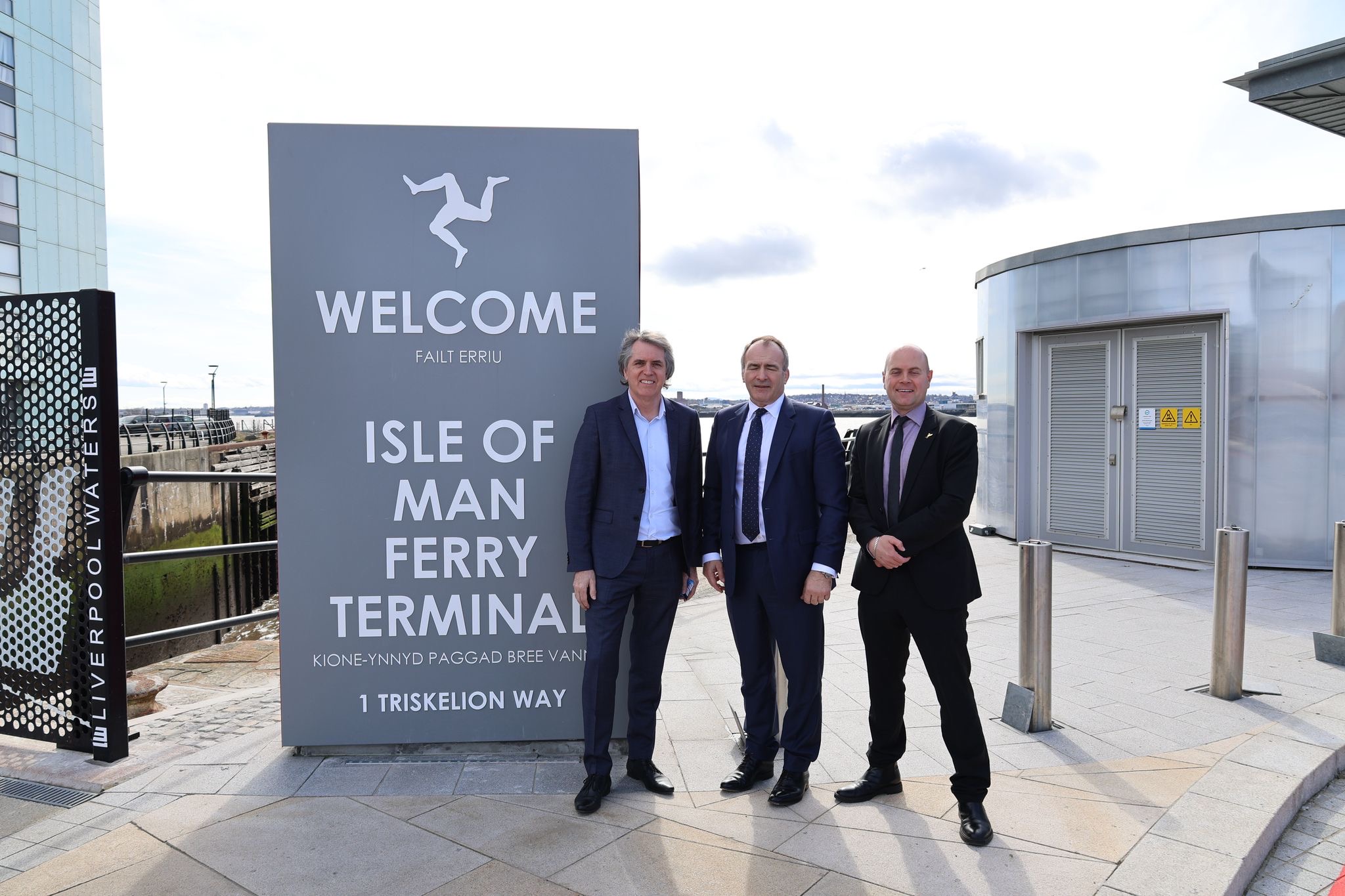
  • MIL-OSI United Kingdom: New era of cooperation between Liverpool and the Isle of Man

    Source: City of Liverpool

    A landmark agreement between Liverpool City Region and the Isle of Man was signed today signalling an era of increased cooperation between the regions.

    The joint commitment pledges that the Isle of Man and Liverpool City Region will improve the prosperity and wellbeing of their communities ‘through further strengthening our economic, cultural, and political ties’.

    Relationships between the Isle of Man and Liverpool City Region have historically been strong, and further amplified by the opening of the new Isle of Man ferry terminal in Liverpool last year – the construction phase of which generated £3.2m for the regional economy.

    Today’s Memorandum of Understanding between the Isle of Man Government, Liverpool City Council, and Liverpool City Region Combined Authority, is a major step forward in forging new opportunities for growth and development in areas including:

    • Economic opportunities
    • Tourism and cultural cooperation
    • Transport connections
    • Health and public services
    • Infrastructure, energy and net zero

    Leader of Liverpool City Council, Cllr Liam Robinson, said: “Many people from the Liverpool City Region have long, fond associations with the Isle of Man dating back generations.

    “It makes sense for us to forge closer ties with one of our nearest neighbours, exploring opportunities for collaboration and mutually beneficial associations.

    “By signing this MoU, we are opening the door to greater innovation, technology exchange, and investment opportunities.”

    Isle of Man Chief Minister, Alfred Cannan said: “The Isle of Man and Liverpool have deep and historic ties of mutual cooperation.

    “I am delighted to sign this Memorandum of Understanding with our neighbours across the Irish Sea to forge new opportunities for growth and collaboration between our two regions.

    “Our investment in the new ferry terminal in the city is our biggest single investment in the UK, ever, and has been a catalyst for these discussions. The significance of us signing the agreement in the new ferry terminal should not be lost, it is a clear commitment to how important the connection between the two regions is.

    “The Isle of Man and Liverpool have been connected via the Isle of Man Steam Packet Company – the oldest continuously running ferry company in the world – which has seen the continuous movement of people, goods and ideas across the Irish Sea – for business, education, sport, tourism or visiting family and friends – for two centuries.

    “The signing of this MoU is a clear statement from both administrations that forging closer economic ties is a strategic priority and one which offers mutual benefits.

    “But the opportunities for both regions go beyond the economic benefits of business collaboration and the opportunity for the wider sharing and cooperation on public services will have positive impacts for our communities.

    “I look forward to continuing to work closely with colleagues to realise the potential that this exciting partnership will offer.”

    Mayor of the Liverpool City Region, Steve Rotheram said: “From being a go-to tourist destination favoured by Liverpudlians for decades, the Isle of Man has always been a highly valued neighbour to our region, and this agreement is a reflection of our commitment to strengthening that bond.

    “For centuries, our people have been connected through travel, trade, and shared culture, and today we are taking that relationship to the next level.

    “This MoU marks the beginning of a new era of cooperation, one that will unlock new opportunities for economic growth, skills development, and sustainable innovation. By working more closely together, we can create a more dynamic and prosperous future for our businesses, our communities, and our residents.”

    MIL OSI United Kingdom

  • MIL-OSI United Kingdom: UN Human Rights Council 58: UK Statement for the Interactive Dialogue with the High Commissioner on Haiti

    Source: United Kingdom – Government Statements

    Speech

    UN Human Rights Council 58: UK Statement for the Interactive Dialogue with the High Commissioner on Haiti

    UK Statement for the Interactive Dialogue with the High Commissioner on Haiti with the participation of the Independent Expert. Delivered by the UK Human Rights Ambassador, Eleanor Sanders.

    Thank you, Mr President.

    We thank the High Commissioner for his report. The ongoing and rapid deterioration of human rights in Haiti is shocking. 

    The Haitian people have long suffered indiscriminate attacks by armed criminal gangs – these have contributed to over a million Haitians being displaced from their homes.

    Widespread recruitment, exploitation and abuse of children by these gangs is still happening. At the same time the use of sexual violence as a form of punishment and to spread fear within communities is increasing.

    Re-establishing security to end the scourge of gangs remains essential to Haiti’s long-term stability. The UK supports the work of the Multinational Security Support Mission to Haiti and is providing £5 million to OHCHR to ensure the Mission’s compliance with international standards on human rights, conduct and discipline.

    We will continue to take action against perpetrators of human rights abuses in Haiti through sanctions.

    High Commissioner,

    Given the increasing chaos spread by Haitian gangs, how can the international community best assist the Haitian government in bringing about lasting improvements to the security environment?

    Thank you.

    Updates to this page

    Published 28 March 2025

    MIL OSI United Kingdom

  • MIL-OSI United Kingdom: National Living Wage increases to £12.21

    Source: United Kingdom – Government Statements

    Press release

    National Living Wage increases to £12.21

    Press release accompanying the Low Pay Commission’s 2025 Uprating Report

    On Tuesday 1 April, the National Living Wage will increase to £12.21. This will be accompanied by increases in other minimum wage rates for 18-20 year olds (£10.00), 16-17 year olds and apprentices (both £7.55). These changes implement recommendations made by the Low Pay Commission last autumn.

    The Low Pay Commission today publishes a short report looking at the context around and the impact of the incoming rates. This looks at the real-terms benefits to workers from the increases, the number of workers paid the rates and their interactions with changes to National Insurance which come into effect from 1 April.

    Baroness Philippa Stroud, Chair of the LPC, said:

    “These rates secure a real-terms pay increase for the lowest-paid workers. Young workers will also see substantial increases in their pay floor, making up some of the ground lost against the adult rate over time.

    “We recognise these increases come at a time when employers are facing increasing pressure and it is vital we monitor and assess how businesses are responding. As we build our evidence base for future recommendations to the Government, we will be launching a call for evidence in the coming weeks and holding in-person meetings up and down the country. I encourage all interested parties to get in touch with us.“

    The minimum wage rates from 1 April 2025 are as follows:

      NMW rate from 1 April 2025 Annual increase (£) Annual increase (per cent)
    National Living Wage (21 and over) £12.21 £0.77 6.7
    18-20 Year Old Rate £10.00 £1.40 16.3
    16-17 Year Old Rate £7.55 £1.15 18.0
    Apprentice Rate £7.55 £1.15 18.0
    Accommodation Offset £10.66 £0.67 6.7

    The LPC is continuing to gather evidence towards future recommendations to the Government, including via a programme of regional visits. We will launch our written consultation in the near future.

    Notes for editors

    1. The incoming minimum wage rates bring into effect recommendations made by the LPC to the Government last October. The Government announced its acceptance of those recommendations in the Autumn Budget.

    2. The evidence underpinning the LPC’s recommendations is set out in its annual report and a shorter summary of findings 

    3. The Government’s remit to the LPC, which determines the Commission’s work through the year, was published in July and is available here.

    4. The National Living Wage (NLW) is currently the statutory minimum wage for workers aged 21 and over. This age threshold came down from 25 to 23 in April 2021 and from 23 to 21 in April 2024.

    5. Different minimum wage rates continue to apply to 18-20 year olds, 16-17 year olds and apprentices aged under 19 or in the first year of an apprenticeship. The Government has stated its ambition to reduce the NLW age threshold from 21 to 18; this follows the LPC’s own stated ambition and advice, as set out in the publication The National Minimum Wage Beyond 2024. The LPC will consult next year on the pathway to achieving this goal.

    6. Rates for workers aged under 21, and apprentices, are currently lower than the NLW to reflect lower average earnings and higher unemployment rates. International evidence also suggests that younger workers are more exposed to employment risks arising from the pay floor than older workers. Unlike the NLW (where the possibility of some consequences for employment have been accepted by the Government), the LPC’s remit requires us to set the rates for younger workers and apprentices as high as possible without causing damage to jobs and hours.

    7. The National Living Wage is different from the UK Living Wage and the London Living Wage calculated by the Living Wage Foundation. Differences include that: the UK Living Wage and the London Living Wage are voluntary pay benchmarks that employers can sign up to if they wish, not legally binding requirements; the hourly rate of the UK Living Wage and London Living Wage is based on an attempt to measure need, whereas the National Living Wage is based on a target relationship between its level and average pay; the UK Living Wage and London Living Wage apply to workers aged 18 and over, the National Living Wage to workers aged 21 and over. The Low Pay Commission has no role in the UK Living Wage or the London Living Wage.

    8. The Accommodation Offset is an allowable deduction from wages for accommodation, applicable for each day of the week. In April 2025 it will increase to £10.66 per day.

    9. For an NLW worker working 37.5 hours per week, the increases announced today will increase their annual gross pay by £1,505.54 and their monthly gross pay by £125.46.

    10. The Low Pay Commission is an independent body made up of employers, trade unions and experts whose role is to advise the Government on the minimum wage. The rate recommendations introduced today were agreed unanimously by the Commission.

    11. The current Low Pay Commissioners are: Baroness Philippa Stroud (Chair), Nigel Cotgrove, Matthew Fell, Andrew Goodacre, Louise Fisher, Professor Patricia Rice, Simon Sapper, Professor Jonathan Wadsworth and Janet Williamson.

    12. Baroness Philippa Stroud can be contacted via the Low Pay Commission’s press office (07341 098734).

    Updates to this page

    Published 28 March 2025

    MIL OSI United Kingdom

  • MIL-OSI United Nations: Secretary-General’s press encounter on South Sudan

    Source: United Nations secretary general

    [Opening remarks below; full transcript to follow shortly]

    Let me begin by addressing some breaking news – the terrible earthquake that hit parts of Southeast Asia today.

    We send our condolences to the government and peoples of the region. 

    The United Nations system is mobilizing to help those in need.
     
    Ladies and gentlemen of the press,

    I want to focus today on the dramatic and dire situation that is unfolding in South Sudan. 

    All the dark clouds of a perfect storm have descended upon the people of the world’s newest country – and one of the poorest.

    A security emergency – with intensifying clashes; aerial bombing of civilians — including women and children; the presence of external forces; and an ever-growing regional dimension to the conflict.

    Political upheaval – culminating most recently with the arrest of First Vice President Riek Machar.  The peace agreement is in shambles. 

    A humanitarian nightmare – with about three out of four South Sudanese needing assistance, half the population severely food insecure, and cholera breaking out.

    A displacement crisis – with more than one million people crossing the border from Sudan since fighting began there.

    An economic meltdown – with oil revenue plummeting and inflation skyrocketing 300%. 

    Finally, a funding crisis – with much of the already limited humanitarian and development aid drying up. 

    Meanwhile, ethnic and political targeting by security forces – coupled with the spread of misinformation on social media – is lighting the fuse for even worse.

    Let’s not mince words:  what we are seeing is darkly reminiscent of the 2013 and 2016 civil wars, which killed 400,000 people.

    Our UN Mission in South Sudan is working around the clock to ease tensions – engaging all parties and boosting protection of civilians.  But we face operational limitations. 

    For the sake of the long-suffering people of South Sudan, it is time for dialogue and de-escalation.

    The Horn of Africa is already in turmoil and cannot afford another conflict.  Nor can the people of South Sudan.

    To the leaders of that country, I say: 

    End the politics of confrontation. Release detained military and civilian officials now.  Fully restore the Government of National Unity. 

    And vigorously implement the promises you made through your commitments to the peace agreement – which is the only legal framework to peaceful, free and fair elections in December 2026.

    I also urge the regional and international community, as guarantors of the peace agreement, to speak with one voice in support of the peace process and against any attempts to undermine it.

    I just spoke with the Chairperson of the African Union Commission this morning. 

    We fully support the AU initiative to deploy the Panel of the Wise – as well as the efforts of the Special Envoy of President Ruto of Kenya.

    We will be working in close cooperation with the AU and with IGAD.

    The people of South Sudan are close to my heart. 

    On my very first visit as High Commissioner for Refugees, I was several days with South Sudanese refugees – and years later accompanied them across the border finally on their way home.

    I will never forget the decency at their very core.

    They had such enormous hopes and aspirations. 

    But unfortunately, not the leadership they deserve.

    At this critical hour, the people of South Sudan need an infusion of support. 

    Diplomatic and political support for peace. 

    And financial support for lifesaving aid. 

    South Sudan may have fallen off the world’s radar, but we cannot let the situation fall over the abyss. 

    Now more than ever, the leaders of South Sudan must hear a clear, unified and resounding message:

    Put down the weapons.  Put all the people of South Sudan first. 

    Thank you.

    MIL OSI United Nations News

  • MIL-OSI Canada: Premier Pillai urges federal action on bail reform

    Source: Government of Canada regional news

    Premier Pillai urges federal action on bail reform
    jlutz
    March 25, 2025 – 1:03 pm

    On March 18, 2025, Yukon Premier Ranj Pillai joined Canada’s Premiers in sending a letter to Prime Minister Mark Carney urging the federal government to take immediate action on bail reform and to strengthen public safety measures. The letter, which builds on past efforts by the Yukon and other provinces and territories, calls for comprehensive legislative changes to address critical issues in Canada’s bail system.

    While the Government of Yukon believes that legal experts are best placed to advise on issues of criminal law, there is widespread agreement across provinces and territories that evidence-based reform is needed for Canada’s bail system. Careful consideration of the broader impact on public safety and individual rights must be considered, but so must the experiences of victims of crime, their families and Yukon communities.

    The letter commended the federal government’s amendments introduced through Bill C-48, but notes that while these changes represent progress, they do not fully address the ongoing risk posed by violent and repeat offenders released on bail.

    Key points of the letter include the need for:

    • swifter action: The Government of Yukon was pleased to see that in response to previous calls from the Premiers for bail reform, the federal government committed to amending the Criminal Code to address the bail system in the December 2024 Fall Economic Statement. The Government of Yukon urges the Government of Canada to move forward with these efforts as soon as possible.
    • enhanced data monitoring: The letter stresses the need for the Department of Justice Canada to allocate resources to support provinces and territories in collecting, analyzing and reporting reliable data on bail and probation, including to monitor the effectiveness of the legislative changes brought into force through C-48. Improved data collection and sharing is a part of the Government of Yukon’s improvements to repeat offender management within the territory.
    • shared responsibility: The Premiers’ letter acknowledges that while provincial and territorial governments are actively addressing interconnected issues such as poverty, homelessness, addiction, trauma and mental health, the federal government must lead in enacting meaningful legislative reform in criminal law, over which it has exclusive jurisdiction.

    Additionally, the Government of Yukon is continuing to focus on public safety by:

    • increasing funding for the RCMP by $5.2 million in Budget 2025–26, bringing the total investment in the RCMP for the upcoming fiscal year to $47 million. This increased funding will result in the creation of eight new RCMP positions, including new officers for specialized teams, permanent funding for two officer positions with Car 867 and two additional officers for the Whitehorse detachment. The funding in this year’s budget also supports modernized equipment for safer policing and public accountability. This funding is subject to legislative approval.
    • leading work with the City of Whitehorse, the Aboriginal Community Safety Planning Initiative and the Canadian Centre for Safer Communities to develop a multi-year Community Safety and Wellbeing Plan for Whitehorse, including issues in the downtown core. This roadmap will identify local safety concerns, set priorities and outline actionable steps to reduce risk and vulnerability, while encouraging active community engagement throughout the process.
    • implementing action items outlined in the Downtown Whitehorse Safety Response Action Plan to create a safe, vibrant and inclusive downtown for all.
    • partnering with organizations like Safe at Home Society to renovate properties and launch supportive housing programs that offer safe, stable housing along with wrap-around services to support vulnerable populations.
    • working with the Whitehorse Chamber of Commerce and industry partners to launch SafeBiz, the Whitehorse Community Safety Pilot Program, to address concerns about crime, theft and the escalation of workplace violence impacting the Whitehorse business community. With funding from the Government of Yukon, the SafeBiz program offers businesses free security assessments and recommendations, safety and de-escalation training and resources to help businesses improve their security measures.
    • encouraging Yukoners to report criminal activity to the RCMP or to Crimestoppers. Yukoners can also submit complaints about certain illegal activities occurring at properties to SCAN, the Safer Communities and Neighbourhoods Unit, a complaint-driven process to disrupt illegal activities and improve community safety.

    The Government of Yukon reaffirms its commitment to public safety and continues to call on the federal government to act swiftly to help the provinces and territories better protect communities. 

    Delays in criminal justice system and bail reform compromise the safety of our communities. Alongside the other provinces and territories, our government has repeatedly raised concerns about shortcomings in the criminal justice system to federal counterparts. This letter is another step in our efforts to stop criminal activity, protect Yukoners and Yukon businesses and make our communities safer for everyone. 

    Premier Ranj Pillai

    Public safety is a top priority for our government. We are leading innovative approaches to enhance safety in our communities. The Yukon stands ready to work with all levels of government to implement data-driven, evidence-based and effective reforms to our criminal justice system.

    Minister of Justice and Attorney General Tracy-Anne McPhee

    Media contact

    Laura Seeley
    Cabinet Communications
    867-332-7627
    laura.seeley@yukon.ca  

    News release #:

    25-133

    Related information:

    Funding and investment for Yukon RCMP in Budget 2025–26
    Get updates on the Downtown Whitehorse Safety Response Action Plan
    SafeBiz: Whitehorse Community Safety Pilot Program
    Report a suspicious property or activity in your neighbourhood

    MIL OSI Canada News

  • MIL-OSI Canada: Statement from Premier Pillai on the March 21 First Ministers’ Meeting

    Source: Government of Canada regional news

    Statement from Premier Pillai on the March 21 First Ministers’ Meeting
    zaburke
    March 25, 2025 – 3:49 pm

    Premier Ranj Pillai has issued the following statement:

    “On Friday, March 21, I joined territorial and provincial First Ministers in Ottawa, Ontario for a productive and collaborative discussion focused on leveraging Canada’s economic advantages to counter the unjustified and unamerican tariffs imposed by the United States on Canadian imports. This was also an important opportunity for the Premiers to meet with the newly appointed Prime Minister, Mark Carney.

    “The Yukon government continues to support the work being done to advance a national trade corridor, given the conversations that our government is having with Yukon businesses about their concerns regarding shipping and transportation costs. I am also encouraged by the Prime Minister’s commitment to a streamlined review process for major projects that respects provincial and territorial environmental assessment processes and social acceptability.

    “I want to thank my fellow Premiers for standing up for the North by highlighting Arctic security and the need to grow the northern economy. It is encouraging to see the federal government significantly increasing its investment in Arctic security across the North. As defence rightfully becomes a central focus in our discussions, this increased commitment is a crucial step in protecting Canada’s safe, strong and secure future. Here in the Yukon, we look forward to the arrival of a team from the Navy during April to begin pre-feasibility reconnaissance for their study about a potential Naval Reserve Unit in Whitehorse, as well as ongoing federal support for the Canadian Institute for Arctic Security in the Yukon.  

    “I remain committed to ensuring that the Yukon has a strong voice in shaping these national discussions and initiatives. I will continue to work closely with our partners across Canada to advance these priorities in a way that benefits all Canadians, including those in the North, where unique challenges and opportunities must be reflected in our collective approach.

    “For our territory in particular, this meeting also served as an opportunity to secure the Prime Minister’s commitment for $56.25 million in federal funding for the Yukon Gathering Place, the new convention centre in Whitehorse.

    “I look forward to continuing to work with my fellow First Ministers. Together, we are building a stronger, more connected and more prosperous Canada.”
     

    Quick facts

    Media contact

    Laura Seeley
    Cabinet Communications
    867-332-7627
    laura.seeley@yukon.ca 

    News release #:

    25-134

    Related information:

    First Ministers’ statement on strengthening the Canadian economy

    MIL OSI Canada News

  • MIL-OSI Canada: Government of Yukon will open Expression of Interest intake for Yukon Nominee Program

    Source: Government of Canada regional news

    Government of Yukon will open Expression of Interest intake for Yukon Nominee Program
    jlutz
    March 27, 2025 – 12:11 pm

    The Government of Yukon is opening an Expression of Interest (EOI) intake for employers who want to apply to the Yukon Nominee Program (YNP) in 2025. This process will allow the Government of Yukon to invite employers to submit YNP applications for foreign nationals in locations or positions that align with the 2025 priorities, rather than rely on a first come, first serve approach.

    The intake period for the Expression of Interest will open on March 31, 2025, at 9 am Yukon Standard Time. It will close on April 22, 2025, at 4:30 pm Yukon Standard Time.

    To be added to the Expression of Interest pool, employers will submit a simple form to provide basic information about the foreign worker they want to nominate. From this pool, the department will invite employers to submit a full application to the Yukon Nominee Program, based on whether their candidate falls into one or more of the following priority areas:

    • Foreign nationals who have lived and worked in the Yukon for at least one year
    • Yukon University graduates
    • Francophone or French-speaking
    • Temporary Measure Letter or Support recipients

    Find out about the Yukon Nominee Program process for 2025. The submission form will be available on this page when the intake opens. Operational guidelines are also available on the page for greater detail on the selection process for invitations to apply.

    These priorities were identified based on close discussion with industry organizations and feedback from the Yukon business community. They were created to help ensure the limited allocation available for 2025 was managed strategically and transparently and to reflect both the priorities of the Government of Yukon and the needs of employers and workers. A new Expression of Interest-based approach has been developed in consideration of this ongoing dialogue and how the program can better meet participant and labour market needs.

    There is no limit to the number of submissions that will be accepted through the Expression of Interest intake. However, due to the decreased number of allocations the Yukon has received from Immigration, Refugees and Citizenship Canada (IRCC), it is likely that not all who express interest will be invited to apply for a nomination. The maximum number of foreign nationals that the Yukon can nominate in 2025 is 215. 

    Quick facts

    • Employers do not need to submit an Expression of Interest if they already applied to the YNP in 2024. However, the 2025 priorities will apply to these carry-over applications. The department will contact employers who have existing 2024 applications with more information.

    • Moving to an Expression of Interest model is consistent with other jurisdictions in Canada, as we work to adapt to the changing immigration landscape across the country.

    • This approach helps to avoid the pressures of a first come, first serve model where the quickest businesses to apply are the only ones who have access to the limited number of nominations available.

    • At the end of the Expression of Interest intake, the department will post the number of submissions received on Yukon.ca.

    • In January 2025, IRCC informed the Yukon of a 50 per cent reduction in nominee program allocations for the year. In consideration of the Government of Canada’s priority to stabilize immigration levels across the country, lower allocation limits are expected to continue.

    Media contact

    Linnea Blum
    Communications, Economic Development 
    867-332-2625
    linnea.blum@yukon.ca 

    News release #:

    25-135

    Related information:

    Learn about the Yukon Nominee Program process for 2025
    Request support as a potential nominee

    MIL OSI Canada News

  • MIL-OSI USA: NEWS: Sanders Announces Senate Votes to Block Arms Sales to Israel

    US Senate News:

    Source: United States Senator for Vermont – Bernie Sanders

    WASHINGTON, March 27 – Sen. Bernie Sanders (I-Vt) today released the following statement announcing his intention to bring to the Senate floor two Joint Resolutions of Disapproval (JRDs) to block the sale of certain offensive U.S. weaponry to Israel:

    Next week, I will force Senate votes on two Joint Resolutions of Disapproval I have introduced to block certain offensive arms sales to Israel. These sales, proposed by the Trump Administration, would provide $8.8 billion in bombs and other munitions to Prime Minister Netanyahu’s extremist government to continue its destruction of Gaza. Netanyahu has clearly violated U.S. and international law in this brutal war, and we must end our complicity in the carnage.  

    No humanitarian aid has entered Gaza in more than three and a half weeks, since Israeli authorities announced a complete blockade – that’s no food, water, medicine, or fuel since the start of March. Blocking humanitarian aid is morally abhorrent and a clear violation of both the Geneva Convention and the Foreign Assistance Act. 

    This war has been conducted almost entirely with American weapons and some $18 billion in U.S. taxpayer dollars. Israel has dropped U.S.-provided 2,000-pound bombs into crowded neighborhoods, killing hundreds of civilians to take out a handful of Hamas fighters, and made little effort to distinguish between civilians and combatants. These actions are immoral and illegal. The latest Trump sales provide almost $8.8 billion more in U.S. bombs and other munitions, including more than 35,000 massive 2,000-pound bombs. 

    The United States must not continue to supply endless amounts of military aid and weaponry to the Netanyahu government. It is particularly unconscionable while President Trump and Israeli officials openly talk of forcibly displacing millions of people from Gaza to make way for what Trump calls a “Riviera.” There is a name for such a policy — ethnic cleansing — and it’s a war crime. 

    Hamas started this war with its brutal terrorist attack on October 7, 2023, which killed 1,200 innocent people and took 250 hostages. Israel had a right to respond against Hamas. But Netanyahu’s extremist government has instead waged an all-out war against the entire Palestinian people. Out of a population of 2.2 million, more than 50,000 Palestinians have been killed and more than 112,000 have been injured – 60 percent of whom are women, children, and elderly people. In the last week alone, eight aid workers have been killed in Gaza, bringing the total to 399. Israel’s bombardment has damaged or destroyed 92 percent of the housing in Gaza, and devastated the civilian infrastructure and the health care system. Every single one of Gaza’s 12 universities has been bombed, as have hundreds of schools. 

    Congress must act to block these arms sales.

    MIL OSI USA News

  • MIL-OSI USA News: ICYMI: DOGE’s Mission to Make Government Work Again

    Source: The White House

    Last night, members of the Department of Government Efficiency (DOGE) team joined Bret Baier on Special Report — a compelling segment on their efforts to fulfill President Donald J. Trump’s mission of making government work for the people again.

    Here’s what you missed:

    • Tom Krause on restoring fiscal responsibility: “We’re changing the culture … There’s $500 billion of fraud every year, there’s hundreds of billions of dollars of improper payments, and we can’t pass an audit … If I was a public company CFO, I would effectively be removed.”
    • Aram Moghaddassi on improving Social Security benefits: “The two improvements that we’re trying to make to Social Security are helping people that legitimately get benefits protect them from fraud that they experience every day on a routine basis, and also make the experience better … At Social Security, one of the first things we learned is that they get phone calls every day of people trying to change direct deposit information … We learned 40% of the phone calls that they get are from fraudsters … Almost half.”
    • Elon Musk on cracking down on fraudulent payments: “There were over $300M of Small Business Administration loans that have been given out to people under the age of 11 … $300 million to over the age of 120 … The youngest recipient of a Small Business Administration loan is a nine-month-old.”
    • Brad Smith on enhancing health care: “There’s 700 different IT systems today at NIH … They can’t speak to each other. They have 27 different CIOs. And so when you think about making great medical discoveries, you have to connect the data.”
    • Joe Gebbia on making government retirement more efficient: “The process takes many months — and we’re going to make it just many days.”
    • Elon Musk on waste, fraud, and abuse: “The sheer amount of waste and fraud in the government, it is astonishing — it’s mind blowing. We routinely encounter wastes of $1 billion or more — casually.”
    • Elon Musk on DOGE’s core mission: “At the end of the day, America is going to be in much better shape. America will be solvent. The critical programs that people depend upon will work and it’s going to be a fantastic future.”

    MIL OSI USA News

  • MIL-OSI USA News: Remarks by Vice President Vance at American Dynamism Summit

    Source: The White House

    class=”has-text-align-center”>Waldorf Astoria

    Washington, D.C.

    9:16 A.M. EDT
     
         THE VICE PRESIDENT:  Good morning, everybody.  How we doing?  (Applause.)
     
    It’s — it’s great to be here.  Thanks to — to everybody for having me today — in particular, Ben and Marc.  And I just got to say hello to Ben and Katherine backstage.  But I know — I know, apparently, Marc has the flu right now.  So, Marc, wherever you are — I think I had the same flu, like, a few weeks ago.  It sucks.  But I’m sure — I’m sure you’ll get through it.
     
    And it’s great to — to be with you all, and it’s great to talk about the importance of American dynamism and what our administration is going to do to support so many of the country’s most groundbreaking and compelling companies.
     
    I know that you guys are working hard every single day.  And I think it’s pretty good news — right? — that, as of a couple of months ago, you have an administration that’s working with you and facilitating your hard work instead of making it harder to innovate, which is, I think, what the last administration did — though, in defense of Joe Biden, he was asleep most of the time.  I don’t think he totally realized what he was doing, but it certainly didn’t make it easier — his administration did not — for our innovators.
     
    Now, as some of you may have seen — and I talked about this with Ben backstage — I spoke at a conference in Paris last month, where my message to a group of CEOs and foreign leaders was that we should embrace the future head-on.  We shouldn’t be afraid of artificial intelligence and that, particularly for those of us lucky enough to be Americans, we shouldn’t be fearful of productive new technologies.  In fact, we should seek to dominate them.  And that’s certainly what this administration wants to accomplish.
     
    I suspect that most of you in this room are of like mind, and if you’re not, I don’t know why the hell you’re at the American dynamism conference.  (Laughter.)  But I — I received some pushback from people who are worried about the disruptive effects of AI. 
     
    You know, one journalist suggested the speech highlighted the tension between the, quote, “techno-optimists” and the “populist right” of President Trump’s coalition. 
     
    And today, I’d like to speak to these tensions as a proud member of both tribes.  And let me put it simply: While this is a well-intentioned concern, I think it’s based on a faulty premise.  This idea that tech-forward people and the populists are somehow inevitably going to come to a loggerheads is wrong.
     
    I think the reality is that, in any dynamic society, technology is going to advance, of course. 
     
    And speaking as a Catholic, I think back to Pope John Paul II’s opening lines of his encyclic- — e- — (coughs) — excuse me — encyclical “Laborem exercens.”  Quote, “Through work, man must earn his daily bread and contribute to the continual advance of science and technology and, above all, to elevating unceasingly the cultural and moral level of the society within which he lives,” end quote.
     
    Now, I quote the Holy Father not only because I’m a fan of his but also because he rightly understood that in a healthy economy, technology should be something that enhances, rather than supplants, the value of labor.
     
    And I think there’s too much fear that AI will simply replace jobs rather than augmenting so many of the things that we do.
     
    Now, in the 1970s, if you go back a little ways, many feared that the automated teller machine — what we call the “ATM” — would replace bank tellers.  In reality, the advent of the ATM made bank tellers more productive, and you have more people today working in customer service in the financial sector than you had when the ATM was created.  Now, they’re doing slightly different jobs, of course, yes.  They’re doing more interesting tasks also, and, importantly, they’re making more money than they were in the 1970s.
     
    Now, when we innovate, we do sometimes cause labor market disruptions.  That has — that happens.  But the history of American innovation is that we tend to make people more productive, and then we increase their wages in the process.  And I think all of us believe that’s a good thing.
     
    Now, after all, who would claim that man was made less productive by the invention of the transistor or the metal lathe or the steam engine?
     
    Real innovation makes us more productive, but it also, I think, dignifies our workers.  It boosts our standard of living.  It strengthens our workforce and the relative value of its labor.
     
    And, as Americans, all of us should be particularly proud of our extraordinary heritage — I think it is American heritage — of inventing things and of our nation’s status to this day as the world’s foremost driver of research and development.
     
    But all of this, the role that technology plays in a labor market, and whether we greet innovative breakthroughs with excitement or with trepidation depends on the purpose of our economic system in the first place.  And I think this is where the populists have an important point.
     
    It should be no surprise that when we send so much of our industrial base to other countries, we stop making interesting new things right here at home.
     
    Look, for example, at shipbuilding.  Now, if you go back to World War II, America constructed thousands of so-called Liberty ships to carry troops, cargo, and other things, building them at a pace of three ships every two days — three ships every two days.
     
    Now we build about five commercial ships across an entire year in the United States of America.  And as a result, the United States today accounts for 0.1 percent — one tenth of one percent — of global shipbuilding. 
     
    China, on the other hand, now makes more commercial ships than the rest of the world combined.  In fact, one of Beijing’s state-owned firms built more commercial ships just last year than all of America has produced since the end of World War II.
     
    So, while we remain the leader in technology and innovation, I think there are troubling signs on the horizon.  And I raise all this to ask: Does this sound like a regime — I’m speaking of China — that will pass up on the opportunity to use AI, or any other technology, to advance their own interests and further undermine the interests of their rivals?  I think the answer is obvious, and that’s why, America, we’ve got to be tech-forward.
     
    Yes, there are concerns.  Yes, there are risks.  But we have to be leaning into the AI future with optimism and hope, because I think real technological innovation is going to make our country stronger.
     
    So, deindus- — deindustrialization poses risks both to our national security and our workforce.  It’s important because it affects both.  And the net result is dispossession, for many in this country, of any part of the productive process.  And when our factories disappear and the jobs in those factories go overseas, American workers are faced not only with financial insecurity, they’re also faced with a profound loss of personal and communal identity.
     
    And so, to come full circle on this tension — alleged tension between the populists and the techno-optimists, I can understand a reaction of skepticism when we talk about the revolutionary potential of new invention and artificial intelligence and all the other incredible technologies that you guys are working, but I think that that tension is a little overstated. 
     
    And so, I’m going to come back to what’s sort of dividing some of the tech optimists and the populists on our side. 
     
    I think the populists, when they look at the future, and when they compare it to what’s happened in the past, I think a lot of them see alienation of workers from their jobs, from their communities, from their sense of solidarity.  You see the alienation of people from their sense of purpose.  And importantly, they see a leadership class that believes welfare can replace a job and an application on a phone can replace a sense of purpose. 
     
    Now, I remember a Silicon Valley dinner in particular, back when I was in — in my tech days, where my wife and I were sitting around talking to some of the leaders of — of the important technology firms of the United States.  And this was probably in 2016 or 2017.  And I was talking about my real worry that we were heading in a direction where America could no longer support middle-class families working on middle-class wages.  And importantly, that even if you had enough economic dynamism to provide the wealth to ensure those people could, you know, afford to buy a house and afford their food and so forth, that even if you replace the financial element of their jobs, you would destroy something that was dignified and purposeful about work itself.
     
    And I remember one of the tech CEOs who was there that — you know, CEO — you would know his name if I mentioned it.  He was the CEO of a — of a multibillion-dollar company.  He said, “Well, I’m actually not worried about the loss of purpose when people lose their jobs.”  And I said, “Okay, well, what do you think is going to replace that sense of purpose?”  And he said, “Digital, fully immersive gaming.”  (Laughter.)
     
    And then my — my wife texted me underneath the table and said, “We have to get the hell out of here.  These people are effing crazy.”  (Laughter.)
     
    Now, I don’t think that, of course, that CEO’s views are representative of — of most people in this room, but when I think about the — the — a lot of the workers, based on what they’ve seen in the past, are very worried about the future, because, frankly, their leadership has failed to serve them.
     
    And then I think about this from the perspective of a lot of the tech optimists.  I think a lot of the tech optimists, they see overregulation.  They see stifling innovation.  I mean, you guys are builders.  They are builders.  And while they may sympathize with those who lost a job, they’re much more frustrated that the government won’t allow them to build the jobs of the future.
     
    And they know that as hard as it is to build a business in digital media, it’s still harder to build one in robotics or life sciences or energy, in what we call the world of atoms.  They see a government that makes their lives harder, and they mistrust anyone who looks to that government for aid.
     
    And what I’d propose is that each group — our workers, the populace on the one hand, the tech optimists on the other — have been failed by this government — not just the government of the last administration but the government, in some ways, of the last 40 years, because there were two conceits that our leadership class had when it came to globalization. 
     
    The first is assuming that we can separate the making of things from the design of things.  The idea of globalization was that rich countries would move further up the value chain, while the poor countries made the simpler things.
     
    You would open an iPhone box, and it would say “designed in Cupertino, California.”  Now, the implication, of course, is that it would be manufactured in Shenzhen or somewhere else.  And, yeah, some people might lose their jobs in manufacturing, but they could learn to design or, to use a very popular phrase, learn to code.
     
    But I think we got it wrong.  It turns out that the geographies that do the manufacturing get awfully good at the designing of things.  There are network effects, as you all well understand.  The firms that design products work with firms that manufacture.  They share intellectual property.  They share best practices.  And they even sometimes share critical employees.
     
    Now, we assumed that other nations would always trail us in the value chain, but it turns out that as they got better at the low end of the value chain, they also started catching up on the higher end.  We were squeezed from both ends.  Now, that was the first conceit of globalization.
     
    I think the second is that cheap labor is fundamentally a crutch, and it’s a crutch that inhibits innovation.  I might even say that it’s a drug that too many American firms got addicted to.  Now, if you can make a product more cheaply, it’s far too easy to do that rather than to innovate.
     
    And whether we were offshoring factories to cheap labor economies or importing cheap labor through our immigration shyste- — system, cheap labor became the drug of Western economies. 

         And I’d say that if you look in nearly every country, from Canada to the UK, that imported large amounts of cheap labor, you’ve seen productivity stagnate.  I don’t think that’s — that’s not a total happenstance.  I think that the connection is very direct.
     
    Now, one of the debates you hear on the minimum wage, for instance, is that increases in the minimum wage force firms to automate.  So, a higher wage at McDonald’s means more kiosks.  And whatever your views on the wisdom of the minimum wage — I’m not going to comment on that here — companies innovating in the absence of cheap labor is a good thing. 

         I think most of you are not worried about getting cheaper and cheaper labor.  You’re worried about innovating, about building new things, about — the old formulation of technology is doing more with less.  You guys are all trying to do more with less every single day.
     
    And so, I — I’d ask my friends, both on the — the tech optimist side and on the populist side, not to see the failure of the logic of globalization as a failure of innovation.  Indeed, I’d say that globalization’s hunger for cheap labor is — is a problem precisely because it’s been bad for innovation. 
     
          Both our working people — our populists — and our innovators gathered here today have the same enemy.  And the solution, I believe, is American innovation, because, in the long run, it’s technology that increases the value of labor. 

    Innovations like the American system and the interchangeable parts revolution it sparked, or Ford’s moving assembly line that skyrocketed the productivity of our workers — that’s how American industry became the envy of the world.
     
    And that’s what I really want to talk about today: why innovation is key to winning the worldwide manufacturing compe- — competition, to giving our workers a fair deal, and to reclaiming our heritage via America’s great industrial comeback. And I believe that’s what we’re on the cusp of, a great American industrial comeback.
     
    Because innovation is what increases wages.  It’s what protects our homelands, and I know we have a lot of defense technology companies here.  It’s what saves troops’ lives on the battlefield.
     
    And I know everyone here today largely agrees.  It’s why we have some of the greatest inno- — inventors and thinkers in energy; precision machining; countless critical, high-value industries just in this room. 
     
    And I think the other thing that unites all of you is that you’re all builders.  And I — and I use that word deliberately.
     
    I was very moved by Marc’s manifesto from a few years ago about America.  We are a nation of builders.  We make things.  We create things.
     
    Each of you came to this summit not because you developed some flash-in-the-pan application, but because you’re building something very real.  You’re raising new factories.  You’re turning profits back into R & D.  And you’re creating new, good-paying jobs for your fellow Americans. 
     
    And this is why I’m such huge fans of yours — of Ben’s and Marc’s and of the entire endeavor — and that we recognize now in our administration is the time to align our work interests with those of all of you.  It’s time to align the interests of our technology firms with the interests of the United States of America writ large.
     
    Now, all of you, in your own ways, have answered that call.  After all, there’s nothing forcing anyone to be in the room today.  Each one of you could have set up headquarters in Southeast Asia or China, I’m sure, and you would’ve done quite well for yourselves financially.
     
    But you’re here, I hope, because you love your country.  You love its people and the opportunities that it’s given you, and you recognize that building things, our capacity to create new innovations in the economy cannot be a race to the bottom.
     
    Now, America is not going to win the future by ditching child labor laws or paying our workers less than Chinese or Vietnamese laborers.  We don’t want that, and it’s not on the table.
     
    We can only win by doing what we always did: protecting our workers and supporting our innovators, and doing both of those things at the same time.
     
    And so, I want to talk a little specifics here.  The Trump Administration’s great plan for staging the great American manufacturing comeback is simple.  You’re making interesting new things here in America?  Great.  Then we’re going to cut your taxes.  We’re going to slash regulations.  We’re going to reduce the cost of energy so that you can build, build, build.
     
    Our goal is to incentivize investment in our own borders — in our own businesses, our own workers, and our own innovation.  We don’t want people seeking cheap labor.  We want them investing and building right here in the United States of America.
     
    And so, if you’ll allow it, I’d like to talk about a few ways that the Trump Administration is already pursuing a pro-innovation economy that allows our workers to thrive and our companies to outcompete their foreign peers — in short, an economy that is vibrantly America first, that serves Americans from all walks of life and of every kind.
     
    Now, first, President Trump is starting with and is dead serious about rearranging our trade and tariff regime internationally. 
     
    We believe that tariffs are a necessary tool to protect our jobs and our industries from other countries, as well as the labor value of our workers in a globalized market.  In fact, combined with the right technology, they allow us to bring jobs back to the United States of America and create the jobs of the fucur- — future. 
     
    Just look in the past few months at the auto industry as an important example.  When you erect a tariff wall around a critical industry like auto manufacturing and you combine that with advanced robotics and lower energy costs and other tools that increase the productivity of U.S. labor, you give American workers a multiplying effect.  Now that, in turn, allows firms to make things here at a price-competitive basis.
     
    Our president gets that, which is why last month we posted 9,000 new auto jobs after many, many years of stagnation or even decline in the auto sector.  It’s why, just weeks in, we already have new plant or production announcements from Honda, from Hyundai, and Stellantis worth billions of dollars and thousands of additional jobs on top of the ones that were already created.
     
    Now, this takes work.  It took, in the president’s first term, the president ripping up NAFTA and creating a new U.S. deal for American manufacturers in North America.  But there’s important work, and we’re going to do it.
     
    Now, second — second, all of this is why the president is approaching the issue of illegal immigration as aggressively as he has, because he knows that cheap labor cannot be used as a substitute for the productivity gains that come with economic innovation. 
     
    And so, we’ve cracked down on illegal immigration at the border, where the results speak for themselves.  Last month, migrant crossings were down 94 percent to their lowest number all time, and that happened just in two months of serious border enforcement.
     
    Thanks to President Trump’s leadership, last month, for the first time in over a year, the majority of job gains went to American citizens born on U.S. soil, and that’s important.  For the first time in over a year, the majority of job creation actually went to American citizens.
     
    Third, this administration is focused on reducing our input costs for our manufacturers and for everybody else.  Achieving energy an- — abundance — and I know Doug Burgum was here earlier; will be here later — is top of mind.  Because when we look at some of the most exciting applications of new technologies, we realize it’s going to take a lot of power to keep them running. 
     
    And we’re — we’re thrilled to have our friends from the United Arab Emirates, a number of the business leaders and government leaders, in town this week for meetings with our government.  And one of the things they consistently hammer upon — it’s something that unfortunately too few of our European allies tend to get — is that if you want to lead in artificial intelligence, you have got to be leading in energy production.
     
    So, we are going to set the pace there, and we are going to lead from the front.
     
    Now, we are already seeing, the good news is, signs of progress, even just a couple of months in.  Gas and diesel prices are dropping.  The cost of a barrel of U.S. crude is way down.  And last Wednesday, the administration took major steps to make energy even cheaper and liberate our companies from stifling environmental regulations. 
     
    Now, that is great, but, of course, there’s a lot more work we have to do over the next four years.  Getting the tax bill right is especially critical for all of you and for all of your workers.  We know how important it is to restore 100 percent bonus depreciation for capital investments, as well as full expensing for R & D.  Again, we want people to invest in America, and we’re going to make sure the tax code reflects that.
     
    In order to build on the success of the original tax law, meaning the tax law from the president’s first administration, our administration is working to broaden some provisions that are critical to the industrial base, like expanding full expensing to cover factory construction.  For business owners, including manufacturers, making the 2017 tax cuts permanent will provide further co- — confidence and predictability to invest in new technology and equipment, hire more American workers, and grow all of your businesses. 
     
    And we have a lot more to do, but the country is already starting to see the payoff of this administration’s bold economic agenda.  For producers and consumers alike, inflation is finally starting to come down.  Core CPI last week dropped to its lowest number since April of 2021.  And when it comes to the labor market, last month’s jobs report showed a massive reversal: 10,000 new manufacturing jobs created, where the previous year we had lost over 100,000 manufacturing jobs. 
     
    As you may have heard the president say, in less than two months since he’s took office, he’s already secured more than $1.7 trillion in new investments across the United States.  That’s hundreds of thousands of new jobs in manufacturing, AI, other hard tech sectors, and more. 
     
    So, we think there’s a lot to be excited about.  There’s a lot that we’re excited about, and we certainly hope that you guys are excited too. 
     
    But the fundamental premise, the fundamental goal of President Trump’s economic policy is, I think, to undo 40 years of failed economic policy in this country.  For far too long, we got addicted to cheap labor — both overseas and by importing it into our own country — and we got lazy. 
     
    We overregulated our industries instead of supporting them.  We overtaxed our innovators, instead of making easier for them to build their great companies, and we made it way too hard to build things and invest things in the United States of America. 

         That stopped two months ago, and it will continue to stop, and we’ll continue to fight for American workers and the American businesses that hire them and that support them. 
     
    So, I want to thank you all for two things.  Number one, I want to thank you all for doing what you do.  Again, you could have chosen the easy path.  Every single person in this room — as the president would say, “You’re all very high IQ” — you’re some of the most talented people in the United States of America.  You chose to build a business right here in the United States of America, and for that, I’m grateful. 
     
    But the second thing I want to say is that I think you’re not just building your own business.  I think that you are part of a great American industrial renaissance.  Whether it’s the war of the future, the jobs of the future, the economic prosperity of the future, we believe that we must build it right here in the United States of America. 
     
    So, thank you all for building.  Thank you all for building in America.  And thank you all for building the kind of society that I want to raise my children in. 
     
    God bless you all.  Thanks for having me.  (Applause.) 
     
                             END                    9:40 A.M. EDT
    MIL OSI USA News

  • MIL-OSI USA: By The Numbers: Federal Health Funding Cuts

    Source: US State of New York

    overnor Kathy Hochul today shared a breakdown of the Trump administration’s sweeping federal cuts to New York State’s health programs, and how these cuts to health funding will affect New Yorkers. The amount of funding lost will have a devastating impact statewide on programs that ensure the safety and well-being of people in New York, gutting over $360 million in financial resources toward mental health and addiction services, and health departments across the State.

    “Slashing funding for public health, suicide prevention and addiction services is just plain cruel, and it’s going to hurt everyday New Yorkers most,” Governor Hochul said. “Here’s the sad truth: there is no State in the nation that has the resources to backfill these sweeping cuts. It’s up to New York’s elected officials who serve in the House majority to stand up and fight back.”

    New York State Department of Health Commissioner Dr. James McDonald said, “It is disappointing these grants were terminated so impulsively without any advance notice and without consideration for the people we serve. We were poorly prepared as a nation for the last pandemic. I see the same pattern occurring now, where decisions are made without consideration for the public’s health and well-being. These grants were preparing us to be healthier for the next pandemic. These investments allowed New York to develop strategies that prevent chronic disease, improve nutrition and find problems before they started.”

    Office of Addiction Services and Supports Commissioner Dr. Chinazo Cunningham said, “These sweeping federal cuts to health and human services threaten critical addiction funding streams that support prevention, harm reduction, treatment, and recovery services, putting lives at risk and straining the providers working tirelessly on the frontlines of this public health crisis. OASAS remains committed to protecting and expanding access to life-saving services, and will work to mitigate the damage caused by these harmful cuts.”

    Office of Mental Health Commissioner Dr. Ann Sullivan said, “For many years, the federal government has been a trusted and valued partner in efforts to provide critical mental health services and supports to New Yorkers, many living in traditionally marginalized communities and under difficult socioeconomic conditions. These drastic cuts will likely slow, and in some instances, halt the fantastic progress our federally funded programs have made and continue to make across our state. We have come too far to reverse course on mental health, which is why our federal legislators owe it to New York to challenge these cuts however possible.”

    Federal Cuts by the Numbers:

    Department of Health
    DOH expects to lose over $300 million in funding for organizations across the State.

    • This funding supports many activities that are core to public health functioning, including virus surveillance, outbreak response, electronic data exchange, public dashboards, infection prevention activities in hospitals and nursing homes, laboratory reporting, program operations, and support to local health departments. The backbone of the State’s public health infrastructure will be weakened significantly due to reduced virus surveillance and reporting systems that can no longer provide communities and families with real-time information on developing outbreaks, laboratory support and testing, data collection and analysis, public-facing dashboards, data and analytics.
    • Losing this funding will shutter multiple areas of work that are largely seen as foundational components of the Department’s response to emerging infectious diseases. These cuts will also eliminate the Centers for Disease Control (CDC) and Prevention’s COVID-19 Health Disparities Grant, which funded 135 subcontractors to support community-based work addressing health disparities in New York, such as mental health, maternal and infant health, and food security.

    Office of Addiction Services and Supports
    OASAS expects to lose $40 million total in funding, which will result in significant cuts to addiction and prevention services, treatment supports and access to resources for individuals struggling with substance use. This work includes, but is not limited to:

    • Transitional housing to help provide short-term housing and case management for individuals leaving OASAS residential treatment or correctional facilities who cannot otherwise access permanent housing.
    • Support for programs, access to treatment, recovery, and other basic services that keep people connected to care in their communities.
    • Expansion of outpatient clinics to offer medication for addiction treatment and to purchase and outfit mobile medication units to bring services where they are needed.
    • Administering and implementing Screening, Brief Intervention, and Referral to Treatment (SBIRT) which is a comprehensive public health approach to identify those at risk of developing substance use disorders and deliver early intervention and treatment services to individuals who exhibit habits of risky use of alcohol and other substances.

    Office of Mental Health
    OMH expects to lose $27 million total in funding for programs and services for individuals experiencing mental health and/or substance use needs. These programs were intended to allow individuals in need of care to remain in their homes, connected to their natural support systems during treatment. The loss of this funding will result in an increased reliance on emergency services and hospital-based care with fewer community resources and supports for our most vulnerable New Yorkers, including:

    • Crisis Stabilization and Crisis Residence Programs to provide urgent treatment to individuals experiencing an acute mental health and/or substance use crisis, and a safe place for the stabilization of psychiatric symptoms and support for children and adults.
    • Adult Assertive Community Treatment Teams (ACT) serving individuals with serious mental illness who are in danger of losing their housing/becoming homeless, are homeless, and/or have histories of involvement with the criminal justice system, and Children and Youth Assertive Community Treatment Teams (ACT) for youth who are returning home from inpatient settings or residential services, at risk of entering such settings, or have not adequately engaged or responded to treatment in more traditional community-based services.
    • Grants to expand and improve upon the mobile crisis services statewide, including 9-8-8 crisis call centers. These call centers have relied on this funding to ensure they have capacity to connect callers experiencing emotional distress to the compassionate care of trained counselors.

    MIL OSI USA News

  • MIL-OSI Security: Mortgage Broker That Ran a Ponzi Scheme, Fraudulently Acquired CARES Act SBA Loans, and Filed a False Tax Return is Sentenced to Federal Prison

    Source: Federal Bureau of Investigation (FBI) State Crime Alerts (b)

    PROVIDENCE, RI – A Rhode Island mortgage broker who ran a Ponzi scheme with investors’ monies causing millions of dollars in losses, who fraudulently obtained more than $160,000 in COVID-19 pandemic-related SBA loans, and who failed to pay more than $140,000 in taxes due the IRS was sentenced today to more than four years in federal prison and was ordered to pay restitution to his victims, announced Acting United States Attorney Sara Miron Bloom.

    Joseph Giuttari, owner and operator of Hybrid Capital Group, LLC, THE FENS CO., LLC, and Realty Funding Advisors, LLC, was sentenced by U.S. District Court Judge Melissa R. DuBose to 55 months of incarceration to be followed by three years of supervised release. Additionally, Giuttari was ordered to pay a fine of $20,000 and to pay restitution to victims of his Ponzi scheme, to SBA loan programs, and to the IRS totaling $4,579,130.95.

    Mr. Giuttari pleaded guilty on October 31, 2024, to charges of wire fraud, theft of government property, and filing a false tax return.  The day after his guilty plea he engaged in brokerage activities in violation of his condition of release.  Upon discovery of his activities, the Court revoked its order of release and remanded him to the custody of the U.S. Marshal pending sentencing.

    Court documents reflect that Joseph Giuttari purported to match borrowers seeking short-term loans with private lenders seeking secured investments in real estate. As part of the scheme, Giuttari served as the clearing house for funds between the borrowers and the investors. In executing his scheme, Giuttari directed investors and closing attorneys to send all or a portion of the loan proceeds directly to him through his multiple business entities and business bank accounts. Instead of forwarding these funds to borrowers as represented to the investors, Giuttari used the money personally or to repay earlier investors who were seeking a return on their investments.

    Additionally, Giuttari fraudulently acquired $167,800 in COVID-19 pandemic Economic Injury Disaster Loans (EIDL) for Hybrid Capital Group and THE FENS CO that he was not entitled to receive, and he falsely stated on his 2019 U.S. Individual Income Tax Return that his total income was $22,176, when in fact it was at least $541,000, thus failing to pay $140,102 due the IRS.

    The case was prosecuted by Assistant United States Attorney Sandra R. Hebert.

    The matter was investigated by the FBI, Internal Revenue Service Criminal Investigation, and Federal Deposit Insurance Corporation Office of Inspector General.

    ###

    MIL Security OSI

  • MIL-OSI Security: District Man Indicted on Felony Charges for Strangulation and Kicking of Pregnant Woman on New Year’s Day

    Source: Office of United States Attorneys

                WASHINGTON – Byron Ajanel, 24, of Washington, D.C., was indicted on March 26, 2025 on felony charges for strangulation, assault with significant bodily injury, and threats stemming from his violent attack on his pregnant former girlfriend, U.S. Attorney Edward R. Martin, Jr. and Chief Pamela Smith, of the Metropolitan Police Department (MPD) announced. 

               Ajanel is scheduled to be arraigned on May 13, 2025, at a hearing before the Honorable Judith Pipe. 

               According to the government’s evidence, on January 1, 2025, the defendant got into an argument with the victim at her house in DC in front of  their one-year-old daughter.  The argument escalated into a physical assault that included the defendant kicking the victim into a wall, strangling her with both hands around her neck, punching her in the face, and shoving his foot into her jaw.  While he was attacking her, he repeatedly threatened to kill her.  At the time of the attack, the defendant was aware that the victim was pregnant with their second child.

               The defendant’s charges include strangulation, which the D.C. Council’s Secure D.C. Omnibus Amendment Act of 2024 made a felony offense.  Strangulation is widely recognized as one of the most lethal forms of intimate partner violence.  A major strangulation study in San Diego, which is frequently cited, found: “Many victims suffer internal injuries, including permanent brain damage.  Signs and symptoms do exist and can be documented even without visible injury… Most abusers do not strangle to kill.  They strangle to show they can kill.  Victims often suffer major long-term emotional and physical impacts. Surviving victims are much more likely to die later if their abuser has strangled them.”  The study also noted that “…..the odds of becoming a victim of attempted homicide increased by 700%, and the odds of becoming a homicide victim increased by 800%, among women who had been strangled by their partner.”

                This case is being investigated by the Metropolitan Police Department. The case is being prosecuted by Assistant U.S. Attorney Ariel Lieberman.

               An indictment is merely an allegation and all defendants are presumed innocent until proven guilty beyond a reasonable doubt in a court of law.

    MIL Security OSI

  • MIL-OSI USA: Reps. Burlison and Golden Introduce Bipartisan Guidance Clarity Act to Support Small Businesses

    Source: United States House of Representatives – Representative Eric Burlison (R-Missouri 7th District)

    Washington, D.C. – Representatives Eric Burlison (R-MO-07) and Jared Golden (D-ME-02) introduced the Guidance Clarity Act, a bipartisan bill to protect Americans from being misled by unclear government guidance.

    Federal agencies often issue guidance documents to help explain rules and regulations. However, many businesses and individuals mistakenly believe that this guidance carries the weight of law – leading to unnecessary compliance burdens, fear of penalties, and added costs. The Guidance Clarity Act ensures that federal agencies clearly state that their guidance is just advice and not legally binding.

    The bill requires that any guidance document from a federal agency prominently include:

    A statement that it does not have the force of law and is not legally binding on the public.

    A clarification that the document is only meant to explain existing laws or agency policies—not create new ones.

    Congressman Burlison explained the importance of the bill, saying:

    “Unelected bureaucrats have abused guidance documents to impose backdoor regulations without following the formal rulemaking process. They create confusion to intimidate businesses into thinking suggestions on how to comply with federal regulations are themselves legal requirements. The Guidance Clarity Act will put a stop to this deception and make sure every American knows the difference between actual law and bureaucratic overreach.”

    Representative Golden echoed these concerns, adding:

    “Small businesses don’t have an army of consultants to navigate the confusing and rapidly changing guidance that comes from federal agencies. I’m happy to co-lead the Guidance Clarity Act again with Rep. Burlison to ensure agencies are clear to small businesses that federal guidance is just a suggestion – not legally binding regulation.”

    The Guidance Clarity Act builds on bipartisan efforts to promote regulatory transparency and protect small businesses from bureaucratic overreach. The bill was previously introduced in the 118th Congress and garnered strong support.

    Co-Sponsors: Representatives James Comer (R-KY-01) and Don Davis (D-NC-01)

    MIL OSI USA News

  • MIL-OSI United Kingdom: CMA proposes to accept commitments to protect competition on UK-US passenger routes

    Source: United Kingdom – Executive Government Non-Ministerial Departments

    Press release

    CMA proposes to accept commitments to protect competition on UK-US passenger routes

    Five airlines have offered commitments to resolve the CMA’s competition concerns over their agreement to cooperate on passenger routes between the UK and US.

    iStock

    • Five well-known airlines – British Airways, Iberia, Aer Lingus, American Airlines, and Finnair – together form the Atlantic Joint Business Agreement, where members agree on key business decisions including prices and schedules
    • As part of a CMA investigation, these airlines have offered commitments to give competitors slots for take-off and landing at London airports on 3 key routes: London-Boston, London-Miami, and London-Chicago; and to carrying a minimum number of passengers on London-Dallas
    • The CMA is consulting on the airlines’ commitments, and interested parties can provide feedback ahead of the CMA reaching a decision on whether to accept them

    The Competition and Markets Authority (CMA) is investigating the Atlantic Joint Business Agreement (AJBA), a group of 5 airlines that cooperate, rather than compete, on transatlantic flights. The companies involved – British Airways, Iberia, Aer Lingus, American Airlines, and Finnair – contribute aircraft and flight slots, coordinate routes and selling and distribution, and share revenue, under the agreement.

    The European Commission reviewed the AJBA in 2010, accepting commitments (including the availability of slots on some UK-US routes) which were effective for 10 years.

    The CMA commenced investigating the AJBA in 2018 (in preparation for the end of those commitments) and considered a potential commitments package in early 2020. However, due to the impact of the COVID-19 pandemic, the CMA instead imposed Interim Measures (effectively extending the key terms of commitments which had been accepted by the Commission for 5 years). As the sector is now sufficiently recovered from the pandemic, the CMA has completed its review of the AJBA and has considered a new package of commitments offered by the parties which it provisionally considers will address its competition concerns.

    Commitments under consultation

    The commitments would require American Airlines and British Airways – the only 2 of these airlines to fly directly on these routes – to offer slots to competitors on 3 key UK-US routes: London-Boston, London-Miami, and London-Chicago. Rival airlines would then be able to apply for these slots, available at London’s Heathrow and Gatwick airports, allowing them to offer or increase flights on these routes – ensuring UK-US travelers can get the best deals when choosing which airline to fly with. Remedy slots allowing competitor airlines to operate on US-UK routes have been a core part of the commitments which have been in place since 2010.

    Slots at these two London airports are difficult to obtain. The airlines that have the rights to them are able to keep them provided they meet the minimum use criteria every year. This means these sought-after slots rarely become available – however, the commitments will continue to allow rival airlines to compete on the specific UK-US routes by reducing this key barrier to entry.

    A further aspect of the commitments package is a requirement that British Airways and American Airlines carry a minimum number of ‘local passengers’ (those who do not start or end their journeys elsewhere) on the London-Dallas route each year. This would protect against a reduction in services on the route and help to constrain prices. The commitments also include measures to support competing airlines on the 3 key routes, including giving access to connecting passengers on preferential terms.

    Juliette Enser, Executive Director of Competition Enforcement at the CMA, said:

    Airline alliances can deliver broader economic benefits, such as enhanced connectivity and new services. But the CMA has concerns about the AJBA’s impact on key UK-US routes.

    Accepting these commitments could address those concerns and protect passengers on the routes, including by making it easier for other airlines to compete, and bring our investigation to a close while allowing the AJBA to continue to operate.

    As is standard practice, the CMA is consulting on the commitments offered by the airlines. Interested parties now have the opportunity to provide feedback on the proposed commitments, which will be considered by the CMA before it makes a decision on whether to accept the commitments in their current form.

    More information about the CMA’s investigation can be found on the dedicated web page: Investigation of the Atlantic Joint Business Agreement.

    Notes to editors

    1. British Airways, Iberia and Aer Lingus are owned by International Consolidated Airlines Group SA.
    2. The CMA is today publishing its Notice of Intention to Accept Commitments. Comments from interested parties are invited until 23 April 2025.
    3. Formal acceptance of the commitments would result in the CMA terminating its investigation and not proceeding to a decision on whether the Competition Act 1998 has been infringed. Accordingly, a decision by the CMA accepting binding commitments would not include any statement as to whether or not the conduct of any of the parties has infringed the Competition Act 1998 prior to the acceptance of the commitments or once the commitments are in place.
    4. The CMA has engaged with the US Department of Transportation throughout the investigation to date.
    5. Further details of the CMA’s procedures in Competition Act 1998 cases can be found here.
    6. For media enquiries, please contact the CMA press office on 0203 738 6460 or press@cma.gov.uk

    Updates to this page

    Published 28 March 2025

    MIL OSI United Kingdom

  • MIL-OSI Security: GOVERNMENT RECEIVES $100,000 TO RESOLVE FRAUDULENT PAYCHECK PROTECTION PROGRAM LOAN

    Source: Office of United States Attorneys

    GAINESVILLE, FLORIDA – Mac C. Johnson and a company he owned and operated, Mac Johnson & Sons Dumpster, Crane & Demolition, LLC, agreed to pay $100,000 to settle allegations that they violated the False Claims Act by knowingly providing false information in support of a Paycheck Protection Program (“PPP”) loan application. 

    In 2019, Johnson was sentenced to one year and a day in prison after pleading guilty to tax fraud, wire fraud, structuring financial transactions to evade reporting requirements, and harboring undocumented aliens.

    Following his conviction, Johnson knowingly submitted false claims to the U.S. Small Business Administration (“SBA”) in support of a PPP loan made to Defendant Mac Johnson & Sons Dumpster, Crane & Demolition, LLC. Specifically, in the April 2020 loan application, Johnson failed to report that the owner of the company had been convicted of a felony within the prior five years. Knowing that his company was ineligible to participate in the PPP, Johnson used false information to secure a loan for $48,514. 

    “This settlement, which is more than twice the fraudulently obtained amount, reflects the diligence and determination we will use to pursue businesses who defraud the government,” said Acting U.S. Attorney Michelle Spaven. “Here, a defendant who was punished for fraud and harboring aliens continued to take funds unlawfully.  Our Civil Division ensured that this fraudster will not benefit from what rightfully belongs to the American people.” 

    This matter was handled by Assistant U.S. Attorneys Mary Ann Couch and Marie Moyle from the United States Attorney’s Office for the Northern District of Florida, with assistance from the U.S. Small Business Administration.

    The criminal matter is detailed at the following link:  https://www.justice.gov/usao-ndfl/pr/alachua-county-man-sentenced-prison-harboring-undocumented-aliens-and-evading-workers

    The United States Attorney’s Office for the Northern District of Florida is one of 94 offices that serve as the nation’s principal litigators under the direction of the Attorney General.  To access public court documents online, please visit the U.S. District Court for the Northern District of Florida website. For more information about the United States Attorney’s Office, Northern District of Florida, visit http://www.justice.gov/usao/fln/index.html.

    MIL Security OSI

  • MIL-OSI Security: Ohio Man Found Guilty of Using His Tax Prep Clients’ Identities to Defraud the Federal Government of Pandemic Funding

    Source: Office of United States Attorneys

    CLEVELAND – A federal jury has convicted Mustafa Ayoub Diab, 41, of Ravenna, Ohio, of orchestrating a financial conspiracy that defrauded the U.S. government of pandemic benefits. After an approximately week-long trial, Diab was found guilty on 12 counts of theft of government funds, 12 counts of bank fraud, 11 counts of wire fraud, 6 counts of aggravated identity theft, and 1 count each of conspiracy to commit wire and bank fraud and to launder monetary instruments.

    According to court documents, Diab owned and operated a tax return preparation business in Akron, Ohio. Along with his co-conspirator, Elizabeth Lorraine Robinson, 33, of Ravenna, the couple developed a scheme to take advantage of government programs that expanded unemployment and small business benefits that became available during the COVID-19 pandemic.

    One such program, the Pandemic Unemployment Assistance Program, was expanded to individuals who otherwise did not qualify for regular benefits. Additionally, the Paycheck Protection Program, was administered by the U.S. Small Business Administration and provided resources and assistance to small businesses to cover payroll, utilities, rent/mortgage, accounts payable and other bills incurred which were tied to the COVID-19 pandemic. Diab exploited both of these programs for his benefit.

    From around, June 2020 to August 2021, Diab submitted fraudulent applications for pandemic unemployment benefits and small business assistance for many of his tax preparation business clients. Without their knowledge, he lied about their employment, or about being small business owners, on the applications so they would qualify to receive pandemic funds and benefits.

    Investigators also discovered that Diab opened bank accounts in his clients’ names to receive the pandemic benefit funds via direct deposit, which the clients did not have access to, along with accounts in the names of Robinson and Diab’s sister. When the pandemic relief funds were deposited into these accounts, he immediately withdrew the funds in cash for his personal use. With the cash, Diab bought real estate, cars and took international trips. In evidence presented to the jury at trial, Diab submitted fraudulent applications in the names of nearly 80 victims, causing the federal government to pay out more than $1.2 million in pandemic benefits that were deposited into the various bank accounts that Diab controlled.

    Sentencing is scheduled for July 28, 2025. Diab faces a maximum penalty of 30 years in prison. A federal district court judge will determine any sentence after considering the U.S. Sentencing Guidelines and other statutory factors.

    Robinson pleaded guilty to conspiracy, wire fraud, bank fraud, and theft of government funds in February and is currently awaiting sentencing. She also faces up to 30 years in prison.

    The FBI Akron Division investigated this case. Assistant U.S. Attorneys Vanessa V. Healy and Brenna L. Fasko prosecuted that case for the Northern District of Ohio.

    MIL Security OSI

  • MIL-OSI Security: Project to reduce drug-related crime gather at East London event

    Source: United Kingdom London Metropolitan Police

    A scheme aimed at reducing drug-related deaths and offending convened police and partners at a professional networking event to showcase the results achieved so far and plan for the future.

    Project ADDER (Addiction, Diversion, Disruption, Enforcement and Recovery) is a government programme set up in 2021 to address the issues of drug addiction and stop the supply of illicit drugs in the hardest-hit local authority areas across England and Wales.

    The North East ADDER expo, which was hosted on Wednesday, 19March at West Ham United Football Club’s London Stadium, highlighted the work being done by all the organisations involved. Since 2024, Project ADDER has expanded across London where there is a dedicated ADDER team serving every borough.

    The project also aims to also reduce the prevalence of drug use as well as disrupt high-harm criminals and networks involved in middle market drug/firearms supply and importation.

    Since February 2024, the North East Project ADDER team have achieved the following:

    • Drug dogs deployments – 12 operations at transport hubs across Newham and Waltham Forest, where 37 arrests were made for offences including possession of offensive weapons, theft and possession of Class A drugs.
    • 22 Community Protection Warnings and 12 Community Protection Notice (CPN) issued with drugs awareness session included.
    • More than 50 operations, supported by Project ADDER, to tackle drug use and supply. This has included the dismantling of a number of county drug lines, drugs and weapons have been seized and anumber of vulnerable persons including several children safeguarded as a result.
    • A total of 579 searches for drugs have taken place and signposting to support services offered.

    This event included speeches from Deputy Assistant Commissioner Matt Ward, physician and academic Professor Dame Carol Black, who was previously appointed by the Government to lead a review examining the harm that drugs cause while also looking at prevention, treatment and recovery strategy.

    The event was also important for the Met to listen to the lived experiences of drug support workers and former service users with thought provoking dialogue on what all agencies and communities need to do in the area.

    A key way in which Project ADDER has disrupted the drugs trade is by educating the public, specifically young people within our communities about the dangers of drug use and addiction.

    The Met has hosted more than 100 drug awareness sessions across faith venues and schools as well as police stations, reaching thousands of students, members of the community, and police officers.

    Chief Inspector Farhan Asghar, who polices the local area, said: “Project ADDER teams are dedicated to tackling substance misuse and linked offending.

    “There is no one-size fits all approach in solving this issue. Whether it be law enforcement operations in drug hotspots, community/school drug awareness inputs or collaborative initiatives with partners like Change Grow Live (CGL), we will continue to adapt and develop ways in which we support those experiencing substance misuse, improving referrals into drug treatment while also targeting drug offenders to make our streets safer.”

    The Project ADDER team will continue their work in the future and plays a key part in the New Met for London plan of delivering more trust, less crime and higher standards of policing.

    MIL Security OSI

  • MIL-OSI: Urbana Corporation recognized for highest executive gender diversity on The Globe and Mail’s 2025 Women Lead Here list for the third time

    Source: GlobeNewswire (MIL-OSI)

    /NOT FOR DISTRIBUTION TO U.S. WIRE SERVICES OR FOR DISSEMINATION IN THE U.S./

    TORONTO, March 28, 2025 (GLOBE NEWSWIRE) — Urbana Corporation (TSX & CSE: URB & URB.A) is pleased to announce it will be recognized on The Globe and Mail’s 2025 Report on Business magazine’s sixth annual Women Lead Here list. This annual editorial benchmark identifies top-level Canadian businesses with the highest executive gender diversity.

    The Women Lead Here benchmark was established in 2020 by Report on Business magazine and applies a proprietary research methodology to provide an overview of the largest Canadian corporations with the highest degree of gender diversity among executive ranks. The ranked companies have made tangible and organizational progress related to executive gender parity.

    “We have an incredible team of highly committed professionals dedicated to building an exceptional company. We are extremely grateful for the contributions of our female executives,” quoted Thomas S. Caldwell, C.M., Chair of Urbana Corporation.

    For the 2025 ranking, Report on Business conducted a journalistic analysis of approximately 500 large publicly-traded Canadian companies based on revenue, evaluating the ratio of female-identifying to male-identifying executives in the top three tiers of executive leadership. The resultant data was applied to a weighted formula that also factored in company performance, diversity and year-to-year change.

    In total, 93 companies earned the 2025 Women Lead Here seal, with a combined average of 46% of executive roles held by female-identifying individuals.

    The 2025 Women Lead Here list is published in the April 2025 issue of Report on Business magazine, distributed with The Globe and Mail on March 29, 2025 and online at tgam.ca/WomenLeadHere

    ABOUT URBANA CORPORATION
    Urbana Corporation is a diversified investment company. Urbana’s strategy is to seek out, and invest in, private investment opportunities for capital appreciation and invest in publicly traded securities to provide growth, income and liquidity.

    ABOUT THE GLOBE AND MAIL
    The Globe and Mail is Canada’s foremost news media company, leading the national discussion and causing policy change through brave and independent journalism since 1844. With our award-winning coverage of business, politics and national affairs, The Globe and Mail newspaper reaches 6.1 million readers every week in our print or digital formats, and Report on Business magazine reaches 2.8 million readers in print and digital every issue. Our investment in innovative data science means that as the world continues to change, so does The Globe. The Globe and Mail is owned by Woodbridge, the investment arm of the Thomson family.

    For further information contact:

    Elizabeth Naumovski, Investor Relations (416) 595-9106 enaumovski@urbanacorp.com

    The MIL Network

  • MIL-OSI China: China remains an ‘ideal, secure and promising’ destination for foreign investors: Xi

    Source: China State Council Information Office 2

    China has been and will remain an ideal, secure, and promising destination for foreign investors, Chinese President Xi Jinping said while meeting with representatives of the international business community in Beijing on Friday.

    Chinese President Xi Jinping meets with representatives of the international business community at the Great Hall of the People in Beijing, capital of China, March 28, 2025. [Photo/Xinhua]
    Xi pointed out that the country, which is on a Chinese path to modernization in all respects, has been a major contributor to and anchor of stability for global growth for many years.
    Committed to the fundamental national policy of opening up to the world, China is advancing high-standard opening up and taking solid steps to expand institutional opening up, such as that of rules, regulations, management, and standards, Xi said.
    “China’s door will only open wider. The policy of welcoming foreign investment has not changed and will not change,” said the president.
    Having the world’s second largest consumer market and largest middle-income group, China offers great potential for investment and consumption, Xi noted.
    With a commitment to high-quality development, China is accelerating green, digital and smart transformation, which, coupled with the country’s sophisticated industrial ecosystem, provides the best testing ground for the latest outcomes of technological revolution and industrial upgrading, he said.
    Xi said China has developed sound regulations, policies and procedures for foreign investment, promoted trade and investment liberalization and facilitation, and made active efforts to foster a first-class business environment that is market-oriented, law-based and internationalized.
    China enjoys long-standing political and social stability, and is widely recognized as one of the safest countries in the world, he added.
    Xi said all this shows that China offers a vast stage for business development, vast market prospects, stable policy outlook, and a secure environment, making it a favored choice for foreign investment and business operations.
    “China has been and will remain an ideal, secure, and promising destination for foreign investors. Embracing China is embracing opportunities, believing in China is believing in a better tomorrow, and investing in China is investing in the future,” he said. 

    MIL OSI China News

  • MIL-OSI USA: Gross Domestic Product by State and Personal Income by State, 4th Quarter 2024 and Preliminary 2024

    Source: US Bureau of Economic Analysis

    Real gross domestic product (GDP) increased in 48 states and the District of Columbia in the fourth quarter of 2024, with the percent change ranging from 5.1 percent at an annual rate in Arkansas to 0.6 percent in Vermont and remaining unchanged in Idaho and South Dakota, according to statistics released today by the U.S. Bureau of Economic Analysis (table 1). Current-dollar GDP increased in all 50 states and the District of Columbia. For the year 2024, real, or inflation-adjusted, GDP also increased in 48 states and the District of Columbia.

    Personal income, in current dollars, increased in all 50 states and the District of Columbia in the fourth quarter of 2024, with the percent change ranging from 6.1 percent at an annual rate in Delaware to 2.4 percent in Louisiana (table 4). For the year 2024, current-dollar personal income also increased in all 50 states and the District of Columbia.

    Quarterly GDP

    In the fourth quarter of 2024, real GDP for the nation grew at an annual rate of 2.4 percent. Real GDP increased in 15 of the 23 industry groups for which BEA prepares quarterly state estimates. Real estate and rental and leasing; professional, scientific, and technical services; and health care and social assistance were the leading contributors to growth in real GDP nationally (table 2).

    • Agriculture, forestry, fishing, and hunting, which increased in 17 states, was the leading contributor to growth in six states including Arkansas, Mississippi, and Alabama, the states with the first-, second-, and fifth-largest increases in real GDP, respectively.
    • Mining, which increased in 45 states, was the leading contributor to growth in five states including Alaska, the state with the third-largest increase in real GDP.
    • Construction, which increased in 48 states and the District of Columbia, was the leading contributor to growth in Utah, the fourth-largest growing state.

    Annual GDP

    In 2024, real GDP for the nation grew at an annual rate of 2.8 percent, with the percent change ranging from 4.5 percent in Utah to –0.7 percent in North Dakota (table 1). Real GDP increased in 19 of the 23 industry groups for which BEA prepares preliminary annual state estimates. Retail trade; health care and social assistance; and professional, scientific, and technical services were the leading contributors to growth in real GDP nationally (table 3).

    • Retail trade, which increased in all 50 states and the District of Columbia, was the leading contributor to growth in 30 states. Retail trade was one of the leading contributors in Utah, the state with the largest increase in real GDP.
    • Nondurable-goods manufacturing, which increased in 49 states, was the leading contributor to growth in four states including South Carolina, the state with the second-largest increase in real GDP.
    • Agriculture, forestry, and fishing, which increased in 36 states, was the leading contributor to growth in two states including Idaho, the third-largest growing state.

    Quarterly personal income

    In the fourth quarter of 2024, current-dollar personal income increased $281.8 billion, or 4.6 percent at an annual rate (table 5). Nationally, increases in earnings, transfer receipts, and property income (dividends, interest, and rent) contributed to the increase in personal income (chart 1).

    Earnings increased in all 50 states and the District of Columbia, while growing 5.1 percent nationally. The percent change in earnings ranged from 7.3 percent in Mississippi to 3.1 percent in Idaho. Earnings increased in 23 of the 24 industries for which BEA prepares quarterly estimates and was the largest contributor to growth in personal income in all 50 states and the District of Columbia (tables 5 and 6).

    • Farm earnings, which increased in 40 states, was the leading contributor to the increase in Delaware, South Carolina, Georgia, and Alabama, the states with the first-, second-, third-, and fifth-largest growth in personal income, respectively.
    • In Virginia, the state with the fourth-largest increase in personal income, professional, scientific, and technical services was the leading contributor to the increase in earnings.
    • In Utah, the state with the sixth-largest increase in personal income, construction and state and local government were the leading contributors to the increase in earnings.

    Transfer receipts increased in 47 states, while growing 5.0 percent nationally. The percent change in transfer receipts ranged from 9.4 percent in California to –2.4 percent in Louisiana (table 5).

    Property income increased in all 50 states and the District of Columbia, while growing 2.9 percent nationally. The percent change ranged from 4.0 percent in Idaho to 2.0 percent in Alaska (table 5).

    Annual personal income

    In 2024, personal income for the nation increased at an annual rate of 5.4 percent, with the percent change ranging from 6.9 percent in North Carolina to 0.1 percent in North Dakota (table 7).

    Nationally, increases in earnings, transfer receipts, and property income contributed to the increase in personal income (chart 2).

    Earnings increased in 49 states and the District of Columbia, while growing 5.5 percent nationally. The percent change in earnings ranged from 7.0 percent in Hawaii to –2.0 percent in North Dakota (table 7). Earnings increased in 21 of the 24 industries for which BEA prepares annual estimates (table 8). Health care and social assistance; state and local government; and professional, scientific, and technical services were the leading contributors to the increase in earnings for the nation.

    • In South Carolina, the state with the second-largest increase in personal income, growth in state and local government earnings was the leading contributor to the increase in personal income.

    Transfer receipts increased in 50 states and the District of Columbia, while growing 6.3 percent nationally. The percent change in transfer receipts ranged from 11.8 percent in North Carolina to 1.7 percent in Arkansas (table 7).

    • In North Carolina and California, the states with the first- and third-largest increase in personal income, growth in Medicaid benefits was the leading contributor to the increase in personal income.

    Property income increased in all 50 states and the District of Columbia, while growing 4.0 percent nationally. The percent change ranged from 5.1 percent in Idaho to 3.3 percent in Hawaii (table 7).

    Update of state statistics

    Today, BEA also released revised quarterly estimates of personal income by state for the first quarter of 2024 through the third quarter of 2024. This update incorporates new and revised source data that are more complete and more detailed than previously available and aligns the states with the national estimates from the National Income and Product Accounts released on March 27, 2025.

    BEA also released new estimates of per capita personal income for the fourth quarter of 2024, along with revised estimates for the second quarter of 2020 through the third quarter of 2024. BEA used U.S. Census Bureau population figures to calculate per capita personal income estimates for the second quarter of 2020 through the fourth quarter of 2024. BEA also used new Census Bureau population figures to update annual 2020 to 2023 per capita personal income statistics and to produce new per capita personal income statistics for 2024.

    For definitions, statistical conventions, BEA regions, uses of these statistics, and more, visit “Additional Information.”

    Next release: June 27, 2025, at 10:00 a.m. EDT
    Gross Domestic Product by State and Personal Income by State, 1st Quarter 2025

    MIL OSI USA News

  • MIL-OSI USA: Democratic Caucus Chair Sen. Elena Parent Applauds Passage of House Bill 428 to Codify Right to In Vitro Fertilization

    Source: US State of Georgia

    ATLANTA (March 28, 2025) — Yesterday, House Bill 428 passed out of the Senate with bipartisan support. The measure codifies Georgians’ right to in vitro fertilization (IVF) by establishing that any future legislation in the Georgia Code cannot prohibit or prevent a person’s ability to obtain in vitro fertilization.

    “An overwhelming majority of Americans, regardless of their political party, support the right to IVF,” said Sen. Elena Parent (D–Atlanta). “The passage of this measure is long overdue. Rather than feeling excitement about growing their families, Georgians have been anxious over their ability to access a vital family planning tool. I have introduced legislation in previous legislative sessions to protect access to contraception, as well as clarify that the definition or status of a human embryo created outside a human uterus would not compromise one’s right to IVF. Although this is a victory, Georgia Republicans are still working to restrict reproductive rights, holding a hearing on a bill to charge women with murder if they sought an abortion. I encourage Georgians to remain vigilant to protect their rights.”

    More information about HB 428 can be found here.

    # # # #

    Sen. Elena Parent serves as Chairwoman of the Senate Democratic Caucus. She represents the 44th Senate District which includes portions of DeKalb and Clayton County. She may be reached at her office at (404) 656-5109 or by email at elena.parent@senate.ga.gov.

    For all media inquiries, please reach out to SenatePressInquiries@senate.ga.gov.

    MIL OSI USA News

  • MIL-Evening Report: Filipino activists praise arrest of ex-president Duterte as first step to end impunity

    Asia Pacific Report

    Dozens of Filipinos and supporters in Aotearoa New Zealand came together in a Black Friday vigil and Rally for Justice in the heart of two cities tonight — Auckland and Christchurch.

    They celebrated the arrest of former President Rodrigo Duterte by the International Criminal Court (ICC) earlier this month to face trial for alleged crimes against humanity over a wave of extrajudicial killings during his six-year presidency in a so-called “war on drugs”.

    Estimates of the killings have ranged between 6250 (official police figure) and up to 30,000 (human rights groups) — including 32 in a single day — during his 2016-2022 term and critics have described the bloodbath as a war against the poor.

    But speakers warned tonight this was only the first step to end the culture of impunity in the Philippines.

    Current President Ferdinand Marcos Jr, son of the late dictator, and his adminstration were also condemned by the protesters.

    Introducing the rally with the theme “Convict Duterte! End Impunity!” in Freyberg Square in the heart of downtown Auckland, Bagong Alyansang Makabayan’s Eugene Velasco said: “We demand justice for the thousands killed in the bloody and fraudulent war on drugs under the US-Duterte regime.”

    She said they sought to:

    • expose the human rights violations against the Filipino people;
    • call for Duterte’s accountability; and
    • to hold Marcos responsible for continuing this reign of terror against the masses.

    Flown to The Hague
    The ICC issued an arrest warrant for Duterte on March 11. He was immediately arrested on an aircraft at Manila International Airport and flown by charter aircraft to The Hague where he is now detained awaiting trial.

    “We welcome this development because his arrest is the result of tireless resistance — not only from human rights defenders but, most importantly, from the families of those who fell victim to Duterte’s extrajudicial killings,” Velasco said.

    Filipina activist Eugene Velasco . . . families of victims fought for justice “even in the face of relentless threats and violence from the police and military”. Image: APR

    “These families fought for justice despite the complete lack of support from the Marcos administration.”

    Velasco said their their courage and resilience had pushed this case forward — “even in the face of relentless threats and violence from the police and military”.

    “‘Shoot them dead!’—this was Duterte’s direct order to the Philippine National Police (PNP) and the Armed Forces of the Philippines (AFP). His death squads carried out these brutal killings with impunity,” Velasco said.

    Mock corpses in the Philippines rally in Freyberg Square tonight. Image: APR

    But Duterte was not the only one who must be held accountable, she added.

    “We demand the immediate arrest and prosecution of all those who orchestrated and enabled the state-sponsored executions, led by figures like Senator Bato Dela Rosa and Lieutenant-Colonel Jovie Espenido, that led to over 30,000 deaths, the militarisation of 47,587 schools, churches, and public institutions — especially in rural areas — the abductions and killings of human rights defenders, and the continued existence of National Task Force to End Local Communist Armed Conflict or NTF-ELCAC.”

    A masked young speaker tells of many victims of extrajudicial killings at tonight’s Duterte rally in Freyberg Square. Image: APR

    Fake news, red-tagging
    Velasco accused this agency of having “used the Filipino people’s taxes to fuel human rights abuses” through the spread of fake news and red-tagging against activists, peasants, trade unionists, and people’s lawyers.

    “The fight does not end here,” she said.

    “The Filipino people, together with all justice and peace-loving people of Aotearoa New Zealand, will not stop until justice is fully served — not just for the victims, but for all who continue to suffer under the Duterte-Marcos regime, which remains under the grip of US imperialist interests.

    “As Filipinos overseas, we must unite in demanding justice, stand in solidarity with the victims of extrajudicial killings, and continue the struggle for accountability.”

    Several speakers gave harrowing testimony about the fate of named victims as their photographs and histories were remembered.

    Speakers from local political groups, including Green Party MP Francisco Hernandez, and retired prominent trade unionist and activist Robert Reid, also participated.

    Reid referenced the ICC arrest issued last November against Israeli Prime Minister Benjamin Netanyahu, wanted for war crimes and crimes against humanity related to the Gaza genocide, saying he hoped that he too would end up in The Hague.

    Mock corpses surrounded by candles displayed signs — which had been a hallmark of the drug war killings — declaring “Jail Duterte”, “Justice for all victims of human rights” and “Convict Sara Duterte now!” Duterte’s daughter, Sara Duterte is currently Vice-President and is facing impeachment proceedings.

    The “convict Duterte” rally and vigil in Freyberg Square tonight. Image: APR

    MIL OSI AnalysisEveningReport.nz

  • MIL-OSI Global: My documentary Motherboard follows my first 21 years of motherhood – these films about single mums inspired me

    Source: The Conversation – UK – By Victoria Mapplebeck, Professor in Digital Arts, Royal Holloway University of London

    On a warm and sunny May bank holiday in 2003, I had one of those rare days that truly changes your life forever. I sat in my bathroom, hands shaking as two pink lines emerged on the pregnancy test I was holding.

    I was 38, single and broke. This pregnancy was the result of a brief relationship which had only amounted to four dates. Shell-shocked as I was, I laughed out loud in a moment of joy I knew there was no coming back from. Nine months later I gave birth to my son Jim.

    My old Nokia still holds the text thread of the three years I was in touch with Jim’s dad. My messages began “I had a great time last night”, and ended “Have you got the results yet?” He had requested a paternity test when Jim was two. A week later we both received the results. The probability that he was Jim’s biological dad was 99.99%. This news prompted a final reply from Jim’s dad: “Yes, I got the results … I’m moving to Spain.”

    A clip from the author’s film, Motherboard.

    We didn’t hear from him again for over a decade. Unable to combine motherhood with my previous career as a TV director, I quit my job overnight. I got a job teaching filmmaking and was out of the film industry for over a decade.

    I began filming my son Jim as he grew up. I recorded hundreds of hours of footage, capturing each twist and turn in Jim’s life, from the thumbs-up he gave me during my first scan, to his first day at college.

    Jim is 21 now. Filmed over 20 years, my feature documentary Motherboard charts the highs and lows of solo motherhood. It explores how Jim and I navigated him meeting his dad for the first time at 13, closely followed by my breast cancer diagnosis and Jim’s party-hard late teens, when tempers frayed and doors slammed.

    When I was making Motherboard I burnt through any books, films and TV that I could find, exploring solo motherhood. Many repeated the same old tabloid cliches and movie tropes of single mums. They were victims or martyrs, their only moment of joy watching the sun set over their estate before the bailiffs turned up.


    Looking for something good? Cut through the noise with a carefully curated selection of the latest releases, live events and exhibitions, straight to your inbox every fortnight, on Fridays. Sign up here.


    In I’ll Show Myself Out: Essays on Midlife and Motherhood (2022), author and comic Jessi Klein writes that: “Motherhood as a story, is so infrequently told, because the world tells us that what mothers do is unremarkable and unimportant.” She goes on to explore the structure of the hero’s epic journey in Hollywood blockbusters, in which the (usually male) hero embarks on a quest and returns home transformed.

    Klein turns this formula on its head. “Motherhood is a hero’s journey, it’s not a journey outwards to the most fantastic, farest-flung places, but a journey inwards, downwards to the deepest parts of your strength.”

    My own film, Motherboard, and several of the films that inspired me, follow the trope of the hero’s journey. But the key difference is that the director is often the hero and the author of her own story. The following films and TV series capture the pain, happiness, chaos and comedy of the hero’s journey that is motherhood.

    1. Lollipop (2024)

    Director Daisy-May Hudson recently developed her own experiences of being homeless with her mum and younger sister into her feature drama debut. Lollipop tells the story of Molly, a young single mum who loses custody of her kids after a short stay in prison. The joy of the film is that it’s the polar opposite to the broken single mums we see in Ken Loach’s Ladybird, Ladybird (1994) and Cathy Come Home (1966).

    Daisy-May Hudson was named as a ‘breakthrough’ director by Bafta in 2015.

    In Hudson’s entirely female cast, Molly and her best mate Amina are fierce single mums who transform the obstacles they face into laugh-out-loud moments of comedy. These are single mums that are flawed, impulsive, powerful, funny and, most importantly, believable.

    2. Better Things (2016)

    Better Things is a TV series, written by and starring Pamela Adlon, based on her own experiences of being a single mum to her three teenage daughters in LA. There’s a great scene in the final series where Adlon’s character, Sam, is being examined by her doctor who asks her if she’s stressed out because she has “too many errands to run”.

    Pamela Adlon and the cast of Better Things discussing the show.

    She replies:

    “No, no. Errands are, like, groceries and going to the post office, it’s the real mum stuff … Soccer club sign-ups and dance classes and tutors and tuition payments and parent-teacher conferences and schools and camps that I have to get them into, mean girl issues with my youngest at school and birth control with my oldest and cruelty from my middle daughter. And then there’s my own mom, who is driving me nuts … And I am definitely going through menopause. So, yeah, Dr. Babu, it’s, like – it’s a lot.”

    3. Boyhood (2014)

    Richard Linklater’s Boyhood often comes up when critics are reviewing Motherboard. It’s a film I love. Filmed over a decade, it depicts the childhood and adolescence of Mason Evans (played by Ellar Coltrane).

    The trailer for Boyhood.

    “I always described it as a film about growing up”, Linklater told the Guardian, “But it’s also a film about parenting”. Linklater was probably the first director I encountered whose character of a single mum (played by Patricia Arquette) felt real to me.

    Patronising empowerment

    I listened to a podcast recently in which Adlon challenged the words that are often used to describe Better Things. “Brave”, “raw” and “vulnerable” come up constantly.

    Critics and audiences often tell me that I’m brave. It can feel condescending. I’ve never heard the word attributed to Linklater’s Boyhood. What sets myself and Adlon apart from Linklater, is that we are both single mothers ourselves.

    As politicians continue to obsess over the recent statistic that “more boys have smartphones than dads”, families with absent fathers will continue to be seen as tragic and flawed. But single mothers are not a problem to be solved. Lollipop, Better Things and Motherboard are all proof of Klein’s belief that “a mother’s heroic journey is not about how she leaves … but about how she stays”.

    Victoria Mapplebeck received funding for Motherboard from OKRE

    ref. My documentary Motherboard follows my first 21 years of motherhood – these films about single mums inspired me – https://theconversation.com/my-documentary-motherboard-follows-my-first-21-years-of-motherhood-these-films-about-single-mums-inspired-me-253059

    MIL OSI – Global Reports

  • MIL-OSI Global: Banning face coverings, expanding facial recognition – how the UK government and police are eroding protest rights

    Source: The Conversation – UK – By Daragh Murray, Senior Lecturer in International Human Rights Law at Queen Mary University of London, Queen Mary University of London

    Adam Rhodes UK/Shutterstock

    It’s a dangerous time for protest rights in the UK. The government has introduced a bill that would make it a criminal offence to conceal your identity at a protest.

    The crime and policing bill establishes an offence if a person conceals their identity within a specifically designated area. That is, an area where the police believe that a protest is taking place, or is likely to take place, and that involves, or might involve, the “commission of offences” (people breaking the law).

    These powers are preemptive and vague – how is the “likelihood” of a protest or offences determined? What specific “offences” does the bill refer to? What safeguards exist? Ultimately, the bill does not appear to place any real limits on the degree of discretion extended to the police.

    The passage of this bill would have significant implications for the right to anonymity in public places. It is unparalleled among liberal democratic states, bringing UK practice into line with Russia, Hungary and China.

    Under existing public order law, police already have the power to direct people to remove face coverings. The police justify these new powers on the basis that “individuals may follow the initial direction of the police officer to remove their face covering, but … move … and redeploy the face covering shortly afterwards.”

    The bill continues the previous government’s attempts to erode the right to protest. It’s clear that the motivation for these laws is not concern for public safety, but a desire to significantly extend surveillance powers.


    Read more:
    Policing bill is now law: how your right to protest has changed


    Facial recognition

    Why is a ban on face coverings being introduced now? No significant new challenges to the policing of protest have emerged in recent decades. The difference now, however, is that facial recognition has recently become a viable policing technology.

    As our forthcoming book details, facial recognition technology has rapidly transformed police surveillance capabilities, with profound effects on human rights, the formation of suspicion and on interactions between police and citizens.

    Retrospective facial recognition (the use of facial recognition on recorded materials) is now used by every police force in the UK, and has been, in some cases, for more than a decade. This expansion occurred under the radar and without public debate. Its extent was only revealed through investigative journalism.

    Live facial recognition, which involves real-time identity checks, is also expanding. South Wales Police recently deployed this technology across Cardiff’s pedestrian areas. And London’s Metropolitan Police are planning to install the first permanent live facial recognition cameras in the capital.

    Being identified by police was once only a possibility, now it is a near certainty. The only rules currently governing the police’s use of facial recognition are developed by police forces themselves.

    London’s Met police have used live facial recognition at specific events and protests.
    Andy Soloman/Shutterstock

    In recognition of the dangers posed by such surveillance, we were recently involved in developing, with the UN, a model protocol for law enforcement. It sets out practical guidance that all states should follow when policing protest, making clear that efforts to preserve one’s anonymity should not be treated as suspicious.

    It explicitly prohibits the use of remote biometric technology, like facial recognition or retina scanning, to identify protesters during peaceful demonstrations – something we argue is inconsistent with police’s obligation to facilitate peaceful protest. This protocol was unanimously adopted by the 47 member states of the UN Human Rights Council.

    Why the right to anonymity matters

    The right to privacy, freedom of expression and freedom of assembly are central to the health of a democratic society. This includes the ability to participate anonymously in protests.

    But these rights are not absolute. This means that they can be limited – including in the interests of public safety or the prevention of crime and disorder – if doing so can be considered “necessary in a democratic society”. Given the importance of protest to democratic life, the threshold is high.

    The purpose of protest is to disrupt. The fights for women’s right to vote, trade union recognition and racial equality are all examples where a degree of disruption and disorder has been an intrinsic part of political change. Human rights law requires that public authorities show a certain degree of tolerance in this regard.

    To this end, human rights case law recognises that, no matter how shocking or “unacceptable”, any restrictions on freedom of expression and of assembly – other than in cases of incitement to violence, hate speech, or the rejection of democratic principles – risk undermining democracy itself.

    There is strong research evidence that surveillance of protesters cultivates chilling effects, whereby individuals change their otherwise normal behaviour due to the fear of surveillance. As we explain, this generates compound human rights harms that may fundamentally undermine the ability of citizens to challenge the status quo.

    With this proposed law, the UK is moving out of line with other democratic states and closer into step with Russia and China. Without changes, this bill risks transforming protests into surveillance opportunities.

    Daragh Murray receives funding from UKRI Future Leaders Fellowship, Grant Number: MR/T042133/2.

    Pete Fussey does not work for, consult, own shares in or receive funding from any company or organisation that would benefit from this article, and has disclosed no relevant affiliations beyond their academic appointment.

    ref. Banning face coverings, expanding facial recognition – how the UK government and police are eroding protest rights – https://theconversation.com/banning-face-coverings-expanding-facial-recognition-how-the-uk-government-and-police-are-eroding-protest-rights-252976

    MIL OSI – Global Reports

  • MIL-OSI Global: We analyzed racial justice statements from the 500 largest US companies and found that DEI officials really did have an influence

    Source: The Conversation – USA – By Donald T. Tomaskovic-Devey, Professor of Sociology and Director of the Center for Employment Equity, UMass Amherst

    In 2020, American businesses responded to an unprecedented wave of racial justice protests with an equally unprecedented surge in corporate commitments. Even as President Donald Trump was calling protesters “terrorists,” companies in industries across the U.S. pledged donations, launched diversity initiatives and issued statements in support of equity and inclusion.

    As social scientists who study corporate political behavior, we, like many others, wondered whether this wave of corporate statements signaled a true commitment to racial justice or whether it was just symbolic. Some skeptics suggested that corporate statements about racial justice were just window dressing. Still others worried that corporations were becoming “woke” and distracted from making profits.

    These concerns have taken on new meaning as the attack on diversity, equity and inclusion, or DEI, has become a cornerstone of the new administration. When Donald Trump returned to office, two of his first acts were to ban DEI in federal government employment and overturning 60 years of affirmative action mandates on firms that do business with the government.

    This made us wonder: Were the DEI efforts of recent years actually associated with greater corporate commitments to racial justice? Or was it just more political theater?

    To try to better understand what was happening in corporate America, we collected every racial justice statement made by a Fortune 500 firm in response to the 2020 murder of George Floyd and Black Lives Matter protests.

    We found that most firms stayed silent, while others made only weak symbolic responses. Just 1 in 5 made strong commitments, pledging resources and structural changes to their business practices, such as revamping hiring policies or funding racial justice organizations.

    For that 20%, however, commitments could be substantial.

    Take Microsoft, for example. Just 10 days after Floyd’s murder, Microsoft CEO Satya Nadella sent an internal memo condemning police brutality and urging employees to take action. He also announced that Microsoft would donate $1.5 million to racial justice organizations. Microsoft then pledged to invest US$150 million in diversity and inclusion efforts and to establish a $50 million fund to support Black-owned business partners. Microsoft also committed to doubling its Black-owned suppliers by 2023 and Black senior executives by 2025.

    The impact of the DEI professional network

    DEI professionals help companies manage the diversity of their workforces by promoting fairness in treatment and social inclusion. Their basic job is to ensure that workplaces are respectful to all employees. The rise of this job title signals a managerial shift from tolerating cultural diversity to promoting broad inclusion. Some DEI practices – for example, diversity training focused on discrimination – can lead to backlash, research has shown. But inclusive practices, such as ensuring mentoring for everyone, simply tend to foster better workplaces.

    This made us wonder what distinguished the minority of firms that made more robust commitments to racial justice from the others. Our hunch was that when firm leadership discussed how to react to the Black Lives Matter protests, companies that already had DEI professionals with influential voices took stronger action.

    To test our hypothesis, we first searched globally for all DEI job titles in all large firms in LinkedIn. LinkedIn profiles provide the most recent 10 jobs a person holds, so we can identify when and at what firm people had DEI jobs. LinkedIn has proven to be a reliable source of career data for corporate professionals and is especially appropriate for a new and growing job title such as DEI.

    The general picture is clear.

    There was a rapid rise in DEI positions in the U.S., with a big jump in 2020, followed by declines in 2022, when our data ends. Among Fortune 500 companies, however, only about half had any DEI professionals. DEI roles were growing rapidly, but they were far from universal in the largest corporations.

    We also discovered that there was a set of firms central to the global DEI professional network. These firms were a source of future DEI staff for other companies. We measured centrality within the DEI network as the number of people in a firm’s DEI workforce that once worked in other prominent firms in the DEI network. Network centrality is a common way social scientists measure influence in groups.

    To be clear, these weren’t companies that specialize in DEI, but rather had hired DEI staff to help run their core business. The most central firms to the DEI professional network included some of the country’s largest banks, consulting firms and corporations, such as IBM, Johnson & Johnson and General Electric. These firms are also more likely to have made longer and larger investments in DEI staff than other firms.

    Based on prior studies of influence in social networks, we suspected that when a firm’s DEI staff were recruited from these prominent firms in the DEI network, they would have more influence over corporate decisions on how to respond to the 2020 Black Lives Matter protests. We found that the 20% of firms that made strong racial justice comments had much more prominent DEI staff than those that remained silent or made only symbolic statements. This finding has held up in multiple statistical models, where we have controlled for other factors that might be of relevance to making strong racial justice commitments.

    DEI staff, it appears, were influential when the national conversation turned to racial justice. Conversely, we also found that firms with politically conservative CEOs were much more likely to remain silent in the face of Black Lives Matter protests.

    The future of DEI?

    We wondered whether the association of DEI professionals and stronger racial justice commitments was stable, or perhaps just a fleeting result of strong mass protest in 2020. So we examined a second instance of corporations taking a stance. In 2022, the U.S. Supreme Court was considering the constitutional status of affirmative action practices in college admissions. Before the Supreme Court made its ruling, many firms sought to weigh in to influence the result by submitting legal briefs documenting the reasons why they thought the court should rule in favor of affirmative action.

    We found the same kinds of patterns of corporate support for affirmative action in 2022 as we did from the earlier protests in 2020. A total of 46 firms in the Fortune 500 publicly supported affirmative action. Once again, there is a strong relationship between the prominence of DEI professionals and taking action on racial justice policy. Those firms with greater prominence in the DEI network in 2020 were significantly more likely to sign onto a friend-of-the-court briefing in 2022.

    When firms make stronger investments in DEI work, and their DEI professionals are more central to the national DEI network, those DEI professionals were more influential in producing stronger racial justice commitments. This reflects long-term firm investments and the development of a robust, influential DEI staff.

    But only 20% of firms made strong commitments, while the vast majority were pretty silent in the face of national calls for racial justice. DEI roles had begun to drop after 2021, even before Trump’s election, and the current political attack on DEI will be chilling. There was already evidence in 2023 that some major firms were hiring fewer minority employees across their workforces. The influence of DEI professionals was never widespread and is likely now in decline. But we suspect that this decline will be fastest among the firms that were never really committed to racial justice and have particularly conservative CEOs.

    What about responses to the new political environment? As of March 2025, only 31 of the Fortune 500 signaled that they planned to roll back their DEI efforts or eliminate them altogether. Eleven firms publicly defended their DEI efforts, nine of which were among the strong racial justice responders in 2020. None of the firms that were silent in 2020 have defended DEI so far this year.

    So far among the Fortune 500, 92% of firms have remained largely silent about their DEI intentions. Perhaps the most interesting are Amazon, Meta, Google, Target, Ford and Walmart – all firms that made strong racial justice pledges in 2020 but have joined the DEI backlash this year. However, other firms have resisted these trends. The future of equal opportunity in U.S. employment will likely depend, at least in part, on how these silences and defenses are worked out in firms’ internal human resource practices and public commitments.

    This research was supported by the Center for Employment Equity at the University of Massachusetts, Amherst and the W. K. Kellogg Foundation..

    Jorge Quesada Velazco and Kevin L. Young do not work for, consult, own shares in or receive funding from any company or organization that would benefit from this article, and have disclosed no relevant affiliations beyond their academic appointment.

    ref. We analyzed racial justice statements from the 500 largest US companies and found that DEI officials really did have an influence – https://theconversation.com/we-analyzed-racial-justice-statements-from-the-500-largest-us-companies-and-found-that-dei-officials-really-did-have-an-influence-249999

    MIL OSI – Global Reports