Category: Politics

  • MIL-OSI United Nations: DR Congo: Rights chief warns crisis could worsen, without international action

    Source: United Nations 4

    Peace and Security

    UN human rights chief Volker Türk on Friday expressed profound concerns at the ongoing violent escalation in eastern Democratic Republic of the Congo (DRC) caused by the ongoing Rwanda-backed M23 offensiveIf nothing is done, the worst may be yet to come, for the people of the eastern DRC, but also beyond the country’s borders,” he told a Special Session of the Human Rights Council in Geneva.

    Since 26 January, nearly 3,000 people have been killed and 2,880 injured in attacks by the M23 and their allies “with heavy weapons used in populated areas, and intense fighting against the armed forces of the DRC and their allies”, the High Commissioner said, as UN Member States weighed setting up a fact-finding mission to investigate extreme rights violations still being committed in the DRC provinces of North Kivu and South Kivu.

    Hostilities have continued unabated in this mineral-rich region that has been unstable for decades amid a proliferation of armed groups, forcing hundreds of thousands to flee their homes. Fighting escalated in late January when majority-Tutsi M23 fighters seized control of parts of North Kivu, including areas near Goma, and advanced towards South Kivu and the eastern DRC’s second city of Bukavu.

    A draft resolution circulated before the Special Session – the 37th since the Council was created in 2006 – also condemned Rwanda’s military support of the M23 armed group and called for both Rwanda and M23 to halt their advance and to allow lifesaving humanitarian access immediately.

    Hospitals targeted

    Addressing the emergency session, Mr. Türk noted that two hospitals in Goma had been bombed on 27 January, killing and injuring multiple patients, including women and children.

    In a mass prison break at Muzenze Prison in Goma on the same day, at least 165 female inmates were reportedly raped and most were later killed in a fire under suspicious circumstances, he said, citing the authorities.

    “I am horrified by the spread of sexual violence, which has been an appalling feature of this conflict for a long time. This is likely to worsen in the current circumstances,” the UN rights chief continued, adding that UN staff were now verifying multiple allegations of rape, gang rape and sexual slavery in eastern DRC’s conflict zones.

    MONUSCO role

    Echoing those concerns, Bintou Keita, Special Representative of the Secretary-General in the DRC and chief of UN peacekeeping mission (MONUSCO) told the Council that dead bodies still lie in the streets of Goma, which M23 fighters now control. The situation is “catastrophic”, she continued.

    While I am speaking, youth are being subjected to forced recruitments and human rights defenders, civil society actors and journalists have also become a major population at risk. MONUSCO continues to receive requests for individual protection from them as well as from judicial authorities under threat and at risk of reprisals from M23 in areas under its control.”

    She issued a stark warning on the health risks linked to ongoing fighting, “especially the resurgence of cholera and the high risk of mpox, the sudden interruption of children’s schooling, and the rise of conflict-related sexual violence and gender-based violence”.

    According to latest reports, medical personnel face electricity cuts and lack fuel for their generators for basic services, including morgues, Ms. Keita continued. “I again call on international community to advocate for humanitarian assistance to reach Goma immediately.”

    Countries respond

    In response to the ongoing crisis, DRC’s Minister of Communications and Media, Patrick Muyaya Katembwe, spoke out against the continued logistical, military and financial support of countries including Rwanda “to armed groups operating on our territory”.

    The minister maintained that Rwanda’s support for the M23 had fuelled the violence in eastern DRC “for more than 30 years, exacerbating the war for reasons linked to the exploitation of the strategic mining resources of the Democratic Republic of Congo”.

    Dismissing that claim, Ambassador James Ngango of Rwanda to the UN in Geneva, insisted that a large-scale attack against Rwanda was “imminent”.

    He accused the “Kinshasa-backed coalition” of stockpiling a large number of weapons and military equipment near Rwanda’s border, mostly in or around Goma airport.

    “These weapons include rockets, kamikaze drones, heavy artillery guns capable of shooting precisely within the Rwandan territory. The weapons were not turned at the theatre of operations against the M23, rather they were pointed directly at Rwanda,” he said.

    ‘We are all implicated’

    Highlighting the need for international efforts to end the long-running conflict, Mr. Türk called for greater understanding of the political and economic background.

    The population in the eastern DRC is suffering terribly, while many of the products we consume or use, such as mobile phones, are created using minerals from the east of the country. We are all implicated.”

    MIL OSI United Nations News

  • MIL-OSI USA: ICYMI: Washington Post Exposes Democrats’ Hypocritical Flip-Flop on USAID Reorganization

    Source: US House Committee on Foreign Affairs

    Media Contact 202-321-9747

    WASHINGTON, D.C. – Yesterday, The Washington Post published an op-ed exposing how Democrats long championed merging the United States Agency for International Development with the State Department before their hypocritical U-turn.

    Marc A. Thiessen writes for the Post:

    “Shuttering USAID is not some evil MAGA plot. In fact, it was first proposed by a Democrat — Secretary of State Warren Christopher — who tried to close the foreign aid agency during the Clinton administration.”

    A move so MAGA it was championed by … Bill Clinton’s secretary of state?

    By Marc A. Thiessen

    February 6, 2025

    Democrats are in an uproar over President Donald Trump’s plan to abolish the U.S. Agency for International Development and move its functions into the State Department. At a rally in front of the shuttered agency, Rep. Ilhan Omar (Minnesota) declared that “this is what the beginning of dictatorship looks like,” while Rep. Jamie Raskin (Maryland) said Trump “is threatening lives all over the world.”

    Please. Shuttering USAID is not some evil MAGA plot. In fact, it was first proposed by a Democrat — Secretary of State Warren Christopher — who tried to close the foreign aid agency during the Clinton administration.

    In 1995, Christopher proposed a plan to eliminate three independent foreign policy agencies — USAID, the U.S. Information Agency (USIA), the Arms Control and Disarmament Agency (ACDA) — and merge them into a “super State Department.” In a 15-page single-spaced memo, his State Department declared “the current organizational structures and activities of the department and other foreign affairs agencies … are increasingly redundant, bloated and unresponsive to policy makers.” It even produced an organizational chart showing the three abolished agencies absorbed into a new “Consolidated Department of International Relations.” This would have restored President John F. Kennedy’s original vision for USAID, which he established in 1961 by executive order as “an agency in the Department of State” — but has since grown into an massive, entrenched bureaucratic behemoth.

    Then, as now, the consolidation plan encountered fierce opposition from the foreign aid bureaucracy — USAID Director J. Brian Atwood told Christopher he would resign if his proposal went through — which managed to persuade Vice President Al Gore and his “reinventing government” team to torpedo the plan.

    But not before my then-boss, Senate Foreign Relations Committee Chairman Jesse Helms (R-North Carolina), got involved. In a Feb. 14, 1995, Post op-ed headlined “Christopher Is Right,” Helms declared he would not allow the Clinton administration to shelve “the most thoughtful reorganization of U.S. foreign affairs institutions since World War II.” USAID, Helms wrote, had become “an entrenched bureaucracy” that was “not functioning as part of a coherent, coordinated approach, maximizing the benefit of every dollar spent” and adding, “It is my intent to support Secretary Christopher against the bureaucrats who feel threatened by his long-overdue reorganization of Foggy Bottom.”

    Helms put forward a plan of his own to merge the three agencies into the State Department. Atwood went on the attack, declaring Helms an “neo-isolationist” who wanted to gut foreign aid. Big mistake. It turned out that many within USAID supported Helms’s reorganization, and some began leaking internal memos to Helms’s staff detailing waste, fraud and abuse inside the agency — which we released to the press as “Captured Enemy Documents.” Noting how Helms had famously blocked a National Endowment for the Arts grant for a performance artist who smeared her nude body with chocolate syrup, a Post article said the pugnacious senator was now “smearing AID’s nude body with chocolate syrup … pointing out AID’s supposed miscues in a series of press releases.”

    Among the captured documents was a cable from the U.S. ambassador to Chad complaining to the State Department about USAID’s attempt to fund a bizarre study on the “Viability of the Chadian State,” asking: “What exactly would we have done if they concluded that it wasn’t?” USAID projects, the ambassador said, deepened “the culture of dependency,” resulted in “little direct contact with poor people” and had “gestation periods longer than that of an African elephant.”

    Helms refused to allow a Senate vote on the Chemical Weapons Convention or payment of U.N. arrears until Clinton agreed to his reorganization plan. After a long standoff, they compromised: Congress passed, and Clinton signed, the Foreign Affairs Reform and Restructuring Act of 1998, which eliminated two of the three agencies (USIA and ACDA) and allowed USAID to remain a distinct entity but took away its independence, putting its administrator “under the direct authority and foreign policy guidance of the Secretary of State.” The bill was supported by none other than … wait for it … Sen. Joe Biden, then the ranking Democrat on the Foreign Relations Committee.

    Helms refused to allow a Senate vote on the Chemical Weapons Convention or payment of U.N. arrears until Clinton agreed to his reorganization plan. After a long standoff, they compromised: Congress passed, and Clinton signed, the Foreign Affairs Reform and Restructuring Act of 1998, which eliminated two of the three agencies (USIA and ACDA) and allowed USAID to remain a distinct entity but took away its independence, putting its administrator “under the direct authority and foreign policy guidance of the Secretary of State.” The bill was supported by none other than … wait for it … Sen. Joe Biden, then the ranking Democrat on the Foreign Relations Committee.

    Thanks to the Helms-Biden law, Secretary of State Marco Rubio has full legal authority over USAID — including the power to serve as acting director, delegate his authority to a subordinate in the State Department, pause foreign aid spending, direct staff not to report to work and move USAID functions into the State Department — all of which he has done. To permanently dismantle USAID requires an act of Congress, but short of that Rubio has broad authority over its operations.

    He is right to exercise that authority. The fact is, none of the good things USAID does cannot be done from the State Department. But too many foreign aid bureaucrats don’t like the president’s team ensuring that their work keeps with Trump’s foreign policy objectives. As Rubio correctly put it during his visit to Central America, “In many cases, USAID is involved in programs that run counter to what we’re trying to do in our national strategy with that country or with that region. That cannot continue. USAID is not an independent nongovernmental entity. It is an entity that spends taxpayer dollars, and it needs to spend it, as the statute says, in alignment with the policy directives that they get from the secretary of state, the National Security Council and the president.”

    Trump, Elon Musk and Rubio are finally making sure, as Helms insisted three decades ago, that “every dollar spent on the conduct of U.S. foreign policy is spent wisely, efficiently and in support of our national interest.”

    Somewhere, Helms — and Christopher — are smiling.

    Read the story online here.

    MIL OSI USA News

  • MIL-OSI Global: Keir Starmer takes first steps in UK-EU ‘reset’ – can he get the deal he wants?

    Source: The Conversation – UK – By Magdalena Frennhoff Larsén, Associate Professor in Politics and International Relations, University of Westminster

    It is not unusual for international leaders to be invited to meet with EU heads of state or government at the fringes of the European Council meetings. Ukraine’s president, Volodymyr Zelensky, has regularly been invited to address the EU leaders. And while Donald Trump was never invited during his first term as US president, his successor Joe Biden was.

    But Keir Starmer’s February 3 visit was significant, because it was the first time since Brexit that a British prime minister was invited to join the EU leaders for their traditional post-summit dinner.

    Even before the UK formally left the EU, while the two parties were negotiating the terms for Brexit, British prime ministers were excluded. Not only were they left out of the formal meetings where the other 27 leaders discussed Brexit, but they were also excluded from the post-summit dinner. This caused frustration in Downing Street, and led to complaints about the UK being sidelined.


    Want more politics coverage from academic experts? Every week, we bring you informed analysis of developments in government and fact check the claims being made.

    Sign up for our weekly politics newsletter, delivered every Friday.


    There were rumours that Boris Johnson would be invited to a European Council meeting in 2022, but these remained rumours. And even if UK-EU relations improved under the premiership of Rishi Sunak, it was not until the Labour government’s step-change in the signalling of the need for a Brexit “reset” that a dinner invitation was extended.

    Symbolically, it was important. After eight rather tumultuous years, the UK and EU were having dinner together again. And against the backdrop of the war in Ukraine and the changing geopolitical landscape, both parties recognised the need for closer cooperation on security and defence.

    Starmer wants an ambitious security partnership with the EU. European Council president António Costa recognised that there is a great deal that the EU and the UK can do together in terms of defence and addressing global challenges.

    Partners in security

    The idea of a security partnership is not new. Already in the political declaration of 2019, which accompanied the withdrawal agreement, the UK and the EU agreed to negotiate such a partnership, including cooperation on foreign, security, and defence policies.

    However, in his hurry to “get Brexit done”, Boris Johnson decided not to proceed on this track. As a result, the trade and cooperation agreement, which governs the EU-UK relationship, largely omits security cooperation.

    Even without a formal security and defence structure in place, the EU and the UK have worked alongside each other in supporting Ukraine. But the Labour government has repeatedly stressed the need for more formal cooperation arrangements as part of its “reset”. To this end, the foreign secretary, David Lammy, has called for an ambitious and broad-ranging UK-EU security pact.

    For the UK it is a relatively easy way to improve relations and rebuild trust with the EU. The EU and the UK face similar geopolitical challenges and are largely aligned in terms of values and interests on security and defence matters. A more coordinated EU-UK response would have greater impact, whether it is about supporting Ukraine, tackling cross-border crime or increasing energy security.

    It is also an area where the UK can forge closer links with the EU without crossing its red lines on free movement of people, or membership of the customs union or single market. And the UK – as the only major European military power other than France – is an attractive security partner for the EU.

    EU leaders do see potential in such an initiative. Already in the 2022 “strategic compass”, a document which sets out the EU’s security and defence agenda, the EU stressed that it remains open to closer cooperation with the UK.

    This has become even more urgent in light of the uncertainty surrounding Trump’s future engagement with Nato and European security. If Trump makes good on his threat to downsize America’s security role in Europe, the EU needs to strengthen its own defence, and it cannot do so effectively without the UK.

    However, the EU wants to see concrete proposals for what a security pact would look like. It questioned the genuine commitment to the “reset” after the UK rejected the EU’s proposal around a time-limited and visa-based youth mobility scheme – a move that disappointed the EU, for whom the issue was a top priority. The UK government worried that it could be misinterpreted as a return to free movement of people and rejected the proposal.

    While the leaders left the dinner without concrete proposals, they agreed to talk further. There will be an institutional EU-UK summit in the UK in May, where the two parties will discuss what form the deeper security and defence cooperation could take.

    European Council president Costa recognised that there is a new positive energy in the EU-UK relationship. It remains to be seen whether this energy, and the signalling about the UK’s commitment to a reset, will eventually translate into an actual EU-UK rapprochement – something both parties would benefit from. Rebuilding trust takes time – and a dinner invitation should be seen as positive sign in itself.

    Magdalena Frennhoff Larsén does not work for, consult, own shares in or receive funding from any company or organisation that would benefit from this article, and has disclosed no relevant affiliations beyond their academic appointment.

    ref. Keir Starmer takes first steps in UK-EU ‘reset’ – can he get the deal he wants? – https://theconversation.com/keir-starmer-takes-first-steps-in-uk-eu-reset-can-he-get-the-deal-he-wants-249216

    MIL OSI – Global Reports

  • MIL-OSI United Kingdom: Greens call for Drax subsidies to be shifted to home insulation scheme

    Source: Green Party of England and Wales

    Green MP and party co-leader Adrian Ramsay has urged the government to divert planned new subsidies for the privately owned wood-burning Drax power station to a national home insulation scheme. 

    Adrian Ramsay said:  

    “Drax is a green energy scam, burning trees – some imported from ancient forests from as far away as Canada – subsidised by the taxpayer. 

    “The billions of pounds worth of subsidies run out in 2027, but the government is expected to try to renew them next week, turning taxpayer money into profits for a private company, instead of using the money to fuel a green energy revolution. 

    “Drax has benefitted from over £6 billion in subsidies since 2012 and neither taxpayers nor the environment can afford a penny more. 

    “The money should be used to help fund a national scheme of home insulation that would cut people’s energy bills and help to reduce energy use. 

    “Green MPs and Peers will be pressing the government to end this subsidy scandal and invest people’s money where it will make a real difference to them.” 

    MIL OSI United Kingdom

  • MIL-OSI Global: 3 ways the Trump administration could reinvest in rural America’s future

    Source: The Conversation – USA – By Randolph Hubach, Professor of Public Health, Purdue University

    Rural America can be idyllic, but many communities still need support. Mint Images via Getty Images

    Rural America faces many challenges that Congress and the federal government could help alleviate under the new Trump administration.

    Rural hospitals and their obstetrics wards have been closing at a rapid pace, leaving rural residents traveling farther for health care. Affordable housing is increasingly hard to find in rural communities, where pay is often lower and poverty higher than average. Land ownership is changing, leaving more communities with outsiders wielding influence over their local resources.

    As experts in rural health and policy at the Center for Rural and Migrant Health at Purdue University, we work with people across the United States to build resilient rural communities.

    Here are some ways we believe the Trump administration could work with Congress to boost these communities’ health and economies.

    1. Rural health care access

    One of the greatest challenges to rural health care is its vulnerability to shifts in policy and funding cuts because of rural areas’ high rates of Medicare and Medicaid beneficiaries.

    About 25% of rural residents rely on Medicaid, a federal program that provides health insurance for low-income residents. A disproportionate share of Medicare beneficiaries – people over 65 who receive federal health coverage – also live in rural areas. At the same time, the average health of rural residents lags the nation as a whole.

    Rural clinics and hospitals

    Funding from those federal programs affects rural hospitals, and rural hospitals are struggling.

    Nearly half of rural hospitals operate in the red today, and over 170 rural hospitals have closed since 2010. The low population density of rural areas can make it difficult for hospitals to cover operating costs when their patient volume is low. These hospital closures have left rural residents traveling an extra 20 miles (32 km) on average to receive inpatient health care services and an extra 40 miles (64 km) for specialty care services.

    The government has created programs to try to help keep hospitals operating, but they all require funding that is at risk. For example:

    • The Low-volume Hospital Adjustment Act, first implemented in 2005, has helped numerous rural hospitals by boosting their Medicare payments per patient, but it faces regular threats of funding cuts. It and several other programs to support Medicare-dependent hospitals are set to expire on March 31, 2025, when the next federal budget is due.

    • The rural emergency hospital model, created in 2020, helps qualifying rural facilities to maintain access to essential emergency and outpatient hospital services, also by providing higher Medicare payments. Thus far, only 30 rural hospitals have transitioned to this model, in part because they would have to eliminate inpatient care services, which also limits outpatient surgery and other medical services that could require overnight care in the event of an emergency.

    Rural emergency hospitals can get extra funding, but there’s a catch: They have no inpatient beds, so people in need of longer care must go farther.
    AP Photo/Rogelio V. Solis

    Services for pregnant women have also gotten harder to find in rural areas.

    Between 2011 and 2021, 267 rural hospitals discontinued obstetric services, representing 25% of the United States’ rural obstetrics units. In response, the federal government has implemented various initiatives to enhance access to care, such as the Rural Hospital Stabilization Pilot Program and the Rural Maternal and Obstetric Management Strategies Program. However, these programs also require funding.

    Expanding telehealth

    Before the COVID-19 pandemic, telehealth – the ability to meet with your doctor over video – wasn’t widely used. It could be difficult for doctors to ensure reimbursement, and the logistics of meeting federal requirements and privacy rules could be challenging.

    The pandemic changed that. Improving technology allowed telehealth to quickly expand, reducing people’s contact with sick patients, and the government issued waivers for Medicare and Medicaid to pay for telehealth treatment. That opened up new opportunities for rural patients to get health care and opportunities for providers to reach more patients.

    However, the Medicare and Medicaid waivers for most telehealth services were only temporary. Only payments for mental and behavioral health teleheath services continued, and those are set to expire with the federal budget in March 2025, unless they are renewed.

    One way to expand rural health care would be to make those waivers permanent.

    Increasing access to telehealth could also support people struggling with opioid addiction and other substance use disorders, which have been on the rise in rural areas.

    2. Affordable housing is a rural problem too

    Like their urban peers, rural communities face a shortage of affordable housing.

    Unemployment in rural areas today exceeds levels before the COVID-19 pandemic. Job growth and median incomes lag behind urban areas, and rural poverty rates are higher.

    Rural housing prices have been exacerbated by continued population growth over the past four years, lower incomes compared with their urban peers, limited employment opportunities and few high-quality homes available for rent or sale. Rural communities often have aging homes built upon outdated or inadequate infrastructure, such as deteriorating sewer and water lines.

    Rental homes in older towns can become run down. Community maintenance of pipes and other services also requires funding.
    LawrenceSawyer/E+ via Getty Images

    One proposal to help people looking for affordable rural housing is the bipartisan Neighborhood Homes Investment Act, which calls for creating a new federal tax credit to spur the development and renovation of family housing in distressed urban, suburban and rural neighborhoods.

    Similarly, the Section 502 Direct Loan Program through the U.S. Department of Agriculture, which subsidizes mortgages for low-income applicants to obtain safe housing, could be expanded with additional funding to enable more people to receive subsidized mortgages.

    3. Locally owned land benefits communities

    Seniors age 65 and older own 40% of the agricultural land in the U.S., according to the American Farmland Trust. That means that more than 360 million acres of farmland could be transferred to new owners in the next few decades. If their heirs aren’t interested in farming, that land could be sold to large operations or real estate developers.

    That affects rural communities because locally owned rural businesses tend to invest in their communities, and they are more likely to make decisions that benefit the community’s well-being.

    A farmer carries organic squash during harvest. Young farmers often struggle to find land to expand their operations.
    Thomas Barwick/Stone via Getty Images

    Congress can take some steps to help communities keep more farmland locally owned.

    The proposed Farm Transitions Act, for example, would establish a commission on farm transitions to study issues that affect locally owned farms and provide recommendations to help transition agricultural operations to the next generation of farmers and ranchers.

    About 30% of farmers have been in business for less than 10 years, and many of them rent the land they farm. Programs such as USDA’s farm loan programs and the Beginning Farmer and Rancher Development Program help support local land purchases and could be improved to identify and eliminate barriers that communities face.

    We believe that by addressing these issues, Congress and the new administration can help some of the country’s most vulnerable citizens. Efforts to build resilient and strong rural communities will benefit everyone.

    Randolph Hubach receives funding from the National Institutes of Health and the Health Resources and Services Administration.

    Cody Mullen receives funding from the Health Resources and Services Administration. He is affiliated with the National Rural Health Association.

    ref. 3 ways the Trump administration could reinvest in rural America’s future – https://theconversation.com/3-ways-the-trump-administration-could-reinvest-in-rural-americas-future-245451

    MIL OSI – Global Reports

  • MIL-OSI United Kingdom: New welfare centre opens for army recruits at Pirbright

    Source: United Kingdom – Government Statements

    A new welfare facility has been opened at the Army Training Centre (ATC) Pirbright to support recruits undertaking their initial military training.

    One of the communal areas in the new Soldiers’ Centre. (Crown Copyright)

    Significant investment in Alexander Barracks, Pirbright, has provided a modern, sustainable facility that supports the welfare of recruits.

    The new Soldiers’ Centre offers centralised welfare support for recruits who are completing the 13-week basic training course. Spread over 2 storeys, the £11 million purpose-built facility comprises retail and food outlets, a cinema and social areas. It also functions as a gathering space for families attending passing out parades.

    The investment was joint-funded by the British Army and the Army Central Fund (ACF) which provided a £7 million grant – the single biggest donation ever made by the ACF. The project was delivered by the Defence Infrastructure Organisation (DIO) contracting to Henry Brothers and WSP.

    At the official opening of The Soldiers’ Centre on 31 January, Major General Richard Clements CBE, Director of Basing and Infrastructure, said:

    The Soldiers’ Centre is an outstanding facility that will promote wellbeing and foster a sense of community among recruits at ATC Pirbright as they start their life journey with the army. This project also demonstrates our extensive investment in modernising our estate, supporting future capability, and enhancing the environments where our soldiers live, work and train.

    The ACF Chair, Major General Sam Humphris MBE, said:

    The Army Central Fund provides grant funding to improve the physical, mental and social wellbeing of serving British Army personnel and their immediate families. We are extremely proud of the leadership gift we made to enable delivery of this modern, high-quality welfare facility, which will support the morale of recruits and provide enduring benefit to them and their families.

    In addition to supporting the recruits, The Soldiers’ Centre will contribute to local efforts to reduce the army’s carbon footprint. Modern methods of construction were used for the Glulam structural frame, while photovoltaic panels have been installed to enable generation of on-site renewable energy.

    Warren Webster, MPP Programme Director – Army, Defence Infrastructure Organisation, said:

    I am delighted to see this hugely impressive welfare facility being used by army recruits. We’ve focused on providing a building that has been designed with sustainability at its heart to meet the needs of soldiers and their families. We look forward to many cohorts of recruits passing through on the way to the rest of their army careers.

    Exterior of the new Soldiers’ Centre in Pirbright. (Copyright Henry Brothers)

    David Henry, Managing Director of Henry Brothers, said:

    We are delighted to have completed The Soldiers’ Centre – a facility that reflects our commitment to delivering exceptional builds for our clients and which will make a positive contribution to the experience of recruits as they embark on their army careers.

    Ray Lovegrove, Public Sector Portfolio Lead, WSP, said:

    It has been a privilege for WSP to be engaged on this project from the earliest concept through to completion of this fantastic facility. It is great to see the vision, input and expertise of many people from different organisations come together this way, and I hope that The Soldiers’ Centre will be at the heart of the Pirbright community for many years to come.

    Following completion of The Soldiers’ Centre, the army is making further significant investment to support consolidation of basic training at Pirbright under the Defence Estate Optimisation (Army) Programme. The Alexander Barracks Project will provide enhanced living, working and training accommodation, including modern recruit accommodation, a swimming pool and gymnasium. Construction is due to start in 2026 with completion scheduled for 2032.

    Lt Col Bysshe COLDM GDS, Commanding Officer, ATC (Pirbright), said:

    The Soldiers’ Centre provides a 21st century welfare facility for ATC (Pirbright). Serving recruits, permanent staff and families, it significantly enhances the lived experience for all. As the first new building within wider plans to overhaul a sizeable proportion of the Pirbright estate, it provides a tangible example of high-quality modernised infrastructure and sets the standard moving forward.

    Updates to this page

    Published 7 February 2025

    MIL OSI United Kingdom

  • MIL-OSI Global: Why Americans need well-informed national security decisions – not politicized intelligence analysis

    Source: The Conversation – USA – By Mark S. Chandler, Professor of Practice and Director, Government Relations – Intelligence and Security Studies Department, Coastal Carolina University

    U.S. intelligence workers gather information from around the world to help guide leaders’ decisions. da-kuk/E+ via Getty Images

    The United States’ security depends on leaders who make well-informed decisions, including matters ranging from diplomatic relations around the world to economic relations, threats to the U.S., up to the deployment of military force. The nation’s intelligence community – 18 federal agencies, some military and others civilian – has the responsibility of gathering information from all over the world and delivering it to the country’s leaders for their use.

    As a nearly 40-year veteran of the intelligence community, both in and out of uniform, I know that regardless of what leaders do with the information, the American people need them to have as thorough, unbiased, fact-based and nonpoliticized intelligence assessments as possible.

    That’s because reality matters. Those tasked with gathering, analyzing and assembling intelligence material work hard to assemble facts and information to give leaders an advantage over other nations in international relations, trade agreements and even warfare. Reality is so important that a key policy document for the intelligence community tells analysts that their top two priorities are to be “objective” and “independent of political consideration.”

    But an investigation into the intelligence community found that during the first Trump administration, intelligence workers at many levels made political value judgments about the information they assembled, and did not report the truest picture possible to the nation’s leaders.

    Tulsi Gabbard is President Donald Trump’s choice to be director of national intelligence.
    AP Photo/John McDonnell

    Analysts are a key defense against politicization

    In general, each administration develops a national security strategy based on global events and issues, including threats to U.S. interests that are detailed and monitored by the intelligence community. Based on the administration’s priorities and interests, intelligence agencies collect and analyze data. Regular, often daily, briefings keep the president abreast of developments and warn of potential new challenges.

    In a perfect world, the president and the national security team use that information to determine which policies and actions are in the nation’s best interests.

    With the recent arrival of a new presidential administration, recent reports indicate that at least some workers in the intelligence community are feeling pressure to shift their priorities away from delivering facts and toward manipulating intelligence to achieve specific outcomes.

    Current and former intelligence officials have publicly worried that President Donald Trump might be biased against the intelligence community and seek to overhaul it if analyses did not fit his policy objectives.

    It happened in Trump’s first term. After Trump left office in 2021, Congress turned to the Office of the Director of National Intelligence – which oversees the entire intelligence community – to investigate whether intelligence reports were politicized under Trump’s leadership.

    The investigation determined that they were, up and down the intelligence system. The report found that some people who didn’t agree with the president’s policy views and objectives decided among themselves not to provide a full intelligence picture, while others tried to tailor what they showed the president to match his existing plans.

    At times, individual analysts withheld information. And managers, even up to the most senior level, also edited analyses and assessments, seeking to make them more appealing to leaders.

    For instance, the report found that top intelligence community officials, members of the National Intelligence Council, “consistently watered down conclusions during a drawn-out review process, boosting the threat from China and making the threat from Russia ‘not too controversial.’”

    The ombudsman’s report pointed out that this type of event has happened before – specifically, in 2003 around questions of whether Iraq had weapons of mass destruction – which it was ultimately found not to. As the report describes, “politicians and political appointees had … made up their mind about an issue and spent considerable time pressuring analysts and managers to prove their thesis to the American public.” That biased, politically motivated intelligence led to a war that killed nearly 4,500 U.S. service members, wounded more than 30,000 more, and cost the lives of about 200,000 Iraqi civilians, as well as more than $700 billion in U.S. taxpayer funds.

    Intelligence community leaders brief not only the president and others in the executive branch, but also members and committees in Congress.
    Anna Moneymaker/Getty Images

    Leaders don’t have to listen

    At some point or other, almost every president makes decisions that run contrary to intelligence assessments. For instance, George H.W. Bush did not prioritize a crumbling Yugoslavia, and the challenges that presented, choosing to focus on Iraq’s 1990 invasion of Kuwait and the resulting U.S. military Operations Desert Shield and Desert Storm.

    President Bill Clinton inherited the Yugoslavia situation, in which a failing country was at risk of political implosion, and chose to ignore intelligence warnings until the ethnic cleansing in that country became too public to ignore, at which point he began a U.S.-led NATO air campaign to stop the fighting. Clinton also ignored several intelligence warnings about al-Qaida, even after its deadly attacks on two U.S. embassies in 1998, and in 2000 on the USS Cole, a U.S. Navy destroyer. He chose more limited responses than aides suggested, including passing up an opportunity to kill al-Qaida leader Osama bin Laden.

    President Barack Obama chose to dismiss indications relayed by intelligence officials that Russia was going to invade Ukraine in 2014 – which it did. He focused on the Middle East instead. Obama’s goal of withdrawing U.S. troops from Iraq led him to discount warnings of the potential threat from what would become the Islamic State group – which in 2014 took advantage of the American departure to launch a major assault and seize a massive amount of territory in both Syria and Iraq. Driving the group out required significant reengagement from the U.S. military.

    And President Joe Biden ignored military and intelligence assessments that the Afghan military and government were weak and would not be able to withstand Taliban attacks if the U.S. military withdrew. And until almost the last moment, the Biden administration did not believe warnings that Russia was about to launch a second invasion of Ukraine in 2022. In both cases, the intelligence predictions were correct.

    Elected officials are accountable to the American people, and to history, but I believe accountability is key to ensuring the intelligence community follows its own standards from top to bottom, from senior leaders to the most junior analysts. Failure to abide by those standards harms American national security, and the standards themselves say violations are meant to bring professional, and potentially personal, consequences.

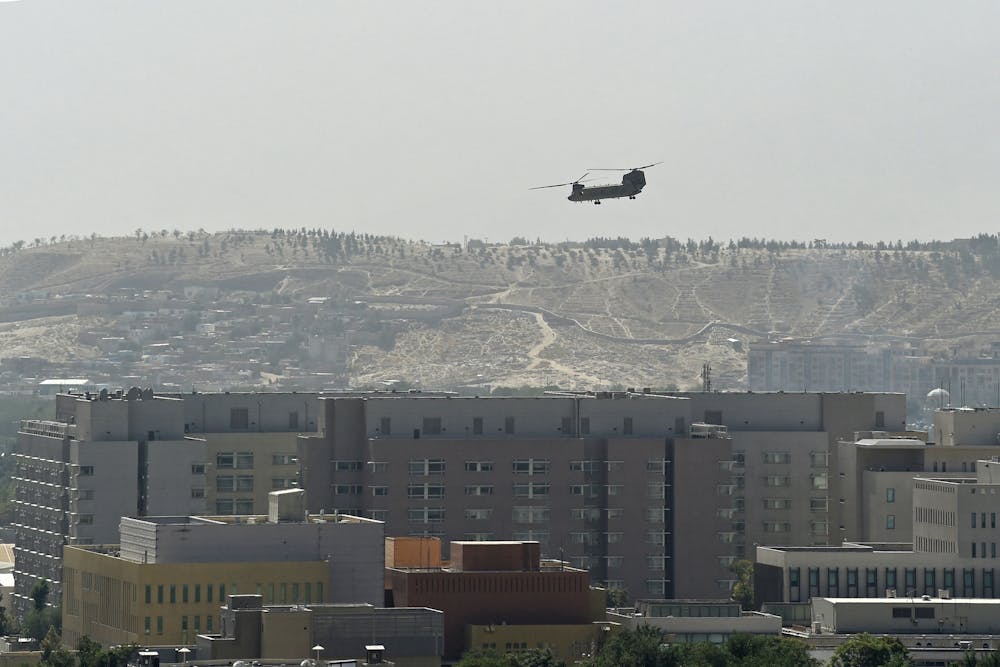
    A U.S. military helicopter flies above Kabul during the evacuation of U.S. troops from Afghanistan in 2021.
    Wakil Kohsar/AFP via Getty Images

    Perfection is elusive

    It’s impossible for intelligence collection and analysis staff to get everything right – they don’t have a crystal ball. Leaders aren’t under any obligation to follow the intelligence community’s recommendations. But if intelligence officials and political leaders are to have effective relationships that safeguard the nation’s security, each must understand their role and trust that each is doing that work as best as possible.

    Providing unvarnished truthful assessments is the job of the intelligence community. That means assessing what’s happening and what might happen as a result of a range of decisions the policymakers might choose. In my experience, putting aside my own views of leaders and their past decisions built trust with them and improved the likelihood that they would take my assessments seriously and make decisions based on the best available information.

    It’s not that intelligence professionals can’t have opinions, political ideologies or particular perspectives on policy decisions. All Americans can, and should.

    But as a second Trump administration begins, I think of what I told my colleagues and staff over the decades: National security requires us to keep those personal views out of intelligence analysis.

    Mark S. Chandler does not work for, consult, own shares in or receive funding from any company or organization that would benefit from this article, and has disclosed no relevant affiliations beyond their academic appointment.

    ref. Why Americans need well-informed national security decisions – not politicized intelligence analysis – https://theconversation.com/why-americans-need-well-informed-national-security-decisions-not-politicized-intelligence-analysis-248831

    MIL OSI – Global Reports

  • MIL-OSI Global: Map wars in the Middle East: How cartographers charted and helped shape a regional conflict

    Source: The Conversation – USA – By Christine Leuenberger, Senior Lecturer, Cornell University

    A lot has changed since the publication of this 1750 map of Palestine. Ken Welsh/Design Pics/Universal Images Group via Getty Image

    Maps are ubiquitous – on phones, in-flight and car displays, and in textbooks the world over. While some maps delineate and name territories and boundaries, others show different voting blocs in elections, and GPS devices help drivers navigate to their destination.

    But no matter the purpose, all maps have something in common: They are political. Making maps is about making decisions about what to omit and what to include. They are subject to selection, classification, abstractions and simplifications. And studying the choices that go into maps, as I do, can reveal different stories about land and the people who claim it as theirs.

    Nowhere is this more true than in the contested regions that today include modern-day Israel and the Palestinian territories. Since the establishment of the state of Israel in 1948, different governmental and nongovernmental organizations and political interest groups have engaged in what can best be described as “map wars.”

    Maps of the region use the naming of places, the position of borders and the inclusion or omission of certain territories to present contrasting geopolitical visions. To this day, Israel or the Palestinian territories may fall off some maps, depending on the politics of their makers.

    This is not exclusive to the Middle East – “map wars” are underway across the globe. Some of the more well-known examples include disputes between Ukraine and Russia, Taiwan and China, and India and China. All are engaged in controversies over the territorial integrity of nation-states.

    Israeli Prime Minister Benjamin Netanyahu displays a map of Israel indicating the Golan Heights are inside the state’s borders.
    Thomas Coex/AFP via Getty Images

    A short history of maps

    Traditionally, maps have been used to represent cosmologies, cultures and belief systems. By the 17th century, maps that represented spatial relations within a given territory beaome important to the making of nation-states. Such official maps helped annex territories and determine property rights. Indeed, to map a territory meant to know and control it.

    More recently, the tools for making maps have become more broadly accessible. Anyone with a computer and internet access can now make and share “alternative maps” that present different visions of a territory and make varied geopolitical claims.

    And maps produced in a conflict region, such as Israel and the Palestinian territories, tell a rich story about the relationship between mapmaking and politics.

    Mapping the Middle East

    During the British Mandate of Palestine from 1917 to 1947, British surveyors mapped the territories to exercise their control over the land and its people. It was an attempt to supersede the more informal Ottoman land claims of the time.

    By the founding of Israel in 1948, only about 20% of the total area of what is known as historic Palestine had been mapped – a fact that has fueled land disputes to this day. The British mapping efforts and their omissions enabled the newly established state of Israel to declare most of the territories as state land, thereby delegitimizing Palestinian land claims.

    A map shows the shaded areas of the Arab state recommended by the U.N. Special Committee on Palestine in 1947. The unshaded areas are parts of the proposed Jewish state.
    Underwood Archives/Getty Images

    Maps also helped build the Israeli state. Surveyors and planners mapped the land to allocate land rights, and they helped build the state’s infrastructure, including roads and railroads.

    But maps also helped create a sense of nationhood. Maps representing a nation’s shape by delineating its national borders are known as “logo” maps. They can enhance feelings of national unity and a sense of national belonging.

    Once established, the Israeli state remade the maps of the region. An Israeli Governmental Names Commission came up with Hebrew names to replace formerly Arab and Christian names for different towns and villages on the official map of Israel. At the same time, formerly Palestinian topographies and places were omitted from the map.

    Some Palestinian mapmakers, however, continue to make maps that include Palestinian named sites and depict pre-1948 historic Palestine – an area that stretches from River Jordan in the east to the Mediterranean Sea in the west. Such maps are used to advocate for Palestinians’ right to land and foster a sense of national belonging.

    A Palestinian woman holds up a map of the British Mandate of Palestine during a protest in Gaza City on Feb. 27, 2020.
    Mohammed Abed/AFP via Getty Images

    At the same time, Palestinian cartographers who work with the Palestinian Authority – the government body that administers partial civil control over Palestinian enclaves in the West Bank – make official maps of the West Bank and Gaza in the hope of establishing a future state of Palestine. They align their maps with United Nations efforts to map the territories according to international law by demarking the West Bank and Gaza as separate from and as occupied by Israel.

    After the 1967 war between Israel and its Arab neighbors, Israel occupied the West Bank and Gaza. As a result, map wars intensified, especially between different fractions within Israel. The left-wing “peace camp,” which was dedicated to territorial compromises with the Palestinians, was pitted against an Israeli right wing committed to reclaiming the “Promised Land” for ensuring Israeli security.

    Such incompatible geopolitical visions continue to be reflected in the maps produced. “Peace camp” maps adhere to the delineation of the territories according to international law. For example, they include the Green Line – the internationally recognized armistice line between the West Bank and Israel. Official maps produced by the Israeli government, by contrast, stopped delineating the Green Line after 1967.

    Broader and border disputes

    Not only have different interest groups and political actors used maps of the region to put forth competing geopolitical claims, but maps have also played a central role in sporadic efforts to establish peace in the region.

    The 1993 Oslo Accords, for example, relied on maps to provide the framework for Palestinian self-rule in return for security for Israel. The aim was that after a five-year interim period, a permanent peace settlement would be negotiated based on the borders laid out in these maps.

    A map of the West Bank with proposed Palestinian-controlled areas in yellow, as per the Oslo II Accords.
    Wikimedia Commons

    Consequently, Palestinian planners and surveyors mapped the territory allocated to a future state of Palestine. With the Oslo Accords promising only a future state – but with its borders and level of sovereignty still uncertain – Palestinian experts nevertheless continue to prepare for governing the territories by mapping them.

    The Oslo maps are used to this day to delineate geopolitical visions of Israel and a future state of Palestine that are based on international law. But for many Israelis, the Oslo vision of a two-state solution has died – the attack by Hamas, the Palestinian nationalist political organization that governs Gaza, on Israel on Oct. 7, 2023, was its last blow.

    The subsequent war between Israel and Hamas, currently subject to a cease-fire, has from the outset involved maps.

    In December 2023, the Israeli military posted an online “evacuation map” that divided the Gaza Strip into 623 zones. Palestinians could go online – provided they have access to electricity and internet in a territory plagued by blackouts – to find out whether their neighborhood was called upon to evacuate. Israeli military commanders used this map to decide where to launch airstrikes and conduct ground maneuvers.

    But the map served a political aim, too: to convince a skeptical world that Israel was taking care to protect civilians. Regardless, its introduction caused confusion and fear among Palestinians.

    Charting a way forward

    Maps aren’t just for making sense of the past and present – they help people imagine the future, too. And different maps can reveal conflicting geopolitical visions.

    In January 2024, for example, various Israeli right-wing and settler organizations organized the Conference for the Victory of Israel. The aim was to plan for resettling Gaza and increase Jewish settlements in the West Bank. Speakers advocated for transferring Palestinians from the Strip to the Sinai through “voluntary emigration.” With Jewish settlers planning for the return to Gaza, and speakers citing both the Bible and Israeli security for justifications, an oversized map showed the location of proposed Jewish settlements.

    A man takes a photo with a map showing the Gaza Strip with Jewish settlements during a convention calling to resettle the Gaza Strip on Jan. 28, 2024, in Jerusalem, Israel.
    Amir Levy/Getty Images

    Similarly, the Israeli Movement for Settlement in Southern Lebanon has published maps of planned Jewish settlements in Southern Lebanon.

    Such maps reveal the desire by some in Israel for a “Greater Israel” – an area described in 1904 by Theodor Herzl, considered the father of modern-day Zionism, as spanning from the brook of Egypt to the Euphrates.

    Unsurprisingly, Palestinians make different maps for envisioning the future. Palestine Emerging – a Palestinian and international initiative that brings together various experts, organizations, and funders – uses maps that connect Gaza to the West Bank and the wider region.

    A map shows the proposed Gaza-West Bank corridor transport link.
    Palestine Emerging

    Their aim is to transform Gaza into a commercial hub for trade, tourism and innovation and to integrate it into the global economy. Accordingly, maps of urban projects, airports and seaports overlay the cartographic contours of Gaza; and a Gaza-West Bank corridor, which would be sealed for Israeli security, could connect the two geographically separate Palestinian territories.

    Such maps reflect the efforts by Palestinian stakeholders to continue surveying the territories that, since the Oslo Accords, were to make up the future state of Palestine.

    A new era of expansionist geopolitics

    With the current U.S. administration more aligned with right-wing Israeli policies, maps of Greater Israel may guide what Hagit Ofran from Peace Now calls the beginning of a new “Greater Israel” policy period.

    In a novel twist, U.S. President Donald Trump on Feb. 4, 2025, floated a plan for the U.S. to “take over” Gaza, moving its current inhabitants out and turning the enclave into “”the Riviera of the Middle East.”

    Such a move would amount to another attempt to remake borders across the Middle East. It would not, however, end the “map wars” in Israel/Palestine.

    This work was supported by the National Science Foundation through the Science and Technology Studies (STS) Program, award #1152322. Any opinions, findings, and conclusions or recommendations expressed in this material are those of the author and do not necessarily reflect the views of the National Science Foundation or any other entity.

    ref. Map wars in the Middle East: How cartographers charted and helped shape a regional conflict – https://theconversation.com/map-wars-in-the-middle-east-how-cartographers-charted-and-helped-shape-a-regional-conflict-231668

    MIL OSI – Global Reports

  • MIL-OSI Global: Why does Trump want to abolish the Education Department? An anthropologist who studies MAGA explains 4 reasons

    Source: The Conversation – USA – By Alex Hinton, Distinguished Professor of Anthropology; Director, Center for the Study of Genocide and Human Rights, Rutgers University – Newark

    A pedestrian walks past the Lyndon Baines Johnson Department of Education Building on Feb. 3, 2025, in Washington. Pete Kiehart for The Washington Post via Getty Images

    “And one other thing I’ll be doing very early in the administration is closing up the Department of Education.”

    President Donald Trump made this promise in a Sept. 13, 2023, campaign statement. Since then, he has frequently repeated his pledge to close the U.S. Department of Education.

    Project 2025, the conservative think tank Heritage Foundation’s blueprint for the Trump administration, also provides detailed recommendations for closing the Education Department, which was created by an act of Congress in 1979.

    On Feb. 4, 2025, Trump described his plans for Linda McMahon, his nominee for education secretary. “I want Linda to put herself out of a job,” Trump said, according to The Associated Press.

    I am an anthropologist and have been studying U.S. political culture for years. During Trump’s first presidency, I wrote a book about the extremist far-right called “It Can Happen Here”. Since then, I have continued to study the Make America Great Again, or MAGA, movement, seeking to understand it, as the anthropological expression goes, “from the native’s point of view.”

    Education policies in the U.S. are largely carried out at the state and local levels. The Education Department is a relatively small government agency, with just over 4,000 employees and a US$268 billion annual budget. A large part of its work is overseeing $1.6 trillion in federal student loans as well as grants for K-12 schools.

    And it ensures that public schools comply with federal laws that protect vulnerable students, like those with disabilities.

    Why, then, does Trump want to eliminate the department?

    A will to fight against so-called “wokeness” and a desire to shrink the government are among the four reasons I have found.

    President Donald Trump waves to supporters at a Jan. 25, 2025, rally in Las Vegas.
    Ian Maule/Getty Images

    1. Education Department’s alleged ‘woke’ mentality

    First and foremost, Trump and his supporters believe that liberals are ruining public education by instituting what they call a
    radical woke agenda” that they say prioritizes identity politics and politically correct groupthink at the expense of the free speech of those, like many conservatives, who have different views.

    Diversity, equity and inclusion, or DEI, initiatives promoting social justice – and critical race theory, or the idea that racism is entrenched in social and legal institutions – are a particular focus of MAGA ire.

    So, too, is what Trump supporters call “radical gender ideology,” which they contend promotes policies like letting transgender students play on school sports teams or use bathrooms corresponding with their gender identity, not biological sex.

    Trump supporters say that such policies – which the Education Department indirectly supported by expanding Title IX gender protections in 2024 to include discrimination based on gender identity – are at odds with parental school choice rights or, for some religious conservatives, the Bible.

    Race and gender policies are highlighted in Project 2025 and in the 2024 GOP’s “Make America Great Again!” party platform.

    Trump has repeatedly promised, as he did on Aug. 14, 2024, in North Carolina, to “keep critical race theory and transgender insanity the hell out of our schools.”

    On Jan. 20, 2025, Trump signed executive orders targeting “gender ideology extremism” and “radical” DEI policies. Two weeks later, he signed another one on “Keeping Men Out Of Women’s Sports.

    2. American Marxist indoctrination

    For MAGA supporters, ”radical left“ wokeness is part of liberals’ long-standing attempt to ”brainwash“ others with their allegedly Marxist views that embrace communism.

    One version of this ”American Marxismconspiracy theory argues that the indoctrination dates to the origins of U.S. public education. MAGA stalwarts say this alleged leftist agenda is anti-democratic and anti-Christian.

    Saying he wants to combat the educational influence of such radicals, zealots and Marxists, Trump issued executive orders on Jan. 29 that pledge to fight ”campus anti-Semitism“ and to end ”Radical Indoctrination in K-12 Schools.“

    3. School choice and parental rights

    Trump supporters also argue that “woke” federal public education policy infringes on people’s basic freedoms and rights.

    This idea extends to what Trump supporters call “restoring parental rights,” including the right to decide whether a child undergoes a gender transition or learns about nonbinary gender identity at public schools.

    The first paragraph of Project 2025’s chapter on education argues, “Families and students should be free to choose from a diverse set of school options and learning environments.”

    Diversity, according to this argument, should include faith-based institutions and homeschooling. Project 2025 proposes that the government could support parents who choose to homeschool or put their kids in a religious primary school by providing Educational Savings Accounts and school vouchers. Vouchers give public funding for students to attend private schools and have been expanding in use in recent years.

    Critics of school vouchers, like the National Education Association and American Federation of Teachers unions, argue that vouchers would diminish public education for vulnerable students by taking away scarce funding.

    Trump has already issued a Jan. 29 executive order called “Expanding Educational Freedom and Educational Opportunity for Families,” which opens the door to expanded use of vouchers. This directly echoes Project 2025 by directing the Education Department to prioritize educational choice to give families a range of options.

    4. Red tape

    For the MAGA faithful, the Education Department exemplifies government inefficiency and red tape.

    Project 2025, for example, contends that from the time it was established by the Carter administration in 1979, the Education Department has ballooned in size, come under the sway of special interest groups and now serves as an inefficient “one-stop shop for the woke education cartel.”

    To deal with the Education Department’s “bloat” and “suffocating bureaucratic red tape,” Project 2025 recommends shifting all of the department’s federal programs and money to other agencies and the states.

    These recommendations dovetail with Trump’s broader attempt to eliminate what he and his MAGA supporters consider wasteful spending and deregulate the government.

    Trump signed an executive order on Jan. 20 that establishes a “Department of Government Efficiency” headed by billionaire Elon Musk. Musk said on Feb. 4 that Trump “will succeed” in dismantling the Education Department.

    An electric school bus is parked outside a public high school in Miami in March 2024.
    Joe Raedle/Getty Images

    Can Trump abolish the Education Department?

    At first glance, the Education Department’s days might seem numbered given Trump’s repeated promises to eliminate it and his reported plans to soon sign an executive order that does so. Republican Senator Mike Rounds of South Dakota also introduced a bill in November 2024 to close the department.

    And Trump has taken actions, such as seeking to shut down the U.S. Agency for International Development without the required congressional approval, which suggest he may try to act on his Education Department promises.

    Abolishing the department, however, would legally require congressional approval and 60 votes to move forward in the Senate, which is unlikely since Republicans only have 53 seats.

    Trump also made similar promises in 2016 that were unfulfilled. And Trump’s executive actions are likely to face legal challenges – like a DEI-focused higher education lawsuit filed on Feb. 3.

    Regardless of such legal challenges, Trump’s executive orders related to education demonstrate that he is already attempting to “drain the swamp” – starting with the Education Department.

    Alex Hinton receives funding from the Rutgers-Newark Sheila Y. Oliver Center for Politics and Race in America, Rutgers Research Council, and Henry Frank Guggenheim Foundation.

    ref. Why does Trump want to abolish the Education Department? An anthropologist who studies MAGA explains 4 reasons – https://theconversation.com/why-does-trump-want-to-abolish-the-education-department-an-anthropologist-who-studies-maga-explains-4-reasons-248818

    MIL OSI – Global Reports

  • MIL-OSI Africa: Breastfeeding and Ebola: knowledge gaps endanger mothers and babies

    Source: The Conversation – Africa – By Catriona Waitt, Professor of Clinical Pharmacology and Global Health, University of Liverpool

    Breastfeeding is so important for child health that the World Health Organization (WHO) and Unicef recommend that babies should be breastfed within an hour of birth, be exclusively breastfed for the first six months of life, and then continue breastfeeding in combination with other foods for two years or more.

    Infectious disease emergencies can threaten breastfeeding and the lives of mothers and babies. Depending on the disease, there is a risk of passing infection to the baby by close contact or (rarely) through breastmilk. There is also the risk of harm to breastfed infants from medication or vaccination of their mothers.

    But separating mothers and babies or stopping breastfeeding also poses risks.

    Mothers need proper guidance on the best course of action during an Ebola outbreak.

    Threat to mothers and babies

    The symptoms of Ebola include fever, tiredness, muscle pain, headache and sore throat followed by vomiting, diarrhoea, rash and, later, bleeding from any part of the body.

    Ebola viruses are extremely contagious and people who become infected are at very high risk of death. Pregnant women and infants are more vulnerable and at greater risk than others.

    Ebola outbreaks most often occur in countries where breastfeeding is vital for child survival. They have occurred in several African countries and on 30 January 2025 Uganda declared an outbreak, the latest in several the country has endured.

    Breastmilk contains many ingredients that help to prevent and fight infection and that strengthen the baby’s own immune system. Replacing breastmilk with other foods or liquids (including infant formula) removes this protection from babies and makes them more likely to become seriously ill.


    Read more: Ebola: how a vaccine turned a terrifying virus into a preventable disease


    Protection or harm?

    It’s important to know which actions protect or harm babies and their mothers during outbreaks. Recommendations on infectious diseases must weigh up the risks related to the disease, medical treatments and the risks of not-breastfeeding.

    The World Health Organization has published guidelines on how to care for breastfeeding mothers and their infants when one or both have Ebola, but these recommendations are based on “very low quality” evidence, they are mostly expert opinion rather than research-based knowledge.

    Women and children have been largely neglected in Ebola research. More is known about Ebola and semen than Ebola and breastmilk.

    In a paper just published in the Lancet Global Health, we have outlined a roadmap for research on Ebola and breastfeeding so that mothers and babies can be protected.


    Read more: Ebola in Uganda: why women must be central to the response


    What we don’t know

    We know that Ebola is easily transmitted by close contact between people. So the close contact of breastfeeding is a risk to an uninfected baby or mother if one of them has Ebola.

    However:

    • We don’t know if breastmilk can be infectious and, if it is, for how long.

    • We don’t know whether expressed breastmilk can be treated so that it is safe.

    • We don’t know whether, if both mother and baby are infected, it is better for the baby if the mother keeps breastfeeding, if she is able to.

    • We don’t know if vaccinating mothers against Ebola helps to protect their breastfed infants from the virus.

    • We don’t know if there are any risks for breastfed infants if their mothers are infected.

    The result of this lack of knowledge is that decisions may be taken that increase risk and suffering for mothers and their babies.

    For example, mothers may refuse vaccination because they are fearful that it is risky for their baby. But by refusing vaccination they’d be making themselves vulnerable to Ebola.

    Alternatively, they may get vaccinated and stop breastfeeding, making their baby vulnerable to other serious infections.

    If mothers and babies who both have Ebola are separated and breastfeeding is stopped, it could reduce the chances of survival.

    Mothers and babies deserve better than this.

    No more excuses

    For many years people have called for more research on Ebola, breastmilk and breastfeeding, but this research has not been undertaken. It is not acceptable that women and children are deprived of breastfeeding because the needed research has not been done.

    Our experience providing medical care in Ebola outbreaks, developing guidance for breastfeeding mothers in emergencies and researching medications and breastfeeding prompted us to develop a plan to fill this research gap.

    In our paper, we describe the different groups of breastfeeding women affected by Ebola who must be included in research:

    • vaccine recipients

    • mothers who are ill with Ebola

    • mothers recovering from Ebola

    • mothers who are infected with Ebola, but have no symptoms

    • the wider population of breastfeeding mothers in communities experiencing Ebola outbreaks.

    The roadmap also includes the research questions that need answering and the study designs that would enable these questions to be answered.

    It is up to governments, pharmaceutical companies, researchers, funders and health organisations to act.

    Following the Ebola and breastfeeding research roadmap will not necessarily be easy. It is difficult to do research in the middle of an emergency.

    But research on vaccination safety can be done outside outbreaks. Putting research plans in place and gaining approvals before outbreaks will also make things easier.

    Closing the female data gap

    Women have the right to societal, family and health support to enable them to breastfeed.

    Lack of research is part of a problem called the “female data gap”, where knowledge of women’s bodies, experiences and needs is lacking.

    The Universal Declaration of Human Rights says, “Motherhood and childhood are entitled to special care and assistance.”

    There just needs to be a commitment to make this research happen.

    – Breastfeeding and Ebola: knowledge gaps endanger mothers and babies
    – https://theconversation.com/breastfeeding-and-ebola-knowledge-gaps-endanger-mothers-and-babies-248356

    MIL OSI Africa

  • MIL-OSI United Kingdom: RAF Invictus competitors share their recovery journey07 Feb 2025

    Source: United Kingdom – Royal Air Force

    UK Armed Forces personnel and veterans are joining counterparts from 20 nations to compete in adaptive sports at the Invictus Games Vancouver Whistler 2025.

    Team UK comprises 62 competitors – all wounded, injured and sick serving personnel and veterans, who have experienced a range of challenging physical and mental injuries sustained while serving in the UK Armed Forces either at home or abroad.

    Team UK departing for the Invictus Games 2025 in Vancouver.

    Some of Team UK, who serve or served in the RAF, have shared their inspiring recovery journeys in this short documentary, ‘I AM INVICTUS: Finding me again’.

    This video contains emotional discussions around mental and physical health that some viewers may find upsetting. If you are affected by any of the issues raised, please see the link below for support.

    What the competitors want to share with those listening, is how powerful the Invictus Games can be in your recovery.

    “A big thing for me is I really want to keep promoting the programme. Because for me it’s been so powerful. If that can just reach one person that felt the way I did, and help them to realise, you may think you’ve tried everything but there are other things out there. I really hope that my contribution to the Invictus Games and my part of the programme and the journey isn’t about what we achieve this time round, it’s about getting other people involved for the legacy of the games. So that they get involved next time round and it helps them.”

    Corporal Matthew ‘Twitch’ Wickens

    The Invictus Games uses the power of sport to inspire recovery, offering a recovery pathway that helps wounded, injured or sick servicemen and women reclaim their purpose, identity and future, beyond their injury. The Ministry of Defence and the Royal British Legion are supporting Team UK to compete at the seventh Invictus Games, which features winter sports for the first time. Selection for the Games is based on the recovery benefit to each individual, rather than solely on expected performance. 

    Access to adaptive sports and the opportunity to participate in the Invictus Games is just one way the Royal British Legion & MOD supports the wounded, injured and sick Armed Forces community. There are also adventurous training and theatre and art programmes available for personnel, veterans and families which are delivered by partners via the RAF Recovery and Support Team.

    In recent months, Team UK have been preparing for the Games at the Royal British Legion’s Battle Back Centre in Lilleshall, which promotes the use of adaptive sport and adventure activities to help improve confidence and positively impact mental health and wellbeing. These activities are designed to help each individual achieve their best possible recovery and either return to Service duty or make a smooth transition to civilian life.

    The Invictus Games will be broadcast in the UK between 8-16 February on ITV in the UK. Nine daily highlight shows will be available on ITVX across the duration of the Games, which will include the Opening Ceremony.

    If you or a friend needs help or support, visit the Health and Wellbeing page for links to resources and partners who can help.

    MIL OSI United Kingdom

  • MIL-OSI United Kingdom: GRANGEMOUTH: Community will not forget if governments abandon them

    Source: Scottish Greens

    Workers and the community of Grangemouth deserve support for their future.

    Workers and the community in Grangemouth will not forget it if they are abandoned by their governments, says Scottish Green MSP Gillian Mackay.

    Ms Mackay, who represents Grangemouth and who grew up and still lives in the shadow of the refinery, was responding to news that the site could close as early as May.

    Ms Mackay said:

    “This is a further devastating blow to hundreds of workers and to a community that feels like it has been abandoned and left to the will of a detached billionaire.

    “All of us in the town know somebody who is employed at the site, and we all know the businesses who rely on it. Three months is no time at all, and a lot of people will be extremely worried and angry about what is happening.

    “The Labour government was elected on a promise to step in and save the jobs, but those words are looking extremely hollow today. With only months to go, it is clear that they have no plan to protect workers or to provide jobs for the future.

    “The workers in Grangemouth could have a crucial role to play in our green future. But warm words alone about a just transition won’t pay the bills, it needs investment and it needs a proper plan.

    “The workers and the community will not forget it if they are abandoned by their governments at a time when they need them the most. 

    “We can’t let Grangemouth go the same way as so many other communities and towns where big businesses have cut and run while jobs have been lost and people have suffered.

    “Workers should not be in this position. I implore the Scottish and UK governments to pull out all stops and work with the trade unions and the community to protect workers.”

    MIL OSI United Kingdom

  • MIL-OSI United Kingdom: Dame Sue Owen reappointed as Non-Executive Chair of the UK Debt Management Office Advisory Board

    Source: United Kingdom – Government Statements

    HM Treasury announces that Dame Sue Owen will serve a second three-year term as Non-Executive Chair (NEC) of the UK Debt Management Office (DMO) Advisory Board.

    Dame Sue was previously a civil servant for 30 years, including serving as the Permanent Secretary at the Department for Culture, Media & Sport from 2013 to 2019. She also worked on fiscal policy and debt management policy at HM Treasury.

    She was first appointed to the role, which involves chairing Advisory Board meetings and providing support and challenge to the Debt Management Office (DMO) executive team, in 2022.

    The Economic Secretary to the Treasury, Emma Reynolds MP, said:

    I am delighted that Dame Sue Owen will be serving a second term at the Debt Management Office.

    Her expertise and experience has been, and will continue to be, incredibly valuable to the organisation as it continues its vital mission of delivering government financing.

    Dame Sue Owen said:

    The DMO has an exceptionally important role and I am very happy to have this further opportunity to provide continuity and support to the CEO, her team, and Treasury colleagues.

    Jessica Pulay, Chief Executive of the DMO, said:

    Dame Sue Owen’s reappointment as Non-Executive Chair of the DMO’s Advisory Board is greatly welcomed by myself, the DMO’s executive team and wider DMO colleagues.  We look forward to working with her over the years ahead, as we continue to deliver the DMO’s remit to finance the UK government.


    Further information:

    • The DMO is an Executive Agency of HM Treasury and is responsible for delivering HM Government’s debt management and cash management requirements, lending to local authorities, and managing certain public sector funds.
    • Dame Sue Owen is the first Non-Executive Chair (NEC) of the Advisory Board. The appointment of a NEC was a recommendation included in the Tailored Review of the DMO, published in June 2021.
    • This reappointment was made by HM Treasury ministers, in line with the requirements of the Governance Code for Public Appointments
    • Dame Sue Owen DCB is an experienced and respected economist. She spent 10 years as an academic and 30 years in the civil service, including 14 years at HM Treasury, where she worked with the DMO as a non-executive member of its Managing Board from 2002-06. She also held senior roles at the Foreign and Commonwealth Office (FCO), Department for International Development (DfID), and the Department for Work and Pensions (DWP), before retiring as Permanent Secretary of the Department for Digital, Culture, Media & Sport in April 2019. Dame Sue is now a specialist partner at Flint-Global, a non-executive Director at Pool Re, Pantheon International plc, Methera Global Communications and Serco plc, a trustee for Opera Holland Park and she chairs the Royal Ballet Governors.

    Updates to this page

    Published 7 February 2025

    MIL OSI United Kingdom

  • MIL-OSI Russia: Marat Khusnullin: Thanks to the national project “Safe High-Quality Roads”, about 460 km of approaches to airports have been updated

    Translartion. Region: Russians Fedetion –

    Source: Government of the Russian Federation – An important disclaimer is at the bottom of this article.

    Previous news Next news

    Access to the airport in Bratsk district, Irkutsk region

    Over the past six years, 457 km of regional and local roads leading to airports have been put into operation in the regions participating in the national project “Safe High-Quality Roads” after repair, reconstruction and construction. This was reported by Deputy Prime Minister Marat Khusnullin.

    “Currently, large-scale work is underway in the country to develop airports: new airport complexes are being built and existing ones are being reconstructed, and airfield infrastructure is being modernized. At the same time, we are bringing access roads to air harbors into compliance with regulations. Over the six years of implementing the national project “Safe High-Quality Roads”, more than 120 sections of the regional and local road network leading or included in the routes to airports have been commissioned. Their total length is 457 km. In 2025, we will continue this work thanks to the new national project “Infrastructure for Life”, – said Marat Khusnullin.

    A unified, comfortable transport system for everyone allows us to solve social problems, improve the quality of logistics and strengthen interregional ties.

    “Recently, there has been an increase in passenger traffic on domestic routes, and the national air transportation route network is growing. At the same time, the road transport infrastructure is also developing, which in combination makes travel to other regions safer and more comfortable. In 2024 alone, 21 km of routes to airports were brought up to standard under the national project “Safe High-Quality Roads”. In 2025, repair work is planned for 16 such facilities of the national project “Infrastructure for Life”, their total length will be about 44 km,” said Transport Minister Roman Starovoit.

    The development of roads to airports and transport infrastructure in general also influences the development of domestic tourism. This is another important aspect of the work to improve the quality of life of Russians.

    “Over the six years of implementation of the national project “Safe High-Quality Roads”, more than 2 thousand sections of the regional and local road network leading to unique natural complexes, architectural monuments, religious buildings, historical landmarks have been repaired, reconstructed and built. As a rule, work on such sites was carried out in a comprehensive manner: in addition to the roadway, elements of safety and road infrastructure were installed. As a result, every year travel around Russia is becoming more comfortable, and the increase in tourist flow ensures investment in the regions, contributes to the creation of new jobs, and forms new spaces for business development,” said Igor Kostyuchenko, Deputy Head of the Federal Road Agency.

    Thus, in 2024, a four-kilometer approach to the Krasnoyarsk International Airport was repaired, and in 2023, a section of the highway in the Irkutsk Region was updated – an approach to the Bratsk International Airport, the second largest air harbor in the region. The length of the section is 2.8 km.

    In 2023, the Tomsk-Airport highway leading to the Tomsk International Airport named after Nikolai Kamov was renovated in the Tomsk Region. In total, more than 8 km were repaired during the implementation of the national project. In particular, on the section from Basandayskaya Street in Tomsk to the village of Klyuchi, the road surface was renewed, public transport stops were repaired, and markings were applied. In 2020, about 0.8 km of access road to the airport terminal was built with a ring road and free parking for 226 spaces.

    In 2020, the Airport Yuzhny – Stankostroiteley Street (western bypass of Ivanovo) highway was built in the Ivanovo Region. The new 2.8 km long section connected the federal highway R-132 “Golden Ring” with the existing section of the western bypass and allowed transit transport to bypass the regional center.

    Please note: This information is raw content directly from the source of the information. It is exactly what the source states and does not reflect the position of MIL-OSI or its clients.

    MIL OSI Russia News

  • MIL-OSI United Kingdom: Investment Conference

    Source: United Kingdom – Government Statements

    GAD’s inaugural Investment Conference attracted a packed house of professionals across investment, pensions and government.

    Credit: Unsplash

    The role of the Government Actuary’s Department (GAD) in investment issues in the public sector were among the topics discussed in our inaugural Investment Conference. The event attracted more than 140 people from almost 60 different organisations.

    GAD’s Investment Lead Chris Ward introduced the theme of the conference – ‘productive investment to maximise value’ and delegates heard from a wide range of speakers including:

    • Ireland Strategic Investment Fund
    • Border to Coast Pensions Partnership (a Local Government Pension Scheme Pool)

    Investment management firms:

    • Baillie Gifford
    • First Eagle
    • Novum Investment Management
    • Partners Group

    Credit: GAD

    Topics and discussions

    Delegates heard from experts who spoke to various topics such as:

    • alternative approaches to generating returns while having a wider economic and societal impact
    • the impact of scale and the scale of impact when it comes to pensions investing
    • how you can invest to grow your assets and create a positive impact
    • why now is the time for investing in growth and how volatility of asset pricing is different to investment risk

    Unique role

    In closing remarks, the Government Actuary Fiona Dunsire emphasised the role of those working in the public sector, and supporting the public sector, to contribute towards the government’s number one mission of kickstarting the UK’s economic growth.

    Commenting on the event Fiona said: “GAD has a unique role in connecting institutional investors with policy and opportunities, allowing barriers to be aired and addressed.”

    Updates to this page

    Published 7 February 2025

    MIL OSI United Kingdom

  • MIL-OSI Global: Breastfeeding and Ebola: knowledge gaps endanger mothers and babies

    Source: The Conversation – Africa – By Catriona Waitt, Professor of Clinical Pharmacology and Global Health, University of Liverpool

    Breastfeeding is so important for child health that the World Health Organization (WHO) and Unicef recommend that babies should be breastfed within an hour of birth, be exclusively breastfed for the first six months of life, and then continue breastfeeding in combination with other foods for two years or more.

    Infectious disease emergencies can threaten breastfeeding and the lives of mothers and babies. Depending on the disease, there is a risk of passing infection to the baby by close contact or (rarely) through breastmilk. There is also the risk of harm to breastfed infants from medication or vaccination of their mothers.

    But separating mothers and babies or stopping breastfeeding also poses risks.

    Mothers need proper guidance on the best course of action during an Ebola outbreak.

    Threat to mothers and babies

    The symptoms of Ebola include fever, tiredness, muscle pain, headache and sore throat followed by vomiting, diarrhoea, rash and, later, bleeding from any part of the body.

    Ebola viruses are extremely contagious and people who become infected are at very high risk of death. Pregnant women and infants are more vulnerable and at greater risk than others.

    Ebola outbreaks most often occur in countries where breastfeeding is vital for child survival. They have occurred in several African countries and on 30 January 2025 Uganda declared an outbreak, the latest in several the country has endured.

    Breastmilk contains many ingredients that help to prevent and fight infection and that strengthen the baby’s own immune system. Replacing breastmilk with other foods or liquids (including infant formula) removes this protection from babies and makes them more likely to become seriously ill.


    Read more:
    Ebola: how a vaccine turned a terrifying virus into a preventable disease


    Protection or harm?

    It’s important to know which actions protect or harm babies and their mothers during outbreaks. Recommendations on infectious diseases must weigh up the risks related to the disease, medical treatments and the risks of not-breastfeeding.

    The World Health Organization has published guidelines on how to care for breastfeeding mothers and their infants when one or both have Ebola, but these recommendations are based on “very low quality” evidence, they are mostly expert opinion rather than research-based knowledge.

    Women and children have been largely neglected in Ebola research. More is known about Ebola and semen than Ebola and breastmilk.

    In a paper just published in the Lancet Global Health, we have outlined a roadmap for research on Ebola and breastfeeding so that mothers and babies can be protected.


    Read more:
    Ebola in Uganda: why women must be central to the response


    What we don’t know

    We know that Ebola is easily transmitted by close contact between people. So the close contact of breastfeeding is a risk to an uninfected baby or mother if one of them has Ebola.

    However:

    • We don’t know if breastmilk can be infectious and, if it is, for how long.

    • We don’t know whether expressed breastmilk can be treated so that it is safe.

    • We don’t know whether, if both mother and baby are infected, it is better for the baby if the mother keeps breastfeeding, if she is able to.

    • We don’t know if vaccinating mothers against Ebola helps to protect their breastfed infants from the virus.

    • We don’t know if there are any risks for breastfed infants if their mothers are infected.

    The result of this lack of knowledge is that decisions may be taken that increase risk and suffering for mothers and their babies.

    For example, mothers may refuse vaccination because they are fearful that it is risky for their baby. But by refusing vaccination they’d be making themselves vulnerable to Ebola.

    Alternatively, they may get vaccinated and stop breastfeeding, making their baby vulnerable to other serious infections.

    If mothers and babies who both have Ebola are separated and breastfeeding is stopped, it could reduce the chances of survival.

    Mothers and babies deserve better than this.

    No more excuses

    For many years people have called for more research on Ebola, breastmilk and breastfeeding, but this research has not been undertaken. It is not acceptable that women and children are deprived of breastfeeding because the needed research has not been done.

    Our experience providing medical care in Ebola outbreaks, developing guidance for breastfeeding mothers in emergencies and researching medications and breastfeeding prompted us to develop a plan to fill this research gap.

    In our paper, we describe the different groups of breastfeeding women affected by Ebola who must be included in research:

    • vaccine recipients

    • mothers who are ill with Ebola

    • mothers recovering from Ebola

    • mothers who are infected with Ebola, but have no symptoms

    • the wider population of breastfeeding mothers in communities experiencing Ebola outbreaks.

    The roadmap also includes the research questions that need answering and the study designs that would enable these questions to be answered.

    It is up to governments, pharmaceutical companies, researchers, funders and health organisations to act.

    Following the Ebola and breastfeeding research roadmap will not necessarily be easy. It is difficult to do research in the middle of an emergency.

    But research on vaccination safety can be done outside outbreaks. Putting research plans in place and gaining approvals before outbreaks will also make things easier.

    Closing the female data gap

    Women have the right to societal, family and health support to enable them to breastfeed.

    Lack of research is part of a problem called the “female data gap”, where knowledge of women’s bodies, experiences and needs is lacking.

    The Universal Declaration of Human Rights says, “Motherhood and childhood are entitled to special care and assistance.”

    There just needs to be a commitment to make this research happen.

    Catriona Waitt receives funding from the Wellcome Trust and the Gates Foundation.

    Karleen Gribble is a long-term member and current steering committee member of the Infant and Young Child Feeding in Emergencies Core Group.

    Peter Waitt receives funding from the UK Foreign, Commonwealth and Development Office, the UK Medical Research Council, thr UK National Institute of Health Research and the Wellcome Trust.

    Mija Ververs and Prince Imani-Musimwa do not work for, consult, own shares in or receive funding from any company or organisation that would benefit from this article, and have disclosed no relevant affiliations beyond their academic appointment.

    ref. Breastfeeding and Ebola: knowledge gaps endanger mothers and babies – https://theconversation.com/breastfeeding-and-ebola-knowledge-gaps-endanger-mothers-and-babies-248356

    MIL OSI – Global Reports

  • MIL-OSI Europe: A concerted effort for long-term excellence, competitiveness and increased patient benefit

    Source: Government of Sweden

    A concerted effort for long-term excellence, competitiveness and increased patient benefit – Government.se

    Please enable javascript in your browser

    Published

    Sweden’s national life sciences strategy serves as a long-range framework, and the strategy’s eight priority areas remain the starting point for this update of the previous strategy from 2019.

    Download:

    The updated objectives indicate the Government’s policy for the
    development of the sector and aim to encourage a mobilisation at the local, regional and national levels. By being an active partner in both Sweden and the EU, the Government wants to contribute to a sustainable and advantageous development of Sweden’s life sciences.

    Shortcut

    Sweden’s national life sciences strategy was launched in December 2019.

    MIL OSI Europe News

  • MIL-OSI Global: How Putin, Xi and now Trump are ushering in a new imperial age

    Source: The Conversation – UK – By Eric Storm, Senior Lecturer in General History, Leiden University

    Over the past few weeks the new US president, Donald Trump, has repeatedly claimed that the United States should “take back” the Panama Canal and that it should assume control of Greenland – one way or another. He has talked of Canada becoming America’s 51st state and now he even wants to “take over” the Gaza Strip to convert it into a “Riviera” on the eastern Mediterranean.

    It’s as if the US president believes that his country should be an empire. In this Trump seems to be emulating China’s Xi Jinping and Vladimir Putin of Russia, leaders he has said he admires and who have themselves shown some clear imperial tendencies in recent years.

    Under Putin, Russia has supported secessionist regions, such as Transnistria and Abkhazia, fought wars in Georgia and Ukraine and actively interfered in the affairs of Syria and assorted African countries. In 2022 Russia even launched a full-scale invasion of Ukraine, claiming that Ukraine was historically inseparable from Russia, but that hostile western influences were trying to destroy that unity.

    China, meanwhile, has militarised a number of small uninhabited islands in the South China Sea. It has built 27 installations on disputed islands in the Spratly and Paracel island group that are also claimed by other countries including Vietnam, Taiwan, the Philippines and Malaysia. This has prompted a flurry of development, as other countries in the region have raced to establish their own footholds in the disputed, but very resource-rich, region.

    Beijing also maintains its claim over Taiwan, which it says is an inalienable part of China which it wants to “come home”.

    Empires and nation states

    Most people assumed that the age of empires had been relegated to the dustbin of history. But this is by no means a straightforward proposition. Until relatively recently, the rise and fall of empires had dominated much of recorded history. Nation-states only appeared at the end of the 18th century. And as those states rose to prominence many too displayed imperial inclinations.

    So the US, fresh from throwing off the yoke of the British empire, wasted little time in expanding its borders westward, acquiring – whether by conquest or purchase – large swaths of new territory in what effectively turned a small group of east coast states into a continental empire.

    Meanwhile other newly minted nation-states such as Italy and Germany also aspired to acquire overseas empires and involved themselves, with varying success, building what turned out to be relatively shortlived colonial empires in Africa and elsewhere.

    Most traditional dynastic empires, meanwhile, began to adopt various aspects of the nation-state model, such as conscription, legal equality and political participation. The decades following the second world war are often seen by historians as a period of decolonisation by traditional imperial powers such as Britain and France. But the transition from empire to nation-states was far from smooth. Most imperial governments hoped to transform their empires into more egalitarian commonwealths, while retaining a degree of influence.

    This they did with varying degrees of success and often under extreme duress, as with France in Algeria and Vietnam, or under great economic pressure, such as with Britain and India. The real age of the nation-state didn’t begin until the 1960s.

    The return of empire?

    Today, the world consists of about 200 independent countries, the overwhelming majority nation-states. Nonetheless, one could argue that empires – or at least imperial tendencies – have never totally disappeared. France, for instance, frequently interfered in many of its former colonies in Africa. However, these military interventions were not meant to permanently occupy new territories.

    Today, imperial tendencies seem to resurface around the world. The past, however, tends not to repeat itself. Massive wars of conquest or attempts to create new overseas empires are unlikely in the immediate future. Most imperial expansions are currently sought close to home.

    What is striking is that Putin, Xi and Trump all use fierce nationalist rhetoric to justify their imperialist designs. Putin, as we have seen, claims the indivisibility of Ukraine and Russia and blames “Nazis” for trying to turn Russia’s sister state towards the west. He used it as a justification for invading Ukraine in February 2022.

    Xi, in turn, often maintains that Communist China has finally overcome the century of humiliation, in which the country was the plaything of foreign powers. They both seem to yearn for past imperial greatness. The Russian Federation aims to undo the dissolution of the Soviet Union, communist China looks back to the Qing empire. Interestingly, under its increasingly authoritarian leader Recep Tayyip Erdoğan, Turkey – another regional power with imperial inclinations – similarly finds inspiration in the Ottoman Empire.

    The US case seems to be more complex, but in fact is very similar. Thus, Trump argues that the Panama Canal, which has long been administered by the US, was foolishly returned to Panama by Jimmy Carter and claims that it is now controlled by China. He will, he says, return it to the US.

    Trump also refers to America’s “Manifest Destiny”, the 19th-century belief that American settlers were destined to expand to the Pacific coast. These days his aspirations are northwards rather than to the west. The president also wants to plant the US flag on Mars, taking his imperial dreams into outer space.

    If the US joins China and Russia in violating recognised borders, the international, rights-based order could be in danger. The signs are not very positive. Taking steps to illegally annex territories could blow up the entire international edifice.

    Eric Storm does not work for, consult, own shares in or receive funding from any company or organisation that would benefit from this article, and has disclosed no relevant affiliations beyond their academic appointment.

    ref. How Putin, Xi and now Trump are ushering in a new imperial age – https://theconversation.com/how-putin-xi-and-now-trump-are-ushering-in-a-new-imperial-age-248160

    MIL OSI – Global Reports

  • MIL-OSI Global: AI can boost economic growth, but it needs to be managed incredibly carefully

    Source: The Conversation – UK – By Professor Ashley Braganza, Professor of Business Transformation, Brunel University of London

    Erman Gunes / Shutterstock

    The UK government’s efforts to integrate artificial intelligence (AI) into public services and stimulate economic growth represents a pivotal step in the roll out of the technology in this country.

    AI offers the promise of improving public services by enabling faster, more efficient processes, personalising provision of those services for the public and optimising decision-making. However, the adoption of this technology in public systems brings inherent risks, particularly in an environment characterised by rapid technological developments.

    A primary concern and challenge lies in ensuring that AI adoption builds trust in public services. Mismanagement of AI can worsen inequality, lead to job losses, and erode public confidence in government and the further rollout of AI-based technologies.

    Balancing these opportunities and risks requires understanding the trade offs involved, notably the tension between job creation and displacement, unconstrained benefits from the misuse of AI, and the need for fairness, transparency, equity and a capacity to be able to explain the design of algorithms.

    AI has the potential to generate employment in fields such as data science, algorithm design and system maintenance. However, automating routine administrative tasks such as form processing and record management threatens to make many public sector roles redundant.

    The challenge lies in maintaining efficiency and accountability while addressing inevitable job gigification. This transition will not be uniform. Workers in roles vulnerable to automation will experience immediate consequences.

    The government has rightly identified the need to invest in reskilling initiatives that prepare workers for an AI-driven future. Reskilling is necessary but insufficient to fuel economic growth.

    As tasks are gigified by AI technologies, traditional full-time jobs become increasingly scarce, leading to more “white collar” workers experiencing income volatility, periods of un- or underemployment and precarious living. Yet, extant financial systems are based upon patterns of monthly income and expenditure on mortgages and rent or utilities.

    Financial systems need to become significantly more flexible to enable workers to align uncertain income streams with unavoidable regular expenditure on necessities such as food and internet connectivity.

    Oversight is key

    The risks of AI algorithm failures are particularly apparent when systems deployed in the public sector cause harm. A glaring example is the UK Post Office scandal, where inaccurate data from the Horizon IT system led to wrongful prosecutions.

    This case highlights the importance of oversight in AI deployment. Without a mix of regulations, guidelines and guardrails, errors in AI systems can lead to serious consequences, particularly in sectors related to justice, welfare and resource allocation.

    Government must ensure that AI-driven systems are not only efficient and accurate but also auditable. Independent bodies should oversee the design, implementation, and evaluation of AI systems to reduce risks of failure.

    AI can enhance public services, but it is important to acknowledge that algorithms reflect biases inherent in their design and training data. In the public sector, these biases can have unintended and unforeseen consequences that are invidious, as they are hidden in the depths of complex computer code.

    For instance, AI systems used in housing allocation can exacerbate existing inequalities if trained on biased historical data. Fairness and trust should therefore be core principles in AI development. Developers must use diverse, representative datasets and conduct bias audits throughout the process.

    Citizen engagement is essential, as affected communities can provide valuable input to identify flaws and contribute to solutions that promote equity.
    A key challenge for policymakers is whether AI can deliver on its promise without deepening social divisions or reinforcing discriminatory practices. Transparency in AI decision making is essential for maintaining public trust.

    Citizens are more likely to trust systems when they understand how decisions are made. Governments should commit to clear, accessible communication about AI systems, allowing individuals to challenge and appeal automated decisions. While AI adoption will likely cause disruption in the early stages, these challenges can diminish over time, leading to faster, more personalised services and more meaningful work opportunities for government employees.

    AI systems are dynamic, continuously evolving with the data they process and the contexts in which they operate. Governments must prioritise ongoing review and auditing of AI systems to ensure they meet public needs and ethical standards. Engaging relevant stakeholders – citizens, public sector employees and private sector partners – is essential to this process.

    Transparent communication about the goals, benefits, and limitations of AI helps build public trust and ensures that AI systems remain responsive to societal needs. Independent audits conducted by multidisciplinary teams can identify flaws early and prevent harm. To fully realise AI’s potential and ensure its benefits are distributed equitably, policymakers must carefully balance efficiency, fairness, innovation, and accountability.

    A strategic focus on education, ethical algorithm design and transparent governance is necessary. By investing in education, AI ethics and strong regulatory frameworks, governments can ensure that AI becomes a tool for societal progress while minimising unintended adverse consequences.

    S. Asieh Hosseini Tabaghdehi works for Brunel University of London. She received funding from UKRI (ESRC) to investigate the ethical implication of digital footprint data in SMEs value creation.

    Professor Ashley Braganza does not work for, consult, own shares in or receive funding from any company or organisation that would benefit from this article, and has disclosed no relevant affiliations beyond their academic appointment.

    ref. AI can boost economic growth, but it needs to be managed incredibly carefully – https://theconversation.com/ai-can-boost-economic-growth-but-it-needs-to-be-managed-incredibly-carefully-248578

    MIL OSI – Global Reports

  • MIL-OSI Global: Britain has a new snake species – should climate change mean it is allowed to stay?

    Source: The Conversation – UK – By Tom Major, Postdoctoral Research Fellow in Herpetology, Bournemouth University

    Meet north Wales’s newest resident: the Aesculapian snake (_Zamenis longissimus_). Nathan Rusli

    All animals live in or seek a set of climate conditions they find tolerable. This “climate envelope” partially determines where animals are found, but the continued existence of many species now rests on the outcome of human-driven climate change.

    Rising temperatures are moving the available climate niches of many species into areas which were previously too cool. While their ranges shift poleward or to higher elevations, their habitat downslope or closer to the equator shrinks, as it becomes too hot to live in.

    Flying and marine animals are relatively free to follow these shifting niches. Birds and butterflies are two examples. New species arrive regularly in the UK with the warming climate and are generally met with excitement by enthusiasts and scientists alike, given that they are a natural effort by a species to make the best of a difficult situation.

    However, many grounded species, including reptiles and mammals, cannot disperse through habitats split apart by roads and other human-made obstacles, or cross natural barriers like the Channel. This limits their ability to find suitable conditions and makes them vulnerable to extinction.

    Nowhere to go?

    Here is the dilemma for conservationists like us.

    We normally focus on preserving species within their modern ranges, and have traditionally viewed species that end up outside theirs as a problem. But retaining the status quo is increasingly untenable in the face of unchecked climate change.

    Should we consider conserving species that have moved, or been moved, outside of the native ranges that existed before industrial society and its greenhouse effect? Should we even consider deliberately moving species to conserve them? Introduced species that have established just outside of their native ranges, in slightly cooler climates, offer a glimpse of the likely consequences.

    Our new study in north Wales focused on one such migrant. Aesculapian snakes (Zamenis longissimus) are nonvenomous reptiles that mostly eat rodents and are native to central and southern Europe, reaching almost to the Channel coast in northern France.

    Two accidental introductions, one in Colwyn Bay, north Wales, and another along the Regent’s Canal in London, have allowed this species to thrive in Britain. It is not actually novel to our shores, but it disappeared during a previous ice age and has probably been absent for about 300,000 years.

    While the introduced UK populations appear to be thriving, recent surveys of this snake in the southern parts of its range have discovered a rapid decline, potentially due in part to climate change.

    A good neighbour

    Given their status as a non-native species, we were keen to find out how Aesculapian snakes are surviving in chilly north Wales, further north than anywhere they currently occur naturally. To do this, we implanted 21 snakes with radio transmitters and spent two summers tracking them around the countryside.

    Aesculapian snakes are elusive and wary of humans.
    Tom Major

    Our results surprised us. The snakes had a trump card which seemed to help them weather the cool climate. They were frequently entering buildings – relatively warm refuges – while they were digesting food or preparing to shed their skin. They also used garden compost bins for shelter and to incubate their eggs.

    Even more surprisingly, most residents did not mind the snakes. In fact, many had no idea they had snakes as neighbours because they kept such a low profile, typically hiding in attic corners. The snakes appear to coexist with normal suburban wildlife, and there are no indications that their presence is affecting native species.

    Should successfully established, innocuous immigrants be proscribed and potentially eradicated, as is currently the case? Or should they be valued and conserved in the face of current and impending climate change?

    Protecting and conserving the maximum possible diversity of species and ecosystems is the heart of the conservation agenda. However, the rapid pace of change forced upon our planet requires us to rethink what is practical and desirable to achieve.

    Conservation within the silos of national boundaries is an increasingly outdated way of trying to maintain the diversity underlying global ecosystems. Instead, conservationists may need to accept that the rapidly changing environment necessitate shifts in the ranges of species. And perhaps, even assist those species incapable of moving on their own.

    Introductions have allowed this snake to flourish on an island it would never naturally reach.
    Antonio Gandini

    Unlicensed “guerrilla” releases are obviously unacceptable due to biosecurity risks (for example, the potential to introduce devastating diseases such as the amphibian-killing Bsal fungus) and other unforeseen consequences. Even legitimate reintroductions often fail, due to there being too few individual specimens, pollution or predation from invasive species.

    Aesculapian snakes will be considered by the government for addition to the list of alien species of special concern, which would be grounds for eradication. It would be tragic if species such as this became extinct in parts of their natural range, while thriving introduced populations just to the north of their pre-industrial distribution are treated as undesirable aliens that must be removed.

    Instead, we argue that this innocuous species should be the figurehead for new thinking in conservation biology, that incorporates the reality of impending further climate change and dispenses with the narrow constraints of national boundaries and adherence to pre-industrial distributions.


    Don’t have time to read about climate change as much as you’d like?

    Get a weekly roundup in your inbox instead. Every Wednesday, The Conversation’s environment editor writes Imagine, a short email that goes a little deeper into just one climate issue. Join the 40,000+ readers who’ve subscribed so far.


    Wolfgang Wüster receives funding from the Leverhulme Trust.

    Tom Major does not work for, consult, own shares in or receive funding from any company or organisation that would benefit from this article, and has disclosed no relevant affiliations beyond their academic appointment.

    ref. Britain has a new snake species – should climate change mean it is allowed to stay? – https://theconversation.com/britain-has-a-new-snake-species-should-climate-change-mean-it-is-allowed-to-stay-249043

    MIL OSI – Global Reports

  • MIL-OSI Europe: Migration State Secretary visits Frontex to discuss return procedures

    Source: Government of Sweden

    Migration State Secretary visits Frontex to discuss return procedures – Government.se

    Please enable javascript in your browser

    Article from Ministry of Justice

    Published

    On 30–31 January, State Secretary Anders Hall took part in an informal meeting of the EU Justice and Home Affairs Council (JHA) in Warsaw, Poland. In conjunction with the meeting, Mr Hall paid a visit to Frontex, the European Border and Coast Guard Agency.

    • State Secretary Anders Hall and Frontex’s Deputy Executive Director for Returns and Operations Lars Gerdes.

      Photo: Frontex

    • At the meeting of the EU Justice and Home Affairs Council (JHA) in Warsaw, where State Secretary Anders Hall met with Poland’s Minister of the Interior and Administration Tomasz Siemoniak.

      Photo: The Chancellery of the Prime Minister / PAP S.A

    Frontex is the EU Border and Coast Guard Agency that supports EU Member States with issues such as enforcing return decisions. Frontex provides support to EU Member States at all stages of a return procedure: everything from obtaining travel documents and contact with relevant third countries, to offering funded and chartered flights and reintegration assistance. 

    At the meeting, discussions centred on the EU Agency’s cooperation with Swedish government agencies, something that Frontex considers a success. Over the past two years, Swedish government agencies have increasingly started using Frontex’s services in their work on return procedures. This enhanced cooperation has increased the number of return operations organised by Sweden together with Frontex. 

    “The Government’s priority is to increase the returns of those who have received an expulsion order. That’s why it’s positive that Frontex is verifying that the work of the Government and its agencies is yielding results. Achieving an effective return procedure is a prerequisite for a responsible and well-functioning migration policy,” says Mr Hall. 

    At the meeting with Frontex, Mr Hall met with Frontex’s Deputy Executive Director for Returns and Operations Lars Gerdes and Head of Sector Return Operations/Head of Unit Return Operations and Voluntary Returns Mauro Petriaggi. 

    MIL OSI Europe News

  • MIL-OSI Global: California wildfires force students to think about the connections between STEM and society

    Source: The Conversation – USA – By Erika Dyson, Professor of Religous Studies, Harvey Mudd College

    Satellite imagery shows the front line of the Palisades fire in Los Angeles on Jan. 11, 2025. Maxar Technologies/Contributor

    Uncommon Courses is an occasional series from The Conversation U.S. highlighting unconventional approaches to teaching.

    Title of course:

    STEM & Social Impact: Climate Change

    What prompted the idea for the course?

    Harvey Mudd College’s mission is to educate STEM students – short for science, technology, engineering and math – so they have a “clear understanding of the impact of their work on society.” But the “impact” part of our mission has been the most challenging to realize.

    When our college revised its “Core Curriculum” in 2020, our faculty decided we should create a new required impact course for all students.

    What does the course explore?

    The course is taught by a team of eight instructors who share their own disciplinary perspectives and help students critically analyze proposed interventions for increasing wildfire risks.

    Our instructors teach biology, chemistry, computer science and mathematics.

    The class also includes scholars focused on media studies, political science religious studies and science, technology and society.

    The course focuses on California wildfires so students can think critically about the ways STEM and social values shape each other.

    For example, in 1911, U.S. Forest Service deputy F. E. Olmsted applied the Social Darwinist idea of “survival of the fittest” to forest management. Reflecting the prevailing views of his era, he believed that competition was the driving force behind biology, economics and human progress – where the strong thrive and the weak fail.

    Olmsted said it was good forestry and good economics to let the forests grow unchecked. This policy would yield straight and tall “merchantable timber” suitable for sale and the needs of industry.

    He also rejected “light burning,” which Native Americans had used for centuries to manage forest ecosystems and reduce the flammable undergrowth.

    We live with the consequences of such reasoning 100 years later. Fires speed through overgrown land at alarming rates and release enormous amounts of carbon and other particulate matter into the atmosphere.

    Why is this course relevant now?

    Climate change is arguably the most pressing concern of our time. And wildfires are particularly relevant to those of us in fire-prone areas like Southern California.

    Public distrust of science is increasing. Consequently, society needs skilled STEM practitioners who can understand and communicate how scientific interventions will have different consequences and appeal to different stakeholders.

    For example, Los Angeles first responders have been using drones for search and rescue and to gather real-time information about fire lines since at least 2015.

    But the public is not always comfortable with drones flying over populated areas.

    The Los Angeles Fire Department has fielded enough citizen concerns about “snooping drones” and government concerns about data collection that it developed strict drone policies in consultation with regulators and the American Civil Liberties Union.

    The course’s focus on writing, critical thinking and climate change science prepares students to participate in public discussions about such interventions.

    By making students consider the impact of their future work, we also hope they will be proactive about the careers they want to pursue, whether it involves climate change or not.

    What’s a critical lesson from the course?

    Not everyone benefits in the same way from a single innovation.

    For example, low-income and rural Americans are less likely to benefit from the lower operating costs and lower pollution of electric vehicles. That’s because inadequate investment in public charging infrastructure makes owning them less practical.

    The course’s interdisciplinary approach helps to expose these kinds of structural inequities. We want students to get in the habit of asking questions about any technological solution.

    They include questions like: Who is likely to benefit, and how? Who has historically wielded power in this situation? Whose voices are being included? What assumptions have been made? Which values are being prioritized?

    What materials does the course feature?

    We combine popular and scholarly sources.

    Students watch two documentaries about the 2018 Camp Fire in Paradise, California, which killed 85 people.

    The 2018 Camp Fire caused an estimated $US12.5 billion in damages.
    AP Photo/Noah Berger

    They analyze wildfire data using the Pandas library, an open-source data manipulation library for the Python computer programming language.

    They also read a Union of Concerned Scientists report examining fossil fuel companies’ culpability for increased risk of wildfires. And they analyze the environmental historian William Cronon’s classic indictment of the environmentalist movement for romanticizing an idea of a pristine “wilderness” while absolving themselves of the responsibility to protect the rest of nature – humans, cities, farms, industries.

    We also examine poetry by Ada Limón, indigenous ecology and Engaged Buddhism.

    What will the course prepare students to do?

    The final assignment for the course asks students to critically analyze a proposed intervention dealing with growing California wildfire risk using the disciplinary tools they have learned.

    For example, they could choose the increased deployment of “beneficial fires” to reduce flammable biomass in forests.

    For this intervention, we expect that students would address topics like the historical erasure of Indigenous knowledge of prescribed burning, financial liabilities associated with controlled burning, and scientific research on the efficacy of beneficial fires.

    Darryl Yong is a professor at Harvey Mudd College and co-directs Math for America Los Angeles. His work has been funded by the National Science Foundation.

    Erika Dyson does not work for, consult, own shares in or receive funding from any company or organization that would benefit from this article, and has disclosed no relevant affiliations beyond their academic appointment.

    ref. California wildfires force students to think about the connections between STEM and society – https://theconversation.com/california-wildfires-force-students-to-think-about-the-connections-between-stem-and-society-248286

    MIL OSI – Global Reports

  • MIL-OSI United Kingdom: UK to drive international cooperation on irregular migration as host of Western Balkans Summit

    Source: United Kingdom – Government Statements

    The UK will host Western Balkans leaders for the Berlin Process Summit in Autumn 2025.

    • UK to host major summit with Western Balkans leaders in Autumn 2025.
    • Summit will boost cooperation with Western Balkans partners to tackle irregular migration along key transit routes, delivering on the Prime Minister’s Plan for Change.
    • Diplomat Karen Pierce appointed as the UK’s Special Envoy to the Western Balkans.

    The UK will host leaders of the six Western Balkans countries and other European leaders later this year for a crucial international Summit to support stability, security and economic co-operation in the region.

    It will also focus on how to work together to combat the region being used as a transit route for irregular migration, with the Government focussed on using every tool at its disposal to control the UK’s borders.

    Known formally as the Berlin Process, the Summit will strengthen cooperation with European partners to help deliver on the UK Government’s strategy to strengthen borders, smash the gangs, and get those with no right to be here returned to their countries.

    As one of the UK’s most experienced diplomats, Dame Karen Pierce DCMG has been appointed the UK Special Envoy to the Western Balkans, charged with driving forward the UK’s strategic objectives across the region, including preparations for the Summit.

    The summit comes as the UK develops a world first sanctions regime to snare people smugglers upstream.

    Foreign Secretary, David Lammy said:

    The Western Balkans is of long-standing importance to the UK, and our partnerships in the region are central to our efforts to tackle irregular migration and bear down on the evil trade in human lives. Hosting the Berlin Process in the UK demonstrates our commitment to European Security, and to delivering on the Government’s Plan for Change.

    With her experience and expertise, Dame Karen Pierce is the ideal person to drive this important work forward. I would like to thank Lord Peach for his personal dedication and service in advancing UK interests in the Western Balkans over the past 3 years.

    Minister for Border Security and Asylum, Angela Eagle said:

    Co-operation is key if we want to stop people making dangerous journeys to the UK. Which is why, through the Border Security Command, we are rebuilding strong relationships across Europe and beyond to address the common challenge of irregular migration and secure our borders.

    This government has already agreed new deals to increase operational co-operation on organised immigration crime with countries including North Macedonia, Serbia, and Kosovo. Our international work, alongside a stronger immigration enforcement approach being taken in the UK, will ensure we are breaking the business model of the people-smuggling gangs at every level.

    The UK’s hosting of the Summit in partnership with Germany underlines this government’s commitment to resetting its relationships with Europe, and the latest step in the government’s strategy to build enduring partnerships to bear down on criminal groups facilitating irregular migration.

    The announcement follows the Prime Minister hosting German Chancellor Olaf Scholz at the weekend.

    Last month, the Foreign Secretary visited Tunisia to boost support for projects to tackle the drivers of small boat arrivals in Europe and the UK.

    In January, the UK also announced plans for the world’s first sanctions regime to take down people smuggling rings and starve them of illicit finance fuelling their operations.

    With three NATO allies present in the region, the Western Balkans is of critical importance for UK and European security. The risk of instability increasing: regional tensions are aided by malign

    Russian influence and there is an urgent need to crack down on criminal gangs who have made the region into a major transit route for irregular migration across Europe.

    The UK’s Special Envoy will also contribute to wider missions of the Prime Minister’s Plan for Change, including working to disrupt organised crime groups to make Britain’s streets safer and promote opportunities for British businesses to deliver economic growth.

    Before serving as British Ambassador to the United States, Dame Karen Pierce was the UK’s Permanent Representative to the UN in New York – the first female officer to hold each position.

    She will take up her new position in the Spring, taking over from Air Chief Marshal The Lord Peach KG GBE KCB DL.

    Updates to this page

    Published 7 February 2025

    MIL OSI United Kingdom

  • MIL-OSI: Byrna Technologies Reports Record Results for Fiscal Fourth Quarter and Full Year 2024

    Source: GlobeNewswire (MIL-OSI)

    ANDOVER, Mass., Feb. 07, 2025 (GLOBE NEWSWIRE) — Byrna Technologies Inc. (“Byrna” or the “Company”) (Nasdaq: BYRN), a personal defense technology company specializing in the development, manufacture, and sale of innovative less-lethal personal security solutions, today reported select financial results for its fiscal fourth quarter (“Q4 2024”) and full year ended November 30, 2024.

    Fiscal Fourth Quarter 2024 and Recent Operational Highlights

    • Surpassed 500,000 launchers sold since inception, just five and a half years after the sale of Byrna’s first launcher in June 2019.
    • Increased launcher production in the first fiscal quarter of 2025 by 33% to 24,000 launchers a month to meet growing market demand and support operational growth.
    • Recently opened a new U.S.-based ammunition manufacturing facility in Fort Wayne, Indiana, as part of a re-shoring initiative, significantly expanding Byrna’s domestic production capacity and enhancing the Company’s supply chain for its payload ammunition.
    • Continued to generate a highly accretive return on ad spend (ROAS) above 5.0X through the celebrity endorsement program for the full year 2024 period, leading to a record $28.0 million of sales for the fourth quarter of 2024.
    • Added Megyn Kelly, Charlie Kirk, and Lara Trump as celebrity influencers to continue amplifying brand awareness and further support the normalization of its less-lethal solutions, while continuing to optimize marketing spend for maximum impact.
    • Partnered with the United States Concealed Carry Association (USCCA), gaining access to nearly one million USCCA members to promote less-lethal solutions while introducing Byrna customers to USCCA’s training, education, and self-defense liability insurance offerings.
    • Opened retail stores in the Greater Nashville Area, Scottsdale, Arizona, and Salem, New Hampshire. Byrna plans to open the Fort Wayne, Indiana store in the coming months.
    • Signed a Letter of Intent to launch a pilot store-within-a-store program at eleven Sportsman’s Warehouse locations, expanding Byrna’s retail footprint.

    Fiscal Fourth Quarter 2024 Financial Results
    Results compare Q4 2024 to the 2023 fiscal fourth quarter ended November 30, 2023 unless otherwise indicated.

    Net revenue for Q4 2024 was $28.0 million, compared to $15.6 million in the fiscal fourth quarter of 2023 (“Q4 2023”). The 79% year-over-year increase was primarily due to the transformational shift in Byrna’s advertising strategy implemented in September 2023 and the resulting normalization of Byrna and the less-lethal space generally.

    Gross profit for Q4 2024 was $17.6 million (63% of net revenue), up from $9.0 million (58% of net revenue) in Q4 2023. The increase in gross profit was driven by the increase in the proportion of sales made through the high-margin direct-to-consumer (DTC) channels (Byrna.com and Amazon.com), a reduction in component costs driven through an intensive cost reduction effort focused on “design for manufacturability” spearheaded by Byrna’s engineering team, and the economies of scale resulting from increased production volumes.

    Operating expenses for Q4 2024 were $13.5 million, compared to $9.7 million for Q4 2023, an increase of 39%. The increase in operating expenses was driven by an increase in variable selling costs (such as freight and third-party processing fees), increased marketing spend tied to the Company’s celebrity endorsement strategy, and higher payroll expenses in marketing and engineering as the Company has scaled to handle increased sales and production volumes.

    Net income for Q4 2024 was $9.7 million, compared to a net loss of ($0.8) million for Q4 2023, a $10.5 million improvement. This increase was driven by higher revenue and a $5.6 million income tax benefit. The tax benefit arose from the release of tax valuation allowances related to net operating loss carryforwards incurred in earlier years and other tax assets.

    Adjusted EBITDA1, a non-GAAP metric reconciled below, for Q4 2024 totaled $5.2 million, compared to $0.4 million in Q4 2023.

    Cash and cash equivalents at November 30, 2024 totaled $16.8 million compared to $20.5 million at November 30, 2023. The change in cash and cash equivalents is primarily due to an $8.9 million investment in short-term marketable securities to earn a higher yield on Byrna’s unused cash. Adding cash and short-term marketable securities, total funds available were $25.7 million, an increase of $5.2 million compared to November 30, 2023. Inventory at November 30, 2024 totaled $20.0 million compared to $13.9 million at November 30, 2023. The Company has no current or long-term debt.

    Fiscal Year 2024 Financial Results
    Results compare the 2024 fiscal year ended November 30, 2024 to the 2023 fiscal year ended November 30, 2023 unless otherwise indicated.

    Net revenue for FY 2024 was $85.8 million, a 101% increase from $42.6 million in the fiscal year ended November 30, 2023 (“FY 2023”), driven by the Company’s strategic shift in advertising, increased brand normalization, and higher DTC sales

    Gross profit for FY 2024 was $52.8 million (62% of net revenue), compared to $23.6 million (56% of net revenue) for FY 2023. The increase in gross profit margin was primarily due to a greater proportion of sales through high-margin DTC channels, lower component costs, and economies of scale.

    Operating expenses for FY 2024 were $46.1 million, compared to $31.4 million for FY 2023, reflecting a 47% increase to support growth. The increase was driven by higher variable selling costs, expanded marketing efforts, and additional personnel in marketing and engineering.

    Net income for FY 2024 was $12.8 million, compared to a net loss of ($8.2) million for FY 2023, a $21.0 million improvement. The increase in net income was driven by higher revenue and included a $5.7 million income tax benefit due to the full release of U.S. tax valuation allowances.

    Adjusted EBITDA1 for FY 2024 totaled $11.5 million, compared to a negative ($2.0) million for FY 2023. The increase in adjusted EBITDA was primarily due to an increase in revenue.

    Management Commentary
    Byrna CEO Bryan Ganz stated: “The fourth quarter was the culmination of a remarkable year for Byrna. We successfully generated a record $28.0 million in revenue while also expanding our gross margins to 62.8%. This success allowed us to deliver a 101% increase in revenue from the full year 2023 to 2024 and underscores the overall growth in brand recognition and normalization of the less-lethal space.

    “Our marketing strategy, anchored by the continued success of our celebrity influencer program, has continued to be instrumental in driving DTC sales and expanding brand awareness. For 2024, the program maintained a highly accretive return on ad spend (ROAS) above 5.0X, underscoring the effectiveness of this approach in normalizing less-lethal solutions. Building on this foundation, we have been adding a more robust, multi-channel marketing strategy that now includes traditional media such as cable and broadcast networks. This diversification complements our influencer program, which recently welcomed prominent voices like Megyn Kelly, Charlie Kirk, and Lara Trump.

    As we execute across multiple channels, we will continue to be disciplined in evaluating partnerships and optimizing ad spend to maximize impact and ROAS. We have prioritized celebrity endorsers who demonstrate strong ROAS and have discontinued partnerships that did not meet our minimum ROAS requirements. To date, the celebrity endorsers who were initially successful have continued to perform well, while those we discontinued never met our ROAS benchmarks. Unfortunately, we did lose one very successful celebrity endorser, Governor Mike Huckabee, due to his appointment as U.S. ambassador to Israel.

    “In addition to expanding our online DTC reach, we are making strides in building our brick-and-mortar footprint. With four company-owned stores up and running, we are optimistic that these stores will validate the company-owned store model and open the way to a rollout of Byrna company-owned stores in key markets throughout the United States. Given the high gross margins and the relatively inexpensive operating costs, we believe that these stores can contribute meaningfully to Byrna’s bottom line as they ramp up over the coming quarters. We are also pleased to announce that we have signed a letter of intent to partner with Sportsman’s Warehouse to launch a store-within-a-store model at 11 locations across the United States. Each of these Sportsman’s Warehouse locations will convert their existing archery range into a firing range for customers to experience our launchers, similar to our company-owned stores and premier dealers. If the initial pilot program is successful, Byrna expects to be in 90 more stores by the end of the year, accelerating the rate of our brick-and-mortar presence across the United States.

    “To ensure our production keeps pace with our growth initiatives, we have successfully increased launcher production to 24,000 units as of January at our Fort Wayne, Indiana launcher production facility. Additionally, we have begun producing payload ammunition at a new facility in Fort Wayne, located four miles from our launcher production facility. This state-of-the-art manufacturing facility will house eight advanced dousing and welding machines capable of producing both .68 and .61 caliber payload rounds for our existing launchers as well as our anticipated new Compact Launcher. We will also be able to produce .61 caliber fin-tail payload rounds for our Pepper and Max 12-gauge less-lethal rounds. Once fully operational later this year, these eight machines will collectively produce up to 10 million rounds per month, including 1.5 million fin-tail rounds for the 12-gauge platform. We believe the combination of Byrna Pepper and Max 12-gauge rounds, coupled with the Sportsman’s “store-within-a-store” partnership, will help spur the sale of our less-lethal 12-gauge rounds.

    The onshoring of ammunition production is part of Byrna’s larger ‘Made in America’ strategy. We remain committed to exiting China by mid-year and aim to source nearly 100% of the components for the Byrna SD, LE, and CL models from U.S. suppliers by the end of 2025. We expect that this transition will insulate us from any potential tariffs, create well-paying jobs for American workers, reduce lead times, and eliminate the risks associated with unreliable foreign suppliers. We expect it will also allow us to market the Byrna as ‘Made in America!’

    “Our momentum has carried into the new fiscal year with a strong holiday season in December, including $1.4 million in total product sales on Cyber Monday alone. International adoption has also been robust, particularly in Argentina, where the Cordoba Province committed to purchasing 1.7 million rounds of payload ammunition. This order, which will be shipped in 200,000-round monthly increments through the balance of 2025, reflects the extensive deployment of the 13,500 Byrna launchers purchased by the Cordoba Police Department to apprehend dangerous criminals and maintain the peace.

    “Looking ahead, we remain optimistic about our trajectory. The ongoing success of our marketing efforts has resulted in less-lethal becoming a much more widely accepted personal self-defense category. This is allowing us to advertise on an increasing number of cable and social media platforms. We believe that the market for less-lethal weapons among gun owners in the U.S. is in the tens of millions of consumers. This expanding market, along with our growing online presence, expanding retail presence, and increasing international opportunities, reinforces our confidence in the long-term demand for less-lethal weapons as a whole and for Byrna specifically. While the first quarter historically experiences a seasonal slowdown in consumer spending, we expect to achieve strong year-over-year growth as we continue executing our strategic initiatives. We believe that Byrna is well-positioned to generate additional cash and expand profitability in 2025 and beyond.”

    Conference Call
    The Company’s management will host a conference call today, February 7, 2025, at 9:00 a.m. Eastern time (6:00 a.m. Pacific time) to discuss these results, followed by a question-and-answer period.

    Toll-Free Dial-In: 877-709-8150
    International Dial-In: +1 201-689-8354
    Confirmation: 13750859

    Please call the conference telephone number 5-10 minutes prior to the start time of the conference call. An operator will register your name and organization. If you have any difficulty connecting with the conference call, please contact Gateway Group at 949-574-3860.

    The conference call will be broadcast live and available for replay here and via the Investor Relations section of Byrna’s website.

    About Byrna Technologies Inc.
    Byrna is a technology company specializing in the development, manufacture, and sale of innovative less-lethal personal security solutions. For more information on the Company, please visit the corporate website here or the Company’s investor relations site here. The Company is the manufacturer of the Byrna® SD personal security device, a state-of-the-art handheld CO2 powered launcher designed to provide a less-lethal alternative to a firearm for the consumer, private security, and law enforcement markets. To purchase Byrna products, visit the Company’s e-commerce store.

    Forward-Looking Statements
    This news release contains “forward-looking statements” within the meaning of the securities laws. All statements contained in this news release, other than statements of current and historical fact, are forward-looking. Often, but not always, forward-looking statements can be identified by the use of words such as “plans,” “expects,” “intends,” “anticipates,” and “believes” and statements that certain actions, events or results “may,” “could,” “would,” “should,” “might,” “occur,” or “be achieved,” or “will be taken.” Forward-looking statements include descriptions of currently occurring matters which may continue in the future. Forward-looking statements in this news release include but are not limited to our statements related to our expected sales during 2025, our ability to scale production lines, Byrna’s ability to remain self-sustaining, profitable and cash flow positive, Byrna’s ability to open new retail locations and realize revenue growth from them, the expected scale, timing and benefits of Byrna’s store-within-a-store partnership with Sportsman’s Warehouse, the benefits and continued success of Byrna’s celebrity endorser strategy, Byrna’s ability to re-shore production and cease purchasing parts from China on the anticipated timeline, the expected benefits of re-shoring production, the anticipated growth and potential size of the U.S. less-lethal market, and Byrna’s positioning for sustained growth in 2025 and 2026. Forward-looking statements are not, and cannot be, a guarantee of future results or events. Forward-looking statements are based on, among other things, opinions, assumptions, estimates, and analyses that, while considered reasonable by the Company at the date the forward-looking information is provided, inherently are subject to significant risks, uncertainties, contingencies, and other factors that may cause actual results and events to be materially different from those expressed or implied.

    Any number of risk factors could affect our actual results and cause them to differ materially from those expressed or implied by the forward-looking statements in this news release, including, but not limited to, disappointing market responses to current or future products or services; prolonged, new, or exacerbated disruption of our supply chain; the further or prolonged disruption of new product development; production or distribution disruption or delays in entry or penetration of sales channels due to inventory constraints, competitive factors, increased transportation costs or interruptions, including due to weather, flooding or fires; prototype, parts and material shortages, particularly of parts sourced from limited or sole source providers; determinations by third party controlled distribution channels, including Amazon, not to carry or reduce inventory of the Company’s products; determinations by advertisers or social media platforms, or legislation that prevents or limits marketing of some or all Byrna products; the loss of marketing partners; increases in marketing expenditure may not yield expected revenue increases; potential cancellations of existing or future orders including as a result of any fulfillment delays, introduction of competing products, negative publicity, or other factors; product design or manufacturing defects or recalls; litigation, enforcement proceedings or other regulatory or legal developments; changes in consumer or political sentiment affecting product demand; regulatory factors including the impact of commerce and trade laws and regulations; and future restrictions on the Company’s cash resources, increased costs and other events that could potentially reduce demand for the Company’s products or result in order cancellations. The order in which these factors appear should not be construed to indicate their relative importance or priority. We caution that these factors may not be exhaustive; accordingly, any forward-looking statements contained herein should not be relied upon as a prediction of actual results. Investors should carefully consider these and other relevant factors, including those risk factors in Part I, Item 1A, (“Risk Factors”) in the Company’s most recent Form 10-K and Part II, Item 1A (“Risk Factors”) in the Company’s most recent Form 10-Q, should understand it is impossible to predict or identify all such factors or risks, should not consider the foregoing list, or the risks identified in the Company’s SEC filings, to be a complete discussion of all potential risks or uncertainties, and should not place undue reliance on forward-looking information. The Company assumes no obligation to update or revise any forward-looking information, except as required by applicable law.

    Investor Contact:
    Tom Colton and Alec Wilson
    Gateway Group, Inc.
    949-574-3860
    BYRN@gateway-grp.com

    -Financial Tables to Follow-

    BYRNA TECHNOLOGIES INC.
    Condensed Consolidated Statements of Operations and Comprehensive Income (Loss)
    (Amounts in thousands except share and per share data)
    (Unaudited)
     
                       
        For the Three Months Ended   For the Twelve Months Ended  
        November 30,   November 30,  
          2024       2023       2024       2023    
    Net revenue   $ 27,979     $ 15,640     $ 85,756     $ 42,644    
    Cost of goods sold     10,417       6,596       32,984       18,997    
    Gross profit     17,561       9,044       52,772       23,647    
    Operating expenses     13,468       9,729       46,101       31,437    
    INCOME (LOSS) FROM OPERATIONS     4,094       (684 )     6,671       (7,790 )  
    OTHER INCOME (EXPENSE)                  
    Foreign currency transaction loss     (195 )     (32 )     (576 )     (270 )  
    Interest income     141       168       1,024       693    
    Loss from joint venture           22       (42 )     (603 )  
    Other income (expense)     1       27       7       (57 )  
    INCOME (LOSS) BEFORE INCOME TAXES     4,040       (499 )     7,084       (8,027 )  
    Income tax benefit     5,634       (330 )     5,708       165    
    NET INCOME (LOSS)   $ 9,674     $ (829 )   $ 12,792     $ (8,192 )  
                       
    Foreign currency translation adjustment for the period     (133 )     205       342       (436 )  
    Unrealized gain (loss) on marketable securities     65             65          
    COMPREHENSIVE INCOME (LOSS)   $ 9,606     $ (624 )   $ 13,199     $ (8,628 )  
                       
    Basic net income (loss) per share   $ 0.43     $ (0.04 )   $ 0.57     $ (0.37 )  
    Diluted net income (loss) per share   $ 0.41     $ (0.04 )   $ 0.55     $ (0.37 )  
                       
    Weighted-average number of common shares outstanding – basic     22,514,644       21,991,313       22,504,938       21,919,624    
    Weighted-average number of common shares outstanding – diluted     23,754,328       21,991,313       23,139,549       21,919,624    
                       
    BYRNA TECHNOLOGIES INC.
    Condensed Consolidated Balance Sheets
    (Amounts in thousands, except share and per share data)
               
        November 30,  
          2024       2023    
    ASSETS          
    CURRENT ASSETS          
    Cash and cash equivalents   $ 16,829     $ 20,498    
    Accounts receivable, net     2,630       2,945    
    Marketable Securities     8,904          
    Inventory, net     19,972       13,890    
    Prepaid expenses and other current assets     2,623       868    
    Total current assets     50,958       38,201    
               
    Deposits for equipment     2,665       1,163    
    Right-of-use-asset, net     2,452       1,805    
    Property and equipment, net     3,408       3,803    
    Intangible assets, net     3,337       3,583    
    Goodwill     2,258       2,258    
    Loan to joint venture       1,473    
    Deferred tax asset     5,837        
    Other assets     1,007       28    
    TOTAL ASSETS   $ 71,922     $ 52,314    
    LIABILITIES          
    CURRENT LIABILITIES          
    Accounts payable and accrued liabilities   $ 13,108     $ 6,158    
    Operating lease liabilities, current     539       644    
    Deferred revenue     1,791       1,844    
    Line of credit              
    Notes payable, current              
    Total current liabilities     15,438       8,646    
               
    Notes payable, non-current          
    Deferred revenue, non-current     17       91    
    Operating lease liabilities, non-current     2,098       1,258    
    Total Liabilities     17,553       9,995    
               
    COMMITMENTS AND CONTINGENCIES (NOTE 19)          
               
    Preferred stock, $0.001 par value, 5,000,000 shares authorized, no shares issued              
    Common stock, $0.001 par value, 50,000,000 shares authorized. 24,168,014 shares
    issued and 22,002,027 outstanding as of November 30, 2024 and, 24,018,612 shares issued and 21,852,625
    outstanding as of November 30, 2023
        24       24    
    Additional paid-in capital     133,030       130,426    
    Treasury stock (2,165,987 shares purchased as of November 30, 2024 and 2023)     (21,253 )     (17,500 )  
    Accumulated deficit     (56,783 )     (69,575 )  
    Accumulated other comprehensive loss     (649 )     (1,056 )  
               
    Total Stockholders’ Equity     54,369       42,319    
               
    TOTAL LIABILITIES AND STOCKHOLDERS’ EQUITY   $ 71,922     $ 52,314    
               

    Non-GAAP Financial Measures

    In addition to providing financial measurements based on generally accepted accounting principles in the United States (GAAP), we provide an additional financial metric that is not prepared in accordance with GAAP (non-GAAP) with presenting non-GAAP adjusted EBITDA. Management uses this non-GAAP financial measure, in addition to GAAP financial measures, to understand and compare operating results across accounting periods, for financial and operational decision making, for planning and forecasting purposes and to evaluate our financial performance. We believe that this non-GAAP financial measure helps us to identify underlying trends in our business that could otherwise be masked by the effect of certain expenses that we exclude in the calculations of the non-GAAP financial measure.

    Accordingly, we believe that this non-GAAP financial measure reflects our ongoing business in a manner that allows for meaningful comparisons and analysis of trends in the business and provides useful information to investors and others in understanding and evaluating our operating results, enhancing the overall understanding of our past performance and future prospects.

    This non-GAAP financial measure does not replace the presentation of our GAAP financial results and should only be used as a supplement to, not as a substitute for, our financial results presented in accordance with GAAP. There are limitations in the use of non-GAAP measures, because they do not include all the expenses that must be included under GAAP and because they involve the exercise of judgment concerning exclusions of items from the comparable non-GAAP financial measure. In addition, other companies may use other non-GAAP measures to evaluate their performance, or may calculate non-GAAP measures differently, all of which could reduce the usefulness of our non-GAAP financial measure as a tool for comparison.         

    Adjusted EBITDA

    Adjusted EBITDA is defined as net (loss) income as reported in our condensed consolidated statements of operations and comprehensive (loss) income excluding the impact of (I) depreciation and amortization; (ii) income tax provision (benefit); (iii) interest income (expense); (iv) stock-based compensation expense, (v) impairment loss, and (vi) one time, non-recurring other expenses or income. Our Adjusted EBITDA measure eliminates potential differences in performance caused by variations in capital structures (affecting finance costs), tax positions, the cost and age of tangible assets (affecting relative depreciation expense) and the extent to which intangible assets are identifiable (affecting relative amortization expense). We also exclude certain one-time and non-cash costs. Reconciliation of Adjusted EBITDA to net (loss) income, the most directly comparable GAAP measure, is as follows (in thousands):

          For the Three Months Ended   For the Twelve Months Ended  
          November 30,   November 30,  
            2024       2023       2024       2023    
    Net Income (Loss)   $ 9,673     $ (829 )   $ 12,792     $ (8,192 )  
                         
    Adjustments:                  
      Interest income     (141 )     (168 )     (1,024 )     (693 )  
      Income tax benefit     (5,634 )     330       (5,708 )     165    
      Depreciation and amortization     378       341       1,491       1,262    
    Non-GAAP EBITDA   $ 4,276     $ (326 )   $ 7,551     $ (7,458 )  
                         
    Stock-based compensation expense     788       686       3,403       5,375    
    Severance/Separation/Officer recruiting     93       30       524       82    
    Non-GAAP adjusted EBITDA   $ 5,157     $ 390     $ 11,478     $ (2,001 )  
                         

    1 See non-GAAP financial measures at the end of this press release for a reconciliation and a discussion of non-GAAP financial measures.

    The MIL Network

  • MIL-OSI: CLEAR Launches New Lanes at Portland International Airport

    Source: GlobeNewswire (MIL-OSI)

    PORTLAND, ORE. and NEW YORK, Feb. 07, 2025 (GLOBE NEWSWIRE) — Today, CLEAR (NYSE: YOU), the secure identity company, is launching its identity verification technology at Portland International Airport (PDX), bringing frictionless and predictable travel experiences to Oregon. CLEAR’s launch at PDX is expected to create 53 jobs and generate over $3 million annually in local economic impact.

    “We are thrilled to welcome CLEAR, a world class service, to a world class airport! This valuable addition is now available to travelers at PDX, meeting the growing demand for convenience while upholding the city’s commitment to consumer rights and responsible technology use,” said Portland Metro Chamber President and CEO Andrew Hoan. “Technology should make life easier for all, and CLEAR’s approach at PDX reflects that balance—enhancing the traveler experience while respecting local policies and the rights of the public. Welcome CLEAR to Portland, and we look forward to seeing it benefit our community.”

    “When we opened our new main terminal last summer, we often got asked: Will CLEAR be coming to PDX? Today, we’re excited to deliver that option for our travelers,” said Dan Pippenger, Chief Aviation Officer at Port of Portland. “With the addition of CLEAR, we’re continuing to improve and streamline the travel experience while maintaining the highest standards of safety and security.”

    “We’re thrilled to bring CLEAR to Portland and help PDX travelers experience a smoother, more predictable journey,” said CLEAR CEO Caryn Seidman-Becker. “We share PDX’s dedication to enhancing the customer experience and are excited to be part of making travel to and from Oregon faster and easier.”

    Today’s launch represents continued growth in CLEAR’s national footprint, where it serves a total of 59 airports with its opt-in CLEAR Plus membership and over 27 million Members. Members use CLEAR’s network of dedicated lanes to seamlessly and securely verify their identity with their eyes or fingerprints, replacing the need to take out their wallet and driver’s license. After verification, a CLEAR Ambassador escorts Members through the dedicated lane and directly to TSA physical security, with the goal of saving them time waiting in line at the security checkpoint.

    CLEAR Plus – an opt-in membership that provides access to CLEAR’s expedited identity verification lanes – costs a little more than $16 a month billed annually, with preferred pricing available for Delta Air Lines, United Airlines, Alaska Airlines and American Express Members. Newly enrolling active military, veterans, and government officials are also eligible for discounted memberships, and additional family Members can be added to an existing CLEAR Plus account for $119 per adult per year.

    About Port of Portland
    With three airports, four marine terminals, and five business parks, the Port of Portland is an economic engine for transforming the region into a place where everyone is welcome, empowered, and connected to the opportunity to find a good job or grow their business. The Port works to pull down barriers and provide access to people and local businesses who have been left out of the region’s economic growth—including people of color, low-income workers, and people with disabilities. Collectively, the Port leads big projects in the region, including expanding PDX airport and making it more accessible and efficient; transforming a former marine terminal into a site for innovation in the housing construction and mass timber industries; and providing more options for Pacific Northwest businesses to send their products around the world. For more information, visit www.PortofPortland.com.

    About CLEAR (NYSE: YOU)
    CLEAR’s mission is to create frictionless experiences. With over 27 million Members and a growing network of partners across the world, CLEAR’s identity platform is transforming the way people live, work, and travel. Whether you are traveling, at the stadium, or on your phone, CLEAR connects you to the things that make you, you – making everyday experiences easier, more secure, and friction-free. CLEAR is committed to privacy done right. Members are always in control of their own information, and we never sell Member data. For more information, visit clearme.com.

    Forward-Looking Statements
    This release may contain statements that constitute forward-looking statements within the meaning of the Private Securities Litigation Reform Act of 1995. Investors are cautioned that any and such forward-looking statements are not guarantees of future performance or results and involve risks and uncertainties, and that actual results, developments and events may differ materially from those in the forward-looking statements as a result of various factors, including those described in the Company’s filings within the Securities and Exchange Commission, including the sections titled “Risk Factors” in our Annual Report on Form 10- K. The Company disclaims any obligation to update any forward-looking statements contained herein.

    Contact
    CLEAR
    media@clearme.com

    This press release was published by a CLEAR® Verified individual.

    The MIL Network

  • MIL-OSI Europe: Forssmed: We must not forget the lessons learned during the COVID-19 pandemic

    Source: Government of Sweden

    “Our capacity to manage a pandemic is better today than it was in 2020. However, a crisis requires more than preparedness in the form of regulatory frameworks,” writes Minister for Social Affairs and Public Health Jakob Forssmed (Christian Democrats).

    This week marks five years since the first COVID-19 case was reported in Sweden. In this short time, society has undergone a comprehensive crisis and long since returned to normality. But for the people and families in our country, COVID-19 has left lasting scars in the form of grief and loss. Many lost their lives and many still experience long-term health issues as a result of COVID-19. Long-term isolation and loneliness have also left deep scars.

    Sweden could face a new crisis

    Other crises and difficulties have arisen in place of the pandemic, and seemingly part of human nature – in our country at least – is the wish to leave the preceding crisis behind us. But we must not forget the lessons of the COVID-19 pandemic, because unfortunately, we cannot rule out that Sweden will be faced with another pandemic – it is actually very likely that we will. That is why I am grateful for all the efforts that we are currently undertaking and that have been undertaken within the Government Offices to ensure that Sweden is better equipped to deal with any future pandemics.

    A few examples:

    • Inquiry Chair Professor Jan Albert has been tasked with reviewing the regulation of communicable diseases to better adapt it to situations of extensive spread of infectious diseases. He will also submit information for a strategy for future pandemic management, including analyses of issues of allocation of responsibilities in the event of another pandemic.
    • The Public Health Agency of Sweden has been tasked with ensuring continued access to vaccines for the population in the event of an influenza pandemic. Currently, the avian influenza H5N1 has caused extensive outbreaks globally among both tame and wild animals in a short period of time. There are cases of the infection passing from animals to humans as well.
    • The Public Health Agency of Sweden has also been tasked with ensuring continued access to antiviral medicines in the event of a pandemic.
    • The National Board of Health and Welfare has been tasked with establishing a national collaboration structure for health and welfare’s supply preparedness of medical care products and any other equipment required to ensure the provision of proper care, together with the Medical Products Agency, the Swedish eHealth Agency, the Public Health Agency of Sweden and the Swedish Association of Local Authorities and Regions.
    • The Public Health Agency of Sweden’s mandate in relation to communication and information for the public has been clarified. The Agency plays a natural role in the dissemination of information and communication to the public.

    Critical flaws in pandemic management

    Important measures have been taken within the Public Health Agency of Sweden as well, including building a stronger system for surveillance of communicable diseases. This system includes increased epidemiological and microbiological surveillance with a higher degree of automation than previously.

    The Agency is also working to integrate its different surveillance systems and automate the collection of data on infectious diseases within the health policy platform. This will enable real-time data sharing between national and regional actors, gathered within a shared user interface with different authorisation levels and tools to analyse cases of illness and outbreaks.

    The Agency was tasked with strengthening its capacity to discover and analyse viruses spread via wastewater. All the above will ensure that we are better equipped to manage a pandemic today than in 2020. There were critical flaws at that time, which the COVID-19 Commission has highlighted.

    But the COVID-19 Commission also points out that crisis management requires more than preparedness in the form of regulatory frameworks. It also requires a capacity to act in an entirely new set of circumstances where one does not have all the answers. One needs to be able to be act proactively and with force in peacetime crisis situations as well as in wartime and when there is a risk of war. In relation to this, the Government has made changes to the instructions to the Public Health Agency of Sweden to include a clear expectation for the Agency to act.

    Sweden is better equipped

    A clear conclusion from the pandemic is the requirement for clear political responsibility. The Government governs the state in times of crisis as well and that responsibility cannot be handed over to public authorities. Finally, it is important to remember what was perhaps the COVID-19 Commission’s main conclusion – everything centres around our society, values and people.

    Sweden made it through the COVID-19 pandemic, despite the errors in management and initial passivity. This was achieved by virtue of a strong sense of duty, particularly among health and social care staff, caring for others and a fundamental trust in society. These assets, together with all the initiatives taken by the Government and public authorities, mean that Sweden is now much better equipped should another pandemic befall our country.

    MIL OSI Europe News

  • MIL-OSI Europe: ASIA/PHILIPPINES – “State of food emergency” while the country is in electoral campaign

    Source: Agenzia Fides – MIL OSI

    Foto di Eduardo Prim su Unsplash

    Manila (Agenzia Fides) – The state of “food emergency” declared by the Philippine government to counter the “rice crisis” – due to an “extraordinary” increase in the price of the country’s staple food – “is an economic problem, but it also has political implications: we are in the electoral campaign, with a view to the elections in May, and the rice issue will influence this period. It will be used by politicians to capitalize on the consensus for or against President Marcos”, underlines Antonio Ledesma, Archbishop Emeritus of Cagayan de Oro on the island of Mindanao, in an interview with Fides.“In Mindanao”, says the Jesuit, “there is discontent at the moment, but people can still buy rice at the market. Of course, this is an important issue and we are in a precarious balance”. “There are farmers who have a low income from growing rice for sale,” the Archbishop continued. “Their situation overlaps with the problem of imports, since domestic demand in the Philippines cannot be met by local production. Making the country self-sufficient in rice needs and finding measures to achieve this is an open and protracted problem.These are all issues that affect the common good, but they are now entering the electoral campaign and are in danger of being instrumentalized,” he explains.The declaration of rice food emergency was signed on February 4 and allows for the release of rice stocks from the National Food Authority (NFA) to stabilize prices “and ensure that rice, a staple food for millions of Filipinos, remains accessible to consumers,” said Agriculture Secretary Francisco Tiu Laurel Jr. A release of 300,000 tons of rice, about 30,000 per month, is planned for a period of 10 months to stabilize the market through lower prices. The NFA will start selling its rice stocks in selected markets to government-controlled companies at a price of 36 pesos per kilo, while rice currently sells between 50 and 60 pesos per kilo. This will benefit both consumers and local farmers as rice will be available at a lower price. The food safety emergency will remain in effect until it is lifted by the department. In this regard, Laurel stressed that food prices have remained high despite the decline in global rice prices and the reduction of tariffs on imported rice in July 2024. According to the Philippine Statistics Authority (PSA), rice inflation reached 4.2 percent at the end of 2024, with a steady increase. In this situation, welfare programs for the sale of cheaper rice in centers and outlets under the “Rice for all” program were launched to help the country’s citizens, especially from the poorer sections of the population. In the Catholic communities, to support the food security of the poorest, the “Pondo ng Pinoy” program is active, an anti-poverty initiative that was first launched in the Diocese of Manila in 2004 and has now spread to 30 dioceses. The basis of the program is the formula “a little for many”, in which as many people as possible are invited to donate 25 cents every day as a gesture of charity towards those in need. (PA) (Agenzia Fides, 7/2/2025)
    Share:

    MIL OSI Europe News

  • MIL-OSI: Plains All American Reports Fourth-Quarter and Full-Year 2024 Results; Provides Update on Efficient Growth Initiatives and Announces 2025 Guidance

    Source: GlobeNewswire (MIL-OSI)

    HOUSTON, Feb. 07, 2025 (GLOBE NEWSWIRE) — Plains All American Pipeline, L.P. (Nasdaq: PAA) and Plains GP Holdings (Nasdaq: PAGP) today reported fourth-quarter and full-year 2024 results, announced 2025 guidance and provided the following highlights:

    2024 Results

    • Fourth-quarter and full-year 2024 Net income attributable to PAA of $36 million and $772 million, respectively, and 2024 Net cash provided by operating activities of $726 million and $2.49 billion, respectively
    • Delivered strong fourth-quarter and full-year 2024 Adjusted EBITDA attributable to PAA above the top-end of guidance with $729 million and $2.78 billion, respectively
    • Generated full-year 2024 Adjusted Free Cash Flow (excluding changes in Assets & Liabilities; including impact from legal settlements) of $1.17 billion and exited the year with leverage at 3.0x
    • Net income for the quarter includes the impact of a $225 million charge resulting from the write-off of a receivable for Line 901 insurance proceeds and $140 million of non-cash charges related to the write-down of two U.S. NGL terminals

    Efficient Growth Initiatives

    • Closed all three previously announced bolt-on acquisitions for approximately $670 million net to PAA, including the acquisition of Ironwood Midstream Energy
    • Closed on previously announced purchase of approximately 12.7 million units, or 18%, of its Series A Preferred Units for a purchase price of approximately $330 million
    • Continue pursuing a long runway of synergistic and strong return bolt-on opportunities across the asset footprint

    2025 Outlook

    • Expect full-year 2025 Adjusted EBITDA attributable to PAA of $2.80 – $2.95 billion
    • Announced distribution increase of $0.25 per unit payable February 14, 2025, representing a 20% aggregate increase in the annualized distribution versus 2024 levels (new annual distribution of $1.52 per unit)
    • In January, successfully raised $1 billion in aggregate senior unsecured notes at 5.95% due 2035
    • Anticipate leverage ratio to be at or below the low-end of leverage target range of 3.25x to 3.75x, continuing to provide significant balance sheet optionality and flexibility
    • Expect to generate approximately $1.15 billion of Adjusted Free Cash Flow (excluding changes in Assets & Liabilities), which is reduced by approximately $580 million for previously announced bolt-on transactions closed in the first quarter
    • Remain focused on disciplined capital investments, anticipating full-year 2025 Growth Capital of +/- $400 million and Maintenance Capital of +/- $240 million net to PAA

    “We continue delivering strong financial and operating results and increasing return of capital to unitholders. As evidenced by our recently announced acquisitions, we have the ability to leverage our integrated asset base and financial strength to drive accretive transactions and deliver value to our customers and unitholders,” said Plains Chairman and CEO Willie Chiang. “We remain confident entering 2025, with strong operational momentum and focus on executing our efficient growth strategy. Our strong performance and positive outlook combined with the contribution from recent bolt-on acquisitions continues driving meaningful cash flow and underpins increasing returns to unitholders all while maintaining capital discipline and financial flexibility.”

    Plains All American Pipeline

    Summary Financial Information (unaudited)
    (in millions, except per unit data)

        Three Months Ended
    December 31,
      %     Twelve Months Ended
    December 31,
      %
    GAAP Results   2024   2023
      Change     2024
      2023
      Change
    Net income attributable to PAA   $ 36     $ 312       (88 )%     $ 772     $ 1,230       (37 )%
    Diluted net income/(loss) per common unit   $ (0.04 )   $ 0.35       (111 )%     $ 0.73     $ 1.40       (48 )%
    Diluted weighted average common units outstanding     704       701       %       702       699       %
    Net cash provided by operating activities   $ 726     $ 1,011       (28 )%     $ 2,490     $ 2,727       (9 )%
    Distribution per common unit declared for the period   $ 0.3800     $ 0.3175       20 %     $ 1.3325     $ 1.1200       19 %
                                                       
        Three Months Ended
    December 31,
      %     Twelve Months Ended
    December 31,
      %
    Non-GAAP Results (1)   2024   2023
      Change     2024
      2023
      Change
    Adjusted net income attributable to PAA   $ 357     $ 355       1 %     $ 1,318     $ 1,250       5 %
    Diluted adjusted net income per common unit   $ 0.42     $ 0.42       %     $ 1.51     $ 1.42       6 %
    Adjusted EBITDA   $ 867     $ 875       (1 )%     $ 3,326     $ 3,167       5 %
    Adjusted EBITDA attributable to PAA (2)   $ 729     $ 737       (1 )%     $ 2,779     $ 2,711       3 %
    Implied DCF per common unit and common unit equivalent   $ 0.64     $ 0.68       (6 )%     $ 2.49     $ 2.46       1 %
    Adjusted Free Cash Flow   $ 365     $ 710     **     $ 1,247     $ 1,798       (31 )%
    Adjusted Free Cash Flow after Distributions   $ 79     $ 458     **     $ 102     $ 809       (87 )%
    Adjusted Free Cash Flow (Excluding Changes in Assets & Liabilities) (3)   $ 134     $ 402       **     $ 1,173     $ 1,604       (27 )%
    Adjusted Free Cash Flow after Distributions (Excluding Changes in Assets & Liabilities) (3)   $ (152 )   $ 150     **     $ 28     $ 615       (95 )%
         
    ** Indicates that variance as a percentage is not meaningful.
    (1) See the section of this release entitled “Non-GAAP Financial Measures and Selected Items Impacting Comparability” and the tables attached hereto for information regarding our Non-GAAP financial measures, including their reconciliation to the most directly comparable measures as reported in accordance with GAAP, and certain selected items that PAA believes impact comparability of financial results between reporting periods.
    (2) Excludes amounts attributable to noncontrolling interests in the Plains Oryx Permian Basin LLC joint venture, Cactus II Pipeline LLC and Red River Pipeline LLC.
    (3) Fourth-quarter and full-year 2024 Adjusted Free Cash Flow (Excluding Changes in Assets & Liabilities) includes the negative impact of a $225 million charge resulting from the write-off of a receivable for Line 901 insurance proceeds.
         

    Summary of Selected Financial Data by Segment (unaudited)
    (in millions)

      Segment Adjusted EBITDA
      Crude Oil   NGL
    Three Months Ended December 31, 2024 $ 569     $ 154  
    Three Months Ended December 31, 2023 $ 563     $ 169  
    Percentage change in Segment Adjusted EBITDA versus 2023 period 1 %   (9 )%
               
      Segment Adjusted EBITDA
      Crude Oil   NGL
    Twelve Months Ended December 31, 2024 $ 2,276     $ 480  
    Twelve Months Ended December 31, 2023 $ 2,163     $ 522  
    Percentage change in Segment Adjusted EBITDA versus 2023 period 5 %   (8 )%
               

    Fourth-quarter 2024 Crude Oil Segment Adjusted EBITDA increased 1% versus comparable 2023 results primarily due to higher tariff volumes on our pipelines, tariff escalations and contributions from acquisitions. These items were partially offset by fewer market-based opportunities, as well as an increase in estimated costs for long-term environmental remediation obligations.

    Fourth-quarter 2024 NGL Segment Adjusted EBITDA decreased 9% versus comparable 2023 results primarily due to lower weighted average frac spreads in the fourth quarter of 2024.

    Plains GP Holdings

    PAGP owns an indirect non-economic controlling interest in PAA’s general partner and an indirect limited partner interest in PAA. As the control entity of PAA, PAGP consolidates PAA’s results into its financial statements, which is reflected in the condensed consolidating balance sheet and income statement tables attached hereto.

    Conference Call and Webcast Instructions

    PAA and PAGP will hold a joint conference call at 9:00 a.m. CT on Friday, February 7, 2025 to discuss fourth-quarter performance and related items.

    To access the internet webcast, please go to https://edge.media-server.com/mmc/p/xp2zqt6q/.

    Alternatively, the webcast can be accessed on our website at https://ir.plains.com/news-events/events-presentations. Following the live webcast, an audio replay will be available on our website and will be accessible for a period of 365 days. Slides will be posted prior to the call at the above referenced website.

    Non-GAAP Financial Measures and Selected Items Impacting Comparability

    To supplement our financial information presented in accordance with GAAP, management uses additional measures known as “non-GAAP financial measures” in its evaluation of past performance and prospects for the future and to assess the amount of cash that is available for distributions, debt repayments, common equity repurchases and other general partnership purposes. The primary additional measures used by management are Adjusted EBITDA, Adjusted EBITDA attributable to PAA, Implied Distributable Cash Flow (“DCF”), Adjusted Free Cash Flow and Adjusted Free Cash Flow after Distributions.

    Our definition and calculation of certain non-GAAP financial measures may not be comparable to similarly-titled measures of other companies. Adjusted EBITDA, Adjusted EBITDA attributable to PAA, Implied DCF and certain other non-GAAP financial performance measures are reconciled to Net Income, and Adjusted Free Cash Flow, Adjusted Free Cash Flow after Distributions and certain other non-GAAP financial liquidity measures are reconciled to Net Cash Provided by Operating Activities (the most directly comparable measures as reported in accordance with GAAP) for the historical periods presented in the tables attached to this release, and should be viewed in addition to, and not in lieu of, our Consolidated Financial Statements and accompanying notes. In addition, we encourage you to visit our website at www.plains.com (in particular the section under “Financial Information” entitled “Non-GAAP Reconciliations” within the Investor Relations tab), which presents a reconciliation of our commonly used non-GAAP and supplemental financial measures. We do not reconcile non-GAAP financial measures on a forward-looking basis as it is impractical to do so without unreasonable effort.

    Non-GAAP Financial Performance Measures

    Adjusted EBITDA is defined as earnings before (i) interest expense, (ii) income tax (expense)/benefit, (iii) depreciation and amortization (including our proportionate share of depreciation and amortization, including write-downs related to cancelled projects and impairments, of unconsolidated entities), (iv) gains and losses on asset sales, asset impairments and other, net, (v) gains and losses on investments in unconsolidated entities and (vi) interest income on promissory notes by and among PAA and certain Plains entities, and (vii) adjusted for certain selected items impacting comparability. Adjusted EBITDA attributable to PAA excludes the portion of Adjusted EBITDA that is attributable to noncontrolling interests.

    Management believes that the presentation of Adjusted EBITDA, Adjusted EBITDA attributable to PAA and Implied DCF provides useful information to investors regarding our performance and results of operations because these measures, when used to supplement related GAAP financial measures, (i) provide additional information about our core operating performance and ability to fund distributions to our unitholders through cash generated by our operations and (ii) provide investors with the same financial analytical framework upon which management bases financial, operational, compensation and planning/budgeting decisions. We also present these and additional non-GAAP financial measures, including adjusted net income attributable to PAA and basic and diluted adjusted net income per common unit, as they are measures that investors, rating agencies and debt holders have indicated are useful in assessing us and our results of operations. These non-GAAP financial performance measures may exclude, for example, (i) charges for obligations that are expected to be settled with the issuance of equity instruments, (ii) gains and losses on derivative instruments that are related to underlying activities in another period (or the reversal of such adjustments from a prior period), gains and losses on derivatives that are either related to investing activities (such as the purchase of linefill) or purchases of long-term inventory, and inventory valuation adjustments, as applicable, (iii) long-term inventory costing adjustments, (iv) items that are not indicative of our core operating results and/or (v) other items that we believe should be excluded in understanding our core operating performance. These measures may be further adjusted to include amounts related to deficiencies associated with minimum volume commitments whereby we have billed the counterparties for their deficiency obligation and such amounts are recognized as deferred revenue in “Other current liabilities” in our Consolidated Financial Statements. We also adjust for amounts billed by our equity method investees related to deficiencies under minimum volume commitments. Such amounts are presented net of applicable amounts subsequently recognized into revenue. Furthermore, the calculation of these measures contemplates tax effects as a separate reconciling item, where applicable. We have defined all such items as “selected items impacting comparability.” Due to the nature of the selected items, certain selected items impacting comparability may impact certain non-GAAP financial measures, referred to as adjusted results, but not impact other non-GAAP financial measures. We do not necessarily consider all of our selected items impacting comparability to be non-recurring, infrequent or unusual, but we believe that an understanding of these selected items impacting comparability is material to the evaluation of our operating results and prospects.

    Although we present selected items impacting comparability that management considers in evaluating our performance, you should also be aware that the items presented do not represent all items that affect comparability between the periods presented. Variations in our operating results are also caused by changes in volumes, prices, exchange rates, mechanical interruptions, acquisitions, divestitures, investment capital projects and numerous other factors. These types of variations may not be separately identified in this release, but will be discussed, as applicable, in management’s discussion and analysis of operating results in our Annual Report on Form 10-K.

    Non-GAAP Financial Liquidity Measures

    Management uses the non-GAAP financial liquidity measures Adjusted Free Cash Flow and Adjusted Free Cash Flow after Distributions to assess the amount of cash that is available for distributions, debt repayments, common equity repurchases and other general partnership purposes. Adjusted Free Cash Flow is defined as Net Cash Provided by Operating Activities, less Net Cash Provided by/(Used in) Investing Activities, which primarily includes acquisition, investment and maintenance capital expenditures, investments in unconsolidated entities and the impact from the purchase and sale of linefill, net of proceeds from the sales of assets and further impacted by distributions to and contributions from noncontrolling interests and proceeds from the issuance of related party notes. Adjusted Free Cash Flow is further reduced by cash distributions paid to our preferred and common unitholders to arrive at Adjusted Free Cash Flow after Distributions.

    We also present these measures and additional non-GAAP financial liquidity measures as they are measures that investors have indicated are useful. We present the Adjusted Free Cash Flow (Excluding Changes in Assets & Liabilities) for use in assessing our underlying business liquidity and cash flow generating capacity excluding fluctuations caused by timing of when amounts earned or incurred were collected, received or paid from period to period. Adjusted Free Cash Flow (Excluding Changes in Assets & Liabilities) is defined as Adjusted Free Cash Flow excluding the impact of “Changes in assets and liabilities, net of acquisitions” on our Condensed Consolidated Statements of Cash Flows. Adjusted Free Cash Flow (Excluding Changes in Assets & Liabilities) is further reduced by cash distributions paid to our preferred and common unitholders to arrive at Adjusted Free Cash Flow after Distributions (Excluding Changes in Assets & Liabilities).

           
    PLAINS ALL AMERICAN PIPELINE, L.P. AND SUBSIDIARIES
    FINANCIAL SUMMARY (unaudited)
    CONDENSED CONSOLIDATED STATEMENTS OF OPERATIONS
    (in millions, except per unit data)
           
      Three Months Ended
    December 31,
      Twelve Months Ended
    December 31,
      2024   2023   2024   2023
    REVENUES $ 12,402     $ 12,698     $ 50,073     $ 48,712  
                   
    COSTS AND EXPENSES              
    Purchases and related costs   11,227       11,558       45,560       44,531  
    Field operating costs (1)   578       363       1,768       1,425  
    General and administrative expenses   93       87       381       350  
    Depreciation and amortization   258       273       1,026       1,048  
    (Gains)/losses on asset sales, asset impairments and other, net   159       (9 )     160       (152 )
    Total costs and expenses   12,315       12,272       48,895       47,202  
                   
    OPERATING INCOME   87       426       1,178       1,510  
                   
    OTHER INCOME/(EXPENSE)              
    Equity earnings in unconsolidated entities   154       92       452       369  
    Gain on investments in unconsolidated entities, net   15             15       28  
    Interest expense, net (2)   (112 )     (97 )     (430 )     (386 )
    Other income, net (2)   20       17       65       102  
                   
    INCOME BEFORE TAX   164       438       1,280       1,623  
    Current income tax expense (3)   (52 )     (41 )     (195 )     (145 )
    Deferred income tax benefit   7       2       28       24  
                   
    NET INCOME   119       399       1,113       1,502  
    Net income attributable to noncontrolling interests   (83 )     (87 )     (341 )     (272 )
    NET INCOME ATTRIBUTABLE TO PAA $ 36     $ 312     $ 772     $ 1,230  
                   
    NET INCOME/(LOSS) PER COMMON UNIT:              
    Net income/(loss) allocated to common unitholders — Basic and Diluted $ (27 )   $ 248     $ 514     $ 976  
    Basic and diluted weighted average common units outstanding   704       701       702       699  
    Basic and diluted net income/(loss) per common unit $ (0.04 )   $ 0.35     $ 0.73     $ 1.40  
         
    (1) Field operating costs include $225 million and $345 million for the three and twelve months ended December 31, 2024, respectively, resulting from adjustments related to the Line 901 incident that occurred in May 2015, including the write-off of a receivable for Line 901 insurance proceeds in the fourth quarter of 2024 and settlements in the third quarter of 2024.
    (2) PAA and certain Plains entities have issued promissory notes by and among such entities to facilitate financing. “Interest expense, net” and “Other income, net” each include $17 million and $48 million for the three and twelve months ended December 31, 2024, respectively, related to interest on such notes. These amounts offset and do not impact Net Income or Non-GAAP metrics such as Adjusted EBITDA, Implied DCF and Adjusted Free Cash Flow.
    (3) The increase in current income tax expense for the 2024 periods was largely associated with Canadian withholding tax on dividends from our Canadian entities to other Plains entities driven by timing of dividend payments.
         
    PLAINS ALL AMERICAN PIPELINE, L.P. AND SUBSIDIARIES
    FINANCIAL SUMMARY (unaudited)
    CONDENSED CONSOLIDATED BALANCE SHEET DATA
    (in millions)
           
      December 31,
    2024
      December 31,
    2023
    ASSETS      
    Current assets (including Cash and cash equivalents of $348 and $450, respectively) $ 4,802     $ 4,913  
    Property and equipment, net   15,424       15,782  
    Investments in unconsolidated entities   2,811       2,820  
    Intangible assets, net   1,677       1,875  
    Linefill   968       976  
    Long-term operating lease right-of-use assets, net   332       313  
    Long-term inventory   280       265  
    Other long-term assets, net   268       411  
    Total assets $ 26,562     $ 27,355  
           
    LIABILITIES AND PARTNERS’ CAPITAL      
    Current liabilities $ 4,950     $ 5,003  
    Senior notes, net   7,141       7,242  
    Other long-term debt, net   72       63  
    Long-term operating lease liabilities   313       274  
    Other long-term liabilities and deferred credits   990       1,041  
    Total liabilities   13,466       13,623  
           
    Partners’ capital excluding noncontrolling interests   9,813       10,422  
    Noncontrolling interests   3,283       3,310  
    Total partners’ capital   13,096       13,732  
    Total liabilities and partners’ capital $ 26,562     $ 27,355  
                   

    DEBT CAPITALIZATION RATIOS
    (in millions)

      December 31,
    2024
      December 31,
    2023
    Short-term debt $ 408     $ 446  
    Long-term debt   7,213       7,305  
    Total debt $ 7,621     $ 7,751  
           
    Long-term debt $ 7,213     $ 7,305  
    Partners’ capital excluding noncontrolling interests   9,813       10,422  
    Total book capitalization excluding noncontrolling interests (“Total book capitalization”) $ 17,026     $ 17,727  
    Total book capitalization, including short-term debt $ 17,434     $ 18,173  
           
    Long-term debt-to-total book capitalization   42 %     41 %
    Total debt-to-total book capitalization, including short-term debt   44 %     43 %
                   
    PLAINS ALL AMERICAN PIPELINE, L.P. AND SUBSIDIARIES
    FINANCIAL SUMMARY (unaudited)
    COMPUTATION OF BASIC AND DILUTED NET INCOME/(LOSS) PER COMMON UNIT (1)
    (in millions, except per unit data)
           
      Three Months Ended
    December 31,
      Twelve Months Ended
    December 31,
      2024   2023   2024   2023
    Basic and Diluted Net Income/(Loss) per Common Unit              
    Net income attributable to PAA $ 36     $ 312     $ 772     $ 1,230  
    Distributions to Series A preferred unitholders   (44 )     (44 )     (175 )     (173 )
    Distributions to Series B preferred unitholders   (19 )     (20 )     (78 )     (76 )
    Amounts allocated to participating securities   (1 )     (1 )     (10 )     (10 )
    Other   1       1       5       5  
    Net income/(loss) allocated to common unitholders $ (27 )   $ 248     $ 514     $ 976  
                   
    Basic and diluted weighted average common units outstanding (2) (3)   704       701       702       699  
                   
    Basic and diluted net income/(loss) per common unit $ (0.04 )   $ 0.35     $ 0.73     $ 1.40  
         
    (1) We calculate net income/(loss) allocated to common unitholders based on the distributions pertaining to the current period’s net income. After adjusting for the appropriate period’s distributions, the remaining undistributed earnings or excess distributions over earnings, if any, are allocated to common unitholders and participating securities in accordance with the contractual terms of our partnership agreement in effect for the period and as further prescribed under the two-class method.
    (2) The possible conversion of our Series A preferred units was excluded from the calculation of diluted net income/(loss) per common unit for each of the three and twelve months ended December 31, 2024 and 2023 as the effect was antidilutive.
    (3) Our equity-indexed compensation plan awards that contemplate the issuance of common units are considered potentially dilutive unless (i) they become vested only upon the satisfaction of a performance condition and (ii) that performance condition has yet to be satisfied. Equity-indexed compensation plan awards that are deemed to be dilutive are reduced by a hypothetical common unit repurchase based on the remaining unamortized fair value, as prescribed by the treasury stock method in guidance issued by the FASB.
         
    PLAINS ALL AMERICAN PIPELINE, L.P. AND SUBSIDIARIES
    FINANCIAL SUMMARY (unaudited)
    CONDENSED CONSOLIDATED CASH FLOW DATA
    (in millions)
       
      Twelve Months Ended
    December 31, 2024
      2024   2023
    CASH FLOWS FROM OPERATING ACTIVITIES      
    Net income $ 1,113     $ 1,502  
    Reconciliation of net income to net cash provided by operating activities:      
    Depreciation and amortization   1,026       1,048  
    (Gains)/losses on asset sales, asset impairments and other, net   160       (152 )
    Deferred income tax benefit   (28 )     (24 )
    Change in fair value of Preferred Distribution Rate Reset Option         (58 )
    Equity earnings in unconsolidated entities   (452 )     (369 )
    Distributions on earnings from unconsolidated entities   505       458  
    Gain on investments in unconsolidated entities, net   (15 )     (28 )
    Other   107       156  
    Changes in assets and liabilities, net of acquisitions   74       194  
    Net cash provided by operating activities   2,490       2,727  
           
    CASH FLOWS FROM INVESTING ACTIVITIES      
    Net cash used in investing activities (1)   (1,504 )     (702 )
           
    CASH FLOWS FROM FINANCING ACTIVITIES      
    Net cash used in financing activities (1)   (1,077 )     (1,976 )
           
    Effect of translation adjustment   (11 )      
           
    Net increase/(decrease) in cash and cash equivalents and restricted cash   (102 )     49  
           
    Cash and cash equivalents and restricted cash, beginning of period   450       401  
    Cash and cash equivalents and restricted cash, end of period $ 348     $ 450  
         
    (1)  PAA and certain Plains entities have issued promissory notes by and among such entities to facilitate financing. For the twelve months ended December 31, 2024, “Net cash used in investing activities” includes a cash outflow of $629 million associated with our investment in related party notes. An equal and offsetting cash inflow associated with our issuance of related party notes is included in “Net cash used in financing activities.”
         

    CAPITAL EXPENDITURES
    (in millions)

      Net to PAA (1)   Consolidated
      Three Months Ended
    December 31,
      Twelve Months Ended
    December 31,
      Three Months Ended
    December 31,
      Twelve Months Ended
    December 31,
      2024
      2023
      2024
      2023
      2024
      2023
      2024
      2023
    Investment capital expenditures:                              
    Crude Oil $ 55     $ 75     $ 214     $ 245     $ 80     $ 100     $ 300     $ 334  
    NGL   41       14       115       65       41       14       115       65  
    Total Investment capital expenditures   96       89       329       310       121       114       415       399  
    Maintenance capital expenditures   68       58       242       214       73       63       261       231  
      $ 164     $ 147     $ 571     $ 524     $ 194     $ 177     $ 676     $ 630  
         
    (1)  Excludes expenditures attributable to noncontrolling interests.
         
    PLAINS ALL AMERICAN PIPELINE, L.P. AND SUBSIDIARIES
    FINANCIAL SUMMARY (unaudited)
    NON-GAAP RECONCILIATIONS
    (in millions, except per unit and ratio data)
           
    Computation of Basic and Diluted Adjusted Net Income Per Common Unit (1):
           
      Three Months Ended
    December 31,
      Twelve Months Ended
    December 31,
      2024   2023   2024   2023
    Basic and Diluted Adjusted Net Income per Common Unit              
    Net income attributable to PAA $ 36     $ 312     $ 772     $ 1,230  
    Selected items impacting comparability – Adjusted net income attributable to PAA (2)   321       43       546       20  
    Adjusted net income attributable to PAA $ 357     $ 355     $ 1,318     $ 1,250  
    Distributions to Series A preferred unitholders   (44 )     (44 )     (175 )     (173 )
    Distributions to Series B preferred unitholders   (19 )     (20 )     (78 )     (76 )
    Amounts allocated to participating securities   (1 )     (1 )     (11 )     (10 )
    Other   1       1       5       5  
    Adjusted net income allocated to common unitholders $ 294     $ 291     $ 1,059     $ 996  
                   
    Basic and diluted weighted average common units outstanding (3) (4)   704       701       702       699  
                   
    Basic and diluted adjusted net income per common unit $ 0.42     $ 0.42     $ 1.51     $ 1.42  
         
    (1) We calculate adjusted net income allocated to common unitholders based on the distributions pertaining to the current period’s net income. After adjusting for the appropriate period’s distributions, the remaining undistributed earnings or excess distributions over earnings, if any, are allocated to the common unitholders and participating securities in accordance with the contractual terms of our partnership agreement in effect for the period and as further prescribed under the two-class method.
    (2) See the “Selected Items Impacting Comparability” table for additional information.
    (3) The possible conversion of our Series A preferred units was excluded from the calculation of diluted adjusted net income per common unit for each of the three and twelve months ended December 31, 2024 and 2023 as the effect was antidilutive.
    (4) Our equity-indexed compensation plan awards that contemplate the issuance of common units are considered potentially dilutive unless (i) they become vested only upon the satisfaction of a performance condition and (ii) that performance condition has yet to be satisfied. Equity-indexed compensation plan awards that are deemed to be dilutive are reduced by a hypothetical common unit repurchase based on the remaining unamortized fair value, as prescribed by the treasury stock method in guidance issued by the FASB.
         

    Net Income/(Loss) Per Common Unit to Adjusted Net Income Per Common Unit Reconciliation:

      Three Months Ended
    December 31,
      Twelve Months Ended
    December 31,
      2024   2023
      2024
      2023
    Basic and diluted net income/(loss) per common unit $ (0.04 )   $ 0.35     $ 0.73     $ 1.40  
    Selected items impacting comparability per common unit (1)   0.46       0.07       0.78       0.02  
    Basic and diluted adjusted net income per common unit $ 0.42     $ 0.42     $ 1.51     $ 1.42  
         
    (1)  See the “Selected Items Impacting Comparability” and the “Computation of Basic and Diluted Adjusted Net Income/(Loss) Per Common Unit” tables for additional information.
         
    PLAINS ALL AMERICAN PIPELINE, L.P. AND SUBSIDIARIES
    FINANCIAL SUMMARY (unaudited)
    Net Income to Adjusted EBITDA attributable to PAA and Implied DCF Reconciliation:
           
      Three Months Ended
    December 31,
      Twelve Months Ended
    December 31,
      2024   2023   2024   2023
    Net Income $ 119     $ 399     $ 1,113     $ 1,502  
    Interest expense, net of certain items (1)   95       97       382       386  
    Income tax expense   45       39       167       121  
    Depreciation and amortization   258       273       1,026       1,048  
    (Gains)/losses on asset sales, asset impairments and other, net   159       (9 )     160       (152 )
    Gain on investments in unconsolidated entities, net   (15 )           (15 )     (28 )
    Depreciation and amortization of unconsolidated entities (2)   26       20       84       87  
    Selected items impacting comparability – Adjusted EBITDA (3)   180       56       409       203  
    Adjusted EBITDA $ 867     $ 875     $ 3,326     $ 3,167  
    Adjusted EBITDA attributable to noncontrolling interests   (138 )     (138 )     (547 )     (456 )
    Adjusted EBITDA attributable to PAA $ 729     $ 737     $ 2,779     $ 2,711  
                   
    Adjusted EBITDA $ 867     $ 875     $ 3,326     $ 3,167  
    Interest expense, net of certain non-cash items (4)   (92 )     (92 )     (365 )     (367 )
    Maintenance capital   (73 )     (63 )     (261 )     (231 )
    Investment capital of noncontrolling interests (5)   (24 )     (24 )     (86 )     (87 )
    Current income tax expense   (52 )     (41 )     (195 )     (145 )
    Distributions from unconsolidated entities in excess of/(less than) adjusted equity earnings (6)         (15 )     11       (37 )
    Distributions to noncontrolling interests (7)   (114 )     (97 )     (425 )     (333 )
    Implied DCF $ 512     $ 543     $ 2,005     $ 1,967  
    Preferred unit cash distributions paid (7)   (63 )     (64 )     (254 )     (241 )
    Implied DCF Available to Common Unitholders $ 449     $ 479     $ 1,751     $ 1,726  
                   
    Weighted Average Common Units Outstanding   704       701       702       699  
    Weighted Average Common Units and Common Unit Equivalents   775       772       773       770  
                   
    Implied DCF per Common Unit (8) $ 0.64     $ 0.68     $ 2.49     $ 2.47  
    Implied DCF per Common Unit and Common Unit Equivalent (9) $ 0.64     $ 0.68     $ 2.49     $ 2.46  
                   
    Cash Distribution Paid per Common Unit $ 0.3175     $ 0.2675     $ 1.2700     $ 1.0700  
    Common Unit Cash Distributions (7) $ 223     $ 188     $ 891     $ 748  
    Common Unit Distribution Coverage Ratio 2.01x   2.55x   1.97x   2.31x
                   
    Implied DCF Excess $ 226     $ 291     $ 860     $ 978  
         
    (1)  Represents “Interest expense, net” as reported on our Condensed Consolidated Statements of Operations, net of interest income associated with promissory notes by and among PAA and certain Plains entities.
    (2) Adjustment to exclude our proportionate share of depreciation and amortization expense (including write-downs related to cancelled projects and impairments) of unconsolidated entities.
    (3) See the “Selected Items Impacting Comparability” table for additional information.
    (4) Amount excludes certain non-cash items impacting interest expense such as amortization of debt issuance costs and terminated interest rate swaps.
    (5) Investment capital expenditures attributable to noncontrolling interests that reduce Implied DCF available to PAA common unitholders.
    (6)  Comprised of cash distributions received from unconsolidated entities less equity earnings in unconsolidated entities (adjusted for our proportionate share of depreciation and amortization, including write-downs related to cancelled projects and impairments, and selected items impacting comparability of unconsolidated entities).
    (7) Cash distributions paid during the period presented.
    (8) Implied DCF Available to Common Unitholders for the period divided by the weighted average common units outstanding for the period.
    (9) Implied DCF Available to Common Unitholders for the period, adjusted for Series A preferred unit cash distributions paid, divided by the weighted average common units and common unit equivalents outstanding for the period. Our Series A preferred units are convertible into common units, generally on a one-for-one basis and subject to customary anti-dilution adjustments, in whole or in part, subject to certain minimum conversion amounts.
         
    PLAINS ALL AMERICAN PIPELINE, L.P. AND SUBSIDIARIES
    FINANCIAL SUMMARY (unaudited)
    Net Income Per Common Unit to Implied DCF Per Common Unit and Common Unit Equivalent Reconciliation:
           
      Three Months Ended
    December 31,
      Twelve Months Ended
    December 31,
      2024   2023
      2024
      2023
    Basic net income/(loss) per common unit $ (0.04 )   $ 0.35     $ 0.73     $ 1.40  
    Reconciling items per common unit (1) (2)   0.68       0.33       1.76       1.07  
    Implied DCF per common unit $ 0.64     $ 0.68     $ 2.49     $ 2.47  
                   
    Basic net income/(loss) per common unit $ (0.04 )   $ 0.35     $ 0.73     $ 1.40  
    Reconciling items per common unit and common unit equivalent (1) (3)   0.68       0.33       1.76       1.06  
    Implied DCF per common unit and common unit equivalent $ 0.64     $ 0.68     $ 2.49     $ 2.46  
         
    (1) Represents adjustments to Net Income to calculate Implied DCF Available to Common Unitholders. See the “Net Income to Adjusted EBITDA attributable to PAA and Implied DCF Reconciliation” table for additional information.
    (2) Based on weighted average common units outstanding for the period of 704 million, 701 million, 702 million and 699 million, respectively.
    (3) Based on weighted average common units outstanding for the period, as well as weighted average Series A preferred units outstanding of 71 million for each of the periods presented.
         
    PLAINS ALL AMERICAN PIPELINE, L.P. AND SUBSIDIARIES
    FINANCIAL SUMMARY (unaudited)
    Net Cash Provided by Operating Activities to Non-GAAP Financial Liquidity Measures Reconciliation:
           
      Three Months Ended
    December 31,
      Twelve Months Ended
    December 31,
      2024   2023   2024   2023
    Net cash provided by operating activities $ 726     $ 1,011     $ 2,490     $ 2,727  
    Adjustments to reconcile Net cash provided by operating activities to Adjusted Free Cash Flow:              
    Net cash used in investing activities (1)   (264 )     (257 )     (1,504 )     (702 )
    Cash contributions from noncontrolling interests   17       53       57       106  
    Cash distributions paid to noncontrolling interests (2)   (114 )     (97 )     (425 )     (333 )
    Proceeds from the issuance of related party notes (1)               629        
    Adjusted Free Cash Flow (3) $ 365     $ 710     $ 1,247     $ 1,798  
    Cash distributions (4)   (286 )     (252 )     (1,145 )     (989 )
    Adjusted Free Cash Flow after Distributions (3)(5) $ 79     $ 458     $ 102     $ 809  
                   
      Three Months Ended
    December 31,
      Twelve Months Ended
    December 31,
      2024   2023   2024   2023
    Adjusted Free Cash Flow (3) $ 365     $ 710     $ 1,247     $ 1,798  
    Changes in assets and liabilities, net of acquisitions (6)   (231 )     (308 )     (74 )     (194 )
    Adjusted Free Cash Flow (Excluding Changes in Assets & Liabilities) (7)(8) $ 134     $ 402     $ 1,173     $ 1,604  
    Cash distributions (4)   (286 )     (252 )     (1,145 )     (989 )
    Adjusted Free Cash Flow after Distributions (Excluding Changes in Assets & Liabilities) (7)(8) $ (152 )   $ 150     $ 28     $ 615  
         
    (1)  PAA and certain Plains entities have issued promissory notes by and among such entities to facilitate financing. “Proceeds from the issuance of related party notes” has an equal and offsetting cash outflow associated with our investment in related party notes, which is included as a component of “Net cash used in investing activities.”
    (2)  Cash distributions paid during the period presented.
    (3)  Management uses the non-GAAP financial liquidity measures Adjusted Free Cash Flow and Adjusted Free Cash Flow after Distributions to assess the amount of cash that is available for distributions, debt repayments, common equity repurchases and other general partnership purposes. Adjusted Free Cash Flow after Distributions shortages, if any, may be funded from previously established reserves, cash on hand or from borrowings under our credit facilities or commercial paper program.
    (4)  Cash distributions paid to preferred and common unitholders during the period.
    (5)  Excess Adjusted Free Cash Flow after Distributions is retained to establish reserves for future distributions, capital expenditures, debt reduction and other partnership purposes. Adjusted Free Cash Flow after Distributions shortages may be funded from previously established reserves, cash on hand or from borrowings under our credit facilities or commercial paper program.
    (6)  See the “Condensed Consolidated Cash Flow Data” table.
    (7)   Management uses the non-GAAP financial liquidity measures Adjusted Free Cash Flow (Excluding Changes in Assets & Liabilities) and Adjusted Free Cash Flow after Distributions (Excluding Changes in Assets & Liabilities) to assess the underlying business liquidity and cash flow generating capacity excluding fluctuations caused by timing of when amounts earned or incurred were collected, received or paid from period to period.
    (8)  Fourth-quarter and full-year 2024 Adjusted Free Cash Flow (Excluding Changes in Assets & Liabilities) includes the negative impact of a $225 million charge resulting from the write-off of a receivable for Line 901 insurance proceeds.
         
    PLAINS ALL AMERICAN PIPELINE, L.P. AND SUBSIDIARIES
    FINANCIAL SUMMARY (unaudited)
    SELECTED ITEMS IMPACTING COMPARABILITY
    (in millions)
           
      Three Months Ended
    December 31,
      Twelve Months Ended
    December 31,
      2024   2023   2024   2023
    Selected Items Impacting Comparability: (1)              
    Derivative activities and inventory valuation adjustments (2) $ (6 )   $ 43     $ (85 )   $ (101 )
    Long-term inventory costing adjustments (3)   17       (62 )     9       (35 )
    Deficiencies under minimum volume commitments, net (4)   41       (8 )     31       (12 )
    Equity-indexed compensation expense (5)   (8 )     (8 )     (36 )     (36 )
    Foreign currency revaluation (6)   1       (11 )     17       (8 )
    Line 901 incident (7)   (225 )     (10 )     (345 )     (10 )
    Transaction-related expenses (8)                     (1 )
    Selected items impacting comparability – Adjusted EBITDA $ (180 )   $ (56 )   $ (409 )   $ (203 )
    Gain on investments in unconsolidated entities, net   15             15       28  
    Gains/(losses) on asset sales, asset impairments and other, net (9)   (159 )     9       (160 )     152  
    Tax effect on selected items impacting comparability   3       4       13       13  
    Aggregate selected items impacting noncontrolling interests               (5 )     (10 )
    Selected items impacting comparability – Adjusted net income attributable to PAA $ (321 )   $ (43 )   $ (546 )   $ (20 )
         
    (1)  Certain of our non-GAAP financial measures may not be impacted by each of the selected items impacting comparability. See the “Net Income to Adjusted EBITDA attributable to PAA and Implied DCF Reconciliation” and “Computation of Basic and Diluted Adjusted Net Income Per Common Unit” table for additional details on how these selected items impacting comparability affect such measures.
    (2) We use derivative instruments for risk management purposes and our related processes include specific identification of hedging instruments to an underlying hedged transaction. Although we identify an underlying transaction for each derivative instrument we enter into, there may not be an accounting hedge relationship between the instrument and the underlying transaction. In the course of evaluating our results, we identify differences in the timing of earnings from the derivative instruments and the underlying transactions and exclude the related gains and losses in determining adjusted results such that the earnings from the derivative instruments and the underlying transactions impact adjusted results in the same period. In addition, we exclude gains and losses on derivatives that are related to (i) investing activities, such as the purchase of linefill, and (ii) purchases of long-term inventory. We also exclude the impact of corresponding inventory valuation adjustments, as applicable. For applicable periods, we excluded gains and losses from the mark-to-market of the embedded derivative associated with the Preferred Distribution Rate Reset Option of our Series A preferred units.
    (3) We carry crude oil and NGL inventory that is comprised of minimum working inventory requirements in third-party assets and other working inventory that is needed for our commercial operations. We consider this inventory necessary to conduct our operations and we intend to carry this inventory for the foreseeable future. Therefore, we classify this inventory as long-term on our balance sheet and do not hedge the inventory with derivative instruments (similar to linefill in our own assets). We treat the impact of changes in the average cost of the long-term inventory (that result from fluctuations in market prices) and write-downs of such inventory that result from price declines as a selected item impacting comparability.
    (4) We, and certain of our equity method investees, have certain agreements that require counterparties to deliver, transport or throughput a minimum volume over an agreed upon period. Substantially all of such agreements were entered into with counterparties to economically support the return on capital expenditure necessary to construct the related asset. Some of these agreements include make-up rights if the minimum volume is not met. We record a receivable from the counterparty in the period that services are provided or when the transaction occurs, including amounts for deficiency obligations from counterparties associated with minimum volume commitments. If a counterparty has a make-up right associated with a deficiency, we defer the revenue attributable to the counterparty’s make-up right and subsequently recognize the revenue at the earlier of when the deficiency volume is delivered or shipped, when the make-up right expires or when it is determined that the counterparty’s ability to utilize the make-up right is remote. We include the impact of amounts billed to counterparties for their deficiency obligation, net of applicable amounts subsequently recognized into revenue or equity earnings, as a selected item impacting comparability. We believe the inclusion of the contractually committed revenues associated with that period is meaningful to investors as the related asset has been constructed, is standing ready to provide the committed service and the fixed operating costs are included in the current period results.
    (5) Our total equity-indexed compensation expense includes expense associated with awards that will be settled in units and awards that will be settled in cash. The awards that will be settled in units are included in our diluted net income per unit calculation when the applicable performance criteria have been met. We consider the compensation expense associated with these awards as a selected item impacting comparability as the dilutive impact of the outstanding awards is included in our diluted net income per unit calculation, as applicable. The portion of compensation expense associated with awards that will be settled in cash is not considered a selected item impacting comparability.
    (6) During the periods presented, there were fluctuations in the value of the Canadian dollar to the U.S. dollar, resulting in the realization of foreign exchange gains and losses on the settlement of foreign currency transactions as well as the revaluation of monetary assets and liabilities denominated in a foreign currency. The associated gains and losses are not integral to our results and were thus classified as a selected item impacting comparability.
    (7) Includes costs recognized during the period related to the Line 901 incident that occurred in May 2015. For the 2024 periods, includes the write-off of a receivable for Line 901 insurance proceeds in the fourth quarter of 2024 and the impact of settlements in the third quarter of 2024.
    (8) Includes expenses associated with the Rattler Permian Transaction.
    (9) For the 2024 periods, primarily includes non-cash charges related to the write-down of two U.S. NGL terminals. For the twelve months ended December 31, 2023 primarily includes gains related to the sale of our Keyera Fort Saskatchewan facility.
         
    PLAINS ALL AMERICAN PIPELINE, L.P. AND SUBSIDIARIES
    FINANCIAL SUMMARY (unaudited)
    SELECTED FINANCIAL DATA BY SEGMENT
    (in millions)
             
      Three Months Ended
    December 31, 2024
        Three Months Ended
    December 31, 2023
      Crude Oil   NGL     Crude Oil   NGL
    Revenues (1) $ 11,959     $ 535       $ 12,187     $ 623  
    Purchases and related costs (1)   (11,019 )     (300 )       (11,306 )     (364 )
    Field operating costs (2)(3)   (503 )     (75 )       (274 )     (89 )
    Segment general and administrative expenses (2) (4)   (74 )     (19 )       (68 )     (19 )
    Equity earnings in unconsolidated entities   154               92        
                     
    Other segment items: (5)                
    Depreciation and amortization of unconsolidated entities   26               20        
    Derivative activities and inventory valuation adjustments   (16 )     22         (52 )     9  
    Long-term inventory costing adjustments   (9 )     (8 )       58       4  
    Deficiencies under minimum volume commitments, net   (41 )             8        
    Equity-indexed compensation expense   8               8        
    Foreign currency revaluation   (4 )     (1 )       18       5  
    Line 901 incident   225               10        
    Segment amounts attributable to noncontrolling interests (6)   (137 )             (138 )      
    Segment Adjusted EBITDA $ 569     $ 154       $ 563     $ 169  
                     
    Maintenance capital expenditures $ 48     $ 25       $ 39     $ 24  
         
    (1) Includes intersegment amounts.
    (2) Field operating costs and Segment general and administrative expenses include equity-indexed compensation expense.
    (3) Field operating costs for the three months ended December 31, 2024 include higher expenses related to (i) $225 million resulting from the write-off of a receivable for Line 901 insurance proceeds and (ii) an increase in estimated costs for long-term environmental remediation obligations.
    (4) Segment general and administrative expenses reflect direct costs attributable to each segment and an allocation of other expenses to the segments. The proportional allocations by segment require judgment by management and are based on the business activities that exist during each period.
    (5) Represents adjustments utilized by our CODM in the evaluation of segment results. Many of these adjustments are also considered selected items impacting comparability when calculating consolidated non-GAAP financial measures such as Adjusted EBITDA. See the “Selected Items Impacting Comparability” table for additional discussion.
    (6) Reflects amounts attributable to noncontrolling interests in the Permian JV, Cactus II Pipeline LLC and Red River Pipeline LLC.
         
    PLAINS ALL AMERICAN PIPELINE, L.P. AND SUBSIDIARIES
    FINANCIAL SUMMARY (unaudited)
    SELECTED FINANCIAL DATA BY SEGMENT
    (in millions)
             
      Twelve Months Ended
    December 31, 2024
        Twelve Months Ended
    December 31, 2023
      Crude Oil   NGL     Crude Oil   NGL
    Revenues (1) $ 48,720     $ 1,724       $ 47,174     $ 1,935  
    Purchases and related costs (1)   (45,033 )     (898 )       (43,805 )     (1,123 )
    Field operating costs (2)(3)   (1,440 )     (328 )       (1,053 )     (372 )
    Segment general and administrative expenses (2) (4)   (298 )     (83 )       (271 )     (79 )
    Equity earnings in unconsolidated entities   452               369        
                     
    Other segment items: (5)                
    Depreciation and amortization of unconsolidated entities   84               87        
    Derivative activities and inventory valuation adjustments   5       80         17       142  
    Long-term inventory costing adjustments   1       (10 )       22       13  
    Deficiencies under minimum volume commitments, net   (31 )             12        
    Equity-indexed compensation expense   36               35       1  
    Foreign currency revaluation   (22 )     (5 )       19       5  
    Line 901 incident   345               10        
    Transaction-related expenses                 1        
    Segment amounts attributable to noncontrolling interests (6)   (543 )             (454 )      
    Segment Adjusted EBITDA $ 2,276     $ 480       $ 2,163     $ 522  
                     
    Maintenance capital expenditures $ 183     $ 78       $ 145     $ 86  
         
    (1) Includes intersegment amounts.
    (2) Field operating costs and Segment general and administrative expenses include equity-indexed compensation expense.
    (3) Field operating costs for the twelve months ended December 31, 2024 include higher expenses related to (i) $225 million resulting from the write-off of a receivable for Line 901 insurance proceeds, (ii) $120 million associated with settlements related to the Line 901 incident that occurred in May 2015 and (iii) an increase in estimated costs for long-term environmental remediation obligations.
    (4) Segment general and administrative expenses reflect direct costs attributable to each segment and an allocation of other expenses to the segments. The proportional allocations by segment require judgment by management and are based on the business activities that exist during each period.
    (5) Represents adjustments utilized by our CODM in the evaluation of segment results. Many of these adjustments are also considered selected items impacting comparability when calculating consolidated non-GAAP financial measures such as Adjusted EBITDA. See the “Selected Items Impacting Comparability” table for additional discussion.
    (6) Reflects amounts attributable to noncontrolling interests in the Permian JV, Cactus II Pipeline LLC and Red River Pipeline LLC.
         
    PLAINS ALL AMERICAN PIPELINE, L.P. AND SUBSIDIARIES
    FINANCIAL SUMMARY (unaudited)
    OPERATING DATA BY SEGMENT
           
      Three Months Ended
    December 31,
      Twelve Months Ended
    December 31,
      2024
      2023
      2024
      2023
    Crude Oil Segment Volumes                              
    Crude oil pipeline tariff (by region) (1)                              
    Permian Basin (2)   6,846       6,710       6,731       6,356  
    South Texas / Eagle Ford (2)   421       411       403       410  
    Mid-Continent (2)   478       503       506       507  
    Gulf Coast (2)   214       250       218       260  
    Rocky Mountain (2)   461       452       474       372  
    Western   259       237       256       214  
    Canada   349       340       346       341  
    Total crude oil pipeline tariff (1) (2)   9,028       8,903       8,934       8,460  
                                   
    Commercial crude oil storage capacity (2) (3)   72       72       72       72  
                                   
    Crude oil lease gathering purchases (1)   1,661       1,518       1,586       1,452  
                                   
    NGL Segment Volumes (1)                              
    NGL fractionation   138       127       132       115  
    NGL pipeline tariff   224       188       213       180  
    Propane and butane sales   127       125       92       86  
         
    (1) Average volumes in thousands of barrels per day calculated as the total volumes (attributable to our interest for assets owned by unconsolidated entities or through undivided joint interests) for the period divided by the number of days in the period. Volumes associated with assets acquired during the period represent total volumes for the number of days we actually owned the assets divided by the number of days in the period.
    (2) Includes volumes (attributable to our interest) from assets owned by unconsolidated entities.
    (3) Average monthly capacity in millions of barrels calculated as total volumes for the period divided by the number of months in the period.
         
    PLAINS ALL AMERICAN PIPELINE, L.P. AND SUBSIDIARIES
    FINANCIAL SUMMARY (unaudited)
    NON-GAAP SEGMENT RECONCILIATIONS
    (in millions)
           
    Supplemental Adjusted EBITDA attributable to PAA Reconciliation:      
           
      Three Months Ended
    December 31,
      Twelve Months Ended
    December 31,
      2024
      2023
      2024
      2023
    Crude Oil Segment Adjusted EBITDA $ 569     $ 563     $ 2,276     $ 2,163  
    NGL Segment Adjusted EBITDA   154       169       480       522  
    Adjusted other income, net (1)   6       5       23       26  
    Adjusted EBITDA attributable to PAA (2) $ 729     $ 737     $ 2,779     $ 2,711  
         
    (1)  Represents “Other income, net” as reported on our Condensed Consolidated Statements of Operations, excluding interest income on promissory notes by and among PAA and certain Plains entities, as well as other income, net attributable to noncontrolling interests, adjusted for selected items impacting comparability. See the “Selected Items Impacting Comparability” table for additional information.
    (2) See the “Net Income to Adjusted EBITDA attributable to PAA and Implied DCF Reconciliation” table for reconciliation to Net Income.
         
    PLAINS GP HOLDINGS AND SUBSIDIARIES
    FINANCIAL SUMMARY (unaudited)
    CONDENSED CONSOLIDATING STATEMENTS OF OPERATIONS
    (in millions, except per share data)
             
      Three Months Ended
    December 31, 2024
        Three Months Ended
    December 31, 2023
          Consolidating             Consolidating    
      PAA   Adjustments (1)   PAGP     PAA   Adjustments (1)   PAGP
    REVENUES $ 12,402     $     $ 12,402       $ 12,698     $     $ 12,698  
                             
    COSTS AND EXPENSES                        
    Purchases and related costs   11,227             11,227         11,558             11,558  
    Field operating costs   578             578         363             363  
    General and administrative expenses   93       1       94         87       1       88  
    Depreciation and amortization   258             258         273             273  
    (Gains)/losses on asset sales, asset impairments and other, net   159             159         (9 )           (9 )
    Total costs and expenses   12,315       1       12,316         12,272       1       12,273  
                             
    OPERATING INCOME   87       (1 )     86         426       (1 )     425  
                             
    OTHER INCOME/(EXPENSE)                        
    Equity earnings in unconsolidated entities   154             154         92             92  
    Gain on investments in unconsolidated entities, net   15             15                      
    Interest expense, net   (112 )     17       (95 )       (97 )           (97 )
    Other income, net   20       (17 )     3         17             17  
                             
    INCOME BEFORE TAX   164       (1 )     163         438       (1 )     437  
    Current income tax expense   (52 )           (52 )       (41 )           (41 )
    Deferred income tax (expense)/benefit   7       (2 )     5         2       (16 )     (14 )
                             
    NET INCOME   119       (3 )     116         399       (17 )     382  
    Net income attributable to noncontrolling interests   (83 )     (44 )     (127 )       (87 )     (243 )     (330 )
    NET INCOME/(LOSS) ATTRIBUTABLE TO PAGP $ 36     $ (47 )   $ (11 )     $ 312     $ (260 )   $ 52  
                             
    Basic and diluted weighted average Class A shares outstanding     197                 196  
                             
    Basic and diluted net income/(loss) per Class A share   $ (0.05 )             $ 0.27  
         
    (1)  Represents the aggregate consolidating adjustments necessary to produce consolidated financial statements for PAGP.
         
    PLAINS GP HOLDINGS AND SUBSIDIARIES
    FINANCIAL SUMMARY (unaudited)
    CONDENSED CONSOLIDATING STATEMENTS OF OPERATIONS
    (in millions, except per share data)
             
      Twelve Months Ended
    December 31, 2024
        Twelve Months Ended
    December 31, 2023
          Consolidating             Consolidating    
      PAA   Adjustments (1)   PAGP     PAA   Adjustments (1)   PAGP
    REVENUES $ 50,073     $     $ 50,073       $ 48,712     $     $ 48,712  
                             
    COSTS AND EXPENSES                        
    Purchases and related costs   45,560             45,560         44,531             44,531  
    Field operating costs   1,768             1,768         1,425             1,425  
    General and administrative expenses   381       6       387         350       6       356  
    Depreciation and amortization   1,026             1,026         1,048       3       1,051  
    (Gains)/losses on asset sales, asset impairments and other, net   160             160         (152 )           (152 )
    Total costs and expenses   48,895       6       48,901         47,202       9       47,211  
                             
    OPERATING INCOME   1,178       (6 )     1,172         1,510       (9 )     1,501  
                             
    OTHER INCOME/(EXPENSE)                        
    Equity earnings in unconsolidated entities   452             452         369             369  
    Gain on investments in unconsolidated entities, net   15             15         28             28  
    Interest expense, net   (430 )     48       (382 )       (386 )           (386 )
    Other income, net   65       (48 )     17         102             102  
                             
    INCOME BEFORE TAX   1,280       (6 )     1,274         1,623       (9 )     1,614  
    Current income tax expense   (195 )           (195 )       (145 )           (145 )
    Deferred income tax (expense)/benefit   28       (37 )     (9 )       24       (68 )     (44 )
                             
    NET INCOME   1,113       (43 )     1,070         1,502       (77 )     1,425  
    Net income attributable to noncontrolling interests   (341 )     (626 )     (967 )       (272 )     (955 )     (1,227 )
    NET INCOME ATTRIBUTABLE TO PAGP $ 772     $ (669 )   $ 103       $ 1,230     $ (1,032 )   $ 198  
                             
    Basic and diluted weighted average Class A shares outstanding     197                 195  
                             
    Basic and diluted net income per Class A share   $ 0.52               $ 1.01  
         
    (1)  Represents the aggregate consolidating adjustments necessary to produce consolidated financial statements for PAGP.
         
    PLAINS GP HOLDINGS AND SUBSIDIARIES
    FINANCIAL SUMMARY (unaudited)
    CONDENSED CONSOLIDATING BALANCE SHEET DATA
    (in millions)
             
      December 31, 2024     December 31, 2023
          Consolidating             Consolidating    
      PAA   Adjustments (1)   PAGP     PAA   Adjustments (1)   PAGP
    ASSETS                        
    Current assets $ 4,802     $ (26 )   $ 4,776       $ 4,913     $ 3     $ 4,916  
    Property and equipment, net   15,424             15,424         15,782             15,782  
    Investments in unconsolidated entities   2,811             2,811         2,820             2,820  
    Intangible assets, net   1,677             1,677         1,875             1,875  
    Deferred tax asset         1,220       1,220               1,239       1,239  
    Linefill   968             968         976             976  
    Long-term operating lease right-of-use assets, net   332             332         313             313  
    Long-term inventory   280             280         265             265  
    Other long-term assets, net   268             268         411             411  
    Total assets $ 26,562     $ 1,194     $ 27,756       $ 27,355     $ 1,242     $ 28,597  
                             
    LIABILITIES AND PARTNERS’ CAPITAL                        
    Current liabilities $ 4,950     $ (26 )   $ 4,924       $ 5,003     $ 2     $ 5,005  
    Senior notes, net   7,141             7,141         7,242             7,242  
    Other long-term debt, net   72             72         63             63  
    Long-term operating lease liabilities   313             313         274             274  
    Other long-term liabilities and deferred credits   990             990         1,041             1,041  
    Total liabilities   13,466       (26 )     13,440         13,623       2       13,625  
                             
    Partners’ capital excluding noncontrolling interests   9,813       (8,462 )     1,351         10,422       (8,874 )     1,548  
    Noncontrolling interests   3,283       9,682       12,965         3,310       10,114       13,424  
    Total partners’ capital   13,096       1,220       14,316         13,732       1,240       14,972  
    Total liabilities and partners’ capital $ 26,562     $ 1,194     $ 27,756       $ 27,355     $ 1,242     $ 28,597  
         
    (1)  Represents the aggregate consolidating adjustments necessary to produce consolidated financial statements for PAGP.
         
    PLAINS GP HOLDINGS AND SUBSIDIARIES
    FINANCIAL SUMMARY (unaudited)
    COMPUTATION OF BASIC AND DILUTED NET INCOME/(LOSS) PER CLASS A SHARE
    (in millions, except per share data)
           
      Three Months Ended
    December 31,
      Twelve Months Ended
    December 31,
      2024   2023
      2024
      2023
    Basic and Diluted Net Income/(Loss) per Class A Share              
    Net income/(loss) attributable to PAGP $ (11 )   $ 52     $ 103     $ 198  
    Basic and diluted weighted average Class A shares outstanding   197       196       197       195  
                   
    Basic and diluted net income/(loss) per Class A share $ (0.05 )   $ 0.27     $ 0.52     $ 1.01  
                                   

    Forward-Looking Statements

    Except for the historical information contained herein, the matters discussed in this release consist of forward-looking statements that involve certain risks and uncertainties that could cause actual results or outcomes to differ materially from results or outcomes anticipated in the forward-looking statements. These risks and uncertainties include, among other things, the following:

    • general economic, market or business conditions in the United States and elsewhere (including the potential for a recession or significant slowdown in economic activity levels, the risk of persistently high inflation and supply chain issues, the impact of global public health events, such as pandemics, on demand and growth, and the timing, pace and extent of economic recovery) that impact (i) demand for crude oil, drilling and production activities and therefore the demand for the midstream services we provide and (ii) commercial opportunities available to us;
    • declines in global crude oil demand and/or crude oil prices or other factors that correspondingly lead to a significant reduction of North American crude oil and NGL production (whether due to reduced producer cash flow to fund drilling activities or the inability of producers to access capital, or both, the unavailability of pipeline and/or storage capacity, the shutting-in of production by producers, government-mandated pro-ration orders, or other factors), which in turn could result in significant declines in the actual or expected volume of crude oil and NGL shipped, processed, purchased, stored, fractionated and/or gathered at or through the use of our assets and/or the reduction of the margins we can earn or the commercial opportunities that might otherwise be available to us;
    • fluctuations in refinery capacity and other factors affecting demand for various grades of crude oil and NGL and resulting changes in pricing conditions or transportation throughput requirements;
    • unanticipated changes in crude oil and NGL market structure, grade differentials and volatility (or lack thereof);
    • the effects of competition and capacity overbuild in areas where we operate, including downward pressure on rates, volumes and margins, contract renewal risk and the risk of loss of business to other midstream operators who are willing or under pressure to aggressively reduce transportation rates in order to capture or preserve customers;
    • the successful operation of joint ventures and joint operating arrangements we enter into from time to time, whether relating to assets operated by us or by third parties, and the successful integration and future performance of acquired assets or businesses;
    • the availability of, and our ability to consummate, acquisitions, divestitures, joint ventures or other strategic opportunities and realize benefits therefrom;
    • environmental liabilities, litigation or other events that are not covered by an indemnity, insurance or existing reserves;
    • negative societal sentiment regarding the hydrocarbon energy industry and the continued development and consumption of hydrocarbons, which could influence consumer preferences and governmental or regulatory actions that adversely impact our business;
    • the occurrence of a natural disaster, catastrophe, terrorist attack (including eco-terrorist attacks) or other event that materially impacts our operations, including cyber or other attacks on our or our service providers’ electronic and computer systems;
    • weather interference with business operations or project construction, including the impact of extreme weather events or conditions (including wildfires and drought);
    • the impact of current and future laws, rulings, legislation, governmental regulations, executive orders, trade policies, tariffs, accounting standards and statements, and related interpretations that (i) prohibit, restrict or regulate the development of oil and gas resources and the related infrastructure on lands dedicated to or served by our pipelines, (ii) negatively impact our ability to develop, operate or repair midstream assets, or (iii) otherwise negatively impact our business or increase our exposure to risk;
    • negative impacts on production levels in the Permian Basin or elsewhere due to issues associated with (or laws, rules or regulations relating to) hydraulic fracturing and related activities (including wastewater injection or disposal), including earthquakes, subsidence, expansion or other issues;
    • the pace of development of natural gas or other infrastructure and its impact on expected crude oil production growth in the Permian Basin;
    • the refusal or inability of our customers or counterparties to perform their obligations under their contracts with us (including commercial contracts, asset sale agreements and other agreements), whether justified or not and whether due to financial constraints (such as reduced creditworthiness, liquidity issues or insolvency), market constraints, legal constraints (including governmental orders or guidance), the exercise of contractual or common law rights that allegedly excuse their performance (such as force majeure or similar claims) or other factors;
    • loss of key personnel and inability to attract and retain new talent;
    • disruptions to futures markets for crude oil, NGL and other petroleum products, which may impair our ability to execute our commercial or hedging strategies;
    • the effectiveness of our risk management activities;
    • shortages or cost increases of supplies, materials or labor;
    • maintenance of our credit ratings and ability to receive open credit from our suppliers and trade counterparties;
    • our inability to perform our obligations under our contracts, whether due to non-performance by third parties, including our customers or counterparties, market constraints, third-party constraints, supply chain issues, legal constraints (including governmental orders or guidance), or other factors or events;
    • the incurrence of costs and expenses related to unexpected or unplanned capital or maintenance expenditures, third-party claims or other factors;
    • failure to implement or capitalize, or delays in implementing or capitalizing, on investment capital projects, whether due to permitting delays, permitting withdrawals or other factors;
    • tightened capital markets or other factors that increase our cost of capital or limit our ability to obtain debt or equity financing on satisfactory terms to fund additional acquisitions, investment capital projects, working capital requirements and the repayment or refinancing of indebtedness;
    • the amplification of other risks caused by volatile or closed financial markets, capital constraints, liquidity concerns and inflation;
    • the use or availability of third-party assets upon which our operations depend and over which we have little or no control;
    • the currency exchange rate of the Canadian dollar to the United States dollar;
    • inability to recognize current revenue attributable to deficiency payments received from customers who fail to ship or move more than minimum contracted volumes until the related credits expire or are used;
    • significant under-utilization of our assets and facilities;
    • increased costs, or lack of availability, of insurance;
    • fluctuations in the debt and equity markets, including the price of our units at the time of vesting under our long-term incentive plans;
    • risks related to the development and operation of our assets; and
    • other factors and uncertainties inherent in the transportation, storage, terminalling and marketing of crude oil, as well as in the processing, transportation, fractionation, storage and marketing of NGL as discussed in the Partnerships’ filings with the Securities and Exchange Commission.

    About Plains:

    PAA is a publicly traded master limited partnership that owns and operates midstream energy infrastructure and provides logistics services for crude oil and natural gas liquids (“NGL”). PAA owns an extensive network of pipeline gathering and transportation systems, in addition to terminalling, storage, processing, fractionation and other infrastructure assets serving key producing basins, transportation corridors and major market hubs and export outlets in the United States and Canada. On average, PAA handles over 8 million barrels per day of crude oil and NGL.

    PAGP is a publicly traded entity that owns an indirect, non-economic controlling general partner interest in PAA and an indirect limited partner interest in PAA, one of the largest energy infrastructure and logistics companies in North America.

    PAA and PAGP are headquartered in Houston, Texas. For more information, please visit www.plains.com.

    Contacts:

    Blake Fernandez
    Vice President, Investor Relations
    (866) 809-1291
     
    Michael Gladstein
    Director, Investor Relations
    (866) 809-1291

    The MIL Network

  • MIL-OSI United Kingdom: Update on the future of Grenfell Tower

    Source: United Kingdom – Executive Government & Departments

    The Deputy Prime Minister has met bereaved families and survivors of the Grenfell Tower tragedy, and written to both them and residents in the immediate community, to share her decision that Grenfell Tower will be carefully taken down to the ground.

    The Deputy Prime Minister has met bereaved families and survivors of the Grenfell Tower tragedy, and written to both them and residents in the immediate community, to share her decision that Grenfell Tower will be carefully taken down to the ground. 

    This is a deeply personal matter for the people affected and the Deputy Prime Minister is committed to keeping their voice at the heart of this process. She recognises how difficult it is for them and her priority has been to let them know her decision first.    

    Listening to the community 

    The Deputy Prime Minister has prioritised engagement with the community since her appointment in July and has met bereaved families, survivors and residents in the immediate community. 

    In November last year, the Deputy Prime Minister explained to families that she would listen to their views and consider expert information before making a decision on the future of the Tower in February. From November she offered bereaved and survivors the opportunity to meet in-person in North Kensington and Whitehall, or online, at different times and individually when families felt more comfortable with this. She has also spent time with representative groups, residents’ associations, schools and faith leaders. She is grateful to everyone who shared their view – whether directly with her, with the Minister or officials – and especially to the bereaved and survivors.   

    The Tower was the home of the 72 innocent people who lost their lives, and of survivors whose lives were forever changed. It is clear from conversations it remains a sacred site. It is also clear that there is not a consensus about what should happen to it. 

    For some, Grenfell Tower is a symbol of all that they lost. The presence of the Tower helps to ensure the tragedy is never forgotten and can act as a reminder of the need for justice and accountability. Being able to see the Tower every day helps some people continue to feel close to those they lost. For others it is a painful reminder of what happened and is having a daily impact on some members of the community. Some have suggested that some floors of the Tower should be retained for the memorial, others have said that this would be too painful.  

    Expert advice 

    The Deputy Prime Minister has considered independent expert advice. Engineering advice says that the Tower is significantly damaged. It remains stable because of the measures put in place to protect it but even with installation of additional props, the condition of the building will continue to worsen over time. Engineers also advise it is not practicable to retain many of the floors of the building in place as part of a memorial that must last in perpetuity.

    Taking the engineering advice into account the Deputy Prime Minister concluded that it would not be fair to keep some floors of the building that are significant to some families, whilst not being able to do so for others and knowing that, for some, this would be deeply upsetting. 

    How the Tower will be taken down 

    The government is committed to taking the next steps respectfully and carefully. There will be continued support for, and engagement with, the community throughout the process. There will be no changes to the Tower before the eighth anniversary.   

    In the coming months, the government will confirm the specialist contractor that will develop a detailed plan for taking the Tower down. The work will be led by technical experts with specific health and safety responsibilities and will include a methodology that includes environmental, health and safety measures and a detailed programme of work. It will likely take around two years to sensitively take down the Tower through a process of careful and sensitive progressive deconstruction that happens behind the wrapping. 

    We continue to support the independent Grenfell Tower Memorial Commission as the community choose a design team to work with them on designing a memorial. The Deputy Prime Minister will ensure that materials from the site, communal areas of the Tower, or parts of the Tower can be carefully removed and returned for inclusion as part of the memorial, if the community wishes. 

    Continued commitment for the community  

    The department has regularly consulted the Metropolitan Police, HM Coroner and the Grenfell Tower Inquiry to ensure decisions about the site do not interfere with their important work in pursuit of justice and accountability. The Police and HM Coroner have again recently confirmed they have everything they need.  

    The Deputy Prime Minister’s commitment to the community continues. She will ensure bereaved families, survivors and residents continue to have opportunities to speak with her and the Building Safety Minister on issues that matter to them most.

    Updates to this page

    Published 7 February 2025

    MIL OSI United Kingdom

  • MIL-OSI United Kingdom: £15 million food surplus fund now open for applications

    Source: United Kingdom – Executive Government & Departments

    Food redistribution charities can submit applications for grants starting at £20,000

    Food redistribution charities can now submit applications for a new £15 million Government scheme, which is helping to ensure surplus food is delivered to those who need it.  

    Every year, an estimated 330,000 tonnes of edible food is either wasted or repurposed as animal feed before leaving farm gates. This food should be going onto the nation’s plates, but charities often lack the resources to salvage it and provide it to the most vulnerable. 

    The new Tackling Food Surplus at the Farm Gate scheme will strengthen links between farms and charities to help solve the problem of food surplus on farms, with grants starting from £20,000 to help organisations fight hunger in communities.  

    From today (Friday 7 February), applicants can submit bids outlining how they intend to form relationships with farmers to access any surplus food, and how they would seek to increase their capacity to redistribute this food to communities.  

    The funding can go towards purchasing new packaging and labelling equipment and vehicles to move goods from farms to a redistribution organisation, as well as new equipment, like fridges or freezers, to safely store food and ensure it lasts longer.  

    The fund is open to food redistribution charities and any groups with an interest are encouraged to apply. 

    Circular Economy Minister Mary Creagh said:

    Nobody wants to see good food go to waste – especially farmers who work hard to put food on our nation’s tables. This fund will help charities work more closely with farmers to create new ways to get fresh produce to the people who need it most. 

    I encourage our brilliant, dedicated redistribution charities and non-profits to apply for this funding to ensure more British fruit and veg gets to those who need it most.

    In a joint statement, the CEOs of The Bread and Butter Thing, City Harvest, FareShare, The Felix Project and Co-Chairs of The Xcess Group said:

    As leaders of the surplus food redistribution sector and following years of campaigning, we are delighted to welcome the launch of this fund ahead of British growing season. 

    It presents an opportunity to make a profound impact by empowering local charities and community organisations. These groups are the backbone of British society, and we are proud to support them. 

    By working across the charitable redistribution sector, we can help ensure that this scheme is implemented efficiently through our joint capacity, delivers tangible value to taxpayers, and helps millions of meals reach as many people as possible at a time of considerable need. 

    Applications can be submitted online until 11:55am on 13 March 2025.  

    There is more to come as the Government moves to ensure the throwaway society is ended for good.  

    A new Circular Economy Taskforce, comprising members from industry, academia, and civil society across the UK, has been set up. They will lead on the development of a Circular Economy Strategy for England, which will outline how individual sectors can contribute to ambitions in this area.   

    This is alongside continued support for the Courtauld Commitment 2030, managed by environmental NGO WRAP, which looks to deliver a more sustainable supply chain and reduce food waste in the home – tackling food waste and reducing greenhouse gas emissions and water usage.

    Updates to this page

    Published 7 February 2025

    MIL OSI United Kingdom