Source: United States Senator for Oklahoma James Lankford
WASHINGTON, DC – Senator James Lankford (R-OK) this week introduced legislation to prevent marijuana businesses from deducting business expenses from their taxes. Lankford was joined on the bill by Senator Pete Ricketts (R-NE).
“Marijuana doesn’t make our families stronger, our streets safer, or our workplaces more productive. Businesses who sell federally illegal drugs—including marijuana businesses—shouldn’t get federal tax breaks. This bill clarifies federal tax law to make sure a federally illegal product does not have a federally legal tax deduction,” said Lankford.
“We thank Senator Lankford for his strong leadership in both fiscal responsibility and drug policy. The federal government should not be in the business of giving tax relief to the federally illegal, addiction-for-profit marijuana industry. This legislation would prevent deficit increases while ensuring that taxpayers don’t foot the bill for the revenue gap made by tax write-offs for people who choose to violate federal law and poison our kids,” said Dr. Kevin Sabet, President and CEO of Smart Approaches to Marijuana (SAM).
Since the Tax Equity and Fiscal Responsibility Act of 1982, tax law has prevented businesses trafficking Schedule I or II drugs from deducting business expenses. However, if the Biden Administration’s push to reschedule marijuana is successful, marijuana businesses would be able to take business deductions. This bill preempts that loophole and ensures that marijuana businesses would not be able to deduct business expenses from their taxes.
Oklahoma has over 3,000 licensed marijuana growers. The Oklahoma Bureau of Narcotics (OBN) believes that thousands of those farms have had a Chinese connection since Oklahoma legalized marijuana in 2018. The marijuana market in Oklahoma has ushered in other serious crimes like human trafficking, forced labor, and money laundering, and in response, Lankford introduced the Soil Act to prevent purchases of Oklahoma agricultural land by foreign entities.
Source: United States Senator for Michigan Gary Peters
WASHINGTON, DC – U.S. Senator Gary Peters (MI) reintroduced bipartisan legislation to establish a National Manufacturing Advisory Council within the U.S. Department of Commerce. The Advisory Council would bring together leaders in manufacturing, labor, and education to advise both Congress and the Secretary of Commerce on how best to ensure the United States remains the top destination globally for investment in manufacturing. It would serve as a bridge between the manufacturing sector and federal government to improve communication and collaboration, and better support the industry and its workforce. Peters introduced the National Manufacturing Advisory Council for the 21st Century Act with U.S. Senator Marsha Blackburn (R-TN). The bill passed the Senate with unanimous support last Congress.
“Our manufacturers, labor leaders, and experts bring an important real-world perspective that can help ensure the United States remains at the forefront of advanced manufacturing globally,” said Senator Peters. “This bipartisan legislation would give our industry leaders a seat at the table to help shape federal manufacturing policy and inform our response to emerging challenges and threats.”
“This initiative, the National Manufacturing Advisory Council Act, is designed to improve the resources and support for our nation’s small and medium-size manufacturers, which are a truly vital driver of our economy. I applaud Senator Peters for his steadfast, unwavering commitment to American manufacturing,” said Ingrid Tighe, President of the Michigan Manufacturing Technology Center, the Michigan representative of the Hollings Manufacturing Extension Partnership (MEP) program, part of the National Institute of Standards and Technology (NIST).
“We applaud Senator Gary Peters for introducing this bill to improve the federal government’s planning and coordination of efforts to strengthen domestic manufacturing,” said Scott Paul, President of the Alliance for American Manufacturing. “Recent supply chain disruptions have made clear that it is time for the United States to shore up its critical manufacturing capabilities, which will not only better prepare us for the next crisis but also create jobs and boost the economy. This increased coordination between the many programs designed to support our manufacturers and their workers is an important step towards rebuilding our industrial base. We are grateful to Senator Peters for his efforts to bolster American manufacturing.”
“The Association of Equipment Manufacturers applauds Senator Gary Peters and Senator Marsha Blackburn for their continued leadership on behalf of the manufacturing sector and for introducing legislation that will prioritize a national strategy focused on ensuring American manufacturing policy can rapidly respond to changes in the global marketplace,” said Kip Eideberg, AEM Senior Vice President of Government and Industry Relations. “Our economic prosperity and national security depend on a strong manufacturing sector, and establishing a National Manufacturing Advisory Council will help unleash innovation and mobilize a comprehensive, coordinated, and competent national effort in support of the manufacturing sector and its workforce.”
“We commend Senator Gary Peters (D-MI) and Senator Marsha Blackburn (R-TN) for today introducing legislation to establish a National Manufacturing Advisory Council,” said Ana Meuwissen, Senior Vice President of Government Affairs for MEMA, The Vehicle Suppliers Association. “This council will be a forum for manufacturers and other key stakeholders to provide input to the Department of Commerce (DOC) on important long-range issues such as workforce, supply chain, technology, and defense industrial base. The NMAC legislation would also foster better coordination of federal manufacturing policy in the DOC and across the federal government. When this legislation is enacted, it will be an asset to assist in retaining U.S. competitiveness in critical manufacturing sectors like motor vehicle parts.”
The Advisory Council would meet at least twice a year and be tasked with providing lawmakers with a national strategic plan – including recommendations to address workforce issues, supply chain interruptions, and other logistical and emerging challenges. Specifically, the Advisory Council would be required to:
IDENTIFY AND ASSESS the impacts of technological developments, production capacity, skill availability, investment patterns, and emerging defense needs on the manufacturing competitiveness of the United States.
SOLICIT INPUT from the public and private sectors as well as academia on emerging trends in manufacturing.
PROVIDE RECOMMENDATIONS to the Secretary regarding global and domestic manufacturing trends threatening the U.S. manufacturing sector, including supply chain interruptions, regulatory and logistical challenges, and technological changes. The Advisory Council would also advise the Secretary on areas to increase federal attention with respect to manufacturing – as well as matters relating to the U.S. manufacturing workforce such as the impact of burgeoning technology and worker training and education priorities.
Peters has made strengthening domestic manufacturing a top priority of his work in the Senate. Peters helped craft and pass into law the CHIPS and Science Act, which includes a provision he authored to support the domestic production of mature semiconductor technologies and ensure that projects supporting critical manufacturing industries, such as the auto industry, are given priority status. This funding was in addition to $50 billion already in the bill to incentivize the production of semiconductors of all kinds in the U.S. – for a total of $52 billion.
The CHIPS and Science Act also authorized increased funding for the Manufacturing Extension Partnership (MEP) program, which has been a priority for Peters. Peters also supported and helped pass the Inflation Reduction Act, which will strengthen domestic manufacturing, onshore our supply chains, combat the climate crisis and create millions of American jobs.
Birmingham’s annual settlement to fund public health services has been announced to be £108 million in 2025/26. This confirms an increase to the existing annual public health grant of 3%.
The government funding, announced today (7th February), will be used to continue driving vital services such as smoking cessation, addiction recovery, health visitors, school nurses, sexual health clinics, and public health support for local NHS services.
It supports the government’s 10-year plan to shift the focus from treatment to local prevention programmes tailored to communities, which it hopes will reduce pressures on the NHS.
This, in turn, supports Birmingham City Council’s commitment to reducing health inequalities across the city by ensuring that citizens of all ages and backgrounds have access to the health services and support they need within their communities, helping them to live longer, healthier lives.
Councillor Mariam Khan, Cabinet Member for Health and Social Care at Birmingham City Council, said: “This newly announced funding settlement for the delivery of public health services in Birmingham is absolutely fantastic news, and represents a real vote of confidence in the work we have already been doing across the city.
“This funding will enable us to continue building on the valuable work of Birmingham’s public health division, and we look forward to working in collaboration with our partners across our incredible city to improve the health and wellbeing of all citizens.”
Irrigation helps farmers increase yields, grow more diverse crops and improve productivity and crop quality to put more food on tables in Alberta and around the world. The irrigation district network is essential to farmers, ranchers, food processors and communities, providing much-needed water for agriculture, processing and other industries, domestic use, recreation and wildlife habitat.
In Budget 2024, Alberta’s government increased funding for the Irrigation Rehabilitation Program to $19 million, up from $13.5 million the year before. This cost-shared program helps irrigation districts modernize infrastructure to deliver water efficiently and reliably to producers, processors and communities. Since the funding was announced, 14 projects have begun or progressed in Alberta’s 11 irrigation districts.
“We’re maximizing water use efficiency through initiatives like the Irrigation Rehabilitation Program, helping farmers boost yields, crop diversity and quality. By increasing funding for irrigation infrastructure, we support Alberta’s economy and enhance resilience against droughts and dry conditions, ensuring a stable agricultural future. These investments are vital for both local and global food security.”
“The Irrigation Rehabilitation Program continues to successfully support the rehabilitation of irrigation delivery infrastructure within Alberta’s irrigation districts. Replacing canals with buried water pipelines and modernizing water control structures maintains an efficient and dependable system providing water security for irrigated agriculture, communities, industry, wetlands and recreation.”
One project that began under the program is a partnership between the St. Mary River and Raymond Irrigation Districts. Together, they are working on major upgrades to the Chin Chute, a project that benefits both districts. The Chin reservoir is supplied by the St. Mary River Irrigation District’s main canal, which conveys irrigation water from the Milk River Ridge Reservoir, south of the Town of Raymond, about 74 kilometres. The project is expected to be completed this spring.
“We were thankful for the increase in Irrigation Rehabilitation Program funding to $19 million announced in the 2024 budget. It is allowing us to replace the chute at Chin Reservoir. This is a critical component of the infrastructure in the St. Mary irrigation project. Chin reservoir supports up to 400,000 acres of agriculture irrigation and water for many communities downstream of Chin.”
Quick facts
The annual Irrigation Rehabilitation Program was established in 1969 and is currently cost-shared between Alberta’s government (75 per cent) and Alberta’s 11 irrigation districts (25 per cent).
Funding is used for planning, engineering and rehabilitation of existing infrastructure such as converting canals to pipelines.
Projects funded under the 2024 program include:
Bow River Irrigation District – BK-2-2 (Vauxhall) Pipeline – replacing four kilometres of open channel canal with buried pipeline at an estimated cost of $1,705,000.
Bow River Irrigation District – BK-2 (Vauxhall) Pipeline – replacing 16.7 kilometres of open channel canal with buried pipeline at an estimated cost of $2,772,000.
Eastern Irrigation District – West Bantry Canal – Armour – add armour to upgrade 8.6 kilometres of existing earth canal at an estimated cost of $1,300,000.
Lethbridge Northern Irrigation District – Lateral A3 Pipeline – replacing 1.6 kilometres of open channel canal with buried pipeline at an estimated cost of $819,000.
Lethbridge Northern Irrigation District – Lateral 61C Pipeline – replacing 6.6 kilometres of open channel canal with buried pipeline at an estimated cost of $7,500,000.
Magrath Irrigation District – Miller Pipeline – replacing three kilometres of open channel canal with buried pipeline at an estimated cost of $701,000.
Raymond Irrigation District – New Dayton CPR Crossing – replacing two open channel canals totalling 11.5 kilometres with buried pipeline at an estimated cost of $1,905,000.
Raymond Irrigation District – Aerial Photos – to assist with future and ongoing planning at an estimated cost of $5,000.
Raymond Irrigation District – 9 Mile Phase 4 – replacing two open channel canals totalling 11.5 kilometres with buried pipeline at an estimated cost of $1,905,000.
St. Mary River Irrigation District & Raymond Irrigation District – Chin Chute Rehabilitation – replace aging spillway structure and increase flowrate capacity at an estimated cost of $27,097,432.
Southwest Irrigation District – Upper Lateral K Pipeline – replacing 2.3 kilometres of open channel canal with buried pipeline at an estimated cost of $1,507,000.
United Irrigation District – Lateral F Phase 2 – replacing 700 metres of open channel canal with buried pipeline at an estimated cost of $788,000.
Western Irrigation District – Secondary C Controls – replacing four aging structures, including upgrades and automation at an estimated cost of $1,066,000.
Western Irrigation District – Secondary C Inline Storage – investigation and feasibility study for four strategic water storage sites at an estimated cost of $634,000.
Headline: Nominations Open for 2025 North Carolina Awards
Nominations Open for 2025 North Carolina Awards jejohnson6
Nominations are being accepted for the 2025 North Carolina Award, the highest civilian honor bestowed by the state, now through April 1.
Created by the General Assembly in 1961 and administered by the North Carolina Department of Natural and Cultural Resources, the award recognizes “notable accomplishments by North Carolina citizens” in the fields of literature, science, fine arts and public service.
Anyone may submit award nominations. A simplified nomination form is available online. After reviewing the initial nominations, the North Carolina Awards Committee will request additional information from nominators as needed. The committee will make its final selections this summer.
The 2025 North Carolina Award recipients will be honored at an event later this year. Past award recipients have included some of the country’s most distinguished artists, poets, writers, performers, journalists, scientists and public servants.
Previous awardees include Maya Angelou, Doc Watson, William Friday, Gertrude Elion, Branford Marsalis, and other noteworthy North Carolinians. Information on the award and the online nomination process are available here. To receive forms by mail or e-mail contact Beth Carpenter at beth.carpenter@dncr.nc.gov or (919) 814-6756.
About the North Carolina Department of Natural and Cultural Resources The N.C. Department of Natural and Cultural Resources (DNCR) manages, promotes, and enhances the things that people love about North Carolina – its diverse arts and culture, rich history, and spectacular natural areas. Through its programs, the department enhances education, stimulates economic development, improves public health, expands accessibility, and strengthens community resiliency.
The department manages over 100 locations across the state, including 27 historic sites, seven history museums, two art museums, five science museums, four aquariums, 35 state parks, four recreation areas, dozens of state trails and natural areas, the North Carolina Zoo, the State Library, the State Archives, the N.C. Arts Council, the African American Heritage Commission, the American Indian Heritage Commission, the State Historic Preservation Office, the Office of State Archaeology, the Highway Historical Markers program, the N.C. Land and Water Fund, and the Natural Heritage Program. For more information, please visit www.dncr.nc.gov.
Source: United Kingdom – Executive Government & Departments
GAD has provided recommendations to help public sector organisations in Scotland use more consistent climate scenarios when planning climate adaptation.
Credit: Piotr Musiol, Unsplash
We have supplied advice and recommendations to the Scottish Government, as it looks to develop a climate scenario decision tool for the public sector.
The tool will provide guidance and support around the implementation of climate scenario analysis. This will enable consistent analysis of future climate-related risks across the public sector in Scotland.
After extensive research and stakeholder engagement, GAD’s team of climate risk experts set out recommendations on the:
climate change emissions pathways or temperature scenarios
time frames
climate hazards
GAD undertook a review of existing policy, guidance, and stakeholder practice on the use of future climate scenarios and hazard data.
As a result, we spoke to a broad range of stakeholders across Scotland including:
Scottish Environmental and Protection Agency (SEPA)
Scottish Water
Scottish Government
Transport Scotland
NatureScot
Credit: v2osk, Unsplash
Consistent approach
We developed options for setting national-level guidance to support the consideration of future climate change and help drive a consistent approach to adaptation planning across the public sector in Scotland.
Among GAD’s main recommendations are that:
the scenario analysis should cover both chronic and acute physical climate hazards
organisations should consider at least 2 degrees Celsius and 4 degrees Celsius temperature scenarios
scenario analysis should be updated every 3 to 5 years
Knowledge exchange
ClimateXChange project manager, Kay White, said: “ClimateXChange facilitates knowledge exchange between researchers and the Scottish Government, and this report has addressed a knowledge gap in the importance of scenario analysis in assessing and understanding uncertainty in future climate risk.
“We hope that the findings from this report further guide the development of a practical scenario analysis tool for the Scottish public sector and enable a more robust understanding of climate change for future decision making.”
Source: The Conversation – UK – By Lucy Brown, Professor of Film and Television, Head of Screen, Assistant Head of School, Westminster School of Media and Communications, University of Westminster, University of Westminster
The ageist and sexist trope of the cougar, milf, or Mrs Robinson – a desperate older woman pursuing a relationship with a younger, less interested man – is being challenged by a spate of Hollywood movies pairing older women with younger men.
For generations, the idealised relationship on screen has been for an older man and a younger woman. This casting practice dates back to Hollywood’s silent era and mirrors global cultural norms. The real average age gap in the west, meanwhile, is much narrower than the silver screen would have you believe, standing at 2.2 years in the US.
Mirroring what we see in the cinema, however, research on heterosexual relationship preferences in Europe, published in December, indicated that men prefer relationships with younger women. And that preferred gap increases as men age. In contrast, women prefer a smaller age gap as they age. And in their 60s, they tend to prefer a slightly younger partner.
The history of Hollywood age gaps
Many Hollywood classics feature significant age gaps. Debbie Reynolds starred opposite a 40-year-old Gene Kelly when she was just 19 in Singin’ in the Rain (1952). Kim Novak was paired with 50-year-old James Stewart in Vertigo (1958) when she was just 25. And Maria Schneider was only 19 when she was coupled with Marlon Brando, then 49, for Last Tango in Paris (1972).
Reynolds and Schneider have both spoken about the abusive on-set power dynamics that ensued. Reynolds felt assaulted when Kelly “shoved his tongue” down her throat, and Schneider accused both Brando and director Bernardo Bertolucci of sexual assault.
More recent, and now notorious pairings, which demonstrate the ubiquity of double digit age differences include 30-year-old Catherine Zeta-Jones and 69-year-old Sean Connery in Entrapment (1990). A 27-year-old Eva Mendes paired with 47-year-old Denzel Washington in Training Day (2001). And 22-year-old Gemma Arterton as the romantic interest of 40-year-old Daniel Craig in Quantum of Solace (2008).
Actor Laura Dern has reflected that the 20-year age gap between her and Sam Neill in Jurassic Park (1993), which was considered the norm in the 1990s, now feels “completely inappropriate”.
Flipping the script
Audiences are tiring of Hollywood’s habit of pairing younger stars with men old enough to be their fathers and are calling for change.
The casting of Cillian Murphy and Florence Pugh in Oppenheimer (2023) received a backlash for the 20-year age gap between the two actors. This came particularly as the film featured lingering nudity of Pugh, and the age gap was ten years greater than the real life age gap between the characters they play.
When Hollywood has depicted an inversion of this age gap dynamic in the past, it’s generally been done to demonise the older woman. One of the most renowned examples is The Graduate (1967). The film starred Dustin Hoffman as a 21 year old at the mercy of a middle-aged seducer Mrs Robinson (Anne Bancroft). Mrs Robinson is at the periphery of the story and portrayed as a sad, fading beauty in competition with her daughter who eventually “wins” the man.
This depiction of a bitter older woman is being challenged by a surge of recent films that centre characters over 40. Babygirl (2025) stars 57-year-old Nicole Kidman as a CEO in a relationship with an intern 30 years her junior, defying gendered stereotypes and sexual power dynamics.
Similarly, Anne Hathaway, 41 in The Idea of You, falls for a 24-year-old pop star. Unlike the daughter in Mrs Robinson, who is perceived as the competition, her character’s daughter has her back and acknowledges the double standards women face when the age gap is this way around.
Looking for something good? Cut through the noise with a carefully curated selection of the latest releases, live events and exhibitions, straight to your inbox every fortnight, on Fridays. Sign up here.
Even so, 2024 was referred to dismissively by some as “the year of the cougar” following the release of two Netflix romcoms, A Family Affair (again with Nicole Kidman, this time paired with 36-year-old Zac Efron) and Lonely Planet (with 57-year-old Laura Dern and 34-year-old Liam Hemsworth).
Despite this online mockery, the trend looks set to continue. The upcoming Bridget Jones sequel, Mad About the Boy, will show Bridget (played by Renée Zellweger who is now in her 50s) dating a 29-year-old Leo Woodall. Meanwhile I Want Your Sex, set to release in late 2025, will star Olivia Wilde, 40, opposite Cooper Hoffman, 21.
Women still only make up 23% of writers and directors in Hollywood. Interestingly, the recent films featuring older women and younger men couples have more women in key creative roles behind the scenes.
Lonely Planet and Babygirl were written and directed by women (Susannah Grant and Halina Reijn). A Family Affair and May December were written by women (Carrie Solomon and Samy Burch). And I Want Your Sex and Mad About the Boy have a mix of genders on their writing teams.
The need for more women to be involved in the creative decision-making to amplify women’s voices is crucial. Research shows that women make up only 35% of speaking parts and roles for women start to nose-dive post 30.
No wonder then that Reese Witherspoon, Amy Adams and Kerry Washington are just a few of the Hollywood actresses who have established production companies to tell stories that reflect the wide range of women’s experiences, sexual desires and vulnerabilities – and celebrate the complexity and diversity of their relationships.
Lucy Brown does not work for, consult, own shares in or receive funding from any company or organisation that would benefit from this article, and has disclosed no relevant affiliations beyond their academic appointment.
Following Donald Trump’s repeated claims that the US needs to “take back” the Panama canal from Chinese control, the US secretary of state, Marco Rubio, visited Panama to demand the country reduce China’s influence. On the surface, it seems Rubio has succeeded.
On February 3, the Panamanian authorities withdrew from the China’s international infrastructure programme, the Belt and Road Initiative (BRI). This makes Panama the first Latin American country both to endorse and to end cooperation with the BRI.
On February 4, local lawyers urged the country’s supreme court to cancel the concession given to Hong Kong-based CK Hutchison Port Holdings which allows it to operate two ports at either end of the Panama canal. They say it violates the country’s constitution since it contains excessive tax breaks and cedes significant land areas to the port company. The Panamanian authorities are reportedly still considering this.
But what is the reality of China’s presence in the canal, and what does increased US scrutiny mean for Xi Jinping’s signature project?
The Panama canal is a key passage for US trade and military. The US accounts for 74% of canal cargo. However, while Trump’s fears of losing the canal may be understandable, his assertions about China’s influence are exaggerated.
The Panamanian government administers the canal through the Panama Canal Authority. Since 1997, CK Hutchison Port Holdings Limited, a Hong Kong-listed conglomerate with interests in over 53 ports in 24 countries, has operated the Port of Balboa and Port of Cristobal on either end of the canal. These are two out of five ports in the vicinity.
CK Hutchison Holdings Limited is one of the world’s leading port investors and is owned by billionaire Li Ka-shing. The company and projects have no direct ties with the BRI.
The primary risks concerning China’s influence over the canal, as outlined by the US, are the potential for the Chinese Communist Party (CCP) to control the canal and “shut it down”.
Washington has also expressed concerns that the CCP’s access to dual-use port technology allows it to gather intelligence about US ships, such as transshipment patterns and naval routes. It also fears that China can exert an “economic chokehold” on the US in terms of the imposition of rate hikes on transit fees.
The first two points encompass the potential for China to use ports for naval purposes. But while the People’s Liberation Army navy has access to Chinese-owned ports under domestic laws and policies, they require host country permission to use Chinese-operated foreign ports. These ports are also often ill-suited for military support and operations.
So the most probable risk concerns intelligence. If the CCP deems it necessary to national security, it may use the 2020 national security law to gather sensitive data from Hong Kong-based companies.
As for rate hikes, there have been recent increases in response to droughts, maintenance investments and demand. Following Rubio’s visit, the US has claimed it is allowed to transit without paying fees.
This has been denied by Panama’s President, José Raúl Mulino. The fees are equally imposed due to neutrality principles initiated in 1977. There is no evidence that China has played any role in these rate hikes.
Panama’s ‘BRI-xit’ and Trump’s geopolitical gamble
In the unlikely event that CK Hutchison’s concession is cancelled, what would that mean for China’s presence in Panama? China’s investments in Panama precede the BRI, even if they have increased since the initiative’s launch.
The country holds geostrategic importance due to its location and role in international trade. So it’s a critical link for China’s establishment of a regional gateway for its economic and political influence.
This includes securing raw material and energy resource imports and enhancing export capabilities. China’s engagements in Panama include foreign direct investments (FDI), which amounted to around 0.8% in 2023 (compared to 3.6% by Spain and 19.6% by the US), primarily in the logistics, infrastructure, energy and construction sectors.
Most have been promoted as part of the BRI and faced renegotiation or cancellation for various – often geopolitical – reasons.
Since BRI projects in the canal are already quite limited, withdrawing from the initiative is unlikely to result in significant short-term changes. CK Hutchison will only be “slightly affected” in case of a contract cancellation.
What’s more, as the case of Brazil shows, a country can remain unaffiliated with the BRI and still receive Chinese investments.
Therefore, Chinese engagements will probably resume outside the BRI framework. Still, even though China has shown restrained disappointment and argued that Panama has made a “regrettable decision,” Sino-Panamanian relations may cool until Trump’s attention has turned elsewhere.
Trump’s rhetoric over the Panama canal may be exaggerated to appease a domestic audience rooting for a “strongman president”. But it also reflects decades of US concerns about China’s growing clout.
So the administration’s focus on containing China is hardly surprising. Instead, it demonstrates Trump’s broader “make America great again 2.0” strategy. Therefore, Panama’s “BRI-xit” may bolster US resolve on “reclaiming” the Americas.
The Panamanian authorities seem caught between US pressure to limit China’s influence and the economic boost provided by Chinese “pragmatic” investments. So like other BRI countries, they face tough choices in the coming years.
As the largest provider of FDI – US$3.8 billion (£3.05 billion) per annum – and the canal’s biggest customer, US influence and economic leverage over Panama is substantial. Conversely, China’s interests and engagements in the country have increased, and the CCP has made it clear that it is patient and wants to continue cooperation and “resist external interruption”.
Protests have erupted in Panama over Trump’s “muscular approach”, and residents have expressed strong reluctance to return to US rule. Therefore, the question remains whether this is the “great step forward” for Panama’s ties with the US that Rubio suggests or whether Trump’s actions will ultimately push Panama closer to Beijing.
Tabita Rosendal does not work for, consult, own shares in or receive funding from any company or organisation that would benefit from this article, and has disclosed no relevant affiliations beyond their academic appointment.
“Here they are, my lost people, in need of strongmen and simple ideas,” says Benito Mussolini to the camera. It is March 23 1919, and all that we know will happen in Italy and all that we know this man will become is only just being set in motion. Mussolini: Son of the Century, a new Italian-language Sky Atlantic TV series, tells the story of this beginning, of the rise of Italian fascism and its consolidation in power from 1919 to 1925.
Set out in eight parts, it’s a striking and powerful piece of TV. Italian actor Luca Marinelli performs indomitably as the 35-year-old soon-to-be dictator, Benito Mussolini. Our reviewer, expert in Italian history John Foot, has spent countless hours studying and watching Mussolini. He was blown away by the precision with which Marinelli expels torrents of words – many of which have been drawn directly from Mussolini’s journalism and speeches.
The series is coming at a moment when far-right leaders are winning elections all over the world and its director, Joe Wright, is keenly aware. This series is clearly a warning. Democracy is fragile. Yes, this series is about the man who would become “Il Duce” (the Duke) but it shows, as Foot notes, how he was enabled and how easily his incendiary language and the violence of his supporters were ignored.
Mussolini: Son of the Century is available on Sky Atlantic now
If you’re looking to learn about another bit of global history through brilliant storytelling let me recommend the director Tim Fehlbaum’s new film September 5. The film recounts the Black September attack on the Israeli team at the 1972 Munich Olympics.
As our reviewer, film expert Barry Langford writes, this incident arguably introduced the term “terrorist” to many viewers for the first time. The story has been told many times but the focus here is on the American sports broadcasting crew tasked with covering the hostage crisis. The drama unfolds almost entirely within the confines of the control room.
It is a tense and tightly-packed 94 minutes that does this story justice and shows that big topics can be handled well in short (for these days) films.
Another historical fiction recommendation is the new book from the Nobel literature prize-winning South Korean author Han Kang, We Do Not Part. First published in 2021 and now translated into English, it takes on the memories and lasting shadow of Jeju 4.3 (1947 to 1948) on the families who survived.
The official figure of how many people died is still not known, and it’s assumed that around 10% of the population of Jeju island was killed during this US-backed operation by the Korean government to eradicate communists and their sympathisers. The incident was suppressed by the government until 2000 when it was officially recognised.
In this book, Kang bears witness to the horror through Kyungha, who is snowed in at her friend Inseon’s compound in Jeju. There, she discovers Inseon’s lifelong investigation into her family’s experiences of the massacres.
It is told in a sort of dizzying, fragmentary style where excerpts of interviews, descriptions of pictures and passages of memories intersect with Kyungha’s present. Haunting and harrowing at times, it features Han Kang’s typical precise language and brilliantly unnerving and dreamlike storytelling.
Film’s fascination with the possibility of sexy female robots goes back to Fritz Lang’s Metropolis in 1927. Men lust after these robots, but also fear them – and often rightly so. Some of my favourites in this genre are Ridley Scott’s Blade Runner (1982), Alex Garland’s Ex Machina (2014) and now Drew Hancock’s Companion (2025).
Companion follows Iris and Josh, a seemingly average couple bound in their driverless car for a weekend away with Josh’s friends. Iris, like many girlfriends in this scenario, is eager to be a success. But, she isn’t a normal girl, she’s a sophisticated humanoid companion bot – something she doesn’t know about herself … yet. What begins with dinner parties and dancing soon devolves into violence as something in her programming goes wrong.
As our reviewer Sarah Artt notes: “What makes Companion unsettling is not so much its depiction of cyborgs but rather its portrayal of misogyny.” This glossy film asks what makes someone a good partner to anyone, sophisticated robot or otherwise. Does our treatment and respect of humanoid bots and AI matter? I saw this film last week and am still thinking about it.
Finally, if you are in or happen to be going to Winchester this month, pop by the cathedral to gawp in awe at three huge sculptures of sperm whales hanging from the ceiling in the nave. The immersive exhibition Whales is by artist Tessa Campbell Fraser and asks visitors to stare up at the majesty of these almighty creatures and contemplate humankind’s increasing ecological impact on the world’s climate.
Whales is on at Winchester Cathedral until February 26.
Looking for something good? Cut through the noise with a carefully curated selection of the latest releases, live events and exhibitions, straight to your inbox every fortnight, on Fridays. Sign up here.
Home » Latest News » Candidates confirmed for upcoming by-elections
Nominations have closed for the by-elections in Herne and Broomfield, St Stephen’s and Gorrell wards on Thursday 6 March and we can now confirm the candidates who are standing for election in each ward.
Gorrell:
Stuart Heaver (Green Party) Valerie Kenny (Labour Party) Janet Newcombe (Conservative Party) Nick Parry (Liberal Democrats) Babychan Thomas (Reform UK)
Herne and Broomfield:
Peter Campbell (Green Party) Lawrence Coomber (Labour Party) Derek Maslin (Liberal Democrats) Mark Mulvihill (Reform UK) Grace Paget (Conservative Party)
St Stephen’s:
Beth Forrester (Labour Party) Jessie Millner (Green Party) Christopher Palmer (Liberal Democrats) Colin Spooner (Reform UK) Arjan Taylor (Conservative Party)
The website also has all the important information voters in these wards need to know, such as key deadline dates for registering to vote if you are not already registered, postal/proxy vote applications and voter authority certificate applications.
Authorised voter identification will be required for anyone voting in person at a polling station.
Polling stations will be open between the normal hours of 7am and 10pm on Thursday 6 March.
The counts will then take place on Friday 7 March.
”My and the entire Government’s warmest congratulations to Princess Sofia, Prince Carl Philip and their sons Prince Alexander, Prince Gabriel and Prince Julian, on the addition of a new family member today. We wish the family all the best,” says Prime Minister Ulf Kristersson.
PITTSBURGH, Pa. – A resident of Pittsburgh, Pennsylvania, pleaded guilty in federal court on February 6, 2025, to a charge of child exploitation, Acting United States Attorney Troy Rivetti announced today.
Michael J. Close Jr., 53, of the Beechview neighborhood of Pittsburgh pleaded guilty to one count before United States District Judge Cathy Bissoon.
In connection with the guilty plea, the Court was advised that, on at least four occasions from May 16, 2022, through July 6, 2022, Close purchased and received from an online Russian vendor compressed and encrypted video and still image collections depicting the sexual exploitation of minors, some of whom were prepubescent. Close created a cryptocurrency account and, using a cryptocurrency exchange platform, transferred payment to the vendor in bitcoin. Once payment was received, the vendor provided Close with a password to access and view the encrypted videos and still images.
Judge Bissoon scheduled sentencing for May 28, 2025. The law provides for a maximum total sentence of not less than five years and up to 20 years in prison, a fine of up to $250,000, or both. Under the federal Sentencing Guidelines, the actual sentence imposed is based upon the seriousness of the offense and the prior criminal history, if any, of the defendant. Pending sentencing, the Court remanded Close to the custody of the United States Marshals Service.
Assistant United States Attorney Carolyn J. Bloch is prosecuting this case on behalf of the government.
Homeland Security Investigations in Pittsburgh and Portland, Maine, conducted the investigation that led to the prosecution of Close.
This case was brought as part of Project Safe Childhood, a nationwide initiative launched in May 2006 by the Department of Justice to combat the growing epidemic of child sexual exploitation and abuse. Led by the United States Attorneys’ Offices and the Criminal Division’s Child Exploitation and Obscenity Section, Project Safe Childhood marshals federal, state, and local resources to locate, apprehend, and prosecute individuals who sexually exploit children, and to identify and rescue victims. For more information about Project Safe Childhood, please visit www.justice.gov/psc.
JOHNSTOWN, Pa. – A resident of Johnstown, Pennsylvania, pleaded guilty in federal court on February 6, 2025, to charges of violating federal narcotics laws, Acting United States Attorney Troy Rivetti announced today.
Daniel Culmer, 57, pleaded guilty before United States District Judge Marilyn J. Horan to Count One of the Superseding Indictment and to violating conditions of his supervised release from a prior federal conviction.
In connection with the guilty plea, the Court was advised that, from in and around April 2021 to July 2021, in the Western District of Pennsylvania, Culmer conspired to distribute and possessed with intent to distribute a quantity of a mixture and substance containing cocaine base, in the form commonly known as crack. Culmer was intercepted on a federal wiretap obtaining quantities of the drug that he distributed to others. At the time of the offense, Culmer was on supervised release from a prior federal conviction in 2018 in the Western District of Pennsylvania for distributing heroin.
Judge Horan scheduled sentencing for May 29, 2025. The law provides for a maximum total sentence of up to 30 years in prison, a fine of up to $2 million, or both. Under the federal Sentencing Guidelines, the actual sentence imposed would be based upon the seriousness of the offense and the prior criminal history of the defendant.
Assistant United States Attorney Maureen Sheehan-Balchon is prosecuting this case on behalf of the government.
The Federal Bureau of Investigation’s Laurel Highlands Resident Agency and Homeland Security Investigations conducted the investigation that led to the prosecution of Culmer. Additional agencies participating in this investigation include the Bureau of Alcohol, Tobacco, Firearms and Explosives, Internal Revenue Service – Criminal Investigation, United States Postal Inspection Service, Pennsylvania Office of Attorney General, Pennsylvania State Police, Cambria County District Attorney’s Office, Indiana County District Attorney’s Office, Cambria County Sheriff’s Office, Cambria Township Police Department, Indiana Borough Police Department, Johnstown Police Department, Upper Yoder Township Police Department, Richland Police Department, Ferndale Police Department, and other local law enforcement agencies.
This prosecution is part of an Organized Crime Drug Enforcement Task Forces (OCDETF) investigation. OCDETF identifies, disrupts, and dismantles the highest-level drug traffickers, money launderers, gangs, and transnational criminal organizations that threaten the United States by using a prosecutor-led, intelligence-driven, multi-agency approach that leverages the strengths of federal, state, and local law enforcement agencies against criminal networks.
Marc H. Silverman, Acting United States Attorney for the District of Connecticut, and Michael J. Krol, Special Agent in Charge of Homeland Security Investigations (HSI), New England, today announced that the U.S. Attorney’s Office has returned approximately $328,573 to the victim of a computer support scam.
A computer support scam is a type of fraud scheme where an alert appears on the victim’s computer imitating a customer support alert, tricking the victim into contacting the bad actors. When the victim contacts the scammers, the scammers then take remote control of the computer and either directly transfer money from the victim to the scammers or trick the victim into sending money to the scammers.
According to the complaint (3:24cv840), in February 2024, an elderly woman who was tricked by a computer support scheme that mimicked Microsoft customer support transferred approximately $550,000 to the scammers in two wire transfers. Within two days of the transfers, the victim and a family member reported the incident to the Simsbury Police Department, who then partnered with HSI to investigate the crime. Fortunately, one of the wire transfers, in the amount of $221,000, was reversed by the bank and returned to the victim. HSI traced the remaining money, totaling approximately $328,573, and seized it. The U.S. Attorney’s Office then filed a civil asset forfeiture action to forfeit the money to the government, and the U.S. Attorney’s Office and HSI then worked with the Department of Justice’s Money Laundering and Asset Recovery Section (MLARS) to return the money to the victim. MLARS initiated the return of the money on February 4, 2025.
Generally, the U.S. Attorney’s Office first forfeits the money, then returns it to the crime victims, so that the crime victims have clear title to the property without risk of further litigation.
“The U.S. Attorney’s Office is committed to helping victims of crime, and civil asset forfeiture is a powerful tool that allows the government to return money to victims of fraud schemes,” said Acting U.S. Attorney Silverman. “As we continue to pursue criminal prosecution of the individuals responsible for this and other computer crimes, it is equally important to ensure that the government uses all of its tools to minimize, and in this case, undo, the financial impact these crimes have on victims. This case represents the best case scenario, where nearly every dollar taken from the victim was returned to her. While it can be difficult to come forward and admit that you have been victimized by online scammers, know that federal law enforcement and our state and local partners stand ready to help you to the fullest extent possible.”
“Cyber scams run by foreign malign actors are becoming more common and more sophisticated every day,” said HSI New England Special Agent in Charge Krol. “The victim in this case contacted authorities quickly resulting in the recovery of most of her money by the bank and by HSI – a best case scenario and rare result. It is essential for victims of these kinds of cybercrimes to come forward as soon as possible. We want the public to know that help is available and to reach out immediately if they’ve been victimized by international scammers.”
If you think you have been a victim of a computer support scam, immediately contact your bank or financial institution to request a recall or reversal as well as a Hold Harmless Letter or Letter of Indemnity, and contact local law enforcement. Additionally, file a detailed complaint with the Internet Crime Complaint Center at www.ic3.gov. The Internet Crime Complaint Center is run by the FBI and serves as the country’s hub for reporting cybercrime. Visit www.ic3.gov for updated information regarding cyber fraud schemes.
This case is being prosecuted by Assistant U.S. Attorney David C. Nelson.
CAMDEN, N.J. – A Mexican national admitted on Tuesday to trafficking cocaine and illegally re-entering the United States after previously sustaining an aggravated felony conviction, Acting U.S. Attorney Vikas Khanna announced.
Anastacio Santiago Chaparro, aka Arnoldo Urquidez, 41 of Mexico pleaded guilty to an indictment charging him with possession with intent to distribute cocaine and illegal reentry by a convicted felon before U.S. District Judge Edward S. Kiel in Camden federal court.
According to documents filed in this case and statements made in court:
On November 6, 2023, Santiago Chaparro was caught by law enforcement transporting a backpack that contained over 10 kilograms of cocaine. Santiago Chaparro admitted that the cocaine was intended for distribution. Additionally, Santiago Chaparro had been deported from the United States to Mexico three times and previously sustained a conviction for being an illegal alien in possession of a firearm, an aggravated felony.
The charge of possession with intent to distribute cocaine carries a maximum penalty of 20 years in prison and a fine of up to $1,000,000. The charge of illegal reentry by a convicted felon carries a maximum penalty of 20 years in prison and a fine of up to $250,000.
Acting U.S. Attorney Khanna credited special agents of Homeland Security Investigations Newark, under the direction of Special Agent in Charge Ricky Patel, and from the Drug Enforcement Administration New York, under the direction of Frank A. Tarentino, with the investigation.
The government is represented by Assistant U.S. Attorney Chana Y. Zuckier of the Bank Integrity, Money Laundering and Recovery Unit in Newark. Sentencing is scheduled for June 9, 2025, at 11:00 a.m.
The Lucy Letby case is the latest in a number of UK criminal medical cases that, beyond the rights and wrongs of each verdict, raise serious questions around how such cases are tried – especially when the evidence is limited, complex, and circumstantial. These cases often rely heavily on expert witnesses, whose testimony is crucial yet can be open to interpretation.
As an expert in the intersection of criminal and medical law, I am particularly concerned with how prosecution teams gather expert evidence in such cases – and how it is then communicated to juries through expert witnesses.
Generally speaking, in complex medical cases, police and prosecutors may risk becoming overly reliant on a small pool of experts when dealing with highly technical issues beyond their expertise. This dependence can inadvertently lead to “cherry-picking” – selectively presenting evidence that supports a particular narrative, while overlooking alternative perspectives that could provide a more comprehensive or balanced view.
In the Letby case, the prosecution’s selection and interpretation of evidence has now been challenged by an independent panel of 14 neonatal and paediatric experts. Letby is serving 15 whole-life prison terms after being convicted of murdering seven babies and attempting to kill another seven at the Countess of Chester hospital in north-west England. The chair of the panel, retired Canadian neonatologist Dr Shoo Lee, was co-author of a 1989 academic paper on air embolism in babies that was used in the prosecution’s case, but now says this evidence was misinterpreted by the prosecution.
In complex medical cases, I’m concerned that prosecutors – who may lack the medical expertise needed to fully grasp these complexities – may gravitate toward experts whose opinions align with a prosecutorial narrative, whether consciously or not. This can result in a narrowing of expert perspectives which might tend to focus only on those that bolster the case for conviction, while alternative views that could provide a more balanced assessment are excluded or marginalised.
In trials where juries hear only a limited number of expert voices, there’s a risk they may not receive a sufficiently balanced understanding of the case. In addition, rare diagnoses may lack the robust scientific literature typically needed to validate medical opinions in court.
Medical experts, like professionals in any field, can have differing opinions, especially in cases involving judgment calls or grey areas in medical practice. Without exposure to a range of viewpoints, jurors may miss alternative interpretations of the same evidence, which could be crucial for fair deliberation.
Of course, the defence also has the opportunity to call its own experts, potentially offering counter-arguments to prosecution evidence. But decisions by a defence team not to call certain experts may be based on legal strategy, resource constraints, or concerns about how the testimony will withstand cross-examination. When this happens, it can amplify the weight of the prosecution’s selected experts, potentially skewing the jury’s understanding.
Jurors naturally place a high level of trust in experts, assuming their testimony is both accurate and confined to their area of expertise. So, when experts venture beyond their remit, jurors may accept these statements uncritically, unaware that such testimony may lack the depth required in such complex medical cases. This issue is particularly concerning in circumstantial prosecutions where the case often hinges more on expert interpretation than on direct evidence, increasing the risk of misunderstanding or misjudgment.
Expert overreach
Testimony from experts unfamiliar with the practical pressures of certain clinical settings may lead to distorted interpretations of what a “reasonable” course of action would have been under the circumstances. This can result in unfair judgments, particularly when the nuances of clinical decision-making aren’t fully explored.
Experts also sometimes “overreach” their duties in court, offering opinions that extend beyond their remit. In the case of surgeon David Sellu, who was jailed for gross negligence manslaughter in November 2013 before being freed three years later, having spent 15 months in prison, the court of appeal noted that expert witnesses had repeatedly expressed opinions on whether Sellu’s conduct amounted to gross negligence – an assessment the court said should have been left to the jury.
In that case, the experts directly addressed the “ultimate issue” of whether Sellu’s actions were grossly negligent. But that was for the jury to decide, not the experts, and I believe the trial judge should have intervened. A key change needed by the UK legal system, in my view, is to establish clearer guidelines to ensure experts do not exceed their role – whether in a complex financial fraud or criminal medical trial.
Incidentally, while the judge in the Sellu trial didn’t give the jury correct direction (this was a key finding by the court of appeal that made the conviction unsafe), I don’t think it was entirely the judge’s fault. The law surrounding gross negligence manslaughter, particularly when applied to doctors unintentionally causing a patient’s death, is fraught with ambiguity. The lack of clear guidelines on what constitutes “gross” negligence, coupled with inconsistent application of the law, has sparked widespread concerns about its fairness and appropriateness in the medical context..
Make-up of a jury
Letby’s trial also highlights the limitations of the current jury system in such complex medical cases. The original trial was one of the longest in UK legal history, lasting ten months. The idea of jury trials is you’re tried by your peers, but if you’re a healthcare professional, you’re arguably not really being tried by your peers.
In England, jury service is compulsory and jurors are chosen randomly from the electoral register, but there are some exemptions and deferrals available in specific circumstances, such as serious illness, disability, or full-time caregiving. Additionally, people can apply for deferral if serving would cause significant hardship due to work commitments, including shift work or conflicts with important public duties. This is particularly relevant for professionals who cannot easily take extended time away from their roles.
This adds to the question of whether a jury, composed of 12 lay people with no specialised medical knowledge, can effectively assess intricate, often conflicting medical evidence. As Rebecca Helm highlights in her book How Juries Work (2024), while expert testimony aims to enhance jury understanding of complex evidence, jurors often lack the necessary background knowledge to fully grasp or critically assess it. This can lead to challenges in properly weighing competing expert opinions, especially in adversarial systems where experts present differing views.
In the Letby case, the vast amount of medical evidence presented for each baby likely made it challenging for a lay jury to fully comprehend. Additionally, they may have felt intimidated or hesitant to ask the judge questions, further complicating their ability to critically engage with the evidence.
Of course, it’s important to understand the backdrop for cases like this. I’m very aware of how overstretched, understaffed and under-resourced our hospitals are. And in the Letby case, we know that severely premature babies who are born on the cusp of viability often have a lot of comorbidities. It’s vital that jurors have a clear understanding of such specific context – which is outside the normal experience of most of us – when they come to make their decisions.
The jury’s role is to assess expert evidence independently, yet this can be difficult without clear guidance. In the Sellu trial, the absence of a “route to verdict” document was another significant issue. While not always mandatory, such a document is often used in complex cases to help jurors separate medical facts from legal conclusions.
Without it, the jury was left without clear guidance, increasing the risk of confusion and misapplication of the law. While the court of appeal did not say a route to verdict was strictly required, it strongly indicated that its omission contributed to an unfair trial process.
Expert advisors for juries
In complex criminal cases, like fraud or medical trials, where a large amount of expert evidence is presented, it can be challenging for lay jurors to fully understand and assess the evidence. Elsewhere in Europe – including in Italy, Spain and France – expert judges or advisers are often involved in complex cases to help guide the jury and clarify professional standards relevant to the case.
Given the complexity of cases like Sellu and Letby, it’s worth considering whether jury reform is needed in the UK to ensure fair trials. A potential solution is the inclusion of an expert, such as a medico-legal advisor, who can assist juries in understanding and weighing medical evidence. This would provide clarity on complex issues and help jurors navigate the case more effectively. It would be a practical, cost-effective step that maintains the integrity of jury trials, while addressing challenges specific to complex medical manslaughter and murder cases.
This medico-legal expert would serve solely to assist the jury in understanding complex issues presented during the trial, and would have no role in the deliberation or decision-making process. They are separate to the judge who oversees the trial, and their precise expertise would be dependent on the particular nature of the case.
Of course, everything would have to be confidential in accordance with jury rules – their introduction would simply be to facilitate decision-making and explain complex matters to the jury.
I believe it’s in the interests of both parties, the defendant and the prosecution, that the jury fully understands the evidence presented in court. An impartial medico-legal expert could help ensure this understanding, without influencing the case’s outcome. Their role would be beneficial for clarity, helping both parties ensure the jury comprehends the complex evidence before them.
Further, it may also be worth considering specialist medical juries for certain complex criminal cases, such as the Letby trial, where the evidence is highly technical. The sheer volume of complex medical information presented for each baby in this case suggests that a jury without specialised medical knowledge could struggle to fully grasp the evidence.
Appeals process
One of the Letby appeal grounds involved an application to admit fresh evidence from Lee, challenging the conclusions reached from the 1989 study he co-authored. The court of appeal denied this, noting it did not meet the standards for fresh evidence. Refusals such as this highlights an essential aspect of public debate: the need for transparency about how the court of appeal evaluates new evidence, especially in cases that receive significant media attention.
While it remains to be seen whether the court grants a new appeal for Letby, after the criminal cases review commission reviews the latest evidence provided by Lee’s panel, the Thirlwall inquiry has been sitting since September 2023, looking at events at the Countess of Chester Hospital on the basis that Letby is guilty. It will ultimately make recommendations about different aspects of this wider medical ecosystem, but it’s got no legal authority. Inquiries can make valuable recommendations, but they are advisory in nature and cannot enforce legal changes or compel action.
There are numerous other examples where criminal trials have not led to the systemic-level changes that they highlight are urgently needed, beyond the individual verdict. During the trial of Hadiza Bawa-Garba – a junior doctor found guilty of manslaughter in November 2015 on the grounds of gross negligence manslaughter following the death of a six-year-old boy in her care – it was revealed that the Leicester NHS trust’s serious incident report had identified 93 failures, only six of which were attributable to the doctor herself.
Ultimately, while holding individuals accountable is essential, we must also shift our focus towards long-term, systemic reform. Only by addressing the root causes and strengthening oversight within healthcare institutions can we ensure that tragedies are never repeated. The criminal justice system, though necessary in cases of clear criminal conduct, should be complemented by proactive, preventative measures that foster a culture of safety, accountability and transparency in healthcare.
To hear about new Insights articles, join the hundreds of thousands of people who value The Conversation’s evidence-based news. Subscribe to our newsletter.
Amel Alghrani does not work for, consult, own shares in or receive funding from any company or organisation that would benefit from this article, and has disclosed no relevant affiliations beyond their academic appointment.
US Drug Enforcement Administration images accompanying a warning about the emergence of nitazenes in Washington DC, June 2022USDEA
In the early hours of September 14 2021, three men parked in a quiet car park in the southern English market town of Abingdon-on-Thames. The men, returning from a night out, had pulled over to smoke heroin.
Unknown to them, the drug had been fortified with a nitazene compound called isotonitazene, a highly potent new synthetic opioid. Two of the men, Peter Haslam and Adrian Davies, overdosed and went into cardiac arrest. The third, Michael Parsons, tried to save them and himself by injecting naloxone, an opioid overdose antidote. Despite paramedics also trying to resuscitate Haslam and Davies, both died at the scene.
Their deaths were among at least 27 fatalities linked to nitazenes that year in the UK. Since then, nitazenes – otherwise known as 2-benzylbenzimidazole opioids – have become more prevalent in the UK’s illegal drug supply, leading some experts to warn that they are a major new threat because of their extreme potency.
In June 2023, the UK’s most recent outbreak of deaths linked to synthetic opioids emerged in the West Midlands when drug dealers used nitazenes to fortify low-purity heroin. By August, there were 21 nitazene-related fatalities in Birmingham alone. In some cases, dealers also added xylazine (colloquially known as “tranq”), a non-opioid sedative used by vets.
The increasing availability of these and other synthetic drugs led the UK’s National Crime Agency (NCA) to warn in August 2024 that “there has never been a more dangerous time to take drugs”. Like Haslam and Davies, many heroin users are unaware they might also be consuming nitazenes, which significantly increase the risk of overdose.
Given their potency, only a small amount of nitazene is required to produce a fatal dose. While some studies have concluded that nitazenes are even more potent than the synthetic opioid fentanyl, which causes many thousands of deaths in the US, the NCA judges it a “realistic possibility” that the potency of both substances are “broadly equivalent” – making them roughly 50 times more potent than heroin.
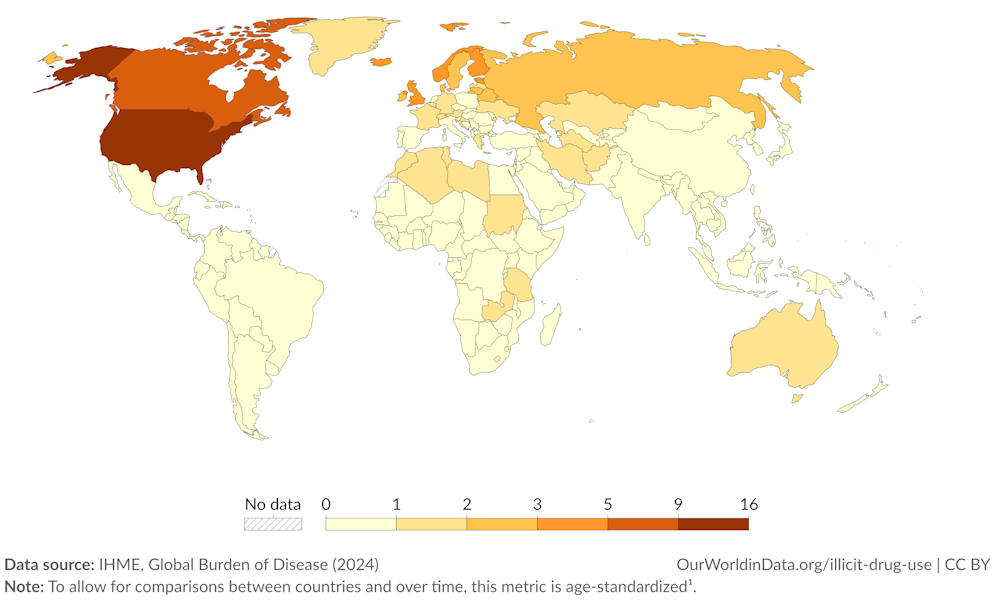
Illicit drug use is damaging large parts of the world socially, politically and environmentally. Patterns of supply and demand are changing rapidly. In our new longform series Addicted, leading drug experts bring you the latest insights on drug use and production as we ask: is it time to declare a planetary emergency?
Officially, more than 400 deaths plus many non-fatal overdoses were linked to nitazenes in the UK between June 2023 and January 2025. But this is likely to be an underestimate because of gaps within forensic and toxicology reporting. These figures come amid record levels of drug-related deaths in England and Wales. In 2023, there were 5,448 deaths related to drug poisoning, an 11% increase on the previous year and the highest total since records began in 1993.
This is of particular concern given that the UK has the largest heroin market in Europe, comprising around 300,000 users in England alone. While nitazene-related deaths are still relatively low (although by no means insignificant) compared with those from heroin and other opioids, these new synthetic opioids are cheap and easy to buy, and offer dealers multiple advantages over traditional plant-based drugs.
Unlike opium, nitazenes and other synthetic opioids can be produced anywhere in the world using precursor chemicals that are often uncontrolled and widely available. Producer countries including China and India have not yet banned all nitazene compounds, meaning they are sold legally – mostly online. Chemical manufacturing companies in these countries can synthesise nitazenes at scale using a comparatively easy three or four-step process.
Opioid use death rates around the world:
Estimated deaths from opioid use disorders per 100,000 people in 2021. Our World In Data, CC BY
For the past 15 years, I have researched and advised on the international narcotics industry, especially the Afghan drug trade, as an academic, UK Home Office official and consultant. I’ve observed many shifts within global drug markets, and I believe the increasing availability of synthetic drugs in the UK and Europe may represent a new chapter in illicit drug use here – with the emergence of nitazenes only adding to these concerns.
A brief history of synthetic opioids
New synthetic opioids (NSOs) are one of the fastest-growing groups of new psychoactive substances around the world. The EU Drugs Agency (EUDA) currently monitors 81 NSOs – the fourth-largest group of drugs under observation.
NSOs largely fall into two broad groups: fentanyl and its analogues, and non-fentanyl-structured compounds – these include nitazenes, among many other substances.
Many of these “new” synthetic opioids have, in fact, existed for decades. Nitazenes were first synthesised in the 1950s by the Swiss pharmaceutical company, Ciba Aktiengesellschaft, as pain-relieving analgesics, although they were never approved for medical use.
Prior to 2019, there had only been limited reports of nitazenes in the illegal drug supply – including a “brownish looking powder” found in Italy in 1966; the discovery of a lab in Germany in 1987; several nitazene-related deaths in Moscow in 1998; and a US chemist illegally producing the drug for personal use in 2003. But since nitazenes re-emerged at the end of the last decade, over 20 variants have been discovered.
Paul Janssen, the Belgian chemist who first made fentanyl. Johnson & Johnson
The most common NSO in the illegal drug market, fentanyl, was first synthesised by Belgian chemist Paul Janssen in 1960. Fentanyl, which is roughly 100 times more potent than morphine, was approved in the US in 1968 for pharmaceutical use as an analgesic.
Over the next four decades, however, illegally produced fentanyl resulted in three relatively small outbreaks of deaths in the US. A fourth, larger fentanyl outbreak in Chicago, Detroit and Philadelphia resulted in about 1,000 deaths between 2005 and 2007.
The current US fentanyl crisis started in 2013, expanding to affect much of the country. Between 2014 and 2019, Chinese companies were the main manufacturers of finished fentanyl substances in the US – to combat this, both the Obama and Trump administrations lobbied Beijing to curtail the fentanyl industry.
The Chinese government responded by controlling specific fentanyl analogues. However, every time an analogue was banned, chemists there would slightly adjust the formula to produce a new compound that mirrored the banned substance.
China finally banned all fentanyl-related substances in May 2019, prompting two significant changes in the drug’s supply: a slowdown in the development of new fentanyl analogues, and a reduction in their direct sale to the US from China. Instead, Chinese companies increasingly sent fentanyl precursors to Mexican drug cartels who would synthesise fentanyl (or counterfeit medication) in clandestine labs, before smuggling it across the US border. Consequently, Mexico is now the primary source of fentanyl in the US.
But these supply changes led to another shift in the global drugs arena, as China’s chemical and pharmaceutical businesses – keen to develop new markets – adjusted their focus to producing uncontrolled synthetic substances, including nitazenes. At the same time, they expanded their geographical focus from North America to include Europe and the UK.
The nitazene supply chain
Producing nitazenes is a relatively low-cost exercise. They are largely manufactured in laboratories – both legal and illegal – in China, before being smuggled to the UK and Europe via fast parcel and post networks.
Nitazenes’ high potency means only small quantities are required, making them easier to transport and harder for border officials to detect. Some Chinese vendors have reportedly been offering to hide nitazenes in legitimate goods such as dog food and catering supplies, to circumvent custom controls. All of this decreases the risk to sellers, and lessens the price of doing business.
In March 2024, two China-based sellers operating on the dark web were selling a kilo of nitazene for between €10,000 and €17,000 (£12,000-£20,000). During roughly the same period, a kilo of heroin at the wholesale level in the UK was selling for between £23,000 and £26,000. Once bought, nitazenes are largely used to fortify low-purity heroin, although the drug can also be made into pills.
Video by The Guardian.
Nitazenes are not limited to the dark web. They are widely and openly advertised on the internet, social media and music streaming platforms. In February 2024, one China-based e-commerce site displayed 85 advertisements for nitazenes. Such sites also sell a range of other synthetic drugs, including fentanyl analogues and precursors, xylazines, cannabinoids and methamphetamine.
This means drug dealers in the UK and across the world no longer need to have established connections to underworld figures to source illegal drugs. With a click of a mouse, they can have them delivered to their home address. In this sense, the internet has democratised the drug trade by widening access beyond “traditional” criminals.
In the UK, while the supply of nitazenes is currently assessed as “low”, a number of smaller-scale organised crime groups are importing them to fortify low-purity heroin, before largely dealing it at the “county lines” level. This involves organised crime groups moving drugs – primarily heroin and crack cocaine – across towns, cities and county borders within the UK, using mobile phones or another form of “deal line” to sell to customers.
In November 2023, Leon Brown from West Bromwich was imprisoned for seven years for dealing drugs containing nitazenes – a verdict described as “a great result in our ongoing efforts to tackle county lines drug dealing” by detective sergeant Luke Papps of the South Worcestershire county lines team.
A few larger UK criminal networks have also been involved in nitazene distribution. In October 2023, the police and Border Force conducted raids across north London, arresting 11 people. They dismantled a drug processing site and seized 150,000 tablets containing nitazene – the UK’s largest ever seizure of synthetic opioids – as well as a pill-pressing machine, a firearm, more than £60,000 in cash and £8,000 in cryptocurrency. The police suspected the group had been selling the tablets on the dark web.
Anecdotal reports suggest there have been mixed reactions to the introduction of nitazenes into the illegal drug supply. Richard, a recovering heroin user from Bristol, told Vice magazine that, given their potency, some “people are scared of [nitazenes]” while others are “actively seeking” them.
As has been the case with fentanyl in the US, users build up tolerance and therefore seek stronger doses. Manny, a heroin user from Bristol, told Vice: “I smoked [heroin cut with nitazenes] and it felt like the first time I’d ever taken drugs.”
Video by Vice.
UK-based criminals also use the dark web to export nitazenes abroad. In October 2023, the Australian Border Force identified 22 nitazene discoveries in packages shipped to the country via mail cargo from the UK. British criminals have also trafficked counterfeit medicines containing nitazenes to Ireland and Norway.
Use of nitazenes is now being detected all over the world. Within Europe, Ireland experienced several nitazene outbreaks in 2023-24 while in Estonia, nitazenes now account for a large share of overdose deaths – a trend also seen (to a lesser extent) in Latvia. Preliminary data suggests at least 150 deaths were linked to nitazenes in Europe in 2023.
Nitazenes have also been discovered in fake pain medication such as benzodiazepines, oxycodone and diazepam, which widens the number of people at risk to include those with no opioid tolerance. The death in July 2023 of Alex Harpum, a 23-year-old British student who was preparing for a career as an opera singer, was a stark reminder of the danger of buying fake medicine online that may have been contaminated with nitazenes.
The nitazene ‘boom’ and the global heroin trade
For decades, Afghanistan was the world’s largest opium producer and the source of most of Europe’s heroin. Then in April 2022, the ruling Taliban announced a comprehensive prohibition on the use, trade, transport, production, import and export of all drugs. As a result, poppy cultivation has fallen to historically low levels for a second consecutive year.
While this has not, as yet, translated into a shortage of heroin on European streets, including in the UK and Germany, some indicators suggest a slowdown in heroin supplies to the UK. In the year March 2023-24, the quantity of heroin seized in the UK fell by 54%, from 950kg to 441kg. This is the lowest quantity of heroin seized since 1989, when about 350kg was intercepted.
The NCA assesses that the Taliban ban has created market “uncertainty”. The wholesale price of heroin has increased from roughly £16,000 per kilo prior to the COVID-19 pandemic to about £26,000, while anecdotal reports suggest average heroin purity for users dropped to under 30% (often to 10-20%) in 2024, compared with around 35% in 2023 and 45% in 2022.
Video by UN Story.
Even without the Taliban’s ban, heroin is not easy to produce and supply. Cultivating opium poppy is labour-intensive, taking five or six months. The static nature of opium fields means they are visible and susceptible to eradication; poppy crops can also be negatively affected by blight or drought.
Converting opium into heroin base is also a labour-intensive process that can involve (depending on the production method) at least 17 steps. Acetic anhydride, the main chemical used to convert morphine into heroin, is relatively expensive compared with synthetic precursors. Moreover, heroin is a bulky product, which means it is harder to move in large volumes.
While the relationship between events in opiate-producer countries and the introduction of synthetic opioids to consumer markets should not be overstated, this new type of drug offers economic advantages to criminals whose “sole motivation is greed”.
For decades, Turkish, Kurdish and Pakistani criminal networks have been responsible for importing heroin into the UK. Once in the UK, both Turkish and British groups largely control its wholesale supply, with some participation of Albanian gangs.
To date, there is little evidence to suggest these groups have transitioned to supplying NSOs, including nitazenes. The shifting dynamics in the global drug supply chain, however, could upend traditional markets and the gangs who profit from them.
America’s synthetic drug crisis
The synthetic opioid fentanyl has devastated the US, having been linked to about 75,000 deaths in 2023 alone. It is the primary cause of death for Americans aged 18-49. Canada, too, has experienced a wave of deaths: between January 2016 and June 2024, there were 49,105 apparent opioid deaths there, with fentanyl implicated in a large proportion.
More than 4,300 reports of nitazenes have reached the US National Forensic Laboratory Information System since 2019. They are typically used to fortify fentanyl and other opioids, which can produce a fatal concoction.
Efforts to stem the flow of NSOs, including nitazenes, from China to the US and elsewhere will prove challenging. And even if China does implement stricter controls, other countries could step in to fill the void. According to the Commission on Combating Synthetic Opioid Trafficking:
The overall sizes of these industries, limited oversight efforts and political incentives contribute to an atmosphere of impunity among firms and individuals associated with those industries.
While US and Chinese counter-narcotics cooperation ended in 2022 amid increasing geopolitical tensions, the following November’s summit in Woodside, California, between presidents Joe Biden and Xi Jinping saw them agree to recommence collaboration.
As a result, China recently closed several chemical companies that were shipping fentanyl precursors and nitazenes to the US. These vendors used encrypted platforms and cryptocurrency to conduct the deals, and mislabelled the consignments to try to ensure the substances evaded border controls. China has also outlawed more chemicals and substances, including several nitazene variants.
But President Trump’s imposition of tariffs on imports from China – which sit alongside proposed taxes on imports from Canada and Mexico, in part for supposedly not doing enough to curb the trafficking of fentanyl and its precursors to the US – threatens this counter-narcotics cooperation.
While nitazenes are not yet widely available in the US, their presence within some fentanyl batches is complicating the US opioid crisis – and according to some experts, has the potential to further increase the already shocking number of synthetic opioid-related deaths.
The UK response to nitazenes
Successive UK governments have made tackling NSOs a high priority. Shortly after the most recent nitazene-related deaths were discovered in the UK in summer 2023, the NCA launched Project Housebuilder to lead and coordinate the law enforcement and public health response.
This was soon followed by the establishment of a government-wide Synthetic Opioids Taskforce “to improve…understanding, preparedness and mitigation against this evolving threat”. Chris Philp, then the UK’s combatting drugs minister, stated that “synthetic opioids are at the top of [this government’s] list because of the harm they cause”.
The taskforce has taken a range of measures, such as controlling more NSOs as class A drugs, conducting more intelligence operations at UK borders, widening access to naloxone, and enhancing the UK’s real-time, multi-source drug surveillance system. The government also worked with the US and Canada to learn from their experiences.
Recently, the current UK government banned a further six synthetic opioids and introduced a generic definition of nitazenes as class A drugs. And the UK’s current government, unlike its Conservative predecessor, has also indicated its willingness to consider evidence from the UK’s first drug consumption facility, which recently opened in Glasgow.
Other policy measures worthy of consideration include expanding drug checking services whereby drug users submit drugs to a lab to test what is in them, then are provided with information about the sample. These services offer vital information to the public and authorities about current drug trends.
While there is high uncertainty about what is going to happen next in the UK regarding illicit drug trends, the evolution of the US drug landscape over generations provides some important lessons.
Lessons from the US
The US fentanyl crisis shows drug markets can change quickly with long-lasting consequences. Most heroin on US streets contains – or has been replaced by – fentanyl. According to DEA seizure data, US heroin seizures declined by nearly 70% between 2019 and 2023, whereas fentanyl seizures have increased by 451%.
However, illegal drug markets evolve in different ways and at different paces. In May 1989, Douglas Hogg, a UK Home Office minister, travelled to the US and the Bahamas on a fact-finding mission about crack cocaine, a drug that was predicted to spread from the US to the UK. Upon his return, Hogg noted:
The ethnic, social and economic characters of many of our big cities are very similar to those in the US. If they have a crack problem, why should not we? … The use of crack in Great Britain is likely to develop very substantially over the next few years.
But this “crack invasion”, as some called it, did not materialise in the UK to the extent it had in the US – and the same was true about a predicted wave of methamphetamine use in the UK, which remains low compared with the US.
It is also unlikely the UK and Europe will experience a synthetic opioid crisis on the same scale as the US. The first wave of the US crisis was driven by extensive overprescription of opioids for pain relief. This increased the number of people addicted to opioids, some of whom later turned to heroin, before transitioning to fentanyl. In contrast, large-scale opioid prescriptions have not been a major issue in the UK or Europe, although there is some diversion of legal fentanyl into the illegal drug market in Europe.
Video by The Brookings Institution.
According to Alex Stevens, professor of criminology at the University of Sheffield, another factor differentiating the US and Europe is the provision of drug treatment and harm reduction programmes. Opioid users in Europe, and to a lesser extent in the UK, are much more likely to be in medication-assisted treatment than their US counterparts, thus reducing the number of people at risk. These interventions are reinforced by different socioeconomic factors in much of Europe, such as lower economic inequality, stronger social protections, and better healthcare systems.
None of this, though, means the nitazene threat in the UK and Europe should be underestimated, nor that use and supply of these drugs (and other NSOs) will not increase from its current relatively low base. As the NCA recently warned:
While a zero-tolerance approach from law enforcement, plus advice to users on the heightened dangers, may contain or slow the current uptake, we must prepare for these substances to become widely available, both unadvertised in fortified mixes and in response to user demand as a more potent high.
The future of new synthetic opioids
Predicting the future of NSO use and trafficking is a challenging task. Projections for Europe range from existing opiate stockpiles ensuring that heroin consumer markets remain serviced (assuming the Taliban ban is short-lived), to a heroin shortage which results in more drug dealers turning to NSOs to plug the shortfall, which in turn could lead to lasting changes in European drug markets (as happened in a few countries following the Taliban’s first opium ban in 2000-01).
In such a scenario, it is possible that Turkish criminal networks may exploit their links with Mexico’s Sinaloa cartel to source NSOs. Mexican criminal gangs also operate in Europe, which may increase the likelihood of them trying to open a new NSO market on the continent.
There is also evidence that some Italian criminal organisations have entered the NSO marketplace. In November 2023, Italian authorities announced the seizure of 100,000 doses of synthetic drugs, including fentanyl, as part of operation Painkiller, a joint Italian-American initiative.
Given the many advantages for criminal groups of NSOs, it seems likely they are here to stay. A key question is whether nitazenes (or other NSOs) will supplant traditional heroin as the opioid of choice, as they have done in the US, or remain at relatively low levels in Europe, co-existing with or mixed into the heroin supply.
In December 2023, Paul Griffiths, the EUDA’s scientific director, told Vice: “We’re not seeing much new initiation of heroin use in Europe. So in five to ten years … as heroin users get older and more vulnerable, we’re not going to have much of an opiate problem left.”
But he warned that if heroin use does dry up: “You might then see opioids appearing in other forms and preparations, such as pills, that could potentially become popular among younger age groups who currently do not appear attracted to injecting heroin.”
While previous NSO outbreaks in the UK were relatively short-lived and limited in scale, the most recent nitazene outbreak, which started in summer of 2023, has been more sustained, covered more parts of the UK, and involved more fatalities. The broader trend in Europe also suggests the prevalence and variations of NSOs are increasing at a faster pace than in previous years.
Notwithstanding, nitazene use and supply in the UK currently remains relatively low. In fact, the rate of nitazene-linked deaths – at least those officially reported – decreased between spring 2024 and the end of the year.
In the short term, then, it seems unlikely there will be a nitazene “explosion”. Rather, criminal groups will probably try to increasingly embed nitazenes into the UK drug market at a similar pace to the last 18 months.
However, this situation could change rapidly in future, especially if larger criminal networks involved in heroin importation switch to smuggling NSOs, and there is a genuine shortage of Afghan heroin. This problem would be compounded if drug users start seeking nitazenes, thus creating demand for them.
Either way, the UK government, along with its European partners, should continue to reinforce the whole drug system, to prepare for the worst-case scenario.
To hear about new Insights articles, join the hundreds of thousands of people who value The Conversation’s evidence-based news. Subscribe to our newsletter.
Philip A. Berry does not work for, consult, own shares in or receive funding from any company or organisation that would benefit from this article, and has disclosed no relevant affiliations beyond their academic appointment.
Donald Trump has hit the 30-day pause button on imposing 25% tariffs on Canada and Mexico, but is proceeding with slapping 10% tariffs on Chinese imports, and tariffs on the EU are still on his agenda.
Trump has declared that “tariff” is “the most beautiful word in the dictionary”. Yet as the president weighs up the sweeping consequences of his tariff fixation, he may want to throw out the dictionary and pick up a history book.
The magnitude and scale of the proposed tariffs hark back to the US Smoot-Hawley Tariff Act enacted in 1930.
For example, Nobel Laureate economist Paul Krugman told Bloomberg that “we’re really talking about tariffs on a scale that we … have not seen,” adding that “we’re talking about a reversal of really 90 years of US policy”.
The Smoot-Hawley tariffs were initially intended to provide support to the deeply indebted US agricultural sector at the end of the 1920s, and protect them from foreign competition – all familiar themes to the anti-free-trade rhetoric peddled by Trumpists today.
The advent of the Great Depression had generated widespread, albeit not universal, demands for protection from imports, and Smoot-Hawley increased already significant tariffs on overseas goods. Members of Congress were eager to provide protection, trading votes in exchange for support for their constituents’ industries.
Although at the time more than 1,000 economists implored President Herbert Hoover to veto Smoot-Hawley, the bill was signed into law. The resulting tariff act led to taxes averaging nearly 40% on 20,000 or so different types of imported goods.
The history of trade tariffs in the US.
The culmination led to a dramatic decline in US trade with other countries, particularly among those that retaliated, and is widely acknowledge as severely worsening the Great Depression. According to one estimate, the sum of US imports plummeted by nearly half.
What’s more, the impacts were felt globally. Protectionist policies are believed to have accounted for about half of the 25% decline in world trade, and indirectly helped create economic factors that led to the second world war.
The blowback against Capitol Hill was immense as well: the optics of vote trading over the tariff act resulted in Congress delegating control over trade policy to the president just four years later because the behaviour was regarded as so reckless.
All of this came against the backdrop of diplomatic American isolationism in the 1930s, which were not unlike many of Trump’s current efforts to retreat from – or even attack – multilateral institutions.
Despite President Woodrow Wilson winning the Nobel Peace Prize in 1919 for his work initiating the League of Nations (a forerunner of the United Nations), for example, the US never became a member. The term “America first” was also used widely in this period to refer to a focus on domestic policy and high tariffs.
Fast forward to present day
Trump has said that his tariffs will cause “some pain” but are “worth the price that must be paid.” Based on recent estimates from the non-partisan Peterson Institute for International Economics, Trump’s tariffs could drive up costs for the average US household more than US$1,200 (£963) per year.
Whether US voters will still stand behind Trump when actual prices begin to rise is still to be determined.
However, many Republicans on Capitol Hill have rushed to Trump’s defence. Congresswoman Claudia Tenney of New York told Fox News that she’s glad the US is “projecting strength for once on the world stage”. Senator Eric Schmitt of Missouri insisted that tariffs were “not a surprise,” emphasising that Trump had relentlessly campaigned on “improving our standing in the world.”
Perhaps the sharpest Republican rebuke came from Sen. Mitch McConnell of Kentucky, who labelled the tariffs simply a “bad idea”.
Public opinion data show that tariffs are hotly contested, with partisanship shaping both general views toward tariffs and views on specific national targets.
According to a January 2025 Harvard CAPS/Harris poll, 52% of Americans overall approve of placing new tariffs on China, with 74% of Republicans in favour, but just 34% of Democrats.
Support is more modest for imposing tariffs on America’s neighbours. Only 40% of voters think tariffs on Canada and Mexico are a good idea, including 59% of Republicans and 24% of Democrats.
Tariffs rank low on a list of national priorities. A mere 3% of Americans think tariffs on Canada and Mexico should be a top priority for Trump in his first 100 days, while just 11% rank tariffs on China as a top priority.
Prospect of a broader trade war
What seems clear is that Trump’s proposed tariffs against Canada, Mexico, and China could be just the opening salvos in a broader tit-for-tat that may extend to Europe, and beyond.
At home, the political challenge for Trump is to keep intact what increasingly looks like a fragile coalition – balancing the interests of hardline Maga supporters who reject free trade and tech titans who see tariffs as disrupting vital supply chains, especially to Asia.
After Trump’s election, former adviser and populist nationalist Steve Bannon warned that America would no longer be “abused” by “unbalanced trade deals.” “Yes, tariffs are coming,” he said. “You will have to pay to have access to the US market. It is no longer free, the free market is over.”
Meanwhile, Silicon Valley has been mostly silent on the tariffs. While tech moguls are doubtlessly trying to curry favour for tariff exemptions or the reduction of tariffs altogether, it’s possible that they have been assured that the tariffs are about leverage and will be gone soon enough.
Regardless, Trump is showing that tariffs are a crucial part of his “America first” foreign policy, a kind of belligerent unilateralism that treats allies and adversaries alike as pieces to be moved around a chessboard.
Under Trump, the “art of the deal” means throwing America’s weight around as the world’s economic superpower, and waiting for the leaders of other nations to fold. Whether American voters will endure the economic costs necessary for his plans could determine his resolve.
Trump may think that tariff is a beautiful word now. But if even a glimmer of the 1930s repeats itself, its economic shadow could soon look grim.
The authors do not work for, consult, own shares in or receive funding from any company or organisation that would benefit from this article, and have disclosed no relevant affiliations beyond their academic appointment.
Source: United Kingdom – Executive Government & Departments
Scientists comment on the Public Accounts Committee (PAC) report on Carbon Capture, Usage and Storage (CCUS) technologies.
Prof Hannah Chalmers, Personal Chair of Sustainable Energy Systems, Institute for Energy Systems, School of Engineering, University of Edinburgh, said:
“CCUS technologies can play a unique role in tackling carbon dioxide emissions. They can be used at large industrial sites to ensure that most of the carbon dioxide produced by activities like iron and steel production is not emitted to the atmosphere. Instead, the carbon dioxide is permanently stored in geological formations (rocks). In the UK, CCUS projects are developing plans to store carbon dioxide in layers of rock that are deep underneath the sea.
“There is also ongoing work to develop and deploy cost-effective approaches to remove carbon dioxide directly from the air. This provides an important option to respond to the widely reported increases in carbon dioxide levels in the atmosphere that are causing significant concern.
“There is significant evidence that including CCUS in a mix of technologies to reduce carbon dioxide emissions will be the most cost-effective way to address climate change. Several large-scale projects have been operating in other countries for many years. Experience from these projects is being used to ensure that the CCUS projects that are being developed in the UK are designed to be reliable and cost-effective.”
Dr Stuart Gilfillan, Reader in Geochemistry, University of Edinburgh, said:
What is CCUS technology, how does it work, does it have limitations?
“CCUS stands for Carbon Capture, Utilisation, and Storage, which is a developing technology which reduces the amount of carbon dioxide (CO2) released into the atmosphere. It works by capturing CO2 at the point source, transporting it and then burying it for safe storage in rocks over a kilometre below the ground surface. Like any technology, it has pros and cons, and costs more than simply releasing the CO2 directly to the atmosphere, which is currently free. CCUS is the only currently available technology that can directly reduce CO2 emissions from sources like power plants and industrial processes. Given that global temperature records are now being broken on an almost daily basis and yesterday’s announcement of the hottest January on record, it is essential tool in the urgent fight against runaway climate change.
What is the existing evidence around the efficacy of CCUS?
“CO2 capture technology has proven successful in capturing up to 90-95% of CO2 emissions from point of sources from power stations and industrial facilities. Successful examples include the Boundary Dam power station in Saskatchewan, Canada, where a large-scale CCUS unit has been operational since 2014, capturing about 1 million tonnes of CO2 per year.
“The long-term storage of CO2 is proven by natural CO2 reservoirs around the world and engineered projects like Sleipner in the North Sea, which have been injecting CO2 beneath the seabed since 1996 without significant issues. Research over the past two decades has developed monitoring technologies that can detect and mitigate potential leakage and to ensure that CO2 remains securely buried in rocks deep underground.
What more evidence may be needed to be confident in its applications?
“No more evidence is required, as exemplified by the UK’s Climate Change Committee (CCC), which is an independent body established under the Climate Change Act who advise the government on emissions targets and report to Parliament on progress made in reducing greenhouse gas emissions. The CCC is clear that CCUS is a critical technology for the decarbonisation of the UK economy, particularly in sectors that are hard to decarbonize directly, such as heavy industry (steel, cement, chemicals) and power generation.
“CCUS is not only as a standalone technology but is an essential part of a broader strategy to reach net-zero emissions by 2050. It compliments energy efficiency, renewable energy deployment, and electrification. CCUS is a clear driver for regional economic development, particularly in regions with suitable geological storage sites and industrial bases, such as the East Coast of Scotland, the Humber region, and North East England, areas that have been ‘left behind’ in recent times.”
Dr Tim Dixon, IEA Greenhouse Gas, Director and General Manager, said:
“Carbon Capture and Storage (CCS) is a necessary technology for the UK and other countries to achieve net-zero, and we need all low-carbon energy technologies. The science case for the role of CCS is provided by the UK’s Climate Change Committee, the Intergovernmental Panel on Climate Change (IPCC) and the International Energy Agency (IEA) and cannot be disputed if climate change is to be taken seriously. The key aspect of CCS is the secure long-term retention of CO2 in deep geological formations, and we have decades of experience in this from around the world. With over 40 large scale projects in operation injecting millions of tonnes every year and many pilot-scale projects, this has allowed us to test the science, the monitoring and the practicalities of geological storage of CO2. Hence CO2 geological storage is a proven technology and the regulations to enable and to ensure that it is safe and secure are based upon this sound science and experience. ”
Professor Paul Fennell FIchemE, Professor of Clean Energy, Imperial College London, said:
“The idea that Carbon Capture and Storage is an unproven technology is simply untrue. There are projects ongoing around the world, and millions of tonnes of CO2 have been safely stored over the last couple of decades. This has not happened in the U.K. because of our sclerotic inability to develop public infrastructure, not because the technology is unproven.”
Dr Greg Mutch, Researcher in Carbon Capture and Storage, Newcastle University, said:
“Carbon capture and storage is a technology that prevents carbon dioxide from entering the atmosphere, by capturing it and storing it underground in ‘empty’ oil & gas reservoirs or saline aquifers. According to the world’s foremost experts on the subject, gathered to contribute the International Panel on Climate Change, carbon capture and storage processes are necessary to achieve climate change mitigation goals at lowest cost. Without scalable CCS technologies by the end of the century, climate change mitigation will cost between 29 and 297% (mean value 138%) more.[1] Moreover, CCS is predicted to provide tens of thousands of jobs in the UK, add several billion pounds in terms of gross value added per year by 2050,[2] and enable other important technologies (hydrogen production etc) that will come with further jobs and economic value.”
[1] IPCC, 2018: Global Warming of 1.5 °C. An IPCC Special Report on the impacts of global warming of 1.5 °C above pre-industrial levels and related global greenhouse gas emission pathways, in the context of strengthening the global response to the threat of climate change, sustainable development, and efforts to eradicate poverty, ed. V. Masson-Delmotte, P. Zhai, H.-O. Portner, D. Roberts, J. Skea, P. R. Shukla, A. Pirani, W. Moufouma-Okia, C. Pean, R. Pidcock, S. Connors, J. B. R. Matthews, Y. Chen, X. Zhou, M. I. Gomis, E. Lonnoy, T. Maycock, M. Tignor and T. Waterfield, Cambridge University Press, 2018.
[2] Energy Innovation Needs Assessment Sub-theme report: Carbon capture, utilisation, and storage, Vivid Economics, Carbon Trust, E4tech, Imperial College London, Frazer-Nash Consultancy, Energy Systems Catapult. Commissioned by the Department for Business, Energy & Industrial Strategy, 2019.
Professor Peter Styring, Director of the UK Centre for Carbon Dioxide Utilization, Professor of Chemical Engineering & Chemistry, University of Sheffield, said:
What is CCUS technology, how does it work, does it have limitations?
“CCUS is carbon capture and storage. This has been primarily focused on CCS as the main driver. It aims to capture carbon dioxide from emitters such as power stations and industries. The current technology temperature swing absorption (TSA) using a chemical reaction with an aqueous amine solvent to capture the CO2 from the mixed waste gas and then to release it in a purified form by increased temperature chemical desorption and then further drying and purification to get a gas that can be in theory transported to a site where the gas can be stored underground. It works but at a high energy cost and the production of amine decomposition products that need to be removed and more amine added. It costs a lot!
“Limitations are the energy and financial costs, permitting regulations on solvent disclosure and the large physical footprint. Full system lifecycle analysis is required but this is not always reported.”
What is the existing evidence around the efficacy of CCUS?
“This is not proven using current technologies. The problem is that the current government funded projects use old technologies to achieve CCS and what is actually needed is a step change to new, lower cost more efficient processes such as solid based pressure swing adsorption (PSA). The whole system tends to be simpler and the energy costs and land use is significantly reduced.”
What more evidence may be needed to be confident in its applications?
“Full evaluation of new technologies and rapid acceleration from proof of concept to capture at scale. The Innovate UK funded Flue2Chem project is a good example of how this is being addressed using mid-TRL technologies. The UK also needs to move away from a single minded storage approach to adding value through the use of CO2 in the production of chemicals that would otherwise be sourced from virgin fossil carbon. SUSTAIN project is making synthetic fuels from captured CO2 and Flue2Chem is making FMCG components, including surfactants and precursors from the CO2.”
Dr Stuart Jenkins, Net Zero Fossil Fuel Fellow, University of Oxford, said:
“The Public Accounts Committee are wrong to have labelled CCUS as ‘unproven’, there are many commercial scale projects around the world, but they are right to question the current model for funding it. We need to make sure the CCUS industry becomes self-sustaining, without the need for major taxpayer funding. One option — asking fossil fuel suppliers to contribute to these costs via a carbon storage mandate — is a fair and responsible approach going forward.
In a recent report we published working with researchers at the University of Oxford and Carbon Balance Initiative [1] we looked at the use of Carbon Storage Mandates, which place an obligation on fossil fuel producers to capture and store a rising fraction of the CO2 they produce, to support the UK’s CCUS industry.
Carbon storage mandates, in tandem with carbon pricing and other mechanisms, could deliver subsidy-free CCUS to the UK and provide investment certainty for companies.”
Dr Stuart Jenkins Our report was funded by the Carbon Capture and Storage Association, and consulted regulators, fossil fuel companies, capture and storage entities, UK Government, and academics on models for CCUS sector support packages.
Professor Paul Fennell: No conflicts other than being involved in CCs research.
Dr Tim Dixon: “Tim is a Director of IEA Environmental Projects Ltd (UK), a Non-Executive Director on the Board for The International CCS Knowledge Centre (Canada). He is also proud to be an Honorary Senior Research Fellow at the Bureau of Economic Geology, University of Texas in Austin, and an Honorary Lecturer at the School of Geosciences at University of Edinburgh. He was an original Board Member of the UK CCS Research Centre. Previously he worked in CCS, emissions trading, clean energy technologies and related areas for AEA Technology (ETSU), for the UK Government‘s Department of Trade and Industry (DTI) and for the Global CCS Institute. He was the EU’s Lead Negotiator for getting CCS in the CDM in UNFCCC in 2011, and a UK negotiator for getting CCS in the London Convention 2004-7, in OSPAR 2006-7, in the EU Emission Trading Scheme 2004-8, and inputting to the EU CCS Directive 2007-8. He gives talks on climate and CCS to schools and public organisations and supported the start of Oxford Climate Society at the University of Oxford. He is a Fellow of the UK Energy Institute, and member of the UK Institute of Physics and the UK Environmental Law Association.”
Dr Stuart Gilfillan “I have received funding from TotalEnergies in the past, for research related to CO2 origins in the subsurface and reservoir connectivity and Equinor on CO2 dissolution in natural CO2 reservoirs. I currently receive funding from the Natural Environment Research Council and Carbfix on CO2 mineralisation.”
Prof Hannah Chalmers “I work collaboratively with industrial partners who are developing CCUS projects in the UK (e.g. as a member of the Advisory Board for the Industrial Decarbonisation Research and Innovation Centre). I currently receive no funding from industry, but have received funding from industrial partners who are actively developing CCUS projects in the UK in the past (e.g. SSE plc).”
Professor Peter Styring: Peter is Professor of Chemical Engineering and Chemistry at the University of Sheffield (an investigator on Flue2Chem and SUSTAIN) and a Co-founder and Director of CCU International.
For all other experts, no response to our request for DOIs was received.
The MAKO series is designed to provide Reserve Sailors hands-on experience within the operational level of war (OLW) environment including a maritime operations center (MOC) scenario.
Rear Adm. Kenneth Blackmon, Vice Commander of USFF, describes this MAKO Challenge as aligning to, “the Chief of Naval Operations (CNO)’s ‘Project 33 target’ to ‘Fight from the MOC’ by affording Reserve Component Sailors new to MOC units basic reps and sets to be better prepared to add value on day one.”
Fighting from the MOC is one of the seven targets that make up CNO Adm. Lisa Franchetti’s Project 33, a set of targets that will allow the U.S. Navy to make strategic gains in the fastest time with the resources we influence. In the Navigation Plan for America’s Warfighting Navy, the CNO states that, “through ready MOCs, the Navy will expand information and decision advantage to retain the initiative in crisis or conflict.”
The document adds that, “by 2027, all fleet headquarters, starting in the Pacific Fleet, will have ready MOCs certified and proficient in command and control, information, intelligence, fires, movement and maneuver, protection, and sustainment functions as assessed by our MOC Training Teams.”
“This investment in our Reserve Component MOC training is critical for CNO’s Fight From the MOC priority and is informed by the active component’s experiences on the watch floors around the globe,” according to Blackmon.
With limited time and high operational expectations, the Navy Reserve prioritizes training to increase warfighting readiness. This is especially important given the many geopolitical challenges the U.S. currently faces. Accordingly, evolutions like MAKO are designed to give Reserve Sailors in the fleet the most realistic training they can receive without standing on the active watch floor. MAKO also prepares participants for when they are called on orders for future exercises or to fill in for active duty gaps.
Reserve Sailors who attended MAKO make a direct impact on the readiness of the Navy through realistic training, and the MOC and other OLW lines of effort are priorities of Navy leadership.
Senior leaders visited the watch floor and spoke with Reserve Sailors and mentors in order to better understand the training taking place and witness the active and Reserve integration firsthand.
Headline: ICC and Palestine Emerging continue to promote economic opportunity in the Middle East
Share this:
A second meeting of the ICC-Palestine Emerging Steering Committee was held virtually on 7 February, marking a progress-tracking milestone since the collaboration was announced in October 2024. With a focus on the economic development and reconstruction of Gaza and the West Bank, the ICC-Palestine Emerging partnership works to promote strong private sectors across the Middle East.
Another key achievement has been the formal affiliation of the Federation of Palestinian Chambers of Commerce, Industry and Agriculture (FPCCIA) with the ICC World Chambers Federation. The affiliation will allow Palestinian companies to participate in ICC’s global business events and to gain international market access. It will also provide Palestinian companies with direct access to ICC OneClick, ICC’s gateway supporting SMEs in their export journey, now available in Arabic.
ICC Secretary General, John W.H. Denton AO said:
“By combining the breadth and credibility of ICC’s network and expertise with Palestine Emerging’s local insights, this collaboration will continue to foster Palestine’s engagement with the global economy with integrity”
The ICC-Palestine Emerging partnership has identified 15 workstreams aimed at growing the Palestinian economy, and the Middle East region at large. These include concrete initiatives to strengthen the Palestinian private sector’s involvement with ICC’s global network, including through the establishment of a new national committee.
ICC is working closely with Palestine Emerging to promote the Palestinian entrepreneurship ecosystem by facilitating engagement between local startups, education institutions and international investors. The initiative also aims to enhance investment attraction efforts and support economic reconstruction, including by developing local arbitration capabilities and bringing ICC’s alternative dispute resolution services to Palestine.
Senior ICC representatives have actively engaged in Palestine Emerging activities. These include joint events with the United States Institute of Peace in Washington D.C. in December 2024 and the Palestine Emerging International Advisory Group meeting in London in January 2025.
ICC and Palestine Emerging have secured support from key international players for these joint initiatives through engagement with key government and business leaders.
As momentum builds, ICC and Palestine Emerging’s collaboration will continue to drive economic opportunity and integration for Palestinian businesses with the global economy.
Source: United States Senator for Massachusetts – Elizabeth Warren
February 07, 2025
Musk’s Team May Have Obtained Access to Personal Information of Millions of Borrowers; Raises Concerns About Violations of the Law, Failure to Protect Sensitive Information
“The millions of families who rely on ED to help them achieve the American Dream deserve answers about reports that an unelected billionaire and his team now have access to some of their most sensitive personal information.”
Text of Letter (PDF)
Washington, D.C. – U.S. Senator Elizabeth Warren (D-Mass.) and Senate Minority Leader Chuck Schumer (D-N.Y.) led 14 of their colleagues in sending a letter to Acting Secretary of the Department of Education, Denise Carter, launching a probe into recent reports that Elon Musk’s Department of Government Efficiency (DOGE) has infiltrated the Department of Education (ED) and that “DOGE staffers have gained access to federal student loan data, which includes personal information for millions of borrowers.”
The letter was joined by Senators Cory Booker (D-N.J.), Richard Durbin (D-Ill.), Jack Reed (D-R.I.), Ed Markey (D-Mass.), Jeff Merkley (D-Ore.), Alex Padilla (D-Calif), Richard Blumenthal (D-Conn.), Tammy Duckworth (D-Ill.), Mazie Hirono (D-Hawaii), Tina Smith (D-Minn.), Chris Van Hollen (D-Md.), Raphael Warnock (D-Ga.), Ben Ray Luján (D-N.M.), and Ron Wyden (D-Ore.).
There are over 40 million federal student loan borrowers in the United States. ED’s student loan database contains millions of borrowers’ highly sensitive information, including Social Security numbers, marital status, and income data.
“This deeply troubling report raises questions about potential exposures of Americans’ private data, the abuse of this data by the Trump Administration, and whether officials who have access to the data may have violated the law or the federal government’s procedures for handling sensitive information,” wrote the senators.
According to public reporting, “a handful of 19-to-24-year-old engineers linked to Musk’s companies, with unclear titles, could be bypassing regular security protocols” during DOGE’s infiltration of federal agencies. The senators also raised concerns that the access provided to DOGE-affiliated staff by the Department may violate the Privacy Act, which generally prohibits the disclosure of such information.
“We are especially troubled by this reporting given President Trump’s stated pledge to abolish the Department,” concluded the lawmakers. “The millions of families who rely on ED to help them achieve the American Dream deserve answers about reports that an unelected billionaire and his team now have access to some of their most sensitive personal information.”
Additional reporting suggests that DOGE has “fed sensitive data from across the Education Department into artificial intelligence software to probe the agency’s programs and spending.” The 16 senators requested answers from Acting Secretary Carter about DOGE’s access to federal student loan data and any other sensitive databases by February 13, 2025.
Source: United Kingdom – Executive Government & Departments
Minister Dodds gave opening remarks at a reception to reaffirm the importance of gender equality and comprehensive sexual and reproductive health and rights to individuals, families and society.
Welcome, everyone and thank you, Plan International UK, for helping to bring us together.
I am grateful for this opportunity to share some reflections, because, as the UK’s Minister for Development, Women and Equalities, sexual and reproductive health and rights are a priority for me.
We must keep working together to make sure everyone has power over their own bodies. That includes the choice of whether to have sex – if at all. That includes whether to continue with a pregnancy – and when to have children. And that includes the LGBTQ+ community.
This is fundamentally the right thing to do, and the smart thing to do. Over the last 6 months, from South Sudan to Indonesia to Malawi, my conversations with those affected have underlined this powerfully.
We know that when women, girls, and other marginalised groups are empowered, they lift up whole families, communities and economies.
Yet, there is a great deal of work ahead of us, to close the gap between where we are and where we need to be.
As hard-won rights are being rolled back, with more than a quarter of a million people lacking access to information and services and complications from pregnancy and childbirth remain the leading cause of death for around 12 million girls in lower-income countries.
Not to mention the fact that women and girls are bearing the brunt of conflicts and humanitarian disasters around the world. Sadly, on every continent, including here in Europe, groups that are hell-bent on rolling back rights and denying women and girls choice, are sowing the seeds of division.
In the face of such challenges, it is only by standing strong and working together that we can hope to turn things around.
For our part, the UK reaches many millions of people every year, making sure that the poorest and most marginalised have access to life saving services, are heard, and have greater choice and control.
This government is keeping that work at the top of the global political agenda – where it belongs. Be that the Prime Minister’s commitment to supporting local, national and global efforts on World Aids Day.
Or the Foreign Secretary’s recent visit to Chad where he announced further support for women and girls – including refugees from Sudan – to access sexual and reproductive health services.
Next month, I look forward to leading the UK’s delegation to the Commission on the Status of Women at the United Nations, in New York, where once again, we will push to keep this vital work firmly in the international spotlight.
In April, today’s panellist, Neisha will join the UK delegation at the Commission on Population and Development in New York, to make sure we hear from the next generation very directly.
And today, I am proud to announce my role as a She Decides champion – part of a global movement advocating for every woman and girl’s right to choose what to do with her own body. I am very glad to add my voice to these efforts.
Let me end by repeating that each and every one of us here has our own powerful part to play, and together, we can make a difference by listening to those affected, amplifying their voices, and taking action by challenging harmful practices and discrimination, calling out attempts to erode rights and breaking down barriers and sharing our knowledge, experience and expertise.
That is why I am so glad we are here today to discuss all this – and galvanise our efforts. So, thank you, once again, for joining us and for your dedication to this important work. I look forward to all that we can achieve together.
UK Government Scotland Office Minister Kirsty McNeill in conversation at the The Scottish Council for Voluntary Organisations (SCVO), the Gathering event.
I can’t tell you how happy I am to be here, back among friends devoting their lives to a social purpose.
As some of you might know, I spent much of my life in the voluntary and community sector, both on staff and as a volunteer.
And I’m still a proud member and supporter of a lot of organisations I was involved with before I became an MP.
As a minister too I’ve had the chance to visit organisations like Greener Kirkcaldy, Bairn’s Hoose in Dundee, Macaulay College in the Western Isles, Barnardos Nurture Service Inverclyde and Bravehound to name but a few.
And I want to reassure people who do the mail outs to MPs that yes, there really is someone who reads every single bit of bumpf they are sent or handed and that’s me! That’s how I know stuff like the people in the War Memorial Trust diligently cleaning and protecting these sacred places, or about the 850 people involved in Scottish Mountain Rescue who go out in all weathers to save the lives of perfect strangers.
So I will always want to hear from and spend time with you.
Because we are pals. But because we are pals I want us to have a really honest conversation today. You are busy people – nobody here has time to beat around the bush.
So I wanted to come here today to say I think we are both punching below our weight right now – both civil society and government – because we haven’t yet found the right way to work together.
When we do, we are going to be unstoppable. But right now, we are still finding our way.
Let me give you some examples. The UK Government’s budget delivered nearly £5 billion extra for Scotland’s public services – money which, if well spent, could take pressure off of everyone here who works in health, education, transport, poverty or community development. We should be talking to each other and the Scottish Government about how to make that money have the maximum impact for Scots.
Instead almost all of our conversation has been about the changes to employer national insurance contributions. I get that this decision is unpopular in this room and we need to get into it in the Q and A. I’m not trying to shy away from the fact that we had to make tough choices and that has in turn created tough choices in your board rooms and senior management meetings. Let’s talk about it.
But I hope you can also see that we are missing out on a major chance to transform Scotland together if we aren’t collaborating on how this truly game-changing amount of money should be spent.
Or here is another example – the New Deal for Working People. Now I am a proud trade unionist and the UK Ggovernment is indebted to the trade union movement for all of their support on the development of this package. But why are the only people lobbying for it in the trade union movement itself? Because if people are better paid and better protected at work then the missions of every organisation in this room becomes easier to achieve.
The Child Poverty Taskforce on which I am proud to sit has received a lot of input and evidence on welfare questions and rightly so, but we are at risk of having lots of narrow, disjointed conversations about individual policy areas when nobody lives their lives in policy silos. No policy tweak is a substitute for creating an economy that works for working people and that’s the biggest prize on offer. Let’s all keep our eyes on it.
So I do think there are some areas where we could have worked together better in these first few months of a new government. There are national conversations you should be not just a part of but leading.
And I know what some of you will be thinking. That you don’t want to be co-opted or politicised and I understand that risk.
So I want to be really clear about this: the UK Government will never compromise your independence.
Not just because it would be improper, but because it would make you less effective, because one of your most important roles is to challenge us.
And I want to stress how much I really mean this. Not in a mealy-mouthed way to say of course there is a ‘right’ to protest and to speak out in this country.
No, I’m saying something bigger than that – that you have not just the right but the duty to challenge us when you think we’re getting it wrong.
It’s not an accident that the members of charity boards are called ‘trustees’, because they are indeed entrusted with something very important. It is their job to steward an institution on behalf of all society at large but in particular on behalf of the beneficiaries the organisation exists to support. Those beneficiaries need you to bring their perspective right to the heart of the national debate – even if, especially if, they are marginalised or traditionally shut out of power.
In my old life I often used to say to the teams I worked with that ‘campaigners make things possible, politicians make things happen’.
Civil society’s job is to inform conversations, challenge assumptions, pioneer new practice and give support that the state is unable, unwilling or not best placed to give.
Government’s job is to pass laws, devise budgets, enact policies and, above all, to reconcile competing interests for the common good. In the end, we make decisions about how best to get things done and it’s our jobs on the line if we get things wrong.
These roles in our democracy are distinct, but mutually reinforcing. Both sides need each other.
But if we are to each play our parts well then we need to have a proper dialogue. Yes you should tell us when you think we’re getting it wrong. But you should also let us know when you think we’re getting it right and, crucially, when we are not focusing on something that really matters.
Because there are some things that civil society is simply best placed to know.
One of the great privileges of my job as a minister is getting to spend so much time with civil society. From a farm supporting children with disabilities to an arts project helping people to walk the long hard road to recovery after addiction, from an organisation helping women get smart clothes for job interviews after seeking asylum or fleeing domestic abuse to community allotments that give people in mental health crisis a safe place to go, I have seen Scottish civil society at its very best when the times people face are at their very worst.
And because of this special role you have, deep in the heart of communities, you see things we in government just can’t see from where we are sitting. As you know, 36% of Scottish voluntary organisations are based in remote or rural locations. You know every nook and cranny of Scotland and wrestle with questions about how to change lives every day.
What is the best way to provide food for hungry folk, without compromising their dignity? How can we best fight loneliness so everyone feels that they matter and that they belong? Just what kind of Christmas support might make the biggest difference for the care experienced kid, not sure whether they’ll be in the same placement this time next year?
This is your expertise and we need to hear it.
Now I said earlier that we’ve both been punching below our weight. On your side I think that’s because you’ve shied away from the biggest debates about how to rewire our economy, on our side I think it’s because we’ve not yet been able to rewire government to become more open to outside expertise like yours.
You’ll have heard the Prime Minister talk about mission based government.
I am such a nerd for this, because it’s a completely different way of thinking about how this change can happen – one where the job of government is to coordinate and collaborate, not direct and dictate – and one where you have the power to make the difference for the people and places you love.
That’s why the UK Government is creating a new Civil Society Covenant, based on four principles: recognition for your contribution, partnership rooted in respect, participation so you can be heard and transparency, so that both civil society and government have the information we need to come to shared diagnosis and prescriptions.
We are doing that to unleash your extraordinary potential. There are more than 46 thousand organisations in the Scottish sector, employing 5% of Scotland’s workers and mobilising 300 million hours of volunteering every year.
Those are enormous figures.
Just imagine if those efforts could be aligned with investment from the private sector, policy ambition from UK Government and proper support from the Scottish Government.
Implementing the Covenant is where we will start, but it won’t be where we will end.
I want to see a new deal for the third sector in Scotland. That should start with multi-year funding for the sector.
Too many of you face the annual anguish of issuing redundancy notices to your own staff because there are question marks over whether your funding will be renewed and the money delivered on time.
I know many of you face significant bureaucracy and feel like you are jumping through hoops and getting tangled in red tape to access funding.
That places unfair stress on you and your staff when you want to be laser focused on helping others.
I know you’ll have a lot of questions about how the UK Government can make your lives easier and I know we will get into them in the discussion. So just let me underline that today is just the next stage in our discussions – with SCVO and its members.
As long as I am there, you will always have an open door to the Scotland Office. And when you walk through it we will sit around the table as equals and have a proper debate about how we all can play a part in creating the better Scotland we both – civil society and politicians alike – come to work every day to build.
In collaboration with Government of Ukraine, UNICEF and the World Bank, £25m of UK funding will support an inclusive and sustainable social recovery in Ukraine.
The SPIRIT programme (Social Protection for Inclusion, Resilience, Innovation and Transformation) will support Ukraine to strengthen more inclusive and efficient social protection systems and revitalise community and family-based services.
SPIRIT will support the Foreign Secretary’s priority to ensure a safe and loving family for every child, improving social care services for 10,000 families across 10 regions
The programme will help Ukraine lay foundations for a recovery that meets the needs of citizens in all their diversity including people with disabilities, veterans and other war-impacted groups.
The UK will invest £25 million to strengthen Ukraine’s social protection system and services to support an inclusive and barrier-free recovery. The funding announced during the visit of the Foreign Secretary, David Lammy to Kyiv will catalyse Ukraine’s ambition for reform of the social sphere. This support will help Ukraine to meet the varied needs of the population and accelerate Ukraine’s Euro-Atlantic pathway. The UK will partner with UNICEF Ukraine and the World Bank to deliver SPIRIT, working closely with the Ministry of Social Policy of Ukraine, the European Union and key partners in the social sector.
The SPIRIT programme recognises that investing in people – and the support and services they need – will be critical for Ukraine’s long-term recovery and socio-economic future.
Russia’s full-scale invasion has had an immense and devastating human impact in Ukraine. This has been disproportionately felt by the most vulnerable and war-impacted groups, including women, children and families, people with disabilities, older people, veterans, and those in frontline areas.
The programme will support Government of Ukraine in their social reform agenda, bringing together Ministries and local government, international financial organisations, donors, civil society, academia, and private sector.
Following the signing of the ‘Social Recovery and Inclusion Partnership for Ukraine’ by the UK, the Ministry of Social Policy of Ukraine, the European Union, UNICEF and the World Bank at the Berlin Ukraine Recovery Conference 2024, SPIRIT demonstrates commitment of the UK government and partners to support Ukraine’s socio-economic future and further our collaboration.
The SPIRIT programme has three main priorities:
Improving access to high-quality community and family-based social services for at least 10,000 families with children across 10 regions. In cooperation with the Ministry of Social Policy, we will deliver small grants and capacity-building to 100 civil society and local community actors to enable them to provide social services, while building a local marketplace of accessible service providers and empowering local actors to meet the growing demand for social protection support.
Establishing a Social Recovery Office with the Ministry of Social Policy to drive reforms, improve coordination in the sector, and enhance collaboration with international financial institutions and development partners. The Social Recovery Office will help Ukraine respond to pressing demographic challenges, meet the needs of the most vulnerable, and support development of a more robust and inclusive social protection framework.
Launching a range of cross-sectoral initiatives that support social recovery and inclusion priorities in Ukraine. Projects will work across health, economic and social sectors, piloting new models of support and services to cater for the most vulnerable and war-impacted groups. This includes women, families with children, people with disabilities, older people, and veterans. These initiatives will foster human capital, enable inclusive reforms and build the institutional capacity needed for Ukraine to address the demographic, economic, and societal changes driven by the war.
The SPIRIT programme will support the Foreign Secretary’s campaign to realize family-based care for every child. Ukraine is a key partner in the Foreign Secretary’s new global alliance to progress sustainable, lasting reform of children’s social care around the world. Working with the Government of Ukraine and UNICEF, SPIRIT includes a specific focus on accelerating ‘Better Care Reform’ to strengthen families, prevent separation, and ensure a safe and loving family environment for all Ukrainian children.
The British Ambassador to Ukraine, Martin Harris said:
I am proud that the UK is announcing critical funding for Ukraine’s social recovery. The £25m contribution will strengthen Ukraine’s social systems and services that are under overwhelming pressure from Russia’s brutal invasion. Investing in Ukraine’s social systems is an investment in Ukraine’s people – and we know that Ukraine’s people are its greatest resource.
SPIRIT is a testament to 100 Year Partnership and shared values between our two countries, including our commitment to meet the needs of women, children, people with disabilities, older people, veterans, and marginalised groups.
In the very worst of circumstances, Ukraine is pursuing an ambitious reform agenda to build a brighter, fairer and ‘barrier-free’ society. In partnership with the Government of Ukraine, UNICEF and the World Bank, the SPIRIT programme will drive forward this vision and lay the foundations for a future where the well-being, dignity and potential of every Ukrainian is ensured.
Oksana Zholnovych, Minister of Social Policy of Ukraine outlined:
Human capital development is at the centre of Ukraine’s recovery. The SPIRIT programme represents a crucial step in building institutional capacity, strengthening the social protection system and supporting critical reforms to improve efficiency, effectiveness, and inclusion. We are grateful to our partners, the FCDO, World Bank, and UNICEF, for their support and shared commitment to fostering social cohesion, leaving no one behind.
Munir Mammadzade, UNICEF Representative to Ukraine indicates:
The SPIRIT programme is a critical investment in protecting and improving the lives of the most vulnerable, especially children and families in need across Ukraine. This initiative will further strengthen national systems and community-based services to nurture and maximize the country’s most important resource, its human capital, to drive inclusive and prosperous growth.
Bob Saum, World Bank Regional Country Director for Eastern Europe added:
Addressing social cohesion and inclusion, including meeting the needs of vulnerable populations will contribute to maximizing benefits of Ukraine’s post-war recovery economic growth. The SPIRIT program will help build institutional capacity to support veterans, people with disabilities, and other at-risk groups while advancing Ukraine’s EU integration goals.
SUBJECT: Advancing United States Interests When Funding
Nongovernmental Organizations
The United States Government has provided significant taxpayer dollars to Nongovernmental Organizations (NGOs), many of which are engaged in actions that actively undermine the security, prosperity, and safety of the American people. It is the policy of my Administration to stop funding NGOs that undermine the national interest.
I therefore direct the heads of executive departments and agencies (agencies) to review all funding that agencies provide to NGOs. The heads of agencies shall align future funding decisions with the interests of the United States and with the goals and priorities of my Administration, as expressed in executive actions; as otherwise determined in the judgment of the heads of agencies; and on the basis of applicable authorizing statutes, regulations, and terms.
The Department of Finance and the Bank of Canada, in its role as the Government of Canada’s fiscal agent, are announcing the launch of securities lending of the government’s Canada Mortgage Bond (CMB) holdings, to support market well-functioning.
The government is making its CMB holdings available to borrow via CIBC Mellon/BNY’s pre-existing securities lending services, which uses a market-based pricing structure. CIBC Mellon/BNY was selected as agent based on a detailed evaluation of short-listed securities lending agents in the Canadian fixed-income market.
CMBs will be made available to borrow beginning Monday, February 10, 2025. The government is making its full holdings of CMBs available, and the daily average amounts on loan over the prior month for each security will be published on the Bank’s website by the fifth business day of the following month.
For further details, including terms and conditions, loan pricing, eligible collateral and to register as an eligible counterparty, please contact CIBC Mellon/BNY directly.
Note that as previously announced, the government will participate in all fixed-rate CMB syndications proposed for 2025 and will continue to target a total purchase amount of 50% of fixed-rate CMB primary issuances. The Bank of Canada will continue to conduct CMB purchases on the government’s behalf.
For further information, please contact:
Director Funds Management Division Department of Finance Canada 343‑549‑3651
Director Financial Markets Department Bank of Canada
Premier Tim Houston will join other Canadian premiers as part of the Council of the Federation mission to Washington, D.C., next week.
The delegation of 13 premiers will meet with U.S. political and business leaders to remind them of how both countries significantly benefit from free trade.
“I’m proud to stand in solidarity with my provincial and territorial colleagues and remind our American friends and allies that our economies thrive when we work together,” said Premier Houston. “We know the stakes are high – not just for Canadians and Nova Scotians but also for Americans who will also pay the price if tariffs are imposed.”
Premier Houston has a full schedule of meetings and events February 11-12. In addition to discussing the importance of stabilizing North America’s partnership, the premiers will also continue discussions on removing interprovincial trade barriers, improving labour mobility and diversifying markets.
Quick Facts:
Canada is the top export destination for more than half of all goods produced in the United States
motor vehicles, machinery, metals, minerals and agri-food made up more than 50 per cent of U.S. exports to Canada in 2023
in 2023, Nova Scotia exports to the U.S. were worth $4.4 billion and imports were $682.7 million
the goods with the largest volume shipped to the U.S. were tires, fish and prepared seafood, forest products and plastics
mission delegates are Premier Houston; Nicole LaFosse Parker, Chief of Staff and General Counsel; and Executive Deputy Minister Tracey Taweel
Source: United States Senator Kevin Cramer (R-ND)
BISMARCK, N.D. – The Water Resources Development Act of 2024 included legislation from U.S. Senators Kevin Cramer (R-ND), Chairman of the Senate Environment and Public Works (EPW) Transportation and Infrastructure (T&I) Subcommittee, and Mark Kelly (D-AZ), member of the EPW Committee, to rightsize the federal government’s real estate portfolio and ensure taxpayer-funded buildings do not sit empty. Their legislation, the Federal Assets and Transfers Act (FASTA) Reform Act, builds on the success of FASTA, which was passed by Congress and signed into law in 2016.
FASTA established a six-year pilot program overseen by the Public Buildings Reform Board (PBRB) to recommend the disposal of unused federal properties in three rounds. The PBRB began operating in 2019, and its work resulted in the sale of 10 buildings, generating over $193 million in revenue. However, as of 2022, the federal government still had 7,697 vacant buildings. Over the past two years, this problem has worsened with the federal agencies’ embrace of remote and telework policies. A Government Accountability Office (GAO) study from October 2023 found 17 of 24 surveyed federal agencies, on average, used an estimated 25 percent or less of the capacity of their headquarters buildings. The GAO study also estimated over $81 million is wasted each year due to this underutilization of office space.
Cramer and Kelly sent a letter to PBRB requesting it complete the final round of disposals required under FASTA and FASTA Reform Act to bring “tangible benefits” to the taxpayer.
“The Public Building Reform Board (PBRB) must build on this success by taking a comprehensive approach aimed at maximizing savings and reducing waste,” the senators wrote. “It is critical the PBRB and OMB collaborate to ensure this round delivers the best possible result.
“Congress and taxpayers alike recognize the urgent need to address our government’s inefficient real estate portfolio,” the senators concluded. “We look forward to the completion of the third round and the tangible benefits it will bring.”
Click here for the letter.
Source: Government of the Russian Federation – An important disclaimer is at the bottom of this article.
Dmitry Grigorenko’s meeting with heads of digital transformation of federal executive bodies
February 7, 2025
Dmitry Grigorenko’s meeting with heads of digital transformation of federal executive bodies
February 7, 2025
Dmitry Grigorenko at a meeting with heads of digital transformation of federal executive bodies
February 7, 2025
Previous news Next news
Dmitry Grigorenko’s meeting with heads of digital transformation of federal executive bodies
Digital transformation programs for 2025 and the planning period 2026–2027 have been adopted for 11 federal ministries and departments. They were reviewed at a meeting of Deputy Prime Minister – Chief of the Government Staff Dmitry Grigorenko with heads of digital transformation of federal executive bodies.
The meeting approved development programs for the Ministry of Emergency Situations, the Ministry of Industry and Trade, the Ministry of Digital Development, the Ministry of Energy, the Russian National Guard, the Federal Service for Supervision in Education and Science, the Federal Archives Agency, the Federal Reserve Agency, the Federal Fisheries Agency, the Federal Bailiff Service, and the Federal Mandatory Medical Insurance Fund. Their projects provide for all the main planning parameters with established target indicators: funding volumes; key results (e.g., harmonizing departmental information resources, increasing the speed of processing interdepartmental requests); infrastructure development (e.g., transferring systems to Russian software and Russian information security tools).
“In total, we have to approve 60 departmental digital transformation programs. Their implementation is aimed at increasing the efficiency of the departments themselves and public administration as a whole. This includes the quality of decisions made based on data received online, and the transparent implementation of key functions, and the speed of providing public services,” commented Dmitry Grigorenko.
For example, the Compulsory Medical Insurance Fund plans to introduce a system of personalized accounting of information on medical care provided in 2025. This will allow receiving information about insured citizens online, reducing errors in medical organizations’ bills, generating information about everyone who is subject to dispensary observation, creating individual medical examination routes for them, etc. Based on this information, personal risks of insured persons will be calculated, and forecasts of medical care consumption will be built.
Taking into account the implementation of the tasks set within the framework of departmental digital transformation programs, a number of additional priorities were also identified at the meeting. Thus, among the tasks for 2025 is to introduce artificial intelligence technologies into the feedback platform. This will allow for the fastest possible classification of citizens’ requests by issue and assessment of the quality of responses to them. Also, special attention will be paid to ensuring information security in 2025.
Please note: This information is raw content directly from the source of the information. It is exactly what the source states and does not reflect the position of MIL-OSI or its clients.