Headline: Open letter to climate ministers in advance of COP29
Dear Ministers,
I am writing in advance of COP29 to seek your active support in ensuring the conference delivers robust and tangible outcomes capable of speeding climate mitigation and adaptation efforts across the real economy.
Last year, the global business community unequivocally welcomed the successful adoption of the “UAE Consensus” as providing a clear path to keep global temperature increase to 1.5°C. COP29 must now deliver an outcome of equivalent ambition to enable the full implementation of that framework across all countries – and at the lowest possible economic cost.
In this context, we urge you to ensure that COP29 delivers two core outcomes. Specifically:
1. A truly ambitious, actionable, and comprehensive New Collective Quantified Goal on Climate Finance (“NCQG”).
This should, of course, encompass a strong and central public finance commitment in keeping with the scale of climate finance needs of developing and climate-vulnerable economies. But – given that almost half of climate finance today is provided by private actors – we also urge you to seize the opportunity to incorporate in the NCQG an “outer layer” setting out a global investment target and an actionable roadmap to align the global financial system with the goals of the Paris Agreement.
To be meaningful, this should include specific commitments to tackle prevailing barriers to the deployment of climate finance from private sources in developing economies – from the calibration of global financial stability rules to the impact of sovereign debt levels on climate-related investments. While we recognise that the solution to many of these challenges will need to be pursued outside the mandate of the UNFCCC, we believe a strong political commitment in the NCQG itself could have an important catalytic effect in advancing much-needed action by other relevant institutions.
Barriers to the deployment of private climate finance are real, well evidenced and cannot be wished away by high-level targets. Setting a new action agenda to forge an enabling environment for private finance would – in our view – represent the biggest step forward in combatting climate change since the gavelling of the Paris Agreement.
2. Full operationalisation of Article 6 of the Paris Agreement to unleash the potential of international carbon markets to accelerate the pace and scale of emissions reductions.
In this context, we have been encouraged by the progress of negotiations in recent months in addressing outstanding issues on both Article 6.2 and 6.4 – but remain alert to continued differences amongst parties on critical provisions related to authorisations, registries and the sequencing of reporting and reviews.
After almost a decade of negotiations, further delay in concluding outstanding guidance on Article 6.2 implementation and the operationalisation of a global trading mechanism under Article 6.4 would represent a serious blow to business confidence in the future of international carbon markets – placing a further (and entirely avoidable) drag on implementation efforts in the real economy.
Given the scale of finance and efficiency savings that could be generated by robust cross-border carbon markets, we count on your leadership to resolve all outstanding issues with the necessary pragmatism in Baku – staying true to commitments made at prior COPs to avoid micro-management approaches and further politicisation of the issues at stake.
Simply put: it is time to get a comprehensive and workable agreement on Article 6 over the line – laying the foundations for high-integrity cross-border carbon markets.
Taken together, we believe these two core deliverables would provide the ideal foundation for governments to submit significantly upgraded Nationally Determined Contributions by 2025 – establishing clear and credible transition plans and coordinated policies at all levels, capable of enabling a virtuous cycle of green business investment in every country and real international cooperation.
Companies across the International Chamber of Commerce’s global network are increasingly feeling the impacts of climate-related extreme weather events – from the destruction of infrastructure to the erosion of human capital. That is why we say – with genuine perspective – that decisions on finance and carbon markets cannot be delayed or deferred beyond this year.
The time for action is now. And, in that spirit, please do not hesitate to let me know how we can best support you in ensuring COP29 delivers the ambitious and actionable outcomes the world – and, not least, the private sector – so desperately needs.
Nobel Peace Prize winner Jane Addams, who never had children of her own, concentrated much of her activism on enriching the lives of American youth.Chicago History Museum/Getty Images
In August 2024, Arkansas Gov. Sarah Huckabee Sanders, also a Republican, piled on, saying Democratic presidential candidate Kamala Harris has no children to “keep her humble,” even though she’s stepmother to two children who call her “Mamala.”
My research offers a broader perspective on women’s experiences of mothering and a deeper understanding of how women without biological children contribute to the nation and its future.
‘Mothers of all children’
One such woman was Katharine Bement Davis, the subject of my current research.
Born in Buffalo, New York, in 1860, Davis was a member of a generation of “new women” who pursued higher education, built professional careers and fought for political rights.
Of this group, only Roosevelt had children of her own. But all of them saw themselves as “mothers of all children,” as one historian has described juvenile justice advocates. Accepting responsibility for the nation’s welfare, they used their identity as public mothers to shape American politics.
“First, I am still an old maid; therefore, I cannot write interesting things about my husband and children, (and) how I have treated him and how I have raised them. First and last, however, I have had a good deal to do in the way of looking after other people’s husbands and children.”
Indeed, Davis’ life illustrated the many meanings of motherhood.
Like many ostensibly childless women, Davis was a doting aunt. With her unmarried sisters, Helen and Charlotte, she helped care for her only niece, Frances, whose mother died when she was just a toddler. In the mid-1920s, Frances lived with all three aunts while attending school in New York City.
Black feminist scholars call this sort of arrangement, long practiced in African American communities, “othermothering.”
Davis and other white women of her generation also engaged in the practice of caring for children, whether through formal adoption or informal caregiving. For instance, Breckinridge helped raise her nieces and nephews, while Van Waters legally adopted a daughter.
‘Maternalism the coming great force in government’
Throughout her life, Davis used what she called “the methods of motherhood” to promote public welfare.
Only months into her term, male inmates at Blackwell’s Island Penitentiary staged a major riot. Davis quelled the rebellion and established her own authority by addressing the refractory prisoners like wayward children. “You fellows must behave,” she pronounced. “I’ll have it no other way.”
Social reformer Katharine Bement Davis, right, wrote that she ‘had a good deal to do in the way of looking after other people’s husbands and children.’ Heritage Art/Heritage Images via Getty Images
After successfully using “motherly methods” to regain control of “the bad boys of Blackwell’s Island,” Davis proclaimed that “maternalism” was “the coming great force in government.”
While she promoted public welfare and demanded political rights, Davis also advocated for what she and her contemporaries called “voluntary motherhood” – the idea that women should be able to control their reproductive lives.
Davis supported efforts to overturn the Comstock Act of 1873, which defined contraception and abortion as obscene and made distributing birth control information or devices through the U.S. postal service a federal crime.
States followed federal precedent by adopting “mini-Comstock Laws” criminalizing birth control. By the 1920s, however, some states permitted physicians to prescribe contraceptives – such as diaphragms and spermicides – to protect the health of their female patients.
When she surveyed 1,000 married women for a study of female sexuality in the 1920s, Davis found that most of her study subjects used contraceptives. In addition, nearly 1 in 10 reported having had at least one abortion, even though the procedure was illegal in every state.
And when Davis asked the women about their views on contraception – or as the survey put it, “the use of means to render parenthood voluntary instead of accidental” – she found that about three-quarters of them approved of it.
When the childless take charge
So-called childless women like Davis have shown that they have a stake in children’s welfare, women’s welfare and the nation’s welfare.
Davis cuddles a kitten in a photograph taken while she was a college student. Life and Labor, Volume 4
But today, it seems that Republican politicians are attempting to drive a wedge between mothers and others. As a recent New York Times article put it, “the politics of motherhood” have become a “campaign-trail cudgel.”
However, as Davis understood, many issues that affect mothers are important to all women. Moreover, Davis believed that everyone – not just biological mothers – shares the responsibility for the health and welfare of future generations. Finally, she insisted that women should control their own destinies.
Anya Jabour does not work for, consult, own shares in or receive funding from any company or organization that would benefit from this article, and has disclosed no relevant affiliations beyond their academic appointment.
Even though she was speaking to a roomful of teachers, Harris didn’t focus on teacher-specific issues. Rather, she spoke about general policies that working people want, such as sick leave and paid family leave. She also spoke about the labor movement more broadly. “When unions are strong, America is strong,” she said.
Public school teachers are not often talked about as a major force in national politics. They are not wealthy donors. They rarely hold public office. Many congresspeople claim to have been “educators,” but that includes law school professors, school fundraisers and school district superintendents.
Teachers and their unions, however, can be influential in politics – in the U.S. and globally. Walz’s candidacy prompts a reexamining of their role. Whose interests do they represent? Can teachers really speak on behalf of broader communities?
Our view, based on political science research we and others have carried out, is that teachers are one of the most – if not the most – well-organized groups advocating in favor of the economic interests of working people in politics today.
The rise of teachers as political candidates around the world
Walz’s candidacy as a high school teacher turned high-profile politician has few obvious precedents in the United States. But Walz is far from unique globally.
In many developing democracies, from Colombia to Indonesia and India, teachers are a large group of public sector workers who are organized through powerful labor unions. Around the world, teacher candidates have risen through the ranks politically. In Colombia, for example, the teachers union has 270,000 members, making it the largest union in that country. A number of leaders from that union have moved from the union presidency to the Senate of the republic.
The 2024 book “Mobilizing Teachers” documents the emergence of teachers as a political force in Latin America beginning three decades ago.
In the U.S., public K-12 teachers do not usually become high-profile political candidates. However, they emerged as major political actors in other ways in the late 20th century. This was spurred by economic changes such as automation and globalization, which disrupted the work of many unions – such as manufacturing unions – but not teachers. Today, 1 in 5 union members are teachers. And teachers as a whole make up 8% of the college-educated workforce in the United States.
Through their labor unions, teachers in the U.S. are sometimes recruited as political candidates, especially in state and local elections. However, their numbers are few. In 2018, for example, teachers were on the ballot in record numbers but still represented just 3% of candidates.
Teachers and the public interest
Teachers in the U.S. have faced criticism for opposing reforms such as school choice and connecting teacher evaluations to student test scores. Some scholars believe these reforms could improve education quality.
In the U.S., there’s also concern about teachers’ strong influence on school board elections and Democratic Party primaries. Some researchers argue that teachers unions have disproportionate power because “they are actively and purposely engaged in an electoral effort to control their own superiors” – school board members. In other words, unlike private sector workers, teachers unions use their political clout to select their own bosses.
Yet, other scholars have shown that the policies teachers pursue often align with the interests of students. Teachers unions have long argued that better teacher working conditions mean better learning conditions for students, and that’s what they often advocate for.
In some states and cities, there are severe teacher shortages, which some analysts cite to argue that low pay for teachers has made it an unattractive career. These shortages not only affect the quality of education but also reflect the economic concerns of middle-class Americans. Teacher salaries have stagnated, even though a large body of economics research has shown a cause-and-effect relationship between increasing educational spending and better student achievement, especially when funding increases go to teacher salaries.
Over the past 16 years in the U.S., teacher strikes have raised teacher salaries and the salaries of other education workers, such as janitors, bus drivers and administrative staff. Teachers have also highlighted the kinds of school-quality concerns that many parents care about, such as free school meals and hiring more counselors, nurses and psychologists at schools.
Melissa Arnold Lyon receives funding from a postdoctoral fellowship with the National Academy of Education (NAEd) and the Spencer Foundation.
Christopher Chambers-Ju does not work for, consult, own shares in or receive funding from any company or organization that would benefit from this article, and has disclosed no relevant affiliations beyond their academic appointment.
Source: United Kingdom – Executive Government & Departments
Public safety will be at the heart of an independent review into sentencing, as the government pledges to end the crisis in our prisons.
review into sentencing launched to end prison crisis and ensure no government forced into emergency release of prisoners again
the first principle of the Review will be to protect the public and make sure prisons punish serious offenders
this forms part of the government’s pledge to always have the prison places needed to lock up the most dangerous offenders, alongside its commitment to build 14,000 prison spaces
review will also look at tough alternatives to custody
Chaired by former Lord Chancellor David Gauke, the review will make sure the most serious offenders can be sent to prison to protect the public, and that the country always has the space needed to keep dangerous criminals locked up.
Launched on the day more prisoners will be leaving jail under an emergency release scheme due to chronic overcrowding, the review will make sure no government is ever placed in this position again.
The prison population has roughly doubled in the last 30 years – but in the last 14 of those years, just 500 places were added to the country’s stock of jail cells.
The government has committed to creating 14,000 extra prison places and outlining a 10-year capacity strategy later this year. Alongside this, the Sentencing Review will follow 3 core principles to ensure a sustainable justice system:
make sure prison sentences punish serious offenders and protect the public, and there is always the space in prison for the most dangerous offenders
look at what more can be done to encourage offenders to turn their backs on a life of crime, and keep the public safe by reducing reoffending
explore tougher punishments outside of prison to make sure these sentences cut crime while making the best use of taxpayers’ money
The review will also specifically consider whether current sentencing for crimes committed against women and girls fits the severity of the act, and ask whether there is more can be done to tackle prolific offending.
Lord Chancellor and Justice Secretary Shabana Mahmood, said:
This government inherited prisons in crisis, within days of collapse.
This review, along with our prison building programme, will ensure we never again have more prisoners than prison spaces.
I believe in punishment. I believe in prison, but I also believe that we must increase the range of punishments we use. And that those prisoners who earn the right to turn their lives around should be encouraged to do so.
The Sentencing Review will make sure prison and punishment work – and that there is always a cell waiting for dangerous offenders.
The review will examine the tough alternatives to custody, such as using technology to place criminals in a ‘prison outside prison’ and forcing offenders to do hard work in the community that gives back to society.
In developing their recommendations, the independent chair and panel will look at evidence in this country and also from overseas jurisdictions, such as the US, to explore alternative approaches to criminal justice.
Independent Reviewer David Gauke said:
Clearly, our prisons are not working. The prison population is increasing by around 4,500 every year, and nearly 90% of those sentenced to custody are reoffenders.
This review will explore what punishment and rehabilitation should look like in the 21st century, and how we can move our justice system out of crisis and towards a long-term, sustainable future.
The review will submit its findings in full to the Lord Chancellor by Spring 2025.
The Review will provide long-term solutions for our justice system by:
examining the use and composition of non-custodial sentences, including robust community alternatives to prison and the use of fines
looking at the role of incentives in sentence management and the powers of the probation service in the administration of sentences in the community
exploring the use and impact of short custodial sentences
reviewing the framework around longer custodial sentences, including the use of minimum sentences, and the range of sentences and maximum penalties available for different offences
looking at the administration of sentences, including the point at which offenders are released from prison, how long they are supervised in the community on licence, recall to prison, and how technology can support this
considering whether the sentencing framework should be amended to take into account the specific needs or vulnerabilities of specific cohorts such as young adult offenders, older offenders, and women
considering the approach to sentencing in cases of prolific offenders
considering specifically sentencing for offences primarily committed against women and girls
The review will not consider:
the Imprisonment for Public Protection (IPP) sentence or the administration of it
RESTON, Va., Oct. 21, 2024 (GLOBE NEWSWIRE) — NextNav Inc. (Nasdaq: NN), a leader in next-generation positioning, navigation, and timing (PNT) and 3D geolocation, announced today that its plan for a terrestrial PNT backup and complement to GPS in the Lower 900 MHz would prevent hundreds of millions of dollars in losses in the event of a global GPS outage. The Brattle Group’s economic analysis finds that a 1-day global GPS outage could cost the American economy $1.6 billion, and NextNav’s proposal could prevent a loss of $663 million to the economy for a 24-hour outage period.
Adopting NextNav’s proposal to reconfigure the Lower 900 MHz band offers the US economy a $10.8 billion insurance policy to protect against GPS outages without taxpayer funding, plus additional benefits of $3.8 billion from increased resiliency. The total quantified value of a GPS backup is $14.6 billion based on The Brattle Group’s report.
Conducted by economists Coleman Bazelon and Paroma Sanyal of the Brattle Group, a highly recognized global economics firm, the study carefully evaluates the potential economic impact of a GPS outage and explores various scenarios that could result in a GPS disruption. It also examines the benefits of adopting NextNav’s proposal, including enhanced location accuracy that would benefit first responders to help improve emergency services. More findings from the report are below. The full report is available here.
“The need for greater resiliency in lifesaving and mission-critical terrestrial PNT technologies has been acknowledged by four Presidential administrations, yet few proposals have provided a clear path to a robust solution without substantial government intervention or taxpayer funding,” said Dr. Coleman Bazelon, lead economist of the report. “Our analysis shows that NextNav’s widescale solution provides a total economic value of $14.6 billion and the equivalent to more than a $10 billion insurance policy if GPS goes dark.”
The Brattle Group Economic Analysis
To estimate the private sector value, the Brattle Group treated the terrestrial PNT backup solution as an “insurance policy” against GPS outages. The analysis estimates the potential economic loss for a 1-day, 7-day, and 30-day GPS outage to be $1.6 billion, $12.2 billion, and $58.2 billion, respectively. In the event of an outage, NextNav’s solution could reduce losses by $663 million, $6 billion and $31.9 billion, respectively. Given the probability of these outage events, the value to the American economy of the proposed terrestrial PNT approach is the equivalent of offering a $10.8 billion economic insurance policy to protect against GPS outages.
The report forecasts the top five sectors that would benefit most include telecommunications, maritime, telematics, location-based services, oil and gas.
TABLE 5: POTENTIAL LOSSES BY SECTOR DUE TO A GPS OUTAGE ADRESSABLE BY NEXTNAV
Sector
Potential Losses ($ millions)
1-day Outage [A]
7-day Outage [B]
30-day Outage [C]
Telecommunications
[1]
$51
$1,670
$13,528
Maritime
[2]
$221
$1,545
$6,620
Telematics
[3]
$164
$1,147
$4,915
Location-based services
[4]
$89
$626
$2,681
Oil and gas
[5]
$48
$333
$1,426
Agriculture (soil mapping)
[6]
$42
$291
$1,247
Mining
[7]
$30
$208
$890
Surveying
[8]
$10
$72
$310
Electricity
[9]
$9
$60
$258
Finance
[10]
Negligible
Negligible
Negligible
Total
$663
$5,951
$31,875
Table:Summary of potential losses incurred by each sector for each outage scenario that are addressable by NextNav’s proposed 3D Terrestrial PNT Solution Source: The Brattle Group
The report also finds that additional resiliency for GPS backup has a value of $3.8 billion for the United States. Using the Government Accountability Office’s cost estimates for a jamming-resistant, military-grade GPS signal, the report estimates that NextNav’s proposal would result in additional benefits.
Finally, the Report examines a partial set of benefits from having a terrestrial PNT system that complements GPS. For example, first responders would benefit from more accurate location information, which would improve emergency services and save lives. The report notes that in a related context, the Federal Communications Commission stated that reducing emergency response times by one minute via improved location accuracy for emergency services could be valued at $97 billion annually.
“The need for a reliable GPS backup is not just a national security issue, it’s an economic imperative,” said Mariam Sorond, CEO of NextNav. “Our proposal offers a solution to safeguard a system that underpins American commerce, public safety, and national security without relying on taxpayer funding. We are committed to being part of a solution that unleashes the Lower 900 MHz band’s potential and is a win for the American people.”
Change drives innovation. With the NextNav proposal, the FCC has the opportunity to update legacy rules to ensure a safer tomorrow.
About NextNav Inc. NextNav Inc. (Nasdaq: NN) is a leader in next generation positioning, navigation and timing (PNT), enabling a whole new ecosystem of applications and services that rely upon 3D geolocation and PNT technology. Powered by low-band licensed spectrum, NextNav’s positioning and timing technologies deliver accurate, reliable, and resilient 3D PNT solutions for critical infrastructure, GPS resiliency and commercial use cases.
About The Brattle Group The Brattle Group answers complex economic, regulatory, and financial questions for corporations, law firms, and governments around the world. We aim for the highest level of client service and quality in our industry. We are distinguished by our credibility and the clarity of our insights, which arise from the stature of our experts; affiliations with leading international academics and industry specialists; and thoughtful, timely, and transparent work. Our clients value our commitment to providing clear, independent results that withstand critical review. Brattle has over 400 talented professionals across three continents.
Forward Looking Statements This press release contains “forward-looking statements” within the meaning of the “safe harbor” provisions of the Private Securities Litigation Reform Act of 1995. Forward-looking statements may be identified by the use of words such as “forecast,” “intend,” “seek,” “target,” “anticipate,” “believe,” “expect,” “estimate,” “plan,” “outlook,” and “project” and other similar expressions that predict or indicate future events or trends or that are not statements of historical matters. These statements, which involve risks and uncertainties, relate to analyses and other information that are based on forecasts of future results and estimates of amounts not yet determinable and may also relate to NextNav’s future prospects, developments and business strategies. In particular, such forward-looking statements include the achievement of certain FCC-related milestones, the ability to realize the broader spectrum capacity and the advancement of NextNav’s terrestrial 3D PNT services, NextNav’s position to drive growth in its 3D geolocation business and expansion of its next generation terrestrial 3D PNT technologies, the business plans, objectives, expectations and intentions of NextNav, and NextNav’s estimated and future business strategies, competitive position, industry environment, potential growth opportunities, revenue, expenses, and profitability. These statements are based on NextNav’s management’s current expectations and beliefs, as well as a number of assumptions concerning future events.
Such forward-looking statements are subject to known and unknown risks, uncertainties, assumptions and other important factors, many of which are outside NextNav’s control that could cause actual results to differ materially from the results discussed in the forward-looking statements. These risks, uncertainties, assumptions and other important factors include, but are not limited to, those included in Part II, Item 1A, “Risk Factors” of the Company’s quarterly reports on Form 10-Q, and Part I, Item 1A, “Risk Factors” of the NextNav’s Annual Report on Form 10-K for the year ended December 31, 2023, as well as those otherwise described or updated from time to time in our other filings with the Securities and Exchange Commission (the “SEC”). You are cautioned not to place undue reliance upon any forward-looking statements, which speak only as of the date made, and NextNav undertakes no commitment to update or revise the forward-looking statements, whether as a result of new information, future events or otherwise.
The Taliban, an ultraconservative Islamic political group, retook control of Kabul a little more than three years ago, dashing many Afghans’ hopes for a tolerant, democratic government.
As U.S. troops withdrew from Afghanistan days after the Taliban’s resurgence in 2021, hundreds of thousands of Afghans flocked to the Kabul airport, desperate to be evacuated. Among them were Afghans who worked for U.S. military and NATO forces as interpreters and in other roles – in addition to other people who were afraid of the Taliban.
Many of the Afghans who fled their country in 2021 went to Iran, Pakistan and other nearby countries. To offer a lifeline to the Afghans who came to the U.S., the Biden administration announced on Aug. 29, 2021, that evacuated Afghans could legally – but temporarily – stay in the U.S.
As a scholar of civil conflict and refugee migration, I have been following the Afghan evacuation and policy responses in Washington since 2021. While President Joe Biden renewed humanitarian parole for approximately 70,000 Afghans in 2023, these people remain in legal limbo, unable to fully move forward in their lives.
The upcoming election will likely be decisive in resolving Afghans’ legal status or not.
An Afghan couple, including a man who worked as an interpreter for the U.S. military, walk in Charlestown, Mass. in February 2022. Joseph Prezioso/AFP via Getty Images
Understanding humanitarian parole
The U.S. admitted Afghans into the country through what’s called humanitarian parole, a federal program that the president can authorize to give protection to people in other countries facing extreme emergency circumstances.
Humanitarian parole must be renewed by a presidential administration every two years, unlike the U.S. refugee admission policy, which gives foreigners who face legitimate fears of returning home the right to get permanent residency in the U.S.
The Afghan parole program enabled people like Mina Bakhshi – a female rock climber who had no future under the Taliban because of her gender – to enter the U.S. and attend college.
It also helped people like Qasim Rahimi, a journalist in Afghanistan, to flee to safety with his family and settle in Kansas City, Missouri.
Yet humanitarian parole is not a permanent solution.
While these Afghan people can legally work and attend school in the U.S., they often face obstacles with getting stable work or even finding a home to rent because they are not permanent residents and do not have Social Security numbers.
A long history of parole in the US
Typically, the U.S. government has used humanitarian parole to rescue people from conflicts in which U.S. armed forces are involved, like Vietnam and Ukraine.
People who face serious danger because of conflict or other reasons can also enter the U.S. by applying for and receiving refugee status, but it can take more than a year for it to be granted. Humanitarian parole lets the U.S. government act quickly when it wants to help foreigners come to the country during an emergency.
At the end of the Vietnam War in 1975, for example, the U.S. admitted thousands of Vietnamese, Cambodian and Laotian migrants fleeing their countries.
The U.S. also issued humanitarian parole to Hungarian and Cuban refugees who fled communist dictatorships in the 1950s.
More recently, the U.S. granted parole to a group of Haitian orphans following a major earthquake in 2010, and to children from Central America who illegally crossed the border without their parents during the Obama administration.
While Biden issued temporary humanitarian parole to Afghans in 2021 and renewed it in 2023, only Congress has the power to pass an act that would ensure they can legally stay in the country permanently. Yet, a deadlocked Congress has failed to pass legislation to adjust the status of Afghans.
Yet, a handful of Republican lawmakers, led by Sen. Chuck Grassley, have opposed the act on national security grounds. They say that vetting procedures for newcomers are not sufficient, which could lead to security risks. Some want a more targeted program that focuses only on Afghans who worked with U.S. troops.
An Afghan evacuee living in Charlestown, Mass., in February 2022 shows a photo of himself working in Afghanistan as a translator. Joseph Prezioso/AFP via Getty Images
The election factor
The fate of Afghan parolees will likely be determined by the results of the upcoming election. Should Democratic presidential nominee Kamala Harris win office, I believe she is likely to renew parole for Afghans for at least two more years, as Biden did in 2023. Congress may be more likely to pass the Afghan Adjustment Act after the election, since it is rare to pass major legislation during an election period.
What Republican presidential nominee Donald Trump might do about Afghans living temporarily in the U.S. is an open question. During Trump’s previous presidential term, his administration focused in part on curbing immigration. This included slashing refugee admissions and making it harder to issue U.S. visas to Afghans and Iraqis who worked with the U.S. military.
On the campaign trail, Trump has promised to renew his travel ban on Muslims and to continue to limit immigration to the U.S.
In the meantime, Afghans who fled the Taliban continue to face uncertainty about their future in the U.S.
Idean Salehyan is affiliated with the Niskanen Center in Washington, D.C.
Source: The Conversation – USA – By Miranda Cady Hallett, Associate Professor of Anthropology and Human Rights Center Research Fellow, University of Dayton
Many Americans had probably never heard of Aurora, Colorado, or Springfield, Ohio, before Donald Trump broadcast his false claims about these cities nationwide late in the 2024 presidential campaign.
First, in September 2024, the Republican presidential nominee claimed in a debate with Kamala Harris that Haitian immigrants in Ohio were stealing and eating other residents’ pets. A month later, at a rally in Aurora, Trump declared that city to be a “war zone” overrun by Venezuelan gangs.
These stories feel familiar to me as an anthropologist whose work has explored the social dynamics of immigrant destinations in the United States. Springfield and Aurora are only the latest small cities to become sudden flash points in America’s ongoing – and increasingly heated – immigration debate.
Siler City, North Carolina
The small town of Siler City, North Carolina, was used as a backdrop for anti-immigrant political rhetoric a quarter century ago.
In the late 20th century, jobs in Siler City’s local poultry industry became a magnet for Latin American immigrants and their families, leading to rapid demographic change. In 1990, the town was 98% white and African American. By the 2000 census, almost 40% of the town’s 6,000 residents identified as Hispanic or Latino.
Duke, who was also a former Louisiana state representative and former Ku Klux Klan grand wizard, railed against Latin American immigrants.
“Do you understand that immigration will destroy the foundations of this country?” Duke asked. “When you have more diversity, you end up with more division and more conflict,” he said, warning of “extinction” for white people in the U.S.
Duke also railed against school integration. Thirty-five years after desegregation, this remained a favorite complaint of white supremacists.
Only a handful of people, many of them from out of town, showed up to support Duke’s message, carrying signs like “The Melting Pot is Boiling Over.”
In the short term, Duke’s rally exacerbated polarization in Siler City. It also stoked fear and anxiety among foreign-born residents, some of whom believed the local government had endorsed Duke’s message because the rally took place in front of the town hall.
Looking back, however, many Siler City residents see the David Duke incident as a turning point – toward an improvement in ethnic relations in their town.
After Duke’s rally, local politicians spoke out against the divisiveness and hatred. Within a few months, residents offended by the anti-immigrant rally had organized a unity event and cultural festival.
By the time I visited Siler City in 2008 as a graduate research assistant studying new immigration destinations, many locals noted with pride that white supremacists could gain no foothold in town. They said Duke’s racist rally caused neighbors to stop and think, and decide what side they were on.
A similar story unfolded in the working-class Maine city of Lewiston in 2002 after its mayor wrote a public letter about the city’s rising refugee population.
“This large number of new arrivals cannot continue without negative results for all,” Mayor Laurier Raymond wrote. “Our city is maxed out financially, physically and emotionally.”
He called on Somali people to “pass the word (that) we have been overwhelmed.”
Raymond’s letter got the attention of organized white supremacist groups, who descended on Lewiston, a former sawmill hub of about 35,000 people. In response, local people formed an ad hoc community organization called “Many and One,” and when the hate group World Church of the Creator rallied in Lewiston on Jan. 11, 2003, only 36 people attended. About 4,000 counter-protesters came out to support the Somali community.
The temporary stresses on Lewiston were real, but in general locals came down on the side of inclusion and welcome. By 2021, Lewiston had one of the country’s highest per capita populations of Muslim residents, and of Somali-Americans.
Conservative and anti-immigrant messages continue to resonate in the town. Yet many locals, like author Cynthia Anderson, say they are “moved and inspired” by the resilience of their Somali-American neighbors.
Like most Haitians living in Springfield, Somali people did not choose to leave their country. They were displaced, and many were traumatized – yet they built new lives and contributed to the community.
What can this history tell us now?
While there are key differences between Springfield, Aurora, Siler City and Lewiston, these four places also share many attributes.
These are all economically beleaguered cities with higher crime rates than the U.S. average but lower housing costs and more entry-level jobs in manufacturing. Such places are sometimes called “emerging gateway cities,” because they are appealing to immigrant families seeking opportunity.
Yet the same conditions also make these cities attractive to political figures seeking a stage to blame immigrants for the community’s preexisting economic, social and public safety challenges.
The Republican mayor of Aurora said before Trump’s Oct. 11 visit that he hoped “to show him and the nation that Aurora is a considerably safe city – not a city overrun by Venezuelan gangs.”
The 2024 election has brought tense and polarizing times to these towns. But history suggests that Springfield and Aurora will eventually be home to vibrant and integrated immigrant communities.
Once the vitriol fades, Trump’s incendiary misinformation will likely become just a footnote to the larger story of the country’s 21st-century transformation.
Miranda Cady Hallett received funding from the Russell Sage Foundation’s “New Immigrant Destinations” project in 2008-2009, providing support for the North Carolina-based research mentioned in this article.
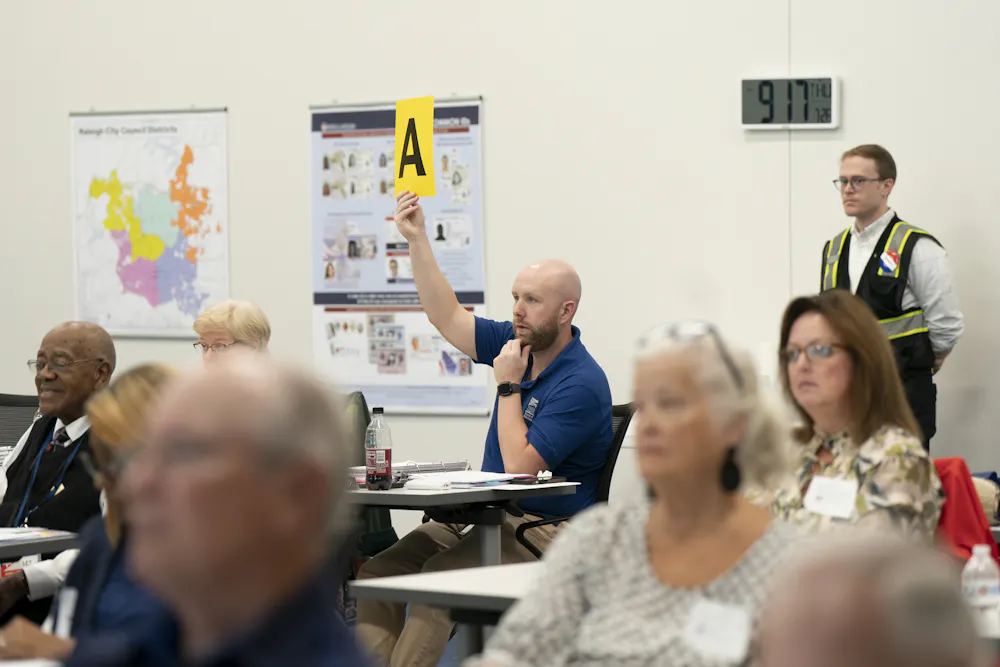
Voting machines are tested at the Wake County Board of Elections on Sept. 17, 2024, in Raleigh, N.C. Allison Joyce/Getty Images
The 2024 election is rife with controversy, from the politics of the campaigns to the politics surrounding the administration of elections. Accusations of wrongdoing and ineptitude continue to plague election officials, despite their explanations of legal compliance and process.
This is not new. During the 2016 election season, there was a growing narrative in the media and elsewhere that U.S. elections were poorly run. These accusations came from the left and the right, with concerns ranging from voter suppression to rigged machines.
My colleagues and I have been studying election administration intensely for many years. When these accusations were made, they struck us as both odd and incorrect. We traveled around the country to visit election offices. We did surveys, we interviewed people, we ran focus groups, we toured election offices.
In 2020, my colleague Kathleen Hale and I published a book on innovation in election administration. Among our conclusions: U.S. elections are not broken, and while fragmented and sometimes confusing, the system is functioning well, despite myriad pressures on it.
The 2020 election continued to underscore that American election administration is strong across the country, despite the narrative from some losing candidates that there was widespread fraud and conspiracy.
I continue to interact with election officials on a regular basis through meetings, conversations, classes I teach and election observations. While there are normal errors and mistakes that will always happen, this year’s presidential election also continues to demonstrate that the people running our elections are professionals engaging in neutral administration, upholding the law as well as important public administration principles of transparency, accountability, accuracy, integrity and widespread access for eligible voters.
These people are doing this work despite an increasingly complicated and threatening environment for election officials.
These offices work closely with other county and city government offices. Their employees are trained on standard operating procedures to ensure ballot security and electoral integrity, and they work closely with state election offices to ensure standard application of federal and state laws. In some states, such as Colorado and Ohio, they have professional associations to enhance their coordination and work. And there are national professional and training programs to further enhance the field.
Despite the fact that most people think elections are held every other year, when you take into account state, local and special elections and the steps involved in preparation, early and absentee voting, election day voting and canvas and certification, there is an election being run somewhere in America almost every day.
Working in elections is uniquely challenging. Deadlines are fixed, budgets are comparatively small in most places, and perfection is expected at all times. For the past two presidential election cycles, election officials in some jurisdictions faced almost constant accusations of incompetence or fraud. Accusers are rarely able to provide actual evidence.
There are excellent examples around the country of good election administration in the face of many challenges and accusations of wrongdoing.
Another example is Mary Hall, an auditor in Thurston County, Washington. Hall has been recognized by the state of Washington and her colleagues for her strong professionalism for decades. She heads a robust office and staff who work to communicate to voters to ensure community trust in their processes and outcomes.
There are legitimate reasons that voter rolls are not perfect, and the presence of people on a voter roll who have moved and registered elsewhere is not evidence of fraud. And while such double registration is not illegal, voting in multiple places is. In the face of all of this, Hall continues to respectfully respond to their accusations and criticisms.
“I used to be very proud of my position and telling people what I did for a living. And I don’t do that anymore, because you never know what reaction you’re going to receive from the people on the other end,” Hall told “PBS NewsHour” in November 2023.
Election Day precinct officials receive training at Wake County Board of Elections headquarters on Sept. 26, 2024, in Raleigh, N.C. Allison Joyce/Getty Images
‘Years of unsubstantiated personal attacks’
Other than sowing confusion and public distrust, these attacks and accusations have real-life implications for the lives of the people running elections.
Darling Allen, the former chief election official for California’s Shasta County, is widely regarded among her peers as having the highest levels of professionalism, integrity and honesty. In 2024, Darling Allen was one of five election officials in the country whom the American Bar Association awarded its Unsung Heroes of Democracy Award. That award “recognizes those individuals and organizations who work every day, often behind the scenes or without fanfare, to ensure that our elections are secure and that the democratic ideals set forth in the U.S. Constitution are upheld.”
But years of threats, hate mail, accusations and unsubstantiated personal attacks against her left her physically ill. This stress and resulting health conditions forced her to retire early. A vocal group of county residents alleged that widespread election fraud was happening on her watch and accused her of sedition and treason. In an ironic development, a local news website reported that “Supervisor Patrick Jones, who is the most visible proponent of the claim that election fraud is occurring locally, was himself successfully elected to office in a process overseen by Darling Allen.”
Darling Allen is just one example of dedicated officials who have left the field in recent years because of the rampant, false narrative about election wrongdoing on the part of officials.
But these officials nonetheless persist, upholding state and federal laws and professional standards of conduct and producing accurate and timely election results.
A review of the Moritz College of Law case tracker for the 2020 presidential election, which documents important election law cases from around the nation, demonstrates that many of these charges were meritless and that the results of the election were upheld. These results reflect the competence of those election officials.
Other groups, including academics, have been working to neutrally and empirically study these issues, looking at a range of topics, from election performance to best practices, as well as seeking to understand the impacts of the current narrative on the public.
Real electoral mismanagement is investigated, and the people involved face consequences if it is substantiated. Election fraud is a crime. Election officials know this and work tirelessly to ensure timely, fair, secure and accurate elections.
Mitchell Brown is the Curtis O. Liles III Professor in the Department of Political Science and directs the election administration program at Auburn University. For 35 years, Auburn University faculty have served as the curricular faculty for the Certified Elections/Registration Administrator (CERA) certification program, and through this role she serves on the Board of Directors of the Election Center. She has received numerous grants and contracts to study election administration, including from the U.S. Election Assistance Commission, Bipartisan Policy Center, and MIT MEDSL, among others.
Source: United Kingdom – Executive Government & Departments
The UK will be the first country in the world to introduce a tailored framework for the regulation of innovative products manufactured at or close to the location where a patient receives care.
A Statutory Instrument (SI) laid in Parliament today, 21 October, will provide a new regulatory framework meaning that medicines with a very short shelf life and highly personalised medicines can more easily be made in or near a hospital setting and can get to the patients who need them safely and much more quickly.
The regulation will also allow for manufacture of innovative medicines in small, portable units that can be set up close to patients who may be too sick to travel or whose reduced immunity precludes travel or where rapid medicine availability is best served.
This novel UK regulatory framework will transform patient treatment by enabling the safe development of innovative, personalised products such as cell or gene therapy that need to be manufactured close to the individual patient.
It will help relieve pressures on hospitals by enabling delivery of care where it is most appropriate for the patient, in community settings or even in their homes, supporting the ambition to expand ‘hospital at home’ services such as virtual wards.
IIan Rees, Point of Care lead at the MHRA, said:
“Enabling patients to safely access innovative treatments and medicines is a top priority for the MHRA, which is why we have developed this novel regulatory framework.
“This will enable new and innovative ways of manufacturing medicines closer to the patients who need them whilst ensuring their quality, safety and efficacy, with the consequent benefits both to patients and the healthcare system.
“This totally new framework, the first of its kind in the world, supports the MHRA’s drive to deliver for patients; making it possible to safely manufacture breakthrough medicines closer to where care is delivered and increasing the attractiveness of the UK as a destination to market new life-saving medicines.”
The legislation proposes a six-month implementation period once Parliamentary processes have been concluded. This regulation could, therefore, become law in Summer 2025.
The regulation follows a consultation with stakeholders in 2021, which showed a high level of support for proposals for a regulatory framework for point of care and modular manufacture of medicinal products.
These changes will ensure that our regulations are proportionate, flexible and adaptable for the implementation of these innovative manufacturing processes, increasing the attractiveness of the UK as a destination to market new life-saving medicines.
The MHRA is developing detailed, supporting guidance and will engage with industry, academia and healthcare institutions to ensure that the necessary interpretation and procedural support is in place to support the implementation of the new regulations ahead of the date that the legislation will come into force.
ENDS
Notes to Editors
The SI, and associated explanatory memorandum and impact assessments, are now live on legislation.gov.uk
This instrument amends the Human Medicines Regulations 2012 (S.I.2012/1916) (“the HMRs”) and the Medicines for Human Use (Clinical Trials) Regulations 2004 (S.I. 2014/1031) (“the 2004 Regulations”) to provide a new regulatory framework for medicines manufactured at the point of care, and also for modular manufacturing, where products are manufactured in modular, relocatable units.
The Medicines and Healthcare products Regulatory Agency (MHRA) is responsible for regulating all medicines and medical devices in the UK by ensuring they work and are acceptably safe. All our work is underpinned by robust and fact-based judgements to ensure that the benefits justify any risks.
The MHRA announced the introduction of this framework in January 2023 through this press release.
The MHRA is an executive agency of the Department of Health and Social Care.
Products manufactured at the POC are eligible for support through the MHRA ILAP pathway, which is in place to accelerate time to market and facilitate patient access.
For media enquiries, please contact the newscentre@mhra.gov.uk, or call on 020 3080 7651.
Source: Organization for Security and Co-operation in Europe – OSCE
Headline: Roundtable on sustainable supply chains marks EU Anti-Trafficking Day in Croatia
Boris Topic, National Anti-Trafficking Officer, OSCE Mission to Bosnia and Herzegovina, and Julia Schellhaas, Senior Advisor, Office of the Special Representative and Co-ordinator for Combating Trafficking in Human Beings, speaking at a roundtable on business & human rights and supply chain issues in Croatia, October 2024 (OSCE) Photo details
On 18 October, the Office for Human Rights and Rights of National Minorities of Croatia, the OSCE Office of the Special Representative and Co-operation for Combating Trafficking in Human Beings, and the UN Global Compact Network Croatia marked EU Anti-Trafficking Day with a pivotal roundtable discussion in Zagreb on supply chains and human rights. The event, titled ‘Sustainable Supply Chains: Promoting Human Rights and Social Responsibility’, was a landmark occasion that brought together the public and private sectors to discuss human rights in global supply chains, with a particular focus on combating human trafficking for labour exploitation in the context of the new EU Corporate Sustainability Due Diligence Directive (CSDDD).
Convening 30 participants from diverse backgrounds, including representatives from businesses, government agencies, international organizations, academia, and civil society, the roundtable was a testament to the widespread interest in the topic. Their collective engagement in discussions on preventing human rights abuses and ensuring environmental sustainability in supply chains underscored the broad commitment to this critical issue.
“In order to enhance awareness of the phenomenon of labour exploitation and to formulate an appropriate response to the emerging situation, the Government of the Republic of Croatia is committed to strengthening the collaboration between the private and public sectors through joint initiatives and the involvement of the private sector in shaping public policies,” said Alen Tahiri, National Anti-Trafficking Coordinator of Croatia. “Public-private partnerships are crucial for identifying and mitigating the risks of labour exploitation.”
Additionally, the CSDDD requires the Croatian government to amend several national laws, making this event a timely opportunity to discuss the challenges faced not only by businesses required to comply, but also by governments that must implement these changes.
According to the UN Global Compact Croatia Network, the roundtable discussion is just the beginning, serving as a platform for ongoing co-operation between the public and private sectors on human rights issues.
Vali Marszalek, Board Chair of the UN Global Compact Network Croatia and ESG Director for the Adria Region at Forvis Mazars, emphasized that while companies are currently focused on sustainability reporting, a crucial shift towards evaluating business behaviour is needed. “With the new directive in effect, businesses must scrutinize their operations and entire chains of activity, recognizing that they cannot distance themselves from negative impacts,” she said.
Boris Topić, National Anti-Trafficking Officer at the OSCE Mission to Bosnia and Herzegovina, underscored that “the OSCE is walking the talk when it comes to ethical supply chains and has implemented several measures in its own operations and procurement processes. We are excited to see the next steps that Croatia will take as a joint effort from the public and private sectors toward the implementation of the CSDDD, and we stand ready to support Croatia in this endeavor.”
Discussions underscored Croatia’s ongoing commitment to high human rights standards, including efforts against trafficking and labour exploitation. By sharing insights and best practices, the roundtable fostered collaborative efforts to enhance compliance and enforcement of due diligence legislation, reinforcing the importance of responsible business conduct for the benefit of all employees in the country.
Source: United States Bureau of Alcohol Tobacco Firearms and Explosives (ATF)
Federal Land Offenses
Michael A. Tunis, age 66 of West Yellowstone, Montana, was sentenced to 30 days in jail and a 5-year period of probation, with a ban from Yellowstone National Park during that time, for a DUI per se and open container violation. This case was prosecuted by Assistant U.S. Attorney Ariel Calmes. U.S. Magistrate Judge Stephanie A. Hambrick imposed the sentence on Oct. 11, in Mammoth, Wyoming.
Darrell C. Osterhout, age 63 of New Brighton, Minnesota, was sentenced to 7 days in jail and 1 year of probation, with a ban from Yellowstone National Park during that time, for DUI per se and interference with law enforcement functions. This case was prosecuted by Assistant U.S. Attorney Ariel Calmes. U.S. Magistrate Judge Stephanie A. Hambrick imposed the sentence on Oct. 16, in Mammoth, Wyoming.
Production of Child Pornography
Robert Wayne Eaker, 38, of Boulder, Wyoming, was sentenced to 216 months in federal prison for production of child pornography with 15 years of supervised release. The court also ordered the defendant to pay $36,000 in restitution and a $100 special assessment. According to court documents, Eaker is a registered sex offender for prior offenses involving the sexual abuse of minors. In September 2023, the Wyoming Division of Criminal Investigation (DCI) Internet Crimes Against Children (ICAC) Task Force were conducting an online investigation for people sharing child pornography. Agents discovered a Wyoming IP address sharing numerous files of child pornography and traced it back to Eaker. Agents later received a search warrant for the house where he was living. Agents found Eaker had produced lewd and lascivious files of a child. Eaker admitted to producing the files without the child’s knowledge. In addition, investigators found hundreds of files of child pornography containing prepubescent children on multiple devices belonging to Eaker. DCI-ICAC investigated the crime and Assistant U.S. Attorney Z. Seth Griswold prosecuted the case. Eaker was indicted on May 16, pleaded guilty on July 25, and U.S. District Court Judge Kelly H. Rankin imposed the sentence on Oct. 16, in Cheyenne.
Drug and Firearm Offenses
Brady Mitchell, 33, a transient, was sentenced to 21 months’ imprisonment for being a felon and unlawful user of a controlled substance in possession of a firearm. According to court documents, on April 13, Cheyenne Police Officers contacted Mitchell who was asleep in his van in a gas station parking lot. During questioning, officers saw a hatchet under his seat and smelled marijuana. They asked him to step out of his van so they could secure the weapon and conduct a search. Officers found a .22 revolver on Mitchell and approximately 12 ounces of marijuana, 3.31 grams of Xanax, 3.75 grams of fentanyl, and 1.13 grams of methamphetamine in his van. Mitchell is a previously convicted felon and not allowed to possess a firearm. The Bureau of Alcohol Tobacco Firearms and Explosives and the Cheyenne Police Department investigated this crime. Assistant U.S. Attorney, Michael J. Elmore prosecuted the case. Mitchell was indicted on April 13, pleaded guilty on July 11, and U.S. District Court Judge Kelly H. Rankin imposed the sentence on Oct. 15, in Cheyenne.
llegal Re-entry of a Previously Deported Alien
Luis Barajas-Morales, 46, of Mexico, was sentenced to time served plus 10 days for deportation for illegal reentry into the United States. According to court documents, on Feb. 26, Barajas-Morales was arrested by the Teton County Sheriff’s Department for the charge of contempt of court. Immigration and Customs Enforcement (ICE) was contacted. A Deportation Officer processed the defendant and obtained fingerprints matching pre-existing fingerprints in their database indicating Barajas-Morales was in the U.S. illegally and had not applied for permission to reenter the U.S. after being formally removed in December 2003. ICE investigated the crime and Assistant U.S. Attorney Cameron J. Cook prosecuted the case. U.S. District Court Judge Alan B. Johnson imposed the sentence on Oct. 15, in Cheyenne. Case No. 24-CR-00106.
About the United States Attorney’s Office
The United States Attorney’s Office is responsible for representing the federal government in virtually all litigation involving the United States in the District of Wyoming, including all criminal prosecutions for violations of federal law, civil lawsuits brought by or against the government, and actions to collect judgments and restitution on behalf of victims and taxpayers. The Office is involved in several programs designed to make our communities safer. They include:
Environmental Justice The fair treatment and meaningful involvement of all people regardless of race, color, national origin, or income with respect to the development, implementation, and enforcement of environmental laws, regulations, and policies.
Project Safe Childhood Project Safe Childhood (PSC) is a DOJ initiative that combats the proliferation of technology-facilitated sexual exploitation crimes against children. The threat of sexual predators soliciting children for sexual contact is well-known and serious.
Project Safe Neighborhoods Project Safe Neighborhoods (PSN) is a nationwide commitment to reducing gun and gang crime in America by networking existing local programs that target gun crime and providing these programs with additional tools necessary to be successful.
Victim Witness Assistance The Victim Witness Coordinator for the United States Attorney’s Office for the District of Wyoming is dedicated to making sure that victims of federal crimes and their family members are treated with compassion, fairness, and respect.
Source: Federal Bureau of Investigation (FBI) State Crime Alerts (b)
KANSAS CITY, Mo. – An Overland Park, Kansas, pediatric physician pleaded guilty in federal court today to using concealed video cameras to secretly record 13 child victims for the purpose of producing child pornography over a three-year period from Oct. 4, 2020, to Oct. 28, 2023. Aalbers also admitted that he was in possession of child pornography.
Brian Michael Aalbers, 50, of Kansas City, Mo., pleaded guilty before U.S. Magistrate Judge Lajuana M. Counts to 13 counts of attempting to produce child pornography and one count of possessing child pornography.
Aalbers, a pediatric neurologist at Overland Park Regional Hospital in Overland Park, Kan., remains in federal custody without bond.
Concerns were received by both the FBI and the United States Attorney’s Office regarding the potential victimization of patients of Aalbers’s pediatric practice. During the investigation, it was determined there was no evidence to indicate any current or former patients were victimized by Aalbers. To protect and maintain the privacy of Aalbers’s victims, no additional information regarding the victims will be released.
According to today’s plea agreement, Kansas City, Mo., police officers investigated a report regarding concealed video cameras that had been found on Oct. 28, 2023. A witness later contacted officers to report that Aalbers was sending suicidal text messages. Lenexa, Kan., police officers located Aalbers and transported him to a local hospital to obtain voluntary mental health treatment. The hospital took possession of two laptop computers, two iPad tablets, and a cell phone that were inside a backpack Aalbers brought with him when he entered the facility.
Investigators obtained search warrants for those devices, as well as other cameras and electronic devices owned by Aalbers. Investigators found more than 50,000 video files associated with the hidden video cameras used by Aalbers, including more than 1,000 videos that contained pornographic depictions of the 13 child victims.
Investigators also obtained a search warrant for Aalbers’s iCloud account, which contained 1,000 additional images and 163 additional videos of child pornography, which included videos of the identified child victims that had been produced by Aalbers.
Under the terms of today’s plea agreement, the government and Aalbers are jointly requesting a sentence of at least 20 years, but no more than 30 years, in federal prison without parole. The sentencing of the defendant will be determined by the court based on the advisory sentencing guidelines and other statutory factors. A sentencing hearing will be scheduled after the completion of a presentence investigation by the United States Probation Office.
This case is being prosecuted by Assistant U.S. Attorney Maureen A. Brackett. It was investigated by the FBI, the Kansas City, Mo., Police Department, the Lenexa, Kan., Police Department, the Merriam, Kan., Police Department, and the Overland Park, Kan., Police Department, with assistance from the U.S. Attorney’s Office in the District of Kansas.
Project Safe Childhood
This case was brought as part of Project Safe Childhood, a nationwide initiative launched in May 2006 by the Department of Justice to combat the growing epidemic of child sexual exploitation and abuse. Led by the United States Attorneys’ Offices and the Criminal Division’s Child Exploitation and Obscenity Section, Project Safe Childhood marshals federal, state, and local resources to locate, apprehend, and prosecute individuals who sexually exploit children, and to identify and rescue victims. For more information about Project Safe Childhood, please visit http://www.usdoj.gov/psc . For more information about Internet safety education, please visit http://www.usdoj.gov/psc and click on the tab “resources.”
Source: Republic of France in English The Republic of France has issued the following statement:
After carrying out the consultations required by the Statute of the International Court of Justice, on October 14, the French national group in the Permanent Court of Arbitration designated François Alabrune as the French candidate in the election for judges of the International Court of Justice, which will take place in November 2026.
France supports François Alabrune’s candidacy. A former legal advisor at the Ministry for Europe and Foreign Affairs who is currently serving as France’s ambassador to the Netherlands, he has recognized expertise in international law and meets all the criteria of rigor, independence, impartiality and integrity required to carry out the duties of a judge of the International Court of Justice.
France’s commitment to the International Court of Justice is longstanding and unwavering. The ICJ’s contribution to international peacekeeping and security is more vital than ever. Established by the UN Charter, the ICJ is the UN’s most important judicial body; its duty is to settle, in accordance with international law, legal disputes submitted to it by States and to give advisory opinions on legal questions referred to it by authorized UN bodies and specialized agencies.
Source: American Federation of State, County and Municipal Employees Union
SEIU, NEA, AFT and AFSCME launch joint volunteer canvassing effort two weeks before Presidential election
WASHINGTON, DC — The presidents of the nation’s largest public service labor unions — April Verrett of the Service Employees International Union (SEIU), Becky Pringle of the National Education Association (NEA), Randi Weingarten of the AFT, and Lee Saunders of the American Federation of State, County and Municipal Employees (AFSCME) — today announced a coordinated, multi-state voter outreach initiative to turn out voters in support of Harris-Walz in key battleground states. This massive effort, launching October 19 in Detroit, underscores the impact working people will have in determining the outcome of the 2024 election.
Following the October 19 launch, union leaders will host a series of rallies and statewide canvasses across targeted states including two rallies featuring all four union presidents in Atlanta on October 27, and Philadelphia on November 2. Following these rallies, thousands of union member volunteers from all four organizations will engage in an intensive door-to-door canvassing campaign, connecting with potential voters on issues critical to working families.
This joint action represents a significant escalation of labor’s political engagement, with the unions pooling resources and mobilizing their combined membership of several million workers.
and includes people of all backgrounds working across the public service – as nurses, child care providers, sanitation workers, first responders, teachers, education support professionals and higher education workers, among others.
The joint campaign aims to mobilize an unprecedented number of workers across battleground states.
“In an election this close, it’s all going to come down to turnout,” said April Verrett, President of SEIU. “That’s why our get-out-the-vote efforts are going to make the difference. We’re going to have our members and leaders on the ground in every battleground state from now until Election Day, ensuring every voice is heard and every vote is counted.”
“Union members are mobilizing with a new level of energy, because we know what’s at stake,” said AFSCME President Lee Saunders. “Kamala Harris and Tim Walz have a vision for working people that will move us forward, lower rising costs and protect our freedoms. Meanwhile, the other side wants to take away our voice on the job. That’s the choice before working people, and that’s why we’re going to make sure that we mobilize our communities to get out the vote.”
“The 3-million strong National Education Association is proud to partner with our union siblings to ensure working families know there is only one pro-union, pro-public education ticket: the Harris-Walz ticket,” said NEA President Becky Pringle. “Educators and union members across the country are fired up to elect Kamala Harris and Tim Walz, the leaders we need to deliver a new way forward for America. Vice President Harris and Governor Walz are tireless champions for students and educators, who will work to support strong public schools, expand school-based mental health services, ensure no student is hungry, and create good union jobs for middle class families. As some of the most trusted people in every community, NEA members are knocking on doors, making phone calls, and talking to their neighbors and friends about voting for Kamala Harris and Tim Walz, along with other pro-public education champions up and down the ballot.”
“Kamala Harris and Tim Walz believe in the promise of America and will spend their time solving problems, not sowing fear, so every American can partake in that promise,” said AFT President Randi Weingarten. “As Donald Trump and JD Vance plan to cut taxes for billionaires, raise the retirement age and gut Medicare, Harris and Walz will crack down on price gouging, make it easier to afford a home, extend Medicare to help the Sandwich Generation and fight for public education. But it’s not just what we can gain, it’s also what we will lose with Trump and Vance: our democracy, our freedoms, our public schools, our right to have a union, a vote and a voice. Extending the ladder of opportunity or destroying it. Union members get this. And that’s why we will fight every hour of every day for the next fortnight to get out the vote to elect candidates who proudly stand for freedom, democracy and opportunity. Remember the chaos, lies and division of the Trump era? That was our dark past and we can’t let it be our future. Harris and Walz will turn the page.”
Each union has invested significantly in GOTV programs and media outreach, across TV and streaming platforms to support the Harris-Walz ticket and worker-friendly candidates in House, Senate,gubernatorial, and other down-ballot races.
The impact of union households on elections in key battleground states cannot be overstated. In 2020, 21% of votes cast in Michigan were from union households, representing approximately one-fifth of the electorate. The same is true for Pennsylvania and Wisconsin, where union households accounted for 18% and 13% of votes cast, respectively.
Unions are currently enjoying a level of popularity not seen since the 1960s. This resurgence is rooted in workers’ belief in the power of collective action to transform the economy into one that works for all. As the election approaches, it’s crucial for voters to hear from real people about the issues that matter most to working families.
By joining forces, these unions are not just amplifying their individual voices but creating a unified front to advocate for the rights and well-being of millions of workers across the nation.
Headline: Response and Recovery Efforts in Western North Carolina
Response and Recovery Efforts in Western North Carolina mseets
After Hurricane Helene, North Carolina continues leading a robust response and recovery with the support of federal, local, and non-profit partners.
Helene hit North Carolina 25 days ago as the deadliest tropical storm in the state’s history. Because Governor Cooper declared a State of Emergency Declaration before the storm hit, North Carolina National Guard soldiers, swift water rescue teams, equipment and supplies were positioned in Western North Carolina to respond as soon as the storm passed. Just as this storm was unprecedented, the response that followed has been unprecedented in its size and speed.
Key Progress and Numbers
Today there are approximately 5,000 customers without power down from more than one million customers just after the storm. Most of the cell phone coverage that was wiped out by the storm has been restored. The NC Department of Transportation (NCDOT) has opened 789 roads of the approximately 1,200 roads that were closed as a result of the storm, which is significant considering the difficulty of making repairs in a rugged, mountainous region. NCDOT currently has approximately 2,000 employees and 900 pieces of equipment working to re-open roads that remain closed. 28 of the school districts that were closed following the storm have re-opened, with 7 still closed, two of which are scheduled to re-open this week.
North Carolina National Guard (NCNG) soldiers and other military personnel rescued 765 people with local first responders and swift water teams rescuing hundreds more. The state has confirmed 95 fatalities and there are currently approximately 26 people still unaccounted for.
Air Drop of Supplies and Commodities
Because road access was limited, the state, local and federal government working with nonprofits and volunteers used a system for aerial delivery of supplies and commodities like water, food and medicine. Supplies were brought into the Asheville airport by plane and then delivered to other parts of Western North Carolina by helicopter.
At the height of this operation, more than 30 planes and helicopters and 1,200 ground vehicles were in use. More than 27 million pounds of food and water were delivered by the state and federal government, with more being brought by non-profits and charities.
National Guard and Military
The response to Helene was the largest and fastest integration of U.S. military soldiers with the National Guard in North Carolina history.
More than 3,150 Soldiers and Airmen have been working in Western North Carolina in the aftermath of the storm. Joint Task Force- North Carolina, led by the North Carolina National Guard is made up of Soldiers and Airmen from 12 different states, two different XVIII Airborne Corps units from Ft. Liberty, a unit from Ft. Campbell’s 101st Airborne Division, and numerous civilian entities working side-by-side to get the much-needed help to people in Western North Carolina.
The Army Corps of Engineers is working with local, state and federal experts, including the EPA and the N.C. Department of Environmental Quality (NCDEQ), to assess damages, remove debris and repair water systems.
More than 1,600 responders from 39 state and local agencies have performed 146 missions supporting the response and recovery efforts through the Emergency Management Assistance Compact (EMAC).
FEMA
Approximately $129 million in FEMA Individual Assistance funds so far have been paid directly to people in Western North Carolina hurt by the storm and more than 207,000 people have registered for Individual Assistance. More than 6,200 people have been able to get temporary housing through FEMA’s Transitional Sheltering Assistance. More than 5,100 registrations for Small Business Administration Loans have been filed.
Approximately 1,500 FEMA staff are in the state to help with the Western North Carolina relief effort. In addition to search and rescue and providing commodities, they have been meeting with disaster survivors in their neighborhoods and homes, in shelters, and in other areas to provide rapid access to relief resources.
Cooper Signed Bipartisan Bill for Funding and Elections
Just days after the storm, state legislators returned to Raleigh on October 9 to begin the process of allocating state funding for storm recovery. On October 10, Governor Cooper signed HB 149 into law as a first step in that process. In addition to initial funding, the bill also allows people in affected counties to have more options in where they return absentee ballots and gives flexibility to local election boards in impacted counties to ensure people have opportunities to vote. The 2024 election will be safe and secure, and people impacted by the storm will be able to make their voices heard.
Governor Cooper also raised the amount of weekly unemployment payments for the thousands of people temporarily out of work. The Executive Order increasing benefits won unanimous bipartisan support from the NC Council of State.
Misinformation and Disinformation Permeate the Response
Governor Cooper and a bipartisan array of local, state and federal North Carolina officials have called out the intentional spread of disinformation and misinformation as detrimental to this response and recovery, leading to threats and intimidation, breeding confusion, and demoralizing storm survivors and response workers.
On October 11, Governor Cooper responded to one of Donald Trump’s social media posts by saying, “This is a flat out lie. We’re working with all partners around the clock to get help to people. Trump’s lies and conspiracy theories have hurt the morale of first responders and people who lost everything, helped scam artists and put government and rescue workers in danger.”
At a media briefing on October 16, Governor Cooper was asked why he believes the misinformation and disinformation have been worse after this storm compared to others. Governor Cooper explained:
“Candidates are using people’s misery to sow chaos for their own political objectives, and it’s wrong. This is a time where we all need to pull together to help the people of Western North Carolina and it’s disappointing when candidates, knowing full well what they’re doing, are continuing this kind of disinformation filled with lies,”
Efforts Will Continue to Ensure Long Term Recovery
Other resources have surged into the area following the storm. $100 million in emergency funding from US Department of Transportation has been granted. NC Department of Health and Human Services, NCDEQ, Department of Motor Vehicles, NC Department of Public Instruction and many other state entities are supporting response and recovery.
Western North Carolina has never experienced a storm like this. Recovery in mountainous terrain will require a unique, united and sustained effort that focuses on people who’ve lost everything while leaving politics at the door. With just weeks until the 2024 election, the Governor’s office urges all leaders to stick to the truth and not spread disinformation and misinformation, which only hurts the people who need help and those on the ground giving it their all to provide that help.
Source: The Conversation – UK – By John William Devine, Senior Lecturer in Ethics, Department of Sport and Exercise Sciences, Swansea University
As the new senior head coach of the England men’s football team, Thomas Tuchel has assumed one of the most intensely scrutinised managerial roles, not only in football, but in all of sport.
Commentary following his appointment suggests that he should expect unprecedented scrutiny. Despite superb credentials, including coaching Chelsea to Champions League victory in 2021, Tuchel’s appointment has raised anew the question of whether English players should be managed by an English manager.
At the press conference announcing his appointment, he apologised (only partly in jest) for holding a German passport. He is the first German to be appointed to the role. Sceptics have voiced concern about whether a “foreign” manager – particularly one from the England team’s fiercest rival – could feel the requisite passion, loyalty and determination for English success. But doubts about his commitment are only the beginning – the role of England manager involves an unenviable footballing dilemma.
The renowned American football coach Vince Lombardi made popular the sporting mantra: “Winning isn’t everything, it’s the only thing.” On the Lombardian view, performance has no value independent of its outcome. Set aside the mastery of skills, the lessons of winning and losing, forging bonds with teammates and opponents and the simple joy of play – for him, the value of sport lies in winning – and winning alone.
On this view, the clamour for Tuchel’s predecessor, Gareth Southgate, to depart following the 2024 UEFA European Football Championship was misguided. In reaching the final of successive European championships (2020 and 2024) and the semi-final of the World Cup in 2018, Southgate brought English men’s football to its greatest height since the World Cup-winning team of 1966.
His team comfortably outperformed the so-called “golden generation” of David Beckham, Stephen Gerrard, Frank Lampard and Wayne Rooney, which never progressed beyond the quarterfinals of a major tournament, playing for another foreign manager, Sven-Goran Ericksson. Judged by results alone, Southgate was a once in a generation England manager.
However, the English public subscribed to a more demanding philosophy of football: “Winning is essential, but it is not enough.” Despite the team’s success, the public wanted more. They demanded not only victory, but style too.
Southgate’s team played a conservative, defensively-minded brand of football. In Euro 2024, their passing wasn’t fluid and they created few chances on goal. Instead, they relied on a strong defence coupled with rare moments of attacking brilliance from individual players. Despite their success, Southgate became a lightning rod for criticism due to the uninspiring manner of his team’s victories.
A philosophical dilemma
The pursuit of victory in sport would seem, on the face of it, to be a simple proposition – play as well as you can and hope that this suffices to overcome your opponent. But playing to win is often less about playing well and more about ensuring that your opponent plays badly. It is less about executing your strengths and more about stifling the opposition.
In happy circumstances, playing well and playing to win coincide. In such cases, an opponent’s strengths and weaknesses can largely be ignored. Athletes who are comfortably superior to their opposition (think Serena Williams, Simone Biles, or the All Blacks in their pomp) may have the luxury of ignoring their opponents’ performance. Such is their dominance that, if they play well, victory inevitably follows. However, for mere mortals – including the Three Lions – even a good day can be a losing day.
This tension between playing well and playing to win is one that all athletes, of whatever level, must navigate. Tuchel now takes up the challenge of marrying these often opposed ideals – anything but victory is unacceptable and so too is anything but thrilling football.
In contrast to the Lombardian obsession with winning, sport can also be seen as a vehicle for self-expression. Each sport presents athletes with a unique set of obstacles, constraints embedded in the rules coupled with challenges presented by opponents. How we respond to those obstacles can express something about us, both to ourselves and to others.
Sporting competition can serve as a means of self-expression – a blank canvas on which athletes paint. We must decide how much we value sport as an avenue for proving athletic superiority and how much we value sport as an avenue to convey who we are and what we value. At its best, a national team’s style reflects a national footballing philosophy. But honouring our sporting identity may conflict with our desire to win.
Winning at the highest level and playing to express the pure form of our footballing philosophy may be mutually exclusive goals for all but the most dominant teams. Tuchel must grasp both horns of this dilemma while persuading the public of his desire for English success.
If the team’s results are anything but flawless, his commitment to the cause will be questioned. If the team’s style is unpleasing to the eye, he will be accused of misunderstanding England’s footballing identity. Who would envy him the task ahead?
Looking for something good? Cut through the noise with a carefully curated selection of the latest releases, live events and exhibitions, straight to your inbox every fortnight, on Fridays. Sign up here.
John William Devine does not work for, consult, own shares in or receive funding from any company or organisation that would benefit from this article, and has disclosed no relevant affiliations beyond their academic appointment.
Governments of Canada and Quebec kick off joint public consultations for Saguenay–St. Lawrence Marine Park Expansion Project
October 21, 2024. – The Governments of Canada and Quebec announce that joint public consultations on the Saguenay–St. Lawrence Marine Park expansion project will be held this fall. Members of the public are invited to participate in these consultations, which are scheduled to take place from October 21 to December 13, 2024.
These consultations are open to all interested parties. Participants will be able to learn about the project and share their opinions online beginning October 21, 2024. Members of the public will have until December 13, 2024 to express their views on the project by completing a brief online survey. Individuals or organizations who wish to submit a brief may also do so via the website.
Five participatory events will be held in municipalities adjacent to the proposed expansion area. In each town where a consultation will take place, kiosks staffed by the marine park team will allow participants to discuss the project at their leisure and according to their areas of interest in late afternoon. An information and Q&A session will follow in the evening.
Public participatory events:
City Location Date
Rimouski Théâtre du Bic November 4 Rivière-du-Loup Hôtel Lévesque November 6 Kamouraska Community hall November 7 Saint-Irénée Domaine Forget November 12 Les Escoumins Multipurpose centre November 13
The expansion project has been presented to representatives of approximately 230 organizations, including Indigenous communities, RCMs and municipalities, business owners and NGOs on both shores of the St. Lawrence Estuary.
These discussions have led to a proposal to expand the boundaries of the marine park. Public consultations will provide interested members of the public and organizations an opportunity to express their views on the project, especially regarding the boundaries being proposed for the expansion, the objectives pursued as well as the associated challenges and opportunities. The information gathered will allow the two governments to make a joint and well-informed decision regarding the expansion project in 2025.
Expanding the marine park would help enhance protection for belugas, rorquals and green costal areas, in particular by including all of the beluga’s critical summer habitat in the park. The project is also an opportunity to promote discovery and educational activities related to the St. Lawrence River as well as to support the maintenance and development of a sustainable tourism offer associated with the St. Lawrence River..
WASHINGTON – U.S. Senator Joni Ernst (R-Iowa) joined Chairman John Moolenaar (R-Mich.) of the House Select Committee on the Chinese Communist Party and U.S. Senator Marco Rubio (R-Fla.) in exposing new evidence of an American consulting firm working for the Chinese military and Chinese Communist Party and calling on Attorney General Merrick Garland and Defense Secretary Lloyd Austin to initiate a criminal investigation and debar McKinsey & Company from receiving Department of Defense (DoD) contracts.
The lawmakers reveal how McKinsey failed to disclose consulting work for the Chinese government and lied about working for the Chinese government under oath, all while receiving over $480 million to consult for the U.S. military since 2008. In their letter, the lawmakers outline the details of McKinsey’s work to advance the Chinese Communist Party and Chinese military, its work to shape the Chinese Communist Party’s five-year plans to surpass the United States, and its failure to report its China work, as required by U.S. law.
McKinsey’s work on sensitive U.S. national security matters occurred as the company failed to disclose its similar work for China – while it is seeking to capably threaten the U.S. military and American troops. The risk that McKinsey leveraged sensitive American programs and secrets to benefit the Chinese state is grave and merits an investigation and future consequences.
“It is deeply disturbing that McKinsey, which has a history of undermining the interests of the U.S. government in favor of another client, engaged in sensitive government contracts with DoD while failing to disclose its work with the PRC [People’s Republic of China] government and its state-owned enterprises on issues of national importance,” the lawmakers wrote.
“McKinsey not only failed to make necessary disclosures but actively concealed its sensitive work for the PRC government in sworn testimony before Congress. In describing McKinsey’s Chinese contracts, McKinsey’s Global Managing Partner testified under oath before Congress this year that the company never worked for the central government of the PRC,” they continued.
The lawmakers also highlighted the massive discrepancies in McKinsey’s Managing Partner’s testimony before Congress in February 2024. They concluded by requiring a briefing from both Attorney General Garland and Defense Secretary Austin by Dec. 1 about McKinsey’s criminal implications and its status as a DoD contractor.
Background:
Ernst has led the bipartisan CONSULT Act to prohibit DoD from contracting with consulting firms like McKinsey for national security matters when those firms also provide consulting services for sanctioned entities or foreign adversaries, like China, Russia, or Iran.
WILMINGTON, Del. – David C. Weiss, U.S. Attorney for the District of Delaware announced today that Assistant United States Attorney (AUSA) Shamoor Anis will lead the efforts of his Office in connection with the Justice Department’s nationwide Election Day Program for the upcoming November 5, 2024, general election. AUSA Anis has been appointed to serve as the District Election Officer (DEO) for the District of Delaware, and in that capacity is responsible for overseeing the District’s handling of election day complaints of voting rights concerns, threats of violence to election officials or staff, and election fraud, in consultation with Justice Department Headquarters in Washington.
U.S. Attorney Weiss said, “Every citizen must be able to vote without interference or discrimination and to have that vote counted in a fair and free election. Similarly, election officials and staff must be able to serve without being subject to unlawful threats of violence. The Department of Justice will always work tirelessly to protect the integrity of the election process.”
The Department of Justice has an important role in deterring and combatting discrimination and intimidation at the polls, threats of violence directed at election officials and poll workers, and election fraud. The Department will address these violations wherever they occur. The Department’s longstanding Election Day Program furthers these goals and also seeks to ensure public confidence in the electoral process by providing local points of contact within the Department for the public to report possible federal election law violations.
Federal law protects against such crimes as threatening violence against election officials or staff, intimidating or bribing voters, buying and selling votes, impersonating voters, altering vote tallies, stuffing ballot boxes, and marking ballots for voters against their wishes or without their input. It also contains special protections for the rights of voters, and provides that they can vote free from interference, including intimidation, and other acts designed to prevent or discourage people from voting or voting for the candidate of their choice. The Voting Rights Act protects the right of voters to mark their own ballot or to be assisted by a person of their choice (where voters need assistance because of disability or inability to read or write in English).
U.S. Attorney Weiss additionally commented that, “The franchise is the cornerstone of American democracy. We all must ensure that those who are entitled to the franchise can exercise it if they choose, and that those who seek to corrupt it are brought to justice. In order to respond to complaints of voting rights concerns and election fraud during the upcoming election, and to ensure that such complaints are directed to the appropriate authorities, AUSA/DEO Anis will be on duty in this District while the polls are open. He can be reached by the public at the following telephone number – 302-893-5213.”
In addition, the FBI will have special agents available in each field office and resident agency throughout the country to receive allegations of election fraud and other election abuses on election day. The local FBI field office can be reached by the public at 410-265-8080.
Complaints about possible violations of the federal voting rights laws can be made directly to the Civil Rights Division in Washington, DC by complaint form at https://civilrights.justice.gov/ or by phone at 800-253-3931.
Please note, however, in the case of a crime of violence or intimidation, please call 911 immediately before contacting federal authorities. State and local police have primary jurisdiction over polling places, and almost always have faster reaction capacity in an emergency.
U.S. Attorney Weiss concluded, “Ensuring free and fair elections depends in large part on the assistance of the American electorate. It is important that those who have specific information about voting rights concerns or election fraud make that information available to the Department of Justice.”
SCRANTON – United States Attorney Gerard M. Karam announced today that Criminal Division Chief Bruce D. Brandler, Assistant United States Attorneys (AUSA) Michael Consiglio, Geoffrey MacArthur, and James Buchanan will lead the efforts of this Office in connection with the Justice Department’s nationwide Election Day Program for the upcoming November 5, 2024, general election.
Criminal Chief Brandler has been appointed to oversee and lead the District’s Election Day Program. AUSAs Consiglio, Buchanan, and MacArthur will serve as the District Election Officers (DEO) for the Middle District of Pennsylvania in our Harrisburg, Scranton, and Williamsport Offices. In that capacity, they are responsible for overseeing the handling of election day complaints of voting rights concerns, threats of any kind to election officials or staff, and election fraud, in consultation with Justice Department Headquarters in Washington.
“Every citizen must be able to vote without interference or discrimination and to have that vote counted in a fair and free election,” said U.S. Attorney Karam. “Similarly, election officials and staff must be able to serve without being subject to unlawful threats of any kind. The Department of Justice will always work tirelessly to protect the integrity of the election process.”
The Department of Justice has an important role in deterring and combatting discrimination and intimidation at the polls, threats of any kind directed at election officials and poll workers, and election fraud. The Department will address these violations wherever they occur. The Department’s longstanding Election Day Program furthers these goals and also seeks to ensure public confidence in the electoral process by providing local points of contact within the Department for the public to report possible federal election law violations.
Federal law protects against such crimes as threatening violence against election officials or staff, intimidating or bribing voters, buying and selling votes, impersonating voters, altering vote tallies, stuffing ballot boxes, and marking ballots for voters against their wishes or without their input. It also contains special protections for the rights of voters, and provides that they can vote free from interference, including intimidation, and other acts designed to prevent or discourage people from voting or voting for the candidate of their choice. The Voting Rights Act protects the right of voters to mark their own ballot or to be assisted by a person of their choice (where voters need assistance because of disability or inability to read or write in English).
“The right to vote is the cornerstone of American democracy, said U.S. Attorney Karam. “We all must ensure that those who are entitled to the franchise can exercise it if they choose, and that those who seek to corrupt it are brought to justice.”
In order to respond to complaints of voting rights concerns and election fraud during the upcoming election, and to ensure that such complaints are directed to the appropriate authorities, our DEOs will be on duty in this District while the polls are open. AUSA/DEO Consiglio can be reached by the public at the Harrisburg Office number: 717-221-4482; AUSA/DEO Buchanan can be reached at the Scranton Office number: 570-348-2800; and AUSA/DEO MacArthur can be reached at the Williamsport Office number: 570-326-1935.
In addition, the FBI will have special agents available in each field office and resident agency throughout the country to receive allegations of election fraud and other election abuses on election day. The local FBI field office can be reached by the public at 215-418-4000.
Complaints about possible violations of the federal voting rights laws can be made directly to the Civil Rights Division in Washington, DC by phone at 800-253-3931 or by complaint form at https://civilrights.justice.gov/.
Please note, however, in the case of a crime of violence or intimidation, please call 911 immediately and before contacting federal authorities. State and local police have primary jurisdiction over polling places, and almost always have faster reaction capacity in an emergency.
Source: United States Small Business Administration
SACRAMENTO, Calif. – Francisco Sánchez Jr., associate administrator for the Office of Disaster Recovery and Resilience at the Small Business Administration, today reminded Washington small businesses of the Nov. 20, 2024, deadline to apply for an SBA federal disaster loan for economic injury caused by the wildfires that occurred Aug. 18–25, 2023.
According to Sánchez, small nonfarm businesses, small agricultural cooperatives, small businesses engaged in aquaculture and most private nonprofit organizations of any size may apply for Economic Injury Disaster Loans of up to $2 million to help meet working capital needs caused by the disaster. “Economic Injury Disaster Loans may be used to pay fixed debts, payroll, accounts payable and other bills that cannot be paid because of the disaster’s impact. Economic injury assistance is available regardless of whether the applicant suffered any property damage,” Sánchez said.
These low-interest federal disaster loans are available in the counties below: Washington counties: Lincoln, Pend Oreille, Spokane, Stevens and Whitman; Idaho counties: Benewah, Bonner and Kootenai.
The interest rate is 4 percent for businesses and 2.375 percent for private nonprofit organizations with terms up to 30 years. Loan amounts and terms are set by SBA and are based on each applicant’s financial condition.
Interest does not begin to accrue until 12 months from the date of the first disaster loan disbursement. SBA disaster loan repayment begins 12 months from the date of the first disbursement.
On October 15, 2024, it was announced that funds for the Disaster Loan Program have been fully expended. While no new loans can be issued until Congress appropriates additional funding, we remain committed to supporting disaster survivors. Applications will continue to be accepted and processed to ensure individuals and businesses are prepared to receive assistance once funding becomes available.
Applicants are encouraged to submit their loan applications promptly for review in anticipation of future funding.
Applicants may apply online and receive additional disaster assistance information at SBA.gov/disaster. Applicants may also call SBA’s Customer Service Center at (800) 659-2955 or email disastercustomerservice@sba.gov for more information on SBA disaster assistance. For people who are deaf, hard of hearing, or have a speech disability, please dial 7-1-1 to access telecommunications relay services.
###
About the U.S. Small Business Administration The U.S. Small Business Administration helps power the American dream of business ownership. As the only go-to resource and voice for small businesses backed by the strength of the federal government, the SBA empowers entrepreneurs and small business owners with the resources and support they need to start, grow, expand their businesses, or recover from a declared disaster. It delivers services through an extensive network of SBA field offices and partnerships with public and private organizations. To learn more, visit http://www.sba.gov.
Jackson, Miss. – United States Attorney Todd Gee announced today that Assistant United States Attorneys (AUSAs) Bert Carraway and Samuel Goff will lead the efforts of his office in connection with the Justice Department’s nationwide Election Day Program for the upcoming November 5, 2024, general election. AUSAs Carraway and Goff have been appointed to serve as the District Election Officers (DEOs) for the Southern District of Mississippi, and in that capacity are responsible for overseeing the District’s handling of election day complaints of voting rights concerns, threats of violence to election officials or staff, and election fraud, in consultation with Justice Department Headquarters in Washington.
United States Attorney Gee said, “Every citizen must be able to vote without interference or discrimination and to have that vote counted in a fair and free election. Similarly, election officials and staff must be able to serve without being subject to unlawful threats of violence. The Department of Justice will always work tirelessly to protect the integrity of the election process.”
The Department of Justice has an important role in deterring and combatting discrimination and intimidation at the polls, threats of violence directed at election officials and poll workers, and election fraud. The Department will address these violations wherever they occur. The Department’s longstanding Election Day Program furthers these goals and also seeks to ensure public confidence in the electoral process by providing local points of contact within the Department for the public to report possible federal election law violations.
Federal law protects against such crimes as threatening violence against election officials or staff, intimidating or bribing voters, buying and selling votes, impersonating voters, altering vote tallies, stuffing ballot boxes, and marking ballots for voters against their wishes or without their input. It also contains special protections for the rights of voters, and provides that they can vote free from interference, including intimidation, and other acts designed to prevent or discourage people from voting or voting for the candidate of their choice. The Voting Rights Act protects the right of voters to mark their own ballot or to be assisted by a person of their choice (where voters need assistance because of disability or inability to read or write in English).
United States Attorney Gee stated that: “The franchise is the cornerstone of American democracy. We all must ensure that those who are entitled to the franchise can exercise it if they choose, and that those who seek to corrupt it are brought to justice. To respond to complaints of voting rights concerns and election fraud during the upcoming election, and to ensure that such complaints are directed to the appropriate authorities, AUSAs Bert Carraway and Samuel Goff will be on duty in this District while the polls are open. They can be reached by the public at the following telephone numbers: 601-973-2826 or 601-973-2855.”
In addition, the FBI will have special agents available in each field office and resident agency throughout the country to receive allegations of election fraud and other election abuses on election day. The local FBI field office can be reached by the public at 601-948-5000.
Complaints about possible violations of the federal voting rights laws can be made directly to the Civil Rights Division in Washington, DC by complaint form at https://civilrights.justice.gov/ or by phone at 800-253-3931.
United States Attorney Gee said, “Ensuring free and fair elections depends in large part on the assistance of the American electorate. It is important that those who have specific information about voting rights concerns or election fraud make that information available to the Department of Justice.”
Please note, however, in the case of a crime of violence or intimidation, please call 911 immediately and before contacting federal authorities. State and local police have primary jurisdiction over polling places, and almost always have faster reaction capacity in an emergency.
CHICAGO — A suburban Chicago man has been sentenced to 18 years in federal prison for trafficking fentanyl and attempting to provide material support to the Islamic State of Iraq and al-Sham, also known as ISIS.
On three occasions in 2019, JASON BROWN provided $500 in cash to an individual with the understanding that the money would be wired to an ISIS soldier engaged in terrorist activity in Syria. Unbeknownst to Brown, the individual to whom he provided the money was confidentially working with law enforcement, and the purported ISIS fighter was actually an undercover law enforcement officer.
Also in 2019, Brown trafficked fentanyl and other drugs from California to the Chicago suburbs and illegally possessed several loaded handguns in furtherance of his drug trafficking activities.
Brown, 42, of Lombard, Ill., pleaded guilty last year to one count of attempting to provide material support to ISIS, one count of distributing fentanyl, and one count of possessing a firearm in furtherance of a drug trafficking crime. U.S. District Judge Mary M. Rowland imposed the sentence on Oct. 16, 2024, during a hearing in federal court in Chicago. Brown has been in law enforcement custody since his arrest in 2019.
The sentence was announced by Morris Pasqual, Acting United States Attorney for the Northern District of Illinois, Matthew G. Olsen, Assistant Attorney General for National Security at the U.S. Department of Justice, Douglas S. DePodesta, Special Agent-in-Charge of the Chicago Field Office of the FBI, Ramsey E. Covington, Acting Special Agent-in-Charge of IRS Criminal Investigation Chicago Field Office, and Larry Snelling, Superintendent of the Chicago Police Department. Substantial assistance was provided by the Illinois State Police, U.S. Postal Inspection Service, U.S. Customs and Border Protection, Homeland Security Investigations, Lombard, Ill. Police Department, Addison, Ill. Police Department, and FBI Field Offices in Atlanta, Los Angeles, and San Diego. The government was represented by Assistant U.S. Attorney Shawn McCarthy of the Northern District of Illinois and S. Elisa Poteat, Trial Attorney from the Justice Department’s National Security Division, Counterterrorism Section.
SIXTEEN THOUSAND festive lights will start going up in Leicester this week as the countdown to Christmas begins.
Ahead of this year’sbig switch-on eventon Wednesday 20 November, the city council’s lighting team will be dressing the city centre with 16,000 low-energy lamps to illuminate the city throughout the festive season.
Town Hall Square and around 20 city centre streets will be decorated, in a process taking about four weeks, with work being carried out early in the morning and at weekends to minimise disruption.
The lights going up are just the first sign of the Christmas treats ahead. In the second week of November, a mighty 15m Christmas tree will be delivered from the Kielder Forest in Northumberland, to take pride of place at the Clock Tower.
A flurry of Christmas trees and the traditional nativity scene will be installed in Town Hall Square. Plus, new for 2024 will be a new Christmas lighting installation to animate the square.
The huge 35m-high Wheel of Light will also return to illuminate Jubilee Square, from Friday 8 November until the new year – alongside the city’s popular all-weather real ice rink, which will arrive at Jubilee Square from Thursday 5 December.
Another new addition for 2024, on Gallowtree Gate, is the introduction of a Christmas Market – the perfect place for treats, gifts and warming festive food. The market will run from 14 November until 29 December.
Leicester’s Christmas lights switch-on kicks off from 5pm on Wednesday 20 November, with activities taking place at key locations across the city.
On the Haymarket balcony, BBC Radio Leicester presenter Ady Dayman will be hosting proceedings with The Apprentice star and DJ, Virdi Singh Mazaria. And at switch-on moment – around 6.30pm – they will be joined for the countdown by Divina De Campo, runner-up of RuPaul’s Drag Race and Wicked Queen of this year’s panto, Snow White, at De Montfort Hall, plus Jack Ballard, the panto dame!
Further attractions on the night will include a funfair on Humberstone Gate, plus a 15-piece nutcracker marching band that will lead a trail through the city to switch-on events at the Haymarket Shopping Centre, Highcross and St Martins.
If you’re watching from Town Hall Square – a quieter space from which to watch the lights go on – you’ll be the first to see the new illuminations in the square, plus you can listen to traditional brass bands and choirs, which will perform from 5pm–8pm.
Assistant city mayor for culture, Cllr Vi Dempster, said: “Our lighting team is working hard to make sure that Leicester looks magical in time for our big switch-on. It’s always a great event, with thousands of people flocking into the city centre and lots going on to help everyone get into the festive spirit.
“Leicester has so much to offer, so whether you want to get your shopping done, celebrate with family and friends, or enjoy festive attractions like our ice rink, there’s something for everyone to enjoy this Christmas.”
With near-constant headlines discussing the devastating crises humanity is currently facing – from climate change to political polarisation and war – many of us are experiencing feelings of existential uncertainty.
This can manifest in different ways, such as feeling anxious or distressed when consuming the news. You might also feel a more subtle but persistent sense of unease and worry about the future.
These feelings are actually linked to changes in the brain. By knowing how this works, we can understand what techniques will best help us to manage this feeling when we next experience it.
Worrying thoughts and feelings about existential threats increase activity in the amygdala – a brain region that responds to threat. This releases stress hormones – first in the brain (hypothalamus and pituitary gland) and then in the adrenal cortex (which sits on top of the kidneys).
The release of these hormones from the adrenal cortex can impact our attention, problem-solving and decision-making abilities due to their effects on two distinct brain regions which support cognitive functions and memory – the prefrontal cortex and the hippocampus. These regions can actually decrease stress hormone levels, but can become less effective at doing so in response to extremely stressful events or very frequent experiences of stress and anxiety. Chronic stress exposure damages these two brain regions, and can create a vicious cycle of prolonged anxiety.
To cope with this uncertainty and anxiety, one common response people use is information seeking – where we seek out information about an event or situation in order to feel more certain and less anxious.
But this coping mechanism can lead to doomscrolling on social media, where negative content tends to be shared more frequently and feelings of existential uncertainty are exploited for financial or political gain. Our brains also remember negative information better than positive information, which is why negative content is often used for manipulation.
Our attempts to make sense of existential uncertainty can also make some people more susceptible to conspiracy theories. This is because when we feel threatened and uncertain, any explanation for what’s happening seems better than none – and this brings some short-term relief from our worries.
We may also be more inclined to cling to ideas and values that make us feel part of something bigger than ourselves when experiencing existential uncertainty. That’s why some people find themselves feeling more strongly about their political or religious views during periods of unrest – even if such beliefs can sow distrust towards others.
These coping mechanisms may only provide short-term relief from feelings of anxiety – and even worsen our mental health in the long run. To better cope and protect your mental health during times of existential uncertainty, here are some more effective things you can do instead:
1. Stress-reduction exercises
Next time the news makes you feel anxious, try naming the emotion you’re experiencing. Naming emotions can reduce their intensity and unpleasantness. Then count to four while breathing in and count to five while breathing out. Breathing out for longer activates the parasympathetic system – the pathway of neural cells that helps the body rest and relax.
It can be helpful when experiencing existential uncertainty to remind yourself that others are probably feeling the same way. Acknowledging the common humanity of our worries may help reduce the feelings of threat we have.
Writing about what you’re grateful for is another useful way to decrease distress during times of uncertainty. This increases brain activity in the medial prefrontal cortex – a brain area involved in regulating emotions, stress and boosting social-connectedness. The increased brain activity can last as long as three months.
Practising compassion can also reduce distress during times of existential uncertainty. Whereas witnessing others’ suffering can trigger empathic distress – a negative emotion that’s also linked to withdrawal – finding ways to be compassionate and help others can shift this into a positive emotion and make us feel closer to people.
3. Shift your thinking
Instead of spending hours doomscrolling, try using your need for information to search for creative solutions or view the crises as opportunities for innovation where you can put your skills to positive use.
Similarly, new creative ways of responding during times of crisis can shift our thinking to being solution-focused – instead of dwelling on the problems we face. This can support our emotional wellbeing.
If everyone follows these tips, this may create a more cooperative environment which may bring us a bit closer to addressing current global crises at the collective, societal level.
Dusana Dorjee received funding for her research from the British Academy, ESRC, UKRI Innovate UK and Mind & Life Institute. She is a co-director of a community interest company providing training in mindfulness-based wellbeing courses for schools and adults.
Source: The Conversation – UK – By Gayle McPherson, Chair in Events and Cultural Policy, and Director of the Research Centre for Culture, Sport and Events, University of the West of Scotland
The tension was palpable as we waited to see if Glasgow would rescue the Commonwealth Games for 2026. After the Australian state of Victoria pulled out, the eyes of the Commonwealth turned to Scotland.
Glasgow delivered a hugely successful event in 2014, raising questions about whether a future games there could match that success. I was part of the bid team as the cultural advisor for Glasgow 2014 and went on to conduct research on the impact of the games on sustainable community participation for people with a disability. So I understand the positive impact the games had for Scotland.
My work over the past couple of decades has examined the social impact of mega sports events and their role as agents for change, specifically disability rights, social inclusion, and peace and diplomacy. In other words, considering whether major sport events truly serve as a force for good as it’s often argued they do. If this is indeed the case, why shouldn’t smaller Commonwealth nations benefit from hosting the games?
Experts often criticise the economic and social impact of major sporting events, but others argue for the social value these events can bring to communities long after they have left town.
My research team conducted a survey on perceptions of the impact of the Glasgow 2014 games that revealed overwhelming support for their lasting impact on the city and Scotland.
The results showed that 75% of respondents believed the games increased civic and national pride, boosted Glasgow and Scotland’s chances of securing future events, enhanced their international reputation, and, as often attested, strengthened the nation’s soft power. Scotland ranks second (behind Quebec) out of ten similar territories for overall soft power, and third for sport.
Amid a rise in the Bric countries (Brazil, Russia, India and China) using sport in soft power terms, other nations have sought to be part of this too. The Commonwealth Games is increasingly being used as a vehicle for positive change and regional soft power.
There has been a rise in emerging states running mega sports events, often wealthy illiberal nations such as China and Qatar. However, what about the smaller nations in the Commonwealth? Only two – Malaysia and Jamaica – have ever hosted the Commonwealth Games, and the only other nation outside of Australia, Canada, UK and New Zealand to do so is India.
Glasgow is offering a new model that will create a legacy not only for Scotland, but for many other smaller nations in the Commonwealth. The games are known as the “Friendly Games” – it’s a community that is known for three core values: humanity, equality and destiny.
The family of nations
The African nations form a significant part of the Commonwealth sports movement, so shouldn’t we expect the model that Glasgow is developing to be transferable, ensuring that sport can serve a common good? An environmentally sustainable approach would use facilities and networks already in place to help developing nations, which already suffer disproportionately in terms of climate and environmental risks.
Under this model, venues and infrastructure are already in place. The event is athlete-focused, with competitors staying in hotels as opposed to a purpose-built athlete village, and transport needs minimised through walking or the use of team buses. The 2026 Glasgow event could serve as a blueprint for a sustainable approach to games delivery, inspiring nations such as Ghana, which already has the necessary venues and infrastructure to take on future Commonwealth Games.
With just ten sports across four venues, Glasgow 2026 has thought differently about delivery and digital broadcast. This is the only fully integrated games, hosting para competition at the same time as able-bodied events. This too will help smaller nations’ para-athletes, who often do not get a chance to compete internationally.
The Commonwealth is made up of 56 independent countries and the Commonwealth Games Federation consists of 72 member nations and territories. Gabon and Togo joined the Commonwealth in 2022, neither of which had previous ties to the British empire or other Commonwealth states, demonstrating that some countries still want to be part of a wider family.
Given 19 African countries have Commonwealth Games Associations, we could well see one of these take the baton in future. The Ghanaian sports minister made it clear that after hosting a successful African Games in 2024, he believed the next step would be the Commonwealth Games.
The recent African Games in Ghana’s capital Accra held athletics in a stadium that seats 11,000 spectators, while the World Athletics Championships in 2022 used the University of Oregon’s temporary stadium that seated 13,000. Commonwealth Games Scotland realised that, for 2026, Glasgow could host athletics at an existing stadium in the city with an upgrade to facilities that would provide seating for 11,000.
Ghana and Scotland are learning from each other to lay a path for smaller nations to host future games. The Birmingham Commonwealth Games in 2022 contributed £1.2 billion to the UK economy and £79.5 million in social value. This is possible for small nations too.
Glasgow 2026 can create a different legacy for the Commonwealth Games; one that is built on inclusion, diversity and sustainability and which incorporates the culture, values and pride of the Commonwealth. The time is right to offer a new approach to event delivery that offers other smaller nations the chance to benefit from sport as a force for good.
Professor Gayle McPherson receives funding from the Social Sciences and Humanities Research Council and Sport Canada and has previously received funding from the Peter Harrison Foundation and Observatory for Sport in Scotland.
But right now the industry is having a crisis of conscience, and the past few years have seen a surge in online debate about ethics, as concerns have been raised about photographic practices across a wide range of industries, from fashion advertising to charity fundraising.
This article is part of our State of the Arts series. These articles tackle the challenges of the arts and heritage industry – and celebrate the wins, too.
While questions of image ethics are not new, this crisis is only deepening with the exponential growth in the production and use of AI-generated images.
Despite the ongoing discussion about photography ethics, practice is sometimes slower to change. This can create a tension between those who espouse more traditional approaches to photography, and those who are critiquing those approaches. This is contributing to polarisation within the industry and a growing uncertainty about how we can use photography ethically today.
As an anthropologist who teaches visual media ethics, I am interested in how professional photographers think about and practise ethics in their work. This year, as part of my research into this topic, I analysed 48 interviews I conducted between 2020 and 2023 with people working in photography.
These interviews focused particularly on the perspectives of professionals, including those whose voices have often been marginalised within the industry. This includes black photographers, photographers of colour, photographers in the global south, disabled photographers and female photographers. All of these interviews are publicly available online.
Lessons in self-reflection
In each interview, I asked: “What does photography ethics mean to you?” Through analysing their responses, I have distilled eight key lessons about photography ethics. From foundational ideas about the power of photography to practical advice about personal biases, collaboration, asking for consent and building trust, these lessons can help to foster a deeper understanding of the ethical considerations in photography.
One of the threads that runs through many of these lessons is the importance of self-reflection. Photographers speak about engaging in self-reflection to understand their own motivations for telling a certain story through photography, as well as their own personal perspective in relation to the stories they tell. Photographer Kirsty Mackay says:
I think looking at the objective and your own reasons for documenting a subject is really, really important. What we see, quite often, is middle-class photographers making a story about working-class people, not really to raise awareness of an issue, but really for themselves, and for their own ego, and to elevate their status within photography.
Self-reflection can help photographers to better understand how their perspective shapes the way they tell visual stories by identifying their underlying assumptions and unconscious biases. As photographer and academic Dr Tara Pixley explains: “In your career as a photographer … you’re going to tell hundreds of stories, but the first story you have to tell to yourself is the one about you.”
While self-reflection is important for mining our motivations and mitigating our biases, it cannot achieve objectivity. Despite long-held beliefs in the objectivity of photography, there is a growing recognition within the industry that we all see the world through our own lens, subjectively. This is why we need a diversity of photographers.
Additionally, no amount of self-reflection can substitute knowledge and understanding of the people, places and topics we are photographing. Photographers like Taha Ahmad stress the importance of research in their practice. He explains that doing research can help photographers to “have a better understanding of the kind of work they are going to produce and what impact the work could make when it is out in front of the world”.
Despite its limitations, self-reflection is critical for the future of the photography industry. Photography ethics are changing as the world changes. This may mean that past practice does not match up with the current ethical standards. This may also mean that we respond to ethical issues differently today than we might have in the past. The key is to learn from our past experiences to inform our practice in the future.
The lessons identified by this report should not be understood as guidelines or rules, nor are they comprehensive. Instead, they are intended to help inform how we think about photographs, the photographic process and photography ethics – and, perhaps, they can help us to navigate the current crisis of conscience felt across the photography industry.
Looking for something good? Cut through the noise with a carefully curated selection of the latest releases, live events and exhibitions, straight to your inbox every fortnight, on Fridays. Sign up here.
Savannah Dodd is the founder and director of the Photography Ethics Centre. She receives funding from the Economic and Social Research Council (ESRC).
When prison officers are in the news, it’s rarely for a positive reason. Recent headlines have included officers smuggling contraband into prisons, or having inappropriate relationships with prisoners. It’s little wonder that the many prison officers who only want to do a good job feel undervalued. We don’t often hear about the ones saving lives on the wings.
Prison officers get a bad reputation. Research suggests that the public think they are power-hungry disciplinarians with questionable morals. It doesn’t help that a record high 165 staff in England and Wales were dismissed for misconduct in the past year.
But what is it like to be a prison officer in the UK today? I talk to prison officers in Scotland and Finland for my own PhD research and I regularly interview prison officers around the world for my podcast, Evolving Prisons.
Prison officers wear many hats. They’re mentors, firefighters and first-aiders. Officers themselves have likened their job to that of a parent. Sometimes they’re teaching a prisoner how to read, helping with job applications and sometimes they’re just having a conversation which might help someone change their thinking. Prison officers are the cornerstone of the prison system.
This is why it is so concerning that prisons in England and Wales are chronically understaffed. More than 13% of prison officers left His Majesty’s Prison and Probation Service in the 12 months prior to June 30 2024. And 32% of the remaining officers have less than two years’ service, which puts them at risk due to their inexperience.
Want more politics coverage from academic experts? Every week, we bring you informed analysis of developments in government and fact check the claims being made.
This understaffing means that prisoners spend longer in their cells, as there are fewer opportunities for them during the day. This, coupled with unprecedented overcrowding, creates a “pressure cooker” environment which results in higher rates of violence and an increase in staff assaults.
One officer, who has worked in UK prisons for three decades, said it’s like going through a meat grinder and living each day in fear.
A 2023 study by the House of Commons justice committee surveyed 5,113 prison officers (about 25% of the total officer workforce). The results found a staggering 50% of them do not feel safe in the prison they work in.
The Ministry of Justice revealed that, in the 12 months to March 2024, the rate of assaults on staff in prisons in England and Wales increased by 24% from the year before, totalling 9,847 assaults. Working in a job where you are exposed to violence regularly has a negative impact on your physical and mental health.
Physical and mental health toll
Prison officers are in constant contact with people deemed too dangerous to be in society. As a result of this and the lack of resources available to them to do their job, they’re found to experience elevated rates of stress and burnout. They are also at heightened risk of cardiovascular disease and stroke.
In addition to the stress-related risks, working in a prison carries other environmental hazards that have both physical and mental effects.
For example, the use of the synthetic drug “spice”, a psychoactive substance, is prevalent in prisons around the UK and prison officers are at risk from inhaling the fumes. The symptoms are wide-ranging from one officer telling me it made her believe she had six fingers, to another being hospitalised and left with long-term health problems. Earlier this year, five prison officers were taken to hospital after a curry made for them by prisoners was suspected to have been spiked with spice.
Hypervigilance is common in prison officers and manifests as a way to keep themselves safe. However, research found it can negatively affect their sleep and their relationships, and it can psychologically fatigue officers. Some research suggests that some officers may help prisoners commit crime as a result of burnout, due to feeling a lack of motivation and dedication to the job.
Prison officers can also experience “moral injury”, a form of psychological trauma that can occur when someone acts against deeply held beliefs, as they find themselves going against their internal beliefs in their work. One officer told me, when working with female prisoners who had previously been victims of domestic abuse, that she felt she had replaced their perpetrator and was further traumatising them by telling them when they could shower, eat and leave their cell.
Prison officers witness a lot of trauma such as self-harm, suicide attempts and violence. Little research exists into rates of post-traumatic stress disorder (PTSD) among serving prison officers in the UK. However, a 2018 study in the US found prison officers have PTSD rates six times higher than the general population.
It’s clear that UK prison officers have been struggling with their mental health. One in eight took sick days for mental health reasons in 2022.
A Ministry of Justice spokesperson said recently that the department will “get a grip on the situation … and make our prisons safer for hard-working staff.”
But until that happens, the country’s prisons remain in a state of disarray. And prison officers are the people being asked to hold them together, while putting their own health and wellbeing on the line.
Kaigan Carrie does not work for, consult, own shares in or receive funding from any company or organisation that would benefit from this article, and has disclosed no relevant affiliations beyond their academic appointment.
When it comes to lying in politics, Donald Trump is in a class of his own. According to the Washington Post, he made 30,573 false or misleading claims in his four years as president, increasing year-on-year from six per day in his first year to 39 per day in his fourth.
Although other presidents have lied to the public, none have lied like this. Some of Trump’s lies are trivial, and many are self-aggrandising (“Nobody builds better walls than me”). Then there are his more egregious lies, like the one about the 2020 presidential election being “stolen” – demonstrably and dangerously contrary to the facts, with serious consequences for the nation and public trust.
And these lies can cut through. Research by political scientists Kevin Arceneaux and Roy Truex found that this “big lie” about the stolen election was very “sticky”. Around 50% of Republican voters believed it, regardless of any emerging contrary evidence. The researchers also found that belief in this lie boosted Republican supporters’ self-esteem – as they weren’t “losers” after all.
Politicians who lie can gain a strategic advantage. If you can successfully embellish the truth or construct a new reality, this often tends to be more interesting and engaging than the complicated truth. The truth may be a bit dull and uninspiring; the lie can be whatever you want it to be. You know what your audience wants to hear.
Politicians know that lying is part of our everyday lives. Research in psychology using lie diaries tells us that people lie on average twice a day. Many are harmless “white” lies told for the benefit of others, but some are not so harmless and told for the benefit of the liar themselves.
Some people get significant pleasure from telling such self-centred lies. Psychologists call this “duping delight”. It confuses the recipient of the lie, who expects to detect signs of guilt or anxiety. Instead, all they see is a faint smile of satisfaction. The liar gets away with it – that smile could mean anything.
Who likes lying?
Certain types of personality are drawn to telling these sorts of lies, including those with little empathy, such as narcissists and psychopaths. They don’t care about the consequences for the recipient; it’s all about them.
People typically start lying early in life – between two and three years of age. Charles Darwin observed this in his own son.
And the ability to lie improves as our cognitive abilities develop. Like any skill, we get better at it with practice. While many adults still feel guilt when they don’t tell the truth, some politicians don’t appear to feel any guilt, shame or sadness at telling a lie.
Donald Trump claimed falsely that immigrants in Ohio were eating cats and dogs.
Telling a big lie
Politics was once thought of as an art. It was political philosopher Nicolo Machiavelli who, in 1532, wrote: “Those princes who have done great things … have known how to circumvent the intellect of men by craft.” Part of that craft was lying. Machiavelli argued that rulers should do whatever it takes to retain power, and this could include “being a great dissembler”.
Politicians can lie by omission and by exaggeration – but sometimes, like Trump, they tell outright “big lies”. This term was introduced by Adolf Hitler in Mein Kampf, and the concept of the big lie was used by the Nazis to justify persecution of the Jews.
A big lie is often defined as “a deliberate gross distortion of the truth used especially as a propaganda tactic”. These have, it is argued, the power to disrupt society.
Political historian Timothy Snyder accused Trump of using the big lie technique in his denial of the 2020 election result.
To work, according to Hitler, big lies must also be able “to awaken the imagination of the public through an appeal to their feelings”. They are not aimed at our rational selves, but our unconscious and emotional selves.
Trump saying that immigrants are eating the dogs and cats in Springfield, Ohio, is not appealing to our rational system. It’s providing us with a vivid image, and trying to affect our emotional and unconscious system.
As the sociobiologist Robert Trivers has pointed out, lying can give you a clear evolutionary advantage. Status, wealth and achievements are important in that great evolutionary battle, the survival of the genes – that’s why people (including Trump) lie about them. But Trivers says self-deceit can also be evolutionarily advantageous, because if you can convince yourself then it makes you more convincing to others, and therefore more effective.
Perhaps Trump managed to convince himself that they really were eating the dogs and cats in Springfield. Or perhaps he thought to himself: “Plant the emotional image, that’s all you need for the faithful.”
Attractive fictions might well engage us and sweep us along but, as Shakespeare suggested in the Merchant of Venice, many people hope the “truth will out” eventually. The last few months of the US election campaign suggest this may not always be true.
Geoff Beattie does not work for, consult, own shares in or receive funding from any company or organisation that would benefit from this article, and has disclosed no relevant affiliations beyond their academic appointment.