Category: Politics

  • MIL-OSI Submissions: ‘Big Beautiful Bill’ will have Americans paying higher prices for dirtier energy

    Source: The Conversation – USA (2) – By Daniel Cohan, Professor of Civil and Environmental Engineering, Rice University

    Congress passed Donald Trump’s tax and spending bill on July 3, 2025. Kevin Carter/Getty Images

    When congressional Republicans decided to cut some Biden-era energy subsidies to help fund their One Big Beautiful Bill Act, they could have pruned wasteful subsidies while sparing the rest. Instead, they did the reverse. Americans will pay the price with higher costs for dirtier energy.

    The nearly 900-page bill that President Donald Trump signed on July 4, 2025, slashes incentives for wind and solar energy, batteries, electric cars and home efficiency while expanding subsidies for fossil fuels and biofuels. That will leave Americans burning more fossil fuels despite strong public and scientific support for shifting to renewable energy.

    As an environmental engineering professor who studies ways to confront climate change, I think it is important to distinguish which energy technologies could rapidly cut emissions or need a financial boost to become viable from those that are already profitable but harm the environment. Unfortunately, the Republican bill favors the latter while stifling the former.

    The Spring Creek Mine in Decker, Mont., is just one mine in the Powder River Basin, the most productive coal-producing region in the U.S.
    AP Photo/Matthew Brown

    Cuts to renewable electricity

    Wind and solar power, often paired with batteries, provide over 90% of the new electricity added nationally and around the world in recent years. Natural gas turbines are in short supply, and there are long lead times to build nuclear power plants. Wind and solar energy projects – with batteries to store excess power until it’s needed – offer the fastest way to satisfy growing demand for power. Recent technological breakthroughs put geothermal power on the verge of rapid growth.

    However, the One Big Beautiful Bill Act rescinds billions of dollars that the Inflation Reduction Act, enacted in 2022, devoted to boosting domestic manufacturing and deployments of renewable energy and batteries.

    It accelerates the phaseout of tax credits for factories that manufacture equipment needed for renewable energy and electric vehicles. That would disrupt the boom in domestic manufacturing projects that had been stimulated by the Inflation Reduction Act.

    Efforts to build new wind and solar farms will be hit even harder. To receive any tax credits, those projects will need to commence construction by mid-2026 or come online by the end of 2027. The act preserves a slower timeline for phasing out subsidies for nuclear, geothermal and hydrogen projects, which take far longer to build than wind and solar farms.

    However, even projects that could be built soon enough will struggle to comply with the bill’s restrictions on using Chinese-made components. Tax law experts have called those provisions “unworkable,” since some Chinese materials may be necessary even for projects built with as much domestic content as possible. For example, even American-made solar panels may rely on components sourced from China or Chinese-owned companies.

    Princeton University professor Jesse Jenkins estimates that the bill will mean wind and solar power generate 820 fewer terawatt-hours in 2035 than under previous policies. That’s more power than all U.S. coal-fired power plants generated in 2023.

    That’s why BloombergNEF, an energy research firm, called the bill a “nightmare scenario” for clean energy proponents.

    However, one person’s nightmare may be another man’s dream. “We’re constraining the hell out of wind and solar, which is good,” said U.S. Rep. Chip Roy, a Texas Republican who is backed by the oil and gas industry.

    Federal tax credits for homeowners who install solar panels will now expire at the end of 2025.
    AP Photo/Michael Conroy

    Electric cars and efficiency

    Cuts fall even harder on Americans who are trying to reduce their carbon footprints and energy costs. The quickest phaseout comes for tax credits for electric vehicles, which will end on Sept. 30, 2025. And since the bill eliminates fines on car companies that fail to meet fuel economy standards, other new cars are likely to guzzle more gas.

    Tax credits for home efficiency improvements such as heat pumps, efficient windows and energy audits will end at the end of 2025. Homeowners will also lose tax credits for installing solar panels at the end of the year, seven years earlier than under the previous law.

    The bill also rescinds funding that would have helped cut diesel emissions and finance clean energy projects in underserved communities.

    Federal tax credits for buying electric vehicles will end on Sept. 30, 2025.
    AP Photo/Jae C. Hong

    Support for biofuels and fossil fuels

    Biofuels and fossil fuels fared far better under the bill. Tens of billions of dollars will be spent to extend tax credits for biofuels such as ethanol and biodiesel.

    Food-based biofuels do little good for the climate because growing, harvesting and processing crops requires fertilizers, pesticides and fuel. The bill would allow forests to be cut to make room for crops because it directs agencies to ignore the effects of biofuels on land use.

    Meanwhile, the bill opens more federal lands and waters to leasing for oil and gas drilling and coal mining. It also slashes the royalties that companies pay to the federal government for fuels extracted from publicly owned land. And a new tax credit will subsidize metallurgical coal, which is mainly exported to steelmakers overseas.

    The bill also increases subsidies for using captured carbon dioxide to extract more oil and gas from the ground. That makes it less likely that captured emissions will only be sequestered to combat climate change.

    Summing it up

    With fewer efficiency improvements, fewer electric vehicles and less clean power on the grid, Princeton’s Jenkins projects that the law will increase household energy costs by over $280 per year by 2035 above what they would have been without the bill. The extra fossil fuel-burning will negate 470 million tons of anticipated emissions reductions that year, a 7% bump.

    The bill will also leave America’s clean energy transition further behind China, which is deploying more solar and wind power and electric vehicles than the rest of the world combined.

    No one expected President Joe Biden’s Inflation Reduction Act to escape unscathed with Republicans in the White House and dominating both houses of Congress, even though many of its projects were in Republican-voting districts. Still, pairing cuts to clean energy with support for fossil fuels makes Trump’s bill uniquely harmful to the world’s climate and to Americans’ wallets.

    This article includes some material previously published on June 10, 2025.

    Daniel Cohan receives research funding from the Carbon Hub at Rice University. He previously received research funding from Project InnerSpace, the Mitchell Foundation, the National Science Foundation, NASA, and the Environmental Protection Agency.

    ref. ‘Big Beautiful Bill’ will have Americans paying higher prices for dirtier energy – https://theconversation.com/big-beautiful-bill-will-have-americans-paying-higher-prices-for-dirtier-energy-260588

    MIL OSI

  • MIL-OSI United Kingdom: Derailment at Denbigh Hall South Junction

    Source: United Kingdom – Executive Government & Departments

    News story

    Derailment at Denbigh Hall South Junction

    Investigation into a derailment at Denbigh Hall South Junction, near Bletchley, Buckinghamshire, 26 June 2025.

    The derailed train at Denbigh Hall South Junction (image courtesy of Network Rail).

    At around 12:27 on 26 June 2025, the front bogie of an out-of-service London Northwestern Railway passenger train derailed at Denbigh Hall South Junction on the West Coast Main Line. The derailment occurred on a switch diamond crossing at approximately 15 mph (24 km/h) as the train travelled north on the up slow line shortly after leaving Bletchley station. There were no reported injuries to the four members of staff on the train, however some lines through the junction remained out of use until 16:05 on 29 June 2025 for train recovery and infrastructure repair.

    The train had earlier encountered a technical problem, while forming a southbound passenger service, making it unable to depart southwards from platform 4 at Bletchley. However, it was operational if driven northwards from the opposite end, allowing it to be moved away from the platform. A failed on-track machine had been stabled earlier that day on the only signalled route from the north end of platform 4, so staff at Rugby Rail Operating Centre decided to allow the train to travel in the wrong direction on the up (southbound) slow line. This wrong direction movement required the signaller to instruct the driver to pass the north end platform signal at danger and travel to Denbigh Hall South Junction without the protection normally afforded by the signalling interlocking. The intention was the train would then cross onto the down slow line at the junction and return it to normal signal control for its onward journey northwards to Kings Heath depot near Northampton.

    Our investigation will determine the sequence of events which led to the derailment and will include consideration of:

    • the actions of those involved and any factors that may have influenced them
    • how out of course movements are determined and validated
    • the management of the staff involved in the accident, including the preparation through training and assessment of those undertaking such movements
    • any relevant underlying factors which might have contributed to the derailment.

    Our investigation is independent of any investigation by the railway industry or by the industry’s regulator, the Office of Rail and Road.

    We will publish our findings, including any recommendations to improve safety, at the conclusion of our investigation. This report will be available on our website. You can subscribe to automated emails notifying you when we publish our reports.

    Updates to this page

    Published 9 July 2025

    MIL OSI United Kingdom

  • MIL-OSI Security: Mexican Man Pleads Guilty to Violating Federal Kingpin Statute and Money Laundering in Connection with Arizona-Based Transnational Drug Trafficking Organization

    Source: US FBI

    PITTSBURGH, Pa. – A Mexican national illegally residing in Phoenix, Arizona, pleaded guilty in federal court on July 7, 2025, to charges of violating the federal “Kingpin” statute for operating a continuing criminal enterprise as well as money laundering, Acting United States Attorney Troy Rivetti announced today.

    Marcos Monarrez-Mendoza, 55, pleaded guilty before United States District Judge J. Nicholas Ranjan. Monarrez-Mendoza was among 35 individuals charged through a Second Superseding Indictment unsealed in January 2024 for their participation in a domestic and international narcotics and money laundering conspiracy involving substantial quantities of fentanyl, methamphetamine, and cocaine (read the Second Superseding Indictment news release here).

    In connection with the guilty plea, the Court was advised that, at various times from September 2022 to November 2022, Monarrez-Mendoza—a co-leader, along with his son Marcos Monarrez Jr., of the Phoenix-based Monarrez Drug Trafficking Organization—was intercepted over a federal wiretap obtaining hundreds of pounds of methamphetamine, millions of fentanyl pills, and kilograms of cocaine from a Mexican national drug supplier. Monarrez-Mendoza provided the drugs to a network of subordinate drug distributors who redistributed them throughout the country, including into western Pennsylvania. Additionally, Monarrez-Mendoza provided over $100,000 in proceeds from the drug sales to couriers who smuggled the money into Mexico to promote the drug trafficking operation.

    Judge Ranjan scheduled sentencing for December 5, 2025. The law provides for a sentence of not less than 20 years and up to life in prison, a fine of up to $2 million, or both. Under the federal Sentencing Guidelines, the actual sentence imposed is based upon the seriousness of the offenses and the prior criminal history, if any, of the defendant.

    Assistant United States Attorneys Arnold P. Bernard Jr. and Tonya S. Goodman are prosecuting this case on behalf of the government.

    Homeland Security Investigations and the Federal Bureau of Investigation conducted the investigation that led to the prosecution of Monarrez-Mendoza.

    This case is part of Operation Take Back America, a nationwide initiative that marshals the full resources of the Department of Justice to achieve the total elimination of cartels and transnational criminal organizations, combat illegal immigration, and protect our communities from the perpetrators of violent crime. Operation Take Back America streamlines efforts and resources from the Department’s Organized Crime Drug Enforcement Task Forces (OCDETFs) and Project Safe Neighborhood (PSN). OCDETF identifies, disrupts, and dismantles the highest-level drug traffickers, money launderers, gangs, and transnational criminal organizations that threaten the United States by using a prosecutor-led, intelligence-driven, multi-agency approach that leverages the strengths of federal, state, and local law enforcement agencies against criminal networks.
     

    MIL Security OSI

  • MIL-OSI Security: McKeesport Felon Sentenced to Prison for Illegal Possession of Firearms and Ammunition

    Source: US FBI

    PITTSBURGH, Pa. – A resident of McKeesport, Pennsylvania, has been sentenced in federal court to 37 months of imprisonment on his conviction of illegally possessing firearms and ammunition as a convicted felon, Acting United States Attorney Troy Rivetti announced today.

    United States District Judge Christy Criswell Wiegand imposed the sentence on Richard L. Edwards Jr., 49.

    According to information presented to the Court, Edwards was serving probation following a 2023 conviction for which he was sentenced to five years of county probation and 18 months of electronic home monitoring. While on approved grocery windows on both May 25, 2024, and June 1, 2024, Edwards stopped with his wife at a local firearms store, where his wife purchased a firearm on each occasion. In light of the two unauthorized stops, Westmoreland County Adult Probation conducted a search of Edwards’ residence on August 9, 2024, where they located multiple firearms and ammunition in Edwards’ bedroom and requested the assistance of the McKeesport Police Department. In total, law enforcement seized four firearms, including a sawed-off shotgun, and numerous rounds of ammunition from Edwards’ bedroom. Edwards is prohibited from possessing firearms or ammunition based upon his prior convictions for robbery and simple assault—both of which involved his use and threatened use of a firearm.

    Assistant United States Attorney Rebecca L. Silinski prosecuted this case on behalf of the government.

    Acting United States Attorney Rivetti commended Westmoreland County Adult Probation, the McKeesport Police Department, and the Federal Bureau of Investigation for the investigation leading to the successful prosecution of Edwards.

    MIL Security OSI

  • MIL-OSI Security: Chinese State-Sponsored Hacker Arrested on U.S. Warrant

    Source: US FBI

    China’s Ministry of State Security allegedly directed theft of COVID-19 research and confidential information regarding American policy makers

    HOUSTON – A 33-year-old Chinese national has been taken into custody for his alleged involvement in U.S. computer intrusions between February 2020 and June 2021, including the reckless and indiscriminate HAFNIUM campaign that compromised thousands of computers worldwide.

    Authorities took People’s Republic of China (PRC) national Xu Zewei (徐泽伟) into custody in Milan, Italy, as he departed a plane from China at the request of the United States.

    Xu is charged along with PRC national Zhang Yu (张宇), 44, in a now unsealed nine-count indictment returned in November 2023. They were both involved in computer intrusions between February 2020 and June 2021 at the direction of officers of the PRC’s Ministry of State Security’s (MSS) Shanghai State Security Bureau (SSSB), according to the indictment.  

    The charges allege MSS and SSSB are PRC intelligence services responsible for PRC’s domestic counterintelligence, non-military foreign intelligence and aspects of the PRC’s political and domestic security. When conducting the computer intrusions, Xu worked for Shanghai Powerock Network Co. Ltd., one of many “enabling” companies in the PRC that conducted hacking for the PRC government, according to the charges. 

    “The indictment alleges that Xu was hacking and stealing crucial COVID-19 research at the behest of the Chinese government while that same government was simultaneously withholding information about the virus and its origins,” said Nicholas Ganjei, U.S. Attorney for the Southern District of Texas. “The Southern District of Texas has been waiting years to bring Xu to justice and that day is nearly at hand. As this case shows, even if it takes years, we will track hackers down and make them answer for their crimes. The United States does not forget.”

    “This arrest underscores the United States’ patient and tireless commitment to pursuing hackers who seek to steal information belonging to U.S. companies and universities,” said John A. Eisenberg, Assistant Attorney General for the National Security Division. “The Justice Department will find you and hold you accountable for threatening our cybersecurity and harming our people and institutions.”

    “While the world was reeling from a virus that originated in China, the Chinese government plotted to steal U.S. research critical to vaccine development,” said FBI Houston Special Agent in Charge Douglas Williams. “Xu Zewei, an alleged hacker acting on behalf of China’s primary spy agency, targeted COVID-19 data using sophisticated cyber techniques and tradecraft. His landmark arrest by FBI Houston agents in Italy proves that we will scour the ends of the Earth to hold criminal foreign adversaries accountable.”

    According to court documents, in early 2020, Xu and his co-conspirators hacked and otherwise targeted U.S. based universities and leading immunologists and virologists conducting ground-breaking research into COVID-19 vaccines, treatment and testing. The charges allege Xu and others reported their activities to officers in the SSSB who were supervising and directing the hacking activities. For example, on or about Feb. 19, 2020, Xu allegedly provided an SSSB officer with confirmation that he had compromised the network of a research university located in SDTX. On or about Feb. 22, 2020, the SSSB officer directed Xu to target and access specific email accounts (mailboxes) belonging to virologists and immunologists engaged in COVID-19 research for the research university, according to the allegations. Xu later allegedly confirmed for the SSSB officer he acquired the contents of the researchers’ mailboxes.

    Beginning in late 2020, Xu and his co-conspirators exploited certain vulnerabilities in Microsoft Exchange Server, a widely used Microsoft product for sending, receiving and storing email messages, according to the charges. Their exploitation of Microsoft Exchange Server was allegedly at the forefront of a massive campaign targeting thousands of computers worldwide and known publicly as “HAFNIUM.”

    In March 2021, Microsoft publicly disclosed the intrusion campaign by state-sponsored hackers operating out of China. In July 2021, the United States and foreign partners attributed the HAFNIUM campaign to the PRC’s MSS, which they and private sector cybersecurity leaders condemned as “indiscriminate,” “reckless,” “irresponsible” and “destabilizing.”

    The charges allege victims of Xu’s exploitation of Microsoft Exchange Server were a university located in SDTX and a law firm with offices worldwide, including in Washington, D.C. After exploiting computers running Microsoft Exchange Server, Xu and his co-conspirators allegedly installed web shells on them to enable their remote administration. According to the indictment, these web shells were specific to HAFNIUM actors at the time. As with the earlier COVID-19 research intrusions, Xu and Zhang allegedly worked together on the HAFNIUM intrusions under the supervision and direction of SSSB officers. For example, on or about Jan. 30, 2021, Xu confirmed to Zhang that he had compromised the university’s network, according to the charges, and on or about Feb. 28, 2021, updated an SSSB officer on his successful intrusions. This SSSB officer then directed Xu to obtain a list of other, successful intrusions from a second SSSB officer, according to the allegations. The charges allege unauthorized access to the law firm’s network allowed Xu and his co-conspirators to steal information from mailboxes and search them for information regarding specific U.S. policy makers and government agencies. Their search terms allegedly included “Chinese sources,” “MSS” and “HongKong.”

    The announcement of charges against Xu is the latest describing the PRC’s use of an extensive network of private companies and contractors in China to hack and steal information in a manner that obscured the PRC government’s involvement.  Operating from their safe haven and motivated by profit, this network of private companies and contractors in China allegedly cast a wide net to identify vulnerable computers, exploit those computers, and then identify information that it could sell directly or indirectly to the PRC government. This largely indiscriminate approach can result in more victims in the United States and elsewhere, more systems worldwide left vulnerable to future exploitation by third parties, and more stolen information, often of no interest to the PRC government and, therefore, sold to other third-parties.

    In April 2021, the Justice Department announced a court-authorized operation to remediate hundreds of computers in the United States left vulnerable by HAFNIUM actors.

    Xu is charged with two counts of wire fraud and conspiracy to do which all carry possible prison terms of up to 20 years in federal prison. The indictment also includes conspiracy to cause damage to and obtain information by unauthorized access to protected computers, to commit wire fraud and to committing identity theft as well as two counts of obtaining information by unauthorized access to protected computers. If convicted on any of those charges, he could receive up to five years, while intentional damage to a protected computer carries a maximum 10-year-possible sentence on either of two counts as charged. For the aggravated identity theft, he could receive another two years which must be served consecutively to any other prison term imposed. All convictions would also have the potential of up to $250,000 as a possible fine.

    Zhang remains at large. Anyone with information about his whereabouts is asked to contact the FBI 1-800-CALL-FBI (1-800-225-5324).

    The FBI’s Houston Field Office is conducting the investigation.   

    SDTX Assistant U.S. Attorneys S. Mark McIntyre and John Marck and Deputy Chief Matthew Anzaldi of the National Security Division’s National Security Cyber Section are prosecuting the case.

    An indictment is a formal accusation of criminal conduct, not evidence. A defendant is presumed innocent unless convicted through due process of law. 

    MIL Security OSI

  • MIL-OSI NGOs: ​​​​​​​‘Do not invest in US gas exports’ Greenpeace warns EU, backed by new report

    Source: Greenpeace Statement –

    ‘Do not invest in US gas exports’ Greenpeace warns EU, backed by new report

    Brussels – As European leaders and companies are pushing for increased imports of US liquefied gas (LNG), a new report by Greenpeace USA, Earthworks, and Oil Change International highlights the climate threats and financial risks posed by five major new liquefied gas export projects proposed for the US Gulf Coast, most of them still awaiting a final investment decision.[1]

    “What we found was crystal clear – any further investment in LNG is not compatible with a livable climate,” said Andres Chang, Senior Research Specialist at Greenpeace USA and lead author of the report. “The massive growth in infrastructure along the Texas and Louisiana Gulf Coast has already created significant public health and ecosystem impacts, threatening entire coastal communities. But it doesn’t stop there. We believe this report shows that, if built, these projects would put global climate goals even further out of reach.”

    The report analyses five major US LNG projects – Venture Global CP2, Cameron LNG Phase II, Sabine Pass Stage V, Cheniere Corpus Christi LNG Midscale 8-9, and Freeport LNG Expansion – and finds that each would fail the climate test derived from models in the US Department of Energy’s 2024 LNG Export public interest studies.[2] Each would increase greenhouse gas emissions by edging out renewable energy and driving up global fossil fuel use, undermining the world’s ability to meet the Paris Agreement targets and driving more frequent and intense extreme weather events. The report suggests that future US administrations could therefore revoke export authorisations issued under current US President Trump.

    Pressured by Trump and facing the threat of sweeping tariffs, the EU Commission is proposing increased LNG imports.[3] It has also agreed to look into direct public investments by the EU and its member states in gas export facilities outside the EU – including potentially the five US LNG projects analysed in this report – in its Affordable Energy Action Plan released in February 2025.[4]

    “Increasing US gas imports will deepen Europe’s dependence on the US, making the EU and national governments even more vulnerable to Trump’s political extortion. EU leaders must break free from fossil fuel dependency and take control of Europe’s future by investing in a renewable, secure and peaceful energy system. A ban on all new fossil fuel projects in the EU would be the right first step, certainly not funding projects abroad,” said Thomas Gelin, Greenpeace EU climate and energy campaigner.

    Another result of Trump’s pressure is the calls by some Member States and other EU policymakers to weaken the EU methane regulation, which was adopted just last year, in order to continue importing US liquefied gas despite the fact that its production – mostly coming from fracking – is associated with particularly high methane emissions.[5][6]

    “This report adds to a rapidly growing body of evidence that financing U.S. LNG is not a sound decision for insurers, investors, or purchasers – something the EU and America’s Asian allies must keep in mind as President Trump pressures them to increase their imports of U.S. LNG under threat of sweeping tariffs. Countries with climate commitments, such as those in the EU, should be very wary of the climate cost of importing US LNG,” said Dr Dakota Raynes, Senior Manager of Research, Policy, and Data at Earthworks.

    European energy companies have already signed long-term purchase agreements for four of the projects analysed in the report. These contracts extend well beyond 2035, the year by which Europe must phase-out fossil gas if it is serious about meeting its international climate commitments. These companies include SEFE (Germany), BASF (Germany), GASTRADE S.A. (Greece), DTEK (Ukraine), TotalEnergies (France), PKN Orlen (Poland), Gap (Portugal) and Equinor (Norway) – several of which are fully or partially state-owned.[7] 

    “Fossil fuel dependency has long externalized its true costs, forcing communities to bear the burden of pollution, sickness, and economic instability,” says James Hiatt, founder and director of For a Better Bayou. “For decades the oil and gas industry has known about the devastating health and climate impacts of its operations, yet it continues to expand, backed by billions in private and public financing. These harms are not isolated – they’re systemic, and they threaten all of us. This report is a call to conscience. It’s time we stop propping up deadly false solutions and start investing in a transition to energy systems that sustain life, not sacrifice it.”

    Greenpeace calls on EU leaders to stop new long-term purchase agreements for liquefied gas and drop the proposal for direct financial investments in gas export facilities. Instead, the EU should impose a ban on all new fossil fuel projects, including new liquefied gas import terminals, stop all public investments in fossil fuel infrastructure and agree to end fossil gas by 2035 at the latest.

    ENDS

    Notes

    Read the full report: Failing the climate test: LNG projects awaiting final investment decision do not stand up to US Government analysis

    Read the European media briefing

    Watch the press conference recording

    [1] At the time of drafting of the report, all five were awaiting a final investment decision. On June 24, 2025, Cheniere Corpus Christi LNG announced a positive final investment decision.

    [2] December 2024 | ENERGY, ECONOMIC, AND ENVIRONMENTAL ASSESSMENT OF US LNG EXPORTS

    [3] Trump says EU must buy $350B of US energy to get tariff relief – POLITICO

    [4] Action Plan for Affordable Energy 

    [5] The Member States are: Bulgaria, Czechia, Greece, Hungaria, Romania, Slovakia and Slovenia.

    [6] Liquefied natural gas carbon footprint is worse than coal | Cornell Chronicle

    [7] Source: Sierra Club US LNG Export Tracker, date as of 4 June 2025

    Contacts

    Greenpeace International Press Desk: [email protected], +31 (0) 20 718 2470 (available 24 hours)

    Katie Nelson, Senior Communications Specialist, Greenpeace USA, [email protected], +1 (678) 644-1681, (GMT -8)

    MIL OSI NGO

  • MIL-OSI Analysis: My city was one of hundreds expecting federal funds to help manage rising heat wave risk – then EPA terminated the grants

    Source: The Conversation – USA – By Brian G. Henning, Professor of Philosophy and Environmental Studies and Science, Gonzaga University

    The Pacific Northwest heat wave of 2021 left cities across Washington state sweltering in dangerous temperatures. AP Photo/Ted S. Warren

    In June 2021, a deadly heat wave pushed temperatures to 109 degrees Fahrenheit (43 Celsius) in Spokane, Washington, a northern city near the Idaho border where many homes weren’t built with central air conditioning.

    As the heat lingered for over a week, 19 people died in Spokane County and about 300 visited hospitals with signs of heat-related illnesses.

    Scientists say it’s not a matter of if, but when, another deadly heat wave descends on the region. To help save lives, the city teamed up with my university, Gonzaga, to start preparing for a hotter future.

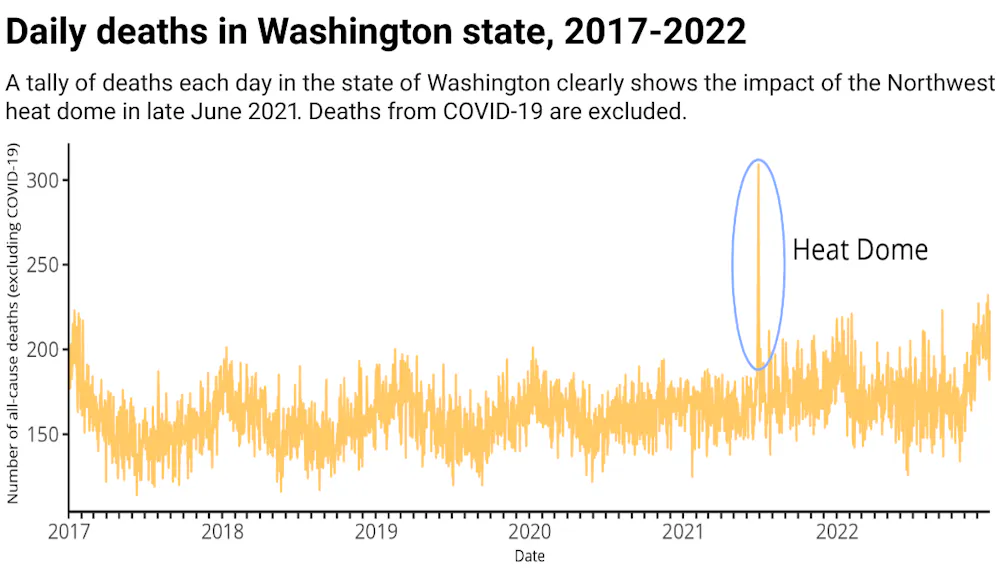
    A chart of all deaths, excluding COVID-19, shows the extraordinary impact the 2021 heat dome had in Washington.
    ‘In the Hot Seat’ report, 2022

    We were excited and relieved when the community was awarded a US$19.9 million grant from the Environmental Protection Agency to help it take concrete steps to adapt to climate change and boost the local economy in the process. The grant would help establish resilience hubs with microgrids and help residents without air conditioning install energy-efficient cooling systems. The city doesn’t have the means to make these improvements on its own, even if they would save lives and money in the long run.

    Less than a year later, the Trump administration abruptly terminated the funding.

    Spokane’s grant wasn’t the only one eliminated – about 350 similar grants that had been awarded to help communities across the country manage climate changes, from extreme heat and wildfire smoke to rising seas and flooding, were also terminated on the grounds that they don’t meet the White House’s priorities. Many other grants to help communities have also been terminated.

    Many of the communities that lost funding are like Spokane: They can’t afford to do this kind of work on their own.

    Why cities like Spokane need the help

    Like many communities in the American West, Spokane was founded in the late 19th century on wealth from railroads and resource extraction, especially gold, silver and timber.

    Today, it is a city of 230,000 in a metro area of a half-million people, the largest on the I-90 corridor between Minneapolis and Seattle. In many ways, Spokane could be on the cusp of a renaissance.

    In January 2025, the U.S. Department of Commerce announced a $48 million grant to develop a tech hub that could put the Inland Northwest on a path to become a global leader in advanced aerospace materials. But then, in May, the Trump administration rescinded that grant as well.

    The lost grants left the economy – and Spokane’s ability to adapt fast enough to keep up with climate changes – uncertain.

    Heat waves are becoming a growing risk in Spokane, known for its river and falls that tumble near downtown.
    Roman Eugeniusz/Wikimedia Commons, CC BY-SA

    This is not a wealthy area. The median household income is nearly $30,000 less than the state average. More than 13 out of every 100 people in Spokane live in poverty, above the national average, and over 67% of the children are eligible for free or reduced lunch.

    The city is a light blue island in a dark red sea, politically speaking, with a moderate mayor. Its congressional district has voted Republican by wide margins since 1995, the year that then-House Speaker Tom Foley lost his reelection bid.

    Lessons from the 2021 heat dome

    The 2021 heat wave was a catalyzing event for the community. The newly formed Gonzaga Institute for Climate, Water and the Environment brought together a coalition of government and community partners to apply for the EPA’s Climate and Environmental Justice Community Change Grant Program. The grants, funded by Congress under the Inflation Reduction Act of 2022, were intended to help communities most affected by pollution and climate change build adaptive capacity and boost the safety of their residents.

    A key lesson from the 2021 heat dome was that temporary, or pop-up, cooling centers don’t work well. People just weren’t showing up. Our research found that the best approach is to strengthen existing community facilities that people already turn to in moments of difficulty.

    Half the $19.9 million award was for outfitting five resilience hubs in existing libraries and community centers with solar arrays and battery backup microgrids, allowing them to continue providing a safe, cool space during a heat wave if the power shuts down.

    The locations and plans for five resilience hubs to serve Spokane, and the infrastructure they would receive.
    Gonzaga Institute for Climate, Water and the Environment

    Another $8 million in grant funding was meant to provide 300 low- to moderate-income homeowners with new high-efficiency electric heat pump heating, ventilation and air conditioning systems, providing more affordable utility bills while improving their ability to cool their homes and reducing fossil fuel emissions.

    Communities are left with few options

    Now, this and other work is at risk in Spokane and cities and towns like it around the country that also lost funding.

    According to the Trump administration, the program – designed to help hundreds of communities around the country become safer – was “no longer consistent with EPA funding priorities.”

    A class action lawsuit was recently filed over the termination of the grants by a coalition that includes Earth Justice and the Southern Environmental Law Center. If the case is successful, Spokane could see its funding restored.

    Meanwhile, the city and my team know we have to move fast, with whatever money and other resources we can find, to help Spokane prepare for worsening heat. We formed the Spokane Climate Resilience Collaborative – a partnership between community organizations, health officials and the city – as one way to advance planning for and responding to climate hazards such as extreme heat and wildfire smoke.

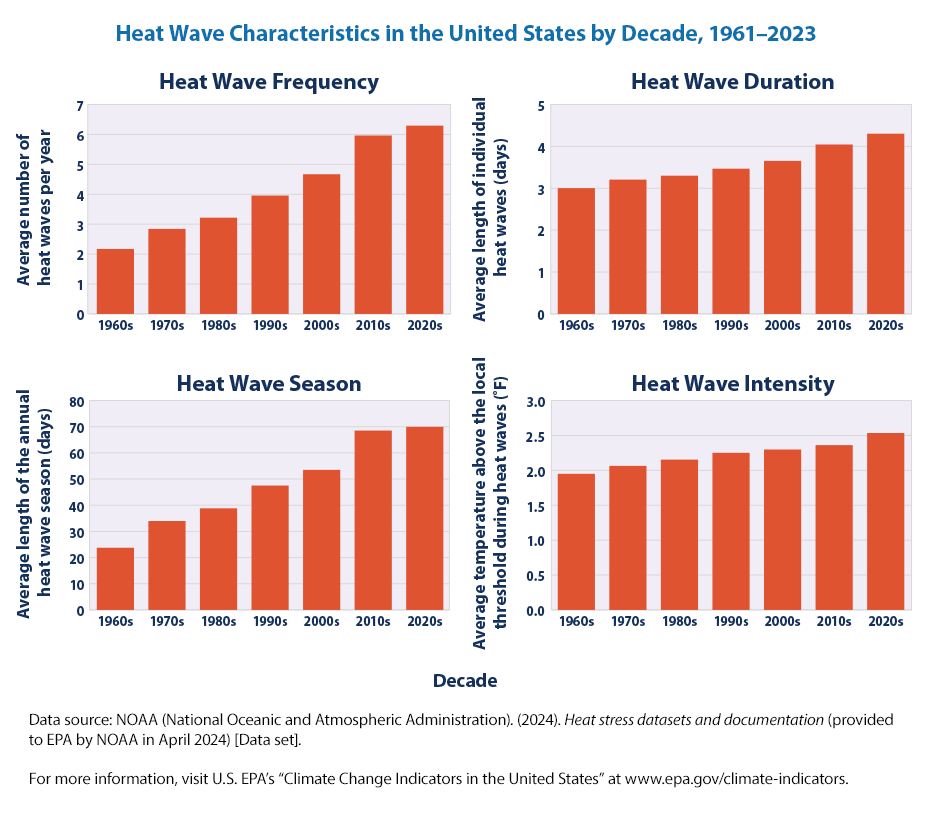
    As concentrations of heat-trapping gasses accumulate in the atmosphere, both the frequency and severity of heat waves increase. It is only a matter of time before another deadly heat dome arrives.

    Brian G. Henning receives funding from the Environmental Protection Agency.

    ref. My city was one of hundreds expecting federal funds to help manage rising heat wave risk – then EPA terminated the grants – https://theconversation.com/my-city-was-one-of-hundreds-expecting-federal-funds-to-help-manage-rising-heat-wave-risk-then-epa-terminated-the-grants-259009

    MIL OSI Analysis

  • MIL-OSI Analysis: Trump administration’s lie detector campaign against leakers is unlikely to succeed and could divert energy from national security priorities

    Source: The Conversation – USA – By Brian O’Neill, Professor of Practice, International Affairs, Georgia Institute of Technology

    The Department of Homeland Security and FBI are reportedly using polygraphs aggressively to identify dissenters. standret/Getty Images

    The Trump administration has recently directed that a new wave of polygraphs be administered across the executive branch, aimed at uncovering leaks to the press.

    As someone who has taken roughly a dozen polygraphs during my 27-year career with the CIA, I read this development with some skepticism.

    Polygraphs carry an ominous, almost mythological reputation among Americans. The more familiar and unofficial term – lie detector tests – likely fuels that perception. Television crime dramas have done their part, too, often portraying the device as an oracle for uncovering the truth when conventional methods fail.

    In those portrayals, the polygraph is not merely a tool – it’s a window into the soul.

    Among those entering government service, especially in national security, the greater anxiety is not the background check but passing the polygraph. My advice is always the same: Don’t lie.

    It’s the best – and perhaps only – guidance for a process that most assessments have concluded is a more subjective interpretation than empirical science.

    Why the polygraph persists

    Polygraphs are “pseudo-scientific” in that they measure physiological responses such as heart rate, blood pressure and perspiration. The assumption is that liars betray themselves through spikes in those signals. But this presumes a kind of psychological transparency that simply doesn’t hold up. A person might sweat and tremble simply from fear, anger or frustration – not deceit.

    There also are no specific physiological reactions associated with lying. The National Academy of Sciences in 2003, and the American Psychological Association in a 2004 review, concluded that the polygraph rests more on theater than fact. Recent assessments, published in 2019, have reached the same conclusion.

    Accordingly, polygraph results are not generally admissible in U.S. courts. Only a handful of states – such as Georgia, Arizona and California – permit their use even under limited conditions. And they typically require that both parties agree to admission and a judge to approve it. Unconditional admissibility remains the exception, not the rule.

    And yet, inside many national security agencies, polygraphs remain central to the clearance process – a fact I observed firsthand during my time overseeing personnel vetting and analytic hiring within the intelligence community.

    While not treated as conclusive, polygraph results often serve as a filter. A candidate’s visible discomfort – or the examiner’s subjective judgment that a response seems evasive – can stall or end the hiring process. For instance, I know that government agencies have halted clearances after an examiner flagged elevated reactions to questions about past drug use or foreign contacts, even when no disqualifying behavior was ultimately documented.

    The FBI’s J. Edgar Hoover headquarters building in Washington in 2016.
    AP Photo/Cliff Owen

    In some cases, an examiner’s suggestion that a chart shows an anomaly has led otherwise strong applicants to volunteer details they hadn’t planned to share – such as minor security infractions, undeclared relationships, or casual drug use from decades earlier – that, while not disqualifying on their own, reshape how their trustworthiness is perceived.

    The polygraph’s power lies in creating the conditions under which deception is confessed.

    A predictable pattern

    No administration has been immune to the impulse to investigate leaks. The reflex is bipartisan and familiar: An embarrassing disclosure appears in the press – contradicting official statements or exposing internal dissent – and the White House vows to identify and punish the source. Polygraphs are often part of this ritual.

    During his first term, Trump intensified efforts to expose internal dissent and media leaks. Department guidelines were revised to make it easier for agencies to obtain journalists’ phone and email records, and polygraphs were reportedly used to pressure officials suspected of talking to the press. That trend has continued – and, in some areas, escalated.

    Recent policies at the Pentagon now restrict unescorted press access, revoke office space for major outlets and favor ideologically aligned networks. The line between legitimate leak prevention and the surveillance or sidelining of critical press coverage has grown increasingly blurred.

    At agencies such as the Department of Homeland Security and the FBI, polygraphs are reportedly being used more frequently – and more punitively – to identify internal dissenters. Even “cold cases,” such as the leak of the Supreme Court’s Dobbs opinion ahead of its overturning of Roe v. Wade, have been reopened, despite prior investigations yielding no definitive source.

    Government reaction varies

    Not all leaks are treated the same. Disclosures that align with official narratives or offer strategic advantage may be quietly tolerated, even if unauthorized. Others, especially those that embarrass senior officials or reveal dysfunction, are more likely to prompt formal investigation.

    In 2003, for example, the leak of CIA officer Valerie Plame’s identity – widely seen as retaliation for her husband’s criticism of the Iraq War – triggered a federal investigation. The disclosure embarrassed senior officials, led to White House aide Scooter Libby’s conviction for perjury, later commuted, and drew intense political scrutiny.

    Lewis Libby, Vice President Dick Cheney’s chief of staff, rides in the backseat of a limousine on Oct. 27, 2005, in McLean, Va.
    Win McNamee/Getty Images

    Leaks involving classified material draw the sharpest response when they challenge presidential authority or expose internal disputes. That was the case in 2010 with Chelsea Manning, whose disclosure of diplomatic cables and battlefield reports embarrassed senior officials and sparked global backlash. Government reaction often depends less on what was disclosed than on who disclosed it – and to what effect.

    A narrow set of disclosures, such as those involving espionage or operational compromise, elicit broad consensus as grounds for prosecution. But most leaks fall outside that category. Most investigations fade quietly. The public rarely learns what became of them. Occasionally, there is a vague resignation, but direct accountability is rare.

    What the future holds

    Trump’s polygraph campaign is not likely to eliminate leaks to the press. But they may have a chilling effect that discourages internal candor while diverting investigative energy away from core security priorities.

    Even if such campaigns succeed in reducing unauthorized disclosures, they may come at the cost of institutional resilience. Historically, aggressive internal enforcement has been associated with declining morale and reduced information flow – factors that can hinder adaptation to complex threats.

    Some researchers have suggested that artificial intelligence may eventually offer reliable tools for detecting deception. One recent assessment raised the possibility, while cautioning that the technology is nowhere near operational readiness.

    For now, institutions will have to contend with the tools they have – imperfect, imprecise and more performative than predictive.

    As a former US intelligence officer, I am required to submit any written draft, before sharing it with other persons, for prepublication review. I submitted this draft to CIA’s Prepublication Review Board, which responded on 11 June: “No classified information was identified. Therefore, no changes are required for publication or sharing with others.”

    ref. Trump administration’s lie detector campaign against leakers is unlikely to succeed and could divert energy from national security priorities – https://theconversation.com/trump-administrations-lie-detector-campaign-against-leakers-is-unlikely-to-succeed-and-could-divert-energy-from-national-security-priorities-259128

    MIL OSI Analysis

  • MIL-OSI United Kingdom: Greens join protest to shut down Glasgow company shipping gas for Russia

    Source: Scottish Greens

    Putin’s enablers are not welcome in Scotland.

    Scottish Green MSP Ross Greer has joined members of the Ukrainian community in Scotland and the Ukraine Solidarity Campaign at a protest outside the Glasgow HQ of shipping company Seapeak, over their role in helping Russia to export gas despite the sanctions placed on it over Putin’s illegal invasion of Ukraine.

    Seapeak has been found to still ship over $5.5 billion of Russian Liquefied Natural Gas (LNG) each year.

    Ross Greer will be speaking at the rally in Glasgow today. He has previously demanded that the UK Government sanction Seapeak, but Labour Ministers have so far refused to take action. 

    Ross said:

    “It is appalling that the UK Labour government refuses to shut Seapeak down. People across Scotland are horrified when they learn that a company based here continues to fund Russia’s war machine. For as long as Seapeak remains untouched from sanctions, they will continue to ship gas out of Russia, throwing a lifeline to Putin’s war economy as a result.”

    In 2022, Ross was sanctioned by the Russian government for his work in solidarity with Ukraine. 

    Ross said:

    “Earlier this year, I wrote to UK Ministers, demanding that they shut down Seapeak’s UK operations. Despite the overwhelming evidence shared with them, they would not take action. They continue to allow Russia to profit from shipping operations here in the UK whilst claiming to stand with Ukraine.

    “Tens of thousands of Ukrainians have been killed and much of their country is left in ruins from Putin’s illegal invasion. If we were in Ukraine’s position, we would rightly be furious that our so-called allies were allowing complicit businesses like Seapeak to stay open. It is time to end this scandal and prove that Putin’s enablers are not welcome in Scotland.”

    MIL OSI United Kingdom

  • MIL-OSI Video: UK Hotel accommodation for migrants in Lords spotlight

    Source: United Kingdom UK House of Lords (video statements)

    Members discussed the use of hotel accommodation for migrants, including costs, conditions, and future plans.

    Read a transcript of this question https://hansard.parliament.uk/lords/2025-07-01/debates/49B60F8E-9CA4-4EBF-AF31-CF0C8592D721/MigrantsHotelAccommodation

    Catch-up on House of Lords business:

    Watch live events: https://parliamentlive.tv/Lords
    Read the latest news: https://www.parliament.uk/lords/

    Stay up to date with the House of Lords on social media:

    • X: https://twitter.com/UKHouseofLords
    • Bluesky: https://bsky.app/profile/houseoflords.parliament.uk
    • Instagram: https://www.instagram.com/UKHouseofLords/
    • Facebook: https://www.facebook.com/UKHouseofLords
    • Flickr: https://flickr.com/photos/ukhouseoflords/albums
    • LinkedIn: https://www.linkedin.com/company/the-house-of-lords
    • Threads: https://www.threads.net/@UKHouseOfLords

    #HouseOfLords #UKParliament

    https://www.youtube.com/watch?v=dAb8GxNIVG0

    MIL OSI Video

  • MIL-OSI Russia: Chinese universities deepen educational cooperation with Central Asian countries

    Translation. Region: Russian Federal

    Source: People’s Republic of China in Russian – People’s Republic of China in Russian –

    An important disclaimer is at the bottom of this article.

    Source: People’s Republic of China – State Council News

    XI’AN, July 9 (Xinhua) — When Dilnaz from Kazakhstan received her master’s degree in late June this year, her entire student life in China flashed before her eyes. During her two years of master’s studies, she had the opportunity to study at two campuses of Northwestern Polytechnical University (NWPU): one in Almaty and the other in Xi’an, Shaanxi Province (Northwest China), a distance of more than 3,000 kilometers.

    Studying in two countries was an amazing and unforgettable experience, Dilnaz said. It was made possible by the launch of an international education program two years ago at SZPU, a renowned engineering university in China.

    Let us recall that in May 2023, within the framework of the first China-Central Asia summit, an agreement was signed between NWPU and the Kazakh National University named after Al-Farabi /KazNU/ to open a Kazakhstani branch of NWPU. Already in October of the same year, eight Kazakhstani students, including Dilnaz, became the first master’s students of this branch in Almaty. They studied in the specialties of materials science, information and communication engineering, computer science and technology, which are the strongest disciplines at NWPU.

    In recent years, as China deepens cooperation with Central Asian countries under the Belt and Road Initiative, education has become a key area of bilateral cooperation. A number of Chinese universities have opened branches in Central Asian countries, giving new impetus to the development of higher education cooperation between China and Central Asia.

    For example, in July 2024, a branch of Beijing Language and Culture University was officially opened in Kazakhstan, and in the same month, a branch of Northwest Agriculture and Forestry University was opened in Tashkent, which became the first Chinese university branch in Uzbekistan. In May of this year, Xi’an University of Architecture and Civil Engineering and Osh Technological University of Kyrgyzstan (OshTU) signed an agreement in Xi’an to establish an architectural institute at OshTU.

    In the more than 30 years since the establishment of diplomatic relations between China and the five Central Asian countries, bilateral relations have achieved leaps and bounds, as evidenced by the continuous strengthening of political mutual trust and the intensification of trade and economic exchanges and people-to-people contacts, which has created conditions for the opening of branches of Chinese universities in Central Asian countries, noted Gu Wei, a research fellow at the Institute of International Studies of the Shanghai Academy of Social Sciences.

    According to her, the entry of Chinese universities into the international arena with the establishment of foreign branches meets the needs of Central Asian countries in training highly qualified personnel and will contribute to the deepening of cooperation between China and Central Asian countries.

    In May 2025, SZPU, together with KazNU, established the China-Kazakhstan Elite Engineering Institute, signing an agreement on joint training of bachelors in artificial intelligence under the “2 2” scheme with the issuance of double diplomas. This project became a new breakthrough for the two universities in the field of training specialists, creating a new architecture of high-level international cooperation.

    “These achievements clearly demonstrate the deep coordination and joint development of the parties in the field of training specialists and scientific and innovative activities, actively promoting cultural mutual enrichment and scientific cooperation,” noted Vice-Rector of SZPU Yue Xiaokui.

    As the Minister of Education of the People’s Republic of China Huai Jinpeng reported in May at the first Meeting of Ministers of Education “China-Central Asia”, at present more than 18 thousand young people from Central Asia are studying in Chinese universities. -0-

    Please note: This information is raw content obtained directly from the source of the information. It is an accurate report of what the source claims and does not necessarily reflect the position of MIL-OSI or its clients.

    .

    MIL OSI Russia News

  • MIL-OSI Russia: China, Egypt Should Deepen Strategic Coordination for Common Interests: Chinese Premier

    Translation. Region: Russian Federal

    Source: People’s Republic of China in Russian – People’s Republic of China in Russian –

    An important disclaimer is at the bottom of this article.

    Source: People’s Republic of China – State Council News

    CAIRO, July 9 (Xinhua) — China and Egypt, as important members of the Global South, should further strengthen strategic coordination to safeguard common interests, Chinese Premier Li Qiang said on Wednesday upon his arrival in Cairo for an official visit to Egypt at the invitation of his Egyptian counterpart Mostafa Madbouly.

    Noting that China and Egypt are ancient civilizations, the Chinese premier said that since the establishment of diplomatic ties nearly 70 years ago, the two countries have remained close friends who support each other and strategic partners with a shared destiny.

    In recent years, under the strategic leadership of Chinese President Xi Jinping and Egyptian President Abdel Fattah el-Sisi, China-Egypt relations have flourished, their traditional friendship has become stronger over time, political mutual trust has deepened, practical cooperation has yielded fruitful results, and multilateral coordination has become increasingly close and effective, he said.

    According to Li Qiang, the two countries have created a model of solidarity, unity, self-reliance, mutual benefit and mutual support for major developing countries.

    He noted that last year, the two heads of state met twice and reached an important consensus on advancing the construction of a China-Egypt community with a shared future in the new era, which opened up new opportunities for bilateral relations.

    As global changes accelerate unseen in a century and various challenges emerge, China and Egypt, as key members of the Global South, should also jointly promote peace and prosperity, the Chinese premier said.

    Li Qiang noted that China is willing to work with Egypt to deepen cooperation in all fields under the strategic leadership of the two heads of state, continuously enrich the content of the China-Egypt comprehensive strategic partnership, give strong impetus to development and national revival, and actively promote regional and global peace and stability.

    The Egyptian prime minister and senior government officials met Li Qiang at the airport and held a welcoming ceremony in his honor. Before arriving in Egypt, the Chinese premier attended the 17th BRICS summit in Rio de Janeiro, Brazil. –0–

    Please note: This information is raw content obtained directly from the source of the information. It is an accurate report of what the source claims and does not necessarily reflect the position of MIL-OSI or its clients.

    .

    MIL OSI Russia News

  • MIL-OSI USA: Governor Newsom deploys firefighter strike team to support Oregon wildfire response

    Source: US State of California 2

    Jul 8, 2025

    SACRAMENTO — As wildfire conditions intensify across the Pacific Northwest, Governor Newsom has directed the deployment of a CAL FIRE Type 3 engine strike team to assist firefighting efforts in southern Oregon. The deployment includes five fire engines and a strike team leader who will join suppression operations just north of the California–Oregon border.

    “Just as Oregon supported our state during the Los Angeles firestorms, we’re glad to support our Northern neighbors with strike teams and fire engines to aid in their wildfire response efforts. I’m proud California can lend a helping hand to fellow Americans in their time of need.” 

    Governor Gavin Newsom

    CAL FIRE engines being sent to support wildfire suppression in Oregon

    This mobilization comes in response to a significant lightning event that ignited numerous wildfires across the region. Southern Oregon has experienced more than 2,000 lightning strikes in recent days, compounded by high temperatures and gusty winds. The National Weather Service has issued Red Flag Warnings through July 8 for much of southern and central Oregon, signaling elevated fire danger and the need for immediate firefighting reinforcements.

    Upon arrival in Medford, CAL FIRE resources will seamlessly integrate into Oregon’s Department of Forestry command structure to support suppression efforts on active fires. This response is part of a long-standing interstate mutual aid agreement that strengthens wildfire readiness across the western United States.

    California remains prepared to send additional resources should conditions escalate.

    “We stand with Oregon during this critical time, just as they’ve stood with us during some of California’s toughest fire seasons,” said Anale Burlew, Chief Deputy Director of CAL FIRE. “These mutual aid partnerships are built on trust, coordination, and a shared commitment to public safety.”

    Press releases, Recent news

    Recent news

    News What you need to know: The $101 million being made available today will support the development of affordable multifamily rental housing in Los Angeles, prioritizing the needs of displaced residents in the fire-devastated regions. Los Angeles, California – Six…

    News SACRAMENTO – Governor Gavin Newsom today announced the deployment of an additional 18 highly skilled Urban Search and Rescue Team members to Texas to assist with ongoing response efforts related to severe flooding impacts.The deployment includes a total of four…

    News Perris, California — On June 18, 2025, the First Partner visited the Inland Empire to meet with California communities impacted by the Trump Administration’s federal immigration raids. The First Partner visited TODEC, a local nonprofit organization that’s become…

    Jul 8, 2025

    What you need to know: The passage of Proposition 1 by California voters adds rocket fuel to Governor Gavin Newsom’s transformational overhaul of the state’s behavioral health system. These reforms refocus existing funds to prioritize Californians with the most serious mental health and substance use issues, who are too often experiencing homelessness. They also fund more than 11,150 new behavioral health beds and supportive housing units and 26,700 outpatient treatment slots.

    Los Angeles, California – California took a major step forward in correcting the damage from 50 years of neglect to the state’s mental health system with the passage of Proposition 1. This historic measure — a signature priority of Governor Gavin Newsom — adds rocket fuel to California’s overhaul of the state’s behavioral health systems. It provides a full range of mental health and substance abuse care, with new accountability metrics to ensure local governments deliver for their communities.

    This is the biggest reform of the California mental health system in decades and will finally equip partners to deliver the results all Californians need and deserve. Treatment centers will prioritize mental health and substance use support in the community like never before. Now, it’s time to roll up our sleeves and begin implementing this critical reform – working closely with city and county leaders to ensure we see results.

    Governor Gavin Newsom

    newsom-news-template
    IMG_3682-min
    contact-governor-landing
    workers-FxAJ5fkakAAtVI3
    priorities-and-progress-image
    economy-F-isBKpbsAAxdab
    gun-violence-San Diego Guns Package 2.18.22_2

    What they’re saying: 

    • Sacramento Mayor Darrell Steinberg, original author of the Mental Health Services Act: “Twenty years ago, I never could have dreamed that we would have the strong leadership we have today, committing billions and making courageous policy changes that question the conventional wisdom on mental health. Now, with the passage of Proposition 1. California is delivering on decades old promises to help people living with brain-based illnesses, to live better lives, to live independently and to live with dignity in our communities. This is a historic moment and the hard work is ahead of us.“
    • Senator Susan Eggman (D-Stockton), author of Senate Bill 326: “Today marks a day of hope for thousands of Californians who are struggling with mental illness – many of whom are living unhoused. I am tremendously grateful to my fellow Californian’s for passing this important measure.  And I am very appreciative of this Governor’s leadership to transform our behavioral health care system!”
    • Assemblymember Jacqui Irwin (D-Thousand Oaks), author of Assembly Bill 531: “This started as an audacious proposal to address the root cause of homelessness and today, Californians can be proud to know that they did the right thing by passing Proposition 1. Now, it’s time for all of us to get to work, and make sure these reforms are implemented and that we see results.”

    Bigger picture: Transforming the Mental Health Services Act into the Behavioral Health Services Act and building more community mental health treatment sites and supportive housing is the last main pillar of Governor Newsom’s Mental Health Movement – pulling together significant recent reforms like 988 crisis line, CalHOPE, CARE Court, conservatorship reform, CalAIM behavioral health expansion (including mobile crisis care and telehealth), Medi-Cal expansion to all low-income Californians, Children and Youth Behavioral Health Initiative (including expanding services in schools and on-line), Older Adult Behavioral Health Initiative, Veterans Mental Health Initiative, Behavioral Health Community Infrastructure Program, Behavioral Health Bridge Housing, Health Care Workforce for All and more.

    More details on next step here

    Press releases, Recent news

    Recent news

    News What you need to know: The $101 million being made available today will support the development of affordable multifamily rental housing in Los Angeles, prioritizing the needs of displaced residents in the fire-devastated regions. Los Angeles, California – Six…

    News SACRAMENTO – Governor Gavin Newsom today announced the deployment of an additional 18 highly skilled Urban Search and Rescue Team members to Texas to assist with ongoing response efforts related to severe flooding impacts.The deployment includes a total of four…

    News Perris, California — On June 18, 2025, the First Partner visited the Inland Empire to meet with California communities impacted by the Trump Administration’s federal immigration raids. The First Partner visited TODEC, a local nonprofit organization that’s become…

    Jul 8, 2025

    What you need to know: The passage of Proposition 1 by California voters adds rocket fuel to Governor Gavin Newsom’s transformational overhaul of the state’s behavioral health system. These reforms refocus existing funds to prioritize Californians with the most serious mental health and substance use issues, who are too often experiencing homelessness. They also fund more than 11,150 new behavioral health beds and supportive housing units and 26,700 outpatient treatment slots.

    Los Angeles, California – California took a major step forward in correcting the damage from 50 years of neglect to the state’s mental health system with the passage of Proposition 1. This historic measure — a signature priority of Governor Gavin Newsom — adds rocket fuel to California’s overhaul of the state’s behavioral health systems. It provides a full range of mental health and substance abuse care, with new accountability metrics to ensure local governments deliver for their communities.

    This is the biggest reform of the California mental health system in decades and will finally equip partners to deliver the results all Californians need and deserve. Treatment centers will prioritize mental health and substance use support in the community like never before. Now, it’s time to roll up our sleeves and begin implementing this critical reform – working closely with city and county leaders to ensure we see results.

    Governor Gavin Newsom

    newsom-news-template
    IMG_3682-min
    contact-governor-landing
    workers-FxAJ5fkakAAtVI3
    priorities-and-progress-image
    economy-F-isBKpbsAAxdab
    gun-violence-San Diego Guns Package 2.18.22_2

    What they’re saying: 

    • Sacramento Mayor Darrell Steinberg, original author of the Mental Health Services Act: “Twenty years ago, I never could have dreamed that we would have the strong leadership we have today, committing billions and making courageous policy changes that question the conventional wisdom on mental health. Now, with the passage of Proposition 1. California is delivering on decades old promises to help people living with brain-based illnesses, to live better lives, to live independently and to live with dignity in our communities. This is a historic moment and the hard work is ahead of us.“
    • Senator Susan Eggman (D-Stockton), author of Senate Bill 326: “Today marks a day of hope for thousands of Californians who are struggling with mental illness – many of whom are living unhoused. I am tremendously grateful to my fellow Californian’s for passing this important measure.  And I am very appreciative of this Governor’s leadership to transform our behavioral health care system!”
    • Assemblymember Jacqui Irwin (D-Thousand Oaks), author of Assembly Bill 531: “This started as an audacious proposal to address the root cause of homelessness and today, Californians can be proud to know that they did the right thing by passing Proposition 1. Now, it’s time for all of us to get to work, and make sure these reforms are implemented and that we see results.”

    Bigger picture: Transforming the Mental Health Services Act into the Behavioral Health Services Act and building more community mental health treatment sites and supportive housing is the last main pillar of Governor Newsom’s Mental Health Movement – pulling together significant recent reforms like 988 crisis line, CalHOPE, CARE Court, conservatorship reform, CalAIM behavioral health expansion (including mobile crisis care and telehealth), Medi-Cal expansion to all low-income Californians, Children and Youth Behavioral Health Initiative (including expanding services in schools and on-line), Older Adult Behavioral Health Initiative, Veterans Mental Health Initiative, Behavioral Health Community Infrastructure Program, Behavioral Health Bridge Housing, Health Care Workforce for All and more.

    More details on next step here

    Press releases, Recent news

    Recent news

    News What you need to know: The $101 million being made available today will support the development of affordable multifamily rental housing in Los Angeles, prioritizing the needs of displaced residents in the fire-devastated regions. Los Angeles, California – Six…

    News SACRAMENTO – Governor Gavin Newsom today announced the deployment of an additional 18 highly skilled Urban Search and Rescue Team members to Texas to assist with ongoing response efforts related to severe flooding impacts.The deployment includes a total of four…

    News Perris, California — On June 18, 2025, the First Partner visited the Inland Empire to meet with California communities impacted by the Trump Administration’s federal immigration raids. The First Partner visited TODEC, a local nonprofit organization that’s become…

    MIL OSI USA News

  • MIL-OSI USA: Office of the Governor – News Release – Gov. Green Signs Landmark Legislation Pertaining to Maui Wildfires Settlement and Fire Marshal

    Source: US State of Hawaii

    Governor Josh Green, M.D., today enacted legislation to solidify the global settlement for claims relating to the August 2023 Maui wildfires and to further codify the role of Hawai‘i’s first State Fire Marshal in nearly 46 years.

    “Today we are re-envisioning the path forward in the roadmap of wildfire prevention and recovery,” said Governor Green. “We are taking action from both ends of the wildfire spectrum — building a more robust fire prevention framework within the state and enacting historic legislation that will aid in timely access to compensation following disaster. This crisis impacts us on many fronts, and it is time we tackle it the same way, from multiple directions.”

    HB 1001: RELATING TO SETTLEMENT OF CLAIMS RELATED TO THE MAUI WILDFIRES
    House Bill 1001 (Act 301) establishes the Maui Wildfires Settlement Trust Fund to provide dedicated funding for those affected by the 2023 Maui wildfires. The bill appropriates $807.5 million to support the state’s contribution in the settlement of claims, which shall be deposited into the trust fund. Additional contributions to the state fund include funding from the County of Maui, Hawaiian Electric, Kamehameha Schools, Charter Communications/Spectrum, Hawaiian Telcom and West Maui Land Company.

    Governor Green sought to establish this funding to provide timely compensation for survivors’ claims as an alternative to lengthy litigation, ensuring those affected do not have to wait years to rebuild their lives. Recipients of compensation from the settlement trust fund shall agree to release the state and any additional parties that contribute to the fund from all further liability arising from the Maui wildfires.

    “This legislation is a huge win and sets a new precedent for swift settlement of claims for wildfire victims,” said Governor Green. “It should not take years for people to see compensation or begin rebuilding. This is about healing, restoring trust and helping families recover as quickly as possible in the place they call home.”

    The measure emphasizes providing meaningful compensation by specifying that property and casualty insurance companies can only recover payments made to a policyholder through a statutory lien. This provision demonstrates the state’s commitment to prioritizing the individuals affected by the wildfire to receive claims directly.

    The settlement agreement totals $4.037 billion and resolves claims of liability against multiple defendants, including the County of Maui. The agreement aims to reduce the legal load of the judicial system while avoiding the high costs associated with litigation.

    HB 1064: RELATING TO FIRE PROTECTION
    In accordance with the Fire Safety Research Institute’s three-phase report — developed to improve fire preparedness and response following the August 2023 Maui wildfires —  House Bill 1064 (Act 302) effectuates the recommendations provided in “Phase 3” of the report. Phase 3 focuses on the forward-looking portion of the investigation and proposes improvements to the Office of the State Fire Marshal, which was originally established under Act 209, Session Law of Hawai‘i 2024.

    Under Act 302, the Office of the State Fire Marshal is transferred to the Department of Law Enforcement and will be led by the State Fire Marshal. The legislation further clarifies the roles, duties, and discretionary authority of both the Office and the State Fire Marshal, supporting the state’s efforts to provide coordinated, statewide fire prevention and readiness strategies. To enhance coordination between the Office of the State Fire Marshal and the State Fire Council, the bill outlines responsibilities and the organizational structure related to matters such as reporting and recommending amendments to the state fire code.

    The bill requires the Fire Chief of each county to investigate and maintain an annual record of fire occurrences. These records must be submitted to the Office of the State Fire Marshal for centralized analysis. The county submissions will assist the State Fire Marshal in compiling biennial statistical reports, including those made available to the public and those submitted to the Legislature.

    “Last month, I appointed Dori Booth as Hawai‘i’s new State Fire Marshal, reviving a critical public safety position that has been vacant for nearly 46 years,” said Governor Green. “This appointment marks a turning point as we redefine the role — empowering the office with clear authority and resources to better protect our state through fire prevention strategies and analysis.”

    “My first month in office has been both eye-opening and incredibly encouraging,” said State Fire Marshal Dori Booth. “I’ve had the opportunity to meet with dedicated state and county partners, as well as private stakeholders, who are all working tirelessly to enhance fire prevention, readiness, and resiliency across our islands. These conversations have been instrumental in shaping my initial assessments and understanding the unique strengths each organization brings to the table. The feedback I’ve received has affirmed the vital role the Fire Marshal’s Office can play — not only in supporting these existing efforts, but also in unifying them to build a stronger, more resilient Hawai‘i. HB 1064 is a meaningful step forward, and I’m honored to stand with so many committed partners as we move toward a safer future together.”

    Lastly, HB 1064 establishes the State Fire Marshal Selection Commission and defines its roles and structure. The selection commission will be given the authority to appoint and remove the State Fire Marshal, evaluate the State Fire Marshal’s performance, and address matters of public interest.

    “With the State Fire Marshal position re-established for the first time in nearly five decades, this legislation gives the office the structure, authority, and support it needs to succeed,” said Senator Brandon Elefante (Senate District 16 – ‘Aiea, ‘Aiea Heights, Hālawa, Pearlridge, Newtown, Royal Summit, Waimalu, Waiau, Momilani, Pacific Palisades, and Pearl City), who chairs the Senate Public Safety and Military Affairs Committee. “It’s a significant step in building a stronger, more coordinated approach to fire prevention and public safety across Hawai‘i.”

    There is $2.2 million appropriated in fiscal year 2026 and an equal amount for fiscal year 2027 to support the establishment and operations of the Office and State Fire Marshal.

    Video of the bill signing can be seen here.
    The slide deck presented by the Governor can be viewed here.
    Photos of the bill signing ceremonies, courtesy Office of the Governor, will be uploaded here.

    MIL OSI USA News

  • MIL-OSI Europe: Press release – Parliament condemns Russia’s brutal attacks on Ukrainian civilians

    Source: European Parliament 3

    In a resolution, MEPs strongly condemn Russia’s ongoing war crimes in Ukraine, expressing firm support for the investigations of the International Criminal Court.

    The text, approved on Wednesday by 507 votes in favour, 77 against, and with 45 abstentions, states that Russia’s full-scale invasion of Ukraine, which was launched in February 2022, has shattered peace and stability in Europe and gravely undermined global security. It underscores that Russia remains the most significant and direct threat to European security. MEPs emphasise that Russia bears sole responsibility for its war of aggression and that there can be no impunity for violations of human rights, war crimes, or other breaches of international law committed by Russian forces and officials. They also express deep outrage at Russia’s brutal attacks on civilians and the indiscriminate targeting of civilian infrastructure in Ukraine, stressing that the systematic and deliberate targeting of civilians and, in particular, the deportation of children may constitute a genocidal strategy orchestrated by Moscow.

    More than 70 000 Ukrainians are missing

    With the human cost of Russia’s war rising day by day, the resolution states that Russia is still committing heinous war crimes against innocent civilians. According to the Ukrainian authorities, approximately 16 000 Ukrainian civilians are currently known to be detained in Russia and the temporarily occupied Ukrainian territories, although the real figures are likely to be significantly higher. MEPs also highlight that more than 70 000 Ukrainians – including civilians, children, and military personnel – are officially listed as missing. They strongly condemn the execution of Ukrainian prisoners of war (POWs) by Russian forces, which they say constitutes war crimes and grave breaches of the Geneva Conventions. They also express full support the International Criminal Court’s ongoing investigations into the war crimes and crimes against humanity committed by Russia and welcome the recent agreement between the Council of Europe and Ukraine on the establishment of a Special Tribunal for the Crime of Aggression against Ukraine.

    Russia must be pressured to end its war of aggression

    Saying that all those responsible for war crimes perpetrated in Ukraine must be held accountable, MEPs also urge Russia to agree immediately to implement a comprehensive ‘all-for-all’ exchange of POWs. They believe that in order to pressure Russia to end its war of aggression, beginning with a sustained ceasefire, substantially more effective military, economic, political and diplomatic efforts and measures must be applied by the EU and like-minded partners. They also urge the EU to push ahead with the confiscation of immobilised Russian state assets in order to support Ukraine, saying that the legal pathways to do so are available, and that the lack of action is an inexcusable failure on the part of European governments.

    MIL OSI Europe News

  • MIL-OSI Europe: Press release – Albania, Bosnia and Herzegovina, and North Macedonia must step up reforms

    Source: European Parliament 3

    Three reports adopted on Wednesday highlight the urgent need for EU-related reforms, effective use of the Growth Plan and a decisive stance against foreign interference.

    Albania

    MEPs highlight Albania’s broad political consensus and strong public support for joining the EU, alongside full alignment with the EU’s foreign and security policy. While welcoming Albania’s aim to complete accession talks by 2027 and the progress already made, MEPs stress the urgent need to intensify reforms. Key priorities include strengthening judicial independence, combating corruption and organised crime, and protecting fundamental rights. Enhancing media pluralism and transparency remains crucial to build public trust, say MEPs.

    The report notes ongoing political polarisation marked by confrontational rhetoric and calls for more constructive and inclusive political dialogue. It also urges authorities to continue their efforts to safeguard judicial independence and increase accountability.

    Quote

    Rapporteur Andreas Schieder (S&D, AT) said: “In this term’s first report on Albania, we welcome the rapid progress the ‘accession front-runner’ has made over the past years. Albania is a strong and reliable partner in foreign policy, and has taken remarkable steps in all areas such as justice, anti-corruption and environmental protection. To reach its goal of full EU membership by 2030, it is crucial to keep up the good work by broadening the economic model, creating jobs and improving the social welfare model, as well as implementing a comprehensive and inclusive electoral reform. Albania’s future lies within the EU.”

    The report was adopted by 502 votes in favour,120against, and 64 abstentions.

    Bosnia and Herzegovina

    Parliament reaffirms its strong support for BiH’s EU accession bid, emphasising a merit-based process aligned with the Copenhagen criteria and grounded in the country’s unity, sovereignty and territorial integrity. Welcoming the European Council’s decision to open accession negotiations with BiH amid the changing geopolitical landscape following Russia’s full-scale invasion of Ukraine, MEPs acknowledge key reforms but express concern over stalled progress and weak implementation. The report calls for implementation of the necessary constitutional and electoral reforms, and for efforts to strengthen democratic institutions and the rule of law, and to fight corruption and organised crime.

    MEPs strongly condemn divisive rhetoric and secessionist policies, particularly those promoted by Milorad Dodik and the Republika Srpska leadership, calling on the EU to take decisive action, including targeted sanctions, to counter destabilising forces threatening the country’s stability and European security. The report also stresses concerns about malign foreign interference and disinformation campaigns by foreign actors, notably Russia and China, that erode public trust in the EU.

    Quote

    Rapporteur Ondřej Kolář (EPP, CS) said: “The future of the Balkans lies within Europe, not under Russian domination. Bosnia and Herzegovina is in the most difficult situation in Europe after Ukraine, and we must find a way to help it achieve full integration into Western structures. Developments in BiH demonstrate every day that we must strive for peace, stability, and development, because if we let up, we may once again face war and destruction.”

    The report was adopted by 459 votes in favour, 130 against, and 63 abstentions.

    North Macedonia

    The report underlines that enlargement should be a merit-based process based on the Copenhagen Criteria and calls on North Macedonia to enact the necessary reforms

    MEPs welcome the new €750 million Reform and Growth Facility, commending North Macedonia’s ambitious agenda. They urge it to adopt a strong focus on reform implementation, particularly in public administration, governance, the rule of law, and anti-corruption policy. Noting worsening trends in high-level corruption and low public trust in the judiciary, they call for stronger judicial independence, more accountability, and adequate resources for oversight bodies.

    The Parliament is deeply concerned that North Macedonia and other EU accession countries in the Western Balkans are being particularly hard hit by foreign interference and disinformation campaigns. It is also alarmed by the roles of the Hungarian Government and the Serbian Government in advancing China’s and Russia’s geopolitical objectives, states the resolution.

    Quote

    The rapporteur Thomas Waitz (The Greens, AT) said: „Today we adopted the first North Macedonia country report since 2022. As rapporteur, I worked tirelessly for a well-balanced and impartial report on the democratic progress of this country. North Macedonia has been a frontrunner in the region, showing real commitment to EU values, including a historic name change and bold reforms. But its accession has been unfairly blocked for too long due to bilateral disputes, fuelling public frustration and disillusionment with the EU. I call on all political parties in North Macedonia to engage in constructive dialogue to reach the required consensus, which would strengthen the country’s multi-ethnic character and accelerate EU progress.“

    The report was adopted by 461 votes in favour, 121 against, and with 107 abstentions.

    MIL OSI Europe News

  • MIL-OSI United Kingdom: DfE Update: 9 July 2025

    Source: United Kingdom – Government Statements

    Correspondence

    DfE Update: 9 July 2025

    Latest information and actions from the Department for Education about funding, assurance and resource management, for academies, local authorities and further education providers.

    Applies to England

    Documents

    Details

    Latest for further education

    Article Title
    Information Adult skills fund: updates to rules and guidance for 2025 to 2026
    Information Maths and English condition of funding
    Information English and maths continuing professional development available
    Information The further education workforce data collection
    Information Discover the latest updates to the Apprenticeship Service

    Latest information for academies

    Article Title
    Information Maths and English condition of funding
    Reminder PE and sports premium data collection
    Events and webinars Academy Finance Professionals July Power Hour: Academy Trust Handbook
    Events and webinars Academies technical update 2025 to 2026
    Events and webinars Financial management service (FMS) comparison matrix

    Latest information for local authorities

    Article Title
    Information Adult skills fund: updates to rules and guidance for 2025 to 2026
    Information Maths and English condition of funding
    Information The further education workforce data collection
    Information Discover the latest updates to the Apprenticeship Service
    Reminder PE and sports premium data collection

    Updates to this page

    Published 9 July 2025

    Sign up for emails or print this page

    MIL OSI United Kingdom

  • MIL-OSI New Zealand: Healthcare – Government must save Tōtara Hospice: NZNO

    Source: New Zealand Nurses Organisation

    The Coalition Government must provide urgent funding to Totara Hospice to stop it having to cut its services by a quarter from next week, NZNO says.
    Totara Hospice provides end-of-life care at no direct cost to patients from a diverse and growing community of around 520,000 South Aucklanders and is the subject of a new documentary series called Hospice Heroes.
    New Zealand Nurses Organisation Tōpūtanga Tapuhi Kaitiaki o Aotearoa (NZNO) delegate and hospice nurse Ed Boswell-Correa said staff were yesterday told the hospice had to reduce the number of people they actively care for in a month from 420 to 320 because of a lack of Government funding.
    “This decision is devastating for the local community. It will mean only the sickest people will be able to access our services.
    “It will force elderly people to remain in aged care facilities when they need specialist palliative care. Other people will be forced to go to Middlemore Hospital for care or worse still, not receive the care they need at all.
    “These people deserve the dignity they are provided by hospice when they are dying.”
    Ed Boswell-Correa says yesterday’s “bombshell announcement” follows a hiring freeze Totara was forced to put in place last month.
    “Fewer nurses and health care assistants mean less care for our patients. We want to be able to provide our patients and their whānau with the health care they need at this traumatic time in their lives,” he says.
    Sadly, Totara Hospice isn’t alone. NZNO is aware of at least four other hospices having to reduce their services. The Coalition Government must provide Te Whatu Ora with the funding it needs to save these services now.
    A report in March found hospices provide taxpayers with at least $1.59 in health benefits for every dollar of government funding. 

    MIL OSI New Zealand News

  • Are flash floods directly linked to climate change?

    Source: Government of India

    Source: Government of India (4)

    The catastrophic flash floods in Texas a couple of days earlier, triggered by extremely heavy rainfall, which caused over 100 deaths and widespread destruction, have once again raised a pressing question- are flash floods directly linked to climate change? Successive research by environmental agencies corroborates this, saying climate change is a significant factor in the increased risk, frequency and intensity of floods in several parts of the world.

    Research suggests human-caused climate change is driving more and more extreme weather conditions, which include extremely heavy and sometimes untimely rains, which directly contribute to flooding, especially when proper city planning is not in place.

    Studies say warmer temperatures cause a more moisture-laden atmosphere, which turns into more intense rainfall with increased frequency. The recent Texas floods were found to have been made significantly worse by climate change, as atmospheric conditions favoured slow-moving thunderstorms, which caused heavy rains in the same area for hours. Warmer global temperatures have increased the atmosphere’s capacity to hold moisture, resulting in heavier and more concentrated rainfall events that can overwhelm drainage systems and waterways.

    In layman’s terms, climate change leads to higher global temperatures and warmer air holds more moisture. Climate-related researches say with every one-degree Celsius rise in temperature, the atmosphere’s capacity to hold more water vapour rises by about 7%.

    It can be understood from the fact that the recent very heavy rainstorms in Texas delivered about 20% more rainfall than they did in the late 1950s, a time when global temperatures were considerably lower, according to the National Climate Assessment. As climate change continues to warm the planet, extreme rainfall events in Texas are projected to become even more frequent in the coming decade, as highlighted in a 2024 report by the state’s climatologist. The worry is that it’s not just Texas, but across the US, the heaviest storms are predicted to produce more rain as the Earth continues to warm.

    Such storms can trigger deadly flooding far inland, which was on full display in 2024 when Hurricane Helene caused severe flooding across Appalachia. Similarly, in 2021, flash floods caused by Hurricane Ida claimed dozens of lives in the Northeastern US. According to the National Climate Assessment, more than one-third of the estimated 230 billion dollar in inland flood damage in the US between 1988 and 2021 would not have occurred without climate change.

    Storms increase the likelihood of intense and short-duration rainfall in several parts of the globe, which is becoming a major trigger for flash floods. Moreover, climate change also gives rise to sea levels and constantly rising sea levels invariably exacerbate coastal flooding, which seriously threatens human populations and physical assets-infrastructure in the coastal regions.

    In fact, across the US, Europe and other parts of the globe, similar patterns are observed with coastal and inland states facing flood risks due to tropical storms, hurricanes and prolonged rainfall events. In the US, riverine floods are also a concern, especially along major waterways like the Mississippi. In many areas, deforestation, wetland loss and poorly planned development have also disrupted natural drainage systems, reducing the landscape’s ability to buffer heavy rains.

    Like the United States, Europe is also grappling with more frequent and severe flooding. In 2021 and successive years, devastating floods in Germany, Belgium, Italy, the Netherlands, Luxembourg, Poland, the Czech Republic, Slovakia, Austria, Hungary and others highlighted the region’s exposure to extreme weather.

    Climate change is intensifying heavy rainfall events across the continent, particularly in Central and Western Europe. Uncontrolled urban expansion, river channelization and reduced natural water retention due to agricultural and industrial development have made many European regions more prone to flooding. In mountainous areas, rapid snowmelt and glacial lake outbursts, both linked to rising temperatures, also contribute to sudden floods.

    Studies have shown that climate change has increased the likelihood and intensity of heavy rainfall events in both the US and Europe. For example, in Europe, research indicates that human-caused climate change doubled the likelihood of the intense rainfall that caused recent floods in Central Europe. Similarly, in the US, climate change has been linked to more extreme rainstorms and increased flood risk.

    Despite the growing risks, many communities around the country are still not planning for more intense rainstorms as they build roads, floodways, and storm infrastructure. Local governments around the country rely on historical rainfall records from concerned agencies.

    Another factor that may be contributing to the severe floods, however, is human activity and land-use change. Most of the recent floods in Central Europe are river floods, which makes the links between the flooding and climate change less straightforward.

    Central Europe’s devastating floods were made worse by climate change, which scientists say offers glimpses of a bleak future for the world’s fastest-warming continent. In fact, Europe is the fastest-warming continent. The last five years were on average around 2.3°C warmer than the second half of the 19th century, according to the Copernicus Climate Service.

    Addressing these challenges requires a multi-pronged approach. In the short term, improving early warning systems, emergency response mechanisms and public awareness can help save lives. Upgrading drainage infrastructure, reinforcing levees and dams and integrating green infrastructure like rain gardens, permeable pavements and restored wetlands are essential for long-term flood resilience. Urban planning must prioritize flood risk zones, restrict construction in vulnerable areas and promote sustainable land use.

    And at a broader scale, reducing greenhouse gas emissions remains critical to mitigating the root cause of climate-driven floods. International cooperation, climate adaptation funding and policy reforms are necessary to prepare communities for the escalating risks posed by a warming world. Without decisive action, not only the US and Europe, but the majority of countries across the globe are likely to see floods becoming an even more destructive and persistent threat in the decades ahead. Without more ambitious climate action, global warming is expected to reach around 3°C by the end of the century, which would be much more disastrous to the humanity.

  • MIL-OSI USA: Continuing the Quest for Clays

    Source: NASA

    Written by Eleanor Moreland, Ph.D. Student Collaborator at Rice University

    For the past month and a half, Perseverance has been exploring the Krokodillen plateau in search of clay-bearing rocks. An earlier blog discussed that these rocks could hold clues to Mars’ watery past, and Perseverance has been exploring multiple potential locations to find a suitable target to sample. When a coring target could not be found at the previous outcrop, the Science Team decided to return to the “Main Topsail” locality. In a single drive to this area, Perseverance drove 411.7 meters (1,350.7 feet, or just over a quarter mile) — the longest driving distance ever accomplished by a robotic vehicle on another planet. Go, Percy, go! 
    Back in the region near “Main Topsail” and “Salmon Point,” the team attempted to abrade and sample the clay-bearing rocks at a few different targets. These rocks, however, are proving very breakable and difficult to sample and abrade. Perseverance has experienced challenging fine-grained rocks before, such as during the fan front campaign inside Jezero crater. In that scenario and this one, the Science and Engineering teams work together diligently to find the highest priority targets and find rocks that could withstand the abrasion and coring processes. In this case, the team has decided to return to the site of a previous abrasion, “Strong Island,” to sample the rock we have already abraded and analyzed. This abrasion showed the strong clay signature the team is looking to sample, and we will make another coring attempt this week. 

    This past week, the Perseverance team hosted two very special visitors, Madeline and Joshua, and had the unique honor of fulfilling their wishes through the Make-A-Wish foundation. During their visits to JPL, Madeline and Joshua were named honorary Mars 2020 Operations Team Members. They visited the test rovers in the JPL Mars Yard, watched data arrive from the rover with the Perseverance operations team, and attended a rover planning meeting, collaborating with the science and engineering team members on campus. Madeline and Joshua will forever be connected to the Mars 2020 mission, as each selected the name of one of our planning targets. Madeline’s target, “Jigging Cove,” was a target for Mastcam-Z and SuperCam “all techniques” analysis, including LIBS, VISIR, and RMI. Joshua’s selection, “Gallants,” will be used for the next coring target. Carrying forward the resilience shown by Madeline and Joshua, Perseverance will attempt to sample this clay-rich bedrock before continuing the investigation along the Jezero crater rim. 

    MIL OSI USA News

  • MIL-OSI: YieldMax® ETFs Announces Distributions on ULTY, TSLY, LFGY, CRSH, YMAX, and Others

    Source: GlobeNewswire (MIL-OSI)

    CHICAGO and MILWAUKEE and NEW YORK, July 09, 2025 (GLOBE NEWSWIRE) — YieldMax® today announced distributions for the YieldMax® Weekly Payers and Group A ETFs listed in the table below.

    ETF Ticker1 ETF Name Distribution
    Frequency
    Distribution
    per Share
    Distribution
    Rate
    2,4
    30-Day
    SEC Yield3
    ROC5 Ex-Date &
    Record
    Date
    Payment
    Date
    CHPY YieldMax® Semiconductor Portfolio Option Income ETF Weekly $0.3488 32.97% 0.04% 100.00% 7/10/25 7/11/25
    GPTY YieldMax® AI & Tech Portfolio Option Income ETF Weekly $0.2952 32.61% 0.00% 100.00% 7/10/25 7/11/25
    LFGY YieldMax® Crypto Industry & Tech Portfolio Option Income ETF Weekly $0.4817 63.13% 0.00% 100.00% 7/10/25 7/11/25
    QDTY YieldMax® Nasdaq 100 0DTE Covered Call ETF Weekly $0.1909 22.51% 0.00% 100.00% 7/10/25 7/11/25
    RDTY YieldMax® R2000 0DTE Covered Call ETF Weekly $0.3040 34.13% 1.65% 100.00% 7/10/25 7/11/25
    SDTY YieldMax® S&P 500 0DTE Covered Call ETF Weekly $0.1398 16.22% 0.07% 100.00% 7/10/25 7/11/25
    ULTY YieldMax® Ultra Option Income Strategy ETF Weekly $0.0960 80.35% 0.00% 100.00% 7/10/25 7/11/25
    YMAG YieldMax® Magnificent 7 Fund of Option Income ETFs Weekly $0.1263 43.26% 63.17% 90.54% 7/10/25 7/11/25
    YMAX YieldMax® Universe Fund of Option Income ETFs Weekly $0.1347 51.13% 82.40% 95.41% 7/10/25 7/11/25
    BRKC YieldMax® BRK.B Option Income Strategy ETF Every 4
    weeks
    $0.5029 –  –  35.53% 7/10/25 7/11/25
    CRSH YieldMax® Short TSLA Option Income Strategy ETF Every 4
    weeks
    $0.2156 56.91% 3.08% 91.57% 7/10/25 7/11/25
    FEAT YieldMax® Dorsey Wright Featured 5 Income ETF Every 4
    weeks
    $1.4445 50.97% 52.99% 0.00% 7/10/25 7/11/25
    FIVY YieldMax® Dorsey Wright Hybrid 5 Income ETF Every 4
    weeks
    $1.0277 33.52% 35.26% 0.00% 7/10/25 7/11/25
    GOOY YieldMax® GOOGL Option Income Strategy ETF Every 4
    weeks
    $0.3077 33.16% 3.29% 0.00% 7/10/25 7/11/25
    OARK YieldMax® Innovation Option Income Strategy ETF Every 4
    weeks
    $0.3439 50.21% 2.88% 95.16% 7/10/25 7/11/25
    SNOY YieldMax® SNOW Option Income Strategy ETF Every 4
    weeks
    $0.4710 35.69% 2.27% 62.42% 7/10/25 7/11/25
    TSLY YieldMax® TSLA Option Income Strategy ETF Every 4
    weeks
    $0.3873 65.00% 2.76% 82.33% 7/10/25 7/11/25
    TSMY YieldMax® TSM Option Income Strategy ETF Every 4
    weeks
    $0.6378 50.37% 2.87% 95.76% 7/10/25 7/11/25
    XOMO YieldMax® XOM Option Income Strategy ETF Every 4
    weeks
    $0.3649 36.44% 3.62% 92.57% 7/10/25 7/11/25
    YBIT YieldMax® Bitcoin Option Income Strategy ETF Every 4
    weeks
    $0.3812 46.36% 1.54% 87.99% 7/10/25 7/11/25
    Weekly Payers & Group B ETFs scheduled for next week: CHPY GPTY LFGY QDTY RDTY SDTY ULTY YMAG YMAX BABO DIPS FBY GDXY JPMO MARO MRNY NVDY PLTY


    Standardized Performance and Fund details can be obtained by clicking the ETF Ticker in the table above or by visiting us at
    www.yieldmaxetfs.com

    Performance data quoted represents past performance and is no guarantee of future results. Investment return and principal value of an investment will fluctuate so that an investor’s shares, when sold or redeemed, may be worth more or less than their original cost and current performance may be lower or higher than the performance quoted above. Performance current to the most recent month-end can be obtained by calling (866) 864-3968.

    Note: DIPS, FIAT, CRSH, YQQQ and WNTR are hereinafter referred to as the “Short ETFs.”

    Distributions are not guaranteed. The Distribution Rate and 30-Day SEC Yield are not indicative of future distributions, if any, on the ETFs. In particular, future distributions on any ETF may differ significantly from its Distribution Rate or 30-Day SEC Yield. You are not guaranteed a distribution under the ETFs. Distributions for the ETFs (if any) are variable and may vary significantly from period to period and may be zero. Accordingly, the Distribution Rate and 30-Day SEC Yield will change over time, and such change may be significant.

    Investors in the Funds will not have rights to receive dividends or other distributions with respect to the underlying reference asset(s).

    1 All YieldMax® ETFs shown in the table above (except YMAX, YMAG, FEAT, FIVY and ULTY) have a gross expense ratio of 0.99%. YMAX, FEAT have a Management Fee of 0.29% and Acquired Fund Fees and Expenses of 0.99% for a gross expense ratio of 1.28%. YMAG has a management fee of 0.29% and Acquired Fund Fees and Expenses of 0.83% for a gross expense ratio of 1.12%. FIVY has a Management Fee of 0.29% and Acquired Fund Fees and Expenses of 0.59% for a gross expense ratio of 0.88%. “Acquired Fund Fees and Expenses” are on fees and expenses that the Fund incurs from investing in the shares of other investment companies, namely other YieldMax® ETFs. ULTY has a gross expense ratio of 1.40%, and a net expense ratio after the fee waiver of 1.30%. The Advisor has agreed to a fee waiver of 0.10% through at least February 28, 2026
    2 The Distribution Rate shown is as of close on July 8, 2025. The Distribution Rate is the annual distribution rate an investor would receive if the most recent distribution, which includes option income, remained the same going forward. The Distribution Rate is calculated by annualizing an ETF’s Distribution per Share and dividing such annualized amount by the ETF’s most recent NAV. The Distribution Rate represents a single distribution from the ETF and does not represent its total return. Distributions may also include a combination of ordinary dividends, capital gain, and return of investor capital, which may decrease an ETF’s NAV and trading price over time. As a result, an investor may suffer significant losses to their investment. These Distribution Rates may be caused by unusually favorable market conditions and may not be sustainable. Such conditions may not continue to exist and there should be no expectation that this performance may be repeated in the future. 
    3 The 30-Day SEC Yield represents net investment income, which excludes option income, earned by such ETF over the 30-Day period ended June 30, 2025, expressed as an annual percentage rate based on such ETF’s share price at the end of the 30-Day period. 
    4 Each ETF’s strategy (except those of the Short ETFs) will cap potential gains if its reference asset’s shares increase in value, yet subjects an investor to all potential losses if the reference asset’s shares decrease in value. Such potential losses may not be offset by income received by the ETF. Each Short ETF’s strategy will cap potential gains if its reference asset decreases in value, yet subjects an investor to all potential losses if the reference asset increases in value. Such potential losses may not be offset by income received by the ETF. 
    ROC refers to Return of Capital. The ROC percentage indicates how much the distribution reflects an investor’s initial investment. The figures shown for each Fund in the table above are estimates and may later be determined to be taxable net investment income, short-term gains, long-term gains (to the extent permitted by law), or return of capital. Actual amounts and sources for tax reporting will depend upon the Fund’s investment activities during the remainder of the fiscal year and may be subject to changes based on tax regulations. Your broker will send you a Form 1099-DIV for the calendar year to tell you how to report these distributions for federal income tax purposes

    Each Fund has a limited operating history and while each Fund’s objective is to provide current income, there is no guarantee the Fund will make a distribution. Distributions are likely to vary greatly in amount.

    Important Information

    This material must be preceded or accompanied by the prospectus. For all prospectuses, click here.

    Tidal Financial Group is the adviser for all YieldMax® ETFs.

    THE FUND, TRUST, AND ADVISER ARE NOT AFFILIATED WITH ANY UNDERLYING REFERENCE ASSET.

    Risk Disclosures (applicable to all YieldMax ETFs referenced above, except the Short ETFs)

    YMAX, YMAG, FEAT and FIVY generally invest in other YieldMax® ETFs. As such, these Funds are subject to the risks listed in this section, which apply to all the YieldMax® ETFs they may hold from time to time.

    Investing involves risk. Principal loss is possible.

    Referenced Index Risk. The Fund invests in options contracts that are based on the value of the Index (or the Index ETFs). This subjects the Fund to certain of the same risks as if it owned shares of companies that comprised the Index or an ETF that tracks the Index, even though it does not.

    Indirect Investment Risk. The Index is not affiliated with the Trust, the Fund, the Adviser, or their respective affiliates and is not involved with this offering in any way. Investors in the Fund will not have the right to receive dividends or other distributions or any other rights with respect to the companies that comprise the Index but will be subject to declines in the performance of the Index.

    Russell 2000 Index Risks. The Index, which consists of small-cap U.S. companies, is particularly susceptible to economic changes, as these firms often have less financial resilience than larger companies. Market volatility can disproportionately affect these smaller businesses, leading to significant price swings. Additionally, these companies are often more exposed to specific industry risks and have less diverse revenue streams. They can also be more vulnerable to changes in domestic regulatory or policy environments.

    Call Writing Strategy Risk. The path dependency (i.e., the continued use) of the Fund’s call writing strategy will impact the extent that the Fund participates in the positive price returns of the underlying reference asset and, in turn, the Fund’s returns, both during the term of the sold call options and over longer periods.

    Counterparty Risk. The Fund is subject to counterparty risk by virtue of its investments in options contracts. Transactions in some types of derivatives, including options, are required to be centrally cleared (“cleared derivatives”). In a transaction involving cleared derivatives, the Fund’s counterparty is a clearing house rather than a bank or broker. Since the Fund is not a member of clearing houses and only members of a clearing house (“clearing members”) can participate directly in the clearing house, the Fund will hold cleared derivatives through accounts at clearing members.

    Derivatives Risk. Derivatives are financial instruments that derive value from the underlying reference asset or assets, such as stocks, bonds, or funds (including ETFs), interest rates or indexes. The Fund’s investments in derivatives may pose risks in addition to, and greater than, those associated with directly investing in securities or other ordinary investments, including risk related to the market, imperfect correlation with underlying investments or the Fund’s other portfolio holdings, higher price volatility, lack of availability, counterparty risk, liquidity, valuation and legal restrictions.

    Options Contracts. The use of options contracts involves investment strategies and risks different from those associated with ordinary portfolio securities transactions. The prices of options are volatile and are influenced by, among other things, actual and anticipated changes in the value of the underlying instrument, including the anticipated volatility, which are affected by fiscal and monetary policies and by national and international political, changes in the actual or implied volatility or the reference asset, the time remaining until the expiration of the option contract and economic events.

    Distribution Risk. As part of the Fund’s investment objective, the Fund seeks to provide current income. There is no assurance that the Fund will make a distribution in any given period. If the Fund does make distributions, the amounts of such distributions will likely vary greatly from one distribution to the next.

    High Portfolio Turnover Risk. The Fund may actively and frequently trade all or a significant portion of the Fund’s holdings. A high portfolio turnover rate increases transaction costs, which may increase the Fund’s expenses.

    Liquidity Risk. Some securities held by the Fund, including options contracts, may be difficult to sell or be illiquid, particularly during times of market turmoil.

    Non-Diversification Risk. Because the Fund is “non-diversified,” it may invest a greater percentage of its assets in the securities of a single issuer or a smaller number of issuers than if it was a diversified fund.

    New Fund Risk. The Fund is a recently organized management investment company with no operating history. As a result, prospective investors do not have a track record or history on which to base their investment decisions.

    Price Participation Risk. The Fund employs an investment strategy that includes the sale of call option contracts, which limits the degree to which the Fund will participate in increases in value experienced by the underlying reference asset over the Call Period.

    Single Issuer Risk. Issuer-specific attributes may cause an investment in the Fund to be more volatile than a traditional pooled investment which diversifies risk or the market generally. The value of the Fund, which focuses on an individual security (ARKK, TSLA, AAPL, NVDA, AMZN, META, GOOGL, NFLX, COIN, MSFT, DIS, XOM, JPM, AMD, PYPL, SQ, MRNA, AI, MSTR, Bitcoin ETP, GDX®, SNOW, ABNB, BABA, TSM, SMCI, PLTR, MARA, CVNA, HOOD, BRK.B), may be more volatile than a traditional pooled investment or the market as a whole and may perform differently from the value of a traditional pooled investment or the market as a whole.

    Inflation Risk. Inflation risk is the risk that the value of assets or income from investments will be less in the future as inflation decreases the value of money. As inflation increases, the present value of the Fund’s assets and distributions, if any, may decline.

    Indirect Investment Risk. The Index is not affiliated with the Trust, the Fund, the Adviser, or their respective affiliates and is not involved with this offering in any way.

    Risk Disclosures (applicable only to GPTY)

    Artificial Intelligence Risk. Issuers engaged in artificial intelligence typically have high research and capital expenditures and, as a result, their profitability can vary widely, if they are profitable at all. The space in which they are engaged is highly competitive and issuers’ products and services may become obsolete very quickly. These companies are heavily dependent on intellectual property rights and may be adversely affected by loss or impairment of those rights. The issuers are also subject to legal, regulatory, and political changes that may have a large impact on their profitability. A failure in an issuer’s product or even questions about the safety of the product could be devastating to the issuer, especially if it is the marquee product of the issuer. It can be difficult to accurately capture what qualifies as an artificial intelligence company.

    Technology Sector Risk. The Fund will invest substantially in companies in the information technology sector, and therefore the performance of the Fund could be negatively impacted by events affecting this sector. Market or economic factors impacting technology companies and companies that rely heavily on technological advances could have a significant effect on the value of the Fund’s investments. The value of stocks of information technology companies and companies that rely heavily on technology is particularly vulnerable to rapid changes in technology product cycles, rapid product obsolescence, government regulation and competition, both domestically and internationally, including competition from foreign competitors with lower production costs. Stocks of information technology companies and companies that rely heavily on technology, especially those of smaller, less-seasoned companies, tend to be more volatile than the overall market. Information technology companies are heavily dependent on patent and intellectual property rights, the loss or impairment of which may adversely affect profitability.

    Risk Disclosure (applicable only to MARO)

    Digital Assets Risk: The Fund does not invest directly in Bitcoin or any other digital assets. The Fund does not invest directly in derivatives that track the performance of Bitcoin or any other digital assets. The Fund does not invest in or seek direct exposure to the current “spot” or cash price of Bitcoin. Investors seeking direct exposure to the price of Bitcoin should consider an investment other than the Fund. Digital assets like Bitcoin, designed as mediums of exchange, are still an emerging asset class. They operate independently of any central authority or government backing and are subject to regulatory changes and extreme price volatility.

    Risk Disclosures (applicable only to BABO and TSMY)

    Currency Risk: Indirect exposure to foreign currencies subjects the Fund to the risk that currencies will decline in value relative to the U.S. dollar. Currency rates in foreign countries may fluctuate significantly over short periods of time for a number of reasons, including changes in interest rates and the imposition of currency controls or other political developments in the U.S. or abroad.

    Depositary Receipts Risk: The securities underlying BABO and TSMY are American Depositary Receipts (“ADRs”). Investment in ADRs may be less liquid than the underlying shares in their primary trading market.

    Foreign Market and Trading Risk: The trading markets for many foreign securities are not as active as U.S. markets and may have less governmental regulation and oversight.

    Foreign Securities Risk: Investments in securities of non-U.S. issuers involve certain risks that may not be present with investments in securities of U.S. issuers, such as risk of loss due to foreign currency fluctuations or to political or economic instability, as well as varying regulatory requirements applicable to investments in non-U.S. issuers. There may be less information publicly available about a non-U.S. issuer than a U.S. issuer. Non-U.S. issuers may also be subject to different regulatory, accounting, auditing, financial reporting, and investor protection standards than U.S. issuers.

    Risk Disclosures (applicable only to GDXY)

    Risk of Investing in Foreign Securities. The Fund is exposed indirectly to the securities of foreign issuers selected by GDX®’s investment adviser, which subjects the Fund to the risks associated with such companies. Investments in the securities of foreign issuers involve risks beyond those associated with investments in U.S. securities.

    Risk of Investing in Gold and Silver Mining Companies. The Fund is exposed indirectly to gold and silver mining companies selected by GDX®’s investment adviser, which subjects the Fund to the risks associated with such companies.

    The Fund invests in options contracts based on the value of the VanEck Gold Miners ETF (GDX®), which subjects the Fund to some of the same risks as if it owned GDX®, as well as the risks associated with Canadian, Australian and Emerging Market Issuers, and Small-and Medium-Capitalization companies.

    Risk Disclosures (applicable only to YBIT)

    YBIT does not invest directly in Bitcoin or any other digital assets. YBIT does not invest directly in derivatives that track the performance of Bitcoin or any other digital assets. YBIT does not invest in or seek direct exposure to the current “spot” or cash price of Bitcoin. Investors seeking direct exposure to the price of Bitcoin should consider an investment other than YBIT.

    Bitcoin Investment Risk: The Fund’s indirect investment in Bitcoin, through holdings in one or more Underlying ETPs, exposes it to the unique risks of this emerging innovation. Bitcoin’s price is highly volatile, and its market is influenced by the changing Bitcoin network, fluctuating acceptance levels, and unpredictable usage trends.

    Digital Assets Risk: Digital assets like Bitcoin, designed as mediums of exchange, are still an emerging asset class. They operate independently of any central authority or government backing and are subject to regulatory changes and extreme price volatility. Potentially No 1940 Act Protections. As of the date of this Prospectus, there is only a single eligible Underlying ETP, and it is an investment company subject to the 1940 Act.

    Bitcoin ETP Risk: The Fund invests in options contracts that are based on the value of the Bitcoin ETP. This subjects the Fund to certain of the same risks as if it owned shares of the Bitcoin ETP, even though it does not. Bitcoin ETPs are subject, but not limited, to significant risk and heightened volatility. An investor in a Bitcoin ETP may lose their entire investment. Bitcoin ETPs are not suitable for all investors. In addition, not all Bitcoin ETPs are registered under the Investment Company Act of 1940. Those Bitcoin ETPs that are not registered under such statute are therefore not subject to the same regulations as exchange traded products that are so registered.

    Risk Disclosures (applicable only to the Short ETFs)

    Investing involves risk. Principal loss is possible.

    Price Appreciation Risk. As part of the Fund’s synthetic covered put strategy, the Fund purchases and sells call and put option contracts that are based on the value of the underlying reference asset. This strategy subjects the Fund to certain of the same risks as if it shorted the underlying reference asset, even though it does not. By virtue of the Fund’s indirect inverse exposure to changes in the value of the underlying reference asset, the Fund is subject to the risk that the value of the underlying reference asset increases. If the value of the underlying reference asset increases, the Fund will likely lose value and, as a result, the Fund may suffer significant losses.

    Put Writing Strategy Risk. The path dependency (i.e., the continued use) of the Fund’s put writing (selling) strategy will impact the extent that the Fund participates in decreases in the value of the underlying reference asset and, in turn, the Fund’s returns, both during the term of the sold put options and over longer periods.

    Purchased OTM Call Options Risk. The Fund’s strategy is subject to potential losses if the underlying reference asset increases in value, which may not be offset by the purchase of out-of-the-money (OTM) call options. The Fund purchases OTM calls to seek to manage (cap) the Fund’s potential losses from the Fund’s short exposure to the underlying reference asset if it appreciates significantly in value. However, the OTM call options will cap the Fund’s losses only to the extent that the value of the underlying reference asset increases to a level that is at or above the strike level of the purchased OTM call options. Any increase in the value of the underlying reference asset to a level that is below the strike level of the purchased OTM call options will result in a corresponding loss for the Fund. For example, if the OTM call options have a strike level that is approximately 100% above the then-current value of the underlying reference asset at the time of the call option purchase, and the value of the underlying reference asset increases by at least 100% during the term of the purchased OTM call options, the Fund will lose all its value. Since the Fund bears the costs of purchasing the OTM calls, such costs will decrease the Fund’s value and/or any income otherwise generated by the Fund’s investment strategy.

    Counterparty Risk. The Fund is subject to counterparty risk by virtue of its investments in options contracts. Transactions in some types of derivatives, including options, are required to be centrally cleared (“cleared derivatives”). In a transaction involving cleared derivatives, the Fund’s counterparty is a clearing house rather than a bank or broker. Since the Fund is not a member of clearing houses and only members of a clearing house (“clearing members”) can participate directly in the clearing house, the Fund will hold cleared derivatives through accounts at clearing members.

    Derivatives Risk. Derivatives are financial instruments that derive value from the underlying reference asset or assets, such as stocks, bonds, or funds (including ETFs), interest rates or indexes. The Fund’s investments in derivatives may pose risks in addition to, and greater than, those associated with directly investing in securities or other ordinary investments, including risk related to the market, imperfect correlation with underlying investments or the Fund’s other portfolio holdings, higher price volatility, lack of availability, counterparty risk, liquidity, valuation and legal restrictions.

    Options Contracts. The use of options contracts involves investment strategies and risks different from those associated with ordinary portfolio securities transactions. The prices of options are volatile and are influenced by, among other things, actual and anticipated changes in the value of the underlying reference asset, including the anticipated volatility, which are affected by fiscal and monetary policies and by national and international political, changes in the actual or implied volatility or the reference asset, the time remaining until the expiration of the option contract and economic events.

    Distribution Risk. As part of the Fund’s investment objective, the Fund seeks to provide current income. There is no assurance that the Fund will make a distribution in any given period. If the Fund does make distributions, the amounts of such distributions will likely vary greatly from one distribution to the next.

    High Portfolio Turnover Risk. The Fund may actively and frequently trade all or a significant portion of the Fund’s holdings.

    Liquidity Risk. Some securities held by the Fund, including options contracts, may be difficult to sell or be illiquid, particularly during times of market turmoil.

    Non-Diversification Risk. Because the Fund is “non-diversified,” it may invest a greater percentage of its assets in the securities of a single issuer or a smaller number of issuers than if it was a diversified fund.

    New Fund Risk. The Fund is a recently organized management investment company with no operating history. As a result, prospective investors do not have a track record or history on which to base their investment decisions.

    Price Participation Risk. The Fund employs an investment strategy that includes the sale of put option contracts, which limits the degree to which the Fund will participate in decreases in value experienced by the underlying reference asset over the Put Period.

    Single Issuer Risk. Issuer-specific attributes may cause an investment in the Fund to be more volatile than a traditional pooled investment which diversifies risk or the market generally. The value of the Fund, for any Fund that focuses on an individual security (e.g., TSLA, COIN, NVDA, MSTR), may be more volatile than a traditional pooled investment or the market as a whole and may perform differently from the value of a traditional pooled investment or the market as a whole. Inflation Risk. Inflation risk is the risk that the value of assets or income from investments will be less in the future as inflation decreases the value of money. As inflation increases, the present value of the Fund’s assets and distributions, if any, may decline.

    Risk Disclosures (applicable only to CHPY)

    Semiconductor Industry Risk. Semiconductor companies may face intense competition, both domestically and internationally, and such competition may have an adverse effect on their profit margins. Semiconductor companies may have limited product lines, markets, financial resources or personnel. Semiconductor companies’ supply chain and operations are dependent on the availability of materials that meet exacting standards and the use of third parties to provide components and services.

    The products of semiconductor companies may face obsolescence due to rapid technological developments and frequent new product introduction, unpredictable changes in growth rates and competition for the services of qualified personnel. Capital equipment expenditures could be substantial, and equipment generally suffers from rapid obsolescence. Companies in the semiconductor industry are heavily dependent on patent and intellectual property rights. The loss or impairment of these rights would adversely affect the profitability of these companies.

    Risk Disclosures (applicable only to YQQQ)

    Index Overview. The Nasdaq 100 Index is a benchmark index that includes 100 of the largest non-financial companies listed on the Nasdaq Stock Market, based on market capitalization.

    Index Level Appreciation Risk. As part of the Fund’s synthetic covered put strategy, the Fund purchases and sells call and put option contracts that are based on the Index level. This strategy subjects the Fund to certain of the same risks as if it shorted the Index, even though it does not. By virtue of the Fund’s indirect inverse exposure to changes in the Index level, the Fund is subject to the risk that the Index level increases. If the Index level increases, the Fund will likely lose value and, as a result, the Fund may suffer significant losses. The Fund may also be subject to the following risks: innovation and technological advancement; strong market presence of Index constituent companies; adaptability to global market trends; and resilience and recovery potential.

    Index Level Participation Risk. The Fund employs an investment strategy that includes the sale of put option contracts, which limits the degree to which the Fund will benefit from decreases in the Index level experienced over the Put Period. This means that if the Index level experiences a decrease in value below the strike level of the sold put options during a Put Period, the Fund will likely not experience that increase to the same extent and any Fund gains may significantly differ from the level of the Index losses over the Put Period. Additionally, because the Fund is limited in the degree to which it will participate in decreases in value experienced by the Index level over each Put Period, but has significant negative exposure to any increases in value experienced by the Index level over the Put Period, the NAV of the Fund may decrease over any given period. The Fund’s NAV is dependent on the value of each options portfolio, which is based principally upon the inverse of the performance of the Index level. The Fund’s ability to benefit from the Index level decreases will depend on prevailing market conditions, especially market volatility, at the time the Fund enters into the sold put option contracts and will vary from Put Period to Put Period. The value of the options contracts is affected by changes in the value and dividend rates of component companies that comprise the Index, changes in interest rates, changes in the actual or perceived volatility of the Index and the remaining time to the options’ expiration, as well as trading conditions in the options market. As the Index level changes and time moves towards the expiration of each Put Period, the value of the options contracts, and therefore the Fund’s NAV, will change. However, it is not expected for the Fund’s NAV to directly inversely correlate on a day-to-day basis with the returns of the Index level. The amount of time remaining until the options contract’s expiration date affects the impact that the value of the options contracts has on the Fund’s NAV, which may not be in full effect until the expiration date of the Fund’s options contracts. Therefore, while changes in the Index level will result in changes to the Fund’s NAV, the Fund generally anticipates that the rate of change in the Fund’s NAV will be different than the inverse of the changes experienced by the Index level.

    YieldMax® ETFs are distributed by Foreside Fund Services, LLC. Foreside is not affiliated with Tidal Financial Group, or YieldMax® ETFs.

    © 2025 YieldMax® ETFs

    The MIL Network

  • MIL-OSI: Bitget Lists Tanssi (TANSSI) for Spot Trading with 8,878,000 in Token Rewards

    Source: GlobeNewswire (MIL-OSI)

    VICTORIA, Seychelles, July 09, 2025 (GLOBE NEWSWIRE) — Bitget, the leading cryptocurrency exchange and Web3 company, has announced the listing of Tanssi (TANSSI) on its spot trading platform. Tanssi is a decentralized infrastructure protocol. Besides being available for spot trading, Bitget will also launch an exclusive PoolX  campaign and a CandyBomb campaign.

    Trading for the TANSSI/USDT pair will begin on July 9, 2025, at 11:00 (UTC), with withdrawals available starting July 10, 2025, at 12:00 (UTC). Eligible users can participate in a PoolX campaign to earn a share of 888,000 TANSSI by locking a minimum of 100 TANSSI, up to a maximum of 10,000,000 TANSSI. The campaign will run from July 9, 2025, 11:00 to July 19, 2025, 11:00 (UTC).

    In addition, Bitget will launch a CandyBomb event offering a total of 7,990,000 TANSSI in rewards. The trading pool is divided into two segments: new users can trade TANSSI and SOL for a chance to win from a 5,330,000 TANSSI pool, while the general TANSSI trading pool offers 2,660,000 TANSSI for all eligible participants. The CandyBomb campaign will run from 9 July 2025, 11:00 till 16 July 2025, 11:00 (UTC).

    Tanssi is transforming the way developers deploy appchains by offering a streamlined, infrastructure-free approach backed by Ethereum-level security. Designed for use cases such as real-world assets (RWAs), stablecoins, and coordination protocols, Tanssi automates the full stack, handling validator orchestration, decentralized sequencing, RPCs, indexers, and explorers right out of the box. Developers can launch quickly with a prebuilt EVM chain or tailor a substrate-based runtime, gaining deterministic performance, rapid finality, and complete control over governance, fees, and upgrade logic.

    This flexible architecture enables teams to deploy sovereign chains without shared bottlenecks or external dependencies, accelerating time to market while maintaining full autonomy. With Tanssi, launching an appchain becomes as seamless as deploying a smart contract, offering both speed and scalability for today’s most ambitious Web3 applications.

    Bitget continues to expand its offerings, positioning itself as a leading platform for cryptocurrency trading. The exchange has established a reputation for innovative solutions that empower users to explore crypto within a secure CeDeFi ecosystem. With an extensive selection of over 800 cryptocurrency pairs and a commitment to broadening its offerings to more than 900 trading pairs, Bitget connects users to various ecosystems, including Bitcoin, Ethereum, Solana, Base, and TON. The addition of Tanssi into Bitget’s portfolio marks a significant step toward expanding its ecosystem by embracing niche communities and fostering innovation in decentralized economies, further solidifying its role as a gateway to diverse Web3 projects and cultural movements.

    For more details on Tanssi, visit here.

    About Bitget

    Established in 2018, Bitget is the world’s leading cryptocurrency exchange and Web3 company. Serving over 120 million users in 150+ countries and regions, the Bitget exchange is committed to helping users trade smarter with its pioneering copy trading feature and other trading solutions, while offering real-time access to Bitcoin priceEthereum price, and other cryptocurrency prices. Formerly known as BitKeep, Bitget Wallet is a world-class multi-chain crypto wallet that offers an array of comprehensive Web3 solutions and features including wallet functionality, token swap, NFT Marketplace, DApp browser, and more.

    Bitget is at the forefront of driving crypto adoption through strategic partnerships, such as its role as the Official Crypto Partner of the World’s Top Football League, LALIGA, in EASTERN, SEA and LATAM markets, as well as a global partner of Turkish National athletes Buse Tosun Çavuşoğlu (Wrestling world champion), Samet Gümüş (Boxing gold medalist) and İlkin Aydın (Volleyball national team), to inspire the global community to embrace the future of cryptocurrency.

    For more information, visit: WebsiteTwitterTelegramLinkedInDiscordBitget Wallet

    For media inquiries, please contact: media@bitget.com

    Risk Warning: Digital asset prices are subject to fluctuation and may experience significant volatility. Investors are advised to only allocate funds they can afford to lose. The value of any investment may be impacted, and there is a possibility that financial objectives may not be met, nor the principal investment recovered. Independent financial advice should always be sought, and personal financial experience and standing carefully considered. Past performance is not a reliable indicator of future results. Bitget accepts no liability for any potential losses incurred. Nothing contained herein should be construed as financial advice. For further information, please refer to our Terms of Use.

    A photo accompanying this announcement is available at https://www.globenewswire.com/NewsRoom/AttachmentNg/f663baeb-175a-447f-aaf6-79b6eb4f8641

    The MIL Network

  • MIL-OSI: Gilat Awarded Over $22 Million in Orders from Tier One Satellite Operators

    Source: GlobeNewswire (MIL-OSI)

    PETAH TIKVA, Israel, July 09, 2025 (GLOBE NEWSWIRE) — Gilat Satellite Networks Ltd. (NASDAQ: GILT, TASE: GILT), a worldwide leader in satellite networking technology, solutions and services, today announced that its Commercial Division has received over $22 million in orders from leading satellite operators around the world. The orders are scheduled for delivery over the next 12 months.

    These new orders reflect Gilat’s growing role in enabling advanced connectivity across GEO, MEO, and LEO constellations, supporting a diverse set of applications with particular traction in the rapidly growing In-Flight Connectivity (IFC) market. The demand highlights satellite operators’ trust in Gilat’s field-proven products and solutions, designed to deliver the performance and scalability required for next-generation satellite networks.

    From ground segment infrastructure and system management to specialized solutions for mobility and broadband services, Gilat’s comprehensive offerings help operators drive value and performance across their networks.

    “Our ongoing partnership with leading satellite operators underscores Gilat’s critical role in the evolution of satellite connectivity,” said Ron Levin, President of Gilat’s Commercial Division. “These new orders demonstrate confidence in our capabilities to support large-scale, high-performance deployments while reinforcing our position as a key enabler across all orbital architectures.”

    Gilat continues to deliver innovation across its multi-orbit portfolio, empowering satellite operators to meet the growing global demand for broadband, mobility, and enterprise connectivity.

    About Gilat

    Gilat Satellite Networks Ltd. (NASDAQ: GILT, TASE: GILT) is a leading global provider of satellite-based broadband communications. With over 35 years of experience, we develop and deliver deep technology solutions for satellite, ground, and new space connectivity, offering next-generation solutions and services for critical connectivity across commercial and defense applications. We believe in the right of all people to be connected and are united in our resolution to provide communication solutions to all reaches of the world.

    Together with our wholly owned subsidiaries—Gilat Wavestream, Gilat DataPath, and Gilat Stellar Blu—we offer integrated, high-value solutions supporting multi-orbit constellations, Very High Throughput Satellites (VHTS), and Software-Defined Satellites (SDS) via our Commercial and Defense Divisions. Our comprehensive portfolio is comprised of a cloud-based platform and modems; high-performance satellite terminals; advanced Satellite On-the-Move (SOTM) antennas and ESAs; highly efficient, high-power Solid State Power Amplifiers (SSPA) and Block Upconverters (BUC) and includes integrated ground systems for commercial and defense markets, field services, network management software, and cybersecurity services.

    Gilat’s products and tailored solutions support multiple applications including government and defense, IFC and mobility, broadband access, cellular backhaul, enterprise, aerospace, broadcast, and critical infrastructure clients all while meeting the most stringent service level requirements. For more information, please visit: http://www.gilat.com

    Certain statements made herein that are not historical are forward-looking within the meaning of the Private Securities Litigation Reform Act of 1995. The words “estimate”, “project”, “intend”, “expect”, “believe” and similar expressions are intended to identify forward-looking statements. These forward-looking statements involve known and unknown risks and uncertainties. Many factors could cause the actual results, performance or achievements of Gilat to be materially different from any future results, performance or achievements that may be expressed or implied by such forward-looking statements, including, among others, changes in general economic and business conditions, inability to maintain market acceptance to Gilat’s products, inability to timely develop and introduce new technologies, products and applications, rapid changes in the market for Gilat’s products, loss of market share and pressure on prices resulting from competition, introduction of competing products by other companies, inability to manage growth and expansion, loss of key OEM partners, inability to attract and retain qualified personnel, inability to protect the Company’s proprietary technology and risks associated with Gilat’s international operations and its location in Israel, including those related to Israel’s preemptive strike against Iran’s nuclear project and the continued hostilities between Israel and Iran, and the hostilities between Israel and Hamas. For additional information regarding these and other risks and uncertainties associated with Gilat’s business, reference is made to Gilat’s reports filed from time to time with the Securities and Exchange Commission. We undertake no obligation to update or revise any forward-looking statements for any reason.

    Contact:

    Gilat Satellite Networks
    Hagay Katz, Chief Product and Marketing Officer
    hagayk@gilat.com

    Alliance Advisors:
    GilatIR@allianceadvisors.com
    Phone: +1 212 838 3777

    The MIL Network

  • MIL-OSI United Kingdom: Peter Kyle’s speech at Google Cloud Summit London

    Source: United Kingdom – Executive Government & Departments

    Speech

    Peter Kyle’s speech at Google Cloud Summit London

    Secretary of State for Science, Innovation, and Technology, Peter Kyle, delivered a speech at Google Cloud Summit London on Wednesday 9 July 2025.

    Thank you for having me, and thanks also for acknowledging the GOV.UK App, which I’m sure you’ve all downloaded.

    If you haven’t already, then you should be doing so now. And I don’t if you’re looking down at your phones while I’m speaking, if what you’re doing is downloading the GOV.UK App – which is already outselling the Bible on the app store, I’m reliably told.

    When I came into office a year ago, I was told to deliver an App, with a digital wallet, with a chatbot, and with a digital driving licence attached to it, I was told it couldn’t be done in one parliament, that it couldn’t be done in one 5 year period.

    My response was I’m sure Google and others don’t take that long to design and deploy their technology. Let me see a timeline.

    The timeline came back to me a week later, and it was now 3 years.

    We did all of this, the start of the deployment of GOV.UK App, within one year of government.

    Within 15 months, all of those services I’ve just outlined will be deployed and put to the benefit of citizens right around the country.

    And that for me is a source of huge pride, because we’ve used technology to wrap services around individual citizens needs.

    Right now, as all of you know, too often citizens are being wrapped around the needs of services themselves.

    And this is a profound change as we go forward.

    Now, sometimes I’m accused of being “too close to big tech”.

    And I could have no better place to have this argument out on the table with you now.

    In May, The Guardian criticised me for meeting with the sector 70% more than my predecessor. Now, to this crime, I plead guilty.

    In truth that was just 28 times over the course of a 6-month period, that equates to around twice a week over that time.

    As Technology Secretary I simply will not apologise for meeting with technology companies – that is the job.

    Just as meeting with the families of victims of social media, regulators, founders, overseas governments and the creative sector, it’s all part and parcel of what I’m paid to do on behalf of the people’s government.

    But I don’t do these meetings just because I’m paid to do it.

    I do them because they matter:

    keeping children safe or from social media – it matters;

    making sure Britain is the best prepared for developments at the frontier of AI – that matters;

    and securing better deals for the taxpayer for the billions of pounds spent every year on software, cloud services, devices and information technology – that matters.

    So today, I’m here to acknowledge our agreement for an entirely new way of working with Google – and how that will impact our public services.

    It’s an agreement that recognises our value as the UK government as a huge client to their organisation.

    And how important their technology is to help us deliver the changes to public services to make them more in-touch and more in-tune with citizens. And better value for money for taxpayers.

    The agreement signals and signifies our determination to exploit the full potential of a partnership between government and Google, with much more collaboration between their UK AI lab, DeepMind, and my own AI developers in my department, the Department for Science, Innovation and Technology with a new digital centre of government.

    We’ve already used Gemini to build “Extract”, a specialist AI tool to help councils convert decades-old, handwritten planning documents and maps into data in minutes.

    It could be pivotal in our plans to stop bureaucracy from holding up the construction and ultimately help us build 1.5 million homes that we’ve pledged over this parliament.

    We know that tools using the same technology are capable of transforming Whitehall itself, the NHS, and other essential services that millions of people across our country rely on.

    So, with more hands-on support, I can’t wait to see what our 2 teams deliver together.

    Google are also aiming to train up 100,000 public sector professionals with the skills that they need to use this technology by 2030.

    That’s going to help us hit the target the Prime Minister set earlier this year, where we’ve committed to double the number of digital experts across government…

    …essential to shaking up decades old processes and making public services work in the way people expect services to work in the 2020s – whether that’s in the NHS, policing, benefits or tax.

    And, perhaps most importantly, we are looking to the sector to help shake off the legacy technology that costs the taxpayer an absolute fortune and leaves us vulnerable to outages and to cyberattacks.

    More than one in 4 public sector systems run on this “ball and chain” tech – rising to 70% in some police forces and NHS trusts.

    With contracts signed decades ago, and a high costs of exit, we’ve seen a few tech companies really taking liberties with the public sector.

    In the worst cases, contracts have made it impossible for public sector organisations to move on. They’ve locked up their data up in vulnerable, archaic servers…

    …only to have the price of maintaining the tech hiked up, year-on- year, with no sign of light at the end of the tunnel.

    Now, as Technology Secretary, I am determined to break free from these costly chains once and for all.

    Through agreements like this we can transition public sector organisations trapped by the ball and chain of legacy products and services, and to migrate to the cloud.

    That move alone will liberate public service organisations and use the latest technology, and more freely explore the wider market moving forward. That is what I am determined to do.

    All in all, this partnership could see Google invest hundreds of millions of pounds in Britain’s public sector technology.

    Helping to deliver my ambition to bring the public services people use every day, drag it into the 21st century.

    Without deals like this in place, we had hundreds of public sector organisations…

    …police forces, NHS trusts, local councils, government departments and many, many more…

    They were simply just going it alone in negotiations with big tech companies.

    And they just don’t have the experience and market clout they need to drive the best deal for taxpayers.

    They end up paying the full shop-front rate or even being entirely mis-sold tech that doesn’t work for them in the first place.

    But they’re all buying on behalf of the same client: you, the British taxpayer.

    And that taxpayer is footing the bill for an annual £21 billion for buying the same technology time and time again.

    That’s why I’m determined to secure a new deal for buying tech for the British taxpayer.

    For too long, too many governments haven’t done enough to build the positive business relationships that Britain needs to prevent the taxpayer being short changed when it comes to procuring tech – from healthcare services, policing systems right through to benefits processes, and bin collections, right down to street sweeping.

    Just as with Google on this strategy, when I negotiate with Tech companies, I am negotiating on behalf of the British taxpayer.

    Britain will be using technology in more areas and more than ever before.

    So, my message to big technology companies is clear: bring us your best ideas, bring us your best tech, and bring it at the best price.

    In return, you’ll get access to the biggest client in the country, one that will be increasingly intelligent and increasingly digital.

    And as we start to operate as a more intelligent buyer of technology, new opportunities are going to emerge.

    The first one that I’m pushing for, is to make sure that, whenever possible, UK technology companies- large and small – get a fair shot at winning a contract.

    Our upcoming marketplace – the national digital exchange – will make sure more and more UK tech companies can get their slice of the £21 billion pie.

    That means more money for companies operating here in the UK, workers and founders.

    It will help us to achieve the economic growth upon which Britain’s future prosperity lies. And it will improve the public services on which British citizens depend.

    Now I want to acknowledge the foresight of Google in signing this key agreement, and I want more to follow. I want it to stimulate many similar co-operation agreements with the full range of international and domestic technology companies.

    That is in the interests of higher economic growth, more jobs, better public services and greater value for taxpayers.

    Thank you very much for having me along today.

    Updates to this page

    Published 9 July 2025

    MIL OSI United Kingdom

  • MIL-OSI Russia: Over 300 people evacuated after landslide on China-Nepal border

    Translation. Region: Russian Federal

    Source: People’s Republic of China in Russian – People’s Republic of China in Russian –

    An important disclaimer is at the bottom of this article.

    Source: People’s Republic of China – State Council News

    LHASA, July 9 (Xinhua) — More than 300 people, including Nepalese nationals, affected by a landslide in Gyirong County on the China-Nepal border have been evacuated, the county government of southwest China’s Xizang Autonomous Region said Wednesday.

    On Tuesday at 05:46, a landslide occurred near the Gyirong checkpoint. As a result of the incident, 11 people on the Chinese side went missing. After receiving the information, local authorities immediately launched a search and rescue operation.

    The evacuees included 90 Nepalese businessmen and workers, 46 residents of Gyirong village, 61 construction workers, 11 traders, two tourists, and border customs and passport control officers. They were all provided with basic necessities and rooms in local hotels.

    Work to eliminate the consequences of the emergency continues. -0-

    Please note: This information is raw content obtained directly from the source of the information. It is an accurate report of what the source claims and does not necessarily reflect the position of MIL-OSI or its clients.

    .

    MIL OSI Russia News

  • MIL-OSI NGOs: Syria: President Al-Sharaa must publish full investigation into civilian killings 

    Source: Amnesty International –

    Ahead of the submission of findings by the fact-finding committee, established on 9 March 2025 to investigate the killings of civilians on Syria’s northwest coast, to President Ahmad al-Sharaa, Kristine Beckerle, Amnesty International’s Deputy Regional Director for the Middle East and North Africa said: 

    President al-Sharaa must commit to publishing the full findings of the fact-finding committee’s investigation into the mass killings targeting Alawite civilians in coastal areas and ensure that those responsible are brought to justice.

    Kristine Beckerle, Amnesty International’s Deputy Regional Director for the Middle East and North Africa.

    “President al-Sharaa must commit to publishing the full findings of the fact-finding committee’s investigation into the mass killings targeting Alawite civilians in coastal areas and ensure that those responsible are brought to justice. Victims and the public have the right to be informed of the methodology used in this process and the committee’s conclusions.  

    “Survivors and the families of victims have the right to know what happened, who was responsible, and what concrete steps the authorities will take to deliver justice. Only independent and impartial investigations can lead to credible and fair trials. The President must also ensure that effective reparations are provided to survivors and affected families.  

    “Following the massacre, the President pledged to hold perpetrators accountable ‘with all fairness and without leniency.’ Now is the moment to fulfil that promise and demonstrate to the Syrian people that the authorities are committed to preventing communities from being targeted on the basis of religion or political affiliation and to bring to court those who commit targeted killings. Ensuring truth, justice, and reparation for the violations committed against Alawite communities and other minorities is an essential part of ending impunity and preventing further abuse.” 

    Background:  

    On 6 March 2025, armed groups affiliated with the former government led by President Bashar al-Assad launched multiple coordinated attacks on security and military sites in the coastal governorates of Latakia and Tartous. In response, the Ministry of Defense and Ministry of Interior, backed by supporting militias, launched a counteroffensive, leading to a significant escalation of violence.  

    In April 2025, Amnesty International called on the authorities to investigate the killing of hundreds of civilians in the coastal area as war crimes. Militias affiliated with the government, killed more than 100 people in the coastal city of Banias alone on 8 and 9 March 2025. The organization investigated 32 of the killings, and concluded that they were deliberate, unlawful, and specifically targeted the Alawite minority sect. 

    In June 2025, Reuters reported that around 1,500 Alawites had been killed, in 40 distinct sites, during the violence.   

    MIL OSI NGO

  • MIL-OSI United Nations: Guyana’s National Consultative Workshop to Strengthen Early Warning Systems for All

    Source: UNISDR Disaster Risk Reduction

    The Government of Guyana, through the Civil Defence Commission (CDC), in collaboration with the United Nations Office for Disaster Risk Reduction (UNDRR), World Meteorological Organization (WMO), International Telecommunication Union (ITU), International Federation of Red Cross and Red Crescent Societies (IFRC), and Caribbean Disaster Emergency Management Agency (CDEMA) recently convened a National Consultative Workshop to launch the Early Warning for All (EW4ALL) and take stock on the status of Multi-Hazard Early Warning Systems (MHEWS) in Guyana. This landmark workshop that took place during the period June 24 to 26, 2025, brought together national stakeholders and regional and international partners to enhance Guyana’s national framework for early warning and disaster preparedness and response.

    The event opened with welcome remarks from Colonel Nazrul Hussain, Director-General of the Civil Defence Commission (CDC), followed by opening remarks by Ms. Jean Kamau, UN Resident Coordinator to Guyana. The keynote address was delivered by Dr. Alfred King, Permanent Secretary of the Office of the Prime Minister, whose address reaffirmed the government’s commitment to strengthening national resilience and promoting climate adaptation through early warning systems to save and protect lives.

    The workshop forms part of Guyana’s ongoing efforts to build a comprehensive, people-centred Early Warning System (EWS), aligned with international good practices. The aim is to ensure timely alerting protocols and effective preparedness and response measures to safeguard lives, livelihoods, and critical infrastructure from the impacts of multiple hazards.

    Key themes of the workshop included:

    • Improved institutional coordination for early warning at the national and local levels;
    • Integrated approach to multi-hazard risk knowledge, monitoring and forecasting, preparedness and response, and governance;
    • Enhancing warning dissemination and communication protocols using multiple platforms, including common altering protocol, digital alerts, cell broadcasting, community radios, SMS, and other high- and low-tech solutions;
    • Empowering vulnerable and marginalized communities through training and inclusive planning;
    • Aligning national actions with global frameworks such as the Sendai Framework for Disaster Risk Reduction.

    During the three days workshop, participants reviewed preliminary gaps identified for Guyana based on the globally adopted EW4All Checklist for Gap Analysis. Participants also discussed strategies and approaches to operationalise an integrated and sustainable EWS that addresses multiple hazards within the Guyana context.

    Guyana is currently confronting heightened climate variability and an increase in disaster risks. This workshop represents a critical advancement in ensuring that all individuals have access to EWS and are adequately prepared for potential disasters, emphasising the importance of inclusivity in these efforts.

    MIL OSI United Nations News

  • MIL-OSI Asia-Pac: LCQ20: Enhancing clearance efficiency

    Source: Hong Kong Government special administrative region – 4

    Following is a question by the Hon Rock Chen and a written reply by the Secretary for Security, Mr Tang Ping-keung, in the Legislative Council today (July 9):
     
    Question:
     
    It has been reported that serious congestion occurred at various land boundary control points (BCPs) in Hong Kong on June 21 and 22 this year, and crowd management measures had to be implemented at the Heung Yuen Wai/Liantang Control Point, the Shenzhen Bay Port and the Hong Kong Port of the Hong Kong-Zhuhai-Macao Bridge. On the night of June 22, Hong Kong vehicles travelling under the “Quota-free Scheme for Hong Kong Private Cars Travelling to Guangdong via the Hong Kong-Zhuhai-Macao Bridge” (“Northbound Travel for Hong Kong Vehicles” Scheme) even caused serious congestion on the Zhuhai Highway when they returned to Hong Kong. In addition, there are views that some vehicles under “Northbound Travel for Hong Kong Vehicles” Scheme have not travelled according to the reserved time slot, thus affecting the clearance efficiency at BCPs. In this connection, will the Government inform this Council:
     
    (1) whether it has reviewed the main reasons for the serious congestion at land BCPs during the aforesaid period (e.g. whether it was related to factors such as the end of the examination seasons of primary and secondary schools, the improvement of the weather or activities organised by shopping malls in Shenzhen); whether the Government has put in place an inter-departmental joint early warning mechanism which incorporates school calendars and daily schedules of schools in general, weather forecasts as well as information on commercial activities in Shenzhen, so as to make advance assessments and forecasts on the passenger flow at BCPs; if so, of the details; if not, the reasons for that;

    (2) as it has been reported that during the aforesaid period when crowd management was implemented at the Heung Yuen Wai/Liantang Control Point and when there were the peak hours for people returning to Hong Kong at the Shenzhen Bay Port, the authorities did not issue real-time alerts through official channels, whether the Government has reviewed the existing information dissemination mechanism; if so, of the details; if not, the reasons for that;
     
    (3) in order to avoid the aforesaid similar serious congestion in the future, whether the Government will consider implementing new measures, such as formulating temporary crowd management plans or deploying additional BCP personnel to enhance clearance efficiency; if so, of the details; if not, the reasons for that; and
     
    (4) of the number of vehicle owners who have been penalised since the implementation of the “Northbound Travel for Hong Kong Vehicles” Scheme for failing to travel according to the reserved time slot or failing to make a reservation (set out by penalty measure, including refusing to allow their vehicles to travel to Guangdong Province, suspending their eligibility for making another reservation and revoking the relevant licences issued to them); whether the authorities have reviewed the effectiveness of the existing penalty mechanism, and whether they will consider adjusting the mechanism to further ensure that vehicles under the “Northbound Travel for Hong Kong Vehicles” Scheme will travel according to the reserved time slot?
     
    Reply:
     
    President,
     
    In consultation with the Transport and Logistics Bureau, a reply to the questions raised by the Hon Rock Chen is as follows:
     
    (1) With the increasing co-operation between the Mainland and Hong Kong, exchanges at the community level have also intensified. We are pleased to learn that many Hong Kong residents like travelling to the Mainland during weekends or long public holidays, and are glad to learn that the number of Mainland visitors to Hong Kong is on an upward trend. The two-way travel between residents of the Mainland and Hong Kong has also brought economic benefits to both places.
     
    During the weekend of June 21 and 22 this year, around 569 000 outbound passenger trips (Saturday) and around 586 000 inbound passenger trips (Sunday) were recorded at various land boundary control points (BCPs), of which about 80 per cent were Hong Kong residents, representing an increase of about 22 per cent and 18 per cent compared with the average numbers of outbound and inbound passenger trips during normal weekends this year.

    Northbound travel has become a weekend routine for Hong Kong residents. Since travelling is very convenient and there is no need for advance planning, residents can make impromptu trips for different reasons, such as weather conditions on the day or individual preference. The reasons for the relatively higher numbers of inbound and outbound passenger trips in the aforementioned weekend as compared with normal weekends may include the end of the school examination season and improved weather conditions during the weekend.

    The peak hours for outbound and inbound passenger traffic were from 9am to 3pm on Saturday, and from 4pm to midnight on Sunday, which are similar to the northbound travel pattern of Hong Kong residents at normal weekends. As for the vehicular flow, the number of outbound trips for private cars via the Hong Kong Zhuhai Macao Bridge (HZMB) on Saturday was 9 662, among which those under the “Northbound Travel for Hong Kong Vehicles” Scheme (the Northbound Travel Scheme) accounted for 68 per cent, while the number of inbound trips on Sunday was 9 432, which was about 25 per cent higher than the numbers of outbound and inbound trips at normal weekends this year.

    It is noted that the waiting time during the peak hours of cross-boundary traffic at the HZMB Hong Kong Port and Heung Yuen Wai (HYW) BCP was longer than usual. Relevant departments at various BCPs, including the Immigration Department (ImmD), the Customs and Excise Department, the Hong Kong Police Force (HKPF) and the Transport Department (TD), etc. have put in place an inter-departmental co-operation mechanism to monitor the real-time situations at BCPs during different festive occasions and mega events. In view of the heavy traffic at the BCPs over the aforementioned weekend, relevant departments had immediately activated the contingency mechanism. Through close co-ordination and flexible deployment of manpower, operation of additional clearance counters and kiosks, and implementation of appropriate crowd control and traffic diversion measures to maintain order at the BCPs, congestion was alleviated in an orderly manner.

    The TD has always maintained close liaison with local and cross-boundary public transport operators, and would co-ordinate with them to flexibly adjust the frequency of public transport services connecting each BCP during peak cross-boundary travel periods in order to meet the travel needs. During the above-mentioned weekend, public transport operators closely monitored changes in the number of passengers, increased the service frequency during periods of particularly high passenger demand, as well as deployed additional staff to assist passengers and maintain order at the stations, with a view to expediting the dispersal of passengers.

    (2) The Government has disseminated information through various official and unofficial channels, including radio broadcasts, websites, and online media such as social media platforms, to assist residents and passengers in planning ahead and avoid making their journeys during busy periods as far as possible. Passengers may visit the ImmD’s website to check the estimated waiting time of each BCP, and the TD’s “HKeMobility” mobile application or the TD’s website (hkemobility.gov.hk/en/traffic-information/live/cctv) to access the snapshots of traffic conditions at outbound and inbound vehicle clearance plazas of the HZMB Hong Kong Port. They may also browse the relevant websites and mini programmes, etc. of the Shenzhen and Zhuhai authorities to know more about the clearance status of BCPs in the Mainland.
     
    The HKPF will continue to monitor the real-time situations at various BCPs and disseminate the latest information to the public timely through the media or social media in the event of serious congestion at individual BCP, including appealing to the public to adjust their itineraries (e.g. switching to other modes of transport or using other BCPs for boundary crossing) in order to ease passenger and vehicular flows.
     
    Moreover, the TD’s Emergency Transport Co-ordination Centre operates 24 hours a day to closely monitor traffic conditions and public transport services in different areas of Hong Kong, including various BCPs and major stations, and will disseminate the latest traffic information through various channels. Members of the public can check the latest traffic news released by radio, television, and the “HKeMobility”.

    (3) Northbound travel over weekends has become a norm for Hong Kong residents, and the two-way travel between the Mainland and Hong Kong is also a future trend. We therefore need to get well-prepared, and enhance the responsiveness of relevant departments as well as the level of clearance facilitation at the BCPs in order to cope with the increasing demand for clearance services.
     
    The departments at the BCPs will enhance the co-operation mechanism, constantly monitor the real-time situations at various BCPs, and maintain close liaison with the Mainland port authorities through the established port hotlines and real-time notification mechanisms to ensure smooth operation of the BCPs.
     
    With respect to the traffic and vehicular flow at the HZMB Hong Kong Port, the HKPF will, depending on the circumstances, deploy additional police officers to the major roads of the port for on-the-spot observation of traffic conditions, and remind drivers to comply with road markings and drive with care, with a view to ensuring road safety and smooth traffic. When the vehicles enter the clearance plaza and its maximum capacity is reached, the HKPF will also implement traffic control measures in a timely manner to maintain order on the spot.
     
    In addition, to further increase the handling capacity of the HYW BCP, enhancement works are being carried out at its passenger departure hall. Upon completion of the works, the total number of e-Channels in the passenger departure hall will be increased from 14 to 18. As some of its traditional counters have to be closed temporarily in the course of the enhancement works, the ImmD has flexibly deployed resources to set up four temporary counters in the passenger departure hall to minimise the impact of the enhancement works. We will also explore the possibility of further increasing the number of e-Channels.
     
    As stated above, the two-way travel between residents of the Mainland and Hong Kong is a future trend. We need to enhance the handling capacity of BCPs in order to meet the increasing passenger traffic. In particular, the Hong Kong Special Administrative Region Government is collaborating with the Shenzhen Municipal Government to press ahead with the redevelopment project of the Huanggang Port in full steam. The redeveloped new Huanggang Port will implement the co-location arrangement and the “collaborative inspection and joint clearance” mode to provide greater convenience for cross-boundary passengers. The new Huanggang Port will be equipped with 134 “collaborative inspection” automated channels and 68 traditional manual counters, representing a significant increase compared to 39 traditional e-channels and 45 traditional manual counters currently available at the Lok Ma Chau (LMC) Control Point. Its design flow is about 200 000 passenger trips per day. Compared to the LMC Control Point which now serves a daily average of about 37 000 passenger trips, it is believed that the redeveloped new Huanggang Port can meet the future demand for clearance services between the two places.
     
    (4) As stipulated in the terms and conditions of “the Northbound Travel Scheme”, if any participants violate the travel arrangements (including travelling without booking in advance or not travelling within the specified period), the relevant departments of the Guangdong and Hong Kong governments may refuse to allow relevant vehicles to travel to Guangdong Province via the HZMB, and may suspend their travel booking eligibility, or even revoke the relevant permits. At present, the TD regularly shares the booking information on “the Northbound Travel Scheme” with relevant departments at the Hong Kong Port to facilitate their daily operations at the HZMB Hong Kong Port. The TD has also been maintaining close liaison with the relevant Mainland authorities, and conducting spot checks on the cross-boundary records of vehicles under “the Northbound Travel Scheme”, with a view to reviewing the situation of compliance with the terms and conditions.

    MIL OSI Asia Pacific News

  • MIL-OSI Asia-Pac: Government invites tenders for short-term tenancy in Ma On Shan for fee-paying public car park with installation of automated parking system

    Source: Hong Kong Government special administrative region – 4

         The Government today (July 9) invites tenders for a short-term tenancy (STT) of one lot of government land at Po Tai Street in Ma On Shan (STT No. STTST0065) to be used for a fee-paying public car park, with the installation of an automated parking system (APS) as the sixth APS project at a government STT site so far. The tenancy is for a fixed term of seven years and renewable thereafter on a half-yearly basis.

         A spokesman for the Transport Department said that the application of APS can utilise space more effectively and increase parking efficiency, alleviating the public demand for parking spaces. The Government is actively taking forward APS projects in suitable STT car parks. The first three APS projects at Hoi Shing Road in Tsuen Wan, Pak Shek Kok in Tai Po and Tung Chau Street in Sham Shui Po have already commenced services, providing about 180 automated parking spaces in total. The APS project at the STT car park at Hoi Wang Road in Yau Ma Tei is expected to be commissioned this year. In addition, APS will also be installed at the STT car park at Lok Wah Street in Tsz Wan Shan and the above project at Po Tai Street in Ma On Shan, and tendering is under way.

         Regarding the tender for the Ma On Shan project, under the tenancy agreement, the successful tenderer is required to erect, construct and install an APS at the site within 15 months from the commencement date of the tenancy, providing not less than 104 automated parking spaces out of a total minimum of 247 parking spaces. 

         The Tender Document can be obtained from the Lands Department website (www.landsd.gov.hk) or the following offices: 

    1. The Survey and Mapping Office, Lands Department, 6/F, North Point Government Offices, 333 Java Road, North Point; and
    2. The District Lands Office, Sha Tin, 11/F, Sha Tin Government Offices, 1 Sheung Wo Che Road, Sha Tin.

         Prospective tenderers must pay attention to all the requirements set out in the tender notice and the tenancy agreement of the tender document.

         Tenders must be deposited in the Public Works Tender Box situated at Room 503, 5/F, Low Block, Queensway Government Offices, 66 Queensway, Hong Kong, before noon on August 22 (Friday). Late tenders will not be accepted.

    MIL OSI Asia Pacific News

  • MIL-OSI Asia-Pac: LCQ18: Hong Kong elderly people spending retirement years in the Mainland

    Source: Hong Kong Government special administrative region – 4

         Following is a question by the Hon Erik Yim and a written reply by the Secretary for Health, Professor Lo Chung-mau, in the Legislative Council today (July 9):

    Question:

         The 2024 Policy Address proposes to strengthen elderly services and foster an elderly-friendly building environment. There are views pointing out that the choice of Hong Kong elderly persons to spend their retirement years in the Mainland, particularly other Mainland cities of the Guangdong-Hong Kong-Macao Greater Bay Area (GBA), can not only improve elderly persons’ quality of life, but also free up valuable living space in Hong Kong and ease the burden of public welfare on the Government. Moreover, amid the recent significant adjustments in property prices in the Mainland, such as areas like Huidong County in Huizhou and Shaxi Town in Zhongshan, some members of the public have proposed that the SAR Government may study the construction or purchase of buildings in the Mainland with better views, affordable rents, and more spacious and brighter interiors at lower costs for use as public rental housing (PRH), so as to provide Hong Kong elderly people with new opportunities to spend their retirement years in the Mainland. In this connection, will the Government inform this Council:

    (1) whether it will consider acquiring vacant properties pending sale in the Mainland cities of GBA for use as PRH flats with which the elderly people can replace their existing PRH flats in Hong Kong, thereby encouraging them to spend their retirement years in the Mainland cities of GBA; if so, of the details;

    (2) given that at present, under the Pilot Scheme for Direct Cross-boundary Ambulance Transfer in the Greater Bay Area, arrangements can be made for patients to be transferred directly from designated sending hospitals in Shenzhen to designated public hospitals in Hong Kong in a point-to-point mode, whether the Government will further deepen the collaboration mechanism concerned by expanding the scope of the pilot scheme this year to cover other major cities in GBA and include emergency cases, so that emergency transport to Hong Kong can be arranged when necessary for elderly patients retiring in such cities, with a view to increasing the incentive for them to go north for retirement; and

    (3) whether it will strengthen collaboration with the Mainland cities of GBA, such as jointly promoting remote diagnosis and AI medical consultation, to enhance healthcare service efficiency, as well as driving the development of gerontechnology and relevant industries, thereby better supporting Hong Kong people in spending their retirement years in such Mainland cities?

    Reply:

    President,

         The Hong Kong Special Administrative Region (HKSAR) Government has been following the principle of complementarity and mutual benefits to enhance co-operation with Mainland cities of the Guangdong-Hong Kong-Macao Greater Bay Area (GBA), on the premise of benefitting the development of Hong Kong and the Mainland, so as to provide more options and convenience for Hong Kong residents who choose to work, reside or retire on the Mainland.

         Having consulted the Housing Bureau, the Labour and Welfare Bureau, the Department of Health and the Hospital Authority (HA), the reply to the question raised by the Hon Erik Yim is as follows:

    (1) The Housing Bureau has all along been supporting the implementation of various strategies and policies to cope with an ageing population. In order to strengthen the support to those who choose to retire on the Mainland, the Housing Bureau makes flexible arrangement for elderly public rental housing (PRH) residents who are required to surrender their PRH flats or delete their names from the tenancies upon receiving portable cash assistance. Considering Hong Kong elderly persons may encounter adaptation issues after moving to the Mainland, the Hong Kong Housing Authority and the Hong Kong Housing Society allow elderly persons to retain their PRH flats or their names in the tenancies for no more than six months, with the grace period starting from the date of the elderly persons’ departure from Hong Kong. The above measure could address elderly persons’ concern about moving to the Mainland and help release PRH flats for turnover.

    (2) The study on the provision of land-based cross-boundary transfer for non-emergency and non-critically ill patients and the exploration of rolling out a pilot co-operation scheme for cross-boundary referral of patients between designated hospitals were put forward in the Outline Development Plan for the GBA. The Chief Executive of the HKSAR also put forward in his 2023 Policy Address the initiative to explore cross-boundary ambulance transfer arrangements between hospitals in the GBA. With the support of various national ministries, the HKSAR Government, in collaboration with the Guangdong Provincial Government, the Shenzhen Municipal Government and the Macao SAR Government, officially launched the one-year Pilot Scheme for Direct Cross-boundary Ambulance Transfer in the Greater Bay Area (Pilot Scheme) on November 30, 2024.

         The Pilot Scheme starts by arranging direct cross-boundary ambulance transfer of patients from designated sending hospitals in Shenzhen and Macao (i.e. the University of Hong Kong – Shenzhen Hospital (HKU-SZH) and the Conde S. Januario Hospital of Macao) to designated public hospitals in Hong Kong. Upon assessment and agreement by the teams of designated cross-boundary collaborating hospitals, arrangements can be made for patients with specific clinical needs and suitable clinical conditions (including that the conditions are relatively stable) to be transferred directly to Hong Kong between designated hospitals in a point-to-point mode without the handover of patients between ambulances at boundary control points, thus minimising risks posed to patients during transfer. Indeed, persons with urgent medical needs should receive treatment at the nearest medical facility. Therefore, the Pilot Scheme does not cover emergency cases.

         Subject to the effectiveness and operational experience of the Pilot Scheme, the governments of Guangdong, Hong Kong and Macao will consider how to extend the Pilot Scheme, such as including more designated hospitals (including those in GBA Mainland cities other than Shenzhen) and/or extending the Pilot Scheme to a two-way arrangement.

    (3) As mentioned above, the HKSAR Government will follow the principle of complementarity and mutual benefits to strengthen the collaboration with Mainland cities of the GBA. Indeed, the resources, needs, relevant laws and regulations, and regulatory regimes differ between Hong Kong and the Mainland. The HKSAR Government will explore cross-boundary facilitation measures on the premise that these cross-boundary measures are feasible and mutually beneficial.

         Specifically, the Government has been implementing various measures to facilitate the retirement of Hong Kong elderly persons in Mainland cities of the GBA, including providing subsidised residential care services and portable cash assistance. Among them, the Residential Care Services Scheme in Guangdong provides an additional choice for eligible Hong Kong elderly persons to receive subsidised residential care services. The Labour and Welfare Bureau signed a “Letter of Intent on Collaboration to Expand the Residential Care Services Scheme in Guangdong” with the Department of Civil Affairs of Guangdong Province in November 2023 to co-operate in selecting suitable residential care homes for the elderly operated by Mainland organisations in Mainland cities of the GBA for joining the Scheme. With the assistance of the relevant authorities, the number of residential care homes for the elderly in Guangdong joining the Scheme has increased to 15, scattering in six Mainland cities within the GBA. The Government has, starting from this May, commissioned a non-governmental organisation to provide Social and Care Support Service for the elderly participants of the Scheme and their families, and will launch a two-year pilot arrangement by the end of this year to share part of the medical expenses that the elderly participants of the Scheme need to bear on their own under the National Basic Medical Insurance Policy.

         In terms of healthcare services, the public or subsidised healthcare services provided by the HKSAR Government are based on catering for the needs of local Hong Kong residents, rather than the healthcare needs of Hong Kong residents on the Mainland or overseas. Nevertheless, the Government has been actively promoting GBA healthcare collaboration in recent years to provide Hong Kong residents, who regularly travel to and from Mainland cities in the GBA for work or living, with additional choices of subsidised healthcare services comparable to those in Hong Kong at designated service points on the Mainland. Such measures, however, are not intended to fully cater for the healthcare services required by Hong Kong residents who choose to settle on the Mainland. Examples include:

    (i) The Government launched the Elderly Health Care Voucher Greater Bay Area Pilot Scheme in 2024 to extend the coverage of the Elderly Health Care Vouchers (EHCVs) to seven integrated medical/dental institutions in Mainland cities of the GBA, offering more convenience and flexibility for eligible Hong Kong elderly persons by providing more service points in the GBA for them to better use their EHCVs on primary healthcare services to improve health conditions. The Government announced this May to extend the said Pilot Scheme and to increase 12 additional pilot medical institutions to cover all nine Mainland cities in the GBA. Among the 12 additional pilot medical institutions, four (viz. two located in Zhuhai and one each in Zhongshan and Guangzhou) launched the service on June 26 and July 9 respectively, while another two new service points in Foshan will launch the service on July 17. It is expected that the remaining six pilot medical institutions will launch the service gradually in the second half of this year. By then, together with the two existing service points operated by the HKU-SZH, eligible Hong Kong elderly persons can use the EHCVs at a total of 21 service points in Mainland cities of the GBA.

    (ii) The Government announced this March the extension of the Pilot Scheme for Supporting Patients of the HA in the GBA till March 31, 2026, with a view to enabling eligible patients of the HA to choose to receive subsidised consultation services at the designated collaborating healthcare institution in the GBA. The Scheme aims to provide Hong Kong people with more choices when receiving HA’s services, and is currently applicable to the HKU-SZH. The Government and the HA will evaluate the effectiveness and the scope of services of this Pilot Scheme each year and make necessary adjustments in a timely manner.

    (iii) In order to enhance the continuity of medical care for elderly persons through facilitating their secure use of electronic health records across the boundary, the Government has progressively launched the new functions of “Cross-boundary Health Record” and “Personal Folder” of the eHealth mobile application (eHealth App) at the HKU-SZH and the seven medical institutions under the Elderly Health Care Voucher Greater Bay Area Pilot Scheme since July 2024. The two functions have will be progressively extended to the new medical institutions under the said Pilot Scheme this year. In addition, elderly persons and their carers can also use the eHealth App to check their EHCV balance and usage record, as well as access at any time important information stored in the eHealth App, such as their medications, allergies and adverse drug reactions.

         Separately, the Ministry of Human Resources and Social Security and the National Healthcare Security Administration promulgated the Interim Measures for Participation in Social Insurance by Hong Kong, Macao and Taiwan Residents on the Mainland in 2019, allowing eligible Hong Kong residents to participate in the national health insurance schemes on the Mainland.

    MIL OSI Asia Pacific News