ER Report: Here is a summary of significant articles published on EveningReport.nz on June 18, 2025.
Saving species starts at home: how you can help Australia’s 1,000 threatened invertebrates Source: The Conversation (Au and NZ) – By Kate Umbers, Associate Professor in Zoology, Western Sydney University Atlas Moth (_Attacus wardi_) Garry Sankowsky/flickr, CC BY When we think about animals, we tend to think of furry four-legged mammals. But 95% of all animal species are invertebrates – bees, butterflies, beetles, snails, worms, octopuses, starfish, corals,
Matariki and our diminishing night sky: light pollution from cities and satellites is making stars harder to see Source: The Conversation (Au and NZ) – By Shea Esterling, Senior Lecturer Above the Bar, University of Canterbury Zhang Jianyong/Xinhua via Getty Images This week, Aotearoa New Zealand officially celebrates Matariki for the fourth time, marked by the reappearance in the night sky of the star cluster also known as the Pleiades. Yet, ironically, the
Why a US court allowed a dead man to deliver his own victim impact statement – via an AI avatar Source: The Conversation (Au and NZ) – By James D Metzger, Senior Lecturer in Law & Justice, UNSW Sydney Composite image: Arrington Watkins Architects / AI avatar: YouTube/StaceyWales, CC BY In November 2021, in the city of Chandler, Arizona, Chris Pelkey was shot and killed by Gabriel Horcasitas in a road rage altercation. Horcasitas was
What’s the difference between food poisoning and gastro? A gut expert explains Source: The Conversation (Au and NZ) – By Vincent Ho, Associate Professor and Clinical Academic Gastroenterologist, Western Sydney University Andrey_Popov/Shutterstock If you’ve got a dodgy tummy, diarrhoea and have been vomiting, it’s easy to blame a “tummy bug” or “off food”. But which is it? Gastro or food poisoning? What’s the difference anyway? What’s gastroenteritis?
Sharks come in many different shapes and sizes. But they all follow a centuries-old mathematical rule Source: The Conversation (Au and NZ) – By Jodie L. Rummer, Professor of Marine Biology, James Cook University Rachel Moore From hand-sized lantern sharks that glow in the deep sea to bus-sized whale sharks gliding through tropical waters, sharks come in all shapes and sizes. Despite these differences, they all face the same fundamental challenge:
Iran war: from the Middle East to America, history shows you cannot assassinate your way to peace ANALYSIS: By Matt Fitzpatrick, Flinders University In the late 1960s, the prevailing opinion among Israeli Shin Bet intelligence officers was that the key to defeating the Palestinian Liberation Organisation was to assassinate its then-leader Yasser Arafat. The elimination of Arafat, the Shin Bet commander Yehuda Arbel wrote in his diary, was “a precondition to finding
Solomon Islanders safe but unable to leave Israel amid war on Iran RNZ Pacific The Solomon Islands Foreign Ministry says five people who completed agriculture training in Israel are safe but unable to come home amid the ongoing war between Israel and Iran. The ministry said in a statement that the Solomon Islands Embassy in Abu Dhabi, United Arab Emirates, was closely monitoring the situation and maintaining
We tracked Aussie teens’ mental health. The news isn’t good – and problems are worse for girls Source: The Conversation (Au and NZ) – By Scarlett Smout, Postdoctoral Research Fellow at The Matilda Centre for Research in Mental Health and Substance Use and Australia’s Mental Health Think Tank, University of Sydney skynesher/Getty Images We know young people in Australia and worldwide are experiencing growing mental health challenges. The most recent national survey
Australia could become the world’s first net-zero exporter of fossil fuels – here’s how Source: The Conversation (Au and NZ) – By Frank Jotzo, Professor, Crawford School of Public Policy and Director, Centre for Climate and Energy Policy, Australian National University Photo by Jie Zhao/Corbis via Getty Images Australia is the world’s third largest exporter of gas and second largest exporter of coal. When burned overseas, these exports result
Would a corporate tax cut boost productivity in Australia? So far, the evidence is unclear Source: The Conversation (Au and NZ) – By Isaac Gross, Lecturer in Economics, Monash University The Conversation, CC BY-NC The first term of the Albanese government was defined by its fight against inflation, but the second looks like it will be defined by a need to kick start Australia’s sluggish productivity growth. Productivity is essentially
How high can US debt go before it triggers a financial crisis? Source: The Conversation (Au and NZ) – By Luke Hartigan, Lecturer in Economics, University of Sydney rarrarorro/Shutterstock The tax cuts bill currently being debated by the US Senate will add another US$3 trillion (A$4.6 trillion) to US debt. President Donald Trump calls it the “big, beautiful bill”; his erstwhile policy adviser Elon Musk called it
Jaws at 50: how two musical notes terrified an entire generation Source: The Conversation (Au and NZ) – By Alison Cole, Composer and Lecturer in Screen Composition, Sydney Conservatorium of Music, University of Sydney Universal Pictures Our experience of the world often involves hearing our environment before seeing it. Whether it’s the sound of something moving through nearby water, or the rustling of vegetation, our fear
As Luxon heads to China, his government’s pivot toward the US is a stumbling block Source: The Conversation (Au and NZ) – By Robert G. Patman, Professor of International Relations, University of Otago Ahead of his first visit to China, Prime Minister Christopher Luxon has been at pains to present meetings with Chinese premier Xi Jinping and other leaders as advancing New Zealand’s best interests. But there is arguably a
The story of the journalist on the Rainbow Warrior’s last voyage, David Robie Report by Dr David Robie – Café Pacific. – In April 2025, several of the Greenpeace crew visited Matauri Bay, Northland, the final resting place of the original flagship, the Rainbow Warrior. This article was one of the reflections pieces written by an oceans communications crew member. COMMENTARY: By Emma Page I was on the
As Israeli attacks draw tit-for-tat missile responses from Iran and shuts Haifa refinery, Gaza genocide continues Israeli media report that Iranian missile strikes on Haifa oil refinery yesterday killed 3 people and closed down the installation. The Israeli death toll has risen to 24, with 400 injured and more than 2700 people displaced. Israeli authorities report 370 missiles fired by Iran in total, 30 reaching their targets. Iranian military report they
View from the Hill: Cancelled Albanese-Trump meeting a setback on tariffs, AUKUS Source: The Conversation (Au and NZ) – By Michelle Grattan, Professorial Fellow, University of Canberra Anthony Albanese’s failure to get his much-anticipated meeting with US President Donald Trump is not the prime minister’s fault, nor should it be characterised as a “snub” by the president. There was always a risk of derailment by outside events,
Decoding PNG leader Marape’s talks with French President Macron ANALYSIS: By Scott Waide, RNZ Pacific PNG correspondent The recent series of high-level agreements between Papua New Guinea and France marks a significant development in PNG’s geopolitical relationships, driven by what appears to be a convergence of national interests. The “deepening relationship” is less about a single personality and more about a calculated alignment of
There’s a new ban on vaping in childcare centres, but what else do we need to keep kids safe? Source: The Conversation (Au and NZ) – By Erin Harper, Lecturer, School of Education and Social Work, University of Sydney On Monday, the federal government announced new rules to boost safety in the early childhood sector. From September there will be mandatory reporting of any allegations or incidents of child physical or sexual abuse within
Regime change wouldn’t likely bring democracy to Iran. A more threatening force could fill the vacuum Source: The Conversation (Au and NZ) – By Andrew Thomas, Lecturer in Middle East Studies, Deakin University The timing and targets of Israel’s attacks on Iran tell us that Prime Minister Benjamin Netanyahu’s short-term goal is to damage Iran’s nuclear facilities in order to severely diminish its weapons program. But Netanyahu has made clear another
Why is there so much concern over Iran’s nuclear program? And where could it go from here? Source: The Conversation (Au and NZ) – By Benjamin Zala, Senior Lecturer, Politics & International Relations, Monash University Maxar satellite imagery overview of the Fordow enrichment facility located southwest of Tehran. Maxar/Contributor/Getty Images Conflict between Israel and Iran is intensifying, after Israeli airstrikes on key nuclear sites and targeted assassinations last week were followed by
Source: United States Small Business Administration
Click Here to View the Original U.S. Department of Justice (DOJ) Press Release
A former Small Business Administration (SBA) employee who fraudulently obtained COVID-19 relief money to spend on luxury items was sentenced on June 13.
United States District Judge Rodolfo A. Ruiz II sentenced Malaina Chapman, 38, to 54 months imprisonment, followed by three years of supervised release. Judge Ruiz further ordered Chapman to pay $1,297,178 in restitution.
According to court documents and statements made in court, Chapman was employed as a Disaster Relief Specialist with the SBA from September 28, 2020 through March 18, 2021. While employed by the SBA, Chapman became involved in multiple schemes to defraud the Paycheck Protection Program (PPP) and Economic Injury Disaster Loan program, as well as local credit unions and local and state programs designed to assist those affected by the COVID-19 pandemic.
On February 10, 2021, Chapman submitted an online loan application in the name of Upscale Credit Lounge, LLC to a lender. In support of her application, Chapman submitted a false and fraudulent Schedule C (Form 1040) that reported gross revenues of $103,674 and a tentative profit of $81,860 for 2020. The lender relied upon the representations in Chapman’s application to approve a loan in the amount of $17,052.50.
On February 19, 2021, Chapman submitted an online PPP loan application with the lender on behalf of DA TRAP, LLC. In her application, Chapman claimed that she had four employees and an average monthly payroll of $14,191. In support of her application, Chapman submitted a false and fraudulent Employers Quarterly Tax Return (Form 941), which purportedly documented the wages paid by DA TRAP. Relying on the representations in the application, the lender approved a loan in the amount of $35,477.50.
In total, Chapman received $230,246 for the loan applications she submitted on her own behalf.
Chapman also conspired with others to submit false and fraudulent PPP loan applications on their behalf. Six defendants were charged under case number 24-cr-20079. For that conspiracy, Chapman was held accountable for losses of $837,716.
In addition to defrauding the PPP program, Chapman also took advantage of the State of Florida and the City of Miami’s COVID-19 Emergency Rental Assistance Programs.
Chapman spent the money on luxury items from Louis Vuitton, Nordstrom, Goyard, Chanel, Fendi, as well as a designer teacup puppy. Chapman also spent over $7,500 on a stay at a Key Largo luxury resort.
U.S. Attorney Hayden P. O’Byrne for the Southern District of Florida; Special Agent in Charge Jonathan Ulrich, U.S. Postal Service Office of Inspector General (USPS OIG); Special Agent in Charge Amaleka McCall-Brathwaite, U.S. Small Business Administration Office of Inspector General (SBA OIG), Investigations Division’s Eastern Region; and Special Agent in Charge Mathew Broadhurst of the U.S. Department of Labor Office of Inspector General (DOL-OIG), Southeast Region, made the announcement.
This case was investigated by USPS-OIG, SBA-OIG, and DOL-OIG.
Assistant U.S. Attorney Daniel Bernstein prosecuted the case.
Assistant U.S. Attorney Gabrielle Charest-Turken is handling asset forfeiture.
In March 2020, the Coronavirus Aid, Relief, and Economic Security (“CARES”) Act was enacted. It was designed to provide emergency financial assistance to the millions of Americans suffering the economic effects caused by the COVID-19 pandemic. Among other sources of relief, the CARES Act authorized and provided funding to the SBA to provide EIDLs to eligible small businesses, including sole proprietorships and independent contractors, experiencing substantial financial disruptions due to the COVID-19 pandemic to allow them to meet financial obligations and operating expenses that could otherwise have been met had the disaster not occurred. EIDL applications were submitted directly to the SBA via the SBA’s on-line application website, and the applications were processed and the loans funded for qualifying applicants directly by the SBA.
On May 17, 2021, the Attorney General established the COVID-19 Fraud Enforcement Task Force to marshal the resources of the Department of Justice in partnership with agencies across government to enhance efforts to combat and prevent pandemic-related fraud. The Task Force bolsters efforts to investigate and prosecute the most culpable domestic and international criminal actors and assists agencies tasked with administering relief programs to prevent fraud by, among other methods, augmenting and incorporating existing coordination mechanisms, identifying resources and techniques to uncover fraudulent actors and their schemes, and sharing and harnessing information and insights gained from prior enforcement efforts. For more information on the Department’s response to the pandemic, please visit https://www.justice.gov/coronavirus.
On September 15, 2022, the Attorney General selected the Southern District of Florida’s U.S. Attorney’s Office to head one of three national COVID-19 Fraud Strike Force Teams. The Department of Justice established the Strike Force to enhance existing efforts to combat and prevent COVID-19 related financial fraud. For more information on the department’s response to the pandemic, please click here.
Related court documents and information may be found on the website of the District Court for the Southern District of Florida at www.flsd.uscourts.gov or at http://pacer.flsd.uscourts.gov, under case number 24-cr-20321.
Source: People’s Republic of China – State Council News
ASTANA, June 18 — Chinese President Xi Jinping delivered a keynote speech Tuesday at the second China-Central Asia Summit in Astana, Kazakhstan.
The following is the full text of the speech:
Championing the China-Central Asia Spirit For High-Quality Cooperation in the Region
Keynote Speech by H.E. Xi Jinping
President of the People’s Republic of China
At the Second China-Central Asia Summit
Astana, June 17, 2025
Your Excellency President Kassym-Jomart Tokayev,
Distinguished Colleagues,
Friends,
I am delighted to join you at the second China-Central Asia Summit in the beautiful city of Astana. I’d like to thank President Tokayev and the government of Kazakhstan for the gracious hospitality and thoughtful arrangement.
During our meeting in Xi’an two years ago, we jointly outlined the Xi’an Vision for China-Central Asia cooperation. The six pomegranate trees we planted together are in full bloom today, auguring the vitality of the cooperation among the six nations.
Two years on, China and Central Asian countries have further deepened and substantiated Belt and Road cooperation. Our trade has grown by 35 percent, and we have made important progress in industrial investment, green mining, technological innovation, and other fields of cooperation. The package of projects with Chinese financial support are well underway. While more and more Chinese new energy vehicles and photovoltaic products are entering Central Asian markets, Central Asian agricultural products, including honey, fruits, wheat and poultry, are diversifying the dinner tables of Chinese families.
Two years on, the China-Kyrgyzstan-Uzbekistan railway project has been officially launched. We are making steady progress in planning for the third railway link between China and Kazakhstan, in phase-II restoration of the China-Tajikistan highway, and in China-Turkmenistan energy cooperation. Freight train services are connecting more and more Chinese cities to Central Asia. The Trans-Caspian International Transport Route has been upgraded and expanded. Green industries, digital economy, artificial intelligence, aviation and space are becoming new drivers of our cooperation. Cross-border e-commerce, online education, and other new business models are benefiting more and more people in China and Central Asia.
Two years on, China and Central Asian countries have made progress in establishing cultural centers in each other as well as in opening branches of Chinese universities and Luban Workshops. China has made mutual visa-free arrangements with Kazakhstan and Uzbekistan, facilitating more than 1.2 million travels between China and Kazakhstan alone in 2024. Tourism and culture years and art festivals of Central Asian countries are very popular in China. Chinese films and TV dramas, such as Min-Ning Town and To the Wonder, have become great hits in Central Asia. The China-Central Asia train services for cultural tourism have been successfully inaugurated. And today, we will witness the number of sister cities between China and Central Asia reach the milestone of 100 pairs.
Two years on, we have launched 13 ministerial cooperation platforms under the China-Central Asia mechanism. The Secretariat is fully functioning, and the core framework of the mechanism is largely in place.
I am pleased to see that our consensus at the first Summit has been implemented across the board — from the millennium-old Xi’an to Astana “the pearl of the steppe,” from the coast of the Yellow Sea to the shores of the Caspian Sea, from the Tianshan Mountain Range to the Pamir Plateau. The path of our cooperation is steadily widening, and our friendship is blooming ever more brightly.
Distinguished Colleagues,
Friends,
Our cooperation is rooted in more than 2,000 years of friendly exchanges, cemented by solidarity and mutual trust cultivated through more than three decades of diplomatic ties, and taken forward via openness and win-win cooperation of the new era. Building on our collective efforts over the years, we have forged a China-Central Asia Spirit of “mutual respect, mutual trust, mutual benefit, and mutual assistance for the joint pursuit of modernization through high-quality development.”
— We practice mutual respect and treat each other as equals. All countries, big or small, are equal. We handle issues through consultation and make decisions by consensus.
— We seek to deepen mutual trust and enhance mutual support. We firmly support each other in safeguarding independence, sovereignty, territorial integrity, and national dignity. We do not do anything harmful to the core interests of any party.
— We pursue mutual benefit and win-win cooperation and strive for common development. We view each other as priority partners, and share development opportunities together. We accommodate each other’s interests, and work to build a win-win and symbiotic relationship.
— We help each other in time of need and stand together through thick and thin. We support each other in choosing development paths suitable to our respective national conditions and in taking domestic matters into our own hands. We work together to address various risks and challenges, and uphold regional security and stability.
This China-Central Asia Spirit is an important guideline for our endeavor to carry forward friendship and cooperation from generation to generation. We should always uphold it and let it shine forever.
Distinguished Colleagues,
Friends,
Today, unprecedented changes are unfolding at a faster pace across the globe, thrusting the world into a new state of heightened turbulence and volatility. A strong belief in fairness and justice and an unyielding commitment to mutual benefit and win-win cooperation are the only way to maintain world peace and achieve common development. There is no winner in tariff wars or trade wars. Unilateralism, protectionism and hegemonism will surely backfire while hurting others.
I always maintain that history should move forward, not backward; and the world should be united, not divided. Humanity must not regress to the law of the jungle. Instead, we should build a community with a shared future for mankind.
Three years ago, we announced together that we would build a China-Central Asia community with a shared future, setting out the goal and direction of our six nations in building consensus, overcoming challenges and pursuing development. We should act on the China-Central Asia Spirit, enhance cooperation with renewed vigor and more practical measures, promote high-quality development of the Belt and Road Initiative, and forge ahead toward our goal of a community with a shared future for the region.
First, we should stay committed to our fundamental goal of unity, and always trust and support each other. China consistently takes Central Asia as a priority in its neighborhood diplomacy. With a firm belief in an amicable, secure and prosperous neighborhood as well as a strong dedication to amity, sincerity, mutual benefit and inclusiveness, China interacts with Central Asian countries on the basis of equality and sincerity. We always wish our neighbors well.
Today, we will sign together a treaty on eternal good-neighborliness, friendship and cooperation to enshrine the principle of everlasting friendship in the form of law. This is a new landmark in the history of the relations between our six countries and a pioneering initiative in China’s diplomatic engagement with its neighbors. It is a milestone for today and a foundation for tomorrow.
Second, we should optimize our cooperation framework to make it more results-oriented, more efficient, and more deeply integrated. We have agreed to designate 2025 and 2026 as the Years of High-Quality Development of China-Central Asia Cooperation. We should focus our cooperation on smooth trade, industrial investment, connectivity, green mining, agricultural modernization and personnel exchanges, and roll out more projects on the ground. We should do our best to get early harvests as soon as possible.
China is ready to share with Central Asian countries development experience and latest technological advances, promote connectivity in digital infrastructure, enhance cooperation on artificial intelligence, and foster new quality productive forces.
In order to promote relevant cooperation, China has decided to establish three cooperation centers, i.e. on poverty reduction, on education exchange, and on desertification prevention and control, as well as a cooperation platform on smooth trade under the China-Central Asia cooperation framework. China will provide a grant of RMB 1.5 billion yuan to Central Asian countries this year to be used in livelihood and development projects high on their agenda. China will also provide 3,000 training opportunities to Central Asian countries in the next two years.
Third, we should develop a security framework for peace, tranquility and solidarity. We should step up regional security governance, deepen law enforcement and security cooperation, jointly prevent and thwart extreme ideologies, and resolutely fight terrorism, separatism and extremism, so as to maintain peace and stability in our region.
China supports Central Asian countries in modernizing their national defense, law enforcement and security capacities. We will do our best to help Central Asian countries combat terrorism and transnational organized crime and safeguard cybersecurity and biosecurity. We will launch more Safe City projects, and conduct more joint exercises and joint training cooperation.
Afghanistan is our close neighbor. We should strengthen coordination to help the country boost its development capacity and achieve peace, stability, reconstruction and development at an early date.
Fourth, we should cement the bonds of shared vision, mutual understanding and mutual affection between our peoples. China will enhance cooperation between legislatures, political parties, women, youth, media and think tanks with Central Asian countries, conduct in-depth exchange of governance experience, and share experience in green development, poverty reduction and anti-corruption.
China is ready to set up more cultural centers, university branches and Luban Workshops in Central Asia, and launch new majors in Central Asian languages in Chinese universities. We will continue to carry out effectively the “China-Central Asia technology and skills improvement scheme” to train more high-caliber talent for Central Asian countries.
China supports deepening subnational cooperation with Central Asia. We will make good use of sister-city relations and people-to-people exchanges to nurture heart-to-heart connections at central and subnational levels, between official and non-governmental actors, and from adjacent to broader areas.
I hope that the travel-facilitation measures we adopt today will be implemented as soon as possible to help our people visit each other more conveniently, efficiently and frequently like relatives, and in the course help them become ever closer to each other.
Fifth, we should uphold a fair and equitable international order and an equal and orderly world structure. China supports Central Asian countries in playing a bigger role in international affairs. We stand ready to work with all parties to defend international fairness and justice, oppose hegemonism and power politics, and promote an equal and orderly multipolar world and a universally beneficial and inclusive economic globalization.
This year marks the 80th anniversary of the victory of the Chinese People’s War of Resistance Against Japanese Aggression and the World Anti-Fascist War, and the 80th anniversary of the founding of the United Nations. In the strenuous times of war, Chinese and Central Asian peoples supported each other through adversity, and jointly made important contributions to the cause of justice of humanity. We should promote the correct view of history, defend the fruits of the victory of World War II, uphold the UN-centered international system, and provide more stability and certainty for world peace and development.
Distinguished Colleagues,
Friends,
China is building a great modern socialist country in all respects and advancing the great rejuvenation of the Chinese nation on all fronts through Chinese modernization. No matter how the international situation changes, China will remain unwavering in opening up to the outside world, and embrace higher-quality cooperation with Central Asian countries to deepen the integration of interests and achieve common development.
Distinguished Colleagues,
Friends,
Ancient Chinese philosophy advocates “mutual care and mutual benefit.” Similarly, a Central Asian proverb compares harmony and unity to happiness and wealth. China is ready to work with all parties to carry forward the China-Central Asia Spirit, pursue the goal of a community with a shared future, and strive for new progress in China-Central Asia cooperation.
Source: People’s Republic of China – State Council News
U.S. President Donald Trump’s tax and budget bill will increase the deficit by 2.8 trillion U.S. dollars over the next decade, according to a report released Tuesday by the U.S. nonpartisan Congressional Budget Office (CBO).
The bill, also known as the “One Big Beautiful Bill Act,” is a core agenda for the Trump administration, encompassing a range of policies including taxation, border control, and artificial intelligence. The bill sparked sharp partisan debate within the United States over whether it would increase the national debt.
“It’s not only not paying for all of itself, it’s not paying for any of itself,” Marc Goldwein, senior vice president and senior policy director for the Committee for a Responsible Federal Budget, said Tuesday on social media.
The bill will also increase the wealth gap in the United States, costing the poorest Americans approximately 1,600 dollars per year, while increasing the average annual income of the wealthiest households by 12,000 dollars, according to the report released by the CBO on June 12.
Due to several reports expressing pessimism about the bill and the government’s economic measures, the CBO has faced criticism from some Republican leaders.
House Speaker Mike Johnson said the CBO is “notorious for getting things wrong.” White House Press Secretary Karoline Leavitt described the CBO’s projections as “absurd.”
As Trump urges Congress to approve the bill before July 4, the CBO’s predictions could lead to further controversy between the two parties over the bill.
A new Revenue and Plan 2025-2029 has been adopted which outlines how revenue is calculated and collected.
Adopted at last Monday’s Council meeting, the Revenue and Rating Plan explains how the City of Greater Bendigo will raise funds to provide services, facilities and infrastructure over the next four years.
This includes finding the most appropriate and affordable rates approach for Greater Bendigo’s residents and businesses. It also includes principles for decision-making for other income sources such as fees and charges.
Mayor Cr Andrea Metcalf said the new Rating and Revenue Plan provided responsible fiscal planning and is informed by the new Council Plan Mir wimbul 2025-2029.
“The City provides around 60 services, maintains facilities and infrastructure and looks after important projects and initiatives. It must collect revenue to cover the costs for these services and assets,” Cr Metcalf said.
“The most significant revenue streams are from rates revenue, user fees and charges and government grants which together make up over 90% of council revenue each year.
“The total revenue raised for the 2025/2026 financial year is expected to be $263M with $160M from rates and charges, $28M from user charges, fees and fines, and $49M from government grants. In-kind contributions valued at $18M for infrastructure assets are expected to be given during the new fiscal year at no cost to the City. Capital works expenditure is estimated at nearly $70M.
“Greater Bendigo currently has different rating types for different properties, known as differential rates, to allow classes of properties to be assessed at different levels to the general rate set for the municipality. This allows for a more equal distribution of the rate burden, depending on the use of the land.
“In May, the community was invited to complete a Revenue and Rating Plan survey on the City’s engagement platform Let’s Talk Greater Bendigo.
“Drawing on community feedback from the survey and engagement throughout the Budget project, there is a change to the rates and charges structure for 2025/2026 across the different classes of land.
“This includes a 10% reduction in the Farm Land differential rate and 5% increase to the commercial and industrial differential rates to ensure there is a fair and equitable distribution of the rating burden across the different classes of land,” Cr Metcalf said.
Source: United States Department of Justice (National Center for Disaster Fraud)
MIAMI – A former Small Business Administration (SBA) employee who fraudulently obtained COVID-19 relief money to spend on luxury items was sentenced on June 13.
United States District Judge Rodolfo A. Ruiz II sentenced Malaina Chapman, 38, to 54 months imprisonment, followed by three years of supervised release. Judge Ruiz further ordered Chapman to pay $1,297,178 in restitution.
According to court documents and statements made in court, Chapman was employed as a Disaster Relief Specialist with the SBA from September 28, 2020 through March 18, 2021. While employed by the SBA, Chapman became involved in multiple schemes to defraud the Paycheck Protection Program (PPP) and Economic Injury Disaster Loan program, as well as local credit unions and local and state programs designed to assist those affected by the COVID-19 pandemic.
On February 10, 2021, Chapman submitted an online loan application in the name of Upscale Credit Lounge, LLC to a lender. In support of her application, Chapman submitted a false and fraudulent Schedule C (Form 1040) that reported gross revenues of $103,674 and a tentative profit of $81,860 for 2020. The lender relied upon the representations in Chapman’s application to approve a loan in the amount of $17,052.50.
On February 19, 2021, Chapman submitted an online PPP loan application with the lender on behalf of DA TRAP, LLC. In her application, Chapman claimed that she had four employees and an average monthly payroll of $14,191. In support of her application, Chapman submitted a false and fraudulent Employers Quarterly Tax Return (Form 941), which purportedly documented the wages paid by DA TRAP. Relying on the representations in the application, the lender approved a loan in the amount of $35,477.50.
In total, Chapman received $230,246 for the loan applications she submitted on her own behalf.
Chapman also conspired with others to submit false and fraudulent PPP loan applications on their behalf. Six defendants were charged under case number 24-cr-20079. For that conspiracy, Chapman was held accountable for losses of $837,716.
In addition to defrauding the PPP program, Chapman also took advantage of the State of Florida and the City of Miami’s COVID-19 Emergency Rental Assistance Programs.
Chapman spent the money on luxury items from Louis Vuitton, Nordstrom, Goyard, Chanel, Fendi, as well as a designer teacup puppy. Chapman also spent over $7,500 on a stay at a Key Largo luxury resort.
U.S. Attorney Hayden P. O’Byrne for the Southern District of Florida; Special Agent in Charge Jonathan Ulrich, U.S. Postal Service Office of Inspector General (USPS OIG); Special Agent in Charge Amaleka McCall-Brathwaite, U.S. Small Business Administration Office of Inspector General (SBA OIG), Investigations Division’s Eastern Region; and Special Agent in Charge Mathew Broadhurst of the U.S. Department of Labor Office of Inspector General (DOL-OIG), Southeast Region, made the announcement.
This case was investigated by USPS-OIG, SBA-OIG, and DOL-OIG.
Assistant U.S. Attorney Daniel Bernstein prosecuted the case.
Assistant U.S. Attorney Gabrielle Charest-Turken is handling asset forfeiture.
In March 2020, the Coronavirus Aid, Relief, and Economic Security (“CARES”) Act was enacted. It was designed to provide emergency financial assistance to the millions of Americans suffering the economic effects caused by the COVID-19 pandemic. Among other sources of relief, the CARES Act authorized and provided funding to the SBA to provide EIDLs to eligible small businesses, including sole proprietorships and independent contractors, experiencing substantial financial disruptions due to the COVID-19 pandemic to allow them to meet financial obligations and operating expenses that could otherwise have been met had the disaster not occurred. EIDL applications were submitted directly to the SBA via the SBA’s on-line application website, and the applications were processed and the loans funded for qualifying applicants directly by the SBA.
On May 17, 2021, the Attorney General established the COVID-19 Fraud Enforcement Task Force to marshal the resources of the Department of Justice in partnership with agencies across government to enhance efforts to combat and prevent pandemic-related fraud. The Task Force bolsters efforts to investigate and prosecute the most culpable domestic and international criminal actors and assists agencies tasked with administering relief programs to prevent fraud by, among other methods, augmenting and incorporating existing coordination mechanisms, identifying resources and techniques to uncover fraudulent actors and their schemes, and sharing and harnessing information and insights gained from prior enforcement efforts. For more information on the Department’s response to the pandemic, please visit https://www.justice.gov/coronavirus.
On September 15, 2022, the Attorney General selected the Southern District of Florida’s U.S. Attorney’s Office to head one of three national COVID-19 Fraud Strike Force Teams. The Department of Justice established the Strike Force to enhance existing efforts to combat and prevent COVID-19 related financial fraud. For more information on the department’s response to the pandemic, please click here.
Related court documents and information may be found on the website of the District Court for the Southern District of Florida at www.flsd.uscourts.gov or at http://pacer.flsd.uscourts.gov, under case number 24-cr-20321.
Source: United States Department of Justice (National Center for Disaster Fraud)
MIAMI – A former Small Business Administration (SBA) employee who fraudulently obtained COVID-19 relief money to spend on luxury items was sentenced on June 13.
United States District Judge Rodolfo A. Ruiz II sentenced Malaina Chapman, 38, to 54 months imprisonment, followed by three years of supervised release. Judge Ruiz further ordered Chapman to pay $1,297,178 in restitution.
According to court documents and statements made in court, Chapman was employed as a Disaster Relief Specialist with the SBA from September 28, 2020 through March 18, 2021. While employed by the SBA, Chapman became involved in multiple schemes to defraud the Paycheck Protection Program (PPP) and Economic Injury Disaster Loan program, as well as local credit unions and local and state programs designed to assist those affected by the COVID-19 pandemic.
On February 10, 2021, Chapman submitted an online loan application in the name of Upscale Credit Lounge, LLC to a lender. In support of her application, Chapman submitted a false and fraudulent Schedule C (Form 1040) that reported gross revenues of $103,674 and a tentative profit of $81,860 for 2020. The lender relied upon the representations in Chapman’s application to approve a loan in the amount of $17,052.50.
On February 19, 2021, Chapman submitted an online PPP loan application with the lender on behalf of DA TRAP, LLC. In her application, Chapman claimed that she had four employees and an average monthly payroll of $14,191. In support of her application, Chapman submitted a false and fraudulent Employers Quarterly Tax Return (Form 941), which purportedly documented the wages paid by DA TRAP. Relying on the representations in the application, the lender approved a loan in the amount of $35,477.50.
In total, Chapman received $230,246 for the loan applications she submitted on her own behalf.
Chapman also conspired with others to submit false and fraudulent PPP loan applications on their behalf. Six defendants were charged under case number 24-cr-20079. For that conspiracy, Chapman was held accountable for losses of $837,716.
In addition to defrauding the PPP program, Chapman also took advantage of the State of Florida and the City of Miami’s COVID-19 Emergency Rental Assistance Programs.
Chapman spent the money on luxury items from Louis Vuitton, Nordstrom, Goyard, Chanel, Fendi, as well as a designer teacup puppy. Chapman also spent over $7,500 on a stay at a Key Largo luxury resort.
U.S. Attorney Hayden P. O’Byrne for the Southern District of Florida; Special Agent in Charge Jonathan Ulrich, U.S. Postal Service Office of Inspector General (USPS OIG); Special Agent in Charge Amaleka McCall-Brathwaite, U.S. Small Business Administration Office of Inspector General (SBA OIG), Investigations Division’s Eastern Region; and Special Agent in Charge Mathew Broadhurst of the U.S. Department of Labor Office of Inspector General (DOL-OIG), Southeast Region, made the announcement.
This case was investigated by USPS-OIG, SBA-OIG, and DOL-OIG.
Assistant U.S. Attorney Daniel Bernstein prosecuted the case.
Assistant U.S. Attorney Gabrielle Charest-Turken is handling asset forfeiture.
In March 2020, the Coronavirus Aid, Relief, and Economic Security (“CARES”) Act was enacted. It was designed to provide emergency financial assistance to the millions of Americans suffering the economic effects caused by the COVID-19 pandemic. Among other sources of relief, the CARES Act authorized and provided funding to the SBA to provide EIDLs to eligible small businesses, including sole proprietorships and independent contractors, experiencing substantial financial disruptions due to the COVID-19 pandemic to allow them to meet financial obligations and operating expenses that could otherwise have been met had the disaster not occurred. EIDL applications were submitted directly to the SBA via the SBA’s on-line application website, and the applications were processed and the loans funded for qualifying applicants directly by the SBA.
On May 17, 2021, the Attorney General established the COVID-19 Fraud Enforcement Task Force to marshal the resources of the Department of Justice in partnership with agencies across government to enhance efforts to combat and prevent pandemic-related fraud. The Task Force bolsters efforts to investigate and prosecute the most culpable domestic and international criminal actors and assists agencies tasked with administering relief programs to prevent fraud by, among other methods, augmenting and incorporating existing coordination mechanisms, identifying resources and techniques to uncover fraudulent actors and their schemes, and sharing and harnessing information and insights gained from prior enforcement efforts. For more information on the Department’s response to the pandemic, please visit https://www.justice.gov/coronavirus.
On September 15, 2022, the Attorney General selected the Southern District of Florida’s U.S. Attorney’s Office to head one of three national COVID-19 Fraud Strike Force Teams. The Department of Justice established the Strike Force to enhance existing efforts to combat and prevent COVID-19 related financial fraud. For more information on the department’s response to the pandemic, please click here.
Related court documents and information may be found on the website of the District Court for the Southern District of Florida at www.flsd.uscourts.gov or at http://pacer.flsd.uscourts.gov, under case number 24-cr-20321.
This week, Aotearoa New Zealand officially celebrates Matariki for the fourth time, marked by the reappearance in the night sky of the star cluster also known as the Pleiades.
Yet, ironically, the accompanying celebrations and the legislation that declares Matariki a public holiday miss the mark. They fail to promote and protect the country’s dark skies, which are crucial to seeing the stars in this small constellation.
While the law recognises Matariki’s significance to Māori culture and heritage as the beginning of the Māori New Year, it does not acknowledge that it is predicated on the visual presence of the star cluster.
Even where Matariki is not visible owing to weather conditions, the ability to see other celestial markers is important (for example Puanga/Puaka, also known as Rigel). Light pollution is a visual barrier to experiencing these important stars.
Since the passage of the legislation, local councils across the country have marked the public holiday with various light displays. This year will be no different, with illuminated artworks, projections and lightboxes at Matariki festivals in several cities.
Tirama Mai (bringing the light) will return to Ōtautahi Christchurch with brightly lit displays. Tāmaki Makaurau Auckland will see some of its most popular sites, including Queen Street, lit up as part of Tūrama, a series of large-scale, illuminated art installations.
After initially ignoring Māori advice that fireworks are not appropriate to celebrate Matariki, many local councils have now abandoned them. But festivities will no doubt continue to contribute to light pollution and ignore the need to protect dark skies at night.
These ill-conceived festivities are not surprising given the legislation fails to even mention dark skies. This is exacerbated by New Zealand emerging as a major player in the increasingly commercialised space sector which has developed rapidly since the first rocket lifted off from Mahia peninsula in 2017.
Much of Aotearoa’s landmass has some of the darkest skies on the planet. Based on land area, 74% of the North Island and 93% of the South Island rest beneath night skies that are either pristine or degraded only near the horizon. Indeed, the area affected by direct illumination is very low.
Yet, intense urbanisation means only 3% of the population regularly experience such skies. About half of all New Zealanders can no longer see the Milky Way in winter.
At present, there is no explicit domestic law protecting dark skies, nor any international laws. The law declaring Matariki a public holiday missed an important opportunity to provide such protection.
To address this issue, a petition was presented to parliament in January 2023 calling for national legislation to promote and protect dark skies. In March this year, parliament responded it would not take further actions “due to other priorities on the government’s resource management reform work programme”.
This is not surprising. Nevertheless, we call on the government to develop legislation for the governance of dark skies in Aotearoa New Zealand that incorporates mātauranga Māori (Māori knowledge).
While there are a variety of ways this could be achieved, controlling light pollution is the crux of the issue. Light pollution emanates both from unmitigated urban lighting as well as the expansion of satellite constellations, which is steadily forming a global net of moving points of light in space.
An incremental approach could be a government-backed education programme to raise awareness of light pollution, followed by the development of a national policy for its control. An amendment to the Matariki public holiday law could then follow in recognition of the national interest.
We are aware the challenges ahead are many. Yet, protecting dark skies is vital from a Māori perspective. Practically, such protections are crucial to the enjoyment and honouring of Matariki as we continue to risk disconnection from one of our most important natural features.
Shea Esterling receives funding from the Borrin Foundation.
William Grant does not work for, consult, own shares in or receive funding from any company or organisation that would benefit from this article, and has disclosed no relevant affiliations beyond their academic appointment.
Source: The Conversation – USA – By Jeffrey Fields, Professor of the Practice of International Relations, USC Dornsife College of Letters, Arts and Sciences
People observe fire and smoke from an Israeli airstrike on an oil depot in Tehran, Iran, on June 15, 2025. Stringer/Getty Images
The two countries have been particularly hostile to each other since Iranian students took over the U.S. Embassy in Tehran in November 1979, resulting in economic sanctions and the severing of formal diplomatic relations between the nations.
Some of the major events in U.S.-Iran relations highlight the differences between the nations’ views, but others arguably presented real opportunities for reconciliation.
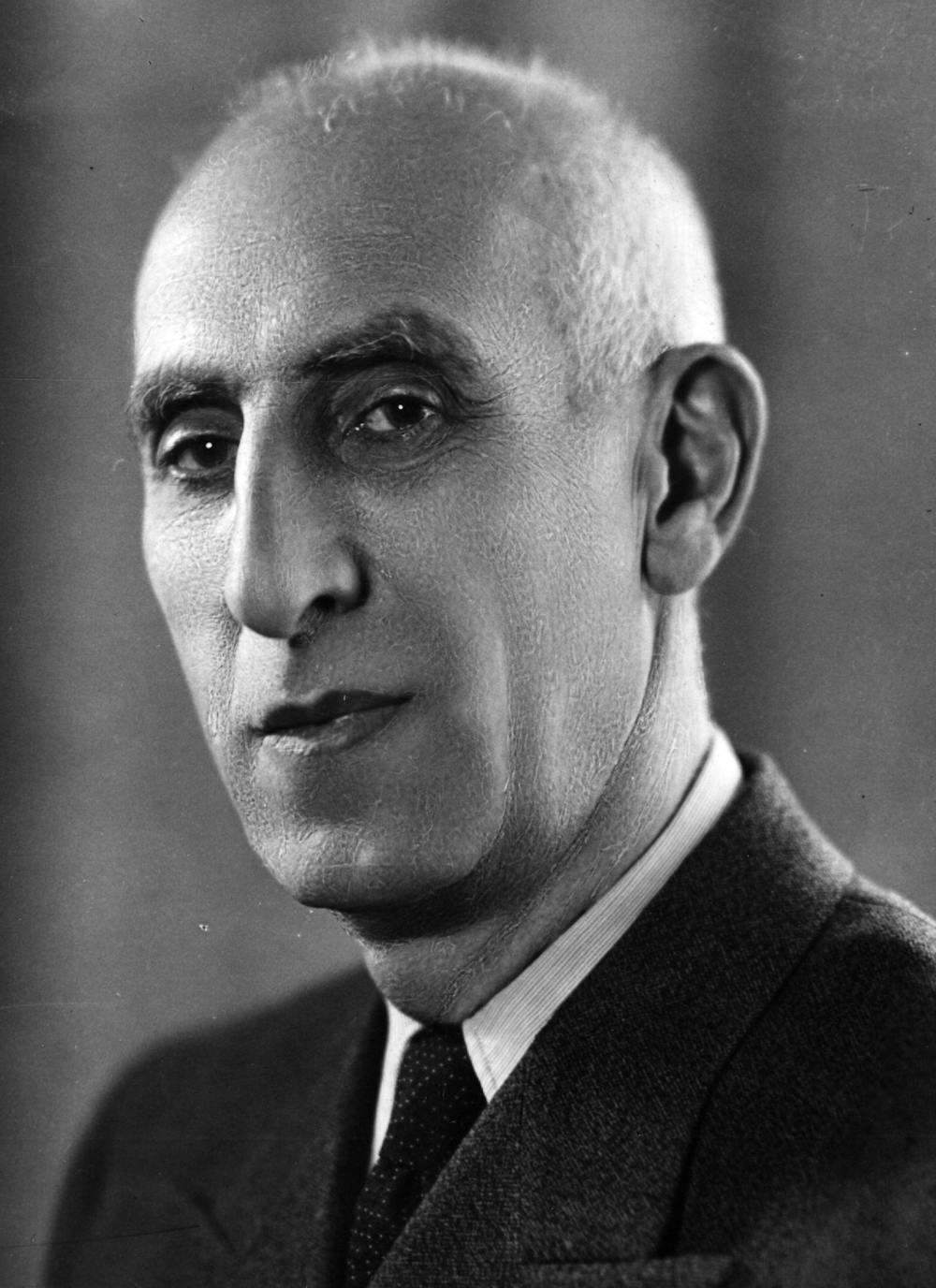
In 1951, the Iranian Parliament chose a new prime minister, Mossadegh, who then led lawmakers to vote in favor of taking over the Anglo-Iranian Oil Company, expelling the company’s British owners and saying they wanted to turn oil profits into investments in the Iranian people. The U.S. feared disruption in the global oil supply and worried about Iran falling prey to Soviet influence. The British feared the loss of cheap Iranian oil.
President Dwight Eisenhower decided it was best for the U.S. and the U.K. to get rid of Mossadegh. Operation Ajax, a joint CIA-British operation, convinced the Shah of Iran, the country’s monarch, to dismiss Mossadegh and drive him from office by force. Mossadegh was replaced by a much more Western-friendly prime minister, handpicked by the CIA.
Demonstrators in Tehran demand the establishment of an Islamic republic. AP Photo/Saris
1979: Revolutionaries oust the shah, take hostages
After more than 25 years of relative stability in U.S.-Iran relations, the Iranian public had grown unhappy with the social and economic conditions that developed under the dictatorial rule of Shah Mohammad Reza Pahlavi.
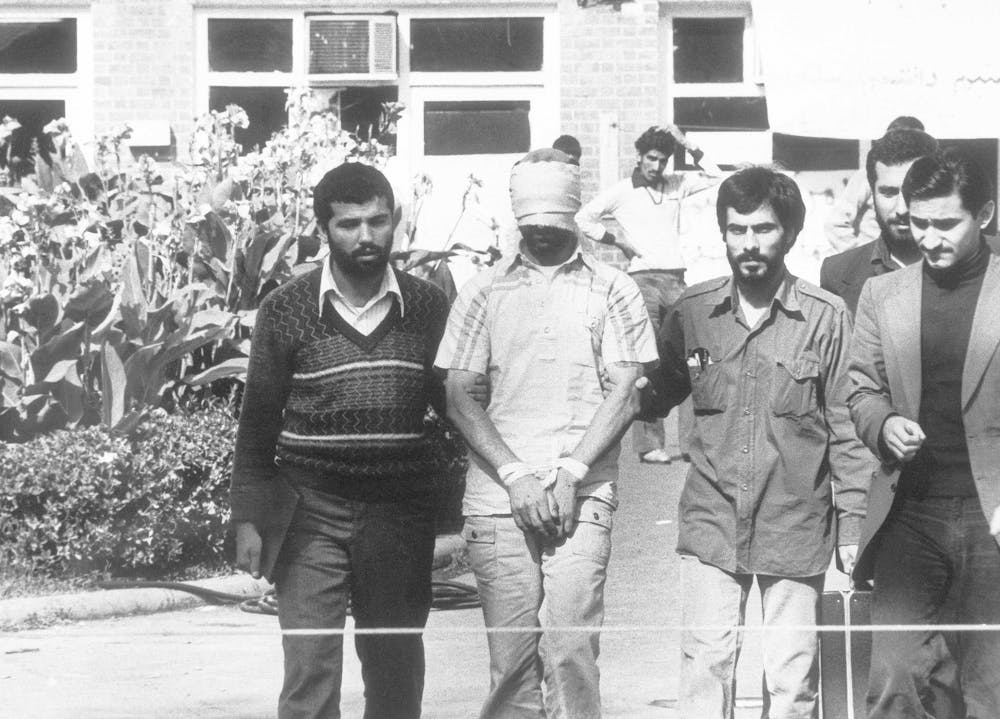
Iranian students at the U.S. Embassy in Tehran show a blindfolded American hostage to the crowd in November 1979. AP Photo
In October 1979, President Jimmy Carter agreed to allow the shah to come to the U.S. to seek advanced medical treatment. Outraged Iranian students stormed the U.S. Embassy in Tehran on Nov. 4, taking 52 Americans hostage. That convinced Carter to sever U.S. diplomatic relations with Iran on April 7, 1980.
Two weeks later, the U.S. military launched a mission to rescue the hostages, but it failed, with aircraft crashes killing eight U.S. servicemembers.
The shah died in Egypt in July 1980, but the hostages weren’t released until Jan. 20, 1981, after 444 days of captivity.
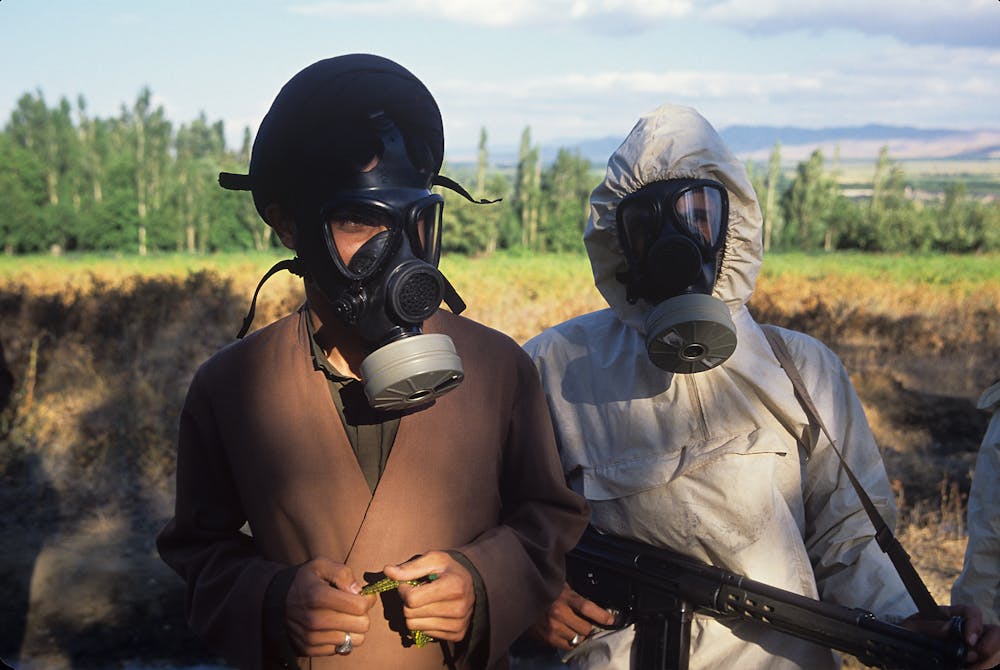
An Iranian cleric, left, and an Iranian soldier wear gas masks to protect themselves against Iraqi chemical-weapons attacks in May 1988. Kaveh Kazemi/Getty Images
The U.S. was concerned that the conflict would limit the flow of Middle Eastern oil and wanted to ensure the conflict didn’t affect its close ally, Saudi Arabia.
U.S. officials moderated their usual opposition to those illegal and inhumane weapons because the U.S. State Department did not “wish to play into Iran’s hands by fueling its propaganda against Iraq.” In 1988, the war ended in a stalemate. More than 500,000 military and 100,000 civilians died.
1981-1986: US secretly sells weapons to Iran
The U.S. imposed an arms embargo after Iran was designated a state sponsor of terrorism in 1984. That left the Iranian military, in the middle of its war with Iraq, desperate for weapons and aircraft and vehicle parts to keep fighting.
The last shipment, of anti-tank missiles, was in October 1986. In November 1986, a Lebanese magazine exposed the deal. That revelation sparked the Iran-Contra scandal in the U.S., with Reagan’s officials found to have collected money from Iran for the weapons and illegally sent those funds to anti-socialist rebels – the Contras – in Nicaragua.
At a mass funeral for 76 of the 290 people killed in the shootdown of Iran Air 655, mourners hold up a sign depicting the incident. AP Photo/CP/Mohammad Sayyad
Either during or just after that exchange of gunfire, the Vincennes crew mistook a passing civilian Airbus passenger jet for an Iranian F-14 fighter. They shot it down, killing all 290 people aboard.
The U.S. called it a “tragic and regrettable accident,” but Iran believed the plane’s downing was intentional. In 1996, the U.S. agreed to pay US$131.8 million in compensation to Iran.
1997-1998: The US seeks contact
In August 1997, a moderate reformer, Mohammad Khatami, won Iran’s presidential election.
U.S. President Bill Clinton sensed an opportunity. He sent a message to Tehran through the Swiss ambassador there, proposing direct government-to-government talks.
Shortly thereafter, in early January 1998, Khatami gave an interview to CNN in which he expressed “respect for the great American people,” denounced terrorism and recommended an “exchange of professors, writers, scholars, artists, journalists and tourists” between the United States and Iran.
However, Supreme Leader Ayatollah Ali Khamenei didn’t agree, so not much came of the mutual overtures as Clinton’s time in office came to an end.
In his 2002 State of the Union address, President George W. Bush characterized Iran, Iraq and North Korea as constituting an “Axis of Evil” supporting terrorism and pursuing weapons of mass destruction, straining relations even further.
Inside these buildings at the Natanz nuclear facility in Iran, technicians enrich uranium. AP Photo/Vahid Salemi
That was a violation of the terms of the Nuclear Nonproliferation Treaty, which Iran had signed, requiring countries to disclose their nuclear-related facilities to international inspectors.
One of those formerly secret locations, Natanz, housed centrifuges for enriching uranium, which could be used in civilian nuclear reactors or enriched further for weapons.
Starting in roughly 2005, U.S. and Israeli government cyberattackers together reportedly targeted the Natanz centrifuges with a custom-made piece of malicious software that became known as Stuxnet.
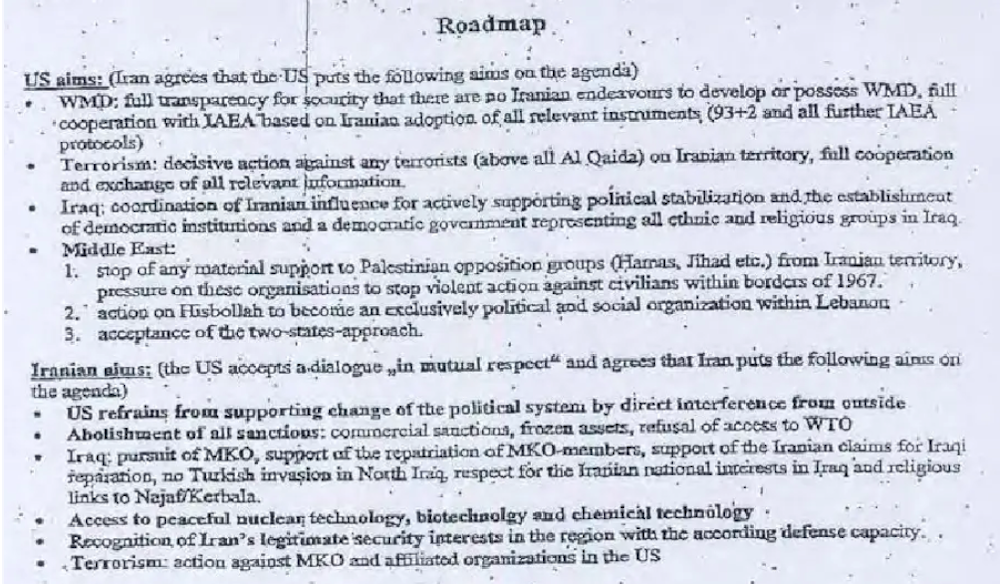
An excerpt of the document sent from Iran, via the Swiss government, to the U.S. State Department in 2003, appears to seek talks between the U.S. and Iran. Washington Post via Scribd
In May 2003, senior Iranian officials quietly contacted the State Department through the Swiss embassy in Iran, seeking “a dialogue ‘in mutual respect,’” addressing four big issues: nuclear weapons, terrorism, Palestinian resistance and stability in Iraq.
Hardliners in the Bush administration weren’t interested in any major reconciliation, though Secretary of State Colin Powell favored dialogue and other officials had met with Iran about al-Qaida.
When Iranian hardliner Mahmoud Ahmadinejad was elected president of Iran in 2005, the opportunity died. The following year, Ahmadinejad made his own overture to Washington in an 18-page letter to President Bush. The letter was widely dismissed; a senior State Department official told me in profane terms that it amounted to nothing.
After a decade of unsuccessful attempts to rein in Iran’s nuclear ambitions, the Obama administration undertook a direct diplomatic approach beginning in 2013.
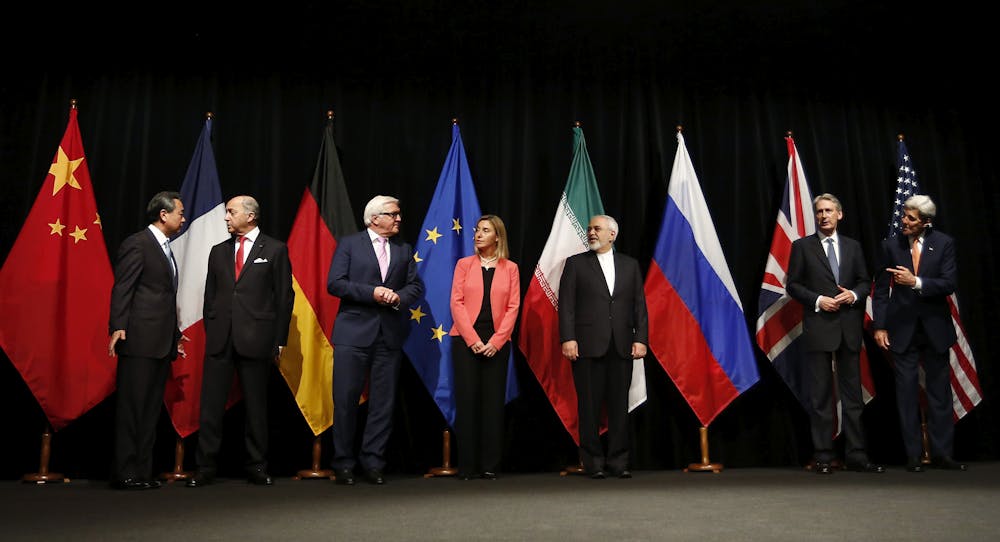
Iran, the U.S., China, France, Germany, Russia and the United Kingdom signed the deal in 2015. It severely limited Iran’s capacity to enrich uranium and mandated that international inspectors monitor and enforce Iran’s compliance with the agreement.
In return, Iran was granted relief from international and U.S. economic sanctions. Though the inspectors regularly certified that Iran was abiding by the agreement’s terms, President Donald Trump withdrew from the agreement in May 2018.
2020: US drones kill Iranian Maj. Gen. Qassem Soleimani
At the time, the Trump administration asserted that Soleimani was directing an imminent attack against U.S. assets in the region, but officials have not provided clear evidence to support that claim.
Hamas’ brazen attack on Israel on Oct. 7, 2023, provoked a fearsome militarized response from Israel that continues today and served to severely weaken Iran’s proxies in the region, especially Hamas – the perpetrator of the attacks – and Hezbollah in Lebanon.
2025: Trump 2.0 and Iran
Trump saw an opportunity to forge a new nuclear deal with Iran and to pursue other business deals with Tehran. Once inaugurated for his second term, Trump appointed Steve Witkoff, a real estate investor who is the president’s friend, to serve as special envoy for the Middle East and to lead negotiations.
Negotiations for a nuclear deal between Washington and Tehran began in April, but the countries did not reach a deal. They were planning a new round of talks when Israel struck Iran with a series of airstrikes on June 13, forcing the White House to reconsider is position.
Jeffrey Fields receives funding from the Carnegie Corporation of New York and Schmidt Futures.
Source: United States Senator for Virginia Tim Kaine
VIDEO OF KAINE’S FLOOR SPEECH IS AVAILABLE HERE.
WASHINGTON, D.C.—Today, U.S. Senator Tim Kaine (D-VA), a member of the Senate Armed Services and Foreign Relations Committees, spoke on the Senate floor about a war powers resolution he filed this week to express concern about the escalating violence in the Middle East and its potential to pull the U.S. into conflict. The resolution requires that any U.S. participation in offensive hostilities against Iran be explicitly authorized by Congress through a declaration of war or specific authorization for use of military force. It does not prevent the U.S. from defending itself from an imminent attack. The resolution is privileged, meaning that the Senate will be required to promptly consider and vote upon the resolution.
“There’s no part of the Constitution that’s more important than the Article One provision making plain that the United States should not be at war without a vote of Congress,” said Kaine. “Yet the news of the day suggests that we are potentially on the verge of a war with Iran.”
“I was elected to the Senate in 2012, having served as a Governor from 2006 to 2010 during a tremendous upsurge in the two wars in Iraq and Afghanistan. I visited our troops multiple times in the green zones in Baghdad and in Afghanistan. I went to the deployments and the homecomings. I went to the wakes and the funerals,” Kaine continued. “And I told myself when I came to the Senate that if I ever had the chance to stop this nation from getting into an unnecessary war, I would do everything I could to stop us.”
“I happen to believe that the United States engaging in a war against Iran – a third war in the Middle East since 2001 – would be a catastrophic blunder for this country,” Kaine said. “I think there are some in this body who have a different point of view than me on that point, but I think we should all be able to agree in the fundamental constitutional principle that says we shouldn’t be in a war if Congress doesn’t have the guts to debate it and vote on it. We should all – having taken an oath to the Constitution – at least support the principle that war is something that should be for Congress to declare.”
“Our Constitution has, accordingly, with studied care, vested the question of war with the legislature,” said Kaine. “Other countries don’t do this, but the Framers of our Constitution in 1787 decided we’re going to be different. Before we send troops in harm’s way where they could be killed, where they could be injured, where they could see people that they love – their colleagues killed and injured – before we’re going to send troops in harm’s way in war, we want to see the people’s elected bodies – both houses – have a debate about what the stakes are and whether we should force our troops into harm’s way and potentially lose their lives. And that debate will be in full view of the American public, so the American public can understand what’s at stake and then they can call their representatives or write them a letter and tell them what they think about whether war is necessary and whether the sacrifice we ask of our troops should be the ultimate sacrifice that we are often asking of them in war.”
“The question for this body that we will grapple with over the course of the next couple of weeks is whether the United States should be in another war in the Middle East – in particular, whether we should allow war to start without us, whether we should hide in the tall grass, rather than exercise our constitutional responsibility under Article One. This is fundamentally a debate about Congress being true to its oath of office and actually also being true to the obligations we have to our public,” Kaine said. “The Framers put this in the Constitution so that we wouldn’t be at war without a debate in front of the public.”
“If we have that debate and we decide that war is in the national interest, then the troops go into war knowing that the civilian leadership of this country have had the hard debate in view of the American public and decided that the stakes are sufficient to ask people to make the ultimate sacrifice,” Kaine said. “How dare we ask people to make the ultimate sacrifice if we don’t have the guts to have a debate and decide whether a war is in the interest of this country?”
“We need to have this debate in front of the American public,” Kaine said. “Let them watch us debate the stakes of this – and it might be that colleagues in this body or in the House think a war with Iran is a good idea. Let them put a war authorization on the table. Let’s debate that. Let’s debate that in front of Virginians and Kansans and Californians and hear what our constituents have to say. Let’s debate that in the full view of people whose spouses are in the military or whose kids are in the military. Let’s have that debate in front of them and hear what they think before we cast a vote that would be one of the most serious votes that you ever cast on the floor of a body like this. But we should not allow a war of the magnitude of this to begin with Congress hiding.”
“I will be asking my colleagues to support my simple resolution as early as next week. No war without a vote of Congress. I’ll be asking my colleagues to support it and uphold the oath we’ve all taken to support the Constitution that established that most unusual principle, most unique principle, that is part of what makes this nation special,” Kaine concluded.
For years, Kaine has been a leading voice in Congress raising concerns over presidents’ efforts to expand the use of military force without congressional authorization. In 2017, Kaine wrote a piece in TIME warning of the consequences if President Donald Trump pulled out of the nuclear deal with Iran. In 2018, Kaine wrote a piece in The Atlantic warning that Trump was blundering toward war with Iran. In March 2020, Congress passed Kaine’s bipartisan war powers resolution to prevent further escalation of hostilities with Iran without congressional authorization. In 2023, the Senate passed bipartisan legislation led by Kaine to repeal the 1991 and 2002 Authorizations for Use of Military Force (AUMFs) and formally end the Gulf and Iraq wars.
Source: United States Senator Alex Padilla (D-Calif.)
WATCH: Padilla Delivers Floor Speech Following His Forcible Removal From DHS Press Conference
WATCH: Padilla: “If this Administration is this afraid of just one Senator with a question, colleagues, imagine what the voices of tens of millions of Americans peacefully protesting can do.”
“If that is what the Administration is willing to do to a United States Senator for having the [audacity] to simply ask a question, imagine what they’ll do to any American who dares to speak up. If what you saw happen can happen when the cameras are on, imagine not only what can happen — but what is happening — in so many places where there are no cameras.”
Video of Senator Padilla’s full speech can be viewed here and downloaded here.
WASHINGTON, D.C. — Today, U.S. Senator Alex Padilla (D-Calif.), Ranking Member of the Senate Judiciary Immigration Subcommittee, spoke on the Senate floor following his forcible removal from Secretary of Homeland Security Kristi Noem’s press conference, where he was thrown to the ground and handcuffed after attempting to ask a question. Padilla delivered a strong rebuke to the Trump Administration’s unprecedented militarization of Los Angeles and called for his colleagues on both sides of the aisle, as well as the American people, to speak up against Trump’s abuse of power.
Last week, Trump deployed approximately 4,000 National Guard troops and 700 active-duty Marines to Los Angeles amid unrest caused by his indiscriminate immigration raids across the region. Padilla flew to Los Angeles to conduct oversight over the Trump Administration’s unprecedented military deployment to California — without Governor Newsom’s consent — and was in the high-security Los Angeles Federal Building for a scheduled oversight meeting with the commanding general in charge of the military presence in the region before law enforcement escorted him into Secretary Noem’s briefing room.
“The Trump Administration has done everything in their power but to provide transparency to the American people about their mission in Los Angeles. And so last week, I chose to go home to try to get answers from the Administration as they are literally militarizing our city.”
“I want to share what I learned. I want to share what I heard because it should shock the conscience of our country.”
In the hopes of learning new information after having his requests ignored for months, Padilla tried to ask a question in response to Noem’s demonizing rhetoric toward immigrants and Los Angeles’ democratically elected leadership.
“At one point, the United States Secretary of Homeland Security said that the purpose of federal law enforcement and the purpose of the United States military was to ‘liberate’ Los Angeles from our governor and our mayor. To somehow liberate us from the very people that we democratically elected to lead our city and our state.”
“Colleagues, let that fundamentally un-American mission statement sink in. That is not a mission focused on public safety. And that simply is not, and cannot be, the mission of federal law enforcement and the United States military.”
“To my colleagues on both sides of the aisle, are we truly prepared to live in a country where the President can deploy the Armed Forces to decide which duly elected governors and mayors should be allowed to lead their constituents? Is that really the precedent that we’re okay with setting?”
“Throughout the country’s history, we’ve had conflict, we’ve had tumult, but we’ve never had a tyrant as a commander-in-chief.”
Padilla detailed his own background as the proud son of immigrants from Mexico who left behind his MIT engineering degree to protest against the vile anti-immigrant rhetoric in the 1990s that a Republican governor up for reelection spread across California. He said he felt he had to speak out against the Trump Administration’s “un-American” scapegoating of immigrants and California, and detailed the violent reaction to his question.
“So last week, when I heard something so blatantly un-American from the Secretary of Homeland Security, a cabinet official — of course I was compelled, both as a Senator and as an American, to speak up.”
“But before I could even get out my question, I was physically and aggressively forced out of the room — even as I repeatedly announced I was a United States Senator, and I had a question for the Secretary. And even as the National Guardsman and the FBI agent who served as my escorts and brought me into that press briefing room stood by, silently, knowing full well who I was.”
“You’ve seen the video. I was pushed and pulled, struggled to maintain my balance. I was forced to the ground — first on my knees and then flat on my chest. And as I was handcuffed and marched down a hallway, repeatedly asking why am I being detained, not once did they tell me why.”
Padilla expressed his gratitude for the immense support for him and his family that poured in since his forcible removal. However, he emphasized that this fight was not about him but about the fundamental democratic rights of all Americans across the country.
“If you watched what unfolded last week and thought what happened is just about one politician and one press conference, you’re missing the point.”
“If that is what the Administration is willing to do to a United States Senator for having the [audacity] to simply ask a question, imagine what they’ll do to any American who dares to speak up. If what you saw happen can happen when the cameras are on, imagine not only what can happen — but what is happening — in so many places where there are no cameras.”
“Colleagues, this isn’t about me. In fact, it’s not just about immigrant communities or even just the State of California. It’s about every single American who values their Constitutional rights. It’s about anyone who’s ever exercised their First Amendment rights, or anyone who’s ever disagreed with a president, or anyone who simply values our democracy and wants to keep it.”
Padilla set the record straight on Republican misinformation on undocumented immigrants as Trump has used the same playbook when the headlines turn against him: scapegoat immigrants and manufacture a crisis. Public reporting shows that the majority of immigrants currently in ICE custody have no prior criminal conviction, and under 10 percent of immigrants taken into ICE custody since October have serious criminal convictions. Yet, President Trump has blamed immigrants to distract from his failed policies, including Republicans’ billionaire-first budget reconciliation bill that would cut critical services like health care and nutrition for millions of working families across the country.
As President Trump takes unprecedented action to militarize Los Angeles without justification or the Governor’s request, Padilla warned of the stakes for cities across the United States and American democracy.
“Donald Trump is continuing to test the boundaries of his power. And he’s surrounded himself with yes-men and underqualified attack dogs — from the DHS Secretary to the FBI Director to the Secretary of Defense — who will rubberstamp every anti-democratic step he takes.”
“This Administration’s officials and maybe not all, but many Republicans in Congress may choose not to do their job, but they cannot stop me from doing mine.”
“Again, if you really think this is just about immigrants and immigration, it’s time to wake up. What’s happening is not just a threat to California; it’s a threat to everyone in every state. If Donald Trump can bypass the Governor and activate the National Guard to put down protests on immigrant rights, he can do it to suppress your rights, too. If he can deploy the Marines to Los Angeles without justification, he can deploy them to your state, too. And if he can ignore due process, strip away First Amendment rights, and disappear people to foreign prisons without their day in court, he can do it to you too.”
“California is just the test case for the rest of the country. Last week for many was a warning shot. But I pray that it also serves as a wakeup call.”
Padilla concluded his speech with a call to action for Angelenos and millions of Americans to stand up and keep peacefully protesting against the Trump Administration’s attack on fundamental rights.
“It doesn’t matter if you’re a Republican, or a Democrat, or an Independent — we all have a responsibility to speak up and to push back, before it’s too late. So I do encourage people to keep peacefully protesting. There’s nothing more patriotic than to peacefully protest for your rights.”
“Because no one will liberate Los Angeles but Angelenos. No one will redeem America but Americans. No one is coming to save us but us.”
“And we know that the cameras are not on in every corner of the country. But if this Administration is this afraid of just one Senator with a question, colleagues, imagine what the voices of tens of millions of Americans peacefully protesting can do.”
Senator Padilla has been outspoken in calling out the Immigration and Customs Enforcement (ICE) raids in Los Angeles and Trump’s misguided deployment of the National Guard and U.S. Marine Corps. This weekend, Padilla led the entire Senate Democratic Caucus in demanding that President Trump immediately withdraw all military forces from Los Angeles and cease all threats to deploy the National Guard or active-duty servicemembers to American cities. Last week, Padilla and Senator Adam Schiff (D-Calif.) demanded answers regarding the Trump Administration’s decision to deploy approximately 700 Marines to Los Angeles. Padilla has spoken at a spotlight hearing and on the Senate floor multiple times to blast President Trump for manufacturing a crisis by launching indiscriminate ICE raids across Los Angeles and deploying the National Guard and active-duty servicemembers to the region. He also joined all Senate Judiciary Committee Democrats today in calling on Chairman Grassley to schedule Department of Homeland Security Secretary Noem for a broad oversight hearing for testimony before the committee.
Padilla’s full remarks as prepared for delivery are available below:
[Mr./Madam] President,
Over the last two weeks in Los Angeles – my hometown – we’ve seen masked federal agents in tactical gear ordered into our communities . . .
We’ve seen a disturbing pattern of extreme and cruel immigration enforcement operations, targeting non-violent people at places of worship, schools, and courthouses.
All to meet an arbitrary quota.
Now, we’re seeing President Trump federalize and deploy the National Guard without the Governor’s consent . . .
Active-duty Marines have been deployed, escalating tensions in our city . . .
All without coordination with the state and local law enforcement.
Despite repeated requests for justification for these extreme actions…and after months of little to no response from the Administration on their aggressive and theatrical immigration raids…
The Trump administration has done everything in their power BUT provide transparency to the American people about their mission in Los Angeles.
So last week, I went home to try to get answers from the administration as they militarize our city.
What I heard should shock the conscience of our country.
One of the first items on my schedule last Thursday was a meeting with General Guillot, the four-star general in charge of U.S. Northern Command at the Federal Building in west Los Angeles, where they are overseeing these military operations.
When the United States military is deployed domestically…
When our own troops are deployed against the wishes of the Governor for the first time since 1965, against the wishes of the mayor, against even the wishes of local law enforcement — then we’re in uncharted territory.
So in an effort to do my duty to conduct congressional oversight — and to try to get answers from the Department of Defense that state and local officials were not receiving— I went to the federal building in West LA.
I was met at the entrance by a National Guardsman and an FBI agent, who escorted me through the security screening and up to a conference room for my scheduled briefing.
While waiting for my scheduled briefing with General Guillot, I learned that Homeland Security Secretary Kristi Noem was holding a press conference just down the hall and that the press conference was causing my briefing to be delayed.
The thought occurred to me that maybe I could attend and listen in, in the hopes of hearing Secretary Noem provide some new information that could help us make sense of what was happening.
I asked and was escorted by my National Guard and FBI escorts into the press conference. They opened the door for me. They accompanied me into the press briefing room.
It was there that I listened as the United States Secretary of Homeland Security said that the purpose of federal law enforcement and the United States military was to “liberate” Los Angeles from our governor and our mayor . . .
. . . To somehow liberate us from the very people we democratically elected to lead our city and our state.
Colleagues, let that fundamentally un-American mission statement sink in.
That’s not a mission focused on public safety.
That simply is not, and cannot be, the mission of federal law enforcement and the United States military.
To my colleagues on the other side of the aisle, are you truly prepared to live in a country where the President can deploy the armed forces to decide which duly elected governors and mayors should be allowed to lead their constituents?
Is that really the precedent you’re okay with setting?
As Secretary Noem herself said last year when serving as Governor of South Dakota, “If Joe Biden federalizes the National Guard, that would be a direct attack on states’ rights.”
Throughout the country’s history, we’ve had conflict, and we’ve had tumult. But we have never had a tyrant as a commander-in-chief.
That’s not by coincidence!
It’s because the American people have always been willing to speak up and exercise their First Amendment right to protest – especially when our fundamental rights have been threatened.
As the proud son of immigrants from Mexico, it’s that same right I came to revere when marching through the streets of Los Angeles in 1994 alongside friends and family protesting against the vile anti-immigrant rhetoric that was growing in California.
It was that year that a Republican Governor up for reelection and down in the polls, turned to scapegoating immigrants to try to improve his political standing.
That fight is what got me to leave an engineering career behind and dedicate myself to influencing government and politics. So, I’ve seen this before. Californians have seen this before.
So last week, when I heard something so blatantly un-American from the Secretary of Homeland Security — I was compelled, both as a Senator AND as an American, to speak up.
But before I could even get out my question, I was physically and aggressively forced out of the room — even as I announced I was a United States Senator, and I had a question for the Secretary.
And even as the National Guardsman and FBI agent who escorted me into the press conference stood by, silently, knowing full well who I was.
You’ve seen the video.
I was pushed and pulled, struggling to maintain my balance.
I was forced to the ground — first to my knees and then flat on my chest.
As I was handcuffed and marched down a hallway, I repeatedly asked why I was being detained. Not once did they tell me why.
In that moment, a lot of questions run through your head.
Where are they taking me?
Am I being arrested?
What will a city already on edge from being militarized think when they see their Senator has been handcuffed just for trying to ask a question? Or . . .
What will my wife and our three boys think?
I also remember asking myself: if this aggressive escalation is the result of speaking up against the abuses and overreach of the Trump administration, was it really worth it?
But colleagues, how many Americans in our nation’s history have marched, have protested, have shed blood and lost their lives to protect our rights?
How many Americans have served in wars overseas to protect our freedoms here at home?
And how many Americans in the year 2025 see a vindictive president on a tour of retribution, unrestrained by the majority of this separate but co-equal branch of government in this building, and wonder if it’s worth it to stand up or to speak out?
If a United States Senator is too afraid to speak up, how can we expect any other American to do the same?
Colleagues, you know me.
I’m not aware of anyone who would describe me as a flamethrower. I try to be respectful and considerate to every member of this body— regardless of your politics.
So I want to thank all of my colleagues on both sides of the aisle who reached out to share messages of support — whether it was public or in private.
In means a great deal to me and my family.
But if you watched what unfolded last week and thought this was about one politician or one press conference, you’re missing the point.
If that’s what this Administration will do to a United States Senator for having the audacity to simply ask a question, imagine what they’ll do to any American who dares to speak up.
If that’s what can happen when the cameras are on, imagine not only what can happen — but what is happening — when the cameras are off.
This isn’t about me. In fact, it’s not even just about immigrant communities or about Californians.
It’s about every single American who values their constitutional rights. It’s about anyone who’s ever exercised their First Amendment rights, or ever disagreed with a president, or who simply values living in a democracy and wants to keep it.
The President will tell you this is about undocumented immigrants, and about law and order and about targeting dangerous, violent criminals.
But we know differently.
Public data released by the administration shows that the majority of immigrants currently in ICE custody do not have a prior criminal conviction.
And new reporting shows that less than 10 percent of immigrants taken into ICE custody since October have serious criminal convictions.
Less than 10 percent!
Two weeks ago, Donald Trump was at the lowest point in his presidency so far.
He was drowning in a week of terrible headlines.
The American people were finally waking up to the realities of the budget reconciliation bill that will cut health care, nutrition assistance, and good paying clean energy jobs in order to cut taxes for billionaires.
He was losing his tariff wars as the costs of everyday goods were continuing to rise.
His promises to end Russia’s invasion of Ukraine were falling flat.
He’d been handed loss after loss in federal court.
And maybe the most embarrassing part was his public breakup with Elon Musk.
But we know what happens when the headlines turn on Donald Trump. Donald Trump turns to the same tired playbook he always has: when in doubt, scapegoat immigrants. And manufacture a crisis to distract the media from your failures.
That’s the reason he ramped up ICE raids in California.
And when Californians took to the streets to peacefully protest, that’s the reason he bypassed the Governor and federalized the National Guard. And as things began to settle in Los Angeles, he escalated even further by sending in the Marines.
He wants the spectacle — not just to distract, but to justify his undemocratic crackdowns and his authoritarian power grabs.
That’s the reason why even while the vast majority of protests have remained peaceful, the President, the Vice President, and their allies have called protestors insurrectionists!
Yes, this is the same man who provoked an actual insurrection on our Capitol on January 6th.
The same man who incited a violent mob, carrying confederate flags, against Congress.
The same man who then pardoned the convicted felons who assaulted our brave Capitol Police officers.
Trump is testing the boundaries of his power. And he’s surrounded himself with yes-men and underqualified attack dogs — from the DHS Secretary to the FBI Director to the Secretary of Defense — who will rubberstamp every anti-democratic step he takes.
This Administration’s officials and Congressional Republicans may choose not to do their job, but they cannot stop me from doing mine.
And I refuse to let immigrants be pawns on the path to fascism.
Again, if you really think this is just about immigrants, it’s time to wake up.
What’s happening isn’t just a threat to California, it’s a threat to everyone in every state.
If Donald Trump can bypass the Governor and activate the National Guard to put down protests for immigrant rights, he can do it to suppress your rights, too.
If he can deploy Marines to Los Angeles without justification, he can deploy them to your city, too.
If he can ignore due process, strip away First Amendment rights, and disappear people to foreign prisons without their day in court, he can do it to you too.
California is just Trump’s test case for the rest of the country.
Last week was a warning shot.
But I pray that it can be our wakeup call, too.
We’ve now seen Trump threaten to do the same in other cities run by elected Democrats.
It doesn’t matter if you’re a Republican, a Democrat, or an independent — we all have a responsibility to speak up and to push back, before it’s too late.
So I encourage people to keep peacefully protesting. There’s nothing more patriotic than peacefully protesting for your rights.
No one will liberate Los Angeles but Angelenos.
No one will redeem America but Americans.
No one is coming to save us but us.
The cameras won’t always be on.
But if this Administration is this scared of just one Senator with a question, imagine what the voices of tens of millions of Americans in the streets can do.
Thank you, [Mr./Madam] President, I yield the floor.
Source: United States Senator Alex Padilla (D-Calif.)
Padilla, Schiff Condemn Trump Administration Decision to Terminate $3.7 Billion in Clean Energy Grants, Urge DOE to Reinstate Them
SenatorsPadilla and Schiff: “These unlawful terminations represent a significant setback for American energy independence, and they undermine California and America’s leadership in the globally competitive clean energy industry.”
“These grants were provided through legally binding contract agreements between recipients and the federal government and, therefore, cannot be canceled on a political whim.”
WASHINGTON, D.C — Today, U.S. Senators Alex Padilla and Adam Schiff (both D-Calif.) condemned the Trump Administration’s decision to terminate $3.7 billion in federal funding for clean energy projects across the country, including $845 million in California, and called on the Administration to reinstate them. In the letter to U.S. Department of Energy (DOE) Chris Wright, the Senators note that these grants were previously awarded through legally binding contract agreements between recipients and the federal government and cannot be canceled on a political whim.
The projects targeted include the National Cement Company of California which lost $500 million for their Lebec Net-Zero Project to focus on carbon capture and the development of carbon-neutral cement, a manufacturing process that is notoriously emissions-intensive, $270 million for implementing carbon capture at a natural gas power plant in Yuba City, and $75 million for a project focused on testing new technology at Gallo Glass Company furnaces in Modesto.
“These grants were provided through legally binding contract agreements between recipients and the federal government and, therefore, cannot be canceled on a political whim. DOE claims that the agency evaluated the investments “on a case-by-case basis to identify waste of taxpayer dollars,” and yet your agency has not provided any information to Congress detailing waste of any kind,” wrote the Senators.
“DOE’s attacks on cutting-edge clean energy projects run counter to our shared interest in boosting energy production, innovation, and economic vitality. The United States cannot afford to halt our progress and hinder American companies’ efforts to move beyond outdated technologies if we hope to remain competitive and truly energy dominant around the globe. These irrational cancellations will increase energy prices, hamper innovation, and set us backwards as we strive toward a clean energy future. We ask that you reinstate the $3.7 billion in canceled OCED funding so that we may bolster American energy production and maintain our competitive edge,” concluded the Senators.
A list of DOE awards terminated is available here.
Full text of the letter is available here and below:
Dear Secretary Wright:
We write with deep concern regarding the U.S. Department of Energy’s (DOE) terminations of energy projects in California that were supported by the Office of Clean Energy Demonstrations (OCED). These unlawful terminations represent a significant setback for American energy independence, and they undermine California and America’s leadership in the globally competitive clean energy industry. We urge you to work with recipients to reinstate their grant awards.
On May 30, DOE canceled $3.7 billion in funding for 24 clean energy projects around the country, including in Alabama, Arizona, California, Illinois, Kentucky, Louisiana, Massachusetts, Michigan, Nevada, New York, Ohio, Texas, Washington, and Wyoming. In California alone, DOE terminated $845 million in project funding. These terminations are unnecessarily harmful to California’s industries, who often push the cutting edge of innovation forward.
One of the largest cancellations targeted the National Cement Company of California Inc., which lost $500 million for their Lebec Net-Zero Project to focus on carbon capture and the development of carbon-neutral cement, a manufacturing process that is notoriously emissions-intensive. Not only would this project have accelerated decarbonization efforts, but it would have also created hundreds of local jobs in construction and plant operations. Another canceled project in California was $270 million for implementing carbon capture at a natural gas power plant in Yuba City. This project, which supported the same traditional sources of energy that the Trump DOE claims to support, would have helped reduce 95 percent of CO2 emissions from the plant and provided Northern California with more low-carbon electricity. DOE canceled another $75 million for a project focused on testing new technology at Gallo Glass Company furnaces in Modesto. This project would have reduced natural gas use by 70 percent and would have used union labor to produce glass for California’s wine industry.
These grants were provided through legally binding contract agreements between recipients and the federal government and, therefore, cannot be canceled on a political whim. DOE claims that the agency evaluated the investments “on a case-by-case basis to identify waste of taxpayer dollars,” and yet your agency has not provided any information to Congress detailing waste of any kind. These terminations follow your agency’s May 15 announcement that DOE would review 179 awards totaling over $15 billion for projects dedicated to updating power grids and supporting the domestic manufacture of batteries, which has created significant chaos and uncertainty in America’s energy and manufacturing sectors.
Additionally, it has been reported that DOE may be planning to close OCED, which has contributed to more than 70 percent of staff in that office departing the agency. In 2021, Congress directed the establishment of OCED in the bipartisan Infrastructure Investment and Jobs Act. OCED’s mission is to advance large-scale demonstration projects to accelerate the deployment and market adoption of energy technologies like clean hydrogen, carbon management, advanced nuclear reactors, and long-duration energy storage. Until recently, these were bipartisan initiatives.
DOE’s attacks on cutting-edge clean energy projects run counter to our shared interest in boosting energy production, innovation, and economic vitality. The United States cannot afford to halt our progress and hinder American companies’ efforts to move beyond outdated technologies if we hope to remain competitive and truly energy dominant around the globe. These irrational cancellations will increase energy prices, hamper innovation, and set us backwards as we strive toward a clean energy future. We ask that you reinstate the $3.7 billion in canceled OCED funding so that we may bolster American energy production and maintain our competitive edge.
The Palestine Forum of New Zealand notes with deep appreciation the public statement issued today by ninety‑five New Zealand lawyers urging the Government to adopt a stronger stance on Israel amid escalating tensions in the Middle East.
We stand in solidarity with these respected members of the legal profession who, in highlighting international law, human rights, and the principles underpinning New Zealand’s foreign policy, are calling for moral and political leadership from our nation.
Their call comes at a critical juncture: New Zealand’s vote at the UN in support of the resolution recommending Israel’s withdrawal from occupied territories was a step in the right direction. However, it must now be followed by coherent action—politically, diplomatically, and legally—consistent with our international obligationsscoop.co.nz+12scoop.co.nz+12scoop.co.nz+12.
We concur with the lawyers’ analysis:
ThatIsrael’s occupation of Palestinian landviolates international law.
Thatincreasing violence and civilian suffering, particularly in Gaza and the West Bank, demand concrete responses.
That New Zealand’s standing as a principled actor in world affairs calls for bothclear condemnationof abuses andactive supportfor measures that uphold international law, including:
Support for ICC proceedings and arrest warrants for war crimes suspects;
The use oftargeted sanctions;
Suspension of government contracts and investment ties with entities complicit in occupation;
Advocacy for animmediate ceasefire, unimpeded humanitarian access, and humanitarian visas for Palestinians fleeing conflict.
As legal voices within our own legal fraternity have acknowledged, our Government holdsnot only a right but a dutyto lead—ahead of electoral cycles—by placing human rights and international justice at the heart of its foreign policy.
We call on the Government to honour these principles by engaging thoughtfully with the lawyers’ briefing, committing publicly to concrete measures, and joining the global community in holding violators of international law to account.
Today’s call by our country’s legal community is both timely and courageous. We affirm their voices. And we renew our call for New Zealand to do the same.
Our cultural touchstones series looks at influential works.
Gilles Deleuze was one of the most original and imaginative thinkers of postwar France. A lifelong teacher, he spent most of his career at the University of Paris VIII, influencing generations of students but largely shunning the mantle of public intellectual.
His complex, creative books mix philosophy, literature, film and politics – not to give clear answers, but to spark new ways of thinking.
Written at a time when the Cold War was ending, computers were becoming more common, and the internet was beginning to connect institutions, the essay describes the emergence of a new kind of society – one not ruled by a single stern voice but by the soft hum of networks.
How societies work
Postscript was written as an update to the work of Deleuze’s contemporary Michel Foucault, who had died in 1984. Deleuze called it a “postscript” not just because of its brevity (it’s only around 2,300 words in English translation) but to highlight he wasn’t refuting Foucault, just building on his work.
From the 18th to early 20th centuries, Foucault had argued, Western societies were “disciplinary societies”. Schools, factories, prisons and hospitals – institutions with walls, schedules, routines and clear expectations – moulded behaviour. People were trained, observed, tested and corrected as they passed from one institution to the next.
But in the late 20th century, Deleuze saw something shifting. He thought the stodgy old disciplinary institutions were “in a generalized crisis” due to technological advances and a new form of capitalism that demanded more flexibility in workers and consumers.
New systems of management and technology were starting to reshape people without sending them through traditional institutions. Deleuze wrote presciently, for example, that “perpetual training tends to replace the school, and continuous control to replace the examination”.
In business, he saw a growing idea of “salary according to merit”, transforming work into “challenges, contests, and highly comic group sessions” – something much at odds with the old model of the standard wage and the assembly line. Traditional government institutions like hospitals and the classic factory were embracing the model of the corporation, driven always by a profit motive and the need for better human tools.
To Deleuze, all this meant people were becoming more “free-floating” – they could be still playing socially useful roles but were being gently steered into them. This greater freedom, however, required a new system to keep everyone in line. He called this “modulation” to underline its dynamic, enveloping nature.
Like nudging, but everywhere
Deleuze described modulation as “a self-deforming cast that will continuously change from one moment to the other”. He meant that people were beginning to live in an environment where everything shape-shifts to encourage or discourage us in the right direction without explicitly putting up walls.
A prime example of how modulation has since become commonplace is nudging – the use of psychological techniques, often subtle and data-driven, to shape people’s behaviour.
Nudging didn’t really exist in 1990, but governments and tech companies use nudges all the time now. We’re nudged to eat healthier, buy, save, recycle, donate. Web sites use “dark patterns” – tricky designs that steer (or nudge) us toward certain choices. Social media feeds use algorithms to exclude us if we say the wrong thing. In fact, entire teams of behavioural scientists operate behind the scenes to manipulate many aspects of our lives.
Nudges can be good and can save us from poor choices, but their newfound moral acceptability (sometimes called libertarian paternalism) is very much a clue that Deleuze’s control society has arrived.
Control in your pocket
Deleuze, who died in 1995, wrote Postscript before the advent of the smartphone, but he foresaw that an “electronic collar” would assume a central role in society. He envisaged a “computer that tracks each person’s position – licit or illicit – and effects a universal modulation.”
Smartphones more than fit the bill. In the old disciplinary ways, they track where we go, what we search for, what we buy, how many steps we take, even how well we sleep. But if we apply Deleuze’s ideas to these phones, detailed surveillance is no longer their most important function. Our phones present and curate options.
In effect, they shape how we see the world. When you scroll through news or social media, for instance, you’re reading about a version of the world built just for you, designed to keep you looking, clicking and reacting – and keep you very finely attuned to what is acceptable or dangerous behaviour.
In Deleuze’s terms, this is pure modulation: not a forceful “No” but a softly spoken, “How about this?” Your phone doesn’t lock you in – it draws you in. It shapes what you see, rewards your cooperation, ignores your silence, and always keeps score. And it does this 24/7. You might unlock it hundreds of times a day. And each time it’s updated to guide your next move more precisely.
At the same time our phones quietly turn us into a set of credentials useful for regulating physical access to workplaces, bank accounts, information: In the societies of control, writes Deleuze, “what is important is no longer either a signature or a number, but a code: the code is a password.”
Data points not people?
Deleuze warned that, in a control society: “Individuals have become ‘dividuals,’ and masses have become samples, data, markets, or ‘banks.’” A dividual to Deleuze is a person transformed into a set of data points and metrics.
You are your credit rating, your search history, your likes and clicks – a different dataset to every institution. Such fragments are used to make decisions about you until they effectively replace you. In fact, for Deleuze a dividual has internalised this treatment and thinks of themselves as a net worth, a mortgage size, a car value – psychological anchors for control.
He illustrates this point with healthcare, predicting a
new medicine ‘without doctor or patient’ that singles out potential sick people and subjects at risk, which in no way attests to individuation.
How many health decisions are now made for us collectively before we ever see a doctor? We should be grateful for advances in public health and epidemiology, but this has certainly impacted our individuality and how we are treated.
Hard to detect
An unsettling part of Deleuze’s perspective is that control doesn’t usually feel like control. It’s often dressed up as convenience, efficiency or progress. You set up internet-linked video cameras because then you can work from home. You agree to long terms and conditions because your banking app won’t work otherwise.
One problem is there are no longer clear barriers we can rail against. As Deleuze said:
In disciplinary societies one was always starting again (from school to the barracks, from the barracks to the factory), while in control societies one is never finished with anything.
Control doesn’t always crush – it can enable. Digital networks bring real freedom, economic possibility, even joy. We move more easily – both mentally and geographically – than ever before. But while we move, it always inside a kind of invisible map shaped by capitalism.
It’s no conspiracy because nobody has the whole map. So it’s difficult to work out exactly what action, if any, to take. As Deleuze concludes: “The coils of a serpent are even more complex than the burrows of a molehill.”
So what can we do?
Postscript doesn’t offer a political program beyond the sardonic comment that:
Many young people strangely boast of being ‘motivated’ […] It’s up to them to discover what they’re being made to serve.
There are ways to resist control. Some people demand more privacy or digital rights. Others opt out selectively – logging off, turning off, refusing to be nudged. Some look to art as a way of resisting its smooth grip. These acts – however small – may offer what Deleuze and his collaborator, the French psychiatrist and philosopher Félix Guattari, called lines of flight: creative ways to move not just against control, but beyond it.
The real message of Postscript, however, is its invitation to consider a timeless perspective. Any society must have a way to make people useful. So, what kind of society do we want? What kinds of restrictions are we willing to live under? And, crucial to this current age, how explicit should control be?
Cameron Shackell does not work for, consult, own shares in or receive funding from any company or organisation that would benefit from this article, and has disclosed no relevant affiliations beyond their academic appointment.
From June 19 to 22, 2025, Samsung Electronics will collaborate with globally renowned artists to celebrate global diversity, artistic innovation and the power of display technology at Art Basel in Basel 2025, the world’s largest art fair held in Basel, Switzerland.
▲ As Art Basel’s official display partner, Samsung Electronics offers exclusive access to curated exhibition artworks via the Samsung Art Store, also on display onsite at Art Basel in Basel 2025.
With participation from approximately 280 galleries across 42 countries, Art Basel in Basel 2025 offers a comprehensive view of the latest ideas shaping contemporary art today. As the official display partner, Samsung Electronics presents a new digital art experience that brings together art and technology through its premium screens including The Frame, Micro LED and Neo QLED 8K.
Immersive Digital Art Experience: ‘ArtCube’ Draws Visitors Into the World of Art
At Art Basel in Basel 2025, Samsung Electronics unveiled ‘ArtCube,’ a lounge dedicated to digital art experiences on Samsung devices. Created under the theme “Borderless, Dive Into the Art,” ArtCube offers a progressively immersive journey as visitors navigate the space.
Passing through a large LED entrance where the Art Basel in Basel Collection from Samsung Art Store is reinterpreted as digital artworks, visitors discover a space showcasing the full lineup of Samsung Art TVs in the ArtCube. Artworks from the Samsung Art Store, displayed across ‘The Frame,’ ‘Micro LED’ and ‘Neo QLED 8K’ screens, envelope the front and side walls to create a deeply immersive experience — one that makes visitors feel as though they have stepped directly into the art itself.
▲ Samsung Art TVs — including The Frame Pro, MICRO LED and Neo QLED 8K — line the interior walls of ArtCube.
▲ A visitor views Basim Magdy’s artwork on display at ArtCube, part of the Samsung Art Store collection at Art Basel in Basel 2025.
An interactive experience zone, powered by Samsung Art Store, is also featured. Visitors can select an artist showcased in the exhibition, take a photo and generate a personalized selfie in the chosen artist’s style, using generative AI — offering a distinctive and engaging experience.
Bringing Art Into Everyday Life Through the Samsung Art Store
Earlier this week, Samsung Electronics has unveiled a new collection featuring 38 highlighted pieces from Art Basel in Basel 2025, now available on the Samsung Art Store. With this launch, Samsung Art Store subscribers around the world can enjoy a diverse selection of Art Basel artworks from the comfort of their homes — without needing to travel to Basel, Switzerland.
As the official display partner of Art Basel for 2025, Samsung Electronics will continue its participation in the annual exhibitions held in Basel, Hong Kong, Paris and Miami. Through Samsung Art Store, the company aims to make art more accessible and seamlessly integrated into everyday life.
The Samsung Art Store* is a subscription-based art service available on Samsung’s The Frame and QLED TVs. Now accessible in 117 countries, the Samsung Art Store offers more than 3,500 artworks in stunning 4K resolution through collaboration with over 70 leading partners.
▲ Basim Magdy, featured in the Samsung Art Store collection at Art Basel in Basel 2025, views his own work on display at ArtCube.
▲ Visitors take in the vibrant, dreamlike works of Basim Magdy on display at ArtCube, part of Samsung’s digital art showcase at Art Basel in Basel 2025.
▲ A visitor captures Lee Kun-yong’s artwork on display at Samsung ArtCube.
▲ A visitor views Marc Dennis’ artwork on display at Samsung ArtCube.
▲ A vivid portrait in the style of Marc Dennis captures visitors’ attention at ArtCube, part of Samsung’s digital art showcase at Art Basel in Basel 2025.
▲ A vivid portrait in the style of Saya Woolfalk captures visitors’ attention at ArtCube, part of Samsung’s digital art showcase at Art Basel in Basel 2025.
▲ The experience zone highlights the Samsung Art Store and lets visitors create immersive, AI-powered photos with animated elements from featured artworks.
▲ One of the most striking pieces at ArtCube, Basim Magdy’s “The Dictator and His Cockroach Count Their Blessings” merges satire and dreamlike visuals in Samsung’s digital art showcase.
▲ Visitors explore the immersive artworks by Marc Dennis at ArtCube, where his vivid, hyperreal art pieces are brought to life with digital projections.
* All artworks in Samsung Art Store are available with a membership subscription. Artwork availability is subject to change without prior notice and may vary by region.
In the late 1960s, the prevailing opinion among Israeli Shin Bet intelligence officers was that the key to defeating the Palestinian Liberation Organisation was to assassinate its then-leader Yasser Arafat.
The elimination of Arafat, the Shin Bet commander Yehuda Arbel wrote in his diary, was “a precondition to finding a solution to the Palestinian problem.”
For other, even more radical Israelis – such as the ultra-nationalist assassin Yigal Amir – the answer lay elsewhere. They sought the assassination of Israeli leaders such as Yitzak Rabin who wanted peace with the Palestinians.
Despite Rabin’s long personal history as a famed and often ruthless military commander in the 1948 and 1967 Arab-Israeli Wars, Amir stalked and shot Rabin dead in 1995. He believed Rabin had betrayed Israel by signing the Oslo Accords peace deal with Arafat.
It’s been 20 years since Arafat died as possibly the victim of polonium poisoning, and 30 years after the shooting of Rabin. Peace between Israelis and the Palestinians has never been further away.
Since its attacks on Iran began on Friday, Israel has killed numerous military and intelligence leaders, including Iran’s intelligence chief, Mohammad Kazemi; the chief of the armed forces, Mohammad Bagheri; and the commander of the Islamic Revolutionary Guard Corps, Hossein Salami. At least nine Iranian nuclear scientists have also been killed.
Israel’s Prime Minister Benjamin Netanyahu reportedly said:
We got their chief intelligence officer and his deputy in Tehran.
Iran, predictably, has responded with deadly missile attacks on Israel.
Far from having solved the issue of Middle East peace, assassinations continue to pour oil on the flames.
A long history of extra-judicial killings
Israeli journalist Ronen Bergman’s book Rise and Kill First argues assassinations have long sat at the heart of Israeli politics.
In the past 75 years, there have been more than 2,700 assassination operations undertaken by Israel. These have, in Bergman’s words, attempted to “stop history” and bypass “statesmanship and political discourse”.
This normalisation of assassinations has been codified in the Israeli expression of “mowing the grass”. This is, as historian Nadim Rouhana has shown, a metaphor for a politics of constant assassination. Enemy “leadership and military facilities must regularly be hit in order to keep them weak.”
The point is not to solve the underlying political questions at issue. Instead, this approach aims to sow fear, dissent and confusion among enemies.
Thousands of assassination operations have not, however, proved sufficient to resolve the long-running conflict between Israel, its neighbours and the Palestinians. The tactic itself is surely overdue for retirement.
Targeted assassinations elsewhere
Israel has been far from alone in this strategy of assassination and killing.
Former US President Barack Obama oversaw the extra-judicial killing of Osama Bin Laden, for instance.
After what Amnesty International and Human Rights Watch denounced as a flawed trial, former US President George W. Bush welcomed the hanging of Iraqi leader Saddam Hussein as “an important milestone on Iraq’s course to becoming a democracy”.
Current US President Donald Trump oversaw the assassination of Iran’s leader of clandestine military operations, Qassem Soleimani, in 2020.
More recently, however, Trump appears to have baulked at granting Netanyahu permission to kill Iran’s Supreme Leader Ayatollah Ali Khamenei.
And it’s worth noting the US Department of Justice last year brought charges against an Iranian man who said he’d been tasked with killing Trump.
Elsewhere, in Vladimir Putin’s Russia, it’s common for senior political and media opponents to be shot in the streets. Frequently they also “fall” out of high windows, are killed in plane crashes or succumb to mystery “illnesses”.
A poor record
Extra-judicial killings, however, have a poor record as a mechanism for solving political problems.
Cutting off the hydra’s head has generally led to its often immediate replacement by another equally or more ideologically committed person, as has already happened in Iran. Perhaps they too await the next round of “mowing the grass”.
But as the latest Israeli strikes in Iran and elsewhere show, solving the underlying issue is rarely the point.
In situations where finding a lasting negotiated settlement would mean painful concessions or strategic risks, assassinations prove simply too tempting. They circumvent the difficulties and complexities of diplomacy while avoiding the need to concede power or territory.
As many have concluded, however, assassinations have never killed resistance. They have never killed the ideas and experiences that give birth to resistance in the first place.
Nor have they offered lasting security to those who have ordered the lethal strike.
Enduring security requires that, at some point, someone grasp the nettle and look to the underlying issues.
The alternative is the continuation of the brutal pattern of strike and counter-strike for generations to come.
Matt Fitzpatrick receives funding from the Australian Research Council.
The Middle East is a region of intense beauty and ancient kingdoms. It has also repeatedly endured periods of geopolitical instability over many centuries.
Today, geopolitical, socio-political and religious tensions persist. The world is currently watching as longstanding regional tensions come to a head in the shocking and escalating conflict between Israel and Iran.
The global airline industry takes a special interest in how such tensions play out. This airspace is a crucial corridor linking Europe, Asia and Africa.
The Middle East is now home to several of the world’s largest international airlines: Emirates, Qatar Airways and Etihad Airways. These airlines’ home bases – Dubai, Doha and Abu Dhabi, respectively – have become pivotal hubs in international aviation.
Keeping passengers safe will be all airlines’ highest priority. What could an escalating conflict mean for both the airlines and the travelling public?
Safety first
History shows that the civil airline industry and military conflict do not mix. On July 3 1988, the USS Vincennes, a US navy warship, fired two surface-to-air missiles and shot down Iran Air Flight 655, an international passenger service over the Persian Gulf.
More recently, on July 17 2014, Malaysian Airlines Flight MH17 was shot down over eastern Ukraine as the battle between Ukrainian forces and pro-Russian separatists continued.
Understandably, global airlines are very risk-averse when it comes to military conflict. The International Civil Aviation Organization requires airlines to implement and maintain a Safety Management System (SMS).
One of the main concerns – known as “pillars” – of the SMS is “safety risk management”. This includes the processes to identify hazards, assess risks and implement risk mitigation strategies.
The risk-management departments of airlines transiting the Middle East region will have been working hard on these strategies.
Headquartered in Montreal, Canada, the International Civil Aviation Organization has strict requirements and protocols to keep passengers safe. meunierd/Shutterstock
Route recalculation
The most immediate and obvious evidence of such strategies being put in place are changes to aircraft routing, either by cancelling or suspending flights or making changes to the flight plans. This is to ensure aircraft avoid the airspace where military conflicts are flaring.
At the time of writing, a quick look at flight tracking website Flightradar24 shows global aircraft traffic avoiding the airspace of Iran, Iraq, Syria, Israel, Jordan, Palestine and Lebanon. The airspace over Ukraine is also devoid of air traffic.
Rerouting, however, creates its own challenges. Condensing the path of the traffic into smaller, more congested areas can push aircraft into and over areas that are not necessarily equipped to deal with such a large increase in traffic.
Having more aircraft in a smaller amount of available safe airspace creates challenges for air traffic control services and the pilots operating the aircraft.
More time and fuel
Avoiding areas of conflict is one of the most visible forms of airline risk management. This may add time to the length of a planned flight, leading to higher fuel consumption and other logistical challenges. This will add to the airlines’ operating costs.
There will be no impact on the cost of tickets already purchased. But if the instability in the region continues, we may see airline ticket prices increase.
It is not just the avoidance of airspace in the region that could place upward pressure on the cost of flying. Airliners run on Jet-A1 fuel, produced from oil.
If Iran closes the Strait of Hormuz, the “world’s most important oil transit chokepoint”, this could see the cost of oil, and in turn Jet-A1, significantly increase. Increasing fuel costs will be passed on the paying passenger. However, some experts believe such a move is unlikely.
A major hub
The major aviation hubs in the Middle East provide increased global connectivity, enabling passengers to travel seamlessly between continents.
Increased regional instability has the potential to disrupt this global connectivity. In the event of a prolonged conflict, airlines operating in and around the region may find they have increased insurance costs. Such costs would eventually find their way passed on to consumers through higher ticket prices.
Across the globe, airlines and governments are issuing travel advisories and warnings. The onus is on the travelling public to stay informed about changes to flight status, and potential delays.
Such warnings and advisories can lead to a drop in passenger confidence, which may then lead to a drop in bookings both into and onwards from the region.
Until the increase in instability in the Middle East, global airline passenger traffic numbers were larger than pre-pandemic figures. Strong growth had been predicted in the coming decades.
Anything that results in falling passenger confidence could negatively impact these figures, leading to slowed growth and affecting airline profitability.
Despite high-profile disasters, aviation remains the safest form of transport. As airlines deal with these challenges they will constantly work to keep flights safe and to win back passenger confidence in this unpredictable situation.
Natasha Heap does not work for, consult, own shares in or receive funding from any company or organisation that would benefit from this article, and has disclosed no relevant affiliations beyond their academic appointment.
Our cultural touchstones series looks at influential works.
Gilles Deleuze was one of the most original and imaginative thinkers of postwar France. A lifelong teacher, he spent most of his career at the University of Paris VIII, influencing generations of students but largely shunning the mantle of public intellectual.
His complex, creative books mix philosophy, literature, film and politics – not to give clear answers, but to spark new ways of thinking.
Written at a time when the Cold War was ending, computers were becoming more common, and the internet was beginning to connect institutions, the essay describes the emergence of a new kind of society – one not ruled by a single stern voice but by the soft hum of networks.
How societies work
Postscript was written as an update to the work of Deleuze’s contemporary Michel Foucault, who had died in 1984. Deleuze called it a “postscript” not just because of its brevity (it’s only around 2,300 words in English translation) but to highlight he wasn’t refuting Foucault, just building on his work.
From the 18th to early 20th centuries, Foucault had argued, Western societies were “disciplinary societies”. Schools, factories, prisons and hospitals – institutions with walls, schedules, routines and clear expectations – moulded behaviour. People were trained, observed, tested and corrected as they passed from one institution to the next.
But in the late 20th century, Deleuze saw something shifting. He thought the stodgy old disciplinary institutions were “in a generalized crisis” due to technological advances and a new form of capitalism that demanded more flexibility in workers and consumers.
New systems of management and technology were starting to reshape people without sending them through traditional institutions. Deleuze wrote presciently, for example, that “perpetual training tends to replace the school, and continuous control to replace the examination”.
In business, he saw a growing idea of “salary according to merit”, transforming work into “challenges, contests, and highly comic group sessions” – something much at odds with the old model of the standard wage and the assembly line. Traditional government institutions like hospitals and the classic factory were embracing the model of the corporation, driven always by a profit motive and the need for better human tools.
To Deleuze, all this meant people were becoming more “free-floating” – they could be still playing socially useful roles but were being gently steered into them. This greater freedom, however, required a new system to keep everyone in line. He called this “modulation” to underline its dynamic, enveloping nature.
Like nudging, but everywhere
Deleuze described modulation as “a self-deforming cast that will continuously change from one moment to the other”. He meant that people were beginning to live in an environment where everything shape-shifts to encourage or discourage us in the right direction without explicitly putting up walls.
A prime example of how modulation has since become commonplace is nudging – the use of psychological techniques, often subtle and data-driven, to shape people’s behaviour.
Nudging didn’t really exist in 1990, but governments and tech companies use nudges all the time now. We’re nudged to eat healthier, buy, save, recycle, donate. Web sites use “dark patterns” – tricky designs that steer (or nudge) us toward certain choices. Social media feeds use algorithms to exclude us if we say the wrong thing. In fact, entire teams of behavioural scientists operate behind the scenes to manipulate many aspects of our lives.
Nudges can be good and can save us from poor choices, but their newfound moral acceptability (sometimes called libertarian paternalism) is very much a clue that Deleuze’s control society has arrived.
Control in your pocket
Deleuze, who died in 1995, wrote Postscript before the advent of the smartphone, but he foresaw that an “electronic collar” would assume a central role in society. He envisaged a “computer that tracks each person’s position – licit or illicit – and effects a universal modulation.”
Smartphones more than fit the bill. In the old disciplinary ways, they track where we go, what we search for, what we buy, how many steps we take, even how well we sleep. But if we apply Deleuze’s ideas to these phones, detailed surveillance is no longer their most important function. Our phones present and curate options.
In effect, they shape how we see the world. When you scroll through news or social media, for instance, you’re reading about a version of the world built just for you, designed to keep you looking, clicking and reacting – and keep you very finely attuned to what is acceptable or dangerous behaviour.
In Deleuze’s terms, this is pure modulation: not a forceful “No” but a softly spoken, “How about this?” Your phone doesn’t lock you in – it draws you in. It shapes what you see, rewards your cooperation, ignores your silence, and always keeps score. And it does this 24/7. You might unlock it hundreds of times a day. And each time it’s updated to guide your next move more precisely.
At the same time our phones quietly turn us into a set of credentials useful for regulating physical access to workplaces, bank accounts, information: In the societies of control, writes Deleuze, “what is important is no longer either a signature or a number, but a code: the code is a password.”
Data points not people?
Deleuze warned that, in a control society: “Individuals have become ‘dividuals,’ and masses have become samples, data, markets, or ‘banks.’” A dividual to Deleuze is a person transformed into a set of data points and metrics.
You are your credit rating, your search history, your likes and clicks – a different dataset to every institution. Such fragments are used to make decisions about you until they effectively replace you. In fact, for Deleuze a dividual has internalised this treatment and thinks of themselves as a net worth, a mortgage size, a car value – psychological anchors for control.
He illustrates this point with healthcare, predicting a
new medicine ‘without doctor or patient’ that singles out potential sick people and subjects at risk, which in no way attests to individuation.
How many health decisions are now made for us collectively before we ever see a doctor? We should be grateful for advances in public health and epidemiology, but this has certainly impacted our individuality and how we are treated.
Hard to detect
An unsettling part of Deleuze’s perspective is that control doesn’t usually feel like control. It’s often dressed up as convenience, efficiency or progress. You set up internet-linked video cameras because then you can work from home. You agree to long terms and conditions because your banking app won’t work otherwise.
One problem is there are no longer clear barriers we can rail against. As Deleuze said:
In disciplinary societies one was always starting again (from school to the barracks, from the barracks to the factory), while in control societies one is never finished with anything.
Control doesn’t always crush – it can enable. Digital networks bring real freedom, economic possibility, even joy. We move more easily – both mentally and geographically – than ever before. But while we move, it always inside a kind of invisible map shaped by capitalism.
It’s no conspiracy because nobody has the whole map. So it’s difficult to work out exactly what action, if any, to take. As Deleuze concludes: “The coils of a serpent are even more complex than the burrows of a molehill.”
So what can we do?
Postscript doesn’t offer a political program beyond the sardonic comment that:
Many young people strangely boast of being ‘motivated’ […] It’s up to them to discover what they’re being made to serve.
There are ways to resist control. Some people demand more privacy or digital rights. Others opt out selectively – logging off, turning off, refusing to be nudged. Some look to art as a way of resisting its smooth grip. These acts – however small – may offer what Deleuze and his collaborator, the French psychiatrist and philosopher Félix Guattari, called lines of flight: creative ways to move not just against control, but beyond it.
The real message of Postscript, however, is its invitation to consider a timeless perspective. Any society must have a way to make people useful. So, what kind of society do we want? What kinds of restrictions are we willing to live under? And, crucial to this current age, how explicit should control be?
Cameron Shackell does not work for, consult, own shares in or receive funding from any company or organisation that would benefit from this article, and has disclosed no relevant affiliations beyond their academic appointment.
The tax cuts bill currently being debated by the US Senate will add another US$3 trillion (A$4.6 trillion) to US debt. President Donald Trump calls it the “big, beautiful bill”; his erstwhile policy adviser Elon Musk called it a “disgusting abomination”.
Foreign investors have already been rattled by Trump’s upending of the global trade system. The eruption of war in the Middle East would usually lead to “flight to safety” buying of the US dollar, but the dollar has barely budged. That suggests US assets are not seen as the safe haven they used to be.
Greg Combet, chair of Australia’s own sovereign wealth fund, the Future Fund, outlined many of the new risks arising from US policies in a speech on Tuesday.
As investors turn cautious on the US, at some point the surging US debt pile will become unsustainable. That could risk a financial crisis. But at what point does that happen?
The public sector holds a range of debt
When talking about the sustainability of US government debt, we have to distinguish between total debt and public debt.
Public debt is owed to individuals, companies, foreign governments and investors. This accounts for about 80% of total US debt. The remainder is intra-governmental debt held by government agencies and the Federal Reserve.
Public debt is a more correct measure of US government debt. And it is much less than the headline total government debt amount that is frequently quoted, which is running at US$36 trillion or 121% of GDP.
Are there limits to government debt?
Governments are not like households. They can feasibly roll over debt indefinitely and don’t technically need to repay it, unlike a personal credit card. And countries such as the US that issue debt in their own currency can’t technically default unless they choose to.
Debt also serves a useful role. It is the main way a government funds infrastructure projects. It is an important channel for monetary policy, because the US Federal Reserve sets the benchmark interest rate that affects borrowing costs across the economy. And because the US government issues bonds, known as Treasuries, to finance the debt, this is an important asset for investors.
There is probably some limit to the amount of debt the US government can issue. But we don’t really know what this amount is, and we won’t know until we get there. Additionally, the US’s reserve currency status, due to the US dollar’s dominant role in international finance, gives the US government more leeway than other governments.
Interest costs are surging
What is important is the government’s ability to service its debt – that is, to pay the interest cost. This depends on two components: growth in economic activity, and the interest rate on government debt.
If economic growth on average is higher than the interest rate, then the government’s effective interest cost is negative and it could sustainably carry its existing debt burden.
The interest cost of US government debt has surged recently following a series of Federal Reserve interest rate hikes in 2022 and 2023 to quell inflation.
The US government is now spending more on interest payments than on defence – about US$882 billion annually. This will soon start crowding out spending in other areas, unless taxes are raised or further spending cuts made.
Recent policy decisions not helping
The turmoil caused by Trump’s “Liberation Day” tariffs and heightened uncertainty about future government policy are expected to weaken US economic growth and raise inflation. This, coupled with the recent credit downgrade of US government debt by ratings agency Moody’s, is likely to put upward pressure on US interest rates, further increasing the servicing cost of US government debt.
Moody’s cited concerns about the growth of US federal debt. This comes as the US House of Representatives passed the “One Big Beautiful Bill Act”, which seeks to extend the 2017 tax cuts indefinitely while slashing social spending. This has caused some to question the sustainability of the US government’s fiscal position.
The non-partisan Congressional Budget Office estimates the bill will add a further US$3 trillion to government debt over the ten years to 2034, increasing debt to 124% of GDP. And this would increase to US$4.5 trillion over ten years and take debt to 128% of GDP if some tax initiatives were made permanent.
Also troubling is Section 899 of the bill, known as the “revenge tax”. This controversial provision raises the tax payable by foreign investors and could further deter foreign investment, potentially making US government debt even less attractive.
A compromised Federal Reserve is the next risk
The passing of the tax and spending bill is unlikely to cause a financial crisis in the US. But the US could be entering into a period of “fiscal dominance”, which is just as concerning.
In this situation, the independence of the Federal Reserve might be compromised if it is pressured to support the US government’s fiscal position. It would do this by keeping interest rates lower than otherwise, or buying government debt to support the government instead of targeting inflation. Trump has already been putting pressure on Federal Reserve chair Jerome Powell, demanding he cut rates immediately.
This could lead to much higher inflation in the US, as occurred in Germany in the 1920s, and more recently in Argentina and Turkey.
Luke Hartigan receives funding from the Australian Research Council (DP230100959)
Three major French financial institutions, including two of the country’s largest banks and the state’s public investment arm, have announced their rejection of deep sea mining during the United Nations Ocean Conference (UNOC) last week in Nice.
The three institutions are:
BNP Paribas– France’s largest and Europe’s second largest bank.BNP Paribasconfirms itdoes not invest in deep sea mining projectsdue to the intrinsic environmental and social risks involved.
Crédit Agricole– The second largest bank in France and the world’s largest cooperative financial institution.Crédit Agricolestatedit will not finance deep sea mining projectsuntil it has been proven that such operationspose no significant harm to marine ecosystems.
Groupe Caisse des Dépôts– The public investment arm of the French Government, which also holds a majority stake in La Banque Postale.The Grouphas pledgedto exclude all financing and investmentin companies whose main activity is deep sea mining, as well as in deep sea mining projects.
Amundi Asset Managementalso made a statement that it seeks to avoid investment in companies “involved in deep sea mining and/or exploration”.
Deep Sea Mining Campaign Finance Advocacy Officer Andy Whitmore says: “This is a truly significant outcome from UNOC. Until recently no French financiers had matched their Government’s position calling for a ban. This UN Ocean Conference, co-hosted by France, was the perfect opportunity for the most important national players to step up and be counted”
These financial announcements are a sign of global concern pushing itself on to the agenda. World leadersrenewed calls for a global moratoriumon the dangerous industry, with French President Emmanuel Macron denouncing it as “madness”, with UN Secretary-General António Guterres responding to recent announcements from President Trump by warning that the deep sea “cannot become the Wild West.” Slovenia, Latvia, Cyprus and the Marshall Islands also announced their support for a moratorium or precautionary pause, bringing thenumber of like-minded countries to 37.
Andy Whitmore concluded “the events at UNOC have added further momentum to the financial establishment rejecting deep sea mining. The recent unseemly rush to mine is creating push-back from the financial world, as much as from governments and civil society.”
Source: United States Senator Amy Klobuchar (D-Minn)
WATCH KLOBUCHAR’S FULL REMARKSHERE
WASHINGTON —On the Senate Floor, U.S. Senators Amy Klobuchar and Tina Smith delivered remarks honoring the life and legacy of Representative Melissa Hortman, former Minnesota House speaker, and her husband Mark Hortman.
A transcript of the Senator Klobuchar’s floor speech is below:
Mr. President, I rise today with my colleague from Minnesota, Senator Smith, to honor two Minnesotans who are friends of ours, who were taken from us this weekend in a shocking act of political violence: Representative Melissa Hortman, our former Speaker of the House and her husband, Mark Hortman.
I’m also continuing to pray for State Senator John Hoffman and his wife Yvette, who survived a brutal assassination attempt. John took nine bullets and Yvette took eight, and they are continuing to recover in the hospital. I’ve been in touch with Yvette, and she is grateful for the outpouring of support from all over the country for their family.
And I want to extend my enormous gratitude to the hundreds and hundreds of local, state and federal law enforcement who worked tirelessly over the course of a 43-hour manhunt to apprehend the suspect. They ran toward the danger. They risked their lives, and because of their bravery and diligence, our state was able to breathe a sigh of relief Sunday night knowing that this man was no longer at large.
The local officers from Brooklyn Park, Minnesota also stopped further assassinations, along with other officers, in the moment by going over to check on legislators after learning about what had happened at Senator Hoffman’s house. We now know that the assassin went to two other legislators’ homes in between the two shootings that night, and in one case, sped off after being spotted by the police.
While it was too late to save Melissa and Mark, the officers’ decision to check on their house allowed them to spot the assassin, separate him from his vehicle, and begin the manhunt.
But right now, we want to focus on who Melissa and Mark were as people. They were great neighbors, wonderful friends and great parents to their beloved children, Sophie and Colin.
Melissa is someone that I wish the whole Senate and the whole nation knew. We treasured her in Minnesota. She was the epitome of what you want in a public servant. She went into it for all the right reasons.
She grew up in Spring Lake Park and Andover Minnesota, working at her family’s used auto parts company in Blaine in the summers. After leaving for college, she came back to Minnesota for law school and began her career in our state.
She was always devoted to her community. She was a girl scout leader and taught Sunday School at her local Catholic Church, and she was always one of the first to raise her hand when someone needed a volunteer for, well, just about anything, including training service dogs for veterans. One of them, Gilbert, was just too friendly for service, and so their family adopted him and loved him very much. Sadly, he was shot that night, and the two children had to make the decision to put him down this weekend. How they loved that dog.
Melissa and I first ran for public office around the same time, both with little kids. Me, for the county attorney’s office, her for the state legislature. That’s how I got to know her. I was the county attorney. She was running for legislature. We went door to door together, and it seemed like she knew everyone in the district already.
She was elected in 2004 and served in the Minnesota House for 20 years. And she left a lasting impact. As a legislator, she authored legislation that created Minnesota’s solar energy standard. As minority leader, she guided her caucus with conviction and a sense of humor. And she wasn’t afraid to call out the all-male card game taking place during debates.
When her colleagues chose to make her the speaker, her first order of business was getting rid of the speaker’s mute button. As she said at the time, “I have a gavel…and a gavel is good enough for me.”
Melissa was one of the most consequential speakers in the history of our state. She knew no limits in terms of trying to get people together, trying to get things done. And while I cannot believe she is gone, Minnesotans will be feeling the impact of her leadership forever.
When a Minnesota student gets a free school lunch, that’s Melissa.
When a Minnesota parent is able to take paid leave to spend those early, precious moments with a newborn, that’s Melissa.
When a Minnesota voter casts a ballot without facing unfair discrimination, that’s Melissa.
When a woman is able to access reproductive care in our state, that’s Melissa, and when our state achieves 100% clean energy by 2040, that will be because of Melissa.
And when we had a tied state house this year, it was Melissa who forged a power sharing agreement and a budget with her Republican counterpart.
She was a generational leader, and she led with integrity and with courage. She, like her husband, Mark, who also was accomplished in business and a kind, kind person, they were compassionate and they were smart, and they were just nice to everyone. And I can’t believe they are gone.
The polarization in our country, the divisions, the online hate, needs to stop. Violence has absolutely no place in our democracy. We need to come together and bring down the rhetoric. We must be united in the face of this attack. It was simply un-American.
That’s why the entire Minnesota delegation, Democrats and Republicans, including Senator Smith, including Congressman Emmer, came together over the weekend to call this violence out. We spoke with one voice to condemn it, and in our state, Melissa’s colleagues on both sides of the aisle have done the same.
We need to recognize the reality that there are unbalanced people out there. Read things online, they believe them. They act on them.
We have seen this too many times. There are many things we can do as a body to fix this problem, and I’m sure in the days to come, we will offer legislation on security and all kinds of things. But we don’t need to pass a law for people to turn down the rhetoric, to treat each other with decency and respect, to act a little more like Melissa and Mark.
Mr. President, Melissa and Mark Hortman were the best of us. I am shattered to have lost them, but eternally grateful to have known them.
I want to end by sharing a message from their beloved kids, Sophie and Colin. They wrote this just last night: “This tragedy must become a moment for us to come together. Hold your loved ones a little closer, love your neighbors and treat each other with kindness and respect. The best way to honor our parents’ memory,” they said,”is to do something, whether big or small, to make our community just a little better for someone else.”
I urge my colleagues to hear that message, and I’m honored to be here with my wonderful colleague, Senator Smith. Thank you and I yield the floor.
Source: People’s Republic of China – State Council News
A worker cleans Land Rover cars at a Jaguar Land Rover dealership in Reading Britain on June 24, 2020. [Photo/Xinhua]
Britain and the United States have formally signed a partial bilateral trade agreement during the G7 summit in Canada, according to a press release issued by the UK government on Tuesday.
The agreement, first announced in May, includes tariff reductions on British car and aerospace exports, but several key sectors, notably steel, aluminium and pharmaceuticals, remain unresolved.
The deal came into effect after U.S. President Donald Trump signed an executive order to implement it. British Prime Minister Keir Starmer, who met with Trump at the summit, confirmed that the core tariff reduction measures would take effect “immediately.”
Under the agreement, the U.S. will reduce tariffs on up to 100,000 British-made cars per year from 27.5 percent to 10 percent. It also removes the 10 percent U.S. tariff on British aerospace products, including jet engines and aircraft components, a measure expected to take effect by the end of the month.
Britain has also agreed to a quota of 1.4 billion litres of tariff-free U.S. bioethanol imports, a volume roughly equivalent to the country’s total annual domestic demand. In return, the U.S. has committed to allowing limited British beef exports.
The British government said all American agricultural imports would still need to meet Britain’s food safety and animal welfare standards. However, British bioethanol producers and farming groups have expressed concern that the influx of U.S. products could undercut local industries.
Despite these developments, large parts of the agreement remain incomplete. According to reports by the Financial Times, both sides are still in negotiations over steel and aluminium tariffs.
Although Britain currently benefits from an exemption to the new 50 percent global steel duty announced by Trump, it continues to face a 25 percent tariff.
British officials said that final arrangements have been delayed due to “technical and legal” challenges, including U.S. rules requiring that steel must be “melted and poured” in its country of origin. Much of Britain’s steel is processed from imported material and may not qualify under that definition.
People walk past a Boots store in Manchester, Britain, on July 9, 2020. [Photo/Xinhua]
Pharmaceuticals represent another unresolved area. While the British government says both sides aim to secure “significantly preferential outcomes” for the British pharmaceutical industry, no binding provisions have been announced.
According to British media, Starmer has appointed his senior business adviser Varun Chandra to lead a delegation to Washington this week. The team, which includes embassy trade officials, is expected to focus on finalising the remaining elements of the agreement.
Industry analysts and trade experts have pointed out that the deal is limited in scope and relies on executive action rather than formal legislation. This raises questions about the long-term stability of the agreement, particularly if there is a change in U.S. leadership.
A new Financial Plan 2025–2035 has been adopted that sets a clear and responsible path for delivering services and infrastructure to support a growing and diverse community.
The City uses a financial model to forecast and monitor a 10-year projection of how it plans to fund the actions in the newly adopted Council Plan to achieve the Community Vision:
Greater Bendigo celebrates and respects our diverse and growing community. We aim to be welcoming, sustainable and flourishing. Walking hand-in-hand with our First Nations communities. Building on our heritage for a safe and happy future.
Developed through extensive community consultation, including a deliberative panel and annual Budget public engagement, the Financial Plan reflects a shared commitment to a responsible, healthy, thriving Greater Bendigo.
The Financial Plan forms part of the City’s Integrated Strategic Planning Framework, which connects long-term aspirations (Community Vision), medium-term goals (Council Plan), and short-term actions (Annual Budget), with progress tracked through the Annual Report. The plan was adopted at last Monday’s Council meeting.
Mayor Cr Andrea Metcalf said the plan was essential for ensuring financial sustainability in the face of growing challenges.
“Council is committed to operating in a financially sustainable way for the benefit of the whole community,” Cr Metcalf said.
“With our population forecast to reach around 170,000 by 2046, we must take a disciplined approach to funding existing services and infrastructure, while planning for new initiatives to meet future needs.
“Rate capping by the Victorian Government continues to limit our income, while costs rise and service demands increase. The City currently delivers around 60 services and manages more than $2.9 billion in community assets, including roads, pools, footpaths, bridges, theatres, sports grounds, and playgrounds, with more built infrastructure needed to support population growth and diverse community needs.
“The Financial Plan provides a roadmap for maintaining resilience and delivering high-quality services and infrastructure. Achieving financial sustainability means making tough decisions about the role of local government in delivering services and maintaining assets. It’s important that both Council and the community understand that some services may need to change over the life of this plan.
“This plan ensures we remain financially resilient while continuing to support a vibrant, inclusive and future-ready Greater Bendigo.”
The Financial Plan is underpinned by a set of strategic financial principles to guide decision-making:
Efficient use of resources – Aligning budgets with community priorities and financial constraints
Well-planned assets – Balancing investment in new infrastructure with renewal, upgrades, and decommissioning where appropriate
Service review and planning – Ensuring services are efficient and responsive to community needs
Sustainable cash management – Maintaining minimum cash reserves and forecasting for future requirements
Robust financial systems – Strengthening processes to ensure effective and transparent use of resources
Source: American Federation of State, County and Municipal Employees Union
Municipalities in Texas, Tennessee, Ohio, and Missouri and Public Sector Union Win Injunction to Prevent Cuts at U.S. Department of Health and Human Services Court Declines to Issue Nationwide Relief
Washington, D.C. — A coalition of major municipalities across the nation — including Harris County, Texas; Columbus, Ohio; the Metropolitan Government of Nashville and Davidson County, Tennessee; and Kansas City, Missouri — and public service workers represented by the American Federation of State, County, and Municipal Employees (AFSCME) were granted an injunction today in their challenge to unlawful funding termination by the U.S. Department of Health and Human Services (HHS). That termination would have canceled grants that those municipalities and their public health workforce rely on to protect their constituents from infectious diseases and pandemics.
The injunction will stop the unlawful HHS funding termination, requiring the Department to issue the grants while the case proceeds. The court declined to issue a nationwide injunction, but left open the possibility of extending needed relief later in the case to public health employees across the country.
The municipalities filed suit in April in District Court for the District of Columbia, and the case is Harris County et al. v. Kennedy. Nashville and Davidson County, Kansas City, and Columbus are represented by Democracy Forward and the Public Rights Project. AFSCME is also represented by Democracy Forward. Harris County is represented by Harris County Attorney Christian Menefee.
“This ruling is a win for Harris County residents and public health departments across the country. The federal government cannot simply ignore Congress and pull the plug on essential services that communities rely on. Today’s decision ensures we can keep doing the work that protects our residents — from tracking disease outbreaks to providing vaccinations and supporting vulnerable families,” said Harris County Attorney Christian Menefee.
“When the executive branch claims virtually unlimited powers, we all rely on the courts to uphold the Constitution. Nashville cannot easily replace the five individuals laid off when the cancellation of the grant was initially announced, but we are grateful to the partners that pushed for this injunction and skillfully articulated why no administration has the authority to rescind grants previously authorized by Congress,” said Metro Nashville’s Director of Law, Wally Dietz.
“We are pleased the judge ruled that it was unlawful and a violation of the Constitution for the administration to rip this critical public health funding from our communities; however, we are disappointed by the decision to only deliver limited relief,” said AFSCME President Lee Saunders. “Every tax dollar withheld means fewer staff responding to outbreaks, fewer vaccinations, and greater risk to the public — especially those most vulnerable. But this fight isn’t over. We will continue to push our case forward to ensure public dollars remain invested in public health.”
On March 24, 2025, HHS Secretary Robert F. Kennedy Jr. unlawfully eliminated congressionally-mandated federal funding designed to keep local governments safe from COVID-19 and from future pandemics. The terminated appropriations provided more than $11 billion worth of federal grants to local municipalities for the vital public health work of identifying, monitoring, and addressing infectious diseases; ensuring access to necessary immunizations, including immunizations for children; and strengthening emergency preparedness to avoid future pandemics.
“This injunction is important for public health,” said Joel McElvain, Senior Legal Advisor at Democracy Forward. “The Trump-Vance administration’s destructive agenda threatens to deprive residents of essential public health services in the midst of continuing dangers posed by COVID-19 and other diseases, including a deadly measles outbreak centered in Texas that has spread to Ohio, Tennessee, and other states across the country. The stakes here are real and immediate, and this injunction reflects that urgency. Democracy Forward is honored to represent this coalition, which is fighting to preserve crucial and lifesaving public health efforts.”
“This case is about stopping federal abuse of power that puts lives at risk,” said Jill Habig, founder and chief executive officer of Public Rights Project. “Local governments rely on this funding to track disease, maintain vaccinations and staff essential health programs. This ruling ensures communities nationwide — not just the ones that sued — can continue to count on these vital services.”
Though the reasoning offered by the Trump administration for canceling the grants was the end of the COVID-19 pandemic, the programs canceled were not limited to work on COVID-19, and include work to stop outbreaks of avian flu and measles, two infectious diseases currently spreading in American neighborhoods.
The Democracy Forward legal team working on the matter includes counsel Joel McElvain, Pooja Boisture, and Skye L. Perryman.
Please find the full complaint here and today’s ruling here.
Source: United States Small Business Administration
SACRAMENTO, Calif. – In response to an amended Presidential public assistance declaration, the U.S. Small Business Administration (SBA) announced the availability of low interest federal disaster loans to private nonprofit (PNP) organizations in Dakota County affected by the severe winter storm and straight-line winds occurring March 18-19.
These low-interest federal disaster loans are available in the Nebraska counties of Boone, Burt, Butler, Cass, Clay, Colfax, Cuming, Dakota, Dodge, Douglas, Fillmore, Hamilton, Jefferson, Johnson, Lancaster, Nuckolls, Otoe, Platte, Polk, Saline, Sarpy, Saunders, Seward, Thayer, Thurston, Washington, Webster and York.
Applicants may be eligible for a loan amount increase of up to 20% of their physical damages, as verified by the SBA, for mitigation purposes. Eligible mitigation improvements might include insulating pipes, walls and attics, weather stripping doors and windows, and installing storm windows to help protect property and occupants from future damage caused by any disaster.
“One distinct advantage of SBA’s disaster loan program is the opportunity to fund upgrades reducing the risk of future storm damage,” said Chris Stallings, associate administrator of the Office of Disaster Recovery and Resilience at the SBA. “I encourage businesses, private nonprofits and homeowners to work with contractors and mitigation professionals to improve their storm readiness while taking advantage of SBA’s mitigation loans.”
PNPs are also eligible to apply for Economic Injury Disaster Loans (EIDLs) to help meet working capital needs. The loans may be used to pay fixed debts, payroll, accounts payable, and other bills not paid due to the disaster. EIDL assistance is available regardless of whether the PNP suffered any physical property damage.
The loan amount can be up to $2 million with interest rates are as low as 3.62% for PNPs, with terms up to 30 years. Interest does not begin to accrue, and payments are not due, until 12 months from the date of the first loan disbursement. The SBA will set loan amounts and terms based on each applicant’s financial condition.
The SBA encourages applicants to submit their loan applications promptly. Applications will be prioritized in the order they are received, and the SBA remains committed to processing them as efficiently as possible.
To apply online, visit sba.gov/disaster. Applicants may also call SBA’s Customer Service Center at (800) 659-2955 or email disastercustomerservice@sba.gov for more information on SBA disaster assistance. For people who are deaf, hard of hearing, or have a speech disability, please dial 7-1-1 to access telecommunications relay services.
The deadline to return applications for physical property damage is July 22, 2025. The deadline to return economic injury applications is Feb. 23, 2026.
###
About the U.S. Small Business Administration
The U.S. Small Business Administration helps power the American dream of business ownership. As the only go-to resource and voice for small businesses backed by the strength of the federal government, the SBA empowers entrepreneurs and small business owners with the resources and support they need to start, grow, expand their businesses, or recover from a declared disaster. It delivers services through an extensive network of SBA field offices and partnerships with public and private organizations. To learn more, visit www.sba.gov.
Source: United States Small Business Administration
SACRAMENTO, Calif. – The U.S. Small Business Administration (SBA) announced the availability of low interest federal disaster loans to private nonprofit (PNP) organizations in Missouri affected by severe storms, straight-line winds, tornadoes and flooding beginning April 29.
The disaster declaration covers the Missouri counties of Barry, Greene, Lawrence, McDonald, Newton and Washington.
Under this declaration, PNPs providing non-critical services of a governmental nature impacted by physical damages or financial losses directly related to the disaster are eligible to apply for both business physical damage loans and Economic Injury Disaster Loans (EIDLs) from the SBA. Examples of eligible non-critical PNP organizations include, but are not limited to, food kitchens, homeless shelters, museums, libraries, community centers, schools, and colleges.
PNPs may borrow up to $2 million to repair or replace damaged or destroyed real estate, machinery and equipment, inventory, and other business assets. Applicants may also be eligible for a loan increase of up to 20% of their physical damages, as verified by the SBA, for mitigation purposes.
EIDLs are for working capital needs caused by the disaster and are available even if the PNP did not suffer any physical damage. The loans may be used to pay fixed debts, payroll, accounts payable, and other bills not paid due to the disaster.
“SBA loans help eligible small businesses and private nonprofits cover operating expenses after a disaster, which is crucial for their recovery,” said Chris Stallings, associate administrator of the Office of Disaster Recovery and Resilience at the SBA. “These loans not only help business owners get back on their feet but also play a key role in sustaining local economies in the aftermath of a disaster.”
Interest rates are as low 3.62% for PNPs, with terms up to 30 years. Interest does not begin to accrue, and payments are not due, until 12 months from the date of the first loan disbursement. The SBA will set loan amounts and terms based on each applicant’s financial condition.
The SBA encourages applicants to submit their loan applications promptly. Applications will be prioritized in the order they are received, and the SBA remains committed to processing them as efficiently as possible.
To apply online, visit sba.gov/disaster. Applicants may also call SBA’s Customer Service Center at (800) 659-2955 or email disastercustomerservice@sba.gov for more information on SBA disaster assistance. For people who are deaf, hard of hearing, or have a speech disability, please dial 7-1-1 to access telecommunications relay services.
The deadline to return physical damage applications is Aug. 11, 2025. The deadline to return economic injury applications is March 9, 2026.
###
About the U.S. Small Business Administration
The U.S. Small Business Administration helps power the American dream of business ownership. As the only go-to resource and voice for small businesses backed by the strength of the federal government, the SBA empowers entrepreneurs and small business owners with the resources and support they need to start, grow, expand their businesses, or recover from a declared disaster. It delivers services through an extensive network of SBA field offices and partnerships with public and private organizations. To learn more, visit www.sba.gov.
arlier today, Governor Hochul spoke at a press conference following the release of New York City Comptroller Brad Lander following his arrest earlier this afternoon. The Governor also highlighted the state’s investment of $50 million dollars to support immigrant legal services.
AUDIO: The Governor’s remarks are available in audio form here.
PHOTOS: The Governor’s Flickr page will post photos of the event here.
A rush transcript of the Governor’s remarks is available below:
Good afternoon — this is a sorry day for New York. This is a sorry—excuse me, we need to deal with this — excuse me — please everyone, we need to deal with this situation.
This is a sorry day for New York and our country. I was literally walking the streets of Little Haiti, to try and bring some comfort to a community that’s under siege with a travel ban and losing their legal status. The streets were empty, people were scared, businesses are concerned about their future, and that’s when I got word of what happened to my colleague in government, our comptroller Brad Lander.
The video is shocking — I knew I needed to come down here immediately and check on his whereabouts, and do what I could to intervene. I’ll let Brad speak about his experience, but to my knowledge the charges — there are no charges, the charges have been dropped. He walks out of there a free man. While that is a positive outcome in a very high profile case. We’re also concerned about those — that are walking out this courthouse, taken away from their families.
They don’t have the attention, they don’t have the lawyers and that’s why the State of New York is providing fifty-million dollars to cover legal services for people who are finding themselves in this situation. We continue to do what we can to support the communities and the immigration coalitions and thank them for their work they’re doing at this time.
It’s hard to see these people, to know their stories, to hug them, to know they’ve been separated from loved ones. I just want to say — we’re a better country than this. We are a far better country than what we’re experiencing.
This is New York–this is New York! The land of immigrants, we’re proud of them. As I stood in the hallway upstairs from the ninth door waiting to know the whereabouts of my friend, almost everyone I spoke to who worked there, in security and otherwise — they came from other countries. They are immigrants themselves, don’t forget that — don’t forget that. Ladies and gentleman, I present our Comptroller Brad Lander.
Source: United States House of Representatives – Congresswoman Sara Jacobs (D-CA-53)
June 17, 2025
Today, Congresswoman Sara Jacobs (CA-51), Congresswoman Nikema Williams (GA-05), andCongresswoman Ayanna Pressley (MA-07) introduced a resolution recognizing the tragic and deeply disturbing case of Adriana Smith, a Black mother who was declared brain dead in February 2025 and has since been kept on artificial life support without her family’s consent. On Friday, June 13, 2025, her infant son, named Chance, was born prematurely at approximately 4:41 a.m. via emergency Cesarean section. Chance weighs about 1 pound, 13 ounces and is currently in the NICU. Adriana Smith is being taken off life support today, Tuesday, June 17, 2025.
The resolution calls for urgent legislative and policy changes to protect the rights, autonomy, and dignity of pregnant people — particularly Black women, who are disproportionately impacted by systemic medical neglect and restrictive anti-abortion laws.
Representative Sara Jacobs said: “My heart breaks for Adriana Smith, her family, and new baby Chance, who had to enter the world this way. Georgia’s fetal personhood law denied Adriana Smith’s family the ability to say goodbye to her on their own terms. Instead, she was kept on life support, breathing through machines for nearly four months to serve as an incubator. Women are worth more than their ability to get pregnant and give birth – we are human beings who should be trusted to make our own health care decisions. It’s devastating that Adriana is the latest casualty of our nation’s Black maternal health crisis and anti-abortion laws – but let’s ensure she’s the last. This needs to be the watershed moment to end anti-abortion and fetal personhood laws and guarantee the rights and dignity of everyone to make the best health care decisions for themselves and their families.”
Congresswoman Nikema Williams said: “I extend my sympathies to Adriana Smith’s family as they spend their final moments with Adriana on their terms. Adriana Smith deserved better at every point of this tragedy. Her family, along with baby Chance, remain in my family’s prayers as they navigate life after this unimaginably devastating situation that Georgia’s laws imposed on them.
“From my service in the State Senate when the LIFE Act was passed in 2019, I know that the bill was drafted in a way that created uncertainty among medical providers and my constituents in Georgia’s 5th District about what is permitted under the law and how the law would be enforced. The clear intention of this was to create a chilling effect on doctors providing essential maternal healthcare services and on patients seeking lifesaving medical treatment. We are now seeing this lack of clarity result in unimaginable cruelty to Adriana Smith and her family.”
“Adriana Smith was a beloved daughter, a devoted mother, and a compassionate nurse denied dignity and basic human rights,” said Congresswoman Ayanna Pressley, Co-Chair of the Reproductive Freedom Caucus. “She and her family were failed by a broken system that ignored her pain and then forced them to endure months of trauma under cruel, dehumanizing laws. These laws stripped Adriana of her dignity and denied her family the right to make deeply personal medical decisions. I hope their experiences compel Congress and the states to finally end cruel abortion bans, end fetal personhood laws, and confront the Black maternal morbidity crisis once and for all. I am proud to join Congresswoman Williams and our colleagues on this resolution to honor Adriana’s life, uplift her family, and recommit ourselves to fighting for reproductive freedom, Black maternal health, the right to abortion care and the bodily autonomy of every person who calls this country home. We join Adriana’s family members in praying for strength for baby Chance and mourning the loss of Adriana.”
Adriana Smith, a nurse and mother, sought medical care for symptoms, including an extreme headache, in early February but was not given adequate treatment. She returned the next day as her condition worsened and was declared brain dead while nine weeks pregnant on February 19. She has been kept on artificial support until her pregnancy reaches 32 weeks and the fetus can be delivered, meaning her bodily functions will have been supported for more than 5 months. Due to Georgia’s LIFE Act and uncertainty surrounding fetal personhood laws, Emory University Midtown Hospital began maintaining Adriana’s bodily functions without consent from her family.
The resolution urges the government to:
Repeal state laws that ban or criminalize abortion and abortion-related services;
Repeal laws that exclude pregnant people from having their advance directives come into effect;
Clarify how anti-abortion and fetal personhood laws should be interpreted in medical settings;
Reaffirm and guarantee autonomy and dignity to pregnant people over their lives, well-being, and medical needs.
While Georgia’s Attorney General has stated that nothing in the LIFE Act explicitly mandates keeping a brain-dead patient on life support, the lack of a formal legal opinion or prosecutorial guidance leaves families and doctors in limbo.
Anti-abortion laws deprive people who can become pregnant of their autonomy by prioritizing the life of the fetus over the health, medical decisions, and rights of the pregnant person — a dehumanizing practice that violates their civil rights and reinforces systemic control over their bodies.
Out of fear of criminalization, family separation, or mistreatment like what Adriana Smith is experiencing, many pregnant people avoid healthcare settings even when they desire care, putting their health and the health of their fetus at risk.
The resolution declares that the House of Representatives stands with Adriana Smith’s family in their efforts to return dignity and justice to their family, condemns giving fetuses rights and taking them away from pregnant people in our laws, and condemns the troublingly common experience that Black women face in medical settings of having their pain not given full credence or treatment.
Source: United States House of Representatives – Congresswoman Sara Jacobs (D-CA-53)
June 17, 2025
Today, Congresswoman Sara Jacobs (CA-51), Congresswoman Nikema Williams (GA-05), andCongresswoman Ayanna Pressley (MA-07) introduced a resolution recognizing the tragic and deeply disturbing case of Adriana Smith, a Black mother who was declared brain dead in February 2025 and has since been kept on artificial life support without her family’s consent. On Friday, June 13, 2025, her infant son, named Chance, was born prematurely at approximately 4:41 a.m. via emergency Cesarean section. Chance weighs about 1 pound, 13 ounces and is currently in the NICU. Adriana Smith is being taken off life support today, Tuesday, June 17, 2025.
The resolution calls for urgent legislative and policy changes to protect the rights, autonomy, and dignity of pregnant people — particularly Black women, who are disproportionately impacted by systemic medical neglect and restrictive anti-abortion laws.
Representative Sara Jacobs said: “My heart breaks for Adriana Smith, her family, and new baby Chance, who had to enter the world this way. Georgia’s fetal personhood law denied Adriana Smith’s family the ability to say goodbye to her on their own terms. Instead, she was kept on life support, breathing through machines for nearly four months to serve as an incubator. Women are worth more than their ability to get pregnant and give birth – we are human beings who should be trusted to make our own health care decisions. It’s devastating that Adriana is the latest casualty of our nation’s Black maternal health crisis and anti-abortion laws – but let’s ensure she’s the last. This needs to be the watershed moment to end anti-abortion and fetal personhood laws and guarantee the rights and dignity of everyone to make the best health care decisions for themselves and their families.”
Congresswoman Nikema Williams said: “I extend my sympathies to Adriana Smith’s family as they spend their final moments with Adriana on their terms. Adriana Smith deserved better at every point of this tragedy. Her family, along with baby Chance, remain in my family’s prayers as they navigate life after this unimaginably devastating situation that Georgia’s laws imposed on them.
“From my service in the State Senate when the LIFE Act was passed in 2019, I know that the bill was drafted in a way that created uncertainty among medical providers and my constituents in Georgia’s 5th District about what is permitted under the law and how the law would be enforced. The clear intention of this was to create a chilling effect on doctors providing essential maternal healthcare services and on patients seeking lifesaving medical treatment. We are now seeing this lack of clarity result in unimaginable cruelty to Adriana Smith and her family.”
“Adriana Smith was a beloved daughter, a devoted mother, and a compassionate nurse denied dignity and basic human rights,” said Congresswoman Ayanna Pressley, Co-Chair of the Reproductive Freedom Caucus. “She and her family were failed by a broken system that ignored her pain and then forced them to endure months of trauma under cruel, dehumanizing laws. These laws stripped Adriana of her dignity and denied her family the right to make deeply personal medical decisions. I hope their experiences compel Congress and the states to finally end cruel abortion bans, end fetal personhood laws, and confront the Black maternal morbidity crisis once and for all. I am proud to join Congresswoman Williams and our colleagues on this resolution to honor Adriana’s life, uplift her family, and recommit ourselves to fighting for reproductive freedom, Black maternal health, the right to abortion care and the bodily autonomy of every person who calls this country home. We join Adriana’s family members in praying for strength for baby Chance and mourning the loss of Adriana.”
Adriana Smith, a nurse and mother, sought medical care for symptoms, including an extreme headache, in early February but was not given adequate treatment. She returned the next day as her condition worsened and was declared brain dead while nine weeks pregnant on February 19. She has been kept on artificial support until her pregnancy reaches 32 weeks and the fetus can be delivered, meaning her bodily functions will have been supported for more than 5 months. Due to Georgia’s LIFE Act and uncertainty surrounding fetal personhood laws, Emory University Midtown Hospital began maintaining Adriana’s bodily functions without consent from her family.
The resolution urges the government to:
Repeal state laws that ban or criminalize abortion and abortion-related services;
Repeal laws that exclude pregnant people from having their advance directives come into effect;
Clarify how anti-abortion and fetal personhood laws should be interpreted in medical settings;
Reaffirm and guarantee autonomy and dignity to pregnant people over their lives, well-being, and medical needs.
While Georgia’s Attorney General has stated that nothing in the LIFE Act explicitly mandates keeping a brain-dead patient on life support, the lack of a formal legal opinion or prosecutorial guidance leaves families and doctors in limbo.
Anti-abortion laws deprive people who can become pregnant of their autonomy by prioritizing the life of the fetus over the health, medical decisions, and rights of the pregnant person — a dehumanizing practice that violates their civil rights and reinforces systemic control over their bodies.
Out of fear of criminalization, family separation, or mistreatment like what Adriana Smith is experiencing, many pregnant people avoid healthcare settings even when they desire care, putting their health and the health of their fetus at risk.
The resolution declares that the House of Representatives stands with Adriana Smith’s family in their efforts to return dignity and justice to their family, condemns giving fetuses rights and taking them away from pregnant people in our laws, and condemns the troublingly common experience that Black women face in medical settings of having their pain not given full credence or treatment.
The following text contains opinion that is not, or not necessarily, that of MIL-OSI –
WASHINGTON, D.C. – The Republican Governors Association (RGA) released the following statement on the Virginia gubernatorial election:
“The general election is officially on, and the contrast could not be more clear between Lt. Governor Winsome Earle-Sears’ record of commonsense leadership alongside Governor Youngkin versus Abigail Spanberger’s failed record in Washington. While Winsome Earle-Sears is ready to axe the Car Tax and the Tax on Tips, Spanberger will continue to protect illegal criminals over Virginia families and oppose commonsense tax cuts – just like she did in Washington,” said RGA Rapid Response Director Kollin Crompton. “Abigail Spanberger would take Virginia backward and stunt the growth Virginians have seen under Lt. Governor Earle-Sears and Governor Youngkin’s leadership.”