NewzIntel.com

    • Checkout Page
    • Contact Us
    • Default Redirect Page
    • Frontpage
    • Home-2
    • Home-3
    • Lost Password
    • Member Login
    • Member LogOut
    • Member TOS Page
    • My Account
    • NewzIntel Alert Control-Panel
    • NewzIntel Latest Reports
    • Post Views Counter
    • Privacy Policy
    • Public Individual Page
    • Register
    • Subscription Plan
    • Thank You Page

Category: Politics

  • MIL-Evening Report: Pacific children as young as 6 adopted, made to work as house slaves

    By Gill Bonnett, RNZ immigration reporter

    This story discusses graphic details of slavery, sexual abuse and violence

    Pacific children as young as six are being adopted overseas and being made to work as house slaves, suffering threats, beatings and rape.

    Kris Teikamata — a social worker at a community agency — spoke about the harrowing cases she encountered in her work, from 2019 to 2024, with children who had escaped their abusers in Auckland and Wellington.

    “They’re incredibly traumatised because it’s years and years and years of physical abuse, physical labour and and a lot of the time, sexual abuse, either by the siblings or other family members,” she said.

    “They were definitely threatened, they were definitely coerced and they had no freedom.

    “When I met each girl, [by then] 17, 18, 19 years old, it was like meeting a 50-year-old. The light had gone out of their eyes. They were just really withdrawn and shut down.”

    In one case a church minister raped his adopted daughter and got her pregnant.

    Teikamata and her team helped 10 Samoan teenagers who had managed to escape their homes, and slavery — two boys and eight girls — with health, housing and counselling. She fears they are the tip of the iceberg, and that many remain under lock and key.

    “They were brought over as a child or a teenager, sometimes they knew the family in Samoa, sometimes they didn’t — they had promised them a better life over here, an education and citizenship.

    Social worker Kris Teikamata . . . “They were brought over as a child or a teenager, sometimes they knew the family in Samoa, sometimes they didn’t .” Image: RNZ Pacific

    “When they arrived they would generally always be put into slavery. They would have to get up at 5, 6 in the morning, start cleaning, start breakfast, do the washing, then go to school and then after school again do cleaning and dinner and the chores — and do that everyday until a certain age, until they were workable.

    “Then they were sent out to factories in Auckland or Wellington and their bank account was taken away from them and their Eftpos card. They were given $20 a week.

    “From the age of 16 they were put to work. And they were also not allowed to have a phone — most of them had no contact with family back in Samoa.”

    ‘A thousand kids a year… and it’s still going on’
    Nothing stopped the abusive families from being able to adopt again and they did, she said.

    A recent briefing to ministers reiterated that New Zealanders with criminal histories or significant child welfare records have used overseas courts to approve adoptions, which were recognised under New Zealand law without further checks.

    “When I delved more into it, I just found out that it was a very easy process to adopt from Samoa,” she said.

    “There’s no checks, it’s a very easy process. So about a thousand kids [a year] are today being adopted from Samoa. It’s such a high number — whereas other countries have checks or very robust systems. And it’s still going on.”

    As children, they could not play with friends and all of their movements were controlled.

    Oranga Tamariki uplifted younger children, who were sometimes siblings of older children who had escaped.

    “The ones that I met had escaped and found a friend or were homeless or had reached out to the police.”

    Loving families
    When they were reunited with their birth parents on video calls, it was clear they came from loving families who had been deceived, she said.

    While some adoptive parents faced court for assault, only one has been prosecuted for trafficking.

    Government, police and Oranga Tamariki were aware and in talks with the Samoan government, she said.

    Adoption Action member and researcher Anne Else said several opportunities to overhaul the 70-year-old Adoption Act had been thwarted, and the whole legislation needed ripping up.

    “The entire law needs to be redone, it dates back to 1955 for goodness sake,” she said.

    “But there’s a big difference between understanding how badly and urgently the law needs changing and actually getting it done.

    “Oranga Tamariki are trying, I know, to work with for example Tonga to try and make sure that their law is a bit more conformant with ours, and ensure there are more checks done to avoid these exploitative cases.”

    Sold for adoption
    Children from other countries had been sold for adoption, she said, and the adoption rules depended on which country they came from. Even the Hague Convention, which is supposed to provide safeguards between countries, was no guarantee.

    Immigration minister Erica Stanford said other ministers were looking at what could be done to crack down on trafficking through international adoption.

    “If there are non-genuine adoptions and and potential trafficking, we need to get on top of that,” she sad.

    “It falls outside of the legislation that I am responsible for, but there are other ministers who have it on their radars because we’re all worried about it. I’ve read a recent report on it and it was pretty horrifying. So it is being looked at.”

    A meeting was held between New Zealand and Samoan authorities in March. A summary of discussions said it focused on aligning policies, information sharing, and “culturally grounded frameworks” that uphold the rights, identity, and wellbeing of children, following earlier work in 2018 and 2021.

    This article is republished under a community partnership agreement with RNZ.
    MIL OSI Analysis – EveningReport.nz –

    May 19, 2025
  • MIL-Evening Report: What causes ADHD? What we know, don’t know and suspect

    Source: The Conversation (Au and NZ) – By Alison Poulton, Senior Lecturer, Brain Mind Centre Nepean, University of Sydney

    Sergey Novikov/Shutterstock

    Neurodevelopmental disorders are a diverse group of conditions that affect the brain from early development. They include attention-deficit hyperactivity disorder (ADHD), autism and learning disabilities, such as dyslexia.

    These conditions usually become more evident over time. This is because delays in the skills a child is expected to have developed at each age become more apparent.

    ADHD is the most common neurodevelopmental disorder. It affects around 8-10% of children and 2-5% of adults.

    ADHD affects a person’s efficiency at completing tasks (for example, because they get distracted) and their behaviour (such as losing things or struggling to pay attention).

    ADHD can affect all aspects of functioning including problems learning and maintaining friendships. If undiagnosed, the challenges are likely to persist and may lead to anxiety, depression and low self-esteem.

    How is it diagnosed?

    There is no specific genetic or brain abnormality that causes ADHD and no single reliable test to diagnose it.

    A formal diagnosis depends on whether a child shows at least six of the diagnostic criteria for inattention (at least five for adults) and/or at least six of the criteria for hyperactivity-impulsivity (at least five for adults). These have to persist for at least six months.

    The diagnostic criteria include:

    • difficulty concentrating (for example, trouble listening, poor attention to detail, not getting tasks finished)

    • hyperactivity (including fidgeting, feeling restless and running around, constantly chatting)

    • impulsivity (for example, interrupting conversations and games, difficulty waiting their turn).

    Not everyone with ADHD is hyperactive. For people with inattentive-type ADHD, their main difficulty is inattention, for example, concentrating consistently on everyday tasks that are not particularly interesting.

    If someone meets the criteria for hyperactivity-impulsivity and for inattention, they have combined-type ADHD.

    How reliable is diagnosis?

    One problem with these criteria is they’re not specific to ADHD. For example, difficulties concentrating can also be a symptom of depression.

    This is why it’s not enough to simply tick a symptom checklist. The formal diagnostic criteria emphasise these symptoms must interfere with daily functioning.

    The key question is: are ADHD symptoms causing day-to-day problems or holding this person back?

    What this means will vary from person to person, depending on what their everyday activities involve.

    For example, someone may struggle to concentrate at school but excel later on in a creative career such as photography, or in a high-intensity job with hard deadlines, such as journalism.

    It also means a person may only meet the full diagnostic criteria at certain stages of their life. Subthreshold ADHD – when someone meets some criteria but not enough for a diagnosis – can still cause significant difficulties.

    Gender differences

    Boys aged between four and 11 are up to four times more likely to be diagnosed with ADHD than girls.

    This may partly be because the diagnostic criteria are especially good at identifying hyperactive young boys. But they are not as effective for girls, particularly those who are not hyperactive or disruptive, or who try to hide their difficulties concentrating.

    Girls and women are likely to be diagnosed later and show more “internalising symptoms”, such as depression. However the rate of underdiagnosis in girls has been improving over the last four decades.

    The gender disparity also evens out with age. The female proportion of young adults diagnosed with ADHD is closer to half (38%).

    Adults may first notice symptoms of ADHD when managing significant life changes.
    Maria Svetlychnaja/Shutterstock

    What about genetics?

    There is also a strong genetic component. Heritability for ADHD is around 70–80%. This describes how much of the person-to-person differences in ADHD are due to genetics, rather than environmental influences.

    The more closely someone is related to a person with ADHD – in other words, the more genes they have in common – the more likely they are to have ADHD.

    However the genetics are complex. It’s not as simple as finding a gene or selection of genes “responsible” for ADHD.

    For example, early research linked ADHD to six genes that target neurotransmission (how the brain sends chemical signals). But the effect of each gene was small.

    ADHD is now understood to be a polygenic disorder, with thousands of common genetic variants involved.

    Each of these genes is capable of making a discrete but minuscule contribution to the overall expression of ADHD. Because these genes are common, the traits of ADHD are distributed throughout the population, with no clearly defined cut-off between those who do and do not have the condition.

    Within a family, the interaction between shared genetics and a shared environment (their household) make it difficult to study these separately.

    Does environment play a role?

    A supportive family can help a child with ADHD cope better with everyday tasks, as parents often adapt their parenting style to their child’s behaviour. This may mask the ADHD and delay diagnosis.

    But if one or both parents also has ADHD, this may affect their parenting style. It can be difficult to determine how much of that child’s behaviour is due to their inherited ADHD, and how much to the family environment and parenting.

    Studies have also shown children who are relatively young for their year when they start school have higher rates of treatment for ADHD. This points to their environment playing a role in when their ADHD is diagnosed, but not necessarily its cause.

    For more information about ADHD, as well as information about support groups, visit the ADHD foundation or ADHD Australia websites.

    Alison Poulton is a member of the Australasian ADHD Professionals Association and ADHD Australia. She has received personal fees and non-financial support from Shire/Takeda; and book royalties from Disruptive Publishing (ADHD Made Simple).

    – ref. What causes ADHD? What we know, don’t know and suspect – https://theconversation.com/what-causes-adhd-what-we-know-dont-know-and-suspect-241119

    MIL OSI Analysis – EveningReport.nz –

    May 19, 2025
  • MIL-Evening Report: What does it mean to ‘accept’ or ‘reject’ all cookies, and which should I choose?

    Source: The Conversation (Au and NZ) – By Ahmed Ibrahim, Senior Lecturer, Computing and Security, Edith Cowan University

    Shutterstock/The Conversation

    It’s nearly impossible to use the internet without being asked about cookies. A typical pop-up will offer to either “accept all” or “reject all”. Sometimes, there may be a third option, or a link to further tweak your preferences.

    These pop-ups and banners are distracting, and your first reaction is likely to get them out of the way as soon as possible – perhaps by hitting that “accept all” button.

    But what are cookies, exactly? Why are we constantly asked about them, and what happens when we accept or reject them? As you will see, each choice comes with implications for your online privacy.

    What are cookies?

    Cookies are small files that web pages save to your device. They contain info meant to enhance the user experience, especially for frequently visited websites.

    This can include remembering your login information and preferred news categories or text size. Or they can help shopping sites suggest items based on your browsing history. Advertisers can track your browsing behaviour through cookies to show targeted ads.

    There are many types, but one way to categorise cookies is based on how long they stick around.

    Session cookies are only created temporarily – to track items in your shopping cart, for example. Once a browser session is inactive for a period of time or closed, these cookies are automatically deleted.

    Persistent cookies are stored for longer periods and can identify you – saving your login details so you can quickly access your email, for example. They have an expiry date ranging from days to years.

    What do the various cookie options mean?

    Pop-ups will usually inform you the website uses “essential cookies” necessary for it to function. You can’t opt out of these – and you wouldn’t want to. Otherwise, things like online shopping carts simply wouldn’t work.

    However, somewhere in the settings you will be given the choice to opt out of “non-essential cookies”. There are three types of these:

    • functional cookies, related to personalising your browsing experience (such as language or region selection)

    • analytics cookies, which provide statistical information about how visitors use the website, and

    • advertising cookies, which track information to build a profile of you and help show targeted advertisements.

    Advertising cookies are usually from third parties, which can then use them to track your browsing activities. A third party means the cookie can be accessed and shared across platforms and domains that are not the website you visited.

    Google Ads, for example, can track your online behaviour not only across multiple websites, but also multiple devices. This is because you may use Google services such as Google Search or YouTube logged in with your Google account on these devices.

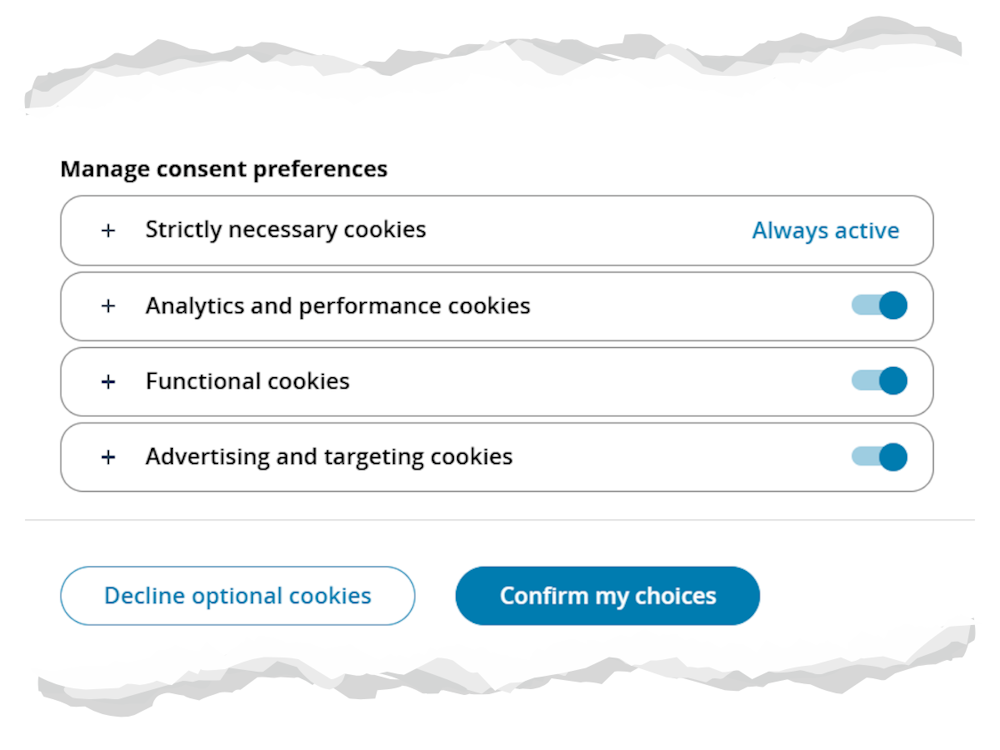
    An example of cookie preferences offered by a website.
    The Conversation

    Should I accept or reject cookies?

    Ultimately, the choice is up to you.

    When you choose “accept all,” you consent to the website using and storing all types of cookies and trackers.

    This provides a richer experience: all features of the website will be enabled, including ones awaiting your consent. For example, any ad slots on the website may be populated with personalised ads based on a profile the third-party cookies have been building of you.

    By contrast, choosing “reject all” or ignoring the banner will decline all cookies except those essential for website functionality. You won’t lose access to basic features, but personalised features and third-party content will be missing.

    The choice is recorded in a consent cookie, and you may be reminded in six to 12 months.

    Also, you can change your mind at any time, and update your preferences in “cookie settings”, usually located at the footer of the website. Some sites may refer to it as the cookie policy or embed these options in their privacy policy.

    How cookies relate to your privacy

    The reason cookie consent pop-ups are seemingly everywhere is thanks to a European Union privacy law that came into effect in 2018. Known as GDPR (General Data Protection Regulation), it provides strict regulations for how people’s personal data is handled online.

    These guidelines say that when cookies are used to identify users, they qualify as personal data and are therefore subject to the regulations. In practice, this means:

    • users must consent to cookies except the essential ones
    • users must be provided clear info about what data the cookie tracks
    • the consent must be stored and documented
    • users should still be able to use the service even if they don’t want to consent to certain cookies, and
    • users should be able to withdraw their consent easily.

    Since a lot of website traffic is international, many sites even outside the EU choose to follow GDPR guidelines to avoid running afoul of this privacy law.

    Better privacy controls

    Cookie pop-ups are tiresome, leading to “consent fatigue” – you just accept everything without considering the implications.

    This defeats the purpose of informed consent.

    There is another way to address your online privacy more robustly – Global Privacy Control (GPC). It’s a tech specification developed by a broad alliance of stakeholders (from web developers to civil rights organisations) that allows the browser to signal privacy preferences to websites, rather than requiring explicit choices on every site.

    GPC is not universally available, and it’s not a legal requirement – a number of browsers and plugins support it, but broader adoption may still take time.

    Meanwhile, if you’re worried you may have accidentally consented to cookies you don’t want, you can find an option in your browser settings to delete cookies and get back to a clean slate (be warned, this will log you out of everywhere). If you want to learn even more, the non-profit Electronic Frontier Foundation has a project called Cover Your Tracks.

    The authors do not work for, consult, own shares in or receive funding from any company or organisation that would benefit from this article, and have disclosed no relevant affiliations beyond their academic appointment.

    – ref. What does it mean to ‘accept’ or ‘reject’ all cookies, and which should I choose? – https://theconversation.com/what-does-it-mean-to-accept-or-reject-all-cookies-and-which-should-i-choose-256219

    MIL OSI Analysis – EveningReport.nz –

    May 19, 2025
  • MIL-OSI Global: What causes ADHD? What we know, don’t know and suspect

    Source: The Conversation – Global Perspectives – By Alison Poulton, Senior Lecturer, Brain Mind Centre Nepean, University of Sydney

    Sergey Novikov/Shutterstock

    Neurodevelopmental disorders are a diverse group of conditions that affect the brain from early development. They include attention-deficit hyperactivity disorder (ADHD), autism and learning disabilities, such as dyslexia.

    These conditions usually become more evident over time. This is because delays in the skills a child is expected to have developed at each age become more apparent.

    ADHD is the most common neurodevelopmental disorder. It affects around 8-10% of children and 2-5% of adults.

    ADHD affects a person’s efficiency at completing tasks (for example, because they get distracted) and their behaviour (such as losing things or struggling to pay attention).

    ADHD can affect all aspects of functioning including problems learning and maintaining friendships. If undiagnosed, the challenges are likely to persist and may lead to anxiety, depression and low self-esteem.

    How is it diagnosed?

    There is no specific genetic or brain abnormality that causes ADHD and no single reliable test to diagnose it.

    A formal diagnosis depends on whether a child shows at least six of the diagnostic criteria for inattention (at least five for adults) and/or at least six of the criteria for hyperactivity-impulsivity (at least five for adults). These have to persist for at least six months.

    The diagnostic criteria include:

    • difficulty concentrating (for example, trouble listening, poor attention to detail, not getting tasks finished)

    • hyperactivity (including fidgeting, feeling restless and running around, constantly chatting)

    • impulsivity (for example, interrupting conversations and games, difficulty waiting their turn).

    Not everyone with ADHD is hyperactive. For people with inattentive-type ADHD, their main difficulty is inattention, for example, concentrating consistently on everyday tasks that are not particularly interesting.

    If someone meets the criteria for hyperactivity-impulsivity and for inattention, they have combined-type ADHD.

    How reliable is diagnosis?

    One problem with these criteria is they’re not specific to ADHD. For example, difficulties concentrating can also be a symptom of depression.

    This is why it’s not enough to simply tick a symptom checklist. The formal diagnostic criteria emphasise these symptoms must interfere with daily functioning.

    The key question is: are ADHD symptoms causing day-to-day problems or holding this person back?

    What this means will vary from person to person, depending on what their everyday activities involve.

    For example, someone may struggle to concentrate at school but excel later on in a creative career such as photography, or in a high-intensity job with hard deadlines, such as journalism.

    It also means a person may only meet the full diagnostic criteria at certain stages of their life. Subthreshold ADHD – when someone meets some criteria but not enough for a diagnosis – can still cause significant difficulties.

    Gender differences

    Boys aged between four and 11 are up to four times more likely to be diagnosed with ADHD than girls.

    This may partly be because the diagnostic criteria are especially good at identifying hyperactive young boys. But they are not as effective for girls, particularly those who are not hyperactive or disruptive, or who try to hide their difficulties concentrating.

    Girls and women are likely to be diagnosed later and show more “internalising symptoms”, such as depression. However the rate of underdiagnosis in girls has been improving over the last four decades.

    The gender disparity also evens out with age. The female proportion of young adults diagnosed with ADHD is closer to half (38%).

    Adults may first notice symptoms of ADHD when managing significant life changes.
    Maria Svetlychnaja/Shutterstock

    What about genetics?

    There is also a strong genetic component. Heritability for ADHD is around 70–80%. This describes how much of the person-to-person differences in ADHD are due to genetics, rather than environmental influences.

    The more closely someone is related to a person with ADHD – in other words, the more genes they have in common – the more likely they are to have ADHD.

    However the genetics are complex. It’s not as simple as finding a gene or selection of genes “responsible” for ADHD.

    For example, early research linked ADHD to six genes that target neurotransmission (how the brain sends chemical signals). But the effect of each gene was small.

    ADHD is now understood to be a polygenic disorder, with thousands of common genetic variants involved.

    Each of these genes is capable of making a discrete but minuscule contribution to the overall expression of ADHD. Because these genes are common, the traits of ADHD are distributed throughout the population, with no clearly defined cut-off between those who do and do not have the condition.

    Within a family, the interaction between shared genetics and a shared environment (their household) make it difficult to study these separately.

    Does environment play a role?

    A supportive family can help a child with ADHD cope better with everyday tasks, as parents often adapt their parenting style to their child’s behaviour. This may mask the ADHD and delay diagnosis.

    But if one or both parents also has ADHD, this may affect their parenting style. It can be difficult to determine how much of that child’s behaviour is due to their inherited ADHD, and how much to the family environment and parenting.

    Studies have also shown children who are relatively young for their year when they start school have higher rates of treatment for ADHD. This points to their environment playing a role in when their ADHD is diagnosed, but not necessarily its cause.

    For more information about ADHD, as well as information about support groups, visit the ADHD foundation or ADHD Australia websites.

    Alison Poulton is a member of the Australasian ADHD Professionals Association and ADHD Australia. She has received personal fees and non-financial support from Shire/Takeda; and book royalties from Disruptive Publishing (ADHD Made Simple).

    – ref. What causes ADHD? What we know, don’t know and suspect – https://theconversation.com/what-causes-adhd-what-we-know-dont-know-and-suspect-241119

    MIL OSI – Global Reports –

    May 19, 2025
  • MIL-OSI China: New museums explore Xinjiang’s ethnic unity, ancient Chinese roots

    Source: People’s Republic of China – State Council News

    Aerial photo taken on March 22, 2021 shows the ruins of the Subax buddhist temple in Kuqa City of northwest China’s Xinjiang Uygur Autonomous Region. (Xinhua/Su Chuanyi)

    China opened two new museums in the northwestern Xinjiang Uygur Autonomous Region on Sunday, showcasing artifacts that highlight the region’s rich history as a hub of ethnic integration and cultural exchange, as well as the diversity of Chinese civilization.

    One of the museums, the Museum of the Western Regions Frontier Command in Luntai County, stands on the site of a Western Han Dynasty (202 BC-8 AD) protectorate first established in 60 BC to govern the Xinjiang area, which marked the official incorporation of the area into the Chinese territory.

    Spanning 5,120 square meters of exhibition space with galleries divided into five sections, the museum features more than 460 artifacts (some grouped as sets) including pottery, bronze and iron wares and silk fragments. It uses immersive exhibits such as multimedia reconstructions of ancient scenes to illustrate how imperial Chinese authorities governed Xinjiang and fostered cultural exchange over two millennia.

    In 2018, with approval from the National Cultural Heritage Administration, a joint archaeological team from Peking University’s School of Archaeology and Museology and the Xinjiang Institute of Cultural Relics and Archaeology launched excavations at the Zorkut site in Luntai.

    Professor Chen Ling from Peking University explained that the unique triple-walled structure of the Zorkut ancient city ruins, along with the discovery of Han Dynasty-style building materials and valuable artifacts, provided key evidence that it was the seat of the Western Regions Frontier Command.

    Through the latest archaeological findings and unearthed artifacts, the museum reveals how the Xinjiang area evolved under successive central governments amid enduring interaction, cultural exchange and integration among ethnic groups in the area, said Chen Ying, head of the bureau of cultural heritage of the Mongolian Autonomous Prefecture of Bayingolin, where Luntai is located.

    Turgun Jelili, a villager from the nearby town of Karabag, said he felt extremely proud to see such a modern museum in his home region. “The architecture is stunning, and the exhibits are truly impressive. It left a deep impression on me,” he said, adding that he plans to bring his daughter to visit soon.

    Also on Sunday, Luntai inaugurated the Zorkut ancient city archaeological park, creating an integrated cultural experience for visitors to explore both museum treasures and the actual ruins.

    In Kuqa City, some 100 kilometers west of Luntai, the newly constructed Qiuci Museum commenced its public opening on the same day, housing 700 cultural relics (some grouped as sets), among which 96 fall under China’s three-tiered heritage protection system, including a Tang Dynasty (618-907) stone Buddha carving, Qiuci manuscripts, a silver coral-beaded veil and a painted clay sculpture.

    The museum, named after the ancient kingdom of Kucha (“Qiuci” is its Chinese pinyin form), features galleries exploring Kucha’s legacy through its history, urban development and Buddhist art displays, plus rotating special exhibitions.

    The ancient Kucha region, centered on present-day Kuqa City, spanned the mid-southern foothills of the Tianshan Mountains and the northern rim of the Tarim Basin. Since the Han Dynasty (202 BC-220 AD), this strategic crossroads served as both a military-administrative hub for Chinese governance in the Western Regions and a cultural melting pot where Eastern and Western civilizations converged, according to Feng Wei, vice curator of the museum.

    The region preserves the extraordinary cultural heritage that embodies the enduring historical ties between the Western Regions and the central plain areas, once the heartland of ancient China, Feng noted.

    Statistics from the regional culture and tourism department show that Xinjiang’s 150 registered museums received over 13 million visits in 2024, 3.5 million of which were from young people. 

    MIL OSI China News –

    May 19, 2025
  • MIL-OSI China: China’s vast northwest inspires a new generation

    Source: People’s Republic of China – State Council News

    While her peers shuttle between China’s megacities chasing lucrative careers, 23-year-old Huang Huiru veers off the beaten track — immersing herself in the rugged terrain of the Pamir Plateau in northwest China’s Xinjiang Uygur Autonomous Region for a gap year.

    As a law graduate from Gansu University of Political Science and Law, Huang is among a growing group of Chinese youth who volunteer to turn classroom knowledge into practical solutions for developing the region.

    Stationed in government departments in Taxkorgan Tajik Autonomous County, Huang and fellow volunteers revamped local job fairs through social media campaigns. In March, their efforts attracted over 80 employers offering more than 1,000 jobs, up from just five employers and a few job seekers in 2024.

    “This is more than a job; it’s a calling,” she said.

    Jobseekers exchange information on openings during a job fair in Urumqi, northwest China’s Xinjiang Uygur Autonomous Region, March 2, 2025. (Xinhua/Gao Han)

    ANSWERING THE CALL

    Since 2003, the “Go West” program has offered 540,000 young Chinese a chance to spend a year or more volunteering in the country’s vast western regions, and around 55,000 participants have been recruited in Xinjiang, according to the Communist Youth League of China. The talent program aims to inject new ideas and vigor into the regions with huge development potential.

    In 2024 alone, more than 11,900 young professionals joined the program in Xinjiang, according to the regional Communist Youth League Committee.

    Like Huang, they have taught in classrooms near the Taklamakan Desert, helped rebuild rural infrastructure, supported poverty-alleviation projects, and upgraded power grids, leaving a lasting impact on communities while forging their own career paths.

    Though often a challenging experience, individuals find profound sense of fulfillment in their service and express a willingness to extend their commitments. Data showed that since 2003, more than 15,000 people have opted to remain in Xinjiang after completing their volunteer service.

    Wu Xiaofang, a 30-year-old power grid engineer, relocated to Xinjiang after earning her PhD from the prestigious Xi’an Jiaotong University in 2023. She now pioneers stability solutions for the West-to-East Power Transmission Project that leverages the region’s abundant wind and solar resources and its surplus power generation capacity. With transmission channels in place, Xinjiang can deliver excess clean electricity to other parts of China.

    “Xinjiang’s power grid offers vast potential to apply my expertise where the nation needs it most,” said Wu. Her efforts, including breakthroughs in maintaining ultra-high-voltage lines amid extreme weather, earned her recognition in Xinjiang’s talent program, a regional top professional honor.

    Workers perform installation work at the Barkol convertor station of the Hami-Chongqing ±800 kilovolt ultra-high voltage direct current (UHV DC) power transmission project in Hami, northwest China’s Xinjiang Uygur Autonomous Region, March 21, 2025. (Xinhua/Ding Lei)

    Yan Luming, a Master’s student from the People’s Public Security University of China, has brought innovative anti-fraud awareness campaigns to the city of Kashgar through the “Go West” program.

    Assigned to the anti-fraud center of the Kashgar public security bureau, she creates educational content featuring witty dialogue and relatable scenarios popular on social media platforms. Her videos have garnered up to 400,000 views per episode, helping prevent numerous potential scams.

    Wei Tao, head of the organization department of Kuqa City, said that targeted recruitment of students, graduates, and volunteers assigned to grassroots roles has become a pivotal force in advancing local governance and development.

    VAST OPPORTUNITIES

    Xinjiang has rolled out enhanced talent policies and a 10-billion-yuan (around 1.4 billion U.S. dollars) talent development fund to address workforce demands in building its 10 major industrial clusters.

    In January this year, for example, the region launched the PhD recruitment initiative, aiming to attract over 1,000 global doctoral experts, signalling intensified efforts to bridge expertise gaps.

    “Xinjiang’s expansive airspace and industrial needs align with our research goals, allowing us to translate research achievements into tangible productivity,” said Fan Yaoyao, a mechanical engineering postdoctoral researcher who works at an intelligent equipment research institute in Xinjiang.

    Volunteers Nurbiyem Japar (L) and Ruzikeri Musa (R) help a villager trim seabuckthorn branches in Taxkorgan Tajik Autonomous County, northwest China’s Xinjiang Uygur Autonomous Region, April 14, 2025. (Xinhua/Gao Han)

    In its latest recruitment drive this year, the “Go West” program attracted 410,000 applicants, with nearly 90,000 selecting Xinjiang as their first-choice destination.

    Zhang Xin, a data communication graduate student at Tsinghua University, has chosen to temporarily suspend his postgraduate studies to pursue career opportunities in Xinjiang, drawn by the region’s burgeoning digital economy.

    The student in his 20s from Hubei Province now works in Aksu Prefecture of Xinjiang, applying his expertise in talent recruitment and employment strategy optimization.

    For Zhang, the turning point came during a 2022 internship in Xinjiang. “What struck me was the region’s vitality and untapped potential in information technology,” he said. “Unlike saturated first-tier job markets, Xinjiang offers a frontier where my data analytics skills can directly drive transformative projects.”

    Zhang Xin (C), a volunteer working in Aksu Prefecture of Xinjiang, speaks during a volunteer recruiting event for the “Go West” program in north China’s Shanxi Province, April 18, 2025. (Xinhua)

    Here, young professionals can accelerate both skill development and career progression while making substantive contributions through position-matched work, he added.

    MIL OSI China News –

    May 19, 2025
  • MIL-Evening Report: Australia launches ‘landmark’ UN police peacekeeping course for Pacific region

    Australia has launched the world’s first UN Police Peacekeeping Training course tailored specifically for the Pacific region.

    The five-week programme, hosted by the Australian Federal Police (AFP), is underway at the state-of-the-art Pacific Policing Development and Coordination Hub in Pinkenba, Brisbane.

    AFP said “a landmark step” was developed in partnership with the United Nations, and brings together 100 police officers for training.

    AFP Deputy Commissioner Lesa Gale said the programme was the result of a long-standing, productive relationship between Australia and the United Nations.

    Gale said it was launched in response to growing regional ambitions to contribute more actively to international peacekeeping efforts.

    Participating nations are Federated States of Micronesia, Fiji, Kiribati, Nauru, Samoa, Solomon Islands, Timor-Leste, Tonga, Tuvalu, and Vanuatu.

    “This course supports your enduring contribution and commitment to UN missions in supporting global peace and security efforts,” AFP Northern Command acting assistant commissioner Caroline Taylor said.

    Pacific Command commander Phillippa Connel said the AFP had been in peacekeeping for more than four decades “and it is wonderful to be asked to undertake what is a first for the United Nations”.

    This article is republished under a community partnership agreement with RNZ.

    Article by AsiaPacificReport.nz

    MIL OSI Analysis – EveningReport.nz –

    May 19, 2025
  • MIL-OSI China: US launches ‘endless war’ to plunder others’ resources: Iranian president

    Source: People’s Republic of China – State Council News

    This file picture shows Iranian President Masoud Pezeshkian attending a press conference in Tehran, Iran, on Sept. 16, 2024. [Photo/Xinhua]

    Iranian President Masoud Pezeshkian said Sunday that the United States has begun an “endless war” across the world to plunder other countries’ resources and even human workforce, the official news agency IRNA reported.

    The West seeks to provoke conflicts in the Middle East to own the regional countries’ resources at any price it wants, Pezeshkian said at the opening ceremony of the Tehran Dialogue Forum, a two-day event that has drawn 200 foreign delegations, including senior government officials and representatives of international organizations, to discuss regional and global challenges.

    Pezeshkian added that Iran has nothing to hide and will under no circumstances stop its “peaceful nuclear program.”

    Iranian Foreign Minister Seyed Abbas Araghchi, talking about the Iran-U.S. indirect talks at the ceremony, said Iran wants “a fair and balanced agreement that would be formed within the framework of the NPT (Non-Proliferation Treaty) and based on full respect for Iran’s nuclear rights and guarantee the removal of sanctions in an objective manner.”

    “Iran is committed to diplomacy and expects the cruel and unilateral sanctions, which have directly targeted our people, to be truly and tangibly lifted,” he said.

    He added that Iran is ready to open a new chapter in its ties with Europe if the latter has a real determination and adopts an independent approach towards Iran.

    The Iranian and U.S. delegations have held four rounds of indirect talks on Tehran’s nuclear program and the lifting of U.S. sanctions in the Omani capital Muscat and Italy’s Rome.

    Meanwhile, Iran and three European countries — France, Germany and Britain, collectively known as the E3 — held a high-level meeting in Türkiye’s Istanbul on Friday on the latest developments in the Iran-U.S. indirect talks, the sixth round of such talks between Iran and the E3 since September 2024, which have covered Tehran’s nuclear program and the removal of sanctions, among other issues. 

    MIL OSI China News –

    May 19, 2025
  • MIL-OSI China: Nicusor Dan wins Romanian presidential runoff

    Source: People’s Republic of China – State Council News

    Bucharest Mayor Nicusor Dan votes during the runoff of Romania’s presidential election in Fagaras, central Romania, May 18, 2025. [Photo/Xinhua]

    Nicusor Dan, the mayor of Bucharest and an independent candidate, has won Romania’s presidential runoff election, defeating his rival George Simion, according to near-complete official results published Sunday night by the country’s Permanent Electoral Authority (AEP).

    Dan secured 54.17 percent of the vote, while Simion, leader of the Alliance for the Union of Romanians (AUR), received 45.83 percent, with nearly all ballots counted.

    The vote marks the conclusion of a rerun presidential election, held after the annulment of the 2024 results due to allegations of campaign irregularities and foreign interference.

    Dan, 55, ran on a pro-EU platform, promising to strengthen rule-of-law reforms, maintain military and diplomatic support for Ukraine, and deepen Romania’s ties with the West.

    Simion, 38, had led the first round of the election held on May 4 with 40.96 percent, ahead of Dan’s 20.99 percent. His campaign emphasized a “Romania First” message, proposing reduced taxes, fewer EU constraints, and a rollback of military aid to Ukraine.

    According to real-time data from AEP, as of 9 p.m. on Sunday, 11.64 million voters, or 64.72 percent of those on the electoral roll, including more than 1.6 million from the diaspora, had voted in the second round of the presidential election. The turnout was significantly higher than in the first round, when 9.57 million people voted, or 53.21 percent.

    “Elections are not about politicians. Elections are about communities. And the winner of today’s ballot is a community of Romanians that want a profound change in Romania. A community that wants state institutions to work properly, the cut of corruption, a prosperous economic environment for Romanians, a society of dialogue and not governed by hate,” Dan said in a message delivered after the release of the exit polls.

    Under Romania’s constitution, the president plays a key role in foreign policy, defense, and the appointment of the prime minister. Dan is expected to begin consultations next week on forming a new government.

    Polling stations opened at 7 a.m. local time (0400 GMT) and closed at 9 p.m. (1800 GMT). 

    MIL OSI China News –

    May 19, 2025
  • MIL-OSI China: Sky-high thrills amid Xinjiang’s low-altitude tourism

    Source: People’s Republic of China – State Council News

    This photo shows a view of Guozigou Bridge in Huocheng County, northwest China’s Xinjiang Uygur Autonomous Region, May 1, 2025. [Photo/Xinhua]

    I felt a gentle tremble as I climbed onto the viewing platform, partly because I was underdressed and partly due to the awe-inspiring view. From the distant snow-capped peaks to the green canyon below, and the majestic Guozigou Bridge in between, the breathtaking mountain scenery stretched as far as the eye could see.

    This was one of the most memorable stops on my journey through northwest China’s Xinjiang Uygur Autonomous Region in early May. The platform has gained popularity online, thanks to numerous recent posts on “rednote,” an app better known as Xiaohongshu, promoting a “must-photograph” site there — a rugged 2-meter-high cliff that can only accommodate one person atop it at a time, while photographers below use drones to capture images.

    With the faraway snowy mountains and towering spruce trees in the background, the drone photos can create an illusion of standing at a great height, giving a thrilling impression of the person “jumping off a cliff.”

    This photo shows a view of Guozigou scenic spot in Huocheng County, northwest China’s Xinjiang Uygur Autonomous Region, May 1, 2025. [Photo/Xinhua]

    There was a long queue of tourists at the foot of the huge rock, each waiting for their chance at a clifftop encounter, while the hum of hovering drones, as well as the screams of timid travelers, was a constant presence.

    The high-profile photo spot is not the only example of drone-related tourism in Xinjiang, a region that boasts a flight area of around 1.8 million square km, accounting for one-sixth of the country’s total. Enthusiasts can enjoy more than 320 days of good flying weather throughout the year, making it an ideal destination for aerial activities.

    Drones have increasingly become a must-have piece of equipment for tourists in Xinjiang. Local tour guides are touting their drone skills to attract more clients; some scenic areas have begun offering shared drone services; and everywhere one looks, young women in long, brightly colored dresses are posing against the green grass and blue lakes, while their amateur pilot partners nervously seek out the perfect shot.

    In addition to drones, sightseeing tours with helicopters and fixed-wing aircraft have taken off across the region over the past two years. Powered hang gliders and air balloons are growing from niche to sought-after experiences.

    Deng Lili is one such thrill-seeking tourist. She took a 25-minute helicopter ride from northern Xinjiang’s Shihezi City during the recent May Day holiday, flying over some of the region’s iconic landscapes, including the Tianshan Mountains and Manas River Grand Canyon.

    “It was gorgeous,” she recalled with exhilaration. “Seeing the emerald rivers and winding red rocks from above was a truly fantastic experience.”

    Since Xinjiang is home to a range of stunning natural and cultural attractions, and these scenic spots are located at considerable distances from one another, it offers an opportunity to develop aerial sightseeing. Ji Deyuan, vice general manager of the company Xinjiang Tongyong Aviation, told me that there is already stiff competition across Xinjiang, as there are 20 low-altitude tourism zones and 15 air tourism companies offering 16 routes.

    Behind the aerial tourism boom lies Xinjiang’s strategic push to lead China’s burgeoning low-altitude economy. Since the sector was listed in the country’s 2024 government work report as a “new engine of economic growth,” Xinjiang, like many places, has incorporated the low-altitude economy into its development plan.

    The region aims to build a total of 98 general aviation airports by 2035, equating to around 5.9 airports for every 100,000 square km once completed. Additionally, an industrial park focusing on the research and development, production and maintenance of drones and manned aircraft is currently in the planning and construction phase.

    A think tank report on the development of Xinjiang’s low-altitude economy estimates that by 2025, China’s low-altitude economy is expected to exceed 1.5 trillion yuan (about 210 billion U.S. dollars) in market size, and Xinjiang will become one of the fastest-growing areas in the country.

    For travelers, the trend offers a fresh lens to appreciate nature from above; for entrepreneurs, it is a playground of innovation. Some cutting-edge flying vehicles, such as the “Land Aircraft Carrier,” a flying car developed by Chinese EV company Xpeng, have made local headlines by conducting high-temperature and high-altitude tests in Xinjiang.

    Local media also reported that a Xinjiang aviation firm was considering the use of EH216-S, an autonomous “flying taxi” featuring vertical takeoff and landing by Chinese drone maker EHang, to launch aerial sightseeing services in popular scenic spots like Nalati and Kalajun grasslands.

    Low-altitude tourism has come under the spotlight as the country champions the orderly development of low-altitude sectors to boost consumption. As more companies enter the market, the potential for the sector seems nothing less than sky-high. 

    MIL OSI China News –

    May 19, 2025
  • MIL-OSI China: Homecoming of 2,300-year-old silk manuscripts

    Source: People’s Republic of China – State Council News

    The ancient Zidanku Silk Manuscripts from the Warring States period are displayed during a handover ceremony at the Chinese Embassy in the United States in Washington, D.C., May 16, 2025. [Photo/Xinhua]

    In the predawn hours of Sunday, a commercial flight from Washington D.C. touched down in Beijing carrying an extraordinary cultural payload — a collection of ancient Chinese silk manuscript fragments, dating back to the Warring States period (475-221 BC).

    Unknown to most passengers, their journey coincided with one of China’s most significant cultural repatriations to date.

    Returned by the Smithsonian’s National Museum of Asian Art on Friday, the fragments are from “Wuxing Ling” and “Gongshou Zhan,” the latter two volumes of the Zidanku Silk Manuscripts. Time has been kind to the first volume, which remains largely intact, albeit outside China.

    Collectively, the silk manuscripts, containing more than 900 Chinese characters, are the earliest examples of silk text discovered to date and the oldest classical Chinese book in the true sense.

    “Wuxing Ling” consists of lunar month illustrations paired with explanatory texts, recording seasonal taboos and auspicious practices throughout the year.

    “Gongshou Zhan” features texts arranged in a rare circular formation that are read clockwise, indicating the favorable and unfavorable directions, dates, and timing for attacking and defending cities.

    The Zidanku Silk Manuscripts predate the renowned “Dead Sea Scrolls” by over a century. These extraordinary texts provide a window into ancient Chinese cosmology, temporal philosophy, and interpretations of human existence.

    The documents hold pivotal significance for the study of ancient Chinese characters and literature, as well as Chinese academic and ideological history, said professor Li Ling from Peking University, who has spent over 40 years tracing the manuscripts’ provenance.

    Tomb raiders stole the silk manuscripts from a Chu-state tomb at the Zidanku site in Changsha, Hunan Province, in 1942. Four years later, the silk manuscripts were smuggled out of China.

    The return of these manuscripts has been a source of inspiration for many Chinese. “Welcome home, national treasures. I hope more cultural relics lost overseas can be repatriated soon,” commented a user on Chinese social media platform Weibo.

    The repatriation was facilitated, among other factors, by an intergovernmental Memorandum of Understanding (MoU) between China and the United States, which imposes import restrictions on Chinese archaeological materials and cultural artifacts. First signed in January 2009 and renewed in 2014 and 2019, the MoU was most recently extended for another five years beginning Jan. 14, 2024.

    The MoU covers classified archaeological materials from the Paleolithic period through the end of the Tang Dynasty (618-907), as well as monumental sculptures and wall art over 250 years old. Between 2009 and 2023, it helped facilitated the return of 504 items or sets of Chinese artifacts from the United States.

    Nevertheless, the repatriation of cultural artifacts displaced throughout history that fall outside the scope of applicable international conventions remains a challenge in cultural heritage governance.

    After assembling a robust chain of evidence regarding the Zidanku Silk Manuscripts, China formally issued a memorandum to the Smithsonian Institution demanding the return of the “Wuxing Ling” and “Gongshou Zhan” on April 30, 2024.

    Following extensive consultations based on dialogue and cooperation, supported by thorough tracing research, the National Museum of Asian Art has agreed to return the cultural treasures to China.

    As the morning sun rose, “Wuxing Ling” and “Gongshou Zhan” were back home and on their way to the National Cultural Heritage Administration (NCHA)’s repository.

    They will be shown at the National Museum of China in July, alongside other repatriated cultural artifacts.

    Remarkably, 2,310 items or sets of lost Chinese cultural relics have been repatriated since 2012, the year of the 18th National Congress of the Communist Party of China.

    A senior NCHA official noted that the administration will continue to work toward the early return of Sishi Ling, the first volume of the Zidanku Silk Manuscripts. 

    MIL OSI China News –

    May 19, 2025
  • MIL-OSI United Kingdom: Government to set new ten-year budgets for R&D funding

    Source: United Kingdom – Executive Government & Departments

    Press release

    Government to set new ten-year budgets for R&D funding

    New criteria to give certainty to world-class research organisations, helping to attract greater private investment and grow the UK economy.

    • New plans unveiled to support long-term, ten-year funding for certain R&D activities
    • Change will provide long-term certainty to researchers and industry, deepening opportunities for partnerships in vital R&D work that could transform UK economy
    • Introduction of guidance meets key manifesto commitment, supporting the government’s upcoming Industrial Strategy and delivering growth as part of our Plan for Change

    Vital R&D work exploring innovation in areas as diverse as human health and cutting-edge computing will be given much-needed long-term certainty under new criteria unveiled by Science Minister Lord Vallance today (Monday 19 May).

    It will enable and support government departments and other public bodies to fund R&D over a ten-year period – giving certainty to world-class research organisations that their work will continue over the long-term, helping to attract greater private investment, grow the UK economy and deliver on our Plan for Change. 

    While specific funding will be determined in the coming weeks, it could, for example, see research organisations tackling areas like antimicrobial resistance or developing quantum computers – complex issues which can take years to develop and understand – granted longer timescales to boost their chances of unearthing truly valuable solutions and improving lives.

    It could also mean longer-term funding for infrastructure, such as large-scale research facilities and equipment, giving them certainty that the tools they need to drive progress are secured.

    This will more broadly enable long-term research that tackles the key issues facing the UK, and will crowd investment into the sector from businesses attracted to the certainty of public backing.

    Evidence shows that the average £1 invested in public R&D leverages double that in private investment and generates £7 in net benefits to the UK economy in the long run – providing a major boost to the UK economy. This also delivers on a manifesto commitment and on calls from research organisations, innovators and milestone independent reports such as the Landscape Review of R&D.

    The criteria which will be used by departments and public bodies to identify and prioritise relevant ten-year funding proposals are centred around 4 areas:

    • Infrastructure and core capabilities – where ten-year funding will allow recipients to develop or maintain core national infrastructure or support more impactful use of such infrastructure, which would not be possible under shorter funding cycles.
    • Talent attraction and retention – where the skills development in a particular area is demonstrably vital to the UK growth agenda and longer-term funding would enable development of a pipeline of skilled researchers, scientists or engineers that otherwise would be difficult.
    • International collaboration – where there are demonstrable, additional opportunities for international collaborations with wider strategic benefits.
    • Partnerships and business collaboration – where there is demonstrable need for long term partnerships with industry – including charity and philanthropy – to tackle a significant challenge relevant to economic growth, and where shorter funding cycles would impede effective partnerships.

    Science Minister, Lord Vallance, said:

    Research and innovation, from computing and AI to health breakthroughs need stability of funding. 

    We are delivering on our manifesto commitment to support and encourage public bodies to deliver long-term ten-year funding streams where appropriate, while retaining the flexibility of shorter-term cycles to deal with emerging priorities.

    This change will provide certainty to certain types of research organisations and unlock vital business investment into our world-class research sector to drive the growth at the heart of our Plan for Change.

    The announcement comes ahead of the publication of the UK’s modern Industrial Strategy and will ensure the UK continues to be a world leader in growth-driving sectors delivering increased investment and secure, skilled jobs for working people across the country.

    The Department for Science, Innovation and Technology (DSIT) has worked with the Treasury and other stakeholders to develop the principles of ten-year funding and the process by which public bodies will select specific activities or institutions for long-term funding, to provide transparency for the R&D sector. 

    The guidance recommends that public bodies should set a maximum limit for the proportion of R&D budget that, at any one time, should be allocated to ten-year funding. This will retain the agility to respond to new and emerging priorities in the short and medium term.

    Further details on the initial recipients of ten-year budgets will be set out in the second phase of the Spending Review, and in due course following the allocation of the R&D budget.  

    Departments will operate their own selection process, in line with the guidance. The guidance will allow departments to implement a targeted approach and allocate ten-year budgets to the specific programmes, activities and smaller research organisations that would best be able to unlock the economic and scientific benefits associated with long-term funding.  

    Ten-year budgets will also act as a signal of government’s long-term priorities in key sectors, helping to underpin the government’s upcoming Industrial Strategy. This is part of a wider government approach to reforming R&D funding over the longer-term, including providing stability and certainty to the R&D sector by giving clarity on the government’s R&D priorities.

    DSIT media enquiries

    Email press@dsit.gov.uk

    Monday to Friday, 8:30am to 6pm 020 7215 3000

    Share this page

    The following links open in a new tab

    • Share on Facebook (opens in new tab)
    • Share on Twitter (opens in new tab)

    Updates to this page

    Published 19 May 2025

    MIL OSI United Kingdom –

    May 19, 2025
  • MIL-OSI New Zealand: Government Cuts – Budget week blow – Govt axes experts backing innovative Kiwi start-ups – PSA

    Source: PSA

    Callaghan Innovation that supports the next wave of innovative Kiwi companies.

    This Friday, 15 highly skilled business innovation advisers at Callaghan Innovation will be shown the door.

    “The Government is sacking these smart and successful business advisors while loudly beating the drum about its economic growth agenda – it’s hypocritical, and makes no sense,” said Fleur Fitzsimons, National Secretary for the Public Service Association Te Pūkenga Here Tikanga Mahi.

    The team supports Frontier Ventures – innovative start-ups in the science and technology area that have the potential to be world beaters.

    “If the Government want to nurture the next Rocket Lab, then the wrap around services offered by the commercialisation team are exactly the support start-ups need to go to the next level.

    “These are industry experts hired from the private sector who’ve been helping young companies navigate the commercial world and prepare them to scale up and succeed.

    “This is fully funded, expert advice – a critical service being axed with a proven track record of success with no thought as to the impacts.

    “There is no government agency picking up this work – the next wave of smart, innovative Kiwi entrepreneurs is being left high and dry. The service will not be picked up by the private sector as these companies are fledgling businesses with limited resources.

    “It’s ironic that the Government just last week announced additional venture capital funding but is pulling the rug from under the very service that helps start-ups get to the stage of being able to seek venture capital.

    “Sacking these people is all about saving money, not securing a prosperous future for New Zealand – it’s just another short-sighted decision by the Government without regard to consequences, as we have seen across the public sector.”

    MIL OSI New Zealand News –

    May 19, 2025
  • MIL-OSI New Zealand: Health – Bold demand-side action required in face of methamphetamine surge

    Source: New Zealand Drug Foundation

    New Zealand must invest in bold action to reduce demand for methamphetamine in the face of a recent surge in consumption, the NZ Drug Foundation says.

    Wastewater testing data shows that methamphetamine consumption has doubled in the last year, with acute social and health impacts being reported in areas with the highest rates of use.

    Drug Foundation Executive Director Sarah Helm says being overly reliant on supply-side interventions like seizures and drug busts won’t shift the dial and that seriously addressing demand is the only way to solve the issue.

    “We’ve seen a doubling of methamphetamine use in spite of record-breaking seizures by Police and Customs,” she says.

    “If we don’t address demand and addiction, supply-side measures are short-lived, because as one supply source is removed another supplier steps in to meet the demand. We need to be bold and get serious about reducing demand, preventing harm and making addiction treatment much more accessible to people.”

    Helm says there are a range of proven and emerging interventions that the Foundation and the sector are urging the government to adopt, including:

    A rapid escalation of addiction treatment, including investment in accessible community-based, peer-led groups

    Revamping and expanding proven health-based responses like Te Ara Oranga

    A campaign that reduces stigma and encourages people to have conversations about their use with loved ones and to access help

    Ramping up prevention by tackling unmet health needs by:

    offering better support and treatment for people who use methamphetamine and have ADHD (one Australian study showed 45% of people who use illicit stimulants regularly screened positive for ADHD)  

    investigating medication-assisted treatment options for people with methamphetamine dependence

    Increasing harm reduction service availability, for example access to sterile injecting equipment to prevent communicable disease impacts

    More kaupapa Māori-driven health responses

    Helm says that she’s optimistic about progress, especially as Mental Health Minister Matt Doocey has experience in the addictions sector and understands the issues.

    “We’ve had many years of inaction on drug issues, but we have had very positive engagement with the Minister, including at a summit with almost 200 people from across the sector who offered up advice on how to tackle the serious challenges we are facing, so we are hopeful for progress,” she says.

    Helm also acknowledges that demand reduction measures on their own risk being band aids without addressing the underlying social and economic drivers of methamphetamine use.

    “Ultimately, this issue is bigger than any one sector or government portfolio and there are no quick fixes, but that doesn’t need we shouldn’t start doing what we know will work.”

    MIL OSI New Zealand News –

    May 19, 2025
  • MIL-OSI USA: DHS Debunks Fake News Narratives About Law Enforcement During Police Week

    Source: US Federal Emergency Management Agency

    Headline: DHS Debunks Fake News Narratives About Law Enforcement During Police Week

    ASHINGTON – The Department of Homeland Security today released the following facts about Immigration and Customs Enforcement’s (ICE) recent operations and Customs and Border Protection arrests to set the record straight on misleading news narratives and reporting

    “Even during National Police Week, the media, members of Congress, and sanctuary politicians have demonized ICE and CBP officers who bravely serve their country,” said Assistant Secretary Tricia McLaughlin

     “Attacks and smears against ICE have resulted in officers facing a 413% increase in assaults

    We are setting the facts straight and reassuring America that President Trump and Secretary Noem will continue to support ICE and CBP in their efforts to make America safe again

    Debunking the Biggest False News Stories this Week 
    Delaney Hall Storming was “oversight” by Congressional members  

    At least three members of Congress, Representatives Robert Menendez, Jr

    , LaMonica McIver and Bonnie Watson Coleman, claimed that breaking into Delaney Hall was “oversight”—but it is actually trespassing and put ICE officers and detainees at risk

    Video footage shows McIver assaulting an ICE officer

    The allegations made by Newark politicians that Delaney Hall does not have the proper permitting are false

    ICE maintains valid permits and inspections for plumbing and electricity and fire codes have been cleared

    Delaney Hall currently confines murderers, rapists, suspected terrorists and gang members

    There was no need for Congressional members to storm Delaney Hall—they could have just scheduled a tour

    ICE will comply with the law and accommodate Members of Congress seeking to tour an ICE detention facility for the purpose of conducting oversight

    Safety, security, and good order are always primary considerations in a detention facility, and visitors must be properly identified and attired

    Nashville Mayor Smears ICE Enforcement  

    Mayor Freddie O’Connell and biased news media framed ICE operations in Nashville as “not focused on making us safer

    ”
    In reality, of the 196 illegal aliens ICE arrested, 95 had prior criminal convictions and pending criminal charges and 31 were previously removed individuals who reentered the U

    S

    illegally, which is a felony offense under federal law

    The successful operation resulted in the arrests of an MS-13 affiliate, a murderer, sex offenders, and illegal aliens convicted of assault

    ICE’s Hawaii Operation focused on “coffee farmers” 

    Completely leaving out the facts and rap sheets of criminals arrested, the New York Times peddled a misleading narrative about ICE’s operation in Hawaii targeted criminal illegal aliens

    The operation resulted in the arrest of illegal aliens charged with kidnapping, assault, firearms offenses, drug offenses and theft

     Yamal Said, Lord Buffalo drummer, detained by border officials at airport

    Yamal Said is a Mexican national and lawful U

    S

    permanent resident

    Yamal Said had a warrant for his arrest after violating a restraining order at least TWICE

    When he was attempting to leave the U

    S

    , he was apprehended by CBP and has been turned over to local law enforcement

    If you come to our country and break our laws, you will be arrested

    Boston ICE agents arrest mother in front of her daughters 

    What the media failed to report is the target of this ICE operation was a violent criminal illegal alien, Ferreira de Oliveira

     She was arrested by local police for assault and battery with a dangerous weapon, and assault and battery of a pregnant victim

    District Councilor for the City of Worcester Haxhiaj pulled a political stunt and incited chaos by trying to obstruct law enforcement

    ICE officers and local police regained control of the situation and ICE arrested Ferreira de Oliveira

    The previous administration’s open border policies allowed this criminal to illegally enter our country in August of 2022

    Thanks to President Trump and Secretary Noem this criminal is off our streets

    Lies for likes: Influencer claims he was targeted for “political beliefs”  

    Claims that Hasan Piker’s political beliefs triggered a CBP inspection are baseless

    CBP officers follow the law, not agendas

    Upon entering the country, this individual was referred for further inspection—a routine, lawful process that occurs daily, and can apply to any traveler

    Once his inspection was complete, he was promptly released

     
    ###

    MIL OSI USA News –

    May 19, 2025
  • MIL-OSI Russia: Dmitry Chernyshenko: The Made in Russia Festival Strengthens the Ties between the Two Great Nations of Russia and China

    Translation. Region: Russian Federal

    Source: Government of the Russian Federation – An important disclaimer is at the bottom of this article.

    The First International Online Sales Fair of Russian Brands in Moscow. Dmitry Chernyshenko greeted the participants of the Festival-Fair

    May 17, 2025

    The First International Online Sales Fair of Russian Brands. Dmitry Chernyshenko presented blogger Yang Runxin with a certificate for her contribution to strengthening Russian-Chinese trade and economic relations, especially in promoting and popularizing the national brand “Made in Russia” in China

    May 17, 2025

    The first International Online Sales Fair of Russian Brands in Moscow. The event was joined via videoconference from Harbin by Liang Huiling, General Director and Governor of Heilongjiang Province, and Sergey Linnik, Consul General of the Russian Federation in Harbin

    May 17, 2025

    Previous news Next news

    The First International Online Sales Fair of Russian Brands in Moscow. Dmitry Chernyshenko greeted the participants of the Festival-Fair

    On May 17, the first International Online Sales Fair of Russian Brands was held in Zaryadye Park in Moscow. At the same time, the Made in Russia festival and fair was officially launched in Harbin, and will last until May 21. The participants of the event were united by a joint teleconference.

    The event is being implemented under the program for promoting domestic products under the national brand “Made in Russia,” approved this year by order of Russian President Vladimir Putin.

    Deputy Prime Minister of Russia Dmitry Chernyshenko assessed the exhibition and welcomed the participants of the festival-fair. He emphasized the historical connection between the peoples of Russia and China and noted the importance of supporting such events to strengthen bilateral relations.

    “This event unites two wonderful cities – Moscow and Harbin. But most importantly, it strengthens the connection between two great nations, which throughout their long history have stood hand in hand, shoulder to shoulder, supporting each other, developing friendship and cooperation. This wonderful event, connecting our nations, has been held for several years with the support of the Russian Export Center. The importance of the festival-fair “Made in Russia” was especially noted by the leaders of our countries – Russian President Vladimir Vladimirovich Putin and Chinese President Xi Jinping at a recent meeting held in the Kremlin on May 8, which emphasized the desire to further develop bilateral relations. The last festival-fair was also a great success, largely due to the personal visit of President Vladimir Vladimirovich Putin to the exhibition in Harbin,” said Dmitry Chernyshenko.

    The Deputy Prime Minister wished the participants successful work, new business contacts and expressed hope for the further development of Russian-Chinese cooperation within the framework of the Intergovernmental Commission for the Preparation of Regular Meetings of Heads of Government.

    He also presented blogger Yang Runxin with a certificate for her contribution to strengthening Russian-Chinese trade and economic relations, especially in promoting and popularizing the national brand “Made in Russia” in China.

    More than 60 manufacturers from various regions of Russia took part in the online fair in Moscow. Dmitry Chernyshenko got acquainted with the products presented at the exhibition and expressed gratitude to the participants for their contribution to strengthening international relations, emphasizing that they use their reputation and audience to achieve this important goal.

    Ambassador Extraordinary and Plenipotentiary of the People’s Republic of China to the Russian Federation Zhang Hanhui thanked the organizers for their support and regular holding of the fair, which provides opportunities for enterprises and attracts more and more participants. He noted that President Xi Jinping recently successfully visited Russia and this 11th visit, during which the need for further development of bilateral relations was emphasized, was evidence of excellent contacts between the leaders of the two countries.

    The event included live broadcasts on the international e-commerce platform. During them, Chinese residents were presented with more than 100 product items: chocolate, waffles, seafood, cereals, honey, flour, jams, birch sap, chicory, pickled cucumbers and other food products and drinks. They were also presented with various cosmetics, household chemicals and toys for children.

    “The fairs in Moscow and Harbin will help Chinese consumers get acquainted with the widest possible range of high-quality goods from Russia, discover new brands, and Russian companies will not only increase their recognition in the B2C segment, but also establish business contacts with the largest distributors in China. As a result of the already held festivals and fairs, entrepreneurs have concluded export contracts worth over 4.5 billion rubles. In order to gain a foothold in the market and take substantial steps towards increasing sales, today we are developing, together with our Chinese partners, a trade infrastructure for promoting Russian products under our national brand. Thus, we are opening national expositions, permanent offline and online retail outlets. All this, undoubtedly, works together to increase the recognition of Russia, its culture, as well as to increase trust and interest in our products,” said Veronika Nikishina, General Director of the Russian Export Center.

    The opening ceremony of the festival-fair was also attended by Deputy Chairman of the Federation Council Nikolai Zhuravlev, Ambassador Zhang Hanhui, Deputy Chairman of the China Council for the Promotion of International Trade Li Qingshuang and blogger Yang Runxin. Heilongjiang Province Governor Liang Huiling and Consul General of the Russian Federation in Harbin Sergey Linnik joined the event via video link from Harbin.

    The online fair of Russian goods in Moscow was organized by the Ministry of Industry and Trade of Russia, the Russian Export Center (VEB.RF Group), the Roscongress Foundation, the Agency for Strategic Initiatives and the Moscow government with the support of the China Council for the Promotion of International Trade. The general partner of the fair is the Moscow Export Center.

    Please note: This information is raw content directly from the source of the information. It is exactly what the source states and does not reflect the position of MIL-OSI or its clients.

    MIL OSI Russia News –

    May 19, 2025
  • MIL-OSI Russia: Volunteer donors will be able to receive the “Volunteer of Russia” badge of distinction

    Translation. Region: Russian Federal

    Source: Government of the Russian Federation – An important disclaimer is at the bottom of this article.

    Resolution of May 15, 2025 No. 659

    Document

    Resolution of May 15, 2025 No. 659

    Volunteers who have donated blood many times, as well as become bone marrow and stem cell donors, will be able to receive the “Volunteer of Russia” badge. The decree on the rules for awarding such a badge has been signed.

    Applicants for the award must provide information on the number of blood donations (donation procedures) over the past six years or a certificate of the fact and date of bone marrow and stem cell donations, as well as a copy of information on their volunteer activities, a description of which is posted in the electronic system “Dobro.RF”.

    The signed resolution is necessary for the implementation of new provisions of the federal laws “On Charitable Activities and Volunteering (Volunteering)”, “On the Fundamentals of Protecting the Health of Citizens in the Russian Federation” and a number of others. They were adopted in December 2024.

    The signed document introduces changes toGovernment Resolution of April 27, 2024 No. 552.

    Please note: This information is raw content directly from the source of the information. It is exactly what the source states and does not reflect the position of MIL-OSI or its clients.

    MIL OSI Russia News –

    May 19, 2025
  • MIL-OSI NGOs: Leo XIV and the greatest challenge of our time

    Source: Greenpeace Statement –

    Following his piece on the late Pope Francis, Jefferson Chua continues his reflections on the relationship between the Papacy of the Roman Catholic Church and climate change, now in the hands of a new pontiff.

    © ANDINA/Archive

    There is a photo of Robert Francis Prevost, back then when he was still archbishop in Chiclayo, Peru, wading through the floodwater that devastated his parish during the historic 2017 El Niño floods. He struck a calm figure who had little to no qualms about being in the middle of  a disaster. The photo made me think: what does Prevost, now Pope Leo XIV, think of climate change, and–more importantly– the solutions needed to address it?

    There are quite a number of clues as to what he would have thought about climate change. He largely aligns with the late Pope Francis’s pivot towards the environment and the Laudato Si agenda, in urging the church to transform words into action in addressing the climate crisis. He has likewise called for a “non-tyrannical relationship” with nature as a key ingredient in climate action, while warning of serious consequences brought about by technological innovation if it is not grounded in a reciprocal relationship with nature.

    In the same breath he also mentions the Vatican’s recent adoption of solar power as well as the purchase of electric vehicles as positive steps in addressing climate change. In his younger years he has also pushed for petitions and shared opinions that seem to align with more urgent climate action and international cooperation.

    I am drawn to the pope’s choice of name. His nominal predecessor, Leo XIII, stands among the giants of the petrine ministry because he took on arguably the greatest challenge of the church during his time: its relationship with the modern world. His encyclical, Rerum Novarum, not only articulated the church’s positionality in the modernizing and industrializing world, but also spoke about the dangers of unchecked capitalism and its impacts on rights, especially that of workers and laborers. In other words, Leo XIII signalled a critical gaze on unchecked profiteering and how this pursuit of more growth and wealth comes at the expense of the rights of those that were instrumental in achieving that wealth.

    I wonder if Leo XIV will be able to transpose this critical gaze onto arguably the greatest challenge of our time, the climate crisis. Our era is characterized by the near-total domination of the corporate few who have reaped in record profits at the expense of everyone. Climate impacts have been increasing in intensity and regularity more than ever, resulting in staggering global losses. In 2024 alone, estimates vary from insurance payouts worth USD 137 billion, to upwards of USD 229 billion with just the ten costliest disasters of last year.

    In contrast, just the five largest investor-owned oil and gas companies–Shell, Exxon Mobil, British Petroleum, Chevron, and Total Energies–earned USD 102 billion in 2024. The figure becomes even more mind-boggling if one looks at their profits in the last decade, which amounted to almost USD 800 billion. This greed is underlined by their business practices, with all of them announcing in different manners of speaking that they will not be phasing out oil and gas and will be cutting investments in green and renewable energy, while at the same time spending astronomical amounts of money to run advertising and marketing campaigns that paint a rosy picture of their supposed concern for the environment and climate action.

    Taking a broader view lays bare this gross inequality: the world’s wealthiest 10% has caused two-thirds of global warming since 1990, which boils down to not just individual lifestyle choices, but more importantly to the concentration of wealth held by a very few but powerful group of people. 

    It is amid this sad and alarming backdrop that we find Leo XIV, who inherits a church in a world that is increasingly more difficult to live in, especially by those at the frontlines of the climate crisis. It is this world that also beckons on Leo XIV to transform the church “from words to action.” Climate action must go beyond platitudes and pursue accountability. 

    There are hopeful signals within the church. A good example would be the Philippines, which constantly ranks as among the most vulnerable countries to climate impacts. For instance, the Roman Catholic Church in the country has set 2025 as the target year when it will be fully divesting from coal and fossil gas investments. Religious-run academic institutions such as Mapua University has likewise pronounced that it too will be divesting from fossil fuels. Church-based grassroots communities and priests have likewise supported environmental defenders and indigenous groups against unchecked transition mineral mining, and have called for holistic climate accountability policies such as the CLIMA Bill. That there is a wealth of examples in the frontiers of the climate crisis should push Leo XIV to take on the fight for climate justice beyond discursive urging. He inherits a church that is suffering precisely because it is in the frontlines. In this manner, Leo XIV himself, through the office entrusted to him, also inherits this moral responsibility to act.

    Perhaps none can encapsulate this moral imperative of his papacy better than an example from his adopted home, Peru. Saul Luciano Lliuya, a farmer from Huaraz, Peru, filed a case against German energy company RWE AG. Initially filed in 2015, Lliuya contested that RWE’s emissions–which is considered one of the biggest emitters in Europe–had a direct impact on the climate that is threatening the claimant’s home. After a successful appeal process in 2017 and initial hearings in March 2025, the court will issue an announcement this May. Lliuya’s case takes on and represents an increasingly-familiar experience by climate-impacted frontline communities of no accountability and increasing impacts.
    One can imagine Leo XIV, in his white cassock, bearing witness to the increasing frequency of floods that Lliuya and countless others are experiencing and, perhaps, likewise add his influential voice to the growing chorus of those calling for accountability. If he is true to his name, and if his papacy signals an unbroken line from Francis’s concerns in Laudato Si, then there is no other alternative to calling out those who are most responsible for the climate crisis: not just individuals, not just countries, but corporations that have accumulated so much wealth while the least of us suffer the worst consequences of a common home in crisis.

    Jefferson Chua is a Greenpeace Campaigner working on climate, based in the Philippines.


    You might want to check out Greenpeace Philippines’ petition called Courage for Climate, a drive in support of real policy and legal solutions in the pursuit of climate justice.

    Courage for Climate

    The climate crisis may seem hopeless, but now is the time for courage, not despair. Join Filipino communities taking bold action for our planet.

    Make an Act of Courage Today!

    MIL OSI NGO –

    May 19, 2025
  • MIL-OSI Russia: Breaking: Democratic Alliance Wins Portugal’s Parliamentary Elections – Exit Poll

    Translation. Region: Russian Federal

    Source: People’s Republic of China in Russian – People’s Republic of China in Russian –

    Source: People’s Republic of China – State Council News

    LISBON, May 18 (Xinhua) — The center-right Democratic Alliance coalition led by Portugal’s incumbent Prime Minister Luis Montenegro won the most seats in Sunday’s parliamentary election, exit polls showed.

    However, the coalition failed to obtain the 116 seats needed for a parliamentary majority and therefore will not be able to form a government on its own. –0–

    MIL OSI Russia News –

    May 19, 2025
  • MIL-Evening Report: Wine is still Australia’s most popular alcoholic drink – but many producers face an uncertain future

    Source: The Conversation (Au and NZ) – By Paul Chad, Honorary Fellow, Faculty of Business and Law, School of Business, University of Wollongong

    kwest/Shutterstock

    Australia has become world-famous for its wine, but the industry faces an uncertain future. Too many grapes grown amid falling consumer demand, an oversupply of budget wine, and an undersupply of premium wine are just some of the problems besetting the industry.

    There are still many small and medium-sized wineries across Australia. But the industry is dominated by a few large players, as well as “vertical integration” with ownership linkages between wineries and retailers.

    Just this month, a merger between global drinks giant Pernod Ricard’s Australian, New Zealand and Spanish wine brands and Accolade Wines (one of Australia’s largest winemakers) was completed, creating a new giant – Vinarchy – to be based in Adelaide with A$1.5 billion in annual revenue.

    This move will involve an estimated cull of up to 50 wine brands, which speaks to a broader story of growing concentration. Numerous Australian wine companies have come up for sale in recent years, and the industry is undergoing rationalisation.

    The current pressures will require an overall reduction in wine production, and a focus on premium over ordinary wines. Grape-growers and some smaller wineries are likely to be most affected.

    Still the top drop

    According to Wine Australia, the Australian wine industry currently has about 6,000 grape growers and 2,156 wineries. It employs 163,790 people (full- and part-time) and contributes $45 billion to the Australian economy each year.

    This large size shouldn’t come as too much of a surprise. Wine is the most popular alcoholic drink in Australia. But troubles have been brewing for the industry for years.

    Domestic wine consumption has been in steady decline, down 9% since 2016–17.

    This trend isn’t confined to Australia; it is global. The decline reflects cost-of-living pressures, growing health concerns about alcohol, and Gen Z questioning traditional drinking norms.

    Shifting tastes

    However, the picture is nuanced. Wine isn’t a staple product; it is a discretionary purchase. Prices in Australia can range from less than $5 to well over $1,000 per bottle, and palates vary significantly among consumers.

    Price is generally regarded as an indicator of quality. Wine selling in Australia in the “ordinary” price range of less than $15 per bottle is declining, but wine selling in the “premium” ($15 per bottle and above) price range is increasing.

    In the face of decreased global wine consumption, Australia’s shrinking domestic market has also been faced with a steady decline in wine exports. This is problematic for producers looking to exports to offset declines in domestic sales.

    A warm country

    These woes are impacting the wine industry in different ways at different points along the supply chain. Let’s start with grape-growing.

    The current challenge is for growers of “ordinary-quality” grapes in the shrinking marketplace. The Riverina and Riverland areas are the main grape-producing areas of Australia and achieve a low price per tonne.

    There is still high demand for “premium-quality” grapes but these are generally grown in select regions of Australia, typically with a cooler climate.

    Unsurprisingly, grapes from warm inland regions of Australia account for 72% of wine grape production, at an average price of $345 per tonne, whereas grapes from cool temperate regions achieve an average price of $1,531 per tonne.

    The future impacts of climate change need to be assessed, and are already playing into growers’ decisions. Cooler regions are becoming more highly sought after for grape-growing.

    Coupled with increased demand for premium grapes, this will make warm inland regions increasingly problematic. Unlike seasonally planted crops such as vegetables and grain, new grape vines require three years after planting before bearing decent levels of fruit. Farmers must determine the most appropriate long-term use of their land.

    Concerns about climate change are driving interest in cool regions – such as Tasmania’s Tamar Valley.
    Marcin Madry/Shutterstock

    The challenge of standing out

    Many of Australia’s 2,156 wineries are small-scale (typically privately owned). Other wineries are much larger, with extensive resources. Most consumers are largely unaware of most of these wineries – how many wine brands can you list?

    Such diversity already presents a challenge for various wineries trying to market themselves. Adding to this, a large number of Australian wine brands are owned by just a few large industry players, some with links to retailers via vertical integration.

    Retailers such as Endeavour Group (formerly part of Woolworths) and Coles own hundreds of wine brands. Some of these brands are marketed to look like independent wineries. Some commentators have even suggested a wine duopoly exists at the retail level.

    Standing out in a crowded market is a big challenge for small producers.
    Sirbouman/Shutterstock

    How can wineries survive?

    With the trend towards less consumption overall, and towards premium-quality wines instead of ordinary-quality wines, some wineries may need to shift their focus.

    On the challenges facing the industry, acclaimed Victorian winemaker Rick Kinzbrunner told me:

    We need a better balance of supply and demand and especially more emphasis on top quality wines at reasonable prices.

    Why this matters to you

    If you’re a wine drinker, current wine industry issues may seem irrelevant. But the ongoing oversupply of ordinary-quality wine for the near future offers plenty of price discounts.

    For consumers of premium wines, given current high demand, be wary: does what you’re getting quality-wise match the price? Some wines marketed at high prices don’t have the quality to match.

    Consumers may wish to increase direct contact with wineries (via cellar doors, websites and mailing lists) and independent retailers to expand their options.

    Winners and losers will emerge as inevitable industry change occurs.

    Paul Chad does not work for, consult, own shares in or receive funding from any company or organisation that would benefit from this article, and has disclosed no relevant affiliations beyond their academic appointment.

    – ref. Wine is still Australia’s most popular alcoholic drink – but many producers face an uncertain future – https://theconversation.com/wine-is-still-australias-most-popular-alcoholic-drink-but-many-producers-face-an-uncertain-future-256320

    MIL OSI Analysis – EveningReport.nz –

    May 19, 2025
  • MIL-Evening Report: More people are trying medicinal cannabis for chronic pain. But does it work?

    Source: The Conversation (Au and NZ) – By Suzanne Nielsen, Professor and Deputy Director, Monash Addiction Research Centre, Monash University

    PeopleImages.com – Yuri A/Shutterstock

    More Australians than ever are being prescribed medicinal cannabis.

    Medicinal cannabis refers to legally prescribed cannabis products. These are either the plant itself, or naturally occurring ingredients extracted from the plant. These ingredients, such as THC (tetrahydrocannabinol) and CBD (cannabidiol), are called cannabinoids. Some cannabinoids are also made in labs to act like the ones in the plant.

    Medicinal cannabis comes in different forms, such as oils, capsules, dried flower (used in a vaporiser), sprays and edible forms such as gummies.

    Since regulatory changes in 2016 made medicinal cannabis more accessible, Australia’s regulator has issued more than 700,000 approvals. (But approvals for medicinal cannabis don’t reflect the actual number of patients treated. One patient may have multiple approvals, and not all approved products are necessarily prescribed or supplied.)

    Around half of the approvals have been for chronic pain that isn’t caused by cancer.

    In Australia, chronic pain affects around one in five Australians aged 45 and over, with an enormous impact on people’s lives.

    So what does the current evidence tell us about the effectiveness of medicinal cannabis for chronic pain?

    What the evidence shows

    A 2021 review of 32 randomised controlled trials involving nearly 5,200 people with chronic pain, examined the effects of medicinal cannabis or cannabinoids. The study found a small improvements in pain and physical functioning compared with a placebo.

    A previous review found that to achieve a 30% reduction in pain for one person, 24 people would need to be treated with medicinal cannabis.

    The 2021 review also found small improvements in sleep, and no consistent benefits for other quality of life measures, consistent with previous reviews.

    This doesn’t mean medicinal cannabis doesn’t help anyone. But it suggests that, on average, the benefits are limited to a smaller number of people.

    Many pain specialists have questioned if the evidence for medicinal cannabis is sufficient to support its use for pain.

    The Faculty of Pain Medicine, the professional body dedicated to the training and education of specialist pain physicians, recommends medical cannabis should be limited to clinical trials.


    Read more:
    Medicinal cannabis to manage chronic pain? We don’t have evidence it works


    What does the regulator say?

    Guidance from Australia’s regulator, the Therapeutic Goods Administration (TGA), on medicinal cannabis for chronic non-cancer pain reflects these uncertainties.

    The TGA states there is limited evidence medicinal cannabis provides clinically significant pain relief for many pain conditions. Therefore, the potential benefits versus harms should be considered patient-by-patient.

    The TGA says medicinal cannabis should only be trialled when other standard therapies have been tried and did not provide enough pain relief.

    In terms of which type of medical cannabis product to use, due to concerns about the safety of inhaled cannabis, the TGA considers pharmaceutical-grade products (such as nabiximols or extracts containing THC and/or CBD) to be safer.

    Chronic pain affects around one in five Australians.
    Dusan Pektovic/Shutterstock

    What about people who say it helps?

    This evidence may feel at odds with the experiences of people who report relief from medicinal cannabis.

    In clinical practice, it’s common for individuals to respond differently based on their health conditions, beliefs and many other factors. What works well for one person may not work for another.

    Research helps us understand what outcomes are typical or expected for most people, but there is variation. Some people may find medicinal cannabis improves their pain, sleep or general well-being – especially if other treatments haven’t helped.

    What are the side effects and risks?

    Like any medicine, medicinal cannabis has potential side effects. These are usually mild to moderate, including drowsiness or sedation, dizziness, impaired concentration, a dry mouth, nausea and cognitive slowing.

    These side effects are often greater with higher-potency THC products. These are becoming more common on the Australian market. High-potency THC products represent more than half of approvals in 2025.

    In research studies, generally more people experience side effects than report benefits from medical cannabis.

    After using cannabis for a long time, some people need to take higher doses to get the same effect.
    Nuva Frames/Shutterstock

    Medical cannabis can also interact with other medications, especially those that cause drowsiness (such as opioids), medicines for mental illness, anti-epileptics, blood thinners and immunosuppressants.

    Even cannabidiol (CBD), which isn’t considered intoxicating like THC, has been linked to serious drug interactions.

    These risks are greater when cannabis is prescribed by a doctor who doesn’t regularly manage the patient’s chronic pain or isn’t in contact with their other health-care providers. Since medicinal cannabis is often prescribed through separate telehealth clinics, this fragmented care may increase the risk of harmful interactions.

    Another concern is developing cannabis use disorder (commonly understood as “addiction”). A 2024 study found one in four people using medical cannabis develop a cannabis use disorder. Withdrawal symptoms – such as irritability, sleep problems, or cravings – can occur with frequent and heavy use.

    For some people, tolerance can also develop with long-term use, meaning you need to take higher doses to get the same effect. This can increase the risk of developing a cannabis use disorder.

    How does it compare to other treatments?

    Like many medicines for chronic pain, the effectiveness of medicinal cannabis is modest, and is not recommended as a sole treatment.

    There’s good evidence that, for conditions like back pain, interventions such as exercise, cognitive behavioural therapy and pain self-management education can help and may have fewer risks than many medicines.

    But there are challenges with how accessible and affordable these treatments are for many Australians, especially outside major cities.

    So where does this leave patients?

    The growing use of medicinal cannabis for chronic pain reflects both a high burden of pain in the community and gaps in access to effective care. While some patients report benefits, the current evidence suggests these are likely to be small for most people, and must be weighed against the risks.

    If you are considering medicinal cannabis, it’s important to talk to your usual health-care provider, ideally one familiar with your full medical history, to help you decide the best approaches to help manage your pain.

    Suzanne Nielsen receives funding from the Australian National Health and Medical Research Council, alongside government and philanthropic organisations to conduct independent research.. She is the president-elect for the Australasian Professional Society on Alcohol and Other Drugs. She serves as a consultant for the World Health Organization. She has contributed to independent reviews of the evidence on medical cannabis for government organisations include Worksafe and the TGA.

    Myfanwy Graham receives funding from the Australian National Health and Medical Research Council, alongside government and university institutes. Myfanwy has served as a consultant for the UNODC, WHO and NASEM. She is an appointed member of the Therapeutic Goods Administration’s Medicinal Cannabis Expert Working Group. This article does not represent the views of the TGA or the Expert Working Group.

    – ref. More people are trying medicinal cannabis for chronic pain. But does it work? – https://theconversation.com/more-people-are-trying-medicinal-cannabis-for-chronic-pain-but-does-it-work-256471

    MIL OSI Analysis – EveningReport.nz –

    May 19, 2025
  • MIL-Evening Report: 1 in 5 Gazans face starvation. Can the law force Israel to act?

    Source: The Conversation (Au and NZ) – By Donald Rothwell, Professor of International Law, Australian National University

    As Israel continues to pound Gaza with airstrikes, killing scores of people a day, the two-month ceasefire that brought a halt to the violence earlier this year feels like a distant memory.

    Israel’s overall military and political objective in Gaza hasn’t changed after 19 months of war: it is still seeking the absolute defeat of Hamas and return of the remaining Israeli hostages.

    But it is unclear how Hamas will ever be militarily defeated unless there is a complete and unconditional surrender and the laying down of all arms. This appears unlikely, despite the success of Israel’s so-called “decapitation strategy” targeting the Hamas leadership.

    And Hamas continues to hold an estimated that 57 Israeli hostages in Gaza, of which up to 24 are believed to still be alive. The group is insisting on guarantees that Israel will end the war before releasing any more hostages.

    An ongoing blockade for 18 years

    With negotiations at a stalemate, Israel has not only maintained its blockade of Gaza, but strengthened it.

    Israel first imposed a land, sea and air blockade of Gaza in 2007 after Hamas came to power. These restrictions have severely limited the movement of people and vehicles across the border, as well as the amount of food, medicine and other goods that have been permitted to go into and out of Gaza.

    These controls increased significantly after Hamas’ attacks on Israel on October 7, 2023. They’ve been maintained at heightened levels ever since.

    The January ceasefire temporarily increased the flow of food, medical aid and other support into Gaza. However, this came to an end in early March when Israeli Prime Minister Benjamin Netanyahu cut off aid again to pressure Hamas to extend the ceasefire and release more hostages. Hostilities resumed soon after.

    The United Nations’ humanitarian efforts in Gaza have now come to a “near-standstill”. On May 13, Tom Fletcher, the UN emergency relief coordinator, addressed the UN Security Council, stating:

    For more than 10 weeks, nothing has entered Gaza – no food, medicine, water or tents. […] Every single one of the 2.1 million Palestinians in the Gaza Strip face the risk of famine. One in five faces starvation.

    Israel denies there are food shortages in Gaza. It says it won’t permit any trucks to enter the strip until a new system is in place to prevent Hamas from siphoning supplies.

    International law is clear

    Both the 1949 Geneva Conventions and customary international law make clear:

    The use of starvation of the civilian population as a method of warfare is prohibited.

    In addition, the Rome Statute of the International Criminal Court (ICC) makes starvation of civilians a war crime.

    Under international humanitarian law, Fletcher noted, Israel has the responsibility to ensure aid reaches people in territory it occupies. However, Israel’s method of distributing aid, he said, “makes aid conditional on political and military aims” and “makes starvation a bargaining chip”.

    What have the courts found?

    International courts have not ignored Israel’s obligations on this front.

    In November 2024, the ICC issued arrest warrants for Hamas leader Mohammed Deif (one of the masterminds of the October 7 attack), in addition to Netanyahu and former Israeli Defence Minister Yoav Gallant.

    In relation Netanyahu and Gallant, the ICC’s pre-trial chamber found:

    there are reasonable grounds to believe that both individuals intentionally and knowingly deprived the civilian population in Gaza of objects indispensable to their survival, including food, water, and medicine and medical supplies.

    As Israel is not a party to the Rome Statute, there is no obligation on the government to act on the arrest warrants. Both men remain free to travel as long as they do not enter the territory of a Rome Statute party. (Even then, their arrest is not guaranteed.)

    The ICC warrants will remain in effect unless withdrawn by the court. The arrest in March of former Philippine President Rodrigo Duterte highlighted that while ICC investigations may take time, those accused of crimes can eventually be brought before the court to face justice.

    This is especially so if there is a change in political leadership in a country that allows an arrest to go ahead.

    Meanwhile, the International Court of Justice (ICJ) is hearing another case in which South Africa alleges Israel has committed genocide against the Palestinian population in Gaza.

    The case began with high-profile hearings last year when the court issued provisional measures, or orders, requiring Israel to refrain from engaging in any genocidal acts.

    The most recent of those orders, issued last May, called on Israel to immediately halt its offensive in Rafah (in southern Gaza) and maintain the opening of the Rafah border crossing with Egypt to allow “unhindered provision at scale of urgently needed basic services and humanitarian assistance”.

    These orders remain in effect. Yet, Rafah today is a “no-go zone” that Gazans have been ordered to evacuate. And Israel’s ongoing blockade of the strip and restrictions on aid and food entering the territory are clearly in defiance of the court.

    Late last month, the ICJ began hearings to form an opinion on Israel’s duties to allow aid to enter Gaza. Israel’s foreign minister, Gideon Saar, criticised the ICJ’s hearings as “another attempt to politicise and abuse the legal process in order to persecute Israel”.

    The court’s advisory opinion on this issue is not expected for several months. A final decision on South Africa’s broader case may take years.

    So, what can be done?

    Reflecting on the situation in Gaza, Fletcher observed at the UN:

    This degradation of international law is corrosive and infectious. It is undermining decades of progress on rules to protect civilians from inhumanity and the violent and lawless among us who act with impunity. Humanity, the law and reason must prevail.

    Yet, while the Security Council continues to have the situation in Gaza under review, it has proven incapable of acting decisively because of US support for Israel.

    The Biden Administration was prepared to use its veto power to block binding Security Council resolutions forcing Israel to respond to the humanitarian crisis. The Trump Administration would no doubt do the same.

    However, as Duterte’s arrest shows, international law sometimes does result in action. The finding by another UN body last week that Russia was responsible for the 2014 downing of Malaysia Airlines flight MH17 over Ukraine in 2014 is another case in point.

    As the Dutch foreign minister pointed out in that case, the finding sends a message that “states cannot violate international law with impunity”.

    Donald Rothwell receives funding from Australian Research Council

    – ref. 1 in 5 Gazans face starvation. Can the law force Israel to act? – https://theconversation.com/1-in-5-gazans-face-starvation-can-the-law-force-israel-to-act-256695

    MIL OSI Analysis – EveningReport.nz –

    May 19, 2025
  • MIL-Evening Report: AI is moving fast. Climate policy provides valuable lessons for how to keep it in check

    Source: The Conversation (Au and NZ) – By Milica Stilinovic, PhD Candidate, School of Media and Communications; Managing Editor, Policy & Internet journal, University of Sydney

    cybermagician/Shutterstock

    Artificial intelligence (AI) might not have been created to enable new forms of sexual violence such as deepfake pornography. But that has been an unfortunate byproduct of the rapidly advancing technology.

    This is just one example of AI’s many unintended uses.

    AI’s intended uses are not without their own problems, including serious copyright concerns. But beyond this, there is much experimentation happening with the rapidly advancing technology. Models and code are shared, repurposed and remixed in public online spaces.

    These collaborative, loosely networked communities — what we call “underspheres” in our recently published paper in New Media & Society — are where users experiment with AI rather than simply consume it. These spaces are where generative AI is pushed into unpredictable and experimental directions. And they show why a new approach to regulating AI and mitigating its risks is urgently needed. Climate policy offers some useful lessons.

    A limited approach

    As AI advances, so do concerns about risk. Policymakers have responded quickly. For example, the European Union AI Act which came into force in 2024 classifies systems by risk: banning “unacceptable” ones, regulating “high-risk” uses, and requiring transparency for lower-risk tools.

    Other governments — including those of the United Kingdom, United States and China — are taking similar directions. However, their regulatory approaches differ in scope, stage of development, and enforcement.

    But these efforts share a limitation: they’re built around intended use, not the messy, creative and often unintended ways AI is actually being used — especially in fringe spaces.

    So, what risks can emerge from creative deviance in AI? And can risk-based frameworks handle technologies that are fluid, remixable and fast-moving?

    Sub communities within the larger Reddit platform often experiment with unintential uses of AI.
    Tada Images/Shutterstock

    Experimentation outside of regulation

    There are several online spaces where members of the undersphere gather. They include GitHub (a web-based platform for collaborative software development), Hugging Face (a platform that offers ready-to-use machine learning models, datasets, and tools for developers to easily build and launch AI apps) and subreddits (individual communities or forums within the larger Reddit platform).

    These environments encourage creative experimentation with generative AI outside regulated frameworks. This experimentation can include instructing models to avoid intended behaviours – or do the opposite. It can also include creating mashups or more powerful variations of generative AI by remixing software code that is made publicly available for anyone to view, use, modify and distribute.

    The potential harms of this experimentation are highlighted by the proliferation of deepfake pornography. So too are the limits of the current approach to regulation rapidly advancing technology such as AI.

    Deepfake technology wasn’t originally developed to create non-consensual pornographic videos and images. But this is ultimately what happened within subreddit communities, beginning in 2017. Deepfake pornography then quickly spread from this undersphere into the mainstream; a recent analysis of more than 95,000 deepfake videos online found 98% of them were deep fake pornography videos.

    It was not until 2019 – years after deepfake pornography first emerged – that attempts to regulate it began to emerge globally. But these attempts were too rigid to capture the new ways deepfake technology was being used by then to cause harm. What’s more, the regulatory efforts were sporadic and inconsistent between states. This impeded efforts to protect people – and democracies – from the impacts of deepfakes globally.

    This is why we need regulation that can march in step with emerging technologies and act quickly when unintended use prevails.

    Embracing uncertainty, complexity and change

    A way to look at AI governance is through the prism of climate change. Climate change is also the result of many interconnected systems interacting in ways we can’t fully control — and its impacts can only be understood with a degree of uncertainty.

    Over the past three decades, climate governance frameworks have evolved to confront this challenge: to manage complex, emerging, and often unpredictable risks. And although this framework has yet to demonstrate its ability to meaningfully reduce greenhouse gas emissions, it has succeeded in sustaining global attention over the years on emerging climate risks and their complex impacts.

    At the same time it has provided a forum where responsibilities and potential solutions can be publicly debated.

    A similar governance framework should also be adopted to manage the spread of AI. This framework should consider the interconnected risks caused by generative AI tools linking with social media platforms. It should also consider cascading risks, as content and code are reused and adapted. And it should consider systemic risks, such as declining public trust or polarised debate.

    Importantly, this framework must also involve diverse voices. Like climate change, generative AI won’t affect just one part of society — it will ripple through many. And the challenge is how to adapt with it.

    Applied to AI, climate change governance approaches could help promote preemptive action in the wake of unforeseen use (such as in the case of deepfake porn) before the issue becomes widespread.

    Over the past three decades, climate governance frameworks have evolved to manage complex, emerging, and often unpredictable risks.
    Alexandros Michailidis/Shutterstock

    Avoiding the pitfalls of climate governance

    While climate governance offers a useful model for adaptive, flexible regulation, it also brings important warnings that must be avoided.

    Climate politics has been mired by loopholes, competing interests and sluggish policymaking. From Australia’s shortcomings in implementing its renewable strategy, to policy reversals in Scotland and political gridlock in the United States, climate policy implementation has often been the proverbial wrench in the gears of environmental law.

    But, when it comes to AI governance, this all-too-familiar climate stalemate brings with it important lessons for the realm of AI governance.

    First, we need to find ways to align public oversight with self-regulation and transparency on the part of AI developers and suppliers.

    Second, we need to think about generative AI risks at a global scale. International cooperation and coordination are essential.

    Finally, we need to accept that AI development and experimentation will persist, and craft regulations that respond to this in order to keep our societies safe.

    Francesco Bailo has received funding from Meta and from Australia’s Department of Defence.

    Jonathon Hutchinson and Milica Stilinovic do not work for, consult, own shares in or receive funding from any company or organisation that would benefit from this article, and have disclosed no relevant affiliations beyond their academic appointment.

    – ref. AI is moving fast. Climate policy provides valuable lessons for how to keep it in check – https://theconversation.com/ai-is-moving-fast-climate-policy-provides-valuable-lessons-for-how-to-keep-it-in-check-255624

    MIL OSI Analysis – EveningReport.nz –

    May 19, 2025
  • MIL-OSI: Monexis Unveils Next-Generation Trading Platform, Pairing Tailored Strategies with Global Market Access

    Source: GlobeNewswire (MIL-OSI)

    NEW YORK, May 18, 2025 (GLOBE NEWSWIRE) — Monexis today announced the official launch of its revamped multi-asset trading platform, reinforcing the company’s commitment to delivering bespoke strategies, real-time analytics, and round-the-clock support to traders on every continent. Built around the principle that “one strategy never fits all,” Monexis empowers clients to trade with confidence by melding personalized guidance with cutting-edge technology.

    “Success in today’s markets demands more than fast execution—it demands insight tailored to each individual,” said a Monexis spokesperson. “Our platform was engineered to translate sophisticated research into clear, actionable plans for every trader, from the first-time investor to the seasoned professional.”

    Personalization at the Core
    Monexis’s advisory teams craft individualized trading roadmaps aligned to each client’s goals and risk tolerance. Proprietary analytics transform vast market data into concrete entry and exit signals, while intuitive progress dashboards let users track performance against customized milestones.

    A Platform Designed for an Edge
    The newly upgraded interface delivers:

    • Real-time market data and price alerts across equities, forex, commodities, and digital assets
    • Integrated portfolio management for holistic oversight in one view
    • Institutional-grade charting tools to test and refine strategies on the fly
    • Ultra-fast order routing that minimizes latency and slippage

    Lifelong Learning & 24/7 Support
    Recognizing that knowledge is the trader’s greatest asset, Monexis maintains an expansive resource library ranging from foundational tutorials to advanced strategy webinars. Live chat specialists and account managers are available 24 hours a day, ensuring users receive guidance whenever markets move.

    Truly Global Reach
    From New York and São Paulo to Frankfurt, Tokyo, and Sydney, Monexis connects clients to the pulse of international finance. Multi-language newsfeeds and macro-economic briefings keep traders abreast of policy shifts, earnings trends, and geopolitical developments—helping them seize opportunities wherever they arise.

    Six Reasons Traders Choose Monexis

    1. Advanced trading technology for seamless, lightning-fast execution
    2. Personalized customer support and strategy design
    3. Direct access to major global markets around the clock
    4. Comprehensive educational programs tailored to every skill level
    5. Competitive trading conditions with tight spreads and flexible leverage
    6. Robust security and regulatory compliance rooted in transparency and trust

    Values That Drive Success
    Honesty, responsibility, innovation, excellence, and team spirit define the Monexis culture. These principles underpin continuous platform improvements and reinforce the company’s dedication to building long-term, transparent relationships with its clients.

    About Monexis
    Monexis is a New York–based trading firm providing personalized strategies and state-of-the-art tools to clients worldwide. Leveraging deep market analysis and innovative technologies, Monexis supports traders at every stage—offering a full spectrum of instruments that spans traditional shares and ETFs to cutting-edge cryptocurrency products.

    Prospective traders can explore the platform and begin their journey to trading excellence by visiting https://monexis.org.

    Media Contact
    Company Name: Monexis
    Contact Person: Bruce Kovner
    Email: Support@monexis.org
    Website: monexis.org

    Disclaimer: This press release is provided by the Monexis. The statements, views, and opinions expressed in this content are solely those of the content provider and do not necessarily reflect the views of this media platform or its publisher. We do not endorse, verify, or guarantee the accuracy, completeness, or reliability of any information presented. This content is for informational purposes only and should not be considered financial, investment, or trading advice. Investing involves significant risks, including the potential loss of capital. Readers are strongly encouraged to conduct their own research and consult with a qualified financial advisor before making any investment decisions. Neither the media platform nor the publisher shall be held responsible for any fraudulent activities, misrepresentations, or financial losses arising from the content of this press release. Neither the media platform nor the publisher shall be held responsible for any fraudulent activities, misrepresentations, or financial losses arising from the content of this press release. In the event of any legal claims or charges against this article, we accept no liability or responsibility.

    Legal Disclaimer: This media platform provides the content of this article on an “as-is” basis, without any warranties or representations of any kind, express or implied. We do not assume any responsibility or liability for the accuracy, content, images, videos, licenses, completeness, legality, or reliability of the information presented herein. Any concerns, complaints, or copyright issues related to this article should be directed to the content provider mentioned above.

    A photo accompanying this announcement is available at https://www.globenewswire.com/NewsRoom/AttachmentNg/2d04bb8e-bd44-4240-8162-ecef6fbc6bdc

    The MIL Network –

    May 19, 2025
  • MIL-Evening Report: NZ Budget 2025: economic forecasting is notoriously difficult, but global uncertainty is making it harder

    Source: The Conversation (Au and NZ) – By Michael Ryan, Lecturer in Economics, University of Waikato

    Javier Ghersi/Getty Images

    This year’s budget will be one of the tightest in a decade, with the New Zealand government halving its operating allowance – the new money it has available to spend – from NZ$2.4 billion to $1.3 billion.

    The cut reflects weaker than expected growth owing to global economic turmoil. It also highlights just how difficult it is to predict what is going to happen when it comes to the economy.

    Economies are dynamic systems where relationships between variables shift. Even the current state of the economy is uncertain due to data revisions and lags in reporting.

    Despite this uncertainty, governments have to assume paths for revenue and expenditure to make meaningful plans.

    Based on the Pre-election Economic and Fiscal Update (PREFU 2023), the National Party announced plans to achieve an operating surplus in the year ending June 2027 during the 2023 election campaign.

    As forecasts changed, so did those plans. By the Half-Year Economic and Fiscal Update (HYEFU 2024), released in December 2024, the goal of an operating surplus had been pushed back to 2029.

    The table below shows the change in the 2027 forecasts for key economic indicators between the two fiscal updates.


    Nominal gross domestic product (GDP) measures the value of goods and services produced within a country during a specific period. It is a key determinant of tax revenue. Real GDP measures the volume of output of the New Zealand economy.

    Ultimately, the 2027 nominal GDP forecast at the half-year update was weaker than expected. This weakness was driven by lower than expected output, not by changes in prices.

    The 2027 forecast tax revenue fell even more sharply than the nominal GDP forecast. This was in part due to the government’s personal income tax cuts which have been costed at $3.7 billion a year.

    Finance Minister Nicola Willis has warned that the 2025 budget will be very tight, reflecting uncertainty in the global economy.
    Hagen Hopkins/Getty Images

    More changes afoot

    We’re likely to see further downward revisions in economic growth. The Treasury has already lowered its economic growth forecasts for 2025 and 2026, in part due to the expected impact of global tariffs.

    While the direct effects of the tariffs on New Zealand may be limited, the indirect effects – particularly through increased global economic uncertainty – are likely to be substantial.

    Research has shown that United States-based uncertainty spills over into the New Zealand economy by making firms more pessimistic about the future. This pessimism leads to firms delaying investment, ultimately reducing potential output in the future.

    Potential output is important as it represents the economy’s capacity to grow without generating inflation. Potential GDP is affected by productivity, which has also been weaker than expected and one of the reasons Treasury lowered its forecasts after the pre-election fiscal update.

    The lesson from all of this

    New Zealand is running a structural budget deficit. That means the government is spending more than it earns, even accounting for the fact that governments automatically spend more and tax less in economic downturns.

    These deficits add to government debt, which can limit future spending and taxation choices. High debt can also hamper the government’s ability to assist in counteracting the next downturn if the Reserve Bank’s official cash rate is already near zero.

    It can also limit the ability of the government to respond to external shocks such as disasters or extreme weather events. These concerns are possibly behind the government’s goal of returning to surplus by 2029.

    But there are counter-arguments. With pressing needs in many areas, some argue the government should be spending more now to boost productivity and growth. These contrasting views reflect a legitimate debate about values and priorities.

    Still, one point is clear: weaker than expected economic growth since the pre-election update has made the trade-offs between present and future fiscal choices more acute.

    The takeaway is that economic growth is essential for expanding the resources available to both households and governments. This is so they can spend money on things they deem important both now and in the future.

    A growing economy is not just about producing more for prestige – it’s about creating the economic and fiscal resources to improve lives both now and in the future.

    The authors do not work for, consult, own shares in or receive funding from any company or organisation that would benefit from this article, and have disclosed no relevant affiliations beyond their academic appointment.

    – ref. NZ Budget 2025: economic forecasting is notoriously difficult, but global uncertainty is making it harder – https://theconversation.com/nz-budget-2025-economic-forecasting-is-notoriously-difficult-but-global-uncertainty-is-making-it-harder-256469

    MIL OSI Analysis – EveningReport.nz –

    May 19, 2025
  • MIL-OSI New Zealand: Leading Environmental organisations call on the PM to reject the Regulatory Standards Bill

    Source: Greenpeace

    Four of Aotearoa New Zealand’s leading environmental organisations have today issued a joint open letter to Prime Minister Christopher Luxon, urging him to reject the Regulatory Standards Bill in full.

    The Regulatory Standards Bill is being discussed in Cabinet on Monday, 19 May 2025.

    The open letter, signed by the executive directors of Forest & Bird, Greenpeace Aotearoa, the Environmental Defence Society (EDS), and WWF-New Zealand, describes the Regulatory Standards Bill as “an unprecedented threat” to environmental protection, climate action, and the country’s democratic and constitutional foundations.

    The organisations warn the Bill would create a dangerous new precedent where governments are expected to compensate companies if new environmental protections interfere with their property, effectively turning the polluters pay principle on its head.

    MIL OSI New Zealand News –

    May 19, 2025
  • MIL-OSI Canada: Prime Minister Carney meets with leaders on the margins of the inaugural Mass of His Holiness Pope Leo XIV

    Source: Government of Canada – Prime Minister

    Today, the Prime Minister, Mark Carney, spoke with the prime ministers of Australia, Bulgaria, Latvia, Luxembourg, the Netherlands, and Croatia, as well as the presidents of Israel, Ireland, Paraguay, and Nigeria, on the margins of the inaugural Mass of His Holiness Pope Leo XIV.

    The Prime Minister underscored his new government’s mandate to diversify trade, build a stronger economy, and deepen commercial ties with partners. To that end, he welcomed partnership on shared priorities.

    During his conversation with the President of Israel, Isaac Herzog, Prime Minister Carney reiterated the need for Hamas to release all hostages and stressed the imperative of an immediate ceasefire in Gaza. He called for urgent, life-saving humanitarian aid to reach civilians and affirmed Canada’s support for a two-state solution. The Prime Minister and the President agreed that Hamas must lay down its weapons and have no future role in the governance of Gaza.

    MIL OSI Canada News –

    May 19, 2025
  • MIL-OSI USA News: The One Big Beautiful Bill Will Crack Down On Illegal Immigration

    Source: The White House

    The One Big Beautiful Bill is a historic piece of legislation that empowers ICE to deport the millions of illegal immigrants that entered under Joe Biden, ensures illegal immigrants do not receive food stamps or Medicaid, taxes money illegal aliens send out of the country, and permanently secures the border.

    The Big Beautiful Bill includes tens of billions of dollars in expanded ICE detention and calls for hiring a minimum of 10,000 new ICE agents. The House Judiciary Committee says the bill “provides funding for at least 1 million annual removals, 10,000 new Immigration and Customs Enforcement (ICE) personnel, and detention capacity sufficient to maintain an average daily population of at least 100,000 aliens.”

    As NumbersUSA said in a statement: “For decades Congress has promised to secure the border and failed to deliver. The House Reconciliation bill delivers on the promise of building the border wall, 10,000 ICE officers, detention beds, historic funding for Customs and Border Patrol and a tax on money illegal aliens send out of the country. The Trump Administration needs this funding to deport illegal aliens, millions of whom entered the country over the last four years.”

    Even opponents of the President’s agenda acknowledge that this historic legislation will allow ICE to “ramp up mass deportation operations to a level never before seen in American history.”

    Put simply, The Big Beautiful Bill will empower Big Beautiful Deportations.

    MIL OSI USA News –

    May 19, 2025
  • MIL-OSI Russia: Toyota Debuts New NEV in China

    Translation. Region: Russian Federal

    Source: People’s Republic of China in Russian – People’s Republic of China in Russian –

    Source: People’s Republic of China – State Council News

    TIANJIN, May 18 (Xinhua) — The all-new Toyota bZ5 smart electric powertrain rolled off the assembly line at FAW Toyota Motor Co., Ltd.’s plant in the north Chinese port city of Tianjin on Friday, marking the model’s official debut in the Chinese market.

    The car also marks a major milestone as it became the 12 millionth unit produced by the company, a joint venture between Toyota Motor Corporation and leading Chinese automaker First Automotive Works (FAW) Group Co.

    The bZ5 features a panoramic sunroof and a 15.6-inch full-HD touchscreen. It comes with the new Toyota Pilot intelligent driving assistance system, which supports more than 30 functions, including navigation assistance for city and highway driving, and automatic parking.

    China is a leader in intelligent and electric vehicles. If Toyota products can win the favor of Chinese consumers, they will certainly be well received in global markets, said Koji Sato, president and CEO of Toyota.

    As of April 2025, Toyota’s Tianjin plant had produced 258,000 vehicles, with a total output value of 54 billion yuan (about $7.5 billion). From January to April this year, the plant produced 35,900 units, up 34 percent year-on-year.

    The debut of the new model highlights the growing importance of the Chinese market as a hub for global production, sales and innovation for the Japanese automaker.

    In late April, the Japanese company signed an agreement with the Shanghai municipal government to establish a wholly owned electric vehicle manufacturing plant in Shanghai.

    Under the strategic cooperation agreement, Toyota will invest a total of 14.6 billion yuan in the new energy vehicle project in Jinshan District, which will focus on the research and development, production and sales of Lexus EV vehicles and EV batteries. -0-

    MIL OSI Russia News –

    May 19, 2025
  • MIL-OSI Economics: Czechs Now Trust the Central Bank the Most

    Source: Czech National Bank

    According to the latest survey by the STEM agency, nearly three-quarters of the population (73%) trust the Czech National Bank. This places the central bank at the top of the public institutions trust ranking. It is also one of the highest levels of trust ever recorded by STEM in its long-term monitoring of public confidence in domestic institutions.

    The CNB’s primary mandate is to maintain price stability — that is, to keep inflation low and stable, close to the 2% target. After the period of elevated price growth in 2022 and 2023, this goal is once again being met. As early as the beginning of 2024, the CNB succeeded in restoring price stability in the country. Over the whole year 2024, consumer prices rose by an average of just 2.4% year-on-year — the lowest rate since 2018. In April 2025, according to the latest data from the Czech Statistical Office, the annual inflation rate stood at 1.8%, the lowest in the past seven years.

    The restoration of price stability is one of the key reasons for the current high level of public trust in the CNB. “This result likely also reflects the stabilizing economic situation and the gradual easing of inflation,” confirms STEM analyst Doris Borovcová. According to the CNB’s forecast, inflation will remain close to the target not only throughout this year, but also in 2026.

    In its report, STEM also noted that the CNB is perceived by the public as highly independent. “The low degree of political polarization suggests that the CNB is seen as a politically neutral institution,” said STEM analyst Doris Borovcová.

    STEM’s time series shows that public trust in the CNB has remained high over the long term. Even during the period of heightened inflation, the energy crisis, and public concerns about future developments triggered by Russia’s invasion of Ukraine, 60% of the population trusted the central bank. Following the return to price stability and overall economic stabilization, trust in the CNB rose again. At 73%, it is currently the highest among all monitored public institutions. It is followed by municipal offices, the police, the army, regional authorities, and the Constitutional Court. In contrast, institutions associated with political power have consistently shown low levels of public trust.

    Petra Vlčková
    CNB Spokesperson

    MIL OSI Economics –

    May 19, 2025
←Previous Page
1 … 680 681 682 683 684 … 1,899
Next Page→
NewzIntel.com

NewzIntel.com

MIL Open Source Intelligence

  • Blog
  • About
  • FAQs
  • Authors
  • Events
  • Shop
  • Patterns
  • Themes

Twenty Twenty-Five

Designed with WordPress