Xi, Swedish king exchange congratulations on anniversary of diplomatic ties
Xinhua | May 9, 2025
Chinese President Xi Jinping and Swedish King Carl XVI Gustaf on Friday exchanged congratulations on the 75th anniversary of diplomatic ties between the two countries.
In his message, Xi said that Sweden was among the first European countries to establish diplomatic relations with the People’s Republic of China.
Since the establishment of diplomatic ties 75 years ago, China-Sweden relations have remained generally stable, with continuous expansion and positive outcomes in bilateral cooperation in such fields as economy and trade, science and technology, education and people-to-people exchanges, he said.
Xi said that he attaches great importance to the development of China-Sweden relations and stands ready to work with King Carl XVI Gustaf to take the anniversary as a new starting point to enhance political mutual trust, deepen practical cooperation, increase people-to-people exchanges, and jointly support multilateralism and free trade, so as to deliver more benefits to the two peoples and make greater contributions to world peace and prosperity.
On the occasion of the 75th anniversary of diplomatic ties, King Carl XVI Gustaf expressed sincere wishes for the continuous deepening of Sweden-China close cooperation, saying he expects bilateral friendly relations to develop continuously.
A 64-year-old Tasmanian man will appear in court next month charged with serious sexual offences, including child sexual abuse, after being arrested and charged by detectives from Tasmania Police’s Taskforce Artemis.The man will appear in the Launceston Magistrates Court on June 11 to face charges of 11 counts of rape, three counts of indecent assault and two counts of indecency.Tasmania Police Commissioner Donna Adams said the charges against the man relate to three victim-survivors.These charges have stemmed directly from matters that were investigated as a result of the Commission of Inquiry into the Tasmanian Government’s Responses to Child Sexual Abuse in Institutional Settings.Some instances of abuse are alleged to have taken place between 1974 and 1982, while another instance of abuse is alleged to have occurred at the Ashley Youth Detention Centre between 1990 and 2021 while the man was an employee.As the matter is now before the courts, no further comment will be made.Taskforce Artemis is a specialist police team investigating child abuse allegations from the Commission of Inquiry. The Taskforce is working closely with government agencies to share information, support victim-survivors, and hold alleged perpetrators to account through an intelligence-led approach.While it is acknowledged that offences of this nature are deeply disturbing, Tasmania Police strongly encourages anyone with information about any form of sexual abuse, regardless of the passage of time, to come forward and report it.Reports can be made directly to police on 131 444, or by visiting a police station or Arch https://arch.tas.gov.au/.You can also report anonymously to Crime Stoppers Tasmania on 1800 333 000 or crimestopperstas.com.auAny concerns or incidents involving government employees can be reported directly to the Integrity Commission or the Office of the Independent Regulator.The Tasmanian Government’s Keeping Children Safe website is available at https://keepingchildresafe.tas.gov.au/Support for victim survivors, if required, is available through Arch or via https://keepingchildrensafe.tas.gov.au/get-support/
Source: United States Senator Alex Padilla (D-Calif.)
Ranking Members Padilla, Morelle Urge Election Commission to Quickly Fix Erroneous DEI Guidance Threatening Election Security Funds
Ranking Members: “There is no precedent or Congressional intent to complicate election security grant funding by attaching political strings”
WASHINGTON, D.C. — Today, U.S. Senator Alex Padilla (D-Calif.), Ranking Member of the Senate Committee on Rules and Administration, and Representative Joe Morelle (N.Y.-25), Ranking Member of the Committee on House Administration, expressed serious concerns and requested clarifying guidance in a letter regarding a revised U.S. Election Assistance Commission (EAC) federal grant agreement that is causing confusion and opposition among state grant recipients across the country who fear they may not be able to access crucial EAC election security funding. The EAC’s revised federal grant agreement cites President Trump’s anti-Diversity, Equity, and Inclusion (DEI) executive order, requiring state recipients to certify they comply with the executive order to receive this critical funding.
“This E.O. is inapplicable to this funding or the work of election officials and any application of Executive Order 14173 to EAC election security grant funding would represent an unprecedented encroachment by President Trump into this independent agency and would undermine the important role of the Commission to act on a bipartisan basis. Congress provided these election security funds to be distributed to states pursuant to the Help America Vote Act (HAVA) without any such political strings attached,” wrote the lawmakers.
The guidance has sown chaos among Secretaries of State who planned to use EAC’s $15 million in Fiscal Year (FY) 2025 grant funding to support election security efforts. The EAC distributes congressionally appropriated election security grants and provides election officials across the country with essential, nonpartisan assistance, and the FY 2025 funding in the Republicans’ continuing resolution already represents a major cut from the $55 million appropriated in FY 2024.
“Congress provides this money, and it is the responsibility of the EAC to ensure that states and localities can access these grants and continue to use them to support election administration, which includes investing in new voting systems, strengthening cybersecurity to combat attacks on election infrastructure by foreign and domestic actors, and providing physical security for election workers and poll workers,” continued the lawmakers.
The lawmakers concluded by urging EAC leadership to avoid politicizing or conditioning these vital grants on partisan policies, and requested they swiftly clarify their guidance to state election officials such that grant recipients do not have to consider declining these critical funds.
“There is no precedent or Congressional intent to complicate election security grant funding by attaching political strings and interfering in the distribution of these grants,” concluded the lawmakers.
Ranking Members Padilla and Morelle have strongly opposed efforts by the Trump Administration to undermine federal agencies’ election security work. Last week, they issued a joint statement blasting President Trump for slashing critical funding for election security and administration in his disastrous budget proposal. Padilla and Morelle have also penned three letters to Cybersecurity and Infrastructure Security Agency (CISA) leadership regarding the agency’s firings of election security workers and termination of election security-focused efforts. Additionally, the lawmakers expressed serious concerns about the dangerous implications for elections following President Trump’s executive order purporting to bring independent regulatory agencies under total control of the White House.
Senator Padilla previously denounced the illegal firing of Federal Election Commission Chair Ellen Weintraub and led 10 Democratic Senators to demand President Trump rescind his attempt to fire Weintraub.
Full text of the letter is available here and below:
Dear Chairman Palmer, Vice Chairman Hicks, and Commissioners McCormick and Hovland:
We write today to express our concern over a revised federal grant agreement from the Election Assistance Commission (EAC) that has caused confusion amongst grant recipients, with some now considering not accepting these critical funds.
The revised agreement incorporates a new and unclear requirement for recipients to attest that they are in compliance with federal anti-discrimination law underneath a reference to the President’s Executive Order 14173 “Ending Illegal Discrimination and Restoring Merit-Based Opportunity.” This E.O. is inapplicable to this funding or the work of election officials and any application of Executive Order 14173 to EAC election security grant funding would represent an unprecedented encroachment by President Trump into this independent agency and would undermine the important role of the Commission to act on a bipartisan basis. Congress provided these election security funds to be distributed to states pursuant to the Help America Vote Act (HAVA) without any such political strings attached.
For the past two decades, the EAC has provided assistance to election officials across the political spectrum and has distributed election security grants as established and appropriated by Congress. As Ranking Members with jurisdiction over federal elections, we consistently hear from officials on the need for significant and reliable federal funding. Congress provides this money, and it is the responsibility of the EAC to ensure that states and localities can access these grants and continue to use them to support election administration, which includes investing in new voting systems, strengthening cybersecurity to combat attacks on election infrastructure by foreign and domestic actors, and providing physical security for election workers and poll workers.
There is no precedent or Congressional intent to complicate election security grant funding by attaching political strings and interfering in the distribution of these grants. As a result, we encourage the EAC to quickly provide additional clarifying guidance to election officials.
Thank you for your attention to this important matter.
Source: United States Senator Alex Padilla (D-Calif.)
WASHINGTON, D.C. — Today, U.S. Senator Alex Padilla (D-Calif.), Ranking Member of the Senate Committee on Rules and Administration, with oversight over the Library of Congress, issued the following statement after President Trump abruptly fired Dr. Carla Hayden from her role as the Librarian of Congress:
“President Trump’s unjustified decision to fire Dr. Carla Hayden as the Librarian of Congress is deeply troubling and just the latest example of Trump’s assault on the legislative branch of government. It’s also the latest demonstration of his blatant disregard for public servants who dedicate their lives to serving the American people.
“I thank Dr. Hayden for her many years of dedicated public service and historic, barrier-breaking career. As the Library of Congress — NOT Donald Trump — works to appoint an interim Librarian, I stand ready in the Senate to fulfill my constitutional advice and consent role to confirm a new experienced and qualified Librarian of Congress — not a political pawn of the President.”
Glyn Davis, Anthony Albanese’s hand-picked Secretary of the Department of the Prime Minister and Cabinet, will leave the post on June 16.
Albanese paid tribute to Davis for rebuilding the public service.
“One of the key priorities of our government’s first term was rebuilding the capacity of the Australian Public Service,” the PM said in a statement.
“This included rebuilding the confidence of people who worked in the APS, making sure they understood that the government valued their ideas, respected their hard work and recognised their vital role in our democracy.”
Albanese said Davis had “worked calmly and steadily to reassert the purpose of the public service”.
He described Davis as “a man of unique strengths: an intellectual who embraces the practical, an institutionalist who champions reform.
“To his enduring credit, he leaves a great national institution in far better shape than he found it, to the benefit of all Australians.”
Davis, who has written extensively on public policy, had a long career in academia before taking the PM&C post. He was vice-chancellor of the University of Melbourne, where he undertook major reform.
Earlier, he had served the Queensland Labor governments of Wayne Goss and Peter Beattie.
His wife, Margaret Gardner, is former vice-chancellor of Monash University, and presently is Governor of Victoria.
Among the Albanese government’s public service reforms has been stripping back the use of consultants, bringing more work in-house.
The public service became a frontline issue at the election with the opposition promising a big cut to its size.
Davis said on Friday that he planned to take “a break, some time to think and write, some more involvement in the arts, and a moment to reflect on how best to contribute”.
He remains a visiting professor in the Blavatnik School at Oxford and hopes to spend some time there. “And I will get involved in some research projects at Melbourne also.” But he was not leaving one role for another, he added.
Michelle Grattan does not work for, consult, own shares in or receive funding from any company or organisation that would benefit from this article, and has disclosed no relevant affiliations beyond their academic appointment.
The Palestine Forum of New Zealand extends its heartfelt congratulations to His Holiness Pope Leo XIV on his election as the 267th Pope of the Roman Catholic Church.
We recognize this moment as a significant chapter in the Church’s history, and we pray that His Holiness will be a voice of courage, justice, and compassion for all oppressed peoples, especially in Palestine.
We remember with deep gratitude how the late Pope Francis stood by the Christians of Gaza in their darkest hours, calling them nightly until his final moments to offer prayers and words of hope. That extraordinary act of solidarity was a message not only to the Christians of Gaza but to all Palestinians: their suffering is seen, and their humanity is sacred.
Today, we call upon His Holiness Pope Leo XIV to continue this noble legacy — to be a steadfast advocate for peace, justice, and the dignity of the Palestinian people, including the Christian communities under siege in Gaza.
From Aotearoa New Zealand, we reaffirm our solidarity with all those who work for justice, peace, and the protection of human dignity.
Keith Rankin, trained as an economic historian, is a retired lecturer in Economics and Statistics. He lives in Auckland, New Zealand.
Donald Trump is a mercantilist, as noted in Trump’s tariffs: Short-term damage or long-term ruin? ‘The Bottom Line’, Al Jazeera, 11 April 2025 (or here on YouTube). But the United States, in today’s world, is not a mercantilist country. Or at least not a successful mercantilist country, though it is inhabited by many mercantilists.
In that television interview, Georgetown University professor of Public Policy, Michael Strain said: “I don’t think [Trump’s tariffs are] smart politics, but I think the president [thinks they are]. I think that President Trump is a true mercantilist. The president believes that if the United States are running a trade deficit that means we are losing economic value to the rest of the world.”
Mercantilism, in its most literal form, is the belief that international trade is ‘economic warfare’, and that winning is achieved by a country exporting more than it imports. Obviously, the total amount of exports in this world is exactly equal to the total amount of imports. Every internationally traded good is both an export and an import. So, mercantilism is a belief-system which sees the world in zero-sum terms, as winners and losers, as warfare by financial means.
My chart and article yesterday (International Trade over time: gifts with strings, Evening Report, 8 May 2025) shows the accumulated ‘excess benefits’ of unbalanced global trade over the last forty years. The countries on the top-left-side of the chart are deficit/debtor countries; and the countries on the bottom-right-side are surplus/creditor countries. (The countries are selected on the basis of available ‘current account’ data from the IMF’s World Economic Outlook Database, April 2025, and as representatives of deficit and surplus countries. China, if on the chart, would belong close to Malaysia. The chart is made from my own calculations to adjust for inflation.)
The chart necessarily – because deficits must be financed elsewhere by surpluses – has a seesaw shape. Some countries are up, some countries are down; and some countries occupy the central pivot, neither up nor down. So long as some countries have consumed substantial amounts of stuff (imports) which they have not yet paid for (the deficit countries), some other countries (the surplus countries) have supplied stuff (exports) that they have not yet accepted payment for (and are unlikely to accept payment for in the imaginable future). Imports are paid for by exports.
It’s not a true seesaw, which is typically either grounded or horizontally balanced. We may think of it as a seesaw pivoting above a chasm. What is true is that if the downside goes further down – that is, if the surplus countries’ accumulated surpluses get bigger – then the upside (accumulated deficits) must go further up. The seesaw is a ‘system’, and the only alternative to the seesaw shape is system collapse, analogous to the whole seesaw breaking off its pivot and falling into the chasm.
Imports are paid for by exports. But many contracted payments are deferred, indeed to the point where the payments will never actually take place. Instead of receiving payment in the form of imports, the mercantilist surplus countries have gleefully accepted ‘promises’; effectively ‘IOUs’ (‘I owe you’). (These ‘financial promises’ or ‘financial assets’ are essentially bonds [ie credit], or titles [ie equity]; promises themselves can be bought and sold, and can appreciate or depreciate in market trading [including depreciating to zero]. Promises typically earn, for their owners, additional promises in the form of interest and dividends. Interest and dividends may be realised – that is, spent – on imports, or may be ‘compounded’ – another word for ‘accumulated’ – hence the concept of compound interest.) Technically, inflation exists when the particular promise that we call money depreciates in market value.
In a mercantilist world, all countries want to occupy the low ‘ground’ (ie a point below the seesaw pivot); they want to import less than they export, and to accumulate promises. In a stable world economy, so long as some countries insist on occupying the low ground, then some others must occupy the high ground.
The most obvious deficit countries in the chart – countries with an accumulation of enjoyed (or invested in new structures) but unpaid-for imports – are the United States, Australia, Greece, the United Kingdom, and New Zealand. (Another important deficit country is Türkiye, for which the data is not good enough, but would almost certainly have an accumulated ‘current account’ deficit of over $US100,000 per Turkish person.) These are the world’s ‘spendthrifts’.
The most obvious surplus countries in the chart are Taiwan, Germany, Sweden, Denmark, and the Netherlands. Indeed, the European Union – more than anywhere else, including China – is a mercantilist enterprise. (Further, the European Union is starting to look quite shabby, especially the countries just mentioned.) This is what Donald Trump means by the European Union ‘screwing’ the United States. (Refer EU was born to ‘screw’ US, Trump says, France24, 26 Feb 2025.)
Surplus/creditor nations (like Germany) do not want to settle; they want to compound, they want deficit/debtor nations (like Aotearoa New Zealand) to extend their liabilities. The mercantilist countries are content – indeed, more than content – for other countries to enjoy the fruits of their labour and their capital.
Just as the deficit countries are the world’s ‘spendthrifts’, the surplus countries are the world’s ‘misers’. The global economy maintains a successful equilibrium so long as the willing spendthrifts balance out the insistent misers.
US President Donald Trump raised a fist in defiance after an assassination attempt on his life in Pennsylvania, Saturday, July 13, 2024 (USEDST).
Donald Trump threatens to disturb that global equilibrium by saying – in effect – that he wants the United States to join the ‘miser club’; he says he wants his country to stop being screwed by the misers. The thing is, though, he probably doesn’t actually mean it. His natural proclivity is to spend, and to gamble. He’s a hedonist, not a puritan nor a thriftwad; his nature is neither parsimonious nor austere.
(I would rather Donald Trump than Friedrich Merz was United States’ president; and prefer the pragmatism of the United States and Australian Treasurers over the austere Nicola Willis or the United Kingdom’s brutally austere Rachel Reeves. In 2027, I am optimistic that, in office, NZ Labour’s Barbara Edmonds will be able to break away from the austere image of female Finance Ministers with whom we have become familiar – remember Ruthenasia; public austerity is an election-losing strategy, a generator of societal inequality and low morale.)
Nevertheless, Trump may be unintentionally breaking the world economy, on account of his – or his advisers’ (eg Peter Navarro) – weak understanding of it. If the surplus/creditor nations sought to spend their credits (except for spending in very small increments) they would: either bankrupt the debtor countries, creating systemic collapse; or, due to depreciating prices of assets being dumped onto financial markets, have to accept many fewer imports than they felt they were due. Financial promises work according to the use-it or lose-it rule.
The Great Depression
Parsimony, austerity, and mercantilism in the 1920s got us into the Great Depression of 1930 to 1934. (These were the core years of the Depression; the timing varies for different countries.) The Great Depression was a global event that occurred as a ‘race to the bottom’; almost all countries wanted to be below the pivot of the seesaw and none at the top. The United Kingdom – under Chancellor of the Exchequer, Winston Churchill – in particular was a deficit country that tried to push its side of the seesaw down through a process of internal devaluation (deflation) at a time when France, United States (under the curmudgeonly Coolidge), and Germany had anchored their side of the seesaw down. (At that time, Germany had been – thanks to post World War One reparations – forced onto the same downside of the seesaw. Churchill’s most specific action was the returning of the British pound to an unworkable restored Gold Standard at an overvalued exchange rate.)
(In the pre WW1 global environment, one of the most important balancing deficit/debtor countries was Russia. Russia seceded from the global capitalist system in 1917, largely as a result of the war. The loss of Russia’s pre-war presence – as a counterweight – was an aggravating factor in the Great Interwar Crisis.)
Deep Mercantilism
Donald Trump, while an overt mercantilist, is shallow in his convictions. He loves ‘money’, but he also loves what money can buy.
Deep mercantilists love money, and other financial assets (‘virtual gold’) including cryptocurrencies, in miserly ways; they believe in making money, not spending it. (Stereotypical new wave misers are young men, mining and trading in Bitcoin from bedrooms in the parents’ homes.) Through hoarding, they act to impede the global circulation of money, not to enable it.
Finance, as an academic discipline, is quintessentially mercantilist. It equates the accumulation and appreciation of financial assets – promises – with the creation of wealth; and that the wealthiest country in the world is the one with the fullest Treasury. And so many people – especially journalists – buy into that vision of wealth as a pile of treasure, as an accumulation of credits.
Modern mercantilists only regard mined gold as wealth, not gold still in the ground; and only promises that are tradeable, or at least potentially tradeable. Financial institutions regard your mortgage as their wealth; and they understand public debt to be private wealth; they buy and sell mortgages, along with other assets such as government debt.
And they believe in the magic of compound interest. They believe that unspent money – unsettled promises – grow exponentially and indefinitely. The seesaw chart, showing unpaid-for imports accumulated over 40 years, belies this. If the surplus nations all tried to spend their gold and their paper (and other virtual) riches – by becoming deficit countries, by shifting the seesaw into the alternate position – then they would find both that their ability to import from the present deficit/debtor countries would amount to less than the unpaid-for amounts shown in the chart – and they would find that many of their claims (ie promises) would be unrealisable.
As already noted, trade credits – promises – are accumulated on a ‘use-it or lose-it’ basis; this amounts to a negative form of compound interest. The surplus countries have not sufficiently used their credits; without realising it, their hoarded credits have already lost much of their initial purchasing capacity. While individual countries – especially small ones like Finland – may successfully shift from one side of the seesaw to the other, it is too late for the seesaw to swing without the surplus group of countries incurring heavy losses. The present deficit countries are simply not tooled up to produce masses of goods and services for export.
Private pension funds represent the epitome of deep mercantilism.
Deep mercantilism is not just about countries and international trade. A major feature of the next Great Depression will be the collapse of these funds, as far too many ‘first world’ people in their fifties and sixties seek to withdraw and spend their retirement savings. Thus, the next Great Depression will be one of stagflation – not 1930s’-style deflation – as there will be a rush of ‘Generation Jones’ people (born in the later 1950s and early 1960s) to spend their savings and finding that the global cupboard of goods and services is becoming bare.
Non-Mercantilism
Human wealth is actually the ‘factors of production’: people (simplistically construed as ‘labour’) and nature (simplistically construed as ‘land’) and structures [and inventories; and including intangible structures such as ‘knowledge’] (construed by economists true to their discipline as ‘capital’) and the enjoyable goods and services which flow to humans from these ‘factors’.
The next global Great Depression can be forestalled if the deficit countries (like United States and Aotearoa New Zealand) – the less-mercantilist countries, or at least the ‘unsuccessful’ would-be mercantilist countries – continue as net spenders, given that the substantial likelihood is that the prevalent mercantilist countries (like Germany and Sweden and Netherlands and China) are likely to at least try to persevere as accumulators of financial assets through the process of selling more goods than they buy.
Or the next Great Depression can be forestalled by most countries slowly moving, in concert, into a position of balance. Imagine each end of the seesaw neither up nor down, a horizontal seesaw on its pivot. Here countries like France, Italy, Indonesia and Philippines serve as examples.
Collapse and its prevention
Under prevailing mercantilist ideology, the best place for a country to be is on the downside of the seesaw. The biggest danger – the danger of system breakage – is that of the deficit countries trying to get their side of the seesaw down while the surplus countries are also trying to keep their side down. Any option of voluntary balance – of some countries trying to do what the majority are trying not to do – may forestall a global economic collapse; including a voluntary continuation of the present situation, with one group of countries happy to stay up while another group of countries want to stay down.
The irony is that the real winners are the alleged losers. For good reason, the seesaw chart shows these real-winner countries at the top rather than at the bottom. The real winners like to import, to enjoy their stuff; they do not pursue the mercantilist illusions of treasure hoards and compound interest.
Children understand that when one side of the seesaw is down, the other should be up. And that being up is fun. Will the adults learn what children already know?
*******
Keith Rankin (keith at rankin dot nz), trained as an economic historian, is a retired lecturer in Economics and Statistics. He lives in Auckland, New Zealand.
Source: United Kingdom – Executive Government & Departments
World news story
British High Commission Honiara celebrates VE Day 80 with Service
The ceremony involved wreath laying by invited guests, including the Governor General of Solomon Islands, His Excellency David Kapu and other dignitaries.
Wreaths laid to honour those who have sacrificed their lives for our freedoms today.
On Thursday 8 May, the British High Commission in Solomon Islands celebrated Victory in Europe (VE) Day 80 years on from when the Second World War ended in Europe.
Held at the High Commissioner’s official residence at Tanuli in Honiara, the ceremony involved the laying of wreathes by invited guests, including the Governor General of Solomon Islands, H.E David Kapu; Australian High Commissioner to Solomon Islands H.E Rod Hilton and his Acting Defence Advisor Bret Verity and New Zealand High Commissioner to Solomon Islands H.E Jonathan Curr.
Others included the Japanese Ambassador H.E Keiichi Higuchi; United States Chargée d’Affaires Ms Kristine Marsh, Reverend Wilfred Kekea from the Anglican Church of Melanesia; Westminster Foundation for Democracy Country Director Vatina Devesi; Rosalind Manekaea from the Guides and Joe Billy Oge from the Scout Movement.
Speaking at the service British High Commissioner to Solomon Islands and Non-Resident High Commissioner to Nauru, His Excellency Paul Turner said:
More than ever, it is important to remember and honour those who sacrificed their lives to fight fascism in Europe. The war in Ukraine and the unprovoked attack by Russia showed that peace and security in Europe and across the world was in a perilous state. Systems of international law and justice – which we had grown up with since the end of World War II – were now under attack from regimes such as the one in Russia.
The war in the Far East did not end until 15 August 1945, when Japan surrendered, which was celebrated across the world as ‘Victory over Japan’ (VJ Day). The 80th anniversary of VJ Day takes place on Friday 15 August 2025, commemorating the end of the Second World War.
The Second World War touched every aspect of life and had a devastating impact on those who experienced it, and for the generations after. From the sailors, soldiers and aviators who fought, to children who were evacuated, and all those who stepped into essential roles on the home front, we owe it to the Second World War generation who 80 years ago fought for our freedom and paid the ultimate sacrifice in giving generations lasting peace.
Through a series of national and local events, we unite to pay tribute to the millions of people across the UK and Commonwealth who served in the Second World War as well as echoing the same celebrations 80 years ago as the population welcomed the end of the war.
While VE and VJ Day 80 have been an opportunity for celebration, as it was across the streets of Britain in 1945, these commemorations were also one of the last opportunities to honour our living Second World War veterans.
There is also a younger generation for whom the events of the Second World War – the sacrifices made, and the reasons for them – seem like distant history. It will be a time for us to come together to listen to their stories and reflect on their values that ensured the Allied victory – service and selflessness across our nation.
In an increasingly uncertain and fragmented world, this anniversary has never been more important. It is only by learning from conflicts such as the Second World War and listening to their devastating effects from those who experienced them, that we bring to life the realities of war, especially for younger generations, so that they can learn about the horrors that it entailed and the sacrifices necessary to preserve peace and freedom.
This year is particularly poignant, as it is one of the last opportunities to honour the living Second World War veterans, who fought so hard to preserve peace and freedom that enables our shared way of life.
It is vital that we learn from their stories and ensure they are told to generations to come, in order that younger generations understand what they were fighting for and the horrors that conflicts on this scale can bring.
Survivors of abuse in state care have a right to feel disappointed and sidelined by the Government.
“The Royal Commission was very clear, survivors needed to be involved in designing and implementing a new, independent system for redress. The Government has completely ignored that,” Labour Leader Chirs Hipkins said.
“Putting more money into an existing redress system that so many of the survivors have already said they have no confidence in just isn’t good enough.
“We offered to take politics off the table and work with the Government to make sure we lived up to the words in our formal apologies last year. The Government chose not to take up this offer.
“I want to be clear the Labour Party has not been involved in today’s announcement. We think it misses the mark and fails to live up to the Prime Minister’s lofty talk in the formal apology he delivered last year.
“The Government promised not to repeat the mistakes of the past. Today’s announcement shows those were hollow words,” Chris Hipkins said.
Wairarapa flood resilience has been shored up with the completion of five projects funded by the Regional Infrastructure Fund, with more on the way, Regional Development Minister Shane Jones says. “These five projects, supported by Greater Wellington Regional Council, were among 42 priority flood resilience projects across 11 regions announced last year and approved for a total of $101.1 million in funding through the Regional Infrastructure Fund (RIF). Greater Wellington Regional Council was approved for funding up to $16.1m across Kāpiti and Wairarapa. “The completed Wairarapa projects are an upgrade of Pukio East Stopbank, protection upgrades at two sites on Waipoua River, and Stages 2 and 3 of the River Road Flood Protection Upgrade on Ruamāhanga River. Mr Jones today attended an event hosted by Greater Wellington Regional Council at Fullers Bend on Waiōhine River to mark the completion of the five projects and to view progress of another 11 flood protection projects underway. “I announced the first tranche of projects about this time last year. We wanted projects that would be ready to start as soon as they got the green light – what we have here is delivery on our promises,” Mr Jones says. “Doing this work now protects local communities, provides local jobs, and builds a sense of security and confidence. It underpins a broader willingness to invest in our local economies “It also protects Crown assets such as roads, railways, hospitals and schools. It also saves the costs of deploying government emergency services in clean-up operations and eases the demand on other social services. Minister Jones also today held a joint regional growth summit for Kāpiti and Wairarapa in Carterton today where he engaged with stakeholders on economic growth, regional priorities, prosperity and resilience. “Today’s summit was a great chance to discuss further growth opportunities for both of these regions and I look forward to seeing RIF applications through this engagement,” Mr Jones says. GWRC Projects To support councils to deliver essential works at pace, the RIF invested as grants to 42 flood resilience projects across 12 councils. Flood resilience projects in Kāpiti benefitting from RIF investment are:
Otaki Cliffs River Bank Protection: $2.50 million.
Flood resilience projects in the Wairarapa benefitting from RIF investment are:
River Rd Masterton Flood Protection Upgrade – Stage 2: $1.48 million (completed) River Rd Masterton Flood Protection Upgrade – Stage 3 Remaining Groynes: $2.11 million (completed) Waipoua SH2 Left Bank Protection Upgrade: $80,000 (completed) Waipoua Industrial Site – Akura Road Edge Protection Programme: $880,000 (completed) Fullers Bend Protection: $1.39 million Awaroa Floodway Spillover Sill: $530,000 Tawaha Floodway Spillover Sill: $1.02 million Pukio East Stopbank Upgrade, South Wairarapa: $540,000 (completed) Flood Gates – Fish Passage Upgrades, South Wairarapa: $220,000 Masterton Water Supply Protection Project: $570,000 Hood Aerodrome Masterton Waingawa River Flood Protection: $950,000 South Masterton Stopbank Upgrade: $520,000 Homebush Wastewater Treatment Plant Resilience Works: $270,000 Upper Ruamāhanga Buffer Establishment: $2.16 million Whakawhiriwhiri Stream – Project Rescope: $860,000
Newly elected Pope Leo XIV appears on the central loggia of St. Peter’s Basilica at the Vatican shortly after his election as pontiff, on May 8, 2025. AP Photo/Domenico Stinellis
When the 69-year-old Cardinal Robert Francis Prevost on May 8, 2025, appeared on the main balcony of St. Peter’s Basilica for the first time as Pope Leo XIV, he was cheered loudly by the huge crowd of pilgrims, tourists, local Catholics and other onlookers, who had waited hours for the first sign of white smoke and the official announcement.
As a specialist in Catholic history and ritual, I know how important this moment was for Catholics and others all over the world. A new pope brings with him a sense of excitement often mixed with uncertainty.
But the choice of the College of Cardinals came as a surprise to some. Prevost is the first pope from the United States, and, traditionally, the European-dominated College of Cardinals has had reservations about choosing a cardinal from the U.S. for fear of too much American influence in the church.
So, who is Prevost and what might have influenced the cardinals’ vote?
Early experiences
Born in Chicago, Illinois, Prevost joined a Catholic religious order at the age of 20: the Order of St. Augustine, called Augustinians, founded in the 13th century. Instead of withdrawing from the world in isolated monasteries, members of this order traveled as mendicants to aid the poor as well as serve as missionaries and teachers.
Prevost studied theology both in the U.S. and in Rome and, as a newly ordained priest, spent a year in Peru. After a short return to the U.S. as an official of the Augustinian order in Illinois, he returned to Peru as a seminary professor to teach canon law, the legal structure of the Catholic Church. He would stay in Peru for the next 10 years.
In 1999, he became the prior – that is, the head – of the local Augustinian province in Chicago, and was later elected prior of the worldwide Augustinian order. This gave him a truly global experience, since the Augustinians had some 50 communities spread across every continent.
In 2015, Pope Francis appointed him bishop for the diocese of Chiclayo in Peru. In 2019, Francis appointed him a member of several important Vatican dicasteries, or departments, where he became very familiar with the central church administration. Most importantly, he served as prefect – or chairman – on the Dicastery for Bishops.
Catholics hold a photo of newly elected Pope Leo XIV, in front of the Cathedral of Chiclayo, Peru, on May 8, 2025, where he served as bishop for several years. AP Photo/Manuel Medina
In fact, because of his lengthy pastoral experience in Peru and service at the Vatican, some commentators had noted before Prevost was chosen that, if the cardinals were to elect an American pope, it would be him. His service on the Dicastery for Bishops was considered especially important, since members play a key role in selecting new bishops.
Global church
During the 20th century, especially after the Second Vatican Council – a series of meetings of the world’s bishops to modernize the church, ending in 1965 – the popes began to name cardinals from other parts of the world that were previously considered to be on the periphery of the Catholic Church.
And this led to popes being chosen from outside of Italy for the first time in centuries. Pope St. John Paul II was Polish and the first non-Italian pope since the 16th century. Pope Benedict XVI was another non-Italian, born in Germany, who had served as a Vatican official. Pope Francis was born in South America to parents who were Italian-born immigrants to Argentina.
The College of Cardinals, which had few representatives from other continents until recently, is now much more international. Some 80% of the cardinal-electors were named by Francis, many from countries that had never before had a cardinal.
In reviewing his record, the cardinal-electors might have taken a number of factors into account. Prevost would be an effective administrator as head of the church, and was an expert in church canon law. He had decades of experience doing pastoral work in South America, as well as in North America. And as prior general of the entire Augustinian Order, he would likely have traveled widely to visit many of the communities he supervised.
Papacy under Leo
The moment when the new pope emerged on the Vatican balcony.
The new pope appeared on the Vatican balcony wearing the traditional papal garments: white cassock, short red cape, decorated red and gold stole, and golden cross hanging around his neck. Francis, on the other hand, had appeared dressed in the plain white cassock of a pope.
Certainly, he had not chosen the simplicity of Francis. Was this a sign that he would be more of a traditionalist?
His choice of a papal name, I believe, could indicate a different point of view. Pope Leo XIII wrote a groundbreaking encyclical in 1891, “Rerum Novarum,” subtitled “On Dignity and Labor.” In this he stressed the rights of workers to unionize and criticized the conditions in which they worked and lived. He also championed other rights the ordinary worker deserved from their bosses and from their government.
In his first remarks from the balcony, offering a glimpse into the direction of his papacy, Leo XIV stressed the role of Catholics and the church as peacemakers and bridge-builders, in dialogue with other religious traditions and cultures. His first words were “Peace be with you all,” describing this peace as “a disarmed peace, a disarming peace.” He further urged Catholics to act together “without fear … united with one another … to build bridges” through dialogue and outreach – to bring peace to the world.
He may not follow exactly in Francis’ footsteps, but he will likely continue walking in the same direction.
Joanne M. Pierce does not work for, consult, own shares in or receive funding from any company or organization that would benefit from this article, and has disclosed no relevant affiliations beyond their academic appointment.
Source: People’s Republic of China – State Council News
China and Russia urged nuclear-weapon states to abandon the Cold War mentality and zero-sum games, according to a joint statement on global strategic stability released in Moscow on Thursday.
The two sides emphasized the importance of maintaining a constructive relationship among major countries in addressing global strategic issues.
Noting that nuclear-weapon states bear special responsibilities for international security and global strategic stability, the statement said that they should give up taking measures that trigger strategic risks, and concerns should be addressed through equal dialogue and consultations based on mutual respect to enhance trust and avoid dangerous misjudgments.
The statement noted that not all nuclear-weapon states follow the above-mentioned position, saying the rising tensions among nuclear-weapon states have escalated, even to the point of facing direct military conflicts, adding that problems and challenges in the strategic domain keep emerging, and the risk of nuclear conflicts is rising.
According to the statement, the fact that certain nuclear-weapon states build or expand permanent military bases in sensitive areas around other nuclear-weapon states, flex military muscle to exert pressure, or carry out hostile acts that threaten the core security interests of other countries has become one of the most urgent strategic risks to be eliminated.
Meanwhile, the forward deployment of military facilities and advanced offensive and defensive weapons have been continuously strengthened, a trend that has raised serious concerns.
The recently announced “Golden Dome” plan of the United States aims to build a global, multi-level and multi-domain missile defense system that is not subject to any constraints to resist various missile threats, including those from “evenly matched” opponents, said the statement, adding that it also causes serious damage to strategic stability.
This plan completely and thoroughly negates the inseparable interrelationship between strategic offensive and strategic defensive arms, the core principle on maintaining global strategic stability. In addition, this plan also provides further support for the research and development of kinetic and non-kinetic means to strike missiles and their supporting facilities and achieve “left-of-launch.”
The “Golden Dome” program openly proposed a significant increase in outer space combat means, including the development and deployment of orbital interception systems, weaponizing outer space and turning it into a large-scale armed confrontation site, which made the situation even worse, said the document.
The two countries oppose the attempts of individual countries to use outer space for armed confrontation, and reject the implementation of security policies and activities aimed at gaining military superiority and defining outer space and using it as a “war-fighting domain.”
China and Russia condemned the use of commercial space systems to interfere in the internal affairs of sovereign states and intervene in armed conflicts of other countries.
Some individual nuclear-weapon state, supported by its allies, aims to undermine the reliability and effectiveness of the strategic deterrence of other nuclear-weapon states, revealing the attempt to seek overwhelming military superiority, and ultimately achieve “absolute strategic security.” It fundamentally violates the basic logic of maintaining strategic balance and runs counter to the principle of equal and indivisible security, according to the statement.
Any military confrontation among nuclear-weapon states should be resolutely avoided, said the document, adding that political and diplomatic solutions to existing differences should be sought on the basis of mutual recognition of and mutual respect for each other’s security interests and concerns.
Both sides pointed out in the statement that through a trilateral security partnership, the United States, Britain and Australia attempt to establish military facilities used by the two nuclear-weapon states to safeguard their nuclear forces within the territory of a signatory to the South Pacific Nuclear Free Zone Treaty, undermining regional strategic stability and provoking a regional arms race.
Source: Hong Kong Government special administrative region
The Transport Department (TD) announced today (May 9) that the HKeToll website (www.hketoll.gov.hk), mobile app and electronic notification services will be temporarily suspended from 2am to 8am on May 11 (Sunday) for system maintenance.
A spokesman for the TD said that, during system maintenance, motorists can use government tolled tunnels and the Tsing Sha Control Area as usual. The HKeToll system will record the actual passage time of vehicles and charge the corresponding tolls accordingly. Notwithstanding, the services of checking toll transactions, making payments, or topping up their designated stored value accounts via the users’ accounts will be temporarily suspended.
The TD will steer the system maintenance contractor and toll service provider to complete the necessary work as soon as possible, and make announcements after services resume as normal. Upon completion of system maintenance, the system will process the toll transactions recorded during the maintenance period and resume the electronic notification services. Users may also log in to their account for transaction details upon service resumption.
Users are advised to arrange payments and top-ups in advance if needed. For enquiries, please call the 24-hour service hotline at 3853 7333.
Chief Executive John Lee will lead a delegation on a visit to Kuwait and Qatar. Hong Kong General Chamber of Commerce Chairman Agnes Chan, who will join the delegation, noted that both are high income Middle Eastern countries with a young population, indicating strong spending power.
“For the past decade, they have focused on the traditional oil and gas industry. Now, they are diversifying into technology and wealth management, areas in which they seek improvement. This is why a government-led visit to these countries is significant.
“As an international financial centre, Hong Kong aims to leverage this visit to promote itself as the primary listing hub for Middle Eastern firms.”
She added that the major chambers of commerce joining the trip are hoping to play a role at the business level by facilitating networking events and providing market insights for firms to exchange views on business practices, while for their part, the enterprises must fully understand the local culture, regulatory frameworks and investment strategies of the various locations.
Ms Chan also suggested increasing direct flights between Hong Kong and major Middle Eastern cities to reduce travel time and enhance exchanges between the two regions.
Labor’s extraordinary election result has triggered a power play that has exposed the uglier entrails of Labor factionalism.
Even before the new caucus met in Canberra on Friday, the Labor right had dumped two of its cabinet ministers: Attorney-General Mark Dreyfus and Industry Minister Ed Husic. Dreyfus is from the Victorian right, Husic from the New South Wales right.
In Labor, factionalism can trump merit. Not always, of course, but undoubtedly more often than is desirable, and certainly in this case.
These dramatic demotions to the backbench have been driven by two factors.
The left has more numbers in the caucus after the election, meaning that to preserve factional balances, one minister from the right had to go.
And then Deputy Prime Minister Richard Marles used his heft as chief of the Victorian right to protect the numbers of that group in the ministry, at the expense of the NSW right, and to secure a key promotion.
In sacrificing Dreyfus who, while from the right, isn’t a serious factional player, Marles has seen the elevation into the outer ministry of his numbers man Sam Rae (as well as another Victorian right-winger, Daniel Mulino).
Rae, little known publicly, has only been in parliament since 2022. He’s a former Victorian Labor state secretary and was a partner at PwC. Mulino, with a substantial background in economic policy, has served in both the Victorian and federal parliaments.
Some see the Marles move as, in part, looking to shore up his numbers for any future leadership race. While this might sound far-fetched, given Anthony Albanese’s huge win and declaration he’ll serve a full term, aspirants always have an eye on the future. The manoeuvre won’t be missed by another leadership aspirant, Treasurer Jim Chalmers, a Queenslander who is also from the right.
Given his enhanced authority, Albanese could have intervened to protect the two ministers – there was an attempt from within the NSW right to get him to do so for Husic – but has chosen to let the factional power play take its course. He said on Thursday, “we have a process and we’ll work it through”, adding that “no individual is greater than the collective, and that includes myself”.
In the fallout, with the loss of Dreyfus there will be no Jewish minister, which is unfortunate in light of the government’s strained relations with the Jewish community. Husic’s demotion takes the only Muslim out of cabinet, although the speculation is another Muslim, Anne Aly, will be elevated to cabinet.
Former prime minister Paul Keating was scathing of the demotions, denouncing the “appalling denial of Husic’s diligence and application in bringing the core and emerging technologies of the digital age to the centre of Australian public policy”.
Keating said Albanese’s non-intervention in relation to Husic “is, in effect, an endorsement of a representative of another state group – in this case, the Victorian right faction led by Richard Marles – a faction demonstrably devoid of creativity and capacity”.
Keating described the treatment of the two ministers as “a showing of poor judgement, unfairness and diminished respect for the contribution of others”.
It will take a while to see what ripples the factional power play brings. Husic, certainly, is feisty. He could become a strong voice on a Labor backbench that has been basically quiescent. He is already booked to appear on the ABC’s Insiders program on Sunday and its Q&A panel on Monday.
Now that the factions have had their say, the prime minister allocates jobs, with particular interest on what Environment Minister Tanya Plibersek receives.
On the other side of politics, it is not surprising there is widespread anger, ill feeling and recriminations, given the magnitude of the Liberals’ defeat. The contest for leadership between the party’s Deputy Leader Sussan Ley and Shadow Treasurer Angus Taylor had already become willing before the bombshell defection of Senator Jacinta Price from the Nationals to the Liberals increased the angst exponentially.
The Nationals feel betrayed that their star performer has walked out on them. Her defection will complicate negotiations between the Liberals and the Nationals over their inter-party agreement.
The move, part of the attempt by Taylor, from the right, to boost his support, is further dividing the Liberal party. It is not yet clear whether Price will join a ticket with Taylor to run for deputy. In interviews on Thursday night and Friday morning she kept her options open, presumably to determine what numbers she would draw.
While having the Liberal deputy in the Senate would be inconvenient, it has precedent. Fred Chaney, then a senator, became deputy in Andrew Peacock’s coup against John Howard in 1989. It didn’t end well.
If Price did run, that might help Taylor with some Liberals currently uncertain of which leadership contender to support, because they would know she would be popular in their branches.
But for the moderates in the party, who want the Liberals to find a path back in traditional urban areas, the arrival of Price, with her hardline right views, sends all the wrong signals. The leafy city suburbs are populated with small-l voters and professional women, who would not see themselves in tune with Price’s views.
It there was a Taylor-Price leadership team that would be an unmistakable message – that the Liberals were tracking very significantly away from the mainstream in which most voters swim.
Price was the leading figure who helped sink the Voice referendum, but she has not yet proved herself on the broader range of issues. In the campaign, her reference to “make Australia great again” was used against the Coalition to claim it was “Trumpian”.
Explaining her move, Price says that she had actually always wanted to sit in the Liberal party room. She comes from the Northern Territory Country Liberal party, whose representatives sit with either the Liberals or the Nationals, according to a formula.
On her timing, Price said, “right now, amongst many of the conversations I have had with those leading up to making this decision, is that extraordinary times call for extraordinary measures”.
Within the Liberals, Price, given her profile and her status as a poster-woman of the rightwing media, will potentially be hard to handle.
While Labor savours the taste of triumph, and the Coalition drinks the the bitter brew of defeat, a week on Dreyfus, Husic and the Nationals discover the limits of loyalty.
Michelle Grattan does not work for, consult, own shares in or receive funding from any company or organisation that would benefit from this article, and has disclosed no relevant affiliations beyond their academic appointment.
The crisis springs from decades of government policy failures in many areas. Homelessness is linked to poverty, stigma, violence and poor health.
Labor has promised to:
build more affordable housing
reduce social housing waitlists
prioritise groups vulnerable to homelessness
invest A$1.2 billion in homelessness accommodation.
This is welcome, but it’s crucial people who have experienced homelessness are involved in the design of policy and services. They are the experts.
Our recent research involved speaking with 47 people with current or past experiences of homelessness in Victoria and South Australia. The study was co-designed and co-led by people who had experienced homelessness.
See us, hear us
Participants told us their perspectives aren’t valued. One said:
Homeless people [are] looked down upon. The individual is not considered. They fall on hard times for many reasons. They will judge you and they’ll categorise you.
Another said:
Do we have a voice? No, we don’t, because they don’t care […] they don’t listen.
Many wanted to influence policy and service design. One said:
I think it’s really important that people like us […] have a say in the way we move forward, and it’s not coming from people in really nice suits […] that don’t really have any experience.
Respect our expertise
People who’ve experienced homelessness can “identify things that someone without that lived experience may simply not have thought of in the first place”, one person told us.
They should be involved as staff and leaders in service design and provision. One person said:
I think if there were people that were around with lived experience that could somehow get in contact with people like me at that time and say, “Look, mate, you don’t have to go down this path, you don’t have to live this kind of life, there’s another way”.
One participant who’d experienced domestic violence said navigating all the different non-government agencies was complicated. Decisions were made without her input.
A failure to find this woman housing eventually led to her children being removed.
Respect needs to be at the centre of service provision. One participant described overhearing workers complaining about the smell of homeless people. Another said they’d value practical advice from people who’d experienced homelessness:
Having someone who’s actually been through that and can actually then describe what navigating systems means to someone coming in could be a really useful way to employ someone in homelessness services.
Valuing and paying for the expertise of people who have experienced homelessness is vital. One participant said:
I was on a panel with CEOs of homelessness organisations [and] was asked one hour before: “Would you like to be the lived experience voice?” So, was I paid the same? No. Was I given the same respect as everyone else? No. Was I given enough time to prepare? No. But did I deliver? Yes, I delivered. I showed up and I still was able to deliver. So, I think my expertise […] is just as valid as anybody else’s.
Another said:
You need to get as wide a lived experience as possible, otherwise it’s a bit pointless if they’re all 30-year-old white guys.
Incarceration creates homelessness […] they’re released into a void […] If that was me, I would definitely rather be in prison than be on the street.
Another said:
Most women who are in prison suffered from childhood sexual abuse, they’ve suffered domestic violence and suffered a lot of trauma […] but for some reason, that’s all forgotten for us when we’re released.
People with experience of homelessness are best placed to guide the design and delivery of services, and offer pragmatic solutions.
One participant told us:
When I came out [of hospital], one of the community service people said, “Oh, we can put you in a hotel for four nights.” And I said, “Actually, the best thing I need is four new tyres on my van.” And they said, “No, we can’t do that.” The tyres would be cheaper than the hotel. But they said, “No, we can’t.” I’ve always said solutions don’t have to be pretty, but they have to work.
People told us a one-size-fits-all, box-ticking approach won’t work because:
not everybody fits into those categories. Everybody [is] in different circumstances.
Another said:
You go to a service, they don’t care about your purpose. They don’t care about your goal. They care about: “Have I provided my service that I’m obligated to give?”
Many services aren’t working for homeless people. One participant said:
One of the reasons I stayed homeless is because I either had to kill my dog or give my dog up and I couldn’t do either because he was my saviour. So, I lived
in that car. At that time, I was freezing and gave whatever blankets I could to my dog. He got so sick […] I contacted another place [and] asked for a sleeping bag and a tent to be sent to me and it was sent to the service provider that never gave it to me.
Our research participants called for policy addressing poverty and for the perspectives of people who’d experienced homelessness to be:
embedded in housing and homelessness policy, service design and practice
recognised, valued and properly remunerated
involved in leading research.
The authors thank the people with experience with homelessness who led our research.
Robyn Martin’s research was funded by the Australian Housing and Urban Research Institute, and was a collaboration between RMIT, UniSA, the Council for Homeless Persons and Seeds of Affinity.
Carole Zufferey’s research was funded by the Australian Housing and Urban Research Institute, and was a collaboration between RMIT, UniSA, the Council for Homeless Persons and Seeds of Affinity.
Michele Jarldorn’s research was funded by the Australian Housing and Urban Research Institute, and was a collaboration between RMIT, UniSA, the Council for Homeless Persons and Seeds of Affinity. Michele is a volunteer with Seeds of Affinity and is currently chair of their board. Seeds of Affinity does not receive any ongoing funding.
Source: United States Senator for Kansas Roger Marshall
Washington – U.S. Senator Roger Marshall, M.D. (R-Kansas) questioned Dr. James O’Neill, the nominee for the Deputy Secretary for the Department of Health and Human Services (HHS) during the most recent Senate Committee on Health, Education, Labor and Pensions (HELP) hearing.
Click HERE or on the image above to watch Senator Marshall’s full exchange with Dr. O’Neill.
Highlights from the hearing include:
On how Dr. O’Neill will innovate at HHS:
Senator Marshall: “You mentioned in your testimony that you’re anxious to reform our food system, to prioritize health. Just kind of tell me what that vision looks like, and how can you work with Dr. Means and the other folks there at HHS.”
Dr. O’Neill: “I know that you mentioned the word mitochondria. I’ve noticed that three years ago, people didn’t know anything about that. They remember from high school biology, oh yes, mitochondria the powerhouse of the cell. But in the past few years, thanks to a lot of smart people talking about metabolism, much more than the past, people are starting to be interested.
“You know, infectious disease is still a very serious challenge to a lot of people, but metabolism, metabolic disorders, chronic diseases, are getting more attention. I think that’s wonderful. I hope they continue to get attention from researchers, from physicians, from patients.
“Regarding the food system, the unfortunate situation today is that a lot of families really try hard to be healthier and have healthier habits, and it’s not easy. They go to the grocery store, and junk food is much cheaper than healthy food. They’re not even sure which food is healthy. Nutrition labels can be confusing. Official government nutrition advice, the dietary guidelines that two departments issue every five years often seem to lag by decades.
“Actual nutrition science, real nutrition science, is so hard to do because there’s so many stakeholders with an interest in particular outcomes. I think it’s essential that we have good nutrition research that is free from outside influence.”
On the mental health problems caused by excessive technology usage:
Senator Marshall: “You also mentioned prioritize health for our children and children, and I want to just focus for a second on mental health. I’m not sure if you had the option to read the book ‘The Anxious Generation,’ but if you haven’t, surely would recommend that you do that. What role do you think social media apps have played in this, in the mental health of our children and young adults?”
Dr. O’Neill: “Thank you, Senator, that’s a great concern. So, companies that develop apps have an interest in maximizing the amount of time that users spend on the apps, the amount of engagement try to hook them into it. That’s expected, given that they’re, you know, trying to grow their business. But that’s not necessarily what’s best for users, especially young users.
“And so, there’s more and more awareness that social media can be an addiction and that it’s it especially could have a profound, lasting influence on young, developing brains. Brains seem to keep developing until age 25 so people that don’t even think of themselves as children could still be well. Adults could also suffer negatively. So yes, that is a concern that HHS should have a role in researching and communicating best practices.”
On the need for unbiased, repeatable testing:
Senator Marshall: “I just want to emphasize the importance of replicating previous studies. Again, you mentioned that in your testimony over 20 years ago. An NIH study on Alzheimer’s took us down the wrong direction, and that study was never replicated. So, what does that look like? I mean, you don’t want your best buddy to do the replication of that surgery. It needs to be another nonbiased person. So how do you implement that plan?”
Dr. O’Neill: “Absolutely. So, there’s two ways a study could lead us on the wrong road. One is outright fraud, which has happened in Alzheimer’s research. And the other is, you know, it’s kind of bad luck.
“You do one study, there was no intention of fraud, but the results, you know, were an unusual combination. The stars were in a certain alignment, and it’s also not going to replicate. So, you know, there’s a lot of talk about the replication crisis in all of science about 10 years ago, and it’s still an unsolved problem. I think NIH should devote and the problem is no one has a financial interest in replicating studies, so NIH should do that.
“And I think that would be something that NIH can do best, whether that should be conducted operationally. As one whole division of NIH focused on replication, or where there should be a replication branch in each institute, I’m open to arguments both ways.”
Source: United States Senator for Wyoming Cynthia Lummis
WASHINGTON, D.C. – Senate Western Caucus Chair Cynthia Lummis (R-WY) today led her colleagues in introducing the Forest Protection and Wildland Firefighter Safety Act of 2025, aimed at safeguarding firefighters, communities, and property in Wyoming and across the west from the destructive impacts of wildfires.
Senators John Barrasso (R-WY), Mike Crapo (R-ID), Jim Risch (R-ID), Steve Daines (R-MT), and Tim Sheehy (R-MT) are original co-sponsors. Representative Doug LaMalfa (R-CA) also introduced a companion bill in the House of Representatives.
“In Wyoming and across the west, we understand all too well the devastating toll wildfires take on our communities,” said Lummis. “Without timely access to fire retardant, lives and homes are at risk. In an emergency, we cannot afford to let bureaucracy slow down our response, and this legislation ensures firefighters have the tools they need to protect lives, property, and public lands.”
“Our brave firefighters are on the frontlines fighting to protect communities in Wyoming and across the West. They can’t afford to wait for access to life saving resources, including fire retardant,” said Barrasso. “This legislation will ensure our firefighters have timely access to the tools they need to save lives and protect property.”
“This year has already been one of the worst for wildfire on record, and as the bulk of fire season approaches, we cannot allow radical environmentalists to stand in the way of keeping our communities safe,” said Sheehy. “Ensuring our brave wildland firefighters have access to critical tools like fire retardant to combat the threat of catastrophic wildfire is the epitome of common sense, and I’m proud to join my colleagues on this important legislation.”
“Montanans have been dealing with the devastating impacts of wildfires for years and we need to be doing all we can to mitigate their spread,” said Daines. “By reducing bureaucratic restrictions on the use of fire retardant, our firefighters will be better able to protect our communities and forests.”
“Fire retardant is one of the most effective tools we have to stop wildfires from turning into disasters—especially in the West,” said LaMalfa. “Trying to ban its use during fire season isn’t just ridiculous, it’s dangerous. These extremist environmental groups are more worried about trace amounts of retardant than the real damage caused by out-of-control fires. Entire forests, homes, wildlife, and human lives are at stake. The smoke alone from one major wildfire can choke the air for hundreds of miles. We should be focused on stopping fires early, not tying firefighters’ hands with red tape.”
“The Forest Protection and Wildland Firefighter Safety Act gives wildland firefighters the tools they need to protect lives, communities, and forests from catastrophic wildfire,” said Travis Joseph, President and CEO of American Forest Resource Council. “It will prevent unnecessary litigation that could block the aerial use of fire retardants—one of the most effective tools we have to slow the spread of fast-moving fires. This commonsense bill, paired with proactive, science-based forest management, is essential to confronting our nation’s growing wildfire and smoke crisis. With another dangerous fire season approaching, Congress must act swiftly to pass the Forest Protection and Wildland Firefighter Safety Act. We cannot afford to let our forests burn while proven suppression and management tools are tied up in red tape.”
“UAFA is deeply troubled by efforts to restrict the use of aerially applied fire retardant through legal challenges,” said Paul Petersen, Executive Director of the United Aerial Firefighters Association (UAFA). “At a time when wildfires are expanding rapidly into the Wildland-Urban Interface where communities are at greater risk, fire retardant is a proven, essential tool in assisting wildland firefighters in their fight to contain, control and defeat wildfire. The tools that slow or stop the spread of wildfire are critical to protecting lives and property. As this lawsuit threatens to continue into its third year, UAFA strongly supports Congressman LaMalfa’s legislation, the Forest Protection and Wildland Firefighter Safety Act of 2025, which allows the federal, states, and tribal governments to continue the use of aerially applied fire retardants.”
“Maintaining healthy forests supports the economy in Northern California and beyond and safeguards communities at risk from catastrophic wildfire, but prevention is not enough,” said Matt Dias, President and CEO, Calforests. “Fire retardants have played an integral role in stopping some of the most devastating wildfires in recent history, and the Forest Protection and Wildland Firefighter Safety Act will ensure our wildland firefighters continue to have access to this critical firefighting tool. I urge Congress to pass the Forest Protection and Wildland Firefighter Safety Act to safeguard aerial fire retardants, which is ultimately a decision to prioritize lives, land, businesses, and forested environments.”
“Butte County knows first-hand the destruction that wildfire can bring to our communities. It’s essential that fire fighters have the ability to use fire retardant to protect lives and communities,” said Tod Kimmelshue, Chair Butte County Board of Supervisors.
“Oregon is home to some of the most productive forests in the world, but the severe wildfire seasons in recent years have made it clear that many of these landscapes are increasingly vulnerable and at risk,” said Chris Edwards, President, Oregon Forest Industries Council. “In order to maintain this treasured resource for recreation, for key species habitat, and for the production of renewable building materials, the agencies that are responsible for keeping our communities and forests safe during wildfire season must have every tool in the toolbelt available for use. The Forest Protection and Wildland Firefighter Safety Act is a perfect example of commonsense legislation that will facilitate the timely and effective use of one of the most essential suppression tools available to us. We urge Congress to take quick and decisive action in passing this Act.”
“The health, welfare, and economic prosperity of the residents of Butte County, along with many other rural communities, are uniquely reliant on—and impacted by—the Forest Service’s wildfire suppression efforts, which is why I am urging Congress to pass the Forest Protection and Wildland Firefighter Safety Act to allow the Forest Service to continue deploying aerial fire retardants,” said Doug Teeter, Butte County Supervisor.
The legislation ensures that federal, state, local, and tribal firefighting agencies can continue using fire retardant to combat wildfires without being hindered by permitting delays. Specifically, it creates an exemption under the Clean Water Act, clarifying that a National Pollutant Discharge Elimination System (NPDES) permit is not required for the use of fire retardant in active firefighting operations.
Currently, agencies like the U.S. Forest Service operate under longstanding EPA guidance dating back to 1993, which affirms that fire control qualifies as a “non-point source silvicultural activity,” and thus does not require an NPDES permit. Despite this, environmental groups have filed lawsuits seeking to halt the use of fire retardant until such permits are issued—a process that could take years.
If the injunction is granted and fire retardant is not available for use in 2025, firefighters and individuals living in forested areas would be in greater danger and billions of dollars of infrastructure would be at risk.
The Forest Protection and Wildland Firefighter Safety Act of 2025 is strongly supported by the American Forest Resource Council (AFRC), Federal Forest Resource Coalition (FFRC), Montana Wood Products Association, California Forestry Association (Calforests), Oregon Forest Industries Council, Butte County California, National Alliance of Forest Owners, and United Aerial Firefighters Association (UAFA).
Click here to read the full bill text.
Source: United States Senator Reverend Raphael Warnock – Georgia
Senators Reverend Warnock, Ossoff Press for Meeting with HHS Secretary Kennedy to Remedy Wrongful CDC Firings
Senator Reverend Warnock has repeatedly stood up in defense of CDC workers, including joining them at a rally, delivering a floor speech opposing Secretary Kennedy’s nomination, demanding answers from Admin nominees at Congressional hearings, and more
Senators Reverend Warnock, Ossoff: “The CDC has been a pillar of public health prevention and surveillance for more than 80 years. However, under your leadership, the agency has been eviscerated by the unjust firings of thousands of our constituents who have spent years, and in many cases decades, of their careers in public health”
Washington, D.C. – Today, U.S. Senators Reverend Raphael Warnock (D-GA) and Jon Ossoff (D-GA) led an effort requesting a meeting with Health and Human Services (HHS) Secretary Robert F. Kennedy Jr. to discuss the recent firing of Georgia-based Centers for Disease Control and Prevention (CDC) employees.
“The CDC has been a pillar of public health prevention and surveillance for more than 80 years. However, under your leadership, the agency has been eviscerated by the unjust firings of thousands of our constituents who have spent years, and in many cases decades, of their careers in public health. These unjust firings purge years of public health research and expertise, make America less healthy, and make America less safe,” wrote the Senators.
The letter requests that the meeting take place on Wednesday, May 14, when Secretary Kennedy will be on the Hill to testify before the Senate Committee on Health, Education, Labor, and Pensions.
“As Secretary of Health and Human Services, you have a responsibility to be transparent about the destruction of a critical public health agency that has received years of bipartisan support throughout administrations from both parties and through Congressional appropriations and authorization of public health programs,” the Senators continued.
Several of Senator Warnock’s letters to Secretary Kennedy have gone unanswered, an issue the Senator raised to Jim O’Neill, the nominee to be Secretary Kennedy’s second in command during a hearing this week. The Senators are also requesting that Secretary Kennedy follow up to the letter they sent on March 14 urging the Trump Administration to reconsider its plans to fire CDC employees due to national health and security concerns.
“We sent you a letter on March 14, 2025, requesting specific information on the initial rounds of firings of probationary employees. We have still not received a response. The letter came before the Reduction in Force (RIF) notices on April 1, and we are outraged that you have not been “radically transparent” with us, nor have you been sufficiently responsive to the elected representatives of the thousands of fired employees at CDC,” the Senators added.
During Health and Human Services Secretary Robert F. Kennedy’s nomination hearing in committee, Senator Warnock spoke at length defending the importance of the CDC, which employs over 10,000 hardworking Georgians. Shortly after, the Senator spoke for nearly an hour on the Senate floor, in large part in defense of the CDC’s critical work to defend public health and national security. The Senator has continued to pressure HHS Secretary Kennedy to reverse the CDC firings. Most recently, Senator Warnock questioned Jim O’Neill, the nominee to be Secretary Kennedy’s second in command at the Department of Health and Human Services, about the unjust firings of thousands of CDC employees.
Since CDC employees became a target of this administration, Senator Warnock has led several efforts defending their employment and the crucial role they play in keeping the nation safe. Earlier this year, Senator Warnock sent a letter to the Acting Director of the CDC about the Pregnancy Risk Assessment Monitoring System (PRAMS), asking for updates on operations. He also sent two additional letters to President Trump and Secretary Kennedy, respectively, urging the administration to reconsider any plans to eliminate the Division of HIV Prevention at the CDC and requesting additional information about the termination of 20,000 full-time staff and organizational restructuring at HHS. Senator Warnock also spoke at a rally organized by current and former CDC employees to support Georgians who have been callously fired from the public health institution. And his staff hosted a round table with fired CDC employees to brainstorm ways to push back on the administration.
Senator Ossoff has fought back against the Trump Administration’s “foolish” attacks on Georgia’s CDC, warning they put Georgians’ health at risk. In February, Senator Ossoff joined former CDC leaders and health experts to sound the alarm on the dire threat to public health in Georgia, across the country, and around the world by the Trump Administration’s unprecedented partisan political attacks on the CDC. Senator Ossoff spoke on the Senate floor against RFK Jr.’s nomination, highlighting his attacks on the CDC and shared the story of a CDC employee who was targeted on a “DEI watchlist” website. In March, Senator Ossoff joined Senator Reverend Warnock in fighting back against CDC firings and joined Senator Reverend Warnock and colleagues in demanding answers about the shutdown of a critical Maternal Health data system within the CDC.
The senators’ letter can be found HERE and the text is below.
Dear Secretary Kennedy,
We understand that on Wednesday, May 14, 2025, you have agreed to testify before the Senate Committee on Health, Education, Labor, and Pensions. As Georgia’s senators who are proud to represent the Centers for Disease Control and Prevention (CDC), we write to request a meeting with you while you are in the Senate to address our urgent concerns regarding your management and policies with regard to the CDC, including the unjust firing of thousands of CDC workers in Georgia.
The CDC has been a pillar of public health prevention and surveillance for more than 80 years. However, under your leadership, the agency has been eviscerated by the unjust firings of thousands of our constituents who have spent years, and in many cases decades, of their careers in public health. These unjust firings purge years of public health research and expertise, make America less healthy, and make America less safe.
We sent you a letter on March 14, 2025, requesting specific information on the initial rounds of firings of probationary employees. We have still not received a response. The letter came before the Reduction in Force (RIF) notices on April 1, and we are outraged that you have not been “radically transparent” with us, nor have you been sufficiently responsive to the elected representatives of the thousands of fired employees at CDC.
As Secretary of Health and Human Services, you have a responsibility to be transparent about the destruction of a critical public health agency that has received years of bipartisan support throughout administrations from both parties and through Congressional appropriations and authorization of public health programs.
Please respond to our offices to schedule an appropriate time to meet on May 14, 2025. We look forward to meeting you in person.
Sincerely,
ER Report: Here is a summary of significant articles published on EveningReport.nz on May 9, 2025.
What is grounding and could it improve my sleep? Here’s the science behind this TikTok trend Source: The Conversation (Au and NZ) – By Dean J. Miller, Senior Lecturer, Appleton Institute, HealthWise Research Group, CQUniversity Australia Alexey Demidov/Pexels Have you ever felt an unexpected sense of calm while walking barefoot on grass? Or noticed your stress begin to fade as you stood ankle deep in the ocean? If so, you may
Google is rolling out its Gemini AI chatbot to kids under 13. It’s a risky move Source: The Conversation (Au and NZ) – By Lisa M. Given, Professor of Information Sciences & Director, Social Change Enabling Impact Platform, RMIT University Studio Nut/Shutterstock Google has announced it will roll out its Gemini artificial intelligence (AI) chatbot to children under the age of 13. While the launch starts within the next week in
PNG’s Gorethy Kenneth: 23 years of fearless journalism and unwavering truth PROFILE: By Alu J Kalinoe At Papua New Guinea’s Post-Courier, our senior journalists often operate in the shadows, yet their courageous efforts are often overlooked — continuously pushing boundaries to bring us important stories that shape our lives and venturing outside their comfort zones to deliver top-notch content. This is the tale of one of
‘Peace be with all of you’: how Pope Leo XIV embodies a living dialogue between tradition and modernity Source: The Conversation (Au and NZ) – By Darius von Guttner Sporzynski, Historian, Australian Catholic University When Robert Francis Prevost appeared on the loggia of St Peter’s Basilica as Pope Leo XIV, he set three precedents. He is the first pope from North America, the first Augustinian to occupy the throne of Peter, and the
Experts split on Australia’s Papua New Guinea military recruitment plan By Caleb Fotheringham, RNZ Pacific journalist Australia’s plan to recruit from Papua New Guinea for its Defence Force raises “major ethical concerns”, according to the Australia Defence Association, while another expert thinks it is broadly a good idea. The two nations are set to begin negotiating a new defence treaty that is expected to see
Hidden connections of more than 100 migratory marine species revealed in interactive map Source: The Conversation (Au and NZ) – By Lily Bentley, Postdoctoral Research Fellow, School of the Environment, The University of Queensland Wirestock Creators/Shutterstock From the enormous blue whale to the delicate monarch butterfly, animals of all shapes and sizes migrate across the globe. These migrations connect distant habitats, from the tropics to the poles. They
As Filipinos prepare to vote, ex-strongman Rodrigo Duterte’s arrest is dividing families – all the way to the president Source: The Conversation (Au and NZ) – By Noel Morada, Visiting Professor, Nelson Mandela Centre, Chulalongkorn University; and Research Fellow, Asia Pacific Centre for the Responsibility to Protect, Chulalongkorn University It’s been two months since former Philippines President Rodrigo Duterte was arrested and handed over to the International Criminal Court (ICC) to face potential prosecution
How the word ‘incel’ got away from us Source: The Conversation (Au and NZ) – By Farid Zaid, Senior Lecturer, Psychology, Monash University Javier Bermudez Zayas/Shutterstock Imagine a young man whose voice has been worn down by years of feeling invisible. Plain, numb and bitter, the “incel” tries to explain the kind of hopelessness most of us would rather not confront: I believed
Kiwi kids once led the world in reading – this 1950s primary school syllabus still has lessons for today Source: The Conversation (Au and NZ) – By Ruth Boyask, Director of LitPlus, AUT School of Education, Auckland University of Technology Getty Images There is a well-known whakatauki (Māori proverb) that goes: “Ka mua, ka muri” – “walking backwards into the future”. It applies to many areas of life, but in education the idea of
Some Reddit users just love to disagree, new AI-powered troll-spotting algorithm finds Source: The Conversation (Au and NZ) – By Marian-Andrei Rizoiu, Associate Professor in Behavioral Data Science, University of Technology Sydney ginger_polina_bublik/Shutterstock In today’s fractured online landscape, it is harder than ever to identify harmful actors such as trolls and misinformation spreaders. Often, efforts to spot malicious accounts focus on analysing what they say. However, our
To split Moscow from Beijing, Trump is reviving Nixon’s ‘madman diplomacy’. It could backfire badly Source: The Conversation (Au and NZ) – By Ian Langford, Executive Director, Security & Defence PLuS and Professor, UNSW Sydney When United States President William McKinley advocated high‑tariff protectionism in 1896, he argued squeezing foreign competitors behind a 50% wall of duties would make America richer and safer. That logic framed US trade debates for
A community-led health program in remote Arnhem land is showing promising results for First Nations locals Source: The Conversation (Au and NZ) – By Hasthi Dissanayake, Research Fellow in Indigenous Health, The University of Melbourne The Doherty Institute Indigenous Australians are more than twice as likely as non-Indigenous Australians to suffer from disease, particularly chronic diseases such as diabetes, heart disease and kidney disease. The health disparities are worse in remote
Why it’s important to read aloud to your kids – even after they can read themselves Source: The Conversation (Au and NZ) – By Robyn Cox, Professor of Literacy Education, University of Tasmania Mart Production/Pexels , CC BY Is reading to your kids a bedtime ritual in your home? For many of us, it will be a visceral memory of our own childhoods. Or of the time raising now grown-up children.
Old drains and railways are full of life. Here’s how to make the most of these overlooked green spaces Source: The Conversation (Au and NZ) – By Hugh Stanford, Researcher Associate, Centre for Urban Research, RMIT University Much of the old circular railway line in Paris, La Petite Ceinture, or Little Belt, has been turned into a public park. ldgfr photos, Shutterstock Across Australian cities, leftover and overlooked green spaces are everywhere. Just think
Ever wanted to ditch the 9-to-5 and teach snowsports? We followed people who did it for 10 years Source: The Conversation (Au and NZ) – By Marian Makkar, Senior Lecturer in Marketing, RMIT University Konstantin Shishkin/Shutterstock Workplace burnout – a state of emotional, physical, and mental exhaustion – and the COVID pandemic have sparked a rethink of the traditional 9-to-5 job. It’s been estimated 30% of the Australian workforce is experiencing some degree
Stepmums, alien mums, robot mums, vengeful mums: 7 films to watch this Mother’s Day Source: The Conversation (Au and NZ) – By Jessica Gildersleeve, Professor of English Literature, University of Southern Queensland With Mother’s Day around the corner, you may be wondering what gift you’ll give mum – or any of the mums in your life. This year, why not skip the fancy dinner and offer one of the
Fiji media’s Stan Simpson blasts ‘hypocrites’ in social media clash over press freedom Pacific Media Watch Barely hours after being guest speaker at the University of the South Pacific‘s annual World Press Freedom Day event this week, Fiji media industry stalwart Stanley Simpson was forced to fend off local trolls whom he described as “hypocrites”. “Attacked by both the Fiji Labour Party and ex-FijiFirst MPs in just one
Politics with Michelle Grattan: David Pocock wants us to aim for up to 90% reduction in emissions by 2035 Source: The Conversation (Au and NZ) – By Michelle Grattan, Professorial Fellow, University of Canberra In the new parliament the government is expected to need only the Greens to pass the legislation opposed by the Coalition. Counting is not finished but on present indications it won’t require any other Senate crossbenchers. Given Labor’s enhanced position
Source: People’s Republic of China in Russian – People’s Republic of China in Russian –
Source: People’s Republic of China – State Council News
The Hollywood Reporter reported on May 4 that US President Trump had announced the same day that he would impose a “100% tariff” on any films produced outside the United States that enter the country. He also authorized the Commerce Department and the US Trade Representative to implement the tariff policy.
“The American film industry is rapidly dying!” Trump wrote on social media on May 4. It said that other countries were using various incentives to “entice American film producers and studios to leave the United States.” Trump also said that Hollywood had been “severely damaged” as a result, posing a “national security threat” to the United States. He authorized the Commerce Department and the U.S. Trade Representative to immediately begin procedures to impose 100% tariffs on all films imported into the United States and produced in foreign countries, expressing his hope to “have American-made films again.”
In recent years, Hollywood has taken advantage of tax incentives to move film production to countries such as the UK, Australia, Ireland and Spain.
According to the Guardian and Reuters, the Australian and New Zealand governments have already made their positions known on May 5, declaring that they will vigorously defend the interests of their film and television industries. William Reinsch, a senior fellow at the Center for Strategic and International Studies and a former senior official at the U.S. Department of Commerce, believes that imposing tariffs on foreign-made films “would cause far more problems than they are worth,” and that it is difficult to convince people that foreign-made films are a “national security threat.” One U.S. entertainment industry official believes that Trump’s move will not only affect film, but will also “deal a crushing blow to the television industry.”
Source: People’s Republic of China in Russian – People’s Republic of China in Russian –
Source: People’s Republic of China – State Council News
MOSCOW, May 9 (Xinhua) — China and Russia have called on nuclear powers to abandon the Cold War mentality and zero-sum games, according to a joint statement released here on Thursday.
The parties stressed the importance of maintaining constructive relations between major countries in resolving global strategic issues.
Members of the nuclear club bear special responsibility for international security and global strategic stability, they should refrain from steps that cause strategic risks and resolve problems through equal dialogue and consultations based on mutual respect to strengthen trust and avoid dangerous misjudgments, Beijing and Moscow noted.
The statement said that not all nuclear powers adhere to the above-mentioned position. Growing tensions between nuclear states have escalated to the point of risk of direct military clashes, problems and challenges continue to arise in the strategic sphere, and the danger of nuclear conflicts is increasing, China and Russia emphasized.
The fact that some nuclear-weapon States are building or expanding permanent military bases in sensitive areas around other nuclear-weapon States, flexing their military muscle to exert pressure, or committing hostile acts that threaten the core security interests of other countries has become one of the most serious strategic risks and must be addressed without delay, the statement said.
The forward deployment of military facilities and modern offensive and defensive weapons is constantly increasing, which is a cause for serious concern, the parties emphasized.
The recently announced US “Golden Dome” plan aims to create a global missile defense system that will not be subject to any restrictions to repel various missile threats, including those from “peer” adversaries, which also seriously damages strategic stability, the statement said.
This plan completely denies the inextricable link between strategic offensive and strategic defensive weapons, the basic principle of maintaining global strategic stability. In addition, it also provides for further support for research and development of kinetic and non-kinetic means of destroying missiles and their support facilities, and ensuring “kill before launch”.
The Golden Dome program openly proposes a significant increase in the number of space warfare capabilities, including the development and deployment of orbital interception systems, the weaponization of space and its transformation into a site for large-scale armed confrontation, which further worsens the situation, the statement noted.
According to the document, Beijing and Moscow oppose attempts by individual countries to use space for armed confrontation and reject security measures aimed at achieving military superiority, defining outer space as a “combat area” and its use as such.
China and Russia have condemned the use of commercial space systems to interfere in the internal affairs of sovereign states and armed conflicts in other countries.
A nuclear state, with the support of its allies, seeks to undermine the reliability and effectiveness of strategic deterrence of other nuclear powers in an attempt to achieve overwhelming military superiority and ultimately “absolute strategic security.” This fundamentally violates the basic logic of maintaining strategic balance and contradicts the principle of equal and indivisible security, the statement said.
Any military confrontation between nuclear-weapon states should be resolutely avoided, and political and diplomatic solutions to existing differences should be sought on the basis of mutual recognition and mutual respect for security interests and issues of concern, the document emphasizes.
Beijing and Moscow noted that through the trilateral security partnership, the United States, Britain and Australia are attempting to establish military facilities used by two nuclear-armed states to protect their nuclear forces on the territory of a country that has signed the South Pacific Nuclear-Free Zone Treaty, undermining strategic stability and provoking an arms race in the region. –0–
LINCOLN, NE – Surrounded by friends, family, state senators and fellow veterans, a group of World War II veterans were recognized for their service at a ceremony in the Nebraska State Capitol Rotunda today. Governor Jim Pillen, Nebraska Department of Veterans’ Affairs (NDVA) Director John Hilgert, and Nebraska National Guard Adjutant General Major General Craig Strong presented recognition medals to 13 of Nebraska’s World War II veterans and recognized a group of veterans who had received medals in previous ceremonies. Today’s event, held on the 80th anniversary of Victory in Europe Day, was part of the state’s WWII veteran recognition program that launched earlier in the year.
“Today, we are proud to honor our veterans as we mark 80 years since the end of World War II,” said Gov. Pillen. “These heroes fought for freedom, and Nebraska stepped up in significant ways — from building bombers at Fort Crook to feeding soldiers at the North Platte Canteen and training pilots at our airfields. Awarding medals to our living veterans and signing this proclamation is our way of saying thank you for their sacrifice and keeping their legacy alive.”
As of today’s ceremony, 117 of Nebraska’s living WWII veterans have been presented with medals through this initiative, with several smaller, local presentations already scheduled throughout May. In total, over 40 medal presentation events have been held across Nebraska, hosted by the Governor, NDVA, mayors, city councils, veteran service organizations, county veteran service officers, and others. According to the U.S. Department of Veterans Affairs, Nebraska is currently home to around 250 WWII veterans, putting the program at about the halfway point to recognizing all of them.
“This initiative has taken us around the state to meet and honor an incredible group of veterans,” said NDVA Director Hilgert. “The heroes of World War II fought not just to defend our country but to save the world. Having the opportunity to recognize them and share their stories is an incredible honor, and the ceremony at the Capitol is a true celebration of 80 years of victory and a special milestone on our road to honoring all of Nebraska’s living World War II veterans.”
During the presentation, the name of each veteran was read and they were given a specially designed medal by Gov. Pillen. The medal was designed by NDVA. On the front is the slogan of the initiative: Celebrating 80 Years of Victory. It includes Nebraska’s famous Sower in front of the state, which is surrounded by a laurel wreath, a symbol of triumph. The backside of the medal features the words “On Behalf of a Grateful State, Thank You for Your Service” emblazoned above the personification of Victory standing in front of the 48-star flag of 1946. The ribbon design pays homage to the U.S. Military’s World War II Victory Medal, which is itself a doubling of the pattern on the World War I Victory Medal.
Image of the front side of the medal, ribbon bar, and box.
Veterans who received their medals today included:
Kenneth Arenas, Lincoln
Ray Arnold, Trumbull
Douglas Baker, Maywood
William Brown, Omaha
Jack Caldwell, Lincoln
Gerald Lobeda, Ong
Robert Manthey, Lincoln
Theodore Mills, Lincoln
Roger Peters, Valley
Marvin Schulz, Lincoln
Wayne Steele, Bellevue
Ralph Wagner, Fremont
Alfred Zieg, Bennet
In addition to these veterans, the following men were also acknowledged. They received their medals at previous ceremonies:
Julius Clemmer, Lincoln
Edwin Krepel, Norfolk
Wilbur Rupke, Lexington
Lee Sanks, Kearney
Carl Schrat, Omaha
Kathleen Robison Tiede was presented with her father James Robison’s medal as the Lincoln veteran was unable to attend the ceremony.
The event began with the presentation of colors by the University of Nebraska-Lincoln ROTC Color Guard and music by the Ravnan String Quartet. A group of children – the great-grandchildren of WWII medal recipients — laid a memorial wreath in front of the podium. The tribute recognized those veterans who have passed away and symbolized the need for future generations to remember their sacrifice and the war’s role in our nation’s history. Following his remarks, Gov. Pillen signed a proclamation declaring May 8 “Victory in Europe Day” in Nebraska.
Major General Strong joined the Governor in shaking hands with all the veterans who received medals. He shared, “Our World War II veterans set the standards for service, for excellence, for duty above self, that we, today’s current military generation, continuously strive to emulate. On behalf of the men and women in uniform today, thank you for your service. Thank you for your sacrifice. Thank you for setting the standards. You are the greatest generation.”
Gov. Pillen and NDVA will continue recognizing Nebraska’s living World War II veterans, with no deadline or end date to the program. At the ceremony, Dir. Hilgert said if anyone knew of a veteran who should be recognized, to reach out and inform his agency. Details about the initiative can be found at: veterans.nebraska.gov/ww2.
LINCOLN, NE — Governor Jim Pillen released the following statement following the election of Pope Leo XIV.
“This is a historic moment for the Catholic Church — and an opportunity for Christians across the planet to reflect on our faith and the ultimate love of Jesus Christ. Suzanne and I join believers around our state and world as we welcome and pray for Pope Leo XIV.”
Source: People’s Republic of China – State Council News
Chinese President Xi Jinping and Russian President Vladimir Putin sign a joint statement on further deepening the China-Russia comprehensive strategic partnership of coordination for a new era after their talks at the Kremlin in Moscow, Russia, May 8, 2025. [Photo/Xinhua]
China and Russia have set a model for the world on building new-type international relations as well as on developing cooperation between major countries and between the countries as each other’s biggest neighbor, said a bilateral joint statement on Thursday.
The joint statement on further deepening the China-Russia comprehensive strategic partnership of coordination for a new era was released after Chinese President Xi Jinping and Russian President Vladimir Putin held talks in the Russian capital.
The statement noted that the relations between China and Russia have reached the highest level in history with a steady and across-the-board development.
China and Russia are each other’s important trade partner, and the two sides agree that the bilateral mutually beneficial cooperation has strongly contributed to the improvement of the well-being of the two peoples, the statement said.
In efforts to further enhance the cooperation, China and Russia agree to push for a stable expansion of two-way trade with an optimized structure through lifting the share of high-tech products and fostering innovative forms of e-commerce, among other efforts.
They will work to deepen investment cooperation and consolidate the overall energy cooperation partnership, according to the statement.
The two sides will also jointly explore the potential in science and technology cooperation, finding new direction in areas including innovation and basic and applied researches, conducting regular selection and implementation of joint programs, and encouraging new patterns for collaboration, according to the statement.
The statement said that the two countries will comprehensively deepen their practical cooperation in fields ranging from economic and trade, customs, agriculture, transportation, finance, industry, environmental protection, aerospace and satellite navigation, nuclear energy, urban construction to health care and information and communication technology, ensuring a higher-quality and upgraded bilateral cooperation by 2030.
Source: People’s Republic of China – State Council News
Shanghai’s dynamic business hub is radiating confidence and vitality. In a new World Bank survey of 2,189 Chinese firms, Shanghai stood out with 22 business environment indicators ranking among the world’s top performers, more than any other city measured.
The latest World Bank Enterprise Survey, conducted from January 2024 to February 2025, found that Shanghai leads the world in categories from power reliability to electronic payments. This haul even outshines Singapore, which had 10 top-tier indicators in an earlier assessment.
The World Bank introduced the Business Ready (B-READY) Report in May 2023, which is a new approach that draws on a data collection process that includes specially tailored expert questionnaires and firm-level surveys.
According to the survey, China’s overall enterprise survey scores were quite strong, exceeding the median of 103 economies in six out of eight topic areas, including commercial dispute resolution, taxation, financial services and international trade.
Notably, among the 59 indicators used in B-READY, China achieved global top-tier performance in 12 indicators, including e-payments, electricity access and workforce training. Additionally, the country reached global advanced standards in areas such as construction permits, water supply, internet connectivity, and innovation.
According to Elaine Chen, a partner at PwC China, which conducted the survey, Chinese firms demonstrated exceptional time efficiency, with VAT refunds processed in just one week and trade clearance time (3 days for exports, 10 for imports, on average) outperforming regional peers.
“China’s strong results will be a reference to the World Bank’s final evaluation in September,” Chen noted.
As an outstanding performer, Shanghai’s 22 world-best indicators span a broad array of business concerns. Regarding the reliability of electricity supply, the city’s enterprises reported zero power outages in the past year. Regarding access to financial services, Shanghai achieved zero transaction costs for electronic payments.
Shanghai also reported perfect scores in commercial mediation (100), customs satisfaction (99.13), and internet provider flexibility (96.2). Beyond these, the metropolis scored at or near global best practice on measures such as tax processing speed, loan approvals, and internet stability, reflecting its advanced regulatory framework and commitment to efficiency.
What lies behind these numbers is a vigorous push to modernize the city’s business environment. Many of Shanghai’s reforms in recent years have directly targeted the pain points that the World Bank survey measures. For example, the city enacted in 2016 a regulation on power supply and utilization that requires utility companies to fix outages within an hour.
The findings underscore Shanghai’s success in aligning with international standards, streamlining regulations, and enhancing public services — a testament to China’s broader strides in cultivating a business-friendly environment, said Luo Peixin, vice president of East China University of Political Science and Law.
Luo highlighted Shanghai’s institutional reforms as key drivers of progress. “Shanghai’s model offers a blueprint for nationwide improvements.”
After years of steadfast reform, Shanghai has made the business environment a top priority since 2018, when Shanghai launched its first annual action plan of business climate reforms.
Every year since then, the Shanghai municipal government convened a high-profile conference on optimizing the business environment to announce new measures. These action plans have so far introduced over 1,100 specific reform tasks and measures.
Luo noted that by driving institutional reforms and optimizing working methods, Shanghai can further enhance corporate satisfaction and sense of gain.
Joint statement: China, Russia example of relations, cooperation between major countries
Xinhua | May 9, 2025
China and Russia have set a model for the world on building new-type international relations as well as on developing cooperation between major countries and between the countries as each other’s biggest neighbor, said a bilateral joint statement on Thursday.
The joint statement on further deepening the China-Russia comprehensive strategic partnership of coordination for a new era was released after Chinese President Xi Jinping and Russian President Vladimir Putin held talks in the Russian capital.
The statement noted that the relations between China and Russia have reached the highest level in history with a steady and across-the-board development.
China and Russia are each other’s important trade partner, and the two sides agree that the bilateral mutually beneficial cooperation has strongly contributed to the improvement of the well-being of the two peoples, the statement said.
In efforts to further enhance the cooperation, China and Russia agree to push for a stable expansion of two-way trade with an optimized structure through lifting the share of high-tech products and fostering innovative forms of e-commerce, among other efforts.
They will work to deepen investment cooperation and consolidate the overall energy cooperation partnership, according to the statement.
The two sides will also jointly explore the potential in science and technology cooperation, finding new direction in areas including innovation and basic and applied researches, conducting regular selection and implementation of joint programs, and encouraging new patterns for collaboration, according to the statement.
The statement said that the two countries will comprehensively deepen their practical cooperation in fields ranging from economic and trade, customs, agriculture, transportation, finance, industry, environmental protection, aerospace and satellite navigation, nuclear energy, urban construction to health care and information and communication technology, ensuring a higher-quality and upgraded bilateral cooperation by 2030.
Xi says China, Russia should make new, greater contributions to national development and revitalization, int’l fairness and justice
Chinese President Xi Jinping and Russian President Vladimir Putin jointly meet the press after their talks at the Kremlin in Moscow, Russia, May 8, 2025. Xi held talks here on Thursday with Putin. (Xinhua/Zhai Jianlan)
Chinese President Xi Jinping said Thursday that China and Russia should take a clear stand and coordinate comprehensively to make new and greater contributions to promoting the development and rejuvenation of the two countries and safeguarding international fairness and justice.
Xi made the remarks when he and Russian President Vladimir Putin jointly met the press after their talks at the Kremlin in Moscow.
In the face of the changes of the world, of the times and of historical significance, China and Russia should keep a firm grasp on the development direction of bilateral ties and the general trend of the development of human society, Xi said.
Noting that his talks with Putin were in-depth, cordial and fruitful, Xi said he and Putin reached many important new consensus, signed a joint statement on further deepening China-Russia comprehensive strategic partnership of coordination for a new era and witnessed the exchange of multiple bilateral cooperation documents, which injected new impetus into the development of China-Russia relations.
Xi said this is his 11th visit to Russia, the country he has visited the most since becoming the president of the People’s Republic of China. On Friday, he will attend the celebrations marking the 80th anniversary of the victory of the Soviet Union’s Great Patriotic War, his second time attending the grand commemoration event in ten years.
Xi said the past decade has witnessed major turbulence and transformation in the international situation, as well as great leapfrog in China-Russia ties. The two countries have jointly witnessed the continuous consolidation and deepening of political mutual trust, and the continuous improvement of cooperation in various fields.
Xi said that China and Russia must uphold long-standing friendship from generation to generation and remain true friends forged through trials and tribulations. Eighty years ago, in the face of brutal aggression of militarism and Nazism, the Chinese and Russian peoples stood united, fighting side by side against a common enemy and writing a remarkable and heroic chapter in history, he said.
The great friendship forged between the two peoples through the trials of war and bloodshed has laid a solid foundation for the high-level development of bilateral relations, Xi said, adding that the two countries should deepen political mutual trust, enhance strategic coordination and advance bilateral ties toward a more mature and resilient future.
Xi said that the two countries should uphold mutual benefit and win-win cooperation, and be good partners who help each other prosper.
From overcoming hardships to deliver urgently needed supplies to each other during World War II, to the current record-breaking bilateral trade volumes, the “high-speed train” of China-Russia mutually beneficial cooperation has taken an extraordinary journey through mountains and valleys, overcoming challenges and obstacles, he said.
China and Russia should continue to deepen practical cooperation in various fields and solidify the material foundation for their comprehensive strategic coordination, bring more benefits to the people of both countries and give stronger momentum to global development, he said.
Xi noted that the two countries should uphold fairness and justice and defend the international order. China and Russia, as main theaters of Asia and Europe in WWII, have made decisive contributions to the victory of the World Anti-Fascist War and laid a solid foundation for the establishment of the post-war international order, he said.
As forces for stability, progress, and development in the international community, China and Russia should continue to firmly stand together, resolutely safeguard the UN-centered international system and the international order underpinned by international law, and continuously promote an equal and orderly multipolar world, said Xi.
China and Russia must uphold solidarity and mutual assistance and act as leading forces in global governance, Xi noted, stressing that the future of the world should be decided by all countries together, and the fruits of global development should be shared by all.
As major countries and key emerging market economies, China and Russia both shoulder the lofty mission of advancing global governance toward greater equity and justice, and the two sides should enhance coordination within multilateral platforms such as the UN, the Shanghai Cooperation Organization and BRICS, remain committed to true multilateralism, guide global governance in the right direction, and promote a universally beneficial and inclusive economic globalization, he said.
Xi emphasized that in the face of a turbulent and complex international situation, China and Russia must firmly uphold the spirit of lasting bilateral good-neighborliness and friendship, comprehensive strategic coordination and mutually beneficial cooperation.
The two countries should stand together to overcome challenges, comprehensively elevate the level, scope and resilience of China-Russia relations, inject greater stability into world peace and security, and provide stronger momentum for global development and prosperity, said Xi.
Source: United States House of Representatives – Congressman Frank Pallone (6th District of New Jersey)
NJ 6th District Congressman says Trump has disrupted cancer treatment for 9/11 first responders
WASHINGTON, D.C. — Congressman Frank Pallone Jr., D-N.J., the top Democrat on the House Energy and Commerce Committee, today sent a letter to Trump’s Health and Human Services Secretary Robert F. Kennedy Jr. demanding answers about the recent staffing upheaval and treatment delays at the World Trade Center Health Program (WTCHP), which provides medical care to more than 132,000 9/11 responders and survivors.
Pallone voiced concern that while the Trump administration has partially walked back some terminations, “the chaos you are inflicting upon the program is extremely troubling.”
The New Jersey Congressman wrote that despite the alleged reinstatement of some employees, “16 World Trade Center Health Program staff members were informed of their termination, effective by early summer,” disrupting critical operations including “enrollment, health condition certification, research oversight, and contract management.”
“These actions, coupled with the mass terminations of employees at the National Institute for Occupational Safety and Health announced in February, severely disrupt mission critical operations for the World Trade Center Health Program,” Pallone continued in his letter to Kennedy. “These actions break our nation’s vow to the 9/11 first responder and survivor community to provide the injured and their families the aid they need and deserve.”
The letter also cites alarming real-world consequences, including testimony from Dr. David Prezant, chief medical officer for the New York City Fire Department and Director of its World Trade Center Health Program, who said a 9/11 responder with life-threatening pancreatic cancer was told he couldn’t start chemotherapy, while others with new cancer diagnoses were also denied care.
“There were potentially more than 1,200 condition certifications paused, including for cancer,” Pallone wrote.
Pallone called on Secretary Kennedy to “cease any additional actions to terminate staff, providers, or limit any WTCHP program operations,” and to provide “a comprehensive briefing on the recent actions you’ve taken regarding the World Trade Center Health Program and the specific actions you, as Secretary, will take to ensure the program remains fully equipped to deliver life-saving care.”
The World Trade Center Health Program provides essential treatment and monitoring to responders and survivors from Ground Zero, the Pentagon and the Shanksville, Pennsylvania, crash site. It provides care in all 50 states and nearly every congressional district.
The full letter can be foundhereand below:
Secretary Kennedy,
I write to you today to strongly protest the latest staffing reductions for the World Trade Center Health Program (WTCHP). The Department’s actions have caused chaos and confusion, leading directly to the denial of cancer treatments and the prevention of hundreds more from accessing medical treatment.
Despite reporting of the alleged reinstatement of 15 employees of the originally terminated 16 employees, the chaos you are inflicting upon the program is extremely troubling.[1] The most recent data by the Centers for Disease Control and Prevention show that the WTCHP provides essential medical treatment, monitoring, and research to more than 132,000 first responders and survivors from the World Trade Center and lower Manhattan, the Pentagon, and the Shanksville, Pennsylvania crash site. The program serves individuals in all 50 states and nearly every Congressional district.[2] These actions, coupled with the mass terminations of employees at the National Institute for Occupational Safety and Health (NIOSH) announced in February, severely disrupt mission critical operations for the WTCHP. These actions break our nation’s vow to the 9/11 first responder and survivor community to provide the injured and their families the aid they need and deserve.[3]
On May 2, 2025, 16 WTCHP staff members were informed of their termination, effective by early summer.[4] These career civil servants perform vital functions, including enrollment, health condition certification, research oversight, and contract management for the WTCHP. They were placed on administrative leave despite previous assurances from you that no such terminations would occur.[5] Meanwhile, it is my understanding that until there was public outrage, Dr. John Howard’s role overseeing the program remained in limbo. He was recently reinstated to his post, but only until June 2, 2025. This is no way to run this critical health care program.
Your reckless decisions have devastating real-world consequences. Alarmingly, Dr. David Prezant, chief medical officer of the New York City Fire Department (FDNY) and Director of its World Trade Center Health Program, stated that a 9/11 responder with life-threatening pancreatic cancer was told that he couldn’t start chemotherapy.[6] There are also at least three FDNY employees who have been diagnosed with cancers believed to be related to their service at Ground Zero, who have not been able to get approval for care.[7] There has even been reports of a full halt to enrollment of any new responders and survivors.[8] Furthermore, there were potentially more than 1,200 condition certifications that were paused, including for cancer, preventing patients from accessing medical treatment and the September 11th Victim Compensation Fund.[9] This is a travesty.
As a result of your chaos and confusion, the WTCHP will continue to remain severely understaffed and deeply destabilized. By design, the program is meant to be science-driven, apolitical, and survivor-focused. It is now being subjected to opaque internal decisions and political interference that put the health and safety of thousands of Americans in jeopardy.To date, your department has not provided a clear or honest explanation. The Department’s communications have denied basic facts already confirmed by internal documents and public reporting.[10] The lack of transparency and accountability is unacceptable.
This is not a partisan issue. Members of Congress from both sides of the aisle, along with survivors, advocates, and 9/11 families, are united in their deep concern and outrage. The World Trade Center Health Program must be preserved, fully staffed, and protected—not hollowed out under the Trump Administration’s false flag of ending waste.
I demand you cease any additional actions to terminate staff, providers, or limit WTCHP program operations. I demand transparency in the Department’s decision making on past and future administrative actions to this program. As such, please provide me and my staff with a comprehensive briefing no later than May 22 on the recent actions you have taken regarding the WTCHP and the specific actions you will take to ensure the program remains fully equipped to deliver life-saving care to current participants and future enrollees.
I look forward to your prompt response to this critical issue to our 9/11 heroes.
Defendant Surrendered to Officers, Admitted to Possessing a Knife and Two ‘Molotov Cocktails’
WASHINGTON – Ryan Michael English, 24, of South Deerfield, Massachusetts, was charged in a two-count indictment, filed today in U.S. District Court, with the attempted assassination of a cabinet member nominee and carrying a dangerous weapon on the Grounds of the U.S. Capitol Building. The charges are related to English’s Jan. 27, 2025, alleged attempt to take a knife and two improvised Molotov cocktails into the building for the purposes of attacking a presidential cabinet nominee.
The charges were announced by U.S. Attorney Edward R. Martin Jr. and Chief J. Thomas Manger of the U.S. Capitol Police. English, who is in custody, had an initial court appearance this afternoon.
English, aka “Reily,” is charged with carrying a dangerous weapon or incendiary device on the grounds of the Capitol and unlawful possession of an incendiary device.
According to the charging documents, on January 27, 2025, about 3:12 p.m., English approached a U.S. Capitol Police Officer near the South Door of the Capitol Building and stated “I’d like to turn myself in.” English further admitted to possessing a knife and two “Molotov cocktails.”
Officers searched English and recovered a folding knife, as well as two improvised incendiary devices from the inside pockets of English’s jacket. The devices were constructed of 50 milliliter bottles of vodka with a grey cloth affixed to its top. Police recovered a green lighter from another pocket.
During the search, English allegedly confessed to being at the Capitol to kill a presidential nominee who was testifying before the U.S. Senate. Police recovered a note to a family member in a pocket that said, in part, “This is terrible but I cant do nothing while nazis kill my sisters…Im so sorry for lying and plotting and lying.”
English admitted to traveling to the District of Columbia with the intention of killing a government official or burning down a think-tank based in Washington, D.C.
This case is being investigated by the U.S. Capitol Police. It is being prosecuted by Special Assistant U.S. Attorney Brendan M. Horan.
A criminal indictment is merely an allegation, and all defendants are presumed innocent until proven guilty beyond a reasonable doubt in a court of law.

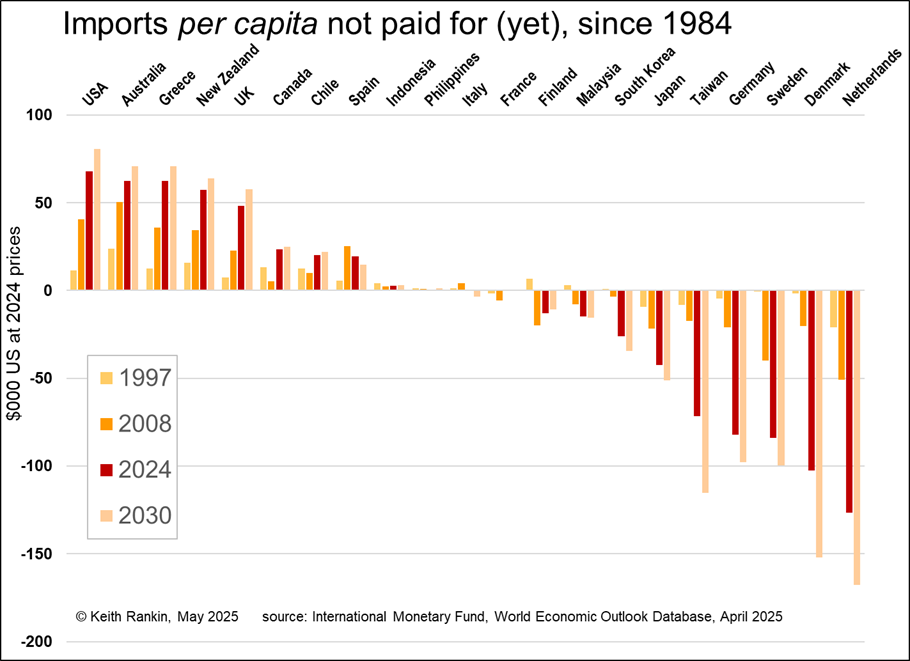



.jpg)
