Category: Politics

  • MIL-OSI Global: How a community-focused vision for net zero can revive local economies

    Source: The Conversation – UK – By Max Lacey-Barnacle, Senior Research Fellow, Science Policy Research Unit, University of Sussex

    Kampan/Shutterstock

    Across the world, the transition to a green economy is under threat. Growing antipathy towards the costs of tackling climate change, stoked especially by right-wing populists, undermines ambitions to reach net zero emissions by 2050.

    In the UK, leader of the opposition Kemi Badenoch recently described achieving net zero by 2050 as “impossible”, stating that it would bankrupt the country. Reform, a major rival to the right of Badenoch’s Conservative party want to scrap the UK’s net zero targets altogether.

    A new vision of net zero is urgently needed. To help fund the UK’s transition to a green economy, the UK government seeks to attract private investment from international corporations that are not based in the UK.

    The Indian company Tata Group is investing £4 billion in eletric vehicles (EVs) and battery production in the UK. Danish company Orsted has invested £15 billion in UK offshore windfarms in the last decade. French company EDF Energy has invested £4.5 billion in net zero technologies and infrastructure in the UK.

    This approach comes with considerable risks. Profits can be extracted out of local economies, which benefits the shareholders of international corporations, not UK businesses.

    Ownership can also change between private entities and move even further afield. Last year, Orsted sold stakes in four UK offshore wind farms to a Canadian investment company.

    UCL climate scientist Mark Maslin explains net zero.

    But there’s an alternative that directly strengthens the resilience of the UK’s economy. Community wealth building is a model of economic development that ensures any profits generated from new green industries is recirculated within the local economy.

    To make this happen, communities need support from so-called “anchor institutions”. These are large organisations that are “anchored” to their local economy and cannot relocate, because their ownership structure is tied to a particular location. Think universities, hospitals or local government institutions.

    Within this approach, anchor institutions procure goods and services from nearby suppliers, so they circulate money locally and strengthen regional supply chains.

    This concept originated over a decade ago in the US. It’s since been applied in Canada, Australia, Ireland and the Netherlands.

    For the past four years, I’ve been exploring how community wealth building is becoming embedded in the UK’s fast-growing green economy.

    UK anchors and the green economy

    In north-west England, Preston city council retained the procurement spend of anchor institutions located in Preston city to the tune of £112.3 million in 2020 – £74 million more than in 2012/13.

    In Oldham in northern England, the council supported the development of community-led energy plans in two neighbourhoods, Sholver and Westwood. The plans outlined what a decarbonised heat, electricity and transport system would look like for each area. The council launched a website to share energy efficiency advice. The council also helped to set up two local community energy projects.

    Oldham Community Power installed solar panels on five primary schools and a community building to reduce their energy bills. Saddleworth Community Hydro have used excess profits from the sale of renewable electricity in 2023 to fund £58,000 worth of local sustainability projects.

    Some local councils in the UK are adopting a community wealth building approach.
    witsarut sakorn/Shutterstock

    The council in Lewes in southern England have committed to using community wealth building to transition towards net zero. Hundreds of houses have been retrofitted to increase their energy efficiency, with retrofit contracts arranged with local companies. EVs are being used to collect food waste. New sustainable housing is being built by local tradespeople using locally sourced materials wherever possible.

    The Lewes Climate Hub hosts community events and green business workshops in a council-owned property. Procurement spend by local anchor institutions has also doubled from £5m in 2020 to £10m in 2024.

    In North Ayrshire, Scotland, two municipally owned solar PV farms on council-owned land have generated a £13 million budget surplus. This has been redirected towards addressing fuel poverty by making low-income homes more energy efficient. The council’s new green jobs fund has supported over £1.14 million of investment into 65 businesses to enable a range of sustainability related measures.

    Encouragingly, more plans to bring together community wealth building and net zero continue to emerge. In London, partnerships between anchor institutions and community energy organisations could be integral to developing 1,000 community energy projects across the capital by 2030.

    Successful scale-up of community wealth building will require strong leadership, political commitments and supporting strategies that align with the green economy. Already, some initiatives are beginning to generate wealth through the green economy and keeping it in local communities, rather than ownership and profits going to distant corporations.

    To counter a rising opposition to net zero in the UK, prioritising community-focused visions that revive local economies will be vital.


    Don’t have time to read about climate change as much as you’d like?

    Get a weekly roundup in your inbox instead. Every Wednesday, The Conversation’s environment editor writes Imagine, a short email that goes a little deeper into just one climate issue. Join the 45,000+ readers who’ve subscribed so far.


    Max Lacey-Barnacle receives funding from The British Academy.

    ref. How a community-focused vision for net zero can revive local economies – https://theconversation.com/how-a-community-focused-vision-for-net-zero-can-revive-local-economies-252955

    MIL OSI – Global Reports

  • MIL-OSI Global: Russia and Turkey are wielding religion as soft power – but one patriarch is standing in their way

    Source: The Conversation – UK – By Katie Kelaidis, Research Fellow Institute of Orthodox Christian Studies, University of Cambridge

    Turkish nationalists are calling on the government of President Recep Tayyip Erdoğan to revoke the passport of Archbishop Elpidophoros of America, the highest ranking Greek Orthodox cleric in the US.

    As a Turkish citizen, the archbishop is one of the few clerics eligible to become the next Patriarch of Constantinople. The holder of this position is often called the “spiritual leader” of Eastern Orthodox Christians, though this status is contested.

    Critics of Elpidophoros believe he should be stripped of his Turkish citizenship for repeatedly referring to the Patriarch of Constantinople as “ecumenical”. This, which means the position represents a number of different Christian Churches, is a nod to the potential global authority of the office. Turkey does not recognise the patriarch’s ecumenical status.

    They also criticise Elpidophoros for using the name Constantinople instead of Istanbul (most recently during a Greek Independence Day celebration at the White House). This was the name of the city when it was the capital of the Ottoman empire.

    The situation might seem somewhere between petty and parochial – the concerns of a small and relatively unimportant corner of the world, or a momentary flare-up in the Greek-Turkish conflict. But this could not be further from the truth.

    The Patriarchate of Constantinople is a critical player in two volatile regions: the Middle East and eastern Europe. Both Turkey and Russia, regional powers in these unstable areas, have made religion a central component of their propaganda.

    They have each sought to present themselves as the guardian of their respective religious tradition, despite having spent much of the 20th century in various forms of state-sponsored hostility to religion. For Russia and Turkey, the Patriarchate of Constantinople stands as an obstacle to their preferred narratives.

    Religious politics

    Russia under Vladimir Putin and Turkey under Erdoğan have become deeply invested in promoting themselves as the guardians of traditional Christianity and Islam, respectively. By leveraging this position, they have garnered sympathy and support among people who were once indifferent or even hostile to them.

    Influential conservative commentators in the US such as Tucker Carlson and Rod Dreher have praised Putin’s “anti-woke” rhetoric. And some ultraconservative American men are reportedly converting to Russian Orthodoxy.

    Turkey, for its part, began establishing mosques and training imams abroad, including in western Europe, as early as the 1970s. But in the past 23 years, under the rule of the Justice and Development party (AKP), it has significantly expanded these efforts.

    The enemies Russia and Turkey claim to combat are both internal and external. Putin, Erdoğan and their aligned clerics, have been vocal in their denunciation of western “decadence”. This is usually represented by the liberal sexual and gender politics of western nations.

    Yet they have been just as adamant in opposing those within their own traditions. In Russia’s case, this has meant perceived liberalisers largely situated in the Hellenic world – not just the Patriarchate of Constantinople, but also the Patriarchate of Alexandria, as well as the Churches of Greece and Cyprus.

    For Turkey, this internal enemy has primarily taken the form of Saudi-backed Wahhabism, a strict, ultraconservative form of Sunni Islam.

    The international religious influence of Russia and Turkey depends on a specific national narrative. Russia must be not only a historically Orthodox nation, but the leading Orthodox nation – the rightful inheritor of the eastern Roman world.

    Likewise, Turkey must present itself as an explicitly and entirely Muslim nation, the heir to an Ottoman empire reimagined as far more homogeneous than it ever truly was.

    This requires both countries reject much of their 20th-century history. Neither Soviet communism nor the strict secularity of Turkey’s founder, Mustafa Kemal Atatürk, fits the current plot. It also demands the rewriting of medieval and early modern histories.

    And for both, the Patriarch of Constantinople poses a significant problem. This is especially true if he is seen as anything more than a local ethnic leader, hence the objection to the use of “ecumenical” in his title.

    If the Patriarch of Constantinople is a global religious leader, then Moscow is not the undisputed head of the Orthodox world, nor is Turkey a homogeneously Muslim nation with a homogeneously Muslim past.

    Why the next patriarch matters

    Patriarch Bartholomew, the current Patriarch of Constantinople, ascended to the throne in 1991. He has been a moderate and modernising force in the Orthodox world and beyond. Bartholomew has championed issues such as environmentalism, inter-religious dialogue and human rights, while also opposing Russian aggression in Ukraine.

    Now Bartholomew is 85 years old, the conversation has turned to the question of his successor. The options are limited, as the next patriarch must be a Turkish citizen.

    If the patriarchate is to continue serving as a kind of opposition to Russian and Turkish expansionism, the next leader must also be a moderate. Should a more reactionary figure take the office, there is a real danger this counterbalance will be lost.

    For those who hope to resist Russian and Turkish aggression and to promote values such as human rights in the Orthodox world and Middle East, there is simply no better choice than Archbishop Elpidophoros.

    He has challenged Russian expansionism in Ukraine, defended democracy and pluralism and has taken a pastoral approach to the inclusion of LGBTQ+ people and women in the Church.

    Though the patriarch is a relatively obscure position in global terms, it is precisely because of the current global situation that there may be no more important religious leader than one who can exert influence across eastern Europe and the Middle East.

    The fact that allies of Putin and Erdoğan have joined in attacking Elpidophoros suggests not only that they do not want him to become the next Patriarch of Constantinople. It also suggests that western democracies should take a deep interest in who does.

    The patriarchate is a rejection of the historical lies upon which both Russian and Turkish soft power rest. Thus, the man who occupies the office must be up to the task.

    Katie Kelaidis does not work for, consult, own shares in or receive funding from any company or organisation that would benefit from this article, and has disclosed no relevant affiliations beyond their academic appointment.

    ref. Russia and Turkey are wielding religion as soft power – but one patriarch is standing in their way – https://theconversation.com/russia-and-turkey-are-wielding-religion-as-soft-power-but-one-patriarch-is-standing-in-their-way-254247

    MIL OSI – Global Reports

  • MIL-OSI Global: Trump likes to know where his suits come from. His tariffs could now upend the world’s fashion supply chains

    Source: The Conversation – UK – By Arooj Rashid, Senior Lecturer in Marketing, Nottingham Trent University

    Rawpixel.com/Shutterstock

    US president Donald Trump has a particular look. Sharp navy suits, overly long ties and crisp white shirts, always structured to command attention. It’s a power uniform rooted in a very traditional idea of masculine elegance. Trump wants it to look expensive, meticulously crafted, consistent, and entirely his own.

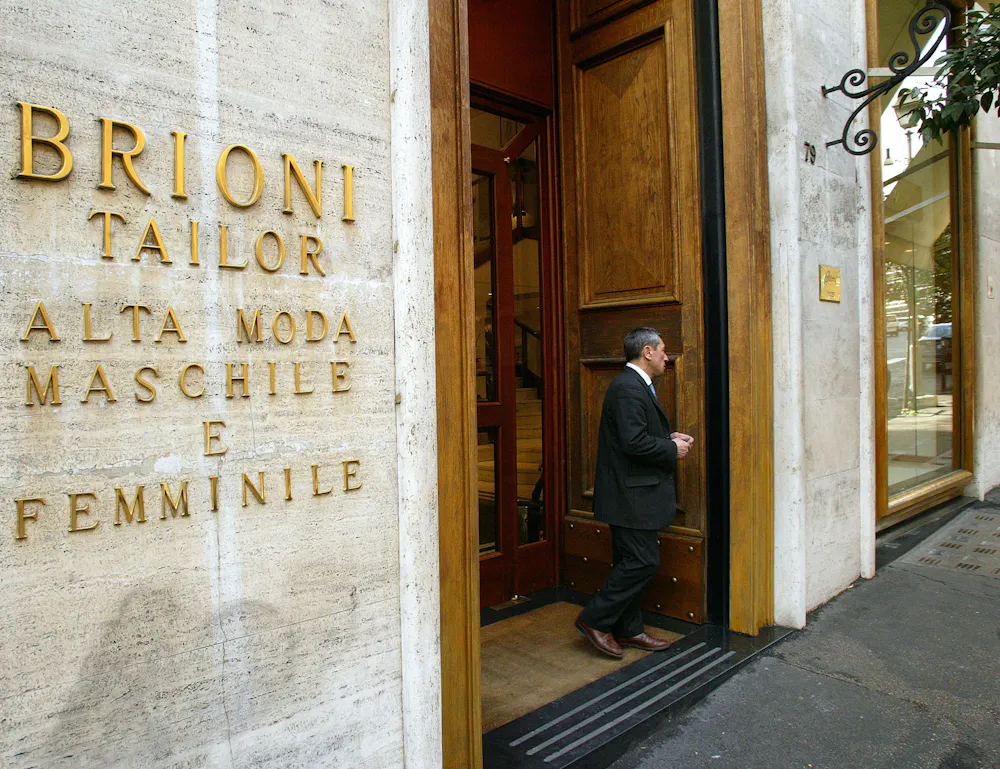
    Behind the populist slogans and “Buy American” rhetoric, this president has long embraced symbols of global luxury. While he’s worn American tailoring from Brooklyn’s Martin Greenfield – a craftsman who has dressed everyone from Barack Obama to Colin Powell – he has also been a longstanding customer of Brioni, an exclusive Italian brand of tailored clothing.

    So, while campaigning for American-made goods Trump has for years enjoyed the prestige of the “Made in Italy” tag, and the luxurious connotations it brings to menswear.

    But his trade policies have done the opposite for the global fashion industry. By threatening massive trade tariffs on countries like China, Vietnam, Bangladesh, India and Pakistan, he has potentially created chaos for both the industry and consumers.

    Traditionally, what’s known as “country of origin” has been represented by the “made in” label, a key branding tool that can shape consumer perceptions of product quality and other attributes. However, as globalisation has led to the outsourcing of design, materials and production, the definition has become increasingly complex.

    “Designed in” and “country of brand origin” have come to define prestigious product qualities, while country image is used to reflect perceptions of a nation and its products. For example, “designed in Italy” often evokes craftsmanship and luxury in fashion goods. Similarly, Germany has a historical reputation for excellence in producing cars. And “Japanese brand origin” is associated with cutting-edge technology and reliability, particularly in electronics and vehicles.

    Two decades ago, as production costs in the US and Europe mounted, clothing production moved to Asia. While China has remained an important supplier, trade tensions saw production move to countries including Vietnam, India and Bangladesh in the early mid-2010s. But with the threat of new tariffs on these countries, brands are scrambling again.

    This time they have far fewer alternatives. And for companies that rely on the storytelling behind where a garment is made, this isn’t just a supply chain headache. It’s an identity crisis.

    ‘Made in Italy’ – like Trump’s Brioni suits – conveys more than just the country of manufacture.
    Northfoto/Shutterstock

    In fashion, a garment’s origin is not merely a logistical detail – it’s part of its identity. Labels like “made in Italy”, “made in India” or “made in Bangladesh” carry different connotations. These could be luxury and craftsmanship – embroidery skills, for example – or affordability at scale.

    Over time, brands have cultivated these country associations as part of their marketing strategies, shaping consumer perception and trust. The result is a strategic decision for fashion companies, which must now consider cost and efficiency and how changing suppliers might affect their brand’s perceived values and identity.

    For example, brands like H&M and Levi Strauss & Co. have promoted their ethical sourcing in India or partnerships in Pakistan due to their expertise. But now they risk being taxed extensively. So what is the solution?

    The impact on consumers

    The growing risk of new trade rules and tariffs is making it harder for countries that supply fashion goods to stay competitive.

    First, brands must re-assess globalisation of the fashion industry and develop alternative supply chains. While a quick shift may be possible for simpler fashion products, relocating production for more complex or premium goods is usually a long-term investment. As a result, brands will be investigating country images that are perceived to be trusted and trustworthy as trading partners.

    But one unexpected outcome of these policies may be the return of European production and the emergence of “safe” sourcing locations in countries less exposed to trading restrictions. This could be Portugal and Romania for mid-market clothing, and Italy for high-end fashion goods. These would be more predictable and offer a globally recognised brand image.

    Heritage clothing brand Barbour still manufactures some of its lines in the UK.
    Robert Way/Shutterstock

    For some companies, shifting production to Italy will allow them to maintain product prestige while avoiding some of the eye-watering tariffs threatened for some Asian countries. Meanwhile others may look to move back to the UK because of its association with younger, niche markets.

    This won’t necessarily make clothing cheaper for consumers. It does though offer a level of reassurance, especially for higher-end or mid-market labels looking to preserve their image amid instability.

    Trump’s own affinity for Brioni reflects this implicit value. Though his public rhetoric prioritised American manufacturing, his choice of a luxury Italian tailor speaks to a broader truth: country image matters. And in fashion, it can be everything.

    The consequences of these trade policies are now visible across the fashion ecosystem. For example, American brands like Everlane and Pact are built around affordability and transparency. They rely on production in south or south-east Asia, and now face the challenge of rising costs.

    Larger companies will be rethinking pricing strategies, renegotiating contracts or halting expansion in regions hardest hit by tariffs.

    For consumers, this could mean higher prices and reduced variety. The label inside a garment now tells a more complex story – not only of where it was made but also of the political and economic forces shaping global trade.

    Even if these tariffs are eventually reduced or reversed, the disruption they have caused has already left a mark. They have redefined the meaning and importance of country-of-origin labels, exposed the fragility of global supply chains, and placed new pressure on brands to balance ethics, economics and image in a volatile environment. In fashion, where identity is crafted through fabric and narrative, the story behind the label has never mattered more.

    The authors do not work for, consult, own shares in or receive funding from any company or organisation that would benefit from this article, and have disclosed no relevant affiliations beyond their academic appointment.

    ref. Trump likes to know where his suits come from. His tariffs could now upend the world’s fashion supply chains – https://theconversation.com/trump-likes-to-know-where-his-suits-come-from-his-tariffs-could-now-upend-the-worlds-fashion-supply-chains-255337

    MIL OSI – Global Reports

  • MIL-OSI Global: The growing threat to U.S. democracy will literally cost lives

    Source: The Conversation – Canada – By Andrew C. Patterson, Assistant Professor of Sociology, MacEwan University

    According to a recent survey, most political scientists agree that President Donald Trump is turning the United States government into an autocracy, all too quickly.

    As political scholars Steven Levitsky and Lucan Way explain, a competitive-authoritarian country is one where elections are held and election results carry, but incumbents alter the game so as to tilt the odds of winning heavily in their favour. This effectively makes it an autocratic regime, with one person holding the lion’s share of power.

    Politicians tilt these odds by doing exactly the sorts of things Trump is doing. He is replacing civil servants with loyalists, and then repurposing the long-standing institutions they serve. This is so he can use those institutions for political gain — to punish dissenters and reward allies. All to support his staying in power.

    As just one recent example, Levistky and Way predicted in February that the Internal Revenue Service would become one of the many departments that Trump would weaponize. On April 15, Trump called for the IRS to revoke Harvard University’s tax-exempt status in response to the university’s refusal to acquiesce. Trump had previously withheld billions of dollars in grant funding.


    Read more:
    Harvard is suing the White House: here’s what Trump hopes to achieve by targeting universities


    Is there any case in which Trump has still acted in the service of the American public? Arguably, no, not by a long shot. Even the Jeff Bezos-owned Washington Post describes his first 100 days as a remarkable failure across multiple fronts.

    The headlines have been blistering, calling those first 100 days “horrifying” and “inept.” Nor is the American public impressed: most give his performance a grade of D or F, according to a recent poll.

    The biggest threat of all may be permanent damage to government institutions.

    Democracy and population health

    As research shows, these trends cannot possibly be good for the lives and livelihoods of American citizens. We have known for over a decade that the recruitment of civil servants based on their political affiliations or loyalties, rather than credentials, is a recipe for political corruption. Corruption, in turn, harms population health.

    My own recent study affirms these findings. It also concludes that the impact of civil service hiring on population health is surprisingly direct. All of this suggests more corruption and worse health as Trump tightens his control over the civil service.

    Democracy, too, matters for population health. In another study, we found that democracies have as much as 11 years of added life expectancy, and 75 per cent lower rates of infant mortality, compared to autocratic countries. For someone focused on cross-national differences in health, these were huge differences.

    Economic impacts

    Trump’s actions will soon affect American wallets as well if they haven’t already, as research on both civil service hiring and democratization would suggest.

    It’s not difficult to demonstrate the threat, which continues to evolve in real time. Tourism in the U.S. has taken a serious hit in recent weeks, with airline bookings from Canada down 70 per cent.


    Read more:
    Does cancelling a trip to the U.S. really send a political message, or is it just hurting local tourism?


    People from other countries first started boycotting American goods and services in response to Trump’s tariff campaign. In the meantime, Congress has done little to curtail the detainment of migrants without just cause, or their deportation to a Salvadorean mega-prison without due process. And now tourists are afraid to travel to the U.S.

    It is fair to say that both economic prosperity and population health require investment in the same government infrastructures that the Trump administration is now downsizing.

    Yet the damage does not stop at the border. Trump’s decisions will have ripple effects on global health. Programs focused on containing infectious disease in the developing world are bearing the brunt of huge cuts to USAID.

    Speed and volume

    Trump’s approach is not informed by any kind of economic expertise. He is shooting the American economy in both feet by waging a tariff war against other countries as he simultaneously decimates tourism and upends a low-cost workforce with his immigration policy.

    Americans who voted for him will not get the price control they were hoping for, with supply-chain disruptions coming quickly down the pipeline.

    Nor can Americans count on the court system to preserve democracy. This is for two reasons.

    First, Trump’s executive actions are happening far too quickly. He has had a record number of executive orders since taking office only three months ago. It may take months if not years for challenges to these decisions to work their way through courts.

    Second, courts will not necessarily rule on the side of democracy, as in the Supreme Court’s decision to assure legal immunity for Trump.

    None of this bodes well. According to one watchdog based in Sweden, the U.S. could lose its status as a democratic nation in just a few months — well before the midterm elections.

    CNN reports on President Trump’s statement that he doesn’t know if he needs to uphold the U.S. Constitution.

    Starting a movement

    All of this has one common denominator: Trump’s unhinged executive power. A decidedly meek U.S. Congress needs to wake from its stupor and constrain that power.

    But at the time of this writing, the House judiciary committee plans to slip provisions into a budget megabill that will grant Trump ever more sweeping power over regulations.

    One solution may be what we sociologists refer to as a social movement. This is where as many people as possible choose to act. Small interactions — like sharing an article with friends and family — can make a big difference, according to one prominent perspective in sociology.

    Other means are more direct, like joining a protest or writing to members of Congress. And then there are decisions about what not to do. Universities and law firms are encouraged not to participate in the fraying of American democracy by making a “deal” with the Trump administration.

    The take-home message is that the threat to American democracy is real and it is imminent. The impact on human health and well-being will be global. If the collapse of American democracy affects all of us, inside and outside of U.S. borders, then we can all agree to do something about it.

    Andrew C. Patterson does not work for, consult, own shares in or receive funding from any company or organisation that would benefit from this article, and has disclosed no relevant affiliations beyond their academic appointment.

    ref. The growing threat to U.S. democracy will literally cost lives – https://theconversation.com/the-growing-threat-to-u-s-democracy-will-literally-cost-lives-254170

    MIL OSI – Global Reports

  • MIL-OSI Global: Even a capped, time-limited youth visa scheme would be of value to young people in the UK and EU

    Source: The Conversation – UK – By Johanna L. Waters, Professor of Human Geography, UCL

    EF Stock/Shutterstock

    More than 60 Labour MPs have signed a letter calling on the government to support a youth mobility agreement with the EU.

    The letter called for a visa scheme that would be time limited and capped. This would be in line with other youth mobility agreements that the UK has with a number of countries and territories, including Australia and South Korea.

    Mobility would be for a defined period (such as three years), and the number of visas issued would be limited. The scheme would be aimed at young people in the UK and EU under 30 years old. This follows Prime Minister Keir Starmer’s promise to “reset” relations with the EU following his election in July 2024.

    At the upcoming EU-UK summit to be held in London on May 19 2025, opportunities for young people to travel between the UK and the EU will be a key part of negotiations between politicians.

    The European Commission have made no secret of their desire for such a scheme. They initially proposed a version of this in April 2024. Some EU countries, such as Germany, have spoken out in favour. Brexit has limited the ability of young people to spend time in the UK, with all the cultural, linguistic and other benefits potentially gained from this.

    The UK government’s enthusiasm has, in contrast, been more muted. They have a number of concerns, including immigration. Returning to any sort of free movement with the EU has been roundly rejected by politicians.

    Concerns over immigration

    Consecutive UK governments have been concerned with reducing net immigration, and international student visas contribute to these figures. Consequently, reducing numbers of incoming international students has been seen as a way of controlling immigration – to the dismay of bodies representing the UK’s higher education sector.

    But other countries, such as the US, exclude international students from immigration figures. Debates concerning removing international students from immigration numbers in the UK are ongoing. A poll commissioned by Universities UK found that only around a third of the British public viewed international students as migrants.

    As it stands, however, there are no plans to change the way international students are counted. Any new youth mobility agreement would presumably affect migration figures, but the direction is as yet unknown. And existing youth mobility schemes have had a relatively small impact on immigration numbers.

    Opportunities for young people

    As discussed in my forthcoming book (co-authored with Rachel Brooks) on student mobility after Brexit, young people in Britain have been particularly affected by changes in UK-EU relations.

    These have included their ability to study in Europe, as a consequence of the UK’s withdrawal from the Erasmus+ Programme – the EU’s initiative to support learning, work, sport and training in another EU country. The Republic of Ireland has allocated funding to allow students at universities in Northern Ireland to remain part of Erasmus+.

    At the moment, young Britons are treated no differently from any other potential immigrants to Europe, requiring a visa to study there for more than three months.

    UK citizens travelling to the EU now need a visa for stays of more than 90 days.
    Prostock-studio/Shutterstock

    The new Turing scheme has replaced Erasmus+ to fund study abroad for UK students. But it is far from a like-for-like replacement, is not reciprocal, and students and university staff have reported problems with securing visas in time.

    An agreement with the EU, enabling relatively stress-free travel for young people – albeit for a limited period of time – would be a significant benefit given the current situation.

    Young people from the EU now face similar regulations and restrictions when coming to the UK. A visa and “health surcharge” are now required for any stay over six months. International tuition fees must also be paid by EU citizens on UK degree courses. In addition, postgraduate students are no longer able to bring dependents.

    Consequently, fewer young people from Europe now choose the UK as a study destination. Recent figures show a significant drop in EU students coming to the UK – from 147,950 in 2019-20 to 75,490 in 2023-24. A resurgence in the number of EU students would probably be beneficial to UK universities, and the UK would, at the very least, appear more welcoming to young people from the EU.

    The re-election of Donald Trump as president of the US has ushered in new geopolitical realities. Relations between the US, UK and EU are shifting and uncertain, making a UK-EU deal in areas such as trade, security and education more important. The mobility of young people, as both learners and workers, is an important component of any negotiations on such a deal.

    Johanna L. Waters does not work for, consult, own shares in or receive funding from any company or organisation that would benefit from this article, and has disclosed no relevant affiliations beyond their academic appointment.

    ref. Even a capped, time-limited youth visa scheme would be of value to young people in the UK and EU – https://theconversation.com/even-a-capped-time-limited-youth-visa-scheme-would-be-of-value-to-young-people-in-the-uk-and-eu-255267

    MIL OSI – Global Reports

  • MIL-Evening Report: Indonesian postcard image ‘dangerous’ but Fiji a rising star in RSF press freedom index

    Pacific Media Watch

    To mark the release of the 2025 World Press Freedom Index, Reporters Without Borders (RSF) partnered with the agency The Good Company to launch a new awareness campaign that puts an ironic twist on the glossy advertising of the tourism industry.

    Three out of six countries featured in the exposé are from the Asia Pacific region — but none from the Pacific Islands.

    The campaign shines a stark light on the press freedom violations in countries that seem perfect on postcards but are highly dangerous for journalists, says RSF.

    It is a striking campaign raising awareness about repression.

    Fiji (44th out of 180 ranked nations) is lucky perhaps as three years ago when its draconian media law was still in place, it might have bracketed up there with the featured “chilling” tourism countries such as Indonesia (127) — which is rapped over its treatment of West Papua resistance and journalists.

    Disguised as attractive travel guides, the campaign’s visuals use a cynical, impactful rhetoric to highlight the harsh realities journalists face in destinations renowned for their tourist appeal.

    Along with Indonesia, Greece (89th), Cambodia (115), Egypt (170), Mexico (124) and the Philippines (116) are all visited by millions of tourists, yet they rank poorly in the 2025 World Press Freedom Index, reports RSF.

    ‘Chilling narrative’
    “The attention-grabbing visuals juxtapose polished, enticing aesthetics with a chilling narrative of intimidation, censorship, violence, and even death.

    “This deliberately unsettling approach by RSF aims to shift the viewer’s perspective, showing what the dreamlike imagery conceals: journalists imprisoned, attacked, or murdered behind idyllic landscapes.”


    The RSF Index 2025 teaser.     Video: RSF

    Indonesia is in the Pacific spotlight because of its Melanesian Papuan provinces bordering Pacific Islands Forum member country Papua New Guinea.

    Despite outgoing President Joko Widodo’s 10 years in office and a reformist programme, his era has been marked by a series of broken promises, reports RSF.

    “The media oligarchy linked to political interests has grown stronger, leading to increased control over critical media and manipulation of information through online trolls, paid influencers, and partisan outlets,” says the Index report.

    “This climate has intensified self-censorship within media organisations and among journalists.

    “Since October 2024, Indonesia has been led by a new president, former general Prabowo Subianto — implicated in several human rights violation allegations — and by Joko Widodo’s eldest son, Gibran Rakabuming Raka, as vice-president.

    “Under this new administration, whose track record on press freedom offers little reassurance, concerns are mounting over the future of independent journalism.”

    Fiji leads in Pacific
    In the Pacific, Fiji has led the pack among island states by rising four places to 40th overall, making it the leading country in Oceania in 2025 in terms of press freedom.

    A quick summary of Oceania rankings in the 2025 RSF World Press Freedom Index. Image: RSF/PMW

    Both Timor-Leste, which dropped 19 places to 39th after heading the region last year, and Samoa, which plunged 22 places to 44th, lost their impressive track record.

    Of the only other two countries in Oceania surveyed by RSF, Tonga rose one place to 46th and Papua New Guinea jumped 13 places to 78th, a surprising result given the controversy over its plans to regulate the media.

    RSF reports that the Fiji Media Association (FMA), which was often critical of the harassment of the media by the previous FijiFirst government, has since the repeal of the Media Act in 2023 “worked hard to restore independent journalism and public trust in the media”.

    In March 2024, research published in Journalism Practice journal found that sexual harassment of women journalists was widespread and needed to be addressed to protect media freedom and quality journalism.

    In Timor-Leste, “politicians regard the media with some mistrust, which has been evidenced in several proposed laws hostile to press freedom, including one in 2020 under which defaming representatives of the state or Catholic Church would have been punishable by up to three years in prison.

    “Journalists’ associations and the Press Council often criticise politicisation of the public broadcaster and news agency.”

    On the night of September 4, 2024, Timorese police arrested Antonieta Kartono Martins, a reporter for the news site Diligente Online, while covering a police operation to remove street vendors from a market in Dili, the capital. She was detained for several hours before being released.

    Samoan harassment
    Previously enjoying a good media freedom reputation, journalists and their families in Samoa were the target of online death threats, prompting the Samoan Alliance of Media Professionals for Development (SAMPOD) to condemn the harassment as “attacks on the fourth estate and democracy”.

    In Tonga, RSF reports that journalists are not worried about being in any physical danger when on the job, and they are relatively unaffected by the possibility of prosecution.

    “Nevertheless, self-censorship continues beneath the surface in a tight national community.”

    In Papua New Guinea, RSF reports journalists are faced with intimidation, direct threats, censorship, lawsuits and bribery attempts, “making it a dangerous profession”.

    “And direct interference often threatens the editorial freedom at leading media outlets. This was seen yet again at EMTV in February 2022, when the entire newsroom was fired after walking out” in protest over a management staffing decison.

    “There has been ongoing controversy since February 2023 concerning a draft law on media development backed by Communications Minister Timothy Masiu. In January 2024, a 14-day state of emergency was declared in the capital, Port Moresby, following unprecedented protests by police forces and prison wardens.”

    This impacted on government and media relations.

    Australia and New Zealand
    In Australia (29), the media market’s heavy concentration limits the diversity of voices represented in the news, while independent outlets struggle to find a sustainable economic model.

    While New Zealand (16) leads in the Asia Pacific region, it is also facing a similar situation to Australia with a narrowing of media plurality, closure or merging of many newspaper titles, and a major retrenchment of journalists in the country raising concerns about democracy.

    Pacific Media Watch collaborates with Reporters Without Borders.

    MIL OSI AnalysisEveningReport.nz

  • MIL-OSI Russia: Pakistan tanker blast death toll rises to 20

    Translation. Region: Russian Federal

    Source: People’s Republic of China in Russian – People’s Republic of China in Russian –

    Source: People’s Republic of China – State Council News

    ISLAMABAD, May 6 (Xinhua) — The death toll in a tanker blast in southwestern Pakistan’s Noshki district last week has risen to 20 after several people died from burns, local police said on Tuesday.

    Police said 17 of the seriously injured had died in the past four days while undergoing treatment at Liaquat National Hospital in Karachi, a southern port city.

    The blast occurred on April 28 in Noshki, a district of Balochistan province in southwestern Pakistan, after a petrol tanker caught fire during welding work.

    According to initial reports, the explosion killed the driver of the tanker truck and injured more than 60 people, many of whom suffered serious burns.

    Due to a shortage of medical facilities in the area, the provincial government airlifted 24 critically injured patients to Karachi for specialized treatment.

    In an attempt to prevent a major tragedy, the driver drove the tanker away from the cargo terminal. However, shortly before it exploded, a crowd gathered around the vehicle. –0–

    MIL OSI Russia News

  • MIL-OSI China: Xi, EU leaders exchange congratulations on 50th anniversary of diplomatic ties

    Source: People’s Republic of China – State Council News

    BEIJING, May 6 — Chinese President Xi Jinping on Tuesday exchanged congratulations with European Council President Antonio Costa and European Commission President Ursula von der Leyen over the 50th anniversary of diplomatic ties between China and the European Union (EU).

    In his message, Xi said China and the EU are comprehensive strategic partners, two major forces promoting multi-polarization, two major markets supporting globalization and two major civilizations advocating diversity.

    Xi noted that since the establishment of their diplomatic ties 50 years ago, China and the EU have maintained close exchanges across various levels and sectors, saying that the accomplishments of their dialogue and cooperation are fruitful, cultural and people-to-people exchanges vibrant, and multilateral coordination productive.

    He added that China-EU relations have become one of the most influential bilateral relations in the world, contributing greatly to enhancing the well-being of their people, and promoting world peace and development.

    Noting that the world is undergoing accelerated changes unseen in a century and human society is once again at a critical crossroads, Xi said a healthy and stable China-EU relationship not only promotes mutual achievements, but also illuminates the world.

    Xi said he highly regards the development of China-EU relations, and is ready to work with Costa and von der Leyen to take the 50th anniversary of diplomatic relations as an opportunity to review the experience drawn from the development of ties, deepen strategic communication, enhance mutual understanding and trust, strengthen partnership, expand mutual openness, properly handle frictions and differences, and work toward an even brighter future for China-EU relations.

    He also called on both sides to remain committed to multilateralism, uphold fairness and justice, oppose unilateralism and bullying, join forces in addressing global challenges, and jointly build an equitable and orderly multipolar world and an inclusive economic globalization, so as to make greater contributions to world peace, stability, development and prosperity.

    For their part, EU leaders said over the past 50 years, China has achieved the most rapid and sustained economic growth in history, noting that the EU and China have forged extensive ties, become each other’s most important trading partners and contributed to the well-being of their people and the prosperity of their economies.

    Against the backdrop of global uncertainty and geopolitical shifts, the EU, they said, stands ready to deepen its partnership with China, strengthen exchanges and cooperation, uphold the purposes and principles of the United Nations Charter, work hand in hand to address common challenges, and promote global peace, security, prosperity and sustainable development.

    MIL OSI China News

  • MIL-OSI Europe: Further reforms needed in Kazakhstan to strengthen fair trial rights: ODIHR monitoring report

    Source: Organization for Security and Co-operation in Europe – OSCE

    Headline: Further reforms needed in Kazakhstan to strengthen fair trial rights: ODIHR monitoring report

    WARSAW, 6 May 2025 – In a report summarising its year-long monitoring of more than 400 court hearings related to the January 2022 protests in Kazakhstan, the OSCE Office for Democratic Institutions and Human Rights (ODIHR) documented court practices that fall short of international fair trial standards, while recognizing the challenges faced by the Kazakh authorities to complete a large number of criminal investigations and court cases.
    “The right to a fair trial is a cornerstone of democracy. With thanks to the Kazakh authorities for their openness and cooperation throughout the monitoring process and while acknowledging ongoing reforms and some positive trends, our findings underline the need for Kazakhstan to take effective measures that ensure the rights of the accused are fully protected and the principles of a fair trial are upheld,” said ODIHR Director Maria Telalian. “ODIHR is ready to assist Kazakhstan in implementing our tailored recommendations and introducing legal reforms in the country to strengthen the independence of the judiciary and addrssing the shortcomings identified.” 
    Following an invitation by the Kazakh authorities and in cooperation with the Supreme Court, ODIHR monitored 35 criminal cases related to the January 2022 protests in Kazakhstan between November 2022 and December 2023, as well as cases involving 139 defendants and more than 400 court hearings. The trial monitoring took place in courts in Almaty, Kyzylorda, Semey, Taldykorgan and Taraz. The cases were primarily against state officials as well as political and civil society activists, including organizers of the protests, and involved charges of torture and other serious human rights violations, as well as the use of evidence obtained through torture. 
    The monitoring was carried out in line with the ODIHR’s trial monitoring methodology, following well-established principles of impartiality and objectivity. ODIHR did not assess the merits of the cases, but focused on court procedures and their compliance with international democratic standards and evaluated the extent to which the right to a fair trial is respected.
    Today’s report includes the findings from the monitoring, as well as a set of recommendations to assist the Kazakh authorities in ensuring compliance with international standards. ODIHR has also developed a number of tools aimed at supporting justice sector reforms. All 57 participating states of the OSCE have committed to abide by the rule of law and to ensure the right to a fair and public trial by a competent, independent and impartial tribunal established by law.

    MIL OSI Europe News

  • MIL-OSI Africa: Valentin-Yves Mudimbe: the philosopher who reshaped how the world thinks about Africa

    Source: The Conversation – Africa – By Christophe Premat, Associate Professor in French Studies (cultural studies), head of the Centre for Canadian Studies, Stockholm University

    Congolese thinker, philosopher and linguist Valentin-Yves Mudimbe died on 21 April 2025 at the age of 83. He was in the US, where he had lived for many years.

    A towering figure in African critical thought, Mudimbe’s work – translated and studied worldwide – has profoundly shaped postcolonial studies. He leaves a groundbreaking intellectual legacy on the colonisation of knowledge and the condition of Africans.

    At a time when debates on decolonising knowledge are gaining ground, Mudimbe’s passing invites us to revisit the work of a thinker who, since the 1980s, paved the way for a radical critique of imposed “categories”. He wanted to help rebuild intellectual frameworks which imagined and defined Africa on its own terms, not through the labels or categories imposed by colonial powers.

    As a specialist in postmodern and postcolonial theories, I think he had considerable influence on the field of postcolonial studies.

    He was one of the most influential African thinkers of the 20th century. His impact did not come from activism, but from careful, sustained intellectual work. With his seminal work The Invention of Africa (1988) he profoundly disrupted African and postcolonial studies. His work went far beyond the usual east-west divide.

    A journey between Africa and exile

    Valentin-Yves Mudimbe was born in 1941 in Jadotville (now Likasi), in the Democratic Republic of Congo. His early education took place in a Benedictine monastery. Later, he pursued further studies at Louvain in Belgium.

    His religious education left a lasting mark on his thinking. It shaped his critical approach to knowledge. His work often explored the connections between language, power, and how ideas become institutionalised.

    In 1970, Mudimbe returned to the newly independent Congo. He began teaching at the National University of Zaïre. The country was then caught between postcolonial hope and growing disillusionment.

    Under Mobutu Sese Seko’s regime, the political atmosphere grew stifling for independent thinkers. The state had adopted the rhetoric of “authenticity”, turning it into a tool of control. Faced with this ideological stranglehold, Mudimbe chose exile in 1979.

    He relocated to the US, where he taught at Stanford and later Duke University. There, he continued his work of critical deconstruction. Yet, despite his physical distance, he remained deeply committed to Africa’s future.

    Deconstructing the ‘colonial library’

    First published in English in 1988 as the The Invention of Africa, the book was translated into French in 2021 under the title L’Invention de l’Afrique, (Présence africaine).

    Mudimbe offers much more than a critique of colonial representations. He examined the “colonial library”. It refers to the vast collection of religious, anthropological and administrative texts that, for centuries, framed Africa as an object to be studied, dominated and “saved”. Mudimbe was always careful not to accept ideas just because they were passed down. Instead, he was always looking for new ways to think freely and independently.

    Unlike Edward Said, the Palestinian-American literary theorist and critic who exposed how the west constructed a mythologised “Orient”, Mudimbe revealed something more insidious. He showed that Africa was often imagined as a void to be filled. It was cast as a cultural blank slate, which helped justify the colonial mission.

    This radical deconstruction raised a crucial question: how can we produce knowledge that does not, even through critique, reproduce the very colonial frameworks it seeks to challenge?

    The book’s impact was profound, resonating across Africa, Europe and North America. It created an intellectual foundation for thinkers like Achille Mbembe, Souleymane Bachir Diagne and Felwine Sarr, who, in turn, continued to explore what truly decolonised African thought might look like.

    Building something new

    Mudimbe was never satisfied with existing structures. He aimed to build something new from the ground up. For him, liberating Africa required a rebuilding of knowledge systems. He rejected the assumption that western intellectual frameworks alone could define Africa. He also warned against essentialist temptations – the trap of creating new conceptual prisons in the name of authenticity.

    His thinking followed a rigorous method: analysing discourse, questioning inherited categories, and dismantling false assumptions.

    This demanding work aimed to empower Africa to think for itself without cutting itself off from the rest of the world.

    His fiction – Between Tides (in French, Entre les eaux. Dieu, un prêtre, la révolution), Before the Birth of the Moon (Le Bel Immonde in French), Shaba Deux : les carnets de mère Marie Gertrude – embodies the same refusal to be stereotyped.

    His characters navigate colonial legacies, state nationalism and rigid identity politics through stories of displacement and fragmented memory.

    Language itself becomes a battleground for creativity in his novels. Sharply crafted, his prose captures the diversity of contemporary African experience. Through both his literary and philosophical works, Mudimbe consistently insisted that identity is never a given. It is always a construct to be questioned.

    A living legacy

    As Africa navigates complex geopolitical transformations and redefines its cultural identities, Mudimbe’s intellectual legacy proves more vital than ever. His work challenges us to recognise that true liberation extends beyond political sovereignty or cultural revival. It requires the radical work of reinventing how knowledge itself is produced and validated.

    Mudimbe’s lasting legacy urges us to remain intellectually vigilant in a world where knowledge is constantly shifting. He challenges us to reject rigid categories, embrace complexity with care, and make room for uncertainty instead of rushing to resolve it.

    For Mudimbe, to decolonise knowledge means relentless critique paired with creative reconstruction. It means building pluralistic and open frameworks that honour Africa’s diverse experiences without nostalgia or complacency.

    – Valentin-Yves Mudimbe: the philosopher who reshaped how the world thinks about Africa
    – https://theconversation.com/valentin-yves-mudimbe-the-philosopher-who-reshaped-how-the-world-thinks-about-africa-255902

    MIL OSI Africa

  • MIL-OSI: Live Oak Bank Announces $600,000 Grant in Support of Child Care Providers in New Hanover County

    Source: GlobeNewswire (MIL-OSI)

    WILMINGTON, N.C., May 06, 2025 (GLOBE NEWSWIRE) — Live Oak Bank has announced a $600,000 grant to help licensed early child care providers connect with qualified substitute teachers to ensure both continuity of care and strong student-teacher ratios in the classroom. 

    “At Live Oak Bank, we believe in the power of strengthening our local community, and that starts with access to quality early education,” said BJ Losch, president of Live Oak Bank. “We are proud to partner with Wonderschool to offer New Hanover County preschool providers access to a platform that directly supports the stability of local childcare, a cornerstone for working families.”  

    This grant, paid out over two years, gives public and private early child care providers in New Hanover County free access to Wonderschool’s innovative technology that allows them to review and match with pre-qualified substitute teachers, an otherwise time-consuming process that includes recruitment, critical background screening and training.  

    “Sometimes life gets in the way for early educators, and that can have a big impact on working parents, families and children. We’re building technology to try and make their lives just a little bit easier,” said Chris Bennett, founder and CEO of Wonderschool. “We’re teaming up with Live Oak to build a qualified and caring pool of substitutes who are ready to ensure not just continuous, but quality preschool experiences day in and day out.” 

    Live Oak’s philanthropic efforts prioritize workforce development, specifically helping people secure jobs with family-supporting wages, benefits and career advancement opportunities. “To achieve this vision,” said Kate Groat, Live Oak’s director of corporate philanthropy, “working parents must have access to reliable, high-quality childcare from educators they can trust.” 

    About Live Oak Bank 
    Live Oak Bank, a subsidiary of Live Oak Bancshares, Inc. (NYSE: LOB), is a digitally focused, FDIC-insured bank serving customers across the country. Live Oak brings efficiency and excellence to the banking process, without branches, by using a focused approach to technology and innovation. To learn more, visit www.liveoak.bank.  

    About Wonderschool 
    Wonderschool’s comprehensive technology and business support platform is designed to address every aspect of the child care and early learning ecosystem. Wonderschool’s vision is to ensure that quality early care and education are conveniently accessible to every child within a 5-minute radius of their home. As leaders in collaborating with governments and employers, Wonderschool spearheads initiatives to scale and enhance child care access for every community across the country. Named one of Time’s Most Influential Companies in 2022, Wonderschool is venture-backed by Goldman Sachs, Andreessen Horowitz, First Round, Omidyar, Unusual Ventures, and Gary Community Investments, among others. Learn more at www.wonderschool.com

    Contacts: 

    Claire Parker
    Live Oak Bank, Corporate Communications
    910.597.1592 
    claire.parker@liveoak.bank 

    Madison Carlos
    Live Oak Bank, Corporate Communications
    910.386.6616 
    madison.carlos@liveoak.bank 

    The MIL Network

  • MIL-OSI: Scality expands distribution with Ingram Micro in ANZ and the South Pacific region

    Source: GlobeNewswire (MIL-OSI)

    SAN FRANCISCO, May 06, 2025 (GLOBE NEWSWIRE) — Scality, a global leader in cyber-resilient storage software for the AI era, announced today the expansion of its distribution network with Ingram Micro in Australia, New Zealand, and the South Pacific region. The growth builds on Scality’s North American relationship with Ingram Micro, giving more organizations in ANZ and the South Pacific region access to Scality’s industry-leading ARTESCA and RING object storage software through the region’s largest IT distributor.

    The collaboration equips local businesses and enterprise organizations with sovereign, scalable, and cyber-resilient storage to defend against modern ransomware threats while supporting the increasing demands of AI-powered workloads. Ingram Micro’s established network of partners ensures seamless delivery and expert support for Scality’s solutions to enterprise and government customers across the region.

    “The growing threat of ransomware and the acceleration of AI have made secure, high-performance storage a top priority for enterprises in our region,” said Brett Lobwein, country manager for Australia, New Zealand, and the South Pacific at Scality. “Expanding our reach with Ingram Micro allows us to meet demand through trusted local channels that provide the expertise and support needed for organizations to protect their data and modernize their IT infrastructure.”

    The expanded relationship is a natural progression following a year of record-breaking channel momentum for Scality. As highlighted in Scality’s recent partner momentum announcement, 60% of sales are now driven by the VAR community.

    Meeting sovereign data requirements with cyber-resilient storage
    With governments enforcing more regulations for local, sovereign data protection and cybersecurity readiness, Scality’s solutions help organizations meet stringent compliance requirements. ARTESCA and RING provide immutable, scalable, and cost-effective storage that ensures data remains secure and accessible—even in the face of ransomware attacks.

    “Scality strengthens our ability to deliver solutions that address the growing need for sovereign, cyber-resilient data protection,” said Stuart Murray, vendor business manager at Ingram Micro. “With Scality, we help customers to safeguard critical data while innovating for the next generation of AI infrastructure.”

    About Scality
    Scality solves organizations’ biggest data storage challenges — growth, security, performance, and cost. Designed for end-to-end cyber resilience, only Scality S3 object storage with CORE5 safeguards data at every level of the system, from API to architecture. Its patented MultiScale Architecture enables limitless, independent scalability in all critical dimensions to meet the unpredictable demands of modern workloads. The world’s most discerning companies depend on Scality to accelerate high-performance AI initiatives, optimize cloud deployments, and defend their data with confidence. Recognized as a leader by Gartner, Scality software is reliable, secure, and sustainable. Follow us on LinkedIn. Visit www.scality.com and our blog.

    Media Contact:
    Jon Lavietes
    A3 Communications
    +1 415-572-4408
    jon.lavietes@a3communications.com

    A photo accompanying this announcement is available at:
    https://www.globenewswire.com/NewsRoom/AttachmentNg/3aef05d1-c540-40ef-8955-953123d4362c

    The MIL Network

  • MIL-OSI: 180 Degree Capital Corp. Notes Filing of Updated Preliminary Joint Proxy Statement/Prospectus for Proposed Business Combination with Mount Logan Capital Inc.

    Source: GlobeNewswire (MIL-OSI)

    MONTCLAIR, N.J., May 06, 2025 (GLOBE NEWSWIRE) — 180 Degree Capital Corp. (NASDAQ:TURN) (“180 Degree Capital”) today noted the filing of an amended preliminary joint proxy statement/prospectus on Schedule 14A with the Securities and Exchange Commission (“SEC”) regarding its proposed merger with Mount Logan Capital Inc. (“Mount Logan”) in an all-stock transaction (the “Business Combination”). As noted in its original press release issued on January 17, 2025, the surviving entity is expected to be a Delaware corporation operating as Mount Logan Capital Inc. (“New Mount Logan”) listed on Nasdaq under the symbol “MLCI”. In connection with the Business Combination, 180 Degree Capital shareholders will receive proportionate ownership of New Mount Logan determined by reference to 180 Degree Capital’s net asset value at closing relative to a valuation of Mount Logan of approximately $67.4 million at signing, subject to certain pre-closing adjustments.

    “Our amended joint proxy statement/prospectus regarding our proposed Business Combination with Mount Logan includes Mount Logan’s financial statements which were prepared in accordance with accounting principles generally accepted in the US, or US GAAP,” said Kevin M. Rendino, Chief Executive Officer of 180 Degree Capital. “The conversion of Mount Logan’s financial statements from International Financial Reporting Standards, or IFRS, to US GAAP is an important milestone as now we are in a position to be able to speak freely with current and potential investors regarding historical financial performance and apples-to-apples comparisons of Mount Logan to its publicly traded peers. This conversion to US GAAP also resulted in favorable improvements in historical financial metrics, including an increase in Mount Logan’s reported fee-related earnings in 2024 under IFRS to approximately $9.1 million under US GAAP, and an increase in the reported shareholder equity value of Mount Logan as of December 31, 2024, under IFRS to approximately $104.1 million under US GAAP.”

    “We believe that the availability of Mount Logan’s US GAAP financial statements will add to the strong indications of support we have received from initial conversations with our shareholders following the filing of our initial joint proxy statement/prospectus in late March 2025,” added Daniel B. Wolfe, President of 180 Degree Capital. “We believe our investors who have signed voting agreements and/or provided indications of support already understood the potential that we believe exists to create significant value for shareholders of 180 Degree Capital through this Business Combination even before Mount Logan’s US GAAP financial statements were available. We appreciate all of this support and patience as we move steadily through the SEC review process, toward the start of soliciting votes, and the ultimate goal of the completion of our proposed Business Combination.”

    Mr. Rendino continued, “Our belief about the potential of our proposed Business Combination to create significant shareholder value for 180 Degree Capital shareholders has only grown stronger since our initial announcement in January 2025. This belief is amplified by numerous significant shareholders who have voiced their support for our proposed Business Combination to us, as well as new shareholders who were drawn to invest in 180 Degree Capital based on what we believe to be a shared view that our proposed Business Combination is a unique opportunity for future value creation. We continue to believe that converting to an operating company will make 180 Degree Capital’s net asset value a floor for our stock price rather than the ceiling as it is for most closed-end funds. The pro forma combination of our businesses, based on 180 Degree Capital’s net asset value and Mount Logan’s equity value, respectively as of December 31, 2024, less estimated merger-related expenses and other estimated adjustments, yields a combined entity with an estimated shareholder equity value of nearly $140 million. While the ultimate ratio of ownership between 180 Degree Capital and Mount Logan shareholders will be based on 180 Degree Capital’s net asset value at closing, if the transaction closed on December 31, 2024, the portion of this equity value ascribed to 180 Degree Capital shareholders would equate to more than 180 Degree Capital’s net asset value as of that date. This fact is only one of the multitude of reasons we are so excited about this proposed transaction and its potential opportunity to create meaningful value for 180 Degree Capital’s shareholders.”

    Mr. Wolfe concluded, “We look forward to discussing these updates to our preliminary joint proxy statement/prospectus and to having robust conversations with all of our current and potential future shareholders. Feel free to reach out to us at any time.”

    About 180 Degree Capital Corp.

    180 Degree Capital Corp. is a publicly traded registered closed-end fund focused on investing in and providing value-added assistance through constructive activism to what we believe are substantially undervalued small, publicly traded companies that have potential for significant turnarounds. Our goal is that the result of our constructive activism leads to a reversal in direction for the share price of these investee companies, i.e., a 180-degree turn. Detailed information about 180 Degree Capital and its holdings can be found on its website at www.180degreecapital.com.

    Press Contact:
    Daniel B. Wolfe
    Robert E. Bigelow
    180 Degree Capital Corp.
    973-746-4500
    ir@180degreecapital.com

    Additional Information and Where to Find It

    In connection with the agreement and plan of merger among 180 Degree Capital Corp. (“180 Degree Capital”), Mount Logan Capital Inc. (“Mount Logan”), Yukon New Parent, Inc. (“New Mount Logan”), Polar Merger Sub, Inc., and Moose Merger Sub, LLC, dated January 16, 2025, as it may from time to time be amended, modified or supplemented (the “Merger Agreement”) that details the proposed combination of the businesses of 180 Degree Capital and Mount Logan and any other transactions contemplated by and pursuant to the terms of the Merger Agreement (the “Business Combination”), 180 Degree Capital intends to file with the SEC and mail to its shareholders a proxy statement on Schedule 14A (the “Proxy Statement”), containing a form of WHITE proxy card. In addition, the surviving Delaware corporation, New Mount Logan plans to file with the SEC a registration statement on Form S-4 (the “Registration Statement”) that will register the exchange of New Mount Logan shares in the Business Combination and include the Proxy Statement and a prospectus of New Mount Logan (the “Prospectus”). The Proxy Statement and the Registration Statement (including the Prospectus) will each contain important information about 180 Degree Capital, Mount Logan, New Mount Logan, the Business Combination and related matters. SHAREHOLDERS OF 180 DEGREE CAPITAL AND MOUNT LOGAN ARE URGED TO READ THE PROXY STATEMENT AND PROSPECTUS CONTAINED IN THE REGISTRATION STATEMENT AND OTHER DOCUMENTS THAT ARE FILED OR WILL BE FILED WITH THE APPLICABLE SECURITIES REGULATORY AUTHORITIES AS WELL AS ANY AMENDMENTS OR SUPPLEMENTS TO THESE DOCUMENTS CAREFULLY AND IN THEIR ENTIRETY WHEN THEY BECOME AVAILABLE BECAUSE THEY WILL CONTAIN IMPORTANT INFORMATION ABOUT 180 DEGREE CAPITAL, MOUNT LOGAN, NEW MOUNT LOGAN, THE BUSINESS COMBINATION AND RELATED MATTERS. Investors and security holders may obtain copies of these documents and other documents filed with the applicable securities regulatory authorities free of charge through the website maintained by the SEC at https://www.sec.gov and the website maintained by the Canadian securities regulators at www.sedarplus.ca. Copies of the documents filed by 180 Degree Capital are also available free of charge by accessing 180 Degree Capital’s investor relations website at https://ir.180degreecapital.com.

    Certain Information Concerning the Participants

    180 Degree Capital, its directors and executive officers and other members of management and employees may be deemed to be participants in the solicitation of proxies in connection with the Business Combination. Information about 180 Degree Capital’s executive officers and directors is available in 180 Degree Capital’s Annual Report filed on Form N-CSR for the year ended December 31, 2024, which was filed with the SEC on February 13, 2025, and in its proxy statement for the 2024 Annual Meeting of Shareholders (“2024 Annual Meeting”), which was filed with the SEC on March 1, 2024. To the extent holdings by the directors and executive officers of 180 Degree Capital securities reported in the proxy statement for the 2024 Annual Meeting have changed, such changes have been or will be reflected on Statements of Change in Ownership on Forms 3, 4 or 5 filed with the SEC. These documents are or will be available free of charge at the SEC’s website at https://www.sec.gov. Additional information regarding the persons who may, under the rules of the SEC, be considered participants in the solicitation of the 180 Degree Capital shareholders in connection with the Business Combination will be contained in the Proxy Statement when such document becomes available.

    Mount Logan, its directors and executive officers and other members of management and employees may be deemed to be participants in the solicitation of proxies from the shareholders of Mount Logan in favor of the approval of the Business Combination. Information about Mount Logan’s executive officers and directors is available in Mount Logan’s annual information form dated March 13, 2025, available on its website at https://mountlogancapital.ca/investor-relations and on SEDAR+ at https://www.sedarplus.com. To the extent holdings by the directors and executive officers of Mount Logan securities reported in Mount Logan’s annual information form have changed, such changes have been or will be reflected on insider reports filed on SEDI at https://www.sedi.com/sedi/. Additional information regarding the persons who may, under the rules of the SEC, be considered participants in the solicitation of the Mount Logan shareholders in connection with the Business Combination will be contained in the Prospectus included in the Registration Statement when such document becomes available.

    Non-Solicitation

    This letter and the materials accompanying it are not intended to be, and shall not constitute, an offer to buy or sell or the solicitation of an offer to buy or sell any securities, or a solicitation of any vote or approval, nor shall there be any sale of securities in any jurisdiction in which such offer, solicitation or sale would be unlawful prior to registration or qualification under the securities laws of any such jurisdiction. No offering of securities shall be made, except by means of a prospectus meeting the requirements of Section 10 of the U.S. Securities Act of 1933, as amended.

    Forward-Looking Statements

    This press release, and oral statements made from time to time by representatives of 180 Degree Capital and Mount Logan, may contain statements of a forward-looking nature relating to future events within the meaning of federal securities laws. Forward-looking statements may be identified by words such as “anticipates,” “believes,” “could,” “continue,” “estimate,” “expects,” “intends,” “will,” “should,” “may,” “plan,” “predict,” “project,” “would,” “forecasts,” “seeks,” “future,” “proposes,” “target,” “goal,” “objective,” “outlook” and variations of these words or similar expressions (or the negative versions of such words or expressions). Forward-looking statements are not statements of historical fact and reflect Mount Logan’s and 180 Degree Capital’s current views about future events. Such forward-looking statements include, without limitation, statements about the benefits of the Business Combination involving Mount Logan and 180 Degree Capital, including future financial and operating results, Mount Logan’s and 180 Degree Capital’s plans, objectives, expectations and intentions, the expected timing and likelihood of completion of the Business Combination, and other statements that are not historical facts, including but not limited to future results of operations, projected cash flow and liquidity, business strategy, payment of dividends to shareholders of New Mount Logan, and other plans and objectives for future operations. No assurances can be given that the forward-looking statements contained in this press release will occur as projected, and actual results may differ materially from those projected. Forward-looking statements are based on current expectations, estimates and assumptions that involve a number of risks and uncertainties that could cause actual results to differ materially from those projected. These risks and uncertainties include, without limitation, the ability to obtain the requisite Mount Logan and 180 Degree Capital shareholder approvals; the risk that Mount Logan or 180 Degree Capital may be unable to obtain governmental and regulatory approvals required for the Business Combination (and the risk that such approvals may result in the imposition of conditions that could adversely affect New Mount Logan or the expected benefits of the Business Combination); the risk that an event, change or other circumstance could give rise to the termination of the Business Combination; the risk that a condition to closing of the Business Combination may not be satisfied; the risk of delays in completing the Business Combination; the risk that the businesses will not be integrated successfully; the risk that synergies from the Business Combination may not be fully realized or may take longer to realize than expected; the risk that any announcement relating to the Business Combination could have adverse effects on the market price of Mount Logan’s common shares or 180 Degree Capital’s common shares; unexpected costs resulting from the Business Combination; the possibility that competing offers or acquisition proposals will be made; the risk of litigation related to the Business Combination; the risk that the credit ratings of New Mount Logan or its subsidiaries may be different from what the companies expect; the diversion of management time from ongoing business operations and opportunities as a result of the Business Combination; the risk of adverse reactions or changes to business or employee relationships, including those resulting from the announcement or completion of the Business Combination; competition, government regulation or other actions; the ability of management to execute its plans to meet its goals; risks associated with the evolving legal, regulatory and tax regimes; changes in economic, financial, political and regulatory conditions; natural and man-made disasters; civil unrest, pandemics, and conditions that may result from legislative, regulatory, trade and policy changes; and other risks inherent in Mount Logan’s and 180 Degree Capital’s businesses. Forward-looking statements are based on the estimates and opinions of management at the time the statements are made. Readers should carefully review the statements set forth in the reports, which 180 Degree Capital has filed or will file from time to time with the SEC and Mount Logan has filed or will file from time to time on SEDAR+.

    Neither Mount Logan nor 180 Degree Capital undertakes any obligation, and expressly disclaims any obligation, to publicly update any forward-looking statement, whether as a result of new information, future events or otherwise, except as required by law. Any discussion of past performance is not an indication of future results. Investing in financial markets involves a substantial degree of risk. Investors must be able to withstand a total loss of their investment. The information herein is believed to be reliable and has been obtained from sources believed to be reliable, but no representation or warranty is made, expressed or implied, with respect to the fairness, correctness, accuracy, reasonableness or completeness of the information and opinions. The references and link to the website www.180degreecapital.com and mountlogancapital.ca have been provided as a convenience, and the information contained on such websites are not incorporated by reference into this press release. Neither 180 Degree Capital nor Mount Logan is responsible for the contents of third-party websites.

    The MIL Network

  • MIL-OSI: Rise8 Names Mike Gehard as Director of Research and Development, Advancing AI-Driven Agile Software Delivery

    Source: GlobeNewswire (MIL-OSI)

    TAMPA, Fla., May 06, 2025 (GLOBE NEWSWIRE) — Rise8 announces the addition of Mike Gehard as its new Director of Research and Development, reinforcing the company’s commitment to innovation at the intersection of agile software development and artificial intelligence (AI). Gehard will lead Rise8’s efforts to responsibly and effectively integrate AI across all services, products, and processes to enhance delivery speed, ensure quality, and drive mission impact for Veterans, Defense organizations, and the broader public sector.

    Gehard brings over 20 years of deep technical and leadership experience from startup and enterprise environments, including roles at Pivotal Labs, VMware, and Artium AI. Throughout his career, he has championed modern development practices and helped organizations implement agile principles at scale — expertise that will be crucial as Rise8 helps government agencies navigate the complex and rapidly evolving landscape of AI adoption.

    In his new role, Gehard will focus on:

    • Building AI-assisted balanced teams where each team member — engineers, designers, and product owners — is empowered with AI tools to increase efficacy and improve efficiency without compromising human creativity and judgment.
    • Establishing intentional AI use practices, ensuring that new tools are applied thoughtfully, critically, and in service of real results rather than hype.
    • Implementing guardrails to protect quality and security, particularly critical in the Federal environment.
    • Helping clients shape their own AI governance and processes, including forming Communities of Practice to navigate the cultural and operational shifts AI adoption requires.
    • Promoting a culture of optimism and critical thinking, ensuring teams remain grounded while embracing new possibilities.

    “Mike’s arrival at Rise8 marks a pivotal moment, not just for our company, but for the broader government software development community,” said Bryon Kroger, Founder and CEO of Rise8. “His leadership will enable us to partner even more effectively with agencies to build the next generation of software factories that are AI-augmented, mission-driven, and relentlessly focused on delivering value to the warfighter, Veterans, and the American public.”

    “By thoughtfully integrating AI across balanced teams, we can shrink the time between understanding a user’s needs and delivering working software,” said Gehard. “It’s not just about building faster; it’s about building smarter and never losing sight of why we build in the first place: mission impact.”

    To learn more about Rise8’s offerings and services, please visit www.rise8.us.

    About Rise8
    Rise8 develops custom software for critical missions to create a future where fewer bad things happen because of bad software. Rise8 is a Service-Disabled Veteran-Owned Small Business (SDVOSB) with headquarters in Tampa, FL, and a fully remote workforce. Learn more at https://www.rise8.us/ and on LinkedIn, and X.

    Media Contact:
    Casey Dell’Isola
    REQ for Rise8
    rise8@req.co

    The MIL Network

  • MIL-OSI: QphoX, Rigetti and the NQCC Announce Collaboration on Multi-Channel Optical Readout of Quantum Processors

    Source: GlobeNewswire (MIL-OSI)

    DELFT, Netherlands, BERKELEY, Calif. and OXFORDSHIRE, United Kingdom, May 06, 2025 (GLOBE NEWSWIRE) — QphoX B.V., a Dutch quantum technology startup developing leading frequency conversion systems for quantum applications, Rigetti Computing, Inc. (Nasdaq: RGTI), a pioneer in full-stack quantum-classical computing, and the National Quantum Computing Centre (NQCC), the UK’s national lab for quantum computing, today announced that they have been awarded a multinational grant to perform readout of superconducting qubits using light transmitted over optical fiber.

    In a recent demonstration, QphoX and Rigetti validated the potential of this technique by optically reading out the state of a single superconducting qubit1. Optical readout is made possible by microwave-to-optical transduction at the base temperature of the cryostat. This transduction process converts the information contained in the microwave readout pulse into an optical signal carried over optical fiber. This approach could eventually replace conventional microwave amplifiers and coaxial wiring as part of the qubit signal processing chain and thereby offer considerable scaling advantages due to the comparatively low dissipation of the transducer and the negligible passive heat loads from telecommunications optical fiber.

    QphoX, Rigetti and the NQCC are partnering to take the next step in this research to realize optical readout of a fully-fledged superconducting quantum computer. In this multinational collaboration, QphoX will scale its optical qubit readout system that will interface with Rigetti’s 9-qubit Novera QPU, enabling optical readout of all qubits in the processor. The combined system will be installed and operated at the NQCC.

    “Using light to readout the state of a superconducting qubit will remove a significant amount of heat load on cryogenic systems and therefore allow to overcome one of the critical bottlenecks in building a universal quantum computer. We are excited to take our developments to the next level and work with our partners in demonstrating this critical technology at scale,” says Simon Groeblacher, CEO of QphoX.

    “This innovative solution to a well-known scaling challenge is made possible by an open and modular system architecture,” says Dr. Subodh Kulkarni, Rigetti CEO. “Integrating our partners’ technology with our QPU enables us to benefit from even more expertise to accelerate our work towards fault tolerance.”

    “Demonstrating optical qubit readout at the system level represents an important step in our mission to advance scalable quantum computing, and we are delighted to host this collaborative work at the NQCC with such innovative project partners,” commented Dr. Michael Cuthbert, Director of NQCC.

    The 33-month program is funded by the Rijksdienst voor Ondernemend Nederland (RVO) and Innovate UK via the Eureka network, an intergovernmental organization for research and development funding and coordination.

    1van Thiel, T.C., Weaver, M.J., Berto, F. et al. Optical readout of a superconducting qubit using a piezo-optomechanical transducer. Nat. Phys. 21, 401–405 (2025).

    About QphoX
    QphoX is the leading developer of quantum transduction systems that enable quantum computers to network over optical frequencies. Leveraging decades of progress in photonic, MEMS and superconducting device nanofabrication, their single-photon interfaces bridge the gap between microwave, optical and telecom frequencies to provide essential quantum links between computation, state storage and networking. QphoX is based in Delft, the Netherlands. See qphox.eu for more information.

    About Rigetti
    Rigetti is a pioneer in full-stack quantum computing. The Company has operated quantum computers over the cloud since 2017 and serves global enterprise, government, and research clients through its Rigetti Quantum Cloud Services platform. In 2021, Rigetti began selling on-premises quantum computing systems with qubit counts between 24 and 84 qubits, supporting national laboratories and quantum computing centers. Rigetti’s 9-qubit Novera™ QPU was introduced in 2023 supporting a broader R&D community with a high-performance, on-premises QPU designed to plug into a customer’s existing cryogenic and control systems. The Company’s proprietary quantum-classical infrastructure provides high-performance integration with public and private clouds for practical quantum computing. Rigetti has developed the industry’s first multi-chip quantum processor for scalable quantum computing systems. The Company designs and manufactures its chips in-house at Fab-1, the industry’s first dedicated and integrated quantum device manufacturing facility. Learn more at rigetti.com.

    About the NQCC
    The NQCC is the UK’s national lab for quantum computing, dedicated to accelerating the development of quantum computing by addressing the challenges of scaling up the technology. The centre is working with businesses, government, and the research community to deliver quantum computing capabilities for the UK and support the growth of the emerging industry. The NQCC’s programme is being delivered jointly by UKRI’s research councils, EPSRC and STFC. It is a part of the National Quantum Technologies Programme (NQTP) to develop and deliver quantum technologies across the areas of sensing, timing, imaging, communications and computing. The centre is headquartered in a purpose-built facility on STFC’s Rutherford Appleton Laboratory site at the Harwell Campus in Oxfordshire. Visit nqcc.ac.uk for more information.

    Cautionary Language Concerning Forward-Looking Statements
    Certain statements in this communication may be considered “forward-looking statements” within the meaning of the federal securities laws, including statements with respect to the Company’s future success and performance, including expectations with respect to timing of the development and commercialization of superconducting quantum computing; expectations regarding the advantages and impact of the multinational-funded projects on the Company’s operations, technology roadmap, milestones, and the Company’s position in the industry; statements to optical readouts eventually replacing conventional components as part of the qubit signal processing chain and thereby offering scaling advantages; the extent that the optical qubit readout systems may interface with Rigetti’s Novera QPU and enable optical readout of all qubits; the extent that using light will remove a significant amount of heat load on cryogenic systems; the extent that using light will overcome critical bottlenecks in building a universal quantum computer; and the extent to which Rigetti’s open and modular system architecture will allow for partners to integrate their technology with Rigetti’s QPUs. These forward-looking statements are based upon estimates and assumptions that, while considered reasonable by the Company and its management, are inherently uncertain. Factors that may cause actual results to differ materially from current expectations include, but are not limited to: the Company’s ability to achieve milestones, technological advancements, including with respect to its technology roadmap; the ability of the Company to obtain government contracts successfully and in a timely manner and the availability of government funding; the potential of quantum computing; the success of the Company’s partnerships and collaborations, including the strategic collaboration with Quanta; the Company’s ability to accelerate its development of multiple generations of quantum processors; the outcome of any legal proceedings that may be instituted against the Company or others; the ability to maintain relationships with customers and suppliers and attract and retain management and key employees; costs related to operating as a public company; changes in applicable laws or regulations; the possibility that the Company may be adversely affected by other economic, business, or competitive factors; the Company’s estimates of expenses and profitability; the evolution of the markets in which the Company competes; the ability of the Company to implement its strategic initiatives and expansion plans; the expected use of proceeds from the Company’s past and future financings or other capital; the sufficiency of the Company’s cash resources; unfavorable conditions in the Company’s industry, the global economy or global supply chain, including rising inflation and interest rates, deteriorating international trade relations, political turmoil, natural catastrophes, warfare and terrorist attacks; and other risks and uncertainties set forth in the section entitled “Risk Factors” and “Cautionary Note Regarding Forward-Looking Statements” in the Company’s Annual Report on Form 10-K for the year ended December 31, 2024 and other documents filed by the Company from time to time with the SEC. These filings identify and address other important risks and uncertainties that could cause actual events and results to differ materially from those contained in the forward-looking statements. Forward-looking statements speak only as of the date they are made. Readers are cautioned not to put undue reliance on forward-looking statements, and the Company assumes no obligation and does not intend to update or revise these forward-looking statements other than as required by applicable law. The Company does not give any assurance that it will achieve its expectations.

    Rigetti Media Contact
    press@rigetti.com

    The MIL Network

  • MIL-OSI: ReportAId raises €2.2M using AI to unlock healthcare data

    Source: GlobeNewswire (MIL-OSI)

    Milan, May 06, 2025 (GLOBE NEWSWIRE) — Ask any doctor what’s keeping them from delivering better care, and paperwork will top the list. Despite billions invested in healthcare technology, 80% of clinical data remains trapped in unstructured reports, and 70% of patients don’t return to the same facility for follow-ups. Today, ReportAId announces a €2.2 million pre-seed funding round to address this massive inefficiency with an AI platform that automatically interprets medical reports and transforms them into interactive tools that guide both patients and clinicians through personalized care pathways.

    The capital raise was led by Italian Founders Fund with participation from Heartfelt, Exceptional Ventures, 2100 Ventures, Vento, Ithaca, B Heroes, Vesper Holding, and angel investors Luca Ascani, Enrico Giacomelli, Francesco Zaccariello and Luca Foschini. This investment will enable ReportAId to add ten new team members and expand across Italian and European healthcare, scaling a solution already in use at leading institutions like San Raffaele Hospital and currently being adopted by Ospedale Isola Tiberina – Gemelli Isola.

    ReportAId founders: (L to R) Claudio Caletti, Giuseppe Faraci and Luca Foresti.

    “ReportAId is the first operator to bring AI at scale into Italian healthcare. In the coming years, this technology will become a core pillar of the health system,” said Giuseppe Faraci, CEO and co-founder of ReportAId. “We already work with leading private providers, but our goal is to support the public sector as well. We are ready for a concrete dialogue with local-health directors, regional councillors and national ministries to help modernise the NHS.”

    ReportAId’s platform tackles the root causes of healthcare inefficiency: poorly managed reports, fragmented care journeys, and difficulties in treatment planning. The AI-powered system extracts key data from medical documents and creates structured, personalized care plans that make next steps clear for everyone involved. For patients, this means quick, guided access to every aspect of their care pathway – streamlining appointment booking, medication purchases, and follow-up care. For providers, the platform enables more efficient scheduling of tests and surgeries, design of therapeutic and preventive plans, and assessment of prescription appropriateness in line with clinical guidelines.

    Founded in Milan in 2024 by Giuseppe Faraci (CEO), Claudio Caletti (CTO) and Luca Foresti (Chairman), ReportAId emerged from the founders’ firsthand observations of the critical inefficiencies plaguing healthcare. By applying AI to the fundamental problem of unstructured clinical data, they’ve created a solution that not only improves the patient experience but also delivers significant operational benefits to healthcare providers – with revenue increases of up to 25% reported by hospitals using the system.

    What differentiates ReportAId is its focus on turning unactionable medical reports into structured databases and automated workflows while maintaining full compliance with EU privacy regulations. The platform’s ability to create a comprehensive clinical database covering every medical report gives healthcare facilities unprecedented insight into their operations and patient outcomes.

    The ReportAId platform.

    “ReportAId is one of the most tangible and transformative AI applications in healthcare. It tackles critical inefficiencies – from fragmented clinical data and gaps in patient management to structural waiting-list issues,” said Irene Mingozzi, Principal at Italian Founders Fund. “By turning medical reports into structured, automated actions, the platform directly improves continuity and quality of care. This is exactly the kind of impact IFF seeks: ambitious founders, enabling technology and a long-term vision to make things better. We also believe ReportAId’s potential extends far beyond Italy.”

    The healthcare AI sector has seen explosive growth, but few solutions address the fundamental data structuring problem that ReportAId tackles. With proven traction at prestigious institutions like San Raffaele Hospital and a clear path to both private and public sector adoption, the company is positioned to become a critical infrastructure layer in the European healthcare system.

    “Healthcare is the perfect field for AI, and the founders – already well-known in the AI and health ecosystem – are attacking one of the sector’s biggest inefficiencies with a simple, elegant and scalable solution,” added Paolo Pio, Co-Founder & General Partner at Exceptional Ventures. “Traction in Italy is real and demand is knocking. We’re excited to join their mission.”

    Looking ahead, ReportAId plans to expand its integration capabilities with existing healthcare IT systems, develop additional AI capabilities for specialized medical disciplines, and work directly with public healthcare authorities to implement its solution at scale – creating a more efficient, accessible healthcare system that serves patients better while reducing costs and administrative burdens.

    Ends 

    Media images can be found here.

    About ReportAId
    Founded in Milan in 2024 by Giuseppe Faraci (CEO), Claudio Caletti (CTO) and Luca Foresti (Chairman), ReportAId leverages artificial intelligence to optimise healthcare processes, automatically interpreting medical reports and turning them into interactive tools for providers and patients—fully compliant with European privacy regulations. Backed by Italian Founders Fund, Heartfelt, Exceptional Ventures, 2100 Ventures, Vento, Ithaca, B Heroes, Vesper Holding, Luca Ascani, Enrico Giacomelli, Francesco Zaccariello and Luca Foschini, the solution is live or being rolled out at private hospitals including San Raffaele and Ospedale Isola Tiberina – Gemelli Isola. ReportAId now aims to serve the public sector, helping make healthcare systems more efficient and accessible.

    The MIL Network

  • MIL-OSI NGOs: Kajiado communities resist carbon offset land grabs disguised as climate action

    Source: Greenpeace Statement –

    Nairobi, Kenya — In a bold act of resistance, the Oldonyonyokie Group Ranch community in Kajiado County is pushing back against the latest wave of land grabs masquerading as climate action. The community is standing firm against carbon offset projects that threaten to displace Indigenous People and undermine centuries-old land rights, all in the name of so-called “climate finance.”

    At the center of the growing controversy are carbon market schemes promoted by companies such as Carbon Solve, Soil for the Future Africa, and Soil for the Future Tanzania. These entities are targeting community lands in Kajiado for carbon offsetting, continuing a trend already devastating communities across the border in Tanzania.

    Stop auctioning Maasai land to carbon traders and trophy hunters

    If you want to take action to protect the Maasai add your name to tens of thousands of people demanding justice.

    SIGN NOW

    In Tanzania’s Ngorongoro, Loliondo, Longido and Monduli, the Maasai are being violently evicted from their ancestral lands to make way for similar schemes.

    “This is climate colonialism, plain and simple,” said Amos Wemanya, Responsive Campaign Lead at Greenpeace Africa. “Communities that have lived in harmony with nature for generations are being pushed off their land so that foreign polluters can continue business as usual. Carbon offsetting is not a climate solution, it is a dangerous distraction that sells off our future.”

    Rather than reducing global emissions, carbon markets allow corporations, largely based in the Global North, to “offset” pollution through land grabs in the Global South. These schemes put a price tag on nature and make African communities bear the burden of a crisis they did not create, while enriching foreign middlemen and questionable local entities.

    The people of Oldonyonyokie have a long memory and are not easily deceived. They recall the case of Tata Chemicals Magadi Ltd, which was granted an initial 99-year lease on community land in 1928, and later received a 40-year extension in 2004. The lease, which involved over 224,000 acres, has long been a source of tension, with local communities raising concerns about inadequate consultation and limited benefits to the Maasai people.

    Disturbingly, some government officials are being used by the national government to facilitate the leasing and selling of land to private entities, without transparent community consultation or consent. This undermines democratic processes and violates the rights of Indigenous Peoples.

    Greenpeace Africa calls on Soil for the Future Africa and similar actors to immediately halt any attempts to force or impose projects on communities. Respect for Indigenous rights and community self-determination is non-negotiable.

    This is not just a local issue, it’s part of a global pattern of injustice. Greenpeace Africa is urging international solidarity and swift action to put an end to land grabs disguised as climate action. True climate solutions must protect people, not profits. That means:

    • Ending land grabs and forced evictions in the name of carbon offsetting
    • Protecting indigenous land rights and community livelihoods
    • Upholding real climate justice that centers food, energy, and land sovereignty
    • Holding historical polluters accountable for real emissions cuts

    From Kajiado to Loliondo, communities are saying: enough is enough. Africa is not for sale,” said Wemanya. “We call for a transition away from exploitative offsetting schemes toward climate solutions that center justice, local sovereignty, and real emissions cuts”.

    Greenpeace Africa stands in solidarity with the Oldonyonyokie Group Ranch and all African communities defending their land, dignity, and future against false climate solutions.

    ENDS

    For media inquiries, please contact:

    Sherie Gakii, Communications and Storytelling Manager, Greenpeace Africa, [email protected], +254702776749

    Greenpeace Africa Press Desk, [email protected]

    MIL OSI NGO

  • MIL-OSI Global: As Warren Buffett prepares to retire, does his investing philosophy have a future?

    Source: The Conversation – Global Perspectives – By Angel Zhong, Professor of Finance, RMIT University

    Warren Buffett, the 94-year-old investing legend and chief executive of Berkshire Hathaway, has announced plans to step down at the end of this year.

    His departure will mark the end of an era for value investing, an investment approach built on buying quality companies at reasonable prices and holding them for the long term.

    Buffett’s approach transformed Berkshire Hathaway from a small textile business in the 1960s into a giant conglomerate now worth more than US$1.1 trillion (A$1.7 trillion).

    He built his fortune backing US industry in energy and insurance and American brands, including big stakes in household names such as Coca-Cola, American Express and Apple.

    At Berkshire’s annual meeting at the weekend, held in an arena with thousands of devoted investors, Buffett named Greg Abel as his successor.

    Abel, 62, is currently chairman and chief executive of Berkshire Hathaway Energy, as well as vice chairman of Berkshire Hathaway’s vast non-insurance operations.

    He’s known for his disciplined, no-nonsense management style. The company’s board has now voted unanimously to approve the move.

    This changing of the guard comes at a pivotal moment. Donald Trump’s return to the US presidency has already delivered significant economic policy shifts.

    Meanwhile, questions about US economic dominance grow louder against China’s continued rise.

    The ‘Oracle of Omaha’

    Few names command as much respect in the world of finance as Warren Buffett. Born in Omaha, Nebraska, in 1930, Buffett displayed an early genius for numbers and investing. He bought his first stock at age 11.

    His investment philosophy – buying undervalued companies with strong fundamentals – would later earn him the nickname the “Oracle of Omaha” for his uncanny ability to predict market trends and identify winning investments years before others did.

    Value investing

    Buffett drew his investment approach from the value investment principles of British-born US economist Benjamin Graham.

    He preferred businesses with lasting advantages and a clear value proposition. Some of his key investments included insurance company GEICO, railroad company BNSF, and more recently Chinese electric vehicle maker BYD.

    He avoided speculative bubbles (such as the dotcom bubble of the late 1990s and, more recently, cryptocurrencies) and preached long-term patience to investors. As he famously wrote in a 1988 letter to shareholders:

    In fact, when we own portions of outstanding businesses with outstanding managements, our favorite holding period is forever.

    Buffett’s guidance helped Berkshire navigate many economic booms and recessions. Over his six decades at the helm, the company delivered impressive compounded annual returns of almost 20% – virtually double those of the S&P 500 index.

    Beyond financial success, Buffett championed ethical business practices and pledged to donate more than 99% of his wealth through the Giving Pledge, which he cofounded with Bill Gates and Melinda French Gates.


    Read more:
    How Warren Buffett’s enormous charitable gifts reflect the ‘inner scorecard’ that has guided him up to the billionaire’s planned retirement


    Challenges to Buffett’s strategy in today’s world

    In an op-ed for the New York Times in 2008, Buffett famously shared the maxim that guides his investment decisions:

    Be fearful when others are greedy, and be greedy when others are fearful.

    But his strategy thrived in an era of increasing globalisation, free trade, and US economic supremacy. The world has shifted since Buffett’s heyday.

    There are concerns about the recent underperformance of value investing. Technology companies now dominate older industries.

    This raises questions about whether those who succeed Buffett can spot the next major industry disruptors.

    America first?

    Trump’s return as US president heralds major changes in economic policy. Trade restrictions might hurt some of Berkshire’s international investments. However, these same policies might benefit Buffett’s US-focused investments.

    The idea of US economic superiority also faces new questions. China may overtake the US economy in the 2030s. The US share of global economic output has fallen from about 22% in 1980 to about 15% today.

    Buffett’s “never bet against America” mantra faces new scrutiny.

    Warren Buffett discusses trade deficits and protectionism on May 3.

    The challenges for Buffett’s successor

    Abel inherits a company with about US$348 billion (A$539 billion) in cash. That’s a serious amount of capital to deploy wisely amid global economic uncertainty and Trump’s trade war.

    Abel will likely maintain Berkshire’s core values while updating its approach. His challenges include:

    1. Maintaining the “Buffett premium”: Abel lacks Buffett’s cult-like following among investors, which may gradually erode the additional value the market assigns to Berkshire due to Buffett’s leadership.

      Without Buffett’s reputation, Abel may face increased pressure to effectively deploy Berkshire’s massive cash pile in a still-expensive stock market, where valuations are high and finding bargains is harder than ever.

    2. Technological adaptation: while Berkshire has increased its technology investments over the years (including positions in Apple and Amazon), balancing its legacy holdings (such as Coca-Cola and railroads) with growth sectors (AI, renewables) remains challenging.

    3. Environmental concerns: Berkshire Hathaway’s heavy reliance on coal and gas-fired utilities has drawn growing criticism as investors and regulators demand cleaner energy solutions.

    4. Replicating the “golden touch”: Buffett’s genius wasn’t just in picking stocks. It was also in capital allocation, deal-making, and crisis management (for example, buying into Goldman Sachs during the global financial crisis). Can Abel replicate that?

    After Buffett

    Buffett’s principles – patience, intrinsic value and betting on America – are timeless. But the world has moved on. His successor must navigate geopolitical risks, technological disruption, and the rise of passive investing while preserving Berkshire’s unique culture.

    The post-Buffett era represents more than just a leadership change. It’s a test of whether Buffett’s principles can survive in an increasingly short-term, technology-dominated, and geopolitically complex world.

    Abel’s leadership will reveal the enduring power – or limitations – of Buffett’s philosophy.

    Angel Zhong does not work for, consult, own shares in or receive funding from any company or organisation that would benefit from this article, and has disclosed no relevant affiliations beyond their academic appointment.

    ref. As Warren Buffett prepares to retire, does his investing philosophy have a future? – https://theconversation.com/as-warren-buffett-prepares-to-retire-does-his-investing-philosophy-have-a-future-255867

    MIL OSI – Global Reports

  • MIL-OSI United Kingdom: New enterprise centre opens in Stoke-on-Trent

    Source: City of Stoke-on-Trent

    Published: Tuesday, 6th May 2025

    A brand-new enterprise centre has opened in Stoke-on-Trent to support young entrepreneurs.

    Stoke-on-Trent City Council has been working with Launch It over the past two years to find a suitable home for its first Midlands venture.

    Now the charity, which provides young people with the space and support they need to start a business and develop their skills, has moved into the grade II-listed Longton Town Hall building on Times Square.

    The enterprise centre aims to drive the regeneration of Longton and the wider area by providing affordable workspaces, business development support, skills training, mentoring, funding opportunities and guidance to help young people succeed in their respective industries.

    Speaking at the launch event last week, Councillor Chris Robinson, cabinet member for housing and planning and ward councillor for Longton, said: “I am really proud that Launch It have chosen to set-up in Longton. Longton Town Hall is an important heritage building. I’m pleased that we have been able to work with them to bring it back into modern-day use, while creating something of real benefit to our young people.

    “Being able to attract an organisation such as Launch It shows me that we are moving in the right direction and shows the young people of the city that the support and guidance they need to start a business in Stoke-on-Trent is available to them.

    “This will also bring economic benefits to Longton which is already bucking the trend. I look forward to working with the Launch It team and I wish them all the best for the future.”

    Anya Cummings, chair of the Board of Trustees at Launch It Stoke-on-Trent, said:  “We are beyond excited to officially open the doors to Launch It Stoke-on-Trent and welcome young founders, small business owners, supporters and the local community who will be part of this vibrant space.

    “Bringing Launch It’s 25-year legacy of helping break barriers to thriving in entrepreneurship to Stoke-on-Trent marks the beginning of an exciting new chapter – one where ambition meets opportunity, and young entrepreneurs can help shape the future of this vibrant city.”

    The former upper floor ballroom at Longton Town Hall was refurbished in 2023 to create a new enterprise space to support small businesses on the back of the Covid-19 pandemic.

    It was part of a trio of city council properties which were identified for refurbishment as part of the then-government’s Getting Building Fund grant scheme.

    The historic building now boasts 20 state-of-the art studios offices, open-plan co-working spaces, meeting rooms, Zoom booths and a small kitchen and toilet area.

    Launch It is hosting an open day on Thursday 22 May. Anyone interested in attending can sign up at https://stokeopenday.eventbrite.co.uk/.

    Alternatively, for more information about Launch It visit: www.launchit.org.uk/stoke-on-trent.

    MIL OSI United Kingdom

  • MIL-OSI United Kingdom: Deputy Lord Mayor visits Dromore charity ‘Breaker Breaker’ to strengthen community support links

    Source: Northern Ireland City of Armagh

    Deputy Lord Mayor Councillor Kyle Savage with Leanne Lyons from BReaker Breaker and Catherine Harris, Community Development Officer.

    The Deputy Lord Mayor, Councillor Kyle Savage recently visited Dromore-based charity ‘Breaker Breaker’, to explore how the ABC Community Food Hub, Social Supermarkets and wraparound services could help support this fantastic charity.

    Breaker Breaker, established by Leanne Lyons to support the mental health and wellbeing within the Haulage Industry, operates a unique Mobile Welfare Hub – a 45ft trailer equipped with referral rooms, health check facilities, a barber station, and a safe space for confidential conversations.

    With many haulage workers operating long, unsociable hours and facing isolation on the road, access to flexible, mobile support services is crucial for their physical and mental wellbeing.

    The visit highlighted the shared goals of both organisations, with Breaker Breaker gaining valuable information and access to the ABC Community Food Hub, Social Supermarket and Wraparound Services. These services offer essential support including food, advice, and household items to those in need.

    Breaker Breaker extended their heartfelt thanks to Armagh City, Banbridge and Craigavon Borough Council and the ABC Community Hub for their support and commitment to improving community wellbeing in the borough.

    MIL OSI United Kingdom

  • MIL-OSI United Nations: WFP welcomes €1.5 million from the European Union to support Ukrainian refugees and strengthen Moldova’s national social protection system

    Source: World Food Programme

    CHIȘINĂU – The United Nations World Food Programme (WFP) has welcomed a generous contribution of €1.5 million from the European Union. This crucial humanitarian funding will enable WFP to continue providing vital assistance to Ukrainian refugees in the Refugee Accommodation Centres through hot meals provision, and to refugee host families through cash assistance. The contribution will also support efforts to strengthen the country’s national social protection system to better assist the most vulnerable.

    Moldova continues to experience significant impacts due to the war in Ukraine. Since 2022, almost 2 million Ukrainians have crossed into the country. Currently, over 127,000 remain, accounting for around 5% of Moldova’s total population – the highest Ukrainian refugee population per capita in the world.

    With this new EU contribution, WFP will continue to deliver hot meals in Refugee Accommodation Centres (RACs) across the country and to Ukrainian refugees at border crossings. In addition, WFP will offer cash assistance to Moldovan households hosting Ukrainian refugees.

    The funding will also be directed towards strengthening Moldova’s national social protection system, helping to support refugee integration and social cohesion with host communities, and building the government’s capacity to deliver Emergency Cash Transfers to those impacted by disasters and crises. 

    WFP plays a crucial coordinating role in social protection efforts within the Humanitarian-Development-Peace (HDP) Nexus in Moldova, fostering strong synergies and added value. By co-leading technical working groups, such as the EU Nexus Workshop series, WFP is effectively positioned to support and advance social assistance reforms in close collaboration with the Government, aligning with the EU’s priorities for social protection.

    “The war in Ukraine has forced millions to flee their homes. Faced with immense challenges, refugees need our unwavering support. That’s why the EU remains committed to providing aid, protection, and long-term assistance to help them rebuild their lives, also outside their country,” said Marianna Franco, the Head of Office for EU Humanitarian Aid in Ukraine and Moldova.

    “As WFP continues to meet urgent humanitarian needs, the EU’s contribution is instrumental in enabling WFP’s shift towards approaches to sustainable social protection systems that support and benefit both refugees and vulnerable Moldovans,” said Katrien Ghoos, WFP Representative and Country Director in Moldova.

    “This contribution makes a difference in addressing immediate needs and reinforces national social protection systems and government capacities for long-term resilience and impact,” she added. 

    Since the onset of the Ukrainian refugee crisis in 2022, WFP has provided significant support to vulnerable Ukrainian refugees in Moldova. This includes the provision of 6.2 million hot meals in Refugee Accommodation Centres (RACs) across the country. Over the last three years, the European Union has been a key supporter of these and other WFP activities in Moldova. Thanks to its generous contributions, alongside support from other donors, WFP has also provided cash assistance to more than 84,000 Moldovans hosting refugees.


     #                       #                      #

    The United Nations World Food Programme is the world’s largest humanitarian organization saving lives in emergencies and using food assistance to build a pathway to peace, stability and prosperity for people recovering from conflict, disasters and the impact of climate change.

    Follow us on X (formerly Twitter) via @wfp_media 

    MIL OSI United Nations News

  • MIL-OSI Asia-Pac: Interdepartmental working group on festival arrangements summarises visitor arrivals to Hong Kong during Labour Day Golden Week of Mainland

    Source: Hong Kong Government special administrative region

         The interdepartmental working group on festival arrangements, led by the Chief Secretary for Administration, Mr Chan Kwok-ki, today (May 6) announced that the overall number of visitors to Hong Kong reached around 1.1 million following the conclusion of the five-day Labour Day Golden Week of the Mainland (May 1 to 5) yesterday (May 5), representing an increase of 22 per cent over the same period last year. All aspects of receiving visitors operated smoothly.

         Mr Chan said, “During this year’s Labour Day Golden Week, a variety of festive events were organised across Hong Kong. Apart from the festival-themed drone show over Victoria Harbour on May 1, there were also the Cheung Chau Bun Festival, the Buddha Bathing Ceremony at the Po Lin Monastery, the Buddha’s Birthday Carnival at Victoria Park, and a series of activities in Shau Kei Wan in celebration of the Tam Kung Festival, among others. These distinctive cultural experiences were well received, fostering a vibrant atmosphere and showcasing Hong Kong’s unique cultural charms, enabling both visitors and the general public to immerse themselves in Hong Kong’s authentic culture.”

    Visitor flow, situation of control points, and traffic and public transport arrangements 

         During the Labour Day Golden Week, the Immigration Department recorded a total of around 1.1 million inbound visitors to Hong Kong through various sea, land and air control points. Among them, Mainland visitors accounted for about 920 000, representing a year-on-year increase of about 20 per cent and around 84 per cent of the total arrivals; and the number of non-Mainland visitors was around 180 000, representing a year-on-year increase of about 31 per cent.

         The arrival of Mainland visitors peaked on May 2 with around 270 000 Mainland visitors arriving in Hong Kong. During the Golden Week, the Express Rail Link West Kowloon Control Point received the highest number of Mainland visitors, followed by the Lok Ma Chau Spur Line Control Point. The overall operation of the control points and transport services ran smoothly.

         Throughout the Labour Day Golden Week, the Emergency Transport Co-ordination Centre of the Transport Department (TD) operated 24 hours a day to closely monitor the traffic conditions and public transport services in all districts, boundary control points, major stations and tourist spots across Hong Kong, and took prompt measures to address service demands.

         For cross-boundary traffic, the TD steered public transport operators to enhance their service capacity with a view to meeting the cross-boundary passenger demand. Regarding local public transport services, the TD co-ordinated with various public transport operators proactively to enhance their capacity, reserve sufficient vehicles and manpower to meet the travel needs of visitors, and deploy additional staff to maintain passenger order. The overall traffic conditions were mostly smooth during the festive period.

    Mega events

         The drone shows held at the Wan Chai Harbourfront and Gold Coast attracted a large number of locals and tourists. The raceday on May 4 and the Cheung Chau Bun Festival held yesterday also attracted numerous visitors to experience the unique atmosphere of horse racing tourism and the traditional festival of Hong Kong.

    Major tourist attractions, inbound tour groups and hotel occupancy rate

        Visitors to Hong Kong during the Labour Day Golden Week were spread across different tourist attractions in the city. The overall hotel occupancy rate reached 90 per cent in general. High visitor flow and good order were observed at major tourist attractions including theme parks, the Peak, Ngong Ping, temples, etc. Visitors were also found at outlying islands and hiking trails. Local areas like Old Town Central, Yau Ma Tei and Kennedy Town emerged as popular urban walking routes.

         In terms of Mainland inbound tour groups, over 900 Mainland inbound tour groups brought nearly 33 000 visitors to Hong Kong during the Golden Week, with around 70 per cent engaged in overnight itineraries. The number of tour groups significantly exceeded the record of the same period last year by 60% and surpassed pre-pandemic levels. 

         “During the Labour Day Golden Week, the city was vibrant and bustling, with many people in the retail and catering sector indicating that they saw growth in their businesses compared to last year. The smooth operation of various hospitality arrangements was attributable to the collaboration of relevant government departments, organisations and industries in making comprehensive preparations and responses, as well as the co-operation of the public and tourists. The Culture, Sports and Tourism Bureau will follow up with relevant departments and the trade to review the experiences from the Labour Day Golden Week and optimise various aspects. These include enhancing the telecommunication network capacity at high-traffic points, strengthening information dissemination and improving amenities for tourists under the new travel patterns, so as to continue to provide quality travel experiences for tourists visiting Hong Kong in the future,” said Mr Chan.

    MIL OSI Asia Pacific News

  • MIL-OSI Asia-Pac: Government expresses gratitude to Chief Executive of Consumer Council for actively promoting and protecting consumer rights and interests

    Source: Hong Kong Government special administrative region

         In response to the announcement made by the Consumer Council today (May 6) that its Chief Executive, Ms Gilly Wong Fung-han, would leave the Council upon the completion of her contract today, the Secretary for Commerce and Economic Development, Mr Algernon Yau, thanked Ms Wong for her active promotion and protection of consumer rights and interests over the years.
     
         Mr Yau said, “Ms Wong has served as the Chief Executive of the Council since 2012. Under her leadership, the Council has been committed to safeguarding the rights and interests of consumers. Also, it has been keeping pace with the times, including stepping up publicity and education to protect consumer rights and interests in response to the growing popularity of online shopping, as well as assisting elderly consumers to strengthen their self-protection capabilities. I would like to express my sincere gratitude to Ms Wong for her contributions and wish her the best in her future endeavours in various fields.”
     
         The Council is conducting a recruitment exercise for the post of Chief Executive, and will announce the selection result and appointment arrangement in due course.

    MIL OSI Asia Pacific News

  • MIL-OSI Asia-Pac: Caritas Medical Centre announces root cause analysis report of previous sentinel event

    Source: Hong Kong Government special administrative region

    The following is issued on behalf of the Hospital Authority:
     
    The spokesperson for Caritas Medical Centre (CMC) today (May 6) announces the root cause analysis report of a previous sentinel event:
     
         A 75-year-old male non-communicative patient with a history of hypertension and Alzheimer’s disease was admitted to CMC for abdominal pain and constipation on February 28. According to hospital records, the patient started a puree diet instead of a minced diet in February.
     
         The patient was restricted from eating and drinking until March 2, when a fluid diet was resumed as his condition improved. On March 3, a doctor ordered DAT (abbreviation of the term “diet as tolerated”), intending to resume the patient’s usual diet, while the term concerned was interpreted as a regular diet by a nurse. The patient choked while being fed a regular diet and passed away during the afternoon on the same day despite resuscitation efforts.
     
         CMC announced the incident afterward and a Root Cause Analysis Panel was formed to analyse the incident. After reviewing the case, the Panel concluded that the root cause of the incident was the varied interpretations of the term concerned, which led to communication gaps and misaligned practices among the clinical team.
     
         The Panel considered that multiple factors were involved in this sentinel event. There was a lack of communication between medical and nursing staff regarding dietary orders. The inclusion of a DAT as a standard diet type in some electronic systems might have created the perception that the instruction referred to a specific diet type. Additionally, some nursing teaching materials equate the term with a regular diet, which could also have contributed to varied understanding in daily clinical practice.
     
         The Panel also found that DAT was not a standard option in the electronic bed panel system, but the term concerned was entered as free text, leading to varying interpretations of the patient’s dietary requirements. Moreover, there was no standardised process for patient assessment, diet selection, and documentation of diet tolerance.
     
         The Panel made the following recommendations:
     

    1. The interpretation of the term DAT should be aligned and communicated to staff;
    2. The use of DAT as a diet type option in all forms and electronic systems should be removed to eliminate ambiguity;
    3. The dietary management workflow from patient assessment to communication to meal provision should be enhanced; and
    4. The terminology for diet options in the Dietetics and Catering Order System should be standardised with the electronic bed panel system. The interface between these systems should be improved to synchronise data and minimise the risk of misinterpreting dietary orders.

     
         The Hospital Authority (HA) has aligned the definition of the term DAT. It is now explicitly defined as a flexible dietary approach tailored to the patient’s individual tolerance, preferences, and medical condition, subject to professional assessment. It does not imply any specific food texture.
     
         CMC will implement the relevant recommendations to enhance medical and nursing staff training to ensure proper understanding and implementation of the aligned definition of the term concerned in daily practice. The hospital has met with the patient’s family to explain the report’s findings, and expressed deep condolences to the family members. CMC will maintain communication with the family and provide necessary assistance.
     
         CMC has submitted the report to the HA Head Office. The hospital also expressed gratitude to the panel. Membership of the panel is as follows:
     
    Chairperson:
    Dr Lau Ka Hin
    Clinical Stream Coordinator (Medical), Hong Kong East Cluster
     
    Members:
    Professor Chair Sek Ying
    Vice-Director of Research, The Nethersole School of Nursing, Faculty of Medicine, the Chinese University of Hong Kong
     
    Mr Chan Man Nok
    Chief Nursing Officer, Nursing Services Department, Hospital Authority
     
    Ms Sandy Chang
    Cluster Manager (Dietetics), Kowloon Central Cluster
    (Joined on March 6)
     
    Dr Raymond Cheung
    Chief Manager (Patient Safety and Risk Management), Hospital Authority
     
    Mr Lam Yan Ki
    Department Manager (Speech Therapy), Kowloon East Cluster
     
    Dr Lau Chi Hung
    Chief of Service (Surgery), Queen Elizabeth Hospital
     
    Dr Ben Wong
    Clinical Services Coordinator (Surgery), Caritas Medical Centre

    MIL OSI Asia Pacific News

  • MIL-OSI Asia-Pac: Prime Minister Narendra Modi congratulates Prime Minister Anthony Albanese of Australia on his historic second term

    Source: Government of India

    Prime Minister Narendra Modi congratulates Prime Minister Anthony Albanese of Australia on his historic second term

    The leaders reaffirmed their commitment to strengthen the India-Australia Comprehensive Strategic Partnership (CSP)

    They agreed to remain in touch and looked forward to their next meeting

    Posted On: 06 MAY 2025 2:07PM by PIB Delhi

    Prime Minister Shri Narendra Modi held a telephone conversation with The Hon Anthony Albanese today and congratulated him on his historic re-election as the 32nd Prime Minister of Australia. 

    The Prime Ministers reaffirmed their commitment to strengthen the Comprehensive Strategic Partnership (CSP) between the two countries. They noted that in its five years, the CSP has seen robust cooperation developing across a diverse range of sectors. They stressed on the role played by the vibrant Indian origin diaspora in cementing bilateral ties. 

    The two leaders also exchanged views on regional and global matters of mutual interest and reiterated their commitment to working together in promoting a free, open, stable, rules-based and prosperous Indo-Pacific. 

    Prime Minister invited PM Albanese to visit India including for the Annual Summit and the QUAD Summit to be hosted in India later in the year. The leaders agreed to remain in touch.


    ***

    MJPS/ST

    (Release ID: 2127230) Visitor Counter : 96

    MIL OSI Asia Pacific News

  • MIL-OSI Asia-Pac: Union Minister Jyotiraditya Scindia Inaugurates Bharat Telecom 2025; Highlights India’s Export Potential

    Source: Government of India

    Union Minister Jyotiraditya Scindia Inaugurates Bharat Telecom 2025; Highlights India’s Export Potential

    India Showcases Global Telecom Ambitions at Bharat Telecom 2025

    Minister Scindia: “We’re not just connecting villages; we’re connecting futures. Every tower we raise, every byte we transmit, brings 1.4 billion people closer to opportunity”

     “Prime Minister Narendra Modi’s bold vision and unwavering resolve have transformed India from a digital follower into a global digital leader — turning aspirations into infrastructure, and policy into progress.” Minister Scindia

    Dr. Pemmasani Chandra Sekhar:  “Today, India stands ready not merely as a market or consumer but as a creator, partner and trusted provider of world-class telecom solutions. The narrative has changed from a historical made-for-India to made-by-India.”

    More than 130 foreign delegates from over 35 countries participate

    Over 80 leading Indian Telecom and ICT companies showcased innovative products and solutions across multiple domains

    Posted On: 06 MAY 2025 1:41PM by PIB Delhi

    Bharat Telecom is not just a conference — it is a declaration of India’s intent to shape the future of global connectivity through innovation, collaboration, and inclusive growth.” said Shri Jyotiraditya M. Scindia, Minister of Communications and Development of North Eastern Region, while inaugurating Bharat Telecom 2025 in New Delhi today. He said, “When ideas, innovation, and intent come together in harmony, they create not a cacophony, but a symphony — and Bharat Telecom is that symphony of global collaboration and opportunity.

    Organized by the Telecom Equipment and Services Export Promotion Council (TEPC), in collaboration with Department of Telecommunications (DoT), Bharat Telecom 2025 plays a significant role in India’s vision to become a global hub for telecom manufacturing, services, and exports. The event was inaugurated in the presence of Dr.Pemmasani Chandra Sekhar, Minister of State for Communications, alongside industry leaders, foreign delegates, and innovators from across the telecom value chain. The two-day event Bharat Telecom 2025, besides providing an interactive platform for stakeholders, also showcases an Exclusive International Business Expo.

    In his inaugural remarks, Minister Scindia further highlighted India’s growing role as a telecom exporter and a hub of innovation, backed by progressive reforms and production-linked incentives. “We’re not just connecting villages; we’re connecting futures. Every tower we raise, every byte we transmit, brings 1.4 billion people closer to opportunity”, Minister Scindia asserted. He highlighted, “It is Prime Minister Narendra Modi’s bold vision and unwavering resolve that have transformed India from a digital follower into a global digital leader — turning aspirations into infrastructure, and policy into progress.”

    Shri Jyotiraditya M. Scindia highlighted “In just 22 months, we connected 99% of our villages with 5G and brought 82% of our population onto the network, deploying 470,000 towers—this is not evolution; it is a telecom revolution.” He pointed out, “This digital highway we have built across India is not merely about communication—it is the infrastructure of infrastructure, empowering 1.4 billion citizens with access to healthcare, education, governance, and economic opportunity.”

    The minister emphasized India’s extraordinary rise as a global digital powerhouse, attributing it to the visionary leadership of Prime Minister Narendra Modi. He pointed out that India has not only caught up with the world in areas like 4G and 5G, but is now leading the charge, with sweeping reforms and technological innovation shaping the country’s trajectory. Shri Scindia underlined the role of India’s telecom sector as a transformative force and described the nation’s evolution from expensive, limited mobile access in the 1990s to now being the world’s second-largest telecom market and the cheapest data provider.

    Speaking at the session, Dr. Pemmasani Chandra Sekhar, Minister of State for Communications, said, “There are moments in a nation’s journey when it not only participates in global conversations but defines their course. Today, India stands ready not merely as a market or consumer but as a creator, partner and trusted provider of world-class telecom solutions. The narrative has changed from a historical made-for-India to made-by-India.”

    Dr. Pemmasani Chandra Sekhar emphasized that India is undergoing a pivotal transformation in the global telecom arena, evolving from a consumer to a creator of technology. He highlighted that this progress was driven by the Digital India initiative launched a decade ago and supported by forward-thinking government policies under Prime Minister Narendra Modi’s leadership. Citing initiatives like the production-linked incentive scheme, progressive spectrum management, and the Telecom Technology Development Fund, he pointed to India’s dramatic rise in domestic manufacturing, exports, and innovation. He further mentioned that India now plays a significant role in global supply chains, including producing 15% of the world’s iPhones. He concluded by outlining the country’s future focus on 6G leadership, satellite broadband expansion, and quantum communication networks to strengthen digital sovereignty.

    Mr. Arnob Roy, Chairman, TEPC, in his welcome address said, “Bharat Telecom showcases the transformative power of India’s indigenous telecom ecosystem, highlighting our unparalleled growth and innovation in the global telecom industry.” He acknowledged the Indian government’s strategic policies that have fostered innovation and manufacturing in the Telecom sector, and invited delegates to explore the innovations at the Bharat Telecom exhibition 2025.

    Bharat Telecom 2025 has been conceptualised to reinforce India’s position as a reliable and trusted telecom products manufacturing and export destination, by highlighting the country’s growing capabilities in telecom equipment, ICT services and next-generation digital technologies. Over 80 leading Indian Telecom and ICT companies showcased innovative products and solutions across multiple domains.

    The event saw enthusiastic international participation, with more than 130 foreign delegates from over 35 countries, representing government bodies, private enterprises etc. It also featured thematic exhibitions, conference sessions, high-impact B2B meetings, strategic networking sessions and knowledge-sharing forums focusing on cutting-edge communication technologies such as 5G, Optical Fibre, Broadband Infrastructure, Satellite Communication, IoT, AI-driven Networks and more.

    About TEPC:

    Established in 2009 under the Foreign Trade Policy of the Government of India, the Telecom Equipment and Services Export Promotion Council (TEPC) plays a vital role in promoting and facilitating the export of telecom equipment and services. Its mandate spans the entire telecom ecosystem, including ICT hardware and software, infrastructure products, system integration, consultancy, and service provision. TEPC serves as a key platform for diverse stakeholders such as equipment manufacturers, system integrators, service providers, and other entities operating within the telecom sector.

    <><><>

    ******

    Samrat

    (Release ID: 2127228) Visitor Counter : 89

    MIL OSI Asia Pacific News

  • MIL-OSI Asia-Pac: “Smart Silver” Digital Inclusion Programme for Elders well received (with photos)

    Source: Hong Kong Government special administrative region

    “Smart Silver” Digital Inclusion Programme for Elders well received  
         The Programme provides funding support to 12 district service organisations to set up a total of 40 community-based help desks across all 18 districts, and to provide regular and fixed-point training on digital technologies and technical support for elderly people aged 60 or above, particularly singleton or doubleton elderly people living in old districts and public housing. The implementing organisations use an easy-to-understand approach to encourage the elderly to learn how to use practical mobile applications and digital services in their daily lives. This includes using popular government mobile applications such as “iAM Smart”, eHealth, HA Go and My SmartPLAY as well as learning about cybersecurity, assisting the elderly in enhancing their ability to use digital technologies more effectively and appropriately.
     
         To further strengthen the current work on digital inclusion for elderly people, the DPO will proactively co-ordinate and consolidate the “Smart Silver” Digital Inclusion Programme for Elders along with its digital inclusion measures, such as the Information and Communications Technology (ICT) Outreach Programme for the Elderly, the Enriched ICT Training Programme for the Elderly and mobile digital service stations to achieve greater synergy among various programmes. For instance, elderly people who have completed the basic training on digital technologies at the community-based help desks will be introduced to participate in the Enriched ICT Training Programme for the Elderly if they seek to deepen their digital knowledge and enhance their digital capability. They can also serve as volunteers in the activities of the ICT Outreach Programme for the Elderly to introduce the use of digital technologies to other elderly people. Coupled with the online learning modules of the Elderly IT Learning Portal, the DPO comprehensively addresses the needs of the elderly in learning digital technologies.
     
         “The DPO will continue to expand its regional collaboration network and encourage the implementing organisations of the ‘Smart Silver’ programme to bring together different sectors of the community, such as the District Services and Community Care Teams, the Senior Police Call, the innovation and technology industry and professional organisations, in the course of implementing the digital inclusion initiatives to benefit more elderly people. At the same time, the DPO actively reaches out to various District Councils (DC) to introduce the programme details, encourage collaboration among DC members, and leverage their community networks to further engage more elderly people, thereby enhancing the programme’s social impact. The DPO hopes that members of the public will actively encourage the elderly around them to participate in the digital inclusion activities of the Programme, and join hands with the Government to promote the adoption of digital technologies by the elderly, so as to build a digitally inclusive and caring society,” the spokesman added.
     
         For relevant details about various programmes of “Smart Silver”, please visit the DPO website (www.digitalpolicy.gov.hk/en/our_work/digital_government/digital_inclusion/Issued at HKT 15:20

    NNNN

    MIL OSI Asia Pacific News

  • MIL-OSI Europe: Press release – CO2 emissions: EP fast-tracks vote on flexibility measures for carmakers

    Source: European Parliament

    On Tuesday, MEPs agreed to use the urgent procedure for a targeted change to CO2 emission performance standards for new cars and vans.

    The current rules set annual targets, covering five-year periods, for reducing average CO2 emissions from new cars and vans across the EU fleet. From 2025, an annual CO2 emission reduction target of 15% compared to 2021 values will be in application for the 2025-2029 period.

    The proposed change would offer manufacturers the possibility to comply with their obligations for the years 2025, 2026 and 2027 by averaging their performance over the three-year period, rather than each individual year. This approach would allow them to balance any excess annual emissions by outperforming the target in subsequent year(s).

    Before MEPs voted, representatives of the political groups held a round of short interventions on the issue.

    Next steps

    Following the agreement to use the urgent procedure, Parliament is now expected to vote on the proposal on Thursday, 8 May.

    Background

    The proposal is part of the Commission’s industrial action plan for the European automotive sector, announced on 5 March 2025. It followed the strategic dialogue on the future of the automotive industry launched by Commission President Ursula von der Leyen on 30 January 2025, which involved an open public consultation and discussions with both sides of industry and stakeholders to address the most pressing challenges facing the sector.

    MIL OSI Europe News

  • MIL-OSI Europe: Written question – Dramatic deterioration of mental health services – E-001684/2025

    Source: European Parliament

    Question for written answer  E-001684/2025
    to the Commission
    Rule 144
    Lefteris Nikolaou-Alavanos (NI)

    According to the latest figures, 46 % of EU citizens have experienced an emotional or psychosocial problem in the last year, while 20 % of young people aged 15-19 live with a mental health disorder. 22 % even reported that their medical needs were not being met.

    The unacceptable state of mental health structures is the result of the continual anti-grassroots policy followed by governments, most recently demonstrated by the law just passed by the Nea Dimokratia Government. As part of the so-called ‘psychiatric reform’, a single network of mental health services has been created, involving public and private sector participation and entailing the closure of two of the three remaining National Health Service hospitals specialising in psychiatry. Care for the mentally ill is deteriorating dramatically and is becoming a goldmine for private clinics and NGOs, also thanks to the EU’s push for ‘de-institutionalisation’.

    In light of the above, can the Commission answer the following:

    • 1.What view does it take of the fact that the single network of mental health services is leading to the dramatic deterioration of mental health services, with the further closure of the two psychiatric hospitals and the involvement of NGOs and civil non-profit companies, since it is based on criteria relating to the profitability of the groups involved rather than treatment, which stems from the cost-benefit policy and paves the way for further commercialisation and privatisation of health services?
    • 2.What view does it take of the fact that the mental health of young people is deteriorating, with 49 % of young people not receiving the necessary support, due to the strategy – followed by the EU and national governments – of understaffing and shutting down structures at EU level?

    Submitted: 28.4.2025

    Last updated: 6 May 2025

    MIL OSI Europe News

  • MIL-OSI Europe: Latest news – Structured dialogue on the Commission Work Programme with Commissioner Lahbib – Committee on Development

    Source: European Parliament

    On 13 May, the Committee on Development will hold an exchange of views (“Structured Dialogue”) with Commissioner for Equality, Preparedness and Crisis Management, Hadja Lahbib. This annual dialogue is the opportunity to comment on the implementation of the current Commission Work Programme and to formulate the Committee’s expectations for the next one. It is also an opportunity to follow up on the commitments made during the Commissioner’s hearing last year and to convey any other political messages related to the state of EU humanitarian assistance.

    Safeguarding humanitarian access worldwide, the definition of an integrated approach to fragility, and maintaining a significant, independent humanitarian envelope in the next long-term EU budget are of particular interest to DEVE Members, in the current context of a drastic reduction of humanitarian funding by the US administration and a broader trend of declining ODA also in EU Member States.

    MIL OSI Europe News