Category: Report

  • MIL-OSI Global: DEI: workplace diversity schemes have a problem – but that doesn’t mean Trump is right to axe them

    Source: The Conversation – UK – By Louise Ashley, Senior Lecturer in Sociology of Work, Queen Mary University of London

    Donald Trump’s inauguration was marked by a doubling down against programmes of diversity, equity and inclusion (DEI). Among the executive orders he signed during his first days as US president, two were targeted at DEI. The focus was on federal government but the intention appears to be that this should also extend to other American workplaces. And it comes as Meta and Amazon are also retreating from diversity programmes.

    In Trump’s directive, DEI is said to undermine “traditional American values of hard work, excellence, and individual achievement” in favour of an “identity-based spoils system”. But the move dismayed many workers. It doesn’t just seem regressive, but it also appears to make poor business sense – advocates argue that attention to diversity and inclusion can offer higher performance and profits.

    Trump appears to believe DEI offers unfair advantages on the basis, for example, of gender or ethnicity. But an alternative view could be that DEI is a necessary response to a situation where certain groups (often men, typically white, and generally from privileged backgrounds) have benefited from unearned advantages to maintain their grip on power.

    Here, DEI is a response to the idea that simply belonging to these traditionally advantaged groups can be perceived as “talent”. This comes at the expense of typically marginalised groups, who are subject to discrimination and unconscious bias. From this perspective, hostility to DEI might be seen as a way for the traditionally privileged groups to remain dominant.

    Both sides are apparently in favour of merit as the ultimate goal, although they have different views on what this means and how it is achieved. This suggests a paradox.

    But is there any reason to worry about the widespread use of DEI? Based on my research with firms in the City of London, I think the answer is yes (though for very different reasons than the president suggests).

    This raises the question of what (or whose) purpose corporate commitments to DEI actually serve. Common sense would suggest that a primary function is to ensure people can access positions that would previously have been closed off to them.

    Yet it is also worth remembering that where, for example, more women become corporate lawyers or senior financiers, this has no bearing on wider inequalities in society. In fact, in a further paradox, my research has found that some of the organisations most likely to express their commitment to DEI are also implicated in generating these inequalities.

    I researched diversity and inclusion practices in elite financial and professional service firms. These firms have played a key role in orchestrating a form of “rentier capitalism”, where small elites control the means of generating wealth. This system has much wider detrimental effects, as where wealth is increasingly concentrated towards the top, one consequence is stagnating incomes for the middle and working classes. This in turn drives insecurity and widens the wealth gap.

    Legitimising a broken system

    This, of course, is not the fault of people working in these firms. But overall this system desperately needs legitimacy. This is more difficult when senior jobs at the centre of this model of “financialised capitalism” are mostly taken by those from historically privileged groups. Put simply, it makes them look bad.

    One way they can ensure legitimacy is to shout about their commitment to DEI. This can help suggest that the system is merit-based, as access to these “top jobs” seems fairly distributed while rewards appear justly deserved. Most recently, these impressions have been generated by a vocal commitment among these organisations to promoting “social mobility”.

    Opening access to a wider demographic, while good for the organisation and individual staff, has no impact on underlying inequalities. Yet in practice, these measures lack some efficacy. In fact, by offering an impression of change in terms of who occupies the top jobs, DEI can help legitimise and sustain an unequal status quo.

    Diversity in the workplace can strengthen an organisation.
    PintoArt/Shutterstock

    This matters for everyone because the ramifications can spread beyond the workplace. As wealth trickles up and populations grow frustrated that systems are not becoming fairer, the messages of the populist right can hold more appeal.

    Trump’s objection to DEI is very different. For him, DEI is a convenient tool in the culture wars.

    Yet this leads to the current situation, where conservatives like Trump loudly reject what might be considered a conservative agenda (in that the old economic order remains unchanged). It can all start to feel like a disorientating hall of mirrors.

    I am not suggesting, as Trump is, that governments and employers should abandon DEI. This would certainly represent a backward move. But while measures to improve inclusivity in organisations remain important and worthwhile, this should not be seen as a substitute for much wider structural change.

    Perhaps the most urgent challenge for government is tackling wealth inequality as a source of legitimate grievance. This more radical change in direction might even make reactionary and potentially harmful policies – like Trump’s take on DEI – less alluring to voters.

    Louise Ashley does not work for, consult, own shares in or receive funding from any company or organisation that would benefit from this article, and has disclosed no relevant affiliations beyond their academic appointment.

    ref. DEI: workplace diversity schemes have a problem – but that doesn’t mean Trump is right to axe them – https://theconversation.com/dei-workplace-diversity-schemes-have-a-problem-but-that-doesnt-mean-trump-is-right-to-axe-them-248381

    MIL OSI – Global Reports

  • MIL-OSI Global: ‘Reel justice’: a unique collaboration between university filmmakers and police

    Source: The Conversation – UK – By Adam Smith, Senior Consultant, Universal Impact

    How can universities build better relationships with the communities around them? Academia is increasingly considering this question. And finding innovative ways to demonstrate value and connect with wider society.

    This was on my mind when I learnt about a fascinating collaboration between the police and aspiring, young filmmakers at the University of Sunderland, which shows the power of research as a tool for public good.

    I world for Universal Impact, The Conversation’s commercial subsidiary, and recently travelled to the northeast to give a training course to University of Sunderland researchers on how to identify, and communicate with, different audiences for their work.

    Whenever we work with academics, I’m reminded of the quality and diversity of research taking place all around us – stretching, in this case, from preventing liver damage to boosting performance in modern pentathlon.

    We built on the training course with a mentoring programme for a group of researchers including Adelle Hulsmeier, who leads the university’s screen performance BA programme.

    I’m a bit of a movie buff. So I was interested to learn about the unique initiative Adelle runs, bringing together young people and police around an unexpected common ground – film.

    Here’s how it works. Northumberland Police suggests themes, students make short films inspired by those themes, and the films are then used as education and training resources.

    Like many of my favourite directors, Adelle believes it’s possible to address some of the most pressing social issues through storytelling.

    A new approach

    The project comes as public trust in the police is in decline, particularly among members of Gen Z (broadly, those born between 1996 and 2010).

    Children and young people are also disproportionately affected by crime, often as victims of the most serious offences. But these films offer an opportunity to change the narrative.

    And as the Labour government is proposing “respect orders” to address the UK’s 6.7 million annual offences — which cost taxpayers £58.9 billion in 2023-24 — this novel approach seems particularly timely.

    Over the past 11 years, more than 1,000 students have worked on at least 50 films, covering topics such as sexual exploitation, domestic violence, male rape and “county lines” drugs trafficking.

    The films’ influence extends far beyond the university. They have been integrated into training programmes for police officers, healthcare workers, teachers and other professionals.

    Community engagement

    The collaboration was born of a desire to make issues of crime and policing widely accessible, with Adelle striving to bridge the gap between academic learning and societal impact.

    In 2019, the project received the Collaborative Award for Teaching Excellence from Advance Higher Education, recognising the initiative’s outstanding contribution to education and community engagement.

    The programme has also been praised by former Labour MP and Victims’ Commissioner Dame Vera Baird, who described the films as an effective way for the police to “transmit messages in a way that we cannot”.


    Looking for something good? Cut through the noise with a carefully curated selection of the latest releases, live events and exhibitions, straight to your inbox every fortnight, on Fridays. Sign up here.


    Meanwhile, the project is also an opportunity for students to develop critical skills and gain invaluable industry experience.

    By empowering students to tackle real world social issues, the University of Sunderland is not only preparing them for the future but also helping to shape a safer, more empathetic world.

    This partnership is a testament to the mutual benefits that come from universities and public sector organisations working collectively towards common goals that support their local communities.


    At Universal Impact, we offer specialist training, mentoring and research communication services – donating profits back to The Conversation, our parent charity. If you’re a researcher or research institution and you’re interested in working together, please get in touch – or subscribe to our weekly newsletter to find out more.

    ref. ‘Reel justice’: a unique collaboration between university filmmakers and police – https://theconversation.com/reel-justice-a-unique-collaboration-between-university-filmmakers-and-police-248619

    MIL OSI – Global Reports

  • MIL-OSI Global: Astronomers have spied an asteroid that may be heading for Earth. Here’s what we know so far

    Source: The Conversation – Global Perspectives – By Jonti Horner, Professor (Astrophysics), University of Southern Queensland

    Artist’s impression of an asteroid with Earth in the background. Buradaki / Shutterstock

    On 27 December last year, astronomers using the ATLAS survey telescope in Chile discovered a small asteroid moving away from Earth. Follow up observations have revealed that the asteroid, 2024 YR4, is on a path that might lead to a collision with our planet on 22 December 2032.

    In other words, the newly-discovered space rock poses a significant impact threat to our planet.

    It sounds like something from a bad Hollywood movie. But in reality, there’s no need to panic – this is just another day living on a target in a celestial shooting gallery.

    So what’s the story? What do we know about 2024 YR4? And what would happen if it did collide with Earth?

    A target in the celestial shooting gallery

    As Earth moves around the Sun, it is continually encountering dust and debris that dates back to the birth of the Solar system. The system is littered with such debris, and the meteors and fireballs seen every night are evidence of just how polluted our local neighbourhood is.

    But most of the debris is far too small to cause problems to life on Earth. There is far more tiny debris out there than larger chunks – so impacts from objects that could imperil life on Earth’s surface are much less frequent.

    The most famous impact came some 66 million years ago. A giant rock from space, at least 10 kilometres in diameter, crashed into Earth – causing a mass extinction that wiped out something like 75% of all species on Earth.

    Impacts that large are, fortunately, very rare events. Current estimates suggest that objects like the one which killed the dinosaurs only hit Earth every 50 million years or so. Smaller impacts, though, are more common.

    On 30 June 1908, there was a vast explosion in a sparsely populated part of Siberia. When explorers later reached the location of the explosion, they found an astonishing site: a forest levelled, with all the trees fallen in the same direction. As they moved around, the direction of the fallen trees changed – all pointing inwards towards the epicentre of the explosion.

    The Tunguska event flattened trees over an area of around 2,200 square kilometres.
    Leonid Kulik / Wikimedia

    In total, the Tunguska event levelled an area of almost 2,200 square kilometres – roughly equivalent to the area of greater Sydney. Fortunately, that forest was extremely remote. While plants and animals were killed in the blast zone, it is thought that, at most, only three people perished.

    Estimates vary of how frequent such large collisions should be. Some argue that Earth should experience a similar impact, on average, once per century. Others suggest such collisions might only happen every 10,000 years or so. The truth is we don’t know – but that’s part of the fun of science.

    More recently, a smaller impact created global excitement. On 15 February 2013, a small asteroid (likely about 18 metres in diameter) detonated near the Russian city of Chelyabinsk.

    The explosion, about 30 kilometres above the Earth’s surface, generated a powerful shock-wave and extremely bright flash of light. Buildings were damaged, windows smashed, and almost 1,500 people were injured – although there were no fatalities.

    It served as a reminder, however, that Earth will be hit again. It’s only a question of when.

    Which brings us to our latest contender – asteroid 2024 YR4.

    The 1-in-77 chance of collision to watch

    2024 YR4 has been under close observation by astronomers for a little over a month. It was discovered just a few days after making a relatively close approach to our planet, and it is now receding into the dark depths of the Solar system. By April, it will be lost to even the world’s largest telescopes.

    The observations carried out over the past month have allowed astronomers to extrapolate the asteroid’s motion forward over time, working out its orbit around the Sun. As a result, it has become clear that, on 22 December 2032, it will pass very close to our planet – and may even collide with us.

    The area at risk of a strike, based on current (highly uncertain) data.
    Daniel Bamberger / Wikimedia, CC BY-SA

    At present, our best models of the asteroid’s motion have an uncertainty of around 100,000 kilometres in its position at the time it would be closest to the Earth. At around 12,000 kilometres in diameter, our planet falls inside that region of uncertainty.

    Calculations suggest there is currently around a 1-in-77 chance that the asteroid will crash into our planet at that time. Of course, that means there is still a 76-in-77 chance it will miss us.

    When will we know for sure?

    With every new observation of 2024 YR4, astronomers’ knowledge of its orbit improves slightly – which is why the collision likelihoods you might see quoted online keep changing. We’ll be able to follow the asteroid as it recedes from Earth for another couple of months, by which time we’ll have a better idea of exactly where it will be on that fateful day in December 2032.

    But it is unlikely we’ll be able to say for sure whether we’re in the clear at that point.

    Recent observations of 2024 YR4 – the faint unmoving dot in the centre of the image.
    ESO, CC BY

    Fortunately, the asteroid will make another close approach to the Earth in December 2028 – passing around 8 million kilometres from our planet. Astronomers will be ready to perform a wide raft of observations that will help us to understand the size and shape of the asteroid, as well as giving an incredibly accurate overview of where it will be in 2032.

    At the end of that encounter, we will know for sure whether there will be a collision in 2032. And if there is to be a collision that year, we’ll be able to predict where on Earth that collision will be – likely to a precision of a few tens of kilometres.

    How big would the impact be?

    At the moment, we don’t know the exact size of 2024 YR4. Even through Earth’s largest telescopes, it is just a single tiny speck in the sky. So we have to estimate its size based on its brightness. Depending on how reflective the asteroid is, current estimates place it as being somewhere between 40 and 100 metres across.

    What does that mean for a potential impact? Well, it would depend on exactly what the asteroid is made of.

    The most likely scenario is that the asteroid is a rocky pile of rubble. If that turns out to be the case, then the impact would be very similar to the Tunguska event in 1908.

    The asteroid would detonate in the atmosphere, with a shockwave blasting Earth’s surface as a result. The Tunguska impact was a “city killer” type event, levelling forest across a city-sized patch of land.

    Meteor Crater in Arizona is believed to have been created by a 50m metallic meteorite impact around 50,000 years ago.
    NASA Earth Observatory / Wikimedia

    A less likely possibility is that the asteroid is made of metal. Based on its orbit around the Sun, this seems unlikely – but we can’t rule it out.

    In that case, the asteroid would make it through the atmosphere intact, and crash into Earth’s surface. If it hit on the land, it would carve out a new impact crater, probably more than a kilometre across and a couple of hundred metres deep – something similar to Meteor Crater in Arizona.

    Again, this would be quite spectacular for the region around the impact – but that would be about it.

    Living in a remarkable time

    This all sounds like doom and gloom. After all, we know that the Earth will be hit again – either by 2024 YR4 or something else. But there’s a real positive to take out of all this.

    There has been life on Earth for more than 3 billion years. In all that time, impacts have come along and caused destruction and devastation many times.

    But there has never been a species, to our knowledge, that understood the risk, could detect potential threats in advance, and even do something about the threat. Until now.

    In just the past few years, we have discovered 11 asteroids before they hit our planet. In each case, we have predicted where they would hit, and watched the results.

    We have also, in recent years, demonstrated a growing capacity to deflect potentially threatening asteroids. NASA’s DART mission (the Double Asteroid Redirection Test) was an astounding success.

    For the first time in more than 3 billion years of life on Earth, we can do something about the risk posed by rocks from space. So don’t panic! But instead, sit back and watch the show.

    Jonti Horner does not work for, consult, own shares in or receive funding from any company or organisation that would benefit from this article, and has disclosed no relevant affiliations beyond their academic appointment.

    ref. Astronomers have spied an asteroid that may be heading for Earth. Here’s what we know so far – https://theconversation.com/astronomers-have-spied-an-asteroid-that-may-be-heading-for-earth-heres-what-we-know-so-far-248753

    MIL OSI – Global Reports

  • MIL-OSI Global: Planes have high-tech systems to stop midair crashes. So what went wrong in Washington?

    Source: The Conversation – Global Perspectives – By Chrystal Zhang, Associate Professor, Aerospace Engineering & Aviation, RMIT University

    On Wednesday night US time, a passenger jet and US Army helicopter collided at a low altitude near Ronald Reagan Washington National Airport, and crashed into the the Potomac River.

    A total of 60 passengers – including US and Russian champion figure skaters – and four crew were on board the American Airlines flight AA5342 from Wichita, Kansas. Three military personnel were in the chopper, which was conducting a routine training flight. Authorities say no one on board either aircraft survived.

    This crash comes just over a month after a passenger jet crashed in South Korea – possibly as a result of a bird strike – killing all but two of the 181 people on board. The two incidents have focused attention on aviation safety around the world.

    In the case of the most recent tragedy in the US, technology exists that is designed to help pilots avoid midair collisions with other aircraft. It is known as the Traffic Collision Avoidance System – or TCAS.

    So how does it work? And why might it have failed to prevent disaster in this case?

    What is a TCAS?

    A TCAS is an aircraft safety system that monitors the airspace around a plane for other aircraft equipped with transponders. These are devices that listen for and respond to incoming electronic signals.

    The system – also sometimes referred to as an ACAS (Airborne Collision Avoidance System) – operates independently of an external air traffic control system. Its purpose is to alert pilots immediately to nearby aircraft and potential midair collisions.

    Since the technology was developed in 1974, it has undergone a number of advances.

    The first generation technology, known as TCAS I, monitors what’s around an aircraft. It provides information on the bearing and altitude of any nearby aircraft. If there is a risk of collision, it generates what’s known as a “Traffic Advisory” – or TA. When a TA is issued, the pilot is notified of the threat, but must themselves determine the best evasive action to take.

    The second generation technology, known as TCAS II, goes a step further: it provides a pilot with specific instructions on how to avoid a collision with a nearby aircraft or conflict with traffic, either by descending, climbing, turning or adjusting their speed.

    These newer systems are also able to communicate with each other. This ensures the advice given to each aircraft is coordinated.

    Any aircraft used for commercial purposes must be equipped with a TCAS in accordance with international regulations under what’s known as the Chicago Convention. There are specific provisions under the convention for noncommercial aircraft.

    Military helicopters are not subject to the provisions of the Chicago Convention (although they are subject to domestic laws and regulations). And there are reports the military helicopter did not have a TCAS system on board.

    Limitations of TCAS at low altitudes

    Regardless of whether the military helicopter involved in the crash was fitted with a TCAS, the technology still has limitations. In particular, it is inhibited at altitudes below roughly 300 metres.

    The last recorded altitude of American Airlines flight AA5342 was roughly 90 metres. The last recorded altitude of the US military helicopter that collided with the plane was roughly 60 metres.

    It is not an accident that a TCAS is inhibited at low altitudes. In fact, this is part of the design of the technology.

    This is primarily because the system relies on radio altimeter data, which measures altitude and becomes less accurate near the ground. This could potentially result in unreliable collision-avoidance instructions.

    Another issue is that an aircraft at such a low altitude cannot descend any further to avoid a collision.

    The site of several near misses

    Ronald Reagan Washington National Airport is one of the busiest airports in the United States. Commercial, military and private aircraft share very limited airspace and corridors.

    It has been the site of several near misses in recent years.

    For example, in April 2024, a commercial plane pilot coming into land had to take evasive action to avoid a helicopter that was roughly 100 metres beneath it. In an incident report, the pilot said:

    We never received a warning of the traffic from (air traffic control) so we were unaware it was there.

    Many people, including Democratic US senator Tim Kaine, pointed to this near miss as evidence of why a plan to allow more flights into Ronald Reagan Washington National Airport should not proceed. Despite this, the plan was approved the following month.

    All of this will undoubtedly be examined as part of the investigation by the National Transportation Safety Board into this disaster.

    Chrystal Zhang does not work for, consult, own shares in or receive funding from any company or organisation that would benefit from this article, and has disclosed no relevant affiliations beyond their academic appointment.

    ref. Planes have high-tech systems to stop midair crashes. So what went wrong in Washington? – https://theconversation.com/planes-have-high-tech-systems-to-stop-midair-crashes-so-what-went-wrong-in-washington-248744

    MIL OSI – Global Reports

  • MIL-OSI Global: Trump says he wants to take Greenland. International law says otherwise

    Source: The Conversation – Global Perspectives – By Donald Rothwell, Professor of International Law, Australian National University

    One of United States President Donald Trump’s more startling claims since taking office for his second term – and there have been many – is his insistence that the US will take control of Greenland.

    Both prior to taking office and since, Trump has spoken about a desire for the US to acquire Greenland, an autonomous territory that is part of Denmark. This revives a proposal he floated in 2019, and is now being advanced with serious intent.

    Trump’s interest in Greenland is framed around US security. The island is strategically located in the GIUK (Greenland-Iceland-United Kingdom) Gap. The gap gained prominence during the Cold War as an area where Soviet nuclear submarines could operate in the Atlantic Ocean proximate to the US and its NATO partners. Denmark’s limited naval capacity meant these Soviet submarine incursions were uncontested.

    Washington has always appreciated the strategic significance of Greenland. It was used during the second world war as a US military staging point due to its relative safety from the European theatre of war and its capacity as a stopover for aircraft to refuel.

    Later, during the Cold War, the Thule US Airbase was constructed on its northwest coast, later becoming the Pituffik Space Base.

    Trump is particularly concerned about Russian and Chinese ships operating offshore near Greenland in the Arctic Ocean, and with ensuring US access to rare earth minerals on the island.

    All of these are legitimate US security and strategic interests. It is often forgotten that the US is an Arctic nation by virtue of Alaska, and Greenland is adjacent to North America.

    However, Greenland is not terra nullius ripe for American colonisation. It is recognised as Danish territory. Any dispute over a Danish claim to the island was resolved by an international court in 1933, and since that time Denmark has overseen Greenlandic affairs without challenge. Any suggestion Denmark’s sovereignty over Greenland is contested has no foundation.

    While Denmark has been a colonial power, there has been an active process underway to grant the 57,000 Greenlanders increased autonomy from Copenhagen. Home rule has been granted, a legislature has been created, and a road map exists for self-determination that may eventually see the emergence of an independent Greenland.

    Seeking to honour the responsibility Copenhagen feels for ushering Greenlanders through this process, Denmark has made clear that Greenland is not for sale.

    The most breathtaking aspect of Trump’s Greenland territorial ambitions has been the refusal to rule out the US using economic or military means to acquire it.

    This ignores the fact that Greenland is part of Denmark (a NATO member) and that indigenous Greenlanders possess a right of self-determination. Moreover, any use of US military force to take Greenland would be in violation of both the 1949 North Atlantic Treaty on which NATO is founded and the 1945 United Nations Charter.

    Respect for territorial integrity was one of foundations on which the UN Charter was built. The intention of the UN’s founders during the San Francisco Conference was to ensure military force could not be used to acquire territory through an act of aggression resulting in the annexation of territory.

    Article 2 of the charter reflects this core principle. Its violation has repeatedly been seen as an egregious breach of international law. Iraq’s 1990 invasion and annexation of Kuwait and Russia’s 2022 full-scale invasion of Ukraine are examples of the international community uniting to condemn blatant uses of military force for territorial gain.

    Other than Denmark, its Scandinavian neighbours and some NATO members, Trump’s Greenland territorial ambitions have been met with diplomatic silence. What is taking place behind closed doors and in the foreign ministries of US allies and partners can only be imagined.

    For Australia, this raises fundamental issues regarding the US alliance. Would Australia be prepared to stand beside the US if it used its economic and military might to acquire Greenland?

    Australia has a bipartisan position of both supporting the American alliance and the “rules-based” international order on which the UN is based. AUKUS is founded on these assumptions. Any US economic or military aggression over Greenland may force Australia into making a choice between America or the rule of law.

    Donald Rothwell receives funding from the Australian Research Council.

    ref. Trump says he wants to take Greenland. International law says otherwise – https://theconversation.com/trump-says-he-wants-to-take-greenland-international-law-says-otherwise-248682

    MIL OSI – Global Reports

  • MIL-OSI Global: From breakbeats to the dance floor: How hip-hop and house revolutionized music and culture

    Source: The Conversation – USA – By Joycelyn Wilson, Assistant Professor of Ethnographic and Cultural Studies , Georgia Institute of Technology

    Producers Fast Eddie and Joe Smooth mix at DJ International Studios in Chicago in 1990. Innovation was at the forefront of house and hip-hop. Raymond Boyd/Getty Images

    There was a time when artists representing two of America’s biggest homegrown musical genres wouldn’t get a look in at the Grammys.

    Hip-hop and house both have their origins in the 1970s and early 1980s – in fact, they recently celebrated a 50th and 40th birthday, respectively. But it was only in 1989 that an award category for “best rap performance” started recognizing hip-hop’s contribution to U.S. music, and house had to wait another decade, with the introduction of “best dance/electronic recording” in 1998.

    At this year’s awards, taking place on Feb. 2, hip-hop and house artists will be among the most talked about. House duo Justice and Kendrick Lamar, a hip-hop superstar who incorporates elements of house himself, are among those looking to pick up an award. Meanwhile, a nomination for a collaboration between DJ Kaytranada and rapper Childish Gambino shows how artists from both genres continue to feed off each other.

    And while both genres are now celebrated for their separate contributions to the music landscape, as a scholar of African American culture and music, I am interested in their commonality: Both are distinctly Black American artforms that originated on the streets and dance floors of U.S. cities, developing a devoted underground following before being accepted by – and transforming – the mainstream.

    The pulse of the 1970s

    The roots of hip-hop and house music both lie in the seismic shifts of the late 1970s, a period of sociopolitical unrest and electronic experimentation that redefined the possibilities of sound.

    For hip-hop, this was expressed through the turntable manipulation pioneered by DJ Kool Herc in 1973, when he extended and looped breakbeats to energize crowds. House music’s innovators turned to the drum machine to create the genre’s foundational four-on-the-floor dance rhythm.

    That rhythm, foreshadowed by Eddy Grant’s 1977 production of “Time Warp” by The Coachouse Rhythm Section, would go on to shape house music’s distinct pulse. The track showed how electronic instruments such as the synthesizer and drum machine could recast traditional rhythmic patterns into something entirely new.

    This dance vibe – in which a base drum provides a steady four-four beat – became the heartbeat of house music, creating an enduring structure for DJs to layer basslines, percussion and melodies. In a similar way, Kool Herc’s breakbeat manipulation provided the scaffolding for MCs and dancers in hip-hop’s formative years.

    Marginalized communities in urban centers like Chicago and New York were at the forefront of these innovations. Despite experiencing grinding poverty and discrimination, it was Black and Latino youth – armed with turntables, drum machines and samplers – who made these groundbreaking advances in music.

    For hip-hop, this meant manipulating breakbeats from songs like Kraftwerk’s “Trans-Europe Express” and “Numbers” to energize b-boys and b-girls; for house, it meant extending disco’s rhythmic pulse into an ecstatic, inclusive dance floor. Both genres exemplified – and continue to exemplify – the ingenuity of predominantly Black and Hispanic communities who turned limited resources into cultural revolutions.

    From this shared origin of technological experimentation, cultural resilience and creative ingenuity, hip-hop and house music grew into distinct yet globally influential movements.

    The message and the MIDI

    By the early 1980s, both genres had found their feet.

    Hip-hop emerged as a powerful voice for storytelling, resistance and identity. Building on the foundations laid down by DJ Kool Herc, artists like Afrika Bambaataa emphasized hip-hop’s cultural and communal aspects. Meanwhile, Grandmaster Flash elevated the genre’s technical artistry with innovations like cutting and scratching.

    By 1984, hip-hop had evolved from its grassroots beginnings in the Bronx into a cultural movement on the cusp of mainstream recognition. Run-DMC’s self-titled debut album released that year introduced a harder, stripped-down sound that departed from disco-influenced beats. Their music, paired with the trio’s Adidas tracksuits and gold chains, established an aesthetic that resonated far beyond New York City. Music videos on MTV gave hip-hop a new medium for storytelling, while films like “Beat Street” and “Breakin’” showcased the features and tenets of hip-hop culture: DJing, rapping, graffiti, breaking and knowledge of self – cementing its cultural presence, and presenting it to a world outside the U.S.

    But at its core, hip-hop remained a voice for the voiceless that sought to address systemic inequities through storytelling. Tracks like Grandmaster Flash and the Furious Five’s “The Message” vividly depicted the reality of living in poor, urban communities, while Public Enemy’s “Fight the Power” and Tupac Shakur’s “Keep Ya Head Up” became anthems for social justice.

    Together these artists positioned hip-hop as a platform for resistance and empowerment.

    Becoming a cultural force

    Unlike hip-hop’s lyrical storytelling, house music focused on the physicality of rhythm and the collective experience of the dance floor. And as hip-hop moved away from disco, house leaned into it.

    Italy’s “father of disco,” Giorgio Moroder, showed the way with his pioneering use of synthesizers in Donna Summer’s “I Feel Love.” Over in New York, Larry Levan’s DJ sets at Paradise Garage demonstrated how electronic instruments could create immersive, emotionally charged experiences as a club that centered crowd participation through dance and not lyrics.

    By 1984, Chicago DJs Frankie Knuckles and Ron Hardy were repurposing disco tracks with drum machines like the Roland TR-808 and 909 to create hypnotic beats. Knuckles, known as the “Godfather of House,” transformed his sets at the Warehouse club into euphoric experiences, giving the genre its name in the process.

    Frankie Knuckles in the DJ booth at Crobar in New York in 2003.
    Jemal Countess/WireImage

    House music thrived on inclusivity, served as a safe space for Black and Latino members of the LGBTQ+ communities at a time when hip-hop was severely unwelcoming of gay men. Tracks like Jesse Saunders’ “On & On” and Marshall Jefferson’s “Move Your Body” celebrated freedom, love and unity, encapsulating its liberatory spirit, as rap music and hip-hop culture embarked on its mainstream journey with songs like Run DMC’s “Sucker M.C.s (Krush Groove)” and Salt-N-Pepa debuted their album “Hot, Cool, & Vicious.”

    As with hip-hop, by the the mid-1980s house music had become a cultural force, spreading from Chicago to Detroit, to New York and, eventually, to the U.K.’s rave scene. Its emphasis on repetition, rhythm and electronic instrumentation solidified its global appeal, uniting people across identities and geographies.

    Mainstays in modern music

    Despite their differences, moments of crossover highlight their shared DNA.

    From the late 1980s, tracks like Fast Eddie’s “Yo Yo Get Funky” and the Jungle Brothers’ “I’ll House You” merged house beats with hip-hop’s lyrical flow. Artists like Kaytranada and Doechii continue to blend the two genres today, staying true to the genres’ legacies while pushing their boundaries.

    And technology continues to drive both genres. Platforms like SoundCloud have democratized music production, allowing emerging artists to build on the decades of innovations that preceded them. Collaborations, such as Disclosure and Charli XCX’s “She’s Gone, Dance On,” highlight their adaptability and enduring appeal.

    Whether through hip-hop’s lyrical narratives or house’s rhythmic euphoria, these genres continue to inspire, challenge and transcend.

    As the 2025 Grammy Awards celebrate today’s leading house and hip-hop artists and their contemporary achievements, it is clear that the legacies of these two genres are mainstays in the kaleidoscope of American popular music and culture, having come a long way from back-to-school park jams and underground dance parties.

    Joycelyn Wilson is affiliated with the Recording Academy.

    ref. From breakbeats to the dance floor: How hip-hop and house revolutionized music and culture – https://theconversation.com/from-breakbeats-to-the-dance-floor-how-hip-hop-and-house-revolutionized-music-and-culture-229336

    MIL OSI – Global Reports

  • MIL-OSI Global: International students’ housing challenges call for policy action

    Source: The Conversation – Canada – By Edward R. Howe, Professor, School of Education, Thompson Rivers University

    Canada is a top destination for international students, with over one million studying at various levels in 2023. International students contribute billions of dollars to the Canadian economy and much more to our social fabric.

    But recent policy changes and increased public scrutiny have created a challenging environment for these students and the higher education institutions that host them.

    After a decade of rapid growth, the federal government has implemented a two-year cap on international student permits, reducing undergraduate admissions by 35 per cent in 2024 and an additional 10 per cent in 2025.

    This controversial decision aims to address growing concerns about the impact of international students and unchecked immigration on Canada’s economy, housing and public services.

    An ongoing longitudinal research study at Thompson Rivers University (TRU) , which engages international students’ views and experiences through both surveys and interviews, sheds light on the lived experiences of international students amid these dramatic policy shifts. I have led this research with international graduate student research assistants.

    Shifts from 2016 to 2024: housing

    The first round of our study drew on a 2016 survey of more than 100 international students at TRU, and interviews with 14 from the same pool. We recently surveyed a further 215 international TRU students and conducted in-depth interviews with 14 more participants from various nations including India and China, across a range of undergraduate and graduate programs.

    Our newest research findings revealed major challenges faced by international students, particularly in housing and finances. This echoes other findings that indicate the housing situation for international students has worsened over the past decade.

    Over 55 per cent of students reported difficulties finding suitable accommodations, with many experiencing systemic racial discrimination in the rental market. Financial struggles were also prevalent, with about one-third of participants indicating insufficient financial support or uncertainty about their financial situation.


    Read more:
    International students are not to blame for Canada’s housing crisis


    Racism, concern for post-graduate work

    On a positive note, fewer students reported experiencing racism on campus in 2024 than in 2016.

    In 2016, when students were asked to say to what extent they agreed with the statement “I encountered racism at university,” there were a wide range of statements: 14 per cent strongly agreed and 21 per cent agreed; 25 per cent strongly disagreed; 16 per cent disagreed and 23 per cent were undecided.

    This was the only question that had such a pattern of responses spread evenly across the five-point scale. In 2024, only 13.5 per cent agreed or strongly agreed with this statement.

    But in interviews, many students commented upon encountering racism and exploitation when job hunting or searching for housing accommodations. For example, one student reported that when seeking to renegotiate a lease due to problems with a roommate, the landlord threatened to take action to revoke their student visa.


    Read more:
    International university grads speak about aspirations and barriers


    In surveys and interviews, students lamented the dearth of co-op programs, work-integrated learning and experiential opportunities for their future success in Canada. This aligns with recent data from the Canadian Bureau for International Education, which found that 70 per cent of international students plan to apply for post-graduate work permits, and 57 per cent intend to seek permanent residency.

    Students’ thoughts on ‘internationalization’

    Our recent study also asked students their thoughts on “internationalization,” as universities and government policy have used this term to promote Canada as an international, global and multicultural society with globally focused curricula and opportunities for international study abroad.

    Students’ responses fell into three main themes: cross-cultural exchange, mutual learning and community building, and personal growth through international experiences. These findings were consistent across different nationalities and genders, suggesting a shared understanding of internationalization among diverse student groups.

    A student carrying a backpack walks on campus at Trinity Western University in Langley, B.C., in 2017.

    To address these challenges and support international students, our research recommends that universities continue to diversify their pools of international students by increasing scholarships for students from marginalized regions.

    This matters in the wake of the recent announcement to reduce immigration targets from 485,000 in 2024 to 365,000 by 2027. This policy direction creates uncertainty for many international students hoping to build their futures in Canada.

    This shift comes as public support for immigration has dramatically decreased, reaching an all-time low. Fifty-eight per cent of Canadians now believe the country accepts too many immigrants — a 31-point increase since 2022.

    We also suggest fostering deeper cross-cultural understanding among university staff and domestic students, establishing program-specific student support centres with peer mentoring. The fragile school-to-work transition needs to be better facilitated through co-op education and other work-integrated learning opportunities. Action from policymakers to address systemic barriers in housing and employment is also needed.

    Welcoming destination for global talent

    International students contribute significantly to Canada’s economy, cultural diversity and multicultural society.

    Government, educators, universities and employers have roles to play in reframing the “internationalization” of higher education. There is a need to balance economic rationales with social and academic outcomes, including a focus on global citizenship education for all students.

    In the shadow of Donald Trump’s second presidency in the United States, which is amplifying xenophobic rhetoric and action against migrants, and amid major shifts in Canada’s federal landscape, it is important to take inventory of how changing government immigration policies can have a profound impact on Canada.

    It is crucial to consider the perspectives of international students. Their insights matter for helping to shape policies and practices that affect their educational experiences, future opportunities in Canada and the very social fabric of Canada.

    By addressing students’ challenges and the barriers they encounter, and by supporting their successes, we can ensure that Canada remains a welcoming destination for global talent.

    Surbhi Sagar and Athira Pushpamgathan contributed to this research and co-authored this story.

    Edward R. Howe does not work for, consult, own shares in or receive funding from any company or organisation that would benefit from this article, and has disclosed no relevant affiliations beyond their academic appointment.

    ref. International students’ housing challenges call for policy action – https://theconversation.com/international-students-housing-challenges-call-for-policy-action-230833

    MIL OSI – Global Reports

  • MIL-OSI Global: Understanding the backlash against corporate DEI — and how to move forward

    Source: The Conversation – Canada – By Camellia Bryan, Assistant Professor, Organizational Behaviour and Human Resources Division, Sauder School of Business, University of British Columbia

    United States President Donald Trump recently issued an executive order to end federal diversity, equity and inclusion (DEI) programs. In the days since, Trump has even tried to blame a deadly Washington, D.C., plane crash on DEI hiring practices, without citing any evidence. He was swiftly criticized for his statement.

    In the corporate world, DEI programs aimed at addressing systemic barriers that have historically disadvantaged marginalized groups are facing growing resistance, with backlash becoming increasingly visible in workplaces and in public discourse.

    High-profile companies like Amazon, Meta, McDonalds and Target have been cancelling their DEI programs since last year. Although others, like Costco and Apple, have said they’re retaining theirs.

    The backlash against DEI isn’t just about individuals rejecting change; it reveals deeper tensions in how people see themselves and their place in society.

    Our research explores these tensions. We find that while social identity threat — the discomfort people feel when their identity is challenged — can lead to backlash, it can also present an unexpected opportunity for learning and growth. Understanding this dynamic offers a path forward for organizations struggling to balance DEI efforts with employee buy-in.

    What drives DEI backlash?

    Backlash often emerges from employees who belong to dominant social identity groups that hold disproportionate access to power and resources. Examples include white people in North America, men in patriarchal societies or heterosexual individuals in hetero-normative cultures.

    For these employees, DEI initiatives can sometimes feel threatening. Why? Because such efforts highlight inequalities and challenge assumptions about fairness, merit and the status quo. When someone identifies strongly with their group — whether as a white person, a man or a member of another dominant identity — they may see DEI initiatives as attacks on their assumptions. This discomfort is known as social identity threat.

    For instance, when a company introduces a gender equity policy aimed at addressing women’s under-representation in leadership, some men might perceive this as unfair. Their response — whether it’s skepticism, defensiveness or outright resistance — reflects a defensive reaction to that threat.

    Beyond defensiveness: A path to learning

    Traditional approaches to managing DEI backlash often focus on mitigating threat: providing reassurance, avoiding confrontation or encouraging self-affirmation (“DEI isn’t about you; it’s about everyone”). Yet these approaches miss an important point: social identity threat doesn’t have to result in defensiveness or backlash. It can also inspire reflection, learning and growth.

    Our research draws on transformational learning theory, which explains how adults change their understanding of the world in response to disorienting experiences.

    According to this theory, when people encounter information that challenges their assumptions, they can engage in a process of deep reflection. By questioning their beliefs and seeking out new perspectives, individuals can develop more accurate, inclusive interpretations of themselves and others.


    Read more:
    Businesses must stop caving to political pressure and abandoning their EDI commitments


    Real-world examples of transformation

    Consider the story of Caolan Robertson, a former alt-right filmmaker in the United Kingdom.

    For years, Robertson worked with extremist figures to produce anti-immigrant and anti-Muslim content that garnered millions of views online. Then, in 2019, Robertson saw media coverage of mosque shootings, where 51 people were killed by a white supremacist. The tragedy rattled him.

    In Robertson’s own words, the event forced him to confront his assumptions about white identity and how it can be involved in violence and extremism. What began as an overwhelming sense of disorientation turned into a period of deep reflection. Robertson eventually rejected his old beliefs, began speaking out against extremism, and co-founded an organization to help others de-radicalize.

    Similar learning occurs on smaller scales in workplaces every day. For example, a male manager who initially feels threatened by gender equity policies might, over time, come to recognize the barriers women face at work and become an advocate for change. Or a white employee who feels uncomfortable during discussions about racism might come to see how privilege has shaped their experiences.

    Creating conditions for growth

    So how can organizations turn social identity threat into an opportunity for learning rather than backlash? We propose three strategies:

    1. Foster a “learning-oriented” DEI climate
    Organizations must shift how they frame DEI initiatives. Instead of treating these efforts as compliance-driven checkboxes, companies should position DEI as a chance for employees to learn, grow and contribute to a more inclusive workplace. A strong diversity climate — where differences are valued, and conversations about identity are encouraged — creates a safe space for reflection. Our research shows that when employees feel that diversity is part of their organization’s mission, they’re more likely to approach identity threats as a learning opportunity.

    2. Encourage dialogue across perspectives
    One of the most effective ways to challenge harmful assumptions is through dialogue across perspectives — open conversations where employees with different lived experiences share their perspectives and provide feedback. This kind of dialogue requires psychological safety: employees need to feel secure enough to express their views, even when those views are incomplete or flawed. Importantly, these conversations don’t always have to occur between dominant and marginalized group members. Dialogue with other dominant-group colleagues who have already reflected on their identities can also provide valuable insights.

    3. Support incremental progress
    Transformational learning doesn’t happen overnight. Employees may initially engage in surface-level reflection, revising specific assumptions without challenging deeper systems of inequality. Over time, they may progress to deep-level reflection, critically analyzing the foundational beliefs that shape their identity. Organizations can support this incremental progress by recognizing small steps and encouraging continued learning.

    Discomfort: A powerful motivator for change

    The backlash to DEI efforts is often framed as evidence that the initiative is failing, but it can also be understood as a natural part of the learning process.

    Social identity threat is uncomfortable, but it can serve as a powerful motivator for change when organizations provide the right tools and support.

    Companies that ignore backlash risk deepening resistance and undermining their DEI goals. However, organizations that embrace discomfort as an opportunity for growth can transform their workplaces into spaces where employees are not only more inclusive but also more reflective, empathetic and engaged.

    Backlash isn’t the end of the story — it’s the beginning of a conversation.

    The authors do not work for, consult, own shares in or receive funding from any company or organisation that would benefit from this article, and have disclosed no relevant affiliations beyond their academic appointment.

    ref. Understanding the backlash against corporate DEI — and how to move forward – https://theconversation.com/understanding-the-backlash-against-corporate-dei-and-how-to-move-forward-246117

    MIL OSI – Global Reports

  • MIL-OSI Global: Bird flu cases surging in UK but risk to humans remains low

    Source: The Conversation – UK – By Ed Hutchinson, Professor, MRC-University of Glasgow Centre for Virus Research, University of Glasgow

    Avian influenza control zones have been put in place in England, Scotland and Wales to control the virus’s spread among birds. AlanMorris/ Shutterstock

    A human case of bird flu has recently been detected in England. This news comes just days after restrictions were put in place to curb the virus’s spread among wild birds and poultry in England and Scotland.

    Although cases of bird flu are surging among birds in the UK, the risk of the virus spreading to humans still remains extremely low. A bit of context about influenza explains why health protection agencies think this is the case.

    There are many different influenza viruses out there. They’re all related, but each specialises in infecting different types of animals.

    Each winter, humans have to deal with three different types of seasonal influenza virus – H1N1, H3N2 and influenza B viruses. Meanwhile, birds, particularly shore birds and waterfowl, contend with a huge number of their own influenza viruses.

    Most of these avian influenza viruses only afflict birds with minor infections of the airway or gut. But a small set cause more serious illness. These are called highly pathogenic avian influenza viruses (HPAIVs).

    Among the HPAIVs, the H5N1 strains stand out. H5N1 bird flu, which is largely a disease of wild birds, has been notorious since the late 1990s for causing major die-offs of poultry worldwide – and for occasionally causing serious illness in humans. Viruses evolve rapidly, and in 2020 H5N1 evolved so it could spread more aggressively in wild birds.

    The resulting outbreak tore through bird populations globally, including devastating die-offs in seabird colonies when the virus arrived in the UK in 2021. As it spread, the virus also caused outbreaks in farmed birds.

    All outbreaks ebb and flow. After mid-2023, cases of H5N1 subsided in the UK. However, the virus never fully disappeared – and in autumn 2024, cases in wild birds started increasing again. It’s very hard to keep wild birds and farmed birds apart, and infections in poultry farms soon followed.

    In the UK, the threat of H5N1 to birds is tracked through ongoing surveillance. In response to these rising cases, avian influenza prevention zones have recently been declared for England, Scotland and now Wales. These restrictions aim to reduce the risk of farmed birds getting infected. Anyone keeping birds in England, Scotland and Wales will be required to take additional measures to prevent their birds being infected – including keeping birds under cover in regions facing the greatest risk.

    Wild birds spread the virus to domestic poultry.
    Andrew M. Allport/ Shutterstock

    These prevention zones are an important intervention. But given the current outbreak’s scale in wild birds, these measures will at best only reduce the ongoing risk to farmed birds, rather than eliminating it.

    What does this outbreak mean for humans?

    Despite the serious problems H5N1 is causing for birds, the risk to humans is still very low. Because each virus is closely adapted to a particular host species, it’s really hard for bird flu to infect a human.

    When infections do occur, this is normally only in people who have close contact with birds – and even then it’s an unusual event. The recent case of bird flu in a poultry worker in England is almost certainly an example of this sort of “spillover” infection.

    It’s good to hear the affected person is currently well and that antiviral drugs – which work against these viruses – have been offered to others who may have been exposed. The control measures announced over the weekend will help reduce the risk of other people who work with poultry getting infected.

    If you don’t have close contact with either wild or farmed birds, your chances of being infected are very low indeed. Still, if you come across any dead birds (particularly waterfowl), it’s important to avoid handling them. Try to prevent pets from scavenging bird carcasses and avoid feeding pets raw bird meat from non-commercial sources. Sightings of dead or sick birds can be reported to health protection agencies.

    Because influenza viruses are killed quickly by heat, there should be no risk to the public from eating properly-cooked eggs or poultry. The UK outbreak may also cause temporary difficulties in accessing free-range eggs and an increase in egg prices – things that have already been seen in the US, which is also experiencing a major H5N1 outbreak.

    Is bird flu a problem anywhere else?

    What’s happening in the UK is just one part of an ongoing global H5N1 outbreak.

    In some regions, strains of the virus have managed to spread beyond wild birds and infect mammals as well. In South America, H5N1 is causing devastating outbreaks in seals and sea lions. In the US, it has managed to adapt to dairy cattle and is being shed in their milk.

    There have also been reported human infections. In the US, numerous farm workers have caught H5N1 from cattle, so far with relatively mild symptoms. There have also been two cases of severe illness in the US and Canada in people who caught a slightly different strain of H5N1 from birds, one of which sadly led to the patient’s death.

    These cases underscore the potential risks of H5N1 infections. But because human infections are so rare, how likely each strain of H5N1 is to cause severe disease in humans is still unclear. We also need to be on the lookout for any signs that any H5N1 strain anywhere might gain the ability to spread between humans. This would be an exceptionally unusual event – but to minimise the risk of future influenza pandemics, it’s crucial situations like this are carefully monitored.

    Nothing has been reported which suggests human-to-human transmission has occurred anywhere during the current outbreak. In the UK we have good surveillance for detecting any signs of this if it did. If wider spread did occur, the reserves of vaccines and antiviral drugs that we have in the UK would give us opportunities to intervene.

    For now, bird flu remains a very real problem, but is primarily a problem for birds. By intervening now to protect farmed birds, we hope that we can keep it that way.

    Ed Hutchinson receives funding from the Wellcome Trust and UKRI, including through the Flu:TrailMap-One Health consortium which is working to respond to the H5N1 outbreak. He has unpaid positions on the board of the European Scientific Working group on Influenza and other respiratory viruses (ESWI) and as a scientific adviser to PinPoint Medical.

    ref. Bird flu cases surging in UK but risk to humans remains low – https://theconversation.com/bird-flu-cases-surging-in-uk-but-risk-to-humans-remains-low-248350

    MIL OSI – Global Reports

  • MIL-OSI Global: Red Sea crisis: supply chain issues set to continue despite Gaza ceasefire

    Source: The Conversation – UK – By Gokcay Balci, Lecturer in Sustainable Freight Transport and Logistics, University of Leeds

    A large container ship passing through the Suez Canal in Egypt. byvalet / Shutterstock

    The world’s major shipping companies say they won’t be sending vessels back to the Red Sea any time soon despite a pledge by Iran-backed Houthi militants in Yemen not to attack them as long as the ceasefire in Gaza holds.

    French shipping and logistics company CMA CGM said in a statement on January 25 that the improved stability was “a positive but fragile sign” for the industry, and that it would continue to prioritise alternative routes.

    Since November 2023, one month after the war in Gaza began, the Houthis have launched missile and drone attacks against roughly 190 commercial and naval ships in the Red Sea’s Bab al-Mandab Strait. The group claims to have carried out attacks on vessels connected with Israel, or heading to its ports, in solidarity with Palestinians in the Gaza Strip. Though this has not always been the case.

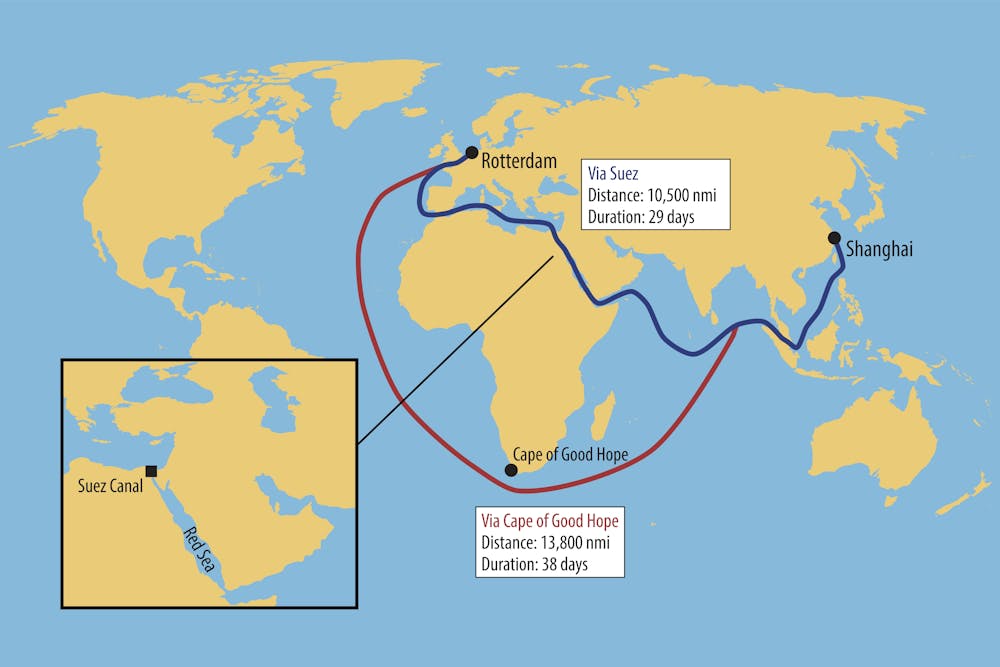
    These attacks have prompted many shipping companies to stop using the Red Sea – a route that around 12% of global trade usually passes through – and divert around the southern tip of Africa. This route adds more than 7,000 nautical miles on to a typical round-trip voyage. The number of commercial ships using the Suez Canal to pass between the Mediterranean and the Red Sea plummeted from over 26,000 in 2023 to 13,200 in 2024.

    Supply chains have had to deal with higher shipping costs, product delivery delays, and increased carbon emissions as a result of this diversion. The Gaza ceasefire gave some hope that the disruption would finally end. But shipping lines will not hurry back to the region until long-term security is guaranteed.

    Since November 2023, shipping companies have been diverting their vessels around the southern tip of Africa to avoid the Red Sea.
    Dimitrios Karamitros / Shutterstock

    During the early stages of the crisis, moving a container from Shanghai in China to Europe cost approximately 250% more than before the war in Gaza began. This was largely due to increased fuel costs and higher insurance premiums. Freight rates (the price companies pay to transport goods) remained high throughout 2024, despite some fluctuations.

    The cost of moving a 40-foot container from Shanghai to Rotterdam in the Netherlands, for example, surged from around US$4,400 on average in January to above US$8,000 by August. This had dropped to US$4,900 at the end of the year.

    It is too early to say whether these costs will be passed on to consumers in the form of higher prices – full transmission through the supply chain to consumer prices can take upwards of 12 months. But some estimates suggest global consumer prices could rise by 0.6% on average in 2025 as these increased shipping costs filter through the supply chain.

    Diverting around southern Africa also resulted in delays in the delivery of many goods and components. The proportion of container ships that arrived on schedule dropped from 60% on average worldwide in 2023 to about 50% throughout 2024. This created congestion at ports because ships often arrived at their destination later than planned, resulting in further delivery delays.

    Unreliable transit times are a significant issue for supply chains because they make it difficult for businesses to plan inventory and coordinate production schedules. Indeed, several vehicle manufacturers, including Tesla and Volvo, temporarily suspended manufacturing in early 2024 due to a lack of components. And food supply chains, including those for avocados, tea and coffee, were also affected by delays.

    Since then, many companies have adapted by increasing their safety stock levels and transporting cargo using alternative modes of transport like air and rail. Some European firms have also adopted a strategy called “nearshoring”, where they source products from regions closer to home such as Turkey and Morocco instead of relying on suppliers in Asia.

    Increased emissions

    The longer route around southern Africa requires that ships travelling between Europe and Asia use around 33% more fuel on average than they would use by travelling through the Red Sea at the same speed.

    Over the past decade, most shipping companies have employed a “slow steaming” policy to economise on fuel use and minimise their carbon emissions. But diverted ships have been travelling around 5% faster than usual in an attempt to minimise delays. The increased vessel speeds will have caused the associated emissions toll to rise – large container vessels require 2.2% more fuel for every 1% increase in speed.

    More data is required to determine the precise amount of additional emissions caused by diverting shipping away from the Red Sea. But estimates suggest that approximately 13.6 million tonnes of CO₂ were emitted by ships rerouted from the Red Sea between December 2023 and April 2024 – equivalent to the carbon emissions of nine million cars over the same period. If ships continue to avoid the region, the increased emissions could amount to 41 million extra tonnes of CO₂ per year.

    Some cargo has also shifted from sea transport to air freight, which has a far greater environmental footprint. Shipping a kilogram of product by long-haul air freight generates at least 50 times more CO₂ emissions on average than container shipping.

    Carbon emissions have increased due to the diversion of vessels around southern Africa.
    David G40 / Shutterstock

    Before returning to the Suez Canal, container lines will want to see a prolonged period of stability around the Red Sea. This is due, in part, to safety and security concerns related to the crew, cargo and the ship.

    But shipping companies also have operational challenges to keep in mind associated with the scheduling of port calls and voyages. Shipping lines will find it difficult to switch back to the longer route around Africa immediately if attacks in the Red Sea resume.

    And, at least for now, the situation in the Bab al-Mandab Strait remains unpredictable. In a televised speech on January 20, Houthi leader Abdul-Malik al-Houthi warned: “We have our finger on the trigger.”

    With other disruptions continuing to affect global shipping, such as port strikes, low water levels in the Panama Canal and extreme weather events, supply chain issues are likely to continue throughout 2025.

    Gokcay Balci does not work for, consult, own shares in or receive funding from any company or organisation that would benefit from this article, and has disclosed no relevant affiliations beyond their academic appointment.

    ref. Red Sea crisis: supply chain issues set to continue despite Gaza ceasefire – https://theconversation.com/red-sea-crisis-supply-chain-issues-set-to-continue-despite-gaza-ceasefire-248469

    MIL OSI – Global Reports

  • MIL-OSI Global: If we listen to how Gen Z really feel about democracy they might stop telling us they prefer authoritarianism

    Source: The Conversation – UK – By Melissa Butcher, Professor Emeritus, Social and Cultural Geography, Royal Holloway University of London

    New research from broadcaster Channel 4 reveals a troubling trend towards support for authoritarianism among young people in the UK. The report “Gen Z: Trends, Truth and Trust” found that 52% of the 2,000 13-27 year olds surveyed would agree that “the UK would be better with a strong leader in charge who does not have to bother with Parliament and elections”.

    This correlates with a 2023 study from pro-democracy organisation Open Society Foundations, which found 42% of young people in its global sample felt military rule was a good way of running a country. Other research has found a disillusionment with democracy among young people.

    These are trends to be worried about. But Gen Z are not somehow inherently anti-democratic. Understanding why these trends are happening is vital if young people are to participate in democracy.

    At Cumberland Lodge, an education charity that uses dialogue to address social division and conflict, I’m working with colleagues and young people on a nationwide youth and democracy network to re-think what politics in the UK could look like.

    Hearing Gen Z

    Our team has conducted 12 discussion groups with 101 young people around the country, looking at what stops them getting involved with democratic practices and institutions. Using this research as a starting point, we are now working with a core group of young people to develop their capacities to engage with, and re-imagine democracy.

    What we are learning is that young people’s disengagement is not necessarily a sign of apathy or anti-democratic tendencies. The young people we are working with want to engage with politics, but they feel a vast sense of distrust. They see politicians as prioritising their own and corporate interests over public good, and willing to break promises on issues that affect young people’s lives.

    Feeling unsupported by their political system makes young people feel vulnerable – especially in the face of a multitude of global crises. In their lifetime, the world has lurched from a global financial crisis to a worldwide pandemic and to war in Europe. They have to navigate housing shortages, a lack of mental health support, the climate emergency, artificial intelligence and changing identity and social roles.

    A perception of an “elite” system that is supposed to work for everyone, but excludes or even actively works against the sectors of society most affected by these crises, harms young people’s trust in democracy.

    Gen Z deal with an onslaught of information about a rapidly changing world.
    DimaBerlin/Shutterstock

    But a shift towards support for authoritarianism is by no means inevitable. The Open Society Foundations study found that 86% of young people surveyed still wanted to live in a democracy.

    In Channel 4’s research, too, 73% of Gen Z think democracy is a “very” or “fairly good” way of governing the UK. And young people want to learn about democracy and the democratic process.

    Our youth and democracy network shows young people are not apathetic. Many want to get involved. They want a better, fairer world. They see the shortcomings of the current system and imagine something better.

    Getting young people involved

    To enable this to happen, political and media literacy is crucial for providing young people with necessary knowledge and confidence. Investment in education on democracy is necessary, as many young people in our network wanted to engage but felt overwhelmed and uncertain about where to start. Liam in Sunderland said:

    Most people our age aren’t educated on [democracy and politics]. It’s restricted knowledge. We’re given the impression that we can’t do anything about it anyway, so just don’t worry.

    Young people want representatives who understand and engage with the day-to-day realities of their lives, rather than seeing Gen Z as a photo opportunity, as Chloe from Liverpool argued.

    They’ll come here and they’ll speak to us, but they’re not coming there to listen; they’re coming here so they can go back to wherever they came from and be like ‘oh I spoke to a young person’.

    Many of the young people in our youth network are calling for reform of the political system in order to facilitate these changes: a new voting system, or an exploration of forms of direct democracy.

    But importantly, what we have seen in this research over the last year, is that young people can shift how they view power. We think of democracy as more than just systems of governance, but it’s also how we organize, how we communicate with each other, how we mobilise around social issues, and how we build consensus.

    In this sense democracy is not solely something external and out of reach but something that can emerge when young people come together.

    By working to improve democratic education and to put a system in place that listens to and engages with young people, politicians can help Gen Z re-imagine a democracy that gives them a future. At that point, they might stop telling researchers that they prefer authoritarianism.

    Melissa Butcher is a member of the Green Party.

    ref. If we listen to how Gen Z really feel about democracy they might stop telling us they prefer authoritarianism – https://theconversation.com/if-we-listen-to-how-gen-z-really-feel-about-democracy-they-might-stop-telling-us-they-prefer-authoritarianism-248628

    MIL OSI – Global Reports

  • MIL-OSI Global: Trump inviting influencers to White House press briefings is likely to usher in a new era of fake news

    Source: The Conversation – UK – By Steven Buckley, Lecturer in Digital Media Sociology., City St George’s, University of London

    Just over a week after Donald Trump was sworn in as 47th president of the United States, his new press secretary, Karoline Leavitt, appeared in the James S. Brady press briefing room to preside over her first media conference. Pulling up a chart that showed Americans’ declining trust in traditional, or what she called “legacy”, media outlets, Leavitt announced that henceforth, “independent journalists, podcasters, social media influencers and content creators” would be welcome at press briefings.

    Leavitt said that seats formerly reserved for White House officials would be available to these independent journalists, and invited people to apply online for White House press accreditation. It has since been reported that the White House has received more than 7,400 applications.

    In principle, broadening the range of media outlets allowed into White House press briefings is a good idea. There’s no doubt that the media consumption habits of the American public are changing fast. But the way Trump and his communications team handled press briefings in his first term raises some concerns.

    During that first term between 2017 and 2021, Trump and his White House communications team tended to favour reporters from friendly media outfits such as Fox News. Early in his administration, a number of reporters from what were perceived as “hostile” organisations were banned from “the huddle” – the informal gatherings around Trump’s press secretary that followed more formal briefings.

    Fringe organisations such as Breitbart News and the One America News network carried Trump’s message faithfully and got disproportionately favourable access. This week, Breitbart was one of two online media outlets (alongside the widely respected news website Axios) that Leavitt selected to ask the first questions at her debut press briefing.

    It’s not just their friendly disposition towards Trump but their reach that makes social media influencers appealing to the incoming president. Their primary purpose at the press briefings would be to help generate positive messages and content to feed to Trump’s Maga base – which are then promoted on platforms such as Elon Musk’s X (formerly Twitter).

    Recent research suggests that X has adjusted its algorithm to boost right-wing content as well as posts by Musk himself. A clear example has been Musk promoting the former Fox News host turned online influencer and Trump campaign surrogate Tucker Carlson’s online show.

    Undermining public regard for journalism

    But there may be another, insidious function of inviting these influencers to the White House press briefing room. Their presence beside professional journalists from traditional media outlets is likely to undermine public regard for journalism in general. This could sow even greater mistrust in the US media, which is already at record lows.

    In recent years, there has been a gradual blurring of lines between traditional and digital media. But while research consistently shows, across a wide cross-section of countries and within those countries, traditional media is still more trusted than new media, this is not to say that all new media outlets should be excluded. Many of these organisations and individuals have a track record of holding power to account.

    Bellingcat – a coalition of researchers, investigators and citizen journalists – typically uses open-source information to uncover important stories of public interest. Individual journalists such as Taylor Lorenz, who covers the tech and creator industry, and Ken Klippenstein, who is well known for getting hold of internal government documents, are also good examples of journalists who produce quality reports from outside the traditional mainstream.

    It should ideally be journalists such as these, with track records for solid and impartial reporting, who are invited into the White House fold – although there’s every chance they would get the same sort of treatment as reporters such as CNN’s Jim Acosta, whom Trump famously branded an “enemy of the people” when refusing to answer a question from him in 2018.

    Acosta, incidentally, has just left CNN after the network moved him to the midnight “graveyard” slot. Shortly after signing off from his final CNN broadcast on January 28, Acosta appeared on his own Substack feed to announce he would go it alone.

    It seems unlikely, though, that he will be awarded one of the coveted new independent media accreditations, given Trump’s recent attack on him. Celebrating Acosta’s apparent relegation by CNN, Trump took to his TruthSocial media site to call him “one of the worst and most dishonest reporters in journalistic history, a major sleazebag”.

    Polarised media, divided audiences

    It’s likely that America’s news media will only become more polarised during this second Trump administration, including an increasingly toxic mix of content creators dominating social media platforms. And now that Mark Zuckerberg has decided to remove Meta’s factchecking mechanism in favour of “community moderation”, research suggests this is likely to incentivise political messages which polarise and provoke rather than inform people.


    Read more:
    What Meta’s move to community moderation could mean for misinformation


    We’ve already seen that the incoming president was more than willing to use lawsuits to intimidate journalists. Trump recently won a legal case over ABC when its journalist George Stephanopoulos defamed him by falsely saying he had been found liable for rape.

    This, combined with Trump’s threat to sue the Des Moines Register and its pollster Ann Selzer over their allegations of election interference, are likely to increase the chilling effect on free speech. Legal threats such as these may serve to discourage close scrutiny of his second administration.

    Meanwhile, the steady rise in prominence of partisan influencers using increasingly dangerous language is only likely to lead to the American public having less faith in the institutions that are critical to a functioning democracy – the press included.

    Steven Buckley does not work for, consult, own shares in or receive funding from any company or organisation that would benefit from this article, and has disclosed no relevant affiliations beyond their academic appointment.

    ref. Trump inviting influencers to White House press briefings is likely to usher in a new era of fake news – https://theconversation.com/trump-inviting-influencers-to-white-house-press-briefings-is-likely-to-usher-in-a-new-era-of-fake-news-247410

    MIL OSI – Global Reports

  • MIL-OSI Global: Swimming in the sweet spot: how marine animals save energy on long journeys

    Source: The Conversation – UK – By Kimberley Stokes, Research Officer in Biosciences, Swansea University

    Competitive swimmers know that swimming underwater causes less drag resistance than swimming at the surface. Splashing around making waves isn’t the most efficient way to swim. Any energy spent creating waves is essentially wasted, as water is moved without providing forward thrust for the swimmer.

    New research by my colleagues and I has found evidence that many air-breathing marine animals know this too – or rather they have evolved swimming behaviour that minimises wasted energy on long journeys.

    We know a lot about how birds save energy on their migrations, such as flying in V formations, riding updrafts, or timing their departure for favourable winds. But it has been challenging to study these kinds of adaptations in marine animals, which are largely hidden from view, particularly during long-distance travel.

    Whales and sea turtles, for example, often travel thousands of miles to breed or feed. These animals have evolved to minimise the energy costs of such long journeys, allowing them to conserve energy for reproduction and survival.

    Using Fitbit-style accelerometer data, depth-loggers and video footage from animal-borne cameras, we collected detailed swim-depth measurements in free-living little penguins and loggerhead turtles. We compared these with satellite-tracking depth data for green turtles on long-distance migrations, and published data from whales, other species of penguins and migrating sea turtles from other populations.

    Optimal depths

    What we discovered was a remarkable similarity in relative swim depth across sea turtles, penguins and whales. When these air-breathing animals are travelling rather than feeding or evading predators, they swim at near-optimal depths to minimise energy waste. They swim just deep enough to avoid creating waves at the surface but not so deep that they expend extra energy travelling up and down to breathe.

    This sweet spot for energy efficiency has long been established in physics. Experiments show that “wave drag” – additional drag from wave creation – is minimised once an object is at a depth of three times its diameter. For swimming animals, this diameter refers to their body thickness from back to chest.

    Our research revealed that many marine animals, from little penguins (about 30cm long) to pygmy blue whales (nearly 20m long), travel at depths of around three body thicknesses under the surface. This shared strategy helps them save energy on their epic journeys across the oceans.

    These findings are especially exciting because they span such a wide range of species, from birds to mammals and reptiles. They also have important implications for conservation. Knowing where animals travel and at what depths can help us design better conservation measures to protect them.

    For example, understanding typical swim depths could help reduce the risk of boat strikes, which are a major threat to whales, or decrease accidental captures in fishing gear. Tracking animals to find out where they live and travel has become a key part of designing effective conservation measures. For marine animals, considering swim depth – essentially adding a third dimension – can also help to inform strategies to provide better protection.

    Many marine animals travel at a depth of around 3x their body depth (dotted lines).
    Kimberley Stokes, CC BY

    Of course, not all swim depths are determined by energy efficiency alone. Animals may dive deeper to hunt for prey or avoid predators. But during long-distance migrations or shorter “commutes” to feeding areas, this energy-saving pattern emerges across many air-breathing species.

    Collecting depth-tracking data from migrating animals has been notoriously difficult, but advances in technology are making it easier. We are thrilled that our work has contributed to uncovering this widespread adaptation, and we believe there will be much more to learn as tracking tools improve.

    Historically, depth-tracking tags have prioritised recording the deepest and longest dives. They are often seen as the most dramatic or impressive aspects of animal dive behaviour. Our research highlights the importance of near-surface tracking too. This “ordinary” behaviour of swimming at just the right depth is no less impressive, given the energy savings it enables over vast distances.

    Kimberley Stokes receives funding from the Bertarelli Programme in Marine Science. She is affiliated with Swansea University.

    ref. Swimming in the sweet spot: how marine animals save energy on long journeys – https://theconversation.com/swimming-in-the-sweet-spot-how-marine-animals-save-energy-on-long-journeys-246833

    MIL OSI – Global Reports

  • MIL-OSI Global: Why I loved the new Mussolini drama – by an expert in Italian fascism

    Source: The Conversation – UK – By John Foot, Professor of Modern Italian History, University of Bristol

    As a historian who has studied and taught courses on Italian fascism, I have spent many hours watching footage and listening to the speeches of dictator Benito Mussolini, who ruled over the country from 1922 to 1943.

    So I was rather excited to be asked to review the new Sky Atlantic TV series M: Son of the Century. The series focuses on the rise of Italian fascism and its consolidation in power from 1919 to 1925. Watching all eight parts in one sitting, I was astounded above all by the performance by well-known Italian actor Luca Marinelli.

    Marinelli is on screen for almost the entire eight hours of the series – often in close up and looking straight at the camera. It is an extraordinary tour-de-force performance. Physically, Marinelli inhabits the role much as Robert De Niro did in Raging Bull, putting on a lot of weight in order to play this part; the resemblance to the dictator is uncanny.


    Looking for something good? Cut through the noise with a carefully curated selection of the latest releases, live events and exhibitions, straight to your inbox every fortnight, on Fridays. Sign up here.


    But there is much more. We are confronted with a torrent of words, speeches and internal monologues, many of which have been drawn directly from Mussolini’s journalism and speeches. Here Marinelli captures the precision and charismatic nature of Mussolini’s speech, but also the brutality of many of the concepts he was expressing.

    There is a great deal of baroque Italian swearing too, and Marinelli powerfully portrays the uncouth son-of-a-blacksmith and his range of expressions with relish. I would be amazed if this actor does not win awards for the role. It is an astonishing performance.

    Director Joe Wright’s series is based on Antonio Scurati’s best-selling Italian historical novel of the same name. Scurati’s approach to Mussolini’s story draws on historical work and documents, but importantly tells the story with the flair of an experienced and successful novelist.

    This and the other three books in Scurati’s series about Mussolini have provoked controversy among Italian historians of fascism, not least for some of the historical inaccuracies, but also for what they considered a “dumbing-down” of history. However, others have defended the books as a new way of understanding and disseminating history, and the books have been wildly popular with general audiences.

    Wright’s series adapts the first book. Its starts when Mussolini formed the first fascist movement in 1919 and inspired the “blackshirt” squads who used violence to crush the trade union and socialist movement. It covers events in 1922 when Mussolini led the fascist insurrection that brought him to power, known as the March on Rome. And, it ends with his famous speech by in parliament, which marked the beginnings of the consolidation of Mussolini’s dictatorship in 1925.

    This is a complicated story, but the scriptwriters and director have done an exemplary job in bringing this history to a wider audience. Unsurprisingly, they have often simplified the past, or altered events to fit the narrative. This paring down of events generally works well in bringing this period to life, but, of course, historians of the period will notice the numerous times that episodes deviate from what really happened.

    For instance, certain figures close to Mussolini who play a central role in the series are used almost as symbols and as ways of understanding the dictator. Above all, this technique uses is used to elevate Margherita Sarfatti, the writer, journalist and lover of Mussolini who was a key figure in inventing and spreading the cult of dictator.

    In Wright’s drama, Sarfatti is depicted as a kind of spin doctor, as someone he turns to in times of difficulty and as an inspiration for his political strategy. Her role is overplayed in the series, but this is done to increase the clarity of storytelling and provide a sharp narrative.

    The tone of the series shifts constantly between darkness and extreme violence to occasional comedy and farce. This is a tricky balance to pull off, but it generally works. Anyone watching will have their views on which parts lapse into bad taste and which do not, and the risks of glamorising or playing down shocking and tragic events.

    Certainly, there were moments which jarred, especially the farcical telling of the March on Rome in 1922. Wright and the scriptwriters, correctly in my opinion, place the violence of fascism at the centre of the story, and it rarely pulls its punches in this regard.

    It is impossible to ignore the contemporary relevance of this series, and it is clearly intended as a warning. Democracy, this series tells us, is extremely fragile. At one point Mussolini turns to the camera and says: “Democracy is beautiful. It even allows you the possibility of destroying it.”

    With the victory of Trump and the political rise of Elon Musk, the pertinence, prescience and power of this film has deepened. There is even a discussion at one point of the meaning and role of the “Roman salute” in terms its use during fascism, something which has been much debated in the light of Musk’s own recent controversial “hand gesture”.

    But the ultimate finger of blame is pointed at those who enabled Mussolini’s rise and who tolerated his incendiary language and the violence of his followers. The series ends starkly, with the word “silence”. Those who did nothing were just as responsible as those who supported the rise of this brutal dictator.

    John Foot does not work for, consult, own shares in or receive funding from any company or organisation that would benefit from this article, and has disclosed no relevant affiliations beyond their academic appointment.

    ref. Why I loved the new Mussolini drama – by an expert in Italian fascism – https://theconversation.com/why-i-loved-the-new-mussolini-drama-by-an-expert-in-italian-fascism-248358

    MIL OSI – Global Reports

  • MIL-OSI Global: Central India’s indigenous forests are falling victim to bullets and bulldozers

    Source: The Conversation – UK – By Bulbul Prakash, PhD Candidate in Politics, University of Manchester

    The state of Chhattisgarh in India’s tribal heartland has been the epicentre of a violent conflict for more than 30 years. This struggle has pit a Maoist-inspired group called the Naxalites, who are fighting for the rights of marginalised tribal communities, against the Indian government, which has deployed security forces to suppress the insurgency. More than 11,600 people have been killed in the conflict since 2000.

    At the same time, Chhattisgarh is also grappling with the pressures of rapid industrialisation. Large-scale mining and infrastructure projects are threatening both the land and livelihoods of the state’s indigenous (or Adivasi in Sanskrit) communities.

    Around 44% of the region’s land area is covered by dense forests. These forests are home to vital plant and animal species such as Mahua and Sal trees. However, these forests are being damaged. Trees are being ravaged by gunfire, animals are being killed by explosions, and the fragile ecosystem that sustains people and wildlife in Chhattisgarh is gradually crumbling.

    Soni Sori, an Adivasi activist, has shared images with me that have been taken by Adivasis in the forests of Chhattisgarh. The photos highlight the damage being caused by gunfire, explosions and shelling.

    Bullets tear through bark, while explosions strip it away, leaving trees vulnerable to pests and disease. Shrapnel and shock waves from blasts also sever branches or trunks, which further weakens the trees and causes long-term damage.

    Fresh bullet wounds on a Sal tree in Chhattisgarh.
    Soni Sori, CC BY-NC-ND

    The destruction of Mahua and Sal trees has had a particularly devastating impact on women from Adivasi communities.

    The Mahua tree, which is often called the “tree of life” by locals, provides an essential lifeline for many Adivasi women. Its flowers are fermented to make alcohol, which offers a crucial source of income when it is sold in local markets.

    When men are drawn into Naxal movements or caught in the state’s counterinsurgency efforts, women often step in and use the income from Mahua flowers and oil to fund their children’s education, sustain their families, and repay debts.

    In the town of Dantewada in southern Chhattisgarh, locals even hold a special ceremony where they “marry” the Mahua tree, honouring its life-sustaining role in their community.

    Sal trees, which form much of Chhattisgarh’s forest cover, play a crucial role in stabilising the soil. Their loss leads to erosion and increases the risk of floods and landslides. Climate change, and the increasingly erratic rainfall it brings, has compounded these risks.

    An unexploded mortar shell partially buried in Chhattisgarh.
    Soni Sori, CC BY-NC-ND

    The loss of essential resources like Mahua trees will only exacerbate food insecurity and economic hardship, pushing Adivasis further into poverty. The average annual income of Adivasi households in Chhattisgarh was just ₹53,610 (around £505) in 2022 – well below the national agricultural household average of ₹122,616.

    The conflict in Chhattisgarh is also harming the region’s wildlife. In December, a female sloth bear was killed by an improvised explosive device planted by Maoist rebels in the forests of Dantewada. The bear’s two orphaned cubs starved to death shortly after.

    This was the first recorded death of a wild animal from such an explosion in Bastar district, though livestock and pets have been victims of similar blasts in the past.

    One month earlier, in central Chhattisgarh’s Udanti-Sitanadi Tiger Reserve, a five-year-old elephant calf sustained critical injuries from a suspected bomb explosion. These incidents reflect a disturbing pattern within the conflict, where wildlife is becoming a victim of the violence.

    March of industrialisation

    Industrialisation has exacerbated these challenges. Chhattisgarh is rich in mineral resources. Between 2023 and 2024, the state produced nearly 50 million tonnes of limestone, 44 million tonnes of iron ore, and over 1 million tonnes of bauxite. However, widespread mining is fuelling further deforestation and environmental degradation.

    Between 2001 and 2023, the state lost 53,500 hectares of forest, with large-scale mining operations contributing significantly to the loss. In the Hasdeo region of northern Chhattisgarh, the Parsa East Kete Basen coal mine has led to the felling of almost 82,000 trees, spread across two phases of mining. Between 2012 and 2018, 50,000 trees were felled, with more than 31,800 more trees cut down since then.

    With continued political support for mineral extraction, government approvals, and the involvement of commercial mining giants, more deforestation is expected over the coming years.

    This deforestation is, unsurprisingly, harming the region’s wildlife. The latest census by the National Tiger Conservation Authority, which was carried out in 2022, revealed a sharp and alarming decline in Chhattisgarh’s tiger population.

    At that time, there were only 17 tigers remaining in the state – a dramatic fall from 46 in 2014. Conservationists fear that the figure could now be even lower, as the situation continues to deteriorate.

    This decline is largely due to habitat destruction. But it has probably been made worse by the Maoist insurgency in regions such as northern Chhattisgarh, which is home to the Achanakmar Tiger Reserve, as well as the Indravati Tiger Reserve in the south-western part of the state.

    The insurgency has hindered conservation efforts. The use of explosives in the forests disrupts the behaviour of tigers, while also making it more difficult for conservationists to monitor and protect them.

    What was once a lush and bio-diverse environment is rapidly becoming a wasteland. But the loss of these trees and wildlife in Chhattisgarh represents more than simply the depletion of natural resources. It symbolises the erosion of culture, identity, and a way of life for Chhattisgarh’s Indigenous people.

    Bulbul Prakash is supported by The University of Manchester through the ‘Future of the Academy Studentship’ for her doctoral research. The author would like to acknowledge the invaluable contribution of Adivasi activist Soni Sori, who shared firsthand images taken by Adivasi community members in the forests of Chhattisgarh, which illustrate the environmental damage caused by ongoing conflict.

    ref. Central India’s indigenous forests are falling victim to bullets and bulldozers – https://theconversation.com/central-indias-indigenous-forests-are-falling-victim-to-bullets-and-bulldozers-246272

    MIL OSI – Global Reports

  • MIL-OSI Global: The best exercises to do while taking weight loss drugs

    Source: The Conversation – UK – By Jack McNamara, Senior Lecturer in Clinical Exercise Physiology, University of East London

    Body weight exercises, such as lunges, can be a great way to start resistance training. Andrey_Popov/ Shutterstock

    Weight loss drugs, such as those containing GLP-1 agonists like Wegovy and Mounjaro, have emerged as effective tools for people struggling to lose weight. These drugs reduce appetite and sometimes slow digestion which can help people to consume fewer calories.

    But while these drugs can significantly lower body weight, it’s important you take steps to avoid losing too much lean mass while taking them.

    When we lose fat, it often unfortunately comes with a hidden cost: losing lean mass. Lean mass is made up of your muscles, bones and organs – essentially everything in your body that isn’t fat. Preserving as much of this lean mass as possible is vital for staying strong, keeping a healthy metabolism and enjoying a better quality of life.

    But why does losing lean mass happen in the first place? When we lose weight the body sometimes taps into muscle as a source of energy. Research shows that 20–30% of weight lost during a diet comes from muscle rather than fat alone. This is especially true if protein intake or physical activity isn’t sufficient.

    Loss of muscle matters for several reasons. First, muscle burns more calories than fat, even when you’re not doing anything. Maintaining muscle mass supports a healthier metabolism that can help you maintain your weight loss long term.

    Second, muscle is important for many everyday tasks – from lifting shopping bags to climbing stairs.

    Preserving muscle can also keep you feeling more energetic and reduce the likelihood of regaining weight later.

    Thankfully, resistance training (also known as strength training) has been consistently shown to help reduce muscle loss when losing weight. This holds true whether you switch to a healthier diet or use weight loss drugs as part of your strategy.

    Even though specific studies looking at GLP-1 agonist drugs combined with exercise are still limited, early evidence suggests that people who regularly do resistance workouts tend to retain more muscle than those relying purely on the drug or diet changes.

    Why resistance training works

    When you challenge your muscles against resistance – whether that’s weights, resistance bands or just your own body weight – you signal the body to preserve that valuable muscle tissue. Your body responds by strengthening the muscles involved during these exercises so they can handle that challenge again.

    If you’re in a calorie deficit – either from dieting or while taking a weight loss drug – these exercises help direct your body to burn more fat instead and hang on to muscle. There’s also a beneficial metabolic effect: muscle tissue burns more calories at rest than fat, which can support long-term weight management.

    Cardio helps maintain lean mass.
    Pressmaster/ Shutterstock

    Even short sessions of resistance training a few times a week can help. One study found that resistance training for as little as 11 minutes per session, three times a week was enough to elicit changes.

    You don’t even need a gym membership or fancy machines. Bodyweight exercises such as push-ups, lunges and planks are a great place to start. Add simple items like water bottles or backpacks filled with books for extra resistance. Over time, you can consider using resistance bands or free weights (such as dumbbells) to challenge your muscles as you get stronger continuously.

    Also, consider adding moderate cardio activities such as brisk walking, cycling or swimming. Cardio helps burn additional calories, benefits heart health and nicely complements resistance training enhancing reductions in body fat.

    Keeping active

    Some people worry about feeling too tired or lightheaded to exercise while on weight loss drugs. Monitoring how your body responds is essential, especially at the beginning. You might find it easier to break workouts into short sessions, such as 10 to 15 minutes of strength training, two or three times a day. This approach can be less intimidating and can fit into a busy schedule.

    Some other things you can do when starting resistance training include:

    • Start slow: If you’ve never lifted weights or done formal exercise before, try simple bodyweight moves first. Squats, push-ups (on your knees if needed) and planks are good starting exercises.
    • Use resistance bands: These are affordable, portable and offer varying difficulty levels. Using bands, you can perform exercises such as biceps curls, shoulder presses and glute bridges. Resistance bands can provide a safer, more accessible and versatile way to build a foundation for those new to weight training.
    • Focus on major muscle groups: Aim to work your legs, back, chest, shoulders arms and core. Focusing on major muscle groups improves functionality for daily activities, supports weight loss and reduces injury risk by strengthening large, stabilising muscles.
    • Mind your form: Good technique is crucial to avoid injury. Move slowly and with control, especially when adding weight or increasing resistance.
    • Track progress: Whether it’s increasing the number of reps, adding heavier weights or improving balance, keep note of your achievements. Progress can be a great motivator.

    Taking weight loss drugs can be a gamechanger for people who have struggled to lose weight. But medication alone won’t necessarily protect your muscle mass or overall strength. Resistance training helps ensure muscle isn’t sacrificed as fat is lost. It also supports a healthy metabolism and can improve energy levels, making daily activities more manageable and more enjoyable.

    Combining weight loss drugs with a balanced diet, regular resistance workouts and some cardio makes you far more likely to preserve the lean mass that helps keep your body strong and functional. This balanced approach isn’t just about the number on the scale — it’s about feeling capable, staying healthy, and setting yourself up for long-term success.

    Jack McNamara does not work for, consult, own shares in or receive funding from any company or organisation that would benefit from this article, and has disclosed no relevant affiliations beyond their academic appointment.

    ref. The best exercises to do while taking weight loss drugs – https://theconversation.com/the-best-exercises-to-do-while-taking-weight-loss-drugs-246641

    MIL OSI – Global Reports

  • MIL-OSI Global: Most of Britain’s peat bogs could stop forming new peat as the climate changes – new study

    Source: The Conversation – UK – By Jonathan Ritson, Research Fellow, Geography, University of Manchester

    Joe Dunckley / shutterstock

    By the 2080s, climate change will mean most of Britain’s peatlands could be too dry to form new peat. That’s the stark warning from a new academic study my colleagues and I just published in the Journal of Applied Ecology.

    Peat bogs are found in areas where there is lots of rain but poor drainage. These vital ecosystems are relied upon to deliver drinking water, host rare plant and bird life and to mitigate the risk of floods by slowing rainwater as it heads downstream.

    Perhaps most importantly, peatlands also sequester huge amounts of carbon. That’s because peat is made of the remnants of plants accumulated over hundreds or thousands of years. Waterlogged conditions mean the plants don’t fully decompose, so the carbon they’re made of is kept in the ground and isn’t released into the atmosphere. Peat can be several metres deep so all that plant matter adds up – per square metre, a typical British peat bog stores far more carbon than a tropical rainforest.

    As peat needs very wet conditions to form, our study first mapped out the temperature and rainfall conditions under which this has occurred in the UK in the past. We then took the Met Office’s UK climate projections and looked at where these conditions would continue to occur by the 2080s. The results were, quite frankly, shocking.

    Although small pockets of favourable conditions may still be present in Wales, and larger ones in Scotland, the outlook for England is dismal, with barely any areas continuing to be suitable for peat formation due to increasing temperatures and lower summer rainfall.

    UK peatlands. The large red patch at the top of mainland Scotland is the Flow Country.
    James Hutton Institute / Biogeochemistry

    In the “Flow Country” of northern Scotland, a bog so big it has been designated a Unesco world heritage site, the area in which we might expect peatlands to thrive is likely to be reduced by at least 50% even in the best-case climate scenario. This scenario of mild warming is, unfortunately, unlikely to happen. More extreme scenarios of peatland degradation are increasingly realistic.

    We still don’t know exactly what this will mean for the peatlands in places like Exmoor or Dartmoor in southern England, however we do know that life will become more and more challenging for these precious ecosystems. Not experiencing the temperature and rainfall that caused peat formation in the first place could mean they start to emit the carbon currently stored, as this is reliant on them staying wet and boggy.

    Peatlands are naturally resilient and aren’t going to disappear overnight (the Peak District in northern England was heavily degraded for over a century, yet still hosts many metres of peat soils). But conservation and restoration work is going to be ever more necessary if we are to preserve these landscapes as carbon sinks rather than sources.

    More money for conservation

    One ray of light in all this is that the challenging conditions in England could actually unlock more money for conservation efforts. The UK Peatland Code is a climate finance initiative that allows landowners to generate income from peatland restoration by selling carbon credits. The number of credits they can claim is based on the difference in avoided emissions from a “do nothing” scenario in which they do no restoration.

    Our new results show that doing nothing could be even worse than previously thought, meaning more carbon finance may be unlocked. Perversely, bad news for England’s peatlands could bring about the money needed to save them.

    Thankfully, through measures such as the government’s Nature for Climate scheme and ongoing investment in fundamental peatland science, the UK has something of a head start in peatland restoration. Techniques that were once trialled in small areas are now being rolled out across whole landscapes.

    Gully blocking to raise peatland water tables and limit carbon loss, as part of the GGR-Peat project at the National Trust High Peak Estate.
    Jonathan Ritson

    The Great North Bog initiative, as one example, has linked together restoration organisations, researchers and landowners to deliver restoration across four national parks and three national landscapes. This is truly the scale that is needed if the UK is serious about meeting its climate targets.

    More will be required, however, as huge swathes of peatland remain in a degraded state. While bleak messages like those in our new study could lead to resignation about the effects of climate change, there is an alternative way of looking at it: we must show how bad things could get if we don’t do anything, and then see this as a call to action.

    Jonathan Ritson has received funding from charities delivering peatland restoration.

    ref. Most of Britain’s peat bogs could stop forming new peat as the climate changes – new study – https://theconversation.com/most-of-britains-peat-bogs-could-stop-forming-new-peat-as-the-climate-changes-new-study-248515

    MIL OSI – Global Reports

  • MIL-OSI Global: Canada’s electric vehicle industry is facing existential threats — here’s how it can still flourish

    Source: The Conversation – Canada – By Charles Conteh, Professor of Public Policy and Administration, Department of Political Science, Brock University

    The electric vehicle (EV) industry has been one of the most defining technological trends of the past decade, transforming the automotive sector while fuelling advancements in manufacturing.

    Yet after billions of taxpayer dollars have been invested, the EV industry in Canada is facing headwinds. Chief among these are the trade tariff threats from U.S. President Donald Trump.

    For a country with an automotive sector that exports 91 per cent of its parts to the U.S., the threats feel existential. They may also be seen as a betrayal of the centuries-long economic and cultural partnership between two neighbours sharing one of the world’s longest and most porous borders.

    Adding to these international headwinds are three other obstacles within the EV industry: high costs, limited battery range and sparse battery charging infrastructure. These concerns continue to affect firms here in Canada, with the likes of Stellantis juggling high inventory, slow sales and falling revenue.

    These challenges have sparked skepticism about the future of EVs in Canada and whether the federal and provincial governments’ multi-billion-dollar investments in the industry are wise.

    As researchers who study Canada and other countries’ innovation policy initiatives amid breakneck changes in technologies and markets, we argue that Canada has every reason to ratchet up its commitments in the months and years ahead.

    Along with artificial intelligence, EV represents the emergent frontier of advanced manufacturing in the digital age. Winners of this innovation race will stand to dominate the global market for the foreseeable future.

    The case for staying the course

    Despite current challenges, EVs remain the future of the automotive sector. Even conservative estimates suggest that by 2040, around three-quarters of new car sales will be fully electric globally.

    Canada’s position in the EV industry is stronger than recent news coverage indicates. The country ranked first among 30 countries in a 2024 EV battery supply chain report, outperforming even China.

    This ranking reflects Canada’s vast reserves of critical minerals essential for EV battery production and its burgeoning battery manufacturing sector.

    Over the past few years, Canada has attracted significant investments from manufacturers like Umicore, Northvolt and Volkswagen-owned PowerCo.

    Canada has reasons to be optimistic about EV and energy storage demand. While concerns about U.S. protectionism loom, Canada’s commitment to zero-emission vehicles ensures fiscal incentives and policies that will likely boost short-term demand.

    On the environmental, social and governance front, Canada outperforms many of its global competitors in battery manufacturing. Though by no means perfect, the country’s climate change policy ambitions, clean electricity grid and commitment to sustainable mining position it as a global leader in the EV space.

    Advanced manufacturing

    Canada’s robust innovation ecosystem for advanced manufacturing is another key strength. A prime example is the Ontario Vehicle Innovation Network (OVIN).

    OVIN commercializes advanced automotive technologies and manages the development, testing, piloting and uptake of transportation and infrastructure technologies. It operates seven regional technology development sites across Ontario, including in Waterloo, Hamilton, Windsor-Essex, Durham and Toronto.

    By serving as a bridge between government, industry and researchers, OVIN has become a model for multi-level governance, with projects jointly funded by the federal and provincial governments and close working relationships with municipalities.

    As the EV industry navigates economic and policy challenges, initiatives like OVIN are crucial for driving long-term growth and competitiveness.

    The road ahead

    While Canada’s automotive innovation ecosystem is generally robust, it requires some calibration to overcome current challenges and claim the next frontier of the global EV race.

    In particular, Canada needs to consolidate its EV innovation ecosystem by integrating the upstream of its domestic supply chain assets with the downstream of its technology commercialization and adoption.

    In other words, this means getting more critical minerals to market and making sure a substantial portion of the materials mined in Canada are processed and used domestically to build batteries and vehicles, so the entire EV production cycle benefits Canada’s economy.

    Such an endeavour will require Canada to establish the right policies, regulations and financial support to tap into its vast reserves of critical minerals to supply the country’s battery plants.

    It is the presence of these reserves that made Canada attractive to the automakers in the first place. Leveraging them wisely will be critical for the country’s long-term success in the EV industry.

    Charles Conteh receives funding from the Social Sciences and Humanities Research Council of Canada.

    Tia Henstra does not work for, consult, own shares in or receive funding from any company or organisation that would benefit from this article, and has disclosed no relevant affiliations beyond their academic appointment.

    ref. Canada’s electric vehicle industry is facing existential threats — here’s how it can still flourish – https://theconversation.com/canadas-electric-vehicle-industry-is-facing-existential-threats-heres-how-it-can-still-flourish-248103

    MIL OSI – Global Reports

  • MIL-OSI Global: From chatbot to sexbot: What lawmakers can learn from South Korea’s AI hate-speech disaster

    Source: The Conversation – Canada – By Jul Parke, PhD Candidate in Media, Technology & Culture, University of Toronto

    The chatbot Iruda began expressing hateful views after some users “trained” it with toxic language. Here a newer version of Iruda is shown. (Scatter Lab)

    As artificial intelligence technologies develop at accelerated rates, the methods of governing companies and platforms continue to raise ethical and legal concerns.

    In Canada, many view proposed laws to regulate AI offerings as attacks on free speech and as overreaching government control on tech companies. This backlash has come from free speech advocates, right-wing figures and libertarian thought leaders.

    However, these critics should pay attention to a harrowing case from South Korea that offers important lessons about the risks of public-facing AI technologies and the critical need for user data protection.

    In late 2020, Iruda (or “Lee Luda”), an AI chatbot, quickly became a sensation in South Korea. AI chatbots are computer programs that simulate conversation with humans. In this case, the chatbot was designed as a 21-year-old female college student with a cheerful personality. Marketed as an exciting “AI friend,” Iruda attracted more than 750,000 users in under a month.

    But within weeks, Iruda became an ethics case study and a catalyst for addressing a lack of data governance in South Korea. She soon started to say troubling things and express hateful views. The situation was accelerated and exacerbated by the growing culture of digital sexism and sexual harassment online.

    Making a sexist, hateful chatbot

    Scatter Lab, the tech startup that created Iruda, had already developed popular apps that analyzed emotions in text messages and offered dating advice. The company then used data from these apps to train Iruda’s abilities in intimate conversations. But it failed to fully disclose to users that their intimate messages would be used to train the chatbot.

    The problems began when users noticed Iruda repeating private conversations verbatim from the company’s dating advice apps. These responses included suspiciously real names, credit card information and home addresses, leading to an investigation.

    The chatbot also began expressing discriminatory and hateful views. Investigations by media outlets found this occurred after some users deliberately “trained” it with toxic language. Some users even created user guides on how to make Iruda a “sex slave” on popular online men’s forums. Consequently, Iruda began answering user prompts with sexist, homophobic and sexualized hate speech.

    This raised serious concerns about how AI and tech companies operate. The Iruda incident also raises concerns beyond policy and law for AI and tech companies. What happened with Iruda needs to be examined within a broader context of online sexual harassment in South Korea.

    A pattern of digital harassment

    South Korean feminist scholars have documented how digital platforms have become battlegrounds for gender-based conflicts, with co-ordinated campaigns targeting women who speak out on feminist issues. Social media amplifies these dynamics, creating what Korean American researcher Jiyeon Kim calls “networked misogyny.”

    South Korea, home to the radical feminist 4B movement (which stands for four types of refusal against men: no dating, marriage, sex or children), provides an early example of the intensified gender-based conversations that are commonly seen online worldwide. As journalist Hawon Jung points out, the corruption and abuse exposed by Iruda stemmed from existing social tensions and legal frameworks that refused to address online misogyny. Jung has written extensively on the decades-long struggle to prosecute hidden cameras and revenge porn.

    Beyond privacy: The human cost

    Of course, Iruda was just one incident. The world has seen numerous other cases that demonstrate how seemingly harmless applications like AI chatbots can become vehicles for harassment and abuse without proper oversight.

    These include Microsoft’s Tay.ai in 2016, which was manipulated by users to spout antisemitic and misogynistic tweets. More recently, a custom chatbot on Character.AI was linked to a teen’s suicide.

    Chatbots — that appear as likeable characters that feel increasingly human with rapid technology advancements — are uniquely equipped to extract deeply personal information from their users.

    These attractive and friendly AI figures exemplify what technology scholars Neda Atanasoski and Kalindi Vora describe as the logic of “surrogate humanity” — where AI systems are designed to stand in for human interaction but end up amplifying existing social inequalities.

    AI ethics

    In South Korea, Iruda’s shutdown sparked a national conversation about AI ethics and data rights. The government responded by creating new AI guidelines and fining Scatter Lab 103 million won ($110,000 CAD).

    However, Korean legal scholars Chea Yun Jung and Kyun Kyong Joo note these measures primarily emphasized self-regulation within the tech industry rather than addressing deeper structural issues. It did not address how Iruda became a mechanism through which predatory male users disseminated misogynist beliefs and gender-based rage through deep learning technology.

    Ultimately, looking at AI regulation as a corporate issue is simply not enough. The way these chatbots extract private data and build relationships with human users means that feminist and community-based perspectives are essential for holding tech companies accountable.

    Since this incident, Scatter Lab has been working with researchers to demonstrate the benefits of chatbots.

    Canada needs strong AI policy

    In Canada, the proposed Artificial Intelligence and Data Act and Online Harms Act are still being shaped, and the boundaries of what constitutes a “high-impact” AI system remain undefined.

    The challenge for Canadian policymakers is to create frameworks that protect innovation while preventing systemic abuse by developers and malicious users. This means developing clear guidelines about data consent, implementing systems to prevent abuse, and establishing meaningful accountability measures.

    As AI becomes more integrated into our daily lives, these considerations will only become more critical. The Iruda case shows that when it comes to AI regulation, we need to think beyond technical specifications and consider the very real human implications of these technologies.

    Join us for a live ‘Don’t Call Me Resilient’ podcast recording with Jul Parke on Wednesday, February 5 from 5-6 p.m. at Massey College in Toronto. Free to attend. RSVP here.

    Jul Parke receives funding from the Department of Canadian Heritage and the Social Sciences and Humanities Council of Canada.

    ref. From chatbot to sexbot: What lawmakers can learn from South Korea’s AI hate-speech disaster – https://theconversation.com/from-chatbot-to-sexbot-what-lawmakers-can-learn-from-south-koreas-ai-hate-speech-disaster-247152

    MIL OSI – Global Reports

  • MIL-OSI Global: Rachel Reeves’ route to economic growth is a slow one – and there are no guarantees voters will be patient enough

    Source: The Conversation – UK – By Steve Schifferes, Honorary Research Fellow, City Political Economy Research Centre, City St George’s, University of London

    Go My Media/Shutterstock

    After six months of talking down the economy and warning of tough times ahead, the UK chancellor Rachel Reeves has changed her tune. She is now much more optimistic about Britain’s economic prospects and has announced a raft of measures including major pension reforms designed to unlock cash to boost growth and productivity.

    But Labour’s political problem is that none of her plans will have an immediate impact on the UK’s anaemic growth rate – the economy has virtually flatlined for the last six months. From day one Reeves has put growth at the centre of her plans, and a lack of it will mean tough choices in the spring, when she must spell out government spending plans for the next three years.

    The government is focusing on a wide range of “supply side” reforms, including unleashing pension funds to invest in Britain, as well as relaxing the planning system and building infrastructure – many of which have an uncanny resemblance to measures once proposed by former prime minister Liz Truss.

    At the heart of these plans is a big increase in investment in infrastructure to boost productivity – things like roads, public transport and technology – where Britain lags behind its major rivals.

    But there’s a big catch. The independent spending watchdog, the Office for Budget Responsibility (OBR), estimates that it will take years – or even decades – for infrastructure projects to transform the British economy, with only a 0.1% boost in growth in the near term for every additional 1% on public investment.

    Without other measures that have a more immediate impact, the political risk to Labour is that its pledge to make everyone better off may feel hollow to voters.

    The challenges are particularly acute for big transport projects, as the debacle of HS2 illustrates. Even with changes to the planning system, work on expanding Heathrow airport is unlikely to start before 2030. And major projects like the Lower Thames crossing between Kent and Essex and the Sizewell C nuclear reactor in Suffolk have been in the planning stage for nearly 20 years.

    Electricity supply is another crucial area, with the need for more renewable energy and an expansion of the grid. This will now need to be financed largely by private capital as the government has scaled back its “green new deal”.

    So how exactly will all these big plans be financed? The government is hoping to unleash additional investment from the UK pension fund industry, by changing the rules to allow defined benefit (sometimes called final salary) schemes with surpluses to invest more widely.

    Although there is currently £160 billion available in these schemes, this could change if interest rates fall. It is also not clear how attractive such UK infrastructure investment would even be. Many projects, such as in privatised industries like water and electricity, will at least partly be funded by increased charges to consumers.

    The government’s own spending plans to increase public investment are relatively modest. These plans bring government capital spending (which allows for borrowing under the fiscal rules) just slightly above the historic average.

    Planning reform could also prove problematic. Although the government is changing some of the rules, especially in relation to housebuilding, planning decisions will be still made by local authorities. In many cases these will face strong local opposition, potentially delaying decisions.

    This points to the larger political problem for the government. The changes will not eliminate the tension between the government’s growth and environmental objectives, with the latter potentially a crucial issue in many of the marginal seats won by Labour in the last election.

    Heathrow expansion will put the government’s climate targets in serious jeopardy.
    Dinendra Haria/Shutterstock

    Prime Minister Keir Starmer has described the need to pull out the “weeds” of regulation as vital to growth plans. He has already sacked the head of the key regulatory agency, the Competition and Markets Authority. But allowing more consolidation of British industry could create monopolies, which tend to raise prices, increase profits and neglect investment.

    There are even greater concerns over possible deregulation of the financial sector, which could abolish many of the safeguards established after the global financial crisis in 2008.

    What’s missing?

    The government is much less clear on what it is going to do about the supply of skilled labour than the availability of capital. Shortages of skilled workers could limit progress on these big infrastructure projects if workers are also needed to build housing.

    Government plans for boosting skills training, and the funding for further and higher education, are still works in progress. Meanwhile, limits on immigration will reduce the number of skilled construction workers. And the details of the government’s plan to boost the labour force by getting more people on disability benefit back to work have yet to be spelled out.

    As Labour sets out its long-term growth plan, dark clouds are looming. In particular, in global terms the British economy is one of the most dependent on international trade and investment. But most of its trade is with its two largest trading partners – the EU and the USA.

    Growing protectionism in the US, coupled with a lack of access to EU markets caused by Brexit, could have a significant effect on Britain’s growth. The UK economy is projected by the IMF to grow by just 1.6% this year, which is still weak by historic standards.

    It may be of little consolation to the public if this is higher than in France and Germany. Reeves may well find that’s simply not enough to satisfy the expectations of voters.

    Steve Schifferes does not work for, consult, own shares in or receive funding from any company or organisation that would benefit from this article, and has disclosed no relevant affiliations beyond their academic appointment.

    ref. Rachel Reeves’ route to economic growth is a slow one – and there are no guarantees voters will be patient enough – https://theconversation.com/rachel-reeves-route-to-economic-growth-is-a-slow-one-and-there-are-no-guarantees-voters-will-be-patient-enough-248690

    MIL OSI – Global Reports

  • MIL-OSI Global: We studied more than 500 giraffe skulls from all over Africa – and confirmed there are 4 distinct species

    Source: The Conversation – Africa – By Nikolaos Kargopoulos, Post-doctoral fellow, Department of Biological Sciences, University of Cape Town

    Giraffes are among the world’s most recognisable animals. With their elongated necks and long legs, their gracious movements and unique coat patterns, they have inspired people’s imaginations for centuries.

    But is a giraffe just a giraffe? Or is there more variety between the animals at a genetic level than is evident just from looking at them?

    For more than a decade many researchers have compared the DNA of giraffes from all parts of Africa. These studies have revealed that there are four distinct giraffe species: the southern (Giraffa giraffa), Masai (Giraffa tippelskirchi), reticulated (Giraffa reticulata), and northern (Giraffa camelopardalis) giraffe.

    Different giraffe species face different risks. Some are among the most threatened large mammals in the world. While the southern and the Masai giraffe are relatively numerous and their populations estimated at approximately 45,000 and 50,000 individuals respectively, the situation does not look quite as rosy for the reticulated and the northern giraffe. Based on the latest estimates from the Giraffe Conservation Foundation (GCF), only 16,000 and 6,000 individuals respectively remain in the wild.

    Therefore, it is critical to verify whether there are indeed different species of giraffe or not so that direct conservation efforts for the most threatened species can be increased before it’s too late.


    Read more:
    How many giraffe species are there? Understanding this is key to their protection


    The concept of species is fundamental in biology – but there is no consensus on its definition. There are many different approaches depending on individual scientists’ points of view. The best possible way to clarify the taxonomy (the system that organises living entities into groups) of organisms is through multiple approaches.


    Read more:
    Giraffes could go extinct – the 5 biggest threats they face


    There have been several studies of giraffe species based on their DNA, as well as on their ecology, behaviour, health and coat patterns.

    But there haven’t been many based on their skulls. That’s where our new study comes in. By examining the skulls of more than 500 giraffes from across the African continent, we were able to show that there are significant differences in the skull shapes of the different types of giraffe – and confirm that there are four species.

    These new findings are crucial for giraffe taxonomy and, ultimately, their conservation.

    How the study was done

    Giraffe skulls are important to the animals’ reproduction and evolution. That’s because of their ossicones, the horn-like structures that are longer and wider in males than in females.

    The size and shape of the ossicones is important in the dominance of males and their mating success with female giraffe. While some preliminary data already suggested some potential differences in the ossicone morphology between the giraffe species, limitations on the available specimens and the methodologies at the time reduced the validity of the results.

    For our research we used state-of-the-art equipment and methodologies, and we studied more than 500 giraffe skulls from all over Africa. The skulls were directly sampled in the field from across their natural range in Africa, as well as museum collections, wildlife authority offices, and taxidermists in different countries in Africa, Europe and the US.

    Map showing the geographical range of the extant giraffe species and subspecies as well as representative male skulls of each subspecies in lateral view.
    Kargopoulos et al 2024, CC BY

    This extensive study required help from many different partners. While the project was initiated and guided by the Giraffe Conservation Foundation and the University of Cape Town, many colleagues in Africa, Europe and North America contributed.

    We used a handheld 3D scanner to capture the skulls’ shape in 3D. Then we used 3D geometric morphometrics methods to compare the shape of the giraffe skulls and find out if we could group them and find any significant differences. We chose so-called landmarks – specific points on the skulls – and captured their coordinates in space (their 3D distance from the centre of mass of the skull).

    Finally, specialised software was used to compare the differences in the coordinates of landmarks between our specimens and to conduct statistical analyses to show if these differences were significant or not.

    Skull variations

    These rigorous analyses allowed us to show skull variations between four species.

    These differences mostly concerned the ossicones. But there were also minor differences in their face, eye sockets, the region around the teeth, and the back part of the skull.

    The most striking difference concerned the median ossicone of the males. This is a smaller third ossicone situated in the midline of the skull above their eyes. We determined that there is a general trend in the size and shape of this ossicone that follows geography and taxonomy. In southern giraffe, the third ossicone is practically a small protrusion; in northern giraffe it is large and pointed; the Masai and reticulated giraffe have ossicones that are somewhere between those two forms.

    Such differences are likely important in the way individuals of a species recognise each other, thus affecting their reproductive success. Males with more developed ossicones intimidate their rivals to gain access to territory and females.

    Attention for individual species

    Our study is confirmation of what scientists have known for almost a decade and supports the taxonomic split of the giraffe.

    Similar discussions over two decades finally resulted in the African elephant being split into two distinct species in 2021.

    The International Union for the Conservation of Nature (IUCN) – which, it must be pointed out, is not a taxonomic authority – still only recognises one species of giraffe. It lumps all giraffes into one broad, threatened Red List category.

    We strongly believe that the IUCN needs to stand tall for these animals and reassess their status. It is time for each giraffe species to get separate and enhanced attention, both locally and internationally, in particular when it comes to their conservation. Giraffes and their wild habitats must be protected before it’s too late.

    The authors do not work for, consult, own shares in or receive funding from any company or organisation that would benefit from this article, and have disclosed no relevant affiliations beyond their academic appointment.

    ref. We studied more than 500 giraffe skulls from all over Africa – and confirmed there are 4 distinct species – https://theconversation.com/we-studied-more-than-500-giraffe-skulls-from-all-over-africa-and-confirmed-there-are-4-distinct-species-247466

    MIL OSI – Global Reports

  • MIL-OSI Global: The growing influence of Israel’s ultranationalist settler movement

    Source: The Conversation – UK – By Leonie Fleischmann, Senior Lecturer in International Politics, City St George’s, University of London

    Days after taking office, as he issued executive order after executive order to change the political face of America, Donald Trump also turned his attention to the war in Gaza.

    His proposal that Gaza should be cleared out and Palestinians should be relocated to other countries such as Egypt and Jordan has been met with outraged disbelief in many quarters. The Arab League has accused him of advocating ethnic cleansing.

    But Trump’s statement has met with approval from far-right leaders in Israel. Influential politicians have been advocating for this “solution” for years. These include finance minister and leader of the Religious Zionist party, Bezalel Smotrich and his ideological ally Itamar Ben Gvir, leader of the Otzma Yehudit (Jewish Strength) party and former national security minister.

    Smotrich responded to Trump’s utterance with the declaration that he aimed to turn the idea into an actionable policy. Ben Gvir, who resigned his ministerial position recently in response to the Israeli acceptance of the latest ceasefire deal, claimed that the evacuation of Gazans was the most “humanitarian answer” to the crisis and the only way to ensure peace and security for both Israelis and Palestinians.

    The pair – and their followers in Israel – share an anti-Arab ideology and a messianic belief in the Jewish people’s right to what they call “Greater Israel”. This would be a Jewish state which would also include the West Bank, which they referred to as “Judea and Samaria”, as well as Gaza and part of Jordan, Lebanon, Egypt, Syria, Iraq and Saudi Arabia.

    They have repeatedly called for Israel to use the war as an opportunity to reoccupy Gaza.

    These leaders enjoy a degree of influence due to the amount of media attention they receive. But it would be a mistake to assume they represent the majority of Israelis.

    Data collected in 2024 by the Pew Research Center found that 45% and 41% of Israelis expressed very unfavourable views of Ben-Gvir and Smotrich, respectively. In the 2022 elections, as the combined Religious Zionist party, they won just 10.84% of the vote.

    Meanwhile, the Israel Democracy Institute found that a majority of Israelis (57.5%) support a comprehensive deal for the release of all the hostages in return for an end to the war in Gaza.

    And yet Israel’s ultranationalists have been able to take advantage of the changing political landscape in Israel over the past few decades and the fragile multiparty system to wield disproportionate power over a government that has depended on their support to stay afloat.

    Israel’s rightwards shift

    During the 1990s, there was significant support in Israeli society for the Oslo peace process towards a two-state solution to the Israeli-Palestinian conflict. This culminated in the historic handshake between the then Israeli prime minister, Yitzhak Rabin, and the Palestine Liberation Organisation chairman, Yasser Arafat, on the White House lawn in 1993.

    While support for the peace process reached a high of 72% in Israel in 1995 when Oslo II was signed, right-wing factions attempted to derail the agreements. Rabin was assassinated in November 1995 by Yigal Amir, an extremist Israeli Jew, who did not want to see the realisation of a Palestinian state.

    The collapse of the Camp David talks in 2000, which then prime minister Ehud Barak blamed on Arafat, was followed in short order by the outbreak of the second intifada. The idea that there was “no partner for peace on the Palestinian side” became a mantra for Israeli voters, who looked to those who could guarantee their security.

    Benjamin Netanyahu, who had been prime minister from 1996 to 1999, returned to power in 2009, with the image of “Mr Security”.

    Netanyahu is now Israel’s longest serving prime minister. His masterful manipulation of the fragile political system in Israel has accounted for his longevity in power.

    But it has also enabled a gradual shift towards the most right-wing coalition in Israel’s history. Part of that has been the Religious Zionist camp.

    Biblical promise

    The Religious Zionists originally formed a small minority of the broader Zionist movement in the years preceding the declaration of the State of Israel. Religious Zionists combine faith and nationalism. Their core belief is that the Jewish people have the God-given right to settle the whole of Greater Israel.

    The West Bank in particular, but also the Gaza Strip, were the sites of many key events in biblical times and the home of a number of Israelite kingdoms. In the Bible, God promises this land to the descendants of Abraham – the Jewish people. Religious Zionists have chosen to take this literally.

    Having failed to wield power through the parliament in the early days of statehood, the Religious Zionists sought to realise their ideology through extra-parliamentary activity. This meant establishing settlements with a view to change facts on the ground. In the aftermath of the 1967 war, the main focus of settlement building was national security, rather than religious nationalist ideology.

    But ideology has always been a key factor for those who live in the settlements in the West Bank today – and those who vow to return to Gaza. The movement has been successful by establishing outposts and settlements in the West Bank and in getting “their people” into government.

    The Religious Zionist camp is broad and heterogeneous, and according to recent polls now represents 22% of the Jewish population in Israel. The party’s position in holding the balance of power in the Israeli parliament, or Knesset, since the election in 2022, has enabled them to gradually wield greater influence on Israeli policy both in the West Bank and the war in Gaza.

    Meanwhile many of their supporters have formed settler groups, who use violence to destabilise and displace Palestinian families living in the West Bank.

    And now the US president has not only backed one of their dearest dreams, to clear Palestinians from Gaza, he has removed the Biden-era sanctions on several of the most aggressive settler groups. So the recent news that Netanyahu will be the first foreign leader to visit the White House next week feels particularly ominous for the fate of the Palestinian people.

    Leonie Fleischmann does not work for, consult, own shares in or receive funding from any company or organisation that would benefit from this article, and has disclosed no relevant affiliations beyond their academic appointment.

    ref. The growing influence of Israel’s ultranationalist settler movement – https://theconversation.com/the-growing-influence-of-israels-ultranationalist-settler-movement-248568

    MIL OSI – Global Reports

  • MIL-OSI Global: Australia’s social media ban shows how extreme the technology debate has become – there’s a better way

    Source: The Conversation – UK – By James Conroy, Professor of Religious and Philosophical Education and Vice Principal, Internationalisation, University of Glasgow

    Miyao/Shutterstock

    The recent decision by the Australian government to introduce a ban on social media for under-16s has been received with both praise and condemnation.

    Those who approve of the proposal tend to consider that children are being exploited by egregious levels of exposure to this technology. Opponents of the ban argue that it is not proportionate to the potential harms of denying young people appropriate access to what have become integral features of everyday existence.

    This somewhat adversarial situation falls prey to the twin perils of fatalism and
    disasterism. It characterises the wider conversation about how we engage with the digital world. Here, fatalism signifies a weary resignation and disasterism suggests that we are all going to hell in a handcart. More specifically, these impulses impinge directly on school policy making and practice.

    In our Economic and Social Research Council funded research project, Teaching for Digital Citizenship, my colleagues and I have sought to uncover more nuanced accounts of how young people engage with technology by collaborating with them.

    The students in our study pointed us away from an adversarial framing of the issue and towards the need to foster more traditional forms of democratic thought. These practices draw on a robust tradition of what’s known as education for citizenship. That is, teaching students how to be active, thoughtful and informed citizens in a democratic society.

    Such a robust notion of education for citizenship has been championed by a range of thinkers. Most notably, the British political theorist Bernard Crick in the 1990s and the educational thinker Lawrence Stenhouse in the 1970s. They both offered ideas about educational practices that rely not on the technology, nor on corporations, but on older “analogue” traditions of critical thought and engagement in subjects.

    The students in our project expressed anxiety and sometimes guilt that they had spent too much time on their apps. By their own estimation, they were using apps for about eight hours a day. They told us that they were working on self discipline, but struggled to maintain these habits.

    Proactively, the students’ response to their own growing awareness of the grip that their apps had over their time was to try to engage in more analogue study activities, such as reading books. But they were concerned to discover that their capacity for reading was limited. Some observed that they found it challenging to read more than five pages.

    This is not to suggest that there are only downsides to being immersed in digital life. Many students suggested that there were also huge benefits. For example, they reported that gaming helped them acquire new skills and perspective.

    These examples illustrate the ambiguities of social media apps and their effect on those of school age.

    Ambiguous effects

    In many countries, schools are required to provide remedies for a whole range of social ills – and often in a manner that is of questionable relevance to the purpose of education.

    In his Ruskin Speech in 1976, former British prime minister James Callaghan asked whether education should be more aligned with the needs of industry, especially in providing the skills for employment. Since then, education in the UK, as elsewhere, has slowly moved away from how we should live, and towards how we are to make our living.

    Today, educators accept that young people, along with the rest of us, will spend their lives entangled in a complex digital world. The task of education should therefore primarily be to act as a productive space in which students can critically reflect upon, and form judgments about that world.

    Australian prime minister Anthony Albanese said the country’s ban would reduce the
    Juergen Nowak / Shutterstock

    Our research project engaged representatives from a variety of different sectors, including big tech companies, policymakers, teachers and ethicists. We also carried out an extensive survey, which highlighted that online safety and harm prevention should be prioritised within schools.

    Our insights underscore the importance of recognising and reinforcing education as a way of reflecting on the way we live – and an opportunity for providing critical distance from the dilemmas of our everyday lives. The ban on social media in Australia, or indeed on any technology, therefore misses a key consideration about the purpose of education.

    As has been seen under governments that have restricted the internet, banning technology rather than securing students’ safety may only serve to heighten the allure of that technology. Indeed, in our discussions with the students, they frequently reported their ability to deploy virtual private networks to circumvent their schools’ firewalls.

    In November, Australian communications minister, Michelle Rowland, claimed that “there is wide acknowledgment that something must be done in the immediate term to help prevent young teens and children from being exposed to streams of content, unfiltered and infinite”.

    I believe that this misunderstands both the problem and the solution. The actual problem is not that the content is “unfiltered and infinite”. It’s that it is highly curated to serve the profit-making objectives of tech corporations, and not the interests of children.

    The solution, then, is not to banish the problem but to address it. Education in the digital age needs to be re-imagined as a vibrant way to reflect and critique the ways we live our lives.

    James Conroy does not work for, consult, own shares in or receive funding from any company or organisation that would benefit from this article, and has disclosed no relevant affiliations beyond their academic appointment.

    ref. Australia’s social media ban shows how extreme the technology debate has become – there’s a better way – https://theconversation.com/australias-social-media-ban-shows-how-extreme-the-technology-debate-has-become-theres-a-better-way-245123

    MIL OSI – Global Reports

  • MIL-OSI Global: Québec’s religious symbols law: Appealing to the Supreme Court for real rights under the Charter

    Source: The Conversation – Canada – By Natasha Bakht, Full professor, Faculty of Law, L’Université d’Ottawa/University of Ottawa

    The Supreme Court of Canada has announced that it will hear a challenge to Québec’s secularism law, known as Bill 21.

    The law, passed in 2019 “to affirm the laicity of the State,” restricts certain public sector employees in Québec from wearing religious symbols “while exercising their functions.”

    Those challenging Bill 21 have used a variety of legal tools to oppose a law they argue imposes discriminatory treatment, mainly on Muslim women.

    Muslim women who wear hijabs, and other visibly religious minorities, have been living with the ongoing effects of the law for more than five years. This includes the inability to be employed as a public-school teacher, government lawyer or judge, despite their expertise and training. For those who were already working in the public service while wearing a religious symbol, the law prohibits them from receiving any promotions or transfers.

    There are also restrictions when receiving public services, specifically that a person must uncover their face. This may deter niqab- and burqa-wearing women from accessing public services that they need and deserve.

    When a discriminatory law is enacted, it has implications beyond the legislated text. In Québec, it has promoted the rejection of those who live visibly religious lives through violence on the streets and an insistence that they do not belong to Canadian society.

    The exclusionary power of this law has created a culture of discrimination such that Muslim women are prohibited from wearing the clothing of their choice in employment sectors even beyond the parameters of Bill 21.

    Overriding rights: the notwithstanding clause

    The case is also significant because of the Québec government’s use of Section 33 of the Canadian Charter of Rights and Freedoms — known as the notwithstanding clause — and Section 52 of the Québec Charter of Human Rights and Freedoms to shield the law from legal challenges.

    Bill 21 was enacted with broad popular support in Québec. However, Canadian history is replete with examples of discriminatory laws, from the Indian Act to the Chinese Exclusion Act to the legal orders authorizing Japanese internment camps. Without strict guardrails around how Section 33 can be used, Canadian governments could gain great leeway to create legislation that infringes upon Charter rights.

    Typically, a discriminatory law like Bill 21 would never withstand a constitutional challenge since the Canadian and Québec Charters protect religious freedom and the right to equality. However, because the Québec government invoked both override provisions pre-emptively — before a court could decide on the law’s constitutionality — challenging the law has become more difficult.

    The Charter’s Section 33 is called the “notwithstanding clause” because it permits federal Parliament or provincial/territorial legislatures to make laws notwithstanding (in other words, despite) certain rights and freedoms guaranteed in the Charter. Essentially, it gives governments the power to override certain constitutional provisions. A Section 33 declaration is valid for five years, after which it ceases to have effect, unless it is renewed, as it was in the case of Bill 21.


    Read more:
    The history of the notwithstanding clause


    Despite the predominant view among legal experts that Bill 21 is discriminatory, and a finding by the Québec Superior Court that it has a cruel and dehumanizing impact on Muslim women, the law continues to stand because courts have interpreted Section 33 to have no substantive limits.

    Unwritten constitutional principles

    With this case, the Supreme Court of Canada has a critical opportunity to set reasonable parameters around the use of Section 33 that will have important implications for human rights cases in the future.

    The notwithstanding clause permits governments to override some of our most cherished Charter rights: religious freedom, equality, rights to life, liberty and security of the person, the right against unreasonable search and seizure, the right against arbitrary arrest and detention, and the right to legal counsel among other rights. Therefore, there must be constitutional constraints on its use.

    Section 33 should not be viewed as a bottomless pit where rights and freedoms go to die.

    The Canadian Constitution contains an irreducible minimum core of human rights embodied in unwritten constitutional principles that have been recognized multiple times by the Supreme Court of Canada.

    The Supreme Court has defined unwritten constitutional principles as norms that “inform and sustain the constitutional text.” The unwritten constitutional principle most relevant to addressing Bill 21 is “respect for or protection of minorities.” The protection of minorities was a key consideration motivating the enactment of the Charter of Rights and Freedoms and it is a fundamental norm of justice so basic that it must inform the scope of Section 33’s use.

    A CBC News report on the Supreme Court of Canada agreeing to hear arguments in a case about Québec’s Bill 21.

    ‘Blank cheque?’

    The unwritten constitutional principle of “respect for minorities” provides a constitutional guardrail against abuse of Section 33, which has been interpreted by judges as a constitutional blank cheque, allowing governments to reduce rights to discretionary entitlements.

    Since the notwithstanding clause lives within the Canadian Constitution itself, it must conform to the defining features of the constitutional structure. The use of Section 33 must be consistent with the fundamental “principles that define our society.” For rights to be real and meaningful — to be legal pillars that people can rely on — they must have enduring constitutional protection.

    To achieve this, the Supreme Court of Canada needs to draw appropriate boundaries around the use of Section 33. If the notwithstanding clause continues to be viewed as an open licence for governments to pick and choose which rights they respect, one might reasonably question whether Charter rights exist at all.

    Natasha Bakht has received funding from the Social Sciences and Humanities Research Council of Canada. She has also advised the National Council of Canadian Muslims and the Women’s Legal Education and Action Fund on their research/litigation regarding Bill 21.

    Lynda Collins does not work for, consult, own shares in or receive funding from any company or organisation that would benefit from this article, and has disclosed no relevant affiliations beyond their academic appointment.

    ref. Québec’s religious symbols law: Appealing to the Supreme Court for real rights under the Charter – https://theconversation.com/quebecs-religious-symbols-law-appealing-to-the-supreme-court-for-real-rights-under-the-charter-248490

    MIL OSI – Global Reports

  • MIL-OSI Global: Nigeria’s plastic bottle collectors turn waste into wealth: survey sheds light on their motivation

    Source: The Conversation – Africa – By Solaja Mayowa Oludele, Lecturing, Olabisi Onabanjo University

    Plastic waste in Nigeria presents a dual challenge: cleaning up environmental pollution, and tapping into its economic potential.

    Many countries worldwide face similar challenges. India, for one, has chosen policies that give producers of plastic the responsibility to manage their waste. Rwanda has banned single-use plastic and promoted recycling initiatives led by communities.

    These approaches show it’s possible to address plastic waste issues while fostering economic opportunities.


    Read more:
    Nigeria’s plastic ban: why it’s good and how it can work


    In Nigeria, informal collectors of plastic bottle waste are central to achieving both of these goals. They turn waste into monetary value.

    Previous research has highlighted the environmental and economic benefits of collecting plastic bottle waste. There’s been less attention on what shapes perceptions of waste collection as a business, particularly in Nigeria.

    This article explores that gap, looking at the socio-cultural, economic and environmental influences on those perceptions.

    I am a researcher in the areas of plastic waste management, environmental governance and sustainable development. My work includes studying homes made from recycled plastic bottles in sustainable community-based housing projects.

    Here I’ll be drawing from an exploratory survey conducted in the Ijebu area of Ogun State, Nigeria. Using a questionnaire, we surveyed 86 participants who had at least five years of experience in the plastic waste industry.

    The study identified factors like education, family size, religion, gender, age, and economic dynamics as relevant to participation in the business of plastic bottle waste collection.

    Understanding these influences might help the government to target policies.


    Read more:
    Nigeria is the world’s 2nd biggest plastic polluter: expert insights into the crisis


    Education level and information

    Our study found that participants with higher education levels better understood the economic benefits of plastic waste collection as a systematic form of business. The less educated participants viewed waste collection more as a hand-to-mouth way of earning a living.

    Education programmes built into waste management campaigns could improve recognition of waste collection as a structured and profitable business opportunity and develop a business-like culture among the collectors.

    Parenthood, family size and financial obligations

    Family size was a factor affecting perceptions of plastic bottle waste collection as a business. People with large families saw waste collection as a feasible way to provide food, housing, education and other essentials.

    However, the association of waste collection with income instability highlights the need to formalise and stabilise the sector. Waste collection must be made into a sustainable and reliable business model.

    Religion and cultural norms

    Religion and cultural beliefs emerged as influences from our survey. This was evident in the responses of people who followed African traditional religions and Islam.

    These respondents viewed waste collection as financially feasible, aligning with religious teachings that emphasise resource management and stewardship. For example, Islamic teachings on israf (avoiding wastefulness) and zakat (charity) promote efficient resource use and economic activities that benefit communities.

    Similarly, African traditional religion often emphasises communal responsibility and the sustainable use of resources. These religious principles underscore the cultural acceptance of waste collection as both a practical and a morally guided economic activity.

    Other cultural norms, such as the value placed on communal responsibility and cooperation, also influenced attitudes towards waste collection. In communities with a strong tradition of collective action, where unity and mutual support are highly valued, waste collection is often viewed as a collaborative effort.

    These cultural norms reinforce the idea that waste collection is not just an individual task, but a collective duty that benefits the entire community.


    Read more:
    Informal waste management in Lagos is big business: policies need to support the trade


    Gender dynamics

    Gender plays a role in perception and practice in waste collection. Our survey found that male participants were more likely than female participants to perceive this activity as a business.

    As constrained as they are by lack of access to resources, women are involved in separating and marketing reusable items. Measures like microfinance could increase women’s engagement and business opportunities.

    This would empower women and make waste collection a more inclusive and sustainable business.

    Age and desire to be an entrepreneur

    Perceptions were influenced by age in our study. Younger individuals, up to 14 years old, viewed plastic bottle waste collection as a gateway to employment. Adults aged 33-38 used their experience to get better returns on the business.

    This age-based distinction suggests that different stages of life bring unique motivations and approaches to waste collection.

    Policy actions that support entrepreneurship at various life stages can promote long-term engagement in the industry. This will help formalise waste collection as a sustainable and profitable business.

    Economic and social factors

    Income opportunities affected participants’ experiences more than social factors. Oftentimes, this determined how long they stayed in the business. Those earning more were likelier to reinvest and grow, while lower earnings often led to disengagement or exit. This highlights the importance of financial incentives in shaping waste collection practices.

    Social connections also play a role in fostering collaboration. It facilitates teamwork and the exchange of ideas, and creates a sense of shared purpose and collective outcomes among participants.

    Strengthening these economic and social bonds can formalise plastic bottle waste collection, making it a more efficient and profitable business.


    Read more:
    Waste disposal in Nigeria is a mess: how Lagos can take the lead in sorting and recycling


    Looking ahead

    The study has significant application to Nigeria’s waste management industry. Adding education programmes into waste management programmes will improve people’s business skills.

    Well-coordinated intervention strategies can remove cultural and gender-specific barriers. For instance, cooperatives and microfinance may make waste collection more financially appealing.

    Strategies can also draw on cultural norms to increase community acceptance of waste collection and make it more inclusive.

    Samuel Oludare Awobona, a doctoral student at Osun State University, Osogbo, Nigeria, contributed to this research.

    The authors do not work for, consult, own shares in or receive funding from any company or organisation that would benefit from this article, and have disclosed no relevant affiliations beyond their academic appointment.

    ref. Nigeria’s plastic bottle collectors turn waste into wealth: survey sheds light on their motivation – https://theconversation.com/nigerias-plastic-bottle-collectors-turn-waste-into-wealth-survey-sheds-light-on-their-motivation-247819

    MIL OSI – Global Reports

  • MIL-OSI Global: Land seizure and South Africa’s new expropriation law: scholar weighs up the act

    Source: The Conversation – Africa – By Zsa-Zsa Temmers Boggenpoel, Academic, Stellenbosch University

    South Africa has a new law to govern the expropriation (or compulsory acquisition) of private property by government for public purposes or in the public interest.

    The passing of the Expropriation Act 13 of 2024 followed a parliamentary process that began in 2020.

    The act repeals the apartheid-era Expropriation Act 63 of 1975, and aims to align expropriation law with the constitution. It sets out the procedures, rules and regulations for expropriation. Besides setting out in quite a detailed fashion how expropriations are to take place, the act also provides an outline regarding how compensation is to be determined.

    In South Africa’s colonial and apartheid past, land distribution was grossly unequal on the basis of race. The country is still suffering the effects of this. So expropriation of property is a potential tool to reduce land inequality. This has become a matter of increasing urgency. South Africans have expressed impatience with the slow pace of land reform.

    Property rights and land reform

    There is much debate in the country about the provisions of the new act. The debate is mostly about the extent to which it affects existing private property rights. Some argue the act is unconstitutional. Others welcome it as a necessary step in the right direction.

    I’m a professor of law with a keen interest in this area of the law, and recently edited a book on land expropriation in South Africa by leading experts. My view is that an expropriation act that is aligned with the constitution should be welcomed, to enable land reform to work effectively.


    Read more:
    Land reform in South Africa: what the real debate should be about


    Land reform also needs a capable and proactive state that implements the legal framework in such a manner that prioritises expropriation as a mechanism to ensure land reform.

    So far, expropriation has not been used effectively to redistribute land more equitably, as part of land reform.

    I am not convinced that the act, in its current form, is the silver bullet to effect large-scale land reform – at least not the type of radical land reform that South Africa urgently needs.

    Understandably, the act will have a severe impact on property rights. But it still substantially protects landowners affected by expropriation. Only in very limited cases would they not be compensated.

    Protections for land owners

    The act says that property must not be expropriated arbitrarily or for a purpose other than a public purpose or in the public interest.

    Public purpose means by or for the benefit of the public. For example, expropriating property to build roads, schools and hospitals. Public interest is broader and includes the nation’s commitment to land reform.

    “Arbitrary” would usually mean without reason or justification.


    Read more:
    South Africa has another go at an expropriation law. What it’s all about


    The act further requires that an expropriating authority – an organ of state or person empowered by the act or any other legislation – must first try to reach an agreement with the owner to acquire the property on reasonable terms before considering expropriation.

    This gives some power to a landowner, even though expropriation does not normally require consent. The act also says a specific expropriation must always be authorised by a law.

    No compensation?

    Section 12 of the act deals with compensation for expropriation. It is arguably the most controversial part of the new legislation. Section 12(1) does not appear to be problematic and is largely the same wording as section 25(3) of the constitution. This part of the property clause sets out what must be taken into account when compensation for expropriation is determined.

    Section 12(3) of the act refers to “nil compensation” – when nil rand (monetary) compensation may be paid. There is no explicit reference to nil compensation in the current wording of section 25 of the constitution. It’s a new thing in the Expropriation Act.

    However, courts have toyed with the idea that section 25 of the constitution already provides room for a reduction in compensation.

    The circumstances in which nil compensation could be granted in terms of the new act are in fact very limited. Section 12(3) leaves the discretion to the expropriating authority to determine when it may be just and equitable to pay nil compensation. However, the act lacks guidelines on how such a discretion must be exercised.


    Read more:
    Land is a heated issue in South Africa – the print media are presenting only one side of the story


    The scope of section 12(3) is also limited in some respects. For one, it is restricted to land. Only where land is expropriated would nil compensation be an option. Therefore, not all forms of property can be expropriated without compensation. The notion of property under section 25(1) of the constitution is generally wide and includes various rights and interests, which are broader than just land. For instance, personal rights, mineral rights and licences are included under the section 25(1) notion of property.

    This wide understanding of property is not applicable to section 12(3), which refers to “land” being expropriated.

    Section 12(3) is also limited to the expropriation of land “in the public interest”. Nil compensation is therefore envisaged only in the context of expropriation of land undertaken in the public interest, and not also for a public purpose.

    Three of the four categories listed in section 12(3), where nil compensation is envisaged, are linked to the way in which the property was being used prior to the expropriation. Land used in a productive manner is therefore not evidently envisaged under section 12(3).

    Nil compensation is not necessarily limited to the instances listed. Still, the amount of compensation must – in all instances – be just and equitable.

    Novel approach

    The act forces South Africans to engage with the idea of nil compensation in a much more direct manner.

    The presence of a clause dedicated to nil compensation provides new clarity on when this could apply.

    It is hard to determine whether this act will pass constitutional muster without seeing how expropriation under it will work in practice. It remains to be seen whether it will have the far-reaching consequences that many fear, or call for.

    Zsa-Zsa Temmers Boggenpoel does not work for, consult, own shares in or receive funding from any company or organisation that would benefit from this article, and has disclosed no relevant affiliations beyond their academic appointment.

    ref. Land seizure and South Africa’s new expropriation law: scholar weighs up the act – https://theconversation.com/land-seizure-and-south-africas-new-expropriation-law-scholar-weighs-up-the-act-244697

    MIL OSI – Global Reports

  • MIL-OSI Global: Air pollution may protect against skin cancer, finds new study – but the health risks are far more serious

    Source: The Conversation – UK – By Justin Stebbing, Professor of Biomedical Sciences, Anglia Ruskin University

    Air pollution might protect against the most dangerous type of skin cancer, melanoma, a new study finds. However, it’s crucial to approach these results with caution and consider the broader context of air pollution’s effects on human health.

    At first glance, the study’s conclusion is surprising. It showed that higher levels of particulate matter (PM), so-called PM10 and PM2.5 with the numbers 10 and 2.5 referring to the size of the actual air pollutant, may have a protective effect against melanoma.

    The researchers found that increased exposure to these air pollutants was associated with a decreased risk of developing melanoma. It’s important, though, to understand the limitations of this study and why we shouldn’t rush to embrace air pollution as a potential shield against skin cancer.

    One of the main issues with this study is its observational design which can only show associations, not prove causation. This means that while there might be a link between higher particulate matter levels and lower melanoma risk, we can’t say for certain that air pollution is directly causing this effect.

    It was also undertaken in one area of Italy, and there weren’t many participants compared to other studies of this type. While it’s possible that higher PM levels might block out exposure to ultraviolet (UV) radiation, the primary environmental risk factor for melanoma, this doesn’t mean that air pollution is good for our health overall.

    It’s crucial to emphasise that air pollution is extremely harmful to human health in numerous ways. Particulate matter, especially the fine particles (PM2.5), can penetrate deep into our lungs and even enter our bloodstream. This exposure has been linked to a wide range of serious health problems, including respiratory diseases.

    Air pollution can cause or exacerbate conditions like asthma, chronic obstructive pulmonary disease (COPD) and lung cancer. Exposure to particulate matter increases the risk of heart attacks, strokes and other cardiovascular problems. Additionally, a lot of recent research has shown links between air pollution and cognitive decline, dementia, and other neurological disorders.

    The list is very long here and air pollution has even been associated with low birth weight, preterm birth and other adverse pregnancy outcomes. In fact, long-term exposure to air pollution is estimated to cause millions of premature deaths worldwide each year, even at lower amounts of PM.

    While this study focused on melanoma, air pollution has been linked to increased risk of other types of skin problems, including premature ageing, hyperpigmentation (a skin condition that causes patches of skin to darken) and exacerbation of dermatological conditions like atopic dermatitis and psoriasis.

    It’s also worth noting that the potential reduction in UV exposure due to air pollution doesn’t make it a safe or desirable alternative to proper sun protection. There are much healthier ways to protect ourselves from harmful UV radiation, such as using sunscreen, wearing protective clothing and seeking shade during peak sunlight hours. Prevention is, after all, better than treatment or a cure.

    Risks far outweigh the benefits

    Although this study provides an interesting perspective on the complex relationship between environmental factors and melanoma risk, it should not be interpreted as evidence that air pollution is beneficial for our health. To the researchers’ credit, they do mention some of the limitations and issues with their own work in the paper.

    The potential slight reduction in melanoma risk, if confirmed by further research in larger studies and in other locations, would be far outweighed by the numerous and severe health risks associated with exposure to air.

    It’s important that we all continue to advocate for cleaner air and support policies that reduce air pollution. The overall benefits of clean air for our health, the environment and quality of life are immense and well established. At the same time, we should maintain good sun protection habits to reduce our risk of skin cancer, including melanoma.

    Future research may help us better understand the complex interactions between environmental factors and cancer risk, but for now, the message is clear: clean air is crucial for our health, and there are no shortcuts when it comes to protecting ourselves from both air pollution and UV radiation.

    Justin Stebbing does not work for, consult, own shares in or receive funding from any company or organisation that would benefit from this article, and has disclosed no relevant affiliations beyond their academic appointment.

    ref. Air pollution may protect against skin cancer, finds new study – but the health risks are far more serious – https://theconversation.com/air-pollution-may-protect-against-skin-cancer-finds-new-study-but-the-health-risks-are-far-more-serious-248587

    MIL OSI – Global Reports

  • MIL-OSI Global: Art, music and science combine at a new whale exhibition at Winchester Cathedral

    Source: The Conversation – UK – By Ryan Reisinger, Associate Professor in Marine Biology and Ecology, University of Southampton

    University of Southampton, CC BY-NC-ND

    The nave of Winchester Cathedral in Hampshire is, until February 26 2025, home to three monumental ambassadors from the sea, sculpted by artist Tessa Campbell Fraser.

    In Campbell Fraser’s immersive art installation, three sculpted sperm whales (the largest of the toothed whales), hang from the cathedral ceiling. Toothed whales have teeth instead of the keratinous baleen that blue whales and others use to feed on tiny animals, such as krill. Sperm whales, which feed mainly on squid, are the largest predators alive today.

    Their ecology is strange, but impressive. They are socially sophisticated, massive-brained, far-wandering, deep-diving and loud. Sperm whale clicks are the loudest biologically produced sound ever recorded.

    Whales use these strange vocalisations to echolocate as they hunt for prey and to communicate to each other. In this installation, Campbell Fraser has creatively employed sperm whale clicks to vibrate paint on the banners that hang alongside the whales in the cathedral, serving as a visual representation of sperm whale “codas”. These repetitive patterns of clicks, lasting a few seconds, have intrigued researchers since they were first recorded off North Carolina, US, in the 1950s.

    We now know that groups of sperm whales are organised into “vocal clans” based on unique coda repertoires. These whale call signatures have probably been learned culturally, but scientists are yet to understand what they mean.

    While carrying out her research, Fraser Campbell referenced a multidisciplinary research collaboration that’s seeking to translate whale calls using artificial intelligence. Already, that project has discovered that sperm whale codas are far more complex than previously thought.

    The three whale sculptures (which are between three and five metres long) are made, in part, from “ghost gear” – this is abandoned, lost, and discarded fishing gear, collected at sea by British charity Ghost Fishing UK. Floating ghost gear, which includes fishing nets, can kill or entangle marine life such as whales.

    At the opening of the exhibition, Campbell Fraser recounted reports of stranded sperm whales whose stomachs were filled with plastic debris. One sperm whale that was found dead in Pas-de-Calais, France, had 25kg of debris, including nets and rope, in its stomach.

    Despite this lethal backstory, Fraser Campbell’s method of construction gives the whales an ephemerality and lightness. This seems at odds with their mass in real life, for sperm whales can weigh 45 tonnes, but it is apt considering they are nearly weightless in water. This has allowed baleen whales to evolve such massive bodies. Blue whales are the largest animals to have ever lived, despite feeding almost exclusively on tiny krill.

    These three sperm whales are on exhibition until 26 February 2025.
    The University of Southampton., CC BY-NC-ND

    Using netting in these sculptures represents, on one level, the increasing effects of humans on the ocean and whales. On another level, it hints at the long entanglement between human history and whales. Our spiritual, cultural and intellectual links with whales are represented through rich intersections of art and science.

    One famous literary example is the 1851 novel Moby Dick by Herman Melville, which artfully weaved descriptions of whale biology with the human story of pre-industrial whaling. This theme is also explored by our colleague Philip Hoare in his book Leviathan (2009).

    Unfortunately, people have negative effects on the oceans. The consequences of pollution, overfishing and climate change are widespread and increasing. Even in the furthest corners of the sea, whales may encounter humans or be affected by our influence, through climate change, noise and plastic pollution.

    Our research has shown how whale foraging areas in the remote western Antarctic peninsula overlap with an increasing fishery for Antarctic krill which now requires urgent and careful management to ensure its sustainability for people and whales.

    Through an unprecedented compilation of over 1,000 tracks from eight whale species globally, we have produced a world-first map of “whale superhighways” – the blue corridors whales use as they migrate across oceans. This map also highlights how these extensive migrations expose whales to a mosaic of threats at various scales. As a result, protecting whales requires coordinated effort at local and global scales.

    The art of acoustics

    Of course, scale is a key consideration in the design of cathedrals. Winchester is a particularly fine example – at 170m, it is the longest medieval cathedral in the world.

    On February 6, four composer-performers from the University of Southampton’s department of music will perform a specially commissioned, site-specific piece called Echolocations. The music will approach this intersection of art and scientific research from another angle, in part by responding to the expansive acoustics of the cathedral.

    Vocalist Liz Gre and pianist Ben Oliver, with live electronics performed by Pablo Galaz and Drew Crawford, will work with this acoustic to evoke the vast aquatic distances across which whales communicate. And inspired by the ghost netting in Fraser Campbell’s sculptures, the music will address the threat that ongoing human activities are having on marine ecosystems via noise pollution.

    We are polluting the oceans with plastic and sonic garbage. It sometimes seems we will be incapable of action until whale song ends up a digitally rendered collective memory.

    But this performance inspires the same qualities of imagination that enable us to conceive of building the gothic medieval wonder of the cathedral’s nave, conquer oceans to build global trade networks, mine the ocean floor and use machine learning to understand whale song. This level of imagination will be vital in creating a new set of sustainable relations with the rest of the planet.


    Don’t have time to read about climate change as much as you’d like?

    Get a weekly roundup in your inbox instead. Every Wednesday, The Conversation’s environment editor writes Imagine, a short email that goes a little deeper into just one climate issue. Join the 40,000+ readers who’ve subscribed so far.


    Ryan Reisinger receives funding from WWF and the UK Government through Darwin Plus.

    Drew Crawford does not work for, consult, own shares in or receive funding from any company or organisation that would benefit from this article, and has disclosed no relevant affiliations beyond their academic appointment.

    ref. Art, music and science combine at a new whale exhibition at Winchester Cathedral – https://theconversation.com/art-music-and-science-combine-at-a-new-whale-exhibition-at-winchester-cathedral-248024

    MIL OSI – Global Reports

  • MIL-OSI Global: Rachael Reeves’ route to economic growth is a slow one – and there are no guarantees voters will be patient enough

    Source: The Conversation – UK – By Steve Schifferes, Honorary Research Fellow, City Political Economy Research Centre, City St George’s, University of London

    Go My Media/Shutterstock

    After six months of talking down the economy and warning of tough times ahead, the UK chancellor Rachel Reeves has changed her tune. She is now much more optimistic about Britain’s economic prospects and has announced a raft of measures including major pension reforms designed to unlock cash to boost growth and productivity.

    But Labour’s political problem is that none of her plans will have an immediate impact on the UK’s anaemic growth rate – the economy has virtually flatlined for the last six months. From day one Reeves has put growth at the centre of her plans, and a lack of it will mean tough choices in the spring, when she must spell out government spending plans for the next three years.

    The government is focusing on a wide range of “supply side” reforms, including unleashing pension funds to invest in Britain, as well as relaxing the planning system and building infrastructure – many of which have an uncanny resemblance to measures once proposed by former prime minister Liz Truss.

    At the heart of these plans is a big increase in investment in infrastructure to boost productivity – things like roads, public transport and technology – where Britain lags behind its major rivals.

    But there’s a big catch. The independent spending watchdog, the Office for Budget Responsibility (OBR), estimates that it will take years – or even decades – for infrastructure projects to transform the British economy, with only a 0.1% boost in growth in the near term for every additional 1% on public investment.

    Without other measures that have a more immediate impact, the political risk to Labour is that its pledge to make everyone better off may feel hollow to voters.

    The challenges are particularly acute for big transport projects, as the debacle of HS2 illustrates. Even with changes to the planning system, work on expanding Heathrow airport is unlikely to start before 2030. And major projects like the Lower Thames crossing between Kent and Essex and the Sizewell C nuclear reactor in Suffolk have been in the planning stage for nearly 20 years.

    Electricity supply is another crucial area, with the need for more renewable energy and an expansion of the grid. This will now need to be financed largely by private capital as the government has scaled back its “green new deal”.

    So how exactly will all these big plans be financed? The government is hoping to unleash additional investment from the UK pension fund industry, by changing the rules to allow defined benefit (sometimes called final salary) schemes with surpluses to invest more widely.

    Although there is currently £160 billion available in these schemes, this could change if interest rates fall. It is also not clear how attractive such UK infrastructure investment would even be. Many projects, such as in privatised industries like water and electricity, will at least partly be funded by increased charges to consumers.

    The government’s own spending plans to increase public investment are relatively modest. These plans bring government capital spending (which allows for borrowing under the fiscal rules) just slightly above the historic average.

    Planning reform could also prove problematic. Although the government is changing some of the rules, especially in relation to housebuilding, planning decisions will be still made by local authorities. In many cases these will face strong local opposition, potentially delaying decisions.

    This points to the larger political problem for the government. The changes will not eliminate the tension between the government’s growth and environmental objectives, with the latter potentially a crucial issue in many of the marginal seats won by Labour in the last election.

    Heathrow expansion will put the government’s climate targets in serious jeopardy.
    Dinendra Haria/Shutterstock

    Prime Minister Keir Starmer has described the need to pull out the “weeds” of regulation as vital to growth plans. He has already sacked the head of the key regulatory agency, the Competition and Markets Authority. But allowing more consolidation of British industry could create monopolies, which tend to raise prices, increase profits and neglect investment.

    There are even greater concerns over possible deregulation of the financial sector, which could abolish many of the safeguards established after the global financial crisis in 2008.

    What’s missing?

    The government is much less clear on what it is going to do about the supply of skilled labour than the availability of capital. Shortages of skilled workers could limit progress on these big infrastructure projects if workers are also needed to build housing.

    Government plans for boosting skills training, and the funding for further and higher education, are still works in progress. Meanwhile, limits on immigration will reduce the number of skilled construction workers. And the details of the government’s plan to boost the labour force by getting more people on disability benefit back to work have yet to be spelled out.

    As Labour sets out its long-term growth plan, dark clouds are looming. In particular, in global terms the British economy is one of the most dependent on international trade and investment. But most of its trade is with its two largest trading partners – the EU and the USA.

    Growing protectionism in the US, coupled with a lack of access to EU markets caused by Brexit, could have a significant effect on Britain’s growth. The UK economy is projected by the IMF to grow by just 1.6% this year, which is still weak by historic standards.

    It may be of little consolation to the public if this is higher than in France and Germany. Reeves may well find that’s simply not enough to satisfy the expectations of voters.

    Steve Schifferes does not work for, consult, own shares in or receive funding from any company or organisation that would benefit from this article, and has disclosed no relevant affiliations beyond their academic appointment.

    ref. Rachael Reeves’ route to economic growth is a slow one – and there are no guarantees voters will be patient enough – https://theconversation.com/rachael-reeves-route-to-economic-growth-is-a-slow-one-and-there-are-no-guarantees-voters-will-be-patient-enough-248690

    MIL OSI – Global Reports

  • MIL-OSI Global: Will Labour’s plan for growth actually work? Two economists respond

    Source: The Conversation – UK – By Phil Tomlinson, Professor of Industrial Strategy, Co-Director Centre for Governance, Regulation and Industrial Strategy (CGR&IS), University of Bath

    Ceri Breeze/Shutterstock

    The UK chancellor Rachel Reeves says the Labour government will go “further and faster” to kick-start the British economy. Economic growth – to raise living standards and fund public services – is apparently a core mission of this government.

    Yet since the general election last July, this growth has proved elusive.

    In fairness, the UK economy been pretty stagnant for a long time. And as Reeves sometimes mentions, she arguably inherited the worst set of economic circumstances since 1974.

    Nevertheless, the government has been guilty of some major own goals. The means-testing of winter fuel payments drew derision, while the public framing of a “painful” budget in October 2024 dented business and consumer confidence.

    So after a difficult first six months in office, the chancellor’s big speech on January 29 was an opportunity for a major economic reset. And there were some signs of encouragement.

    She reaffirmed, for example, a commitment to reforming the UK’s antiquated planning laws for residential and commercial building. And there was a big emphasis on public investment, which is to rise to 2.6% of GDP over this parliament, compared to the previous government’s plans of 1.9%.

    Airport expansion at Heathrow (and to a lesser extent, Luton and Gatwick) aims to enhance global connectivity and increase trade and investment, especially with emerging economies.

    But those plans, which run counter to the government’s net zero goals, unsurprisingly sparked the ire of environmental campaigners, as well as some senior Labour MPs and party donors.

    They may also widen the UK’s regional inequalities, drawing more investment and economic activity to the south-east. The same goes for the notion of building Europe’s “Silicon Valley” between Oxford and Cambridge.

    That said, some other regions may benefit from announcements which included a £28 million investment in Cornish Metals (for materials for solar panels and wind turbines), and £63 million for advanced fuels which should bring more high-skilled jobs to areas like Teesside. There were also plans for housing and commercial redevelopment around Old Trafford in Manchester.

    Some of these projects will form part of the government’s new industrial strategy, which is expected in the spring.

    Red tape restrictions

    One word to look out for when that strategy is unveiled is “Brexit”, which continues to act as a drag on the UK’s growth. Yet in her speech, while Reeves used the “growth” word more than 50 times, she mentioned Brexit just once.

    It deserves much more attention. For investment in the UK has been lacklustre since the 2016 referendum, and research shows that post-Brexit red tape has hampered exports, especially for smaller firms. Overall, the UK’s exports of goods are down by 9% since 2020, while similar economies have seen their exports rise by 1%.

    There are government plans for more wind turbines.
    Nuttawut Uttamaharad/Shutterstock

    The chancellor has previously suggested a Brexit “reset”, and there may be a future a deal to ease some Brexit agri-food trade barriers. Reeves has also floated the possibility of the UK joining a “Pan-Euro” customs zone.

    Other moves which might help UK manufacturing include a bill that would allow the government to keep pace with new EU product safety regulations, and anything else which avoids new administrative costs for businesses.

    Yet despite the government perhaps adopting a more conciliatory tone with the EU, there are frustrations with the UK’s “red lines”, such as a refusal to agree to a scheme which would make it easier for young EU citizens to travel, work and study in the UK, and for young UK nationals to do the same in EU member states.

    Execution

    And while the chancellor’s speech highlighted the government’s long-term ambitions for growth, there was little to address current weaknesses quickly.

    For despite a change to Labour’s self-imposed fiscal rules last autumnn, the government still faces significant public borrowing constraints. This will restrict the amount of investment required to fundamentally transform public infrastructure, without major private sector support.

    And planning reforms, infrastructure projects, and new trade deals all take time and face political, legal and logistical hurdles. This will also delay growth.

    Labour’s ambitions for a more pro-growth, pro-business agenda mark a positive shift, at least in tone. But actual, visible, tangible growth depends on execution. This in turn depends on private sector money, overcoming bureaucratic hurdles, and cutting the Brexit red-tape that continues to hamper trade with the EU.

    Without effective action across the board, including immediate fiscal stimulus, the chancellor’s words may begin to sound a little hollow if the mission for growth soon starts to look like mission impossible.

    Phil Tomlinson receives funding from the Engineering and Physical Sciences Research Council (EPSRC) for Made Smarter Innovation: Centre for People-Led Digitalisation.

    David Bailey receives funding from the Economic and Social Research Council’s UK in a Changing Europe Programme.

    ref. Will Labour’s plan for growth actually work? Two economists respond – https://theconversation.com/will-labours-plan-for-growth-actually-work-two-economists-respond-248581

    MIL OSI – Global Reports