Source: The Conversation – UK – By Scott Williamson, Associate Professor, Department of Politics and International Relations, University of Oxford
Most people in most countries say they want to be governed democratically. Because democracy’s appeal is so powerful, governments and political leaders everywhere claim to be supporters of democracy.
Take China, for instance. The Chinese Communist Party (CCP) has ruled for decades under a single-party system, a system that contrasts sharply with traditional definitions of democracy. Democratic systems emphasise competitive elections for key leaders, strong protections for political rights and constraints on executive power.
Yet, ask members of the CCP and they will probably tell you that their governance is democratic because it responds to the preferences of the Chinese public. In their view, what makes a democracy is not elections, liberties and constraints. Rather, strong and unencumbered political leaders can govern well and give the people what they want.
How do people understand democracy? If people around the world hold dramatically different views of what democracy means – or even adhere to understandings of democracy that reflect a more authoritarian style of government – then democracy’s apparent global appeal may not mean very much in practice.
Researchers have long been interested in how people from different countries and backgrounds understand democracy. But it’s a complex issue and previous studies have found it difficult to determine what people really mean when they say they want to be governed democratically. In a new article published in Science, we use an experiment administered via surveys in Egypt, India, Italy, Japan, Thailand and the US to bring fresh evidence to this debate.
We presented survey respondents with paired profiles of hypothetical countries. These profiles randomised nine factors reflecting different theories of how people understand democracy. For instance, we presented respondents with information about the countries’ elections, varying whether they were free and fair, biased, or not held at all.
We also randomised whether political rights were protected or repressed, and whether the executive respected the powers of the legislature and courts or not. These three attributes reflect traditional concepts of democracy.
We also included attributes of the hypothetical countries that reflect alternative understandings of democracy. Some claim that democracy means a political system capable of producing substantial changes that benefit citizens broadly. So we varied whether economic equality in the country is higher or lower. We also adjusted whether social equality between genders is better or worse. And we randomised how much influence technocratic experts wield over policy decisions.
Others argue for a more authoritarian model of democracy in which unconstrained leaders give the people what they want in exchange for their obedience. To reflect this view, we gave information about how often the countries’ political leaders follow the majority’s preferences. We also varied whether people obey the government or not.
After reviewing the country profiles, respondents were asked to determine which hypothetical country was more democratic. Analysing which attributes influenced respondents’ choices more strongly gives us insights into how they understand what democracy means.
Reasons to be cheerful
Our results indicate that the traditional definition of democracy is widely accepted. Across the six diverse countries in our sample, respondents were much more likely to perceive countries as democratic when elections were free and fair and political rights were strongly protected.
This prioritisation of elections held across the board. People felt that way regardless of their individual characteristics such as gender, educational attainment, political ideology, age, minority status and attitudes toward geopolitics.
This finding implies some reasons to be optimistic about support for democracy. It suggests that when people say they want democratic governance, many mean competitive elections and protected liberties. This agreement is important. It makes it more likely that enough people will recognise – and potentially push back – against attempts by anti-democratic political leaders to subvert democratic governance.
Reasons for caution
But our findings also highlight points of caution. First, institutional checks and balances were less central to how our respondents understood democracy. This suggests that political leaders may be able to increase their grip on power more easily by undermining the influence of the legislature and courts.
And anti-democratic politicians can still claim to be democratic by deceptively arguing that they prioritise these elements of the political system, while actually undermining them. A prominent example is former US president Donald Trump. In 2020, Trump tried to overturn his election loss by falsely asserting it had been rigged against him.
Even in outright authoritarian countries, rulers often use controlled elections as “evidence” of their democratic character. In Egypt, for instance, the autocratic president Abdel Fatah al-Sisi declared after winning his rigged 2023 election that he would continue to build “a democratic state that protects its citizens”.
Many people may see through such claims, but autocrats can sometimes build support by using elections to present themselves as democrats – even when they are not free and fair.
While many people reject outright authoritarian notions of what democracy means, factors other than elections and liberties also influence their understanding of democratic governance. In our study, countries were often believed to be more democratic when they delivered good outcomes – for example, by providing higher gender or economic equality.
Gender equality was the only attribute in the experiment which came close to elections and liberties in its ability to shape perceptions of which countries were more democratic. Because gender equality is inherently desirable and is associated with democracy, some autocrats have successfully engaged in “genderwashing”. They’ve done this by (often nominally) reforming women’s rights to reduce pressure for more competitive elections and protected political rights.
Finally, just because people generally agree on what democracy means does not necessarily mean they will continue to support it. If democracies fail to perform effectively or represent their citizens well, people may be persuaded to accept more authoritarian models of governance.
The authors do not work for, consult, own shares in or receive funding from any company or organisation that would benefit from this article, and have disclosed no relevant affiliations beyond their academic appointment.
Even if we haven’t heard them for many years, familiar songs often stick with us for life. We can often recall every lyric to songs we learned as kids or albums we idolised as teenagers. But beyond music we’ve purposely chosen to listen to or learn, one type of music seems to stick with us without any effort: the jingle.
Jingles have a long history in the advertising industry. The first known radio jingle in the UK – Have You Tried Wheaties? – was launched in 1926. Jingles have since become a major feature of our everyday lives.
Recent market research found that several of the ten most recognisable jingles for UK adults dated back three or even four decades. While comparison site Go Compare topped the list, Mars’ “work, rest and play” jingle (axed in the mid-1990s) and even Shake ‘n’ Vac “put the freshness back” (1980) are still buzzing about in the heads of those polled.
So why do these songs stick with us? And what effect does this have on what we buy?
Jingles become memorable in different ways. Some advertisers use familiar songs, which are inherently easier to remember, in a new context. For instance, the Go Compare jingle uses the traditional song Over There and couples it with the comic visual element of an over-the-top opera singer. The “Just one Cornetto” campaign (launched in 1981) similarly takes a classical melody (O sole mio) and tweaks it to sell ice cream.
Other jingles make use of musical elements that make them likely to become “earworms” – those tunes that get stuck in our heads whether we like them or not. In research examining a large collection of pop music, my team found that songs that were likely to become earworms had upbeat tempos, often in the range that would make a person want to dance along. Many jingles, such as “Do the Shake ‘n’ Vac” and “I feel like Chicken Tonight” fit this pattern.
Indeed, other research has shown that when people either move or sing along to catchy songs, they are more likely to subsequently experience these songs as earworms. It has also been found that having an earworm for a song you have recently learned means you will remember that song better later on.
Lyrics can also play an important role in the memorability of a song or product. The alliterative lyrics of “Maybe it’s Maybelline” ensure that even a consumer who has never heard of this brand will easily recall its name the next time they are in the shop.
Links to other times in our life
It’s not just features of the music that give jingles such a stronghold in our memories. Music tends to be closely associated with the contexts in which we’ve heard it. That is, it often becomes closely entwined with autobiographical memories from our lives.
Hearing a jingle from our childhood can therefore bring back memories not just of hearing that song, but the living room we grew up in, and the feeling of sitting around the TV with family watching together. Jingles therefore can be a strong trigger of nostalgia.
Research has shown that the period when we are around ten to 25 years old tends to be remembered most vividly. Music cues are also best at tapping into memories of this period, which is known as the “reminiscence bump”.
In line with this, the same consumer research also revealed different recognition rates for jingles across age groups. For instance, for millennials, McDonalds’ “I’m lovin’ it” ranked number two in the top-recognised jingles list and “Maybe it’s Maybelline” came in at number five.
More than 40 years on, plenty of Brits will still be able to sing along.
Some brands also explicitly aim to merge this nostalgic element with staying on trend. Maybelline has recently reinvented its jingle, incorporating dance music elements to appeal to gen Z audiences while retaining features of the classic 1990s jingle that connects millennials to their youth.
So does writing a memorable jingle help to sell a product? In short, yes. Research that examined choices of two products from the same category (for example, cameras) showed that products coupled with a familiar tune were more likely to be chosen than those coupled with an unfamiliar tune.
However, liking the music also independently affected product choice. In particular, music that participants really disliked tended to put them off choosing a product even if the tune was familiar. This suggests that advertisers do need to carefully consider the musical preferences of their target market over and above simply writing catchy tunes.
Music has a strong hold on our memories. The same features that help us to learn the alphabet through music or transport us back to the first dance at our wedding also mean we are able to effortlessly recall which cleaning product promises that washing machines live longer.
Kelly Jakubowski consults for Maybelline (L’Oréal Groupe). She receives research funding from The Leverhulme Trust and AHRC.
The Gauteng City-Region, which has long been South Africa’s economic engine, is in decline. The region contributes about 35% of the country’s total economic output, and is home to more than 15 million people, about 25% of the country’s population of 62 million people.
Many in the province have come from far and wide hoping to “make it” in the land of opportunity. Yet both the media and the public raise critical questions about its future amid decaying infrastructure, poor delivery of basic government services, and a steady uptick in violent crime.
New research from the Gauteng City-Region Observatory (GCRO) reveals that development outcomes in the province are declining. The GCRO is an independent institute that produces research and analysis to inform decision making and policy in the Gauteng City-Region. It is a partnership between the Gauteng provincial government, the University of the Witwatersrand, the University of Johannesburg, and organised local government (Salga-Gauteng).
The GCRO constructs a multidimensional index of wellbeing that combines 33 variables into one measure, known as the Quality of Life Index, from survey data that has been collected every two to three years since 2009.
This includes measures of health, safety, life satisfaction, socio-economic status, public services, satisfaction with government, and social and political participation. The latest index (2023/24) shows that quality of life in Gauteng has fallen to its lowest level ever since the survey began in 2009. This suggests that the wellbeing of many households has been compromised by the complex and interconnected global challenges, known as the polycrisis, that have emerged since the COVID-19 pandemic.
Many of these challenges are linked to the local governance crisis, characterised by unstable political party coalitions. The interaction of complex crises amplifies harmful effects, profoundly affecting quality of life.
A governance crisis emerged in South Africa in the wake of state capture, marked by a stark decline in the provision of quality public services. So, the government has struggled to shield citizens from the worst impacts of the polycrisis. Households face an acute convergence of global and local crises, reflected in health, economic instability, societal unrest, climate challenges, and rising safety concerns.
The research
The 7th Quality of Life Survey involved 13,795 adult residents of Gauteng. Respondents were randomly sampled in every ward of the province. Data was collected by a team of fieldworkers from 28 August 2023 to 16 April 2024. The data is made freely available, and is used by government, academics and civil society. The findings inform policy and strategic planning by government entities across the Gauteng City-Region.
The latest survey results paint a complex picture about the quality of life in Gauteng. Some of the most significant findings which relate to the challenges that household face, and the ways people respond to challenges, are highlighted below. The list of crises includes concerns about public service delivery, satisfaction with government, safety, poverty, and overall quality of life.
Unreliable service delivery
Basic services in Gauteng are characterised by interruptions to supply, inadequate coverage and quality problems. While most residents have access to water, electricity, sanitation and refuse removal, satisfaction with these levels has declined substantially since the previous survey in 2020/21.
The latest survey shows that only 61% of respondents were satisfied with their sanitation, only 60% perceived their water as always clean, and only 64% were satisfied with their refuse removal. These are all lower than in the past when satisfaction ranged between 70% and 75%. The impact, for example, is that those who do not have weekly refuse removal are more likely to dump their rubbish in public spaces or burn it – causing various environmental challenges.
Gauteng households use various resources at their disposal to deal with the impacts of unreliable services. For instance, one in seven households (15%) are now generating some or all their own electricity, compared to 4% in 2017/18. This is partly related to the unreliability of electricity provision, and growing efforts to gain independence from the “grid”. But the unreliability and cost of electricity have varied impacts, depending on household income.
Declining satisfaction with government
Only a fifth (21%) of respondents were satisfied with the performance of the national government. A similar proportion (22%) of respondents were satisfied with the performance of provincial and local governments. Satisfaction for all these spheres has declined by between 15 and 20 percentage points since 2017/18.
The effect of dissatisfaction with government is increasing disengagement. Just over half of respondents (54%) felt that politics was a waste of time, and 57% said that South Africa was a failed state. When the survey was conducted, before the 2024 provincial elections, 21% of respondents said they were not planning to vote. Thus, government dissatisfaction and disengagement helps to understand the low voter turnout during the elections.
Poverty
While poverty rates measured in 2023/24 have improved from their peak during the pandemic, the recovery is partial. Sixteen percent of respondents lived below the food poverty line of R760 per month (about US$43). This remains higher than pre-pandemic levels (it was 12% in 2017/18). It shows that a large portion of Gauteng’s households have struggled to meet their basic needs for a long time.
South Africa’s welfare systems remain a lifeline for many households. The proportion of respondents that benefited from any kind of social grant (including child support and old age pensions has increased steadily from 30% in 2011 to just over 50% in 2023/24.
Low-income households are also less likely to recover from shocks because they lack financial safety nets, and cannot afford to replace public services with costly private alternatives.
Safety concerns
Another kind of problem experienced by respondents is insecurity as a result of crime and violence. A fifth of respondents (21%) said that they had been the victim of crime in the last year. This was a two percentage point increase from 2020/21, when lockdowns reduced crime levels. The proportion of respondents who said that the crime situation had worsened was also higher (increasing from 43% in 2020/21 to 48% in 2023/24).
Much larger proportions of respondents felt unsafe in their homes, and when walking in their neighbourhood in the daytime or at night. For example, in 2023/24, 81% of respondents felt unsafe walking in their area at night, compared to 75% in 2020/21. The effect is that 62% of respondents in 2023/24 were dissatisfied with the security services provided by the government, compared to 54% in 2020/21.
Overall quality of life is lower
Overall, in the latest index quality of life reached its lowest point yet since the index was first calculated. The 2023/24 value was calculated at 59.5 out of 100, compared to 61.4 in 2020/21 and a high of 63.9 in 2017/18.
Most of the dimensions declined, suggesting that the wellbeing of many households has been adversely affected by the interplay between the governance crisis and the polycrisis. Households’ ability to navigate these challenges is strongly shaped by inequality, which remains very high.
The 2023/24 quality of life report shows that the Gauteng City-Region grapples with a series of wicked problems. Public and private sector leaders, along with civil society, need to assess the current situation and collaborate on innovative solutions to enhance the quality of life of all residents in the City-Region.
Shannon Arnold, a junior researcher at the Gauteng City-Region Observatory, contributed to the research and this article.
Christian Hamann is employed by the Gauteng CIty-Region Observatory which receives funding from the Gauteng Provincial Government.
Rashid Seedat is employed by the Gauteng CIty-Region Observatory which receives funding from the Gauteng Provincial Government. He is also a Board member of the Ahmed Kathrada Foundation.
Is blood thicker than water? Should family always come first?
These clichés about the importance of family abound, despite the recognition that familial relations are oftentimes hard, if not downright dysfunctional.
But over the past few years, a discussion has emerged about a somewhat taboo move: cutting ties altogether with family members deemed “toxic.”
Called going “no contact,” this form of estrangement usually involves adult children cutting ties with their parents. It might happen after years of abuse or when a parent disapproves of a child who has come out as LGBTQ+. Or it might be spurred by political or religious differences. Even Vice President Kamala Harris has been mostly estranged from her father since her parents’ divorce.
Those in favor say people should disentangle from unhealthy relationships without shame, and that family should be held to the same standards as friends and romantic partners.
Those against say the bar for what constitutes familial trauma has become too low, and that some kids who cut off all contact are being selfish.
At the heart of the debate over the ethics of estrangement is a cultural attachment to the idea of family. The field of family estrangement is still in its early stages, but discussions of the collapsed parent-child relationship – its sources, its ethics, its consequences – can be found in literature across history. As I’ve encountered more articles, forums and social media posts devoted to family estrangement, I can’t help but see connections to Shakespeare’s “King Lear,” which I teach to my students as a tragedy about dysfunctional families.
The tragedy features characters who are cast out by their families, and while the work is over 400 years old, it offers uncanny insight into the logic of modern family estrangement.
Early modern family
In Shakespeare’s time – the English early modern era, which spanned from the beginning of the 16th century to the start of the 18th century – Protestantism reinforced the idea that people had special obligations to their kin.
As the English Puritan preacher John Foxe wrote in “The Book of Martyrs,” “Among all the affections of nature, there is none that is so deeply graved in a father’s mind, as the love and tender affection towards his children.”
In Foxe’s teaching, children were blessings from God who required nurturing, spiritual guidance and material support from their parents. Children, in turn, were obliged to honor and obey their parents who cared for them.
While this sounds simple enough, the early modern family was no less prone to dysfunction than the modern family.
Just like today, parent-child relationships were dynamic and evolved across the life span of the parents. As historian Ilana Krausman Ben-Amos argues, the family bond was not sustained by adhering to God’s commands, but through giving and reciprocation that was asymmetrical.
Parents could invest a lot into their children and get very little in return, and vice versa. Due to shorter life expectancy, many parents did not live to see their children come of age, and if they did, children rarely earned enough to pay their parents back for the cost of raising them. Thus, children might reciprocate in less material forms, such as through offering affection.
When a parent died, the children might receive some form of inheritance, but this was largely determined by class status, gender and the order of birth.
Shakespeare’s characters go ‘no contact’
“King Lear” features two storylines. Each relates to the disintegration of the family.
The first plot involves Gloucester and his two sons, Edgar and Edmund. Edmund is a bastard, which means when Gloucester dies, his legitimate brother, Edgar, will inherit everything. To get his revenge, Edmund forges a letter in which Edgar reveals plans to murder Gloucester to expedite his inheritance. Once Gloucester sees the letter, he writes Edgar off as a villain. Feeling betrayed, Edgar assumes a new identity as a beggar and goes no-contact with his family.
In the second plot, King Lear attempts to divide his kingdom among his daughters. Because it is impossible to equally divvy up cities, towns and villages, he invents a contest: Each daughter will give a speech articulating their love for their father. He’ll award the best parts of the kingdom to the daughter who does the finest job stroking his ego.
Lear expects Cordelia, his favorite, to outshine her sisters. But she refuses to play along and instead calls him out for his vanity. Feeling disrespected, Lear disinherits Cordelia. With no money, she’s forced to marry the first man who will take her and moves to France.
In these family dramas, the parents are unfair, even vindictive, toward their children. But the conflict is still compelling and relatable to readers today because so many families are characterized by inequality.
Deception inspires Gloucester’s disavowal and disinheritance of Edgar. And, yes, Edmund’s scheme to destroy Edgar and Gloucester’s relationship is diabolical. But at the same time, Gloucester’s decision to throw away his decades-long relationship with his son over a letter – phony or not – seems rash.
Was Edgar right to flee from his father? Or could something have been done to save the relationship?
Cordelia is correct that Lear is vain for expecting his daughters to compete for their inheritance. At the same time, complimenting her father seems like a small price to pay for an entire kingdom.
Is Cordelia acting like a spoiled brat by refusing to honor and obey her father? Or is she doing him a favor by calling out his unbecoming behavior?
Shakespeare doesn’t offer us any clear answers to these questions; he just asks readers to wade in the complexity of them and experience the unique grief that comes from watching a family fall apart over something that maybe could have been avoided.
No envy for the estranged
No one gets a happy ending in “King Lear” – not the children who reject their parents, and most certainly not the parents, who need their children to protect them and care for them in old age.
Edmund’s grief over his bastard status begets the grief he brings to Gloucester and Edgar. For failing to see the truth of Edgar’s innocence, Gloucester is physically blinded by one of Edmund’s unwitting co-conspirators, a punishment he accepts. When Edgar reunites with Gloucester, his eyes fill with tears as he witnesses his father’s physical suffering. Before Gloucester dies, Edgar asks his father for a blessing.
Even though Lear cut off contact with Cordelia, she still returns to England once she learns her sisters have thrown Lear out onto the streets with nothing but the clothes on his back. The sisters come off as villains, but one could also see their abandoning Lear as karmic retribution. When Lear reunites with Cordelia, he begs for her forgiveness, suggesting he recognizes his failures, and she begs for his, recognizing her enduring love for him despite his faults.
Then and now, family estrangement often leads to loneliness, along with social stigma.
Parents can be ashamed to say their children no longer speak to them. People who are estranged from their parents speak of the impulse to share milestones with family, but fear eroding the boundaries they’ve worked so hard to maintain.
Just like in “King Lear,” not having a family also means being economically vulnerable: It remains difficult to get a loan or lease as a young adult without a co-signer.
The advantages of belonging to a family are so obvious that losing that affiliation, intentionally or not, is tragic. “King Lear” ends with almost all the characters dying, but because this is a play – a fiction, a fantasy – they get to ask for and receive forgiveness before the curtain closes.
Real life doesn’t usually work like that, nor should it be expected to. If “King Lear” and Kamala Harris’ estrangement from her father make anything clear, it is that no amount of money, power or threat of bad publicity can fully protect a family from dysfunction and disintegration.
Jeanette Tran does not work for, consult, own shares in or receive funding from any company or organization that would benefit from this article, and has disclosed no relevant affiliations beyond their academic appointment.
Kamala Harris and Donald Trump have very different policy positions and political approaches − as well as fashion choices. Jacquelyn Martin/pool/AFP via Getty Images and Win McNamee/Getty Images
Democratic presidential nominee Kamala Harris and Republican contender Donald Trump could not be more different – and this split between them extends far beyond politics and into their fashion choices.
While Harris tends to wear form-fitting pantsuits and feminine tops, Trump opts for ill-fitting, boxy, navy suits and long red ties.
All American politicians oftenwear American flag pins on their lapels, as well as red, white and blue clothing. But my research shows how fashion plays an important, symbolic role in politics that goes far beyond patriotism. A person’s appearance reflects their identity and how they want others to perceive them.
It makes sense that political campaigns often work with professional stylists to dress and style their top candidates, as a way to define and reflect politicians’ different personalities, identities and policy positions.
Kamala Harris arrives to speak at the Democratic National Convention on Aug. 22, 2024, wearing a dark blue pantsuit. Saul Loeb/AFP via Getty Images
While Clinton’s pantsuits during the 2016 presidential campaign had rigid silhouettes that did not show the shape of her body, Harris’ pantsuits are more relaxed and less formal.
As a senator, Harris, alongside other Democratic female politicians, wore a white pantsuit to commemorate and celebrate the suffragettes.
At the Democratic National Convention in August 2024, Harris accepted the presidential nomination wearing a perhaps unsurprising navy blue pantsuit with the standard politician’s American flag pin on the lapel. She topped off the look with medium-heel dress shoes and a dark blue pussycat bow blouse, sometimes also called a lavallière. The pussycat bow blouse, which was popularized in the 1970s among professional women, is a feminine version of a traditional tie.
This type of tie has a soft, floppy bow at the neck that can be tied in numerous ways.
Harris’ decision to regularly wear pussycat bow blouses shows that she has a feminine flair, and it’s also a nod to past feminist icons who wore that type of bow.
When Harris wears sneakers – which are often Chuck Taylors – with a pantsuit, it reminds me of how the actress Helen Hunt’s character wore practical commuter sneakers with business clothing in the 1990s and 2000s “Mad About You” TV series.
The unlikely combination of a pantsuit with sneakers shows that Harris is a busy, professional woman – who is also youthful, energetic and relatable to other women.
Walz’s American dad style
Tim Walz speaks at a campaign rally in Volant, Pa., on Oct. 15, 2024, wearing one of his signature flannel shirts. Michael M. Santiago/Getty Images
Harris’ running mate, Tim Walz, has also received public attention for his clothing choices.
At the Democratic National Convention in August, former President Barack Obama remarked about Walz regularly wearing plaid, flannel shirts. “You can tell those flannel shirts he wears don’t come from some political consultant. They come from his closet, and they have been through some stuff,” Obama said.
Walz’s typical outfits, including plaid shirts, jeans and a well-worn suit with the shirt collar unbuttoned and no tie, signals that he is authentic and relatable to the average American.
This unofficial uniform also helps cement the public perception of Walz as an archetypal American coach and dad.
The Harris-Walz campaign has capitalized on Walz’s image by selling merchandise that seems like something out of his closet.
Donald Trump and JD Vance attend a 9/11 remembrance ceremony at the World Trade Center at Ground Zero in New York City on Sept. 11, 2024. Adam Gray/AFP via Getty Images
Vance’s and Trump’s aesthetics
Republican politicians also show who they are, or who they want to be, through their fashion choices. Republican vice presidential nominee JD Vance, for example, has noticeably changed his appearance from when he first became involved in politics a few years ago to when he became a senator in 2023.
In 2017, Vance often wore jeans, a button-down, open-collar shirt and an unbuttoned blazer during his book tour. When he was elected as a senator in 2023, he began wearing suits and ties.
More recently, Vance began dressing in the unofficial Make America Great Again uniform, consisting of a tailored dark blue suit, red tie and white shirt with dark shoes. With this outfit choice, Vance is wrapping himself in red, white and blue, referencing the American flag and signaling his patriotism.
Trump wears a nearly identical political uniform that has become instantly recognizable and closely associated with conservative politicians.
When Trump selected Vance as his running mate in July 2024, Vance also dyed his gray hair to brown to possibly appear more youthful. Perhaps it became more important for Vance to appear younger after 81-year-old President Joe Biden stepped down from the Democratic ticket and 60-year-old Harris became the presidential candidate.
Beyond the campaign, in February 2024, Trump released 1,000 pairs of limited edition high-top sneakers called “Never Surrender.” These shoes, which quickly sold out, were covered in gaudy, gold lamé and had an American flag printed around the collar of the sneakers.
I recently found several examples of pairs of Trump sneakers for sale on eBay and other online shops for thousands of dollars.
Harris’ monochromatic blouses and pantsuit with sneakers combination, alongside Walz’s Midwestern dad outfits, will likely help the campaign’s effort for its candidates to appear as relatable to many working class voters and women.
Likewise, Trump’s classic MAGA red hat and tie, in addition to Vance’s similar uniform of navy blue suit, white button-down shirt and red tie, evoke their focus on masculine conservatism.
The candidates’ styles don’t tell voters any details about campaign promises or political policies, but they do give an idea of who the candidates think they are.
Therèsa M. Winge does not work for, consult, own shares in or receive funding from any company or organization that would benefit from this article, and has disclosed no relevant affiliations beyond their academic appointment.
Source: The Conversation – USA – By Hannah Cutting-Jones, Assistant Professor, Department of Global Studies; Director of Food Studies, University of Oregon
Beef dominates American diets. In 2022, Americans consumed almost 30 billion pounds of beef.Johnrob/E+ via Getty Images
American diets have long revolved around beef. On an 1861 trip to the United States, the English novelist Anthony Trollope marveled that Americans consumed twice as much beef as Englishmen. Through war, industry, development and settlement, America’s love of beef continued. In 2022, the U.S. as a whole consumed almost 30 billion pounds (13.6 billion kilograms) of it, or 21% of the world’s beef supply.
Beef has also reached iconic status in American culture. As “Slaughterhouse-Five” author Kurt Vonnegut once penned, “Being American is to eat a lot of beef, and boy, we’ve got a lot more beef steak than any other country, and that’s why you ought to be glad you’re an American.”
In part, the dominance of beef in American cuisine can be traced to settler colonialism, a form of colonization in which settlers claim – and then transform – lands inhabited by Indigenous people. In America, this process centered on the systemic and often violent displacement of Native Americans. Settlers brought with them new cultural norms, including beef-heavy diets that required massive swaths of land for grazing cattle.
As a food historian, I am interested in how, in the 19th century, the beef industry both propelled and benefited from colonialism, and how these intertwined forces continue to affect our diets, culture and environment today.
Cattle and cowboys
Beginning in the 16th century, the first Europeans to settle across the Americas – and later, Australia and New Zealand – brought their livestock with them. A global economy built on appropriated Indigenous territories allowed these nations to become among the highest consumers and producers of meat in the world.
The United States in particular tied its burgeoning national identity and westward expansion to the settlement and acquisition of cattle-ranching lands. Until 1848, Arizona, California, Texas, Nevada, Utah, western Colorado and New Mexico were part of Mexico and inhabited by numerous tribes, Indigenous cowboys and Mexican ranchers.
The Mexican-American War, which lasted from 1846-48, led to 525,000 square miles being ceded to the United States – land that became central to American beef production. Gold, discovered in the northern Sierra by 1849, drew hundreds of thousands more settlers to the region.
The desire for cattle-supporting land played an integral role in the systematic decimation of bison populations, as well. For thousands of years, Native Americans relied on bison for physical and cultural survival. At least 30 million roamed the western United States in 1800; by 1890, 60 million head of cattle had taken their place.
Beef replaces bison
It is no coincidence that the rise of an extensive and powerful American beef industry coincided with the near-elimination of bison across the United States.
In 1875, Philip Sheridan, a general in the U.S. Army, applauded the impact bison hunters could have on the beef industry. Hunters “have done more in the last two years, and will do more in the next year, to settle the vexed Indian question, than the entire regular army has done in the last forty years,” Sheridan said. “They are destroying the Indians’ commissary … (and so) for a lasting peace, let them kill, skin and sell until the buffaloes are exterminated. Then your prairies can be covered with speckled cattle.”
In 1884, with no hint of irony, the U.S. Department of Indian Affairs constructed a slaughterhouse on the Blackfeet Reservation in Montana and required tribal members to provide the factory’s labor in exchange for its beef.
By 1888, New York politician and sometimes rancher Theodore Roosevelt described Western stockmen as “the pioneers of civilization,” who with “their daring and adventurousness make the after settlement of the region possible.” Later, during Roosevelt’s presidency – from 1900 to 1908 – the U.S. claimed another 230 million acres of Indigenous lands for public use, further opening the West to ranching and settlement.
The Union Stock Yards in Chicago, the most modern slaughterhouse of the era, opened on Christmas Day in 1865 and marked a turning point for industrial beef production. No longer delivered “on the hoof” to cities, cattle were now slaughtered in Chicago and sent East as tinned meat or, after the 1870s, in refrigerated railcars.
Processing over 1 million head of cattle annually at its height, the Union Stock Yards, a global technological marvel and international tourist attraction, symbolized industrial progress and inspired national pride.
By the turn of the 20th century, beef was solidly linked to American identity both at home and globally. In 1900, the average American consumed over 100 pounds of beef per year, almost twice the amount eaten by Americans today.
Canadian food writer Marta Zaraska argues in her 2021 book “Meathooked” that beef became a key part of the American origin myth of rugged individualism that was emerging at this time. And cowboys, working the grueling cattle drives, came to embody values linked to the frontier: self-reliance, strength and independence.
Popular for decades as a street food, America’s proudest culinary invention – the hamburger – debuted at the St. Louis World’s Fair in 1904 alongside other novelties such as Dr. Pepper and ice cream.
At the same time, national programs reinforced food insecurity for Native Americans. In efforts to eventually dissolve reservations and open these lands to private development, for example, in 1952 the U.S. government launched the Voluntary Relocation Program, in which the Bureau of Indian Affairs persuaded many living on reservations to move to cities. The promised well-paying jobs did not materialize, and most of those who relocated traded rural for urban poverty.
Policies encouraging settler colonialism ultimately led to more sedentary lifestyles and a dependence on fast, convenient and processed foods – such as hamburgers – regardless of the individual or environmental costs.
In recent decades, scientists have warned that industrial meat production, and beef in particular, fuels climate change and leads to deforestation, soil erosion, species extinction, ocean dead zones and high levels of methane emissions. It is also a threat to biodiversity. Nutritionist Diego Rose believes the best way “to reduce your carbon footprint (is to) eat less beef,” a view shared by other sustainability experts.
As of January 2022, about 10% of Americans over the age of 18 considered themselves vegetarian or vegan. Another recent study found that 47% of American adults are “flexitarians” who eat primarily, but not wholly, plant-based diets.
At the same time, small-scale farmers and cooperatives are working to restore soil health by reintegrating cows and other grazing animals into sustainable farming practices to produce more high-quality, environmentally friendly meat.
More encouraging still, tribes in Montana – Blackfeet Nation, Fort Belknap Indian Community, Fort Peck Assiniboine and Sioux Tribes, and South Dakota’s Rosebud Sioux – have reintroduced bison to the northern Great Plains to revive the prairie ecosystem, tackle food insecurity and lessen the impacts of climate change.
Even so, in the summer of 2024, Americans consumed 375 million hamburgers in celebration of Independence Day – more than any other food.
Hannah Cutting-Jones does not work for, consult, own shares in or receive funding from any company or organization that would benefit from this article, and has disclosed no relevant affiliations beyond their academic appointment.
During a campaign speech in Latrobe, Pennsylvania, on Oct. 19, 2024, Donald Trump promised to save the country from immigrants: “I will rescue every town across America that has been invaded and conquered, and we will put these vicious and bloodthirsty criminals in a jail or kick them out of our country.”
Depicting immigrants as a threat has been a pillar of Trump’s message since 2015. And the types of terms he uses aren’t just disparaging. It might not seem like it, but Trump is continuing a long tradition in American politics: using language shaped by the Bible.
When the former president says those at the border are “poisoning the blood of our country,” “animals” and “rapists,” his vocabulary mirrors verses from the New Testament. The Book of Revelation, the last book of the Bible, says those kept out of the city of God are “filthy”; they are “dogs and sorcerers and sexually immoral and murderers and idolaters and everyone who loves and practices falsehood.”
In fact, Americans have been using the Bible for centuries to talk about immigrants, especially those they want to keep out. As a scholar of the Bibleand politics, I’ve studied how language from Revelation shaped American ideas about who belongs in the United States – the focus of my book, “Immigration and Apocalypse.”
The shining city
The Book of Revelation describes a vision of the end of the world, when the wicked are punished and the good rewarded. It tells the story of God’s enemies, who worship the evil Beast of the Sea, bear his mark on their body and threaten God’s people. Because of their wickedness, they suffer diseases, catastrophes and war until they are finally destroyed in the lake of fire.
God’s followers, however, enter through the gates of the walls surrounding the New Jerusalem, a holy city that comes down from heaven. God’s chosen people enter through the gates and live in the shining city for eternity.
Throughout American history, many of its Christian citizens have imagined themselves as God’s saints in the New Jerusalem. Puritan colonists believed they were establishing God’s kingdom, both metaphorically and literally. Ronald Reagan likened the nation to the New Jerusalem by describing America as a “shining city … built on rocks stronger than oceans, wind-swept, God-blessed, and teeming with people of all kinds living in harmony and peace,” but with city walls and doors.
Reagan was specifically quoting Puritan John Winthrop, one of the founders of Massachusetts Bay Colony, whose use of the “city on a hill” phrase quotes Jesus’ Sermon on the Mount. But Reagan’s detailed description closely matches that of the New Jerusalem in Revelation 21. Like God’s heavenly city, Reagan’s picture of America also has strong foundations, walls and gates, and people from every nation bringing in tribute.
Barring the gates
If people imagine the U.S. as God’s city, then it’s easy also to imagine enemies who want to invade that city. And this is how unwanted immigrants have been depicted through American history: as enemies of God.
In the 19th century, when virtually all politicians were Protestant, anti-Catholic politicians accused Irish immigrants of bearing the “mark of the Beast” and being loyal to the “Antichrist”: the pope. They claimed that Irish immigrants could form an unholy army against the nation.
At the turn of the century, “yellow peril” novels against Chinese immigration imagined a heathen horde taking over the U.S. At the end of one such book, China itself is depicted as a satanic “Black Dragon,” forcing its way through “the Golden Gate” of America.
‘Uncle Sam’s Farm in Danger’: an 1878 cartoon by G. F. Keller depicts Chinese emigrants fleeing famine. The Wasp via Wikimedia Commons
And all immigrant groups who were unwanted at one time or another have been accused of being “filthy” and diseased, like the enemies of God in Revelation. Italians, Jews, Irish, Chinese and Mexicans were all, at some point, targeted as unhealthy and carrying illness.
This constellation of labels from Revelation – plague-bearing, bestial, invading, sexually corrupt, murderous – has been reused and recycled throughout American history.
Others have more explicitly used images from Revelation to talk about immigration. Pastor Robert Jeffress, who preached at Trump’s 2017 inauguration church service, told viewers on Fox News’ “Fox & Friends,” “God is not against walls, walls are not ‘un-Christian,’ the Bible says even heaven is going to have a wall around it.” The Conservative Political Action Conference held a panel in 2017 titled “If Heaven Has a Gate, A Wall, and Extreme Vetting, Why Can’t America?” There are even bumper stickers that say, “Heaven Has A Wall and Strict Immigration Policy / Hell Has Open Borders.”
Revelation 21 indeed describes the heavenly New Jerusalem with a massive shining wall, “clear as crystal,” with pearls for gates. Trump, similarly, talks about his “big, beautiful door,” set in a “beautiful,” massive wall that also has to be “see-through.”
The city of God metaphor has long been a tool for American leaders – both to idealize the nation and to warn against immigration. But the concept of a walled-in city seems increasingly outdated in a digitally connected, global world.
As migration continues to rise around the world due to climate changeand conflict, I’d argue that these metaphors and the attitudes they drive are not just obsolete, but exacerbating crisis.
Yii-Jan Lin does not work for, consult, own shares in or receive funding from any company or organization that would benefit from this article, and has disclosed no relevant affiliations beyond their academic appointment.
Each October, as the days shorten and the air grows crisp, millions of Americans prepare for the beloved – and often sugar-fueled – tradition of Halloween. From jack-o’-lanterns glowing on porches to costumes ranging from the whimsical to the gory, Halloween is a time of playful scares, childhood memories and, of course, candy.
But as the wrappers pile up and the sugar rush hits, there’s something far more sinister brewing beneath the surface: the negative effects of candy on your gut health.
Sugar and other ingredients in Halloween treats can cast a sickly spell on the trillions of microorganisms that reside in your gut, collectively known as the gut microbiome. As a gastroenterologist and gut microbiome researcher at the University of Washington School of Medicine, I have dedicated my career to decoding the cipher of how food affects this microbial community within your gut.
While no candy is truly healthy, some options are better for your gut than others. And there are ways you can help wake your gut from its sugar “spell” after holiday indulgence.
Gut-busting treats
What does all this candy do to your gut?
In a healthy state, your gut microbiome acts like a microbial factory. It digests nutrients your body can’t – such as fiber and colorful, health-conferring plant compounds called polyphenols – and produces important molecules called metabolites that protect against infection and support brain health. It also regulates metabolism, or the transformation of food into useful components that power and grow cells.
A balanced diet keeps your gut’s microbial cauldron churning smoothly. But the concentrated sugar, saturated fat and additives in candy can throw things into disarray by feeding inflammatory microbes that weaken your gut barrier – the protective lining that separates your microbiome from the rest of the body.
The food you eat shapes your gut microbes, which in turn shape your overall health.
Sugar and inflammation impair your microbiome’s ability to digest food and regulate metabolism. Instead of producing healthy byproducts – such as butyrate from fiber and urolithin A from polyphenols – candy lacking these nutrients may trick your system into storing more fat, providing less energy for your muscles and brain.
Too much candy can also affect your immune system. A healthy gut microbiome helps your immune system distinguish between friend and foe, reducing the risk of infections and autoimmune disorders. Sugar and inflammation undermine the microbiome’s role in training the immune system to distinguish between harmful invaders and harmless substances. Without a carefully calibrated immune system, your body may not effectively clear infections or may strongly react to its own cells.
Neurologically, excess sweets can also affect the gut-brain axis, the two-way communication between the gut and brain. A healthy microbiome normally produces neurotransmitters and metabolites, such as serotonin and butyrate, that influence mood and cognitive performance. Sugar and inflammation adversely affects the microbiome’s role in mental health and cognitive function, contributing to depression, anxiety and memory troubles.
The candy conundrum
Not all Halloween treats are created equal, especially when it comes to their nutritional value and effects on gut health. Sugar-coated nuts and fruit such as honey-roasted almonds and candy apples rank among the top, offering whole food benefits just beneath the sugary coating. Packed with fiber and polyphenols, they help support gut health and healthy metabolism.
On the opposite end of the spectrum are chewy treats such as candy corn, Skittles, Starbursts and Twizzlers. These sugar-laden confections are mostly made of high fructose corn syrup, saturated fat and additives. They can increase the unsavory bacterial species in your gut and lead to inflammation, making them one of the least healthy Halloween choices.
Chocolate-based candies, however, stand out as a more microbiome-friendly option. While varieties such as Twix, Three Musketeers and Milky Way contain only a small amount of chocolate, pure chocolate bars – especially dark chocolate – are rich in fiber and polyphenols. In moderation, dark chocolate with at least 80% to 85% cacao may even benefit your gut microbiome and mood by encouraging beneficial bacterial species to grow.
Chocolates with whole nuts, such as almonds or peanuts, offer a boost of fiber, protein and omega-3 fats, making them a healthier choice. Dark chocolate with nuts is best. But when sorting through Halloween treats, Peanut M&Ms, 100 Grands and Almond Joys may be better options over Rolos, Krackels and Crunches. Even candies with processed nuts, such as Reese’s Peanut Butter Cups and Butterfingers, retain small amounts of fiber and protein, making them preferable to nut-free options.
At the bottom of the list, along with chewy sugar candies, are pure sugar candies such as lollipops, Jolly Ranchers, gummies and Smarties. These sweets lack nutritional value, and their high sugar content can contribute to the growth of unhealthy bacteria in your gut microbiome.
In the end, all candies are high in sugar, which can be harmful when consumed in large quantities. Moderation and an otherwise balanced diet is key to enjoying Halloween treats.
Rebalancing after indulgence
If the microbiome is critical for health, and candy can disrupt its balance, how can you restore gut health after Halloween?
One simple strategy is focusing on the four F’s of food: fiber, phytochemicals, unsaturated fats and fermented foods. These food components can help support gut health.
Fiber-rich foods such as whole grains, nuts, seeds, beans, fruits and vegetables regulate digestion and nourish beneficial gut bacteria.
Polyphenol-rich foods such as dark chocolate, berries, red grapes, green tea and extra virgin olive oil help reduce inflammation and encourage the growth of healthy gut bacteria.
Unsaturated fats such as omega-3 fats, walnuts, chia seeds, flaxseed, avocados and fatty fish such as salmon can also support a healthy microbiome.
Fermented foods such as sauerkraut, kimchi, yogurt, kefir and miso help replenish beneficial bacteria and restore gut balance.
To make tracking your diet easier, consider using a food calculator to measure how well your meals align with the four F’s and microbiome friendly options. Like a virtual “spellbook,” an online tool can help ensure your food choices support your gut health and ward off the effects of sugar overload.
As my daughters often remind me, it’s perfectly fine to indulge every now and then in a few tricks and treats. But remember, moderation is key. With a balanced diet, you’ll keep your gut healthy and strong long after the Halloween season ends.
Christopher Damman is on the scientific advisory board at Oobli, Supergut, and One BIO.
Source: The Conversation – USA – By Thomas G. Roberts, Postdoctoral Fellow in International Affiars, Georgia Institute of Technology
Neither candidate has talked much about space policy on the campaign trail, but both have records to consider.Anton Petrus/Moment via Getty Images
The next president of the United States could be the first in that office to accept a phone call from the Moon and hear a woman’s voice on the line. To do so, they’ll first need to make a series of strategic space policy decisions. They’ll also need a little luck.
Enormous government investment supports outer space activities, so the U.S. president has an outsize role in shaping space policy during their time in office.
Past presidents have leveraged this power to accelerate U.S. leadership in space and boost their presidential brand along the way. Presidential advocacy has helped the U.S. land astronauts on the surface of the Moon, establish lasting international partnerships with civil space agencies abroad and led to many other important space milestones.
But most presidential candidates refrain from discussing space policy on the campaign trail in meaningful detail, leaving voters in the dark on their visions for the final frontier.
For many candidates, getting into the weeds of their space policy plans may be more trouble than it’s worth. For one, not every president even gets the opportunity for meaningful and memorable space policy decision-making, since space missions can operate on decades-long timelines. And in past elections, those who do show support for space initiatives often facecriticism from their opponents for their high price tags.
But the 2024 election is different. Both candidates have executive records in space policy, a rare treat for space enthusiasts casting their votes this November.
As a researcher who studies international affairs in outer space, I am interested in how those records interface with the strategic and sustainable use of that domain. A closer look shows that former President Donald Trump and Vice President Kamala Harris have used their positions to consistently prioritize U.S. leadership in space, but they have done so with noticeably different styles and results.
Trump’s space policy record
As president, Trump established a record of meaningful and lasting space policy decisions, but did so while attracting more attention to his administration’s space activities than his predecessors. He regularlytook personal creditfor ideas and accomplishments that predated his time in office.
The former president oversaw the establishment of the U.S. Space Force and the reestablishment of the U.S. Space Command, as well as the National Space Council. These organizations support the development and operation of military space technologies, defend national security satellites in future conflicts and coordinate between federal agencies working in the space domain.
While president, Donald Trump oversaw the creation of the U.S. Space Force. AP Photo/Alex Brandon
Should he be elected again, the former president may wish to accelerate NASA’s Moon plans by furthering investment in the agency’s Artemis program, which houses its lunar initiatives.
Notably, the Trump administration kept this position that the president can alter at will assigned to the vice president, a precedent the Biden administration upheld.
In this role, Harris led the United States’ commitment to refrain from testing weapons in space that produce dangerous, long-lasting space debris. This decision marks an achievement for the U.S. in keeping space operations sustainable and setting an example for others in the international space community.
Like some Trump administration space policy priorities, not all of Harris’ proposals found footing in Washington.
Should she be elected, Harris may choose to continue her efforts to shape responsible norms of behavior in space and organize oversight over the space industry.
Alternatively, she could cede the portfolio to her own vice president, Minnesota Gov. Tim Walz, who has virtually no track record on space policy issues.
Stability in major space policy decisions
Despite the two candidates’ vastly different platforms, voters can expect stability in U.S. space policy as a result of this year’s election.
Given their past leadership, it is unlikely that either candidate will seek to dramatically alter the long-term missions the largest government space organizations have underway during the upcoming presidential term. And neither is likely to undercut their predecessors’ accomplishments.
Thomas G. Roberts is affiliated with the Center for Strategic and International Studies.
In just about any discussion of a poll about the very close presidential race between Vice President Kamala Harris and former President Donald Trump, you’ll hear the phrase “within the poll’s margin of error.” Those words signal that it is a tight race with no clear leader, even if one of them has a slightly larger percentage of support, like 48% to 47%.
As the director of the Quinnipiac University Poll, which has been taking the pulse of the public on policy issues and elections for the past 30 years, I’ve noted that people have been paying more attention to this technical term since at least 2016.
But those 1 or 2 percentage points were within their polls’ margins of error. And Clinton lost Florida. In a poll about a political race, the margin of error tells readers the likely range of results of an election.
What is a margin of error?
A poll is one or more questions asked of a small group of people and used to gauge the views of a larger group of people. The margin of error is a mathematical calculation of how accurate the poll results are – of how closely the answers given by the small group match the views held by the larger group.
If everyone in the larger group were polled, there would be no margin of error. But it’s complicated, difficult and expensive to contact that many people. The U.S. Census Bureau spent US$13.7 billion over several years in its most recent effort to count every person in the United States every 10 years, and it still wasn’t able to include exactly everyone.
Pollsters don’t have that kind of time – or money – so they use smaller samples of the population. They seek to identify representative samples in which all members of the larger group have a chance to be included in the poll.
The group size is important
The calculation of how close the poll is to the views of the larger population is based on the size of the group that is polled.
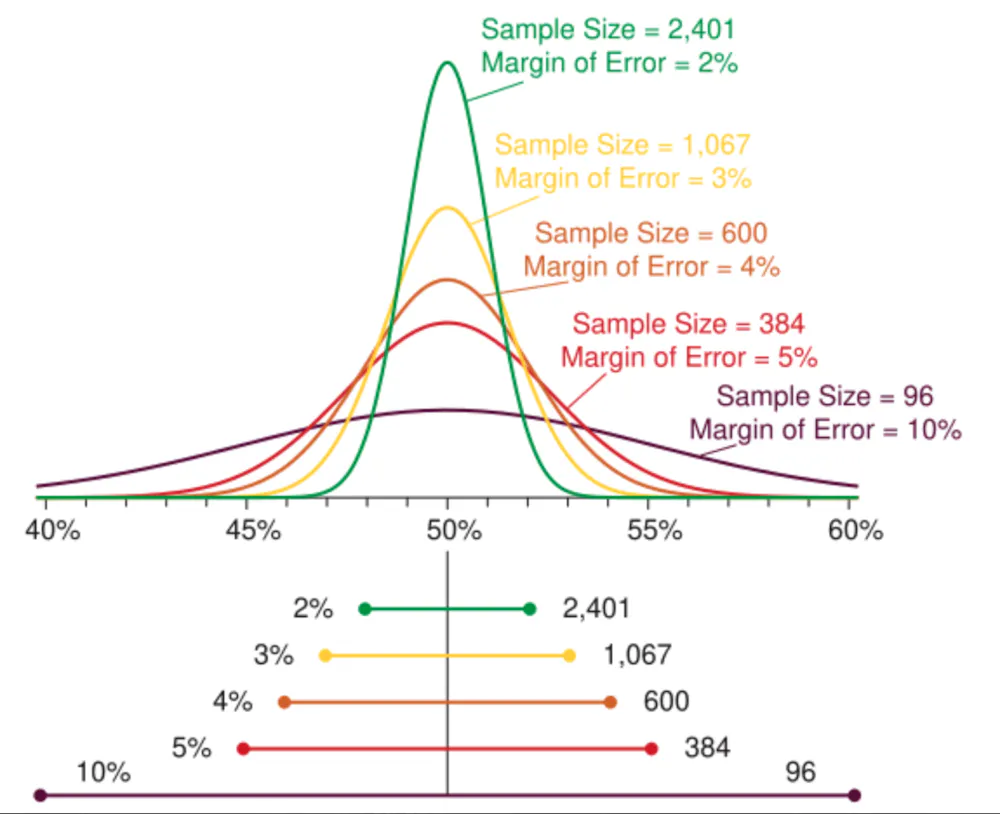
For example, a sample of 600 voters will have a larger margin of error – about 4 percentage points – than a sample of 1,000 voters, which has a margin of error of just over 3 percentage points.
The way the sample is chosen also matters: In 1936, the Literary Digest magazine polled people on the presidential election by mailing surveys to telephone owners, car owners and country club members. Everyone in this group was relatively affluent, so they were not representative of the whole U.S. voting population. Calculating a margin of error would have been meaningless because the sample did not capture all segments of the population.
Let’s use an example of how to understand the margin of error. If a poll shows that 47% of the polled group support Candidate A, and the margin of error is plus or minus 3 percentage points, that means that the percentage in the population supporting Candidate A is likely to be between 44% (47 minus 3) and 50% (47 plus 3).
One quick note: Most polls report margins of error alongside another technical term, “confidence interval.” In the most rigorous reporting of polls, you might see a sentence near the end that says something like “The margin of error is plus or minus 3 percentage points, at a 95% confidence interval.” What all that means is this: Imagine if 100 different random samples of the same size were selected from the larger group, and then asked the same questions in the poll. The 95% confidence interval means that 95% of the time, those other polls’ responses would be within 3 percentage points of the answers reported in this one poll.
Comparing support between candidates
The concept of margin of error gets more complex when looking at the differences in support between two candidates. If a margin of error is plus or minus 3 percentage points, the margin of error on the difference between them is about double – or 6 percentage points, in this example.
That’s because the margin of error here is a combined one, and refers to not just the percentage voting for Candidate A but also to the percentage voting for the other candidate.
To look back at 2016 again, the final Quinnipiac University Poll in Florida before Election Day showed Clinton with 46% support and Trump with 45% support. The margin of error was 3.9 percentage points, which meant Clinton was likely to get between 42.1% and 49.9% of the vote, and Trump was likely to get between 41.1% and 48.9% of the vote.
The actual result was that Trump won Florida with 48.6%, as compared with Clinton’s 47.4%. Those results were within our poll’s margin of error, meaning we were correct to declare it “too close to call” – and we would have been wrong to say Clinton was ahead.
2024 will be a close election
In the current election cycle, many media reports about polls are not including information about the margin of error.
Leaving out that information, or downplaying its significance, may help media outlets provide a quick, simple picture about the state of the race. Technology can seem precise in the modern age of the internet and artificial intelligence.
But polling is not as precise. It is an inexact science. It’s a pollster’s job to capture snapshots of the complexities of human nature at a particular time. People’s minds can change, and new information can arise as the campaigns unfold.
With the presidential election in its final weeks, our polls have been finding a fairly tight and steady race, with most voters telling us their minds are made up. Because the difference between the presidential candidates is within the margin of error in swing states, the election polling in autumn 2024 is telling Americans to hold their breath and make sure they vote, because it is likely to be a squeaker.
Doug Schwartz is affiliated with the American Association of Public Opinion Research (AAPOR).
The U.S. Supreme Court recently weighed in on these debates with its 2024 decision in Grants Pass v. Johnson. The court’s ruling grants cities the authority to prohibit individuals from sleeping and camping in public spaces, effectively condoning the use of fines and bans to address rising rates of homelessness.
East Atlanta Village, a historically Black neighborhood in Atlanta with about 3,000 residents, is trying something different. In the fall of 2023, with support from the Atlanta City Council, the mayor’s office and Intown Cares, a local nonprofit that works to alleviate homelessness and hunger, the neighborhood hired a full-time social worker to support people experiencing homelessness.
Michael Nolan, an Intown Cares social worker, is trained in an approach that emphasizes individual autonomy and dignity, recognizes that being homeless is a traumatic experience, and prioritizes access to housing. His role includes helping individuals get the documentation they need to move off the streets, such as copies of their birth certificates and Social Security cards. He also has a dedicated phone line that community members can use to alert him about dangerous situations that involve homeless people.
Michael Nolan, East Atlanta Village’s social worker, spends 40-plus hours weekly providing supplies, services and other help to people experiencing homelessness.
I am a researcher at the University of Washington studying programs and technologies that help urban neighborhoods flourish. I’m also a resident of East Atlanta Village and have helped the neighborhood organize and evaluate this experiment.
For the past year, my colleagues and I have collected data about the neighborhood social work program to understand how well it can support both people without housing and the broader community. Our preliminary findings suggest that neighborhood social work is a promising way to address challenges common in many neighborhoods with homelessness.
I believe this approach has the potential to provide long-term solutions to homelessness and improve the health and safety for the entire neighborhood. I also see it as a sharp contrast with the punitive approach condoned by the Supreme Court.
Resolving conflicts over public space
One of the people I interviewed while evaluating this initiative was Rebecca, a resident of East Atlanta Village who walks her dog in the local park every day. In the fall of 2023, she noticed that a man had moved into the park and set up a tent. At first, the area was clean, but within a few weeks there was garbage around the tent and throughout the park.
Rebecca felt that the trash was ruining one of the few green spaces in the neighborhood. She decided to contact Nolan. Nolan told her that he knew the unhoused man, was working with him to secure permanent housing and in the meantime would help him move his tent to a less-frequented space.
Such negotiations around public spaces are common challenges for neighborhoods with large homeless populations, especially in dense urban areas. Other examples in our data included conflicts when a homeless person began sleeping in his car outside another resident’s home, and when a homeless man wandered into a homeowner’s yard.
The standard approach in these situations is to fine, ban or imprison the unhoused individual. But those strategies are expensive, can prolong homelessness and do little to actually resolve the issues.
In contrast, hiring a social worker has enabled East Atlanta Village to resolve conflicts gently, through conversation and negotiation. The solutions address concerns about public health and safety and also offer people without homes an opportunity for long-term change.
Meeting basic needs
Over the past year, this program has helped 13 people move into housing. Nolan has facilitated over 180 medical and mental health care visits for people living on the street.
Eighty-six people have been connected to Medicaid, food assistance or Social Security benefits. Thirty-five people have health care for the first time, and six people have started receiving medication for their addictions.
Research shows that addressing people’s basic needs by helping them obtain food, medicine, housing and other necessities not only supports those individuals but also produces cascading benefits for the entire community. They include reduced inequality, better health outcomes and lower crime rates.
Managing mental and behavioral health
Studies have found that about two-thirds of unhoused individuals struggle with mental health challenges. Unmet mental and behavioral health needs can contribute to unsafe and illegal behavior.
The United States does not have a comprehensive system in place for supporting people who are living on the street and struggling with chronic mental and behavioral health challenges. While much more infrastructure is needed, in East Atlanta Village, Nolan is able to check in on people experiencing homelessness, work with clinics to deliver medication for addiction and mental health needs and alert community members about dangerous situations.
As an example, in December 2023 a homeless man was arrested in East Atlanta Village for trespassing, stealing mail and other erratic behavior. When concerned residents posted to the neighborhood Facebook group, Nolan responded that he knew the man well, that this behavior was not typical and that he would look into the situation.
Nolan later updated his post, commenting that the man had been arrested but that he would “continue to follow up and ensure that his current behaviors do not return upon his release.”
In other examples, Nolan has helped de-escalate situations when people experienced mental health episodes in local coffee shops and churches.
A model for other cities
Cities around the U.S. have decisions to make about addressing homelessness and its associated challenges. Neighborhood social work is not a magic bullet, but my colleagues and I see it as a promising approach to address the most common challenges that neighborhoods with high rates of homelessness face.
East Atlanta Village is currently working with the Atlanta City Council to renew funding for this program, which cost US$100,000 in its initial year. We hope that other neighborhoods also consider this strategy when deciding how to address homelessness in their own areas.
Ishita Chordia is affiliated with the East Atlanta Neighborhood Association. She volunteers for the neighborhood association and has helped organize and evaluate the neighborhood social work program.
Source: The Conversation – USA – By Christopher A. Cooper, Professor of Political Science & Public Affairs, Western Carolina University
Lt. Gov. Mark Robinson shares the stage with former U.S. President Donald Trump during a 2022 rally in Selma, N.C.Allison Joyce/Getty Images
For all its prominence as a key battleground state, North Carolina hasn’t done much swinging in U.S. presidential elections.
The last time a majority of North Carolinians voted for a Democratic candidate was 2008 for Barack Obama. The time before that was 1976 for Jimmy Carter. In the past 12 presidential elections, Republicans have won 10. Those Republicans include Donald Trump in 2016 and 2020.
But as I demonstrate in my 2024 book, “Anatomy of a Purple State: A North Carolina Politics Primer,” simply looking at the outcome of presidential voting gives a skewed understanding of voting behavior in other elections across the state.
Consider 2020 again. While it is true that Trump won North Carolina’s 15 electoral college votes – it now has 16, based on 2020 U.S Census Bureau data — his margin of victory was only about 74,000 votes out of some 5.4 million votes cast. It was the smallest margin of any state that Trump won.
Part of the reason is the nearly even split among voters in the two major parties and the emergence of registered voters who claim they are unaffiliated.
Despite being considered a red state, North Carolina’s congressional delegation is split evenly between Democrats and Republicans with seven each. In addition, four of the state’s 10 statewide, elected Council of State officeholders, including Gov. Roy Cooper, are Democrats.
Though both of North Carolina’s U.S. senators are Republicans and the GOP holds supermajorities in both houses of the state Legislature, North Carolina is not entirely red or blue. It is undeniably purple – and that gives rise to further uncertainty over how the state will vote in the 2024 presidential election.
The Kamala Harris factor
Before U.S. President Joe Biden dropped out of the race in July 2024, polls showed that he lagged behind Trump by 5 percentage points in North Carolina.
As in many other battleground states, it appeared that Trump had a small but fairly durable lead over Biden.
Vice President Kamala Harris campaigns in Greenville, N.C., on Oct. 13, 2024. Alex Wong/Getty Images
For the first time in years, Democratic Party registration began to exceed Republican Party registration in the state.
From July 20-26, 2,351 people registered as Democrats in North Carolina – a 44% increase compared with the previous week. During the same period, Republican and unaffiliated voter registrations were down 23% and 14%, respectively, from the previous week.
The rise and fall of Mark Robinson
In spring 2024, during the height of primary season, Trump stepped into the North Carolina gubernatorial race by endorsing Lt. Gov. Mark Robinson, a Black Republican with a history of derogatory comments about Muslims and members of the LGBTQ community.
“This is a Martin Luther King on steroids,” Trump said of Robinson during a rally in Greensboro, North Carolina, on March 2, 2024.
Given Trump’s two wins in the state, his endorsement was expected to help Robinson beat Democrat Josh Stein in one of the nation’s most competitive state elections.
But Trump’s enthusiasm all but vanished after a series of negative stories about Robinson. They included a Sept. 19, 2024, CNN report alleging that Robinson frequented a porn web site called “Nude Africa” years ago where he described himself as a “Black Nazi.” Robinson also allegedly made a number of misogynistic and racist statements such as “slavery is not bad.”
Trump made another campaign stop in Wilmington on Sept. 21, 2024. Robinson, who had frequently appeared with Trump at previous North Carolina rallies, was not on the stage.
Polling conducted after CNN’s bombshell report showed an election that had shifted from competitive to one where the Democrat Stein is favored by a large margin to become North Carolina’s governor.
It is unclear whether Robinson’s apparent demise will affect the top of the ticket – or other state GOP candidates.
Natural disasters
Hurricane Helene hit western North Carolina on Sept. 28 and brought high winds, flooding, an estimated US$47 billion in property damages and 250 deaths.
It also caused questions about access to voting in areas devastated by Helene and then, two weeks later, Hurricane Milton.
A woman in North Carolina places an American flag near a mobile home that was destroyed in October 2024 by Hurricane Helene. Mario Tama/Getty Images
Twenty-nine counties in North Carolina were affected by the storm, although 13 counties received the brunt of the damage. Analysis of data from the North Carolina Board of Elections reveals that Trump led Biden by about a 10 percentage-point margin among voters in those affected counties.
Given this, lower turnout in this region might hurt Trump more than Harris. It’s little surprise then that the Trump campaign has called for expanding voting access in those areas.
But there’s no way to know who will receive North Carolina’s 16 Electoral College votes. Such is the unpredictable politics of a purple state.
Christopher A. Cooper does not work for, consult, own shares in or receive funding from any company or organization that would benefit from this article, and has disclosed no relevant affiliations beyond their academic appointment.
Source: The Conversation – USA – By Neil K R Sehgal, PhD Student in Computer & Information Science, University of Pennsylvania
A statue of Jefferson Davis, second from left, is on display in Statuary Hall on Capitol Hill in Washington. A slaveholder, Davis represented Mississippi in the Senate and House before the American Civil War.AP Photo/Susan Walsh, File
One way to measure the legacy of slavery is to determine whether the disproportionate riches of slaveholders have been passed down to their present-day descendants.
Connecting the wealth of a slaveholder in the 1860s to today’s economic conditions is not easy. Doing so requires unearthing data for a large number of people on slaveholder ancestry, current wealth and other factors such as age and education.
But in a new study, we tackled this challenge by focusing on one of the few groups of Americans for whom such information exists: members of Congress. We found that legislators who are descendants of slaveholders are significantly wealthier than members of Congress without slaveholder ancestry.
How slavery made the South rich
In 1860, one year before the Civil War, the market value of U.S. slaves was larger than that of all American railroads and factories.
At the time of emancipation in 1863, the estimated value of all enslaved people was roughly US$13 trillion in today’s dollars. The lower Mississippi Valley had more millionaires, all of them slaveholders, than anywhere else in the country.
More recently, however, historians discovered that, while the South fell behind the North economically immediately following emancipation, many elite slaveholders recovered financially within one or two generations.
They accomplished this by replacing slavery with sharecropping – a kind of indentured servitude that trapped Black farm workers in debt to white landowners – and enacting discriminatory Jim Crow laws that enforced racial segregation.
Of its 535 members, 100 were descendants of slaveholders, including Democratic Sen. Elizabeth Warren and Republican Sen. Mitch McConnell.
Legislators whose ancestors were large slaveholders – defined in our study as owning 16 or more slaves– have a current median net worth five times larger than their peers whose ancestors were not slaveholders: $5.6 million vs. $1.1 million. These results remained largely the same after accounting for age, race and education.
Wealth creates many privileges – the means to start a business or pursue higher education. And intergenerational wealth transfers can allow these advantages to persist across generations.
Because members of Congress are a highly select group, our results may not apply to all Americans. However, the findings align with other studies on the transfers of wealth and privilege across generations in the U.S. and Europe.
Wealth, these studies find, often stays within rich families across multiple generations. Mechanisms for holding onto wealth include low estate taxes and access to elite social networks and schools. Easy entry into powerful jobs and political influence also play a part.
Privilege with power
But members of Congress do not just inherit wealth and advantages.
They shape the lives of all Americans. They decide how to allocate federal funds, set tax rates and create regulations.
This power is significant. And for those whose families benefited from slavery, it can perpetuate economic policies that maintain wealth inequality.
Beyond inherited wealth, the legacy of slavery endures in policies enacted by those in power – by legislators who may be less likely to prioritize reforms that challenge the status quo.
The economic deprivation still experienced by Black Americans is the flip side of the privilege enjoyed by slaveowners’ descendants. The median household wealth of white Americans today is six times higher than that of Black Americans – $285,000 versus $45,000.
Meanwhile, federal agencies that enforce antidiscrimination laws remain underfunded. This limits their ability to address racial disparities.
Legislators in the House of Representatives debate the abolition of the 1836 gag rule, which prevented discussion of any laws concerning slavery. MPI/Getty Images
There are, however, other ways to improve opportunities for historically disadvantaged populations that could gain bipartisan backing.
A majority of Americans, both conservatives and liberal, support increased funding for environmental hazard screening, which assesses the potential impact of a proposed project. They also favor limits on rent increases, better public school funding and raising taxes on the wealthy.
These measures would help dismantle the structural barriers that perpetuate economic disparities. And the role of Congress here is central.
Members of Congress do not bear personal responsibility for their ancestors’ actions. But they have an opportunity to address both the legacies of past injustices and today’s inequalities.
By doing so, they can help create a future where ancestral history does not determine economic destiny.
The authors do not work for, consult, own shares in or receive funding from any company or organization that would benefit from this article, and have disclosed no relevant affiliations beyond their academic appointment.
Embrace change, they say, or become a casualty. This adage weighed heavily on my mind during my latest research trip to the Arctic. Repeatedly, I found myself clutching the .303 calibre rifle over my shoulder — a piece of equipment I once considered unnecessary.
As my research assistants and I crossed the tundra of Victoria Island in northern Canada, firearms were only the most obvious addition to our gear. Each of us carried a whistle around our neck, a canister of bear spray on our hip, and new alertness in our routine. Back at our camp near Wellington Bay, Nunavut, an electric fence surrounded our tents. Grizzly bears were new inhabitants on this island. Safety called for different provisions and a different mindset.
After three decades, I had returned north with a purpose: to assess how tundra plants were responding in a rapidly changing climate. For my assistants and me, the plan was straightforward. We would return to the exact sites I had studied some 30 years earlier, to evaluate how they had changed during those intervening years.
By the end, I learned a more fundamental point: that perseverance, and long-term planning, are the key to enabling scientific progress and unlocking ecological secrets.
In the Arctic, the pace of environmental change is especially troubling. Species like grizzlies and orcas are advancing northward, weather is more volatile and sea ice is shrinking — driven by temperatures rising nearly four times more quickly than the global average.
While the significance of the Arctic is planetary, an encounter with the land is intensely personal.
North of the treeline, in the expanse of arctic tundra, you take in the whole horizon. In summer, you hear the distant bugling of cranes and geese as you walk boundlessly in the midnight sun.
In winter, you may come upon a band of caribou as you travel atop the wind-sculpted snow. Once you’ve stood north of the treeline, your worldview is transformed.
I am one of those transformed individuals. As a graduate student in the 1990s, I resided at Ekalluktok — a special place on the south coast of Victoria Island where the migrations of char and caribou intersect, where Inuit have lived for thousands of years. Here I studied the abundance and variety of tundra plants.
Today, the Arctic has already blown past 2 C of warming. Understanding the effects of climate change on this island could provide insights into the dynamics of change across the entire Arctic region.
Plants, foundation of the food chain, are a top research priority. Shifts in the flora are likely to be consequential to herbivores such as muskoxen and caribou — and therefore to people.
Measuring change
Nature reveals her swings and proclivities with reluctance. To prise open those mysteries, I added a key ingredient: time. On this return trip, I intended to walk back decades to uncover the response of plants in an altered climate by using precisely the same methods at precisely the same locations as I had in the 1990s.
For deciphering ecological change, it’s a potent recipe: measure, add decades, repeat.
Our more immediate challenge was finding those same locations. Three decades earlier, in the days before GPS, I had marked each location with a metal stake. Now, I trusted that stakes, too, “stand still and wait to be revisited.”
For weeks, my assistants and I scoured the land for those stakes, guided by maps, memory and a metal detector. And our search — sometimes easy and direct, sometimes meandering and desperate — yielded 98 per cent of them.
At each stake, we bent low, occasionally on hands and knees, to tally the abundance of sedges, shrubs, lichens and diminutive wildflowers. It was a repeat performance from my original study almost three decades earlier.
Grasses and sedges increased substantially, an example of arctic greening, regarded as one of the world’s clearest illustrations of climate change effects. Some species — notably purple saxifrage, the official flower of Nunavut — declined dramatically, contributing to arctic browning.
Many other plants showed no apparent change, suggesting climatic resilience, at least over decades. But across the Arctic, the picture of vegetation change remains incomplete, complicated by variations among species and regions. Sustained science will be needed to unravel this ecological complexity.
Funding the long-term
That broader message, unforeseen to me at the outset, is now clear.
Without precisely paired observations, the vegetation shifts at Ekalluktok would have been indistinct. Elegant in their simplicity, repeat observations offer a double vantage point: an instant retrospective for decoding the past and a foundation for monitoring the future.
Managing change starts with awareness. And in a changing world, sustained science will be essential to interpret, mitigate and steer us along a favourable path. Conservation is not a sprint, but a determined trek toward better understanding and a better future.
James Schaefer received funding from Arctic Species Conservation Fund (WWF-Canada), Kenneth M. Molson Charitable Foundation, Northern Studies Training Program (Polar Knowledge Canada), Symons Trust for Canadian Studies, and Trent University.
Make no mistake, New Brunswick Premier Blaine Higgs lost big on Monday night. The province’s voters delivered a forceful rebuke of Higgs’ Progressive Conservatives similar to the 1995 election, when the party won only six seats against Frank McKenna’s Liberals.
Research shows trans children have high rates of suicidal ideation, especially when they’re not supported in how they identify.
Over time, Higgs supported anti-trans and anti-sex education protesters, even as many advocates, parents and educators raised concerns about the safety and mental well-being of LGBTQ+ youth. He also refused to deny what’s known as the so-called kitty litter myth that falsely alleges students are allowed to identify as animals and use litter boxes.
When confronted by parents about a safe-sex presentation slide for a high-school audience, Higgs banned the group that conducted the presentation.
It didn’t end there. Higgs erroneously suggested an Indigenous nation sought to claim most of the province from property owners. In 2021, his government discouraged land acknowledgements by provincial employees. Higgs also argued that Indigenous people had already ceded their land.
Taking aim at francophones, social issues
Higgs’ relationship with francophones was just as bad. He refused to learn French in Canada’s only bilingual province after promising he would. He alleged he was unfairly targeted as an anglophone.
When coming to power in 2018 with a minority government, Higgs weakened bilingual requirements for paramedic positions. Later, he controversially proposed ending French immersion programs, arguing it was unfair to “English Prime” students in the province.
When he won a majority in 2020, Higgs lowered taxes on the highest income earners while constraining increases to health care and education.
Higgs was successful in uniting the right. As a former leadership contender of the linguistic segregationist Confederation of Regions party, Higgs welcomed far-right People’s Alliance representatives to his party.
But his tenure faced internal opposition. Atlantic conservatism tends to be closer to the political centre. Higgs’ Maritime counterparts, Premiers Dennis King of Prince Edward Island and Tim Houston of Nova Scotia, have largely avoided social issues.
On the province’s Policy 713, also called the Sexual Orientation and Gender Identity policy, six PCs voted with an opposition motion against the proposed changes. Four were cabinet ministers.
Several ministers resigned from cabinet with letters blasting Higgs’ leadership.
Almost half of PC riding associations sought a leadership review. They fell just short of the minimum needed to trigger a review.
Most leaders recognize when their time was up. Not Higgs.
An embattled campaign
The PCs’ tumultuous time in government made for an uninspired campaign. Twelve of the 26 winning PC representatives from 2020 did not run again. In their place came more social conservatives who would not oppose Higgs.
The PCs received bad news early. They were projected to fall short of their 2024-25 balanced budget aims.
Still, Higgs campaigned on his fiscal management. He offered a two per cent HST cut as a reward. For some, this proposal rang as vote-buying from a government that could have pursued a sales tax cut at any point in its six-year tenure.
The PCs campaigned on few other commitments. Their two-page platform made generic promises like “respect parents.” They also sought to “compel individuals into drug treatment” and “axe the carbon tax.”
Meanwhile, the Liberals hammered the PCs on housing, health care and education. All three areas had been stressed by population growth and tight funding. Housing policy was a particular weakness given the PCs’ long-term resistance to rent caps and its record as a housing-starts laggard.
Higgs’ confidence in his record was misplaced. While his social conservativism has an audience in New Brunswick, few saw it as a priority relative to the cost of living.
His other campaign efforts made little difference. Higgs sought to make his opponent Prime Minister Justin Trudeau. He also stirred anti-immigration sentiment over federal asylum-seeker plans. Both efforts seemed desperate.
Rejection of grievance politics?
The Liberals’ return to power could be attributed to a referendum on Higgs. There is no doubt Higgs had personal defects that cost him his own riding.
But his loss is more than a personal rejection. It also seems a rejection of a grievance politics that favours anger over substance.
After repeatedly focusing on social issues over matters like housing, the grievances lost their allure. Even for the most steadfast Conservative voters, Higgs’ targeting of minorities came across as bullying.
While Higgs may be the worst offender, he is not the only practitioner of grievance conservatism. Federal Conservative Leader Pierre Poilievre and Alberta Premier Danielle Smith play the same tune. Will their political fates be any different?
Noah Fry does not work for, consult, own shares in or receive funding from any company or organisation that would benefit from this article, and has disclosed no relevant affiliations beyond their academic appointment.
Science and Nature, two leading science journals, have revealed a growing problem: an alarming rise in fraudulent research papers produced by shady paper mill companies. This wave of fake studies is creating a major headache for the academic world, putting the integrity of global academic research at risk.
Paper mill companies offer authorship services to researchers, academics, and students who want their names listed as an author of a scientific article published in reputable scientific journals.
By paying around €180 to €5000 (approximately US$197 – $5472), a person can have their name listed as the author of research paper, without having to painstakingly do research and write the results. No doubt, some experts refer to these paper mills as illegal and criminal organizations.
A 2023 research highlights a dramatic increase in fraudulent scientific artiles traced back to paper mills. In just five years, the numbers of retractions soared jumped from 10 in 2019 to 2,099 in 2023.
Paper mills are found operating in countries whose research policies incentivise researchers to produce as many scientific articles as possible, such as China, Russia, India and Iran.
Based on research data and investigative journalist reports from the last five years, I summarise how these paper mills operate and how to detect them.
They also offer to rewrite scientific articles using generative artificial intelligence tools, such as ChatGPT and Quillbot, or to translate published articles from other languages into English.
2. A promised path to publication
In some cases, paper mills offer authorship slots before an article is accepted for publication.
In other cases, they offer authorship slots after the article is ready to be published by the journal.
Therefore, it is not uncommon for paper mills to sell authorship slots with a guarantee that the article will definitely be published. In fact, according to the conventions generally accepted in the academic community, no well-run journal can give such a guarantee.
Publishing decisions are normally made only after editors have considered the feedback from peer reviewers. This means, there is no possibility for a manuscript to secure acceptance before passing the peer review process.
To smooth the way for their operations, some paper mills even operate like a cartel, bribing rogue journal editors to ensure publication. A 2024 investigation by a Science journalist revealed that some scientific journal editors were offered as much as $20,000 to cooperate with these schemes. This investigation resulted in more than 30 editors of reputable international journals identified as involved in paper mill activities.
4. Unusual collaboration patterns
One of the peculiarities of paper mill articles is its strange mix of authors. An article on the activity of ground beetles attacking crops in Kazakhstan, for example, is written by authors who are neither affiliated with institutions in Kazakhstan nor experts in insects or agriculture. The authors’ backgrounds are suspiciously heterogeneous, ranging from anaesthesia, dentistry, to biomedical engineering.
5. Anonymous co-authors
Prospective customers of paper mill services usually have to agree to the rules of confidentiality. By agreeing to this rule, buyers have no idea which journal their article will target or who their co-authors will be. Often, the authors listed on the same paper don’t even know each other.
Spotting the red flags: how to detect paper mills articles
Detecting scientific articles produced by paper mills often begins with analyzing retraction patterns carried out by journals.
This can be done in two ways: by tracking post-publication peer reviews on platforms like PubPeer, or by checking the Retraction Watch database, a website that documents retractions of problematic scientific articles.
The proportion of scientific articles retracted for being associated with paper mills is much smaller than the estimated total number of paper mill articles currently in circulation.
Retraction Watch data, as of May 2024, only recorded 7,275 retractions of articles related to the paper mill out of a total of 44,000 retractions recorded. In fact, it is estimated that up to 400,000 paper mill articles have infiltrated scientific literature over the past two decades.
The UK Research Integrity Office—an independent UK charity that offers support to the public, researchers and organisations to promote good academic research practice—estimates that the paper mill industry has gained around $10 million globally.
For example, a Russian paper mill could earn $6.5 million if they sold all the authorship of scientific articles it produced from 2019 to 2021.
In Indonesia, this financial loss directly impacts the public. Public universities rely on the state budget, funded largely by taxpayers, and tuition fees from students to cover operational expenses, including research grants and publication incentives.
Though the exact financial toll of these paper mills is hard to pin down, it is clear that the public are footing the bill for fraudulent research practices, siphoning resources away from enuin academic advancements.
Rizqy Amelia Zein tidak bekerja, menjadi konsultan, memiliki saham, atau menerima dana dari perusahaan atau organisasi mana pun yang akan mengambil untung dari artikel ini, dan telah mengungkapkan bahwa ia tidak memiliki afiliasi selain yang telah disebut di atas.
Each year in Kenya, familiar faces are feted at the national remembrance of the country’s heroes and heroines. Dedan Kimathi is arguably the most commemorated of figures. As one of the most prominent leaders of the anti-colonial Land and Freedom Army, Mau Mau, he has become a symbol of the bloodshed for independence.
Field Marshal Muthoni Kirima also features. She avoided British capture for 11 years, hiding in the forests of central Kenya, and was the only woman to reach the status of field marshal in the Mau Mau. So it is unsurprising that the then deputy president, Rigathi Gachagua, and other top government leaders attended her funeral in September 2023. Kirima died at the age of 92. The surviving Mau Mau generation is now declining, but many of those who fought or grew up during the 1950s rebellion live on.
While the leaders of the Mau Mau and the political elite now hold a prominent place in Kenya’s national history of independence, this cannot be said of the thousands of civilians who contributed to the anti-colonial cause. These include the unarmed women who sustained the freedom fighters during this fraught period of Kenya’s history.
Historians estimate that between 1952 and 1960, British colonial forces detained 80,000 Kenyans, hanged over 1,000 suspected rebels, and forcibly resettled approximately 1.2 million civilians in colonial “villages”. As its control of the colony dwindled, Britain used brutal measures including torture, forced labour and collective punishment to suppress anti-colonial dissent. It wasn’t until 2013 that Britain finally acknowledged these human rights abuses, having been exposed in the landmark High Court hearings (2011-2012).
These discoveries have instigated a flurry of historical examination from historians and activists to assess British brutality in Kenya. This work has largely focused on the detention camps incarcerating freedom fighters and Britain’s military campaign. But what of the civilians, mainly women and children, whose lives were disrupted and threatened by their forced resettlement into guarded villages? In 2018, I set out to conduct research in Kenya to capture these important stories.
The oral histories of women Britain forcibly resettled in the 1950s offer important insights into life in these villages. They challenge the evidence in the colonial archive. Archival records lack rich or diverse information about the day-to-day experiences of those who lived in the villages.
Brutal history
Between 1954 and 1960, an estimated 1.2 million Kenyans were forcibly removed from their homes and forced into colonial “villages”. This form of collective punishment was to work in tandem with the mass detention of suspected freedom fighters. Torture and forced labour were practised widely.
The High Court hearings forced Britain to release its “migrated archive”, which consisted of over 20,000 files pertaining to 37 of its former colonies. These records had been secretly removed during the process of decolonisation. The archive corroborated survivors’ testimonies of torture, sexual violence and mistreatment in the camps. These new histories of colonial violence expose the limits of international human rights laws in the wars of decolonisation.
For its audience back home and across the world, Britian’s Colonial Office circulated images of the colonial villages, images depicting community, safety and even joy. Photographs of children playing on a make-shift slide, women laughing in a sewing class, a village headman smiling in the local shop. But how well did these depictions represent lived experiences?
Women’s stories
Over the Spring of 2019, I interviewed several women who had at some stage of the 1950s been forcibly resettled. Their ages at the time of interview ranged from 69 to 105 years old.
Most women were put in contact with me during my time spent in the central region of Kenya, building up relationships with community leaders, cultural heritage practitioners, and through friends. The interviews conducted for the project mainly took place in the participant’s homes. Stories and memories shared over a warm mug of chai (tea).
Several themes emerged from the interviews with women who experienced forced resettlement.
Firstly, surveillance. When the British colonial government declared a state of emergency in October 1952, it was concerned by the growing anti-colonial sentiment and initial attacks made by Mau Mau fighters. By 1953 it became apparent to colonial officials that women in the Gikuyu, Embu and Meru regions were playing a significant role in sustaining the forest fight. Much of the Mau Mau strategising took place deep in the forests of Mount Kenya, with women supplying food, ammunition, and intelligence to the armed combatants.
Women were characterised as the eyes and ears of the movement and concentrating them in colonial “villages” ensured the colonial state’s eyes and ears were fixed upon them. As one interviewee explained to me:
everything had changed … you do not play, you do not make a noise … We see the Home Guards up there.
Women and children in the villages knew they were under constant watch from the colonial state and its guards, and they regulated their own behaviour accordingly.
The villages, while depicted in propaganda as lush green spaces with happy villagers, instead followed similar patterns to the detention scheme. Most villages were surrounded by barbed-wire fences, or trenches filled with sharpened sticks.
These were well fortified spaces to keep out the Mau Mau and keep in those who might support them. Security posts were often situated at the top of hillsides facing down on the huts of inhabitants. Security officials monitored all movement.
As one interviewee expressed it:
We looked like caged people. Like people in prison.
The punishments inflicted if rules were broken raise a second theme in these interviews: brutality. Violence and coercion came in several forms. If a family was suspected of continuing to aid forest fighters, guards set the roof of their hut ablaze.
Village-wide curfews were put in place and people were locked inside their homes for extended periods of time. They were denied food. Public beatings were inflicted. People were executed. Many women sustained severe bodily harm when being interrogated at the security post. These punishments often extended to sexual violence.
But the British colonial state could not break the women’s spirit. Women spoke of the food they shared with one another. They recalled caring for children who had been orphaned. Women set up trading networks that sustained the community and prepared them for life post-conflict. Many persisted in their support of the Mau Mau, sneaking food out of the village, breaking the fences so forest fighters could get into the village site, and strategising under nightfall.
With military operations subduing from 1956, Britain slowly began releasing families from the colonial villages. Some women were allocated land elsewhere, others were assigned land that had once been part of that village. For many then, the memories of forced resettlement remain ever present.
Silent heroes
During this research I often received a similar response from women: “you want to speak to my husband, he was in the forest, he was detained, he was one of those heroes”.
Collectively, women who faced forced resettlement for their participation and connection to the liberation movement have tended to marginalise their own significance.
Yet, in many ways, women across the central region of Kenya embodied the conflict. Their day-to-day lives became part of the battlefield. It raises a challenge for scholars to recognise all the experiences of colonialism in Kenya. To extend our anti-colonial histories beyond Mau Mau, also.
Bethany Rebisz consults for the Museum of British Colonialism, a non-profit platform which facilitates global conversations about British colonialism and its legacies. The research conducted and explored in this article received funding from the UKRI AHRC, Royal Historical Society, and the British Institute of Eastern Africa.
Jessica Campbell has made history as the first full-time female coach in the National Hockey League, marking a significant milestone in professional hockey.
Campbell was hired by the Seattle Kraken in July, and during the team’s home opener against the St. Louis Blues on Oct. 8, the crowd erupted into cheers when she was introduced as part of the team’s coaching staff.
While the Kraken went on to lose to the Blues 3-2, the game was a pivotal turning point for gender equality and coaching in the NHL. Campbell’s appointment as a full-time assistant coach shows there’s a path forward for women who aim to coach at the men’s professional level.
Campbell’s story serves as a reminder of the challenges women coaches face. However, it also demonstrates how achieving a coaching role in a professional league, though difficult, is not impossible.
Her coaching career began as an assistant with the U18 Canadian women’s national team, and from there she coached in Sweden with the Malmö Redhawks. She then served as an assistant coach for the men’s national team in Germany and the Nürnberg Ice Tigers. Campbell later became the first female coach in the American Hockey League when she was hired by the Coachella Valley Firebirds as an assistant coach.
“I didn’t imagine this path for me. I didn’t see it,” Campbell said in a 2023 interview. “Quite frankly there was no visibility and there weren’t other females doing this work, and so I didn’t know it was possible.”
It was not until more and more NHL players sought out her skating and skill development program that she began to consider coaching in the NHL as a potential career path.
Women coaches in the major leagues
The NHL has been slow on the uptake when it comes to full-time women coaches. The other three major leagues — the National Football League, Major League Baseball and the National Basketball Association — have had women in coaching roles for years.
Yet, these numbers still reflect an alarming gender disparity. Like Campbell, many women may struggle to envision themselves in coaching positions. This moment encourages us to consider both the importance of women in coaching, and why there continues to be an under-representation of women coaching men’s sports.
To combat these barriers, the NHL has implemented various supports to ensure Campbell will not remain in a league of her own.
The NHL Coaches Association launched a Female Coaches Development Program in 2021 to support the development of women coaching hockey. By providing leadership strategies, skill development, networking and career opportunities, the program aims to normalize women coaching men and expand the pool of available candidates.
Paving the way
While Campbell is the first full-time assistant coach in the NHL, others have had opportunities to guest coach at NHL camps or to be on the bench for pre-season games.
For instance, Kim Weiss, the first woman to coach NCAA Division III men’s hockey, served as a guest coach for the Colorado Avalanche.
Similarly, Kori Cheverie, the first woman to coach a Canadian university men’s hockey team, was a guest coach with the Pittsburgh Penguins and became the first female coach on the bench during an NHL pre-season game.
Along with Campbell, the visibility that each of these women provides can spark meaningful change in the NHL. While Campbell’s coaching debut with the Kraken is breaking down barriers, sustained effort and dedication is required to create a more inclusive sport culture.
Continued emphasis on initiatives like the NHL’s Female Coaches Development program are necessary for both current and aspiring women coaches so girls and women can envision themselves in leadership roles in the future.
As a scholar who has studied the under-representation of women coaches, my hope is that Campbell will not remain an anomaly in the NHL, and eventually we see more women in both assistant and head coaching roles.
Campbell’s new position with the Kraken could spur this change, with her and others enriching the NHL through the abilities, contributions and diverse perspectives that women bring to coaching.
Hayley Baker does not work for, consult, own shares in or receive funding from any company or organisation that would benefit from this article, and has disclosed no relevant affiliations beyond their academic appointment.
There’s a saying in sports journalism: “The answer to all your questions is money.” But in the case of Saudi Arabia’s massive sports investment programs during the reign of Crown Prince Mohammed Bin Salman, money is not the whole story.
In a simple sense, there is a clear profit motive. With US$925 billion in assets in 2023, Saudi Arabia’s sovereign wealth fund exists to convert oil revenues into even greater national income.
Last year, the country’s Public Investment Fund reported $36.8 billion in profits. Since 2016, it has spent $51 billion on sports properties.
The point is not to turn bin Salman into the world’s greatest sports impresario. Rather, it’s that he’s seeking to improve the economic and geopolitical situation of Saudi Arabia through sports investments while ensuring the long-term survival of the Saudi regime.
Beyond Newcastle United, LIV Golf
Investing in sports is a common way for developing countries to announce their arrival on the global stage. Instead of one-and-done mega events, Saudi Arabia is pursuing a more dispersed and diverse approach.
The Public Investment Fund’s highest profile investments are well known, especially the 2021 purchase of Newcastle United of the English Premier League and the LIV golf tour that challenged the PGA’s decades-long dominance of the sport.
Beyond golf and soccer, Saudi Arabia has also spent dizzying sums on lower profile investments in esports, wrestling and motorsports. In other games, like chess and snooker, the profit motive is less clear.
The logical conclusion is that Saudi Arabia treats its sports investments as a loss leader — an unprofitable activity meant to stimulate more profitable activity somewhere else. In the words of Public Investment Fund’s 2022 annual report, international investment pools “allow Saudi Arabia to extend its global reach and influence.”
But that explanation doesn’t go far enough. For bin Salman, the suite of sports investments and properties is only a small part of a larger strategy to prepare Saudi Arabia for a 21st century when global oil demand is expected to fall by mid-century and geopolitics will become more complicated.
This is no secret: Saudi Arabia’s official grand strategy — Vision 2030 — envisions the complete modernization of the country’s economy and foreign policy. Saudi Arabia’s sports diplomacy is therefore part of a broader geopolitical strategy to prepare Saudi Arabia for an era of multipolarity, when power is distributed among several states.
Sports diplomacy also normalizes western financial and political engagement with the Saudi regime. Internationally, bin Salman wants to cultivate economic and security relationships with entities whose interests align with those of the Saudi royal family and the Saudi state, thereby ensuring the long-term health of both.
Regular interactions between Saudi Arabia and the West create an understanding that Riyadh is a “normal” place to do business — and if it’s good business, there is no reason to risk the relationship with too much rancour over its authoritarianism and abysmal human rights record. Sports investing, in short, is a Saudi hedge against western abandonment.
The allure of the big payday
To western eyes, the most troubling implication of Saudi sports investment is the normalization of authoritarian capitalism — economic freedom without political freedom — as a feature of the emerging international order.
Along with China, Russia, Singapore and others, Saudi Arabia represents an alternative to western democratic capitalism as a pathway to development.
This would be surprising to a previous generation of scholars and policymakers who once thought that free markets and free societies were a self-reinforcing phenomenon.
But given the staying power of authoritarian capitalism, doing business with dictators and strongmen has become inevitable and even desirable in some cases. In the sports world, few have resisted the charms of a huge payday.
Closely related to authoritarian capitalism is democratic backsliding. Around the world, the quality of democracy and freedom is eroding, and the slow-drip normalization of economic intercourse with authoritarian capitalists is part of that erosion.
So can anything be done? Western states have options, but they’re limited.
After all, Saudi Arabia’s investments are legal and eagerly sought after by both private and public sectors.
Western officials can put up resistance to the awarding of mega events to authoritarian states. But mewling about problematic hosts means little unless liberal democracies are prepared to pay the hosting costs themselves, which they are increasingly unwilling to do.
Meanwhile, authoritarians are eager to host mega events and attract the prestige that comes with them. Currently, for example, Saudi Arabia is the sole bidder for the 2034 FIFA World Cup.
Countries could try regulatory intervention to delimit the extent of Saudi influence. National security is often used as a pretext for blocking foreign investments in strategically important sectors, like ports and 5G wireless networks.
Saudi plan is working
But golf and video games do not rise to the level of national security concern, so American regulators are unlikely to step in. Political intervention from the United States Congress or the White House is even less likely. Saudi Arabia is a key part of the American strategy on the Middle East to confront Iran, and quibbling too intensely about human rights or sports investment is not worth the strategic costs.
The genius of Saudi Arabia’s enterprise is that it’s power projection by consent. Investors and fans want what bin Salman is selling, governments have limited recourse and critics are left to grasp at standard, out-dated arguments.
For Saudi Arabia, however, its sports charm offensive is about more than money. It’s about an investment in the future prosperity and security of the kingdom and the longevity of the Saudi dynasty. So far, the plan is working.
Aaron Ettinger does not work for, consult, own shares in or receive funding from any company or organisation that would benefit from this article, and has disclosed no relevant affiliations beyond their academic appointment.
The key to maximizing AI’s potential lies in understanding the distinct but complementary roles that both humans and AI play.(Shutterstock)
Generative artificial intelligence (AI) tools like ChatGPT or Dall-E are changing how creative work is done, particularly in industries that rely on innovation.
However, AI use in the innovation process requires careful considerations. Our research shows that the key to success is understanding and leveraging the distinct but complementary roles that both humans and AI play.
Innovation is about solving complex problems that result in real improvement. It’s not just about coming up with good ideas — it also involves knowledge work, which is the process of using information to create something valuable.
Generative AI can help businesses get ready to innovate by making knowledge work easier, but its full potential in this area is still not fully understood.
AI use in the innovation process requires careful considerations. (Shutterstock)
Design sprints
Our team, which includes academic researchers with expertise in emerging digital technologies and a practitioner experienced in leading human-centred innovation projects, conducted a detailed study of how generative AI was used in design sprints at three organizations. (The study is available as a pre-print and has been submitted to a journal for peer review).
A design sprint is a fast, structured process for solving important problems that helps teams test if a product, service or strategy will work. Sprints are useful because they reduce the risks and costs of traditional product development
During a design sprint, a small team of five to seven employees from different areas works together intensely for a few days to solve a problem. Their work is co-ordinated by a facilitator, who organizes activities, guides the team, keeps track of progress, makes sure the goals are clear and that time is used efficiently.
The first stage of a design sprint focuses on understanding and defining the problem, while the second stage is about creating and testing a solution. Both stages require teams to use two key types of thinking:
Divergent thinking, which means coming up with many different ideas and possibilities.
Convergent thinking, which means narrowing those ideas down to identify priorities or solutions.
Our study examined how the facilitator used generative AI tools like ChatGPT, DALL-E 3 or Uizard to help the team engage effectively in both divergence and convergence.
AI and humans working together
In divergent thinking activities, we found two main benefits of using generative AI. First, it encouraged teams to explore more possibilities by providing baseline ideas as a starting point. Second, it helped to rephrase and synthesize unclear ideas from team members, ultimately leading to better communication within the teams.
One participant told us:
“Sometimes we had a lot of ideas, and the AI summarized them into a concise text. This allowed us to wrap our head around it. It gave us a base, there were many fragmented ideas that everyone had contributed, and now we had a text we all agreed on. This way, we started from the same base which served as a springboard to move forward.”
The real value of generative AI was thus not in contributing brilliant new ideas itself, but in the valuable synergies that emerged from the process. Team members used their contextual knowledge and stayed in charge of the process while the AI helped to better convey their ideas, expand exploration and address possible blind spots.
The real value of generative AI was not in generating groundbreaking ideas itself, but in fostering productive synergies between team members and AI. (Shutterstock)
Making better informed decisions
We noticed different dynamics in convergence activities where teams had to make decisions after demanding sessions of idea generation. By that point, team members were usually mentally exhausted. Generative AI was especially helpful for doing the heavy lifting during this part.
The AI helped manage the information-intensive tasks necessary for team alignment like reformulating, summarizing, organizing, comparing and ranking options. This reduced the mental strain on team members, allowing them to focus on important tasks like evaluating ideas. In this process, the team was responsible for:
Checking AI’s outputs to make sure the content was accurate and useful. For example, ChatGPT and Uizard helped create draft scenarios and prototype drafts to validate their concept, but the team still had to refine them to meet project goals.
Adding their own insights and contextual nuances to guide final decisions, considering factors like feasibility, ethics and long-term strategic impact.
One participant said:
“Sometimes, the AI would focus onto details that were insignificant to us…Sometimes we needed less general synthesis and more personalized input.”
Overall, this form of human-AI collaboration in convergent activities helped the team make better informed and more confident decisions about which problem to focus on and which solution to pursue. This made them feel in control of the sprint’s final outcomes.
One participant said:
“For pivotal phases like making decisions or voting on something important like a success factor, if we relied solely on AI to determine what is important, there would be rejection. We are better positioned to know. We are the employees who will execute the final solution.”
Challenges and opportunities
Consistent with research on cognitive automation and intelligent automation, we found that generative AI was of great help in handling cognitively demanding tasks like reformulating poorly articulated ideas, summarizing information and recognizing patterns in team members’ contributions.
A key challenge with using Generative AI in innovation is ensuring it complements, rather than replaces, human involvement. While AI can act as a useful companion, there’s a risk it could reduce team engagement or ownership of the project if overused.
The design sprint facilitator told us:
“Feasibility needs to be balanced with desirability. You could technically automate most of the process but that would kill the need for pleasure, interaction, and humans’ doubts won’t be addressed; plus humans need to own the problem — all these are essential elements in a human-centred innovation process.”
Consequently, regularly assessing AI’s impact within this process is crucial in order to maintain a healthy balance. Automation should enhance creativity and decision-making without undermining the human insights that are central to innovation.
As AI continues to develop, its role in innovation will grow. Companies that integrate AI into their workflows will be better equipped to handle the fast-paced demands of modern innovation. But it’s important to understand both the strengths and limits of AI and humans to ensure this collaboration is effective.
This article was co-authored by Cédric Martineau, CEO and innovation management consultant at Carverinno Consulting.
The authors do not work for, consult, own shares in or receive funding from any company or organisation that would benefit from this article, and have disclosed no relevant affiliations beyond their academic appointment.
Source: The Conversation – UK – By Austin Kay, Researcher in Sustainable Advanced Materials, Centre for Integrative Semiconductor Materials, Swansea University
As the world races to meet net-zero targets, emissions from all industrial sectors must be reduced more urgently than ever. Agriculture is an important area of focus as it contributes up to 22% of global greenhouse gas emissions.
One approach to decarbonising agriculture involves integrating solar panels – or photovoltaics (PVs) – into fields of crops, greenhouses and livestock areas. Often known as agrivoltaics, this can help farmers reduce their carbon footprint while continuing to produce food.
Agrivoltaics can also mitigate one of the main criticisms often made of solar power – that solar farms “waste” vast tracts of agricultural land that could otherwise be used for food production. In reality, solar farms currently occupy only 0.15% of the UK’s total land – not much compared to the 70% of land devoted to agriculture.
The simplest example of an agrivoltaic system would be conventional, crystalline silicon PVs (the market-leading type of solar panels), installed in fields alongside livestock. This method of farm diversification has become increasingly popular in recent years for three main reasons.
First, it enhances biodiversity as it means the fields are not being used for just one crop (monoculture), undergoing regular crop rotation, or being harvested for silage. Second, it increases production as livestock benefit from the shade and the healthier pasture growth.
Finally, the solar farm has reduced maintenance costs because livestock can keep the grass short. All this is achieved while the solar panels provide locally generated, clean energy.
However, if they’re not set up properly, agrivoltaics may still cause problems. One of the most important challenges, when used in fields where crops are grown, is balancing the need for sunlight between crops and solar panels. Crops need light to grow, and if solar panels block too much sunlight, they can negatively impact crop yields.
This issue varies from place to place. In countries with fewer sunny days like the UK, the panels need to let more sunlight through. But in places like Spain or Italy, some shade can actually help crops by reducing the stress of intense heat during summer months. Finding the right balance is tricky, as it depends on local conditions, the type of crop, and even the needs of pollinators like bees.
The complexity deepens when we consider the type of PV material used. Traditional solar panels aren’t always suitable because they often block the wavelengths (colours) of light needed by plants.
This is where newer materials, like organic semiconductors and perovskites, are ideal as they can be customised to let crops get the light they need while still generating energy. Unlike traditional inorganic semiconductors, which are essentially crystals of metal and metalloid atoms, organic semiconductors are molecules mainly made of carbon and hydrogen. Perovskites, meanwhile, are like a hybrid of organic and inorganic semiconductors.
In fact there are thousands of combinations of these materials to choose from, with scientific literature containing a plethora of options. Figuring out which one works best can be a daunting task.
This is where computational tools can make a big difference. Instead of testing each material in real-world conditions – which would take years and be incredibly expensive – researchers can use simulations to predict their performance. These models can help identify the best materials for specific crops and climates, saving both time and resources.
The tool
We have developed an open-source tool that helps compare various PV materials, making it easier to identify the best options for agrivoltaics. Our tool uses geographical data and realistic simulations of how different PV materials perform.
It considers how light travels through these materials and reflects off them, as well as other important performance measures like voltage and power output. The tool can also take lab-based measurements of PV materials and apply them to real-world scenarios.
Using this tool, we simulated how much power different PV materials could generate per square metre over the course of a year, across various regions. And we calculated how much light passed through these materials to ensure it was enough for crops to thrive.
By running these simulations for multiple materials, we could identify the most suitable options for specific crops and climates.
Tools like ours could play a critical role in decarbonising the agricultural sector by guiding the design of agrivoltaic systems. Future research could combine these simulations with economic and environmental impact analyses. This would help us understand how much energy we can expect from a solar panel over its lifetime compared to the resources and costs involved in producing it.
Ultimately, our tool could help researchers and policymakers in selecting the most efficient, cost-effective and eco-friendly ways to decarbonise agriculture and move us closer to achieving global net-zero emissions.
Don’t have time to read about climate change as much as you’d like?
Austin Kay is a Postgraduate Student at Swansea University and receives funding from the Engineering and Physical Sciences Research Council (EPSRC) through program grant EP/T028513/1 Application Targeted and Integrated Photovoltaics.
In a significant diplomatic manoeuvre that may have far-reaching implications for the international system of alliances, Turkey has submitted a formal request to join Brics, the group of emerging-market economies, signalling its intent to diversify its partnerships beyond the west.
The Brics grouping, named after Brazil, Russia, India, China, and South Africa, comprises some of the world’s largest economies. Earlier this year, it welcomed four new members: Iran, the United Arab Emirates, Ethiopia and Egypt. Although Saudi Arabia has been invited to join, the official process is yet to take place. Often viewed as an alternative to western-led organisations such as the EU, G7 and Nato, Brics signifies a significant shift in global power dynamics.
Ankara’s decision could be a strategy to strengthen relations with non-western powers as the global economy’s centre continues to shift away from the west, but is also about chasing more trade with Brics members.
Announced ahead of the Brics summit starting on October 22, Turkey’s application has raised questions about the broader implications for its role within Nato. If accepted, Turkey would be the first Nato member of Brics. However, this is not to say that Turkey is entirely turning away from the west. Turkey’s institutional ties with the western world run deep. At most, this move signals Turkey’s president Recep Tayyip Erdoğan’s intention to increase the government’s flexibility in its foreign relations.
Erdoğan said on September 1 that this move shows Ankara’s aims to cultivate ties with all sides simultaneously to “become a strong, prosperous, prestigious and effective country if it improves its relations with the east and the west simultaneously”.
Turkey’s acceptance into the group could be discussed during the upcoming 16th Brics summit, in Kazan, Russia. Malaysia, Thailand and Azerbaijan are among other countries expecting to join.
Between east and west
Turkey’s balancing act between east and west is not a recent phenomenon but a continuation of its policies since the end of the cold war, and is in line with its geographical position at the edge of Europe and Asia.
This strategy has been central to Turkey’s intricate, at times conflicting, approach to international relations and remains pertinent in an increasingly complex world. The shift from a unipolar world – the idea that the world is dominated by one super power – to one with more global powers has led all governments to reassess their foreign policies, and Ankara is no different.
Turkey’s longstanding commitment to Nato makes it highly unlikely that its willingness to join the Brics group signifies a move away from its western allies. Since 2016, Turkey has strengthened its economic, political, and military ties with Russia and China, and its recent application to the Brics group reflects this trend. According to some experts in Turkish foreign policy, while this development may raise concerns in western capitals, there is no pressing reason for the west to be alarmed about Turkey making concessions to Russia or acting independently of Nato.
There are two incentives driving Turkey’s application. According to Sinan Ülgen, director of the Istanbul-based Centre for Economic and Foreign Policy Studies: “The first is Turkey’s aspiration to enhance its strategic autonomy in foreign policy which essentially involves improving ties with non-western powers like Russia and China in a way to balance the relationship with the west. The second is the accumulated frustrations over the relationship with the west. For example, the EU has not even been able to decide on the start of negotiations on the updating of the customs union, its trade deal with Turkey that dates back to 1996.”
Turkey has been keen on joining the Brics group since 2018. Putin, during a meeting with Turkish foreign minister Hakan Fidan in Moscow in June this year, welcomed Ankara’s interest and promised that Moscow “will support this desire to be together with the countries of this alliance [Brics], to be together, closer, to solve common problems”.
Since the war in Ukraine, Russia has been making extra efforts to gain the support of more countries. Turkey holds a particular significance in this effort due to its strategic location, and its control of the Black Sea straits, an essential trade route for both Ukraine and Russia. The Black Sea has played an important part in the Ukraine war, and Turkey has been part of an alliance that has stymied Russia’s attempts to fully control the waters, and allowed Ukraine to continue to use the waters.
The Montreux Convention regulates maritime traffic through the Turkish Straits. The convention distinguishes between Black Sea and non-Black Sea powers, acknowledging specific advantages for the former, which includes Ukraine and Russia.
In March 2022, Erdoğan indicated that the convention allows Turkey to restrict the passage of naval vessels belonging to warring parties. Putin may be hoping that with Turkey on board as a Brics ally he may be able to persuade Ankara to give him more leeway. Currently Russia’s inability to control the Black Sea and cargo ships within it are seriously weakening its ability to constrain Ukraine’s economy.
Turkey anticipates that Brics membership will enhance its geopolitical standing and expand its economic influence, especially in non-western markets. Most importantly, leveraging its geopolitical position to influence global affairs and pursuing a more balanced and diversified foreign policy.
It is evident that Turkey aims to maintain its connections with the west while also desiring the flexibility to engage with other regions. It is highly improbable that this would lead to a significant overhaul of Turkey’s ties with western countries. It may, however, cause concern among fellow Nato members about how much they can rely on Turkey in the future.
Bulent Gökay does not work for, consult, own shares in or receive funding from any company or organisation that would benefit from this article, and has disclosed no relevant affiliations beyond their academic appointment.
There is a city nearby that we hide from view. Its people are of all ages, ethnicities and classes. What unites them is a disease: all are diagnosed with myalgic encephalomyelitis, or ME.
We hide them there because we don’t know where else to put them. Like a plague village, we have no plans to treat them, to study their disease or to trial possible drugs for them. We could choose to draw up such plans, to give the residents hope for their future health. But our country’s choice is to turn away and forget about these 250,000-plus inhabitants altogether. A city the size of Brighton that we deliberately ignore.
Worse, when we don’t ignore them, we blame them, telling them that they are all free to rise from their beds and wheelchairs, to walk away from the city. Doctors tell them they can free themselves of the disease by changing their belief systems. Make the effort, they say, and you will regain your health and previous lives.
Our co-editors commission long-form journalism, working with academics from many different backgrounds who are engaged in projects aimed at tackling societal and scientific challenges.
Outwardly, the city is quiet: its clocks have stopped, the streets are empty and house blinds are drawn. Inwardly, some lie still in their darkened rooms, masks on to protect them from their light sensitivity, keeping within their limited energy level, unable to tolerate sound, food and touch – lives spent in the shadows, barely lived. Inside, they feel like they have life-sapping toxins coursing through their veins. They say it feels like being on the verge of death; some even call it a “pseudo dying syndrome”.
A brief conversation with a friend, or washing their hair, or a sudden movement causes their symptoms to flare. This intensifies a fatigue that sleep cannot alleviate, and heightens their muscle or joint pain, headaches, or sensitivities to food, light or sound.
Simon McGrath, a close friend of mine who has lived with ME and written about it for 20 years, tells me:
I never know how much it is safe for me to do. It’s like I’m surrounded by an electric fence that will trigger a bad day if I touch it. But the fence is invisible, and moves every day.
A ‘scandal’ so much more than chronic fatigue
Fatigue does not begin to describe this disease, despite its other name being chronic fatigue syndrome, or CFS. “A bad day is like a very bad hangover lasting 24 hours or more: the morning after, without the night before,” Simon explains. “But with much more pain, much more fatigue and very bad brain fog. I feel as if all the neurons in my skull have collapsed and disconnected from each other.” By spotlighting fatigue, ME’s other name fails to convey its many debilitating symptoms.
Simon – or, rather, his illness – is why I am a ME researcher. At university, where we met, he graduated with a biochemistry degree, fizzing with energy and talent. His ME soon dimmed his bright future but would not stop him making a difference to the ME community through his writing, and in helping me understand this horrible disease.
The Times journalist, Sean O’Neill, says that ME is “routinely stigmatised and ignored by the NHS” and calls it “a scandal waiting for its Post Office moment”. O’Neill and his family had to endure the inquest into the death of his daughter, Maeve Boothby O’Neill, who died from natural causes because of severe ME.
Maeve’s ME left her unable to move, communicate or tolerate light, sound or touch. She did not want to go to hospital because, according to her GP, she “always gets worse when [she] goes in”.
Why is it that we give the least or worst treatments to those who are most in need?
Exile and misogyny
ME exiles people from their family, friends, and hoped-for futures. For most, this banishment is for life because nine in ten will never recover, and also because we expend too little effort to end this wicked disease.
That’s the irony – it’s society’s lack of effort to understand this illness and its treatment; our societal inertia; our failure to accept patients’ symptoms that perpetuate their exile.
So let’s attempt to diagnose what causes our apathy towards this cruel disease. The chief cause is misogyny, an ingrained prejudice born of the disease’s strong female bias: for every five women living with ME, there is only one man. It also has a strong age bias – young men are ten times less likely to be diagnosed with it than older women.
Another female-dominant disease is endometriosis. Like ME, the medical establishment is only just starting to appreciate the full nature of this debilitating condition.
In her memoir, Giving up the Ghost, the prize-winning novelist Hilary Mantel said of her endometriosis: “The more I said that I had a physical illness, the more they said I had a mental illness. The more I questioned the nature, the reality of the mental illness, the more I was found to be in denial, deluded.”
ME patients also report feeling that their concerns and symptoms are all too often dismissed.
Women with ME have spoken about their experiences of medical misogyny. For example, I talked to the Vikings actress Jennie Jacques who has spoken openly about her experiences of ME. She said that “Medical misogyny [is] at the heart of it. ME was psychologised when it most definitely shouldn’t have been”.
When later asked by ME specialistByron Hyde MD “why had he written up the Free Hospital epidemics as hysteria without any careful exploration of the basis of his thesis?”, McEvedy responded devastatingly, saying: “It was an easy PhD, why not?”
In the US, female-biased conditions attract less funding than male-biased ones. Funding for ME is 400-times less than for HIV/Aids, a male-biased disease, once their different disease burdens are accounted for.
In 2021, the previous UK government acknowledged the problem stating: “Studies suggest gender biases in clinical trials and research are contributing to worse health outcomes for women.”
COVID empathy?
The ongoing COVID-19 pandemic should have woken us up from our collective lethargy, and should have turned apathy into empathy. For then there were times when we all became housebound, often sick with the SARS-CoV-2 virus, and moreover so many of us – a million people, more than Liverpool and Manchester combined – came down with Long COVID.
Long COVID and ME share so many symptoms: post-exertional malaise, fatigue, widespread pain, disordered sleep, and brain fog. This overlap should never have surprised us – after all, two-thirds of people with ME report having had a triggering infection, such as glandular fever, just prior to their initial symptoms. Around 10% of people with glandular fever go on to develop ME symptoms.
It is as if we have our own brain fog, obscuring everyone with ME, forgetting how we – if fortune had been different – might have been them.
If we do not act to reduce the spread of infection, through immunisation and better ventilation, then numbers of people with long COVID – and other ME-like illnesses – will continue to rise, as infections so often trigger these conditions.
Going back to Simon, ME made him housebound, then bedbound. The NHS treated him with therapies based on increasing activity levels (Graded Exercise Therapy, or GET). This involves “gradually increasing physical activity to improve fitness and get the body used to activity again”.
The other NHS treatment approach, Cognitive Behavioural Therapy (CBT), is about changing “illness beliefs”. Here, patients are asked to examine “how thoughts, behaviour and CFS/ME symptoms interact with each other”.
But these treatments are ineffective as cures. And worse still, for the majority of 11,000 people with ME on one survey, GET did more harm then good.
In a different online survey, of 542 ME patients, 81% responded that their symptoms worsened because of GET treatment. National Institute for Health and Care Excellence guidelines, revised in 2021, say that CBT is not curative and that GET should not be offered to people with ME. Yet this new guidance has been implemented by only 28% of English NHS Trusts and Integrated Care Boards.
So, despite GET being described by patients as causing harm, and CBT as being ineffective as a cure, they are still being offered as a treatment. Over decades, very little has changed for Simon and hundreds of thousands of others with ME.
As we grew older together, Simon watched as I changed scientific career from physics into biology. I watched as his health might begin to rebuild, before suddenly collapsing, setting him back months or years. His ME has cost so much, he told me:
It’s so isolating and there’s so much loss. I got ill in the prime of life. It cost me relationships, my social life, my career, the chance of a family, the chance to contribute. Everything. Plenty of people seem to think it’s a lifestyle choice. Nobody would choose this.
As if his ME burden was not heavy enough, he started to carry other long-term health conditions, which each alone would bring me to my knees. Even though he does not feel it, I see his strength and resolution in adversity. At a time when biomedical evidence was rarely championed, he began his ME blog, and together with co-authors re-analysed clinical trial data. They concluded that the “recovery rates in the CBT and GET groups were not significantly higher than those in the control, no-therapy group”.
His own experience of ME, and his scientific eye-for-detail, make him a go-to person for people in the ME community.
In contrast, by 2013, and despite my decades of scientific training and academic privileges, I had done nothing for ME research. Why did I hesitate? “It’s not my scientific area,” I told myself. I trusted other researchers to identify effective and potentially curative treatments soon.
I was unprepared for the shock of my first ME research meetings. When studying other diseases, I had become used to vast conference halls brimming with celebrated scientists, enthusiastic PhD students, science prize winners, funders, and journal editors, all on the hunt for the next big breakthrough, grant or career opportunity.
For ME, however, the rooms were small and half-empty, funders and journal editors were nowhere to be seen, and researchers were talking at cross-purposes, showing sparse data from small-scale studies. These meetings were also empty of robust evidence for what physiologically had gone wrong for so many. At each meeting, a single word came to my mind: “forsaken” – those who others shun, neglect and abandon, whose existence is denied. I could not then, in all conscience, turn my back and walk away.
Not once have I regretted this decision. Its professional cost – measured in traditional markers of esteem, such as “glamour” publications, international conference and seminar invitations – has been more than offset by the fulfilment from working in this long-neglected field.
The extent of scientific disinterest in ME is clear: so far this year, there have been 17-times more publications mentioning “multiple sclerosis” than those mentioning ME or CFS, despite MS being rarer.
New study
My privilege now is to walk ME’s city of stolen futures alongside many people – like Simon – whose lost decades have been spent searching for their disease’s root causes. Together, for two-and-a-half years our team went back-and-forth with the Medical Research Council MRC and the National Institute for Health and Care Research NIHR. Eventually, we managed to secure a £3.2m award for DecodeME, a hunt for ME’s genetic causes.
DecodeME is not just the world’s largest study of the genetic causes of ME, but it was the first to place people with experience of ME at its heart. A total of 27,000 people with ME in the UK took part. We will report the study’s results as soon as we can. When we do, we will give them back first to the ME community whose data and samples we hold in trust.
The UK government has pledged to publish its delivery plan on ME in 2025. Andrew Gwynne MP, parliamentary under-secretary of state at the Department of Health and Social Care, has said that it “will focus on boosting research, improving attitudes and education and bettering the lives of people with this debilitating disease”.
This delivery plan will need to be radical.
Today, we urgently need more people to move through this city of lost hope to hear and to listen.
We need scientists to develop new vaccines against infections that trigger ME.
We need researchers, clinical specialists, hospital managers, and politicians to give deserved priority to this long-forsaken community and help lead these long-lost inhabitants back into the land of the well.
To hear about new Insights articles, join the hundreds of thousands of people who value The Conversation’s evidence-based news. Subscribe to our newsletter.
Chris Ponting’s research has been funded by MRC, NIHR, Action for M.E. and ME Research UK.
The Guardian and anti-fascist group Hope Not Hate have revealed the existence of a new network of far-right intellectuals and activists in an undercover investigation. Called the Human Diversity Foundation (HDF), this group advocates scientific racism and eugenics. Although it presents itself as having a scientific purpose, some of its figureheads have political ambitions in Germany and elsewhere.
Research shows these kinds of groups are nothing new and are linked to eugenics groups that have been active since the second world war. Defending the scientific legitimacy of eugenics, these organisations worked to keep a discredited intellectual tradition alive.
First coined by Francis Galton, a prominent Victorian statistician and evolutionary theorist, the term eugenics refers to the study of what Galton considered favourable and unfavourable genetic patterns within the population. Galton believed that the principles of evolutionary theory could be applied to the human species and used to intervene in its genetic fitness.
Galton and other early eugenicists advocated policies that would ensure that groups they believed held “desirable” traits, such as high intelligence, creative ability, or productivity, could reproduce in greater numbers than groups with less favourable genetics. Some even believed that “undesirable” groups should be prevented from reproducing, through forced sterilisation or abortion.
In the 1930s these ideas came to form the bedrock of Nazi race doctrine. Eugenics was a key component of Nazism and shaped both formal fascist ideology and how the Nazi regime treated its victims.
Before the second world war, many researchers regarded eugenics as a legitimate science. But in the aftermath of the war came a shift in attitudes, and scientists and society came to view eugenics as scientifically false and morally objectionable.
Instead of disappearing from academia, however, eugenics merely retreated into the
margins. Racial research became the focus of a handful of groups intent on keeping
the eugenics tradition alive.
Though they operated on the fringes of academia, these groups received financial support from private donors. The most prominent of these donors was the Pioneer Fund, a charity established in 1937 to support race science and white supremacy in the US and elsewhere.
These groups were close-knit. United by a shared sense of exclusion from the
academic mainstream, the people involved were prolific writers and together
generated a large body of work. They inflated their own citation counts by frequently referencing each other’s work and, in this way, established the impression of scientific rigour.
Pseudoscientific journals
Seeking to salvage the reputation of eugenics as a legitimate science, these groups
tended to cluster around journals and periodicals.
Chief among these was Mankind Quarterly, established in 1961 by a group called the International Association for the Advancement of Ethnology and Eugenics (IAAEE). Some decades later ownership of the journal was transferred to the Ulster Institute for Social Research, a eugenicist think tank founded and directed by Richard Lynn. Lynn is widely considered the intellectual figurehead of 21st-century eugenics.
The Mankind Quarterly quickly became known as a bastion of scientific racism. It published work by notorious pseudoscientists, neo-fascists, and such controversial political figures as former British MP Enoch Powell, remembered for appealing to racial hatred in his speeches.
Other similar journals emerged in the following decades. In France, Nouvelle École (“New School”) was established in 1967 by a white nationalist group. In Germany, Neue Anthropologie (“New Anthropology”) was first published in 1973.
Reported to have developed out of the Pioneer Fund and to have taken ownership of Mankind Quarterly, the HDF is the successor to earlier groups like the IAAEE and the Ulster Institute.
Today, the eugenics movement is experiencing a period of uncertainty following the
death of Richard Lynn in July 2023. When he died, Lynn was the director of the Pioneer Fund and the editor-in-chief of Mankind Quarterly. Organisations like HDF, led by people who have worked closely with Lynn, are trying to fill that void.
Whether the HDF will survive public scrutiny remains to be seen. But the broader networks from which it emerged are arguably stronger than at any previous moment in post-war history, facilitated by the rise of the far right and online extremism. All of which means it has never been more important to remember the tradition’s history.
Lars Cornelissen does not work for, consult, own shares in or receive funding from any company or organisation that would benefit from this article, and has disclosed no relevant affiliations beyond their academic appointment.
The first anniversary of the October 7 Hamas attack on Israel and the beginning of conflict in Gaza left UK schools with a dilemma: how to mark the event. It has affected many around the world, including school children and their families in the UK.
Earlier in 2024, government adviser on social cohesion, Sara Khan, suggested that schools were not supporting reasonable debate about the Israel-Gaza conflict because teachers are nervous about handling such a sensitive topic in the classroom.
But if schools shut down the topic they risk encouraging mistrust, anger, hate and polarisation. Not least because students will instead seek out information online – and are quite likely to stumble upon fake news and conspiracy theories.
The leader of the UK’s biggest education union, Daniel Kebede, recently noted that there simply isn’t enough space in the curriculum for students to discuss such difficult issues. He claims the solution is to embed philosophy as a subject across England’s school curriculum.
The subject of philosophy is specifically set up to promote critical thinking skills and teach people how to have difficult conversations about controversial issues.
Teaching controversial topics
Controversial and sensitive topics are unavoidable. We encounter them discussed in the media, on the news, in the street and in our homes. Yet we are not always sure what to think, especially when the issue is complex, or how to talk to people we disagree with. And the skills of reasonable dialogue can be even harder when emotions are running high.
Young people need to learn how to discuss controversial issues like the Israel-Gaza war. The best way to do this is by including philosophy on the curriculum. Philosophy has an excellent toolkit designed to explore various points of view in a critically engaged way and, when taught dialogically – through discussion between students and teachers – students become seekers of shared knowledge and wisdom.
A key aspect of a democracy involves welcoming different ideas. Such diversity is a strength because it allows for many claims to be scrutinised, with only the best arguments gaining traction. Yet this process of sharing ideas requires our citizens to be able to hold reasoned discussions and to think critically.
The ability to hold reasoned, critical discussion is a valuable skill. fizkes/Shutterstock
To avoid aggression or chaos, people need to engage charitably with one another, being respectful of various experiences and perspectives while also being critical of the ideas presented.
The dialogical skills of philosophy
Philosophy, more than any other subject, encourages students to think about the reasons why they think something, and entertain the possibility that there are other points of view.
Philosophy is inherently dialogical. The most common teaching approach is to think about the steps in an argument, and then to consider the weaknesses in each of these.
Philosophy does this by teaching students to check: What assumptions am I making? Are the premises of my position sound? Does the conclusion logically follow from my starting point? What is a counterargument or counterexample to which I need to reply? Could I be wrong about this? What additional information do I need to draw a conclusion?
These kinds of questions encourage intellectual humility: the idea that I, like anyone else, could be wrong. Intellectual humility goes hand in hand with open-mindedness, ensuring we remain open to relevant new information.
Such skills of critical thinking and respectful disagreement are vital in a time of disinformation and fake news. Not only do we need young people to learn how to fact check and be critical of what they see and hear, but we also need them to learn that it is OK to disagree.
Being open-minded
The influential American philosopher Daniel Dennett, who died earlier this year, wrote about the importance of criticising with kindness and seeking the most charitable version of your opponent’s position. This is so important when discussing controversial topics, because reasonable people will disagree.
Criticising with kindness means staying humble and open to different points of view when having difficult conversations. And it means creating space for the airing of diverse arguments and examples. In this way, teachers who are trained in philosophy are able to remain politically neutral while helping students converse with one another about important issues that affect them and those they care about.
Philosophy is about learning to be respectful of others whose views differ from one’s own and to accept reasonable disagreement. It also teaches us to be comfortable with unsettled questions and complex answers. Teaching philosophy in the classroom leads to students engaging with ideas charitably and critically, encouraging open-mindedness and intellectual humility.
It is the skills of dialogue that we need as our society faces increasing polarisation and violent disagreement. These skills are some of the defining characteristics of a democracy. Happily, teachers are uniquely positioned to embrace the subject of philosophy and the skills it has to offer.
Laura D’Olimpio is co-founding editor of the open access Journal of Philosophy in Schools.
Source: The Conversation – UK – By Lisa Magdalena Engström, Senior lecturer in Library and information science, Lund University
Shutterstock/Bezbod
Drag story hour is “nothing other than indoctrination and sexualisation of children”, claimed Sweden Democrats politician Jonathan Sager during a session of the local parliament in Kalmar, southern Sweden, in 2022. He was reacting to plans to organise a drag story hour event at the local library, where drag queens would read to children, challenging norms of gender and sexuality. He called (unsuccessfully) for the event to be cancelled.
For someone not familiar with recent political trends in Sweden, Sager’s view may seem out of character for a country known for its tolerance and progressive approach towards sexual minorities. But just like other countries, Sweden is experiencing a backlash against drag story hour events. Public libraries have repeatedly been the target of hatred and threats from radical right actors, including politicians. Culture wars, often associated with the polarised political climate of the US, have now firmly taken root in Scandinavia.
In the US, objections against drag queen story hour form part of a larger wave of protests against LGBTQ+ content in libraries, also manifested in attempts to have certain books banned. Although book bans are not as common in Sweden, tensions have arisen over what children read and who reads to them.
As a result, public libraries, and especially their reading promotion activities for children, are now at the centre of polarising conflicts between the radical right and its opponents.
Sweden is far from immune to the global growth of far-right influence. Sweden Democrats (Sverigedemokraterna or SD), became the second largest party in the national parliament following the most recent election in 2022. The current government depends on their support to function. The party has neo-nazi roots and, despite cleaning up appearances, its representatives still push overtly anti-immigration, white supremacist viewpoints.
Like many parties of the radical right, SD promotes a conservative view on culture, gender and family, so its opposition to drag story hour is not surprising. However, there is a deeper conflict over the future of Swedish society at play here, too.
We looked at five instances of political conflict around drag events at libraries in Sweden, finding common themes of dispute over culture and what constitutes a good society.
‘Defending’ our children
In Kalmar, as well as in Trelleborg, another municipality in southern Sweden, local Sweden Democrats have (unsuccessfully) tried to block drag story hours at libraries by arguing that they were “defending” children. In Kalmar, the organiser was accused of “sexualising children”, as though there is something inherently sexual about a drag queen wearing a dress. Sager argued that material that is “gender creative, gender critical or norm critical” should not be used for events involving children.
Historically, reading promotion activities are part of this fear of harmful influence. For instance, certain types of fiction have been portrayed as having a demoralising effect, leading to initiatives that encourage children to read “quality literature” instead. In Sweden, there is less of a debate around the content of children’s literature, so there aren’t US-style arguments about banning books. But there are heated conversations around the act of reading, especially with children.
Reading together teaches children to support democratic values, such as by fostering empathy and understanding. Drag story hour fits well with this perspective because it promotes values of acceptance, diversity and positive self-identification. These are values that are expressions of the characteristic emphasis on equity and pluralism in Swedish cultural policy.
But by ticking these boxes, drag story hour clashes with the politics of the radical right, making the conflict emblematic of a larger tussle over the direction of Nordic cultural policy.
The dilemma of the safe space
The dispute around drag story hour has also inflamed arguments about the meaning of safety in a modern society. Is the safest option to bring security into a library or does that very security compromise the library as a safe space?
In the municipalities of Älmhult and Olofström, in southern Sweden, libraries decided against holding drag story hours because of safety concerns. They felt that bringing in guards was not an option because that would be “completely at odds” with the openness of the library. Visible security measures were seen as incompatible with being a safe space.
In Malmö, drag story times went ahead with security guards in place. Here, a decision had been made that security measures enabled the library to be a safe space via drag story hour.
The controversies over drag queen story telling events at public libraries in Sweden continues. Recently, a drag queen story group filed a charge against 106 people – including five SD politicians – for hate crimes. At the same time, public libraries in many parts of Sweden continue to report successful story telling arrangements in the face of opposition from the radical right.
Fredrik Hanell has received research funding from the Crafoord Foundation (ref. no. 20210680). He is affiliated with the Swedish Green Party.
Hanna Carlsson and Lisa Magdalena Engström do not work for, consult, own shares in or receive funding from any company or organisation that would benefit from this article, and have disclosed no relevant affiliations beyond their academic appointment.
Participation in extreme sports has surged since COVID-19, with 490 million people estimated to be taking part globally. This may have been fuelled by a desire to break free from lockdown-induced monotony and an explosion of media coverage showcasing the allure of high-adrenaline activities.
Extreme sports, like Base jumping, free solo climbing, big wave surfing and downhill mountain biking, once reserved for a small percentage of people, are now becoming more mainstream.
But why are people willing to take such risks? As a climber myself, I was keen to find out. While the popular image of extreme sports participants often revolves around thrill seeking and adrenaline addiction, research from my colleagues and I shows there are far more complex reasons for why people participate.
An extreme sport is defined as one in which a mismanaged mistake or accident would result in serious injury or death.
Research has started to explore the reasons behind extreme sports participation, but there’s still a lot to uncover. Several studies have identified factors like personality, motivation, and even neurobiology as playing a role. But it remains unclear which of these consistently drives people to take part in high-risk sports.
We started our work by conducting a systematic review to consolidate existing research on what drives people to participate in extreme sports. The studies we looked at provided important insights into the various psychological and emotional factors that motivate people to engage in high-risk activities. This helped us build a more complete understanding of the extreme sports mindset. We uncovered five motivational factors.
Red Bull’s international marketing campaign largely revolves around extreme sports.
1. Connection
Participants often describe feeling at one with nature and free from the constraints of everyday life. Many also find a deep sense of belonging in the extreme sports community and are driven by the desire to push their personal boundaries.
2. Personality
While some people are indeed drawn to thrill seeking, many use extreme sports as a tool to regulate difficult emotions. This is particularly true for those with alexithymia, which is when people struggle to identify and express their feelings.
3. Goals
The drive to succeed plays a big role in why people take part in extreme sports. Of course, many athletes are motivated by setting clear goals, whether it’s winning competitions or improving their performance. In this sense, participation in extreme sport is no different from that of more traditional sport.
For many of the respondents in the studies we analysed, goal setting boosts confidence and helps them persist through challenges. Participants also often feel a strong sense of control over their activities and find a sense of community with like-minded people.
4. Managing risk
Far from being reckless, participants are often highly calculated about the risks they take. They thrive on managing risk, finding excitement in navigating dangerous situations rather than avoiding them.
5. Addiction-like urges
Some participants exhibit behaviour resembling addiction, experiencing mood disturbances when not engaging in their chosen extreme sport. This can create a powerful urge to return, a bit like withdrawal symptoms.
People who take part in extreme sport often thrive on managing risk. PhotoFires/Shutterstock
Our findings have broader implications. They challenge the traditional view of extreme sports enthusiasts as mere “adrenaline junkies”. The research suggests that extreme sports could potentially offer therapeutic benefits, particularly for people struggling with emotional regulation.
Far from just being about thrill seeking, these types of activities could provide an outlet for experiencing emotions that might otherwise be hard for some people to access. It opens new avenues for exploring how high-risk activities may be used to support mental health and wellbeing.
My own work in this field is ongoing. Recently, I’ve conducted interviews with elite extreme sport participants to explore their motivations in greater depth. This new research will examine how these motivations shift over time – before, during and after participation. I’m also expanding my studies to compare the motivations driving extreme sport enthusiasts with those of non-extreme sport participants, aiming to uncover what, if anything, truly sets them apart.
Odette Hornby does not work for, consult, own shares in or receive funding from any company or organisation that would benefit from this article, and has disclosed no relevant affiliations beyond their academic appointment.
While many people in the creative industries are worrying that AI is about to steal their jobs, Oscar-winning film director James Cameron is embracing the technology. Cameron is famous for making the Avatar and Terminator movies, as well as Titanic. Now he has joined the board of Stability.AI, a leading player in the world of Generative AI.
In Cameron’s Terminator films, Skynet is an artificial general intelligence that has become self-aware and is determined to destroy the humans who are trying to deactivate it. Forty years after the first of those movies, its director appears to be changing sides and allying himself with AI. So what’s behind this?
Valued at around a billion dollars, Stability.AI was, until recently at least, headquartered above a chicken shop in Notting Hill. It is famous for Stable Diffusion, a text-to-image tool that creates hyperreal pictures from text requests (or prompts) by its users. Now it is moving into AI-created video.
Cameron appears to see their work as a potential game changer in film visual effects: “I was at the forefront of CGI over three decades ago, and I’ve stayed on the cutting edge since. Now, the intersection of generative AI and CGI image creation is the next wave,” he commented in a media release from Stability.AI.
Filmmakers supplement the live action reality that they shoot with two kinds of effects: special effects (SFX) and visual effects (VFX). They come at two different stages of film production. During the shoot, SFX are all the physical effects used to create spectacle – explosions, blood squibs, vehicle crashes, prosthetics, mechanical movement of sets.
During postproduction, VFX are the digital systems that add new elements to live-action filmed images – computer-generated imagery (CGI), compositing, motion capture rendering. They also combine separately shot images together.
A recent development of film technology, Virtual Production, has brought some VFX techniques into the film shoot. This process uses what are known as “games engines” – a technology developed for the creation of video games. Actors are filmed in front of sophisticated LED walls, which screen dynamic, pre-produced virtual worlds around the performer.
The real-world physicality of SFX means that artificial intelligence will have very limited impact here. It is in VFX where AI may have a transformative effect. I’ll be talking about the subject of deepfakes and AI in film at a public lecture on October 30, 2024: ‘Deepfakes and AI in film and media: seeing is not believing’.
We are also investigating the subject through the Synthetic Media Research Network, a group that I co-lead which brings together film creatives, academic researchers and AI developers. I spoke to a member of this collective, Christian Darkin, a VFX artist who now works as Head of Creative AI for Deep Fusion Films.
He sees the impact of generative AI on VFX as creating infinite choice in post-production. In future, filming the actors will be just the beginning. “You’ll put in the background later, you’ll change the camera angles, you’ll change the expressions, you’ll ramp up the emotion in the acting, you’ll change the voices, the costumes, the people’s faces, everything,” Christian told me.
One key motive for the film industry’s incorporation of AI into VFX is simple: the expense of traditional VFX. If you have watched the end credits of a blockbuster movie, you’ll have seen the number of VFX technicians that they employ. Generative AI offers a cheaper way to achieve spectacular screen images, potentially with no loss of quality.
The implication is that a lot of VFX technicians will lose their jobs as a result. However, in conversations that I have had with people working in these roles there’s a sense that, being highly skilled and technologically savvy, they will probably move into new roles in emerging areas of tech.
The ethics of AI technology
Media creatives are now presented with a huge selection of generative AI Tools that offer new ways of creating images, text, voices and music. However, a key problem related to the technology still needs to be addressed: have these AI tools been created ethically?
Each generative AI tool, from ChatGPT to Midjourney to Runway, rests on a foundation model that has been exposed to vast amounts of data, often from the internet, in order to help it improve at what it does. This process is called “training”.
AI developers build huge reservoirs of training data by using “crawlers”, bots that scour the internet for useful material and download trillions of files for their own use. This can include books, music, images, the spoken word and videos, created by artists who retain copyright over their material.
Stability.ai has been involved in a legal action over copyright in the UK courts. Getty Images, holder of a huge collection of pictures and photographs, is currently suing the company.
A former executive at Stability.ai, Ed Newton-Rex, resigned in November 2023 over the company scraping for creative content to train the model, without payment and claiming it is “fair use”.
Perhaps Cameron thinks that the AI developers will win the court cases against them and continue their technological trajectory. I asked Stability.ai if, before Cameron joined the company, they had scraped any of his creative material from the internet to use as training data for their foundation models – and did they ask his permission?
Their response was: “We’re not able to comment on the source of Stability
AI’s training data.”
Cameron’s Terminator films warned about the potential catastrophic effects of rogue AI. Yet the director now clearly thinks that he is now sitting on a winning horse.
Dominic Lees receives funding from the AHRC Impact Acceleration Account (University of Reading).
Coal workers suing their government over job losses. Indigenous people using the courts to block wind farms or anti-deforestation policies that violate their cultural rights. What these cases have in common is they challenge the fairness of climate policies and projects themselves.
Our new study, carried out with researchers from 16 universities and published in Nature Sustainability, finds that cases like these are increasingly being filed all over the world.
We coined the term “just transition litigation” to describe these cases. This term captures a focus on ensuring that climate action balances the transition to a low-carbon economy with social justice and the protection of vulnerable communities.
This phenomenon must be kept distinct from that of climate litigation, which tends to focus on holding governments and companies accountable for failing to reduce emissions or adapt to climate change.
Our research began in 2020, when we started noticing a growing number of cases that didn’t fit the conventional model of climate litigation. For example, in Chile, union workers sued the government, arguing that they had been excluded from discussions regarding the phase-out of coal plants. The Chilean Supreme Court ruled in favour of the workers, emphasising that a just transition strategy — one that includes consultation with affected communities — is essential for achieving carbon neutrality.
Similarly, in Norway, the Sami Indigenous people successfully challenged wind farm licenses, which the country’s Supreme Court found to have violated their cultural rights to herd reindeer. In Colombia, Indigenous people argued that projects aimed at reducing deforestation on their land violated their rights to self-determination and cultural integrity.
Just transition litigation seeks to ensure that the shift toward a greener economy is fair and inclusive, particularly for those who may be disadvantaged by the rapid changes it brings. The applicants in these cases often include regular workers, Indigenous people, women, children, minorities and other groups who are typically underrepresented in legislative and decision-making processes. (Our concept of just transition litigation excludes lawsuits brought by corporations seeking to protect their own interests at the expense of broader societal fairness.)
At the core of this litigation is the pursuit of justice. As countries shift to low-carbon economies, these policies inevitably produce both winners and losers. Oil and gas workers lose their jobs. Indigenous people are displaced or see the world around them changed by new wind or solar farms. All these people lament being treated unjustly.
To ensure widespread support for climate policies, their grievances should not be dismissed as mere nimbyism. Rather, they should be recognised as carrying precious insights into the fairness, equity, and social impacts of climate policies and projects.
The litigation we looked at calls upon courts to assess climate action against various different legal frameworks, ranging from constitutional and human rights law to corporate accountability standards. Some lawsuits use arguments of distributive justice, which focus on the allocation of resources and burdens. Some look at procedural justice, such as inclusive decision-making. Others want what is termed recognition justice, which focuses on respect for marginalised groups.
Why this matters
All this reflects a growing recognition that climate action may come at a cost to certain groups, especially those already on the margins of society. It also underscores the need to address the social justice of climate action and ensure it does not make the world even less equal.
The core issue is that, while much attention is given to reducing greenhouse gas emissions, less emphasis has been placed on ensuring we do so equitably. This is especially the case at a time when governments in the EU , the UK and the US are announcing plans to cut the red tape and expedite the transition.
As more communities turn to courts to seek justice, our study highlights an urgent need for policymakers to embrace inclusive, transparent and equitable processes. Decisions over who owns land, or what jobs people can do, should involve those most affected. Ensuring that climate policies are fair and just will not only protect vulnerable groups but also foster broader public support.
Don’t have time to read about climate change as much as you’d like?
Joana Setzer receives funding from the Economic and Social Research Council (ESRC), the Foundation for International Law for the Environment, and the Grantham Foundation for the Protection of the Environment
Annalisa Savaresi does not work for, consult, own shares in or receive funding from any company or organisation that would benefit from this article, and has disclosed no relevant affiliations beyond their academic appointment.
Source: The Conversation – UK – By Mari Ellis Dunning, Associate Lecturer at the School of Languages and Literature and PhD Candidate, Aberystwyth University
For centuries, midway between the autumn equinox and winter solstice, the Welsh people have celebrated Calan Gaeaf on November 1. Nos Galan Gaeaf or “the evening before the first day of winter”, falls a day before, which the western world now recognises as Halloween.
A time of year filled with monsters and ghouls, here are five spooky winter customs and beliefs unique to Wales and its people.
1. Hwch Ddu Gwta
On Nos Galan Gaeaf, the horrifying hwch ddu gwta, or “tailess black sow”, would make its annual appearance. Usually a man draped in cloth or animal hide rising from dwindling fire embers, the hwch ddu would chase the village children home.
As the fire died and the children anticipated the materialisation of the black sow, they would often chant a spooky verse, like: “Adref, adref am y cynta’, Hwch Ddu Gwta a gipio’r ola,” (“Home, home, at once, the tailess black sow shall snatch the last one.”)
Juliette Wood, scholar of Celtic folklore, says the macabre ritual has its roots in beliefs about the souls of the dead, people and animals. But on a practical level, it was probably just an effective way of getting children to bed and teaching them about the dangers of straying from the group.
2. Fortune telling
Fortune telling would have been rife at this time of year. Questions over who was next to be married, and who may meet an untimely death, were particularly popular. Women looking for love may have wandered around the bounds of a church, chanting “here is the sheath, where is the knife”, hoping to hear the name of the person they would marry as a response.
In some parts of the country, stwmp naw rhyw, a mash made of nine different root vegetables with milk, butter, salt and pepper, would have a wedding ring placed at the centre. Whoever found the ring in their serving would be the next to be married.
Though these particular practices were performed at Calan Gaeaf, the widespread belief in fortune telling certainly wasn’t unique to this time of year, nor Wales, of course.
But Wales does have a long history of reliance on wise-women and soothsayers. Many Welsh people even regularly turned to the church for charms and curses.
3. Y Ladi Wen and other apparitions
Regarded as a seasonal boundary, Nos Galan Gaeaf was considered the most ominous of the three spirit nights. The others were Nos Galan Mai, which heralds the beginning of summer, and Noswyl Ifan, known also as the summer solstice.
As Nos Galan Gaeaf was a time to say goodbye to the recently deceased, the spirits were said to roam freely. Ghosts of the dead were believed to be seen at midnight on every stile, for example. And it makes sense that ghosts were to be found atop stiles. The fact that unbaptised children used to be buried at boundary fences suggests that these lines were liminal places and therefore the favourite perches of ghosts and apparitions.
Perhaps the most well known of these ghosts was Y Ladi Wen (the White Lady). Y Ladi Wen was an apparition who could be found haunting locations where violent deaths had occurred. She was also said to warn children about their bad behaviour.
4. Mari Lwyd
The Mari Lwyd is traditionally a Christmas and New Year wassailing folk custom popular in south Wales. It dates back to the 18th century and involves a horse’s skull placed on a pole, draped in ribbons.
A person hiding beneath a white sheet would carry the pole and snap the horse’s jaw open and shut. A procession led by Mari would go from house to house, where the group would sing verses asking to be let inside, prompting the hosts to improvise a rebuttal in verse.
The Mari Lwyd’s weird and somewhat terrifying appearance has led to her appearing earlier in the season, and adopted in different parts of Wales and as far afield as the US and Australia.
5. Gwrachod Powys
Perhaps the most sinister and spooky custom is one that could be found in Powys, mid-Wales.
Men would wander around in gangs wearing sheep skin, old ragged clothes and masks, drinking heavily and demanding gifts. They were called “gwrachod” (meaning hags or witches), probably in allusion to the Celtic belief that fiends, witches and faeries carried out their harmful and destructive tasks at night.
In the north, the name “gwrachod” was also used to describe men and women who went about their neighbours’ houses dressed in each other’s clothes and wearing masks.
During this Christmas tradition, which could be seen as a combination of the Mari Lwyd and the gwrachod, members of the party would dance, cheer and perform “antic diversions” in exchange for good cheer, ale, apples and nuts.
As October draws to a close and we creep towards the darkest days of midwinter, keep your wits about you. You might just end up face to face with a horrifying sow covered in fire ash, or confronted by a ghostly lady draped in white.
Mari Ellis Dunning does not work for, consult, own shares in or receive funding from any company or organisation that would benefit from this article, and has disclosed no relevant affiliations beyond their academic appointment.


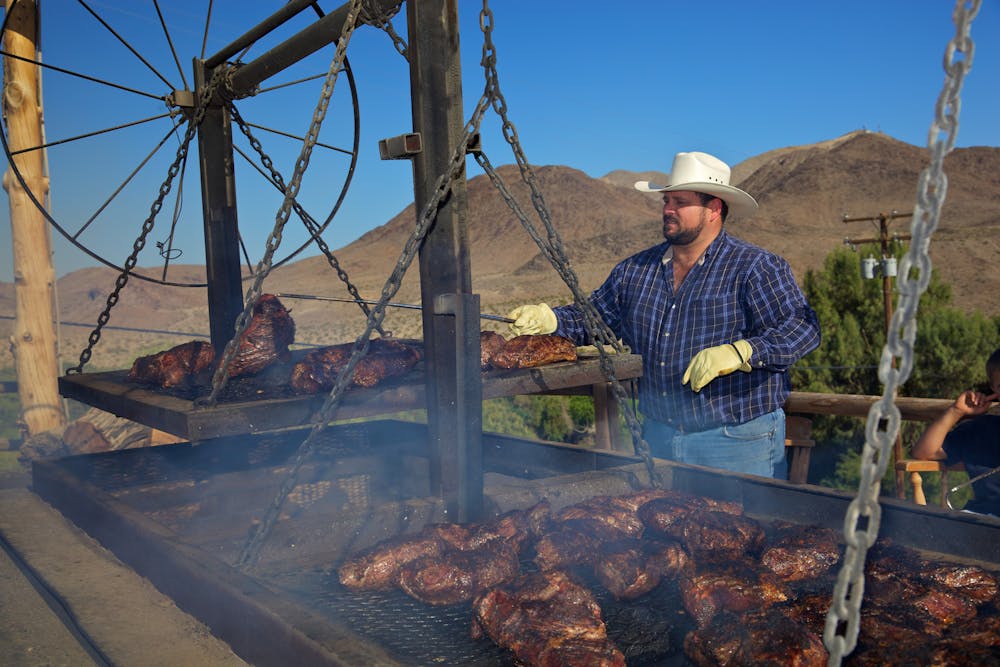

.jpg)


.jpg)