Category: Russian Federation

  • MIL-OSI Russia: Xinhua and the Central Communications Service under the President of Kazakhstan signed a cooperation agreement

    Translation. Region: Russian Federal

    Source: People’s Republic of China in Russian – People’s Republic of China in Russian –

    Source: People’s Republic of China – State Council News

    ASTANA, June 22 (Xinhua) — Director General of China’s Xinhua News Agency Fu Hua and Kazakh Presidential Aide Arman Kyrykbayev exchanged copies of a signed cooperation agreement in the Kazakh capital Astana on Sunday.

    According to the agreement, the Xinhua New Media Center will support the Central Communications Service under the President of Kazakhstan in the field of new media technologies and provide consulting services of the think tank for the development of Kazakhstan’s big data and computing centers, as well as for the construction and operation of the China-Kazakhstan Exchange and Cooperation Center. In addition, the parties agreed to carry out labor exchanges and training.

    The Kazakh side hopes that the exchange and cooperation center will provide support in such areas as cultural innovation, Kazakh-Chinese settlements, ensuring uninterrupted trade, cross-border transactions with intellectual property, personnel exchange and training. –0–

    MIL OSI Russia News

  • MIL-OSI Global: US and Iran have a long, complicated history, spanning decades before US strikes on nuclear sites

    Source: The Conversation – USA – By Jeffrey Fields, Professor of the Practice of International Relations, USC Dornsife College of Letters, Arts and Sciences

    People observe fire and smoke from an Israeli airstrike on an oil depot in Tehran, Iran, on June 15, 2025. Stringer/Getty Images

    With the U.S. bombing of three nuclear sites in Iran, relations between the two countries have arguably reached one of the lowest points in modern times. But the bad blood between the two countries isn’t new: The U.S. and Iran have been in conflict for decades – at least since the U.S. helped overthrow a democracy-minded prime minister, Mohammed Mossadegh, in August 1953. The U.S. then supported the long, repressive reign of the Shah of Iran, whose security services brutalized Iranian citizens for decades.

    The two countries have been particularly hostile to each other since Iranian students took over the U.S. Embassy in Tehran in November 1979, resulting in economic sanctions and the severing of formal diplomatic relations between the nations.

    Since 1984, the U.S. State Department has listed Iran as a “state sponsor of terrorism,” alleging the Iranian government provides terrorists with training, money and weapons.

    Some of the major events in U.S.-Iran relations highlight the differences between the nations’ views, but others arguably presented real opportunities for reconciliation.

    1953: US overthrows Mossadegh

    Mohammed Mossadegh.
    Wikimedia Commons

    In 1951, the Iranian Parliament chose a new prime minister, Mossadegh, who then led lawmakers to vote in favor of taking over the Anglo-Iranian Oil Company, expelling the company’s British owners and saying they wanted to turn oil profits into investments in the Iranian people. The U.S. feared disruption in the global oil supply and worried about Iran falling prey to Soviet influence. The British feared the loss of cheap Iranian oil.

    President Dwight Eisenhower decided it was best for the U.S. and the U.K. to get rid of Mossadegh. Operation Ajax, a joint CIA-British operation, convinced the Shah of Iran, the country’s monarch, to dismiss Mossadegh and drive him from office by force. Mossadegh was replaced by a much more Western-friendly prime minister, handpicked by the CIA.

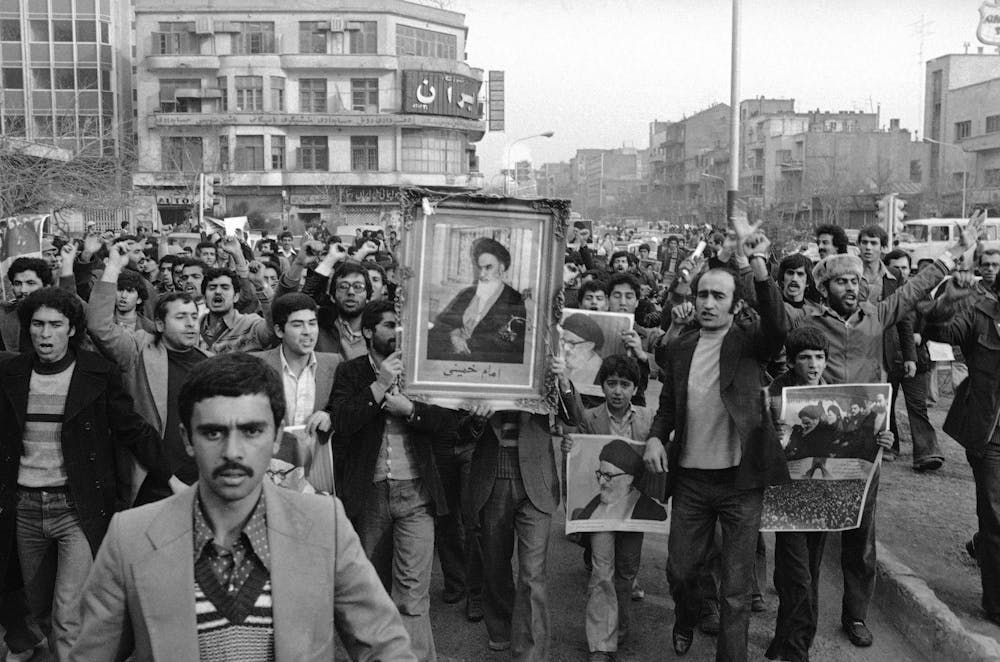
    Demonstrators in Tehran demand the establishment of an Islamic republic.
    AP Photo/Saris

    1979: Revolutionaries oust the shah, take hostages

    After more than 25 years of relative stability in U.S.-Iran relations, the Iranian public had grown unhappy with the social and economic conditions that developed under the dictatorial rule of Shah Mohammad Reza Pahlavi.

    Pahlavi enriched himself and used American aid to fund the military while many Iranians lived in poverty. Dissent was often violently quashed by SAVAK, the shah’s security service. In January 1979, the shah left Iran, ostensibly to seek cancer treatment. Two weeks later, Ayatollah Ruhollah Khomeini returned from exile in Iraq and led a drive to abolish the monarchy and proclaim an Islamic government.

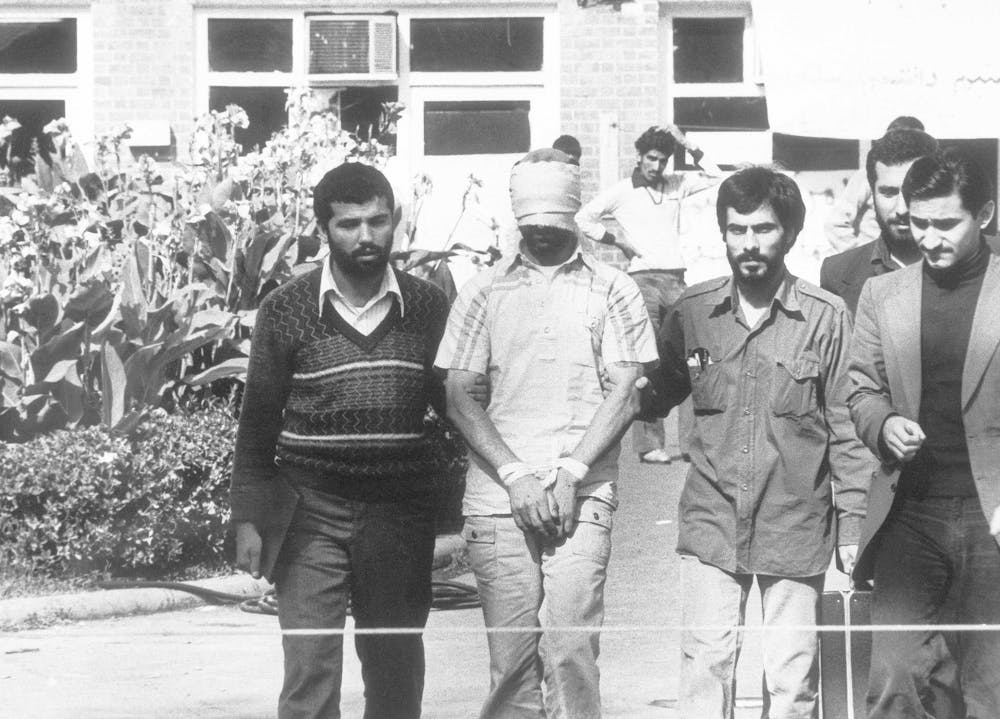
    Iranian students at the U.S. Embassy in Tehran show a blindfolded American hostage to the crowd in November 1979.
    AP Photo

    In October 1979, President Jimmy Carter agreed to allow the shah to come to the U.S. to seek advanced medical treatment. Outraged Iranian students stormed the U.S. Embassy in Tehran on Nov. 4, taking 52 Americans hostage. That convinced Carter to sever U.S. diplomatic relations with Iran on April 7, 1980.

    Two weeks later, the U.S. military launched a mission to rescue the hostages, but it failed, with aircraft crashes killing eight U.S. servicemembers.

    The shah died in Egypt in July 1980, but the hostages weren’t released until Jan. 20, 1981, after 444 days of captivity.

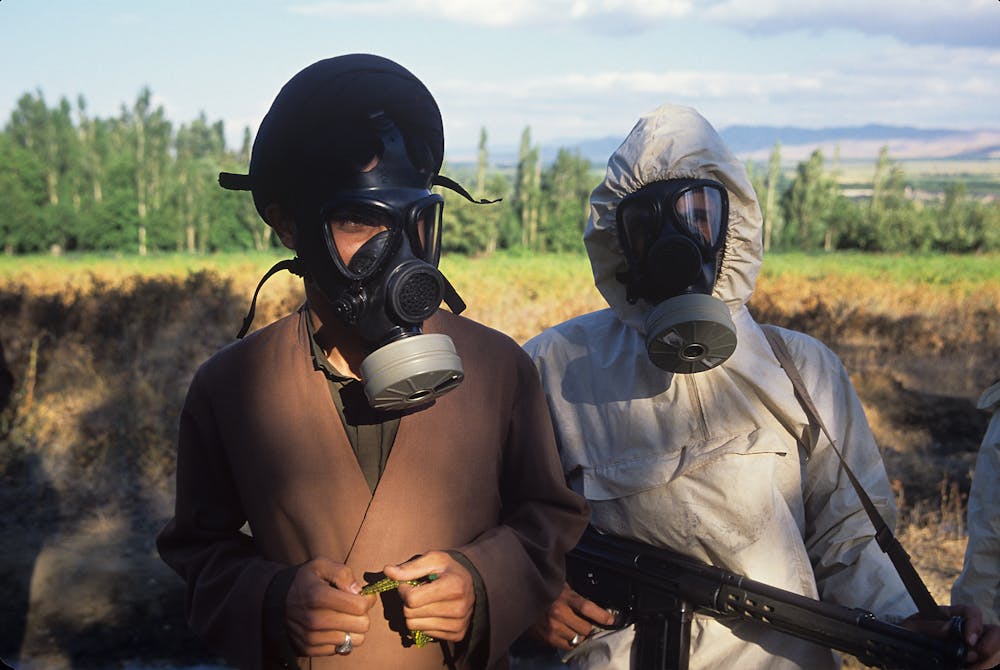
    An Iranian cleric, left, and an Iranian soldier wear gas masks to protect themselves against Iraqi chemical-weapons attacks in May 1988.
    Kaveh Kazemi/Getty Images

    1980-1988: US tacitly sides with Iraq

    In September 1980, Iraq invaded Iran, an escalation of the two countries’ regional rivalry and religious differences: Iraq was governed by Sunni Muslims but had a Shia Muslim majority population; Iran was led and populated mostly by Shiites.

    The U.S. was concerned that the conflict would limit the flow of Middle Eastern oil and wanted to ensure the conflict didn’t affect its close ally, Saudi Arabia.

    The U.S. supported Iraqi leader Saddam Hussein in his fight against the anti-American Iranian regime. As a result, the U.S. mostly turned a blind eye toward Iraq’s use of chemical weapons against Iran.

    U.S. officials moderated their usual opposition to those illegal and inhumane weapons because the U.S. State Department did not “wish to play into Iran’s hands by fueling its propaganda against Iraq.” In 1988, the war ended in a stalemate. More than 500,000 military and 100,000 civilians died.

    1981-1986: US secretly sells weapons to Iran

    The U.S. imposed an arms embargo after Iran was designated a state sponsor of terrorism in 1984. That left the Iranian military, in the middle of its war with Iraq, desperate for weapons and aircraft and vehicle parts to keep fighting.

    The Reagan administration decided that the embargo would likely push Iran to seek support from the Soviet Union, the U.S.’s Cold War rival. Rather than formally end the embargo, U.S. officials agreed to secretly sell weapons to Iran starting in 1981.

    The last shipment, of anti-tank missiles, was in October 1986. In November 1986, a Lebanese magazine exposed the deal. That revelation sparked the Iran-Contra scandal in the U.S., with Reagan’s officials found to have collected money from Iran for the weapons and illegally sent those funds to anti-socialist rebels – the Contras – in Nicaragua.

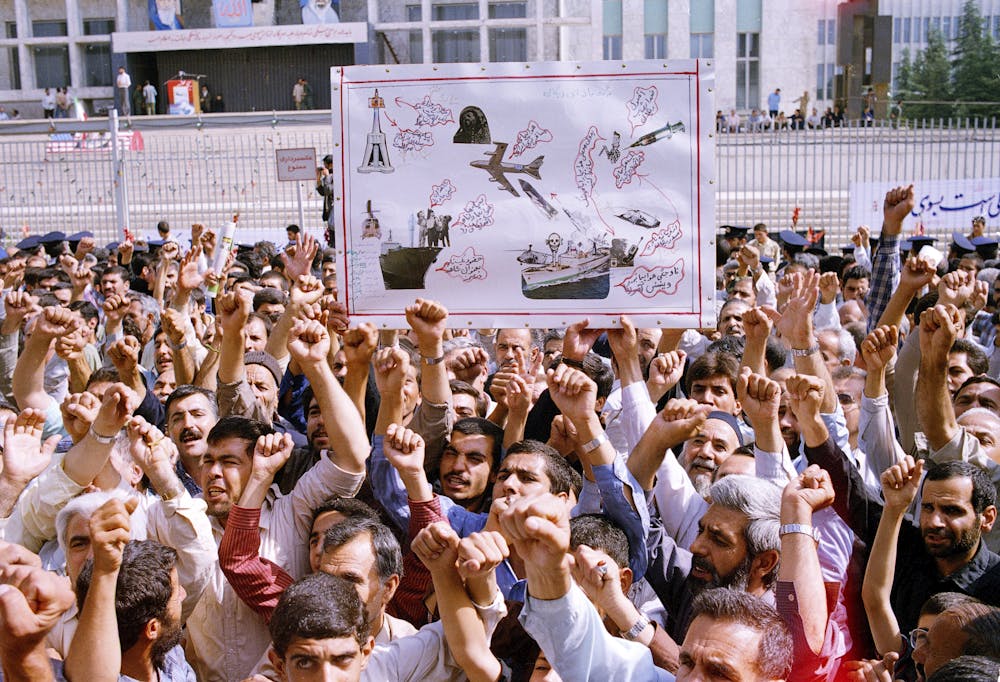
    At a mass funeral for 76 of the 290 people killed in the shootdown of Iran Air 655, mourners hold up a sign depicting the incident.
    AP Photo/CP/Mohammad Sayyad

    1988: US Navy shoots down Iran Air flight 655

    On the morning of July 8, 1988, the USS Vincennes, a guided missile cruiser patrolling in the international waters of the Persian Gulf, entered Iranian territorial waters while in a skirmish with Iranian gunboats.

    Either during or just after that exchange of gunfire, the Vincennes crew mistook a passing civilian Airbus passenger jet for an Iranian F-14 fighter. They shot it down, killing all 290 people aboard.

    The U.S. called it a “tragic and regrettable accident,” but Iran believed the plane’s downing was intentional. In 1996, the U.S. agreed to pay US$131.8 million in compensation to Iran.

    1997-1998: The US seeks contact

    In August 1997, a moderate reformer, Mohammad Khatami, won Iran’s presidential election.

    U.S. President Bill Clinton sensed an opportunity. He sent a message to Tehran through the Swiss ambassador there, proposing direct government-to-government talks.

    Shortly thereafter, in early January 1998, Khatami gave an interview to CNN in which he expressed “respect for the great American people,” denounced terrorism and recommended an “exchange of professors, writers, scholars, artists, journalists and tourists” between the United States and Iran.

    However, Supreme Leader Ayatollah Ali Khamenei didn’t agree, so not much came of the mutual overtures as Clinton’s time in office came to an end.

    In his 2002 State of the Union address, President George W. Bush characterized Iran, Iraq and North Korea as constituting an “Axis of Evil” supporting terrorism and pursuing weapons of mass destruction, straining relations even further.

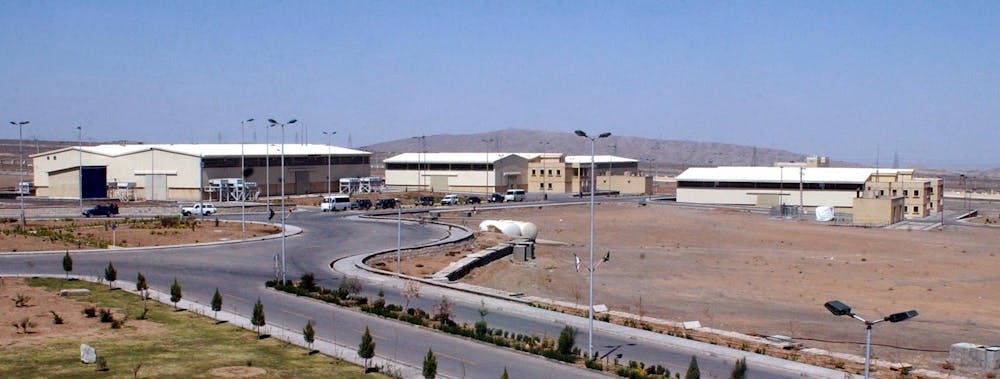
    Inside these buildings at the Natanz nuclear facility in Iran, technicians enrich uranium.
    AP Photo/Vahid Salemi

    2002: Iran’s nuclear program raises alarm

    In August 2002, an exiled rebel group announced that Iran had been secretly working on nuclear weapons at two installations that had not previously been publicly revealed.

    That was a violation of the terms of the Nuclear Nonproliferation Treaty, which Iran had signed, requiring countries to disclose their nuclear-related facilities to international inspectors.

    One of those formerly secret locations, Natanz, housed centrifuges for enriching uranium, which could be used in civilian nuclear reactors or enriched further for weapons.

    Starting in roughly 2005, U.S. and Israeli government cyberattackers together reportedly targeted the Natanz centrifuges with a custom-made piece of malicious software that became known as Stuxnet.

    That effort, which slowed down Iran’s nuclear program was one of many U.S. and international attempts – mostly unsuccessful – to curtail Iran’s progress toward building a nuclear bomb.

    2003: Iran writes to Bush administration

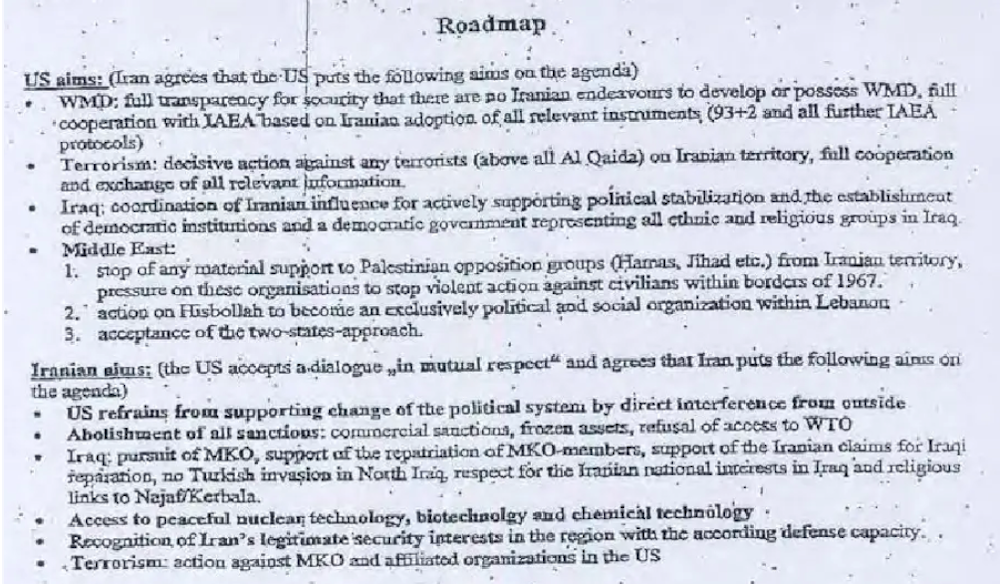
    An excerpt of the document sent from Iran, via the Swiss government, to the U.S. State Department in 2003, appears to seek talks between the U.S. and Iran.
    Washington Post via Scribd

    In May 2003, senior Iranian officials quietly contacted the State Department through the Swiss embassy in Iran, seeking “a dialogue ‘in mutual respect,’” addressing four big issues: nuclear weapons, terrorism, Palestinian resistance and stability in Iraq.

    Hardliners in the Bush administration weren’t interested in any major reconciliation, though Secretary of State Colin Powell favored dialogue and other officials had met with Iran about al-Qaida.

    When Iranian hardliner Mahmoud Ahmadinejad was elected president of Iran in 2005, the opportunity died. The following year, Ahmadinejad made his own overture to Washington in an 18-page letter to President Bush. The letter was widely dismissed; a senior State Department official told me in profane terms that it amounted to nothing.

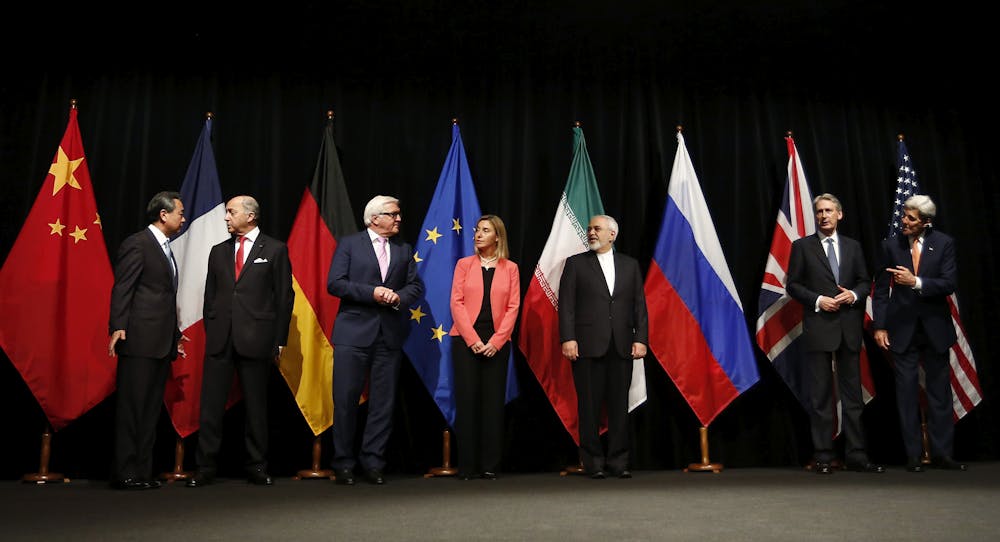
    Representatives of several nations met in Vienna in July 2015 to finalize the Iran nuclear deal.
    Austrian Federal Ministry for Europe, Integration and Foreign Affairs/Flickr

    2015: Iran nuclear deal signed

    After a decade of unsuccessful attempts to rein in Iran’s nuclear ambitions, the Obama administration undertook a direct diplomatic approach beginning in 2013.

    Two years of secret, direct negotiations initially bilaterally between the U.S. and Iran and later with other nuclear powers culminated in the Joint Comprehensive Plan of Action, often called the Iran nuclear deal.

    Two years of secret, direct negotiations conducted bilaterally at first between the U.S. and Iran and later with other nuclear powers culminated in the Joint Comprehensive Plan of Action, often called the Iran nuclear deal.

    Iran, the U.S., China, France, Germany, Russia and the United Kingdom signed the deal in 2015. It severely limited Iran’s capacity to enrich uranium and mandated that international inspectors monitor and enforce Iran’s compliance with the agreement.

    In return, Iran was granted relief from international and U.S. economic sanctions. Though the inspectors regularly certified that Iran was abiding by the agreement’s terms, President Donald Trump withdrew from the agreement in May 2018.

    2020: US drones kill Iranian Maj. Gen. Qassem Soleimani

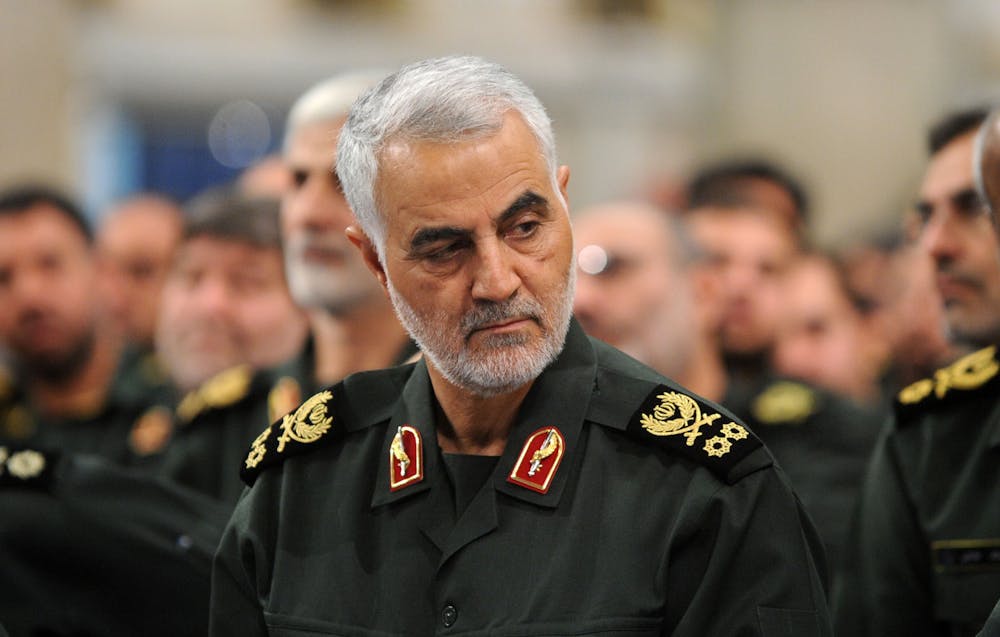
    An official photo from the Iranian government shows Maj. Gen. Qassem Soleimani, who was killed in a Jan. 3 drone strike ordered by President Donald Trump.
    Iranian Supreme Leader Press Office/Anadolu Agency via Getty Images

    On Jan. 3, 2020, an American drone fired a missile that killed Maj. Gen. Qassem Soleimani, the leader of Iran’s elite Quds Force. Analysts considered Soleimani the second most powerful man in Iran, after Supreme Leader Ayatollah Khamenei.

    At the time, the Trump administration asserted that Soleimani was directing an imminent attack against U.S. assets in the region, but officials have not provided clear evidence to support that claim.

    Iran responded by launching ballistic missiles that hit two American bases in Iraq.

    2023: The Oct. 7 attacks on Israel

    Hamas’ brazen attack on Israel on Oct. 7, 2023, provoked a fearsome militarized response from Israel that continues today and served to severely weaken Iran’s proxies in the region, especially Hamas – the perpetrator of the attacks – and Hezbollah in Lebanon.

    2025: Trump 2.0 and Iran

    Trump saw an opportunity to forge a new nuclear deal with Iran and to pursue other business deals with Tehran. Once inaugurated for his second term, Trump appointed Steve Witkoff, a real estate investor who is the president’s friend, to serve as special envoy for the Middle East and to lead negotiations.

    Negotiations for a nuclear deal between Washington and Tehran began in April, but the countries did not reach a deal. They were planning a new round of talks when Israel struck Iran with a series of airstrikes on June 13, forcing the White House to reconsider is position.

    On June 22, in the early morning hours, the U.S. chose to act decisively in an attempt to cripple Iran’s nuclear capacity, bombing three nuclear sites and causing what Pentagon officials called “severe damage.” Iran vowed to retaliate.

    This story has been updated to reflect the U.S. bombing of Iranian nuclear sites on June 22, 2025.

    Jeffrey Fields receives funding from the Carnegie Corporation of New York and Schmidt Futures.

    ref. US and Iran have a long, complicated history, spanning decades before US strikes on nuclear sites – https://theconversation.com/us-and-iran-have-a-long-complicated-history-spanning-decades-before-us-strikes-on-nuclear-sites-259240

    MIL OSI – Global Reports

  • MIL-OSI Russia: Iranian FM calls US military aggression against Iranian nuclear facilities ‘crossing red line’

    Translation. Region: Russian Federal

    Source: People’s Republic of China in Russian – People’s Republic of China in Russian –

    Source: People’s Republic of China – State Council News

    ISTANBUL, June 22 (Xinhua) — Iranian Foreign Minister Abbas Araghchi on Sunday strongly condemned the U.S. military aggression against the Islamic Republic’s nuclear facilities, saying Tehran is considering multiple options to respond to the “crossing of a red line.”

    “The US attack on Iran is a flagrant, serious and unprecedented violation of the fundamental principles of the UN Charter and international law,” A. Araghchi emphasized at a press conference in Istanbul.

    The diplomat noted that the American administration, which “tramples on the law,” bears “sole and full” responsibility for the consequences of its act of “aggression.”

    “Of course, the door to diplomacy should always be open. But this is not the case now. My country is under attack, aggression, and we must respond based on our legitimate right to self-defense. We will do this as long as necessary and necessary,” A. Araghchi said.

    “We are now counting the damage,” he added, calling on the world and international organizations, including the International Atomic Energy Agency, to act in accordance with their responsibilities in the face of this “violation of international law.”

    The Iranian Foreign Minister also said that he would meet with Russian President Vladimir Putin in Moscow on June 23 to discuss the developments in the aftermath of the American strikes.

    Currently, A. Araghchi is in Turkey, where he arrived to participate in the 51st session of the Council of Foreign Ministers of the Organization of Islamic Cooperation in Istanbul. –0–

    MIL OSI Russia News

  • MIL-OSI Russia: Astana Consensus adopted at China-Central Asia News Agency Forum

    Translation. Region: Russian Federal

    Source: People’s Republic of China in Russian – People’s Republic of China in Russian –

    Source: People’s Republic of China – State Council News

    ASTANA, June 22 (Xinhua) — The China-Central Asia News Agency Forum was held in Astana, capital of Kazakhstan, on Sunday. The forum adopted the Astana Consensus of the China-Central Asia News Agency Forum, which proposes deepening cooperation between the media of China and Central Asian countries and promoting the building of a China-Central Asia community with a shared future.

    The two sides noted that over the past 30 years since the establishment of diplomatic relations between China and the five Central Asian countries, their relations have been elevated to a comprehensive strategic partnership, with all-round cooperation continuously deepening. As stated in the document, the two sides are jointly building a China-Central Asia community with a shared future based on mutual assistance, common development, common security and friendship from generation to generation, making contributions to the construction of a community with a shared future for mankind.

    The parties highly appreciated the results of cooperation between the media of China and the five Central Asian countries in recent years in such aspects as news exchange, high-level contacts and information coverage. It was emphasized that close communication and interaction between the media of the six countries within the framework of such multilateral mechanisms as the World Media Summit, the Global South Media and Think Tank Forum and the China-Central Asia News Agency Forum are conducive to further deepening mutual understanding and friendship between the peoples of China and Central Asia, deepening mutually beneficial cooperation and advancing the construction of a China-Central Asia community with a shared future.

    The two sides noted that in the face of rapid and profound changes in the world and the complex international situation, the media of China and the five Central Asian countries should further expand exchanges, deepen cooperation, join forces and coordinate actions to promote international justice, push global governance in a more just and reasonable direction, inject new impetus into efforts to strengthen the unity and cooperation of the Global South and promote world peace and development.

    The two sides agreed to develop and utilize the China-Central Asia News Agency Forum, conduct active bilateral and multilateral people-to-people exchanges, intensify high-level contacts and mutual visits of staff, organize joint reporting, professional exchange seminars and personnel training events to deepen mutual understanding, promote mutual learning and exchange of experience, and build media capacity.

    The parties agreed that in the context of the rapid development of artificial intelligence /AI/ technologies, it is necessary to firmly adhere to journalistic ethics and professional standards, provide the audience with reliable, objective, comprehensive and impartial news information, oppose the use of AI technologies for such purposes as fabricating fake news and spreading rumors, and protect the authority of the media and public trust in them.

    The two sides expressed support for further strengthening exchanges and cooperation in the field of economic information, as well as deepening cooperation in information exchange, holding events and sharing resources within the Belt and Road Economic Information Partnership network.

    The two sides agreed to strengthen cooperation within multilateral mechanisms such as the World Media Summit, the Global South Media and Think Tank Forum and the International Committee for Belt and Road Think Tank Cooperation, actively support and participate in activities within the context of these mechanisms, and make joint contributions to their development.

    The China-Central Asia News Agency Forum was initiated and held by the Chinese Xinhua News Agency within the framework of the 2nd China-Central Asia Summit. The forum was attended by the heads of the Xinhua News Agency, the Television and Radio Complex of the President of the Republic of Kazakhstan, the Kyrgyz National News Agency Kabar, the National News Agency of Tajikistan Khovar, the Media-Turkmen News Agency, and the National News Agency of Uzbekistan. –0–

    MIL OSI Russia News

  • MIL-OSI Russia: China Strongly Condemns US Attack on Iran – Chinese Foreign Ministry /more details/

    Translation. Region: Russian Federal

    Source: People’s Republic of China in Russian – People’s Republic of China in Russian –

    Source: People’s Republic of China – State Council News

    BEIJING, June 22 (Xinhua) — China strongly condemns the U.S. attacks on Iran and the U.S. bombing of nuclear facilities under International Atomic Energy Agency (IAEA) safeguards, a Chinese Foreign Ministry spokesman said Sunday.

    The diplomat said this while commenting on the statement by US President Donald Trump that the United States had struck three nuclear facilities in Iran.

    As the official representative noted, by its actions the United States seriously violated the purposes and principles of the UN Charter and international law, and also exacerbated tensions in the Middle East.

    China calls on all parties to the conflict, first and foremost Israel, to cease fire as soon as possible, ensure the safety of civilians, and begin dialogue and negotiations, the official representative emphasized.

    According to him, the Chinese side is ready to cooperate with the international community to consolidate efforts, defend justice, and contribute to the restoration of peace and stability in the Middle East. –0–

    MIL OSI Russia News

  • MIL-OSI Russia: Xinjiang’s Cross-Border E-Commerce Sector Shows Dynamic Growth

    Translation. Region: Russian Federal

    Source: People’s Republic of China in Russian – People’s Republic of China in Russian –

    Source: People’s Republic of China – State Council News

    URUMQI, June 22 (Xinhua) — The cross-border e-commerce sector in northwest China’s Xinjiang Uygur Autonomous Region has seen dynamic growth, with the advantages of two key ports of Alashankou and Horgos as “global purchasing and selling” channels becoming increasingly evident, achieving highly efficient and smooth trade flow.

    Alashankou Port has seen strong growth in cross-border e-commerce. In the first five months of this year, 55.7376 million parcels worth 3.579 billion yuan (about 492 million U.S. dollars) were exported through Alashankou in cross-border online commerce, up 103 percent year-on-year. At the Alashankou Comprehensive Bonded Zone Cross-Border E-Commerce Industrial Park, trucks loaded with toys, consumer goods and other products bearing the stamp “Made in China” are constantly streaming toward Europe, Russia and other regions.

    “From January to May this year, our company’s cross-border e-commerce export volume exceeded 20 million parcels, up 50 percent year-on-year and reaching a historical high,” Kong Xianglin, deputy general manager of Oushengtong Kahang International Logistics Co., Ltd., told Xinhua. “We are currently cooperating with platforms such as Pinduoduo and AliExpress to build overseas warehouses. In the second half of the year, business with Europe is expected to grow by another 60 percent.”

    With explosive growth, cross-border e-commerce at Horgos is complementing Alashankou’s success. Over the same period, the port is expected to reach 28.05 billion yuan in trade volume, a staggering 890 percent year-on-year increase. At the cargo yard of Zhongguang Zhida Co., Ltd., daily necessities, small appliances, air conditioners and other goods are packed into containers before being shipped.

    “Today, our company’s trading volume has reached US$700 million, up about 110 percent from a year ago and a record high,” said Jiang Yong, deputy general manager of Zhongguang Zhida Co., Ltd. “Based on Khorgos’s advanced industrial base and highly efficient logistics network, we will continue to deepen our presence in the Central Asian and European markets,” he continued.

    The strong growth of the two ports is driven by the continuous optimization of the business environment and the upgrading of infrastructure. The Alashankou Port Authority, taking advantage of the Belt and Road Initiative, has invested in building a multifunctional cross-border e-commerce industrial park, attracting 15 companies and covering all import and export models. The Horgos Cross-Border E-Commerce Industrial Park has also brought together more than 40 enterprises and is purposefully building a comprehensive service ecosystem covering the entire supply chain.

    Zhang Yan, head of the New Business Model Department of Alashankou Port and Commerce Bureau, said: “We actively leverage the advantages of geographical location and industrial agglomeration, implement various support measures, solve practical difficulties for enterprises, and continuously provide cross-border e-commerce companies with turnkey services, from warehouse logistics to financial services.”

    At present, Alashankou and Horgos are making the transition from a “transit corridor economy” to an “industrial cluster economy”. With innovative models and an open ecosystem, they are jointly building a digital trade hub in a key area of the Silk Road Economic Belt, giving a strong impetus to the deepening of the opening up of Xinjiang’s border areas. -0-

    MIL OSI Russia News

  • MIL-OSI Russia: Astana hosted the China-Central Asia news agency forum

    Translation. Region: Russian Federal

    Source: People’s Republic of China in Russian – People’s Republic of China in Russian –

    Source: People’s Republic of China – State Council News

    ASTANA, June 22 (Xinhua) — The China-Central Asia News Agency Forum was held in Astana, capital of Kazakhstan, on Sunday. As one of the outcomes of the Second China-Central Asia Summit, the forum was initiated and hosted by Xinhua News Agency. It was attended by heads of Xinhua News Agency, Kazakh Presidential Television and Radio Broadcasting Complex, Kyrgyz National News Agency Kabar, Tajikistan National News Agency Khovar, Media-Turkmen News Agency and Uzbekistan National News Agency.

    Fu Hua, Director General of Xinhua News Agency, chaired the forum and delivered a speech. He said that under the joint leadership of Chinese President Xi Jinping and the leaders of Central Asian countries, exchanges and cooperation between China and the countries in the region have gained new important historical opportunities and shown incredibly bright prospects. News agencies of China and Central Asia are charged with the responsibility of spreading the “Central Asia-China Spirit” and promoting high-quality development in the region, jointly telling the stories of China-Central Asia cooperation, promoting China-Central Asia people-to-people and cultural exchanges and mutual learning between civilizations, advancing innovation and cooperation in media technology, deepening exchanges and cooperation between news agencies, and contributing to promoting the building of a community with a shared future for China and Central Asia.

    The officials of news agencies of the Central Asian countries highly appreciated the important role played by the China-Central Asia News Agency Forum in strengthening mutual understanding and cooperation, and expressed their willingness to continue to deepen exchanges and cooperation with Chinese media including the Xinhua News Agency, jointly promote the “Central Asia-China Spirit”, and make due contributions to promoting mutual learning among civilizations and achieving common development.

    Director General of the Television and Radio Complex of the President of the Republic of Kazakhstan Raushan Kazhibayeva noted that the successful holding of the Second China-Central Asia Summit outlined the direction for the development of relations between China and the countries of the region. This forum is a vivid manifestation of good-neighborliness and deep friendship between China and the countries of Central Asia, and the media should support and promote the implementation of the results achieved at the summit.

    Mederbek Shermetaliev, Director General of the Kyrgyz National News Agency Kabar, said that the Belt and Road Initiative has opened up new prospects for mutually beneficial cooperation between China and Central Asia. Strengthening information exchange and cooperation between all parties will help present an objective, truthful and three-dimensional image of China and Central Asian countries.

    According to Subhiddin Shamsiddinzoda, Director of the National Information Agency of Tajikistan “Khovar”, fruitful results have been achieved in cooperation between the Central Asian countries and China in the field of media. He also expressed hope for continued in-depth exchange of views on issues such as training talents in the field of communications, strengthening cooperation between universities and promoting the development of creative industries.

    Bekdurdy Amansaryev, Director General of the Media-Turkmen Information Agency, said all parties should set an example in establishing information partnerships based on mutual respect, equality and mutual benefit. New technologies have expanded the space for cooperation between media outlets, he noted, adding that he hopes to strengthen cooperation in the field of new media and promote digital transformation.

    Abdusaid Kuchimov, Director General of the National News Agency of Uzbekistan, noted that the media plays an important role in strengthening bilateral and multilateral cooperation between Central Asian countries and China. Media partners from Central Asia and China came together to strengthen their cooperation, which is of great importance for discussing ways to overcome common challenges.

    The forum participants agreed that the world is changing and facing many challenges, such as the spread of disinformation. The media of China and Central Asian countries should join efforts to enhance cooperation in information exchange, news dissemination and promotion of technological innovation to create a favorable information environment for regional peace and development.

    Following the forum, the Astana Consensus was adopted. –0–

    MIL OSI Russia News

  • MIL-OSI Russia: Israeli army says it hit fighter jets, missile sites in Iran

    Translation. Region: Russian Federal

    Source: People’s Republic of China in Russian –

    Source: People’s Republic of China – State Council News

    JERUSALEM, June 22 (Xinhua) — The Israel Defense Forces (IDF) said in a statement that its fighter jets struck two warplanes at Dezful airport in western Iran on Sunday morning.

    The statement said eight rocket launchers had been “neutralized” in separate strikes earlier in the morning, six of which were poised to fire into Israeli territory.

    It reported that on Saturday evening, about 20 Israeli fighter jets struck dozens of military targets in Iran.

    According to the statement, the targets hit included a military facility housing components for the production of explosives, a weapons depot and production facilities, as well as air defense systems. –0–

    MIL OSI Russia News

  • MIL-OSI Security: Information for accredited media

    Source: NATO

    PROGRAMME

    Please check the event programme for the schedule of events. The detailed media programme (pdf) also includes pools departures and other technical details.

    VENUE

     On 24 – 25 June, the NATO Summit will take place at the World Forum Convention Centre. The International Media Centre (IMC) is located in the World Forum Convention Centre. 

    The Accreditation Office is located at Stadhouderslaan 15, 2517 HV The Hague.

    PICKING UP YOUR ACCREDITATION BADGE

     You will be granted a media pass only if you received a confirmation from NATO that your application for accreditation has been successful.

     You can collect your NATO Summit media pass at the Accreditation Office, located at Stadhouderslaan 15, 2517 HV The Hague.

     You will need to show a valid national identification document (Passport or ID-card) and press card (or accreditation letter from a recognised media organisation). You will need to bring the same ID document that you used in your accreditation application.

    ACCESS TO THE INTERNATIONAL MEDIA CENTRE

     All media representatives must use Stadhouderslaan 15, 2517 HV The Hague to access the International Media Centre. 

    The location is accessible by city public transport (tram/bus), taxi, car or bike. A passenger drop-off point and bicycle racks are available. There are no parking facilities nearby.

    Tram station World Forum (served by the lines 1 and 17) and bus stop World Forum (served by the lines 24 and 28) are located in the proximity of the Accreditation Office. 

    Please note media will need to go through airport-style security screening which may take longer at peak periods. 

    Given the security procedures and distances between venues, please plan at least 45 minutes for reaching the IMC.

    OPENING HOURS

      Media Centre Accreditation Office
     Saturday, 21 June  Closed  12:00 – 18:00
     Sunday, 22 June  12:00 – 18:00  12:00 – 18:00
     Monday, 23 June  09:00 – 20:00  09:00 – 20:00
     Tuesday, 24 June  Open continuously from 07:00  07:00 – 18:00
     Wednesday, 25 June  Open continuously until 02:00 on 26 June  06:30 – 14:00

    MEDIA CENTRE / FACILITIES

    The IMC includes the following facilities:

    • General filing area which is the main working space for all media accredited to the Summit, with access to internet (free), video and audio feed, and power outlets – available on a first come first serve basis.
    • Editing area – fully booked
    • Indoor/outdoor stand-up positions – fully booked
    • TV presentation positions
    • Press briefing rooms: One large press briefing room (Main Press Theatre) and 13 other press briefing rooms of different sizes. There will also be several informal media huddle/stakeout positions.
    • One Summit TV studio and one online engagements studio
    • Catering facilities for media

    Lockers for media are available in the IMC; belongings can be stored overnight in the lockers. Bulky equipment exceeding the size of the lockers cannot be left / stored in the media centre overnight.

    The World Forum is a non-smoking building.

    For any questions during the Summit, accredited journalists can go to the Information Desk at the Media centre.

    OPEN ACCESS FOR MEDIA

    Media will have unescorted access to the following:

    • Filing, broadcast and catering area.
    • Outdoor stand-up positions
    • Press conference area – when press conferences are taking place.
    • Media huddle/stakeout area – when engagements are taking place.

    NATO Secretary General’s press conferences are open to all accredited media representatives. Press conference announced on the CCTV are open for accredited media present in the IMC.

    POOLED ACCESS FOR MEDIA

    Media access to the main Summit events is pooled. Specific pool cards for each event will be used by NATO to identify the media authorised to attend. Please consult the media programme to identify the pools for each event.

    Media representatives wishing to be considered for a media pool need to contact Summitmediaoperations@hq.nato.int. You will receive a confirmation if your request can be accommodated, and you will be invited to collect your pool card.

    By accepting a NATO pool position, you commit to share immediately all information and material collected while in the pool with any accredited media that request it, at no charge and with no restriction on the use of the material for news purposes. Media representatives and news organisations must identify that it is pooled material every time it is used. Pooled material can only be used for legitimate news purposes and it cannot be sold.

    MEDIA ACCESS TO NATIONAL EVENTS

     Participating Heads of State and Government may hold press conferences in the Media Centre. If those are open to all media, time and location will be announced on the CCTV. 

    Details about national media plans (press briefings, bilateral meetings) are available from the national delegations. Providing information about, and organizing media coverage of bilateral events is the responsibility of the respective national delegations. 

    Please contact the national delegations directly. A contact list of national press officers is available at the Information Desk in the Media Centre.

    BROADCAST AND CONTENT

    NEP Groep/Wirtz Film operates as Host TV for the NATO Summit and covers live all events open to the media. The coverage will be available via satellite (on world feed), in the International Media Centre and on the NATO website. 

    Host TV will also provide continuous broadcast quality video feed of the Public Forum in the IMC. The Public Forum will also be shown live on NATO’s YouTube channel and on www.natopublicforum.org.

    Technical details relevant for broadcasters are available here

    Broadcast-quality B-roll will be available for free download from the NATO Multimedia Portal. Journalists need to register to the portal to be able to download videos: natomultimedia.tv/portal/Register.html. For more information, contact content@natomultimedia.tv.

    Transcripts of the Secretary General’s public remarks, as well as pictures taken by NATO photographers will be available on the NATO website.

    REGISTRATION OF WIRELESS EQUIPMENT

    To ensure your wireless equipment functions properly, safely, and legally during the NATO summit, it’s important to understand whether a license is required and how to comply with national regulations. Please visit to find out:   https://www.rdi.nl/onderwerpen/public-events

    NATO PUBLIC FORUM

    The NATO Public Forum will take place on 24-25 June at the Summit site. Details about the event are available at www.natopublicforum.org.

    Direct coverage by credentialed media will be pooled and access will be escorted from the International Media Centre. Media can ask for access at the Information Desk.

    NOTE: Media cannot participate in the discussions or ask questions.

    INTERPRETATION

    There will be simultaneous interpretation into French, Russian and Ukrainian of the NATO Secretary General’s press conferences and public remarks at the start of the Summit’s working sessions. Interpretation in multiple languages will also available during the live-streaming on the NATO website. 

    Interpretation might be provided for some of the national press conferences. Headsets will be available in the respective press conference rooms.

    SECURITY

    It is strongly recommended to arrive early to clear security checks. Please comply with the instructions of security staff. Passes must be visible at all times.

    If you lose your accreditation badge, please write to NATOAccreditations@hq.nato.int and report at the Information Desk.

    CATERING

    Catering will be available at the Summit venue throughout the Summit at no cost. Snacks, coffee, water will be provided throughout the IMC during opening hours. Hot meals will be provided in the media catering area at times outlined below.

    Day Lunch Dinner Dinner
     22 June  13:00 – 15:00  –  
     23 June  12:30 – 14:30  17.30 -19.30  
     24 June  11:30 – 14:30  19:00 – 21:00  Light catering overnight
     25 June  11:30 – 14:30  18:30-21:00  Light catering overnight

    LOST AND FOUND

     Please check at the Information Desk.

    MAPS

    Access to the premises

    CONTACT POINTS

    General logistics, pool access:  Summitmediaoperations@hq.nato.int

    Media accreditation:  NATOAccreditations@hq.nato.int 

    Edit booths, standups, etc: broadcastoperations@mfasummits.nl 

    TV Studio:  broadcastoperations@hq.nato.int 

    B-roll and video distribution:  content@natomultimedia.tv

    NATO Summit Media Coordination:
    Ms. Alina COCA – Summitmediaoperations@hq.nato.int

    The Netherlands Media Coordination: antoinet-de.haan@minbuza.nl

    Media queries and / or requests for interviews of NATO officials:
    NATO Press and Media Service – press@hq.nato.int
    The Netherlands: NATO2025-press@minbuza.nl

    MIL Security OSI

  • MIL-OSI Russia: Xi’an City Becoming an Attractive Entrepreneurial Destination for Central Asian Youth

    Translation. Region: Russian Federal

    Source: People’s Republic of China in Russian – People’s Republic of China in Russian –

    Source: People’s Republic of China – State Council News

    XI’AN, June 22 (Xinhua) — “How is business going in Kazakhstan? Are there any difficulties in establishing contacts?” Begench Sakhedov, a Turkmen national, asked his business partner Wang Yi from Shaanxi Province, who was in Almaty at the time, via video link from Xi’an, northwest China’s Shaanxi Province. “Everything is going well. There are no problems in communication, even though I do not speak English or Russian, because many Kazakhs speak Chinese,” Wang Yi replied.

    As transnational partners, Wang Yi and B. Sahedov jointly run a company in Xi’an that provides cultural exchange services. As trade, economic and cultural exchanges between China and Central Asian countries expand, their company, registered in September 2023, has seen good growth.

    “After the successful holding of the first China-Central Asia Summit, we clearly felt that students from the five Central Asian countries have increased their desire to study in China because coming to China means more opportunities and no difficulties with employment,” the company’s business director, Turkmen Yagshi Aizhanov, told Xinhua. “In 2024, we helped more than 800 people come to study in China, most of them from the five Central Asian countries.”

    As mutual visa-free travel agreements between China and Central Asian countries come into effect, travel has also become more convenient. “We are currently cooperating with more than 100 universities in China,” B. Sakhedov noted.

    Xi’an, where a large number of universities and scientific and educational resources are concentrated, has become one of the popular cities for students from Central Asia who come to study in China. In recent years, many young people from Central Asia, such as B. Sakhedov, who came to China to receive higher education, choose Xi’an after graduating to start their entrepreneurial journey here.

    The Qinchuanyuan Science and Technology Big Market in Xi’an New Area, Shaanxi Province, hosted an exchange of views on entrepreneurship among foreign youth. Amina Gusarova from Kyrgyzstan told Xinhua that she registered a consulting company in Xi’an late last year. “We have already signed our first order. A Chinese enterprise that needs to expand its business is going to Kyrgyzstan for a study tour, and we provide them with comprehensive services, from consulting to translation.”

    “We have been implementing a pilot project on entrepreneurship among foreign specialists since May 2023. To date, 18 expat startup projects have already been attracted, most of the entrepreneurs are from five Central Asian countries,” said Han Ping, deputy head of the Department of Scientific and Technological Innovation and New Economy of Xi’an New Area in Shaanxi Province. “They have a very strong desire to work and live in China, and at the same time, they often invite business partners from Central Asia to Xi’an to seek cooperation opportunities.”

    Doniyor Matmusayev from Uzbekistan is one such entrepreneur. After graduating from Northwestern Polytechnical University in 2023, he registered a trading company in Xi’an that supplies Chinese goods to Central Asian countries and Russia. “We sell Chinese construction equipment to Uzbekistan, and some Chinese brands of equipment are doing very well there; we mainly sell auto parts to Kazakhstan, but Chinese electric cars are also very popular there; and we mainly supply electronics to Russia, such as switches, servers, etc.,” he said.

    Over the past two years, D. Matmusaev has worked in the provinces of Guangdong (South China), Jiangsu (East China), Zhejiang (East China), Shandong (East China) and other places. “The opening of a direct flight from Xi’an to Uzbekistan has significantly reduced the logistics shoulder. Now our electronics are delivered by air in three hours and cleared through customs on the same day,” said D. Matmusaev. “We transport large-sized equipment by road or by international freight railway routes from China to Europe. Road transportation takes 15 days, and the convenience of China-Europe express trains is not even worth mentioning.”

    According to statistics from the Shaanxi Provincial Commerce Department, the province’s foreign trade turnover with the five Central Asian countries has been growing every year. In 2024, it reached 8.575 billion yuan (about 1.18 billion US dollars), which is 48.1 percent more than the previous year. Thanks to such development dynamics, Chinese ice cream has now appeared in the product range. To make the partners more confident, in early April, D. Matmusaev accompanied a client from Uzbekistan on a trip to a Chinese ice cream factory.

    “Ice cream is a new project. We started working on it in March. These are types and flavors specially adapted for Uzbekistan from the supplier. From the beginning of April to the present, we have already sent 7 trucks of products, and they are very popular,” said D. Matmusayev.

    Today, the total volume of trade of his company with the countries of Central Asia and Russia has exceeded 2 million US dollars. “My dream is to do global business. We are ready to expand the sphere of trade and plan to start cooperation with the regions of the Middle East, Europe and America, because Chinese products are popular in an increasing number of countries, and this is an excellent business opportunity,” shared D. Matmusaev. -0-

    MIL OSI Russia News

  • MIL-OSI Russia: Beijing authorities urge people to take precautions amid prolonged heat wave

    Translation. Region: Russian Federal

    Source: People’s Republic of China in Russian – People’s Republic of China in Russian –

    Source: People’s Republic of China – State Council News

    BEIJING, June 22 (Xinhua) — Beijing authorities have urged the public to take precautions as the city continues to be gripped by a heat wave.

    Temperatures in the central part of the city ranged from 34.7 to 35.6 degrees Celsius at midday on Sunday, according to the Beijing Meteorological Observatory.

    A yellow alert for high temperatures was issued in the capital at 2.30pm on Friday, with meteorologists predicting continued hot weather throughout the coming week.

    Local authorities advised residents to limit their time outdoors and replenish fluids in a timely manner. Workers working outdoors, such as construction workers, traffic police officers, sanitation workers, and couriers, were advised to adjust their work schedules to prevent negative phenomena such as heatstroke and sunstroke.

    Beijing authorities also warned the public to use electricity safely to prevent fires, and urged parents to closely monitor children who could be at risk of drowning while trying to cool off in rivers. -0-

    MIL OSI Russia News

  • MIL-OSI Russia: |Sirens sound in Israel as Iran launches new wave of missiles

    Translation. Region: Russian Federal

    Source: People’s Republic of China in Russian – People’s Republic of China in Russian –

    Source: People’s Republic of China – State Council News

    JERUSALEM, June 22 (Xinhua) — Sirens sounded in central and northern Israel and in Israeli-controlled Jerusalem as Iran launched a new wave of ballistic missiles.

    Israelis in the affected areas were advised to remain in bomb shelters.

    It was Iran’s first ballistic missile strike on Israel in more than a day – and the first since the United States attacked three Iranian nuclear sites.

    Israel closed its airspace as an apparent precaution following the US strike on Iran’s nuclear facilities, the Israel Airports Authority said earlier.

    The IDF said in a statement that with the approval of Defense Minister Israel Katz and after assessing the situation, it was determined that changes would be made to the Home Front Command instructions immediately as of 03:45 Sunday /00:45 GMT/.

    Earlier on Saturday, US President Donald Trump said the United States had completed attacks on three nuclear sites in Iran, namely “Fordo, Natanz and Isfahan.” –0–

    MIL OSI Russia News

  • MIL-OSI Russia: WEF Managing Director: China’s Economy Shows Resilience, Prioritizing Investment in Technology, High-Skills

    Translation. Region: Russian Federal

    Source: People’s Republic of China in Russian – People’s Republic of China in Russian –

    Source: People’s Republic of China – State Council News

    BEIJING, June 22 (Xinhua) — Chinese authorities are taking a long-term approach to economic development, investing in technology and human capital, which is evident in the evolution of emerging industries, be it green energy, industrial transformation or advanced manufacturing, said Jim Hui Neo, Managing Director of the World Economic Forum (WEF).

    In an exclusive interview with Xinhua ahead of the upcoming Summer Davos forum, which will be held from June 24 to 26 in Tianjin, northern China, Neo said the expected attendance of 1,800 delegates, more than half of whom are from global businesses, indicates significant interest in China and Asia as a whole.

    Companies and investors attending the event in Tianjin will seek partnerships in advanced manufacturing, technology, healthcare and other areas, she said.

    Commenting on the investment climate in China and Asia, Neo noted that the “ingredients” in terms of policy coherence and consistency, availability of human capital, technology readiness and broader market support are “very strong.”

    “I believe these different elements create an ecosystem that is favorable for both investors and business partnerships,” she explained.

    Notably, Neo also said the Chinese economy has shown greater resilience amid global economic uncertainty. She said Asia is expected to account for about 60 percent of global GDP growth this year, with China contributing about 30 percent.

    “So the outlook for Asia and China remains very strong,” Neo stressed, adding that there will be significant interest and attention to the potential of China and Asia at the upcoming meeting in Tianjin this year. “In particular, we will have sessions on China’s economic outlook, its approach to artificial intelligence, and the broader innovation ecosystem.”

    Addressing growing tensions in global trade, Neo noted that the WEF has a working group on trade and investment that seeks to bring together business with governments, academia and international organizations for constructive dialogue and the formation of mutually beneficial partnerships.

    “I emphasize the word ‘mutually beneficial’ because we need to look for opportunities and areas of cooperation that can benefit everyone,” she said.

    Neo said the WEF has a long-standing friendship with China and looks forward to continuing to work with the Chinese government, business and people to promote dialogue between China, Asia and the rest of the world.

    “There is great interest in Asia and China, and we hope to continue to create a platform for constructive dialogue, exchange of ideas and views, and to stimulate new partnerships and find solutions to global challenges,” she said.

    The 2025 Summer Davos Forum, or the 16th annual meeting of the World Economic Forum’s emerging leaders, entitled “Entrepreneurship in a New Era,” will focus on five key areas: decoding the global economy, China’s prospects, transforming industries, investing in people and the planet, and new energy and materials. -0-

    MIL OSI Russia News

  • MIL-OSI Global: US joins Israel in attack on Iran and ushers in a new era of impunity

    Source: The Conversation – UK – By Simon Mabon, Professor of International Relations, Lancaster University

    When US B-2 bombers hit Iran’s nuclear facilities at Fordow, Natanz and Isfahan, Donald Trump declared the strikes a success and urged the Islamic Republic to make peace or face even more devastating strikes. The US president proclaimed the might of the US military, operating in full coordination with Israel, before taking to truth social.

    Trump and the Israeli prime minister, Benjamin Netanyahu, will hope that the strikes will end Iran’s nuclear programme once and for all. It may, it may not. More certain is that the operation will sound the death knell for the post-second world war global order.

    After the horrors of the that war and the cold war that followed, a global order emerged seemingly predicated on a set of largely liberal rules and norms that sought to prevent a retreat into global conflict. Predicated on non-intervention, diplomacy and a respect for the rule of law, this global order was idealistic and – ultimately – aspirational.

    But in recent years, this vision of global politics has come crashing down. Now America joining Israel in its attacks on Iran will rightly provoke serious questions about the future of global order and what comes next.


    Get your news from actual experts, straight to your inbox. Sign up to our daily newsletter to receive all The Conversation UK’s latest coverage of news and research, from politics and business to the arts and sciences.


    Trump’s decision to use US air power to land heavy blows against Iran’s nuclear programme is the latest event on a continuum which arguably reaches back to the Hamas terror attack of October 7.

    Israel’s destruction of Gaza, its decapitation of Hamas and disabling of Hezbollah’s military capacity and its strikes against the Houthi rebels have consolidated Israel’s position of strength in the region, to generally positive acclaim from global audiences. Yet the spectre of Iran continued to loom large, even as its proxies were defeated

    Iran has long been framed as an nefarious puppet master controlling a complex web of “proxy actors” across the Middle East each accused of doing the bidding of Tehran. The reality is rather different. While the Islamic Republic undeniably wields influence over such groups, it is not the perfidious mastermind that some would suggest, nor is it the source of all ills in the region.

    Instead, Iran is in a perilous position. The Islamic Republic faces serious social and economic pressures, with the “women life freedom movement” galvanising popular opposition, while unrest across Iran’s peripheral provinces which are home to ethnic and religious minorities continues to ferment.

    In recent years, diplomacy has shown it can work, ameliorating longstanding and deep-seated animosities. This was bearing fruits as seen in the gradual rapprochement between Iran and Saudi Arabia from 2023, which had been preceded by the signing of the Abraham accords in 2020.

    Seen by many as a key achievement of Trump’s first presidency, this was a series of agreements between Israel and Bahrain, the United Arab Emirates, Morocco and Sudan in which the Arab countries recognised Israel and all sides signed a declaration of principles focused on mutual understanding, respect for human dignity, and cooperation.

    While many in Israel and the US hoped that Saudi Arabia would officially recognise Israel, the events of October 7 and the destruction of Gaza that followed ended those hopes. Now the possibility of all-out conflict between Iran and Israel and the US risks blowing a major regional conflict with global implications.

    Serious questions must be asked as to the longer-term strategy here. While Israeli officials have articulated a need for strikes on Iran’s nuclear facilities to prevent the Islamic Republic from getting a nuclear weapons capability, Iran is a signatory of the nuclear non-proliferation treaty (although it has threatened recently to quit) and key officials have regularly declared that nuclear weapons have no place in Iran’s strategic portfolio.

    Israel is not a signatory to the treaty. In fact, it is thought to possess between 75 and 400 nuclear warheads. It’s hard to tell, as the country has maintained a steadfast policy of nuclear opacity, never actually admitting the extent of its nuclear capability.

    New impunity?

    Is this the start of a new order of impunity across the region, backed by western powers? And if so, what does this mean for the war in Ukraine and the potential for an aggressive Russia engaging in further dangerous adventurism? What does it mean for the possibility of China taking advantage in this breakdown to perhaps fulfil its generations-old ambition to unite with Taiwan, by force, if necessary? Are we seeing the shift to a world in which Donald Trump’s threats to annex Greenland – even perhaps Canada – must be taken seriously?

    The contours of global politics are changing before our eyes. Gone are the norms that have served as the bedrock of the so-called liberal international order. The risk is that while this period has itself featured tragedy and suffering on an almost unimaginable scale, tearing up the rule book will be far worse.

    Simon Mabon receives funding from Carnegie Corporation of New York and the Henry Luce Foundation. He is a Senior Research Fellow with the Foreign Policy Centre.

    ref. US joins Israel in attack on Iran and ushers in a new era of impunity – https://theconversation.com/us-joins-israel-in-attack-on-iran-and-ushers-in-a-new-era-of-impunity-259511

    MIL OSI – Global Reports

  • MIL-OSI Africa: SA supports the inclusion of more voices at SPIEF 

    Source: South Africa News Agency

    With the St. Pietersburg International Economic Forum (SPIEF) remaining as one of the foremost platforms for global dialogue on economic cooperation and inclusive growth, South Africa supports the increasing inclusion of voices from the Global South at the forum.

    “The St. Petersburg International Economic Forum has evolved over the years from a primarily Russian and Eurasian platform into a global meeting point for policymakers, economists, CEOs, innovators, and thought leaders. SPIEF provides a space for emerging economies to shape global economic discourse, influence trade rules, and negotiate developmental priorities.

    “In this regard, South Africa supports the increasing inclusion of voices from the Global South at SPIEF. We support the growing participation of delegations from Africa, Latin America, and Asia,” said Deputy President Paul Mashatile.

    In his address to the plenary session of the forum on Friday, the Deputy President said that it is essential that the platform “not only reflects but actively amplifies the aspirations and strategic interests of developing economies.”

    The Deputy President’s participation in the SPIEF formed part of his working visit aimed at strengthening economic and trade ties between South Africa and Russia.

    He said that SPIEF’s value lies in its unique capacity to bridge geopolitical divides and promote dialogue beyond the dominant narratives adding that it enables countries with diverse histories, economies, and political systems to find common ground in promoting trade, innovation, and sustainable development. 

    “In an era of growing polarisation, SPIEF is a vital pillar of pragmatic cooperation. South Africa is prepared to contribute to the promotion of cooperation and collaboration among nations in order to benefit all. We believe that a more equitable, prosperous, and tranquil world can be achieved through collaboration,” he said.

    G20

    With South Africa presiding over the G20 this year, the country has prioritised issues like debt sustainability, global financial reform, access to technology, and inclusive economic recovery.

    “We are championing the representation of Africa in global decision-making structures, including the full integration of the African Union into the G20 framework.

    We are also working to ensure that global economic policy aligns with the goals of Africa’s Agenda 2063, the African Union’s blueprint for inclusive growth and sustainable development. It promotes industrialisation, connectivity, regional integration, and the African Continental Free Trade Area. We offer a compelling value proposition to global investors and partners,” said the Deputy President.

    He said that South Africa is the gateway to Africa, rooted in democratic governance, a robust financial system, and world-class infrastructure. The country also boosts strong institutions and aims to be a centre of innovation, inclusive industrialisation, and green growth.

    “Moreover, South Africa brings to the table decades of multilateral experience, a commitment to peacebuilding and development cooperation, and a bridge-building role between advanced and emerging economies. We do not merely seek partnerships—we offer solutions, grounded in African realities and global aspirations.

    “In doing so, South Africa hopes to cement G20 priorities in African reality, ensuring that the recovery from global crises does not exacerbate inequality but rather creates opportunities for inclusive transformation. We are pushing for a new international development funding agreement that resolves historical inequalities while also preparing the Global South to respond to future shocks with resilience.”

    Multilateralism

    The Deputy President also spoke of the need to reinvigorate multilateralism.

    “The multilateral order is under pressure, and economic nationalism is on the rise. At the same time, we face collective challenges that require urgent cooperation: climate change, energy transitions, food insecurity, global health disparities, and digital inequality.

    “It is in this context that we must reaffirm the principles of mutual respect, sovereignty, equality, and solidarity. We must resist the return to protectionism and instead build a global trading system that is transparent, rules-based, and inclusive.”

    He added that developing economies must have greater representation in global standard-setting institutions. In addition, the reform of the World Trade Organisation, the International Monetary Fund, and other Bretton Woods institutions must be accelerated to reflect contemporary global realities.

    “Through the strengthening of multipolarity, we are able to harness the collective power of our nations to construct a future that is more sustainable for future generations. South Africa is prepared to do its share in promoting international cooperation and collaboration for the future of all nations. 

    “The future is not being written in boardrooms in the Global North alone. It is being written in the towns of East Africa, in the innovation corridors of Southeast Asia, in the mines and digital labs of Latin America, and the energy, agriculture, and science sectors of Eurasia. SPIEF is one of the few remaining global platforms where this future can be shaped in dialogue.”

    Deputy President Mashatile called for investment in partnerships that are equitable and mutually beneficial. –SAnews.gov.za

    MIL OSI Africa

  • MIL-OSI Russia: Yingkou City in Liaoning Province Exports Plums to Kazakhstan for the First Time

    Translation. Region: Russian Federal

    Source: People’s Republic of China in Russian – People’s Republic of China in Russian –

    Source: People’s Republic of China – State Council News

    DALIAN, June 22 (Xinhua) — A batch of 38 tons of fresh plums was loaded onto trucks at a production site of Longxin Fruit Co., Ltd. in Yingkou, northeast China’s Liaoning Province, and shipped to Kazakhstan. The cargo will travel by land via Tacheng Port in northwest China’s Xinjiang Uygur Autonomous Region. This is Yingkou’s first batch of plums exported to Kazakhstan.

    Yingkou, with its distinct four seasons and abundant sunshine, has excellent conditions for growing plums and other specialty fruits. “Plums have good shelf life and transportability, which greatly reduces the cost of exporting by land. This year, we plan to enter the Central Asian markets, but initially we had little knowledge of the quarantine standards and market access requirements in the countries involved,” said Han Yingchun, CEO of Longxin.

    According to Han Yingchun, after learning of the company’s difficulties, customs and other departments immediately organized regular training and consultations, helping the company and fruit growers improve the management of the fruit growing process to ensure that the export products meet the necessary requirements.

    In order to promote the export of local special fruits including plum, Dalian Customs has continuously maintained the smooth operation of the “green channel” for inspection of export fruits at the place of origin, providing preferential measures. At the same time, the customs monitors the harvesting schedules of orchards and packing schedules of factories in real time, ensuring the principle of “application-inspection-export permit” for export fruits, achieving “zero waiting time” in customs clearance.

    According to statistics, from January to May this year, Bayuquan District Customs, administratively subordinate to Dalian Customs, carried out origin inspection of 2,994.89 tons of special fruits exported to Central Asian countries, with a total value of 24.7341 million yuan (about 3.4 million US dollars). -0-

    MIL OSI Russia News

  • MIL-OSI Russia: Instant Retailing Is Changing Consumer Habits in China

    Translation. Region: Russian Federal

    Source: People’s Republic of China in Russian – People’s Republic of China in Russian –

    Source: People’s Republic of China – State Council News

    NANNING, June 22 (Xinhua) — In the picturesque countryside of south China’s Guangxi Zhuang Autonomous Region, Alex Turner, a Briton, limped to his guesthouse, trying not to hurt his finger after a walk, and clicked a few times on his smartphone. Within 30 minutes, a sealed yellow package arrived at his doorstep.

    “I ordered nail clippers and wound care,” Turner said. “I also added dental floss and insect repellent to get a discount on the order.”

    The lightning-fast service is emblematic of China’s rapidly growing instant retail sector. Major e-commerce players like Alibaba, JD.com and Meituan have bet big on the “anything delivered in 30 minutes” model. As more Chinese people order everything from groceries to medicine via apps, instant delivery has transformed their daily lives.

    According to a report from analytics company MoonFox Data, China’s instant retail market size will reach 780 billion yuan (about $108.8 billion) by 2024 and is expected to exceed 2 trillion yuan by 2030. Alibaba, JD.com and Meituan are driving this growth by meeting the growing demand for instant consumption.

    “Speed and accessibility are the top priorities of today’s consumers,” said Zhao Feng, dean of the School of Business at Guangxi University of Finance and Economics. “Half-hour delivery is not a marketing gimmick, but a revolution. It meets the demand for convenience, eliminates the hassle of shopping, stimulates impulse spending, and increases overall spending,” he added.

    Research from consulting firm Accenture shows that more than half of consumers born after 1995 expect same-day delivery and are willing to pay for speedy delivery.

    For Li Wei, a personal trainer in Nanning, instant retail has eliminated the need to plan ahead: “I don’t need to stock up on toilet paper, snacks or drinks. With a few clicks, the goods arrive faster than I can change my mind.”

    Beyond convenience, consumers are drawn to discounts and the thrill of a bargain. “Sometimes it’s not just about convenience,” says Zhang Chaozhen, a graduate student at Guangxi University, as she scrolls through the app at lunchtime, looking for the best discount on cosmetics. “It’s about the satisfaction of getting a good deal.”

    The explosion of instant retail is changing supply chains, strengthening the connection between online platforms and offline stores. Unlike traditional e-commerce with centralized warehouses, instant retail platforms use AI to connect hundreds of local stores to a network of strategically located, highly automated micro-warehouses.

    “These centers process orders efficiently, speed up shipments and prevent the accumulation of unclaimed goods,” said Zhou Yimu, brand manager of the Guishuangbai chain of convenience stores.

    In late May, Alibaba reported that daily order volume on its instant delivery platform had exceeded 40 million less than a month after its launch.

    “The instant retail model is a win-win for everyone: platforms gain access to product networks, retailers increase sales through online channels, and consumers benefit from fast delivery and a wider range of products,” said Liu Yuanshuai of instant retail supermarket Chaoyigou.

    “Cooperation with platforms has become a driver of revenue growth,” confirmed Tao Zhaogui, a manager at a pharmacy chain in Nanning. “We used to depend on visitors, but now online orders have grown by 41 percent year-on-year.”

    But the growth of the sector has exacerbated consumer protection concerns. As civil and commercial lawyer Tan Yating points out, some platforms have been accused of using big data for “discriminatory pricing.” Customer service is also lagging behind, with complicated returns processes and platforms evading liability remaining unresolved.

    “The key solution is to strengthen oversight,” Tang Yating emphasized. “Clear regulations must ensure pricing transparency and accountability of services in this fast-growing sector.” -0-

    MIL OSI Russia News

  • MIL-OSI Russia: Report “Development of the “Central Asia-China Spirit”: achievements, opportunities and prospects for regional cooperation” /1/

    Translation. Region: Russian Federal

    Source: People’s Republic of China in Russian – People’s Republic of China in Russian –

    Source: People’s Republic of China – State Council News

    ASTANA, June 22 (Xinhua) — The Xinhua Research Institute on Sunday released a report in the Kazakh capital Astana titled “Development of the Central Asia-China Spirit: Achievements, Possibilities, and Prospects of Regional Cooperation.” The full text of the report is given below.

    Development of the “Central Asia-China Spirit”:

    achievements, opportunities and prospects of regional cooperation

    Xinhua News Agency Research Institute

    Table of contents

    Preface

    Chapter 1. Results of cooperation between China and Central Asia

    1.1 Strengthening trade and economic ties

    1.2 Infrastructure development and deepening interconnectivity

    1.3 Accelerated development of cooperation along the entire production chain in the energy industry

    1.4 Innovative cooperation towards a green transition

    1.5 Promoting the formation of internal development potential in the countries of Central Asia

    1.6 Dialogue of civilizations as a solid spiritual basis for cooperation

    1.7 Peace, security and stability as a basis for sustainable development

    Chapter 2. Opportunities and Challenges in China-Central Asia Cooperation

    2.1 New Opportunities as a Result of China’s Opening Up

    2. Potential for cooperation in the field of green economy and digital technologies

    2.3 Regional cooperation as a factor of geo-economic expansion

    2.4 Risks and challenges in the field of development and security

    Chapter 3. Looking to the Future: Strengthening the Regional Community of Shared Destiny

    3.1 Mutual support as the basis of a regional community of common destiny

    3.2 Joint development for the sake of regional prosperity

    3.3 Formation of a common security barrier for stability of the entire region

    3.4 Friendship of peoples in the spirit of the times as a guarantee of mutual understanding

    Conclusion

    Explanatory note and thanks

    Preface

    Central Asia is the heart of Eurasia, closely linked to China by a common nature and destiny, like two banks of a single river: different, but inseparable. This region is a crossroads of ancient civilizations, where different peoples and customs meet and merge. The region serves as a hub of interregional connections and a real “melting pot” of human culture.

    Looking back, we can see how China, together with the peoples of Central Asia, contributed to the establishment and prosperity of the great Silk Road, leaving behind vivid evidence of cooperation over the centuries: “Caravans stretched to the horizon, and overseas merchants flocked to the border outposts day after day.”

    In the new era, China and the Central Asian countries have become good neighbors, reliable friends, partners and brothers bound by a common destiny. Together, they are opening a new page of “friendly, safe and prosperous neighborhood” in the Eurasian space, developing and shaping the “Central Asia-China Spirit” characterized by mutual respect, mutual trust, mutual benefit, mutual assistance and promoting joint modernization through high-quality development.

    They are creating a model example of regional cooperation for the entire world.

    Since Chinese President Xi Jinping put forward the Belt and Road Initiative in 2013, China and Central Asian countries have been working together to promote the comprehensive revival of the Silk Road and build a close partnership for the future. Bilateral relations have entered a new era and reached an unprecedented level. President Xi Jinping has paid nine visits to Central Asia, visiting all five countries and eight cities, and established strong friendship with the leaders of the region. The video summit to mark the 30th anniversary of the establishment of diplomatic relations and the first China-Central Asia Summit have become important milestones in the history of bilateral ties. Based on the interests of their peoples and striving for a brighter future, China and the Central Asian countries have made a historic choice to build a closer community of shared destiny, which once again underscores their determination to develop cooperation at a higher level, with higher standards and on a qualitatively new basis.

    The recently concluded second China-Central Asia Summit marked a new start in the development of cooperation between China and the countries of the region. At this historic moment, this report offers a comprehensive overview of the key achievements, existing opportunities and challenges of the China-Central Asia partnership in the new era, as well as forecasts and analytical assessments of the prospects for further cooperation.

    The report notes that since the beginning of the new era, cooperation between China and Central Asian countries has borne rich fruit in seven major areas: trade and economic cooperation, infrastructure development, energy cooperation, new areas of partnership, enhancing development potential, mutual cultural enrichment, and joint promotion of peace and stability. China’s high-quality development, high level of its openness, as well as a new round of scientific and technological revolution and industrial transformation create unique opportunities for expanding China-Central Asian cooperation. At the same time, the partnership faces a number of challenges, including unilateral actions, rising protectionism, geopolitical risks, and threats in the field of non-traditional security.

    Looking to the future, the report stressed that cooperation between China and Central Asian countries should be based on the concept of building a community with a shared future for mankind and follow the three global initiatives. Mutual support, common development, common security and friendship passed down from generation to generation should remain the fundamental principles, aiming to strengthen the regional community with a shared future, jointly create a new chapter of regional prosperity, build a common security shield and deepen the cordial affinity between the peoples.

    We believe that in the new era, cooperation between China and Central Asia will bring sustainable development and more benefits to the peoples of the region, bring stability and positive energy to the troubled world, and become an important example of regional partnership in building a community with a shared future for mankind.

    Chapter 1. Results of cooperation between China and Central Asia

    Our cooperation is rooted in more than two thousand years of friendly relations, is reinforced by solidarity and mutual trust that has been established for 30 years since the establishment of diplomatic relations, and is significantly moving forward thanks to mutually beneficial cooperation in the new era. Many years of experience and practice have enabled us to develop and shape the “Central Asia-China Spirit”, characterized by mutual respect, mutual trust, mutual benefit, mutual assistance and the promotion of joint modernization through high-quality development.

    — Chairman of the People’s Republic of China Xi Jinping

    1.1 Strengthening trade and economic ties

    In recent years, trade and economic cooperation between China and the Central Asian countries has been steadily developing in both quantitative and qualitative terms. China has become the largest trading partner and the main source of investment for the countries in the region. After the first China-Central Asia Summit was held in 2023, the Chinese side took additional measures to promote trade, ensuring the stable flow of goods and expanding the supply of products from the Central Asian countries. As a result, bilateral trade is becoming increasingly diversified, the potential for economic cooperation continues to be actively realized, and the scale of trade is reaching new levels. The total volume of trade between China and the Central Asian countries reached 94.8 billion US dollars in 2024, an increase of 5.4 billion compared with the previous year, representing an increase of 7.2%. Compared with the initial period of establishing diplomatic relations, when this figure was only 460 million dollars, it has increased more than a hundredfold.

    Strategic alignment of the parties. An important feature of cooperation between China and the Central Asian countries is the strategic alignment of key plans and initiatives in the field of economic development. The parties strive for in-depth coordination and alignment of the Belt and Road initiative with the national development programs of the countries of the region: the New Economic Policy of Kazakhstan, the National Development Program of Kyrgyzstan until 2026, the National Development Strategy of Tajikistan for the period up to 2030, the Revival of the Silk Road strategy of Turkmenistan and the Development Strategy of the new Uzbekistan for 2022-2026. Such alignment strengthens practical cooperation in various fields and contributes to the formation of a new model of complementary and mutually beneficial partnership. During the second China-Central Asia Summit, China and the five Central Asian countries signed a treaty on eternal good-neighborliness, friendship and cooperation, which enshrined the principle of friendship between generations in legal form and became a new milestone in the history of relations between the six countries.

    Practical cooperation enters the “highway”. As China-Central Asia cooperation deepens, practical cooperation enters the “highway”. The two sides improve trade policies and work hard to ensure a stable, fair, transparent and sustainable investment climate, making trade, investment and business environment even more attractive. As of December 2024, China’s accumulated direct investment in Central Asian countries exceeded US$17 billion, and the total volume of completed contract work amounted to more than US$60 billion. Cooperation covers such areas as oil and gas production, interconnected infrastructure, manufacturing and the digital economy.

    In the Xinjiang-Uygursky Autonomous Region of China, bordering the countries of Central Asia, optimizing the work of border crossings with Kazakhstan, Kyrgyzstan and Tajikistan, passes are more quickly and more efficient. The first cross -border cooperation zone of Horgos, jointly created by China and Kazakhstan, has been operating in the innovative model of “inside the country – outside the customs territory (or“ within the country, but outside customs borders ”). This International Center has become a flagship project of bilateral economic cooperation as part of the“ One Belt, One Way. ”The starting point of the ancient shalk track. – Shensi’s province forms the center of trade in widespread consumption, such as grain, fruits and vegetables, together with the countries of the region, China develops international logistics nodes and logistics parks The Center in the north-west of the Ciano International Port, introduced the RFID radio frequency technology, which allowed to reduce the assembly time of new energy cars and increase the efficiency of organizing trains on the route China-Europe.

    Chinese -made products, including everyday goods, machine -building equipment and electronic products, are in sustainable demand among consumers in Central Asia. Products from the category of “new three types” became the basis of Chinese exports to the region. At the same time, energy resources and agricultural products from Central Asia countries are expanding the Chinese market, expanding the choice for consumers. China discovered eight “green corridors” for accelerated customs clearance of agricultural products, completely covering all car border crossings. The trade in agricultural products between the parties is rapidly developing. Export to China of high -quality agricultural goods from Central Asia, such as lemons from Tajikistan and cherries from Uzbekistan, is growing rapidly. At the same time, fresh peaches from Hebei province and Yanan apples first entered the tables of consumers in Central Asia. The Kerekhovaya and oil and fat industrial group “Aiju Grain and Oil Group), effectively using complementarity in agrarian cooperation between China and the countries of Central Asia, built and commissioned the logistics and agro-industrial park with a capacity of 1 million tons in the North Kazakhstan region. Chinese standards in the field of equipment, technology, management and service have brought real benefits to the local population. Such interaction contributes to mutually beneficial cooperation in the field of food security. Thanks to the joint efforts of China and the countries of Central Asia, the stability and effectiveness of regional production and logistics chains are ensured.

    1.2 Infrastructure development and deepening interconnectivity

    Connectivity development is a priority area of cooperation between China and Central Asian countries. The two sides make full use of the region’s geographical advantages to build “fast corridors” for the free movement of people and improve “green corridors” for the efficient movement of goods. These measures help transform Central Asian countries from “landlocked” to “land-connected,” strengthening their position as an important transportation hub on the Eurasian continent. Such infrastructure development improves people’s living conditions and stimulates the unleashing of the potential of higher-level connectivity, including the Internet of Things and other areas of digital integration between China and Central Asia.

    China and Central Asian countries have been pioneers in jointly implementing the Belt and Road Initiative, accelerating the construction of the China-Central Asia Transport Corridor and forming a multi-layered and diversified system of regional connectivity. This has resulted in the implementation of many mutually beneficial infrastructure projects. China’s construction of the Kamchik Pass Tunnel of the Angren-Pap Railway, the longest in Central Asia, has eliminated the need to bypass third countries when transporting through Uzbekistan, radically changing the mode of transportation for tens of millions of people. The China-Kyrgyzstan-Uzbekistan Highway, which crosses the Tien Shan Mountains, and the China-Tajikistan-Uzbekistan Highway, which passes through the Pamir Plateau, form a dense network of routes for freight transportation between China and Central Asian countries, significantly improving logistics and bringing tangible benefits to the people of the region.

    On December 27, 2024, the construction of the China-Kyrgyzstan-Uzbekistan railway officially began. The route of the new line starts in Kashgar, passes through the territory of Kyrgyzstan and enters Uzbekistan, with the prospect of further construction in the direction of West and South Asia. Once completed, the railway will become an important part of the southern route of the New Eurasian Continental Bridge. It will provide a convenient transport corridor connecting East and Southeast Asia with Central, West Asia, North Africa and Southern Europe. This will significantly reduce the costs of international trade for the participating countries and increase their level of integration into the world economy.

    China has signed intergovernmental air transport agreements with all five Central Asian countries, and the opening up of the aviation market continues to progress. Air traffic between Xi’an and the countries in the region has evolved from no routes at all to covering seven cities in all five countries. Currently, eight passenger flights are operating regularly, connecting China with seven cities in Central Asia. These airlines provide a strong link between the economic zones of China and Central Asia, promoting the effective integration of industrial and social supply chains.

    The China-Europe and China-Central Asia trains, which operate non-stop day and night, effectively ensure the stability and continuity of international logistics chains. On April 23, a China-Europe freight train with 55 containers of consumer goods and electronic components departed from the Khorgos border station in Xinjiang to the Polish city of Malaszewicze. This trip was a landmark one, as the number of trains passing through the Khorgos railway checkpoint exceeded 3,000, and this figure was reached 27 days earlier than last year. This was a new historical record, exceeding the figure of last year by 28.7%. According to statistics, 19 thousand China-Europe trains were sent in 2024, which is 10% more than in the previous year, and the volume of transportation amounted to 2.07 million TEU (conventional containers), which is 9% higher than the same indicator last year. 12 thousand trains were sent on the China-Central Asia route (an increase of 10%), 880 thousand TEU were transported (an increase of 12%). Currently, the China State Railway Corporation has approved 44 regular routes in the direction of Central Asia, thereby forming new international transport corridors in the Eurasian space.

    The Trans-Caspian International Transport Corridor starts in China, passes through Kazakhstan, the Caspian coast, Azerbaijan and Georgia, and then stretches to Turkey and European countries. In July 2024, Chinese President Xi Jinping and Kazakh President Kassym-Jomart Tokayev jointly attended the launch ceremony of the China-Europe direct express route via video link. For the first time, Chinese vehicles reached a Caspian port via a direct road route, which marked the official formation of a multi-level and multi-vector interconnected system combining road, rail, air and pipeline transport.

    The China-Europe train consolidation centers are developing at an accelerated pace, forming a more efficient and convenient transportation system. In February 2024, the Kazakhstan terminal in Xi’an, built in cooperation between Xi’an Free Trade Port Construction and Operation Co., Ltd. and KTZ Express JSC, began operating. In just one year, the terminal handled over 150 thousand tons of cargo, which contributes to the accelerated consolidation and distribution of Kazakhstani goods undergoing import and export operations through Xi’an. In addition, the terminal has become the embodiment of Kazakhstan’s initiative to accelerate the creation of a trade and logistics center in China. With the commissioning of the China-Kazakhstan logistics hub in Almaty on June 10 this year, the hub-to-hub transport corridor has moved to a new level.

    1.3 Accelerated development of cooperation along the entire production chain in the energy industry

    Central Asian countries are important oil and gas producers, and have a high degree of complementarity with China in such aspects as natural resource conditions and industrial structure. In recent years, China and Central Asian countries, through a mutually beneficial cooperation model, have been jointly building multi-vector, safe and efficient energy corridors, consistently expanding cooperation in such basic areas as energy and mining.

    Chinese enterprises attach great importance to the development of energy cooperation with the Central Asian countries, building long-term and strong partnerships with relevant government agencies and energy companies in the region. Back in 1997, the China National Petroleum Corporation (CNPC) successfully won a tender for the development of the Akzhuba oil field in Kazakhstan, which marked the beginning of cooperation between China and Kazakhstan in the oil and gas sector. Over the past years, Akzhubin has grown from an enterprise with an annual oil production volume of just over 2 million tons into a large oil and gas company with an annual production of over 10 million tons of oil and gas. On its basis, a full chain of the industry cycle was formed, including oil and gas exploration and production, pipeline construction and operation, oil refining and petroleum product trading, engineering and construction services, oil and gas equipment production and transportation, information technology and logistics support. The project also contributed to the creation of over 20 thousand jobs for the local population.

    In Tajikistan, Chinese energy equipment manufacturing companies built and commissioned the Thermal Power Plant No. 2 in Dushanbe, which made it possible to permanently resolve the problem of electricity shortages in the capital in winter. In Kyrgyzstan, with the support of the Chinese side, the modernization of the Bishkek Thermal Power Plant was completed, as a result of which its annual electricity generation increased from the previous 262 million kilowatt-hours to 1.74 billion, and the volume of heat supply almost doubled. In Turkmenistan, as part of the project to develop natural gas fields in the Amu Darya basin, implemented with the participation of the China National Petroleum Corporation, a production level equal to tens of millions of tons of oil equivalent per year has already been achieved, and the annual capacity of natural gas supplies exceeds 10 billion cubic meters. The implementation of a number of such large-scale projects contributes to the steady expansion of oil and gas trade between China and the countries of Central Asia, as well as to the deepening of cooperation along the entire production chain of the energy industry.

    Thanks to many years of practical cooperation between China and Central Asian countries, the network of pipeline infrastructure construction and operation is gradually improving. Lines A, B and C of the China-Central Asia gas pipeline, running through endless deserts, have been successfully put into operation and connected to the II and III stages of China’s West-East mainline. The construction of Line D is proceeding at an accelerated pace, bringing real benefits to the people of the countries along the route. In addition, the Kazakhstan-China oil pipeline has become the first international energy corridor directly connecting Kazakhstan with foreign end markets. Its implementation has made a significant contribution to the diversification of Kazakhstan’s energy exports.

    With the steady advancement of the Belt and Road Initiative, energy cooperation between China and Central Asian countries continues to deepen. It not only helps improve the region’s energy infrastructure and inject new impetus into the socio-economic development of both sides, but also makes a significant contribution to optimizing the region’s energy structure and ensuring sustainable ecological development.

    1.4 Innovative cooperation towards a green transition

    Fossil fuels currently account for about 95% of the energy supply in the five Central Asian countries. Against the backdrop of increasing climate change and the global energy transition, the region’s countries are showing growing interest in cooperation in the areas of renewable energy and green economy. However, due to limited financial resources, a shortage of specialists, and an insufficient level of technological development, the implementation of a green transition faces certain difficulties.

    During the first China-Central Asia Summit, China and the five countries in the region reached a number of agreements, including launching a joint initiative on green and low-carbon development, as well as deepening cooperation on sustainable development and combating climate change. In support of the Central Asian countries’ course towards ecological transformation, China, using its governance and production advantages in the field of new energy, is actively promoting the region’s significant potential in the field of renewable energy resources.

    In early April 2025, the Bash and Dzhankeldy wind energy projects, implemented with the investment and operational participation of China Southern Power Grid, were officially commissioned in Uzbekistan. These facilities have become the largest completed wind farms in Central Asia. Their annual output is expected to be about 3 billion kilowatt-hours of clean electricity, which will reduce carbon dioxide emissions by 1.6 million tons annually.

    More and more Chinese companies are investing in the construction of enterprises and the development of green energy in Central Asian countries, actively expanding cooperation in the field of renewable energy sources. In Uzbekistan, a 100-megawatt solar power plant was commissioned in Navoi, in Kazakhstan – a wind farm in Zhanatas, a hydroelectric power station in Turgu-Sun and a solar power plant in Almaty. The Chinese energy corporation China Huadian Group has begun construction of a gas turbine power plant in Aktau and a solar power plant in Sheli. These projects not only provide Central Asian countries with stable and sustainable green electricity, but also contribute to the modernization of local industries and create a significant number of jobs.

    China is actively developing international cooperation with Central Asian countries in combating desertification. The practical experience and scientific approaches developed in the framework of ecological recovery of the “Three Norths”, including Ningxia Hui Autonomous Region, Inner Mongolia and other regions, as well as the experience of developing the Taklamakan Desert have become a reference point for Central Asian countries that are facing similar problems of land degradation. Such cooperation not only offers real solutions in the field of sustainable development, but also opens up broad prospects for promoting the green direction within the framework of the “One Belt, One Road” initiative.

    The Aral Sea, located on the border of Uzbekistan and Kazakhstan, was previously considered the fourth largest lake in the world. But due to half a century of large-scale development of land and water resources, its area has shrunk from about 67,000 square kilometers in 1960 to about 6,000 square kilometers in 2020. This has caused serious environmental consequences: desertification, soil salinization, loss of biodiversity, and other problems. In the face of the environmental crisis, China and Central Asian countries have joined forces to implement comprehensive measures to restore the ecosystem of the Aral region. The Institute of Ecology and Geography of the Xinjiang Branch of the Chinese Academy of Sciences signed a cooperation agreement with the government of Uzbekistan and specialized organizations aimed at the ecological rehabilitation of the Aral Sea. In 2023, a pilot site was organized in the city of Nukus in western Uzbekistan, where drip irrigation technology under a film with the simultaneous supply of water and fertilizers for growing cotton was tested. Already in the first year, the yield reached a record level for this region. Currently, the institute’s specialists continue to work in the city of Muynak, located on the shallow coast. Here, salt- and drought-resistant plant species are being selected, which will become the basis for the future “greening” of the dried-up seabed and the restoration of the region’s ecosystems.

    1.5 Promoting the formation of internal development potential in the countries of Central Asia

    “China’s experience in overcoming poverty clearly shows that with persistence, step-by-step implementation of a unified plan, and persistence like a drop breaking through a rock, the problem of poverty in developing countries can be solved. Even the weakest bird can fly first – and fly high. If China can do it, other developing countries can too.” These are the words with which Chinese President Xi Jinping shared China’s experience in combating poverty with the world community at the G20 Leaders’ Summit in Rio de Janeiro in November 2024.

    Poverty is a long-standing problem of human society and a common challenge facing the entire world. China’s experience in combating poverty has attracted the attention of the international community and has become an important source of inspiration for Central Asian countries. China’s cooperation with the countries of the region has gradually shifted from the traditional one-sided “donor aid” to a model of mutual development based on technology transfer, industrial modernization, personnel training and other forms of assistance. This contributes to the joint formation of internal potential for sustainable growth and social stability.

    Implementation of targeted projects on poverty reduction with an emphasis on technology localization in accordance with the needs of Central Asian countries. China and the Central Asian countries are actively developing specialized cooperation in the field of scientific and technological support for poverty alleviation. Taking into account regional characteristics and industry constraints, the parties are accelerating the transfer of technologies to upgrade production in areas such as agricultural modernization, energy transition and infrastructure development. Within the framework of the first China-Central Asia summit, China and Uzbekistan agreed to establish a subcommittee on cooperation in the field of poverty reduction under the Intergovernmental Cooperation Committee. This is the first such subcommittee established by China in the format of interstate cooperation. Since the launch of the China-Uzbekistan cooperation mechanism on poverty reduction, the parties have achieved significant results in the areas of institutional development, personnel training and exchange of practical experience. These efforts not only contribute to the socio-economic development of Uzbekistan, but also significantly expand the content of the bilateral partnership. According to a joint study conducted by the National Statistics Committee of the Republic of Uzbekistan and the World Bank, in 2024, 719 thousand people overcame the poverty line, and the overall poverty level in the country decreased to 8.9%.

    In recent years, Northwest University of Agricultural and Forestry Science and Technology of China, based on its strong scientific areas (crop breeding, plant protection from diseases and pests, water-saving irrigation, veterinary medicine and animal husbandry, development of saline lands and food processing), has established eight overseas agricultural research and demonstration parks in Central Asian countries. One of them, a demonstration park for the technology of breeding elite varieties of fruit trees, was founded in Kyrgyzstan in 2023 in cooperation with local universities and enterprises. Taking into account the hot and dry climate of the region, which is unfavorable for growing apple trees, Chinese agricultural experts developed and selected variety-rootstock combinations. These combinations showed higher efficiency of moisture use and better survival rate compared to traditional seedlings, which made it possible to significantly increase yields and contribute to an increase in the income of local gardeners.

    Implementation of technical skills development programs as a basis for building domestic development potential. The Lu Ban Workshops, named after the legendary Chinese craftsman Lu Ban, have become a new platform for international cooperation in vocational education. In Central Asian countries, these workshops develop technical training programs based on the actual needs of local development, providing sustainable support for industrialization and poverty reduction in the region.

    Kazakhstan has become the first country in Central Asia to introduce electric vehicles on new energy sources on a large scale. However, despite the rapid growth of this sector, the country is experiencing a serious shortage of qualified specialists capable of servicing such vehicles. In December 2023, the first “Lu Ban Workshop” began operating in Kazakhstan. The first educational program was “Vehicles and Technologies”. Four training and production zones were created for practical training: on vehicle maintenance, traditional (fuel) transport systems, vehicles on new energy sources, and intelligent network transport systems. In response to the needs of the local labor market, in 2024 the workshop developed a number of new courses, including “Transmission and Intelligent Vehicle Control Technologies”, “Driver Assistance Systems (ADAS)”, and others. In addition, a new educational program “Smart Transport and Artificial Intelligence” was launched. Graduates of the Lu Ban Workshop are in high demand, and are actively invited to work by the largest automakers, as well as enterprises in the metallurgical and mining industries of Kazakhstan. In July 2024, China decided to open a second Lu Ban Workshop in the country, which will focus on training personnel for the rapidly developing artificial intelligence industry.

    At the same time, Lu Ban Workshops is implementing a “dual education” model – a combination of Chinese language training and professional skills development, which helps integrate the education system with the real needs of industry. In the context of the implementation of the “One Belt, One Road” initiative, Chinese enterprises are actively being created in Central Asian countries, which opens up broad employment opportunities for local people. The “Chinese language professional skills” model effectively improves the skills of local people through short-term courses, extra-academic and formal vocational training programs. This not only helps partially solve the problem of shortage of qualified personnel for enterprises with Chinese participation, but also promotes job creation, and thus contributes to socio-economic development and improving the standard of living in the region.

    1.6 Dialogue of civilizations as a solid spiritual basis for cooperation

    More than two thousand years ago, the civilization of central China and the cultures of Central Asia entered an era of deep integration thanks to the ancient Silk Road. This historical process laid the foundation for mutually beneficial cultural exchange and coexistence, becoming a solid foundation for modern inter-civilizational dialogue and cultural solidarity. Today, civilizational interaction between China and the Central Asian countries continues at a new level. It not only preserves and develops the cultural genes of the Silk Road era, but also serves as a powerful spiritual resource for promoting the idea of a community with a common destiny for humanity in the context of global transformation.

    A thousand-year-old friendship with the aroma of medicine remains forever. Since the emergence of the Silk Road, traditional Chinese medicine began to spread to the countries of Central Asia along with trade caravans, gradually integrating with local medical practices and contributing to their development. The Xi’an Declaration of the first China-Central Asia Summit particularly emphasized the need to “promote the establishment of traditional Chinese medicine centers, develop cooperation in the field of growing and processing medicinal herbs, and jointly pave the “Healthy Silk Road”.” In recent years, China’s cooperation with the Central Asian countries in the field of traditional medicine has been actively expanding on the basis of a number of specific joint projects. A multi-layered partnership network is being formed, covering healthcare, education and scientific research. Traditional Chinese medicine is becoming an important link, strengthening humanitarian ties and mutual understanding between the peoples of China and Central Asia.

    In March 2023, the Fourth Clinical Hospital of Xinjiang Medical University (regional hospital of traditional Chinese medicine), together with the Institute of Physical and Chemical Technology of the Xinjiang Branch of the Chinese Academy of Sciences, founded the first Center for Treatment and Training of Specialists in Traditional Chinese Medicine in Central Asia in Tashkent. As part of the project, 14 Chinese therapy methods, including acupuncture and Tuina massage, were successfully integrated into the regional healthcare system. In September of the same year, the above-mentioned hospital won a tender for the implementation of a national project to establish a China-Uzbekistan Center for Traditional Chinese Medicine. And in October, a course in Chinese medicine became a mandatory discipline in the bachelor’s degree program in traditional medicine at Tashkent State Medical University. This became the first full-fledged introduction of Chinese medicine into the higher education system of Central Asia, opening the way for the systematic training of specialized personnel locally.

    Culture as a bridge to bring hearts together.

    The Year of Tourism, the Year of Culture and the Central Asian Art Festival have been very popular with the Chinese people, and Chinese TV series such as “Minning City” and “My Altai” have resonated with Central Asian viewers. In order to implement key high-level agreements, China and Turkmenistan organized mutual Years of Culture in 2023-2024, thereby demonstrating their desire to strengthen humanitarian cooperation. Both countries have rich cultural heritage and centuries-old history. Through dance, vocal and theatrical arts, the parties presented their national identity and artistic originality, which contributed to deep cultural integration and rapprochement of peoples.

    The Nauryz holiday is an ancient tradition of the peoples of Central Asia. In March 2025, an art group from the Samarkand region of Uzbekistan presented a vibrant festive program at the Silk Road Happy World Cultural Park in the Chinese city of Xi’an. Through songs and dances, the artists conveyed the atmosphere of spring renewal, and the treat of national dishes turned the performance into a real gastronomic holiday. In April, the Consulate General of the Republic of Kazakhstan in Xi’an organized festive events in honor of Nauryz. The program included a friendly mini-football match, traditional national games, a talent contest, as well as performances of Kazakh folk music and dance. The goal of the holiday was to promote ethnocultural traditions, deepen people’s diplomacy and expand platforms for multilateral humanitarian exchange.

    Cultural and tourist exchange on the Silk Road is a movement towards each other. Tourism is becoming one of the most dynamically developing areas of cooperation between China and the Central Asian countries. The basis for this is not only favorable natural conditions and geographical proximity, but also a common historical and cultural heritage, as well as the complementary needs of the tourism markets of both sides. Deepening political trust, coordinated use of tourism resources and active market interaction make it possible to form a balanced and mutually respectful model of tourism as a form of humanitarian partnership. This gives new energy to the construction of a regional community of a common destiny and strengthens the cultural relationship between peoples.

    Central Asia is one of the fastest growing and most promising regions for inbound tourism to China. At the same time, China remains a key source of tourist flow for the countries of the region. All five Central Asian states are already fully included in the list of priority destinations for outbound tourism for Chinese citizens. In order to expand cross-border tourism, the Central Asian countries are consistently implementing measures to liberalize the visa regime. Since 2021, Uzbekistan has become the first country in the region to grant Chinese citizens the right to a visa-free stay for up to 10 days; to enter, it is enough to have a valid passport and confirmation of the travel itinerary. In November 2023, China and Kazakhstan signed an agreement on a full mutual visa-free regime, providing for the possibility of staying in the partner’s territory for up to 30 days without the need for a visa. Kyrgyzstan and Tajikistan have introduced electronic visa systems, significantly simplifying the entry procedure. On June 1, 2025, the “Agreement between the Government of the People’s Republic of China and the Government of the Republic of Uzbekistan on the mutual abolition of visas” came into force, which became another step towards strengthening humanitarian ties and facilitating mutual travel between the two countries.

    By holding tourism presentations, thematic exhibitions and other promotional activities, both sides consistently increase the recognition of tourism brands, which contributes to the growth of the attractiveness of cross-border tourism. 2024 was declared the Year of Kazakhstan Tourism in China. Thanks to the introduction of a mutual visa-free regime, there was a sharp increase in tourist flow in both directions, the number of Kazakhstani tourists visiting China increased by 31%, and the number of Chinese citizens visiting Kazakhstan increased by more than 50%. On May 29, 2025, the first cultural and tourist train “China – Central Asia” was launched, opening a new route for humanitarian interaction in the Eurasian space. This project not only strengthened the transport interconnectivity between the regions, but also gave new content to the humanitarian dimension of Chinese-Central Asian cooperation.

    1.7 Peace, security and stability as a basis for sustainable development

    At the first China-Central Asia Summit held on May 19, 2023, Chinese President Xi Jinping emphasized that the sovereignty, security, independence and territorial integrity of Central Asian countries must be reliably protected. The development path freely chosen by the peoples of the region should be respected. Central Asia’s efforts to ensure peace, good-neighborliness and stability deserve full and comprehensive support.

    In the Xi’an Declaration of the First China-Central Asia Summit, all parties unanimously noted the exceptional importance of ensuring national security, political stability and constitutional order. Any interference in the internal affairs of other states, regardless of form and pretext, including attempts to undermine the legitimate state power and organize so-called “color revolutions”, was strongly condemned. The parties also expressed firm rejection of all forms of terrorism, separatism and extremism, and confirmed their readiness to jointly combat the “three evil forces”, as well as drug trafficking, transnational organized crime, cybercrime and other types of threats. At the same time, the summit participants declared their intention to strengthen the exchange of experience on ensuring the security of key facilities and large-scale events, as well as jointly promote the safe and sustainable implementation of strategically significant projects.

    In recent years, China and the Central Asian countries have been developing comprehensive and multi-level cooperation in maintaining regional peace and stability in order to build a security community. The parties are actively increasing cooperation in the fight against terrorism, developing effective formats for multilateral interaction, and seeking new, innovative solutions in the field of security. Cooperation has been consistently expanding in key areas such as border control, countering terrorism in cyberspace, and conducting joint operations. These efforts contribute to the formation of a reliable regional security network and give a powerful impetus to ensuring long-term stability.

    In September 2024, the mechanism of the first meeting of the ministers of public security and internal affairs of China and Central Asian countries was officially launched in Lianyungang. The parties reached a number of agreements on countering transnational crime, extremism and cybercrime, and agreed to establish a permanent mechanism for exchanging information and conducting joint operations. In the same month, a meeting of the chief justices of the Supreme Courts of China and Central Asian countries was held in Urumqi, during which the parties agreed to intensify international judicial cooperation and joint efforts to combat violent extremism and terrorism. Representatives of Uzbekistan, Kazakhstan and other countries shared their experiences in the field of anti-terrorism legislation and its enforcement, which gave impetus to the formation of a new format for regional coordination in the fight against terrorism. In April 2025, at the sixth meeting of China-Central Asia foreign ministers, the participants expressed support for the establishment of the SCO Anti-Drug Center in Dushanbe. The center will operate in conjunction with the Central Asian Regional Information and Coordination Center for Combating Illicit Drug Trafficking, which will strengthen measures to identify drug trafficking and combat transnational crime.

    At the same time, China and the Central Asian countries are making efforts to deepen the institutionalization of cooperation in law enforcement and security. Multilateral and bilateral joint exercises and border patrols are held on a regular basis, which significantly reduces the space for the so-called “three evil forces”. This set of measures effectively promotes the protection of common interests in the field of security and makes a significant contribution to maintaining peace and stability in the region.

    The Xinjiang Uygur Autonomous Region of China borders on Central Asian countries. Since the first China-Central Asia Summit, China has consistently promoted security cooperation between Xinjiang and neighboring countries, strengthening cross-border cooperation mechanisms and jointly building a reliable border security line aimed at protecting peace and stability in the region. Given the complex geographical conditions and special challenges in border control in the border areas between China and Kazakhstan, Kyrgyzstan and Tajikistan, local authorities and relevant departments of both sides have been implementing innovative cooperation models.

    In November 2024, the first meeting of the Chinese-Kazakh mechanism of coordination of the activities of local authorities on the International Center for Border Cooperation “Horgos” was held in Sinjiang in the city of Horgos. The parties discussed the joint promotion of the high-quality development of the Center, as well as the strengthening of the interregional interaction between the Xinjiang-Uyghur Autonomous Region and the Zhetysu region of Kazakhstan. During the meeting, the participants exchanged views on a number of key areas of cooperation, including infrastructure development, organizing cross -border tourism, normalizing the border market environment, expanding interaction in the field of phytosanitary and veterinary control, as well as joint measures to combat crime. According to the results of the meeting, “Protocol of the first meeting of the mechanism for coordination of the activities of local authorities” and “Memorandum on the creation of a zone of cooperation in the field of cross -border tourism“ Horgos ”” were signed. In January 2025, the first meeting of the joint Sino-Kazakh commission on state border issues took place in Beijing. The parties officially announced the creation of the commission, approved its charter and highly appreciated the current state of bilateral relations, as well as the progress in the implementation of the “agreement between China and Kazakhstan on the regime of managing the state border”. It was noted that between the two countries, clearly certain boundaries were established, the border areas retain the atmosphere of stability, peace and good neighborliness. Both parties expressed their readiness to use the creation of a commission as an important impulse to further deepen cooperation in the field of border control, thereby making a contribution to the sustainable development of a comprehensive strategic partnership between China and Kazakhstan.

    Today, a stable, united and peaceful region is rapidly emerging in Central Asia, making a significant contribution to peace and stability, thereby creating a solid foundation for building a closer community with a shared future “China-Central Asia”. In March 2025, Kyrgyzstan, Tajikistan and Uzbekistan signed a border alignment agreement, finally settling border issues, which became a model for strengthening peace, stability and prosperity in the region. /follows/
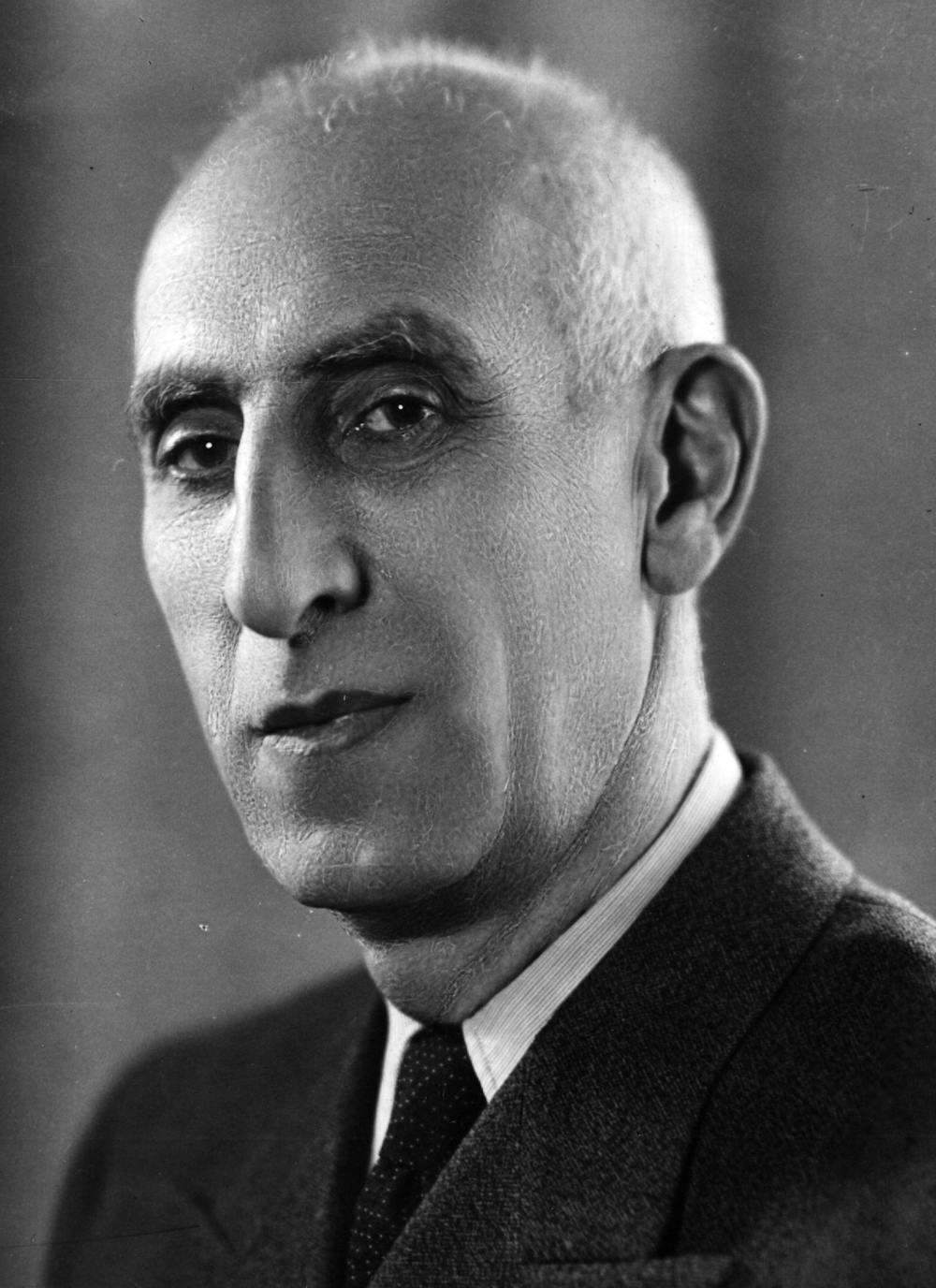
    MIL OSI Russia News

  • MIL-OSI Russia: Report “Development of the “Central Asia-China Spirit”: achievements, opportunities and prospects for regional cooperation” /2/

    Translation. Region: Russian Federal

    Source: People’s Republic of China in Russian – People’s Republic of China in Russian –

    Source: People’s Republic of China – State Council News

    Chapter 2. Opportunities and Challenges in China-Central Asia Cooperation

    At present, China is comprehensively promoting the building of a strong country and the great cause of national rejuvenation through Chinese-style modernization. Regardless of the changes in the international situation, China will unswervingly adhere to the policy of opening up to the outside world.

    — Chairman of the People’s Republic of China Xi Jinping

    2.1 New Opportunities as a Result of China’s Opening Up

    With global economic growth slowing, especially since the beginning of this year, the international situation is characterized by growing instability and mounting contradictions. The strengthening of unilateral actions and trade protectionism, as well as the destruction of international production and logistics chains, are seriously undermining the stability of world trade and calling into question the prospects for further global economic cooperation.

    In the face of a complex and tense external environment, China is relentlessly focused on its own development and firmly promotes a high level of openness to the outside world. In this process, China has always regarded the Central Asian region as an important area of its good-neighborly diplomacy, striving to expand mutually beneficial cooperation with countries in the region. This not only brings stability to the Central Asian economy, but also serves as a model of peaceful coexistence and mutually beneficial cooperation for the world.

    China is a major developing country that has made a major contribution to global economic growth for many years. China’s gross domestic product exceeded RMB 130 trillion in 2024, and its contribution to global economic growth remained at around 30%, the highest among the world’s major economies. As the world’s second-largest economy and one of the largest sources of investment, China has enormous market potential. In steadily advancing the Chinese model of modernization, China not only shares the fruits of its development with countries in the region and around the world to boost the global economy, but also provides new theoretical guidelines and practical models for the modernization of developing and emerging economies.

    China’s modernization model emphasizes high-quality growth based on innovation, green transition, and balanced development. China has steadily increased investment in scientific research and technological innovation, demonstrating impressive results that open up new opportunities for Central Asia. For example, the Chinese company Huawei has established a digital hub in Kazakhstan, introducing advanced ICT infrastructure. This has laid a solid foundation for the development of new forms of business such as e-commerce and mobile payments. China’s experience in renewable energy, combating desertification, reclaiming saline and degraded lands, and water-saving irrigation is no less valuable for the countries of the region. Following the principle of “teaching how to fish, not just giving it to”, China is ready to continue to facilitate the construction of large solar and wind power plants in Central Asia, thereby contributing to the optimization of the energy structure, ecological restoration, and sustainable green development of the region.

    Against the backdrop of increasing global protectionism, China has firmly maintained its high-level opening-up policy, serving as a “stabilizing anchor” and “driving force” of the global economy. The negative list for foreign investment has been reduced from the original 190 items to 29 at the national level and 27 in pilot free trade zones. In the manufacturing sector, restrictions have been completely lifted, creating favorable conditions for multinational companies investing in China. Enterprises from Central Asian countries are actively taking advantage of these opportunities. They are opening production facilities in China or entering into trade cooperation, gaining access to the huge Chinese market and developing economies of scale. The China International Import Expo, China Export and Import Fair (Canton Fair), International Silk Road Expo and other major events provide companies from Central Asian countries with high-quality platforms to showcase their products and enter new markets. For example, through these platforms, Uzbek hand-woven carpets, nuts and dried fruits from Kyrgyzstan and other Central Asian products can be offered directly to global buyers, which will help increase the recognition of these products and expand their share in international markets. In addition, this strengthens the integration of Central Asian countries into international production and logistics chains.

    The Chinese economy maintains a solid foundation, has many competitive advantages, is highly resilient, and has significant domestic potential. The trend toward long-term sustainable growth remains unchanged. China has all the industries included in the United Nations classification, and its production system is complete, flexible, and developed. This allows it to meet a wide range of production and cooperation needs. In addition, the economic structures of China and Central Asian countries are largely complementary, which creates broad opportunities for coordination in industry, logistics, and the development of supply chains between the two sides.

    In the energy sector, Central Asian countries are important suppliers of resources, and China has significant advantages in the exploration and development of deposits, the production of energy equipment and the processing of energy resources. The parties have all the necessary conditions for deepening cooperation at all stages of the energy cycle: from the exploration and production of oil and gas to the construction and operation of pipelines, the processing of raw materials and the production of petrochemical products. Such a comprehensive partnership will make it possible to form a complete and efficient energy chain.

    2.2 Potential for cooperation in the field of green economy and digital technologies

    Against the backdrop of the accelerating new scientific and technological revolution, industrial transformation and deepening regional interaction mechanisms, China and the Central Asian countries are actively developing cooperation in new promising areas.

    Green cooperation as a key to sustainable development. China and the five Central Asian countries have similar approaches and share common goals in the field of green development. In recent years, stable political ties, active economic interaction and a strong partnership in the traditional energy sector have created a solid foundation for in-depth cooperation in the field of ecological transition. Central Asia is rich in water resources, which are mainly concentrated in Tajikistan, Kyrgyzstan and Kazakhstan. In Tajikistan alone, the technical hydropower potential is estimated at about 55 gigawatts, which is more than half of the total potential of all of Central Asia. Significant wind energy resources are concentrated in Kazakhstan, but their development is still at an early stage, with an installed capacity of only about 1.2 GW. This indicates enormous potential for further development of the sector. In addition, the region has extensive reserves of strategically important minerals: cobalt, lithium, silicon, tungsten and other elements necessary for the production of clean energy. These resources have significant potential and can form a solid foundation for the formation of new green value chains.

    Against the background of the growing support of the green transition from the countries of Central Asia, the increasing demand for electricity and the growth of the need for the so -called “transitional minerals”, China is ready to provide the region with the necessary investments, technologies and infrastructure solutions. For many years, China has retained leading positions in the world in the established capacities in the field of renewable energy – in hydropower, solar and wind generation. At the same time, the country is actively promoting the modernization of the economy, based on high environmental standards. The China Energy International Group Corporation in 2024 commissioned a solar power plant with a capacity of 1 GW in Uzbekistan, the project was completely connected to energy networks. In Kazakhstan, China implements projects in the field of hydraulic and wind energy with a total installed capacity of more than 1000 MW. China has not only rich practical experience in the field of renewable energy, but also advanced technologies, competitive equipment, as well as a full -functional industry chain in the field of clean generation. This enables the Chinese side to provide the Central Asian countries with comprehensive technical and engineering solutions. Both sides can expand cooperation at all stages of the energy chain: from design and supply to the construction and operation of facilities. It is also important to develop new forms of partnership, combining investment and industrial interaction. This will contribute to the modernization and intellectualization of the “green” infrastructure of Central Asian countries, and will also bring Sino-Central Asian cooperation in the environmental sphere to a deeper, stable level.

    In the area of humanitarian ties, the number of sister city pairs between China and the five Central Asian countries has exceeded 100. Thanks to the simplification of the visa regime and the increase in the number of direct flights between China and the Central Asian countries, new opportunities are opening up for deepening ties between peoples. China and the countries of the region have a rich historical heritage and unique cultural environment, and their tourism resources complement each other. This creates the preconditions for expanding the joint tourism market. With the deepening and practical development of cooperation in the field of education, students from Central Asia are getting more and more opportunities to study at Chinese universities. In accordance with the current development needs of the countries of the region and the areas of bilateral cooperation, new “Lu Ban Workshops” will be opened in Central Asia – sites specializing in the training of technical specialists. Such cooperation in the field of vocational education will help bring bilateral relations to a new level, deepen cultural exchanges and strengthen mutual understanding between peoples.

    Digital cooperation as a driver of economic development in Central Asia. In recent years, the Central Asian countries have been consistently promoting digital development strategies, focusing on expanding the coverage of mobile payments, actively developing e-commerce and digital finance, as well as comprehensive economic diversification. Against the backdrop of steady growth in GDP per capita and a high proportion of youth (over 60%) in the Central Asian countries, consumer demand is growing rapidly. The regional market is confidently moving from satisfying basic needs to focusing on higher-quality consumption. The digital economy is demonstrating rapid growth. In particular, the Kazakhstani platform Kaspi has about 13.5 million active users per month, covering up to 70% of the country’s population. In Uzbekistan, the penetration of mobile payments has increased from 12% to 58% in three years. These dynamics confirm the accelerated digital transformation. It is estimated that over the next five years, the e-commerce market in Central Asia will exceed US$30 billion, with an average annual growth rate of about 28%, which clearly demonstrates the high potential of the region’s digital sector.

    Against the background of digital modernization of the China -Europe route, expanding foreign warehouse capacities and logistics networks, as well as as part of the joint initiative of the “digital silk road of the 21st century”, the “China -Central Asia” mechanism and the Shanghai organization of cooperation are actively developing the joint activities of China and Central Asia in the field of cross -border electronic commerce and digital economy. Today, almost 300 companies from Central Asia have already entered Chinese electronic trade platforms, and Chinese enterprises are actively entering regional platforms, including Kaspi in Kazakhstan. On the rise, a new form of business activity is the “Electronic commerce + cross-border Livestream” model, the volume of annual transactions of which has already exceeded 1 billion yuan. According to data for 2022, the volume of cross -border electronic trade between China and Central Asian countries increased by 95%. Both sides accelerated the exit of high -quality goods into each other’s markets. However, despite the rapidly growing demand for digital services, the regions of Central Asia are faced with a number of restrictions, including the uneven level of digitalization, insufficient development of digital infrastructure and logistics, and a lag in the regulation of digital technologies and finance. Under these conditions, China and Central Asia countries have broad prospects for cooperation in the following key areas: coordination of the standards of cross-border data exchange, improving the digital business environment, joint construction of regional calculation and payment networks, optimizing payment processes, accelerating the creation of digital infrastructure and international logistics components. The complex promotion of these initiatives will contribute to the rapid growth of cross -border electronic trade and the long -term development of the digital economy in the region.

    Agricultural cooperation: a path to mutual benefit. Agriculture is a key industry for both China and the Central Asian countries. It also occupies an important place in the structure of the China-Central Asia partnership. At a video summit dedicated to the 30th anniversary of the establishment of diplomatic relations between China and the five Central Asian countries, Chinese President Xi Jinping said: “China is ready to open its super-large market to Central Asian countries, increase the import of high-quality goods and agricultural products from the region, continue to hold the China-Central Asia Economic and Trade Cooperation Forum, and strive to ensure that bilateral trade turnover reaches 70 billion US dollars by 2030.” There is a high degree of complementarity between China and the countries of the region in the structure of agricultural production and broad prospects for market interaction. Thus, the volume of agricultural trade between China and the five Central Asian countries grew from $69 million in 2001 to $2.875 billion in 2023, an increase of more than 40 times.

    Against the backdrop of the change of economic drivers and the new wave of the scientific and technical revolution, China and Central Asian countries, based on a strong base of previous interaction, are actively exploring ways to build a new model of agrarian partnership and seek to reveal its new development potential. The development of green agricultural production on technology opens up broad prospects. China and the countries of the region have already created a number of key cooperation platforms, including the agricultural base of the Shanghai Cooperation Organization and the Central Asian Center for Agrarian Research of the Chinese Academy of Agricultural Sciences. These initiatives are the basis for deepening scientific and technological cooperation in the field of agriculture. China has a developed agrarian scientific base and obvious technological advantages in dry agriculture, modern methods of soil processing, sphere of water -saving irrigation systems, landfilling of salt marshes, protecting plants from diseases and pests. All these technologies can significantly increase the productivity and stability of the agricultural sector in Central Asia, as well as contribute to the energy transition in agriculture. In addition, with accelerating penetration of digital solutions in the region, new horizons are opened for “smart” agriculture. According to forecasts, by 2025, more than 2 million devices of the Internet of things will be used in the agricultural sector of Central Asia, and the digital agricultural market will reach 3 billion US dollars. The development of cross -border electronic trade in agricultural products, as well as the use of large data technologies, cloud computing and other digital tools for building digital agrarian trade and relevant applications, opens up new opportunities for regional agricultural food chains, creating added cost and agricultural trade. This will increase the stability of food supplies in the region and significantly increase income from the agricultural sector. In the future, further strengthening of agricultural cooperation between China and Central Asian countries will not only become an effective tool for increasing the level of agricultural technologies, transition from traditional to modern agriculture and ensure national food security, but also a key step towards activating transboundary exchange of scientific and technical resources and achieving sustainable development goals.

    The potential of the cultural and tourist industry requires further implementation. Humanitarian exchanges have always been an integral part of cooperation between China and the countries of Central Asia. They serve as a strong social basis for the development of bilateral relations. Currently, interaction in the field of tourism enters into a new stage, a set of favorable factors opens up additional opportunities for expanding partnerships in the cultural and tourist sphere. Political incentives are gradually bringing results, China and five countries of Central Asia in stages are in stages visa -free regime, which significantly reduces barriers for mutual trips. Kazakhstan, Uzbekistan and other states of the region also activate efforts to simplify tourism procedures and increase investments in the tourism infrastructure, increasing the attractiveness of their directions. The mechanisms of cross -border cooperation are becoming more mature. At the first summit “China -Central Asia”, initiative to strengthen the institutional basis of tourist interaction, to jointly develop cross -border routes and create an “Alliance on tourist cooperation between Xinjiang and Central Asia” to integrate regional resources and combine efforts. In parallel, both “soft” and “tough” interconnectedness are strengthened. Chinese airlines are actively developing a route network in the direction of Central Asia, flights from Urumchi, Beijing, Sian and Cunde are already connecting large Chinese cities with the capitals of the countries of the region. The launch of humanitarian and tourist railway routes focused on traveling to Central Asia is also being promoted. Tourist cooperation between China and Central Asia is distinguished by pronounced specificity and a high degree of complementarity. The parties together contribute to the revival and prosperity of the silk path, relying on deep historical ties and cultural kinship. Rich nature and a unique cultural landscape are made by China and Central Asia countries with mutually attractive tourist destinations. The growth of market demand and innovation in cultural and tourist products also contribute to strengthening interaction. Electronic trading floors and social networks become key channels for promoting tourism services and cultural initiatives, more and more involving the young generation in participation in international music festivals, gastronomic forums and cross-border shopping and entertainment centers, thereby contributing to the expansion of humanitarian ties and folk diplomacy.

    2.3 Regional cooperation as a factor of geo-economic expansion

    Central Asia is located at the strategic center of the Eurasian continent and has historically served as a hub of the Silk Road, connecting trade and cultural flows between the East and West. In the new era, regional cooperation between China and Central Asian countries has continued to deepen through the China-Central Asia mechanism, the Belt and Road Initiative and the Shanghai Cooperation Organization. This has greatly enhanced the geo-economic advantages of Central Asian countries and, through improved connectivity, industrial coordination and multilateral cooperation, has impacted regions such as the Caspian Sea, the Black Sea, the Middle East, South Asia and the Balkans, forming a vast economic network connecting the Eurasian continent. This spatial extension effect is transforming the economic geography of the region and providing Central Asian countries with a strategic opportunity to integrate into the global economy, bringing a new driving force to the prosperity of Eurasia.

    Expanding the Geography of Interconnectivity. Cooperation between China and Central Asian countries through infrastructure development and the modernization of logistics networks has significantly strengthened Central Asia’s position as a key transportation hub on the Eurasian continent, extending this advantage to the wider region. The launch of the direct multimodal China-Europe express route across the Caspian Sea marked the transition of China-Central Asian cooperation from a traditional bilateral trade corridor to a multi-format transportation network covering the Caspian and Black Seas, as well as the Balkans. This turns Central Asia into an important transit hub for Chinese goods to reach the markets of Europe and the Middle East. The start of construction of the China-Kyrgyzstan-Uzbekistan railway, connecting Kashgar, Kyrgyzstan and Uzbekistan, helps reduce logistics costs for Central Asian countries and opens up the prospect of integration with the logistics networks of the Middle East and South Asia, forming a transportation corridor linking West Asia, South Asia and Central Asia.

    Interregional coordination within the framework of industry networks. The cooperation between China and the countries of Central Asia in the format of industry coordination is gradually building a large -scale economic network covering the entire Eurasian continent. This interaction brings to the states of the region significant geo -economic dividends, strengthening their positions in the global economy. In the energy sector, key projects were the construction of the China -Central Asia gas pipeline and the China -Kazakhstan oil pipeline. These infrastructure initiatives not only contribute to the diversification of export routes for the countries of Central Asia, but thanks to the transfer of technologies and expanding the production and logistics chains, they also bring benefits to the Caspian region and the Middle East. An indicative example is the modernization of the oil refinery in Shymkent, which made it possible to establish the production of high -octane fuel. This product not only covers internal needs, but is also exported through the Transkaspian transport corridor to the countries of the Black Sea region and to the Balkans. The expansion of the energy chain increases the export potential of Central Asia and allows it to strengthen her position in the global energy market. The increasing importance of the digital economy and cross -border electronic commerce also helps to expand the geography of industry interaction. Such formats open up new sales channels, including the release of high -quality agricultural products from Central Asia into the markets of South Asia and the Middle East using Chinese electronic trading platforms.

    Global Significance of the Region’s Geoeconomic Transformation. China-Central Asia cooperation, which spans the entire Eurasian space, gives the Central Asian countries a new, more significant global geoeconomic significance. First of all, this partnership brings qualitative changes to the economic geography of central Eurasia. Thanks to deepening interaction, the countries of the region are gradually transforming from a traditional geopolitical “buffer zone” into a strategic hub of global production and logistics chains. Central Asia has the potential to become a key logistics hub connecting China, Europe, the Middle East and South Asia, as well as gain broad opportunities for industrial modernization and the development of new industries oriented towards foreign markets.

    Secondly, this cooperation will significantly strengthen the economic resilience and international influence of the Central Asian countries. Thanks to diversified development in the energy, agriculture and digital economy sectors, the countries of the region will be able to expand their presence in various sectors of foreign trade, reduce dependence on individual markets or raw material exports and thereby increase resilience to foreign economic risks.

    Third, this cooperation opens up new opportunities for the broader involvement of the countries of the Global South in geo-economic processes. In particular, the development of the Trans-Caspian Transport Corridor creates favorable conditions for states such as Turkey and Azerbaijan, allowing them to integrate more closely into the Chinese-Central Asian economic space. At the same time, Pakistan and Afghanistan can take advantage of the expanding logistics network formed within the framework of the China-Kyrgyzstan-Uzbekistan railway project to gain access to Central Asian markets. The geo-economic spread effect of such initiatives not only strengthens the positions of the Central Asian countries, but also gives new impetus to the development of interconnectedness and common prosperity of the entire Eurasian space. Thus, the global significance of the formation of a community of common destiny of China and Central Asia is realized.

    2.4 Risks and challenges in the areas of development and security

    Despite notable achievements in cooperation between China and Central Asian countries, this process faces a number of serious risks and challenges. In the development sphere, these are primarily external threats associated with the strengthening of unilateral actions and trade protectionism. In the security sphere, non-traditional threats are of particular concern.

    2.4.1 Growing risks of unilateral actions and protectionism amid weak global economic recovery

    The rise of unilateralism and trade protectionism poses serious challenges to the economic stability of Central Asian countries and the sustainability of the China-Central Asian partnership. The introduction of higher customs duties, the creation of trade barriers and the use of technological sanctions by individual states undermine the stability of the global economy and disrupt the normal functioning of international production and supply chains. Although the volume of direct trade between the five Central Asian countries and leading Western economies remains relatively low, the impact of global economic fluctuations on the region is difficult to overestimate. According to Thanos Arvanitis, Deputy Director of the Middle East and Central Asia Department at the International Monetary Fund, a further escalation of international trade tensions could lead to a slowdown in the GDP growth rates of the Central Asian countries.

    Fluctuations in international markets have a direct impact on the export-oriented economies of Central Asian countries, especially in the energy, mining and agriculture sectors. In the context of the global economic downturn and declining demand for raw materials, the countries of the region may face a significant reduction in export revenues, especially from oil and cotton supplies. This, in turn, will limit the opportunities for reinvestment of export earnings in national production chains and limit the potential for domestic economic reproduction.

    Trade wars and unilateral sanctions pose a serious threat to the investment climate of Central Asian countries. Some states resort to the practice of secondary sanctions, seeking to limit normal mechanisms of economic and trade interaction between countries and their partners. At the same time, the volatility of global financial markets puts pressure on the exchange rates of the countries in the region. The devaluation of national currencies leads to higher import prices, a decrease in solvency and, as a result, limits opportunities for foreign economic cooperation in such priority areas as infrastructure and energy.

    The restructuring of global supply chains caused by unilateral actions has a negative impact on the logistics and trade network of Central Asian countries. Connectivity projects such as the China-Europe Railway Express and the Trans-Caspian International Transport Corridor have contributed to the transformation of Central Asia into a key logistics hub in Eurasia. However, some countries, by introducing barriers in the form of technical standards and restrictions in logistics, seek to weaken this advantage, increasing the logistics costs of China-Central Asia cooperation. Such economic risks threaten the export potential and investment climate of Central Asian countries and pose challenges to the stable operation of joint projects between China and Central Asia.

    2.4.2 Increase in non-traditional threats

    Central Asia has long been vulnerable to a wide range of non-traditional security threats, including terrorism and extremism, drug trafficking and transnational crime, cyber risks, and environmental challenges related to climate change. In the context of growing interdependence and regional connectivity, China and Central Asian countries should step up joint efforts to develop coordinated responses to effectively address emerging threats and enhance security and stability in the region.

    Combating the threats of terrorism and extremism. Central Asia borders Afghanistan, where the terrorist groups Islamic State, Al-Qaeda and the East Turkestan Movement are currently actively operating in close cooperation with each other. Individual terrorists have infiltrated or “returned” to Central Asian countries, posing a serious threat to regional peace and security. At the sixth China-Central Asian Foreign Ministers’ Meeting held in April 2025, the two sides jointly reaffirmed their determination to strengthen regional and international security and jointly combat the “three evil forces”. China expressed support for the Central Asian countries’ aspiration to deepen cooperation with Afghanistan, jointly counter terrorist threats, and promote Afghanistan’s integration into the regional economic space in order to eliminate the conditions conducive to terrorism.

    Combating drug trafficking, transnational crime and ensuring cybersecurity. Central Asia remains an important transit hub for transnational drug smuggling. In recent years, large consignments of illegally transported narcotics have been repeatedly detected in the region. Within the framework of the mechanisms of meetings of the ministers of foreign affairs, internal affairs and public security, China and the Central Asian countries have repeatedly confirmed their firm position and readiness to cooperate in the fight against drugs. The establishment of the Regional Center for Combating Drugs of the Shanghai Cooperation Organization in Dushanbe was an important step towards deepening joint efforts to counter this threat and significantly strengthened multilateral cooperation. In the field of cybersecurity, against the backdrop of the rapid development of the digital economy, the region has seen an increase in cybercrime. In Kazakhstan and other countries, there are cases of data leaks from electronic trading platforms and phishing attacks, which indicates the need to further strengthen the cybersecurity infrastructure and improve digital regulation mechanisms.

    Combating climate change and environmental threats. The Central Asian countries face protracted and complex environmental challenges. The Aral Sea environmental crisis has led to large-scale land degradation, which has imposed a double constraint on agriculture in Uzbekistan and Kazakhstan in the form of progressive desertification and soil salinization. Climate change is increasing the frequency and intensity of extreme weather events. Mudflows and floods are increasingly common in the mountainous regions of Tajikistan and Kyrgyzstan, and recurrent droughts are observed in the transboundary Ili River basin. These circumstances require greater investment by the countries of the region in climate regulation, environmental protection, and the transfer and implementation of appropriate technologies. At the same time, active work is needed to create both physical and institutional infrastructure for the efficient allocation of transboundary water resources, which will increase the resilience of the region to climate and environmental risks. /follows/

    MIL OSI Russia News

  • MIL-OSI Global: What is a ‘bunker buster’? An expert explains what the US dropped on Iran

    Source: The Conversation – Global Perspectives – By James Dwyer, Lecturer, School of Social Sciences, University of Tasmania

    The jagged silhouette of a B2 stealth bomber seen during a 2015 flyover in the US. Jonathan Daniel / Getty Images

    Late on Saturday night, local time, the United States carried out strikes against Iranian nuclear enrichment sites at Fordow, Natanz and Isfahan, marking its open participation in the conflict between Iran and Israel.

    The US says it fired 30 submarine-launched missiles at the sites in Natanz and Isfahan, as well as dropping more than a dozen “bunker buster” bombs at Fordow and Natanz.

    The kind of bomb in question is the extremely destructive GBU-57 Massive Ordance Penetrator, or MOP, which weighs around 13.5 tonnes.

    The attacks raise a lot of questions. What are these enormous bombs? Why did the US feel it had to get involved in the conflict? And, going forward, what does it mean for Iran’s nuclear ambitions?

    What are ‘bunker busters’, and why are they used?

    Bunker busters are weapons designed to destroy heavily protected facilities such as bunkers deep underground, beyond the reach of normal bombs.

    Bunker busters are designed to bury themselves into the ground before detonating. This allows more of the explosive force to penetrate into the ground, rather than travelling through the air or across the surface.

    Iran’s nuclear enrichment sites at Fordow, Natanz and Isfahan are built deep underground. Estimates suggest that Fordow for example could be 80m beneath the surface, and capped with layers of reinforced concrete and soil.

    What is the MOP?

    The bunker buster used in this particular operation is the largest in the US arsenal. Leaving aside nuclear weapons, the MOP is the largest known buster buster in the world.

    Weighing some 13.5 tonnes, the MOP is believed to be able to penetrate up to 60 metres below ground in the right conditions. It is not known how many the US possesses, but the numbers are thought to be small (perhaps 20 or so in total).

    We also don’t know exactly how many were used in Iran, though some reports say it was 14. However, it is likely to be a significant portion of the US MOP arsenal.

    Why does only the US possess this capability?

    The US is not the only state with bunker-busting weaponry. However, the size of MOP means it requires very specialised bombers to carry and drop it.

    Only the B2 stealth bomber is currently able to deploy the MOP. Each B2 can carry at most two MOPs at a time. Around seven of America’s 19 operational B2s were used in the Iran operation.

    There has been some consideration whether large transport aircraft such as the C-130 Hercules could be modified to carry and drop the MOP from its rear cargo doors. While this would allow other countries (including Israel) to deploy the MOP, it is for now purely hypothetical.

    Why has the US (apparently) used them in Iran

    The Trump administration claims Iran may be only a few weeks from possessing a nuclear weapon, and that it needed to act now to destroy Iranian nuclear enrichment sites. This claim is notably at odds with published assessments from the US intelligence community.

    However, Israel lacks bunker busting weaponry sufficient to damage the deeply buried and fortified enrichment sites at Fordow, Natanz and Isfahan.

    An F-15E Strike Eagle releases a GBU-28 ‘bunker buster’ laser-guided bomb, a smaller equivalewnt of the 13,600 kg GBU-57 ‘Massive Ordnance Penetrator’ believed to have been used in Iran.
    Michael Ammons / US Air Force

    Only the MOP could do the job (short of using nuclear weapons). Even then, multiple MOPs would have been required to ensure sufficient damage to the underground facilities.

    The US has claimed that these sites have been utterly destroyed. We cannot conclusively say whether this is true.

    Iran may also have other, undeclared nuclear sites elsewhere in the country.

    Iran’s reaction

    The US has reportedly reached out to Iran via diplomatic channels to emphasise that this attack was a one-off, not part of a larger project of regime change. It is hard to say what will happen in the next few weeks.

    Iran may retaliate with large strikes against Israel or against US forces in the region. It could also interrupt shipping in the Strait of Hormuz, which would affect a large portion of global oil shipments, with profound economic implications.

    Alternatively, Iran could capitulate and take steps to demonstrate it is ending its nuclear program. However, capitulation would not necessarily mean the end of Iran’s nuclear ambitions.

    The value of nuclear weapons

    Perhaps a greater concern is that the attack will reinforce Iran’s desire to go nuclear. Without nuclear weapons, Iran was unable to threaten the US enough to deter today’s attack.

    Iran may take lessons from the fate of other states. Ukraine (in)famously surrendered its stockpile of former Soviet nuclear weapons in the early 1990s. Russia has since felt emboldened to annex Crimea in 2014 and launch an ongoing invasion in 2022. Other potential nuclear states, such as Iraq and Gadaffi’s regime in Libya, also suffered from military intervention.

    By contrast, North Korea successfully tested its first nuclear weapon in 2006. Since then there has been no serious consideration of military intervention in North Korea.

    Iran may yet have the ability to produce useful amounts of weapons-grade uranium. It may now aim to buy itself time to assemble a relatively small nuclear device, similar in scale to the bombs used in Hiroshima and Nagasaki.

    Depending on what facilities and resources have survive the US strikes, the attack has likely reinforced that the only way the Iranian regime can guarantee its survival is to possess nuclear weapons.

    James Dwyer does not work for, consult, own shares in or receive funding from any company or organisation that would benefit from this article, and has disclosed no relevant affiliations beyond their academic appointment.

    ref. What is a ‘bunker buster’? An expert explains what the US dropped on Iran – https://theconversation.com/what-is-a-bunker-buster-an-expert-explains-what-the-us-dropped-on-iran-259508

    MIL OSI – Global Reports

  • Indian Navy to commission stealth frigate ‘Tamal’ in Russia on July 1

    Source: Government of India

    Source: Government of India (4)

    The Indian Navy is set to commission its latest stealth multi-role frigate, INS Tamal, on July 1 at the Yantar Shipyard in Kaliningrad, Russia. The commissioning ceremony will be presided over by Vice Admiral Sanjay J Singh, Flag Officer Commanding-in-Chief, Western Naval Command, in the presence of senior Indian and Russian defence officials.

    INS Tamal is the eighth Krivak-class frigate to be inducted from Russia and the second ship of the upgraded Tushil class, following the Talwar and Teg-class series. Built with advanced stealth features and combat capabilities, Tamal marks the end of foreign-built warships for India, aligning with the government’s Aatmanirbhar Bharat and Make in India initiatives.

    The frigate features 26% indigenous components, including the BrahMos supersonic cruise missile, and is fitted with a range of modern weapons and systems such as vertically launched surface-to-air missiles, anti-submarine rockets, 100 mm improved naval gun, EO/IR systems, and heavyweight torpedoes. It also supports Air Early Warning and Multi-Role helicopters, and boasts high-end Network Centric Warfare capabilities.

    Measuring 125 metres in length and displacing 3,900 tonnes, Tamal can reach speeds of over 30 knots and has undergone extensive sea trials over three months in challenging Russian winter conditions.

    Designed in collaboration with the Severnoye Design Bureau and overseen by Indian specialists in Kaliningrad under the aegis of the Indian Embassy in Moscow, Tamal represents a deep Indo-Russian defence collaboration. Two more frigates under the same class are being built in India by Goa Shipyard Limited, with Russian technology support.

    Symbolically, “Tamal” draws its name from the mythical sword of Indra, the King of the Gods. Its mascot combines India’s Jambavant and Russia’s Eurasian Brown Bear, with the crew proudly identifying themselves as ‘The Great Bears’. The ship’s motto, ‘Sarvada Sarvatra Vijaya’ (Victorious Always, Everytime), reflects its operational readiness and the Navy’s commitment to maritime security.

    Upon commissioning, INS Tamal will join the Western Fleet, also known as the ‘Sword Arm’ of the Indian Navy, further strengthening India’s naval power in the Indian Ocean region.

  • MIL-OSI Russia: /China in Focus/ The Labubu Hype or China’s Rise as a Global Intellectual Property Power

    Translation. Region: Russian Federal

    Source: People’s Republic of China in Russian – People’s Republic of China in Russian –

    Source: People’s Republic of China – State Council News

    HANGZHOU, June 22 (Xinhua) — A pajama factory in east China’s Jiangsu Province was idle for a while but was brought back to life by one plush toy.

    “I didn’t like Labubu at first, but now I find it charming,” said Qiu Zunjun, general manager of Suzhou-based Shuofeng, a consumer goods company, with a smile.

    Labubu took the world by storm with its signature mischievous smile and sharp teeth. Noticing the excitement, Qiu Zunjun saw a gap in the market – clothes for collectors to dress up their plush friends. He bought samples of the toys and fabric, and by the end of May, the factory was churning out clothes for the little rascal.

    “In less than 20 days, we produced more than 80 types of doll clothes, earning about 170,000 yuan (approximately $23,643).” Qiu Zunjun estimates that monthly revenue could reach 1 million yuan if orders continue to increase.

    Cool, cute, with bunny ears, this character from China has inspired people around the world to line up for a chance to own it. It is the latest example of the globalization of Chinese intellectual property (IP), marking China’s transition from being a manufacturing hub to a source of original cultural exports that are breathing life into traditional industries.

    CHINESE IS CONQUERING THE WORLD

    Maraid Vintena of Sydney, Australia, queued for an hour at a Pop Mart Labubu machine in her local area this week. “There are four Pop Mart machines near my house,” she said. “But most of the time they’re empty. I check the site about 10 times a day… I feel like I’m addicted, but it’s fun.”

    “As you get older, life becomes a little mundane. A little joy like Labubu or a blind box is like a breath of fresh air,” Vintena explained her love for the doll.

    Amid growing excitement, clothing brand Uniqlo has announced a collaboration with Pop Mart to release a new collection, The Monsters.

    It is not the only IP from China to gain global recognition. From last year’s hit video game “Black Myth: Wukong,” which attracted 1.04 million concurrent players within an hour of its release, to the blockbuster “Nezha 2,” which has risen to fifth place in the history of the global box office, the success of Chinese IP demonstrates the growing cultural confidence and strength of the country’s industrial system, said Wang Ruotong, a researcher at Tianjin Foreign Studies University.

    Beyond culture, a number of Chinese brands have also made it into the global top tier of IP, from artificial intelligence (AI) to electric vehicles and consumer electronics.

    China maintained its growth momentum in new energy vehicle exports, with pure electric vehicle exports set to exceed 2 million units for the first time in 2024, according to the General Administration of Customs.

    Chinese automaker BYD is building factories in Thailand and Mexico, integrating Chinese aesthetics into car design.

    In the field of AI, China has made comprehensive progress, forming a thriving industrial ecosystem. The country is home to more than 400 “little giants” – small and medium-sized enterprises leading niche segments of the AI market, including innovator DeepSeek.

    The dynamic growth of China’s creative IP is driven by China’s booming domestic cultural consumption and strong industrial manufacturing base. As China moves from mass production to high-tech, intelligent manufacturing, the synthesis of aesthetics and craftsmanship is helping propel the country’s manufacturing industry up the global value chain.

    According to the National Bureau of Statistics of the People’s Republic of China (NBS), the average per capita expenditure on education, culture and entertainment in China was 3,189 yuan in 2024, up 9.8 percent year on year and accounting for 11.3 percent of total per capita consumption expenditure. The ever-expanding cultural services consumption market is becoming a powerful driver for the development of China’s intellectual property industry.

    REVIVAL OF TRADITIONAL INDUSTRIES

    At a market in Yiwu, east China’s Zhejiang Province, shoppers with black bags wander from stall to stall asking, “Are there any clothes for Labubu?” The global buzz around the doll has opened up business opportunities for China’s “global supermarket.”

    Zhu Hui’s shop not only sells shirts, pants, and skirts for Labubu, but also accessories like glasses and hats. “Our clothes are 7-15 yuan each, and accessories are 1-2 yuan,” she said.

    Zhu Hui’s shop opened just half a month ago, but the number of orders is growing rapidly. “At first, we received orders for tens or hundreds of pieces a day, but now we have more than 10,000 pieces.” Her factory has about 50 workers, all of whom have recently had to work overtime.

    Inspired by Labubu, other toy manufacturers are also looking to make their products more appealing.

    Sun Lijuan is the manager of Yiwu Hongsheng Toy Factory, which exports dolls to more than 80 countries and regions in South America, the Middle East, Central Asia, Europe and Africa.

    “Our dolls can talk, sing and tell stories,” she said. They are now implementing AI technologies to create products that meet different consumer needs.

    According to Sun Lijuan, in recent years they have seen the development of new technologies, which have strengthened their business and helped them avoid homogeneous competition. Their factory is 13 years old, but its turnover has been growing steadily in recent years.

    “The main potential of the globalization of IP in the future lies in the continuous development of content and its deep integration with technology,” said Wang Ruotong. “With the maturation of technologies such as AI and virtual reality, IP display will move toward immersive and interactive experiences.”

    “China has a strong manufacturing base,” she continued. “So the current popularity of Labubu has opened up a huge opportunity for the industry. I’m sure there will be many more Labubu in the future.” -0-

    MIL OSI Russia News

  • MIL-OSI Russia: Seminar on Educational Institution Management for SCO Countries Opens in Shenyang

    Translation. Region: Russian Federal

    Source: People’s Republic of China in Russian – People’s Republic of China in Russian –

    Source: People’s Republic of China – State Council News

    SHENYANG, June 22 (Xinhua) — The opening ceremony of a seminar on educational institution management for SCO countries was held in Shenyang, capital of northeast China’s Liaoning Province, on June 20.

    The seminar is organized by the Ministry of Commerce of the People’s Republic of China and Shenyang Normal University (SNU). The event is supported by Liaoning Heshi Ophthalmology Hospital.

    The SCO Educational Institution Management Seminar is a project of China’s overseas aid training program. It aims to enable students to gain a more comprehensive understanding of Chinese universities’ research and experience in talent cultivation, integration of industry, universities and scientific research, and digital medical service through training activities.

    Wang Xin, head of the International Relations Department of Shenyang Normal University, said that SHNU has successfully carried out 29 training projects since 2012, involving 756 students from 62 countries such as Russia, Uzbekistan and Kazakhstan.

    “The current seminar will become a platform for exchanges in medical universities. The students will be able not only to gain professional knowledge, but also to strengthen their friendship,” she said.

    The seminar lasts 14 days and is attended by 13 students from Kazakhstan and Uzbekistan.

    Fathulloh Abdullaev from Uzbekistan said that China’s experience in medical education and health care is worth emulating. “This seminar not only created a platform for academic exchanges, but also became a clear evidence of fruitful cooperation between Uzbekistan and China,” he added. -0-

    MIL OSI Russia News

  • Russian attacks kill one in eastern Ukraine, one in the north

    Source: Government of India

    Source: Government of India (4)

    Russian strikes on Saturday on key towns in Donetsk region on the eastern front of the war in Ukraine killed at least one person while another died in a drone attack in the north near the Russian border, officials said.

    The Russian military said its forces had captured another village in its slow advance westward through Donetsk region. And reports from Kharkiv region in the northeast suggested Russian troops were closing in on the city of Kupiansk.

    Russian forces struck Sloviansk and Kramatorsk – two cities that Moscow will target as its forces press on with their westward drive. Both towns have come under frequent attack since the Russian invasion of its neighbour in February 2022.

    Donetsk region Governor Vadym Filashkin said one person died and three were injured in Sloviansk, with pictures posted online showing buildings reduced to rubble. He said four multi-storey dwellings and 32 private homes had suffered damage.

    In Kramatorsk, pictures posted by the city council showed heavy damage to part of an apartment building. Officials said at least one person was trapped under rubble and a number of other residents were injured.

    A mass drone attack on the town of Nizhyn near the Russian border killed one person and damaged local infrastructure.

    The Russian Defence Ministry said its forces had seized the village of Zaporizhzhia, southwest of Pokrovsk, where Ukrainian forces have been holding back Russian attacks for months.

    Zaporizhzhia village is distinct from the Ukrainian city of Zaporizhzhia, the regional centre and large industrial hub located some 160 km (90 miles) to the southeast.

    The General Staff of Ukraine’s armed forces on Friday listed the village as one of several where Kyiv’s forces had repelled Russian attacks.

    On Friday, the Russian Defence Ministry said it had captured the village of Moskovka, just outside the city of Kupiansk, also the target of repeated Russian attacks in recent months.

    Both Russian and Ukrainian military bloggers have reported an upswing in fighting around Kupiansk this past week. The town was first occupied by Russian forces in the first weeks of the 2022 invasion, but recaptured by Ukrainian troops later in the year in a lightning counter-offensive.

    (Reuters)

  • MIL-Evening Report: What is a ‘bunker buster’? An expert explains what the US dropped on Iran

    Source: The Conversation (Au and NZ) – By James Dwyer, Lecturer, School of Social Sciences, University of Tasmania

    The jagged silhouette of a B2 stealth bomber seen during a 2015 flyover in the US. Jonathan Daniel / Getty Images

    Late on Saturday night, local time, the United States carried out strikes against Iranian nuclear enrichment sites at Fordow, Natanz and Isfahan, marking its open participation in the conflict between Iran and Israel.

    The US says it fired 30 submarine-launched missiles at the sites in Natanz and Isfahan, as well as dropping more than a dozen “bunker buster” bombs at Fordow and Natanz.

    The kind of bomb in question is the extremely destructive GBU-57 Massive Ordance Penetrator, or MOP, which weighs around 13.5 tonnes.

    The attacks raise a lot of questions. What are these enormous bombs? Why did the US feel it had to get involved in the conflict? And, going forward, what does it mean for Iran’s nuclear ambitions?

    What are ‘bunker busters’, and why are they used?

    Bunker busters are weapons designed to destroy heavily protected facilities such as bunkers deep underground, beyond the reach of normal bombs.

    Bunker busters are designed to bury themselves into the ground before detonating. This allows more of the explosive force to penetrate into the ground, rather than travelling through the air or across the surface.

    Iran’s nuclear enrichment sites at Fordow, Natanz and Isfahan are built deep underground. Estimates suggest that Fordow for example could be 80m beneath the surface, and capped with layers of reinforced concrete and soil.

    What is the MOP?

    The bunker buster used in this particular operation is the largest in the US arsenal. Leaving aside nuclear weapons, the MOP is the largest known buster buster in the world.

    Weighing some 13.5 tonnes, the MOP is believed to be able to penetrate up to 60 metres below ground in the right conditions. It is not known how many the US possesses, but the numbers are thought to be small (perhaps 20 or so in total).

    We also don’t know exactly how many were used in Iran, though some reports say it was 14. However, it is likely to be a significant portion of the US MOP arsenal.

    Why does only the US possess this capability?

    The US is not the only state with bunker-busting weaponry. However, the size of MOP means it requires very specialised bombers to carry and drop it.

    Only the B2 stealth bomber is currently able to deploy the MOP. Each B2 can carry at most two MOPs at a time. Around seven of America’s 19 operational B2s were used in the Iran operation.

    There has been some consideration whether large transport aircraft such as the C-130 Hercules could be modified to carry and drop the MOP from its rear cargo doors. While this would allow other countries (including Israel) to deploy the MOP, it is for now purely hypothetical.

    Why has the US (apparently) used them in Iran

    The Trump administration claims Iran may be only a few weeks from possessing a nuclear weapon, and that it needed to act now to destroy Iranian nuclear enrichment sites. This claim is notably at odds with published assessments from the US intelligence community.

    However, Israel lacks bunker busting weaponry sufficient to damage the deeply buried and fortified enrichment sites at Fordow, Natanz and Isfahan.

    An F-15E Strike Eagle releases a GBU-28 ‘bunker buster’ laser-guided bomb, a smaller equivalewnt of the 13,600 kg GBU-57 ‘Massive Ordnance Penetrator’ believed to have been used in Iran.
    Michael Ammons / US Air Force

    Only the MOP could do the job (short of using nuclear weapons). Even then, multiple MOPs would have been required to ensure sufficient damage to the underground facilities.

    The US has claimed that these sites have been utterly destroyed. We cannot conclusively say whether this is true.

    Iran may also have other, undeclared nuclear sites elsewhere in the country.

    Iran’s reaction

    The US has reportedly reached out to Iran via diplomatic channels to emphasise that this attack was a one-off, not part of a larger project of regime change. It is hard to say what will happen in the next few weeks.

    Iran may retaliate with large strikes against Israel or against US forces in the region. It could also interrupt shipping in the Strait of Hormuz, which would affect a large portion of global oil shipments, with profound economic implications.

    Alternatively, Iran could capitulate and take steps to demonstrate it is ending its nuclear program. However, capitulation would not necessarily mean the end of Iran’s nuclear ambitions.

    The value of nuclear weapons

    Perhaps a greater concern is that the attack will reinforce Iran’s desire to go nuclear. Without nuclear weapons, Iran was unable to threaten the US enough to deter today’s attack.

    Iran may take lessons from the fate of other states. Ukraine (in)famously surrendered its stockpile of former Soviet nuclear weapons in the early 1990s. Russia has since felt emboldened to annex Crimea in 2014 and launch an ongoing invasion in 2022. Other potential nuclear states, such as Iraq and Gadaffi’s regime in Libya, also suffered from military intervention.

    By contrast, North Korea successfully tested its first nuclear weapon in 2006. Since then there has been no serious consideration of military intervention in North Korea.

    Iran may yet have the ability to produce useful amounts of weapons-grade uranium. It may now aim to buy itself time to assemble a relatively small nuclear device, similar in scale to the bombs used in Hiroshima and Nagasaki.

    Depending on what facilities and resources have survive the US strikes, the attack has likely reinforced that the only way the Iranian regime can guarantee its survival is to possess nuclear weapons.

    James Dwyer does not work for, consult, own shares in or receive funding from any company or organisation that would benefit from this article, and has disclosed no relevant affiliations beyond their academic appointment.

    ref. What is a ‘bunker buster’? An expert explains what the US dropped on Iran – https://theconversation.com/what-is-a-bunker-buster-an-expert-explains-what-the-us-dropped-on-iran-259508

    MIL OSI AnalysisEveningReport.nz

  • MIL-OSI Russia: IAEA Launches New Series of Webinars on Nuclear Law

    Translation. Region: Russian Federal

    Source: International Atomic Energy Agency –

    IAEA launches third series of webinars on nuclear law to meet the growing demand for legislative assistance, in particular from countries embarking on the introduction of nuclear power. Starting on 24 April 2025, a new series of webinars will cover key issues and recent developments in the IAEA Legislative Assistance Programme to help policymakers, decision makers and stakeholders around the world develop robust national nuclear law frameworks.

    The new series builds on the success of the 2021–2022 Nuclear Law Webinar Series. “In an ever-changing world, nuclear law remains key to ensuring that everyone can benefit from the peaceful uses of nuclear science and technology while respecting nuclear safety and security,” said Peri Lynn Johnson, Assistant Director General and Legal Counsel in the Bureau of Legal Affairs. “The new webinar series is designed to enhance participants’ knowledge and awareness, and to acquaint them with the role and importance of nuclear law in light of today’s challenges and opportunities.”

    The 2021–2022 webinar series brought together nearly 1,000 government officials from nearly 100 countries, experts in policy, law, regulation and technology. Held from October 2021 to August 2022, the webinar series consisted of eight sessions that covered, among other topics, the following: developments in nuclear law; the role of national nuclear law in establishing the regulatory framework; decommissioning and radioactive waste and spent fuel management issues from a nuclear law perspective; radioactive sources and liability for damage; new elements in the 2005 amendment to the Convention on the Physical Protection of Nuclear Material; small modular reactors (SMRs), the legal basis for managing transboundary nuclear risks, as well as openness and transparency in international and national nuclear law.

    The new series includes five webinars on the following topics:

    The relationship between safety and security in nuclear law; Steps towards an international nuclear liability regime; The IAEA’s tailored approach to nuclear law; The legal basis for SMRs and sea-based civil nuclear applications; Experience of the IAEA University Partnership Programme in Nuclear Law.

    The expert-led sessions will provide background information on each topic and then provide an interactive question and answer session, facilitating engagement with participants and allowing experts to further share their expertise in these areas.

    This webinar series is part of the IAEA Legislative Assistance Programme, which aims to raise awareness of the importance of becoming party to relevant international legal instruments and developing comprehensive national nuclear legislation. The programme also provides bilateral legislative assistance to Member States and conducts workshops and refresher courses on nuclear law.

    The webinar series is open to government officials and legal and policy stakeholders. The webinars will also be of particular benefit to Member States that have limited or no participation in the relevant international legal instruments adopted under the auspices of the IAEA, as well as Member States that are in the process of updating their national nuclear legal frameworks.

    The webinar schedule is provided below. Additional information about the new webinar series is available here Here.

    Please note: This information is raw content directly from the source of the information. It is exactly what the source states and does not reflect the position of MIL-OSI or its clients.

    MIL OSI Russia News

  • MIL-OSI Russia: IAEA laboratories open for online tours from around the world

    Translation. Region: Russian Federal

    Source: International Atomic Energy Agency –

    Visitors from all over the world can walk through a greenhouse where coffee beans more resilient to climate change are grown, immerse themselves in a tropical forest ecosphere where fruit flies fly, or see some of the equipment used to test the peaceful uses of nuclear materials – all from their laptop, tablet or phone. To this end, our website has launched 14 Virtual Tours of IAEA Laboratories.

    Laboratories, some of which were created back in 1958, can now be visited virtually by anyone interested in learning about nuclear science and technology for development, how the IAEA helps countries use it, and what tools are used to verify that nuclear material continues to be used for peaceful purposes – the so-called safeguards.

    Visitors can tour the various laboratory areas where researchers and technicians work in the fields of food and agriculture, human health, environmental and radiation monitoring, and safeguards equipment.

    Please note: This information is raw content directly from the source of the information. It is exactly what the source states and does not reflect the position of MIL-OSI or its clients.

    MIL OSI Russia News

  • MIL-OSI Russia: What is food irradiation and why is it important?

    Translation. Region: Russian Federal

    Source: International Atomic Energy Agency –

    Food irradiation is a gentle, non-contact method that uses radiation to ensure the freshness and safety of food. It eliminates germs and controls insects and other pests while maintaining the nutritional value, taste, and overall quality of food. It can also be used to stop the spread of insect pests. This method uses irradiation to transfer energy to food without changing its temperature or leaving residues. It is commonly used to preserve the quality of high-value foods such as spices, fish, and meat, and now exotic fruits and vegetables.

    Ensuring that food is available in sufficient quantities, is nutritious and safe is essential to food security. However, food is not only food and sustenance, it is also an integral part of our cultural heritage and identity. Importantly, there are a number of methods that help to maintain the safety and health of food, as well as its pleasant taste, texture, smell and appearance.

    Food irradiation can effectively extend shelf life, reduce waste, and provide consumers with access to the highest quality fresh produce. For example, irradiation can keep fresh strawberries in the refrigerator for up to seven days longer.

    Please note: This information is raw content directly from the source of the information. It is exactly what the source states and does not reflect the position of MIL-OSI or its clients.

    MIL OSI Russia News

  • MIL-OSI Russia: BYD Announces Delivery of Its Fifth BYD Ro-Ro “Xi’an”

    Translation. Region: Russian Federal

    Source: People’s Republic of China in Russian – People’s Republic of China in Russian –

    Source: People’s Republic of China – State Council News

    SHENZHEN, June 22 (Xinhua) — Leading Chinese electric vehicle maker BYD announced Saturday the official handover of its fifth BYD “Xi’an” ro-ro in Yizheng City, east China’s Jiangsu Province, marking a major advancement in the development of the company’s global sales and supply chain system.

    The 219.9-metre-long, 37.7-metre-wide BYD ro-ro Xi’an has 16 car decks, a top speed of 19 knots and can accommodate 9,200 cars, according to BYD, based in Shenzhen, southern China’s Guangdong Province.

    The vessel uses advanced dual-fuel propulsion technology using liquefied natural gas (LNG), which significantly improves the vessel’s energy efficiency and reduces harmful emissions.

    BYD has previously launched four ro-ro carriers transporting Chinese new energy vehicles to global markets.

    The use of these ro-ro vehicles has significantly improved the efficiency of the company’s overseas deliveries, reduced logistics costs and transport cycles, and accelerated the implementation of BYD’s global expansion strategy, the company said in a statement. -0-

    MIL OSI Russia News

  • MIL-OSI Russia: Lu Ban’s Workshop Officially Opens at MTUCI

    Translation. Region: Russian Federal

    Source: People’s Republic of China in Russian – People’s Republic of China in Russian –

    Source: People’s Republic of China – State Council News

    TIANJIN, June 22 (Xinhua) — The Lu Ban Workshop was officially opened at the Moscow Technical University of Communications and Informatics (MTUCI) recently.

    This workshop was created through joint efforts of MTUCI and Tianjin Vocational College of Electronics and Information Science and will become an important bridge for Chinese-Russian cooperation in the field of digital technologies.

    The workshop has more than 800 square meters of modern training space. Chinese communications enterprises actively participate in training at Lu Ban Workshop and, together with the Russian side, train specialists in 5G technologies.

    The workshop is named after the ancient Chinese carpenter and builder Lu Ban, who is a representative of the Chinese architectural tradition. Lu Ban Workshop is a world-famous brand of professional education promoted and implemented by China. -0-

    MIL OSI Russia News