Category: Russian Federation

  • MIL-OSI Russia: Financial news: On 24.02.2025, the deposit auction of the PPC “TERRITORIAL DEVELOPMENT FUND” will take place

    Translartion. Region: Russians Fedetion –

    Source: Moscow Exchange – Moscow Exchange –

    The date of the deposit auction is 24.02.2025. The placement currency is RUB. The maximum amount of funds placed (in the placement currency) is 450,000,000.00. The placement period, days is 28. The date of depositing funds is 25.02.2025. The date of return of funds is 25.03.2025. The minimum placement interest rate, % per annum is 21.00. Terms of the conclusion, urgent or special (Urgent). The minimum amount of funds placed for one application (in the placement currency) is 450,000,000.00. The maximum number of applications from one Participant, pcs. 1. Auction form, open or closed (Open). The basis of the Agreement is the General Agreement. Schedule (Moscow time). Applications in preliminary mode from 15:00 to 15:10. Applications in competition mode from 15:10 to 15:15. Setting the cut-off percentage rate or declaring the auction failed until 15:25.

    Additional terms

    Please note: This information is raw content directly from the source of the information. It is exactly what the source states and does not reflect the position of MIL-OSI or its clients.

    Please Note; This Information is Raw Content Directly from the Information Source. It is access to What the Source Is Stating and Does Not Reflect

    HTTPS: //VVV. MEEX.K.M.M.

    MIL OSI Russia News

  • MIL-OSI Russia: “Dare and Win!”: How February 23 was celebrated at the Military Training Center

    Translartion. Region: Russians Fedetion –

    Source: State University Higher School of Economics – State University Higher School of Economics –

    © Higher School of Economics

    On the eve of Defender of the Fatherland Day in Military training center The HSE hosted ceremonial meetings and creative evenings of student amateur performances. Such events are held here every year on the eve of February 23, and not only HSE students, but also students from partner schools and honorary guests take part in them.

    “Conquer new heights”

    The guest of honor at the ceremonial meeting and creative evening of 4th-year students was Vice-Rector Sergey Rozhkov. After the State Flag of the Russian Federation, the flag of the HSE Military Training Center were carried out and the Anthem of the Russian Federation was performed, he congratulated all those present on Defender of the Fatherland Day.

    “I wish you good health, happiness and prosperity, to always move forward, and not to stop in the face of difficulties. You will have to conquer new heights, and it does not matter whether they will be connected with the specialty you have chosen or with service in the Armed Forces – as far as I know, we also have those who want to join the military service. Dare and win,” said Sergey Rozhkov, addressing the students.

    He also wished for a quick big victory in the special military operation. “We are really looking forward to it, it is important for all of us,” the vice-rector concluded.

    The head of the Military Training Center (VTC), Hero of Russia Vladimir Korgutov, also delivered welcoming words.

    “This national holiday firmly links the past, present and future of Russia, is a symbol of fortitude, courage, solidarity and unity, pride in one’s country and its history. And today we remember those who conscientiously fulfilled their military duty – in every home, in every family, there are reminders of the heroism of our grandfathers and fathers. Military exploits and traditions will never be forgotten,” he said.

    The Hero of Russia recalled the soldiers and officers who died during the SVO, including those who were personally known to the teachers of the Military Training Center. Those present in the hall honored their memory with a minute of silence.

    Award ceremony

    Vladimir Korgutov reported that in the run-up to Defender of the Fatherland Day, congratulations were sent to the Military Training Center “from many of our colleagues and comrades.” Among them were representatives of universities from different regions of Russia where military training centers operate. “We also congratulate them and advocate for us to have more joint projects,” he added.

    This was followed by a ceremony to present awards to the staff and students of the Military Training Center.

    For the consistently high quality of performance of official duties, Sergey Rozhkov presented a letter of gratitude from the Rector of the National Research University Higher School of Economics Nikita Anisimov to the teacher Departments of the Ground Forces Aleksandr Alekseev, associate professor Andrey Cherkesov and the educational department dispatcher Olga Lobova. The vice-rector’s gratitude was awarded to associate professor of the Land Forces Department Viktor Prilyudko.

    A teacher received a commemorative badge of the city of Moscow “80 years of the Battle of Moscow” Department of Aerospace Forces Alexander Lyubimov. Andrey Cherkesov was awarded the medal “65 years of the Strategic Missile Forces” by the Council of Veterans of the Strategic Missile Forces. Gratitude from the head of the Military Training Center was announced to engineer Irina Petrova and senior engineer of the educational and training equipment department Yuri Kuprienko.

    In addition, the best students received incentives. This is not only a certificate or gratitude, but also a photo taken near the unfurled flag of the VUC together with Hero of Russia Vladimir Korgutov, as well as a “letter to the homeland” – a message to parents, which tells about the achievements of their son. Another form of incentive in honor of February 23 is the removal of a previously imposed penalty, and this is no less important for students than any other award.

    Tribute

    Holding concerts on the eve of February 23 is one of the traditions of the Military Training Center. First of all, it is a tribute to those who defended our Motherland during the Great Patriotic War and other wars, and to those who today, faithful to their military duty, continue to defend it.

    This year, not only students of the Military Training Center performed at the creative evenings, but also invited performers and creative groups, for example, the vocal studio “Kladez” from the Moscow State Technical University of Civil Aviation under the direction of Oksana Kazakova. Famous songs of the war years and modern works were performed, including those written by the students themselves. A quiz on military topics was also organized for fourth-year students.

    Yaroslav Rodkin, 2nd year student of the OP “Strategy and production in communications“, acted as the host of the creative evening and read poems of his own composition. “I dedicated the poem “Soon Home” to the soldiers who are awaited at home, because at the front it is important to feel the support of relatives, and the poem “A Bullet Flies” – to the soldiers who died in battles for Russia,” he explained.

    Petr Kutukov, 2nd year student of the OP “Right“, performed the song “We Need One Victory” at two creative evenings – for his classmates and for fourth-year students. The participation of younger fighters in a concert for older ones is another tradition that helps pass the baton and strengthen the spirit of camaraderie.

    “I studied music in my school years and I love singing for the soul. I try to participate in extracurricular activities, and the concert for Defender of the Fatherland Day is a good opportunity to prove myself. This holiday is close to me: my great-grandfather, born in 1898, took part in four wars, my father and grandfather were officers. War songs have a special energy, many of them are written by people who know firsthand what war is,” said Petr.

    “The baton is in safe hands”

    Another tradition of the VUC is a farewell speech to graduates. At the end of the creative evening for 4th-year students, it was delivered by ordinary professor Adam Nizhalovsky.

    He reported that the HSE Military Training Center is one of the best among 137 military training centers in the country, and is distinguished by the high quality of students typical of the HSE, and a unique faculty: 2 generals, 20 colonels, 13 lieutenant colonels, 1 major, 1 “growing lieutenant”. Among them are 16 doctors and candidates of science, 11 combat veterans, including 4 holders of the Order of Courage, 2 holders of the Order “For Military Merit”.

    “We are the only military training center that has been commanded by a Hero of Russia for over ten years,” Adam Nizhalovsky emphasized. He assured those gathered that the baton is in good hands and that HSE graduates “will form the core of the country’s mobilization resource.”

    Then Tatyana Kravets, the guest of honor, the principal of School No. 1251 named after Charles de Gaulle, spoke, attending the event together with her students. She noted that today’s officers and students are growing up in schools. “We admire you. You were and remain our hope and support, and our graduates will honorably, as expected, replace you at your combat post,” the principal said.

    The students presented Vladimir Korgutov with a cake with the number 23 on it. “The doors of the Military Training Center are always open for you,” he assured.

    The Science of Encouragement

    Summing up the ceremonial events, Vladimir Korgutov noted in an interview with Vyshka.Glavnoe that they are an important part of the military-patriotic education of future officers. The presentation of awards is a way to encourage the best, and joint creative activities help to unite the team. “Students get to know each other better, are imbued with the spirit of patriotism,” the Hero of Russia believes.

    In his opinion, it is important to encourage not only experienced teachers, but also young officers and those who are engaged in ensuring the educational process. Alexander Lyubimov, the “growing lieutenant” mentioned in the parting words, the only one who received a state award for Defender of the Fatherland Day, successfully prepares the VUC team for the computer science Olympiads among cadets of military universities.

    “Olga Sergeevna Lobova is a senior warrant officer, a very good employee. Everything that concerns the plans for holding events, drawing up a schedule, distributing audiences – this is hers! Irina Valeryevna Petrova, also an excellent employee, keeps records of personnel, interacts with military registration and enlistment offices, and annually prepares an order from the Minister of Defense to assign ranks to our graduates,” adds Vladimir Korgutov.

    Among the students who have repeatedly received gratitude is a student of the OP “Applied Mathematics and Computer Science» Namig Damirov. Last year, he took 1st place in the individual competition at the All-Army Cadet Olympiad in Computer Science in St. Petersburg, leaving behind his peers from military universities, and his team took 2nd place in the specialized competition. Lieutenant Alexander Lyubimov took an active part in his preparation.

    “The competition is not easy, and we were pleased with the results. I hope that the foundation we laid will help the next generations of students who will represent the Military Training Center at this Olympiad,” Namig said.

    “Indistinguishable from Lev Leshchenko”

    Viewers shared their impressions of “Vyshka.Glavnoe”.

    “The concert was amazing. I especially remember the vocal and vocal-dance numbers of the invited artists, and the evening of amateur performances was wonderfully complemented by their professionalism. An unexpected surprise were the performances of the second-year students: wonderful singers – it was almost impossible to distinguish them from Lev Leshchenko,” says a fourth-year student of the OP “Business Management» Arseniy Samsonov.

    Completing his studies at the Military Training Center, he thanks Colonel Korgutov not only for mastering the military profession, but also for joining the army community, understanding its spoken and unspoken laws. “When I came to the Military Training Center in my second year, this world seemed alien and strange, but now I feel a part of it and am proud to be a reserve officer of the Strategic Missile Forces. I had previously planned to connect my career with the civil service, and the Military Training Center strengthened this intention in me,” the student says.

    “When they performed the song ‘Officers’ and the entire audience stood up, I saw tears welling up in Vladimir Aleksandrovich Korgutov’s eyes,” said Tatyana Kravets.

    “You understand, guys, he is a combat officer, a participant in the First Chechen War,” she addressed her students. “‘I sing to the officers who took pity on their mothers, returning their living sons to them’ – these words are about him. He received the title of Hero of Russia because there were no casualties in his unit. Think about it! He saved everyone!”

    “I liked the theme night,” adds eighth-grader Sergei Burov. “An hour and a half flew by in an instant, the war songs and poems went straight to my heart. If I manage to get into the Higher School of Economics, I will definitely go to study at the Military Training Center and will also perform at such concerts.”

    Please note: This information is raw content directly from the source of the information. It is exactly what the source states and does not reflect the position of MIL-OSI or its clients.
    MIL OSI Russia News

  • MIL-OSI Russia: Financial News: Development of Concentration Risk Regulation: Discussion Results

    Translartion. Region: Russians Fedetion –

    Source: Central Bank of Russia –

    The Bank of Russia, following discussions with the market on the reform of credit concentration risk regulation finalized individual provisions of the concept.

    In particular, the following changes have been made to it:original version:

    — a reduced risk weight of 50% for state-owned companies with revenues exceeding 2% of GDP when calculating concentration standards will be applied for a year longer — until January 1, 2029. By that time, the concentration limiter for such companies will be the H30 standard, which will be calculated by systemically important banks;

    — the criteria for the operational independence of companies for determining a group of related borrowers (GRB) have been adjusted. In particular, the requirements for the composition of the board of directors have been simplified. In addition, if the mutual financial obligations of companies in one GRB are small, the companies will be considered operationally independent;

    — the approach to which subsidiaries and dependent companies of the bank may be excluded from the calculation of the maximum risk standard for related parties H25 has been clarified. Financial subsidiaries that finance the business of the bank owners insignificantly will be excluded.

    The Bank of Russia will continue to introduce regulations aimed at reducing concentration risks. It is expected that a number of changes (for example, the phased introduction of calculating concentration on the issuer of securities under reverse repo, inclusion in the calculation of requirements for accrued credit income, operational independence criteria) will be implemented as early as 2025.

    Preview photo: fireflite59 / Shutterstock / Fotodom

    Please note: This information is raw content directly from the source of the information. It is exactly what the source states and does not reflect the position of MIL-OSI or its clients.

    Please Note; This Information is Raw Content Directly from the Information Source. It is access to What the Source Is Stating and Does Not Reflect

    HTTPS: //VVV.KBR.ru/Press/Event/? ID = 23399

    MIL OSI Russia News

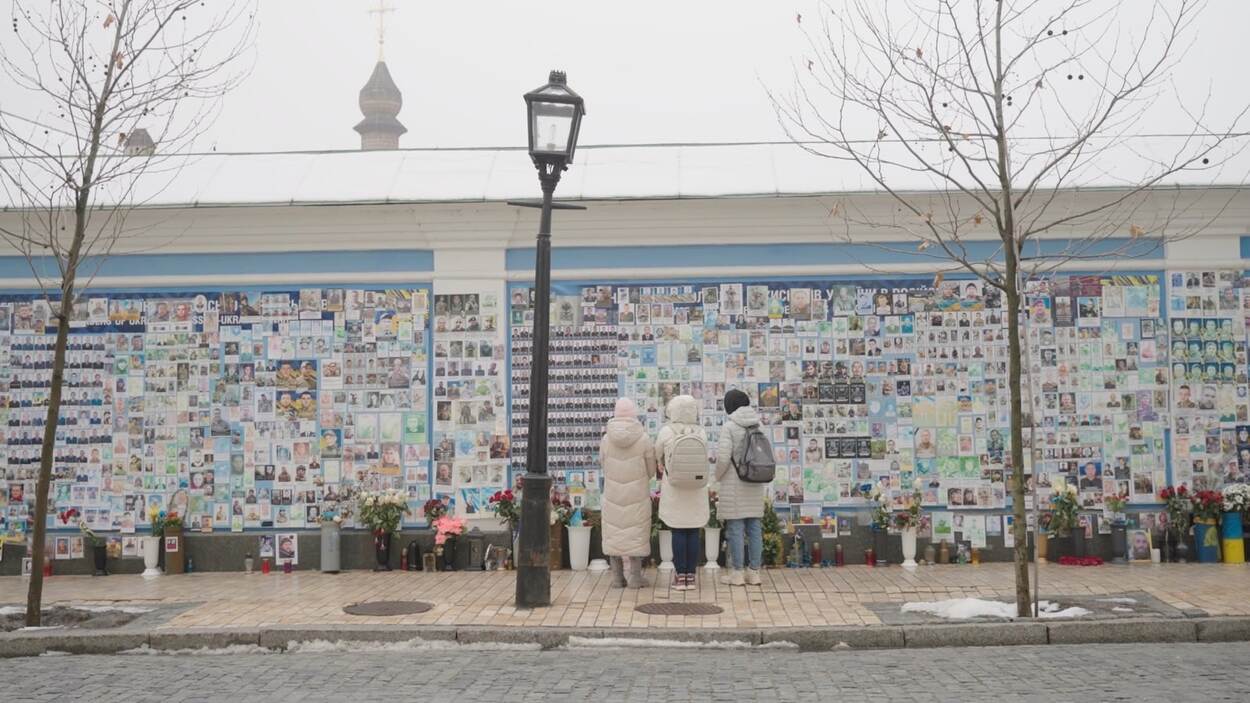
  • MIL-OSI Canada: Third Anniversary of Ukraine Invasion Commemorated at Saskatchewan Legislature

    Source: Government of Canada regional news

    Released on February 24, 2025

    Today, Legislative Secretary Responsible for Saskatchewan-Ukraine Relations Jamie Martens and representatives from Saskatchewan’s Ukrainian community, the Saskatchewan-Ukraine Relations Advisory Committee, and the Ukrainian Canadian Congress – Saskatchewan Provincial Council (UCC-SPC) gathered at the Legislative Building in Regina to commemorate the third anniversary of Russia’s military invasion of Ukraine.

    “This war has caused untold suffering to the people of Ukraine, some of whom have resettled here in Saskatchewan,” Martens said. “As a province with a rich Ukrainian heritage, Saskatchewan is proud to support those displaced by this terrible conflict. With open arms we will continue to make these newcomers feel welcome and at home in our communities.”

    On Sunday, February 23, a car rally was organized to demonstrate support for Ukrainians by the Ukrainian Canadian Congress (UCC), Regina Branch, that started at the Northgate Mall in Regina and concluded with a brief ceremony at the Holodomor Monument in Wascana Centre.

    Since the conflict began, nearly 8,000 Ukrainians have arrived in Saskatchewan, many of which have been supported by programs offered through UCC-SPC and the Government of Saskatchewan.

    “The UCC-SPC is grateful to Premier Scott Moe and the Government of Saskatchewan for their steadfast and reliable support for the Ukrainian people,” President of UCC-SPC Elena Krueger said. “From the early days of the conflict and the five charter flights that assisted hundreds to safely arrive in Saskatchewan, to the on-going financial support to UCC Saskatchewan, to various language and employment services, our provincial government truly does stand with Ukraine.”

    Through a funding agreement with the UCC-SPC, the province continues to provide displaced Ukrainians with access to language training, settlement and community supports, as well as connections to employers in their local labour market.

    In another show of solidarity with the people of Ukraine, the Provincial Capital Commission announced funding for necessary restoration work on the Holodomor Monument in Regina’s Wascana Centre, 10 years after its installation in the park. The monument memorializes the man-made famine endured by the Ukrainian people at the hands of the Soviet Union from 1932 to 1933.

    “The Holodomor Monument in Wascana Centre is an important monument to remember the victims of the man-made famine, as well as reiterate our support for the people of Ukraine through the ongoing conflict,” Minister Responsible for the Provincial Capital Commission Eric Schmalz said. “This funding will help ensure that this important monument remains in Wascana Centre for years to come.”

    -30-

    For more information, contact:

    MIL OSI Canada News

  • MIL-OSI United Kingdom: UK steps up life-saving medical support for Ukraine’s Armed Forces

    Source: United Kingdom – Executive Government & Departments

    Press release

    UK steps up life-saving medical support for Ukraine’s Armed Forces

    The Ministry of Defence will double its funding for medical and rehabilitation services for Ukraine’s troops

    Britain is stepping up support for Ukrainian troops wounded on the frontline, who will receive life-saving medical support and rehabilitation services through the UK’s Project Renovator.  The programme, which will see its funding doubled, also includes training for surgeons and rebuilding of a military hospital targeted by Russian bombs. 

    Project Renovator draws on the UK’s leading defence medical expertise to expand Ukraine’s military rehabilitation and medical services and help troops who suffered life-changing injuries to return to the frontline or help them readjust to civilian life after the conflict ends. 

    Defence Secretary John Healey MP has today announced a new £20m funding package to step up the programme further – doubling the Government’s funding for the scheme – as the UK’s cast-iron commitment to Ukraine continues three years into the conflict. 

    The project, which started in October 2023 demonstrates the UK’s international leadership role, taking responsibility for repairing and upgrading a military rehabilitation hospital which was targeted and bombed by Putin’s forces earlier in the conflict. The UK is also encouraging allies to support and grow this work as part of the broader NATO Comprehensive Assistance Package for Ukraine scheme. 

    From providing life-saving surgery, to issuing advanced prosthetics, physiotherapy, and aftercare, the rehabilitation hospital will be a significant upgrade for Ukraine’s current services, with Ukrainian surgeons, doctors, and nurses being trained by the UK. 

    The announcement comes on the third anniversary of Putin launching his illegal full-scale invasion, as the Home Office announced new measures to block Russian elites entering the UK. It forms part of this Government’s record support for Ukraine this year – building on £12.8 billion worth of military, humanitarian, and economic support since the beginning of the full-scale invasion.

    Defence Secretary, John Healey MP, said: 

    As we mark three years of this brutal conflict, Putin is still waging a war he thought he would win in three days, because of fierce resistance to the Russian invasion from ordinary Ukrainians – military and civilian alike. 

    In this critical period, Ukrainians need our support to keep them in the fight and to put their nation in the strongest possible position ahead of any talks. That’s why we are stepping up further our UK leadership and life-saving medical support for brave Ukrainian fighters. Our commitment to them is unshakeable. 

    I’m proud of the UK’s leadership in supporting Ukraine, both now and in the long-term, and this new investment in Ukraine’s military medical services will harness the UK’s leading expertise to ensure wounded troops are given the best treatment possible.

    The work will help address a major challenge posed by the conflict, with the largest casualty figures seen in Europe since the Second World War. The support stands in stark contrast to Russia’s widely-reported poor treatment of Russian casualties and veterans, leading to instances of crime and violence when they return from the frontline.

    While a small number of British personnel have been working to deliver the project in Ukraine, nearly 100 Ukrainian surgeons, doctors, and nurses are due to travel to the UK this year to receive further medical training using the latest techniques and equipment. 

    Around £20m of money from a NATO common fund has been invested in the rehabilitation hospital so far, much of which was provided by the UK. In addition to major structural repairs, improvements have included more than £300k worth of new gym equipment, and £400k worth of prosthetics and associated equipment. 

    Norway has also announced it is carrying out similar work to repair and improve a similar facility under the same NATO scheme, working closely with the UK. It comes as both nations have committed to deepen military ties, with a new agreement being drawn up following a visit from the Defence Secretary last week. 

    Defence Medical Services personnel from Project Renovator have been working with the team at the UK’s world-leading equivalent, the Defence Medical Rehabilitation Centre at Stanford Hall, to produce around 50 rehabilitation training videos to support the training of Ukrainian medical staff. 

    Minister for Veterans and People, Alistair Carns DSO, OBE, MC, said:  

    The UK Armed Forces are experts in the area of defence medical services and rehabilitation, pioneering the field during the Second World War.

    These services are absolutely essential to ensuring veterans get the support they need to go back to their daily lives after being on the frontline, especially if wounded.

    The Defence Medical Rehabilitation Centre at Stanford Hall in particular is a world-leading facility, and I am proud that the equipment and the skills of our personnel are being put to good use in supporting Ukraine.

    This year, the UK will spend £4.5 billion on military assistance for Ukraine – more than ever before. Supporting Ukraine in the conflict and to secure a peace deal is critical for the security of Europe and the UK, a foundation for the Prime Minister’s Plan for Change. Earlier this month, the Defence Secretary announced a new £150 million firepower package including drones, tanks and air defence systems.

    Since July 2024, the Government has provided over £5.26 billion in military aid and financial support to Ukraine, including a £3 billion annual military aid and a £2.26 billion loan for military spending. This includes £300 million for artillery ammunition and £68 million for air defence systems, as well as the new £150 million firepower package for thousands of drones, dozens of battle tanks and armoured vehicles.  

    The UK Government has supplied over 90,000 rounds of 155mm artillery, 150 artillery barrels, and 10 AS90 self-propelled howitzers. Air defence support includes 17 Gravehawk systems, 1,000 counter-drone electronic warfare systems, and £68 million for radars and counter-drone tech.  

    The UK has also invested £7.5 million in drone technology and continues training, surpassing 50,000 Ukrainian troops under Operation Interflex. Naval support totals £92 million, providing drones, uncrewed vessels, loitering munitions, and mine countermeasure drones.

    Updates to this page

    Published 24 February 2025

    MIL OSI United Kingdom

  • MIL-OSI United Kingdom: Kremlin-linked elites face exclusion from UK

    Source: United Kingdom – Executive Government & Departments

    News story

    Kremlin-linked elites face exclusion from UK

    Elites with known links to the Kremlin may be subject to exclusion from the UK in show of steadfast support for Ukraine on 3 year anniversary of invasion.

    Elites linked to the Russian state can be excluded from entering the UK under new measures announced by the Home Secretary today.  

    Under the new measures, the government will expand the criteria for exclusion to cover Kremlin-linked elites. This will ensure that, while Russia remains an acute national security threat, elites linked to the Russian state can be prevented from entering the UK.  

    Those who could be barred from the UK include anyone who:

    • provides significant support to the Russian state
    • owes their significant status or wealth to the Russian state
    • enjoy access to the highest levels of the Russian state

    Kremlin-linked elites can pose a real and present danger to our way of life. They denounce our values in public while enjoying the benefits of the UK in private – benefits which they look to deprive Ukraine of through their support of Russia’s war.  They can act as tools for the Russian state, enabling the continuation and expansion of Russia’s aggression.      

    The move will bolster both UK national interest and national security, one of the key priorities underpinning the government’s Plan for Change, by blocking the physical access of those who undermine UK national security. These new measures will complement the UK’s existing sanctions regime against Russian elites who are supporting Putin’s war effort, which will remain in place as long as Russia threatens Ukraine’s sovereignty.  

    The move follows continued action from the UK to respond to Russia’s illegal war in Ukraine including through imposing extensive sanctions on elites linked to the Russian state, strengthening law enforcement capabilities through the National Crime Agency’s (NCA’s) Combatting Kleptocracy Cell and closing the legislative loopholes open to money laundering by criminal actors.   

    These measures also follow ramped up efforts to tackle Russian illicit finance through the NCA’s Operation Destabilise, successfully disrupting 2 Russian money laundering networks which provided services to Russian oligarchs and helped fund Russian state espionage operations. The NCA-led action led to 84 arrests and over £20 million in illicit funds seized. This work continues and since the disruption, a further £1 million of cash has been seized and a further 6 arrests made.

    This change builds on the UK-Ukraine 100 Year Partnership signed in January, which commits both countries to work together to tackle the malign influence of elites linked to the Russian state.  

    Security Minister Dan Jarvis said:

    Border security is national security, and we will use all the tools at our disposal to protect our country against the threat from Russia.

    The measures announced today slam the door shut to the oligarchs who have enriched themselves at the expense of the Russian people whilst bankrolling this illegal and unjustifiable war.

    My message to Putin’s friends in Moscow is simple: you are not welcome in the UK.

    Since the start of the full-scale invasion, the UK’s total military, economic and humanitarian support for Ukraine amounts to £12.8 billion. We remain committed to the provision of £3 billion of military support a year to put Ukraine in the strongest position possible.  

    Earlier this month, the Defence Secretary led the 50-nation strong Ukraine Defence Contact Group for the first time and announced a further £150 million firepower package for Ukraine, including drones, tanks and air defence systems. 

    Defence Secretary, John Healey MP, said:

    As we mark the third anniversary of Russia’s illegal invasion, Putin is still waging a war he thought he would win in three days, because of fierce resistance from the Ukrainians. Our support for them is unshakeable. 

    I am proud of the UK’s leadership and unity on Ukraine. Keeping the Ukrainians in their fight and as strong as possible at any negotiating table is critical not only for them, but for the security of the UK. These new measures send a powerful message that we will do what it takes to turn the tables on Putin’s aggression.

    Updates to this page

    Published 24 February 2025

    MIL OSI United Kingdom

  • MIL-OSI Europe: Minister puts emphasis on safeguarding human rights and international system in address to UN Human Rights Council

    Source: Government of Iceland

    Foreign Minister Þorgerður Katrín Gunnarsdóttir today delivered her address to the 58th session of the United Nations Human Rights Council. In her speech, Foreign Minister Gunnarsdóttir emphasized the need to safeguard the United Nations and the international system established after World War II. That the values that the world’s nations agreed to respect were being severely undermined, and she particularly criticized Russia’s illegal, all-out invasion of Ukraine, on the day when leaders have gathered in Kiev to express support for Ukraine exactly three years after the invasion began.

    The Foreign Minister also addressed gender equality, women´s rights and the rights of LGBTQIA+ people in her address to the Human Rights Council, but a strong undercurrent is now working to undermine the achievements that have been made in recent years.

    “For me, the starting point is a simple truth: no person should have to live in fear of persecution and violence. This continues to apply if the persecution is based on a person´s sexual orientation or gender identity. And we will not hesitate to stand up on their behalf here in this venue, amplifying the voices of those who fight for their rights. Because we are all born free and equal,” said Þorgerður Katrín.

    The 58th session of the Human Rights Council is the first since Iceland became a member of the Council, following elections at the United Nations General Assembly in October. The Foreign Minister noted that eighty years have passed this year since the founding of the United Nations and that it is important to recall the important values that were laid down at the beginning. Of course, the United Nations had not always been able to live up to hopes and expectations. “The Israeli warfare in Gaza for fifteen months following the Hamas terrorist attack on 7 October 2023 is only the latest testament of the failure of our system to address urgent crises. And yet that complex problem now seems more divisive than ever, the talk of removal of people from Gaza being only the latest example of the crossroads we now find ourselves at,” she said, noting further: “There is only one way to meet these challenges. We must redouble our efforts, recommit ourselves to principles laid out in the UN Charter. It may prove difficult. It may require sacrifices – for sure it will require sacrifices since, after all, the world is a different place than it was in 1945, and the United Nations must reflect those changes through reform and renewal.”

    During her visit to Geneva, the Minister of Foreign Affairs will also deliver an address on behalf of the Nordic and Baltic countries (NB8) at an event commemorating the third anniversary of Russia’s full-scale invasion of Ukraine today, and will also deliver an address on behalf of the same countries at an event commemorating the 30th anniversary of the Beijing World Conference on Women. She will also meet with Volker Türk, UN High Commissioner for Human Rights, Mirjana Spoljaric Egger, President of the International Committee of the Red Cross, Dr. Ngozi Okonjo-Iweala, Director-General of the World Trade Organization, and will hold several bilateral ministerial meetings.

    An overview of Iceland’s key priorities can be found here and on this website dedicated to Iceland’s membership of the United Nations Human Rights Council. 

    Iceland joined the UN Human Rights Council on 1 January 2025 along with seventeen other states from all regions of the world. Iceland previously served on the Council for half a term in 2018-2019, filling the seat vacated by the United States in June 2018.

    MIL OSI Europe News

  • MIL-OSI United Nations: UKRAINE LIVE: Diplomatic debate steps up a gear as world marks 3rd anniversary of full-scale Russian invasion

    Source: United Nations MIL OSI b

    February 24 marks three years since Russia launched a full-scale invasion of Ukraine. Thousands of civilians have been kicked and injured, the economy has been shattered and energy infrastructure destroyed. As the General Assembly and Security Council meet today to mark and debate how peace and security can be restored in eastern Europe, we will be providing rolling coverage of the proceedings. Competing resolutions from Ukraine and the US point to a day of consequential diplomacy. UN News app users can follow live here.

    MIL OSI United Nations News

  • MIL-OSI United Kingdom: Plymouth marks three years of Russian invasion of Ukraine

    Source: City of Plymouth

    Plymouth is paying tribute to the enduring courage of the Ukrainian people as it marks three years since the full-scale Russian invasion of Ukraine began.

    The blue and yellow flag of Ukraine is flying from a flagpole in the Civic Square and the Lord Mayor of Plymouth has reflected on the grim anniversary at Full Council.

    Councillor Tina Tuohy, The Lord Mayor of Plymouth said: “Three years – three years of a devastating conflict that we are still watching play out on our screens night after night.

    “With the world leaders currently embroiled in a war of words, it is important to reflect on the war on the ground and the unimaginable suffering the population of Ukraine has endured.

    “I am proud that our city has been able to do its bit for those who have been forced to flee their homeland and seek sanctuary here.

    “We are proud of our quick response to the Homes For Ukraine scheme, which was launched in March 2022 and that we were able to welcome over 200 Ukrainians that year. We have since welcomed over 70 more guests to Plymouth.

    “Many of our residents opened up their homes to host those fleeing from Ukraine and we continue to see new sponsors registering to offer their support.

    “Organisations across the city continue to offer support and a warm welcome to make sure they can access vital services such as health care, education, social care and English language lessons.

    “To the Ukrainians here in Plymouth who will be thinking of their family and friends back home, we stand with you.”

    MIL OSI United Kingdom

  • MIL-OSI United Kingdom: OSCE Reinforced Permanent Council, February 2025: UK statement

    Source: United Kingdom – Executive Government & Departments

    Speech

    OSCE Reinforced Permanent Council, February 2025: UK statement

    UK Foreign Secretary, David Lammy, addresses a Reinforced meeting of the OSCE Permanent Council on the third anniversary of Russia’s full-scale invasion and underlines continued UK support for Ukraine.

    Three years ago, when Putin unleashed his full-scale invasion of Ukraine in a clear breach of the UN charter, he expected a swift victory.  What he got instead was a catastrophic failure.

    Putin’s imperial ambitions have killed and injured close to a million in his own forces and driven its economy into the ground.  The rouble is plummeting, inflation is soaring, and the deficit at record levels.  All for a war that he thought would be over in three days.

    The extent of death, destruction, and suffering caused by one man’s selfish ambition is staggering.  Tens of thousands of Ukrainians have been killed and millions more injured, displaced, and in need of urgent help as civilians are relentlessly attacked.

    Repeated findings of the Moscow Mechanism and other independent reports document Russian atrocities.  There are increasing reports of Russian forces deporting children and using rape, torture and execution as weapons of war.  The OSCE is playing a crucial role in securing justice for survivors and victims. 

    Yet, in the face of this brutality, Ukrainians continue to defend their homeland with extraordinary courage and ingenuity.  This proves that, with the right support, they can defy Putin’s barbarism.

    The UK has been at the forefront of this effort from day one.  Our military support worth £3 billion a year is putting Ukraine in the strongest possible position.  And our new 100 Year Partnership cements our unwavering commitment for generations to come.

    Make no mistake, Putin’s invasion violates laws and principles which underpin Euro-Atlantic security – including the Helsinki Final Act.

    Laws which Russia itself signed up to, and we cannot allow such aggression to succeed.

    The days ahead will determine the future security of our continent.  This is the moment for all of us to step up.  Because it is the right thing to do for the values we hold dear and because it is fundamental to European security.

    That’s why the UK will stand with Ukraine—today, tomorrow, and for generations to come.

    Updates to this page

    Published 24 February 2025

    MIL OSI United Kingdom

  • MIL-OSI Canada: Statement by the Prime Minister marking three years since Russia’s full-scale invasion of Ukraine

    Source: Government of Canada – Prime Minister

    The Prime Minister, Justin Trudeau, today issued the following statement marking three years since Russia’s full-scale invasion of Ukraine:

    “On February 24, 2022, Russia launched an illegal, full-scale invasion of Ukraine, unleashing a campaign of unimaginable brutality that has left hundreds of thousands dead. The invasion was an escalation of a war of aggression, an unequivocal violation of Ukraine’s sovereignty and territorial integrity, and an attack against freedom, democracy, and international law, including the United Nations Charter.

    “When Putin ordered his tanks across the Ukrainian border, he thought Kyiv would quickly fall and the people of Ukraine would surrender. He was wrong. Three years later, Ukraine stands defiant. Ukrainians are valiantly protecting their territory against relentless Russian attacks. Russian aggression has been met with fierce defence and, winter after winter, the Ukrainian flag flies over Kyiv.

    “Ukrainians are continuing to live their lives – united in hope, courage, pride, and an unbreakable love for their country. They are fighting for their families, their land, their heritage, and their identity. They are fighting to ensure that Putin not be rewarded for his unprovoked and unjustifiable aggression. They are fighting to remind the world that democracy and freedom are important enough to die for – and that Ukrainians are strong enough to win.

    “That is what is at stake, and that is why Canada stands resolute with Ukraine. Our support includes billions of dollars for equipment and capabilities like multi-mission drones, armoured combat vehicles, small arms, ammunition, F-16 pilot training, and a National Advanced Surface-to-Air Missile System. Under Operation UNIFIER, the Canadian Armed Forces has trained over 44,000 Ukrainian troops since 2015. We have imposed sanctions on the Russian regime as well as its war chest and oligarchs. As part of the 2024 Fall Economic Statement, we proposed legislative changes to ensure profits from frozen Russian assets in Canada are used to rebuild Ukraine. As part of the International Coalition for the Return of Ukrainian Children, co-led by Canada and Ukraine, we are working with our international partners to ensure the safe return of Ukrainian children unlawfully deported and illegally transferred by Russia. As G7 President this year, Canada will continue to stand with Ukraine and support a just and lasting peace for its people.

    “The friendship between Canada and Ukraine runs deep. Ukrainian immigrants arrived on our shores in 1891 and, generation after generation, the community has helped build the Canada we know and love. Today, we are proudly home to 1.3 million people of Ukrainian descent, and over the past three years, Canadians from all walks of life have stood side-by-side with the community – by waving flags and wearing pins; by donating to charities and helping with Ukrainian resettlement efforts; by learning more about Ukraine’s fight for sovereignty and, when President Zelenskyy visited Canada in 2023, proudly singing the Ukrainian national anthem right alongside him. To our friends in Ukraine: We stand with you, and our support for your sovereignty is ironclad.

    “On this solemn day, we remind ourselves that Ukraine is fighting for freedom, justice, and democracy – values that Canada will always defend. We support a future for Ukraine that’s written by Ukrainians. A future where Ukraine stands strong and free.

    “Slava Ukraini!”

    MIL OSI Canada News

  • MIL-OSI Russia: All-Russian seminar on land management, cadastres and geodesy was held at SPbGASU

    Translartion. Region: Russians Fedetion –

    Source: Saint Petersburg State University of Architecture and Civil Engineering – Saint Petersburg State University of Architecture and Civil Engineering – Seminar participants

    On February 20–21, the Department of Geodesy, Land Management and Cadastre of SPbGASU held the National (All-Russian) scientific and practical seminar “Current issues of land management, cadastres and geodesy”. More than 50 undergraduate, graduate and postgraduate students and young scientists from different cities of Russia took part in its work.

    “The reports were devoted to developments in the field of cadastral and market valuation, law enforcement practice of implementing current legislative norms in terms of clarifying the boundaries of land plots. These topics are very relevant in connection with the need to improve regulation in this area. In addition, we presented the interim results of one of the projects within the framework of the SPbGASU program “Startup as a Diploma”: we are talking about the development of an automated system for ensuring cadastral activities,” noted acting head of the department Yana Volkova.

    St. Petersburg State University of Architecture and Civil Engineering student Daria Mineeva (fourth year in the field of Land Management and Cadastres) admits that she did not choose the topic of her report “Provision of land plots to preferential categories of citizens using the example of Chelyabinsk” by chance.

    “The topic is close to me because I am a native of this city and I know very well how sad the environmental situation is there, taking into account the impact of sanitary protection zones of industrial enterprises. Due to the large territories of these zones, the number of land plots for residential development is not increasing. According to the city administration, there are only 13 plots for 850 families. In order to find an opportunity to increase the number of the latter, I am developing a mechanism for providing plots, including a search for lands of undivided ownership, that is, without title documents. In a special information system on the map, I clearly marked the current boundaries of Chelyabinsk, noted the main enterprises with a high level of danger. Thus, you can get the location zones of these plots with one click. It became obvious that the territory allows you to increase the number of plots several times if you solve the labor-intensive issue of determining the location of sanitary zones according to modern requirements. In addition, in the system, citizens can check the characteristics and location of plots. The development will allow us to solve several problems at once: increase the number of sites and the quality of life of city residents, which, in turn, will lead to a decrease in the high level of morbidity,” explained Daria Mineeva.

    Vera Voronetskaya (in the foreground)

    Vera Voronetskaya, a first-year postgraduate student at the Department of Land Management and Cadastre at the Saint Petersburg Mining University, presented her research on the topic of “Establishing a zone of negative environmental impact of a solid waste landfill on the human habitat for the purposes of individual real estate assessment.”

    “The topic is relevant: landfills pollute the soil, ground and surface water, the atmosphere, and emit unpleasant odors. All these factors reduce the quality of the living environment, which entails losses for owners of real estate located near landfills. These losses must be taken into account. I propose developing a methodology for assessing the environmental impact of landfills in order to determine the zone of their negative impact, and then a methodology for calculating losses,” Vera Voronetskaya said.

    According to Yana Volkova, the exchange of relevant scientific and technical information and the identification of key trends in the industry became a good incentive for students to conduct independent research work in accordance with the topics proposed by representatives of the real sector of the economy.

    Please note: This information is raw content directly from the source of the information. It is exactly what the source states and does not reflect the position of MIL-OSI or its clients.

    MIL OSI Russia News

  • MIL-OSI Global: Why religion is fundamental to addressing climate change

    Source: The Conversation – UK – By Hanane Benadi, Research Officer, Religion and Global Society, London School of Economics and Political Science

    “There is no time for imagination, religious or otherwise. We need to act now!” an irritated scientist told me during a workshop on climate change and religion in 2024. Contrary to the tone of his comment, this scientist was not dismissing religion as being marginal to tackling climate change, but his underlying assumption rang clear: religion, while undoubtedly a necessary part of the solution, is only useful if it works alongside rational science.

    Research by me and my colleagues suggests that framing religion and science as totally separate entities is unhelpful in advancing a global response to climate change.

    In 2022 and 2023, I spent four months conducting fieldwork in Egypt, living and interacting with Muslim and Christian communities in Cairo and Alexandria. As a salient reminder of the ongoing climate crisis, my research took place over the summer, when temperatures reached more than 45°C.

    These heatwaves were a part of everyday discussions, but I didn’t hear only scientific jargon used to refer to these phenomena. Often, religion was the language used to make sense of the heat.

    As an Anglican priest in Alexandria told me, members of his congregation understood these heatwaves as manifestations of climate change, but at the same time asked him: “What is God is trying to tell us? Is this a sign of his anger? What should we do?” In other words, while scientific knowledge was used to explain the extreme heat, religion gave it meaning.

    Building a global response to the climate crisis requires us to learn about the many ways people make sense of climate change and learn to live with its consequences. And for most of the world’s population, a purely scientific framing is unhelpful.

    Science v religion?

    The long-perceived tension between religion and science seems to be reappearing today as we confront climate change. The scientist’s reaction to my work is one example of this, which left me wondering: what role is religion playing in tackling climate change globally? And how often is it framed as a field outside of science?

    Unfortunately, the approach adopted on the global climate stage seems to perpetuate a hierarchy of knowledge that implies that science trumps social and cultural influences such as religion and ethics. It is telling that the UN’s Intergovernmental Panel on Climate Change, the preeminent global body on climate policy, still relies heavily on hard science in presenting its findings, despite efforts in its latest reports to highlight the role of social sciences and humanities, including religion, can play.

    With my team from the LSE Religion and Global Society research unit, I ran a climate change and religion workshop in Cairo with Muslim and Christian female and male faith leaders. Many of the 30 participants explained they felt frustrated that the climate science lens dominates.

    One member of a faith-based organisation told me during an interview after the workshop that: “We are often approached by western organisations and research institutions to collaborate. However, when we ask about the nature of these collaborations, it is often reduced to our logo and a couple of statements that tell people that they should care about climate change.”

    Rather than taking religion seriously on its own terms, climate science often shapes what kind of role religion should play in communicating climate change. This is a problem.

    Science meets religion

    Our current work with female scientists in Egypt is teaching us that in many non-western countries, such as Egypt, the religious and the scientific cannot be as easily untangled as some might like to think.

    I asked an Egyptian scientist who has been working on water management for the last 30 years how she sees the future of water in her country. She began her response with a verse from the Quran before turning to a scientific explanation of what that entails.

    While much of her work is informed by scientific models of reason that underpin the Egyptian state’s nationalist development projects, she can hold together scientific and religious ethical modes of reasoning. Bringing an understanding of this overlap to international climate policy is critical for creating global solidarity around this issue.

    Fortunately, things are changing. Through initiatives such as the UN Environment Programme’s Faith for Earth Coalition and the faith pavilion at recent UN climate summits, religious groups are becoming more prevalent and active on the global climate stage.

    But efforts to seek collaborations between scientists and faith communities are not good enough. We need to resist the urge to see religion as a mere vehicle for convincing most of the global population for whom religion gives meaning to life. The only way we can do that is for scientists and faith leaders to start laying the groundwork for new ways of thinking together.

    As Russian author Leo Tolstoy once wrote, “Science is meaningless because it has no answer to the only questions that matter to us: ‘What should we do and how shall we live?‘” The climate crisis demands new ways of thinking, new ways of perceiving reality, and religion is fundamental to achieving that.


    Don’t have time to read about climate change as much as you’d like?

    Get a weekly roundup in your inbox instead. Every Wednesday, The Conversation’s environment editor writes Imagine, a short email that goes a little deeper into just one climate issue. Join the 40,000+ readers who’ve subscribed so far.


    Hanane Benadi receives funding from British Academy.

    Hanane Benadi is a Research Officer at the London School of Economics

    ref. Why religion is fundamental to addressing climate change – https://theconversation.com/why-religion-is-fundamental-to-addressing-climate-change-248074

    MIL OSI – Global Reports

  • MIL-OSI Europe: EU reaffirms unwavering support to Ukraine on anniversary of invasion

    Source: European Union 2

    In February 2022, Russia launched a full-scale invasion of Ukraine. The EU reacted swiftly and decisively, condemning Russia’s unprovoked and unjustified aggression, imposing wide-ranging sanctions, and offering Ukraine its unwavering support. The EU remains committed to supporting Ukraine until it achieves a just and lasting peace. 

    Strong and comprehensive EU response 

    The EU has provided almost €135 billion in support to Ukraine, including economic, military, financial, and humanitarian aid. It continues to work with international partners to ensure sustained support and hold Russia accountable.  

    Hard-hitting sanctions have significantly weakened Russia’s economy and war capabilities. The EU is also working to ensure those responsible for war crimes face justice through the International Centre for the Prosecution of the Crime of Aggression against Ukraine in The Hague. 

    Peace, reconstruction, and Ukraine’s European future 

    On the third anniversary of the invasion, President von der Leyen and the College of Commissioners are visiting Kyiv. The President is meeting with Ukrainian President Volodymyr Zelenskyy, and together, they are co-chairing a College-to-Government meeting to discuss Ukraine’s future as a free and sovereign nation.  

    The EU continues to work with Ukraine on its EU accession process. Ukraine’s progress towards EU membership reflects the will of its people for democratic reforms and a European future.  

    After the war, Ukraine will require extensive reconstruction. The EU has been actively contributing to the country’s resilience and recovery, but further support will be needed to rebuild a free and prosperous country, anchored in European values and well-integrated into the European and global economy.  

    For more information 

    EU solidarity with Ukraine 

    MIL OSI Europe News

  • MIL-OSI Russia: Marat Khusnullin flew over a section of the M-12 “Vostok” high-speed highway from Tatarstan to the Sverdlovsk region

    Translartion. Region: Russians Fedetion –

    Source: Government of the Russian Federation – An important disclaimer is at the bottom of this article.

    Previous news Next news

    Marat Khusnullin held a meeting with representatives of the Federal Road Agency (Rosavtodor) and the state company Avtodor

    In Russia, the implementation of a large-scale infrastructure project to build the M-12 “Vostok” high-speed highway to Yekaterinburg continues. Deputy Prime Minister Marat Khusnullin flew over the section under construction between the Republic of Tatarstan and the Sverdlovsk Region, and also held a meeting with representatives of the Federal Road Agency (Rosavtodor) and the state company “Avtodor”.

    “The Russian construction industry is systematically working to improve the connectivity of the regions of our large country. Single routes, including high-speed ones, are being created from individual sections. The “Russia” transport route will stretch for approximately 12 thousand km from St. Petersburg to Vladivostok. It will include both existing highways and those built from scratch. One of them is the M-12 “Vostok” highway, the construction of which is being carried out on the instructions of the President. To extend the highway, the state company “Avtodor” is actively building a new 275 km Dyurtyuli – Achit section in the Republic of Bashkortostan, Perm Krai and Sverdlovsk Oblast. Having flown the route, I can say that the pace of work on extending the M-12 to Yekaterinburg is not bad. There was a delay for a number of reasons, including weather conditions. Last year there were heavy rains, the road was washed away in places, they could not deliver sand and gravel. But by the end of June we are determined to prepare the highway for opening,” the Deputy Prime Minister noted.

    The Deputy Prime Minister added that work on extending the highway is in full swing. For example, the overall readiness of the first stage of the Dyurtyuli-Achit road in the Republic of Bashkortostan is more than 72%. Engineering networks are being built at the site, and 5,000 lighting poles and lamps have already been installed for the safe movement of drivers at night.

    At the second stage, 31 artificial structures are being built in Perm Krai, including seven bridges, including a bridge across the Malaya Sarana River. In terms of height, it is comparable to an 8-story building (more than 24 m). At the third stage, two interchanges, seven overpasses and five bridges will be built in Sverdlovsk Oblast, including a bridge across the Bolshaya Sarana River with a length of 540 m.

    After Yekaterinburg, the federal highway M-12 “Vostok” will be extended to Tyumen. At the meeting, Marat Khusnullin discussed the renewal of the Yekaterinburg-Tyumen section with representatives of the Federal Road Agency. Other topics included the construction of bypasses of Omsk, Tyumen, a road towards Perm, as well as the expansion of access roads from Ufa to Dyurtyuli, so that residents could conveniently use the M-12 highway.

    Please note: This information is raw content directly from the source of the information. It is exactly what the source states and does not reflect the position of MIL-OSI or its clients.

    MIL OSI Russia News

  • MIL-OSI China: Xi says bilateral ties show China, Russia good neighbors, true friends

    Source: China State Council Information Office

    Chinese President Xi Jinping said on Monday that history and reality show that China and Russia are good neighbors that cannot be moved away, and true friends who share weal and woe, support each other and achieve common development.

    He made the remarks when having a phone conversation with Russian President Vladimir Putin at the latter’s request.

    Xi said the two leaders had a video meeting before the Chinese Spring Festival during which they made plans for the development of China-Russia relations throughout the year and strengthened coordination on a series of major international and regional issues.

    Various departments from both countries are steadily advancing cooperation in all fields in accordance with the consensus reached by the two leaders, including carrying out activities to commemorate the 80th anniversary of the victory of the Chinese People’s War of Resistance against Japanese Aggression and the 80th anniversary of the victory of World Anti-Fascist War, Xi said.

    Xi said China-Russia ties enjoy strong internal driving force and unique strategic value, adding that the relationship does not target any third party nor would it be influenced by any third party. The development strategies and foreign policies of China and Russia are for the long-term, he said.

    Despite changes in the international situation, China-Russia relations will proceed with ease, which will help each other’s development and revitalization, and inject stability and positive energy into international relations, he said.

    Xi stressed that at the beginning of the overall escalation of the Ukraine crisis, he put forward the “four-should” and other basic proposals for resolving the crisis.

    In September last year, China and Brazil, together with some countries of the Global South, set up the Group of Friends for Peace on the Ukraine crisis to create an atmosphere and accumulate conditions for promoting the political settlement of the crisis, Xi noted.

    China is happy to see Russia and relevant parties make positive efforts to defuse the Ukraine crisis, he said. 

    MIL OSI China News

  • MIL-OSI Global: Asteroid has a very small chance of hitting Earth in 2032, but a collision could devastate a city

    Source: The Conversation – UK – By Maggie Lieu, Research Fellow, School of Physics and Astronomy, University of Nottingham

    In December 2024, astronomers in Chile spotted a new asteroid streaking through the sky, which they named 2024 YR4. What’s significant about this 100m-wide space rock is that it has a small chance of hitting Earth in 2032.

    Since its discovery, the asteroid’s probability of an impact with our planet has gone all over the place. At one point, the risk rose as high as 3.1%. This may not sound like a lot, until you realise that that is a 1 in 32 chance of collision.

    As of February 21 2024, the European Space Agency’s (Esa) Near Earth Object Centre predicts the collision probability to be just 0.16%, which is a 1 in 625 chance – a huge difference. So why is there such a huge variability in these predictions? And is there really a need to be concerned?

    Asteroids are left over remnants from the formation of the solar system, mostly rock, but also metallic, or icy bodies that tend to live in the asteroid belt between Mars and Jupiter.

    Space agencies like Nasa and Esa independently monitor and track over 37,000 near Earth asteroids (NEAs). These NEAs are those that come within 1.3 astronomical units distance of Earth, where 1 astronomical unit is the average distance between the Earth and Sun. Around 1,700 objects are considered to have an elevated risk because they make a relatively close approach to Earth at some point in the future. They are said to have a non-zero probability of colliding with our planet.

    Now it’s estimated that 44,000 kg of space rock hits our planet every year, but most of it is dust or sand grain sized particles that will burn up in the atmosphere, creating the beautiful streaks in the sky that we know as shooting stars.

    Rarely do these objects make it to the Earth intact as a meteorite and it’s even rarer to have a cataclysmic impact, like the 10km wide object that wiped out the dinosaurs 66 million years ago. The last major asteroid event in recent history was the 18m wide meteorite that hit Chelyabinsk in Russia in 2013.

    The fireball turned night into day and released an estimated 500 kilotons of energy (equivalent to 500,000 tonnes of TNT) as it explosively broke apart in our atmosphere. Around 1,500 people were injured – many through the sonic waves shattering windows.

    Current estimates for 2024 YR4 suggest it to be up to 100m in size. It is capable of releasing about 7.8 Megatons of energy (equivalent to 7.8 million tonnes of TNT explosive), which is much more than Chelyabinsk. If such an asteroid were to hit the centre of London you could expect over 2 million fatalities. But the effects would be felt over a larger area.

    The impact would have a “thermal radiation radius” of 26 km. Within this radius, the heat from the impact would be so intense it would cause third degree burns. So despite the small probabilities, there’s no question that this asteroid should be monitored and tracked closely.

    Nasa has also reported a very small chance that 2024 YR4 could collide with the Moon instead. This would pose no threat to people on Earth, but would generate a sizeable impact crater on our planet’s only natural satellite.

    No simple answers

    Tracking an asteroid turns out to be more complex than you might think. Unlike stars and galaxies, asteroids don’t emit light so are notoriously difficult to spot. This faintness likely contributed to why 2024 YR4 4 eluded detection up until so recently.

    In addition, the shape of the asteroid, and its albedo – which measures how reflective the asteroid is – is still highly uncertain, further complicating the prediction of its future path. The albedo of the asteroid not only tells us about the composition of the asteroid, but can inform us of interactions with the Sun.

    A 10 metre-wide asteroid broke up over Chelyabinsk, Russia, in 2013.

    A darker asteroid will absorb more light, heating up any gases within the asteroid. When released, these gases can act like jet thrusters, altering the trajectory of the asteroid. A more reflective asteroid, might incur more radiation pressure from the Sun. This pressure can actually push it in another direction to the one it was previously going in.

    The current estimates of YR4’s albedo are between 0.05 – 0.25, with 0 being completely matte, and 1 being completely reflective, so the margin of uncertainty is wide. As you might expect, the shape of the asteroid will also affect the direction in which these forces act and the resulting trajectory of the object.

    Current trajectory estimates assume a spherical asteroid, with a typical density for an S-type asteroid (a common type of rocky asteroid). The asteroid 2024 YR 4 has very little chance of being spherical (that shape tends to be seen in bigger objects with stronger gravity) and we don’t know what exactly it’s made from. Future observations, potentially including those from the James Webb Space Telescope (JWST), aim to refine our understanding of the asteroid’s shape.

    Comet 67P up close, in an image taken by the Rosetta spacecraft.
    ESA/Rosetta/NavCam – CC BY-SA IGO 3.0, CC BY-SA

    However, past discrepancies between predictions of the comet 67P, as seen by the Hubble telescope from far away, versus its actual shape captured by the Rosetta spacecraft, which explored it up close, demonstrate the limitations of our predictions.

    Spectral imaging (which measures different colours of light to give an indication of composition) will hopefully allow us to better understand what type of material is on the surface of the asteroid and whether there could be volatile gases hiding beneath it that could affect its future path.

    Given that the projected Earth impact is a mere seven years away, the window for sending a spacecraft to try and divert it away from our planet, as successfully demonstrated by Nasa’s Dart mission in 2022, is rapidly closing. While other options such as detonating a nuclear weapon near the asteroid to deflect its path remain theoretically possible, they come with significant risks and ethical considerations. For instance, instead of diverting the asteroid, a nuclear explosion could break it into two or more pieces, which could then collide with Earth in distinct locations.

    There is a possibility that the asteroid could be nudged off course by collisions with other space rocks. It’s also likely that, if it does collide with Earth, it won’t hit a populated region, since the majority of our planet is uninhabited. However, it should be possible to evacuate people should it threaten a populated area.

    For now, the best thing we can do is track the asteroid with more observations, refining its trajectory, properties and impact probability estimates as more data becomes available. As we have already seen over the past few days, the predictions are likely to continue changing.

    Maggie Lieu has received funding from STFC.

    ref. Asteroid has a very small chance of hitting Earth in 2032, but a collision could devastate a city – https://theconversation.com/asteroid-has-a-very-small-chance-of-hitting-earth-in-2032-but-a-collision-could-devastate-a-city-250598

    MIL OSI – Global Reports

  • MIL-OSI United Kingdom: UK announces largest sanctions package against Russia since 2022

    Source: United Kingdom – Executive Government & Departments

    Press release

    UK announces largest sanctions package against Russia since 2022

    Three years on from President Putin’s full-scale invasion of Ukraine, the UK has today imposed over 100 new sanctions directly targeting those who continue to aid the invasion.

    • 107 new sanctions announced as UK unleashes our largest sanctions package since the early days of the invasion. 

    • Milestone package targets Russian military supply chains, revenues fuelling Putin’s illegal war, and Kleptocrats driving profits for the Kremlin. 

    • Strengthening Ukraine’s hand will help to build a secure and prosperous Europe and UK – a foundation of the government’s Plan for Change.

    Today’s measures will target funds going into Putin’s war chest and propping up Russia’s kleptocratic system.   

    As the Prime Minister said last week, we are facing a once in a generation moment for the collective security of our continent.  The UK is working with our Allies to put Ukraine in the best position to achieve peace through strength. Today’s action is a further step towards this.  

    The sanctions will also target Russia’s military machine, entities in third countries who support it and the fragile supply networks that it relies on.   

    Targets include:  

    • Producers and suppliers of machine tools, electronics and dual-use goods for Russia’s military, including microprocessors used in weapons systems. These are based in a range of third countries including Central Asian states, Turkey, Thailand, India and China, which is the largest supplier of critical goods for Russia’s military.  

    • North Korean Defence Minister No Kwang Chol and other North Korean generals and senior officials complicit in deploying over 11,000 DPRK forces to Russia. Putin is using DPRK forces as cannon fodder; DPRK has suffered over 4,000 casualties.  

    • 13 Russian targets, including LLC Grant-Trade, its owner Marat Mustafaev and his sister Dinara Mustafaeva, who have used the company to funnel advanced European technology into Russia to support its illegal war.  

    For the first time, we are also using new powers to target foreign financial institutions supporting Russia’s war machine.  We are sanctioning the Kyrgyzstan-based OJSC Keremet Bank, disrupting Russia’s use of the international financial system to support its war efforts.

    Foreign Secretary, David Lammy said:

    Today’s action, the largest in almost three years, underscores the UK’s commitment to Ukraine.    

    Every military supply line disrupted, every rouble blocked, and every enabler of Putin’s aggression exposed is a step towards a just and lasting peace, and towards security and prosperity in the UK as a part of this government’s Plan for Change. 

    Lasting peace will only be achieved through strength. That is why we are focused on putting Ukraine in the strongest possible position.      

    As the world marks the grim milestone of Putin’s full-scale invasion entering its fourth year, we cannot and will not turn our backs on Ukraine in their fight for our shared security.

    Keeping the country safe is the Government’s first priority and an integral part of the Prime Minister’s Plan for Change. Sanctions against Russia’s military machine and the revenues fuelling it will improve the chances of a just and lasting peace in Ukraine, which will benefit security and prosperity in the UK.  

    The new sanctions will put further pressure on Putin’s energy revenues, the most vital source of funding for his illegal invasion. They include specification of another 40 ‘shadow fleet’ ships carrying Russian oil. These vessels have collectively carried more than $5 billion worth of Russian oil and oil products in the last six months alone. The specifications bring the total number of oil tankers sanctioned by the UK to 133 – the highest of any nation in Europe.  

    Finally, we are sanctioning 14 ‘New Kleptocrats’, some of whom are fronting up strategic sectors of Russia’s economy.  Among them are Roman Trotsenko, one of the wealthiest men in Russia, worth £2.2 billion.  

    After three years of the full-scale invasion, Ukrainians continue to defend their country and way of life with ingenuity and courage. They have shown that with the right support they can defend themselves against Russian aggression. Today’s action will strengthen Ukraine’s hand at a critical time in their fight for our shared security.

    Background

    Updates to this page

    Published 24 February 2025

    MIL OSI United Kingdom

  • MIL-OSI United Kingdom: Speech: PM remarks at a meeting convened by President Zelenskyy to mark three years since the full-scale invasion of Ukraine: 24 February 2025

    Source: United Kingdom – Prime Minister’s Office 10 Downing Street

    Speech

    PM remarks at a meeting convened by President Zelenskyy to mark three years since the full-scale invasion of Ukraine: 24 February 2025

    Prime Minister Keir Starmer delivered a speech this morning at a meeting of world leaders to mark three years since the full-scale invasion of Ukraine.

    Thank you very much – colleagues, let me start with Volodymyr and saying on this day of all days, I want to pay tribute to your leadership Volodymyr. And friends – it’s right that we mark this grim anniversary together. For three years we have been united in opposition to Russia’s barbaric invasion. And for three years we have been full of admiration for the incredible response of the Ukrainian people.

    Their voices must be must at the heart of the drive for peace. And I want to be clear – I hear them. I think of the soldiers and civilians that I met in Kyiv just a few weeks ago in the ICU, in the burns unit… The witnesses to the horror of Bucha… The school children I met living under constant bombardment… The soldiers training in the UK, bound for the frontline… Their voices echo in my ears – They inform the decisions I take – and the peace that I believe we must see.

    So I have a very simple, clear message today: the UK is with you. Today and every day. From His Majesty the King… To the NHS workers volunteering in hospitals in Ukraine… To the communities that took Ukrainian refugees to their heart. And that’s why I signed our 100-year partnership with President Zelenskyy last month – Because we believe in Ukraine’s fight today, and the country’s incredible potential to thrive in the years to come.

    This is a time for unity. In this crucial moment as talks begin – we must work together to shape the outcome.

    Russia does not hold all the cards in this war… Because the Ukrainians have the courage to defend their country… Because Russia’s economy is in trouble… And because they have now lost the best of their land forces and their Black Sea Fleet in this pointless invasion. So we must increase the pressure even further to deliver an enduring peace, not just a pause in fighting. We can do that in three ways.

    First, by stepping up our military support to Ukraine. The UK is doing that… Providing £4.5bn in military aid this year – more than ever before. We’re doing more than ever to train Ukrainian troops, helping Ukraine to mobilise even further… And we’re proud to have taken on the leadership of the Ukraine Defence Contact Group.

    Secondly, we must keep dialling up the economic pressure… To get Putin to a point where he is ready not just to talk, but to make concessions. So today we’re announcing the UK’s largest package of sanctions since the early days of the war… Going after Russia’s shadow fleet… And going after companies in China and elsewhere who are sending military components.
    Later today I will be discussing further steps with the G7 – And I am clear that the G7 should be ready to take on more risk – Including on the oil price cap… Sanctioning Russia’s oil giants… And going after the banks that are enabling the evasion of sanctions.

    Third, we must bring our collective strength to the peace effort.
    President Trump has changed the global conversation over the last few weeks. And it has created an opportunity. Now, we must get the fundamentals right.

    If we want peace to endure, Ukraine must have a seat at the table… And any settlement must be based on a sovereign Ukraine… Backed up with strong security guarantees. The UK is ready and willing to support this with troops on the ground – With other Europeans, and with the right conditions in place.
    And ultimately a US backstop will be vital to deter Russia from launching another invasion in just a few years’ time.

    So we will do everything we can to get the best outcome for Ukraine – and for us all. Let me close with one of those voices I mentioned earlier – A patient called Petro, from the burns unit I visited in Kyiv. He said to me… “If Ukraine fails, Europe will be next.” That is what’s at stake here. That is why we will always stand with Ukraine, and with our allies… Against this aggression… And for a just and lasting peace. Slava Ukraini.

    Updates to this page

    Published 24 February 2025

    MIL OSI United Kingdom

  • MIL-OSI United Kingdom: PM remarks at a meeting convened by President Zelenskyy to mark three years since the full-scale invasion of Ukraine: 24 February 2025

    Source: United Kingdom – Executive Government & Departments

    Speech

    PM remarks at a meeting convened by President Zelenskyy to mark three years since the full-scale invasion of Ukraine: 24 February 2025

    Prime Minister Keir Starmer delivered a speech this morning at a meeting of world leaders to mark three years since the full-scale invasion of Ukraine.

    Thank you very much – colleagues, let me start with Volodymyr and saying on this day of all days, I want to pay tribute to your leadership Volodymyr. And friends – it’s right that we mark this grim anniversary together. For three years we have been united in opposition to Russia’s barbaric invasion. And for three years we have been full of admiration for the incredible response of the Ukrainian people.

    Their voices must be must at the heart of the drive for peace. And I want to be clear – I hear them. I think of the soldiers and civilians that I met in Kyiv just a few weeks ago in the ICU, in the burns unit… The witnesses to the horror of Bucha… The school children I met living under constant bombardment… The soldiers training in the UK, bound for the frontline… Their voices echo in my ears – They inform the decisions I take – and the peace that I believe we must see.

    So I have a very simple, clear message today: the UK is with you. Today and every day. From His Majesty the King… To the NHS workers volunteering in hospitals in Ukraine… To the communities that took Ukrainian refugees to their heart. And that’s why I signed our 100-year partnership with President Zelenskyy last month – Because we believe in Ukraine’s fight today, and the country’s incredible potential to thrive in the years to come.

    This is a time for unity. In this crucial moment as talks begin – we must work together to shape the outcome.

    Russia does not hold all the cards in this war… Because the Ukrainians have the courage to defend their country… Because Russia’s economy is in trouble… And because they have now lost the best of their land forces and their Black Sea Fleet in this pointless invasion. So we must increase the pressure even further to deliver an enduring peace, not just a pause in fighting. We can do that in three ways.

    First, by stepping up our military support to Ukraine. The UK is doing that… Providing £4.5bn in military aid this year – more than ever before. We’re doing more than ever to train Ukrainian troops, helping Ukraine to mobilise even further… And we’re proud to have taken on the leadership of the Ukraine Defence Contact Group.

    Secondly, we must keep dialling up the economic pressure… To get Putin to a point where he is ready not just to talk, but to make concessions. So today we’re announcing the UK’s largest package of sanctions since the early days of the war… Going after Russia’s shadow fleet… And going after companies in China and elsewhere who are sending military components.
    Later today I will be discussing further steps with the G7 – And I am clear that the G7 should be ready to take on more risk – Including on the oil price cap… Sanctioning Russia’s oil giants… And going after the banks that are enabling the evasion of sanctions.

    Third, we must bring our collective strength to the peace effort.
    President Trump has changed the global conversation over the last few weeks. And it has created an opportunity. Now, we must get the fundamentals right.

    If we want peace to endure, Ukraine must have a seat at the table… And any settlement must be based on a sovereign Ukraine… Backed up with strong security guarantees. The UK is ready and willing to support this with troops on the ground – With other Europeans, and with the right conditions in place.
    And ultimately a US backstop will be vital to deter Russia from launching another invasion in just a few years’ time.

    So we will do everything we can to get the best outcome for Ukraine – and for us all. Let me close with one of those voices I mentioned earlier – A patient called Petro, from the burns unit I visited in Kyiv. He said to me… “If Ukraine fails, Europe will be next.” That is what’s at stake here. That is why we will always stand with Ukraine, and with our allies… Against this aggression… And for a just and lasting peace. Slava Ukraini.

    Updates to this page

    Published 24 February 2025

    MIL OSI United Kingdom

  • MIL-OSI Russia: Access to archives of newspapers and magazines from the Great Patriotic War has been opened

    Translartion. Region: Russians Fedetion –

    Source: Peter the Great St Petersburg Polytechnic University – Peter the Great St Petersburg Polytechnic University –

    Polytechnicians received a unique opportunity to learn new facts from the history of the war period. As part of the project “Lines scorched by war” dedicated to the 80th anniversary of the Victory, free access to digitized archives of newspapers published during the Great Patriotic War is provided until June 30.

    Access is now available to issues of five key publications from the war years:

    Users will be able to read documents, as well as save and print articles (subject to copyright restrictions), using the moderate text search function for research purposes.

    Military newspapers are not only a chronicle of events, but also an important source of information about the era, reflecting the emotions and feelings of people who fought for the victory of their country. This is an opportunity to touch living history, preserve the memory of the people’s exploits and pass on this knowledge to future generations.

    Access is provided via the SPbPU ESA and from the university’s IP addresses vialink.

    For questions about working with the resource, please contactE-Mail.

    Please note: This information is raw content directly from the source of the information. It is exactly what the source states and does not reflect the position of MIL-OSI or its clients.

    MIL OSI Russia News

  • MIL-OSI Europe: Remarks by President António Costa at the International summit on the support of Ukraine

    Source: Council of the European Union

    European Council President António Costa travelled to Kyiv for the International summit on the support of Ukraine, on the third anniversary of Russia’s invasion. He delivered his remarks reiterating EU’s full solidarity and support for Ukraine and its people, as well as calling for credible peace negotiations that involve Ukraine and the EU. President Costa also emphasised EU’s efforts to deliver on its defence capabilities and work towards a future where Ukraine thrives as an integral member of the EU.

    MIL OSI Europe News

  • MIL-OSI Russia: Bashneft’s economic effect from the implementation of the energy saving program in 2024 reached 1 billion rubles

    Translartion. Region: Russians Fedetion –

    Source: Rosneft – Rosneft – An important disclaimer is at the bottom of this article.

    By the end of 2024, enterprises of ANK Bashneft (part of Rosneft) reduced energy consumption by 71 thousand tons of equivalent fuel due to energy conservation measures. The economic effect from the program implementation exceeded 986 million rubles, which is more than 11% higher than the same indicator of the previous year.

    Improving the efficiency of production assets is one of the key elements of Rosneft’s strategy. The company carries out systematic work aimed at rational use of energy resources and reduction of energy consumption, optimization of electrical loads and thermal processes.

    About 58% of the economic effect was provided by Bashneft-Dobycha (Bashneft’s main operator for oil and gas production), which carried out more than 9.5 thousand activities at wells, reducing energy consumption by 16 thousand tons of equivalent fuel or 568 million rubles.

    At Sorovskneft (Bashneft’s production asset in the Khanty-Mansiysk Autonomous Okrug – Yugra), about 20 million rubles were saved due to the active use of high-voltage submersible electric motors in the mechanized well stock.

    At Bashneft’s Ufa group of oil refineries, the results in 2024 were improved by 55% compared to 2023, which allowed reducing energy consumption by more than 18 thousand tons of standard fuel. Such indicators were achieved due to increased efficiency of equipment and pipelines, as well as improvement of the process control system.

    Bashneft’s petrochemical complex – Ufaorgsintez and Shkapovskoye GPP – provided almost 33 million rubles in savings. A significant share of the effect was achieved by optimizing equipment operation, electrical loads and fuel consumption.

    Bashneft-Retail replaced lighting at a number of petrol stations with energy-saving lamps with an automatic control system, and heating boilers with energy-efficient ones. The measures taken allowed saving 2.2 million roubles.

    Reference:

    ANK Bashneft is one of the oldest enterprises in the country’s oil and gas industry, operating in the extraction and processing of oil and gas. The company’s key assets, including oil refining and petrochemical complexes, are located in the Republic of Bashkortostan.

    Exploration and production of oil and gas is also carried out on the territory of the Khanty-Mansiysk Autonomous Okrug – Yugra, the Nenets Autonomous Okrug, the Orenburg Region, the Perm Territory and the Republic of Tatarstan.

    Department of Information and Advertising of PJSC NK Rosneft February 24, 2025

    Please note: This information is raw content directly from the source of the information. It is exactly what the source states and does not reflect the position of MIL-OSI or its clients.

    MIL OSI Russia News

  • MIL-OSI USA: Yellowstone and Hawaiʻi—how similar are they?

    Source: US Geological Survey

    Yellowstone Caldera Chronicles is a weekly column written by scientists and collaborators of the Yellowstone Volcano Observatory. This week’s contribution is from Mark Stelten, research geologist with the U.S. Geological Survey and deputy Scientist-in-Charge of the Yellowstone Volcano Observatory.

    Yellowstone and the Hawaiian Islands are some of the most spectacular examples of active volcanic systems in the world, each drawing millions of visitors annually. These volcanic systems are separated by over 3,000 mi (almost 5,000 km) and have dramatically different behaviors and appearances. Yellowstone doesn’t produce tall volcanic features but instead forms large depressions in the ground, referred to as calderas, due to explosive eruptions of rhyolite magma. After formation, Yellowstone’s calderas tend to fill with viscous rhyolite lava flows and domes that from broad plateaus or steep dome-like structures that are often covered with lodgepole pine trees.

    Map of the Northwestern United States showing major volcanic features associated with the mantle plume currently underneath Yellowstone caldera.  Colors indicate general basaltic (blues) versus rhyolitic (reds) compositions, with shades indicating age (darker shades are older).  Rough outlines of calderas that formed due to the Yellowstone hotspot are given, with numbers indicating approximate ages in millions of years.

    In contrast, volcanic activity in Hawaiʻi tends to build broad shield volcanoes like Mauna Loa (the largest active volcano on Earth) that are composed of numerous fluid lava flows and stand above the surrounding landscape.  Hawaiian volcanoes are often capped by calderas, albeit much smaller than those produced by Yellowstone and that formed by collapse due to emission of lava flows, rather an explosive eruptions. Hawaiian volcanoes erupt much more frequently than Yellowstone, typically producing fluid basalt lavas, but individual eruptions tend to be much smaller than those from Yellowstone.

    Despite these differences in eruptive behavior and outward appearance, Yellowstone and Hawaiʻi have some deeply rooted similarities. Most volcanic systems around the world are related to either subduction zones, where one crustal tectonic plate slides under another (as beneath the Cascade Range in the western US), or at divergent plate margins, where magma ascends as the crust is being pulled apart (often in the middle of ocean basins like along the mid-Atlantic Ridge). Volcanism in Hawaiʻi and Yellowstone, however, is instead driven by mantle plumes, which are regions where the Earth’s mantle is anomalously hot and buoyantly upwelling. As the hot mantle rises to shallower depths it causes melting, which in turn leads to the development of a magmatic system that can produce volcanic eruptions. 

    Mantle plumes operate independently of plate tectonics and remain mostly stationary as the Earth’s tectonic plates move above them. As a result, magmatic systems like those in Hawaiʻi and Yellowstone produce chains of volcanoes that have an age progression along their lengths. For example, over the past 16 million years, the hotspot currently feeding Yellowstone caldera produced several caldera systems extending from McDermitt Caldera in southeastern Oregon and northern Nevada to Yellowstone caldera in northwest Wyoming. Each of these now-buried volcanic systems was similar to Yellowstone caldera in that they produced large explosive eruptions before plate motion carried the system far enough away from the hotpot that access to the mantle plume was cut off.  Eventually, a new volcanic center formed to the northeast of the previous one above the new crustal location of the mantle plume. The eastern Snake River Plain of southern Idaho marks this chain of “ancient Yellowstones” that gets older as you move to the southeast from Yellowstone caldera.

    Map of the Pacific Ocean basin showing volcanoes associated with the Hawaiian hotspot.  Vectors indicate Pacific Plate motion relative to presumed fixed mantle hot spot in millimeters per year. Gray lines indicate fracture zones. Numbers along the Emperor Seamounts chain show the age of volcanism in millions of years. Ocean floor ages indicated by colored shades and derived from imagery available on EarthByte.

    Similarly, the hotspot currently under Hawaiʻi is responsible for producing the Hawaiian Ridge-Emperor Seamount chain over the past 80 million years. Volcanoes in that chain get older the farther northwest you go across the Pacific Ocean from the Hawaiian Islands.  The oldest “ancient Hawaiʻis” are located off the coast of Kamchatka, Russia.

    Given that Yellowstone and Hawaiʻi are both powered by mantle plumes, why do these volcanic systems behave so differently? There are many reasons, but perhaps the most significant is the nature of the crust in the two locations. Hawaiʻi is located on oceanic crust, which is much thinner (~10 km, or ~6 mi) than the continental crust present at Yellowstone (which is ~45 km, or ~28 mi, thick). Due to the thinner crust underneath Hawaiʻi, magma is able to rise more quickly and easily. This means the magma doesn’t have time to crystallize or interact with the crust and instead tends to erupt as runny, or low viscosity, basaltic lava flows. Eruptions also tend to be more frequent and smaller in volume. In contrast, the thick continental crust underneath Yellowstone prevents magma from easily ascending. As a result, this magma stalls and accumulates in the crust. Over time this process has led to the development of a large magmatic system that spans most of the crust underneath Yellowstone and includes a large rhyolite magma reservoir in the upper crust (at depths of 5 to 19 km, or about 3 to 12 mi) that feeds Yellowstone’s dramatic eruptions.

    Despite their outward differences, the fundamental engines that power volcanism in Yellowstone and Hawaiʻi are quite similar. So the next time you need a Hawaiian vacation, consider visiting the Yellowstone region.  There’s a lot of Aloha in southern Idaho and northwestern Wyoming.

    MIL OSI USA News

  • MIL-OSI Global: Ukraine war: Trump is not trying to appease Putin – he has a vision of a new US-China-Russia order

    Source: The Conversation – UK – By Stefan Wolff, Professor of International Security, University of Birmingham

    There has been much and justified focus on the implications of a likely deal between US president Donald Trump and his Russian counterpart Vladimir Putin and the overwhelmingly negative consequences this will have for Ukraine and Europe. But if Trump and Putin make a deal, there is much more at stake than Ukraine’s future borders and Europe’s relationship with the US.

    As we are nearing the third anniversary of Russia’s full-scale invasion, Ukraine’s future is more in doubt than it has ever been since February 2022. For once, analogies to Munich in 1938 are sadly appropriate. This is not because of a mistaken belief that Putin can be appeased, but rather because great powers, once again, make decisions on the fate of weaker states and without them in the room.

    Similar to the pressure that Czechoslovakia experienced from both Germany and its supposed allies France and Britain in 1938, Ukraine is now under pressure from Russia on the battlefield and the US both diplomatically and economically. Trump and his team are pushing hard for Ukraine to make territorial concessions to Russia and accept that some 20% of Ukrainian lands under Russia’s illegal occupation are lost. In addition, Trump demands that Ukraine compensate the United States for past military support by handing over half of its mineral and rare earth resources.

    The American refusal to provide tangible security guarantees not only for Ukraine but also for allied Nato troops if they were deployed to Ukraine as part of a ceasefire or peace agreement smacks of the Munich analogy. Not only did France and Britain at the time push Czechoslovakia to cede the ethnic German-majority Sudetenland to Nazi Germany. They also did nothing when Poland and Hungary also seized parts of the country. And they failed to respond when Hitler – a mere six months after the Munich agreement – broke up what was left of Czechoslovakia by creating a Slovak puppet state and occupying the remaining Czech lands.

    There is every indication that Putin is unlikely to stop in or with Ukraine. And it is worth remembering that the second world war started 11 months after Neville Chamberlain thought he had secured “peace in our time”.

    The Munich analogy may not carry that far, however. Trump is not trying to appease Putin because he thinks, as Chamberlain and Daladier did in 1938, that he has weaker cards than Putin. What seems to drive Trump is a more simplistic view of the world in which great powers carve out spheres of influence in which they do not interfere.

    The state of the conflict in Ukraine, February 20 2025.
    Institute for the Study of War

    The problem for Ukraine and Europe in such a world order is that Ukraine is certainly not considered by anyone in Trump’s team as part of an American zone of influence, and Europe is at best a peripheral part of it.

    Trump-eye lens on the world

    For Trump, this isn’t really about Ukraine or Europe but about re-ordering the international system in a way that fits his 19th-century view of the world in which the US lives in splendid isolation and virtually unchallenged in the western hemisphere. In this world view, Ukraine is the symbol of what was wrong with the old order. Echoing the isolationism of Henry Cabot, Trump’s view is that the US has involved itself into too many different foreign adventures where none of its vital interests were at stake.

    Echoing Putin’s talking points, the war against Ukraine no longer is an unjustified aggression but was, as Trump has now declared, Kyiv’s fault. Ukraine has become the ultimate test that the liberal international order failed to pass.

    The war against Ukraine clearly is a symbol of the failure of the liberal international order, but hardly its sole cause. In the hands of Trump and Putin it has become the tool to deal it a final blow. But while the US and Russia, in their current political configurations, may have found it easy to bury the existing order, they will find it much harder to create a new one.

    The push-back from Ukraine and key European countries may seem inconsequential for now, but even without the US, the EU and Nato have strong institutional roots and deep pockets. For all the justified criticism of the mostly aspirational responses from Europe so far, the continent is built on politically and economically far stronger foundations than Russia and the overwhelming majority of its people have no desire to emulate the living conditions in Putin’s want-to-be empire.

    Nor will Trump and Putin be able to rule the world without China. A deal between them may be Trump’s idea of driving a wedge between Moscow and Beijing, but this is unlikely to work given Russia’s dependence on China and China’s rivalry with the US.

    If Trump makes a deal with Xi as well, for example over Chinese territorial claims in the South China Sea, let alone over Taiwan, all he would achieve is further retrenchment of the US to the western hemisphere. This would leave Putin and Xi to pursue their own, existing deal of a no-limits partnership unimpeded by an American-led counter-weight.

    From the perspective of what remains of the liberal international order and its proponents, a Putin-Xi deal, too, has an eerie parallel in history – the short-lived Hitler-Stalin pact of 1939. Only this time, there is little to suggest that the Putin-Xi alliance will break down as quickly.

    Stefan Wolff is a past recipient of grant funding from the Natural Environment Research Council of the UK, the United States Institute of Peace, the Economic and Social Research Council of the UK, the British Academy, the NATO Science for Peace Programme, the EU Framework Programmes 6 and 7 and Horizon 2020, as well as the EU’s Jean Monnet Programme. He is a Trustee and Honorary Treasurer of the Political Studies Association of the UK and a Senior Research Fellow at the Foreign Policy Centre in London.

    ref. Ukraine war: Trump is not trying to appease Putin – he has a vision of a new US-China-Russia order – https://theconversation.com/ukraine-war-trump-is-not-trying-to-appease-putin-he-has-a-vision-of-a-new-us-china-russia-order-249979

    MIL OSI – Global Reports

  • MIL-OSI Europe: After three years of war, the Netherlands continues to support Ukraine

    Source: Government of the Netherlands

    On 24 February 2022 Russia launched its full-scale invasion of Ukraine. For three years the Ukrainian people have been fighting for their lives and for their liberty. This article explains why supporting Ukraine remains important – to the whole of Europe.

    Enlarge image
    Wall of Remembrance of the Fallen for Ukraine, in the center of Kyiv.

    Why the Netherlands continues to support Ukraine:

    For the Ukrainian people

    Russia has caused devastation to the daily lives of millions of Ukrainians. Many Ukrainian towns and villages have been completely destroyed. In the areas occupied by Russia, Ukrainians have suffered violence at the hands of Russian soldiers. They have been murdered, tortured and raped. Ukrainian children have also been abducted. With international support, Ukrainians have been defending their country for three years.

    Russia started the war. And Russia could end it at any time.

    For the security of Europe as a whole

    Russia’s aggression is about more than Ukraine. President Putin has spoken publicly about a conflict with ‘the West’. And Russia is stepping up its efforts to undermine European countries. This includes cyberattacks, sabotage, election interference and spreading fake news.

    In other words: by defending itself against Russia, Ukraine is fighting for the security of Europe as a whole. That’s another reason why it’s important to support Ukraine. A Russian victory in Ukraine will not bring an end to the danger. And the costs for Europe will end up being much higher. Europe may have to deal with even more Russian cyberattacks or other kinds of attacks. And with more Ukrainian refugees who are unable to return home.

    For a world in which aggression is not rewarded

    A Russian victory would have consequences for the whole world. It would send a signal to Russia and to China, North Korea and Iran that aggression will be rewarded. And that brute strength is more important than international rules and agreements. That could lead to even more wars.

    Peace through strength, not war through weakness.

    Ukraine must be able to defend itself. And Russia must be made to pay a high price for its aggression. That is why the government is continuing to provide unwavering support to Ukraine. To help secure a positive outcome to the war, based on the idea of: achieving peace by showing strength, not risking further war by showing weakness.

    Dutch support for Ukraine

    The Netherlands continues to support Ukraine. It is for example providing:

    • Military supportequipment, such as munitions, F-16 aircraft and anti-aircraft systems. The Netherlands is also providing training to Ukrainian military personnel.
    • Sanctions against Russia: the sanctions imposed by EU member states are hurting the Russian economy. That makes it harder and more expensive for Russia to keep the war going.
    • Justice for Ukraine: working to ensure that war crimes do not go unpunished and that people who have suffered damage, loss or injury in the war receive compensation.
    • Reconstruction: support to repair damage where it is most needed: water mains, roads, hospitals and the electrical grid. This support is crucial so that Ukraine can continue to function.
    • Humanitarian aid: helping international, Dutch and Ukrainian organisations to provide emergency goods, ensure the availability of drinking water, medicine and food, provide protection, and assist civilian victims.
    • Protection of Ukrainian cultural heritage: Russia is deliberately attacking cultural targets in Ukraine, in an attempt to erase Ukraine’s culture and identity. The Netherlands is supporting Ukraine in the protection of its cultural heritage.
    • Other support: the Netherlands is also helping Ukraine by providing support in areas like healthcare, psychosocial care for victims, agriculture and cybersecurity.

    MIL OSI Europe News

  • MIL-OSI Security: Europol steps up efforts to trace sanctioned assets three years after Russia’s invasion of Ukraine

    Source: Europol

    Launched on 11 April 2022, Operation OSCAR was established by Europol to strengthen financial investigations into assets linked to sanctioned individuals and entities following Russia’s invasion of Ukraine. A total of 44 partners, including Eurojust and Frontex, are actively involved. By facilitating intelligence exchange, supporting financial investigations and enhancing international cooperation, Operation OSCAR plays a key role in enforcing EU…

    MIL Security OSI

  • MIL-OSI NGOs: Ukraine/Russia: ‘Justice, accountability and reparation’ for victims must be a global priority

    Source: Amnesty International –

    Three years since Russia’s full-scale invasion

    ‘A genuine commitment by President Trump to securing lasting peace in Ukraine must be delivered not in words but in actions’ – Agnès Callamard

    Marking the three-year anniversary of Russia’s full-scale invasion of Ukraine and amid the start of US-Russia peace talks, Agnès Callamard, Amnesty International’s Secretary General, said:  

    “At a time when the US President is seeking to re-write the history of the last decade, and particularly of the last three years, the 3rd anniversary of the Russian aggression is a stark reminder of how much the people of Ukraine have endured and lost; of the devastation that Russia has waged against Ukraine.

    “Any negotiations over the future of the people of Ukraine must prioritise justice for all crimes under international law committed since Russia’s military intervention in 2014, accountability for those responsible, and reparations for victims of Russia’s aggression. Past suffering, including deadly Russian airstrikes on civilians and the forcible transfer of children to Russia, must not be forgotten or left unaddressed. Those most impacted by Russia’s war of aggression must have their voices heard and their needs met, and any negotiated outcome that does not account for this will fail in the long-term. 

    “We demand justice, accountability and reparation – as well as meaningful participation in the peace process – for the Ukrainian civilians abducted by Russian security services, prisoners of war tortured and unlawfully convicted, children threatened for studying Ukrainian online, teachers in Russian-occupied Ukraine subjected to forced labour in schools reopened under a Russian curriculum, and Crimean Tatars and other minorities who face brutal suppression as Russia seeks to alter the demographics of occupied territories. Without ending these ongoing violations immediately and strong guarantees for justice, a rushed ‘peace deal’ will only prolong their suffering and ensure impunity for the perpetrators of heinous rights violations. 

    “A genuine commitment by President Trump to securing lasting peace in Ukraine must be delivered not in words but in actions – including supporting all possible avenues for real justice and accountability for those suspected of war crimes and all crimes under international law.” 

    Violations of international human rights and humanitarian law

    Amnesty has documented widespread violations of international human rights and humanitarian law in Ukraine since Russia’s full-scale invasion began on 24 February 2022, including acts that amount to war crimes and likely crimes against humanity. Russia’s full-scale invasion of Ukraine constitutes aggression, which is a crime under international law. Its strategy and tactics, including continued use of indiscriminate weapons and deliberate targeting of civilians, have caused widespread human suffering and seriously impacted Ukraine’s most vulnerable people, including children and older people

    Since March 2023, the International Criminal Court has issued arrest warrants against Russian President Vladimir Putin and several senior Russian officials. The Trump administration’s focus on a negotiated settlement has renewed attention on the war, but its executive order imposing sanctions against the International Criminal Court earlier this month undermines the rights of victims and survivors of international crimes in Ukraine and beyond. 

    MIL OSI NGO

  • MIL-OSI NGOs: Ukraine/Russia: Three years since Russia’s full-scale invasion, justice for victims must be a global priority 

    Source: Amnesty International –

    Ahead of the three-year anniversary of Russia’s full-scale invasion of Ukraine and amid the start of U.S.-Russia peace talks, Agnès Callamard, Amnesty International’s Secretary General, said:  

    “At a time when the US President is seeking to re-write the history of the last decade, and particularly of the last three years, the 3rd anniversary of the Russian aggression is a stark reminder of how much the people of Ukraine have endured and lost; of the devastation that Russia has waged against Ukraine.” 

    “Any negotiations over the future of the people of Ukraine must prioritize justice for all crimes under international law committed since Russia’s military intervention in 2014, accountability for those responsible, and reparations for victims of Russia’s aggression. Past suffering, including deadly Russian airstrikes on civilians and the forcible transfer of children to Russia, must not be forgotten or left unaddressed. Those most impacted by Russia’s war of aggression must have their voices heard and their needs met, and any negotiated outcome that does not account for this will fail in the long-term. 

    “On the third anniversary of Russia’s full-scale invasion, we demand justice, accountability, and reparation – as well as meaningful participation in the peace process – for the Ukrainian civilians abducted by Russian security services, prisoners of war tortured and unlawfully convicted, children threatened for studying Ukrainian online, teachers in Russian-occupied Ukraine subjected to forced labour in schools reopened under a Russian curriculum, and Crimean Tatars and other minorities who face brutal suppression as Russia seeks to alter the demographics of occupied territories. Without ending these ongoing violations immediately and strong guarantees for justice, a rushed ‘peace deal’ will only prolong their suffering and ensure impunity for the perpetrators of heinous rights violations. 

    “U.S. Secretary of State Rubio said last week that President Trump wants to end the war in a way that is sustainable and enduring. A genuine commitment by President Trump to securing lasting peace in Ukraine must be delivered not in words but in actions – including supporting all possible avenues for real justice and accountability for those suspected of war crimes and all crimes under international law.”

    MIL OSI NGO

  • MIL-OSI NGOs: ‘My family lived on the second floor – where the missile hit and exploded’

    Source: Amnesty International –

    This story contains descriptions of attacks during armed conflict, including descriptions of the people who were killed. We published these details to bear witness to this family’s experience.

    On 24 February 2022, Russia launched its full-scale invasion of Ukraine. For millions of families across the country, this moment marked the beginning of an ongoing nightmare.

    To mark the three-year anniversary, Olga Padey recounts the tragic loss of her niece Anastasia, a passionate gymnast, and nephew Maksym, a young karate champion. They were both killed, along with their mother, when their home was hit by a Russian missile in Kyiv, far from the front lines.

    Hundreds of thousands of Ukrainians have been killed or injured since the beginning of the full-scale invasion. Amnesty International has been documenting stories of dozens of families who have lost their loved ones due to Russian aggression.

    My brother, Vasya, lost his entire family: his wife and two children, my niece and nephew. On 8 July 2024, a Russian missile struck their residential building near downtown Kyiv. My brother was on a work trip, so he survived. However, my brother’s life ended as well. He visits the cemetery where his children and wife are buried every day – morning and evening. Now, the house where they lived has been rebuilt, but he would never return there. He lives in the countryside.

    I asked him – should I talk about what happened? Is it important for people to hear this? We understand it won’t bring our loved ones back. But he said, “Yes.” Let there be a memory. Let it be a drop in the sea. A thread to the shirt. A memory, a memory… A memory of them.

    Maksym was just 10 when he was killed Russian missile that destroyed his home. His sister, Anastasia, was eight. This drawing is taken from a memorial calendar produced by Amnesty International Ukraine. The artist is Beata Kurkul.

    My nephew Maksym was 10 years old. He was a long-awaited and loved child. My husband was his godfather. Maksym loved karate – he was a champion. He went fishing with his father a lot, he was his father’s son. Our little Anastasia, Nastya, was eight. She was always cuddling up to her mom, loved rhythmic gymnastics and dreamed of becoming a blogger. “I’ll show you all,” she would promise. Zoryana, my brother’s wife, was tranquil and neat. At their home, everything was always cleaned, cooked, done; I was always amazed at how she managed to do it all. There was never a moment when she just sat and did nothing; she always found something to do.

    The basement wouldn’t have saved them

    I have many photos and videos where they are laughing, talking, running. Those are happy memories of a happy family. But no matter how hard I try to remember only the good, I find myself remembering – every day – the destroyed building. That image. Maybe one day I will forget?

    The basement wouldn’t have saved them, because it collapsed. It was completely destroyed

    Olga Padey

    Zoryana, my brother’s wife, was afraid of rockets. She was scared. I know they usually went down to the basement during air raids. This time, they didn’t. But the basement wouldn’t have saved them, because it collapsed. It was completely destroyed. It would have taken a long time to search for them if they had gone down there. Instead, they hid in the bathroom, following the two walls rule. They lived on the second floor, where the rocket hit and exploded.

    It was an ordinary day. I spoke to my brother in the morning; he said he had left home for work. We talked for about 10 minutes. Later that day, the sirens started, there were explosions as Russians struck a children’s hospital. Then my brother phoned me once more. I thought, “Damn, we just talked this morning, and now he’s calling again.”

    He said, “Part of the building collapsed, Zoryana and the kids were home, they were at home, probably at home.” I told my husband, we quickly woke up our child, and went there. When we arrived, the State Emergency Service was searching for people in the rubble. Then the sirens went off again, and the work was paused.

    The bodies were found the same day

    We stayed by the building all the time. No one answered their phone. I tried to find out whether they had been taken to the hospital, if they were already found, I called different hospitals.

    What’s left of Anastasia and Maksym’s home, after it was hit by a Russian missile in Kyiv. The two children died, along with their mother.

    The bodies were found that same day. The first responders carried out a girl. I thought she was a bit older than my niece, and she had a strand of purple hair. I said, “This is not Nastya.” Nastya is somewhere alive, everything’s fine! But that was Nastya. The day before, they had gone to the hairdresser. Maksym had a haircut, and Nastya made a strand of purple hair. We didn’t know that. When they asked me to identity Maksym, I didn’t recognize him. He had a new haircut, and he had no face.

    At that time, my brother was returning to Kyiv from another city. When he arrived, Zoryana had been found. She had no head.

    There is no safe place

    I found out I was going to have a child during the first year of the full-scale war. I had been waiting to be a mother for so long. I wanted it so much. And it is only thanks to my child that I am holding on. Every day I think about Zoryana, about Maksym and Nastya, about my brother. I think about families, like the family where the father lost his wife and three daughters in Lviv. Or the family in Kharkiv, where the mother and three children were killed.

    In Ukraine, there is no safe place right now. So many people are dying. But for me, it’s such a shock every time… I have hope that justice will be served. That there will be responsibility for all those who give the orders. And for those who directly carry those orders out.  When will that happen? I hope it’s soon.

    MIL OSI NGO