Source: The Conversation – UK – By Andrew Gawthorpe, Lecturer in History and International Studies, Leiden University
When a new US president takes office, his first order of business is usually to reassure America’s allies and warn its enemies. However, Donald Trump is doing things differently. It seems his goal is to strike fear into the heart not of America’s foes, but rather its friends.
American presidents have traditionally seen the country’s network of allies as a “force multiplier” – something that magnifies American power and applies it more effectively. A broad range of allies means trading partners, military bases and diplomatic support in international institutions. According to this line of reasoning, it is in America’s own interests to defend and support its allies – the benefits outweigh the cost.
Trump, by contrast, views allies both as competitors and burdens. He thinks they are too reliant on American military power to defend themselves, and that their economic relationship with the US makes them rich at the expense of American workers. He wants US allies, particularly in Europe, to spend more of their own money on defence and to buy more goods from the US.
He also seems even more willing than in his first term to deploy America’s formidable tools of coercion to make this happen. His widespread threats of tariffs, for instance, are designed to force countries to go along with his wishes, including in non-economic aspects of the relationship. He is also threatening to use economic and military force in alarming ways, such as to seize control of Canada, Greenland and the Panama Canal.
The result is a world in which American allies can no longer rely on the US to be a reliable partner. They may increasingly have to fend for themselves against not just their traditional foes, but also a predatory Washington.
Although all US allies are concerned about this turn of events, some are more surprised than others. The biggest shock has come in Europe, which has long occupied a privileged place in America’s strategic thinking.
Europeans knew that a second Trump term was going to be rough. On the campaign trail, for example, he vowed across-the-board tariffs of up to 20%. But they didn’t expect Trump to threaten the territory of Nato members Canada and Denmark, which owns Greenland.
As a result, Europeans’ view of the US has shifted since Trump returned to the White House. According to the results of a recent survey by the European Council on Foreign Relations, the majority of people in Europe no longer see the US as an ally that shares the same interests and values, instead agreeing that it is only a “necessary partner”.
For other US allies and partners, particularly in the global south, this shift is less surprising. Panama owes its existence to an act of US imperialism. The US sent military forces to assist the country in seceding from Colombia in 1903, with the ultimate goal of working with the country’s new government to build the canal.
But Panama has since witnessed numerous American military interventions. Most recently, in December 1989, the then US president, George H.W. Bush, ordered 20,000 US troops to Panama where they toppled the government and arrested the country’s president, Manuel Noriega, on charges of drug trafficking, racketeering and money laundering.
Non-western countries have long been used to the idea that the US will disregard their interests and take advantage of their weakness if policymakers in Washington deem it necessary. What we are witnessing now is the extension of this precariousness to all.
Weakness for flattery
For world leaders looking to navigate this turbulent time, there is an additional problem. Trump has a habit of personalising diplomacy, deciding whom he likes and whom he doesn’t like based on their perceived friendliness to him rather than a more detached calculation of their interests.
He is also a sucker for big, splashy acts of diplomacy. He often gives the impression that his main goal is to be able to sign a deal – any deal – which he can declare to be a victory, rather than giving too much thought to the underlying interests at stake.
This means that smart leaders can flatter and deceive him. In early February, Trump postponed tariffs on Mexico after the country’s president, Claudia Sheinbaum, promised to send troops to the US-Mexico border to tackle the cartels trafficking the drug fentanyl in the US.
The only problem is that almost all fentanyl is trafficked by US citizens at legal border crossings, who bring in very small quantities of the drug in their vehicles. According to Raúl Benítez, a military expert at Mexico’s National Autonomous University, the “ant-like traffic of fentanyl” makes control of the trade “almost impossible”.
But the occasional weakness for flattery hardly makes Trump reliable.
Instead, Trump presents US allies with a dangerous and unpredictable force. Like the leaders of Russia and China, Trump seems to view the world as split into spheres of influence in which powerful countries are free to bully their neighbours.
Many countries will conclude that America is just another aggressive great power to be managed, rather than a country that at least pays lip service to international law. Some might even decide they have no choice other than to develop closer relations with Russia and China, and drift out of the US orbit.
One thing is clear: US allies must do more to ensure they can defend their interests independently. Unlike a country such as Panama, European countries have the resources to do this, if only they can summon the will. They should count themselves lucky – and get to work.
Andrew Gawthorpe does not work for, consult, own shares in or receive funding from any company or organisation that would benefit from this article, and has disclosed no relevant affiliations beyond their academic appointment.
Samsung Electronics Co., Ltd. has announced the local availability of the new Galaxy S25 series. Together with One UI 7, Gemini is officially available at launch in 46 languages,1 making it easier than ever to perform seamless interactions across Samsung and Google apps.
“The Galaxy S25 series is a fundamental shift in how we interact with our phones,” said TM Roh, President and Head of Mobile eXperience Business at Samsung Electronics. “We are thrilled to see how our users will enjoy this true AI companion that offers seamless and intuitive solutions in their daily lives.”
On the Galaxy S25 series, AI agents with multimodal capabilities are integrated within the One UI 72 platform to perform complex tasks seamlessly across apps and enable natural user interactions through speech, text, videos and images. Now Brief3 provides tailored suggestions to guide through the day and Now Bar4 offers a new hub for ongoing activities. From enhanced productivity with Writing Assist to limitless creativity unleashed by Drawing Assist,5 the expanded capabilities of Galaxy AI6 continue to empower users in every aspect of their daily lives.
Interactions with the Galaxy S25 series are also more intuitive. With just a single command, Gemini7 can effortlessly find a user’s favourite sports team’s schedule and add it to Samsung Calendar. Additionally, Google’s enhanced Circle to Search8 now gives users more helpful information with AI Overviews and one-tap actions.
The Galaxy S25 series further refines and enhances the core capabilities that define the Galaxy experience. Powering the Galaxy S25 series globally, the Snapdragon® 8 Elite Mobile Platform for Galaxy fuels on-device processing for more responsive AI experiences. With unique customisations for Galaxy, including ProScaler9 and Samsung’s mobile Digital Natural Image engine (mDNIe), the Galaxy S25 series boasts enhanced AI image processing and display power efficiency. The newly introduced 50MP ultrawide camera sensor for the Galaxy S25 Ultra delivers epic shots from every range in exceptional clarity, while professional grade controls like Virtual Aperture and Samsung Log turn any photo or video into the ultimate visual experience.
The Galaxy S25 series is the industry’s first smartphone lineup to support Content Credentials, based on the open technical standard from the Coalition for Content Provenance and Authenticity (C2PA). Samsung has also joined the C2PA as a member, alongside industry leaders including Adobe, Microsoft, OpenAI, Google, Publicis Groupe and more, all collaborating to establish Content Credentials as the universal standard for digital content provenance. In line with its commitment to responsible mobile AI innovation, Samsung adopted this standard to enhance transparency for content created and edited with generative AI.
Starting February 14, the Galaxy S25 series will be widely available through carriers and retailers and on Samsung websites. Galaxy S25 Ultra is available in Titanium Silverblue, Titanium Black, Titanium Whitesilver and Titanium Gray. Galaxy S25 and Galaxy S25+ come in Navy, Silver Shadow, Icyblue and Mint.
All Galaxy S25 devices will come with six months of Gemini Advanced and 2TB of cloud storage at no extra cost. Gemini Advanced comes with Samsung’s most capable AI models and priority access to the newest features like Gems, custom AI experts for any topic, and Deep Research, which acts as a personal AI research assistant.
1 Supported languages include Arabic, Bengali, Bulgarian, Chinese (Simplified / Traditional), Croatian, Czech, Danish, Dutch, English, Estonian, Farsi, Finnish, French, German, Greek, Gujarati, Hebrew, Hindi, Hungarian, Indonesian, Italian, Japanese, Kannada, Korean, Latvian, Lithuanian, Malayalam, Marathi, Norwegian, Polish, Portuguese, Romanian, Russian, Serbian, Slovak, Slovenian, Spanish, Swahili, Swedish, Tamil, Telugu, Thai, Turkish, Ukrainian, Urdu and Vietnamese.
2The official One UI 7 release will commence with the latest Galaxy S series devices. The update is expected to gradually roll out to other Galaxy devices.
3 Now Brief feature requires Samsung Account login. Service availability may vary by country, language, device model, or apps. Some features may require a network connection.
4 Availability of functions supported within the apps may vary by country. Some functional widgets may require a network connection and/or Samsung Account login.
5 Drawing Assist feature requires a network connection and Samsung Account login. A visible watermark is overlaid on the image output upon saving in order to indicate that the image is generated by AI. The accuracy and reliability of the generated output is not guaranteed.
6 Samsung Account login may be required to use certain Samsung AI features. Samsung does not make any promises, assurances or guarantees as to the accuracy, completeness or reliability of the output provided by AI features. Availability of Galaxy AI features may vary depending on the region/country, OS/One UI version, device model and phone carrier. Some function availability may vary by device model. Galaxy AI service may be limited for minors in certain regions with age restrictions over AI usage. Galaxy AI features will be provided for free until the end of 2025 on supported Samsung Galaxy devices. Different terms may apply for AI features provided by third parties.
7 Gemini Extensions feature availability varies based on content. Internet connection, Android device, and set up required. Language availability varies. Results for illustrative purposes and may vary. Check responses for accuracy.
8 Sequences shortened and simulated. Results for illustrative purposes only. Service availability may vary by country, language, or device model. Requires internet connection. Users may need to update Android and Google app to the latest version. Results may vary depending on visual or audio matches. Accuracy of results is not guaranteed. Works on compatible apps and surfaces, and with ambient music only. Will not identify music coming through headphones or if phone volume is off.
9 ProScaler feature is supported on Galaxy S25+ and Ultra models. Image quality can be enhanced up to QHD+, depending on the screen resolution setting of the device.
Source: State University Higher School of Economics – State University Higher School of Economics –
Photo: Higher School of Economics
Thanks to the rapid development of digital technologies, the banking sector is going through a period of profound transformation. One of the key changes was the transition to a human-centric model, in which priority is given to the interests and needs of the client. This topic was discussed at the webinar Laboratories of human-centeredness and leadership practices HSE and the Bank of Russia. The event brought together over 1,400 representatives of banking and financial organizations from all over Russia.
The webinar was a logical continuation conferences “Focus on the Client”, which was attended by the Chairman of the Bank of Russia Elvira Nabiullina and top management of leading Russian banks. The moderator of the plenary session was Vladimir Solovyov, Head of the Laboratory of Human-Centricity and Leadership Practices at the National Research University Higher School of Economics (CHIL Laboratory). The experts discussed what a smart bank of the future should be like.
The webinar participants were able to delve deeper into the theory and practice of implementing human-centricity in banks, noted Ekaterina Butova, First Deputy Head of the Service for the Protection of Consumer Rights and Ensuring the Availability of Financial Services of the Bank of Russia.
The key event of the webinar was the presentation of the results of the study conducted last year by the CHIL Laboratory and the International Laboratory of Digital Transformation in Public Administration under the auspices of the Bank of Russia. It was based on a model developed by the CHIL Laboratory, consisting of eight key aspects that allow measuring the level of human-centricity in an organization. This tool can be used by banks to assess the current situation and further development. A survey of more than 16 thousand respondents was conducted – managers and employees of government agencies.
“The results showed that the bank of the future is a human-centric cognitive bank, where artificial and human intelligence work in synergy to deeply understand customers and offer personalized solutions,” the head of the bank noted. International laboratory of CTSU Evgeny Styrin.
At the same time, in-depth interviews revealed that the introduction of AI and other digital tools into banking processes has both significant advantages and a number of disadvantages, and also leads to the emergence of ethical challenges.
“34% of respondents do not want to communicate with virtual voice assistants. At the same time, negative emotions that arise during communication with them multiply very quickly, while the emergence and consolidation of positive associations requires serious efforts,” explained Oleg Samolyanov, chief expert of the CHIL Laboratory.
Representatives of major Russian banks shared their vision of the smart bank of the future. Nikolay Tiden, Director of the Modeling and Data Research Division of the Sales Network Block of Sberbank, believes that the basis for the development of banks of the future is personalization and security. The use of artificial intelligence at all stages of interaction with clients makes user services simpler, more convenient, more reliable and more profitable.
“A smart bank of the future values its employees, understands its clients and knows how to adapt its products and services to their needs, including actively introducing new technologies,” says Vyacheslav Rodnishev, Director of the Customer Experience and Retail Business Coordination Department at Alfa-Bank.
At the same time, the implementation of AI solutions in the banking sector is associated with a number of ethical challenges, including data bias, protection of personal information, responsibility for AI decisions and transparency of algorithms.
“One of the most important aspects of monitoring the ethics and correctness of artificial intelligence is monitoring its work and quality. The user must feel that the bank’s AI is attentive to his interests, accurate in its answers and financial forecasts,” says Ivan Sidorovsky, head of products for ecosystem assistants at T-Bank.
Currently, the issues of customer trust in smart assistants developed by banking organizations and the ethics of using artificial intelligence have not been fully resolved; their discussion in the expert community continues. The solution will require a comprehensive approach combining technological, organizational and regulatory measures.
“From the point of view of the Central Bank as a regulator, human-centricity is the key that helps to solve the root problems underlying some disputes, misunderstandings and difficulties that arise between the consumer and the financial institution,” notes Mikhail Mamuta, Head of the Service for Consumer Rights Protection and Ensuring Accessibility of Financial Services at the Bank of Russia.
He emphasizes that human-centricity in financial organizations should begin with caring for employees, who, in turn, will transfer it to clients. Then the financial world will become more harmonious.
The content of the discussion about human-centricity in the context of digital transformation and the use of AI largely depends on the ability to rely on structured data and the results of sociological research.
“Today, an important and urgent task for our team is to monitor the transformation of the banking sector towards human-centricity: what new tools are emerging, what problems organizations face and how they solve them. And artificial intelligence in all its manifestations is certainly one of the key factors influencing the development of human-centricity,” Vladimir Solovyov summarized.
Please note: This information is raw content directly from the source of the information. It is exactly what the source states and does not reflect the position of MIL-OSI or its clients.
A spontaneous memorial of flowers in St Petersburg, Russia, on the day of Alexei Navalny’s death, February 16 2024.Aleksey Dushutin/Shutterstock
This is the best day of the past five months for me … This is my home … I am not afraid of anything and I urge you not to be afraid of anything either.
These were Alexei Navalny’s words after landing at Moscow’s Sheremetyevo Airport on January 17 2021. Russia’s leading opposition figure had spent the past months recovering in Germany from an attempt on his life by the Russian Federal Security Service (FSB). Minutes after making his comments, Navalny was detained at border control. And he would remain behind bars until his death on February 16 2024, in the remote “Polar Wolf” penal colony within the Arctic Circle.
“Why did he return to Russia?” That’s the question I’m asked about Navalny most frequently. Wasn’t it a mistake to return to certain imprisonment, when he could have maintained his opposition to Russia’s president, Vladimir Putin, from abroad?
But Navalny’s decision to return didn’t surprise me. I’ve researched and written about him extensively, including co-authoring Navalny: Putin’s Nemesis, Russia’s Future?, the first English-language, book-length account of his life and political activities. Defying the Kremlin by returning was a signature move, reflecting both his obstinacy and bravery. He wanted to make sure his supporters and activists in Russia did not feel abandoned, risking their lives while he lived a cushy life in exile.
The Insights section is committed to high-quality longform journalism. Our editors work with academics from many different backgrounds who are tackling a wide range of societal and scientific challenges.
Besides, Navalny wasn’t returning to certain imprisonment. A close ally of his, Vladimir Ashurkov, told me in May 2022 that his “incarceration in Russia was not a certainty. It was a probability, a scenario – but it wasn’t like he was walking into a certain long-term prison term.”
Also, Navalny hadn’t chosen to leave Russia in the first place. He was unconscious when taken by plane from Omsk to Berlin for treatment following his poisoning with the nerve agent Novichok in August 2020. Navalny had been consistent in saying he was a Russian politician who needed to remain in Russia to be effective.
In a subsequent interview, conducted in a forest on the outskirts of the German capital as he slowly recovered, Navalny said: “In people’s minds, if you leave the country, that means you’ve surrendered.”
Video: ACF.
Outrage, detention and death
Two days after Navalny’s final return to Russia, the Anti-Corruption Foundation (ACF) – the organisation he established in 2011 – published its biggest ever investigation. The YouTube video exploring “Putin’s palace” on the Black Sea coast achieved an extraordinary 100 million views within ten days. By the start of February 2021, polling suggested it had been watched by more than a quarter of all adults in Russia.
Outrage at Navalny’s detention, combined with this Putin investigation, got people on to the streets. On January 23 2021, 160,000 people turned out across Russia in events that did not have prior approval from the authorities. More than 40% of the participants said they were taking part in a protest for the first time.
But the Russian authorities were determined to also make it their last time. Law enforcement mounted an awesome display of strength, detaining protesters and sometimes beating them. The number of participants at protests on January 31 and February 2 declined sharply as a result.
Between Navalny’s return to Russia in January 2021 and his death in February 2024, aged 47, he faced criminal case after criminal case, adding years and years to his time in prison and increasing the severity of his detention. By the time of his death, he was in the harshest type of prison in the Russian penitentiary system – a “special regime” colony – and was frequently sent to a punishment cell.
The obvious intent was to demoralise Navalny, his team and supporters – making an example of him to spread fear among anyone else who might consider mounting a challenge to the Kremlin. But Navalny fought back, as described in his posthumously published memoir, Patriot. He made legal challenges against his jailers. He went on hunger strike. And he formed a union for his fellow prisoners.
He also used his court appearances to make clear his political views, including following Russia’s full-scale invasion of Ukraine in February 2022, declaring: “I am against this war. I consider it immoral, fratricidal, and criminal.”
Navalny’s final public appearance was via video link. He was in good spirits, with his trademark optimism and humour still on display. Tongue firmly in cheek, he asked the judge for financial help:
Your Honour, I will send you my personal account number so that you can use your huge salary as a federal judge to ‘warm up’ my personal account, because I am running out of money.
Navalny died the following day. According to the prison authorities, he collapsed after a short walk and lost consciousness. Although the Russian authorities claimed he had died of natural causes, documents published in September 2024 by The Insider – a Russia-focused, Latvia-based independent investigative website – suggest Navalny may have been poisoned.
A mourner adds her tribute to Alexei Navalny’s grave in Moscow after his burial on March 1 2024. Aleksey Dushutin/Shutterstock
Whether or not Putin directly ordered his death, Russia’s president bears responsibility – for leading a system that tried to assassinate Navalny in August 2020, and for allowing his imprisonment following Navalny’s return to Russia in conditions designed to crush him.
Commenting in March 2024, Putin stated that, just days before Navalny’s death, he had agreed for his most vocal opponent to be included in a prisoner swap – on condition the opposition figure never returned to Russia. “But, unfortunately,” Putin added, “what happened, happened.”
‘No one will forget’
Putin is afraid of Alexei, even after he killed him.
Yulia Navalnaya, Navalny’s wife, wrote these words on January 10 2025 after reading a curious letter. His mother, Lyudmila Navalnaya, had written to Rosfinmonitoring – a Russian state body – with a request for her son’s name to be removed from their list of “extremists and terrorists” now he was no longer alive.
The official response was straight from Kafka. Navalny’s name could not be removed as it had been added following the initiation of a criminal case against him. Even though he was dead, Rosfinmonitoring had not been informed about a termination of the case “in accordance with the procedure established by law”, so his name would have to remain.
This appears to be yet another instance of the Russian state exercising cruelty behind the veil of bureaucratic legality – such as when the prison authorities initially refused to release Navalny’s body to his mother after his death.
“Putin is doing this to scare you,” Yulia continued. “He wants you to be afraid to even mention Alexei, and gradually to forget his name. But no one will forget.”
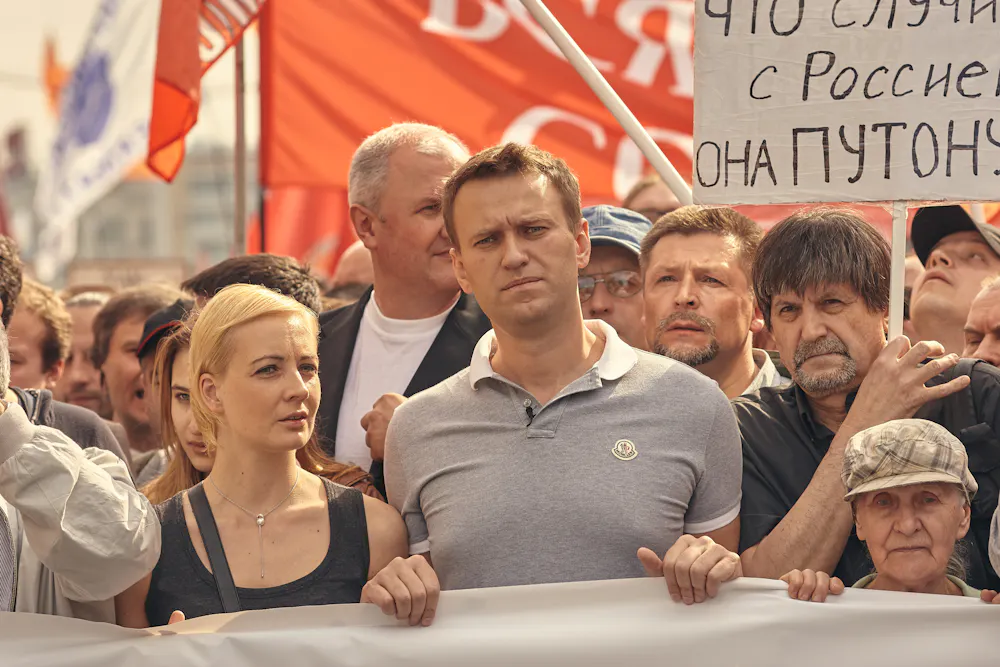
Alexei Navalny and his wife, Yulia Navalnaya, at a protest rally in Moscow, May 2012. Dmitry Laudin/Shutterstock
Today, Navalny’s family and team continue his work outside of Russia – and are fighting to keep his name alive back home. But the odds are against them. Polling suggests the share of Russians who say they know nothing about Navalny or his activities roughly doubled to 30% between his return in January 2021 and his death three years later.
Navalny fought against an autocratic system – and paid the price with his life. Given the very real fears Russians may have of voicing support for a man still labelled an extremist by the Putin regime, it’s not easy to assess what people there really think of him and his legacy. But we will also never know how popular Navalny would have been in the “normal” political system he fought for.
What made Navalny the force he was?
Navalny didn’t mean for the humble yellow rubber duck to become such a potent symbol of resistance.
In March 2017, the ACF published its latest investigation into elite corruption, this time focusing on then-prime minister (and former president), Dmitry Medvedev. Navalny’s team members had become masters of producing slick videos that enabled their message to reach a broad audience. A week after posting, the film had racked up over 7 million views on YouTube – an extraordinary number at that time.
The film included shocking details of Medvedev’s alleged avarice, including yachts and luxury properties. In the centre of a large pond in one of these properties was a duck house, footage of which was captured by the ACF using a drone.
Video: ACF.
Such luxuries jarred with many people’s view of Medvedev as being a bit different to Putin and his cronies. As Navalny wrote in his memoir, Medvedev had previously seemed “harmless and incongruous”. (At the time, Medvedev’s spokeswoman said it was “pointless” to comment on the ACF investigation, suggesting the report was a “propaganda attack from an opposition figure and a convict”.)
But people were angry, and the report triggered mass street protests across Russia. They carried yellow ducks and trainers, a second unintended symbol from the film given Medvedev’s penchant for them.
Another reason why so many people came out to protest on March 26 2017 was the organising work carried out by Navalny’s movement.
The previous December, Navalny had announced his intention to run in the 2018 presidential election. As part of the campaign, he and his team created a network of regional headquarters to bring together supporters and train activists across Russia. Although the authorities had rejected Navalny’s efforts to register an official political party, this regional network functioned in much the same way, gathering like-minded people in support of an electoral candidate. And this infrastructure helped get people out on the streets.
The Kremlin saw this as a clear threat. According to a December 2020 investigation by Bellingcat, CNN, Der Spiegel and The Insider, the FSB assassination squad implicated in the Novichok poisoning of Navalny had started trailing him in January 2017 – one month after he announced his run for the presidency.
At the protests against Medvedev, the authorities’ growing intolerance of Navalny was also on display – he was detained, fined and sentenced to 15 days’ imprisonment.
The Medvedev investigation was far from the beginning of Navalny’s story as a thorn in the Kremlin’s side. But this episode brings together all of the elements that made Navalny the force he was: anti-corruption activism, protest mobilisation, attempts to run as a “normal” politician in a system rigged against him, and savvy use of social media to raise his profile in all of these domains.
Courting controversy
In Patriot, Navalny writes that he always “felt sure a broad coalition was needed to fight Putin”. Yet over the years, his attempts to form that coalition led to some of the most controversial points of his political career.
In a 2007 video, Navalny referred to himself as a “certified nationalist”, advocating for the deportation of illegal immigrants, albeit without using violence and distancing himself from neo-Nazism. In the video, he says: “We have the right to be Russians in Russia, and we’ll defend that right.”
Although alienating some, Navalny was attempting to present a more acceptable face of nationalism, and he hoped to build a bridge between nationalists and liberals in taking on the Kremlin’s burgeoning authoritarianism.
But the prominence of nationalism in Navalny’s political identity varied markedly over time, probably reflecting his shifting estimations of which platform could attract the largest support within Russia. By the time of his thwarted run in the 2018 presidential election, nationalist talking points were all but absent from his rhetoric.
However, some of these former comments and positions continue to influence how people view him. For example, following Russia’s annexation of Crimea in 2014, Navalny tried to take a pragmatic stance. While acknowledging Russia’s flouting of international law, he said that Crimea was “now part of the Russian Federation” and would “never become part of Ukraine in the foreseeable future”.
Many Ukrainians take this as clear evidence that Navalny was a Russian imperialist. Though he later revised his position, saying Crimea should be returned to Ukraine, some saw this as too little, too late. But others were willing to look past the more controversial parts of his biography, recognising that Navalny represented the most effective domestic challenge to Putin.
Another key attempt to build a broad political coalition was Navalny’s Smart Voting initiative. This was a tactical voting project in which Navalny’s team encouraged voters to back the individual thought best-placed to defeat the ruling United Russia candidate, regardless of the challenger’s ideological position.
The project wasn’t met with universal approval. Some opposition figures and voters baulked at, or flatly refused to consider, the idea of voting for people whose ideological positions they found repugnant – or whom they viewed as being “fake” opposition figures, entirely in bed with the authorities. (This makes clear that Navalny was never the leader of the political opposition in Russia; he was, rather, the leading figure of a fractious constellation of individuals and groups.)
But others relished the opportunity to make rigged elections work in their favour. And there is evidence that Smart Voting did sometimes work, including in the September 2020 regional and local elections, for which Navalny had been campaigning when he was poisoned with Novichok.
In an astonishing moment captured on film during his recovery in Germany, Navalny speaks to an alleged member of the FSB squad sent to kill him. Pretending to be the aide to a senior FSB official, Navalny finds out that the nerve agent had been placed in his underpants.
How do Russians feel about Navalny now?
It’s like a member of the family has died.
This is what one Russian friend told me after hearing of Navalny’s death a year ago. Soon afterwards, the Levada Center – an independent Russian polling organisation – conducted a nationally representative survey to gauge the public’s reaction to the news.
The poll found that Navalny’s death was the second-most mentioned event by Russian people that month, after the capture of the Ukrainian city of Avdiivka by Russian troops. But when asked how they felt about his death, 69% of respondents said they had “no particular feelings” either way – while only 17% said they felt “sympathy” or “pity”.
And that broadly fits with Navalny’s approval ratings in Russia. After his poisoning in 2020, 20% of Russians said they approved of his activities – but this was down to 11% by February 2024.
Video: BBC.
Of course, these numbers must be taken for what they are: polling in an authoritarian state regarding a figure vilified and imprisoned by the regime, during a time of war and amid draconian restrictions on free speech. To what extent the drop in support for Navalny was real, rather than reflecting the increased fear people had in voicing their approval for an anti-regime figure, is hard to say with certainty.
When asked why they liked Navalny, 31% of those who approved of his activities said he spoke “the truth”, “honestly” or “directly”. For those who did not approve of his activities, 22% said he was “paid by the west”, “represented” the west’s interests, that he was a “foreign agent”, a “traitor” or a “puppet”.
The Kremlin had long tried to discredit Navalny as a western-backed traitor. After Navalny’s 2020 poisoning, Putin’s spokesman, Dmitry Peskov, said that “experts from the United States’ Central Intelligence Agency are working with him”. The Russian state claimed that, rather than a patriot exposing official malfeasance with a view to strengthening his country, Navalny was a CIA stooge intent on destroying Russia.
Peskov provided no evidence to back up this claim – and the official propaganda wasn’t believed by all. Thousands of Russians defied the authorities by coming out to pay their respects at Navalny’s funeral on March 1 2024. Many, if not all, knew this was a significant risk. Police employed video footage to track down members of the funeral crowd, including by using facial recognition technology.
The first person to be detained was a Muscovite the police claimed they heard shouting “Glory to the heroes!” – a traditional Ukrainian response to the declaration “Glory to Ukraine!”, but this time referencing Navalny. She spent a night in a police station before being fined for “displaying a banned symbol”.
Putin always avoided mentioning Navalny’s name in public while he was alive – instead referring to him as “this gentleman”, “the character you mentioned”, or the “Berlin patient”. (The only recorded instance of Putin using Navalny’s name in public when he was alive was in 2013.)
However, having been re-elected president in 2024 and with Navalny dead, Putin finally broke his long-held practice, saying: “As for Navalny, yes he passed away – this is always a sad event.” It was as if the death of his nemesis diminished the potency of his name – and the challenge that Navalny had long presented to Putin.
Nobody can become another Navalny
Someone else will rise up and take my place. I haven’t done anything unique or difficult. Anyone could do what I’ve done.
So wrote Navalny in the memoir published after his death. But that hasn’t happened: no Navalny 2.0 has yet emerged. And it’s no real surprise. The Kremlin has taken clear steps to ensure nobody can become another Navalny within Russia.
In 2021, the authorities made a clear decision to destroy Navalny’s organisations within Russia, including the ACF and his regional network. Without the organisational infrastructure and legal ability to function in Russia, no figure has been able to take his place directly.
More broadly, the fate of Navalny and his movement has had a chilling effect on the opposition landscape. So too have other steps taken by the authorities.
Russia has become markedly more repressive since the start of its war on Ukraine. The human rights NGO First Department looked into the number of cases relating to “treason”, “espionage” and “confidential cooperation with a foreign state” since Russia introduced the current version of its criminal code in 1997. Of the more than 1,000 cases, 792 – the vast majority – were initiated following Russia’s full-scale invasion of Ukraine in 2022.
Russian law enforcement has also used nebulous anti-extremism and anti-terrorism legislation to crack down on dissenting voices. Three of Navalny’s lawyers were sentenced in January 2025 for participating in an “extremist organisation”, as the ACF was designated by a Moscow court in June 2021. The Russian legislature has also passed a barrage of legislation relating to so-called “foreign agents”, to tarnish the work of those the regime regards as foreign-backed “fifth columnists”.
Mass street protests are largely a thing of the past in Russia. Restrictions were placed on public gatherings during the COVID pandemic – but these rules were applied selectively, with opposition individuals and groups being targeted. And opportunities for collective action were further reduced following the full-scale invasion of Ukraine.
Freedom of speech has also come under assault. Article 29, point five of the Russian constitution states: “Censorship shall be prohibited.” But in September 2024, Kremlin spokesperson Peskov said: “In the state of war that we are in, restrictions are justified, and censorship is justified.”
Legislation passed very soon after the 2022 invasion of Ukraine made it illegal to comment on the Russian military’s activities truthfully – and even to call the war a war.
YouTube – the platform so central to Navalny’s ability to spread his message – has been targeted. Without banning it outright – perhaps afraid of the public backlash this might cause – the Russian state media regulator, Roskomnadzor, has slowed down internet traffic to the site within Russia. The result has been a move of users to other websites supporting video content, including VKontakte – a Russian social media platform.
In short, conditions in Russia are very different now compared to when Navalny first emerged. The relative freedom of the 2000s and 2010s gave him the space to challenge the corruption and authoritarianism of an evolving system headed by Putin. But this space has shrunk over time, to the point where no room remains for a figure like him within Russia.
In 2019, Navalny told Ivan Zhdanov, who is now director of the ACF: “We changed the regime, but not in the way we wanted.” So, did Navalny and his team push the Kremlin to become more authoritarian – making it not only intolerant of him but also any possible successor?
There may be some truth in this. And yet, the drastic steps taken by the regime following the start of the war on Ukraine suggest there were other, even more significant factors that have laid bare the violent nature of Putin’s personal autocracy – and the president’s disdain for dissenters.
Plenty for Russians to be angry about
How can we win the war when dedushka [grandpa] is a moron?
In June 2023, Evgeny Prigozhin – a long-time associate of Putin and head of the private military Wagner Group – staged an armed rebellion, marching his forces on the Russian capital. This was not a full-blown political movement against Putin. But the target of Prigozhin’s invective against Russia’s military leadership had become increasingly blurry, testing the taboo of direct criticism of the president – who is sometimes referred to, disparagingly, as “grandpa” in Russia.
And Prigozhin paid the price. In August 2023, he was killed when the private jet he was flying in crashed after an explosion on board. Afterwards, Putin referred to Prigozhin as a “talented person” who “made serious mistakes in life”.
In the west, opposition to the Kremlin is often associated with more liberal figures like Navalny. Yet the most consequential domestic challenge to Putin’s rule came from a very different part of the ideological spectrum – a figure in Prigozhin leading a segment of Russian society that wanted the Kremlin to prosecute its war on Ukraine even more aggressively.
Video: BBC.
Today, there is plenty for Russians to be angry about, and Putin knows it. He recently acknowledged an “overheating of the economy”. This has resulted in high inflation, in part due to all the resources being channelled into supporting the war effort. Such cost-of-living concerns weigh more heavily than the war on the minds of most Russians.
A favourite talking point of the Kremlin is how Putin imposed order in Russia following the “wild 1990s” – characterised by economic turbulence and symbolised by then-president Boris Yeltsin’s public drunkenness. Many Russians attribute the stability and rise in living standards they experienced in the 2000s with Putin’s rule – and thank him for it by providing support for his continued leadership.
The current economic problems are an acute worry for the Kremlin because they jeopardise this basic social contract struck with the Russian people. In fact, one way the Kremlin tried to discredit Navalny was by comparing him with Yeltsin, suggesting he posed the same threats as a failed reformer. In his memoir, Navalny concedes that “few things get under my skin more”.
Although originally a fan of Yeltsin, Navalny became an ardent critic. His argument was that Yeltsin and those around him squandered the opportunity to make Russia a “normal” European country.
Navalny also wanted Russians to feel entitled to more. Rather than be content with their relative living standards compared with the early post-Soviet period, he encouraged them to imagine the level of wealth citizens could enjoy based on Russia’s extraordinary resources – but with the rule of law, less corruption, and real democratic processes.
‘Think of other possible Russias’
When looking at forms of criticism and dissent in Russia today, we need to distinguish between anti-war, anti-government, and anti-Putin activities.
Despite the risk of harsh consequences, there are daily forms of anti-war resistance, including arson attacks on military enlistment offices. Some are orchestrated from Ukraine, with Russians blackmailed into acting. But other cases are likely to be forms of domestic resistance.
Criticism of the government is still sometimes possible, largely because Russia has a “dual executive” system, consisting of a prime minister and presidency. This allows the much more powerful presidency to deflect blame to the government when things go wrong.
There are nominal opposition parties in Russia – sometimes referred to as the “systemic opposition”, because they are loyal to the Kremlin and therefore tolerated by the system. Within the State Duma, these parties often criticise particular government ministries for apparent failings. But they rarely, if ever, now dare criticise Putin directly.
Nothing anywhere close to the challenge presented by Navalny appears on the horizon in Russia – at either end of the political spectrum. But the presence of clear popular grievances, and the existence of organisations (albeit not Navalny’s) that could channel this anger should the Kremlin’s grip loosen, mean we cannot write off all opposition in Russia.
Navalny’s wife, Yulia, has vowed to continue her husband’s work. And his team in exile maintain focus on elite corruption in Russia, now from their base in Vilnius, Lithuania. The ACF’s most recent investigation is on Igor Sechin, CEO of the oil company Rosneft.
But some have argued this work is no longer as relevant as it was. Sam Greene, professor in Russian politics at King’s College London, captured this doubt in a recent Substack post:
[T]here is a palpable sense that these sorts of investigations may not be relevant to as many people as they used to be, given everything that has transpired since the mid-2010s, when they were the bread and butter of the Anti-Corruption Foundation. Some … have gone as far as to suggest that they have become effectively meaningless … and thus that Team Navalny should move on.
Navalny’s team are understandably irritated by suggestions they’re no longer as effective as they once were. But it’s important to note that this criticism has often been sharpest within Russia’s liberal opposition. The ACF has been rocked, for example, by recent accusations from Maxim Katz, one such liberal opposition figure, that the organisation helped “launder the reputations” of two former bank owners. In their response, posted on YouTube, the ACF referred to Katz’s accusations as “lies” – but this continued squabbling has left some Russians feeling “disillusioned and unrepresented”.
So, what will Navalny’s long-term legacy be? Patriot includes a revealing section on Mikhail Gorbachev – the last leader of the Soviet Union, whom Navalny describes as “unpopular in Russia, and also in our family”. He continues:
Usually, when you tell foreigners this, they are very surprised, because Gorbachev is thought of as the person who gave Eastern Europe back its freedom and thanks to whom Germany was reunited. Of course, that is true … but within Russia and the USSR he was not particularly liked.
At the moment, there is a similar split in perceptions of Navalny. Internationally, he was nominated for the Nobel Peace Prize, awarded the Sakharov Prize by the European Parliament, and a documentary about him won an Oscar.
But there are also those outside of Russia who remain critical: “Navalny’s life has brought no benefit to the Ukrainian victory; instead, he has caused considerable harm,” wrote one Ukrainian academic. “He fuelled the illusion in the west that democracy in Russia is possible.”
Trailer for the Oscar-winning documentary Navalny.
Inside Russia, according to Levada Center polling shortly after his death, 53% of Russians thought Navalny played “no special role” in the history of the country, while 19% said he played a “rather negative” role. Revealingly, when commenting on Navalny’s death, one man in Moscow told RFE/RL’s Russian Service: “I think that everyone who is against Russia is guilty, even if they are right.”
But, for a small minority in Russia, Navalny will go down as a messiah-like figure who miraculously cheated death in 2020, then made the ultimate sacrifice in his battle of good and evil with the Kremlin. This view may have been reinforced by Navalny’s increasing openness about his Christian faith.
Ultimately, Navalny’s long-term status in Russia will depend on the nature of the political system after Putin has gone. Since it seems likely that authoritarianism will outlast Putin, a more favourable official story about Navalny is unlikely to emerge any time soon. However, how any post-Putin regime tries to make sense of Navalny’s legacy will tell us a lot about that regime.
While he was alive, Navalny stood for the freer Russia in which he had emerged as a leading opposition figure – and also what he called the “Beautiful Russia of the Future”. Perhaps, after his death, his lasting legacy in Russia remains the ability for some to think – if only in private – of other possible Russias.
To hear about new Insights articles, join the hundreds of thousands of people who value The Conversation’s evidence-based news. Subscribe to our newsletter.
Ben Noble has previously received funding from the British Academy and the Leverhulme Trust. He is an Associate Fellow of Chatham House.
Source: State University of Management – Official website of the State –
From February 1 to 28, 2025, the Invitational Stage of the V International Financial Security Olympiad is being held in Russian and English on the international social and educational platform “Commonwealth”.
Let us recall that last season two students from the State University of Management became Olympiad prize winners.
Pupils of grades 8-11 and students are invited to participate. Upon completion of the stage, participants who have completed the tasks will receive a certificate.
The invitational stage is a great opportunity not only to test your knowledge of financial security, but also to prepare for the new cycle of the Olympiad and get acquainted with the format of the tasks.
To participate, you must register on the Olympiad platform. Tasks will be available from February 1 to February 28.
The International Financial Security Olympiad has been held since 2021 under the patronage of the President of Russia and the Government of the Russian Federation. In 2024, representatives of 36 countries reached the final of the Olympiad.
The International Financial Security Olympiad is aimed at popularizing financial security as a norm of life, as well as at forming a new type of thinking among young people: from the financial security of an individual to the financial security of the state. Winners and prize winners are granted additional rights when entering higher education programs.
The Olympiad organizers are: the Ministry of Science and Higher Education of the Russian Federation, the Federal Service for Financial Monitoring, the Ministry of Education of the Russian Federation, the International Network Institute in the Sphere of AML/CFT and the International Educational and Methodological Center for Financial Monitoring.
Subscribe to the TG channel “Our GUU” Date of publication: 02/14/2025
Please note: This information is raw content directly from the source of the information. It is exactly what the source states and does not reflect the position of MIL-OSI or its clients.
The investigation has so far identified 85 individuals linked to the Russian war of aggression against Ukraine. The National Police of Ukraine has opened a special criminal case, which contains information about the recruitment, training, financing, and the use of the alleged mercenaries in combat actions against Ukraine. This information has been shared with authorities in Moldova, where new preliminary…
Source: United Kingdom – Executive Government & Departments 3
First-of-its-kind international defence trade mission to Kyiv deepens industry ties between Ukraine and its allies
The UK and allies have deepened industry ties with Ukraine by leading a first-of-its-kind international defence trade mission to Kyiv this week.
Led by the Minister for the Armed Forces, the trade delegation, which included Norway and The Netherlands, met with Ukrainian ministers, officials, and industry partners to strengthen strategic partnerships and enhance defence cooperation in support of Ukraine.
This was the fifth trade mission to Ukraine by Britain’s Task Force HIRST, but the first in conjunction with allies, setting a blueprint for future trade missions to be international as the norm.
Following the visit, UK companies have agreed to work more closely with Ukrainian partners, agreeing to new commitments that will build on previous agreements and boost their capabilities.
Despite a significant Russian airstrike targeting Kyiv on Wednesday morning this week, which killed one innocent civilian, the trade mission went ahead successfully, highlighting that the UK and our Allies will not be intimidated by Putin’s brutal tactics.
With firms across the UK ramping up defence production to meet Ukraine’s requirements, support for Ukraine will directly boost the UK defence sector, create UK jobs, and deliver on this Government’s growth agenda and Plan for Change.
Minister for the Armed Forces, Luke Pollard MP said:
The UK is continuing to lead the way on global support for Ukraine. By strengthening defence industry ties with allies, we are providing Ukraine with the firepower it needs on the battlefield, whilst bolstering our own defence industrial base —creating jobs and driving investment.
Our partnerships with The Netherlands, Norway, and Ukraine will help build resilient supply chains to ensure we put Ukraine in the strongest possible position to achieve a just and lasting peace through strength.
We will stand with our allies to support Ukraine for as long as it takes.
The Minister, along with officials from the Ministry of Defence and Department for Business and Trade, attended meetings focused on continuing to develop the industrial relationship with Ukraine, boosting their capabilities on the battlefield, whilst supporting growth back in the UK.
The Ministry of Defence set up Task Force HIRST to drive increases in UK, Ukrainian and allies’ industrial capacity to support the Armed Forces of Ukraine, as well as national military resilience.
Kevin Craven, CEO of ADS said:
Our continued industrial partnership with the Ukraine will be pivotal if we are to strengthen our collective security. It is an honour for ADS and our members to work in such close collaboration with Ukraine.
UK support to Ukraine has, at its heart, the knowledge that helping Ukraine is protecting our values and way of life.
The visit coincided with the NATO meeting of defence ministers, where the Defence Secretary announced a new £150 million package of military aid to Ukraine.
The £150 million package includes thousands of drones, dozens of battle tanks and more than 50 armoured and protective vehicles to be deployed to Ukraine by the end of spring, building on the thousands of pieces of equipment the UK has already given to Ukraine.
In a boost to the UK’s economy, the package also includes a multi-million-pound contract with UK defence firm Babcock, who will train Ukrainian personnel to maintain and repair crucial equipment such as Challenger 2 tanks, self-propelled artillery, and combat reconnaissance vehicles inside Ukraine. Through this agreement, equipment can be serviced and returned to the frontline quicker.
This is part of the UK’s unprecedented £4.5 billion pledge for Ukraine this year, its highest-ever level.
The Government is clear that the security of the UK starts in Ukraine and is therefore committed to Ukraine’s long-term security as a foundation for the government’s Plan for Change.
In accordance with the Methodology for determining the risk parameters of the stock market and deposit market of Moscow Exchange PJSC by NCO NCC (JSC), on 14.02.2025, 11-34 (Moscow time), the values of the upper limit of the price corridor (up to 2.824) and the range of market risk assessment (up to 3.06179 rubles, equivalent to a rate of 25.0%) of the UPRO security (Unipro JSC) were changed.
Please note: This information is raw content directly from the source of the information. It is exactly what the source states and does not reflect the position of MIL-OSI or its clients.
Please Note; This Information is Raw Content Directly from the Information Source. It is access to What the Source Is Stating and Does Not Reflect
In accordance with the Methodology for determining the risk parameters of the stock market and deposit market of Moscow Exchange PJSC by NCO NCC (JSC) on 14.02.2025, 12-10 (Moscow time), the values of the upper limit of the price corridor (up to 100.83) and the range of market risk assessment (up to 1068.38 rubles, equivalent to a rate of 7.5%) of the security RU000A101590 (DOM 1P-7R) were changed.
Please note: This information is raw content directly from the source of the information. It is exactly what the source states and does not reflect the position of MIL-OSI or its clients.
Please Note; This Information is Raw Content Directly from the Information Source. It is access to What the Source Is Stating and Does Not Reflect
In accordance with the Methodology for determining the risk parameters of the stock market and deposit market of Moscow Exchange PJSC by NCO NCC (JSC), on 14.02.2025, 12-18 (Moscow time), the values of the upper limit of the price corridor (up to 70.68) and the range of market risk assessment (up to 740.96 rubles, equivalent to a rate of 12.5%) of the SU26239RMFS2 security (OFZ 26239) were changed.
Please note: This information is raw content directly from the source of the information. It is exactly what the source states and does not reflect the position of MIL-OSI or its clients.
Please Note; This Information is Raw Content Directly from the Information Source. It is access to What the Source Is Stating and Does Not Reflect
In accordance with the Methodology for determining the risk parameters of the stock market and deposit market of Moscow Exchange PJSC by NCO NCC (JSC), on 14.02.2025, 13-19 (Moscow time), the values of the upper limit of the price corridor (up to 106.67) and the range of market risk assessment (up to 114.405 rubles, equivalent to a rate of 21.25%) of the FLOT (Sovcomflot) security were changed.
Please note: This information is raw content directly from the source of the information. It is exactly what the source states and does not reflect the position of MIL-OSI or its clients.
Please Note; This Information is Raw Content Directly from the Information Source. It is access to What the Source Is Stating and Does Not Reflect
In accordance with the Methodology for determining the risk parameters of the stock market and deposit market of Moscow Exchange PJSC by NCO NCC (JSC) on 14.02.2025, 13-39 (Moscow time), the values of the upper limit of the price corridor (up to 86.83) and the range of market risk assessment (up to 267.38 rubles, equivalent to a rate of 7.5%) of the security RU000A102CR0 (MosOb35015) were changed.
Please note: This information is raw content directly from the source of the information. It is exactly what the source states and does not reflect the position of MIL-OSI or its clients.
Please Note; This Information is Raw Content Directly from the Information Source. It is access to What the Source Is Stating and Does Not Reflect
In accordance with the Methodology for determining the risk parameters of the stock market and deposit market of Moscow Exchange PJSC by NCO NCC (JSC) on 14.02.2025, 14-42 (Moscow time), the values of the upper limit of the price corridor (up to 95.07) and the range of market risk assessment (up to 994.55 rubles, equivalent to a rate of 7.5%) of the security RU000A1012B3 (FPK 1P-07) were changed.
Please note: This information is raw content directly from the source of the information. It is exactly what the source states and does not reflect the position of MIL-OSI or its clients.
Please Note; This Information is Raw Content Directly from the Information Source. It is access to What the Source Is Stating and Does Not Reflect
Source: Government of the Russian Federation – An important disclaimer is at the bottom of this article.
Vitaly Savelyev held a weekly meeting of the Government Commission for the Elimination of the Consequences of the Oil Spill in the Kerch Strait
February 14, 2025
Vitaly Savelyev held a weekly meeting of the Government Commission for the Elimination of the Consequences of the Oil Spill in the Kerch Strait
February 14, 2025
Vitaly Savelyev held a weekly meeting of the Government Commission for the Elimination of the Consequences of the Oil Spill in the Kerch Strait
February 14, 2025
Vitaly Savelyev held a weekly meeting of the Government Commission for the Elimination of the Consequences of the Oil Spill in the Kerch Strait
February 14, 2025
Previous news Next news
Vitaly Savelyev held a weekly meeting of the Government Commission for the Elimination of the Consequences of the Oil Spill in the Kerch Strait
A meeting of the government commission to coordinate work to eliminate the consequences of the emergency caused by the sinking of tankers in the Kerch Strait in December 2024 was held in Moscow under the chairmanship of Deputy Prime Minister Vitaly Savelyev.
Work continues to remove the stern section of the Volgoneft-239 tanker. In total, more than 240 tons of metal structures have been removed for disposal, which is almost 35% of the total volume. The work is scheduled to be completed by March 31 of this year.
357 km of coastline have been cleared, more than 186 thousand tons of contaminated sand and soil have been collected. About 144 thousand tons have been removed to temporary storage sites, and more than 48 thousand tons have been removed for disposal to specialized organizations.
The data from air, drinking water, and bioresources samples taken by Rospotrebnadzor laboratories remain normal.
The Ministry of Science and Higher Education is actively working to collect and analyze promising scientific and technological solutions for eliminating the consequences of an emergency. A special interdepartmental working group has been formed to analyze the existing scientific and scientific and technical potential, which includes leading scientists, representatives of business and interested government institutions and departments. The group has organized the collection and analysis of technological proposals for eliminating the consequences of an emergency on land and in water areas, which, if assessed positively, are tested in Krasnodar Krai.
A total of 223 proposals were submitted to the group for consideration. A positive conclusion was received for 115 submitted technologies and technical solutions from 71 organizations, including 84 projects (57 organizations declared their readiness to test the submitted technologies in the emergency zone). Of the 115 submitted technologies, 36 solutions are in industrial and pilot-industrial readiness: 23 proposals for the elimination of emergency consequences on land, 13 proposals for the elimination of emergency consequences in the marine area.
Please note: This information is raw content directly from the source of the information. It is exactly what the source states and does not reflect the position of MIL-OSI or its clients.
On November 1 2024, the roof of a newly €55 million renovated railway station in Novi Sad, Serbia’s second biggest city, collapsed and killed 15 people. The deaths sparked Serbia’s largest wave of student-led anti-government protests since Yugoslavia’s disintegration in 2000.
The protests pose the most serious threat to Serbian president Aleksandar Vučić’s power since he became prime minister in 2014, and president in 2017. The protest movement has highlighted Vučić’s growing authoritarian rule and widespread corruption in Serbia.
Serbians believe that the deadly roof collapse was caused by government corruption. The station was renovated by a Chinese-led consortium as part of China’sBelt and Road Initiative investments and growing political ties with Serbia. The Chinese consortium and Vučić refused to publish the railway station restoration procurement contract after protesters demanded it.
The protesters have four demands: the publication of all procurement documents concerning the renovation of the station, a stop to the prosecution of students arrested during the protests, the prosecution of police and security forces involved in attacking students during the protests and a 20% increase in the budget for higher education.
However, the Serbian government and media — most of which Vučić controls through a network of political patronage and cronyism – are downplaying the protests and threatening students.
Vučić claims that foreign powers are behind the protests to topple him and destabilise Serbia. Russia and China have fully supported Vučić’s claims that Serbia is the target of a western plot to orchestrate the protesters and overthrow Vučić.
Serbia’s history of corruption
In the decade after former president Slobodan Milošević was overthrown, Serbia implemented a number of democratic and anti-corruption reforms. As a result, the country climbed to 72nd place out of 180 countries in Transparency International’s Corruption Perception Index in 2013. Serbia opened EU membership negotiations the following year.
However, since Vučić took office, Serbia has become more authoritarian. Corruption is widespread, and the government has exploited tensions and instability with most of its western Balkans neighbours, primarily Kosovo, for political gain.
Serbia was downgraded to partly free by Freedom House in 2019, and the V-Dem Institute (Varieties of Democracy) labelled it as as an “electoral autocracy”. Serbia dropped to 105th place in Transparency International’s Corruption Perception Index in 2024.
Many international organisations monitoring anti-corruption, human rights and democracy have reported Vučić’sauthoritarian tendencies and corruption in Serbia.
A report from Amnesty International published in December 2024 describes Serbia as a “digital prison”. It has been reported that Serbian authorities are using surveillance technology to monitor and suppress the protesters and other political opponents.
International response
The EU has mostly stayed silent since the protests began. After receiving letters from NGOs and activists, EU Commissioner for Enlargement Marta Kos stated that the EU is following the protests in Serbia, and backed the rule of law and freedom of assembly.
This is a far cry from the EU’s response to protests in Georgia last year. EU commission president Ursula von der Leyen said “the Georgian people are fighting for democracy” – yet has stayed silent on the protests in Serbia.
Some argue this (lack of) response is because in August 2024, Vučić made a deal with the EU to provide lithium to the bloc – a boon to the EU’s electric vehicle production. There were also widespread protests against the lithium deal over its transparency and concerns that the mine would cause irreversible environmental destruction to Serbia’s Jadar Valley.
The US has also stayed quiet. President Donald Trump’s associates were recently granted permission to build a Trump hotel in Belgrade. Further, Rod Blagojevich, the former governor of Illinois who served eight years in prison for corruption, is being considered as the new US ambassador to Serbia. Blagojevich, whose father is from Serbia, expressed support for Vučić and visited the country.
What is next for Serbia?
Serbia’s prime minister, Miloš Vučević, and Novi Sad’s mayor, Milan Đurić, both resigned in an effort to de-escalate the protests. Following the resignation of the PM, Vučić has said that he is open to the new government making the documents about the station collapse public.
While this may be a sign that the protests are loosening Vučić’s grip, the movement has only intensified, spreading to more than 200 towns on February 1.
Vučić has pledged to either form a new government within one month, or organise a new parliamentary election in the spring to address the protesters’ demands. However, this would barely paper over the cracks of systemic corruption in Serbia.
The student movement has revealed how democracy and the rule of law have eroded since Vučić came to power in 2014.
The protests have also exposed the international community’s complicity in supporting Vučić under the premise that he is a constructive partner for regional cooperation and stability in the western Balkans.
But to have a lasting impact in Serbia, the protesters should also demand a transitional government to undertake anti-corruption and democratic reforms to strengthen the rule of law, and to organise the next elections.
At the heart of these reforms must be constitutional changes, such as term limits on elected public office. Research shows stricter term limits can reduce the costs of corruption, abuse of power and attacks on the rule of law and democracy.
Term limits would also prevent figures with authoritarian tendencies, like Vučić, from becoming the state themselves with unlimited and unaccountable power.
The EU also has a role to play here. By not putting pressure on Vučić, the EU is empowering his authoritarian tendencies. Second, in EU membership negotiations, it should introduce electoral reform as a new requirement for all EU candidate countries.
Other leaders in the western Balkans have adopted similar authoritarian government models and patronage systems as Serbia to maintain power. These would undermine and threaten the EU rule of law, if they were to join the bloc today.
The EU must also publicly support student protesters who want Serbia to become more democratic and accountable. After all, the students are fighting for the very ideals on which the EU was founded.
Andi Hoxhaj does not work for, consult, own shares in or receive funding from any company or organisation that would benefit from this article, and has disclosed no relevant affiliations beyond their academic appointment.
In accordance with the Methodology for determining the risk parameters of the stock market and deposit market of Moscow Exchange PJSC by NCO NCC (JSC) on 14.02.2025, 10-06 (Moscow time), the values of the upper limit of the price corridor (up to 120.49) and the range of market risk assessment (up to 1279.63 rubles, equivalent to a rate of 17.5%) of the security RU000A10AUE8 (RZhD 1P-36R) were changed.
Please note: This information is raw content directly from the source of the information. It is exactly what the source states and does not reflect the position of MIL-OSI or its clients.
Please Note; This Information is Raw Content Directly from the Information Source. It is access to What the Source Is Stating and Does Not Reflect
In accordance with the Methodology for determining the risk parameters of the stock market and deposit market of Moscow Exchange PJSC by NCO NCC (JSC), on 14.02.2025, 10-06 (Moscow time), the values of the lower limit of the price corridor (up to 75.82) and the range of market risk assessment (up to 468.24 rubles, equivalent to a rate of 22.5%) of the RU000A105NP4 security (IADOM 1P30) were changed.
Please note: This information is raw content directly from the source of the information. It is exactly what the source states and does not reflect the position of MIL-OSI or its clients.
Please Note; This Information is Raw Content Directly from the Information Source. It is access to What the Source Is Stating and Does Not Reflect
In accordance with the Methodology for determining the risk parameters of the stock market and deposit market of Moscow Exchange PJSC by NCO NCC (JSC) on 14.02.2025, 10-22 (Moscow time), the values of the lower limit of the price corridor (up to 73.12) and the range of market risk assessment (up to 470.18 rubles, equivalent to a rate of 21.25%) of the security RU000A105898 (IADOM 1P21) were changed.
Please note: This information is raw content directly from the source of the information. It is exactly what the source states and does not reflect the position of MIL-OSI or its clients.
Please Note; This Information is Raw Content Directly from the Information Source. It is access to What the Source Is Stating and Does Not Reflect
In accordance with the Methodology for determining the risk parameters of the stock market and deposit market of Moscow Exchange PJSC by NCO NCC (JSC) on 14.02.2025, 10-24 (Moscow time), the values of the lower limit of the price corridor (up to 73.03) and the range of market risk assessment (up to 709.17 rubles, equivalent to a rate of 13.75%) of the RU000A1031U3 (VEB1P-26) security were changed.
Please note: This information is raw content directly from the source of the information. It is exactly what the source states and does not reflect the position of MIL-OSI or its clients.
Please Note; This Information is Raw Content Directly from the Information Source. It is access to What the Source Is Stating and Does Not Reflect
In accordance with the Methodology for determining the risk parameters of the stock market and deposit market of Moscow Exchange PJSC by NCO NCC (JSC) on 14.02.2025, 10-34 (Moscow time), the values of the upper limit of the price corridor (up to 109.84) and the range of market risk assessment (up to 1175.67 rubles, equivalent to a rate of 7.5%) of the security RU000A0ZYJ91 (FSK RS B4) were changed.
Please note: This information is raw content directly from the source of the information. It is exactly what the source states and does not reflect the position of MIL-OSI or its clients.
Please Note; This Information is Raw Content Directly from the Information Source. It is access to What the Source Is Stating and Does Not Reflect
In accordance with the Methodology for determining the risk parameters of the stock market and deposit market of Moscow Exchange PJSC by NCO NCC (JSC), on 14.02.2025, 11-30 (Moscow time), the values of the upper limit of the price corridor (up to 851.5) and the range of market risk assessment (up to 923.1 rubles, equivalent to a rate of 25.0%) of the PIKK security (PIK JSC) were changed.
Please note: This information is raw content directly from the source of the information. It is exactly what the source states and does not reflect the position of MIL-OSI or its clients.
Please Note; This Information is Raw Content Directly from the Information Source. It is access to What the Source Is Stating and Does Not Reflect
Source: State University of Management – Official website of the State –
A unique opportunity for dance lovers! Join the SMU team to participate in the All-Russian festival “Russian Student Spring”.
Young men and women with dance experience are invited. We are waiting for creative guys who are ready for dance experiments, for whom dancing is part of everyday life. Don’t miss the chance to make a name for yourself. Only until February 17 you can become part of this exciting project!
Rehearsals begin now!
First gathering: February 17 at 18:45 Dance floor of the Central Control and Monitoring Center
If you want to become part of the team, know how to dance, are passionate about it and are ready to actively participate in extracurricular activities, register and come to the rehearsal: https://forms.yandex.ru/u/67ab9f8d02848fef4723480b/
If you have any questions, please contact: 89037238637 (WhatsApp/Telegram) – Vladimir Borisovich Zarnitsky VK: https://vk.com/id1581114 89248927268 (WhatsApp/Telegram) – Anastasia Popalitova VK: https://vk.com/nastya_popalitova
Subscribe to the tg channel “Our State University” Announcement date: 02/14/2025
Please note: This information is raw content directly from the source of the information. It is exactly what the source states and does not reflect the position of MIL-OSI or its clients.
At the Conclusion of India Energy Week 2025, India Cements Position as Global Energy Leader “World’s second-largest energy conclave saw announcement of largest-ever exploration bid round, charted path for green energy transition while strengthening international partnerships”
Posted On: 14 FEB 2025 2:42PM by PIB Delhi
Shri Hardeep Singh Puri, Minister of Petroleum and Natural Gas, highlighted the measurable success of India Energy Week 2025 through its unprecedented participant and exhibitor numbers and technical paper submissions. The Minister noted that the event had exceeded expectations by encompassing a comprehensive range of sectors including petroleum, natural gas, green energy, biofuel, and CBG, showcasing remarkably innovative developments.
Shri Puri emphasized that within the short span of three years, India Energy Week has established itself as the world’s second-largest energy platform, with its fourth edition scheduled to take place in Goa.
The Minister emphasized that IEW 2025 distinguished itself from other global energy forums by facilitating actual business transactions rather than merely serving as a networking platform. Shri Hardeep Singh Puri specifically highlighted practical innovations such as the cost-effective conversion kit demonstrated at the HPCL stall, designed for enabling biofuel usage in two and three-wheelers. Additionally, the Minister also expressed satisfaction at the convergence of investors, manufacturers, and consumers, particularly evident in the display of flex fuel vehicles.
Speaking on India-US energy cooperation, the Minister noted the substantial progress in bilateral relations, particularly in the natural gas sector. The Minister highlighted India’s stated goal of increasing natural gas consumption to 15% in its energy mix from about 6% currently, emphasizing the strategic importance of the relationship with the United States for Liquified Natural Gas (LNG) supplies.
Addressing reforms in the Exploration and Production (E&P) sector, Shri Puri detailed the scale of Open Acreage Licensing Program (OALP) Round X covering about 200,000 square kilometers. The Minister explained that enhanced interest in this round has been driven by systematic reforms in the regulatory regime, transitioning from production to revenue sharing mechanisms, along with the proposed amendments to Oilfields (Regulation and Development) Act 1948.
Additionally, Shri Puri announced that the new legislative framework, developed through extensive consultations, is set to be presented in the Lok Sabha. He particularly noted the collaboration of ONGC with BP, and Reliance in bidding for blocks in earlier rounds as a strong message of industry partnership.
Outlining the Ministry’s priorities, the Minister emphasized focus on E&P, stressing the importance of expert collaboration and the proposed changes to regulatory framework that allows appropriate compensation for resource discovery to the stakeholders in the sector.
The Minister highlighted the significance of the amendments, passed by the Rajya Sabha, in ensuring policy predictability, particularly regarding windfall tax implementation. He emphasized the removal of discretionary elements in policy implementation as a move toward more transparent governance in the energy sector.
Discussing the global energy scenario, the Minister observed that the new US administration’s push for increased oil supply has created favorable conditions in global markets. He noted the emergence of new oil sources from the Western Hemisphere, including Brazil, Argentina, Suriname, Canada, US, and Guyana, as beneficial for major consuming nations like India. Shri Puri expressed complete confidence in India’s international investments in the Oil & Gas assets across Brazil, Venezuela, Russia, and Mozambique.
Shri Hardeep Singh Puri described the biofuel program as a remarkable story, citing current capacity of 1,700 crore liters for ethanol blending, while discussing potential beyond the 20% blending target. Moreover, Shri Puri expressed particular excitement about green hydrogen, confirming confident progression toward the 5MMT annual production target for 2030, while also highlighting sustainable aviation fuel development.
Secretary, Ministry of Petroleum and Natural Gas, Shri Pankaj Jain, detailed the business conducted during IEW 2025 across various domains. He categorized the agreements into distinct areas: supply arrangements for crude, LNG, and LPG across geographies; technology partnerships for digital refinery solutions; and exploration services.
Shri Pankaj Jain also highlighted the unprecedented scale of OALP Round X, emphasizing the need for global expertise to exploit hydrocarbon resources in the country. Shri Jain also discussed the potential use of the Oil Industry Development Fund, established under the Oil Industry Development Act, for innovative financing needs in deep-water exploration projects.
Felicitation to Startup Competition and Hackathon Winners:
The prestigious Avinya’25 – Energy Startup Challenge awards, the flagship initiative of the Ministry of Petroleum and Natural Gas, were presented by Shri Hardeep Singh Puri and Shri Pankaj Jai. Avinya’25 recognized startups with pioneering solutions addressing key energy challenges.
UrjanovaC Pvt Ltd emerged as the winner for its synthetic catalyst technology that enables scalable and cost-competitive CO₂ capture and conversion. The first runner-up, Breathe ESG Private Limited, developed a SaaS platform that automates ESG reporting, decarbonization strategies, and compliance.
AgriVijay, the second runner-up, introduced India’s first curated marketplace for renewable energy solutions for farmers and rural households. Apeiro Energy, securing the third runner-up position, designed hybrid microgrids by integrating small wind turbines with solar panels. UGreen Technology, the fourth runner-up, developed a molecular-engineering approach that enhances CO₂ reactivity for efficient carbon capture.
Additionally, the Ministry introduced Vasudha – Oil and Gas Startup Challenge, an exclusive competition for overseas startups revolutionizing the upstream oil and gas sector. Out of 17 entries from 13 countries, two visionary startups were recognized.
Latin Energy Partners Inc., Paraguay, won the challenge, while Ultrasound Process Consultation LLC, USA, was named the runner-up. Their innovations in oil and gas exploration, AI-driven production management, ESG compliance, CCUS technologies, and geothermal exploration were highly commended.
Promoting research and technological innovation, a Hackathon was organized among seven premier IITs, including IIT Delhi, Mumbai, Madras, Guwahati, Roorkee, Kharagpur, and ISM Dhanbad. The competition aimed to drive forward-thinking solutions in CCUS and renewable energy. IIT (ISM) Dhanbad secured the winner’s title, while IIT Guwahati emerged as the runner-up.
About India Energy Week 2025
India Energy Week was envisioned as more than just another industry conference—it was designed to be a dynamic platform redefining global energy dialogues. In just two years, this self-funded initiative has achieved precisely that, becoming the world’s second-largest energy event. The third edition, scheduled from February 11-14, 2025, at Yashobhoomi, New Delhi, represents a significant milestone in shaping the global energy narrative.
Source: Rosneft – Rosneft – An important disclaimer is at the bottom of this article.
Rosneft enterprises across the country took part in the all-Russian campaign “Give books with love”, which was timed to coincide with International Book Giving Day, celebrated annually on February 14.
As part of the campaign, the Company’s volunteers traditionally donate printed publications to city and rural libraries, museums, educational and medical institutions. Over the years of participating in the initiative, oil workers have enriched literary collections with thousands of various publications, including encyclopedic, popular science and fiction books.
In the year of the 80th anniversary of the Victory in the Great Patriotic War, special attention is paid to works dedicated to the heroes and battles of those years. For example, Tyumenneftegaz supported the publication of Sergei Polonsky’s book – “9 Great Battles of 1941-1945”, containing many historical facts, maps, photographs, which helps to preserve the memory of those events and the price of the Victory of the Soviet people over fascism.
Volunteers of the Samara group of companies “Rosneft” have been participating in the campaign for more than 5 years. “Samaraneftegaz” donated printed publications to the library of the village of Osinki, whose collection is more than 16 thousand copies, adding literature of various genres, including colorful illustrated encyclopedias in 32 volumes.
Activists of the Kuibyshevsky Oil Refinery handed over 100 books to the pupils of the Samara boarding school No. 136 for children with disabilities. The Novokuibyshevsky Oil Refinery handed over two hundred new publications to the library of the city social hotel, where parents with children in difficult life situations are temporarily accommodated. Employees of the Syzran Oil Refinery presented books to patients of the pediatric department and the pediatric surgery department of the Syzran hospital.
Volunteers from the Saratov Oil Refinery donated about 200 books on various topics to the library of the Sokolovy workers’ settlement.
RN-Vankor volunteers donated children’s publications to the wards of the Regional Family and Children’s Center, and also provided libraries at production sites with literature. Orenburgneft employees donated the collected books to children undergoing treatment in the children’s department of the city hospital in Buzuluk, as well as to residents of the local Obereg charity home.
Udmurtneft employees brought literature for extracurricular reading, development of creative abilities, collections of fairy tales, picture books and encyclopedias to general education institutions, kindergartens and boarding schools.
The company’s enterprises also hold an annual book exchange campaign. For example, employees of RN-North-West collect both new books and those that have already been read in a special terminal located in the enterprise’s office. This year, they collected more than 300 books, which will be transferred to rural libraries in the Leningrad Region.
For the holiday, Sakhalinmorneftegaz-Shelf donated several hundred copies of books collected by the Sakhalin-1 project workers to the Sakhalin Regional Universal Scientific Library. Some of the publications are in foreign languages. This will be a great help to readers who want to gain more knowledge about international literature in the original.
Volunteering is an important element of Rosneft’s corporate culture. The Company implements the Good Deeds Platform program, within the framework of which employees provide assistance to families and children in difficult life situations, provide targeted assistance to veterans, and also conduct patriotic, environmental education and other events.
Department of Information and Advertising of PJSC NK Rosneft February 14, 2025
Please note: This information is raw content directly from the source of the information. It is exactly what the source states and does not reflect the position of MIL-OSI or its clients.
Source: Novosibirsk State University – Novosibirsk State University –
The next type of the Spartakiad program “Cheerfulness and Health” among teachers and employees of higher educational institutions of the Novosibirsk region – billiards – brought NSU a very pleasant surprise! Our team won a brilliant victory! All games played excellently:
Evgeny Antushev, Deputy Director of USOC
Mikhail Lukyanov, director of the canteen
Evgeny Anisimov, Head of the UKB
Sergey Golushko, professor of the Faculty of Mechanics and Mathematics,
There were also chess competitions, in which the NSU team took a worthy fifth place.
Team composition:
Alexey Egitov, assistant of the Department of Differential Physics and Mathematics
Valery Braun, USOC worker
Evgeny Korolev, Head of the IFP farm
Victoria Vybornova, employee of the NSU History Museum
Congratulations to the NSU billiards team on this resounding victory! We thank the chess team for their good performance!
Please note: This information is raw content directly from the source of the information. It is exactly what the source states and does not reflect the position of MIL-OSI or its clients.
Source: United Kingdom – Executive Government & Departments
New British sanctions target high profile figures working in the Russian Government and supporters of Russian state-owned business.
UK sanctions several high-profile individuals with links to Putin’s inner circle in latest crackdown on the Kremlin.
Russia’s war machine further constrained by British sanctions, bolstering UK’s national security and delivering on the Plan for Change.
Foreign Secretary will also urge partners to act to smash illicit people-smuggling gangs driving irregular migration.
Nearly a year on from the death of Alexei Navalny, the UK has imposed new sanctions against people with links to Putin’s inner circle in a crackdown on the Kremlin.
Today’s sanctions target high-profile figures working in the Russian Government, including Pavel Fradkov, a Russian Defence Minister and Vladimir Selin, who heads up an arm of the Russian Ministry of Defence. They also target Artem Chaika, whose extractives company supports Russian state-owned business.
All three of these targets are also on the Navalny 50’ anti-corruption list. The UK is also sanctioning two entities linked to Russia’s nuclear energy giant Rosatom, which are supporting Russia’s military activity on the battlefield in Ukraine.
The measures come as the Foreign Secretary attends the Munich Security Conference where he will meet Yulia Navalnaya and reflect on Navalny’s enduring legacy.
The UK continues to stand with civil society and human rights defenders working tirelessly to build a better future for Russia despite immense personal risk.
Foreign Secretary David Lammy said:
I am announcing further sanctions to keep up the pressure on Putin. Ukrainians are fighting for their country’s future and the principle of sovereignty across Europe at the frontline.”
Nearly a year on from the death of Alexei Navalny, I am honoured to meet with Yulia Navalnaya and make clear our commitment to weaken Putin’s attempts to stifle political opposition and crack down on the Kremlin’s corrupt dealings globally.
We are calling on our friends and allies to continue to step up in the face of ongoing Russian aggression.
Last week, the Foreign Secretary visited Kyiv, pushing on with implementation of the 100 Year Partnership with Ukrainian friends. David Lammy will make the case to others in Munich that it is in the collective interests of Ukraine’s partners to stand by them.
The UK-US relationship remains the backbone of the security and prosperity for millions on both sides of the Atlantic, and David Lammy will meet representatives of the new administration to discuss closer working to boost both economies and make our people safer.
The Foreign Secretary will also discuss the situation in the Middle East with a wide range of leaders including Quint partners. He will urge for lasting peace as the current ceasefire in both Gaza and Lebanon hold, and phase two of the negotiations continues.
On Syria, the UK recently announced £3m for deliveries of Ukrainian grain and other food produce to Syria as part of our 100-year partnership. David Lammy will push for a peaceful future for Syria, centred around the interests of the Syrian people.
More Information
Today’s sanctions target 4 individuals and 2 entities including:
Vladimir Viktorovich SELIN, Head of the Federal Service for Technical and Export Control (FSTEK), a federal service of the Russian government.
Pavel Mikhailovich FRADKOV, a Deputy Minister of the Russian Ministry of Defence.
Artem Yuryevich CHAIKA, owner of First Non-Metallic Company Ural (PNK-Ural) which conducts business in the Russian extractives sector, and the son of Yuri Yakovlevich CHAIKA, a member of Russia’s Security Council.
Joint Stock Company Kirov Energomash Plant and Limited Liability Company Rosatom Additive Technologies, two subsidiaries of Russia’s state-owned civil nuclear energy company Rosastom. As well as operating in Russia’s energy sector both entities are operating in Russia’s defence sector.
We have also made a variation to the existing designation of Yuri Yakovlevich CHAIKA. He was previously designated in March 2022.
All individuals and entities in this package have been designated for the purposes of an asset freeze and trust services sanctions. All individuals in this package are also be subject to a travel ban. Several individuals have also been designated for the purposes of a transport ban.
The Navalny list is created by the Anti-Corruption Foundation, also known as FBK, a non-profit organisation established in 2011 by Alexei Navalny.
Source: Peter the Great St Petersburg Polytechnic University – Peter the Great St Petersburg Polytechnic University –
Peter the Great Polytechnic University is expanding cooperation with the Russian-Tajik Slavic University (RTSU) within the framework of the Slavic Universities project. Since 2025, SPbPU has become the coordinator of RTSU activities, providing scientific, methodological and resource support to improve the efficiency of the university. In February, a delegation of SPbPU experts visited RTSU to assess current projects, develop a plan for joint work for 2025 and discuss key initiatives, including the reconstruction of the RTSU school and professional retraining programs for teachers.
This is not the first experience of interaction between the two universities. RTSU and SPbPU have concluded partnership agreements, and several joint projects have been successfully implemented. In 2023, the delegation of IPMEiT SPbPU participated in the exhibition “Education and Career in the Field of AML/CFT”, which was held at the RTSU site. RTSU leaders took part in the annual Slavic Horizon summits organized at SPbPU in 2023 and 2024.
The visit of the expanded Polytechnic University expert team to RTSU was the first close acquaintance with the university development team, leaders of research teams, and the resource base. The participants of the visit monitored the implementation of the current development program and agreed on a plan for joint work between SPbPU and RTSU for 2025.
The delegation of SPbPU included Vice-Rector for Organizational and Economic Work Stanislav Vladimirov, Head of the Project Office “Slavic Universities”, Deputy Head of the Department of International Cooperation Nikita Golovin, Deputy Director of the Center for Continuing Professional Education PISh CI Pavel Kozlovsky, Director of the Higher School of Electronics and Microsystems Engineering IEiT, expert of Rosobrnadzor Vera Loboda, Head of the Directorate for Human Resources Maria Pakhomova and Head of the Directorate of Pre-University Education and Talent Attraction Nikolai Snegiryov.
In addition to the general goals, each expert had an individual task – to assess the current state of affairs at RTSU in their area and develop recommendations for the activities of the RTSU development program for 2025.
Russian-Tajik (Slavonic) University is one of the main scientific and educational centers in the Republic of Tajikistan. The mission of RTSU is to expand intercivilizational dialogue in the interests of effective and mutually beneficial partnership between Russia and the countries of Central Asia through the training of highly qualified specialists, cross-cultural interaction and cooperation in the field of economics, science and culture, strengthening the Eurasian partnership and promoting Russian education. A member of the community of “Slavic” universities, RTSU is positioned as the center of the Russian language and Russian culture in Tajikistan, promotes the spread of the influence of the best traditions of Russian education on the socio-cultural and technological environment of the region, strengthening friendly and partnership relations between the peoples of Central Asia.
These tasks will form the basis of the joint work plan and, subsequently, the RTSU development program. The university administration, headed by Rector Mashrab Faizullo, held a number of meetings and discussions with the Polytechnic delegation. During their work at the faculties, SPbPU experts studied the specifics of teaching, curricula, organization of business processes for managing the university’s scientific and educational activities, and issues of implementing personnel and youth policies.
One of the important projects of RTSU planned for implementation in the near future is the reconstruction of the comprehensive school of the university. At the moment, about 1,500 schoolchildren study there. According to the reconstruction program and the order of the Ministry of Education of the Russian Federation, specialized classes with in-depth study of chemistry, biology, physics and computer science should be opened in the school. It is also necessary to provide additional classes (invariant modules) for schoolchildren in engineering disciplines (computer graphics, 3D modeling, robotics and others). These tasks require comprehensive solutions for equipping the corresponding specialized rooms and laboratories.
The school certainly requires modernization and additional equipment. But nothing is impossible or unachievable. In the near future, the concept of school development will be worked out, a plan and all the necessary project documents will be prepared. We hope that by September 1, some of the school’s classes will be ready to accept students, – shared Stanislav Vladimirov, Vice-Rector for Organizational and Economic Work at SPbPU.
During the visit, the results of the joint educational project were solemnly summed up: in the fall of 2024, 16 school teachers from Tajikistan completed an additional educational program at SPbPU. The students were teachers of mathematics, chemistry, biology and geography from Dushanbe schools with Russian as the language of instruction. The retraining will allow them to teach the subject “Physics”. Diplomas were presented to the participants by the head of the Directorate of Pre-University Education and Talent Attraction of SPbPU Nikolay Snegiryov. First Vice-Rector, Vice-Rector for Academic Affairs of RTSU Minisa Abdullaeva congratulated the graduates on the successful completion of the program and noted the importance of continuous professional growth of teachers.
RTSU is a successful, established university, a leader in its region. Its development plans are quite ambitious, and we understand how much joint work lies ahead. It is respectful how carefully our colleagues from RTSU approach building their strategy of activity, how they work out plans and tasks, and wisely distribute resources. It is an honor and pleasure for Polytechnic to act as experts and assistants in this process, – summed up the results of the Head of the Project Office “Slavic Universities” Nikita Golovin.
Please note: This information is raw content directly from the source of the information. It is exactly what the source states and does not reflect the position of MIL-OSI or its clients.
Source: State University Higher School of Economics – State University Higher School of Economics –
Economists from HSE and RUDN University have analyzed the problems associated with the digital transformation of companies. The introduction of digital solutions into the work of companies reduces the number of patents in the field of green technologies by 4% and creates additional financial difficulties. However, if a company pays attention to sustainable development and increases its environmental, social and governance (ESG) rating, the negative effects are reduced. Moreover, with a high ESG rating, digitalization can even increase the number of patents by 2%. Articlepublishedin the leading international journal Sustainability.
Digital transformation gives businesses new tools to improve efficiency and competitiveness. Companies use new technologies to collect data, work with customers, and analyze. However, this is costly and increases energy consumption, which diverts resources from environmental initiatives. As a result, companies are faced with ambiguous manifestations of the “double transformation” effect and a necessary choice: to invest in digitalization or to develop green technologies. This problem is especially acute among Chinese companies. China, one of the largest energy consumers, faces serious environmental problems. Therefore, companies have to combine the goals of digital modernization and sustainable development.
For each company, the level of digitalization, sustainability indicators, financial constraints and their impact on green innovation of the firms were determined. To determine the level of digital transformation, the researchers analyzed the frequency of repetition of more than 70 keywords-markers related to digital innovation in the companies’ annual reports. Then, the relationship between two transformation processes – the level of digitalization and innovation in technologies, expressed by the number of patents in the field of green technologies – was examined.
The results showed that increasing the level of digitalization reduces the number of green patents by 4%. This is due to competition for financial resources between digital and environmental projects. Financial constraints also increase: it is more difficult for firms to attract investment. However, increasing the ESG rating weakened this effect, increasing the number of patents by 2-3% on average. Companies with a high ESG profile were better able to cope with challenges related to financing and internal resource allocation.
To obtain a more visual result, the authors also divided the companies into two groups: with a high and low degree of digital transformation. If the business was not engaged in sustainable development and its ESG rating was low, an increase in investment in digitalization reduced the number of patents on green innovations by 12%. However, if the company’s rating was high, this transition, on the contrary, increased investment in green technologies by 6%. The study shows that the dependencies between digital and ESG transformation work differently in companies with state participation and in private ones. In both groups, digitalization creates the effect of financial constraints. However, in companies with state ownership, the mitigating effect of the ESG profile on the results of green innovation does not work.
The authors note that companies should strategically balance internal resources and not sacrifice other areas for the sake of accelerating digitalization. And regular disclosure of ESG indicators will increase transparency and attract additional funding.
“Despite the fact that the study was conducted on data from Chinese companies, its results are also relevant for Russia. Our country has a similar type of economy, among large public companies resource and energy-consuming firms dominate, a significant number of companies are partially owned by the state,” commented Irina Ivashkovskaya, head of the School of Finance of the Faculty of Economic Sciences at the National Research University Higher School of Economics.
Please note: This information is raw content directly from the source of the information. It is exactly what the source states and does not reflect the position of MIL-OSI or its clients.
Source: United Kingdom – Executive Government & Departments
The Prime Minister spoke to the President of Ukraine, Volodymyr Zelenskyy.
The Prime Minister spoke to the President of Ukraine, Volodymyr Zelenskyy, this morning.
The Prime Minister began by reiterating the UK’s concrete support for Ukraine, for as long as it’s needed.
He was unequivocal that there could be no talks about Ukraine, without Ukraine.
Ukraine needed strong security guarantees, further lethal aid and a sovereign future, and it could count on the UK to step up, he added.
The Prime Minister reiterated the UK’s commitment to Ukraine being on an irreversible path to NATO, as agreed by Allies at the Washington Summit last year.
Discussing the upcoming third anniversary of Ukraine’s courageous defence of its sovereignty in the face of Russia’s barbaric full-scale invasion, the leaders agreed that it would be an important moment to demonstrate international unity and support for Ukraine.
The leaders also reflected on the Prime Minister’s visit to Kyiv last month, and the President updated on his plans at Munich Security Conference.
Source: United Kingdom – Prime Minister’s Office 10 Downing Street
The Prime Minister spoke to the President of Ukraine, Volodymyr Zelenskyy.
The Prime Minister spoke to the President of Ukraine, Volodymyr Zelenskyy, this morning.
The Prime Minister began by reiterating the UK’s concrete support for Ukraine, for as long as it’s needed.
He was unequivocal that there could be no talks about Ukraine, without Ukraine.
Ukraine needed strong security guarantees, further lethal aid and a sovereign future, and it could count on the UK to step up, he added.
The Prime Minister reiterated the UK’s commitment to Ukraine being on an irreversible path to NATO, as agreed by Allies at the Washington Summit last year.
Discussing the upcoming third anniversary of Ukraine’s courageous defence of its sovereignty in the face of Russia’s barbaric full-scale invasion, the leaders agreed that it would be an important moment to demonstrate international unity and support for Ukraine.
The leaders also reflected on the Prime Minister’s visit to Kyiv last month, and the President updated on his plans at Munich Security Conference.