Category: Russian Federation

  • MIL-OSI Russia: Attention! Applications for study in Russia within the Russian Government quota have started to be accepted

    MILES AXLE Translation. Region: Russian Federation –

    Source: Saint Petersburg State University of Architecture and Civil Engineering – Saint Petersburg State University of Architecture and Civil Engineering –

    On October 7, 2024, the acceptance of applications for study in Russia in the 2025/2026 academic year within the quota of the Government of the Russian Federation began.

    A foreign citizen wishing to study under a quota must:

    register in the state information system “Education in the Russian Federation for Foreigners” (GIS “ORFI”); fill out the form; attach a photo, scanned copies of your passport and education document (or certificate of the period of study); send the completed form through the GIS “ORFI”, transferring the electronic application to the “for verification” status.

    For questions regarding the selection of candidates in foreign countries, please contact the Rossotrudnichestvo representative offices abroad or the diplomatic missions of the Russian Federation.

    Please note: This information is raw content directly from the source of the information. It is exactly what the source states and does not reflect the position of MIL-OSI or its clients.

    Please note; This information is raw content directly from the information source. It is accurate to what the source is stating and does not reflect the position of MIL-OSI or its clients.

    http://www.spbgasu.ru/nevs-and-events/nevs/attention-the-acceptance-of-applications-for-study-in-Russia-within-the-RF-government-quota has started/

    MIL OSI Russia News

  • MIL-OSI Russia: With the support of Rosneft, scientists studied the musk ox population in Taimyr

    MILES AXLE Translation. Region: Russian Federation –

    Source: Rosneft – Rosneft – An important disclaimer is at the bottom of this article.

    Scientists from the Siberian Federal University, with the support of RN-Vankor (the operator of Rosneft’s flagship project Vostok Oil), conducted a comprehensive census of musk oxen in the western part of Taimyr. The research is being conducted within the framework of the enterprise’s grant program.

    Preservation of the environment for future generations is an integral part of the corporate culture of Rosneft Oil Company. The Company’s subsidiaries implement comprehensive programs for the conservation and restoration of biological resources, including the use of advanced technological solutions.

    For the survey work, the researchers used air and water transport. The total length of all routes exceeded 12 thousand km, of which more than 2.8 thousand km were water expeditions along the Pyasina River and its tributaries, Lake Pyasino.

    Scientists have obtained up-to-date data on the number, age and sex structure, and distribution of the musk ox population in Western Taimyr. All encounters and tracks of animals were documented using photo and video equipment, GPS recorders, and coordinates were recorded on a cartographic basis. In addition, scientists conducted a survey of the indigenous population, including fishermen and hunters, about the places of encounters with musk oxen.

    On the right bank of the Pyasina River, near the mouth of the Khanchecha River, scientists have noted for the first time a group of musk oxen: an adult male and female, a yearling bull and two yearlings (calves born this year). The data obtained indicate successful reproduction of mammals in the territory of Western Taimyr. In addition, according to scientists, it is possible to speak with a high degree of probability about the gradual dispersal of musk oxen in Western Taimyr.

    In order to resettle the species in this territory, scientists from the Siberian Federal University will develop recommendations and measures for the conservation and further rational use of this biological resource in Taimyr as a whole. Let us recall that the musk ox population in Taimyr was revived by Soviet scientists during a unique project in 1974. By the mid-1990s, the number of musk oxen on the peninsula was about 1 thousand individuals, and in the early 2000s, more than 4 thousand.

    Reference:

    The implementation of environmental and social projects of practical importance for Taimyr and its population is carried out within the framework of the grant program “RN-Vankor”. This year, with the support of oil workers, projects are being implemented to assess the state of the populations of the main commercial fish of the reservoirs of Taimyr using express analysis technologies, and to create a textbook “Reindeer of Taimyr”.

    In 2023, the winners of the grant competition were projects to assess the state of aquatic biological resources of the Yenisei Gulf of the Kara Sea, analyze the number and distribution of anseriformes in Western Taimyr, and assess the state and dynamics of vegetation in the western part of Taimyr based on remote sensing data.

    Department of Information and Advertising of PJSC NK Rosneft October 18, 2024

    Please note: This information is raw content directly from the source of the information. It is exactly what the source states and does not reflect the position of MIL-OSI or its clients.

    Please note; This information is raw content directly from the information source. It is accurate to what the source is stating and does not reflect the position of MIL-OSI or its clients.

    http://vvv.rosneft.ru/press/nevs/item/220927/

    MIL OSI Russia News

  • MIL-OSI Russia: Facade works have begun on the second stage of the modern NSU campus

    MILES AXLE Translation. Region: Russian Federation –

    Source: Novosibirsk State University – Novosibirsk State University –

    At the second stage of the modern NSU campus — in the buildings of the educational and scientific center of the Institute of Medicine and Medical Technologies (UNC IMMT) and the scientific research center (SRC) — work has begun on installing ventilated facades. Work is also underway to install translucent enclosing structures (stained glass). The construction readiness of the facilities is 18.2% and 15.4%, respectively. The construction of the facilities is carried out within the framework of national project “Science and Universities”.

    According to the adopted architectural solution, in the buildings of the UNC and NIC, not standard windows are installed, but stained glass ones, which assume a larger glazing area. Their size is 3-4 times larger than a regular window.

    The buildings of the UNC and NIC, as well as the building of the flow auditoriums, have an atrium, but only of a smaller size. This is a central distribution space, illuminated through a zenith skylight located in the ceiling, the installation of which began this week in both buildings. Work is also continuing on the installation of an external storm and domestic sewage system, and work on laying the external block of “Sibit”. Work on installing temporary heat supply to the UNC has been completed.

    — The construction of the second stage of the NSU campus will create the latest infrastructure for educational and research activities in the region. A pilot pharmaceutical production facility will be created on the site of a modern research center, and laboratories for training students in a wide range of areas will be located in the equipped premises of the educational and scientific center of the NSU Institute of Medicine. This will bring the educational process to a new level and implement the goals and objectives that will be laid down in the new national project “Youth and Children”, created on behalf of President Vladimir Putin, — commented Deputy Governor of the Novosibirsk Region Irina Manuilova.

    — We are planning to launch new network educational programs — Medical Cybernetics and Pharmacy, an agreement on the implementation of this project was signed with the Moscow State University Engineering School within the framework of the Technoprom forum. The research center will be used to develop advanced areas in which NSU occupies a leading position — space instrumentation, synchrotron-neutron research, artificial intelligence and others, — noted NSU Rector, Academician of the Russian Academy of Sciences Mikhail Fedoruk.

    In the building of continuous auditoriums, which also belongs to the second stage facilities, finishing works are being completed, commissioning works of engineering systems are underway. The construction readiness of the facility is 86%. In parallel, documents are being prepared for obtaining acts of admission in Rostekhnadzor and permission for commissioning. The construction of the building of continuous auditoriums is planned to be completed by the end of 2024.

    Please note: This information is raw content directly from the source of the information. It is exactly what the source states and does not reflect the position of MIL-OSI or its clients.

    Please note; This information is raw content directly from the information source. It is accurate to what the source is stating and does not reflect the position of MIL-OSI or its clients.

    http://vvv.nsu.ru/n/media/nevs/campus-construction/façade-work has begun on the second-stage-facilities of the modern-nsu-campus/

    MIL OSI Russia News

  • MIL-OSI USA News: Readout of President  Biden’s Meeting with President Frank-Walter Steinmeier of  Germany

    Source: The White House

    President Joseph R. Biden, Jr. met today with President Frank-Walter Steinmeier of Germany at Bellevue Palace to discuss the strong U.S.-German relationship, grounded in our shared democratic values.  The two leaders coordinated on support for Ukraine in its self-defense against Russian aggression; countering antisemitism and other forms of hate at home and abroad; efforts to de-escalate conflict in the Middle East and support the protection of civilians; amongst other global issues. President Biden acknowledged the timing of his visit ahead of the 35th anniversary of the fall of the Berlin Wall, and our countries’ shared commitment to freedom and democracy.  The President underscored the close U.S. diplomatic, economic, and military relationship with Germany.

    ###

    MIL OSI USA News

  • MIL-OSI Russia: Vladimir Stroyev took part in the opening of the Forum of Rectors of BRICS Universities

    MILES AXLE Translation. Region: Russian Federation –

    Source: State University of Management – Official website of the State –

    Rector of the State University of Management Vladimir Stroyev and Vice-Rector of the State University of Management Dmitry Bryukhanov took part in the opening meeting of the BRICS University Rectors’ Forum, which was held on October 17, 2024, in the building of Lomonosov Moscow State University and brought together about 200 university leaders and representatives from 20 countries.

    The event was held within the framework of the Russian Federation’s chairmanship of the BRICS association in 2024 under the auspices of the Russian Union of Rectors and is the first such forum with the participation of rectors of leading universities of the BRICS countries, as well as representatives of the scientific and expert communities in an expanded format.

    The Forum’s plenary session featured welcoming speeches and speeches by distinguished guests, including Deputy Minister of Science and Higher Education of the Russian Federation Konstantin Mogilevsky, Deputy Minister of Foreign Affairs of the Russian Federation Sergey Ryabkov, Deputy Minister of Education of the Federative Republic of Brazil Alexandre Brasil Carvalho da Fonseca, Vice President of the Russian Academy of Sciences Academician Vladislav Panchenko and others.

    In his speech, Konstantin Mogilevsky noted that cooperation between BRICS countries in the field of education, science and technology is growing stronger from year to year, transforming from bilateral to multilateral and network forms of interaction.

    On the sidelines of the forum, Vladimir Stroev held a number of meetings and discussions with colleagues and partners from various Russian and foreign universities, as well as government and scientific structures.

    On the day of the Forum, the Association of Rating Compilers (ARC) prepared a pilot version of the BRICS universities ranking, which included the State University of Management.

    The methodology of the BRICS university ranking is based on the approaches to compiling the global list of “Three University Missions” – the first academic ranking. At the same time, changes were made to the ranking model to take into account the national characteristics of educational institutions in the BRICS countries.

    The final list included 600 educational institutions from ten Commonwealth countries: Brazil, Egypt, India, Iran, China, the United Arab Emirates, Russia, Saudi Arabia, Ethiopia and South Africa. The largest number of universities in the ranking are located in China (207 universities). The second country by the number of participants in the ranking was Russia (161 universities), and the third place in this parameter was taken by India (93 universities).

    On the second day of the Forum, October 18, its participants will discuss issues of forming the ranking of universities in the BRICS countries.

    Subscribe to the TG channel “Our GUU” Date of publication: 10/18/2024

    Please note: This information is raw content directly from the source of the information. It is exactly what the source states and does not reflect the position of MIL-OSI or its clients.

    Please note; This information is raw content directly from the information source. It is accurate to what the source is stating and does not reflect the position of MIL-OSI or its clients.

    Vladimir Stroyev took part in the opening of the Forum of Rectors of BRICS Universities

    MIL OSI Russia News

  • MIL-OSI Russia: With the support of Rosneft, the premiere of Tatyana Navka’s ice show “The Love Story of Scheherazade” will take place in India

    MILES AXLE Translation. Region: Russian Federation –

    Source: Rosneft – Rosneft – An important disclaimer is at the bottom of this article.

    With the support of Rosneft, the international premiere of Tatyana Navka’s ice show “The Love Story of Scheherazade” will take place in Ahmedabad (Gujarat, India) on Friday, October 18. The ice show will be held in India for the first time.

    Musical performances based on the Arabian Nights collection of tales and short stories will be held at the EKA ARENA sports stadium for three days, until Sunday, October 20. An ice rink has been installed at the stadium especially for the show, using more than 100 tons of real ice.

    The plot of the ice show “The Love Story of Scheherazade” is written based on the famous Arabian fairy tales and the novels “A Thousand and One Nights” and represents several Eastern cultures at once: India, Egypt, Ancient Babylon and Persia. The history and traditions of each region are intertwined in the production with modern technical solutions and unique special effects.

    The performance will feature stars of world figure skating, multiple champions of Russia, Europe and the world, Olympic champions, including the author of the idea, director and general producer of the project Tatyana Navka, as well as Victoria Sinitsina, Nikita Katsalapov, Povilas Vanagas, Ivan Righini, Egor Murashov and other famous figure skaters.

    Rosneft actively supports significant cultural projects and contributes to the development of cultural ties between Russia and other countries. Thanks to the Company, large-scale projects aimed at reviving spiritual and national values are being implemented. Among such projects are support for the Sretensky Monastery Choir, the State Hermitage Museum, the White Steamship project, and much more. Earlier, with the participation of Rosneft, Tatyana Navka’s ice show Evenings on a Farm based on the works of N.V. Gogol was shown in Moscow.

    Department of Information and Advertising of PJSC NK Rosneft October 18, 2024

    Please note: This information is raw content directly from the source of the information. It is exactly what the source states and does not reflect the position of MIL-OSI or its clients.

    Please note; This information is raw content directly from the information source. It is accurate to what the source is stating and does not reflect the position of MIL-OSI or its clients.

    http://vvv.rosneft.ru/press/nevs/item/220928/

    MIL OSI Russia News

  • MIL-OSI Economics: Analysis of the Crypt Ghouls group: continuing the investigation into a series of attacks on Russia

    Source: Securelist – Kaspersky

    Headline: Analysis of the Crypt Ghouls group: continuing the investigation into a series of attacks on Russia

    Last December, we discovered a new group targeting Russian businesses and government agencies with ransomware. Further investigation into this group’s activity suggests a connection to other groups currently targeting Russia. We have seen overlaps not only in indicators of compromise and tools, but also tactics, techniques, and procedures (TTPs). Moreover, the infrastructure partially overlaps across attacks.

    The group under review has a toolkit that includes utilities such as Mimikatz, XenAllPasswordPro, PingCastle, Localtonet, resocks, AnyDesk, PsExec, and others. As the final payload, the group used the well-known ransomware LockBit 3.0 and Babuk. We have dubbed the group “Crypt Ghouls”.

    Delivery and persistence

    It was only in two of the group’s attacks that we were able to determine the initial access vector. The attackers used a contractor’s login information to connect to the victim’s internal systems via a VPN. The VPN connections were established from IP addresses associated with a Russian hosting provider’s network and a contractor’s network. Nowadays attackers are increasingly gaining initial access through their targets’ contractors. We suspect that contractors are compromised via VPN services or unpatched vulnerabilities.

    To maintain access to the system, the attackers used the NSSM and Localtonet utilities. NSSM creates and manages services on a host, while Localtonet provides an encrypted tunnel for connecting to that host from an external network. Both utilities were downloaded directly from localtonet.com:

    Harvesting login credentials

    XenAllPasswordPro

    The attackers employed the XenAllPasswordPro tool to harvest a range of authentication data from the target system.

    This utility and the path to it, “allinone2023”, are characteristic of this series of attacks. Following is a list of locations for XenAllPasswordPro that we have observed in various victim infrastructures.

    • c:programdataallinone2023xenallpasswordpro.exe
    • c:programdatadbgallinone2023xenallpasswordpro.exe
    • c:programdata1callinone2023xenallpasswordpro.exe
    • $userdesktopallinone2023xenallpasswordpro.exe
    • c:intelxenallpasswordpro.exe

    The parent process for the commands above was wmiprvse.exe. Moreover, we found an Impacket artifact in command-line output. These are signs of using the Impacket WmiExec.py module:

    In one Crypt Ghouls attack, we discovered a malicious CobInt backdoor loader. This is a telltale tool that allowed us to draw parallels with other campaigns. The CobInt downloader we encountered is a VBScript called Intellpui.vbs that executes obfuscated PowerShell code. This code, in turn, communicates with a C2 server to load the CobInt backdoor into memory.

    In other cases, hackers used RDP instead of WMI.

    Additionally, we noticed that in certain attacks, the HKLMSECURITY registry hive was being saved to a temporary folder. The hive stores the host’s security policies and the secrets managed by the Local Security Authority.

    Mimikatz

    We detected the use of the Mimikatz utility in some of the investigated attacks. One case involved injection of malicious code from the utility into the memory of the rundll32.exe process.

    In another, a Mimikatz command was used to dump the memory of the lsass.exe process. This holds various login details of authenticated users:

    In this way, attackers used Mimikatz to extract victims’ credentials.

    dumper.ps1

    Crypt Ghouls ran an open-source PowerShell script that allowed them to dump Kerberos tickets from the LSA cache. The attackers renamed it to disguise it as a Group Policy script.

    MiniDump Tool

    MiniDump Tool is a utility designed to create a memory dump of a specified process. It helped Crypt Ghouls to extract login credentials from the memory of lsass.exe. The attackers initiated this by running the following command:

    The first argument is the process ID (PID). The second argument is the file name and directory to save the dump of the selected process to.

    The MiniDump Tool creates a driver at the following path:

    Next, it runs the driver and passes to it a control code to read the memory of the process whose identifier is specified as the first argument, then it saves the dump in the system, in this case — in a file in the current directory while using the process ID as its name.

    Login credentials from browsers

    Crypt Ghouls also copied files containing credentials stored in browsers to a temporary directory:

    The commands on the hosts were run via WMI.

    The attackers then used PowerShell to request a list of local users:

    NTDS.dit dump

    Crypt Ghouls connected to the domain controller with compromised credentials via WMI. After establishing the connection, they tried to save the NTDS.dit dump. The attackers leveraged an existing scheduler task to obtain the dump. They modified the task four times. First, they obtained the NTDS.dit dump with the Ntdsutil utility. Then they archived the folder containing the dump and deleted the folder. The final change to the scheduler task restored its original value.

    The 7-Zip utility was also downloaded from GitHub:

    However, we did not detect any further data exfiltration after the archiving.

    Network reconnaissance and spread

    Crypt Ghouls used the PingCastle utility (MD5: F4A84D6F1CAF0875B50135423D04139F) to collect information about the infrastructure of the domain they resided in. Additionally, the attackers periodically scanned the network using the legitimate utility SoftPerfect Network Scanner to identify open ports and network shares.

    As we mentioned above, the attackers used the WmiExec.py Impacket module for network navigation. We found that two of the targets had PAExec, a remote command tool, running on their systems at some point:

    Infrastructure

    Crypt Ghouls uses several remote access utilities. AnyDesk was the most commonly used tool according to our research, but the attackers employed a variety of other methods as well. The table below presents the names of the utilities and the directories where they were found.

    Name Directory
    AnyDesk C:Users[redacted]DownloadsAnyDesk.exe
    Localtonet C:WindowsTemplocaltonet.exe
    resocks /usr/sbin/xfs-modules

    The IP addresses used for remote connections to AnyDesk and Localtonet belonged to a Surfshark VPN subnet.

    Resocks is a reverse SOCKS5 proxy for tunneling traffic. While investigating this group’s activity, we found a proxy sample that was configured to use the IP address 91.142.73[.]178, which is part of the hosting provider VDSina’s network.

    Below are the notable parameters of the resocks sample, which provide additional context for the research:

    DLL sideloading

    The malicious actor used the DLL sideloading technique by placing a legitimate Windows installer management application, dism.exe, and a malicious loader, dismcore.dll, in the same folder: c:ProgramDataoracle.

    The dismcore.dll loader attempted to locate the file odbcconf.xml, which contained the payload, but we were unable to retrieve that file.

    File encryption

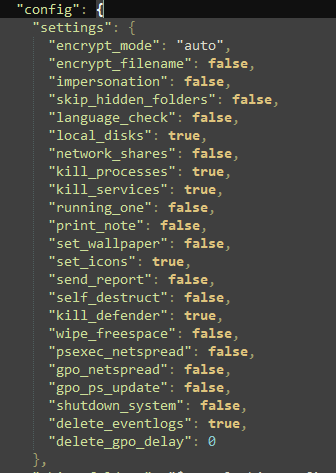
    The attackers encrypted data with publicly available versions of the popular LockBit 3.0 (for Windows systems) and Babuk (for Linux) malware. The LockBit sample we analyzed was configured with commands to encrypt local drives, terminate specific processes and services, disable Windows Defender, and delete event logs. The ransomware added system directories, as well as a folder named intel where the attackers loaded tools to harvest credentials, to the encryption exclusions list.

    A snippet of the LockBit 3.0 sample’s configuration

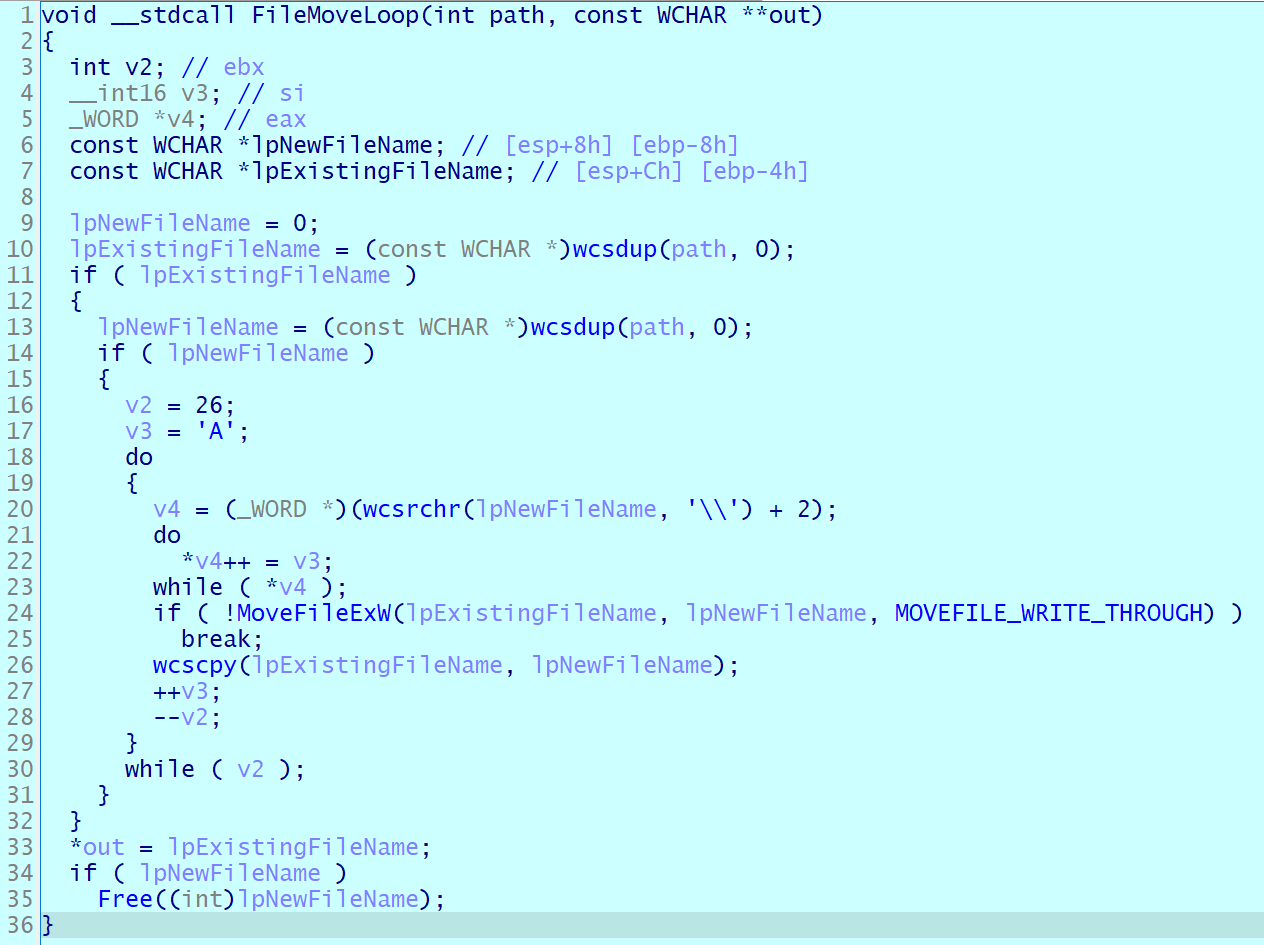
    We noticed something strange about how a victim’s files were encrypted. First, LockBit encrypted files with specific extensions, as defined in its sample configuration. These are the files that the attackers may find most valuable. Besides these, the malware encrypts files in the recycle bin while inserting random characters in these. Beyond the primary algorithm, we found a cycle that systematically renamed the original file in the recycle bin. This process iterated through every letter of the English alphabet, continuing until it reached the last one. This type of encryption makes it really hard, or even impossible, to recover the user’s files.

    The file renaming cycle

    Below is an example of how this appears in logs:

    The algorithm then attempts to delete the last version of
    c:$recycle.bin[redacted]zzzzzzzzzzz.

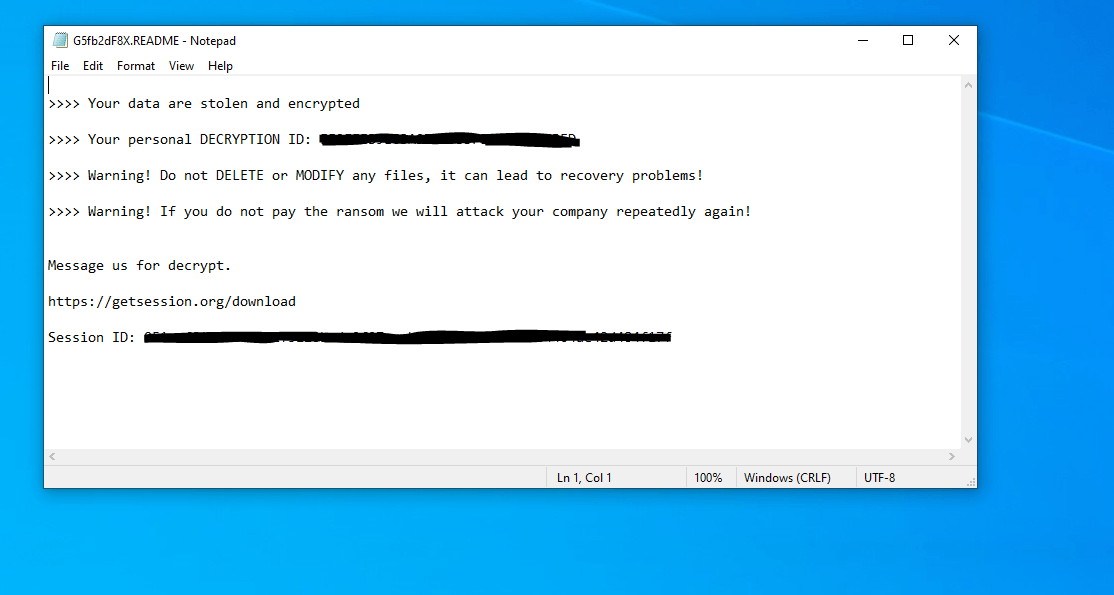
    The attackers leave a ransom note with a link containing their ID in the Session messaging service for future contact:

    A LockBit 3.0 ransom note

    Session supports end-to-end encryption, which minimizes the risk of data breaches. The developers claim their messaging service is built to guarantee complete privacy. Session has been used by other ransomware groups, such as GhostLocker, SEXi, and MorLock, in their attacks.

    Additionally, attackers targeted ESXi servers with the Babuk ransomware. They would connect to the ESXi server via SSH, upload Babuk, and initiate the encryption process for the files within the virtual machines:

    We believe the goal of the attackers was to disrupt the targeted organizations’ operations, besides financial gain.

    We are seeing a lot of overlap in the tools and techniques used by cybercriminals targeting Russian businesses and government agencies. Below, we outline the key similarities we found in attacks by different groups.

    MorLock

    MorLock activities, as investigated by F.A.C.C.T., shares many features with several of the attacks we analyzed for this report. The groups share most of the tools they use: SoftPerfect Network Scanner, XenAllPasswordPro, AnyDesk, PingCastle, Localtonet, NSSM, resocks, LockBit 3.0, and Babuk.

    The file and folder names used in attacks by both groups also show similarities. Thus we found a resocks utility named “xfs-healthcheck”, a name that follows the same template as the resocks names on the list of indicators published by F.A.C.C.T.: [xxx]-healthcheck. We noticed a further similarity when studying the XenAllPasswordPro utility: in MorLock attacks, it was located in a directory named “allinone2023”.

    Furthermore, we checked the MorLock infrastructure as reported by F.A.C.C.T., only to find that the group also used Surfshark VPN and the VDSina hosting services provider.

    BlackJack

    While investigating the utilities used in Crypt Ghouls attacks, we found an overlap with the toolkit employed by the BlackJack group, which also used XenAllPasswordPro. This caught our attention, as XenAllPasswordPro is not the most popular tool among cybercriminals despite being freely available.

    Twelve

    We have seen XenAllPasswordPro used in attacks by Twelve too. Furthermore, we discovered Intellpui.vbs, a loader for CobInt, also used by Twelve, on one of the systems attacked by Crypt Ghouls.

    Shedding Zmiy

    Shedding Zmiy is a group associated with the (Ex)Cobalt activity cluster. We found a further overlap in a report by Solar 4RAYS on this group-related incidents, namely the use of DLL sideloading with the dismcore.dll malicious loader. The report mentioned other familiar utilities and malware: resocks, SoftPerfect Network Scanner, and CobInt. In addition, Shedding Zmiy used VDSina to host its command-and-control servers.

    The similarities between the groups described above led to the conclusion that these attacks overlap with the activity of Crypt Ghouls. Our analysis of cybercriminal tools and tactics suggests that different groups may be collaborating, sharing resources, or exchanging intelligence. Other vendors have found evidence of the (Ex)Cobalt cluster members participating in these groups’ activities, and our analysis confirms this. Right now, we cannot say for sure that these campaigns are connected, but we anticipate their number will increase further. We will continue to monitor activity targeting Russian organizations.

    Victims

    Russian government agencies as well as mining, energy, finance, and retail companies have fallen victim to the Crypt Ghouls group.

    Conclusion

    Crypt Ghouls is another group attacking Russia. Cybercriminals are leveraging compromised credentials, often belonging to subcontractors, and popular open-source tools. These include modified configurations of the LockBit 3.0 and Babuk ransomware, whose builders and source code are publicly available. As the number of attackers using leaked builds increases, identifying the perpetrators of threats becomes increasingly difficult. The shared toolkit used in attacks on Russia makes it challenging to pinpoint the specific hacktivist groups involved. In the attacks carried out by the Crypt Ghouls, we have identified components of infrastructure and a variety of popular tools that are also used by many other groups. This suggests that the current actors are not only sharing knowledge but also their toolkits. All of this only makes it more difficult to identify specific malicious actors behind the wave of attacks directed at Russian organizations.

    Indicators of compromise

    Note: Network addresses specified in this section are valid at the time of publishing, but may change over time.

    SHA256:

    File paths:
    С:ProgramDataoracledismcore.dll
    odbcconf.xml – payload
    C:UsersUserDownloadsdumper.ps1 – dumper.ps1
    C:UsersUserDesktopx86x64mimikatz.exe
    C:programdata1callinone2023xenallpasswordpro.exe
    С:programdataallinone2023xenallpasswordpro.exe
    С:programdatadbgallinone2023xenallpasswordpro.exe
    С:programdata1callinone2023xenallpasswordpro.exe
    $userdesktopallinone2023xenallpasswordpro.exe
    C:programdataallinone2023XenAllPasswordPro.exe
    C:WindowsTempnssm-2.24win64nssm.exe
    C:Users[redacted]DownloadsAnyDesk.exe
    C:WindowsTemplocaltonet.exe
    C:ProgramDatat.exe (MiniDump Tool)
    C:UsersUserAppDataLocalTempkxxxxxxx.sys
    C:WindowsTempkxxxxxxx.sys
    /tmp/lock.out (Babuk)
    /usr/sbin/xfs-healthcheck (resocks)
    /usr/sbin/xfs-modules (resocks)
    c:programdataintellintellpui.vbs (CobInt)

    IP addresses and URLs:
    45.11.181[.]152 – netstaticpoints[.]com – CobInt C2
    169.150.197[.]10 – SurfShark VPN
    169.150.197[.]18 – SurfShark VPN
    91.142.73[.]178 – VDSINA-NET
    91.142.74[.]87 – VDSINA-NET
    95.142.47[.]157 – VDSINA-NET
    185.231.155[.]124 – VDSINA-NET

    Utilities:
    XenAllPasswordPro
    PsExec
    PAExec
    SoftPerfect Network Scanner
    Localtonet
    PingCastle
    Mimikatz
    AnyDesk
    NSSM
    resocks
    MIL OSI Economics

  • MIL-OSI Russia: Marat Khusnullin: The urban development potential of integrated territorial development projects is more than 230 million square meters of real estate

    MILES AXLE Translation. Region: Russian Federation –

    Source: Government of the Russian Federation – An important disclaimer is at the bottom of this article.

    The integrated territorial development instrument (ITD) continues to develop actively, involving more and more territories where housing, social, communal and road infrastructure facilities are being built.

    At present, 630 decisions on KRT have been made, more than 120 of which have been made since the beginning of this year alone. 292 documents on territorial planning have also been approved, which allows us to determine their investment attractiveness, including the volume of housing and infrastructure construction.

    “In addition to those KRT projects that are already in the implementation stage, that is, decisions have been made on them, contracts have been concluded, tenders have been organized, construction permits have been issued, new ones are being selected in parallel. Thus, in total, 1,303 territories with a total area of 30.8 thousand hectares with a development potential of about 233.7 million square meters are currently being developed, of which 168.2 million square meters are residential areas,” noted Marat Khusnullin.

    First Deputy Minister of Construction and Housing and Public Utilities Alexander Lomakin emphasized that in order to continue to expand the portfolio of KRT projects, a constant dialogue is being conducted with residents, regional authorities, representatives of the State Duma and the Federation Council, and the expert community. “In general, 755 territories with an area of 17.6 thousand hectares are in the active implementation stage in 77 regions of Russia,” said Alexander Lomakin.

    Please note: This information is raw content directly from the source of the information. It is exactly what the source states and does not reflect the position of MIL-OSI or its clients.

    Please note; This information is raw content directly from the information source. It is accurate to what the source is stating and does not reflect the position of MIL-OSI or its clients.

    http://government.ru/nevs/53041/

    MIL OSI Russia News

  • MIL-OSI Russia: Polytechnic University in the top 60 best universities in the BRICS university rankings

    MILES AXLE Translation. Region: Russian Federation –

    Source: Peter the Great St Petersburg Polytechnic University – Peter the Great St Petersburg Polytechnic University –

    The Association of Ranking Authors has published a pilot ranking of universities in the BRICS member countries. The final list includes 600 universities representing 10 member states. Peter the Great St. Petersburg Polytechnic University took 59th place in the overall ranking.

    The new BRICS university ranking was one of the first steps in the systematic assessment of the quality of higher education institutions in the association of states. The list of the best BRICS universities included 161 universities from Russia. St. Petersburg Polytechnic University took 59th place overall and 15th in Russia. The experts took the model of the international ranking “Three University Missions” as a basis and added national features characteristic of BRICS members. For example, the participation of students in international Olympiads provides the university with a higher place in the ranking than the organization’s budget. The Association of Ratings Compilers emphasizes that the methodology for assessing universities uses only verifiable objective indicators and does not depend on subjective expert assessments.

    We perceive the creation of a ranking of universities of the BRICS countries as a major step towards an objective assessment of the association’s universities, taking into account their national identity. The ranking reflects our interaction with the BRICS countries in the field of education: this includes the number of foreign students studying with us and victories in prestigious international Olympiads. The citation rate of our scientists in Russian scientific publications also had a positive effect on our position in the ranking, – noted Acting Vice-Rector for Prospective Projects Maria Vrublevskaya.

    The idea of creating our own university ranking was recorded in the final declaration following the meeting of the BRICS education ministers. This association of states with a population of over 3.6 billion people is today the largest educational market in the world.

    Please note: This information is raw content directly from the source of the information. It is exactly what the source states and does not reflect the position of MIL-OSI or its clients.

    Please note; This information is raw content directly from the information source. It is accurate to what the source is stating and does not reflect the position of MIL-OSI or its clients.

    https://vvv.spbstu.ru/media/nevs/achievements/polytechnic-in-the-top-60-best-universities-in-the-ranking-of-universities-of-Brix-countries/

    MIL OSI Russia News

  • MIL-OSI China: Xi to attend 16th BRICS Summit in Kazan, Russia

    Source: People’s Republic of China – State Council News

    BEIJING, Oct. 18  — Chinese President Xi Jinping will attend the 16th BRICS Summit in Kazan, Russia, from Oct. 22 to 24 at the invitation of President of the Russian Federation Vladimir Putin, foreign ministry spokesperson Hua Chunying announced here on Friday.

    MIL OSI China News

  • MIL-OSI Security: NATO military leadership participates in the 2024 International Week in Kyiv

    Source: NATO

    Jointly organized by the NATO Defense College (NDC) and the National Defence University of Ukraine (NDUU), the conference addressed the Alliance’s role in a new era of collective defence. The Deputy Chair of the NATO Military Committee and the Director of the International Military Staff provided keynote speeches. Discussions also took place on the topics of a changing security environment, partner engagement, resilience building and deterrence and defence ten years from now.

    The Director of the International Military Staff (DGIMS), Lieutenant General Adamczak virtually opened the 2024 International Week alongside Colonel General Koval and Lieutenant General Nielsen, Commandants of the NDUU and the NDC.

    “Today is the 965th day of Russia’s aggression against Ukraine. During this time, President Putin launched various devastating attacks over Ukrainian territory. What he didn’t expect was the will and determination of the Ukrainian Armed Forces to protect and defend their country”, Lieutenant General Adamczak stated.

    In his speech, DGIMS outlined what the Alliance is doing to support Ukraine, having mentioned projects such as the Joint Analysis, Training and Education Centre (JATEC), the NATO Security Assistance and Training for Ukraine (NSATU) and the Pledge of Long-Term Security Assistance for Ukraine, among others.

    Closing remarks were given by the Deputy Chair of the NATO Military Committee (DCMC), Lieutenant General Andrew Rohling, on the topic of strategic imperatives for NATO post Washington Summit. 

    “In July, Allies restated the commitment to collective security, enshrined in Article 5 of the Washington Treaty, the condemnation to Russia’s full-scale invasion of Ukraine and the bond to shared values such as individual liberty, human rights, democracy and the rule of law”, Lieutenant General Rohling underscored. “Nations reaffirmed their unwavering solidarity with the people of Ukraine and stated that a strong, independent, and democratic Ukraine is vital for the security and stability of the Euro-Atlantic area”.

    During their interventions, DGIMS and DCMC expressed that Ukraine’s path to NATO membership is irreversible. “Ukraine’s future is in NATO. We have witnessed concrete progress at democratic, economic and security aspects. And as Ukraine continues this vital reform work, we will continue to support its path to full NATO membership”, Lieutenant General Adamczak emphasized. 

    “We need to ensure that Ukraine can win this war, by keeping you in the fight, by training your soldiers. We will help you with the capabilities, and with ammunition. But looking into the future of the Ukrainian Armed Forces, as NATO and Ukraine are closer than ever, we are increasingly focusing on developing interoperability and standardization aspects for seamless transition in Ukraine’s eventual path to NATO membership”, Lieutenant General Rohling said.

    The International Week contributes to a deeper understanding of NATO’s mission, organization, operations, partnerships, cooperation and future priorities by NDUU students and senior military and civilian officers.

    MIL Security OSI

  • MIL-OSI Europe: Briefing – India’s connectivity initiatives: A multi-faceted strategy – 18-10-2024

    Source: European Parliament

    Over the past decade, corridors have occupied an increasingly important place in international connectivity initiatives. They take several forms, ranging from ‘simpler’ transport corridors to more complex economic corridors. For them to be successful, several conditions need to be in place, both relative to the participating countries and to the wider regions they connect. Once operational, they can bring various benefits to participating countries, both economic and societal. India has had a two-pronged policy in recent years. On the one hand, it is investing increasingly in national infrastructure projects, such as the Delhi-Mumbai Industrial Corridor. On the other, it is part of several major international infrastructure projects. Three such projects that stand out are the Bangladesh-China-India-Myanmar Economic Corridor, the International North-South Transport Corridor and the more recent India-Middle East-Europe Corridor. According to experts, India’s approach towards international connectivity appears to be driven more by geostrategic sensitivities than purely economic considerations. Broadly, Delhi chooses to participate in projects that help to increase its regional and global footprint. It also takes into consideration the fact that Asia is a region with several nuclear powers, rising nationalism and the absence of a security structure. Its choices are further conditioned by Chinese initiatives in the region, US policy towards China, and developments following Russia’s invasion of Ukraine and the conflict between Israel and Hamas. The EU and India have long-standing diplomatic ties. In recent years, owing to both rising trade volumes and geopolitical considerations, they have increased their cooperation further. Aspects of this cooperation are the revival of negotiations on a free trade agreement, the launch of a Trade and Technology Council and the India-Middle East-Europe Corridor (IMEC). Once completed, these three initiatives could bring significant synergies to the parties involved. IMEC is facing several challenges, however, both logistical and geopolitical, that could delay its implementation.

    MIL OSI Europe News

  • MIL-OSI Europe: Written question – The impact of the Russian merchant fleet on port safety – E-002020/2024

    Source: European Parliament

    10.10.2024

    Question for written answer  E-002020/2024
    to the Commission
    Rule 144
    Johan Danielsson (S&D)

    The EU has closed its ports to Russia’s entire merchant fleet of over 2 800 vessels, with some exceptions (vessels carrying pharmaceutical, medical, agricultural and food products, humanitarian aid, and energy-related products, including coal, nuclear fuel and other goods necessary for the functioning of civil nuclear capabilities).

    In recent weeks, residents of the North Sea and Öresund regions were informed that the damaged ship, the MV Ruby, carrying large amounts of the highly explosive agricultural product ammonium nitrate, had been seeking to dock in European ports and, at some point, had also sought passage through the Öresund strait.

    This raises serious questions as to port safety, including of dockworkers, and safety in the surrounding metropolitan areas, as well as the security of critical transport infrastructure.

    • 1.In addition to problems related to the Russian ‘shadow fleet’, has the Commission analysed the risks related to the remaining Russian merchant fleet and shipments to and from Russia with regard to port safety and the security of critical transport infrastructure?
    • 2.What actions is the Commission proposing, for example in the upcoming comprehensive EU port strategy, to reduce the risk to port safety and the security of critical transport infrastructure that is posed by the remaining Russian merchant fleet and shipments to and from Russia?

    Submitted: 10.10.2024

    Last updated: 18 October 2024

    MIL OSI Europe News

  • MIL-OSI Asia-Pac: ITUWTSA 2024 Champions Gender Equality in Telecommunication Standards with Historic Milestone in Women’s Leadership Participation

    Source: Government of India

    ITUWTSA 2024 Champions Gender Equality in Telecommunication Standards with Historic Milestone in Women’s Leadership Participation

    Witnessed highest ever female participation in the history of ITUWTSA events, marking a significant step toward gender-balanced delegations and leadership roles

    Boosting women’s participation in standards development is not just about numbers—it’s about ensuring that women’s voices are heard, empowering future leaders, and fostering inclusion: Doreen Bogdan-Martin, Secretary General of the ITU

    Posted On: 18 OCT 2024 11:44AM by PIB Delhi

    The ITU-WTSA 24 which is being held in Delhi in collaboration with the Department of Telecommunications (DoT), Government of India, saw a landmark event yesterday, focused on promoting gender diversity in the field of telecommunication standardization. The special event, The Network of Womenin Standards (NoW), led by the Telecommunication Standardization Sector of the International Telecommunication Union (ITU-T), underscored the commitment to advancing women’s leadership roles in STEM and standardisation.This topic is particularly significant for India as the government is implementing various measures to create an inclusive technology sector and empower women through technology platforms, in line with the vision of the Prime Minister, Shri Narendra Modi, who advocates for women-led development. India is making progress in this area, with an increasing number of women co-founders in startups and over 40% of participants in STEM education being women. Initiatives such as Namo Drone Didi, Bank Sakhi, and Mahila E-Haat are empowering women to take on leadership roles in technology.


    The Network of Women (NoW) in ITU-T, aligned with WTSA Resolution 55 (Rev. Geneva, 2022), is dedicated to fostering active female participation in standardization activities and ensuring a gender-inclusive approach across all ITU-T processes. This initiative is critical as the global push for digital inclusion accelerates, with women playing a pivotal role in shaping the future of technology.


    In her opening remarks, Ms. Doreen Bogdan-Martin, Secretary General of the ITU, emphasized the importance of addressing gender imbalances in the field. She stated, “We can, and we must, increase the number of women in leadership roles, especially in our standards study groups. It’s crucial for women to step up, take the floor, and make their voices heard. This is what the Network of Women stands for—creating an environment where women feel empowered and supported. Mentorship plays a vital role in this transformation. It’s through mentoring, creating opportunities, and sharing our knowledge that we can truly progress. If there is no seat at the table, we must bring our own chair—and bring one more for those who will follow. Let’s continue pushing forward, lifting each other up, and ensuring that the digital future is shaped by all of humanity. Together, we can and will make real progress toward digital inclusion.”

    Dr. Rim Belhassine-Cherif, Chair of NoW, ITU-T, and Chief Innovation and Strategy Officer responsible for Digital Transformation at Tunisie Télécom, highlighted the progress made in achieving gender balance at ITU-WTSA 2024. She noted, “One of the key objectives of ITU-WTSA 2024 was to promote gender-balanced delegations and increase the number of women in leadership roles, particularly as heads of delegations. Through various initiatives such as panel discussions, training sessions, tutorials, and the support of regional preparatory groups, we have achieved the highest-ever participation rate of women in ITU-WTSAhistory.”

    The increasing involvement of women in ICT standardization is crucial as disruptive technologies such as Artificial Intelligence (AI) emerge. Women’s contributions can help ensure the development of inclusive, equitable, and sustainable standards that will drive technological progress for the benefit of all humanity.

    The event featured a dynamic fireside chat, moderated by Doreen Bogdan-Martin, with Dr. Aminata Zerbo/Sabane, Minister of Digital Transition, Posts and Electronic Communications, Burkina Faso, and Neha Satak, Founder & CEO of Astrome. The discussion focused on closing the gender gap in Science, Technology, Engineering, and Mathematics (STEM) and in standardization. Panelists stressed the importance of a supportive environment and early capacity building to encourage more girls to pursue careers in tech.

    Expert panelists examined and discussed the challenges surrounding gender equality in AI and shed light on incentives and opportunities for technical standards to support inclusive AI during panel discussion on “Standards for inclusive AI”.  Also discussed were the ways to explore how standards could help address gender bias and ensure an equitable future. The session was  moderated by Ms Susan Ferguson, UN Women India Representative and panelists were Prof Sandra Maximiano, Chair of the Board, Autoridade Nacional de Comunicações (Portugal’s national regulatory authority for the communications sector), Mr Vishnu Ram, AI expert, Vice Chair of ITU Focus Group on Autonomous Networks, Dr Alessandra Sala, Sr. Director of Artificial Intelligence and Data Science, Shutterstock, Global President of Women in AI, Dr Ebtesam Almazrouei, Founder and CEO of AIE3, Expert AI Executive and Tech Visionary Leader and MsPico Velazquez, founder & CEO at VIIRA, Computational Architect & Multiverse Thought Leader.

    The session also recognised the leading women in ITU Standardisation. Mr. Seizo Onoe, Director, Telecommunication Standardization Bureau and Ms. Madhu Arora, Member, Technology/Digital Communication Commission, Department of Telecommunication, Ministry of Communications, Government of India felicitated Dr. Rim Belhassine-Cherif, Chief Innovation and Strategy Officer, TunisieTélécom, Tunisia; Dr. Hyoung Jun Kim, Vice Chair, NoW, Chair of ITU-T;Ms. Rebecca MukiteNoW in ITU-T Regional Representatives, Africa; Ms. Tania Villa, Federal Institute of Telecommunications (IFT), Mexico; Ms Basma Tawfik, International Organizations Manager National Telecom Regulatory Authority (NTRA), Egypt​; Ms Miho Naganuma, TSAG Vice Chair, Senior Executive professional, NEC Corporation, Japan; Ms Maria Bolshakova, Acting Deputy Director General, Regional Commonwealth in the field of Communications (RCC), Russia; Ms Izabela Iglewska, Minister Advisor, Ministry of Digital Affairs, Poland; Additionally, member states from Cameroon, the Dominican Republic, Ghana and Europe were also felicitated for their high female participation rates in delegations.


    ITU-WTSA 2024 continues to drive pivotal conversations on gender equality in telecommunications, addressing both statistical and stereotypical biases, mitigating biases, and promoting active participation of women in the telecom and tech sector.

    WTSA 2024, organized by the International Telecommunication Union (ITU), serves as a platform for the development and implementation of global telecommunications standards, uniting regulators, industry leaders, and policymakers to shape the future of communications worldwide.


    <><><>


    *****

    SB/DP/ARJ

    (Release ID: 2065992) Visitor Counter : 51

    MIL OSI Asia Pacific News

  • MIL-OSI Russia: Polytechnic at the BRICS University Rectors Forum

    MILES AXLE Translation. Region: Russian Federation –

    Source: Peter the Great St Petersburg Polytechnic University – Peter the Great St Petersburg Polytechnic University –

    The BRICS University Rectors’ Forum has started at Moscow State University. It is attended by 250 heads and representatives of universities from 20 countries – all BRICS countries (Russia, Brazil, Egypt, India, Iran, China, the United Arab Emirates, Ethiopia and South Africa), as well as Belarus, Bahrain, Jordan, Iraq, Yemen, Lebanon, Libya, Mauritania, Palestine and Sudan.

    It is important for us to work together to prepare new generations of personnel who are capable of not only achieving outstanding scientific results, but also increasingly feeling their responsibility for the future of science and humanity. The modern university community, as we see it, is open to equal, mutually beneficial partnership and cooperation, to mutual enrichment with the experience of developing universities in different countries, – the President of the Russian Union of Rectors, Rector of Moscow State University Viktor Sadovnichy greeted the participants.

    Deputy Minister of Science and Education of the Russian Federation Konstantin Mogilevsky emphasized: Education and science are becoming the most important tools for finding joint answers to global challenges such as climate change, economic inequality and global pandemics. It is thanks to the unification of the BRICS countries that we can implement practical initiatives of mutual interest.

    In his welcoming speech, the Vice Minister of Education of Brazil, Alexandre Brasil Carvalho da Fonseca, noted: The internationalization of education is a global perspective, and we aim to involve all BRICS countries in this process. We understand that the experience of all participants is a valuable resource for creating structures aimed at the internationalization of our activities. Our goal is to ensure access to higher education for Brazilians of different social classes, regardless of their status. We are confident that this cooperation will contribute to the improvement of research activities in universities and the improvement of the quality of life of the population within the BRICS.

    Welcoming speeches on the importance of inter-university cooperation were delivered by the Rector of Ain Shams University Saleh Hasem Mustafa Abdelrazek from Egypt, the Rector of the University of Sharjah Hamid Midwil Al-Naimi from the UAE and the President of the Association of Arab Universities Amr Ezzat Salama.

    Special Representative of the President of Russia for International Cultural Cooperation Mikhail Shvydkoy noted that the mechanism of regular dialogue at the level of ministers of education and enlightenment, ministers of science, technology and innovation, heads of academies of sciences of the BRICS countries is currently functioning effectively. Interaction is ongoing through the alliance of cooperation in the field of technical and vocational education and training.

    We are confident that this event, unprecedented in its scale and nature, will open a new chapter in the development of scientific and educational cooperation in BRICS, which will be supplemented by creative innovative solutions and joint achievements, he added.

    Vice President of the Russian Academy of Sciences Vladislav Panchenko emphasized the importance of the BRICS association: Cooperation between the academies of sciences and universities of the BRICS countries opens up enormous prospects for us. The exchange of young scientists and students allows us not only to solve modern scientific and social problems, but also to achieve significant success within the framework of our association. We pay great attention to this process, discussing the importance of the inextricable link between science and education, which was emphasized at the recent meeting of the heads of the academies of sciences of the BRICS countries in Moscow, timed to coincide with the three hundredth anniversary of the Russian Academy of Sciences.

    The Polytechnic delegation at the forum was headed by Vice-Rector for International Affairs Dmitry Arsenyev. The busy program between business sessions included negotiations with partner universities and national associations. Following the forum, agreements were signed with leading universities of the BRICS countries – Indore Institute of Technology (India), Federal University of Rio de Janeiro, State University of Campinas, State University of Sao Paulo “Julio de Mesquita Filho” (Brazil), Isfahan University of Technology (Iran), Gomel State Technical University named after P. O. Sukhoi (Belarus).

    We see significant interest from Brazil, India, and the Arab world in establishing strong long-term relations with Russia. It is gratifying that the Polytechnic University is known in these countries. This means that we are pursuing the right policy of forming our international reputation and promoting the university on the world stage. The agreements reached today create space for opportunities and development potential for us in the BRICS countries, – commented Dmitry Arsenyev.

    Print version

    Please note: This information is raw content directly from the source of the information. It is exactly what the source states and does not reflect the position of MIL-OSI or its clients.

    Please note; This information is raw content directly from the information source. It is accurate to what the source is stating and does not reflect the position of MIL-OSI or its clients.

    https://www.spbstu.ru/media/nevs/international_activize/polytech-at-the-forum-of-university-rectors-of-Brix-countries/

    MIL OSI Russia News

  • MIL-OSI China: SCO bolsters security cooperation, economic integration among members

    Source: China State Council Information Office

    Chinese Premier Li Qiang attends the 23rd Meeting of the Council of Heads of Government of Member States of the Shanghai Cooperation Organization (SCO) in Islamabad, Pakistan, Oct. 16, 2024. (Xinhua/Li Tao)

    At the just-concluded meeting in Islamabad, Pakistan, government leaders from Shanghai Cooperation Organization (SCO) members called for deepening cooperation in a range of areas including economy and trade, security, connectivity, energy, finance and green development.

    Participants to the 23rd Meeting of the Council of Heads of Government of Member States of the SCO agreed that in the face of a complex and volatile international environment, all parties need to actively implement the outcomes of the Astana Summit, work closely in solidarity and coordination.

    Since its inception in 2001, the SCO has been committed to strengthening mutual trust, dialogue and cooperation, with its ever-increasing role in bolstering security cooperation and economic integration for its members.

    ENHANCING SECURITY, STABILITY

    “From the very beginning, the SCO Charter was signed based on the fundamental principle of cooperation in countering the types of threats that are still relevant today — terrorism, separatism and extremism, as well as drug trafficking, transnational crime and illegal migration,” said Evgenia Makhmutova, associate professor at the department of political science of the Financial University under the Government of the Russian Federation.

    The member states work on the basis of a list of principles, among which are mutual respect for sovereignty, and non-interference in internal affairs, the scholar told Xinhua.

    With effective multilateral cooperation and coordination, the SCO has been playing a positive role in improving security situation of the region over the past more than two decades.

    Through its Regional Anti-Terrorist Structure, SCO member countries have been able to enhance intelligence sharing and operational coordination, hence more effective efforts in combating terrorism.

    Another important aspect of security cooperation is the exchange of experience and best practices in law enforcement, which encompasses training programs, staff exchanges and technical assistance among member states.

    Energy security also holds an important place on the SCO agenda. In recent years, efforts have been directed toward creating a unified energy market and developing joint projects in the energy field.

    Under evolving circumstances featuring new geopolitical factors and technological advancements, the SCO is also adapting its activities to new challenges, such as protectionism, cybersecurity and climate change, making the organization more flexible and capable of effectively responding to modern-day threats.

    TOWARD ECONOMIC INTEGRATION

    Over the years, the SCO has made remarkable achievements in boosting trade and facilitating economic integration among member states.

    Sohail Mahmood, former foreign secretary of Pakistan and director general of think tank the Institute of Strategic Studies Islamabad, said that trade among SCO members had grown significantly since its founding, reflecting the organization’s growing influence and global relevance.

    As a member state, Pakistan values the SCO mechanism for securing economic cooperation. Amina Masood, professor of the faculty of social sciences of International Islamic University Islamabad, said it’s important to take advantage of the SCO meeting in Islamabad to increase the country’s trade and technical partnership with Central Asian and South Asian countries.

    Economic cooperation has “not only greatly supported socio-economic development in the SCO community, but also contributed to regional and global economic growth and development,” the professor said.

    The 10-member SCO, which covers over half of the Eurasian landmass, has maintained trade growth and closer economic interactions thanks to better connectivity provided by enhanced infrastructure.

    In the region, landmark projects, notably the China-Central Asia Gas Pipeline, the Chinese-built new North-South highway in Kyrgyzstan, the China-Pakistan Economic Corridor, the China-Mongolia-Russia Economic Corridor and the Eurasian transport corridor, have greatly facilitated economic exchanges.

    At the same time, with a large combined population, the SCO represents vast market potential. Collective economic development of all members helps fuel demand for goods and services, which in turn drives vigorous growth of the region’s economies.

    GROWING INFLUENCE, VITALITY

    Over the past two decades, the SCO has maintained its vitality and become an influential regional and international organization in an international landscape fraught with changes and turbulence.

    The Shanghai Spirit ensures that every member state has an equal voice, regardless of economic scale, military potential, or international influence, setting an example of multilateral cooperation.

    “As the world today is going through a phase of disintegration of the Western-centred system of international security, and the countries of the Global South are striving for the status of equal and sovereign world players, the potential for the SCO to become a platform for the integration of non-Western forces is noticeably expanding,” Makhmutova told Xinhua.

    “The growing number of countries interested in this format undoubtedly enhances the status and credibility of the organization,” said the Russian scholar.

    As its influence grows, the scope of cooperation for SCO, which currently groups China, India, Iran, Kazakhstan, Kyrgyzstan, Pakistan, Russia, Tajikistan, Uzbekistan and Belarus, with two observer countries and 14 dialogue partners, is also expanding, thereby adding more vitality to the organization.

    China, the SCO rotating presidency for 2024-2025, has put forward a central theme of “SCO Year of Sustainable Development.”

    Under this theme, closer cooperation will be fostered in a wide range of areas, such as poverty alleviation, food security, public health, development financing, climate change and green development, industrialization, digital economy and connectivity. 

    MIL OSI China News

  • MIL-OSI USA News: Readout of President  Biden’s Meeting with Chancellor Olaf Scholz of  Germany

    Source: The White House

    President Joseph R. Biden, Jr. met today with Chancellor Olaf Scholz of Germany at the Chancellery to discuss the longstanding U.S.-German relationship, grounded in our shared democratic values.  The two leaders coordinated on support for Ukraine in its self-defense against Russian aggression; efforts to counter antisemitism and other forms of hate at home and abroad; the Middle East; amongst other global issues.  President Biden expressed his appreciation for Chancellor Scholz’s leadership in increasing Germany’s investment in NATO’s collective defense and in securing the release of wrongfully detained Americans, along with other human rights activists and political dissidents from Russian prison, earlier this year. He also underscored the U.S. commitment to continue working together to address the challenges of today and tomorrow and deliver results for both our peoples.

    ###

    MIL OSI USA News

  • MIL-OSI Russia: Delegation from Henan Urban Planning University visited SPbGASU

    MILES AXLE Translation. Region: Russian Federation –

    Source: Saint Petersburg State University of Architecture and Civil Engineering – Saint Petersburg State University of Architecture and Civil Engineering – Svyatoslav Fedorov, Ekaterina Voznyak, Dmitry Ulrikh, Galina Tokunova, Sergey Mikhailov, Svetlana Golovina, Wang Jing, Elizaveta Druzhinina, Xing Yan, Zhang Jianguo and Ho Songtao

    A delegation from Henan University of Urban Development (PRC), a long-term partner of our university, paid a friendly visit to SPbGASU. During the meeting, the parties discussed solutions to specific issues of cooperation and prospects for its development.

    The delegation of Henan University of Architecture and Civil Engineering included Vice President of the University Wang Jing, Director of the Institute of Architectural Research Zhang Jianguo, Dean of the Faculty of Management Ho Songtao, Dean of the Faculty of Architecture and Urban Planning Xing Yan. The meeting was attended by the First Vice-Rector Svetlana Golovina, Vice-Rector for Educational Activities Sergey Mikhailov, Vice-Rector for Economics and Finance Elizaveta Druzhinina, Dean of the Faculty of Architecture Ekaterina Voznyak, Dean of the Faculty of Economics and Management Galina Tokunova, Dean of the Faculty of Environmental Engineering and Urban Economy Dmitry Ulrikh, Head of the Department of Water Use and Ecology Svyatoslav Fedorov, Head of the International Activities Department Shuainat Akhmadulaeva.

    Svetlana Golovina emphasized that today, universities and academic institutions in China are beacons of advanced knowledge, scientific discoveries and high-quality education. They not only make a significant contribution to the rapid development of their country, but have also become an integral and important part of the global academic community.

    “Our university traditionally pays great attention to the implementation of scientific and educational projects with universities in China. Since 2017, the most dynamically developing relations are with Henan University of Urban Development. This cooperation includes a wide range of areas, the implementation of joint educational programs, academic exchange of teachers and students, holding joint summer schools, implementing scientific and technical developments, holding scientific and practical conferences, expanding the laboratory base and publishing activities. Over the past year alone, more than 70 of our students have become familiar with the history, culture, and system of professional education of China as part of the academic mobility program. Currently, ten students from Henan University are on an exchange program at our university,” noted Svetlana Golovina.

    The First Vice-Rector added that since 2020, SPbGASU has been participating in the implementation of an educational program for training bachelors in the water supply and sanitation program, financed by the Chinese side. Up to 20 teachers from seven departments of our university took part in this work annually. And today there is an opportunity and need to discuss the further course of implementation of this project.

    Wang Jing shares a similar opinion. The Vice President recalled that the history of cooperation between our countries and universities has a long history. Since the Soviet period, both countries have cooperated in various urban development and architectural projects.

    “Today, our cooperation is developing at the management level, and the ties between the teaching staff and students are strengthening. This is important. Our universities have many similar educational programs: architecture, urban planning, engineering ecology, water management. We support the policy of openness, develop international cooperation, and SPbGASU has become our closest partner. The current meeting will help strengthen our diverse cooperation, including in organizing the educational process,” said Wang Jing.

    Currently, 37 students from Henan University of Urban Planning are studying at SPbGASU, including 22 master’s students and 15 postgraduates. As was emphasized by the parties, such successful experience needs to be expanded in different directions. Ekaterina Voznyak gave examples of active cooperation development. Thus, students from both universities took part in the architectural competition “ArchConcept”, the Chinese-Russian competition “The Future is Coming!” Also, students from SPbGASU completed an internship at Henan University of Urban Planning.

    The delegation from China was also interested in the Faculty of Economics and Management of SPbGASU, whose activities were introduced by Galina Tokunova.

    “We highly value our partnership and are confident that through joint efforts we will strengthen the ties between our universities,” summed up Svetlana Golovina.

    During their stay at SPbGASU, the delegation visited the historical information center, the testing center, the architectural faculty, the department of heat and gas supply and ventilation, and an exhibition of works by Chinese and Soviet scientists in the field of architectural and construction art (mid-second half of the 20th century) in the scientific and technical library.

    Please note: This information is raw content directly from the source of the information. It is exactly what the source states and does not reflect the position of MIL-OSI or its clients.

    Please note; This information is raw content directly from the information source. It is accurate to what the source is stating and does not reflect the position of MIL-OSI or its clients.

    http://www.spbgasu.ru/nevs-and-events/nevs/a delegation-of-Henan-urban-planning-university-visited-spbgasu-

    MIL OSI Russia News

  • MIL-OSI Russia: SUM updated the process of organizing project-based learning

    MILES AXLE Translation. Region: Russian Federation –

    Source: State University of Management – Official website of the State –

    The Project Office of the Department of Acceleration Programs and Project-Based Learning of the State University of Management reports on innovations in the organization of project-based learning processes, mandatory for 1st-3rd year full-time undergraduate students.

    This academic year, within the framework of project-based learning, thematic events of the project day were organized within the framework of the functioning of the Project-based Learning Support Clubs, organized by all departments of the State University of Management, as well as within the framework of the activities of the structural divisions of the State University of Management participating in the implementation of project-based learning (Project Mentoring Center, Business Accelerator, Business Incubator, and others).

    To participate in the Project Day events, you now need to join the Project-Based Learning at GUU community on the MakeEvents platform (unified login data with the BusinessChain platform). It will have an event calendar available, registration for events will be conducted, and attendance at Project Day events will be monitored.

    In order for all data to be loaded correctly and you to avoid problems with accounting for event attendance, each 1st-3rd year undergraduate student is required to register (if not already done) and fill out a personal profile in strict accordance with the registration instructions. For other students – optional.

    At the end of each event, check your attendance record.

    We remind you that the choice of events for participation is voluntary and should be based on personal preferences and the direction of your own project activities. However, within the framework of the discipline “Project Work” all students are required to attend at least 10 project day events per semester.

    All events held during the project day are held with the aim of sharing experience, discussing current issues and trends in the field of project management and contribute to the development of students’ universal, professional and project competencies.

    Subscribe to the TG channel “Our GUU” Date of publication: 10/18/2024

    Please note: This information is raw content directly from the source of the information. It is exactly what the source states and does not reflect the position of MIL-OSI or its clients.

    Please note; This information is raw content directly from the information source. It is accurate to what the source is stating and does not reflect the position of MIL-OSI or its clients.

    SUM updated the process of organizing project-based learning

    MIL OSI Russia News

  • MIL-OSI Security: NATO Secretary General: Strengthening deterrence “top priority”

    Source: NATO

    NATO Defence Ministers wrapped up two days of talks on Friday (18 October) with a commitment to further support Ukraine, strengthen ties with partners in the Asia-Pacific and reinforce the Alliance’s deterrence and defence.

    “Strengthening our deterrence and defence is this Alliance’s top priority, because keeping our one billion people safe is NATO’s most sacred duty,” NATO Secretary General Mark Rutte said after the meeting. The Secretary General cited greater defence industrial capacity, more secure supply chains, and new technologies as critical to ensuring the Alliance’s security. Mr. Rutte added that NATO was making a fresh push for common munitions standards and more joint procurement to drive down costs and improve ease of use among Allies. NATO operations in the Western Balkans and Iraq were also on the agenda.

    Addressing the issue of Allied airspace breached by Russian drones, the Secretary General said that air and missile defence remains an Alliance priority. He highlighted the airspace violation in Romania yesterday and affirmed NATO’s solidarity with Romania, commending Romanian authorities and SACEUR for “their quick and effective response.” This was possible, in part, because NATO is stepping up surveillance on its eastern flank as part of a broader effort to reinforce deterrence. Mr Rutte went on to emphasise that Allies are purchasing hundreds of modern fighter aircraft and air defences systems.  

    Warning of Russia’s “increasingly irresponsible rhetoric”, the Secretary General said the Alliance’s nuclear deterrent remains “vital” to preserve peace, prevent coercion and deter aggression.

    On Thursday (17 October), NATO Defence Ministers were joined for the first time by their counterparts from Australia, Japan, the Republic of Korea and New Zealand for talks on common security challenges, including in the context of Ukraine and the support that China, North Korea, and Iran are providing to Russia’s war effort.

    Later on Thursday, Ukrainian President Volodymyr Zelensky joined Ministers in the NATO-Ukraine Council and provided an overview of his plan for ending the war. The discussion among Defence Ministers with their Ukrainian counterpart, Rustem Umerov, focused on Ukraine’s most urgent needs, including equipment and training. The Secretary General noted that work is well underway to set up NATO’s new command to coordinate security assistance and training for Ukraine, and to deliver on the pledge of 40 billion euros in military aid. He reiterated that Ukraine’s path to NATO membership is irreversible. “Ukraine will be member of NATO, there is no doubt about it, and until that happens we will make sure that Ukraine has everything it needs to prevail,” he said.

    MIL Security OSI

  • MIL-OSI Europe: Joint Statement on Arctic Security and Defence

    Source: Government of Iceland

    Under the auspice of the Northern Defence Dialogue meeting held on the margins of the NATO Defence Ministers’ Meeting on 17 October 2024, the defence ministers of Canada, Denmark together with the Foreign Minister of the Faroe Islands and a representative from Greenland, Finland, Norway, and Sweden, and representatives from Iceland and the United States reaffirm their shared commitment to enhanced collaboration on security and defence in the Arctic.

    In a rapidly changing geopolitical landscape marked by new challenges, the region has become a growing global point of focus. Climate change is having profound effects on the strategic and operational environment and growing access to the Arctic’s resource potential is enticing new non-Arctic actors to the region. Potential adversaries are rapidly developing their militaries’ ability to operate both in the High North and the circumpolar Arctic region. Among its many negative consequences, Russia’s illegal and unprovoked further invasion of Ukraine has caused grave impediments to international cooperation and degraded the Euro-Atlantic security environment.

    These unprecedented challenges underline the need to foster deepened collaboration among the like-minded Arctic states. The accession of Sweden and Finland to NATO significantly strengthens NATO’s collective defence posture and capabilities in the region. As all like-minded Arctic states now belong to the Alliance, we affirm our leading role in NATO’s work relating to the region and stress the importance of maintaining a credible deterrence and defence in the entire Euro-Atlantic area—including our northern regions—as well as cooperation with our other NATO Allies to this end.

    At this Northern Defence Dialogue meeting, building on the work of and aiming to also strengthen NATO, we discussed:

    • Our situational awareness of the threat environment in the Arctic, and opportunities to enhance information and intelligence sharing in order to establish a common operating picture;
    • Emerging threats, risks, and geopolitical challenges from potential adversaries at both the national and international level;
    • Our capabilities to deter and, if necessary, defend against threats posed by our potential adversaries in the region, and our commitment to mutual participation in joint operations and exercises to enhance interoperability; and,
    • Ways to increase collaboration to address common threats and challenges posed to the region.

    Our countries’ common ambition to maintain low tension in the region has served as the foundation of our multilateral Arctic relations and will continue to guide our cooperation in the future. Guided by the core principles of multilateral cooperation, territorial integrity, and maintaining the rules-based international order, we are committed to strengthening our collaboration to address complex global challenges and maintain the Arctic as a stable, peaceful, and prosperous region.

    MIL OSI Europe News

  • MIL-OSI Russia: IMF Staff Completes 2024 Article IV Mission to Madagascar

    Source: IMF – News in Russian

    October 18, 2024

    End-of-Mission press releases include statements of IMF staff teams that convey preliminary findings after a visit to a country. The views expressed in this statement are those of the IMF staff and do not necessarily represent the views of the IMF’s Executive Board. Based on the preliminary findings of this mission, staff will prepare a report that, subject to management approval, will be presented to the IMF’s Executive Board for discussion and decision.

    • Madagascar’s growth is expected to remain stable at 4.2 percent in 2024, before accelerating to 4.6 percent in 2025.
    • Ambitious policy reforms are needed to raise more fiscal revenue and make space for higher public investment and social expenditures, while preserving macroeconomic stability and limiting fiscal risks.
    • Strengthening governance and accelerating reforms to bolster resilience to climate shocks and attract climate finance are key to deliver higher and more inclusive growth in the medium term.

    Washington, DC: An International Monetary Fund (IMF) mission led by Frederic Lambert conducted discussions for the 2024 Article IV consultation and first reviews of the arrangements supported by the Extended Credit Facility (ECF) and the Resilience and Sustainability Facility (RSF) during September 30-October 11 in Antananarivo.

    At the conclusion of the mission, Mr. Lambert issued the following statement:

    “Madagascar’s economy is stabilizing but facing persistent inflation. After 4.2 percent growth in 2023, economic activity remained steady in early 2024 despite a good rice harvest and a rebound in graphite mining. Inflation rose to 7.8 percent in August 2024, driven by energy and food prices. Poor road infrastructure and unreliable electricity continue to increase transport and production costs.

    Growth is projected to remain at 4.2 percent in 2024, and to accelerate to 4.6 percent in 2025. Average annual inflation is expected to decline to 7.2 percent in 2025, before gradually converging to 6 percent over the medium term. The current account deficit would stabilize under 5 percent of GDP.

    “The primary fiscal deficit is expected to reach 2.7 percent of GDP in 2024, assuming no oil customs tax arrears. Despite the conclusion of two agreements in 2022 and 2023, some fuel distributors are withholding the payment of oil customs duties to force a settlement of their claims vis-à-vis the government, part of which are related to JIRAMA’s fuel purchases. The absence of settlement with fuel distributors would require expenditure cuts to prevent an increase in the fiscal deficit.

    “The outlook faces downside risks from regional conflicts, such as those in Gaza and Israel, and the ongoing war in Ukraine, which could disrupt trade, finance, and commodity prices. Domestically, Madagascar’s water and electricity shortages, deteriorating infrastructure, and governance issues could fuel popular discontent. Climate shocks also threaten food price stability and security. In contrast, implementing the General State Policy (PGE) reforms could enhance productivity and growth.

    “Increasing tax revenues to finance investment and social spending would help boost private sector-led and inclusive growth. The 2025 budget should include a combination of tax policy and administrative measures, including a reduction in tax expenditures by MGA 280 billion, to support the government’s revenue objectives. Over the medium-term, a gradual removal of costly import tax and VAT exemptions should be considered as well as other reforms to expand the tax base. A comprehensive excise tax reform and a revision of personal income taxation towards more progressivity should be accompanied by reforms of the tax and customs administrations, including to improve tax audit transparency and the appeal process and expedite VAT credit refunds.

    “Structural reforms are key to limiting fiscal risks. Transfers to JIRAMA should be budgeted and gradually reduced. The company’s recovery plan, developed with World Bank’s technical assistance, needs to be swiftly implemented with strong backing from the executive branch. Implementing an automatic fuel price adjustment mechanism is crucial to manage fiscal risks by adjusting pump prices monthly to reflect changes in market prices within a band of +/-200 ariary per liter. Negotiations with fuel distributors should resume to settle cross-liabilities within the 2024 budget, ensuring compliance with fiscal and para-fiscal obligations and settling government liabilities.

    “While improving the selection, prioritization, and management of public investment projects is critical to enhance spending efficiency, reinforcing public financial management processes should improve budget execution and traceability. The approval of the budget law by Parliament should be sufficient to start the execution of spending or investment projects, without further authorization by the Council of Ministers or the Commitment Monitoring Bureau (BSE).

    “Improving governance is key to delivering higher and more inclusive growth. The lack of transparency and predictability, and the suspicion of state capture by private interests are undermining private sector confidence and public trust in institutions, discouraging investment and development initiatives. Priorities include notably ensuring legal stability, avoiding retroactive regulations, enforcing existing laws, providing effective protection of property rights and enforcement of contracts, ensuring a level-playing field, and creating effective grievance redress mechanisms. The preparation of a new anticorruption strategy that will cover 2025-2030 is an opportunity to accelerate momentum in this field and the IMF will support the authorities’ efforts with a Governance Diagnostic Assessment to be finalized in 2025.

    “The central bank should stand ready to raise its policy rates to keep inflation on a downward path. It should continue to manage liquidity through open market operations and communicate more predictably and transparently about monetary policy and liquidity management to enhance credibility and accountability. Foreign exchange interventions should be limited to smoothing excess volatility and building external buffers, without resisting underlying market forces. Further development of the interbank market and strengthening of the interest rate channel of monetary policy will support the functioning of the new monetary policy operational framework. Safeguarding financial stability is crucial for the development of private credit markets.

    “To support resilience, stronger social safety nets are essential. Establishing food banks can reduce food insecurity and support local food production. Expanding the single social registry with clear eligibility criteria will improve social assistance targeting. More resources are needed for education and health, with transparent and merit-based recruitment. Digitalization can boost financial inclusion and cash transfer programs.

    “Building climate resilience should be a government priority. With support from the Resilience and Sustainability Facility and the World Bank Group-IMF Enhanced Cooperation Framework for Climate Action, Madagascar should develop a national climate finance strategy to attract climate related investments.

    “The IMF team thanks the Malagasy authorities and other counterparts for candid and productive discussions. The discussions on the first reviews of the ECF and RSF arrangements will continue virtually in the coming weeks.”

    IMF Communications Department
    MEDIA RELATIONS

    PRESS OFFICER: Tatiana Mossot

    Phone: +1 202 623-7100Email: MEDIA@IMF.org

    @IMFSpokesperson

    https://www.imf.org/en/News/Articles/2024/10/18/pr-24380-madagascar-imf-staff-completes-2024-article-iv-mission

    MIL OSI

    MIL OSI Russia News

  • MIL-OSI USA: Five Years Ago: First All Woman Spacewalk

    Source: NASA

    The fifth anniversary of the first all-female spacewalk by NASA astronauts Christina H. Koch and Jessica U. Meir seems like a good time to tell the story of women spacewalkers. Since the first woman stepped outside a spacecraft in 1984, 23 women from four nationalities have participated in 61 spacewalks. These women made significant contributions to their national and international programs, conducting pioneering work during their spacewalks. Their accomplishments include servicing of satellites, assembly and maintenance of space stations, conducting research, and testing new spacesuits. Since the first spacewalk performed by a woman in 1984, women have displayed their contributions in performing extravehicular activities and there has even been four all women spacewalks since then.
    Table listing women with spacewalk experience.
    As of Oct. 18, 2024, 79 women have flown in space, and 23 of them have donned spacesuits of different designs and stepped outside the relative comfort of their spacecraft to work in the harsh environment of open space. The various spacesuits, Russian Orlan, American Extravehicular Mobility Unit, Chinese Feitian-2, and SpaceX’s new design, all provide protection from the harsh environment, essentially turning the astronauts into individual spaceships. They all provide the crew members with the ability to carry out complicated tasks in open space.
    Left: Soviet cosmonaut Svetlana Y. Savitskaya during her historic spacewalk outside the Salyut 7 space station. Middle: NASA astronaut Kathryn D. Sullivan during her historic spacewalk during STS-41G. Right: NASA astronaut Kathryn C. Thornton on her second spacewalk on STS-61.
    Soviet cosmonaut Svetlana Y. Savitskaya made history on July 17, 1984, as the first woman to make a second trip into space, on her second visit to the Salyut 7 space station. Savitskaya made history again on July 25 as the first woman to participate in a spacewalk. During the 3-hour 35-minute excursion, Savitskaya tested a multipurpose tool for electron beam cutting, welding, soldering, and brazing.
    Less than three months later, on Oct. 11, NASA astronaut Kathryn D. Sullivan completed the first spacewalk by an American woman from space shuttle Challenger during the STS-41G mission. Sullivan helped test the in-orbit transfer of hydrazine using the Orbital Refueling System. With Sally K. Ride as one of Sullivan’s crewmates, the flight marked the first time a space crew included two women.
    NASA astronaut Kathryn C. Thornton completed her first spacewalk in 1992 during STS-49, the second American woman to walk in space. During this excursion, Thornton tested assembly techniques for the future space station. Thornton earned the recognition as the first woman to make more than one spacewalk when she completed two spacewalks on STS-61, the first mission to service the Hubble Space Telescope.
    Left: NASA astronaut Linda M. Godwin, the first woman to conduct a spacewalk at Mir during STS-76. Middle left: NASA astronaut Tamara E. Jernigan, the first woman to perform a spacewalk at the International Space Station during STS-96. Middle right: Expedition 2 NASA astronaut Susan J. Helms, the first female long-duration crew member to conduct a spacewalk during the STS-102 docked phase. Right: Godwin during STS-108, the first woman to complete spacewalks at Mir and the space station.
    NASA astronaut Linda M. Godwin has the distinction as the first woman of any nationality to conduct a spacewalk at Mir. As a member of the STS-76 crew, on March 27, 1996, she took part in a 6-hour 2-minute spacewalk to install handrails and four space exposure experiments onto Mir’s Docking Module. Godwin returned to space on STS-108, and on Dec. 10, 2001, took part in a spacewalk lasting 4 hours 12 minutes to install insulation blankets on the space station, earning the title as the first woman to conduct spacewalks at both Mir and the space station.
    NASA astronaut Tamara E. Jernigan conducted the first spacewalk by a woman at the embryonic International Space Station. On May 29, 1999, during STS-96, the second space station assembly flight, Jernigan participated in a 7-hour 55-minute spacewalk to install U.S. and Russian cargo cranes, foot restraints, and tool bags.
    Expedition 2 NASA astronaut Susan J. Helms performed a spacewalk on March 11, 2001, during the STS-102 docked phase to relocate the Pressurized Mating Adaptor-3 (PMA-3) from Node 1’s nadir port to a berth on its port side, to enable the berthing of the Leonardo Multi-Purpose Logistics Module. This marked the first time a woman long-duration crew member performed a spacewalk. Its 8-hour 56-minute duration makes it the longest spacewalk in history.
    A collage of NASA astronaut Peggy A. Whitson’s 10 spacewalks during space station Expeditions 5, 16, and 50/51.
    As an Expedition 5 flight engineer, NASA astronaut Peggy A. Whitson participated in her first spacewalk on Aug. 16, 2002. Clad in an Orlan spacesuit and using the Pirs module airlock, she assisted in the installation of six debris shield panels on the Zvezda Service Module. Whitson completed her next five spacewalks, wearing Extravehicular Mobility Units and using the Quest airlock, as commander of Expedition 16, one of the busiest assembly and reconfiguration periods at the space station. The primary objectives for the first three of these spacewalks, conducted on Nov. 9, Nov. 20, and Nov. 24, involved relocating the Harmony Node 2 module and PMA-2 to the front of Destiny and preparing Harmony for the arrival of the Columbus module. Work during the fourth and fifth excursions on Dec. 18 and Jan. 30, 2008, had Whitson conduct inspections and maintenance on the station’s solar array joints. During her next mission to the space station, a 289-day stay that set a new record as the longest single flight by a woman, she completed a further four spacewalks. During Expedition 50, on Jan. 6, 2017, she upgraded the station’s power system by installing three new lithium-ion batteries, and on March 30 installed electrical connections to the PMA-3 recently relocated to Harmony’s top-facing port.
    During Expedition 51, as station commander once again, Whitson stepped outside on May 12 to replace an avionics package on an external logistics carrier and installed a protective shield on PMA-3. Her 10th and final excursion involved a contingency spacewalk to replace a backup data converter unit that failed three days earlier. With her 10 excursions, Whitson shares a seven-way second place tie for most spacewalks; only one person has conducted more. And with regard to total spacewalk time, she places sixth overall, having spent a total of 60 hours, 21 minutes outside the station.
    Left: During STS-115, NASA astronaut Heidemarie M. Stefanyshyn-Piper conducts the first of her five career spacewalks. Middle: During STS-116, NASA astronaut Sunita L. Williams after the conclusion of the  first of her seven career spacewalks. Right: Expedition 20 NASA astronaut Nicole P. Stott during her STS-128 spacewalk.
    During STS-115, NASA astronaut Heidemarie M. Stefanyshyn-Piper participated in two of the mission’s three spacewalks. The primary tasks of the excursions on Sept. 12 and 15, 2006, involved the addition of the P3/P4 truss segment including a pair of solar arrays to the station. During her second visit to the space station on STS-126, Stefanyshyn-Piper completed three more spacewalks on Nov. 18, 20, and 22, 2008. Tasks accomplished during these excursions included performing maintenance on one of the solar array joints, replacing a nitrogen tank, and relocating two equipment carts.
    During Expedition 14, NASA astronaut Sunita L. Williams completed four spacewalks. During the first excursion during the STS-116 docked phase on Dec. 16, 2006, the primary task involved the reconfiguration of the station’s power system. The primary tasks for Williams’ three Expedition 14 spacewalks on Jan. 31, Feb. 4, and Feb. 8, 2007, involved completing the reconfiguration of the station’s cooling system. As a flight engineer during Expedition 32, Williams conducted spacewalks on Aug. 30, 2012, to replace a faulty power routing unit and prepare the station for the arrival of the Nauka module, and on Sept. 5, 2012, to install a spare power unit. During Expedition 33, Williams assumed command of the station, only the second woman to do so, and during a spacewalk on Nov. 1, 2012, repaired an ammonia leak. Across her seven spacewalks, Williams spent 50 hours 40 minutes outside the station.
    Expedition 20 NASA astronaut Nicole P. Stott completed her one and only spacewalk on Sept. 1, 2009, during the STS-128 docked phase. The objectives of the 6-hour 35-minute excursion involved preparing for the replacement of an empty ammonia tank and retrieving American and European experiments from the Columbus module.
    Left: NASA astronaut Tracy C. Dyson during Expedition 24, at the conclusion of the first of her four career spacewalks. Middle: During Expedition 48, NASA astronaut Kathleen H. Rubins takes the first of her four career spacewalks. Right: Expedition 59 NASA astronaut Anne C. McClain on the first of her two spacewalks.
    On July 24, 2010, during Expedition 24, one of the station’s ammonia pump modules failed. The loss of coolant forced controllers to shut down several critical station systems although neither the vehicle nor the crew were ever in danger. The failure resulted in two of the Expedition crew members including NASA astronaut Tracy C. Dyson performing three contingency spacewalks on Aug. 7, 11, and 16, 2010, to replace the pump module. The repairs took nearly 23 hours of spacewalking time. During her next mission, Expedition 71, Dyson began a spacewalk on June 24, 2024, but a leak in her suit forced the cancellation of the excursion after 31 minutes.
    NASA astronaut Kathleen H. Rubins completed two spacewalks during Expedition 48. During the first, on Aug. 19, 2016, she helped to install the first of two international docking adapters (IDA) to PMA-2 located at the forward end of Harmony. The IDA allows commercial spacecraft to dock autonomously to the space station. During the second excursion on Sept. 1, she retracted a thermal radiator, tightened struts on a solar array joint, and installed high-definition cameras on the outside of the station. Rubins conducted two more spacewalks during her second mission, Expedition 64. On Feb. 28, 2021, she began to assemble and install modification kits for upcoming solar array upgrades, completing the tasks during the next spacewalk on March 5.
    During her first spacewalk on March 22, 2019, Expedition 59 NASA astronaut Anne C. McClain replaced older nickel hydrogen batteries with newer and more efficient lithium-ion batteries. McClain ventured out for her second spacewalk on April 8 to install a redundant power circuit for the station’s Canadarm robotic arm and cables for more expansive wireless coverage outside the station.
    Left: Expedition 59 NASA astronaut Christina H. Koch during the first of her six career spacewalks. Right: NASA astronauts Jessica U. Meir, left, and Koch, assisted by their Expedition 61 crewmates, prepare for the first all-woman spacewalk.
    During Expedition 59, Koch conducted her first spacewalk on March 29. She helped to install three newer lithium-ion batteries to replace six older nickel hydrogen batteries. The Expedition 61 crew conducted a record nine spacewalks between October 2019 and January 2020, and women participated in five of them. Koch’s second and third spacewalks on Oct 6 and 11 continued the work of replacing the station’s batteries.
    Koch and fellow NASA astronaut Jessica U. Meir made history on Oct. 18 when they floated outside the space station to carry out the first all-woman spacewalk, one of several excursions to replace the station’s batteries. The capsule communicator (capcom), the person in the Mission Control Center at NASA’s Johnson Space Center in Houston who communicates with the astronauts in space, for this historic spacewalk was three-time space shuttle veteran Stephanie D. Wilson.
    “As much as it’s worth celebrating the first spacewalk with an all-female team, I think many of us are looking forward to it just being normal,” astronaut Dyson said during live coverage of the spacewalk.
    Koch and Meir conducted two more all-woman spacewalks on Jan. 15 and 20, 2020, continuing the battery replacement tasks. During her six spacewalks, Koch spent 44 hours 15 minutes outside. In addition to her spacewalk accomplishments, Koch set a new record of 328 days for a single spaceflight by a woman.
    Left: Wang Yaping during the first spacewalk by a Chinese woman astronaut from the Tiangong space station. Image credit: courtesy of CNSA. Middle: NASA astronaut Kayla S. Barron during the first of two spacewalks during Expedition 66. Right: During Expedition 67, Italian astronaut Samantha Cristoforetti conducts the first spacewalk by a woman from the European Space Agency.
    During her second trip into space, People’s Republic of China astronaut Wang Yaping launched aboard the Shenzhou 13 spacecraft as part of the second resident crew to live aboard China’s Tiangong space station. On Nov. 7, 2021, she stepped outside the space station, the first Chinese woman to do so, wearing a Feitian-2 spacesuit. She spent 6 hours 25 minutes installing a grapple fixture for the facility’s robotic arm.
    During Expedition 66, NASA astronaut Kayla S. Barron completed two spacewalks. During the first one, on Dec. 2, 2021, Barron replaced a faulty communications antenna. On March 15, 2022, during the second spacewalk, she assembled and installed modification kits required for future solar array upgrades.
    Italian astronaut Samantha Cristoforetti conducted the first spacewalk by a female European Space Agency astronaut. For the excursion on July 21, 2022, she wore an Orlan spacesuit and used the Poisk module airlock. Objectives of the spacewalk included deploying 10 nanosatellites, working to install the European robotic arm on the Nauka module, and reconfiguring cargo booms.
    Left: Chinese astronaut Liu Yang, left, during her spacewalk from the Tiangong space station. Image credit: courtesy of CNSA. Right. NASA astronaut Nicole A. Mann at the conclusion of her first spacewalk during Expedition 68.
    As a member of the third expedition aboard the Tiangong space station, Chinese astronaut Liu Yang participated in a spacewalk on Sept. 1, 2022. This marked the first use of the airlock in the Wentian module. Activities during the excursion included installing work stations and an additional cooling pump for the Wentian module.
    Expedition 68 NASA astronaut Nicole A. Mann participated in two spacewalks, on Jan. 20, and Feb. 2, 2023. Objectives of the excursions included assembling and installing brackets for upcoming solar array upgrades.
    Left: Laurel A. O’Hara, left, and Jasmin Moghbeli, right, prepare for their spacewalk during Expedition 70. Right: SpaceX astronaut Sarah L. Gillis performs the first commercial spacewalk by a woman during the Polaris Dawn mission.
    During Expedition 70, NASA astronauts Jasmin Moghbeli and Loral A. O’Hara performed the fourth all-woman spacewalk. The primary activity during the excursion involved replacement of bearings in a solar array joint.
    SpaceX employee Sarah L. Gillis performed the first female commercial spacewalk during the Polaris Dawn mission on Sept. 12, 2024. During the 1 hour 46 minute excursion, Gillis tested the flexibility of the SpaceX designed spacesuit.

    MIL OSI USA News

  • MIL-OSI China: Defense Ministry Spokesperson’s Remarks on Recent Media Queries Concerning the Military 2024-10-18 On the afternoon of October 15th, spokesperson for the Ministry of National Defense Senior Colonel Wu Qian answered recent media queries concerning the military.

    Source: People’s Republic of China – Ministry of National Defense 2

    On the afternoon of October 15th, spokesperson for the Ministry of National Defense Senior Colonel Wu Qian answered recent media queries concerning the military.

    Senior Colonel Wu Qian, spokesperson for the Ministry of National Defense (MND) of the People’s Republic of China (PRC), answers recent media queries concerning the military on the afternoon of October 15, 2024. (mod.gov.cn/Photo by He Youwen)

    (The following English text is for reference. In case of any divergence of interpretation, the Chinese text shall prevail.)

    I have four pieces of information at the top.

    The first one.

    At the invitation of China’s Ministry of National Defense, defense attachés from more than 60 countries including Pakistan, Singapore, South Africa, Jordan, the United Kingdom, Kazakhstan, Canada and Argentina went to the PLA Eastern Theater Command area on October 14th for a five-day visit. This visit will help them better understand the Chinese path to modernization, especially the great achievements made by the people’s military in the new era, and will advance the friendly cooperation between the PLA and their militaries.

    The second one.

    According to the annual plan and the consensus reached between China and Thailand, the Commando 2024 joint army training will be held in Yunnan Province from mid- to- late October. The training focuses on joint counter-terrorism operations, including manned/unmanned coordination, special blasting, helicopter fast-roping, and joint search and clearing. It aims to improve interoperability between the Chinese and Thai armies and bolster regional stability.

    The third one.

    The PLA Army Engineering University will host the 11th International Army Cadets Week (IACW) in Nanjing from October 28th to November 3rd. Officer cadets from military academies of countries including Argentina, Egypt, Italy, Pakistan, and Singapore will participate in the event. Under the theme of “Enhancing the Capability of Junior Officers for Future Warfare”, this year’s IACW will have themed discussions, leadership challenges, live-fire shooting training, cultural exchange and other activities. The IACW is a platform for officer cadets to communicate and learn from each other.

    The fourth one.

    The PLA Army Command College will host the Zhongshan International Forum in Nanjing from October 21st to 25th. Army representatives from over ten countries including Laos, Cambodia, Iran, Tanzania and Kazakhstan will participate in the event. Under the theme of “Future-oriented and New Type Modern Army”, the forum will have themed discussions on such topics as “objectives and trends in army development”, “theoretical innovation for army combat and training”, “army deployment in MOOTW”, and “cultivation of army commanders and staff officers”. The forum will facilitate exchanges and mutual learning among the participants, and promote theoretical innovation for army development.

    Senior Colonel Wu Qian, spokesperson for the Ministry of National Defense (MND) of the People’s Republic of China (PRC), answers recent media queries concerning the military on the afternoon of October 15, 2024. (mod.gov.cn/Photo by He Youwen)

    Question: It is reported that the recruitment of naval pilot cadets for 2025 has started. Please tell us more about it.

    Wu Qian: The PLA Navy recently launched the naval pilot cadet recruitment for 2025. As usual, eligible high school graduates and fresh graduates from universities either with a bachelor’s or master’s degree could apply. In reference to the recruitment standards in major naval powers, the PLA Navy has loosened the criteria on eye sight, widening the scope of applicants to include those who have received vision correction surgery. To meet takeoff/landing requirements for carrier-borne aircraft in complex sea conditions, the Navy has added such testing items as stereoscopic vision, visual contrast sensitivity, magnetic resonance imaging and chest CT scanning, as well as a 15-hour airborne ability screening, to make the recruitment more science-based and precise.

    Pursue your dream to fly in the Navy, and serve the country with dedication and loyalty. The recruitment of naval pilot cadets for 2025 started on October 15th. We welcome young people to join this cause for the brave and become dancers on the blade. For more details, please log on to http://www.hjzf.mil.cn.

    Question: Naval forces from the United States, Japan, India and Australia conducted Exercise Malabar in the Indian Ocean on October 8th. Some reports say this exercise is directed at China and can enhance the Quad mechanism among the four countries in security areas. What’s your comment?

    Wu Qian: China believes that security cooperation among relevant countries should not harm the interests of any third party or undermine regional peace and stability. The so-called Quad mechanism has become a sheer political tool for the United States to contain China and maintain its hegemony. We firmly oppose relevant parties to use China as an excuse to stir up confrontation and escalate regional tensions. A small circle bloc will not make any big difference. The Asia-Pacific should be a grand stage where countries join hands to cooperate, rather than an arena for geopolitical competition. We require relevant countries to give up their obsession with zero-sum mindset and put more efforts on protecting regional security, instead of doing the opposite.

    Question: It is reported that the Japanese Defense Ministry recently released reports and photos about the movements of the PLA Navy’s Liaoning aircraft carrier task group, which sailed around the Philippines, and was then joined by the aircraft carrier Shandong in Hainan. Please comment on that.

    Wu Qian: We have noticed the media hype by the Japanese side. The Japanese photographer is trying to catch headlines, and is showing off his or her techniques again. Recently, the PLA Navy sent the Liaoning aircraft carrier task group to conduct training in waters of the South China Sea. This is a routine arrangement within the annual plan that is aimed to enhance the task group’s combat capability. The PLA will routinely organize similar training activities in the future.

    Senior Colonel Wu Qian, spokesperson for the Ministry of National Defense (MND) of the People’s Republic of China (PRC), answers recent media queries concerning the military on the afternoon of October 15, 2024. (mod.gov.cn/Photo by He Youwen)

    Question: According to media reports, the US Government Accountability Office recently accused Raytheon of fraud in selling expensive weapons to Taiwan, which procured the Patriot missile system in 2013 and radar systems in 2017 from that company. A public opinion representative from the Kuomintang criticized US arms dealers as fraud dens. Do you have any comment?

    Wu Qian: We firmly oppose US provision of weapons to China’s Taiwan region. I believe what the reports revealed is only a tip of the iceberg. The Democratic Progressive Party Authorities have been doing everything to court their masters in the US to buy weapons, which only wasted the hard-earned money of people in Taiwan. It is evident that what they bought are pieces of junk that only benefited corrupted officials and arms dealers. There are growing opposition and dissatisfaction from the local people.

    Sky-high price and obsolete functions are two hallmarks of US arms sales to Taiwan. From mouldy bulletproof vest to expired ammunition to expensive missiles and radars, we can see that the Americans only care about American interests. “Taiwan Independence” is a dead end and outsiders are never reliable. Those who try to rely on US support for independence will only court their own destruction.

    Question: Japan’s new Prime Minister Shigeru Ishiba once suggested establishing an “Asian version of NATO” and working with Western countries in containing China. Officials from the Japanese Defense Ministry said China and Russia’s infringement upon Japan’s airspace is a regional and international concern. Please comment on that.

    Wu Qian: In disregard of fact on the ground, the Japanese side often hypes-up the non-existent “China threat” to divert the international community’s attention from its military expansion. China is strongly opposed to this approach. It is known to all that Japan has broken away from its pacifist constitution and “exclusively defense-oriented” policy in recent years, and largely enhanced its military preparedness, such behavior has put its Asian neighbors and the international community on high alert.

    We urge the Japanese side to stop forming exclusive military alliances and “cliques”, be very cautious with its words and deeds regarding military security, and do more for regional peace and stability.

    Question: The Israel Defense Force recently attacked the United Nations Interim Force In Lebanon (UNIFIL). What’s your comment? Are Chinese peacekeepers safe?

    Wu Qian: China is seriously concerned about and strongly condemns the Israeli military’s attack on the UNIFIL. China firmly opposes any attack on UN peacekeepers. We require a thorough investigation on the incident and hold those responsible accountable. We urge relevant parties to take real actions to prevent such an incident from happening again. The parties involved in the conflict must ensure the safety of the personnel and assets of the UNIFIL.

    The Chinese peacekeeping units in Lebanon are safe now. China is closely monitoring the security situation in Lebanon, and will take additional measures to strengthen security protection of our troops.

    MIL OSI China News

  • MIL-OSI Russia: Rosneft enterprises became laureates of the National Award “Corporate Museum”

    MILES AXLE Translation. Region: Russian Federation –

    Source: Rosneft – Rosneft – An important disclaimer is at the bottom of this article.

    Five Rosneft subsidiaries have won the VI National Award “Corporate Museum”. The award ceremony took place in Nizhny Novgorod. It was attended by 250 delegates from all over the country and neighboring countries.

    Rosneft actively participates in significant events in Russian cultural life and supports projects aimed at reviving the country’s spiritual and national values.

    The Corporate Museum competition consisted of two stages – expert evaluation and project defense. Participants from 51 cities of Russia, the Republic of Belarus and the Republic of Azerbaijan presented 107 projects in various nominations.

    RN-Uvatneftegaz won a second-degree diploma in the New Exposition category. The company’s corporate museum was opened eight years ago. It regularly hosts excursions for schoolchildren, including those from Rosneft Classes and the First Movement, students of specialized specialties from universities and industry veterans. At the exposition, visitors can see unique historical exhibits, as well as a model of an oil field, which presents key production and social facilities. In addition, the exhibition hall has a virtual hologram guide. This year, the museum has already been visited by more than 350 guests.

    Bashneft was awarded a 3rd degree diploma in the Discovery of the Year category. The creation of the corporate exposition is timed to coincide with an important anniversary date: in 2022, the oil industry of Bashkortostan celebrated its 90th anniversary. The exhibition introduces its guests to the history of Bashkir oil and demonstrates the achievements of oil workers. The museum has become a single platform for holding corporate, educational and career guidance events.

    Angarsk Petrochemical Company received a 3rd degree diploma in the nomination “Best Corporate Museum”. The museum was founded in 1988. Its exposition presents the entire history of the enterprise: from a fragment of the layout of the construction sites of Combine-16 (the future ANHK) to the products of modern production. The collection has over 34 thousand exhibits. The most interesting of them are equipped with QR codes, with the help of which you can get additional information in the mobile application. In the display cases of the halls there are numerous awards, diplomas, cups that ANHK teams were awarded. On the stands are the names of the pioneers, on TV screens are films about the historical past and about modern realities.

    The Saratov Oil Refinery was awarded a 3rd degree diploma in the nomination “Corporate Social Responsibility”. The museum, founded in 1985, is a modern, multifunctional exhibition complex. It hosts excursions, career guidance events, thematic meetings and classes, round tables, screenings of historical films and award ceremonies for the company’s employees.

    Syzran Oil Refinery received a 3rd degree diploma in the nomination “Best educational projects of a corporate museum”. The museum and presentation complex, opened on May 9, 2019, consists of two halls: a historical hall and a presentation hall. The historical hall displays exhibits and art objects, as well as multimedia kiosks that show video materials from different years and interactive notes about the plant. The presentation hall can easily be transformed into a cinema hall or a place for holding meetings, gatherings, and training seminars.

    Reference:

    The National Award “Corporate Museum” is held with the support of the Ministry of Culture of the Russian Federation and the Russian Committee of the International Council of Museums.

    The competition is aimed at developing project practices in the field of corporate social responsibility of enterprises, updating industrial heritage and popularizing historical and cultural values of Russian companies. Over 6 seasons, 675 projects from 345 participants were presented.

    Department of Information and Advertising of PJSC NK Rosneft October 16, 2024

    Please note: This information is raw content directly from the source of the information. It is exactly what the source states and does not reflect the position of MIL-OSI or its clients.

    Please note; This information is raw content directly from the information source. It is accurate to what the source is stating and does not reflect the position of MIL-OSI or its clients.

    http://vvv.rosneft.ru/press/nevs/item/220920/

    MIL OSI Russia News

  • MIL-OSI Russia: Rosneft Completes Reconstruction of Ob River Embankment in Nizhnevartovsk, 1.2 km Long

    MILES AXLE Translation. Region: Russian Federation –

    Source: Rosneft – Rosneft – An important disclaimer is at the bottom of this article.

    A large-scale project to create a new look for the Ob River embankment, the calling card of Nizhnevartovsk and a favorite place for city residents to relax, was implemented within the framework of an agreement between Rosneft Oil Company and the government of the Khanty-Mansiysk Autonomous Okrug of Yugra.

    The construction of the embankment was preceded by engineering arrangement of the coastline. Strengthening with metal structures and reinforced concrete retaining walls with waterproofing and artificial stone cladding was carried out. The drainage system is arranged taking into account the features of the relief, the level of underground waters and the depth of soil freezing.

    The embankment is landscaped while preserving the natural relief of the area. Coverings for walking, running and cycling paths have been created. Viewing platforms, recreation areas with sun loungers and swings have been built in the walking areas. Lawns for family recreation have been profiled on the slopes. Modern play complexes made of environmentally friendly materials have been installed for children, which support the visual concept of the embankment.

    Several locations are intended for holding cultural events – an open amphitheater, an exhibition complex and an area for holding folk craft fairs have been built on the boulevard. The entire embankment area is accessible to people with limited mobility.

    Volunteers of Samotlorneftegaz and activists of the Movement of the First, who planted greenery, took part in the grand opening of the embankment. The organizers held a sports and musical warm-up for them.

    Rosneft implements social projects aimed at creating favorable living conditions in the regions of its presence. In particular, it supports initiatives in the field of creating a comfortable urban environment.

    Reference:

    Samotlorneftegaz is one of Rosneft’s key production enterprises, developing the Samotlor field, the largest in Russia. Under the agreement between Rosneft and the government of Khanty-Mansiysk Autonomous Okrug – Yugra, the company actively participates in the social development of the region. Thanks to the support of Samotlorneftegaz, over the past three years, more than 20 significant social infrastructure facilities have been opened in the region.

    Among the largest are the buildings of the largest school in Nizhnevartovsk for 1,725 children and two kindergartens, a rollerdrome, the youth club “EcoQuant”, the technopark “EngineerUm”. An ice rink was built in the Nizhnevartovsk region, and a universal sports complex in Khanty-Mansiysk.

    Samotlorneftegaz also supported the program to ensure Internet accessibility for the indigenous peoples of the Khanty-Mansiysk Autonomous Okrug-Yugra. About 2 thousand residents of ancestral lands received a connection to the World Wide Web.

    Department of Information and Advertising of PJSC NK Rosneft October 16, 2024

    Please note: This information is raw content directly from the source of the information. It is exactly what the source states and does not reflect the position of MIL-OSI or its clients.

    Please note; This information is raw content directly from the information source. It is accurate to what the source is stating and does not reflect the position of MIL-OSI or its clients.

    http://vvv.rosneft.ru/press/nevs/item/220921/

    MIL OSI Russia News

  • MIL-OSI Russia: Modern schools and kindergartens: three educational facilities are being built in the north-east of the capital under participation agreements

    MILES AXLE Translation. Region: Russian Federation –

    Source: Moscow Government – Government of Moscow –

    In the north-east of Moscow, construction of three educational facilities continues. The buildings are being erected within the framework of contracts for the participation of developers in the development of social, transport, and engineering infrastructure in the capital’s developing area. This was reported by the Deputy Mayor of Moscow for Urban Development Policy and Construction Vladimir Efimov.

    “Thanks to participation agreements with investors, 1,475 school places and 200 preschool places will appear in the north-east of the capital. Thus, in Maryina Roshcha, an educational facility for 650 places is being built. In the Ostankino district, a kindergarten for 200 places is being built, as well as a school designed for 825 students. This will reduce the load on existing institutions and provide comfortable conditions for residents of these areas. The new educational facilities are planned to be completed in 2025,” Vladimir Efimov noted.

    Attracting private investors allows developing educational infrastructure. After completion of construction, the institutions will be transferred to the city’s ownership.

    All facilities are built within walking distance of residential buildings. This will allow children to quickly get to school. The institutions are becoming an important part of the social infrastructure in areas where new residential development is actively developing, including within the framework of the renovation program.

    “Modern schools and kindergartens are built with an emphasis on multifunctionality. In addition to universal and specialized classrooms, they include sports halls and spaces for children’s creative development. For example, the school in Ostankino will be equipped with engineering and medical laboratory research complexes and a workshop for watercolor painting and drawing. Conditions will also be created for the education of children with disabilities,” added the Minister of the Moscow Government, head of the capital’s Department of Urban Development Policy

    Vladislav Ovchinsky.

    Educational facilities built under the participation agreement are designed according to the Moscow School standard. It represents uniform requirements for zoning, exterior and interior decoration of schools in the capital.

    Earlier Sergei Sobyanin told on the development of social infrastructure in the north-east of the capital.

    Please note: This information is raw content directly from the source of the information. It is exactly what the source states and does not reflect the position of MIL-OSI or its clients.

    Please note; This information is raw content directly from the information source. It is accurate to what the source is stating and does not reflect the position of MIL-OSI or its clients.

    http://vvv.mos.ru/nevs/item/145271073/

    MIL OSI Russia News

  • MIL-OSI Russia: The pond on Veshnikh Vody Street will be put in order

    MILES AXLE Translation. Region: Russian Federation –

    Source: Moscow Government – Government of Moscow –

    Specialists from the city economy complex have begun rehabilitating the Yaroslavl pond in the north-east of the capital. This was reported by the Deputy Mayor of Moscow for Housing and Public Utilities and Improvement Petr Biryukov.

    “Currently, the reservoir, located inside the existing residential development on Veshnikh Vod Street, is in an unsatisfactory condition: a layer of silt deposits has accumulated at the bottom, the water area is abundantly overgrown with aquatic vegetation, and the destruction of the coastal strip is observed. In connection with this, a decision was made to carry out a comprehensive rehabilitation of the pond, we plan to complete the work by the end of this year,” said Petr Biryukov.

    The specialists will extract more than 900 cubic meters of silt deposits, which will allow achieving an optimal temperature balance and preventing the reservoir from overgrowing in the warm season. In addition, the structure of the coastal strip with a total length of more than 180 meters will be repaired; it will remain the same type (slope) and will be reinforced with stone.

    At the final stage, two bioplateau zones with a total area of over 432 square meters will be organized, in which aquatic plants of different species will be planted.

    Specialists regularly conduct surveys of the capital’s water bodies, and if problems are identified, a decision is made on rehabilitation. The list of water bodies is compiled annually taking into account the wishes of Muscovites. In total, over 20 ponds are planned to be renovated in Moscow this year.

    Please note: This information is raw content directly from the source of the information. It is exactly what the source states and does not reflect the position of MIL-OSI or its clients.

    Please note; This information is raw content directly from the information source. It is accurate to what the source is stating and does not reflect the position of MIL-OSI or its clients.

    http://vvv.mos.ru/nevs/item/145299073/

    MIL OSI Russia News

  • MIL-OSI Russia: “Active Citizens” have chosen the best city open-air swimming pools

    MILES AXLE Translation. Region: Russian Federation –

    Source: Moscow Government – Government of Moscow –

    The Active Citizen project has summed up voting results, in which Muscovites chose the best open-air swimming pools in the capital. Over 250 thousand people shared their opinions.

    All summer long, city residents could sunbathe and swim in the pools opened this year at 10 city and 12 festival sites of the Moscow Seasons. Voters chose up to five of their favorite recreation areas.

    According to the survey results, the best city venue was the open-air swimming pool in Sokolniki Park, where up to 130 guests could relax at a time, and lifeguards and doctors monitored safety. 18 percent of users voted for it. The second place was taken by the pool in Izmailovsky Park, which received 13 percent of the votes. It was rated by 63,498 city residents. In third place, with a minimal gap of 1,084 votes, was Beach No. 2 in the Serebryany Bor recreation area. 13 percent of “active citizens” (62,414 people) voted for it.

    The swimming pool in the Teply Stan district was recognized as the best at the Moscow Seasons venues. 49,743 people (11 percent) voted for it. A slightly smaller number of votes — 48,088 (11 percent) — were for the pool on Michurinsky Prospekt. Third place goes to the swimming pool in the Veshnyaki district, for which 41,246 users (nine percent) voted.

    All the areas were equipped with comfortable sun loungers and umbrellas, spacious changing rooms, showers and toilets. The water temperature was constantly maintained at around 30 degrees, and the pools were cleaned after each session. The areas were equipped with medical posts and rescue towers. Some were equipped with children’s pools and jacuzzis. The pools were open to visitors from morning until evening, and worked according to a schedule – in four shifts.

    The vote was prepared by the capital’s Department of Culture, Department of Trade and Services, Department of territorial executive authoritiesand the Active Citizen project.

    Its results can be found here on the website or in the Active Citizen mobile app.

    Project “Active Citizen” has been operating since 2014. During this time, over seven million people have joined it, taking part in more than 6.6 thousand votes. Every month, 30-40 decisions made by Muscovites are implemented in the city. The project is being developed by the capital Department of Information Technology and the State Institution “New Management Technologies”. The use of digital technologies and artificial intelligence to improve the quality of life of city residents corresponds to the objectives of the national program “Digital Economy of the Russian Federation” and the regional project of the capital “Digital Public Administration”. More information about this and other national projects implemented in Moscow can be found on a special page.

    Please note: This information is raw content directly from the source of the information. It is exactly what the source states and does not reflect the position of MIL-OSI or its clients.

    Please note; This information is raw content directly from the information source. It is accurate to what the source is stating and does not reflect the position of MIL-OSI or its clients.

    https://vvv.mos.ru/nevs/item/145278073/

    MIL OSI Russia News

  • MIL-OSI Russia: The oldest electric depot “Severnoye” of the Moscow metro turned 90 years old

    MILES AXLE Translation. Region: Russian Federation –

    Source: Moscow Government – Government of Moscow –

    The oldest electric depot “Severnoye” of the Moscow metro turned 90 years old. On October 15, 1934, a test metro train departed from it on its first trip. This was reported by the Deputy Mayor of Moscow for Transport and Industry Maxim Liksutov.

    “90 years ago, a test train of type A cars left the Severnoye depot for the first time on the line. That day became the starting point for the depot’s work. Now, more than 850 professional employees work there, 153 of whom have been working there for over 20 years. They provide high-quality maintenance and operation of Rusich and Nomernoy trains. Yesterday, a unique event was held for the depot’s specialists, where reenactors recreated the atmosphere of that time and demonstrated the process of running in the first train. On behalf of Sergei Sobyanin, I congratulate the staff of the oldest metro depot on their professional holiday!” said Maxim Liksutov, Deputy Mayor of Moscow for Transport and Industry.

    Construction of the electric depot began in the spring of 1932, and by March 1934 its building and the connecting branch to Komsomolskaya station were ready to launch the first trains.

    On September 24, 1934, when the depot was still being completed, the first two Type A metro cars were delivered here from the factory. The metro train consisting of them set off on its maiden journey on the evening of October 15, 1934. It was driven by the outstanding transport engineer Mikhail Shpolyansky, who led a group of workers from the Dynamo factory preparing the first domestic metro cars for operation. In total, six journeys were made from Komsomolskaya to Sokolniki that evening.

    In January 1935, the experimental operation of the Komsomolskaya-Sokolniki section began. On February 4 of the same year, the first train traveled along the entire section, and from February 19, regular training traffic began. During the testing period, thousands of distinguished workers of enterprises received invitations to travel on the metro.

    After the opening of the Moscow Metro on May 15, 1935, the trains of the Severnoye electric depot fully serviced the line that stretched from Sokolniki station to Gorky Park Kultury (now Park Kultury) with a branch at Okhotny Ryad to Smolenskaya.

    Before the Great Patriotic War, several dozen female train drivers had already worked in the metro. Leaders began to emerge among them. Thus, in the spring of 1942, under the leadership of second-class train driver Ekaterina Mishina, who received the right to operate metro trains in 1937, the first female train was formed, which went out on the line on March 8, 1942. It also became the first train in the Moscow metro with a name — the “March 8 Train”.

    During the Great Patriotic War, it was from the Severnoye electric depot that the Moscow Metro armored train departed for the front along the railway line and took part in the battles on the Kursk Bulge, making a significant contribution to the outcome of the battle. The funds for its creation were raised by the metro employees.

    In 1959, the Kirovsko-Frunzenskaya Line (now Sokolnicheskaya) crossed the Moscow River and extended to the Universitet station. In 1963, Prospekt Vernadskogo and Yugo-Zapadnaya stations appeared on it. Simultaneously with the construction of new sections of the red line, the electric depot was also developing: in 1958, a lifting repair shop was put into operation, and in 1960, a second building for storing trains was erected. In the 1960s and 1970s, a group of innovative specialists introduced a number of highly effective developments for trains and repair production.

    In August 1990, the Kirovsko-Frunzenskaya line (renamed Sokolnicheskaya in November of that year) was extended from Preobrazhenskaya Ploshchad station to Ulitsa Podbelskogo station (now Bulvar Rokossovskogo). At the same time, the Cherkizovo electric depot was established on the line, for which Severny employees prepared equipment, carriages, and a staff of professional specialists.

    In the 21st century, the development of the red line continued, its southwestern part was extended: in 2014, the Troparevo station opened, in 2016 – Rumyantsevo and Salaryevo, and in 2019, a new section to Kommunarka (now Novomoskovskaya) opened with four stations at once.

    In 2020, the rolling stock of the Severnoye electric depot was partially replaced with Nomernoy trains by Rusichi, and the Cherkizovo depot was fully equipped with modern Moskva trains. In September 2024, the Potapovo station was opened in the south of the Sokolnicheskaya line.

    The history of the capital’s metro began with it. How the Sokolnicheskaya line was designed and builtThe Potapovo station of the Sokolnicheskaya metro line was built in less than three years

    Over the past 90 years, the Sokolnicheskaya line, which is served by the Severnoye depot, has changed dramatically. Today, its length is more than 40 kilometers, and the fleet of the first depot in the history of the metro has 39 trains of two types – 81-717/714 (“Numbered”) and 81-740/741 (“Rusich”). In addition, the depot operates two theme trains that are loved by many passengers: the Sokolniki retro train, stylized as the first train of the Moscow metro, and the Red Arrow. The monthly mileage of the depot’s cars is more than 4.5 million kilometers.

    The team of the Severnoye electric depot preserves and multiplies the traditions of its predecessors, develops the depot and receives recognition on a metro scale. In 2019, Severnoye won first place in the metro as the best electric depot in organizing work to improve working conditions and labor safety. It is famous for its special family atmosphere. Today, five labor dynasties work here, and over the past five years, 10 families have formed.

    You can join the Moscow transport team and find out more about vacancies on the website Moscow Metro, by phone: 7 800 220-22-02, 7 495 622-22-22, in recruitment centers at the Delovoy Tsentr and Cherkizovskaya metro stations, as well as at the corporate university of Moscow transport.

    Please note: This information is raw content directly from the source of the information. It is exactly what the source states and does not reflect the position of MIL-OSI or its clients.

    Please note; This information is raw content directly from the information source. It is accurate to what the source is stating and does not reflect the position of MIL-OSI or its clients.

    https://vvv.mos.ru/nevs/item/145284073/

    MIL OSI Russia News