NewzIntel.com

    • Checkout Page
    • Contact Us
    • Default Redirect Page
    • Frontpage
    • Home-2
    • Home-3
    • Lost Password
    • Member Login
    • Member LogOut
    • Member TOS Page
    • My Account
    • NewzIntel Alert Control-Panel
    • NewzIntel Latest Reports
    • Post Views Counter
    • Privacy Policy
    • Public Individual Page
    • Register
    • Subscription Plan
    • Thank You Page

Category: Scandinavia

  • MIL-OSI Europe: Answer to a written question – Building codes (eurocodes) in construction and a special mandate to the JRC to help introduce building codes in Malta – P-002974/2024(ASW)

    Source: European Parliament

    1. National building codes define the performance of buildings and civil engineering works and are a national responsibility for setting performance levels and enforcing these regulations. The Eurocodes set no performance requirements but are technical European standards providing a framework for calculating structural design. They are the means to support modernisation and harmonisation in structural design for buildings and infrastructure. Their use is voluntary for Member States and countries outside the EU.

    In 2014-2015, the Commission performed an enquiry on the implementation of the Eurocodes in the Member States and Norway. The analysis[1] concluded that in 83% of the analysed countries the Eurocodes are implemented; At the same time, faster progress in adoption of national annexes[2] was expected from Malta.

    2. In the 2014-2015 enquiry, the National Standards Body of Malta reported that all Eurocodes parts were published as national standards in Malta, their use was voluntary and national annexes to the Eurocodes were not yet published. However, the national annexes on the most important Eurocodes parts were available for public comment.

    3. The Commission has long experience in supporting the implementation and practical use of the Eurocodes at the technical level, including through training and capacity building for national authorities, national standards bodies, academia and practitioners. A wealth of information and open-access background documents is available at the Eurocodes website[3]. The Commission will continue to support the implementation and use of the upcoming second-generation Eurocodes[4], expected to be published in 2027, and remains available to discuss specific needs for support.

    • [1] https://data.europa.eu/doi/10.2788/854939
    • [2] https://eurocodes.jrc.ec.europa.eu/en-eurocodes/eurocodes-national-implementation
    • [3] https://eurocodes.jrc.ec.europa.eu
    • [4] https://eurocodes.jrc.ec.europa.eu/second-generation-eurocodes
    Last updated: 6 February 2025

    MIL OSI Europe News –

    February 7, 2025
  • MIL-OSI Europe: Written question – The need for an urgent action plan to combat criminal networks and prevent children and young people from being recruited into organised crime – P-000506/2025

    Source: European Parliament

    Priority question for written answer  P-000506/2025
    to the Commission
    Rule 144
    Evin Incir (S&D)

    Almost 70 % of the criminal networks operating in the EU are active in more than three countries and they are increasingly recruiting children and young people on digital platforms.

    These criminals use influencer language, emotional manipulation and grooming techniques and present crimes as ‘challenges’ or ‘missions’. This ‘gamification’ is used to encourage children and young people to commit crimes including murder, transporting narcotics or planting bombs for money.

    In Sweden alone, over 32 bomb attacks have been carried out since the beginning of this year, many of them by children and young people.

    Preventing the recruitment of children and young people into organised crime is not only vital for dismantling criminal networks but also fundamental to safeguarding the future and well-being of children.

    • 1.What specific measures is the Commission implementing to prevent the recruitment of children and young people into organised crime? Is there any action plan on the agenda?
    • 2.Will the Commission ensure that digital platforms are obliged to take action against the recruitment of children and young people on their platforms?
    • 3.Will the Commission hold digital platforms accountable if they fail to comply with such obligations? If so, how?

    Submitted: 5.2.2025

    Last updated: 6 February 2025

    MIL OSI Europe News –

    February 7, 2025
  • MIL-OSI Europe: Written question – Future of fishing quotas and access to UK waters after June 2026 – P-000518/2025

    Source: European Parliament

    Priority question for written answer  P-000518/2025
    to the Commission
    Rule 144
    Ton Diepeveen (PfE)

    After June 2026, the EU will automatically lose access to UK waters unless new agreements are concluded. That not only directly impacts European fishers’ access to those waters, but also weakens the EU’s negotiating position in the annual quota negotiations with the UK. It precludes provisional fishing arrangements pending allocation of quotas, undermining the stability of the fisheries sector.

    In addition, a worrying trend can be observed in the trilateral negotiations between the EU, the UK and Norway. The EU’s negotiating position appears to be weaker, structurally, which is detrimental to our fishers and the distribution of shared fish stocks.

    In view of these developments:

    • 1.What specific steps is the Commission taking to make sure that EU fishers keep access to, and sufficient quotas in, UK waters after June 2026?
    • 2.What strategies will the Commission employ to prevent EU fishers from suffering as a result of a weakened negotiating position in the annual quota negotiations after 2026?

    Submitted: 5.2.2025

    Last updated: 6 February 2025

    MIL OSI Europe News –

    February 7, 2025
  • MIL-OSI Global: Trump’s push to shut down USAID shows how international development is all about strategic interests

    Source: The Conversation – Canada – By Nelson Duenas, Assistant Professor of Accounting, L’Université d’Ottawa/University of Ottawa

    The U.S. Agency for International Development (USAID) is on the verge of being shut down by United States President Donald Trump’s administration.

    On Feb. 4, U.S. Secretary of State Marco Rubio announced the agency would be taken over by the State Department. He stated that “all USAID direct hire personnel will be placed on administrative leave globally.”

    This move comes after Trump and his officials have heavily criticized the role and ineffectiveness of the agency. Trump said USAID had “been run by a bunch of radical lunatics, and we’re getting them out,” while Tesla CEO and special government employee Elon Musk said it was “time for it to die.”

    The closure of USAID will have significant consequences for many countries in the Global South. USAID is one of the largest development agencies in the world and funds programs that benefit millions of people, from supporting peace agreements in Colombia to fighting the spread of HIV in Uganda.

    Around US$40 billion is allocated annually from the U.S. federal budget for humanitarian and development aid. If USAID is dismantled, it raises questions about how these funds will be redirected and the long-term impacts it will have on global development efforts.

    A geopolitical fallout?

    The potential dismantling of USAID has raised concerns among international development experts about a potential geopolitical fallout that could create unintended consequences for the U.S. itself.

    Global issues, such as human security and climate change, are expected to be heavily affected. The U.S. also risks losing influence in the fight for soft power since dismantling USAID could leave behind a power vacuum. Other countries like Russia or China may occupy the space left by what was the largest international aid program in the world.


    Read more:
    USAid shutdown isn’t just a humanitarian issue – it’s a threat to American interests


    This shift could result in the U.S. losing its influence in regions like Africa, South America and Asia, where the country distributed aid to a number of non-governmental organizations, aid agencies and non-profits.

    While the future of U.S. foreign assistance remains uncertain, other world powers have a role to play. European donors, despite some limitations in resources, remain committed to the 2030 Sustainable Development agenda.

    Beyond humanitarianism

    If the agency is shut down, it may be widely condemned on moral and humanitarian grounds. However, its closure would respond to a logic of strategic and ideological interests that has long shaped the international development system. This a key finding from my longstanding field research with organizations that receive funding, not only from USAID, but also from Canadian and European donors.

    International development largely unfolded in the aftermath of the Second World War when global powers competed to establish a new world order. This led to the creation of international agreements and multilateral institutions, with major industrialized nations emerging as the primary donors of foreign aid.

    While many international initiatives, like the Millennium Development Goals and the 2030 Agenda for Sustainable Development, have guided development as we know it, the governments of main donor countries have their own interests in mind when providing aid.

    In my research, I have interviewed many people involved in the foreign aid chain, including directors and offices of international non-governmental organizations and governmental co-operation agencies. Many said development relationships are shaped by both the interests of donors and those of recipient populations and organizations.

    While these relationships may be based on humanitarian objectives, such as disaster relief or human rights advocacy, they can also be influenced by ideological, geopolitical, economic and social agendas.

    In this context, the American move to eliminate USAID could be seen as one that prioritizes national security and economic goals over traditional global humanitarian concerns. Governments steer the wheel of international development according to their political ideologies and interests, regardless of the shock this may generate among citizens.

    Canada’s role in all this

    The U.S. is not the only country re-evaluating its international development policy. Sweden, another major country in the foreign aid sphere, is also changing its co-operation strategy following changes in its government and criticism of the NGOs that deploy their development assistance.

    Canada’s role in this unfolding situation remains uncertain. With the resignation of Prime Minister Justin Trudeau as head of the Liberal Party and the upcoming federal election, it’s unclear what will happen to Canada’s international development strategy going forward.

    Under Stephen Harper, the country’s international development strategy was closely tied to expanding trade with developing countries based on maximizing the value of extractive economies and a strong defence policy. This approach aimed to bring value not only to the recipient country of aid, but to Canada as well.

    When Trudeau took office, Canada’s development strategy turned to a more progressive agenda centred on peace keeping, feminist approaches and humanitarian programs.

    Will Canada continue to champion human rights, human security and progressive agendas? Or will Canada reduce funds for foreign assistance, which seems to be the wish of many of its citizens?

    The answer to these questions will depend on the direction that our political leaders decide to take, and the sentiments of citizens. Still, Canada’s approach to development aid will probably remain in a trade-off between moral imperatives of humanitarianism and strategic national interests.

    Nelson Duenas receives funding from the Social Sciences and Humanities Research Council (SSHRC)
    Nelson Duenas is a researcher associated to l’Observatoire canadien sur les crises et l’action humanitaires

    – ref. Trump’s push to shut down USAID shows how international development is all about strategic interests – https://theconversation.com/trumps-push-to-shut-down-usaid-shows-how-international-development-is-all-about-strategic-interests-249118

    MIL OSI – Global Reports –

    February 7, 2025
  • MIL-OSI Global: Gaza: we analysed a year of satellite images to map the scale of agricultural destruction

    Source: The Conversation – UK – By Lina Eklund, Associate Senior Lecturer, Lund University

    Part of North Gaza in November 2023, and again in July 2024.

    SkySat imagery © 2025/Planet Labs PBC

    The ceasefire agreed between Israel and Hamas makes provisions for the passage of food and humanitarian aid into Gaza. This support is much needed given that Gaza’s agricultural system has been severely damaged over the course of the war.

    Over the past 17 months we have analysed satellite images across the Gaza Strip to quantify the scale of agricultural destruction across the region. Our newly published research reveals not only the widespread extent of this destruction but also the potentially unprecedented pace at which it occurred. Our work covers the period until September 2024 but further data through to January 2025 is also available.

    Before the war, tomatoes, peppers, cucumbers and strawberries were grown in open fields and greenhouses, and olive and citrus trees lined rows across the Gazan landscape. The trees in particular are an important cultural heritage in the region, and agriculture was a vital part of Gaza’s economy. About half of the food eaten there was produced in the territory itself, and food made up a similar portion of its exports.

    By December 2023, only two months into the war, there were official warnings that the entire population of Gaza, more than 2 million people, was facing high levels of acute food insecurity. While that assessment was based on interviews and survey data, the level of agricultural damage across the whole landscape remained out of view.

    Most olive and citrus trees are gone

    To address this problem, we mapped the damage to tree crops – mostly olive and citrus trees – in Gaza each month over the course of the war up until September 2024. Together with our colleagues Dimah Habash and Mazin Qumsiyeh, we did this using very high-resolution satellite imagery, detailed enough to focus on individual trees.

    We first visually identified tree crops with and without damage to “train” our computer program, or model, so it knew what to look for. We then ran the model on all the satellite data. We also looked over a sample of results ourselves to confirm it was accurate.

    Our results showed that between 64% and 70% of all tree crop fields in Gaza had been damaged. That can either mean a few trees being destroyed, the whole field of trees completely removed, or anything in between. Most damage took place during the first few months of the war in autumn 2023. Exactly who destroyed these trees and why is beyond the scope of our research or expertise.

    In some areas, every greenhouse is gone

    As greenhouses look very different in satellite images, we used a separate method to map damage to them. We found over 4,000 had been damaged by September 2024, which is more than half of the total we had identified before the start of the war.

    Greenhouses and the date of initial damage between October 2023 and September 2024.
    Yin et al (2025)

    In the south of the territory, where most greenhouses were found, the destruction was fairly steady from December 2023 onwards.

    But in north Gaza and Gaza City, the two most northerly of the territory’s five governorates, most of the damage had already taken place by November and December 2023. By the end of our study period, all 578 greenhouses there had been destroyed.

    North Gaza and Gaza City have also seen the most damage to tree crop fields. By September 2024, over 90% of all tree crops in Gaza City had been destroyed, and 73% had been lost in north Gaza. In the three southern governorates, Khan Younis, Deir al-Balah and Rafah, around 50% of all tree crops had been destroyed.

    Agricultural damage is common in armed conflict, and has been documented with satellite analysis in Ukraine since the 2022 Russian invasion, in Syria and Iraq during the ISIS occupation in 2015, and in the Caucasus during the Chechen wars in the 1990s and 2000s.

    The exact impact can differ from conflict to conflict. War may directly damage lands, as we have seen in Gaza, or it may lead to more fallow areas as infrastructure is damaged and farmers are forced to flee. A conflict also increases the need for local agricultural production, especially when food imports are restricted.

    Our assessment shows a very high rate of direct and extensive damage to Gaza’s agricultural system, both compared to previous conflict escalations there in 2014 and 2021, and in other conflict settings. For example, during the July-August war in 2014, around 1,200 greenhouses were damaged in Gaza. This time round at least three times as many have been damaged.

    Agricultural attacks are unlawful

    Attacks on agricultural lands are prohibited under international law. The Rome Statute of the International Criminal Court from 1998 defines the intentional use of starvation of civilians through “depriving them of objects indispensable to their survival” as a war crime. The Geneva conventions further define such indispensable objects as “foodstuffs, agricultural areas for the production offoodstuffs, crops, livestock, drinking water installations and supplies and irrigation works”.

    Our study provides transparent statistics on the extent and timing of damage to Gaza’s agricultural system. As well as documenting the impacts of the war, we hope it can help the massive rebuilding efforts that will be required.

    Restoring Gaza’s agricultural system goes beyond clearing debris and rubble, and rebuilding greenhouses. The soils need to be cleaned from possible contamination. Sewage and irrigation infrastructure need to be rebuilt.

    Such efforts may take a generation or more to complete. After all, olive and citrus trees can take five or more years to become productive, and 15 years to reach full maturity. After previous attacks on Gaza the trees were mostly replanted, and perhaps the same will happen again this time. But it’s for good reason they say that only people with hope for the future plant trees.

    Lina Eklund receives funding from the Swedish National Space Agency and the Strategic Research Area: The Middle East in the Contemporary World (MECW) at the Centre for Advanced Middle Eastern Studies, Lund University, Sweden.

    He Yin receives funding from NASA.

    Jamon Van Den Hoek receives funding from NASA.

    – ref. Gaza: we analysed a year of satellite images to map the scale of agricultural destruction – https://theconversation.com/gaza-we-analysed-a-year-of-satellite-images-to-map-the-scale-of-agricultural-destruction-248796

    MIL OSI – Global Reports –

    February 7, 2025
  • MIL-OSI Global: Trump’s Gaza and Ukraine plans come under the spotlight

    Source: The Conversation – UK – By Jonathan Este, Senior International Affairs Editor, Associate Editor

    Steve Bannon may no longer be in Donald Trump’s inner circle, but the newly reinstated US president appears to be adhering to a dictum the conservative disrupter-in-chief outlined back in 2018 as he reflected on his role in getting Trump elected the first time. “The Democrats don’t matter. The real opposition is the media. And the way to deal with them is to flood the zone with shit.”

    It’s fair to say that for the first two weeks of Trump’s second presidency the Democrats haven’t really mattered. But Trump and his advisers have got news organisations struggling to work out which way to look.

    In any normal news cycle, the appointment of vaccine-sceptic RFK Jnr. as health secretary would dominate the headlines, as would the successful installation of any of the more bizarre Trump cabinet picks. But at the same time the media has had to deal with a steady stream of other attention-grabbing announcements: the idea that the US could one way or the other acquire Greenland from Denmark, for instance, or the threats to use force to take control of the Panama Canal. We’ve had conflicting statements about how to end the war in Ukraine (more of which later) and the now you see them, now you don’t tariff threats against Mexico and Canada, not to mention the idea that the latter could be incorporated as the 51st state of the USA.

    The zone has been well and truly flooded. Meanwhile, the administration’s plan to take complete control of the civil service (which appears to be straight out of the Project 2025 playbook) has proceeded apace with career public servants being dismissed in their droves to make way for true Maga (Make America Great Again) believers in key roles. This, needless to say, has struggled for attention in light of all the eye-catching news stories.


    Sign up to receive our weekly World Affairs Briefing newsletter from The Conversation UK. Every Thursday we’ll bring you expert analysis of the big stories in international relations.


    This week’s big idea has to do with his vision for a post-conflict Gaza. Trump foreshadowed this plan last week when he announced he was talking with the leaders of Egypt and Jordan about resettling Gazans there – whether permanently or just for a period of reconstruction of Gaza was not clear, his statement was short on detail. But this week, hosting the Israeli prime minister in Washington (significantly the first foreign leader to visit since his inauguration), Trump expanded on his vision while Benjamin Netanyahu looked on approvingly.

    Initially, it appeared that Trump’s plan was for the permanent relocation of all 2.2 million Gazans to other countries while the Trump administration and its allies considered the considerable real estate investment opportunities presented by turning the 360km² Gaza Strip, with its 40km Mediterranean coastline into the “Middle East Riviera”. But as Simon Mabon notes here, administration officials were later quick to insist that the relocation would only last for as long as it takes to rebuild the stricken enclave.

    Mabon, professor of international relations at the University of Lancaster who specialises in Middle East politics, also notes that the proposal did what few other issues seem able to do: united the Arab nations in opposition. He also believes that while both Egypt and Jordan have signed peace deals with Israel, the relationship is often fractious and this latest announcement won’t have helped.

    Most importantly, perhaps, will be the reaction of Saudi Arabia. Israel (with Washington’s encouragement) has been pursuing normalisation of relations with Riyadh for some years. But the Saudi ruler, Crown Prince Mohammed bin Salman, has explicitly rejected “any attempts to displace the Palestinians from their land as well as affirming that relations with Israel would depend on the establishment of a Palestinian state.


    Read more:
    What Trump’s proposal to ‘take over’ Gaza could mean for Arab-Israeli relations


    It’s not the first time, by any means, that the idea of clearing Gaza of Palestinians has been mooted. It’s not even the first time that the real estate investment potential of such a plan has been discussed by a senior Trump official. Back in March last year, Jared Kushner, Trump’s son-in-law and former senior adviser who was the architect of Trump’s 2020 peace plan, talked up the idea of resettling Gazans in the Negev desert while noting that “Gaza’s waterfront property could be very valuable”.

    Israel’s far-right settler movement, meanwhile, has long yearned to empty out the strip. In December 2023 the leader of the Nachala Israeli settlement movement, Daniella Weiss, declared that Gaza City had always been “one of the cities of Israel. We’re just going back. There was a historical mistake and now we are fixing it.”

    The relocation of Palestinians outside Palestine was actually part of the founding mission of UN agency Unrwa – which, incidentally was banned by Israel last week and has been defunded by the US since allegations surfaced last year that a number of Unrwa employees had taken part in the Hamas attacks on October 2023.

    Anne Irfan of University College London, a specialist in refugees and displacement, and Jo Kelcey of the Lebanese American University, whose core research area covers the politics of education in marginalised communities such as Gaza, recount here that Unrwa was set up in 1949 following the Nakba (catastrophe) when more than 700,000 Palestinians were displaced in fighting before and after the foundation of the State of Israel.

    Unrwa was set up with the aim of resettling the displaced people and sponsoring projects that would create jobs and promote economic development in their new host countries: the “works” in the agency’s title.

    As Irfan and Kelcey note, the staunchest opponents of this plan were Palestinians themselves. They could read between the lines of this mission, that their exile was intended to be permanent. It was a non-starter and within five years of Unrwa’s establishment the resettlement policy was shelved in favour of a focus on education, which remains to this day.

    Not that Trump would be keen to associate any plan of his with Unrwa. In 2018 he fully defunded the agency, the first time a US president has done this. He has also more recently extended Joe Biden’s suspension of Unrwa funding after the allegations of Hamas infiltration and has made it clear he supports Netanyahu’s ban on the agency operating in Israel.


    Read more:
    Trump plans to ‘permanently resettle’ Palestinians outside Gaza – the very reason Unrwa was originally created


    Meanwhile, how would the Gaza plan sit in terms of Trump’s “America First” strategy? Mark Shanahan, of the University of Surrey, believes this is all part of what he refers to here as “Trumperialism”. It’s not so much America as the light on the hill, trying to find a way to fix global problems and seek peaceful solutions to dangerous and distressing conflicts. Rather, in this case at least, it sees Gaza as “an opportunity for American business to build wealth – the classic US economic hegemony of the populist America First political theory”.

    Rather than emulating the Marshall plan of what feels now like a more enlightened era, Trump’s plan for Gaza, at least as he laid it out after his meeting with Netanyahu, is more akin to the plan for the rebuilding of Iraq after the 2003 invasion, writes Shanahan. That is: US private funding for beachside condos and luxury developments while the countries to whom the displaced Palestinians are relocated would be expected to pay for the privilege.

    But Trump also hinted this might mean US boots on the ground in the Middle East, cautions Shanahan, adding that “delivering Mar-a-Lago on the Med may mean thousands of American combat troops deployed to Gaza for years at daily risk of death. How do main-street Americans benefit from that?”


    Read more:
    How Trump’s Gaza plan does – and doesn’t – fit in with his pledge to put America first


    And if you wondered whether – like so many of Trump’s big plans and executive orders issued since his second inauguration – the Gaza Riviera scheme might fall foul of the law, it would. As Tamer Morris –
    an expert in international law at the University of Sydney – explains, the US would require the consent of the Palestinian people to take control of Gaza. And this is not going to happen.

    Forced relocation is forbidden under the Geneva Conventions as is helping another state forcibly relocate people. It could also be interpreted as ethnic cleansing, as defined by the Commission of Experts report on the former state of Yugoslavia to the UN Security Council in 1994.


    Read more:
    Trump wants the US to ‘take over’ Gaza and relocate the people. Is this legal?


    Meanwhile in Ukraine

    Meanwhile, the US president has also been making noises about his ideas for bringing peace to Ukraine. The latest, aired this week, involved linking continuing US support with favourable concessions on Ukraine’s supply of rare earths and other strategic resources. Stefan Wolff, of the University of Birmingham, has been watching the diplomatic manoeuvrings around Trump, Putin, Xi and Ukraine since the war began nearly three years ago. In the past fortnight, he’s been looking at the prospect of a peace deal brokered by the US.

    Wolff thinks it unlikely that anything will be resolved in the foreseeable future beyond a ceasefire and freezing of the battle lines. And that’s not even much more than a distant possibility given that neither Kyiv nor the Kremlin seem to want this for reasons of their own.


    Read more:
    Trump’s vision of a peace deal for Ukraine is limited to a ceasefire – and it’s not even clear if Kyiv or Moscow are going to play ball


    The possibility of Europe bearing the burden of maintaining support to Ukraine without the US bearing the lion’s share of the burden also looks remote. Domestic politics in many EU member states is threatening the bloc’s unity – and, in any case, the ability of Europe to make up the shortfall caused by a possible US withdrawal of aid to Ukraine is distinctly doubtful. And unlikely improve any time soon.


    Read more:
    Ukraine: prospects for peace are slim unless Europe grips the reality of Trump’s world


    It appears, meanwhile, that Putin’s ally Kim Jong-un is poised to send another wave of North Koreans to help. Jennifer Mathers, of Aberystwyth University, takes a detailed look at what we know about how these troops have fared thus far. She concludes that, given the terribly heavy losses the North Korean units are reported to be suffering, it’s possible that their leader may be trading the high casualty rate for much-needed combat experience in case his army might want to fight in a conflict nearer to home.


    Read more:
    North Korea: Kim Jong-un is sending a second wave of soldiers to Ukraine – here’s why


    World Affairs Briefing from The Conversation UK is available as a weekly email newsletter. Click here to get our updates directly in your inbox.


    – ref. Trump’s Gaza and Ukraine plans come under the spotlight – https://theconversation.com/trumps-gaza-and-ukraine-plans-come-under-the-spotlight-249311

    MIL OSI – Global Reports –

    February 7, 2025
  • MIL-OSI USA: Former Bosnian prison camp supervisor sentenced to over 5 years in prison for concealing participation in wartime persecution

    Source: US Immigration and Customs Enforcement

    BOSTON — A Swampscott man was sentenced Jan. 22 in federal court in Boston after Homeland Security Investigations (HSI) uncovered a 25-year scheme to conceal his persecution of ethnic Serbs during the Bosnian War as well as making false claims to come to the United States and ultimately become a United States citizen.

    Kemal Mrndzic, 52, was sentenced by U.S. District Court Judge Denise J. Casper to 65 months in prison to be followed by three years of supervised release. In October 2024, Mrndzic was convicted by a federal jury of engaging in a scheme to conceal his involvement in the persecution of Serb prisoners at the notorious Celebici prison camp in Bosnia in 1992; making a false statement to federal agents about his role at the camp; possessing a fraudulently obtained naturalization certificate and Social Security card; and using a fraudulently obtained passport and certificate of naturalization.

    “Through the brave testimony of the survivors of the Celebici prison camp, the persecution Mrndzic attempted to conceal was finally brought to light after over 30 years. Though we can never undo what the survivors endured, I hope this sentence brings some measure of justice, no matter how long delayed,” said HSI New England Special Agent in Charge Michael J. Krol. “HSI remains tireless in our effort to pursue war criminals and human rights violators who attempt to evade justice.”

    “For over two decades, Mr. Mrndzic evaded accountability for his participation in the persecution and torture of countless victims at the camp. By holding him accountable for his lies and fraudulent conduct, this sentence reinforces our resolve to ensure that those responsible for war crimes and human rights abuses are identified, exposed, and prosecuted. This case underscores that we will not allow our nation to be a refuge for those who seek to escape justice,” said United States Attorney Leah B. Foley. “The government will be working to ensure that his fraudulently obtained U.S. citizenship is revoked.”

    Mrndzic served as a supervisor of the guards at the notorious Celebici prison camp in Bosnia and Herzegovina during the sectarian war which fractured the country in the 1990s. Twenty-one former detainees described Mrndzic as one of the most notable guards at the camp, who was widely known for his particularly vicious treatment of prisoners and his close association with the camp deputy commander. Mrndzic participated in the systematic and pervasive brutal torture and deprivation of basic human needs of hundreds of captive victims — some of whom were elderly — at the Celebici prison camp. For seven months, victims were forcibly detained with starvation rations, at times forced into lightless, airless manholes that were sealed for hours at a time. Victims also endured daily and nightly beatings that were administered by the guards at the camp — with baseball bats, wooden poles and rifle butts.

    Camp survivors who testified at trial in October 2024 recounted murders, the burning of one detainee’s tongue with a heated knife blade, the wrapping of another detainee with a long explosive fuse cord and then lighting it on fire, sexual abuse and other harrowing acts committed over a period of many months. One survivor recounted the beating death of a 70-year-old detainee whom guards pinned a political party badge to his forehead while he was still dying. Survivors also testified about being starved and deprived of the most basic needs, including sleeping on the concrete floor of a sheet metal hangar for months on end while being fed only a slice of bread a day.

    A United Nations tribunal investigated the crimes committed at Celebici and in 1998 convicted the two top commanders of the camp and one particularly sadistic guard on numerous crimes including murder and torture. While Mrndzic was interviewed by investigators in connection with that case in 1996, he was not charged by international authorities. Mrndzic subsequently concocted a scheme to leave Bosnia by crossing the border into Croatia and applying to immigrate to the United States using a fabricated story. In his immigration application and interview, he falsely claimed to U.S. immigration authorities that he fled his home after he was captured, interrogated and abused by Serb forces, and could not return home for fear of future persecution. As the government argued at trial, Mrndzic used his own experience as a persecutor to press a false narrative that he had been persecuted. He was admitted to the U.S. in 1999, and ultimately became a naturalized U.S. citizen in 2009.

    Many Celebici survivors became refugees during and after the Bosnian War. Some came to the United States and have since become U.S. citizens. The survivors living in the United States played a central role in the investigation and prosecution of this case. They provided critical trial testimony and submitted moving victim impact statements.

    The investigation was led by HSI New England’s Document and Benefit Fraud Task Force and HSI’s Human Rights Violators & War Crimes Center (HRVWCC) with assistance from the Social Security Administration Office of Inspector General’s Boston Field Office; the U.S. Department of State’s Diplomatic Security Service, Boston Field Office; and U.S. Customs and Border Protection, Boston Field Office. Additional support was provided by the Justice Department’s Office of International Affairs, U.S. Citizen and Immigration Services, DOJ’s Criminal Division’s Human Rights and Special Prosecutions Section and the U.S. Embassies in Sarajevo, Belgrade and Helsinki. The United Nations International Residual Mechanism for Criminal Tribunals (IRMCT) in The Hague, Netherlands, the Australian Federal Police, Bosnian and Herzegovinian Ministry of Justice, Serbian Ministry of Justice, law enforcement authorities in Finland and the Royal Canadian Mounted Police all provided valuable assistance as did the Cook County Sheriff’s Office in Illinois and the Swampscott Police Department in Massachusetts.

    The HRVWCC is led by HSI and leverages the expertise of criminal investigators, attorneys, historians, intelligence analysts and federal partners to provide a whole of government approach to prevent the United States from becoming a safe haven for individuals who commit war crimes, genocide, torture and other human rights abuses around the globe. Currently, HSI has more than 180 active investigations into suspected human rights violators and is pursuing more than 1,945 leads and removals cases involving suspected human rights violators from 95 different countries. Since 2003, the HRVWCC has issued more than 79,000 lookouts for potential perpetrators of human rights abuses, and stopped over 390 human rights violators and war crimes suspects from entering the U.S.

    MIL OSI USA News –

    February 7, 2025
  • MIL-OSI Security: Defense News: Truman Strike Group Units Arrive in Greece for Port Visit

    Source: United States Navy

    While the strike group’s material readiness is the top priority of the visit, ensuring maintenance and upkeep across the ships and aircraft, Sailors will have the opportunity to enjoy liberty and experience Crete’s rich history and culture. 

    “I’m incredibly proud of the dedication and service of this team and their tireless work around the clock,” said Capt. Dave Snowden, commanding officer of USS Harry S. Truman (CVN 75). “Their efforts keep our ship operating at peak performance and aircraft ready to support combat operations.” 

    After entering the U.S. Central Command (CENTCOM) area of responsibility on Dec. 14, the Harry S. Truman Carrier Strike Group (HSTCSG) supported multiple self-defense strikes against targets across Iran-backed Houthi-controlled areas of Yemen. The strikes directly contributed to CENTCOM’s campaign to degrade the Houthis attempts to threaten regional partners and the free flow of commerce in the region. On Feb. 1, HSTCSG conducted airstrikes against ISIS-Somalia in support of U.S. Africa Command and in coordination with the Federal Government of Somalia. 

    “The Harry S. Truman Carrier Strike Group remains the most adaptable and lethal presence in theater,” said Rear Adm. Sean Bailey, commander, HSTCSG. “This port visit provides the opportunity to reset and focus on maintenance for maximum readiness ahead of future operations.” 

    The visit is HSTCSG’s third port visit of deployment, following stops in Oslo, Norway, and Marseille, France. NSA Souda Bay is a remote forward operating installation that enables power projection and warfighting capabilities from the Eastern Mediterranean.

    “Team Souda is happy to welcome HSTCSG to Crete,” from Capt. Stephen Steacy, commanding officer, NSA Souda Bay. “As the crossroads of the 6th Fleet, we are strategically located in the Eastern Mediterranean to support our forward-deployed forces. The hospitality of the local community is unmatched, giving Sailors the opportunity for a much-needed break.”

    The Dwight D. Eisenhower Carrier Strike Group (IKECSG) visited NSA Souda Bay for a similar port visit in April 2024. The IKECSG and HSTCSG have operated in the most intense period of sustained combat activity for the U.S. Navy since World War II.

    The carrier strike group includes the flagship USS Harry S. Truman (CVN 75); Carrier Air Wing (CVW) 1, with eight embarked aviation squadrons; staffs from CSG-8, CVW-1, and Destroyer Squadron (DESRON) 28; the Ticonderoga-class guided-missile cruiser USS Gettysburg (CG 64); and two Arleigh Burke-class guided-missile destroyers, USS Stout (DDG 55) and USS Jason Dunham (DDG 109). 

    HSTCSG’s mission is to conduct prompt and sustained combat operations at sea and maintain a forward presence through sea control and power projection capabilities. For more information, visit DVIDS at https://www.dvidshub.net/unit/CVN75. 
     

    MIL Security OSI –

    February 7, 2025
  • MIL-OSI United Kingdom: How Yeomadon Farm used EWCO funding to create woodland

    Source: United Kingdom – Executive Government & Departments

    Case study

    How Yeomadon Farm used EWCO funding to create woodland

    Yeomadon Farm used their England Woodland Creation Offer (EWCO) funding to improve the landscape for business and recreation.

    Yeomadon Farm has been in Rob Moore’s family since the early 1900s and has seen a range of uses, including dairy, beef farming and a successful holiday cottage business.

    More recently, Rob and his wife Catherine have replaced their cattle with trees. They want their land to be more compatible with their holiday cottage enterprise by reducing heavy machinery around the cottages and, in time, to provide a woodland for the guests to enjoy.

    Conifer saplings grow on the the newly planted site at Yeomadon Farm. Copyright Yeomadon Farm.

    Yeomadon Farm facts

    • location: Devon / Cornwall county border
    • size: 18 hectares
    • type: conifer woodland with broadleaf edges
    • species: Sitka spruce, lodgepole pine, Norway spruce, western red cedar, hazel, silver birch, sessile oak, common alder and wild cherry
    • date planted: February 2022
    • grant: England Woodland Creation Offer (EWCO)
    • main objective: to improve the landscape to complement an existing holiday cottage business

    Moving towards forestry

    While Rob and Catherine didn’t have any prior experience of forestry, the family didn’t let this stand in their way. They chose to create woodland to complement their already thriving holiday cottage business, which has a focus on nature-based activities, such as fishing and local walks.

    They will also be looking for the woodland to generate income for them in the future.

    Rob Moore, owner of Yeomadon Farm, said:

    Our initial thought was if we could turn this agricultural land into forestry without it costing us anything, then we’ll be happy.

    Financially supported woodland creation

    After first hearing about the England Woodland Creation Offer (EWCO) in the Mole Valley newsletter, Rob and Catherine were keen to explore using their land to create woodland. They had some initial conversations with land agent Pryor and Rickett Silviculture about what this might look like, including which fields they had earmarked for planting.

    Their agent managed the woodland creation process from initial site visits, arranging involvement from a Forestry Commission woodland officer and the completion of the EWCO grant application, through to sourcing and planting the saplings.

    For Rob and Catherine, this process was really positive. They felt having an agent to guide them through the grant application was invaluable and made the financial side of the process much more straightforward.

    The scheme was eligible for an ‘additional contribution’ for water quality, a one-off payment available through EWCO where a woodland’s location and design deliver public benefits. In this case, for promoting drainage for the site’s waterlogged soils.

    The agents, along with the local woodland officer, helped Rob and Catherine select which trees to plant. This decision was largely based on what would be most suitable for the ground, which tends to get water-logged. They also wanted to ensure a mix of species to offer resilience against our changing climate and the threat of pests and diseases.

    The centre of the woodland is made up of Sitka spruce, Norway spruce, lodgepole pine and western red cedar, with a surrounding ring of mixed native broadleaf species close to the fishing lakes. The agents arranged contractors to hand plant 33,000 trees, which took 3 weeks.

    Rob and Catherine Moore with a conifer sapling planted at Yeomadon Farm. Copyright Yeomadon Farm.

    Catherine Moore, owner of Yeomadon Farm, said:

    We didn’t need to do anything. If we had to do the whole process all by ourselves, we wouldn’t have known where to start!

    Saving costs during the establishment process

    Rob and Catherine were able to make savings by doing much of the maintenance work themselves. Rob sprayed the surrounding ground around the new trees, which ensured growth wasn’t hampered by the grass or weeds. The process took him 8 days and saved on the expense of additional labour costs.

    Similarly, they put in the fencing themselves. They used a total of 1,800 metres of deer fencing and gates, with additional rabbit netting. As the woodland grows, they will seek additional advice on how it can provide further income. For now, they both agree that it stacks up financially.

    Deer fencing with rabbit netting to protect the new saplings. Copyright Yeomadon Farm.

    Benefits for nature, people and the planet

    Rob and Catherine have noticed some additional benefits to the wildlife and biodiversity of the area. They stated that “it may be that we’re just noticing the wildlife more than we used to, or that it’s flourishing now that we’re disturbing the land less, but we don’t remember seeing sparrowhawks before!” In addition, the woodland will, in time, be open for the guests at the holiday cottages to enjoy.

    The Yeomadon Farm scheme was celebrated in the Devon Woodland Awards ‘New Woodland on Farm’ category, where Rob and Catherine won silver. The judges praised the scheme and the ingenuity in designing and using specialist equipment for planting and maintenance.

    Top tips

    1. Consider using an agent. Rob and Catherine were completely new to forestry when they started on this journey and found it invaluable having an agent to navigate them through the process.

    2. Don’t underestimate the labour required in getting the scheme up and running. Factor these costs into your planning as they could make a big difference.

    3. Think about planning ahead. Work out how to manage the grass and what machinery you might need as these could all add up in terms of cost and overall finances.

    4. Consider your financing options in the short-term to cover the up-front costs of planting your new woodland. This is because EWCO payments are received once all capital work has been completed and evidence is reviewed.

    You can also see the brochure version of this story: Yeomadon Farm: woodland creation case study (PDF, 14.9 MB, 4 pages).

    Read more about woodland creation and tree planting grants.

    Updates to this page

    Published 6 February 2025

    MIL OSI United Kingdom –

    February 7, 2025
  • MIL-OSI Global: Religious freedom is routinely curbed in Central Asia – but you won’t often see it making international news

    Source: The Conversation – USA – By Eric Freedman, Professor of Journalism and Chair, Knight Center for Environmental Journalism, Michigan State University

    A majority of citizens in Central Asian countries practice Islam, but Muslims still face restrictions on religious expression. AP Photo/Theodore Kaye

    Freedom of worship is tenuous around the globe. The Pew Research Center’s latest annual report found “high” or “very high” levels of government constraints on religion in 59 of the 198 countries and territories it analyzed – a new record. When Pew began releasing reports on the issue in 2007, just 40 countries’ restrictions on religion were classified that way.

    And trampling of religious practices is a taboo subject for domestic news media in many, if not most, of such countries.

    As a journalism professor, I’ve studied international press practices and obstacles to fair, balanced, ethical and independent reporting for more than two decades. Much of my work is about press rights in “repressitarian” countries, meaning repressive in human rights practices and authoritarian in governance. I see overlaps among a range of human rights abuses – of freedom of expression, of religion, of political affiliation – and how the absence of press freedom shields those abuses from public scrutiny.

    The latest study I did with my undergraduate research assistant, Eleanor Pugh, examined how one news organization, Forum 18, covers constraints on religion in the five post-Soviet countries of remote but strategically important Central Asia. Based in Norway, the independent site is named after Article 18 of the Universal Declaration of Human Rights, which recognizes a fundamental right to “freedom of thought, conscience and religion.”

    Forum 18 appears to be the only news outlet that specializes in coverage of the rights of diverse faiths across the former Soviet Union. Its journalism demonstrates the challenges media outlets have in covering and influencing treatment of religious affiliations and observances in the region.

    Taboo topic

    The five countries of Central Asia – Turkmenistan, Tajikistan, Kazakhstan, Kyrgyzstan and Uzbekistan – pursue harsh policies and practices that frequently curtail freedom of faith. This is especially true for minority religions and sects, but even for practitioners of Islam, the region’s predominant faith. All are rated “Not Free” in the 2024 annual report on global political rights and civil liberties issued by Freedom House, a democracy advocacy group based in Washington.

    Government tactics include censorship and seizure of religious materials, trumped-up charges and prison terms for believers, prohibiting schoolchildren from wearing hijabs or attending worship services, and imprisoning Jehovah’s Witnesses who refuse compulsory military service. One recent law in Kyrgyzstan, which took effect Feb. 1, 2025, prohibits faith communities with fewer than 500 adult members and bans unregistered religious activities or places of worship.

    International news outlets generally devote little attention to religious freedom almost anywhere around the world, except for large-scale tragedies such as the repression of Muslim Uyghurs in western China and the genocidal suppression of Muslim Rohingya in Myanmar.

    Foreign journalists find it tough, sometimes impossible, to report on religious issues from inside authoritarian countries.

    Peter Leonard, the former Central Asia editor of the news outlet Eurasianet, told me in March 2024 that officials’ willingness to even talk with international journalists varies from country to country. At best, journalists are “greeted with a little bit of suspicion” in a capital city, while in rural areas and villages they “can expect to be booted out or harassed,” he said, adding, “Religion is a minefield area.”

    Ethnic Russian Kyrgyz citizens wait for a Sunday service at the Church of Archistrategos of God Mikhail – Archangel Michael of God Orthodox Church – in Osh, Kyrgyzstan, in 2010.
    AP Photo/Alexander Zemlianichenko

    When limits on worship do make domestic news, they’re often presented as part of a fight against “terrorism” – a common way authoritarian regimes masquerade crackdowns on religious freedoms.

    Darkhan Umirbekov, an editor at Radio Fee Europe/Radio Liberty, told me that in Kazakhstan – where most media are owned, controlled or financially dependent on the regime and its allies – most such coverage is “in the context of extremism,” as when “security forces detain members of a religious sect or group.”

    Protecting sources

    We chose to study Forum 18 because its reporting follows traditional journalistic values such as fairness and balance, seeking comments and information from government and nongovernmental sources. One of the outlet’s key underlying motives, however, is advocacy in support of religious freedom.

    Although founded by a group of Christians, its coverage spans a wide spectrum of faiths. Recent topics included police raids on Jehovah’s Witnesses meetings in Kyrgyzstan, threats to punish a Muslim actor in Kazakhstan for quoting from the Quran in a video about Islam posted on Instagram, and the demolition of a mosque and Baptist church in Uzbekistan.

    Our analysis, which we presented at a 2024 conference of the Association for Education in Journalism and Mass Communication, found that almost two-thirds of Central Asian stories in 2023 focused on broad topics such as fines, government policies and jail terms for believers. The remainder focused on one-off events such as particular arrests, raids or seizures of religious books.

    We also found that nonofficial news sources – frequently anonymous – outnumber named sources. Many of the site’s reporters’ sources have been developed over the years from the ranks of religious leaders, human rights activists, dissidents and legal scholars. Some live in the region, and others in exile.

    In light of the serious risk of retaliation, it is unsurprising that so many sources require anonymity. While their identities are known to reporters and editors, their names are not disclosed to audiences for protection from threats, attacks and intimidation. Sometimes these sources are described generically, such as “one Protestant” or “independent religious expert” or “local resident.”

    Forum 18 editor and co-founder Felix Corley told me in an interview: “What we’re concerned about is people that we talk to, that we don’t land them in trouble, so we have to be very careful to do everything we can to avoid endangering anyone by clumsy behavior on our part.”

    In addition, the site’s stories detail names and titles of officials responsible for anti-faith policies and practices – among them prosecutors, judges and agency heads, most of whom refuse to comment or even respond to media inquiries.

    Astana Grand Mosque in Kazakhstan, the largest mosque in Central Asia.
    Aytac Unal/Anadolu via Getty Images

    Small but significant

    Forum 18’s audience is primarily outside the region. It includes Central Asians living abroad, human rights activists, nongovernmental organizations, foreign governments, faith leaders and other news organizations that may cite or re-report its stories.

    For example, a 2019 U.S. State Department human rights report on Uzbekistan makes references to a Forum 18 story on the torture of a “prisoner of conscience” incarcerated for meeting with fellow Muslims and participating in religious activities without government permission.

    Religious freedom advocates hope such coverage can inform and influence world opinion. Reporting abroad can spotlight otherwise-unaccountable officials, especially when censorship, self-censorship and threats of prosecution preclude domestic media from reporting.

    Realistically, we recognize that external media coverage is unlikely to prompt meaningful protections of religious freedom in authoritarian countries.

    Even so, such journalism may be seen as a step – albeit a small, symbolic one – toward holding individuals, governments, social groups and other enablers accountable for violations of a fundamental human right.

    Eric Freedman does not work for, consult, own shares in or receive funding from any company or organization that would benefit from this article, and has disclosed no relevant affiliations beyond their academic appointment.

    – ref. Religious freedom is routinely curbed in Central Asia – but you won’t often see it making international news – https://theconversation.com/religious-freedom-is-routinely-curbed-in-central-asia-but-you-wont-often-see-it-making-international-news-248740

    MIL OSI – Global Reports –

    February 7, 2025
  • MIL-OSI: Correction: Agillic A/S publishes preliminary results for 2024 and guidance for 2025 – date changed

    Source: GlobeNewswire (MIL-OSI)

    Announcement no. 02 2025
    Inside information

    Copenhagen – 6 February 2025 – Agillic A/S

    Correction: Date changed to 6 February 2025

    Preliminary results for 2024
    ARR from subscriptions is expected to be DKK 54.3m in 2024, which is 3% below the guidance of DKK 56-60m.
    ARR from transactions is expected to be DKK 11.2m in 2024, which is in line with the guidance of DKK 10-14m.
    Total ARR is therefore expected to be DKK 65.5m in 2024 compared to the guidance of DKK 66-74m.
    As a result of the development in revenue from subscriptions, total revenue is expected to be DKK 60.2m in 2024, which is 3% below the guidance of DKK 62–66m.
    EBITDA is expected to be DKK 1.0m, which is in line with the guidance of DKK 0-2m.

    2024 was a challenging year that led to a reorganisation, reductions in costs and staff, and a redefinition of company focus. In 2025, a new management team is in place focusing on improved sales in core markets, new product offerings and features, and a robust organization.

    Annual Report release
    Please note that figures referenced above are unaudited. The Annual Report 2024 is scheduled to be released on 25th February 2025 followed by a management presentation

    Guidance for 2025
    In 2025, revenue is expected to amount to DKK 60-63m (2024 prelim: DKK 60.2m) with an EBITDA of DKK 5-8m (2024 prelim: DKK 1.0m). ARR from subscriptions is expected to grow to DKK 56-60m (2024 prelim: DKK 54.3m). 

    Financial guidance 2025

    Revenue DKK 60-63m
    EBITDA DKK 5-8m
    ARR Subscriptions DKK 56-60m

    For further information, please contact:
    Christian Samsø, CEO
    +45 24 88 24 24
    Christian.samsoe@agillic.com

    Claus Boysen, CFO
    +45 28 49 18 46
    claus.boysen@agillic.com

    Certified Adviser
    HC Andersen Capital
    Pernille Friis Andersen

    Disclaimer
    The forward-looking statements regarding Agillic’s future financial situation involve factors of uncertainty and risk. which could cause actual developments to deviate from the expectations indicated. Statements regarding the future are subject to risks and uncertainties that may result in considerable deviations from the presented outlook. Furthermore. some of these expectations are based on assumptions regarding future events. which may prove incorrect. Please also refer to the overview of risk factors in the ‘risk management’ section of the annual report.

    About Agillic A/S
    Agillic A/S (Nasdaq First North Growth Market Denmark: AGILC) is a Danish software company offering brands a platform through which they can work with data-driven insights and content to create, automate, and send personalised communication to millions. Agillic is headquartered in Copenhagen, Denmark. For further information, please visit agillic.com.  
      

    Published on 6 February 2025

    Attachment

    • Agillic CA_no 2 06022025

    The MIL Network –

    February 7, 2025
  • MIL-OSI Global: Trump’s offshore wind energy freeze: What states lose if the executive order remains in place

    Source: The Conversation – USA – By Barbara Kates-Garnick, Professor of Practice in Energy Policy, Tufts University

    The offshore wind industry brings jobs and economic development. AP Photo/Seth Wenig

    A single wind turbine spinning off the U.S. Northeast coast today can power thousands of homes – without the pollution that comes from fossil fuel power plants. A dozen of those turbines together can produce enough electricity for an entire community.

    The opportunity to tap into such a powerful source of locally produced clean energy – and the jobs and economic growth that come with it – is why states from Maine to Virginia have invested in building a U.S. offshore wind industry.

    But much of that progress may now be at a standstill.

    One of Donald Trump’s first acts as president in January 2025 was to order a freeze on both leasing federal areas for new offshore wind projects and issuing federal permits for projects that are in progress.

    The U.S. Northeast and Northern California have the nation’s strongest offshore winds.
    NREL

    The order and Trump’s long-held antipathy toward wind power are creating massive uncertainty for a renewable energy industry at its nascent stage of development in the U.S., and ceding leadership and offshore wind technology to Europe and China.

    As a professor of energy policy and former undersecretary of energy for Massachusetts, I’ve seen the potential for offshore wind power, and what the Northeast, New York and New Jersey, as well as the U.S. wind industry, stand to lose if that growth is shut down for the next four years.

    Expectations fall from 30 gigawatts by 2030

    The Northeast’s coastal states are at the end of the fossil fuel energy pipeline. But they have an abundant local resource that, when built to scale, could provide significant clean energy, jobs and supply chain manufacturing. It could also help the states achieve their ambitious goals to reduce their greenhouse gas emissions and their impact on climate change.

    The Biden administration set a national offshore wind goal of 30 gigawatts of capacity in 2030 and 110 gigawatts by 2050. It envisioned an industry supporting 77,000 jobs and powering 10 million homes while cutting emissions. As recently as 2021, at least 28 gigawatts of offshore wind power projects were in the development or planning pipeline.

    With the Trump order, I believe the U.S. will have, optimistically, less than 5 gigawatts in operation by 2030.

    That level of offshore wind is certainly not enough to create a viable manufacturing supply chain, provide lasting jobs or deliver the clean energy that the grid requires. In comparison, Europe’s offshore wind capacity in 2023 was 34 gigawatts, up from 5 gigawatts in 2012, and China’s is now at 34 gigawatts.

    What the states stand to lose

    Offshore wind is already a proven and operating renewable power source, not an untested technology. Denmark has been receiving power from offshore wind farms since the 1990s.

    The lost opportunity to the coastal U.S. states is significant in multiple areas.

    Trump’s order adds deep uncertainty in a developing market. Delays are likely to raise project costs for both future and existing projects, which face an environment of volatile interest rates and tariffs that can raise turbine component costs. It is energy consumers who ultimately pay through their utility bills when resource costs rise.

    The potential losses to states can run deeper. The energy company Ørsted had estimated in early 2024 that its proposed Starboard Offshore Wind project would bring Connecticut nearly US$420 million in direct investment and spending, along with employment equivalent to 800 full-time positions and improved energy system reliability.

    Massachusetts created an Offshore Wind Energy Investment Trust Fund to support redevelopment projects, including corporate tax credits up to $35 million. A company planning to build a high-voltage cable manufacturing facility there pulled out in January 2025 over the shift in support for offshore wind power. On top of that, power grid upgrades to bring offshore wind energy inland – critical to reliability for reducing greenhouse gas emissions from electricity – will be deferred.

    Atlantic Coast wind-energy leases as of July 2024. Others wind energy lease areas are in the Gulf of Mexico, off the Pacific coast and off Hawaii.
    U.S. Bureau of Safety and Environmental Enforcement

    Technology innovation in offshore wind will also likely move abroad, as Maine experienced in 2013 after the state’s Republican governor tried to void a contract with Statoil. The Norwegian company, now known as Equinor, shifted its plans for the world’s first commercial-scale floating wind farm from Maine to Scotland and Scandinavia.

    Sand in the gears of a complex process

    Development of energy projects, whether fossil or renewable, is extremely complex, involving multiple actors in the public and private spheres. Uncertainty anywhere along the regulatory chain raises costs.

    In the U.S., jurisdiction over energy projects often involves both state and federal decision-makers that interact in a complex dance of permitting, studies, legal regulations, community engagement and finance. At each stage in this process, a critical set of decisions determines whether projects will move forward.

    The federal government, through the Department of Interior’s Bureau of Offshore Energy Management, plays an initial role in identifying, auctioning and permitting the offshore wind areas located in federal waters. States then issue requests for proposals from companies wishing to sell wind power to the grid. Developers who win bureau auctions are eligible to respond. But these agreements are only the beginning. Developers need approval for site, design and construction plans, and several state and federal environmental and regulatory permits are required before the project can begin construction.

    Trump targeted these critical points in the chain with his indefinite but “temporary” withdrawal of any offshore wind tracts for new leases and a review of any permits still required from federal agencies.

    Jobs and opportunity delayed

    A thriving offshore wind industry has the potential to bring jobs, as well as energy and economic growth. In addition to short-term construction, estimates for supply chain jobs range from 12,300 to 49,000 workers annually for subassemblies, parts and materials. The industry needs cables and steel, as well as the turbine parts and blades. It requires jobs in shipping and the movement of cargo.

    To deliver offshore wind power to the onshore grid will also require grid upgrades, which in turn would improve reliability and promote the growth of other technologies, including batteries.

    The U.S. has offshore wind farms operating off Virginia, Rhode Island and New York. Three more are under construction.
    AP Photo/Steve Helber

    Taken all together, an offshore wind energy transition would build over time. Costs would come down as domestic manufacturing took hold, and clean power would grow.

    While environmental goals drove initial investments in clean energy, the positive benefits of jobs, technology and infrastructure all became important drivers of offshore wind for the states. Tax incentives, including from the Inflation Reduction Act, now in doubt, have supported the initial financing for projects and helped to lower costs.

    It’s a long-term investment, but once clear of the regulatory processes, with infrastructure built out and manufacturing in place, the U.S. offshore wind industry would be able to grow more price competitive over time, and states would be able to meet their long-term goals.

    The Trump order creates uncertainty, delays and likely higher costs in the future.

    Barbara Kates-Garnick receives funding as an Outside Director for Anbaric Transmission, which has no operating projects related to offshore wind. She has received funding for a research project through Tufts University jointly funded by NOWRDC and the Massachusetts Clean Energy Center. She serves on the board of several nonprofits that are not politically active organizations.

    – ref. Trump’s offshore wind energy freeze: What states lose if the executive order remains in place – https://theconversation.com/trumps-offshore-wind-energy-freeze-what-states-lose-if-the-executive-order-remains-in-place-249125

    MIL OSI – Global Reports –

    February 7, 2025
  • MIL-OSI: Agillic A/S publishes preliminary results for 2024 and guidance for 2025

    Source: GlobeNewswire (MIL-OSI)

    Announcement no. 01 2025
    Inside information

    Copenhagen – 5 February 2025 – Agillic A/S

    Preliminary results for 2024
    ARR from subscriptions is expected to be DKK 54.3m in 2024, which is 3% below the guidance of DKK 56-60m.
    ARR from transactions is expected to be DKK 11.2m in 2024, which is in line with the guidance of DKK 10-14m.
    Total ARR is therefore expected to be DKK 65.5m in 2024 compared to the guidance of DKK 66-74m.
    As a result of the development in revenue from subscriptions, total revenue is expected to be DKK 60.2m in 2024, which is 3% below the guidance of DKK 62–66m.
    EBITDA is expected to be DKK 1.0m, which is in line with the guidance of DKK 0-2m.

    2024 was a challenging year that led to a reorganisation, reductions in costs and staff, and a redefinition of company focus. In 2025, a new management team is in place focusing on improved sales in core markets, new product offerings and features, and a robust organization.

    Annual Report release
    Please note that figures referenced above are unaudited. The Annual Report 2024 is scheduled to be released on 25th February 2025 followed by a management presentation

    Guidance for 2025
    In 2025, revenue is expected to amount to DKK 60-63m (2024 prelim: DKK 60.2m) with an EBITDA of DKK 5-8m (2024 prelim: DKK 1.0m). ARR from subscriptions is expected to grow to DKK 56-60m (2024 prelim: DKK 54.3m). 

    Financial guidance 2025

    Revenue DKK 60-63m
    EBITDA DKK 5-8m
    ARR Subscriptions DKK 56-60m

    For further information, please contact:
    Christian Samsø, CEO
    +45 24 88 24 24
    Christian.samsoe@agillic.com

    Claus Boysen, CFO
    +45 28 49 18 46
    claus.boysen@agillic.com

    Certified Adviser
    HC Andersen Capital
    Pernille Friis Andersen

    Disclaimer
    The forward-looking statements regarding Agillic’s future financial situation involve factors of uncertainty and risk. which could cause actual developments to deviate from the expectations indicated. Statements regarding the future are subject to risks and uncertainties that may result in considerable deviations from the presented outlook. Furthermore. some of these expectations are based on assumptions regarding future events. which may prove incorrect. Please also refer to the overview of risk factors in the ‘risk management’ section of the annual report.

    About Agillic A/S
    Agillic A/S (Nasdaq First North Growth Market Denmark: AGILC) is a Danish software company offering brands a platform through which they can work with data-driven insights and content to create, automate, and send personalised communication to millions. Agillic is headquartered in Copenhagen, Denmark. For further information, please visit agillic.com.  
      

    Published on 5 February 2025

    Attachment

    • Agillic CA_no 1 06022025

    The MIL Network –

    February 7, 2025
  • MIL-OSI NGOs: sched pub test 2

    Source: Médecins Sans Frontières –

    Access Campaign

    We set up the MSF Access Campaign in 1999 to push for access to, and the development of, life-saving and life-prolonging medicines, diagnostic tests and vaccines for people in our programmes and beyond.

    GO TO SITE Access Campaign

    CRASH

    Based in Paris, CRASH conducts and directs studies and analysis of MSF actions. They participate in internal training sessions and assessment missions in the field.

    GO TO SITE CRASH

    UREPH

    Based in Geneva, UREPH (or Research Unit) aims to improve the way MSF projects are implemented in the field and to participate in critical thinking on humanitarian and medical action.

    GO TO SITE UREPH

    ARHP

    Based in Barcelona, ARHP documents and reflects on the operational challenges and dilemmas faced by the MSF field teams.

    GO TO SITE ARHP

    MSF Analysis

    Based in Brussels, MSF Analysis intends to stimulate reflection and debate on humanitarian topics organised around the themes of migration, refugees, aid access, health policy and the environment in which aid operates.

    GO TO SITE MSF Analysis

    MSF Supply

    This logistical and supply centre in Brussels provides storage of and delivers medical equipment, logistics and drugs for international purchases for MSF missions.

    GO TO SITE MSF Supply

    MSF Logistique

    This supply and logistics centre in Bordeaux, France, provides warehousing and delivery of medical equipment, logistics and drugs for international purchases for MSF missions.

    GO TO SITE MSF Logistique

    Amsterdam Procurement Unit

    This logistical centre in Amsterdam purchases, tests, and stores equipment including vehicles, communications material, power supplies, water-processing facilities and nutritional supplements.

    GO TO SITE Amsterdam Procurement Unit

    Brazilian Medical Unit

    BRAMU specialises in neglected tropical diseases, such as dengue and Chagas, and other infectious diseases. This medical unit is based in Rio de Janeiro, Brazil.

    GO TO SITE Brazilian Medical Unit

    MSF Medical Guidelines

    Our medical guidelines are based on scientific data collected from MSF’s experiences, the World Health Organization (WHO), other renowned international medical institutions, and medical and scientific journals.

    GO TO SITE MSF Medical Guidelines

    Epicentre

    Providing epidemiological expertise to underpin our operations, conducting research and training to support our goal of providing medical aid in areas where people are affected by conflict, epidemics, disasters, or excluded from health care.

    GO TO SITE Epicentre

    Evaluation Units

    Evaluation Units have been established in Vienna, Stockholm, and Paris, assessing the potential and limitations of medical humanitarian action, thereby enhancing the effectiveness of our medical humanitarian work.

    GO TO SITE Evaluation Units

    LGBTQI+ Inclusion in Health Settings

    MSF works with LGBTQI+ populations in many settings over the last 25-30 years. LGBTQI+ people face healthcare disparities with limited access to care and higher disease rates than the general population.

    GO TO SITE LGBTQI+ Inclusion in Health Settings

    LUXOR

    The Luxembourg Operational Research (LuxOR) unit coordinates field research projects and operational research training, and provides support for documentation activities and routine data collection.

    GO TO SITE LUXOR

    Intersectional Benchmarking Unit

    The Intersectional Benchmarking Unit collects and analyses data about local labour markets in all locations where MSF employs people.

    GO TO SITE Intersectional Benchmarking Unit

    MSF Academy for Healthcare

    To upskill and provide training to locally-hired MSF staff in several countries, MSF has created the MSF Academy for Healthcare.

    GO TO SITE MSF Academy for Healthcare

    Humanitarian Law

    This Guide explains the terms, concepts, and rules of humanitarian law in accessible and reader-friendly alphabetical entries.

    GO TO SITE Humanitarian Law

    MSF Paediatric Days

    The MSF Paediatric Days is an event for paediatric field staff, policy makers and academia to exchange ideas, align efforts, inspire and share frontline research to advance urgent paediatric issues of direct concern for the humanitarian field.

    GO TO SITE MSF Paediatric Days

    MSF Foundation

    The MSF Foundation aims to create a fertile arena for logistics and medical knowledge-sharing to meet the needs of MSF and the humanitarian sector as a whole.

    GO TO SITE MSF Foundation

    DNDi

    A collaborative, patients’ needs-driven, non-profit drug research and development organisation that is developing new treatments for neglected diseases, founded in 2003 by seven organisations from around the world.

    GO TO SITE DNDi

    MSF Science Portal

    Our digital portal dedicated to sharing the latest medical evidence from our humanitarian activities around the globe.

    GO TO SITE MSF Science Portal

    Noma

    Noma is a preventable and treatable neglected disease, but 90 per cent of people will die within the first two weeks of infection if they do not receive treatment.

    GO TO SITE Noma

    TIC

    The TIC is aiming to change how MSF works to better meet the evolving needs of our patients.

    GO TO SITE TIC

    Telemedicine

    MSF’s telemedicine hub aims to overcome geographic barriers for equitable, accessible, and quality patient care.

    GO TO SITE Telemedicine

    Sweden Innovation Unit

    Launched in 2012, the MSF Sweden Innovation Unit deploys a human-centered approach for promoting a culture of innovation within MSF.

    GO TO SITE Sweden Innovation Unit

    View Resource Centre

    MIL OSI NGO –

    February 7, 2025
  • MIL-OSI NGOs: Cron sched pub test

    Source: Médecins Sans Frontières –

    Access Campaign

    We set up the MSF Access Campaign in 1999 to push for access to, and the development of, life-saving and life-prolonging medicines, diagnostic tests and vaccines for people in our programmes and beyond.

    GO TO SITE Access Campaign

    CRASH

    Based in Paris, CRASH conducts and directs studies and analysis of MSF actions. They participate in internal training sessions and assessment missions in the field.

    GO TO SITE CRASH

    UREPH

    Based in Geneva, UREPH (or Research Unit) aims to improve the way MSF projects are implemented in the field and to participate in critical thinking on humanitarian and medical action.

    GO TO SITE UREPH

    ARHP

    Based in Barcelona, ARHP documents and reflects on the operational challenges and dilemmas faced by the MSF field teams.

    GO TO SITE ARHP

    MSF Analysis

    Based in Brussels, MSF Analysis intends to stimulate reflection and debate on humanitarian topics organised around the themes of migration, refugees, aid access, health policy and the environment in which aid operates.

    GO TO SITE MSF Analysis

    MSF Supply

    This logistical and supply centre in Brussels provides storage of and delivers medical equipment, logistics and drugs for international purchases for MSF missions.

    GO TO SITE MSF Supply

    MSF Logistique

    This supply and logistics centre in Bordeaux, France, provides warehousing and delivery of medical equipment, logistics and drugs for international purchases for MSF missions.

    GO TO SITE MSF Logistique

    Amsterdam Procurement Unit

    This logistical centre in Amsterdam purchases, tests, and stores equipment including vehicles, communications material, power supplies, water-processing facilities and nutritional supplements.

    GO TO SITE Amsterdam Procurement Unit

    Brazilian Medical Unit

    BRAMU specialises in neglected tropical diseases, such as dengue and Chagas, and other infectious diseases. This medical unit is based in Rio de Janeiro, Brazil.

    GO TO SITE Brazilian Medical Unit

    MSF Medical Guidelines

    Our medical guidelines are based on scientific data collected from MSF’s experiences, the World Health Organization (WHO), other renowned international medical institutions, and medical and scientific journals.

    GO TO SITE MSF Medical Guidelines

    Epicentre

    Providing epidemiological expertise to underpin our operations, conducting research and training to support our goal of providing medical aid in areas where people are affected by conflict, epidemics, disasters, or excluded from health care.

    GO TO SITE Epicentre

    Evaluation Units

    Evaluation Units have been established in Vienna, Stockholm, and Paris, assessing the potential and limitations of medical humanitarian action, thereby enhancing the effectiveness of our medical humanitarian work.

    GO TO SITE Evaluation Units

    LGBTQI+ Inclusion in Health Settings

    MSF works with LGBTQI+ populations in many settings over the last 25-30 years. LGBTQI+ people face healthcare disparities with limited access to care and higher disease rates than the general population.

    GO TO SITE LGBTQI+ Inclusion in Health Settings

    LUXOR

    The Luxembourg Operational Research (LuxOR) unit coordinates field research projects and operational research training, and provides support for documentation activities and routine data collection.

    GO TO SITE LUXOR

    Intersectional Benchmarking Unit

    The Intersectional Benchmarking Unit collects and analyses data about local labour markets in all locations where MSF employs people.

    GO TO SITE Intersectional Benchmarking Unit

    MSF Academy for Healthcare

    To upskill and provide training to locally-hired MSF staff in several countries, MSF has created the MSF Academy for Healthcare.

    GO TO SITE MSF Academy for Healthcare

    Humanitarian Law

    This Guide explains the terms, concepts, and rules of humanitarian law in accessible and reader-friendly alphabetical entries.

    GO TO SITE Humanitarian Law

    MSF Paediatric Days

    The MSF Paediatric Days is an event for paediatric field staff, policy makers and academia to exchange ideas, align efforts, inspire and share frontline research to advance urgent paediatric issues of direct concern for the humanitarian field.

    GO TO SITE MSF Paediatric Days

    MSF Foundation

    The MSF Foundation aims to create a fertile arena for logistics and medical knowledge-sharing to meet the needs of MSF and the humanitarian sector as a whole.

    GO TO SITE MSF Foundation

    DNDi

    A collaborative, patients’ needs-driven, non-profit drug research and development organisation that is developing new treatments for neglected diseases, founded in 2003 by seven organisations from around the world.

    GO TO SITE DNDi

    MSF Science Portal

    Our digital portal dedicated to sharing the latest medical evidence from our humanitarian activities around the globe.

    GO TO SITE MSF Science Portal

    Noma

    Noma is a preventable and treatable neglected disease, but 90 per cent of people will die within the first two weeks of infection if they do not receive treatment.

    GO TO SITE Noma

    TIC

    The TIC is aiming to change how MSF works to better meet the evolving needs of our patients.

    GO TO SITE TIC

    Telemedicine

    MSF’s telemedicine hub aims to overcome geographic barriers for equitable, accessible, and quality patient care.

    GO TO SITE Telemedicine

    Sweden Innovation Unit

    Launched in 2012, the MSF Sweden Innovation Unit deploys a human-centered approach for promoting a culture of innovation within MSF.

    GO TO SITE Sweden Innovation Unit

    View Resource Centre

    MIL OSI NGO –

    February 7, 2025
  • MIL-OSI: OP Mortgage Bank: Financial Statements Bulletin for 1 January‒31 December 2024

    Source: GlobeNewswire (MIL-OSI)

    OP Mortgage Bank
    Financial Statements Bulletin
    Stock Exchange Release 6 February 2025 at 10.00 EET

    OP Mortgage Bank: Financial Statements Bulletin for 1 January‒31 December 2024


    OP Mortgage Bank (OP MB) is the covered bond issuing entity of OP Financial Group. Together with OP Corporate Bank plc, its role is to raise funding for OP Financial Group from money and capital markets.

    Financial standing

    The intermediary loans and loan portfolio of OP MB totalled EUR 14,800 million (16,988)* on 31 December 2024. Bonds issued by OP MB totalled EUR 14,800 million (14,915) at the end of December.

    OP MB’s covered bonds after 8 July 2022 are issued under the Euro Medium Term Covered Bond (Premium) programme (EMTCB), pursuant to the Finnish Act on Mortgage Credit Banks and Covered Bonds (151/2022). The collateral is added to the EMTCB cover pool from the member cooperative banks’ balance sheets via the intermediary loan process on the issue date of a new covered bond.

    In January, OP MB issued its first covered bond of the year in the international capital market. The fixed-rate covered bond worth EUR 1 billion has a maturity of seven years and six months. All proceeds of the bond were intermediated to 63 OP cooperative banks in the form of intermediary loans.

    In March, a fixed-rate covered bond worth EUR 1 billion issued by OP MB in March 2017 matured. At the same time, OP cooperative banks’ intermediary loans worth EUR 1 billion related to the bond in question matured.

    In October, OP MB issued its second covered bond of the year in the international capital market. The fixed-rate covered bond worth EUR 1 billion has a maturity of five years. All proceeds of the bond were intermediated to 48 OP cooperative banks in the form of intermediary loans.

    The terms of issue are available on the op.fi website, under Debt investors: https://www.op.fi/en/op-financial-group/debt-investors/issuers/op-mortgage-bank/emtcb-debt-programme-documentation

    In November, OP MB sold a loan portfolio with a nominal value of EUR 1,825 million back to 85 OP cooperative banks. A capital loss of EUR 7.9 million was recognised on the sale in other operating expenses, and at the same time, income of EUR 5.0 million was recognised in net interest income consisting of income of EUR 7.7 million from the unwinding of hedge accounting items and an expense of EUR 2.7 million from the unwinding of loan EIR amortisations. In addition, EUR 4.5 million was recognised as expected credit loss on the sold loans. Net effect on operating profit was EUR 1.7 million. Previously, OP MB has purchased loans from OP cooperative banks as collateral for the bonds. Currently, OP MB operates on an intermediary loan model in which loans are tagged as collateral for bonds directly in OP cooperative banks’ balance sheets.

    Also, a fixed-rate registered bond (Namensschuldverschreibung) worth EUR 115 million issued by OP MB in November 2012 matured in November. Additionally, a fixed-rate covered bond worth EUR 1 billion issued by OP MB in November 2014 matured in November together with OP cooperative banks’ intermediary loans related to the bond worth EUR 1 billion.

    At the end of December, 92 OP cooperative banks had a total of EUR 14,800 million (14,800) in intermediary loans from OP MB.

    Impairment loss on receivables related to loans in OP MB’s balance sheet totalled EUR 2.5 million (-0.3). Loss allowance was EUR 0.0 million (2.6) following the sale of the loan portfolio.

    Operating profit was EUR 4.4 million (9.3). The company’s financial standing remained stable throughout the reporting period.

    * The comparatives for 2023 are given in brackets. For income statement and other aggregated figures, January–December 2023 figures serve as comparatives. For balance-sheet and other cross-sectional figures, figures at the end of the previous financial year (31 December 2023) serve as comparatives.


     Collateralisation of bonds issued to the public

    The European covered bonds (premium) issued under the EMTCB programme worth EUR 25 billion established on 11 October 2022, in accordance with the Act on Mortgage Credit Banks and Covered Bonds (151/2022), totalled EUR 6,250 million. The cover pool included a total of EUR 6,882 million in loans serving as collateral on 31 December 2024. Overcollateralisation exceeded the minimum requirement under the Act (151/2022).

    The covered bonds issued under the Euro Medium Term Covered Note programme worth EUR 20 billion established on 12 November 2010, in accordance with the Act on Mortgage Credit Banks (Laki kiinnitysluottopankkitoiminnasta, 688/2010), totalled EUR 8,550 million. The cover pool included a total of EUR 9,451 million in loans serving as collateral on 31 December 2024. Overcollateralisation exceeded the minimum requirement under the Act (688/2010).

    Capital adequacy

    OP MB’s Common Equity Tier 1 (CET1) ratio stood at 797.0% (41.8) on 31 December 2024. The ratio was improved by the sale of the loan portfolio back to OP cooperative banks and the resulting reduction in capital requirement for credit risk. The minimum CET1 capital requirement is 4.5% and the requirement for the capital conservation buffer is 2.5%. The minimum total capital requirement is 8% (or 10.5% with the increased capital conservation buffer). OP MB fully covers its capital requirements with CET1 capital, which in practice means that it has a CET1 capital requirement of 10.5%. Estimated profit distribution has been subtracted from earnings for the reporting period.

    OP MB uses the Standardised Approach (SA) to measure its capital adequacy requirement for credit risk. The Standardised Approach is also used to measure the capital requirement for operational risks.

    OP MB belongs to OP Financial Group. As part of the Group, OP MB is supervised by the European Central Bank. OP Financial Group presents capital adequacy information in its financial statements bulletins and interim and half-year financial reports in accordance with the Act on the Amalgamation of Deposit Banks. OP Financial Group also publishes Pillar 3 disclosures.

    Own funds and capital adequacy

    TEUR 31.12.2024 31.12.2023
    Equity capital 368,122 372,160
    Common Equity Tier 1 (CET1) before deductions 368,122 372,160
    Excess funding of pension liability   -13
    Proposed profit distribution -3,466  
    Share of unaudited profits   -7,490
    Insufficient coverage for non-performing exposures   -2,856
    CET1 capital 364,656 361,800
         
    Tier 1 capital (T1) 364,656 361,800
         
    Tier 2 capital (T2)    
    Total own funds 364,656 361,800

    Total risk exposure amount

    TEUR 31.12.2024 31.12.2023
    Credit and counterparty risk 18,581 812,205
    Operational risk (Standardised Approach) 26,636 25,140
    Other risks* 538 27,336
    Total risk exposure amount 45,755 864,682

    * Risks not otherwise covered.

    Ratios

    Ratios, % 31.12.2024 31.12.2023
    CET1 capital ratio 797.0 41.8
    Tier 1 capital ratio 797.0 41.8
    Capital adequacy ratio 797.0 41.8

    Capital requirement

    Capital requirement, TEUR 31.12.2024 31.12.2023
    Own funds 364,656 361,800
    Capital requirement 4,804 90,829
    Buffer for capital requirements 359,852 270,971

    Liabilities under the Resolution Act

    Under regulation applied to the resolution of credit institutions and investment firms, the resolution authority is authorised to intervene in the terms and conditions of investment products issued by a bank in a way that affects an investor’s position. The EU’s Single Resolution Board (SRB) based in Brussels is OP Financial Group’s resolution authority. The SRB has confirmed a resolution strategy for OP Financial Group whereby the resolution measures would focus on the OP amalgamation and on the new OP Corporate Bank that would be formed in case of resolution. According to the resolution strategy, OP Mortgage Bank would continue its operations as the new OP Corporate Bank’s subsidiary.

    The SRB has set a Minimum Requirement for Own Funds and Eligible Liabilities (MREL) for OP MB. From May 2024, the MREL is 16% of the total risk exposure amount and 18.5% of the total risk exposure amount including a combined buffer requirement, and 6% of leverage ratio exposures. The requirement entered into force on 15 May 2024. The requirement includes a Combined Buffer Requirement (CBR) of 2.5%.

    OP MB’s buffer for the MREL requirement was EUR 356 million. The buffer consists of own funds only. OP MB clearly exceeds the MREL requirement. OP MB’s MREL ratio was 797% of the total risk exposure amount.


    Joint and several liability of amalgamation

    Under the Act on the Amalgamation of Deposit Banks (599/2010), the amalgamation of cooperative banks comprises the organisation’s central cooperative (OP Cooperative), the central cooperative’s member credit institutions and the companies belonging to their consolidation groups, as well as credit and financial institutions and service companies in which the above together hold more than half of the total votes. This amalgamation is supervised on a consolidated basis. On 31 December 2024, OP Cooperative’s member credit institutions comprised 93 OP cooperative banks, OP Corporate Bank plc, OP Mortgage Bank and OP Retail Customers plc.

    The central cooperative is responsible for issuing instructions to its member credit institutions concerning their internal control and risk management, their procedures for securing liquidity and capital adequacy, and for compliance with harmonised accounting policies in the preparation of the amalgamation’s consolidated financial statements.

    As a support measure referred to in the Act on the Amalgamation of Deposit Banks, the central cooperative is liable to pay any of its member credit institutions the amount necessary to preventing the credit institution from being placed in liquidation. The central cooperative is also liable for the debts of a member credit institution which cannot be paid using the member credit institution’s assets.

    Each member bank is liable to pay a proportion of the amount which the central cooperative has paid to either another member bank as a support measure or to a creditor of such a member bank in payment of an overdue amount which the creditor has not received from the member bank. Furthermore, if the central cooperative defaults, a member bank has unlimited refinancing liability for the central cooperative’s debts as referred to in the Co-operatives Act.

    Each member bank’s liability for the amount the central cooperative has paid to the creditor on behalf of a member bank is divided between the member banks in proportion to their last adopted balance sheets. OP Financial Group’s insurance companies do not fall within the scope of joint and several liability.

    According to section 25 of the Act on Mortgage Credit Banks (688/2010), which was valid at that time, the creditors of covered bonds issued prior to 8 July 2022 have the right to receive payment, before other claims, for the entire term of the bond, in accordance with the terms and conditions of the bond, out of the funds entered as collateral, without this being prevented by OP MB’s liquidation or bankruptcy. A similar and equal priority also applies to derivative contracts entered in the register of bonds, and to marginal lending facilities referred to in section 26, subsection 4 of said Act. For mortgage-backed loans issued prior to 8 July 2022 and included in the total amount of collateral of covered bonds, the priority of the covered bond holders’ payment right is limited to the amount of loan that, with respect to home loans, corresponds to 70% of the value of shares or property serving as security for the loan and entered in the bond register at the time of the issuer’s liquidation or bankruptcy declaration.

    Under section 20 of the Act on Mortgage Credit Banks and Covered Bonds (151/2022), which entered into force on 8 July 2022, the creditors of bonds issued after 8 July 2022, including the related management and clearing costs, have the right to receive payment from the collateral included in the cover pool, before other creditors of OP MB or the OP cooperative bank which is the debtor of an intermediary loan. A similar priority also applies to creditors of derivative contracts related to covered bonds, including the related management and clearing costs. Interest and yield accruing on the collateral, and any substitute assets, fall within the scope of said priority. Section 44, subsection 3 of the Act on Mortgage Credit Banks and Covered Bonds includes provisions on the creditor’s priority claim regarding cover pool liquidity support. According to said subsection, the creditor has the right to receive payment against the funds contained in the cover pool after claims based on the principal and interest of covered bonds secured by the cover assets included in the cover pool, obligations based on derivatives contracts associated with covered bonds, as well as administration and liquidation costs.


    Sustainability and corporate responsibility

    As of the reporting year 2024, OP Financial Group reports on its sustainability and corporate responsibility in accordance with the European Sustainability Reporting Standards (ESRS) under the EU’s Corporate Sustainability Reporting Directive (CSRD). OP Financial Group’s Report by the Board of Directors and Financial Statements 2024, including CSRD reporting, will be published in March 2025.

    Responsible business is one of OP Financial Group’s strategic priorities. OP Financial Group’s sustainability programme guides the Group’s actions and is built around three themes: Climate and the environment, People and communities, Corporate governance. Read more about the sustainability programme at www.op.fi/en/op-financial-group/corporate-social-responsibility/corporate-social-responsibility-programme

    At OP Financial Group, sustainability and corporate responsibility are guided by a number of principles and policies. OP Financial Group is committed to complying not only with all applicable laws and regulations, but also with a number of international initiatives. The Group is committed to complying with the ten principles of the UN Global Compact initiative in the areas of human rights, labour rights, the environment and anti-corruption. OP Financial Group is a Founding Signatory of the Principles for Responsible Banking under the United Nations Environment Programme Finance Initiative (UNEP FI). Furthermore, OP Financial Group is committed to complying with the UN Principles for Responsible Investment and the UN Principles for Sustainable Insurance.

    OP Financial Group’s biodiversity roadmap includes measures to promote biodiversity. OP Financial Group aims to grow its nature positive handprint by 2030. ‘Nature positive’ means that OP Financial Group’s operations will have a net positive impact (NPI) on nature.

    OP Financial Group has drawn up a Human Rights Statement and Human Rights Policy. The Group respects all recognised human rights. The Human Rights Statement includes the requirements and expectations that OP Financial Group has set for itself and actors in its value chains. OP Financial Group is committed to perform remediation actions if its operations have adverse human rights impacts.

    In March 2024, OP MB published a Green Covered Bond Report on the allocation and impacts of Finland’s first green covered bonds issued in March 2021 and April 2022. Under OP MB’s Green Covered Bond Framework, the proceeds from the bonds have been allocated to mortgages with energy-efficient residential buildings as collateral.

    The environmental impacts allocated to the green covered bonds in 2023 were 59,000 MWh of energy use avoided per year and 8,800 tonnes of CO2-equivalent emissions avoided per year.


    Personnel

    At the end of the reporting period, OP MB had six employees. OP MB has been digitising its operations and purchases all key support services from OP Cooperative and its subsidiaries, reducing the need for its own personnel.


     Governing body members

    The Board composition is as follows:

    Chair Mikko Timonen Chief Financial Officer, OP Cooperative
    Members Satu Nurmi Business Lead, SME Financing,
    OP Retail Customers plc
      Mari Heikkilä Head of Group Treasury & ALM,
    OP Corporate Bank plc

    OP MB’s Managing Director is Sanna Eriksson. The Deputy Managing Director is Tuomas Ruotsalainen, Senior Covered Bonds Manager at OP MB.


    Risk profile

    OP MB has a strong capital base, capital buffers and risk-bearing capacity.

    OP MB’s most significant risks are related to the quality of collateral and to structural liquidity and interest rate risks on the balance sheet, for which limits have been set in the Banking Risk Policy. The key credit risk indicators in use show that OP MB’s credit risk exposure is stable. OP MB has used interest rate swaps to hedge against its interest rate risk. Interest rate swaps have been used to swap home loan interest, intermediary loan interest and interest on issued bonds onto the same basis rate. OP MB has concluded all derivative contracts for hedging purposes, applying fair value hedges which have OP Corporate Bank plc as their counterparty. OP MB’s interest risk exposure is under control and has been within the set limit.

    The liquidity buffer for OP Financial Group is centrally managed by OP Corporate Bank and therefore exploitable by OP MB. At the end of the reporting period, OP Financial Group’s Liquidity Coverage Ratio (LCR) was 193% and the Net Stable Funding Ratio (NSFR) was 129%. OP MB monitors its cash flows on a daily basis to secure funding liquidity and its structural funding risk on a regular basis as part of the company’s internal capital adequacy assessment process (ICAAP).

    An analysis of OP MB’s risk exposure should always take account of OP Financial Group’s risk exposure, which is based on the joint and several liability of all its member credit institutions. The member credit institutions are jointly liable for each other’s debts. All member banks must participate in support measures, as referred to in the Act on the Amalgamation of Deposit Banks, to support each other’s capital adequacy.

    OP Financial Group analyses the business environment as part of its ongoing risk assessment activities and strategy process. Megatrends and worldviews behind OP Financial Group’s strategy reflect driving forces that affect the daily activities, conditions and future of the Group and its customers. Factors currently shaping the business environment include climate, biodiversity loss, scientific and technological innovations, polarisation, demography and geopolitics. External business environment factors are considered thoroughly, so that their effects on customers’ future success are understood. OP Financial Group provides advice and makes business decisions that promote the sustainable financial success, security and wellbeing of its owner-customers and operating region while managing the Group’s risk profile on a longer-term basis. Advice for customers, risk-based service sizing, contract lifecycle management, decision-making, management and reporting are based on correct and comprehensive information.


    Outlook

    Finland’s economy contracted in 2024. However, the economy began to recover as the year progressed and preliminary figures suggest that GDP grew in the second half compared to the same period in 2023. Slower inflation and lower interest rates provide a basis for the recovery to continue. Risks associated with the economic outlook are still higher than usual. The escalation of geopolitical crises or a rise in trade barriers may affect capital markets and the economic environment.

    OP MB’s capital adequacy is expected to remain strong and its risk exposure favourable. This enables the issuance of covered bonds in the future.

    Schedule for financial reports for 2024

    Report by the Board of Directors and Financial Statements 2024 Week 11, 2025
    Corporate Governance Statement 2024 Week 11, 2025

    Schedule for Interim Reports and Half-Year Financial Report in 2025

    Interim Report 1 January–31 March 2025 7.5.2025
    Half-year Financial Report 1 January–30 June 2025 30.7.2025
    Interim Report 1 January–30 September 2025 28.10.2025

    Helsinki, 6 February 2025

    OP Mortgage Bank

    Board of Directors

    Additional information:

    Sanna Eriksson, Managing Director, tel. +358 10 252 2517

    DISTRIBUTION
    LSE London Stock Exchange
    Euronext Dublin (Irish Stock Exchange)
    OAM (Officially Appointed Mechanism)
    Major media
    www.op.fi

    The MIL Network –

    February 6, 2025
  • MIL-OSI: Konsolidator’s Annual Report 2024 – From Growth to Resilient Growth

    Source: GlobeNewswire (MIL-OSI)

    Company announcement no 4-2025

    Søborg, February 6, 2025

    Konsolidator’s Annual Report 2024 – From Growth to Resilient Growth

    Konsolidator’s Q4 2024 result showed a quarterly net ARR increase of DKK 1.3m, the highest in 3 years. In the entire 2024, the ARR growth was 10% – totaling an ARR of DKK 21.3m on December 31, 2024, which was in line with expectations. For the entire year, ARR was negatively impacted by churn but positively impacted by solid sales performances in Q3 and Q4 of 2024. In 2025, Konsolidator expects to deliver an ARR of DKK 23-24m.

    Annual recurring revenue (ARR) in 2024 amounted to DKK 21.3m, just within the expectations of an ARR between DKK 21-23m. Revenue amounted to DKK 20.3m in 2024, an increase of 6% and below the expectations of DKK 21-23m.

    In April 2024, Konsolidator established a subsidiary in Madrid, Spain, which impacted the EBIT loss and cash flow as expected. The EBIT loss for 2024 was DKK 12.1m, compared to 10.7m in 2023.

    On December 31, 2024, the equity was negative by DKK 2.4m compared to a positive equity of DKK 1.3m on December 31, 2023. In 2024, Konsolidator received DKK 10.1m through a capital increase. At the beginning of 2025, Konsolidator received an additional DKK 2.2m in net proceeds and secured a binding commitment of DKK 1.8m to be paid during 2025.

    At the end of 2024, Konsolidator announced its focused strategy for 2025-2027, “Resilient Growth” (Company Announcement no 21, 2024). Besides stabilizing and improving the EBITDA margin, the strategy focuses on one key metric: ARR Growth, with a target ARR of DKK 27-30m by 2027.

    CEO Claus Finderup Grove comments: “2024 strengthened our foundation and unlocked new growth opportunities. Both the Board and management have strong confidence in our future, as we transition from being solely a consolidation system to a broader product offering. With data warehousing, budgeting & planning, and ESG capabilities, we are equipping finance teams with everything they need to deliver reliable data – making CFOs better.

    2024 Financial Highlights

    • ARR amounted to DKK 21.3m compared to DKK 19.4m in 2023, corresponding to an increase of 10%. The ARR was within expectations of DKK 21-23m.
    • Revenue amounted to DKK 20.3m in 2024, an increase of 6% and below the expectations of DKK 21-23m.
    • EBIT amounted to a loss of DKK 12.1m compared to an EBIT loss of DKK 10.7m in 2023. The EBIT loss was below expectations of a loss of DKK 10-12m.
    • EBIT before share-based payments was a loss of DKK 11.0m compared to a loss of DKK 8.9m in 2023.
    • Total cash and cash equivalents amounted to DKK 0.4m at the end of 2024 compared to DKK 1.8m at the end of 2023.
    • The total equity amounted to a negative equity of DKK 2.4m on December 31, 2024, compared to a positive equity of DKK 1.3m a year before.

    ARR expectations

    During 2024, Konsolidator announced its Resilient Growth strategy, which will focus and guide solely on ARR. In 2025, Konsolidator expects to deliver an ARR of DKK 23-24m.

    Annual Report 2024
    Konsolidator’s Annual Report 2024 is included in this announcement and can be found on Konsolidator’s investor website.

    Investor webinar
    On 6 February 2025 at 12.30 (CET), an investor webinar will be held. Sign up using this link.

    Contacts

    Certified Adviser

    About Konsolidator
    Konsolidator A/S is a financial consolidation software company whose primary objective is to make Group CFOs around the world better through automated financial consolidation and reporting in the cloud. Created by CFOs and auditors and powered by innovative technology, Konsolidator removes the complexity of financial consolidation and enables the CFO to save time and gain actionable insights based on key performance data to become a vital part of strategic decision-making. Konsolidator was listed at Nasdaq First North Growth Market Denmark in 2019. Ticker Code: KONSOL

    Attachment

    • Konsolidator Annual Report 2024

    The MIL Network –

    February 6, 2025
  • MIL-OSI: OP Corporate Bank plc’s Financial Statements Bulletin 1 January–31 December 2024

    Source: GlobeNewswire (MIL-OSI)

    OP Corporate Bank plc
    Financial Statements Bulletin
    Stock Exchange Release 6 February 2025 at 9.00 am EET

    OP Corporate Bank plc’s Financial Statements Bulletin 1 January–31 December 2024

    • OP Corporate Bank plc’s operating profit rose to EUR 473 million (329).
    • Total expenses grew by 5% to EUR 773 million (738). Net interest income grew by 8% to EUR 631 million (582). Investment income fell by 35% to EUR 34 million (52). Net commissions and fees grew by 3% to EUR 75 million (73).
    • Impairment loss on receivables decreased to EUR 1 million (96).
    • Total operating expenses decreased by 5% to EUR 298 million (313). The cost/income ratio improved to 39% (42).
    • The loan portfolio grew by 0.8% to EUR 28.3 billion (28.1) year on year. The deposit portfolio increased by 17.3% year on year, to EUR 17.2 billion (14.6).
    • The Corporate Banking and Capital Markets segment’s operating profit increased to EUR 307 million (198). Net interest income grew by 21% to EUR 381 million (316). Net commissions and fees increased to EUR 6 million (3). Investment income fell by 41% to EUR 29 million (49). Operating expenses decreased by 8% to EUR 120 million (131). Impairment loss on receivables reversed came to EUR 6 million. A year ago, impairment loss on receivables totalled EUR 44 million. The cost/income ratio improved to 28% (35).
    • The Asset and Sales Finance Services and Payment Transfers segment’s operating profit increased to EUR 167 million (126). Net interest income grew by 4% to EUR 216 million (207). Net commissions and fees totalled EUR 61 million (64). Operating expenses totalled EUR 119 million (122). Impairment loss on receivables decreased to EUR 9 million (37). The cost/income ratio improved to 40% (43).
    • The Baltics segment’s operating profit rose to EUR 39 million (27). Net interest income decreased to EUR 59 million (67). Net commissions and fees totalled EUR 11 million (10). Operating expenses remained at the previous year’s level at EUR 35 million (35). Impairment loss on receivables reversed came to EUR 3 million. A year ago, impairment loss on receivables totalled EUR 15 million. The cost/income ratio weakened to 49% (45).
    • The Group Functions segment’s operating loss was EUR 40 million. A year ago, the operating loss amounted to EUR 22 million. Funding position and liquidity remained strong.
    • OP Corporate Bank plc’s CET1 ratio rose to 14.1% (13.0), which exceeds the minimum regulatory requirement by 5.4 percentage points.

    OP Corporate Bank plc’s key indicators

    € million Q1–4/2024 Q1–4/2023 Change, %
    Operating profit (loss), € million 473 329 43.8
    Corporate Banking and Capital Markets 307 198 55.2
    Asset and Sales Finance Services and Payment Transfers 167 126 33.1
    Baltics 39 27 43.5
    Group Functions -40 -22 —
    Total income 773 738 4.7
    Total expenses -298 -313 -4.6
    Cost/income ratio, % 38.6 42.4 -3.8*
    Return on equity (ROE), % 7.9 5.9 2.0*
    Return on assets (ROA), % 0.48 0.30 0.19*
      31 Dec 2024 31 Dec 2023 Change, %
    CET1 ratio, % 14.1 13.0 1.1*
    Loan portfolio, € million 28,295 28,076 0.8
    Guarantee portfolio, € million 2,660 3,184 -16.5
    Other exposures, € million 5,238 5,745 -8.8
    Deposits, € million 17,155 14,629 17.3
    Ratio of non-performing exposures to exposures, % 1.8 2.2 -0.5*
    Ratio of impairment loss on receivables to loan and guarantee portfolio, % 0.00 0.31 -0.30*

    Comparatives for the income statement items are based on the corresponding figures in 2023. Unless otherwise specified, figures from 31 December 2023 are used as comparatives for balance-sheet and other cross-sectional items.
    * Change in ratio, percentage point(s).

    Outlook

    Finland’s economy contracted in 2024. However, the economy began to recover as the year progressed and preliminary figures suggest that GDP grew in the second half compared to the same period in 2023. Slower inflation and lower interest rates provide a basis for the recovery to continue. Risks associated with the economic outlook are still higher than usual. The escalation of geopolitical crises or a rise in trade barriers may affect capital markets and the economic environment. 

     A full-year earnings estimate for 2025 will only be provided at Group level, in OP Financial Group’s financial statements bulletin and in its interim and half-year financial reports.

     The most significant uncertainties affecting OP Corporate Bank’s earnings performance relate to developments in the business environment, changes in the interest rate and investment environment, and developments in impairment loss on receivables. In addition, future earnings performance will be affected by the market growth rate and the change in the competitive situation.

     Forward-looking statements in these financial statements bulletin expressing the management’s expectations, beliefs, estimates, forecasts, projections and assumptions are based on the current view of developments in the business environment and the financial performance of OP Corporate Bank plc and its various functions, and actual results may differ materially from those expressed in the forward-looking statements.

    Time of publication of 2024 reports:

    OP Corporate Bank’s Report by the Board of Directors and Financial Statements for 2024 Week 11
    OP Corporate Bank’s Corporate Governance Statement 2024 Week 11

    Schedule for Interim Reports and Half-year Financial Report in 2025: 

    Interim Report Q1/2025 7 May 2025
    Half-year Financial Report H1/2025 30 July 2025
    Interim Report Q1−3/2025 28 October 2025

    Helsinki, 6 February 2025

     OP Corporate Bank plc
    Board of Directors

    For additional information, please contact
    Katja Keitaanniemi, Chief Executive Officer, tel. +358 (0)10 252 1387
    Piia Kumpulainen, Chief Communications Officer, tel. +358 10 252 7317

    DISTRIBUTION
    Nasdaq Helsinki Oy
    Euronext Dublin (Irish Stock Exchange)
    LSE London Stock Exchange
    Major media
    op.fi

    OP Corporate Bank plc is part of OP Financial Group. OP Corporate Bank and OP Mortgage Bank are responsible for OP’s funding in money and capital markets. As laid down in the applicable law, OP Corporate Bank, OP Mortgage Bank and their parent company OP Cooperative and other OP Financial Group member credit institutions are ultimately jointly and severally liable for each other’s debts and commitments. OP Corporate Bank acts as OP Financial Group’s central bank.

    The MIL Network –

    February 6, 2025
  • MIL-OSI: OP Financial Group’s Financial Statements Bulletin 1 January–31 December 2024: Excellent business performance continued – full-year operating profit EUR 2,486 million

    Source: GlobeNewswire (MIL-OSI)

    OP Financial Group
    Financial Statements Bulletin
    Stock Exchange Release 6 February 2025 9.00 am EET

    Financial Statements Bulletin 1 January–31 December 2024: Excellent business performance continued – full-year operating profit EUR 2,486 million 

    • Operating profit increased by 21% to EUR 2,486 million (2,050).

    • Income from customer business, or net interest income, insurance service result and net commissions and fees, increased to EUR 3,805 million (3,605). Net interest income grew by 5% to EUR 2,796 million (2,654). Insurance service result increased by 136% to EUR 192 million (81) and net commissions and fees decreased by 6% to EUR 818 million (870).

    • Impairment loss on receivables was EUR 96 million (269), or 0.09% (0.26) of the loan and guarantee portfolio.

    • Investment income increased by 20% to EUR 465 million (389).

    • Total expenses grew by 3% to EUR 2,262 million (2,201). The cost/income ratio improved to 47% (49).

    • The loan portfolio was at the previous year’s level at EUR 98.9 billion (98.9), while deposits grew by 4% year on year to EUR 77.7 billion (74.5).

    • The CET1 ratio was 21.5% (19.2), which exceeds the minimum regulatory requirement by 8.1 percentage points. The changes in the EU Capital Requirements Regulation (CRR3), which took effect on 1 January 2025, are expected to cause a slight reduction in the capital adequacy of OP Financial Group.

    • Retail Banking segment’s operating profit rose by 4% to EUR 1,275 million (1,223). Net interest income grew by 3% to EUR 2,112 million (2,041). Impairment loss on receivables decreased by EUR 78 million to EUR 95 million (173). Net commissions and fees decreased by 10% to EUR 619 million (686). The cost/income ratio was 51% (49). The loan portfolio decreased by 0.3% year on year, to EUR 70.7 billion (70.9). Deposits increased by 3% to EUR 62.9 billion (61.2).

    • Corporate Banking segment’s operating profit grew by 40% to EUR 572 million (408). Net interest income grew by 11% to EUR 657 million (591). Impairment loss on receivables decreased by EUR 96 million to EUR 0 million (96). Net commissions and fees increased by 4% to EUR 199 million (192). The cost/income ratio improved to 38% (41). In the year to December, the loan portfolio grew by 1% to EUR 28.3 billion (28.1). Deposits increased by 12% to EUR 15.4 billion (13.8).

    • Insurance segment’s operating profit grew by 39% to EUR 578 million (414). The insurance service result increased by EUR 110 million to EUR 192 million (81). Investment income increased by 10% to EUR 382 million (347). The combined ratio reported by non-life insurance improved to 92.3% (93.8).

    • Group Functions operating profit was EUR 19 million (-26). Net interest income increased by EUR 15 million to EUR 16 million (1).

    • OP Financial Group increased the OP bonuses to be earned by owner-customers for 2024 by 40% compared to the normal level of 2022. Additionally, owner-customers got daily banking services without monthly charges in 2024. Together, these benefits were estimated to add up to more than EUR 404 million in value for owner-customers in 2024. The benefits will be in force until the end of 2025.

    • Outlook: OP Financial Group’s operating profit for 2025 is expected to be at a good level but lower than that for 2023 and 2024. For more detailed information on the outlook, see “Outlook”.

    OP Financial Group’s key indicators

    € million Q1–4/2024 Q1–4/2023 Change, %
    Operating profit, € million         2,486         2,050         21.3
    Retail Banking         1,275         1,223         4.3
    Corporate Banking         572         408         40.4
    Insurance         578         414         39.4
    Group Functions         19         -26 –
    New OP bonuses accrued to owner-customers, € million         -314         -275         14.1
    Total income**         4,844         4,520         7.2
    Total expenses         -2,262         -2,201         2.8
    Cost/income ratio, %**         46.7         48.7 -2.0*
    Return on equity (ROE), %         11.6         10.6 0.9*
    Return on equity, excluding OP bonuses, %         13.0         12.0 1.0*
    Return on assets (ROA), %         1.24         0.98 0.26*
    Return on assets, excluding OP bonuses, %         1.39         1.11 0.28*
      31 Dec 2024 31 Dec 2023 Change, %
    CET1 ratio, %*         21.5         19.2 2.3*
    Loan portfolio, € billion         98.9         98.9         0.0
    Deposits, € billion         77.7         74.5         4.3
    Ratio of non-performing exposures to exposures, %         2.64         2.94 -0.30*
    Ratio of impairment loss on receivables to loan and guarantee portfolio, %         0.09         0.26 -0.17*
    Owner-customers (1,000) 2,115 2,094         1.0

    Comparatives for the income statement items are based on the corresponding figures in 2023. Unless otherwise specified, figures from 31 December 2023 are used as comparatives for balance-sheet and other cross-sectional items.
    * Change in ratio, percentage point(s).
    ** OP bonuses to owner-customers, which were previously shown on a separate line in the income statement, have been divided under the following items based on their accrual: interest income, interest expenses, and commission income from mutual funds. The line ‘OP bonuses to owner-customers’ is no longer shown in the income statement. Comparative information has been adjusted accordingly. For more detailed information on the change, see Note 1 to the Half-year Financial Report 1 January–30 June 2024, Accounting policies and changes in accounting policies and presentation.

    Comments by the President and Group Chief Executive Officer:

    Uncertainty overshadowed the business environment – Finland’s economy began to recover as the year ended

    In 2024, the exceptionally tense geopolitical situation of previous years continued to predominate in Finland’s neighbouring regions. Russia’s war of aggression against Ukraine approached its third year and the Middle East conflict spilled over into new areas. A tectonic shift is underway in international politics and the global economy, creating uncertainty in the economy and our broader business environment.

    Although the world economy grew by 3% last year, Europe’s grew by just over 1%. Finland’s economy contracted for the second year running. However, the economy began to recover gradually as the year ended and OP Financial Group expects Finland’s GDP to grow by a couple of per cent in 2025.

    Construction and the related sectors were particularly affected by the sluggish economy. Risks in the real estate sector remained high and the number of bankruptcies increased substantially on the previous year.

    Inflation in Finland fell markedly, from 3.6% to 0.7%, on the year before. On the other hand, unemployment rose, reaching 8.9% in December. Market interest rates fell almost continuously from early 2024 and the Euribor rates were clearly lower by the year’s end.

    Despite the pickup in late 2024, home sale volumes and demand for home loans fell considerably year on year. Home prices continued their downward trend.

    The fall in market rates boosted the stock markets, raising share prices on several stock exchanges. However, Nasdaq Helsinki’s stock indices ended 2024 in slightly negative territory for the year as a whole.

    OP Financial Group had an excellent year – strong earnings enable outstanding benefits for owner-customers

    OP Financial Group performed extremely well and operating profit increased by 21% year on year, to EUR 2,486 million in 2024.

    Our excellent earnings will enable us to continue providing our over 2.1 million owner-customers with considerable benefits in 2025. As in 2024, our owner-customers will get daily banking services without monthly charges and accrue 40% extra OP bonuses compared to the normal level of 2022. This is how we will help to ease the strain on households in these economically challenging times. The total value of higher benefits on OP bonuses and daily services will be around EUR 400 million in 2025, which is a significant overall financial benefit.

    Being customer-owned, OP Financial Group will continue to share its financial success through a range of financial and other benefits for its owner-customers.

    Income from OP Financial Group’s customer business grew to a record level of more than EUR 3.8 billion. The improvement in the insurance service result was particularly strong, being 136% higher than a year earlier. Growth in net interest income slowed to 5% and net commissions and fees decreased by 6% year on year, chiefly due to the benefit (provided for owner-customers) of zero monthly charges for daily banking services. Income from investment activities grew considerably from 2023’s level and OP Financial Group’s total income reached over EUR 4.8 billion – 7% higher than a year earlier.

    OP Financial Group’s costs grew by 3% year on year, due to rising personnel costs and higher investments in ICT development. Compared to the previous year, its cost/income ratio improved by two percentage points to 47%, an excellent level even in international terms.

    All three business segments performed extremely well

    All three business segments performed extremely well. The Retail Banking segment’s operating profit rose by 4% year on year, to EUR 1,275 million. Insurance recorded an operating profit of EUR 578 million, growing by 39% compared to a year ago. Corporate Banking’s operating profit was EUR 572 million, up by 40% over the previous year.

    Strong capital adequacy and excellent liquidity provide security and stability in an uncertain business environment

    OP Financial Group’s CET1 ratio improved again, to 21.5%, exceeding the minimum regulatory requirement by 8.1 percentage points. OP Financial Group is one of the most financially solid large banks in Europe. Excellent profitability, strong capital adequacy and liquidity are critical factors for banks and insurance companies, building trust among customers, partners and other stakeholders. In OP Financial Group, these factors are at an excellent level, providing the Group with an even stronger basis than before for meeting future challenges.

    Deposits grew substantially and the loan portfolio stopped shrinking – customers’ loan repayment capacity remained good

    OP Financial Group’s deposit portfolio grew by more than 4% from 2023. Household, corporate and institutional deposits were on an upward trend at the end of the year. OP Financial Group’s market share of deposits rose to over 40%.

    By late 2024, OP Financial Group’s loan portfolio had reached the same level as at the end of 2023. After a long decline, the loan portfolio began to grow again in the early autumn. OP Financial Group maintained its strong market position in the home loan and corporate loan markets. Our market share of home loans was 39%. For corporate loans, we had a market share of 38%.

    OP Financial Group’s home loan customers made home loan repayments punctually and meticulously in 2024. The situation was eased by the fall in market rates. The number of loan modification applications was lower than in recent years. The number of corporate loans under special monitoring declined in comparison to last year. Non-performing exposures decreased from 2.9% to 2.6%. Impairment loss on receivables decreased markedly year on year.

    Wealth management continued to grow rapidly throughout the year

    We aim to coach our customers in making better financial choices. Wealth management is one of our growth focus areas – we intend to make a clear growth leap in this business in the coming years.

    The number of OP Financial Group unitholders rose to over 1.4 million. Moreover, the number of new systematic investment agreements increased by a third. Mutual fund investors were particularly attracted by international and sustainability-themed investment opportunities. Sustainability is a priority for younger investors in particular. At EUR 111 billion in value at the year’s end, customers’ investment assets managed by OP Financial Group grew by 8%.

    OP-mobile was used more than 700 million times – use of artificial intelligence is growing fast

    OP Financial Group’s use of digital services grew substantially again. Personal and corporate customers increasingly use digital channels for banking and insurance. Last year, customers logged in to OP-mobile around 708 million times – an average of 59 million times per month. OP-mobile already has more than 1.7 million active users.

    We moved, with increasing speed, into using artificial intelligence to ease our customers’ daily lives and help our employees in their work.

    In June, we launched OP Aina, a personal assistant on OP-mobile. OP Aina helps our customers with a range of banking and insurance matters on a 24/7 basis. It is the first financial service in Finland to use artificial intelligence and alerts. Our customers have eagerly adopted the service, which already had around 6.25 million service interactions by the end of 2024. We use it to provide customers with even more personalised and readily available services than before.

    Cybersecurity and well-functioning digital services are at the core of our operations

    OP Financial Group’s digital services functioned extremely well all year, despite the rapidly growing number of denial of service attacks.

    We continued our significant investments in cybersecurity to ensure that our customers’ money and data remain secure under all circumstances. Our customers were subjected to a high number of phishing and scam attempts throughout the year, and we have taken active measures to protect them even more effectively from such threats.

    OP Financial Group fulfils its corporate responsibilities as one of Finland’s largest corporate taxpayers

    OP Financial Group is of major direct and indirect importance to Finland’s economic development. In accordance with our mission, we aim to create sustainable prosperity, security and wellbeing for our owner-customers and operating region.

    Being one of Finland’s largest payers of corporate tax, we contributed almost EUR 400 million for 2023 – over 5% of all corporate tax paid in the period.

    We want to point the way towards futures filled with hope for people living in Finland. The success of Finland and all those who live here is our number one priority now and in the future.

    In good shape going into 2025

    OP Financial Group is in great shape to support its customers as the Finnish economy slowly recovers. We provide competitive banking and insurance services for a range of needs.

    My warm thanks to all our customers for the trust you have shown in OP Financial Group in 2024. We want to continue being worthy of your trust in the year that has just begun. I would also like to thank our employees and governing bodies for the excellent work they did last year.

    Timo Ritakallio
    President and Group CEO

    January–December

    OP Financial Group’s operating profit was EUR 2,486 million (2,050), up by 21.3% or EUR 436 million year on year. Income from customer business (net interest income, net commissions and fees and the insurance service result) increased by a total of 5.6% to EUR 3,805 million (3,605). The cost/income ratio improved to 46.7% (48.7). New OP bonuses accrued to owner-customers, which are included in earnings, increased by 14.0% to EUR 307 million.

    Net interest income grew by 5.3% to EUR 2,796 million. Net interest income reported by the Retail Banking segment increased by 3.5% to EUR 2,112 million and that by the Corporate Banking segment increased by 11.3% to EUR 657 million. OP Financial Group’s loan portfolio was at the previous year’s level at EUR 98.9 billion, while deposits grew by 4.3% year on year, to EUR 77.7 billion. Household deposits increased by 2.8% year on year, to EUR 47.8 billion. New loans drawn down by customers during the reporting period totalled EUR 22.2 billion (22.0).

    Impairment loss on loans and receivables, which reduces earnings, totalled EUR 96 million (269). A year ago, expected credit losses concerning the real estate and construction sector increased the impairment loss on receivables. Final credit losses totalled EUR 200 million (77). In 2024, OP Financial Group enhanced the recognition process for final credit losses. After a loan has been transferred for legal collection, the loan principal is written down to the value of collateral. During the fourth quarter, a total of EUR 125 million of such credit losses were recognised. Correspondingly, stage 3 expected credit losses reversed totalled EUR 93 million. At the end of the reporting period, loss allowance was EUR 824 million (929), of which management overlay accounted for EUR 77 million (109). Non-performing exposures accounted for 2.6% (2.9) of total exposures. Impairment loss on loans and receivables accounted for 0.1% (0.3) of the loan and guarantee portfolio.

    Net commissions and fees decreased by 6.0% to EUR 818 million. Owner-customers have received daily banking services without monthly charges since October 2023. This contributed to the decrease in payment transfer net commissions and fees. Net commissions and fees for payment transfer services decreased by EUR 56 million to

    EUR 291 million, and those for residential brokerage by EUR 6 million to EUR 63 million.

    Insurance service result increased by EUR 110 million to EUR 192 million. Insurance service result includes EUR 529 million (485) in operating expenses. Non-life insurance net insurance revenue, including the reinsurer’s share, grew by 6.1% to EUR 1,760 million. Net claims incurred after the reinsurer’s share grew by 4.4% to EUR 1,116 million. The combined ratio reported by non-life insurance improved to 92.3% (93.8).

    Investment income (net investment income, net insurance finance expenses and income from financial assets held for trading) increased by a total of 19.5% to EUR 465 million. Investment income grew as a result of the increase in the value of equity investments in particular. Net investment income together with net finance income describe investment profitability in the insurance business. The combined return on investments at fair value of OP Financial Group’s insurance companies was 7.6% (3.4).

    Net income from financial assets recognised at fair value through profit or loss, or notes and bonds, shares and derivatives, totalled EUR 1,975 million (1,706). Net income from investment contract liabilities totalled EUR 851 million (642). Net insurance finance expenses totalled EUR 727 million (722).

    In banking, net income from financial assets held for trading decreased by 19.1% to EUR 44 million due to the decrease in interest income from notes and bonds.

    Other operating income increased to EUR 44 million (40).

    Total expenses grew by 2.3% to EUR 2,262 million. Personnel costs rose by 12.1% to EUR 1,081 million. The increase was affected by headcount growth and pay increases. OP Financial Group’s personnel increased by approximately 1,000 year on year. The number of employees increased in areas such as sales, customer service, service development, risk management and compliance. Depreciation/amortisation and impairment loss on PPE and intangible assets decreased by 35.5% to EUR 146 million.

    A year ago, impairment loss recognised mainly for information systems and property in own use totalled EUR 60 million. Other operating expenses increased by 2.4% to EUR 1,036 million. ICT costs totalled EUR 514 million (460). Development costs were EUR 349 million (294) and capitalised development expenditure EUR 58 million (62). Charges of financial authorities fell by EUR 61 million to EUR 16 million. The EU’s Single Resolution Board (SRB) did not collect stability contributions from banks for 2024. In 2023, OP Financial Group paid a total of EUR 62 million in stability contributions.

    At EUR 307 million (269), OP bonuses for owner-customers are included in earnings and are divided under the following items based on their accrual: EUR 160 million (150) under interest income, EUR 82 million (67) under interest expenses, EUR 48 million (38) under commission income from mutual funds, and EUR 17 million (15) under the insurance service result.

    Income tax amounted to EUR 499 million (408). OP Financial Group paid EUR 397 million in corporate tax for 2023. The effective tax rate for the reporting period was 20.1% (19.9). Comprehensive income after tax totalled EUR 2,067 million (1,719).

    OP Financial Group’s equity amounted to EUR 18.1 billion (16.3). Equity included EUR 3.3 billion (3.3) in Profit Shares, terminated Profit Shares accounting for EUR 0.4 billion (0.4).

    OP Financial Group’s funding position and liquidity are strong. The Group’s LCR was 193% (199), and its NSFR was 129% (130).

    Outlook

    Finland’s economy contracted in 2024. However, the economy began to recover as the year progressed and preliminary figures suggest that GDP grew in the second half compared to the same period in 2023. Slower inflation and lower interest rates provide a basis for the recovery to continue. Risks associated with the economic outlook are still higher than usual. The escalation of geopolitical crises or a rise in trade barriers may affect capital markets and the economic environment.

    OP Financial Group’s operating profit for 2025 is expected to be at a good level but lower than that for 2023 and 2024.

    The most significant uncertainties affecting OP Financial Group’s earnings performance are associated with developments in the business environment, changes in the interest rate and investment environment and developments in impairment loss on receivables. All forward-looking statements in this Financial Statements Bulletin expressing the management’s expectations, beliefs, estimates, forecasts, projections and assumptions are based on the current view on developments in the economy, and actual results may differ materially from those expressed in the forward-looking statements.

    Press conference

    OP Financial Group’s financial performance will be presented to the media by President and Group Chief Executive Officer Timo Ritakallio in a press conference on 6 February 2025 at 11am at Gebhardinaukio 1, Vallila, Helsinki.

    Media enquiries: OP Corporate Communications, tel. +358 10 252 8719, viestinta@op.fi

    OP Corporate Bank plc and OP Mortgage Bank will publish their own financial statements bulletins.

    Time of publication of 2024 reports:

    Report by the Board of Directors (incl. Sustainability Report) and Financial Statements 2024 Week 11
    OP Financial Group’s Corporate Governance Statement 2024 Week 11
    OP Financial Group’s Annual Report 2024 Week 11
    OP Amalgamation Pillar 3 Disclosures 2024 Week 11
    OP Financial Group’s Remuneration Report for Governing Bodies 2024 Week 11
    Remuneration Policy for Governing Bodies at OP Financial Group Week 11

    Schedule for Interim Reports and Half-year Financial Report in 2025:

    Interim Report 1 January–31 March 2025 7 May 2025
    Half-year Financial Report 1 January–30 June 2025 30 July 2025
    Interim Report 1 January–30 September 2025 28 October 2025
    OP Amalgamation Pillar 3 Disclosures 31 March 2025 Week 19
    OP Amalgamation Pillar 3 Disclosures 30 June 2025 Week 33
    OP Amalgamation Pillar 3 Disclosures 30 September 2025 Week 45

    Helsinki, 6 February 2025

    OP Cooperative
    Board of Directors

    For additional information, please contact:

    Timo Ritakallio, President and Group CEO, tel. +358 10 252 4500
    Mikko Timonen, Chief Financial Officer, tel. +358 10 252 1325
    Piia Kumpulainen, Chief Communications Officer, tel. +358 10 252 7317

    www.op.fi 

    DISTRIBUTION 
    Nasdaq Helsinki Oy 
    Euronext Dublin (Irish Stock Exchange) 
    LSE London Stock Exchange 
    Major media
    op.fi  

    OP Financial Group is Finland’s largest financial services group, with more than two million owner-customers and over 14,000 employees. We provide a comprehensive range of banking and insurance services for personal and corporate customers. OP Financial Group consists of OP cooperative banks, its central cooperative OP Cooperative, and the latter’s subsidiaries and affiliates. Our mission is to promote the sustainable prosperity, security and wellbeing of our owner-customers and operating region. Together with our owner-customers, we have been building Finnish society and a sustainable future for 120 years now. www.op.fi

    The MIL Network –
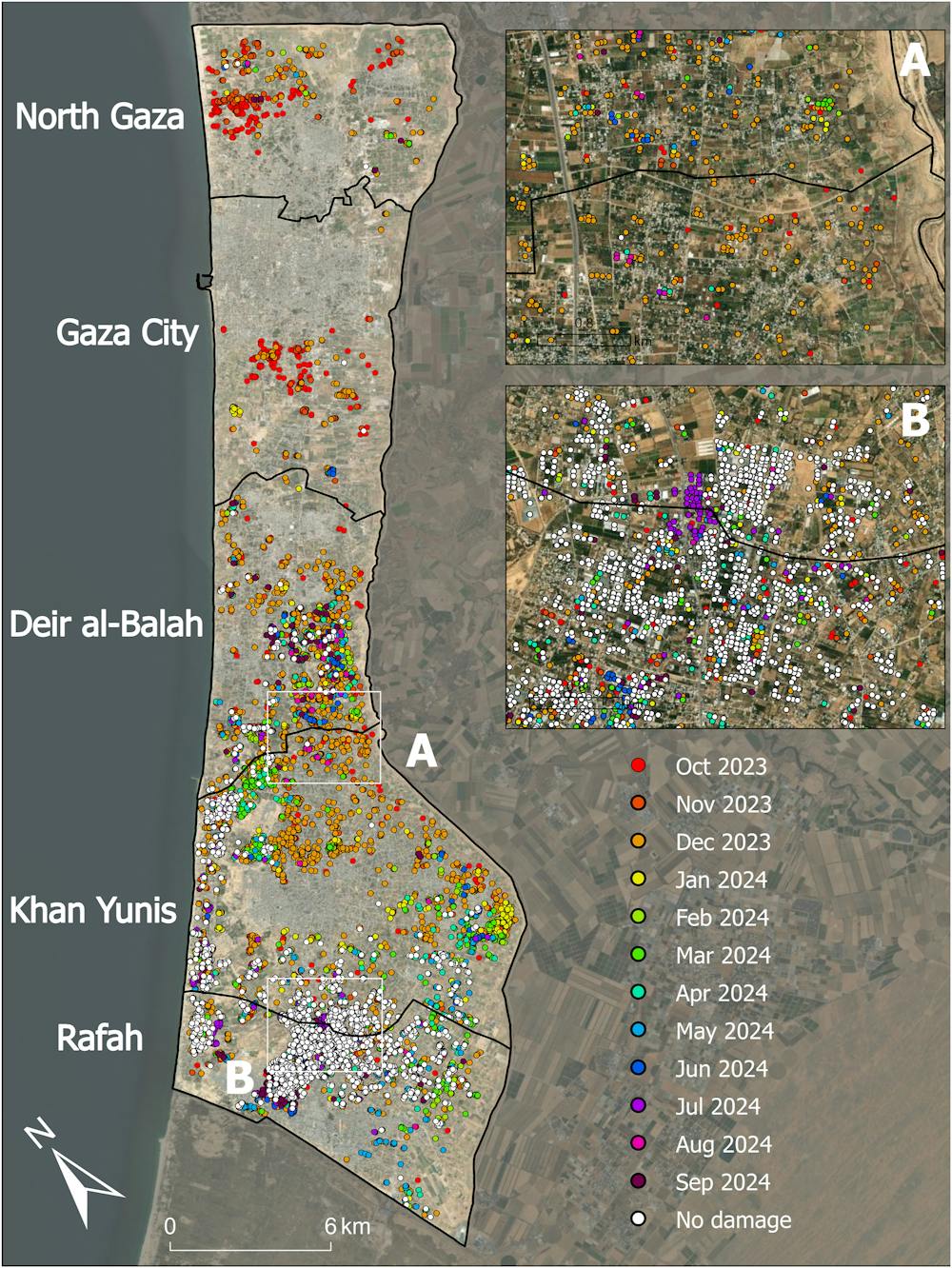
    February 6, 2025
  • MIL-OSI: Sampo Group’s results for 2024 

    Source: GlobeNewswire (MIL-OSI)

    Sampo plc, finanacial statement release, 6 February 2025 at 8:30 am EET

    Sampo Group’s results for 2024 

    • Top-line growth amounted to 12 per cent in 2024 on a currency adjusted basis, with notably strong development in Private in the fourth quarter.

    • The Group underlying combined ratio improved by 1.5 percentage points, supported by positive trends in the Nordics and in the UK.

    • The Group underwriting result increased by 13 per cent to EUR 1,316 million (1,164), driven by strong growth and a slight improvement in the Group combined ratio to 84.3 per cent (84.6).

    • Operating EPS increased by 13 per cent to EUR 2.33 (2.07) on a higher underwriting result and stable investment returns.

    • Solvency II coverage stood at 177 per cent, net of the proposed dividend, and financial leverage amounted to 26.9 per cent.

    • The Board proposes a regular dividend of EUR 1.70 per share, or EUR 0.34 per share adjusted for the share split announced on 5 February 2025.

    • Sampo expects to deliver an underwriting result of EUR 1,350–1,450 million in 2025, representing growth of 3–10 per cent year-on-year, and insurance revenue of EUR 8.7–9.0 billion.

    Key figures

    EURm 1–12/
    2024
    1–12/
    2023
    Change, % 10–12/
    2024
    10–12/
    2023
    Change, %
    Profit before taxes 1,559 1,481 5 219 368 -40
      If 1,256 1,358 -8 187 369 -49
      Topdanmark 137 162 -15 -21 19 —
      Hastings 193 129 49 52 59 -11
      Holding -29 -160 — -1 -78 —
    Net profit for the equity holders 1,154 1,323 -13 180 382 -53
    Operating result 1,193 1,046 14 347 208 66
    Underwriting result 1,316 1,164 13 361 281 28
          Change, %     Change, %
    Earnings per share (EUR) 2.25 2.62 -14 0.31 0.76 -59
    Operating EPS (EUR) 2.33 2.07  13 0.65 0.42 55
    Return on equity own funds, % 29.5 24.7 — — — —

     Net profit for the equity holders and earnings per share for 2023 include result from life operations.
    The figures in this report have not been audited.

    Sampo Group key financial targets for 2024–2026

    Target 2024
    Operating EPS growth: over 7% (period average) 13%
    Group combined ratio: below 85% 84.3%
    Solvency ratio: 150-190% 177%
    Financial leverage: below 30% 26.9%

    Financial targets for 2024–2026 announced at the Capital Markets Day on 6 March 2024.

    GROUP CEO’S COMMENT

    2024 was a landmark year strategically for Sampo as well as an excellent year when it comes to operational progress. We delivered solid underwriting profit growth of 13 per cent, significantly supported by strong performance in the UK, and we acquired the minority interest in Topdanmark, completing our journey to an integrated P&C insurance group. We enter 2025 in excellent shape, following strong growth in the fourth quarter and with an attractive pipeline of opportunities to capitalise on our digital capabilities and the synergy potential in integrating Topdanmark.

    Top-line growth continued to be excellent in the fourth quarter, on the back of long-term investments made into our capabilities and rational market conditions. Private stands out with 8 per cent currency adjusted GWP growth in the quarter, or 10 per cent if we exclude the Swedish mobility business adversely affected by low new car sales. This growth comes partly from investments into personal insurance and property, which grew by 14 per cent and 7 per cent in the quarter, respectively. However, supportive conditions in Norway and Denmark also provide a tail wind with a notable acceleration in GWP growth in Topdanmark to 11 per cent in the quarter. Private retention remains high and stable at 89 per cent, reflecting both high customer satisfaction and rational Nordic markets. To complete the picture on Private, I am pleased to be able to report that we have recently renewed two of the largest motor insurance distribution agreements in the Nordic markets, thereby confirming our strong leadership position in the region.

    In the UK, we added 84,000 policies in the quarter with growth in new products, such as telematics, bike, van, and home insurance, partly offset by a disciplined approach to the broader motor product as market pricing ticked down. Overall, 2024 was an outstanding year for Hastings with underwriting profit growth of 49 per cent, accounting for almost half the 13 per cent increase at Group level.

    In corporate lines, I want to focus on the 1 January 2025 renewals, which account for around 40–45 per cent of the business. Commercial achieved high-single digit rate increases, backed by particularly strong development in Norway, while retention remained high. In Industrial, a largely supportive market enabled rate increases above plan, and we took the opportunity to continue to reduce our exposure to the largest property risks. Our main reinsurance programmes were renewed successfully on 1 January, with net retention unchanged at SEK 300 million (circa EUR 25 million) per event and individual property risk.

    The de-risking action taken in Industrial and our discipline in UK motor illustrates our underwriting culture and commitment to high and stable margins. The fourth quarter once again saw strong and consistent development in underlying margins, as well as yet another improvement in the Nordic cost ratio putting us ahead of the ambition for 2024. The integration of Topdanmark into If P&C provides an opportunity to accelerate Nordic productivity improvements over the coming years.

    Turning to capital management, the Board of Directors is proposing a dividend of EUR 1.70 per share for 2024, or EUR 0.34 per share adjusting for the upcoming share split, representing growth of 6 per cent, as we prioritise reliability and a steady trajectory. In addition, I expect that we will launch new buyback programme in 2025, with a new mandate from our Annual General Meeting, funded by capital generated in 2024 and potential disposals of legacy holding company investments. Our commitment to disciplined capital management is unwavering and we will regularly seek to complement dividends with share buybacks.

    To conclude, we look to 2025 with great confidence. We have completed our strategic simplification, further rapidly developed our digital abilities and seen strong momentum in the 1 January renewals. Based on this, we have set an outlook for underwriting profit of EUR 1,350–1,450 million for 2025, reflecting our expectation to be able to deliver on our operating EPS growth target of more than 7 per cent per annum on average in 2024–2026.

    Torbjörn Magnusson
    Group CEO

     
    OUTLOOK

    Operating environment and assumptions

    The acquisition of Topdanmark in 2024 completed Sampo’s transition into a fully integrated P&C insurance group. Sampo has an attractive operational footprint as the leader in the consolidated Nordic P&C insurance market and a leading operator in the growing digital UK P&C insurance market, positioning the Group to deliver both stability and growth.

    Competitive dynamics remain rational across the Group’s areas of operation going into 2025, while demand for P&C insurance is stable despite limited economic growth. Sampo expects claims cost to continue to grow above the long-term trend over the year, driven by factors including rising repair costs for new cars and continued wage and service inflation. At Group level, underlying claims cost is expected to see a mid-single digit per cent increase in 2025, and the Group remains firmly committed to conservatively reflecting this in its pricing.

    The strategic and operational investments made by Sampo over recent years have substantially strengthened its competitive position. The Group has unique digital capabilities across distribution, pricing, underwriting, and claims handling that enable it to deliver superior service and efficiency. Further, the integration of Topdanmark into the Group is expected to enable financial benefits through the delivery of scale benefits and synergies.

    Outlook for 2025

    The outlook for Sampo Group’s 2025 financial performance is:

    • Group insurance revenue: EUR 8.7–9.0 billion, representing growth of 4–7 per cent year-on-year.

    • Group underwriting result: EUR 1,350–1,450 million, representing growth of 3–10 per cent year-on-year.

    The outlook for 2025 is consistent with Sampo’s 2024–2026 financial targets of delivering a combined ratio below 85 per cent and operating EPS growth of more than 7 per cent annually on average.

    The outlook is subject to uncertainty related to occurrence and estimation of the cost of P&C claims, investment performance, foreign exchange rates, and competitive dynamics. Revenue forecasts, in particular, are subject to competitive conditions, which may change rapidly in some areas, such as the UK motor insurance market. The revenue and underwriting profit figures in the outlook are based on 31 December 2024 currency exchange rates.


    FOURTH QUARTER 2024 IN BRIEF

    Strong top-line growth, notably in Private, and positive margin development drove 28 per cent growth in underwriting profits.

    Gross written premiums and brokerage income increased by 18 per cent on a currency-adjusted basis and 19 per cent on a reported basis to EUR 2,212 million (1,864) in October-December 2024. The growth was positively affected by Topdanmark’s acquisition of Oona Health as well as a change of inception date for a small group of large industrial contracts from the third quarter to the fourth quarter. Excluding these, the currency adjusted top-line growth was 10 per cent.

    Fourth quarter winter weather was fairly normal with claims damage caused mainly by localised events, whereas the prior year was affected by an early start to the winter in the Nordics. In total, severe weather and large claims had 2.3 percentage points negative effect on the Group combined ratio, down from 4.5 percentage points in the comparison period. The Group underlying combined ratio improved by 1.4 percentage points, driven by solid performance across business areas with If reporting an undiscounted adjusted risk ratio improvement of 0.3 percentage points year-on-year. The Group combined ratio improved to 83.4 per cent (85.5). The underwriting result increased by 28 per cent on a currency adjusted basis and on a reported basis to EUR 361 million (281) on strong growth.  

    The net financial result decreased to EUR 62 million (175) driven by lower investment income. Fourth quarter net investment income of EUR 70 million (517) was affected by a rise in interest rates and soft Nordic equity market performance, while the comparison period benefited from exceptionally favourable conditions. IFIE amounted to EUR -7 million (-342), supported by a positive effect of EUR 43 million from changes in discount rates, whereas the comparison period saw a negative effect of EUR -271 million. Unwind of discounting stood at EUR -54 million (-81).

    Profit before taxes was EUR 219 million (368). This includes non-recurring costs of around EUR 150 million related to the Topdanmark integration reserved for the fourth quarter, without which quarterly profit before taxes would have been EUR 369 million. Of the restructuring charge, EUR 76 million was booked in the If segment and EUR 73 million in the Topdanmark segment. Operating EPS came in at EUR 0.65 (0.42) on the back of higher underwriting result and stable investment returns.

    SAMPO PLC
    Board of Directors

    The Financial Statement Release for 2024, Investor Presentation and a video review with Group CFO Knut Arne Alsaker are available at www.sampo.com/result.

    A conference call for investors and analysts will be arranged today 6 February at 11:00 am Finnish time (9:00 am UK time). Please join the teleconference by registering using the following link: 

    https://palvelu.flik.fi/teleconference/?id=5004591

    The conference call can also be followed live at www.sampo.com/result. A recorded version and a transcript will later be available at the same address.

    For more information, please contact

    Knut Arne Alsaker, Group CFO, tel. +358 10 516 0010
    Sami Taipalus
    , Head of Investor Relations, tel. +358 10 516 0030
    Maria Silander
    , Communications Manager, Media Relations, tel. +358 10 516 0031

    Distribution:
    Nasdaq Helsinki
    Nasdaq Stockholm
    Nasdaq Copenhagen
    London Stock Exchange
    FIN-FSA
    The principal media
    www.sampo.com

    Attachment

    • Sampo’s Financial Statements Release 2024

    The MIL Network –

    February 6, 2025
  • MIL-OSI: Key Information Relating to Cash Dividend

    Source: GlobeNewswire (MIL-OSI)

    Oslo, 6 February 2025 – DNO ASA, the Norwegian oil and gas operator, today announced that pursuant to the authorization granted at the Annual General Meeting held on 6 June 2024, the Board of Directors has approved a dividend payment of NOK 0.3125 per share to be made on or about 21 February 2025 to all shareholders of record as of 14 February 2025. DNO shares will be traded ex-dividend as of 13 February 2025.

    Dividend amount: NOK 0.3125 per share
       
    Declared currency: NOK
       
    Last day including right: 12 February 2025
       
    Ex-date: 13 February 2025
       
    Record date: 14 February 2025
       
    Payment date: 21 February 2025 (on or about)
       
    Date of approval: 5 February 2025, based on authorization granted 6 June 2024

    —

    For further information, please contact:

    Media: media@dno.no
    Investors: investor.relations@dno.no

    —

    DNO ASA is a Norwegian oil and gas operator active in the Middle East, the North Sea and West Africa. Founded in 1971 and listed on the Oslo Stock Exchange, the Company holds stakes in onshore and offshore licenses at various stages of exploration, development, and production in the Kurdistan region of Iraq, Norway, the United Kingdom, Côte d’Ivoire, Netherlands and Yemen.

    This information is subject to the disclosure requirements pursuant to section 5-12 of the Norwegian Securities Trading Act and section 4.2.4 of Euronext Oslo Rulebook II.

    The MIL Network –

    February 6, 2025
  • MIL-OSI: DNO Results Reflect Robust Kurdistan Production, North Sea Expansion

    Source: GlobeNewswire (MIL-OSI)

    Oslo, 6 February 2025 – DNO ASA, the Norwegian oil and gas operator, today reported 2024 revenues of USD 667 million on the back of stellar production in the Kurdistan region of Iraq in a year marked by continuing North Sea expansion.

    Cash from operations increased nearly 50 percent to USD 433 million year-on-year. Operating profit dropped to USD 6 million reflecting the Company’s decision to take non-cash impairments of USD 146 million in its accounts, part of which was previously reported.

    Net production climbed 50 percent year-on-year to 77,300 barrels of oil equivalent per day (boepd), to which Kurdistan contributed 59,000 boepd, North Sea 15,200 boepd and West Africa 3,100 boepd.

    At Kurdistan’s Tawke license (75 percent and operator), DNO increased gross production from the Tawke and Peshkabir fields by 70 percent year-on-year to 78,600 boepd in 2024, with oil sold at its Fish Khabur terminal as the Iraq-Türkiye export pipeline remained shut in. Sales prices averaged USD 35 per barrel with payments deposited into DNO’s international bank accounts ahead of deliveries. At these prices, Tawke license sales generate around USD 10 million per month of free cash flow to DNO.

    Maintaining strict capital spending discipline, DNO drilled no new wells on the Tawke license in 2024. Notwithstanding, output was increased by bringing three previously drilled wells onstream and by workovers and interventions on more than 20 other wells across the license.

    “Our Kurdistan team is doing a terrific job. Maintaining, never mind increasing, production from mature carbonate reservoirs without new drilling is rare, even exceptional,” said DNO’s Executive Chairman Bijan Mossavar-Rahmani. “In Norway, we are applying a similar ‘can-do’ spirit to get our barrels from a string of recent discoveries out of the ground and into the market and do so faster than is the norm here,” he added.

    In 2024, DNO took steps to expand its North Sea business by acquiring a 25 percent interest in the producing Arran field in the United Kingdom and interests in four producing fields and one development asset in the Norne area offshore Norway. Driven by contribution from these acquisitions, recovery of production in some fields following maintenance and Trym field restart, net North Sea production climbed to 19,000 boepd in the fourth quarter.

    Meanwhile, DNO is taking part in four ongoing North Sea field development projects expected to come online between 2025 and 2028 that represent proven and probable reserves of some 30 million barrels of oil equivalent net to the Company. Two other discoveries, namely Ofelia/Kyrre (10 percent) and Cuvette (20 percent) are nearing development decisions.

    Among the 2024 exploration highlights was the play-opening Othello light oil discovery (50 percent and operator), Norway’s second largest find last year. Prior to the discovery, DNO had already taken a strong acreage position in this area in close collaboration with Aker BP, host operator of nearby Valhall hub.

    Overall, the Company plans to drill between four (firm) and six North Sea exploration wells in 2025. Meanwhile, complementing its ongoing exploration activities, last month DNO was awarded 13 new licenses in Norway’s 2024 Awards in Predefined Areas (APA) licensing round, including four operatorships, by the Norwegian Ministry of Energy.

    Planned 2025 operational spend is ramped up to USD 750 million driven by increased North Sea activity.

    DNO’s robust balance sheet supports growth and distributions to shareholders. The Board of Directors yesterday authorized a dividend of NOK 0.3125 per share in February, maintaining the quarterly distribution at the same level as last quarter.

    A videoconference call with executive management will follow today at 14:00 (CET). Please visit www.dno.no to access the call.

    Key figures

      Full-Year 2024 Q4 2024 Q3 2024
    Gross operated production (boepd) 80,280 80,765 84,212
    Net production (boepd) 77,269 77,646 77,238
    Revenues (USD million) 667 177 171
    Operating profit/-loss (USD million) 6 -82 31
    Net profit/-loss (USD million) -27 -98 20
    Free cash flow (USD million) 59 -5 35
    Net cash/-debt (USD million) 99 99 134

    –

    For further information, please contact:
    Media: media@dno.no
    Investors: investor.relations@dno.no

    –

    DNO ASA is a Norwegian oil and gas operator active in the Middle East, the North Sea and West Africa. Founded in 1971 and listed on the Oslo Stock Exchange, the Company holds stakes in onshore and offshore licenses at various stages of exploration, development and production in the Kurdistan region of Iraq, Norway, the United Kingdom, Côte d’Ivoire, Netherlands and Yemen.

    This information is subject to the disclosure requirements pursuant to section 5-12 of the Norwegian Securities Trading Act.

    This information is subject to the disclosure requirements pursuant to Section 5-12 the Norwegian Securities Trading Act

    Attachments

    • 2024 Interim Results Presentation
    • 2024 Interim Results Report

    The MIL Network –

    February 6, 2025
  • MIL-OSI United Nations: Reusable rockets, air taxis and ‘autonomous autos’ are the future: WIPO

    Source: United Nations 4

    6 February 2025 Economic Development

    Air taxis, “autonomous autos” and reusable rockets are just some of the future transport solutions that inventors all over the world are striving to make a reality, while patents for combustion engines are “flatlining”, the UN intellectual property agency (WIPO) said on Thursday.

    Latest information gleaned from patent filings featuring in WIPO’s Technology Trends report on the Future of Transportation, offers a tempting glimpse of a not-so distant and enticing future where there’s less traffic pollution, fewer snarl-ups and air travel to the other side of the world – made possible in just a few hours.

    “Analysis of patents shows that inventors are working hard to ensure that how we get around tomorrow is cleaner and better than today,” maintained WIPO, which said that patent filings for future transportation solutions have grown by 700 per cent over the last two decades, from 15,000 inventions in 2003 to 120,000 in 2023.

    “Autonomous ships and smart ports are revolutionizing transportation at sea; electric vehicles, high-speed trains and smart traffic management systems are driving change on land,” WIPO insisted.

    “Vertical take-off and landing aircraft are offering new ways to travel by air, while reusable rockets and satellite technology are pushing what is possible beyond the earth’s atmosphere.”

    Driving this trend is the recognition that transportation accounts for more than one-third of CO2 emissions globally, which has encouraged the development of sustainable technologies that reduce the environmental impact of transportation.

    These include the adoption of electrified propulsion, the shift to renewable energy sources and the promotion of public and shared transport options.

    Digitalization is also revolutionizing the transportation sector, WIPO insists, pointing to the rise of autonomous driving, “which is projected to generate from $300 billion to $400 billion in revenue by 2035”.

    Patently true

    According to the Geneva-based UN agency, intellectual property supports this kind of groundbreaking innovation – such as wireless charging for electric vehicles – by encouraging investment in research and development.

    Competition is fierce as firms jostle for access to rare earth minerals, while AI is also taking centre stage, WIPO says.

    “The report also shows flatlining growth in patenting activity for legacy products like the internal combustion engine and other fossil fuel-based systems” such as catalytic converters, the UN agency noted.

    Its data indicated that more than 1.1 million inventions have reshaped transportation since 2000, introducing the prospect of sustainable alternatives to fossil fuel-based systems such as renewable energy cells, air taxis and self-piloting cargo ships.

    In the driver’s seat of this travel transformation are China, Japan, the US, South Korea and Germany, which represent the world’s top inventors. Land transportation patents dominate global filings, at 3.5 times more than for air, sea and space combined. The US, meanwhile, has filed the most international patents.

    The largest area of growth in patenting is related to sustainable propulsion – such as batteries for electric vehicles or hydrogen fuel cells – which represent efforts to ensure that people and goods are moved around in a “cleaner, more climate-friendly fashion”.

    Experts with an eye on imaginative transport solutions for the future say that AI is also poised to play a key role. They point to the rise of autonomous driving, although infrastructure has not adapted swiftly enough for such vehicles to take over, the WIPO report notes.

    Drone dilemma

    The scarcity of minerals, meanwhile, will determine whether the world can massively adopt electric cars – vehicles that report co-author Christopher Harrison says may not be miracle solutions for private owners.

    “Having these rare and limited raw earth minerals in an electric vehicle for personal use that’s been utilized only a few per cent of the day is not an effective use of those tools,” he told journalists.

    In the air sector, drones will continue their sky-high ascension.

    “I would not like to look up at a sky full of drones delivering pizzas or a pair of gloves to my house and causing visual and noise pollution,” said Robert Garbett, the founder of Drone Major Group, cited in the WIPO report.

    “If a delivery is to a remote location that is really hard to get to, people will be more likely to accept it as a beneficial solution,” he added, citing emergency medicine as an example.

    According to WIPO, transport patent growth in China has been strong given its recent dominance of the electric vehicle market. But other countries have also contributed with strong patent filings activity including Sweden, Italy, India and Canada.

    MIL OSI United Nations News –

    February 6, 2025
  • MIL-OSI United Nations: Secretary-General Appoints Bjørg Sandkjær of Norway Assistant Secretary-General for Policy Coordination

    Source: United Nations General Assembly and Security Council

    Biographical Note

    United Nations Secretary-General António Guterres announced today the appointment of Bjørg Sandkjær of Norway as Assistant Secretary-General for Policy Coordination in the United Nations Department of Economic and Social Affairs.  She will succeed Maria-Francesca Spatolisano of Italy, to whom the Secretary-General and the Under-Secretary-General for Economic and Social Affairs are grateful for her commitment and dedicated service to the Organization.

    Ms. Sandkjær has over 26 years of experience in policymaking and international development.  She served as Deputy Minister for International Development at the Norwegian Ministry of Foreign Affairs since 2021, having been responsible for the development of Norway’s strategic vision and engagement in international development cooperation issues and played a key role in the negotiations on Norway’s budgetary allocations for official development assistance (ODA) while also leading her country’s engagement in key sustainable development processes and fora, including the high-level political forum on sustainable development.

    Ms. Sandkjær also served as the deputy leader of the Standing Committee on Health and Welfare of the Oslo City Council and held several positions at the Norwegian Agency for Development Cooperation, Gavi, the Vaccine Alliance, the Economic Commission for Africa (ECA) and the Church of Norway.

    Ms. Sandkjær holds a master’s degree in demography from the London School of Economics and Political Science and an undergraduate degree from the University of Oslo.  She is fluent in English and Norwegian.

    For information media. Not an official record.

    MIL OSI United Nations News –

    February 6, 2025
  • MIL-OSI United Nations: Human Rights Council to Hold Special Session onthe Democratic Republic of the Congo on 7February

    Source: United Nations – Geneva

    The United Nations Human Rights Council will hold a special session on the human rights situation in the east of the Democratic Republic of the Congo on Friday, 7 February 2025.

    The session will start at 10 a.m. in room XX of the Palais des Nations in Geneva. The meeting will be webcast live in the six official languages of the United Nations.

    The special session is being convened per an official request submitted on Monday evening, 3 February, by the Democratic Republic of the Congo, which has been supported by 27 States thus far.

    For a special session to be convened, the support of one-third of the 47 members of the Council – 16 or more – is required. This request is thus far supported by the following States members of the Council (27): Algeria, Belgium, Bulgaria, Burundi, Chile, Colombia, Costa Rica, Cyprus, Czechia, the Democratic Republic of the Congo, the Dominican Republic, France, Germany, Ghana, Iceland, Japan, Kyrgyzstan, Malawi, Marshall Islands, Morocco, the Netherlands, North Macedonia, the Republic of Korea, Romania, South Africa, Spain and Switzerland.

    The request is also supported by the following 21 observer States: Australia, Austria, Croatia, Denmark, Estonia, Finland, Greece, Hungary, Ireland, Italy, Latvia, Liechtenstein, Lithuania, Luxembourg, Malta, Poland, Portugal, Slovakia, Slovenia, Sweden and the United Kingdom.

    The list of signatories remains open up to the holding of the special session. Therefore, the above list of States is to be considered provisional.

    In connection with this special session, the Council will convene an organizational meeting on Thursday, 6 February at 10 a.m. when specific details on the special session and its scenario will be announced. This organizational meeting will also be webcast live.

    This will be the thirty-seventh special session of the Human Rights Council. On 28 November 2008, the Council held a special session on the situation of human rights in the east of the Democratic Republic of the Congo. The full list of special sessions of the Human Rights Council can be seen here .


    Produced by the United Nations Information Service in Geneva for use of the media; 
    not an official record. English and French versions of our releases are different as they are the product of two separate coverage teams that work independently. 


    HRC25.001E

    MIL OSI United Nations News –

    February 6, 2025
  • MIL-OSI: Nokia Corporation: Repurchase of own shares on 05.02.2025

    Source: GlobeNewswire (MIL-OSI)

    Nokia Corporation
    Stock Exchange Release
    5 February 2025 at 22:30 EET

    Nokia Corporation: Repurchase of own shares on 05.02.2025

    Espoo, Finland – On 5 February 2025 Nokia Corporation (LEI: 549300A0JPRWG1KI7U06) has acquired its own shares (ISIN FI0009000681) as follows:

    Trading venue (MIC Code) Number of shares Weighted average price / share, EUR*
    XHEL 1,400,000 4.53
    CEUX – –
    BATE – –
    AQEU – –
    TQEX – –
    Total 1,400,000 4.53

    * Rounded to two decimals

    On 22 November 2024, Nokia announced that its Board of Directors is initiating a share buyback program to offset the dilutive effect of new Nokia shares issued to the shareholders of Infinera Corporation and certain Infinera Corporation share-based incentives. The repurchases in compliance with the Market Abuse Regulation (EU) 596/2014 (MAR), the Commission Delegated Regulation (EU) 2016/1052 and under the authorization granted by Nokia’s Annual General Meeting on 3 April 2024 started on 25 November 2024 and end by 31 December 2025 and target to repurchase 150 million shares for a maximum aggregate purchase price of EUR 900 million.

    Total cost of transactions executed on 5 February 2025 was EUR 6,336,400. After the disclosed transactions, Nokia Corporation holds 239,524,606 treasury shares.

    Details of transactions are included as an appendix to this announcement.

    On behalf of Nokia Corporation

    BofA Securities Europe SA

    About Nokia
    At Nokia, we create technology that helps the world act together.

    As a B2B technology innovation leader, we are pioneering networks that sense, think and act by leveraging our work across mobile, fixed and cloud networks. In addition, we create value with intellectual property and long-term research, led by the award-winning Nokia Bell Labs.

    With truly open architectures that seamlessly integrate into any ecosystem, our high-performance networks create new opportunities for monetization and scale. Service providers, enterprises and partners worldwide trust Nokia to deliver secure, reliable and sustainable networks today – and work with us to create the digital services and applications of the future.

    Inquiries:

    Nokia Communications
    Phone: +358 10 448 4900
    Email: press.services@nokia.com
    Maria Vaismaa, Global Head of External Communications

    Nokia Investor Relations
    Phone: +358 931 580 507
    Email: investor.relations@nokia.com

    Attachment

    • Daily Report 2025-02-05

    The MIL Network –

    February 6, 2025
  • MIL-OSI Europe: Answer to a written question – EU-Saudi Arabia relations – E-002683/2024(ASW)

    Source: European Parliament

    The EU and the Kingdom of Saudi Arabia (KSA) maintain a growing partnership based on regional stability, sustainable development and economic transformation, aligned with the 2022 EU Gulf Strategy[1] and Saudi Vision 2030[2].

    The Crown Prince’s participation in the first EU-Gulf Cooperation Council (GCC) Summit in Brussels in October 2023 underscored KSA’s commitment to a stronger, forward-looking partnership with the EU in key areas, notably trade, investment, energy, connectivity, and green and digital transitions.

    Under the 2021 EU-KSA Cooperation Arrangement[3], the two sides hold annual political dialogues; the last one took place in Brussels in July 2023, as well as annual Senior Officials Meetings on global issues, the last one took place in Riyadh in September 2023.

    The KSA also hosts the first in the region EU-GCC Chamber of Commerce. In addition, the EU and KSA hold annual formal Human Rights Dialogues, addressing all rights issues and cooperation in multilateral fora, the most recent one in Riyadh in December 2024.

    The EU Special Representative for the Gulf also contributes to strengthening the EU-KSA partnership, particularly on regional security, as reflected at the April 2024 EU-GCC High-Level Forum on regional security, attended by the KSA Minister of Foreign Affairs.

    The KSA is a key EU partner for regional security and stability, notably in the framework of the joint EU-Norway-KSA Global Alliance for implementation of the two-state solution, with participation of more than 90 countries. The KSA Minister of Foreign Affairs has also joined relevant Foreign Affairs Council discussions.

    The EU and KSA are currently finalising the negotiations on a memorandum of understanding on Energy Transitions and Clean Technology Cooperation, focusing on low emissions, renewables, hydrogen, and energy efficiency.

    • [1]  JOIN(2022) 13 final.
    • [2] https://www.vision2030.gov.sa/media/rc0b5oy1/saudi_vision203.pdf
    • [3] https://www.eeas.europa.eu/sites/default/files/documents/2024/EEAS%20-%20KSA%20MFA%20Cooperation%20Arrangement%20FINAL_ENG_signed.pdf

    MIL OSI Europe News –

    February 6, 2025
  • MIL-OSI NGOs: Egypt: Immediately release Badr Mohamed who has served his unjust protest-related sentence

    Source: Amnesty International –

    Ahead of an appeal hearing at the Court of Cassation against Badr Mohamed’s unjust conviction and five-year prison sentence in connection to the Ramsis Square protests on 16 August 2013, when he was 17 years old, Amnesty International’s Egypt Campaigner, Souleimene Benghazi, said:

    “Amnesty International has long called on the Egyptian authorities to immediately release Badr Mohamed and quash his unjust conviction and five-year prison sentence, which was handed down following a grossly unfair mass trial in which he was denied the right to an adequate defence. By 11 February, Badr Mohamed would have already spent a total of five years behind bars. It is high time for the Egyptian authorities to end this injustice and allow him to reunite with his family, including his wife Elena, an Austrian national, and his four-year-old daughter, Amina, whose birth he missed.

    “Conditions in Badr 1 prison where Badr Mohamed is being held are notoriously inhumane. Not only is he held with other prisoners in a small, cramped cell but he also has no bed, heating or access to clean water or adequate healthcare.

    “His ordeal is emblematic of the Egyptian authorities’ unrelenting reprisals against actual or perceived government critics, and their vicious crackdown on any form of dissent” – Amnesty International’s Egypt Campaigner, Souleimene Benghazi

    “Badr Mohamed was a 17-year-old child when he was swept up in mass arrests of protesters and bystanders over a decade ago. His ordeal is emblematic of the Egyptian authorities’ unrelenting reprisals against actual or perceived government critics, and their vicious crackdown on any form of dissent. As well as releasing Badr Mohamed, Egyptian authorities must also release thousands of other individuals including peaceful protesters, opposition politicians, journalists and human rights defenders who have been arbitrarily detained solely for exercising their human rights or following grossly unfair trials.”

    Background

    Badr Mohamed was released on bail three months after his initial arrest on 16 August 2013 in connection to the Ramsis Square protests. Amnesty International documented the unlawful force used by security forces against protesters and bystanders during the protests, resulting in the death of 97 protesters. Badr Mohamed was later convicted and sentenced to five years’ imprisonment in absentia in a grossly unfair mass trial in August 2017 on charges of participation in an illegal gathering and engaging in violence.

    He was re-arrested in May 2020, and retried on the same charges as per Egyptian law for those tried in their absence. On 12 January 2023, Badr Mohamed was convicted and sentenced to five years in prison following a grossly unfair retrial in front of a terrorism circuit of the Cairo Criminal Court.

    On 28 January 2025, the United Nation’s Human Rights Council carried out its Universal Periodic Review of Egypt’s human rights record. Several states such as Germany, Finland, Luxembourg, New Zealand and the United Kingdom have called on the Egyptian authorities to release all those arbitrarily detained for exercising their human rights or for politically motivated reasons.

    MIL OSI NGO –

    February 6, 2025
  • MIL-OSI United Nations: ‘No Appetite for Another Extension’ of South Sudan Peace Agreement, Mission Head Tells Security Council, Urging Leaders Focus on Benchmarks without Delay

    Source: United Nations 4

    The Revitalized Peace Agreement in South Sudan is facing challenges due to low political will, trust deficit among the parties to the accord and lack of predictable funding, the Security Council heard today from senior officials assisting peacebuilding in that country.

    Charles Tai Gituai, Interim Chairperson of the Reconstituted Joint Monitoring and Evaluation Commission — the official oversight body responsible for monitoring and evaluating the status of implementation of the 2018 Revitalized Peace Agreement — said that the parties in September 2024 agreed to extend the transitional period from 22 February 2025 to 22 February 2027, with elections rescheduled to December 2026.  While the National Election Commission has completed its plans and has opened offices in the 10 states, financial constraints remain a hindrance in election preparations.

    Further, election laws stipulate that parties with armed forces cannot be registered until they relinquish their forces — this includes the Sudan People’s Liberation Movement/Army in Opposition and others within the South Sudan Opposition Alliance, he said.  This underscores the need to hasten the unification of forces so that these parties can participate in the elections.  Also expressing concern about persistent levels of intercommunal violence in some parts of the country, he noted that the Sudan conflict exacerbates the humanitarian situation and has caused a huge influx of returnees and refugees in South Sudan.  Further, oil production — the country’s main source of foreign earnings — was disrupted in the second quarter of 2024 because of that conflict.

    Welcoming the work of the National Constitutional Amendment Committee and the Judicial Reform Committee, he said “the success of these institutions demonstrates that with funding availability, the Peace Agreement institutions and mechanisms can fully discharge their mandates”.  The permanent ceasefire continues to hold, though recent skirmishes in Western Equatoria State are concerning.  Commending the mediation talks ongoing in Nairobi, he said:  “The people of South Sudan are looking forward to a positive outcome for these talks and hoping that it will bring practical and enhanced transformative approaches in addressing the root causes of conflict.”  The Council must consider a visit to South Sudan to mobilize resources and political support to help South Sudan achieve its first democratic elections in December 2026, he added.

    Also addressing the Council was Nicholas Haysom, Special Representative of the Secretary-General and Head of the United Nations Mission in South Sudan (UNMISS), who noted that this month marks the beginning of the fourth extension of the Revitalized Peace Agreement.  “There is no appetite for another extension,” he stressed.  Rather, “there is strong desire for the leaders to focus on the benchmarks set out in the Peace Agreement without further delay”.  Urging parties to engage constructively, he acknowledged progress in some areas and welcomed the declarations of Governors to expand the civic and political space in their states.  Also noting expanded access to justice, including through mobile courts, he pointed to the adoption of a national community violence reduction strategy.  The National Elections Commission has launched its website and is rolling out a voter education strategy.

    However, none of these achievements “are sufficient to significantly move the needle” on the critical conditions required for holding elections and adopting a new constitution, he added.  Stressing the importance of “low-hanging fruit” measures such as voter registration, he reiterated that “the clock is already ticking on the extended transitional period”.  Noting that constitution and census timelines do not fit into the framework for a December 2026 election, he added:  “we have not yet seen the previously promised harmonized work plan with an operational timetable for elections.”  The lack of Government funding is slowing down these processes, he said, underscoring that “neither UNMISS nor the international community or the electoral management bodies can provide the full measure of support if these critical decisions are not taken.”

    “My country is struggling to transition from instability to stability through implementation of the R-ARCSS [Revitalised Agreement on the Resolution of the Conflict in South Sudan],” observed Edmund Yakani, Executive Director of the Community Empowerment for Progress Organization. Noting that the Tumani Initiative under Kenya’s co-mediation provides an opportunity for transitioning the country from violence to peace, he added:  “We are impressed by the process of embracing inclusive Government”.  The only option for a peaceful transition is through elections, he said, pointing to the citizens’ disappointment over the last elections postponement.  Noting that deadly intercommunal violence poses a challenge for the country’s transition, he said that elections will be credible if the Government creates conditions for holding them.

    For her part, the representative of South Sudan acknowledged the concerns about delays in the transition process and assured the Council that “every effort is being made to accelerate key milestones, particularly the preparations for free, fair and credible elections”.  Her Government is committed to providing the necessary funding and institutional support to advance the electoral process and has taken significant steps to draft a permanent constitution “that will reflect the aspirations of the South Sudanese people”, she pledged.  The deployment of the Necessary Unified Forces remains a priority, and South Sudan is working to overcome logistical and financial challenges to complete Phase II of training and deployment, she added.

    Urging all parties, including opposition groups, to negotiate in good faith within the framework of the Revitalized Agreement rather than seeking a parallel process that could complicate the peace road map, she expressed concern about the deteriorating situation in Sudan.  Recalling her country’s appeals to Sudan to cease harbouring rebels who actively destabilize its security efforts, she said this plea has gone unanswered.  “The people of South Sudan have been deeply affected by videos depicting heartless killings” of their nationals, she said, adding that these are believed to be incited by General Yassir Al-Atta, Assistant to the Commander in Chief, who claimed that 65 per cent of the Rapid Support Forces are South Sudanese.  Despite the anger provoked by this, her Government continues to call for restraint from its people, she said.

    As Council members weighed in, they stressed the need to advance progress towards elections.  The representative of Sierra Leone, also speaking for Algeria, Guyana and Somalia, highlighted the need for a credible and inclusive electoral process.  For that, security sector reform and disarmament, demobilization and reintegration of armed groups remains crucial.  He also called for urgent action to finalize transitional security arrangements and establish a middle command structure for the Necessary Unified Forces.  While the electoral road map’s implementation is critical for elections, consideration should be given to the participation of internally displaced people and returnees, he pointed out.

    Pakistan’s delegate, noting that elections have been rescheduled to take place in 2026, encouraged South Sudan to use the two-year extension to move towards a credible path to elections.  “This extension must not become a missed opportunity”, Greece’s delegate said, while Slovenia’s delegate urged the Government to secure the necessary funding for timely implementation of the Revitalized Peace Agreement.  “Promises must be turned into reality,” said Denmark’s representative, also calling for a clear elections plan and resources for election-related bodies.

    The representative of the United States said the transitional Government failed to conclude the transitional period and use public revenue transparently for public needs.  Despite significant international support, South Sudan’s President and other political leaders “have not demonstrated political will to seriously move towards elections”, he observed, adding:  “In fact, they have made efforts worse.”  While the 2005 Comprehensive Peace Agreement was a “pivotal moment in South Sudan’s history that brought hope to a people long ravaged by war and oppression”, two decades later, that country’s leaders failed to meet their people’s expectations.  He called on the transitional Government to start using public revenues for appropriate public purposes rather than to benefit the “small corrupt elite”.

    Panama’s delegate was one among several Council members who expressed concern over persisting sexual and gender-based violence, noting that women and girls, as young as 11, have fallen victims to this crime.  Hence, the Mission’ work is crucial, he stressed, highlighting the need for the equitable participation of women, young people and communities in peacebuilding.  The representatives of the Republic of Korea and France also expressed support for UNMISS, highlighting its many crucial roles, which range from enabling humanitarian assistance to assisting with election preparations.

    China’s delegate, Council President for February, speaking in his national capacity, said that, prior to the meeting, his country, using virtual technologies, conducted an underground inspection of the Mission’s work.  A new “batch” of Chinese peacekeepers have recently completed their rotation and handover, he reported.  He welcomed South Sudan’s steps towards elections and called on the international community to respect its sovereignty and ownership.  Further, “sanctions, such as arms embargo, are constraining security capacity building in South Sudan and should be adjusted or lifted”, he stressed.

    Along similar lines, the Russian Federation’s delegate said that sanctions make it difficult to strengthen South Sudan’s security and called for a review of the parameters of the arms embargo.  Voting issues are South Sudan’s internal affairs, he observed, adding that the country’s leadership has managed to establish relative stability and attain progress in State-building and resolving security issues.

    MIL OSI United Nations News –

    February 6, 2025
  • MIL-OSI Video: Palestinians, Occupied Palestinian Territory, Gaza & other topics – Daily Press Briefing

    Source: United Nations (Video News)

    Noon Briefing by Stéphane Dujarric, Spokesperson for the Secretary-General.

    – Palestinians
    – Occupied Palestinian Territory
    – Gaza
    – Democratic Republic of the Congo
    – Sudan
    – South Sudan
    – Sweden
    – Aga Khan
    – Iraq
    – Senior Appointment
    – Financial Contribution
    – Guest

    PALESTINIANS
    This afternoon, the Secretary-General has a scheduled appearance at the Committee on the Exercise of the Inalienable Rights of the Palestinian People. In his remarks, he will tell the committee, following the agreement that has been in effect, that we must keep pushing for a permanent ceasefire and the release of all hostages without delay. We cannot go back to more death and destruction.
    In speaking to the broader situation, the Secretary-General will say that in the search for solutions we must not make the problems worse. It is vital to stay true to the bedrock of international law. It is essential to avoid any form of ethnic cleansing and, of course, he will reaffirm the two-state solution. And you can follow those remarks on UN WebTV starting at 3 p.m.

    OCCUPIED PALESTINIAN TERRITORY
    Our Under-Secretary-General for Humanitarian Affairs, Tom Fletcher, is continuing his visit to Israel and the Occupied Palestinian Territory. On the political level, Mr. Fletcher held discussions over the past two days with Israeli authorities, including President Isaac Herzog, as well as officials from the Coordinator of Government Activities in the Territories (COGAT) and the Ministry of Foreign Affairs.
    Mr. Fletcher described these engagements as practical, emphasizing the need to build on the progress since the ceasefire and sustain the large-scale delivery of UN aid into Gaza. On the ground, Mr. Fletcher visited today different areas of the West Bank.
    In East Jerusalem, he visited Silwan neighbourhood where he met with residents facing home demolitions and the threat of forcible eviction by Israeli authorities.
    Mr. Fletcher also toured what is known as Area C of the Ramallah governorate, where he heard and saw the humanitarian impact of access restrictions on the livelihoods of Palestinian and their daily lives. These restrictions include Israeli checkpoints and of course the 712-kilometre-long barrier.
    And just a short while ago in Ramallah, Mr. Fletcher held discussions with national Palestinian NGOs, who are at the heart of humanitarian response efforts across the Occupied Palestinian Territory.

    GAZA
    In Gaza, our humanitarian colleagues report that our aid operations – together with our partners – continue to scale up across the Gaza Strip. We are also carrying out assessments to determine the needs of impacted and displaced families, particularly the most vulnerable.
    Across Gaza, 22 bakeries supported by the World Food Programme are now operational. And our health partners continue to provide health services as well. We and our partners estimate that more than half a million displaced Palestinians have now returned to the governorates of both Gaza and North Gaza, where there is an urgent need for tents and shelter materials. Our partners say they’ve transported 22 truckloads of tents from southern to northern Gaza yesterday to address these needs but we need to get more tents in.
    For its part, UNICEF continues to distribute nutrition support for infants. Across Gaza, the World Food Programme has provided lipid-based nutrient supplements to more than 80,000 children and pregnant or breastfeeding women since the ceasefire took effect. Humanitarian partners have screened more than 30,000 children under the age of five for malnutrition since the ceasefire took effect. Of those children under five screened, over 1,000 cases of acute malnutrition have been identified, including 230 cases of severe acute malnutrition.
    And to sustain learning activities across the Gaza Strip, education partners established three new temporary learning spaces yesterday in Gaza, Rafah, and Khan Younis governorates, benefiting some 200 children.

    Full Highlights: https://www.un.org/sg/en/content/noon-briefing-highlight?date%5Bvalue%5D%5Bdate%5D=05%20February%202025

    https://www.youtube.com/watch?v=ocNAfzKmNWk

    MIL OSI Video –

    February 6, 2025
←Previous Page
1 … 97 98 99 100 101 … 128
Next Page→
NewzIntel.com

NewzIntel.com

MIL Open Source Intelligence

  • Blog
  • About
  • FAQs
  • Authors
  • Events
  • Shop
  • Patterns
  • Themes

Twenty Twenty-Five

Designed with WordPress