MONTGOMERY – Governor Kay Ivey on Friday announced she is tapping Cynthia Lee Almond to serve as president of the Public Service Commission. This fills the seat previously held by Twinkle Cavanaugh, who has taken a role with the Trump Administration.
“Cynthia has proven to be an extremely effective public servant and leader, and I am confident the people of Alabama will be even better served when she takes the helm at the Public Service Commission,” said Governor Ivey. “Since 2021, I have been able to count on Cynthia to get real, meaningful work done in the Legislature, and while I know the people of Tuscaloosa will miss her representation in the State House, every person across this state will now benefit from her leadership on the Public Service Commission.”
As president, Almond will lead the three-person board responsible for regulating utilities in Alabama. Almond is a seasoned attorney and currently works in the private practice of law. She also takes the helm at the Public Service Commission after serving as a Republican member of the Alabama House of Representatives for District 63.
Almond brings a wealth of experience to the Public Service Commission and has a solid track-record of serving the people she represents well, whether that be in the House of Representatives or as an attorney. She works directly with a variety of people through her legal work, which has largely concentrated on estate planning, as well as probate, business law and real estate. Additionally, she owns a title company. In the State House, she served as chair of the Tuscaloosa County Local Legislative Delegation and as a member of the Ways and Means Education Committee, Judiciary Committee, Rules Committee and as vice-chair of the Ethics and Campaign Finance Committee.
Throughout her tenure in the Legislature, Almond has been a partner to Governor Ivey on priorities like the governor’s Safe Alabama public safety package, the Alabama School of Healthcare Sciences, and the Game Plan economic development legislation, among other areas.
Almond is a true public servant, well-respected and recognized as a strong leader by her peers. Previously, she served four terms on the Tuscaloosa City Council where she was elected president pro tem by her colleagues on the Council, as well as chair of the Finance committee.
“I am honored to have been asked by Governor Ivey to fill this important position. It is one I accept with great enthusiasm,” said Almond. “I know how important this commission is to the people of Alabama and to the industry sectors it regulates. I believe my training as an attorney and legislator will prove to be helpful in performing this role. I appreciate greatly the confidence shown in me by Governor Ivey, and I will work hard for her and for this great state of Alabama.”
Almond attended Vanderbilt University and is a graduate of both The University of Alabama and University of Alabama School of Law.
Born and raised in Tuscaloosa, Alabama, Almond gives much back to the community today. She is a graduate of Leadership Alabama and was co-chair for its West Alabama Regional Council. She serves as a Sunday School teacher at First United Methodist Church, has two children and enjoys a variety of activities from playing the piano and tennis to mountain bike riding and more.
Since 2021, she has represented the people of House District 63 effectively and plans to vacate her seat in the Legislature on Sunday, June 15 ahead of joining the Public Service Commission. The Public Service Commission appointment is effective Monday, June 16, which is when the governor will swear her in as president.
An official headshot of Cynthia Lee Almond is attached.
Headline: N.C. Division of Parks and Recreation Seeks Public Input on Equine State Trail Master Plan
N.C. Division of Parks and Recreation Seeks Public Input on Equine State Trail Master Plan jejohnson6
The N.C. Department of Natural and Cultural Resources’ Division of Parks and Recreation is seeking input on the Equine State Trail Master Plan. The master plan will be a 20-year plan that identifies a 10-mile-wide corridor for the trail.
Authorized in 2023 by the General Assembly, the Equine State Trail is the 14th state trail. It is envisioned to be an equestrian trail that loops through eight counties, including Chatham, Cumberland, Harnett, Hoke, Lee, Montgomery, Moore, and Richmond counties. The trail has opportunities to connect Jordan Lake State Recreation Area, Weymouth Woods Sandhills Nature Preserve, Carvers Creek State Park, and Raven Rock State Park, and will offer a variety of equestrian recreation.
Two public open houses will be held — June 18 at Raven Rock State Park auditorium and June 25 at Weymouth Woods Sandhills Nature Preserve auditorium. Both open houses will be from 5-7 p.m. and attendees can drop in any time. Members of the public are encouraged to attend and can expect to spend about 30 minutes to review, discuss and weigh in on their preferred recreational amenities for the trail.
Amenities that may be considered for the master plan include the trail surface type, campgrounds, trailheads, recreational user types, and connection opportunities within the eight identified counties.
An online public survey is available for those who cannot attend the public meetings. Take the survey at:http://www.trails.nc.gov/eqst-survey.
About North Carolina Division of Parks and Recreation The Division of Parks and Recreation manages more than 264,000 acres of iconic landscape within North Carolina’s state parks, state recreation areas and state natural areas. It administers the N.C. Parks and Recreation Trust Fund, including its local grants program, as well as a state trails program, North Carolina Natural and Scenic Rivers and more, all with a mission dedicated to conservation, recreation and education. The state parks system welcomes more than 19 million visitors annually.
About the North Carolina Department of Natural and Cultural Resources The N.C. Department of Natural and Cultural Resources (DNCR) manages, promotes, and enhances the things that people love about North Carolina – its diverse arts and culture, rich history, and spectacular natural areas. Through its programs, the department enhances education, stimulates economic development, improves public health, expands accessibility, and strengthens community resiliency.
The department manages over 100 locations across the state, including 27 historic sites, seven history museums, two art museums, five science museums, four aquariums, 35 state parks, four recreation areas, dozens of state trails and natural areas, the North Carolina Zoo, the State Library, the State Archives, the N.C. Arts Council, the African American Heritage Commission, the American Indian Heritage Commission, the State Historic Preservation Office, the Office of State Archaeology, the Highway Historical Markers program, the N.C. Land and Water Fund, and the Natural Heritage Program. For more information, please visit www.dncr.nc.gov.
Headline: Dr. Craig Friend to Discuss New Book ‘Becoming Lunsford Lane’ on June 24 at N.C. Capitol
Dr. Craig Friend to Discuss New Book ‘Becoming Lunsford Lane’ on June 24 at N.C. Capitol jejohnson6
The North Carolina State Capitol will host a free lecture by Dr. Craig Friend about his new book “Becoming Lunsford Lane: The Lives of An American Aeneas” on June 24 at 6 p.m. The State Capitol is administered by the N.C. Division of State Historic Sites within the Department of Natural and Cultural Resources.
By challenging the rules of enslavement and, later, pushing the boundaries of free citizenship in North Carolina, Lunsford Lane (1803-79) became a folk hero to many enslaved Southerners, as well as a generation of abolitionists. Author of a unique “slave narrative” and a speaking partner with some of the era’s greatest orators, including William Lloyd Garrison, Henry Highland Garnett, William Wells Brown, and Frederick Douglass, Lane became a celebrity who watched as the persona he created gradually faltered and failed him and his family.
In the first biography of Lunsford Lane based on original and extensive research, Craig Thompson Friend portrays a man who dreamed beyond his enslavement, delivered himself and his family from bondage, and spun a story of his life that brought him lasting freedom and fleeting fame. Lane’s story is a biography for our times: a man searching to define life, liberty, and the pursuit of happiness in a changing American society scarred by contentious politics, economic challenges, class tensions, loss of political rights, and racial violence.
Craig Thompson Friend is a professor of history at North Carolina State University. He is the author of “Kentucke’s Frontiers,” winner of the 2011 Governor’s Award, and “Along the Maysville Road: The Early Republic in the Trans-Appalachian West.” For more information about the event, visit the site’s Eventbrite pageBecoming Lunsford Lane: Book Talk with Dr. Craig Friend Tickets, Tue, Jun 24, 2025 at 6:00 PM | Eventbrite
The State Capitol’s mission is to preserve and interpret the history, architecture, and function of the 1840 building and Union Square. The Capitol is open to visitors Monday-Saturday and is located at1 E. Edenton St. in downtown Raleigh. For additional information please call 984-867-8340 or visithttps://historicsites.nc.gov/capitol.
About the North Carolina Department of Natural and Cultural Resources The N.C. Department of Natural and Cultural Resources (DNCR) manages, promotes, and enhances the things that people love about North Carolina – its diverse arts and culture, rich history, and spectacular natural areas. Through its programs, the department enhances education, stimulates economic development, improves public health, expands accessibility, and strengthens community resiliency.
The department manages over 100 locations across the state, including 27 historic sites, seven history museums, two art museums, five science museums, four aquariums, 35 state parks, four recreation areas, dozens of state trails and natural areas, the North Carolina Zoo, the State Library, the State Archives, the N.C. Arts Council, the African American Heritage Commission, the American Indian Heritage Commission, the State Historic Preservation Office, the Office of State Archaeology, the Highway Historical Markers program, the N.C. Land and Water Fund, and the Natural Heritage Program. For more information, please visit www.dncr.nc.gov.
Headline: First Farm-Life School to be Featured on N.C. Highway Historical Marker
First Farm-Life School to be Featured on N.C. Highway Historical Marker jejohnson6
Schools built in the early 20th century to provide education in rural areas of the state soon will be recognized with a North Carolina Highway Historical Marker. The N.C. Historical Marker Program is part of the N.C. Department of Natural and Cultural Resources.
The marker commemorating Craven County Farm Life School, the first farm life school, will be dedicated at the intersection of U.S. Hwy 17 and Farm Life Avenue in Vanceboro, N.C. on Thursday, June 12 at 4 p.m.
Authorized in 1911 by a General Assembly appropriation, farm life schools were promoted by state superintendent J.Y. Joyner and various farm groups. These schools were required to offer a standard high school education in addition to classes and practical experience in vocational agriculture and home economics.
If a local governmental unit provided facilities (including dormitories for boys and girls) for $25,000 and then pledged $2,500 for operating expenses each year, the state would match the latter amount. Almost immediately, five counties took advantage of the offer, and by 1916, 21 farm-life schools were in operation.
Craven County Farm Life School opened on Nov. 4, 1913, with an on-site celebration and 30 enrolled students.
A second school — Rowan Farm-Life School in China Grove — opened in 1914 and was such a success that in 1921 the regular China Grove High School merged with it and shared the farm campus.
In Nash County, local farmer Tom Jones donated 25 acres of land, and the community voted for an additional $10,000 in bonds for buildings for the Red Oak Farm-Life High School.
Students within walking or horse-riding distances paid no tuition, but boarding students paid $12.50 per month. The boys cut wood for fires, and the girls cooked and waited on tables. Crop rotation, contour plowing, selection of nutritious foods, and improved homemaking practices were emphasized along with the academic curriculum.
For more information about the historical marker, please visit https://www.dncr.nc.gov/blog/2024/08/09/farm-life-schools-c-89, or call (919) 814-6625
The Highway Historical Marker Program is a collaboration between the N.C. departments of Natural and Cultural Resources and Transportation.
About the North Carolina Department of Natural and Cultural Resources The N.C. Department of Natural and Cultural Resources (DNCR) manages, promotes, and enhances the things that people love about North Carolina – its diverse arts and culture, rich history, and spectacular natural areas. Through its programs, the department enhances education, stimulates economic development, improves public health, expands accessibility, and strengthens community resiliency.
The department manages over 100 locations across the state, including 27 historic sites, seven history museums, two art museums, five science museums, four aquariums, 35 state parks, four recreation areas, dozens of state trails and natural areas, the North Carolina Zoo, the State Library, the State Archives, the N.C. Arts Council, the African American Heritage Commission, the American Indian Heritage Commission, the State Historic Preservation Office, the Office of State Archaeology, the Highway Historical Markers program, the N.C. Land and Water Fund, and the Natural Heritage Program. For more information, please visit www.dncr.nc.gov.
Headline: Chimney Rock State Park to Reopen June 27
Chimney Rock State Park to Reopen June 27 jejohnson6
The N.C. Department of Natural and Cultural Resources and N.C. State Parks announced today that Chimney Rock State Park and the Chimney Rock attraction will reopen to visitors on Friday, June 27, exactly nine months after Hurricane Helene devastated the surrounding communities.
“Chimney Rock is a western North Carolina jewel,” said Governor Josh Stein. “Reopening the state park will draw tourists back to this area. I am pleased that DNCR, DOT, and local leaders in Chimney Rock were able to get this park open for people to enjoy and so local businesses can thrive.”
Access to the park has been limited since September 2024 due to the loss of the park entrance bridge. The N.C. Department of Transportation recently completed work on a temporary bridge and repairs to the park’s roads.
“The reopening of this iconic park is another positive step toward recovery in western North Carolina,” said N.C. Department of Natural and Cultural Resources Secretary Pamela B. Cashwell. “We could not reopen Chimney Rock without the swift work of the N.C. Department of Transportation and the leadership from Governor Josh Stein and his recovery team.”
“We are grateful for the strong partnership with the local communities and their leadership, along with Chimney Rock Management,” said State Parks Director Brian Strong. “We are so excited to welcome visitors back to Chimney Rock State Park.”
Park hours and additional details will be announced soon. Advance reservations will be required to access the Chimney Rock attraction; the ticketing reservation system atchimneyrockpark.comwill go live approximately one week prior to the reopening. Capacity will be limited due to ongoing recovery and rebuilding efforts in the area.
Located in Rutherford County, Chimney Rock State Park offers some of North Carolina’s most dramatic mountain scenery, overlooking Hickory Nut Gorge and Lake Lure. For a fee, visitors can take an elevator or hike to the top of the park’s namesake, a 315-foot freestanding rock spire. James Ledgerwood is the park superintendent.
About the North Carolina Department of Natural and Cultural Resources The N.C. Department of Natural and Cultural Resources (DNCR) manages, promotes, and enhances the things that people love about North Carolina – its diverse arts and culture, rich history, and spectacular natural areas. Through its programs, the department enhances education, stimulates economic development, improves public health, expands accessibility, and strengthens community resiliency.
The department manages over 100 locations across the state, including 27 historic sites, seven history museums, two art museums, five science museums, four aquariums, 35 state parks, four recreation areas, dozens of state trails and natural areas, the North Carolina Zoo, the State Library, the State Archives, the N.C. Arts Council, the African American Heritage Commission, the American Indian Heritage Commission, the State Historic Preservation Office, the Office of State Archaeology, the Highway Historical Markers program, the N.C. Land and Water Fund, and the Natural Heritage Program. For more information, please visit www.dncr.nc.gov.
Source: United States House of Representatives – Representative Mike Kelly (R-PA)
WASHINGTON, D.C. — Today, U.S. Representative Mike Kelly (R-PA) announced the opening of the 2025 Congressional App Challenge for middle and high school students in Pennsylvania’s 16th Congressional District. This annual competition encourages students to explore science, technology, engineering, and mathematics (STEM) by creating and showcasing their own software applications.
“The Congressional App Challenge is a fantastic opportunity for our young innovators to demonstrate their creativity and technical skills,” said Rep. Kelly. “I am continually impressed by the talent and ingenuity of our students, and I look forward to seeing the innovative apps they develop this year.”
Competition Details:
Eligibility: Open to all middle and high school students residing or attending school in Pennsylvania’s 16th Congressional District.
Registration Deadline: September 30, 2025.
Submission Deadline: October 30, 2025
Students are encouraged to register early to receive updates and resources.
How to Participate:
Register for the competition at: www.CongressionalAppChallenge.us
Develop an original app on any platform (e.g., mobile, web, desktop).
Submit the app along with a demonstration video and required documentation by the submission deadline.
The winning app from Pennsylvania’s 16th District will be featured on the Congressional App Challenge website and displayed in the U.S. Capitol Building. Winners will also be invited to the #HouseOfCode celebration in Washington, D.C., where they can showcase their app to Members of Congress and the tech community.
For more information, please contact Julie Swartfager, Director of Constituent Services, at Julie.Swartfager@mail.house.gov.
Learn more about the competition at Kelly.House.Gov/Services/Congressional-App-Challenge and at www.congressionalappchallenge.us/
Source: The Conversation – USA – By Amber M. Simpson, Associate Professor of Mathematics Education, Binghamton University, State University of New York
Families and caregivers can boost children’s confidence and interest in science, technology, engineering and mathematics while school is out for summer.heshphoto/Getty Images
The Trump administration is reshaping the pursuit of science through federal cuts to research grants and the Department of Education. This will have real consequences for students interested in science, technology, engineering and mathematics, or STEM learning.
One of those consequences is the elimination of learning opportunities such as robotics camps and access to advanced math courses for K-12 students.
As a result, families and caregivers are more essential than ever in supporting children’s learning.
To support STEM learning outside of school, encourage children to find and solve problems. kali9/Getty Images
Look for “problems” in or around your home to engineer a solution for. Engineering a solution could include brainstorming ideas, drawing a sketch, creating a prototype or a first draft, testing and improving the prototype and communicating about the invention.
For example, one family in our research created an upside-down soap dispenser for the following problem: “the way it’s designed” − specifically, the straw − “it doesn’t even reach the bottom of the container. So there’s a lot of soap sitting at the bottom.”
To identify a problem and engage in the engineering design process, families are encouraged to use common materials. The materials may include cardboard boxes, cotton balls, construction paper, pine cones and rocks.
Our research found that when children engage in engineering in the home environment with caregivers, parents and siblings, they communicate about and apply science and math concepts that are often “hidden” in their actions.
For instance, when building a paper roller coaster for a marble, children think about how the height will affect the speed of the marble. In math, this relates to the relationship between two variables, or the idea that one thing, such as height, impacts another, the speed. In science, they are applying concepts of kinetic energy and potential energy. The higher the starting point, the more potential energy is converted into kinetic energy, which makes the marble move faster.
Spontaneous learning moments can lead to deep engagement and learning of STEM concepts. cglade/Getty Images
Open up a space for exploration around STEM concepts driven by their interests.
Currently, my research with STEM professionals who were homeschooled talk about the power of learning sparked by curiosity.
One participant stated, “At one time, I got really into ladybugs, well Asian Beatles I guess. It was when we had like hundreds in our house. I was like, what is happening? So, I wanted to figure out like why they were there, and then the difference between ladybugs and Asian beetles because people kept saying, these aren’t actually ladybugs.”
In my research, being uncertain about STEM concepts may lead to children exploring and considering different ideas. One concept in particular − playful uncertainties − is when parents and caregivers know the answer to a child’s uncertainties but act as if they do not know.
For example, suppose your child asks, “How can we measure the distance between St. Louis, Missouri, and Nashville, Tennessee, on this map?” You might respond, “I don’t know. What do you think?” This gives children the chance to share their ideas before a parent or caregiver guides them toward a response.
4. Bring STEM to life
Overhearing or participating in budget talks can help children develop math skills and financial literacy. SeizaVisuals/Getty Images
Turn ordinary moments into curious conversations.
“This recipe is for four people, but we have 11 people coming to dinner. What should we do?”
In a recent interview, one participant described how much they learned from listening in on financial conversations, seeing how decisions got made about money, and watching how bills were handled. They were developing financial literacy and math skills.
As they noted, “By the time I got to high school, I had a very good basis on what I’m doing and how to do it and function as a person in society.”
Globally, individuals lack financial literacy, which can lead to negative outcomes in the future when it comes to topics such as retirement planning and debt.
Why is this important?
Research shows that talking with friends and family about STEM concepts supports how children see themselves as learners and their later success in STEM fields, even if they do not pursue a career in STEM.
My research also shows how family STEM participation gives children opportunities to explore STEM ideas in ways that go beyond what they typically experience in school.
In my view, these kinds of STEM experiences don’t compete with what children learn in school − they strengthen and support it.
Amber M. Simpson receives funding from the U.S. National Science Foundation.
Charlemagne, the medieval King of the Franks, has taken control of modern-day America and is looking to expand his borders by invading your neighboring country.
It is a possible outcome in the recently released video game Civilization VII, or Civ 7, in which different historical figures can govern people far removed – both in time and geography – from their actual historical role. In this case, Charlemagne has become displeased with the little empire you control due to friction along a shared border and is likely to invade soon.
I have been an avid player of games like Civ 7 my entire life. I tend to play strategic games, be they video, card, board or role-playing games. And I’m not alone. An estimated 190.6 million people in the U.S. regularly play video games in some form.
While my primary reason for playing may be enjoyment, they also inform the discipline I teach. In fact, I just published a book, “The Gamer’s Guide to International Relations,” that explains how some of the most popular games around include lessons for people seeking to understand how diplomacy works and how different nations interact.
A visitor walks past the booth of Civilization VII at the Gamescom video games trade fair in Cologne, Germany, on Aug. 21, 2024. Ina Fassbender/AFP via Getty Images
While Civ 7 may seek to emulate this world of conflict and cooperation, other games with no apparent connection to geopolitics can also provide lessons. In particular, Fortnite, League of Legends and Minecraft invite gamers to interact with the world in a way that models how leaders, governments and countries behave.
Here are three ways in which games create worlds that model key concepts from international relations:
The core part of Fortnite is its battle-royale, third-person shooting game. In a battle royale, you are fighting against 99 other players to be the last person standing.
The “everyone for themselves” ethos can be chaotic and challenging, with death and defeat lurking in every shrub.
It brings to mind the thinking behind the international relations theory of realism. Realists see the world as anarchic, with no overarching moral or physical authority telling states what to do – in other words, one with no world government.
It is a self-help system where states survive, thrive or die based on accruing power, finding security and using force to resolve disputes.
The theory of realism hearkens back to the ancient Greek historian Thucydides, who famously noted that the “strong do what they can and the weak suffer what they must.”
That phrase has become a central tenet of foreign policy realists. Henry Kissinger, secretary of state under U.S. President Richard Nixon, saw foreign policy as a strategic enterprise based on power, while largely ignoring other imperatives such as human rights and justice.
Even in international anarchy, however, cooperation can be attractive to a realist. Kissinger, for example, sought positive relations with China and foresaw that by working with China the U.S. could exploit a growing division between the Soviet Union and China.
From Kissinger’s perspective, it mattered less that China was communist and more that it was powerful and distrustful of the Soviet Union.
How does this apply to Fortnite? Well, in the game, you may come across two players fighting. When this happens, a player must quickly decide to either retreat or join the fray. If you enter the fight, you could either team up with the weaker player and eliminate a stronger foe or join the strong and remove the weak.
In Fortnite, and occasionally in international politics, whomever you choose as your temporary ally will become your rival immediately after – so you have to choose wisely. The enemy of your enemy is not going to stay your friend forever.
LoL and enduring allies
League of Legends, known as LoL or League to fans, is a game that offers a deceptively simple idea: A team of five players battles another to destroy their base.
Mastering the game is far from simple. Along the way, you can pick up valuable international relation lessons on the importance of forging lasting alliances.
Players remain anonymous and can be pretty toxic toward each other – tending to blame a team’s failings on anyone but themselves.
If you join as a solo player, you will join four other people you do not know and spend the next 30 minutes either winning or losing a game.
You’ll build a rapport with some teammates and want to keep playing with them. Other times, you find someone who complements your skills, and you can join a ranked competition as a pair and work together toward victory.
In this, LoL is more akin to the international relations theory of liberalism. Liberalism, which should not be confused with the political identity in U.S. politics, holds realism’s view of the world to be limited. Instead, it teaches that cooperation can endure beyond pure power politics.
Instead of a temporary alliance that falls apart immediately after you achieve your goal, liberalism suggests that alliances can mutually benefit two countries in the long run.
Take for example the United States and the United Kingdom. The two countries allied during the crises of two worlds wars. By the end of World War II, they had established a long-term partnership, resulting in the establishment of international institutions that have endured for 80 years.
Liberalism argues that countries can find solutions where both sides benefit without one side being disadvantaged. This contrasts with realism’s views of the world as zero-sum – where one side benefits at the other’s expense.
Under both liberalism and League of Legends, interactions can create positive-sum outcomes for both parties.
Constructivism argues that the world is socially constructed. That is, the rules of international politics are something that humans and countries have created, chosen to abide by and are willing to enforce.
And this works well with Minecraft. People of all ages can enjoy it – but it is up to players to choose how to play. You can build houses or castles, or you can choose to find and defeat the Ender Dragon. Or you can turn on creative mode and decide to make art or large engineering projects.
The point is that it’s up to you and your friends to determine joint goals or collectively decide to pursue your own interests – and that concept is at the heart of constructivism. States can decide to create a more liberal world by jointly signing treaties or joining international organizations that alter what nations can and cannot do. Alternatively, states may see such ventures as facades and decide that the most important things are power and security. Both realist and liberal states can exist in the same world.
Like players in Minecraft, states may view the world as one where everyone is a threat, in line with realism. Or they may view the world as one where institutions and cooperation provide a better experience for everyone.
In Minecraft as in international politics, the goals, rules and punishments for those who deviate are determined collectively.
Digging deeper
Games such as Minecraft, League of Legends and Fortnite may seem to many as a pastime rather than a learning experience. But they can help people connect with concepts that attempt to explain a vast and confusing world. Being able to grasp the arcane and complicated world of international relations can make the world slightly more manageable.
Michael A. Allen does not work for, consult, own shares in or receive funding from any company or organization that would benefit from this article, and has disclosed no relevant affiliations beyond their academic appointment.
Vatican City (Agenzia Fides) – There are 48 States that spend more on interest payments than on education or healthcare. This is according to the report “A World of Debt” by the UN Trade and Development (UNCTAD). Debt service, i.e., the payment of interest on loans received, thus has a major impact on the lives of the poorest countries, as the funds allocated to education, healthcare, and subsidies for the purchase of basic goods and fuel are cut. The protests that took place in Nigeria and Kenya in 2024, primarily among young people, are closely linked to this debt mechanism. In order to pay the interest and reduce their countries’ overall debt, the Kenyan and Nigerian governments had presented financial laws that provided for tax increases and subsidy cuts. During his audience with participants in the conference “Debt Crisis in the Global South” organized by the Pontifical Academy of Sciences on June 5, 2024, Pope Francis said: “In the wake of mismanaged globalization, and in wake of the pandemic and wars, we find ourselves faced with a debt crisis that mainly affects the countries of the global South, causing misery and distress, and depriving millions of people of the possibility of a dignified future.” The Pope expressed hope that the Holy Year 2025 will pave the way for “a bold and creative new international financial architecture.” The UNCTAD report agrees with Pope Francis when he states: “The global financial architecture is no longer able to meet the needs of the world in the 21st century. This is a major challenge for sustainable development.” Therefore, creativity and courage are needed to overcome a financial structure that further widens the gap between rich and poor. According to the UNCTAD report, “Developing countries struggle with an international financial architecture whose deeply entrenched asymmetries exacerbate the impact of successive crises on sustainable development. This system exacerbates their debt burden by limiting their access to finance for sustainable development and forcing them to borrow from more costly external sources.” Recent events have exacerbated this challenge. Rising global interest rates since 2022 have further strained developing countries’ public finances. High interest payments outpace growth in basic public spending such as health, education, and climate change mitigation. In developing countries, home to 3.3 billion people, one in three countries spends more on interest payments than on these key areas of human development. “Debt service for public external debt totaled USD 365 billion in 2022, corresponding to 6.3% of export earnings. By comparison, the 1953 London Agreement on German war debt limited the share of export earnings that could be spent on servicing external debt (public and private) to 5% to avoid undermining the recovery,” states the UNCTAD report, highlighting the different treatment of poorer countries today. It notes, in particular, that 61% of developing countries’ debt is held by private creditors who are subject to little political constraint when demanding interest payments. For this reason, the call Pope Francis made on December 16, 2024, during a meeting with representatives of the banking sector, resonates strongly: “The imminent Jubilee reminds us of the need to forgive debts. It is the condition for fostering hope and future in the life of many people, especially the poor. I encourage you to sow hope. Do not tire of accompanying and keeping the level of social justice high.” (L.M.) (Agenzia Fides, 6/6/2025)
Share:
DENVER, June 06, 2025 (GLOBE NEWSWIRE) — SHF Holdings, Inc., d/b/a Safe Harbor Financial (Safe Harbor or the “Company”) (Nasdaq: SHFS), a fintech leader in facilitating financial services and credit facilities to the cannabis industry, announced that Terry Mendez, Safe Harbor’s Chief Executive Officer, Jeffrey Kay, Senior Vice President of Marketing, Dominic Marella, Vice President of Business Development, and Michael Regan, Head of Investor Relations & Data Science will participate in the Benzinga Cannabis Capital Conference being held on June 8–10, 2025, at the Marriott Magnificent Mile in Chicago, Illinois.
Terry Mendez, will join a panel discussion titled “The CFO, The CPA & The CEO: How To Make Your Business Financially Resilient” on Monday, June 9, 2025, at 1:00 p.m. CT on the Main Stage on Floor 5 (Chicago Ballroom ABCD). The panel will explore the critical role of financial leadership, tax strategy, and capital structure in navigating the volatile cannabis market.
Safe Harbor will host one-on-one meetings throughout the conference. For more information or to schedule a meeting, please contact ir@SHFinancial.org.
About Safe Harbor: Safe Harbor is among the first service providers to offer compliance, monitoring and validation services to financial institutions that provide traditional banking services to cannabis, hemp, CBD and ancillary operators, making communities safer, driving growth in local economies and fostering long-term partnerships. Safe Harbor, through its financial institution clients, implements high standards of accountability, transparency, monitoring, reporting and risk mitigation measures while meeting Bank Secrecy Act obligations in line with FinCEN guidance on cannabis-related businesses. Over the past decade, Safe Harbor has facilitated more than $25 billion in deposit transactions for businesses with operations spanning more than 41 states and US territories with regulated cannabis markets.
Cautionary Statement Regarding Forward-Looking Statements: Certain information contained in this press release may contain “forward-looking statements” within the meaning of the Private Securities Litigation Reform Act of 1995. Statements other than statements of historical facts included herein may constitute forward-looking statements and are not guarantees of future performance or results and involve a number of risks and uncertainties. Forward-looking statements may include, but are not limited to, statements with respect to trends in the cannabis industry, including proposed changes in U.S and state laws, rules, regulations and guidance relating to Safe Harbor’s services; Safe Harbor’s growth prospects and Safe Harbor’s market size; Safe Harbor’s projected financial and operational performance, including relative to its competitors and historical performance; success or viability of new product and service offerings Safe Harbor may introduce in the future; the impact volatility in the capital markets, which may adversely affect the price of Safe Harbor’s securities; the outcome of any legal proceedings that have been or may be brought by or against Safe Harbor; and other statements regarding Safe Harbor’s expectations, hopes, beliefs, intentions or strategies regarding the future. In addition, any statements that refer to projections, forecasts or other characterizations of future events or circumstances, including any underlying assumptions, are forward-looking statements. The words “anticipate,” “believe,” “continue,” “could,” “estimate,” “expect,” “intends,” “outlook,” “may,” “might,” “plan,” “possible,” “potential,” “predict,” “project,” “should,” “would,” and similar expressions may identify forward-looking statements, but the absence of these words does not mean that a statement is not forward-looking. Forward-looking statements are predictions, projections and other statements about future events that are based on current expectations and assumptions and, as a result, are subject to risks and uncertainties. Actual results may differ materially from those in the forward-looking statements as a result of a number of factors, including those described from time to time in Safe Harbor’s filings with the U.S. Securities and Exchange Commission. Safe Harbor undertakes no duty to update any forward-looking statement made herein. All forward-looking statements speak only as of the date of this press release.
Safe Harbor Investor Relations Contact: Mike Regan, Head of Safe Harbor Investor Relations ir@SHFinancial.org
Safe Harbor Media Relations Contact: Ellen Mellody 570-209-2947 safeharbor@kcsa.com
LADENBURG, Germany, June 06, 2025 (GLOBE NEWSWIRE) — Heidelberg Pharma AG (XETRA: HPHA), a clinical-stage biotech company developing innovative Antibody Drug Conjugates (ADCs), today announced that Andreas Pahl, CEO of Heidelberg Pharma, will present live at the Life Sciences Virtual Investor Forum hosted by VirtualInvestorConferences.com, on June 12th, 2025.
Heidelberg Pharma’s lead candidate, HDP-101, a BCMA-targeting ADC with the novel payload Amanitin, is being evaluated in a Phase I/IIa clinical trial for the treatment of relapsed or refractory Multiple Myeloma. HDP-101 is showing promising results, including a prolonged complete response in a patient who had undergone extensive prior treatment. The patient has received continuous treatment with HDP-101 alone for over 19 months, showing excellent tolerability of the drug.
In addition, promising biological activity and objective improvements were observed in several patients, underscoring the potential of HDP-101 as a treatment option for Multiple Myeloma. Dose escalation is continuing, and the study is advancing in cohort 8.
Furthermore, the second candidate, HDP-102, a CD-37-targeting ADC with the novel payload Amanitin, has recently entered clinical development and the first patient has been dosed in a Phase I study for the treatment of non-Hodgkin lymphoma (NHL).
DATE: June 12th TIME: 10:00 AM ET LINK:REGISTER HERE Available for 1×1 meetings: June 12th and 13th
This will be a live, interactive online event where investors are invited to ask the company questions in real-time. If attendees are not able to join the event live on the day of the conference, an archived webcast will also be made available after the event.
It is recommended that online investors pre-register and run the online system check to expedite participation and receive event updates.
Heidelberg Pharma is a biopharmaceutical company working on a new treatment approach in oncology and developing novel drugs based on its ADC technologies for the targeted and highly effective treatment of cancer. ADCs are antibody-drug conjugates that combine the specificity of antibodies with the efficacy of toxins to fight cancer. Selected antibodies are loaded with cytotoxic compounds, the so-called payloads, that are transported into diseased cells. Inside the cells, the toxins then unleash their effect and kill the diseased cells.
Heidelberg Pharma uses several compounds and has built up an ADC toolbox that overcomes tumor resistance via numerous pathways and addresses different types of cancer using various antibodies. The goal is to develop targeted and highly effective ADCs for the treatment of a variety of malignant hematologic and solid tumors.
Heidelberg Pharma is the first company to use the compound Amanitin from the green death cap mushroom in cancer therapy. The biological mechanism of action of the toxin represents a new therapeutic modality and is used as a compound in the Amanitin-based ADC technology, the so-called ATAC technology.
The company is based in Ladenburg, Germany, and is listed on the Frankfurt Stock Exchange: ISIN DE000A11QVV0 / WKN A11QVV / Symbol HPHA. More information is available at www.heidelberg-pharma.com.
ATAC® is a registered trademark of Heidelberg Pharma Research GmbH. ITAC™, ETAC™ are pending trademark applications of Heidelberg Pharma Research GmbH.
About Virtual Investor Conferences® Virtual Investor Conferences (VIC) is the leading proprietary investor conference series that provides an interactive forum for publicly traded companies to seamlessly present directly to investors.
Providing a real-time investor engagement solution, VIC is specifically designed to offer companies more efficient investor access. Replicating the components of an on-site investor conference, VIC offers companies enhanced capabilities to connect with investors, schedule targeted one-on-one meetings and enhance their presentations with dynamic video content. Accelerating the next level of investor engagement, Virtual Investor Conferences delivers leading investor communications to a global network of retail and institutional investors.
Living in today’s age of ambitious robotic exploration of Mars, with an eventual human mission to the red planet likely to happen one day, it is hard to imagine a time when Mars was a mysterious and unreachable world. And yet, before the invention of the rocket, astronomers who wanted to explore Mars beyond what they could see through their telescopes had to use their imaginations.
The second half of the 19th century was a particularly interesting time to imagine Mars. This was a period during which the red planet seemed to be ready to give up some of its mystery. Astronomers were learning more about Mars, but they still didn’t have enough information to know whether it hosted life, and if so, what kind.
With more powerful telescopes and new printing technologies, astronomers began applying the cartographic tools of geographers to create the first detailed maps of the planet’s surface, filling it in with continents and seas, and in some cases features that could have been produced by life. Because it was still difficult to see the actual surface features of Mars, these maps varied considerably.
During this period, one prominent scientist and popularizer brought together science and imagination to explore the possibilities that life on another world could hold.
One imaginative thinker whose attention was drawn to Mars during this period was the Parisian astronomer Camille Flammarion. In 1892, Flammarion published “The Planet Mars,” which remains to this day a definitive history of Mars observation up through the 19th century. It summarized all the published literature about Mars since the time of Galileo in the 17th century. This work, he reported, required him to review 572 drawings of Mars.
Like many of his contemporaries, Flammarion concluded that Mars, an older world that had gone through the same evolutionary stages as Earth, must be a living world. Unlike his contemporaries, he insisted that Mars, while it might be the most Earth-like planet in our solar system, was distinctly its own world.
It was the differences that made Mars interesting to Flammarion, not the similarities. Any life found there would be evolutionarily adapted to its particular conditions – an idea that appealed to the author H.G. Wells when he imagined invading Martians in “The War of the Worlds.”
An illustrated plate from ‘Astronomie Populaire – Description Generale du Ciel’ by Camille Flammarion. This map of Mars shows continents and oceans. In this, his best-selling epic work, Flammarion speculated that Mars was ‘an earth almost similar to ours [with] water, air, showers, brooks and fountains. This is certainly a place little different from that which we inhabit.’ Science & Society Picture Library via Getty Images
But Flammarion also admitted that it was difficult to pin down these differences, as “the distance is too great, our atmosphere is too dense, and our instruments are not perfect enough.” None of the maps he reviewed could be taken literally, he lamented, because everyone had seen and drawn Mars differently.
Given this uncertainty about what had actually been seen on Mars’ surface, Flammarion took an agnostic stance in “The Planet Mars” as to the specific nature of life on Mars.
He did, however, consider that if intelligent life did exist on Mars, it would be more ancient than human life on Earth. Logically, that life would be more perfect — akin to the peaceful, unified and technologically advanced civilization he predicted would come into being on Earth in the coming century.
“We can however hope,” he wrote, “that since the world of Mars is older than our own, its inhabitants may be wiser and more advanced than we are. Undoubtedly it is the spirit of peace which has animated this neighboring world.”
A plate from ‘Les Terres du Ciel’ (The Worlds of the Sky) written by Camille Flammarion. The plate is an artist’s impression of how canals on Mars might have looked. Science & Society Picture Library via Getty Images
But as Flammarion informed his readers, “the Known is a tiny island in the midst of the ocean of the Unknown,” a point he often underscored in the more than 70 books he published in his lifetime. It was the “Unknown” that he found particularly tantalizing.
Historians often describe Flammarion more as a popularizer than a serious scientist, but this should not diminish his accomplishments. For Flammarion, science wasn’t a method or a body of established knowledge. It was the nascent core of a new philosophy waiting to be born. He took his popular writing very seriously and hoped it could turn people’s minds toward the heavens.
Imaginative novels
Without resolving the planet’s surface or somehow communicating with its inhabitants, it was premature to speculate about what forms of life might exist on Mars. And yet, Flammarion did speculate — not so much in his scientific work, but in a series of novels he wrote over the course of his career.
In these imaginative works, he was able to visit Mars and see its surface for himself. Unlike his contemporary, the science fiction author Jules Verne, who imagined a technologically facilitated journey to the Moon, Flammarion preferred a type of spiritual journey.
Based on his belief that human souls after death can travel through space in a way that the living body cannot, Flammarion’s novels include dream journeys as well as the accounts of deceased friends or fictional characters.
In his novel “Urania” (1889), Flammarion’s soul visits Mars in a dream. Upon arrival, he encounters a deceased friend, George Spero, who has been reincarnated as a winged, luminous, six-limbed being.
“Organisms can no more be earthly on Mars than they could be aerial at the bottom of the sea,” Flammarion writes.
Later in the same novel, Spero’s soul visits Flammarion on Earth. He reveals that Martian civilization and science have progressed well beyond Earth, not only because Mars is an older world, but because the atmosphere is thinner and more suitable for astronomy.
Flammarion imagined that practicing and popularizing astronomy, along with the other sciences, had helped advance Martian society.
Flammarion’s imagined Martians lived intellectual lives untroubled by war, hunger and other earthly concerns. This was the life Flammarion wanted for his fellow Parisians, who had lived through the devastation of the Franco-Prussian war and suffered starvation and deprivation during the Siege of Paris and its aftermath.
Today, Flammarion’s Mars is a reminder that imagining a future on Mars is as much about understanding ourselves and our societal aspirations as it is about developing the technologies to take us there.
Flammarion’s popularization of science was his means of helping his fellow Earth-bound humans understand their place in the universe. They could one day join his imagined Martians, which weren’t meant to be taken any more literally than the maps of Mars he analyzed for “The Planet Mars.” His world was an example of what life could become under the right conditions.
Matthew Shindell does not work for, consult, own shares in or receive funding from any company or organization that would benefit from this article, and has disclosed no relevant affiliations beyond their academic appointment.
Have you been hearing about the dire wolf lately? Maybe you saw a massive white wolf on the cover of Time magazine or a photo of “Game of Thrones” author George R.R. Martin holding a puppy named after a character from his books.
The dire wolf, a large, wolflike species that went extinct about 12,000 years ago, has been in the news after biotech company Colossal claimed to have resurrected it using cloning and gene-editing technologies. Colossal calls itself a “de-extinction” company. The very concept of de-extinction is a lightning rod for criticism. There are broad accusations of playing God or messing with nature, as well as more focused objections that contemporary de-extinction tools create poor imitations rather than truly resurrected species.
While the biological and philosophical debates are interesting, the legal ramifications for endangered species conservation are of paramount importance. As a legal scholar with a Ph.D. in wildlife genetics, my work focuses on how we legally define the term “endangered species.” The use of biotechnology for conservation, whether for de-extinction or genetic augmentation of existing species, promises solutions to otherwise intractable problems. But it needs to work in harmony with both the letter and purpose of the laws governing biodiversity conservation.
What did Colossal actually do? Scientists extracted and sequenced DNA from Ice Age-era bones to understand the genetic makeup of the dire wolf. They were able to piece together around 90% of a complete dire wolf genome. While the gray wolf and the dire wolf are separated by a few million years of evolution, they share over 99.5% of their genomes.
The scientists scanned the recovered dire wolf sequences for specific genes that they believed were responsible for the physical and ecological differences between dire wolves and other species of canids, including genes related to body size and coat color. CRISPR gene-editing technology allows scientists to make specific changes in the DNA of an organism. The Colossal team used CRISPR to make 20 changes in 14 different genes in a modern gray wolf cell before implanting the embryo into a surrogate mother.
While the technology on display is marvelous, what should we call the resulting animals? Some commentators argue that the animals are just modified gray wolves. They point out that it would take far more than 20 edits to bridge the gap left by millions of years of evolution. For instance, that 0.5% of the genome that doesn’t match in the two species represents over 12 million base pair differences.
Colossal, on the other hand, maintains that it is in the “functional de-extinction” game. The company acknowledges it isn’t making a perfect dire wolf copy. Instead it wants to recreate something that looks and acts like the dire wolf of old. It prefers the “if it looks like a duck, and quacks like a duck, it’s a duck” school of speciation.
Disagreements about taxonomy – the science of naming and categorizing living organisms – are as old as the field itself. Biologists are notorious for failing to adopt a single clear definition of “species,” and there are dozens of competing definitions in the biological literature.
Biologists can afford to be flexible and imprecise when the stakes are merely a conversational misunderstanding. Lawyers and policymakers, on the other hand, do not have that luxury.
President Richard Nixon signed the Endangered Species Act in December 1973. Associated Press
To be protected by the act, an organism must be a member of an endangered or threatened species. Some of the most contentious ESA issues are definitional, such as whether the listed species is a valid “species” and whether individual organisms, especially hybrids, are members of the listed species.
Colossal’s functional species concept is anathema to the Endangered Species Act. It shrinks the value of a species down to the way it looks or the way it functions. When passing the act, however, Congress made clear that species were to be valued for their “aesthetic, ecological, educational, historical, recreational, and scientific value to the Nation and its people.” In my view, the myopic focus on function seems to miss the point.
Despite its insistence otherwise, Colossal’s definitional sleight of hand has opened the door to arguments that people should reduce conservation funding or protections for currently imperiled species. Why spend the money to protect a critter and its habitat when, according to Interior Secretary Doug Burgum, you can just “pick your favorite species and call up Colossal”?
Putting biotechnology to work for conservation
Biotechnology can provide real conservation benefits for today’s endangered species. I suggest gene editing’s real value is not in recreating facsimiles of long-extinct species like dire wolves, but instead using it to recover ones in trouble now.
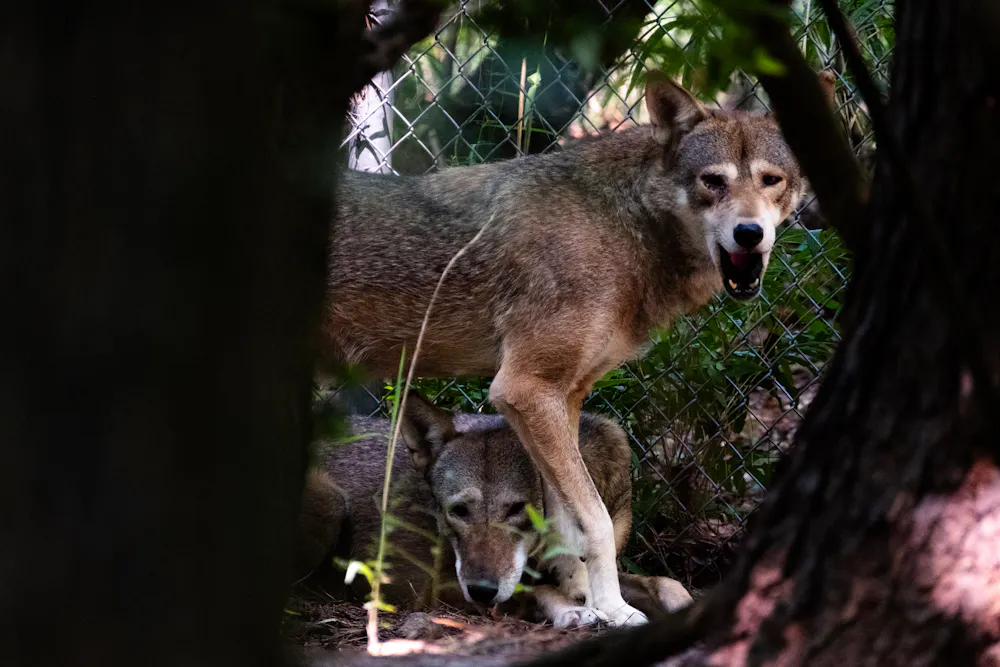
For example, Colossal has also announced that it has cloned a red wolf. Unlike the dire wolf, the red wolf is not extinct, though it came extremely close. After decades of conservation efforts, there are about a dozen red wolves in the wild in the reintroduced population in eastern North Carolina, as well as a few hundred red wolves in captivity.
The entire population of red wolves, both wild and captive, descends from merely 14 founders of the captive breeding program. This limited heritage means the species has lost a significant amount of the genetic diversity that would help it continue to evolve and adapt.
In order to reintroduce some of that missing genetic diversity, you’d need to find genetic material from red wolves outside the managed population. Right now that would require stored tissue samples from animals that lived before the captive breeding program was established or rediscovering a “lost” population in the wild.
Recently, researchers discovered that coyotes along the Texas Gulf Coast possess a sizable percentage of red wolf-derived DNA in their genomes. Hybridization between coyotes and red wolves is both a threat to red wolves and a natural part of their evolutionary history, complicating management. The red wolf genes found within these coyotes do present a possible source of genetic material that biotechnology could harness to help the captive breeding population if the legal hurdles can be managed.
This coyote population was Colossal’s source for its cloned “ghost” red wolf. Even this announcement is marred by definitional confusion. Due to its hybrid nature, the animal Colossal cloned is likely not legally considered a red wolf at all.
Under the Endangered Species Act, hybrid organisms are typically not protected. So by cloning one of these animals, Colossal likely sidestepped the need for ESA permits. It will almost certainly run into resistance if it attempts to breed these “ghost wolves” into the current red wolf captive breeding program that has spent decades trying to minimize hybridization. How much to value genetic “purity” versus genetic diversity in managed species still proves an extraordinarily difficult question, even without the legal uncertainty.
Biotechnology could never solve every conservation problem – especially habitat destruction. The ability to make “functional” copies of a species certainly does not lessen the urgency to respond to biodiversity loss, nor does it reduce human beings’ moral culpability. But to adequately respond to the ever-worsening biodiversity crisis, conservationists will need all available tools.
Alex Erwin does not work for, consult, own shares in or receive funding from any company or organization that would benefit from this article, and has disclosed no relevant affiliations beyond their academic appointment.
It is not a good break-up. These were always two big beasts used to getting their own way. Two alpha males, if you like the evolutionary metaphor, trying to get along. And now the Donald Trump and Elon Musk relationship is in meltdown.
Who could forget that iconic image from just a few short weeks back? Elon Musk standing behind the seated the US president, Donald Trump, in the Oval Office, towering over him. Trump, his hands clasped, having to turn awkwardly to look up at him. That silent language of the body. Musk accompanied by his four-year old, a charming and informal image, or that great evolutionary signal of mating potential and dominance, depending on your point of view.
These were also clearly two massive narcissistic egos out in their gleaming open-top speedster. Musk was appointed special advisor to Trump, heading the Department of Government Efficiency, cutting excess and waste. The backseat driver for a while.
There were a lot of bureaucratic casualties already, road kill at the side of the highway as the sports car roared on with frightening speed. But things were always going to be difficult if they hit a bump in the road. And they did. Perhaps, more quickly than many had imagined.
Get your news from actual experts, straight to your inbox.Sign up to our daily newsletter to receive all The Conversation UK’s latest coverage of news and research, from politics and business to the arts and sciences.
There were differing views on what caused the crash. Many pointed to the dramatic fall in the sales of Tesla, a 71% fall in profits in one quarter, and the inevitable impact on Musk’s reputation. And yesterday Tesla shares were falling even faster, as investors panicked. The attacks on Tesla showrooms couldn’t have helped either.
Others pointed to Trump’s proposed removal of the tax credit for owners of electric vehicles, or the political backlash in Washington over Space X’s potential involvement in Trump’s proposed “golden dome” anti-missile defense system.
However, according to former White House strategist Steve Bannon, what really caused the crash was when the president refused to show Musk the Pentagon’s attack plans for any possible war with China. There’s only so far being the president’s best buddy can get you. Bannon is reported as saying: “You could feel it. Everything changed.” That, according to Bannon, was the beginning of the end.
Elon Musk has criticised Trump’s ‘big, beautiful bill’.
So now we watch Trump and Musk stumbling away from the crash scene. One minute Trump is putting on a show for the cameras. He’s beaming away and introducing the “big, beautiful bill”, a budget reconciliation bill that rolls together hundreds of controversial proposals. Next, he is accusing Musk of “going crazy” and talking about withdrawing government contracts from the Musk empire.
Musk is unhappy too. “I’m sorry, but I just can’t stand it anymore. This massive, outrageous, pork-filled Congressional spending bill is a disgusting abomination,” he wrote on X. “Shame on those who voted for it: you know you did wrong.”
Rejection and repositioning
He says he’s disgusted by the bill. Disgust is one of the most primitive of all the emotions. A survival mechanism – you must avoid what disgusts you. He’s social signalling here, alerting others, warning them that there’s something disgusting in the camp.
Musk is highly attuned to public perception, perhaps even more so than Trump (which is saying something). With his acquisition of X (formerly Twitter), Musk was able to direct (and add to) online discourse, shaping public conversations.
Psychologically, Musk’s rejection of Trump is an attempt to simultaneously elevate himself and diminish the man behind the bill. He can call out the president’s action like nobody else. He is positioning himself anew as that free thinker, that risk taker, innovative, courageous, unfettered by any ties. That is his personality, his brand – and he’s reasserting it.
Trump on Musk’s criticism of the ‘big beautiful bill’
But it’s also a vengeful act. And it’s perhaps reminiscent of another political insider (and geek), former Downing Street adviser Dominic Cummings, who was sacked by the then UK prime minister, Boris Johnson, in 2020. Cummings was accused of masterminding leaks about the social gatherings in Downing Street.
He went on to criticise Johnson as lacking the necessary discipline and focus for a prime minister as well as questioning his competence and decision-making abilities. The revenge of a self-proclaimed genius.
And revenge is sweet. In a 2004 study, researchers scanned participants’ brains using positron emission tomography (PET) – a medical imaging technique that is used to study brain function (among other things) – while the participants played an economic game based on trust. When trust was violated, participants wanted revenge, and this was reflected in increased activity in the reward-related regions of the brain, the dorsal striatum.
Revenge, in other words, is primarily about making yourself feel better rather than righting any wrongs. Your act may make you appear moral but it may be more selfish.
But revenge for what here? That’s where these big narcissistic egos come into play.
Psychologically, narcissists are highly sensitive to perceived slights – real or imagined. Musk may have felt Trump was attempting to diminish his achievements for political gain, violating this pact of mutual respect. This kind of sensitivity can quickly transmogrify admiration into contempt.
Contempt, coincidentally, is the single best predictor of a breakdown in very close relationships.
Disgust and contempt are powerful emotions, evolving to protect us – disgust from physical contamination (spoiled food, disease), and contempt from social or moral contamination (betrayal, incompetence). Both involve rejection – disgust rejects something physically; contempt rejects something socially or morally. Musk may be giving it to Trump with both barrels here.
Break-ups are always hard, they get much harder when emotions like these get intertwined with the process.
But how will the most powerful man in the world respond to this sort of rejection from the richest man in the world? And where will it end?
Geoff Beattie does not work for, consult, own shares in or receive funding from any company or organisation that would benefit from this article, and has disclosed no relevant affiliations beyond their academic appointment.
The US state of Montana has become the first in the country to let patients try experimental drugs – even if they are not terminally ill.
The new law allows doctors to refer patients to licensed “experimental treatment centres”, where they can access drugs that have only passed phase 1 clinical trials – the earliest stage of testing in humans.
This goes far beyond existing federal law, which only allows terminally ill patients to access such drugs under the Right to Try Act, passed in 2017.
Montana already had a fairly permissive right to try law, which was originally designed to let terminally ill patients access treatments that hadn’t yet received full approval by the drug regulator.
In 2023, that law was expanded to include patients with any medical condition. The latest law goes even further, creating a formal system for clinics to offer these experimental treatments.
According to an article in MIT Technology Review, the new law was shaped and promoted by a group of longevity advocates – a mix of scientists and influencers who are focused on extending human life.
Get your news from actual experts, straight to your inbox.Sign up to our daily newsletter to receive all The Conversation UK’s latest coverage of news and research, from politics and business to the arts and sciences.
Before new medicines reach the market, they usually go through several stages of testing. A phase 1 trial is the first step in human studies and is designed to find a safe dose and spot early side-effects. It typically involves a small group – between 20 and 100 people – and does not prove the drug works.
Only around 12% of drugs that enter phase 1 trials go on to gain full approval. Many fail due to safety issues or lack of effectiveness.
Montana’s new law allows access to these early-stage treatments with a doctor’s recommendation – even for patients who are not terminally ill. Clinics must be licensed as experimental treatment centres, and 2% of their profits must be used to help low-income patients access these therapies.
Supporters say it gives people more control over their own health and could help boost innovation in areas like cancer, neurodegenerative disease and age-related decline. There is also hope it could turn Montana into a destination for medical tourism, attracting biotech investment.
But critics warn that the move could put vulnerable patients at risk.
Drugs in phase 1 trials may be safe enough to test – but their long-term effects are still unknown, and they may not work. There are also concerns over whether insurers will cover complications, since the drugs are not approved. Legal protections for both patients and doctors remain unclear.
And in South America, some countries allow patients to keep receiving experimental drugs after trials end – but not to start them outside of a trial.
Montana’s decision marks a bold new approach in the continuing debate over patient rights. It raises big questions about safety, ethics, regulation and the role of government in balancing innovation with public health. It could end up being a model for other states – or a cautionary tale.
Dipa Kamdar does not work for, consult, own shares in or receive funding from any company or organisation that would benefit from this article, and has disclosed no relevant affiliations beyond their academic appointment.
The UNESCO Regional Office for South Asia, in partnership with the IndiaAI Mission under the Ministry of Electronics and Information Technology (MeitY) and Ikigai Law, hosted the fifth and final stakeholder consultation on the AI Readiness Assessment Methodology (RAM) at the Shangri-La Eros Hotel in New Delhi on June 3. Over 200 experts from government, academia, industry, and civil society convened to strategize the responsible adoption of artificial intelligence (AI) in India.
This consultation marked the culmination of a series of five sessions held across New Delhi, Bangalore, Hyderabad, and Guwahati, organized under the joint AI RAM initiative by UNESCO and MeitY’s IndiaAI Mission. The initiative is focused on crafting an India-specific AI policy report that identifies strengths, pinpoints growth opportunities, and offers actionable recommendations for ethical AI adoption across various sectors. The RAM serves as a diagnostic tool to bolster governmental capacity for AI regulation and institutional governance.
The event commenced with remarks from Tim Curtis, Director of UNESCO’s Regional Office for South Asia, who advocated for an ‘ethics-by-design’ approach to AI development. He emphasized that true inclusivity in AI demands embedding ethical principles from the start and reaffirmed UNESCO’s commitment to supporting India’s vision for a transparent and trustworthy AI ecosystem. Abhishek Singh, Additional Secretary at MeitY, CEO of the IndiaAI Mission, and Director General of the National Informatics Centre, delivered a keynote address, highlighting India’s pro-innovation stance on developing safe and reliable AI applications. Singh outlined key initiatives, including the AI Kosh platform for datasets, the development of foundation models, and support for Responsible AI projects under the mission’s Safe and Trusted AI pillar.
A panel discussion on “Safety and Ethics in India’s AI Ecosystem” featured notable experts, including Debjani Ghosh, Distinguished Fellow at NITI Aayog; Kavita Bhatia, COO of the IndiaAI Mission; Eunsong Kim, Programme Specialist at UNESCO; Dr. B. Ravindran, Head of Data Science and AI at IIT-Madras; and Mayank Vatsa, Professor of Computer Science at IIT-Jodhpur. The panel delved into emerging policy frameworks, regulatory mechanisms, and governance strategies to promote ethical AI adoption. Ghosh underscored the challenge of balancing AI’s vast potential with its inherent risks, while Bhatia highlighted the collaborative approach of the IndiaAI Mission in fostering both innovation and responsibility.
The consultation included breakout sessions that explored governance, infrastructure, workforce readiness, and sectoral AI adoption, with a dedicated focus on youth participation in AI development and governance. These discussions provided critical insights for shaping India’s AI policy roadmap. The RAM framework, customized to India’s context, evaluates the AI ecosystem across legal, regulatory, social, cultural, economic, scientific, educational, and technological dimensions using both quantitative and qualitative metrics. Implemented by independent consultants and supported by a diverse national team, the RAM ensures a tailored approach to AI governance.
As global temperatures rise, ecosystems face new pressures and often multiple challenges simultaneously. This was the case in 2016 in areas of the northeast that experienced a one-two punch of extreme drought and an onslaught of spongy moth caterpillars that feasted on a massive portion of the region’s oak leaves.
Eastern Connecticut, much of Rhode Island, and large swaths of Central Massachusetts were hit hard, says UConn Department of Natural Resources and the Environment Associate Professor Robert Fahey. This stacking of disturbances is expected to increase with climate change, and it is important to understand how forests are responding.
Fahey and his collaborators Danielle Tanzer ’21 MS, now at the University of Wisconsin; UConn Department of Ecology and Evolutionary Biology Associate Professor Robert Bagchi; Audrey Barker Plotkin at the Harvad Forest; James Mickley ’17 Ph.D., now at Oregon State University; Keenan Rivers ’20 (CAHNR), now at Michigan Technological University; researcher Maya Sagarin, now at the University of California; and UConn Department of Natural Resources and the Environment Assistant Professor Chandi Witharana saw the opportunity to study these interactions and their impacts on defoliation and tree mortality and their findings are published in the International Journal of Applied Earth Observation and Geoinformation, and Forest Ecology and Management.
“When disturbances overlap in their effects on an ecosystem, we often call that compounding disturbance, where sometimes there is more influence on the ecosystem than you would get from either of those disturbances independently. It’s this additive or multiplicative effect,” says Fahey.
The team developed a proposal to study these multiplicative effects with a National Science Foundation RAPID grant, which streamlined the funding process and helped them jumpstart the project.
Fahey explains they applied experimental and observational methods to assess the interactions of the disturbances by collecting increment cores from tree trunks to estimate biomass accumulation before and after the disturbances and by surveying the mortality of trees across the study sites.
Then the researchers compared their field data with satellite imagery in hope of developing a method to remotely assess mortality that was not only accurate but also faster and less labor-intensive than taking field samples.
The Landsat satellite collects images on an almost bi-weekly basis, and finding a method to analyze these vast quantities of data can be tricky. Besides being labor-intensive and time-consuming, current methods also rely on costly aerial overflights.
“One of the things we were trying to do is compare what we can see in the remote sensing imagery and use machine learning models to take the known mortality and map mortality across the landscape, and then compare that to the aerial documentation,” says Fahey.
The method they developed was able to predict between 60% and 80% of the mortality within Landsat’s resolution of a 30-by-30-meter pixel. Fahey says the method could be a useful tool, enabling land managers to quickly and easily assess the landscape.
To better understand the frequency and timing of the defoliation relative to the drought conditions, Fahey teamed up with Bagchi, whose research group had been studying caterpillars and their interactions within the food web in the region. They hoped to study the characteristics that led to different outcomes and levels of severity across the region.
Fahey’s group sampled and surveyed sites around Eastern Connecticut where Bagchi’s lab had already sampled for spongy moth caterpillars.
One curious observation was the timing of the defoliation differed across the landscape and the researchers wondered if these timing differences led to variations in mortality, says Fahey.
“The question is if that’s because there were fewer caterpillars in some places,” he says. “Is it because the drought differed in its severity across the landscape? Is it because there were fewer oaks available as host species across different forests, across the landscape, or is it something to do with the environment?”
They found the factor that mattered the most was whether a site experienced multiple years of defoliation, which Fahey says is not a novel or surprising result, but it is interesting because it showed the severity of the drought, and the timing of the defoliation also did not seem to matter as much as frequency.
“The drought definitely impacted the defoliation, but it didn’t seem to impact the mortality outcomes relating to the defoliation. The drought is probably associated with the severity of the defoliation in multiple ways,” says Fahey.
For example, one of the main controls of the spongy moth caterpillars is a fungus that doesn’t get established when there’s a drought; therefore, in an extremely dry year like 2016, the spongy moth population was able to explode across the landscape.
That extremely dry weather also stressed the trees, rendering them less capable of fighting defoliation. The 2016-17 drought was possibly the most severe New England has experienced since the 1960s, says Fahey, and we have had multiple such “100-year” droughts in the last decade.
“Obviously, things are changing, but that 2016 drought was severe enough across the landscape that there wasn’t enough variation for us to pick up a signal, and it probably affected the outcomes of defoliation and led to higher mortality across the landscape. We can’t say for sure because we don’t have anything to control it against, because there wasn’t a place that didn’t have drought,” he says.
Moving forward, Fahey says they are evaluating the response of the overall forest to the disturbance by looking at productivity, carbon sequestration, and any changes that occurred. The researchers are also trying to understand how growth prior to the disturbances impacted mortality outcomes. Did fast or slow-growing oaks fare better, and why? These questions are the focus of ongoing research that will help us understand how the region’s forests will fare as the climate continues to change. With thousands of increment cores from trees across Eastern Connecticut and from the Harvard Forest in Massachusetts yet to analyze, Fahey says it will take some time before they have answers.
“The frequency, severity, and nature of the disturbances that affect our forests is changing as a result of the impacts of climate change and other stressors, such as invasive pests and pathogens,” says Fahey. “These changes are leading to more frequent interactions between disturbances and understanding how compounding disturbance affects our forests will be an essential part of predicting the future of our region and its ecosystems.”
This report is provided by Earth Negotiations Bulletin/International Institute for Sustainable Development. View the original reporthere.
Finance is critical to implementation of the Sendai Framework on Disaster Risk Reduction (DRR), but investments have not kept pace with rising demands, and aid budgets are shrinking worldwide. In many sessions through the day, delegates focused attention on financing a wide range of needs, including school safety, measures to deal with extreme heat, and nature-based solutions (NbS).
High-level dialogue
What will it take to scale DRR financing solutions at the national and local level?
Journalist Mayowa Adegoke moderated the session.
Stine Renate Håheim, State Secretary to Minister of International Development, Norway, emphasized DRR financing as a high priority, saying, “it is better to prevent than repair afterwards.” She noted that one in three people globally-most in cities or highly vulnerable areas-are not covered by Early Warning Systems (EWS).
Hans Sy, CEO, SM Prime Holdings, explained his company’s investment in resilient building construction, such as building on concrete pillars to allow free flow of floodwaters. He stressed that risk-informed decisions based on science and technology “makes good business sense.”
Fatima Yasmin, Asian Development Bank (ADB), said the Bank regards DRR as a critical priority investment, particularly through supporting policy making, planning, advising on innovative investments, and incentivizing preparedness. On scaling DRR investments, she said financing should be fast, flexible and forward-looking.
Rob Wesseling, CEO, Co-operators Group, said no path to net zero emissions is possible without investment in both prevention and recovery. He encouraged governments to utilize the risk information gathered by insurance companies over decades to assist with decision making.
On mobilizing private sector investment, Velenkosini Fiki Hlabisa, Minister of Cooperative Governance and Traditional Affairs, South Africa, stressed that every cent invested in resilience and preparedness saves lives and livelihoods.
View of the panel during the Multi-Stakeholder Plenary. Source: IISD/ENB | Anastasia Rodopoulou.
Ministerial roundtable
Inclusive comprehensive school safety-strengthening resilience for children and youth in all hazards
The event, which convened 36 ministries, was co-chaired by Kamal Kishore, Special Representative of the UN Secretary General for Disaster Risk Reduction and Head, UNDRR, and Paul Steffen, Deputy Director, Federal Office for the Environment, Switzerland.
In opening remarks, Kishore encouraged delegates to endorse the Comprehensive School Safety Framework 2017 (CSSF), noting only 80 countries have done so, and for countries to make schools heat-resilient.
On school safety policies, Tunisia, Zimbabwe, Mongolia, Pakistan, and Saint Lucia recognized the CSSF. Portugal highlighted its DRR working group on children and youth. Brunei Darussalam, Kenya, and Portugal recognized the fundamental rights of children to safe school environments. Colombia highlighted its Law on Teaching for Sustainability, Climate Change, and Disaster Risk Management. Republic of Korea described its 2020 Child Safety Management Act.
Many countries identified education programming as fundamental to reducing risk and developing children as agents of change in their homes and communities. Malaysia, Uganda, Russia, Algeria and others described homegrown examples of such programmes, for example, student leadership groups and First Aid skills training.
Leaders from around the globe express their shared commitment to making schools safer and more resilient to disasters. Source: IISD/ENB | Anastasia Rodopoulou.
Several countries, including Greece, Kenya and Cuba, recognized the importance of social support to children experiencing disaster and loss, and the ensuing mental and emotional health impacts. The Holy See flagged the need for spiritual care of those “who have seen whole lives swept away.”
Most countries discussed sustainable and resilient school infrastructure, including standards for new or retrofitted buildings. Belgium, Republic of Moldova, and Singapore highlighted energy efficiency and climate resilience. On heat stress in schools, Singapore flagged cooling strategies and energy-efficient fans. Tunisia described its sustainable school network that integrates climate change, disaster risk, and biodiversity objectives. Spain said new schools need to be “climate shelters.” Bangladesh noted the construction of more than 5,000 cyclone-resistant schools.
Multistakeholder plenary
Investments in reducing risk and building resilience to accelerate investments in sustainable development
Kishore introduced the session, which was co-chaired by Paul Steffen, Federal Office for the Environment, Switzerland, and Paola Albrito, UNDRR. Kishore noted less than 1% of national budgets is allocated to DRR.
Countries presented their national commitments, such as Australia’s Disaster-Ready Fund, which is providing up to AUD 1 billion (USD 648 million) over five years for locally-identified needs, and Switzerland’s DRR commitment of more than CHF 2 billion (USD 2.5 billion) annually. Many expressed appreciation for international support, including for Moldova’s local adaptation plans in 38 communities, and Samoa’s community-based disaster risk management activities. Peru highlighted its introduction of budget flexibility for regional and local authorities, enabling rapid response to imminent hazards.
The Food and Agriculture Organization of the UN (FAO) reported that only 3% of all development assistance is allocated to agricultural DRR measures, even while these deliver significant returns in ensuring food security. Swiss Re highlighted the role of insurance in informing risk and mitigation measures, noting the availaility of parametric insurance, for example, against extreme heat events and flooding. The Resilience Action Fund showcased the work of the International Finance Corporation in developing the Building Resilience Index as a world-first metric for assessing the safety and risk of buildings for insurers and construction developers. The Latin America and the Caribbean Development Bank (CAF), India, and the UK welcomed innovative initiatives, such as a new center on extreme events, establishment of risk pools, and the use of AI to identify flood threats.
Delegates affirmed regional solidarity, demonstrated in Tunisia’s hosting of the Africa-Arab Platform for DRR in 2023, and Iran’s hosting of three regional organizations, including a Regional Center for Urban Water Management. Albania welcomed its responsibilities under the EU Civil Protection Code for cooperation among EU countries and other partners, which, he noted, enables access to advanced DRR solutions.
The International Organization for Migration highlighted its 2024 launch of Climate Mobility Innovation Labs for the Africa and Asia regions to develop solutions to climate-related mobility.
Steffen urged all present to accelerate investment in DRR, and to engage the private sector as key partners.
Moderator, Juli Trtanj, Co-Chair, Gobal Heat Health Information Network, opened the session. Celeste Saulo, Secretary-General, World Meteorological Organization (WMO), called heat a “silent killer” because it is the least managed of all climate hazards. She said 50% of countries have heat warning systems in place but only 26 have dedicated Heat Health EWS. She identified three priorities: integrating heat risk into climate and DRR governance, heat EWS, and implementation using risk information and data.
In his keynote, Pramod Kumar Mishra, Principal Secretary to the Prime Minister, India, said heat threatened public health, economic stability, and the ecological resilience of cities and communities. He underscored UNDRR’s Common Framework on Extreme Heat Risk Governance and drew attention to India’s national guidelines on heat wave management, which decentralized more than 250 heat action plans in 23 states. He called for scaling hospital and primary health care preparedness and resilience and noted India is adopting a long-term heat wave mitigation strategy, including roof-cooling technologies, passive cooling centers, revival of traditional water bodies, and improved thermal comfort and livability of informal settlements.
In a panel discussion, Benoît Faraco, Ambassador, Climate Negotiations for Decarbonized Energies and for the Prevention of Climate Risks, France, urged being modest since we are still discovering impacts and avoiding maladaptation. Ousmane Ndiaye, Director General, African Center for Meteorological Application for Development, stressed the links between heat waves, energy crises, and health care demand. Rosa Galvez, Senator, Canada, spoke about lived experience saying, “We cannot adapt forever – we must work on the causes.” Jagan Chapagain, Secretary-General, International Federation of the Red Cross and Red Crescent Societies (IFRC), said extreme heat is a humanitarian crisis. On involving the financial sector, Mia Seppo, Assistant Director General, International Labour Organization, discussed climate risk insurance, just transition principles, and access to essential services. Mishra advised that industry protect labor from heat risk.
Source: IISD/ENB | Anastasia Rodopoulou.
Special session
Comprehensive approaches to reduce loss and damage-bridging climate action and DRR
Fatou Jeng, Former Climate Advisor to the UN Secretary-General and Member of the Early Warnings for All Advisory Panel, moderated the session.
Ralph Regenvanu, Minister for Climate Change, Adaptation, Meteorology and Geo Hazards, Energy, Environment and Disaster Management, Vanuatu, appreciated the support from the Fund for responding to Loss and Damage (FRLD) and the Santiago Network, which combined forces to launch the inaugural integrated loss and damage and DRR initiative in Vanuatu.
Kishore noted that, while many DRR practices are now in place, these need to be updated to deal with climate system changes and the associated risks, uncertainty, and volatility.
Benoît Faraco, argued that the distinction between loss and damage, and DRR, is theoretical, and remains irrelevant to people on the ground who want response, prevention, action, and solidarity to alleviate their situation.
Ibrahima Cheikh Diong, Executive Director, FRLD, emphasized the need to look at how interventions can be most impactful, stressing that solutions must be country-led, and recognize Indigenous groups and civil society participants. He expressed awareness that the FRLD must be “nimble, accessible, flexible and built on partnerships, always ensuring no one is left behind.”
Carolina Fuentes Castellanos, Director, Santiago Network Secretariat, elaborated on how the network is supporting countries to accelerate loss and damage, using Vanuatu’s experience to demonstrate how the Network can accelerate fund distribution and support with bold and transformative support.
Jagan Chapagain, Secretary-General, IFRC, cautioned that the terms loss and damage represent different meanings to communities, but the bottom line is to ensure the funds really reach the local level.
Thematic Sessions
Catalyzing governance solutions for disaster and climate-related displacement
Irwin Loy, The New Humanitarian, moderated this session.
John Mussington, activist and displaced person, Antigua & Barbuda, described his work of founding the community network, Stronger Caribbean Together, with others displaced by “disaster capitalism”, as storm-damaged sites are cleared for tourism development.
Sakiasi Ditoka, Minister of Rural and Maritime Development and Disaster Management, Fiji, highlighted the 2023 Pacific Regional Mobility Framework and Fiji’s own planned relocation guidelines.
Zahra Abdi Mohamed, Director-General, National Center for Rural Development and Durable Solutions, Somalia, described Somalia’s National Transformation Plan that prioritizes anticipatory action and climate-smart livelihoods, responding to the needs of long-term displaced communities.
Fatimah Zannah Mustapha, community representative, Nigeria, called for centering the voices of local women in decision making by removing barriers, “whether digital, linguistic, or cultural.” Claudinne Ogaldes Cruz, Executive Secretary, National Coordinator for Disaster Reduction (CONRED), Guatemala, noted that many Guatemalan households are women-led and have the knowledge to inform decision making.
Robert Piper, former UN Secretary-General’s Advisor on Solutions to Internal Displacement, said line ministries responsible for decisions on land use and building codes-“those who are responsible for dealing with the failure to prevent”-must become deeply involved in the governance of disaster displacement.
Leveraging Values of Nature for Resilience: Moderated by Cecilia Aipira, United Nations Environment Programme (UNEP), the session addressed the role of nature-based solutions (NbS) in DRR.
In his keynote, Mohammed-Yahya Lafdal, General Director, National Environment and Coastline Observatory, Mauritania, highlighted the increase in tree cover through reforestation and restoration, taking into account Indigenous knowledge and solutions, and the development of barrier systems for water distribution and management in desert areas. He emphasized how addressing land degradation and rehabilitation has been Mauritania’s best solution for increasing resilience.
Rodrigo Hernández Escobar, Representative of the Latin American and Caribbean Indigenous Knowledge & DRR Network, highlighted political will and respect for Indigenous cosmovision and territories as key elements for leveraging traditional knowledge into programmes supporting NbS. Isaac Luwaga Mugumbule, Head of Landscaping, Kampala Capital City Authority, Uganda, stated that NbS are context-specific and require community involvement to be sustained.
Professor Satoru Nishikawa, Japan International Cooperation Agency (JICA), stressed the need for scientific numerical quantification, analysis, and testing on the strengths and durability of NbS. Swenja Surminski, London School of Economics, noting that NbS “are not silver bullets,” stressed the need to work with nature, drawing attention to NbS co-benefits. Oliver Schelske, Swiss Re Institute, noting the absence of standardized values for nature, emphasized that even if “not everything is insurable,” investing in nature makes sense from an insurance perspective, as it reduces risks to the asset being insured.
On the prerequisites for NbS to be viable, speakers mentioned common sense, co-benefit considerations, identifying the number of protected lives, and conducting independent auditing.
Thematic Sessions as visual summaries capturing key messages and insights. Source: IISD/ENB | Anastasia Rodopoulou.
Side event
Inclusive comprehensive school safety—Strengthening resilience for children and youth in all hazards
This side event, organized and facilitated by the Global Alliance for Disaster Risk Reduction and Resilience in the Education Sector (GADRRRES), showcased school safety and resilience programmes from Central Asia, the Pacific region and the Caribbean.
Anja Nielsen, Co-Chair, GADRRRES, gave an overview of CSSF, noting the all-hazards, all-risks approach that includes environmental, climate change, and biological health risks, technical threats, and other everyday risks. She elaborated on the global school safety survey, representing 350 million school-aged children, and highlighted, among other concerns, that significant infrastructure investment is needed to better protect children and teachers from natural hazards, with most suffering from funding constraints.
Education administrators from Saint Lucia, Tonga, and Kyrgyzstan described CSSF activities and outcomes from their regions, and emphasized: involving the children actively in school safety is a game changer; collaboration is the essence of resilience, requiring whole-of-government and whole-of-society approaches; and building capacity at all levels, particularly teachers, for comprehensive school safety is key.
IISD’s summary
The summary report of the meeting will be available on Monday, 9 June 2025, here.
The 2025 Sasakawa Award winners are Dr. Mrutyunjay Mohapatra, from the India Meteorological Department, and Dr. Harkunti Rahayu, from the Indonesian Disaster Expert Association, both in the individual category; and the Global Network of Civil Society Organisations for Disaster (GNDR), in the organizational category.
These winners were announced at the Global Platform for Disaster Risk Reduction, in a vibrant Award Ceremony, packed with passionate candidates and their dedicated supporters, all gathered to celebrate some of the most outstanding contributions to disaster risk reduction.
Mrutyunjay Mohapatra, Director General of the India Meteorological Department (IMD), is popularly known as “The Cyclone Man of India” for his exceptional contributions to tropical cyclone forecasting and warning systems. He has been instrumental in improving India’s disaster preparedness and significantly reducing casualties from tropical cyclones through advanced forecasting and early warning systems.
Harkunti Pertiwi Rahayu is Professor of Disaster Aspect in Planning at the Institut Teknologi Sumatra and Chair of the Indonesian Disaster Expert Association. An internationally recognized leading expert in DRR, she chairs multiple international working groups on early warning and mitigation systems, disaster preparedness, developing people-centred early warning systems and capacity building, community awareness and preparedness.
The Global Network of Civil Society Organisations for Disaster Reduction (GNDR) – winner in the organizational category – is the largest global network of organizations working to strengthen the resilience of people most at risk of disasters, assembling around 2000 organisations in 130 countries. GNDR has made significant contributions to the content and implementation of the Sendai Framework, and is a strong advocate for inclusive and all-of-society disaster risk management.
Under the expert moderation of Anita Erskine, Ghanaian broadcast personality and sustainability champion, the ceremony honored those who have made exceptional strides in improving resilience to disasters.
Innovation and technology for inclusive resilience
This year’s theme, “Connecting science to people: democratizing access to innovation and technology for disaster resilient communities,” captured the spirit of innovation and accessibility that drives modern disaster preparedness. With over 200 outstanding nominees received in two categories, Individuals and Organizations, all candidates demonstrated incredible depth of talent and dedication within the global DRR community.
Special Representative of the UN Secretary-General for Disaster Risk Reduction Kamal Kishore delivered heartfelt gratitude to the community present and those watching online, acknowledging the tireless hard work and unwavering dedication of all those nominated for the award.
“This year’s award theme recognizes the importance of innovation and technology to advance resilience – and do it in a very inclusive and democratic way…. the efforts where science has been connected to society to serve the needs of people, those who are most vulnerable,” Mr Kishore said.
“I ask that we all ask and reflect on how we can support and scale up the vital efforts of these remarkable individuals and institutions,” he said.
The Nippon Foundation, whose generous support makes these awards possible, was proudly represented by Mr. Yosuke Ishikawa, Programme Director.
Mr. Kishore praised the high standard and exceptional achievements of all the nominees for the award, adding that the judges had to make difficult choices in selecting the winners from a group of such caliber. As a result they decided to recognize the following runners-up as highly commended.
Individuals:
Rob Hopkins “Radio Rob” from Yukon, Canada
Professor Virginia Murray from Global Disaster Risk Reduction at UK Health Security Agency, UK
Shee Kupi Shee from Disaster Management and Peace Building in Lamu County, Kenya
Kelvin Mashisia Shikuku from the International Livestock Research Institute in Kenya
Organization:
The World Institute on Disability (WID), Global/US
Inspiration for us all
The visionary work of these award winners demonstrates that disaster risk reduction is not just about preparation—it’s about building resilient communities where innovation meets humanity. Their dedication shows us that every contribution, no matter how small, can create ripples of positive change that protect lives and livelihoods.
Whether you’re a researcher, community leader, or simply someone who cares about making the world safer, there’s a place for you in disaster risk reduction. The challenges the world faces require diverse perspectives, innovative solutions, and collaborative efforts. Everyone is encouraged to continue the DRR journey and be part of the solution that builds a more resilient world for all.
The next edition of the Sasakawa Awards will be held at the Global Platform in three years’ time, and the jury will be thrilled to read even more inspiring stories of hope and action!
NASA continues to collaborate with global communities to solve complex challenges through crowdsourcing with a series of 25 new NASA Open Innovation Service (NOIS) contracts managed by the agency’s Johnson Space Center in Houston. The contract aims to empower NASA’s workforce by actively engaging the public to find creative solutions to difficult space exploration challenges through rapid experimentation with new methodologies, new technologies, and unique perspectives, ensuring NASA remains at the forefront of innovation while accomplishing its missions. This is the third NOIS contract, managed by NASA’s Center of Excellence for Collaborative Innovation (CoECI), and used by NASA and other government agencies. The NOIS3 contract will provide solutions through multiple crowdsourcing tools and methodologies, which include public prize competitions, freelance tasking, technology searches, and other crowd-based methods. The total value of the NOIS3 contract is $475 million over 10 years. There is a guaranteed $500 minimum obligation for each contract award. The base contract spans June 5, 2025, through May 31, 2027, and there are two options, the first for three years, and the second for five years. If all options are exercised, work could continue through May 31, 2035. The awardees are:
Blue Clarity, Vienna, Virginia Capital Consulting Corp., Fairfax, Virginia Challenge Works, London, United Kingdom CrowdPlat Inc., Pleasanton, California Design Interactive Inc., Orlando, Florida DrivenData Inc., Denver Ensemble Government Services, Hyattsville, Maryland Hyperion Technologies, Arlington, Virginia Floor23 Digital, Jackson, Wisconsin Freelancer International, Sydney, Australia HeroX, Wilmington, Delaware HYVE Innovate, Munchen, Germany Innoget, Rockville, Maryland Institute of Competition Sciences, San Francisco Loyal Source Government Services, Orlando, Florida Luminary Labs, New York City National Institute of Aerospace Associates, Hampton, Virginia Randstad Federal, Duluth, Georgia Rios Partners, Arlington, Virginia SecondMuse, Bernalillo, New Mexico TechConnect, Summerville, South Carolina Toffler Associates, Arlington, Virginia Tongal Inc., Los Angeles Topcocder, Indianapolis yet2.com Inc., Waltham, Massachusetts
NASA’s CoECI provides guidance on open innovation initiatives, helping define challenges and requirements and formulating and evaluating potential solutions. The center’s end-to-end service allows NASA and other federal agencies to rapidly experiment with new methods and solve critical problems through innovation and collaboration. Learn more about the NASA Center of Excellence at: https://www.nasa.gov/coeci -end- Tiernan DoyleHeadquarters, Washington202-358-1600tiernan.doyle@nasa.gov Kelly HumphriesJohnson Space Center, Houston281-483-5111kelly.o.humphries@nasa.gov
Black and white rhino populations in the Greater Kruger (Kruger National Park and surrounding reserves) in South Africa have plummeted from over 10,000 rhinos in 2010 to around 2,600 in 2023. Hundreds of rhinos are killed each year by poachers for their horns. These are sold on the illegal global market.
Nature reserve managers, rangers, international funders, and local non-profit organisations have invested millions of dollars in anti-poaching interventions. These include tracking dogs to track poachers, artificial intelligence-enabled detection cameras, helicopters to monitor reserves and, more recently, dehorning (removing rhinos’ horns reduces the incentive for poachers).
Together, managers and scientists gathered seven years of rhino poaching data across 2.4 million hectares in the north-eastern region of South Africa and western Mozambique. During this time, we documented the poaching of 1,985 rhinos across 11 reserves in the Greater Kruger area. This number is about 6.5% of the rhino populations in these reserves annually.
This landscape is a critical global stronghold that conserves around 25% of all Africa’s rhinos.
Our study’s headline result was that dehorning rhinos to reduce incentives for poaching achieved a 78% reduction in poaching (average reduction across implementing reserves). This was based on comparison between sites with and without dehorning as well as changes in poaching before and after dehorning. Exactly 2,284 rhinos were dehorned across eight reserves over the seven years of our research – this was most of the rhino in the region.
Our findings show that significant progress can be made against rhino poaching by reducing the reward attached to poaching (removing the horn). This is a strategic shift in focus away from purely focusing on increasing risks to poachers.
But we are being careful to note that dehorning is not a complete solution. Our research found that 111 rhinos were poached even though they had been dehorned. This is because up to 15cm of horn is left on the rhino when it is dehorned by veterinarians. This is to protect the growth plate at the base of the horn.
Rhinos’ horns regrow over time. During our fieldwork, we also noticed that criminal syndicates remain willing to kill rhinos for their stumps, even if they do this at lower rates than before dehorning.
It may be best to think of dehorning as a very effective but short-term solution that buys us time to address the more ultimate drivers of poaching: horn demand, socio-economic inequality, corruption, and organised criminal networks.
A different approach to pinning down the problem
Part of what made our study special was its strong focus on collaboration between managers and scientists. The project was first conceived by reserve managers at the frontline of rhino conservation and led by Sharon Haussmann, chief executive officer of the Greater Kruger Environmental Protection Foundation. They recognised the need to take a look at whether their investments into tracking dogs, artificial intelligence cameras and other anti-poaching interventions were paying off.
Faced with a poaching crisis despite millions of dollars invested in law enforcement, security and technology, Sharon and the team were bold enough to ask: “Why are we still losing so many rhinos? What could we do differently?” These managers then began working closely with scientists to tackle this problem together through our research.
Tragically, Sharon died unexpectedly on 31 May, less than a week before our research was published. We want to dedicate this research to her legacy.
Detecting and arresting poachers alone is not enough
The nature reserves we studied had invested US$74 million (R1 billion) in anti-poaching interventions between 2017 and 2021. Most of the investment focused on reactive law enforcement – rangers, tracking dogs, helicopters, access controls and detection cameras. This helped achieve over 700 poacher arrests. Yet we found no statistical evidence that these interventions significantly reduced poaching.
Why? These interventions are a necessary element of the anti-poaching toolkit. But they were compromised by bigger challenges. For example, stark socio-economic inequality in the region creates the ideal conditions for crime to thrive, and criminal syndicates find it easy to recruit people willing to take the large risk of poaching rhino.
Entrenched corruption among police and reserve staff allowed offenders access to inside information on the locations of dogs, cameras and rhinos. This meant that poaching was not deterred as much as it could have been.
Finally, ineffective criminal justice systems mean that arrested offenders often escape punishment, with evidence from the Greater Kruger of poachers who were multiple repeat offenders.
What can be done differently?
A range of interventions will be needed to complement dehorning, particularly as poaching for stumps would probably continue if there were no risk to poachers. There is also some evidence that dehorning rhino in one area means poachers may move to another area where rhino still have horns and poach there instead. (This has happened in South Africa’s second largest rhino stronghold in Hluhluwe-iMfolozi Park where rhino have not been dehorned.)
Our findings challenge the conventional wisdom that detecting and arresting poachers is enough on its own. Instead, we recommend these measures:
Give local people a voice and a stake. Many people affected by rhino conservation have no say and don’t share in the benefits of the industry.
Disrupt transnational criminal networks outside protected areas through intelligence-led investigations (follow the money).
Continue supporting dehorning in the short term. This will buy time to solve the biggest drivers of wildlife crime: inequality, horn demand, and corruption.
Dehorning needs to be supported by other measures to protect the rhino.
Support people first, then interventions. Rangers are key here – their welfare, wages, training and safety are not always given the attention or funding they deserve.
Keep loving rhinos and buying your kids pyjamas with them on.
Timothy Kuiper has received funding from the National Research Foundation in South Africa.
This week the US Federal Bureau of Investigation revealed two men suspected of bombing a fertility clinic in California last month allegedly used artificial intelligence (AI) to obtain bomb-making instructions. The FBI did not disclose the name of the AI program in question.
This brings into sharp focus the urgent need to make AI safer. Currently we are living in the “wild west” era of AI, where companies are fiercely competing to develop the fastest and most entertaining AI systems. Each company wants to outdo competitors and claim the top spot. This intense competition often leads to intentional or unintentional shortcuts – especially when it comes to safety.
Coincidentally, at around the same time of the FBI’s revelation, one of the godfathers of modern AI, Canadian computer science professor Yoshua Bengio, launched a new nonprofit organisation dedicated to developing a new AI model specifically designed to be safer than other AI models – and target those that cause social harm.
So what is Bengio’s new AI model? And will it actually protect the world from AI-faciliated harm?
An ‘honest’ AI
In 2018, Bengio, alongside his colleagues Yann LeCun and Geoffrey Hinton, won the Turing Award for groundbreaking research they had published three years earlier on deep learning. A branch of machine learning, deep learning attempts to mimic the processes of the human brain by using artificial neural networks to learn from computational data and make predictions.
Bengio’s new nonprofit organisation, LawZero, is developing “Scientist AI”. Bengio has said this model will be “honest and not deceptive”, and incorporate safety-by-design principles.
According to a preprint paper released online earlier this year, Scientist AI will differ from current AI systems in two key ways.
First, it can assess and communicate its confidence level in its answers, helping to reduce the problem of AI giving overly confident and incorrect responses.
Second, it can explain its reasoning to humans, allowing its conclusions to be evaluated and tested for accuracy.
Interestingly, older AI systems had this feature. But in the rush for speed and new approaches, many modern AI models can’t explain their decisions. Their developers have sacrificed explainability for speed.
Bengio also intends “Scientist AI” to act as a guardrail against unsafe AI. It could monitor other, less reliable and harmful AI systems — essentially fighting fire with fire.
This may be the only viable solution to improve AI safety. Humans cannot properly monitor systems such as ChatGPT, which handle over a billion queries daily. Only another AI can manage this scale.
Large language models and machine learning are just small parts of today’s AI landscape.
Another key addition Bengio’s team are adding to Scientist AI is the “world model” which brings certainty and explainability. Just as humans make decisions based on their understanding of the world, AI needs a similar model to function effectively.
The absence of a world model in current AI models is clear.
One well-known example is the “hand problem”: most of today’s AI models can imitate the appearance of hands but cannot replicate natural hand movements, because they lack an understanding of the physics — a world model — behind them.
Yoshua Bengio is recognised as one of the godfathers of AI. Alex Wong/Getty Images
On the right track – but it will be bumpy
Bengio is on the right track, aiming to build safer, more trustworthy AI by combining large language models with other AI technologies.
However, his journey isn’t going to be easy. LawZero’s US$30 million in funding is small compared to efforts such as the US$500 billion project announced by US President Donald Trump earlier this year to accelerate the development of AI.
There’s also an outstanding question. Even if Bengio can build an AI system that does everything he says it can, how is it going to be able to control other systems that might be causing harm?
Still, this project, with talented researchers behind it, could spark a movement toward a future where AI truly helps humans thrive. If successful, it could set new expectations for safe AI, motivating researchers, developers, and policymakers to prioritise safety.
Perhaps if we had taken similar action when social media first emerged, we would have a safer online environment for young people’s mental health. And maybe, if Scientist AI had already been in place, it could have prevented people with harmful intentions from accessing dangerous information with the help of AI systems.
Armin Chitizadeh does not work for, consult, own shares in or receive funding from any company or organisation that would benefit from this article, and has disclosed no relevant affiliations beyond their academic appointment.
On Monday, 23 June 2025, from 17:00 to 18:30 in Brussels (room Antall 6Q2), the Committee on Foreign Affairs (AFET) will hold a public hearing on the Geopolitical Aspects of the EU-Mercosur Agreement. The hearing will bring together leading experts to assess the broader geopolitical implications of the agreement. Discussions will cover its strategic relevance for the EU, its impact on Latin American regional dynamics, and its role in strengthening multilateral alliances.
Speakers will include:
Mario Torres Jarrín, Senior Policy Expert
Susanne Gratius, Professor of Political Science and International Relations
Carlos Malamud, Senior Analyst at the Elcano Royal Institute
On Monday, 23 June 2025, from 17:00 to 18:30 in Brussels (room Antall 6Q2), the Committee on Foreign Affairs (AFET) will hold a public hearing on the Geopolitical Aspects of the EU-Mercosur Agreement. The hearing will bring together leading experts to assess the broader geopolitical implications of the agreement. Discussions will cover its strategic relevance for the EU, its impact on Latin American regional dynamics, and its role in strengthening multilateral alliances.
Speakers will include:
Mario Torres Jarrín, Senior Policy Expert
Susanne Gratius, Professor of Political Science and International Relations
Carlos Malamud, Senior Analyst at the Elcano Royal Institute
EIB to advise Burgas on plan to create top scientific centre that will serve city’s four universities.
Due to open in 2027, new campus will feature research and data facilities as well as student housing and sports premises.
EIB to help develop economic model for site as Burgas seeks to attract researchers and students from around world.
The Bulgarian city of Burgas will develop a state-of-the-art scientific campus and seek to attract Bulgarian and international researchers and students with guidance from the European Investment Bank (EIB). The new campus is due to open its doors in 2027 and serve four universities in Burgas, Bulgaria’s fourth-largest city and a major industrial and tourist hub on the Back Sea.
The agreement involves the EIB’s advisory services. EIB Advisory Head of Public & Infrastructure Finance Division Julien Chebbo and Burgas Mayor Dimitar Nikolov signed the accord today in the city.
Burgas has a population of more than 200,000 and is one of the fastest growing metropolitan areas in Bulgaria. The new campus will feature centres for research and development and data as well as housing and sporting facilities.
“Creating a quality space for studying, working and living is key to attract young people and retain talent in cohesion regions,” said EIB Vice-PresidentKyriacos Kakouris. “We are pleased to support Burgas in structuring a viable economic model for the new campus, which will enhance the city’s position in the higher-education landscape, promoting innovation and economic growth.”
The municipality of Burgas has completed a design for the campus and designated land plots for it. EIB Advisory will propose and evaluate financing options and help devise an appropriate management and governance structure for the campus. The expertise is being mobilised under the European Commission’s InvestEU Advisory mandate.
“This is an extremely important project to attract young people by providing opportunities for broad-spectrum education and development,” said BurgasMayor Dimitar Nikolov. “This requires a modern environment that seamlessly combines opportunities for education and science with quality living quarters. This setting will inspire and nurture the development of specialists in various academic fields and the attainment of top scientific achievements.”
The new agreement follows other EIB Advisory support for Burgas including a comprehensive feasibility study in 2022-2023 for a new children’s hospital. In September 2023, the EIB then approved a €12.8 million loan for Burgas to co-fund the hospital.
Background information
About the EIB
The European Investment Bank (ElB) is the long-term lending institution of the European Union, owned by its Member States. The EIB finances investments in eight core priorities that support EU policy objectives: climate action and the environment, digitalisation and technological innovation, security and defence, cohesion, agriculture and the bioeconomy, social infrastructure, the capital markets union and a stronger Europe in a more peaceful and prosperous world.
The EIB Group, which also includes the European Investment Fund (EIF), signed nearly €89 billion in new financing for over 900 high-impact projects in 2024, boosting Europe’s competitiveness and security.
In addition to financing, the EIB offers advisory services that help public and private partners develop and implement high-quality, investment-ready projects. In 2024 alone, EIB advisory teams helped mobilise over €200 billion of investments across Europe and beyond.
About the InvestEU Advisory Hub
The InvestEU programmeprovides the EU with long-term funding by leveraging substantial private and public funds in support of a sustainable recovery and growth. It helps mobilise private investments for the EU’s policy priorities, such as the European Green Deal and the digital transition. InvestEU brings together under one roof the multitude of EU financial instruments, making funding for investment projects in Europe simpler, more efficient and more flexible.
The InvestEU Advisory Hub is the central entry point for project promoters and intermediaries seeking advisory support and technical assistance related to centrally managed EU investment funds. Managed by the European Commission and financed by the EU budget, the InvestEU Advisory Hub connects project promoters and intermediaries with advisory partners, who work directly together to help projects reach the financing stage.
EIB Advisory provides technical and financial expertise to support the development of sustainable and bankable projects in various sectors. In Bulgaria, EIB experts are assisting public authorities and businesses in preparing infrastructure investments in energy, energy efficiency, healthcare, transport and the environment, improving project planning and enhancing access to funding through tailored services and capacity building.
About the Municipality of Burgas
The Municipality of Burgas is the fourth-largest municipality in Bulgaria and the city of Burgas is the biggest city in south-eastern Bulgaria. Surrounded by three lakes and the Black Sea, the fast-developing city serves as a commercial and transport hub in the country. Burgas is an important centre for sea tourism with facilities and transport connections to the resorts on the South Black Sea coast.
Established in 2009, and hosted by the Inter-American Institute for Global Change Research, the Belmont Forum is a partnership of funding organizations, international science councils, and regional consortia committed to the advancement of transdisciplinary science. Forum operations are guided by the Belmont Challenge a vision document that encourages: International transdisciplinary research providing knowledge for understanding, mitigating and adapting to global environmental change.
Source: Peter the Great St Petersburg Polytechnic University – Peter the Great St Petersburg Polytechnic University –
On June 5 and 6, the Polytechnic University is hosting the All-Russian Conference “Labor Protection and Personnel Work in Organizations Subordinate to the Ministry of Education and Science of Russia.” The event is organized by the Ministry of Science and Higher Education of the Russian Federation. More than 650 specialists are participating in it, discussing current issues in the field of labor protection and personnel policy.
Participants meet with representatives of relevant government agencies and consider various topics: compliance with labor legislation, holding competitions for positions of professors and teachers, research fellows, certification and selection of managers, anti-corruption policy, labor protection, and social partnership. The work takes place in the format of expert sessions, master classes, and discussion platforms. The experts were also able to get acquainted with the exhibition stands.
State Secretary – Deputy Minister of Science and Higher Education of the Russian Federation Anastasia Bondarenko addressed the participants in a video format: The topics that are raised annually at the conference are the most relevant. Issues of safety and comfortable conditions are a priority. The strategic potential of any organization is people. We must preserve the best traditions that have developed and share experience on the problems that arise.
The words of greeting from the Chairman of the Committee on Science and Higher Education of the St. Petersburg Administration Andrey Maksimov were read by his deputy Vladimir Gaidei: I am confident that the Polytechnic University will once again become a unifying discussion platform for the conference participants. You will have the opportunity to exchange experience and relevant information on issues important for the sustainable and stable functioning of educational and scientific organizations.
The guests were greeted by the rector of SPbPU, academician of the Russian Academy of Sciences Andrey Rudskoy: At the federal level, programs for increasing competitiveness and academic leadership are consistently implemented, which have significantly changed the landscape of higher education, setting, among other things, new requirements for management culture. Personnel policy cannot be formulated in isolation from the university strategy, and it should be built with a focus on creating mechanisms for attracting the best teachers and staff, ensuring an effective contract and consistent integration of teachers’ activities into the implementation of work for industry.
The participants of the plenary session discussed new challenges and solutions in personnel work and labor protection. The discussion was moderated by the President of the Southern Federal University Marina Borovskaya. Director of the Department of Personnel Policy of the Ministry of Education and Science of Russia Alexey Svistunov made a report “Personnel Policy of the Ministry of Science and Higher Education of the Russian Federation: Main Development Trends”. Director of the Department of Legal Support, Administration and Civil Service of the Ministry of Education of Russia Andrey Sobolev spoke about how to improve the efficiency of labor protection services in educational organizations.
Deputy Director of the Department of Working Conditions and Occupational Safety Tatyana Zhigastova devoted her speech to changes and prospects for the development of regulatory frameworks in the field of occupational safety. Chairperson of the Trade Union of Education and Science Workers of the Russian Federation Larisa Solodilova spoke in detail about the implementation of social partnership in solving problems of protecting social and labor rights and the effectiveness of monitoring compliance with labor safety legislation. Chairperson of the All-Russian Trade Union of RAS Workers Galina Chucheva gave a report on “Development of Social Partnership: Proposals of the Trade Union of RAS Workers”.
Acting Head of the Department for Supervision of Compliance with Anti-Corruption Legislation of the St. Petersburg Prosecutor’s Office Yegor Pavlov spoke about the organization’s anti-corruption policy, legislative requirements, their implementation and responsibility. Deputy Head of the Department of the Department of Permit and Visa Work and External Labor Migration of the Main Directorate for Migration of the Ministry of Internal Affairs of Russia, Police Colonel Elena Klimova emphasized the specifics of attracting foreign citizens to work in the Russian Federation. Deputy Director for Research at the Izmerov Research Institute of Occupational Medicine Evgeny Zibarev presented regulatory and legal changes in the field of health protection in his speech. Head of the Department of Acquisition, Departmental Archives and Records Management of the Central State Archive of St. Petersburg Yulia Arslanova spoke about the storage of personnel documents and labor protection documents.
The moderator of the expert session “State supervision, departmental control: typical mistakes in personnel work. Ambiguous trends in law enforcement practice in labor disputes” was the head of the Directorate for Work with Personnel of SPbPU Maria Pakhomova. The participants discussed changes in supervisory activities and risk indicators, recruitment and registration of labor relations with foreign scientific and pedagogical workers, trends in law enforcement practice in labor disputes and other issues.
The moderators of the discussion platform “Improving approaches to remuneration and motivation of personnel” were Deputy Chief Accountant of SPbPU Irina Tomshinskaya and Director of the Department of Economics and Finance of SPbPU Elena Vinogradova. The experts considered the automation of HR processes of the university, the use of IT services to optimize the activities of employees, the system of accounting for the achievements of university-forming personnel, modification of the algorithm for forming the staffing schedule and other topics. Head of the Department of Corporate and Information Systems of SPbPU Denis Varenikov presented the report “Personal account of an employee as a tool for the digital transformation of an institution”. Head of the Labor Protection and Safety Department of SPbPU Yulia Shadrina spoke about the modification of the algorithm for forming the staffing schedule.
The round table “The Role of the Psychological Service in Ensuring Psychological Safety at the University” was moderated by Maxim Pasholikov, Vice-Rector for Youth Policy and Communication Technologies at SPbPU. The participants discussed the activities of psychological services at universities, student support, and aspects of the work of the tutoring service. Anna Kalugina, Director of the Center for Psychological Support at SPbPU, presented a report on “Psychological Aspects of Training First-Year Group Curators.”
The discussion platform “Assessment and development of personnel: current trends and effective mechanisms” was attended by the director of the Higher School of Industrial Management of SPbPU, secretary of the Competition Committee Olga Kalinina, who spoke about the assessment and development of the teaching staff within the framework of competition procedures.
At the discussion platform “Current issues of organizing labor protection in scientific and educational organizations of higher education,” Nikolai Chumakov, associate professor of the Higher School of Technosphere Safety of SPbPU, spoke and presented the specifics of conducting first aid training.
The debate “Experience is no obstacle to mastery. How to find the “golden mean”: professional standards vs. competencies / youth vs. “silver age”” was moderated by Vice-Rector for HR Policy of SPbPU Maria Vrublevskaya. The experts exchanged opinions on strategic issues of human capital management, discussed the age balance of the NPR, ways to attract and retain young people, professional standards and competencies.
The moderator of the round table “Educational and methodological support for training specialists in labor protection” was the director of the Higher School of Technosphere Safety of SPbPU Andrey Andreev. The first vice-president of MANEB, associate professor of SPbPU Vitaly Tsaplin made a report “Artificial intelligence in labor protection management systems”. Senior lecturers of the Polytechnic University Yulia Logvinova and Maxim Polyukhovich spoke about the methodological foundations of the laboratory practical course on labor protection.
Also planned today is a discussion platform “Mentoring as an element of developing human resources potential” together with the UNESCO Department at SPbPU and other activities.
Please note: This information is raw content directly from the source of the information. It is exactly what the source states and does not reflect the position of MIL-OSI or its clients.
Anglia Ruskin University (ARU) is playing a key role at two major Pride events this month, proudly taking centre stage as the headline sponsor for both Cambridge Pride and Essex Pride.
ARU is committed to fostering an inclusive and welcoming environment for all, including its vibrant LGBTQ+ staff and student community, and the University is thrilled to once again be supporting these two popular events.
Cambridge Pride kicks off at 12 noon on Saturday, 14 June with a colourful parade through the city centre, before ending back at Jesus Green. The free-to-attend event will continue until 9pm, bringing together the diverse communities of Cambridge for a day of entertainment and unity.
Attendees can look forward to an exciting lineup of performers on the main stage, including singers and dancers from Cambridge and beyond, and the event will also feature a dance tent, funfair rides, a wellbeing area and a community tent offering arts workshops for children.
Essex Pride is taking place on Saturday, 21 June in Chelmsford, and this year is celebrating its 21st birthday. The day begins with the free City Centre Pride March, which sets off from Popworld Chelmsford at 11:20am, before arriving at Central Park, the main festival venue.
Each year Essex Pride welcomes around 4,000 people and this year’s celebrations include a huge lineup of artists. The ticketed event includes two live stages and headlining this year will be The Vengaboys, X Factor star Louisa Johnson, and RuPaul Drag Race Queens Tia Kofi and La Voix.
“We’re proud to be the headline sponsor of Cambridge Pride and Essex Pride once again this year.
“Pride is more than a celebration, it’s a powerful act of solidarity. As ever, we stand together with our LGBTQ+ students, staff, and local communities, especially in these challenging times.
“Inclusion and belonging are at the heart of everything we do at Anglia Ruskin University. Through our excellent education and research, we continue to drive positive change and challenge inequality.”
Professor Catherine Lee, Pro Vice Chancellor and Dean of the Faculty of Arts, Education, Humanities and Social Sciences at ARU
Visitors to St Giles’ Cathedral will come face-to-face with those of the first ‘Edinburghers’ in a new exhibition as part of Edinburgh 900 celebrations.
Marking the joint 900th anniversaries of both Edinburgh and St Giles’ Cathedral, this extraordinary exhibition presents the results of new scientific research into the medieval citizens buried within the grounds of the Cathedral. Originally excavated in 1981, these remains have undergone new detailed analysis using advanced methods including ancient DNA sequencing, isotopic analysis, radiocarbon dating, and forensic facial reconstruction.
This collaborative project offers a compelling look at the lives, diets, health, origins, and identities of Edinburgh’s earliest residents.
The exhibition will feature:
Facial reconstructions of five individuals by Maria Maclennan, projected throughout the Cathedral using immersive lighting designs by artist Mettje Hunneman.
A specially commissioned short documentary by Cinetopia, featuring interviews with the research team and members of the Cathedral community.
A focus on three key burial groups – individuals from the birth of the burgh and foundation of the Cathedral in the 12th century, two 15th-century male pilgrims and eight women buried inside the Chapel of Our Lady between the 15th and 16th centuries.
Lord Provost Robert Aldridge, said:
This exhibition invites visitors to travel back through nine centuries of Edinburgh’s history, to meet the earliest people who called this city home. Thanks to scientific research and creative collaboration, we are able to share new insights into their lives, origins, health, and identities and, to actually see their faces once again.
Edinburgh 900 is a year-long celebration of our city’s rich history, culture, and bright future. This exhibition brings the faces of our very first residents to life for our audiences of today. My thanks to our partners, scientists, artists, and all those whose contributions have brought this exhibition to life.
City of Edinburgh Council Archaeologist John Lawson added:
This has been a fascinating project that brings together new archaeological science and the creative arts to tell the story of Edinburgh’s first residents in an imaginative and exciting way.
Visitors to the exhibition will come face-to-face with the first inhabitants of the city, ordinary individuals who lived through extraordinary chapters of history. While we are accustomed to the tales of the famous and powerful, this project shifts the spotlight to the everyday citizens, telling their stories in the very place they once walked, worshipped, and were laid to rest.
To honour their lives in such a meaningful location has been a rare and powerful opportunity. It’s been an immensely rewarding partnership to be part of, and I’m grateful to the church, talented specialists and the artists whose hard work and dedication have have helped to tell these stories.
Sarah Phemister, Head of Heritage and Culture, St Giles’ Cathedral, said:
This exhibition is a celebration of the remarkable talent, collaboration, and creativity of the scientists and artists who have breathed life into the faces of the past. Their work connects us across centuries, reminding us that St Giles’ has always been a place where history, innovation, and human stories have met at the very heart of Edinburgh.
Free and open to the public from 6 June to 30 November 2025, the exhibition invites visitors to explore the Cathedral’s medieval past in a new way—bringing faces and stories from Edinburgh’s early history to life.
Maria Maclennan, Senior Lecturer School of Design, Edinburgh College of Art (ECA) The University of Edinburgh, said:
It has been an enormous privilege to contribute to such a fascinating and interdisciplinary project, which adopted a truly interdisciplinary approach requiring collaboration on the part of many. Each craniofacial approximation involved the marriage of archaeological evidence together with myriad scientific analyses undertaken by the research team, to help inform final facial appearance: forensic anthropology, radiocarbon dating, isotopic signature, DNA profiling, and forensic-artistic techniques.
Craniofacial Approximation is a hybrid sci-art practice dedicated to restoring the face of an unknown individual from their skeletal remains. In archaeological contexts, as is seen here in St. Giles’ Cathedral, the practice is often an important means of restoring visibility, identity, and humanity to those long lost or forgotten, and/or in promoting education and encouraging public engagement with historical figures of interest from the past.
For each reconstruction, I produced both a more ‘neutral’ face (depicting how the individual may present in contemporary day Edinburgh), in addition to a ‘historical’ face, depicting the individual dressed in clothing/artefacts typical of the time in which they lived.
Dr Tobias Houlton, Lecturer in Craniofacial Identification and Forensic Imaging at University of Dundee, said:
This exhibition marks a significant milestone in the longstanding partnership between the City of Edinburgh Council Archaeology Service (CECAS) and the University of Dundee.
While this particular project has been a year in the making, it builds on many years of collaboration and graduate involvement from the Centre for Anatomy and Human Identification (CAHID). It provides a unique opportunity for CAHID graduates to further develop their expertise in facial identification while contributing to meaningful research in partnership with CECAS. The exhibition showcases the powerful synergy between science and art in restoring the faces of Edinburgh’s earliest citizens and enriching our understanding of the city’s medieval past.
This project has been made possible with support from Historic Environment Scotland, and all partner organisations.
Source: Hong Kong Government special administrative region
The Agriculture, Fisheries and Conservation Department (AFCD), the Urban Planning and Natural Resources Bureau of Shenzhen Municipality, and the Ocean Development Bureau of Shenzhen Municipality today (June 6) jointly organised the National Fish Releasing Day 2025 fish restocking exercise concurrently with other exercises nationwide, with an aim to restore and enhance aquatic resources as well as to raise public awareness of the conservation of aquatic resources and the need to improve aquatic habitats.
Speaking at the launching ceremony, the Under Secretary for Environment and Ecology, Miss Diane Wong, said, “Today is the National Fish Releasing Day designated by the Ministry of Agriculture and Rural Affairs. Hence, fish restocking exercises are launched nationwide concurrently to restore and enhance aquatic resources. We are actively responding to this initiative and are conducting restocking exercises jointly with the Urban Planning and Natural Resources Bureau of Shenzhen Municipality and the Ocean Development Bureau of Shenzhen Municipality for the first time.”
Miss Wong added that the Blueprint for the Sustainable Development of Agriculture and Fisheries, released by the Government in collaboration with the agriculture and fisheries sectors in December 2023, proposed the implementation of restocking to restore and enhance fisheries resources, as well as to strengthen public education, arouse public awareness of the conservation of marine resources and environment, and enhance understanding of the significance of restocking.
After the launching ceremony, AFCD representatives and some guests proceeded to Tung Ping Chau Marine Park (TPCMP) and Hong Kong waters adjacent to Shenzhen in Mirs Bay, where they released some 23 500 juvenile fish of native species, including Hong Kong grouper (Epinephelus akaara), star snapper (Lutjanus stellatus), black seabream (Acanthopagrus schlegelii), and two newly added species this year, yellowfin seabream (Acanthopagrus latus) and red seabream (Pagrus major). The released juvenile fish are from reputable hatcheries and in good health, with their broodstock originating from Hong Kong or the nearby South China Sea. Restocking is a science-based approach of releasing appropriate species to their natural environment, allowing them to grow and reproduce. TPCMP, with its diverse habitats including artificial reefs, coral communities, natural rocky reefs and boulders, provides a favourable habitat for these juvenile fish. Commercial fishing has been banned in this marine park. The AFCD will conduct underwater surveys regularly to monitor the condition of the released fish and will continue to monitor the overall status of fishery resources in Hong Kong.
The fish restocking exercise, supported by the Hong Kong Buddhist Association, the Hong Kong Fishermen Consortium, Ocean Park Hong Kong and the Ocean Park Conservation Foundation Hong Kong, brought together about 150 students, representatives from religious groups, fishermen’s associations and green groups, etc. The AFCD will also arrange for the public and students to take part in other restocking exercises later this year, and strengthen collaboration with various groups to organise more educational activities for the public and schools, share information about restocking, as well as provide technical advice to groups interested in conducting restocking in local waters.
The AFCD reminds the public to think carefully before participating in animal release activities to avoid affecting the ecological environment or causing unnecessary suffering to animals. The public may consider participating in science-based restocking or other charitable activities as alternatives to animal releases.