Speaking at the event, Shah said the government under Prime Minister Narendra Modi is committed to establishing a secure, transparent, and evidence-based criminal justice system. “This laboratory will serve as a crucial pillar in realizing that vision and aid in the implementation of the new criminal laws,” he said.
The Union Minister emphasized the role of forensic science in securing convictions and ensuring justice, stating that a national network of FSLs is being established through a cluster approach, where 3–4 states will share facilities and resources. Beginning January 2026, the government plans to launch a campaign to integrate forensic practices down to the police station level, aiming to move from a system based on argument to one rooted in evidence.
Shah also formally launched Narcotics Version 2.0 and Explosives Version 2.0, digital tools designed to simplify forensic processes. He noted that crimes are evolving in the digital age and that law enforcement must stay ahead through the adoption of science and technology.
He highlighted the government’s commitment to reforms through the newly introduced Bharatiya Nyaya Sanhita (BNS), Bharatiya Nagarik Suraksha Sanhita (BNSS), and Bharatiya Sakshya Adhiniyam (BSA), which replace colonial-era laws. Shah said these laws empower investigators with clear legal backing for using technology and make forensic visits mandatory in cases involving sentences of more than seven years.
The Home Minister also underlined progress in justice delivery, stating that 60% of chargesheets are now filed within 60 days and that provisions such as trial in absentia will help prosecute absconders using international mechanisms.
To support this infrastructure, the government has approved 16 campuses of the National Forensic Science University (NFSU), with 7 already operational. Plans are in place to train 36,000 forensic professionals annually through these institutions, exceeding the country’s current estimated need of 30,000 trained experts per year.
Additionally, 9 more NFSU campuses and 7 new CFSLs are being set up in states including Uttar Pradesh, Chhattisgarh, Odisha, Rajasthan, Tamil Nadu, Kerala, and Bihar, at a combined investment of over ₹2,100 crore. A National Forensic Data Centre, with an allocation of ₹200 crore, will also be established.
Amit Shah said the modernization of India’s forensic infrastructure will help ensure that even the most marginalized citizen can approach the justice system with confidence. “It is our responsibility to create a system where justice is swift, science-based, and accessible to all,” he concluded.
Source: United States House of Representatives – Congresswoman Aumua Amata (Western Samoa)
Washington, D.C. – Congresswoman Uifa’atali Amata released the following statement:
“These islands within PRIMNM are not Hawaiian islands nor are they American Samoan islands; these are America’s islands and waterways, and food security is national security. Insuring the safe supply of domestic American canned tuna for our military, schoolchildren and consumers is paramount and a national emergency that President Trump has recognized and acted upon with the urgency that is needed.
“I commend his Administration for both enacting his Executive Orders in this regard in his first 100 days and for doing so on April 17, American Samoa’s Flag Day, when the union between the United States and American Samoa was enacted.
“The President recognized and honored Fa’a Samoa, the Samoan way of life, by taking this action on the historic 125th Flag Day just a few weeks ago and helped all Americans during these critical times of food and other resource needs to protect our whole country.
“Lastly, neither Presidents Bush, Obama or Biden ever asked American Samoa what they wanted before they took away our indigenous fishing rights without any science — they decided what they wanted first, gave us lip service and back filled their decisions with bureaucracy and outside interests. President Trump asked and acted, and I thank him again for his EO for the safety and security of the food supply for American Samoa and all America.”
Source: People’s Republic of China – State Council News
A student takes online course at home in Beijing, capital of China, Feb. 17, 2020. [Photo/Xinhua]
As intelligent digital transformation has dramatically reshaped higher education globally, universities must strengthen students’ competencies in critical thinking, creativity and ethical judgment to harness technological opportunities while addressing the risks, university presidents, professors and scholars said at a forum on Sunday.
They made the remarks at the Global University Presidents Forum held at Southwestern University of Finance and Economics in Chengdu, Sichuan province.
The forum, part of the university’s 100th anniversary celebrations, attracted presidents of over 100 universities from home and abroad. More than 30 experts delivered speeches on topics including intelligent digital transformation, innovation in global higher education and talent cultivation.
Philip H. Dybvig, a professor at Washington University in St. Louis and 2022 Nobel Laureate in Economic Sciences, said reacting to AI is a challenge for universities at the moment, and it is a good example why students need to acquire both knowledge and critical thinking.
Dybvig said, “Large language models such as ChatGPT and DeepSeek make a lot of tasks easier. However, to use LLMs most effectively, it will be essential to have knowledge of programming in general and knowledge of how they work in particular.”
He emphasized that it will also be essential to use critical thinking to anticipate, identify and correct problems. “LLMs lack a moral filter and this must be provided by our students,” he added.
Mary Gorman, vice-president for enrollment management and strategic academic initiatives at Baruch College, City University of New York, said that universities must prepare their students for a world that is not only rapidly changing but also increasingly reliant on AI-driven technologies.
“To truly prepare our students for the digital era, we must weave AI into the fabric of our academic programs,” Gorman said, adding that the integration of AI into higher education must be guided by a strong ethical foundation.
“We must teach students to critically evaluate when and how to use AI, and, crucially, when not to use it,” she said.
To prepare students for workplace expectations, Gorman suggested universities adopt a phased approach to AI integration.
“Early in their academic journey, students should focus on foundational skills — critical thinking, quantitative reasoning and ethical analysis,” she said. “Once these competencies are solidified, we can introduce AI as a tool for problem-solving and innovation.”
Li Yongqiang, president of Southwestern University of Finance and Economics, emphasized that universities must adapt to the rapid evolution of intelligent science and technology by optimizing academic discipline structures.
“We should place greater emphasis on cultivating AI literacy, deep learning capabilities, and future-oriented adaptability and creativity in students,” Li said, adding that universities should accelerate digital infrastructure development centered on data, computing power, disciplinary AI models and intelligent services.
Universities must also be ready for the impact of intelligent digital transformation in fields including knowledge innovation, social interactions and institutional governance, he said.
Source: United Kingdom – Executive Government & Departments
Press release
Quiz the water experts about Taunton’s bathing water quality
Fancied a dip in the River Tone but unsure about its water quality? Come and ask your questions and share any concerns about the French Weir Park bathing water.
Water quality experts will be at COACH, French Weir Park, Taunton on Saturday 21 June from 10am to 1pm
Experts from the Environment Agency, Wessex Water, Somerset Wildlife Trust and Friends of French Weir Park will be ready to answer questions about the River Tone bathing water at the COACH Community Hub in French Weir Park on Saturday 21 June 2025 from 10am to 1pm.
These are just a few representatives of the steering group formed to improve bathing water quality at this site, which was officially designated in 2024.
Being designated means regular and consistent water samples are taken for analysis at set times of the year to check the levels of bacteria like E. Coli and intestinal enterococci. However, being ‘designated’ doesn’t automatically mean water meets public hygiene standards for activities like swimming – a problem the new group is tackling.
Jim Flory of the Environment Agency said:
There are strict standards on what goes into rivers to protect wildlife and the natural ecology of our rivers. But the standards to protect human health are higher.
A lot of investigation will be needed to uncover what sources of pollution feed into the River Tone. The public can help speed that up by eliminating the most obvious sources like picking up dog poo or looking after their septic tanks. This will free up people to focus on more serious issues.
Results of all samples taken during the current round of monitoring will be available online at Swimfo to help inform public choice before taking a dip, Environment Agency officers will patrol the surrounding area, looking for obvious sources of pollution entering the watercourse as well as inspecting water company pipes and other types of equipment that discharges water into the river.
Background
450 bathing waters in England were sampled last year and classified as either Excellent, Good, Sufficient or Poor. These classifications and information about water quality will be displayed at each bathing water and on bathing water profiles available to access on the Environment Agency’s Swimfo website.
The Environment Agency took 7,420 samples during the 2024 bathing season. The Environment Agency takes up to 20 water samples at each of England’s designated bathing waters during the season.
Our standards for bathing waters come from guidelines produced by the World Health Organisation (WHO) and are science based. They have been adopted by many countries through the EU Bathing Water Directive, which England’s Bathing Water Regulations are based on.
A New Zealand-born Niuean educator says being recognised in the King’s Birthday honours list reflects the importance of connecting young tagata Niue in Aotearoa to their roots.
Mele Ikiua, who hails from the village of Hakupu Atua in Niue, has been named a member of the New Zealand Order of Merit for services to vagahau Niue language and education.
She told RNZ Pacific the most significant achievement in her career to date had been the promotion of vagahau Niue in the NCEA system.
The change in 2023 enabled vagahau Niue learners to earn literacy credits in the subject, and receive recognition beyond “achieved” in the NCEA system. That, Ikiua said, was about continuing to increase learning opportunities for young Niue people in Aotearoa.
“Because if you look at it, the work that we do — and I say ‘we’ because there’s a lot of people other than myself — we’re here to try and maintain, and try and hold onto, our language because they say our language is very, very endangered.
“The bigger picture for young Niue learners who haven’t connected, or haven’t been able to learn about their vagahau or where they come from [is that] it’s a safe place for them to come and learn . . . There’s no judgement, and they learn the basic foundations before they can delve deeper.”
Her work and advocacy for Niuean culture and vagahau Niue has also extended beyond the formal education system.
Niue stage at Polyfest Since 2014, Ikiua had been the co-ordinator of the Niue stage at Polyfest, a role she took up after being involved in the festival as a tutor. She also established Three Star Nation, a network which provides leadership, educational and cultural programmes for young people.
Last year, Ikiua also set up the Tokiofa Arts Academy, the world’s first Niue Performing Arts Academy. And in February this year, Three Star Nation held Hologa Niue — the first ever Niuean arts and culture festival in Auckland.
Niuean community members in Auckland . . . Mele Ikiua with Derrick Manuela Jackson (left) and her brother Ron Viviani. Image: RNZ Pacific
She said being recognised in the King’s Birthday honours list was a shared achievement.
“This award is not only mine. It belongs to the family. It belongs to the village. And my colleagues have been amazing too. It’s for us all.”
She is one of several Pasifika honoured in this weekend’s list.
Cook Islander, Berry Rangi has been awarded a King’s Service Medal for services to the community, particularly Pacific peoples.
Berry Rangi has been awarded a King’s Service Medal for services to the community, particularly Pacific peoples. Image: Berry Rangi/RNZ Pacific
Lifted breast screening rates She has been instrumental in lifting the coverage rates of breast and cervical screening for Pacific women in Hawke’s Bay.
“When you grow up in the islands, you’re not for yourself – you’re for everybody,” she said.
“You’re for the village, for your island.”
She said when she moved to Napier there were very few Pasifika in the city — there were more in Hastings, the nearby city to the south.
“I did things because I knew there was a need for our people, and I’d just go out and do it without having to be asked.”
Berry Rangi also co-founded Tiare Ahuriri, the Napier branch of the national Pacific women’s organisation, PACIFICA.
She has been a Meals on Wheels volunteer with the Red Cross in Napier since 1990 and has been recognised for her 34 years of service in this role.
Maintaining a heritage craft She also contributes to maintaining the heritage craft of tivaevae (quilting) by delivering workshops to people of all ages and communities across Hawke’s Bay.
Another honours recipient is Uili Galo, who has been made a Member of the New Zealand Order of Merit for services to the Tokelau community.
Galo, of the Tokelau Aotearoa Leaders Council, said it is very gratifying to see his community’s efforts acknolwedged at the highest level.
“I’ve got a lot of people behind me, my elders that I need to acknowledge and thank . . . my kainga,” he said.
“While the award has been given against my name, it’s them that have been doing all the hard work.”
He said his community came to Aotearoa in the 1970s.
“Right through they’ve been trying to capture their culture and who they are as a people. But obviously as new generations are born here, they assimilate into the pa’alangi world, and somehow lose a sense of who they are.
“A lot of our youth are not quite sure who they are. They know obviously the pa’alangi world they live in, but the challenge of them is to know their identity, that’s really important.”
Pasifika sports duo say recognition is for everyone Two sporting recipients named as Members of the New Zealand Order of Merit in the King’s Birthday Honours say the honour is for all those who have worked with them.
Pauline-Jean Henrietta Luyten with Eroni Clarke of the Pasifika Rugby Advisory group. Image: RNZ Pacific
Pauline-Jean Henrietta Luyten, who is of Tongan heritage, has been involved with rugby at different levels over the years, and is currently a co-chair of New Zealand Rugby’s Pacific Advisory Group.
Annie Burma Teina Tangata Esita Scoon, of Cook Islands heritage, has been involved with softball since she played the sport in school years ago.
While they have been “committed” to their sports loves, their contribution to the different Pasifika communities they serve is being recognised.
Luyten told RNZ Pacific she was humbled and shocked that people took the time to actually put a nomination through.
“You know, all the work we do, it’s in service of all of our communities and our families, and you don’t really look for recognition,” she said.
“The family, the community, everyone who have worked with me and encouraged me they all deserve this recognition.”
Luyten, who has links in Ha’apai, Tonga, said she has loved being involved in rugby, starting off as a junior player and went through the school competition.
Community and provincial rugby After moving down to Timaru, she was involved with community and provincial rugby, before she got pulled into New Zealand Rugby Pacific Advisory Group.
Luyten made New Zealand rugby history as the first woman of Pacific Island descent to be appointed to a provincial union board in 2019.
She was a board member of the South Canterbury Rugby Football Union and played fullback at Timaru Girls’ High School back in 1997, when rugby competition was first introduced .
Her mother Ailine was one of the first Tongan women to take up residence in Timaru. That was back in the early 1970s.
As well as a law degree at Otago University Luyten completed a Bachelor of Science in 2005 and then went on to complete post-graduate studies in sports medicine in 2009.
Pauline-Jean Henrietta Luyten with Sina Latu of the Tonga Society in South Canterbury. Image: RNZ Pacific
She is also a founding member of the Tongan Society South Canterbury which was established in 2016.
Opportunities for Pasifika families On her rugby involvement, she said the game provides opportunities for Pasifika families and she is happy to be contributing as an administrator.
“Where I know I can contribute has been in that non-playing space and sort of understanding the rugby system, because it’s so big, so complex and kind of challenging.”
Fighting the stereotypes that “Pasifika can’t be directors” has been a major one.
“Some people think there’s not enough of us out there. But for me, I’m like, nah we’ve got people,” she stated.
“We’ve got heaps of people all over the show that can actually step into these roles.
“They may be experienced in different sectors, like the health sector, social sector, financial, but maybe haven’t quite crossed hard enough into the rugby space. So I feel it’s my duty to to do everything I can to create those spaces for our kids, for the future.”
Call for two rugby votes Earlier this month the group registered the New Zealand Pasifika Rugby Council, which moved a motion, with the support of some local unions, that Pasifika be given two votes within New Zealand Rugby.
“So this was an opportunity too for us to actually be fully embedded into the New Zealand Rugby system.
“But unfortunately, the magic number was 61.3 [percent] and we literally got 61, so it was 0.3 percent less voting, and that was disappointing.”
Luyten said she and the Pacific advisory team will keep working and fighting to get what they have set their mind on.
For Scoon, the acknowledgement was recognition of everyone else who are behind the scenes, doing the work.
Annie Scoon, of Cook Islands heritage, has been involved with softball since she played the sport in school years ago. Image: RNZ Pacific
She said the award was for the Pasifika people in her community in the Palmerston North area.
Voice is for ‘them’ “To me what stands out is that our Pasifika people will be recognized that they’ve had a voice out there,” she said.
“So, it’s for them really; it’s not me, it’s them. They get the recognition that’s due to them. I love my Pacific people down here.”
Scoon is a name well known among the Palmerston North Pasifika and softball communities.
The 78-year-old has played, officiated, coached and now administers the game of softball.
She was born in the Cook Islands and moved with her family to New Zealand in 1948. Her first involvement with softball was in school, as a nine-year-old in Auckland.
Then she helped her children as a coach.
“And then that sort of lead on to learning how to score the game, then coaching the game, yes, and then to just being an administrator of the game,” she said.
Passion for the game “I’ve gone through softball – I’ve been the chief scorer at national tournaments, I’ve selected at tournaments, and it’s been good because I’d like to think that what I taught my children is a passion for the game, because a lot of them are still involved.”
A car accident years ago has left her wheelchair-bound.
She has also competed as at the Paraplegic Games where she said she proved that “although disabled, there were things that we could do if you just manipulate your body a wee bit and try and think it may not pan out as much as possible, but it does work”.
“All you need to do is just try get out there, but also encourage other people to come out.”
She has kept passing on her softball knowledge to school children.
In her community work, Scoon said she just keeps encouraging people to keep working on what they want to achieve and not to shy away from speaking their mind.
Setting a goal “I told everybody that they set a goal and work on achieving that goal,” she said.
“And also encouraged alot of them to not be shy and don’t back off if you want something.”
She said one of the challenging experiences, in working with the Pasifika community, is the belief by some that they may not be good enough.
Her advice to many is to learn what they can and try to improve, so that they can get better in life.
“I wasn’t born like this,” she said, referring to her disability.
“You pick out what suits you but because our island people — we’re very shy people and we’re proud. We’re very proud people. Rather than make a fuss, we’d rather step back.
“They shouldn’t and they need to stand up and they want to be recognised.”
This article is republished under a community partnership agreement with RNZ.
Source: The Conversation (Au and NZ) – By Laurence Orlando, Senior Lecturer, Product Formulation and Development, Analytical Methods, Monash University
Retinol skincare products suddenly seem to be everywhere, promising clear, radiant and “youthful” skin.
But what’s the science behind these claims? And are there any risks?
You may have also heard retinol can increase your risk of sunburn and even make acne worse.
For some people, retinol may help reduce the appearance of fine lines. But it won’t be suitable for everyone. Here’s what you need to know.
What is retinol?
Retinol is part of a family of chemical compounds called retinoids. These are derived from or related to Vitamin A, a nutrient essential for healthy skin, vision and immune function.
You can buy retinol in creams and other topical products over the counter.
These are often promoted as “anti-ageing” because retinol can help reduce the appearance of fine lines, wrinkles and even out skin tone (for example, sun spots or acne scars).
It also has an exfoliating effect, meaning it can help unclog pores.
Stronger retinoid treatments that target acne will require a prescription because they contain retinoic acid, which is regulated as a drug in the United States, European Union, United Kingdom and Australia.
With age, the skin’s barrier becomes weaker, making it more prone to dryness, injury and irritation.
Retinol can help counteract this natural thinning by stimulating the proliferation of keratinocytes – cells that form the outer skin layer and protect against damage and water loss.
Retinol also stimulates the production of collagen (a key protein that creates a scaffolding that keeps skin firm and elastic) and fibroblasts (cells that produce collagen and support skin structure).
It also increases how fast the skin sheds old cells and replaces them with new ones.
Over time, these processes help reduce fine lines, fade dark spots and even out skin tone. It can also make skin appear clearer.
While effective, this doesn’t happen overnight.
You may have also heard about a “retinol purge” – a temporary flare of acne when you first start using topical retinoids.
Studies have found the skin may become irritated and acne temporarily worsen in some cases. But more research needs to be done to understand this link.
The idea of a retinol purge is popular on social media. TikTok, CC BY-NC-ND
So, is retinol safe?
At typical skincare concentrations (0.1–0.3%), side effects tend to be mild.
Most people who experience irritation (such as redness, dryness, or peeling) when starting retinol are able to build tolerance over time. This process is often called “retinisation”.
However, retinol increases the skin’s sensitivity to UV radiation (known as photosensitivity). This heightened reactivity can lead to sunburn, irritation and an increased risk of hyperpigmentation (spots or patches of darker colour).
For this reason, daily use of broad-spectrum sunscreen (SPF30 or higher) is strongly recommended while using retinol products.
Who should avoid retinol?
Teenagers and children generally don’t need retinol unless specifically prescribed by a doctor, for example, for acne treatment.
People with sensitive skin or conditions such as eczema (dry, itchy and inflamed skin) and rosacea (chronic redness and sensitivity) may find retinol too irritating.
Using retinol products alongside other skincare treatments, such as alpha-hydroxy acids, can over-exfoliate your skin and damage it.
Importantly, the active form of retinol, retinoic acid, is teratogenic (meaning it can cause birth defects). Over-the-counter retinol products are also not recommended during pregnancy or breastfeeding.
Choose and store retinol products wisely
Since retinol is classified as a cosmetic ingredient, companies are not required to disclose its concentration in their products.
These are precautionary measures aimed to limit exposure for vulnerable groups, such as pregnant women, given the risk of birth defects.
It’s therefore recommended to use products that clearly state the retinol concentration is between 0.1% and 0.3%.
Retinol is also a notoriously unstable molecule that degrades with exposure to air, light or heat.
Choosing a product with airtight, light-protective packaging will help with potential degradation problems that could lead to inactivity or harm.
What’s the safest way to try retinol?
The key is to go low and slow: a pea-sized amount of a low-concentration product (0.1%) once or twice a week, preferably at night (to avoid UV exposure), and then the frequency and concentration can be increased (to a maximum of 0.3%) as the skin adjusts.
Wearing sunscreen every day is a must when using retinol to avoid the photosensitivity.
If you experience persistent redness, burning, or peeling, it’s better to stop using the product and consult your doctor or a dermatologist for personalised advice.
Laurence Orlando is affiliated with the Australian Society of Cosmetic Chemists.
Professor Ademi currently serves as a member of the Economics Sub Committee of the Pharmaceutical Benefits Advisory Committee within the Department of Health, Australia which assesses clinical and economic evaluations of medicines submitted for listing on the PBS. She leads the global economics initiative for the Lp(a) International Task Force and Member of Professional Advisory Board of Familial Hypercholesterolemia (FH) Australia. Zanfina Ademi receives funding from FH Europe Foundation to understand the population screening for LP(a), globally. Received funding from National Health and Medical Research Council, Medical Research Future Fund not in relation to to this work, but work that relates to health economics of prevention and cost-effectiveness.
Zoe Porter does not work for, consult, own shares in or receive funding from any company or organisation that would benefit from this article, and has disclosed no relevant affiliations beyond their academic appointment.
Source: The Conversation (Au and NZ) – By David Lindenmayer, Distinguished Professor of Ecology, Fenner School of Environment and Society, Australian National University
Until now, Victorians believed their state was the sole home for Leadbeater’s possum, their critically endangered state faunal emblem. This tiny marsupial is clinging to life in a few pockets of mountain ash and snow gum habitat in the Central Highlands of Victoria.
But a few days ago, seven grainy photos taken by a trail camera in New South Wales revealed something very unexpected: a Leadbeater’s possum hundreds of kilometres away in the wet forests of Kosciuszko National Park.
For decades, we and other researchers have sought proof this possum existed in these forests. Now we have it. This is a moment of celebration. But it also signals the importance of well-resourced biodiversity surveys in uncovering our most threatened species and large national parks for conserving them.
While this newly discovered population reduces the risk of extinction, it doesn’t change the decline and risk of extinction of its Victorian relatives – or the steps needed to safeguard them.
These photos from Kosciuszko National Park are the first proof that Leadbeater’s possum has a NSW population. NSW Department of Climate Change, Energy, the Environment and Water, CC BY-NC-ND
Detected entirely by chance
In 2024, New South Wales threatened species ecologists Fred Ford and Martin Schulz set about looking for an entirely different species, the endangered smoky mouse. To find it, they set up a wide array of camera traps throughout wet forest areas of Kosciuszko National Park. A year later, they collected them and trawled through millions of photos.
Among all these images (including of smoky mice), there were seven which stunned them. A camera deployed near Yarrangobilly Caves captured a tiny possum scampering through leaf litter, holding its distinctive club-shaped tail erect. The possum looks around the monitoring site, showing its back and face stripes and heart-shaped face.
Experts at The Australian National University and Zoos Victoria verified the photos, setting the ecology world abuzz.
While we are delighted at this remarkable discovery, the detection is not a complete surprise.
Over three decades ago, this article’s lead author searched for Leadbeater’s possum around Yarrangobilly and many other parts of Kosciuszko National Park, guided by a bioclimatic model suggesting the cool wet forests in Kosciuszko National Park should suit the possum.
But detection cameras were not available then, and this possum is notoriously hard to spot. It’s tiny, nocturnal and spends its waking hours dashing through the dense understory of some of the world’s tallest forests looking for nectar, sap and insects.
Species experts from Zoos Victoria and Deakin University have also scouted parts of Kosciuszko National Park over the past decade, identifying potentially promising habitat.
In 2010 we got confirmation the possum had once occurred in the area, when jaw bones were identified among bones regurgitated by owls on the floor of a nearby cave.
But other bones from the cave floor date back an estimated 140–200 years. The bones were far from proof of a living population.
The possum’s existence remained an open question until these photos.
What does this mean for this possum?
We don’t know anything about this newly discovered Leadbeater’s possum population in NSW, other than the fact that it exists. Given the distance from the Victorian populations, we suspect that they may be genetically distinct.
In theory, the existence of a separate population 250 km away from the Victorian populations cuts the risk a single megafire or other catastrophe could push the species to extinction.
But while welcome, the discovery doesn’t reduce the need to urgently protect surviving Victorian populations, which remain highly threatened by bushfire, climate change, predation by cats, and the legacy of logging and land clearing.
In Victoria, some populations have dwindled as low as 40 animals and inbreeding is now a concern.
The possum typically relies on large old trees with hollows where it can breed and den. But these trees have substantially declined in Victoria over the past 150 years. Leadbeater’s possum also needs smaller trees for feeding and movement.
Surveys across the historical range of the species in Victoria since 2017 have failed to find any other hidden populations. Most surveys have found the habitat highly degraded from logging and fire.
In welcome news, the NSW Environment Minister announced the possum’s state conservation listing will be fast-tracked.
Of surveys and parks
Why did it take so long to find the possum? The main reason: a lack of resources preventing targeted investigations.
Even basic inventories of species have not been done across many of Australia’s important conservation areas.
Without well conducted surveys and monitoring, we are left overly reliant on chance detections for critical information. There could be other populations of imperilled species waiting to be rediscovered.
Properly managing our growing number of threatened species shouldn’t be based on luck. It should be enabled by adequate resources for threatened species recovery teams to discover, map, protect and manage threatened species and their habitat.
Trail cameras, call playback and environmental DNA sampling mean we can now survey large and remote natural areas with relatively little effort for long periods of time.
Big parks are essential
Kosciuszko National Park supports much more than Australia’s highest mountains. The huge park spans 690,000 hectares, much of it forest.
Many of our most imperilled species are hard to detect. Protecting extensive areas of good-quality habitat boosts the survival chances for these species, even if we don’t yet have proof of life.
With so little high-quality habitat left in Australia, proper protection through new national parks (including in Victoria) is vitally important for the possum and many other species.
Passive protection isn’t enough either – adequate funding is critical to stop the environmental condition of parks from declining, due to threats like invasive species and extreme fires.
The world still contains wonder
These seven photos have given ecologists and nature lovers a real boost to their spirits. As detection techniques improve, what else is out there waiting to be found?
The authors would like to acknowledge the contribution of Leadbeater’s possum experts Dan Harley, Arabella Eyre, John Woinarski and Brendan Wintle to this article.
David Lindenmayer receives funding from the Australian Government and the Victorian Government. He is a Councillor with the Biodiversity Council and a Member of Birds Australia.
Darcy Watchorn works for Zoos Victoria, a not-for-profit zoo-based conservation organisation. He is a member of the Ecological Society of Australia, the Australian Mammal Society, the Society for Conservation Biology, and the Royal Society of Victoria.
Jaana Dielenberg was employed by the now-ended Threatened Species Recovery Hub of the Australian Government’s National Environmental Science Program, which conducted research on the Leadbeater’s possum in Victoria. She is a Charles Darwin University Fellow and is employed by the University of Melbourne and the Biodiversity Council.
Source: United States House of Representatives – Congresswoman Joyce Beatty (3rd District of Ohio)
WASHINGTON, D.C.– Congresswoman Joyce Beatty (OH-03) released the following statement on the deadly shooting outside the Capital Jewish Museum.
“I am shocked and saddened by the deadly act of antisemitic violence near the Capital Jewish Museum, where an engaged couple—two young Israeli Embassy staffers—were senselessly murdered after attending an event.
As we await further details, one thing is clear: antisemitism has no place in our country. It must be confronted—boldly and urgently—by all people of conscience.
I stand with the families of Yaron Lischinsky and Sarah Lynn Milgrim, and the Jewish community during this painful moment.”
Source: United States House of Representatives – Congressman Joe Morelle (NY-25)
Introduces resolution to reaffirm America’s commitment to continued investment in science and innovation in the fields of Optics and Photonics
(Rochester, N.Y.)—Today, Congressman Joe Morelle—Founder and Co-Chair of the bipartisan, bicameral Congressional Optics and Photonics Caucus—introduced a resolution officially marking May 16 as National Day of Light in the United States.
“I founded the Congressional Optics and Photonics Caucus nearly four years ago because I believe light-based technologies hold limitless potential—especially for communities like mine in Rochester, New York,” said Congressman Joe Morelle. “At a time when science and evidence-based research are under threat, it’s more important than ever that we invest in emerging technologies to drive innovation, improve lives, and secure America’s leadership on the global stage.”
International Day of Lightis celebrated every year on May 16 and is designed to serve as an appreciation of light and the role it plays in science, culture and art, education, and sustainable development, and in fields as diverse as medicine, communications, and energy. Congressman Morelle’s resolution would extend this celebration to the United States as well as create our own recognition: the National Day of Light.
This year, we also celebrate the 40th anniversary of chirped-pulse amplification (CPA), a Nobel Prize winning technique developed at the University of Rochester by Gérard Mourou, a former engineer and senior scientist at the University’s Laboratory for Laser Energetics, and Donna Strickland ’89 (PhD). CPA creates ultrashort, high-power laser pulses, and this technology has helped pave the way for numerous applications in science, engineering, and medicine. Congressman Morelle has been a vocal supporter of this technology, and he believes it has been a critical piece of securing our country’s leadership in light-based technologies.
Congressman Morelle is also a long-standing leader in advancing investments in science and light-based technology research. From his leadership on the NY SMART-I Corridor Regional Technology Hub applicationto his ongoing work to secure funding for science-based initiatives as Vice Ranking member of the House Appropriations Committee, he is always advancing discovery and innovation on regional, national, and global scales.
Source: United States House of Representatives – Congressman Gregory W Meeks (5th District of New York)
Washington, D.C. – Representatives Gregory W. Meeks, Ranking Member of the House Foreign Affairs Committee, and Zoe Lofgren, Ranking Member of the Committee on Science, Space, and Technology, sent a letter to Commerce Secretary Howard Lutnick raising concerns over reports that the Department of Commerce may withdraw from critical multilateral agreements aimed at restricting access to critical technologies, like semiconductors and semiconductor manufacturing equipment (SME). The Members warned Secretary Lutnick that abandoning coordinating efforts with partners would make it harder to prevent the People’s Republic of China (PRC) from accessing cutting-edge technology and undermine America’s national security.
The full text of the letter can be found below. A PDF copy of the letter can be found here.
Dear Secretary Lutnick,
We are concerned by recent reports indicating the Department of Commerce may seek to pull back from critical multilateral agreements and engagements with allies and partners that are designed to coordinate policies to restrict the People’s Republic of China (PRC) from accessing cutting-edge technologies. While it’s important to prevent U.S. technology from powering the PRC’s military, a coordinated approach with partners and allies is necessary in critical technology areas such as advanced semiconductors and semiconductor manufacturing equipment (SME), to prevent the PRC from developing critical capabilities that are detrimental to our national security.
To ensure the United States continues to outpace the PRC on semiconductors and SME, we have worked on a bipartisan basis to facilitate a domestic innovation and manufacturing ecosystem while controlling our adversary’s ability to access advanced technologies. We helped to pass the bipartisan CHIPS and Science Act of 2022, sweeping legislation that sought to reinvigorate U.S. leadership in science and technology and included an investment of $52.7 billion designed to help reshore U.S. semiconductor manufacturing capacity. We also recognize the need for a defensive strategy to protect our economic and national security. Both the Trump and Biden Administrations have placed restrictions on PRC entities from purchasing certain high-end semiconductor chips and SME technologies. We believe these export controls were necessary and remain so.
However, U.S. export controls alone are not sufficient because other countries also manufacture advanced semiconductors and associated equipment and tools that they can sell to the PRC. While the previous administration achieved some success with multilateral agreements with the Netherlands and Japan on certain SME controls, those controls would have been far more successful in constraining the PRC if they were coordinated from the start. To this day these trilateral controls remain misaligned in key ways, from a lack of end use controls to different approaches to the denial of licensing.
We recognize that organizing these coalitions can be challenging, but working with allies and partners achieves real results. The United States assembled a coalition of nearly 40 nations to coordinate controls against Russia after its invasion of Ukraine. We urge you to continue to engage with our partners and allies to build a similar coalition focused on the PRC. This can only be accomplished through direct and sustained diplomacy, which while not always as fast as we would like, is the only effective option in the long competition with the PRC.
The Commerce Department has an opportunity to demonstrate strength and support the U.S. manufacturing base by coordinating more plurilateral controls, not less. With Russia stalling progress in the four large multilateral regimes, we urge you to seek out small coalitions of countries that have market-share in particular critical technology sectors. In the case of semiconductors, for instance, we should be broadening coordination beyond Japan and the Netherlands to include South Korea, Taiwan, and others. Initiatives and fora, such as the Multilateral Action on Sensitive Technologies (MAST) and the U.S.-E.U. Trade and Technology Council (TTC), can help advance such coordination while furthering U.S. global leadership and interests on standards development, technology transfer, trade, and many other multinational issues.
We are worried that if the United States goes it alone or attempts to bully our partners, they will increasingly hedge to the PRC instead of working with the United States. Disengaging from multilateral dialogues and initiatives could provide an excuse for key governments not to cooperate with our controls. In response to President Trump’s tariffs, President Ursula von der Leyen of the European Commission has called for strengthening European-PRC relations. In March, the Dutch company ASML announced it would be building a facility in China—a decision that runs counter to U.S. interests and could only have been made with European government support. Last month, the PRC engaged in its first multilateral economic dialogue with Japan and South Korea in five years—seeking a regional partnership among the three nations to weather the trade policies of the United States.
Finally, we caution against a unilateral approach that overly relies upon the foreign direct product rule (FDPR) to extend U.S. jurisdiction to foreign-produced items. While the Department should continue to exercise this authority as a last resort, abuse of the rule may further weaken our standing with allies and partners and result in the removal of U.S. suppliers from major global supply chains in the long run, which would be disastrous for our economy and our ability to outcompete the PRC on critical technologies. A better path would be to coordinate controls with other partners and help them build enforcement capacity, so the Bureau of Industry and Security (BIS) does not have to monitor and police millions of transactions alone. We would be willing partners in ensuring that BIS has the tools and resources to make U.S. controls more effective.
We are deeply concerned about the harms that will occur to U.S. interests if the United States walks away from multilateral approaches. We urge the Department to continue multistakeholder dialogues to bring our allies along in aligning their export controls with ours, using appropriate leverage available to you. Given the critical importance of this matter to both domestic and foreign affairs, we request that you provide us answers to the following questions by June 5, 2025:
What is the Department’s current policy with regards to participation in multilateral councils and forums, including MAST, TTC, multilateral agreements, and plurilateral agreements such as the U.S.-Japan-South Korea trilateral agreement?
What steps is the Department taking to coordinate with our allies and partners on export controls on critical technologies, such as semiconductors and SME?
To what extent will the Department continue to take into account foreign availability as it designs and coordinates its controls?
What additional staffing, resources, or authorities does the Department need to more effectively coordinate with partners on controls on technology entering the PRC market?
We would appreciate a briefing from your staff to better understand how you are approaching these questions.
ER Report: Here is a summary of significant articles published on EveningReport.nz on June 2, 2025.
Your smartphone is a parasite, according to evolution Source: The Conversation (Au and NZ) – By Rachael L. Brown, Director of the Centre for Philosophy of the Sciences and Associate Professor of Philosophy, Australian National University vchal/shutterstock, The Conversation Head lice, fleas and tapeworms have been humanity’s companions throughout our evolutionary history. Yet, the greatest parasite of the modern age is no blood-sucking
As the NRL edges into Darwin, does the AFL need to be more proactive in the NT? Source: The Conversation (Au and NZ) – By Tim Harcourt, Industry Professor and Chief Economist, University of Technology Sydney The Northern Territory government recently announced the Dolphins, the NRL’s newest team that entered the league in 2023, would play a home game at TIO Stadium in Darwin every year from 2026 to 2028. The Dolphins
What is populism? Source: The Conversation (Au and NZ) – By Benjamin Moffitt, Senior Lecturer in Politics and International Relations, Monash University In 2017, in the wake of Brexit and Donald Trump’s first election win, populism was named the “word of the year” by Cambridge University Press. Almost a decade later, we might have thought the term’s popularity
Bougainville wants independence. China’s support for a controversial mine could pave the way Source: The Conversation (Au and NZ) – By Anna-Karina Hermkens, Senior Lecturer and Researcher, Anthropology, Macquarie University Bougainville, an autonomous archipelago currently part of Papua New Guinea, is determined to become the world’s newest country. To support this process, it’s offering foreign investors access to a long-shuttered copper and gold mine. Formerly owned by the
Australia’s plan to protect its trade in war is flawed. We can’t do it with nuclear submarines Source: The Conversation (Au and NZ) – By Albert Palazzo, Adjunct Professor in the School of Humanities and Social Sciences at UNSW Canberra, UNSW Sydney If war breaks out someday between the United States and China, one of the major concerns for Australia is the impact on its trade. Our trade routes are long and
Three years after the Jenkins report, there is still work to be done on improving parliament culture Source: The Conversation (Au and NZ) – By Maria Maley, Senior Lecturer in Politics, School of Politics and International Relations, Australian National University Three and a half years ago, then-sex discrimination commissioner Kate Jenkins’ Set the Standard report was handed to federal parliament, commissioned after Brittany Higgins’ allegations of sexual assault in Parliament House, which
Police aren’t properly trained for mental health crises – but they’re often the first responders. Here’s what works better Source: The Conversation (Au and NZ) – By Panos Karanikolas, Research officer, Melbourne Social Equity Institute, The University of Melbourne Rosie Marinelli/Shutterstock In an emergency, police are often the first called to the scene. But they are rarely equipped to deal with complex mental health crises. Following recent parliamentary inquiries and royal commissions there has
These 5 roadblocks are standing in the way of energy-efficient homes Source: The Conversation (Au and NZ) – By Jaime Comber, Senior Research Consultant in Energy Futures, University of Technology Sydney Westend61, GettyImages We all want homes that keep us warm in winter and cool in summer, without breaking the bank. However, Australian homes built before 2003 have a low average energy rating of 1.8 stars
With interest rates on the way down, could house prices boom? Here’s what research suggests Source: The Conversation (Au and NZ) – By James Graham, Senior Lecturer in Economics, University of Sydney Jenny Evans/Stringer/Getty With the Reserve Bank of Australia easing monetary policy, interest rates are on the way down. Already this year, mortgage pre-approvals had begun to rise, suggesting many aspiring home buyers are excited by the prospect of
Scandalous mormons, dystopian Buenos Aires and Nicolas Cage down under: what to watch in June Source: The Conversation (Au and NZ) – By Claudia Sandberg, Senior Lecturer, Technology in Culture and Society, The University of Melbourne As we head into a new month of streaming, here’s a fresh wave of TV ready to challenge, transport and entertain you. This month’s picks span genre and geography, from an eerie dystopian Buenos
How Israel manufactured a looting crisis to cover up its Gaza famine By Muhammad Shehada Since the onset of its genocide, Israel has persistently pushed a narrative that the famine devastating Gaza is not of its own making, but the result of “Hamas looting aid”. This claim, repeated across mainstream media and parroted by officials, has been used to deflect responsibility for what many human rights experts
PNG faces deadline for fixing issues with money laundering and terrorist financing ANALYSIS: By Scott Waide, RNZ Pacific PNG correspondent Papua New Guinea has five months remaining to fix its anti-money laundering and counter-terrorist financing (AML/CTF) systems or face the severe repercussions of being placed on the Financial Action Task Force’s (FATF) “grey list”. The FATF has imposed an October 2025 deadline, and the government is scrambling
Phil Goff: Israel doesn’t care how many innocent people, children it’s killing COMMENTARY: By Phil Goff “What we are doing in Gaza now is a war of devastation: indiscriminate, limitless, cruel and criminal killing of civilians. It’s the result of government policy — knowingly, evilly, maliciously, irresponsibly dictated.” This statement was made not by a foreign or liberal critic of Israel but by the former Prime Minister
You might have seen those heartwarming and often funny viral videos where parents or carers engage in long “talks” with young babies about this and that – usually just fun chit chat of no great consequence.
They’re often very sweet, and it’s lovely to see the babies’ faces lighting up at the sound of their mother or carer’s voice, or seeming to talk back. In one, the baby appears to reply in an accent strikingly similar to their carer’s:
So, what’s going on when we chat like this to babies? And is it better to chat to them in the tone and pace we’d use when talking to other adults, or is it OK to talk in a slower, higher pitched, sing-song voice?
Here’s what the research shows so far.
Talking to your baby matters
When you speak with your baby, they are exposed to a rich tapestry of sounds and movements. Can babies make sense of all this input?
Well, by the time they’re born babies are already highly experienced with their mother’s voice as well as other language sounds they’ve heard while in utero.
They also prefer to hear the story their mother read aloud regularly in the final weeks of pregnancy, compared to a different story – regardless of who is reading it.
So, although newborns are yet to understand the meaning of these words, they are already tuned in to the importance of language.
Given the vast exposure that most young babies have with their parent’s voice, passively listening to mum or dad talking is likely to be comforting.
Time spent together in close physical contact with a highly familiar person producing familiar sounds creates a safe, secure space rich in learning opportunities.
Babies can learn a lot about conversational style from just listening to and watching the way their parent communicates.
In fact, babies mimic their parents’ gestures, which can help build their vocabulary over time. The social context influences language skills.
Time spent in close physical contact with a familiar person producing familiar sounds creates a safe learning space for baby. Photo by Josh Willink/Pexels
What if I run out of things to say?
If you’re not a fan of monologuing to your baby, don’t worry. They’re not missing out.
In fact, constant exposure to long monologues by a parent is unlikely to provide the baby with a particularly supportive language environment for developing their understanding or production of words.
Adult language is extremely complex. It takes a lot of experience with language before a string of sounds like “Yourdadlikeschocolatemoltenlavacake” can be interpreted as individual words linked to people, objects, or concepts.
“Parentese” is characterised by the use of higher pitch sounds, elongated vowels, and a slower pace of speaking. Real words are presented in a sing-song, happy voice.
Time spent talking together in face-to-face interactions best supports language development. Tomsickova Tatyana/Shutterstock
Speaking ‘parentese’
Parentese is not the same thing as “baby talk”. Baby talk involves the use of nonsense words, and the modelling of incorrect speech sounds and grammar. A baby is not being supported to learn the word “water” if they are repeatedly presented with a nonsense label like “waa waa” for their drink.
One US study found that when parents were trained to use parentese with their infants at six and ten months, the infants showed an increase in babbling and said more words at 14 months, compared to infants of parents who did not receive this training.
Other research has shown consistent use of parentese in the early years can help build the complexity of children’s language skills at five years of age.
Learning to talk is not simply the product of hearing lots of words. In the first weeks of life, infants are already beginning to produce coos and murmurs that both parents and outside observers judge to be intentional vocalisations.
Try responding to these sounds by imitating them and then interpreting what your baby might be trying to say. This enables them to take a turn as a social partner in the conservation.
At the youngest ages, time spent talking together in face-to-face interactions best supports language development.
With age, babies become increasingly interested in the objects in their environment.
Try responding to your baby’s sounds by imitating them and interpreting what they might be trying to say. Halfpoint/Shutterstock
So, what should I do?
An effective way to boost language learning from about nine months of age is to notice what’s captured your baby’s attention and talk about that.
Try labelling and describing what your baby is looking at, playing with, pointing at, or babbling towards.
Research by colleagues and I found encouraging parents to engage in 15 minutes of this kind of talk a day with their 11-month-olds for a month was effective in promoting vocabulary growth at 15 and 18 months.
Overall, a rich language environment is created by engaging with your baby in a wide range of activities – via games, songs, and reading aloud – not just having focused conversations.
Jane Herbert has received funding for these projects: 2012-15: Does promoting parents’ engagement with their infants benefit language development?” Nuffield Foundation (approx. £200,000). D Matthews (PI, University of Sheffield), JS Herbert (University of Sheffield), and J Pine (University of Liverpool). 2011-12: Does promoting parents’ engagement with their infants benefit language development? British Academy Small Research Grant (£7,500). Co-PIs: D Matthews (University of Sheffield), JS Herbert (University of Sheffield), and J Pine (University of Liverpool).
As we head into a new month of streaming, here’s a fresh wave of TV ready to challenge, transport and entertain you.
This month’s picks span genre and geography, from an eerie dystopian Buenos Aires, to a witty, awkward cyborg hero. Reality TV also gets a scandalous twist with the return of The Secret Lives of Mormon Wives. And Deaf President Now! delivers a powerful documentary on a historical milestone for Deaf rights.
There’s something for every kind of viewer — and every kind of mood.
The Eternaut
Netflix
Argentine sci-fi The Eternaut opens with a group of old friends in Buenos Aires meeting to play the card game truco on a hot summer night – when things suddenly get eerie.
The power goes out and a poisonous snowfall starts to blanket the city, killing thousands of people instantly. The survivors must get answers, quickly, as they start to grasp the true strength of their invisible enemy.
Based on Héctor Germán Oesterheld’s 1950s comic of the same name, The Eternaut portrays apocalypse through a deeply local and political lens – and in doing so has struck a chord in Argentina.
Directed by Bruno Stagnaro and led by Argentine film icon Ricardo Darín, as protagonist Juan Salvo, the series emphasises the power of collective heroism, and subtly critiques the current government’s uncompromising neoliberal approach.
It also pulses with national pride. Buenos Aires is not glamorized; real neighbourhoods are shown as classic Argentine tango, rock and folk plays in the background. Most importantly, Argentine identity is celebrated through themes of community spirit, grassroots resistance, and ingenuity in times of crisis.
The Eternaut feels both timely and timeless. Its slogan, “no one survives alone,” resonates for a country that has been long marked by both trauma and resistance efforts.
Its emotional weight is further deepened by Oesterheld’s legacy, including the tragic disappearance of him and his family members under the military rule of the 1970s.
With a second season on the way, this series is a powerful ode to Argentina.
Murderbot, Apple’s adaptation of Martha Wells’ science-fiction novella, All Systems Red (2017) is a satisfying combination of action, sci-fi and comedy. The show centres on a security unit (SecUnit) – an indentured private security cyborg – who secretly cracks the programming of its governing chip, granting itself autonomy.
Murderbot (Alexander Skarsgård), as it dubs itself, is both horrified and fascinated by humans. It’s far more afraid of eye contact, emotions and direct conversation than any physical danger. It’s also obsessed with mainlining media, particularly the ridiculous soap opera The Rise and Fall of Sanctuary Moon.
Murderbot is hired, reluctantly, by some hippy scientists from a group of “freehold” planets – ones that exist outside the Corporation Rim – to act as protection on a scientific expedition. It goes quickly awry.
Wells’ award-winning novella, the first in an equally good series, limits us to the first-person perspective of the sarcastic cyborg. The series expands this frame beautifully, building on the source material’s dry humour to create a world that is both goofy and grounded.
And while there are serious themes at play, such as the way SecUnits are effectively enslaved, and the violent capitalist dominance of the Corporation Rim, the show is not heavy. Skarsgård offers a pitch-perfect performance of the awkward, anxious robot – its eyes flickering in horror as the scientists try to befriend it.
The opening minutes of the first episode are clumsy and on-the-nose, but ignore them. This otherwise well-designed and well-directed show cracks along with brisk, highly-entertaining 22-minute episodes.
– Erin Harrington
The Secret Lives of Mormon Wives, season two
Disney+
Season one of The Secret Lives of Mormon Wives had us hooked at the end of 2024. Now, the women have returned for an explosive 10-episode second season.
The reality series follows a group of Mormon women living in Utah. While the title may have you anticipating stories of faith and motherhood, the show is more focused on the personal lives of Mormon mothers who rose to TikTok fame due to scandal and infamy.
Season one saw the women grapple with balancing traditional Mormon values with their online lives and subsequent businesses (along with the fallout from a “soft-swinging scandal”). Season two further highlights infidelity, jealously and money.
Old characters are brought back, with finger-pointing ex-husbands and former alienated friends adding to the fray. Police are called, insults are thrown and many of the women delve deeper into their pasts.
The show flips flops between difficult moments such as processing the death of loved ones and difficult pregnancies, with parties and poorly executed party games. At one point the women play pregnancy roulette (a game no one should recommend), and take pregnancy tests which are anonymously read out to the group. Chaos ensues.
And after watching, you can search for the TikTok accounts of the stars and watch new drama unfold in real-time – or watch them “correct” and expand on past situations based on their own perspectives – far removed from show’s editors.
– Edith Jennifer Hill
Deaf President Now!
Apple TV+
Deaf President Now! is a stirring documentary about an iconic student uprising at Gallaudet University, the world’s only Deaf university, in 1988. The film chronicles how Deaf students – tired of being led by hearing leadership – decided to take things in their own hands come the 1988 Gallaudet presidential election.
With two of the three candidates being Deaf, the appointment of Elisabeth Zinser, a hearing candidate unfamiliar with Deaf culture, sparked outrage. Fuelled by decades of marginalisation, the students barricaded campus gates, burned effigies of Zinser and marched to the Capitol, calling for Deaf leadership in Deaf spaces.
It worked. The protest forced Zinser’s resignation and ushered in Irving King Jordan, Gallaudet’s first Deaf president.
The film juxtaposes historic footage with present-day interviews with key leaders of the movement, allowing them to tell their stories their own way. These reflections, delivered in American Sign Language (ASL), underscore how storytelling itself can become an act of resistance for Deaf people.
At the same time, the documentary wrestles with a paradox. Co-directed by Deaf activist Nyle DiMarco and hearing filmmaker Davis Guggenheim, the film exemplifies how Deaf storytelling still often has hearing involvement, especially when the story is packaged for a mainstream audience.
Nevertheless, the release of Deaf President Now! couldn’t have been more timely. With disability rights in the United States threatened under Trump, the film is a call to action. It reminds us Deaf culture isn’t just about language: it’s about Pride, self-determination and visibility.
In Lorcan Finnegan’s The Surfer, our unnamed protagonist (Nicolas Cage) is returning to his former Australian home from the United States. He is newly divorced, and trying to buy a beachside property to win back his family.
He takes his teenage son (Finn Little) for a surf near the property, but they are run off by an unfriendly pack of locals.
Returning alone to the beachside car park to make some calls, he is besieged there by the same gang, and this continues over the next several days. The gang is led by a terrifying middle-aged Andrew Tate-esque influencer, Scally (Julian McMahon), who runs the beach like a combination of a frat bro party and wellness retreat.
It is impossible to think of an actor other than Cage who could make a character like this so enjoyable to watch. Cage’s distinctively American confidence has no resistance to the terrifying switches of Australian masculinity from friendly to teasing to violent.
The Surfer is an absolute blast. A lot of the fun is in anticipating each dreadful humiliation – and it somehow turning out worse than you could have expected.
The Surfer beautifully captures the natural surroundings, stunning views and shimmering heat of Australian coastal summer. At the same time, a confined, semi-urban feature like a beachside car park feels bleak and uninviting.
As a film setting, it is both a spectacular wide-open vista and stiflingly claustrophobic – a perfect mechanism for The Surfer’s psychological horror.
The story of serial killers, Fred and Rose West, has been highly narrativised since their shocking crimes were discovered in Gloucester in 1994. The horror of the Wests lies in the juxtaposition of their seemingly ordinary suburban family and what was hidden beneath the foundations of their home.
Fred and Rose West: A British Horror Story takes us back to the moment of that revelation via previously unheard interview tapes and recordings of the property search – and of Rose while she was kept in a safe house. Family home videos add to the disturbing sense of the couple’s duplicity.
Interviews with the family of some of the victims emphasise the ongoing pain caused by the Wests, who preyed on vulnerable young women. Meanwhile, Fred’s interviews reinforce his determination to protect his wife: “I trained Rose to do what I wanted. That is why our marriage worked out so well.”
Many details of the Wests’ true horror, however, are absent: the incredible torture suffered by the victims; Fred and Rose’s own childhoods of abuse and Fred’s earlier assault of young girls, including his own sister; and any reference to the couple’s surviving children and the extraordinary abuse they suffered.
The horror of this new documentary is present in the couple’s habitual lies, their casual attitude to violence and murder, and their refusal to take responsibility for their many crimes. Yet it only scratches the surface of the Wests’ true horror story.
– Jessica Gildersleeve
The Four Seasons
Netflix
The Four Seasons follows three 50-something affluent couples as they holiday together over the course of a year.
Friends since college, the group’s easy camaraderie is upended by Nick’s (Steve Carroll) bombshell decision to leave his seemingly unsuspecting wife, Anne (Kerri Kenney-Silver), after 25 years of marriage. The announcement sends shockwaves through the other couples, testing their own relationships.
Adapted from Alan Alda’s bittersweet 1981 comedy of the same name, the series preserves the film’s narrative conceit, unfolding over four seasonal mini trips. Episode one opens in full spring at Nick and Anne’s bucolic lake house.
Given the luxury on display, you’d be forgiven for mistaking The Four Seasons as another entry in the “rich-people-behaving-badly” genre. But while there’s plenty of quips and snarky humour, what unfolds is ultimately much kinder – less a scathing indictment of wealth and more a gentle exploration of the banalities of love and middle age.
The show’s creators make the most of the expanded running time to humanise the sextet. The open marriage between gregarious Italian Claude (Marco Calvini) and husband Danny (a marvellous Colman Domingo) updates the source material without sliding into tokenism or homonormativity.
The prickly Type-A Kate (Tina Fey) and peacekeeper Jack (Will Forte) provide the series’ beating heart, in a relationship that feels lived-in and familiar.
Despite its focus on ageing, loss, mortality and grief, The Four Seasons offers comfort viewing at its finest, best enjoyed with a cup of tea and a loved one who’s known you for decades.
– Rachel Williamson
Gemma King receives funding from the Australian Research Council.
Claudia Sandberg, Edith Jennifer Hill, Erin Harrington, Grace Russell, Jessica Gildersleeve, Rachel Williamson, Samuel Martin, and Sofya Gollan do not work for, consult, own shares in or receive funding from any company or organisation that would benefit from this article, and have disclosed no relevant affiliations beyond their academic appointment.
Source: The Conversation – Global Perspectives – By Rachael L. Brown, Director of the Centre for Philosophy of the Sciences and Associate Professor of Philosophy, Australian National University
vchal/shutterstock, The Conversation
Head lice, fleas and tapeworms have been humanity’s companions throughout our evolutionary history. Yet, the greatest parasite of the modern age is no blood-sucking invertebrate. It is sleek, glass-fronted and addictive by design. Its host? Every human on Earth with a wifi signal.
Far from being benign tools, smartphones parasitise our time, our attention and our personal information, all in the interests of technology companies and their advertisers.
In a new article in the Australasian Journal of Philosophy, we argue smartphones pose unique societal risks, which come into sharp focus when viewed through the lens of parasitism.
What, exactly, is a parasite?
Evolutionary biologists define a parasite as a species that benefits from a close relationship with another species – its host – while the host bears a cost.
The head louse, for example, is entirely dependent on our own species for its survival. They only eat human blood, and if they become dislodged from their host, they survive only briefly unless they are fortunate enough to fall onto another human scalp. In return for our blood, head lice give us nothing but a nasty itch; that’s the cost.
Smartphones have radically changed our lives. From navigating cities to managing chronic health diseases such as diabetes, these pocket-sized bits of tech make our lives easier. So much so that most of us are rarely without them.
Yet, despite their benefits, many of us are hostage to our phones and slaves to the endless scroll, unable to fully disconnect. Phone users are paying the price with a lack of sleep, weaker offline relationships and mood disorders.
From mutualism to parasitism
Not all close species relationships are parasitic. Many organisms that live on or inside us are beneficial.
Consider the bacteria in the digestive tracts of animals. They can only survive and reproduce in the gut of their host species, feeding on nutrients passing through. But they provide benefits to the host, including improved immunity and better digestion. These win-win associations are called mutualisms.
The human-smartphone association began as a mutualism. The technology proved useful to humans for staying in touch, navigating via maps and finding useful information.
Philosophers have spoken of this not in terms of mutualism, but rather as phones being an extension of the human mind, like notebooks, maps and other tools.
From these benign origins, however, we argue the relationship has become parasitic. Such a change is not uncommon in nature; a mutualist can evolve to become a parasite, or vice versa.
Smartphones as parasites
As smartphones have become near-indispensible, some of the most popular apps they offer have come to serve the interests of the app-making companies and their advertisers more faithfully than those of their human users.
These apps are designed to nudge our behaviour to keep us scrolling, clicking on advertising and simmering in perpetual outrage.
The data on our scrolling behaviour is used to further that exploitation. Your phone only cares about your personal fitness goals or desire to spend more quality time with your kids to the extent that it uses this information to tailor itself to better capture your attention.
So, it can be useful to think of users and their phones as akin to hosts and their parasites – at least some of the time.
While this realisation is interesting in and of itself, the benefit of viewing smartphones through the evolutionary lens of parasitism comes into its own when considering where the relationship might head next – and how we could thwart these high-tech parasites.
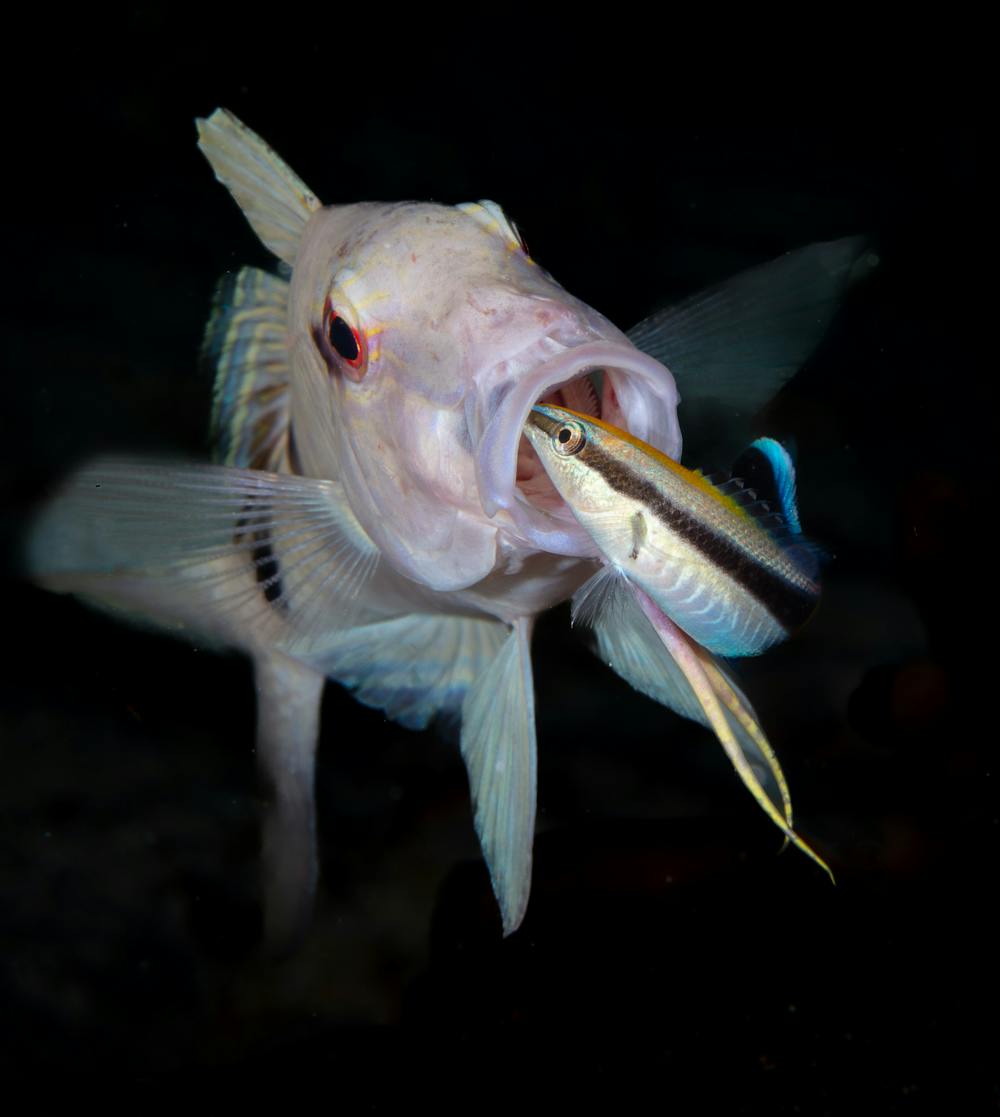
On the Great Barrier Reef, bluestreak cleaner wrasse establish “cleaning stations” where larger fish allow the wrasse to feed on dead skin, loose scales and invertebrate parasites living in their gills. This relationship is a classic mutualism – the larger fish lose costly parasites and the cleaner wrasse get fed.
Sometimes the cleaner wrasse “cheat” and nip their hosts, tipping the scale from mutualism to parasitism. The fish being cleaned may punish offenders by chasing them away or withholding further visits. In this, the reef fish exhibit something evolutionary biologists see as important to keeping mutualisms in balance: policing.
Could we adequately police our exploitation by smartphones and restore a net-beneficial relationship?
Evolution shows that two things are key: an ability to detect exploitation when it occurs, and the capacity to respond (typically by withdrawing service to the parasite).
A difficult battle
In the case of the smartphone, we can’t easily detect the exploitation. Tech companies that design the various features and algorithms to keep you picking up your phone aren’t advertising this behaviour.
But even if you’re aware of the exploitative nature of smartphone apps, responding is also more difficult than simply putting the phone down.
Many of us have become reliant on smartphones for everyday tasks. Rather than remembering facts, we offload the task to digital devices – for some people, this can change their cognition and memory.
Governments and companies have only further cemented our dependence on our phones, by moving their service delivery online via mobile apps. Once we pick up the phone to access our bank accounts or access government services, we’ve lost the battle.
How then can users redress the imbalanced relationship with their phones, turning the parasitic relationship back to a mutualistic one?
Our analysis suggests individual choice can’t reliably get users there. We are individually outgunned by the massive information advantage tech companies hold in the host-parasite arms race.
The Australian government’s under-age social media ban is an example of the kind of collective action required to limit what these parasites can legally do. To win the battle, we will also need restrictions on app features known to be addictive, and on the collection and sale of our personal data.
Rob Brooks receives funding from the Australian Research Council.
Rachael L. Brown does not work for, consult, own shares in or receive funding from any company or organisation that would benefit from this article, and has disclosed no relevant affiliations beyond their academic appointment.
Source: United States House of Representatives – Congresswoman Lizzie Fletcher (TX-07)
Today, Congresswoman Lizzie Fletcher (TX-07) spearheaded a letter joined by 72 of her House colleagues, to the House Commerce, Justice, Science, and Related Agencies Appropriations Subcommittee requesting that Congress allocate funding for the U.S. Department of Justice’s Executive Office for Immigration Review (EOIR). The Trump Administration’s sweeping changes to our immigration system, termination of immigration judges, and mass deportation agenda threaten the integrity, operational efficiency, and fairness of our immigration courts. It is critical that EOIR has the resources to hire additional qualified immigration judges and provide them with sufficient case processing capacity—both to address the current backlog of more than 3.6 million pending immigration court cases and to ensure due process in an impartial and timely manner.
“Currently, our immigration courts face a staggering backlog of more than 3.6 million active pending cases, which EOIR has cited as the largest single issue facing the immigration courts today,” the members wrote. “This growing backlog impedes our immigration system, creating significant barriers for people legally seeking asylum, migrants, pregnant women, and people with disabilities that seek to remain in the United States. These complex cases can take up to seven years before receiving a hearing, leaving migrants, families, and communities in legal limbo as they await hearings and decisions. At a time when President Trump is making sweeping changes to our immigration system that threaten the integrity, operational efficiency, and fairness of our immigration courts, adequately funding EOIR is essential to a well-functioning and fair immigration system.
“It is crucial that Congress continues to support and invest in EOIR to ensure a well-functioning immigration system to adjudicate our immigration laws consistent with our values and address the growing backlog of pending cases,” the members continued. “We strongly urge you to allocate the highest possible funding and include report language for EOIR funding to go towards the hiring of additional highly qualified judges, the hiring of additional judge teams, the modernization of case management system, the building and expansion of immigration courtroom spaces, and funding of the Legal Orientation Program.”
In 2022, 2023, and 2024, Congresswoman Fletcher led similar letters requesting congressional funding to address the immigration courts’ backlog by hiring more highly qualified immigration judges.
To read the full text of this year’s letter, click here.
Source: United States House of Representatives – Congresswoman Lizzie Fletcher (TX-07)
Congresswoman Lizzie Fletcher (TX-07), Congresswoman Val Hoyle (OR-04), and Congressman Joe Neguse (CO-02) led 35 of their House colleagues in sending a letter to the House Subcommittee on Commerce, Justice, Science, and Related Agencies requesting that Congress reject President Trump’s attempt to gut the National Oceanic and Atmospheric Administration (NOAA) Office of Oceanic and Atmospheric Research (OAR) and instead fund it at a level of at least $656 million in the upcoming appropriations package. This funding would allow OAR to continue its critical mission to prepare our communities for life-threatening natural disasters and to keep the U.S. at the forefront of atmospheric and oceanic research and science.
“Recent reporting on the President’s FY26 budget proposal shows that the Trump Administration plans to effectively eliminate OAR,” the members wrote. “The proposal includes a $485 million cut to OAR’s budget, which is a nearly 75 percent cut, and a directive to transfer any remaining research funding to other divisions of NOAA. The proposed budget would ‘eliminate all funding for climate, weather, and ocean laboratories and cooperative institutes.’ It also does not include funding for Regional Climate Data and Information, Climate Competitive Research, National Sea Grant College Program, or the National Oceanographic Partnership Program. This shortsighted and dangerous proposal would cripple United States (U.S.) leadership in scientific research and leave our communities less prepared to face extreme weather events. As hurricane season quickly approaches, OAR’s advancements in predicting extreme weather events are more important than ever. The research and data resulting from the OAR Hurricane Research Division’s partnership with the U.S. National Hurricane Center have saved countless lives and nearly $5 billion per major U.S. hurricane landfall.”
“Stronger science for forecasting severe weather and communicating impacts will protect communities and save lives,” the members continued. “Robust funding will enable NOAA and its research institution partners to continue their long and proud history of partnering with industries and other government agencies to provide that cutting-edge research.”
ACT is welcoming public consultation on changes to New Zealand’s freshwater national direction and encouraging New Zealanders to engage in the process.
“Under Labour and the Greens, farmers not only had to manage the day-to-day challenges of farming but also navigate an onslaught of red tape and costs,” says ACT MP and dairy farmer Mark Cameron.
“The coalition government was elected with a mandate to end this war on farming. We’ve made excellent progress, but the National Policy Statement on Freshwater Management 2020 still lingers.
“NPS-FM centralised control in Wellington and elevated the vague, spiritual concept of Te Mana o te Wai, or the mana of the water.
“ACT believes the Government should scrap Te Mana o te Wai and national bottom lines, allowing regional councils to set their own standards.
“The vague concept of ‘Te Mana o te Wai’ replaces scientific benchmarks with a subjective idea of the mana of the water that leads to co-governance and unequal treatment based on who someone’s ancestors were.
“At the moment, iwi have a right of veto over how water is used. The NPS-FM requires Te Mana o te Wai to apply to the consenting of all projects involving freshwater management.
“Consenting is now subject to consideration of mauri, or the “life-force” of water.
“It has led to water users making large one-off and on-going payments for ‘cultural monitoring’ services which do nothing for the environment but add costs to consumer and business power bills.
“Is requiring farmers to comply with a spiritual concept going to make them farm better? Of course not. It means they’ll have to employ a cultural consultant and waste time and money that could instead be spent improving their farming practices. That’s what happens when we regulate water quality based on superstition not science.
“Farmers just want to grow food and look after their land, incorporating spiritual concepts isn’t necessary for them to do that.
“The broad and ambiguous interpretation of Te Mana o te Wai by councils and courts has led to confusion, time and money being wasted, and a new cottage industry of cultural consultants.
“We should get rid of it.
“We should also let local communities decide what standards work best for them. The NPS-FM is too inflexible. Standards set nationally aren’t appropriate for all catchments.
“Our diverse geography and conditions mean farming practices vary across regions as farmers adapt best practices to their local conditions. Blanket regulations set by bureaucrats in Wellington are unsuitable.
“We should get rid of national bottom lines and devolve these decisions to regional councils who are best positioned to understand the local conditions and who have direct relationships with stakeholders.
“ACT is dedicated to real change. We cannot continue with a policy that burdens our farmers unnecessarily. We campaigned on a complete overhaul of the NPS-FM to remove subjective concepts and ensure that our freshwater management is scientifically sound and adapted to the needs of local communities.
“It is time to protect our farmers from the ongoing effects of what has effectively been a war on the rural sector.”
Source: The Conversation (Au and NZ) – By Rachael L. Brown, Director of the Centre for Philosophy of the Sciences and Associate Professor of Philosophy, Australian National University
vchal/shutterstock, The Conversation
Head lice, fleas and tapeworms have been humanity’s companions throughout our evolutionary history. Yet, the greatest parasite of the modern age is no blood-sucking invertebrate. It is sleek, glass-fronted and addictive by design. Its host? Every human on Earth with a wifi signal.
Far from being benign tools, smartphones parasitise our time, our attention and our personal information, all in the interests of technology companies and their advertisers.
In a new article in the Australasian Journal of Philosophy, we argue smartphones pose unique societal risks, which come into sharp focus when viewed through the lens of parasitism.
What, exactly, is a parasite?
Evolutionary biologists define a parasite as a species that benefits from a close relationship with another species – its host – while the host bears a cost.
The head louse, for example, is entirely dependent on our own species for its survival. They only eat human blood, and if they become dislodged from their host, they survive only briefly unless they are fortunate enough to fall onto another human scalp. In return for our blood, head lice give us nothing but a nasty itch; that’s the cost.
Smartphones have radically changed our lives. From navigating cities to managing chronic health diseases such as diabetes, these pocket-sized bits of tech make our lives easier. So much so that most of us are rarely without them.
Yet, despite their benefits, many of us are hostage to our phones and slaves to the endless scroll, unable to fully disconnect. Phone users are paying the price with a lack of sleep, weaker offline relationships and mood disorders.
From mutualism to parasitism
Not all close species relationships are parasitic. Many organisms that live on or inside us are beneficial.
Consider the bacteria in the digestive tracts of animals. They can only survive and reproduce in the gut of their host species, feeding on nutrients passing through. But they provide benefits to the host, including improved immunity and better digestion. These win-win associations are called mutualisms.
The human-smartphone association began as a mutualism. The technology proved useful to humans for staying in touch, navigating via maps and finding useful information.
Philosophers have spoken of this not in terms of mutualism, but rather as phones being an extension of the human mind, like notebooks, maps and other tools.
From these benign origins, however, we argue the relationship has become parasitic. Such a change is not uncommon in nature; a mutualist can evolve to become a parasite, or vice versa.
Smartphones as parasites
As smartphones have become near-indispensible, some of the most popular apps they offer have come to serve the interests of the app-making companies and their advertisers more faithfully than those of their human users.
These apps are designed to nudge our behaviour to keep us scrolling, clicking on advertising and simmering in perpetual outrage.
The data on our scrolling behaviour is used to further that exploitation. Your phone only cares about your personal fitness goals or desire to spend more quality time with your kids to the extent that it uses this information to tailor itself to better capture your attention.
So, it can be useful to think of users and their phones as akin to hosts and their parasites – at least some of the time.
While this realisation is interesting in and of itself, the benefit of viewing smartphones through the evolutionary lens of parasitism comes into its own when considering where the relationship might head next – and how we could thwart these high-tech parasites.
On the Great Barrier Reef, bluestreak cleaner wrasse establish “cleaning stations” where larger fish allow the wrasse to feed on dead skin, loose scales and invertebrate parasites living in their gills. This relationship is a classic mutualism – the larger fish lose costly parasites and the cleaner wrasse get fed.
Sometimes the cleaner wrasse “cheat” and nip their hosts, tipping the scale from mutualism to parasitism. The fish being cleaned may punish offenders by chasing them away or withholding further visits. In this, the reef fish exhibit something evolutionary biologists see as important to keeping mutualisms in balance: policing.
Could we adequately police our exploitation by smartphones and restore a net-beneficial relationship?
Evolution shows that two things are key: an ability to detect exploitation when it occurs, and the capacity to respond (typically by withdrawing service to the parasite).
A difficult battle
In the case of the smartphone, we can’t easily detect the exploitation. Tech companies that design the various features and algorithms to keep you picking up your phone aren’t advertising this behaviour.
But even if you’re aware of the exploitative nature of smartphone apps, responding is also more difficult than simply putting the phone down.
Many of us have become reliant on smartphones for everyday tasks. Rather than remembering facts, we offload the task to digital devices – for some people, this can change their cognition and memory.
Governments and companies have only further cemented our dependence on our phones, by moving their service delivery online via mobile apps. Once we pick up the phone to access our bank accounts or access government services, we’ve lost the battle.
How then can users redress the imbalanced relationship with their phones, turning the parasitic relationship back to a mutualistic one?
Our analysis suggests individual choice can’t reliably get users there. We are individually outgunned by the massive information advantage tech companies hold in the host-parasite arms race.
The Australian government’s under-age social media ban is an example of the kind of collective action required to limit what these parasites can legally do. To win the battle, we will also need restrictions on app features known to be addictive, and on the collection and sale of our personal data.
Rob Brooks receives funding from the Australian Research Council.
Rachael L. Brown does not work for, consult, own shares in or receive funding from any company or organisation that would benefit from this article, and has disclosed no relevant affiliations beyond their academic appointment.
Source: Government of the Russian Federation – An important disclaimer is at the bottom of this article.
Dmitry Chernyshenko held another meeting of the Presidium of the Commission for Scientific and Technological Development of Russia
May 31, 2025
Dmitry Chernyshenko held another meeting of the Presidium of the Commission for Scientific and Technological Development of Russia
May 31, 2025
Previous news Next news
Dmitry Chernyshenko held another meeting of the Presidium of the Commission for Scientific and Technological Development of Russia
Deputy Prime Minister Dmitry Chernyshenko held a regular meeting of the Presidium of the Commission for Scientific and Technological Development of Russia, at which confirmed the winners competitive selection for the provision of grants to world-class research centers (WRC).
The meeting was attended by the Minister of Science and Higher Education Valery Falkov, the President of the Russian Academy of Sciences Gennady Krasnikov, the First Deputy Minister of Economic Development Maxim Kolesnikov, the Deputy Minister of Finance Pavel Kadochnikov, and representatives of scientific and educational organizations.
“Based on the results of the competition, 10 NCMUs were selected. Their activities will be aimed at developing and introducing into the economy the most important science-intensive technologies defined by the decree of President Vladimir Putin. The size of the subsidy for each of the selected world-class scientific centers will be up to 320 million rubles annually,” Dmitry Chernyshenko emphasized.
The Deputy Prime Minister also noted that the commission’s scientific and technical council provided expertise for all applications received, and thanked its head Gennady Krasnikov for the work he had done.
The head of the Ministry of Education and Science, Valery Falkov, reported that applications were received for the competitive selection in all seven priority areas of scientific and technological development approved by the head of state.
“In the future, it is planned to assign selected scientific centers to industry federal executive bodies. This will ensure the closest possible interaction between the parties,” the minister noted.
“Last year, in accordance with the Decree of the President of the Russian Federation of June 18, 2024, seven priority areas of scientific and technological development of our country were approved. In this regard, when considering applications, the scientific and technical council of the commission and the Russian Academy of Sciences proceeded from the fact that each priority area should correspond to at least one world-class scientific center. In total, we considered 46 applications,” said RAS President Gennady Krasnikov.
Grants in the form of subsidies from the federal budget for the creation of the NCMU will be provided to 10 winning centers:
— World-class scientific center IT SB RAS “Thermophysics and Power Engineering” (S.S. Kutateladze Institute of Thermal Physics SB RAS),
— World-class scientific center “New materials for special purposes” (Tomsk State University),
— Center for Cybernetic Medicine and Neuroprosthetics (Federal Center for Brain and Neurotechnology FMBA),
— Center for Modern Breeding of Agricultural Plants (Federal Scientific Center for Vegetable Growing),
— World-class scientific center “Agroengineering of the Future” (Stavropol State Agrarian University),
— Center for Advanced Microelectronics (Moscow Institute of Physics and Technology),
— “Electronic and quantum technologies based on synthetic diamond” (NRNU MEPhI),
— “Intelligent unmanned aircraft systems” (Samara National Research University named after academician S.P. Korolev),
— Center for Rational Use of Rare Metal Raw Materials (A.N. Frumkin Institute of Physical Chemistry and Electrochemistry of the Russian Academy of Sciences),
— World-class scientific center “High-tech bioeconomics” (National Research Center “Kurchatov Institute”).
The size of the grants is determined by the development program of each center, which is formed for a period of at least six years.
Let us recall that the first world-class scientific centers were created in 2020 as part of the national project “Science and Universities”, the implementation of which was completed last year. On the instructions of President Vladimir Putin, a new stage of development of the centers will be implemented as part of the state program “Scientific and Technological Development of the Russian Federation”.
Please note: This information is raw content directly from the source of the information. It is exactly what the source states and does not reflect the position of MIL-OSI or its clients.
Source: United Kingdom – Executive Government & Departments
A conference abstract presented at NUTRITION 2025 looks at the effect of nanoplastic consumption on metabolism and liver function in mice.
Prof Oliver Jones, Professor of Chemistry, RMIT University, said:
“While we only have the press release and abstract to go on, the keywords are ‘in mice’. Mice are not mini-humans; we can’t assume the result would automatically translate to humans.
“The methods are not clear, but it seems the mice were given 60 mg/kg per day of a solution that was 10% polystyrene (so 6 mg/kg of plastic per kg of body weight per day). It is equivalent to an 80 kg human eating half a gram of plastic per day. This is just not a realistic dose [see 1]. A recent independent review suggests that we ingest only 0.0000006 g of plastic per day [2]. Even then, they likely pass straight out again as the gut wall is relatively thick and well-regulated in humans.
“The mice were also force-fed this diet directly into the stomach for 6-7 weeks before the biochemical analysis was performed. If I were force-fed almost 0.5 grams of plastic a day for 6-7 weeks, I expect I would have some sort of metabolic response, but that would not necessarily be bad in itself, and in any case, this just isn’t what happens in real life.
“The researchers only used one plastic, polystyrene, which is far from the most common plastic found in the environment. However, it is readily available and is often used in such studies, even if it is not the best plastic to use.
“Another issue is that the type of mouse (C57/B6J) used may have problems with glucose metabolism under normal circumstances anyway [3]. Metabolic analyses also only give you an idea of what was happening at the single point in time the sample was taken. We don’t know if the metabolic changes were permanent or went back to normal later.
“The World Health Organisation (WHO) says there is no clear evidence that microplastics pose a threat to human health. Now, this is not the same as saying they are safe, it simply means they feel there is no proof they pose a risk, despite the numerous papers published on microplastics each year.
“I don’t think this study is helpful for human risk assessment. It uses unrealistically high amounts of a plastic, which is not the major type found in the environment, fed to a type of mouse prone to glucose issues, in an unrealistic manner.”
Mohamed Nor N.H., Kooi M., Diepens N.J. & Koelmans A.A. (2021) Lifetime Accumulation of Microplastic in Children and Adults. Environmental Science & Technology 55, 5084-96. https://pubs.acs.org/doi/10.1021/acs.est.0c07384
Freeman H.C., Hugill A., Dear N.T., Ashcroft F.M. & Cox R.D. (2006) Deletion of nicotinamide nucleotide transhydrogenase: a new quantitive trait locus accounting for glucose intolerance in C57BL/6J mice. Diabetes 55, 2153-6.https://diabetesjournals.org/diabetes/article/55/7/2153/14138/Deletion-of-Nicotinamide-Nucleotide”
‘Adverse Effects of Nanoplastics Administration on the Metabolic Profile and Glucose Control in Mice’ is a conference abstractwhich was presented by Amy Parkhurst at NUTRITION 2025. The embargo lifted at 21:45 UK Time, Sunday 1st June 2025.
Declared interests
Prof Oliver Jones: “I am a professor of chemistry at RMIT University in Melbourne. I don’t have any conflicts of interest to declare. However, I do conduct research into environmental pollution, such as microplastics. Sixteen years ago, I worked on a toxicology project funded by the UK Food Standards Agency.”
Source: United Kingdom – Executive Government & Departments
Press release
UK to expand submarine programme in response to Strategic Defence Review
The UK will build up to a dozen new attack submarines to keep Britain safe.
SSN-AUKUS concept image
UK to build up to 12 attack submarines as part of AUKUS programme in response to the rapidly increasing threats
Builds on £15 billion investment set out for the UK’s sovereign nuclear warhead programme, keeping the UK safe for generations to come and delivering on the Plan for Change
Nuclear investments will transform critical parts of the defence nuclear industry, directly supporting 30,000 highly skilled jobs up-and-down the country and the doubling of apprentice and graduate roles across the next ten years.
The Prime Minister will announce tomorrow that the UK’s conventionally armed, nuclear-powered submarine fleet will be significantly expanded, with up to 12 new SSN-AUKUS boats to be built.
The increase in submarines will transform the UK’s submarine building industry and, following the £15 billion investment in the warhead programme outlined, will deliver on this government’s Plan for Change, supporting 30,000 highly skilled jobs up-and-down the country well into the 2030s, as well as helping work to deliver 30,000 apprenticeships and 14,000 graduate roles across the next ten years.
The announcement comes as the government unveils its new Strategic Defence Review tomorrow. The externally-led review is expected to recommend that our Armed Forces move to warfighting readiness to deter the growing threats faced by the UK. The report makes 62 recommendations, which the government is expected to accept in full.
Responding to the report, the government will make significant commitments to its armed forces and deliver greater security for working people through the government’s Plan for Change.
That includes:
A landmark shift in our deterrence and defence: moving to warfighting readiness to deter threats and strengthen security in the Euro Atlantic area;
Increasing stockpiles of munitions and support equipment, ensuring that production capacities can rapidly scale up in response to crises or war;
The procurement of up to 7,000 UK-built long-range weapons for the UK Armed Forces, supporting around 800 defence jobs, and boosting our military capabilities
A new CyberEM Command to put the UK at the forefront of cyber operations, alongside £1bn investment in pioneering digital capability; and
Improving the lives of thousands of British military personnel and their families through more than £1.5 billion of additional funding to repair and renew armed forces housing.
The Prime Minister is expected to say:
From the supply lines to the front lines, this government is foursquare behind the men and women upholding our nation’s freedom and security.
National security is the foundation of my Plan for Change, and this plan will ensure Britain is secure at home and strong abroad, while delivering a defence dividend of well-paid jobs up and down the country.
This Strategic Defence Review will ensure the UK rises to the challenge and our Armed Forces have the equipment they need that keeps us safe at home while driving greater opportunity for our engineers, shipbuilders and technicians of the future.
Alongside the commitment to expand the UK’s conventionally armed attack submarine fleet, the government is securing the future of the Royal Navy’s Continuous At Sea Nuclear Deterrent, backed by a £15 billion investment into the sovereign warhead programme in this parliament and supporting more than 9,000 jobs.
It is the first time the UK has outlined the full scale of its investment plans in its warhead programmes and is further evidence of the Government’s triple lock commitment to the nuclear deterrent: to maintain our continuous at-sea deterrent; to build the new fleet of Dreadnought submarines; and to deliver all future upgrades necessary.
This will see significant modernisation of infrastructure at the Atomic Weapons Establishment (AWE) in Aldermaston and supporting more than 9,000 jobs at the Berkshire site, and thousands more across the UK supply chain – from Scotland to Somerset.
The nuclear warhead programme includes some of the most advanced and sensitive science, engineering and manufacturing facilities in the UK.
Both the UK’s sovereign warhead programme and the UK’s conventionally-armed submarine fleet will make Britain and NATO safe for decades to come.
Defence Secretary John Healey MP said:
Our outstanding submariners patrol 24/7 to keep us and our allies safe, but we know that threats are increasing and we must act decisively to face down Russian aggression.
With new state-of-the-art submarines patrolling international waters and our own nuclear warhead programme on British shores, we are making Britain secure at home and strong abroad, while delivering on our Plan for Change with 30,000 highly-skilled jobs across the country.
Already supporting more than 400,000 skilled British jobs, UK defence is a crucial engine for economic growth, delivering on the government’s Plan for Change – supported by the Government’s historic uplift in defence spending to 2.5% of GDP from 2027, and the ambition to hit 3% in the next parliament, when economic and fiscal conditionals allow.
Currently the UK is set to operate 7 Astute Class attack submarines, which will be replaced with an increased fleet of up to 12 SSN-AUKUS submarines from the late 2030s.
The boost to the SSN-AUKUS programme will see a major expansion of industrial capability at Barrow and Raynesway, Derby, with the build of a new submarine every 18 months in the future.
The increase in capacity at the two sites will allow the UK to increase its fleet to up to 12 attack boats, as part of the AUKUS partnership.
To ensure the demands of this expanded programme can be met, government is working closely with industry partners to rapidly expand training and development opportunities, aiming to double defence and civil nuclear apprentice and graduate intakes. This will result in 30,000 apprenticeships and 14,000 graduate roles over the next ten years.
The SDR calls for significant investment into the UK sovereign warhead programme this parliament, while maintaining the existing stockpile.
As we head into a new month of streaming, here’s a fresh wave of TV ready to challenge, transport and entertain you.
This month’s picks span genre and geography, from an eerie dystopian Buenos Aires, to a witty, awkward cyborg hero. Reality TV also gets a scandalous twist with the return of The Secret Lives of Mormon Wives. And Deaf President Now! delivers a powerful documentary on a historical milestone for Deaf rights.
There’s something for every kind of viewer — and every kind of mood.
The Eternaut
Netflix
Argentine sci-fi The Eternaut opens with a group of old friends in Buenos Aires meeting to play the card game truco on a hot summer night – when things suddenly get eerie.
The power goes out and a poisonous snowfall starts to blanket the city, killing thousands of people instantly. The survivors must get answers, quickly, as they start to grasp the true strength of their invisible enemy.
Based on Héctor Germán Oesterheld’s 1950s comic of the same name, The Eternaut portrays apocalypse through a deeply local and political lens – and in doing so has struck a chord in Argentina.
Directed by Bruno Stagnaro and led by Argentine film icon Ricardo Darín, as protagonist Juan Salvo, the series emphasises the power of collective heroism, and subtly critiques the current government’s uncompromising neoliberal approach.
It also pulses with national pride. Buenos Aires is not glamorized; real neighbourhoods are shown as classic Argentine tango, rock and folk plays in the background. Most importantly, Argentine identity is celebrated through themes of community spirit, grassroots resistance, and ingenuity in times of crisis.
The Eternaut feels both timely and timeless. Its slogan, “no one survives alone,” resonates for a country that has been long marked by both trauma and resistance efforts.
Its emotional weight is further deepened by Oesterheld’s legacy, including the tragic disappearance of him and his family members under the military rule of the 1970s.
With a second season on the way, this series is a powerful ode to Argentina.
Murderbot, Apple’s adaptation of Martha Wells’ science-fiction novella, All Systems Red (2017) is a satisfying combination of action, sci-fi and comedy. The show centres on a security unit (SecUnit) – an indentured private security cyborg – who secretly cracks the programming of its governing chip, granting itself autonomy.
Murderbot (Alexander Skarsgård), as it dubs itself, is both horrified and fascinated by humans. It’s far more afraid of eye contact, emotions and direct conversation than any physical danger. It’s also obsessed with mainlining media, particularly the ridiculous soap opera The Rise and Fall of Sanctuary Moon.
Murderbot is hired, reluctantly, by some hippy scientists from a group of “freehold” planets – ones that exist outside the Corporation Rim – to act as protection on a scientific expedition. It goes quickly awry.
Wells’ award-winning novella, the first in an equally good series, limits us to the first-person perspective of the sarcastic cyborg. The series expands this frame beautifully, building on the source material’s dry humour to create a world that is both goofy and grounded.
And while there are serious themes at play, such as the way SecUnits are effectively enslaved, and the violent capitalist dominance of the Corporation Rim, the show is not heavy. Skarsgård offers a pitch-perfect performance of the awkward, anxious robot – its eyes flickering in horror as the scientists try to befriend it.
The opening minutes of the first episode are clumsy and on-the-nose, but ignore them. This otherwise well-designed and well-directed show cracks along with brisk, highly-entertaining 22-minute episodes.
– Erin Harrington
The Secret Lives of Mormon Wives, season two
Disney+
Season one of The Secret Lives of Mormon Wives had us hooked at the end of 2024. Now, the women have returned for an explosive 10-episode second season.
The reality series follows a group of Mormon women living in Utah. While the title may have you anticipating stories of faith and motherhood, the show is more focused on the personal lives of Mormon mothers who rose to TikTok fame due to scandal and infamy.
Season one saw the women grapple with balancing traditional Mormon values with their online lives and subsequent businesses (along with the fallout from a “soft-swinging scandal”). Season two further highlights infidelity, jealously and money.
Old characters are brought back, with finger-pointing ex-husbands and former alienated friends adding to the fray. Police are called, insults are thrown and many of the women delve deeper into their pasts.
The show flips flops between difficult moments such as processing the death of loved ones and difficult pregnancies, with parties and poorly executed party games. At one point the women play pregnancy roulette (a game no one should recommend), and take pregnancy tests which are anonymously read out to the group. Chaos ensues.
And after watching, you can search for the TikTok accounts of the stars and watch new drama unfold in real-time – or watch them “correct” and expand on past situations based on their own perspectives – far removed from show’s editors.
– Edith Jennifer Hill
Deaf President Now!
Apple TV+
Deaf President Now! is a stirring documentary about an iconic student uprising at Gallaudet University, the world’s only Deaf university, in 1988. The film chronicles how Deaf students – tired of being led by hearing leadership – decided to take things in their own hands come the 1988 Gallaudet presidential election.
With two of the three candidates being Deaf, the appointment of Elisabeth Zinser, a hearing candidate unfamiliar with Deaf culture, sparked outrage. Fuelled by decades of marginalisation, the students barricaded campus gates, burned effigies of Zinser and marched to the Capitol, calling for Deaf leadership in Deaf spaces.
It worked. The protest forced Zinser’s resignation and ushered in Irving King Jordan, Gallaudet’s first Deaf president.
The film juxtaposes historic footage with present-day interviews with key leaders of the movement, allowing them to tell their stories their own way. These reflections, delivered in American Sign Language (ASL), underscore how storytelling itself can become an act of resistance for Deaf people.
At the same time, the documentary wrestles with a paradox. Co-directed by Deaf activist Nyle DiMarco and hearing filmmaker Davis Guggenheim, the film exemplifies how Deaf storytelling still often has hearing involvement, especially when the story is packaged for a mainstream audience.
Nevertheless, the release of Deaf President Now! couldn’t have been more timely. With disability rights in the United States threatened under Trump, the film is a call to action. It reminds us Deaf culture isn’t just about language: it’s about Pride, self-determination and visibility.
In Lorcan Finnegan’s The Surfer, our unnamed protagonist (Nicolas Cage) is returning to his former Australian home from the United States. He is newly divorced, and trying to buy a beachside property to win back his family.
He takes his teenage son (Finn Little) for a surf near the property, but they are run off by an unfriendly pack of locals.
Returning alone to the beachside car park to make some calls, he is besieged there by the same gang, and this continues over the next several days. The gang is led by a terrifying middle-aged Andrew Tate-esque influencer, Scally (Julian McMahon), who runs the beach like a combination of a frat bro party and wellness retreat.
It is impossible to think of an actor other than Cage who could make a character like this so enjoyable to watch. Cage’s distinctively American confidence has no resistance to the terrifying switches of Australian masculinity from friendly to teasing to violent.
The Surfer is an absolute blast. A lot of the fun is in anticipating each dreadful humiliation – and it somehow turning out worse than you could have expected.
The Surfer beautifully captures the natural surroundings, stunning views and shimmering heat of Australian coastal summer. At the same time, a confined, semi-urban feature like a beachside car park feels bleak and uninviting.
As a film setting, it is both a spectacular wide-open vista and stiflingly claustrophobic – a perfect mechanism for The Surfer’s psychological horror.
The story of serial killers, Fred and Rose West, has been highly narrativised since their shocking crimes were discovered in Gloucester in 1994. The horror of the Wests lies in the juxtaposition of their seemingly ordinary suburban family and what was hidden beneath the foundations of their home.
Fred and Rose West: A British Horror Story takes us back to the moment of that revelation via previously unheard interview tapes and recordings of the property search – and of Rose while she was kept in a safe house. Family home videos add to the disturbing sense of the couple’s duplicity.
Interviews with the family of some of the victims emphasise the ongoing pain caused by the Wests, who preyed on vulnerable young women. Meanwhile, Fred’s interviews reinforce his determination to protect his wife: “I trained Rose to do what I wanted. That is why our marriage worked out so well.”
Many details of the Wests’ true horror, however, are absent: the incredible torture suffered by the victims; Fred and Rose’s own childhoods of abuse and Fred’s earlier assault of young girls, including his own sister; and any reference to the couple’s surviving children and the extraordinary abuse they suffered.
The horror of this new documentary is present in the couple’s habitual lies, their casual attitude to violence and murder, and their refusal to take responsibility for their many crimes. Yet it only scratches the surface of the Wests’ true horror story.
– Jessica Gildersleeve
The Four Seasons
Netflix
The Four Seasons follows three 50-something affluent couples as they holiday together over the course of a year.
Friends since college, the group’s easy camaraderie is upended by Nick’s (Steve Carroll) bombshell decision to leave his seemingly unsuspecting wife, Anne (Kerri Kenney-Silver), after 25 years of marriage. The announcement sends shockwaves through the other couples, testing their own relationships.
Adapted from Alan Alda’s bittersweet 1981 comedy of the same name, the series preserves the film’s narrative conceit, unfolding over four seasonal mini trips. Episode one opens in full spring at Nick and Anne’s bucolic lake house.
Given the luxury on display, you’d be forgiven for mistaking The Four Seasons as another entry in the “rich-people-behaving-badly” genre. But while there’s plenty of quips and snarky humour, what unfolds is ultimately much kinder – less a scathing indictment of wealth and more a gentle exploration of the banalities of love and middle age.
The show’s creators make the most of the expanded running time to humanise the sextet. The open marriage between gregarious Italian Claude (Marco Calvini) and husband Danny (a marvellous Colman Domingo) updates the source material without sliding into tokenism or homonormativity.
The prickly Type-A Kate (Tina Fey) and peacekeeper Jack (Will Forte) provide the series’ beating heart, in a relationship that feels lived-in and familiar.
Despite its focus on ageing, loss, mortality and grief, The Four Seasons offers comfort viewing at its finest, best enjoyed with a cup of tea and a loved one who’s known you for decades.
– Rachel Williamson
Gemma King receives funding from the Australian Research Council.
Claudia Sandberg, Edith Jennifer Hill, Erin Harrington, Grace Russell, Jessica Gildersleeve, Rachel Williamson, Samuel Martin, and Sofya Gollan do not work for, consult, own shares in or receive funding from any company or organisation that would benefit from this article, and have disclosed no relevant affiliations beyond their academic appointment.
We all want homes that keep us warm in winter and cool in summer, without breaking the bank. However, Australian homes built before 2003 have a low average energy rating of 1.8 stars out of 10. This means they’re often uncomfortable to live in and expensive to run.
There’s a strong case for a “renovation wave” of home energy upgrades across Australia. Reducing the use of fossil gas and improving the energy efficiency of existing housing by nearly 50% is also central to achieving net zero emissions by 2050.
Energy-saving upgrades such as solar panels, batteries, insulation, draught-proofing and hot water heat pumps also reduce the cost of energy bills. So while there’s an upfront cost, upgrades can reduce household expenses in the long run.
We wanted to find out what’s holding people back from getting energy-saving upgrades. We surveyed 100 Australian households and interviewed 19 people about their experiences. Our new research revealed five major barriers that stop these upgrades from being accessible to most households. Suppliers, governments and community organisations can all help overcome these barriers.
Embarking on home energy upgrades can be an emotional rollercoaster ride. RACE for 2030
1. Information about upgrades is confusing and overwhelming
Households told us the amount of information out there about energy saving upgrades is overwhelming and sometimes conflicting. There are many different types of upgrades and product choices, making it challenging to identify which options provide the best value and what to do first. People found it difficult to know what information and which suppliers to trust.
Households need clear information from a trusted source about what their homes need. Many governments internationally, such as Scotland, provide online resources and tools to provide tailored advice to help with this.
Energy upgrade programs run by neutral community organisations and councils can also help, such as Rewiring Australia’s Electrify 2515 or Geelong Sustainability’s Electric Homes Program. These programs use their expertise to vet suppliers and ensure households receive good deals and high quality products.
2. Homes need to engage multiple suppliers and tradespeople
Many households worked on their home gradually, one upgrade at a time. Each upgrade involved a labour-intensive process of researching products, selecting companies, getting quotes and managing the disruptions caused by the installation. One Sydney homeowner told us:
The process of needing both a plumber and an electrician to change to induction cooking was frustrating. [We had to] to coordinate availability times and appliance delivery.
Australians need companies that can do multiple upgrades at once, to simplify and streamline the process. In Ireland, the government helped stimulate a market for organisations that can cover all the upgrades needed by a household.
Ireland has “One Stop Shops” for home energy upgrades (Sustainable Energy Authority of Ireland)
3. Households are losing opportunities for straightforward upgrades
Every year, Australians invest billions in home renovations. They spent more than A$3 billion in the December 2024 quarter alone.
One of the best times to improve your home is during major renovations or when old appliances, such as hot water systems, break down. If you’re already facing disruptions and need to spend money, it can be an easy and more cost-effective way to increase your home’s energy efficiency at the same time.
Yet our research found advice on energy-saving upgrades was rarely provided to people undertaking major renovations or emergency replacements unless they asked for it. Households needed to seek out builders, architects and tradespeople who specialised in sustainability to get advice on an energy-saving renovation.
Providing energy upgrades to homes should be a standard component of modern renovations. Otherwise, households are missing out on easy and more affordable opportunities to get these upgrades.
4. Many tradespeople lack knowledge of energy-saving upgrades
Our research found tradespeople are the most common point of contact for households. They can be a valuable source of information and advice to facilitate upgrades. However, many households reported difficulty finding tradespeople knowledgeable about – and willing to install – energy-saving upgrades.
Some upgrades, such as solar panels, require specialised workforces. Others, such as hot water heat pumps are usually installed by regular plumbers and electricians.
Some tradespeople lack the knowledge to advise on energy-saving upgrades or need training to install new technologies to a high standard. This situation leaves households vulnerable to misinformation, with a shortage of skilled workers to do their upgrades.
Tradespeople require increased support and incentives to make energy-saving measures part of their skill set. This is especially true in regional areas, where there are fewer products and workers available.
5. The costs are too high for many households
A final, significant barrier was the cost of home upgrades, which often caused households to drop out early in the process. Australian households, particularly those with less disposable income, need more help with the upfront cost.
One way to do this is through targeted government rebates, which are currently only available in some regions. Another is affordable and accessible financing, like that available in Tasmania and the ACT. The national Home Energy Upgrades Fund could also be extended to make sure available finance matches the scale of the challenge.
Also needed are long-term reforms such as mandatory disclosure of energy performance when homes are sold and minimum energy standards for rental properties, which are currently only required in some jurisdictions in Australia. When these are both addressed we can make comfortable, and affordable homes the norm rather than the exception.
Keeping warm in winter and cool in summer is the number one motivation for energy saving upgrades. RACE for 2030
A worthwhile journey
Roadblocks aside, households also shared the joy and satisfaction of completing home energy upgrades. While the journey was often difficult, those who reached the end of the road were overwhelmingly pleased with the results. A homeowner who had installed solar panels and undertaken draught-proofing and insulation in Adelaide said:
It’s nice not to have huge electricity bills, and but I find it’s that day to day stuff of actually being comfortable that makes the biggest difference.
This research was undertaken by Jaime Comber, Kamyar Soleimani, Ed Langham, Nimish Biloria, Leena Thomas and Kerryn Wilmot from the University of Technology, Sydney.
Jaime Comber received funding for this research as part of the Energy Upgrades for Australian Homes (EUAH) initiative – a national collaboration between research, industry and government partners to enable scalable, community-led energy upgrades. EUAH is funded through the RACE for 2030 cooperative research centre, which includes contributions from the NSW Government, Government of South Australia and Knauf Insulation. The project is led by Climate-KIC Australia and Monash University.
Ed Langham undertakes contract research for government, community and consumer advocates, and the clean energy industry. This research was funded as part of the RACE for 2030 Cooperative Research Centre’s Energy Upgrades for Australian Homes project, which is co-funded by Australian Government, NSW Government, Government of South Australia and Knauf Insulation. Ed is also affiliated with Schumacher Institute for Sustainable Systems, based in the UK.
Nimish Biloria receives funding through the RACE for 2030 Cooperative Research Centre. This research was undertaken as part of the Energy Upgrades for Australian Homes initiative, which is funded in part by the NSW Government, the Government of South Australia, and Knauf Insulation. Before this, Nimish Biloria has received funding from various governmental bodies, not-for-profit organizations, and the Industry such as the Department of Industry, Innovation and Science, Australian Renewable Energy Agency (ARENA), City of Sydney, AusIndustry Smart Cities and Suburbs Program, Transport for New South Wales, Commonwealth Bank of Australia, Leigh Place Aged Care, Sydney, NSW, HMI Technologies.
In an emergency, police are often the first called to the scene. But they are rarely equipped to deal with complex mental health crises.
Following recent parliamentary inquiries and royal commissions there has been a push – led by researchers, advocates and some senior police officials – for a shift to a health-led and paramedic-first response.
South Australia is one of a number of states trialling a program based on a “co-responder” model. This means trained specialists accompany police to some mental health call-outs in the community.
So, how do co-responder programs work? And are they effective? Here’s what the evidence says.
The current situation
Mental health legislation in all states and territoriesgives police the power to use “reasonable force” to transport people who “appear to have a mental illness” to hospital to prevent harm.
In most cases, this involves police taking people experiencing mental health crises to hospital emergency departments, without help from mental health clinicians or paramedics.
Those who need mental health support may not need a hospital stay.
One study found only one in five (23%) of those taken to emergency by police – usually after expressing intention to self-harm – were admitted.
The strain on police resources is also significant. For example, in New South Wales, police now respond to triple zero calls about mental health crises in the community every nine minutes (in Victoria it’s every ten).
Criminalising mental health
The mere presence of police alone can escalate already heightened emotional situations.
Yet the main reason police take people to hospital is for self-harm or suicidal distress, and most are not deemed to be of risk to others.
What do people with mental health issues want instead?
In our research, conducted in 2021–2022, we interviewed 20 people across Australia who’d had police intervene when they had a mental health crisis.
Those we spoke to often had multiple experiences of police call-outs over their lifetime.
They told us excessive use of force by police had traumatising and long-term effects. Many were subject to pepper spray, tasers, police dogs, batons, handcuffs and restraints, despite not being accused of committing criminal offences.
For example, Alex*, said:
I was having an anxiety attack, and they pepper sprayed me. I had bruises all over my hands from the handcuffs they put on really roughly, even though I wasn’t under arrest. Then they took me to hospital.
In our study, people with mental health issues said they would prefer an ambulance-led response wherever possible, without police attending at all.
They also wanted to be linked to therapeutic and community-based services, including mental health peer support, housing, disability support and family violence services.
What are co-responder programs?
Co-responder programs aim to de-escalate mental health incidents, reduce the number of emergency department presentations and link people experiencing mental health crises with services.
These programs, such as the one being trialled in South Australia, mean mental health clinicians (for example, social workers, counsellors or psychologists) attend some mental health incidents alongside police.
Peer-reviewed research shows these kinds of responses can be effective when compared to traditional police-led interventions.
The success of programs in the United States and Canada shows many mental health crises can safely managed without police involvement, for example by addressing issues such as homelessness and addiction with health workers, and reducing the number of arrests.
Co-responder programs are not universally available. Often, they do not operate after usual business hours or across regions.
There is also a lack of long-term evaluations of these programs. This means what we understand about their implementation, design and effectiveness over time can be mixed.
More broadly, the mental health sector is facing significant and ongoing labour shortages across Australia, posing another resourcing challenge.
How can responses to mental health crises be improved?
Last year, the final report from the Royal Commission into Victoria’s Mental Health System recommended paramedics should act as first responders in mental health crises wherever possible, instead of police, diverting triple zero calls to Ambulance Victoria.
However that reform has been delayed, with no indication of when it may be implemented.
A 2023 NSW parliamentary inquiry also remarked on the need to explore reducing police involvement.
Co-responder and ambluance-first models offer an improvement.
But our research suggests people with lived experience of mental health issues want more than ambulances replacing the police as crisis responders.
They need a mental health system that supports them and provides what they needed, when they need it: compassionate, timely and non-coercive responses.
*Name has been changed.
If this article has raised issues for you, or if you’re concerned about someone you know, call Lifeline on 13 11 14.
Panos Karanikolas is a member of the Victorian Mental Illness Awareness Council (VMIAC). He received funding for this research from the National Disability Research Partnership as part of a partnership with VMIAC.
Chris Maylea receives funding from the Australian Research Council, National Health and Medical Research Council, and national and state legal aid commissions.
Hamilton Kennedy does not work for, consult, own shares in or receive funding from any company or organisation that would benefit from this article, and has disclosed no relevant affiliations beyond their academic appointment.
Source: The Conversation (Au and NZ) – By Albert Palazzo, Adjunct Professor in the School of Humanities and Social Sciences at UNSW Canberra, UNSW Sydney
If war breaks out someday between the United States and China, one of the major concerns for Australia is the impact on its trade.
Our trade routes are long and exposed. Every year, thousands of merchant ships — bulk carriers, tankers, container ships and other types — visit Australian ports to deliver imported goods and pick up exports for delivery at distant ports.
When a cargo ship of petroleum leaves the Persian Gulf for refining in East Asia, then sails for Australia, the total trip is approximately 20,000 kilometres. The ship passes through lonely stretches of sea and numerous choke points, such as the Strait of Malacca in Southeast Asia, often within range of missiles and other weapons.
Such attacks could come from Chinese ships in the event of a war, or as we’ve seen in the Middle East with the Houthi rebels, they could also come from militants seeking to disrupt global shipping.
Australia’s current defence strategy cites the security of our “sea lines of communication and maritime trade” as a priority. The aim is to prevent an adversary from cutting off critical supplies to our continent in a war.
To achieve this, the government has embarked on the lengthy process of expanding the Royal Australian Navy surface and sub-surface fleet, including the acquisition of nuclear-powered submarines.
As I explain in my forthcoming book, The Big Fix: Rebuilding Australia’s National Security, the problem with the government’s maritime plan is that it is built on a deeply flawed foundation and cannot deliver what it promises.
A flawed maritime plan
Defence documents insist on a need for the Australian Defence Force to be able to project naval power far from Australia’s shores in order to protect the nation’s trade. The presence of these warships would ostensibly deter attacks on our vital shipping.
However, those who developed the maritime plan do not appear to have considered whether the merchant ships delivering this trade would continue to sail to Australia in the event of a war — presumably with China.
The reality is that Australia’s A$1.2 trillion of exports and imports are carried in ships owned by non-Australian companies, flying foreign flags and largely crewed by citizens of other countries.
Decisions about whether to continue sailing to Australia during a conflict would be made in overseas boardrooms and capitals. The Australian government has no leverage to force the owners of these ships to continue to service our continent. Australia’s national interests may well not be the paramount concern.
Nor does the Australian government have the option to turn to Australian-flagged vessels. Australia’s shipping list contains only a handful of domestically owned and flagged cargo ships available in case of war.
In fact, the biggest vessel (by length) that the government could take into service is the Spirit of Tasmania IV ferry.
If all goes according to schedule, at some point in the 2040s, Australia will have at most 26 surface warships and perhaps eight nuclear-powered submarines the navy hopes to acquire through the AUKUS deal.
Due to training and maintenance requirements, the total number of vessels available at any one time would be more on the order of ten.
In other words, the government’s future maritime plan — costing hundreds of billion dollars — may result in just ten available ships at any given time to protect the nation’s trade over thousands of kilometres.
What could work instead
Fortunately, Australia has other options for safeguarding its trade that don’t necessitate the building of warships.
Our first investment in security should be diplomatic. The government should prioritise its investment in diplomacy across the region to promote security, including trade security.
Regional countries are best placed to secure the waterways around Australia, particularly from the most likely future threat: Houthi-like militants.
The Australian government should also modernise its shipping regulations and include in the budget provisions for war-risk insurance. Such insurance could compensate owners for the potential loss of ships and cargoes as an inducement for them to sail to and from Australia during war.
The government must also encourage greater investment in our national resilience. Currently, the biggest risk during a conflict is an interruption to the nation’s liquid fuel supply. We must greatly expand our on-shore reserves of fossil fuels in the short term, while initiating a nation-building project to electrify the economy in the long term. Electrification would eliminate a considerable vulnerability to national security.
Additionally, the government should identify and subsidise vital industries, such as fertilisers and certain medicines, which are essential to the continued functioning of our society in the event of a war. This would reduce our reliance on imports of critical materials.
Lastly, Australian industries, with the government’s assistance, should further diversify their trading partners to reduce over-dependence on one or two main destinations.
Trade is undoubtedly important to Australia and the government is correct to protect it. But it is also true that not all security problems are best answered by the military.
This is particularly important since the size of our planned fleet is obviously insufficient for the enormous task it will face. Either Australia invests in impossibly large numbers of warships or it takes a different path.
The art of war requires a balance between the desired ends and the means to achieve them. This simple statement underpins the formation of all good strategy, which a state ignores at its peril.
Unfortunately, in the case of the nation’s maritime plan, the ends and means are seriously out of whack. Instead of setting itself up for failure, the government needs to put aside its ineffectual maritime plan and choose the means that do align with the ends. Only then will it be possible to protect Australia’s trade.
Albert Palazzo was the long-serving director of War Studies for the Australian Army.
The Kingdom of Morocco and the United Kingdom enter an Enhanced Strategic Partnership and sign a series of agreements driving mutual growth and security.
The Minister of Foreign Affairs, African Cooperation and Moroccan Expatriates, Mr. Nasser Bourita received the Secretary of State for Foreign, Commonwealth and Development Affairs of the United Kingdom of Great Britain and Northern Ireland, The Rt Hon David Lammy MP, in Rabat on 1st June 2025. Mr. Bourita and The Rt Hon David Lammy co-chaired, on this occasion, the 5th session of the Morocco-UK Strategic Dialogue. Following productive talks between the two Ministers, the Kingdom of Morocco and the United Kingdom of Great Britain and Northern Ireland have secured a historic agreement to enhance their bilateral relationship.
A historic partnership between two Kingdoms rooted in shared values
The Kingdom of Morocco and the United Kingdom of Great Britain and Northern Ireland are bound by one of the world’s oldest diplomatic relationships, dating back over 800 years. From the first recorded contact between both Crowns, in the early 13th century, to present day exchanges, the longstanding and enduring ties between Moroccan and British Sovereigns have formed the bedrock of this unique alliance.
Their Majesties King Mohammed VI and King Charles III continue to anchor Moroccan-United Kingdom ties. Their leadership has continuously fostered the stability and high-level commitment necessary to develop an ambitious, forward-looking strategic partnership.
The privileged ties between both Kingdoms rest on a solid foundation of shared values and converging interests. From the Treaty of Peace and Commerce, signed over 300 years ago, to the UK-Morocco Association Agreement, which passed into effect in 2021, trade and economic cooperation continue to grow from strength to strength. People-to-people connections and flourishing cross-cultural exchanges nurture the bonds of friendship and mutual respect that ensure the resilience and growth of this relationship.
Both countries reaffirmed the paramount importance of a rules-based international order and the fundamental principles of the Charter of the United Nations, and their constant position on respect for the territorial integrity and sovereignty of countries, the non-use of force for the settlement of conflicts and their support for the principle of respect for self-determination.
Securing a Historic Agreement: Ushering in a New Era of Bilateral Relations
Building upon this exceptional shared history and its many bilateral achievements, the Kingdom of Morocco and the United Kingdom of Great Britain and Northern Ireland seek to usher in a new era of comprehensive and genuine strategic partnership. To this effect, both Ministers reaffirmed their mutual commitment to deepening collaboration across all dimensions: political, diplomatic, security, economic, cultural and people-to-people exchanges.
Marking a significant step towards a pioneering partnership fit for the future, the Kingdom of Morocco and the United Kingdom of Great Britain and Northern Ireland reaffirm their shared objectives in the realms of security, conflict resolution, green growth and socio-economic development, for the mutual benefit of their peoples.
The Kingdom of Morocco and the United Kingdom of Great Britain and Northern Ireland pledge to act as partners to jointly address regional and global challenges, and to uphold the principles of peace, security, tolerance, and human rights. In this spirit, the two countries intend to optimize existing bilateral frameworks and adopt an ambitious, enduring roadmap across issues of common interest.
Western Sahara: Supporting Morocco’s Autonomy Plan
The UK recognises the importance of the question of Western Sahara for the Kingdom of Morocco and follows closely the current positive dynamic on this issue under the leadership of His Majesty King Mohammed VI.
As a Permanent Member of the UN Security Council, the United Kingdom agrees with Morocco on the urgent need to find a resolution to this long-held dispute, which would be in the interest of the parties. The stalled nature of the political process and ongoing conflict prevents the region from realising its full social and economic potential and hampers regional integration, security and development. The time for a resolution and to move this issue forwards is long-overdue, and would strengthen the stability of North Africa and the relaunch of the bilateral dynamic and regional integration.
Both countries support, and consider vital, the central role of the UN-led process to bring the parties together and move the issue forward to achieve a just, lasting and mutually acceptable political solution and reaffirm their full support for the efforts of the UN Secretary-General’s Personal Envoy, Mr. Staffan de Mistura. To this end the UK is ready, willing and committed to lend its active support and engagement to the Personal Envoy and the parties to reach such a solution to this dispute.
In that context the UK, in encouraging the relevant parties to engage, urgently and positively, with the UN-led political process, considers Morocco’s autonomy proposal, submitted in 2007 as the most credible, viable and pragmatic basis for a lasting resolution of the dispute.
The UK and the Kingdom of Morocco expressed their shared conviction that renewed efforts were urgently needed to support the PESG in the search for a solution, underlying that the only viable and durable solution will be one that is mutually acceptable to the relevant parties, and is arrived at through compromise. They committed themselves to this goal, in the belief that, with goodwill on all sides, a solution could be found very soon. To that end, the UK will continue to act bilaterally, including economically, regionally and internationally in line with this position to support resolution of the conflict.
The two Ministers discussed how to move the question forward, and, in that context, the UK welcomed Morocco’s willingness to engage in good faith with all relevant parties, to expand on details of what autonomy within the Moroccan State could entail for the region, with a view to restarting serious negotiations on terms acceptable to the parties.
Enhancing bilateral cooperation: strengthening collective security, advancing green growth and deepening people-to-people bonds
The Kingdom of Morocco and the UK agree to strengthen their bilateral cooperation mechanisms, including the Strategic Dialogue, the Association Council, the Security Dialogue and the informal Human Rights Dialogue.
In the field of security, the Kingdom of Morocco and the UK commit to enhanced efforts to address national security concerns. Both parties committed to increased collaboration on counter-terrorism and its root causes, including the return and rehabilitation of foreign terrorist fighters, tackling online radicalisation, counter-unmanned aerial systems (drones), cybersecurity and risks posed by Artificial Intelligence and emerging technologies in particular their potential malicious use, security of critical infrastructure and major international events. Ministers agree that strengthened security cooperation in counterterrorism, illegal migration and serious organised crime will enhance mutual resilience from these threats and that this will be underpinned by an agreed information and intelligence exchange. In this regard, the UK welcomes Morocco’s election as Interpol Vice-President for Africa, reinforcing its role as a key player in both regional and international security efforts.
In the field of Defence, the Kingdom of Morocco and the United Kingdom of Great Britain and Northern Ireland will continue to work together to strengthen their defence cooperation, built upon the foundations of a dynamic programme of activity, agreed at the annual Joint Military Commission. With both the Kingdom of Morocco and the UK being Atlantic maritime nations, the two countries agreed to look for opportunities to strengthen maritime collaboration. Both sides agreed to deepen Defence industry cooperation and partnership, including investments in industrial projects, leveraging UK Defence industry expertise and resources to deliver cutting-edge capabilities.
On bilateral trade, the Ministers applauded the expansion of economic ties, which reached £4.2 billion in 2024, doubling since the entry into force of the UK-Morocco Association Agreement in 2021. Building on this positive momentum, both parties expect this new partnership to drive further trade growth, create quality jobs and reduce costs for consumers.
The Parties reaffirmed their shared commitment to maintaining and expanding economic ties, paving the way for deeper collaboration and continuity of trade. The UK especially welcomes the support to strengthen public procurement co-operation between the parties.
They acknowledged the importance of intellectual property to the UK’s export economy, and expressed support of efforts to safeguard the Moroccan market from counterfeit and low-quality imitation goods. In this regard, the two sides agreed to examine the registration of a list of UK geographical indications in Morocco, ensuring the protection of emblematic quality products.
Both parties welcomed the efforts to reach a decision on rules of origin and the progress made on the agricultural review, aimed at improving market access and enhancing trade. Their finalization will mark a major step in strengthening the UK-Morocco Agreement and deepening a fair and mutually beneficial partnership.
Both Ministers recognise the untapped investment potential between the Kingdom of Morocco and the United Kingdom of Great Britain and Northern Ireland, and agree to work together to unlock new investment opportunities. In this context, they commit to establishing a Morocco Business Alliance, driven by the private sector.
Morocco also welcomes UK Export Finance’s £5bn commitment to support new business across the country. The UK and Morocco discussed the coverage of UK Export Finance. The UK can consider supporting projects in Western Sahara subject to meeting UKEF’s due diligence requirements. The UK recognises Morocco as a key gateway to Africa’s socio-economic development and reaffirms its commitment to deepening engagement with Morocco as a partner for growth across the continent.
Regarding the 2030 FIFA World Cup, the UK reiterates its congratulations to Morocco on its successful bid to co-host the tournament. Morocco welcomes the UK Government’s technical support and efforts to promote associated commercial opportunities for UK businesses across the value chain. Both Ministers expressed their commitment to collaborate on priority infrastructure projects ahead of the tournament, including by utilising support from the UK Government, where relevant and jointly agreed, as well as expertise from the UK supply chain.
In the field of water, climate and energy transition, both parties will enhance efforts to unlock green growth projects, remove barriers to clean energy deployment and connectivity, and mobilise climate and sustainable finance, including through the Energy Transition Council, the Breakthrough Agenda, and the Powering Past Coal Alliance. The United Kingdom of Great Britain and Northern Ireland recognises Morocco’s pioneering leadership in renewable energy and sustainable development, and its strategic efforts to become a regional energy and sustainable mining and fuels hub. Both sides commit to work closely on sustainable water management, building on Morocco’s national strategy for water resilience, and jointly encourage broader international financing and political backing for water security and climate action ahead of COP30. The UK welcomes Morocco’s support for, and participation in, the UK-led Clean Power Alliance. Both countries welcome the new collaboration of the UK Met office and Morocco’s Direction Generale de la Meteorologie as a positive example of collaboration on climate and related environmental services.
In the healthcare sector, the Ministers discussed Morocco’s ambitious plans to expand its national capacity and to achieve universal health insurance. Morocco welcomes the UK’s support in advancing this goal, noting agreements between public and private bodies to strengthen partnership across hospital building, medical equipment supply, and teaching links.
Both parties commit to further deepening their cooperation in education, scientific research, and innovation, including through the promotion of mobility for students, researchers, and faculty, the establishment of co-financing mechanisms for joint research, and the expansion of British university campuses in Morocco. The UK welcomed Morocco’s announcement of automatic recognition of UK higher education qualifications for Moroccan students studying in the UK, as well as its intention to facilitate the establishment of UK higher education institutions and recognise UK degrees delivered in Morocco. Morocco recognises the UK as a partner of choice in its efforts to expand English language education and will match-fund the UK’s current annual investment in British Council pre-service training programmes for English language secondary school teachers and inspectors.
They welcomed the Agreements and Memoranda of Understanding (MOUs) which will give new impetus to the bilateral partnership and deepen collaboration in several areas of common interest including healthcare, water, energy, transport, defence and procurement.
The United Kingdom of Great Britain and Northern Ireland welcomes and is supporting the major reforms undertaken by Morocco, under the leadership of His Majesty King Mohammed VI, for a more open and dynamic society and economy. Both countries note the constructive cooperation between the Bank of England and Bank Al-Maghrib in areas such as cyber security, regulatory alignment, and Central Bank Digital Currency. Both parties will continue to collaborate – alongside relevant multilateral institutions – by sharing expertise and advancing cooperation in financial policy reforms, climate risk, financial stability, and economic diplomacy.
Furthermore, the UK commends the progress achieved by Morocco in the field of human rights under the leadership of His Majesty King Mohammed VI, both at the national level and on the international stage. The UK congratulated Morocco on its successful presidency of the United Nation’s Human Rights Council in 2024, and both Ministers welcomed Morocco’s participation at the UK’s Wilton Park Conference on Women’s Political Empowerment in January 2025. They also welcomed the second UK-Morocco Informal Dialogue on Human Rights, held in Rabat on 30 April 2024, during which the two countries discussed areas of mutual interest, including freedom of expression, empowerment of women, media freedom, and judicial reforms. Both parties reaffirmed their commitment to empowering women and girls across all areas of bilateral cooperation and confirmed their intention to hold a third session of the dialogue before the end of 2025 in London.
Both parties welcome the burgeoning cultural and sport exchange, and the people-to-people ties that underpin this partnership. Both nations will support emerging cultural spaces and festivals, youth and community engagement, and friendly matches between their national football teams.
The two Ministers celebrated the increase in people-to-people contacts between the two kingdoms. Given the record number of Moroccan and British visitors in both directions, and in line with the strengthening of bilateral relations, they agreed to build on existing visa processes and to make meaningful improvement for visitors from both countries.
Fostering cooperation on regional and international issues of common interest
The UK regards Morocco as a credible and trusted partner, playing a key role in promoting stability and development at both the regional and international levels.
The UK welcomed Morocco’s efforts through initiatives launched by His Majesty King Mohammed VI to progress peace, stability and socio-economic development in Africa, notably, notably, “the Initiative of the Atlantic African States Process”; and the “International Royal Initiative to facilitate access for Sahel countries to the Atlantic ocean”. Both parties expressed their concern about security threats in the Sahel region, the proliferation of non-state actors, and reports of multiple human rights violations. Both parties consider that the fight against violent extremist organisations in the Sahel requires a holistic response that includes development, trade and investment and the protection of the civilian population alongside security. Both parties agreed to explore cooperation on these issues in this regard.
With regard to the Middle East, the UK commends the key role played by His Majesty King Mohammed VI as Chairman of the Al-Quds Committee. Both countries reaffirm their shared commitment to advance a comprehensive peace in the region, including by building on our close cooperation to support regional stability. Both sides reiterate their support for a two-State solution, leading to a safe and secure Israel living alongside a sovereign and viable Palestinian state, based on 1967 borders, with Jerusalem as a shared capital.
In the context of the UK Foreign Secretary’s visit to Morocco, and following the Strategic Dialogue with His Excellency Nasser Bourita, several agreements have been signed to deepen ties between the two kingdoms, driving mutual growth and security.
The following have been agreed:
2030 World Cup Government to Government Partnership Agreement, signed between the UK Department of Business and Trade, and Morocco’s Minister Delegate of Budget, to progress UK-Morocco collaboration on critical infrastructure projects ahead of tournament.
Memorandum of Understanding signed between the UK Department for Business and Trade and Morocco’s Ministry of Equipment and Water to strengthen bilateral cooperation on water and ports infrastructure, promoting UK expertise in sustainable water management, smart logistics, and green port technologies.
Agreement between the UK Department for Business and Trade and Morocco’s Ministry of Interior to advance sustainable infrastructure and partnerships between the UK and Moroccan local authorities across several priority sectors, including water management, sustainable waste management, and urban mobility.
Noting the ongoing strength of the UK Morocco Association Agreement, driving record bilateral trade volumes, a Memorandum of Understanding was signed between the UK Department of Business and Trade and Morocco’s Ministry of Industry and Trade to promote procurement co-operation.
A Memorandum of Understanding between the UK and Morocco covering higher education, scientific research, and innovation.
Memorandum of Understanding signed between the UK Department for Business and Trade and Morocco’s Ministry of Health to enable UK private sector engagement to support Morocco’s healthcare transformation programme. confirming comms lines
UK Export Finance Memorandum of Understanding with SGTM to explore opportunities of partnership in Morocco and wider Africa
UK Export Finance, and TAQA Morocco have signed a memorandum of understanding to support TAQA Morocco’s transition to a low-carbon power generation portfolio in line with the sustainable roadmap of the Kingdom of Morocco. This will contribute to give additional access to competitive, innovative and accelerated financial conditions to enhance the Kingdom of Morocco’s competitiveness.
A Memorandum of Understanding on climate collaboration and related environmental services between the UK Met Office and Morocco Meteorological Office
A intent to collaborate with Vicenne to introduce UK digital health solutions to the Moroccan market and support innovation in partnership with the Ministry of Health.
A intent to collaborate with the Mohammed VI Foundation of Health and Science aims to promote UK expertise in medical equipment, hospital design, and academic partnership to support healthcare development in Morocco.
An invitation to the Moroccan Airports Authority to visit the UK and explore partnership opportunities amidst Morocco’s airport transformation plans.
The following agreements will be agreed and signed in the coming days:
A Memorandum of Understanding between UK defence and security trade association ADS Group and the Moroccan Agency of Investment and Export Development to strengthen links between UK and Morocco defence industries.
A Memorandum of Understanding between BAE Systems and the National Defence Administration of Morocco and the Moroccan Agency of Investment and Export Development on investment and capability across the defence sector.
Today marks the start of Filipino Heritage Month. This is an opportunity to highlight the achievements and experiences of the third largest Asian community in the country.
The Filipino community in Canada is one of the fastest-growing populations, now representing nearly one million people. This community has played a vital role in helping build a stronger and more vibrant Canada.
Tragically, this year’s celebrations are overshadowed by the horrific attack at Vancouver’s Lapu-Lapu Festival on April 26, which claimed the lives of 11 people and left many others injured. This senseless act of violence has deeply affected not only the Filipino community, but all Canadians.
As we share in your sorrow and loss, we also stand in solidarity and hope. May this month continue to be a symbol of unity, resilience and strength in the face of adversity.
Filipino Canadians have made lasting contributions to this country’s vibrant history and continue to shape its future. Members of the community have made their mark in diverse fields including health care, entrepreneurship, the arts, sport, science, finance, social justice and politics. They are integral to our country and have played a key role in building the unified, inclusive society that, today, makes us so proud to be Canadian.
Throughout June, I encourage everyone to learn more about the rich traditions and history of the Filipino-Canadian community. And to those celebrating Philippine independence on June 12, I wish you a joyful 127th anniversary.
In June, we celebrate Italian Heritage Month. People of Italian descent have been in Canada since the 1880s and are an integral part of our society, making it more dynamic.
Our country’s first Italian community numbered around 2,000 people at the end of the 19th century. In the 2021 census, more than 1.5 million people claimed Italian origins. Home to one of the largest Italian diasporas in the world, Canada is proud of this community’s vibrant, shared culture. For generations, people of Italian descent have enriched Canadian society, thanks in part to the Little Italy neighbourhoods in many major Canadian cities that have helped make our country more diverse and more open to the world.
The contributions made by people of Italian descent don’t stop at the gates of these neighbourhoods. They have also made notable impacts in finance, politics, cuisine, music, entrepreneurship, education, science and many other fields.
Italian Heritage Month is a time to recognize the rich culture and traditions of Italian Canadians and to celebrate the spirit of community that brings us together. Let’s take this opportunity to come together and learn about the heritage of our neighbours of Italian ancestry!
Source: The Conversation – Canada – By Erin A. Brennand, Gynecologist & Associate Professor, Cumming School of Medicine, University of Calgary
There is more information available about urinary tract infections today than ever before.(Shutterstock)
After menopause, urinary tract infections (UTIs) can be more frequent, yet most Canadian women (82 per cent in a recent survey) don’t realize the two are associated.
The main culprit for increased UTIs in menopausal women is the drop in estrogen levels. Estrogen plays a crucial role in maintaining urinary tract tissue health.
As estrogen declines, the lining of the urethra — the tube through which urine flows out of the body — becomes thinner and more fragile. Also, there are fewer infection-fighting blood cells in the urinary tract, and mucosal immunity — the specialized immune defences present at the mucosal surfaces lining the urinary tract that include physical and chemical barriers, cellular receptors and antibodies — is reduced.
This weakens the local immune response, making it easier for bacteria to cause infections. Additionally, changes in vaginal flora — the bacteria that naturally protect against infections — results in the urinary tract being vulnerable.
Other factors can contribute to UTI risk at this stage of life, too. Women whose bladder muscles have weakened with age, or who have developed pelvic organ prolapse, can experience incomplete bladder emptying. This leads to urine retention and an increased chance of bacterial growth.
Similarly, if women experience urinary incontinence, the leakage and moisture on incontinence pads or underwear can create an environment where bacteria thrive. And while sexual activity itself does not directly cause UTIs, it can introduce bacteria into the urinary tract, increasing the risk of infection.
Signs of a UTI
Bacteria in the urine without symptoms is called asymptomatic bacteriuria. It is not a UTI and should not be treated; a UTI is only diagnosed when bacteria and symptoms are both present. The most obvious symptoms include:
A new, strong, persistent urge to urinate;
A burning sensation while urinating;
Frequent urination in small amounts;
Pelvic discomfort or pressure.
In severe cases, UTIs can lead to kidney infections, so when symptoms include fever, chills and back pain, it is essential to seek immediate medical attention.
For women in their 80s or older, or sometimes younger women who are living with medical conditions such as dementia, urinary tract infections can manifest as behavioural changes such as confusion, withdrawal or reduced appetite. However, new onset delirium should always be investigated by a medical team rather than assumed to be a UTI.
Evidence-based strategies to prevent UTIs
Several medical and lifestyle interventions can make a significant difference:
Methenamine hippurate (one gram orally, twice-a-day) is effective in reducing UTIs by creating an environment that prevents bacterial growth. In Canada, women need to obtain this medication from a compounding pharmacy.
3. Low-dose antibiotic
Doctors may prescribe low-dose antibiotics – about half the standard dose – for several months. If sexual activity is a trigger for UTIs, antibiotics can be used episodically after sex. However, antibiotics can cause side-effects and create antibiotic-resistant bacteria. 4. Diet supplements
Scientific evidence on consuming cranberry-based products to prevent UTIs is mixed. Some studies suggest that certain compounds in cranberries (proanthocyanidins, or PACs) prevent bacteria from adhering to the bladder lining, while others show no benefit. If trying these products, women should choose brands with high concentrations of PACs, the active ingredient.
Similarly, probiotics, especially those containing Lactobacillus strains, may help maintain a healthy vaginal microbiome, which in turn can lower UTI risk. However, research is still evolving.
5. Hygiene and lifestyle habits
Though there is limited evidence, simple everyday habits may help in preventing UTIs:
Staying hydrated – Drinking water helps to flush bacteria from the urinary tract. For women who drink a low volume of fluids each day (less than 1.5 litres), increasing water intake may help.
Urinating regularly – Avoid holding urine for long periods and aim to void every three to four hours during the day.
Urinating after sex – This helps clear bacteria introduced during intercourse.
Choosing breathable underwear – Cotton underwear and loose-fitting clothes reduce build up of moisture, which in turn reduces bacterial growth.
More innovations on the horizon
Vaccines are one of the most promising developments for preventing recurrent UTIs. In one early trial, overall recurrences decreased by 75 per cent for women given an oral vaccine, with no major side-effects reported.
Trials are currently under way in Canada, and researchers hope vaccines will provide a more effective and long-term solution.
Any woman who is experiencing frequent UTIs — defined as two infections in six months or three in a year — in menopause should talk to their doctor or primary care provider. Together, they can determine the best preventive targeted strategies.
Knowledge is power, and there is more information available today than ever before. UTIs are not an inevitable part of aging. With the right combination of medical treatments and lifestyle changes, women can reduce postmenopausal risk.
Erin A. Brennand receives funding from the Canadian Institutes of Health Research, Social Sciences and Humanities Research Council, the Calgary Health Foundation, and the MSI Foundation (all paid to institution).
Jayna Holroyd-Leduc has received funding from CIHR and Alberta Innovates. She holds the BSF Chair in Geriatric Medicine at the University of Calgary.
Pauline McDonagh Hull does not work for, consult, own shares in or receive funding from any company or organisation that would benefit from this article, and has disclosed no relevant affiliations beyond their academic appointment.
Source: People’s Republic of China in Russian – People’s Republic of China in Russian –
Source: People’s Republic of China – State Council News
WASHINGTON, June 1 (Xinhua) — U.S. President Donald Trump will soon announce a new candidate to lead the U.S. National Aeronautics and Space Administration (NASA) after his decision to withdraw the nomination of Jared Isaacman, a close ally of Elon Musk, the White House said Saturday.
“After careful review, I am withdrawing Jared Isaacman’s nomination to lead NASA,” Trump wrote on Truth Social. “I will soon announce a new nominee who will live up to the mission and put America first in space.”
Late last year, Trump named billionaire and amateur astronaut J. Isaacman as his candidate to head NASA. The Senate Committee on Commerce, Science, and Transportation approved his nomination in late April.
J. Isaacman, a close associate of I. Musk and a major client of his company SpaceX, has purchased several private space flights from the company for hundreds of millions of dollars. –0–