Category: Science

  • MIL-OSI NGOs: Job Opening: Senior Regional Campaign Strategist (Legal and Political)

    Source: Greenpeace Statement –

    This is a full-time position based in either Manila, Bangkok, Jakarta, or Kuala Lumpur working on legal and political issues related to the environment. Candidates who have the legal right to work and live in the Philippines, Thailand, Indonesia and Malaysia are encouraged to apply.

    Greenpeace and volunteers raise a ‘wind turbine’ on the beach at dawn in Durban, South Africa. To send a message of hope for international negotiations to agree on a fair, ambitious, and legally binding treaty to avert climate chaos.

    About the Role

    The Senior Regional Campaign Strategist (Legal and Political) leads the development of Greenpeace Southeast Asia’s (GPSEA) political and legal strategy and provides legal and political risk assessments in all stages of campaign/project development and implementation. The scope of work is regional, multi-issue, multi-project, and multi-discipline with global dimensions. It requires high ability to adapt and work in different and challenging internal and external work environments and political contexts.

    Duties and Responsibilities:

    • Lead the development and implementation of regional political and legal strategy of GPSEA bringing campaigns and projects across countries together for synergy, regional and global impact as aligned with GPSEA Theory of Change (TOC), objectives and priorities
    • Provide political and legal risk assessments and mitigation measures on key campaign strategies, and project activities; advise leadership team on political and legal responses in case of harassment, violence, and attacks on the staff (including activists, supporters and volunteers) institution, property and reputation of GPSEA
    • Anchor the development of South-South legal/political community and global south position on multilateral platforms in the Greenpeace  global network.
    • Lead global legal/political project or process relevant to GPSEA and global political and legal campaign objectives
    • Strategically position and make GPSEA’s presence in multilateral platforms highly impactful
    • Develop legal and political briefings, negotiating texts, reports, updates, position papers and talking points for regional and global submission in cooperation with relevant programme staff 
    • Analyse external political situations and identify relevant regional trends and opportunities to advance GPSEA’s political and legal work regionally and globally
    • Develop and maintain a GPSEA community of practice around legal and political work
    • Ensure GPSEA’s political and legal position and stance on issues are coherent and consistent across countries and in external communications
    • Proactively identify politically or legally contentious issues that will impact GPSEA and provide advice on actions to take
    • When required/requested, perform a review and give political, legal sign off of reports and other external communications of GPSEA.
    • Actively contribute to programme design, review of campaigns and projects and provide inputs for decision making processes.
    • Proactively contribute to the development and implementation of innovative strategies for non-violent direct actions to maximize political and legal impact, in cooperation with country teams and other international units, and in accordance with Greenpeace’s principles
    • Participate in non-violent direct action to support and advance campaign goals.
    • Organize and oversee the work of short-term contractors where appropriate.
    • Help manage and oversee the budget and ensure financial integrity of projects and unit
    • Coordinate and ensure coherence on GPSEA position internally, provide legal and political oversight on sign-ons
    • Represent GPSEA’s political, legal and related inputs at internal meetings and activities of Greenpeace’s global legal and political communities or global project teams. Inform GPSEA of agreements and developments in the global legal and political communities.
    • Periodically conduct capacity needs assessments of GPSEA staff to improve legal and political work
    • Coordinate capacity building skills shares and training to support the legal and political work of the program team. When requested, mentor or coach  program staff to enhance his/her skills in political and legal engagements.
    • Working with the Fundraising Team to explore and develop working relationships and cooperation with  donors and foundations
    • Lead and coordinate the development of funding proposals for GPSEA legal and political work with relevant GPSEA team leaders.
    • Represent, lead and strategically position GPSEA at key international, regional fora
    • Ensure that the objectives, analysis, recommendations and submissions  of GPSEA in relevant fora are timely, effective and strategic in advancing GPSEA program and organizational objectives, branding and identity
    • Act as expert spokesperson on regional legal and political issues for  GPSEA and a go to person for the global organisation when needed.
    • Proactively develop relationships with national and regional media to increase campaign outreach
    • Build networks and alliances to advance GPSEA objectives, brand and identity
    • Contribute to strengthening social and emergent regional and global movements by supporting development of campaign strategies
    • Develop common strategies and actions with external parties regionally and globally in support of broader political objectives and to realize global and GPSEA campaign objectives and TOCs
    • Assist the Campaign Director in designing GPSEA campaign program and implement strategies to mobilize various stakeholders  and key audiences in the region 
    • Manage project cycle and optimize responsiveness to current situation/context, evolve and devise new ways of working for efficient delivery of multi-layered projects
    • Respond to and engage in internal as well as pressing external regional challenges as determined by the campaign team through the Campaign Director beyond his/her normal area of work as circumstances do require.
    • Keep abreast of regional developments in political and legal fields and maintain a general knowledge of developments in political, legal developments in SEA in order to ensure that GPSEA is able to respond, adjust, campaign appropriately/effectively.
    • Coordinate policy and legal research or other outputs such as policy briefs, statements, submissions, pleadings, motions, legal comments and legal opinions to ensure consistency in form and substance.

    Skills and Experience Requirements:

    • Master’s degree minimum, Doctorate in philosophy or laws preferred in field of Political Science, Public Management, Public Policy, International Relations with minimum 10 years of equivalent experience

    Organizational Competencies:

    • Integrity, professionalism
    • Strategic thinking, goal-oriented
    • High standards of quality outputs
    • Teamwork in a multicultural environment
    • Courage and innovativeness in challenging enemies of the environment,   status quo
    • Values people, interpersonal relationships, conflict resolution and management
    • Information management and transfer, sharing of knowledge
    • Planning, budgeting, monitoring, evaluation

    Functional Skills:

    • Understanding of the political, legal and economic landscape, processes, dynamics in SEA
    • Extensive knowledge of environmental and human rights laws, jurisprudence, regulation, public policies, stakeholders in SEA
    • Political, legal communications skills in all forms
    • Political lobbying, negotiation, advocacy skills/experience in UN, multilateral, bilateral and other policy spaces/processes
    • Legal counseling, representation, litigation practice
    • Political, legal research
    • Campaigning experience, project management
    • Adherence to nonviolence as a means of enacting change
    • Understanding of environmental issues in general and campaign issues and agenda in particular
    • Wide network across the region for potential networking and partnership
    • Public, people management
    • Project management, programme administration
    • Stakeholders, power, constituency, audience analysis

    Preferred Skills:

    • A preference for good communication skills in one of more regional SEA languages other than English. 
      Preference for extensive experience in political economy and progressive political framing of environmental issues
    • Preferred skills include experience in key program areas: policy lobby, public speaking, activist training, strategic planning and organizing people around an issue.
    • Experience in negotiating in multilateral environmental agreements and similar regional platforms

    Greenpeace’s Commitment to Diversity and Inclusion

    Greenpeace values diversity as essential to its mission and success. The organisation fosters an inclusive environment that respects varied cultural experiences and perspectives, promoting solutions rooted in social and environmental justice.

    Deadline for applications: May 30, 2025


    Jobs

    Do you have a passion for this planet and want to do more? Work with us!

    TAKE ACTION

    MIL OSI NGO

  • MIL-OSI Russia: NSU students win the 5th international festival “Tsifra”

    Translation. Region: Russian Federal

    Source: Novosibirsk State University – Novosibirsk State University –

    “Tsifra” is the largest platform for uniting young Russian directors working in the genres of feature, documentary and animation films, as well as rethinking genres in the direction of “author’s format”. The event is organized by the Cultural and Educational Center of the Student Union of Moscow State University named after M.V. Lomonosov and the Higher School (Faculty) of Television of Moscow State University. The festival is held in seven genre nominations: short documentary, animation, popular science and feature film, social video, video essay, music video. The theme of the 2025 festival is “Time”.

    This year, two works by students of the “Journalism” program Humanitarian Institute of NSU were noted by the jury. The film “Right to Yourself” became the winner in the category “Documentary Film”, and “Moving” received the prize for best director.

    — We decided to participate in the Tsifra festival because we had high-quality films made as part of the training courses. They had already participated in other competitions, and “The Right to Yourself” was even shown in Yekaterinburg on the screen of the Kolyada Theater and at the international festival Artdocfest in Riga. Tsifra is a prestigious venue, so we wanted to try our hand there, — shares Alina Iskhakova, one of the authors of the projects.

    The work on “Right to Yourself” was carried out by four students of the “Journalism” program – Alina Iskhakova, Valeria Ivaschenko, Sofia Sibrikova and Maria Ryabova. The film “Moving” was worked on by two people – Alina and Valeria.

    — “Right to Yourself” is the story of a person with mental disabilities who grew up in a boarding school. His past still determines his present and future. And “Moving” is a film about an elderly man who finds it difficult to give up his usual way of life for a more comfortable life, — says Valeria Ivaschenko.

    The “Tsifra” festival was held in two stages: first, the long list, then the short list. This year, participants sent hundreds of works from 9 countries, which made the victory even more honorable.

    — We were very happy when we learned that “Right to Yourself” won. And then it turned out that “Moving” also received the prize for best direction — and for a documentary filmmaker, this is a real second victory. The jury captured the main idea of both films, and this is especially pleasing. So, it was not in vain that we were taught dramaturgy, — adds Alina Iskhakova.

    You can view the winners’ works at the links:

    “Right to oneself”

    “Moving”

    We congratulate our students on their well-deserved victory and look forward to new works!

    Please note: This information is raw content directly from the source of the information. It is exactly what the source states and does not reflect the position of MIL-OSI or its clients.

    MIL OSI Russia News

  • MIL-OSI New Zealand: “It takes a village!” Hihi fly the coop after record breaking breeding season

    Source: Secondary teachers question rationale for changes to relationship education guidelines

    A record 277 hihi / stitchbirds fledged on Tiritiri Matangi Island this breeding season, allowing many birds to spread their wings and leave the flock.

    Earlier this month, 40 hihi were relocated to the Auckland Council managed Shakespear Open Sanctuary. They join Shakespear’s small but thriving population translocated in 2024.

    Environmental champion Councillor Mike Lee says the reintroduction of hihi to the Whangaparāoa Peninsula enables more people to see and hear them in their natural habitat.

    The birds are carefully unloaded in boxes after travelling from Tiritiri Matangi Island, ahead of their release.

    “Thirty years ago, I was present when the ancestors of these hihi birds were introduced to Tiritiri Matangi. To be able to help release their descendants on the mainland really is a conservation dream come true,” says Cr Lee.

    [embedded content]

    DOC Tiritiri Matangi Ranger Nick Fisentzidis agrees the translocation from island to mainland shows great outcomes for nature are possible when iwi, DOC, council, and community band together.

    “They are one of Aotearoa’s rarest and quirkiest birds. There is a total population of only around 2000 nationwide and they require a lot of special attention, so it takes a village!” says Nick.

    “We work side by side with Ngāti Manuhiri, Auckland Council, Hihi Conservation Charitable Trust, Supporters of Tiritiri Matangi, Shakespear Open Sanctuary Society and conservation research institutions to care for these taonga.”

    Auckland Council Northern’s Principal Ranger Jason Maguiness acknowledges all those who have helped bring hihi to the Shakespear Open Sanctuary, before 40 new birds are released.

    John Ewen, Hihi Conservation Charitable Trust Trustee and Professor of Conservation Science at Zoological Society of London says hihi are nationally threatened, with Te Hauturu-o-toi Little Barrier Island holding the only naturally-surviving population since the 1880s.

    “Habitat loss, the introduction of predators such as cats and rats and specimen collection probably contributed to the decline of hihi on the mainland,” says John.

    Thanks to significant recovery efforts, there are now small managed populations of hihi on Tiritiri Matangi and Kapiti islands, Zealandia in Wellington, Bushy Park Tarapuruhi near Wanganui, Sanctuary Mountain Maungatautari, Rotokare Scenic Reserve and Shakepear Open Sanctuary.

    “This season has been superb on both Tiritiri Matangi and Shakespear, likely due to lots of natural food. Flax and cabbage trees, in particular, were abundant,” says John.

    DOC Tiritiri Matangi Ranger Nick Fisentzidis agrees that the translocation project from island to mainland is an example of the great outcomes for nature that can be achieved when iwi government, council, and community band together.

    An initial translocation to Shakespear of 40 birds in May 2024 has been a resounding success, with at least 60 chicks fledging throughout the summer.

    Open Sanctuary Senior Ranger Matt Maitland says invaluable volunteer support from the Shakespear Open Sanctuary Society Incorporated (SOSSI) has enabled the birds to flourish.

    “It’s not an easy journey, being moved to a completely new site, but we are working together to give the birds a better chance. A second release to Shakespear brings genetic diversity to the hihi already present, and greater security and resilience for the species against any challenges they may face in the future.”

    SOSSI chair Owen Johnston says Shakespear is the ideal setting to release more hihi, with around 350 hectares of native forest providing enough food and nesting opportunities.

    “We are set up to keep a close eye on the new arrivals through ongoing monitoring and supplementary feeding, which will help them to get established.”

    All hihi whakapapa to Te Hauturu-o-toi. Hihi are taonga to Ngāti Manuhiri, the iwi with an ancestral land connection to Hauturu, Tiritiri Matangi and Shakespear. 

    Ngāti Manuhiri Settlement Trust spokesperson Delma O’Kane says, “as kaitiaki, we acknowledge the dedication of all involved in this kaupapa, from rangers and conservationists to the local community.

    “It is through their unwavering commitment to pest control, monitoring, and habitat restoration that both Tiritiri Matangi and Shakespear Regional Park continue to thrive as a sanctuary for our native flora and fauna.”

    MIL OSI New Zealand News

  • MIL-Evening Report: Images of Gaza’s starving babies have gone round the world. This is what malnutrition does in the first 1,000 days of life

    Source: The Conversation (Au and NZ) – By Nina Sivertsen, Associate Professor, College of Nursing and Health Sciences, Flinders University

    A 5-month-old diagnosed with malnutrition being treated at Nasser Hospital in Khan Yunis in Gaza, May 2025. Anadolu/Getty

    Last week, the United Nations warned more than 14,000 babies would die of malnutrition in 48 hours if Israel continued to block aid from entering Gaza.

    After the figure was widely reported, that timeline has been walked back, with a UN spokesperson clarifying the projection is for the next 11 months.

    Between April 2025 and March 2026, there will be 71,000 cases of acute malnutrition among children under five, including 14,100 severe cases.

    Severe acute malnutrition means a child is extremely thin and at risk of dying.

    An estimated 17,000 breastfeeding and pregnant women will also require treatment for acute malnutrition during this time.

    Starvation and malnutrition are harmful for anyone. But for infants the impact can be profound and lasting.

    What is malnutrition?

    In infants and young children, malnutrition means they have a height, weight and head circumference that don’t match standard charts, due to a lack of proper nutrition.

    Nutritional deficiencies are especially common among young children and pregnant women.

    The human body needs 17 essential minerals. Deficiencies in zinc, iron and iodine are the most dangerous, linked to a higher risk of infants dying or developing brain damage.

    When malnutrition is acute to severe, infants and young children will lose weight because they’re not getting enough food, and because they’re more susceptible to illness and diarrhoea.

    This leads to wasting.

    A child experiencing wasting has lost significant weight or fails to gain weight, resulting in a dangerously low weight-for-height ratio.

    A persistent lack of adequate food leads to chronic malnutrition, or stunting, where growth and development is impaired.

    Risk of infections and mortality

    Malnourished infants have weakened immune systems. This makes them more vulnerable to developing infections, due to smaller organs and deficits in lean mass. Lean mass is the body’s weight excluding fat and is crucial for supporting healthy growth, strength and overall development.

    When children are starving, they are much more likely to die from common illnesses such as diarrhoea and pneumonia.

    Infections can make it harder to absorb nutrients, creating a dangerous cycle and worsening malnutrition.

    Chronic malnutrition affects the brain

    The human brain develops extraordinarily rapidly during the first 1,000 days of life (from conception to age two). During this time, adequate nutrition is essential.

    Children’s developing brains are more likely to be affected by nutritional deficiencies than adults.

    When prolonged, malnutrition may lead to structural brain changes, including a smaller brain and less myelin – the protective membrane that wraps around nerve cells and helps the brain send messages.

    Chronic malnutrition can affect brain functions and processes such as thinking, language, attention, memory and decision-making.

    These neurological impacts can cause life-long issues.

    Can brain damage be permanent?

    Yes, especially when malnutrition occurs during crucial periods of brain development, such as the first 1,000 days.

    However, some effects are reversible. Early, intensive interventions – such as access to nutrient-rich food and medicines to treat hypoglycaemia (low blood sugar) and fight infections – can help children catch-up on growth and brain development.

    For example, one review of studies involving undernourished preschool children found their cognitive abilities, such as concentration, reasoning and emotional regulation improved somewhat when they were given iron supplements and multivitamins.

    However malnutrition during the crucial window under two years old increases the risk of lifelong disabilities.

    It’s also important to note recovery is more likely in an environment where nutritious food is available and children’s emotional needs are taken care of.

    In Gaza, Israel’s military operations have destroyed 94% of hospital infrastructure and humanitarian aid remains severely restricted. The conditions necessary for children’s recovery are out of reach.

    Pregnant and breastfeeding mothers

    Severe maternal malnutrition can increase the mother and child’s risk of dying or experiencing complications during pregnancy.

    When a breastfeeding mother is malnourished, she will produce less breastmilk and it will be lower quality. Deficiencies in iron, iodine, and vitamins A, D and zinc will compromise the mother’s health reduce the nutritional value of breast milk. This can contribute to poor infant growth and development.

    Starved mothers may experience fatigue, poor health and psychological distress, making it challenging to maintain breastfeeding.

    Other organ impacts

    Data from those born during the Dutch famine of 1944-45 have helped us understand the lifelong health impacts on children conceived and born while their mothers were starving.

    Among this group, malnutrition affected the development and function of many of the children’s organs, including the heart, lung and kidneys.

    This group also had higher rates of schizophrenia, depression and anxiety, and lower performance in cognitive testing.

    They also had a higher risk of developing chronic degenerative diseases (such as cardiovascular disease and kidney failure) and dying prematurely.

    Is the damage irreversible?

    Recovery is possible. But it depends on how severely malnourished the child is, and when and what kind of support they receive.

    Evidence shows children remain vulnerable and have a higher risk of dying even after being treated for complications from severe acute malnutrition.

    Effective interventions include:

    • nutritional rehabilitation (giving the child nutrient-rich foods, specialised feeding, and addressing underlying deficiencies)

    • breastfeeding support for mothers

    • providing rehabilitation and health care in the community (so families and children can return to everyday routines).

    This seems difficult if not impossible in Gaza, where Israel’s blockade on aid and ongoing military operations mean safety and infrastructure are severely compromised.

    Repeated or prolonged episodes of malnutrition increase the risk of lasting developmental harm.

    The authors do not work for, consult, own shares in or receive funding from any company or organisation that would benefit from this article, and have disclosed no relevant affiliations beyond their academic appointment.

    ref. Images of Gaza’s starving babies have gone round the world. This is what malnutrition does in the first 1,000 days of life – https://theconversation.com/images-of-gazas-starving-babies-have-gone-round-the-world-this-is-what-malnutrition-does-in-the-first-1-000-days-of-life-257462

    MIL OSI AnalysisEveningReport.nz

  • MIL-OSI: Karolinska Development’s portfolio company Umecrine Cognition resumes patient inclusion in its Phase 1b/2a clinical study

    Source: GlobeNewswire (MIL-OSI)

    STOCKHOLM, SWEDEN – May 26, 2025. Karolinska Development AB (Nasdaq Stockholm: KDEV) today announces that its portfolio company Umecrine Cognition has resumed the inclusion of patients to the clinical phase 1b/2a trial evaluating the drug candidate golexanolone in PBC patients. In March, Umecrine Cognition announced that the study had been halted due to technical issues in the production of capsules used in the study, which, however, had no impact on patient safety.

    Umecrine Cognition is developing a new class of drugs to alleviate cognitive symptoms caused by liver disease. The company’s most advanced drug candidate, golexanolone, is currently being evaluated in a randomized, double-blind, placebo-controlled phase 1b/2a clinical study in patients with primary biliary cholangitis (PBC) who experience clinically significant fatigue and cognitive symptoms.

    Karolinska Development’s ownership in Umecrine Cognition amounts to 73%.

    For further information, please contact:

    Viktor Drvota, CEO, Karolinska Development AB
    Phone: +46 73 982 52 02, e-mail: viktor.drvota@karolinskadevelopment.com 

    Johan Dighed, General Counsel and Deputy CEO, Karolinska Development AB
    Phone: +46 70 207 48 26, e-mail: johan.dighed@karolinskadevelopment.com

    TO THE EDITORS

    About Karolinska Development AB

    Karolinska Development AB (Nasdaq Stockholm: KDEV) is a Nordic life sciences investment company. The company focuses on identifying breakthrough medical innovations in the Nordic region that are developed by entrepreneurs and leadership teams. The company invests in the creation and growth of companies that advance these assets into commercial products that are designed to make a difference to patient’s lives while providing an attractive return on investment to shareholders.

    Karolinska Development has access to world-class medical innovations at the Karolinska Institutet and other leading universities and research institutes in the Nordic region. The company aims to build companies around scientists who are leaders in their fields, supported by experienced management teams and advisers, and co-funded by specialist international investors, to provide the greatest chance of success.

    Karolinska Development has a portfolio of eleven companies targeting opportunities in innovative treatment for life-threatening or serious debilitating diseases.

    The company is led by an entrepreneurial team of investment professionals with a proven track record as company builders and with access to a strong global network.

    For more information, please visit www.karolinskadevelopment.com.

    Attachment

    The MIL Network

  • MIL-OSI Africa: Lagos fashion: how designers make global trends uniquely Nigerian

    Source: The Conversation – Africa – By Adwoa Owusuaa Bobie, Research Fellow, Center for Cultural and African Studies, Kwame Nkrumah University of Science and Technology (KNUST)

    African fashion has flourished in terms of creativity and innovation in recent years, and is attracting global attention.

    Designers and labels are churning out garments that reflect African cities and how they interact with global trends. Think Nigeria’s Ejiro Amos Tafiri and Mai Atafo, Ghana’s Christie Brown and Larry Jay, Kenya’s Ikojn or South Africa’s Boyde.

    Cities like Lagos, Accra, Marrakesh, Nairobi and Johannesburg have become global fashion capitals. They’re fashion production hubs that are creating styles that mirror their cosmopolitanism; their vibrant mix of nationalities.


    Read more: West Africa’s fashion designers are world leaders when it comes to producing sustainable clothes


    In a recent study I focus on how fashion in Lagos mirrors the bustling Nigerian city’s cosmopolitanism. It reflects a meeting point between global and local influences.

    Drawing on interviews with designers, I discuss how cosmopolitanism is produced through clothing – and the gender dynamics that underpin it. African fashion production is drawing from local roots but also responding to global social and cultural developments.

    Cosmopolitan Africa

    Cosmopolitanism is a global community that transcends national borders. Many cultures inform a big city’s fashions, like they do its cuisines.

    But while the conversation on cosmopolitanism has centred mostly on western countries, Africa also has a long history of connection to other parts of the world through trade, migration and the exchange of ideas.

    African American philosopher Kwame Anthony Appiah argues that the western idea of cosmopolitanism often assumes a complete embrace of foreign cultures and ideals. But among Africans, cosmopolitanism integrates the local with the global. He calls this rooted cosmopolitanism. It’s seen in various forms in African societies, such as urbanisation or fashion in this case.

    Lagos

    Lagos is Africa’s most populous city and is home to many migrants. It’s a mix of foreigners and indigenous people with different cultural backgrounds who find meaning in living as Lagosians.

    Lagos is an African megacity. Ben Iwara/Pexels, CC BY

    I chose Lagos for my study because of its vibrant creative industries. Even a decade ago, Lagos was judged by one magazine as the world’s fourth-largest fashion city. I interviewed 18 fashion designers living and working there.

    Local fabric, western designs for women

    I found that fashion in Lagos can be separated into two major trends: fabric and design – the materials clothes are made with and the styles in vogue.

    Local fabrics and appropriated fabrics (foreign-produced cloths that have been assimilated into Nigerian cultures) are in vogue today for female fashion.

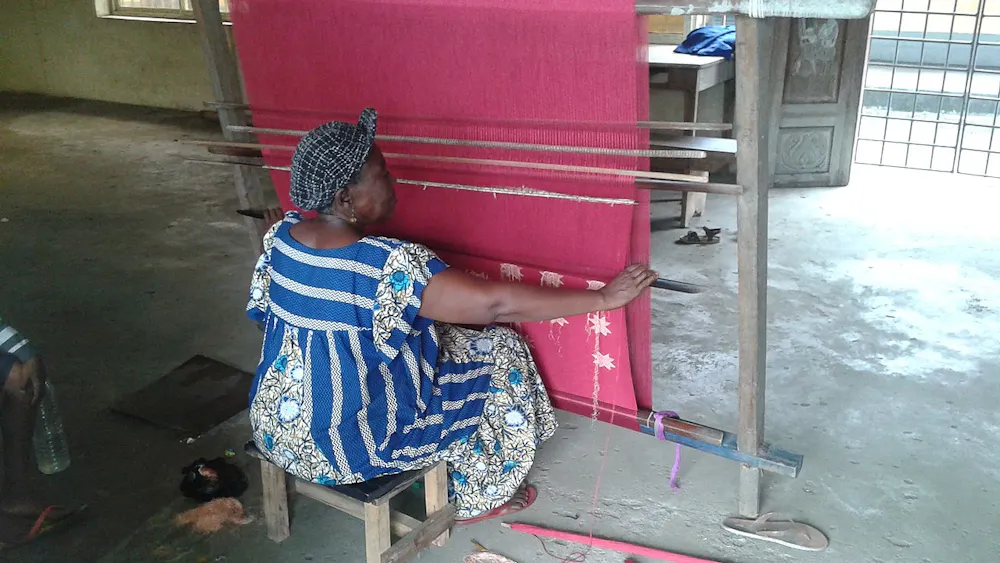
    Local fabrics are hand-woven or dyed cloths and stem from various ethnic groups, like Aso oke or Akwete.

    A woman handweaving Akwete cloth. Ekekeh Ubadire Obioma/Wikimedia Commons, CC BY-SA

    Popular appropriated fabrics are Ankara (wax prints, originally from Indonesia), lace (a delicate, openwork fabric popular on traditional Nigerian attire) and George (a type of Madras cloth popular among Nigeria’s Igbos).

    Before the 2000s, the use of these fabrics was at two ends of a spectrum. Indigenous cloth, lace and George were for social and cultural events. Ankara was for everyday functional clothes, iro (a wrap skirt) and buba (a three-piece traditional design for women, mostly the married or elderly), especially among low-income people.

    The popularity of local fabrics in today’s fashion didn’t emerge from a vacuum. It was a choice by designers, a social process of acceptance, and government initiative.

    Today’s designers are consciously using local fabrics as a way of endorsing their roots and normalising their use. Many faced rejection at first. Zena, a participant in my study, sold only two pieces of her clothing during her first year of business. She spent time convincing people “this is good”:

    And, funny enough, they are easy to wear and not expensive. But it took a while for them to appreciate it.

    Since the early 1990s the Nigerian government has been committed to promoting local fabrics and locally produced clothes. In 2017, it approved a Monday and Wednesday “Made-in-Nigeria Dress Days” policy.

    While local fabrics are today the fabric trend in women’s clothing, the design trend is western. Designers use local fabrics in styles that have global appeal.

    Still, they are conscious of maintaining authenticity through either the fabric, a silhouette or a design concept that resonates with their culture.

    According to Eji, her western designs still have the African woman in mind:

    The African woman is not only situated in Africa, but they are also all over the world. I believe the world is more cosmopolitan now, we have interracial marriages, we can borrow culture from everywhere, we can inter-weave stuff.

    Women’s fashion mirrors Lagos society’s complexity and its openness to global trends, as it seeks to globalise its local elements.

    It’s the opposite for men

    Cosmopolitan men’s fashion in Lagos is the opposite of women’s. The fabric trend is western; the design trend is local.

    In Lagos, most men wear the two or three-piece “native”. The buba and sokoto, for example, is for regular wear. (A traditional two-piece top and trouser, normally from the same fabric.) The agbada is for special events. (Trousers, a top and a loose-fitting, wide-sleeved robe over.)

    Participants in my study explained that the ethnic background of the president, at any point in time, influences men’s fashion trends. Former president Muhammadu Buhari, for example, hails from the northern part of the country and popularised the wearing of the baba riga (a top, trousers and a big, embroidered over-cover) of the Hausa people.

    Current president Bola Ahmed Tinubu extends the dominance of agbada fashion as he is Yoruba. Men’s fashion portrays a unified cultural front, emanating from the ruling president’s ethnic culture and adopted by most men irrespective of their ethnicity. This can allow for the inclusion of groups excluded from dominant national cultures.


    Read more: Kofi Ansah left Ghana to become a world famous fashion designer – how his return home boosted the industry


    This study shows Nigerian fashion’s openness to modernity, consciously implementing styles from different parts of the world. But this isn’t detached from the local. As forms of culture disappear (through cultural exchange) new forms are created, and they are created locally. This is ultimately a celebration of the cosmopolitan in Lagos fashion and society.

    – Lagos fashion: how designers make global trends uniquely Nigerian
    – https://theconversation.com/lagos-fashion-how-designers-make-global-trends-uniquely-nigerian-254227

    MIL OSI Africa

  • MIL-OSI Global: What’s the difference between abs and core? One term focuses on aesthetics – and the other on function

    Source: The Conversation – Global Perspectives – By Hunter Bennett, Lecturer in Exercise Science, University of South Australia

    Maksim Goncharenok/Pexels

    You’ve probably heard the terms “abs” and “core” used in social media videos, Pilates classes, or even by physiotherapists.

    Given they seem to refer to the same general area of your body, you might have wondered what the difference is.

    When people talk about “abs”, they’re often referring to the abdominal muscles you can see. Conversely, the term “core” is used to describe a broader group of muscles in the context of function, rather than aesthetics.

    While abs and core are often spoken about separately, there’s a lot of overlap between them.

    What are abs?

    The term “abs” is short for abdominal muscles. These are the muscles that run along the front and side of your stomach.

    When someone talks about getting a six-pack, they’re usually referring to toning the rectus abdominis, the long muscle that goes from the bottom of your ribs to the top of your pelvis.

    Your abdominals also include your obliques, which sit on the side of your body, and your transverse abdominis, which sits underneath your other abdominal muscles and wraps around your waist like a belt.

    The term “abs” has been around for a long time, and is perhaps most often used when discussing aesthetics.

    For example, it’s common to see health and wellness publications offering advice on how to achieve “flat” or “six-pack” abs.

    The long muscle that goes from the bottom of your ribs to the top of your pelvis is called the rectus abdominis.
    phoenix creation/Shutterstock

    What about the core?

    When people talk about the “core”, they are often referring to your abdominals, but also the muscles in your back (your spinal erectors), hips, glutes, pelvic floor, and your diaphragm.

    These are the muscles that can stabilise your spine against movement, and aid in the transfer of force between the upper and lower limbs.

    The term “core” wasn’t commonly used until the early 2000s, when it became synonymous with core training.

    While the exact reason for its surge in popularity isn’t clear, it most likely followed a study published in 1998 that suggested people with lower back pain might have impaired function of their deep abdominal muscles.

    From there, the concept of “core training” entered the mainstream, where it was proposed to reduce lower back pain and improve athletic performance.

    ‘Core’ training only entered the mainstream this century.
    nadia_acosta/Shutterstock

    What does the evidence say?

    When we consider all the muscles that make up the core, it seems obvious they would be important – but it might not be for the reasons you think.

    For example, having good core stability doesn’t necessarily prevent lower back pain, as it’s been touted to do.

    There’s evidence suggesting core stability training, which might include exercises such as planks and dead bugs, can help reduce bouts of lower back pain. However it doesn’t appear to be any more effective than other types of exercise, such as walking or weight training.

    Other research suggests there aren’t any differences in how people with and without lower back pain recruit and use their core muscles.

    In a separate study, improvements in core strength and stability after a nine-week core stability training program were not significantly associated with improvements in pain and function, further questioning this relationship.

    The link between core strength and athletic performance is also unclear.

    A 2016 review found some very small associations between measures of core muscle strength and measures of whole body strength, power and balance. However, because of the design of the studies reviewed, we don’t know whether people who have better strength, power and balance simply have stronger core muscles, or whether stronger core muscles increase strength, power and balance.

    An earlier review summarised the effect of core stability training on measures of athletic performance, including jumping, sprinting and throwing. It concluded this type of training is unlikely to provide substantial benefits to measures of general athletic performance such as jumping and sprinting.

    However, this review also suggested that, given the important role of the abs in torso rotation, strengthening these muscles might have merit in improving performance in sports that involve swinging a bat or throwing a ball.

    This is likely to apply to other sports that involve rapid torso movement as well, such as mixed martial arts and kayaking.

    Stronger abdominal muscles could offer an advantage in sports that involve rotation.
    Lino Khim Medrina/Pexels

    How can you exercise your abs and core?

    There’s good evidence that simply getting stronger by lifting weights can help prevent injuries. Training your core to get stronger should have a similar impact, as long as it’s part of a broader training program.

    We also know having weaker muscles makes you more likely to experience functional limitations and disability in older age. So alongside any other potential benefits, improving core strength with the rest of your body could help keep you fit and healthy as you get older.

    There are plenty of exercises you can do to train your core and abs.

    If you’re new to core training, you might want to start off with some lower-level isolation exercises that don’t involve any movement of the core. These include things like planks, bird dogs, and pallof presses. These are unlikely to cause too much muscle soreness, but will train your core muscles.

    Once you feel like these are going well, you can start moving into some more dynamic exercises such as sit ups, Russian twists and leg raises, where you train your abdominals using a full range of motion.

    Hunter Bennett does not work for, consult, own shares in or receive funding from any company or organisation that would benefit from this article, and has disclosed no relevant affiliations beyond their academic appointment.

    ref. What’s the difference between abs and core? One term focuses on aesthetics – and the other on function – https://theconversation.com/whats-the-difference-between-abs-and-core-one-term-focuses-on-aesthetics-and-the-other-on-function-254582

    MIL OSI – Global Reports

  • MIL-OSI China: Xi congratulates Fudan University on 120th founding anniversary 2025-05-26 15:16:46 Chinese President Xi Jinping on Monday sent a congratulatory letter to Fudan University, celebrating its 120th founding anniversary.

    Source: People’s Republic of China – Ministry of National Defense

      BEIJING, May 26 (Xinhua) — Chinese President Xi Jinping on Monday sent a congratulatory letter to Fudan University, celebrating its 120th founding anniversary.

      Xi, also general secretary of the Communist Party of China Central Committee and chairman of the Central Military Commission, extended congratulations to the faculty, students and alumni of the university.

      Over the past 120 years, Fudan University has kept pace with the times, developed a glorious tradition of patriotism and a fine academic ethos, nurtured numerous outstanding talents, produced many original achievements, and played a positive role in China’s development as well as in the progress of the Chinese nation, Xi said in the letter.

      Xi expressed his hope that Fudan University, on the new starting point, will remain steadfast in using the Thought on Socialism with Chinese Characteristics for a New Era to nurture talent.

      The university should deepen the reform of education and scientific research, promote the virtuous cycle of independent technological innovation and independent cultivation of talent, and drive innovations in philosophy and social sciences, Xi stressed.

      He also urged the university to continuously improve its ability to serve major national strategies and regional economic and social development, thereby making consistent contributions to building China into a strong country and rejuvenating the Chinese nation on all fronts through Chinese modernization.

      Founded in 1905, Fudan University is a comprehensive, research-oriented university based in Shanghai. 

    loading…

    MIL OSI China News

  • MIL-OSI Russia: The Academic Council discussed cooperation with Slavic universities and the life of the Student City

    Translation. Region: Russian Federal

    Source: Peter the Great St Petersburg Polytechnic University – Peter the Great St Petersburg Polytechnic University –

    Last Friday, the regular meeting of the SPbPU Academic Council took place. Its participants discussed the interaction of the Polytechnic University with Slavic universities, the work of the Student City, held elections of directors of some institutes and higher schools, and voted for the nomination of several university employees for academic titles.

    Before the meeting, members of the Academic Council congratulated the rector of SPbPU Andrey Rudskoy on the presentation to him, as a co-author of the book “Putin in the Mirror of Time. Milestones of the Biography and Chronicles of the Era”, Letter of thanks from the President of Russia. Then they moved on to the ceremonial part, where many more Polytechnicians and university partners were awarded congratulations and applause.

    For his great contribution to the formation and replenishment of the SPbPU endowment fund and strengthening the positive image of the university, the “For Merit” badge of distinction was awarded to Deputy Head of the Corporate Network Department – Senior Vice President of VTB Bank, Polytechnic University graduate Yuri Levchenko.

    The Chief of the Main Directorate of the Ministry of Emergency Situations of Russia for the Leningrad Region, Lieutenant General of the Internal Service Evgeny Deineka, was also awarded the “For Merit” badge.

    The presentation of candidate of science diplomas at the Polytechnic University also takes place in a solemn atmosphere. Members of the Academic Council congratulated their colleagues on receiving their academic degrees: Nikita Zibarev, an assistant at the Higher School of Biotechnology and Food Production, became a candidate of technical sciences, Tatyana Kudryashova, a senior lecturer at the Higher School of Biotechnology and Food Production, became a candidate of biological sciences, and Suzanne Niemb Bekoume, a young scientist from Cameroon, became a candidate of economic sciences.

    Director of the Higher School of Design and Architecture, Doctor of Architecture Margarita Perkova became a corresponding member of the Russian Academy of Architecture and Construction Sciences (RAASN).

    The Association of Museums of Universities of St. Petersburg awarded the director of the SPbPU History Museum, Valery Klimov, with a diploma “For the Honor and Dignity of the Profession.”

    It’s time to celebrate the athletes’ achievements. Students Anastasia Dmitrieva and Elizaveta Shevchenko took first place in the Russian and St. Petersburg championships in sports aerobics.

    The Polytechnic women’s basketball team, which took 2nd place in the All-Russian student competition “ASB League Belov Cup”, was represented by Karina Kambulatova, Yulia Ragozina, Kristina Krivich, Ksenia Litvin and assistant of the Department of Physical Training and Sports Victoria Shipovskaya.

    The Academic Council did not forget about the successes of the university’s creative teams. The SPbPU Chamber Choir received the Grand Prix open competition of student choirs of Russia “Blagovest”. At the Academic Council, the winners were represented by a 2nd-year student of the Institute of Biological Sciences and Biology Olesya Shkorubskaya. Youth choir “Polyhymnia” became the best among fifty participants All-Russian choral competition “Raduga”. And the pop-symphony orchestra Ingenium took 1st place at the festival “Student Spring”— the most significant creative competition of universities in the North-West.

    For the first time, the Academic Council not only congratulated the winners, but also saw fragments of their performances on the big screen, which was especially inspiring and set the mood for positivity.

    On the agenda, Dmitry Arsenyev, Vice-Rector for International Affairs at SPbPU, presented a report entitled “On the coordination of activities and support for development programs of Russian-national (Slavic) universities.”

    The Slavic Universities project is one of the largest international projects of SPbPU. It is aimed at creating an international community of leading universities promoting Russian education, science and culture in the CIS countries. Its key goal is to form an educational outpost uniting universities of Belarus, Armenia, Kyrgyzstan, Tajikistan and other countries through the introduction of the best Russian practices, deep transformation of educational processes and strengthening of scientific research potential.

    Significant results were achieved during the period from 2021 to 2025: 14 network educational programs and 16 academic mobility programs were launched, involving more than 200 students. Through joint efforts, 18 conferences were held, over 170 scientific papers were published, and more than 500 employees of Slavic universities were trained in advanced training programs. Key initiatives include the creation of an intelligent robotics laboratory at the Belarusian-Russian University, the implementation of the Moodle cloud platform at the Kyrgyz-Russian University, and major events such as the Slavic Horizon Summit (2023) and the International School of Astrophysics at the Byurakan Observatory.

    However, the project faces challenges: legal restrictions due to the status of foreign legal entities, differences in legislation and mentalities, as well as difficulties with migration policy. These barriers require an individual approach to each university and additional resources.

    Large-scale initiatives are planned for 2025–2026: development and implementation of joint and network educational programs, including expert and consulting support for organizing a distance learning system in Slavic universities; creation of a Student Project Bureau at KRSU; mutual academic mobility of students and postgraduates between partner universities; attraction of leading research and teaching staff from Slavic universities to exchange experience; development of comprehensive plans for the development of the scientific base of KRSU with a focus on projects for industrial partners (LLC Alliance Altyn and GC Geoscan); opening of dissertation councils; expert support for the modernization of the information and library complex of KRSU; as well as the formation of a unified youth policy in Slavic universities through the involvement of students in scientific, educational and cultural initiatives. Particular attention will be paid to the dialogue with the Ministry of Education and Science of Russia.

    Slavic universities are a systemic effort to overcome borders, where students from different countries not only study, but also create projects that solve real problems. We see how joint work launches a chain reaction of ideas. Our focus is not on formal indicators, but on creating a unified scientific ecosystem, – emphasized Dmitry Arsenyev.

    The Academic Council of SPbPU noted the importance of the project for promoting technical education of SPbPU abroad, recognized the work done by the project office as satisfactory, and also approved the work plan for the coming year.

    The second issue on the agenda was addressed by the Director of the Student City, Vyacheslav Olshevsky.

    The Polytechnic University campus consists of 21 dormitories, two hostels, three hotels and an administrative and economic block, which includes a production complex and furniture manufacturing.

    The number of people living in dormitories increases every year. According to the admissions targets for 2024, 70% of those admitted to the Polytechnic are from out of town. Currently, about 10 thousand students live in the dormitories of the Student City.

    The administration ensures that each resident is provided with the necessary set of furniture. Each dormitory has a study room for classes, and almost all dormitories have sports rooms. Dormitory repairs are carried out both by the Student City production complex and with the involvement of contractors.

    In 2025, together with the United Student Council of SPbPU, we held a significant event – forum of student councils of dormitories.

    Vyacheslav Olshevsky also spoke about the hotel complex, noting that it brings great benefit in accommodating those in need of accommodation: 95% of the hotels are occupied by students. Also, during the admission campaign, applicants and their parents can live there. There is a 60% discount on accommodation in the hotel complex for students.

    With all the advantages, there are also difficulties. Thus, in 2024, a resort tax was introduced in St. Petersburg (100 rubles). Fortunately, full-time students under 24 are considered a privileged category of citizens. But in 2025, a tourist tax was introduced in St. Petersburg for legal entities, and so far there are no benefits for accommodating students. This issue is currently being resolved at the level of the legislative and executive authorities of the city.

    Vyacheslav Olshevsky pleased us with the information that a food outlet will open in the Maximum Hotel any day now, and this is very good, since there are no cafes or shops near the hotel.

    The third issue on the agenda of the meeting was devoted to the election of directors of institutes and higher schools. According to the results of the vote, the post of director of the Institute of Electronics and Telecommunications was retained by Alexander Korotkov, the post of director of the Institute of Physical Culture, Sports and Tourism was retained by Valery Sushchenko, and Nikolay Ivanov became the director of the Physics and Mechanical Institute. Zeynab Bakhturidze became the director of the Higher School of International Relations of the State Institute of Physical Culture, Sports and Tourism, Vladimir Mulyukha became the director of the Higher School of Artificial Intelligence Technologies of the Institute of Scientific Research, Maria Poltavtseva was elected director of the Higher School of Computer Technologies and Information Systems of the Institute of Scientific Research, Alexey Grachev became the director of the Higher School of Transport of the Institute of Medical and Electronic Technology, Margarita Perkova became the director of the Higher School of Design and Architecture of the Institute of Scientific Research, and M. V. Gumilyov became the director of the Higher School of Professional Judo Trainers named after A. S. Rakhlin – Mikhail Rakhlin, director of the Higher School of Electronics and Microsystem Engineering of the Institute of Electrical Engineering and Technology – Vera Loboda, director of the Higher Engineering and Physics School of the Institute of Electrical Engineering and Technology – Roman Burkovsky, director of the Higher School of Advanced Digital Technologies PISh “Digital Engineering” – Valery Leventsov, director of the Higher School of Fundamental Physics Research of the Physics and Mechanics Institute – Viktor Dubov, director of the Higher School of Applied Mathematics and Computational Physics of the Physics and Mechanics Institute – Maxim Frolov.

    The fourth issue was the presentation for the assignment of academic titles. From the Institute of Electronics and Telecommunications, it was decided to present Sergei Ivanov (scientific specialty “Radiophysics”) and Ivan Rumyantsev (scientific specialty “Electronic component base of micro- and nanoelectronics, quantum devices”) to the title of associate professor.

    The Institute of Mechanical Engineering, Materials and Transport nominated for the title of associate professor: Alexander Bakhshiev (Artificial Intelligence and Machine Learning), Boris Spassky (Robots, Mechatronics and Robotic Systems), Vasily Teplukhin (Mechanical Science).

    The Institute of Industrial Management, Economics and Trade nominated for the title of associate professor: Ksenia Kikkas (World Economy) and Angi Skhvediani (Mathematical, Statistical and Instrumental Methods in Economics).

    At the end of the meeting, SPbPU Academic Secretary Dmitry Karpov reported on monitoring the implementation of the Academic Council’s decisions.

    Please note: This information is raw content directly from the source of the information. It is exactly what the source states and does not reflect the position of MIL-OSI or its clients.

    MIL OSI Russia News

  • MIL-OSI United Kingdom: Free meals for 3 months? Volunteers needed for ‘benefits of eating fish’ study Scientists exploring why eating fish is good for heart and gut health are looking for volunteers to help them unlock more of its nutritional secrets.

    Source: University of Aberdeen

    Prof Jules Griffin tries fish curry with Karen Taylor and Prof Frank Thies

    Scientists exploring why eating fish is good for heart and gut health are looking for volunteers to help them unlock more of its nutritional secrets.
    Codenamed FAM-OUS because it compares fish and meat-based diets, the Aberdeen University study hopes to underline the benefit of eating more of our local catch.
    And the lucky participants will have a 14-week menu selected for them by the Rowett Institute’s dieticians, with regular monitoring of the relative changes to their health.
    The £750,000 project is funded by the UK Biotechnology and Biological Sciences Research Council (BBSRC) and will delve deeper than previous research in the area.
    It is specifically aimed at providing strong scientific backing for the heart health benefits of eating fish, following studies showing an increase in some people’s blood levels of a metabolite – trimethylamine N-oxide, known as TMAO – after eating fish.
    The latest project comes shortly after the Rowett published Scottish Government-funded research showing many vital nutrients are “lost” because the UK exports so much of the fish caught by our fleets.
    That report concluded fresh efforts are urgently needed to increase the quantity of fish we eat as a country, which falls significantly short of the recommended intake.
    Rowett Institute director Jules Griffin, who is one of the lead researchers for the FAMOUS study, said the work would help highlight the value of one of the north east of Scotland’s most celebrated assets – and said he was delighted with some of the dishes set to be served up to volunteers, including a curry and fish cakes.

    The FAMOUS study sets out to examine the health benefits of a fish-based diet, going further than traditional studies to investigate how fish modifies the microbial community in our guts to promote health” Prof Jules Griffin

    “This region produces some of the best fish and seafood in the world and yet many of us eat a rather limited range, perhaps just fish and chips on a Friday,” he said.
    “We are not just missing out on some great tasting food, but fish is an important source of vitamin D and polyunsaturated fats, protecting us from serious diseases including cardiovascular disease.
    “The FAMOUS study sets out to examine the health benefits of a fish-based diet, going further than traditional studies to investigate how fish modifies the microbial community in our guts to promote health.
    “Using the Rowett’s world-class Human Intervention Studies unit, we will better define these health benefits to promote the consumption of the great fish and seafood we have in the area.
    “I will also see if I’m allowed to share some of the wonderful recipes the team have created for the study – the fish curry is a personal favourite and the fish cakes are excellent too!”
    The team is looking for healthy, overweight (BMI 25-29.9) 30–65-year-old meat eaters with elevated blood lipids, sugar, or blood pressure but not on medication or with any history of heart disease or other inflammatory diseases and not on medication for cholesterol or lipaemia or taking any dietary supplements.
    Taking part will involve following different diet plans over set periods and having heart health and gut microbiome changes monitored and assessed.
    To apply or find out more, please contact Frank Thies (f.thies@abdn.ac.uk) or Morven Cruikshank (morven.cruickshank@abdn.ac.uk) or visit the Rowett website: FAMOUS Study | The Rowett Institute | The University of Aberdeen

    Related Content

    MIL OSI United Kingdom

  • MIL-OSI New Zealand: Experienced retail investor found liable for market manipulation

    Source: Budget 2025 – Greenpeace braced for ‘scorched earth’ budget from Govt

    Media Release  
    MR No. 2025 – 13

    Kok Ding Cheng, an experienced retail investor, has been ordered to pay the Crown a pecuniary penalty of $198,000, following a civil proceeding brought by the Financial Markets Authority (FMA) – Te Mana Tatai Hokohoko for market manipulation.  

    The FMA’s case centred on five small orders for of NZX-listed shares of Rua Bioscience Limited (RUA) that Mr Cheng made over a 10-day period during late 2020 via a broking account he held with ASB Securities.  The Court found in making each of those five orders, which ranged from $59 to $540, Mr Cheng breached s265 of the Financial Markets Conduct Act 2013 which prohibits trade-based market manipulation.  The Court found that Mr Cheng deliberately placed the orders for the purpose of increasing the price and/or demand for Rua shares.

    Mr Cheng did not file a statement of defence during the proceeding, and so the proceeding progressed by way of formal proof hearing.  

    FMA Head of Enforcement, Margot Gatland said, “Mr Cheng’s orders lacked a genuine commercial purpose and were instead made for the purposes of increasing the price and/or demand for RUA shares at a time when he held a material shareholding in the company.  

    “Market manipulation undermines confidence in financial markets because it means investors can’t trust prices or market activity to be genuine. We take cases of market manipulation seriously to ensure New Zealand’s markets reflect genuine supply and demand, in order to preserve their integrity and reputation.

    “We considered Mr Cheng’s conduct warranted a strong response to deter market manipulation. This case and the Judge’s ruling are important reminders that trade-based market manipulation can occur when trading through online share brokerage accounts. Investors should be careful to understand their obligations when trading online, as trading listed shares for disingenuous reasons can result in liability.” 

    The $198,000 is to be paid to the Crown after it is first applied to the FMA’s actual costs in taking the case. 

    ENDS 

    Media contact  
    If you have any questions about this media release, please contact [email protected]   


    Related links  

    FMA vs Cheng Judgment [PDF 415KB]

    FMA files market manipulation case against Kok Ding Cheng for trading of Rua shares

    MIL OSI New Zealand News

  • MIL-OSI Security: NATO Science for Peace and Security Programme launches new call for research proposals

    Source: NATO

    The NATO Science for Peace and Security (SPS) Programme promotes dialogue and practical cooperation between Allies and NATO partners based on scientific research, technological innovation and knowledge exchange. The Programme aims to strengthen the Alliance to meet the challenges of today and tomorrow, and it is pleased to announce a new call for research proposals.

    The SPS Programme offers funding, expert advice and support to tailor-made, civil security-relevant activities that respond to the SPS Key Priorities. Participation in the Programme enables experts, academia and scientists to develop innovative solutions, achieve scientific breakthroughs and build partnerships with their peers in Allied and partner countries. 

    In light of the changed security environment and the SPS Programme’s ability to foster timely and impactful technological innovation to address security challenges, the Programme has experienced a significant increase in visibility. In 2024, two calls for proposals received 300 submissions – the highest number for one calendar year in the Programme’s history.  

    The new call for research proposals is open until 6 July 2025.

    The modalities and all information for the call and the application process can be found here.

    The NATO SPS Programme has contributed to scientific excellence for more than 60 years, and has supported thousands of scientists, including Nobel laureates. Collaborating through the SPS Programme is a highly rewarding experience, which fosters scientific research, builds bridges between innovation networks in NATO member and partner countries, and contributes to a safer and more secure world.

    MIL Security OSI

  • MIL-OSI New Zealand: Advice seen by Minister

    Source: Tertiary Education Commission

    Date
    Reference Number
    Title

    19 December 2019
    AM/19/01484
    Aide-Memoir: Discussion paper: establishing a CoVE specialising in Secondary Tertiary Programmes, Multiple Pathways and Transitions (PDF 1.4 MB) 

    5 December 2019
    B/19/01460
    Funding Agreement between the Crown and Lincoln University (PDF 1.3 MB) 

    3 December 2019
    1210568
    Education Report: High-level decisions on the unified funding system for discussion at the strategy session on 12 December (PDF 7.8 MB)

    22 November 2019
    B/19/01385
    Tertiary Education Commission 2019/20 Quarter One Performance Report

    20 November 2019
    B/19/01340
    Tertiary Education Report: August 2019 Fees-Free Enrolment Update (PDF 658 KB) 

    20 November 2019
    B/19/01339
    Tertiary Education Report: August 2019 Enrolment Update (PDF 590 KB) 

    15 November 2019
    AM/19/01341
    Expenditure accrual adjustment to Vote Tertiary Education

    13 November 2019
    AM/19/01357
    Overview of standard operating procedures and/or code of practices for TEI accommodation services

    11 November 2019
    Cabinet paper
    Confirmation of Crown capital investment to support the rebuild of Lincoln University’s science facilities (PDF 1.2 MB)

    7 November 2019
    AM/19/01351
    Tertiary Education Institution Accommodation Overview

    1 November 2019
    AM/19/01338
    No recoveries for exceeding prior achievement limit in 2019 for YG and SAC 1-2

    29 October 2019
    B/19/01328
    Tertiary Education Commission Annual Report for the year ended 30 June 2019

    25 October 2019
    AM/19/01337
    Reform of Vocational Education Programme Governance – Update

    24 October 2019
    E/19/01252
    Ako Aotearoa 2019 Tertiary Teaching Excellence Awards Evening – 30 October 2019

    23 October 2019
    B/19/01284
    Crown support for Whitireia Community Polytechnic

    15 October 2019
    E/19/01277
    Launch of Drawing the Future event on 18 October at Porirua East School

    14 October 2019
    B/19/01260
    Report to Ministers from the University of Canterbury Futures Governance Oversight Group

    14 October 2019
    B/19/01275
    ITP constitutions for two councils

    9 October 2019
    AM/19/01258
    AgResearch business case for a new building at Lincoln University

    4 October 2019
    E/19/01256
    Opening the 15th New Zealand Vocational Education and Training Research Forum on Tuesday 15 October 2019

    25 September 2019
    B/19/01192
    Update on Careers System Strategy Engagement Process (PDF 500 KB) 

    20 September 2019
    B/19/01175
    Tertiary Education Commission draft Annual Report for the year ended 30 June 2019 (PDF 276 KB) 

    19 September 2019
    B/19/01211
    Tertiary Education Report: Draft Cabinet paper on supporting the rebuild of Lincoln University’s science facilities and reallocation of funding to Tai Poutini Polytechnic (PDF 159 KB) 

    17 September 2019
    B/19/01023
    Review of the appointment of the Commissioner of Whitireia and WelTec (PDF 250 KB) 

    13 September 2019
    B/19/01210
    Establishing a Stakeholder Advisory Group for Reform of Vocational Education

    13 September 2019
    B/19/01209
    Workforce Development Council and ITO Workstream: Progress update (PDF 861 KB) 

    13 September 2019
    1204429
    Briefing Note: Unified Funding Work Programme: Progress update (PDF 3.6 MB)

    10 September 2019
    E/19/01176
    Ministerial visit to the University of Auckland on Tuesday, 10 September 2019

    9 September 2019
    E/19/01176
    Ministerial visit to the University of Auckland on Tuesday, 10 September 2019 (PDF 871 KB) 

    9 September 2019
    E/19/01169
    Meeting with Greg Wallace, Chief Executive of Master Plumbers on Thursday 12 September 2019

    6 September 2019
    B/19/01141
    ITP constitutions for seven councils (PDF 297 KB) 

    2 September 2019
    E/19/01158
    Ministerial visit to Unitec Institute of Technology on Tuesday, 3 September 2019 (PDF 3.2 MB) 

    27 August 2019
    B/19/01065
    Tertiary Education Report: Lincoln University Programme Business Case: Moving Forward (PDF 487 KB) 

    27 August 2019
    B/19/01086
    Tertiary Education Report: April 2019 Fees-Free Enrolment Update (PDF 640 KB) 

    21 August 2019
    B/19/01085
    Tertiary Education Report: April 2019 Enrolment Update (PDF 826 KB)

    19 August 2019
    E/19/01093
    Minister of Education Opening the Primary ITO Symposium on Tuesday 20 August 2019

    8 August 2019
    AM/19/00929
    Fees-free monitoring and addressing non-complying TEOs

    26 July 2019
    E/19/00868
    Ōritetanga Learner Success Conference (PDF 240 KB) 

    26 July 2019
    AM/19/00971
    Talking Points for Cabinet on 29 July 2019 – NZIST Establishment Board Appointment

    25 July 2019
    B/19/00928
    Lincoln University and the University of Canterbury Partnership Proposal (PDF 1.5 MB) 

    24 July 2019
    B/19/00882
    Crown support for Tai Poutini Polytechnic (PDF 670 KB)

    20 July 2019
    AM/19/00790
    WAIKATO INSTITUTE OF TECHNOLOGY 2018 Annual Report (PDF 459 KB) 

    19 July 2019
    AM/19/00959
    Southern Institute of Technology’s proposal for Telfrod – Talking point for Cabinet

    19 July 2019
    AM/19/00954
    Annotated Agenda – NZ Institute of Skills and Technology Establishment

    17 July 2019
    B/19/00773
    Update on Careers System Strategy and Career Action Plan (PDF 275 KB) 

    17 July 2019
    B/19/00867
    Southern Institute of Technology’s proposal for operating Telford in 2020 and 2021 (PDF 486 KB) 

    15 July 2019
    AM/19/00800
    Assurance findings for the Reform of Vocational Education Programme

    15 July 2019
    B/19/00763
    2020 Investment Round Update: Indicative Allocations

    11 July 2019
    E/19/00879
    Minister to visit Otago University on 12 July 2019 (PDF 465 KB) 

    10 July 2019
    B/19/00819
    Manukau Institute of Technology– council constitution (PDF 402 KB) 

    10 July 2019
    AM/19/00880
    Compliance monitoring of fees-free tertiary education and prosecution for false statutory declarations

    4 July 2019
    B/19/00785
    TEC 2018/19 Quarter Three Performance Report (PDF 355 KB) 

    3 July 2019
    B/19/00861
    Review of the appointment of the Commissioner of Unitec (PDF 289 KB) 

    1 July 2019
    B/19/00840
    2018 Educational Performance Indicators (PDF 1.1 MB) 

    1 July 2019
    AM/19/00820
    Te Whare Wānanga o Awanuiārangi 2018 Annual Report (PDF 506 KB) 

    1 July 2019
    B/19/00708
    Publication of the Tertiary Education Commission’s Statement of Intent 2019/20–2022/23 and Statement of Performance Expectations 2019/20 (PDF 274 KB) 

    1 July 2019
    AM/19/00827
    Aide-Memoire: Lincoln University Programme Business Case: Moving Forward (PDF 303 KB) 

    1 July 2019
    B/19/00840
    2018 Educational Performance Indicators

    28 June 2019
    E/19/00835
    Meeting with Service Skills Institute Incorporated on Monday 1 July 2019

    25 June 2019
    AM/19/00821
    Talking Points for APH on 26 June 2019 – Appointment to the council of Te Whare Wānanga o Awanuiārangi (PDF 219 KB)

    20 June 2019
    AM/19/00790
    WAIKATO INSTITUTE OF TECHNOLOGY 2018 Annual Report

    19 June 2019
    AM/19/00797
    Growing the Food and Fibres Sector – Recommendations for the TEC

    17 June 2019
    E/19/00776
    University of Canterbury – Opening of the Rehua Building on 25 June 2019 (PDF 326 KB) 

    12 June 2019
    E/19/00690
    Meeting with the Commissioner of WelTec and Whitireia (PDF 346 KB) 

    12 June 2019
    AM/19/00749
    Update on Whitireia Community Polytechnic and the Wellington Institute of Technology

    10 June 2019
    AM/19/00739
    Update on the current situation of funding training and education of carers

    7 June 2019
    B/19/00702
    Recognition of Skills Active Aotearoa Limited as an industry training organisation (PDF 1.1 MB) 

    31 May 2019
    B/19/00709
    Waikato Institute of Technology Council Constitution (PDF 441 KB) 

    31 May 2019
    AM/19/00704
    Unitec Institute of Technology 2018 Annual Report (PDF 408 KB)

    31 May 2019
    B/19/00706
    2018 final full-year enrolments at tertiary education organisations

    31 May 2019
    AM/19/00707
    Update on the financial position of ITPs

    30 May 2019
    B/19/00703
    Recognition of the Funeral Service Training Trust of New Zealand as an industry training organisation (PDF 479 KB) 

    30 May 2019
    B/19/00701
    Recognition of Primary Industry Training Organisation as an industry training organisation (PDF 897 KB) 

    30 May 2019
    E/19/00705
    Meeting with UCOL on 5 June 2019  (PDF 2.6 MB)

    27 May 2019
    AM/19/00648
    Advice on options to support the University of Canterbury following the Christchurch mosque attacks

    24 May 2019
    B/19/00650
    Ministerial appointment to Te Whare Wananga o Awanuiarangi

    17 May 2019
    B/19/00706
    2018 Final Full-Year Enrolments at Tertiary Education Organisations (PDF 1.1 MB) 

    17 May 2019
    B/19/00640
    Tai Poutini Polytechnic Capital Injection – Final Milestone (PDF 386 KB) Tai Poutini Polytechnic Capital Injection Appendix A (PDF 1.6 MB) 

    16 May 2019
    AM/19/00651
    Western Institute of Technology at Taranaki 2018 Annual Report (PDF 516 KB) 

    10 May 2019
    E/19/00555
    Meeting with Professor Jan Thomas from Massey University on 22 May 2019 (PDF 682 KB) 

    10 May 2019
    E/19/00644
    Meeting with Southland Federated Farmers

    9 May 2019
    B/19/00613
    Letters for Ministerial appointments to two tertiary education councils (PDF 286 KB) 

    8 May 2019
    E/19/00509
    Minister to speak at the Open Polytechnic Graduation on Thursday, 23 May 2019 (PDF 3.2 MB).

    3 May 2019 
    AM/19/00611
    Lincoln University 2018 financial results (PDF 247 KB) 

    3 May 2019
    AM/19/00615
    Ministerial Appointment to the council of Te Whare Wānanga o Awanuiārangi

    23 April 2019
    B/19/00527
    Release of the 2018 PBRF Quality Evaluation Results 

    10 April 2019
    E/19/00512
    Meeting with Primary Industry Training Organisation on Thursday 11 April 2019 

    9 April 2019
    E/19/00473
    Meeting with WITT to discuss RoVE on 11 April 2019 

    8 April 2019
    E/19/00482
    Meeting with Andrew Robb from Tai Poutini Polytechnic on 11 April 2019 

    3 April 2019
    B/19/00451
    Salvation Army foundation education delivery consultation outcomes 

    3 April 2019
    B/19/00469
    Inspiring Futures – Response 

    2 April 2019
    E/19/00465
    Ministerial visit to open new Tech Park Campus development at Manukau Institute of Technology on 5 April 2019 

    28 March 2019
    E/19/00446
    BusinessNZ Major Companies Group – Chief Executive Forum on Friday 5 April 2019 

    27 March 2019
    B/19/00448
    Letters for Ministerial appointments to eight tertiary education institution councils 

    27 March 2019
    B/19/00442
    Toi Ohomai Institute of Technology – council constitution 

    25 March 2019
    B/19/00360
    2018 Interim Full-Year Enrolments at Tertiary Education Organisations 

    18 March 2019
    AM/19/00414
    Talking Points for APH on appointments to eight ITP councils 

    14 March 2019
    B/19/00161
    TEC 2018/2019 Quarter Two Performance Report 

    12 March 2019
    E/19/00396
    Meeting with The Skills Organisation 14 March 2019 

    12 March 2019
    E/19/00398
    Meeting with Careerforce Thursday 14 March 2019 

    12 March 2019
    B/19/00381
    Letters for Ministerial appointments to two university councils 

    7 March 2019
    B/19/00158
    Careers System Strategy Workstream Implementation Update 

    5 March 2019
    AM/19/00330
    Talking Points for APH on appointments to two TEI Councils 

    1 March 2019
    E/19/00166
    Meeting with Competenz Chair and Chief Executive Thursday 7 March 

    1 March 2019
    E/19/00234
    Local Government New Zealand Rural and Provincial Meeting 

    27 February 2019
    E/19/00165
    Visit to Telford (PDF 326 KB) 

    26 February 2019
    E/19/00150
    Meeting with primary industry leaders to discuss your vision on Reform of Vocational Education (PDF 269 KB) 

    25 February 2019
    E/19/00246
    Meeting with the Tertiary Education Union (TEU) at Waikato Institute of Technology (Wintec) (PDF 2 MB) 

    15 February 2019
    B/19/00082
    Lincoln University and the University of Canterbury Partnership Proposal: next steps (PDF 2.3 MB) 

    11 February 2019
    AM/19/0060
    World Economic Forum OECD Release of Envisioning the Future of Education and Jobs: Trends, Data and Drawings report (PDF 159 KB) 

    7 February 2019
    AM/19/00083
    2018 full-year enrolment reporting timeline (PDF 397 KB) 

    1 February 2019
    B/19/00081
    Southern Institute of Technology’s proposal for operating Telford in 2019 (PDF 393 KB) 

    February 2019
    Cabinet paper
    Council Appointments for Ara Institute of Canterbury, Eastern Institute of Technology, Manukau Institute of Technology, NorthTec, Otago Polytechnic, Tai Poutini Polytechnic, Toi Ohomai Institute of Technology, UCOL and the Western Institute of Technology at Taranaki (PDF 320 KB) 

    30 January 2019
    B/19/00055
    Appointment of an advisory committee to support the Commissioner of Whitireia and WelTec (PDF 202 KB) 

    29 January 2019
    AM/19/00064
    Computer in Homes Tender (PDF 824 KB) 

    28 January 2019
    AM/19/00063
    Meeting with the Chancellor and Vice-Chancellor of the University of Canterbury (PDF 1.2 MB) 

    21 January 2019
    E/19/00010
    Ara Institute of Canterbury – Manawa and Outpatients facility opening on Thursday 31 January 2019 (PDF 1.2 MB) 

    11 January 2019
    B/19/00028
    Update World Economic Forum: Launch of Envisioning the Future of Education and Jobs (PDF 554 KB) 

    8 January 2019
    B/19/00007
    University of Auckland – amendment to council constitution (PDF 303 KB) 

    MIL OSI New Zealand News

  • MIL-OSI New Zealand: Budget 2025 for tertiary sector

    Source: Tertiary Education Commission

    Last updated 22 May 2025
    Last updated 22 May 2025

    Print

    Share

    The Government released its 2025 Budget on Thursday 22 May, which included $398 million investment in the tertiary sector over four years.
    The Government released its 2025 Budget on Thursday 22 May, which included $398 million investment in the tertiary sector over four years.

    The Budget tertiary system investment includes:

    $213 million to provide a 3 per cent increase in tuition and training subsidies from 1 January 2026 in targeted subjects across all levels of tertiary study.
    $64 million for an additional 1.75 per cent increase in tertiary education subsidies at degree level and above in high demand “STEM” subjects (Science, Technology, Engineering and Maths), along with Initial Teacher Education and other priority health workforce areas.
    $111 million to fund enrolment growth in 2025 and 2026, including another 175 Youth Guarantee students a year.

    For more information on Budget 2025 and the tertiary sector, see:

    MIL OSI New Zealand News

  • MIL-OSI Russia: “Family History. Immortal Memory”: When We Find Out the Names of the Winners

    Translation. Region: Russian Federal

    Source: State University of Management – Official website of the State –

    The application period for the competition “Family History. Immortal Memory” has ended. The initiative for holding the competition belongs to the State University of Management.

    A total of 745 applications were received from participants from all federal districts of the Russian Federation and the Republic of Belarus. Moscow and the Sverdlovsk Region were especially active.

    574 works were received in the Literature category and 171 applications in the Video category.

    It is worth noting that advertising on banners was launched throughout Moscow, which played an important role in informing citizens about the opportunity to participate in the competition.

    The stage of evaluating the works is now beginning. You will be able to learn the names of the winners on June 24 at the award ceremony.

    The official VK community will help you stay up to date with the latest news and important information about the Competition.

    The competition was organized by the State University of Management and the Moscow City Branch of the Russian Military Historical Society with the support of the Ministry of Science and Higher Education of the Russian Federation under the auspices of the activities of the Association of Student Patriotic Clubs “I am proud”.

    Please note: This information is raw content directly from the source of the information. It is exactly what the source states and does not reflect the position of MIL-OSI or its clients.

    MIL OSI Russia News

  • MIL-OSI Europe: Looking Back on King Willem-Alexander’s Visit to Expo 2025 Osaka

    Source: Government of the Netherlands

    On Wednesday, 21 May, and Thursday, 22 May, King Willem-Alexander of the Netherlands visited the World Expo in Osaka as part of his journey to Japan. Between 13 April and 13 October 2025, Expo 2025 Osaka, Kansai, Japan is expected to welcome no less than 28 million visitors. The Netherlands has its own pavilion at the Expo, which has already received many thousands of guests in its first month. The King’s visit marked the highlight of the Netherlands’ National Day at the Expo. He was accompanied by Minister Klever for Foreign Trade and Development and Minister Beljaarts of Economic Affairs, who are in Japan for an economic working visit and a trade mission focusing on high tech and digitalization.

    Enlarge image
    King Willem-Alexander and Minister Klever arrive at the Netherlands pavilion on 21 May

    National Day Celebrations

    National Day at the Expo is a special occasion hosted by each participating country. On 21 May, it was the Netherlands’ turn, and the King traveled to Osaka for the event. After signing the guestbook and attending an official ceremony—featuring the Dutch national anthem and flag-raising—King Willem-Alexander delivered a welcome address. In his speech, he emphasized the long-standing relationship between Japan and the Netherlands. In addition to Expo, 2025 also marks 425 years of Dutch–Japanese relations.

    Dance and Design on Display

    To mark National Day, the King attended a dance performance in the National Day Hall on the Expo grounds. Dutch ensemble Introdans collaborated with the Japanese group LAND FES for the occasion. Choreographers Adriaan Luteijn and Dai Matsuoka are pioneers in inclusive dance, creating performances where professional dancers share the stage with dancers with disabilities. The King also visited the temporary exhibition Arts & Crafts on Common Ground, where Dutch designers and Japanese artisans collaborated to create works that fuse contemporary and traditional techniques.

    Strengthening Economic Ties

    As part of the economic mission, a roundtable was held at the Netherlands Pavilion with CEOs from Dutch and Japanese companies. The meeting was attended by the King and co-hosted by the Kansai Economic Federation and the Confederation of Netherlands Industry and Employers (VNO-NCW). The goal: to encourage economic cooperation between the Netherlands and the Kansai region in western Japan—particularly in the fields of natural sciences, healthcare, and chemistry.

    Enlarge image
    Architect Thomas Rau, Ries Straver of Tellart design studio and Minister Beljaarts, among others, posing in front of the Netherlands pavilion

    Circular Pavilion

    The King concluded the day with a visit to the rest of the Netherlands Pavilion. A day earlier (20 May), AND BV, the design and construction consortium behind the pavilion, reached an agreement with the Japanese multinational Pasona Group to purchase and repurpose the pavilion after the Expo. This was always the intention: the Dutch pavilion is a model of circular construction—each part is registered and can be dismantled and reused elsewhere without loss. The day also included visits to the Japanese and Czech pavilions.

    Enlarge image
    At the exhibition on 425 years of Japanese-Dutch exchange in Osaka Castle, Consul-General Marc Kuipers tells the King about the earliest history between our two countries

    425 Years of Shared History

    Throughout May, Osaka Castle is spotlighting the long-standing relationship between Japan and the Netherlands. The exhibition A New Dawn on Common Ground: 425 Years of Exchange between Japan and the Netherlands features objects dating back to the year 1600. That year, the Dutch ship De Liefde arrived in Japan, carrying the first Dutchmen to make contact with the country. This meeting eventually led to an exclusive trading relationship that lasted more than 200 years. On the second day of his visit, the King visited this exhibition, which was organized by the Dutch Consulate in Osaka and features items from both Dutch and Japanese collections.

    Enlarge image
    At Tekijuku, the old Dutch school of Osaka, the King was welcomed by Osaka University students

    The Legacy of Rangaku

    Later that day, 22 May, the royal delegation visited Tekijuku, one of the most important Dutch-language schools in Japan. Until well into the 19th century, Japanese students studied Dutch there to access Western books. The presence of the Dutch in Japan offered a rare window to the rest of the world. Through Rangaku (Dutch Studies), the latest knowledge in fields such as medicine was introduced to Japan. Today, Tekijuku is part of Osaka University, where last year a new medical cooperation agreement was signed between Japan and the Netherlands. The King also visited Nakanoshima Qross, a new hub for research into the future of healthcare.

    Enlarge image
    At the Pasona pavilion, King Willem-Alexander and Minister Klever were introduced to the latest technology is regenerative medicine

    Innovation and Future Collaboration

    In the afternoon, King Willem-Alexander and Minister Klever joined the economic mission on high tech and digitalization, led by Minister Beljaarts. Around 70 Dutch companies were introduced to approximately 170 Japanese guests. Multiple partnership agreements were signed to promote cooperation in areas such as semiconductors, quantum computing, and 6G telecommunications. The day concluded with an Innovation Parade, where 19 Dutch and Japanese organizations presented their work to the King.

    MIL OSI Europe News

  • MIL-OSI Russia: HSE scientists find out how continuing a career at alma mater affects young researchers

    Translation. Region: Russian Federal

    Source: State University Higher School of Economics – State University Higher School of Economics –

    Many young scientists in Russia continue their academic careers at the same university where they studied. This path is called inbreeding. Institute of Education HSE University analyzed the impact of inbreeding on publication activity in the natural and exact sciences. It turned out that it is ambiguous and depends on a combination of factors: the university’s geographical location, its financial resources, and the state of the regional academic labor market. An article with the results of the work was published inResearch Policy.

    In Russia, almost every second PhD candidate continues to work at the same university where he or she received their education. This career trajectory is called academic inbreeding. It is believed that such a practice can contribute to the isolation of the scientific environment and a decrease in innovative potential. However, the impact of inbreeding on the productivity of young scientists has not yet been sufficiently studied.

    Junior Research Fellowproject-training laboratory “University Development” HSE University Victoria Slepikh studied the careers of 1,132 Russian scientists who defended their PhD theses in 2012 in the fields of physics, biology, chemistry, and mathematics. To assess scientific productivity, the author used publications in international journals, their citation rate, and the presence of publications in journals in the first quartile (Q1).

    The analysis was conducted at two levels. First, the author looked at all PhD candidates (1,132 researchers) who remained in the academy during the first eight years after defending their dissertation. Among them, the level of academic inbreeding was 61%. It turned out that graduates who changed universities after receiving their degree were, on average, more likely to publish, get into prestigious journals, and have a higher citation rate compared to those who remained working at their alma mater.

    The most pronounced negative effect of inbreeding is observed in universities that do not have a special status, i.e., are not federal, national research universities or participants in state programs to support science. Young specialists from such universities published on average 34% fewer articles indexed by Scopus, and the probability that they will have at least one publication in a prestigious journal was almost half that of mobile scientists.

    According to the author, if a young researcher remains in a university that is weakly involved in scientific activity and has limited resources, he continues to reproduce low-level academic standards. Moreover, monotonous professional experience reduces his competitiveness compared to colleagues who have changed organizations.

    “In prestigious and scientifically oriented institutes, academic inbreeding, as a rule, does not have a noticeable impact on productivity. This is explained by a rich professional environment: the presence of a strong scientific team, modern equipment, stable connections with other organizations and participation in large projects,” explains Victoria Slepikh.

    The author then identified a subgroup of the most productive scientists — 417 people whose number of publications exceeded the median values (from 4 to 6 publications in the first eight years of their academic career). In this sample, the proportion of inbreds was 56%. At the same time, the influence of academic inbreeding on productivity in this subgroup turned out to be minimal and was manifested only in individual cases — among graduates who defended their theses in regions with a saturated academic labor market.

    In regions with a large number of scientific institutions, graduates are more likely to have the opportunity to change jobs. If, in such conditions, continuing a career at an alma mater occurs not by choice but by inertia, this may deprive young researchers of the chance to realize themselves in a more suitable professional environment. In less developed regions, academic inbreeding is usually due to a lack of alternatives. The results of the study confirm the hypothesis: where young scientists have more employment options, working at their home university may negatively affect their scientific results.

    In addition, the study showed differences in the behavior of representatives of different scientific disciplines. For example, mathematicians more often chose mobile trajectories and less often stayed at the universities where they defended their dissertations, while physicists and chemists demonstrated a more pronounced tendency toward inbreeding. The author associates these differences with the nature of the research infrastructure and traditions of publication activity in different fields of science.

    “Inbreeding itself is not a problem. However, its consequences can negatively affect scientific activity, especially in universities without special status or with limited resources. To compensate for the risks of isolation, it is necessary to stimulate academic mobility and expansion of external relations. This could be internships, scientific exchanges, development of partnerships with leading research centers. Such steps will increase not only productivity, but also the quality of the academic environment as a whole,” says Victoria Slepykh.

    Please note: This information is raw content directly from the source of the information. It is exactly what the source states and does not reflect the position of MIL-OSI or its clients.

    MIL OSI Russia News

  • PM Modi: Gujarat emerging as a global hub for high-tech manufacturing and tribal development

    Source: Government of India

    Source: Government of India (4)

    Prime Minister Narendra Modi today underlined Gujarat’s rising stature as a global hub for high-tech engineering and manufacturing, while also reaffirming the government’s deep commitment to tribal welfare and inclusive development.
     
    Addressing a large gathering in Dahod, the Prime Minister said that Gujarat has made remarkable progress in diverse sectors such as education, IT, semiconductors, and tourism. He informed that a major semiconductor plant is being established in the state with an investment of thousands of crores, further strengthening India’s footprint in the global semiconductor industry and creating employment opportunities for lakhs of youth.
     
    The Prime Minister highlighted that Dahod, Vadodara, Godhra, Kalol, and Halol have together formed a robust high-tech engineering and manufacturing corridor. He said, “Vadodara is rapidly advancing in aircraft manufacturing, with the Airbus assembly line inaugurated recently. The city is also home to India’s first Gati Shakti University. Savli has a major rail coach manufacturing facility, and now Dahod is manufacturing India’s most powerful 9,000-horsepower locomotives. These developments mark a proud moment for the nation.”
     
    He added that small and medium-scale industries across Godhra, Kalol, and Halol are also playing a vital role in Gujarat’s industrial growth. Envisioning the future of the region, he said, “From bicycles and motorcycles to railway engines and aircraft, this corridor will produce it all. Such a high-tech corridor is rare even on the global stage.”
     
    Reaffirming his government’s commitment to tribal welfare, the Prime Minister said that the development of tribal regions is essential for building a developed India. He noted that significant work has been carried out in the last 11 years to uplift tribal communities across the country.
     
    PM Modi said, “I have had the privilege of working extensively in Gujarat’s tribal areas, and that experience has shaped many national-level initiatives. There was a time when tribal children couldn’t even dream of studying science. Today, the tribal belt has access to quality education through ITIs, medical colleges, and two dedicated tribal universities.”
     
    He stated that the network of Eklavya Model Schools has been strengthened over the past decade to ensure better educational opportunities for tribal students, including several such schools now operating in Dahod.
     
    Referring to the ‘Dhartii Aaba Janjati Gram Utkarsh Abhiyan’, he said this is a historic initiative launched for the first time in independent India. He informed that the Central Government is investing nearly ₹80,000 crore in the program, aimed at transforming over 60,000 tribal villages by providing electricity, water, roads, schools, hospitals, and pucca houses.
     
    PM Modi said, “Our government is working for those who were long neglected. The PM Janman Yojana has been introduced to support particularly vulnerable tribal groups who have been deprived for decades. New infrastructure and job opportunities are being created to ensure inclusive development.”
     
    The Prime Minister also highlighted the launch of a national mission to eliminate sickle cell anemia in tribal communities, under which millions have already been screened.
     
    Speaking on regional transformation, PM Modi said that Dahod, once classified as a backward district, is now progressing rapidly as an Aspirational District. He remarked, “South Dahod once faced severe water scarcity. Today, thanks to hundreds of kilometers of new pipelines, Narmada water is reaching every home. Over the years, 11 lakh acres of land from Umargam to Ambaji have been brought under irrigation, easing the burden on tribal farmers.”
  • MIL-OSI Russia: Bashneft planted more than 40 thousand trees

    Translation. Region: Russian Federal

    Source: Rosneft – Rosneft – An important disclaimer is at the bottom of this article.

    The Bashneft company (part of the Rosneft structure) continues large-scale greening of the Republic of Bashkortostan. In the spring of 2025, the company’s employees planted over 41 thousand tree seedlings in the region.

    As part of the environmental campaigns, seedlings of various tree species adapted to the climatic conditions of the regions were used. All work was carried out under the supervision of regional forestry departments.

    The Asly-Kul Nature Park in the Davlekanovsky District of Bashkiria is a specially protected natural area and an important recreational site. Bashkir oil workers planted 24 thousand pine seedlings as part of the all-Russian patriotic campaign “Garden of Memory”. This is a continuation of the annual program aimed at preventing swamping of Aslikul, the largest lake in the republic. The campaign makes a significant contribution to strengthening the ecosystem and preserving the unique natural complex of the reservoir. The employees of the Bashneft-Dobycha enterprise (Bashneft’s oil and gas production operator) have been systematically restoring the forest frame of Lake Aslikul since 2023. Thanks to the efforts of oil workers, over 100 thousand pine and larch seedlings have already been planted on the territory of the nature park, which in a few years will form four massive forest areas with a total area of 25 hectares.

    The importance of Bashneft’s initiative is also confirmed by experts from the Biology Research Center of the Ufa Federal Research Center of the Russian Academy of Sciences. Scientists have established that the creation of a coniferous forest in the northwestern part of Lake Aslikul will help stop the swamping of the shores and preserve the reservoir for future generations.

    In addition, workers of the Bashneft-Novoil plant cleared the shores of the lake from household waste as part of the federal environmental project “Water of Russia”. The anthropogenic load on the coastal area is high, since the reservoir is very popular with tourists. During the campaign, almost 22 kilometers of the coast were cleared.

    In just the last 5 years, thanks to the initiatives of Bashkir oil workers, more than 5.2 million trees have been planted on an area of over 1.5 thousand hectares. Young green areas will soon form full-fledged coniferous forests, which will contribute to the restoration and preservation of the ecological balance of the territories.

    Preserving the environment for future generations is an integral part of Rosneft’s corporate culture. The company implements large-scale environmental programs aimed at minimizing the impact on the environment, improving the environmental friendliness of production, preserving and replenishing natural ecosystems.

    Reference:

    ANK Bashneft is one of the oldest enterprises in the oil and gas industry of the country, carrying out activities in the extraction and processing of oil and gas, the company’s key assets are located in the Republic of Bashkortostan. Exploration and production of oil and gas are also carried out in the Khanty-Mansiysk Autonomous Okrug – Yugra, Nenets Autonomous Okrug, Orenburg Region and the Republic of Tatarstan.

    Department of Information and Advertising of PJSC NK Rosneft May 26, 2025

    Please note: This information is raw content directly from the source of the information. It is exactly what the source states and does not reflect the position of MIL-OSI or its clients.

    MIL OSI Russia News

  • MIL-Evening Report: Fiji can’t compete with Australia and NZ on teacher salaries, says deputy PM

    By Lydia Lewis, RNZ Pacific presenter/bulletin editor

    Fiji cannot compete with Australia and New Zealand to retain its teachers, the man in charge of the country’s finances says.

    The Fijian education system is facing major challenges as the Sitiveni Rabuka-led coalition struggles to address a teacher shortage.

    While the education sector receives a significant chunk of the budget (about NZ$587 million), it has not been sufficient, as global demand for skilled teachers is pulling qualified Fijian educators toward greener pastures.

    Deputy Prime Minister and Finance Minister Biman Prasad said that the government was training more teachers.

    “The government has put in measures, we are training enough teachers, but we are also losing teachers to Australia and New Zealand,” he told RNZ Pacific Waves on the sidelines of the University of the South Pacific Council meeting in Auckland last week.

    “We are happy that Australia and New Zealand gain those skills, particularly in the area of maths and science, where you have a shortage. And obviously, Fiji cannot match the salaries that teachers get in Australia and New Zealand.

    USP vice-chancellor Professor Pal Ahluwalia, Fiji’s Finance Minister Professor Biman Prasad and Education Minister Aseri Radrodro at the opening of the 99th USP Council Meeting at Auckland University last week. Image: RNZ Pacific/Lydia Lewis

    According to the Education Ministry’s Strategic Development Plan (2023-2026), the shortage of teachers is one of the key challenges, alongside limited resources and inadequate infrastructure, particularly for primary schools.

    Hundreds of vacancies
    Reports in local media in August last year said there were hundreds of teacher vacancies that needed to be filled.

    However, Professor Prasad said there were a lot of teachers who were staying in Fiji as the government was taking steps to keep teachers in the country.

    “We are training more teachers. We are putting additional funding, in terms of making sure that we provide the right environment, right support to our teachers,” he said.

    “In the last two years, we have increased the salaries of the civil service right across the board, and those salaries and wages range from between 10 to 20 percent.

    “We are again going to look at how we can rationalise some of the positions within the Education Ministry, right from preschool up to high school.”

    Meanwhile, the Fiji government is currently undertaking a review of the Education Act 1966.

    Education Minister Aseri Radrodro said in Parliament last month that a draft bill was expected to be submitted to Cabinet in July.

    “The Education Act 1966, the foundational law for pre-tertiary education in Fiji, has only been amended a few times since its promulgation, and has not undergone a comprehensive review,” he said.

    “It is imperative that this legislation be updated to reflect modern standards and address current issues within the education system.”

    This article is republished under a community partnership agreement with RNZ.

    MIL OSI AnalysisEveningReport.nz

  • MIL-OSI USA: Governor Newsom announces appointments 5.23.25

    Source: US State of California 2

    May 23, 2025

    SACRAMENTO – Governor Gavin Newsom today announced the following appointments:

    Andrew “Tristan” Peery, of Sacramento, has been appointed Senior Product Manager at the Office of Data and Innovation. Peery has been Director of Web and Interactive Communications at University of California, Davis since 2020, where he was previously Web Applications Development/Web Designer from 2014 to 2020. He held multiple positions at Oregon State University from 2006 to 2013, including Researcher/Web Applications Developer and Graduate Research Assistant. Peery was a Staff Scientist at Woods Hole Group from 2001 to 2005. He earned a Master of Science degree in Physical Oceanography from Oregon State University and a Bachelor of Science degree in Marine Science from Texas A&M University at Galveston. This position does not require Senate confirmation, and the compensation is $150,348. Peery is registered without party preference. 

    Ramank Bharti, of Napa, has been appointed Director of Risk Management and Project Controls at the California High Speed Rail Authority. Bharti held multiple positions at ALSTOM Inc from 2004 to 2025, including Project Director, United States West Coast Services, Site Controller, Services North America, Region Controller, Controller, Budgeting and Reporting, and Work Package Controller. He was a Program Director at Transportation and Transit Associates from 2003 to 2004. Bharti was an MBA Intern at the New Orleans Regional Transit Authority from 2002 to 2003. He was a Deputy Chief Mechanical Engineer at the North Eastern Railway from 1996 to 2001. Bharti was a Manager, Industrial Engineering at Diesel Component Works from 1992 to 1996. He was a Mechanical Engineer at Northern Railway from 1990 to 1992. Bharti earned a Master of Business Administration degree in Finance from Tulane University and a Bachelor of Engineering degree in Mechanical Engineering from the Indian Railway Institute of Mechanical and Electrical Engineering. This position does not require Senate confirmation, and the compensation is $225,000. Bharti is a Democrat.

    Kevin Parzych, of San Luis Obispo, has been appointed Chief of Primary Care Services at Atascadero State Hospital. Parzych has been Chief Medical Officer at Wilshire Health and Community Services since 2013 and Owner of Wilshire Connected Care and K Parzych a Medical Corp since 2017. He was Medical Director of Hospice at Good Shepard Homecare and Hospice from 2004 to 2013. Parzych was Owner of Parzych Family Practice from 2002 to 2013. Parzych earned a Doctor of Medicine degree from Albany Medical College and a Bachelor of Arts degree in Psychology from the University of Connecticut. This position does not require Senate confirmation, and the compensation is $374,400. Parzych is registered with no party preference.

    Madelynn McClain, of Sacramento, has been appointed Director of the Division of Administrative Services at the California Department of Corrections and Rehabilitation. McClain has been Assistant Deputy Director of the Division of Adult Institutions at the California Department of Corrections and Rehabilitation since 2024. McClain held several positions at the Department of General Services from 2023 to 2024, including Deputy Director of the Real Estate Services Division and Chief Financial Officer. She held several positions at the California Department of Corrections and Rehabilitation from 2020 to 2023, including Deputy Director at the Office of Fiscal Services and Associate Director of the Budget Management Branch. McClain was a Principal Program Budget Analyst at the California Department of Finance from 2017 to 2020. She was a Judicial Fiscal Supervisor at the Judicial Council of California from 2015 to 2017. McClain was a Finance Budget Analyst at the Department of Finance from 2003 to 2015. This position requires Senate confirmation, and the compensation is $208,440. McClain is a Democrat.

    Raul Morales, of Visalia, has been appointed Warden at Substance Abuse Treatment Facility and State Prison. Morales has been Acting Warden at Substance Treatment Facility and State Prison since 2024. He was Acting Warden at Valley State Prison in 2024. He held several positions at Substance Abuse Treatment Facility and State Prison from 2001 to 2024, including Chief Deputy Warden, Associate Warden, Captain, Correctional Lieutenant, Correctional Sergeant, and Correctional Officer. This position does not require Senate confirmation, and the compensation is $193,524. Morales is registered without party preference. 

    Press releases, Recent news

    Recent news

    News What you need to know: The City of Tustin received a new water treatment system filtering “forever chemicals,” or PFAS, from local drinking water. TUSTIN – As the federal government announces plans to weaken regulation of “forever chemicals” in drinking water,…

    News What you need to know: California is providing $56 million in grants to help counties provide services for young adults at risk of homelessness. SACRAMENTO – Continuing California’s success in reducing homelessness in youth, Governor Gavin Newsom and the…

    News What you need to know: Six canine officers joined the force to fight back against crime and drug trafficking — the first class trained from day one to detect fentanyl. Sacramento, California – After months of specialized and intensive training, six K-9 teams…

    MIL OSI USA News

  • MIL-OSI Russia: Students of SPbGASU won prizes at the All-Russian competition of final qualification works “Motorways. Transport infrastructure facilities”

    Translation. Region: Russian Federal

    Source: Saint Petersburg State University of Architecture and Civil Engineering – Saint Petersburg State University of Architecture and Civil Engineering – Associate Professor of the Department of Transport Systems and Road and Bridge Construction of SPbGASU Maria Klekovkina, Head of the Department of Highways of the Don State Technical University Denis Nikolenko and Senior Lecturer of the Department of Transport Systems and Road and Bridge Construction Anna Simonova

    From 19 to 24 May, the 3rd All-Russian round of the competition of final qualifying works “Motorways. Transport infrastructure facilities” was held at SPbGASU. The competition was held in the following areas of training: 08.03.01, 08.04.01 Construction, training profiles “Motorways and airfields”, “Road bridges and tunnels”; in the specialty 08.05.01 Construction of unique buildings and structures, specialization “Construction of highways, airfields and special structures”; and in the specialty 08.05.02 Construction, operation, restoration and technical cover of motorways, bridges and tunnels, specialization “Construction (reconstruction), operation and technical cover of motorways”.

    The competition involved final qualification works of 204 students from construction universities from Moscow, St. Petersburg, Kazan, Vologda, Krasnoyarsk, Belgorod, Ivanovo, Rostov-on-Don, Penza, Tomsk, Ryazan, Yaroslavl, Novosibirsk, Volgograd and other Russian cities, selected as the best in the nomination based on the results of the II (regional) rounds in the base universities.

    The competition was held in 20 nominations. Each graduation work was reviewed by the jury members and assessed using a point system. Points were awarded for the achievements of the contestants in approving the results of their work, such as publications of articles, educational and methodological literature, participation in exhibitions, competitions, olympiads, reports at conferences, the presence of patents for inventions and utility models.

    In each nomination, the three works that scored the highest number of points took prize places, and their authors were awarded diplomas.

    Students of our university received five diplomas, one of which was for first place.

    Darya Rumyantseva (supervised by senior lecturer Anna Simonova). took first place in the nomination “Road Activity Management” in the training area 08.03.01 Construction, profile “Motor Roads”. The work was completed at the request of the Committee for the Development of Transport Infrastructure of St. Petersburg.

    In her work “Current Problems of Road Construction and Ways to Solve Them”, Darya Rumyantseva proposed an approach consisting of automating processes with the mandatory use of digital technologies. Proposals have been developed for the use of digital systems in the road industry to improve the efficiency and quality of road construction, reduce the time of work, design and construction costs, and ensure the safety, reliability and durability of road infrastructure facilities.

    Dmitry Ivanov (supervised by PhD in Engineering, Associate Professor Evgeny Kornylyev) took second place in the nomination “Maintenance, repair, major repairs and reconstruction of city streets and roads” in the specialty 08.05.02 Construction, operation, restoration and technical cover of highways, bridges and tunnels, specialization “Construction (reconstruction), operation and technical cover of highways”.

    Also, second place was taken by Denis Koshkin (supervisor – Anna Simonova) in the nomination “Organization of work during construction, reconstruction, major repairs, repair and maintenance of highways” in the specialty 08.05.02 Construction, operation, restoration and technical cover of highways, bridges and tunnels, specialization “Construction (reconstruction), operation and technical cover of highways”.

    The third place went to Nikita Pekin (supervised by Candidate of Engineering Sciences, Associate Professor Maria Klekovkina) in the nomination “Design of Highways” in the field of study 08.04.01 Construction, profile “Highways”; and Ivan Myshov (supervised by Candidate of Engineering Sciences Nikolay Kozak) in the nomination “City Streets and Roads” in the specialty 08.05.02 Construction, Operation, Restoration and Technical Cover of Highways, Bridges and Tunnels, specialization “Construction (Reconstruction), Operation and Technical Cover of Highways”.

    Please note: This information is raw content directly from the source of the information. It is exactly what the source states and does not reflect the position of MIL-OSI or its clients.

    MIL OSI Russia News

  • Dharmendra Pradhan hands over Letter of Intent to University of Liverpool for Bengaluru campus

    Source: Government of India

    Source: Government of India (4)

    Union Minister for Education, Dharmendra Pradhan, presided over the handover of a Letter of Intent (LoI) to the University of Liverpool in New Delhi on Monday. This marks the second foreign university to receive such an LoI under the University Grants Commission (UGC) Regulations, 2023, which facilitate the establishment of foreign higher educational institutions’ campuses in India.

    In his address, Pradhan emphasized that this development underscores India’s growing role as a trusted partner in global higher education. He said the initiative aligns with the transformative vision of the National Education Policy (NEP) 2020, which aims to create rooted, futuristic, and globally oriented education systems and to produce global citizens.

    Reiterating Prime Minister Narendra Modi’s vision of a ‘Viksit Bharat’ by 2047, Pradhan said that implementation of NEP 2020 is key to achieving this goal. He also stressed the importance of R&D and innovation, noting that the University of Liverpool’s focus on STEM research in India will be mutually beneficial for both academia and society.

    The University of Liverpool has received formal approval from the UGC to open its first foreign university campus in Bengaluru. It is expected to begin operations in August 2026 with undergraduate and postgraduate programmes in Business Management, Accounting and Finance, Computer Science, and Biomedical Sciences. Notably, it will also introduce a Game Design programme—a first for a UK university campus in India.

    The Bengaluru campus is envisioned as a research-intensive environment that will focus on addressing global and local challenges through fundamental, applied, and industry-oriented research. It will also offer global mobility opportunities, enabling Indian and UK-based students to benefit from international exposure and academic exchange.

    During the event, three Memoranda of Understanding (MoUs) were signed with the Royal College of Obstetricians and Gynaecologists (RCOG), AstraZeneca Pharma India Limited, YouWeCan, and Dream11 to explore collaborative initiatives.

    Dr. Vineet Joshi, in his remarks, described the LoI as more than symbolic, representing India’s broader transformation in higher education through strategic reforms, international partnerships, and policy innovation. He reiterated that NEP 2020 prioritizes internationalization and institutional flexibility to ensure India remains globally competitive in education.

  • MIL-OSI Russia: Xi Jinping congratulates Fudan University on its 120th founding anniversary /detailed version-1/

    Translation. Region: Russian Federal

    Source: People’s Republic of China in Russian – People’s Republic of China in Russian –

    Source: People’s Republic of China – State Council News

    BEIJING, May 26 (Xinhua) — Chinese President Xi Jinping on Monday sent a congratulatory letter to Fudan University in Shanghai on the occasion of its 120th founding anniversary.

    Xi Jinping, also general secretary of the Communist Party of China Central Committee and chairman of the Central Military Commission, expressed congratulations to the university’s faculty, students, staff and graduates.

    In the letter, Xi Jinping said that over the past 120 years, Fudan University has kept pace with the times, carried forward the glorious tradition of patriotism and fine university style, nurtured many outstanding talents and made many original achievements, thus playing a positive role in state building and national progress.

    Xi Jinping expressed the hope that from the new starting point, Fudan University will continue to firmly and tirelessly apply the Thought on Socialism with Chinese Characteristics for a New Era to cultivate spiritual values and nurture talents.

    Xi Jinping stressed that the university should deepen reform and scientific research in education, promote the beneficial interaction between independent scientific and technological innovation and independent talent training, and stimulate innovation in philosophy and social sciences.

    He also called on the university to continuously enhance its ability to serve major national strategies and regional socio-economic development, thereby making continuous new contributions to the comprehensive advancement of the great cause of building a powerful country and national rejuvenation through Chinese modernization.

    Founded in 1905 and located in the metropolis of Shanghai in eastern China, Fudan University is a research-oriented, multidisciplinary university. -0-

    MIL OSI Russia News

  • MIL-OSI Australia: $5 million for projects turning trash into treasure

    Source: Tasmania Police

    Issued: 26 May 2025

    Eight projects are turning old materials into innovative new products with support from the $5 million Circular Economy Investment Program.

    From a robotic pallet dismantler to a food rescue mission, the successful projects pave the way towards a less-wasteful society – where waste is never wasted.

    With grants of between $250,000 and $750,000 from the Queensland Government, recipients will revolutionise a range of key industries, rethinking how we handle waste and what it can be repurposed for.

    By prioritising keeping materials in circulation, not only will we be reducing landfill and boosting recycling rates; we will be reducing the reliance on brand-new materials.

    Acting Deputy Director-General at the Department of the Environment, Tourism, Science and Innovation Kahil Lloyd said these projects showcase the potential to unleash economic opportunities by reducing, reusing and recycling valuable materials.

    “These projects will not only help to reduce the roughly 10 million tonnes of waste produced in Queensland each year but also innovate a range of industries and support up to 72 local jobs.

    “From a robotic pallet dismantler to innovative recycling approaches for mattresses, medical plastics and truck tarpaulins; these projects go beyond a one-size fits all approach to tackling waste.

    “Queensland is working towards becoming a zero-waste society with ambitious targets to reduce, reuse and recycle wherever possible.

    “For every three jobs in landfill, there are nine jobs in recycling.

    “The Queensland Government is developing a new Queensland Waste Strategy to help boost recycling and unlock economic opportunities.

    “These projects are a great example of how we can support Queensland businesses and capitalise on the opportunities that come from reducing, reusing and recycling.

    Learn more about the Circular Economy Investment Program successful projects.

    MIL OSI News

  • MIL-OSI NGOs: Greenpeace Calls for Global Recognition and Urgent Actions at the First Global Congress of Indigenous Peoples and Local Communities from the 3 Forest Basins

    Source: Greenpeace Statement –

    Brazzaville, Republic of Congo — May 26, 2025 — Greenpeace is delighted to support and endorse the first World Congress of Indigenous Peoples and Local Communities of Forest Basins, scheduled for May 26-30, 2025 in Brazzaville, Republic of Congo. This historic gathering brings together indigenous leaders, community representatives, conservationists and international allies determined to defend the planet’s most critical forest ecosystems.

    Villagers of Lokolama welcome the international Expedition Team on their arrival. A team from Greenpeace Africa are working with local partners to conduct scientific research in the village of Lokolama, 45 km from Mbandaka. The team aim to identify the presence of tropical peatlands in the region, and to measure its depth. © Kevin McElvaney / Greenpeace

    Forests across the Amazon, Congo and Borneo-Mekong–Papua-Southeast Asia are cradles of biodiversity and cultural heritage. These critical ecosystems hold the key to the planet’s climate stability—yet they are under relentless threat from deforestation, illegal logging, land grabbing, and extractive industries. Indigenous Peoples and Local Communities have been the true custodians of these lands for generations, harnessing ancient knowledge and sustainable practices that are vital in the fight against climate change and biodiversity loss.

    Bonaventure Bondo, Forest Campaigner for the Congo Basin at Greenpeace Africa, declared:

    “Indigenous peoples and Local Communities are the guardians of the world’s remaining forest. In the Congo Basin, they implement local solution-based initiatives to protect forests and preserve biodiversity using their traditional knowledge. This Congress is a call to the World: Recognize and co-power Indigenous Peoples and Local Communities to lead the way in sustainably protecting our forestsfor their well-being and the future of the entire planet.”

    Romulo Batista, Senior Campaigner at Greenpeace Brazil, emphasized:

    In the Amazon, Indigenous Peoples protect millions of hectares of forest in their demarcated and undemarcated territories. Global leaders and international financiers should respect their territories and invest in their solutions, not in agribusiness and mining activities that threaten and invade their lands, forests and rivers.”

    Amos Sumbung, Forest Campaigner at Greenpeace Southeast Asia (Indonesia), insisted:

    “In Southeast Asia, our forests are being ripped apart faster than ever. The largest remaining forest  in this region is Papua – Indonesia, which should not be destroyed and should be defended at all costs.  Indigenous leadership is the only way to stop this destruction. This gathering must be a turning point—where Indigenous Peoples and Local Communities voices are heard, and their rights are prioritized in global climate policies.”

    As a staunch supporter of environmental justice and the rights of Indigenous Peoples, Greenpeace urges the global community and calls on governments, international organizations, and civil society to:

    • Recognize and uphold the tenure rights of Indigenous Peoples and Local Communities.
    • Ensure direct access to finance for  Indigenous Peoples and Local Communities to lead and scale up their own forest solutions initiatives.
    • Incorporate Indigenous knowledge into climate and biodiversity science and policies at all levels.
    • Commit to concrete actions that protect both forests and the cultures that depend on them.

    Together, we can build a future where forests thrive, biodiversity flourishes, and Indigenous Peoples are co-powered as stewards of the planet.The future of the planet depends on the guardianship of its Indigenous peoples and Local Communities. Greenpeace stands with them in demanding urgent actions.

    Contacts:

    Raphael Mavambu, Media and Communications, [email protected], Greenpeace Africa

    Tracy Makheti, Global Digital & Engagement Lead, [email protected], Greenpeace Africa

    MIL OSI NGO

  • MIL-OSI Russia: Polytech is a participant of the international exhibition “Metalworking – 2025”

    Translation. Region: Russian Federal

    Source: Peter the Great St Petersburg Polytechnic University – Peter the Great St Petersburg Polytechnic University –

    Today, the exhibition “Metalloobrabotka – 2025” opened in Moscow, in which the Polytechnic University is taking part. This is a traditional industry event, which for 40 years has regularly brought together the best specialists and largest companies from Russia, the CIS countries, the Middle and Far East and other regions of the world. The exhibition has been held in Moscow since 1984 and is recognized as the largest project in Russia and the CIS in the field of machine tool building. This year, over 1,200 companies are presenting advanced solutions for industry on an area of 50,000 sq. m. The number of participants is about 50,000 people.

    “I am glad to welcome all participants of the International Exhibition “Metalloobrabotka – 2025″, one of the largest and most authoritative professional platforms in the field of machine tool building in Russia and the CIS countries. For all exhibitors, partners of the exhibition and guests of Expocentre, this is a unique opportunity to get acquainted with the most relevant industrial trends and advanced production technologies,” said SPbPU Rector Andrey Rudskoy. – At the end of 2024, the Government of the Russian Federation completed work on the formation of eight national projects of technological leadership, and the most important of them is dedicated to the industrial sector: the national project on means of production and automation, the main subjects of which are machine tool building in metalworking, technological equipment, additive technologies. These are the topics that are the focus of both the business program discussions and the key exhibits of the exhibition, in which Peter the Great St. Petersburg Polytechnic University, a traditional participant with many years of experience in developing and implementing high-tech technologies in various industries and acting as an executor of the main federal programs for technological development, is a traditional participant. I invite all colleagues to a dialogue on the thematic tracks of the exhibition and to further productive cooperation.”

    The main topics of the 25th anniversary exhibition are innovations in machine tool building, automated production lines, modern tools and materials. The focus is also on digital solutions: software for production management, robotic systems, artificial intelligence technologies. The business program of the exhibition will be focused on applied tasks of industry and issues of strategic development.

    “It is a great honor for us to be part of this forum, where traditions and innovations of the industry meet. Our institute has been a flagship in the field of mechanical engineering and materials science for many years. We actively develop metalworking technologies, introducing modern solutions in turning, milling and casting processes. Our developments are successfully used at enterprises of the aerospace, automotive and energy industries, ensuring high precision and reliability of products, – noted the director of the Institute of Mechanical Engineering, Materials and Transport of SPbPU Anatoly Popovich. – We pay special attention to additive technologies, which open up new horizons for industry. Together with industrial partners, we create unique methods of 3D printing of metal components, reducing production times and reducing resource costs. It is important that we not only improve technologies, but also train personnel capable of working at the intersection of disciplines. Our students and researchers are actively involved in projects that combine classical metalworking and digital innovations. I am confident that the exhibition will become a platform for fruitful dialogue, and the synergy of experience and new ideas will help us move the industry forward together.”

    SPbPU will demonstrate not just scientific developments, but technological solutions ready for implementation. This year, our university will present a wide range of advanced developments in key areas of modern production – from 3D metal printing to robotic welding and the creation of intelligent materials.

    Additive manufacturing

    Polytechnic University takes metal 3D printing to a new level: from developing heat-resistant nickel powders to laser synthesis of critically loaded components. The university has more than ten domestic SLP printers with a multi-laser system, which allows creating complex parts for gas turbines and aviation. Thus, the VPLS “Mercury” installation developed by SPbPU jointly with ZAO “Biograd” allows printing gas turbine components from heat-resistant nickel alloys at a heating temperature of up to 1300 degrees Celsius. A powerful laser (1000 W) and precise control of the material structure provide high performance. This is no longer a prototype – it is a response to import substitution in aerospace and energy. In addition, multi-material synthesis, plasma and flame spraying technologies have been implemented. They print not only with alloys – SPbPU has piezoceramics, carbide ceramics, and high-entropy composites in its arsenal. All this is in the interests of import independence and accelerated implementation in real production.

    The Polytechnic University is also equipped with stationary and mobile technological complexes for direct laser deposition, laser cladding, laser and hybrid laser-arc welding of thick metals, and laser welding of thin metals (up to 100 microns).

    Electric Arc Growing (WAAM)

    SPbPU offers a full cycle of WAAM implementation — from design to integration into production processes. The technology of layer-by-layer wire surfacing using an electric arc is used to create large-sized and complex-shaped products from titanium, steel, aluminum and other metals. Robotic complexes are adapted to the tasks of specific customers, providing up to 6 kg/h of printing and full automation. The robotic complex (RC) for additive electric arc growing is a robotic cell that has everything necessary for electric arc growing. In addition, the Polytechnic University supplies the systems with its own software that allows monitoring the status of the manipulator and peripheral equipment, as well as generating control programs for the implementation of the electric arc growing technology. Unique examples: gas turbine engine impellers and wheel rims, which have passed strength tests and demonstrated competitiveness compared to cast products.

    Design and manufacture of laser technological complexes

    Polytechnic University develops turnkey laser systems — from foil welding to repair and manufacturing of components for power and mining equipment. The arsenal includes robotic laser cladding systems, mobile units, robotic systems with 5-kW lasers, direct laser deposition with powders and wire, as well as hybrid systems with an inert atmosphere. Using a robotic laser welding system for thin metals (up to 100 microns), serial welding of fuel elements of a hydrogen energy source for Russia’s first passenger ship, Ecobalt, was implemented.

    The university developed a technology for surfacing a porous coating with a thickness of 600 microns with an open porosity of 60-80% and the ability to control these parameters. The cups successfully passed preliminary clinical tests for integration and toxicity of the surfacing layer with bone material.

    Repair of power equipment components was carried out: nozzle and working blades Man Turbo, SGT-700, TV 3-117, VP2500, VPT-50-2, Man Turbo, MARS100, Taurus 60, Man Turbo, MS5002E, TV 3-117, NK-12ST, DR59L, GPA GTK-10I, MS3142J.

    As part of cooperation with the company JSC UK KER-Holding, the Polytechnicians created and delivered a technological complex for direct laser growth.

    Together with TsNIITMASH, a demonstration separation module of a power plant was created using direct laser growth. The result is a reduction in the number of welding operations, an increase in anti-corrosion properties and reliability in extreme Arctic conditions. The university is conducting projects with Rosatom, Gazprom and other industrial giants, offering customers not just equipment, but fully adapted technological solutions.

    Friction stir welding (FSW)

    SPbPU is one of the few in the country that uses STP and TSTP on a large scale: both in spot and seam configurations. This is a solid-phase welding technology that does not involve melting, but has high strength, minimal deformations, and the ability to weld even dissimilar materials — aluminum with copper, composites with metals. The university produces seams up to 8 meters long, develops its own equipment, and trains customer personnel. The use of STP is relevant for aviation, shipbuilding, energy, and military equipment — wherever precision and durability are important.

    We invite you to the Polytechnic stand 1A25, where you can see and evaluate the latest technologies and innovations from SPbPU in the field of metalworking.

    Exhibition address: Moscow, Krasnopresnenskaya embankment 14, Expocentre Central Exhibition Complex

    Please note: This information is raw content directly from the source of the information. It is exactly what the source states and does not reflect the position of MIL-OSI or its clients.

    MIL OSI Russia News

  • MIL-OSI Russia: Alexey Likhachev became an Honorary Doctor of SPbPU

    Translation. Region: Russian Federal

    Source: Peter the Great St Petersburg Polytechnic University – Peter the Great St Petersburg Polytechnic University –

    A solemn ceremony of presenting the mantle and diploma of the Honorary Doctor of SPbPU to the General Director of the State Corporation Rosatom Alexey Likhachev took place at Peter the Great St. Petersburg Polytechnic University.

    The ceremonial event opened with the performance of the Polytechnic University anthem by the SPbPU youth choir “Polyhymnia”.

    It is especially gratifying that this important event is taking place in the year of the 80th anniversary of the Russian nuclear industry, to the development of which Polytechnicians made a significant contribution. Such names as Abram Fedorovich Ioffe, Isaak Konstantinovich Kikoin, Abram Isaakovich Alikhanov, Yuliy Borisovich Khariton, Nikolay Leonidovich Dukhov are inscribed in gold letters in the history of the development of Russian science. Today, Polytechnic University and Rosatom, under the leadership of Alexey Evgenievich, closely cooperate for the benefit of the development of Russian nuclear technologies: both in education and in science. By order of Rosatom, our Institute of Power Engineering annually graduates more than 250 specialists in the field of nuclear energy, thermal power engineering, electric power engineering and power engineering. Together with Rosatom, we are successfully implementing the project of the advanced engineering school “Digital Engineering”, acting in the interests of the technological leadership of our country, – emphasized the rector of SPbPU, academician of the Russian Academy of Sciences Andrey Rudskoy.

    The members of the SPbPU Academic Council unanimously voted to award the title to Alexey Likhachev on April 28 this year. The Scientific Secretary of the Polytechnic University Dmitry Karpov presented the new honorary doctor.

    If we try to pick three key words that would define the spirit of modern scientific and technological development in Russia, these words should be: professionalism, leadership and Victory. And these are the words that come to mind when we talk about the State Corporation Rosatom. For the Polytechnic University, whose history is closely connected with the nuclear project, participation in the development of nuclear energy is one of the key, strategic areas of work. And scientific and industrial cooperation with the national leader in several related industries at once is a great honor and responsibility for the university, – noted Dmitry Karpov.

    Cooperation between the Rosatom State Corporation and SPbPU, which is one of the flagship universities and its long-term strategic partner, is actively developing. This is a significant amount of work carried out by the Institute of Mechanical Engineering, Materials and Transport, the Institute of Power Engineering, the Physics and Mechanical Engineering Institute, the Advanced Engineering School “Digital Engineering” and other university structures. This is significant international cooperation, in particular, in the interests of the Turkish and Egyptian nuclear energy. This is the training of specialists in a wide range of engineering and technical areas of training – primarily in nuclear, energy, mechanical engineering and construction specialties. This is a cell of the Rosatom Student Council, whose activists participate in organizing meetings with representatives of the corporation’s enterprises, technical tours of production facilities, strategic sessions as part of the university’s career events and other activities. In the context of the 80th anniversary of the nuclear industry, about 40 events are planned at the Polytechnic University, covering more than 4,000 people.

    Dmitry Karpov named several completed projects. An optimal design of a vibrating screen for cleaning drilling mud was developed by order of NPO Centrotech. The project was a real breakthrough in the industry: with a target vibration acceleration of 7 g, engineers from PISh SPbPU designed a product that exceeded these parameters in just six months. The results of digital modeling were confirmed from the first factory test of the prototype – the vibration acceleration was 8.2 g. The product and its modifications have been successfully used for many years now.

    A digital twin of the VVER-1000 fuel assembly with an anti-debris filter and mixing grids was developed by order of JSC TVEL. Due to digital design and additive manufacturing, the filtration efficiency has been increased tenfold, and the created models, virtual test benches and testing grounds will significantly reduce costs and improve the quality and speed of further developments.

    At the request of the Mayak production association, for the first time in engineering practice, the architecture of a highly adequate multiphysical digital model of a furnace for vitrification of high-level radioactive waste has been developed.

    By order of JSC TsKBM, key proprietary technological equipment for the ODU-150 hydrogen production unit was developed. The design solutions of the created key hydrogen technology devices are the starting point in the development of a new generation of equipment and future medium- and large-tonnage devices for the hydrogen, petrochemical, and nitrogen industries.

    At the request of the composite division of Rosatom, a technology for the production of filaments from continuous carbon fiber was developed, and the customer received pilot equipment. On the official website of the corporation, this installation is listed among the most important achievements of Rosatom in 2024.

    At the enterprise of the State Corporation Rosatom — JSC Proryv — the URANIA data and process management system for computational and experimental scientific research was put into operation. It is based on the CML-Bench® Digital Platform — an in-house development of the Engineering Center of our university.

    In 2023, under the leadership of Alexey Evgenievich, the State Corporation approved the Unified Digital Strategy, which became the most important step towards accelerating the digital transformation of the industry, including ensuring import substitution. In this regard, Dmitry Karpov noted that specialists from SPbPU and the All-Russian Research Institute of Experimental Physics developed the national GOST “Computer models and modeling. Digital twins of products. General provisions” – the world’s first document regulating the relevant activities.

    The scale of the projects of the State Corporation Rosatom is truly astounding. And it is quite obvious that the management of such a system is the lot of rare leaders and true professionals. This entire vast field – from the development and implementation of advanced technologies, solving the most complex multidisciplinary problems of the world level to the transfer of unique competencies and the organization of expert discussion platforms – all this and much more became possible, including thanks to the personal professionalism and leadership of Alexey Evgenievich. Perhaps, being a leader is destiny. Destiny to be born in Arzamas-75 – Sarov, the city-forming enterprise of which is the Russian Federal Nuclear Center. And, having gone the way of an engineer, politician, adviser and Deputy Minister of Economic Development of Russia, still to head the State Atomic Energy Corporation Rosatom. And to become a leader, ensuring its brilliant victories, – emphasized Dmitry Karpov.

    Students in the uniform of the Polytechnic University of the early 20th century brought in a doctoral robe and cap, the Polyhymnia choir performed the Gaudeamus anthem. Andrei Rudskoi presented Alexei Evgenievich with a book about honorary doctors of the Polytechnic University, which has a page dedicated to the CEO of the state corporation Rosatom.

    It is a great honor for me to receive this title from one of the leading technical universities in the country, which stands at the origins of the Russian engineering school. St. Petersburg Polytechnic University is a forge of personnel for the nuclear industry, and we highly value the contribution of its teachers, scientists and students to the development of advanced technologies. I am confident that our partnership will continue to contribute to breakthrough achievements in nuclear energy, medicine and new materials, – said Alexey Likhachev in his response speech.

    Alexey Likhachev also met with students studying at the Institute of Power Engineering. He spoke about the development of the State Corporation’s systemic cooperation with universities, how contacts with students are built, and shared Rosatom’s corporate values. The Polytechnicians spoke about the activities of the Rosatom student council cell, asked questions about the prospects for the development of nuclear science and the training of personnel for the corporation’s high-tech projects.

    You are the future not only of Rosatom and the nuclear industry, but of the entire country. It is you who will manage enterprises, represent the industry on the international stage and develop our technological power. Therefore, such meetings with students are of particular value: we get to know each other better and understand to whom we are transferring responsibility for the future, Alexey Likhachev emphasized.

    Please note: This information is raw content directly from the source of the information. It is exactly what the source states and does not reflect the position of MIL-OSI or its clients.

    MIL OSI Russia News

  • MIL-OSI Russia: International tournament Inter Football Cup: sport, friendship, Vyshka!

    Translation. Region: Russian Federal

    Source: State University Higher School of Economics – State University Higher School of Economics –

    © Higher School of Economics

    On May 18, the Higher School of Economics hosted the international football tournament Inter Football Cup, in which HSE students and staff from all over the world took part for the third year in a row. This event became a real holiday not only for football fans, but also for everyone who wants to make new acquaintances and immerse themselves in an atmosphere of friendship and unity.

    The football tournament is held with the support of Directorates of Internationalization And Department of Physical Education HSE University. Opening the event, department lecturer Artem Yemelyanov congratulated everyone on the sports festival and wished them to demonstrate their best sports skills and team spirit. Director Center for Support and Career of International Students and Graduates Zhanna Sorokina noted that for the first time, not only student teams are participating in the tournament, but also a team formed from international specialists – foreign teachers and research staff of the university.

    This time, 12 teams met on the field, bringing together representatives of more than 50 countries – from Australia to Ethiopia, from Italy to India. Each match was a real battle, full of emotions and excitement. The participants not only demonstrated their football skills, but also shared the cultural traditions of their countries, which added a special flavor to the tournament. “This is not just football, it is a great chance to take a break from studying, warm up and relax, and also meet our friends and students from other faculties,” shared Ikenna Mbatha (Nigeria) from Institute for Statistical Research and Economics of Knowledge HSE. His team, despite losing in the semi-finals, had unforgettable impressions and made many new acquaintances.

    “This is not my first time participating in the tournament, and it is one of the best events that the university organizes for international students,” says Bernard Baako (Ghana) Faculty of Economic Sciences“Such drive, such emotions – it’s an amazing release!”

    As the tournament organizers note, the number of participants increases every year, which indicates a growing interest in the sporting event. “We are glad to see how students from different countries unite through sport. This is important not only for their socialization, but also for creating a friendly atmosphere at the university,” noted Zhanna Sorokina.

    Marco Mellina (Italy), Research Fellow Schools of Historical Sciences, said that he was a big football fan and, having just learned about the tournament, persuaded his colleagues to participate. The team of international specialists was extremely happy to spend the day at the stadium and impose a fight on their opponents. Even the rain that began during the final games did not spoil the mood of those gathered. The players’ passion in the fight for prize places was uncontrollable, once again confirming the truth of the classic formula of big-time sports: “The match will take place in any weather.”

    The tournament ended with a spectacular finale in which the team Faculty of Social Sciences defeated the team Institute of Cognitive Neurosciences — another debutant of the tournament. But, as many participants noted, the main thing is not the victory, but participation and the opportunity to meet new people.

    Benjamin Sarpong (Ghana), captain of the winning team, boasted that he has won the cup for the second year in a row: at the Inter Football Cup 2024, he was a prize winner as part of the team of the preparatory department for foreign citizens. “Today I personally scored two goals, and they determined the outcome of the final game! I am absolutely happy!” admitted Ben.

    The HSE Inter Football Cup has once again proven its importance as a platform for cultural exchange and friendship, and the participants are looking forward to the next tournament.

    Please note: This information is raw content directly from the source of the information. It is exactly what the source states and does not reflect the position of MIL-OSI or its clients.

    MIL OSI Russia News

  • MIL-OSI Russia: Hong Kong SAR IPOs this year total 76 billion Hong Kong dollars

    Translation. Region: Russian Federal

    Source: People’s Republic of China in Russian – People’s Republic of China in Russian –

    Source: People’s Republic of China – State Council News

    HONG KONG, May 26 (Xinhua) — Chen Mao-bo, head of the Hong Kong Special Administrative Region’s Finance Department, said that since the beginning of this year to date, the Hong Kong Special Administrative Region has raised over 76 billion Hong Kong dollars through initial public offerings (IPOs) on the local stock exchange, an eight-fold increase compared to the same period last year and reaching about 90 percent of last year’s total.

    In an online report posted by the official on Sunday, he said that despite the uncertainties in the external environment, the Hong Kong SAR is making every effort to seize opportunities to play the role of a “super-connector” between China’s interior and the rest of the world.

    Last week, Hong Kong SAR hosted two major financial forums, with many foreign investors pledging to use Hong Kong to increase their asset allocation to the Chinese interior and the rest of Asia. The Hong Kong Stock Exchange also saw its largest IPO of the year last week.

    In addition, the Hong Kong Investment Management Company organized the first international forum on “patient capital”. Speaking at the forum, representatives of science and technology enterprises noted that the event allowed them to get acquainted with many potential investors and long-term funds, which will help accelerate the connection between capital and innovative science and technology enterprises.

    On May 23, the Hong Kong SAR’s relocation regulations came into effect. On the same day, a major international insurance company announced its intention to relocate to Hong Kong and make Hong Kong its place of registration.

    Chen Maobo noted that due to the excellent performance of the stock exchange, more and more companies are choosing to set up their headquarters, research centers and regional offices in the Hong Kong SAR, which in turn demonstrates the confidence of investors and enterprises in the Hong Kong SAR. -0-

    MIL OSI Russia News