Category: Science

  • MIL-OSI USA: Congressman Don Davis Introduces Legislation Promoting Aviation Education and Honors Recent Graduates at Our Community Salutes Event

    Source: US Congressman Don Davis (NC-01)

    ELIZABETH CITY, NC — Congressman Don Davis (NC-01) announced new legislation Thursday aimed at expanding access to aviation education and later honored military-bound high school graduates during a community event in Elizabeth City.

    H.R. 3530, the Flight Education Access Act, was introduced during a press conference at Davis’ district office. Co-led by Congresswoman Jen Kiggans (R-VA), the bill seeks to raise federal student loan limits for students enrolled in undergraduate flight training programs, such as those offered at Elizabeth City State University (ECSU).

    The proposed bill would raise the amount students can borrow in federal loans for flight training programs. Dependent students could borrow up to $111,000, and independent students up to $137,500. It also increases the limit for certain other federal loans to $65,000. The bill would also require the Department of Education to track and report how many students finish these aviation programs each year.

    “By raising student loan limits for our aspiring pilots, we are taking one step towards meeting our nation’s aerospace workforce needs and providing opportunities for the next generation across eastern North Carolina and our nation,” said Congressman Davis. “We must do everything we can to create a brighter future for our aviation students, no matter their zip code or crossroad.”

    The announcement preceded the Our Community Salutes (OCS) event, a program that honors and supports high school graduates enlisting in the U.S. military, as well as their families, as they transition from civilian to military life. Since 2009, OCS has held more than 300 ceremonies across 70 communities in 25 states, honoring over 3,100 new enlistees in 2024 alone. The program also provides financial literacy training and educational pathways for enlistees.

    This year marked the launch of an Our Community Salutes ceremony for the Northeast North Carolina region, hosted in partnership with Congressman Davis and ECSU. The event drew attendees from across the region, including Raleigh and Norfolk.

    ECSU’s Aviation Science Program, the only four-year collegiate aviation education program in North Carolina, served as the venue for both the press conference and ceremony. The program offers specialized degrees in Aviation Management, Avionics, Flight Education, Unmanned Aircraft Systems, and Professional Aeronautics, preparing students for careers in aerospace and aviation industries. Despite growing enrollment, ECSU’s aviation program faces a funding deficit of approximately $18,000 per student. The university currently uses carry-forward funds to purchase equipment, but additional recurring funding is needed to sustain the program and expand student support.

    Congressman Davis, a former assistant professor of Aerospace Studies at East Carolina University’s Air Force ROTC, has long been an advocate for aviation and military education programs. At a previous ECSU Aviation Sciences Building groundbreaking, he emphasized the importance of these programs for the region and the nation. 

    The press conference and OCS ceremony highlighted the region’s commitment to supporting military families and expanding educational pathways in aviation and aerospace.

    Congressman Don Davis serves as the vice ranking member of the House Armed Services Committee and sits on the Subcommittees on Tactical Air and Land Forces and Readiness. He graduated from the U.S. Air Force Academy in 1994 and is a veteran of the U.S. Air Force.

    MIL OSI USA News

  • MIL-OSI Europe: Debates – Thursday, 22 May 2025 – Brussels – Revised edition

    Source: European Parliament

    Verbatim report of proceedings
     253k  688k
    Thursday, 22 May 2025 – Brussels


    PRESIDENZA: ANTONELLA SBERNA
    Vicepresidente

     
    1. Opening of the sitting


    (La seduta è aperta alle 09:00)


    2. Choose Europe for Science (debate)


      Ekaterina Zaharieva, Member of the Commission. – Madam President, honourable Members, thank you for the opportunity to present our Choose Europe for Science initiative.

    As President von der Leyen stated in the Sorbonne in Paris a few weeks ago, Europe is determined to start a new age of invention and ingenuity. We are making a clear choice to place research and innovation at the heart of our societies and economies. Europe is choosing science.

    Today, this choice is more urgent than ever. Science is a source of prosperity, but it is also fundamental to our sovereignty and economic security, our resilience, democracy and leading role on the global stage. For example, scientific leadership in AI or quantum is directly linked to the ability of protecting our society and our values. We need talent to progress in those crucial technology domains.

    Countries understand this. Global research and development has recently surpassed EUR 2.5 trillion per year. At the same time, we also see science exploited for political ends, and academic freedom is under pressure.

    Last month, we had the opportunity to discuss developments on the other side of the Atlantic. Their universities, and fields like vaccine science and climate research, are being targeted by funding cuts.

    But it is not only in the United States. Elsewhere in the globe, scientists are instrumentalised, at best, and openly attacked, at worst. In conflict zones, schools and universities are not spared. In Ukraine, Putin’s war has physically damaged over 1 400 science-related buildings, constituting 30 % of all research institutions, and displaced 20 % of the country’s researchers.

    In this context, Europe must do more than hold its ground. We must become the best place in the globe to do research, the place our young people choose for their careers, and the place global talent comes to help us tackle global challenges.

    This is the ambition of Choose Europe for Science. It builds on four dimensions. First: scientific freedom. Europe must remain the global leader in free and open research. We need a research and innovation union where knowledge flows as freely as goods, services and capital. This is why we commit to protecting freedom of scientific research through law with the new European Research Area Act. This is in line with the European Parliament’s resolution of January 2024 on protecting the freedom of scientific research.

    Second: funding. Horizon Europe is already the largest international research programme. It is a global magnet that received applicants from 194 countries, with 90 countries associated and more wanting in.

    In addition, earlier this month, President von der Leyen announced a EUR 500 million package for the programming period 2025–2027. It will include a new seven-year super grant under the European Research Council. We will support the brightest researchers regardless of their origin.

    We are also expanding our Marie Skłodowska-Curie Actions with a new pilot starting in October. It will build on the attractive conditions offered by Marie Skłodowska-Curie Actions, with longer contracts and more secure professional perspectives to support excellent early-career scientists choosing Europe.

    For established researchers, we are doubling the top-up funding for grantees moving in Europe. We also work with Member States to reach our 3 % GDP target for R&D by 2030.

    Furthermore, the European Regional Development Fund is spending around EUR 35 billion to increase research and innovation capacity across the Union. This will help reduce the innovation divide by strengthening regional R&I ecosystems. Member States and regions are improving their innovation performance and cohesion, and thus retain their talents and attract new ones. Under the next Framework Programme, we will put forward ambitious proposals on research and innovation funding.

    Third: fast-tracking innovation. We must ensure our excellent research can be translated into breakthrough innovation, so that our citizens can benefit from science. Horizon Europe beneficiaries already submitted over 600 patent applications, and we are going further. Next week I will present Europe’s first start-up and scale-up strategy. Retaining and attracting talent will be a crucial dimension of this strategy. Next year we will table a new European Innovation Act, further simplifying and accelerating the path to market.

    Finally: global talent. If you want the best minds to choose Europe, we need to make it easier for them to come and live here. We are working to make the legal framework for researchers more effective, and to speed up entry to the EU. At the same time, we will strengthen our EURAXESS platform, which already links global researchers with thousands of opportunities across the EU.

    Honourable Members, to achieve this ambition, we also need mobilisation at national level. In the past weeks, we have witnessed our Member States opening their doors to talent, from the Welcome to Poland initiative and Choose France for Science, to Estonia’s Mobilitas 3.0 or Czechia’s Junior Star, and many more.

    Here we need a true Team Europe approach to maximise our efforts. As the European Commission, we stand ready to promote this coordinated approach, including through enhanced public communication, starting from tomorrow’s Competitiveness Council. I wish to thank the Polish Presidency for its leadership on this subject.

    To conclude, the aim of Choose Europe for Science is clear: to make Europe the leading destination for researchers on Earth. We can achieve this together as a Union with the active commitment from the Member States and, of course, with the crucial support of this House. The European Parliament has long championed scientific excellence and academic freedom. Your leadership has paved the way to our action today. So thank you very much and I look forward to working together.


      Christian Ehler, on behalf of the PPE Group. – Madam President, Commissioner, ladies and gentlemen, I think Choose Europe for Science, the initiative announced by President von der Leyen, is an important signal for Europe and the world, but luckily it had been accompanied also by a press conference where the President had been announcing that there will be a stand‑alone research programme, which necessarily is the base for that ambition.

    I think we should also emphasise that this is not that we want to attract the most talented in the world, it is that we stand in also for the freedom of science. Much smaller programmes, like the programme for researchers at risk, are an expression for that stand-in. Yes, we want to be attractive for the world, but we also are the safe haven for researchers, women researchers in Afghanistan, researchers under pressure in other parts of the world – we are the safe haven for them. So it’s both: our expression for excellence or ambition for excellence, but also our expression for standing in for the freedom of science.

    Basically, we all know that it’s just going to work if we have a strong research programme. We can appeal to the world, but if we do not have a higher ambition in terms of research, it’s not going to be attractive. What we need is, simply put, more money. The last programme had been designed for a budget of EUR 120 billion and we ended up with EUR 80 billion. So, research budgets are in constraints and that is in complete opposition to what our formulated ambition had been – that at least 3 % of the GDP of Europe should be allocated to research and innovation.

    So in a way, ambitions should follow also with the political courage to prioritise research and innovation in Europe. If I may conclude: now that the Commission and even the President have fully recognised the importance of science for the future of Europe, we also expect the Commission’s proposal for FP10 to be a Commission which also chooses science for Europe.


      Giorgio Gori, a nome del gruppo S&D. – Signora Presidente, signora Commissaria, onorevoli colleghi, negli ultimi mesi l’amministrazione Trump ha attaccato l’autonomia del sistema educativo e universitario degli Stati Uniti, ha ridotto i finanziamenti agli atenei e limitato la libertà accademica. Queste scelte indeboliscono l’attrattività degli Stati Uniti per ricercatori e talenti globali. La rivista Nature ha rilevato che le domande di lavoro all’estero degli scienziati statunitensi sono cresciute del 32% tra gennaio e marzo 2025 rispetto all’anno precedente.

    La Commissione europea ha colto questa opportunità annunciando un piano da 500 milioni di euro, per il periodo 25-27, volto ad attrarre ricercatori internazionali. Tra le misure previste, una super sovvenzione di sette anni gestita dal Consiglio europeo della ricerca che offre stabilità e incentivi raddoppiati per chi si trasferisce in Europa. Questa iniziativa è un passo nella giusta direzione per rafforzare la posizione dell’Europa nella ricerca scientifica globale.

    Tuttavia, è essenziale fare di più. Negli ultimi venti anni l’Europa ha perso molto terreno rispetto ad altre regioni del mondo – su tutte Cina e Stati Uniti – riguardo alla capacità di attrarre investimenti per la ricerca e di coltivare talenti e progetti nei settori dell’innovazione più avanzata. E questa è una delle cause del declino della competitività europea.

    Non basta, quindi, l’iniziativa della Commissione: gli Stati membri vanno spinti a costruire un quadro legislativo in grado di valorizzare e sostenere stabilmente la capacità dei ricercatori, di quelli che sono emigrati e vogliamo che tornino, di quelli che vogliamo attrarre e, soprattutto, di quelli che sono rimasti ma che vivono e lavorano in condizioni di precarietà.

    Vanno aumentati i finanziamenti nazionali e i salari dei ricercatori, vanno progettati percorsi di carriera solidi e trasparenti e per chi sceglie di venire in Europa vanno semplificate le procedure di visto. Solo così la ricerca potrà fiorire in Europa, diventando motore di innovazione e di ricerca.


      Catherine Griset, au nom du groupe PfE. – Madame la Présidente, chers collègues, à la Sorbonne, haut lieu de la culture française, Emmanuel Macron et Ursula von der Leyen ont organisé une mise en scène européiste: faire passer des activistes américains pour des martyrs de la liberté académique. Soyons clairs: ces chercheurs ne sont pas persécutés, ils sont sanctionnés pour avoir transformé les universités en foyer idéologique, où la science cède la place à la propagande.

    Alors qu’on leur déroule le tapis rouge, que devient la recherche en Europe? Elle est noyée sous des financements pour des projets sur le genre, la race ou la déconstruction. Erasmus+ subventionne même des universités islamistes. «Horizon Europe» est devenu un guichet pour l’idéologie. Quant à la Hongrie, elle est exclue, non pour des raisons scientifiques, mais parce qu’elle ose penser autrement. Voilà la liberté académique selon Bruxelles: un outil politique.

    Comme si cela ne suffisait pas, on efface désormais la France, jusque dans sa propre langue. Pour cette opération de communication, le français a été remplacé par un «globish» fade et sans racine. Les identités sont gommées, les cultures sont nivelées et l’Europe est standardisée à coups de slogans creux. C’est plus qu’un renoncement, c’est une soumission culturelle assumée. Cette opération n’a rien de scientifique: il s’agit d’un plan de rééducation idéologique et nous la combattrons.


      Piotr Müller, w imieniu grupy ECR. – Pani Przewodnicząca! Widzimy na świecie w tej chwili wyścig nauki w różnych miejscach, w różnych dyscyplinach, ale przede wszystkim w takich obszarach, jak sztuczna inteligencja, rozwój energetyki, biotechnologii, najnowszych technologii informatycznych. W tych obszarach Unia Europejska powinna poczynić wszystko, aby stanąć w tym wyścigu jak równy z równym, w szczególności w kontekście konkurencji ze Stanami Zjednoczonymi czy z Chinami.

    Jest to tylko możliwe wtedy, gdy faktycznie środki finansowe skoncentrujemy na tych najważniejszych obszarach i faktycznie na nich się skupimy. Z racji tego, że oczywiste jest, że zasoby podatkowe, zasoby finansowe, którymi dysponuje Unia Europejska i państwa członkowskie, są ograniczone, musimy podjąć taką decyzję. I musimy też odważnie powiedzieć, że wydatkowanie środków finansowych na lewicowe, ideologiczne badania jest po prostu stratą środków finansowych. Jest stratą nadziei na postęp nauki w takich obszarach, o których przed chwilą powiedziałem. I dzisiaj odważnie lewica musi wybrać, czy chcecie, aby finansować wasze lewicowe pomysły, badania na temat tego, czy jest 30 czy 35 płci, czy chcecie, żeby Europa podążała w wyścigu w zakresie rozwoju sztucznej inteligencji, energetyki czy innych obszarów, które przełożą się na jakość życia obywateli.

    Szanowni Państwo, to nie jest kwestia dyskusji o wolności nauki, bo każdy może prowadzić badania naukowe, jakie sobie chce. Może decydować o tym samodzielnie. To jest decyzja o tym, gdzie idą pieniądze podatników. A pieniądze podatników powinny iść tam, gdzie efekty przełożą się na lepsze życie obywateli.


      Valérie Hayer, au nom du groupe Renew. – Madame la Présidente, Madame la Commissaire, chers collègues, «le réchauffement climatique est un canular inventé par les Chinois pour nuire à l’industrie américaine», «le bruit des éoliennes cause le cancer», «le pacte vert pour l’Europe est un manifeste communiste», «un désinfectant est plus efficace qu’un vaccin contre la COVID-19», «l’huile de foie de morue réduit la mortalité liée à la rougeole», «les professeurs sont l’ennemi, nous devons attaquer agressivement les universités». Ces déclarations sont l’œuvre de Donald Trump et de son administration qui ont fait de la science et des scientifiques des ennemis de l’Amérique.

    Mes chers collègues, ce n’est pas seulement aux États-Unis, mais partout dans le monde où les extrêmes progressent, que la liberté scientifique est menacée. L’initiative «Choose Europe for Science» promeut cette liberté scientifique. Elle vise à renforcer l’attractivité des carrières scientifiques en Europe. Elle veut accélérer l’innovation en facilitant le passage de la recherche fondamentale au marché.

    Madame la Commissaire, le groupe Renew Europe soutient pleinement cette initiative. Il est à vos côtés pour faire de l’Europe ce pôle d’attraction pour la science. Il est à vos côtés pour défendre notre identité, celle d’une démocratie européenne qui nous protège de tout obscurantisme. Alors travaillons ensemble pour octroyer davantage de moyens aux scientifiques européens et étrangers et pour faciliter le retour des chercheurs européens expatriés.

    Je le dis aux scientifiques du monde entier: entendez cet appel et choisissez l’Europe pour continuer à travailler. Des financements, un environnement favorable, des facilités administratives, la mobilisation d’un budget de 500 millions d’EUR, ainsi que le soutien inconditionnel à la liberté et à l’excellence scientifique sont là pour vous. L’Europe est généreuse, car elle a besoin des scientifiques.

    Chers collègues, sans recherche, sans innovation, nous ne parviendrons pas à répondre à l’enjeu de notre compétitivité. C’est l’une des conditions pour faire de l’Union européenne une puissance politique pleine et entière. L’équation est posée. Alors avançons.


      Anna Strolenberg, on behalf of the Verts/ALE Group. – Madam President, the plan to attract scientists to Europe is called Choose Europe. But what does it mean to choose Europe? It means to choose academic freedom, to choose a continent that still believes in climate change – and thank God for that – it means to choose diversity being a strength instead of a weakness.

    Choosing Europe also means long and difficult visa procedures. It also means having your diplomas recognised in one country, but not in the other. To choose Europe means to talk about researchers and professors that we want, but sometimes forgetting about the nurses, truckers and caregivers that we need.

    Choose Europe also means that sometimes we don’t use our full workforce potential because refugees and women don’t always find a job. I want the best talent to come to Europe, but I also want the best for talent in Europe, and I believe we can do both if we invest in the people here and if we see labour migration as an opportunity.

    So why don’t we train the people in Ljubljana but also look for them in Lagos? Why don’t we help women in Düsseldorf to find a job, but also look for them in Delhi? Why don’t we pay our professors and teachers in Saint-Étienne a fair wage, but also look for them in San Francisco?

    I would say, let’s not ask why people would choose Europe, but let’s ask ourselves, how can we make Europe the destination of choice for all talent?


      Ilaria Salis, a nome del gruppo The Left. – Signora Presidente, onorevoli colleghi, mentre negli Stati Uniti di Trump la libertà accademica è apertamente sotto attacco, anche in Europa non possiamo dormire sonni tranquilli. L’abbiamo visto nella repressione delle sacrosante proteste contro il genocidio a Gaza e contro l’occupazione coloniale della Palestina: studenti e ricercatori manganellati, conferenze annullate e accuse infondate e pretestuose di antisemitismo. È un segnale grave, gravissimo.

    L’iniziativa Choose Europe for Science è importante e la sostengo: l’Europa dovrebbe sempre essere un rifugio, un luogo di libertà, cooperazione e speranza. Sarebbe bello – aggiungo – se lo fosse anche per migranti e richiedenti asilo, che fanno altri lavori e provengono da altre parti del mondo; ma non lo è.

    Apriamo le porte solo alle eccellenze, come se il sapere non fosse sempre frutto di un lavoro collettivo, spesso invisibile e quasi sempre sottopagato. È una visione miope, che tradisce un’idea elitaria della conoscenza: l’idea capitalistica. L’Università va difesa nella sua interezza, come comunità, come luogo di sviluppo condiviso e non come vetrina di merito individuale.

    In Italia chi fa ricerca è spesso un lavoratore povero, intrappolato in una precarietà cronica, costretto a una mobilità imposta, con conseguenze materiali e psicologiche devastanti. I posti di lavoro sono pochi, le prospettive pesanti, spesso solo all’estero. L’Università non si costruisce selezionando pochi eccellenti ma garantendo a tutte e tutti l’accesso al sapere.

    Pertanto servono politiche pubbliche ambiziose, inclusive, di massa. Servono veri investimenti nella ricerca, perché la produzione di sapere è il miglior valore aggiunto che possiamo generare, non solo sul piano economico ma, soprattutto, sul piano culturale, sociale e democratico.


      Marc Jongen, im Namen der ESN-Fraktion. – Frau Präsidentin! Choose Europe for Science. Warum sollten junge Wissenschaftler das tun? Doch nur, wenn sie sich zum Komplizen der politischen Lebenslüge unserer Eliten machen, dass Europa noch immer für Exzellenz, für akademische Freiheit und für Wohlstand steht. Die traurige Wahrheit ist doch: Es gibt heute Hexenjagden gegen kritische Wissenschaftler in ganz Europa, die nicht hundertprozentig dem linksliberalen Mainstream folgen, wie vor Kurzem gegen den jungen Historiker Hasselhorn in Deutschland. Lesen Sie das mal nach, Herr Brandstätter! Und Frau von der Leyen hat es in Paris in ihrer Rede Anfang Mai ja gesagt: Diversity is the lifeblood of science. Trump räumt gerade in den USA mit ideologischen Diversitätsprogrammen auf. Und wer deshalb von dort flüchtet, der ist sicher kein exzellenter Forscher, sondern Ideologe, den wir nicht noch mit teuren Programmen nach Europa locken sollten. Wir müssen aufhören, Agendawissenschaften wie Gender, Critical Race usw. in Europa zu fördern, und endlich auch einen freien Diskurs in der Klimaforschung zulassen. Nur dann werden wir wieder Exzellenz herstellen, und dann werden auch die pathetischen Worte von Macron und von der Leyen an der Sorbonne, die ja sehr schön waren, aber leider heuchlerisch, wieder der Wahrheit entsprechen.


      Letizia Moratti (PPE). – Signora Presidente, signor Commissario, onorevoli colleghi, la scienza è uno degli strumenti più potenti che abbiamo per migliorare la vita dei nostri cittadini. È grazie agli studi, alle ricerche, alle competenze e alle eccellenze del nostro continente se oggi possiamo contare su terapie innovative contro il cancro o su vaccini che hanno sconfitto la poliomelite e la pandemia da COVID-19.

    L’intelligenza artificiale sta aprendo nuove frontiere: potenzia la ricerca, accelera le scoperte e rende le nostre industrie più competitive a livello globale. La scienza dunque non è astratta: è concreta, genera soluzioni, crea futuro.

    Eppure in Europa il trasferimento tecnologico rimane una delle nostre maggiori debolezze. Abbiamo ottimi ricercatori, ma non sempre riusciamo a trasformare la ricerca in valore sociale ed economico. Gli investimenti pubblici in ricerca nell’Unione europea – fondamentali investimenti che vanno potenziati – sono pari al 2,2 percento del PIL, mentre negli USA sfiorano il 3,5 percento. Anche gli investimenti privati sono ancora troppo bassi: solo l’1,5 percento del PIL contro il 2,2 percento degli Stati Uniti.

    Dobbiamo agire per colmare questi gap. Serve facilitare la ricerca di spin-off e start-up universitarie, promuovere partnership pubblico-privato, creare un ecosistema favorevole che attragga investimenti, acceleri il trasferimento tecnologico e quindi attragga i migliori ricercatori.

    L’Unione europea deve essere protagonista nell’affermare una scienza libera che non solo scopre ma costruisce per il bene dei propri cittadini. E questo significa anche sostenere con forza la sua applicazione industriale ed economica: è una sfida che dobbiamo vincere.


      Lina Gálvez (S&D). – Señora presidenta, señora comisaria, en un momento en el que, por un lado, Europa necesita mejorar su competitividad, pero, por el otro, la libertad académica y la ciencia están siendo también cuestionadas en otros lugares del mundo, la iniciativa Elige Europa para la ciencia es más importante que nunca.

    Europa debe posicionarse como refugio para las y los investigadores que buscan desarrollar sus ideas en un entorno de libertad y de respeto por la diversidad, por el pensamiento crítico que inspira el propio método científico, y Elige Europa para la ciencia es un paso en la dirección correcta, pero debe ser un proyecto verdaderamente europeo para evitar crear desigualdades. No podemos permitir que esta medida beneficie solo a algunos territorios: esa no es la Europa que queremos.

    Queremos que Europa sea un lugar donde puedan investigar en libertad y abordar los desafíos globales, donde puedan colaborar con personas expertas de todo el mundo y donde se puedan aprovechar bien las oportunidades de financiación. Y para eso debemos garantizar, principalmente, dos cosas: primero, un presupuesto fuerte, y segundo, un programa europeo de ciencia e innovación autónomo. Afortunadamente, la presidenta de la Comisión el otro día anunció que así sería.

    Tenemos que convencernos de que, sin ciencia, no hay ni competitividad, ni democracia, ni proyecto europeo.


      Annamária Vicsek (PfE). – Elnök Asszony! A kutatás és innováció kulcsfontosságú Európa versenyképességének megőrzésében, ezért üdvözlendő a Bizottság célkitűzése, hogy megállítsa, sőt visszafordítsa az agyelszívást. A válassza Európát, válassza a tudományt elnevezésű kezdeményezésben viszont egy súlyos ellentmondást láthatunk. Miközben Brüsszel tengerentúli kutatókat csábít, addig egyes uniós kutatókat kizár a közös programokból. A magyar kutatók már három éve nem férnek hozzá a Horizon Europe forrásaihoz. Nem tudományos vagy adminisztratív hibák miatt, hanem politikai okokból.

    Az Európai Bizottság a magyar kutatói közösség kizárásával akarja büntetni a magyar kormányt, pedig ezzel pont azt fogja eredményezni, amit elvileg meg akarna akadályozni, az agyelszívást. A magyar kutatók ma nemcsak az uniós, hanem már harmadik országbeli kollégáikkal szemben is hátrányban vannak. Ez a kirekesztés nemcsak igazságtalan, hanem Európa versenyképességét is gyengíti. A kiváló magyar kutatók megérdemlik, hogy az egységes kutatási térséghez tartozzanak.


      Marion Maréchal (ECR). – Madame la Présidente, chers collègues, Emmanuel Macron et Ursula von der Leyen se sont livrés à la Sorbonne à un drôle de numéro: les voilà donc ardents défenseurs d’une recherche académique libre et indépendante contre l’obscurantisme de l’administration Trump.

    Pour l’occasion, le président français n’a pas eu honte de proposer 100 millions d’euros pour attirer les chercheurs américains, alors que dans le même temps, le budget français dévolu à l’enseignement supérieur et à la recherche s’est vu retirer 1 milliard d’euros en 2025.

    Pendant que les États-Unis consacrent plus de 3,5 % de leur PIB à la recherche et au développement, l’UE, elle, peine à dépasser les 2,2 %. L’Europe, en effet, peine à garder ses chercheurs, puisque, depuis 2010, le taux de départ des docteurs européens vers les États-Unis est d’environ 20 %.

    Alors, avant de vouloir faire venir les chercheurs américains anti-Trump en Europe, commençons déjà par comprendre et faire en sorte de garder nos propres chercheurs en Europe grâce à une rémunération et à des crédits dignes de ce nom.

    Profitons-en aussi pour nous interroger sur les orientations budgétaires de la recherche publique dans nos pays qui, en France par exemple, avec le CNRS, est devenu le paradis des sciences molles pour militants woke au détriment de la recherche scientifique qui, elle, crée de la richesse et de l’emploi.


      Christophe Grudler (Renew). – Madame la Présidente, Madame la Commissaire, fin mars, nous alertions déjà sur la situation aux États-Unis: coupes budgétaires massives, recul des libertés académiques, licenciements. Aujourd’hui, ses scientifiques cherchent un refuge. L’Europe a donc une opportunité unique: devenir le nouvel eldorado de la science libre.

    À cet égard, je salue l’initiative «Choose Europe» et l’annonce d’une enveloppe de 500 millions d’euros jusqu’en 2027, mais soyons clairs: les 22 millions d’euros du programme pilote, via l’action Marie Curie, ne suffiront pas. Ce programme pilote doit ouvrir la voie, oui, mais l’ouvrir vite, avec des procédures d’accueil simplifiées, une sélection rapide des projets et des perspectives de long terme pour celles et ceux qui veulent reconstruire ici leur avenir scientifique.

    Par ailleurs, l’excellence scientifique n’est pas incompatible avec l’agenda stratégique de l’Union, bien au contraire. Les projets portés dans ce cadre peuvent, par leurs résultats, contribuer aux priorités de l’Union, du climat à la santé en passant par les technologies critiques et de rupture.

    Enfin, j’en appelle à toutes les universités, académies et centres de recherche européens: rejoignez le mouvement, ouvrez vos portes.


      Vladimir Prebilič (Verts/ALE). – Gospa predsedujoča! Spoštovane kolegice in kolegi! Kot profesor iz prve roke poznam preobrazbo na moč znanosti, ki mora biti svobodna, odprta za sodelovanje in ima intelektualno dostojanstvo.

    V času, ko so ogrožene akademske svoboščine v Združenih državah Amerike in drugje, kjer so dejstva spolitizirana, akademiki pa utišani, mora Evropa dajati zgled. Biti moramo upanje za tiste, ki iščejo resnico in ne nadzora. Za tiste, ki iščejo sodelovanje in ne cenzure. Zato moramo odpreti vrata svetu z novimi programi, kot so Erasmus+ za Indijo in Afriko, ter vzpostaviti nova partnerstva s tretjimi državami.

    To niso le programi mednarodne izmenjave, ampak so lahko tudi rešilni čoln za tiste, ki so danes ogroženi na Harvardu, Columbiji in drugje. Evropa mora sprejeti bistre ume iz vsega sveta. Naj jasno povem, če verjamete v svobodno misel in dostojanstvo znanja, potem izberite Evropo za znanost.


      Catarina Martins (The Left). – Senhora Presidente, Senhora Comissária, este debate é um desfile de horrores.

    Um grupo da extrema-direita chega e defende cortar o financiamento a universidades que se posicionam contra o genocídio na Palestina. Logo a seguir, outro dos grupos da extrema-direita vem defender cortes na investigação científica sobre mulheres. Como se não chegasse, vem o terceiro grupo de extrema-direita deste Parlamento e propõe adotar o conceito fascista de ciência: só se investiga o que lhes der razão.

    A questão da liberdade académica não é um problema só nos Estados Unidos, onde a administração de Donald Trump está a perseguir as universidades e os cientistas. A interferência e a ameaça contra as universidades, o desrespeito completo pela autonomia, a falta de conhecimento — onde sobram racismo, misoginia e homofobia, elevados a critérios da ciência, que se pode ou não produzir —, também já estão na Hungria. Já está à espreita em tantos países europeus. E não foi, afinal, o que ouvimos aqui hoje?

    A iniciativa Escolhe a Europa para a Ciência tem o objetivo de atrair cientistas de outras partes do mundo para fazer ciência na Europa. E é bom que a Europa o queira fazer, que se queira abrir ao mundo e que perceba que a ciência é fundamental.

    Mas olhemos para o que está a acontecer: orçamento para a ciência insuficiente, xenofobia no centro da política de imigração e, mais, com a cobertura crescente que populares e liberais dão à extrema-direita um pouco por toda a Europa, quem acolherá os investigadores americanos, europeus, seja onde for, quando a perseguição, aqui, também se tornar a regra?


      Zsuzsanna Borvendég (ESN). – Elnök Asszony! A kutatás-fejlesztés erősítése a versenyképesség egyik kulcsa, de a célok kijelölése tagállami hatáskör. Központosítással durva aránytalanságok állhatnak elő, és komoly problémák léphetnek fel. Már a bolognai folyamat is színvonalesést eredményezett az egyetemeken, de figyelmeztető jel az is, hogy a Covid-diktatúra idején boszorkányüldözést folytattak azon tudósok ellen, akik megkérdőjelezték a WHO diktátumait.

    A tudományos szabadság nem tűri a politikai és ideológiai nyomásgyakorlást, ezért káros, hogy a tervezet eleve kiemeli a zöld átállást, a gender-tanokat, és kiemelt figyelmet fordít az ukrán kutatókra, ezzel kvázi meghatározva a támogatás politikai feltételeit. A mobilitás túlhangsúlyozásával az európai kutatók hátrányba kerülhetnek a harmadik országból érkezőkkel szemben. Vagyis rejtetten a migrációt segíti a tervezet, ráadásul nehezíti a kutatók visszatérését saját hazájukba, ezzel az Unión belüli agyelszívást fokozzák, ami a kevésbé gazdag tagállamokat súlyosan érinti.


      Diana Iovanovici Şoşoacă (NI). – Doamnă președintă, da, vorbim despre cercetare. Este foarte frumos, aveți intenții foarte bune, vă gândiți la bani, vă gândiți să aduceți cei mai buni cercetători din Statele Unite ale Americii, ăia de care America nu mai are nevoie, dar nu vă uitați la cercetătorii din Europa și, bineînțeles, fiind româncă, vreau să-mi laud cercetătorii din România: cercetători care au pus bazele Institutului de la Măgurele de Fizică Atomică, pe care îl lăsați în paragină; cercetători care au pus bazele celui mai important institut, „Cantacuzino” – datorită căruia n-am mai fi avut nevoie de vaccinuri COVID cu cercetări pe care nu știu pentru cine le-ați făcut, poate pentru Auschwitz, pentru că au omorât și omoară și acum, nu știu ce cercetători au fost – Institut „Cantacuzino” care nu mai există, iar cercetătorii au fost puși să se ducă la adunat de legume prin țările dumneavoastră; Institutul de Geriatrie „Ana Aslan”, cea care a inventat elixirul tinereții.

    Nu faceți absolut nimic pentru Europa. Vă bateți joc! Aduceți doar vaccinuri care au efecte secundare și omoară oameni. Ideologii de gen, asta este cercetarea europeană. Când veți învăța să respectați Europa și cercetătorii europeni, atunci veți avea excelență.


      Angelika Niebler (PPE). – Frau Präsidentin, Frau Kommissarin, liebe Kolleginnen, liebe Kollegen! Europa ist ein hervorragender Standort für Wissenschaftler aus der ganzen Welt. Die Freiheit der Lehre, der Forschung, der Wissenschaft ist für uns in Europa ein ganz hohes Gut. Dafür zu werben und Anreize zu setzen, dass Talente nach Europa kommen, ist genau das Richtige. Ich begrüße das neue Förderprogramm für Spitzenforschung, Spitzenforscher und internationale Talente. Ich begrüße diese Superfinanzhilfe für den Europäischen Forschungsrat. Ich begrüße die bessere finanzielle Ausstattung für Marie-Curie-Stipendien. Das alles, meine lieben Kolleginnen und Kollegen, sind doch hervorragende Initiativen, und sie helfen auch, eben unseren Standort noch weiter attraktiv zu machen.

    Woran wir wirklich noch arbeiten müssen, ist, dass wir hier auch die Rahmenbedingungen für die Talente, die nach Europa kommen, erleichtern. Ich höre aus der Wissenschaftscommunity, dass es immer noch Riesenprobleme in den Mitgliedstaaten bei der Erteilung von Visa gibt, dass es beim Start schwierig ist – auch in dieser neuen Umgebung. Das ist jetzt nicht in erster Linie Aufgabe der Kommission, aber vielleicht kann man doch auch darauf hinwirken, dass die Talente, die zu uns nach Europa kommen wollen, sich hier auch wirklich willkommen fühlen. Und das beginnt damit, dass wir bei der Visaerteilung Erleichterungen schaffen.


      Sofie Eriksson (S&D). – Fru talman! Det vi ser i USA just nu är ett systematiskt sönderfall, en demokrati som monteras ner bit för bit, en president som föraktar rättsstaten, som underminerar vetenskapen, som bara verkar bry sig om att berika sig själv och andra superrika, som gärna vill hålla folkflertalet utan utbildning och förnekar dem utbildning eftersom att vi vet att en bildad befolkning kommer att ifrågasätta auktoriteter.

    Men vi hör ju samma rop här i denna sal här i dag från extremhögern som hånar vetenskap, som förnekar klimatförändringarna, som vill bygga makten på rädsla och förakt. Det duger inte.

    Därför måste Europa svara, inte med tystnad utan med mod. Det är nu som vi måste ta ställning. Vi ska vara den självklara platsen i världen där kunskapen får andas, där sanningen inte är till salu. Därför är det här initiativet från kommissionen viktigt. Men det behövs mer än ord. Det krävs handling, det krävs förnuft. För låt det nu inte bli så att vi skrumpnar till torra, bruna, orangea och sura apelsiner, utan låt oss vara stolta i Europa där vetenskapen alltid har en plats.


      Jana Nagyová (PfE). – Paní předsedající, paní komisařko, bylo nebylo, Evropa kdysi bývala centrem pokroku, místem, kam lidé upírali oči v naději na lepší budoucnost. Ta doba je však pryč. Svým přesvědčením, že jsme ti nejlepší, svou nabubřelostí a byrokracií jsme nechali mnoho mozků a vynálezů utéct do třetích zemí. Problémy jsou nad slunce jasné, odliv mozků, o třetinu nižší výdaje na výzkum a vývoj a jen čtvrtina registrovaných patentů ve srovnání s USA a Čínou. Uvádění inovací na trh podle reálné situace je ještě horší. Není divu. Zásadním krokem pro Evropu je totiž splnění úkolu, který zde zůstává nedokončený již téměř sedmdesát let od doby Římských smluv, a to je realizace čtyř svobod. Roztříštěnost trhů stojí Evropu každý rok přes 200 miliard EUR a přitom my hledáme nové finanční zdroje. Máme je na talíři.

    Člověk však musí věřit, že bude lépe. Proto věřím, že poslední kroky Evropské komise, a to je program Choose Europe for Science a příslib samostatného programu Horizont přinesou své ovoce. Jen doufám, že přístup do něj bude nastaven tak, aby i menší státy měly reálnou šanci z toho čerpat. Jinak bude platit „Poslední zhasíná“.


      Diego Solier (NI). – Señora presidenta, señora comisaria, hay dos cosas raras de ver: una patera yendo hacia un país comunista y un investigador pensando en quedarse en Europa. Europa quiere ser el hogar de la ciencia, pero para eso tiene que ser un lugar donde vivir, trabajar y crear no sea un deporte de riesgo.

    Somos un continente con democracias sólidas: sanidad, educación, movilidad… Sí, pero ¿puede un joven e investigador pagar un piso en Ámsterdam, Múnich o Madrid con un contrato de tres años? Financiamos ciencia con Horizonte Europa, pero llenamos a los investigadores de papeles y formularios. Los científicos pasan más tiempo acreditando que investigando.

    Además, no podemos permitir que nuestros investigadores vivan en la precariedad. Necesitamos más vínculos con las empresas, más empleabilidad y más sinergias. Si queremos que elijan Europa, hagamos de Europa una elección real, no una apuesta inestable. La ciencia necesita libertad, continuidad y estabilidad. Sin ciencia no hay Europa.


      Oihane Agirregoitia Martínez (Renew). – Señora presidenta, estamos en un momento en el que presidentes de distintos Estados son invitados a la Casa Blanca con intención de ser ridiculizados, se dispara contra diplomáticos y civiles de todos los bandos cuando se quiere presionar ante violaciones de derechos humanos y actuaciones inhumanas y la plutocracia y extremismos ganan terreno, limitando libertades fundamentales y pensamientos críticos. Hagamos de Euskadi y de Europa un espacio de oportunidad para quienes quieran mejorar sus condiciones de vida desde el respeto a los valores europeos y un lugar de desarrollo profesional para quienes quieran sumar sus capacidades investigadoras a las nuestras y nos ayuden a reducir dependencias a partir de la innovación y el desarrollo. De eso va el programa Elige Europa para la ciencia.

    En este nuevo tablero geopolítico, el liderazgo científico e innovador proporciona una ventaja competitiva cada vez mayor. Y eso, en el medio y en el largo plazo, se traduce en nuevos y mejores puestos de trabajo, más autonomía estratégica y menos desigualdades.

    Por lo tanto, en una Euskadi que siempre ha apostado por la investigación y el desarrollo, por la libertad científica y el fomento del talento, esperamos que esos más de 1 250 millones de euros sirvan para hacer crecer nuestro espacio de oportunidad y nuestro país.


      Anthony Smith (The Left). – Madame la Présidente, Madame la Commissaire, c’est formidable, formidablement hypocrite! Mme von der Leyen et M. Macron s’érigent en défenseurs des libertés académiques et politiques en octroyant l’accueil aux scientifiques étasuniens, par exemple, persécutés pour leur engagement en faveur de la Palestine.

    Ce sont les mêmes qui, ici, s’enlisent dans des circonvolutions pour ne pas dénoncer le génocide en cours à Gaza. Les mêmes qui, ici, frappent d’anathème les militants et les étudiants dénonçant les massacres de Tsahal; les mêmes qui, ici, accusent d’antisémitisme toute personne critiquant le gouvernement d’extrême droite de M. Netanyahou.

    Depuis que M. Macron est au pouvoir, le budget de l’enseignement supérieur par étudiant a baissé de 15 % en France. Une destruction méthodique de l’université publique a lieu sous nos yeux. Les universités ne parviennent plus à boucler leur budget et la précarisation des personnels et des étudiants atteint des niveaux records.

    Assez de cette hypocrisie et de ces plans de communication obscènes! Nous défendrons toujours les libertés politiques et académiques et les moyens nécessaires à leur expression, tout comme nous défendrons toujours l’accueil des réfugiés, peu importe leur origine.


      Hélder Sousa Silva (PPE). – Senhora Presidente, Senhora Comissária, caros colegas, só teremos uma Europa desenvolvida, próspera e soberana se colocarmos a ciência e a inovação no centro do nosso projeto comum. A iniciativa Escolhe a Europa para a Ciência é um passo crucial nessa direção.

    Pela primeira vez, os investigadores terão não só financiamento robusto e direto da União Europeia, mas também a garantia de contratos prolongados por parte das instituições e a necessária continuidade da carreira científica.

    Além disso, com a exigência de cofinanciamento que esta iniciativa impõe, devemos garantir que todas as instituições sediadas em regiões com menos recursos possam realmente participar sem deixar ninguém para trás.

    Mas precisamos de sonhar mais alto. Precisamos de garantir que esta iniciativa posiciona a União Europeia como líder global em ciência e inovação, oferecendo um ambiente de investigação aberto, bem financiado, coeso e com forte ligação ao setor empresarial. É muito importante que tal aconteça.

    (O orador aceita responder a uma pergunta «cartão azul»)


      Bruno Gonçalves (S&D).Dear President, colleagues, Commissioner, o futuro da indústria e da competitividade europeia não se constrói com salários baixos nem com desregulação sem limites; constrói-se com uma estratégia para a inovação, estratégia que nos faltou.

    A iniciativa Chose Europe, agora apresentada, acrescenta 500 milhões EUR, que permitem valorizar os nossos jovens qualificados e novos centros de investigação. Mas o aumento de financiamento abre também portas ao recrutamento dos melhores cientistas que já não estão na Europa.

    Falo daqueles que, nos Estados Unidos e noutros países, sofreram cortes no apoio ao seu trabalho e que sentem a ciência ameaçada por parte dos mesmos que em Gaza ameaçam crianças, mas que no mundo ameaçam a verdade.

    Esta é uma oportunidade única para reinventar a Europa como líder de uma nova era do conhecimento na descarbonização, na inteligência artificial ou nas biotecnologias de saúde. Mas, sejamos claros, o futuro não vai esperar por nós. E é por isso que, mais do que é importante apresentar, é urgente fazer. Essa deve ser razão suficiente para que o Velho Continente volte a ser o mais iluminado.

    (O orador aceita responder a uma pergunta «cartão azul»)


      João Oliveira (The Left), Pergunta segundo o procedimento «cartão azul». – Senhor Deputado Bruno Gonçalves, quero fazer-lhe duas perguntas.

    Primeiro, como é que Portugal sai da situação de dependência dos países mais fortes, das grandes potências da União Europeia, no acesso aos fundos para a ciência? A União Europeia acaba de anunciar um conjunto de medidas com grandes fundos associados. Portugal continua sempre numa posição de dependência, porque, para aceder a esses fundos, as nossas unidades de ciência e de investigação precisam sempre de encontrar alguma espécie de consórcio com unidades de países mais importantes, mais fortes, para conseguir aceder aos fundos.

    A segunda pergunta é esta: como é que o PS resolve a contradição do seu discurso e do seu posicionamento, defendendo, por um lado, o investimento na ciência e na investigação, mas, por outro lado, estando de acordo com todas as restrições e condicionamentos orçamentais que a União Europeia nos impõe, nomeadamente através do Pacto de Estabilidade?

    Precisamos de fazer o investimento em ciência e tecnologia, e isso não é compatível com a aceitação das restrições orçamentais que a União Europeia nos impõe.


      Bruno Gonçalves (S&D), Resposta segundo o procedimento «cartão azul». – Se eu pudesse responder com uma venda, eu diria que esta intervenção vem de um partido profundamente europeísta, preocupado com a Europa e com a forma como os fundos europeus são alocados ao nosso país. Não é o caso.

    E, portanto, responderei sendo de um partido profundamente europeísta, de um partido que criou, em Portugal, a Fundação para a Ciência e a Tecnologia, de um partido que aprofundou a integração europeia também no conhecimento, e que já na última legislatura — não na última legislatura do governo AD, mas do governo do Partido Socialista — criou clusters em Portugal que não só permitiram aceder a mais fundos, mas permitiram aceder a mais fundos entre empresas e universidades portuguesas.

    E, portanto, essa visão cética sobre a Europa é algo que caracteriza bem a bancada de onde o senhor deputado vem, mas não é algo que seja refletido nos dados públicos, que nos demonstram que, hoje, temos pessoas mais qualificadas, mais inovação — e muito mais do que tínhamos antes da integração europeia.


      Kris Van Dijck (ECR). – Voorzitter, mevrouw de commissaris, ik ben blij dat het besef er is dat investeringen in onderzoek en innovatie een absolute noodzaak zijn voor ons concurrentievermogen. Ik ben ook trots dat Vlaanderen hierin een koploper is en zelfs de ambitie uitspreekt om van 3,5 % naar 5 % van het bbp te evolueren.

    Het gemiddelde in de Europese Unie ligt nu rond de 2,2 % en dat is ruim onvoldoende. Onze productiviteit lijdt hieronder. Zo kunnen we de wereldwijde concurrentie niet aangaan en dreigen we aan welvaart in te boeten. Dus goed dat de Commissie actie onderneemt. Maar sta me toe, mevrouw de commissaris, drie belangrijke kanttekeningen te maken:

    1) laat fundamenteel onderzoek niet vallen. Dat brengt het Europese concurrentievermogen op lange termijn immers in gevaar;

    2) behoud de zeer waardevolle bottom-upbenadering in het Marie Curie-programma. Hierin is politieke sturing niet wenselijk;

    3) let op met het reguleren van academische vrijheid, want het enige kader ter bescherming van de academische vrijheid is net dat er geen kader is.

    Conclusie: kiezen voor onderzoek en innovatie is kiezen voor de toekomst.


      Jüri Ratas (PPE). – Austatud president! Head ametikaaslased, komisjon. Toetan tugevalt ideed, et teadus peab olema Euroopa poliitika keskmes, kui me tahame tagada meie tulevikku ja konkurentsivõimet. Teadus on nagu voolav jõgi, mis toidab kogu meie ühiskonda, meie majandust ja meie tulevikku. Kui me ei hoolitse selle jõe eest, siis ta kuivab ja koos sellega takerdub ka meie edasiminek. Me ei saa lubada, et see teema jääb Euroopa Liidus vaid tühjaks hüüdlauseks. Peame kiiresti jõudma tegudeni. Euroopa teadus on tähtis meie konkurentsivõime, julgeoleku ja heaolu jaoks. Euroopast peab saama teaduse liider. Peame olema innovatsiooni esirinnas ja toetama ka teiste riikide teadlasi Euroopas tegutsemas. Tean seda ka Eesti kogemusest. Meie teaduse maastik on maailmatasemel, kuid meie teadlased, ülikoolid ja teadusasutused vajavad kindlamat tuge, suuremaid investeeringuid, et nad saaksid jätkata Euroopas tipptasemel lahenduste väljatöötamist ja viiksid siin oma unistused ellu. Ma tänan!


      Elena Sancho Murillo (S&D). – Señora presidenta, señora comisaria, la ciencia y la innovación son nuestro presente y nuestro futuro y, por eso, Elige Europa para la ciencia debe ser la hoja de ruta para afrontar los retos de los próximos años.

    ¿Qué hubiera sido de nuestra historia sin Marie Curie, la española Margarita Salas, Charles Darwin o Grace Hopper? Os aseguro que la historia tal y como la conocemos no hubiera sucedido. Continuemos rompiendo barreras en defensa de la ciencia y de la tecnología y rompiendo, además, techos de cristal para que las mujeres también seamos líderes y estemos presentes en esta transformación de la innovación y de la ciencia.

    El desarrollo en I+D, la tecnología, la inteligencia artificial y la digitalización deben reforzarse como herramientas de avance, de libertad, de seguridad y de competitividad europea frente a las amenazas de los oligarcas estadounidenses como Donald Trump o Elon Musk.

    Elige Europa para la ciencia debe ser el compromiso por el liderazgo de Europa en innovación para que nuestros jóvenes elijan venir y quedarse en Europa. La inversión anunciada son buenas noticias, pero debemos seguir siendo ambiciosos. Debemos seguir atrayendo talento a Europa a través de más inversión y buenas condiciones laborales. Si queremos el avance científico de Europa, debemos estar del lado de los científicos y científicas.


      Eszter Lakos (PPE). – Elnök Asszony! Európa vezet a tudományos publikációk számában és a nemzetközi együttműködésekben, de a globális versenyképességhez innovatívabb, befogadóbb tudományos ökoszisztémákra van szükségünk. Olyanokra, amelyek bevonzzák a legbrilliánsabb elméket. Először is vonzó hellyé kell válnunk a legjobb kutatók számára. Ez kiszámítható, hosszútávú finanszírozást, külön keretprogramot, világos és vonzó karrierutakat, jó munka-magánélet egyensúlyt jelent, különösen a nőknek és a fiatal kutatóknak, valamint egy olyan kutatási kultúrát, amely a kiválóságra, a nyitottságra és a bizalomra épül.

    Nem feledkezhetünk meg a kutatási innovációs szakadék csökkentéséről sem. Erős európai kutatási térséget kell kiépítenünk, kiváló infrastruktúrákkal, amelyek minden régiót és tagállamot bevonnak, beleértve Magyarországot is, amely a jövőben, amikor majd mi, a Tisza leszünk kormányon, visszaadjuk az Akadémia szabadságát, és majd ismét élénk tudományos ökoszisztémává válhat, ahol a tehetség valóban kibontakozhat. Európának erősítenie kell tudományos szuverenitását, nem csak a csúcstechnológiába kell befektetnie, hanem az azt létrehozó emberekbe is.


    Procedura “catch-the-eye”


      Liudas Mažylis (PPE). – Pirmininke, komisare, kolegos. Dabartinė JAV administracija ruošiasi nurėžti finansavimą nuo, pavyzdžiui, NASA, nuo Ligų kontrolės, prevencijos centro. Būdamas mokslininkas, žinau, per kokius sunkiai įveikiamus biurokratinius brūzgynus tenka brautis formuojant, pavyzdžiui, sveikatos duomenų registrus. Tokių duomenų nepalaikant, ta unikali sukaupta globali vertybė nueina niekais. Tad Komisijos pirmininkės pasiūlytas pusės milijardo paketas apskritai yra laiku ir vietoj. Tai turi aprėpti mokslininkus iš įvairių trečiųjų valstybių, įskaitant, pavyzdžiui, Ukrainą. Tiesa, septynerių metų „super grantai“ gali kelti nelygybės pavojų tarp jau egzistuojančių ir dar tik besiformuojančių kompetencijos centrų. Tačiau džiugina požiūris į jaunus mokslininkus ir jog nepamirštama parama jiems. Dar pridurčiau apie būtinybę į finansavimą įtraukti dvigubos paskirties tyrimus. Dėkoju.


      Vytenis Povilas Andriukaitis (S&D). – Madam President, Commissioner, you know very well, Manuel Heitor’s report – align, act, accelerate. The report is based on the Letta Report proposing a fifth freedom, but a fifth freedom for research and development requires infrastructure and an ecosystem at pan-European, supranational level.

    And of course, Draghi mentioned the necessity to build a research and innovation union. A union requires a lot of effort and a whole-of-Commission approach and a whole-of-government approach. We are just proposing to establish a pilot project using European reference networks, using artificial intelligence fabrics, using a health data space, using biobanks and one million genomics to build an ecosystem and a reduction in the area of rare diseases, rare cancers and low prevalence diseases.

    It would be a good example to have pan-European infrastructure. I will send you our proposals.


    IN THE CHAIR: VICTOR NEGRESCU
    Vice-President


      Helmut Brandstätter (Renew). – Mr President, some right-wing colleagues told us that Trump wants to chase away just the ‘woke’ scientists. That’s wrong. I have here the editorial of The Lancet, a well-known publication of science. What they’re writing is that Elon Musk’s department slashed federal budgets and awards, interrupting investigations into paediatric cancer, diabetes, HIV, prematurely ending at least 113 clinical trials and withholding funds from more than 200 universities. PhD projects have been cancelled, graduate admissions rescinded and infrastructure investment foregone. The visas of foreign-born American students and faculty have been revoked.

    So that’s the situation. In the United States, they can’t work freely anymore. So please, Commissioner, go there, get them. We really have to do something. They have great talent and they should come to Europe.

    One more thing: yesterday, we had a conference about the mental health of the children of Ukraine. They are refugees – 20 000 of them were stolen and brought to Russia. They need a lot for mental health. Please think about them as well. Let’s do something for them.


      João Oliveira (The Left). – Senhor Presidente, Senhora Comissária Zaharieva, o desenvolvimento científico e tecnológico é um aspeto absolutamente essencial para o desenvolvimento de qualquer país. E as assimetrias e as desigualdades de desenvolvimento entre os países da União Europeia são um problema grave, que tem de ser combatido — e, por isso, é absolutamente essencial que as opções da União Europeia em matéria de ciência e tecnologia deem um contributo decisivo para esbater, para eliminar essas diferenças e essas desigualdades de desenvolvimento entre cada país.

    Mas as opções que têm sido feitas são exatamente no sentido contrário. Não apenas nas políticas económicas, que determinam, para alguns países, melhores condições de desenvolvimento científico e tecnológico e de incorporação da ciência e da tecnologia na sua atividade produtiva, mas também porque, no acesso aos fundos, as condições de acesso entre países não são iguais, e os países menos desenvolvidos têm mais dificuldades em aceder aos fundos da União Europeia para poderem garantir melhores condições para o desenvolvimento científico e tecnológico.

    Os países menos desenvolvidos têm mais dificuldades também em fazer o investimento com os seus próprios recursos orçamentais, porque as limitações e os condicionamentos da União Europeia pesam mais.

    É preciso inverter essas opções para garantir que haja verdadeiramente coesão dentro da União Europeia.


      Lukas Sieper (NI). – Herr Präsident, liebe Kollegen! Ich bin Ihnen sehr dankbar für diese Debatte, die mir erneut vor Augen geführt hat, was der Unterschied zwischen Politikern und Wissenschaftlern ist. Ich denke, Choose Europe for Science ist eine sehr wichtige Initiative, die aber nicht genug auf das eigentliche Ziel eingeht, das wir damit verfolgen. Jeder weiß, dass es dabei am Ende des Tages um die Einführung einer fünften Grundfreiheit geht: der Wissenschaftsfreiheit. Aber das sollte in diesem Programm ausdrücklich erwähnt werden. Wir sollten in der Lage sein, mit unserer Wissenschaftsfreiheit Visionen für die Zukunft zu schaffen, und nicht nur kleinteilig das Jetzt zu regeln. Und das Gleiche gilt auch im Kleineren. Es ist richtig und wichtig, was im Einzelnen hinsichtlich der Anerkennung von Forschungsabschlüssen und der Erleichterungen für Visa darin steht. Aber wir gucken zu wenig auf diejenigen, die noch keine Forscher sind, nämlich diejenigen, die jetzt gerade in der Schule sind. Wir brauchen europaweit harmonisierte Schulfächer, wie zum Beispiel Digitalkompetenz und Medien, damit jene, die in Zukunft in Europa exzellent forschen können, dafür alle nötigen Kompetenzen mitbringen.


    (End of catch-the-eye procedure)


      Ekaterina Zaharieva, Member of the Commission. – Mr President, honourable Members, I’m really grateful for your intervention. I felt really broad support for the Choose Europe for Science initiative, which confirms that uniting us is one of the most powerful attitudes that science has. It goes beyond the national and party borders and I think that’s precisely why Europe’s research is open to all of those who share our values.

    Today, already 42 % of our young doctoral and postdoctoral researchers that we support through Marie Skłodowska-Curie Actions come from outside the EU and 80 % of our publications that we fund through Horizon Europe are open access. I think that we have to be proud of our European model that we have for research. In Europe, science is free. In Europe, we celebrate both questions and our diverse academic traditions. In Europe, people are at the centre of scientific research and we should be proud of that.

    I heard a lot of you who said we have to improve the conditions of European researchers who are already here and that we have to create a true union of science and research. This was actually one of my number one priorities. In the five minutes at the beginning, I unfortunately wasn’t able to present the full package of Choose Europe for Science, but I can reassure you that we are working on everything that you mentioned, like improving career development, improving conditions for scientists in Europe, visa facilitation – we worked with Commissioner Brunner and with the Member States on that – and all the other questions that were raised and proposals that I heard today.

    I want to share with you one concrete number: now, with only 5 % of the world’s population, Europe is already home to one fourth of scientists in the world. In a decade, the number of European researchers will have grown by 45 %, which is significant. That means that young people choose science and choose to become scientists despite disinformation and science scepticism on the rise. They embrace science and for those young people who choose science, we are obliged to continue to do our best for Europe to remain the best place to do science in the world. I am committed and I rely on your support to work to achieve this.


      President. – Thank you, Commissioner Zaharieva, for your statement and your involvement.

    The debate is closed.


    3. Deliberations of the Committee on Petitions in 2023 (debate)


      Peter Agius, deputising for the rapporteur. – Mr President, the Committee of Petitions is about giving a voice to citizens. It is the committee of the citizens. Through us, citizens can put pressure on the Commission, on the Member States to make sure that from laws we pass to rights.

    Because after all, this is what citizens really care about. They do not care about laws; they care about rights reaching them and their families. During the year 2023, the Committee of Petitions received 1 452 petitions representing a 16 % increase over previous years, but we believe there is room for much more. We believe there should be much more awareness about this important tool for citizens.

    The main topics of the petitions were the environment, internal market and fundamental rights. We received, for instance, many petitions on the Data Protection Regulation and its breaches in various Member States. We received petitions on the rule of law and democracy and a lot of petitions on environmental concerns. In fact, it’s fair to say that there is no Petitions Committee hearing without matters on environmental protection discussed in the committee, including wildlife conservation, forest policy and breaches to the Habitats Directive.

    We received many petitions also in the area of health, and this clearly shows that citizens want more out of Europe in this area. And in many discussions we had in the committee, it is with pride that I say that a lot of our discussions lead to changes, lead to implementation, lead to enforcement, lead to investigations. Of course, we need more of this. We need the Commission to dedicate even more resources to following up, to responding to petitions and to implementation.

    In 2023 we organised also four public hearings, some jointly with other committees, and these covered a wide range of petition-driven issues, including the Schengen border concerns, the impact of climate change on social security and vulnerable groups. The committee and the Commission maintain a very solid ongoing cooperation and we need, as we said, more involved Commission services and dedication to responding to petition concerns.

    Nixtieq nagħlaq bil-messaġġ bil-Malti billi nenfasizza r-rabta ċara li hemm bejn id-drittijiet tagħna bħala ċittadini Ewropej u ż-żmien li ndumu biex neħduhom id-drittijiet. Bl-Ingliż ngħidu Justice delayed is justice denied. U hawn nieħu eżempju minn Malta, l-elettorat tiegħi. F’Malta suppost għandna standards Ewropej għal baħar nadif imma tiltaqa’ ma’ familji bit-tfal, jgħidulek: “Jien ma nistax ingawdi l-bajja għax hemm id-drenaġġ ħiereġ fil-bajja”. Fil-fatt, meta tara l-istorja tara li l-Kummissjoni Ewropea ilha għaxar snin tibgħat l-ittri. Is-sena l-oħra kellna sentenza tal-qorti li fl-aħħar qalet li għandna bżonn ninfurzaw il-liġi Ewropea. Però, sadanittant, dawk it-tfal saru adulti u ma gawdewiex il-bajja. Ejja nagħmluha aktar, kollha kemm aħna, biex niffukaw fuq l-implimentazzjoni. Għax wara kollox l-implimentazzjoni twassal għad-drittijiet.

    Aħna fil-kumitat tal-petizzjonijiet ser nagħmlu l-biċċa tagħna billi nagħtu l-vuċi liċ-ċittadini li ħafna drabi m’għandhomx triq oħra ħlief li jiġu quddiemna. Għalhekk nagħlaq billi nirringrazzja lill-kollegi tal-gruppi politiċi kollha u anki MEPs bla grupp, tal-ħidma dedikata immens f’dan il kumitat u nħares ‘il quddiem għal djalogu interessanti llum u vot b’saħħtu u koerenti għar-riżoluzzjoni li għandna quddiemna.


      Glenn Micallef, Member of the Commission. – Mr President, honourable Members, on behalf of the Commission, I would like to welcome Mr Falcă’s report, which offers a comprehensive overview of the activities of the Committee on Petitions in 2023.

    As Mr Agius has just said, petitions are an effective channel for direct contact and open dialogue on problems affecting the daily lives of Europeans.

    As mentioned by Commissioner Šefčovič last week in the structured dialogue with your committee, the Commission remains committed to providing timely and pertinent contributions to the European Parliament’s response to these concerns.

    A clear signal of this commitment is that, throughout 2023, Commission representatives were present at all meetings of the Committee on Petitions, including at the highest political level. For example, Vice‑President Šefčovič was with you in February 2023 for a structured dialogue in accordance with the Framework Agreement on relations between our two institutions, and Commissioner Dalli took part in the annual workshop on the Rights of Persons with Disabilities in November 2023.

    According to your report, in 2023, you sent us 557 new petitions for opinion. In total, we provided on 984 petitions. The Commission continues to deploy the resources necessary to ensure that all petitions you send are properly addressed.

    Looking at the petitions received in 2023, the main topics raised were the environment, the economy and fundamental rights. These concerns remain valid today and broadly align with the priorities of this Commission, as outlined in President von der Leyen’s political guidelines and reflected in the 2025 Commission Work Programme adopted earlier this year, which focuses on bold action to bolster our security, prosperity and democracy.

    I would like to reiterate our commitment on addressing petitions that raise concerns on the implementation of EU law – a core priority under this mandate, and something crucial to maintaining the credibility of the EU institutions.

    In February, we adopted a communication on implementation and simplification, setting out our vision for fast and visible improvements for Europeans and European businesses.

    When it comes to the enforcement of EU law, the Commission takes action where necessary, using the infringement procedure. But the infringement procedure is not designed to offer concrete solutions for individuals or ensure individual redress. Rather, it is aimed at addressing systemic problems affecting a large amount of people, often across Member States.

    Petitioners pointing to the incorrect application of EU law in individual cases would benefit more from the mechanisms available at national level, such as the national courts, regulatory bodies or ombudsman. If the problem has a cross‑border dimension, the Solvit network may offer quick and flexible remedies.

    We have heard your calls for more transparency and better information‑sharing with regard to the Commission’s enforcement actions. We publish decisions on every step of an infringement procedure on the Europol webpage.

    In the current version of the Infringement Register, the public can search for cases, with a link to the petition portal of Parliament. Tools such as this make it easier to track the progress of specific infringements, and to verify if there is any petition linked to any ongoing investigations.

    The petitions portal now also links to the Infringement Register, allowing those who intend to file a petition to check whether an infringement procedure is already in progress.

    In addition, the Commission has recently published a new Europol webpage to give user‑friendly information on infringement cases, the transposition of directives and EU pilot dialogues.

    Finally, I want to commend your committee for your work on the European Citizens’ initiatives, in particular for advocating to increase the impact of European Citizens’ initiatives and for contributing to the organisation of public hearings for successful initiatives.

    Several legislative acts in recent years have been triggered by successful European Citizens’ Initiatives, such as the revised Drinking Water Directive, the Regulation on the Transparency and Sustainability of EU Risk Assessment in the Food Chain and the Nature Restoration Law.

    The next public hearing will be on the successful European Citizens’ Initiative on Cohesion Policy for the equality of the regions and the sustainability of regional cultures.


      Rosa Estaràs Ferragut, en nombre del Grupo PPE. – Señor presidente, señor comisario, la labor central de la Comisión de Peticiones es defender los derechos fundamentales de los ciudadanos, protegerlos y hacer un seguimiento de sus peticiones para que puedan participar activamente en la vida de la Unión Europea.

    El examen de esta Comisión de Peticiones de 2023 se ha hecho con eficacia, atención, imparcialidad, equidad y transparencia. Los ciudadanos han enviado peticiones sobre muchos temas, como ha comentado el ponente, pero me gustaría referirme especialmente a la preocupación sobre la situación del Estado de Derecho en España: se han presentado más de cuarenta peticiones sobre este tema, básicamente por los ataques a los jueces, las colonizaciones de las instituciones y la reducción de las penas por delitos de corrupción.

    Entre las misiones realizadas, me gustaría destacar las de Irlanda, Rumanía y España y, más concretamente, esta última, de la que debo resaltar y lamentar los ataques y tensiones que allí se vivieron. Yo estuve presente y nos insultaron diciendo: «Fuera, fascistas, de estos barrios. No metan las narices donde no les llaman». Creo que esta no debe ser la actitud.

    También me preocupa que no se haga un seguimiento de las recomendaciones que formulamos, pues lo hacemos para poder proteger los derechos de los ciudadanos. Por último, quiero poner en valor el trabajo tan magnífico que se ha hecho desde esta comisión.


      Sandra Gómez López, en nombre del Grupo S&D. – Señor presidente, desde el Grupo S&D lamentamos profundamente el resultado de la votación en la Comisión de Peticiones. A pesar del trabajo constructivo que realizamos con el ponente y de los compromisos alcanzados con los grupos proeuropeos, seguramente por influencia y por imposición del Partido Popular español ‑que es quien realmente politiza y manosea esta comisión‑, la Comisión de Peticiones decidió romper el consenso y aliarse con la extrema derecha, dejando un informe que poco viene a reflejar los verdaderos intereses y preocupaciones de la ciudadanía.

    Lo siento por el ponente, pero lo importante de este informe –de este debate– ni siquiera son las enmiendas o el informe, es la estrategia de la Comisión de Peticiones, sobre todo en el año 2023, que ha consistido en politizarla, utilizarla y manosearla para la propia agenda del Partido Popular. Y, realmente, peticiones que sí que son importantes y son de la ciudadanía nunca fueron atendidas o, como estamos viendo, son vetadas por intereses políticos, como es el caso de una petición gallega o de una sobre la DANA en Valencia, en donde su ciudadanía –las víctimas– ha podido verse antes con Úrsula von der Leyen o con Roberta Metsola que comparecer en la Comisión de Peticiones.

    Yo le quiero hacer una pregunta al resto de delegaciones del Partido Popular o de Patriots. ¿Van a seguir consintiendo que una delegación concreta utilice una comisión, que debería atender a la ciudadanía, pero que se ha convertido una especie de sucursal del Congreso de los Diputados? ¿Están utilizando recursos del Parlamento Europeo para hacer oposición a un Gobierno de un Estado miembro?

    Nosotros no vamos a aceptar que una comisión, que debería ser un verdadero instrumento de participación ciudadana, sea una mera fábrica de confrontación política, una pantalla de propaganda, y que se haya convertido en eso, además, exactamente en el año 2023, bajo la presidencia del Partido Popular Español y de Dolors Montserrat. Nosotros no vamos a ser cómplices y, por lo tanto, no vamos a permitir que se destruya lo que tanto costó construir: una Europa al servicio de la ciudadanía y no de sus partidos.


      Pál Szekeres, a PfE képviselőcsoport nevében. – Elnök Úr! Először is szeretném megköszönni azt a munkát, amit a Petíciós Bizottság végzett a 2023-as esztendőben az uniós polgárok hangjának meghallgatásáért. A jelentés számos fontos témát tár fel az alapvető joguktól kezdve a környezetvédelemig. De engedjék meg, hogy egy területre külön felhívjam a figyelmet, a fogyatékossággal élő személyek jogainak védelmére, és ezen belül különösen a jelnyelv használatának előmozdítására.

    Üdvözlöm, hogy a szakbizottság elismerte, hogy a kommunikáció nem luxus, hanem alapjog. Ezért nagyon fontos, hogy szorgalmazzuk a Parlament eljárási szabályzatának módosítását annak érdekében, hogy a siket polgárok tudjanak a saját anyanyelvükön, a nemzeti jelnyelven kommunikálni. Ez nem csupán technikai kérdés, hanem kötelezettség is, amelyet az ENSZ fogyatékossággal élő személyek jogairól szóló egyezménye is aláír és deklarálja. Én üdvözlöm a pozitív lépéseket, és felszólítom a kollégákat, hogy ne engedjék, hogy az eredmények kirakatintézkedésekké silányuljanak, és nagyon fontosnak tartom, hogy továbbra is támogassuk az európai polgárokat, hogy petíciókat tudjanak benyújtani, hogy tudjuk, hogy mi a véleményük a munkánkról.


      Jana Toom, on behalf of the Renew Group. – Mr President, Commissioner, dear colleagues, the work of the Committee of Petitions is unfortunately often underestimated, which I consider a big mistake, because we are the first – if not the only – direct channel for Europeans to address their concerns and seek solutions.

    This report very well reflects these expectations, as well as our ability to meet them. This ability, to be honest, is pretty limited. While citizens are very well aware of their rights, they are not so well aware, for instance, of Article 51 of the European Charter of Fundamental Rights, which clearly states that the charter is obligatory to follow only if Member States implement European law, which leaves a huge gap between the rights and values we promote and the real life of our citizens, which in turn leads to disappointment and Euroscepticism.

    There are two ways: we leave this as it is and wait for the next crisis to force us to open the Treaties and remove these and other obstacles, or we find courage to put political pressure on our governments and not only promote, but truly defend the rights of Europeans are entitled to exercise – at least on paper.


      Ana Miranda Paz, em nome do Grupo Verts/ALE. – Senhor Presidente, Senhor Comissário, com este relatório, os grupos à direita e a extrema-direita deste Parlamento conseguiram silenciar e minar o importante trabalho realizado pela Comissão das Petições, em 2023, sobre temas ambientais e climáticos e sobre direitos das pessoas. A Comissão das Petições é, para mim, como deputada europeia, das mais importantes deste Parlamento Europeu.

    Mas não fizeram só isso, também usaram esta comissão para tratar de assuntos da exclusiva responsabilidade dos Estados-Membros — nomeadamente do Estado espanhol —, com acusações infundadas, gerando um ambiente de pouco consenso e levando a que a maioria das alterações do nosso grupo fossem rejeitadas sempre por questões ideológicas — como sempre fazem e continuam a fazer.

    Um dos aspetos mais censuráveis é a atitude do Partido Popular espanhol desde que as maiorias parlamentares mudaram. Antes, era capaz de pactuar com os grupos progressistas deste Parlamento e, agora, prefere alinhar-se com a extrema-direita para bloquear qualquer iniciativa interessante e construtiva proposta pelos outros grupos parlamentares, ignorando, assim, a cidadania europeia. Tal como as petições que, no ano passado, foram apresentadas contra a empresa de macrocelulose Altri — um projeto que trouxe à rua mais de 100 mil pessoas —, não lhes importa.

    Por isso, Senhor Relator, tenham este aspeto em conta, porque temos de mudar as coisas na Comissão das Petições e temos de fazer um trabalho que seja de todos os grupos, conjuntamente, e não trabalho sectário e manipulado, como fez o Partido Popular espanhol, manipulando também esta Comissão das Petições.


      Marcin Sypniewski, w imieniu grupy ESN. – Szanowny Panie Przewodniczący! Zalewacie nas codziennie tysiącami stron raportów i analiz, a tak naprawdę macie duży problem z transparentnością. W sprawie tajnych SMS-owych negocjacji szefowej Komisji Europejskiej z Pfizerem sprawa musiała trafić do sądu. Były tu ukrywane ustalenia na miliardy euro. I co? Jest wyrok Trybunału Sprawiedliwości, i co z tego? Żadnych konsekwencji.

    Podobnie w sprawie popularnych polskich pasów bezpieczeństwa dla dzieci, Smart Kids Belt, które zostały zaorane przez regulacje unijne. Tu też sąd stwierdził, że Komisja prowadziła kontakty z konkurentami i to wykończyło polską firmę. I żadnych konsekwencji. Posłowie nie mają też dostępu do ważnych dokumentów i ustaleń. Jaka to jest transparentność? Tylko w teorii. I te instytucje tak naprawdę działają tylko dla elit, a nie dla ludzi. I to widać w tych petycjach, które rozpatrujemy.

    Od siedmiu lat nie możecie znieść zmiany czasu, ale gdy trzeba wydać kolejne miliardy euro, gdy trzeba załatwić kolejną zapomogę dla Ukrainy, to działamy ekspresowo i bez namysłu. To małe sprawy, ważne dla ludzi powinny być załatwiane ekspresowo, a ważne sprawy dotyczące wielomiliardowych wydatków powinny być rozpatrywane rozważnie i z namysłem.


      Maria Walsh (PPE). – Mr President, I speak today on behalf of the communities in Donegal and Mayo – places where families are living in homes that are literally falling apart around them. These houses were built with defective concrete blocks containing too much mica and pyrite, causing serious structural damage, emotional and financial strain for many, many people.

    In 2023, I joined colleagues from the Petitions Committee on its fact-finding mission to Donegal, a powerful moment that helped bring much-needed European attention to this crisis. The Parliament visit was built on years of local advocacy and resulted in clear, practical recommendations: first being faster access to a scheme that is fit for purpose, less red tape, stronger support for families, including mental health services, and accountability, with assurances that this would never happen again.

    We must properly enforce rules on construction materials and hold those to account and prevent this from ever happening again. We must ensure colleagues in the Irish Government and this Parliament deliver on those recommendations to strengthen the protections for everyone’s future.


    Catch-the-eye procedure


      Elena Nevado del Campo (PPE). – Señor presidente, son los ciudadanos los que se dirigen al Parlamento, por lo tanto, les pido que no les insulten.

    El Partido Socialista español pretende instrumentalizar hasta el Parlamento Europeo. Confunde su forma de hacer con el derecho de los españoles a trasladar sus preocupaciones a este Parlamento y su preocupación por los permanentes atentados al Estado de Derecho que estamos padeciendo. Porque los españoles, en 2023, fueron los ciudadanos que más peticiones presentaron a esta comisión. Esto es la consecuencia del asalto de nuestro Gobierno al CIS, el ataque a los jueces y a los tribunales, la colonización de las empresas y el uso de la Fiscalía, del Tribunal Constitucional y del Banco de España. Es la consecuencia de casos como el caso Koldo, el del hermano del presidente, la amnistía por los condenados por el procés, el derecho a protestar por la imputación de la mujer del presidente y un largo etcétera. Eso es lo que debe preocuparnos. La Comisión de Peticiones está para responder a estos problemas. No les insulten.


      Petras Gražulis (ESN). – Pirmininkaujantis, gerbiamas Komisare. Kai kartą šiandien Lietuvoj renkama peticija Europos Parlamentui, nes buvusi, buvusi, dabar esantys valdžioje, socialdemokratai, dalyvaudami rinkiminėje kampanijoje, pasipriešino tuometinei valdžiai ir sakė, kad mokesčių nekels. Tame tarpe nekilnojamo turto, gyventojų pajamų mokesčių ir kitų. Atėję į valdžią, jie šiandien po pateikimo priėmė mokesčių pakėlimą. Žmonės piktinasi apgauti. Vieną kalbą prieš rinkimus, o po rinkimus atlieka visai kitus veiksmus. Žmonės mato, kaip švaistomas visuomeninis turtas, kaip plečiasi biurokratija. Tai nustatinėja net ir Valstybės kontrolė, tačiau nesiima veiksmų, apiplėšinėja žmones. Aš tikiuosi, kad ir Europos Komisija, ir Europos peticijų komitetas atsižvelgs ir rimtai nagrinės šimtus tūkstančių surinktų Lietuvos piliečių parašų.


      Μαρία Ζαχαρία (NI). – Κύριε Πρόεδρε, η Επιτροπή Αναφορών αποτελεί το βασικό θεσμικό βήμα μέσω του οποίου οι Ευρωπαίοι πολίτες εκφράζουν τις αγωνίες, τις ανησυχίες και τα προβλήματά τους. Ο ρόλος μας είναι ξεκάθαρος: να υπερασπιζόμαστε και να προωθούμε τα δικαιώματά τους χωρίς εκπτώσεις. Είναι απογοητευτικό ότι μια δεξιά-ακροδεξιά συμμαχία εντός της επιτροπής δρα για να κλείνει αναφορές που ενοχλούν τις δεξιές κυβερνήσεις. Επίσης, είναι απογοητευτικό το γεγονός ότι η πλειοψηφία των κρατών μελών επιλέγει συστηματικά να μην απαντά στα ερωτήματα που τους τίθενται από αυτήν την επιτροπή. Η λογοδοσία προς τους πολίτες δεν μπορεί να είναι επιλεκτική. Πρέπει να είναι καθολική και χωρίς υπεκφυγές. Γι’ αυτόν ακριβώς τον λόγο, είχα προτείνει, τουλάχιστον, την εφαρμογή της διαδικασίας «name and shame» για εκείνα τα κράτη μέλη που αρνούνται να συνεργαστούν, να απαντήσουν και να λογοδοτήσουν. Δυστυχώς, τα περισσότερα μέλη των πολιτικών Ομάδων επέλεξαν να προστατεύσουν τις κυβερνήσεις τους. Εμείς, ωστόσο, θα επιμένουμε, θα συνεχίσουμε να διεκδικούμε ονομαστική λογοδοσία για την υπεράσπιση των δικαιωμάτων των απλών ανθρώπων.


      Λευτέρης Νικολάου-Αλαβάνος (NI). – Κύριε Πρόεδρε, θέλουμε να καταγγείλουμε την απόφαση του Ευρωκοινοβουλίου και της Επιτροπής Αναφορών να κλείσουν χωρίς συζήτηση αναφορά των αντιστασιακών ελληνικών οργανώσεων για τις γερμανικές επανορθώσεις, με τον προκλητικό ισχυρισμό ότι δεν εμπίπτει στις αρμοδιότητες της Ευρωπαϊκής Ένωσης. Όμως οι αποζημιώσεις για τα εγκλήματα των Ναζί, το αναγκαστικό κατοχικό δάνειο, την κλοπή αρχαιολογικών θησαυρών καθορίζονται από διεθνείς συμβάσεις που δεσμεύουν δύο κράτη μέλη. Η Ευρωπαϊκή Ένωση θεωρεί αρμοδιότητά της να παρεμβαίνει σε κάθε διεθνές ζήτημα, σε ιμπεριαλιστικούς πολέμους σε κάθε γωνιά του πλανήτη· να στηρίζει τη γενοκτονία του παλαιστινιακού λαού από το Ισραήλ· από τη Ρωσία, πριν καν τελειώσει ο πόλεμος στην Ουκρανία, απαιτεί επανορθώσεις. Στο θέμα των γερμανικών αποζημιώσεων, όμως, κάνουν τους αναρμόδιους. Η στάση της Ευρωπαϊκής Ένωσης, της κυβέρνησης της Νέας Δημοκρατίας και των προηγούμενων, που δεν διεκδικούν για να μη διαταραχθούν οι σχέσεις με τη Γερμανία, είναι πρόκληση απέναντι στον ελληνικό λαό, την ηρωική αντίστασή του και τις βαριές θυσίες του στην πάλη κατά του φασισμού. Συνεχίζουμε τον αγώνα ώστε οι κυβερνήσεις της Γερμανίας, της Ελλάδας και η Ευρωπαϊκή Ένωση να τοποθετηθούν επίσημα απέναντι στις δίκαιες απαιτήσεις του ελληνικού λαού για τις γερμανικές πολεμικές αποζημιώσεις.


    (End of catch-the-eye procedure)


    (The sitting was suspended at 10:45)


    PRESIDENZA: PINA PICIERNO
    Vicepresidente


    5. Voting time


    (Per i risultati delle votazioni e altri dettagli che le riguardano: vedasi processo verbale)


    5.1. Amending Regulation (EU) No 228/2013 as regards additional assistance and further flexibility to outermost regions affected by severe natural disasters and in the context of cyclone Chido devastating Mayotte (vote)


      Presidente. – Iniziamo con la richiesta di decisione d’urgenza presentata dalla Commissione AGRI per quanto riguarda l’assistenza integrativa e l’ulteriore flessibilità per le regioni ultraperiferiche colpite da gravi calamità naturali e nel contesto delle devastazioni provocate a Mayotte dal ciclone Chido (cfr. punto 5.1 del processo verbale).


    5.2. Amending Regulation (EU) 2023/956 as regards simplifying and strengthening the carbon border adjustment mechanism (A10-0085/2025 – Antonio Decaro) (vote)


    – Dopo la votazione:


    (Il Parlamento accoglie la richiesta di rinvio in commissione)


    5.3. Modification of customs duties applicable to imports of certain goods originating in or exported from the Russian Federation and the Republic of Belarus (A10-0087/2025 – Inese Vaidere) (vote)


    – Prima della votazione:


      Inese Vaidere, rapporteur. – Madam President, dear colleagues, many agricultural producers have become increasingly dependent on Russian fertiliser imports. The dependency on Russian gas is being replaced with a new dependency on Russian fertiliser.

    In addition, it has had a negative impact on the European fertiliser industry. Instead of a ban on importing Russian fertilisers as we, the European Parliament already called for in September, the Commission proposed to gradually, over a period of three years, increase import duties for fertilisers and agricultural goods from Russia and Belarus.

    This will give the farming sector time to adjust and the fertiliser industry time to boost their production. Additionally, European producers will benefit from increased tariffs on other agricultural goods imported from Russia and Belarus. To prevent that these tariff measures have a negative effect on the agricultural sector, we have asked the Commission to provide a statement about their action plan.

    Dear colleagues, I urge you to adopt this proposal without any amendments. This way, we will be able to ensure that this regulation enters into force, as foreseen, by 1 July this year. Every delayed day will mean lost lives in Ukraine.

    Of course, this proposal is a compromise and it’s never the case that compromises make everyone happy. Can you name a law that everyone is 100 % happy with?

    The Council has already confirmed their readiness to adopt this regulation without any amendments. I sincerely thank the Members who were able to set aside their particular interests for a while to agree on the overarching goal at the forefront. We need to stop financing Russia’s war in Ukraine. War is right next to our external borders. Stopping it is needed for our safety.


      Glenn Micallef, Member of the Commission. – Madam President, honourable Members, the European Commission would like to make the following declaration.

    The Union’s food security depends on the continuous existence of the autonomous Union’s nitrogen‑based fertiliser production industry that can supply the European Union market. The present level of imports from the Russian Federation, competing unfairly in the EU market due to gas price differences, is undermining the EU industry.

    At the same time, it is essential to ensure that Union farmers have predictable, sufficient and affordable access to nitrogen‑based fertilisers as this is indispensable to the stabilisation of the EU agricultural markets. Article 2 of the Regulation provides that the Commission shall monitor prices applicable in the Union of the goods listed in Annex II during four years from the application of this Regulation.

    The Commission recalls that it already publishes regularly data reflecting the price evolution of fertilisers. Trends shown by this data set are discussed during the EU Fertilisers Market Observatory meetings.

    On this basis, the Commission will continue the monitoring of the prices of nitrogen‑based fertilisers subject to this Regulation and will make the information about the results of this monitoring available to the Member States on a regular monthly basis through a consolidated document published on the website of the Commission.

    The Commission notes that the Regulation provides for the suspension of tariffs for concerned fertiliser products imported from origins other than the Russian Federation and the Republic of Belarus, as one of the potential appropriate actions in case of a substantial surge in fertiliser prices. The Commission commits to take such action if this case arises.

    Already in 2022, the Commission proposed, and the Council accepted, a temporary suspension of common customs tariffs on some nitrogen‑based fertilisers from countries other than Russia and Belarus due to a significant price increase in the Union market.

    Furthermore, the Commission recalls that since the start of Russia’s war of aggression against Ukraine, it adopted measures to support European farmers in all Member States whenever it was considered necessary. The Commission recognises the need to take fully into account the competitiveness of the EU fertilisers industry in the future actions implementing the Clean Industrial Deal.


    5.4. Granting equivalence to Moldova and Ukraine for field inspections and seed production (A10-0043/2025 – Veronika Vrecionová) (vote)


      Presidente. – Procediamo ora con la relazione dell’onorevole Vrecionová sulla concessione alla Moldova e all’Ucraina dell’equivalenza delle ispezioni in campo e la produzione di sementi (cfr. punto 5.4 del processo verbale).


    5.5. Amendments to the Capital Requirements Regulation as regards securities financing transactions under the net stable funding ratio (vote)


      Presidente. – Passiamo ora alla proposta sulle modifiche al regolamento (UE) n. 575/2013 relativo ai requisiti prudenziali per quanto riguarda i requisiti per le operazioni di finanziamento tramite titoli nell’ambito del coefficiente netto di finanziamento stabile (cfr. punto 5.5 del processo verbale).


    5.6. Euratom Research and Training Programme for the period 2026-2027 complementing Horizon Europe (A10-0083/2025 – Borys Budka) (vote)


      Presidente. – Passiamo ora alla relazione dell’onorevole Budka sul programma di ricerca e formazione di Euratom per il periodo 2026-2027 che integra Orizzonte Europa (cfr. punto 5.6 del processo verbale).


    5.7. Partial renewal of Members of the Court of Auditors – HR nominee (A10-0088/2025 – Ondřej Knotek) (vote)


      Presidente. – Passiamo ora alla relazione dell’onorevole Knotek sul rinnovo parziale dei membri della Corte dei conti – Candidata HR (cfr. punto 5.7 del processo verbale).


    5.8. Deliberations of the Committee on Petitions in 2023 (A10-0063/2025 – Gheorghe Falcă) (vote)


    – dopo la votazione sull’emendamento 42:


      Fabienne Keller (Renew). – Madame la Présidente, chers collègues, je souhaite vous proposer un amendement oral au rapport annuel sur lequel nous votons actuellement. L’amendement est ajouté à la fin du paragraphe 35 et est formulé comme suit. Je vais le lire en anglais.

    ‘Urges, in that sense, the European Commission, in due respect of the spirit of the ECI – the European Citizens’ Initiative procedure – to provide adequate, concrete and effective follow‑up to ECIs related to fundamental rights of citizens, such as the one calling for a binding legal ban on conversion practices targeting LGBTIQ+ citizens in the EU and the ECI ‘My voice, my choice’.’

    Chers collègues, cet amendement est nécessaire, à l’heure où les droits des communautés LGBT et les droits des femmes sont menacés partout en Europe. Avec mon groupe Renew Europe et avec beaucoup d’entre vous, je l’espère, nous sommes engagés en faveur de la défense de ces droits inscrits dans la Charte des droits fondamentaux de l’Union européenne et nous apporterons notre soutien aux communautés LGBT lors de la Pride de Budapest le 28 juin prochain.


    (Il Parlamento non accetta di porre in votazione l’emendamento orale)


    (Con questo si conclude il turno di votazioni)


    (La seduta è sospesa per pochi istanti)


    6. Resumption of the sitting


    (La seduta è ripresa alle 11.42)


    7. Explanations of vote


      Presidente. – L’ordine del giorno reca le dichiarazioni di voto.


    7.1. Amending Regulation (EU) 2023/956 as regards simplifying and strengthening the carbon border adjustment mechanism (A10-0085/2025 – Antonio Decaro)


      Jadwiga Wiśniewska (ECR). – Pani Przewodnicząca! Zagłosowałam za przyjęciem rozporządzenia upraszczającego i wzmacniającego mechanizm CBAM. Uważam, że to krok w dobrym kierunku. Uproszczenia zaproponowane są odpowiedzią na realne problemy związane z implementacją CBAM. CBAM ma chronić unijny przemysł obciążony restrykcyjną polityką klimatyczną poprzez nałożenie opłat na import towarów takich jak: stal, cement, aluminium, wodór czy nawozy z państw trzecich.

    Niestety pierwotne przepisy okazały się zbyt skomplikowane. Objęły nawet mikroprzedsiębiorstwa importujące niewielkie ilości towarów. Dlatego propozycję, by wyłączyć z systemu tak zwanych importerów okazjonalnych, czyli tych, którzy sprowadzają do Unii mniej niż 50 ton rocznie, uważam za rozsądne i proporcjonalne rozwiązanie, zmniejszające obciążenia biurokratyczne dla MŚP i niezakłócające unijnej konkurencji.

    Niemniej mechanizm CBAM wciąż wymaga dopracowania. Kluczowe wyzwania to zapewnienie wiarygodności danych dotyczących emisyjności produktów z państw trzecich oraz zapobieganie obchodzeniu przepisów. Co więcej, CBAM nie może być jedyną odpowiedzią na problemy przemysłu. Potrzebne są komplementarne działania, w tym powrót do bezpłatnych uprawnień emisyjnych i dalsze wsparcie dla firm dotkniętych wysokimi kosztami energii.


      Presidente. – Non c’è la possibilità di intervenire su quella relazione.


    8. Approval of the minutes of the part-session and forwarding of texts adopted


      Presidente. – Il processo verbale della seduta odierna e di quella di ieri sarà sottoposta all’approvazione del Parlamento all’inizio della prossima seduta. Se non vi sono obiezioni, procederò alla trasmissione immediata delle risoluzioni approvate nella seduta odierna ai loro destinatari.


    9. Dates of the next part-session


      Presidente. – La prossima tornata si svolgerà dal 16 al 19 giugno 2025 a Strasburgo.


    10. Closure of the sitting


    (La seduta è tolta alle 11.46)


    11. Adjournment of the session


      Presidente. – Dichiaro interrotta la sessione del Parlamento europeo.


    MIL OSI Europe News

  • MIL-OSI Russia: Croatia and China agree to jointly develop green technologies

    Translation. Region: Russian Federal

    Source: People’s Republic of China in Russian – People’s Republic of China in Russian –

    Source: People’s Republic of China – State Council News

    ZAGREB, May 23 (Xinhua) — Croatia and China have reached an agreement to cooperate in developing knowledge and technology for biodiversity conservation and green development, the Croatian government said in a statement on Friday.

    It was reported that Chinese Minister of Science and Technology Yin Hejun, who is on a visit to Croatia, met with the country’s Prime Minister Andrej Plenkovic and the Minister of Science and Education Radovan Fuks, and signed a memorandum of cooperation with the Croatian Ministry of Science and Education in the field of biodiversity conservation and green development with the aim of jointly promoting sustainable socio-economic growth.

    According to the statement, this is a continuation of the process of Chinese companies’ participation in infrastructure and investment projects in Croatia, and also underlines the Croatian government’s desire to increase exports to China.

    The document also emphasizes that, as a member of the European Union, Croatia will continue to advocate for maintaining good relations between the EU and China by maintaining an open dialogue. –0–

    MIL OSI Russia News

  • MIL-OSI USA: NASA Videographer Wins Top Award for Capturing Human Side of Science

    Source: NASA

    [embedded content]
    NASA/Jacob Shaw

    Capturing the high-stakes work behind NASA’s Airborne Science Program takes more than just technical skill – it takes vision. At NASA’s Armstrong Flight Research Center in Edwards, California, videographer Jacob Shaw brings that vision to life, documenting missions with a style and storytelling approach all his own.
    “Armstrong is full of cutting-edge flight research and remarkable people,” Shaw said. “Being able to shape how those stories are told, in my own style, is incredibly rewarding.”

    jacob Shaw
    NASA Videographer

    Shaw recently earned first place in NASA’s 2024 Videographer of the Year Awards, documentation category, for his film, “Reflections,” which chronicles the 2024 Airborne Science mission PACE-PAX – short for Plankton, Aerosol, Cloud, ocean Ecosystem Postlaunch Airborne eXperiment. The campaign used NASA Armstrong’s ER-2 high-altitude aircraft to collect atmospheric and ocean data in support of the PACE satellite, launched in February 2024.
    “These missions are live, high-stakes operations – even if the crew makes it look effortless,” Shaw said. “I’m fascinated not just with capturing these moments, but with shaping them into meaningful stories through editing.”

    Shaw’s passion for video began early, inspired by watching his father film family memories with a VHS camcorder in the early 1990s. He said seeing those moments captured made him realize the power of documenting reality and inspired him to pursue videography as a professional and personal passion.
    “What I love most about creating videos for NASA at Armstrong Flight Research Center is the creative freedom I’m given to craft stories,” Shaw said. “I’m trusted to take a concept and run with it.”
    Since joining the video team in 2021, Shaw has documented dozens of missions, helping to share the center’s groundbreaking work with the world.
    “We’re a small crew that wears many hats, always stepping up to get the job done,” Shaw said. “I am thankful for their encouragement to submit my work [for this award], and proud to bring home the gold for Armstrong!”

    MIL OSI USA News

  • MIL-OSI Security: Defendant Convicted in Armed Assault Gets 18 Year Prison Term

    Source: Office of United States Attorneys

                WASHINGTON – Aaron Brown, 29, of Washington, D.C., was sentenced today in Superior Court to 18 years in prison for assault with intent to kill (while armed) stemming from the killing of 13-year-old Malachi Lukes in March of 2020, announced U.S. Attorney Jeanine Ferris Pirro, FBI Assistant Director in Charge Steven J. Jensen of the Washington Field Office, ATF Special Agent in Charge Anthony Spotswood of the Bureau of Alcohol, Tobacco, Firearms, and Explosives Washington Field Division, and Chief Pamela Smith of the Metropolitan Police Department (MPD).

                Brown also pleaded guilty to the assault with intent to kill charge on December 20, 2024, before Judge Rainey Brandt. Brown’s charge stemmed from his participation in a shooting after Lukes’s homicide. Previously, a jury found three of Brown’s co-defendants, Stephon Nelson, Tyiion Freeman and Koran Jackson—guilty of first-degree murder while armed, several counts of assault with intent to kill while armed, conspiracy to commit various firearms offenses and other firearms-related charges.  Freeman received 108 years; Jackson was sentenced to 164 years in prison while Nelson received 108 ½ years of incarceration.

                Between February 1, 2020, and May 31, 2020, the defendants, along with one other defendant (whose case was severed pre-trial and will be tried in August 2025), participated in a conspiracy to illegally possess, carry, and transfer firearms for the purpose of using those firearms in the commission of dangerous and violent crimes. Jackson, Freeman, Nelson along with Brown and the severed defendant, are members and associates of neighborhood crews. Between 2019-2020, the defendants’ neighborhood crews were feuding with other crews and the feud escalated when Tahlil Byrd, also known as Slatt Goon, was killed in September 2019.

                On March 1, 2020, Brown along with his co-defendants (Jackson, Freeman and the severed co-defendant) participated in two shootings in two separate neighborhoods over the span of 10 minutes. At 2:08 p.m., the defendants, who were traveling in a stolen Kia Soul, followed 13-year-old Malachi Lukes, along with his three friends, into the Ninth Street area of the 600 block of S Street, N.W., where two defendants exited the Kia Soul and opened fire on them. Malachi Lukes was shot in the back as he fled. The bullet traveled through his heart and lung causing him to collapse to his death. Brown remained in the car while the shooting took place. The defendants then traveled to another neighborhood where members of the rival crew were known to gather and at 2:18 p.m., opened fire on individuals in that block. No injuries were reported in that shooting spree. Brown was one of the shooters. 

                In announcing the sentence, U.S. Attorney Pirro, FBI Assistant Director in Charge Jensen, ATF Special Agent in Charge Spotswood and Chief Smith commended the work of those investigating the case from the MPD and ATF along with the Arlington County Police Department. They also thanked the Arlington County Sheriff Department; U.S. Marshals Service; U.S. Capitol Police; D.C. Department of Forensic Sciences; DOJ Computer Crime and Intellectual Property Section; Montgomery County Police Department; D.C. Department of Corrections; and the Internal Revenue Service—Atlanta Branch. 

                They also commended the efforts of those who provided assistance with the case including Lead Paralegal Sharon Newman, Supervisory Paralegal Tasha Harris, Paralegals April Urbanowski and Alyssa Schroeder, former Superior Court Operations Manager Linda McDonald, and Victim Witness Advocate Jennifer Allen. They acknowledged the work of Assistant U.S. Attorneys Michelle Jackson, Tamara Rubb, and Nebiyu Feleke, who prosecuted the case.

    MIL Security OSI

  • MIL-OSI USA News: Reforming Nuclear Reactor Testing at the Department of Energy

    Source: The White House

    class=”has-text-align-left”>By the authority vested in me as President by the Constitution and the laws of the United States of America, it is hereby ordered:
    Section 1.  Purpose.  The United States led the development of civilian nuclear power through the Atomic Energy Commission, the National Reactor Testing Station (now known as Idaho National Laboratory), and several other Federal Government entities.  This work produced safe and abundant energy.  But in the decades since, commercial deployment of new nuclear technologies has all but stopped.  The Idaho National Laboratory has principal responsibility for constructing and testing new reactor designs; it concluded construction of new reactors in the 1970s.  Our proud history of innovation has succumbed to overregulated complacency.
    As I stated in Executive Order 14156 of January 20, 2025 (Declaring a National Energy Emergency), the United States needs a reliable, diversified, and affordable supply of energy to drive development of advanced technologies, manufacturing, transportation, agriculture, and defense industries, and to sustain modern life and national security. Nuclear energy both is vital to this effort and has never held so much promise. Decades of research and engineering have produced prototypes of advanced nuclear technologies that incorporate passive safety mechanisms, improve the physical architecture of reactor designs, increase reactor operational flexibility and performance, and reduce risk in fuel disposal.  Advanced reactors — including microreactors, small modular reactors, and Generation IV and Generation III+ reactors — have revolutionary potential.  They will open a range of new applications to support data centers, microchip manufacturing, petrochemical production, healthcare, desalination, hydrogen production, and other industries.  
    The United States cultivated the effort to design and build the first Generation IV reactor for commercial use, but the Federal Government has effectively throttled the domestic deployment of advanced reactors, ceding the initiative to foreign nations in building this critical technology.  That changes today.  It is the policy of my Administration to foster nuclear innovation and bring advanced nuclear technologies into domestic production as soon as possible.
    Sec. 2.  Definitions.  For purposes of this order:
    (a)  The term “advanced reactor” has the same meaning as the term “advanced nuclear reactor” in 42 U.S.C. 16271(b)(1).
    (b)  The term “Department” means the Department of Energy.
    (c)  The term “qualified test reactor” means an advanced reactor that satisfies thresholds established by the Department sufficient to demonstrate that, from the perspective of technical development and financial backing, the reactor may feasibly be operational within 2 years from the date a substantially complete application is submitted.
    (d)  The term “Secretary” means the Secretary of Energy.
    Sec. 3.  Findings.  With some rare and arguable exceptions, no advanced reactors have yet been deployed in America.  I find that design, construction, operation, and disposition of such reactors under the auspices of the Department — and not to produce commercial electric power — would be for research purposes, rather than “for the purpose of demonstrating the suitability for commercial application of . . . a reactor” within the meaning of 42 U.S.C. 5842.  The purpose of testing these reactors at this stage in America’s industrial evolution is to establish fundamental technological viability.  Thus, at least for the foreseeable future, advanced reactors over which the Department exercises sufficient control and that do not produce commercial electric power, including those “under contract with and for the account of the [Department],” 42 U.S.C. 2140(a)(2), fall within the jurisdiction of the Department, which has authority to foster research and development in nuclear reactors.  Nothing in this section alters the authority or jurisdiction of the Department of Defense.
    Sec. 4.  Reforming the National Laboratory Process for Reactor Testing.  (a)  Within 60 days of the date of this order, the Secretary shall issue guidance regarding what counts as a qualified test reactor for purposes of this order.
    (b)  Within 90 days of the date of this order, the Secretary shall take appropriate action to revise the regulations, guidance, and procedures and practices of the Department, the National Laboratories, and any other entity under the Department’s jurisdiction to significantly expedite the review, approval, and deployment of advanced reactors under the Department’s jurisdiction.  The Secretary shall ensure that the Department’s expedited procedures enable qualified test reactors to be safely operational at Department-owned or Department-controlled facilities within 2 years following the submission of a substantially complete application.
    (c)  Upon finding that an applicant has submitted a substantially complete application for a qualified test reactor, the Secretary shall establish a team consisting of representatives from the Secretary’s office, the relevant National Laboratory or Laboratories, the Department’s Office of General Counsel, and any other entities within the Department that possess the authority to deconflict, oppose, or approve the application.  The team shall provide assistance to the applicant to ensure expeditious processing of its application.  For these purposes, each member shall report directly to the Secretary.
    (d)  The Secretary shall prioritize qualified test reactor projects for processing, as consistent with applicable law.
    Sec. 5.  Establishing a Pilot Program Outside the National Laboratories.  (a)  The Secretary shall create a pilot program for reactor construction and operation outside the National Laboratories, pursuant to the Atomic Energy Act’s authorization of reactors under the Department’s sufficient control, including reactors “under contract with and for the account of” the Department, in accordance with 42 U.S.C. 2140.  The Secretary shall approve at least three reactors pursuant to this pilot program with the goal of achieving criticality in each of the three reactors by July 4, 2026.
    (b)  Upon approval of an application for this pilot program, the Secretary shall assign a team to provide assistance to the applicant as specified in subsection 4(c) of this order.
    Sec. 6.  Streamlining Environmental Reviews.  (a)  The Secretary shall, in consultation with the Chair of the Council on Environmental Quality, take action to reform the Department’s rules governing compliance with the National Environmental Policy Act (NEPA) no later than June 30, 2025, consistent with the policies articulated in sections 2 and 5 of Executive Order 14154 of January 20, 2025 (Unleashing American Energy), and with applicable law.  
    (b)  The Secretary shall, consistent with applicable law, use all available authorities to eliminate or expedite the Department’s environmental reviews for authorizations, permits, approvals, leases, and any other activity requested by an applicant or potential applicant.  In addition to the measures outlined in section 7 of the Executive Order of May 23, 2025 (Deploying Advanced Nuclear Reactor Technologies for National Security), such measures shall include determining which Department functions are not subject to NEPA, creating categorical exclusions as appropriate for reactors within certain parameters (or relying on existing categorical exclusions), relying on supplemental analyses where reactors will be located on existing sites, or utilizing alternative procedures under NEPA.
    Sec. 7.  Implementation.  The Secretary shall work with the DOGE Team Lead at the Department, as defined in Executive Order 14158 of January 20, 2025 (Establishing and Implementing the President’s “Department of Government Efficiency”), with the Director of the Office of Management and Budget, and with the Director of the Office of Science and Technology Policy to implement this order.
    Sec. 8.  General Provisions.  (a)  Nothing in this order shall be construed to impair or otherwise affect:
    (i)   the authority granted by law to an executive department or agency, or the head thereof; or
    (ii)  the functions of the Director of the Office of Management and Budget relating to budgetary, administrative, or legislative proposals.
    (b)  This order shall be implemented consistent with applicable law and subject to the availability of appropriations.
    (c)  This order is not intended to, and does not, create any right or benefit, substantive or procedural, enforceable at law or in equity by any party against the United States, its departments, agencies, or entities, its officers, employees, or agents, or any other person.
    (d)  The Department of Energy shall provide funding for publication of this order in the Federal Register.

                                  DONALD J. TRUMP

    THE WHITE HOUSE,
        May 23, 2025.

    MIL OSI USA News

  • MIL-OSI USA News: Fact Sheet: President Donald J. Trump Directs Reform of the Nuclear Regulatory Commission

    Source: The White House

    MODERNIZING NUCLEAR REGULATION: Today, President Donald J. Trump signed an Executive Order directing the reform of the Nuclear Regulatory Commission (NRC) in order to reduce our dependence on foreign technologies, decrease regulatory barriers, and support our domestic nuclear industry.

    • This Order directs the NRC to complete rulemakings within 18 months to comprehensively revise its regulations and guidance documents, with a focus on balancing safety concerns with the benefits of nuclear energy for our economy and national security. The revisions will include:
      • Establishing fixed deadlines for evaluation and approval of licenses, including an 18-month deadline for construction and operation of new reactors and a 12-month deadline for continued operation of an existing reactor.
      • Adopting science-based radiation limits, instead of relying on flawed radiation exposure models.
      • Revising regulations governing compliance with the National Environmental Policy Act.
      • Establishing an expedited pathway for approving reactor designs that have been safely tested by the Department of Defense or Department of Energy.
      • Establishing a process for high-volume licensing of microreactors and modular reactors, including allowing for standardized applications.
      • Reconsidering regulations limiting license terms, extending those terms as appropriate.

    REALIGNING NRC CULTURE AND PERSONNEL: President Trump is directing the NRC to reform its culture and realign its organization to reflect Congress’ directive to rapidly promote nuclear power while ensuring reactor safety.

    • When licensing and regulating civilian nuclear power, the NRC is directed to consider the benefits of nuclear power to our economic and national security in addition to traditional concerns regarding safety, health, and environmental factors.
    • This Order directs a reorganization of the NRC to promote the expeditious processing of license applications and the adoption of innovative technology.
    • The NRC will create a dedicated team to draft the new regulations directed by the Order.

    REFORMING THE NUCLEAR REGULATORY COMMISSION: President Trump is committed to reestablishing the United States as a global leader in nuclear energy, which will create tens of thousands of high-paying jobs and generate American-led prosperity and resilience.

    • Since 1978, only two new nuclear reactors have begun construction and entered into commercial operation. Meanwhile, in just a single day, President Trump is signing twice as many Executive Orders to start a nuclear renaissance in the United States.
    • Due to an overly risk-averse culture that requires, for example, nuclear facilities to emit as little radiation as possible, including below naturally-occurring levels, the NRC has failed to license new reactors even as technological advances promise to make nuclear power safer, cheaper, more adaptable, and more abundant than ever. 
    • The Order establishes that U.S. policy will seek to facilitate the increased deployment of new nuclear reactor technologies and expand American nuclear energy capacity from around 100 GW today to 400 GW by 2050.
    • Energy independence, deregulation, and reducing barriers to building infrastructure have been hallmarks of President Trump’s second term, and reforming the NRC will represent a significant milestone across these critical policy areas.

    UNLEASHING AMERICAN ENERGY: President Trump believes in supporting all forms of reliable, dispatchable energy, harnessing nuclear, fossil fuels, and emerging technologies to secure American energy independence and fuel economic growth.

    • On Day One, President Trump declared a National Energy Emergency to eliminate bureaucratic barriers, unleash innovation, and restore America’s position as the world’s leading energy producer.
    • Unleashing American energy will create jobs and economic prosperity, improve the United States’ trade balance, help our country compete with hostile foreign powers, strengthen relations with allies and partners, and support international peace and security.

    MIL OSI USA News

  • MIL-OSI USA News: Ordering the Reform of the Nuclear Regulatory Commission

    Source: The White House

    class=”has-text-align-left”>
    By the authority vested in me as President by the Constitution and the laws of the United States of America, it is hereby ordered:
    Section 1.  Purpose.  Abundant energy is a vital national- and economic-security interest.  In conjunction with domestic fossil fuel production, nuclear energy can liberate America from dependence on geopolitical rivals.  It can power not only traditional manufacturing industries but also cutting-edge, energy-intensive industries such as artificial intelligence and quantum computing.
    Between 1954 and 1978, the United States authorized the construction of 133 since-completed civilian nuclear reactors at 81 power plants. Since 1978, the Nuclear Regulatory Commission (NRC) has authorized only a fraction of that number; of these, only two reactors have entered into commercial operation. The NRC charges applicants by the hour to process license applications, with prolonged timelines that maximize fees while throttling nuclear power development. The NRC has failed to license new reactors even as technological advances promise to make nuclear power safer, cheaper, more adaptable, and more abundant than ever.
    This failure stems from a fundamental error:  Instead of efficiently promoting safe, abundant nuclear energy, the NRC has instead tried to insulate Americans from the most remote risks without appropriate regard for the severe domestic and geopolitical costs of such risk aversion.  The NRC utilizes safety models that posit there is no safe threshold of radiation exposure and that harm is directly proportional to the amount of exposure.  Those models lack sound scientific basis and produce irrational results, such as requiring that nuclear plants protect against radiation below naturally occurring levels.  A myopic policy of minimizing even trivial risks ignores the reality that substitute forms of energy production also carry risk, such as pollution with potentially deleterious health effects.
    Recent events in Europe, such as the nationwide blackouts in Spain and Portugal, underscore the importance of my Administration’s focus on dispatchable power generation –including nuclear power — over intermittent power.  Beginning today, my Administration will reform the NRC, including its structure, personnel, regulations, and basic operations.  In so doing, we will produce lasting American dominance in the global nuclear energy market, create tens of thousands of high-paying jobs, and generate American-led prosperity and resilience.
    Sec. 2.  Policy.  It is the policy of the United States to:
    (a)  Reestablish the United States as the global leader in nuclear energy;
    (b)  Facilitate increased deployment of new nuclear reactor technologies, such as Generation III+ and IV reactors, modular reactors, and microreactors, including by lowering regulatory and cost barriers to entry;
    (c)  Facilitate the expansion of American nuclear energy capacity from approximately 100 GW in 2024 to 400 GW by 2050;
    (d)  Employ emerging technologies to safely accelerate the modeling, simulation, testing, and approval of new reactor designs;
    (e)  Support the continued operation of, and facilitate appropriate operational extensions for, the current nuclear fleet, as well as the reactivation of prematurely shuttered or partially completed nuclear facilities; and
    (f)  Maintain the United States’ leading reputation for nuclear safety.
    Sec. 3.  Reforming the NRC’s Culture.  The Congress has mandated that the NRC’s “licensing and regulation of the civilian use of radioactive materials and nuclear energy be conducted in a manner that is efficient and does not unnecessarily limit — (1) the civilian use of radioactive materials and deployment of nuclear energy; or (2) the benefits of civilian use of radioactive materials and nuclear energy technology to society.”  Accelerating Deployment of Versatile, Advanced Nuclear for Clean Energy Act of 2024, Public Law 118-67, sec. 501(a).  Just as the Congress directed, the NRC’s mission shall include facilitating nuclear power while ensuring reactor safety.  When carrying out its licensing and related regulatory functions, the NRC shall consider the benefits of increased availability of, and innovation in, nuclear power to our economic and national security in addition to safety, health, and environmental considerations.

    Sec. 4.  Reforming the NRC’s Structure.  (a)  The current structure and staffing of the NRC are misaligned with the Congress’s directive that the NRC shall not unduly restrict the benefits of nuclear power.  The NRC shall, in consultation with the NRC’s DOGE Team (as defined in Executive Order 14158 of January 20, 2025 (Establishing and Implementing the President’s “Department of Government Efficiency”)), and consistent with its governing statutes, reorganize the NRC to promote the expeditious processing of license applications and the adoption of innovative technology.  The NRC shall undertake reductions in force in conjunction with this reorganization, though certain functions may increase in size consistent with the policies in this order, including those devoted to new reactor licensing.  The NRC shall also create a dedicated team of at least 20 officials to draft the new regulations directed by section 5 of this order.
     (b)  The personnel and functions of the Advisory Committee on Reactor Safeguards (ACRS) shall be reduced to the minimum necessary to fulfill ACRS’s statutory obligations.  Review by ACRS of permitting and licensing issues shall focus on issues that are truly novel or noteworthy.

    Sec. 5.  Reforming and Modernizing the NRC’s Regulations.  The NRC, working with its DOGE Team, the Office of Management and Budget, and other executive departments and agencies as appropriate, shall undertake a review and wholesale revision of its regulations and guidance documents, and issue notice(s) of proposed rulemaking effecting this revision within 9 months of the date of this order.  The NRC shall issue final rules and guidance to conclude this revision process within 18 months of the date of this order.  In conducting this wholesale revision, the NRC shall be guided by the policies set forth in section 2 of this order and shall in particular:
    (a)  Establish fixed deadlines for its evaluation and approval of licenses, license amendments, license renewals, certificates of compliance, power uprates, license transfers, and any other activity requested by a licensee or potential licensee, as directed under the Nuclear Energy Innovation and Modernization Act, rather than the nonbinding “generic milestone schedules” guidelines the NRC has already adopted.  Those deadlines shall be enforced by fixed caps on the NRC’s recovery of hourly fees.  The deadlines shall include:  (1) a deadline of no more than 18 months for final decision on an application to construct and operate a new reactor of any type, commencing with the first required step in the regulatory process, and (2) a deadline of no more than 1 year for final decision on an application to continue operating an existing reactor of any type, commencing with the first required step in the regulatory process.  The regulations should not provide for tolling those deadlines except in instances of applicant failure, and must allow a reasonably diligent applicant to navigate the licensing process successfully in the time allotted.  Moreover, these are maximum time periods; the NRC shall adopt shorter deadlines tailored to particular reactor types or licensing pathways as appropriate. 
    (b)  Adopt science-based radiation limits.  In particular, the NRC shall reconsider reliance on the linear no-threshold (LNT) model for radiation exposure and the “as low as reasonably achievable” standard, which is predicated on LNT.  Those models are flawed, as discussed in section 1 of this order.  In reconsidering those limits, the NRC shall specifically consider adopting determinate radiation limits, and in doing so shall consult with the Department of Defense (DOD), the Department of Energy (DOE), and the Environmental Protection Agency.
    (c)  Revise, in consultation with the Council on Environmental Quality, NRC regulations governing NRC’s compliance with the National Environmental Policy Act to reflect the Congress’s 2023 amendments to that statute and the policies articulated in sections 2 and 5 of Executive Order 14154 of January 20, 2025 (Unleashing American Energy). 
    (d) Establish an expedited pathway to approve reactor designs that the DOD or the DOE have tested and that have demonstrated the ability to function safely. NRC review of such designs shall focus solely on risks that may arise from new applications permitted by NRC licensure, rather than revisiting risks that have already been addressed in the DOE or DOD processes.
    (e)  Establish a process for high-volume licensing of microreactors and modular reactors, including by allowing for standardized applications and approvals and by considering to what extent such reactors or components thereof should be regulated through general licenses.
    (f)  Establish stringent thresholds for circumstances in which the NRC may demand changes to reactor design once construction is underway.
    (g)  Revise the Reactor Oversight Process and reactor security rules and requirements to reduce unnecessary burdens and be responsive to credible risks.  
    (h)  Adopt revised and, where feasible, determinate and data-backed thresholds to ensure that reactor safety assessments focus on credible, realistic risks.  
    (i)  Reconsider the regulations governing the time period for which a renewed license remains effective, and extend that period as appropriate based on available technological and safety data.
    (j)  Streamline the public hearings process.
    Sec. 6.  General Provisions.  (a)  Nothing in this order shall be construed to impair or otherwise affect:
     (i)   the authority granted by law to an executive department or agency, or the head thereof; or
    (ii)  the functions of the Director of the Office of Management and Budget relating to budgetary, administrative, or legislative proposals.
    (b)  This order shall be implemented consistent with applicable law and subject to the availability of appropriations.
    (c)  This order is not intended to, and does not, create any right or benefit, substantive or procedural, enforceable at law or in equity by any party against the United States, its departments, agencies, or entities, its officers, employees, or agents, or any other person.
    (d)  The Nuclear Regulatory Commission shall provide funding for publication of this order in the Federal Register.

                                  DONALD J. TRUMP

    THE WHITE HOUSE,
        May 23, 2025.

    MIL OSI USA News

  • MIL-OSI USA News: Fact Sheet: President Donald J. Trump is Restoring Gold Standard Science in America

    Source: The White House

    class=”has-text-align-center”>RESTORING GOLD STANDARD SCIENCE IN AMERICA: Today, President Donald J. Trump signed an Executive Order to restore Gold Standard Science as the cornerstone of Federal scientific research and rebuild public trust in science.

    • Gold Standard Science is:
      • Reproducible, transparent, and falsifiable;
      • Subject to unbiased peer review;
      • Clear about errors and uncertainties;
      • Skeptical of assumptions;
      • Collaborative and interdisciplinary;
      • Accepting of negative results as positive outcomes; and
      • Free from conflicts of interest.
    • With this Executive Order, President Trump is directing Federal agencies to align new and existing programs and activities with Gold Standard Science principles.
    • This Order reinstates the scientific integrity policies of the first Trump Administration and ensures that science is no longer manipulated or misused to justify political ends, ensures agencies prioritize data transparency, acknowledges scientific uncertainties, remains transparent about the likelihood of future scenarios, evaluates scientific findings objectively, and communicates scientific data accurately.
    • The EO charges the Director of the Office of Science and Technology Policy to work with agency heads to issue guidance for adopting Gold Standard Science principles in 30 days and report their implementation progress within 60 days.
    • Agencies will publicly share data, analyses, models, and conclusions associated with scientific and technological information produced or used by the agency.
    • Agencies will also transparently acknowledge and document uncertainties, apply a “weight of scientific evidence” approach to decisionmaking, and ensure that scientific communication aligns with rigorous analysis.

    A CALL TO EXCELLENCE FOR AMERICA’S RESEACHERS: The Trump Administration encourages American research organizations across academia, industry, and philanthropy to return to core principles of scientific inquiry and align their activities to Gold Standard Science.

    • For too long, bureaucratic agendas, political interference, and inconsistent standards have eroded the American people’s trust in science.
    • Under the Biden Administration, the Centers for Disease Control and Prevention (CDC) incorporated edits by a teachers’ union into its school reopening guidance, which discouraged in-person learning. This was despite the best available scientific evidence at the time showing that the COVID-19 risk for children was minimal, leading to prolonged closures that harmed students’ education.
    • The National Marine Fisheries Service adopted an admittedly flawed “worst-case scenario” projection for the North Atlantic right whale population, which could have devastated the historic Maine lobster fishery had the D.C. Circuit Court of Appeals not overturned the opinion for skewing evidence analysis.
    • Agencies have relied on the Representative Concentration Pathway (RCP) 8.5 to justify climate change policies that hamper the American energy industry, an unrealistic worst-case climate scenario with exaggerated coal use assumptions, which scientists have criticized as misleading.
    • The Biden Administration manipulated science to achieve political ends, and conducted subpar science designed to support predetermined outcomes instead of objective science that informed well-designed policies.
    • President Trump’s restoration of Gold Standard Science will rebuild the nation’s confidence in science and its use in Federal decisionmaking, and ensure continued American strength and global leadership in technology.
    • New scientific integrity policies will:
      • Encourage the open exchange of ideas;
      • Ensure consideration of different or dissenting viewpoints; and
      • Protect employees from efforts to dissuade or prevent consideration of alternative scientific opinions.

    USHERING IN AMERICA’S GOLDEN AGE OF INNOVATION: This Executive Order is another step forward in President Trump’s agenda to ensure unquestioned American scientific and technological global dominance.

    This Order imposes the highest standards of scientific rigor on both the development and use of science by Federal agencies to restore public trust and ensure that policymaking follows, or adequately addresses, scientific findings, for demonstratable positive outcomes for the American public.

    Since inauguration, the President has taken significant action to:

    • Define America’s key scientific priorities in artificial intelligence, quantum information science, nuclear technology, and biotechnology.
    • Secure trillions of dollars in U.S.-based technology and research & development investments.
    • Create new educational and workforce development opportunities in artificial intelligence technology for America’s youth.

    Improve the safety and security of biological research. 

    MIL OSI USA News

  • MIL-OSI USA News: Reinvigorating the Nuclear Industrial Base

    Source: The White House

    By the authority vested in me as President by the Constitution and the laws of the United States of America, it is hereby ordered:

    Section 1.  Purpose.  The United States originally pioneered nuclear energy technology during a time of great peril.  We now face a new set of challenges, including a global race to dominate in artificial intelligence, a growing need for energy independence, and access to uninterruptible power supplies for national security. 
    It took nearly 40 years for the United States to add the same amount of nuclear capacity as another developed nation added in 10 years.Further, as American deployment of advanced reactor designs has waned, 87 percent of nuclear reactors installed worldwide since 2017 are based on designs from two foreign countries.At the same time, the Nation’s nuclear fuel cycle infrastructure has severely atrophied, leaving the United States heavily dependent on foreign sources of uranium as well as uranium enrichment and conversion services.These trends cannot continue.
    Swift and decisive action is required to jumpstart America’s nuclear energy industrial base and ensure our national and economic security by increasing fuel availability and production, securing civil nuclear supply chains, improving the efficiency with which advanced nuclear reactors are licensed, and preparing our workforce to establish America’s energy dominance and accelerate our path towards a more secure and independent energy future.

    Sec2.  Policy.  It is the policy of the United States to expedite and promote to the fullest possible extent the production and operation of nuclear energy to provide affordable, reliable, safe, and secure energy to the American people, to power advanced nuclear reactor technologies, as defined in 42 U.S.C. 16271(b)(1)(A), and to build associated supply chains that secure our global industrial and digital dominance, achieve our energy independence, protect our national security, and maximize the efficiency and effectiveness of nuclear fuel through recycling, reprocessing, and reinvigorating the commercial sector.

    Sec3.  Strengthening the Domestic Nuclear Fuel Cycle.  (a)  Within 240 days of the date of this order, the Secretary of Energy, in coordination with the Secretary of Defense, the Secretary of Transportation, and the Director of the Office of Management and Budget (OMB), shall prepare and submit to the President, through the Chair of the National Energy Dominance Council and the Director of the Office of Science and Technology Policy, a report that includes:

    (i.) a recommended national policy to support the management of spent nuclear fuel and high-level waste and the development and deployment of advanced fuel cycle capabilities to establish a safe, secure, and sustainable long-term fuel cycle;

    (ii.) a review of relevant statutory authorities to identify any legislative changes necessary or desirable to achieve the national policy recommended under subsection (a)(i) of this section; 

    (iii.) an evaluation of the reprocessing and recycling of spent nuclear fuel from the operation of Department of Defense and Department of Energy reactors and other spent nuclear fuel managed by the Department of Energy, along with a discussion of steps the Department of Defense and the Department of Energy are taking or must take to improve such reprocessing and recycling processes;

    (iv.) an analysis of legal, budgetary, and policy considerations relevant to efficiently transferring spent nuclear fuel from reactors to a government-owned, privately operated reprocessing and recycling facility;

    (v.) recommendations for the efficient use of the uranium, plutonium, and other products recovered through recycling and reprocessing;

    (vi.) recommendations for the efficient disposal of the wastes generated by recycling or reprocessing through a permanent disposal pathway;

    (vii.) a recommended process for evaluating, prior to disposal, nuclear waste materials for isotopes of value to national security, or medical, industrial, and scientific sectors;

    (viii.) a reevaluation of historic and current nuclear reprocessing, separation, and storage facilities slated for decommissioning and that are identified as having valuable materials, isotopes, equipment, licenses, operations, or experienced workers, and that may have potential fuel cycle or national security benefits if operations are continued or increased; and

    (ix.) a program to develop methods and technologies to transport, domestically and overseas, used and unused advanced nuclear fuels and advanced nuclear reactors containing such fuels in a safe, secure, and environmentally sound manner, including any legislation required to support this initiative     (b) Within 120 days of the date of this order, the Secretary of Energy, in consultation with the Chair of the Nuclear Regulatory Commission and the Director of OMB, shall develop a plan to expand domestic uranium conversion capacity and expand enrichment capabilities sufficient to meet projected civilian and defense reactor needs for low enriched uranium (LEU), high enriched uranium (HEU) and high assay, low enriched uranium (HALEU), subject to retention of such stockpiles as are necessary for tritium production, naval propulsion, and nuclear weapons. The plan shall be implemented based on the timeframes set forth in the plan.

      (b) Within 120 days of the date of this order, the Secretary of Energy, in consultation with the Chair of the Nuclear Regulatory Commission and the Director of OMB, shall develop a plan to expand domestic uranium conversion capacity and expand enrichment capabilities sufficient to meet projected civilian and defense reactor needs for low enriched uranium (LEU), high enriched uranium (HEU) and high assay, low enriched uranium (HALEU), subject to retention of such stockpiles as are necessary for tritium production, naval propulsion, and nuclear weapons. The plan shall be implemented based on the timeframes set forth in the plan.
      (c) The Secretary of Energy shall halt the surplus plutonium dilute and dispose program except with respect to the Department of Energy’s legal obligations to the State of South Carolina. In place of this program, the Secretary of Energy shall establish a program to dispose of surplus plutonium by processing and making it available to industry in a form that can be utilized for the fabrication of fuel for advanced nuclear technologies.
      (d) Within 90 days of the date of this order, the Secretary of Energy, in consultation with the Secretary of Defense as appropriate, shall update the Department of Energy’s excess uranium management policy to align with the policy objectives of this order and the Nuclear Fuel Security Act, factoring in the national security need to modernize the United States nuclear weapon stockpile. The Secretary of Energy shall prioritize contracting for the development of fuel fabrication facilities that demonstrate the technical and financial feasibility to supply fuel to qualified test reactors or pilot program reactors within 3 years from the date of such applications.
      (e) Within 30 days of the date of this order, the Secretary of Energy, in coordination with the Attorney General and the Chairman of the Federal Trade Commission, shall utilize the authority provided to the President in section 708(c)(1) of the Defense Production Act of 1950 (DPA) (50 U.S.C. 4558(c)(1)), which has been delegated to the Secretary of Energy pursuant to Executive Order 13603 of March 16, 2012 (National Defense Resources Preparedness), to seek voluntary agreements pursuant to section 708 of the DPA with domestic nuclear energy companies.The Secretary of Energy should prioritize agreements with those companies that have achieved objective milestones (e.g., Department of Energy-approved conceptual safety design reports, the ability to privately finance their fuel, or the demonstrated technology capability) for the cooperative procurement of LEU and HALEU, including as needed by the Federal Government for tritium production, naval propulsion, and nuclear weapons.
      (f)  The Secretary of Energy, the Attorney General, and the Chairman of the Federal Trade Commission shall take all necessary and appropriate steps under sections 708(c), (d), (e), and (f)(1)(A) of the DPA (50 U.S.C. 4558(c), (d), (e), (f)(1)(A)), for the Secretary of Energy to form agreements pursuant to subsection (e) of this section. 
      (g)  The Attorney General shall, after consultation with the Chairman of the Federal Trade Commission, consider whether to make the finding described in section 708(f)(1)(B) of the DPA (50 U.S.C. 4558(f)(1)(B)), with respect to any agreement and, no later than 30 days after any voluntary agreement is reached, shall publish such finding as appropriate. 
      (h)  Such voluntary agreements shall further allow consultation with domestic nuclear energy companies to discuss and implement methods to enhance the capability to manage spent nuclear fuel, including the recycling and reprocessing of spent nuclear fuel, to ensure the continued reliable operation of the Nation’s nuclear reactors.  Such voluntary agreements shall also allow industry consultation to establish consortia and plans of action to ensure that the nuclear fuel supply chain capacity, including milling, conversion, enrichment, deconversion, fabrication, recycling, or reprocessing, is available to enable the continued reliable operation of the Nation’s existing, and future, nuclear reactors.  The Secretary of Energy, consistent with applicable law, is authorized to provide procurement support, forward contracts, or guarantees to such consortia as a means to ensure offtake for newly established domestic fuel supply, including conversion, enrichment, reprocessing, or fabrication capacity.

      Sec4.  Funding for Restart, Completion, Uprate, or Construction of Nuclear Plants.  (a)  To maximize the speed and scale of new nuclear capacity, the Department of Energy shall prioritize work with the nuclear energy industry to facilitate 5 gigawatt of power uprates to existing nuclear reactors and have 10 new large reactors with complete designs under construction by 2030.  To help achieve these objectives, the Secretary of Energy, through the Department of Energy Loan Programs Office, shall, subject to the requirements of the Federal Credit Reform Act and other applicable law and OMB Circular A-11, prioritize activities that support nuclear energy, including actions to make available resources for restarting closed nuclear power plants, increasing power output of operating nuclear power plants, completing construction of nuclear reactors that was prematurely suspended, constructing new advanced nuclear reactors, and improving all associated aspects of the nuclear fuel supply chain.  
      (b) The Secretary of Energy shall also coordinate with the Secretary of Defense to assess the feasibility of restarting or repurposing closed nuclear power plants as energy hubs for military microgrid support, consistent with applicable law, focusing initially on installations with insufficient power resilience or grid fragility.
      (c) Within 180 days of the date of this order, the Secretary of Energy, in coordination with the Administrator of the Small Business Administration, shall, subject to the availability of appropriations, prioritize funding for qualified advanced nuclear technologies through grants, loans, investment capital, funding opportunities, and other Federal support. Priority shall be given to those companies demonstrating the largest degrees of design and technological maturity, financial backing, and potential for near-term deployment of their technologies.

      Sec5.  Expanding the Nuclear Energy Workforce. (a Nuclear engineering and other careers and education pathways that support the nuclear energy industry shall be considered areas of focus and priority pursuant to Executive Order 14278 of April 23, 2025 (Preparing Americans for High-Paying Skilled Trade Jobs of the Future).    
      (b)  Within 120 days of the date of this order, the Secretary of Labor and the Secretary of Education shall seek to increase participation in nuclear energy-related Registered Apprenticeships and Career and Technical Education programs by:
      (i)    using apprenticeship intermediary contracts and allocating existing discretionary funds, as appropriate and consistent with applicable law, to engage industry organizations and employers to perform a gap analysis of apprenticeship programs, and facilitate the development of Registered Apprenticeship programs, in nuclear energy-related occupations that are underrepresented;
      (ii)   encouraging States and grantees to use funding provided under the Workforce Innovation and Opportunity Act (Public Law 113-128), as amended, to develop nuclear engineering and other nuclear energy-related skills and to support work-based learning opportunities, including issuing related guidance to State and local workforce development boards and others regarding use of such funds for such purposes; and
      (iii)  consistent with applicable law, establishing nuclear engineering and other nuclear energy-related skills training and work-based learning as a grant priority in Employment and Training Administration and Office of Career, Technical, and Adult Education discretionary grant programs.
      (c)  Within 120 days of the date of this order, all executive departments and agencies that provide educational grants shall, as appropriate and consistent with applicable law, consider nuclear engineering and other nuclear energy-related careers as a priority area for investment.
      (d)  Within 120 days of the date of this order, the Secretary of Energy shall take steps to increase access to research and development infrastructure, workforce, and expertise at Department of Energy National Laboratories for college and university students studying nuclear engineering and other nuclear energy-related fields, and Department of Defense personnel affiliated with nuclear energy programs.

      Sec6.  Other Provisions.  Nothing in this order shall be construed to impair or otherwise affect OMB functions related to procurement actions and related policy.  This order shall be carried out subject to the budgetary, legislative, and procurement processes and requirements established by the Director of OMB, and coordinated with OMB, as appropriate, prior to the initiation of any new program, obligation, or commitment of Federal funds, or submission of any legislative or procurement proposal arising from this order.  This order shall be carried out in a manner which adheres to applicable legal requirements, conforms with nonproliferation obligations, and meets the highest safeguards, safety, and security standards.

      Sec7.  General Provisions.  (a)  Nothing in this order shall be construed to impair or otherwise affect:
      (i)   the authority granted by law to an executive department or agency, or the head thereof; or
      (ii)  the functions of the Director of the Office of Management and Budget relating to budgetary, administrative, or legislative proposals.
      (b)  This order shall be implemented consistent with applicable law and subject to the availability of appropriations.
      (c)  This order is not intended to, and does not, create any right or benefit, substantive or procedural, enforceable at law or in equity by any party against the United States, its departments, agencies, or entities, its officers, employees, or agents, or any other person.
      (d)  The Department of Energy shall provide funding for publication of this order in the Federal Register.

                                     DONALD J. TRUMP

      THE WHITE HOUSE,
          May 23, 2025.
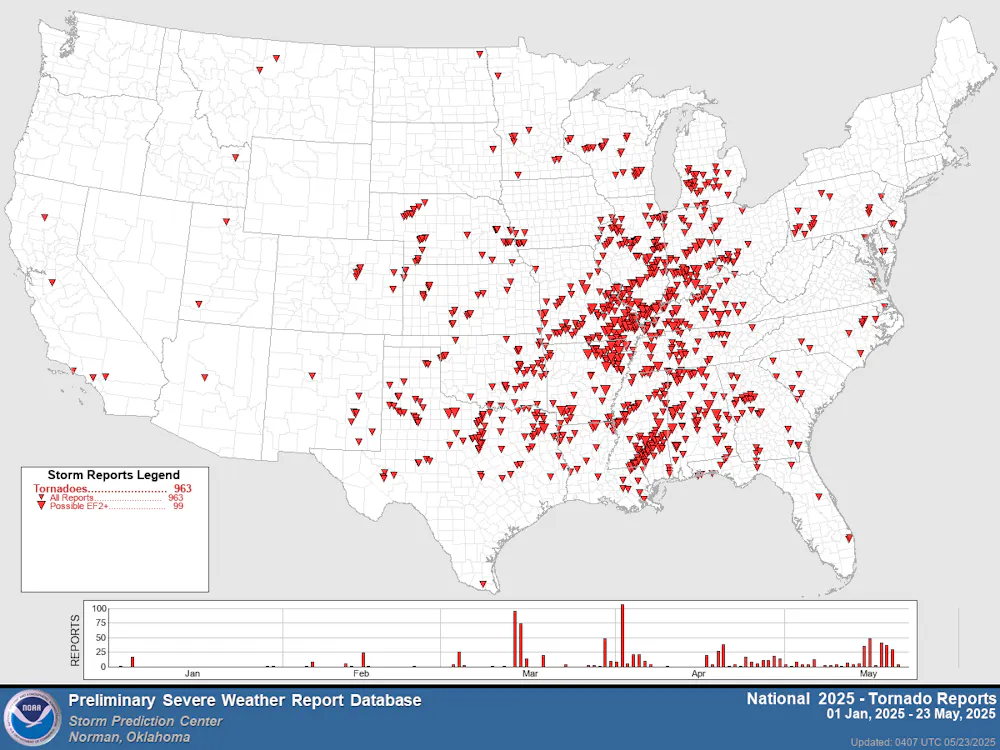
    MIL OSI USA News

  • MIL-OSI USA News: Restoring Gold Standard Science

    Source: The White House

    By the authority vested in me as President by the Constitution and the laws of the United States of America, including section 7301 of title 5, United States Code, it is hereby ordered:
    Section 1.  Policy and Purpose.  Over the last 5 years, confidence that scientists act in the best interests of the public has fallen significantly.  A majority of researchers in science, technology, engineering, and mathematics believe science is facing a reproducibility crisis.  The falsification of data by leading researchers has led to high-profile retractions of federally funded research.  
    Unfortunately, the Federal Government has contributed to this loss of trust.  In several notable cases, executive departments and agencies (agencies) have used or promoted scientific information in a highly misleading manner.  For example, under the prior Administration, the Centers for Disease Control and Prevention issued COVID-19 guidance on reopening schools that incorporated edits by the American Federation of Teachers and was understood to discourage in-person learning.  This guidance’s restrictive and burdensome reopening conditions led many schools to remain at least partially closed, resulting in substantial negative effects on educational outcomes — even though the best available scientific evidence showed that children were unlikely to transmit or suffer serious illness or death from the virus, and that opening schools with reasonable mitigation measures would have only minor effects on transmission.  
    The National Marine Fisheries Service justified a biological opinion by adopting an admitted “worst-case scenario” projection of the North Atlantic right whale population that it believed was “very likely” wrong.  The agency’s proposed actions could have destroyed the historic Maine lobster fishery.  The D.C. Circuit Court of Appeals subsequently overturned that opinion because the agency’s decision to seek out the worst-case scenario skewed its approach to the evidence.  
    Similarly, agencies have used Representative Concentration Pathway (RCP) scenario 8.5 to assess the potential effects of climate change in a “higher” warming scenario.  RCP 8.5 is a worst-case scenario based on highly unlikely assumptions like end-of-century coal use exceeding estimates of recoverable coal reserves.  Scientists have warned that presenting RCP 8.5 as a likely outcome is misleading.
    Actions taken by the prior Administration further politicized science, for example, by encouraging agencies to incorporate diversity, equity, and inclusion considerations into all aspects of science planning, execution, and communication.  Scientific integrity in the production and use of science by the Federal Government is critical to maintaining the trust of the American people and ensuring confidence in government decisions informed by science.
    My Administration is committed to restoring a gold standard for science to ensure that federally funded research is transparent, rigorous, and impactful, and that Federal decisions are informed by the most credible, reliable, and impartial scientific evidence available.  We must restore the American people’s faith in the scientific enterprise and institutions that create and apply scientific knowledge in service of the public good.  Reproducibility, rigor, and unbiased peer review must be maintained.  This order restores the scientific integrity policies of my first Administration and ensures that agencies practice data transparency, acknowledge relevant scientific uncertainties, are transparent about the assumptions and likelihood of scenarios used, approach scientific findings objectively, and communicate scientific data accurately.  Agency use of Gold Standard Science, as set forth in this order, will spur innovation, translate discovery to success, and ensure continued American strength and global leadership in technology.

    Sec2.  Definitions.  For the purposes of this order:
    (a)  “Employee” has the meaning given that term in 5 U.S.C. 2105.
    (b)  “Scientific information” means factual inputs, data, models, analyses, technical information, or scientific assessments related to such disciplines as the behavioral and social sciences, public health and medical sciences, life and earth sciences, engineering, physical sciences, or probability and statistics.  This includes any communication or representation of knowledge such as facts or data, in any medium or form, including textual, numerical, graphic, cartographic, narrative, or audiovisual forms.
    (c)  “Scientific misconduct” means fabrication, falsification, or plagiarism in proposing, performing, reviewing, or reporting the results of scientific research, but does not include honest error or differences of opinion.  For the purposes of this definition;
    (i)    “fabrication” is making up data or results and recording or reporting them;
    (ii)   “falsification” is manipulating research materials, equipment, or processes, or changing or omitting data or results such that the research is not accurately represented in the research record; and
    (iii)  “plagiarism” is the appropriation of another person’s ideas, processes, results, or words without giving appropriate credit.
    (d)  “Senior appointee” means an individual appointed by the President (or an individual performing the functions and duties of an individual appointed by the President) or a non-career member of the Senior Executive Service.
    (e)  “Weight of scientific evidence” means an approach to scientific evaluation in which each piece of relevant information is considered based on its quality and relevance, and then transparently integrated with other relevant information to inform the scientific evaluation prior to making a judgment about the scientific evaluation.  Quality and relevance determinations, at a minimum, should include consideration of study design, fitness for purpose, replicability, peer review, and transparency and reliability of data.

    Sec3.  Restoring Gold Standard Science.  (a)  Within 30 days of the date of this order, the Director of the Office of Science and Technology Policy (OSTP Director) shall, in consultation with the heads of relevant agencies, issue guidance for agencies on implementation of “Gold Standard Science” in the conduct and management of their respective scientific activities.  For the purposes of this order, Gold Standard Science means science conducted in a manner that is:
    (i)     reproducible;
    (ii)    transparent;
    (iii)   communicative of error and uncertainty;
    (iv)    collaborative and interdisciplinary;
    (v)     skeptical of its findings and assumptions;
    (vi)    structured for falsifiability of hypotheses;
    (vii)   subject to unbiased peer review;
    (viii)  accepting of negative results as positive outcomes; and
    (ix)    without conflicts of interest.
    (b)  Upon publication of the guidance prescribed in subsection (a), each agency head, as necessary and appropriate and in consultation with the Director of the Office of Management and Budget (OMB Director) and the OSTP Director, shall promptly update applicable agency policies governing the production and use of scientific information, including scientific integrity policies, to implement the OSTP Director’s guidance on Gold Standard Science and ensure that agency scientific activities are conducted in accordance with this order.
    (c)  Each agency head shall, to the extent practicable, incorporate the OSTP Director’s guidance on Gold Standard Science and the requirements of this order into the processes by which their agency conducts, manages, interprets, communicates, and uses scientific or technological information prior to the finalization of the updated policies under this section.
    (d)  Within 60 days of the publication of the guidance prescribed in section 3(a), agency heads shall report to the OSTP Director on the actions taken to implement Gold Standard Science at their agency.

     Sec4.  Improving the Use, Interpretation, and Communication of Scientific Data.  No later than 30 days after the date of this order, agency heads and employees shall adhere to the following rules governing the use, interpretation, and communication of scientific data, unless otherwise provided by law:
    (a)  Employees shall not engage in scientific misconduct nor knowingly rely on information resulting from scientific misconduct.
    (b)  Except as prohibited by law, and consistent with relevant policies that protect national security or sensitive personal or confidential business information, agency heads shall in a timely manner and, to the extent practicable and within the agency’s authority:
    (i)  subject to paragraph (ii), make publicly available the following information within the agency’s possession:
    (A)  the data, analyses, and conclusions associated with scientific and technological information produced or used by the agency that the agency reasonably assesses will have a clear and substantial effect on important public policies or important private sector decisions (influential scientific information), including data cited in peer-reviewed literature; and
    (B)  the models and analyses (including, as applicable, the source code for such models) the agency used to generate such influential scientific information.  Employees may not invoke exemption 5 to the Freedom of Information Act (5 U.S.C. 552(b)(5)) to prevent disclosure of such models unless authorized in writing to do so by the agency head following prior notice to the OSTP Director.
    (ii)  risk models used to guide agency enforcement actions or select enforcement targets are not information that must be disclosed under this subsection.
    (c)  When using scientific information in agency decision-making, employees shall transparently acknowledge and document uncertainties, including how uncertainty propagates throughout any models used in the analysis.
    (d) Where employees produce or use scientific information to inform policy or legal determinations they must use science that comports with the legal standards applicable to those determinations, including when agencies evaluate the realistic or reasonably foreseeable effects of an action.
    (e)  Employees shall be transparent about the likelihood of the assumptions and scenarios used.  Highly unlikely and overly precautionary assumptions and scenarios should only be relied upon in agency decision-making where required by law or otherwise pertinent to the agency’s action.
    (f)  When scientific or technological information is used to inform agency evaluations and subsequent decision-making, employees shall apply a “weight of scientific evidence” approach.
    (g)  Employees’ communication of scientific information shall be consistent with the results of the relevant analysis and evaluation and, to the extent that uncertainty is present, the degree of uncertainty should be communicated.  Communications involving a scientific model or information derived from a scientific model should include reference to any material assumptions that inform the model’s outputs.
    (h)  Once the guidance on Gold Standard Science is established and promulgated pursuant to section 3 of this order, it shall, among other things, form the basis for employees’ evaluation of all scientific and technological information called for in this order except where otherwise required by law.

    Sec5.  Interim Scientific Integrity Policies.  (a)  Until the issuance of updated agency scientific integrity policies pursuant to section 3 of this order, and except where required by law:
    (i)    scientific integrity policies in each agency shall be governed by the scientific integrity policies that existed within the executive branch on January 19, 2021, except that in the event of a conflict between such policies and the policies and requirements of this order, the policies and requirements of this order control; and
    (ii)   agency heads shall take all necessary actions to reevaluate and, where necessary, revise or rescind scientific integrity policies or procedures, or amendments to such policies or procedures, issued between January 20, 2021, and January 20, 2025.
    (iii)  each agency head shall promptly revoke any organizational or operational changes, designations, or documents that were issued or enacted pursuant to the Presidential Memorandum of January 27, 2021 (Restoring Trust in Government Through Scientific Integrity and Evidence-Based Policymaking), which was revoked pursuant to Executive Order 14154 and shall conduct applicable agency operations in the manner and revert applicable agency organization to the same form as would have existed in the absence of such changes, designations, or documents.
    (b)  In updating applicable scientific integrity policies pursuant to section 3 of this order, agencies should ensure they:
    (i)    encourage the open exchange of ideas;
    (ii)   provide for consideration of different or dissenting viewpoints; and
    (iii)  protect employees from efforts to prevent or deter consideration of alternative scientific opinions.
    (c)  Agencies, unless prohibited by law, shall review agency actions taken between January 20, 2021, and January 20, 2025, including regulations, guidance documents, policies, and scientific evaluations and take all appropriate steps, consistent with law, to ensure alignment with the policies and requirements of this order.

    Sec6.  Scope and Applicability.  (a)  The policies and rules set forth in this order apply to all employees involved in the generation, use, interpretation, or communication of scientific information, regardless of job classification, and to all agency decision-making, except where precluded by law.
    (b)  Agency heads and employees shall, to the extent practicable and consistent with applicable law, require agency contractors to adhere to these policies and rules as though they were agency employees.  
    (c)  The policies and rules set forth in this order govern the use of science that informs agency decisions but they are not applicable to non-scientific aspects of agency decision-making.

    Sec7.  Enforcement and Oversight.  (a)  Each agency head shall establish internal processes to evaluate alleged violations of the requirements of this order and other applicable agency policies governing the generation, use, interpretation, and communication of scientific information.  Such processes shall be the responsibility, and administered under the direction, of a senior appointee designated by the agency head and shall provide for taking appropriate measures to correct scientific information in response to violations, consistent with the requirements and procedures of section 515 of the statute commonly known as the Information Quality Act, Public Law 106-554, appendix C (114 Stat. 2763A-153).  The designated senior appointee may also forward potential violations to the relevant human resources officials for discipline to the extent the potential violation also violates applicable agency policies and procedures.  The designated senior appointee may consult appropriate officials with scientific expertise when establishing such processes.  
    (b)  The processes created under this section are, unless otherwise required by applicable law, the sole and exclusive means of evaluating and, as applicable, addressing alleged violations of this order and other agency policies governing the use, interpretation, and communication of scientific information.

    Sec8.  Waivers.  (a)  An agency head may request in writing that the OMB Director, in consultation with the OSTP Director, waive any of the requirements of this order for good cause shown.  Such request must explain how the requested waiver is consistent with the policies and purposes of this order.
    (b)  Notwithstanding any other provision of this order, the policies and requirements of this order shall apply to agency actions that pertain to foreign or military affairs, or to a national security or homeland security function of the United States, only to the extent that the applicable agency head, in his or her sole and exclusive discretion, determines they should apply.

    Sec9.  General Provisions.  (a)  Nothing in this order shall be construed to impair or otherwise affect:
    (i)   the authority granted by law to an executive department or agency, or the head thereof; or
    (ii)  the functions of the Director of the Office of Management and Budget relating to budgetary, administrative, or legislative proposals.
    (b)  This order shall be implemented consistent with applicable law and subject to the availability of appropriations.
    (c) This order is not intended to, and does not, create any right or benefit, substantive or procedural, enforceable at law or in equity by any party against the United States, its departments, agencies, or entities, its officers, employees, or agents, or any other person.
    (d)   The Office of Management and Budget shall provide funding for publication of this order in the Federal Register.

                                   DONALD J. TRUMP

    THE WHITE HOUSE,
        May 23, 2025.

    MIL OSI USA News

  • MIL-OSI USA: Larsen Releases Statement on Trump’s Attacks on Education

    Source: United States House of Representatives – Congressman Rick Larsen (2nd Congressional District Washington)

    Today, Rep. Rick Larsen released the following statement on the Trump administration’s attacks on academic freedom and access to education:

    “The Trump administration is attacking colleges and universities to exact political revenge. These tactics will fail, and I stand with Harvard and all educational institutions against the President’s unlawful attempts to bully his opponents into silence.

    “The Administration should be investing in research and young people to keep the U.S. globally innovative and competitive. Instead, it is slashing funding that supports cutting-edge science, hard-working students and local jobs.

    “In Northwest Washington, funding cuts have jeopardized climate resiliency research at the University of Washington and Mars sample testing at Western Washington University. Funding cuts are also threatening the Federal TRIO Programs and Pell Grants, which have a proven track record of helping low-income and first-generation students succeed.

    “I will continue to fight against the Trump administration’s budget cuts, and to fight for academic freedom, college affordability, and keeping the U.S. globally innovative and competitive.”

    ###

    MIL OSI USA News

  • MIL-OSI United Kingdom: Fresh funding for Exeter research hub creating new medical sensors and healthier soft drinks

    Source: United Kingdom – Executive Government & Departments

    Press release

    Fresh funding for Exeter research hub creating new medical sensors and healthier soft drinks

    Researchers in Exeter have today (Saturday 24 May) been selected to host a state-of-the-art facility developing new materials designed at microscopic scale.

    • From new medical sensors to components for next-generation computers that could boost cyber security or discover new medicines, Exeter experts are bringing state-of-the-art new materials to life with £19.6 million backing 

    • Exeter University’s MetaHub will design materials with specially engineered properties, not found in nature, at microscopic scale

    • MetaHub has already attracted £4.5 million of private investment, boosting to the high-growth technologies and sectors that will drive our Plan for Change in the South West and beyond

    Researchers in Exeter have today (Saturday 24 May) been selected to host a state-of-the-art facility developing new materials designed at microscopic scale – paving the way for new jobs and businesses in everything from medical sensors to healthier food colourings in soft drinks. 

    The University of Exeter’s MetaHub will be supported by £19.6 million in public and private backing, announced by Science Minister Lord Vallance at the University.

    The MetaHub is focused on ‘nanoscale metamaterials’ – a new class of advanced materials, designed at the tiniest, molecular level, so that they have new and useful properties that cannot be found in the natural world. This could enable components to be created that are much smaller than current technology allows, or that can perform new functions that aren’t possible with existing materials.

    These new materials could be used to make the next generation of computer components and radio transmitters for defence systems, diagnostic tools for healthcare, and healthier food colourings for soft drinks. Their work is being backed by businesses ranging from defence and security firms QinetiQ and Leonardo to multinational drinks manufacturer PepsiCo. 

    This is a growing field, emerging from just a handful of groups doing such research, with the UK already leading the way. Investing now in the UK’s metamaterials expertise paves the way for the products of the future to be discovered and commercialised in Britain – with new jobs, businesses and even entire industries to potentially flow from them. 

    Delivering this growth in partnership with the private sector, £10.5 million of the total funding comes from UK Research and Innovation, with a further £4.5 million in private investment crowded in – showing the value of cutting-edge research as a driver of investment into all corners of the country, in support of the Plan for Change. A further £4.65 million comes from the University of Exeter and other higher education institutions. 

    Speaking at the University of Exeter, Science Minister Lord Vallance said: 

    The work happening here in Exeter is a prime example of how cutting-edge research can attract private investment and drive economic growth, in every corner of the UK, which will be critical to our economic mission at the core of the Plan for Change. 

    Our backing for the MetaHub is an investment, for both today and for tomorrow. We are securing the UK’s leadership in the high-potential field of metamaterials, a new class of materials specially engineered to have new and useful properties. This work is paving the way for future products and innovations that will deliver jobs and growth, in the years ahead.

    At the University yesterday, Lord Vallance met researchers leading major new initiatives across climate change, critical minerals and human genomics which together with MetaHub represent £80 million of new public and private sector investment into Cornwall and Devon. 

    University of Exeter Deputy Vice-Chancellor Stuart Brocklehurst said: 

    Our world leading research across many of the hottest areas of science will both help address profound global challenges and create opportunity across the South West. It’s been great to welcome Lord Vallance to the University of Exeter to celebrate the work of our researchers and the investment which their work is attracting from public and private sources alike.

    Professor Charlotte Deane, Executive Chair at EPSRC said:

    We’ve nurtured metamaterials research for many years and it’s fantastic to see it grow from a few individual research groups in the 1990s to a rapidly expanding and thriving research community today.

    By harnessing the control of light, energy and information, the MetaHub has the potential to benefit both civil and defence sectors. From more efficient, effective and secure computing and communication to advanced sensing and energy generation, this research will take curiosity-led research to tangible outcomes.

    Whilst in Exeter, Lord Vallance also visited another hub for world-leading science and research which is based there: the Met Office. As the UK’s national weather forecasting service, the Met Office’s work is critical to the safe and routine operation of transport, energy, businesses and even national security – efforts bolstered by the switchover to the world’s first cloud-based supercomputer dedicated to weather and climate science, which went online last month. Lord

    Vallance also saw how the Met Office is using technologies like AI, to overhaul how we study and understand weather and climate change. 

    DSIT media enquiries

    Email press@dsit.gov.uk

    Monday to Friday, 8:30am to 6pm 020 7215 3000

    Updates to this page

    Published 24 May 2025

    MIL OSI United Kingdom

  • MIL-OSI USA: News 05/23/2025 Blackburn, Welch, Gooden, Ross Introduce Bill to Speed Up Patent Process for Critical and Emerging Technologies

    US Senate News:

    Source: United States Senator Marsha Blackburn (R-Tenn)

    NASHVILLE, Tenn. – U.S. Senators Marsha Blackburn (R-Tenn.) and Peter Welch (D-Vt.) and U.S. Representatives Lance Gooden (R-Texas) and Deborah Ross (D-N.C.) introduced the bipartisan, bicameral Leadership in Critical and Emergency Technology (CET) Act, which would encourage innovation in critical and emergency technologies by ensuring those patent applications receive prompt consideration by the U.S. Patent and Trademark Office (USPTO):

    “The United States cannot afford to fall behind to the Chinese Communist Party in the research and development of critical and emerging technology,” said Senator Blackburn. “My bipartisan Leadership in CET Act would expedite the patent review process to ensure we regain our competitive edge.”

    “China has made significant strides in emerging technologies like artificial intelligence and is working rapidly to surpass the United States as a world leader in the field. Accelerating our research and development in critical technologies is a vital step to maintaining our leadership on the world stage,” said Senator Welch. “Our bipartisan bill will boost our competitiveness and ensure we’re at the forefront of setting global standards for emerging technologies.”

    “The Leadership in CET Act will secure American global dominance in transformative technologies like AI and semiconductors, said Congressman Gooden. “Through streamlining patent approvals, we will foster innovation and drive progress in these critical fields.”

    “America has always been a forerunner in technology and innovation, and we cannot fall back now,” said Congresswoman Ross. “The Leadership in Critical and Emerging Technologies Act will fast-track American innovation in key fields, empower inventors in the Research Triangle and beyond, and help us outperform our global competitors. North Carolina’s innovators are ready to lead, and this bipartisan legislation will give them the tools to do so. We have taken significant strides toward revitalizing American innovation and strengthening our competitiveness, and we must continue to build on that progress.”

    BACKGROUND

    • Communist China has significantly strengthened its research and development efforts and now leads the world in 57 of 64 critical technologies.
      • This is an increase from 52 technologies in 2021 and a drastic leap from the mid-2000s, when China was leading in just three. 
    • The U.S. historically has been the world’s dominant research power, leading in research for 60 out of 64 technologies from 2003-2007. That number has since dropped to seven, with notable holdouts in advanced information and communication technologies, semiconductor design, and certain quantum capabilities.
    • Chinese President Xi Jinping, through a series of government proclamations, has accelerated fundamental scientific research so it can become self-reliant in critical technologies.
    • In 2022, Chinese institutions applied for 29,853 AI-related patents—almost 80% more than U.S. filings.
      • In 2024, China was listed as a high risk to monopolize 24 critical and emerging technology areas.

    LEADERSHIP IN CET ACT

    • The Leadership in CET Act would:
      • Require the Under Secretary of Commerce for Intellectual Property and Director of the USPTO to establish and carry out a pilot program to expedite the examination of 15,000 patent applications pertaining to certain capabilities in artificial intelligence, semiconductor design, and quantum information science;
      • Prevent foreign entities of concern from participating in the program;
      • Provide the USPTO a one-time reauthorization authority if deemed necessary; and
      • Require the USPTO Director to submit a report to Congress assessing the impact and effectiveness of the pilot program based on all available data following the program’s termination.

    ENDORSEMENTS

    This legislation is endorsed by the High Tech Inventors Alliance, the Innovation Alliance, and theComputer & Communications Industry Association.

    RELATED

    Click here for bill text.

    MIL OSI USA News

  • MIL-OSI United Kingdom: Cambridgeshire and Peterborough to benefit from recent trade deals

    Source: United Kingdom – Executive Government & Departments

    Press release

    Cambridgeshire and Peterborough to benefit from recent trade deals

    Manufacturing in Cambridgeshire and Peterborough are set to benefit from the UK’s new trade deals with India, the US and the EU that slashes tariffs and boosts access to the world’s fastest growing economy.

    • Prime Minister to meet with the Mayor of Cambridgeshire and Peterborough Mayor Paul Bristow
    • Comes as we’ve nailed three trade deals in as many weeks to deliver growth that is a priority for the Plan for Change
    • Delivers major jobs boost for local manufacturing that employs 16% of all people

    Manufacturing in Cambridgeshire and Peterborough are set to benefit from the UK’s new trade deals with India, the US and the EU that slashes tariffs and boosts access to the world’s fastest growing economy.  

    The deals negotiated by the Prime Minister delivers long-term certainty for local manufacturing that employs over 51,000 people – 16% of all jobs in the region.    

    Reducing tariffs on machinery and medical equipment will support employers with a significant presence in the region like Paragraf, Hutchinson and Bradshaw Electric Vehicles to grow and create more jobs – delivering on our Plan for Change.  

    Prime Minister Keir Starmer said:   

    The trade deals that we have closed provides certainty for 51,000 people in the region who are employed in manufacturing, delivers security for their families and puts more in people’s pockets.   

    It also will create opportunities for more seamless trade, attracting inward investment that will grow the local economy and make a difference to people’s lives.    

    These changes will be felt everywhere, whether it’s lower food prices at the checkout, more choice for consumers and higher living standards that will improve livelihoods across the Cambridgeshire and Peterborough Combined Authority.

    36,116 people employed in agriculture will also benefit from our deal with the EU. It reduces checks and red tape, meaning that produce grown and farmed in East Anglia now has easy access to the UK’s biggest trading market. 

    The agreement also protects British steel exports from new EU rules and restrictive, providing further security for 1,375 people working in the steel industry across the East of England. 

    The Prime Minister will tell the English Mayors and the Leaders from the Devolved Governments at a meeting of the Council of Nations and Regions in London today (Friday 23 May) that his trade deals with India, the United States and the EU will deliver economic growth that will improve people’s lives at home.    

    He will challenge those in attendance to drive economic growth in their local areas to deliver for working people.    

    Business and Trade Secretary Jonathan Reynolds said:

    The three landmark deals secured this month with the US, India, and the EU have shown this government is serious about striking the deals that our businesses want and need. 

    We are delivering billions for the UK economy and wages every year as part of our Plan for Change. For businesses in Cambridgeshire and Peterborough, these deals will mean stability and jobs protected as they seize new opportunities to sell to some of our biggest trading partners.

    Our deal with India is set to benefit every corner of the UK, including manufacturing in Cambridgeshire and Peterborough, that according to the latest available data contributed £4.4 billion to the UK economy.  

    Under the Free Trade Deal that was concluded, the barriers to trading have been dropped, with India agreeing to reduce tariffs on products including advanced machinery and medical devices that are made in the Cambridgeshire and Peterborough.   

    Dr Uday Phadke, Executive Chairman of Accelerator India, and Chief Executive of the Triple Chasm Company, Cartezia Ltd and Director of the Research & Development Society, said:

    The recent UK trade deals are a significant step forward in strengthening the global position of UK science and technology. 

    At Triple Chasm Company, we see these agreements as a powerful enabler of cross-border innovation, expanding our commercialisation services across key markets in the US, Europe, and India. 

    These deals not only boost our growth in global innovation clusters but also reinforce our confidence to invest further in the UK. We commend the UK Government for its credibility and strategic vision in securing agreements that directly support ambitious, innovation-led businesses like ours.

    Cambridge is uniquely placed to benefit from the deals that we have secured, whether that’s the reduced tariffs from our India Free Trade Deal on medical devices that will unleash more opportunities in life sciences. 

    In another win for the region’s world class research and development sector, our agreement with the US opens the way to future technology partnership where our two science-rich nations will collaborate in biotech, life sciences, quantum computing, nuclear fusion, aerospace and space.  

    Just this week, the Prime Minister acted in the national interest by confirming a new agreement with the European Union that will deliver on his core mission to grow the economy, creating more jobs in the Cambridgeshire and Peterborough, raising standards and putting more money in people’s pockets.    

    At today’s meeting of the Council of Nations and Regions the Prime Minister will also lead discussions about spreading AI to help working people access the services that they need in their local areas.

    Updates to this page

    Published 23 May 2025

    MIL OSI United Kingdom

  • MIL-OSI Russia: Maria Zavyalova: “Miracles happen in life. Entering the Polytechnic was also a miracle”

    Translation. Region: Russian Federal

    Source: Peter the Great St Petersburg Polytechnic University – Peter the Great St Petersburg Polytechnic University –

    The hero of the next issue of “Persona” Maria Zavyalova has been interested in history and the humanities since childhood. While studying at the Polytechnic University, Maria joined the military-historical club “Our Polytechnic”, was engaged in historical dances and participated in patriotic education. After graduating from the university, she stayed at her alma mater. Now Maria Zavyalova is a leading specialist at the Museum of History of SPbPU and an assistant at the Higher School of Social Sciences of the Humanities Institute. For her special contribution to the spiritual and moral education of youth and students, she was awarded the Honorary Badge of St. Tatiana. In an interview, Maria Zavyalova said about childhood in the village, the best moments in student life, about crossing paths and miracles in life.

    Please note: This information is raw content directly from the source of the information. It is exactly what the source states and does not reflect the position of MIL-OSI or its clients.

    MIL OSI Russia News

  • MIL-OSI Europe: Minutes – Thursday, 22 May 2025 – Brussels – Final edition

    Source: European Parliament

    PV-10-2025-05-22

    EN

    EN

    iPlPv_Sit

    Minutes
    Thursday, 22 May 2025 – Brussels

     Abbreviations and symbols

    + adopted
    rejected
    lapsed
    W withdrawn
    RCV roll-call votes
    EV electronic vote
    SEC secret ballot
    split split vote
    sep separate vote
    am amendment
    CA compromise amendment
    CP corresponding part
    D deleting amendment
    = identical amendments
    § paragraph

    IN THE CHAIR: Antonella SBERNA
    Vice-President

    1. Opening of the sitting

    The sitting opened at 09:00.


    2. Choose Europe for Science (debate)

    Council and Commission statements: Choose Europe for Science (2025/2713(RSP))

    Ekaterina Zaharieva (Member of the Commission) made the statement on behalf of the Commission.

    The following spoke: Christian Ehler, on behalf of the PPE Group, Giorgio Gori, on behalf of the S&D Group, Catherine Griset, on behalf of the PfE Group, Piotr Müller, on behalf of the ECR Group, Valérie Hayer, on behalf of the Renew Group, Anna Strolenberg, on behalf of the Verts/ALE Group, Ilaria Salis, on behalf of The Left Group, Marc Jongen, on behalf of the ESN Group, Letizia Moratti, Lina Gálvez, Annamária Vicsek, Marion Maréchal, Christophe Grudler, Vladimir Prebilič, Catarina Martins, Zsuzsanna Borvendég, Diana Iovanovici Şoşoacă, Angelika Niebler, Sofie Eriksson, Jana Nagyová, Diego Solier, Oihane Agirregoitia Martínez, Anthony Smith, Hélder Sousa Silva, who also answered a blue-card question from João Oliveira, Bruno Gonçalves, who also answered a blue-card question from João Oliveira, Kris Van Dijck, Jüri Ratas, Elena Sancho Murillo and Eszter Lakos.

    The following spoke under the catch-the-eye procedure: Liudas Mažylis, Vytenis Povilas Andriukaitis and Sebastian Tynkkynen.

    IN THE CHAIR: Victor NEGRESCU
    Vice-President

    The following spoke under the catch-the-eye procedure: Helmut Brandstätter, João Oliveira and Lukas Sieper.

    The following spoke: Ekaterina Zaharieva.

    The debate closed.


    3. Deliberations of the Committee on Petitions in 2023 (debate)

    Report on the deliberations of the Committee on Petitions in 2023 [2025/2027(INI)] – Committee on Petitions. Rapporteur: Gheorghe Falcă (A10-0063/2025)

    Peter Agius (deputising for the rapporteur) introduced the report.

    The following spoke: Glenn Micallef (Member of the Commission).

    The following spoke: Rosa Estaràs Ferragut, on behalf of the PPE Group, Sandra Gómez López, on behalf of the S&D Group, Pál Szekeres, on behalf of the PfE Group, Kosma Złotowski, on behalf of the ECR Group, Jana Toom, on behalf of the Renew Group, Ana Miranda Paz, on behalf of the Verts/ALE Group, Marcin Sypniewski, on behalf of the ESN Group, Maria Walsh and Mireia Borrás Pabón.

    The following spoke under the catch-the-eye procedure: Elena Nevado del Campo, Juan Fernando López Aguilar, Sebastian Tynkkynen, Petras Gražulis, Maria Zacharia and Lefteris Nikolaou-Alavanos.

    The following spoke: Glenn Micallef and Peter Agius.

    The debate closed.

    Vote: 22 May 2025.

    (The sitting was suspended at 10:45.)


    IN THE CHAIR: Pina PICIERNO
    Vice-President

    4. Resumption of the sitting

    The sitting resumed at 11:01.

    The following spoke: Patryk Jaki.


    5. Voting time

    For detailed results of the votes, see also ‘Results of votes’ and ‘Results of roll-call votes’.


    5.1. Amending Regulation (EU) No 228/2013 as regards additional assistance and further flexibility to outermost regions affected by severe natural disasters and in the context of cyclone Chido devastating Mayotte ***I (vote)

    Proposal for a Regulation of the European Parliament and of the Council amending Regulation (EU) No 228/2013 as regards additional assistance and further flexibility to outermost regions affected by severe natural disasters and in the context of cyclone Chido devastating Mayotte (COM(2025)0190 – C10-0071/2025 – 2025/0104(COD)) – Committee on Agriculture and Rural Development

    REQUEST FOR AN URGENT DECISION by the AGRI Committee (Rule 170(6))

    Approved

    Vote: at a later part-session.

    Detailed voting results


    5.2. Amending Regulation (EU) 2023/956 as regards simplifying and strengthening the carbon border adjustment mechanism ***I (vote)

    Report on the proposal for a regulation of the European Parliament and of the Council amending Regulation (EU) 2023/956 as regards simplifying and strengthening the carbon border adjustment mechanism [COM(2025)0087 – C10-0035/2025 – 2025/0039(COD)] – Committee on the Environment, Climate and Food Safety. Rapporteur: Antonio Decaro (A10-0085/2025)

    The debate had taken place on 21 May 2025 (minutes of 21.5.2025, item 15).

    (Majority of the votes cast)

    COMMISSION PROPOSAL and AMENDMENTS

    Approved (P10_TA(2025)0108)

    REQUEST FOR REFERRAL BACK TO COMMITTEE

    Approved

    The following had spoken:

    Antonio Decaro (rapporteur), after the vote on the Commission proposal, to request that the matter be referred back to the committee responsible, for interinstitutional negotiations in accordance with Rule 60(4).

    Detailed voting results


    5.3. Modification of customs duties applicable to imports of certain goods originating in or exported from the Russian Federation and the Republic of Belarus ***I (vote)

    Report on the proposal for a regulation of the European Parliament and of the Council on the modification of customs duties applicable to imports of certain goods originating in or exported directly or indirectly from the Russian Federation and the Republic of Belarus [COM(2025)0034 – C10-0006/2025 – 2025/0021(COD)] – Committee on International Trade. Rapporteur: Inese Vaidere (A10-0087/2025)

    (Majority of the votes cast)

    COMMISSION PROPOSAL and AMENDMENTS

    Approved (P10_TA(2025)0109)

    Parliament’s first reading thus closed.

    The following had spoken:

    – Before the vote, Inese Vaidere (rapporteur), to make a statement on the basis of Rule 165(4).

    – Before the vote, Glenn Micallef (Member of the Commission), to make a statement.

    Detailed voting results


    5.4. Granting equivalence to Moldova and Ukraine for field inspections and seed production ***I (vote)

    Report on the proposal for a decision of the European Parliament and of the Council amending Council Decision 2003/17/EC as regards the equivalence of field inspections carried out in the Republic of Moldova on fodder plant seed-producing crops and on the equivalence of fodder plant seed produced in the Republic of Moldova, and as regards the equivalence of field inspections carried out in Ukraine on beet seed-producing crops and oil plant seed-producing crops and on the equivalence of beet seed and oil plant seed produced in Ukraine [COM(2024)0052 – C9-0026/2024 – 2024/0027(COD)] – Committee on Agriculture and Rural Development. Rapporteur: Veronika Vrecionová (A10-0043/2025)

    (Majority of the votes cast)

    PROPOSAL TO REJECT THE COMMISSION PROPOSAL

    Rejected

    COMMISSION PROPOSAL and AMENDMENTS

    Approved (P10_TA(2025)0110)

    Parliament’s first reading thus closed.

    Detailed voting results


    5.5. Amendments to the Capital Requirements Regulation as regards securities financing transactions under the net stable funding ratio ***I (vote)

    Amendments to Regulation (EU) No 575/2013 on prudential requirements for credit institutions as regards requirements for securities financing transactions under the net stable funding ratio (COM(2025)0146 – C10-0059/2025 – 2025/0077(COD)) – Committee on Economic and Monetary Affairs

    (Majority of the votes cast)

    PROPOSAL TO REJECT THE COMMISSION PROPOSAL

    Rejected

    COMMISSION PROPOSAL and AMENDMENTS

    Approved (P10_TA(2025)0111)

    Parliament’s first reading thus closed.

    Detailed voting results


    5.6. Euratom Research and Training Programme for the period 2026-2027 complementing Horizon Europe * (vote)

    Report on the proposal for a Council regulation establishing the Research and Training Programme of the European Atomic Energy Community for the period 2026-2027 complementing Horizon Europe – the Framework Programme for Research and Innovation and repealing Council Regulation (Euratom) 2021/765 [COM(2025)0060 – C10-0052/2025 – 2025/0035(NLE)] – Committee on Industry, Research and Energy. Rapporteur: Borys Budka (A10-0083/2025)

    (Majority of the votes cast)

    COMMISSION PROPOSAL TO THE COUNCIL

    Approved by single vote (P10_TA(2025)0112)

    Detailed voting results


    5.7. Partial renewal of Members of the Court of Auditors – HR nominee (vote)

    Report on the nomination of Ivana Maletić as a Member of the Court of Auditors [06874/2025 – C10-0049/2025 – 2025/0802(NLE)] – Committee on Budgetary Control. Rapporteur: Ondřej Knotek (A10-0088/2025)

    (Majority of the votes cast)
    (Secret ballot (Rule 133(3)))

    APPOINTMENT OF IVANA MALETIĆ

    Approved (P10_TA(2025)0113)

    The list of Members voting is annexed to these minutes (minutes of 22.5.2025 Annex 1).

    Detailed voting results


    5.8. Deliberations of the Committee on Petitions in 2023 (vote)

    Report on the deliberations of the Committee on Petitions in 2023 [2025/2027(INI)] – Committee on Petitions. Rapporteur: Gheorghe Falcă (A10-0063/2025)

    (Majority of the votes cast)

    MOTION FOR A RESOLUTION

    Adopted (P10_TA(2025)0114)

    The following had spoken:

    Fabienne Keller, to move an oral amendment to paragraph 35. Parliament had not agreed to put the oral amendment to the vote as more than 39 Members had opposed it.

    Detailed voting results

    8

    (The sitting was suspended for a few moments.)


    6. Resumption of the sitting

    The sitting resumed at 11:42.


    7. Explanations of vote


    7.1. Amending Regulation (EU) 2023/956 as regards simplifying and strengthening the carbon border adjustment mechanism (A10-0085/2025 – Antonio Decaro) (oral explanations of vote)

    Jadwiga Wiśniewska


    7.2. Written explanations of vote

    Explanations of vote submitted in writing under Rule 201 appear on the Members’ pages on Parliament’s website.


    8. Approval of the minutes of the part-session and forwarding of texts adopted

    In accordance with Rule 208(3), the minutes of that day’s sitting and those of the previous day’s sitting would be put to the House for approval at the start of the next sitting.

    With Parliament’s agreement, the texts adopted during the part-session would be forwarded to their respective addressees without delay.


    9. Dates of the next part-session

    The next part-session would be held from 16 June 2025 to 19 June 2025.


    10. Closure of the sitting

    The sitting closed at 11:46.


    11. Adjournment of the session

    The session of the European Parliament was adjourned.

    Alessandro Chiocchetti

    Roberta Metsola

    Secretary-General

    President


    LIST OF DOCUMENTS SERVING AS A BASIS FOR THE DEBATES AND DECISIONS OF PARLIAMENT


    I. Transfers of appropriations and budgetary decisions

    In accordance with Article 29 of the Financial Regulation, the Committee on Budgets had decided to approve transfer of appropriations INF1/2025 – Section VI – European Economic and Social Committee.

    In accordance with Article 29 of the Financial Regulation, the Committee on Budgets had decided to approve transfer of appropriations No 2/2025 – Section IX – European Data Protection Supervisor.

    In accordance with Article 31(6) of the Financial Regulation, the Committee on Budgets had decided to approve the Commission’s transfer of appropriations DEC 05/2025 – Section III – Commission.

    In accordance with Article 31(6) of the Financial Regulation, the Council of the European Union had decided to approve the Commission’s transfer of appropriations DEC 05/2025 – Section III – Commission.


    ATTENDANCE REGISTER

    Present:

    Abadía Jover Maravillas, Adamowicz Magdalena, Aftias Georgios, Agirregoitia Martínez Oihane, Agius Saliba Alex, Allione Grégory, Al-Sahlani Abir, Anadiotis Nikolaos, Anderson Christine, Andersson Li, Andrews Barry, Andriukaitis Vytenis Povilas, Androuët Mathilde, Angel Marc, Annemans Gerolf, Antoci Giuseppe, Arias Echeverría Pablo, Arimont Pascal, Arłukowicz Bartosz, Arnaoutoglou Sakis, Arndt Anja, Arvanitis Konstantinos, Asens Llodrà Jaume, Assis Francisco, Aubry Manon, Auštrevičius Petras, Azmani Malik, Bajada Thomas, Ballarín Cereza Laura, Bardella Jordan, Barley Katarina, Barrena Arza Pernando, Bartulica Stephen Nikola, Bartůšek Nikola, Bay Nicolas, Bay Christophe, Beleris Fredis, Bellamy François-Xavier, Benea Dragoş, Benifei Brando, Beňová Monika, Berendsen Tom, Berger Stefan, Berlato Sergio, Bernhuber Alexander, Biedroń Robert, Bielan Adam, Bischoff Gabriele, Blinkevičiūtė Vilija, Blom Rachel, Bloss Michael, Bocheński Tobiasz, Bogdan Ioan-Rareş, Bonaccini Stefano, Bonte Barbara, Borchia Paolo, Borrás Pabón Mireia, Borvendég Zsuzsanna, Boßdorf Irmhild, Bosse Stine, Botenga Marc, Boyer Gilles, Brandstätter Helmut, Brasier-Clain Marie-Luce, Brejza Krzysztof, Brudziński Joachim Stanisław, Bryłka Anna, Buchheit Markus, Buczek Tomasz, Buda Daniel, Buda Waldemar, Budka Borys, Bugalho Sebastião, Buła Andrzej, Bullmann Udo, Camara Mélissa, Canfin Pascal, Carberry Nina, Carême Damien, Casa David, Caspary Daniel, Cassart Benoit, Cavazzini Anna, Ceulemans Estelle, Chahim Mohammed, Chaibi Leila, Chastel Olivier, Chinnici Caterina, Christensen Asger, Ciccioli Carlo, Cifrová Ostrihoňová Veronika, Clausen Per, Corrado Annalisa, Costanzo Vivien, Cotrim De Figueiredo João, Cremer Tobias, Crespo Díaz Carmen, Cristea Andi, Crosetto Giovanni, Cunha Paulo, Dahl Henrik, Danielsson Johan, Dauchy Marie, Dávid Dóra, David Ivan, Decaro Antonio, de la Hoz Quintano Raúl, Della Valle Danilo, Deloge Valérie, De Masi Fabio, De Meo Salvatore, Demirel Özlem, Dibrani Adnan, Diepeveen Ton, Dieringer Elisabeth, Di Rupo Elio, Disdier Mélanie, Dobrev Klára, Doleschal Christian, Dömötör Csaba, Do Nascimento Cabral Paulo, Donazzan Elena, Dorfmann Herbert, Dostalova Klara, Dostál Ondřej, Droese Siegbert Frank, Düpont Lena, Dworczyk Michał, Ecke Matthias, Ehler Christian, Eriksson Sofie, Erixon Dick, Estaràs Ferragut Rosa, Everding Sebastian, Ezcurra Almansa Alma, Falcă Gheorghe, Farantouris Nikolas, Farreng Laurence, Farský Jan, Ferber Markus, Ferenc Viktória, Fidanza Carlo, Fiocchi Pietro, Firmenich Ruth, Flanagan Luke Ming, Fourlas Loucas, Fourreau Emma, Fragkos Emmanouil, Freund Daniel, Frigout Anne-Sophie, Fritzon Heléne, Froelich Tomasz, Fuglsang Niels, Funchion Kathleen, Furet Angéline, Gahler Michael, Gál Kinga, Galán Estrella, Gálvez Lina, Gambino Alberico, García Hermida-Van Der Walle Raquel, Geadi Geadis, Gedin Hanna, Geese Alexandra, Geier Jens, Geisel Thomas, Gemma Chiara, Georgiou Giorgos, Gerbrandy Gerben-Jan, Germain Jean-Marc, Gerzsenyi Gabriella, Gieseke Jens, Giménez Larraz Borja, Glück Andreas, Goerens Charles, Gomart Christophe, Gomes Isilda, Gómez López Sandra, Gonçalves Bruno, Gonçalves Sérgio, González Casares Nicolás, González Pons Esteban, Gori Giorgio, Gosiewska Małgorzata, Gotink Dirk, Gozi Sandro, Gregorová Markéta, Grims Branko, Griset Catherine, Groothuis Bart, Grossmann Elisabeth, Grudler Christophe, Gualmini Elisabetta, Guetta Bernard, Győri Enikő, Gyürk András, Hadjipantela Michalis, Hahn Svenja, Haider Roman, Halicki Andrzej, Hansen Niels Flemming, Hassan Rima, Hauser Gerald, Häusling Martin, Hava Mircea-Gheorghe, Heide Hannes, Heinäluoma Eero, Henriksson Anna-Maja, Herbst Niclas, Herranz García Esther, Hetman Krzysztof, Hojsík Martin, Holmgren Pär, Homs Ginel Alicia, Humberto Sérgio, Ijabs Ivars, Imart Céline, Incir Evin, Inselvini Paolo, Iovanovici Şoşoacă Diana, Jalloul Muro Hana, Jamet France, Jarubas Adam, Jerković Romana, Jongen Marc, Joński Dariusz, Joron Virginie, Joveva Irena, Juknevičienė Rasa, Junco García Nora, Jungbluth Alexander, Kabilov Taner, Kalfon François, Kaljurand Marina, Kalniete Sandra, Kamiński Mariusz, Kanev Radan, Kanko Assita, Karlsbro Karin, Kartheiser Fernand, Karvašová Ľubica, Katainen Elsi, Kefalogiannis Emmanouil, Kelleher Billy, Keller Fabienne, Kelly Seán, Kennes Rudi, Khan Mary, Kircher Sophia, Knafo Sarah, Knotek Ondřej, Kobosko Michał, Köhler Stefan, Kohut Łukasz, Kokalari Arba, Kolář Ondřej, Kols Rihards, Konečná Kateřina, Kopacz Ewa, Kovařík Ondřej, Kovatchev Andrey, Krištopans Vilis, Krutílek Ondřej, Kubín Tomáš, Kuhnke Alice, Kulmuni Katri, Kyllönen Merja, Kyuchyuk Ilhan, Lagodinsky Sergey, Lakos Eszter, Lalucq Aurore, Langensiepen Katrin, Laššáková Judita, László András, Laureti Camilla, Laykova Rada, Lazarov Ilia, Lazarus Luis-Vicențiu, Lenaers Jeroen, Liese Peter, Lins Norbert, Løkkegaard Morten, Lopatka Reinhold, López Javi, López Aguilar Juan Fernando, López-Istúriz White Antonio, Lövin Isabella, Lucano Mimmo, Luena César, Łukacijewska Elżbieta Katarzyna, Lupo Giuseppe, McAllister David, Maestre Cristina, Magoni Lara, Maij Marit, Maląg Marlena, Manda Claudiu, Mandl Lukas, Maniatis Yannis, Mantovani Mario, Maran Pierfrancesco, Marczułajtis-Walczak Jagna, Maréchal Marion, Mariani Thierry, Marino Ignazio Roberto, Marquardt Erik, Martín Frías Jorge, Martins Catarina, Martusciello Fulvio, Marzà Ibáñez Vicent, Mato Gabriel, Matthieu Sara, Mavrides Costas, Maydell Eva, Mayer Georg, Mazurek Milan, Mažylis Liudas, McNamara Michael, Mebarek Nora, Meleti Eleonora, Mendia Idoia, Mertens Verena, Mesure Marina, Metsola Roberta, Metz Tilly, Mikser Sven, Millán Mon Francisco José, Minchev Nikola, Miranda Paz Ana, Molnár Csaba, Montero Irene, Montserrat Dolors, Morace Carolina, Morano Nadine, Moratti Letizia, Moreira de Sá Tiago, Moreno Sánchez Javier, Moretti Alessandra, Motreanu Dan-Ştefan, Mularczyk Arkadiusz, Müller Piotr, Mureşan Siegfried, Muşoiu Ştefan, Nagyová Jana, Navarrete Rojas Fernando, Negrescu Victor, Nerudová Danuše, Nesci Denis, Neuhoff Hans, Neumann Hannah, Nevado del Campo Elena, Niebler Angelika, Niedermayer Luděk, Niinistö Ville, Nikolaou-Alavanos Lefteris, Nikolic Aleksandar, Ní Mhurchú Cynthia, Noichl Maria, Nordqvist Rasmus, Novakov Andrey, Nykiel Mirosława, Ódor Ľudovít, Oetjen Jan-Christoph, Oliveira João, Olivier Philippe, Omarjee Younous, Ondruš Branislav, Ozdoba Jacek, Paet Urmas, Pajín Leire, Palmisano Valentina, Papadakis Kostas, Papandreou Nikos, Pascual de la Parte Nicolás, Patriciello Aldo, Paulus Jutta, Pedro Ana Miguel, Pedulla’ Gaetano, Pellerin-Carlin Thomas, Peltier Guillaume, Penkova Tsvetelina, Pennelle Gilles, Pereira Lídia, Pérez Alvise, Peter-Hansen Kira Marie, Picaro Michele, Picierno Pina, Picula Tonino, Piera Pascale, Pietikäinen Sirpa, Pimpie Pierre, de la Pisa Carrión Margarita, Polato Daniele, Polfjärd Jessica, Pozņaks Reinis, Prebilič Vladimir, Princi Giusi, Protas Jacek, Pürner Friedrich, Rackete Carola, Radev Emil, Radtke Dennis, Rafowicz Emma, Ratas Jüri, Razza Ruggero, Rechagneux Julie, Regner Evelyn, Repasi René, Repp Sabrina, Ressler Karlo, Reuten Thijs, Riba i Giner Diana, Ridel Chloé, Riehl Nela, Ripa Manuela, Rodrigues André, Ros Sempere Marcos, Roth Neveďalová Katarína, Rougé André, Ruissen Bert-Jan, Rzońca Bogdan, Saeidi Arash, Salini Massimiliano, Salis Ilaria, Salla Aura, Sánchez Amor Nacho, Sanchez Julien, Sancho Murillo Elena, Saramo Jussi, Sardone Silvia, Šarec Marjan, Sargiacomo Eric, Satouri Mounir, Saudargas Paulius, Sberna Antonella, Schaldemose Christel, Schaller-Baross Ernő, Scheuring-Wielgus Joanna, Schieder Andreas, Schilling Lena, Schnurrbusch Volker, Schwab Andreas, Seekatz Ralf, Sell Alexander, Serrano Sierra Rosa, Sidl Günther, Sieper Lukas, Singer Christine, Sinkevičius Virginijus, Sippel Birgit, Sjöstedt Jonas, Śmiszek Krzysztof, Smith Anthony, Smit Sander, Sokol Tomislav, Solier Diego, Solís Pérez Susana, Sommen Liesbet, Sorel Malika, Sousa Silva Hélder, Søvndal Villy, Squarta Marco, Stancanelli Raffaele, Steger Petra, Stier Davor Ivo, Storm Kristoffer, Stoyanov Stanislav, Strada Cecilia, Streit Joachim, Strik Tineke, Strolenberg Anna, Sturdza Şerban Dimitrie, Stürgkh Anna, Sypniewski Marcin, Szekeres Pál, Szydło Beata, Tamburrano Dario, Tânger Corrêa António, Tarquinio Marco, Târziu Claudiu-Richard, Tavares Carla, Tegethoff Kai, Temido Marta, Teodorescu Georgiana, Terheş Cristian, Ter Laak Ingeborg, Terras Riho, Tertsch Hermann, Thionnet Pierre-Romain, Timgren Beatrice, Tinagli Irene, Tobback Bruno, Tobé Tomas, Tolassy Rody, Tomašič Zala, Tomaszewski Waldemar, Tomc Romana, Tonin Matej, Toom Jana, Toussaint Marie, Tovaglieri Isabella, Toveri Pekka, Tridico Pasquale, Trochu Laurence, Tsiodras Dimitris, Tudose Mihai, Tynkkynen Sebastian, Uhrík Milan, Ušakovs Nils, Vaidere Inese, Valchev Ivaylo, Vălean Adina, Valet Matthieu, Van Brempt Kathleen, Van Brug Anouk, Vandendriessche Tom, Van Dijck Kris, Van Leeuwen Jessika, Vannacci Roberto, Van Sparrentak Kim, Varaut Alexandre, Vasconcelos Ana, Vautmans Hilde, Vedrenne Marie-Pierre, Ventola Francesco, Verougstraete Yvan, Veryga Aurelijus, Vicsek Annamária, Vieira Catarina, Vigenin Kristian, Vilimsky Harald, Vincze Loránt, Vistisen Anders, Vivaldini Mariateresa, Volgin Petar, von der Schulenburg Michael, Vondra Alexandr, Voss Axel, Vrecionová Veronika, Vázquez Lázara Adrián, Waitz Thomas, Walsh Maria, Walsmann Marion, Warborn Jörgen, Warnke Jan-Peter, Wąsik Maciej, Wawrykiewicz Michał, Wcisło Marta, Weimers Charlie, Werbrouck Séverine, Wiesner Emma, Wiezik Michal, Winkler Iuliu, Winzig Angelika, Wiseler-Lima Isabel, Wiśniewska Jadwiga, Yar Lucia, Yon-Courtin Stéphanie, Zacharia Maria, Zajączkowska-Hernik Ewa, Zalewska Anna, Žalimas Dainius, Zan Alessandro, Zarzalejos Javier, Zdechovský Tomáš, Zdrojewski Bogdan Andrzej, Zijlstra Auke, Złotowski Kosma, Zoido Álvarez Juan Ignacio, Zver Milan

    Excused:

    Berg Sibylle, Burkhardt Delara, Hazekamp Anja


    ANNEX 1 – Partial renewal of Members of the Court of Auditors – HR nominee

    MEMBERS VOTING IN THE SECRET BALLOT

    ECR:
    Bartulica, Bay Nicolas, Berlato, Bielan, Bocheński, Brudziński, Cavedagna, Ciccioli, Ciriani, Crosetto, Donazzan, Dworczyk, Erixon, Fidanza, Fiocchi, Gambino, Geadi, Gemma, Gosiewska, Inselvini, Jaki, Junco García, Kamiński, Kanko, Kartheiser, Kols, Krutílek, Magoni, Maląg, Mantovani, Maréchal, Mularczyk, Müller, Nesci, Ozdoba, Peltier, Picaro, Polato, Pozņaks, Razza, Ruissen, Rzońca, Sberna, Solier, Squarta, Storm, Sturdza, Szydło, Târziu, Teodorescu, Terheş,Timgren, Tomaszewski, Torselli, Trochu, Tynkkynen, Valchev, Van Dijck, Ventola, Veryga, Vivaldini, Vondra, Vrecionová, Wąsik, Weimers, Wiśniewska, Zalewska, Złotowski

    ESN:
    Anderson, Arndt, Aust, Borvendég, Boßdorf, Buchheit, David, Droese, Froelich, Gražulis, Jongen, Jungbluth, Knafo, Laykova, Mazurek, Neuhoff, Schnurrbusch, Sell, Stoyanov, Sypniewski, Tyszka, Uhrík, Volgin, Zajączkowska-Hernik

    NI:
    Beňová, Braun, De Masi, Dostál, Firmenich, Iovanovici Şoşoacă, Kabilov, Konečná, Laššáková, Lazarus, Nikolaou-Alavanos, Ondruš, Panayiotou, Papadakis, Pérez, Pürner, Roth Neveďalová, Sieper, Sorel, von der Schulenburg, Warnke, Yoncheva, Zacharia

    PPE:
    Abadía Jover, Adamowicz, Aftias, Agius, Arias Echeverría, Arimont, Arłukowicz, Beleris, Bellamy, Bentele, Berendsen, Berger, Bernhuber, Bogdan, Brejza, Buda Daniel, Budka, Bugalho, Buła, Carberry, Casa, Caspary, Chinnici, Crespo Díaz, Cunha, Dahl, Dávid, de la Hoz Quintano, De Meo, Doherty, Doleschal, Do Nascimento Cabral, Dorfmann, Düpont, Ehler, Estaràs Ferragut, Ezcurra Almansa, Falcă, Falcone, Farský, Ferber, Gahler, Gasiuk-Pihowicz, Gerzsenyi, Geuking, Gieseke, Giménez Larraz, Gomart, González Pons, Gotink, Grims, Hadjipantela, Halicki, Hansen, Hava, Herbst, Herranz García, Hetman, Hohlmeier, Humberto, Imart, Jarubas, Joński, Juknevičienė, Kalniete, Kanev, Kefalogiannis, Kelly, Kircher, Köhler, Kohut, Kokalari, Kolář, Kopacz, Kovatchev, Kulja, Lakos, Lazarov, Lenaers, Liese, Lins, Lopatka, López-Istúriz White, Łukacijewska, McAllister, Mandl, Marczułajtis-Walczak, Mato, Maydell, Mažylis, Mertens, Millán Mon, Morano, Moratti, Motreanu, Mureşan, Navarrete Rojas, Nerudová, Nevado del Campo, Niebler, Niedermayer, Novakov, Nykiel, Pascual de la Parte, Pedro, Pereira, Pietikäinen, Polfjärd, Princi, Protas, Radev, Radtke, Ratas, Ressler, Ripa, Salini, Saudargas, Schneider, Schwab, Seekatz, Sienkiewicz, Smit, Sokol, Solís Pérez, Sommen, Sousa Silva, Stier, Szczerba, Ter Laak, Terras, Tobé, Tomašič, Tomc, Tonin, Toveri, Tsiodras, Vaidere, Vălean, Van Leeuwen, Vincze, Voss, Vázquez Lázara, Walsh, Walsmann, Warborn, Wawrykiewicz, Wcisło, Weber, Winkler, Winzig, Wiseler-Lima, Zdechovský, Zdrojewski, Zoido Álvarez, Zver

    PfE:
    Androuët, Annemans, Bardella, Bartůšek, Bay Christophe, Blom, Bonte, Borchia, Borrás Pabón, Brasier-Clain, Bryłka, Buczek, Ceccardi, Dauchy, Deloge, Diepeveen, Dieringer, Disdier, Dömötör, Dostalova, Ferenc, Frigout, Furet, Gál, Girauta Vidal, Griset, Győri, Gyürk, Haider, Hauser, Jamet, Joron, Knotek, Kovařík, Krištopans, Kubín, László, Leonardelli, Mariani, Martín Frías, Mayer, Moreira de Sá, Nagyová, Nikolic, Olivier, Patriciello, Pennelle, Piera, Pimpie, de la Pisa Carrión, Rechagneux, Rougé, Sanchez, Sardone, Schaller-Baross, Steger, Szekeres, Tânger Corrêa, Tertsch, Thionnet, Tolassy, Tovaglieri, Valet, Vandendriessche, Vannacci, Varaut, Vicsek, Vilimsky, Vistisen, Werbrouck, Zijlstra

    Renew:
    Agirregoitia Martínez, Allione, Al-Sahlani, Andrews, Auštrevičius, Azmani, Bosse, Boyer, Brandstätter, Canfin, Cassart, Chastel, Christensen, Cifrová Ostrihoňová, Cotrim De Figueiredo, Cowen, Devaux, Farreng, García Hermida-Van Der Walle, Gerbrandy, Glück, Goerens, Gozi, Groothuis, Grudler, Guetta, Hahn, Hayer, Henriksson, Hojsík, Ijabs, Joveva, Karlsbro, Karvašová, Katainen, Kelleher, Keller, Kulmuni, Kyuchyuk, Løkkegaard, McNamara, Minchev, Ní Mhurchú, Ódor, Oetjen, Paet, Šarec, Singer, Streit, Stürgkh, Toom, Van Brug, van den Berg, Vasconcelos, Vautmans, Vedrenne, Verougstraete, Wiesner, Wiezik, Wilmès, Yar, Yon-Courtin, Žalimas

    S&D:
    Agius Saliba, Andriukaitis, Angel, Assis, Bajada, Ballarín Cereza, Barley, Benea, Benifei, Biedroń, Bischoff, Blinkevičiūtė, Bonaccini, Bullmann, Ceulemans, Chahim, Corrado, Costanzo, Cremer, Cristea, Danielsson, Decaro, Dibrani, Di Rupo, Dobrev, Ecke, Eriksson, Fernández, Fritzon, Fuglsang, Gálvez, García Pérez, Geier, Germain, Glucksmann, Gomes, Gómez López, Gonçalves Bruno, Gonçalves Sérgio, González Casares, Gori, Grossmann, Gualmini, Heide, Heinäluoma, Homs Ginel, Incir, Jalloul Muro, Jerković, Kalfon, Kaljurand, Lalucq, Laureti, López, López Aguilar, Luena, Lupo, Maestre, Maij, Manda, Maniatis, Maran, Mebarek, Mendes, Mendia, Mikser, Molnár, Moreno Sánchez, Moretti, Muşoiu, Negrescu, Noichl, Pajín, Papandreou, Pellerin-Carlin, Penkova, Picula, Rafowicz, Regner, Repasi, Repp, Reuten, Ridel, Rodrigues, Ros Sempere, Sánchez Amor, Sancho Murillo, Sargiacomo, Schaldemose, Scheuring-Wielgus, Schieder, Serrano Sierra, Sidl, Sippel, Śmiszek, Strada, Tarquinio, Tavares, Temido, Tinagli, Tobback, Tudose, Ušakovs, Van Brempt, Vigenin, Zan

    The Left:
    Andersson, Antoci, Arvanitis, Aubry, Barrena Arza, Botenga, Boylan, Carême, Chaibi, Clausen, Della Valle, Demirel, Everding, Farantouris, Flanagan, Fourreau, Galán, Gedin, Hassan, Kennes, Lucano, Martins, Mesure, Montero, Morace, Oliveira, Omarjee, Palmisano, Pedulla’, Rackete, Saeidi, Salis, Schirdewan, Sjöstedt, Smith, Tamburrano, Tridico

    Verts/ALE:
    Andresen, Asens Llodrà, Bloss, Camara, Cavazzini, Cormand, Eickhout, Freund, Geese, Gregorová, Häusling, Holmgren, Kuhnke, Lagodinsky, Langensiepen, Lövin, Marino, Marquardt, Marzà Ibáñez, Matthieu, Metz, Miranda Paz, Neumann, Niinistö, Nordqvist, Orlando, Paulus, Peter-Hansen, Prebilič, Riba i Giner, Riehl, Satouri, Sbai, Schilling, Scuderi, Sinkevičius, Søvndal, Strik, Strolenberg, Tegethoff, Toussaint, Van Sparrentak, Vieira, Waitz

    MIL OSI Europe News

  • MIL-OSI United Kingdom: Scotland to benefit from recent trade deals

    Source: United Kingdom – Executive Government & Departments

    Press release

    Scotland to benefit from recent trade deals

    Trade deals with India, US and the EU slashing tariffs on key industries and opening markets are set to help drive growth in Scotland and put money in Scots’ pockets.

    • Prime Minister to meet with the First Minister of Scotland to discuss recent trade deals and the boon for Scotland.
    • Comes as we’ve nailed three trade deals in as many weeks to deliver growth that is a priority for the Plan for Change.
    • Iconic Scottish produce such as Salmon, Whisky, Gin and Irn Bru boosted by easier access to international markets.

    Trade deals with India, US and the EU slashing tariffs on key industries and opening markets are set to help drive growth in Scotland and put money in Scots’ pockets.

    These deals represent tangible benefits for communities throughout Scotland, supporting jobs, reducing costs, expanding export opportunities for iconic Scottish products and making it easier to go on holiday.

    This means stronger economic growth for firms across Scotland – delivering on our Plan for Change.

    Prime Minister Keir Starmer said:

    These trade deals deliver long term security for people in Scotland. They will create opportunities for more seamless trade and attract inward investment to grow the economy, making a difference to people’s lives.   

    These changes will be felt everywhere, whether it’s lower food prices at the checkout, more choice for consumers and higher living standards that will improve livelihoods across Scotland.

    The new agreement with the European Union, the UK’s largest trading market, will directly address challenges faced by Scottish exporters since 2019. The Scottish salmon industry has estimated that between 2019 and 2023, Scottish Salmon export values experienced a net loss of around £75 million. Our deal makes it significantly easier to sell Scottish goods to European markets. We’ve also unlocked a new salmon market through our deal with India, with tariffs dropping from 33% to 0%.

    Tavish Scott, chief executive of Salmon Scotland, said: 

    We welcome the UK Government’s efforts in moving at pace to secure trade deals that will grow and strengthen market opportunities for our farmers.

    Ministers rightly recognise salmon as the jewel in the crown of our world-class produce and its vital role in the economy of coastal communities and across the UK.

    Securing frictionless access to key markets such as the EU, along with expanding opportunities in India, is crucial to protect our producers from unnecessary barriers like tariffs and red tape.

    Scottish salmon’s high standards of quality and sustainability set it apart globally, helping to drive investment and support 12,500 jobs across the Highlands and Islands and beyond.

    We look forward to continuing to work with government to build on this momentum, including further progress with the US, and to ensure Scotland’s salmon sector continues to thrive on the world stage.

    The landmark deal with India has slashed tariffs on Scotland’s most iconic products. Scottish distillers will immediately see these halved from 150% to 75% and eventually to just 40% over the next decade.

    Other industries boosted by the deal include soft drinks and food that will ramp up Scotland’s export economy, supporting jobs and increasing prosperity across the country.

    Secretary of State for Scotland Ian Murray said:

    Our trio of trade deals shows we are championing Scottish products and businesses on the global stage. From our world-renowned whisky distilleries to our cutting-edge green energy sector, Scotland has so much to offer international markets. But more importantly as part of our Plan for Change this means more money in people’s pockets.

    By securing better access to the European Union, United States and India, we’re creating real opportunities for Scottish businesses to grow, supporting jobs in communities from the Highlands to the Borders.

    The Prime Minister will tell the English Mayors and the Leaders from the Devolved Governments at a meeting of the Council of Nations and Regions in London today (Friday 23 May) that his trade deals with India, the United States and the EU will deliver economic growth that will improve people’s lives at home.   

    He will challenge those in attendance to drive economic growth in their local areas to deliver for working people.   

    Business and Trade Secretary Jonathan Reynolds said:

    The three landmark deals secured this month with the US, India, and the EU have shown this government is serious about striking the deals that our businesses want and need.

    We are delivering billions for the UK economy and wages every year as part of our Plan for Change. For Scottish businesses, these deals will mean stability and jobs protected as they seize new opportunities to sell to some of our biggest trading partners.

    In the US Tariffs on British steel and aluminium will be removed. In addition to vital assurances for life science, there are reductions for the automotive industry with US tariffs cut from 27.5% to 10% for 100,000 vehicles every year and Indian tariffs dropping from 110% to 10% under a quota.

    New reciprocal market access has also been agreed on beef – with UK farmers given a tariff free quota for 13,000 metric tonnes without compromising the sector’s high standards.

    At today’s meeting of the Council of Nations and Regions the Prime Minister will also lead discussions about spreading AI to help working people access the services that they need in their local areas.

    Updates to this page

    Published 23 May 2025

    MIL OSI United Kingdom

  • MIL-OSI USA: Governor Newsom announces appointments 5.22.25

    Source: US State of California 2

    May 22, 2025

    SACRAMENTO – Governor Gavin Newsom today announced the following appointments:

    Tala Khalaf, of San Carlos, has been appointed to the Physical Therapy Board of California. Khalaf has been a Senior Physical Therapist at the Stanford Orthopedic and Sports Medicine Physical Therapy Clinic since 2008, Faculty Member of the Physical Therapy Residency Program at Stanford Health Care since 2014, a Self-Employed Concierge Physical Therapist since 2017, and the Co-Founder of PhysioHand since 2020. She is a member of the American Physical Therapy Association. Khalaf earned a Doctor of Physical Therapy degree from Massachusetts General Hospital and a Bachelor of Science degree in Physical Therapy from Ohio State University. This position does not require Senate confirmation, and the compensation is $100 per diem. Khalaf is a Democrat. 

    Donna DeBerry, of San Diego, has been appointed to the 22nd District Agricultural Association San Diego County Fair Board. DeBerry has been Chief Executive Officer of Donna Deberry & Associates since 2025. DeBerry was the President and Chief Executive Officer for the County of San Diego Black Chamber of Commerce from 2020 to 2025. She was the Vice President of Global Inclusion at Seismic from 2021 to 2022. She was the Director of Global Inclusion and Diversity at Indeed from 2016 to 2018. She was the Global Manager Inclusion & Diversity at Starbucks from 2014 to 2016. She was a Global Diversity & Inclusion Executive Consultant at Brand Inclusion from 2007 to 2014. She was a consultant and Vice President of Global Diversity at Nike from 2004 to 2006. DeBerry was the Executive Vice President of Global Diversity at Wyndham Worldwide from 2000 to 2004. DeBerry earned a Bachelor of Arts degree in Diversity and Organizational Development from Thomas Edison State College. This position does not require Senate confirmation, and there is no compensation. DeBerry is registered without party preference.

    Kartikeya “KK” Jha, of Fresno, has been reappointed to the State Board of Pharmacy, where he has served since 2022. Jha has been District Director of Operations at Omnicare, a CVS Health Company since 2019. He was Director of Operations at Nimble Rx from 2018 to 2019. Jha earned a Master of Science degree in Pharmacology and Toxicology from Long Island University. This position does not require Senate confirmation, and the compensation is $100 per diem. Jha is a Democrat.

    Nicholas Hardeman, of Sacramento, has been appointed to the California Housing and Finance Agency Board of Directors. Hardeman has been Principal at Hardeman Strategies and Consulting since 2024. He was Chief of Staff to Senate President pro Tempore Emeritus Toni G. Atkins in the California State Senate from 2016 to 2024. Hardeman held several positions in the California State Assembly from 2006 to 2016, including Chief of Staff to Speaker pro Tempore Toni G. Atkins, Special Assistant to Speaker pro Tempore John Pérez, and Chief of Staff to Speaker pro Tempore Fiona Ma. He was a Policy Consultant in the California State Senate from 2003 to 2006. Hardeman is a Board Member on the California Exposition and State Fair Board of Directors, Brightline Defense Project, and The California Storm. He earned a Bachelor of Arts degree in American Government in Politics from Saint Mary’s College of California. This position requires Senate confirmation, and there is no compensation. Hardeman is a Democrat.

    Jason Newell, of Sacramento, has been reappointed to the State Board of Pharmacy, where he has served since 2024. Newell has been Principal and Co-Founder at System2Solutions since 2020. He was Co-Founder and Program Director of the Leveraging Equal Access Program from 2015 to 2024. Newell earned a Master of Social Work degree in Community Mental Health from California State University, East Bay, and a Bachelor of Fine Arts degree in Advertising Design from Academy of Art College. This position does not require Senate confirmation, and the compensation is $100 per diem. Newell is a Democrat.

    Nicole Thibeau, of Los Angeles, has been reappointed to the State Board of Pharmacy, where she has served since 2021. Thibeau has been Director of Pharmacy Services at the Los Angeles LGBT Center since 2013. She was the Pharmacist in Charge at Target Pharmacy from 2012 to 2013. Thibeau was the Pharmacist in Charge at CVS Pharmacy from 2009 to 2012. She earned a Doctor of Pharmacy degree from Massachusetts College of Pharmacy. This position does not require Senate confirmation, and the compensation is $100 per diem. Thibeau is a Democrat.

    Daniel Lee, of South Sacramento, has been reappointed to the Podiatric Medical Board of California, where he has served since 2020. Lee has been a Foot and Ankle Surgeon for The Permanente Medical Group, Kaiser Permanente since 2011, Clinical Professor at the California Northstate University, College of Medicine since 2013, Clinical Professor at the California School of Podiatric Medicine since 2021 and Associate Clinical Professor at Western University College of Podiatric Medicine since 2021. He is a Member of the American College of Foot & Ankle Surgeons. Lee earned a Doctor of Podiatric Medicine degree from the California College of Podiatric Medicine and a Doctor of Philosophy degree in Biomedical Sciences from Chulalongkorn University. This position does not require Senate confirmation, and the compensation is $100 per diem. Lee is registered without party preference.

    Maria Preciosa Solacito, of Palmdale, has been reappointed to the California Veterinary Medical Board, where she has served since 2020. Solacito has been a Practice Owner in Antelope Valley since 2023. She held multiple positions at the County of Los Angeles Department of Animal Care and Control from 2008 to 2023, including Deputy Director, Senior Veterinarian, and Shelter Veterinarian. Solacito is a member of the Southern California Veterinary Medical Association, Southern California Filipino Veterinary Medical Association, Association for Animal Welfare Advancement, California Animal Welfare Association, and the Philippine Veterinary Medical Association. She earned a Doctor of Veterinary Medicine degree from the University of the Philippines College of Veterinary Medicine. This position does not require Senate confirmation, and the compensation is $100 per diem. Solacito is a Democrat.

    Cheryl Williams, of San Diego has been reappointed to the Respiratory Care Board, where she has served since 2021. Williams has been an Insurance Consultant for the American Family Life Assurance Company since 2015. She was a Community Relations Coordinator at the San Ysidro Health Center from 2010 to 2015. Williams was a Constituent Service Manager in the California State Assembly from 2006 to 2010. She was an Assistant Campaign Field Manager for Mary Salas for State Assembly from 2005 to 2006. Williams was a Community Development Consultant at the Jacobs Foundation in San Diego from 2001 to 2004. She was President and Chief Executive Officer at the San Diego Circuit Board Service from 1981 to 2000. Williams was a Hearing and Placement Assistant for the San Diego Unified School District from 1977 to 1981. She is a member of Delta Sigma Theta Sorority and San Diego Delta Foundation Inc. This position does not require Senate confirmation, and the compensation is $100 per diem. Williams is a Democrat.

    Carel Mountain, of Fair Oaks, has been reappointed to the Board of Vocational Nursing and Psychiatric Technicians, where she has served since 2018. Mountain has been an Assistant Professor of Nursing at California State University, Sacramento since 2022. She was an Adjunct Faculty Member at Pacific Union College from 1997 to 2023. Mountain was Director of Nursing at Sacramento City College from 2016 to 2022. She was an On-Line Instructor for the University of Phoenix from 2006 to 2019. Mountain was a Professor at Shasta College from 1997 to 2016. She is a member of the National League of Nursing and California Organization of Associate Degree Nursing Educators. Mountain earned a Doctor of Nursing Practice degree from California State University, Fresno, a Master of Science degree in Nursing Administration and Education from California State University, Sonoma, and a Bachelor of Science degree in Public Relations from Pacific Union College. This position does not require Senate confirmation, and the compensation is $100 per diem. Mountain is a Democrat.

    Gloria Gregoria Guzman, of Bakersfield, has been reappointed to the Board of Vocational Nursing and Psychiatric Technicians, where she has been serving since 2023. Guzman has been a Licensed Vocational Nurse at Kaiser Permanente since 1989. This position does not require Senate confirmation, and the compensation is $100 per diem. Guzman is a Democrat.

    Aleta Carpenter, of Redding, has been reappointed to the Board of Vocational Nursing and Psychiatric Technicians, where she has served since 2016. Carpenter has been a Consultant at ACE Communications since 2013. She was a Community Education Specialist II for the Public Health Department at the Shasta County Health and Human Services Agency from 2007 to 2012. Carpenter was a Lobbyist and Partner at Carpenter, Snodgrass and Associates from 1982 to 2003. She is the Chair of the Youth Violence Prevention Council/Youth Options Shasta and Shasta County Tobacco Education Coalition, School Board Member for the California Heritage YouthBuild Academy, and Member of the Shasta Environmental Alliance and the Redding Community Grant Advisory Committee. Carpenter earned a Master of Arts degree and a Bachelor of Arts degree in Communication Studies from California State University, Sacramento. This position does not require Senate confirmation, and the compensation is $100 per diem. Carpenter is a Democrat.

    Seyron Foo, of Los Angeles, has been reappointed to the Board of Psychology, where he has served since 2017. Foo has been Senior Program Officer at the Conrad N. Hilton Foundation since 2022, where he was previously Senior Advocacy Officer from 2020 to 2022. He held several positions at Southern California Grantmakers from 2016 to 2020, including Vice President of Public Policy and Government Relations, Director of Public Policy and Government Relations, and Senior Manager of Public Policy and Government Relations. Foo was a Senior Policy Analyst for the Director’s Office at the City of Long Beach Public Works Department from 2015 to 2016. He was a David M. Wodynski Memorial Fellow at the Long Beach City Manager’s Office from 2014 to 2015. Foo held multiple positions for Senate Majority Leader Ellen M. Corbett in the California State Senate from 2009 to 2012, including Legislative Aide and Senate Fellow. Foo earned a Master in Public Affairs degree from Princeton University and a Bachelor of Arts degree in Rhetoric and Political Science from University of California, Berkeley. This position does not require Senate confirmation, and the compensation is $100 per diem. Foo is a Democrat.

    Mary Harb Sheets, of San Diego, has been reappointed to the Board of Psychology, where she has served since 2018. Harb Sheets has been a Self-Employed Clinical Psychologist since 1994. She was a Senior Consultant and Staff Psychologist at Workplace Guardians, Inc. from 2000 to 2023. Harb Sheets was an Adjunct Faculty Member in Advanced Law and Ethics at Alliant University from 2012 to 2018. She was a Counseling Psychologist and Adjunct Faculty Member at California State University, San Diego from 1990 to 1998. Harb Sheets was a Registered Psychological Assistant for Gary De Voss, Ph.D. from 1992 to 1994. She earned a Doctor of Philosophy degree and a Master of Science degree in Clinical Psychology from the California School of Professional Psychology, and a Bachelor of Arts degree in Psychology from California State University, San Diego. Harb Sheets is a member of the American Psychological Association, California Psychological Association, National Register of Health Services Psychologists, and San Diego Psychological Association. This position does not require Senate confirmation, and the compensation is $100 per diem. Harb Sheets is a Democrat.

    Press releases, Recent news

    Recent news

    News What you need to know: The state today began restoring shallow water habitats in the Salton Sea as part of California’s first major habitat restoration project in the region – a key step for improving local wildlife conditions and suppressing dust to improve air…

    News What you need to know: Governor Newsom announced California will fight the U.S. Senate’s illegal vote aiming to undo key parts of the state’s clean vehicles program in court. SACRAMENTO – Governor Gavin Newsom and Attorney General Rob Bonta announced today the…

    News What you need to know: The Pacific Coast Highway, which was closed following the Palisades Fire, will reopen to public travel ahead of schedule this Friday in advance of Memorial Day Holiday.  LOS ANGELES – Following through on his commitment to reopen a critical…

    MIL OSI USA News

  • MIL-OSI Security: T. White: Dallas Field Office

    Source: US FBI

    Prior to joining the FBI, I served as a law enforcement officer with the U.S. Capitol Police for 10 years. I worked as a K9 handler and K9 sergeant before becoming an FBI agent. Since joining the FBI, I have primarily worked organized crime.

    What drew you to the FBI?

    My introduction into law enforcement came at an early age after hearing various stories from my father about his days working as a military police officer. I grew up wanting to be a doctor, however, and went to college to pursue that career. But I found myself more interested in forensic science and took a few graduate courses to further explore that field. Those courses piqued my interest in the FBI, and even though I wasn’t initially selected to be an agent, I was motivated to work even harder to gain relevant experience and reapply. It took me nearly eight years, but I was determined. I contacted the recruiter at my local field office, resubmitted my application, completed the selection process, and was given a class date to begin new agent training at the FBI Academy in Quantico.

    Share the thing you’re most proud of from your FBI career.

    Given the diverse backgrounds within the Bureau, it never occurred to me that I could be the first anything in the FBI. 

    MIL Security OSI

  • MIL-OSI Global: Russia’s invasion united different parts of Ukraine against a common enemy – 3 years on, that unanimity still holds

    Source: The Conversation – Global Perspectives – By Ben Horne, Assistant Professor in the School of Information Sciences, University of Tennessee

    Russian aggression has united Ukrainians around the flag. Omer Messinger/Getty Images

    When Russia invaded Ukraine in the spring of 2022, President Vladimir Putin incorrectly assumed it would be a swift takeover.

    In fact, three years on, negotiators from both countries are tentatively exploring the idea of a negotiated way out of a largely stalemated conflict.

    So what did the Kremlin’s initial assessment get wrong? Aside from underestimating the vulnerabilities of Russia’s military, analysts have suggested that Moscow also miscalculated the support Russia would receive from Ukrainians in the country’s east who have close ethnic ties to Russia.

    Our recently published study on Ukrainian sentiment toward Russia before and after the invasion backs up that assertion. It demonstrates that even those Ukrainians who had close ties to Russia based on ethnicity, language, religion or location dramatically changed allegiances immediately following the invasion. For example, just prior to the invasion of 2022, native Russian speakers in Ukraine’s east tended to blame the West for tensions with Russia. But immediately after the invasion, they blamed Moscow in roughly the same numbers as non-Russian-speaking Ukrainians.

    Moreover, this shift was not just a short-lived reaction. Three years after the invasion, we followed up on our survey and found that Ukrainians still blame Russia for tensions to a degree that was never so unanimous before 2022.

    A natural experiment

    Our study is part of a larger project exploring how effective Russian propaganda has been at influencing Russian-speaking adults in certain former Soviet states. Our inaugural survey was launched in the fall of 2020, while the question regarding tensions between Ukraine and Russia was first posed in February 2022, immediately prior to Russia’s invasion of Ukraine.

    Surveys were completed by over 1,000 Russian-speaking people in Ukraine − excluding Crimea and the breakaway Donbas region for security reasons − and in Belarus. While the spring surveys in Ukraine were conducted in person, the others were done by telephone due to the political situation in each country.

    Belarus was chosen because it shares a similar historical, linguistic and ethnic background to Ukraine, but the two nations have diverged in their geopolitical paths. Shortly after the fall of the Soviet Union in 1991, Belarus, like Ukraine, forged ahead in attempting to build democratic systems. But after Belarusian President Alexander Lukashenko came to power in 1994, the country become an authoritarian state with a high dependence on Russia for political and economic support.

    In broad terms, Ukraine has had an opposite trajectory. Relations between Ukraine and Russia fluctuated over the initial years of independence. But since the Maidan revolution of November 2013 to February 2014, a staunch pro-Western leadership has emerged.

    Still, certain segments of the population in Ukraine continued to hold affinities toward Russia – most notably, the Russian-speaking older generation in the country’s east.

    Our surveys provide a kind of natural experiment looking at the impact of a Russian invasion on previous pro-Russian public sentiment.

    Ukraine serves as the “treatment” group and Belarus as a “quasi-control” group, with the distinguishing factor being a Russian invasion. The questions we asked: “Who do you think is responsible for the worsening tensions between Russia and Ukraine?” and “In general, how do Russian policies affect your country?”

    Ukrainian, American and Russian delegates meet for peace talks on May 16, 2025, in Istanbul, Turkey.
    Arda Kucukkaya/Turkish Foreign Ministry via Getty Images

    Converging blame

    We found that in Ukraine, but not in Belarus, geopolitical views were sharply unified by the experience of the invasion. On one level, this is not surprising – after all, the people of a country being invaded would be expected to hold some degree of resentment to the invading army.

    But what we found most interesting is that this effect in Ukraine massively overrode the split among various identities before the invasion. This was most prominent in people’s perceptions of who was to blame for rising tensions.

    Prior to the invasion, 69.7% of respondents in Ukraine overall blamed Russia for the tensions between the two countries, with 30.3% blaming NATO, Ukraine or the U.S. By August 2022, 97.3% of respondents in Ukraine blamed Russia for the tensions, with only 2.7% blaming NATO, Ukraine or the U.S.

    By comparison, in the neighboring country of Belarus, 15.5% of respondents blamed Russia for the tensions prior to the invasion, and only 21.9% of respondents blamed Russia for the tensions after the invasion.

    This near unanimity in Ukraine masks the massive shifts you see when broken down for demographic differences. For example, blame varied widely across regions of Ukraine before the invasion but converged after the invasion. Prior to the invasion, only 36.0% of respondents in the east of Ukraine and 51.4% of respondents in the south of Ukraine blamed Russia for the tensions. After the invasion, over 96% of respondents in both regions blamed Russia.

    A similar effect can be seen across other demographic differences. Only 30.6% of Catholics in Ukraine blamed Russia for the tensions prior to the invasion, while 83.0% blamed Russia later on.

    What were once stratified opinions before the invasion became uniform afterward.

    To check that this trend was not just an immediate post-invasion blip, we conducted the surveys again in September 2024 and February 2025. The overall proportion of Ukrainians who blamed Russia for the tensions remained high, with 85.7% and 84.5%, respectively. And again, these results held across the various demographic breakdowns.

    In February 2025, the most recent survey, 77.2% of respondents in the east of Ukraine and 83.0% of respondents in the south blamed Russia. Catholics across Ukraine continued to blame Russia, with 90.7% in September 2024 and 90.6% in February 2025. Overall, there has been a small drop in the percentages of those blaming Russia – with war fatigue a possible reason.

    Consequences for peace

    Our findings suggest that in times of collective threat, divisions within a society tend to fade as people come together to face a common enemy.

    And that could have huge consequences now, as various parties, including the U.S., look at peace proposals to end the Russia-Ukraine war. Among the options being explored is a scenario in which the current front lines are frozen.

    This would entail recognizing the Russian-occupied territory of Crimea and the separatist regions of Donetsk and Luhansk as part of Russia. But it would also effectively relinquish Ukraine’s southeastern provinces of Kherson and Zaporizhzhia to Russia.

    While our surveys cannot speak to how this will go down among the people of Crimea, Donetsk and Luhansk, the study did include Kherson and Zaporizhzhia. And our findings show that the sense of Ukrainian identity strengthened even among Russian-speaking people in those areas.

    Ben Horne has received funding from the Office of Naval Research through the Minerva Research Initiative (Grant: N000142012618).

    Catherine Luther has received funding from the Office of Naval Research through the Minerva Research Initiative (Grant: N000142012618).

    R. Alexander Bentley has received funding from the Office of Naval Research through the Minerva Research Initiative (Grant: N000142012618)

    ref. Russia’s invasion united different parts of Ukraine against a common enemy – 3 years on, that unanimity still holds – https://theconversation.com/russias-invasion-united-different-parts-of-ukraine-against-a-common-enemy-3-years-on-that-unanimity-still-holds-255092

    MIL OSI – Global Reports

  • MIL-OSI Global: Israelis have a skewed view on extent of Gaza’s hunger plight − driven by censorship and media that downplay humanitarian crisis

    Source: The Conversation – Global Perspectives – By Jori Breslawski, Assistant Professor of Political Science, Tel Aviv University

    Aid has only trickled into Gaza despite the Israeli government saying it would ease its blockade. Majdi Fathi/NurPhoto via Getty Images

    Under mounting international pressure, Israel announced on May 19, 2025, that it would lift its monthslong humanitarian blockade on Gaza.

    The aid, which the Israeli government said would include a “basic amount” of food to stave off starvation, comes as more than 90% of Palestinians in the Gaza Strip are experiencing acute food insecurity.

    Despite the staggering number of people at risk of malnutrition and starvation in Gaza, however, two-thirds of Israelis are opposed to allowing humanitarian aid into Gaza. That’s true even when that aid is delivered by international organizations not linked to either Hamas or UNRWA, the U.N.’s aid agency for Palestinian refugees that the Israeli government has banned and refuses to work with.

    What drives Israeli opposition to aid?

    As researchers with a keen interest in conflict resolution and humanitarian aid, we wondered whether a key factor driving Israeli attitudes may be misperceptions about the scale of humanitarian need.

    To find out to what extent misperceptions shape opposition to humanitarian aid, we surveyed close to 3,000 Jewish Israelis between Jan. 21 and March 19, 2025, across all age groups, regions, income levels and sex in an online survey.

    We found that many respondents believed that fewer than 10% of Gazans were going hungry − revealing a stark disconnect between public perception and the situation reported by international humanitarian organizations. Indeed, when asked to explain their opposition to humanitarian aid, one of those we surveyed responded, “They don’t have a shortage of food, it’s just presented that way.” Another replied, “The vast majority of Gaza residents have enough food, there are restaurants and shopping malls operating in Gaza.”

    Does credible information change attitudes?

    Our survey pointed to the role that media bias and censorship may be playing in distorting Israelis’ understanding of suffering in Gaza.

    Media bias is a common phenomenon during war. But since the Oct. 7, 2023, attack, in which 1,182 Israelis were killed by Hamas fighters, media bias over the war in Gaza has been institutionalized in Israel. Citing national security reasons, the Israel Defense Forces has ramped up censorship.

    A recent analysis suggests that more than 35% of articles from Israeli media have been partially redacted and almost 10% completely censored in 2025.

    While Israelis are free to consume international news, many do not due to language barriers and perceived bias against Israel.

    As a result, what Israeli citizens read, hear and see in national media increasingly reflects the interests of the government.

    Furthermore, online platforms such as Facebook and X are designed to promote posts that reinforce users’ preexisting beliefs, resulting in an echo chamber rather than exposing people to diverse viewpoints.

    Exposure to dire humanitarian situation

    But what happens when people expressing skepticism over the level of suffering in Gaza are presented with credible information?

    To test this, we asked a randomly chosen subset of participants to read parts of news articles published by Ynet — Israel’s most popular online news source — about the dire humanitarian conditions in Gaza. These included reports that managed to escape the censor of children whose weight had dropped by half and families surviving on grass and garbage.

    We then compared whether those who had read these news reports demonstrated higher levels of support for aid delivery than those who did not. The results showed that exposure to the news reports portraying the humanitarian situation in Gaza led to increased support for humanitarian aid − but only by a modest 5 percentage points increase.

    This limited shift underscores how deeply held many Israeli views on the war in Gaza are and how resistant to change attitudes are, even when it comes to basic humanitarian assistance. Understandably, part of this relates to the continued collective shock and anger provoked by the brutal Hamas attack in 2023. In addition to the killings, more than 250 hostages were taken, with dozens still be being held.

    Fitting with a broader pattern of Gazans being seen as undeserving of sympathy, our survey found that more than a third of Israelis believe that more than 90% of Palestinians in Gaza support Hamas.

    A common refrain we heard is that “there are no uninvolved” in Gaza. Many respondents explicitly justified their opposition to humanitarian aid with statements including, “Everyone in Gaza is involved in what happened on October 7,” or “They don’t deserve to be taken care of after they were happy about what they did to us.”

    However, this view starkly contradicts evidence of significant opposition to Hamas within Gaza.

    According to the latest poll from the Palestinian Center for Policy and Survey, taken in early May 2025, only 37% of Palestinians in Gaza thought the Oct. 7 attack was “correct.” Moreover, half of all Gaza respondents said they supported recent demonstrations calling for Hamas to relinquish control of Gaza.

    Given this reality, Israelis’ attribution of collective responsibility for the Oct. 7 attack creates a troubling moral calculus that rationalizes civilian suffering. Again, it points to the role that misperceptions play in the ongoing conflict and resulting humanitarian crisis.

    Another likely reason for the limited impact of being given accurate reporting of the humanitarian crisis is that it represents just a drop in the bucket compared with the broader information environment most Israelis are exposed to.

    A single news story, no matter how compelling, is unlikely to outweigh the cumulative effect of months of emotionally charged and partially censored media coverage, political messaging and social media discourse that emphasizes threat and distrust.

    In such an environment, deeply entrenched narratives are difficult to shift.

    In this regard, the fact that reading even a single brief news story had any effect is encouraging. It suggests that a more accurate and sustained information environment − one that conveys the true extent of humanitarian suffering and the complexity of public sentiment in Gaza − could have a much greater impact on Israeli public opinion.

    Jori Breslawski receives funding from The Hartoch Institute of Government, The Colton Foundation, the Smith Richardson Foundation, and the Global Religion Research Initiative.

    Carlo Koos receives funding from the European Research Council (www.wareffects.eu)

    ref. Israelis have a skewed view on extent of Gaza’s hunger plight − driven by censorship and media that downplay humanitarian crisis – https://theconversation.com/israelis-have-a-skewed-view-on-extent-of-gazas-hunger-plight-driven-by-censorship-and-media-that-downplay-humanitarian-crisis-257201

    MIL OSI – Global Reports

  • MIL-OSI United Nations: Ministry of Earth Sciences (India)

    Source: UNISDR Disaster Risk Reduction

    Mission

    The Ministry of Earth Sciences (MoES) is an executive ministry of the Government of India, established on 29 January, 2006.

    The Ministry of Earth Sciences is mandated to provide services for weather, climate, ocean and coastal state, hydrology, seismology, and natural hazards; to explore and harness marine living and non-living resources in a sustainable manner for the country and to explore the three poles of the Earth (Arctic, Antarctic and Himalayas).

    MoES was formerly the Department of Ocean Development (DOD), which was created in July 1981 as a part of the Cabinet Secretariat directly under the charge of the Prime Minister of India. It came into existence as a separate department in March 1982. The erstwhile DOD functioned as a nodal institution for organizing, coordinating and promoting ocean development activities in the country. The Government of India notified DOD as the Ministry of Ocean Development in February 2006.

    MIL OSI United Nations News

  • MIL-OSI: OTC Markets Group Welcomes Bayer AG to OTCQX

    Source: GlobeNewswire (MIL-OSI)

    NEW YORK, May 23, 2025 (GLOBE NEWSWIRE) — OTC Markets Group Inc. (OTCQX: OTCM), operator of regulated markets for trading 12,000 U.S. and international securities, today announced Bayer AG (Frankfurt Stock Exchange: BAYN; OTCQX: BAYRY, BAYZF), a life science company with three divisions – Pharmaceuticals, Consumer Health and Crop Science, has qualified to trade on the OTCQX® Best Market. Bayer AG upgraded to OTCQX from the Pink® market.

    Bayer AG begins trading today on OTCQX under the symbols “BAYRY” and “BAYZF.” U.S. investors can find current financial disclosure and Real-Time Level 2 quotes for the company on www.otcmarkets.com.

    Upgrading to the OTCQX Market is an important step for companies seeking to provide transparent trading for their U.S. investors. For companies listed on a qualified international exchange, streamlined market standards enable them to utilize their home market reporting to make their information available in the U.S. To qualify for OTCQX, companies must meet high financial standards, follow best practice corporate governance and demonstrate compliance with applicable securities laws.

    “We are thrilled to welcome Bayer to OTCQX,” said Jason Paltrowitz, OTC Markets EVP of Corporate Services. “This milestone highlights the continued interplay between the European capital markets and U.S. investors seeking new investment opportunities.” 

    About Bayer
    Bayer is a global enterprise with core competencies in the life science fields of health care and nutrition. In line with its mission, “Health for all, Hunger for none,” the company’s products and services are designed to help people and the planet thrive by supporting efforts to master the major challenges presented by a growing and aging global population. Bayer is committed to driving sustainable development and generating a positive impact with its businesses. At the same time, the Group aims to increase its earning power and create value through innovation and growth. The Bayer brand stands for trust, reliability and quality throughout the world. In fiscal 2024, the Group employed around 93,000 people and had sales of 46.6 billion euros. R&D expenses amounted to 6.2 billion euros. For more information, go to www.bayer.com.

    About OTC Markets Group Inc.

    OTC Markets Group Inc. (OTCQX: OTCM) operates regulated markets for trading 12,000 U.S. and international securities. Our data-driven disclosure standards form the foundation of our three public markets: OTCQX® Best Market, OTCQB® Venture Market, and Pink® Open Market.

    Our OTC Link® Alternative Trading Systems (ATSs) provide critical market infrastructure that broker-dealers rely on to facilitate trading. Our innovative model offers companies more efficient access to the U.S. financial markets.

    OTC Link ATS, OTC Link ECN, OTC Link NQB, and MOON ATSTM are each an SEC regulated ATS, operated by OTC Link LLC, a FINRA and SEC registered broker-dealer, member SIPC.

    To learn more about how we create better informed and more efficient markets, visit www.otcmarkets.com.

    Subscribe to the OTC Markets RSS Feed

    Media Contact:
    OTC Markets Group Inc., +1 (212) 896-4428, media@otcmarkets.com

    The MIL Network

  • MIL-OSI Security: Antony A. Jung Named as Special Agent in Charge of the Anchorage Field Office

    Source: US FBI

    Director Christopher Wray has named Antony A. Jung as the special agent in charge of the Anchorage Field Office in Alaska. Mr. Jung most recently served as a section chief in the Information Management Division in Winchester, Virginia.

    Mr. Jung joined the FBI as a special agent in 2004 and was first assigned to the Baton Rouge Resident Agency in the New Orleans Field Office. He investigated criminal matters and led a Safe Streets Gang Task Force. He was also a crisis negotiator.

    In 2009, he transferred to the Miami Field Office. He was then promoted to supervisory special agent and moved to the Criminal Investigative Division at FBI Headquarters and the Department of Justice’s Organized Crime Drug Enforcement Task Force (OCDETF) Fusion Center, where he served to support the FBI and other federal partners.

    In 2014, Mr. Jung was selected as a supervisory special agent in the Kansas City Field Office in Missouri. Mr. Jung led a High Intensity Drug Trafficking Area Task Force and squad investigating transnational organized crime and OCDETF matters.

    In 2017, Mr. Jung was promoted to assistant special agent in charge of the Criminal and Administrative Branch of the Anchorage Field Office. He also served as the acting special agent in charge.

    In 2019, Mr. Jung was promoted to section chief in the Information Management Division, where he led the National Name Check Program Section. The program supports partner agencies across the U.S. government vetting more than 3 million persons seeking federal employment, access to sensitive information, systems, facilities, special accesses, and various immigration matters.

    Prior to joining the FBI, Mr. Jung was a lieutenant with the Florida Highway Patrol. As a state trooper, he served on the Tactical Response Team and was a certified police and firearms instructor. Mr. Jung served in the Army National Guard. He earned a Bachelor of Science and a Master of Science in criminal justice from the University of Central Florida and a doctorate in human services from Capella University. He is a recipient of the FBI Director’s Manuel J. Gonzales Ethics Award.

    MIL Security OSI

  • MIL-OSI Security: Tennessee Law Enforcement Officers Graduate from the FBI National Academy

    Source: US FBI

    The FBI National Academy in Quantico, Virginia, graduated 254 law enforcement officers, including five from Tennessee:

    • Lieutenant Clayton Charles Cates, Franklin Police Department
    • Lieutenant Jennifer Caruthers, Dickson County Sheriff’s Office
    • Assistant Chief of Police James Raymond Colvin, Brentwood Police Department
    • Major Daniel Benjamin Jones, Chattanooga Police Department
    • Lieutenant Robert Nelms, Sevierville Police Department

    These officers were among the men and women from 47 states, the District of Columbia, and Guam, who completed the 10 weeks of training and became the 291st class to graduate. The class also included members of law enforcement agencies from 26 countries, seven military organizations, and seven federal civilian organizations.

    The FBI National Academy is a professional course of study for U.S. and international law enforcement managers nominated by their agency heads because of demonstrated leadership qualities. The 10-week program—which provides coursework in intelligence theory, terrorism and terrorist mindsets, management science, law, behavioral science, law enforcement communication, and forensic science—serves to improve the administration of justice in police departments and agencies at home and abroad and to raise law enforcement standards, knowledge, and cooperation worldwide.

    The FBI Memphis Field Office and the FBI Knoxville Field Office congratulate the five members of the law enforcement community in Tennessee for completing this comprehensive training.

    A total of 55,440 graduates have completed the FBI National Academy since it began in 1935. The National Academy is held at the FBI Training Academy in Quantico, the same facility where the FBI trains its new special agents and intelligence analysts.

    MIL Security OSI

  • MIL-OSI Europe: ASIA/PHILIPPINES – National Director of the Pontifical Mission Societies: “There is a need to embody faith in political action”

    Source: Agenzia Fides – MIL OSI

    PPCRV

    Rome (Agenzia Fides) – “After the 2025 midterm elections, we can say that there is still much to be done to create an authentic political consciousness in the nation. We use the word ‘politics’ in the noblest and highest sense of the word, namely, as the administration and care of the common good,” Father Esteban Lo, a priest from Manila and National Director of the Pontifical Mission Societies (PMS) in the Philippines, one of the participants in the General Assembly of the Pontifical Mission Societies currently taking place in Rome, told Fides. “When it comes to political elections, the phenomena of vote-buying, corruption, political dynasties, and factionalism affect the entire people, which is, of course, predominantly Catholic. From this, it can be deduced that in these moments, the Catholic conscience, illuminated by faith, struggles to emerge,” the National Director added.”Today, the Filipino people demonstrate great popular piety, but when it comes to issues and practices such as politics, a dichotomy arises. Therefore, we must deepen and assimilate the vision of the Church’s social teaching, which we know is a focus of the apostolic ministry of Pope Leo XIV. We must embody faith in political action,” he notes.In the May 12 elections, with a record turnout of nearly 69 million voters, more than 18,000 public offices at all levels of government were filled: Of the 354 seats in the lower house of parliament, the majority went to the coalition formed by the Lakas Party and other parties supporting incumbent President Ferdinand Marcos. In particular, the 12 Senate seats up for grabs (half of the 24 seats that make up the assembly) attracted political and media attention, and at least five went to candidates supporting the Duterte family. The Philippine political system is dominated by two political dynasties, which also faced each other in this election. They are the families of President Ferdinand Marcos Jr. (son of the former dictator of the same name) and his Vice President Sara Duterte (daughter of former President Rodrigo Duterte). The two clans, which had formed an alliance with a view to the 2022 presidential elections, are now in open conflict, and in this context, the midterm elections have become a kind of “referendum” on the dominance of one side or the other. Meanwhile, Rodrigo Duterte has been arrested and is on trial before the International Criminal Court in The Hague for “crimes against humanity” committed during the “war on drugs” launched during his presidency. And his daughter, Sara, the current Vice President, was impeached by the House of Representatives on February 7, which must be confirmed or overturned by the Senate. Five candidates close to the Marcos alliance won seats in the Senate, five other elected candidates are close to Duterte, while two “independents” received the support of the Duterte clan in the final stages of the campaign, thus being considered part of the opposition. After the election, President Marcos Jr. admitted – also based on polls that showed a significant decline in his popularity and public approval – that people were dissatisfied with the government’s performance. “The scenarios are open, and we will see how the political situation evolves,” the National Director of the Pontifical Mission Societies told Fides. “Surely, we are in a time when even the Catholic Church, as a historic institution, no longer has the influence on the conscience of citizens that it had in the past: just think of the non-violent revolution of 1986. The context and culture have changed rapidly.” “Our hope,” Father Lo concluded, “remains firm because it is anchored in Christ. Our commitment and our mission in society will continue. Ultimately, we can say that everything depends on the Christian witness of our lives.” (PA) (Agenzia Fides, 23/5/2025)
    Share:

    MIL OSI Europe News

  • MIL-OSI Global: In 2025, Tornado Alley has become almost everything east of the Rockies − and it’s been a violent year

    Source: The Conversation – USA – By Daniel Chavas, Associate Professor of Atmospheric Science, Purdue University

    A deadly tornado hit London, Ky., on May 16, 2025, just a few weeks after another tornado outbreak in the state. Allison Joyce/AFP/Getty Images

    Violent tornado outbreaks, like the storms that tore through parts of St. Louis and London, Kentucky, on May 16, have made 2025 seem like an especially active, deadly and destructive year for tornadoes.

    The U.S. has had more reported tornadoes than normal – over 960 as of May 22, according to the National Weather Service’s preliminary count.

    That’s well above the national average of around 660 tornadoes reported by that point over the past 15 years, and it’s similar to 2024 – the second-most active year over that same period.

    The National Weather Service tracks reported tornadoes based on local storm reports, allowing for comparisons throughout the year. The red line shows 2025 through May 22.
    NOAA National Storm Prediction Center

    I’m an atmospheric scientist who studies natural hazards. What stands out about 2025 so far isn’t just the number of tornadoes, but how Tornado Alley has encompassed just about everything east of the Rockies, and how tornado season is becoming all year.

    Why has 2025 been so active?

    The high tornado count in 2025 has a lot to do with the weather in March, which broke records with 299 reported tornadoes – far exceeding the average of 80 for that month over the past three decades.

    March’s numbers were driven by two large tornado outbreaks: about 115 tornadoes swept across more than a dozen states March 14-16, stretching from Arkansas to Pennsylvania; and 145 tornadoes hit March 31 to April 1, primarily in a swath from Arkansas to Iowa and eastward. The 2025 numbers are preliminary pending final analyses.

    While meteorologists don’t know for sure why March was so active, there were a couple of ingredients that favor tornadoes:

    By April and May, however, those ingredients had faded. The weak La Niña ended and the Gulf waters were closer to normal.

    April and May also produced tornado outbreaks, but the preliminary count over most of this period, since the March 31-April 1 outbreak, has actually been close to the average, though things could still change.

    A tornado on May 18, 2025, tore apart homes in Bennett, Colorado.
    Helen H. Richardson/MediaNews Group/The Denver Post via Getty Images

    What has stood out in April and May is persistence: The jet stream has remained wavy, bringing with it the normal ebb and flow of stormy low-pressure weather systems mixed with sunny high-pressure systems. In May alone, tornadoes were reported in Colorado, Minnesota, Delaware, Florida and just about every state in between.

    Years with fewer tornadoes often have calm periods of a couple of weeks or longer when a sunny high-pressure system is parked over the central U.S. However, the U.S. didn’t really get one of those calm periods in spring 2025.

    Tornado Alley shifts eastward

    The locations of these storms have also been notable: The 2025 tornadoes through May have been widespread but clustered near the lower and central Mississippi Valley, stretching from Illinois to Mississippi.

    That’s well to the east of traditional Tornado Alley, typically seen as stretching from Texas through Nebraska, and farther east than normal. April through May is still peak season for the Mississippi Valley, though it is usually on the eastern edge of activity rather than at the epicenter. The normal seasonal cycle of tornadoes moves inland from near the Gulf Coast in winter to the upper Midwest and Great Plains by summer.

    Where local forecast centers reported tornadoes in 2025, through May 22. Data is preliminary, pending final analysis.
    NOAA Storm Prediction Center

    Over the past few decades, the U.S. has seen a broad shift in tornadoes in three ways: to the east, earlier in the year and clustered into larger outbreaks.

    Winter tornadoes have become more frequent over the eastern U.S., from the southeast, dubbed Dixie Alley for its tornado activity in recent years, to the Midwest, particularly Kentucky, Illinois and Indiana.

    Meanwhile, there has been a steady and stark decline in tornadoes in the “traditional” tornado season and region: spring and summer in general, especially across the Great Plains.

    It may come as a surprise that the U.S. has actually seen a decrease in overall U.S. tornado activity over the past several decades, especially for intense tornadoes categorized as EF2 and above. There have been fewer days with a tornado. However, those tornado days have been producing more tornadoes. These trends may have stabilized over the past decade.

    Deadlier tornadoes

    This eastward shift is likely making tornadoes deadlier.

    Tornadoes in the Southeastern U.S. are more likely to strike overnight, when people are asleep and cannot quickly protect themselves, which makes these events dramatically more dangerous. The tornado that hit London, Kentucky, struck after 11 p.m. Many of the victims were over age 65.

    The shift toward more winter tornadoes has also left people more vulnerable. Since they may not expect tornadoes at that time of year, they are likely to be less prepared. Tornado detection and forecasting is rapidly improving and has saved thousands of lives over the past 50-plus years, but forecasts can save lives only if people are able to receive them.

    Average number of tornadoes by month, 2000-2024. Source: NOAA

    This shift in tornadoes to the east and earlier in the year is very similar to how scientists expect severe thunderstorms to change as the world warms. However, researchers don’t know whether the overall downward trend in tornadoes is driven by warming or will continue into the future. Field campaigns studying how tornadoes form may help us better answer this question.

    Remember that it only takes one

    For safety, it’s time to stop focusing on spring as tornado season and the Great Plains as Tornado Alley.

    Tornado Alley is really all of the U.S. east of the Rockies and west of the Appalachians for most of the year. The farther south you live, the longer your tornado season lasts.

    Forecasters say it every year for hurricanes, and we badly need to start saying it for tornadoes too: It only takes one to make it a bad season for you or your community. Just ask the residents of London, Kentucky; St. Louis; Plevna and Grinnell, Kansas; and McNairy County, Tennessee.

    Listen to your local meteorologists so you will know when your region is facing a tornado risk. And if you hear sirens or are under a tornado warning, immediately go to your safe space. A tornado may already be on the ground, and you may have only seconds to protect yourself.

    Daniel Chavas receives funding from the National Science Foundation, NASA, and NOAA. He is a member of the American Geophysical Union and American Meteorological Society.

    ref. In 2025, Tornado Alley has become almost everything east of the Rockies − and it’s been a violent year – https://theconversation.com/in-2025-tornado-alley-has-become-almost-everything-east-of-the-rockies-and-its-been-a-violent-year-257169

    MIL OSI – Global Reports

  • MIL-OSI Global: How abortion laws focusing on fetal viability miss the mark on women’s experiences

    Source: The Conversation – USA – By Katrina Kimport, Professor of Sociology, University of California, San Francisco

    Abortion policy in the U.S. often focuses on fetal viability and fails to address the concerns of actual pregnant people. John Fedele/Tetra Images via GettyImages

    During the 2024 presidential campaign, politicians and their surrogates repeatedly raised concerns about abortion later in pregnancy. The topic grabbed media attention and continues to inspire strong emotions, but most of the discussions include numerous misunderstandings.

    These debates tend to focus almost exclusively on the status of a presumed healthy fetus: Does it have a heartbeat? Can it feel pain? Can it survive outside of the pregnant person’s body? Laws in the U.S. routinely use these fetal development markers to restrict abortion rights.

    The problem with this framing, however, is that the preoccupation with these fetal development markers originated in law and politics, not in science or medicine. And, most importantly, not from the lives, needs and experiences of pregnant people.

    We are medical sociologists who specialize in research on abortion. We noticed that fetal development markers shape the experience of pregnant patients. But that doesn’t mean these markers feel meaningful to people who get abortions.

    We wanted to understand how patients who have abortions later in pregnancy, including from states with laws banning abortion after specified markers like “viability,” thought about their pregnancy and abortion. Do they think about abortion in terms of the development of their fetus? We analyzed interviews with 30 women who obtained abortions later in pregnancy to answer this question.

    A history of limitations

    Long before the 2022 U.S. Supreme Court’s Dobbs v. Jackson Women’s Health Organization decision overturned the constitutional right to abortion, thousands of people each year in the U.S. were denied abortion services. Often, this was because they were beyond the pregnancy gestational limit imposed by their state’s abortion laws.

    These limits were rooted in fetal development markers. For instance, some states such as Maine and Washington allow abortion until a particular developmental point, such as presumed fetal viability. This is the point in pregnancy when the fetus might survive outside the uterus. Even in states considered supportive of abortion rights, such as California and Illinois, limits based on fetal development are still in force today.

    Since the Dobbs ruling, more abortion seekers are being denied the chance to get the procedure or facing long delays because of laws based on ideas about fetal development markers. But in fact, laws focused on fetal markers often end up jeopardizing the life and health of pregnant patients and furthering suffering, our study shows.

    Fetal development markers explained

    Fetal development markers sound like they are established clinical terms, but they aren’t. Some, like “potential fetal viability,” are concepts that started in legal thinking in the early 1970s. Then, when they were incorporated into limits on legal abortion, clinicians had to figure out how to apply them in a health care setting.

    Laws premised on fetal development markers around the U.S. have led to a host of lawsuits and general confusion among medical practitioners, as the language they use often doesn’t translate into medical contexts.

    It’s worth noting that common shorthand is to assign a specific gestation to a particular marker – for example, saying that viability starts at 24 weeks. But this ignores the fact that fetal viability depends on many factors, including fetal weight, sex, genetics and availability of neonatal intensive care resources.

    Only about half of infants born at 24 weeks of gestation will even survive long enough to be discharged from the hospital. Among infants born at 28 weeks, that rises to more than 90%. And of course, just looking at whether a baby was discharged from the hospital does not capture the acute impairments that babies born this prematurely experience and ongoing medical care they will require for much, if not all, of their lives.

    Focusing on the fetus’s viability overlooks the baby’s viability

    When we interviewed women who had abortions after 24 weeks of pregnancy, it became evident that these legal definitions were entirely irrelevant to the realities of their fetuses’ health.

    Some described carrying a fetus with a serious health issue that doctors told them would lead to its death soon after birth, just not during pregnancy. For instance, one woman we interviewed learned that a child with her fetus’s diagnosis would be born alive but would have regular seizures, cognitive disabilities and an inability to control its own movement.

    “I couldn’t imagine bringing a child into this world who would suffer and not have cognition of why, or be able to understand a good day from a bad day,” she said. To her, having an abortion was a way to protect her son: “I can’t give him that life of pain if I have a choice.”

    Women in similar situations struggled with the way their states’ laws focused on fetal viability but ignored the fact that the life their baby would have would be very brief and characterized by deep, sometimes constant pain. To them, the law reduced “viability” to the ability to survive birth, without consideration of the quality of their child’s life and the degree of its suffering.

    Overlooking women’s health

    Research and journalism have documented harrowing obstetric emergencies and their physical consequences in states where abortion has been banned. These traumatic events are often directly linked to laws that, in effect, leave little to no room to protect the pregnant patient’s life and health. The women in our study repeatedly highlighted that when a state’s law emphasizes “fetal viability” at the time an abortion is sought, the pregnant patient’s future health – both emotional and physical – takes a back seat.

    One woman we interviewed explained that she was so desperate not to be pregnant that she considered suicide because the fetal development-based law in her state meant she would not have access to a needed abortion. She had to travel out of state for her abortion. In her interview, she said the staff at the abortion clinic “saved my life. They definitely did. If it wasn’t for them, I probably wouldn’t be here.”

    We also interviewed a woman who had a medical condition that made pregnancy and laboring very dangerous for her, but she decided to take that risk to start a family. Once it was clear that her fetus had a serious health issue and would die in utero or shortly after birth, she no longer wanted to risk her own health.

    “Never mind the suffering, like needless suffering for the baby — I would also have to go through a cesarean surgery for that,” she said. But in her state, a fetal development-based law prohibited her from receiving an abortion. She, too, had to travel in order to get one.

    Ultimately, the women we interviewed found the laws based in fetal development markers to be nonsensical and cruel when applied to their pregnancies. One woman we interviewed, whose fetus’s severe medical condition was only diagnosable by doctors after her state’s 24-week viability cutoff, put the issue in stark terms.

    She was denied an abortion even after multiple specialists told her there was “100% certainty” her baby would have a bad outcome – an outcome that one specialist gently told her “no parent wants.” She had to fly halfway across the country to get the abortion she needed, far away from her support system.

    She said, “What sense does that make? I can’t imagine anybody looking at that and saying, ‘Yes, that was the desired outcome of this policy.’”

    Katrina Kimport receives funding from the Society of Family Planning and an anonymous private foundation.

    Tracy A. Weitz receives funding from the Society of Family Planning, Education Foundation of America, and William and Flora Hewlett Foundation. She is affiliated with Cambridge Reproductive Health Consultants, Fund Access Forward, Democracy Forward, Abortion Bridge Collaborative (Women’s Donors Network), Breast Cancer Action.

    ref. How abortion laws focusing on fetal viability miss the mark on women’s experiences – https://theconversation.com/how-abortion-laws-focusing-on-fetal-viability-miss-the-mark-on-womens-experiences-245998

    MIL OSI – Global Reports

  • MIL-OSI Global: From furry friends to fish, turning up the heat helps animals fight germs − how Mother Nature’s cure offers humans a lesson on fever

    Source: The Conversation – USA – By Phil Starks, Associate Professor of Biology, Tufts University

    Sick animals often move to warmer places to raise their body temperature. GK Hart/Vikki Hart/Stone via Getty Images

    Why do people get fevers when we get sick?

    It’s a common misconception that pathogens, such as SARS-CoV-2 or the flu, cause fevers. But as biology professors, we know it’s not that simple. Pathogens cause fevers only indirectly.

    When your immune system detects harmful microbes, your body raises its internal temperature to create a hostile environment. Turning up the heat suppresses the proliferation of invaders. In short, the fever is the body’s way of fighting back.

    Although many people don’t understand fever’s purpose, animals certainly utilize it. Even so-called “simple creatures,” such as lizards, fish and insects, use fever to recover from illness.

    The body’s response

    Suppose you catch a virus. The immune system responds by releasing molecules called pyrogens, which induce fever. They signal the brain’s hypothalamus to raise the body’s set point temperature – like adjusting a thermostat.

    Normal body temperature hovers around 98.6 degrees Fahrenheit (37 degrees Celsius), but fevers commonly increase temperatures to 100.4-104 F (38-40 C).

    When that happens, your muscles contract, causing shivers, and blood vessels constrict to retain heat. You’ll feel cold until your body reaches the new set point, often prompting you to add clothes or snuggle into blankets. When the infection subsides, pyrogens decrease and the hypothalamus resets the temperature. You sweat, your blood vessels dilate, and you cool off. You’re feeling better.

    There’s a reason why you shiver when you have a fever.
    Edwin Tan/E+ via Getty Images

    Mammals, lizards, fish and insects

    Humans are not special in this regard; all mammals are capable of generating fevers. Even without taking their temperature, you might recognize the signs in a familiar companion. When dogs have a fever, they often lose their appetite, become lethargic and may shiver − behaviors that closely resemble how people respond when they’re running a fever.

    This adaptive response to infection is widespread in nature. Even cold-blooded animals, which rely on the environment for warmth, raise their temperature behaviorally.

    Lizards move to warmer areas when sick. If they’re blocked from doing so − or given fever-reducing drugs − their survival rates drop. Zebrafish swim to warmer waters during infection; a rise of just 5.4 F (3 C) correlates with improved gene expression, stronger antiviral responses and higher survival. Naked mole rats – a social, subterranean cold-blooded mammal that looks like a hot dog with teeth – generate fevers in response to infection, despite their unusual physiology.

    Insects, too, show remarkable responses. Desert locusts elevate their body temperature when infected, doing so in a dose-dependent manner: more pathogen, higher temperature. This behavior increases their chance of survival and reproduction.

    Honeybees have a unique way of fighting a fever.
    Joannis S. Duran/Moment via Getty Images

    Honeybees are among the most sophisticated. These social insects regulate brood temperature with extraordinary precision, keeping it between 90-95 F (32-35 C). They warm the hive by contracting flight muscles and cool it by fanning wings, sometimes spreading water on the comb to induce evaporative cooling.

    If their larvae are exposed to heat-sensitive fungal spores, the colony raises the temperature − essentially giving itself a fever. The increased heat prevents spore germination and protects the next generation. Once the threat has passed, the bees restore their normal hive temperature.

    If fevers don’t wind down within 24 to 36 hours, it’s time to see a doctor.

    Treating a fever

    These examples show that evolution has favored the fever response. Yet when humans get a fever, our instinct is often to bring it down – using aspirin, removing blankets or applying cold compresses. And sometimes that’s appropriate. Adults should seek medical attention if fever exceeds 103 F (39.4 C); children at 102 F (38.9 C); and infants younger than three months at 100.4 F (38 C).

    But mild to moderate fevers often help more than they hurt. Reducing a fever too soon − via medication or environmental cooling − may interfere with the body’s natural defense, prolonging illness.

    This isn’t a new idea. Nearly a century ago, Austrian physician Julius Wagner-Jauregg pioneered an extreme method called malariotherapy: infecting syphilis patients with malaria. The high fever induced by malaria killed the syphilis-causing bacteria. Once the bacteria was eliminated, doctors treated the malaria with quinine.

    The approach was risky but effective enough to win Wagner-Jauregg the Nobel Prize in 1927. Although some patients died from the treatment, and many others relapsed, it remained in use for about two decades, until replaced by penicillin. Think of Wagner-Jauregg’s treatment like using a sledgehammer to drive a nail; it worked, though the wall didn’t always survive.

    Much remains to be discovered about how fever affects the immune response. Still, the underlying message holds: Fever fights infection.

    The fact that so many diverse creatures developed similar fever responses suggests a powerful pattern known as convergent evolution − when different species with enormously complex evolutionary histories converge on a similar solution. Despite different evolutionary paths, all these organisms faced the same challenge − infection − and arrived at the same solution: fever.

    Phil Starks received past funding from the NSF for providing research experiences for undergraduates (REU).

    Harry Bernheim had grants from the NIH in the 1980’s.

    ref. From furry friends to fish, turning up the heat helps animals fight germs − how Mother Nature’s cure offers humans a lesson on fever – https://theconversation.com/from-furry-friends-to-fish-turning-up-the-heat-helps-animals-fight-germs-how-mother-natures-cure-offers-humans-a-lesson-on-fever-229078

    MIL OSI – Global Reports