Category: Science

  • MIL-OSI Russia: Interuniversity Dialogue: Polytechnic University Develops Cooperation with the University Community of Southern Russia

    Translation. Region: Russian Federal

    Source: Peter the Great St. Petersburg Polytechnic University –

    An important disclaimer is at the bottom of this article.

    Professor of the Higher School of Engineering and Economics of the Institute of Mechanics and Technology and the Law of the Russian Federation Alexander Babkin took part in the work of the dissertation council of the Donetsk Academy of Management and Public Administration. This event strengthened the academic cooperation of the two educational institutions.

    The Polytechnic professor was the first opponent of Anna Borodatskaya’s candidate dissertation on the topic “Methods and criteria for assessing the effectiveness of the construction complex management system.” Based on the results of the defense, the applicant was awarded the academic degree of candidate of economic sciences.

    At the meeting, Alexander Babkin also discussed cooperation issues with the chairperson of the dissertation council, Alina Kretova, and members of the council representing universities in the south of Russia. The conversation concerned not only scientific aspects, but also interaction with the Donbass National Academy of Civil Engineering and Architecture, which opens up new opportunities for joint research and exchange of experience.

    “Interaction with specialists from universities of the Donetsk People’s Republic will contribute to the development of our scientific ties. I would like to especially note the high level of the dissertation council staff and their interest in working together,” Alexander Vasilyevich commented on the results of his trip. He emphasized the importance of establishing contacts between educational institutions that will be useful for both scientists and students.

    “The visit of representatives of the Higher School of Engineering and Economics to the universities of the Donetsk People’s Republic was a significant step in scientific cooperation and exchange of experience,” said the school’s director, Dmitry Rodionov.

    Please note: This information is raw content obtained directly from the source of the information. It is an accurate report of what the source claims and does not necessarily reflect the position of MIL-OSI or its clients.

    .

    MIL OSI Russia News

  • PM Modi hails Operation Sindoor as ‘Vijay Utsav’, urges unified salute to armed forces in Parliament

    Source: Government of India

    Source: Government of India (4)

    Prime Minister Narendra Modi on Monday hailed Operation Sindoor as a “Vijay Utsav” (victory celebration) for the nation, describing it as a shining testament to the strength and precision of the Indian Armed Forces. Speaking to the media ahead of the Monsoon Session of Parliament, the Prime Minister called for a united parliamentary tribute to the operation’s success, which he said would further encourage national defence capabilities and inspire citizens across the country.

    “This Monsoon Session is a ‘Vijay Utsav’,” PM Modi said. “The entire world has witnessed the strength of the Indian Armed Forces. The objective set for Operation Sindoor was achieved with 100 percent success. In just 22 minutes, our forces neutralised terrorists in their own hideouts.”

    The Prime Minister recounted how the operation had first been announced during an event in Bihar and praised the ‘Made in India’ defence initiative, stating that it is now drawing increasing global interest.

    “The ‘Made in India’ defence systems showcased during the operation reflect a new era of India’s military self-reliance. Whenever I interact with leaders of other countries, there is growing curiosity and appreciation for Indian-made weapons,” he noted.

    PM Modi expressed hope that Parliament will engage in meaningful discussion on Operation Sindoor during the ongoing session. He emphasized that a unified expression of national pride by lawmakers would not only bolster the morale of the armed forces but also foster innovation, manufacturing, and job creation in the defence sector.

    “When the House expresses its sentiments on this ‘Vijay Utsav’ with one voice, it will strengthen India’s defence resolve, encourage innovation, and create employment opportunities for the youth,” he said.

    Highlighting another moment of national pride, the Prime Minister also recalled the recent milestone of Indian astronaut Subhanshu Shukla aboard the International Space Station (ISS), where the Indian Tricolour was unfurled for the first time.

    “This session is a celebration of victory and pride. The image of our national flag on the ISS has filled every Indian with joy and pride. It has sparked a wave of enthusiasm among the youth toward science, technology, and innovation,” he said, calling it a historic chapter in India’s space journey.

    PM Modi also touched on the importance of the monsoon, calling it a symbol of “renewal and rejuvenation.” He noted that the current monsoon conditions are progressing positively and will benefit agriculture, farmers, and the broader rural economy.

    “The favourable monsoon is set to boost the agricultural sector, strengthen the farmers’ economy, and contribute to national growth,” he added.

    (With agencies inputs)

  • MIL-Evening Report: How are Australians adapting to climate change? Here are 729 ways

    Source: The Conversation (Au and NZ) – By Tia Brullo, Research Fellow in Climate Change Adaptation, The University of Melbourne

    Australia’s climate is changing. To avoid catastrophic disruptions from successive supercharged disasters, society must adapt. But change takes time and it’s not always clear how much progress we’re making.

    We wanted to find out what Australia’s governments, industries and local groups are doing to adapt to climate change. Our work culminated in the Australian Adaptation Database, which captures more than 700 initiatives so far.

    Standout examples from this first national stocktake include Ramblers Reef in Victoria – an artificial reef of rocks and shells 500 metres offshore that has helped reduce coastal erosion. In Adelaide, urban cooling and greening projects are transforming the city and suburbs across 17 councils .

    Our project shows climate adaptation is happening in Australia, but there’s plenty of room for improvement. The more society can do now to prepare for change, the better off we’ll be in the long run.

    Urban greening is helping to cool the city of Adelaide.
    Ozitraveler, Shutterstock

    What does climate change adaptation in Australia look like?

    Australia is lagging behind many other nations when it comes to managing climate action. The federal government is yet to release its first national adaptation plan, while other countries are up to their third or fourth versions.

    Why track Australia’s progress in climate adaptation? First, it enables progress to be reported efficiently to governments and international bodies such as the United Nations.

    The database also helps people share knowledge. Anyone striving to improve their resilience to climate change can look to the database for ideas and inspiration.

    The data was mainly gathered from conversations we had with people in state and territory government departments, local government associations, not-for-profit organisations and private companies across Australia.

    On Wednesday, we will present the database at the opening of the national Climate Adaptation 2025 conference in Perth.

    The project shows the vast range of ways Australians are preparing for a warmer world. Examples include:

    Anyone can explore and search the database. It’s not an exhaustive record of all climate adaptation in Australia, but provides more detail than ever before. It’s constantly being updated as new examples are added.

    But the database is only as good as the information we feed into it, so we need everyone to contribute. All you need to do is hit the “submit an entry” button on the homepage to get started.

    Artificial reefs such as Ramblers Reef help slow erosion (ABC News)

    The role of government: local, state and federal

    Much work to date in climate adaptation has involved laying the foundations for practical actions.

    For example, South Australia’s Climate Ready Coasts program aims to improve planning for coastal hazards. This joint effort between state and local governments make sense, given both have a role to play, and it helps ensure adaptation actions are efficient and coordinated.

    At the federal level, the Australian government has focused on funding for national disasters such as the Future Drought Fund. Another example, the Infrastructure Betterment Fund, involves making roads, rail, bridges and other infrastructure more resilient to climate change.

    Australia is yet to release its first National Adaptation Plan. This document is expected to clarify the federal role in climate adaptation.

    The private sector

    The private sector is beginning to adapt to climate change. Examples include:

    Knowledge sharing and capacity building

    We also found extensive efforts to communicate and share information about adapting to change.

    Such activities include knowledge building for organisations and communities through workshops, training sessions and simulation games.

    Examples include Western Australia’s “being waterwise in the home” tips, and Hobart’s Sparking Conversations, Igniting Action Program for bushfire preparedness. These activities help lay the groundwork for practical action.

    Change is hard, but Australia is finally making some progress in climate adaptation.
    Markus Spiske, Unsplash., CC BY

    What’s next?

    Our research shows the policy and governance mechanisms to drive adaptation are largely in place. The knowledge and networks to support meaningful action are gradually being developed.

    But the next “heavy lifting” phase – putting plans into action – is yet to begin in earnest.

    There’s a clear need to channel funding to those best placed to deliver frontline projects and programs, especially local governments and community organisations.

    The Australian Local Government Association is calling for a A$400 million climate adaptation fund to support Australian councils to deliver place-based adaptation actions.

    Last year, the Australian Council of Social Services called for a $2 billion investment in a national housing retrofit program to make Australia’s 670,000 low-income houses cooler in summer to reduce illness and death from extreme temperatures. Neither of these calls has been answered.

    Let’s get moving

    This research is part of a three-year project exploring how to encourage and promote best practice in adapting to climate change across Australia.

    The next step is to measure progress around climate adaptation, which is difficult and rarely done – even though it’s required under the Paris Agreement.

    The good news is Australia has made a start, but there is much more to do to ensure the wellbeing of our country through a changing climate.

    Tia Brullo receives funding from the National Environmental Science Program Climate Systems Hub Project Number CS2.1

    Elissa Waters receives funding from the National Environmental Science Program Climate Systems Hub Project Number CS2.1 and Australian Climate Service.

    Jon Barnett receives funding from the National Environmental Science Program Climate Systems Hub Project Number CS2.1

    Sarah Boulter receives funding from the National Environmental Science Program Climate Systems Hub.

    ref. How are Australians adapting to climate change? Here are 729 ways – https://theconversation.com/how-are-australians-adapting-to-climate-change-here-are-729-ways-256446

    MIL OSI AnalysisEveningReport.nz

  • MIL-OSI Africa: Eritrea: Mai-Nefhi College of Engineering and Technology Graduates 383 Students

    Source: APO – Report:

    .

    In its 18th commencement, Mai-Nefhi College of Engineering and Technology graduated 383 students, including 44% female graduates, in degree and diploma programs yesterday, 19 July.

    The degree program graduates include 13 in Agricultural Engineering, 26 in Chemical Engineering, 30 in Civil Engineering, 39 in Computer Science and Technology, 27 in Electrical and Electronics Technology, 27 in Mechanical Technology, and 28 in Mining Technology.

    The diploma program graduates include 23 in Automotive Technology, 28 in Computer Application, 18 in Computer Technology and Networking, 13 in Construction Technology, 23 in Electrical Technology, 24 in Electronics Technology, 26 in Mining Technology, 11 in Surveying, and 11 in Cooling System Technology.

    Dr. Araya Zeray, Dean of the College, stated that since its establishment in 2004, the College has been providing higher education in eight fields of study in degree programs and nine in diploma programs, significantly contributing to the production of professionals who play a vital role in the country’s economic development.

    Dr. Araya further noted that the College has 79 academic staff members—44 foreigners and 35 nationals. He also mentioned that as part of ongoing staff development efforts, 18 staff members are currently pursuing master’s and PhD programs abroad in Russia, China, India, Hungary, and Japan.

    A representative of the graduates, commending the support of parents, lecturers, and the college community, expressed their commitment to live up to the expectations of the Government and people who provided them with the opportunity for higher education.

    The honorary guest, Mr. Abraha Asfaha, Minister of Public Works, underlined the significance of engineering and technology in national economic development and called on the graduates to apply their knowledge practically in their respective workplaces.

    Since its establishment, Mai-Nefhi College of Engineering and Technology has graduated 7,671 students in degree and diploma programs.

    – on behalf of Ministry of Information, Eritrea.

    MIL OSI Africa

  • MIL-Evening Report: In a world first, The Hague wants to arrest Taliban leaders over their treatment of women – what happens next?

    Source: The Conversation (Au and NZ) – By Yvonne Breitwieser-Faria, Lecturer in Criminal Law and International Law, Curtin University

    Earlier this month, the International Criminal Court (ICC) issued arrest warrants against the Taliban leadership in Afghanistan.

    The court’s Pre-Trial Chamber II cited reasonable grounds for believing supreme leader Haibatullah Akhundzada and chief justice Abdul Hakim Haqqani were guilty of “ordering, inducing or soliciting the crime against humanity of persecution on gender grounds.”

    The warrants – the first ever on charges of gender persecution – are being hailed as an “important vindication and acknowledgement of the rights of Afghan women and girls”.

    But will they improve the plight of women and girls in Afghanistan, given the Taliban does not recognise the court or its jurisdiction?

    The signs are not good with the Taliban denying the allegations and condemning the warrants as a “clear act of hostility [and an] insult to the beliefs of Muslims around the world”.

    Erased from public life

    Strict rules and prohibitions have been imposed on the Afghan people since the Taliban returned to power in August 2021.

    Women and girls have been singled out for even worse treatment by reason of their gender.

    According the warrants, the Taliban has

    severely deprived, through decrees and edicts, girls and women of the rights to education, privacy and family life and the freedoms of movement, expression, thought, conscience and religion.

    Women are banned from public places and girls from attending school once they turn 12.

    Zahra Nader is the editor-in-chief of newsroom Zan Times which investigates human rights violations in Afghanistan. She says Afghan women and girls are being silenced, restricted and stripped of their basic human rights.

    It is this discriminatory system of control of woman and girls in Afghanistan that is at the core of the court’s prosecution.

    The warrants also accuse the Taliban of persecuting

    other persons who don’t conform with the Taliban’s ideological expectations of gender, gender identity or expression; and on political grounds against persons perceived as ‘allies of girls and women.

    This is the first time an international tribunal or court has confirmed crimes against humanity involving LGBTQIA+ victims. This marks an important milestone in the protection of sexual minorities under international law.

    Crimes against humanity

    International law clearly spells put the offences which constitute crimes against humanity.

    The aim is to protect civilians from serious and widespread attacks on their fundamental rights. Different definitions of crimes against humanity have been included in the statutes of a handful of international tribunals and courts.

    The definition under the Rome Statute of the International Criminal Court is the most comprehensive. It includes severe deprivation of personal liberty, murder, enslavement, rape, torture, forced deportation or apartheid.

    Specifically, the Taliban leaders are accused under Article 7(1)(h) of the Rome Statute, which states:

    Persecution against any identifiable group or collectivity on political, racial, national, ethnic, cultural, religious, gender […] or other grounds that are universally recognised as impermissible under international law.

    Physical and direct violence is not necessary for persecution on “gender […] grounds” to be established. Systemic and institutionalised forms of harm, which can be the imposition of discriminatory societal norms, are sufficient.

    Women and girls are often disproportionately affected by Taliban policies and rules. But proving gender-based crimes have occurred is not enough. Discriminatory intent must also be established.

    The Taliban has been open about its religious beliefs and interpretations, suggesting a clear intention to persecute on the grounds of gender.

    Not just symbolic

    As with other cases, the court relies on the cooperation of states to execute and surrender those accused.

    The interim government in Kabul which was formed after the US-led invasion in 2001 became a party to the Rome Statute in 2003. Afghanistan remains legally obligated to prosecute perpetrators of these crimes – it must accept the Court’s jurisdiction in the matter.

    The Purple Saturdays Movement, an Afghan women-led protest group, is warning the arrest warrants must be more than just symbolic. Any failure to prosecute would likely result in an escalation of human rights violations:

    The Taliban has historically responded to international pressure not with reform, but by intensifying such repressive policies.

    Hopeful step

    It is important to note the strict policies and widespread abuses targeting women and girls in Afghanistan are ongoing, despite the intervention by the International Criminal Court.

    The court’s Office of the Prosecutor is stressing its commitment to pursuing “effective legal pathways” to bring the Taliban leadership to account. The Afghan Women’s Movement in Exile wants an independent international judicial committee established to monitor and accelerate the legal process.

    It is not yet clear if the warrants will actually lead to arrest and prosecution in The Hague. But we know this is possible. A prime example being the the arrest earlier this year of former Philippines President Rodrigo Duterte.

    At the very least, the arrests warrants are a hopeful step towards accountability for the Taliban and justice for the women and girls of Afghanistan.

    Yvonne Breitwieser-Faria does not work for, consult, own shares in or receive funding from any company or organisation that would benefit from this article, and has disclosed no relevant affiliations beyond their academic appointment.

    ref. In a world first, The Hague wants to arrest Taliban leaders over their treatment of women – what happens next? – https://theconversation.com/in-a-world-first-the-hague-wants-to-arrest-taliban-leaders-over-their-treatment-of-women-what-happens-next-261008

    MIL OSI AnalysisEveningReport.nz

  • MIL-OSI Analysis: In a world first, The Hague wants to arrest Taliban leaders over their treatment of women – what happens next?

    Source: The Conversation – Global Perspectives – By Yvonne Breitwieser-Faria, Lecturer in Criminal Law and International Law, Curtin University

    Earlier this month, the International Criminal Court (ICC) issued arrest warrants against the Taliban leadership in Afghanistan.

    The court’s Pre-Trial Chamber II cited reasonable grounds for believing supreme leader Haibatullah Akhundzada and chief justice Abdul Hakim Haqqani were guilty of “ordering, inducing or soliciting the crime against humanity of persecution on gender grounds.”

    The warrants – the first ever on charges of gender persecution – are being hailed as an “important vindication and acknowledgement of the rights of Afghan women and girls”.

    But will they improve the plight of women and girls in Afghanistan, given the Taliban does not recognise the court or its jurisdiction?

    The signs are not good with the Taliban denying the allegations and condemning the warrants as a “clear act of hostility [and an] insult to the beliefs of Muslims around the world”.

    Erased from public life

    Strict rules and prohibitions have been imposed on the Afghan people since the Taliban returned to power in August 2021.

    Women and girls have been singled out for even worse treatment by reason of their gender.

    According the warrants, the Taliban has

    severely deprived, through decrees and edicts, girls and women of the rights to education, privacy and family life and the freedoms of movement, expression, thought, conscience and religion.

    Women are banned from public places and girls from attending school once they turn 12.

    Zahra Nader is the editor-in-chief of newsroom Zan Times which investigates human rights violations in Afghanistan. She says Afghan women and girls are being silenced, restricted and stripped of their basic human rights.

    It is this discriminatory system of control of woman and girls in Afghanistan that is at the core of the court’s prosecution.

    The warrants also accuse the Taliban of persecuting

    other persons who don’t conform with the Taliban’s ideological expectations of gender, gender identity or expression; and on political grounds against persons perceived as ‘allies of girls and women.

    This is the first time an international tribunal or court has confirmed crimes against humanity involving LGBTQIA+ victims. This marks an important milestone in the protection of sexual minorities under international law.

    Crimes against humanity

    International law clearly spells put the offences which constitute crimes against humanity.

    The aim is to protect civilians from serious and widespread attacks on their fundamental rights. Different definitions of crimes against humanity have been included in the statutes of a handful of international tribunals and courts.

    The definition under the Rome Statute of the International Criminal Court is the most comprehensive. It includes severe deprivation of personal liberty, murder, enslavement, rape, torture, forced deportation or apartheid.

    Specifically, the Taliban leaders are accused under Article 7(1)(h) of the Rome Statute, which states:

    Persecution against any identifiable group or collectivity on political, racial, national, ethnic, cultural, religious, gender […] or other grounds that are universally recognised as impermissible under international law.

    Physical and direct violence is not necessary for persecution on “gender […] grounds” to be established. Systemic and institutionalised forms of harm, which can be the imposition of discriminatory societal norms, are sufficient.

    Women and girls are often disproportionately affected by Taliban policies and rules. But proving gender-based crimes have occurred is not enough. Discriminatory intent must also be established.

    The Taliban has been open about its religious beliefs and interpretations, suggesting a clear intention to persecute on the grounds of gender.

    Not just symbolic

    As with other cases, the court relies on the cooperation of states to execute and surrender those accused.

    The interim government in Kabul which was formed after the US-led invasion in 2001 became a party to the Rome Statute in 2003. Afghanistan remains legally obligated to prosecute perpetrators of these crimes – it must accept the Court’s jurisdiction in the matter.

    The Purple Saturdays Movement, an Afghan women-led protest group, is warning the arrest warrants must be more than just symbolic. Any failure to prosecute would likely result in an escalation of human rights violations:

    The Taliban has historically responded to international pressure not with reform, but by intensifying such repressive policies.

    Hopeful step

    It is important to note the strict policies and widespread abuses targeting women and girls in Afghanistan are ongoing, despite the intervention by the International Criminal Court.

    The court’s Office of the Prosecutor is stressing its commitment to pursuing “effective legal pathways” to bring the Taliban leadership to account. The Afghan Women’s Movement in Exile wants an independent international judicial committee established to monitor and accelerate the legal process.

    It is not yet clear if the warrants will actually lead to arrest and prosecution in The Hague. But we know this is possible. A prime example being the the arrest earlier this year of former Philippines President Rodrigo Duterte.

    At the very least, the arrests warrants are a hopeful step towards accountability for the Taliban and justice for the women and girls of Afghanistan.

    Yvonne Breitwieser-Faria does not work for, consult, own shares in or receive funding from any company or organisation that would benefit from this article, and has disclosed no relevant affiliations beyond their academic appointment.

    ref. In a world first, The Hague wants to arrest Taliban leaders over their treatment of women – what happens next? – https://theconversation.com/in-a-world-first-the-hague-wants-to-arrest-taliban-leaders-over-their-treatment-of-women-what-happens-next-261008

    MIL OSI Analysis

  • MIL-OSI United Kingdom: expert reaction to study on age of smartphone ownership and mental health outcomes

    Source: United Kingdom – Executive Government & Departments

    A study published in Journal of Human Development and Capabilities looks at the age of smartphone ownership and mental health outcomes.

    Prof Pete Etchells, Professor of Psychology and Science Communication, Bath Spa University, said:

    “It’s difficult to fully assess this study, as there are very limited methodological and analytical details provided. While we are given a generalised overview of the Global Mind Project, there is no standardised methods section detailing how variables of interest were measured or operationalised, no demographic information, and no detailed outline of the analytic methods used. This makes it hard to assess the quality of the research conducted. 

    “The study averages a wide range of factors relating to mental health into a single composite score, and correlates this what appears to be a self-report measure of age of first smartphone ownership. The findings suggest some sort of negative relationship – i.e. that the younger the initial age of smartphone ownership, the worse the composite mental health score is. However, it’s not clear from the reported data the strength of these relationships, nor why ownership at age 5-6 is compared with an averaged ownership between age 13-18. 

    “The study then moves on to talk about age of access to social media accounts and potential associations to factors such as poor family relationships and cyberbullying, although again it’s not clear how these were measured. A series of regression analyses are then put in the context of access to AI-power social media environments, but I don’t quite see what this means or how it was measured. Later, AI-powered digital environments are mentioned, which is again a different concept that isn’t clearly defined. 

    “Given the correlational nature of the study, along with unclear definitions of key variables of interest and lack of methodological details, I was therefore surprised to see the paper end with a series of digital policy recommendations for under-13s. While some of these (e.g. digital literacy training) are sensible, it is not clear how they are informed by the study itself. This appears to be another study in a long line of papers that are based on correlational self-report data, and I’m not convinced that more studies along these lines are adding anything new to our understanding of digital technology effects. There is a wealth of complex and interacting factors that will impact on the initial age of smartphone ownership, access to social media and mental health, but it’s not clear how these are accounted for in this study. I would therefore be reluctant to suggest that there are any useful policy implications for this work.”

    Prof Chris Ferguson, Professor of Psychology, Stetson University, said:

    “I honestly wasn’t at all impressed with this study.  First, the survey is both online and self-report, both qualities likely to bias the results.  I took the survey myself (so now I’m a participant, I guess) and found it to be crude.  The survey does not appear to be a well-validated clinical measure of mental health and there are no checks for unreliable responding.  Self-report measures of mental health are now well-known to be unreliable and these questions only touch on mental health in crude non-diagnostic ways.  Online samples are often unreliable, and don’t generalize to individuals who spend less time online.  The analyses are merely descriptive without proper controls.  The language of the study is inappropriately strong for such a crude correlational design lacking proper controls.”

    Protecting the Developing Mind in a Digital Age: A Global Policy Imperative’ by Tara Thiagarajan et al. was published in Journal of Human Development and Capabilities at 5:01 UK time on Monday 21st July. 

    DOI: https://doi.org/10.1080/19452829.2025.2518313

    Declared interests

    Prof Pete Etchells: Pete Etchells is the author of Unlocked: The Real Science of Screen Time (and how to spend it better).

    Prof Chris Ferguson: No conflicts of interest to declare.

    MIL OSI United Kingdom

  • MIL-OSI New Zealand: Pātea: A World-First Māori Gambling Harm Digital Platform Launches Across Aotearoa

    Source: Hapai Te Hauora

    Aotearoa is leading the world in gambling harm innovation with the launch of Pātea – a groundbreaking digital platform designed by Māori, for Māori, to help free whānau from the burdens of gambling harm.
    Pātea, meaning to be free or lifted of burden, is an indigenously designed, built, and operated digital platform, the first of its kind globally. It was co-designed with whānau who have lived experience of gambling harm, ensuring every part of the app feels supportive, culturally grounded, and whānau friendly.
    Morris Pita, CEO of the Māori-owned and operated software firm Tai Pari Mōhio Ltd, is excited by the impact of digital technology as a tool to reduce gambling harm.
    “It has been an incredible experience for our tech and data science team to take their unique blend of technical and cultural skills, and use these to build a state-of-the-art cloud platform and application – deploying agentic AI to deliver 24/7 online support to whānau suffering from the impact of gambling harm.”
    With the rapid rise of online gambling and digital casinos, whānau are being targeted like never before. Māori communities, already disproportionately affected by gambling harm, are particularly at risk.
    “We see the harm gambling has every day in our communities,” says Jason Alexander, Chief Operating Officer at Hāpai Te Hauora. “The environment is changing fast, and we need new tools that meet whānau where they’re at. Pātea is one of those tools. A safe, judgement free space to pause, reflect, and find support.”
    Pātea was created by three Māori-led organisations – Hāpai Te Hauora, Whare Tiaki Hauora, and Tai Pari Mōhio – combining over 60 years of expertise in public health, mental health, digital innovation, and whānau-led service design.
    Pātea offers features like:
    • 24/7 generative AI chatbot – providing instant, culturally safe support
    • Online counselling sessions – available for gamblers and their whānau
    • Whānau testimonial videos – real voices sharing hope and strategies
    • Self and whānau assessment tools – to identify when help is needed
    • Links to local services and app-blocking tools
    • Accessible, easy-to-read information on gambling harm
    “This isn’t just another platform. It’s a digital extension of kaupapa Māori care, designed with the people we serve, not just for them,” says Alexander.
    Pātea is free to use now at: www.patea.nz

    MIL OSI New Zealand News

  • MIL-OSI Security: Uniformed Services University of Health Sciences Alumni Support Pacific Partnership 2025

    Source: United States Navy (Logistics Group Western Pacific)

    NUKU’ALOFA, Tonga — During their stop in the Kingdom of Tonga, the Pacific Partnership 2025 (PP-25) medical team, consisting of U.S. Navy, Army, Public Health Service and Tongan Ministry of Health personnel, conducted over 30 community health engagements in the fields of One Health, cardiology, critical care medicine, endocrinology, optometry, clinical pharmacy, veterinary medicine, public health, nursing, prenatal care and nutrition between June 18 and June 28, 2025.

    The PP-25 medical team also featured several professors, students, and alumni from the Uniformed Services University of Health Sciences (USUHS), located in Bethesda, Maryland, who worked together to engage in multiple health engagements and training workshops as part of the PP-25 mission.

    USUHS Graduate School of Nursing (GSN) Professor and Alumni U.S. Navy Cmdr. Samantha Jennings, stationed at Navy Medicine Readiness and Training Command Bremerton, utilized her skills as a Family Nurse Practitioner (FNP) to support the PP-25 Tonga mission stop to train and assist local health care workers at Vaiola Hospital and Mu’a Health Centre in delivering health consultations to numerous patients from across the island. Jennings also served as faculty supervisor to Army Maj. Tiffany Wilson, a dual track nursing student.

    While deployed in support of the PP-25 Tonga mission as a dual track USUHS FNP/WHNP student, Wilson worked as part of a team with U.S. Navy Cmdr. Cheryl Castro, midwife with PP-25, and Hospitalman Nicole Abreu, to deliver prenatal health care to local patients at the Vaiola Hospital and alongside Jennings at Mu’a Health Centre to issue several health consultations to local patients with diverse needs. While garnering experience in delivering health care to patients in resource limited environments, Wilson’s efforts also alleviated the operational strain of sourcing a FNP at the Military Treatment Facility level.

    Additionally, Lt. Cmdr. Sean Foley, USUHS School of Medicine assistant professor applied his knowledge and teaching expertise as a deployed critical care physician with PP-25, to assist and guide multiple Tongan registrar physicians at Vaiola Hospital on medical procedures. Foley worked closely with Dr. Richard Taumoepeau, a Tongan physician, in performing ultrasound-guided thoracenteses, a procedure designed to remove fluid buildup in the lungs to restore their normal function, on six local patients.

    Lt. William Douthitt, a USUHS dual master’s degree holder in School of Medicine and Public Health, applied his expertise and skills as a preventive medicine physician to lead a multidisciplinary foodborne illness tabletop exercise at Vaiola Hospital. Douthitt’s tabletop exercise trained eight local health care officials in strengthening and building upon current public health & communicable disease infrastructure to better respond to disease outbreaks.

    USUHS alumnus, Lt. Louis Pingotti, Doctor of Nursing Practice, medical lead for the PP-25 Tonga mission, oversaw the planning and execution of all medical operations. It was through Pingotti’s consolidated efforts that his fellow USUHS alumni and peers were able to administer a successful conclusion to the PP-25 Tonga mission stop.

    Now in its 21st iteration, the Pacific Partnership series is the largest annual multinational humanitarian assistance and disaster management preparedness mission conducted in the Indo-Pacific. Pacific Partnership works collaboratively with host and partner nations to enhance regional interoperability and disaster response capabilities, increase security and stability in the region, and foster new and enduring friendships in the Indo-Pacific.

    Date Taken: 06.23.2025
    Date Posted: 07.20.2025 23:28
    Story ID: 543297
    Location: NUKU’ALOFA, TO

    Web Views: 3
    Downloads: 0

    PUBLIC DOMAIN  

    MIL Security OSI

  • MIL-OSI Russia: Labubu and Beyond: Deciphering the Rise of China’s ‘Intellectual Property Economy’

    Translation. Region: Russian Federal

    Source: People’s Republic of China in Russian – People’s Republic of China in Russian –

    An important disclaimer is at the bottom of this article.

    Source: People’s Republic of China – State Council News

    BEIJING, July 21 (Xinhua) — Before 2025, few could have predicted that a quirky plush doll with a toothy smile would capture the hearts of social media users around the world and spark a global buying frenzy. Labubu, created by Chinese toy maker Pop Mart, is becoming a new icon of the “intellectual property economy,” a booming sector in China’s economic landscape.

    A buzzword in China, the “IP economy” refers to the process of transforming intangible cultural assets—such as stories, characters, and brands—into a variety of products and services. The sector spans film and television, video games, animation, cultural creations, consumer goods, and many other areas.

    As the latest example of the IP economy, Labubu is rapidly evolving from a pop culture phenomenon to a high-yield collectible that is taking over the global market. The planet was recently stunned when a mint-colored Labubu doll sold at an auction in Beijing for over 1 million yuan. Fueled by the high demand for the doll, Pop Mart’s revenue in the first quarter of 2025 soared 165-170 percent year-on-year.

    Along with other successful Chinese IP assets such as the animated blockbuster “Ne Zha 2” and the video game “Black Myth: Wukong,” Labubu illustrates a growing trend in China: the transformation of culture and creativity, enhanced by advanced technology, into business opportunities across a wide range of sectors.

    TECHNOLOGICALLY DRIVEN CULTURAL REVIVAL

    With a history of more than five thousand years, China has a wealth of cultural treasures. However, reviving traditional culture in a modern way that appeals to younger generations, who are becoming the main consumer group, remains a challenge.

    With its innovation-driven development strategy and impressive technological achievements, China has paved a new path for cultural revival: transforming cultural classics into IP assets using cutting-edge technology.

    According to Wang Linsheng, a senior researcher at the Beijing Academy of Social Sciences, such a transformation cannot be completed by simply copying ideas and concepts or presenting classics in digital form. Rather, it is a process of reinterpreting objects of the classic cultural layer of Chinese civilization to breathe new life into these eternal treasures.

    “With the support of digital technology, China combines cultural classics with modern IP management methods, aiming to transform traditional elements into products that meet the latest aesthetic trends and consumer demand,” Wang Linsheng said.

    His words are supported by the game “Black Myth: Wukong”, inspired by the classic Chinese literary masterpiece “Journey to the West”. Revealing the legendary adventures of Sun Wukong, also known as the Monkey King, the game uses a range of advanced visual technologies to provide realistic scenes and an immersive experience for players of all cultural backgrounds.

    With its technological reimagining of a classic Chinese story, the game has transcended cultural boundaries and become a global hit. On the day of its official release, Black Myth: Wukong topped the charts of Steam, the world’s largest gaming platform, and has since dominated many other gaming markets around the world.

    Commenting on how technology is fueling China’s current IP boom, Chen Gang, an analyst at Soochow Securities, noted that advanced technologies such as 5G and cloud rendering are helping the country overcome the time and space limitations of traditional communication methods, thereby allowing Chinese cultural and entertainment products to reach a wider audience.

    In recent years, cultural sectors have become a powerful catalyst for China’s economic growth. According to the National Bureau of Statistics, China’s per capita expenditure on education, culture and entertainment reached 3,189 yuan in 2024, up 9.8 percent from a year earlier and accounting for 11.3 percent of the country’s total per capita consumer spending.

    Highlighting the role of IP economy in driving economic growth, Wang Linsheng said IP goes beyond just culture or entertainment. The transformation of cultural classics into IP should be based on modern industrial development models, he added, noting that the process also involves various related sectors related to digital media.

    EMERGING INDUSTRIAL CHAIN

    As China’s IP economy continues to unleash its enormous growth potential, it is fostering an industrial chain that involves more and more upstream and downstream enterprises working together to create high-quality products.

    The Chinese fantasy animated film “Nezha 2,” which has already become the highest-grossing film in Chinese cinema history, has caused a “chain reaction” in various industries. To date, more than 10 types of related products based on the film have been planned and launched.

    Earlier this year, Pop Mart released a series of mystery boxes with a Nezha-themed designer toy on its online store on Tmall, a major Chinese online shopping platform. Just eight days after the series was released, the surprise boxes generated over 10 million yuan in revenue. In addition, other related products such as trading cards and plush toys also gained significant popularity.

    By promoting industrial integration based on original IP assets, China is well positioned to build a full industrial chain covering online literature, film and television, games and related products, said Hong Tao, vice chairman of the China Society for Consumer Economy.

    “This full industrial chain development model can expand the application scenarios of intellectual property and help build bridges between the virtual world and reality, thereby generating greater commercial value and economic benefits,” Hong Tao added.

    To achieve this goal, analysts suggested that the country should promote the harmonization of all links in the industrial chain. This can be achieved through the integration of independent IP objects and their systematic, coordinated development.

    “Chinese IP assets can learn from the Marvel universe, which brings together various superheroes in a single narrative structure,” Chen Gang said, adding that the growth model of the American pop culture icon has shown the way to strengthen the interconnectivity and coordination between different IP assets.

    Looking ahead, Wei Pengju, a scholar at the Central University of Finance and Economics, said China should welcome global cooperation in developing its original IP assets. “In this way, the country can make full use of its IP resources and build an international IP system that integrates both cultural and economic values,” he added. -0-

    Please note: This information is raw content obtained directly from the source of the information. It is an accurate report of what the source claims and does not necessarily reflect the position of MIL-OSI or its clients.

    .

    MIL OSI Russia News

  • MIL-Evening Report: ER Report: A Roundup of Significant Articles on EveningReport.nz for July 21, 2025

    ER Report: Here is a summary of significant articles published on EveningReport.nz on July 21, 2025.

    What’s the difference between sperm and semen? And can pre-ejaculate get you pregnant?
    Source: The Conversation (Au and NZ) – By Theresa Larkin, Associate Professor of Medical Sciences, University of Wollongong priya kunkayan/Getty Semen, sperm, spunk, cum, ejaculate, pre-cum, seminal fluid. These are just some of the many words we use to describe what comes out of an erect penis. Some of these terms can be used interchangeably,

    What happens if I go over or under on my NDIS plan? And what do shorter funding periods mean for me?
    Source: The Conversation (Au and NZ) – By Helen Dickinson, Professor, Public Service Research, UNSW Sydney The National Disability Insurance Scheme (NDIS) is undergoing another round of major reforms. One key change relates to the funding periods in which participants are allowed to spend their budgets. While these aim to improve the scheme’s sustainability, they

    Opera Australia gives us a rocking Carmen for the post-#metoo era
    Source: The Conversation (Au and NZ) – By Ruben Perez-Hidalgo, Lecturer in Spanish Studies, University of Sydney Keith Saunders/Opera Australia The story of Carmen, in the 19th century opera by French composer George Bizet, is, at its simplest, the story of a developing tension between Carmen, a stereotypically racialised woman attempting to break free from

    New study peers beneath the skin of iconic lizards to find ‘chainmail’ bone plates – and lots of them
    Source: The Conversation (Au and NZ) – By Roy Ebel, PhD Candidate in Evolutionary Biology, Museums Victoria Research Institute Radiodensity heatmap of emerald tree monitors. Roy Ebel Monitor lizards, also known in Australia as goannas, are some of the most iconic reptiles on the continent. Their lineage not only survived the mass extinction that ended

    Cook Islanders flock from outer islands for 60th anniversary celebrations
    By Caleb Fotheringham, RNZ Pacific journalist The Cook Islands’ outer islands, or Pa Enua, are emptying as people make the pilgrimage to Rarotonga for constitution celebrations. This year is particularly significant, August 4 marks 60 years of the Cook Islands being in free association with New Zealand. Cook Islands Secretary of Culture Emile Kairua said

    Why has a bill to relax foreign investment rules had so little scrutiny?
    Source: The Conversation (Au and NZ) – By Jane Kelsey, Emeritus Professor of Law, University of Auckland, Waipapa Taumata Rau Getty Images While public attention has been focused on the domestic fast-track consenting process for infrastructure and mining, Associate Minister of Finance David Seymour has been pushing through another fast-track process – this time for

    Federal election feel like ages ago? Parliament is now back. Here’s your political refresher
    Source: The Conversation (Au and NZ) – By Jill Sheppard, Senior Lecturer, School of Politics and International Relations, Australian National University Tracey Nearmy/Getty Despite many pre-election predictions, the 48th Australian parliament looks quite similar to the 47th. The Labor Party has greater representation than before: 94 Members of the House of Representatives (up from 77)

    Federal election feel like ages ago? Parliament is now back. Here’s your political refresher
    Source: The Conversation (Au and NZ) – By Jill Sheppard, Senior Lecturer, School of Politics and International Relations, Australian National University Tracey Nearmy/Getty Despite many pre-election predictions, the 48th Australian parliament looks quite similar to the 47th. The Labor Party has greater representation than before: 94 Members of the House of Representatives (up from 77)

    Is spinal cord stimulation safe? Does it work? Here’s what you need to know if you have back pain
    Source: The Conversation (Au and NZ) – By Caitlin Jones, Postdoctoral Research Associate in Musculoskeletal Health, University of Sydney AsiaVision/Getty Spinal cord stimulators are electrical devices that are surgically implanted in the body to treat long-term pain. They have a battery pack and leads that deliver electrical impulses directly to the spinal cord. The devices

    Is spinal cord stimulation safe? Does it work? Here’s what you need to know if you have back pain
    Source: The Conversation (Au and NZ) – By Caitlin Jones, Postdoctoral Research Associate in Musculoskeletal Health, University of Sydney AsiaVision/Getty Spinal cord stimulators are electrical devices that are surgically implanted in the body to treat long-term pain. They have a battery pack and leads that deliver electrical impulses directly to the spinal cord. The devices

    Hold up, humans. Ants figured out medicine, farming and engineering long before we did
    Source: The Conversation (Au and NZ) – By Tanya Latty, Associate Professor in Entomology, University of Sydney Tambon Nong Chaeng/Pexels Think back to a time you helped someone move a heavy object, such as a couch. While at first the task may have appeared simple, it actually required a suite of advanced behaviours. The job

    Hold up, humans. Ants figured out medicine, farming and engineering long before we did
    Source: The Conversation (Au and NZ) – By Tanya Latty, Associate Professor in Entomology, University of Sydney Tambon Nong Chaeng/Pexels Think back to a time you helped someone move a heavy object, such as a couch. While at first the task may have appeared simple, it actually required a suite of advanced behaviours. The job

    Does play belong in primary school? New research suggests teachers are not sure
    Source: The Conversation (Au and NZ) – By Katy Meeuwissen, Lecturer in Early Childhood and Primary Education, University of Canberra Jon Challicom/ Getty Images Play is one of the most important parts of early childhood education in Australia. We know children learn about the world through play and it helps them build creativity and independence.

    Does play belong in primary school? New research suggests teachers are not sure
    Source: The Conversation (Au and NZ) – By Katy Meeuwissen, Lecturer in Early Childhood and Primary Education, University of Canberra Jon Challicom/ Getty Images Play is one of the most important parts of early childhood education in Australia. We know children learn about the world through play and it helps them build creativity and independence.

    The first video of Earth’s surface lurching sideways in an earthquake offers new insights into this force of nature
    Source: The Conversation (Au and NZ) – By Jesse Kearse, Postdoctoral Researcher, Geophysics, Kyoto University Sai Aung MAIN/AFP via Getty Images During the devastating magnitude 7.7 Myanmar earthquake on March 28 this year, a CCTV camera captured the moment the plate boundary moved, providing the first direct visual evidence of plate tectonics in action. Tectonic

    After yet another election, Tasmanians are left wondering what the point of it was
    Source: The Conversation (Au and NZ) – By Robert Hortle, Deputy Director, Tasmanian Policy Exchange, University of Tasmania When the results firmed up a few hours after polling closed on Saturday, many Tasmanians would have been wondering, “what was the point of all that?”. A state election only 16 months after the last one looks

    MIL OSI AnalysisEveningReport.nz

  • MIL-Evening Report: What’s the difference between sperm and semen? And can pre-ejaculate get you pregnant?

    Source: The Conversation (Au and NZ) – By Theresa Larkin, Associate Professor of Medical Sciences, University of Wollongong

    priya kunkayan/Getty

    Semen, sperm, spunk, cum, ejaculate, pre-cum, seminal fluid. These are just some of the many words we use to describe what comes out of an erect penis.

    Some of these terms can be used interchangeably, but they’re not all the same. Do you know the difference?

    What is sperm?

    Sperm are male reproductive (sex) cells. The word “sperm” can refer to spermatozoon (singular) or spermatozoa (plural).

    Sperm are tiny cells with an oval-shaped body and a long tail. They measure just 1/20th of a millimetre in length and can only be seen with a microscope.

    Sperm are produced in the two testes (testicles). The testes are glands located inside the scrotum (the skin sac underneath where the penis is attached to the body).

    The testes begin producing sperm at puberty. Sperm production then continues throughout adult life, beginning to decline around age 40. The testes make about 200 million sperm every day.

    To develop, sperm need a temperature range of 34–35°C, which is lower than core body temperature (usually between 36 and 37°C). This is why the testes are located in the cooler scrotum and not in the abdomen or pelvis.

    Each sperm carries chromosomes, which are made up of DNA and genes. When a sperm cell fertilises a female reproductive cell (an ovum or egg), the genetic information of the sperm and ovum combines to form an embryo.

    What is semen?

    Ejaculated sperm has to reach the uterine (fallopian) tubes to fertilise an egg. This is a long journey, so sperm are carried in a fluid that nourishes and protects it (seminal fluid).

    Semen is the mix of sperm and seminal fluid together. It is Latin for “seed” from serere, “to sow”. Semen only exists outside the body, because sperm and seminal fluid only combine at the point of ejaculation.

    Seminal fluid is made in the sex glands. These are the seminal vesicles and prostate, which sit just behind and below the bladder, respectively.

    Semen is about 10% sperm.
    Alila Medical Media/Shutterstock

    The seminal vesicles produce a thick, gel-like substance. It clumps the sperm together immediately after ejaculation and provides the sperm with energy (fructose) to survive their journey.

    This fluid is alkaline – the opposite to acidic – which protects sperm in the more acidic vagina.

    The prostate secretes a thinner, milky fluid with acids that liquefy the semen. This helps the sperm to separate from the initial clump so they can travel through the cervix and uterus to the uterine tubes.

    The prostate also provides zinc, which is essential for sperm survival.

    Ejaculating secretes these fluids and sperm into the urethra, the narrow tube that runs through the penis and also transports urine. At this point, they combine as semen.

    Semen is about 10% sperm and 90% fluid from the seminal vesicles and prostate.

    What happens after ejaculation

    Ejaculating usually produces between 1.5 and 5 millilitres of semen, and each mL contains anywhere between 15 and 200 million sperm.

    If semen is ejaculated into a vagina, sperm have to travel around 15 centimetres to reach the uterine tubes, which is the most common site for fertilisation.

    The fastest and healthiest sperm travel this distance – about 3,000 times their body length – in only 30 minutes.

    For a human of average height, this equates to swimming about 5 kilometres in half an hour. That means sperm can swim twice as fast as the current world record for a 5km open water swim.

    Does ‘pre-cum’ have sperm in it?

    An aroused and erect penis can secrete up to 4mL of pre-ejaculate (pre-cum), which is completely different to semen.

    Pre-ejaculate is produced by different sex glands – the small bulbourethral glands that sit just under the prostate. It is a mucus fluid that lubricates and flushes out the urethra in the penis.

    Theoretically, pre-ejaculate doesn’t contain sperm. However, one small study found the pre-ejaculate of about 40% of men they studied contained sperm, though in very low numbers.

    The risk of getting pregnant from pre-ejaculate is very low – but not zero.

    What can semen say about your overall health?

    Semen is usually creamy-white or pale grey. It often has a faint ammonia or bleach smell, because of its alkaline pH.

    However its colour, consistency and smell can vary between people and even on different days for the same person.

    If semen has a foul odour, it may indicate an infection and should be checked by a doctor.

    Contraception and fertility

    A vasectomy is a form of male contraceptive. This involves cutting the two vas deferens – the tubes that carry sperm from the testes to the urethra. After a vasectomy, ejaculating will produce slightly less semen and it won’t contain sperm.

    Clinical trials have also started for a new potential male contraceptive pill that blocks sperm production in the testes.

    Oxidative stressan imbalance of too many damaging chemicals and not enough antioxidants – has a negative impact on sperm health and strongly contributes to male infertility.

    The World Health Organization has published a range of values for semen volume and sperm number, concentration, movement and structure among fertile males. However, low sperm count does not always mean lower fertility.

    To keep sperm healthy, it’s recommended to eat a healthy diet rich in antioxidants, exercise regularly, maintain a healthy weight, and not smoke, use recreational drugs or drink a lot of alcohol.

    Theresa Larkin does not work for, consult, own shares in or receive funding from any company or organisation that would benefit from this article, and has disclosed no relevant affiliations beyond their academic appointment.

    ref. What’s the difference between sperm and semen? And can pre-ejaculate get you pregnant? – https://theconversation.com/whats-the-difference-between-sperm-and-semen-and-can-pre-ejaculate-get-you-pregnant-253212

    MIL OSI AnalysisEveningReport.nz

  • MIL-OSI China: China expo highlights global supply chain resilience amid tariff turbulence

    Source: People’s Republic of China – State Council News

    As tariff tensions and geopolitical uncertainties continue to rattle the global economy, the 2025 China International Supply Chain Expo is emerging as a promising platform to foster resilient, diversified and cooperative global supply chains.

    Running from Wednesday to Sunday in Beijing, the third edition of the supply chain-themed expo has drawn more than 600 exhibitors, notably those of carmakers, logistics providers and pharmaceutical firms, spanning 75 countries and regions.

    Against the backdrop of mounting trade protectionism and rising global fragmentation, the event showcases China’s bid to champion openness, innovation and international cooperation in the face of growing headwinds.

    PLATFORM FOR COOPERATION

    The event comes at a time of heightened trade friction and mounting uncertainty, which is expected to weigh heavily on global economic activity. In its April forecast, the International Monetary Fund projected global growth to slow to 2.8 percent in 2025 and 3 percent in 2026, down from 3.3 percent for both years in its January outlook.

    “Geopolitical tensions have disrupted supply chains, harming not only others but also one’s own interests,” said Xu Jiabin, an economics professor at Renmin University of China. “That’s why we must adopt an inclusive mindset and work together to improve the global supply chain’s connectivity and coordination. This is the path to mutual benefit.”

    People visit the Green Agriculture Chain area of the third China International Supply Chain Expo (CISCE) in Beijing, capital of China, July 19, 2025. The 2025 CISCE, scheduled from July 16 to 20, opened to general public on Saturday. (Xinhua/Chang Nengjia)

    As the world’s first national-level platform focused on supply chains, the expo helps connect Chinese and international firms, promote technical alignment and support deeper economic cooperation, Zhou Xing, head of public affairs at PwC China, told Xinhua.

    “The expo offers a high-efficiency matchmaking platform,” she said. “It enables companies to align on technology, standards and markets, helping drive global collaboration.”

    For Chinese firms, the expo offers a window to expand their international footprint and connect directly with global supply chain nodes. For multinational firms, it provides an opportunity to gain access to China’s vast market, comprehensive industrial ecosystem and strong policy support.

    SIG Group, a Singapore-based accounting and tax firm, is participating in the expo for the second time. As a company dedicated to supporting Chinese enterprises in expanding into ASEAN markets, it engaged in in-depth exchanges with a wide range of partners at the event.

    Edward Liu, a senior director at SIG Group said the event offers a valuable opportunity to enhance the firm’s ability to serve its clients in the future.

    CHINA’S COMMITMENT

    China has consistently championed open, cooperative international trade as an anchor of stability, especially during times of worldwide economic volatility and geopolitical turbulence.

    In a congratulatory letter sent to the 20th Western China International Fair in May, Chinese President Xi Jinping said that China is willing to take the fair as an opportunity to further enhance mutual understanding, strengthen friendship, and deepen cooperation with friends from all countries.

    China will uphold the multilateral trading system and ensure the stable and smooth flow of global industrial and supply chains together with the world, injecting new impetus into the prosperity and development of the world economy, Xi noted.

    During a March meeting in Beijing with more than 40 global CEOs and business leaders, Xi said, “China has been and will remain an ideal, secure, and promising destination for foreign investors.”

    “Embracing China is embracing opportunities, believing in China is believing in a better tomorrow, and investing in China is investing in the future,” he said.

    The Chinese president called on foreign firms to safeguard the multilateral trading system, maintain the stability of global industrial and supply chains, protect the international environment for openness and cooperation, and advance economic globalization in the right direction.

    A visitor tries a smart product equipped with Snapdragon processor at the Qualcomm booth in the Digital Technology Chain area of the third China International Supply Chain Expo (CISCE) in Beijing, capital of China, July 19, 2025. The 2025 CISCE, scheduled from July 16 to 20, opened to general public on Saturday. (Xinhua/Chang Nengjia)

    CONFIDENCE IN CHINA

    China’s economy beat expectations with robust 5.3 percent GDP growth in the first half of 2025 and is actively taking steps to maintain stability and sustain growth momentum in the months ahead. Such economic resilience has strengthened public and investor confidence in the country’s long-term economic prospects, particularly its appeal as a strategic hub for multinational firms looking to restructure and diversify their supply chains.

    “China is no longer just a manufacturing base, but an innovation hub,” said Zhou. “By integrating digital tools and investing in strategic sectors like EVs, renewables and biotech, China is strengthening its position in global value chains.”

    This strategic pivot is already being recognized by global companies. “China has the world’s most complete EV supply chain, with top-tier local suppliers and highly responsive manufacturing capabilities,” a Tesla spokesperson told Xinhua.

    Nvidia CEO Jensen Huang shared a similar view on Thursday, describing China’s supply chain as a “miracle” and highlighting the country’s deep capabilities in artificial intelligence and computer science.

    As China continues to pursue high-quality opening-up, foreign firms are also gaining expanded access and greater policy support. “Foreign companies are expected to benefit from greater market access, a more level playing field and broader opportunities for cooperation,” said Poh-Yian Koh, president of FedEx China.

    FedEx applauds the Chinese government’s ongoing efforts to optimize the business environment, and pledges to continue to strengthen its logistics network and digital capabilities to enhance connectivity between Chinese and global markets, she added.

    MIL OSI China News

  • MIL-Evening Report: New study peers beneath the skin of iconic lizards to find ‘chainmail’ bone plates – and lots of them

    Source: The Conversation (Au and NZ) – By Roy Ebel, PhD Candidate in Evolutionary Biology, Museums Victoria Research Institute

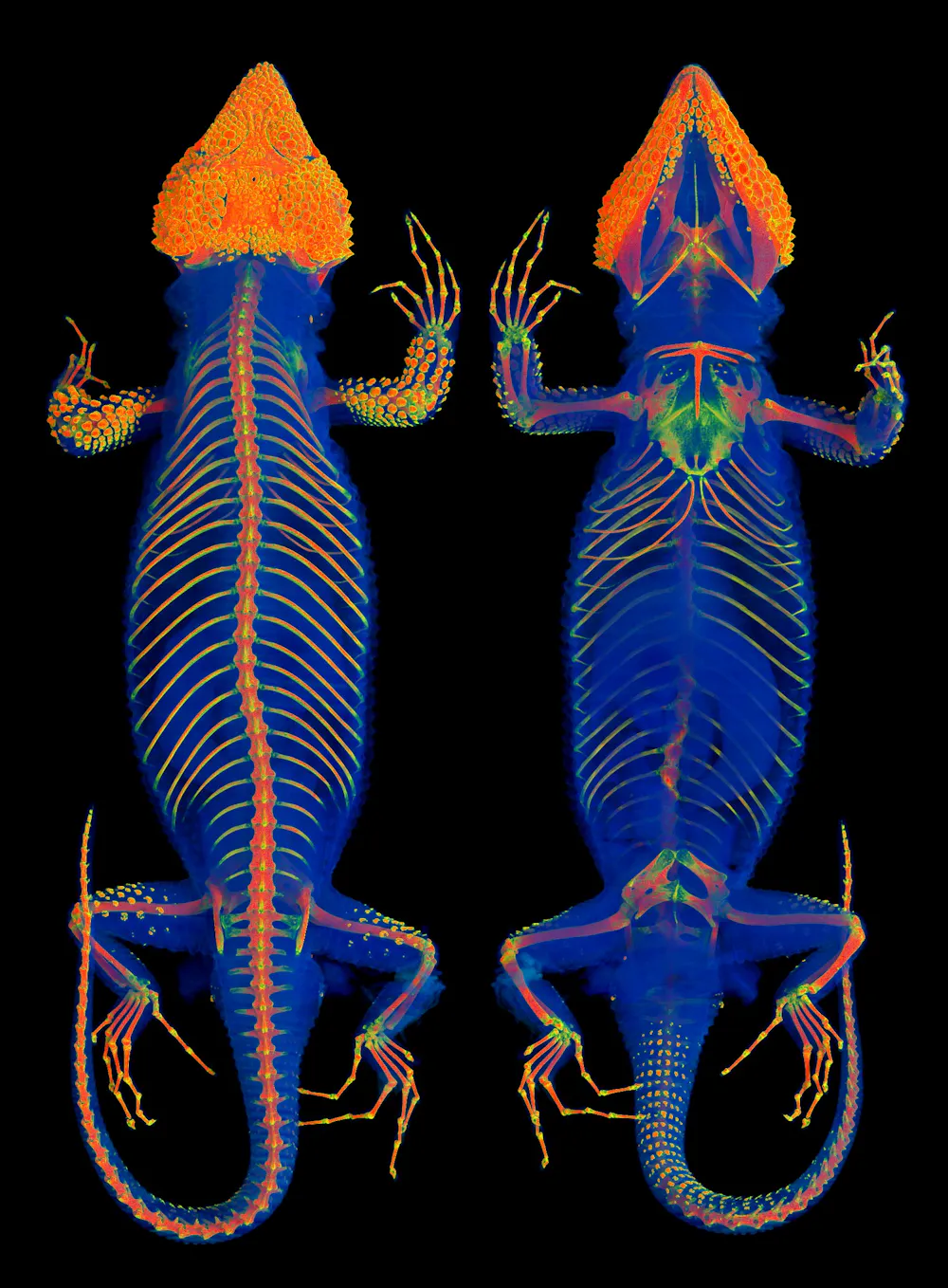
    Radiodensity heatmap of emerald tree monitors. Roy Ebel

    Monitor lizards, also known in Australia as goannas, are some of the most iconic reptiles on the continent. Their lineage not only survived the mass extinction that ended the reign of non-avian dinosaurs, but also gave rise to the largest living lizards on Earth.

    Today, these formidable creatures pace through forests and scrublands, flicking their tongues as they go.

    A new study published in the Zoological Journal of the Linnean Society looks beneath their skin. For the first time, it reveals hidden bone structures that may hold the key to the evolutionary success of goannas in Australia.

    An essential organ

    The skin is an organ essential for survival. In some animals, it includes a layer of bone plates embedded among the skin tissue. Think of the armour-like plates in crocodiles or armadillos: these are osteoderms.

    Their size ranges from microscopic to massive, with the back plates of the stegosaurus as the most impressive example.

    A mounted stegosaurus skeleton at the Natural History Museum, London.
    Jeremy Knight/Wikimedia Commons, CC BY

    We have only just started to understand these enigmatic structures. Osteoderms can be found in animal lineages that diverged up to 380 million years ago. This means these bone plates would have evolved independently, just like active flight did in birds, pterosaurs and bats.

    But what is their purpose? While the advantage of flight is undisputed, the case is not as clear for osteoderms.

    The most obvious potential would be for defence – protecting the animal from injuries. However, osteoderms may serve a far broader purpose.

    In crocodiles, for example, they help with heat regulation, play a part in movement, and even supply calcium during egg-laying. It is the interplay of these poorly understood functions that has long made it difficult to pinpoint how and why osteoderms evolved.

    Sand monitors, also known as sand goannas, are widespread through most of Australia.
    Ken Griffiths/Shutterstock

    A cutting-edge technique

    To help resolve this enigma, we had to go back to the beginning.

    Surprisingly, to date science has not even agreed on which species have osteoderms. Therefore, we assembled an international team of specialists to carry out the first large-scale study of osteoderms in lizards and snakes.

    We studied specimens from scientific collections at institutions such as the Florida Museum of Natural History, the Natural History Museum in Berlin, and Museums Victoria.

    However, we soon learnt that this came with challenges. Firstly, the presence of osteoderms can vary dramatically between individuals of the same species. Secondly, there is no guarantee that osteoderms are sufficiently preserved in all specimens.

    Most importantly, they are buried deep within skin tissue and invisible to the naked eye. Traditionally, finding them meant destroying the specimen.

    Instead, we turned to micro-computed tomography (micro-CT), an imaging technique similar to a medical CT scan, but with much higher resolution. This allowed us to study even the tiniest anatomical structures while keeping our specimens intact.

    Micro-CT-based, computer-generated 3D model of Rosenberg’s goanna (Varanus rosenbergi), with the left half showing osteoderms and endoskeleton.
    Roy Ebel

    Using computer-generated 3D models, we then digitally explored the bodies of lizards and snakes from all parts of the world. Incorporating data from prior literature, we processed almost 2,000 such samples in our search for osteoderms.

    To illustrate our results, we devised a technique called radiodensity heatmapping, which visually highlights the locations of bone structures in the body.

    For the first time, we now have a comprehensive catalogue showing where to find osteoderms in a large and diverse group; this will inform future studies.

    Radiodensity heatmapping shows newly discovered osteoderms (yellow to red) in the limbs and tail of the Mexican knob scaled lizard (Xenosaurus platyceps).
    Roy Ebel

    Not just anatomical curiosity

    What we found was unexpected. It was thought only a small number of lizard families had osteoderms. However, we encountered them nearly twice as often as anticipated.

    In fact, our results show nearly half of all lizards have osteoderms in one form or another.

    Our most astonishing finding concerned goannas. Scientists have been studying monitor lizards for more than 200 years. They were long thought to lack osteoderms, except in rare cases such as the Komodo dragon.

    So we were all the more surprised when we discovered previously undocumented osteoderms in 29 Australo-Papuan species, increasing their overall known prevalence five times.

    Examples of newly discovered osteoderms (magenta) in Australo-Papuan monitor lizards.
    Roy Ebel

    This isn’t just an anatomical curiosity. Now that we know Australian goannas have osteoderms, it opens up an exciting new avenue for further studies. This is because goannas have an interesting biogeographic history: when they first arrived in Australia about 20 million years ago, they had to adapt to a new, harsh environment.

    If osteoderms in goannas showed up around this time – possibly owing to new challenges from their environment – we’d gain crucial insights into the function and evolution of these enigmatic bone structures.

    Not only may we just have found the key to an untold chapter in the goanna story, our findings may also improve our understanding of the forces of evolution that shaped Australia’s unique reptiles as we know them today.

    Roy Ebel receives funding from the Australian Government’s Research Training Program.

    ref. New study peers beneath the skin of iconic lizards to find ‘chainmail’ bone plates – and lots of them – https://theconversation.com/new-study-peers-beneath-the-skin-of-iconic-lizards-to-find-chainmail-bone-plates-and-lots-of-them-260700

    MIL OSI AnalysisEveningReport.nz

  • MIL-OSI Australia: Cutting the fat: Oat oil breakthrough paves way for industry growth

    Source:

    21 July 2025

    New University of South Australia research is providing evidence of biological triggers of oil production in oats, a discovery that will help processing and potentially drive further demand for Australian-grown oats.

    While Australia is the world’s second-largest exporter of oats, high oil content in oat grains creates challenges during milling, reducing processing efficiency and limiting product innovation – particularly in high-demand sectors like oat flour and plant-based proteins.

    Researchers from the University of South Australia, the South Australian Research and Development Institute (SARDI), and the University of Adelaide are collaborating on research designed to better understand the biological processes responsible for oil synthesis in oat grains.

    In this study, two contemporary varieties of oats were examined using spatial imaging techniques to track oil build-up during grain development. Researchers then applied ‘omics’ technologies – lipidomics and proteomics – to analyse lipid and protein expression, which provided key insights into the biological mechanisms involved in the actual formation of the grain, including those relating to oil synthesis.

    The UniSA findings have provided further evidence of the mechanisms that underlie the amount of oil in an oat grain. These findings will help to guide future breeding efforts for naturally lower-oil oat varieties, improving milling yields and creating new value-added opportunities across the oat supply chain.

    UniSA PhD candidate, Darren Lau, says that current oil removal methods are inefficient and that low-oil breeding programs will aid industry growth.

    “While oil can be removed from partially milled oat flakes – using supercritical carbon dioxide prior to further milling – this approach is laborious and expensive,” he says.

    “Breeding low-oil oat varieties is a cost-effective approach but requires further understanding of oil production in oats. This is where our research is critical.

    “Our analysis has identified several key enzymes that are involved in oil synthesis which could be genetically manipulated to lower oil content of oat grains.

    “Reducing oil content could also unlock new opportunities in sectors like oat flour and alternative proteins, which could significantly strengthen Australia’s position in the market.”

    The economic potential of these opportunities is reflected in the quantity of oats exported globally. For example, in 2022 twenty-six million metric tonnes of oats were produced worldwide, ranking them seventh among cereals in production quantity.

    Lowering oil content in oat grains will enhance processing and product versatility, positioning them alongside traditional cereal staples like barley, maize, wheat, and rice, and further driving industry growth.

    The UniSA findings are being used by the Grains Research and Development Corporation (GRDC) oat grain quality consortium to improve suitability for milling and food/beverage ingredient development. Additional research is continuing within the consortium that will build on the study’s findings to further inform breeding efforts aimed at reducing oil content in oats.

    “The consortia are currently working on a larger and more diverse oat cohort to further investigate molecular markers and nutrient partitioning of oil in oats,” Lau says.

    “The consortia are also investigating one of the key enzymes validated in this study to determine whether manipulating or removing it can lower oil content, and how that affects the growth of the plant.”

    SARDI Project Lead Dr Janine Croser, says the study’s findings provide further evidence of key pathways involved in oat oil biosynthesis.

    “This research provides important insights into the biological mechanisms underlying varietal differences of oil production in developing oat grains,” Dr Croser says.

    “We expect that the development of low-oil lines will improve efficiencies in the flour milling process and potentially lead to novel uses for oats.

    “With demand for plant-based foods on the rise, we anticipate the oat grain quality consortium research will help put Australia at the forefront of oat innovation – supporting growers, processors, and exporters alike.”

    The full paper, Proteomic and lipidomic analyses reveal novel molecular insights into oat (Avena sativa L.) lipid regulation and crosstalk with starch synthesis during grain development, is available online.

    …………………………………………………………………………………………………………………………

    Contact for interview:  Darren Lau E: Darren.Lau@unisa.edu.au
    Media contact: Annabel Mansfield M: +61 479 182 489 E: Annabel.Mansfield@unisa.edu.au
    Josh Owen-Thomas E: Josh.Owen-Thomas@unisa.edu.au

    Other articles you may be interested in

    MIL OSI News

  • MIL-OSI Analysis: Is spinal cord stimulation safe? Does it work? Here’s what you need to know if you have back pain

    Source: The Conversation – Global Perspectives – By Caitlin Jones, Postdoctoral Research Associate in Musculoskeletal Health, University of Sydney

    AsiaVision/Getty

    Spinal cord stimulators are electrical devices that are surgically implanted in the body to treat long-term pain. They have a battery pack and leads that deliver electrical impulses directly to the spinal cord. The devices are thought to work by providing electrical impulses that interfere with how the brain senses pain.

    Spinal cord stimulators are mainly used to treat chronic back pain, especially when other less invasive treatments have not worked. They also aim to reduce people’s reliance on risky pain medicines. These include opioids, which research shows are ineffective and harmful for low-back pain.

    But research, including our own, shows spinal cord stimulators work no better than a placebo. And they can also carry risks.

    Do they work?

    In a 2023 Cochrane review, researchers reviewed data from 13 randomised controlled trials on low-back pain and found no benefits in the short and medium term. These international reviews draw together the most robust evidence to provide a detailed summary of what we know on a particular topic.

    Only one of the trials in the review tested efficacy in the longer term (six months). That trial found no benefits of spinal cord stimulation.

    An earlier Cochrane review looked at the evidence of spinal cord stimulation for chronic pain in general, including for neck pain. Reviewers looked at 15 randomised controlled trials and couldn’t be certain about its benefits, largely due to the quality and reliability of the available trials.

    Are there side effects?

    Aside from disappointing results for pain relief, there are risks and side effects to consider.

    We co-authored an analysis of 520 adverse events reported to Australia’s Therapeutic Goods Administration (TGA). We found 79% of reported events were rated as severe, with 13% life-threatening. The same research found 80% of events required surgery to correct.

    Our recent analysis in the Medical Journal of Australia looked at data from private health insurers. These cover 90% of spinal cord stimulation implants in Australia. Five major insurers, which covered 76% of privately insured people, contributed de-identified data.

    We found about one-quarter of people who had a spinal cord stimulator implanted needed corrective surgery afterwards. These surgeries occurred within a median of about 17 months. This indicates these surgeries are not routine or expected interventions, such as to replace batteries, which are meant to last five to ten years.

    Our previous research shows the sorts of reasons for corrective surgery. These include to replace a malfunctioning device, or the person was in more pain, had an infection, or a puncture of the delicate tissues covering the spinal cord.

    However, even our latest findings are likely to underestimate the risk of these devices.

    Sometimes the lead delivering the electrical current moves away from the spinal cord to elsewhere in the body. This requires surgery to reposition the lead, but does not necessarily require new hardware, such as a brand new lead. So this type of corrective surgery is not counted in the data from the private health insurance companies.

    How much does it cost?

    We found spinal cord stimulators cost about A$55,000 per patient, including the device, its insertion, and managing any associated additional surgeries.

    For people who only had a “trial” – where the leads are implanted temporarily but the battery pack remains outside the body – this cost was about $14,000 per patient.

    These figures do not include any out-of-pocket costs.

    What do regulators say about the devices?

    In 2022 the TGA began a review of spinal cord stimulators on the market because of safety and performance concerns.

    As a result, several devices were removed from the Australian Register of Therapeutic Goods – that is, they were banned from use in Australia, but existing stock could still be used.

    The rest of the devices had conditions imposed, such as the manufacturers being required to collect and report safety data to the TGA at regular time points.

    Should I do my own online research?

    Yes, but be careful. Unfortunately not all online information about spinal cord stimulators is correct.

    Look for sites independent of those who manufacture or implant these devices.

    Government agencies, health departments and universities that have no financial interests in this area may be a better option.

    The Cochrane Library is also a reliable and independent source for trustworthy health information.

    What shall I ask my doctor?

    The Australian health department provides useful advice for consumers about medical implants.

    It says medical implants “are considered higher-risk therapeutic goods, and the decision to get one should not be taken lightly”. It recommends asking your health professional these questions:

    • do I really need this medical implant?

    • what are the risks/benefits?

    • is the medical implant approved?

    • where can I get more information?

    • what happens if I experience an adverse event?

    What else could I do for my back pain?

    There are other treatment options that are effective and have fewer risks than spinal cord stimulation.

    For example, education about how to manage your pain yourself, exercise, cognitive behavioural therapy (a type of psychological therapy), and non-steroidal anti-inflammatory medicines (such as ibuprofen) all have solid evidence to back them. All offer benefits that are not outweighed by their potential risks.

    Australian research has shown other types of therapy – such as sensorimotor retraining and cognitive functional therapy – are also effective. You can discuss these and other options with your health professional.

    Spinal cord stimulation is a good example of a treatment that got ahead of the evidence. Although the devices have been around since the 1960s, we’ve only had reliable trials to test whether they work in recent years.

    Everyone wants to find ways to help people with chronic pain, but we must ensure medical care is grounded in reliable science.

    Christopher Maher holds a research fellowship funded by the National Health and Medical Research Council.

    Caitlin Jones does not work for, consult, own shares in or receive funding from any company or organisation that would benefit from this article, and has disclosed no relevant affiliations beyond their academic appointment.

    ref. Is spinal cord stimulation safe? Does it work? Here’s what you need to know if you have back pain – https://theconversation.com/is-spinal-cord-stimulation-safe-does-it-work-heres-what-you-need-to-know-if-you-have-back-pain-261364

    MIL OSI Analysis

  • MIL-OSI Analysis: The first video of Earth’s surface lurching sideways in an earthquake offers new insights into this force of nature

    Source: The Conversation – Global Perspectives – By Jesse Kearse, Postdoctoral Researcher, Geophysics, Kyoto University

    Sai Aung MAIN/AFP via Getty Images

    During the devastating magnitude 7.7 Myanmar earthquake on March 28 this year, a CCTV camera captured the moment the plate boundary moved, providing the first direct visual evidence of plate tectonics in action.

    Tectonic plate boundaries are where chunks of Earth’s crust slide past each other – not smoothly, but in sudden, violent ruptures.

    The footage shows Earth’s surface lurching sideways, like a gigantic conveyor belt switched on for just a second, as the fault slips.

    What we’re seeing is the propagation of a large earthquake rupture – the primary mechanism that accommodates plate boundary motion at Earth’s surface. These shear fractures travel at several kilometres per second, making them notoriously difficult to observe.

    This video explains the moment Myanmar’s Sagaing Fault ruptured in a large earthquake, allowing the tectonic plate boundary to shift. Research: https://doi.org/10.1785/0320250024.

    These rare events, separated by centuries, have shaped our planet’s surface over millions of years, creating features such as Aotearoa New Zealand’s Alpine Fault and the Southern Alps.

    Until now, seismologists have relied on distant seismic instruments to infer how faults rupture during large earthquakes. This video sheds new light on the process that radiates seismic energy and causes the ground to shake.

    Analysis of the video

    In our new study, we analysed the video frame by frame. We used a technique called pixel cross-correlation to reveal that the fault slipped 2.5 metres sideways over a duration of just 1.3 seconds, with a maximum speed of 3.2 metres per second.

    The total sideways movement in this earthquake is typical of strike-slip fault ruptures, which move the land sideways (in contrast to faults that move land up and down).

    But the short duration is a major discovery.

    The timing of when a fault starts and stops slipping is especially difficult to measure from distant recordings, because the seismic signal becomes smeared as it travels through Earth.

    In this case, the short duration of motion reveals a pulse-like rupture – a concentrated burst of slip that propagates along the fault like a ripple travels down a rug when it’s flicked from one end.

    Capturing this kind of detail is fundamental to understanding how earthquakes work, and it helps us better anticipate the ground shaking likely to occur in future large events.

    Validation of the ‘slickenline’ hypothesis

    Our analysis also revealed something more subtle about the way the fault moved.

    We found the slip didn’t follow a straight path. Instead it curved. This subtle curvature mirrors patterns we’ve observed previously at fault outcrops.

    Called “slickenlines”, these geological scratch marks on the fault record the direction of slip.

    Our work shows the slickenlines we see on outcrops are curved in a manner similar to the curvature seen in the CCTV footage. Based on our video analysis, we can be certain that curved slip occurs, giving credence to our interpretations based on geological observations.

    In our earlier research, we used computer models to show that curved slickenlines could emerge naturally when an earthquake propagates in a particular direction. The Myanmar rupture, which is known to have travelled north to south, matches the direction predicted by our models.

    This alignment is important. It gives us confidence in using geological evidence to determine the rupture direction of past earthquakes, such as the curved slickenlines left behind after the New Zealand Alpine Fault’s 1717 earthquake.

    This first glimpse of a fault in motion shows the potential for video to become a powerful new tool in seismology. With more strategic deployments, future earthquakes could be documented with similar detail, offering further insight into the dynamics of fault rupture, potentially revolutionising our understanding of earthquake physics.

    Jesse Kearse receives funding from Royal Society Te Apārangi Marsden Fund.

    ref. The first video of Earth’s surface lurching sideways in an earthquake offers new insights into this force of nature – https://theconversation.com/the-first-video-of-earths-surface-lurching-sideways-in-an-earthquake-offers-new-insights-into-this-force-of-nature-261004

    MIL OSI Analysis

  • MIL-OSI Analysis: Hold up, humans. Ants figured out medicine, farming and engineering long before we did

    Source: The Conversation – Global Perspectives – By Tanya Latty, Associate Professor in Entomology, University of Sydney

    Tambon Nong Chaeng/Pexels

    Think back to a time you helped someone move a heavy object, such as a couch. While at first the task may have appeared simple, it actually required a suite of advanced behaviours.

    The job needed verbal commands for social coordination (“pivot!”) and anticipation of near-future events (moving other furniture out of the way). It also required a clear, shared vision of the final goal (which room to take the couch to).

    It’s a small but satisfying example of human cooperation. But before we all get too pleased with ourselves, consider that ants – creatures with tiny brains and no capacity for speech – routinely pull off feats that rival, and sometimes exceed, our own.

    Ants routinely pull off feats that rival, and sometimes exceed, our own.
    Andre Moura/Pexels

    Understanding ant intelligence

    Earth is literally crawling with ants. Scientists estimate there are at least 20 quadrillion ants on Earth. That’s 20 followed by 15 zeros – more ants than stars in our galaxy!

    These incredible insects are amongst the most successful organisms on the planet. Part of the success comes from an ability to form complex societies, ranging from a few individuals to millions. And those societies, or colonies, are remarkably co-operative.

    Take, for example, ants’ abilities to move large food items. To do it, they mobilise teams of dozens – or even hundreds – of fellow workers. Together, they efficiently work together to transport the load back to the nest.

    Longhorn crazy ants (Paratrechina longicornis) are even known to clear debris from a path before a heavy object arrives – seemingly anticipating its trajectory and preparing the way.

    One experiment pit longhorn crazy ants against humans, all tasked with moving T-shaped objects (scaled to body size) through tight spaces. In some trials, the human teams were not permitted to speak or use gestures.

    And the result? Ants performed better in larger groups compared to smaller ones, showing the clear benefits of collective action. In contrast, human performance did not improve with group size. And when communication was restricted, human performance declined as group size increased.

    All this highlights how ants rely on collective intelligence, without the need for central control or sophisticated cognition.

    Expert farmers

    Humanity’s invention of agriculture 12,000 years ago is understandably hailed as one of our greatest achievements.

    But leaf cutter ants beat us to it. These ants (from the species Atta and Acromyrmex) evolved to undertake large-scale agriculture about 55 million years ago.

    These ants cut and transport fresh leaves not to eat directly, but to feed a fungus that serves as their main food source.

    This evolutionary partnership allows the ants to feed colonies with populations in the millions.

    Remarkably, leaf cutter ants have also evolved a form of biological pest control to protect their crops from bacteria. Some worker ants patrol the gardens, detecting infected sections of the fungus. Then they apply antibiotics produced by bacteria that live on their bodies.

    What’s more, many ant species farm aphids and other sap-sucking insects.

    As these farmed insects feed on plant sap, they excrete a sugary liquid the ants eagerly collect. In return, ants serve as bodyguards, defending their tiny livestock from predators such as ladybirds and lacewings.

    In some species, queen ants gently carry sap-sucking insects in their jaws as they fly off to start new colonies. Fossilised ants preserved in amber suggest this behaviour evolved up to 20 million years ago, long before humans domesticated animals.

    Ant medicine

    Medical care may seem like a distinctly human innovation. But several ant species have evolved sophisticated ways to treat injuries.

    When a Florida carpenter ant (Camponotus floridanus) is injured during a battle between colonies, its nest-mates will amputate a damaged limb to prevent infection from spreading. Ants receiving this battlefield care are more likely to survive than ants left untreated.

    Some ants can also detect infection and treat infected wounds by cleaning them and applying antimicrobial secretions from specialised glands.

    Master builders

    Some ant species are known to literally put their bodies on the line for the colony.

    Army ants (Eciton burchellii) join their bodies together to form structures. These include bridges across gaps on the forest floor, and “scaffolds” across steep terrain to prevent other ants from slipping.

    Even the nest is made of hundreds of thousands of ants joined together, complete with tunnels and chambers housing the larvae and the queen. The entire structure is packed up and rebuilt each day, after the colony emigrates a few hundred metres into the forest.

    Army ants join their bodies together to form structures.
    Smartse/Wikimedia, CC BY

    Weaver ants (Oecophylla smaragdina), meanwhile, self-assemble into rope ladders to span vertical gaps.

    They also form a line of workers that pull leaves together in treetops to form nests. Once the leaves are winched into place, other ants arrive with ant larvae in their jaws. Each larva produces a tiny blob of silk which the ants use to glue the leaves together.

    Fire ants (Solenopsis invicta), a major pest species, owes its invasive success partly to a unique method of dispersal.

    When their underground nests are flooded by rain, the ants join together into a huge raft which floats on a layer of buoyant larvae. These rafts can ride floodwaters in safety for hundreds of kilometres, until the ants reach dry land.

    When their nests are flooded, fire ants join together into a huge raft.
    TheCoz/Wikimedia, CC BY

    Lessons for humanity?

    Humans rightly take pride in our greatest achievements – agriculture, medicine, engineering and building civilisations. But remarkably, ants mastered these innovations millions of years before we did.

    Ants may be tiny – but by working together they can build complex societies and solve many problems. They might even teach humans a thing or two.

    Tanya Latty co-founded and volunteers for conservation organisation Invertebrates Australia, is former president of the Australasian Society for the Study of Animal Behaviour and is on the education committee for the Australian Entomological Society. She receives funding from the Australian Research Council, NSW Saving our Species, and Agrifutures Australia

    Chris R. Reid receives funding from the Australian Research Council and Macquarie University. He is secretary of the Australasian Society for the Study of Animal Behaviour and is on the education committee for the Australasian Entomological Society.

    ref. Hold up, humans. Ants figured out medicine, farming and engineering long before we did – https://theconversation.com/hold-up-humans-ants-figured-out-medicine-farming-and-engineering-long-before-we-did-258922

    MIL OSI Analysis

  • MIL-OSI China: Zoom in on 3rd CISCE from three perspectives

    Source: People’s Republic of China – State Council News

    The third China International Supply Chain Expo (CISCE), which concluded on Sunday in Beijing, has reinforced its role as a vital platform for promoting resilient, diversified and cooperative global supply chains, with a promising increase in international collaborations.

    With over 6,000 cooperation agreements and partnership intents reached this year, the world’s first national-level exhibition dedicated to supply chains is steadily transforming the global supply network into a chain of shared benefits for all.

    “This event is much more than an expo. It is a forest of connections between economies, industries and people,” John Denton, the secretary-general of the International Chamber of Commerce, said at the opening ceremony. “We are here together to advance our shared prosperity.”

    Innovation

    After three editions, CISCE has built a reputation as a hub of technological innovation in supply chain and a striking showcase for China’s new quality productive forces.

    “Innovation is the defining feature of CISCE and the source of its vitality,” said Yu Jianlong, the vice chairman of the China Council for the Promotion of International Trade (CCPIT), organizer of the expo.

    This year’s expo showcased an array of standout technologies, including a humanoid robot equipped with Nvidia chips, an AI-supported car paint defect inspection system, and a hydrogen energy supply chain display based on liquid hydrogen technology.

    Beyond the high-tech products dazzling eager audiences, this edition of the expo also spotlighted a deeper question: how to transform technological achievements into powerful drivers of industrial development.

    This year’s CISCE featured, for the first time, a dedicated innovation chain zone. Though modest in size, the zone brings together a diverse range of 14 participating institutions, including the World Intellectual Property Organization and the China National Intellectual Property Administration. These exhibitors represent key players across various stages of science and technology commercialization, ranging from policy-making and technology transfer to innovation incubation, and provide targeted solutions to critical challenges in transforming technological achievements.

    “Here in China, people are so advanced. The technology adoption is so fast,” said Jensen Huang, Nvidia CEO, during an interview on the sidelines of the expo, citing many examples of how China’s innovative applications are setting global trends — with companies worldwide learning from its practices.

    Cooperation

    As an international expo shared by the world, the CISCE continues to promote inclusive and mutually beneficial cooperation globally. Through the expo, an increasing number of international participants are aligning with the world’s most comprehensive supply chain while keeping pace with its rapid development.

    According to the data from CCPIT, the expo has seen a steady rise in international participation. The proportion of overseas exhibitors has grown from 26 percent in the first edition to 32 percent in the second, and reached 35 percent this year. Over 65 percent of the exhibitors are Fortune Global 500 companies or industry leaders. Meanwhile, the geographic reach of participants has expanded from 55 countries and regions in the inaugural expo to 75 in the latest edition.

    Major multinational companies have utilized CISCE to strengthen local partnerships and expand their presence in China. “Over the past three years at CISCE, we’ve showcased progress alongside our suppliers in smart manufacturing, green manufacturing and talent development,” Isabel Ge Mahe, Apple’s vice president and managing director of Greater China, told Xinhua.

    She highlighted Apple’s 20 billion U.S. dollars investment in China over the past five years, primarily focused on innovation and supply chain advancements, and praised China’s dynamic innovation ecosystem and sophisticated smart supply chains. “We are deeply rooted here, incredibly proud of the supply chain we helped build, and will continue to invest and innovate with our local partners.”

    Domestic provinces also used the expo to court supply-chain partners. At a side event, southwest China’s Sichuan Province drew foreign giants with its complete industrial chain, pro-business climate and huge market.

    “We entered China more than 40 years ago and we’re still expanding,” said Utsugi Yuyama, executive officer of Japanese material manufacturer AGC Inc. The company already runs chemical and electronic lines in Sichuan and plans more. He hailed the province’s talent pool and comprehensive industrial chain, where local and foreign enterprises integrate to drive growth.

    Greener supply chain

    Green development has increasingly become the foundation and highlight of the expo. How to promote green and low-carbon development across industrial and supply chains has become a notable question at the expo, and an increasing number of major enterprises in their supply chain are stepping up with innovative solutions.

    “Green standards, including carbon tracking and sustainability metrics, are becoming essential across industries,” said Zhou Xing, head of public affairs at PwC China, who identified green transformation as one of the four key trends shaping the current global supply chain restructuring.

    At this year’s expo, multinational companies such as Schneider Electric made their debut, showcasing digital solutions for sustainable supply chain construction. The company is working to establish an efficient and resilient green supply chain that can respond swiftly to market shifts.

    “The supply chain expo provides an important platform for global enterprises, especially in green supply chain construction,” said Yin Zheng, executive vice-president of Schneider Electric and president of its China and East Asia operations. Yin added that Schneider Electric hopes to share its experience and seek more cooperation opportunities through the event.

    Returning to CISCE for the third consecutive year, Starbucks China spotlighted a comprehensive look at the “green path” from coffee bean to brewed cup. According to the company, around 30 percent of its total carbon emissions in China stem directly or indirectly from its own operations, while the remaining 70 percent originate upstream, from sectors like dairy production and logistics.

    To tackle this challenge, Starbucks China announced a strategic partnership with Envision Group, a leading green tech company, at this year’s expo. Over the next three years, the two sides will work together to roll out a digital carbon management platform aimed at gradually covering 100 percent of Starbucks China’s direct suppliers. 

    MIL OSI China News

  • MIL-Evening Report: Does play belong in primary school? New research suggests teachers are not sure

    Source: The Conversation (Au and NZ) – By Katy Meeuwissen, Lecturer in Early Childhood and Primary Education, University of Canberra

    Jon Challicom/ Getty Images

    Play is one of the most important parts of early childhood education in Australia.

    We know children learn about the world through play and it helps them build creativity and independence.

    There is also broad agreement among early childhood educators and policymakers about the importance of play from birth to five years.

    But once children start school, there is less certainty. Despite growing research about the importance of play in primary school, play is not often used for learning in these years.

    Our new study with Australian primary teachers highlights significant confusion about the role of play in their schools.

    Play can benefit older kids

    There is nothing to suggest the importance of play suddenly stops when children reach school age.

    Research shows play can support learning well into the primary years, helping students develop critical thinking, problem-solving and social skills.

    Recent studies even show play has learning benefits well beyond childhood. Young adults (aged 19–25) who engage in regular play have shown improved emotional intelligence and resilience.

    What do we mean by play?

    When we are talking about play in primary school, it is more than just playground time during recess and lunch.

    Play is what children do naturally, whereas play-based learning is when teachers use that natural playfulness as a teaching tool. Teachers will deliberately incorporate various types of play with specific learning goals and varying levels of adult guidance.

    For example, children might explore mathematical concepts such as geometry and spatial reasoning through LEGO construction. Teachers would guide discovery of patterns, measurements and problem-solving, and then step back to allow students to be creative.

    There is also evidence play can support literacy, numeracy and other academic goals, because it supports attention, memory and planning skills that underpin academic learning.

    Research shows it can also help maintain students’ enjoyment of and engagement in their studies.

    So when used effectively, it could be used across the school curriculum.

    Our research

    To better understand what teachers think about play and why they hold these views, we surveyed 238 teachers across Australia primary schools. Teachers ranged from those teaching the first year of primary school through to Year 6.

    Most of the teachers were from public schools. We used an online questionnaire and recruited participants through email and social media.

    Teachers’ different views on play

    The results revealed some inconsistencies in teachers’ views.

    Teachers strongly agreed play benefits children’s development. More than three-quarters (77%) strongly agreed students develop social skills through play, with similar numbers supporting play’s role in emotional, physical and language development.

    One teacher described play as “magic” and “where real learning happens”.

    However, only 52% strongly agreed students develop academic skills during play, revealing uncertainty about play’s educational value. As another teacher told us:

    Play is something that children do and it’s fun for them, however, [it] should be out of school. School is for learning.

    Some teachers still viewed play as separate from learning, with 61% agreeing that “play is a necessary break from learning” – suggesting they see play and learning as distinct entities rather than integrated.

    Adding to this confusion, teachers often used the terms “play” and “play-based learning” interchangeably, despite these being different concepts.

    How should play-based learning be structured?

    Even when teachers valued play in principle, they struggled to provide time for it in their classrooms. Teachers reported feeling caught between covering mandated content and providing meaningful play experiences. As one teacher told us:

    Play is fantastic for children but a challenge when there is so much limited time to cover such a huge curriculum.

    Teachers were also divided about their role in children’s play. Should they structure it? Leave kids alone? Supervise but not interfere?

    Our analysis revealed several distinct approaches, from hands-off supervision to active involvement. This reveals confusion about best practice (the research suggests different approaches can work, depending on the context).

    What can we do instead?

    Our research suggest there is missed opportunity when it comes to structuring play as part of learning in primary schools.

    To address this, we need several changes. Teacher education programs should include training in practical ways to use play as a teaching tool. For example, how to teach science concepts through games and experiments that feel like play to children.

    Professional development should also help existing teachers understand how to structure meaningful play that supports the curriculum.

    At a policy level, we also need better alignment between the early education and primary years, to ensure play does not disappear at the school gate.

    Katy Meeuwissen does not work for, consult, own shares in or receive funding from any company or organisation that would benefit from this article, and has disclosed no relevant affiliations beyond their academic appointment.

    ref. Does play belong in primary school? New research suggests teachers are not sure – https://theconversation.com/does-play-belong-in-primary-school-new-research-suggests-teachers-are-not-sure-259800

    MIL OSI AnalysisEveningReport.nz

  • MIL-Evening Report: Hold up, humans. Ants figured out medicine, farming and engineering long before we did

    Source: The Conversation (Au and NZ) – By Tanya Latty, Associate Professor in Entomology, University of Sydney

    Tambon Nong Chaeng/Pexels

    Think back to a time you helped someone move a heavy object, such as a couch. While at first the task may have appeared simple, it actually required a suite of advanced behaviours.

    The job needed verbal commands for social coordination (“pivot!”) and anticipation of near-future events (moving other furniture out of the way). It also required a clear, shared vision of the final goal (which room to take the couch to).

    It’s a small but satisfying example of human cooperation. But before we all get too pleased with ourselves, consider that ants – creatures with tiny brains and no capacity for speech – routinely pull off feats that rival, and sometimes exceed, our own.

    Ants routinely pull off feats that rival, and sometimes exceed, our own.
    Andre Moura/Pexels

    Understanding ant intelligence

    Earth is literally crawling with ants. Scientists estimate there are at least 20 quadrillion ants on Earth. That’s 20 followed by 15 zeros – more ants than stars in our galaxy!

    These incredible insects are amongst the most successful organisms on the planet. Part of the success comes from an ability to form complex societies, ranging from a few individuals to millions. And those societies, or colonies, are remarkably co-operative.

    Take, for example, ants’ abilities to move large food items. To do it, they mobilise teams of dozens – or even hundreds – of fellow workers. Together, they efficiently work together to transport the load back to the nest.

    Longhorn crazy ants (Paratrechina longicornis) are even known to clear debris from a path before a heavy object arrives – seemingly anticipating its trajectory and preparing the way.

    One experiment pit longhorn crazy ants against humans, all tasked with moving T-shaped objects (scaled to body size) through tight spaces. In some trials, the human teams were not permitted to speak or use gestures.

    And the result? Ants performed better in larger groups compared to smaller ones, showing the clear benefits of collective action. In contrast, human performance did not improve with group size. And when communication was restricted, human performance declined as group size increased.

    All this highlights how ants rely on collective intelligence, without the need for central control or sophisticated cognition.

    Expert farmers

    Humanity’s invention of agriculture 12,000 years ago is understandably hailed as one of our greatest achievements.

    But leaf cutter ants beat us to it. These ants (from the species Atta and Acromyrmex) evolved to undertake large-scale agriculture about 55 million years ago.

    These ants cut and transport fresh leaves not to eat directly, but to feed a fungus that serves as their main food source.

    This evolutionary partnership allows the ants to feed colonies with populations in the millions.

    Remarkably, leaf cutter ants have also evolved a form of biological pest control to protect their crops from bacteria. Some worker ants patrol the gardens, detecting infected sections of the fungus. Then they apply antibiotics produced by bacteria that live on their bodies.

    What’s more, many ant species farm aphids and other sap-sucking insects.

    As these farmed insects feed on plant sap, they excrete a sugary liquid the ants eagerly collect. In return, ants serve as bodyguards, defending their tiny livestock from predators such as ladybirds and lacewings.

    In some species, queen ants gently carry sap-sucking insects in their jaws as they fly off to start new colonies. Fossilised ants preserved in amber suggest this behaviour evolved up to 20 million years ago, long before humans domesticated animals.

    Ant medicine

    Medical care may seem like a distinctly human innovation. But several ant species have evolved sophisticated ways to treat injuries.

    When a Florida carpenter ant (Camponotus floridanus) is injured during a battle between colonies, its nest-mates will amputate a damaged limb to prevent infection from spreading. Ants receiving this battlefield care are more likely to survive than ants left untreated.

    Some ants can also detect infection and treat infected wounds by cleaning them and applying antimicrobial secretions from specialised glands.

    Master builders

    Some ant species are known to literally put their bodies on the line for the colony.

    Army ants (Eciton burchellii) join their bodies together to form structures. These include bridges across gaps on the forest floor, and “scaffolds” across steep terrain to prevent other ants from slipping.

    Even the nest is made of hundreds of thousands of ants joined together, complete with tunnels and chambers housing the larvae and the queen. The entire structure is packed up and rebuilt each day, after the colony emigrates a few hundred metres into the forest.

    Army ants join their bodies together to form structures.
    Smartse/Wikimedia, CC BY

    Weaver ants (Oecophylla smaragdina), meanwhile, self-assemble into rope ladders to span vertical gaps.

    They also form a line of workers that pull leaves together in treetops to form nests. Once the leaves are winched into place, other ants arrive with ant larvae in their jaws. Each larva produces a tiny blob of silk which the ants use to glue the leaves together.

    Fire ants (Solenopsis invicta), a major pest species, owes its invasive success partly to a unique method of dispersal.

    When their underground nests are flooded by rain, the ants join together into a huge raft which floats on a layer of buoyant larvae. These rafts can ride floodwaters in safety for hundreds of kilometres, until the ants reach dry land.

    When their nests are flooded, fire ants join together into a huge raft.
    TheCoz/Wikimedia, CC BY

    Lessons for humanity?

    Humans rightly take pride in our greatest achievements – agriculture, medicine, engineering and building civilisations. But remarkably, ants mastered these innovations millions of years before we did.

    Ants may be tiny – but by working together they can build complex societies and solve many problems. They might even teach humans a thing or two.

    Tanya Latty co-founded and volunteers for conservation organisation Invertebrates Australia, is former president of the Australasian Society for the Study of Animal Behaviour and is on the education committee for the Australian Entomological Society. She receives funding from the Australian Research Council, NSW Saving our Species, and Agrifutures Australia

    Chris R. Reid receives funding from the Australian Research Council and Macquarie University. He is secretary of the Australasian Society for the Study of Animal Behaviour and is on the education committee for the Australasian Entomological Society.

    ref. Hold up, humans. Ants figured out medicine, farming and engineering long before we did – https://theconversation.com/hold-up-humans-ants-figured-out-medicine-farming-and-engineering-long-before-we-did-258922

    MIL OSI AnalysisEveningReport.nz

  • MIL-Evening Report: Is spinal cord stimulation safe? Does it work? Here’s what you need to know if you have back pain

    Source: The Conversation (Au and NZ) – By Caitlin Jones, Postdoctoral Research Associate in Musculoskeletal Health, University of Sydney

    AsiaVision/Getty

    Spinal cord stimulators are electrical devices that are surgically implanted in the body to treat long-term pain. They have a battery pack and leads that deliver electrical impulses directly to the spinal cord. The devices are thought to work by providing electrical impulses that interfere with how the brain senses pain.

    Spinal cord stimulators are mainly used to treat chronic back pain, especially when other less invasive treatments have not worked. They also aim to reduce people’s reliance on risky pain medicines. These include opioids, which research shows are ineffective and harmful for low-back pain.

    But research, including our own, shows spinal cord stimulators work no better than a placebo. And they can also carry risks.

    Do they work?

    In a 2023 Cochrane review, researchers reviewed data from 13 randomised controlled trials on low-back pain and found no benefits in the short and medium term. These international reviews draw together the most robust evidence to provide a detailed summary of what we know on a particular topic.

    Only one of the trials in the review tested efficacy in the longer term (six months). That trial found no benefits of spinal cord stimulation.

    An earlier Cochrane review looked at the evidence of spinal cord stimulation for chronic pain in general, including for neck pain. Reviewers looked at 15 randomised controlled trials and couldn’t be certain about its benefits, largely due to the quality and reliability of the available trials.

    Are there side effects?

    Aside from disappointing results for pain relief, there are risks and side effects to consider.

    We co-authored an analysis of 520 adverse events reported to Australia’s Therapeutic Goods Administration (TGA). We found 79% of reported events were rated as severe, with 13% life-threatening. The same research found 80% of events required surgery to correct.

    Our recent analysis in the Medical Journal of Australia looked at data from private health insurers. These cover 90% of spinal cord stimulation implants in Australia. Five major insurers, which covered 76% of privately insured people, contributed de-identified data.

    We found about one-quarter of people who had a spinal cord stimulator implanted needed corrective surgery afterwards. These surgeries occurred within a median of about 17 months. This indicates these surgeries are not routine or expected interventions, such as to replace batteries, which are meant to last five to ten years.

    Our previous research shows the sorts of reasons for corrective surgery. These include to replace a malfunctioning device, or the person was in more pain, had an infection, or a puncture of the delicate tissues covering the spinal cord.

    However, even our latest findings are likely to underestimate the risk of these devices.

    Sometimes the lead delivering the electrical current moves away from the spinal cord to elsewhere in the body. This requires surgery to reposition the lead, but does not necessarily require new hardware, such as a brand new lead. So this type of corrective surgery is not counted in the data from the private health insurance companies.

    How much does it cost?

    We found spinal cord stimulators cost about A$55,000 per patient, including the device, its insertion, and managing any associated additional surgeries.

    For people who only had a “trial” – where the leads are implanted temporarily but the battery pack remains outside the body – this cost was about $14,000 per patient.

    These figures do not include any out-of-pocket costs.

    What do regulators say about the devices?

    In 2022 the TGA began a review of spinal cord stimulators on the market because of safety and performance concerns.

    As a result, several devices were removed from the Australian Register of Therapeutic Goods – that is, they were banned from use in Australia, but existing stock could still be used.

    The rest of the devices had conditions imposed, such as the manufacturers being required to collect and report safety data to the TGA at regular time points.

    Should I do my own online research?

    Yes, but be careful. Unfortunately not all online information about spinal cord stimulators is correct.

    Look for sites independent of those who manufacture or implant these devices.

    Government agencies, health departments and universities that have no financial interests in this area may be a better option.

    The Cochrane Library is also a reliable and independent source for trustworthy health information.

    What shall I ask my doctor?

    The Australian health department provides useful advice for consumers about medical implants.

    It says medical implants “are considered higher-risk therapeutic goods, and the decision to get one should not be taken lightly”. It recommends asking your health professional these questions:

    • do I really need this medical implant?

    • what are the risks/benefits?

    • is the medical implant approved?

    • where can I get more information?

    • what happens if I experience an adverse event?

    What else could I do for my back pain?

    There are other treatment options that are effective and have fewer risks than spinal cord stimulation.

    For example, education about how to manage your pain yourself, exercise, cognitive behavioural therapy (a type of psychological therapy), and non-steroidal anti-inflammatory medicines (such as ibuprofen) all have solid evidence to back them. All offer benefits that are not outweighed by their potential risks.

    Australian research has shown other types of therapy – such as sensorimotor retraining and cognitive functional therapy – are also effective. You can discuss these and other options with your health professional.

    Spinal cord stimulation is a good example of a treatment that got ahead of the evidence. Although the devices have been around since the 1960s, we’ve only had reliable trials to test whether they work in recent years.

    Everyone wants to find ways to help people with chronic pain, but we must ensure medical care is grounded in reliable science.

    Christopher Maher holds a research fellowship funded by the National Health and Medical Research Council.

    Caitlin Jones does not work for, consult, own shares in or receive funding from any company or organisation that would benefit from this article, and has disclosed no relevant affiliations beyond their academic appointment.

    ref. Is spinal cord stimulation safe? Does it work? Here’s what you need to know if you have back pain – https://theconversation.com/is-spinal-cord-stimulation-safe-does-it-work-heres-what-you-need-to-know-if-you-have-back-pain-261364

    MIL OSI AnalysisEveningReport.nz

  • MIL-OSI Russia: A series of earthquakes recorded in Kamchatka

    Translation. Region: Russian Federal

    Source: People’s Republic of China in Russian – People’s Republic of China in Russian –

    An important disclaimer is at the bottom of this article.

    Source: People’s Republic of China – State Council News

    Vladivostok, July 20 (Xinhua) — An earthquake with a magnitude of 7.6 was registered 115 km east of the city of Petropavlovsk-Kamchatsky (the administrative center of Russia’s Kamchatka Krai) on Sunday at 18:49 local time, the Kamchatka branch of the Unified Geophysical Service of the Russian Academy of Sciences reported on its Telegram channel.

    Earlier, two earthquakes occurred in approximately the same area – with magnitudes of 5.3 and 6.5, respectively. After a powerful earthquake with a magnitude of 7.6, two more earthquakes were recorded with magnitudes of 6.8 and 6.4, respectively.

    According to TASS, the tremors were felt for about a minute. People ran out of buildings. The press service of the regional Emergencies Ministry said that specialists would begin inspecting the buildings in the near future. A tsunami threat was declared in Petropavlovsk-Kamchatsky due to a series of tremors in the Pacific Ocean. –0–

    Please note: This information is raw content obtained directly from the source of the information. It is an accurate report of what the source claims and does not necessarily reflect the position of MIL-OSI or its clients.

    .

    MIL OSI Russia News

  • MIL-OSI Russia: Earthquake of magnitude 6.8 hits Kamchatka

    Translation. Region: Russian Federal

    Source: People’s Republic of China in Russian – People’s Republic of China in Russian –

    An important disclaimer is at the bottom of this article.

    Source: People’s Republic of China – State Council News

    Vladivostok, July 20 /Xinhua/ — An earthquake measuring 6.8 in magnitude was registered 167 km from Petropavlovsk-Kamchatsky. This is the fourth earthquake in a row in the area, TASS reported, citing the Kamchatka branch of the Unified Geophysical Service of the Russian Academy of Sciences.

    “An earthquake with a magnitude of 6.8 occurred 167 km from Petropavlovsk-Kamchatsky,” seismologists reported, adding that the data is being processed and updated.

    Sirens were reported to be sounding in the city warning of a tsunami. –0–

    Please note: This information is raw content obtained directly from the source of the information. It is an accurate report of what the source claims and does not necessarily reflect the position of MIL-OSI or its clients.

    .

    MIL OSI Russia News

  • MIL-OSI Russia: Dmitry Chernyshenko and Andrey Fursenko presented diplomas to graduates of the program for developing personnel reserves in science

    Translation. Region: Russian Federal

    Source: Government of the Russian Federation – Government of the Russian Federation –

    An important disclaimer is at the bottom of this article.

    Previous news Next news

    A group photo of the participants and members of the certification committee after defending their projects and awarding diplomas for the program for developing the management personnel reserve in the field of science, technology and higher education

    The Government Coordination Centre held a defense of projects and the presentation of diplomas to participants in the operational level of the programme for the development of a management personnel reserve in the field of science, technology and higher education.

    Aide to the President of Russia Andrei Fursenko, Deputy Prime Minister Dmitry Chernyshenko, Chairman of the Council of the Federal Territory “Sirius”, Head of the Educational Foundation “Talent and Success” Elena Shmeleva, Rector of the Presidential Academy Alexei Komissarov congratulated the participants and presented them with diplomas.

    “With each stream, the quality of the participants’ work grows. None of the teams approached the task formally; each wanted to create something new, something of their own. As a parting word, I would like to note: it is very important that in all projects that you will supplement and implement in the future, there is an emphasis not only on the process, but also on the final result. Of course, we all want to achieve some personal result. But it is very important that it is comparable in scale and significance to what is necessary for the interests of the country,” said Andrey Fursenko.

    Dmitry Chernyshenko thanked the Presidential Academy and Sirius University for organizing the program. He also noted the importance of the connections developed by the participants, their abilities and decision-making skills.

    “I am glad that our country has acquired even more advanced, more effective managers. They will help domestic science, which, like a huge ship, continues to move forward and has great potential, to become even more effective. We sincerely count on it. The opportunities that were given to the participants are one of the most valuable, effective investments in development, increasing the managerial potential in the field of science. So, good luck, let’s continue working together,” the Deputy Prime Minister said.

    Among them are 6 rectors and 10 vice-rectors of universities, a deputy chairman of the regional government, a deputy governor, regional ministers, 24 doctors of science, 46 candidates of science, and 4 corresponding members of the Russian Academy of Sciences.

    Addressing the graduates, Elena Shmeleva singled out the teams she particularly liked and invited them to internships at the federal territory of Sirius.

    “Each of the project participants underwent a serious selection and intensive training in eight modules of the program, which took place at leading educational and technological sites in Russia. All the students are experienced managers. And it is very important and responsible that it was the Presidential Academy that became the place where they were able to unite into a single professional community to solve the current problems of Russian science and education,” said Alexey Komissarov, Rector of the Presidential Academy.

    The participants were also congratulated and their projects were commented on by Deputy Minister of Science and Higher Education Denis Sekirinsky, Deputy Head of the Presidential Administration for Scientific and Educational Policy Yulia Linskaya, and Deputy Director for Research at the N.F. Gamaleya National Research Center for Epidemiology and Microbiology Denis Logunov.

    The program for the development of a personnel management reserve in the field of science, technology and higher education is being implemented on the instructions of the President of Russia Vladimir Putin on the basis of the Presidential Academy’s Graduate School of Management and the Sirius University of Science and Technology in partnership with leading Russian educational centers since 2022.

    The goal of the program is to form a community of young managers in the field of science, technology and higher education, united by a common understanding of the challenges facing the country, and possessing the vision, knowledge, skills and motivation for the effective management of scientific organizations, universities, work in federal and regional executive bodies, and technology companies.

    Participants in the program include vice-rectors of universities and scientific organizations, heads of research departments of Russian technology companies, heads and deputy heads of regional government bodies overseeing the development of science, education and innovation.

    The program consisted of eight educational modules, which were held in Solnechnogorsk, the federal territory “Sirius”, in St. Petersburg, the Yamalo-Nenets Autonomous Okrug, Novosibirsk, Irkutsk, Pyatigorsk and Moscow. Participants studied approaches to achieving the goals of scientific and technological development of Russia, the green economy, industrial and natural resource potential of the regions, considered issues of education and science in a multicultural context, and also carried out practical work.

    Please note: This information is raw content obtained directly from the source of the information. It is an accurate report of what the source claims and does not necessarily reflect the position of MIL-OSI or its clients.

    .

    MIL OSI Russia News

  • MIL-OSI New Zealand: Advocacy – Gaza is Starving: A Last-Minute Call for Action

    Source: Palestine Forum of New Zealand

    The Palestine Forum of New Zealand joins the international cry of alarm: Gaza is starving — and the world must respond with urgency and conscience.

    In recent days, shocking scenes have emerged from Gaza’s hospitals: children too weak to cry, elderly people collapsing from exhaustion, entire families on the brink of death. Medical workers are reporting unprecedented levels of malnutrition and starvation across all age groups. Hundreds are now beyond the reach of aid unless immediate action is taken.

    This is not a humanitarian crisis caused by natural disaster — this is a political crime, the result of Israel’s deliberate use of starvation as a weapon of war, in violation of international humanitarian law.

    This is a last-minute call.

    We call on:

    • The Government of Aotearoa New Zealand to speak out forcefully against Israel’s blockade and famine policies, and to use every diplomatic and legal avenue to demand an immediate end to the siege on Gaza.
    • The New Zealand public to stand in solidarity with the people of Gaza — through protest, education, advocacy, and humanitarian support.
    • The international community to act now to prevent mass death, and to hold those responsible accountable.

    We also urge faith groups, cultural institutions, unions, student bodies, and tangata whenua to raise their voices and stand alongside our Palestinian whānau in this moment of unprecedented suffering.

    What we are witnessing is not simply a tragedy — it is an atrocity. The starvation of Gaza is not a distant issue. It is a test of our shared humanity.

    Let history not remember our silence. Let us remember our courage.

    Maher Nazzal
    Palestine Forum of New Zealand

    MIL OSI New Zealand News

  • MIL-Evening Report: The first video of Earth’s surface lurching sideways in an earthquake offers new insights into this force of nature

    Source: The Conversation (Au and NZ) – By Jesse Kearse, Postdoctoral Researcher, Geophysics, Kyoto University

    Sai Aung MAIN/AFP via Getty Images

    During the devastating magnitude 7.7 Myanmar earthquake on March 28 this year, a CCTV camera captured the moment the plate boundary moved, providing the first direct visual evidence of plate tectonics in action.

    Tectonic plate boundaries are where chunks of Earth’s crust slide past each other – not smoothly, but in sudden, violent ruptures.

    The footage shows Earth’s surface lurching sideways, like a gigantic conveyor belt switched on for just a second, as the fault slips.

    What we’re seeing is the propagation of a large earthquake rupture – the primary mechanism that accommodates plate boundary motion at Earth’s surface. These shear fractures travel at several kilometres per second, making them notoriously difficult to observe.

    This video explains the moment Myanmar’s Sagaing Fault ruptured in a large earthquake, allowing the tectonic plate boundary to shift. Research: https://doi.org/10.1785/0320250024.

    These rare events, separated by centuries, have shaped our planet’s surface over millions of years, creating features such as Aotearoa New Zealand’s Alpine Fault and the Southern Alps.

    Until now, seismologists have relied on distant seismic instruments to infer how faults rupture during large earthquakes. This video sheds new light on the process that radiates seismic energy and causes the ground to shake.

    Analysis of the video

    In our new study, we analysed the video frame by frame. We used a technique called pixel cross-correlation to reveal that the fault slipped 2.5 metres sideways over a duration of just 1.3 seconds, with a maximum speed of 3.2 metres per second.

    The total sideways movement in this earthquake is typical of strike-slip fault ruptures, which move the land sideways (in contrast to faults that move land up and down).

    But the short duration is a major discovery.

    The timing of when a fault starts and stops slipping is especially difficult to measure from distant recordings, because the seismic signal becomes smeared as it travels through Earth.

    In this case, the short duration of motion reveals a pulse-like rupture – a concentrated burst of slip that propagates along the fault like a ripple travels down a rug when it’s flicked from one end.

    Capturing this kind of detail is fundamental to understanding how earthquakes work, and it helps us better anticipate the ground shaking likely to occur in future large events.

    Validation of the ‘slickenline’ hypothesis

    Our analysis also revealed something more subtle about the way the fault moved.

    We found the slip didn’t follow a straight path. Instead it curved. This subtle curvature mirrors patterns we’ve observed previously at fault outcrops.

    Called “slickenlines”, these geological scratch marks on the fault record the direction of slip.

    Our work shows the slickenlines we see on outcrops are curved in a manner similar to the curvature seen in the CCTV footage. Based on our video analysis, we can be certain that curved slip occurs, giving credence to our interpretations based on geological observations.

    In our earlier research, we used computer models to show that curved slickenlines could emerge naturally when an earthquake propagates in a particular direction. The Myanmar rupture, which is known to have travelled north to south, matches the direction predicted by our models.

    This alignment is important. It gives us confidence in using geological evidence to determine the rupture direction of past earthquakes, such as the curved slickenlines left behind after the New Zealand Alpine Fault’s 1717 earthquake.

    This first glimpse of a fault in motion shows the potential for video to become a powerful new tool in seismology. With more strategic deployments, future earthquakes could be documented with similar detail, offering further insight into the dynamics of fault rupture, potentially revolutionising our understanding of earthquake physics.

    Jesse Kearse receives funding from Royal Society Te Apārangi Marsden Fund.

    ref. The first video of Earth’s surface lurching sideways in an earthquake offers new insights into this force of nature – https://theconversation.com/the-first-video-of-earths-surface-lurching-sideways-in-an-earthquake-offers-new-insights-into-this-force-of-nature-261004

    MIL OSI AnalysisEveningReport.nz

  • MIL-OSI: AIXA Miner Launches AI-Powered Cloud Mining Ecosystem Amid Surge in Blockchain Adoption

    Source: GlobeNewswire (MIL-OSI)

    DENVER, Colorado, July 19, 2025 (GLOBE NEWSWIRE) —  AIXA Miner has announced the deployment of its next-generation AI-integrated cloud mining platform, responding to growing global demand for intelligent, secure, and scalable crypto mining solutions. This development comes at a time when institutional blockchain adoption and retail investment in digital assets are reaching unprecedented levels.

    According to industry projections by Global Market Insights, the cloud mining market is set to surpass $7 billion by 2028, propelled by clean energy integration, user-friendly interfaces, and increased investor interest in passive income through blockchain technology. AIXA Miner’s recent enhancements aim to align with these trends by integrating advanced AI models like Gemini 2.5 Pro and Deep Search into its cloud infrastructure.

    Artificial Intelligence Enhancing Crypto Mining Performance

    The incorporation of AI tools offers a transformative shift for cloud mining operations. Gemini 2.5 Pro, known for its multimodal capabilities and reasoning performance, is now deployed across AIXA’s GPU-intensive mining clusters to optimize resource allocation and forecast market dynamics.

    “We’re rolling out powerful new AI capabilities in mining, including Gemini 2.5 Pro and Deep Search,” said Arjun Lim, CTO of AIXA Miner. “This allows us to dynamically adjust our hashing power based on network conditions, transaction fees, and token volatility in real-time—bringing unprecedented efficiency to cloud mining.”

    These AI models enable real-time pattern recognition and predictive analytics, enhancing uptime, reducing operational waste, and improving profit margins for users. The system also supports smart contract execution tied to miner output, providing better transparency and automated revenue disbursement.

    Broader Industry Relevance and Clean Energy Alignment

    The rollout coincides with a wider shift in blockchain operations toward eco-conscious models. As highlighted in Yahoo Finance’s recent coverage of Adecoagro and Tether’s green energy blockchain project, there is an industry-wide push toward sustainability in digital finance. AIXA Miner has responded by scaling operations with solar and wind-powered data centers across Asia and South America.

    “The success of any blockchain infrastructure now hinges on scalability, security, and sustainability,” said Sarah Montoya, Blockchain Ecosystem Analyst. “Platforms like AIXA Miner that combine AI efficiency with green energy sourcing are setting the benchmark for modern crypto mining.”

    Meeting Institutional and Retail Demand for Stability

    As mainstream financial institutions deepen their involvement in blockchain infrastructure, the demand for reliable mining platforms with strong cybersecurity protocols and audited performance grows. AIXA Miner is addressing this through scheduled system audits, full-chain encryption, and cold storage integration for user funds.

    The platform’s multi-tier architecture offers load-balancing failover systems and real-time performance dashboards, catering to both novice and institutional participants seeking passive income from mining contracts.

    About AIXA Miner
    Founded in 2020, AIXA Miner provides AI-optimized, cloud-based cryptocurrency mining solutions to individuals and institutions globally. With a commitment to sustainability, advanced data science, and user transparency, the platform has become a trusted name in decentralized financial infrastructure.

    Media Contact:
    Official Website: Browse Site
    Company EMAIL: info@aixaminer.com
    Company address: 5800 S Quebec St, Greenwood Village, CO 80111, US

    Attachment

    The MIL Network

  • MIL-OSI Asia-Pac: HK scientists halt disease using AI

    Source: Hong Kong Information Services

    The use of artificial intelligence (AI) in the medical field is expanding rapidly, yielding significant breakthroughs.

    One example of this is the patented MOZAIC technology developed by the Chinese University of Hong Kong’s Microbiota I-Center with funding from InnoHK. This innovative solution combines faecal microbiota transplantation with AI, matching suitable microbiota to patients who have Clostridioides difficile infection (CDI).

    Sixty-nine-year-old Chow Yee-mei recalled how she previously suffered with the disease: “I pooped over ten times a day, to the point that I could barely stand. It was not a sharp pain, but an unwell feeling that made you feel an urgent need to go to the toilet. And I was excreting blood. The entire toilet bowl was filled with blood. I cried every day.”

    After seeking treatment from multiple doctors and spending hundreds of thousands of dollars on various antibiotics and other medications, without success, she finally recovered when she underwent MOZAIC.

    The procedure involves selecting beneficial bacteria from the stools of healthy donors and injecting them into a patient’s gut via endoscope to rebuild their gut microbiome.

    “I received the treatment at 8 or 9 o’clock in the morning,” said Ms Chow. “By 5 or 6 o’clock in the evening, I had stopped excreting blood. It was miraculous. It has now been over three years without any recurrence.”

    Growing caseload

    Over the past three years, Hong Kong has recorded more than 3,000 cases of CDI annually.

    Microbiota I-Center Co-Director Prof Francis Chan, a gastroenterology and hepatology specialist, highlighted that the elderly, people with chronic illnesses or inflammatory bowel disease, and frequent users of antibiotics are all high-risk groups. Treatment with standard antibiotics is often ineffective, and the recurrence and mortality rates of the disease are as high as 35% and 40%, respectively.

    “Long-term use of high-dose antibiotics wipes out the beneficial bacteria in the gut, allowing Clostridioides difficile to take hold,” Prof Chan said. “With an ageing population and frequent antibiotic use for various infections, this problem is only set to grow.”  

    Microbial matching

    In 2020, the Microbiota I-Center received InnoHK funding to establish one of Asia’s largest stool sample banks at the Hong Kong Science Park. Its samples are from people of all different ages, nationalities and health conditions. The centre’s MOZAIC solution draws on this bank of samples, leveraging AI to match patients with suitable microbiota.

    “We make use of our huge bio-bank, collected over the years in Asia, including our Chinese population,” Prof Chan explained “Then, with the use of AI, we optimise the matching between the donor and the recipient. Therefore, our success rate, in terms of curing CDI, has approached over 90%.”

    The centre has successfully applied this research in both public and private hospitals in Hong Kong, and the MOZAIC service has now been expanded to all Hospital Authority clusters. As of May this year, the authority had performed over 50 treatments, benefiting 48 patients.

    Recently, the centre received a second round of InnoHK funding. This will allow it to operate for another five years and to expand its research into diagnosing autism and dementia through the gut microbiome, in addition to developing new drugs.


    Research ecosystem

    InnoHK’s two research clusters comprise 29 laboratories and centres focused on healthcare and AI & robotics technologies. They span collaborations with over 30 leading universities and research institutions worldwide and engage more than 2,500 local and international researchers working across nearly 500 research projects.

    Commissioner for Innovation & Technology Ivan Lee said InnoHK is committed to helping research teams translate their findings into practical applications.

    “Hong Kong’s university professors are outstanding researchers. By giving additional resources, we hope that our research teams can get a more focused platform to carry out their research and development (R&D).

    “We expect that the complete ecosystem at the Science Park will help them establish networks and connect with potential investors, users of their R&D outcomes, as well as other business partners.”

    Mr Lee described research outcomes to date as successful, with over 1,200 patents being granted or filed.

    MIL OSI Asia Pacific News

  • MIL-Evening Report: Palestine solidarity rally greeted by Rainbow Warrior Gaza protest

    Asia Pacific Report

    Palestinian supporters and protesters against the 21 months of Israeli genocide in Gaza marched after a rally in downtown Auckland today across the Viaduct to the Greenpeace environmental flagship Rainbow Warrior — and met a display of solidarity.

    Several people on board the campaign ship, which has been holding open days over last weekend and this weekend, held up Palestinian flags and displayed a large banner declaring “Sanction Israel — Stop the genocide”.

    About 300 people were in the vibrant rally and Greenpeace Aotearoa oceans campaigner Juan Parada came out on Halsey Wharf to speak to the protesters in solidarity over Gaza.

    “Greenpeace stands for peace and justice, and environmental justice, not only for the environmental damage, but for the lives of the people,” said Parada, a former media practitioner.

    Global environmental campaigners have stepped up their condemnation of the devastation in Gaza and the occupied Palestinian territories as well as the protests over the genocide, which has so far killed almost 59,000 people, most of them women and children, according to the Gaza Health Department, although some researchers say the actual death toll is far higher.

    Greenpeace campaigner Juan Parada (left) and one of the Palestine rally facilitators, Youssef Sammour, at today’s rally as it reached Halsey Wharf. Image: Asia Pacific Report

    Gaza war emissions condemned
    New research recently revealed that the carbon footprint of the first 15 months of Israel’s war on Gaza would be greater than the annual planet-warming emissions of 100 individual countries, worsening the global climate emergency on top of the huge civilian death toll.

    The report cited by The Guardian indicated that Israel’s relentless bombardment, blockade and refusal to comply with international court rulings had “underscored the asymmetry of each side’s war machine, as well as almost unconditional military, energy and diplomatic support Israel enjoys from allies, including the US and UK”.

    The Israeli war machine has been primarily blamed.

    The report, titled “War on the Climate: A Multitemporal Study of Greenhouse Gas Emissions of the Israel-Gaza Conflict” and published by the Social Science Research Network, is part of a growing movement to hold states and businesses accountable for the climate and environmental costs of war and occupation.

    “This is cruelty – this is not a war”, says the young girl’s placard on the Viaduct today. Image: Asia Pacific Report

    Greenpeace open letter
    Greenpeace Aotearoa recently came out with strong statements about the genocidal war on Gaza with executive director Russel Norman earlier this month writing an open letter to Prime Minister Christopher Luxon and Foreign Minister Winston Peters, expressing his grave concerns about the “ongoing genocide in Gaza being carried out by Israeli forces” — and the ongoing failure of the New Zealand Government to impose meaningful sanctions on Israel.

    He referred to the mounting death toll of starving Palestinians being deliberately shot at the notorious Israeli-US backed Gaza Humanitarian Foundation (GHF) food distribution sites.

    Norman also cited an Israeli newspaper Ha’aretz report that Israeli soldiers had been ordered to deliberately shoot unarmed Palestinians seeking aid, quoting one Israeli soldier saying: “It’s a killing field.”

    Today’s rally featured many Palestinians wearing thobe costumes in advance of Palestinian Traditional Dress Day on July 25.

    This is a day to showcase and celebrate the rich Palestinian cultural heritage through traditional clothing that is intricately embroidered.

    Traditional thobes are a symbol of Palestinian resilience.

    “Israel-USA – blood on your hands” banner at today’s rally in Auckland. Image: Asia Pacific Report

    MIL OSI AnalysisEveningReport.nz