Category: Science

  • MIL-OSI United Kingdom: UKAEA and F-REI sign collaboration in robotics research

    Source: United Kingdom – Executive Government & Departments

    Press release

    UKAEA and F-REI sign collaboration in robotics research

    A memorandum of cooperation has been signed by UK Atomic Energy Authority (UKAEA) and the Fukushima Institute for Research, Education and Innovation (F-REI).

    Dr Koetsu Yamazaki (F-REI) and Prof. Rob Buckingham (UKAEA) at MOC signing – Image Credit United Kingdom Atomic Energy Authority

    The United Kingdom Atomic Energy Authority (UKAEA) and the Fukushima Institute for Research, Education and Innovation (F-REI) have signed a memorandum of cooperation (MOC) on joint research in robotics and autonomous systems. 

    The MOC fosters UK-Japan collaboration between the government-funded organisations, enhancing joint research opportunities and advancing science and innovation in key technical areas, such as: 

    • Robotics and autonomous systems: supporting nuclear decommissioning, operations in challenging environments and advanced manufacturing 

    • Facility management and collaboration: sharing best practices in research facilities, harnessing a culture of innovation and commercialisation 

    • Talent and skills: initiatives to drive partnerships and support talent and skills development. 

    UKAEA’s Executive Director, Prof. Rob Buckingham, commented: “We are delighted to collaborate with F-REI, as both organisations share a strong commitment to advancing science and innovation in key technical areas, including robotics and autonomous systems. UKAEA has established robust partnerships with leading Japanese organisations, and this collaboration marks an exciting opportunity to expand those connections. By leveraging our shared experience and expertise, I am confident we can further strengthen UK-Japan engagement across government, industry, and academia, driving cutting-edge advancements with real-world impact.” 

    F-REI’s President, Dr. Koetsu Yamazaki, remarked: “F-REI and UKAEA share complementary objectives in research, innovation, education, and commercialisation. The UKAEA’s extensive experience in developing productive research programmes, educational initiatives, innovation and commercialisation pipelines, and collaborative research facilities offers valuable lessons that can significantly benefit F-REI’s startup goals. We are also excited to enhance Japan’s scientific and technological capabilities and industrial competitiveness through this international collaboration.” 

    UKAEA’s mission is to lead the delivery of sustainable fusion energy and maximise the scientific and economic benefit. Established in 2014, UKAEA’s world-class robotics centre, RACE (Remote Applications in Challenging Environments), has been at the forefront of research and development in the deployment of robotics within extreme industrial environments where human intervention is challenging. Among RACE’s recent achievements is the successful development of next-generation robotics technologies for decommissioning through the LongOps project, funded by the UK’s Nuclear Decommissioning Authority (NDA), UK Research and Innovation (UKRI) and Japan’s Tokyo Electric Power Company (TEPCO). 

    UKAEA is a member of the Robotics and Artificial Intelligence Collaboration (RAICo) alongside the NDA, Sellafield Ltd and the University of Manchester. The collaboration accelerates deployment of robotics and AI to solve shared nuclear decommissioning and fusion engineering challenges. 

    F-REI, established by the Government of Japan in April 2023 under the Act on Special Measures for the Reconstruction and Revitalization of Fukushima, is dedicated to becoming a world-class core centre for creative reconstruction. F-REI embodies the dreams and aspirations of Fukushima and other parts of the Tohoku region, aiming to drive Japan’s scientific and technological capabilities and industrial competitiveness. The institute conducts research and development in the following five key areas:

    • Robotics
    • Agriculture, forestry, and fisheries
    • Energy
    • Radiation science, medicine, drug development, and industrial applications for radiation
    • The collection and dissemination of data and knowledge on nuclear disasters.

    The MOC was signed by Koetsu Yamazaki and Rob Buckingham on 4 March 2025 at UKAEA’s Culham Campus, UK.

    Updates to this page

    Published 6 March 2025
    MIL OSI United Kingdom

  • MIL-OSI China: Xi stresses role of education in supporting sci-tech, talent development

    Source: People’s Republic of China – State Council News

    BEIJING, March 6 — Chinese President Xi Jinping on Thursday stressed strengthening the role of education in supporting scientific and technological advancement as well as talent development.

    Xi, also general secretary of the Communist Party of China Central Committee and chairman of the Central Military Commission, called for a deep understanding of the needs of Chinese modernization for education, science and technology, and talent.

    The goal is to cultivate a steady stream of talent, unlock their full potential, and ensure their abilities are fully utilized, Xi said while attending a joint group meeting during the third session of the 14th National Committee of the Chinese People’s Political Consultative Conference, the top political advisory body.

    The meeting was attended by national political advisors from the China Democratic League, the China Association for Promoting Democracy, and the education sector.

    MIL OSI China News

  • MIL-OSI: University of California – Davis Student Shares Educational and Career Updates After Receiving SBB Research Group Foundation STEM Scholarship

    Source: GlobeNewswire (MIL-OSI)

    CHICAGO, March 06, 2025 (GLOBE NEWSWIRE) — The SBB Research Group Foundation is proud to announce the continued success of Meher Khan after receiving the STEM Scholarship in 2023. The $2,500 award empowers students to create value for society by pursuing higher learning through interdisciplinary combinations of Science, Technology, Engineering, and Mathematics (STEM).

    Meher Khan received the SBB Research Group Foundation STEM Scholarship during her sophomore year at the University of California – Davis to pursue a degree in neurobiology and physiology.

    Since receiving the scholarship, Khan has worked in the UC Davis Comparative Ophthalmology and Vision Science Laboratory and spent a summer at the Casey Eye Institute in Portland.

    “Meher is a promising future ophthalmologist, and I’m glad we can support her as she prepares for that career,” said Matt Aven, co-founder and board member of the SBB Research Group Foundation.

    The SBB Research Group Foundation is honored to have played a role in Khan’s success. We look forward to continuing to support outstanding students in STEM and helping them achieve their full potential.

    For eligibility criteria and more information on the Foundation’s STEM scholarship, please visit http://www.sbbscholarship.org.

    About the SBB Research Group Foundation

    The SBB Research Group Foundation is a 501(c)(3) nonprofit that furthers the philanthropic mission of SBB Research Group LLC (SBBRG), a Chicago-based investment management firm led by Sam Barnett, Ph.D., and Matt Aven. The Foundation sponsors the SBB Research Group Foundation STEM Scholarship, supporting students pursuing Science, Technology, Engineering, and Mathematics (STEM) degrees. In addition to its scholarship program, the Foundation provides grants to support ambitious organizations solving unmet needs with thoughtful, long-term strategies

    Contact: Erin Noonan
    Organization: SBB Research Group Foundation
    Email: scholarship@sbbrg.org
    Address: 450 Skokie Blvd, Building 600, Northbrook, IL 60062 United States
    Phone: 1-847-656-1111
    Website: https://www.sbbscholarship.com/

    The MIL Network

  • MIL-OSI: Progress Opens Applications for its 2025 Women in STEM Scholarship Series

    Source: GlobeNewswire (MIL-OSI)

    Empowering future women leaders in STEM, the scholarship series supports students in the U.S., Bulgaria and India on their journey to shape computer science, software engineering, IT or related fields

    BURLINGTON, Mass., March 06, 2025 (GLOBE NEWSWIRE) — Progress (Nasdaq: PRGS), the trusted provider of AI-powered digital experience and infrastructure software, today announced that applications are now open for the 2025 Progress Women in STEM Scholarship Series in celebration of International Women’s Day. Established in 2019, the program supports students in the United States, Bulgaria and India—regions where Progress has a significant presence.

    “At Progress, we recognize the critical role education plays in fostering innovation and shaping the future of the STEM industry,” said Yogesh Gupta, CEO, Progress. “Through this scholarship series, we are honored to support the academic journeys of outstanding young women who will help lead the next wave of technological advancements in STEM.”

    Mary Székely Scholarship for Women in STEM (U.S.)
    Honoring the legacy of Progress co-founder and pioneering software engineer Mary Székely (pronounced: “See-kay”), this renewable $10,000 scholarship supports women residing in Massachusetts—home to Progress’ global headquarters—who are enrolling in or completing their first year of an undergraduate degree in computer science, software engineering, IT or computer information systems. Candidates should embody Mary Székely’s values of hard work, integrity and a passion for learning and mentorship.

    Women in STEM Scholarship Program (Bulgaria)
    This program awards two annual scholarships of BGN 3,000 each (approximately $1,700) to women in their second, third or fourth year of study in computer science, software engineering, IT or related fields at an accredited Bulgarian university.

    Akanksha Scholarship for Women in STEM (India)
    Meaning “aspire” in Sanskrit, the Akanksha Scholarship is a renewable award of up to INR 1,50,000 (approximately $2,000) annually. It is available to women in India pursuing undergraduate degrees in computer science, computer information systems, software engineering or IT, who demonstrate resilience, ambition and a commitment to progress.

    A Legacy of Innovation and Social Impact
    The Progress Women in STEM Scholarship Series is part of the Progress for Tomorrow Corporate Social Responsibility (CSR) program. Past scholarship recipients have exemplified innovation and the passion to give back to society, including a student leveraging AI to address affordable housing challenges, an innovator merging technology with art and sustainability and a technologist dedicated to enhancing global health outcomes through cutting-edge solutions.

    Application Details
    All applications must be submitted by April 11, 2025. For eligibility requirements and application details, visit the Progress website.

    About Progress   
    Progress (Nasdaq: PRGS) empowers organizations to achieve transformational success in the face of disruptive change. Our software enables our customers to develop, deploy and manage responsible AI-powered applications and digital experiences with agility and ease. Customers get a trusted provider in Progress, with the products, expertise and vision they need to succeed. Over 4 million developers and technologists at hundreds of thousands of enterprises depend on Progress. Learn more at www.progress.com.  

    Progress is a trademark or registered trademark of Progress Software Corporation and/or one of its subsidiaries or affiliates in the U.S. and other countries. Any other trademarks contained herein are the property of their respective owners. 

    Press Contacts:            
    Kim Baker           
    Progress         
    +1-800-477-6473           
    pr@progress.com

    The MIL Network

  • MIL-OSI: John Snow Labs Announces Keynote Speaker Lineup and Program for the Fifth Annual Healthcare NLP Summit

    Source: GlobeNewswire (MIL-OSI)

    LEWES, Del., March 06, 2025 (GLOBE NEWSWIRE) — John Snow Labs, the AI for healthcare company, today announced the keynote speaker lineup and program for the Healthcare NLP Summit, taking place April 2-3 online. Now in its fifth year, the event remains the world’s largest gathering for the applied artificial intelligence (AI), Generative AI, and Natural Language Processing (NLP) community in healthcare and life science. This year will focus on learnings from real-world use cases of generative AI in healthcare, as well as tools and best practices for AI governance.

    With more than 30 expert sessions, the program will highlight large language models (LLMs) and NLP best practices, opportunities, challenges, and the latest open-source libraries, models, and tools in healthcare and life sciences. Day one topics include healthcare-specific frontier LLMs, reasoning LLMs, and visual LLMs with applications ranging from patient engagement and adverse event detection, to clinical coding and data abstraction. Day two is centered on building safe and trustworthy AI solutions, with case studies and tools covering agentic AI, automated bias testing, audio deepfake detection, and more.

    This year’s keynote speakers include:

    • David Talby, Veysel Kocaman, and Dia Trambitas, John Snow Labs
    • Krishnaram Kenthapadi, Oracle Health AI
    • Yishay Carmiel, Meaning
    • Andreas Steiner, Google DeepMind
    • Michael Ash, FunctionalMind
    • Vickie Reyes, Guideline Central
    • Shreya Rajpal, Guardrails AI
    • Sahar Kazemzadeh, Google Research
    • Chris Markson, Cigna Evernorth

    “With another year of generative AI under our belts, we’re seeing more exciting use cases and advances in the field, delivering real value and ROI,” said David Talby, CEO, John Snow Labs. “We’re also seeing higher complexity of systems, moving away from simple prompt engineering and RAG implementations to using healthcare-specific LLMs, agentic AI, and built-in AI governance to tackle the complexities of healthcare. This summit will continue to serve the community by being a forum for practitioners to share what they’ve learned.”

    Click here to learn more about the free, virtual Healthcare NLP Summit.

    Additional Resources

    About John Snow Labs
    John Snow Labs, the AI for healthcare company, provides state-of-the-art software, models, and data to help healthcare and life science organizations put AI to good use. Developer of Medical LLMs, Healthcare NLP, Spark NLP, the Generative AI Lab No-Code Platform, and the Medical Chatbot, John Snow Labs’ award-winning medical AI software powers the world’s leading pharmaceuticals, academic medical centers, and health technology companies. Creator and host of The NLP Summit, the company is committed to further educating and advancing the global AI community.

    Contact
    Gina Devine
    Head of Communications
    John Snow Labs
    gina@johnsnowlabs.com

    The MIL Network

  • MIL-OSI: SAIC Schedules Fourth Quarter Fiscal Year 2025 Earnings Conference Call for March 17 at 10 A.M. ET

    Source: GlobeNewswire (MIL-OSI)

    RESTON, Va., March 06, 2025 (GLOBE NEWSWIRE) — Science Applications International Corp. (NASDAQ: SAIC) is scheduled to issue its fourth quarter fiscal year 2025 results before market open on Monday, March 17, 2025. SAIC executive management will discuss operational and financial results in a conference call beginning at 10:00 a.m. Eastern time, following the issuance of the company’s earnings press release.

    The conference call will be webcast simultaneously to the public through a link on the Investors Relations section of the SAIC website. The company will only provide webcast access, “dial-in” access will not be available, and a supplemental presentation will be available to the public through links provided on the website.

    After the call concludes, an on-demand audio replay of the webcast can be accessed on the SAIC Investors Relations website.

    About SAIC
    SAIC is a premier Fortune 500® technology integrator focused on advancing the power of technology and innovation to serve and protect our world. Our robust portfolio of offerings across the defense, space, civilian and intelligence markets includes secure high-end solutions in mission IT, enterprise IT, engineering services and professional services. We integrate emerging technology, rapidly and securely, into mission critical operations that modernize and enable critical national imperatives.

    We are approximately 24,000 strong; driven by mission, united by purpose, and inspired by opportunities. Headquartered in Reston, Virginia, SAIC has annual revenues of approximately $7.4 billion. For more information, visit saic.com. For ongoing news, please visit our newsroom.

    Forward-Looking Statements
    Certain statements in this release contain or are based on “forward-looking” information within the meaning of the Private Securities Litigation Reform Act of 1995. In some cases, you can identify forward-looking statements by words such as “expects,” “intends,” “plans,” “anticipates,” “believes,” “estimates,” “guidance,” and similar words or phrases. Forward-looking statements in this release may include, among others, estimates of future revenues, operating income, earnings, earnings per share, charges, total contract value, backlog, outstanding shares and cash flows, as well as statements about future dividends, share repurchases and other capital deployment plans. Such statements are not guarantees of future performance and involve risk, uncertainties and assumptions, and actual results may differ materially from the guidance and other forward-looking statements made in this release as a result of various factors. Risks, uncertainties and assumptions that could cause or contribute to these material differences include those discussed in the “Risk Factors,” “Management’s Discussion and Analysis of Financial Condition and Results of Operations” and “Legal Proceedings” sections of our Annual Report on Form 10-K, as updated in any subsequent Quarterly Reports on Form 10-Q and other filings with the SEC, which may be viewed or obtained through the Investor Relations section of our website at  saic.com or on the SEC’s website at sec.gov. Due to such risks, uncertainties and assumptions you are cautioned not to place undue reliance on such forward-looking statements, which speak only as of the date hereof. SAIC expressly disclaims any duty to update any forward-looking statement provided in this release to reflect subsequent events, actual results or changes in SAIC’s expectations. SAIC also disclaims any duty to comment upon or correct information that may be contained in reports published by investment analysts or others.

    Media Contact:

    Kara Ross

    703.362.6046 | kara.g.ross@saic.com

    The MIL Network

  • MIL-OSI Global: As tuberculosis cases rise in the US and worldwide, health officials puzzle over the resurgence of a disease once in decline

    Source: The Conversation – USA – By Karen Dobos, Professor of Microbiology, Colorado State University

    A microscopic view of _Mycobacterium tuberculosis_, the bacteria that causes tuberculosis. koto_feja/E+ via Getty Images

    An outbreak of tuberculosis, or TB – a lung disease that is often accompanied by a hacking cough – began in January 2024 in Kansas City, Kansas, and two nearby counties and continues as of early March 2025. To date, 147 people have been reportedly diagnosed with TB in the outbreak, with 67 becoming ill. The remaining 80 people diagnosed with TB in Kansas contracted the illness but showed no symptoms, which is called a latent infection.

    TB is the leading infectious cause of death around the world, outpaced only by COVID-19 during the first three years of the pandemic.

    The Conversation asked microbiologists Karen Dobos and Marcela Henao-Tamayo, both from Colorado State University, to explain why this ancient disease seems to be making a comeback.

    What’s the history of TB?

    Mycobacterium tuberculosis is the organism that causes the disease tuberculosis in humans. The disease has been infecting humans for thousands of years. Researchers found evidence of the disease 9,000 years ago in the excavated remains of people who lived in the Eastern Mediterranean region during that time.

    Reports of TB date back to around 410-400 B.C.E., when the physician Hippocrates termed the disease phthisis, an archaic word that means a progressive “wasting away,” due to the way people with the disease become emaciated.

    TB was also known as consumption for the same reason. Similarly, it was called the white plague or white death – due to anemia from the disease, with people appearing pallid or chalky – leading to near-certain death. Untreated active TB, meaning cases that are symptomatic, is highly lethal.

    About half of all people with untreated active TB die from the disease, whereas treatment reduces the death rate to 12%.

    One of the more colorful phrases describing TB is “the king’s evil.” This is a form of TB that also causes neck swelling and lesions, a condition called scrofula. During the Middle Ages, people believed that the touch of a king could cure a person from this form of TB through miraculous intervention.

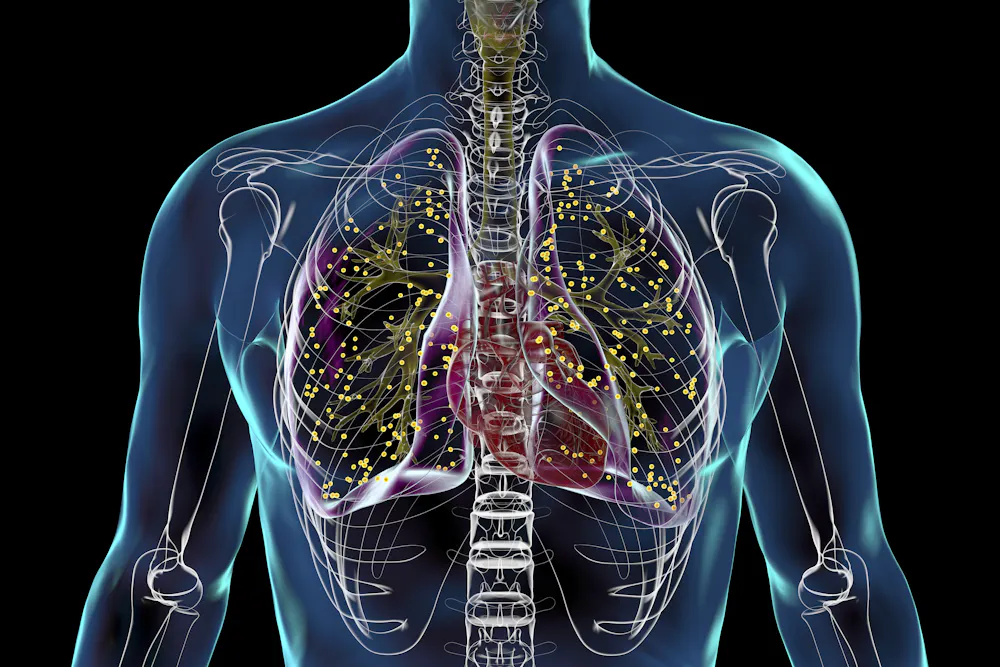
    TB infections, which are typically found in the lungs, have risen since the COVID-19 pandemic.
    Kateryna Kon/Science Photo Library via Getty Images

    Finally, TB was most ominously called the “robber of youth” due to its historical propensity to afflict people 15 to 30 years old.

    In 1865, Jean Antoine Villemin, an army physician in Paris, demonstrated that TB could be transmitted from infected animals to healthy ones through inoculation. Before these studies, the cause of TB was presumed to be primarily constitutional, by either an inherent predisposition or from unhealthy or immoral lifestyles.

    The microorganism causing TB was ultimately discovered in 1882 by the German physician Robert Koch. Koch announced his findings on March 24, 1882, a day globally recognized as World TB Day.

    How does TB spread?

    Tuberculosis is spread by small infectious droplets in the air. A TB patient may emit these droplets by coughing, singing and potentially from regular breathing that occurs during sleep or resting.

    One form of TB can be spread through unpasteurized dairy products. While rare, there have been reports of TB transmission through bone graphs, in which healthy, donated bone material is used to replace damaged bones.

    Close-up view of an infection by Mycobacterium tuberculosis.
    Kateryna Kon/Science Photo Library via Getty Images

    The origin of the TB outbreak in Kansas remains unknown as of early March 2025. The outbreak has disproportionately affected those in low-income communities, and two people have died from it.

    Importantly, a patient with untreated TB can infect 10 to 15 others.

    Could the COVID-19 pandemic be a factor?

    The COVID-19 pandemic has played a pivotal role in the resurgence of TB. Cases increased globally by 4.6% from 2020 to 2023, reversing decades of steady declines in the disease. In the U.S. alone, TB cases rose by more than 15% from 2022 to 2023.

    During mandatory shutdowns, people were less able to access health care centers for early diagnosis of TB or to fill prescriptions for treatment, perhaps due to the fear of contracting COVID-19 while visiting a medical care facility. COVID-19-related disruptions in care resulted in nearly 700,000 excess deaths from TB.

    Access to health care may not be the only factor behind this uptick. Medical supply shortages and delays in shipment may have also played a role. For example, the U.S. experienced shortages of one of the primary TB drugs between 2021 and 2023.

    As illustrated by this 1963 photo, TB is often detected by an X-ray of the chest.
    Smith Collection/Gado/Archive Photos via Getty Images

    What are the main treatments?

    Multidrug treatment is currently the only way to cure TB and stop its spread.

    Prior to the late 1930s, when the first antibiotic for TB treatment was developed, TB treatments included bloodletting and consumption of cod liver oil. The most popular treatment involved isolated sanatoriums in high-altitude areas such as the Adirondacks and the Rocky Mountains, where the cold, dry air was believed to be a cure. Scholars at the time suggested that the potential for cure was due to these environments being more invigorating for the body and providing more restful sleep. There is no evidence to support these beliefs.

    Streptomycin was the first antibiotic treatment to become available for TB, in the 1940s. However, the microorganism quickly became drug resistant. A second antibiotic, called isoniazid, was developed as a first-line treatment against TB in the 1950s. Again, the microorganism became drug resistant.

    Two- and four-drug combinations are now used to treat both latent infections and active disease. Treatment of active TB requires at least six months of uninterrupted therapy. Disruptions in treatment result in further spread of TB and the emergence of multidrug resistant TB, which requires additional drugs and more than nine months of treatment.

    All TB drugs are toxic; the quality of life for TB patients deteriorates during treatment and remains so throughout their lives. Finding cases and treating TB illness early, before symptoms begin, is important because it not only reduces the spread of disease but also greatly reduces drug toxicity.

    What should people be aware of?

    People should be aware that TB is still a public health problem across the globe. Education on the transmission, treatment and need for active work to eradicate TB is the best defense.

    One of the reasons why education and awareness about TB are so important is that a person with latent TB may be unknowingly harboring the microorganism for years. In the absence of symptoms, these people are unlikely to seek care and will not be diagnosed and treated unless identified as part of an outbreak, as was the case for more than half of the patients in Kansas.

    Karen Dobos receives funding from NIAID, NIH and the Bill and Melinda Gates Foundation.

    Marcela Henao-Tamayo receives funding from NIAID, NIH and OEDIT.

    ref. As tuberculosis cases rise in the US and worldwide, health officials puzzle over the resurgence of a disease once in decline – https://theconversation.com/as-tuberculosis-cases-rise-in-the-us-and-worldwide-health-officials-puzzle-over-the-resurgence-of-a-disease-once-in-decline-249450

    MIL OSI – Global Reports

  • MIL-OSI Global: What’s that microplastic? Advances in machine learning are making identifying plastics in the environment more reliable

    Source: The Conversation – USA – By Ambuj Tewari, Professor of Statistics, University of Michigan

    Microplastics are tiny bits of plastic that show up in the environment. Svetlozar Hristov/iStock via Getty Images Plus

    Microplastics – the tiny particles of plastic shed when litter breaks down – are everywhere, from the deep sea to Mount Everest, and many researchers worry that they could harm human health.

    I am a machine learning researcher. With a team of scientists, I have developed a tool to make identification of microplastics using their unique chemical fingerprint more reliable. We hope that this work will help us learn about the types of microplastics floating through the air in our study area, Michigan.

    Microplastics – a global problem

    The term plastic refers to a wide variety of artificially created polymers. Polyethylene, or PET, is used for making bottles; polypropylene, or PP, is used in food containers; and polyvinyl chloride, or PVC, is used in pipes and tubes.

    Microplastics are small plastic particles that range in size from 1 micrometer to 5 millimeters. The width of a human hair, for comparison, ranges from 20 to 200 micrometers.

    Most scientific studies focus on microplastics in water. However, microplastics are also found in the air. Scientists know much less about microplastics in the atmosphere.

    When scientists collect samples from the environment to study microplastics, they usually want to know more about the chemical identities of the microplastic particles found in the samples.

    Plastic bottles are often made of polyethylene, while food containers usually containe polypropylene.
    Anton Petrus/Moment via Getty Images

    Fingerprinting microplastics

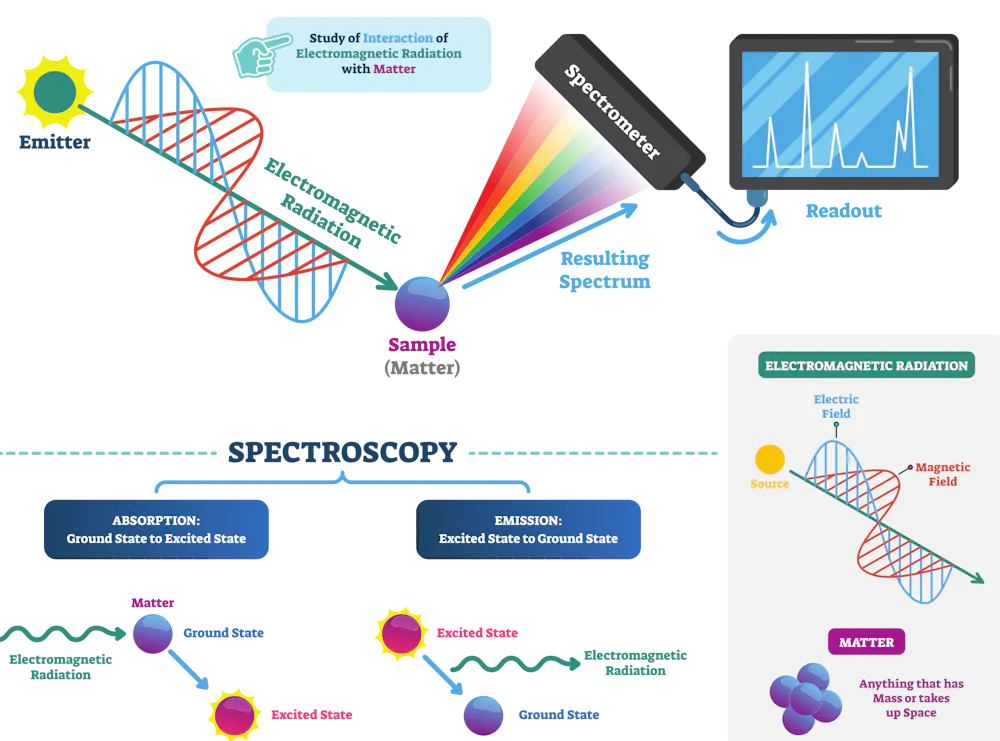
    Just as fingerprinting uniquely identifies a person, scientists use spectroscopy to determine the chemical identity of microplastics. In spectroscopy, a substance either absorbs or scatters light, depending on how its molecules vibrate. The absorbed or scattered light creates a unique pattern called the spectrum, which is effectively the substance’s fingerprint.

    Spectroscopy can match a substance with its unique fingerprint.
    VectorMine/iStock via Getty Images Plus

    Just like a forensic analyst can match an unknown fingerprint against a fingerprint database to identify the person, researchers can match the spectrum of an unknown microplastic particle against a database of known spectra.

    However, forensic analysts can get false matches in fingerprint matching. Similarly, spectral matching against a database isn’t foolproof. Many plastic polymers have similar structures, so two different polymers can have similar spectra. This overlap can lead to ambiguity in the identification process.

    So, an identification method for polymers should provide a measure of uncertainty in its output. That way, the user can know how much to trust the polymer fingerprint match. Unfortunately, current methods don’t usually provide an uncertainty measure.

    Data from microplastic analyses can inform health recommendations and policy decisions, so it’s important for the people making those calls to know how reliable the analysis is.

    Conformal prediction

    Machine learning is one tool researchers have started using for microplastic identification.

    First, researchers collect a large dataset of spectra whose identities are known. Then, they use this dataset to train a machine learning algorithm that learns to predict a substance’s chemical identity from its spectrum.

    Sophisticated algorithms whose inner workings can be opaque make these predictions, so the lack of an uncertainty measure becomes an even greater problem when machine learning is involved.

    Our recent work addresses this issue by creating a tool with an uncertainty quantification for microplastic identification. We use a machine learning technique called conformal prediction.

    Conformal prediction is like a wrapper around an existing, already trained machine learning algorithm that adds an uncertainty quantification. It does not require the user of the machine learning algorithm to have any detailed knowledge of the algorithm or its training data. The user just needs to be able to run the prediction algorithm on a new set of spectra.

    To set up conformal prediction, researchers collect a calibration set containing spectra and their true identities. The calibration set is often much smaller than the training data required for training machine learning algorithms. Usually just a few hundred spectra are enough for calibration.

    Then, conformal prediction analyzes the discrepancies between the predictions and correct answers in the calibration set. Using this analysis, it adds other plausible identities to the algorithm’s single output on a particular particle’s spectrum. Instead of outputting one, possibly incorrect, prediction like “this particle is polyethylene,” it now outputs a set of predictions – for example, “this particle could be polyethylene or polypropylene.”

    The prediction sets contain the true identity with a level of confidence that users can set themselves – say, 90%. Users can then rerun the conformal prediction with a higher confidence – say, 95%. But the higher the confidence level, the more polymer predictions given by the model in the output.

    It might seem that a method that outputs a set rather than a single identity isn’t as useful. But the size of the set serves as a way to assess uncertainty – a small set indicates less uncertainty.

    On the other hand, if the algorithm predicts that the sample could be many different polymers, there’s substantial uncertainty. In this case, you could bring in a human expert to examine the polymer closely.

    Testing the tool

    To run our conformal prediction, my team used libraries of microplastic spectra from the Rochman Lab at the University of Toronto as the calibration set.

    Once calibrated, we collected samples from a parking lot in Brighton, Michigan, obtained their spectra, and ran them through the algorithm. We also asked an expert to manually label the spectra with the correct polymer identities. We found that conformal prediction did produce sets that included the label the human expert gave it.

    Some spectra, such as polyethylene on the left and polypropylene on the right, look very similar and can easily be confused. That’s why having an uncertainty measure can be helpful.
    Ambuj Tewari

    Microplastics are an emerging concern worldwide. Some places such as California have begun to gather evidence for future legislation to help curb microplastic pollution.

    Evidence-based science can help researchers and policymakers fully understand the extent of microplastic pollution and the threats it poses to human welfare. Building and openly sharing machine learning-based tools is one way to help make that happen.

    Ambuj Tewari receives funding from NSF and NIH. The microplastics project is funded by the “Meet the Moment” initiative of the University of Michigan’s College of Literature, Science, and the Arts. This initiative focuses on impactful research on pressing societal issues.

    ref. What’s that microplastic? Advances in machine learning are making identifying plastics in the environment more reliable – https://theconversation.com/whats-that-microplastic-advances-in-machine-learning-are-making-identifying-plastics-in-the-environment-more-reliable-249075

    MIL OSI – Global Reports

  • MIL-OSI Russia: “What could be more important than feeding people?”: Vladimir Stroyev took part in a strategy session on the topic of training managers in the agro-industrial complex

    Translartion. Region: Russians Fedetion –

    Source: State University of Management – Official website of the State –

    On March 6, 2025, as part of the business program of the Exhibition and Forum of Educational Technologies, Infrastructure and Intelligent Solutions MMCO.Expo – 2025, a strategic session “Training of management personnel for rural areas and small towns: horizons for the development of the domestic system of vocational education” was held, in which the rector of the State University of Management Vladimir Stroev took part.

    Together with the rector of the State University of Management, the discussion was attended by Deputy Minister of Science and Higher Education of the Russian Federation Olga Petrova, member of the Federation Council Committee on Science, Education and Culture Igor Murog, rector of the Russian New University Vladimir Zernov, vice-president of RAO Viktor Basyuk, deputy chairman of the Association of Non-State Universities Roman Sultanov and other experts.

    Deputy Minister of Science and Higher Education Olga Petrova spoke about the importance of the educational process for training personnel for the agro-industrial complex.

    “How can we make it so that students who receive an education in Moscow and St. Petersburg come to work at enterprises that are not always located in Moscow and St. Petersburg, and very often are located in small towns? There is only one way. This is precisely the mission, the feeling of significance, value, the very same educational policy that must be clearly and correctly built,” Olga Petrova noted.

    Rector of the State University of Management Vladimir Stroyev spoke about the “Digital Village” – a large project to develop boxed solutions for farmers using various unmanned systems and new biotechnologies. Vladimir Vitalyevich also pointed out the high technology of the modern agro-industrial complex.

    “Previously, the attitude towards the agro-industrial complex was somewhat residual. A rural leader was perceived as “a man with a shovel and a plough”. Now this opinion is already considered backward and those who continue to think so do not understand how the agro-industrial complex is developing in our time. Now it is one of the most high-tech complexes. This is a huge scientific base, institutes that have been engaged in biotechnology, unmanned developments, and management decisions for many years. In order to work in the agro-industrial complex now, you need the highest level of qualification,” said Vladimir Stroyev.

    Deputy Chairman of the Association of Non-State Universities Roman Sultanov mentioned modern educational technologies.

    “The easiest way to make education accessible is online. Today, there is no other way to reach every student, applicant or schoolchild, wherever they are. If you look at the ratings and research, the private sector is leading in distance education. And if you synchronize private sector with state tasks, then the first step could be access to online education,” said Roman Sultanov.

    Subscribe to the TG channel “Our GUU” Date of publication: 03/06/2025

    Please note: This information is raw content directly from the source of the information. It is exactly what the source states and does not reflect the position of MIL-OSI or its clients.

    MIL OSI Russia News

  • MIL-OSI United Nations: Artificial intelligence: rooting out bias and stereotypes

    Source: United Nations 4

    Women

    As online tools using various forms of artificial intelligence become increasingly common, calls are growing for more action to ensure that they do not create or perpetuate stereotypes and gender bias.

    During High-Level Week of the UN General Assembly in September, the topic of AI was the focus of several side-events featuring industry experts and UN officials.

    In a session entitled “Paving new Pathways for Women in Tech”, Mita Hosali, the Deputy Director of the UN’s News and Media Division, spoke to Sarah Steinberg, Head of Global Public Policy Partnerships at LinkedIn, Tami Bhaumik, Vice President of Civility and Partnerships for Roblox, and Hélène Molinier, Senior Advisor on Digital Cooperation at UN Women.

    Soundcloud

    Ms. Hosali began by describing the lack of female representation in the tech world: overall, around a quarter of those working in the industry are women, dropping to about 11 per cent at the executive level. Women make up just 18 per cent of AI researchers.

    Data analysis by the LinkedIn platform, responded Ms. Steinberg, shows that women are not only under-represented, but their numbers are actually declining in terms of hiring rates.

    “When it comes to the industries and the fields that are really driving the future – STEM, the green economy, AI – we see women significantly underrepresented and not making sufficient progress in closing that gap”, she warned.

    Ms. Steinberg added that, in her view, AI will create new forms of employment, but “we have to be aware of the fact that it’s going to reshape the jobs and skills that we already have”: in the shorter term, she declared, “women are at a greater risk of losing their jobs than men, due to the introduction of AI tools in the wider economy”.

    © ADB/Ariel Javellana

    Girls attend a science class at a school in Indonesia.

    Giving a voice to the marginalized

    Roblox, an online platform for the creation of games and experiences, boasts almost 80 million daily active users. Ms. Bhaumik expressed optimism about the future, and the promise of generative AI in democratizing opportunities for women and girls, and marginalized individuals.

    Roblox, she said, can help to “level-set gender equality, making sure those voices who are very, very faint in the background really come to the forefront”.

    Hélène Molinier addressed the issue of bias in the development of AI systems, which can have serious real- world consequences. Many products, she said, contain bias, in areas ranging from image generation to chat bot moderation. She reminded the audience that the decision to put these products on the market despite their flaws, remains the responsibility of humans.

    Bridging the AI divide

    In another side-event, Ms. Hosali interviewed Amandeep Singh Gill, the UN Secretary-General’s Envoy on Technology, on the issue of effective guardrails for AI, and how to ensure that they strike the right balance between providing protection and allowing innovation to flourish.

    Existing UN norms, said Mr. Singh, such as international treaties and commitments including the Sustainable Development Goals, are useful guides. However, another concern is the lack of representation in the Global South, in terms of infrastructure and talent.

    Mr. Singh called for efforts to bridge the AI divide to be focused on three areas: ensuring that legislators and decision-makers understand the importance of the technology as a public good; providing local researchers and innovators with the necessary data to enable them to build homegrown solutions; and international cooperation in terms of sharing models that have worked in other places.

    MIL OSI United Nations News

  • MIL-OSI USA: State Archives to Host Free Virtual Program on the Regulation of Midwives, 1900-1940

    Source: US State of North Carolina

    Headline: State Archives to Host Free Virtual Program on the Regulation of Midwives, 1900-1940

    State Archives to Host Free Virtual Program on the Regulation of Midwives, 1900-1940
    jejohnson6

    This Women’s History Month, learn about changes to the practice of midwifery in the early twentieth century in North Carolina.

    Yale University student Jenesis Nwainokpor will present a free online program discussing the transition from traditional midwifery to the increasingly professionalized field of obstetrics, “Where Did All the Midwives Go?: Statistical Authority in the Regulation of Midwifery in North Carolina, 1900-1940.” At the turn of the 20th century, American physicians sought to control southern midwives, most of whom were Black. Their efforts reduced professional competition by blaming midwives for high rates of infant mortality and led to sweeping governmental regulation, eventually driving these care workers to virtual extinction.

    The event is scheduled Thursday, March 13, from noon-1:00 p.m.

    Register in advance for online participation. https://www.zoomgov.com/webinar/register/WN_ag8T1464Q9igwmEL2k69vg#/registration For more information, contact Adrienne Berney, adrienne.berney@dncr.nc.gov; 919-814-6863.

    About the State Archives The State Archives serves as the custodian of North Carolina’s historical records, preserving and providing public access to a wealth of archival materials. Through its diverse collections, educational programs, and exhibitions, the State Archives plays a crucial role in promoting an understanding and appreciation of North Carolina’s rich historical legacy.

    About the North Carolina Department of Natural and Cultural Resources
    The N.C. Department of Natural and Cultural Resources (DNCR) manages, promotes, and enhances the things that people love about North Carolina – its diverse arts and culture, rich history, and spectacular natural areas. Through its programs, the department enhances education, stimulates economic development, improves public health, expands accessibility, and strengthens community resiliency.

    The department manages over 100 locations across the state, including 27 historic sites, seven history museums, two art museums, five science museums, four aquariums, 35 state parks, four recreation areas, dozens of state trails and natural areas, the North Carolina Zoo, the State Library, the State Archives, the N.C. Arts Council, the African American Heritage Commission, the American Indian Heritage Commission, the State Historic Preservation Office, the Office of State Archaeology, the Highway Historical Markers program, the N.C. Land and Water Fund, and the Natural Heritage Program. For more information, please visit www.dncr.nc.gov.
    Mar 1, 2025

    MIL OSI USA News

  • MIL-OSI USA: ‘Cheers to 10 years,’ a Birthday and Living History Celebration

    Source: US State of North Carolina

    Headline: ‘Cheers to 10 years,’ a Birthday and Living History Celebration

    ‘Cheers to 10 years,’ a Birthday and Living History Celebration
    jejohnson6

    Join us in celebrating with the dedicated staff of the CSS Neuse Museum, devoted volunteers, and Friends of the CSS Neuse Museum board members as we commemorate ten years of promoting local history. Attend our “Cheers to Ten Years: Anniversary Celebration and Living History” on Saturday, March 8, from 10 a.m.-3 p.m. We warmly invite our community and all visitors to explore the new exhibits and interactive enhancements that have enriched the museum over the past decade.

    Together, we will delve into the fascinating history of the CSS Neuse ironclad, the significant battles that occurred in eastern North Carolina during the Civil War, and how they influenced the lives of the residents of Lenoir County. During the program, historic interpreters and volunteers will be stationed throughout the museum to showcase their displays, enriching the content of the permanent exhibits. Visitors are encouraged to ask questions and engage with our interactive features, while families will appreciate using our scavenger hunt to explore the museum together! Additionally, visitors can examine and handle artifacts from the CSS Neuse Museum’s teaching collection.

    The museum will offer several lectures in the theater room, including:

        • Presenter: Cliff Tyndall will present his book, “A Snapshot of Kinston and Lenoir County During the Civil War,” at 11 a.m.

        • Presenter: Jim Reifinger, Development of Small Arms, 1 p.m.

        • Presenter: Matthew Young, The Crew of the CSS Neuse, 2 p.m.

    A temporary exhibit, “The Toll of War” is on view on the observation platform of the mezzanine level. Curated by the National Museum of Civil War Medicine, the exhibit underscores the physical and emotional toll of the conflict on individuals who endured it. The exhibit will remain on display through March 27.

    About the CSS Neuse Museum
    The CSS Neuse is the only remaining commissioned Confederate ironclad above water. It was part of a new technology that the Confederacy used to combat the superior manpower and firepower of the Union Navy. Learn about this technological advance and warfare in eastern North Carolina at the CSS Neuse Museum. The Confederate Navy launched the CSS Neuse, attempting to gain control of the lower Neuse River and New Bern, but ultimately destroyed the vessel to keep it out of Union hands.

    The CSS Neuse Museum is located at 100 N. Queen St., Kinston, N.C., and open Tuesday-Saturday, 9 a.m.-5 p.m. Admission: $5/Adult: 18 – 64 years old, $4/Senior: 65+, $3/Child: 3 -17 years old. Ages 2 and under are free. As a Blue Star Museum program member, all active-duty military personnel with ID and their families of up to five members get free admission.

    Please contact Rachel Kennedy at (252) 526-9600 x222 for more information. The CSS Neuse Museum is a part of the Division of State Historic Sites within the N.C. Department of Natural and Cultural Resources.

    About the North Carolina Department of Natural and Cultural Resources
    The N.C. Department of Natural and Cultural Resources (DNCR) manages, promotes, and enhances the things that people love about North Carolina – its diverse arts and culture, rich history, and spectacular natural areas. Through its programs, the department enhances education, stimulates economic development, improves public health, expands accessibility, and strengthens community resiliency.

    The department manages over 100 locations across the state, including 27 historic sites, seven history museums, two art museums, five science museums, four aquariums, 35 state parks, four recreation areas, dozens of state trails and natural areas, the North Carolina Zoo, the State Library, the State Archives, the N.C. Arts Council, the African American Heritage Commission, the American Indian Heritage Commission, the State Historic Preservation Office, the Office of State Archaeology, the Highway Historical Markers program, the N.C. Land and Water Fund, and the Natural Heritage Program. For more information, please visit www.dncr.nc.gov.
    Mar 1, 2025

    MIL OSI USA News

  • MIL-OSI United Kingdom: Joint statement between Prime Minister Keir Starmer and Taoiseach Micheál Martin: 6 March 2025

    Source: United Kingdom – Executive Government & Departments

    Press release

    Joint statement between Prime Minister Keir Starmer and Taoiseach Micheál Martin: 6 March 2025

    Joint statement between Prime Minister Keir Starmer and Taoiseach Micheál Martin following UK-Ireland Summit.

    UK-Ireland 2030 Joint Statement

    1. This Joint Statement represents the starting point for a strengthened relationship between the UK and Ireland, informed by our co-guarantorship of the Good Friday Agreement, and to be taken forward through an ambitious programme of co-operation between our two countries through to 2030.

    2. The time has come to commit anew to delivering on the promise of our unique partnership to the benefit of current and future generations living across these islands. 

    3. Our renewed programme of co-operation will be taken forward in a spirit of respect and affinity, and by a shared ambition to reach the potential of our partnership across our islands, recognising that, in a changing world beyond our shores, the benefits and significance of a stronger and more settled relationship between our two countries have never been greater.

    The UK and Ireland working together at home and across the globe

    1. In a challenging geo-political and international security environment, Ireland and the UK confirm our commitment to the global multilateral system and international law as the foundations on which all our international engagement and partnerships are built.

    2. Building on these foundations, we will work together to strengthen international institutions for peace, promote conflict prevention, peace-building, sustainable development and climate action internationally.  Today, we have agreed in particular to collaborate on a strategic approach to the United Nations’ Peacebuilding Architecture Review and the World Bank’s Fragility, Conflict, Violence (FCV) Strategy. We also agree to collaborate on the Women, Peace and Security agenda and to pilot a joint lesson-sharing from the Northern Ireland peace process in an agreed priority country.

    3. We will support this intensification of our co-operation on foreign and security policy issues through annual political consultations.

    4. Continuing to ensure the safety and security of the people who live in Ireland and the United Kingdom is a priority we share.

    5. National resilience remains a priority for both of us.  We will strengthen co-operation and information sharing on emergency planning to best protect our peoples across these islands. 

    6. We will strengthen our co-operation in the area of maritime security, with a particular focus on critical undersea infrastructure, which will require greater international co-operation, including closer co-operation between Ireland and the UK.

    7. We value our good working relationship at an operational level on cyber security and will continue to co-operate to ensure that the sharing of information and best practices contribute to higher levels of cyber security across both countries. We will also work to develop approaches that benefit both countries particularly in the areas of skills development, cyber hygiene awareness and research projects.

    8. Since 2015, the UK and Ireland have cooperated on defence on the basis of a Memorandum of Understanding. We will pursue implementation of all aspects of that agreement, particularly in the areas of military training and education. To reflect the rebuilding and strengthening of our partnership, today we agree to review and update the Memorandum of Understanding on Defence by our next Summit in this series.

    9. We will continue to develop these areas of work, including through our structured security dialogue at senior official level.

    10. We will strengthen existing co-operation on criminal, civil and family law matters and exchange expertise on justice systems challenges, as well as collaborating on the rule of law and its promotion overseas. We will continue to work together to tackle threats to safety online.

    Ensuring a strategic and efficient approach to our shared maritime space to mobilise investment, support a healthy marine environment and provide clean energy for our islands

    1. We recognise the critical importance of the Celtic and Irish Seas and are committed to working together to harness their potential by deepening co-operation on offshore energy and interconnection, to help ensure our collective energy security as part of the green transition to net zero.

    2. Our countries are uniquely linked, not least through shared energy infrastructure and the Single Electricity Market (SEM) on the island of Ireland. This means we share common long-term challenges, including the need for secure, competitive, and sustainable sources of energy.

    3. We welcome recent progress on closer working between our countries in this regard, including through our two bilateral Memoranda of Understanding, and the opportunity for more formal co-operation between British and Irish system operators (EirGrid, Gas Networks Ireland, National Energy System Operator and National Gas).

    4. In order to meet our ambitious decarbonisation targets, we have agreed today to work together to mobilise investment into strategic infrastructure in the Irish and Celtic Seas by establishing frameworks to guide private investment and removing barriers to trade and investment.

    5. In this regard, we have agreed that our respective maritime policy, licensing and regulatory bodies will work together to establish co-operation in relation to data collection and usage, to continue to improve the management of the maritime area in the Irish and Celtic Seas through robust marine planning that includes a clear focus on our shared marine environment.

    6. We have also agreed to undertake new joint initiatives on mapping the sea basin to improve interoperability and resilience in UK and Irish waters, and to deepen existing co-operation on maritime decarbonisation, including on our joint efforts to establish green maritime corridors. 

    7. We will also broaden our existing Energy transition MoU to include industrial decarbonisation; knowledge sharing and exchanging best practices around retrofitting of homes and Community Benefit Funds; as well as formalising a staff exchange programme between UK and Ireland energy departments and agencies.

    8. Due to its geography, engineering expertise and interconnection to both Ireland and Great Britain, Northern Ireland can benefit from and be at the forefront of the clean energy transition. Co-operation between governments on infrastructure development will be key in both enabling Northern Ireland to have a renewable generation capacity of 3,550 MW by 2030 in order to deliver the target of 80% of electricity consumption from renewable sources, as well as supporting the Northern Ireland Executive’s ambition for 1GW of offshore wind from 2030 and Ireland’s ambition of at least 5GW of offshore wind by 2030, including through developing and supporting an all-island supply chain.

    9. Through our continuing co-operation we can act coherently and strategically, developing and sharing research and technical innovation to address our shared challenges, which in turn will deliver significant economic and social benefits to communities across our islands.

    Agile, open economies working together to attract investment, innovate from knowledge and accelerate growth

    1. The UK and Ireland are particularly close economic partners with a bilateral trade relationship worth approximately 100 billion euros annually. Ireland is the UK’s 6th largest trading partner and the UK is Ireland’s second largest trading partner and we are committed to building on these ties in order to attract new investment and accelerate economic growth across our two countries.

    2. Today we welcome substantial new investment announcements across a range of sectors including Digital, AI and Technology that are testimony to continued confidence in our economies and to the importance of our business and trading bilateral relationship. These commitments to invest will bring new jobs and opportunities to local communities and help drive up economic growth.

    3. The UK and Ireland have a longstanding partnership in sharing knowledge and experience in progressing infrastructure projects, and we share an ambition to accelerate the delivery of sustainable and resilient infrastructure to drive economic growth, enable new forms of economic activity, accelerate the transition to Net Zero by 2050, and support the delivery of housing and high-quality public services over the next decade.  Our countries and businesses are investing heavily in achieving this ambition but also face common challenges, including in relation to capacity and productivity. We have strong existing collaborations in the transport, housing and energy sectors, and today have agreed a new Framework for Co-operation to support infrastructure delivery to deepen these partnerships and extend them to further areas of mutual interest, including digital and modern methods of construction technologies.

    4. Today, we also reaffirm our support to small business in both countries and commit to working together to establish an SME Dialogue focused on sharing good practices in nurturing growth and productivity amongst SMEs to maximise commercial opportunities.

    5. We will also establish an Economic Security Exchange to share good practices and experiences, and develop common understandings in key areas for the economic security and prosperity of our two nations.

    6. The UK and Ireland share a close bilateral relationship in science, innovation and technology and commit to building on this through our collaboration within the current Horizon European Research and Innovation Framework Programme, including encouraging national contact points to work closely together. We agree to convene regular meetings between UKRI and Research Ireland to discuss issues of mutual interest and monitor and identify multilateral and bilateral opportunities.

    7. In early 2024, we launched the research Co-Centre for Climate, Biodiversity & Water, seeking to deliver solutions to the pressing challenges posed by climate change, biodiversity decline, and water degradation; and the Co-Centre for Sustainable Food Systems, seeking to drive societal and political change in food system transformation and transition to climate neutrality by 2050. Following the launch of these Co-Centres, UKRI and Research Ireland will work together and with the Northern Ireland Executive to monitor progress and identify future opportunities to bring together researchers and innovators across the UK and Ireland.

    Developing the deep ties between our people and cultures

    1. We recognise the unique ability of arts, culture and sport to forge and foster ties between people across these islands. 

    2. We value the extraordinary influence and contribution of British and Irish cultures and heritages to the artistic and cultural wealth of the public realm and creative industries and institutions in both our countries. In recognition of this, today, we agree to establish a strategic partnership to deepen and amplify co-operation between our leading cultural institutions and to support wider public engagement with the contemporary culture and heritage of both our countries. Over the coming five years, this will comprise a range of measures to support collaborations in programming, professional exchange, research and policy, and an annual joint meeting of our leading cultural institutions each autumn.

    3. We look forward to our joint hosting of the EURO2028 Men’s Football Championship and the 2030 T20 Men’s Cricket World Cup and will work to ensure that both tournaments are enjoyed across these islands. We will explore future co-hosting opportunities in the area of sports.

    4. We recognise that to reach the potential of our partnership across these islands, we need to understand and respond to the aspirations and views of young people. Today, we have agreed to establish an Ireland-UK Youth Forum to bring together young people across these islands on an annual basis to discuss issues of importance to them and to make recommendations about how they can be addressed for consideration by both our governments.

    5. In order to build stronger connectivity amongst our children and young people, we will also encourage greater co-operation and contact between our schools and education systems. This will include areas such as early years learning and provision, social mobility, opportunity and inclusion; special education provision; curriculum and assessment reform; teacher professional development; and integrated education.

    6. We will promote greater understanding of educational opportunities for full-time students through improved knowledge, guidance and information using higher education entrance systems.

    7. The uniquely rich and dynamic connections between people across these islands are supported and made possible by our long-standing Common Travel Area arrangement.  We remain firmly committed to working together to protect the integrity and security of the Common Travel Area. Recognising also the importance of the Common Travel Area in facilitating the daily lives of citizens across these islands, we will work together to minimise barriers to work or travel for those who benefit from it.

    8. Underpinning our co-operation is our shared ambition of a more reconciled, peaceful and prosperous Northern Ireland.  In progressing our co-operation across the board, we will ensure that our partnership includes and benefits Northern Ireland. We commit to ensure the successful delivery of the 2021-2027 PeacePlus programme and are agreed in principle to a successor programme.

    9. We agree to establish a UK-Ireland 2030 Steering Group led by the UK Cabinet Office and Department of the Taoiseach in order to take forward the range of commitments we are making today. Together we will ensure this complements the institutions of the Good Friday Agreement and their crucial role at the heart of our essential and unique relationship.

    Updates to this page

    Published 6 March 2025

    MIL OSI United Kingdom

  • MIL-OSI Russia: Important congratulations: a letter from the rector of the State University of Management Vladimir Stroev to the head of VNIOPTUSKh

    Translartion. Region: Russians Fedetion –

    Source: State University of Management – Official website of the State –

    On March 5, representatives of the State University of Management took part in a ceremonial meeting dedicated to the 60th anniversary of the All-Russian Research Institute for the Organization of Production, Labor and Management in Agriculture (VNIOPTUSKh).

    Professors of the Department of Accounting, Auditing and Taxation of the State University of Management Tatyana Rogulenko and Roman Blizkiy presented the Honored Scientist of the Russian Federation Alexander Suglobov, who heads the All-Russian Research Institute of Agricultural Sciences, with a congratulatory letter from the Rector of the State University of Management Vladimir Stroyev. The letter was given in recognition of the merits of Alexander Evgenievich and the contribution of the institute’s staff to the development of the agricultural sector.

    On April 16-17, 2025, the All-Russian scientific and practical conference “Current state and prospects for the organization of production, labor and management in agriculture” will be held for the 60th anniversary of VNIOPTUSKh. As part of strengthening the interaction of research teams, the head of VNIOPTUSKh invites scientists from the State University of Management to take part in the conference.

    The anniversary is an important stage in the history of VNIOPTUSKh, emphasizing the importance of the institute’s work in the field of labor protection and industrial safety. The interaction of scientific institutions and universities contributes to the development of new technologies and approaches aimed at increasing efficiency and safety in the agricultural sector.

    Today, VNIOPTUSKh continues active research activities, implements modern methods and ensures sustainable development of the country’s agro-industrial complex.

    GUU congratulates the institute staff on their anniversary and wishes them further success in their scientific work!

    Subscribe to the TG channel “Our GUU” Date of publication: 03/06/2025

    Please note: This information is raw content directly from the source of the information. It is exactly what the source states and does not reflect the position of MIL-OSI or its clients.

    MIL OSI Russia News

  • MIL-Evening Report: Earth’s oldest impact crater was just found in Australia – exactly where geologists hoped it would be

    Source: The Conversation (Au and NZ) – By Tim Johnson, Professor, Geology, Curtin University

    Shatter cones formed by the impact in the Pilbara. Tim Johnson

    We have discovered the oldest meteorite impact crater on Earth, in the very heart of the Pilbara region of Western Australia. The crater formed more than 3.5 billion years ago, making it the oldest known by more than a billion years. Our discovery is published today in Nature Communications.

    Curiously enough, the crater was exactly where we had hoped it would be, and its discovery supports a theory about the birth of Earth’s first continents.

    The very first rocks

    The oldest rocks on Earth formed more than 3 billion years ago, and are found in the cores of most modern continents. However, geologists still cannot agree how or why they formed.

    Nonetheless, there is agreement that these early continents were critical for many chemical and biological processes on Earth.

    Many geologists think these ancient rocks formed above hot plumes that rose from above Earth’s molten metallic core, rather like wax in a lava lamp. Others maintain they formed by plate tectonic processes similar to modern Earth, where rocks collide and push each other over and under.

    Although these two scenarios are very different, both are driven by the loss of heat from within the interior of our planet.

    We think rather differently.

    A few years ago, we published a paper suggesting that the energy required to make continents in the Pilbara came from outside Earth, in the form of one or more collisions with meteorites many kilometres in diameter.

    As the impacts blasted up enormous volumes of material and melted the rocks around them, the mantle below produced thick “blobs” of volcanic material that evolved into continental crust.

    Our evidence then lay in the chemical composition of tiny crystals of the mineral zircon, about the size of sand grains. But to persuade other geologists, we needed more convincing evidence, preferably something people could see without needing a microscope.

    So, in May 2021, we began the long drive north from Perth for two weeks of fieldwork in the Pilbara, where we would meet up with our partners from the Geological Survey of Western Australia (GSWA) to hunt for the crater. But where to start?

    On the hunt for shatter cones in a typical Pilbara landscape with our trusted GSWA vehicles.
    Chris Kirkland

    A serendipitous beginning

    Our first target was an unusual layer of rocks known as the Antarctic Creek Member, which crops out on the flanks of a dome some 20 kilometres in diameter. The Antarctic Creek Member is only 20 metres or so in thickness, and mostly comprises sedimentary rocks that are sandwiched between several kilometres of dark, basaltic lava.

    However, it also contains spherules – droplets formed from molten rock thrown up during an impact. But these drops could have travelled across the globe from a giant impact anywhere on Earth, most likely from a crater that has now been destroyed.

    After consulting the GSWA maps and aerial photography, we located an area in the centre of the Pilbara along a dusty track to begin our search. We parked the offroad vehicles and headed our separate ways across the outcrops, more in hope than expectation, agreeing to meet an hour later to discuss what we’d found and grab a bite to eat.

    Large hut-like shatter cones in the rocks of the Antarctic Creek Member at the discovery site. The rocks on the hilltop farthest left are basalts that lay directly over the shatter cones.
    Tim Johnson

    Remarkably, when we returned to the vehicle, we all thought we’d found the same thing: shatter cones.

    Shatter cones are beautiful, delicate branching structures, not dissimilar to a badminton shuttlecock. They are the only feature of shock visible to the naked eye, and in nature can only form following a meteorite impact.

    An approximately one metre tall shatter cone ‘hut’, with the rolling hills of the Pilbara in the background.
    Chris Kirkland

    Little more than an hour into our search, we had found precisely what we were looking for. We had literally opened the doors of our 4WDs and stepped onto the floor of a huge, ancient impact crater.

    Frustratingly, after taking some photographs and grabbing a few samples, we had to move on to other sites, but we determined to return as soon as possible. Most importantly, we needed to know how old the shatter cones were. Had we discovered the oldest known crater on Earth?

    It turned out that we had.

    There and back again

    With some laboratory research under our belts, we returned to the site in May 2024 to spend ten days examining the evidence in more detail.

    Shatter cones were everywhere, developed throughout most of the Antarctic Creek Member, which we traced for several hundred metres into the rolling hills of the Pilbara.

    Our observations showed that above the layer with the shatter cones was a thick layer of basalt with no evidence of impact shock. This meant the impact had to be the same age as the Antarctic Member rocks, which we know are 3.5 billion years old.

    Delicate shatter cones within rocks typical of the Antarctic Creek Member.
    Tim Johnson

    We had our age, and the record for the oldest impact crater on Earth. Perhaps our ideas regarding the ultimate origin of the continents were not so mad, as many told us.

    Serendipity is a marvellous thing. As far as we knew, other than the Traditional Owners, the Nyamal people, no geologist had laid eyes on these stunning features since they formed.

    Like some others before us, we had argued that meteorite impacts played a fundamental role in the geological history of our planet, as they clearly had on our cratered Moon and on other planets, moons and asteroids. Now we and others have the chance to test these ideas based on hard evidence.

    Who knows how many ancient craters lay undiscovered in the ancient cores of other continents? Finding and studying them will transform our understanding of the early Earth and the role of giant impacts, not only in the formation of the landmasses on which we all live, but in the origins of life itself.

    The authors do not work for, consult, own shares in or receive funding from any company or organisation that would benefit from this article, and have disclosed no relevant affiliations beyond their academic appointment.

    ref. Earth’s oldest impact crater was just found in Australia – exactly where geologists hoped it would be – https://theconversation.com/earths-oldest-impact-crater-was-just-found-in-australia-exactly-where-geologists-hoped-it-would-be-250921

    MIL OSI AnalysisEveningReport.nz

  • MIL-OSI NGOs: Egypt: Detainees punished for protesting their detention in cruel conditions

    Source: Amnesty International –

    Egyptian authorities must end their reprisals against prisoners in 10th of Ramadan Prison for their hunger strike to protest their arbitrary detention and demand an end to their cruel and inhuman detention conditions, Amnesty International said today.

    Since early January, a number of detainees at 10th of Ramadan (6) Prison started a hunger strike to demand the release of individuals held in pretrial detention for more than six months, the right to outdoor exercise, full visitation rights, and the removal of the National Security Agency (NSA) officer in charge of the prison, whom they accuse of being abusive. In the aftermath of the strike, authorities transferred at least three detainees from 10th of Ramadan (6) Prison to prisons notorious for their harsh detention conditions, after punitively confiscating their personal belongings.

    “Instead of addressing the abysmal detention conditions in the 10th of Ramadan Prison, the authorities are trying to silence prisoners protesting these conditions by punishing them. Even when prisoners are held in newly built, modern prisons such as 10th of Ramadan, they still suffer abuse at the hands of prison authorities who operate without adequate oversight or accountability,” said Mahmoud Shalaby, Egypt Researcher at Amnesty International.

    “Instead of addressing the abysmal detention conditions in the 10th of Ramadan Prison, the authorities are trying to silence prisoners protesting these conditions by punishing them” – Mahmoud Shalaby, Egypt Researcher

    “The Egyptian authorities must ensure that conditions of detention are humane and in line with international law and standards, including the Nelson Mandela Rules. They must respond to longstanding calls by Amnesty International and Egyptian human rights defenders to allow independent Egyptian and international observers to have unfettered and unannounced access to prisons and to monitor detention conditions in the country.”

    Two women family members of the transferred detainees told Amnesty International that authorities had moved their relatives to prisons located hundreds of kilometres away from their families. The transfer to remote prisons, known as “Taghriba” (internal exile), is a common punitive measure used by the authorities to punish prisoners and render visitation even more costly and burdensome for their families.

    “When they escorted him from his cell at 10th of Ramadan (6) Prison, he thought they were finally taking him to the hospital for long overdue surgery. Instead, they were transferring him to another prison,” a relative of one of the detainees told Amnesty International. She said that he was punished solely for attempting to send a letter to a political party that he is a member of, urging them to advocate for his release.

    The third detainee went on hunger strike on 29 January to protest his transfer. His lawyer told Amnesty International that upon transfer, he was placed in an overcrowded cell, where detainees are forced to sleep in shifts. On 18 February, authorities failed to bring him to his pretrial detention renewal session, however, judges renewed his detention in his absence, without providing any justification. On 1 March, his wife posted on Facebook that he had ended his strike and remains hospitalized within the prison.

    Brutal detention conditions

    Three lawyers and three relatives of detainees held at 10th of Ramadan (6) Prison told Amnesty International that all inmates inside their wards are totally deprived of sunlight because they are not permitted daily exercise outdoors as required by the Mandela Rules. Nada Mougeeth, the wife of arbitrarily detained cartoonist Ashraf Omar, said that he has not seen the sun in seven months. According to Nada and the relatives of the two transferred prisoners, detainees are confined to their cells for 23 hours a day. They are allowed a maximum of one hour of exercise in a corridor inside the building where they are held.

    Under Egypt’s Internal Bylaws on Prisons, pretrial detainees are allowed two hours of exercise out of their cell daily.

    On 3 February, economist Abdel Khalek Farouq, also held in 10th of Ramadan prison for political reasons, told prosecutors that after he complained to prison officials about not being allowed to exercise in sunlight, he was moved, along with two other detainees, to another cell in an isolated and empty ward, according to a member of his family. He also said that a police officer threatened to transfer him to Sohag Prison, located around 500 kilometres away from Cairo where his family live.

    Nada and the two relatives told Amnesty International that family visits to the prison are limited to only 20 or 30 minutes once per month, except if there is an exceptional visit. This violates the prison bylaws, which provides for weekly one-hour visits for pretrial detainees and twice monthly visits for convicted prisoners. Some detainees are denied family visits altogether. For instance, Anas al-Belgaty, who has been arbitrarily detained for 11 years solely for his family affiliation, has received no visits since his transfer to 10th of Ramadan (2) prison in June 2023.

    Nada and the two relatives also reported being frequently subjected to invasive body searches by female guards. They said that the guards search women twice before they enter the visit hall, including through placing their hands inside the women’s clothing, touching their bras.

    They also reported that prison guards inspect the food brought by families using their bare hands in an unhygienic manner. Food brought by families is the main source of nutrition for detainees due to the lack of quality or insufficient portions provided by the prison.

    Background

    10th of Ramadan Prison began to operate in 2023 amid a public relations campaign by the government promoting it as a step toward improving detention conditions.

    On 12 January, the Egyptian Initiative for Personal Rights (EIPR) published a statement about the deteriorating detention conditions at 10th of Ramadan 6 Prison. Following this statement, on 19 January, prosecutors opened an investigation into prominent human rights defender Hossam Bahgat, executive director of EIPR, on charges of “spreading false news” and “aiding and funding a terrorist group.”

    Based on research into 16 prisons across Egypt, Amnesty International previously found that prison officials in Egypt are subjecting prisoners of conscience and others held for political reasons to torture and other  cruel, inhuman or degrading treatment or punishment through conditions of detention and are deliberately denying them health care to punish dissent.

    MIL OSI NGO

  • MIL-OSI Global: Taung child: the controversial story of the fossil discovery that proved humanity’s common origins in Africa – podcast

    Source: The Conversation – UK – By Gemma Ware, Host, The Conversation Weekly Podcast, The Conversation

    The cast of the Taung child skull found in South Africa in 1924. Didier Descouens/Wikipedia Commons, CC BY-SA

    One hundred years ago, a paper was published in the journal Nature that would radically shift our understandings of the origins of humanity. It described a fossil, found in a lime mine in Taung in South Africa, which became known as the Taung child skull.

    The paper’s author, an Australian-born anatomist called Raymond Dart, argued that the fossil was a new species of hominin called Australopithecus africanus. It was the first evidence that humanity originated in Africa.

    In this episode of The Conversation Weekly podcast, we talk to science historian Christa Kuljian about Dart’s complicated legacy and to paleoanthropologist Dipuo Kgotleng about what’s happened to the city of Taung itself, and how paleoanthropology has changed over the last century.

    When Dart’s paper was first published, it was roundly ridiculed by his scientific peers. Charles Darwin had a hunch that all humans had common origins in Africa, but archaeologists at the time weren’t looking for evidence on the continent, as Kuljian, a research associate at the University of Witwatersrand, explains:

     ”Scientists argued that humans had evolved in Europe or perhaps Asia, and that belief was influenced by the false assumption that many scientists had that Europeans were superior to other people from around the world, and that there was a hierarchy of race. Paleoanthropology and the search for human origins had its roots in that era of racialised thinking and white supremacy.“

    Dart’s contribution eventually proved this to be wrong. But at the same time, Dart, like many scientists working in Europe and the US in the early 20th century, was engaged in disturbing and racist anthropological practices, says Kuljian.

    “They were not only collecting ancient fossils, they were also collecting human skeletons. And scientists thought that humans could be divided into separate and distinct racial types based on physical characteristics. They thought that these pure racial types, which we now know do not exist, would give them a clue to understanding human evolution.”

    Not just one ‘hero’

    Alongside Dart’s own complicated legacy, researchers are also reassessing the way discoveries like the Taung child skull are commonly told: through the lens of a solo, white, hero like Indiana Jones.

    What’s missing, says Kgotleng, director of the Palaeo Institute at the University of Johannesburg, are often the stories of the “hidden figures” behind such discoveries. For example, the rock that contained the Taung skull was put aside by local mine workers who recognised its potential significance and passed it onto Dart’s colleague. Kgotleng argues:

    “ For a scientist to have that fossil in hand there was somebody who was on the ground assisting with that excavation. There were other labourers who were there, in most cases they never get recognised … we need to recognise all the workers in that whole process of the discovery through to publication.”

    Kgotleng, who used to work as the archaeologist at Taung, says that today the town “generally looks like it’s still stuck in the 1920s”. She says that many local people know little about the significance of the fossil find and that “the knowledge about the science has not filtrated through to the locals”.

    Listen to the conversations with Kuljian and Kgotleng on The Conversation Weekly podcast, which also includes an introduction from Natasha Joseph, science commissioning editor at The Conversation Africa. Kuljian and Kgotleng both also contributed papers to a special issue of the South African Journal of Science to mark the centenary of Dart’s article.


    This episode of The Conversation Weekly was written and produced by Katie Flood with assistance from Mend Mariwany and hosted by Gemma Ware. Sound design was by Eloise Stevens and theme music by Neeta Sarl.

    Listen to The Conversation Weekly via any of the apps listed above, download it directly via our RSS feed or find out how else to listen here.

    Dipuo Winnie Kgotleng has received funding from the Wenner-Gren foundation, National Heritage Council and National Research Foundation. Christa Kuljian has received funding from the Academic and Non-Fiction Authors Association of South Africa, the South African National Research Foundation and the Centre of Excellence in Palaeosciences.

    ref. Taung child: the controversial story of the fossil discovery that proved humanity’s common origins in Africa – podcast – https://theconversation.com/taung-child-the-controversial-story-of-the-fossil-discovery-that-proved-humanitys-common-origins-in-africa-podcast-251530

    MIL OSI – Global Reports

  • MIL-OSI Asia-Pac: Breakthrough in Laser Welding Technology: Revolutionizing Half a Century of Traditional Structural Steel Manufacturing

    Source: Republic Of China Taiwan 2

    The Department of Industrial Technology of Ministry of Economic Affairs’ officially launched its Technology R&D Pavilion at TIMTOS 2025 (Taipei International Machine Tool Show) on March 3. The pavilion showcases 24 key high-end machine tool technologies from three research institutions, namely, the Industrial Technology Research Institute (ITRI), the Precision Machinery Research & Development Center (PMC), and the Metal Industries Research & Development Centre (MIRDC), which have already been successfully adopted by domestic machine tool manufacturers and end users. Among these innovations, ITRI and Taiwan Mask Corporation have jointly developed the world’s first H-Beam Laser Welding Technology, which employs digital twins and AI techniques to achieve desired weld qualities by using high-power laser. This groundbreaking technology has not only won the 2025 International Edison Awards but also started replacing the arc welding method used by the local industry for the past 50 years. The new process increases production capacity by fivefold while significantly reducing welding time and energy consumption. This success of the technology development has also resulted in the approval of a new national CNS standard for laser welding of structural steel manufacturing. Mass production of H-beams by the new technology has already commenced in the Science and Industrial Park in Tainan City. President Lai Ching-te praised the development and application of this pioneering technology during his tour of TIMTOS 2025.

    MIL OSI Asia Pacific News

  • MIL-OSI USA: ROAMX testing in the Planetary Aeolian Laboratory (PAL) at NASA Ames Research Center 

    Source: NASA

    During 2024-2025, helicopter blades optimized for Mars were tested in the Planetary Aeolian Laboratory (PAL) at NASA Ames Research Center as part of the Rotor Optimization for the Advancement of Mars eXploration (ROAMX) project.  The experimental test-chamber of the PAL can be depressurized to create atmospheric air pressures of different planetary bodies such as Mars. The full-scale ROAMX blades were spun in hover configuration up to 4000 RPM at an atmospheric density of Mars (approximately 0.015 kilograms per cubic meter).  The Ingenuity blades were also tested in the PAL to compare the performance of the optimized blades against the Ingenuity Mars Helicopter Technology Demonstrator. The test was conducted to validate computational models of the performance of the optimized blades. Simulations show that the optimized ROAMX blades perform significantly better than the Ingenuity blades, allowing helicopters on Mars to fly farther, faster, and carry a science payload. The next phase of testing will occur with higher RPMs and additional collective angles.

    MIL OSI USA News

  • MIL-OSI USA: Sols 4471-4472: Marching Through the Canyon

    Source: NASA

    Written by Scott VanBommel, Planetary Scientist at Washington University
    Earth planning date: Monday, March 3, 2025
    Curiosity continued steady progress through the upper sulfate unit and toward its next major science waypoint: the boxwork structures. Our rover is currently driving south through a local canyon between “Texoli” and “Gould Mesa.” This route may expose the same rock layers observed while climbing along the eastern margin of the Gediz Vallis channel, prompting several science activities in today’s plan. With winter still gripping Gale crater and limiting the power available for science, the team carefully balanced a number of priorities.
    The weekend’s drive positioned the rover within reach of light-toned laminated bedrock and gray float rock. We kicked off our two-sol plan by removing dust on a representative bedrock target, “Ramona Trail,” before analyzing with APXS and imaging with MAHLI. ChemCam acquired compositional analyses on a laminated gray float rock, “Josephine Peak,” in addition to long-distance images of Texoli. Mastcam documented key features, capturing images of Josephine Peak, Texoli, “Gobblers Knob,” and “Fort Tejon.” In addition to these science-driven images, Mastcam also acquired two images of APXS before a planned drive of about 21 meters (about 69 feet).
    As Curiosity continues toward the boxwork structures, the intricate patterns we observe will provide valuable clues about the history of Mars. While the Mastcam images acquired today of the APXS sensor head won’t directly contribute to the boxwork study, they capture a more human aspect of the mission. With each “APXS horseshoe” image, such as the one featured in this blog from sol 4134, hand-written markings on the APXS sensor head appear alongside Martian terrain, a reminder that this incredible journey is driven by the human touch of a dedicated team on Earth who designed, built, and continue to operate this remarkable spacecraft.

    MIL OSI USA News

  • MIL-OSI USA: NASA Sets Coverage for Agency’s SpaceX Crew-10 Launch, Docking

    Source: NASA

    NASA will provide coverage of the upcoming prelaunch and launch activities for the agency’s SpaceX Crew-10 mission to the International Space Station.
    Liftoff is targeted for 7:48 p.m. EDT, Wednesday, March 12, from Launch Complex 39A at NASA’s Kennedy Space Center in Florida. The targeted docking time is approximately 10 a.m., Thursday, March 13.
    Coverage of the mission overview teleconference will be available on the agency’s website. The crew news conference, launch, the postlaunch news conference, and docking will be live on NASA+. Learn how to stream NASA content through a variety of platforms, including social media.
    The SpaceX Dragon spacecraft will carry NASA astronauts Anne McClain, commander; and Nichole Ayers, pilot; along with mission specialists JAXA (Japan Aerospace Exploration Agency) astronaut Takuya Onishi, and Roscosmos cosmonaut Kirill Peskov to the orbiting laboratory for a science mission of about four months. This is the 10th crew rotation mission and the 11th human spaceflight mission for NASA to the space station supported by the Dragon spacecraft since 2020 as part of the agency’s Commercial Crew Program.
    The deadline for media accreditation for in person coverage of this launch has passed. The agency’s media credentialing policy is available online. For questions about media accreditation, please email: ksc-media-accreditat@mail.nasa.gov.Media who need access to NASA live video feeds may subscribe to the agency’s media resources distribution list to receive daily updates and links.
    NASA’s mission coverage is as follows (all times Eastern and subject to change based on real-time operations):
    Friday, March 7
    2 p.m. – Crew arrival media event at NASA Kennedy with the following participants:

    Anne McClain, Crew-10 spacecraft commander, NASA
    Nichole Ayers, Crew-10 pilot, NASA
    Takuya Onishi, Crew-10 mission specialist, JAXA
    Kirill Peskov, Crew-10 mission specialist, Roscosmos

    Watch live coverage of the crew arrival media event on NASA Kennedy’s social media accounts.
    This event is open to in person media only previously credentialed for this event, and questions will be taken only during the crew news conference scheduled for later that day. Follow @CommercialCrew and @NASAKennedy on X for the latest arrival updates.5:30 p.m. – Mission overview teleconference at NASA Kennedy (or no earlier than one hour after the completion of the Flight Readiness Review) with the following participants:

    Ken Bowersox, associate administrator, Space Operations Mission Directorate, NASA Headquarters in Washington
    Steve Stich, manager, Commercial Crew Program, NASA Kennedy
    Dana Weigel, manager, International Space Station Program, NASA’s Johnson Space Center in Houston
    Meg Everett, deputy chief scientist, NASA’s International Space Station Program, NASA Johnson
    William Gerstenmaier, vice president, Build and Flight Reliability, SpaceX
    Junichi Sakai, manager, International Space Station Program, JAXA

    NASA will provide audio-only coverage of the teleconference.
    Media may ask questions in person and via phone. For the dial-in number and passcode, media should contact the Kennedy newsroom no later than 4 p.m., Friday, March 7, at ksc-newsroom@mail.nasa.gov.6:30 p.m. – Crew-10 crew news conference (or directly following the completion of the mission overview news conference) with the following participants:

    Anne McClain, Crew-10 spacecraft commander, NASA
    Nichole Ayers, Crew-10 pilot, NASA
    Takuya Onishi, Crew-10 mission specialist, JAXA
    Kirill Peskov, Crew-10 mission specialist, Roscosmos

    Watch live coverage of the mission overview news conference on NASA+.
    Media may ask questions via phone only. For the dial-in number and passcode, media should contact the Kennedy newsroom no later than 4 p.m., Friday, March 7, at: ksc-newsroom@mail.nasa.gov.
    Wednesday, March 12
    3:45 p.m. – Launch coverage begins on NASA+.
    7:48 p.m. – Launch
    Following the conclusion of launch and ascent coverage, NASA will switch to audio only and continue audio coverage through Thursday, March 13. Continuous coverage resumes on NASA+ at the start of rendezvous and docking and continues through hatch opening and the welcome ceremony.9:30 p.m. – Postlaunch news conference with the following participants:

    Ken Bowersox, associate administrator, NASA’s Space Operations Mission Directorate
    Steve Stich, manager, Commercial Crew Program, NASA Kennedy
    Dana Weigel, manager, International Space Station Program, NASA Johnson
    Sarah Walker, director, Dragon Mission Management, SpaceX
    Mayumi Matsuura, vice president and director general, Human Spaceflight Technology Directorate, JAXA

    Watch live coverage of the postlaunch news conference on NASA+.
    Media may ask questions in person and via phone. Limited auditorium space will be available for in person participation. For the dial-in number and passcode, please contact the Kennedy newsroom no later than 8:30 p.m., Wednesday, March 12, at ksc-newsroom@mail.nasa.gov.
    Thursday, March 13
    8:15 a.m. – Arrival coverage begins on NASA+.
    10 a.m. – Targeted docking to the forward-facing port of the station’s Harmony module
    11:45 a.m. – Hatch opening
    12:20 p.m. – Welcome ceremony
    All times are estimates and could be adjusted based on real-time operations after launch. Follow the space station blog for the most up-to-date operations information.
    Live Video Coverage Prior to Launch
    NASA will provide a live video feed of Launch Complex 39A approximately six hours prior to the planned liftoff of the Crew-10 mission. Pending unlikely technical issues, the feed will be uninterrupted until the prelaunch broadcast begins on NASA+, approximately four hours prior to launch. Once the feed is live, find it online at: http://youtube.com/kscnewsroom.
    NASA Website Launch CoverageLaunch day coverage of the mission will be available on the NASA website. Coverage will include livestreaming and blog updates beginning no earlier than 3:45 p.m., March 12, as the countdown milestones occur. On-demand streaming video on NASA+ and photos of the launch will be available shortly after liftoff. For questions about countdown coverage, contact the NASA Kennedy newsroom at 321-867-2468. Follow countdown coverage on the commercial crew or Crew-10 blog.
    Attend Launch Virtually
    Members of the public may register to attend this launch virtually. NASA’s virtual guest program for this mission also includes curated launch resources, notifications about related opportunities or changes, and a stamp for the NASA virtual guest passport following launch.
    Watch, Engage on Social Media
    Let people know you’re following the mission on X, Facebook, and Instagram by using the hashtags #Crew10 and #NASASocial. You may also stay connected by following and tagging these accounts:
    X: @NASA, @NASAKennedy, @NASASocial, @Space_Station, @ISS_Research, @ISS National Lab, @SpaceX, @Commercial_Crew
    Facebook: NASA, NASAKennedy, ISS, ISS National Lab
    Instagram: @NASA, @NASAKennedy, @ISS, @ISSNationalLab, @SpaceX
    Coverage en Espanol
    Did you know NASA has a Spanish section called NASA en Espanol? Check out NASA en Espanol on X, Instagram, Facebook, and YouTube for additional mission coverage.
    Para obtener información sobre cobertura en español en el Centro Espacial Kennedy o si desea solicitar entrevistas en español, comuníquese con Antonia Jaramillo: 321-501-8425; antonia.jaramillobotero@nasa.gov; o Messod Bendayan: 256-930-1371; messod.c.bendayan@nasa.gov.
    NASA’s Commercial Crew Program has delivered on its goal of safe, reliable, and cost-effective transportation to and from the International Space Station from the United States through a partnership with American private industry. This partnership is changing the arc of human spaceflight history by opening access to low Earth orbit and the International Space Station to more people, more science, and more commercial opportunities. The space station remains the springboard to NASA’s next great leap in space exploration, including future missions to the Moon and, eventually, to Mars.
    For more information about the mission, visit:
    https://www.nasa.gov/commercialcrew
    -end-
    Joshua Finch / Jimi RussellHeadquarters, Washington202-358-1100joshua.a.finch@nasa.gov / james.j.russell@nasa.gov
    Steven Siceloff / Stephanie PlucinskyKennedy Space Center, Florida321-867-2468steven.p.siceloff@nasa.gov / stephanie.n.plucinsky@nasa.gov
    Kenna PellJohnson Space Center, Houston281-483-5111kenna.m.pell@nasa.gov

    MIL OSI USA News

  • MIL-OSI USA: How NASA is Using Virtual Reality to Prepare for Science on Moon

    Source: NASA

    When astronauts walk on the Moon, they’ll serve as the eyes, hands, and boots-on-the-ground interpreters supporting the broader teams of scientists on Earth. NASA is leveraging virtual reality to provide high-fidelity, cost-effective support to prepare crew members, flight control teams, and science teams for a return to the Moon through its Artemis campaign.
    The Artemis III Geology Team, led by principal investigator Dr. Brett Denevi of the Johns Hopkins University Applied Physics Laboratory in Laurel, Maryland, participated in an Artemis III Surface Extra-Vehicular VR Mini-Simulation, or “sim” at NASA’s Johnson Space Center in Houston in the fall of 2024. The sim brought together science teams and flight directors and controllers from Mission Control to carry out science-focused moonwalks and test the way the teams communicate with each other and the astronauts.
    “There are two worlds colliding,” said Dr. Matthew Miller, co-lead for the simulation and exploration engineer, Amentum/JETSII contract with NASA. “There is the operational world and the scientific world, and they are becoming one.”
    NASA mission training can include field tests covering areas from navigation and communication to astronaut physical and psychological workloads. Many of these tests take place in remote locations and can require up to a year to plan and large teams to execute. VR may provide an additional option for training that can be planned and executed more quickly to keep up with the demands of preparing to land on the Moon in an environment where time, budgets, and travel resources are limited.

    VR helps us break down some of those limitations and allows us to do more immersive, high-fidelity training without having to go into the field. It provides us with a lot of different, and significantly more, training opportunities.

    BRI SPARKS
    NASA co-lead for the simulation and Extra Vehicular Activity Extended Reality team at Johnson.

    Field testing won’t be going away. Nothing can fully replace the experience crew members gain by being in an environment that puts literal rocks in their hands and incudes the physical challenges that come with moonwalks, but VR has competitive advantages.
    The virtual environment used in the Artemis III VR Mini-Sim was built using actual lunar surface data from one of the Artemis III candidate regions. This allowed the science team to focus on Artemis III science objectives and traverse planning directly applicable to the Moon. Eddie Paddock, engineering VR technical discipline lead at NASA Johnson, and his team used data from NASA’s Lunar Reconnaissance Orbiter and planet position and velocity over time to develop a virtual software representation of a site within the Nobile Rim 1 region near the south pole of the Moon. Two stand-in crew members performed moonwalk traverses in virtual reality in the Prototype Immersive Technology lab at Johnson, and streamed suit-mounted virtual video camera views, hand-held virtual camera imagery, and audio to another location where flight controllers and science support teams simulated ground communications.

    The crew stand-ins were immersed in the lunar environment and could then share the experience with the science and flight control teams. That quick and direct feedback could prove critical to the science and flight control teams as they work to build cohesive teams despite very different approaches to their work.
    The flight operations team and the science team are learning how to work together and speak a shared language. Both teams are pivotal parts of the overall mission operations. The flight control team focuses on maintaining crew and vehicle safety and minimizing risk as much as possible. The science team, as Miller explains, is “relentlessly thirsty” for as much science as possible. Training sessions like this simulation allow the teams to hone their relationships and processes.

    Denevi described the flight control team as a “well-oiled machine” and praised their dedication to getting it right for the science team. Many members of the flight control team have participated in field and classroom training to learn more about geology and better understand the science objectives for Artemis.
    “They have invested a lot of their own effort into understanding the science background and science objectives, and the science team really appreciates that and wants to make sure they are also learning to operate in the best way we can to support the flight control team, because there’s a lot for us to learn as well,” Denevi said. “It’s a joy to get to share the science with them and have them be excited to help us implement it all.”

    This simulation, Sparks said, was just the beginning for how virtual reality could supplement training opportunities for Artemis science. In the future, using mixed reality could help take the experience to the next level, allowing crew members to be fully immersed in the virtual environment while interacting with real objects they can hold in their hands. Now that the Nobile Rim 1 landing site is built in VR, it can continue to be improved and used for crew training, something that Sparks said can’t be done with field training on Earth.
    While “virtual” was part of the title for this exercise, its applications are very real.
    “We are uncovering a lot of things that people probably had in the back of their head as something we’d need to deal with in the future,” Miller said. “But guess what? The future is now. This is now.”

    MIL OSI USA News

  • MIL-OSI Video: 2025 National Lab Research SLAM

    Source: United States of America – Federal Government Departments (video statements)

    The National Lab Research SLAM, now in its second year, showcases the innovative research conducted at 17 Department of Energy (DOE) National Laboratories and illustrates the pivotal role the National Labs play in the nation’s innovation ecosystem. The National Lab Research SLAM challenges early-career scientists to deliver a compelling three-minute presentation of their research to a non-specialist audience, emphasizing the critical importance of science communication in society. Contestants are permitted one slide, but no additional resources or props. On March 5, 2025, finalists from each of the 17 National Laboratories will compete for the title of “Best Presentation” in their respective research categories awarded by a panel of esteemed judges and a “People’s Choice” winner awarded by the audience. For more information, visit nlresearchslam.org.

    https://www.youtube.com/watch?v=zccX3Lx1EP4

    MIL OSI Video

  • MIL-OSI Asia-Pac: SITI attends Mobile World Congress 2025 in Barcelona, Spain (with photos)

    Source: Hong Kong Government special administrative region

    SITI attends Mobile World Congress 2025 in Barcelona, Spain (with photos)
    *************************************************************************

    The Secretary for Innovation, Technology and Industry, Professor Sun Dong, leading a delegation of representatives from the innovation and technology (I&T) sector, continued his visit in Barcelona, Spain on March 5 (Barcelona time) and attended the Mobile World Congress (MWC) 2025.     Delivering a keynote speech at the Global System for Mobile Communications Association (GSMA) Ministerial Programme “2025+: A Tech Odyssey”, Professor Sun said Hong Kong is actively building a smart city and a digitally inclusive society to bridge digital divide. “One of the best testimonies to a city’s I&T achievement is the degree of digitalisation. In Hong Kong, all submissions and payments to the Government have electronic options. More than three millions of people are enjoying the convenience and efficiency of accessing government services and online identity verification through a mobile application called ‘iAM Smart’. A corporate version of ‘iAM Smart’, nick-named CorpID, is upcoming too.”     He noted that on digital inclusiveness, Hong Kong’s household broadband penetration rate and smartphone penetration rate are both approximately 97 per cent. The internet usage rate among Hong Kong citizens aged 65 and above rocketed, from 56 per cent in 2018 to 84 per cent in 2023, slightly ahead of the European rate of around 78 per cent.     He added, “As society becomes so digitally knitted and increasingly mobile, we recently launched the ‘Smart Silver’ Digital Inclusion Programme for Elders, to address the challenges of an increasingly aging society. This programme fortifies our digital inclusive efforts by providing elders with community-based training and on-the-spot helpdesks to enhance elders’ knowledge on new digital technologies and support their navigation by common mobile applications.”     During the Congress, Professor Sun met with the Head of Greater China of GSMA, Ms Sihan Bo Chen, to learn about the international mobile industry association’s work in developing the mobile communications industry and ecosystem as well as promoting industrial innovation in Asia.     Professor Sun visited various exhibition pavilions on-site, including the EU Quantum Flagship, to learn about the latest quantum technologies and initiatives of companies under the flagship.     Professor Sun and the delegation also visited the Barcelona Supercomputing Center. They were briefed on the technology of MareNostrum 5, one of the most powerful supercomputers in Spain, and quantum computers, the establishment of AI factories, and the innovative achievements in promoting the development of high-performance computing in Spain and the whole of Europe as well as applications.     Members of the delegation include heads from the Hong Kong Science and Technology Parks Corporation (HKSTPC), Cyberport, the Hong Kong Applied Science and Technology Research Institute and the Hong Kong Microelectronics Research and Development Institute, as well as representatives of 24 local I&T enterprises or institutions. The HKSTPC and the Hong Kong Trade Development Council co-ordinated the participation of the I&T representatives of the enterprises and institutions at the MWC 2025.     Professor Sun Dong will proceed to Lisbon, Portugal on March 6 (Lisbon time) to continue his visit.

    Ends/Thursday, March 6, 2025Issued at HKT 9:00

    NNNN

    MIL OSI Asia Pacific News

  • MIL-OSI Asia-Pac: Reseachers work towards better, fatigue-resistant alloys

    Source: Government of India

    Posted On: 06 MAR 2025 3:31PM by PIB Delhi

    Researchers have developed an innovative approach to designing fatigue-resistant multi-principal element alloys (MPEAs), opening new possibilities for their application and further exploration.

    MPEAs are a novel class of materials composed of multiple principal elements rather than just one or two. Traditionally, it is believed that increasing strength through compositional modifications or the addition of brittle phases adversely affects fatigue life.

    Challenging these notions, Dr. Ankur Chauhan and his team from the Department of Materials Engineering, Indian Institute of Science (IISc) Bangalore, systematically explored the role of two critical microstructural features in enhancing the low-cycle fatigue (LCF) performance of alloys in the Cr-Mn-Fe-Co-Ni system.

    By adjusting the Cr/Ni ratio, they synthesized two single-phase face-centered cubic (FCC) MPEAs with distinct SFEs. The low-SFE alloy exhibited 10–20% higher cyclic strength than the high-SFE alloy while maintaining a comparable fatigue life. This improvement is attributed to the delayed evolution of dislocation substructures and a lower crack propagation rate in the low-SFE alloy compared to the high-SFE alloy.

    Additionally, the team developed a dual-phase alloy that demonstrated a 50–65% increase in cyclic strength over the single-phase low-SFE alloy while maintaining a similar fatigue life.

    This enhanced fatigue resistance is attributed to finer dislocation structures, higher back stresses from reduced grain size, crack deflection by brittle σ-precipitates, and extensive deformation twinning around fatigue cracks, which complement slip activity and slow crack propagation.

    These findings provide a framework for designing both single-phase and dual-phase fatigue-resistant MPEAs, with implications for structural applications. By offering deeper insights into deformation and damage mechanisms, this work advances the understanding of how SFE and secondary brittle phases influence the mechanical properties of MPEAs, paving the way for further research into complex alloy systems. This work is supported by the Anusandhan National Research Foundation, a statutory body under the Government of India.


    ****

    NKR/PSM

    (Release ID: 2108794) Visitor Counter : 33

    MIL OSI Asia Pacific News

  • MIL-OSI Economics: Winners of Huawei ICT Competition 2024-2025 APAC Final Announced

    Source: Huawei

    Headline: Winners of Huawei ICT Competition 2024-2025 APAC Final Announced

    [Kuala Lumpur, Malaysia, March 6, 2025] The awards ceremony for the Asia-Pacific Regional Final of the Huawei ICT Competition 2024-2025, jointly hosted by Huawei and the ASEAN Foundation, was held in Kuala Lumpur, Malaysia on February 27. The competition attracted more than 8,000 students from over 20 countries and regions, marking a 25% increase compared to the previous year. After a rigorous selection process, over 110 students from 12 countries and regions succeeded in advancing to the Finals.
    Guests, teachers, and students stand for the national anthem of Malaysia and the ASEAN anthem

    Among the esteemed guests in attendance were YB Dato’ Seri Diraja Dr. Zambry Abdul Kadir, Minister of Higher Education of Malaysia; Prof. Datuk Dr. Azlinda Azman, Director General of Higher Education; H.E. Nararya S. Soeprapto, Deputy Secretary-General of ASEAN for Community and Corporate Affairs; Mr. Kongsada Detvongsone, Deputy Permanent Representative of the Permanent Mission of the Lao PDR to ASEAN; Dr. Piti Srisangnam, Executive Director of the ASEAN Foundation.
    Alex Zhang, Vice President of Huawei Asia Pacific Region, said in his speech that Huawei is honored to establish more ICT academies and organize ICT competitions to cultivate a learning ecosystem. “In this ecosystem, future leaders will be able to utilize technologies such as 5G, AI, and cloud computing to develop effective solutions. Whether it’s driving digital economic development, building sustainable cities, improving healthcare services, or enhancing education quality, these efforts are all crucial.”
    The team from the Institute of Technology of Cambodia won the grand prize in the Innovation Track of the competition. The judges highly praised their work for its technical innovation as well as its business and social significance. Posts and Telecommunications Institute of Technology from Vietnam won the grand prize in the Computing Track, Institut Teknologi Bandung from Indonesia won the grand prize in the Network Track, and the i-Academy from the Philippines won the grand prize in the Cloud Track. The grand prizes were presented by YB Dato’ Seri Diraja Dr. Zambry Abdul Kadir and H.E. Nararya S. Soeprapto, and witnessed by Prof. Datuk Dr. Azlinda Azman and Alex Zhang.
    Grand prize winners of the Innovation Track

    Grand prize winners of the Computing Track

    Grand prize winners of the Network Track

    Grand prize winners of the Cloud Track

    35 teams from Malaysia, Singapore, Brunei, Japan, Laos, Thailand, Hong Kong SAR (China), and Macao SAR (China) won first, second, and third prizes in the four competition tracks. Mr. Kongsada Detvongsone, Huawei Service Fellow Sun Hu, and Alex Zhang presented the awards to the winning teams. The top-ranked teams will represent the Asia-Pacific region at the Global Final in Shenzhen in May 2025.
    In this year’s newly introduced Teaching Competition, Dr. Husni Teja Sukmana from the Association of Higher Education in Informatics and Computer Science (APTIKOM) in Indonesia won the grand prize for his exceptional teaching skills.
    The competition also presented special awards to recognize participants who excelled in promoting digital inclusion and contributing to a sustainable, smart world. The team from the National University of Singapore won the TECH4ALL Digital Inclusion Award, while the team from Universiti Teknologi Brunei won the Green Development Award. Additionally, in an effort to encourage more women to pursue careers in technology and innovation while supporting the expansion of the ICT industry, Huawei presented a special honor—the Women in Tech Award—which was claimed this year by Malaysia’s Universiti Malaya. The award was presented by Dr. Piti Srisangnam.
    One of Huawei’s key business slogans is “In the Asia Pacific region, for the Asia Pacific region.” Leveraging its robust technical capabilities, Huawei proactively collaborates with governments, universities, and enterprises to establish a thriving ecosystem that fosters the growth and development of ICT talent in the Asia Pacific region.
    In the last eight years, the Huawei ICT Academy has made significant progress. The program has grown from partnering with just two universities in two countries to collaborating with over 340 universities in 18 countries. In 2024, Huawei kept pace with the latest technology trends and industry developments, launching nine new courses in the Asia-Pacific Region focused on areas like AI, openEuler, Gauss, and cloud computing.
    Additionally, Huawei worked on integrating and creating localized courses in Thai and Indonesian languages to provide students with more cutting-edge, diverse, and applicable learning resources. In 2023, Huawei collaborated with the Ministry of Labor of Thailand and the Thailand Vocational Qualification Association to introduce PV installer certification and network engineer training. Huawei integrated its career certification system into Thailand’s arsenal of ICT education standards, partnering with universities and companies to establish training programs. To date, over 300 trainees have received dual certificates through these initiatives.
    These initiatives have helped boost the local digital talent ecosystem in Thailand. As part of its first vocational education project outside China, Huawei collaborated with the government and certification bodies to develop courses and qualifications, setting a positive example for nurturing ICT talent across the Asia-Pacific region and beyond.
    ICT competition fosters effective teamwork between contestants and helps them build their creativity and entrepreneurship. Later on, these qualities will help them succeed in their chosen careers. Considering both economic and social value, the competition promotes the adoption of the latest ICTs (such as the Internet, big data, and AI) in production, education, research, and application. Participating countries and regions recognize the importance of investing in the ICT talent ecosystem, which leads to faster digital transformation worldwide. In addition, the competition promotes equal access to quality education and global digital inclusion.

    MIL OSI Economics

  • MIL-OSI United Kingdom: New study shows MHRA collaboration with hospital DNA sequencing service cuts time to diagnose infections

    Source: United Kingdom – Executive Government & Departments

    Press release

    New study shows MHRA collaboration with hospital DNA sequencing service cuts time to diagnose infections

    In a UK-first, the Medicines and Healthcare products Regulatory Agency (MHRA) and Barts Health NHS Trust have developed a DNA sequencing approach that can be implemented onsite in hospitals so they can diagnose bacterial infections faster and more accurately.

    This service will help doctors deliver better-targeted treatments earlier. For patients, this means a quicker recovery, fewer complications such as sepsis, and a reduced risk of spreading infections to others.

    This technology is now being piloted to investigate and prevent hospital outbreaks caused by antibiotic-resistant ‘superbugs’ — a growing global threat.

    The new approach, published today (6 March) in Frontiers in Cellular and Infection Microbiology, confirms that the DNA sequencing method can reliably detect which bacteria are causing an infection and which antibiotics will work best to treat it. The approach delivers results within two days, significantly faster than traditional methods which can take approximately seven days and, in some difficult cases, up to eight weeks.

    Since September 2024, over 2000 patient samples have been analysed using the approach across seven London hospitals, including the Royal London, Whipps Cross, Newham, St Bartholomew’s, Homerton, Lewisham, and Greenwich.

    The goal is to make rapid DNA sequencing a routine part of hospital diagnostics across the NHS, bringing faster, more accurate infection testing to patients nationwide.

    Health Minister Ashley Dalton said:

    “This collaboration between the MHRA and the NHS shows British innovation at its best.

    “This groundbreaking use of the technology in hospitals will cut diagnosis times down from weeks to just two days enabling doctors to provide the right treatment faster and saving lives, while also fighting the growing threat of antimicrobial resistance.

    “As we move from analogue to digital, we are delivering practical solutions for our NHS which will improve patient care and help our frontline staff work more effectively.”

    Central to the success of this new service run by Barts Health is the MHRA’s work in developing reference materials – carefully controlled samples, recognised by the World Health Organization – that ensures patients receive consistent, trustworthy diagnoses. The MHRA is now working to standardise the technology, paving the way for wider NHS adoption. This could mean more hospitals can benefit from rapid, accurate bacterial infection diagnostics and prevent unnecessary broad-spectrum antibiotic use.

    Dr Chrysi Sergaki, Head of Microbiome at the MHRA, said:

    “The pilot has demonstrated that this new technology is already making a real difference to patients’ lives. When someone comes into hospital with a serious infection, every hour counts. Instead of waiting days or even weeks to identify exactly what’s causing their infection, hospitals can now get answers within 48 hours. This means doctors can start the right treatment sooner, helping patients recover faster and get back home to their families.

    “At the MHRA, our role is to develop and provide reference materials that ensure hospitals using this technology can produce consistent, reliable and accurate results they can trust in a service such as this.

    “We are building on this work, developing reference materials to help detect antibiotic-resistant bacteria, which will be crucial in the fight against superbugs.”

    Ian Butler, Lead Clinical Scientist in Medical Microbiology at Barts Health NHS Trust, said:

    “This is the first comprehensive clinical validation study of its kind in the UK — and one of the first globally — to test DNA sequencing with this new technology for diagnosing a wide range of infections.

    “By analysing bacterial genetic material directly, we can detect infections more accurately, even complex infections, and much faster than traditional methods. This means we can precisely diagnose the infection and identify the right treatment sooner — especially for critically ill patients.

    “This technology also holds promise for combating antibiotic resistance and managing hospital outbreaks in future applications. Here, the technology is already proving its worth: in November 2024 a pilot study using this technology helped investigate a drug-resistant E. coli outbreak at Newham Hospital affecting 58 patients. By identifying how resistance spread between bacterial species, the team was able to act quickly and prevent further transmission, as well as improve patient care.”

    Antimicrobial resistance has become a serious global threat, causing at least one million deaths every year since 1990. Without urgent action, the Global Research on Antimicrobial Resistance (GRAM) Project predicts that drug-resistant infections could claim more than 39 million lives between now and 2050.

    To speed up the accurate detection of pathogens and quickly identifying those that are resistant to antimicrobial medicines, the focus is now on optimising and standardising this new DNA sequencing hospital service so it can be replicated elsewhere.

    Notes to editors 

    1. Publication: Ian Butler et al. (2025) ‘Standardization of 16S rRNA Gene Sequencing using Nanopore Long Read Sequencing Technology for Clinical Diagnosis of Culture Negative Infections’ Frontiers in Cellular and Infection Microbiology https://www.frontiersin.org/journals/cellular-and-infection-microbiology/articles/10.3389/fcimb.2025.1517208/full
    2. Traditional diagnostic methods usually take around seven days from sample collection to identify bacterial infections. However, for certain infections, such as tuberculosis, a definitive diagnosis can take up to eight weeks. These wait times can delay treatment and infection control efforts.
    3. DNA sequencing is a technique that reads the genetic code (DNA) of bacteria, similar to reading the instruction manual that tells bacteria how to function. This allows scientists to precisely identify which type of bacteria is present and which antibiotics it might be resistant to, helping doctors choose the most effective treatment.
    4. The Medicines and Healthcare products Regulatory Agency (MHRA) is responsible for regulating all medicines and medical devices in the UK by ensuring they work and are acceptably safe. The MHRA is also a designated WHO Collaborating Centre for Biological Standardisation and plays a key role in the development and distribution of international reference reagents to ensure global standards in diagnostic testing.
    5. The MHRA has a key role in the fight against antimicrobial resistance. We rigorously use our science and data capabilities to enable innovation in new diagnostic approaches and also are working with innovators and stakeholders to identify approaches to accelerate patient access to novel anti-microbial products.
    6. The MHRA is an executive agency of the Department of Health and Social Care. 
    7. For media enquiries, please contact the newscentre@mhra.gov.uk, or call on 020 3080 7651. 

    Updates to this page

    Published 6 March 2025

    MIL OSI United Kingdom

  • MIL-OSI China: Homegrown 16MW gas turbine rolls off production line

    Source: China State Council Information Office 2

    A major Chinese electric generator producer, Harbin Electric Corporation, has achieved a milestone in the high-end equipment manufacturing sector with the successful assembly and roll-out of the country’s first domestically developed 16-megawatt (MW) gas turbine prototype, named HGT16.
    Dubbed the “crown jewel” of equipment manufacturing, gas turbines are critical to energy, aerospace, industrial production and offshore engineering, thanks to their high power density, efficiency and low emissions.
    This achievement aligns with China’s broader national goal to bolster the resilience of its renewable power systems.
    Cao Zhi’an, chairman of Harbin Electric Corporation, revealed that the newly launched HGT16, measuring 6 meters in length, 2.4 meters in width and 2.8 meters in height, boasts a power output of no less than 16MW and thermal efficiency exceeding 36 percent, the Science and Technology Daily reported on Thursday.
    The turbine, which holds fully independent intellectual property rights, offers significant advantages in terms of mechanical drives, distributed energy supply, emergency power support and offshore platform operations. Its rapid start-stop capability provides solid support for renewable energy grids primarily based on wind and solar power, according to Cao.
    Cao emphasized that Harbin Electric Corporation overcame multiple technical challenges during the project — and established a comprehensive independent research and development system.
    “We will accelerate core technology breakthroughs, deepen collaboration across the industrial chain, and promote the industry toward high-end, intelligent and green development, so as to foster an ecosystem for China’s mid-to-small gas turbine sector,” he said.

    MIL OSI China News

  • MIL-OSI China: China achieves world’s first application of hydrogen energy technology in Antarctica

    Source: China State Council Information Office 2

    China’s independently developed hydrogen fuel cell has successfully generated electricity at the country’s Qinling Station in Antarctica, marking the first ever application of hydrogen energy technology in the polar region, China Science Daily reported on Wednesday.
    The fuel cell, developed by a hydrogen energy technology enterprise under the State Power Investment Corporation, serves as a core component of the station’s microgrid system. The system is equipped with a hydrogen storage tank that boasts a maximum capacity of 50 cubic meters. When operating independently, the fuel cell can deliver continuous power to the station for up to 24 days, with a maximum output of 30 kilowatts.
    Designed for modular scalability, the fuel cell system covers a power range from 50 kilowatts to tens of megawatts. It can achieve a power generation efficiency of 50 percent and a combined heat and power efficiency of over 90 percent, boasting a design lifespan of 40,000 hours.
    Compared to traditional fossil fuel-based power generation, this hydrogen fuel cell saves approximately 400 grams of standard coal and reduces carbon dioxide emissions by about 1 kilogram for every kilowatt-hour of electricity produced.
    During periods of favorable wind and solar conditions, excess electricity generated by the wind and solar power systems is used to produce hydrogen, which is stored for later use. When wind and solar power generation is insufficient, the stored hydrogen is converted back into electricity and heat through the fuel cell, ensuring a stable and sustainable energy supply.
    The successful application in Antarctica validates the reliability of hydrogen fuel cell technology in extreme low-temperature environments, addressing a critical gap in the use of hydrogen energy in polar energy systems. It also establishes a benchmark for the construction of energy systems and microgrids in other harsh, low-temperature environments.

    MIL OSI China News

  • MIL-OSI China: China’s sci-tech industries continue to upgrade through innovation

    Source: People’s Republic of China – State Council News

    This year’s government work report underscores the importance of promoting innovation-driven development and facilitating the optimization and upgrading of the industrial structure. It highlights the need to fully launch and implement major national science and technology projects, while accelerating the enhancement of the system for major scientific and technological infrastructure. Our reporter spoke with scientists in northeast China to learn how they are driving continuous industrial upgrading at an old industrial base through scientific and technological innovation.

    MIL OSI China News