Category: Science

  • MIL-OSI USA: Unemployment rate for people with a disability changes little, at 7.5%, in 2024

    Source: US Department of Labor

    For release 10:00 a.m. (ET) Tuesday, February 25, 2025                              USDL-25-0247
    
    Technical information:  (202) 691-6378  *  cpsinfo@bls.gov  *  www.bls.gov/cps 
    Media contact:          (202) 691-5902  *  PressOffice@bls.gov
    
    
                     PERSONS WITH A DISABILITY: LABOR FORCE CHARACTERISTICS -- 2024
                     
                     
    In 2024, the employment-population ratio--the proportion of the population that is employed--
    was 22.7 percent among those with a disability, the U.S. Bureau of Labor Statistics reported 
    today. In contrast, the employment-population ratio for those without a disability was 65.5 
    percent. The employment-population ratio for people with a disability changed little from
    2023 to 2024, following a 1.2 percentage-point increase from 2022 to 2023. The employment-
    population ratio for those without a disability decreased by 0.3 percentage point in 2024. 
    The unemployment rate for people with a disability (7.5 percent) changed little in 2024, 
    while the rate for those without a disability increased by 0.3 percentage point over the 
    year to 3.8 percent.
    
    The data on people with a disability are collected as part of the Current Population Survey 
    (CPS), a monthly sample survey of about 60,000 households that provides statistics on 
    employment and unemployment in the United States. The collection of data on people with a 
    disability is sponsored by the U.S. Department of Labor's Office of Disability Employment 
    Policy. For more information, see the Technical Note in this news release.
    
    Highlights from the 2024 data:
    
     --Half of all people with a disability were age 65 and over, nearly three times larger than 
       the share for those with no disability. (See table 1.)
    
     --For all ages, the employment-population ratio was much lower for people with a disability 
       than for those with no disability. (See table 1.)
    
     --Unemployment rates were much higher for people with a disability than for those with no 
       disability across all educational attainment groups. (See table 1.)
    
     --Workers with a disability were nearly twice as likely to work part time as workers with 
       no disability. (See table 2.)
    
     --Workers with a disability were more likely to be self-employed than were workers with no 
       disability. (See table 4.)
    
    Demographic characteristics
    
    People with a disability accounted for about 13 percent of the population in 2024. Those
    with a disability tend to be older than people with no disability, reflecting the increased 
    incidence of disability with age. In 2024, half of those with a disability were age 65 and 
    over, compared with about 18 percent of those with no disability. Overall, women were more 
    likely to have a disability than were men, partly reflecting the greater life expectancy of 
    women. Among the major race and ethnicity groups, people who are White (13.0 percent) and
    Black or African American (13.1 percent) had a higher prevalence of disability than those 
    who are Asian (6.8 percent) and Hispanic or Latino (8.7 percent). (See table 1.)
    
    Employment
    
    In 2024, the employment-population ratio for people with a disability changed little at 
    22.7 percent. The ratio for those with no disability decreased by 0.3 percentage point to 
    65.5 percent. The lower ratio among people with a disability reflects, in part, the older 
    age profile of people with a disability; people age 65 and over are less likely to be 
    employed regardless of disability status. However, across all age groups, people with a 
    disability were much less likely to be employed than those with no disability. 
    (See tables A and 1.)
    
    Among people with a disability ages 16 to 64, the employment-population ratio, at 37.4 
    percent in 2024, changed little over the year. Similarly, the ratio for people with a 
    disability age 65 and over was little changed at 8.1 percent. (See table A.)
    
    People with a disability were less likely to have completed a bachelor's degree or higher 
    than were those with no disability. In 2024, about 23 percent of all people with a 
    disability had completed a bachelor's degree or higher compared with about 42 percent of 
    those with no disability. Among both groups, those who had attained higher levels of 
    education were more likely to be employed than were those with less education. For all 
    levels of education, people with a disability were much less likely to be employed than 
    their counterparts with no disability. (Educational attainment data are presented for 
    those age 25 and over.) (See table 1.)
    
    Workers with a disability were more likely to be employed part time than were those with
    no disability. About 31 percent of those with a disability usually worked part time compared 
    with about 17 percent of workers without a disability. About 4 percent of workers with a 
    disability worked part time for economic reasons. These individuals would have preferred 
    full-time employment but were working part time because their hours had been reduced or 
    they were unable to find full-time jobs. (See table 2.)
    
    In 2024, people with a disability were more likely to work in sales and office occupations 
    than were those with no disability (20.8 percent compared with 18.4 percent, respectively). 
    Workers with a disability were also more likely than those with no disability to work in 
    service occupations (19.0 percent compared with 16.3 percent) and in production, 
    transportation, and material moving occupations (14.2 percent compared with 12.2 percent).
    People with a disability were much less likely to work in management, professional, and 
    related occupations than were their counterparts with no disability (37.9 percent compared 
    with 44.1 percent). Workers with a disability were also somewhat less likely to work in 
    natural resources, construction, and maintenance occupations (8.1 percent compared with
    9.0 percent). (See table 3.)
    
    A larger share of people with a disability were self-employed than were those with no
    disability in 2024 (9.2 percent versus 6.0 percent). Those with a disability were slightly
    more likely to be employed by the federal government than were their counterparts with no 
    disability (3.3 percent and 2.6 percent), while the proportions of people employed by state
    and local governments were about the same regardless of disability status. In contrast, 
    people with a disability were less likely to be employed as private wage and salary workers
    (76.6 percent) than were those with no disability (80.5 percent). (See table 4.)
    
    Unemployment
    
    The unemployment rate for people with a disability was about twice that of those with no 
    disability in 2024. (Unemployed people are those who did not have a job, were available for 
    work, and were actively looking for a job in the 4 weeks preceding the survey.) The 
    unemployment rate for people with a disability changed little in 2024 at 7.5 percent, while 
    the rate for people without a disability increased by 0.3 percentage point to 3.8 percent.
    (See tables A and 1.)
    
    Among people with a disability, the unemployment rates were the same for men and women in 
    2024 (7.5 percent). These rates were little different from a year earlier. Among the major
    race and ethnicity groups, the jobless rates for people who are White, Black or African 
    American, Asian, and Hispanic or Latino showed little change over the year. As is the case
    among people without a disability, the jobless rates for those with a disability were higher
    among people who are Black or African American (10.7 percent) and Hispanic or Latino 
    (9.4 percent) than among people who are White (6.9 percent) and Asian (6.3 percent). 
    (See table 1.)  
    
    Not in the labor force
    
    People who are neither employed nor unemployed are considered not in the labor force. A 
    large proportion of people with a disability--about 75 percent--were not in the labor force
    in 2024, compared with about 32 percent of those with no disability. In part, this too 
    reflects the older age profile of people with a disability; people age 65 and over were 
    much less likely to participate in the labor force than were those in younger age groups. 
    Across all age groups, however, people with a disability were less likely to participate 
    in the labor force than were those with no disability. (See table 1.)
    
    For both people with and without a disability, the vast majority of those who were not in
    the labor force did not want a job. In 2024, about 3 percent of those with a disability
    wanted a job, lower than about 6 percent of those without a disability. Among people who 
    wanted a job, a subset is classified as marginally attached to the labor force. These 
    individuals wanted and were available for work and had looked for a job sometime in 
    the prior 12 months but had not looked for work in the 4 weeks preceding the survey. 
    (People marginally attached to the labor force include discouraged workers.) About 1 
    percent of people with a disability were marginally attached to the labor force in 2024. 
    (See table 5.)


    Table A. Employment status of the civilian noninstitutional population by disability status and age, 2023 and 2024 annual averages [Numbers in thousands]
    Characteristic 2023 2024
    Total, 16 years
    and over
    16 to 64
    years
    65 years
    and over
    Total, 16 years
    and over
    16 to 64
    years
    65 years
    and over

    PEOPLE WITH A DISABILITY

    Civilian noninstitutional population

    33,501 16,685 16,816 33,945 16,915 17,030

    Civilian labor force

    8,112 6,715 1,397 8,328 6,886 1,441

    Participation rate

    24.2 40.2 8.3 24.5 40.7 8.5

    Employed

    7,528 6,196 1,331 7,701 6,326 1,375

    Employment-population ratio

    22.5 37.1 7.9 22.7 37.4 8.1

    Unemployed

    585 519 66 627 561 66

    Unemployment rate

    7.2 7.7 4.7 7.5 8.1 4.6

    Not in labor force

    25,389 9,970 15,419 25,618 10,029 15,589

    PEOPLE WITH NO DISABILITY

    Civilian noninstitutional population

    233,441 191,998 41,443 234,626 191,920 42,706

    Civilian labor force

    159,004 149,206 9,798 159,779 149,580 10,198

    Participation rate

    68.1 77.7 23.6 68.1 77.9 23.9

    Employed

    153,509 143,961 9,548 153,645 143,744 9,900

    Employment-population ratio

    65.8 75.0 23.0 65.5 74.9 23.2

    Unemployed

    5,495 5,245 250 6,134 5,836 298

    Unemployment rate

    3.5 3.5 2.6 3.8 3.9 2.9

    Not in labor force

    74,437 42,792 31,645 74,847 42,340 32,507

    NOTE: Updated population controls are introduced annually with the release of January data.

    Technical Note
    
       The estimates in this release are based on annual average data obtained from  
    the Current Population Survey (CPS). The CPS, which is conducted by the U.S. 
    Census Bureau for the Bureau of Labor Statistics (BLS), is a monthly survey of 
    about 60,000 eligible households that provides information on the labor force 
    status, demographics, and other characteristics of the nation's civilian
    noninstitutional population age 16 and over.
       
       Questions were added to the CPS in June 2008 to identify people with a 
    disability in the civilian noninstitutional population age 16 and over. The 
    addition of these questions allowed the BLS to begin releasing monthly labor 
    force data from the CPS for people with a disability. The collection of these 
    data is sponsored by the Department of Labor's Office of Disability Employment 
    Policy.
       
       If you are deaf, hard of hearing, or have a speech disability, please dial
    7-1-1 to access telecommunications relay services.
    
    Reliability of the estimates
    
       Statistics based on the CPS are subject to both sampling and nonsampling 
    error. When a sample, rather than the entire population, is surveyed, there is 
    a chance that the sample estimates may differ from the true population values 
    they represent. The component of this difference that occurs because samples 
    differ by chance is known as sampling error, and its variability is measured 
    by the standard error of the estimate. There is about a 90-percent chance, or
    level of confidence, that an estimate based on a sample will differ by no more 
    than 1.6 standard errors from the true population value because of sampling 
    error. BLS analyses are generally conducted at the 90-percent level of 
    confidence.
    
       The CPS data also are affected by nonsampling error. Nonsampling error can 
    occur for many reasons, including the failure to sample a segment of the 
    population, inability to obtain information for all respondents in the sample, 
    inability or unwillingness of respondents to provide correct information, and
    errors made in the collection or processing of the data.
    
       Additional information about the reliability of data from the CPS and 
    estimating standard errors is available at 
    www.bls.gov/cps/documentation.htm#reliability.
    
       CPS estimates are controlled to population totals that are available by 
    age, sex, race, and Hispanic ethnicity. These controls are developed by the 
    Census Bureau and are based on complete population counts obtained in the 
    decennial census. In the years between decennial censuses, they incorporate 
    the latest information about population change (births, deaths, and net
    international migration). As part of its annual update of population
    estimates, the Census Bureau introduces adjustments to the total population
    controls. The updated controls typically have a negligible impact on 
    unemployment rates and other ratios. The estimates of the population of 
    people with a disability are not controlled to independent population totals 
    of people with a disability because such data are not available. Without 
    independent population totals, sample-based estimates are more apt to vary 
    from one time period to the next. Information about population controls is 
    available at www.bls.gov/cps/documentation.htm#pop.
    
    Disability questions and concepts
    
       The CPS uses a set of six questions to identify people with disabilities. 
    In the CPS, people are classified as having a disability if there is a response 
    of "yes" to any of these questions. The disability questions appear in the CPS 
    in the following format:
    
       This month we want to learn about people who have physical, mental, or emotional
    conditions that cause serious difficulty with their daily activities. Please answer
    for household members who are 15 years old or over.
    
       --Is anyone deaf or does anyone have serious difficulty 
         hearing?
    
       --Is anyone blind or does anyone have serious difficulty
         seeing even when wearing glasses?
    
       --Because of a physical, mental, or emotional condition, does
         anyone have serious difficulty concentrating, remembering, or
         making decisions?
    
       --Does anyone have serious difficulty walking or climbing
         stairs?
    
       --Does anyone have difficulty dressing or bathing?
    
       --Because of a physical, mental, or emotional condition, does
         anyone have difficulty doing errands alone such as visiting a
         doctor's office or shopping?
    
       The CPS questions for identifying individuals with disabilities are only 
    asked of household members who are age 15 and over. Each of the questions ask 
    the respondent whether anyone in the household has the condition described, and 
    if the respondent replies "yes," they are then asked to identify everyone in 
    the household who has the condition. Labor force measures from the CPS are 
    tabulated for people age 16 and over. More information on the disability 
    questions and the limitations of the CPS disability data is available on the 
    BLS website at www.bls.gov/cps/cpsdisability_faq.htm.
    
    Other definitions
    
       Other definitions used in this release are described briefly below. 
    Additional information on the concepts and methodology of the CPS is available 
    at www.bls.gov/cps/documentation.htm.
    
       Employed.  Employed people are all those who, during the survey reference 
    week, (a) did any work at all as paid employees; (b) worked in their own 
    business, profession, or on their own farm; or (c) worked 15 hours or more as 
    unpaid workers in a family member's business.  People who were temporarily 
    absent from their jobs because of illness, bad weather, vacation, labor 
    dispute, or another reason also are counted as employed.
    
       Unemployed.  Unemployed people are those who had no employment during the 
    reference week, were available for work at that time, and had made specific 
    efforts to find employment sometime during the 4-week period ending with the 
    reference week. People who were waiting to be recalled to a job from which they 
    had been laid off need not have been looking for work to be classified as 
    unemployed.
    
       Civilian labor force.  The civilian labor force comprises all people
    classified as employed or unemployed.
    
       Unemployment rate.  The unemployment rate is the number unemployed as a 
    percent of the labor force.
    
       Not in the labor force.  People not in the labor force include all those who 
    are not classified as employed or unemployed. Information is collected on their 
    desire for and availability to take a job at the time of the CPS interview, job 
    search activity in the prior year, and reason for not looking in the 4-week 
    period ending with the reference week. This group includes individuals marginally 
    attached to the labor force, defined as people not in the labor force who want 
    and are available for a job and who have looked for work sometime in the past 12 
    months (or since the end of their last job if they held one within the past 12 
    months). They are not counted as unemployed because they had not actively searched 
    for work in the prior 4 weeks. Within the marginally attached group are discouraged 
    workers--people who are not currently looking for work because they believe there 
    are no jobs available or there are none for which they would qualify. The other 
    people marginally attached to the labor force group includes people who want a
    job but had not looked for work in the past 4 weeks for reasons such as family 
    responsibilities or transportation problems.
    
       Part time for economic reasons.  People classified as at work part time for 
    economic reasons, a measure sometimes referred to as involuntary part time, are 
    those who gave an economic reason for working 1 to 34 hours during the reference 
    week. Economic reasons include slack work or unfavorable business conditions, 
    inability to find full-time work, and seasonal declines in demand. Those who 
    usually work part time must also indicate that they want and are available for 
    full-time work to be classified as part time for economic reasons.
    
       Occupation, industry, and class of worker.  The occupation, industry, and 
    class of worker classifications for the employed relate to the job held in the 
    survey reference week. People with two or more jobs are classified in the job 
    at which they worked the greatest number of hours. People are classified using 
    the 2018 Census occupational and 2017 Census industry classification systems. 
    The class-of-worker breakdown assigns workers to the following categories: 
    private and government wage and salary workers, self-employed workers, and 
    unpaid family workers. Wage and salary workers receive wages, salary, 
    commissions, tips, or pay in kind from a private employer or from a government 
    unit. Self-employed people are those who work for profit or fees in their own 
    business, profession, trade, or farm. Only the unincorporated self-employed are 
    included in the self-employed category. Self-employed people who respond that 
    their businesses are incorporated are included among wage and salary workers. 
    Unpaid family workers are people working without pay for 15 hours a week or 
    more on a farm or in a business operated by a family member in their household.


    Table 1. Employment status of the civilian noninstitutional population by disability status and selected characteristics, 2024 annual averages [Numbers in thousands]
    Characteristic Civilian
    noninsti-
    tutional
    population
    Civilian labor force Not in
    labor
    force
    Total Participation
    rate
    Employed Unemployed
    Total Percent of
    population
    Total Rate

    TOTAL

    Total, 16 years and over

    268,571 168,106 62.6 161,346 60.1 6,761 4.0 100,465

    Men

    130,939 88,974 68.0 85,313 65.2 3,661 4.1 41,965

    Women

    137,633 79,132 57.5 76,033 55.2 3,100 3.9 58,500

    PEOPLE WITH A DISABILITY

    Total, 16 years and over

    33,945 8,328 24.5 7,701 22.7 627 7.5 25,618

    Men

    15,923 4,308 27.1 3,984 25.0 324 7.5 11,615

    Women

    18,023 4,020 22.3 3,717 20.6 303 7.5 14,003

    Age

    16 to 64 years

    16,915 6,886 40.7 6,326 37.4 561 8.1 10,029

    16 to 19 years

    876 242 27.6 184 21.0 58 23.9 634

    20 to 24 years

    1,271 596 46.9 517 40.6 79 13.3 675

    25 to 34 years

    2,625 1,522 58.0 1,393 53.1 129 8.5 1,103

    35 to 44 years

    2,689 1,402 52.1 1,310 48.7 92 6.6 1,287

    45 to 54 years

    3,417 1,405 41.1 1,301 38.1 104 7.4 2,012

    55 to 64 years

    6,036 1,719 28.5 1,621 26.8 98 5.7 4,317

    65 years and over

    17,030 1,441 8.5 1,375 8.1 66 4.6 15,589

    Race and Hispanic or Latino ethnicity

    White

    26,629 6,584 24.7 6,129 23.0 455 6.9 20,045

    Black or African American

    4,593 1,045 22.8 934 20.3 112 10.7 3,548

    Asian

    1,219 252 20.7 236 19.4 16 6.3 967

    Hispanic or Latino ethnicity

    4,277 1,188 27.8 1,076 25.2 111 9.4 3,089

    Educational attainment

    Total, 25 years and over

    31,798 7,490 23.6 7,000 22.0 490 6.5 24,309

    Less than a high school diploma

    4,427 556 12.6 499 11.3 57 10.2 3,871

    High school graduates, no college

    11,075 2,081 18.8 1,912 17.3 169 8.1 8,993

    Some college or associate degree

    8,838 2,379 26.9 2,224 25.2 155 6.5 6,459

    Bachelor’s degree and higher

    7,459 2,474 33.2 2,365 31.7 109 4.4 4,985

    PEOPLE WITH NO DISABILITY

    Total, 16 years and over

    234,626 159,779 68.1 153,645 65.5 6,134 3.8 74,847

    Men

    115,016 84,666 73.6 81,329 70.7 3,337 3.9 30,350

    Women

    119,610 75,113 62.8 72,316 60.5 2,797 3.7 44,497

    Age

    16 to 64 years

    191,920 149,580 77.9 143,744 74.9 5,836 3.9 42,340

    16 to 19 years

    16,709 6,242 37.4 5,477 32.8 765 12.3 10,467

    20 to 24 years

    20,116 14,697 73.1 13,655 67.9 1,042 7.1 5,419

    25 to 34 years

    41,802 35,660 85.3 34,202 81.8 1,457 4.1 6,142

    35 to 44 years

    41,491 36,001 86.8 34,887 84.1 1,114 3.1 5,490

    45 to 54 years

    36,617 31,532 86.1 30,738 83.9 794 2.5 5,085

    55 to 64 years

    35,185 25,448 72.3 24,785 70.4 663 2.6 9,737

    65 years and over

    42,706 10,198 23.9 9,900 23.2 298 2.9 32,507

    Race and Hispanic or Latino ethnicity

    White

    178,457 121,048 67.8 116,904 65.5 4,144 3.4 57,409

    Black or African American

    30,410 21,001 69.1 19,794 65.1 1,207 5.7 9,409

    Asian

    16,756 11,429 68.2 11,034 65.9 394 3.5 5,327

    Hispanic or Latino ethnicity

    44,645 31,702 71.0 30,151 67.5 1,551 4.9 12,942

    Educational attainment

    Total, 25 years and over

    197,801 138,839 70.2 134,512 68.0 4,326 3.1 58,962

    Less than a high school diploma

    14,868 8,597 57.8 8,090 54.4 507 5.9 6,271

    High school graduates, no college

    52,631 34,175 64.9 32,813 62.3 1,362 4.0 18,455

    Some college or associate degree

    48,149 33,460 69.5 32,403 67.3 1,057 3.2 14,689

    Bachelor’s degree and higher

    82,153 62,607 76.2 61,206 74.5 1,400 2.2 19,547

    NOTE: Estimates for the above race groups (White, Black or African American, and Asian) do not sum to totals because data are not presented for all races. People whose ethnicity is identified as Hispanic or Latino may be of any race.

    Table 2. Employed full- and part-time workers by disability status and age, 2024 annual averages [Numbers in thousands]
    Disability status and age Employed At work
    part time for
    economic
    reasons
    Total Usually
    work
    full time
    Usually
    work
    part time

    TOTAL

    16 years and over

    161,346 133,361 27,985 4,467

    16 to 64 years

    150,070 126,401 23,669 4,267

    65 years and over

    11,276 6,960 4,316 200

    People with a disability

    16 years and over

    7,701 5,322 2,379 303

    16 to 64 years

    6,326 4,641 1,684 275

    65 years and over

    1,375 680 695 27

    People with no disability

    16 years and over

    153,645 128,039 25,605 4,164

    16 to 64 years

    143,744 121,760 21,985 3,991

    65 years and over

    9,900 6,280 3,621 172

    NOTE: Full time refers to people who usually work 35 hours or more per week; part time refers to people who usually work less than 35 hours per week.

    Table 3. Employed people by disability status, occupation, and sex, 2024 annual averages [Percent distribution]
    Occupation People with a disability People with no disability
    Total Men Women Total Men Women

    Total employed (in thousands)

    7,701 3,984 3,717 153,645 81,329 72,316

    Occupation as a percent of total employed

    Total employed

    100.0 100.0 100.0 100.0 100.0 100.0

    Management, professional, and related occupations

    37.9 34.7 41.3 44.1 39.8 49.1

    Management, business, and financial operations occupations

    16.6 17.3 16.0 19.1 19.6 18.5

    Management occupations

    11.5 12.8 10.2 12.9 14.1 11.4

    Business and financial operations occupations

    5.1 4.4 5.8 6.2 5.4 7.1

    Professional and related occupations

    21.3 17.5 25.4 25.1 20.2 30.6

    Computer and mathematical occupations

    3.1 4.2 1.9 4.0 5.6 2.2

    Architecture and engineering occupations

    1.8 2.7 0.8 2.2 3.5 0.8

    Life, physical, and social science occupations

    0.8 0.8 0.9 1.2 1.1 1.3

    Community and social service occupations

    2.0 1.5 2.6 1.8 1.0 2.7

    Legal occupations

    1.0 0.9 1.2 1.1 1.0 1.3

    Education, training, and library occupations

    5.6 3.1 8.4 6.0 3.0 9.3

    Arts, design, entertainment, sports, and media occupations

    2.6 2.4 2.8 2.1 2.0 2.3

    Healthcare practitioners and technical occupations

    4.3 1.9 6.8 6.6 3.0 10.6

    Service occupations

    19.0 16.0 22.2 16.3 13.0 19.9

    Healthcare support occupations

    4.3 1.3 7.5 3.3 1.0 6.0

    Protective service occupations

    1.6 2.4 0.8 1.9 2.7 1.0

    Food preparation and serving related occupations

    5.4 4.7 6.2 5.0 4.3 5.7

    Building and grounds cleaning and maintenance occupations

    5.0 6.4 3.5 3.5 3.9 3.1

    Personal care and service occupations

    2.6 1.2 4.2 2.5 1.1 4.0

    Sales and office occupations

    20.8 14.7 27.4 18.4 13.8 23.6

    Sales and related occupations

    9.6 8.6 10.8 8.7 8.6 8.8

    Office and administrative support occupations

    11.2 6.1 16.6 9.7 5.2 14.8

    Natural resources, construction, and maintenance occupations

    8.1 14.9 0.9 9.0 15.9 1.1

    Farming, fishing, and forestry occupations

    0.5 0.6 0.3 0.6 0.8 0.4

    Construction and extraction occupations

    4.4 8.1 0.4 5.3 9.6 0.5

    Installation, maintenance, and repair occupations

    3.3 6.1 0.3 3.0 5.5 0.3

    Production, transportation, and material moving occupations

    14.2 19.8 8.2 12.2 17.5 6.3

    Production occupations

    5.5 7.3 3.5 4.9 6.6 3.0

    Transportation and material moving occupations

    8.7 12.5 4.7 7.3 10.9 3.3
    Table 4. Employed people by disability status, industry, class of worker, and sex, 2024 annual averages [Percent distribution]
    Industry and class of worker People with a disability People with no disability
    Total Men Women Total Men Women

    Total employed (in thousands)

    7,701 3,984 3,717 153,645 81,329 72,316

    Industry as a percent of total employed

    Total employed

    100.0 100.0 100.0 100.0 100.0 100.0

    Agriculture and related industries

    2.1 3.0 1.2 1.4 1.8 0.8

    Nonagricultural industries

    97.9 97.0 98.8 98.6 98.2 99.2

    Mining, quarrying, and oil and gas extraction

    0.3 0.5 0.1 0.4 0.6 0.1

    Construction

    6.3 10.9 1.5 7.5 12.6 1.8

    Manufacturing

    8.5 11.5 5.3 9.4 12.5 5.8

    Wholesale trade

    1.6 2.0 1.1 2.0 2.6 1.3

    Retail trade

    13.1 12.8 13.5 10.0 9.9 10.0

    Transportation and utilities

    5.9 7.8 3.8 6.1 8.7 3.1

    Information

    1.7 1.8 1.6 1.8 2.0 1.5

    Financial activities

    5.8 5.1 6.6 6.8 6.4 7.3

    Professional and business services

    12.0 13.5 10.5 13.3 14.5 11.9

    Education and health services

    21.8 11.3 33.0 23.1 11.1 36.5

    Leisure and hospitality

    9.5 8.9 10.0 8.7 8.0 9.5

    Other services

    6.0 5.7 6.3 4.7 4.1 5.4

    Public administration

    5.4 5.3 5.5 5.0 5.1 4.9

    Class of worker as a percent of total employed

    Total employed

    100.0 100.0 100.0 100.0 100.0 100.0

    Wage and salary workers

    90.7 89.5 92.0 94.0 93.2 94.8

    Private industries

    76.6 77.4 75.9 80.5 82.2 78.5

    Government

    14.1 12.2 16.1 13.5 11.0 16.3

    Federal

    3.3 3.6 2.9 2.6 2.7 2.4

    State

    5.0 3.4 6.7 4.7 3.5 6.0

    Local

    5.8 5.2 6.4 6.3 4.8 7.9

    Self-employed workers, unincorporated

    9.2 10.4 7.9 6.0 6.8 5.1
    Table 5. People not in the labor force by disability status, age, and sex, 2024 annual averages [Numbers in thousands]
    Category Total,
    16 years and
    over
    16 to 64 years Total,
    65 years and
    over
    Total Men Women

    PEOPLE WITH A DISABILITY

    Total not in the labor force

    25,618 10,029 4,876 5,152 15,589

    People who currently want a job

    798 542 253 289 256

    Marginally attached to the labor force

    203 159 77 83 43

    Discouraged workers

    45 31 18 13 14

    Other people marginally attached to the labor force

    157 128 59 69 29

    PEOPLE WITH NO DISABILITY

    Total not in the labor force

    74,847 42,340 16,227 26,113 32,507

    People who currently want a job

    4,792 4,170 2,009 2,161 622

    Marginally attached to the labor force

    1,355 1,239 676 563 116

    Discouraged workers

    363 332 202 130 31

    Other people marginally attached to the labor force

    992 907 475 433 85

    MIL OSI USA News

  • MIL-OSI Russia: Dmitry Chernyshenko sent greetings to participants of the Talent Summit forum in Abu Dhabi

    Translartion. Region: Russians Fedetion –

    Source: Government of the Russian Federation – An important disclaimer is at the bottom of this article.

    Previous news Next news

    Scientific and educational forum “Talent Summit” in Abu Dhabi

    Deputy Prime Minister of Russia Dmitry Chernyshenko welcomed the guests and organizers of the scientific and educational forum “Talent Summit” in Abu Dhabi.

    In his greeting, the Deputy Prime Minister emphasized the importance of cooperation between Russia and the United Arab Emirates in the fields of science, education and technology, noting the significant achievements of the Sirius educational center.

    “I thank the organizers of the summit – the leadership of Sirius and the Ministry of Education of the United Arab Emirates – a country that is a reliable partner of Russia in cooperation in the field of science, education and technology.

    It is gratifying that Sirius, created on the initiative of President Vladimir Vladimirovich Putin, shares its experience at the international level. Over ten years, the educational center has trained 80 thousand talented graduates in a variety of fields. Every year, Sirius’ educational programs cover more than 5 million schoolchildren, students, and teachers. More than 100 companies are now residents of its innovative scientific and technological center.

    Experienced Sirius engineers introduced the summit guests to breakthrough Russian solutions, including in the field of genetics and information technology. I am confident that the forum will serve to develop the talents of young people in Russia and the United Arab Emirates and will play a key role in strengthening friendly relations between our countries. I wish you fruitful work, interesting meetings and discussions,” the address says.

    The bilateral scientific and educational forum “Talent Summit” is being held for the first time in Abu Dhabi from February 23 to 25. It has become a platform for exchanging experiences and ideas between leading specialists from Russia and the UAE. Bilateral meetings allowed participants to discuss prospects for cooperation in key areas: education, science, innovation and culture.

    Please note: This information is raw content directly from the source of the information. It is exactly what the source states and does not reflect the position of MIL-OSI or its clients.

    MIL OSI Russia News

  • MIL-OSI United Kingdom: Study links air pollution with lower risk of skin cancer

    Source: Anglia Ruskin University

    By Justin Stebbing, Anglia Ruskin University

    Air pollution might protect against the most dangerous type of skin cancer, melanoma, a new study finds. However, it’s crucial to approach these results with caution and consider the broader context of air pollution’s effects on human health.

    At first glance, the study’s conclusion is surprising. It showed that higher levels of particulate matter (PM), so-called PM10 and PM2.5 with the numbers 10 and 2.5 referring to the size of the actual air pollutant, may have a protective effect against melanoma.

    The researchers found that increased exposure to these air pollutants was associated with a decreased risk of developing melanoma. It’s important, though, to understand the limitations of this study and why we shouldn’t rush to embrace air pollution as a potential shield against skin cancer.

    One of the main issues with this study is its observational design which can only show associations, not prove causation. This means that while there might be a link between higher particulate matter levels and lower melanoma risk, we can’t say for certain that air pollution is directly causing this effect.

    It was also undertaken in one area of Italy, and there weren’t many participants compared to other studies of this type. While it’s possible that higher PM levels might block out exposure to ultraviolet (UV) radiation, the primary environmental risk factor for melanoma, this doesn’t mean that air pollution is good for our health overall.

    It’s crucial to emphasise that air pollution is extremely harmful to human health in numerous ways. Particulate matter, especially the fine particles (PM2.5), can penetrate deep into our lungs and even enter our bloodstream. This exposure has been linked to a wide range of serious health problems, including respiratory diseases.

    Air pollution can cause or exacerbate conditions like asthma, chronic obstructive pulmonary disease (COPD) and lung cancer. Exposure to particulate matter increases the risk of heart attacks, strokes and other cardiovascular problems. Additionally, a lot of recent research has shown links between air pollution and cognitive decline, dementia, and other neurological disorders.

    The list is very long here and air pollution has even been associated with low birth weight, preterm birth and other adverse pregnancy outcomes. In fact, long-term exposure to air pollution is estimated to cause millions of premature deaths worldwide each year, even at lower amounts of PM.

    While this study focused on melanoma, air pollution has been linked to increased risk of other types of skin problems, including premature ageing, hyperpigmentation (a skin condition that causes patches of skin to darken) and exacerbation of dermatological conditions like atopic dermatitis and psoriasis.

    It’s also worth noting that the potential reduction in UV exposure due to air pollution doesn’t make it a safe or desirable alternative to proper sun protection. There are much healthier ways to protect ourselves from harmful UV radiation, such as using sunscreen, wearing protective clothing and seeking shade during peak sunlight hours. Prevention is, after all, better than treatment or a cure.

    Risks far outweigh the benefits

    Although this study provides an interesting perspective on the complex relationship between environmental factors and melanoma risk, it should not be interpreted as evidence that air pollution is beneficial for our health. To the researchers’ credit, they do mention some of the limitations and issues with their own work in the paper.

    The potential slight reduction in melanoma risk, if confirmed by further research in larger studies and in other locations, would be far outweighed by the numerous and severe health risks associated with exposure to air pollution.

    It’s important that we all continue to advocate for cleaner air and support policies that reduce air pollution. The overall benefits of clean air for our health, the environment and quality of life are immense and well established. At the same time, we should maintain good sun protection habits to reduce our risk of skin cancer, including melanoma.

    Future research may help us better understand the complex interactions between environmental factors and cancer risk, but for now, the message is clear: clean air is crucial for our health, and there are no shortcuts when it comes to protecting ourselves from both air pollution and UV radiation.

    Justin Stebbing, Professor of Biomedical Sciences, Anglia Ruskin University

    This article is republished from The Conversation under a Creative Commons license. Read the original article.

    The opinions expressed in VIEWPOINT articles are those of the author(s) and do not necessarily reflect the views of ARU.

    If you wish to republish this article, please follow these guidelines: https://theconversation.com/uk/republishing-guidelines

    MIL OSI United Kingdom

  • MIL-OSI Europe: War in Ukraine: Three Years of Commitment at Sciences Po

    Source: Universities – Science Po in English

    Three years ago, on 24 February 2022, Russia’s invasion of Ukraine shook Europe and the world.

    From the very first days of the conflict, Sciences Po mobilised to support students, researchers, and teachers affected by the war:

    Having dealt with the urgent matter of repatriating and ensuring the safety of the Sciences Po students of various nationalities who were on academic exchange or completing internships in Ukraine or Russia at the time of the invasion, from March 2022 onwards, Sciences Po began hosting Ukrainian students forced to flee their home country.

    Since then, 68 Ukrainian refugee students have been studying on the different Sciences Po campuses, principally the Dijon, Paris, Reims and Nancy Campuses. They come from our partner universities: the National University of Kyiv-Mohyla Academy (NaUKMA) and Taras Shevchenko University.

    The European Commission, through its Erasmus+ programme, made it possible for our institution to welcome those students by providing near 350,000 euros of scholarships.

    The tuition fees for students enrolled in Master’s degree programmes are fully funded by our donors.

    In addition, the university has assisted a dozen Ukrainian students who were enrolled at Sciences Po at the time of the invasion. An exceptional Master’s admissions procedure was introduced, with substantial financial aid made available for these students.

    Among our generous contributors: the Stanton Foundation, the Fondation Vinci pour la Cité, Eurazeo and numerous individual donors… We would like to thank this massive wave of solidarity and the mobilisation of donors, companies, and foundations.

    In 2022, Sciences Po welcomed, as part of the institutional programme PAUSE, the Ukrainian researcher Ievgeniia Gubkina, and provided her an academic affiliation to the Urban School, urgent housing (for her daughter and herself), and administrative support.

    These courses have been given on a voluntary basis by our professors from autumn 2023, at the request of our partner, the National University of Kyiv-Mohyla Academy (NaUKMA). We would like to thank the professors for their commitment.

    Since the Russian invasion, Sciences Po has expanded its partnership network in Ukraine with the signing of exchange partnership agreements with Taras Shevchenko University (2022) and the Kyiv School of Economics (2024).

    As a founding member of CIVICA, the European University of Social Sciences, which brings together ten higher education institutions as a pilot European university, Sciences Po is a participant in the “CIVICA for Ukraine” project, launched in December 2022, with five Ukrainian universities: Kyiv School of Economics (KSE), Kyiv National Economic University (KNEU), National University of Kyiv Mohyla Academy (NaUKMA), Ukrainian Catholic University in Lviv (UCU), and Vasyl’ Stus Donetsk National University (Vasyl’ Stus DonNU).

    “CIVICA for Ukraine” provides a framework for cooperation whose aim is to protect Ukraine’s academic potential and support its higher education in view of an increased collaboration with EU universities after the war. This initiative allows the students and faculty members at Ukrainian partner universities to access the activities of the CIVICA alliance at all degree levels (Bachelor’s, Master’s and PhD). It also has a research component.

    At the start of the 2024 academic year, Dmytro Kuleba, former Ukrainian Foreign Minister, joined Sciences Po as an Adjunct Professor and Harvard University as a Senior Fellow.

    Since January 2025, Dmytro Kuleba has been teaching a course on wartime diplomacy at the Sciences Po Paris School of International Affairs (PSIA) to students enrolled in the Master International Security and the Master International Governance & Diplomacy.

    Three years on, we remain committed to supporting the Ukrainian academic community, and our researchers continue to study this conflict from an academic perspective.

    > Access all articles related to the war in Ukraine and international conflicts.

    MIL OSI Europe News

  • MIL-OSI Global: 500 years ago, German peasants revolted – but their faith that the Protestant Reformation stood for freedom was dashed by Martin Luther and the nobility

    Source: The Conversation – USA – By Michael Bruening, Professor of History, Missouri University of Science and Technology

    A sketch of groups of peasants wandering around the countryside during the German Peasants’ War. Warwick Press via Wikimedia Commons.

    Five hundred years ago, in the winter of 1524-1525, bands of peasants roamed the German countryside seeking recruits. It was the start of the German Peasants’ War, the largest uprising in Europe before the French Revolution. The peasants’ goal was to overturn serfdom and create a fairer society grounded on the Christian Bible.

    For months, they seized their landlords’ monasteries and castles. By March 1525, the peasant armies had grown to encompass tens of thousands of peasants from Alsace to Austria and from Switzerland to Saxony.

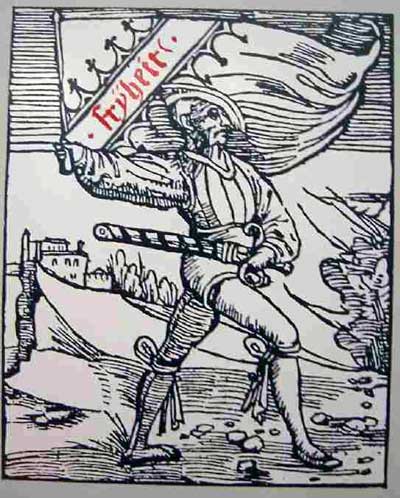
    The peasants had economic grievances, to be sure, but they also drew inspiration from the message of freedom, or “Fryheit” in German, being preached by theologian Martin Luther, who had recently launched the Protestant Reformation.

    Luther’s rejection of the peasants’ cause, however, would help lead to their crushing defeat.

    I am a scholar of the Reformation, and I included the peasants’ list of demands in my book on the debates of the era. The question of the legitimacy of the peasants’ uprising was one of the most consequential debates of the era.

    Luther’s message of freedom

    In 1517, eight years before the German Peasants’ War, Luther launched the Reformation with his 95 Theses. The theses reflected Luther’s belief that the pope and the Catholic Church were preying on the poor by selling them indulgences, taking their money for a false promise that their sins would be forgiven.

    Luther taught instead that God freely forgives the sins of believers. In one of his most famous early treatises, “The Freedom of a Christian,” written in 1520, Luther argued that because they are saved or “justified” by faith alone, Christians are entirely free from the need to do works to merit salvation. This included fasting, going on pilgrimages and buying indulgences.

    Luther’s attacks on the Catholic Church, clergy and monks quickly grew more vehement. He and his allies lambasted them for fleecing the peasants and the poor through usury, a practice of lending money at high rates of interest. Since the Bible provided no support for such practices, they argued, the poor should be free of them.

    The Twelve Articles

    In her 2025 book “Summer of Fire and Blood,” Reformation scholar Lyndal Roper argues that the religious element of the peasants’ war was central. The German peasants were among the first to try to unlock the revolutionary potential of Reformation teachings to fight social and economic injustice.

    The peasants’ efforts to do so can be seen in the most important statement of their demands: The Twelve Articles. The articles are rooted in Reformation ideas and demanded, among other things, each village’s right to elect its own pastor and to be exempt from payments and duties not found in the Bible.

    A pamphlet that peasants distributed with their Twelve Articles in 1525.
    Otto Henne am Rhyn: Cultural History of the German People, via Wikimedia Commons

    Most important was the message of freedom in the third article: “Considering that Christ has delivered and redeemed us all, without exception … it is consistent with Scripture that we should be free.” It was a cry for equality based on Christ’s redemption of all, rich and poor alike.

    The Twelve Articles were hugely successful, going through 25 printings in just two months. Since the vast majority of peasants were illiterate, this was an astounding number.

    For the lower classes, the Reformation promised to break up not just the spiritual monopoly held by the Catholic Church but the entrenched feudal system that kept them oppressed. Their desire for freedom was at the same time a denunciation of serfdom.

    The peasants were willing to take up arms to secure their freedom. In winter 1524-1525, the peasants were able to capture castles and monasteries without much bloodshed. But starting in the spring of 1525, the uprising became increasingly violent. On Easter Sunday, the peasants shockingly slaughtered two dozen knights in the city of Weinsberg, Germany. A torrent of bloodshed would follow.

    Luther’s rejection of the peasants

    Although Luther may have provided the initial inspiration for the peasants, he denounced their revolt in the harshest terms. In his treatise “Admonition to Peace,” Luther complained that the peasants had made “Christian liberty an utterly carnal thing,” which “would make all men equal … and that is impossible.”

    Responding to the revolt, Luther produced a tract entitled “Against the Murdering and Robbing Hordes of Peasants.” “Let everyone who can,” he infamously wrote, “smite, slay, and stab” the rebellious peasants. The rulers did just that.

    The nobility had been slow to react to the peasants’ initial incursions, but when they finally organized their own armies, the peasants didn’t stand a chance. On the battlefield, the nobles’ cavalry and superior artillery brutally cut down the rebels. Many who escaped the battlefield were hunted down and executed.

    The exact number of those killed are not known, but estimates place the number at around 100,000. As Roper notes, “this was slaughter on a vast scale.”

    Consequences for the Reformation

    English historian A. G. Dickens famously described the Reformation as an “urban event”, meaning that the movement’s important developments took place in cities. The German Peasants’ War shows the idea to be wrong.

    In its first years, the Reformation galvanized the hopes and dreams of Germans in both town and country. To peasants and townsfolk, it seemed to promise the chance for a complete reordering of an unjust society.

    Luther’s rejection of the peasants had important long-term consequences. His decision to side with the princes transformed the Reformation from a grassroots movement into an act of state. Everywhere the Protestant reformers went, they sought to work with the proper authorities. The close cooperation of Christian leaders and secular authorities would last for centuries.

    For their part, the European peasantry grew wary of the Christian leaders who seemed to have abandoned them. Social uprisings over the next centuries lost the religious character of the 1525 conflict and would climax in the decidedly secular French Revolution.

    Michael Bruening does not work for, consult, own shares in or receive funding from any company or organization that would benefit from this article, and has disclosed no relevant affiliations beyond their academic appointment.

    ref. 500 years ago, German peasants revolted – but their faith that the Protestant Reformation stood for freedom was dashed by Martin Luther and the nobility – https://theconversation.com/500-years-ago-german-peasants-revolted-but-their-faith-that-the-protestant-reformation-stood-for-freedom-was-dashed-by-martin-luther-and-the-nobility-246378

    MIL OSI – Global Reports

  • MIL-OSI: Trust Stamp announces the allowance by USPTO of Non-Provisional Patent Application 17/725,978 entitled: “Interoperable Biometric Representation” unlocking the potential to break vendor lock-in for biometric services

    Source: GlobeNewswire (MIL-OSI)

    Atlanta, GA, Feb. 25, 2025 (GLOBE NEWSWIRE) — Trust Stamp announces a groundbreaking innovation in biometric security with the allowance by the United States Patent and Trademark Office of a patent application for its “Interoperable Biometric Representation” framework. This disruptive advancement addresses the critical challenge of biometric interoperability while enhancing privacy and security.

    Biometric-based identification and verification systems are widely used today, but their adoption and universality is hindered by a lack of interoperability. Different biometric vendors use proprietary data formats, making it impossible to compare biometric samples across different systems and potentially locking enterprise and government users into legacy vendors.

    Trust Stamp’s new framework solves this issue by transforming biometric data into a universal, privacy-secured format that enables seamless biometric recognition and validation across platforms. This enables biometric samples from different vendor systems to be compared and validated without requiring changes to the way that vendors routinely capture or process biometric data. Furthermore, the system functions as a Privacy Enhancing Technology (PET) by generating privacy-secured tokens, known as irreversibly transformed identity tokens (IT2™), which allow users to perform biometric matching without storing or exposing sensitive biometric data.

    Scott Francis, Chief Technology Officer of Trust Stamp, emphasizes the significance of this breakthrough: “Interoperability in facial biometrics is non-existent today, and this patent addresses that gap. First, it allows biometric samples from different vendors to be compared by converting their templates into a common format. Second, it provides an open-format/open-weight neural network solution that approved vendors can use directly to generate face templates that are compliant with the format, eliminating the need for proprietary conversions.”

    Dr. Norman Poh, Chief Science Officer of Trust Stamp, highlights the dual benefits of this innovation: “This patent not only resolves interoperability issues but also operates within a privacy-preserving, tokenized domain. These privacy-secured IT2 tokens allow users to obtain and compare biometric data from multiple sources without risking vendor lock-in, a problem that has long plagued the industry and hurt customers.”

    This advancement aligns with Trust Stamp’s commitment to fostering secure, privacy-first identity verification solutions that can accelerate secure financial inclusion. By eliminating vendor lock-in and enhancing cross-platform biometric authentication, the Interoperable Biometric Representation framework represents a significant step toward a more open, secure, and accessible digital identity ecosystem.

    For more information about Trust Stamp’s privacy-first identity solutions, visit www.truststamp.ai.

    Inquiries:

    Trust Stamp                                                    Email: shareholders@truststamp.ai
    Dr. Norman Poh                                              Email: npoh@truststamp.ai
    Scott Francis                                                   Email: sfrancis@truststamp.ai

    About Trust Stamp

    Trust Stamp the Privacy-First Identity CompanyTM, is a global provider of AI-powered identity services for use in multiple sectors including banking and finance, regulatory compliance, government, real estate, communications, and humanitarian services. Its technology empowers organizations with advanced biometric identity solutions that reduce fraud, protect personal data privacy, increase operational efficiency, and reach a broader base of users worldwide through its unique data transformation and comparison capabilities.

    Located across North America, Europe, Asia, and Africa, Trust Stamp trades on the Nasdaq Capital Market (Nasdaq: IDAI).

    Safe Harbor Statement: Caution Concerning Forward-Looking Remarks 

    All statements in this release that are not based on historical fact are “forward-looking statements” including within the meaning of the Private Securities Litigation Reform Act of 1995 and the provisions of Section 27A of the Securities Act of 1933, as amended, and Section 21E of the Securities Exchange Act of 1934, as amended. The information in this announcement may contain forward-looking statements and information related to, among other things, the company, its business plan and strategy, and its industry. These statements reflect management’s current views with respect to future events-based information currently available and are subject to risks and uncertainties that could cause the company’s actual results to differ materially from those contained in the forward-looking statements. Investors are cautioned not to place undue reliance on these forward-looking statements, which speak only as of the date on which they are made. The company does not undertake any obligation to revise or update

    The MIL Network

  • MIL-OSI: Fuse Vectors secures $5.2m to advance cell-free gene therapy technology, led by HCVC

    Source: GlobeNewswire (MIL-OSI)

    Copenhagen, Feb. 25, 2025 (GLOBE NEWSWIRE) — Gene therapy’s biggest obstacle isn’t science – it’s manufacturing. While the field races forward with breakthrough treatments, production remains stuck in the 1980s, relying on unpredictable cell-based methods that make therapies costly and slow to develop. Today, Fuse Vectors announces $5.2 million in pre-seed financing led by HCVC to revolutionize gene therapy development with its cell-free viral vector technology

    The funding will accelerate the development of Fuse’s technology platform and pipeline of novel gene therapies. With its breakthrough approach, Fuse Vectors aims to be the universal solution for AAV gene therapy development, delivering unmet patient needs and expanding the accessibility of gene therapy to a wider range of indications.

    Fuse Vectors founders: (L to R) Jordan Turnbull, Henrik Stage and Benjamin Blaha.

    The Fuse Vectors story began with two bioprocess scientists who saw firsthand the limitations of current drug development technologies. Despite the complexity of viral vectors, the industry had been relying on retrofitted manufacturing technologies from the 1980s and 1990s. Benjamin Blaha and Jordan Turnbull watched as these outdated methods produced therapies that were costly, slow to develop, and often low in quality. As the founders describe it, traditional methods are like “tossing LEGO bricks into a tumble dryer and hoping houses emerge.”

    Recognizing this critical gap, they asked a radical question: “What if everything about this process is wrong?” The industry’s major players lacked both the bandwidth and remit to overhaul these outdated methods, so Blaha and Turnbull took the leap – leaving their jobs to rethink viral vector development from the ground up. Their efforts led to a breakthrough: a controlled, cell-free approach that assembles viral vectors with unprecedented precision.

    “Fuse Vectors’ cell-free Fuse Technology offers significant improvements, reducing production time and costs while enhancing vector quality to meet patients’ unmet needs,” said Benjamin Blaha, co-founder of Fuse Vectors. “The enzymatic AAV capsid filling process eliminates cell-based AAV production, using efficient technologies storing components in a module library. This allows on-demand, controlled biocatalytic reactions to fill capsids and works across all serotypes.”

    Instead of relying on living cells’ unpredictable behavior, Fuse’s technology assembles viral vectors through controlled biochemical reactions. This innovative approach allows for unprecedented precision, achieving over 99% filled capsids synthesized in hours rather than weeks. Partners simply provide a gene sequence, and Fuse’s streamlined process packages it into an AAV vector – enabling faster, higher-quality development with minimal setup.

    The platform’s modular nature enables rapid optimization through multi-parallel prototyping, making it significantly more efficient than traditional methods.

    Fuse Vectors team. 

    “This investment from HCVC is a pivotal step for Fuse Vectors, bringing our pre-seed financing to 5 million EUR,” said Henrik Stage, co-founder and Executive Chair of Fuse Vectors. “We are excited to work towards our vision of making gene therapy more efficient, cost-effective, and accessible, and are grateful for the early support and financing received from BioInnovation Institute, EIFO and Innovation Fund during our ideation and start-up phase.”

    Currently in alpha testing, Fuse Vectors is collaborating with over half a dozen partners – from academic research groups to leading pharmaceutical companies. The company plans two commercialization strategies: partnering with pharmaceutical companies, biotech firms, and academic institutions to optimize drug candidates using their Fuse Technology and Optimization Engine, while also developing their own pipeline of therapeutic candidates.

    “Fuse Vectors’ approach to gene therapy has the potential to make gene therapy much more interesting for the Industry to develop as well as increase accessibility to patients,” stated Trine Bartholdy, CBO of BioInnovation Institute. “Their start-up development exemplifies BII’s commitment to empowering innovative platform technologies based on world-class scientific research to grow into successful companies capable of making meaningful impact on the future of gene therapy and human health.”

    “We are thrilled to support Fuse Vectors in their mission to revolutionize gene therapy,” said Alexis Houssou, Managing Partner of HCVC. “With their unique cell-free viral vector solution, expert founding team and strong business model, Fuse Vectors has the potential to overcome significant challenges in the field, and we believe in their ability to bring transformative treatments to patients.”

    The technology comes at a crucial time for gene therapy. With thousands of genetic diseases still lacking treatments, drug developers struggle to create safe, effective, and accessible therapies. By fundamentally reimagining how viral vectors are made, Fuse Vectors aims to unlock the full potential of gene therapy – bringing it closer to the patients who need it most.

    Ends

    Media images can be found here

    About Fuse Vectors 
    FuseVectors is a biotech start-up revolutionizing gene therapy with its cell-free viral vector technology. Traditional AAV development relies on cell-based methods, which are poorly controlled, leading to variable purity and reduced therapeutic efficacy and safety. Fuse Vectors’ cell-free technology combines component module libraries with on-demand biocatalytic AAV capsid filling processes. This eliminates cell-based production and offers significant improvements, reducing production time and costs while enhancing vector quality to meet patients unmet needs. Morespecifically, FuseTechnology offers:

    • Clinically Relevant Viral Vector Titers: Increasing titers by orders of magnitude
    • Exceptionally high capsid filling: >99% filled capsids
    • Rapid Production: Viral vectors synthesized in hours.
    • Optimization Feasibility: Rapid multi-parallel prototyping facilitates optimizing drug development across serotypes and constructs.
    • Fully scalable process: Smooth transition from research to commercial stages.

    Fuse Vectors plans to commercialize its business through a two-branched model: i) developing its own pipeline of drug candidates for selected indications, progressing these candidates into proof-of-concepts in patients and ii) leveraging the Fuse Technology and Optimization Engine through collaborations with pharma, biotech, and academia. The company aims to establish partner agreements on a gene-by-gene basis, collaborating on finding optimized drug candidates and granting licenses under Fuse IP for research, development, manufacturing, and commercialization of AAVs made with the Fuse Technology. Currently, Fuse Vectors is working on various undisclosed projects, benchmarking Fuse AAVs with the genes of interest provided by partners against traditional technologies.

    About HCVC
    HCVC is an early-stage deep tech venture capital firm that backs founders on a mission to industrialize scientific and technological progress. HCVC invests in pre-seed and seed-stage companies across Europe and the US, with offices in Paris, London, and the Bay Area. The portfolio spans transformative sectors like frontier biotech, defense, AI infrastructure, robotics, climate, and space. Learn more at https://www.hcvc.co/

    About BioInnovation Institute
    The BioInnovation Institute foundation (BII) is an international non-profit foundation supported by the Novo Nordisk Foundation. BII operates an incubator to accelerate world-class life science innovation, driving the development of new solutions by early life science start-ups for the benefit of people and society. BII offers state-of-the-art labs, vibrantofficefacilities, business development, start-up business incubation, access to high-level mentoring, and international networks, plus unique funding opportunities. Read more on https://bii.dk

    About EIFO
    TheExport & Investment Fund (EIFO) isDenmark’s sovereign fund that invests in innovative life science start-ups and specialized funds with the potential to transform and strengthen the country’s position as one of Europe’s leading health innovation hubs. Our mission is to shape the future of health by supporting breakthrough science, technologies, and companies that address the most pressing health challenges. The current life science portfolio includesmore than 40 companies spanning digital health, medical devices, and therapeutics. Learn more at www.eifo.dk/en/

    The MIL Network

  • MIL-OSI Global: How early voting on campuses can boost election turnout – not only for students but for residents, too

    Source: The Conversation – USA – By Stephen C. Phillips, Lecturer in Political Science, Clemson University

    NextGen, a youth and democracy group, encouraging University of Central Florida students to vote early on campus in the 2018 midterms, Orlando, Florida, Oct. 25, 2018. Willie J. Allen Jr./AP Images

    Republican-led legislatures in several U.S. states, from Indiana to Oklahoma, are considering imposing restrictions on early voting, from shortening the number of days to tightening ID requirements for voters.

    Florida, by contrast, offers several tools to increase voting access, including for young people – a historically low-turnout group. Floridians may preregister to vote at age 16 and request vote-by-mail ballots with no justification needed. And starting in 2018, Florida election officials began offering in-person early-voting sites on college and university campuses after a federal judge nullified a 2014 rule barring higher education facilities from serving as early-voting sites.

    I am a lecturer of political science who studies American political development and public law, and my research suggests that expanding on-campus early-voting sites can boost turnout in U.S. elections by making voting more convenient – not only for students but for residents of surrounding communities too.

    Campus voting is popular

    I have been tracking votes cast at on-campus early-voting sites in Florida since 2018. The data shows these voting sites are increasingly popular.

    My research shows that 59,205 votes were cast across 12 Florida campuses hosting early-voting sites in 2018. That number increased to 92,344 at 11 locations in 2020 and jumped again – by about 50,000 votes – during the 2024 election.

    During 14 days of early voting in October and November 2024, 142,085 Floridians cast ballots across 16 on-campus early-voting sites across the state. One-quarter of them – 35,245 voters – took advantage of three campus sites in Miami-Dade County, the state’s most populous county.

    A 2019 study by the Andrew Goodman Foundation, a nonprofit promoting youth participation in democracy, determined that overall voter turnout in Florida increased during the 2018 election, in comparison with previous midterm elections, in part “due to the added convenience” of on-campus voting.

    Greater access to in-person early voting also increases the likelihood of a person’s ballot counting, since mail-in ballots tend to be rejected at higher rates than in-person votes.

    Who votes on campus?

    On-campus early voting makes elections more accessible for all voters.

    My data from 2024 shows that 35% of voters at Florida’s 16 on-campus early-voting sites were registered Democrats and 32% were registered Republicans. The remaining 33% registered with minor parties or had no party affiliation.

    These results differ from voter registration data from 2024 in Florida, which shows 40% of registered voters as Republicans, 31% as Democrats and 29% as other. That is to be expected, because studies of on-campus early voters in Florida find that these voters are younger and more diverse than those at other polling places.

    Both students and local residents may vote at on-campus polling sites in Florida.

    A 2019 report from the Andrew Goodman Foundation found “Hispanic and Black voters disproportionately cast ballots” at campus locations alongside college-age voters. It also said that 56% of early voters at campus sites were under age 30.

    Differences in party turnout at tracked sites, then, may reflect the higher share of Gen Z voters registered as Democrats or with no party affiliation.

    Obstacles to voting access

    Before casting a ballot, voters face four decisions. First, whether to register to vote. Second, whether to vote in an election. Third, how to vote: early in-person, vote-by-mail or on Election Day. Fourth, whom or what to vote for.

    Turnout rates among young voters vary widely across states, but in states where on-campus voting locations are frequent – such as Arizona, Florida and North Carolina – youth turnout tends to be higher.

    In the 2024 election, people ages 18 to 29 represented 14% of overall Florida voters – roughly on par with their proportion of the state’s population. It is difficult to make a direct comparison between the voting age population and voter turnout rates because of voter eligibility rules.

    But, for reference, 18-to-29-year-olds made up 14% of voters in Texas in 2024, too – yet are estimated to be nearly 17% of the population.

    Several states have rules seemingly designed to hinder young people from voting. After the 2020 election, Ohio passed a law making it harder for out-of-state students to vote by restricting the documents voters may use to prove their residency. Data from the Campus Vote Project shows several states, including Texas, Iowa and Missouri, do not accept student IDs as valid identification to vote. Oklahoma is currently considering similar legislation.

    While turnout rates reflect many factors, including the popularity of the candidates, low voter turnout is often associated with increased difficulty in casting a ballot.

    Florida shows that college campuses play an important role in increasing access to voting, not just for students but for residents in the surrounding communities, too. Nearly 3% of the 5.4 million people who voted early in person statewide in 2024 cast their ballot at a campus polling site, up from 2.2% in 2018.

    Election officials, university leaders and lawmakers know that having on-campus early-voting sites is a successful method for engaging voters. As one first-time voter at York Technical College in South Carolina told South Carolina Public Radio in 2024, the convenient location “definitely encourages me to vote.”

    Across the country, from Iowa to Texas, many schools and election officials host early on-campus voting.

    In other places, however, state and local laws, or decisions by local officials, prevent many campuses from hosting polling sites.

    For example, Ohio limits the number of early-voting sites to one per county. That meant that, in 2024, Ohio State University had no campus early-voting sites, and for its students the closest place to vote in person was about 6 miles (10 kilometers) away.

    In South Carolina, though some campuses do host polling sites, the university where I teach, Clemson, does not. In 2024, students had to travel four miles to reach the nearest in-person early-voting location in Pickens County.

    A recent study found that long distances and travel times to polling locations constitute “a barrier to voting.” And students, as a population, often have particularly limited access to transportation.

    Further studies will show more precisely how on-campus early voting expands the voter universe. But my vote tracking and other new research provides some clues, suggesting that early in-person voting on campus increases early voting and diversifies the electorate.

    Expanding on-campus early voting, then, is not just about convenience. It is about empowering the next generation of voters and strengthening democracy.

    Stephen C. Phillips does not work for, consult, own shares in or receive funding from any company or organization that would benefit from this article, and has disclosed no relevant affiliations beyond their academic appointment.

    ref. How early voting on campuses can boost election turnout – not only for students but for residents, too – https://theconversation.com/how-early-voting-on-campuses-can-boost-election-turnout-not-only-for-students-but-for-residents-too-247161

    MIL OSI – Global Reports

  • MIL-OSI Global: Trump’s claims of vast presidential powers run up against Article 2 of the Constitution and exceed previous presidents’ power grabs

    Source: The Conversation – USA – By Claire B. Wofford, Associate Professor of Political Science, College of Charleston

    How much power does the president really have? fotojog-iStock/Getty Images Plus

    Those who wrote and wrangled over America’s Constitution might be troubled by the second presidency of Donald J. Trump.

    While almost all modern presidents flex their muscles in the initial stages of their administration, the first weeks of the second Trump presidency have seen a rapid-fire, often dizzying array of executive actions that have sparked heated, even virulent, disputes among politicians, the media and citizens about how much power the president of the United States should have.

    Historians differ about the framers’ precise intent regarding the executive branch. But the general consensus is twofold: First, domestic lawmaking power, including the critical “power of the purse,” would rest with Congress; second, the president would not be the equivalent of a king.

    Fresh off the coercion of King George III, the framers were in no mood to recreate the British system. They debated extensively about whether the executive branch should be led by more than one person. A single chief executive was eventually favored in part because other institutional checks, including the selection of the president by the American people and Congress’ ability to impeach, seemed sufficient. And, of course, Congress would retain lawmaking powers.

    Almost immediately, however, Congress began delegating some of that power to the presidency. As the nation grew and Congress found itself unable to manage the ensuing demands, it put more and more policymaking powers into the executive branch.

    Congress frequently passed vaguely worded statutes and left important details largely to the president about how to manage, for instance, immigration or the environment. President-as-policymaker and the development of an immense federal bureaucracy that is now in the crosshairs of Trump and Elon Musk was one unintended result.

    Whether the current American president has become a king, particularly after the sweeping grant of immunity in 2024 by the Supreme Court and the seeming acquiescence by Congress to Trump’s latest directives, remains up for debate.

    In 2019, Trump said, “And then I have an Article 2, where I have the right to do whatever I want as President.”

    I’m a constitutional law scholar, and I can comfortably respond: With all due respect, Mr. President, no. Article 2 does not grant the president unlimited power.

    Here’s what the Constitution does say – and doesn’t say – about the power of the president.

    An 1881 depiction of the 1787 Constitutional Convention in Philadelphia.
    Alfred Kappes and Frederick Juengling, New York Public Library Digital Collections

    Exploiting imprecise language

    The Constitution divides power among the three branches of the federal government – executive, legislative and judicial.

    Article 1 specifies in great detail the structure and powers of Congress. In comparison, Article 2 is relatively short, outlining the powers of the executive branch, which now encompasses the president, his advisers and various departments and agencies.

    There is no extensive laundry list of enumerated powers for the executive branch. Instead, there is a smattering. The president is given the power to “grant reprieves and pardons,” to “receive ambassadors,” and, with the consent of the Senate, “make treaties” and “appoint” various federal officials. The president is also the “Commander in Chief.”

    Aside from the ability to veto legislation and “recommend” policies to Congress, the president was intended to serve primarily as an administrator of congressional statutes, not a policymaker.

    It is other, much less precise language in Article 2 that undergirds much of what Trump claims he can do – and what opponents say he cannot.

    Specifically, Section 1 states, “The Executive power shall be vested in a President,” and Section 3 requires the President to “take care that the laws be faithfully executed.”

    On their face, these “vesting” and “take care” clauses seem relatively innocuous, reflecting the framers’ view that the President would implement rather than create the nation’s public policy. Congress would have that prerogative, with the president generally confined to ensuring those laws were carried out appropriately.

    Trump and his allies, however, have seized on these words as authorizing unlimited control over each of the 4 million employees of the executive branch and, through program changes and spending freezes, allowing him to exert significant policymaking power for the nation.

    The administration has now surpassed what even the strongest proponents of presidential power may have once argued. Trump adviser Stephen Miller has said, “All executive power is vested in the one man elected by the whole nation. No unelected bureaucrat has any ‘independent’ authority.”

    Yet the overriding goal of the framers at the Constitutional Convention was to avoid creating an American version of the British monarchy, with a single, unaccountable ruler in charge of national policymaking, free to implement his vision at will.

    In the view of Trump’s critics, this is precisely what has occurred.

    President Donald Trump signs an executive order on Feb. 14, 2025, at the White House.
    Andrew Harnik/Getty Images

    Going around Congress

    Trump is not the first president to use Article 2’s ambiguity to push the boundaries of executive authority.

    Particularly since the end of World War II and the Franklin D. Roosevelt administration, presidents have seized upon the same phrases in the Constitution to put their particular political agendas into action.

    Barack Obama, for instance, famously touted his “phone and pen” as a way to make policy when Congress refused.

    The vehicle for most executive branch policymaking, including by Trump, has been the executive order. Executive orders are mentioned nowhere in the Constitution, but presidents have, since the very earliest days of the republic, issued these directives under their “executive” and “take care” power. Since the founding, there have been tens of thousands of executive orders, used by Democratic and Republican presidents alike.

    Often, executive orders are relatively minor. They form commissions, set holiday schedules or brand an agency with a new seal. Dozens are signed unnoticed during every administration.

    In other instances, they have sweeping and substantive effect.

    Among those, Abraham Lincoln’s Emancipation Proclamation freed Southern slaves, Franklin Roosevelt placed Japanese Americans in internment camps, Harry S. Truman integrated the military, and Joe Biden forgave student loans. Trump has attempted to redefine birthright citizenship – a move which, for now, has been stopped by federal courts.

    Because they have the force of law and remain in place until revoked by a subsequent president, executive orders have often faced legal challenges. Currently, there are more than 80 lawsuits challenging Trump’s executive orders for violating both federal law and the Constitution. Some orders, but not all, have been halted by lower courts.

    But if many presidents have believed that Article 2 of the Constitution gives them the power to make policy via executive order, the nation’s highest court hasn’t always agreed.

    Out of bounds?

    Requests to the high court to rule on Trump’s executive orders are a virtual certainty.

    Historically, the Supreme Court has struck down some executive orders as outside the scope of Article 2. As the court wrote in 1952, “In the framework of our Constitution, the President’s power to see that the laws are faithfully executed refutes the idea that he is to be a lawmaker.”

    Whether Trump’s various directives are within his Article 2 authority or violate both the letter and spirit of the Constitution awaits determination, most likely by the U.S. Supreme Court. Much of the genius of that document is its often ambiguous language, letting the government adapt to a changing nation.

    Yet that very ambiguity has allowed both sides of today’s political divide to claim that their version of executive power is faithful to the framers’ vision. As with the Civil War and the Civil Rights Movements, such a dispute could very well drive the U.S. to the breaking point.

    Congress or the American people may eventually decide that Trump has gone too far. The next presidential election is years away, but Congress still retains the power of impeachment. More realistically, they could rein him in via legislation, as they did with President Richard Nixon.

    For now, it is up to the judicial system to evaluate what the administration has done. Courts will need to use their constitutionally mandated authority to evaluate whether Trump has exceeded his.

    In 2022, I donated $20 to ActBlue.

    ref. Trump’s claims of vast presidential powers run up against Article 2 of the Constitution and exceed previous presidents’ power grabs – https://theconversation.com/trumps-claims-of-vast-presidential-powers-run-up-against-article-2-of-the-constitution-and-exceed-previous-presidents-power-grabs-249662

    MIL OSI – Global Reports

  • MIL-OSI Global: Selenium is an essential nutrient named after the Greek goddess of the Moon − crucial to health, it may help prevent and treat cancer

    Source: The Conversation – USA – By Aliasger K. Salem, Professor of Pharmaceutical Sciences, University of Iowa

    Selenium is found in trace amounts in living organisms, soil and plants. Nazarii Neshcherenskyi/iStock via Getty Images Plus

    Selenium is a nutrient that plays a crucial role in human health, contributing to the thyroid and immune function, DNA repair, and cardiovascular and cognitive health.

    It acts as an antioxidant – substances that protect cells from unstable molecules that can damage DNA, proteins and cell membranes. It can even protect against cancer.

    Selenium is a vital trace element found in living organisms, soil and plants, and your body needs only a small amount of it to function. The recommended dietary allowance for selenium in adults is 55 micrograms per day, with an upper limit of 400 micrograms. In comparison, adults need between 900 to 10,000 micrograms daily of copper, another trace element, and between 8,000 to 40,000 micrograms of the trace element zinc.

    An excess or deficiency of selenium can have significant health consequences. In my work as a pharmaceutical science researcher, my colleagues and I study the potential use of selenium to boost the effectiveness of chemotherapy for cancer treatment.

    A dose of selenium

    Selenium was first discovered in 1817 by chemist Jöns Jacob Berzelius while analyzing an impurity in a batch of sulfuric acid produced in a factory in Sweden. Berzelius initially thought the material was the element tellurium, but he eventually realized that it was actually an unknown substance at the time. He named the mineral after Selene, the Greek goddess of the Moon, because of its similarity to tellurium, which had been named after the Roman goddess of the Earth.

    Selenium exists in both organic and inorganic forms. Organic compounds contain carbon atoms and are typically derived from living organisms, while inorganic compounds do not have carbon atoms and generally originate from nonliving sources. Your cells chemically convert between these forms to carry out various physiological functions.

    Selenium deficiency is a significant health issue, particularly in regions with selenium-poor soils, such as parts of China, Africa and Europe. Low selenium levels are associated with Keshan disease, a fatal heart condition, and Kashin-Beck disease, which affects joints and bones. Deficiency also weakens immune function, increasing susceptibility to infections.

    Brazil nuts contain particularly high levels of selenium.
    R.Tsubin/Moment via Getty Images

    Consuming too much selenium is also an issue. Oversupplementation or excess environmental exposure can lead to selenosis, a condition with symptoms such as brittle hair and nails, digestive issues, skin rashes and neurological symptoms such as irritability and fatigue. In severe cases, selenium toxicity can result in organ failure and death.

    Selenium has a narrow therapeutic window, which is the dosage range that provides safe and effective treatment with minimal harmful side effects. For example, selenium can either increase or decrease your body’s immune function, depending on the dose. Adequate levels of selenium strengthen your immune cells’ ability to fight infections and tumors, while excessive selenium intake can suppress immune responses by damaging immune tissues.

    Selenium and cancer prevention

    Selenium may have the potential to treat and prevent cancer.

    Scientists have long studied selenium’s role in cancer prevention. Initially suspected to be a carcinogen, later studies found it had protective effects against liver damage. In the 1960s. researchers proposed that selenium could be used to prevent cancer, a concept that gained further traction in the 1990s.

    However, large-scale clinical trials have produced mixed results. The Selenium and Vitamin E Cancer Prevention Trial was a study of over 35,500 men that ran from 2001 to 2004. They found that taking selenium daily did not reduce prostate cancer risk and may even increase the risk of prostate cancer in men with already high selenium levels.

    Findings from a study conducted from 1983 to 1996, the Nutritional Prevention of Cancer Trial, suggested selenium may protect against prostate and other cancers. But researchers also observed a heightened incidence of nonmelanoma skin cancer among participants.

    These conflicting results may be due to the different forms of selenium each study tested, as well as differences in baseline selenium levels among participants. Other studies have found that selenium-contaminated water in a municipality of Italy has been linked to an increased risk of melanoma.

    The antioxidant effects of selenium vary depending on its dose.
    Razaghi et al./EJC, CC BY-SA

    Selenium and cancer treatment

    Selenium may also have the potential to stop cancer from spreading.

    My research focuses on the potential of using selenium to supplement chemotherapy for cancer treatment. Selenium compounds such as methylseleninic acid, or MSA, and seleno-L-methionine, or SLM, show promise in targeting proteins that drive tumor progression and treatment resistance. Studies from my team and I have found that MSA can modulate key biochemical pathways related to kidney cancer by reducing levels of proteins that influence tumor growth and immune evasion. We also observed that SLM may slow kidney tumor growth in mice without toxic side effects.

    More significantly, in a Phase 1 clinical trial, we found that combining SLM with the chemotherapy drug axitinib was effective in treating metastatic kidney cancer in patients, with minimal side effects. Of the 27 patients we treated, over half saw their tumors shrink in size, with a median overall survival of nearly 20 months. These findings suggest that selenium may have a synergistic effect on chemotherapy by making it more effective.

    Further investigation into how selenium may help overcome treatment resistance and what doses are optimal will clarify its potential as a viable addition to cancer treatment.

    Striking the right balance

    Whether as an immune booster or potential treatment for disease, the significance of selenium in human health is undeniable.

    Eating selenium-rich foods – such as Brazil nuts, seafood, whole grains and eggs – can help sustain optimal nutrient levels. In regions with selenium-deficient soils, supplementation with medical supervision may be necessary.

    The fine line between benefit and harm underscores the importance of balanced intake and personalized approaches to selenium supplementation. As research continues, I believe selenium’s multifaceted role in health will become more clear.

    Aliasger K. Salem receives funding from the National Institutes of Health. He serves on the Executive Board of the American Association for Pharmaceutical Scientists.

    ref. Selenium is an essential nutrient named after the Greek goddess of the Moon − crucial to health, it may help prevent and treat cancer – https://theconversation.com/selenium-is-an-essential-nutrient-named-after-the-greek-goddess-of-the-moon-crucial-to-health-it-may-help-prevent-and-treat-cancer-248548

    MIL OSI – Global Reports

  • MIL-OSI USA News: Public Comment Invited on Artificial Intelligence Action Plan

    Source: The White House

    WASHINGTON, D.C. – President Trump’s recent Artificial Intelligence (AI) Executive Order shows that this Administration is dedicated to America’s global leadership in AI technology innovation. This Order directed the development of an AI Action Plan to sustain and enhance America’s global AI dominance. Today, the American people are encouraged to share their policy ideas for the AI Action Plan by responding to a Request for Information (RFI), available on the Federal Register’s website through March 15.

    “The Trump Administration is committed to ensuring the United States is the undeniable leader in AI technology. This AI Action Plan is the first step in securing and advancing American AI dominance, and we look forward to incorporating the public’s comments and innovative ideas,” said Lynne Parker, Principal Deputy Director of the Office of Science and Technology Policy (OSTP).

    The AI Action Plan will define priority policy actions to enhance America’s position as an AI powerhouse and prevent unnecessarily burdensome requirements from hindering private sector innovation. With the right governmental policies, continued U.S. AI leadership will promote human flourishing, economic competitiveness, and national security.

    Today’s RFI from OSTP seeks input from interested public parties, including academia, industry groups, private sector organizations, state, local and tribal governments, and others on actions that should be included in the AI Action Plan.

    Comments can be submitted online and will be accepted until 11:59PM on March 15, 2025.

    Please click here for submission information.

    MIL OSI USA News

  • MIL-OSI Global: Generative AI is most useful for the things we care about the least

    Source: The Conversation – USA – By John P. Nelson, Postdoctoral Research Fellow in Ethics and Societal Implications of Artificial Intelligence, Georgia Institute of Technology

    The creative process involves choices that lead artists to places they couldn’t have imagined. Eoneren/E+ via Getty Images

    Generative AI tools such as ChatGPT and Midjourney can produce text, images and videos far more quickly than any one person can accomplish by hand.

    But as someone who studies the societal impacts of AI, I’ve noticed an interesting trade-off: The technology can certainly save time, but it does so precisely to the extent that the user is willing to surrender control over the final product.

    For this reason, generative AI is probably most useful for things we care about the least.

    Ceding creative control

    Let’s use the example of AI image generators. You probably have a rough idea of how they work. Just type what you want – “a panda surfing,” “a piece of toast that is also a car” – and the generative tool draws it.

    But this glosses over the countless possible iterations of the desired image.

    Will the image appear as a watercolor painting or a pencil sketch? How lifelike will the panda be? How big is the wave? Is the toast-car parked or moving? Is there anyone inside of it?

    When the images are generated, these questions have been answered – but not by the user. Rather, the generative AI tool has “decided.”

    Of course, the user can be more specific: Imitate the style of Monet. Make the wave twice the height of the panda. Maybe the panda should look worried, since it isn’t used to surfing.

    You can also pop open an image editor and modify the output yourself, down to the individual pixel. But, of course, drafting detailed instructions and revising the image take time, effort and skill. Generative AI promises to lighten the load. But as every manager knows, exercising control is work.

    The devil is in the details

    In all art and expression, power lies in the details.

    In great paintings, not every brushstroke is planned – but each is carefully considered and accepted. And its overall effect on the viewer depends on all those considered brushstrokes together.

    Filmmakers shoot take after take of the same scene, each subtly or radically different. Only a small fraction of that footage makes it into the final cut – the fraction that the editors feel does the job best. Great artists use their judgment to ensure every detail helps to achieve the effect they want.

    Of course, there’s nothing new about putting someone else in charge of the details. People are used to delegating authority – even about matters of expression – to marketers, speechwriters, social media managers and the like.

    Generative AI makes a new sort of contractor available. It’s always on call, and in certain ways it is very technically competent.

    But compared with skilled humans, it has a limited ability to understand what you want. Moreover, it lacks intention, contemplation and the comprehensive mastery of detail that yield great expressive achievements – or even the comprehensive idiosyncrasy that spawns very unique ones.

    Ask ChatGPT for a film script, plus casting and shooting instructions. It will give you neither Francis Ford Coppola’s masterpiece “The Godfather” nor Tommy Wiseau’s bizarre “The Room.”

    You could, perhaps, approach a masterpiece, or a true oddity. But to do so, you’d have to exercise more and more time, more and more effort, and more and more control.

    An era of ‘cheap speech’

    What generative AI makes possible, above all, is low-effort, low-control expression.

    In the time I took to write and revise this article, I could have used ChatGPT to generate 200 grammatically correct, well-structured articles, and then I could have posted them online without even reading them. I wouldn’t have had to carefully parse each word and decide whether it really helped me make my point. I wouldn’t have even had to decide whether I agreed with any of the AI-generated write-ups.

    This is not a merely hypothetical example. Low-quality, AI-generated e-books of ambiguous provenance are already making their way into online vendors’ catalogs – and into the libraries those vendors serve.

    Similarly, using image generators, I could now flood the internet with superficially appealing images, dedicating only a fraction of a second to decide whether any of them express what I want them to express or achieve what I want them to achieve.

    But in doing so, I would not just be skipping over drudgery. Writing, drawing and painting are not just labor but processes of considering, reviewing and deciding exactly what I want to put out into the world. By skipping over those processes, I surrender that decision-making process to the AI tool.

    Some scholars argue that the internet has produced an era of “cheap speech.” People no longer have to invest a lot of resources – nor even face the judgment of their neighbors – to broadcast whatever they want to the world.

    With generative AI, expression is even cheaper. You don’t even have to make things yourself to put them out into the world. For the first time in human history, the ability to produce writing, art and expression has been decoupled from the necessity of actually paying attention to what you’re making or saying.

    Generative AI allows you to blow through the thousands of little decisions that go into a work of art.
    C.J. Burton/The Image Bank via Getty Images

    When intention and effort matter

    I suspect that great art, journalism and scholarship will still demand great attention and effort. Some of that effort may even include custom-developing AI tools tailored to an individual artist’s concerns.

    But unless people become much better at curation, great work will be increasingly difficult to locate amid the flood of low-effort content, which is also known as “AI slop.”

    It’s appropriate that generative AI becomes more useful the sloppier its users are willing to be – that is, the less they care about the details.

    I could end with some dire prognosis – that working artists and writers will be replaced with mediocre automation, that online discourse will get even stupider, that people will isolate themselves in personalized cocoons of AI-generated media.

    All these things are possible. But it’s probably more useful to offer a suggestion to you, the reader.

    When you need an image or a piece of writing, take a moment to decide: How important are the details? Would the process of making this yourself, or working with a collaborator or contractor, be useful? Would it yield a better output, or give me the chance to learn, or begin or strengthen a relationship, or help you reflect on something important to you?

    In short, is it worth putting in real care and effort? The answer will not always be yes. But it often will.

    Art, writing, films – these are not just products, but acts. They are things humans make, through a process of thousands of little decisions that encompass what we stand for and what we want to say.

    So when it comes to art, expression and argument, if you want it done right, it’s probably still best to do it yourself.

    John P. Nelson does not work for, consult, own shares in or receive funding from any company or organization that would benefit from this article, and has disclosed no relevant affiliations beyond their academic appointment.

    ref. Generative AI is most useful for the things we care about the least – https://theconversation.com/generative-ai-is-most-useful-for-the-things-we-care-about-the-least-249329

    MIL OSI – Global Reports

  • MIL-OSI Russia: Targeted training is a confident step into the profession

    Translartion. Region: Russians Fedetion –

    Source: Saint Petersburg State University of Architecture and Civil Engineering – Saint Petersburg State University of Architecture and Civil Engineering –

    Every year, thousands of applicants face the choice of what profession to choose. One of the options to take a confident step into the profession is targeted training.

    What is Targeted Learning

    The applicant enters into an agreement with the customer – a federal ministry, department, regional authority, state or municipal institution, enterprise with a state share, private company, individual entrepreneur. Except for the last two cases, the applicant will enter the university not on a general basis, but through a separate competition (target quota). An agreement for training outside the target quota can also be concluded with state institutions throughout the entire period of study.

    The graduate undertakes to work in the customer’s company for three to five years after receiving his diploma.

    If a student is admitted under a quota, then his/her tuition is paid for by the federal budget. The customer pays for the scholarship and other support measures at his/her discretion. If a student is admitted without a quota, then tuition may be paid for by the customer.

    Benefits of Targeted Training

    Targeted training provides the opportunity to study for free. After completing the training, the graduate is guaranteed a job. The contract may specify the possibility, by mutual agreement of the parties, to transfer to another branch of the same company or to another organization subordinate to the same government agency.

    How to apply for targeted training

    Those wishing to enroll in targeted training should study the offers on the Work in Russia platform. Then you need to submit an application for a targeted training agreement. This can be done either through the Work in Russia platform, or through the government services portal, or directly at the educational institution (in person, by mail).

    The conclusion of an agreement on targeted training occurs after enrollment, but before September 1.

    The contract may be concluded between the customer and the citizen, between the customer, the citizen, the employer, the educational organization, or between the customer, the citizen and the employer.

    Regulatory legal acts governing targeted training: Federal Law of 29.12.2012 No. 273-FZ “On Education in the Russian Federation”; Resolution of the Government of the Russian Federation of April 27, 2024 No. 555 “On targeted training in educational programs of secondary vocational and higher education”.

    Targeted training at SPbGASU

    Olga Tatarinova

    The Admissions Committee is responsible for organizing and conducting admissions within the target quota at our university. Olga Tatarinova, Deputy Secretary of the Admissions Committee, reported that in 2024, the ranks of students were replenished with more than 45 target students.

    “If an employer is ready to sign one contract, but several people responded, the university holds a competition and enrolls the strongest. In this case, the target individual achievements of the applicant who took part in the company’s events are taken into account.”

    Olga Afanasyevna informed that if someone does not find a job after completing their studies, they pay a fine to the Ministry of Science and Higher Education of the Russian Federation in the amount of the costs incurred by the state for their training, and also return the amount spent by the employer on paying a scholarship and social support measures. If a company refuses to hire a graduate, it pays a fine in the same amount and compensation in an amount equal to three times the average monthly accrued salary in the subject of the Russian Federation, in the territory of which the citizen must be employed in accordance with the contract for targeted training.

    The conclusion of contracts for targeted training with students who are already studying at SPbGASU is coordinated by the Center for Student Entrepreneurship and Career.

    Ekaterina Abolina

    Ekaterina Abolina, director of the student entrepreneurship and career center, said that currently there are more than 130 target students studying at the university. For the successful implementation of target training, the interaction of the company and the student plays a huge role. Ekaterina Arvidovna especially noted the Titan-2 company, which actively works with its target students, maintains contact with them and immerses them in the profession. Last semester, the company organized an off-site meeting, where students visited a construction site, a workshop, a history museum, and also took part in educational programs.

    “Targeted training is a good tool for both the student and the employer. The student has the opportunity to be closer to the industry, receive support from the company and be confident in his professional future. The employer, through practice and the topic of the final qualifying work, can influence the content of the training and, upon graduation, receive an employee who is already familiar with the company and involved in its activities, thereby reducing the time for the adaptation of a young specialist.”

    Please note: This information is raw content directly from the source of the information. It is exactly what the source states and does not reflect the position of MIL-OSI or its clients.

    MIL OSI Russia News

  • MIL-OSI Russia: Dmitry Chernyshenko: The National Cyber-Physical Platform “Berloga” Needs to Be Scaled to All Subjects of the Country

    Translartion. Region: Russians Fedetion –

    Source: Government of the Russian Federation – An important disclaimer is at the bottom of this article.

    Previous news Next news

    Dmitry Chernyshenko greeted the participants of the II All-Russian Conference of the National Cyber-Physical Platform “Berloga”

    Deputy Prime Minister Dmitry Chernyshenko welcomed the participants of the II All-Russian Conference of the National Cyber-Physical Platform “Berloga”. The conference was held at the site of the Agency for Strategic Initiatives (ASI) with online participation of representatives of 86 subjects of the Russian Federation.

    “President Vladimir Putin supported this large-scale project. “Berloga” involves the younger generation in the sphere of technology through games. The Republic of Bashkortostan became a pioneer in the implementation of the cyber-physical platform. There, educational institutions and technology companies joined “Berloga”. This allowed us to take the technological education of schoolchildren to a new level. And also to use games as a powerful tool for involving young people in themes that are priority for the region. This experience was picked up by other regions,” said Dmitry Chernyshenko.

    He also noted that the project’s geography already covers 21 regions and the Berloga team, together with local representatives, is actively developing regional “road maps” that include creating new useful games, opening a network of clubs, launching educational programs and training teachers. According to him, this work is being carried out especially actively in Novosibirsk Oblast, the Republic of Sakha (Yakutia), the Khanty-Mansiysk Autonomous Okrug – Yugra, Kamchatka and St. Petersburg.

    “We see that the project is gaining more and more popularity. Users have already downloaded the Berlogi games more than 320 thousand times. But our plans are even more ambitious. It is necessary to scale the project to other regions of the country,” the Deputy Prime Minister emphasized.

    ASI General Director Svetlana Chupsheva reported that in a year and a half, four flagship free video games dedicated to the development directions of Russia’s technological sovereignty have been released on the Berloga platform. New formats are being developed – the Workshop of Cyberphysical Innovations, tournaments of young cyberphysicists, etc. Russian indie developers have also joined in the creation of useful games, having already released 14 mini-games on the platform.

    “For the first time the idea of creating”Dens” was presented to the President of the Russian Federation at the forum “Strong Ideas for a New Time” in 2023 as a tool for involving schoolchildren in new technologies and programming through mobile games. This is an excellent example of how, together with our colleagues from the NTI Circle Movement, with the enormous support of the Government of the Republic of Bashkortostan, the NTI Platform and University 2035, we were able to grow an entire ecosystem from an idea. Now the key task for the regions is to create infrastructure and opportunities for schoolchildren to try to join the project for the first time. At the same time, young people can try themselves not only as programmers, but also choose the role of a designer or analyst. The project expands the range of opportunities for the manifestation of children’s talents,” noted Svetlana Chupsheva.

    The National Cyber-Physical Platform “Berloga” is being implemented by a team of ASI, the National Technology Initiative (NTI) Platform, the NTI Circle Movement and University 2035 with the support of the Government of the Russian Federation; the Republic of Bashkortostan acted as the pilot region for the project launch.

    Prime Minister of Bashkortostan Andrey Nazarov noted that the republic pays special attention to engineering and information technology. It is actively developing them within the framework of additional education, which covers more than half a million children and adolescents. Schoolchildren of Bashkortostan choose information technology, unmanned aircraft systems and robotics. Since 2023, a network of 100 Berlogi technology clubs and 20 support sites in different districts has been developing in Bashkortostan – in them, schoolchildren undergo educational programs in cyberphysics, programming, robotics, electronics, UAS, etc. The Cyberphysical Innovation Workshop in Ufa has opened laboratories and youth design bureaus, which are becoming a point of attraction for schoolchildren, students, representatives of the technology business, young scientists and developers of the region.

    “Thanks to the assistance of the Agency for Strategic Initiatives, Bashkortostan has become a pilot region for the implementation of the National Cyber-Physical Platform “Berloga” project. Over two years, more than 6.5 thousand schoolchildren have been involved in the project. We opened a Cyber-Physical Innovation Workshop at the Ufa Interuniversity Student Campus. It has become the all-Russian methodological coordination center of the National Cyber-Physical Platform “Berloga”. In addition, we help other regions create such workshops in their own regions, including in Crimea, the Donetsk People’s Republic and Altai,” said Andrey Nazarov.

    According to Gennady Bukaev, Vice President of PJSC NK Rosneft and General Director of JSC Rosneftegaz, following the example of the Republic of Bashkortostan, all Russian regions can build a new system of technological education based on the Berloga NKFP, promote priority areas of development through game formats popular with young people, and introduce their cultural and historical features.

    “The project team is currently working on launching a new direction of game development. These games will simultaneously immerse children in the study of school subjects – including physics, chemistry – and introduce them to real professions, give them the opportunity to try themselves in one role or another, in solving a real production problem. Such games can become a tool for long-term career guidance and the formation of a personnel reserve for specific tasks – for the needs of regions in partnership with technology companies that are interested in working with young people, in the fight for talent,” emphasized Gennady Bukayev. “I urge representatives of regional teams and enterprises to use this opportunity at the start and become flagships of the new direction.”

    As noted by the Vice-Rector of the National Research University Higher School of Economics, the leader of the NTI Circle Movement Dmitry Zemtsov, the Berloga project began with one game teaching schoolchildren the basics of programming. Now the platform has already released two dozen useful games, including those from young indie teams – schoolchildren and students, finalists of the National Technology Olympiad and the All-Russian Developers Competition, which was held jointly with VK Play.

    “The National Cyber-Physical Platform “Berloga” today is an entire ecosystem that involves young people in the field of technology, it includes useful games – with training in programming, engineering, UAV piloting, chemistry – as well as phygital formats, clubs, educational programs and technological solutions. The setting of “Berloga” is best suited for talking to the younger generation about the future of technology, our country and the whole world. At the same time, the world of “Berloga” is constantly evolving, enriched thanks to new games and the All-Russian Science Fiction Competition, which we launched together with ASI this year,” added Dmitry Zemtsov.

    Please note: This information is raw content directly from the source of the information. It is exactly what the source states and does not reflect the position of MIL-OSI or its clients.

    MIL OSI Russia News

  • MIL-OSI USA: NASA: New Study on Why Mars is Red Supports Potentially Habitable Past

    Source: NASA

    A new international study partially funded by NASA on how Mars got its iconic red color adds to evidence that Mars had a cool but wet and potentially habitable climate in its ancient past.

    The current atmosphere of Mars is too cold and thin to support liquid water, an essential ingredient for life, on its surface for lengthy periods. However, various NASA and international missions have found evidence that water was abundant on the Martian surface billions of years ago during a more clement era, such as features that resemble dried-up rivers and lakes, and minerals that only form in the presence of liquid water.
    Adding to this evidence, results from a study published February 25 in the journal Nature Communications suggest that the water-rich iron mineral ferrihydrite may be the main culprit behind Mars’ reddish dust. Martian dust is known to be a hodgepodge of different minerals, including iron oxides, and this new study suggests one of those iron oxides, ferrihydrite, is the reason for the planet’s color.
    The finding offers a tantalizing clue to Mars’ wetter and potentially more habitable past because ferrihydrite forms in the presence of cool water, and at lower temperatures than other previously considered minerals, like hematite. This suggests that Mars may have had an environment capable of sustaining liquid water before it transitioned from a wet to a dry environment billions of years ago.
    “The fundamental question of why Mars is red has been considered for hundreds if not for thousands of years,” said lead author Adam Valantinas, a postdoctoral fellow at Brown University, Providence, Rhode Island, who started the work as a Ph.D. student at the University of Bern, Switzerland. “From our analysis, we believe ferrihydrite is everywhere in the dust and also probably in the rock formations, as well. We’re not the first to consider ferrihydrite as the reason for why Mars is red, but we can now better test this using observational data and novel laboratory methods to essentially make a Martian dust in the lab.”

    “These new findings point to a potentially habitable past for Mars and highlight the value of coordinated research between NASA and its international partners when exploring fundamental questions about our solar system and the future of space exploration,” said Geronimo Villanueva, the Associate Director for Strategic Science of the Solar System Exploration Division at NASA’s Goddard Space Flight Center in Greenbelt, Maryland, and co-author of this study.
    The researchers analyzed data from multiple Mars missions, combining orbital observations from instruments on NASA’s Mars Reconnaissance Orbiter, ESA’s (the European Space Agency) Mars Express and Trace Gas Orbiter with ground-level measurements from NASA rovers like Curiosity, Pathfinder, and Opportunity. Instruments on the orbiters and rovers provided detailed spectral data of the planet’s dusty surface. These findings were then compared to laboratory experiments, where the team tested how light interacts with ferrihydrite particles and other minerals under simulated Martian conditions.
    “What we want to understand is the ancient Martian climate, the chemical processes on Mars — not only ancient — but also present,” said Valantinas. “Then there’s the habitability question: Was there ever life? To understand that, you need to understand the conditions that were present during the time of this mineral’s formation. What we know from this study is the evidence points to ferrihydrite forming and for that to happen there must have been conditions where oxygen from air or other sources and water can react with iron. Those conditions were very different from today’s dry, cold environment. As Martian winds spread this dust everywhere, it created the planet’s iconic red appearance.”
    Whether the team’s proposed formation model is correct could be definitively tested after samples from Mars are delivered to Earth for analysis.
    “The study really is a door-opening opportunity,” said Jack Mustard of Brown University, a senior author on the study. “It gives us a better chance to apply principles of mineral formation and conditions to tap back in time. What’s even more important though is the return of the samples from Mars that are being collected right now by the Perseverance rover. When we get those back, we can actually check and see if this is right.”
    Part of the spectral measurements were performed at NASA’s Reflectance Experiment Laboratory (RELAB) at Brown University. RELAB is supported by NASA’s Planetary Science Enabling Facilities program, part of the Planetary Science Division of NASA’s Science Mission Directorate at NASA Headquarters in Washington.
    By William Steigerwald
    NASA Goddard Space Flight Center, Greenbelt, Maryland

    MIL OSI USA News

  • MIL-OSI USA: Five Facts About NASA’s Moon Bound Technology

    Source: NASA

    NASA is sending revolutionary technologies to the Moon aboard Intuitive Machines’ second lunar delivery as part of the agency’s CLPS (Commercial Lunar Payload Services) initiative and Artemis campaign to establish a long-term presence on the lunar surface. 
    As part of this CLPS flight to the Moon, NASA’s Space Technology Mission Directorate will test novel technologies to learn more about what lies beneath the lunar surface, explore its challenging terrain, and improve in-space communication.  
    The launch window for Intuitive Machines’ second CLPS delivery, IM-2, opens no earlier than Wednesday, Feb. 26 from Launch Complex 39A at NASA’s Kennedy Space Center in Florida. After the Intuitive Machines’ Nova-C class lunar lander reaches Mons Mouton, a lunar plateau near the Moon’s South Pole region, it will deploy several NASA and commercial technologies including a drill and mass spectrometer, a new cellular communication network, and a small drone that will survey difficult terrain before returning valuable data to Earth.

    Here are five things to know about this unique mission to the Moon, the technologies we are sending, and the teams making it happen!  
    1. Lunar South Pole Exploration 
    IM-2’s landing site is known as one of the flatter regions in the South Pole region, suitable to meet Intuitive Machines’ requirement for a lit landing corridor and acceptable terrain slope. The landing location was selected by Intuitive Machines using data acquired by NASA’s Lunar Reconnaissance Orbiter.  

    2. New Technology Demonstrations 
    NASA’s Polar Resources Ice Mining Experiment, known as PRIME-1, is a suite of two instruments – a drill and mass spectrometer – designed to demonstrate our capability to look for ice and other resources that could be extracted and used to produce propellant and breathable oxygen for future explorers. The PRIME-1 technology will dig up to about three feet below the surface into the lunar soil where it lands, gaining key insight into the soil’s characteristics and temperature while detecting other resources that may lie beneath the surface.  
    Data from the PRIME-1 technology demonstration will be made available to the public following the mission, enabling partners to accelerate the development of new missions and innovative technologies.   

    3. Mobile Robots
    Upon landing on the lunar surface, two commercial Tipping Point technology demonstrations will be deployed near Intuitive Machines’ lander, Tipping Points are collaborations between NASA’s Space Technology Mission Directorate and industry that foster the development of commercial space capabilities and benefit future NASA missions. 
    The first is a small hopping drone developed by Intuitive Machines. The hopper, named Grace, will deploy as a secondary payload from the lander and enable high-resolution surveying of the lunar surface, including permanently shadowed craters around the landing site. Grace is designed to bypass obstacles such as steep inclines, boulders, and craters to cover a lot of terrain while moving quickly, which is a valuable capability to support future missions on the Moon and other planets, including Mars. 

    4. Lunar Surface Communication
    The next Tipping Point technology will test a Lunar Surface Communications System developed by Nokia. This system employs the same cellular technology used here on Earth, reconceptualized by Nokia Bell Labs to meet the unique requirements of a lunar mission. The Lunar Surface Communications System will demonstrate proximity communications between the lander, a Lunar Outpost rover, and the hopper. 

    5. Working Together
    NASA is working with several U.S. companies to deliver technology and science to the lunar surface through the agency’s CLPS initiative.  
    NASA’s Space Technology Mission Directorate plays a unique role in the IM-2 mission by strategically combining CLPS with NASA’s Tipping Point mechanism to maximize the potential benefit of this mission to NASA, industry, and the nation.  NASA’s Lunar Surface Innovation Initiative and Game Changing Development program within the agency’s Space Technology Mission Directorate led the maturation, development, and implementation of pivotal in-situ resource utilization, communication, and mobility technologies flying on IM-2.  
    Join NASA to watch full mission updates, from launch to landing on NASA+, and share your experience on social media. Mission updates will be made available on NASA’s Artemis blog.  

    MIL OSI USA News

  • MIL-OSI USA: NASA to Provide Coverage of Progress 91 Launch, Space Station Docking

    Source: NASA

    NASA will provide live launch and docking coverage of a Roscosmos cargo spacecraft delivering approximately three tons of food, fuel, and supplies for the crew aboard the International Space Station.
    The unpiloted Roscosmos Progress 91 spacecraft is scheduled to launch at 4:24 p.m. EST, Thursday, Feb. 27 (2:24 a.m. Baikonur time, Friday, Feb. 28), on a Soyuz rocket from the Baikonur Cosmodrome in Kazakhstan.
    Live launch coverage will begin at 4 p.m. on NASA+. Learn how to watch NASA content through a variety of platforms, including social media.
    After a two-day in-orbit journey to the station, the spacecraft will dock autonomously to the aft port of the Zvezda service module at 6:03 p.m. Saturday, March 1. NASA’s rendezvous and docking coverage will begin at 5:15 p.m. on NASA+.
    The Progress 91 spacecraft will remain docked to the space station for approximately six months before departing for re-entry into Earth’s atmosphere to dispose of trash loaded by the crew.
    The International Space Station is a convergence of science, technology, and human innovation that enables research not possible on Earth. For more than 24 years, NASA has supported a continuous U.S. human presence aboard the orbiting laboratory, through which astronauts have learned to live and work in space for extended periods of time. The space station is a springboard for developing a low Earth economy and NASA’s next great leaps in exploration, including missions to the Moon under Artemis and, ultimately, human exploration of Mars.
    Get breaking news, images and features from the space station on Instagram, Facebook, and X.
    Learn more about the International Space Station, its research, and its crew, at:
    https://www.nasa.gov/station
    -end-
    Claire O’SheaHeadquarters, Washington202-358-1100claire.a.o’shea@nasa.gov
    Sandra JonesJohnson Space Center, Houston281-483-5111sandra.p.jones@nasa.gov

    MIL OSI USA News

  • MIL-OSI Economics: Thales launches cortAIx in the UK with 200 experts in AI for critical systems

    Source: Thales Group

    Headline: Thales launches cortAIx in the UK with 200 experts in AI for critical systems

    • Thales marks a new major milestone in its global acceleration in trusted AI with the launch of cortAIx in the UK to address defence and security domains.
    • With 200 new highly skilled AI and data specialists, this local antenna of cortAIx will support the UK Government’s vision for AI-driven growth and productivity, thus contributing to a global workforce of 800 experts in AI within the Group.
    • This initiative will strengthen the AI ecosystem, serving the performance of sovereign advanced systems and sensors in the most challenging and constrained environments.

    The new centre will reinforce Thales’ commitment to advancing the ethical and effective use of AI to address complex challenges. It will enhance domestic AI capability in line with the UK Prime Minister’s recent announcement of the AI Opportunities Action Plan.

    AI is transformational and pervasive, providing incredible new capabilities that are reshaping our daily lives. However, it can also be exploited by hostile actors, creating instability and undermining our society. The UK seeks to embrace the opportunities offered by AI, deploying it as a force for good to uncover valuable hidden insights in the vast swathes of data that surround us and leveraging it to provide security and deterrence against adversaries.

    Thales Group’s global cortAIx initiative already employs over 600 AI and data specialists, being the first patent applicant in AI for critical systems in Europe with more than 200 patents filed to date. With more than 100 products integrating AI, the Group accelerates the development and deployment of trusted AI-powered systems in the most complex and challenging environments. cortAIx in the UK builds on this success and will serve as a focal point for AI innovation, bringing together cutting-edge technology, talent, and research to deliver AI solutions that are ethical, transparent, explainable, and operationally effective.

    A Centre for Innovation and Sovereign Capabilities

    Thales will leverage its deep expertise in defence and security to create AI solutions tailored to the UK’s specific operational needs – from the edge to the cloud.

    cortAIx in the UK will develop AI solutions that will:

    1. enhance decision-making for human operators, even under the most challenging and constrained circumstances;
    2. improve the performance of the most advanced systems;
    3. ensure AI is deployed ethically, securely, and transparently.

    Driving Skills, Jobs, and Opportunities

    Thales is committed to growing the UK’s AI talent pipeline. By the end of 2025, cortAIx in the UK will sustain 200 highly skilled AI and data specialist roles, supporting the UK Government’s vision for AI-driven growth and productivity.

    The Group’s R&D already represents £4bn annually, with a significant focus on AI. cortAIx in the UK will leverage this to:

    • identify and develop the most promising AI-based technologies;
    • support the next generation of AI professionals;
    • expand upskilling initiatives with academia and industry;
    • ensure the UK retains a sovereign AI capability for national security and industrial growth.

    AI in Action

    Thales is already deploying AI across multiple systems, including:

    • Maritime Mine Countermeasures (French and UK programme MMCM) – AI-powered systems enabling ten times faster area coverage and four times faster detection and classification of mines than traditional crewed systems.
    • Digital Crew Computer Vision System – Machine learning-driven object classification and prioritisation to enhance mission support and operational efficiency.
    • Maritime Sensor Enhancement (MSET) contract – Enhancing data-driven analytics to maximise system availability and increase operational effectiveness at sea.

    “cortAIx in the UK is a major step forward, building on the AI capabilities we already deploy and significantly accelerating the time needed to integrate AI into Thales systems. By aligning with the UK Government’s AI Opportunities Action Plan, cortAIx in the UK will drive innovation, enhance skills, and sustain high-value jobs. It will champion the ethical deployment of AI in regulated environments, ensuring transparency and trust. This will have a very positive impact on the UK security and defence industry” said Phil Siveter, CEO of Thales UK.

    Strategic Partnership with Faculty AI

    As part of the cortAIx launch in the UK, Thales is strengthening its partnership with Faculty AI, a leader in AI safety and data science. Together, this partnership will:

    1. accelerate AI research exploitation in critical environments;
    2. industrialise deep learning for pattern analysis, starting with maritime security;
    3. enable AI deployment across defence, infrastructure, and public sectors.

    We’ve used AI to solve frontline problems for a decade and are world-leading experts in this field. That’s why we’re trusted by defence clients as well as governments to apply AI safely and ethically to keep citizens safe. We’re excited and proud to be working with Thales’ cortAIx in the UK Centre on mission-critical AI systems” said Marc Warner, CEO of Faculty AI.

    Strengthening the UK AI Ecosystem

    Thales recognises that a thriving AI ecosystem is essential for the UK to remain globally competitive. Through cortAIx in the UK, we are actively working to build a collaborative AI network that brings together industry, academia, SMEs, and government partners.

    By working together, we can:

    1. drive AI innovation that supports sovereign UK capabilities;
    2. ensure AI is developed and deployed in a trusted, ethical, and explainable manner;
    3. strengthen the UK’s position as a leader in AI for national security and industrial growth.

    Thales invites partners, customers, and stakeholders to join us in shaping the future of AI in safety-critical and high-security environments, ensuring the UK maintains its edge in trusted AI innovation.

    About Thales

    Thales (Euronext Paris: HO) is a global leader in advanced technologies specialized in three business domains: Defence, Aerospace, and Cyber & Digital. It develops products and solutions that help make the world safer, greener and more inclusive.

    The Group invests close to €4 billion a year in Research & Development, particularly in key innovation areas such as AI, cybersecurity, quantum technologies, cloud technologies and 6G.

    Thales has close to 81,000 employees in 68 countries. In 2023, the Group generated sales of €18.4 billion.

    About Faculty AI

    Faculty is a leading applied AI company dedicated to delivering impactful artificial intelligence solutions across multiple industries. They partner with organisations to enhance performance through cutting-edge AI, driving real-world impact in mission-critical applications.

    faculty.ai

    MIL OSI Economics

  • MIL-OSI Asia-Pac: EDB holds kick-off ceremony and experiment proposal design briefing session for Hong Kong Secondary Student Space Station Popular Science Payload and Science Experiment Design Challenge (with photos)

    Source: Hong Kong Government special administrative region

         The Education Bureau (EDB) is organising the Hong Kong Secondary Student Space Station Popular Science Payload and Science Experiment Design Challenge, which encourages student teams to submit scientific experiment design proposals suitable for implementation under space conditions or microgravity. The kick-off ceremony and experiment proposal design briefing session of the challenge were held today (February 25).

         The Secretary for Education, Dr Choi Yuk-lin, officiated at the ceremony, which took place at the Education Bureau Kowloon Tong Education Services Centre with representatives from the co-organising, supporting, and partner institutions. The challenge is jointly organised by the EDB, the Technology and Engineering Center for Space Utilization of the Chinese Academy of Sciences (CAS-TECSU), and the Hong Kong University of Science and Technology (HKUST), with the Department of Educational, Scientific and Technological Affairs of the Liaison Office of the Central People’s Government (LOCPG) in the Hong Kong Special Administrative Region (HKSAR) serving as a supporting organisation. The Beijing-Hong Kong Academic Exchange Centre, the Hong Kong Federation of Education Workers, and the Education Convergence are partner organisations.

         The challenge aims to promote aerospace education, deepen students’ understanding of the country’s achievements in the aerospace area, and strengthen their confidence in science and technology. Award-winning and selected proposals have opportunities to be realised and developed into final products, and would be recommended to the space station space mission and Space Station Hong Kong Popular Science Satellite Project, to commence in 2026.

         Speaking at the kick-off ceremony, Dr Choi said that China’s aerospace engineering is a major testament to the country’s technological and comprehensive national strengths, fulfilling the long-held aerospace dreams of the Chinese people. This competition gives students valuable opportunities for aerospace education, training and practice, enabling them to have the opportunity to participate in national aerospace projects, explore aerospace science, and realise their aerospace dreams. She added that the challenge is highly meaningful and students are encouraged to form teams to participate in it.

         She pointed out that, to align with the national direction of invigorating the country through science and education, and in support of Hong Kong’s development into an international innovation and technology (I&T) hub, the EDB continues to step up the promotion of STEAM (science, technology, engineering, the arts and mathematics) education in schools, with an aim to enhance students’ interest and capabilities in scientific research and I&T through diversified support measures.

         Dr Choi expressed her gratitude to the CAS-TECSU, the Department of Educational, Scientific and Technological Affairs of the LOCPG in the HKSAR, and HKUST, among other organisations, for their robust support of the challenge, which has enabled its smooth implementation.

         Associate Vice-President for Research and Development (Research) of HKUST Professor Penger Tong also officiated at the ceremony. He said he hopes that this science popularisation activity will ignite the passion of Hong Kong’s younger generation for aerospace technology and enable them to make greater contributions to the aerospace endeavours of the country.

         During the briefing session, the project leader of the Space Station Hong Kong Popular Science Satellite from HKUST, Professor Yu Hongyu, delivered a keynote titled “Exploring the Universe, Igniting Dreams – Building Aerospace Aspirations with Hong Kong Secondary Students,” introducing the latest developments in the aerospace technology of the country to teachers and students. Meanwhile, Associate Director of the Space Science and Technology Institute of HKUST Professor Wang Yi and EDB representatives introduced the regulations, rules, and scoring criteria of the challenge.

         Other officiating guests included the Deputy Director of the Department of Educational, Scientific and Technological Affairs of the LOCPG in the HKSAR, Dr Chen Zhilu; the President of the Beijing-Hong Kong Academic Exchange Centre, Mr Hsu Hoi-shan; the Chairman of the Hong Kong Federation of Education Workers, Mr Wong Kam-leung; and the Vice Chairperson of the Education Convergence, Mr Chan Wai-lun. A total of 400 teachers and students from various schools also attended the briefing session.

         Under the Hong Kong Secondary Student Space Station Popular Science Payload and Science Experiment Design Challenge, participating student teams are required to submit science experiment design proposals that are suitable for conducting in a space environment or under microgravity conditions for review by an expert panel. The organising bodies will provide a series of training activities for participating teams, including payload design creation sessions led by aerospace experts, as well as online consultations, payload design reviews and improvement suggestions. An award ceremony and achievement exhibition is expected to be held in late June or July.

         Student teams interested in participating are required to register on the challenge’s website (spacepayload.hkust.edu.hk) after obtaining a nomination from their respective school(s) by March 8. For details, please refer to Education Bureau Circular Memorandum No. 31/2025 (applications.edb.gov.hk/circular/upload/EDBCM/EDBCM25031E.pdf).         

    MIL OSI Asia Pacific News

  • MIL-OSI United Kingdom: Charles University Prague builds partnerships with 6 UK universities

    Source: United Kingdom – Government Statements

    World news story

    Charles University Prague builds partnerships with 6 UK universities

    A delegation from Charles University visited the UK to build strategic partnerships with 6 UK universities. It creates collaborative research and development opportunities.

    The delegation from Charles University at Imperial College London.

    Charles University is the oldest university in central Europe (established in 1348) with 17 Faculties and 50,000 students including more than 10,000 from abroad. It has 8,600 staff, 3,900+ are academics. The university is the best (world TOP150) in the following 5 subjects:

    • anatomy and physiology
    • economics
    • geography
    • linguistics
    • political science and international studies

    Charles University currently has bilateral agreements with 58 British universities. About 95 British students come to study in Prague every year.

    Between 27 and 31 March 2023, 18 delegates from Charles University led by the first ever female Rector Milena Králíčková and her 2 Vice-Rectors (Jan Kuklík and Ladislav Krištoufek) travelled round the UK to enhance strategic partnerships with 6 respected British universities:

    • London School of Hygiene and Tropical Medicine (LSHTM)
    • Imperial College London
    • University College London
    • Cardiff University
    • University of St. Andrews
    • University of Edinburgh

    They were met by Vice-Chancellors or their deputies and large delegations of their counterparts.

    Prague UK Science and Innovation Network supported the idea of the mission from its beginning, contributed to the organisation of the mission and accompanied the Rector and Vice-Rectors to their key meetings.

    There were also many side meetings directly between faculty members and researchers in various sectors from pedagogy to biomedical and sport sciences. Overall, more than 20 meetings took place during the week and over 40 British leaders and researchers participated.

    Impact

    The mission itself is a great success on its own right. It highlights that the UK is a partner of choice for science and research at Charles University and a quality of British Higher Education is well recognized. The rector prioritized the UK for her first longer foreign visit and showed how important British networks for Charles University are.

    There was a huge interest to join from faculty members (Deans and Vice-Deans) and a formerly planned 5 people team turned to a large group of 18 delegates. The mission was self-funded by Charles University with no HMG financial support, showing high commitment to the collaboration.

    In all meetings, a part of the discussions focused on students and teachers’ mobility, celebrating already existing exchanges, for example, a cooperation between Charles University with Realistic graphics and Imaging Group at Imperial College London and Parasitology at LSHTM. New annual exchanges of 5 law students with Cardiff University have been agreed.

    Discussions also focused on research – matching strengths of institutions and finding ideal areas for collaboration. One early success of the visit was a Horizon Europe Teaming bid worth €1 million, submitted by the Faculty of Arts of Charles University together with the University College London and KTH Leuven to Brussels. The bid has not received funding, but the research teams of universities continue cooperating.

    Policy discussions focused on research security and exchanges of best practice between Charles University and British institutions. A common approach to privacy, research integrity and ethics is needed. Sustainability of Universities and Net-Zero pledges as well as energy security and high-inflation were also on minds of university leaders in both countries.

    The Rector of Charles University established a “strategic partnership seed fund” for Charles University staff to facilitate collaborations between staff from Charles University and their British counterparts that have a strong potential to establish mutually beneficial educational and research connections and make a valuable contribution to the international advancement of both universities.

    Expected outputs from this seed fund are mobility, teaching opportunities, joint publications, workshops and grant applications. An average of £5,000 is planned for one project with an estimated annual limit of 6 new collaborative opportunities between Charles University and 6 UK counterparts every year!

    SIN Officer Contact: otakar.fojt@fcdo.gov.uk

    Updates to this page

    Published 25 February 2025

    MIL OSI United Kingdom

  • MIL-OSI Russia: Students of SPbGASU learned how to get a grant to implement their ideas

    Translartion. Region: Russians Fedetion –

    Source: Saint Petersburg State University of Architecture and Civil Engineering – Saint Petersburg State University of Architecture and Civil Engineering – Lecture by Alena Zinkevich

    On February 21, the lecture “The Ecosystem of Youth Policy in Russia” was held in the “Growth Point” space of SPbGASU. The head of the media department of the charitable organization “Anna Helps”, expert-mentor of Rosmolodezh, expert of the “Movement of the First”, lecturer of the Russian society “Knowledge” Alena Zinkevich told students about organizations that work in the field of youth policy, and about the opportunities that young people have today.

    According to Alena Zinkevich, youth policy at various levels is implemented by the Ministry of Science and Higher Education of the Russian Federation, the Federal Agency for Youth Affairs (Rosmolodezh), the Committee for Youth Policy and Interaction with Public Organizations of the Administration of St. Petersburg, educational institutions, and youth centers.

    Alena Zinkevich spoke in detail about the Rosmolodezh forums, which provide the opportunity to travel for free, communicate with like-minded people, and receive funding for your projects.

    The speaker reviewed various projects and programs of Rosmolodezh, explained what grants are, what types of grants exist, and where to look for them. Thus, until March 17, you can apply for the correspondence competition “Rosmolodezh. Grants Season I”. Alena Zinkevich shared useful tips and offered assistance in filling out applications. Those interested could make a request and receive a gift from the speaker – a checklist on social design. After the lecture, we asked the students if they had projects that they dreamed of bringing to life.

    Anna Bogolyubova, a first-year undergraduate student at the Faculty of Environmental Engineering and Urban Management, has not previously participated in grant competitions. She does not have a project yet, but she has ideas. Anna learned a lot of new things at the lecture.

    Anna Kozhemyak, a second-year bachelor’s student at the Faculty of Civil Engineering, actively attends lectures at Tochka Rosta. She has several ideas aimed at solving student problems. Anna is a participant in the World Youth Festival in Sochi. She wants to continue the experience she gained there.

    Lecture audience. In the center is Lev Zadumkin

    The lecture was attended by Lev Zadumkin, the leading system administrator of the information technology department of SPbGASU. His project is a youth cycling school. “It’s like a driving school, only on bicycles, where we teach traffic rules and city riding in the format of a full course, with theory and practice. After classes, students stop being afraid of the roadway, understand road signs, and can provide first aid,” he said. In 2023, Lev, as part of a team from the “Let’s Go” association, applied for a grant (subsidy) competition from the Committee on Youth Policy and Interaction with Public Organizations.

    “We won then, but not last year, but we are not giving up and will try again this year, with the project of the school of urban mobility, which will include training in riding not only bicycles, but also SIM (individual mobility devices – electric scooters, unicycles and others). This innovation gives the project additional relevance in connection with the increase in demand for urban micromobility as an affordable and environmentally friendly alternative to public transport and private cars,” Lev continued.

    Lev Zadumkin reported that as a public project, “Bike School” has existed for more than 10 years thanks to activist Alexander Kozhanov and the public movement “Bicycling of St. Petersburg”. “Previously, these were one-time classes for a wide audience, video lectures, performances at festivals, then we tested the format of courses for residents of the municipal district (MO-72) and released several streams,” he said, specifying that he himself has been actively involved in the project since 2023.

    “As far as I know, there are no similar schools to ours yet, we are pioneers. There are schools that teach how to ride a bike (mainly for children), there are “electric scooter schools” from sharing companies, but there is a problem everywhere – they do not prioritize the use of bicycles and SIMs as transport and do not teach traffic rules. And classes at the bike school are free!” – concluded Lev Zadumkin.

    “Our university offers many opportunities for young people to realize themselves. On February 26 at 19:00, Rosmolodezh. Grants and Dvizhenie Perviy ambassadors will hold individual consultations at the Growth Point. This is a good social lift. Come with your ideas!” urged Ekaterina Kovalenko, Deputy Head of the Youth Policy Department.

    Please note: This information is raw content directly from the source of the information. It is exactly what the source states and does not reflect the position of MIL-OSI or its clients.

    MIL OSI Russia News

  • MIL-OSI Global: The ‘lab-leak origin’ of Covid-19. Fact or fiction?

    Source: The Conversation – France – By Florence Débarre, Directrice de recherche CNRS, chercheuse en biologie évolutive, Sorbonne Université

    In a January 24 interview with the far-right-wing outlet Breitbart News, newly appointed CIA director John Ratcliffe stated that assessing intelligence on a potential Wuhan lab leak was a top priority. The following day, The New York Times reported that the agency had shifted from an undecided stance to favoring a possible Chinese lab leak, albeit with a “low confidence” rating–the lowest on a three-tier scale (low, medium, high)–indicating the evidence remains inconclusive.

    The CIA has thus joined the ranks of the FBI and the Department of Energy (DOE), which has scientific jurisdiction, in supporting the possibility of a laboratory-related incident.

    Findings from a 2023 reportshow that, among the U.S. agencies that have investigated the pandemic’s origins, one remains undecided, while four others, along with the National Intelligence Council, support the natural origin hypothesis.

    What does ‘laboratory origin’ really mean?

    According to The New York Times, the CIA’s revised assessment is based not on new evidence, but on a reinterpretation of existing data. However, the reasoning behind its reassessment, along with the supporting data, has not been made public, making it impossible to evaluate the accuracy and reliability of the agency’s conclusions.

    Adding to the complexity, “laboratory origin” is an umbrella term encompassing multiple, sometimes contradictory, scenarios. Confirming CNN’s 2023 report on the Department of Energy’s revised stance, The New York Times notes that while the DOE identifies the Wuhan Center for Disease Control (WCDC) as the outbreak’s likely source, the FBI attributes it to a lab leak at the Wuhan Institute of Virology (WIV). As of now, the CIA has not disclosed which scenario it deems most plausible.

    Though WCDC is not an actual research laboratory, some of its employees were participating in wildlife sampling campaigns at the time of the outbreak. In late 2019, WCDC moved to a location close to the Huanan Market. A theory implicating the WCDC confirms evidence that the earliest detected cases are epidemiologically and geographically linked to the market, suggesting the virus emerged naturally.

    In contrast, the WIV is a research institute operating across two campuses–one located 12 kilometers from the market and the other, which houses the P4 laboratory, 27 kilometers away. Scenarios implicating the WIV generally posit that “gain-of-function” coronavirus experiments–intended to enhance a virus’s transmissibility or virulence–were conducted under unsafe biosecurity conditions. The WIV is a biosafety level 2 facility, two levels below the high-security P4 standard.

    The interactive map above highlights Wuhan laboratories–the two WIV campuses in purple and the WCDC in yellow–and the Wuhan Huanan market in red. Click the symbol in the top left corner to view the legend. Since the WCDC is located near the market, please zoom in to see it.

    The Covid-19 virus originated from a single source. If it did escape from a Chinese laboratory, it could not have simultaneously leaked from two separate labs conducting different types of research.

    The lab leak scenario, supported by mutually incompatible hypotheses, doesn’t hold up–even before considering theories that the virus was engineered in a U.S. lab and then sent to Wuhan.

    Beyond determining the virus’s origin, it is equally important to identify the exact nature of the virus–further complicating the lab-accident hypothesis. Was it a natural occurring virus contracted during a sampling campaign? A laboratory-cultivated virus transferred to cells or animals? Or even a directly genetically modified virus?

    Again, SARS-CoV-2 cannot be both a natural virus and the result of lab experiments. Arguments built on conflicting premises do little to strengthen the case for a research-related incident.

    No evidence of a laboratory-related incident

    The lab-incident hypothesis would carry much more weight if definitive proof emerged that, by late December 2019, a Wuhan laboratory possessed a progenitor of SARS-CoV-2–meaning a virus identical or nearly identical to SARS-CoV-2.

    In the case of the 2007 foot-and-mouth disease outbreak in southern England, for example, virus sequencing quickly led investigators to nearby high-security laboratories conducting research on a similar virus. The inquiry ultimately traced the outbreak to faulty effluent pipes at the facilities.

    To date, no virus has been identified that could be used in a laboratory as a direct progenitor of SARS-CoV-2. If the virus did emerge from a research-related incident, two possibilities remain: it was either an uncharacterized natural virus, unknown even to researchers, or it was a previously characterized virus that had not been disclosed–either because it was recently identified or part of a classified program–and is still being kept under wraps by scientists in Wuhan.

    Especially if SARS-CoV-2 were the result of genetic engineering. A lab-modified virus would mean its genetic sequence was known before the pandemic and accessible to researchers. However, by 2021, the U.S. intelligence community had determined that researchers at the WIV had no prior knowledge of SARS-CoV-2 before the outbreak. While absence of evidence is not evidence of absence, concrete data has yet to emerge supporting the hypothesis of laboratory modification.

    Theories about a potential lab outbreak have also fueled speculation about external involvement, both within China and abroad. A U.S. Senate committee report put forward an all-Chinese scenario, citing the suspicious 2020 death of a Beijing-based researcher working on a new vaccine.

    Other theories center on the NGO EcoHealth Alliance, which collaborated with WIV to collect and study natural coronavirus strains before its funding was abruptly cut off at Donald Trump’s request in Spring 2020. The organization’s president has since been banned from federal funding for five years, facing criticism over oversight issues, including delayed reporting of an experiment on a chimeric coronavirus and failure to provide WIV’s laboratory notebooks.

    Among the most high-profile figures implicated in U.S.-based complicity theories is Anthony Fauci, the former White House Covid advisor and head of the agency that funded the EcoHealth Alliance/WIV collaboration. But allegations against Fauci go far beyond simply approving research grants. One narrative claims he deliberately suppressed discussions about the pandemic’s point of origin, pressuring researchers to alter their conclusions in exchange for funding. No evidence has surfaced to support this claim.

    Anticipating potential retribution from his successor and the Republican Party, Former President Joe Biden preemptively granted Fauci a presidential pardon. However, newly elected President Donald Trump has since revoked Fauci’s personal security detail, and Republican Senator Rand Paul has vowed to continue efforts to prosecute him.

    The natural-origin theory faces hurdles as well

    Since these competing lab leak theories have emerged from a lack of conclusive evidence anything is possible. However, available data suggest the virus may have originated naturally from animals sold at the Huanan Market.

    Multiple sources, including research from Chinese institutions, support this hypothesis: two early SARS-CoV-2 strains were detected at the market, with the earliest cases reported in homes within the vicinity, even for patients without direct epidemiological links to it, and findings from the Chinese Center for Disease Control (CCDC) indicate that raccoon dogs and masked palm civets–species implicated in earlier SARS outbreaks–were present in the market’s southwest corner, where traces of SARS-CoV-2 were frequently detected.

    However, by the time the China CDC team arrived at the Huanan Market–just hours after its closure for sample collection–raccoon dogs and civets were no longer present. As a result, no direct traces of infection were detected, and the definitive evidence some are hoping for may never be uncovered.

    But even if such proof were to emerge, it’s unlikely to settle the debate. Additional confirmation would be needed to show that the contamination originated in the animals rather than being a secondary infection transmitted by humans. Moreover, skeptics could argue that the animals themselves came from a laboratory. In other words, the controversy is far from over.

    For now, with the new Trump administration focused on finding a culprit, the origins of the Covid-19 pandemic will remain in the spotlight. Senator Rand Paul, now chair of the Homeland Security and Governmental Affairs Committee (HSGAC), has made the issue his favorite hobbyhorse.

    While declassifying additional information from the U.S. intelligence community could help clarify competing conclusions, there are concerns that the administration’s efforts may unfairly target researchers, potentially resulting in more innocent victims.

    Florence Débarre received funding in 2022 from the MODCOV19 platform of the National Institute for Mathematical Sciences and their Interactions (Insmi, CNRS) to model the initial dynamics of an epidemic.

    ref. The ‘lab-leak origin’ of Covid-19. Fact or fiction? – https://theconversation.com/the-lab-leak-origin-of-covid-19-fact-or-fiction-250462

    MIL OSI – Global Reports

  • MIL-OSI United Kingdom: expert reaction to Professor Sir Ian Chapman joining UKRI as new Chief Executive Officer

    Source: United Kingdom – Executive Government & Departments

    Scientists comment on news that Prof Sir Ian Chapman will be joining UKRI as the new CEO. 

    Dr Alicia Greated, Executive Director, Campaign for Science and Engineering (CaSE), said:

    “On behalf of CaSE, I would like to congratulate Professor Sir Ian Chapman on his appointment as the next CEO of UKRI. It is fantastic news that the process has concluded and there is a clear direction ahead for UKRI and the wider R&D sector at an extremely important time.

    “UKRI plays a critical role in supporting UK R&D, both in support of the research itself and the people that do it. There are challenges and opportunities ahead for UKRI and us all as we demonstrate how critical R&D is to achieving economic growth and improving lives and livelihoods across the UK. We look forward working with Sir Ian and the UKRI team going forward.”

    “I would like to also offer my personal and professional thanks to Professor Dame Ottoline Leyser. Ottoline has been a great supporter of CaSE, and a champion of UK R&D, especially during her time as UKRI CEO. We wish her the best of luck with her future endeavours.”  


    Sir Andrew Mackenzie, UKRI Chairman, said:

    “The board and I are delighted that Ian will become UKRI’s next CEO in the summer.  

    “Research and Innovation are fundamental to UK growth. Ian has the skills, experience, leadership and commitment to unlock this opportunity to improve the lives and livelihoods of everyone. We look forward to working with him on the next phase of UKRI’s development and our stewardship of the UK’s innovation culture and systems.  

    “We thank Ottoline for an outstanding five years as UKRI’s CEO. She has delivered a step-change in operational effectiveness and cross-discipline work through collective and inclusive leadership, and secured more social and commercial impacts from our investments”

    Professor Dame Ottoline Leyser, Current UKRI CEO, said: 

    “I’m delighted that Sir Ian will be taking over as UKRI’s CEO later this year. He will bring exceptional research and leadership experience, and detailed knowledge of UKRI from his service on our Board. This will ensure that UKRI maintains momentum at this critical time for research and innovation in the UK.   

    “Leading UKRI over the past five years has been a huge honour. I have enjoyed discussing an extraordinary range of ideas with an equally extraordinary range of people across the UK and beyond. I am incredibly lucky to have worked with UKRI’s dedicated staff, who bring such an impressive breadth and depth of expertise to serve the UK’s research and innovation system. 

    “I am proud to have led an organisation, alongside UKRI’s nine Executive Chairs and our Operational Leaders, fostering an outstanding research and innovation system for the UK, that gives everyone the opportunity to contribute and to benefit, enriching lives locally, nationally and globally. 

    “UKRI is an internationally recognised strength for the UK, and I look forward to seeing it continue to rise to the challenges and capture the opportunities ahead.”   


    https://www.ukri.org/news/professor-sir-ian-chapman-to-join-ukri-as-new-chief-executive-officer/


    Declared interests

    The nature of this story means everyone quoted above could be perceived to have a stake in it. As such, our policy is not to ask for interests to be declared – instead, they are implicit in each person’s affiliation.

    MIL OSI United Kingdom

  • MIL-OSI Europe: ASIA/PHILIPPINES – Sister Ana, a missionary among young Filipinos: this is how we help them discover their talents

    Source: Agenzia Fides – MIL OSI

    Tuesday, 25 February 2025

    Photo: Suor Ana Palma

    by Pascale RizkSan Carlos (Agenzia Fides) – A few days ago the seventh edition of the “Asian Mission” initiative ended, which this year had the motto “Made for a mission. Made for peace”. The event brought together 50 participants, including eight young people from Japan, five from the diocese of Daejon in South Korea, five from the Philippine diocese of Nampicuan and two from San Fabian, as well as 30 young people from the “Servants Missionary Youth” group from Malasiqui. The meeting, organized by the Congregation of the Servants of the Gospel of the Divine Mercy, takes place once a year and was held from February 6 to 16 in San Carlos, in the Philippine province of Pangasinan.”While young people in the Philippines suffer from poverty, young people in South Korea and Japan suffer from their families’ crushing expectations of success within a very competitive, rigid and demanding social system that causes a high suicide rate. The Asia Mission initiative aims to support all these young people,” says Sister Ana Palma, a Spanish missionary who has been in the Philippines with her community since 2015. “By creating this space, we want to sensitize young people to realities that are different from their own.””They should experience ‘human fraternity’ by being able to participate in pastoral activities with young people, children and university students. At the Pangasinan State University, young people meet with the university pastoral staff to share experiences of life in their respective societies and discuss ways to promote peace. In general, games, workshops and key meetings are held on human values such as freedom of expression, human dignity and work, depending on the age group,” explains the nun.San Carlos is 122 kilometers from Manila and is characterized by great poverty. It is usually the fathers who provide for the families by working in agriculture; families are made up of an average of five or six people and the most common work is building bamboo houses, called “Bahay-kubo”. The daily wage is 450 pesos, which is about 9,900 pesos a month, or about 200 euros. Women who do the cleaning work receive 350 pesos a day. With this income, families cannot afford to send all their children to university, and they only choose those who have the best prospects of success.The different needs of these young people also include the financial aspect. The parishes promote university scholarships of 1,500 pesos (about 26 euros) per month for the entire academic year. “My community sponsors 20 students with financial support of 1,750 pesos – 360 euros per year – from private donors,” adds Sister Ana, who continues: “Our work with young people aims above all to give them the confidence to change their lives. We encourage them to discover their potential, their talents and abilities. They are all very gifted, but at the same time they are crushed by the reality of poverty, which always makes them underestimate their potential.”According to Sister Ana, young people who are unable to continue their studies at university help their fathers with construction work, and the girls act as “laundresses,” washing the clothes by hand for families who do not have washing machines. It also happens that girls enrolled in university have difficulty paying the exam fees and therefore turn to prostitution.In addition to their work with young people, the missionaries of the Congregation of the Servants of the Gospel of Divine Mercy are involved in children’s catechism in parishes, in the distribution of the Eucharist to the elderly from door to door and in various educational, recreational and entertainment programs for young people. Every week, the missionary community meet with the youth group of the “Servants Missionary Youth” to pray. “The strength and power of prayer is very important. Filipino Catholics have a strong sense of popular piety,” emphasizes the missionary from Granada.”I am very happy that these young people, who come from very poor families – I know, for example, a family with up to fourteen members – can study at university. Many study nursing, political science or education. It is beautiful to see how they mature through open-mindedness,” says Sister Ana, “Even if, unfortunately,” reports Sister Ana, “today many are leaving the Catholic Church to join the ‘Born Again’ sect, attracted by music and animation”. (Agenzia Fides, 25/2/2025)
    Photo: Suor Ana Palma

    Photo: Suor Ana Palma

    Photo: Suor Ana Palma

    Share:

    MIL OSI Europe News

  • MIL-OSI Europe: Salla Saastamoinen Appointed as New Deputy Director-General of OLAF

    Source: European Anti-Fraud Offfice

    The European Anti-Fraud Office (OLAF) is pleased to announce the appointment of Ms Salla Saastamoinen as new Deputy Director-General, effective 16 February 2025. Ms Saastamoinen will contribute to strengthening OLAF’s anti-fraud role thanks to her extensive experience in the areas of justice, rule of law, and fundamental rights.

    Commenting on her new assignment, Salla Saastamoinen said: “I am honored to join OLAF and contribute to its essential mission. Fraud and corruption not only cause financial losses but also weaken public trust in the EU institutions. A strong and effective anti-fraud architecture is crucial to protect EU funds and ensure accountability. I look forward to working closely with OLAF’s investigators and policymakers to further strengthen existing fraud prevention measures, enhance legal frameworks and reinforce the EU’s ability to counter fraud against the EU budget.”

    Ms Saastamoinen, a Finnish national, transitions from her role as Deputy Director-General at the Joint Research Centre (JRC) where she was in charge of five scientific directorates. The JRC is the Commission’s science and knowledge service.

    With over 25 years of service within the European Commission, Ms Saastamoinen offers broad expertise in the areas of legislation and international negotiations. Her background includes serving as acting Director-General in the Directorate-General for Justice and Consumers (DG JUST).  In addition, she was Director for Civil and Commercial Justice in charge of the development of the European area of civil justice. Prior to that, she was Director for Equality. Previously, she also served as Head of several units in the same DG JUST.

    Before joining the Commission, Ms Saastamoinen was a Partner in a business law firm, a Researcher in law and Author of several books on environmental law and EU law. 

    Ms Saastamoinen speaks Finnish, English, French, German and Swedish. 

    MIL OSI Europe News

  • MIL-OSI Submissions: Asia Pacific – Regional UN forum calls for targeted and evidence-based solutions to speed up sustainable development progress

    Source: United Nations – ESCAP

    Sustained economic growth in Asia and the Pacific has lifted millions out of poverty. Yet, the attainment of the 17 Sustainable Development Goals (SDGs) by 2030 remains well beyond the region’s grasp as less than a sixth of SDG targets will be met on current trends.

    At the opening of the 12th Asia-Pacific Forum on Sustainable Development today, government officials, civil society, youth and international organization representatives called for prioritized, targeted actions with strong multiplier effects across different sectors so that the region moves closer to as many targets as possible.

    “With the technology and finance that drive the world now largely coming from the region, the means to attain sustainable development lie within us. Our commitments must be translated into concrete actions,” urged Armida Salsiah Alisjahbana, United Nations Under-Secretary-General and Executive Secretary of the Economic and Social Commission for Asia and the Pacific (ESCAP).

    “This region has immense potential to accelerate SDG progress – through action to harness the power of technology, accelerate the energy transition and transform food systems, driving progress across all the Goals,” said United Nations Deputy Secretary-General Amina J. Mohammed in her video remarks. “Use your voice to ensure that the needs and priorities of this region shape action over the coming years.”

    Asia and the Pacific faces defining challenges, urgent actions needed

    With recent years being the warmest on record, the world is rapidly approaching the critical +1.5°C threshold. The consequences — ranging from disruptions in agriculture and health to the increasing frequency of disasters and challenges for human settlements — are set to reshape livelihoods and economies. Delegates at the opening further called for urgent action to mitigate climate change risks and build resilience. This includes an accelerated shift towards renewable energy and regional power systems, integrating cooling solutions into sectoral policies and investing in climate adaptation to safeguard communities.

    Additionally, they drew attention to the fundamental demographic shift taking place with increasingly ageing populations, especially in countries still developing. Delegates highlighted the need to invest in future generations: better education, health and youth employment as well as intergenerational collaboration to ensure everyone remain well-integrated into society.

    “It is time to move beyond conversations, trust young people with inclusive, innovative and science-based solutions and facilitate intergenerational linking and learning for a cohesive sustainable development agenda,” said Shayal Nand, who presented the Youth Call to Action at the session.

    Speaking on behalf of the Asia-Pacific Regional Civil Society Engagement Mechanism, Beena Pallical said, “We call on all states and UN agencies to commit to comprehensive redressal of systemic barriers, centering people and the planet over profits, in line with the principle of equity and inclusivity to realize development justice for a far better world for our tomorrow.”

    APFSD serves as a crucial regional platform to shape global development dialogue

    Suman Bery, Vice Chair of NITI Aayog of India was elected Chair of the session. He underscored the Forum’s importance as a key platform to review regional progress and discuss sustainable development priorities moving forward at a fast pace.

    Over the next four days, Forum participants will undertake an in-depth review of the region’s progress on Sustainable Development Goals 3 (good health and well-being); 5 (gender equality); 8 (decent work and economic growth); 14 (life below water) and 17 (partnership for the Goals). The outcome of the regional Forum will feed into the global High-Level Political Forum in July.

    Bob Rae, President of the United Nations Economic and Social Council noted that of the 39 countries that will present their Voluntary National Reviews at the High-Level Political Forum in July in New York, 12 are ESCAP members. “This very strong number demonstrates the region’s commitment to evidence-based follow-up and shared learning which is so critical in pursuit of the SDGs,” he said.

    ESCAP, ADB and UNDP launch report on advancing a just transition

    At the Forum, ESCAP, the Asian Development Bank and the United Nations Development Programme jointly launched the latest edition of the Asia-Pacific SDG Partnership Report 2025, which highlights the critical need for a just transition to green and blue economies. This is a necessary step to addressing climate change while ensuring sustainable development, but it must be fair and inclusive, creating decent work opportunities and leaving no one behind.

    The report reveals that a just transition has the potential to generate millions of new jobs while addressing the risks of disruptions to employment and livelihoods, particularly for workers in carbon-intensive industries, the informal sector and those lacking social protection. It further highlights more than 50 examples of potential solutions and good practices implemented across the region, showcasing how a just transition can be pursued on many fronts as well as scalable and adaptable across diverse national contexts.

    Note:
    The Asia-Pacific Forum on Sustainable Development is hosted annually by the United Nations Economic and Social Commission for Asia and the Pacific (ESCAP) to assess regional progress on the Sustainable Development Goals and explore solutions to accelerate action. The forum provides a space for countries to identify regional trends, discuss best practices and lessons learned as well as strengthen regional collaboration to ensure no one is left behind.  

    For more information on the 12th APFSD: https://www.unescap.org/events/apfsd12
     
    Access the full Asia-Pacific SDG Partnership Report 2025: https://www.unescap.org/kp/2025/delivering-just-transition-advancing-decent-work-gender-equality-and-social-protection

    MIL OSI – Submitted News

  • MIL-OSI Video: UK Misinformation and harmful algorithms | Part Two – Science, Innovation and Technology Committee

    Source: United Kingdom UK Parliament (video statements)

    In a two-part session, the Science, Innovation and Technology Committee hears from Google and the social media companies TikTok, Meta and X as part of its inquiry into misinformation and harmful algorithms.

    #SocialMedia #Misinformation #Algorithms #UKParliament #SelectCommittees

    https://www.youtube.com/watch?v=INz3-r_uZv8

    MIL OSI Video

  • MIL-OSI Video: UK Misinformation and harmful algorithms | Part One – Science Innovation and Technology Committee

    Source: United Kingdom UK Parliament (video statements)

    In a two-part session, the Science, Innovation and Technology Committee hears from Google and the social media companies TikTok, Meta and X as part of its inquiry into misinformation and harmful algorithms.

    #SocialMedia #Misinformation #Algorithms #UKParliament #SelectCommittees

    https://www.youtube.com/watch?v=7jeDT9aPUpM

    MIL OSI Video

  • MIL-OSI United Kingdom: New chair appointed at the Office for Nuclear Regulation

    Source: United Kingdom – Government Statements

    Press release

    New chair appointed at the Office for Nuclear Regulation

    The Minister for Transformation, Andrew Western, has announced today that Dr Nicola Crauford will take up the role of chair of the Office for Nuclear Regulation (ONR) on 1 March 2025.

    • Dr Nicola Crauford has been appointed as the new Chair of the Office for Nuclear Regulation (ONR)
    • As part of her role, she will ensure ONR continues to regulate the nuclear industry efficiently and effectively on behalf of the public

    ONR is the UK’s independent nuclear regulator for the 36 nuclear sites in Great Britain, including the existing fleet of operating reactors, fuel cycle facilities and waste management and decommissioning sites. It also regulates the design and construction of new nuclear facilities including the supply chain as well as the transport of civil nuclear and radioactive materials.

    ONR also plays a crucial role in delivering the government’s energy security and growth missions 

    This is done principally through their approach to regulation, being open to innovation and new, efficient cost-effective ways of working, being ready to regulate new projects and providing trusted, timely, independent advice and guidance to Government.

    Minister for Transformation, Andrew Western, said:

    I am pleased to confirm Dr Nicola Crauford as the next chair of the Office for Nuclear Regulation. She brings a wealth of experience to this challenging but rewarding role.

    I would also like to thank Dame Judith Hackitt for all she has done as interim chair and her valuable contribution to nuclear safety and security.

    Dr Nicola Crauford said:

    I am delighted to join ONR at a time when the nuclear sector embarks upon significant growth, diversification and change.

    As the UK’s independent nuclear regulator, ONR has a vital role in holding the industry to account on behalf of the public, but it also needs to continue to strive for the most effective ways of working and regulatory excellence in order to help the sector to succeed.

    Dr Crauford’s appointment comes as the government announces more nuclear power plants will be approved across England and Wales. 

    These reforms will clear a path for smaller, and easier to build, nuclear reactors – known as Small Modular Reactors – to be built for the first time ever in the UK. This will create thousands of new highly skilled jobs while delivering clean, secure and more affordable energy for working people.

    Additional Information

    • Dr Nicola Crauford takes up her five-year appointment as ONR Chair from 1 March 2025. The current Interim Chair, Dame Judith Hackitt stands down on 28 February 2025.
    • Dr Nicola Crauford has extensive governance and senior management experience in infrastructure and engineering. She has a degree in chemical engineering from the University of Newcastle upon Tyne and a doctorate in applied science from the University of Southampton and has worked in the oil and gas, energy and banking sectors.
    • Dr Crauford’s governance portfolio has spanned utilities (particularly electricity and water), ports and logistics, science research and development, environmental protection, fire and emergency management, housing/urban development and regulation.
    • More on the government’s plans for nuclear power: Government rips up rules to fire-up nuclear power – GOV.UK

    Updates to this page

    Published 25 February 2025

    MIL OSI United Kingdom

  • MIL-OSI Russia: Polytechnic Media Volunteers Launch Book Lighthouse Festival

    Translartion. Region: Russians Fedetion –

    Source: Peter the Great St Petersburg Polytechnic University – Peter the Great St Petersburg Polytechnic University –

    On February 21, the jubilee tenth All-Russian festival “Book Lighthouse of St. Petersburg. Music of Meanings” started. Students of the Higher School of Media Communications and Public Relations of the Humanitarian Institute of SPbPU helped with the opening ceremony in the Legislative Assembly of St. Petersburg and the work of the media studio, as well as at 50 thematic sites of the three-day event.

    The ceremonial meeting in the Mariinsky Palace was opened by the deputy of the Legislative Assembly of St. Petersburg Marina Shishkina, the general director of the State Hermitage Museum Mikhail Piotrovsky, the director of the Central City Public Library named after V. V. Mayakovsky Zoya Chalova, the initiator of the festival, the president of the festival movement “Book Beacons of Russia” Denis Kotov.

    Our students have been participating in the media support of the festival movement for the third year. They organize photo and video shooting, communicate with writers, experts and media personalities in the studio, and fill the festival’s social networks with content. This is a high level of project work, and I am proud of our students, since each of them brings something unique to make the festival bright and memorable. It is very important for us that we participate in the development of the country’s cultural sovereignty with such a significant industrial partner as “Book Beacons”, – noted Marina Arkannikova, Director of the SPbPU GSMiSO.

    The festival cultural project lights its light and sets benchmarks in the book ocean twice a year for five years in a row. This socially significant non-profit initiative is held in a hybrid format, uniting thousands of Petersburgers and a large online audience. A special feature of the festival program is the variety of master classes, round tables and meetings with writers at various venues in the city: from traditional ones – the House of Books, the House of Journalists, libraries and schools of St. Petersburg, to the House of Officers, the Central Broadcast Studio, city shopping centers.

    For the first time, the Book Lighthouse became inclusive, adapted for both blind people and people with other disabilities.

    The festival is designed to unite librarians, publishers, writers, managers and readers to achieve a strategic goal: to create conditions so that 80% of Russians read an average of at least 12 books a year, says Denis Kotov, president of the festival movement “Book Beacons of Russia.”

    The final event, held at the House of Journalists, became a real celebration for guests and connoisseurs of Russian prose, poetry, music and art. The media volunteers of the Higher School of Music and Social Sciences together with the audience not only enjoyed poetry readings and music, but also took part in activities dedicated to Russian literature.

    “The Book Lighthouse” became a door to the world of art and creativity for me. Before it, I had read modern literature, of course, but I was not very interested in the authors of these books. But here I saw writers who were my compatriots. I heard their stories, and this changed my attitude to modern Russian literature, – shared third-year student of the Higher School of Music and Social Sciences of the State University of the Russian Federation Anastasia Kalinina.

    Please note: This information is raw content directly from the source of the information. It is exactly what the source states and does not reflect the position of MIL-OSI or its clients.

    MIL OSI Russia News