Category: Science

  • MIL-Evening Report: Choking during sex: many young people mistakenly believe it can be done safely, our study shows

    Source: The Conversation (Au and NZ) – By Heather Douglas, Professor of Law and Deputy Director of the Centre of Excellence for the Elimination of Violence Against Women (CEVAW), The University of Melbourne

    Lysenko Andrii/Shutterstock

    Around 50% of Australian young people have engaged in choking, or strangulation, during sex. This practice involves one person putting pressure on the neck of another, restricting breathing or blood flow (or both).

    Strangulation during sex carries a variety of risks. These range from effects such as bruising and vomiting to brain injury and death.

    Although rare, strangulation is the leading cause of death in consensual BDSM play.

    There’s no evidence there is any safe way to undertake strangulation. Notably, strangulation can cause injury without leaving any marks and sometimes negative consequences don’t develop until well after the choking episode.

    In a new study, we’ve found part of the reason why strangulation during sex is so common may be because many people mistakenly believe that, while risky, it can be made safe through moderating pressure and appropriate communication.

    But stopping blood flow to the brain can take less pressure than opening a can of soft drink. And research shows strangulation can result in serious harms even when it’s consensual.

    Surveying young Australians

    In 2023, we surveyed a representative sample of 4,702 Australians aged between 18 and 35 about their experiences and opinions of strangulation during sex.

    In 2024, we published a study about the prevalence of sexual strangulation based on the results of this survey. We found 57% of participants reported they had been strangled during sex, and 51% had strangled a partner.

    At the end of the survey, we asked respondents:

    What are your thoughts or insights regarding choking during sex?

    For this new study, we wanted to understand perceptions around sexual strangulation. More than 1,500 participants commented on issues related to safety in their responses, and we analysed these.

    We surveyed young people in Australia about sexual strangulation.
    ImYanis/Shutterstock

    Many mistakenly believed choking could be safe

    It was concerning to us that many of the respondents seemed to believe sexual strangulation can be done safely. Most commonly, participants perceived it to be safe when done with a low level of pressure applied to the sides of the neck.

    One participant, a 31-year-old straight man, said:

    My partner likes a firm hand on the throat but more so not choking off the windpipe, but lightly restricting the blood flow when she can feel an orgasm building up.

    A 24-year-old straight woman commented:

    I think there should be a conversation before hand about how hard and how much pressure.

    Some respondents suggested it was safe to hinder blood flow, rather than oxygen flow. However, restricting blood flow to the brain can also have serious health implications.

    While not all pressure on the neck will be fatal, research shows even relatively low pressure can cause death by strangulation.

    Also, if the person using strangulation or being strangled has used alcohol and other drugs, differences in pressure may be more difficult to discern, increasing the risks for the person being strangled.


    Read more:
    More than half of Australian young people are using strangulation during sex: new research


    Communication and consent

    Participants also linked safety – whether emotional or physical – to consenting to sexual strangulation. As a 32-year-old straight woman wrote:

    If between two consensual adults who have discussed it prior with a safety plan in place then I do not see any harm in the act however I have been subjected to non consensual choking in a previous sexual encounter which left me angry and scared.

    A 23-year-old bisexual woman said:

    As long as both parties agree to it and the amount of pressure, it can be an enjoyable experience. Consent must be given.

    In general, consent was seen as an ongoing process, where it could be withdrawn at any point. A 32-year-old straight man said:

    Should be strictly base on consensus, be aware of your partner body language and breathing and ask them whether they want to continue the activity or not if they say no respect it and back off.

    However, research has found a person being strangled may not be able to withdraw their consent using gestures or words, despite wanting to.

    Several participants did comment on the limitations of consent as a harm-reduction mechanism, acknowledging that even where it was consensual, strangulation during sex could cause damage.

    Many participants discussed consent in relation to sexual strangulation.
    LightField Studios/Shutterstock

    Worryingly, several respondents expressed concern that consent was often overlooked, intentionally or accidentally. A 35-year-old straight woman said:

    The amount of men who just initiate it without asking the woman is scary and they feel entitled to do so.

    Some respondents – usually women, but not always – identified pressure to engage in strangulation (both to be strangled and to strangle their partner). A 24-year-old straight man said:

    I get scared to do it but my partner kinda makes me feel like i have to sometimes.

    A need for better education

    Studies from other countries such as the United States have also shown a misunderstanding of the potential dangers of sexual strangulation, and a false perception that it can be safe if undertaken with the “proper precautions”.

    Previous research has shown young people commonly learn about sexual strangulation through online pornography, social media and each other. Information from these sources is often misleading.

    While consent is a crucial part of any sexual activity, it doesn’t make strangulation safe. Neither does relying on regulating the pressure applied.

    It was positive to see many respondents in our survey identified a desire for more information about sexual strangulation. Accurate information about the risks associated with sexual strangulation should be easily available both online and through public health campaigns.

    Heather Douglas receives funding from the Australian Research Council.

    Leah Sharman receives funding from the Australian Research Council.

    ref. Choking during sex: many young people mistakenly believe it can be done safely, our study shows – https://theconversation.com/choking-during-sex-many-young-people-mistakenly-believe-it-can-be-done-safely-our-study-shows-248867

    MIL OSI AnalysisEveningReport.nz

  • MIL-Evening Report: The transformation of Jordan Mailata: from rugby league in Sydney to a second NFL Super Bowl

    Source: The Conversation (Au and NZ) – By Justin Keogh, Associate Dean of Research, Faculty of Health Sciences and Medicine, Bond University

    Jordan Mailata is an Australian-born NFL star who plays for the Philadelphia Eagles as an offensive left tackle. This position favours very tall, heavy and strong athletes who also possess good footwork, agility and tactical awareness.

    His main job is to protect his quarterback and provide gaps for his running backs to run through.

    Mailata is one of four Australians to play in a Super Bowl, with the others being punters (kickers) Ben Graham, Arryn Siposs and Mitch Wishnowsky.

    Unfortunately, no Australian has won the game that matters most every year but Mailata has a chance in his second Super Bowl, against the Kansas City Chiefs on Monday morning.

    So, how did Mailata reach the pinnacle of his “new” sport?


    Read more:
    It’s the most American of sports, so why is the NFL looking to Melbourne for international games?


    A rugby league giant

    Mailata’s initial sporting success came in rugby league.

    He played in the Canterbury Bankstown Bulldogs under-18 team and was offered a contract by the South Sydney Rabbitohs under-20 team. Both of these clubs are part of the elite National Rugby League (NRL) competition.

    Mailata, who still hadn’t reached his 21st birthday when offered the Rabbitohs contract, stood out as a giant even in professional rugby league circles at 203cm and 147 kilograms.

    But after fainting during a rugby league training session, he was diagnosed with a heart condition that required surgery. He then became even bigger, reportedly tipping the scales at close to 170kg.

    Ultimately, this resulted in some of the South Sydney staff and sport agents suggesting American football might be a better option for someone of his stature and physical capacities.

    Tranasferring his talent

    This brings us to what is known as “talent transfer”.

    In high-performance sport, talent transfer refers to a high-level athlete from one sport transferring to another based on their existing skills and physical capacities.

    This can be done for a number of reasons, like injury, burnout, loss of interest, or, in the case of Mailata, finding another sport that would suit their physicality better.

    Examples of talent transfer include sprinting to bobsleigh (Jana Pittman), rowing to cycling (Bridie O’Donnell and Rebecca Romero) or Sonny Bill Williams, who was highly successful at rugby league, rugby union and heavyweight boxing.

    For talent transfer to be successful, there needs to be a lot of similarities between the two sports in areas such as skill requirements (kicking, passing, tackling), physical traits (height, mass) and physiological demands (aerobic vs anaerobic).

    These similarities can allow athletes to capitalise on their previous training to succeed in their new sport faster and to a higher level than their competitors.

    The similarities between American football and rugby (league and union) – such as catching and kicking an oval-shaped ball, evading or running through defenders and full-body tackling – would have benefited a mature athlete like Mailata to transfer from one code to another.

    A whole new ball game

    His transition from a monster-sized rugby league player in Australia to a more regular-sized offensive tackle in the NFL was initially facilitated through the NFL International Player Pathway (IPP) program.

    The IPP was established in 2017 to provide high performance adult athletes from all over the world (like Mailata) the opportunity to learn the complexities of American football and increase the number of international players in the NFL.

    The program has been highly successful, with 37 international players signing with NFL teams, of which 18 are currently on NFL rosters.

    When Mailata was drafted to the NFL in 2018, he had to work on many aspects of his body to meet the physical challenges of playing in the NFL against other exceptionally massive and strong athletes.

    He also had to learn a range of sport-specific technical and tactical skills.

    As a part of the IPP, he started working with coaches including Jeff Stoutland, the Philadelphia Eagles offensive line coach.

    Stoutland took Mailata into the classroom, teaching him the intricacies of offensive line play including protection and run schemes. These lessons extended into what footwork patterns he would need to master, where and how to position his body when initiating contact and how to use his hands to control the defensive line.

    Such skills are the bread and butter of the offensive line – these athletes provide the quarterback time to make key passing decisions and increase the chance of their running backs making big yards on their carries.

    Mailata has also mentioned how Strickland taught him the importance of critically watching NFL games, initially to learn the technicalities of the sport and now to further refine his performance against the best defensive lines.

    The next wave

    In addition to the IPP that looks at talent transfer from adult athletes, the NFL has developed the NFL Academy for school-aged children.

    The first academy was based at Loughborough University in the United Kingdom and the second was developed at A.B. Patterson College on the Gold Coast.

    These academies combine full-time education with intensive American football training in the hope of promoting pathway opportunities at US colleges.

    Hopefully, these academies will see more young Australians transferring their skills and following Mailata into the NFL.

    The authors do not work for, consult, own shares in or receive funding from any company or organisation that would benefit from this article, and have disclosed no relevant affiliations beyond their academic appointment.

    ref. The transformation of Jordan Mailata: from rugby league in Sydney to a second NFL Super Bowl – https://theconversation.com/the-transformation-of-jordan-mailata-from-rugby-league-in-sydney-to-a-second-nfl-super-bowl-248658

    MIL OSI AnalysisEveningReport.nz

  • MIL-Evening Report: Whalesong patterns follow a universal law of human language, new research finds

    Source: The Conversation (Au and NZ) – By Jenny Allen, Postdoctoral research associate, Griffith University

    A humpback whale mother and calf on the New Caledonian breeding grounds.

    Mark Quintin

    All known human languages display a surprising pattern: the most frequent word in a language is twice as frequent as the second most frequent, three times as frequent as the third, and so on. This is known as Zipf’s law.

    Researchers have hunted for evidence of this pattern in communication among other species, but until now no other examples have been found.

    In new research published today in Science, our team of experts in whale song, linguistics and developmental psychology analysed eight years’ of song recordings from humpback whales in New Caledonia. Led by Inbal Arnon from the Hebrew University, Ellen Garland from the University of St Andrews, and Simon Kirby from the University of Edinburgh, We used techniques inspired by the way human infants learn language to analyse humpback whale song.

    We discovered that the same Zipfian pattern universally found across human languages also occurs in whale song. This complex signalling system, like human language, is culturally learned by each individual from others.

    Learning like an infant

    When infant humans are learning, they have to somehow discover where words start and end. Speech is continuous and does not come with gaps between words that they can use. So how do they break into language?

    Thirty years of research has revealed that they do this by listening for sounds that are surprising in context: sounds within words are relatively predictable, but between words are relatively unpredictable. We analysed the whale song data using the same procedure.

    A breaching humpback whale in New Caledonia.
    Operation Cetaces

    Unexpectedly, using this technique revealed in whale song the same statistical properties that are found in all languages. It turns out both human language and whale song have statistically coherent parts.

    In other words, they both contain recurring parts where the transitions between elements are more predictable within the part. Moreover, these recurring sub-sequences we detected follow the Zipfian frequency distribution found across all human languages, and not found before in other species.

    Whale song recording (2017)
    Operation Cetaces916 KB (download)
    Close analysis of whale song revealed statistical structures similar to those found in human language.
    Operation Cetaces

    How do the same statistical properties arise in two evolutionarily distant species that differ from one another in so many ways? We suggest we found these similarities because humans and whales share a learning mechanism: culture.

    A cultural origin

    Our findings raise an exciting question: why would such different systems in such incredibly distant species have common structures? We suggest the reason behind this is that both are culturally learned.

    Cultural evolution inevitably leads to the emergence of properties that make learning easier. If a system is hard to learn, it will not survive to the next generation of learners.

    There is growing evidence from experiments with humans that having statistically coherent parts, and having them follow a Zipfian distribution, makes learning easier. This suggests that learning and transmission play an important role in how these properties emerged in both human language and whale song.

    So can we talk to whales now?

    Finding parallel structures between whale song and human language may also lead to another question: can we talk to whales now? The short answer is no, not at all.

    Our study does not examine the meaning behind whale song sequences. We have no idea what these segments might mean to the whales, if they mean anything at all.

    A competitive pod of humpback whales on the New Caledonian breeding grounds.
    Operation Cetaces

    It might help to think about it like instrumental music, as music also contains similar structures. A melody can be learned, repeated, and spread – but that doesn’t give meaning to the musical notes in the same way that individual words have meaning.

    Next up: birdsong

    Our work also makes a bold prediction: we should find this Zipfian distribution wherever complex communication is transmitted culturally. Humans and whales are not the only species that do this.

    We find what is known as “vocal production learning” in an unusual range of species across the animal kingdom. Song birds in particular may provide the best place to look as many bird species culturally learn their songs, and unlike in whales, we know a lot about precisely how birds learn song.

    Equally, we expect not to find these statistical properties in the communication of species that don’t transmit complex communication by learning. This will help to reveal whether cultural evolution is the common driver of these properties between humans and whales.

    Ellen Garland received funding from the following grants for this work:
    Royal Society University Research Fellowship (UF160081 and
    URFR221020), Royal Society Research Fellows Enhancement
    Award (RGFEA180213), Royal Society Research Grants for
    Research Fellows 2018 (RGFR1181014), National Geographic
    Grant (NGS-50654R-18), Carnegie Trust Research Incentive Grant
    (RIG007772), British Ecological Society Small Research Grant
    (SR18/1288), and School of Biology Research Committee funding.

    Inbal Arnon, Jenny Allen, and Simon Kirby do not work for, consult, own shares in or receive funding from any company or organisation that would benefit from this article, and have disclosed no relevant affiliations beyond their academic appointment.

    ref. Whalesong patterns follow a universal law of human language, new research finds – https://theconversation.com/whalesong-patterns-follow-a-universal-law-of-human-language-new-research-finds-249271

    MIL OSI AnalysisEveningReport.nz

  • MIL-OSI Asia-Pac: Parliament Question: Monsoon Prediction

    Source: Government of India (2)

    Posted On: 06 FEB 2025 5:59PM by PIB Delhi

    The India Meteorological Department (IMD) has adopted a new strategy for issuing monthly and seasonal operational forecasts for the southwest monsoon rainfall over the country based on both the statistical forecasting system and the newly developed Multi-Model Ensemble (MME) based forecasting system.

    The MME approach uses the coupled global climate models (CGCMs) from different global climate prediction and research centers, including IMD’s Monsoon Mission Climate Forecasting System (MMCFS) model. The MMCFS and MME data are updated every month. This was to satisfy the demands from different users and Government authorities for forecasting the spatial distribution of seasonal rainfall along with the regionally averaged rainfall forecasts for better regional planning of activities.

    Since introducing the Statistical Ensemble Forecasting System (SEFS) in 2007 and using the MME approach in 2021 for seasonal forecasting, IMD operational forecast for the monsoon rainfall has shown noticeable improvement. For example, the absolute forecast error in the forecasting of all India’s seasonal rainfall reduced by about 21% during the recent 18 years (2007-2024) compared to the same number of years (1989-2006), which indicates a highly successful forecast in recent years compared to previous years. The average absolute error of forecast of Indian summer monsoon rainfall during the last 10 years (2015-2024) was 5.01% of the long period average (LPA), whereas 5.97% was during 2005-2014. The correlation coefficients between the actual and forecast rainfall for (2015-2024) & (2005-2014) are 0.61 & 0.37, respectively. IMD was able to correctly forecast the twin deficient monsoon years of 2014-2015, as well as below-normal rainfall in 2023 and above-normal rainfall in 2024. These indicate improvements in the operational forecast system in the recent 18 years compared to the earlier 18 years.

    The Ministry has launched the National Monsoon Mission (NMM) to develop a stateof-the-art dynamical prediction system for monsoon rainfall in different time scales. This has focused on seasonal (June-September) and extended-range prediction of Indian summer monsoon rainfall (ISMR), with delineation of active/break spells, using high-resolution ocean-atmosphere coupled dynamical models with reasonable skill, as well as short-range forecasts. Through NMM, two state-of-the-art dynamical prediction systems were implemented for short-range to medium-range, extendedrange, and seasonal forecasts.

    Recently, the Mission Mausam was launched in September 2024, and it is envisaged to be a multi-faceted and transformative initiative to boost India’s weather and climaterelated science, research, and services. It will help better equip stakeholders, including citizens and last-mile users, to tackle extreme weather events and the impacts of climate change. Besides physics-based numerical models, IMD is developing new methods based on artificial intelligence (AI) and machine learning (ML) technologies for weather and climate.

    There is an existing research advisory committee (RAC), which is an independent review committee constituted by the MoES with expert members from the Indian Institute of Tropical Meteorology (IITM), National Center for Medium Range Weather Forecasting (NCMRWF), and Indian National Center for Ocean Information Services (INCOIS), Indian Space Research Organisation (ISRO), and academia.

    Based on the guidance of this committee, the models used for monsoon forecasting are reviewed and improved from time to time. This committee meets annually once to review these activities. This information was provided by Union Minister of State (Independent Charge) for Science and Technology; Earth Sciences and Minister of State for PMO, Department of Atomic Energy, Department of Space, Personnel, Public Grievances and Pensions, Dr. Jitendra Singh, in a written reply to a question in Rajya Sabha today.

    *****

    NKR/PSM

    (RS US Q NO. 356)

    (Release ID: 2100370) Visitor Counter : 28

    MIL OSI Asia Pacific News

  • MIL-OSI Asia-Pac: “SARAT (Search and Rescue Aid Tool) Version 2 Enhances Search-and-Rescue Efficiency of Indian search and rescue agencies,” says Union Minister Dr. Jitendra Singh

    Source: Government of India (2)

    Posted On: 06 FEB 2025 5:19PM by PIB Delhi

    Union Minister of State (Independent Charge) for Science and Technology; Earth Sciences and Minister of State for PMO, Department of Atomic Energy, Department of Space, Personnel, Public Grievances and Pensions, Dr. Jitendra Singh  states that the latest version 2 of Search and Rescue Aid Tool (SARAT)offers Indian search and rescue agencies improved efficiency, faster response times, and higher success rates in search-and rescue operationswhile replying to an unstarred question in Rajya Sabha.

    According to the written reply, several significant improvements have been implemented in the latest version 2 of Search and Rescue Aid Tool (SARAT). The key improvements are:

    1. More Accurate Search Areas: The computation of probable search region is now directly anchored to the Last Known Position (LKP) of the object as opposed to the point with the minimum longitude in the search area in the earlier version. This enhancement ensures that the starting point for defining the search area is aligned precisely and more accurate.


    1. Exportable Search Data and Enhanced Visualization: The tool now provides the search areas in digital format, enabling seamless integration with rescue planning maps. Additionally, SARAT version 2 features visualization of individual and mean particle trajectories, finer and distinct color-coded search regions, and a marker identifying the LKP, all improving the clarity of visual outputs and their interpretation.


    With these enhancements, the tool now offers Indian search and rescue agencies improved efficiency, faster response times, and higher success rates in search-andrescue operations within the Indian Ocean region.

    To ensure the effective utilization of the updated SARAT tool, Indian National Centre for Ocean Information Services (INCOIS) has undertaken targeted training and capacity-building initiatives for personnel from the Indian Coast Guard (ICG) and other Search-and-Rescue (SAR) agencies. INCOIS has organized online national workshop to train officers from the ICG and the Airports Authority of India (AAI) on both the theoretical concepts and practical applications of the updated SARAT tool. This workshop successfully trained over 60 officers, equipping them with the knowledge and skills required to leverage the tool effectively in SAR operations.

    Additionally, INCOIS scientists regularly deliver lectures and demonstrations on the utility and operational aspects of SARAT at SAR workshops conducted by theICG and AAI. These sessions also serve as a platform to gather valuable feedback from stakeholders, which is used to refine and enhance the tool further. Through these efforts, INCOIS ensures that SAR agencies are well-prepared to utilize SARAT to its full potential, contributing to improved search-and-rescue outcomes in the Indian Ocean region.

    The Minister for earth Sciences Dr. Singh shared that Ministry plans to increase the accuracy of the tool by enhancing the accuracies of the surface currents and winds prediction. Further, the enhancement of forecast accuracy will be achieved by assimilating a greater volume of ocean observations with wider spatial coverage into ocean circulation models. To this end, INCOIS is actively advancing ocean modelling and data assimilation techniques.

    Additionally, with a particular focus on the Indian coastline, the Ministry plans to utilize High-Frequency (HF) radar measurements of coastal surface currents as they become sufficiently contiguous in space and continuous in time. These measurements will enable the application of statistical correction methods to minimize errors in modelforecasted currents. This integration of radar data will further refine SARAT outputs, ensuring greater precision in delineating probable search areas.

    Dr. Jitendra Singh states that the improvements to the SARAT tool is an ongoing process and these continuous efforts will contribute to more effective SAR operations and enhanced marine safety in the Indian Ocean region.

    ****

    NKR/PSM

    (Release ID: 2100341) Visitor Counter : 8

    MIL OSI Asia Pacific News

  • MIL-OSI Asia-Pac: Parliament Question: Awareness About Earthquake Safety Measures

    Source: Government of India (2)

    Posted On: 06 FEB 2025 5:17PM by PIB Delhi

    To enhance public awareness and education on earthquake safety, following measures are taken by the government:

    1. To address the community-based preparedness and raise awareness in earthquake prone regions, National Disaster Management Authority (NDMA) runs TV and radio campaigns focused on earthquake preparedness, highlighting critical do’s and don’ts during seismic events. Special programs like Aapda ka Samna, aired on Doordarshan, feature expert discussions on prevention and mitigation strategies, equipping the public with actionable knowledge to safeguard lives and property.
    2. (ii) NDMA, has also developed guidelines and formulates programs targeting earthquake risk mitigation to mitigate losses in a systematic and coordinated manner.

     These initiatives are: (I) Home Owner’s Guide for Earthquake & Cyclone Safety (2019): The guide will make homeowners aware of various considerations and minimum requirements which need to be taken care of while constructing and buying a house. It would also help them avoid the most common mistakes and ask the relevant questions to the engaged professionals or the seller in urban areas to ensure that the house is disaster-resilient. It outlines best practices for ensuring that masonry or reinforced concrete (RC) structures meet safety standards, empowering homeowners with knowledge to make informed decisions.

     (II) Simplified Guidelines for Earthquake Safety (2021): It provides details based on the National Building Code of India 2016 (released by the Bureau of Indian Standards, Government of India) to those who are constructing a house and who are buying a flat in multi-storey buildings, which are made of either masonry or reinforced concrete (RC). This Guide focuses to address this aspiration of potential home owners, and provides the basic information that they should have when constructing individual houses or buying flats in multi-storey buildings. (b) Research efforts are started in India for developing an Earthquake Early Warning (EEW) System for Himalayan region but these are still at a nascent stage, so the question of coordination with neighbouring countries doesn’t arise. However, National Centre for Seismology (NCS) under Ministry of Earth Sciences is capable of recording any earthquake of M:2.5 and above in and around Delhi, M:3.0 and above for NE region, M:3.5 and above in Peninsular and extra-peninsular region, M:4.0 and above in Andaman region, and M:4.5 and above in border regions lying between 0 – 40 degree; N: 60 – 100-degree East.

    The details of the earthquakes reported by NCS are available in public domain through social media and on the website of NCS (seismo.gov.in). (c) NDMA has undertaken the Earthquake Disaster Risk Indexing (EDRI) project to systematically address the challenges of rapid urbanization and ensuring earthquake resilience in growing cities; assess earthquake risk across Indian cities.

     The project aims to provide actionable insights into urban earthquake risk to aid in mitigation, preparedness, and response planning for future seismic events. In Phase I, completed in 2019, the EDRI covered 50 cities, while Phase II targets 16 additional cities. The primary objective of this initiative is to evaluate earthquake risk by combining three critical parameters: hazard, vulnerability, and exposure for each city.

    The risk index derived from these studies identifies regions within cities as low, medium, or high vulnerability and risk zones. These findings enable decision-makers to prioritize areas requiring immediate attention and implement targeted mitigation measures.

    NDMA has initiated a project to develop a comprehensive Methodology for Risk Assessment aimed at guiding States in conducting various levels of earthquake risk assessment. The methodology will provide step by-step guidance for conducting risk assessments at different scales, from city-level evaluations to state wise analyses. It will also incorporate best practices and lessons learned from past studies and international frameworks, ensuring a robust and reliable approach. By equipping States with a clear and actionable methodology, NDMA aims to foster uniformity in risk assessments across the country.

    The results of the EDRI and risk assessment have far-reaching implications, particularly in cities experiencing rapid urbanization. By integrating the risk index into urban planning frameworks, cities can adopt risk-informed decision-making, ensuring safer infrastructure development and community resilience. This initiative underscores NDMA’s commitment to developing for proactive disaster risk reduction in urban India.

    This information was provided byUnion Minister of State (Independent Charge) for Science and Technology; Earth Sciences and Minister of State for PMO, Department of Atomic Energy, Department of Space, Personnel, Public Grievances and Pensions, Dr. Jitendra Singh, in a written reply to a question in Rajya Sabha today.

    *****

    NKR/PSM

    (RS US Q NO. 355)

    (Release ID: 2100338) Visitor Counter : 8

    MIL OSI Asia Pacific News

  • MIL-OSI USA: Video: Kaine Joins Senate Democrats in Holding Senate Floor to Protest Russell Vought’s Nomination to Lead OMB, Citing Chaos Unleashed on Federal Workers

    US Senate News:

    Source: United States Senator for Virginia Tim Kaine
    WASHINGTON, D.C. – Last night, U.S. Senator Tim Kaine (D-VA) joined his Democratic colleagues in holding the Senate floor to protest Russell Vought’s nomination to lead the Office of Management and Budget (OMB), citing stories he has collected from federal workers about the chaos the Trump Administration has unleashed on the federal workforce. Vought is one of the key authors of Project 2025 and has long been an architect of President Trump’s plans to villainize the federal workforce.

    Broadcast-quality video of Kaine’s speech is available here.
    “My colleagues have spoken on the floor about a particular statement of Mr. Vought’s that I examined him about fairly aggressively during the Budget Committee Hearing. In the course of a speech, he said, ‘I want federal employees to be traumatized. I want to put them in trauma. I want them to come to work—to not want to come to work—because they know that they are increasingly viewed as the villain. Now, who talks like that? I mean, who talks like that? Is there a single manager or leader or organizational chief that we admire who believes that their mission, their happiness, their glee, their purpose is to make their workforce feel traumatized? No we would never celebrate a leader of that kind,” said Kaine.
    “What I want to do in my time on the floor tonight is talk a little bit about these federal employees and what having a traumatized workforce means… What I’ve heard from Virginians is just in the week since the funding pause order went into place—something that was masterminded by Russell Vought—federal employees. Yesterday, I decided after hearing stories from federal employees, to launch a website, a resource where federal employees could share with anonymity guaranteed… I thought what I would do tonight is, I’ve just taken 18 of these stories, from the federal employees that have just once in in the last 24 hours, of the hundreds that have been submitted, and I just want to read some to you, to tell you about who these people are who Mr. Vought wants to be traumatized. Who these people are that Mr. Vought wants to personally make feel as if they are the villains,” Kaine continued.
    Then, Kaine shared various stories he has collected from federal workers about how the Trump Administration’s actions have harmed them and threatened their ability to deliver essential services for the American people, including:
    A federal employee working for the U.S. Agency for International Development (USAID) who wrote, “After two extremely painful miscarriages, I am now 34 weeks pregnant with my first child. Since my husband works as a lawyer for the EPA, what should have been a joyful time in our lives now feels like a dystopian hellscape and we are very afraid for our future and financial security. We are just hoping to have health insurance at this point for when I give birth but even that feels uncertain. I swore an oath and believe in the work that USAID does. I believe that it makes American stronger, safer, and more prosperous, as Secretary Rubio is calling for, and I will supporting the Agency until they boot me from the system. God help us all.”
    A federal employee working for the U.S. Department of Health and Human Services who explained, “I am married and pregnant. I am the breadwinner. A woman. I am a homeowner. I pay taxes. I took an oath and I love my job. The daily fear tactics and targeting of federal employees has uprooted my life. I no longer feel safe going on any kind of family vacation, making any big purchases or doing anything because everyday I wonder will I have a job.”
    A federal employee working for the National Science Foundation (NSF) who said, “The opportunity to give back and support the next generation of U.S. based scientists was a dream fulfilled, and I am terrified that I will be fired as soon as Friday with no protections or severance. The fair compensation and flexible schedule let’s my spouse work as a teacher, and she is so great at her job. But that will not pay the mortgage.”
    A federal employee working for USAID who warned, “The attack on USAID lacks intelligence and foresight. China and Russia are filling the vacuum, outspending the US and deepening partnerships with our allies, who feel abandoned. This is creating permanent damage, and undoing decades of progress in a few days. This does the opposite of making America stronger, safer, and more prosperous.”
    A federal employee working for the U.S. Department of Agriculture who explained, “These last few weeks have been hell for us federal workers. I come to work with a pit in my stomach. I am a probationary employee, so will probably be the first to go during a RIF. They have left us in the dark while constantly terrorizing us with threatening, passive aggressive messages, and half legal deals to resign. I fear for my job, but I fear more for my country.”
    A federal employee working for the U.S. Department of Transportation who wrote, “I am frightened about my position. I’m a single income household and am convinced no one has my back. Congress has been pretty much silent, and the news has gained very little traction nationwide.”
    A federal employee working for the U.S. Department of Defense who said, “As soon as this administration took office it felt like federal workers were under siege. They began with their flurry of executive orders and memos, they put Elon Musk (whom no one elected, whom is not a federal employee but yet has huge contracts for other areas with the government) in charge of “handling” the potential mass layoffs of federal workers.”
    A federal employee working at the General Services Administration who explained, “…the disregard for union contracts is deeply concerning and undermines the commitments made to the workforce. Many of my talented and hardworking colleagues have been living in fear for weeks, facing uncertainty they do not deserve. This unlawful mistreatment not only undermines their dedication but also creates an environment of instability and anxiety that no employee should have to endure.”
    A federal employee working at the Department of Homeland Security (DHS) who wrote, “My husband and I are both federal employees and we are both on probation. We also have student loan debts and under the public service loan forgiveness program. If we lose our jobs because we are on probation, we will lose the ability to have our payments to [Public Service Loan Forgiveness] counted, we will not be able to pay for childcare and we will lose our apartment.”
    A federal employee working at DHS who warned, “truly believe a strong, healthy workforce of civilian servants is vital for a strong, healthy America. Our government has a duty to protect its citizens. This – to me – includes making sure peoples basic needs are met, be it healthcare, food, housing, education, etc. The private sector is not taking on this obligation.”
    A federal employee who said, “I’ve served under different administrations, Republican and Democrat, and been proud to do so… The last 2 weeks have been a nightmare.”
    A federal employee who wrote, “Since inauguration, times have been hell for us because every day is loaded with uncertainty regarding the future state of our contract, work, and our federal counterparts we work daily with. To this day, every work day is filled with dread and anxiety.”
    A federal contractor working for USAID who explained, “In the past week, I have experienced near everyone in my company get placed on furlough. Beyond the fact that we were all working to make international development more impactful, and the fact that the US Company we have invested so much time in may never come back from this, we are all without salary and uncertain for the future.”
    A federal employee working for a small independent agency who wrote, “I am a probationary employee, meaning my name is on a short list to fire. I was hired under Schedule A — persons with disabilities, so my name is on a list. I feel like I am being threatened by the very institutions that were created to safeguard the principles of truth, compassion, respect…”
    A federal employee who wrote, “Today, I woke up to an email saying we had a restraining order, tied to Trump’s EOs, that would limit how we’d disburse our grants. Since the EOs were vaguely defined to begin with, this could be a witch hunt for all kinds of programs and grants we give out.”
    A federal employee who said, “I’m a senior human resource professional in the Department of the Interior. I’m on daily calls with Departmental HR leaders who receive direction from OPM. Today leadership mentioned that their coordination was with DOGE “employees” rather than with actual OPM employees. These DOGE employees have full access to our USA Staffing hiring system, which includes personally identifiable information for ALL applicants to any position in DOI. It is unclear what kind of clearance these individuals have, if any, and what authority they have to even access this system.”

    MIL OSI USA News

  • MIL-OSI Global: Trump’s push to shut down USAID shows how international development is all about strategic interests

    Source: The Conversation – Canada – By Nelson Duenas, Assistant Professor of Accounting, L’Université d’Ottawa/University of Ottawa

    The U.S. Agency for International Development (USAID) is on the verge of being shut down by United States President Donald Trump’s administration.

    On Feb. 4, U.S. Secretary of State Marco Rubio announced the agency would be taken over by the State Department. He stated that “all USAID direct hire personnel will be placed on administrative leave globally.”

    This move comes after Trump and his officials have heavily criticized the role and ineffectiveness of the agency. Trump said USAID had “been run by a bunch of radical lunatics, and we’re getting them out,” while Tesla CEO and special government employee Elon Musk said it was “time for it to die.”

    The closure of USAID will have significant consequences for many countries in the Global South. USAID is one of the largest development agencies in the world and funds programs that benefit millions of people, from supporting peace agreements in Colombia to fighting the spread of HIV in Uganda.

    Around US$40 billion is allocated annually from the U.S. federal budget for humanitarian and development aid. If USAID is dismantled, it raises questions about how these funds will be redirected and the long-term impacts it will have on global development efforts.

    A geopolitical fallout?

    The potential dismantling of USAID has raised concerns among international development experts about a potential geopolitical fallout that could create unintended consequences for the U.S. itself.

    Global issues, such as human security and climate change, are expected to be heavily affected. The U.S. also risks losing influence in the fight for soft power since dismantling USAID could leave behind a power vacuum. Other countries like Russia or China may occupy the space left by what was the largest international aid program in the world.


    Read more:
    USAid shutdown isn’t just a humanitarian issue – it’s a threat to American interests


    This shift could result in the U.S. losing its influence in regions like Africa, South America and Asia, where the country distributed aid to a number of non-governmental organizations, aid agencies and non-profits.

    While the future of U.S. foreign assistance remains uncertain, other world powers have a role to play. European donors, despite some limitations in resources, remain committed to the 2030 Sustainable Development agenda.

    Beyond humanitarianism

    If the agency is shut down, it may be widely condemned on moral and humanitarian grounds. However, its closure would respond to a logic of strategic and ideological interests that has long shaped the international development system. This a key finding from my longstanding field research with organizations that receive funding, not only from USAID, but also from Canadian and European donors.

    International development largely unfolded in the aftermath of the Second World War when global powers competed to establish a new world order. This led to the creation of international agreements and multilateral institutions, with major industrialized nations emerging as the primary donors of foreign aid.

    While many international initiatives, like the Millennium Development Goals and the 2030 Agenda for Sustainable Development, have guided development as we know it, the governments of main donor countries have their own interests in mind when providing aid.

    In my research, I have interviewed many people involved in the foreign aid chain, including directors and offices of international non-governmental organizations and governmental co-operation agencies. Many said development relationships are shaped by both the interests of donors and those of recipient populations and organizations.

    While these relationships may be based on humanitarian objectives, such as disaster relief or human rights advocacy, they can also be influenced by ideological, geopolitical, economic and social agendas.

    In this context, the American move to eliminate USAID could be seen as one that prioritizes national security and economic goals over traditional global humanitarian concerns. Governments steer the wheel of international development according to their political ideologies and interests, regardless of the shock this may generate among citizens.

    Canada’s role in all this

    The U.S. is not the only country re-evaluating its international development policy. Sweden, another major country in the foreign aid sphere, is also changing its co-operation strategy following changes in its government and criticism of the NGOs that deploy their development assistance.

    Canada’s role in this unfolding situation remains uncertain. With the resignation of Prime Minister Justin Trudeau as head of the Liberal Party and the upcoming federal election, it’s unclear what will happen to Canada’s international development strategy going forward.

    Under Stephen Harper, the country’s international development strategy was closely tied to expanding trade with developing countries based on maximizing the value of extractive economies and a strong defence policy. This approach aimed to bring value not only to the recipient country of aid, but to Canada as well.

    When Trudeau took office, Canada’s development strategy turned to a more progressive agenda centred on peace keeping, feminist approaches and humanitarian programs.

    Will Canada continue to champion human rights, human security and progressive agendas? Or will Canada reduce funds for foreign assistance, which seems to be the wish of many of its citizens?

    The answer to these questions will depend on the direction that our political leaders decide to take, and the sentiments of citizens. Still, Canada’s approach to development aid will probably remain in a trade-off between moral imperatives of humanitarianism and strategic national interests.

    Nelson Duenas receives funding from the Social Sciences and Humanities Research Council (SSHRC)
    Nelson Duenas is a researcher associated to l’Observatoire canadien sur les crises et l’action humanitaires

    ref. Trump’s push to shut down USAID shows how international development is all about strategic interests – https://theconversation.com/trumps-push-to-shut-down-usaid-shows-how-international-development-is-all-about-strategic-interests-249118

    MIL OSI – Global Reports

  • MIL-OSI Global: Gaza: we analysed a year of satellite images to map the scale of agricultural destruction

    Source: The Conversation – UK – By Lina Eklund, Associate Senior Lecturer, Lund University

    Part of North Gaza in November 2023, and again in July 2024.

    SkySat imagery © 2025/Planet Labs PBC

    The ceasefire agreed between Israel and Hamas makes provisions for the passage of food and humanitarian aid into Gaza. This support is much needed given that Gaza’s agricultural system has been severely damaged over the course of the war.

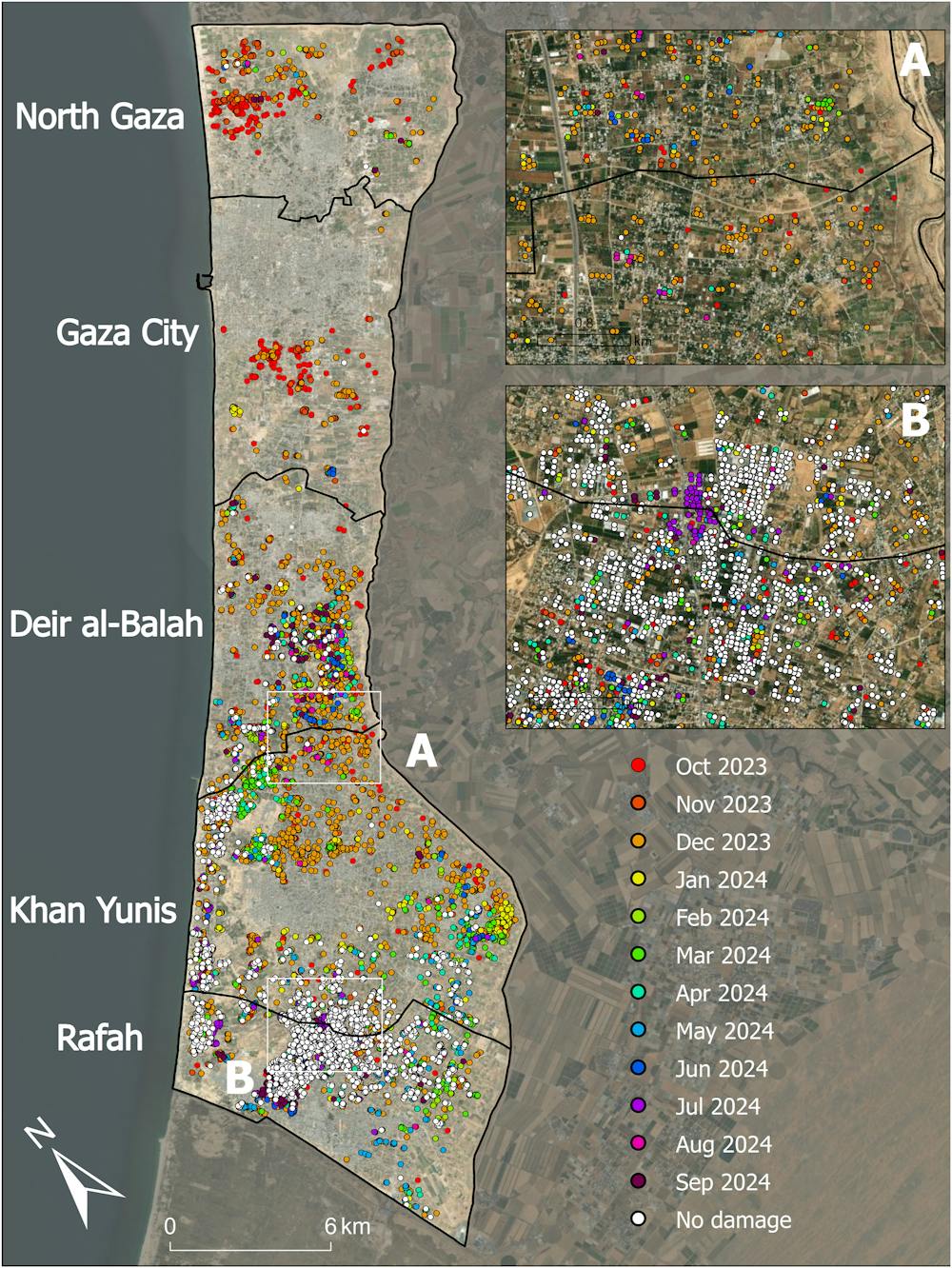
    Over the past 17 months we have analysed satellite images across the Gaza Strip to quantify the scale of agricultural destruction across the region. Our newly published research reveals not only the widespread extent of this destruction but also the potentially unprecedented pace at which it occurred. Our work covers the period until September 2024 but further data through to January 2025 is also available.

    Before the war, tomatoes, peppers, cucumbers and strawberries were grown in open fields and greenhouses, and olive and citrus trees lined rows across the Gazan landscape. The trees in particular are an important cultural heritage in the region, and agriculture was a vital part of Gaza’s economy. About half of the food eaten there was produced in the territory itself, and food made up a similar portion of its exports.

    By December 2023, only two months into the war, there were official warnings that the entire population of Gaza, more than 2 million people, was facing high levels of acute food insecurity. While that assessment was based on interviews and survey data, the level of agricultural damage across the whole landscape remained out of view.

    Most olive and citrus trees are gone

    To address this problem, we mapped the damage to tree crops – mostly olive and citrus trees – in Gaza each month over the course of the war up until September 2024. Together with our colleagues Dimah Habash and Mazin Qumsiyeh, we did this using very high-resolution satellite imagery, detailed enough to focus on individual trees.

    We first visually identified tree crops with and without damage to “train” our computer program, or model, so it knew what to look for. We then ran the model on all the satellite data. We also looked over a sample of results ourselves to confirm it was accurate.

    Our results showed that between 64% and 70% of all tree crop fields in Gaza had been damaged. That can either mean a few trees being destroyed, the whole field of trees completely removed, or anything in between. Most damage took place during the first few months of the war in autumn 2023. Exactly who destroyed these trees and why is beyond the scope of our research or expertise.

    In some areas, every greenhouse is gone

    As greenhouses look very different in satellite images, we used a separate method to map damage to them. We found over 4,000 had been damaged by September 2024, which is more than half of the total we had identified before the start of the war.

    Greenhouses and the date of initial damage between October 2023 and September 2024.
    Yin et al (2025)

    In the south of the territory, where most greenhouses were found, the destruction was fairly steady from December 2023 onwards.

    But in north Gaza and Gaza City, the two most northerly of the territory’s five governorates, most of the damage had already taken place by November and December 2023. By the end of our study period, all 578 greenhouses there had been destroyed.

    North Gaza and Gaza City have also seen the most damage to tree crop fields. By September 2024, over 90% of all tree crops in Gaza City had been destroyed, and 73% had been lost in north Gaza. In the three southern governorates, Khan Younis, Deir al-Balah and Rafah, around 50% of all tree crops had been destroyed.

    Agricultural damage is common in armed conflict, and has been documented with satellite analysis in Ukraine since the 2022 Russian invasion, in Syria and Iraq during the ISIS occupation in 2015, and in the Caucasus during the Chechen wars in the 1990s and 2000s.

    The exact impact can differ from conflict to conflict. War may directly damage lands, as we have seen in Gaza, or it may lead to more fallow areas as infrastructure is damaged and farmers are forced to flee. A conflict also increases the need for local agricultural production, especially when food imports are restricted.

    Our assessment shows a very high rate of direct and extensive damage to Gaza’s agricultural system, both compared to previous conflict escalations there in 2014 and 2021, and in other conflict settings. For example, during the July-August war in 2014, around 1,200 greenhouses were damaged in Gaza. This time round at least three times as many have been damaged.

    Agricultural attacks are unlawful

    Attacks on agricultural lands are prohibited under international law. The Rome Statute of the International Criminal Court from 1998 defines the intentional use of starvation of civilians through “depriving them of objects indispensable to their survival” as a war crime. The Geneva conventions further define such indispensable objects as “foodstuffs, agricultural areas for the production offoodstuffs, crops, livestock, drinking water installations and supplies and irrigation works”.

    Our study provides transparent statistics on the extent and timing of damage to Gaza’s agricultural system. As well as documenting the impacts of the war, we hope it can help the massive rebuilding efforts that will be required.

    Restoring Gaza’s agricultural system goes beyond clearing debris and rubble, and rebuilding greenhouses. The soils need to be cleaned from possible contamination. Sewage and irrigation infrastructure need to be rebuilt.

    Such efforts may take a generation or more to complete. After all, olive and citrus trees can take five or more years to become productive, and 15 years to reach full maturity. After previous attacks on Gaza the trees were mostly replanted, and perhaps the same will happen again this time. But it’s for good reason they say that only people with hope for the future plant trees.

    Lina Eklund receives funding from the Swedish National Space Agency and the Strategic Research Area: The Middle East in the Contemporary World (MECW) at the Centre for Advanced Middle Eastern Studies, Lund University, Sweden.

    He Yin receives funding from NASA.

    Jamon Van Den Hoek receives funding from NASA.

    ref. Gaza: we analysed a year of satellite images to map the scale of agricultural destruction – https://theconversation.com/gaza-we-analysed-a-year-of-satellite-images-to-map-the-scale-of-agricultural-destruction-248796

    MIL OSI – Global Reports

  • MIL-OSI Global: Long COVID: women at greater risk compared to men – could immune system differences be the cause?

    Source: The Conversation – UK – By Helen McGettrick, Reader in Inflammation and Vascular Biology, University of Birmingham

    Women had a 1.3 times higher chance of developing long COVID than men. Daisy Daisy/ Shutterstock

    About 5% of people who catch COVID have long-lasting symptoms. In these people, loss of smell, dizziness, fatigue and other hallmark COVID symptoms can persist for months after the initial illness. Yet even five years after the COVID pandemic began, we still don’t know why some people develop long COVID and others don’t.

    But a recent study brings us a step closer to understanding who is at greatest risk of developing long COVID. The study found that women have a much higher risk of developing long COVID compared to men.

    Published in Jama Network Open, the paper investigated symptoms of long COVID in 12,276 adults. Each participant had had COVID at least six months earlier. Using a questionnaire, participants gave information on their current symptoms, allowing researchers to identify those with long COVID.

    While previous research has also uncovered a similarly increase long COVID risk in women, these studies had small sample sizes and didn’t consider certain factors that may have distorted the findings.

    The new study took these various factors into account in their analysis, including a participant’s age, race, vaccination status and whether they had any other health conditions. This allowed them to better calculate the risks of developing long COVID for men and women.

    Their results indicated that women had 31% higher chance of developing long COVID than men.

    When broken down by age, this difference disappeared in people aged 18-39. However, the risk was even greater in women aged 40-54, who had a 48% higher risk of developing the condition compared with men. Women over 55 had a 34% higher risk of developing long COVID.

    Interestingly, this finding is contrary to data on COVID infection severity, which shows men are more prone to developing severe symptoms. They also make up around two out of three COVID deaths.

    While researchers don’t currently know why women are at greater risk of long COVID, differences in the way men’s and women’s immune systems respond to COVID could be a factor.

    Immune differences

    The immune system is a fascinating, complicated system with many different types of cell, each of which has a specific role in fighting infection.

    For instance, B cells make antibodies that target infections, while non-classical monocytes regulate immune function and clear up dead and damaged cells. Our cytotoxic T cells kill virus-infected cells, while helper T cells help activate other immune cells and signal that there’s an issue.

    But the proportion and type of immune cells that circulate in the body can differ by sex and age.

    For example, older women have lower proportions of cytotoxic and helper T cells, higher percentages of activated B cells and a higher total number of non-classical monocytes compared to younger men and women.

    People with long COVID also have a higher number of non-classic monocytes and more activated B cells compared to those who didn’t have long COVID. Given that older women already have a higher proportion of these cell types even before an infection, it’s possible that this may explain why they were at the greatest risk of developing long COVID.

    The study found peri-menopausal women and women who had reached the menopause had the greatest risk of developing long COVID.
    Gladskikh Tatiana/ Shutterstock

    But these aren’t the only immune function differences in women that may account for their greater risk of long COVID.

    Women generally have a more intense immune response to infections than men – including against COVID. This more intense response can mainly be accounted for by differences in hormones and the fact that women have two X chromosomes.

    In particular, the hormone oestrogen plays a vital role in controlling the immune system. Oestrogen helps contribute to the enhanced immune response that occurs when a person develops an infection. The severe drop in oestrogen that occurs during the menopause may also explain why women are more susceptible to an infection and longer lasting diseases.


    Read more:
    How biological differences between men and women alter immune responses – and affect women’s health


    In this recent Jama study, peri-menopausal women and women who had reached the menopause were at greatest risk of developing long COVID. This suggests oestrogen may be a contributing factor.

    After fighting an infection, immune cells should die off – stopping prolonged, uncontrolled damage to the body. While the more intense immune response women have to an infection may be beneficial in reducing the initial severity of the COVID infection, this persistent, heightened immune response and any damage it causes to the body may increase the possibility of long COVID occurring.

    Such prolonged, higher intensity immune responses are known to promote the development of autoimmune diseases – where the body’s immune system attacks itself. Women have a higher prevalence of many autoimmune conditions, including rheumatoid arthritis, Sjogren’s and multiple sclerosis.

    Although COVID isn’t an autoimmune disease, autoantibodies (proteins released by B cells that attack the body’s own cells and tissues) have been found in people with long COVID. These antibodies promote long COVID symptoms. Possibly women are at greater risk of long COVID for the same reasons they’re at greater risk of developing an autoimmune condition.

    The findings from this recent study add to our understanding of long COVID – pointing to which groups are at greatest risk of developing the condition. More work needs to be done to explore differences in how long COVID differs based on sex and age – and the mechanisms that trigger long COVID to begin with.

    Through understanding the who and why of long COVID, it might allow for new treatments to be developed.

    Helen McGettrick receives funding from Medical Research Council, Wellcome Trust, Wellcome Leap, Helmsley Foundation and ROCHE. She is also an elected member of British Society of Immunology Congress Committee.

    Jonathan Lewis receives funding from the Wellcome Trust and the British Society of Immunology (CARINA).

    ref. Long COVID: women at greater risk compared to men – could immune system differences be the cause? – https://theconversation.com/long-covid-women-at-greater-risk-compared-to-men-could-immune-system-differences-be-the-cause-248700

    MIL OSI – Global Reports

  • MIL-OSI USA: 176 New Troopers Join the Ranks of the NYSP

    Source: US State of New York

    Governor Kathy Hochul joined Superintendent Steven G. James in honoring 176 new State Troopers as they graduated today from the 216th session of the Basic School of the New York State Police Academy. The ceremony was held at the Empire State Plaza Convention Center in Albany. Today’s graduation increases the State Police ranks to 5,034 sworn members.

    “I commend these 176 new troopers for dedicating themselves to public service, and their commitment to protecting the people of New York State,” Governor Hochul said. “The members of the New York State Police put their lives on the line each day to keep the rest of us safe — in a world where their mission has grown more challenging and complex. On behalf of all New Yorkers, I want to thank the graduates for their hard work and perseverance — and welcome them to the long gray line.”

    New York State Police Superintendent Steven G. James said, “Today’s graduation is the culmination of six months of difficult classwork, physical training, and sacrifice, and we now welcome our newest members to one of the most prestigious and well-respected law enforcement agencies in the nation. I am confident they are equipped to carry out our mission to serve our communities with the same professionalism and pride the State Police have exhibited for the past 107 years.”

    In addition to honoring all graduates from the 216th Session of Basic School,

    Superintendent James presented the following awards:

    Academic Achievement Award

    As a special incentive for all students attending the State Police Academy Basic School, the Superintendent sponsors the awarding of a firearm for the attainment of the highest level of academic performance during Academy training.

    The recipient of the Academic Performance Award is Clayton D. Buff, age 24, who resides in Cohoes, New York. He attended the University at Albany where he studied Criminal Justice. Prior to joining the New York State Police, he served 4 years of active duty with the United States Army. Throughout the Academy training program, he achieved an outstanding overall academic average of 96.58 percent. He will be assigned to Troop G.

    Firearms Proficiency Award

    The New York State Trooper Foundation has sponsored the awarding of a firearm for the attainment of the highest level of performance in all phases of firearms training.

    The recipient of the Superintendent’s Firearms Proficiency Award is Hunter T. Argetsinger, age 24, who resides in Elmira, New York. He is a graduate of Corning Community College where he received an associate’s degree in criminal justice. Prior to joining the New York State Police, he was a police officer with the city of Elmira Police Department. During firearms training, he achieved an average score of 250 out of a possible 250. He will be assigned to Troop E.

    Investigator Joseph T. Aversa Physical Fitness Award

    The New York State Police Investigators Association has sponsored the awarding of a firearm for the attainment of the highest degree of physical fitness during the Physical Training Program at the Academy. This award will be presented in memory of deceased Investigator Joseph Aversa. Investigator Aversa made the ultimate sacrifice in New York City on March 5, 1990, during a narcotics investigation while serving as a member of the Joint Drug Enforcement Task Force. Investigator Aversa was a six-year State Police veteran who believed that physical conditioning was an integral part of being a Trooper.

    The recipient of the Joseph T. Aversa Physical Training Award is Oliver P. Valenti, age 21, who resides in Clarence, New York. Prior to joining the New York State Police, he attended Hilbert College where he studied Forensic Science while employed with Wegmans Marketplace as a front-end coordinator. During the physical agility testing, he achieved the highest score of all 176 Members of the 216th Session, a tribute to his superb physical conditioning. He will be assigned to Troop A.

    I commend these 176 new troopers for dedicating themselves to public service, and their commitment to protecting the people of New York State.”

    Governor Hochul

    Student Representative

    The New York State Troopers Police Benevolent Association has sponsored the awarding of a firearm to the member of the class who is selected by his or her peers to represent them during these exercises. The PBA presents the award in memory of Trooper John J. McKenna IV, who was killed in action in 2006, while serving his country as a Marine in Iraq.

    The recipient of the Class Representative Award is Antonio M. Vecchio, age 21, who resides in Levittown, New York. Prior to joining the New York State Police, he attended Binghamton University where he studied Economics. He will be assigned to Troop C.

    The new Troopers will report for field duty on February 7 or February 10, depending on their platoon. For the following 10 weeks, the new Troopers will be evaluated under a field-training program supervised by senior Field Training Officers.

    Below is a complete list of graduates listed alphabetically (Troop assignments are pending):

    Last Name First Name Hometown
    Aguilar Magali Wallkill, NY
    Akande-Bowen Jared Queens, NY
    Balbuena Kelly Newburgh, NY
    Akhmedov Kairat Brooklyn, NY
    Argetsinger Hunter Elmira, NY
    Arndt Mitchell Mohawk, NY
    Ashby Tristan Syracuse, NY
    Baines Evan Merrick, NY
    Bartholomew Zoe Lake Pleasant, NY
    Bassiouni Omar Staten Island, NY
    Bektic Nedim Utica, NY
    Beltran Antonio Amsterdam, NY
    Boudreau Luc Warwick, NY
    Boul Rang Syracuse, NY
    Brennan Lauren Selkirk, NY
    Briggs Cynthia Hawthorne, NY
    Brownell James Geneva, NY
    Buck Aaron Houghton, NY
    Buff Clayton Cohoes, NY
    Bull Lance Queensbury, NY
    Bullo Silvano Fairport, NY
    Burns Mason Rome, NY
    Cahill Edward Massapequa, NY
    Canale Connor Amsterdam, NY
    Carnero Tello Glenn Bogota, NY
    Carr Jason Cortland, NY
    Carrillo Evan Bronx, NY
    Carron Sean Delhi, NY
    Cervantes Manuel Port Chester, NY
    Clarke Hannah South Glens Falls, NY
    Clarke Jakob Plattsburgh, NY
    Combs Jenna Warrensburg, NY
    Cosbert Stefan Freeport, NY
    Cox Tyler Schenectady, NY
    Cregin Ethan Staten Island, NY
    Curtin James Hicksville, NY
    Daley Keri West Henrietta, NY
    Dalrymple Scott Brewster, NY
    Dalrymple Shane Brewster, NY
    Deebs Andrew Hornell, NY
    Delaney Austin Neversink, NY
    Delfini Louis Staten Island, NY
    Derick Gavin Lindley, NY
    Diana Joseph Holland Patent, NY
    Disalvo Natalie Johns Island, NY
    Diaz Israel East Fishkill, NY
    Dieng Ngagne Bronx, NY
    Difusco Frank Poughquag, NY
    Diorio David Deer Park, NY
    Eldred Rebecca Clifton Park, NY
    Ellsworth Logan Matamoras, NY
    Fallon Hayley Long Beach, NY
    Fallon Thomas Kings Park, NY
    Faso Emma Clarence Center, NY
    Favreau Parker Plattsburgh, NY
    Feirabend Michael West Seneca, NY
    Fernaays Ryan Williamson, NY
    Finn Richard Pleasant Valley, NY
    Fitzsimmons Cody Dryden, NY
    Flocco Sophia Bronx, NY
    Fontus Angelo Brooklyn, NY
    Galanti Jillian Webster, NY
    Garcia Castrejon Luis Pine Plains, NY
    Gates Seth Elbridge, NY
    Gehrke Matthew Centerport, NY
    Gould Erin Astoria, NY
    Grant Ariel Carle Place, NY
    Hahn Richard Kings Park, NY
    Harrington Carson Jacksonville, NY
    Haynes Dylan Baldwin, NY
    Healey Trevor Perry, NY
    Heegan Christina Oneonta, NY
    Heras Nelson Jamaica, NY
    Hidalgo Christopher Queens Village, NY
    Holloway William West Hempstead, NY
    Ibrahim Maryam Williston Park, NY
    Ibrahim Mohamed Levittown, NY
    Ilahi Haider Brooklyn, NY
    Jansen Connor Horseheads, NY
    Jolly Kaitlyn Waterloo, NY
    Kalletta George Manorville, NY
    Komenda Kiersten Springville, NY
    Karam Michael Gansevoort, NY
    Khork Brennan Hornell, NY
    Knoop Dennis Queensbury, NY
    Koprivica Marko Blasdell, NY
    Kraft Joel Waterloo, NY
    Lamouree Grant Queensbury, NY
    Lask Michael Buffalo, NY
    Lawson Lance Valley Stream, NY
    Lazo Franklin Pleasantville, NY
    Letourneau Casey Constable, NY
    Lillis Abigail Angola, NY
    Locurto Madeline New Windsor, NY
    Manley Charles Buffalo, NY
    Marroquinn Kevin Lindenhurst, NY
    Mcdermott Dylan West Babylon, NY
    Meegan Liam West Seneca, NY
    Messina Sebastian Levittown, NY
    Milazzo Matteo Briarcliff, NY
    Miller Eric Medina, NY
    Murphy Rebecca Monroe, NY
    Monnin Daniel Buffalo, NY
    Moore Hunter Castorland, NY
    Morales Nicholas Staten Island, NY
    Moses Avery Fayetteville, NY
    Motler Katherine Glenmont, NY
    Morales Nickolas Binghamton, NY
    Mustafa Kamal Mohamad Ayyas Utica, NY
    Naum Caleb Brewerton, NY
    Nell Abigail Verona, NY
    Newburg V Louis Coeymans, NY
    Obrien Cade Gansevoort, NY
    Oconnor James New Paltz, NY
    Page Joshua Verona, NY
    Parga Erick Island Park, NY
    Parkhurst Kevin Ilion, NY
    Patti Victoria Buffalo, NY
    Pekoff Jeremy Bellmore, NY
    Pelaez Matthew Old Bethpage, NY
    Peters Henry Callicoon, NY
    Petfield Jacob Hawthorne, NY
    Petry Henry Chemung, NY
    Phillips Anaya Medford, NY
    Pindulic Amber Centereach, NY
    Quintero Josue Brooklyn, NY
    Quirk Timothy Centereach, NY
    Ramirez Evelin Carmel, NY
    Roush Hailey Mayville, NY
    Rath Nathaniel Newport, NY
    Robinson Shane Binghamton, NY
    Romero Lainez Bryan West Babylon, NY
    Rowe Jake Pleasant Valley, NY
    Rutkowski Jack Pine Bush, NY
    Ryan Allison Syracuse, NY
    Salvadori David Massapequa Park, NY
    Sarpong Joel Columbus, NY
    Sasso Mario Nanuet, NY
    Savino Nicholas Bellmore, NY
    Scoma Anthony Lancaster, NY
    Scordo Alex Middletown, NY
    Simon Nicole Howard Beach, NY
    Smoulcey Ryan Rome, NY
    Stephany Krista Buffalo, NY
    Streety Maxwell Orchard Park, NY
    Streety Mitchell Thornwood, NY
    Sustache Samuel Syracuse, NY
    Svitak Brendan Marcy, NY
    Sweet Jeffrey Petersburg, NY
    Szlamcynski Adam Star Lake, NY
    Taylor Grace South Kortright, NY
    Tejeda Francheska Buffalo, NY
    Thaureaux Alejandro Webster, NY
    Thompson Adam St Albans, NY
    Tommasone Daniel Schenectady, NY
    Trzaska Noah West Seneca, NY
    Twoguns Kristine Perrysburg, NY
    Valenti Oliver Akron, NY
    Valladares Steven Woodside, NY
    Vargo Quinton West Falls, NY
    Vasile Hudson Mount Morris, NY
    Vata Halit New York City
    Vecchio Antonio Levittown, NY
    Velez Diana Campbell Hall, NY
    Vogel Tanner Ilion, NY
    Volk III Robert Mechanicville, NY
    Wallace Connor Manorville, NY
    Weist Brockton Port Crane, NY
    White Alexander Schenectady, NY
    Willenbrock Derek Amityville, NY
    Winslow Hunter Canastota, NY
    Workman Daniel Groton, NY
    Young Tanner Camden, NY
    Yudchits Julia Herkimer, NY
    Zahin Md Muhaiminul New York City, NY
    Zambardino Nicholas Monroe, NY

    MIL OSI USA News

  • MIL-OSI Global: Anti-LGBTQ+ policies harm the health of not only LGBTQ+ people, but all Americans

    Source: The Conversation – USA – By Nathaniel Tran, Assistant Professor of Health Policy and Administration, University of Illinois Chicago

    Courts across the nation are debating whether LGBTQ+ people should be protected from discrimination. Kevin Dietsch/Getty Images

    In 2024, state legislatures introduced an all-time record of 533 bills targeting LGBTQ+ populations. These policies create a patchwork of legal landscapes that vary widely between and within states, affecting aspects of everyday life ranging from how kids learn and play to where adults live and work.

    All of these policies have implications for the health of not only LGBTQ+ people but also the general public.

    I am a health policy researcher who studies how state and federal legislation affect public health. Research has shown that the social determinants of health – the opportunities and resources that affect how people live, learn, play, work and age – play a significant role in LGBTQ+ well-being. Newly published work from my colleagues and I show how anti-LGBTQ+ public policies can have lasting effects on everyone’s health.

    Existing policies and LGBTQ+ health

    Same-sex marriage provides a clear example of the direct and indirect ways public policies affect LGBTQ+ health.

    Most people in the U.S. have health insurance through their employer, which usually offers coverage for employees and their family, including a spouse and children. A landmark 2015 study found that health coverage significantly increased for adults in same-sex marriages after its legalization in New York state. After same-sex marriage was legalized nationwide, a follow-up study also showed an increase in health insurance coverage among gay and lesbian couples.

    Even among single LGBTQ+ people who did not get married, same-sex marriage may have also improved their health by improving social attitudes toward LGBTQ+ people overall. Researchers found that gay and bisexual men, regardless of whether they were single or married, spent less on medical visits, mental health visits and overall health care spending after Massachusetts legalized same-sex marriage in 2004.

    Massachusetts was the first state to legalize same-sex marriage.
    Victoria Arocho/AP Photo

    Access to gender-affirming care provides another example of how public policies affect the health of LGBTQ+ people.

    A 2020 national study of nearly 30,000 transgender and nonbinary people found that suicide attempts and mental health hospitalizations declined in states that passed policies requiring private insurers to equally cover services they already provide for cisgender people for transgender people. No other studies directly analyze how policies regulating access to care affect the health of trans and nonbinary people.

    However, a large body of clinical research supports the health benefits of gender-affirming care. A randomized clinical trial and prospective study found that starting gender-affirming hormone therapy reduced depression and suicidality in transgender and nonbinary people. Several recent systematic reviews analyzing 124 peer-reviewed studies conducted over the past 50 years also found that gender-affirming surgery and hormone therapy improved quality of life and mental health.

    Policies outside health affect LGBTQ+ well-being

    Policies outside of health care – such as nondiscrimination, education and workplace protections – also affect LGBTQ+ well-being.

    For example, transgender and nonbinary people living in states with policies that specifically include gender identity in hate crime and discrimination protections reported better mental health than those in states without protections. Similarly, LGBTQ+ students in schools with designated safe spaces reported lower rates of suicidal thoughts.

    However, the surge in anti-LGBTQ+ policies in the U.S., initially focusing on youth, has significantly increased polarization between and within states. For example, while 17 states have implemented guidances to make schools safer and more inclusive for transgender youth, 25 states have banned transgender youth from using bathrooms and playing on sports teams that align with their gender. Meanwhile, South Dakota and Missouri have enacted laws to preempt progressive schools and districts from adding LGBTQ+ student protections and supportive resources.

    The Trump administration is also actively targeting resources that support LGBTQ+ students by reducing funding to schools that offer these programs.

    Inclusive spaces can help support the health of LGBTQ+ students.
    Jessica Hill/AP Photo

    In 2020, the Supreme Court ruled 6-3 in Bostock v. Clayton County that federal sex-based nondiscrimination protections in the workplace included discrimination based on gender identity and sexual orientation. Researchers found that LGBTQ+ older adults with co-workers supportive of their gender and sexuality experienced less workplace conflict and cognitive health problems compared with those who did not.

    The Trump administration is working to restrict the scope of federal antidiscrimination protections to exclude LGBTQ+ people.

    Harms of emerging anti-LGBTQ policies

    Emerging anti-LGBTQ+ policies could also have consequences for large swaths of the population beyond LGBTQ+ people.

    In 2025, the Supreme Court will hear Braidwood v. Becerra, a case arguing that requiring employers to cover PrEP – a once-a-day pill that is highly effective at preventing HIV infection – as part of the insurance plan they offer employees violates their religious freedom. Texas District Judge Reed O’Connor agreed that mandating PrEP coverage requires the plaintiffs to “facilitate and encourage homosexual behavior.”

    O’Connor ruled in 2023 to overturn the Affordable Care Act’s requirement that insurers fully cover preventive care. He argues this can be done on the grounds that the U.S. Preventive Services Task Force – a group of physicians and researchers that evaluates the quality and efficacy of preventive services – is unconstitutional. This legal challenge puts free coverage of mammograms, vaccinations and other preventive services into limbo for millions of Americans.

    The Trump administration has taken down CDC pages providing information about HIV.

    The Trump administration has scrubbed federal web pages of resources, programs and documents that reference gender and LGBTQ+ people. This order includes removing datasets that have been continuously updated since the 1980s to track public health issues such as homelessness, bullying in schools, and smoking and drinking, likely because they include LGBTQ+ demographic information.

    The administration has also ordered federal health agencies to retract scientific research that may be inclusive of LGBTQ+ people by searching for specific keywords, such as “gender.” The National Science Foundation is also screening active scientific research projects that use words like “women,” “trauma” and “disability.” Removing this data not only hamstrings public health research and programming for LGBTQ+ populations, but also restricts it for all Americans.

    These decisions are in stark contrast to countries such as England, Wales, New Zealand and Australia, which have collected or are planning to collect LGBTQ+ demographic data as part of their national census. Including LGBTQ+ people in demographic data reflects best practices that were outlined in the Federal Evidence Agenda on LGBTQI+ Equity issued under the Biden administration. These guidelines have since been removed.

    Far-reaching consequences

    The rapid escalation of anti-LGBTQ+ policies in recent years is already taking its toll on youth, with negative news coverage of LGBTQ+ issues causing spikes in suicidal thoughts.

    These policies also have far-reaching consequences for the broader public. Rigorous and long-standing research demonstrates that LGBTQ+-inclusive policies support safer communities and stronger economies for everyone, while exclusionary laws worsen and limit access to essential services.

    Ongoing legal battles and policy shifts will shape the future of LGBTQ+ rights, with rippling effects on public health, workplace protections and health care access for all Americans.

    Nathaniel Tran does not work for, consult, own shares in or receive funding from any company or organization that would benefit from this article, and has disclosed no relevant affiliations beyond their academic appointment.

    ref. Anti-LGBTQ+ policies harm the health of not only LGBTQ+ people, but all Americans – https://theconversation.com/anti-lgbtq-policies-harm-the-health-of-not-only-lgbtq-people-but-all-americans-248992

    MIL OSI – Global Reports

  • MIL-OSI USA: News 02/6/2025 Blackburn Celebrates Her Legislation Passing Out of Commerce Committee

    US Senate News:

    Source: United States Senator Marsha Blackburn (R-Tenn)

    WASHINGTON, D.C. – U.S. Senator Marsha Blackburn (R-Tenn) released the following statement after five bills that she sponsored or co-sponsored passed out of the Senate Committee on Commerce, Science, and Transportation. This includes the American Music Tourism Act, the Promoting Resilient Supply Chains Act, the Strengthening Support for American Manufacturing Act, the She DRIVES Act, and the TORNADO Act.

    “The 119th Congress is already off to a productive start, and I am pleased that five of my bills have moved forward out of the Commerce Committee to the full Senate for a vote,” said Senator Blackburn. “I urge my Senate colleagues to support this legislation, which will promote American music tourism, strengthen U.S. supply chains for emerging technologies, boost domestic manufacturing, enhance vehicle safety standards, and improve the forecasting of hazardous weather.” 

    BACKGROUND:

    See below for more information on each piece of legislation.

    • The American Music Tourism Act, sponsored by Senator Blackburn, would leverage the existing framework within the Department of Commerce to highlight and promote music tourism in the United States. It would require the Department of Commerce’s Assistant Secretary for Travel and Tourism to implement a plan to support and increase music tourism for both domestic and international visitors as well as a report to Congress on the successes and vulnerabilities of the Assistant Secretary’s goals to increase travel and tourism.
    • The Promoting Resilient Supply Chains Act, co-led by Senator Blackburn, would authorize the Department of Commerce to strengthen American supply chains for critical industries and emerging technologies by working with the private sector and U.S. government partners to anticipate and prevent future supply chain disruptions before they happen.
    • The Strengthening Support for American Manufacturing Act, co-led by Senator Blackburn, would streamline federal efforts to boost domestic manufacturers and support workers. It would also assess the Department of Commerce’s efforts to support manufacturers and suggest solutions to improve the Department’s manufacturing programs to better serve manufacturers – many of which are small businesses.
    • The She Develops Regulations in Vehicle Equality and Safety (She DRIVES) Act, co-led by Senator Blackburn, would enhance passenger vehicle safety by updating U.S. crashworthiness testing procedures. It would require the use of the most advanced testing devices available, including a female crash test dummy.
    • The Tornado Observation Research Notification and Deployment to Operations (TORNADO) Act, co-sponsored by Senator Blackburn, would improve the forecasting of tornadoes and other hazardous weather by requiring the National Oceanic and Atmospheric Administration to prepare and submit an action plan for the national implementation of high-resolution probabilistic guidance for tornado forecasting and prediction. 

    MIL OSI USA News

  • MIL-OSI Global: Loving the world could address the climate crisis and help us make sense of changes to come

    Source: The Conversation – Canada – By Barbara Leckie, Professor, English and the Institute for the Comparative Study of Literature, Art, and Culture; Academic Director, Re.Climate: Centre for Climate Communication and Public Engagement, Carleton University

    This January, the world watched as Los Angeles burned. “I’ve never seen anything like this,” one police chief told reporters, a sentiment echoed by front-line firefighters.

    Last fall, hurricanes Helene and Milton swept through North Carolina and Florida.

    The storms’ intensity and record-breaking fatalities, exacerbated by climate change, blindsided many inhabitants. “Never in a million years,” one nurse said, “did I think [a storm like that] would happen in my own backyard.”

    As a researcher focused on how language and storytelling contribute to social cohesion and social change, I noticed people repeatedly felt they had “no words to describe” what they saw.

    Their experience captured what happens when stories and words to fail describe our world.

    ‘Between past and future’

    After the Second World War, for example, philosopher Hannah Arendt, born into a German and Jewish family, wrote about not just the impact of the war on a personal level, but also its impact on how people make meaning.

    What did it mean, Arendt asked, not to have the conceptual frames through which the world had once made sense? What did it mean to live in the strange interval of time “between past and future” when old forms of understanding the world had eroded and new forms had not yet been found?


    Read more:
    Hannah Arendt wanted political thinking to be urgent and engaged. She is a philosopher for our times


    Her response was bracing and unexpected. She called for everyone — not just philosophers or scholars but the general public as a whole — to step up and contribute to the work of making meaning at a time when meaning-making was grievously fractured. Her phrase for this was amor mundi or “for love of the world.”

    Now, as many people seek to understand and respond to the climate crisis, they are again experiencing a sense of personal loss and a larger sense of not having the conceptual tools to make sense of this moment. How does one love the world in difficult times?

    Learning to love the world

    Love is complicated and messy. Like hurricanes and fires, it often defies the categories available to describe it.

    Hannah Arendt, seen here in 1958, wrote about making meaning for the love of the world.
    (Barbara Niggl Radloff/Wikipedia), CC BY-SA

    And as Stephanie Lemenager, professor in American literature and environmental studies, illustrates, love of fossil fuel culture, and the conveniences it provides, makes it difficult to respond to the climate crisis.

    Love also evades measurement, and metric-oriented value structures can’t count it. As William Shakespeare asks, tragically, in King Lear: “How does one measure love?

    Love won’t run out in 2030 or 2050. It doesn’t have a parts per million, and despite the many hot and cold words to describe it, it doesn’t have a temperature. Still, as climate emotions professor Sara Jacquette Ray notes, love of this world powers climate action.

    I was talking to a friend recently, the Canadian poet Ken Victor, and he suggested “giving priority to the climate crisis as a multi-faceted relationship to be repaired rather than as a problem to be solved.” Indigenous thinkers like Leanne Betasamosake Simpson,
    the renowned Michi Saagiig Nishnaabeg scholar, also emphasizes “deep reciprocity” and “relationship” to resist the injustices imposed by colonialism.

    Global North climate responses have much to gain from Indigenous thinking and Arendt, of course, is not alone in animating the power of collective, participatory storytelling and loving the world.

    Learning to ‘restory’ the climate

    The idea of “restorying” has been taken up by Indigenous writers to speak in diverse and powerful ways to dynamic and relational forms of oral storytelling, leadership and theatre.

    Walter Benjamin wrote that the trauma of war weakened the stories his world relied upon for coherence.
    (Wikipedia)

    My research on time and climate develops German Jewish philosopher Walter Benjamin’s relevance to storytelling, and what I am calling “restorying” here.

    Like Arendt, Benjamin wrote that the trauma of war — in this case, the First World War — weakened the stories upon which his world relied for social coherence. Where Arendt suggests loving the world, Benjamin endorses amplified, dynamic forms of storytelling.

    Here I build on the tradition from Benjamin to Arendt that invests in the collective practice of making sense of the world one inhabits through sharing, revising and building stories. For Benjamin, stories are in dialogue with other stories; they are participatory and inconclusive. They are also “effective,” meaning they produce effects and invite a response. Above all, they are meant to be repeated and passed on.

    Benjamin’s account of stories, however, also includes a cautionary note: people stop telling stories, as he defines them, when the world no longer fills them with wonder or surprise; when they think they know where they stand. They stop asking questions and no longer believe they can benefit from sharing their dilemmas and concerns with others. They stop thinking, in Arendt’s sense.

    When people isolate themselves in silos of like-minded others, they avoid being challenged or provoked. As Arendt notes, facts are fragile. When lies proliferate and the ability to distinguish those lies from factual truth is eroded, reality wobbles and political action becomes near impossible.

    People can’t act, Arendt believes, when they stop sharing a world in common, however divided by different customs it will always be.

    Relationship rebuilding

    Environmental justice asks us to rethink the systems and practices that created today’s climate impacts. Addressing the climate crisis only from the perspective of a problem to be solved means that we continue on the path, and with the infrastructure, that created the problem in the first place.

    Now, poised between another past and future, I’m interested in, as writer and activist Astra Taylor puts it, “coming together as things fall apart.” Coming together, as a relational practice, can animate what’s missing in the problem-solution models that dominate Global North responses to the climate crisis.

    Arendt and Benjamin offer me stories that “work” and stories that “wonder.”
    Stories that “work” mobilize equitable climate action. Stories that “wonder” are stories that keep open questions, conversation and thinking.

    As international assemblies like COP29 fail to realize their goals, as global carbon emissions continue to rise and as extreme weather everywhere makes many people feel that the frameworks available for understanding no longer serve them, a different response is required. We could call it, following Arendt and Benjamin, restorying the climate and loving the world.

    Barbara Leckie receives funding from SSHRC.

    ref. Loving the world could address the climate crisis and help us make sense of changes to come – https://theconversation.com/loving-the-world-could-address-the-climate-crisis-and-help-us-make-sense-of-changes-to-come-240766

    MIL OSI – Global Reports

  • MIL-OSI USA: Eagles Autism Foundation Awards Research Funding to UConn School of Medicine

    Source: US State of Connecticut

    Just in time for the Super Bowl, researchers at UConn School of Medicine are part of a big win for autism research.

    UConn School of Medicine’s innovative autism research has been prestigiously awarded by the Eagles Autism Foundation to be one of its 22 cutting-edge autism research projects selected to receive a slice of $8.1 million in grant funding raised by fans.

    The grant funding was all powered by the proceeds raised by participants for the 2024 Eagles Autism Challenge and the Eagles Autism Foundation’s other annual fundraising initiatives. Impressively, since 2018, 169 autism research projects and community grants have been funded by the Foundation nationally and internationally, which is dedicated to raising funds for innovative autism research and care programs to assist those currently affected by autism, as well as future generations to make a lasting impact in the field of autism.

    Dr. Eric S. Levine.

    For the last three years, as a proud Eagles fan (and also a life-long Patriots fan) and professor of Neuroscience at UConn School of Medicine, Dr. Eric S. Levine has served on the Eagles Autism Foundation’s Advisory Board as a research expert reviewing submitted research grant proposals.

    But last year Levine decided to apply for a grant himself for his own cutting-edge UConn neuroscience research lab’s work exploring autism’s genomic genesis, and he won!

    Levine’s new award grants his lab over the next two years $400,000 in research funding to expand its laboratory investigations to identify genetic pathways that may cause autism spectrum disorders and better ways to study them.

    To start, his team has been studying two rare, genetic disease syndromes that also result in profound autism, Angelman Syndrome and Dup15q Syndrome. They impact about 1 in 5,000 children. While it still is not clear yet scientifically about autism spectrum disorders’ genetic origins, it is known that both of these autism-linked syndromes are connected to a child’s genetic differences that lead to a missing piece of a chromosome (Angelman Syndrome) or chromosomal duplication (Dup15q Syndrome) in the same 15q11-q13 region.

    Levine’s cutting-edge autism research at UConn is reprogramming the donated skin or blood cells of Angelman or Dup15q syndrome patients to develop them in the lab into brain cells that exactly mirror each patient’s genomics for further study. These green flashing neuronal cells are being analyzed by Levine’s Lab for their physical structure, intracellular calcium dynamics, and functional electrical activity (Image of Levine Lab).

    In this region, Levine has been studying the impact of the genetic deletions or duplications on the behavior and activity of neuronal brain cells. In contrast to single-gene mouse models, amazingly these studies use skin cells or blood cells obtained from patients living with either Angelman or Dup15q syndrome that are then reprogrammed and grown in the lab at UConn School of Medicine to develop into brain cells that mirror exactly each patient’s genomics.

    “This is really unique, personalized medicine, and a better way for us to study the genomics and physiology of a real child’s brain cells and the possible role multiple genes may be playing leading to autism. All kids are different. We can analyze the physical structure of their neurons, measure intracellular calcium dynamics, and record functional electrical activity,” says Levine, who has received donations of cells from families for study. “It’s very exciting to pivot our autism research to translational research studying actual patient-derived human neurons.”

    (Levine Lab image)

    In his translational research efforts, Levine hopes to compare neurons of patients and identify what role various genes play in the brain cells of the patients with syndromes also causing autism, and how their brain cells behave differently, and even test what possible current drugs or new drugs might be beneficial to patients to improve both their symptoms and quality of life.

    “There is so much to learn about the brain,” says Levine, whose work as a neuroscientist every day is driven by his fierce curiosity to learn more and more about how the brain works, and also inspired by the autism patients and families he has had the privilege to meet through the Eagles Autism Foundation over the last few years.

    “The families I have met are so grateful for our autism research efforts, and more hope is on the way. It is a very exciting time for autism research and real, tangible progress and results with research advances and drug clinical trials,” says Levine.

    “Our focus at UConn is finding the next generation of therapies,” says Levine, whose ultimate goal for his autism research is exploring the future power of gene testing and gene therapy for autism spectrum disorders and related-syndromes, including very early-on in life whether in-utero or during a young child’s life.

    “It’s challenging, but the goal is gene therapy to reduce the expression of any uncovered genetic mutations or find a way to silence these problematic genes in neurons. Finding a way to do so, would have a significant effect on autism spectrum disorder patients,” Levine says.

    (Levine Lab image).

    His research team has already shown there is a driver gene of UBE3A, which breaks down other cellular proteins in neurons, which can be either under- or overexpressed in the Angelman and Dup15q syndromes. But Levine and his team are turning their attention and focus to other genes in that same 15q11-q13 region such as GABA-A receptors and HERC2 that could also be contributing to autism spectrum disorders.

    “If we can better understand the common pathway in the brain for these two genetic syndromes that lead to autism, we may someday understand other forms of autism, especially what causes behavioral issues such as loss of verbal communication, cognitive deficits, and impaired motor-function skills,” says Levine.

    “I love being a part of this awesome Eagles Autism Foundation effort,” says Levine of UConn medical school’s Department of Neuroscience. “They are raising more and more funding for advancing autism research every year, including basic research funding. The better the Eagles team does, the more money that is raised. I am rooting for the Eagles and more winning touchdowns helping to advance our scientific insights into autism.”

    In addition to transformational research project funding like Levine’s, the proceeds are also heartwarmingly supporting community grants to organizations enhancing the lives of those affected by autism.

    “This year’s scientific review process was one of the most competitive evaluations we ever had,” says Jeffrey Lurie, chairman and CEO, Philadelphia Eagles. “The number of submissions we received in such a short period of time speaks to how much the field of autism research and care has evolved. For far too long, autism was misunderstood, underfunded, and under-researched. While there is still more work to be done, we are now seeing autism being prioritized at the highest level by some of the most recognized institutions around the world. We thank this year’s recipients for their support of the autism community and hope their groundbreaking work inspires others to follow in their footsteps.”

    The 8th annual Eagles Autism Challenge presented by Lincoln Financial will take place on Saturday, May 17, 2025. To register for the event, visit EaglesAutismChallenge.org. The Eagles Autism Foundation is offering a 50% discount on registration using promo code: LETSHUNT.

    For more information on the 2024 scientific review process and all the funded institutions, visit: EaglesAutismChallenge.org/our-impact-2024/.

    MIL OSI USA News

  • MIL-OSI Australia: Update – Inskip crocodile sighting

    Source: Government of Queensland

    Issued: 5 Feb 2025

    Open larger image

    Wildlife officers have conducted land-based and vessel-based searches for the crocodile

    Wildlife officers will continue searching for an estimated two-metre-long crocodile in the Inskip Point area after receiving further sighting reports and video of the animal in the ocean.

    The crocodile was first observed by a ranger on the beach in front of the Sarawak camping area on 3 February 2025.

    The Department of the Environment, Tourism, Science and Innovation has since received four additional sighting reports of the crocodile in the area.

    Video taken by a camper on Monday 3 February 2025 showing the crocodile swimming close to the beach near the barge landing.

    Senior wildlife officer Joshua Morris said wildlife officers conducted land-based searches on 3 and 4 February 2025 and used a drone, but did not confirm the presence of the animal with poor weather conditions hampering their search.

    “Wildlife officers will conduct further land and water-based searches today, including an intensive vessel-based spotlight search tonight,” Mr Morris said.

    “We believe this is the same crocodile that was recently seen in the Bundaberg region on 23 January 2025.

    “We thank the people who provided the sighting reports and urge anyone who sees what they believe to be a crocodile to make a sighting report as soon as possible.

    “Fishers and people on the beach are an extra set of eyes in the search for this crocodile.

    “Rangers have installed crocodile warning signs at key locations and will continue to provide advice to people in camping areas in the Inskip Point region.

    “This crocodile has fled into the water at the sight of people and has so far avoided crowded beaches, but we still need people to be vigilant around the water.

    “Make considered choices when it comes to swimming and use a barrier such as an esky when fishing from the beach.

    “We believe the crocodile might head back north to its habitat when weather conditions improve, but if it stays in the southeast Queensland region, it will be removed from the wild.

    Crocodile sightings can be reported by using the QWildlife app, completing a crocodile sighting report on the DETSI website, or by calling 1300 130 372. The department investigates every crocodile sighting report received.

    MIL OSI News

  • MIL-OSI Australia: Queensland rangers join Victorian bushfire battle

    Source: Government of Queensland

    Issued: 6 Feb 2025

    Open larger image

    Queensland Parks and Wildlife Service personnel, from left to right Ranger Kurt Zietlow from Cairns, Senior Ranger Brett Duke from Toowoomba, Senior Ranger Chris White from Atherton, Ranger Girresse De Simone from Springbrook, and Ranger Cooper Jenkins from Tewantin, prior to their departure to assist in fighting Victorian bushfires.

    Five fire-trained Department of the Environment, Tourism, Science and Innovation (DETSI) rangers are joining the fight against ongoing bushfires in western Victoria.

    The rangers will join other interstate firefighters in response to significant bushfires near Grampians (Gariwerd) National Park, as part of an ongoing fight to preserve nearby communities and valuable ecosystems.

    They are Senior Ranger Chris White from Atherton; Ranger Kurt Zietlow from Cairns; Ranger Girresse De Simone from Springbrook; Ranger Cooper Jenkins from Tewantin; and Senior Ranger Brett Duke from Toowoomba.

    The rangers will form part of a 20-person taskforce that includes fire personnel from other state agencies, supporting crews from Victoria who have been fighting fires in the area since late 2024.

    Due to the intense and rapidly-changing nature of bushfire response, the rangers have been put through rigorous fitness and practical testing to ensure they are equipped to face the task ahead of them.

    The rangers flew to Melbourne on 6 February 2025 before heading to the fireground near the national park.

    DETSI Deputy Director General Queensland Parks and Wildlife Service Ben Klaassen said they welcomed the opportunity to assist with the bushfire response.

    “Current weather conditions in many parts of Queensland means we have capacity to deploy a crew of our fire-trained rangers to help out our southern neighbours,” Mr Klaassen said.

    “We hope that our assistance will not only help protect nearby communities and the environmental and cultural values of Little Desert National Park and Grampians (Gaiwerd) National Park but will also give our counterparts some well-earned reprieve after a long bushfire season.

    “We wish our team all the best over the coming days and a safe return, and of course are sending our thoughts to impacted Victorian communities.”

    Senior Ranger Chris White said the deployment would be an opportunity for all involved agencies to learn from each other.

    “I’m looking forward to helping out our Victorian neighbours and gain some new perspectives,” Ranger Chris said.

    “Queensland rangers are no strangers to bushfires, but we can certainly learn a lot from the Victorian crews about how they do things on the fireground at a very large and complex incident”.

    The QPWS crews are expected to return on 12 February.

    MIL OSI News

  • MIL-OSI: E Ink Partners with MIT Solve to Launch Innovation Prize for Global Challenges

    Source: GlobeNewswire (MIL-OSI)

    BILLERICA, Mass., Feb. 06, 2025 (GLOBE NEWSWIRE) — E Ink (8069.TW), the originator, pioneer, and global commercial leader in ePaper technology, announced today its collaboration with MIT Solve, an initiative of the Massachusetts Institute for Technology with a mission to drive innovation to solve world challenges. The E Ink Innovation Prize will award up to $300,000 over the next three years to teams helping solve the world’s most pressing issues.

    “This partnership with MIT Solve underscores our commitment to leveraging ePaper technology to address some of the world’s most pressing challenges,” said Johnson Lee, CEO, E Ink. “We believe that by supporting innovation, we can make a significant impact on global issues and drive sustainable change.”

    The inaugural E Ink Solve Global Challenge opened for applications on February 3, 2025, with prize recipients selected in August, and official project kick off in September. The E Ink Innovation Prize is open to solutions that utilize ePaper materials, technology, or displays to address problems of global importance in any of Solve’s areas of impact, including topics such as architecture, education, or intercultural understanding.

    “Working with E Ink, a company that originally spun out of the MIT Media Lab in 1997, is a full circle moment,” said Hala Hanna, Executive Director of MIT Solve. “This level of support is what drives scale and transformational impact. We look forward to working alongside E Ink to advance pivotal tech-based solutions that create a better future for all.” 

    MIT Solve finds and supports tech-based solutions to global challenges through open innovation challenges and partnerships, and in part with its collaboration with E Ink, aims to achieve a more sustainable and equitable future for all. The Innovation prize will be awarded to up to four Solver teams, with additional support from E Ink through project implementation. To learn more or to apply, please visit https://solve.mit.edu/challenges.

    E Ink continues to receive recognition across its climate strategy, privacy protection, and business ethics, with its ongoing inclusion in the Dow Jones Sustainability World Index (DJSI World) and the Dow Jones Sustainability Emerging Markets Index (DJSI Emerging Markets). The company has revised its 2025 renewable energy goal to RE65, aiming for RE100 across all operations. Additionally, E Ink’s displays have been recognized for their environmental contributions, with 99.9% of product sales revenue qualifying as green revenue and is noted for its energy efficiency and eye health benefits, being the first display technology to receive certification from the International Dark-Sky Association.

    About E Ink
    E Ink Holdings Inc. (8069.TWO), based on technology from MIT’s Media Lab, provides an ideal display medium for applications spanning eReaders and eNotes, retail, home, hospital, transportation, logistics, and more, enabling customers to put displays in locations previously impossible. E Ink’s electrophoretic display products make it the worldwide leader for ePaper. Its low power displays enable customers to reach their sustainability goals, and E Ink has pledged using 100% renewable energy in 2030 and reaching net zero carbon emissions by 2040. E Ink has been recognized for their efforts by receiving, validation from Science-Based Targets (SBTi) and is listed in both the DJSI World and DJSI Emerging Indexes. Listed in Taiwan’s Taipei Exchange (TPEx) and the Luxembourg market, E Ink Holdings is now the world’s largest supplier of ePaper displays. For more information please visit www.eink.com. E Ink. We Make Surfaces Smart and Green.

    Stay Connected
    Website | Facebook | Instagram | LinkedIn | Twitter/X

    Contact
    V2 Communications on behalf of E Ink
    eink@v2comms.com

    About MIT Solve:
    Solve is an initiative of the Massachusetts Institute of Technology (MIT) with a mission to drive innovation to solve world challenges. Solve is a marketplace for social impact innovation. Through open innovation challenges, Solve finds incredible tech-based social innovators from all around the world. Solve then brings together MIT’s ecosystem and a community of supporters to fund and scale these innovators to help them drive lasting, transformational impact. Join Solve on this journey at solve.mit.edu.

    Stay Connected
    Twitter | LinkedIn | Instagram | Facebook | YouTube

    Contact
    Bridget Weiler
    Director of Marketing & Communications
    bridget.weiler@solve.mit.edu

    The MIL Network

  • MIL-OSI Europe: VATICAN – Appointment of Monsignor Sangalli, Adjunct Secretary of the Dicastery for Evangelization

    Source: Agenzia Fides – MIL OSI

    Thursday, 6 February 2025

    Vatican City (Agenzia Fides) – The Holy Father has appointed the Most Reverend Monsignor Samuele Sangalli, Adjunct Secretary and Administrator of the Dicastery for Evangelization (Section for First Evangelization and New Particular Churches), as Archbishop. He has given him the titular see of Zella.Samuele Sangalli was born in Lecco (Italy) on September 10, 1967. He entered the seminary of the Archdiocese of Milan at the age of 14 and was ordained a priest on 8 June 1996 in the Archdiocese of Milan by Cardinal Carlo Maria Martini.First as a deacon and then as a priest, from 1992 to 1997 he was spiritual director of the “Alleluia” community for the rehabilitation of addicts, run by the Camillian Fathers in Milan. During the same period, he taught Catholic religion at the “Liceo Classico B. Zucchi” in Monza and was a pastoral assistant in the parish of “Beata Vergine Assunta” in Bruzzano (Milan).From 1997 to 1999 he held the role of Parish Vicar in the Parish of Santa Maria del Rosario, in Milan.With the mandate of the Superiors, from 1992 to 2006 he was a Member, with the Jesuit Fathers, of the team of spiritual assistants of the Ignatian movement of CVX (Communities of Christian Life). In 2000 he was a Visiting Scholar at the Faculty for Divinity of the University of Cambridge (UK) and collaborated in the local Catholic parish of “Our Lady and the English Martyrs”.After moving to Rome in 2001, he was spiritual director at Villa Nazareth College until 2009.Based on the spiritual journey he took with some young university students from Villa Nazareth and the subsequent encounter with young people and families he met while teaching at the Pontifical Gregorian University and the “LUISS Guido Carli” in Rome, he founded the Oikia community in 2010. From 2004 to 2012 he worked first with the young people of Villa Nazareth and then with the Oikia community on feast days in the parish of “S. Benedetto” in the Ostiense area of Rome.He has been a member of the Equestrian Order of the Holy Sepulchre of Jerusalem since 2005 and a member of the Franciscan Secular Order since 2014.He is currently an Associate Lecturer at the Institute of Anthropology, and Director of the “Sinderesi” School of training for active citizenship at the Alberto Hurtado Center, of the Pontifical Gregorian University in Rome. He is also a professor of the free courses on professional Ethics at the Faculty of Law and Global Governance through Interreligious Dialogue at the Faculty of Political Science of the “LUISS Guido Carli” University in Rome.Already an official of the Congregation for Bishops, Samuele Sangalli was appointed by Pope Francis on April 25, 2023 as Undersecretary of the Dicastery for Evangelization, Section for First Evangelization and the New Particular Churches. On October 1, 2024 (See Fides, 1/10/2024) the Pope appointed him as Adjunct Secretary with the role of head of the administration of the aforementioned Dicastery, in the same Section. (GV) (Agenzia Fides, 6/2/2025)
    Share:

    MIL OSI Europe News

  • MIL-OSI Russia: SPbGASU once again welcomed young intellectuals

    Translartion. Region: Russians Fedetion –

    Source: Saint Petersburg State University of Architecture and Civil Engineering – Saint Petersburg State University of Architecture and Civil Engineering – Grand Opening of Science Day

    SPbGASU held Science Day for participants of the 17th All-Russian Youth Educational Forum “Young Intellectuals of Russia”. On February 5, students of grades 5–11 of educational institutions defended projects and papers, attended master classes, and got acquainted with our university.

    The forum dedicated to the Day of Russian Science is being held in St. Petersburg from February 4 to 8. Its organizers are the Interregional Multidisciplinary Center “St. Petersburg Education”, the St. Petersburg Interregional Center “Education without Borders”, higher education institutions of the Northern capital with the support of the Academy of Military Sciences, the Maritime Council under the Government of St. Petersburg, the Council of Municipalities of St. Petersburg. As Natalya Polupanova, Director of the Interregional Multidisciplinary Center “St. Petersburg Education”, said, “198 participants from 15 educational institutions of 10 cities in 6 regions of the Russian Federation arrived at the forum. This year, an unprecedented number of projects – 142, this is a record. Project defenses are traditionally held at SPbGASU.”

    The events at our university were organized by the admissions committee with the participation of the Volunteer Club, the Kirpich Student Leisure and Creativity Center, the student media center and teachers.

    On behalf of Evgeny Rybnov, the rector of SPbGASU, Dmitry Ulrikh, the dean of the faculty of engineering ecology and urban economy, greeted the young intellectuals. Dmitry Vladimirovich said that our university has been a forge of personnel for the construction industry since 1832. Each faculty has its own scientific schools. The university is waiting for the guys as students.

    The forum participants learned about the activities of student associations at our university and watched concert numbers prepared by the teams of the Student Leisure and Creativity Center “Kirpich”.

    “To convey your thoughts to others”

    After the official part, the guests of our university went to the university auditoriums to defend their projects. The defenses took place within the framework of the humanitarian, natural science, historical, technical, creative and philological sections. In each section, the projects were evaluated by a jury.

    The meeting of the technical section was opened by Andrey Zazykin, Dean of the Automobile and Road Faculty. Andrey Vyacheslavovich believes that the faculty he heads, which trains specialists in the field of transport and mechanical engineering, is the most technical. Transport logistics, intelligent transport systems, modeling of road traffic and interchanges, construction of roads and bridges, organization of road safety, traffic light regulation, road signs, design and operation of vehicles – all this is done at the ADF. Here they train not only specialists, but also those who know how to convey their thoughts to others, present research results, and manage a team. The Dean wished the guys not to deviate from their path and invited them to take part in the Olympiad “Transport Systems and Technologies”, for successful performance in which additional points are awarded to the Unified State Exam. Applications can be submitted until February 10.

    In the project “Computer Modeling of the Movement of Material Points” Ekaterina Antipina, a 9th-grade student of Secondary School No. 3 from Kirovograd, Sverdlovsk Oblast, examined the movement of material points in various conditions, including the influence of forces, interactions, and the environment on their trajectory. The author worked in the Blender program, which allows demonstrating physical processes in a visual form. According to Ekaterina, her project helps develop an interest in physics and deepen knowledge of the subject. “I can say with confidence that the use of computer modeling has become a powerful tool for visualizing physical concepts. This project showed how modern technologies can be used in the educational sphere,” Ekaterina said.

    The features of windy spaces between architectural objects were studied by Anton Goloshumov, a 10th-grade cadet at the Lyceum named after Major General V. I. Khismatulin (Surgut, Khanty-Mansiysk Okrug (Yugra)). Under the scientific supervision of Sergei Osipov, a physical education teacher, Anton created a model reflecting the location of houses on one of the streets of Surgut, and conducted an experiment to study the nature of the wind between them. The young researcher believes that in places where there is strong wind, it is advisable to plant trees or shrubs. And it is also undesirable to put playgrounds and billboards there.

    After defending their projects, the forum participants took a tour of the university and attended master classes.

    From quadcopter to thermal imager

    Master class “Geodetic instruments”

    The master class “Geodetic Instruments” was held by Dmitry Ditrikh, Deputy Secretary in Charge of the Admissions Committee for Work at the Faculty of Engineering Ecology and Urban Economy, Senior Lecturer of the Department of Geodesy, Land Management and Cadastre. The students learned that graduates of the department can become specialists of Rosreestr, surveyors or cadastral engineers, and also work in related specialties – after all, all construction companies welcome a diploma from SPbGASU. They also learned about the purpose of geodetic instruments: a quadcopter, a 3D scanner, a theodolite, a reflector. Under the guidance of the students, it was possible to try these instruments in action. And in the process of communication, ask the students any question about studying at SPbGASU.

    The hydraulics laboratory held a master class on “The structure and operation of pumping stations. Assembly of pressure pipelines.” Ksenia Dmitrieva, assistant of the Department of Water Use and Ecology, and Maxim Sankov, senior laboratory assistant of the department, also began the lesson with a story about what graduates do: design, build, reconstruct water supply and sewerage networks. Then they talked about the types of pipelines and connections. As a result, the guys independently assembled a pressure section of the water supply pipeline.

    Master class “Models of Operations Research”

    At the “Operations Research Models” master class, they learned to apply mathematical models to solve practical problems. For example, how to transport goods from warehouses to stores, construction sites, or other places; how teams can rationally design objects. Lyudmila Moskalenko, associate professor of the Department of Information Systems and Technologies, suggested trying different solutions: calculating manually, writing a program, or using tools that are available on every computer.

    Associate Professor of the Department Alexander Epishkin spoke about what is happening at the Department of Construction Physics, Electric Power Engineering and Electrical Engineering, as well as about the purpose, selection and operation of electric drives in the public utilities of urban facilities at the master class “Purpose, Selection and Operation of Electric Drives in the Public Utilities of Urban Facilities”.

    Kirill Sukhanov and Ekaterina Anshukova, associate professors of the Department of Heat and Gas Supply and Ventilation, held a master class “Engineering Systems of Buildings. TIM-modeling and VR-technologies”. Participants of the master class learned about the areas of training in the department, got the opportunity to work a little in software packages in which heating and ventilation systems are designed, and visualize the obtained result using virtual reality glasses. They also studied a thermal imager and a heating device.

    Feedback from participants

    Alena Fadeeva, a 10th-grade student at Secondary School No. 24 in Krymsk, Krasnodar Krai, enjoyed defending her project the most: “I enjoyed performing the most. I defended the “Molecular Cuisine” project in the natural science section for 10th–11th graders. The jury members were friendly and asked interesting questions. And I really like the appearance of the university.”

    Irina Koroleva, a biology teacher at Secondary School No. 2 in Solnechnogorsk, Moscow Region, attended such a large-scale event for the first time: “The children are captivated! As a teacher, I like that they can immerse themselves in their future profession and see how the equipment works. For children, this is practice that they will remember for the rest of their lives. Their parents are also very pleased that the children were able to visit such a wonderful place.”

    Please note: This information is raw content directly from the source of the information. It is exactly what the source states and does not reflect the position of MIL-OSI or its clients.

    MIL OSI Russia News

  • MIL-OSI Global: Religious freedom is routinely curbed in Central Asia – but you won’t often see it making international news

    Source: The Conversation – USA – By Eric Freedman, Professor of Journalism and Chair, Knight Center for Environmental Journalism, Michigan State University

    A majority of citizens in Central Asian countries practice Islam, but Muslims still face restrictions on religious expression. AP Photo/Theodore Kaye

    Freedom of worship is tenuous around the globe. The Pew Research Center’s latest annual report found “high” or “very high” levels of government constraints on religion in 59 of the 198 countries and territories it analyzed – a new record. When Pew began releasing reports on the issue in 2007, just 40 countries’ restrictions on religion were classified that way.

    And trampling of religious practices is a taboo subject for domestic news media in many, if not most, of such countries.

    As a journalism professor, I’ve studied international press practices and obstacles to fair, balanced, ethical and independent reporting for more than two decades. Much of my work is about press rights in “repressitarian” countries, meaning repressive in human rights practices and authoritarian in governance. I see overlaps among a range of human rights abuses – of freedom of expression, of religion, of political affiliation – and how the absence of press freedom shields those abuses from public scrutiny.

    The latest study I did with my undergraduate research assistant, Eleanor Pugh, examined how one news organization, Forum 18, covers constraints on religion in the five post-Soviet countries of remote but strategically important Central Asia. Based in Norway, the independent site is named after Article 18 of the Universal Declaration of Human Rights, which recognizes a fundamental right to “freedom of thought, conscience and religion.”

    Forum 18 appears to be the only news outlet that specializes in coverage of the rights of diverse faiths across the former Soviet Union. Its journalism demonstrates the challenges media outlets have in covering and influencing treatment of religious affiliations and observances in the region.

    Taboo topic

    The five countries of Central Asia – Turkmenistan, Tajikistan, Kazakhstan, Kyrgyzstan and Uzbekistan – pursue harsh policies and practices that frequently curtail freedom of faith. This is especially true for minority religions and sects, but even for practitioners of Islam, the region’s predominant faith. All are rated “Not Free” in the 2024 annual report on global political rights and civil liberties issued by Freedom House, a democracy advocacy group based in Washington.

    Government tactics include censorship and seizure of religious materials, trumped-up charges and prison terms for believers, prohibiting schoolchildren from wearing hijabs or attending worship services, and imprisoning Jehovah’s Witnesses who refuse compulsory military service. One recent law in Kyrgyzstan, which took effect Feb. 1, 2025, prohibits faith communities with fewer than 500 adult members and bans unregistered religious activities or places of worship.

    International news outlets generally devote little attention to religious freedom almost anywhere around the world, except for large-scale tragedies such as the repression of Muslim Uyghurs in western China and the genocidal suppression of Muslim Rohingya in Myanmar.

    Foreign journalists find it tough, sometimes impossible, to report on religious issues from inside authoritarian countries.

    Peter Leonard, the former Central Asia editor of the news outlet Eurasianet, told me in March 2024 that officials’ willingness to even talk with international journalists varies from country to country. At best, journalists are “greeted with a little bit of suspicion” in a capital city, while in rural areas and villages they “can expect to be booted out or harassed,” he said, adding, “Religion is a minefield area.”

    Ethnic Russian Kyrgyz citizens wait for a Sunday service at the Church of Archistrategos of God Mikhail – Archangel Michael of God Orthodox Church – in Osh, Kyrgyzstan, in 2010.
    AP Photo/Alexander Zemlianichenko

    When limits on worship do make domestic news, they’re often presented as part of a fight against “terrorism” – a common way authoritarian regimes masquerade crackdowns on religious freedoms.

    Darkhan Umirbekov, an editor at Radio Fee Europe/Radio Liberty, told me that in Kazakhstan – where most media are owned, controlled or financially dependent on the regime and its allies – most such coverage is “in the context of extremism,” as when “security forces detain members of a religious sect or group.”

    Protecting sources

    We chose to study Forum 18 because its reporting follows traditional journalistic values such as fairness and balance, seeking comments and information from government and nongovernmental sources. One of the outlet’s key underlying motives, however, is advocacy in support of religious freedom.

    Although founded by a group of Christians, its coverage spans a wide spectrum of faiths. Recent topics included police raids on Jehovah’s Witnesses meetings in Kyrgyzstan, threats to punish a Muslim actor in Kazakhstan for quoting from the Quran in a video about Islam posted on Instagram, and the demolition of a mosque and Baptist church in Uzbekistan.

    Our analysis, which we presented at a 2024 conference of the Association for Education in Journalism and Mass Communication, found that almost two-thirds of Central Asian stories in 2023 focused on broad topics such as fines, government policies and jail terms for believers. The remainder focused on one-off events such as particular arrests, raids or seizures of religious books.

    We also found that nonofficial news sources – frequently anonymous – outnumber named sources. Many of the site’s reporters’ sources have been developed over the years from the ranks of religious leaders, human rights activists, dissidents and legal scholars. Some live in the region, and others in exile.

    In light of the serious risk of retaliation, it is unsurprising that so many sources require anonymity. While their identities are known to reporters and editors, their names are not disclosed to audiences for protection from threats, attacks and intimidation. Sometimes these sources are described generically, such as “one Protestant” or “independent religious expert” or “local resident.”

    Forum 18 editor and co-founder Felix Corley told me in an interview: “What we’re concerned about is people that we talk to, that we don’t land them in trouble, so we have to be very careful to do everything we can to avoid endangering anyone by clumsy behavior on our part.”

    In addition, the site’s stories detail names and titles of officials responsible for anti-faith policies and practices – among them prosecutors, judges and agency heads, most of whom refuse to comment or even respond to media inquiries.

    Astana Grand Mosque in Kazakhstan, the largest mosque in Central Asia.
    Aytac Unal/Anadolu via Getty Images

    Small but significant

    Forum 18’s audience is primarily outside the region. It includes Central Asians living abroad, human rights activists, nongovernmental organizations, foreign governments, faith leaders and other news organizations that may cite or re-report its stories.

    For example, a 2019 U.S. State Department human rights report on Uzbekistan makes references to a Forum 18 story on the torture of a “prisoner of conscience” incarcerated for meeting with fellow Muslims and participating in religious activities without government permission.

    Religious freedom advocates hope such coverage can inform and influence world opinion. Reporting abroad can spotlight otherwise-unaccountable officials, especially when censorship, self-censorship and threats of prosecution preclude domestic media from reporting.

    Realistically, we recognize that external media coverage is unlikely to prompt meaningful protections of religious freedom in authoritarian countries.

    Even so, such journalism may be seen as a step – albeit a small, symbolic one – toward holding individuals, governments, social groups and other enablers accountable for violations of a fundamental human right.

    Eric Freedman does not work for, consult, own shares in or receive funding from any company or organization that would benefit from this article, and has disclosed no relevant affiliations beyond their academic appointment.

    ref. Religious freedom is routinely curbed in Central Asia – but you won’t often see it making international news – https://theconversation.com/religious-freedom-is-routinely-curbed-in-central-asia-but-you-wont-often-see-it-making-international-news-248740

    MIL OSI – Global Reports

  • MIL-OSI Global: AI datasets have human values blind spots − new research

    Source: The Conversation – USA – By Ike Obi, Ph.D. student in Computer and Information Technology, Purdue University

    Not all human values come through equally in training AIs. RerF/iStock via Getty Images

    My colleagues and I at Purdue University have uncovered a significant imbalance in the human values embedded in AI systems. The systems were predominantly oriented toward information and utility values and less toward prosocial, well-being and civic values.

    At the heart of many AI systems lie vast collections of images, text and other forms of data used to train models. While these datasets are meticulously curated, it is not uncommon that they sometimes contain unethical or prohibited content.

    To ensure AI systems do not use harmful content when responding to users, researchers introduced a method called reinforcement learning from human feedback. Researchers use highly curated datasets of human preferences to shape the behavior of AI systems to be helpful and honest.

    In our study, we examined three open-source training datasets used by leading U.S. AI companies. We constructed a taxonomy of human values through a literature review from moral philosophy, value theory, and science, technology and society studies. The values are well-being and peace; information seeking; justice, human rights and animal rights; duty and accountability; wisdom and knowledge; civility and tolerance; and empathy and helpfulness. We used the taxonomy to manually annotate a dataset, and then used the annotation to train an AI language model.

    Our model allowed us to examine the AI companies’ datasets. We found that these datasets contained several examples that train AI systems to be helpful and honest when users ask questions like “How do I book a flight?” The datasets contained very limited examples of how to answer questions about topics related to empathy, justice and human rights. Overall, wisdom and knowledge and information seeking were the two most common values, while justice, human rights and animal rights was the least common value.

    The researchers started by creating a taxonomy of human values.
    Obi et al, CC BY-ND

    Why it matters

    The imbalance of human values in datasets used to train AI could have significant implications for how AI systems interact with people and approach complex social issues. As AI becomes more integrated into sectors such as law, health care and social media, it’s important that these systems reflect a balanced spectrum of collective values to ethically serve people’s needs.

    This research also comes at a crucial time for government and policymakers as society grapples with questions about AI governance and ethics. Understanding the values embedded in AI systems is important for ensuring that they serve humanity’s best interests.

    What other research is being done

    Many researchers are working to align AI systems with human values. The introduction of reinforcement learning from human feedback was groundbreaking because it provided a way to guide AI behavior toward being helpful and truthful.

    Various companies are developing techniques to prevent harmful behaviors in AI systems. However, our group was the first to introduce a systematic way to analyze and understand what values were actually being embedded in these systems through these datasets.

    What’s next

    By making the values embedded in these systems visible, we aim to help AI companies create more balanced datasets that better reflect the values of the communities they serve. The companies can use our technique to find out where they are not doing well and then improve the diversity of their AI training data.

    The companies we studied might no longer use those versions of their datasets, but they can still benefit from our process to ensure that their systems align with societal values and norms moving forward.

    Ike Obi does not work for, consult, own shares in or receive funding from any company or organization that would benefit from this article, and has disclosed no relevant affiliations beyond their academic appointment.

    ref. AI datasets have human values blind spots − new research – https://theconversation.com/ai-datasets-have-human-values-blind-spots-new-research-246479

    MIL OSI – Global Reports

  • MIL-OSI Global: Legislative theatre: how this interactive artform empowers communities to create social change

    Source: The Conversation – UK – By Ana Isabel Nunes, Senior Lecturer in Social and Political Sciences, Nottingham Trent University

    What if every citizen could have a say in how the issues that affect their lives and communities were dealt with? Or could input into policy and even law-making? Legislative theatre is a form of community-based theatre that gives participants an opportunity to actively explore, analyse and transform their lives through drama and roleplay.

    Legislative theatre brings together citizens and policymakers in a creative constructive dialogue about issues and policies that affect local communities. The idea is to engage citizens in identifying solutions to social and political problems, and then help translate them into new laws.

    It was developed as an artform by Brazilian playwright and cultural activist Augusto Boal to create a variant of his own Theatre of the Oppressed, which was underpinned by his mantra: “All must act, all must be protagonists in the necessary transformations of society.”

    In the 1960s, as Brazil faced a repressive authoritarian regime, Boal started experimenting with theatre to give voice to oppressed people, and provide a method of resistance. Today it’s used all over the world for social and political activism, conflict resolution, community building, therapy, and consulting on government legislation.


    Looking for something good? Cut through the noise with a carefully curated selection of the latest releases, live events and exhibitions, straight to your inbox every fortnight, on Fridays. Sign up here.


    In 1971, as a result of his activism, Boal was forced to leave Brazil by the military regime, but continued his work in exile in Latin America and Europe. He developed legislative theatre in 1992, after returning to Brazil, when he was elected city councillor for Rio de Janeiro.

    Boal invited members of the public and fellow councillors to test out local legislation and policies by performing and improvising “in character”. This allowed citizens and lawmakers to get together and develop policies through dialogue, by generating, testing and honing responses to shared issues in “live” scenarios.

    The first major success was the approval of the law of geriatric care, requiring municipal hospitals to provide specialist treatment for elderly patients. This law originated from a performance by the Terceira Idade (Third Age) group, highlighting the lack of geriatric specialists and the risks of inappropriate care. During Boal’s term as council member, legislative theatre led to the development and approval of 13 laws in Rio de Janeiro between 1992 and 1996.

    Augusto Boal talks about his work.

    How does legislative theatre work?

    Legislative theatre involves local partners and community members collaborating to create and present original theatre plays based on their own experiences. The process of developing the play can take days, weeks – even months. When ready, it is typically performed to an invited audience of interested parties and decision-makers.

    After watching the play, members of the audience join the performers on stage and collectively improvise alternative responses to the situations and issues presented. Afterwards advocates develop workable policy proposals, which then form the basis of further discussion and amendment. They then progress toward adoption via some form of democratic process, such as a community vote or city council ratification.

    Despite their best intentions, policymakers are often criticised for being disconnected from the very people their policies are supposed to help. Although legislative theatre comes with its challenges, the approach can promote a deeper, more thoughtful – and sometimes emotional – understanding of the problems people face.

    Using theatre and other artforms such as storytelling, participants can lay a foundation for sharing, listening and mutual understanding of complex social issues. Unlike other more traditional participatory approaches such as public hearings or citizens’ juries, legislative theatre offers an opportunity to test policy proposals in advance.

    This means normal everyday people – often those furthest from the levers of power – have a chance to make a difference to their own lives. By staging a presentation showing how social issues affect them, participants can invert the usual power dynamic, frequently placing policymakers in uncomfortable or unfamiliar positions.

    The immersive, often emotionally charged nature of this kind of theatre can feel quite alien to the more rational culture of policymaking. Sometimes this results in defensiveness and scepticism, which has perhaps dissuaded wider use by governments and other institutions.

    Successful change

    Legislative theatre has been widely used across the UK to create social change, demonstrating how the process can be used to generate effective solutions to complex challenges.

    The People Act, a recently launched project coordinated by Katy Rubin, showcases good examples of legislative theatre around the world, and invites people to connect and find out more about this creative tool.

    Rubin works with governments across the UK and internationally to implement and advance legislative theatre and has achieved some notable successes across the country, including:

    1. Tackling street harassment in Greater Manchester

    In 2023, Manchester’s Right to the Streets project identified public harassment of women and girls as a critical issue. A community play depicting the lack of support from authorities led to concrete changes, including active bystander training for public transport staff and a public awareness campaign on buses and trams.

    2. Youth-led climate crisis action in Glasgow

    A project in Glasgow empowered young people to address climate issues by creating performances that highlighted challenges such as transport accessibility and liveable neighbourhoods. The aim was to influence Glasgow city council’s policy discussions. Their efforts culminated in a performance during COP26, held in 2021 in Glasgow, showcasing the power of youth engagement in shaping climate policies.

    3. Homelessness and rough sleeping in the UK

    A 2020-2021 collaboration in Greater Manchester involved people who had experienced life on the streets, resulting in a homelessness prevention strategy. Similarly, a 2022 initiative in Coventry helped create the city’s rough sleeping strategy, praised for its inclusivity in a University of Warwick report.

    Legislative theatre’s ability to engage individuals, communities and policymakers is a powerful model for initiating change. It can bridge the all-too-often neglected gap between policy and personal experience, and provide people with a real sense of agency and optimism.

    Ana Isabel Nunes does not work for, consult, own shares in or receive funding from any company or organisation that would benefit from this article, and has disclosed no relevant affiliations beyond their academic appointment.

    ref. Legislative theatre: how this interactive artform empowers communities to create social change – https://theconversation.com/legislative-theatre-how-this-interactive-artform-empowers-communities-to-create-social-change-247657

    MIL OSI – Global Reports

  • MIL-OSI USA: Meet the team at the Rhinelander, Wisconsin field office

    Source: US Geological Survey

    Meet the team at the Rhinelander, Wisconsin field office!

    The USGS Upper Midwest Water Science Center (UMid) Rhinelander Field office is our Northern most field office within UMid’s Central Data section servicing Northern Wisconsin. Our office is co-located with the US Forest Service office, in Rhinelander, WI.

    Hydrologic Technician Brandon Nelson makes a wading streamflow measurement during a spring flood event at Siskiwit Falls at Cornucopia, Wisconsin.

    Our team consists of five employees, who cooperatively work to conduct field work and scientific investigations in the Northern WI.

    The Rhinelander staff are Hydrologic Technicians Ryan Jirik, Jarvis Kaderlik, Brandon Nelson, and Biologists Eric Dantoin and Patrik Perner.

    The Rhinelander office operates 42 real-time gages which span Northern Wisconsin. The Technician’s focus is primarily related to the collection and processing streamflow data. We also monitor several sites for continuous water quality, groundwater stage, and we routinely perform discrete water quality sampling. Biologists, manage, analyze, and advise scientific investigations throughout Umid, with a focus on Northern Wisconsin and Tribal Partners.

    Our data collection supports a wide range of cooperators that include the Wisconsin Department of Natural Resources (DNR), Federal Energy Regulatory Commission (FERC) regulated hydropower facilities, Native American tribes, US Environmental Protection Agency through the Great Lakes Restoration Initiative, the USGS National Priority Streamgage network, US Coast Guard, US Forest Service, and county and municipal governments. The Rhinelander office strives to provide unbiased hydrologic data to our cooperators and

     the public.

    Most of our field work occurs in rural and some remote areas, allowing Technicians to enjoy Northern Wisconsin and all its beauty. Biologists are involved in many different disciplines, allowing them to get to know many employees from across Umid and other partners to help serve the mission of unbiased scientific data collection.

    Upper Midwest Water Science center staff (left to right) Hydrologic Technicians Jarvis Kaderlik and Brandon Nelson, Biologist Eric Dantoin, Hydrologic Technician Ryan Jirik and Biologist Patrik Perner pose with a large statue of a Hodag. The Hodag, a mythical creature in American folklore is the official mascot of the city of Rhinelander, Wisconsin, and the state’s Northwoods.

    MIL OSI USA News

  • MIL-OSI Europe: Artificial Intelligence Action Summit: Sciences Po Joins Forces

    Source: Universities – Science Po in English

    In the context of the dynamic created by the Presidency of the French Republic, with the Artificial Intelligence (AI) Action Summit taking place on 10 and 11 February 2025 in Paris, Sciences Po Open Institute for Digital Transformations, created as part of the ExcellencES Transforming Interdisciplinary Education and Research for Evolving Democracies (TIERED) project, has been rallying researchers and students working in this field.

    This is a compendium of the activities organised by the various entities at Sciences Po to complement the Summit, as the institution has historically been at the forefront of the critical questions that the humanities and social sciences can raise in times of great change.

    Indeed, while politics, as the art of envisioning and implementing collective life, is making a dramatic comeback on the public stage, the revolution in digital technologies invites us to embrace a crucial question: “Can AI benefit democratic societies?”

    What better opportunity than the AI Action Summit to address this question to the political leaders gathered in Paris for the occasion! Before, during, and after the Summit, Sciences Po researchers, teachers, students, alumni, and start-ups, each with their own skills and expertise, will contribute to shed light on the major issues at stake in a question that our democratic societies have a duty to address.

    Sciences Po’s road to the AI Action Summit is outlined below, with many events open to all, most of them at Sciences Po, some of them off-site. Almost a dozen events have been officially labelled “Road to the Summit”.

    Upcoming Events

    7 February 2025: Y a-t-il une IA pour sauver la planète ?” from the Tribunal pour les générations futures, Road to the Summit

    Sciences Po, through its Open Institute for Digital Transformations, partnered up with 8 leading public institutions in this trial simulation organised by the French media Usbek et Rica. Some fifty Sciences Po students are taking part in this event, including two on the jury, in the Amphithéâtre Richelieu, Sorbonne (Paris 5e).

    7 February 2025: “IA: the citizen way”

    The Tech & Global Affairs Innovation Hub of Sciences Po Paris School of International Affairs and the Conseil national du numérique are presenting the results of the public consultations carried out in autumn as part of the Summit, at the Economic, Social, and Environmental Council.

    7 February 2025: “Democratizing AI: Open-Source Systems, Global Equity, and the Power of Inclusive Partnerships

    A discussion between Arancha González, Dean of the Paris School of International Affairs (PSIA) at Sciences Po, Vilas Dhar, President of the Patrick J. McGovern Foundation, and Maria Ressa, Nobel Laureate and journalist, on the potential of open-source AI in fostering equity, addressing disinformation, and democratising access for the global majority

    8 February 2025: “Participatory AI Governance – Research & Practice Symposium

    A day-long open symposium organised by the Tech & Global Affairs Innovation Hub of the Paris School of International Affairs at Sciences Po with Connected by Data, bringing together academics and experts from civil society organisations dedicated to explore collaboratively the state of the art in participatory development and governance of AI.

    8 and 9 February 2025: Interdisciplinary conference of the AI Action Summit “AI, Science and Society”, Road to the Summit

    Jean-Philippe Cointet, researcher at Sciences Po médialab and Director of the Open Institute for Digital Transformations, along with two post-doctoral students from the médialab, Manon Berriche and Salim Hafid, discuss a poster entitled “Defining, Identifying, Measuring, Mitigating, Democratic Biases in Large Language Models”, at the École Polytechnique, Palaiseau.

    11 February 2025: “AI for Economic Inclusion”, Road to the Summit

    The Centre for Research on Social Inequalities is co-organising the launch of an International Panel on the Information Environment, under the direction of Jen Shradie, in Sciences Po Salons Scientifiques.

    11  February 2025: “Artificial intelligence & Information manipulation: Navigating the risks and opportunities”, Road to the Summit

    With the OECD & Viginum, a monitoring and protection service against foreign digital interference, with the participation of Donato Ricci, researcher and research designer at Sciences Po médialab, at Services du Gouvernement, 20 Avenue de Ségur, 75007 Paris.

    11 February 2025: “Building Trust in AI: A Multifaceted Approach”, Road to the Summit

    In cooperation with the Schwartz Reisman Institute at the University of Toronto, with the participation of Donato Ricci, researcher and research designer at the médialab of Sciences Po, at the École normale supérieure de la rue d’Ulm.

    11 February 2025: “Advancing AI governance: Exploring adaptive frameworks and the role of sandboxes”, Road to the Summit

    Organised by The Datasphere initiative, with the participation of Beatriz Botero Arcila, researcher at Sciences Po Law School, at the International Chamber of Commerce, Paris.

    11 February 2025: “Construire des ponts : façonner la gouvernance mondiale de l’IA grâce à la collaboration multipartite”, Road to the Summit

    Round table discussion led by Louis Denart, alumnus of the School of Public Affairs and currently International Digital Policy Fellow at the German Federal Ministry for Digital Affairs and Transport, at Sciences Po.

    11 February 2025: “Aligning Urban AI and Global AI Governance”

    Conference organised by Urban AI and Govlab, with Beatriz Botero Arcila, researcher at Sciences Po Law School, venue to be announced.

    12 February 2025: “Understanding the roles and responsibilities across the AI value chain”, Road to the Summit

    Workshop organised by Datasphere Initiative and Open Loop (Meta), with the participation of Beatriz Botero Arcila, researcher at Sciences Po Law School, at the Hôtel Marignan Champs-Élysées.

    21 February 2025 : “L’IA peut-elle être au service de la démocratie ?

    A conference for the general public organised directly by the Open Institute for Digital Transformations with all the educational fields involved, to take a critical look at the issues at stake at the AI Action Summit, at Sciences Po.

    Early March 2025: a “Special IA Action Summit” issue of the new Collection de Sciences Po to showcase student work

    It will be co-designed by the Open Institute for Digital Transformations with all the educational fields involved and widely distributed at the beginning of March 2025, including to the Summit organisers and participants. In particular, it will include the discussions held during the student conference.

    March 2025: Wrap-Up Event

    Co-organised by the Open Institute for Digital Transformations and the Tech & Global Affairs Innovation Hub at Sciences Po Paris School of International Affairs.

    Past Events

    5 February 2025: “Paris AI Action Summit: What’s Next for AI Governance?”, Road to the Summit

    Conference co-organised by the Global Partnership on Artifical Intelligence Policy Lab (an initiative launched by former students of Sciences Po, École normale supérieure, and École polytechnique), the Cybersecurity Association of Sciences Po, and the Centre for AI Security, at Sciences Po.

    28 January 2025: “AI & International Governance

    Organised by the Sciences Po American Foundation and the Tech & Global Affairs Innovation Hub of Sciences Po Paris School of International Affairs, online.

    15 January 2025: New Solidarity for an AI-disrupted Economy workshop”, Road to the Summit

    Co-organised by the Global Solutions Initiative, RadicalXChange, and the Tech & Global Affairs Innovation Hub of the Sciences Po Paris School of International Affairs (PSIA), at the Stiftung Mercator, Berlin.

    11 December 2024:  The 6th edition of the prestigious Athens Roundtable on AI and the Rule of Law, Road to the Summit

    The Tech & Global Affairs Innovation Hub at Sciences Po Paris School of International Affairs joined this event organised by The Future Society. This 6th edition was an official side-event on the way to the AI Action Summit, at the OECD.

    5 December 2024: Launch of the 2nd issue of Sciences Po magazine, Understanding Our Times

    This issue entirely focused on digital transformations was launched by Sciences Po and coordinated by the Open Institute for Digital Transformations on the theme “Is Digital Technology Democratic?”

    13 November 2024: “Electoral and political processes at risk of digital interference?

    Conference organised by the School of Public Affairs, at Sciences Po.

    12 November 2024: “Paris Peace Forum official side event on the Road to AI Summit”, Road to the Summit

    A day of conferences organised by the Tech and Global Affairs Innovation Hub of the Paris School of International Affairs, at Sciences Po. Starting in November 2024, the Paris Peace Forum, of which Sciences Po is a founding member, established itself as a major contributor to the IA Action Summit by focusing its debates on international initiatives in favour of the well-being of citizens and the ethical use of artificial intelligence for a more inclusive society.

    MIL OSI Europe News

  • MIL-OSI Global: The Eagles and Chiefs have already made Philadelphia and Kansas City economic winners

    Source: The Conversation – USA – By Michael Davis, Associate Professor of Economics, Missouri University of Science and Technology

    People celebrate following the Philadelphia Eagles’ NFC championship win on Jan. 26, 2025. Thomas Hengge/Anadolu via Getty Images

    If you live in the Philadelphia or Kansas City metro areas, congratulations: The fact that your city made it to the Super Bowl translates to about $200 extra in your pocket.

    That’s right – whether the Philadelphia Eagles or the Kansas City Chiefs win the big game on Feb. 9, both cities have scored an economic victory. Research shows that making the playoffs alone is enough to boost personal incomes in the region. And if your team wins, you and your city will get an even bigger boost.

    This windfall isn’t coming from increased merchandise sales, as you might expect. Instead, the key driver is happiness. A successful season lifts fans’ moods, which leads – indirectly – to greater spending and productivity.

    Why winning pays

    I’m a macroeconomist with an interest in sports economics, and my colleague Christian End of Xavier University is a psychologist who specializes in fan behavior. Together, we published two studies combining our areas of expertise: “A Winning Proposition: The Economic Impact of Successful NFL Franchises” and “Team Success, Productivity and Economic Impact.”

    In a study using data from the late 20th century and early 21st century, we found that when a team goes from zero to 11 wins – the typical number needed to make the playoffs – its home region sees an average per-person income rise by about US$200 over the year, adjusted for inflation. We also found that winning the Super Bowl was associated with a $33 bonus, again adjusted for inflation.

    When you multiply $200 by the 6 million people who live in the Philadelphia metropolitan area and the 2 million in the Kansas City region, it comes out to a whole lot of money overall.

    It’s about happiness, not jerseys

    If you’ve ever been to a Super Bowl parade, you might assume that the income boost is linked to people spending more on team-related merchandise. But research shows that professional sports teams usually have a small impact on local incomes.

    Even hosting the Super Bowl doesn’t seem to do that much: Our research shows that people are better off economically if their local team wins the Super Bowl than if their local area hosts one.

    So if people aren’t spending more directly on the team, something else must be going on. Our work pointed to two possible explanations – both having to do with happiness.

    First, we hypothesized that happier people tend to spend more. And when people spend more, that money is returned to the population through wages, so people’s incomes rise. The key here is that people are spending more on everything, not just things associated with the sports teams.

    Since the football season usually finishes in December, it could be that happy parents who are fans of the local NFL team are spending more on Christmas gifts for their kids. With the Super Bowl stretching later into the winter, loved ones might get nicer flower bouquets and more chocolate for Valentine’s Day when the local team wins the Super Bowl.

    Happy people – like Kansas City Chiefs coach Andy Reid, left, celebrating his team’s Super Bowl win on Feb. 11, 2024 – tend to spend more.
    Steph Chambers/Getty Images

    The other possible path is through increased productivity. Psychology research has found that happier people are more productive. So as the season progresses and the home team keeps winning, it stands to reason that people in the area will go into work happy and work harder.

    Previous research backs up this idea. For example, a 2011 study found that when the home team in Washington performs better, federal regulators are more productive. In places where private businesses dominate the local economy – which is to say, most of the rest of the U.S. – an increase in productivity would lead companies to be more profitable, which could lead to locals having higher earnings. Even nonfans see benefits when their neighbors are happier, spending more and working harder.

    No matter how the Super Bowl turns out, both the Philadelphia and Kansas City metropolitan areas have already won, as both fans and nonfans in each region stand to benefit from higher incomes.

    Michael Davis does not work for, consult, own shares in or receive funding from any company or organization that would benefit from this article, and has disclosed no relevant affiliations beyond their academic appointment.

    ref. The Eagles and Chiefs have already made Philadelphia and Kansas City economic winners – https://theconversation.com/the-eagles-and-chiefs-have-already-made-philadelphia-and-kansas-city-economic-winners-248289

    MIL OSI – Global Reports

  • MIL-OSI Global: What Los Angeles-area schools can learn from other districts devastated by natural disasters

    Source: The Conversation – USA – By Lee Ann Rawlins Williams, Clinical Assistant Professor of Education, Health and Behavior Studies, University of North Dakota

    Eliot Arts Magnet Middle School burned when the Eaton Fire swept through Altadena, Calif., in January 2025. JOSH EDELSON/AFP via Getty Images

    As Los Angeles County students begin returning to school after wildfires devastated the region, it’s worth examining how other U.S. educational systems disrupted by natural disasters have moved forward.

    Many students and educators have experienced the loss of their schools and homes, leaving them with a deep sense of grief and uncertainty. More than 1,000 schools were closed in Los Angeles County due to the fires, affecting more than 600,000 students across 26 districts.

    But loss during a disaster goes beyond what’s visible. And a return to normalcy means more than rebuilding schools and educational spaces.

    The fires have disrupted learning, emotional well-being and the routines that hold educational communities together. Previous disasters show that the emotional recovery of students and teachers needs attention for academic progress to be effective.

    As a professor who has studied how educational systems recover from natural disasters, I think Los Angeles-area schools will have to address some key themes of loss as they recover from the fires.

    Loss of learning time and continuity

    One educational consequence after natural disasters is loss of learning time and continuity. After previous natural disasters, some school districts stressed the importance of returning to in-person instruction quickly.

    For example, the Florida Department of Education reported in October 2022 that 68 of the state’s 75 school districts were open one week after Hurricane Ian barreled through the state.

    But that’s not always the best decision.

    Students often need time and space to process loss. Rushing students back into class without acknowledging this can feel counterproductive.

    Successful responses to large-scale disruptions show that keeping education on track during such times requires a holistic approach that involves the entire community.

    Schools play a crucial role in this approach. Beyond offering educational continuity, they are spaces where students can find support and stability.

    This doesn’t necessarily mean an immediate return to the classroom. Instead, a holistic approach ensures that when students do return to school, they have the necessary emotional and psychological support in place.

    In the wake of Hurricane Helene in September 2024, for example, school districts recognized that emotional healing is essential before academic recovery can begin.

    Fifty-three school districts across North Carolina sent 263 counselors and social workers to support students and educators in Buncombe County, home to Asheville, after Helene.

    Soon afterward, teachers incorporated hurricane recovery efforts into their lesson plans. When an environmental response team helped schools use portable testing kits for water quality analysis, some science teachers incorporated the hands-on learning into their classrooms.

    The experience allowed students to engage in a real-world application of science. This deepened their understanding of the disaster’s health impact.

    The Eaton Fire burned the Aveson School of Leaders elementary school in Altadena, Calif., in January 2025.
    Sarah Reingewirtz/MediaNews Group/Los Angeles Daily News via Getty Images

    After Hurricane Milton swept through Tampa Bay, Fla., schools in Hillsborough County extended the first-quarter grading period. They also reviewed the academic calendar to determine necessary adjustments for making up lost instructional time.

    Meanwhile, Pinellas County Schools, which also serves the Tampa Bay area, deployed a mental health and wellness plan developed in 2022 to support students and staff. It emphasizes the need for both academic recovery and mental health support.

    For Los Angeles-area students and teachers, a similar approach could involve offering mental health counseling and creating safe spaces for students and educators to process trauma. This can be done via drop-in counseling collaborations between community mental health providers and trained professionals in schools.

    These efforts could support resilience and long-term recovery.

    New environments and challenges

    The Los Angeles-area wildfires have destroyed schools that often provide free or reduced lunch services to many students. The fires have also uprooted many students, forcing them to navigate new and unfamiliar schools.

    Educators, meanwhile, must manage the challenges of teaching in temporary settings with limited resources.

    These strains highlight the urgent need for support systems to promote stability and rehabilitation.

    Teacher Adrianna Vargas prepares a classroom at Woodbury Village Preschool for the return of students after the Eaton Fire in Altadena, Calif., on Jan. 22, 2025.
    Genaro Molina/Los Angeles Times via Getty Images

    Schools can implement flexible deadlines for assignments to accommodate students dealing with transitional living situations and limited access to resources. Adjusting school grading can provide more realistic measures of student progress during periods of disruption.

    This reduces pressure on students and teachers alike.

    Flexible learning schedules – such as hybrid models combining remote and in-person studies – and staggered school hours can help students stay engaged in their education while they adapt to new circumstances.

    A vision for the future

    Schools often serve as pillars of support. They can be safe havens that provide stability.

    Their recovery is closely tied to broader community rebuilding efforts.

    However, the extent to which this occurs may vary depending on the resources and collaboration between local governments, educational leaders and community members, research shows.

    The process is most effective when there is a coordinated effort – one that acknowledges the emotional and social needs of all involved.

    By acknowledging the profound impact of loss, Los Angeles County can rebuild an educational system that is compassionate and honors shared experiences, while promoting healing, learning and community renewal.

    Lee Ann Rawlins Williams does not work for, consult, own shares in or receive funding from any company or organization that would benefit from this article, and has disclosed no relevant affiliations beyond their academic appointment.

    ref. What Los Angeles-area schools can learn from other districts devastated by natural disasters – https://theconversation.com/what-los-angeles-area-schools-can-learn-from-other-districts-devastated-by-natural-disasters-247777

    MIL OSI – Global Reports

  • MIL-OSI Global: US dodged a bird flu pandemic in 1957 thanks to eggs and dumb luck – with a new strain spreading fast, will Americans get lucky again?

    Source: The Conversation – USA – By Alexandra M. Lord, Chair and Curator of Medicine and Science, Smithsonian Institution

    Eggs have been crucial to vaccine production for decades. Bettmann/Getty Images

    In recent months, Americans looking for eggs have faced empty shelves in their grocery stores. The escalating threat of avian flu has forced farmers to kill millions of chickens to prevent its spread.

    Nearly 70 years ago, Maurice Hilleman, an expert in influenza, also worried about finding eggs. Hilleman, however, needed eggs not for his breakfast, but to make the vaccines that were key to stopping a potential influenza pandemic.

    Hilleman was born a year after the notorious 1918 influenza pandemic swept the world, killing 20 million to 100 million people. By 1957, when Hilleman began worrying about the egg supply, scientists had a significantly more sophisticated understanding of influenza than they had previously. This knowledge led them to fear that a pandemic similar to that of 1918 could easily erupt, killing millions again.

    As a historian of medicine, I have always been fascinated by the key moments that halt an epidemic. Studying these moments provides some insight into how and why one outbreak may become a deadly pandemic, while another does not.

    Anticipating a pandemic

    Influenza is one of the most unpredictable of diseases. Each year, the virus mutates slightly in a process called antigenic drift. The greater the mutation, the less likely that your immune system will recognize and fight back against the disease.

    Every now and then, the virus changes dramatically in a process called antigenic shift. When this occurs, people become even less immune, and the likelihood of disease spread dramatically increases. Hilleman knew that it was just a matter of time before the influenza virus shifted and caused a pandemic similar to the one in 1918. Exactly when that shift would occur was anyone’s guess.

    In April 1957, Hilleman opened his newspaper and saw an article about “glassy-eyed” patients overwhelming clinics in Hong Kong.

    The article was just eight sentences long. But Hilleman needed only the four words of the headline to become alarmed: “Hong Kong Battling Influenza.”

    Within a month of learning about Hong Kong’s influenza epidemic, Hilleman had requested, obtained and tested a sample of the virus from colleagues in Asia. By May, Hilleman and his colleagues knew that Americans lacked immunity against this new version of the virus. A potential pandemic loomed.

    The U.S. prioritized vaccinating military personnel over the public in 1957. Here, members of a West German Navy vessel hand over a jar of vaccine to the U.S. transport ship General Patch for 134 people sick with flu.
    Henry Brueggemann/AP Photo

    Getting to know influenza

    During the 1920s and 1930s, the American government had poured millions of dollars into influenza research. By 1944, scientists not only understood that influenza was caused by a shape-shifting virus – something they had not known in 1918 – but they had also developed a vaccine.

    Antigenic drift rendered this vaccine ineffective in the 1946 flu season. Unlike the polio or smallpox vaccine, which could be administered once for lifelong protection, the influenza vaccine needed to be continually updated to be effective against an ever-changing virus.

    However, Americans were not accustomed to the idea of signing up for a yearly flu shot. In fact, they were not accustomed to signing up for a flu shot, period. After seeing the devastating impact of the 1918 pandemic on the nation’s soldiers and sailors, officials prioritized protecting the military from influenza. During and after World War II, the government used the influenza vaccine for the military, not the general public.

    Stopping a pandemic

    In the spring of 1957, the government called for vaccine manufacturers to accelerate production of a new influenza vaccine for all Americans.

    Traditionally, farmers have often culled roosters and unwanted chickens to keep their costs low. Hilleman, however, asked farmers to not cull their roosters, because vaccine manufacturers would need a huge supply of eggs to produce the vaccine before the virus fully hit the United States.

    But in early June, the virus was already circulating in the U.S. The good news was that the new virus was not the killer its 1918 predecessor had been.

    Hoping to create an “alert but not an alarmed public,” Surgeon General Leroy Burney and other experts discussed influenza and the need for vaccination in a widely distributed television show. The government also created short public service announcements and worked with local health organizations to encourage vaccination.

    A 1957 film informing Americans how the U.S. was responding to an influenza outbreak.

    Vaccination rates were, however, only “moderate” – not because Americans saw vaccination as problematic, but because they did not see influenza as a threat. Nearly 40 years had dulled memories of the 1918 pandemic, while the development of antibiotics had lessened the threat of the deadly pneumonia that can accompany influenza.

    Learning from a lucky reprieve

    If death and devastation defined the 1918 pandemic, luck defined the 1957 pandemic.

    It was luck that Hilleman saw an article about rising rates of influenza in Asia in the popular press. It was luck that Hilleman made an early call to increase production of fertilized eggs. And it was luck that the 1957 virus did not mirror its 1918 relative’s ability to kill.

    Recognizing that they had dodged a bullet in 1957, public health experts intensified their monitoring of the influenza virus during the 1960s. They also worked to improve influenza vaccines and to promote yearly vaccination. Multiple factors, such as the development of the polio vaccine as well as a growing recognition of the role vaccines played in controlling diseases, shaped the creation of an immunization-focused bureaucracy in the federal government during the 1960s.

    Inoculating eggs with live virus was the first step to producing a vaccine.
    AP Photo

    Over the past 60 years, the influenza virus has continued to drift and shift. In 1968, a shift once again caused a pandemic. In 1976 and 2009, concerns that the virus had shifted led to [fears that a new pandemic loomed]. But Americans were lucky once again.

    Today, few Americans remember the 1957 pandemic – the one that sputtered out before it did real damage. Yet that event left a lasting legacy in how public health experts think about and plan for future outbreaks. Assuming that the U.S. uses the medical and public health advances at its disposal, Americans are now more prepared for an influenza pandemic than our ancestors were in 1918 and in 1957.

    But the virus’s unpredictability makes it impossible to know even today how it will mutate and when a pandemic will emerge.

    Alexandra M. Lord does not work for, consult, own shares in or receive funding from any company or organization that would benefit from this article, and has disclosed no relevant affiliations beyond their academic appointment.

    ref. US dodged a bird flu pandemic in 1957 thanks to eggs and dumb luck – with a new strain spreading fast, will Americans get lucky again? – https://theconversation.com/us-dodged-a-bird-flu-pandemic-in-1957-thanks-to-eggs-and-dumb-luck-with-a-new-strain-spreading-fast-will-americans-get-lucky-again-247157

    MIL OSI – Global Reports

  • MIL-OSI Global: How populist leaders like Trump use ‘common sense’ as an ideological weapon to undermine facts

    Source: The Conversation – USA – By Dannagal G. Young, Professor of Communication and Political Science, University of Delaware

    Secretary of Defense Pete Hegseth, left, is part of a ‘revolution of common sense’ led by President Donald Trump. Chip Somodevilla/Getty Images

    It’s “the revolution of common sense,” President Donald Trump announced in his second inaugural address.

    And so it is. The latest installment of that assertion came in his Jan. 30, 2025, press conference about the Potomac plane crash. When asked how he had concluded that diversity policies were responsible for a crash that was still under investigation, Trump responded, “Because I have common sense, OK?”

    “Common sense” is what’s known to scholars as a “lay epistemology,” or how regular people make sense of the world. We don’t rely on statistical evidence or expert research while we’re buying lettuce or driving in traffic. Instead, we’re guided by direct experience, emotions and intuition.

    Because it comes from regular people and not institutions that some people deem to be “corrupt,” champions of common sense suggest it leads to a purer form of truth.

    President Donald Trump is asked how he could conclude that DEI policies caused the Potomac plane crash.

    Yet it is precisely because it comes from personal observations and intuition that research shows common sense is steeped in bias and often leads us astray.

    Populist leaders like Trump commonly celebrate common sense and attack expertise and evidence. Populism is less about being liberal or conservative than it is a way of appealing to the public. These appeals are based on a moral separation between the corrupt, bad people with cultural power and the good, pure people who hold the right values – like faith in common sense over expertise and evidence.

    And with the new Trump administration, the elevation of common sense as a virtue has been quick and broad.

    Dusty boots vs. elite credentials

    In his confirmation hearing for the position of secretary of defense, Pete Hegseth pointed to “dust on his boots” as evidence of his qualifications, in contrast to the elite credentials of past defense secretaries, who have often been Washington insiders.

    Hegseth couldn’t name members of the Association of Southeast Asian Nations, an alliance of countries playing a crucial role in global security. But he did show that he knew the diameter of the rounds that fit in the magazine of an M4 rifle.

    That was evidence that he was, in his words, “a change agent. Someone with no vested interest in certain companies or specific programs or approved narratives.”

    Even Meta’s announcement that it would roll back expert fact-checking on its U.S. social media platforms reflects a “lay epistemic” shift.

    Meta explained that fact-checkers, “like everyone else, have their own biases and perspectives” and that these biases had made fact-checking “a tool to censor.”

    Instead, the company would embrace a community notes model where users could provide additional information on posts, which Meta argued would be “less prone to bias.”

    We’ve seen this approach work on X,” wrote Meta’s Chief Global Affairs Officer Joel Kaplan, “where they empower their community to decide when posts are potentially misleading and need more context, and people across a diverse range of perspectives decide what sort of context is helpful for other users to see.”

    This policy change is probably less of a shift in Facebook founder and CEO Mark Zuckerberg’s principles than a change made out of necessity. Given Trump’s penchant for falsehoods, I imagine Meta’s previous policy would soon have proved financially and politically inconvenient.

    Regardless, the result is a populist’s dream: the demotion of formal expertise in favor of “common sense.”

    When asked whether he knew the members of a regional security alliance, defense secretary nominee Pete Hegseth was stumped.

    Common sense is ideological

    For the past two decades, the rise in social media, combined with declining trust in formal news organizations, has democratized knowledge: the sense that no one person or institution has special access to truth – not scholars with many degrees, not experts armed with scientific evidence or data, and definitely not journalists.

    In a 2020 study of public sentiment across 20 countries, Pew Research Center found that the overwhelming majority of those surveyed, 66%, reported trusting people with “practical experience” to solve problems over experts. Only 28% trusted the experts to solve problems.

    If institutions and experts are perceived as corrupt and ideological, the only truth that we can trust is what comes from our own eyes and our own minds.

    But does common sense bring us to truth? Sometimes, yes. It’s also appealing: Since our observations of the world are informed by our values and beliefs, we often see what we want – such as diversity-hiring initiatives known as “DEI” causing a plane crash, for example.

    And our intuition rarely tells us we’re wrong. This helps account for the existence of confirmation bias, which is our tendency to see and remember things that tell us we’re right. This is also why, even in those rare instances when facts change minds, they rarely change hearts. If we do update our knowledge with correct information, research has shown that our gut will still tell us our overall view of the world was right.

    Ironically, studies also show that the more a person trusts common sense, the more likely they are to be wrong.

    My research has shown that the people most likely to believe misinformation about COVID-19 and the 2020 election were those who placed more trust in intuition and emotion, and less trust in evidence and data. In addition, the more people liked Donald Trump, the more they valued intuition and emotion – and rejected evidence and data.

    So, common sense is ideological.

    When our pathway to knowledge is limited by our experiences and intuition, we’re not actually looking for truth. We’re happy with whatever answers are available, including conspiracy theories or explanations that make us feel good and right.

    We blame individuals – especially people we don’t like or identify with – for their own misfortune. We tend to think “those people should be better and try harder” instead of looking for public policy solutions to problems such as poverty or drug addiction. Without evidence and data summarizing large trends – such as cancer rates tracked through National Institutes of Health funding or ocean temperatures tracked by National Science Foundation funding – we are limited to what we can see through our own eyes and biases.

    And our limited observations merely reinforce our underlying beliefs: “My neighbor probably has breast cancer from taking that medicine I don’t like” or “Today is probably just a randomly hot day.” We’ll either overgeneralize from or downplay these limited examples depending on what our “common sense” says.

    So, when populists elevate common sense as a virtue, it’s not just to celebrate how regular people understand the world. It’s to promote a worldview that rejects verifiable facts, exaggerates our biases, and paves the way for even more propaganda to come.

    Dannagal G. Young was a co-investigator on an NIH grant that provided funding for one of the studies referenced in this piece.

    ref. How populist leaders like Trump use ‘common sense’ as an ideological weapon to undermine facts – https://theconversation.com/how-populist-leaders-like-trump-use-common-sense-as-an-ideological-weapon-to-undermine-facts-248608

    MIL OSI – Global Reports

  • MIL-OSI: Veea Announces Upcoming Industry Conference Schedule

    Source: GlobeNewswire (MIL-OSI)

    NEW YORK, Feb. 06, 2025 (GLOBE NEWSWIRE) — Veea Inc. (NASDAQ: VEEA), a pioneer in edge computing and AI-driven solutions, today announced the Company’s upcoming conference presentation schedule. The Company will be offering attendees the opportunity to learn more about the Veea Edge Platform™ and its broad range of applications across end markets.

    OATSCON25
    February 6-7, 2025

    An annual gathering of experts to address some of the most promising avenues for sustainable food-ag system improvements, from novel applications of sensing, networking, and computation to big data science, visualization, and analytics. Veea has deployed its hyperconverged Edge Platform in use cases that promote precision agriculture.

    Presenter: Tom Williams, Veea’s Vice President Worldwide Sales & Marketing
    Topic: Connectivity in Rural Spaces
    Title: “Connecting Rural Communities”
    Day: Thursday, February 6, 2025
    Time: 2:00 pm
    Location: Purdue University, West Lafayette, IN

    AHR Expo
    February 10-12, 2025
    Orlando, Florida

    The International Air-Conditioning, Heating, Refrigerating Exposition (AHR Expo), which started in 1930 as a heating and ventilation show, has grown into the largest event in the world exclusively focused on the HVACR industry. The 2025 Show will host industry professionals from all across the United States and worldwide. Attendees can learn about Veea’s Edge Platform – a highly flexible, cloud-connected platform that ensures seamless integration with third-party hardware and software to enable building owners and operators to easily add new data sets to their platforms allowing for improved control and monitoring while supporting their digital transformation journey. 

    MWC Barcelona 2025
    March 3-6, 2025
    Barcelona, Spain
    Hall 6

    Mobile World Congress (MWC) Barcelona, the world’s largest and most influential connectivity event, is attended by global mobile operators, device manufacturers, technology providers, vendors and content owners. Attendees are encouraged to learn more about how the Veea Edge Platform and Veea’s Trusted Broadband Access (vTBA) can provide a path towards 5G/Wi-Fi Fixed Mobile Convergence.

    About Veea

    Veea Inc. (NASDAQ: VEEA) was formed in 2014 and is headquartered in New York City with a rich history of major innovations in the development of advanced networking, wireless and computing technologies. Veea makes living and working at the edge simpler and more secure. Veea has unified multi-tenant computing, multiaccess multiprotocol communications, edge storage and cybersecurity solutions through fully integrated cloud- and edge-managed products. Veea’s fully integrated turnkey solution offers end-to-end cloud management of devices, applications and services with Zero Trust Network Access (ZTNA), optionally with a highly simplified plug and play 5G-based Secure Access Service Edge (SASE) offering. Veea Edge Platform™ enables direct connections from the wide area optical fiber, cellular and satellite networks to devices on the local area networks created by a VeeaHub® mesh cluster over network-managed Wi-Fi and IoT devices – a unique patented capability called Multiprotocol Private Network Slicing (MPNS) for ISPs to offer subscription-based services for one or a group of endpoints. Veea Developer Portal and development tools provide for rapid development of edge applications including federated learning with pre-trained models for inferencing to cost-effectively enable Edge AI for most enterprise use cases.

    Veea was recognized in 2023 by Gartner as a Leading Smart Edge Platform for the innovativeness and capabilities of our Veea Edge Platform™ and a Cool Vendor in Edge Computing in 2021. Veea was named in Market Reports World’s in its research report published in October 2023 as one of the top 10 Edge AI solution providers alongside IBM, Microsoft, Amazon Web Services among others. For more information about Veea and its product offerings, visit veea.com and follow us on LinkedIn.

    Forward-Looking Statements

    This press release contains forward-looking statements within the meaning of Section 27A of the Securities Act of 1933, as amended (“Securities Act”) as well as Section 21E of the Securities Exchange Act of 1934, as amended, and the Private Securities Litigation Reform Act of 1995, as amended, that are intended to be covered by the safe harbor created by those sections. Forward-looking statements, which are based on certain assumptions and describe the Company’s future plans, strategies and expectations, can generally be identified by the use of forward-looking terms such as “believe,” “expect,” “may,” “will,” “should,” “would,” “could,” “seek,” “intend,” “plan,” “goal,” “project,” “estimate,” “anticipate,” “strategy,” “future,” “likely” or other comparable terms, although not all forward-looking statements contain these identifying words. All statements other than statements of historical facts included in this press release regarding the Company’s strategies, prospects, financial condition, operations, costs, plans and objectives are forward-looking statements. Important factors that could cause the Company’s actual results and financial condition to differ materially from those indicated in the forward-looking statements. Such forward-looking statements include, but are not limited to, risks and uncertainties including those regarding: the Company’s business strategies, and the risk and uncertainties described in “Risk Factors,” “Management’s Discussion and Analysis of Financial Condition and Results of Operations,” “Cautionary Note on Forward-Looking Statements” and the additional risk described in Veea’s Form 10-Q for the fiscal quarter ended September 30, 2024 and any subsequent filings which Veea makes with the U.S. Securities and Exchange Commission. You should not rely upon forward-looking statements as predictions of future events. The forward-looking statements made in the press release relate only to events or information as of the date on which the statements are made in the press release. We undertake no obligation to update or revise any forward-looking statements, whether as a result of new information, future events or otherwise, after the date on which the statements are made or to reflect the occurrence of unanticipated events except as required by law. You should read this press release with the understanding that our actual future results may be materially different from what we expect.

    The Equity Group
    Devin Sullivan
    Managing Director
    dsullivan@equityny.com

    Conor Rodriguez
    Associate
    crodriguez@equityny.com

    The MIL Network