Category: Science

  • MIL-OSI USA: Volcano Watch — Announcing 2025 Volcano Awareness Month Art & Poetry Contest Winners

    Source: US Geological Survey

    Volcano Watch is a weekly article and activity update written by U.S. Geological Survey Hawaiian Volcano Observatory scientists and affiliates.

    Winners of the Island of Hawaiʻi Volcano Awareness Month 2025 Art Contest. Upper left, Linda Hansen from Pāhoa, submitted a painting titled “Kīlauea welcomes Christmas 2024” that won in the adult division. In the lower left, Kaʻū High and Pāhala Elementary School 11th grader Añaza Nielsen won the high school category with their colored pencil artwork titled “Volcanic Activity,” which depicts the 2022 Mauna Loa eruption as a thermal image. The upper right shows “Lava Flow,” a watercolor and ink piece by Andrea Yanga, an 8th grader also attending Kaʻū High and Pāhala Elementary School who won in the middle school division. The lower right shows a lava pond created with construction paper by Milunaizarra Peltier, a 5th grader from Volcano School of Arts & Sciences, who won the elementary art division. USGS photo.

    Participants were invited to submit a poem in haiku format or art recognizing Hawaii’s volcanic landscapes in the following age divisions: elementary (kindergarten–5th grade), middle (6th–8th), high (9th–12th), and adult. Nearly 60 entries were received, most from kamaʻaina. 

    Beautiful depictions in words and art highlight the diverse range of geologic processes and hazards we experience as residents in Hawaii, including the most recent episodic eruption in Halemaʻumaʻu at the summit caldera of Kīlauea. Many entries also reference Pele, the Hawaiian elemental forces associated with volcanic activity, highlighting the cultural significance of Hawaii’s volcanic history. 

    In the elementary school category, Sunny Mallams, a 4th grader who lives in Honolulu, won with her haiku, “Mahalo Pele:”

              Lava shining bright

              Giving birth to Hawaii

              Mahalo Pele

    “Pele’s Domain,” a haiku by 6th grader Austin Kesterson, who lives on Oahu, won in the middle school category:

              Boom! Pele is here

              Her hair rises through the sky

              Fiery lava flows

    Ella Hillstead, a high schooler from San Francisco, California, won the high school haiku with “The Harmony of Hawaii:”

              Waves lap, sun sets on

              Board basalt plains of land forged

              By Pele’s fire

    Travis Paradea won the adult haiku category with the haiku below: 

              You take your shoes off

              When you enter someone’s home

              Even for Pele? 

    In the adult art category, Linda Hansen from Pāhoa, submitted a painting titled “Kīlauea welcomes Christmas 2024.” She wrote, “Kīlauea gave us a brilliant show on December 23, 2024, as the caldera began to glow. The glow illuminated the walls of the caldera as the plumes of gas rose into the predawn sky.”

    Students from Kaʻū High and Pāhala Elementary School won in the high and middle school art categories. Añaza Nielsen, in 11th grade, won with their colored pencil artwork titled “Volcanic Activity,” which they wrote depicts the 2022 Mauna Loa eruption. “This artwork represents the thermal camera view of the flowing rivers of lava coming down Mauna Loa. This artwork was inspired by seeing the glow of the eruption from my home during the night. This is represented through the colors I chose for this artwork.” 

    Andrea Yanga, an 8th grader, painted the winning middle school art, “Lava Flow,” using watercolors and ink. She wrote that it shows “an ancient eruption of Mauna Loa where the lava flowed from the mountain to the sea. The glow rises from the vapors of the lava touching the waters of the ocean. The artwork represents the beauty and radiance of these rivers of lava that formed Hawaii island.”

    Milunaizarra Peltier, a 5th grader from Volcano School of Arts & Sciences, won the elementary art division with her construction paper artwork depicting a lava lake. She wrote, “I drew a lava pond because people don’t draw lava ponds as much.”

    The votes were very close in many categories, and we appreciate every wonderful entry. Winners and a selection of other contestants will be on display at a scientific conference in Hilo during the second week of February. The conference theme is caldera-forming eruptions at basaltic volcanoes, such as what occurred at Kīlauea in 2018. 

    Gro Pederson, a geologist and postdoctoral fellow at the University of Iceland (and former USGS Hawaiian Volcano Observatory volunteer) will be giving a special After Dark in the Park presentation at Hawaiʻi Volcanoes National Park while here for the conference. Join Gro at 7 p.m. HST on February 6 at the Kīlauea Visitor Center Auditorium, as she summarizes several eruptions on the Reykjanes Peninsula in Southwest Iceland since 2021. Volcanic activity in Iceland, monitored by the Iceland Metrological Office, has hazards similar to those in Hawaii: earthquakes, opening of new fissure systems, lava flows, tephra fall, volcanic gas emissions, and land subsidence. 

    HVO voters were impressed and delighted by every entry in the art & poetry contest; mahalo again to everyone who participated in Volcano Awareness Month on the Island of Hawaiʻi in January 2025!

    Volcano Activity Updates

    Kīlauea is erupting. Its USGS Volcano Alert level is WATCH.

    The summit eruption at Kīlauea volcano that began in Halemaʻumaʻu crater on December 23 continued over the past week, with two eruptive episodes (6 and 7). Episode 6 was active from January 24 evening until the afternoon of January 25 and episode 7 was active from the evening of January 27 until the morning of January 28. Kīlauea summit has been inflating since episode 7 ended. Resumption of eruptive activity is possible within days if summit inflation continues at current rate. Sulfur dioxide emission rates are elevated in the summit region during active eruption episodes. No unusual activity has been noted along Kīlauea’s East Rift Zone or Southwest Rift Zone. 

    Mauna Loa is not erupting. Its USGS Volcano Alert Level is at NORMAL.

    Three earthquakes were reported felt in the Hawaiian Islands during the past week: a M2.3 earthquake 11 km (6 mi) ENE of Pāhala at 32 km (20 mi) depth on Jan. 28 at 10:13 a.m. HST, a M3.2 earthquake 2 km (1 mi) SW of Pāhala at 33 km (20 mi) depth on Jan. 28 at 8:11 a.m. HST, and a M2.6 earthquake 7 km (4 mi) W of Captain Cook at 6 km (4 mi) depth on Jan. 23 at 5:15 a.m. HST.

    HVO continues to closely monitor Kīlauea and Mauna Loa.

    Please visit HVO’s website for past Volcano Watch articles, Kīlauea and Mauna Loa updates, volcano photos, maps, recent earthquake information, and more. Email questions to askHVO@usgs.gov.

    MIL OSI USA News

  • MIL-OSI USA: Kennedy announces new Appropriations subcommittee assignments for 119th Congress

    US Senate News:

    Source: United States Senator John Kennedy (Louisiana)
    WASHINGTON – Sen. John Kennedy (R-La.), a member of the Senate Appropriations Committee, today announced his roles on the funding panel’s subcommittees in the 119th Congress. 
    “It’s an honor and a privilege to represent Louisianians on the Senate Appropriations Committee. I will continue to advocate for the needs of our state through my work on subcommittees that cover disasters, energy, defense, flood mitigation projects, health care, education, transportation, commerce and science and other key issues,” said Kennedy.
    Kennedy’s Appropriations Committee roles now include: 
    Chair of the Subcommittee on Energy and Water Development,
    Member of the Subcommittee on Defense,
    Member of the Subcommittee on Homeland Security,
    Member of the Subcommittee on Labor, Health and Human Services, and Education and Related Agencies,
    Member of the Subcommittee on Transportation, Housing and Urban Development and Related Agencies
    and Member of the Subcommittee on Commerce, Justice, Science and Related Agencies. 
    Read more information on these subcommittees here. 

    MIL OSI USA News

  • MIL-OSI Australia: The big chill: is cold-water immersion good for our health?

    Source: University of South Australia

    31 January 2025

    From early ocean dips to ice-cold polar plunges, cold-water immersion is increasingly popular among athletes and wellness warriors. But how much of the hype is backed by science?

    In the most comprehensive systematic review and meta-analysis of its kind, University of South Australia researchers have taken a deep dive into the effects of cold-water immersion on health and wellbeing.

    Analysing data from 11 studies with 3177 participants, researchers found that cold-water immersion may lower stress, improve sleep quality, and boost quality of life.

    UniSA researcher Tara Cain says the study reveals time-dependant and nuanced effects on health and wellbeing measures.

    “Cold-water immersion has been extensively researched and used in sporting contexts to help athletes recover, but despite its growing popularity among health and wellbeing circles, little is known about its effects on the general population,” Cain says.

    “In this study, we noted a range of time-dependant results. Firstly, we found that cold-water immersion could reduce stress levels, but for only about 12 hours post exposure.

    “We also noted that participants who took 20, 60, or 90 second cold showers reported slightly higher quality of life scores. But again, after three months these effects had faded.

    “Benefits may be gained from cold showers as well, with one study reporting that participants who took regular cold showers experiencing a 29% reduction in sickness absence.

    “We also found some links to cold-water immersion and better sleep outcomes, but the data was restricted to males, so its broader application is limited.

    “And while there have been many claims that cold-water immersion experiences can boost your immunity and mood, we found very little evidence to support these claims.”

    Cold-water immersion involves immersing the body partially or fully in cold water, in temperatures typically ranging from 10-15 degrees Celsius, and in this study, data was only included if exposure was at or above chest level, and for a minimum time of 30 seconds. It included cold showers, ice baths and cold plunges.

    Co-researcher, UniSA’s Dr Ben Singh says the study also showed that cold-water immersion caused a temporary increase in inflammation.

    “At first glance this seems contradictory, as we know that ice baths are regularly used by elite athletes to reduce inflammation and muscle soreness after exercise,” Dr Singh says.

    “The immediate spike in inflammation is the body’s reaction to the cold as a stressor. It helps the body adapt and recover and is similar to how exercise causes muscle damage before making muscles stronger, which is why athletes use it despite the short-term increase.

    “Knowing this, people with pre-existing health conditions should take extra care if participating in cold-water immersion experiences as the initial inflammation could have detrimental health impacts.”

    Researchers say that while the findings highlight the potential benefits of cold-water immersion, they also underscore the highly time-dependent and contextual nature of its effects.

    “Whether you are an elite athlete or everyday wellness seeker – it’s important to understand the effects of what you put your body through,” Cain says.

    “Right now, there isn’t enough high-quality research to say exactly who benefits most or what the ideal approach is to cold-water immersion. More long-term studies, among more diverse populations, are needed to understand its lasting effects and practical applications.”

    Notes to editors:

    The full paper – Effects of cold-water immersion on health and wellbeing: A systematic review and meta-analysis – by Tara Cain, Dr Jacinta Brinsley, Dr Hunter Bennett, Dr Max Nelson, Prof Carol Maher and Dr Ben Singh is available online: https://journals.plos.org/plosone/article?id=10.1371/journal.pone.0317615

    …………………………………………………………………………………………………………………………

    Contacts for interview:  Tara Cain E: Tara.Cain@unisa.edu.au
    Dr Ben Singh E: Ben.Singh@unisa.edu.au
    Media contact: Annabel Mansfield M: +61 E: Annabel.Mansfield@unisa.edu.au

    MIL OSI News

  • MIL-Evening Report: One of the largest searches for alien life started 30 years ago. Its legacy lives on today

    Source: The Conversation (Au and NZ) – By Phil Edwards, Senior Research Scientist, Australia Telescope National Facility Science, CSIRO

    In February 1995, a small research organisation known as the SETI Institute launched what was then the most comprehensive search for an answer to a centuries-old question: are we alone in the universe?

    This Sunday marks the 30th anniversary of the first astronomical observations conducted for the search, named Project Phoenix. These observations were done at the Parkes Observatory on Wiradjuri country in the central west of New South Wales, Australia – home to one of the world’s largest radio telescopes.

    But Project Phoenix was lucky to get off the ground.

    Three years earlier, NASA had commenced an ambitious decade-long, US$100 million Search for Extra-Terrestrial Intelligence (SETI). However, in 1993, the United States Congress cut all funding for the program because of the growing US budget deficit. Plus, SETI sceptics in Congress derided the program as a far-fetched search for “little green men”.

    Fortunately, the SETI Institute secured enough private donations to revive the project – and Project Phoenix rose from the ashes.

    Listening for radio signals

    If there is life elsewhere, it is natural to assume it evolved over many million years on a planet orbiting a long-lived star similar to our Sun. So SETI searches usually target the nearest Sun-like stars, listening for radio signals that are either being deliberately beamed our way, or are techno-signatures radiating from another planet.

    Techno-signatures are confined to a narrow range of frequencies and produced by the technologies an advanced civilisation like ours might use.

    Astronomers use radio waves as they can penetrate the clouds of gas and dust in our galaxy. They can also travel over large distances without excessive power requirements.

    Murriyang, CSIRO’s 64 metre radio telescope at the Parkes Observatory, has been in operation since 1961.
    It has made a wealth of astronomical discoveries and played a pivotal role in tracking space missions – especially the Apollo 11 moonwalk.

    As the largest single-dish radio telescope in the southern hemisphere, it is also the natural facility to use for SETI targets in the southern skies.

    While Project Phoenix planned to use several large telescopes around the world, these facilities were undergoing major upgrades. So it was at Parkes that the observing program started.

    On February 2 1995, Murriyang pointed towards a carefully chosen star 49 light-years from Earth in the constellation of, naturally, Phoenix. This was the first observation conducted as part of the project.

    The focus cabin of Murriyang, the Parkes telescope, with the Flag of Earth, much favoured by SETI researchers.
    CSIRO Radio Astronomy Image Archive, CC BY-NC

    A logistical and technological success

    Project Phoenix was led by Jill Tarter, a renowned SETI researcher who spent many long nights at Parkes overseeing observations during the 16 weeks dedicated to the search. (Jodie Foster’s character in the 1998 movie Contact was largely based on Jill.)

    The Project Phoenix team brought a trailer full of computers with state-of-the-art touch screen technology to process the data.

    Bogong moths caused some early interruptions to the processing. These large, nocturnal moths were attracted to light from computer screens, flying into them with enough force to change settings.

    Over 16 weeks, the Project Phoenix team observed 209 stars using Murriyang at frequencies between 1,200 and 3,000 mega-hertz. They searched for both continuous and pulsing signals to maximise the chance of finding genuine signals of alien life.

    Jill Tarter in the Parkes telescope control room.
    CSIRO Radio Astronomy Image Archive, CC BY-NC

    Radio telescopes are able to detect the faint radio emissions from distant celestial objects. But they are also sensitive to radio waves produced in modern society (our own techno-signatures) by mobile phones, Bluetooth connections, aircraft radar and GPS satellites.

    These kinds of local interference can mimic the kinds of signal SETI searches are looking for. So distinguishing between the two is crucial.

    To do this, Project Phoenix decided to use a second radio telescope some distance away for an independent check of any signals detected. CSIRO provided access to its 22 metre Mopra radio telescope, about 200 kilometres north of Parkes, to follow up signal candidates in real time.

    Over the 16 weeks, the team detected a total of 148,949 signals at Parkes – roughly 80% of which could be easily dismissed as local signals. The team checked a little over 18,000 signals at both Parkes and Mopra. Only 39 passed all tests and looked like strong SETI candidates. But on closer inspection the team identified them as coming from satellites.

    AS Jill Tarter summarised in an article in 1997:

    Although no evidence for an [extraterrestrial intelligence] signal was found, no mysterious or unexplained signals were left behind and the Australian deployment was a logistical and technological success.

    From left to right: journalist Robyn Williams, Jill Tarter, Australia Telescope National Facility Director, Ron Ekers, and Parkes Observatory Officer-in-Charge, Marcus Price, prior to the start of Project Phoenix.
    CSIRO Radio Astronomy Image Archive, CC BY-NC

    The next generation of radio telescopes

    When Project Phoenix ended in 2004, project manager Peter Backus concluded “we live in a quiet neighbourhood”.

    But efforts are continuing to search for alien life with greater sensitivity, over a wider frequency range, and for more targets.

    Breakthough Listen, another privately funded project, commenced in 2015, again making use of the Parkes telescope among others.

    Breakthrough Listen aims to examine one million of the closest stars and 100 closest galaxies.

    One unexpected signal detected at Parkes in 2019 as part of this project was examined in painstaking detail before it was concluded that it too was a locally generated signal.

    The next generation of radio telescopes will provide a leap in sensitivity compared to facilities today – benefitting from greater collecting area, improved resolution and superior processing capabilities.

    Examples of these next generation radio telescopes include the SKA-Low telescope, under construction in Western Australia, and the SKA-Mid telescope, being built in South Africa. They will be used to answer a wide variety of astronomical questions – including whether there is life beyond Earth.

    As SETI pioneer Frank Drake once noted:

    the most fascinating, interesting thing you could find in the universe is not another kind of star or galaxy … but another kind of life.

    Project Phoenix used Murriyang, the CSIRO Parkes radio-telescope, under contract for the work described in this article. I work for CSIRO, but joined in 2006 after this project had been completed.

    ref. One of the largest searches for alien life started 30 years ago. Its legacy lives on today – https://theconversation.com/one-of-the-largest-searches-for-alien-life-started-30-years-ago-its-legacy-lives-on-today-247097

    MIL OSI AnalysisEveningReport.nz

  • MIL-OSI New Zealand: Miners celebrate support for economic growth – Straterra

    Source: Straterra Inc

    Miners are celebrating the Government’s support for growing mining’s contribution to the economy with the release of a minerals strategy and critical minerals list today, says Straterra chief executive Josie Vidal.
    “The Government is listening, so this is a good day – not just for miners, but also all the businesses that make mining possible, including those producing mining equipment, technology, and services,” Vidal says. “They provide jobs and contribute to the economy. We have been asking for some years for buy-in from the Government to support mining growth that benefits workers in New Zealand, and their communities.
    “It is great to see facts, evidence, and science being used in decision making to further develop mining. Let’s be clear, that is not at the expense of the environment and there won’t be a mine on every corner.
    “The strategy has been developed through consultation and it is important it has a clear vision. We need this to put a marker in the ground for global markets indicating that we can be part of the minerals supply chain. Minerals are needed for energy, technology, medicine, transport, infrastructure, communications, and food production.
    “Identifying critical minerals helps with this. New Zealand has its own unique path and that includes acknowledgement that some of what is already mined here is critical to our economy. So, the list released today rightly includes gold and metallurgical coal.
    “While thermal coal not on the list, it does not mean it is not critical, and the strategy acknowledges the role thermal coal plays in keeping the lights on and businesses running. Coal is critical to national energy security and users of coal energy face a supply risk if domestic miners are forced to exit the market before affordable alternative fuel sources are readily available.
    “Productivity is at the heart of the strategy and mining is one of the most productive sectors in New Zealand, which translates into high wages.
    “The strategy recognises the value of responsible mining and New Zealand can be proud our strict employment and health and safety laws and stringent environmental regulations that back that.
    “What has been missing is an enabling business environment. The Fast-track Approvals Act is a game changer and there is interest in it from law makers around the globe.
    “We also need investment and with that, basics such as banking and insurance. While on the investment front there is plenty of interest in New Zealand mining, is disappointing to see debanking of coal mining in New Zealand due to arbitrary moral judgements. If banks start making ‘moral’ judgements, where does that end? I fail to see how banks can refuse to do business with legal and legitimate business entities.
    “We must not go backwards now on political whims. The foundations are starting to form to enable the mining sector to double the value of exports and contribute to economic growth, jobs, and regional development and to do what benefits New Zealanders.”
    Straterra is the industry association representing New Zealand’s minerals and mining sector.

    MIL OSI New Zealand News

  • MIL-OSI New Zealand: Signs of hope as Whangamarino Wetlands bounces back from fire

    Source: Department of Conservation

    Date:  31 January 2025

    The good news comes just ahead of World Wetlands Day, which celebrates and raises awareness of the significant role wetlands play for the planet and people. This year’s theme is protecting wetlands for our common future.

    Aotearoa has seven Ramsar-listed wetlands, recognised as internationally significant sites, including Whangamarino Wetland in Waikato.

    The October fire burned through about 1000 hectares of the peatland, one of the few remaining raised peatlands in the southern hemisphere. It stores a significant amount of carbon in its soils, and is home to rare native plants and threatened species like the matuku-hūrepo/Australasian bittern and pūweto/spotless crake.

    DOC Whangamarino Ranger Lizzie Sharp says thanks to relatively high water levels in the peatland before the fire, only a shallow layer of the peat soils was burned.

    “The wetland is showing signs of hope. The peatland areas of Whangamarino were healthy before the fire as it wasn’t being actively drained and had good vegetation cover dominated by native plants, so we’re more confident about its recovery.”

    “Although this is great news, the fire has still caused significant damage to the vegetation and upper layers of the wetland, resulting in loss of 1000ha of critical habitat for threatened species. The loss of biodiversity caused by the fire will likely take decades to recover.

    It’s like the peat bog has lost its skin. It is still vulnerable and losing water more easily than it should. The new conditions are inviting for weeds like willow, royal fern, and pampas.”

    Lizzie says the recovery plan will focus on controlling invasive weeds which will give the native peat vegetation time to recover from their seed sources which survived the fire.

    “Peat bog wetlands are normally low-nutrient environments and the plants living there have adapted to those conditions. The firefighting effort used water from nearby waterways which had much higher nutrient levels, so we want to understand how the wetland responds to this.”

    DOC Principal Science Advisor Freshwater Hugh Robertson says other peatland fires in New Zealand have emitted more than 200 tonnes of carbon per hectare, but the loss of carbon at Whangamarino is likely to be only about 50-80 tonnes per hectare because the wet peat soils did not burn. However, further research is needed to confirm the carbon emissions.

    “Peatlands are great carbon stores because the vegetation in them, which holds the carbon, decomposes very slowly, trapping it. It’s like the vegetation freezes in time.

    “However, peat soils are highly flammable, particularly when they’re dried out. Re-wetting our wetlands will make them less susceptible to the impacts of fires which in turn will reduce greenhouse gas emissions,” Hugh says. 

    World Wetlands Day, celebrated annually on 2 February, dates back to 1971 when environmentalists gathered in the city of Ramsar, Iran, to reaffirm protection for our world’s wetlands.

    The day highlights the influence and positive production wetlands have on the world and brings communities together for the benefit of wetlands. It also raises global awareness of the significant role wetland’s play for the planet and people.  

    Contact

    For media enquiries contact:

    Email: media@doc.govt.nz

    MIL OSI New Zealand News

  • MIL-OSI Economics: Spain’s secure communications satellite SpainSat NG I successfully launched

    Source: Thales Group

    Headline: Spain’s secure communications satellite SpainSat NG I successfully launched

    • Starting in the second half of this year, SpainSat NG I will provide services to Spain’s Armed Forces, international organizations such as the European Commission or NATO, and governments of allied countries.
    • Thales Alenia Space, together with Airbus Defence and Space, has led the construction of this satellite and its twin, SpainSat NG II, which is also scheduled for launch in 2025.
    • The company has been responsible, among other activities, for the integration of the Communication Module for both satellites along with Airbus in a clean room built for this purpose at its facilities in Tres Cantos, Madrid. To date, this has been the largest satellite system ever integrated in Spain.

    Madrid, January 30, 2025 – The secure communications satellite SpainSat NG I has been successfully launched early this morning by a SpaceX Falcon 9 rocket from Cape Canaveral (Florida). An unprecedented milestone for the Spanish space sector.

    The SPAINSAT NG program, owned and operated by Hisdesat Servicios Estratégicos S.A., comprises two satellites, SpainSat NG I and II. Thales Alenia Space, a joint venture between Thales (67%) and Leonardo (33%), together with Airbus Defence & Space, has led the execution and construction of both satellites, SpainSat NG I and its twin, SpainSat NG II, which will be launched this fall. The two satellites will be positioned in different geostationary positions to operate in X-band, military Ka-band, and UHF, providing coverage to two-thirds of the Earth’s surface, from the United States of America to Singapore. It will provide services for the next 15 years.

    Thales Alenia Space in Spain has been responsible for the UHF and military Ka-band payloads and the integration of the Communication Module for the two satellites along with Airbus. The Communication Module is the main body of the satellite, which embarks the communication payloads that give purpose to the mission.

    © Airbus

    Specifically for this mission, the company built an assembly and integration clean room at its site in Tres Cantos, Madrid, inaugurated in 2021, where the Communication Modules of the two satellites have been integrated. These advanced cutting-edge facilities represent a qualitative leap in Spain’s space industry capabilities for the assembly and integration of large space systems, something within the reach of a few space powers worldwide.

    Being the largest satellite system ever integrated in Spain, the SpainSat NG I Communication Module weights more than 2 tons and measures 6 meters high, and is fully equipped with cutting-edge technology in the field of space communications, comprising hundreds of sophisticated electronic units.

    The company has also designed and manufactured in Spain, France, Italy, and Belgium over 200 of electronic and radiofrequency units that are an integral part of the communications payloads and the satellite’s telecommand and telemetry system. Among them are the UHF processor, the heart of the UHF-band payload; the Transparent Digital Processor (DTP) that interconnects the X-band and military Ka-band payloads; and the Hilink unit, responsible for providing a high-speed service link that will facilitate a quick reconfiguration of the payloads.

    The SPAINSAT NG program

    SpainSat NG I is one of the most advanced secure communications satellites in Europe and ranks among the most innovative in the world. It is expected to begin to provide services early in the second half of 2025 to the Spanish Armed Forces, international organizations such as the European Commission in the GOVSATCOM program, NATO, and other allied governments.

    Its mission is to ensure effective command and control of Armed Forces operations over a large portion of the Earth’s surface, guarantee communication capability in theatres of operations lacking communication infrastructure, ensure secure governmental communications in any operational environment (air, maritime, land), and provide strategic space capabilities to third nations.

    The SpainSat NG satellites, which will replace the current Hisdesat communications satellites, Spainsat and XTAR-EUR, will be capable of providing secure satellite communications with maximum protection against interference or other threats, including a high-altitude nuclear event, with maximum flexibility thanks to its real-time software-defined payload.
     

    About Thales Alenia Space

    Drawing on over 40 years of experience and a unique combination of skills, expertise and cultures, Thales Alenia Space delivers cost-effective solutions for telecommunications, navigation, Earth observation, environmental management, exploration, science and orbital infrastructures. Governments and private industry alike count on Thales Alenia Space to design satellite-based systems that provide anytime, anywhere connections and positioning, monitor our planet, enhance management of its resources and explore our Solar System and beyond. Thales Alenia Space sees space as a new horizon, helping to build a better, more sustainable life on Earth. A joint venture between Thales (67%) and Leonardo (33%), Thales Alenia Space also teams up with Telespazio to form the parent companies’ Space Alliance, which offers a complete range of services. Thales Alenia Space posted consolidated revenues of approximately €2.2 billion in 2023 and has around 8,600 employees in 8 countries, with 16 sites in Europe.

    MIL OSI Economics

  • MIL-OSI Europe: Written question – Census in Albania Aromanian minority organisations report misrepresentations and lack of transparency – E-000281/2025

    Source: European Parliament

    Question for written answer  E-000281/2025
    to the Commission
    Rule 144
    Şerban Dimitrie Sturdza (ECR)

    In 2023, Albania conducted a census for which it received EUR 4.8 million from the European Commission.

    Both the 2023 census and the 2011 one saw multiple misrepresentations and a lack of transparency. They drew criticisms and protests from national minority organisations because the Aromanian minority had been estimated at 139 065 people in 2002 by the Centre for Geographical Studies of the Albanian Academy of Sciences and the German Academic Exchange Service, yet the censuses put the figure at just 8 266 people (2011) and 2 459 people (2023).

    On 26 December 2024, the Albanian Council of Ministers adopted, for corrective purposes, Decision No 843 to establish the criteria, documentation and procedures for collecting data in order to identify persons belonging to national minorities.

    • 1.What was the Commission’s position on the lack of transparency of the 2023 census and its dubious results and was this position communicated to the Albanian authorities or not?
    • 2.What concrete steps does the Commission intend to take in the political dialogue and the process of negotiation with Albania in order to bring the 2023 census figures into line with the reality on the ground, in terms of the number of people belonging to national minorities?

    Submitted: 22.1.2025

    Last updated: 30 January 2025

    MIL OSI Europe News

  • MIL-OSI Europe: 2024 marks year of record high EIB Group investment in Denmark

    Source: European Investment Bank

    • The EIB Group signed €2.1 billion in new financing for Danish projects last year, a 48% increase from 2023 and more than double the 2022 volume.
    • 2024 flagship projects include support for dual-use infrastructure in the Port of Esbjerg, the Thor North Sea wind farm, and state-of-the-art medical research and development.
    • Another notable highlight was the appointment of the Danish expert Merete Clausen as deputy Chief Executive of the European Investment Fund, the EIB’s subsidiary.

    The European Investment Bank Group, consisting of the European Investment Bank and the European Investment Fund, invested a record €2.1 billion in Danish projects last year, a record volume in the country. Worldwide, the EIB Group investment also reached a record level of €88.8 billion, of which no less than €50.7 billion in climate and environmental financing.

    In line with national and EU priorities, EIB financing in Denmark focused on key infrastructure, green energy, and innovation. The EIB signed a €115 million loan to upgrade and expand the Port of Esbjerg, Europe’s largest port for shipping offshore wind turbines, increasing its capacity to accommodate larger vessels, including for NATO operations. This way, the EIB supports Europe’s energy security and sustainability as well as its security and defence capabilities. In the energy sector, the EIB financed the massive 1.1 GW Thor wind farm project with a €1.2 billion loan to German company RWE. Located off the Danish coast in the North Sea, the new wind farm will produce enough green electricity to supply one in three Danish households.

    In 2024 the EIB Group also saw a notable uptick in financing for smaller companies in Denmark. Through affordable loans, guarantees or equity, over half the Group’s 2024 financing went to Danish small and medium-sized companies and Mid-Caps. Notably, Danish scale-up companies like SNIPR Biome, Matr Foods and Norlase, signed up for EIB venture debt financing, which aims to make sure that critical technology from Europe can grow and thrive in the EU. In a similar vein, the European Investment Fund (EIF) made a €24.8 million commitment to PSV Hafnium, the first-ever Danish venture fund dedicated solely to deep tech. Building on its close ties with the innovation ecosystem and DTU, the fund will support science-based clean tech, health tech and next generation industrial solutions.

    “2024 was a landmark year for the EIB Group in Denmark, with significant investments in green energy, innovative industries, and critical infrastructure, including the Thor wind farm and the Port of Esbjerg.” said EIB Vice-President Ioannis Tsakiris. “We also significantly increased our financing for Danish SMEs, Mid-Caps and scale-ups, through both the EIF and the EIB. Deals with EIFO, Sydbank and Danish investment funds will help ensure that Danish companies have access to the financing needed to grow and innovate. Congratulations to all teams for this outstanding achievement, let’s keep the momentum in 2025.”

    The EIF signed 12 transactions in Denmark last year, including equity investments in PSV Hafnium, Nine Realms and Den Sociale Kapitalfond, and guarantee transactions with Denmark’s Export and Investment Fund EIFO, Kompasbank, Ringkjøbing Landbobank and others. The EIF, which saw Danish national Merete Clausen appointed as deputy chief executive just before year end, made available a total of €361.7 million for Danish SMEs in 2024.

    Background information

    The European Investment Bank is the long-term lending institution of the European Union, owned by its Member States. It finances investments that contribute to EU policy objectives. EIB projects bolster competitiveness, drive innovation, promote sustainable development, enhance social and territorial cohesion, contribute to peace and security, and support a just and swift transition to climate neutrality. Denmark owns 2.64% of the European Investment Bank.

    MIL OSI Europe News

  • MIL-Evening Report: The Treaty Principles Bill’s promise of ‘equal rights’ ignores the blind spots of our democracy

    Source: The Conversation (Au and NZ) – By Annabel Ahuriri-Driscoll, Associate Professor, School of Health Sciences, University of Canterbury

    Shutterstock

    Despite being used in both the Principles of the Treaty of Waitangi Bill and the Regulatory Standards Bill, the term “democracy” is neither defined nor explained in either.

    This rhetorical and ideological vagueness obscures a pivotal point: there is no such thing as a singular form of democracy.

    The ACT Party is behind both bills, and its leader David Seymour has also justified the Treaty Principles Bill – now before select committee – as upholding and protecting democracy. He asks, “are we a modern democracy where all citizens have equal rights?”.

    But democracy takes various forms, and has done for millennia. Derived from the Ancient Greek “demos” (people) and “kratos” (power or rule), the word broadly means “rule by, or power of, the people”. And this can be realised in a number of ways.

    The classical Greek form was direct democracy, also known as deliberative or participatory democracy. This involved male citizens participating equally and directly in political decisions.

    In contrast, the ancient Roman form was indirect, representative democracy. Representatives elected by eligible citizens made decisions on their behalf. This was the basic model enacted in the 1852 New Zealand Constitution Act, as in most modern democracies.

    Other models exist, too. But the point is that democracy is an evolving concept. It’s wrong to assert that any type of governance or decision-making other than our existing system of representative democracy (one person, one vote, underpinned by the rule of law) is undemocratic or anti-democratic.

    Tyranny of the majority

    Many of the political mechanisms the current government wishes to dismantle – such as Māori wards and consultation processes – were established because of the problems associated with representative democracy.

    It is widely accepted that political representation should reflect the different characteristics of a community. But what has been called the “tyranny of the majority” can lead to minorities being constantly outvoted.

    Unable to gain representation in proportion to their population, their interests are excluded. In short, it is entirely possible for democracy to be applied in ways that promote inequality rather than equality.

    The common interpretation of equality as meaning “sameness” – everybody receiving the same resources and opportunities – underlies the insistence that laws and policies must be applied regardless of individual and group difference. Anything else is unfair or “special” treatment.

    However, these assertions overlook the bias of our institutions towards members of the dominant or majority culture, and the unequal outcomes (in health and elsewhere) for Māori people that have resulted in marginalisation and disadvantage.

    Correcting that imbalance is a political challenge. As others have argued, “protecting minority rights is an equal characteristic of genuine democracy”.

    Contentious legislation: the hīkoi (protest march) against the Treaty Principles Bill arrives at parliament, November 2024.
    Getty Images

    Tino rangatiratanga and democracy

    The term “equity” refers to this recognition of the inequalities that exist between people. Where these inequalities are avoidable and unfair, resources and opportunities need to be allocated to reach an equal outcome.

    Achieving health equity for Māori was a key purpose of Te Aka Whai Ora/the Māori Health Authority, prior to its disestablishment.

    For Māori, the unfairness extends beyond unequal health and other socioeconomic outcomes. It involves the disregarded guarantees pledged by the Crown in te Tiriti o Waitangi/Treaty of Waitangi in 1840.

    These included Māori rights of self-determination, or tino rangatiratanga, which is the source of so much contemporary debate.

    Tino rangatiratanga challenges the singular base of power assumed by the Crown, and a “one size fits all” system of representation. But despite claims to the contrary, others argue upholding tino rangatiratanga is entirely possible within the realms of democracy.

    The idea of “rule of and by the people” may take many forms, as the work of Matike Mai, the Independent Working Group on Constitutional Transformation, tries to demonstrate.

    In proposing constitutional change, Matike Mai describes a sphere of influence based on the Māori-Crown relationship where “conciliatory and consensual democracy” operates.

    Difference and equity

    It has been argued that te Tiriti is “of its time” and should therefore be subject to reinterpretation. And yet the same argument is rarely made about notions of democracy and equality that have been with us since 1852.

    This is relevant to many communities which experience avoidable and unfair health and social inequalities, not only Māori.

    In September last year, a Cabinet Office circular required public sector agencies to ensure “services are not arbitrarily allocated on the basis of ethnicity or any other aspect of identity”.

    On the face of it, this is a call for fair and equal treatment based on need. But the language suggests difference is about how an individual chooses to identify, rather than how their identity and circumstances cause them to be treated differently in the first place.

    As long as this is the case, those differences and their associated needs will always be underserved.

    Annabel Ahuriri-Driscoll does not work for, consult, own shares in or receive funding from any company or organisation that would benefit from this article, and has disclosed no relevant affiliations beyond their academic appointment.

    ref. The Treaty Principles Bill’s promise of ‘equal rights’ ignores the blind spots of our democracy – https://theconversation.com/the-treaty-principles-bills-promise-of-equal-rights-ignores-the-blind-spots-of-our-democracy-248121

    MIL OSI AnalysisEveningReport.nz

  • MIL-OSI USA: Duckworth Votes Against Lee Zeldin’s Nomination to Be EPA Administrator

    US Senate News:

    Source: United States Senator for Illinois Tammy Duckworth
    January 30, 2025
    [WASHINGTON, D.C.] – Today, U.S. Senator Tammy Duckworth (D-IL)—co-founder of the U.S. Senate’s first-ever Lead Task Force and Environmental Justice Caucus—released the following statement after the Senate confirmed former Rep. Lee Zeldin by a vote of 56-42 to serve as Administrator of the Environmental Protection Agency (EPA).
    “Every American deserves the right to breathe safe air, drink clean water and live on uncontaminated land regardless of their race, income or zip code—and the EPA Administrator plays a critical role in protecting that right. In order to help preserve our environment for generations to come, I cannot support someone who has a track record of voting against critical, bipartisan environmental protection and clean energy job investments. Today, I voted against Mr. Zeldin’s nomination as he lacks substantial experience in environmental policy, science and management—all of which are critical qualifications needed to successfully lead EPA.”
    -30-

    MIL OSI USA News

  • MIL-OSI USA: Duckworth Pressed Commerce Department Nominee Howard Lutnick on Trump’s Dangerous Pause on Federal Grants That Would Jeopardize U.S. Trade and Innovation

    US Senate News:

    Source: United States Senator for Illinois Tammy Duckworth
    January 29, 2025
    [WASHINGTON, D.C.] – Today, U.S. Senator Tammy Duckworth (D-IL)—a member of the Senate Committee on Commerce, Science and Transportation (CST)—pressed Howard Lutnick, President Trump’s nominee for Secretary of Commerce, on whether he would obey an illegal order from President Trump, such as following through on the President’s dangerous freeze of billions in federal grant funding. In her remarks, Duckworth underscored that the chaos and confusion caused by pausing these legally obligated funds to grant recipients would ultimately make America less globally competitive, stifle innovation and hurt businesses and jobs. Duckworth’s full remarks can be found on the Senator’s YouTube.
    “Businesses, tech hubs and other grant recipients should not have to tune in each week to learn whether the funding Congress appropriated for them will actually come through,” said Duckworth. “I made it clear to Mr. Lutnick that this kind of chaos that President Trump unleashed will make America less globally competitive, not more. Any Secretary of Commerce must understand how critical it is that grant funding is disbursed on time, without delay, to support our farmers, boost manufacturing and keep our economy strong.”
    Duckworth highlighted that the Economic Development Administration recently awarded $51 million to the Illinois Fermentation and Agriculture Biomanufacturing (iFAB) Tech Hub, which would support its work to strengthen American innovation and ensure our country remains a global leader in the agricultural sector while growing good-paying jobs across the Midwest. This is just one example of the many kinds of critical grants the Department of Commerce is in charge of distributing.
    Duckworth is a proven leader in securing international investments that drive commerce and job growth in Illinois—all while strengthening economic ties with Indo-Pacific nations and improving security in the region. As a member of the U.S. Senate Foreign Relations Committee, Duckworth led a bipartisan delegation of her Senate colleagues to Taiwan last year to further enhance our bilateral economic ties, including deepening our trade ties on chip manufacturing and agricultural investments.
    In 2023, Duckworth traveled to Japan where she met with government, trade and economic leaders as well as corporate and business officials to highlight how Illinois is uniquely positioned for greater investment and increased exports with international partners as a hub of agriculture manufacturing and technology. Specifically, Duckworth advocated on behalf of Illinois farmers to increase Japan’s importation of ethanol, corn, soybean, pork and other goods. As a result of her advocacy, Duckworth also helped secure Japan’s open market to all U.S. biofuels as well as Japan’s commitment to double Japan’s ethanol imports from the U.S. by 2030.
    Duckworth also led an official visit to Thailand, Indonesia and the Philippines to meet with government and business leaders and discuss opportunities that would increase cooperation in areas of mutual interest, such as economic investments, regional stability and national security. In 2022, Duckworth led a Congressional delegation to Taiwan and South Korea to help strengthen economic ties between our people, specifically highlighting how Illinois is uniquely positioned for greater investment and increased exports with international partners as a hub of agriculture, manufacturing and technology.
    Duckworth championed the Inflation Reduction Act, which was signed into law in 2022, providing $500 million to expand the number of service stations that offer low-carbon ethanol and biodiesel, made from Illinois corn and soybeans and also has incentives to make these low-carbon biofuels even lower-carbon than today. These climate-smart investments in Midwestern-grown fuels will also reduce our reliance on foreign oil.
    -30-

    MIL OSI USA News

  • MIL-OSI Global: Swimming in the sweet spot: how marine animals save energy on long journeys

    Source: The Conversation – UK – By Kimberley Stokes, Research Officer in Biosciences, Swansea University

    Competitive swimmers know that swimming underwater causes less drag resistance than swimming at the surface. Splashing around making waves isn’t the most efficient way to swim. Any energy spent creating waves is essentially wasted, as water is moved without providing forward thrust for the swimmer.

    New research by my colleagues and I has found evidence that many air-breathing marine animals know this too – or rather they have evolved swimming behaviour that minimises wasted energy on long journeys.

    We know a lot about how birds save energy on their migrations, such as flying in V formations, riding updrafts, or timing their departure for favourable winds. But it has been challenging to study these kinds of adaptations in marine animals, which are largely hidden from view, particularly during long-distance travel.

    Whales and sea turtles, for example, often travel thousands of miles to breed or feed. These animals have evolved to minimise the energy costs of such long journeys, allowing them to conserve energy for reproduction and survival.

    Using Fitbit-style accelerometer data, depth-loggers and video footage from animal-borne cameras, we collected detailed swim-depth measurements in free-living little penguins and loggerhead turtles. We compared these with satellite-tracking depth data for green turtles on long-distance migrations, and published data from whales, other species of penguins and migrating sea turtles from other populations.

    Optimal depths

    What we discovered was a remarkable similarity in relative swim depth across sea turtles, penguins and whales. When these air-breathing animals are travelling rather than feeding or evading predators, they swim at near-optimal depths to minimise energy waste. They swim just deep enough to avoid creating waves at the surface but not so deep that they expend extra energy travelling up and down to breathe.

    This sweet spot for energy efficiency has long been established in physics. Experiments show that “wave drag” – additional drag from wave creation – is minimised once an object is at a depth of three times its diameter. For swimming animals, this diameter refers to their body thickness from back to chest.

    Our research revealed that many marine animals, from little penguins (about 30cm long) to pygmy blue whales (nearly 20m long), travel at depths of around three body thicknesses under the surface. This shared strategy helps them save energy on their epic journeys across the oceans.

    These findings are especially exciting because they span such a wide range of species, from birds to mammals and reptiles. They also have important implications for conservation. Knowing where animals travel and at what depths can help us design better conservation measures to protect them.

    For example, understanding typical swim depths could help reduce the risk of boat strikes, which are a major threat to whales, or decrease accidental captures in fishing gear. Tracking animals to find out where they live and travel has become a key part of designing effective conservation measures. For marine animals, considering swim depth – essentially adding a third dimension – can also help to inform strategies to provide better protection.

    Many marine animals travel at a depth of around 3x their body depth (dotted lines).
    Kimberley Stokes, CC BY

    Of course, not all swim depths are determined by energy efficiency alone. Animals may dive deeper to hunt for prey or avoid predators. But during long-distance migrations or shorter “commutes” to feeding areas, this energy-saving pattern emerges across many air-breathing species.

    Collecting depth-tracking data from migrating animals has been notoriously difficult, but advances in technology are making it easier. We are thrilled that our work has contributed to uncovering this widespread adaptation, and we believe there will be much more to learn as tracking tools improve.

    Historically, depth-tracking tags have prioritised recording the deepest and longest dives. They are often seen as the most dramatic or impressive aspects of animal dive behaviour. Our research highlights the importance of near-surface tracking too. This “ordinary” behaviour of swimming at just the right depth is no less impressive, given the energy savings it enables over vast distances.

    Kimberley Stokes receives funding from the Bertarelli Programme in Marine Science. She is affiliated with Swansea University.

    ref. Swimming in the sweet spot: how marine animals save energy on long journeys – https://theconversation.com/swimming-in-the-sweet-spot-how-marine-animals-save-energy-on-long-journeys-246833

    MIL OSI – Global Reports

  • MIL-OSI Global: Why I loved the new Mussolini drama – by an expert in Italian fascism

    Source: The Conversation – UK – By John Foot, Professor of Modern Italian History, University of Bristol

    As a historian who has studied and taught courses on Italian fascism, I have spent many hours watching footage and listening to the speeches of dictator Benito Mussolini, who ruled over the country from 1922 to 1943.

    So I was rather excited to be asked to review the new Sky Atlantic TV series M: Son of the Century. The series focuses on the rise of Italian fascism and its consolidation in power from 1919 to 1925. Watching all eight parts in one sitting, I was astounded above all by the performance by well-known Italian actor Luca Marinelli.

    Marinelli is on screen for almost the entire eight hours of the series – often in close up and looking straight at the camera. It is an extraordinary tour-de-force performance. Physically, Marinelli inhabits the role much as Robert De Niro did in Raging Bull, putting on a lot of weight in order to play this part; the resemblance to the dictator is uncanny.


    Looking for something good? Cut through the noise with a carefully curated selection of the latest releases, live events and exhibitions, straight to your inbox every fortnight, on Fridays. Sign up here.


    But there is much more. We are confronted with a torrent of words, speeches and internal monologues, many of which have been drawn directly from Mussolini’s journalism and speeches. Here Marinelli captures the precision and charismatic nature of Mussolini’s speech, but also the brutality of many of the concepts he was expressing.

    There is a great deal of baroque Italian swearing too, and Marinelli powerfully portrays the uncouth son-of-a-blacksmith and his range of expressions with relish. I would be amazed if this actor does not win awards for the role. It is an astonishing performance.

    Director Joe Wright’s series is based on Antonio Scurati’s best-selling Italian historical novel of the same name. Scurati’s approach to Mussolini’s story draws on historical work and documents, but importantly tells the story with the flair of an experienced and successful novelist.

    This and the other three books in Scurati’s series about Mussolini have provoked controversy among Italian historians of fascism, not least for some of the historical inaccuracies, but also for what they considered a “dumbing-down” of history. However, others have defended the books as a new way of understanding and disseminating history, and the books have been wildly popular with general audiences.

    Wright’s series adapts the first book. Its starts when Mussolini formed the first fascist movement in 1919 and inspired the “blackshirt” squads who used violence to crush the trade union and socialist movement. It covers events in 1922 when Mussolini led the fascist insurrection that brought him to power, known as the March on Rome. And, it ends with his famous speech by in parliament, which marked the beginnings of the consolidation of Mussolini’s dictatorship in 1925.

    This is a complicated story, but the scriptwriters and director have done an exemplary job in bringing this history to a wider audience. Unsurprisingly, they have often simplified the past, or altered events to fit the narrative. This paring down of events generally works well in bringing this period to life, but, of course, historians of the period will notice the numerous times that episodes deviate from what really happened.

    For instance, certain figures close to Mussolini who play a central role in the series are used almost as symbols and as ways of understanding the dictator. Above all, this technique uses is used to elevate Margherita Sarfatti, the writer, journalist and lover of Mussolini who was a key figure in inventing and spreading the cult of dictator.

    In Wright’s drama, Sarfatti is depicted as a kind of spin doctor, as someone he turns to in times of difficulty and as an inspiration for his political strategy. Her role is overplayed in the series, but this is done to increase the clarity of storytelling and provide a sharp narrative.

    The tone of the series shifts constantly between darkness and extreme violence to occasional comedy and farce. This is a tricky balance to pull off, but it generally works. Anyone watching will have their views on which parts lapse into bad taste and which do not, and the risks of glamorising or playing down shocking and tragic events.

    Certainly, there were moments which jarred, especially the farcical telling of the March on Rome in 1922. Wright and the scriptwriters, correctly in my opinion, place the violence of fascism at the centre of the story, and it rarely pulls its punches in this regard.

    It is impossible to ignore the contemporary relevance of this series, and it is clearly intended as a warning. Democracy, this series tells us, is extremely fragile. At one point Mussolini turns to the camera and says: “Democracy is beautiful. It even allows you the possibility of destroying it.”

    With the victory of Trump and the political rise of Elon Musk, the pertinence, prescience and power of this film has deepened. There is even a discussion at one point of the meaning and role of the “Roman salute” in terms its use during fascism, something which has been much debated in the light of Musk’s own recent controversial “hand gesture”.

    But the ultimate finger of blame is pointed at those who enabled Mussolini’s rise and who tolerated his incendiary language and the violence of his followers. The series ends starkly, with the word “silence”. Those who did nothing were just as responsible as those who supported the rise of this brutal dictator.

    John Foot does not work for, consult, own shares in or receive funding from any company or organisation that would benefit from this article, and has disclosed no relevant affiliations beyond their academic appointment.

    ref. Why I loved the new Mussolini drama – by an expert in Italian fascism – https://theconversation.com/why-i-loved-the-new-mussolini-drama-by-an-expert-in-italian-fascism-248358

    MIL OSI – Global Reports

  • MIL-OSI Global: Most of Britain’s peat bogs could stop forming new peat as the climate changes – new study

    Source: The Conversation – UK – By Jonathan Ritson, Research Fellow, Geography, University of Manchester

    Joe Dunckley / shutterstock

    By the 2080s, climate change will mean most of Britain’s peatlands could be too dry to form new peat. That’s the stark warning from a new academic study my colleagues and I just published in the Journal of Applied Ecology.

    Peat bogs are found in areas where there is lots of rain but poor drainage. These vital ecosystems are relied upon to deliver drinking water, host rare plant and bird life and to mitigate the risk of floods by slowing rainwater as it heads downstream.

    Perhaps most importantly, peatlands also sequester huge amounts of carbon. That’s because peat is made of the remnants of plants accumulated over hundreds or thousands of years. Waterlogged conditions mean the plants don’t fully decompose, so the carbon they’re made of is kept in the ground and isn’t released into the atmosphere. Peat can be several metres deep so all that plant matter adds up – per square metre, a typical British peat bog stores far more carbon than a tropical rainforest.

    As peat needs very wet conditions to form, our study first mapped out the temperature and rainfall conditions under which this has occurred in the UK in the past. We then took the Met Office’s UK climate projections and looked at where these conditions would continue to occur by the 2080s. The results were, quite frankly, shocking.

    Although small pockets of favourable conditions may still be present in Wales, and larger ones in Scotland, the outlook for England is dismal, with barely any areas continuing to be suitable for peat formation due to increasing temperatures and lower summer rainfall.

    UK peatlands. The large red patch at the top of mainland Scotland is the Flow Country.
    James Hutton Institute / Biogeochemistry

    In the “Flow Country” of northern Scotland, a bog so big it has been designated a Unesco world heritage site, the area in which we might expect peatlands to thrive is likely to be reduced by at least 50% even in the best-case climate scenario. This scenario of mild warming is, unfortunately, unlikely to happen. More extreme scenarios of peatland degradation are increasingly realistic.

    We still don’t know exactly what this will mean for the peatlands in places like Exmoor or Dartmoor in southern England, however we do know that life will become more and more challenging for these precious ecosystems. Not experiencing the temperature and rainfall that caused peat formation in the first place could mean they start to emit the carbon currently stored, as this is reliant on them staying wet and boggy.

    Peatlands are naturally resilient and aren’t going to disappear overnight (the Peak District in northern England was heavily degraded for over a century, yet still hosts many metres of peat soils). But conservation and restoration work is going to be ever more necessary if we are to preserve these landscapes as carbon sinks rather than sources.

    More money for conservation

    One ray of light in all this is that the challenging conditions in England could actually unlock more money for conservation efforts. The UK Peatland Code is a climate finance initiative that allows landowners to generate income from peatland restoration by selling carbon credits. The number of credits they can claim is based on the difference in avoided emissions from a “do nothing” scenario in which they do no restoration.

    Our new results show that doing nothing could be even worse than previously thought, meaning more carbon finance may be unlocked. Perversely, bad news for England’s peatlands could bring about the money needed to save them.

    Thankfully, through measures such as the government’s Nature for Climate scheme and ongoing investment in fundamental peatland science, the UK has something of a head start in peatland restoration. Techniques that were once trialled in small areas are now being rolled out across whole landscapes.

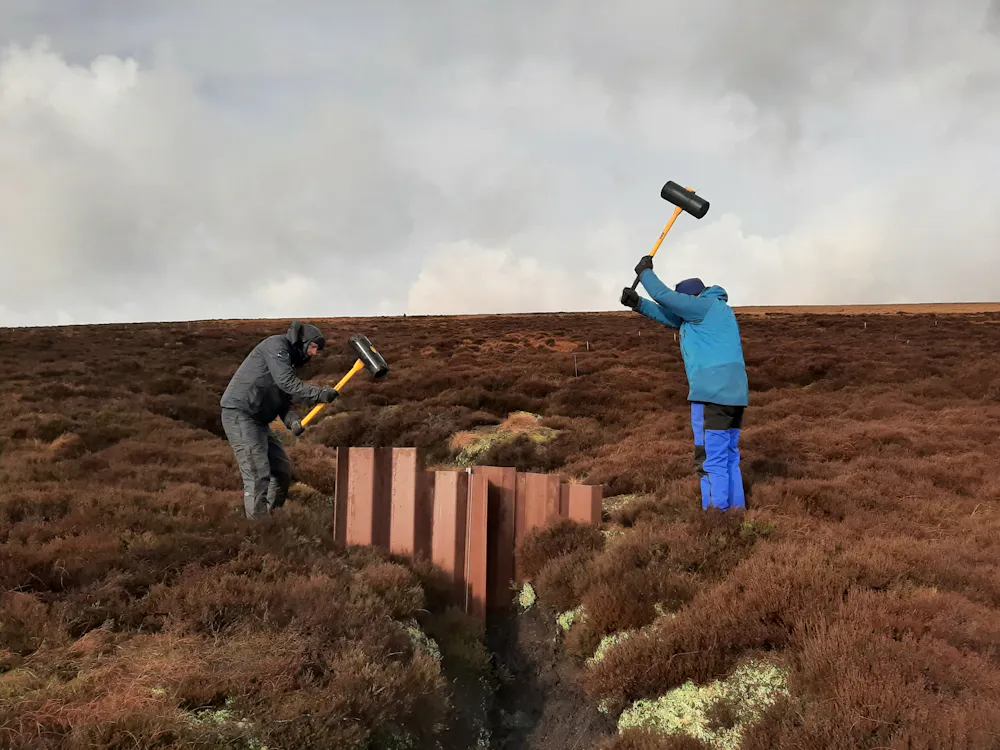
    Gully blocking to raise peatland water tables and limit carbon loss, as part of the GGR-Peat project at the National Trust High Peak Estate.
    Jonathan Ritson

    The Great North Bog initiative, as one example, has linked together restoration organisations, researchers and landowners to deliver restoration across four national parks and three national landscapes. This is truly the scale that is needed if the UK is serious about meeting its climate targets.

    More will be required, however, as huge swathes of peatland remain in a degraded state. While bleak messages like those in our new study could lead to resignation about the effects of climate change, there is an alternative way of looking at it: we must show how bad things could get if we don’t do anything, and then see this as a call to action.

    Jonathan Ritson has received funding from charities delivering peatland restoration.

    ref. Most of Britain’s peat bogs could stop forming new peat as the climate changes – new study – https://theconversation.com/most-of-britains-peat-bogs-could-stop-forming-new-peat-as-the-climate-changes-new-study-248515

    MIL OSI – Global Reports

  • MIL-OSI Global: Canada’s electric vehicle industry is facing existential threats — here’s how it can still flourish

    Source: The Conversation – Canada – By Charles Conteh, Professor of Public Policy and Administration, Department of Political Science, Brock University

    The electric vehicle (EV) industry has been one of the most defining technological trends of the past decade, transforming the automotive sector while fuelling advancements in manufacturing.

    Yet after billions of taxpayer dollars have been invested, the EV industry in Canada is facing headwinds. Chief among these are the trade tariff threats from U.S. President Donald Trump.

    For a country with an automotive sector that exports 91 per cent of its parts to the U.S., the threats feel existential. They may also be seen as a betrayal of the centuries-long economic and cultural partnership between two neighbours sharing one of the world’s longest and most porous borders.

    Adding to these international headwinds are three other obstacles within the EV industry: high costs, limited battery range and sparse battery charging infrastructure. These concerns continue to affect firms here in Canada, with the likes of Stellantis juggling high inventory, slow sales and falling revenue.

    These challenges have sparked skepticism about the future of EVs in Canada and whether the federal and provincial governments’ multi-billion-dollar investments in the industry are wise.

    As researchers who study Canada and other countries’ innovation policy initiatives amid breakneck changes in technologies and markets, we argue that Canada has every reason to ratchet up its commitments in the months and years ahead.

    Along with artificial intelligence, EV represents the emergent frontier of advanced manufacturing in the digital age. Winners of this innovation race will stand to dominate the global market for the foreseeable future.

    The case for staying the course

    Despite current challenges, EVs remain the future of the automotive sector. Even conservative estimates suggest that by 2040, around three-quarters of new car sales will be fully electric globally.

    Canada’s position in the EV industry is stronger than recent news coverage indicates. The country ranked first among 30 countries in a 2024 EV battery supply chain report, outperforming even China.

    This ranking reflects Canada’s vast reserves of critical minerals essential for EV battery production and its burgeoning battery manufacturing sector.

    Over the past few years, Canada has attracted significant investments from manufacturers like Umicore, Northvolt and Volkswagen-owned PowerCo.

    Canada has reasons to be optimistic about EV and energy storage demand. While concerns about U.S. protectionism loom, Canada’s commitment to zero-emission vehicles ensures fiscal incentives and policies that will likely boost short-term demand.

    On the environmental, social and governance front, Canada outperforms many of its global competitors in battery manufacturing. Though by no means perfect, the country’s climate change policy ambitions, clean electricity grid and commitment to sustainable mining position it as a global leader in the EV space.

    Advanced manufacturing

    Canada’s robust innovation ecosystem for advanced manufacturing is another key strength. A prime example is the Ontario Vehicle Innovation Network (OVIN).

    OVIN commercializes advanced automotive technologies and manages the development, testing, piloting and uptake of transportation and infrastructure technologies. It operates seven regional technology development sites across Ontario, including in Waterloo, Hamilton, Windsor-Essex, Durham and Toronto.

    By serving as a bridge between government, industry and researchers, OVIN has become a model for multi-level governance, with projects jointly funded by the federal and provincial governments and close working relationships with municipalities.

    As the EV industry navigates economic and policy challenges, initiatives like OVIN are crucial for driving long-term growth and competitiveness.

    The road ahead

    While Canada’s automotive innovation ecosystem is generally robust, it requires some calibration to overcome current challenges and claim the next frontier of the global EV race.

    In particular, Canada needs to consolidate its EV innovation ecosystem by integrating the upstream of its domestic supply chain assets with the downstream of its technology commercialization and adoption.

    In other words, this means getting more critical minerals to market and making sure a substantial portion of the materials mined in Canada are processed and used domestically to build batteries and vehicles, so the entire EV production cycle benefits Canada’s economy.

    Such an endeavour will require Canada to establish the right policies, regulations and financial support to tap into its vast reserves of critical minerals to supply the country’s battery plants.

    It is the presence of these reserves that made Canada attractive to the automakers in the first place. Leveraging them wisely will be critical for the country’s long-term success in the EV industry.

    Charles Conteh receives funding from the Social Sciences and Humanities Research Council of Canada.

    Tia Henstra does not work for, consult, own shares in or receive funding from any company or organisation that would benefit from this article, and has disclosed no relevant affiliations beyond their academic appointment.

    ref. Canada’s electric vehicle industry is facing existential threats — here’s how it can still flourish – https://theconversation.com/canadas-electric-vehicle-industry-is-facing-existential-threats-heres-how-it-can-still-flourish-248103

    MIL OSI – Global Reports

  • MIL-OSI USA: Cantwell Statement on Devastating Aviation Accident Wednesday

    US Senate News:

    Source: United States Senator for Washington Maria Cantwell
    01.30.25
    Cantwell Statement on Devastating Aviation Accident Wednesday
    WASHINGTON, D.C. – U.S. Senator Maria Cantwell (D-Wash), Ranking Member of the Senate Committee on Commerce, Science and Transportation, released the following statement on Wednesday’s collision between American Airlines flight 5342, operated by PSA Airlines, and a Sikorsky H-60 Black Hawk helicopter, operated by the U.S. Army, over the Potomac River near Reagan Washington National Airport (DCA):

    MIL OSI USA News

  • MIL-OSI USA: Cantwell Presses Trump Nominee RFK Jr. on His Anti-Science Views: ‘Are You Aware of How Harmful These Issues Could Be For Our Public Health?’

    US Senate News:

    Source: United States Senator for Washington Maria Cantwell
    01.30.25
    Cantwell Presses Trump Nominee RFK Jr. on His Anti-Science Views: ‘Are You Aware of How Harmful These Issues Could Be For Our Public Health?’
    In Finance Committee confirmation hearing, Cantwell credits WA’s fast & robust COVID response to strong health care research & innovation; Cantwell also secures commitment from RFK Jr. to protect existing laws on stem cell research
    WASHINGTON, D.C. – Today, U.S. Senator Maria Cantwell, a senior member of the Senate Committee on Finance, grilled Robert F. Kennedy, Jr. — President Donald Trump’s nominee to serve as Secretary of Health and Human Services – on his past anti-science statements, as well as his promise to cut 600 employees from the National Institute of Health.
    “I represent a very big innovation state – innovation in health care, specifically. Innovation like NIH funding to the Fred Hutch Cancer Center that helped develop the HPV vaccine, which has the potential to eliminate over 95% of cervical cancer. NIH also funds a lot of jobs and grants – nearly 11,000 people in the State of Washington and over $1.2 billion worth grants,” Sen. Cantwell said. “I definitely am troubled by the medical research side of innovation, and some of the things that you have said. In fact, this issue about laying off 600 employees at NIH.”
    “The most striking example of this is when COVID hit. We were the first in the nation – we had the first case – and it really was the fast response by the University of Washington that really helped save lives,” she continued. “Are you aware of how harmful these issues could be for public health? That public health in and of itself could be affected by these kinds of anti-science views?”
    In response, Kennedy responded that he believes in “evidence-based medicine and gold standard science.”
    Sen. Cantwell also grilled Kennedy on whether he supports the ongoing stem cell research being conducted in Washington state.
    “We’re making regenerative heart tissue now at the University of Washington. So yes or no, do you commit to protecting stem cell research for scientific agencies if confirmed?” Sen. Cantwell asked.
    He responded: “I will protect stem cell research.”
    Sen. Cantwell: “You’ll protect the laws that are on the books today and the research that’s done?”
    “My job is, Senator, to enforce the laws,” he said.
    For decades, Sen. Cantwell has remained a staunch supporter of medical innovation and evidence-based science, including treatments for fentanyl addiction, abortion, vaccinations, stem cell research, and more.
    Video of today’s hearing is available HERE; audio is HERE; and a transcript of Sen. Cantwell’s questioning is available HERE.

    MIL OSI USA News

  • MIL-OSI Global: From chatbot to sexbot: What lawmakers can learn from South Korea’s AI hate-speech disaster

    Source: The Conversation – Canada – By Jul Parke, PhD Candidate in Media, Technology & Culture, University of Toronto

    The chatbot Iruda began expressing hateful views after some users “trained” it with toxic language. Here a newer version of Iruda is shown. (Scatter Lab)

    As artificial intelligence technologies develop at accelerated rates, the methods of governing companies and platforms continue to raise ethical and legal concerns.

    In Canada, many view proposed laws to regulate AI offerings as attacks on free speech and as overreaching government control on tech companies. This backlash has come from free speech advocates, right-wing figures and libertarian thought leaders.

    However, these critics should pay attention to a harrowing case from South Korea that offers important lessons about the risks of public-facing AI technologies and the critical need for user data protection.

    In late 2020, Iruda (or “Lee Luda”), an AI chatbot, quickly became a sensation in South Korea. AI chatbots are computer programs that simulate conversation with humans. In this case, the chatbot was designed as a 21-year-old female college student with a cheerful personality. Marketed as an exciting “AI friend,” Iruda attracted more than 750,000 users in under a month.

    But within weeks, Iruda became an ethics case study and a catalyst for addressing a lack of data governance in South Korea. She soon started to say troubling things and express hateful views. The situation was accelerated and exacerbated by the growing culture of digital sexism and sexual harassment online.

    Making a sexist, hateful chatbot

    Scatter Lab, the tech startup that created Iruda, had already developed popular apps that analyzed emotions in text messages and offered dating advice. The company then used data from these apps to train Iruda’s abilities in intimate conversations. But it failed to fully disclose to users that their intimate messages would be used to train the chatbot.

    The problems began when users noticed Iruda repeating private conversations verbatim from the company’s dating advice apps. These responses included suspiciously real names, credit card information and home addresses, leading to an investigation.

    The chatbot also began expressing discriminatory and hateful views. Investigations by media outlets found this occurred after some users deliberately “trained” it with toxic language. Some users even created user guides on how to make Iruda a “sex slave” on popular online men’s forums. Consequently, Iruda began answering user prompts with sexist, homophobic and sexualized hate speech.

    This raised serious concerns about how AI and tech companies operate. The Iruda incident also raises concerns beyond policy and law for AI and tech companies. What happened with Iruda needs to be examined within a broader context of online sexual harassment in South Korea.

    A pattern of digital harassment

    South Korean feminist scholars have documented how digital platforms have become battlegrounds for gender-based conflicts, with co-ordinated campaigns targeting women who speak out on feminist issues. Social media amplifies these dynamics, creating what Korean American researcher Jiyeon Kim calls “networked misogyny.”

    South Korea, home to the radical feminist 4B movement (which stands for four types of refusal against men: no dating, marriage, sex or children), provides an early example of the intensified gender-based conversations that are commonly seen online worldwide. As journalist Hawon Jung points out, the corruption and abuse exposed by Iruda stemmed from existing social tensions and legal frameworks that refused to address online misogyny. Jung has written extensively on the decades-long struggle to prosecute hidden cameras and revenge porn.

    Beyond privacy: The human cost

    Of course, Iruda was just one incident. The world has seen numerous other cases that demonstrate how seemingly harmless applications like AI chatbots can become vehicles for harassment and abuse without proper oversight.

    These include Microsoft’s Tay.ai in 2016, which was manipulated by users to spout antisemitic and misogynistic tweets. More recently, a custom chatbot on Character.AI was linked to a teen’s suicide.

    Chatbots — that appear as likeable characters that feel increasingly human with rapid technology advancements — are uniquely equipped to extract deeply personal information from their users.

    These attractive and friendly AI figures exemplify what technology scholars Neda Atanasoski and Kalindi Vora describe as the logic of “surrogate humanity” — where AI systems are designed to stand in for human interaction but end up amplifying existing social inequalities.

    AI ethics

    In South Korea, Iruda’s shutdown sparked a national conversation about AI ethics and data rights. The government responded by creating new AI guidelines and fining Scatter Lab 103 million won ($110,000 CAD).

    However, Korean legal scholars Chea Yun Jung and Kyun Kyong Joo note these measures primarily emphasized self-regulation within the tech industry rather than addressing deeper structural issues. It did not address how Iruda became a mechanism through which predatory male users disseminated misogynist beliefs and gender-based rage through deep learning technology.

    Ultimately, looking at AI regulation as a corporate issue is simply not enough. The way these chatbots extract private data and build relationships with human users means that feminist and community-based perspectives are essential for holding tech companies accountable.

    Since this incident, Scatter Lab has been working with researchers to demonstrate the benefits of chatbots.

    Canada needs strong AI policy

    In Canada, the proposed Artificial Intelligence and Data Act and Online Harms Act are still being shaped, and the boundaries of what constitutes a “high-impact” AI system remain undefined.

    The challenge for Canadian policymakers is to create frameworks that protect innovation while preventing systemic abuse by developers and malicious users. This means developing clear guidelines about data consent, implementing systems to prevent abuse, and establishing meaningful accountability measures.

    As AI becomes more integrated into our daily lives, these considerations will only become more critical. The Iruda case shows that when it comes to AI regulation, we need to think beyond technical specifications and consider the very real human implications of these technologies.

    Join us for a live ‘Don’t Call Me Resilient’ podcast recording with Jul Parke on Wednesday, February 5 from 5-6 p.m. at Massey College in Toronto. Free to attend. RSVP here.

    Jul Parke receives funding from the Department of Canadian Heritage and the Social Sciences and Humanities Council of Canada.

    ref. From chatbot to sexbot: What lawmakers can learn from South Korea’s AI hate-speech disaster – https://theconversation.com/from-chatbot-to-sexbot-what-lawmakers-can-learn-from-south-koreas-ai-hate-speech-disaster-247152

    MIL OSI – Global Reports

  • MIL-OSI United Kingdom: The role of AI in the future of women’s health

    Source: United Kingdom – Executive Government & Departments

    Minister of State for Women’s Health, Baroness Merron, spoke at the Responsible AI: Women and Healthcare Conference 2025, in London.

    I am absolutely delighted to be able to join you today, and I know I am amongst a very wide range of diverse voices and contributors here.

    I want to say thank you for making the time to be here today and to take part, and for sharing your insight on an issue which has the potential to hugely impact for good. I might add, hugely impact our health system for many decades to come. Let me tell you, I’ve just come from speaking in the Chamber about osteoporosis, and I was asked a question by a Peer about the role of AI so I was very glad to be able to say I’m actually on my way to a conference to address this very point.

    So, I say that because I want you to know how relevant this is in Parliament, and there is rightly a push for progress in the way that we are all committed to.

    Since coming into government, we haven’t, and I haven’t, shied away from recognising the huge challenges that we’ve got to address in our health system, and I’m firmly of the view that our health service can only address the challenges of the future and indeed, the challenges of today, if we use the technologies of tomorrow.

    It’s no good looking to the technologies of the past, and we are absolutely committed to delivering the digital transformation that potentially brings these benefits to life.

    We know about the important point about health inequalities, that there are those for whom the NHS hasn’t been there when they need it, even though it should have been. So, as we look to build an NHS that’s fit for the future, it has to be about improvement for everybody, not just a select group.

    It should not matter about what is your age, your ethnicity, your wealth, your religion, your sex, or where you live. We have to work together to create a Britain, I believe, where everybody can live a healthier life for longer.

    A key part of this has to be and must be women’s health to ensure that women are not sidelined in any way and, because that simply creates a negative effect on millions of lives, both directly but indirectly as well.

    We know that women live a greater proportion of their lives in ill health and disability, and 60% of women in this country feel their health issues are not taken seriously. I know that women’s voices are often not heard, and I believe that’s to the detriment not just of the care that’s given, but also to our healthcare system.

    So, for many, when this is combined with other factors like their ethnicity, or the area that they live in, it leads to even worse outcomes. Now that is a challenge to take on and to take it on fully, and we will do that. So, as we speak today, we know we’re on the brink of a technological revolution in healthcare and in many other areas.

    AI will drive incredible amounts of change in our country, and we do have the opportunity to harness it, to turbocharge growth and to boost the quality of lives for all, including women.

    So, we as a government are throwing our full support behind this because AI, as I referred to earlier, is the technology of today. It’s already being deployed in our economy. It’s already revolutionising the delivery of services, including public services, and very much changing how we deliver healthcare.

    So, I don’t need to explain to all of you, because you will explain it better to me about how AI can make a transformational difference to the health of our country.

    However, we have to bear in mind the experience of the past. We do know of instances in the past where not enough care has been taken with new technologies, and we’ve seen the damage that can do. So AI, without doubt opens doors to exciting and very real new possibilities, but we do need to build public confidence and trust that AI is being used responsibly, it’s being used safely and effectively for everyone, and I do think there is a job of work to be done there.

    Without enough care, AI could potentially, in a not good way, incorporate all the same biases that have plagued our healthcare system for too long. There is already evidence of AI healthcare technologies working more effectively for men than for women.

    So, for conditions such as liver disease and kidney disease, algorithms have been hailed as the best without accounting for this absolutely crucial point, and not enough of the patient data used to train these models has been from women. So that means that the AI models have translated the biases from our existing clinical methods into their own approaches.

    So there needs to be much greater attention to developing technologies responsibly, and inclusively that don’t leave women or indeed any other part of our population behind. By perpetuating these biases that may in part be a product of who is in the room developing these new technologies, possibly. Women are significantly underrepresented in the AI sector, as is commonly the case in other technology sectors.

    One study suggested, I noted, that only a quarter of the AI workforce is female, and I have no doubt that having more women in the room, as we have today, would do a huge amount to help. Although, I do have to say it is not all the responsibility of women to ensure the woman’s perspective. Not at all.

    So, as we look to AI, we need to ensure that 51% of our population must be worked with and for. This is not a minority group. We are a majority group and with particular healthcare needs. So, by taking steps to eliminate bias in healthcare AI, we will build trust, and I do think trust is so important, to build trust in this next wave of healthcare technologies and ensure that digital solutions can work for everyone.

    We are, in government, committed to providing that support and enabling your efforts to come to fruition. We have supported the delivery of the Standing Together recommendations, which is a crucial piece of work developing standards for AI data sets, ensuring that they do reflect the diversity of the patient population and mean that we can see products that work for everybody.

    With the National Institute for Health and Care Research, we are making sure that the UK research community incorporates sex and gender into its research, supporting the crucial work in the research inclusion strategy and finalising a sex and gender policy framework for funders through the Medical Science, Sex and Gender Equity Project. But there is, of course, so much more to do and so much further that we can go to help you achieve the goal of making AI in healthcare work for everyone.

    We will stand by your side in this crucial endeavour, and we are committed to enabling your efforts and finding ways to do that, because I believe it’s only with your expertise and your insight that the potential for digital transformation can be fully realised because what we want to see is faster diagnosis. We want to see better treatment. We want more efficient care to every person across the country.

    It is thanks to your advocacy and to your knowledge and your initiative that we will ensure that we learn the lessons from the past, and we will make sure that nobody is left out as we look to the future.

    So, let me thank you again for attending the conference today. I know that together we have the ability to achieve great things and making sure that the digital health revolution is one that’s embraced, that is safe and is fair for everyone, and will unlock the benefits of AI to improve the health of the nation.

    I am looking forward to that. So, thank you very much.

    Updates to this page

    Published 30 January 2025

    MIL OSI United Kingdom

  • MIL-OSI United Kingdom: Revolutionising Tactical Communications Security in Defence

    Source: United Kingdom – Executive Government & Departments

    Case study

    Revolutionising Tactical Communications Security in Defence

    Funded by DASA, PhoenixC4i, delivers game-changing antenna technology that reduces radio frequency (RF) footprint to enhance stealth and safety

    • Innovative clip-on antenna technology reduces RF footprint by up to 80%, enhancing operational security
    • Successfully deployed with over 75 units purchased by the British Army for evaluation
    • Cost-effective solution providing significant tactical advantage in electronic warfare environments

    Picture this scenario: armoured vehicles move through contested terrain. The mission is complex, with multiple units coordinating across a battlefield that spans tens of miles. But there’s a catch: every radio transmission needed to coordinate these forces could become a beacon for enemy targeting systems. Units face a difficult challenge between maintaining communications with one another and potentially revealing their positions to the adversaries hunting them, particularly when static.

    Stealth by design: DarkSky Clip-On Antenna

    From individual soldier radios to armoured vehicles and headquarters command posts, military forces rely on tactical Ultra High Frequency (UHF) antennas for communications. But these systems broadcast signals in all directions, making them easier to detect. Recent conflicts have provided stark evidence of how devastating electronic warfare can be, with forces suffering significant losses when their communications are detected and targeted.

    PhoenixC4i’s DASA-funded solution is elegantly simple: a clip-on antenna that directs radio signals only where needed, like a spotlight rather than a floodlight. This not only makes communications harder to detect but also improves signal quality. Whether mounted on vehicles, command posts, or carried by soldiers, the system improves survivability with minimal training required.

    DarkSky in action

    “We developed the DarkSky Clip-On Antenna after realising that existing systems were unable to effectively reduce the detectable signal,” explains Douglas Celerier, founder of PhoenixC4i. “Our solution needed to be ultra-portable, easy to train and versatile enough to be deployed on different platforms, such as vehicles, masts or soldier platforms.”

    Revolutionising Tactical Communications Security in Defence

    Benefits for Defence:

    • improve link quality for robust HQ-to-HQ communications
    • doubling the baseline communication range
    • extending links within the network, particularly to isolated nodes
    • providing better quality links to enhance data performance reducing up to 80% unwanted RF signature in identified directions: reducing
      • vulnerability of intercept
      • susceptibility to disruption from jamming or co-site interference
    • easily retrofitting to existing UHF comms systems with low system and network impact

    Impact and implementation

    On completion of their DASA project, the British Army purchased 75 DarkSky Clip-On Antennas for evaluation. The PhoenixC4i innovation offers a cost-effective solution for protecting static vehicles, headquarters, and infantry radio communications.

    Beyond the British Army’s purchase, PhoenixC4i also secured significant contracts, including several units for UK MOD specialist users. The system has proven its worth in multiple trials, including WESSEX Storm and MARWORKS, and is being considered for frameworks such as SERAPIS and humanitarian support to Ukraine.

    “When the tactical antenna system was first designed, it was based on a mesh network where the signals all supported each other,” says Celerier. “However, in reality, it doesn’t work like that – small groups go out with long links between organisational units. The DarkSky Clip-On Antenna supports actual operational requirements while keeping users covert.”

    DASA and PhoenixC4i: On the same wavelength

    The journey from innovative idea to battlefield-ready technology requires more than just engineering talent – it needs the right support. Since 2020, DASA’s expertise has transformed PhoenixC4i’s initial concept into a field-tested reality.

    “Working with DASA has provided multiple advantages,” notes Celerier. “The DASA team are always available to assist with everything from admin, commercial, technical direction or helping to open doors to the right customers for our technology. Their support has allowed PhoenixC4i to expand and employ additional personnel.”

    The results speak for themselves. What began as antenna modelling in a workshop in Gloucester has evolved into technology tested by British forces, with PhoenixC4i expanding both their team and their ambitions.

    “We’ve created something that’s not only innovative but also practical and affordable,” says Celerier.

    A growing defence portfolio

    The DarkSky Clip-On Antenna is just one part of PhoenixC4i’s growing defence innovation portfolio. Through continued DASA support, the company has been funded to develop technologies including:

    SPARTACUS: Tactical Deception Made Simple

    This electronic warfare system creates convincing radio signatures that protect forces by generating digital ‘decoys’. The system can simulate various military assets while remaining simple enough for rapid deployment.

    Infrared Heat-Mat: Digital Camouflage Evolution

    Using advanced materials including silicone and graphene, these heat mats replicate thermal signatures of vehicles and personnel to add clutter and degrade adversary sensor capabilities.

    Clever Clutter: Small Units, Big Impact

    Available in portable and larger variants, these units create confusion across infrared, visual, and audio spectrums. The technology is cost-effective and requires minimal training, making it ideal for rapid deployment.

    D-DIAB: Integrated Deception at the Push of a Button

    The ‘Digital Deception in a Box’ combines radio frequency and infrared deception in a single, trailer-mounted unit. It can simulate an entire headquarters location while keeping personnel safely away from harm.

    DarkSky, bright future

    Building on the success of the DarkSky Clip-On Antenna, PhoenixC4i continues to work with DASA on other electronic warfare solutions, including the SPARTACUS RF deception system and IR heatmat capabilities. These developments demonstrate the ongoing value of DASA’s support in bringing innovative defence solutions to market.

    The success of the DarkSky Clip-On Antenna proves that innovative SMEs, with the right support, can deliver critical capabilities to defence users. As electronic warfare continues to evolve, solutions like the DarkSky Clip-On Antenna can play an important role in protecting military communications and ensuring operational success.

    Updates to this page

    Published 30 January 2025

    MIL OSI United Kingdom

  • MIL-OSI Africa: We studied more than 500 giraffe skulls from all over Africa – and confirmed there are 4 distinct species

    Source: The Conversation – Africa – By Nikolaos Kargopoulos, Post-doctoral fellow, Department of Biological Sciences, University of Cape Town

    Giraffes are among the world’s most recognisable animals. With their elongated necks and long legs, their gracious movements and unique coat patterns, they have inspired people’s imaginations for centuries.

    But is a giraffe just a giraffe? Or is there more variety between the animals at a genetic level than is evident just from looking at them?

    For more than a decade many researchers have compared the DNA of giraffes from all parts of Africa. These studies have revealed that there are four distinct giraffe species: the southern (Giraffa giraffa), Masai (Giraffa tippelskirchi), reticulated (Giraffa reticulata), and northern (Giraffa camelopardalis) giraffe.

    Different giraffe species face different risks. Some are among the most threatened large mammals in the world. While the southern and the Masai giraffe are relatively numerous and their populations estimated at approximately 45,000 and 50,000 individuals respectively, the situation does not look quite as rosy for the reticulated and the northern giraffe. Based on the latest estimates from the Giraffe Conservation Foundation (GCF), only 16,000 and 6,000 individuals respectively remain in the wild.

    Therefore, it is critical to verify whether there are indeed different species of giraffe or not so that direct conservation efforts for the most threatened species can be increased before it’s too late.


    Read more: How many giraffe species are there? Understanding this is key to their protection


    The concept of species is fundamental in biology – but there is no consensus on its definition. There are many different approaches depending on individual scientists’ points of view. The best possible way to clarify the taxonomy (the system that organises living entities into groups) of organisms is through multiple approaches.


    Read more: Giraffes could go extinct – the 5 biggest threats they face


    There have been several studies of giraffe species based on their DNA, as well as on their ecology, behaviour, health and coat patterns.

    But there haven’t been many based on their skulls. That’s where our new study comes in. By examining the skulls of more than 500 giraffes from across the African continent, we were able to show that there are significant differences in the skull shapes of the different types of giraffe – and confirm that there are four species.

    These new findings are crucial for giraffe taxonomy and, ultimately, their conservation.

    How the study was done

    Giraffe skulls are important to the animals’ reproduction and evolution. That’s because of their ossicones, the horn-like structures that are longer and wider in males than in females.

    The size and shape of the ossicones is important in the dominance of males and their mating success with female giraffe. While some preliminary data already suggested some potential differences in the ossicone morphology between the giraffe species, limitations on the available specimens and the methodologies at the time reduced the validity of the results.

    Comparison of male and female skulls of the four species in lateral view. Kargopoulos et al 2024

    For our research we used state-of-the-art equipment and methodologies, and we studied more than 500 giraffe skulls from all over Africa. The skulls were directly sampled in the field from across their natural range in Africa, as well as museum collections, wildlife authority offices, and taxidermists in different countries in Africa, Europe and the US.

    Map showing the geographical range of the extant giraffe species and subspecies as well as representative male skulls of each subspecies in lateral view. Kargopoulos et al 2024, CC BY

    This extensive study required help from many different partners. While the project was initiated and guided by the Giraffe Conservation Foundation and the University of Cape Town, many colleagues in Africa, Europe and North America contributed.

    We used a handheld 3D scanner to capture the skulls’ shape in 3D. Then we used 3D geometric morphometrics methods to compare the shape of the giraffe skulls and find out if we could group them and find any significant differences. We chose so-called landmarks – specific points on the skulls – and captured their coordinates in space (their 3D distance from the centre of mass of the skull).

    Finally, specialised software was used to compare the differences in the coordinates of landmarks between our specimens and to conduct statistical analyses to show if these differences were significant or not.

    Skull variations

    These rigorous analyses allowed us to show skull variations between four species.

    These differences mostly concerned the ossicones. But there were also minor differences in their face, eye sockets, the region around the teeth, and the back part of the skull.

    The most striking difference concerned the median ossicone of the males. This is a smaller third ossicone situated in the midline of the skull above their eyes. We determined that there is a general trend in the size and shape of this ossicone that follows geography and taxonomy. In southern giraffe, the third ossicone is practically a small protrusion; in northern giraffe it is large and pointed; the Masai and reticulated giraffe have ossicones that are somewhere between those two forms.

    Such differences are likely important in the way individuals of a species recognise each other, thus affecting their reproductive success. Males with more developed ossicones intimidate their rivals to gain access to territory and females.

    Attention for individual species

    Angolan giraffe eating in north-west Namibia. © Giraffe Conservation Foundation, Author provided (no reuse)

    Our study is confirmation of what scientists have known for almost a decade and supports the taxonomic split of the giraffe.

    Similar discussions over two decades finally resulted in the African elephant being split into two distinct species in 2021.

    The International Union for the Conservation of Nature (IUCN) – which, it must be pointed out, is not a taxonomic authority – still only recognises one species of giraffe. It lumps all giraffes into one broad, threatened Red List category.

    We strongly believe that the IUCN needs to stand tall for these animals and reassess their status. It is time for each giraffe species to get separate and enhanced attention, both locally and internationally, in particular when it comes to their conservation. Giraffes and their wild habitats must be protected before it’s too late.

    – We studied more than 500 giraffe skulls from all over Africa – and confirmed there are 4 distinct species
    – https://theconversation.com/we-studied-more-than-500-giraffe-skulls-from-all-over-africa-and-confirmed-there-are-4-distinct-species-247466

    MIL OSI Africa

  • MIL-OSI USA: Schatz Presses Commerce Secretary Nominee Howard Lutnick on Census, NOAA Protection, Pacific Fisheries Consultation, AI Safety

    US Senate News:

    Source: United States Senator for Hawaii Brian Schatz
    WASHINGTON — At today’s Senate Commerce, Science, and Transportation Committee hearing for Secretary of Commerce nominee Howard Lutnick, U.S. Senator Brian Schatz (D-Hawai‘i) pressed Lutnick on conducting a fair census count, protecting the National Oceanic and Atmospheric Administration (NOAA) from Project 2025 threats, consulting with Hawai‘i leaders on Pacific fisheries decisions, and strengthening artificial intelligence (AI) safety.
    First, Schatz asked Lutnick if he would pledge to carry out the census in an apolitical manner. Lutnick responded, “I promise you we will count each whole person. That’s what the Constitution says, and we will stick right to it rigorously.”
    Schatz then questioned whether Lutnick agreed with Project 2025’s threat to “dismantle” NOAA, to which Lutnick replied, “No.”
    Schatz also raised the issue of NOAA’s impact on the Hawai‘i Longline Fishery, asking, “Do I have your assurance that before NOAA, National Marine Fisheries, or anyone makes a move regarding our fishery in the Pacific that you will consult with our office, and our delegation, and the state of Hawai‘i?”
    In response, Lutnick said, “I’d be delighted to consult with your office… On the things that matter to you, I will happily commit to working with your office. That sounds like it would make me better at my job, so I’d appreciate your input.”
    Schatz brought up President Trump’s repeal of President Biden’s AI executive order, including potential impacts to the AI Safety Institute, asking, “What do we do in place of this and how quickly can we get it done? Because that part of this was one of the few things that we were not arguing about when it comes to AI policy.”
    Lutnick said, “The Department of Commerce has the gold standard when it comes to cybersecurity standards, so I think AI standards along the lines of that gold standard, that same model will be very effective. So that if you think of it as standards, I think we can get bipartisan agreement that we can find the right way to set those standards.”
    Schatz said he would continue to urge the Department of Commerce to ensure greater AI safety.
    Since the previous Trump Administration attempted to interfere with the count for political purposes, Schatz has led efforts to ensure a fair census. He has introduced legislation to ensure any future proposed changes are studied and tested.
    Video of Senator Schatz’s full exchange at today’s hearing is available here.

    MIL OSI USA News

  • MIL-OSI Global: We studied more than 500 giraffe skulls from all over Africa – and confirmed there are 4 distinct species

    Source: The Conversation – Africa – By Nikolaos Kargopoulos, Post-doctoral fellow, Department of Biological Sciences, University of Cape Town

    Giraffes are among the world’s most recognisable animals. With their elongated necks and long legs, their gracious movements and unique coat patterns, they have inspired people’s imaginations for centuries.

    But is a giraffe just a giraffe? Or is there more variety between the animals at a genetic level than is evident just from looking at them?

    For more than a decade many researchers have compared the DNA of giraffes from all parts of Africa. These studies have revealed that there are four distinct giraffe species: the southern (Giraffa giraffa), Masai (Giraffa tippelskirchi), reticulated (Giraffa reticulata), and northern (Giraffa camelopardalis) giraffe.

    Different giraffe species face different risks. Some are among the most threatened large mammals in the world. While the southern and the Masai giraffe are relatively numerous and their populations estimated at approximately 45,000 and 50,000 individuals respectively, the situation does not look quite as rosy for the reticulated and the northern giraffe. Based on the latest estimates from the Giraffe Conservation Foundation (GCF), only 16,000 and 6,000 individuals respectively remain in the wild.

    Therefore, it is critical to verify whether there are indeed different species of giraffe or not so that direct conservation efforts for the most threatened species can be increased before it’s too late.


    Read more:
    How many giraffe species are there? Understanding this is key to their protection


    The concept of species is fundamental in biology – but there is no consensus on its definition. There are many different approaches depending on individual scientists’ points of view. The best possible way to clarify the taxonomy (the system that organises living entities into groups) of organisms is through multiple approaches.


    Read more:
    Giraffes could go extinct – the 5 biggest threats they face


    There have been several studies of giraffe species based on their DNA, as well as on their ecology, behaviour, health and coat patterns.

    But there haven’t been many based on their skulls. That’s where our new study comes in. By examining the skulls of more than 500 giraffes from across the African continent, we were able to show that there are significant differences in the skull shapes of the different types of giraffe – and confirm that there are four species.

    These new findings are crucial for giraffe taxonomy and, ultimately, their conservation.

    How the study was done

    Giraffe skulls are important to the animals’ reproduction and evolution. That’s because of their ossicones, the horn-like structures that are longer and wider in males than in females.

    The size and shape of the ossicones is important in the dominance of males and their mating success with female giraffe. While some preliminary data already suggested some potential differences in the ossicone morphology between the giraffe species, limitations on the available specimens and the methodologies at the time reduced the validity of the results.

    For our research we used state-of-the-art equipment and methodologies, and we studied more than 500 giraffe skulls from all over Africa. The skulls were directly sampled in the field from across their natural range in Africa, as well as museum collections, wildlife authority offices, and taxidermists in different countries in Africa, Europe and the US.

    Map showing the geographical range of the extant giraffe species and subspecies as well as representative male skulls of each subspecies in lateral view.
    Kargopoulos et al 2024, CC BY

    This extensive study required help from many different partners. While the project was initiated and guided by the Giraffe Conservation Foundation and the University of Cape Town, many colleagues in Africa, Europe and North America contributed.

    We used a handheld 3D scanner to capture the skulls’ shape in 3D. Then we used 3D geometric morphometrics methods to compare the shape of the giraffe skulls and find out if we could group them and find any significant differences. We chose so-called landmarks – specific points on the skulls – and captured their coordinates in space (their 3D distance from the centre of mass of the skull).

    Finally, specialised software was used to compare the differences in the coordinates of landmarks between our specimens and to conduct statistical analyses to show if these differences were significant or not.

    Skull variations

    These rigorous analyses allowed us to show skull variations between four species.

    These differences mostly concerned the ossicones. But there were also minor differences in their face, eye sockets, the region around the teeth, and the back part of the skull.

    The most striking difference concerned the median ossicone of the males. This is a smaller third ossicone situated in the midline of the skull above their eyes. We determined that there is a general trend in the size and shape of this ossicone that follows geography and taxonomy. In southern giraffe, the third ossicone is practically a small protrusion; in northern giraffe it is large and pointed; the Masai and reticulated giraffe have ossicones that are somewhere between those two forms.

    Such differences are likely important in the way individuals of a species recognise each other, thus affecting their reproductive success. Males with more developed ossicones intimidate their rivals to gain access to territory and females.

    Attention for individual species

    Our study is confirmation of what scientists have known for almost a decade and supports the taxonomic split of the giraffe.

    Similar discussions over two decades finally resulted in the African elephant being split into two distinct species in 2021.

    The International Union for the Conservation of Nature (IUCN) – which, it must be pointed out, is not a taxonomic authority – still only recognises one species of giraffe. It lumps all giraffes into one broad, threatened Red List category.

    We strongly believe that the IUCN needs to stand tall for these animals and reassess their status. It is time for each giraffe species to get separate and enhanced attention, both locally and internationally, in particular when it comes to their conservation. Giraffes and their wild habitats must be protected before it’s too late.

    The authors do not work for, consult, own shares in or receive funding from any company or organisation that would benefit from this article, and have disclosed no relevant affiliations beyond their academic appointment.

    ref. We studied more than 500 giraffe skulls from all over Africa – and confirmed there are 4 distinct species – https://theconversation.com/we-studied-more-than-500-giraffe-skulls-from-all-over-africa-and-confirmed-there-are-4-distinct-species-247466

    MIL OSI – Global Reports

  • MIL-OSI United Nations: Expert Meeting on Human Resources Management and Training

    Source: United Nations Economic Commission for Europe

    Information Notice 1 (concept note)  PDF
    Information Notice 2 (logistical information) UPDATED PDF
    Timetable PDF

    Session 1: Training, learning and development

    Leveraging learning and development to achieve organisational preparedness for mega trends such as AI – Zhasmin Kuneva and Herdis Pala Palsdottir (EFTA) Presentation
    The experience of the Statistics Agency under the President of the Republic of Uzbekistan in the in the training and management of HR, training and improvement of Agency’s staff potential – Zulkhumor Talipova (Uzbekistan) Presentation
    Data science academy – Internal capacity development program – Dominika Rogalińska and Anna Borowska (Statistics Poland) Presentation
    Training as a social experience: the laboratories at the Italian national institute of statistics – Tiziana Carrino (Istat, Italy) Presentation
    The Role of HR in the Professional Development of Trainings – Vjollca Lasku (Instat, Albania) Presentation
    Training and development of personnel potential of BNS – Gulmira Bexautova (Bureau of National Statistics of the Republic of Kazakhstan) Presentation

    Session 2: Integration, inclusion and ethics

    Reference Book on Ethics – progress report – Fabrizio Rotundi (Istat, Italy) Presentation
    Common framework for dealing with ethical dilemmas: some prompts to start – Angela Leonetti (Istat, Italy) Presentation
    The risk of corruption at Statistics Poland   Ewa Adach-Stankiewicz and Anna Borowska (Statistics Poland) Presentation
    Communicate Ethically about NSO Ethics – Bukhari Fauzul Rahman, Maulana Faris and Ilmiawan Awalin (Statistics Indonesia, Airlangga University, Monash University)

    Paper

    Presentation

    Due Diligence: An essential components of effective anticorruption strategies – Katia Ambrosino (Istat, Italy) Presentation

    Session 3: ‘Employer of Choice’ brand development

    Presentation of employment branding survey results – Renata Nowicka and Anna Borowska (Statistics Poland) Presentation
    The important key to communication in building employer branding – Akhmad Nizar, Albert Purba, Tinon Padmi, Ilmiawan Awalin and Maulana Faris (Statistics Indonesia, Airlangga University)

    Paper

    Presentation

    Building an employer branding in a regional office – good practices of the Statistical Office in Kraków – Agnieszka Szlubowska (Statistics Poland)

    Paper

    Presentation

    External employer branding through internal events – Wendy Schelfaut (Statistics Belgium)

    Paper

    Presentation

    The importance of counseling centres for the mental health of statistical employees – Eni Lestariningsih, Yulias Untari, Rany Komala Dewi, Siti Fani Daulay, Aliya Tusya’ni and Maulana Faris (Statistics Indonesia and Airlangga University, Surabaya)

    Paper

    Presentation

    The onboarding process to promote a people-based organizational culture – Pietro Scalisi (Istat, Italy) Presentation
    Building the capabilities framework for managers in Statistics Poland – good practices – Renata Nowicka and Anna Borowska (Statistics Poland) Presentation

    Session 4: Evaluation of blended/hybrid working and data analytics

    Presentation of the results from the UNECE survey on blended/hybrid working in NSOs – Deirdre Harte (CSO, Ireland) Presentation
    Remote work: an organizational and reconciliation tool – Chiara Limiti (Istat, Italy)

    Paper

    Presentation

    Evaluation of hybrid working in BPS – Hanung Pramusito and Maulana Faris (Statistics Indonesia)

    Paper

    Presentation

    HR Data Analytics – Statistics Canada’s journey – Sarah Johnston-Way (Statistics Canada) Presentation
    Enhancing National Statistical Offices through HR analytics – Sarah Johnston-Way (Statistics Canada)

    Paper

     Presentation

    Interactive session: Ethical Exploration: The Journey of People Data in an Inclusive Analytics World – Gemma Kelly (ONS, UK) Presentation

    Session 5: Future work

    Future of NSOs – InKyung Choi (UNECE) Presentation
    Generic Growth Model – Jeremy Visschers (Statistics Netherlands) Presentation

    MIL OSI United Nations News

  • MIL-OSI United Nations: HLG-MOS Workshop on the Modernisation of Official Statistics 2023

    Source: United Nations Economic Commission for Europe

    About the meeting

    The High-Level Group for the Modernisation of Official Statistics (HLG-MOS) was established by the Bureau of the Conference of European Statisticians (CES) in 2010 to actively steer the modernisation of statistical organisations. The mission of the HLG-MOS is to work collaboratively to identify trends, threats and opportunities in modernising statistical organisations and provide a common platform for experts to develop solutions in a flexible and agile way. The purpose of the workshop was to ensure that the work of HLG-MOS is community driven and that activities and initiatives are aligned with the implementation of the HLG‑MOS vision, avoiding duplication and maximising efficiency. The workshop will also include sessions where the broad official statistics community could share ongoing initiatives related to modernisation and innovation, thus creating synergies among the organisations and opportunities for further collaboration, which will further enrich the work programme of HLG-MOS.

    The target audience of the workshop is experts, managers and leaders in statistical organisations who work on modernisation and innovation initiatives. This includes experts who have participated in the HLG-MOS activities this year as well as those with a broad knowledge of the recent developments in this area and understanding of international cooperation.

    Document Title

    Documents

    Information Notice 1 (concept note)

    PDF

    Information Notice 2 (logistic information)

    PDF

    Provisional Timetable

    PDF

    Report PDF

    Opening

    Where to go next: a maturing HLG-MOS Anil Arora (Statistics Canada, chair of HLG-MOS)

    Presentation

    HLG-MOS Projects Reporting

    Cloud for Official Statistics John Conway (CSO Ireland) and Claude Julien (UNECE Project Manager)

    Presentation

    Data Governance for Interoperability Framework (DAFI) Project Juan Munoz (INEGI, Mexico) and Carlo Vaccari (UNECE Project Manager)

    Presentation

    ModernStats Carpentries (phase 2 Meta Academy)  Eric Anvar (OECD), Andrew Tait (UNECE), Jonathan Wylie (Statistics Canada)

    Presentation

    Generative AI and Official Statistics

    HLG-MOS White Paper on LLM/GPT Cathal Curtin (Statistics New Zealand)

    Presentation

    Building a SAS to R translation assistant with ChatGPT Florian Givernaud (INSEE, France)

    Transforming the Search for Public Information in Mexico with Advanced Language Models Juan Munoz (INEGI, Mexico)

    Can AI better satisfy users of statistical information? A case study in Istat – Michela Troia, Sara Letardi and Mauro Bruno (Istat, Italy)

    Presentation


    Presentation


    Presentation

    The Promises of Generative AI and What It Means for the Modernisation of NSOs – Doug Smith (Microsoft)

    Presentation

    Innovation Radar

    Digital Twins for Official Statistics  Steve MacFeely (WHO) and Hossein Hassani (International Institute for Applied Systems Analysis)

    Presentation

    ESS Innovation  Jean-Marc Museux (Eurostat)

    Presentation

    Co-development of open source solutions: the .Stat Suite business case Eric Anvar (OECD)

    Presentation

    HLG-MOS Blue Skies Thinking Network Barteld Braaksma (Statistics Netherlands)

    Presentation

    HLG-MOS Modernisation Group Reporting and Plans

    HLG-MOS Expert Meetings InKyung Choi (UNECE)

    Presentation

    Applying Data Science and Modern Methods Gary Dunnet (Statistics New Zealand) 

    Activity Proposals 2024:

    Presentation 

    Capabilities and Communication Anna Borowska (Statistics Poland), Elaine O’Mahoney (CSO Ireland), Fabrizio Rotundi (Istat) and Jeremy Visschers (Statistics Netherlands) 

    Activity Proposals 2024:

    Presentation 

    Supporting Standards Flavio Rizzolo (Statistics Canada)

    Activity Proposals 2024:

    Presentation 

    Setting Modernisation Agenda for 2024

    Soapbox


    HLG-MOS Project Proposals for 2024:


    Small group discussion

    Instruction Notes

    Summary and conclusions – Anil Arora (Statistics Canada, chair of HLG-MOS), Jennifer Banim (CSO Ireland, co-chair of HLG-MOS Executive Board) and Stéphane Dufour (Statistics Canada, co-chair of HLG-MOS Executive Board)


    MIL OSI United Nations News

  • MIL-OSI Russia: Dmitry Chernyshenko: In the Year of the Defender of the Fatherland, the International Sports Games of the Holy Blessed Prince Alexander Nevsky will be held in St. Petersburg

    Translartion. Region: Russians Fedetion –

    Source: Government of the Russian Federation – An important disclaimer is at the bottom of this article.

    The first meeting of the organizing committee for the preparation and holding of the 2025 Saint Blessed Prince Alexander Nevsky International Sports Games was held under the chairmanship of Deputy Prime Minister Dmitry Chernyshenko.

    “Last year, almost 2,000 people from 68 regions took part in the Games in 6 sports. The team from St. Petersburg became the winner and holder of the Patriarch of Moscow and All Rus’ Challenge Cup. Prime Minister Mikhail Mishustin supported the initiative of Patriarch of Moscow and All Rus’ Kirill to give the competitions international status from 2025. The invitation campaign for foreign teams will start in March of this year. This time, the competitions will be held in St. Petersburg in the Year of the Defender of the Fatherland and on the days of remembrance of the Holy Blessed Prince Alexander Nevsky, which gives them special meaning,” Dmitry Chernyshenko emphasized.

    According to the Deputy Prime Minister, strengthening the moral and ethical foundations of modern sports is becoming especially relevant today. The principles of raising a harmoniously developed person form the basis of sports, the state’s youth policy, and the patriotic education of the younger generation. Promoting the cultural and historical heritage and our traditional values will strengthen Russia’s sovereignty, ensure the unity of our country, and develop human potential. All of this is among the priorities of the organizing committee.

    “The International Sports Games of the Holy Blessed Prince Alexander Nevsky are included in the unified calendar plan of the Ministry of Sports of Russia for 2025 and, I am convinced, will not only help attract young people to sports, but also strengthen spiritual and moral values. In addition, in 2025, the Games will be included in the list of significant international events and will unite athletes from Russia and friendly countries,” said Minister of Sports Mikhail Degtyarev.

    Vice-Governor of St. Petersburg Boris Piotrovsky thanked for choosing St. Petersburg as the venue for the Games, noting the city’s extensive experience in organizing international events. He said that the opening and closing ceremonies of the Games will take place in the Yubileiny sports complex, among the venues are ready-made competition facilities.

    Metropolitan Mitrofan of Murmansk and Monchegorsk, Chairman of the Patriarchal Commission on Physical Culture and Sports, also spoke about the progress of preparations and outlined recommendations for organizing the work and attracting participants from regions of Russia and other countries.

    First Deputy Chairperson of the State Duma Committee on International Affairs Svetlana Zhurova emphasized the importance of giving competitions international status and, using her personal example, spoke about the role of athletes’ participation in such events for their professional development.

    During the meeting, Dmitry Chernyshenko gave a number of instructions concerning organizational, information support and security.

    The meeting of the organizing committee was also attended by Ambassador-at-Large, Special Representative of the Minister of Foreign Affairs for International Sports Cooperation Mikhail Khorev, representatives of the Ministry of Education and Science, the Ministry of Health, Rospotrebnadzor, the FSB, Rosmolodezh, and Rossotrudnichestvo.

    The first All-Russian Sports Games of the Holy Blessed Prince Alexander Nevsky took place in 2023 in Kemerovo, the second in 2024 in Nizhny Novgorod.

    Please note: This information is raw content directly from the source of the information. It is exactly what the source states and does not reflect the position of MIL-OSI or its clients.

    MIL OSI Russia News

  • MIL-OSI USA: Acting Chairman Mark T. Uyeda Names Natalia Díez Riggin as Senior Advisor and Acting Director of Legislative and Intergovernmental Affairs

    Source: Securities and Exchange Commission

    The Securities and Exchange Commission today announced Acting Chairman Mark T. Uyeda has named Natalia Díez Riggin as Senior Advisor and Acting Director of the Office of Legislative and Intergovernmental Affairs.  

    “I’m thrilled that Natalia has joined us after her tenure working for Chairman Scott on the Senate Banking Committee,” Acting Chairman Uyeda said. “Her expertise will help guide us as we focus our efforts at the SEC on capital formation and ensuring companies aren’t impeded by ineffective regulation.”

    Ms. Riggin joined the SEC after serving as a Senior Professional Staff Member on the U.S. Committee on Banking, Housing, and Urban Affairs for Chairman Tim Scott of South Carolina. Prior to that, she was the Deputy Legislative Director for U.S. Senator John Kennedy of Louisiana as well as Staff Director for the Economic Policy Subcommittee of the Senate Banking Committee. Earlier in her career, Ms. Riggin served as a policy aide to U.S. Senators Mike Enzi of Wyoming and Mark Kirk of Illinois, respectively. Ms. Riggin received a B.A. in political science and history from the University of Illinois Chicago.

    MIL OSI USA News

  • MIL-OSI United Kingdom: Study shows potential of resveratrol to aid fertility

    Source: Anglia Ruskin University

    New research indicates that a natural compound found in the skin of grapes, blueberries and raspberries has the potential to improve female fertility.

    The systematic review into resveratrol, which is a polyphenolic compound known for its antiaging, anti-inflammatory and antioxidant properties, is published in the International Journal of Molecular Sciences.

    Researchers from Anglia Ruskin University (ARU), alongside colleagues from Italy, South Korea and the Queen Elizabeth Hospital King’s Lynn NHS Foundation Trust, examined all previously published research on resveratrol and female reproductive health.

    By collating and reviewing results from 24 in vitro and in vivo studies, involving a total of 9,563 human participants, they found evidence to suggest resveratrol can improve the quantity and quality of egg cells, called oocytes.

    Four studies specifically investigated resveratrol in connection with the quantity of matured oocytes. Two of these reported an increase, while two found no significant differences. Additionally, two studies assessed the quality of matured oocytes and both reported an improvement amongst women who took resveratrol.

    A possible explanation is that resveratrol reduces oxidative stress, helping to protect mitochondrial DNA from damage and enhance telomerase activity, to reduce cellular aging. Resveratrol also activates the molecule sirtuin 1 (SIRT1), which is typically reduced in aged oocytes, therefore potentially slowing cell aging and extending ovarian lifespan.

    The review also found evidence that resveratrol could potentially treat infertility associated with endometriosis, and have positive effects on polycystic ovary syndrome and obesity-related infertility, by inhibiting pathways involved in androgen production and reducing inflammation and oxidative stress.

    Crucially, the review found mixed results regarding miscarriage and pregnancy data. Five studies reported on pregnancy rates, with two indicating an increase, two found no difference, and one reporting a decrease amongst those taking resveratrol. The same study that noted a decrease in pregnancy rates also reported an increase in miscarriage rates, while a second study found no difference.

    Resveratrol is generally considered safe when consumed in moderate amounts through diet and through supplements, in doses up to five grams a day for a month, although the safety of high-dose supplementation, particularly over long periods, remains unclear.

    “Our systematic review on resveratrol and female fertility is a comprehensive overview of all current research, and it highlights the compound’s potential to improve reproductive outcomes and possibly pave the way for new, less invasive treatments, using natural substances.

    “However, our findings are based on a number of limitations, including the limited number of human studies, the different parameters of each study and the lack of robust data on dosage and side effects, particularly related to birth defects or foetal abnormalities.

    “Therefore, there is a need for further clinical trials, involving human participants, in order to translate these promising results into practical recommendations for women looking to improve their fertility, including guidance on the safe and effective dosage of resveratrol.”

    Lee Smith, Professor of Public Health at Anglia Ruskin University (ARU) and senior author of the paper

    MIL OSI United Kingdom

  • MIL-OSI Global: Québec’s religious symbols law: Appealing to the Supreme Court for real rights under the Charter

    Source: The Conversation – Canada – By Natasha Bakht, Full professor, Faculty of Law, L’Université d’Ottawa/University of Ottawa

    The Supreme Court of Canada has announced that it will hear a challenge to Québec’s secularism law, known as Bill 21.

    The law, passed in 2019 “to affirm the laicity of the State,” restricts certain public sector employees in Québec from wearing religious symbols “while exercising their functions.”

    Those challenging Bill 21 have used a variety of legal tools to oppose a law they argue imposes discriminatory treatment, mainly on Muslim women.

    Muslim women who wear hijabs, and other visibly religious minorities, have been living with the ongoing effects of the law for more than five years. This includes the inability to be employed as a public-school teacher, government lawyer or judge, despite their expertise and training. For those who were already working in the public service while wearing a religious symbol, the law prohibits them from receiving any promotions or transfers.

    There are also restrictions when receiving public services, specifically that a person must uncover their face. This may deter niqab- and burqa-wearing women from accessing public services that they need and deserve.

    When a discriminatory law is enacted, it has implications beyond the legislated text. In Québec, it has promoted the rejection of those who live visibly religious lives through violence on the streets and an insistence that they do not belong to Canadian society.

    The exclusionary power of this law has created a culture of discrimination such that Muslim women are prohibited from wearing the clothing of their choice in employment sectors even beyond the parameters of Bill 21.

    Overriding rights: the notwithstanding clause

    The case is also significant because of the Québec government’s use of Section 33 of the Canadian Charter of Rights and Freedoms — known as the notwithstanding clause — and Section 52 of the Québec Charter of Human Rights and Freedoms to shield the law from legal challenges.

    Bill 21 was enacted with broad popular support in Québec. However, Canadian history is replete with examples of discriminatory laws, from the Indian Act to the Chinese Exclusion Act to the legal orders authorizing Japanese internment camps. Without strict guardrails around how Section 33 can be used, Canadian governments could gain great leeway to create legislation that infringes upon Charter rights.

    Typically, a discriminatory law like Bill 21 would never withstand a constitutional challenge since the Canadian and Québec Charters protect religious freedom and the right to equality. However, because the Québec government invoked both override provisions pre-emptively — before a court could decide on the law’s constitutionality — challenging the law has become more difficult.

    The Charter’s Section 33 is called the “notwithstanding clause” because it permits federal Parliament or provincial/territorial legislatures to make laws notwithstanding (in other words, despite) certain rights and freedoms guaranteed in the Charter. Essentially, it gives governments the power to override certain constitutional provisions. A Section 33 declaration is valid for five years, after which it ceases to have effect, unless it is renewed, as it was in the case of Bill 21.


    Read more:
    The history of the notwithstanding clause


    Despite the predominant view among legal experts that Bill 21 is discriminatory, and a finding by the Québec Superior Court that it has a cruel and dehumanizing impact on Muslim women, the law continues to stand because courts have interpreted Section 33 to have no substantive limits.

    Unwritten constitutional principles

    With this case, the Supreme Court of Canada has a critical opportunity to set reasonable parameters around the use of Section 33 that will have important implications for human rights cases in the future.

    The notwithstanding clause permits governments to override some of our most cherished Charter rights: religious freedom, equality, rights to life, liberty and security of the person, the right against unreasonable search and seizure, the right against arbitrary arrest and detention, and the right to legal counsel among other rights. Therefore, there must be constitutional constraints on its use.

    Section 33 should not be viewed as a bottomless pit where rights and freedoms go to die.

    The Canadian Constitution contains an irreducible minimum core of human rights embodied in unwritten constitutional principles that have been recognized multiple times by the Supreme Court of Canada.

    The Supreme Court has defined unwritten constitutional principles as norms that “inform and sustain the constitutional text.” The unwritten constitutional principle most relevant to addressing Bill 21 is “respect for or protection of minorities.” The protection of minorities was a key consideration motivating the enactment of the Charter of Rights and Freedoms and it is a fundamental norm of justice so basic that it must inform the scope of Section 33’s use.

    A CBC News report on the Supreme Court of Canada agreeing to hear arguments in a case about Québec’s Bill 21.

    ‘Blank cheque?’

    The unwritten constitutional principle of “respect for minorities” provides a constitutional guardrail against abuse of Section 33, which has been interpreted by judges as a constitutional blank cheque, allowing governments to reduce rights to discretionary entitlements.

    Since the notwithstanding clause lives within the Canadian Constitution itself, it must conform to the defining features of the constitutional structure. The use of Section 33 must be consistent with the fundamental “principles that define our society.” For rights to be real and meaningful — to be legal pillars that people can rely on — they must have enduring constitutional protection.

    To achieve this, the Supreme Court of Canada needs to draw appropriate boundaries around the use of Section 33. If the notwithstanding clause continues to be viewed as an open licence for governments to pick and choose which rights they respect, one might reasonably question whether Charter rights exist at all.

    Natasha Bakht has received funding from the Social Sciences and Humanities Research Council of Canada. She has also advised the National Council of Canadian Muslims and the Women’s Legal Education and Action Fund on their research/litigation regarding Bill 21.

    Lynda Collins does not work for, consult, own shares in or receive funding from any company or organisation that would benefit from this article, and has disclosed no relevant affiliations beyond their academic appointment.

    ref. Québec’s religious symbols law: Appealing to the Supreme Court for real rights under the Charter – https://theconversation.com/quebecs-religious-symbols-law-appealing-to-the-supreme-court-for-real-rights-under-the-charter-248490

    MIL OSI – Global Reports