NewzIntel.com

    • Checkout Page
    • Contact Us
    • Default Redirect Page
    • Frontpage
    • Home-2
    • Home-3
    • Lost Password
    • Member Login
    • Member LogOut
    • Member TOS Page
    • My Account
    • NewzIntel Alert Control-Panel
    • NewzIntel Latest Reports
    • Post Views Counter
    • Privacy Policy
    • Public Individual Page
    • Register
    • Subscription Plan
    • Thank You Page

Category: Science

  • MIL-OSI United Kingdom: Regulatory Innovation Office to help streamline regulation, helping UK’s world-leading fintech sector

    Source: United Kingdom – Executive Government & Departments

    Press release

    Regulatory Innovation Office to help streamline regulation, helping UK’s world-leading fintech sector

    Regulatory Innovation Office to partner with Digital Regulation Cooperation Forum to cut red tape, and support fintech innovation, fuelling government plan for Plan for Change.

    Regulatory Innovation Office to cut red tape supporting fintech innovation

    • Technology Secretary Peter Kyle announces plans for the Regulatory Innovation Office to work with the Digital Regulation Cooperation Forum to cut red tape, and support fintech innovation, fuelling our Plan for Change
    • RIO push includes backing for new tech to help innovators use AI to better navigate complex digital regulations, from fintech to consumer services
    • UK’s world-leading fintech sector supported through a new one-stop shop to access all the guidance they need in one place

    Fintech and other digital firms will be better supported to navigate complex regulation through new tools backed by the Regulatory Innovation Office, the Technology Secretary announced today (Tuesday 1 July).

    Speaking at the AI and Digital Innovation Day at CityWeek, the Secretary of State hailed the UK’s world-leading financial services sector – last year the UK fintech sector specifically attracted $3.6 billion of investment. He set out plans to make it easier for fintech firms to bring cutting-edge products to market – from improved fraud detection to better tools for managing money – a key part of our Plan for Change to unlock innovation-led growth across the country.

    Innovators across the landscape – including those in fintech, from start-ups to scale-ups – often face the challenge of understanding the labyrinth of regulations in their sector. This can be especially tough for smaller companies, who often don’t have teams of compliance experts, and will help them scale faster – supporting the SMEs that are the backbone of the UK economy.

    The government’s Regulatory Innovation Office (RIO) is partnering with the Digital Regulation Cooperation Forum (DRCF) to support the development of new smarter tools to make navigating the system faster, clearer and more accessible. This will include evaluating a unified digital library providing a ‘one stop’ access to digital policy and regulations for innovators, helping to free up businesses to focus on growth and innovation.

    Science and Technology Secretary, Peter Kyle, said:

    The UK is a genuine world leader in both financial services and technology, and in the intersection between the two – fintech – but for far too many companies, the complex regulatory environment can be challenging to navigate.

    Our Regulatory Innovation Office will work to remove those hurdles, to help innovators unlock new products that could drive economic growth – delivering on our Plan for Change.

    Fintech firms are on the front line of solving big challenges – from fighting financial fraud and improving access to banking, to helping people save, borrow and invest more easily. The use of technologies like AI presents enormous opportunities for the sector, as shown at the Financial Conduct Authority’s AI Sprint earlier this year, which looked at how new technologies are set to overhaul the delivery of financial advice, compliance for firms, customer service and more.  

    But fragmented rules and regulatory complexity slow down innovation, delay safer financial products reaching the public, and deter investment. Supporting innovators to bring trusted products to market faster will help tackle real-world challenges more quickly – and give consumers access to safer, smarter services, which is at the core of The Chancellor’s Regulation Action Plan.

    This cooperation with DRCF builds on the broader work of the Regulatory Innovation Office, which already supports 4 priority technologies: engineering biology, space, AI and digital in healthcare, and drones and autonomous technologies. From using quantum techniques to tackle online fraud, to improving emergency response with drone technology, the government is helping unlock the potential of cutting-edge science for real-world benefit.

    In his speech, the Science Secretary also marked 6 months since the launch of the AI Opportunities Action Plan – highlighting how it has already delivered new cross-government partnerships, helped fund responsible AI trials, and supported regulators to better engage with innovators. He set out how AI will continue to transform key UK industries – from finance and transport to healthcare and defence.

    Kate Jones, CEO, Digital Regulation Cooperation Forum, said:

    The Digital Regulation Cooperation Forum is committed to breaking down barriers for innovators by making digital regulation simpler to find, understand and navigate. Our member regulators – Ofcom, the Competition and Markets Authority, the Information Commissioner’s Office, and the Financial Conduct Authority – are working together in support of their common vision: that regulation should enable responsible innovation.

    This new user-friendly tool will help businesses and investors to find and understand digital regulation more easily and quickly. We’re pleased to be working with the Regulatory Innovation Office on this, supporting the government’s AI Opportunities Action Plan.

    DSIT media enquiries

    Email press@dsit.gov.uk

    Monday to Friday, 8:30am to 6pm 020 7215 3000

    Share this page

    The following links open in a new tab

    • Share on Facebook (opens in new tab)
    • Share on Twitter (opens in new tab)

    Updates to this page

    Published 1 July 2025

    MIL OSI United Kingdom –

    July 1, 2025
  • MIL-OSI Security: NATO to participate at World Expo 2025 in Osaka, Japan

    Source: NATO

    From 1 to 12 August, NATO will participate in the 2025 edition of the World Expo in Japan. Taking place in Osaka, Kansai, the theme for this year’s Expo is “Designing Future Society for Our Lives”, with the sub-themes of “Saving Lives”, “Empowering Lives” and “Connecting Lives”. This landmark event is expected to welcome over 28 million visitors, making it one of the largest global gatherings after the FIFA World Cup and the Olympic Games.

    With a long tradition dating back to 1851, World Expos (also known as World’s Fairs) are grand international exhibitions where countries unite to showcase their cultures, technologies and innovations, fostering global cooperation and exchanging new ideas. Since 2000, they have taken place once every five years.

    Osaka’s Expo is taking place over several months, from 13 April to 13 October. The “NATO Days” will take place in August aligning appropriately with the “Peace, Human Security and Dignity Week.” Although NATO is not an official Expo participant, it will collaborate closely with NATO member countries hosting pavilions at the event — a partnership facilitated by the Mission of Japan to NATO and coordinated through Norway and Romania, NATO’s Contact Point Embassies for Japan.

    This collaboration is a prime example of NATO’s broad framework of partnership with Japan. Since the early 1990s, NATO and Japan have been working together on a range of global security challenges, enhancing political dialogue and practical cooperation, and upholding and strengthening the rules-based international order. This complements the firm relationships between NATO and its other partners in the Indo-Pacific region: Australia, the Republic of Korea and New Zealand.

    NATO’s engagement activities during the “Peace, Security and Dignity Week” will emphasise the importance of multilateralism and cooperative security in addressing today’s complex challenges, including cyber security, hybrid threats, information threats, the Women, Peace and Security agenda, emerging technologies, and industrial cooperation. The events will also showcase NATO’s Science for Peace and Security Programme, promoting joint scientific research, technological innovation and knowledge exchange.

    Like many other countries and organisations who will be represented in Osaka by mascots, NATO will be travelling to Japan with a new version of its long-term unofficial mascot, the NATO Hedgehog. Hedgehogs are peaceful animals, but formidable and resilient when attacked, making them the perfect representation of NATO’s role as a defensive alliance.

    The provisional agenda for NATO’s participation at the Expo can be found below. Sign-up links for events requiring registration will be shared in late July. Any questions may be addressed to Dr Pietro De Matteis, Programme Officer for the Indo-Pacific.

    1 August

    • Romanian Pavilion: Opening of the “Home Beyond the Dawn: Contemporary Art Exhibit”. This exhibition features works by Ukrainian artists and is organised by the European Union in collaboration with Romania. The exhibition will be open until 12 August.

    5 August – Ukrainian National Day at Expo 2025

    • Romanian Pavilion: 15:30–16:30 – Panel discussion with Ukrainian artists of the “Home Beyond the Dawn: Contemporary Art Exhibit” on the topic: “Art as an instrument for resistance and solidarity in times of war”.
       
    • Belgian Pavilion:
      • 17:00–18:00 (provisional) – Panel discussion on “Women (artists) at war” to contribute to the celebration of Ukraine National Day at World Expo Osaka celebrated on 5 August.
      • 20:00–21:00 (provisional) – Cultural event with Ukrainian DJ Reset at the Belgian Pavilion organised by the European Union in collaboration with the Belgian Pavilion and Ukraine.
         
    • Expo Guest House:19:00–20:30 – Official Reception linked to the Ukraine National Day at Expo Guest House (by invitation only).

    7 August

    • Nordic Pavilion: 10:00–13:30 – NATO Conference Day 1: “NATO’s Contribution to Preserving Peace & Stability” at the shared pavilion of Denmark, Finland, Iceland, Norway and Sweden. The conference will provide an opportunity to discuss NATO’s engagement and its commitment to peace, security and international cooperation with representatives from the diplomatic community, international organisations, academia, think-tanks and youth.
       
    • Nordic Pavilion: 19:00–21:00 (provisional) – Networking Reception

    8 August

    • Nordic Pavilion: 10:00–13:30 –NATO Conference Day 2 – Continuation of the conference “NATO’s Contribution to Preserving Peace & Stability”
       
    • Nordic Pavilion: 14:30–16:30 (provisional) – “Youth for peace & security”. Activities involving young people from Japan and NATO member countries in partnership with Japanese universities.
       
    • Czech Pavilion: 13:00–18:00 –NATO Industry Day: “Designing Future Security for Our Lives”. This event will present NATO’s approach to industrial cooperation and foster connections with businesses, startups and young entrepreneurs from NATO member and partner countries.
       
    • Czech Pavilion: 19:00–21:00 – NATO Days Closing reception: A Spectacle of Air and Water show

    MIL Security OSI –

    July 1, 2025
  • MIL-OSI Security: NATO to participate at World Expo 2025 in Osaka, Japan

    Source: NATO

    From 1 to 12 August, NATO will participate in the 2025 edition of the World Expo in Japan. Taking place in Osaka, Kansai, the theme for this year’s Expo is “Designing Future Society for Our Lives”, with the sub-themes of “Saving Lives”, “Empowering Lives” and “Connecting Lives”. This landmark event is expected to welcome over 28 million visitors, making it one of the largest global gatherings after the FIFA World Cup and the Olympic Games.

    With a long tradition dating back to 1851, World Expos (also known as World’s Fairs) are grand international exhibitions where countries unite to showcase their cultures, technologies and innovations, fostering global cooperation and exchanging new ideas. Since 2000, they have taken place once every five years.

    Osaka’s Expo is taking place over several months, from 13 April to 13 October. The “NATO Days” will take place in August aligning appropriately with the “Peace, Human Security and Dignity Week.” Although NATO is not an official Expo participant, it will collaborate closely with NATO member countries hosting pavilions at the event — a partnership facilitated by the Mission of Japan to NATO and coordinated through Norway and Romania, NATO’s Contact Point Embassies for Japan.

    This collaboration is a prime example of NATO’s broad framework of partnership with Japan. Since the early 1990s, NATO and Japan have been working together on a range of global security challenges, enhancing political dialogue and practical cooperation, and upholding and strengthening the rules-based international order. This complements the firm relationships between NATO and its other partners in the Indo-Pacific region: Australia, the Republic of Korea and New Zealand.

    NATO’s engagement activities during the “Peace, Security and Dignity Week” will emphasise the importance of multilateralism and cooperative security in addressing today’s complex challenges, including cyber security, hybrid threats, information threats, the Women, Peace and Security agenda, emerging technologies, and industrial cooperation. The events will also showcase NATO’s Science for Peace and Security Programme, promoting joint scientific research, technological innovation and knowledge exchange.

    Like many other countries and organisations who will be represented in Osaka by mascots, NATO will be travelling to Japan with a new version of its long-term unofficial mascot, the NATO Hedgehog. Hedgehogs are peaceful animals, but formidable and resilient when attacked, making them the perfect representation of NATO’s role as a defensive alliance.

    The provisional agenda for NATO’s participation at the Expo can be found below. Sign-up links for events requiring registration will be shared in late July. Any questions may be addressed to Dr Pietro De Matteis, Programme Officer for the Indo-Pacific.

    1 August

    • Romanian Pavilion: Opening of the “Home Beyond the Dawn: Contemporary Art Exhibit”. This exhibition features works by Ukrainian artists and is organised by the European Union in collaboration with Romania. The exhibition will be open until 12 August.

    5 August – Ukrainian National Day at Expo 2025

    • Romanian Pavilion: 15:30–16:30 – Panel discussion with Ukrainian artists of the “Home Beyond the Dawn: Contemporary Art Exhibit” on the topic: “Art as an instrument for resistance and solidarity in times of war”.
       
    • Belgian Pavilion:
      • 17:00–18:00 (provisional) – Panel discussion on “Women (artists) at war” to contribute to the celebration of Ukraine National Day at World Expo Osaka celebrated on 5 August.
      • 20:00–21:00 (provisional) – Cultural event with Ukrainian DJ Reset at the Belgian Pavilion organised by the European Union in collaboration with the Belgian Pavilion and Ukraine.
         
    • Expo Guest House:19:00–20:30 – Official Reception linked to the Ukraine National Day at Expo Guest House (by invitation only).

    7 August

    • Nordic Pavilion: 10:00–13:30 – NATO Conference Day 1: “NATO’s Contribution to Preserving Peace & Stability” at the shared pavilion of Denmark, Finland, Iceland, Norway and Sweden. The conference will provide an opportunity to discuss NATO’s engagement and its commitment to peace, security and international cooperation with representatives from the diplomatic community, international organisations, academia, think-tanks and youth.
       
    • Nordic Pavilion: 19:00–21:00 (provisional) – Networking Reception

    8 August

    • Nordic Pavilion: 10:00–13:30 –NATO Conference Day 2 – Continuation of the conference “NATO’s Contribution to Preserving Peace & Stability”
       
    • Nordic Pavilion: 14:30–16:30 (provisional) – “Youth for peace & security”. Activities involving young people from Japan and NATO member countries in partnership with Japanese universities.
       
    • Czech Pavilion: 13:00–18:00 –NATO Industry Day: “Designing Future Security for Our Lives”. This event will present NATO’s approach to industrial cooperation and foster connections with businesses, startups and young entrepreneurs from NATO member and partner countries.
       
    • Czech Pavilion: 19:00–21:00 – NATO Days Closing reception: A Spectacle of Air and Water show

    MIL Security OSI –

    July 1, 2025
  • MIL-OSI Africa: Call for municipalities to harness innovation for service delivery

    Source: South Africa News Agency

    Call for municipalities to harness innovation for service delivery

    Municipalities across South Africa have been urged to adopt innovative technologies and foster a culture of innovation as an essential step towards enhancing service delivery and building a more responsive local government in the country.

    During the keynote address at the 2nd Municipal Innovation Recognition Awards (MIRA) held in Durban on Monday, Deputy Minister of Science, Technology, and Innovation Nomalungelo Gina emphasised that adopting innovative technologies is not optional, but essential. 

    The Deputy Minister believes this is particularly true for rural municipalities that continue to face longstanding development challenges.

    She pointed to recent reports by the Auditor-General, highlighting persistent underperformance in municipalities, and said that repeating outdated methods will not yield different results.  

    “Innovation allows us to leapfrog to better outcomes,” she said. 

    “New technologies disrupt the status quo, reduce costs, and streamline processes, ultimately empowering citizens and restoring public trust in local government.”

    The MIRA awards are an initiative of the Department of Science, Technology and Innovation (DSTI), the University of KwaZulu-Natal (UKZN), and the South African Local Government Association (SALGA). 

    The awards recognise municipalities that demonstrate leadership in applying innovative solutions to improve essential services such as water provision, waste management, and citizen engagement.

    Gina encouraged municipalities to embed innovation as a standard way of working. 

    “We must transform the culture of our municipalities to embrace new ideas, smarter tools, and evidence-based approaches to delivering services. Innovation is not a luxury reserved for metros; it is a necessity for every municipality, including those in rural areas,” she said.

    The awards are informed by the Municipal Innovation Maturity Index (MIMI), which was introduced in 2021 as a decision-support tool to assess the innovation capacity of municipalities. 

    In 2025, a total of 57 towns participated in the rollout of MIMI, and all received awards at the ceremony.

    Trailblazers 

    Among the trailblazers were the City of Cape Town, which received the Trailblazing Innovation Award for its Digital Wayleave Management System, which consolidates and streamlines development-related permissions into a single, web-based platform.  

    The City of Tshwane, Emalahleni, eThekwini, and Waterberg District Municipality received Special Recognition Awards for achieving Innovation Maturity Level 4, indicating that their innovation processes are consistent, well-managed, and embedded within their respective municipalities.

    Municipalities such as Vhembe, Waterberg, Modimolle-Mookgopong, and uMgungundlovu were also honoured for successfully applying innovation within specific departments. 

    Although not yet institutionalised across the entire municipality, their innovation efforts are considered promising and repeatable.
    The Deputy Minister congratulated all the winners of MIRA 2025 and encouraged more municipalities to follow suit. 

    “This recognition should inspire others to embark on their innovation journeys. In the future, we want to see all municipalities reaching the required innovation threshold, and I believe we are getting closer to that reality.”

    Municipal Innovation Fund

    A key milestone at the event was the official launch of the Municipal Innovation Fund (MIF), a dedicated funding instrument designed to support municipalities in developing and implementing innovative projects that enhance basic service delivery.  

    The Fund, which is managed by the Technology Innovation Agency (TIA) of the Department of Science and Innovation (DSI), will provide up to R3 million per project to qualifying municipalities for the development and scaling up of technologies that deliver measurable community impact.

    According to the department, funding will be prioritised for municipalities that have reached Level 4 or higher on the MIMI scale and that have demonstrated sound governance and clean audits.

    Approved projects must be implemented through dedicated accounts with regular reporting on progress, financial management, and community benefits.

    The ceremony also featured addresses by representatives of the University of KwaZulu-Natal, SALGA President Councillor Bheke Stofile, eThekwini Mayor Councillor Cyril Xaba, and Deputy Minister of Cooperative Governance and Traditional Affairs, Dr Namane Dickson Masemola. – SAnews.gov.za

    Gabisile
    Tue, 07/01/2025 – 09:40

    MIL OSI Africa –

    July 1, 2025
  • MIL-OSI Analysis: What happens to your brain when you watch videos online at faster speeds than normal

    Source: The Conversation – UK – By Marcus Pearce, Reader in Cognitive Science, Queen Mary University of London

    ‘Hare speed, please.’ Pressmaster

    Many of us have got into the habit of listening to podcasts, audiobooks and other online content at increased playback speeds. For younger people, it might even be the norm. One survey of students in California, for instance, showed that 89% changed the playback speed of online lectures, while there have been numerous articles in the media about how common speedy viewing has become.

    It is easy to think of some advantages to watching things more quickly. It can let you consume more content in the same amount of time, or go through the same piece of content a couple of times to get the most out of it.

    This could be particularly useful in an educational context, where it might free up time for consolidating knowledge, doing practice tests and so forth. Watching quickly is also potentially a good way of making sure you sustain your attention and engagement for the entire duration to avoid the mind wandering.

    But what about the disadvantages? It turns out that there are one or two of those as well.

    When a person is exposed to spoken information, researchers distinguish three phases of memory: encoding the information, storing it and subsequently retrieving it. At the encoding phase, it takes the brain some time to process and comprehend the incoming speech-stream. Words must be extracted and their contextual meaning retrieved from the memory in real-time.

    People generally speak at a rate of about 150 words per minute, though doubling the rate to 300 or even tripling it to 450 words per minute is still within the range of what we can find intelligible. The question is more about the quality and longevity of the memories that we form.

    Incoming information is stored temporarily in a memory system called working memory. This allows chunks of information to be transformed, combined and manipulated into a form that is ready for transfer to the long-term memory. Because our working memory has a limited capacity, if too much information arrives too quickly it can be exceeded. This leads to cognitive overload and loss of information.

    Speedy viewing and information recall

    A recent meta analysis in this area examined 24 studies of learning from lecture videos. The studies varied in their design but generally involved playing a video lecture to one group at original speed (1x) and playing the same video lecture to another group at a faster speed (1.25x, 1.5x, 2x and 2.5x).

    Just like in a randomised controlled trial used to test medical treatments, participants were randomly assigned to each of the two groups. Both groups then completed an identical test after watching the video to assess their knowledge of the material. The tests either required them to recall information, used multiple choice questions to assess their recall, or both.

    Faster playback may not help with study.
    V.Studio

    The meta-analysis showed that increasing playback speed had increasingly negative effects on test performance. At speeds of up to 1.5x, the cost was very small. But at 2x and above, the negative effect was moderate to large.

    To put this in context, if the average score for a cohort of students was 75% with a typical variation of 20 percentage points in either direction, then increasing the playback speed to 1.5x would bring down the average person’s result by 2 percentage points. And increasing the playback speed to 2.5x would lead to an average loss of 17 percentage points.

    Older people

    Interestingly, one of the studies included in the meta-analysis also investigated older adults (aged 61-94) and found that they were more affected by watching content at faster speeds than younger adults (aged 18-36). This may reflect a weakening of memory capacity in otherwise healthy people, suggesting that older adults should watch at normal speed or even slower playback speeds to compensate.

    However, we don’t yet know whether you can reduce the negative effects of fast playback by doing it regularly. So it could be that younger adults simply have more experience of fast playback and are therefore better able to cope with the increased cognitive load. Similarly, it means we don’t know whether younger people can mitigate the negative effects on their ability to retain information by using faster playback more often.

    Another unknown is whether there are any long-term effects on mental function and brain activity from watching videos at increased playback speeds. In theory, such effects could be positive, such as a better ability to handle increased cognitive load. Or they could be negative, such as greater mental fatigue resulting from increased cognitive load, but we currently lack the scientific evidence to answer this question.

    A final observation is that even if playing back content at, say, 1.5 times the normal speed doesn’t affect memory performance, there is evidence to suggest the experience is less enjoyable. That may affect people’s motivation and experience at learning things, which might make them find more excuses not to do it. On the other hand, faster playback has become popular, so maybe once people get used to it, it’s fine – hopefully we’ll understand these processes better in the years to come.

    Marcus Pearce does not work for, consult, own shares in or receive funding from any company or organisation that would benefit from this article, and has disclosed no relevant affiliations beyond their academic appointment.

    – ref. What happens to your brain when you watch videos online at faster speeds than normal – https://theconversation.com/what-happens-to-your-brain-when-you-watch-videos-online-at-faster-speeds-than-normal-259930

    MIL OSI Analysis –

    July 1, 2025
  • MIL-OSI Analysis: What happens to your brain when you watch videos online at faster speeds than normal

    Source: The Conversation – UK – By Marcus Pearce, Reader in Cognitive Science, Queen Mary University of London

    ‘Hare speed, please.’ Pressmaster

    Many of us have got into the habit of listening to podcasts, audiobooks and other online content at increased playback speeds. For younger people, it might even be the norm. One survey of students in California, for instance, showed that 89% changed the playback speed of online lectures, while there have been numerous articles in the media about how common speedy viewing has become.

    It is easy to think of some advantages to watching things more quickly. It can let you consume more content in the same amount of time, or go through the same piece of content a couple of times to get the most out of it.

    This could be particularly useful in an educational context, where it might free up time for consolidating knowledge, doing practice tests and so forth. Watching quickly is also potentially a good way of making sure you sustain your attention and engagement for the entire duration to avoid the mind wandering.

    But what about the disadvantages? It turns out that there are one or two of those as well.

    When a person is exposed to spoken information, researchers distinguish three phases of memory: encoding the information, storing it and subsequently retrieving it. At the encoding phase, it takes the brain some time to process and comprehend the incoming speech-stream. Words must be extracted and their contextual meaning retrieved from the memory in real-time.

    People generally speak at a rate of about 150 words per minute, though doubling the rate to 300 or even tripling it to 450 words per minute is still within the range of what we can find intelligible. The question is more about the quality and longevity of the memories that we form.

    Incoming information is stored temporarily in a memory system called working memory. This allows chunks of information to be transformed, combined and manipulated into a form that is ready for transfer to the long-term memory. Because our working memory has a limited capacity, if too much information arrives too quickly it can be exceeded. This leads to cognitive overload and loss of information.

    Speedy viewing and information recall

    A recent meta analysis in this area examined 24 studies of learning from lecture videos. The studies varied in their design but generally involved playing a video lecture to one group at original speed (1x) and playing the same video lecture to another group at a faster speed (1.25x, 1.5x, 2x and 2.5x).

    Just like in a randomised controlled trial used to test medical treatments, participants were randomly assigned to each of the two groups. Both groups then completed an identical test after watching the video to assess their knowledge of the material. The tests either required them to recall information, used multiple choice questions to assess their recall, or both.

    Faster playback may not help with study.
    V.Studio

    The meta-analysis showed that increasing playback speed had increasingly negative effects on test performance. At speeds of up to 1.5x, the cost was very small. But at 2x and above, the negative effect was moderate to large.

    To put this in context, if the average score for a cohort of students was 75% with a typical variation of 20 percentage points in either direction, then increasing the playback speed to 1.5x would bring down the average person’s result by 2 percentage points. And increasing the playback speed to 2.5x would lead to an average loss of 17 percentage points.

    Older people

    Interestingly, one of the studies included in the meta-analysis also investigated older adults (aged 61-94) and found that they were more affected by watching content at faster speeds than younger adults (aged 18-36). This may reflect a weakening of memory capacity in otherwise healthy people, suggesting that older adults should watch at normal speed or even slower playback speeds to compensate.

    However, we don’t yet know whether you can reduce the negative effects of fast playback by doing it regularly. So it could be that younger adults simply have more experience of fast playback and are therefore better able to cope with the increased cognitive load. Similarly, it means we don’t know whether younger people can mitigate the negative effects on their ability to retain information by using faster playback more often.

    Another unknown is whether there are any long-term effects on mental function and brain activity from watching videos at increased playback speeds. In theory, such effects could be positive, such as a better ability to handle increased cognitive load. Or they could be negative, such as greater mental fatigue resulting from increased cognitive load, but we currently lack the scientific evidence to answer this question.

    A final observation is that even if playing back content at, say, 1.5 times the normal speed doesn’t affect memory performance, there is evidence to suggest the experience is less enjoyable. That may affect people’s motivation and experience at learning things, which might make them find more excuses not to do it. On the other hand, faster playback has become popular, so maybe once people get used to it, it’s fine – hopefully we’ll understand these processes better in the years to come.

    Marcus Pearce does not work for, consult, own shares in or receive funding from any company or organisation that would benefit from this article, and has disclosed no relevant affiliations beyond their academic appointment.

    – ref. What happens to your brain when you watch videos online at faster speeds than normal – https://theconversation.com/what-happens-to-your-brain-when-you-watch-videos-online-at-faster-speeds-than-normal-259930

    MIL OSI Analysis –

    July 1, 2025
  • MIL-OSI Analysis: Row over damage to Iran’s nuclear programme raises questions about intelligence

    Source: The Conversation – UK – By Robert Dover, Professor of Intelligence and National Security & Dean of Faculty, University of Hull

    The ongoing debate over whether Iranian nuclear sites were “obliterated”, as the US president and his team insist, or merely “damaged”, as much of the intelligence suggest, should make us pause and think about the nature and purpose of intelligence.

    As Donald Rumsfeld famously said “if it was a fact it wouldn’t be called intelligence”.

    The recorded fate of the Iranian nuclear sites will be decided by the collection and assessment of difficult to reach raw intelligence feeds. These will include imagery, technical, communications and human intelligence, among many secret techniques.

    The classified conclusions of these efforts are unlikely to make their way into the public realm, unless there is Congressional or Senate inquiry, like the one held after 9/11.

    So, why does it matter?

    There has been strong public interest in intelligence assessments since 9/11 and the 2003 invasion of Iraq. Intelligence is often only seen in public when something has gone wrong – either that something was missed or the public has been misled. Inquiries into 9/11 criticised intelligence agencies for not putting together single strands of intelligence into a whole picture, revealing the plot and the attack.

    Inquiries into the approach to the 2003 Iraq war suggested intelligence agencies had allowed their assessments to become shaped by political need, or had failed to adequately caution about what they did not know.

    Successful intelligence operations nearly always mean that something damaging to the country or the public has been prevented. If agencies celebrated these successes loudly they might reveal something about their techniques and reach that is useful to our adversaries. So, our understanding of intelligence tends to be framed by popular culture – or by the inquiries around intelligence failures.

    From these two sources, intelligence is simultaneously all-seeing and deeply flawed. Add in narratives around the “deep state” – a shorthand that accuses unnamed and publicly unaccountable government officials of frustrating the will of the people – and it should be no surprise that the public and politicians are sometimes confused about security intelligence and published assessmements.

    In the case of the Iranian nuclear facilities, the importance of the intelligence picture is focused around politics, diplomacy and security. Donald Trump would obviously prefer an official narrative that his decision and orders have put back the Iranian nuclear programme by years. This is why he talks about the sites being obliterated. And it’s why his director of national intelligence, Tulsi Gabbard, has affirmed that her intelligence-led assessment agrees. That said, she has opted not to give testimony to the Senate.

    When it comes diplomacy, the judgement of intelligence officials could do one of two things. It could either place Iran in a poorer negotiating position with no nuclear programme to provide it with the ultimate security. Or it could allow Tehran to present the country as an emerging nuclear power, with the added muscle that implies. This judgement will have an impact on Israel’s need to preemptively contain Iran. And in security terms, the classified judgement will also help to shape the next steps of the US president, his diplomats and his armed forces.

    Tulsi Gabbard, the US director of niitonal intellgence, delivers the annual threat assessment. She testifies that Iran is not actively building a nuclear weapon.

    The assessment given to the public may well be different from the one held within the administration. While uncomfortable for us outside of government circles, this is often a perfectly reasonable choice for a government to make. Security diplomacy is best done behind closed doors. Or at least, this used to be the case. Now Trump appears to be remaking the art of statecraft in public with his TruthSocial posts and his earthy and authentic language in press conferences.

    Misinformation and public mistrust

    Having a large gap between the secret intelligence assessment and the publicly acknowledged position can have stark consequences for a government. The 1971 Pentagon Papers are a good example of this.

    These were prepared for the government about the progress of the Vietnam war and leaked to the press. The leaks highlighted the inaccuracy in government reporting to the American public about the progress of the war. The fallout included a number of official inquiries that shone a negative light on intelligence agencies. They also resulted in a strengthening of media freedoms.

    Similarly, the 2003 Iraq war damaged the credibility of the US intelligence community. It became clear to that the unequivocal statements about Iraqi possession of weapons of mass destruction turned out to be overstated and under-evidenced. The loss of trust, limitations on the executive use of intelligence and the losses to the US in blood and treasure in the Iraq campaign are still being felt in American politics.

    Last, the Snowden leaks of 2013 highlighted the mismatch between what was understood about intelligence intrusion into private communications data, including internet browsing activities, and what was happening in the National Security Agency through programmes such as Prism.

    The Snowden leaks had an impact on America’s standing with its allies and resulted in the USA Freedom Act in 2015. This imposed some limits on the data that US intelligence agencies can collect on American citizens and also clarified the use of wiretaps and tracking “lone wolf” terrorists.

    The Snowden affair also fuelled a growing narrative about unaccountable deep state activity that has foregrounded online phenomena such as the conspiracy site QAnon. It has also boosted some populist politics that point to, and feed off the public suspicion on, mass surveillance and hidden government activities.

    The lessons for the current debate are clear. The first is that using intelligence assessments to justify military actions contain enduring hazards for governments, given the propensity among public servants for leaking.

    From that, it naturally follows that when published intelligence is shown to be incorrect, the unintended consequence for governments is a loss of trust and having fewer freedoms to make use of intelligence to protect the nation state.

    Robert Dover has previously received research funding from the AHRC to examine lessons that can be drawn from intelligence and he and Michael Goodman published an edited collection from this project.

    – ref. Row over damage to Iran’s nuclear programme raises questions about intelligence – https://theconversation.com/row-over-damage-to-irans-nuclear-programme-raises-questions-about-intelligence-260021

    MIL OSI Analysis –

    July 1, 2025
  • MIL-OSI Analysis: Row over damage to Iran’s nuclear programme raises questions about intelligence

    Source: The Conversation – UK – By Robert Dover, Professor of Intelligence and National Security & Dean of Faculty, University of Hull

    The ongoing debate over whether Iranian nuclear sites were “obliterated”, as the US president and his team insist, or merely “damaged”, as much of the intelligence suggest, should make us pause and think about the nature and purpose of intelligence.

    As Donald Rumsfeld famously said “if it was a fact it wouldn’t be called intelligence”.

    The recorded fate of the Iranian nuclear sites will be decided by the collection and assessment of difficult to reach raw intelligence feeds. These will include imagery, technical, communications and human intelligence, among many secret techniques.

    The classified conclusions of these efforts are unlikely to make their way into the public realm, unless there is Congressional or Senate inquiry, like the one held after 9/11.

    So, why does it matter?

    There has been strong public interest in intelligence assessments since 9/11 and the 2003 invasion of Iraq. Intelligence is often only seen in public when something has gone wrong – either that something was missed or the public has been misled. Inquiries into 9/11 criticised intelligence agencies for not putting together single strands of intelligence into a whole picture, revealing the plot and the attack.

    Inquiries into the approach to the 2003 Iraq war suggested intelligence agencies had allowed their assessments to become shaped by political need, or had failed to adequately caution about what they did not know.

    Successful intelligence operations nearly always mean that something damaging to the country or the public has been prevented. If agencies celebrated these successes loudly they might reveal something about their techniques and reach that is useful to our adversaries. So, our understanding of intelligence tends to be framed by popular culture – or by the inquiries around intelligence failures.

    From these two sources, intelligence is simultaneously all-seeing and deeply flawed. Add in narratives around the “deep state” – a shorthand that accuses unnamed and publicly unaccountable government officials of frustrating the will of the people – and it should be no surprise that the public and politicians are sometimes confused about security intelligence and published assessmements.

    In the case of the Iranian nuclear facilities, the importance of the intelligence picture is focused around politics, diplomacy and security. Donald Trump would obviously prefer an official narrative that his decision and orders have put back the Iranian nuclear programme by years. This is why he talks about the sites being obliterated. And it’s why his director of national intelligence, Tulsi Gabbard, has affirmed that her intelligence-led assessment agrees. That said, she has opted not to give testimony to the Senate.

    When it comes diplomacy, the judgement of intelligence officials could do one of two things. It could either place Iran in a poorer negotiating position with no nuclear programme to provide it with the ultimate security. Or it could allow Tehran to present the country as an emerging nuclear power, with the added muscle that implies. This judgement will have an impact on Israel’s need to preemptively contain Iran. And in security terms, the classified judgement will also help to shape the next steps of the US president, his diplomats and his armed forces.

    Tulsi Gabbard, the US director of niitonal intellgence, delivers the annual threat assessment. She testifies that Iran is not actively building a nuclear weapon.

    The assessment given to the public may well be different from the one held within the administration. While uncomfortable for us outside of government circles, this is often a perfectly reasonable choice for a government to make. Security diplomacy is best done behind closed doors. Or at least, this used to be the case. Now Trump appears to be remaking the art of statecraft in public with his TruthSocial posts and his earthy and authentic language in press conferences.

    Misinformation and public mistrust

    Having a large gap between the secret intelligence assessment and the publicly acknowledged position can have stark consequences for a government. The 1971 Pentagon Papers are a good example of this.

    These were prepared for the government about the progress of the Vietnam war and leaked to the press. The leaks highlighted the inaccuracy in government reporting to the American public about the progress of the war. The fallout included a number of official inquiries that shone a negative light on intelligence agencies. They also resulted in a strengthening of media freedoms.

    Similarly, the 2003 Iraq war damaged the credibility of the US intelligence community. It became clear to that the unequivocal statements about Iraqi possession of weapons of mass destruction turned out to be overstated and under-evidenced. The loss of trust, limitations on the executive use of intelligence and the losses to the US in blood and treasure in the Iraq campaign are still being felt in American politics.

    Last, the Snowden leaks of 2013 highlighted the mismatch between what was understood about intelligence intrusion into private communications data, including internet browsing activities, and what was happening in the National Security Agency through programmes such as Prism.

    The Snowden leaks had an impact on America’s standing with its allies and resulted in the USA Freedom Act in 2015. This imposed some limits on the data that US intelligence agencies can collect on American citizens and also clarified the use of wiretaps and tracking “lone wolf” terrorists.

    The Snowden affair also fuelled a growing narrative about unaccountable deep state activity that has foregrounded online phenomena such as the conspiracy site QAnon. It has also boosted some populist politics that point to, and feed off the public suspicion on, mass surveillance and hidden government activities.

    The lessons for the current debate are clear. The first is that using intelligence assessments to justify military actions contain enduring hazards for governments, given the propensity among public servants for leaking.

    From that, it naturally follows that when published intelligence is shown to be incorrect, the unintended consequence for governments is a loss of trust and having fewer freedoms to make use of intelligence to protect the nation state.

    Robert Dover has previously received research funding from the AHRC to examine lessons that can be drawn from intelligence and he and Michael Goodman published an edited collection from this project.

    – ref. Row over damage to Iran’s nuclear programme raises questions about intelligence – https://theconversation.com/row-over-damage-to-irans-nuclear-programme-raises-questions-about-intelligence-260021

    MIL OSI Analysis –

    July 1, 2025
  • MIL-OSI Analysis: How tennis takes a toll: the leg and foot injuries players need to watch out for

    Source: The Conversation – UK – By Craig Gwynne, Senior Lecturer in Podiatry, Cardiff Metropolitan University

    When Novak Djokovic limped out of the 2024 French Open with a torn meniscus in his knee, all eyes turned to whether he’d be fit for Wimbledon. And when Nick Kyrgios pulled out of Wimbledon for the third year running earlier this month due to a knee injury, fans were disappointed, but medical experts may not have been surprised.

    These weren’t freak accidents. They were reminders of just how much stress elite tennis puts on the legs and feet. But the same risks apply to anyone picking up a racket this summer. From Centre Court to local parks, tennis takes a toll on the body that many players don’t appreciate.

    Tennis demands explosive movement like lunges, pivots, sprints and sudden stops. Every serve starts with a push from the toes. Every rally shifts weight between the heel and forefoot. Unlike sports with linear movement, like sprinting, tennis places constant multi-directional stress on the feet and ankles – two of the most frequently injured body parts in the game.

    Grass courts like Wimbledon’s are notoriously slick, even when dry. They offer less traction than hard courts and can increase the risk of slipping and twisting injuries. Ankle sprains and midfoot stress injuries are more common on these surfaces, particularly for players not wearing surface-appropriate shoes.

    But problems aren’t limited to grass. Hard courts often trigger repetitive strain in the heel or forefoot. And while clay is more forgiving, it still demands relentless lateral movement. No matter the surface, tennis puts pressure on the small joints and bones of the foot.

    Consequently, even the world’s best aren’t immune. Nick Kyrgios’s long-running foot issues have disrupted multiple seasons for him. Rafael Nadal has battled Mueller-Weiss syndrome, which is a rare condition that damages the navicular bone in the foot and requires specialist treatment and custom shoe-inserts.

    In April 2024, French player Arthur Cazaux rolled his ankle at the Barcelona Open, posting a viral image of the swelling that underscored how brutal the sport can be.

    What science says about foot injuries in tennis

    Many foot and ankle injuries in tennis often don’t result from one big moment — they build slowly over time. Stress fractures in the navicular and metatarsals (small bones in the midfoot) are especially common in players who train and play often. These bones are repeatedly loaded during sprints, pivots and push-offs, and can become damaged without any obvious trauma.

    Sprained ankles are another common problem. The ligaments on the outside of the ankle (known as the lateral ligaments) are particularly at risk during sudden changes in direction, especially on slippery surfaces. This is a major feature of tennis movement and makes ankle injuries hard to avoid without good support or strength.

    Foot mechanics, which is the way the foot absorbs, transfers and responds to forces during movement, also play a key role in injury risk. Research shows that players shift their body weight across different areas of the foot depending on the shot. Over time, repeated pressure on the forefoot or heel can lead to tendon strain or bone stress injuries.

    Ankle flexibility and lower limb strength also matter. Studies show that players with poor ankle mobility or control are not only more likely to lose power in their shots, they’re also more prone to overloading the foot and ankle during play.

    Despite this, foot and ankle injuries still get overlooked in many tennis injury prevention plans. Most focus on the knees, hips or shoulders, leaving one of the most injury-prone parts of the body without enough attention or support.

    The Wimbledon effect

    Wimbledon inspires thousands to pick up a racket every summer. But this seasonal spike in participation is often matched by a rise in injuries, particularly among casual players.

    Studies show that leg and foot injuries are prevalent among amateur tennis players. Ankle sprains, Achilles tendon issues and plantar fasciitis (pain in the bottom of the foot) are among the most common complaints.

    Footwear is one of the main reasons for this. Professionals wear tennis-specific shoes tailored to surface type. Grass-court shoes, for example, have shallow pimples for traction without damaging the turf. But many recreational players hit the court in running shoes, which are designed for straight-line motion, not side-to-side movement. This increases the risk of slips, ankle rolls and stress to the plantar fascia.

    Others ignore foot pain, assuming it’s normal or age-related. But aching arches, bruised heels or soreness across the midfoot may signal deeper issues like tendon overload, early stress fractures or plantar tissue damage.

    How to protect your feet

    So if you’re heading out to play tennis this summer, whether at a club or on the local court, a few small changes can help protect your feet:

    1. Wear tennis shoes designed for the surface. Don’t rely on general trainers or running shoes.

    2. Warm up properly. Include ankle rolls, calf raises and lateral drills (side-to-side movements).

    3. Strengthen your feet between matches with balance work or resistance-band exercises. You can also do towel curls, which involves placing a towel on the floor and gripping it towards your arch with your toes.

    4. Listen to pain. Discomfort in the heel, arch or midfoot isn’t “just tiredness”. It may be a warning sign.

    5. Replace worn shoes regularly, especially if you play on grass where grip is crucial.

    If you do sustain a minor ankle sprain apply the “police” principle:

    Protection = Avoid activities that aggravate pain and further injury.

    Optimal loading = Gentle, controlled movement and weight-bearing as tolerated, aiming to promote tissue healing and prevent stiffness.

    Ice = Apply ice to reduce swelling and pain, typically for 15-20 minutes every few hours.

    Compression = Use an elastic bandage to help reduce swelling, but be mindful of circulation.

    Elevation = Keep the injured ankle elevated to minimise swelling.

    If pain doesn’t ease after 48 hours, or worsens during activity, speak to a podiatrist or physiotherapist. Stress fractures in particular can worsen without rest.

    Wimbledon is a celebration of tennis at its most graceful and exciting. But it’s also a high-impact sport that places a lot of strain on the body.

    Whether you’re serving aces at your club or just hitting a couple of balls with friends, your feet are your secret weapon and your first line of defence. Take care of them, and you’ll stay in the match for longer.

    Craig Gwynne does not work for, consult, own shares in or receive funding from any company or organisation that would benefit from this article, and has disclosed no relevant affiliations beyond their academic appointment.

    – ref. How tennis takes a toll: the leg and foot injuries players need to watch out for – https://theconversation.com/how-tennis-takes-a-toll-the-leg-and-foot-injuries-players-need-to-watch-out-for-258872

    MIL OSI Analysis –

    July 1, 2025
  • MIL-OSI Analysis: Class and masculinity are connected – when industry changes, so does what it means to ‘be a man’

    Source: The Conversation – UK – By Sophie Lively, PhD Candidate in Human Geography, Newcastle University

    Tero Vesalainen/Shutterstock

    On July 3, I’ll be discussing Youth, Masculinity and the Political Divide at an event with The Conversation and Cumberland Lodge at Newcastle University (get your tickets here).

    Young people involved in the panel have brought up class and the decline of industry as topics for discussion. This is particularly fitting, given my ongoing PhD research exploring masculinity and the contemporary lives of working-class men in Tyneside.

    Tyneside is an area in north-east England which was once a major centre of Britain’s Industrial Revolution. Its coal mining, shipbuilding and heavy engineering industries were seen as the backbone of the region, upheld by a large industrial skilled working class.

    As with many northern towns, widespread deindustrialisation, predominantly around the 1970s and 1980s, dramatically changed the area. At its peak, Swan Hunter – a globally recognised shipyard and significant employer in Wallsend (North Tyneside) and the surrounding area – employed up to 12,000 people. By 2005, the year before its closure, only 357 direct workers were employed.

    The process of deindustrialisation affected not just the type of work that was done, but how men in the region saw themselves. As I am currently researching, the effects of this ring true today.


    Boys and girls are together facing an uncertain world. But research shows they are diverging when it comes to attitudes about masculinity, feminism and gender equality.

    Social media, politics, and identity all play a role. But what’s really going on with boys and girls? Join The Conversation UK and Cumberland Lodge’s Youth and Democracy project at Newcastle University for a discussion of these issues with young people and academic experts. Tickets available here.


    Like other regions in Britain, Tyneside shifted from mostly masculine manual labour to a largely “feminised” service sector. Informal work, subcontracting and part-time work proliferated while rates of trade unionism declined.

    Changes in industry and understandings of social class have a surprising amount to do with how we think about masculinity. Paul Willis’ 1977 seminal study Learning to Labour explores how the links between social class and masculinity are forged early in life.

    Our ideas about masculinity are produced, reinforced and upheld through institutions such as schools, the workplace and media. There is no singular “form” of masculinity – men perform it in many different ways. There is, however, hegemonic masculinity. This is the most dominant form of masculinity in a society at any given time, valued above other forms of gender identities that do not match up to the dominant ideal.

    “Traditional” views of masculinity were particularly prevalent during the height of industry in the area. These views centred around ideas of men as providers and ideas of toughness. Value was placed on a willingness (or need) to do physical and often hazardous labour.

    The demise of “masculine” labour in areas such as Tyneside disrupted not only economic stability but also male identity and pride. As broader socioeconomic shifts unfolded across England, many working class men found themselves outside of those traditional masculine ideals around labour.

    This has been well documented, particularly in ethnographic work such as Anoop Nayak’s 2006 study Displaced Masculinities. This key text explored how working-class boys navigate “what it is to be a ‘man’ beyond the world of industrial paid employment”.

    Class and identity in a changing world

    Early findings from my research suggest that today, class (and working-class identity) is not as salient in mens’ everyday lives. Participants in my study have spoken about class, but it does not overtly feature in how they make sense of their identities. As one man put it: “Class means you have to use yourself to earn money. Your labour, that’s what I understand by it, but I’ve never thought about class much.”

    The quayside in Newcastle-upon-Tyne.
    Philip Mowbray/Shutterstock

    What happens to men when an area’s strong working-class identity declines, but there is no narrative to replace it? There is a risk that harmful ideas about masculinity step in to fill a gap left by declining industry and continued economic inequality. We have seen this in extensive research in the US about masculinity, class and the appeal of the far right.

    This is why class must be part of the discussion around the rise of the “manosphere” – online communities and influencers sharing content about masculinity that can veer into misogyny. Class politics also presents a positive and unifying alternative.

    It is imperative that working-class areas and the people within them aren’t portrayed as somehow inherently susceptible to, or represented by, the narratives of the manosphere. Indeed, the men I have spoken to have not been particularly pulled in by the manosphere. However they do recognise the feeling of being overlooked and not measuring up to idealised “standards” about masculinity.

    The “manosphere” preys on this, tapping into boys’ and young men’s fears around masculinity and their (perceived) social status. Narrow portrayals of what success looks like puts immense pressure on young people to live up to unattainable standards.

    As I have written before, mansophere content often relies on messages around hyper-individualism that ignore the broader effects of class, the economy and political views.

    Manosphere messaging that “most men are invisible” and that the system is now “rigged against men” fits neatly with young boys’ and men’s anxieties about not having the same place or opportunities in society that previous generations of men might have had.

    Without honest discussion about working-class communities and the effects of deindustrialisation on identity, this messaging may become alluring in postindustrial towns.

    Sophie Lively receives funding from the Economic and Social Research Council as part of the Northern Ireland and North East Doctoral Training Partnership.

    – ref. Class and masculinity are connected – when industry changes, so does what it means to ‘be a man’ – https://theconversation.com/class-and-masculinity-are-connected-when-industry-changes-so-does-what-it-means-to-be-a-man-258857

    MIL OSI Analysis –

    July 1, 2025
  • MIL-OSI Submissions: Haiti on the brink: Gangs fill power vacuum as current solutions fail a nation in crisis

    Source: The Conversation – Canada – By Greg Beckett, Associate Professor of Anthropology, Western University

    Haiti is facing a multifaceted crisis unlike any in the country’s modern history.

    Haiti recently marked the one-year anniversary of Haiti’s Presidential Transitional Council’s (CPT) new government — an internationally backed effort to restore governance in the country after Prime Minister Ariel Henry was ousted by gangs.

    But rather than charting a path to stability, the CPT remains mired in dysfunction as Haiti’s crisis deepens with no end in sight. Armed gangs now control most of the capital, more than a million Haitians have been displaced and half the country faces acute food insecurity.

    Criminal gangs have taken control of most of the capital city of Port-au-Prince and significant parts of the country. Since 2021, gangs have killed more than 15,000 people and forcibly displaced over a million people.

    Beyond the security situation, there is a dire humanitarian emergency as more than half the country faces severe food insecurity.

    The United Nations says the country may be reaching a point of no return and risks falling into “total chaos.”

    Haitian friends tell me their whole country feels as blocked as the barricaded streets and choke points used by the gangs to control the capital.

    A security crisis paralyzing everything

    The impasse is undoubtedly shaped by entrenched gang violence. Armed groups have been used by political players for political ends in Haiti for decades.

    But now, new, well-organized armed gangs have emerged as political entities in their own right.

    For example, the G9 Alliance, the most notorious of gangs — actually a federation of gangs — is led by former police officer Jimmy “Barbecue” Chérizier.

    Chérizier presents himself on social media as a revolutionary figure fighting the elites, but in the streets of Port-au-Prince most, see him as a violent criminal.

    Last year, the G9 merged with rivals to form a coalition called Viv Ansamn (Live Together). Led by Chérizier and others, the group forced Prime Minister Ariel Henry from power. Henry had become prime pinister after the assassination of Haiti’s last elected head of state, President Jovenel Moïse, in July 2021, despite himself being implicated in the assassination.

    Both Henry and Moïse were accused of paying gangs to maintain control.

    Viv Ansamn’s takeover of the capital confirms gangs have become an autonomous political force. They have since expanded their power through their control over fuel supplies, critical infrastructure and key choke points.

    It’s telling that the gangs have become so powerful despite the presence of a UN-approved, Kenya-led Multinational Security Support (MSS) mission. The mission has been in Haiti since shortly after Henry was forced out of power.

    But with limited scope and funding from donor countries, including the United States, Canada and Ecuador, the mission has failed to achieve any major successes. Indeed, by the UN’s own estimates, gang violence continues to have a “devastating impact” on the population, despite the presence of the mission.

    Last month, the U.S. government designated Viv Ansamn and Gran Grif, Haiti’s two most powerful armed gangs, as terrorist organizations. Canada and others have also imposed sanctions on politicians and gang leaders, and perhaps this could lead to more sanctions against those who most directly benefit from the crisis. But for residents of Port-au-Prince, little has changed on the ground, where many feel the gangs are holding the country hostage.

    Democratic vacuum with no clear path forward

    A common saying in Haiti goes like this: peyi’m pa gen leta, my country has no state. Once a criticism of a particular government, it now feels literal. Haiti has no elected national officials.

    The CPT was established by the Organization of American States after Henry’s ousting, but has has done little to restore democracy. Elections are impossible under the current security conditions.

    Instead, the CPT has become another obstacle to resolution. Mired in internal conflict, some members have been accused of bribery. With no framework for political compromise, the council reflects a system where some key players actually benefit from the political impasse.

    Governing structures that can’t govern

    Haiti is now in uncharted territory. The CPT operates in a legal vacuum, making decisions without a clear mandate or authority.

    Still, the council is moving forward with a controversial plan to rewrite the Haitian constitution. The proposed changes will fundamentally alter Haiti’s government structure, including abolishing the senate and the prime minister, allowing presidents to hold consecutive terms, changing election procedures and allowing dual citizens and Haitians living abroad to run for office.

    This constitutional reform highlights the paradox at the heart of Haiti’s crisis: an institution with questionable legitimacy is attempting to redesign the very framework that would determine its own authority.

    These aren’t just procedural problems: they represent fundamental questions about who has the authority to govern and how decisions get made in a country where democratic institutions have always been fragile.

    International responses miss the mark

    International groups, including the UN, the Organization of American States and the Core Group that includes the United States, Canada and France, have overseen Haiti’s politics for decades. But their influence has often backfired. Many in Haiti see the international community as directly responsible for the current crisis.

    Whatever internal problems have given rise to the current crisis, the role played by the international community in Haiti has undoubtedly contributed to the impasse.

    The MSS mission is a stop gap at best and a liability at worst. It is insufficient for the scale of the crisis.

    Some observers have called for a full UN peacekeeping mission, but there is little support for it and such a mission would likely face resistance within Haiti given the country’s fraught history with international interventions.

    Can the international community undo the damage it has already done? And can Haiti make it through the impasse without the international community?

    Beyond the impasse: What needs to change

    There are no easy solutions. Addressing gang violence without legitimate governing institutions won’t create lasting stability. Yet the path to a legitimate government remains unclear as organizing elections without basic security is unrealistic.

    The international community must stop treating Haiti as a series of separate crises requiring separate responses. The current piecemeal approach treats symptoms while ignoring the underlying causes that block political resolutions.

    For Haitians, the stakes could not be higher. The question isn’t whether change is needed, but whether the international community and Haitian leaders can move beyond the impasse before the situation deteriorates even further.

    Greg Beckett receives funding from the Social Sciences and Humanities Research Council of Canada.

    – ref. Haiti on the brink: Gangs fill power vacuum as current solutions fail a nation in crisis – https://theconversation.com/haiti-on-the-brink-gangs-fill-power-vacuum-as-current-solutions-fail-a-nation-in-crisis-257948

    MIL OSI –

    July 1, 2025
  • MIL-OSI Submissions: How pterosaurs learned to fly: scientists have been looking in the wrong place to solve this mystery

    Source: The Conversation – Global Perspectives – By Davide Foffa, Research Fellow in Palaeobiology, University of Birmingham

    Ever since the first fragments of pterosaur bone surfaced nearly 250 years ago, palaeontologists have puzzled over one question: how did these close cousins of land-bound dinosaurs take to the air and evolve powered flight? The first flying vertebrates seemed to appear on the geological stage fully formed, leaving almost no trace of their first tentative steps into the air.

    Taken at face value, the fossil record implies that pterosaurs suddenly originated in the later part of the Triassic period (around 215 million years ago), close to the equator on the northern super-continent Pangaea. They then spread quickly between the Triassic and the Jurassic periods, about 10 million years later, in the wake of a mass extinction that was most likely caused by massive volcanic activity.

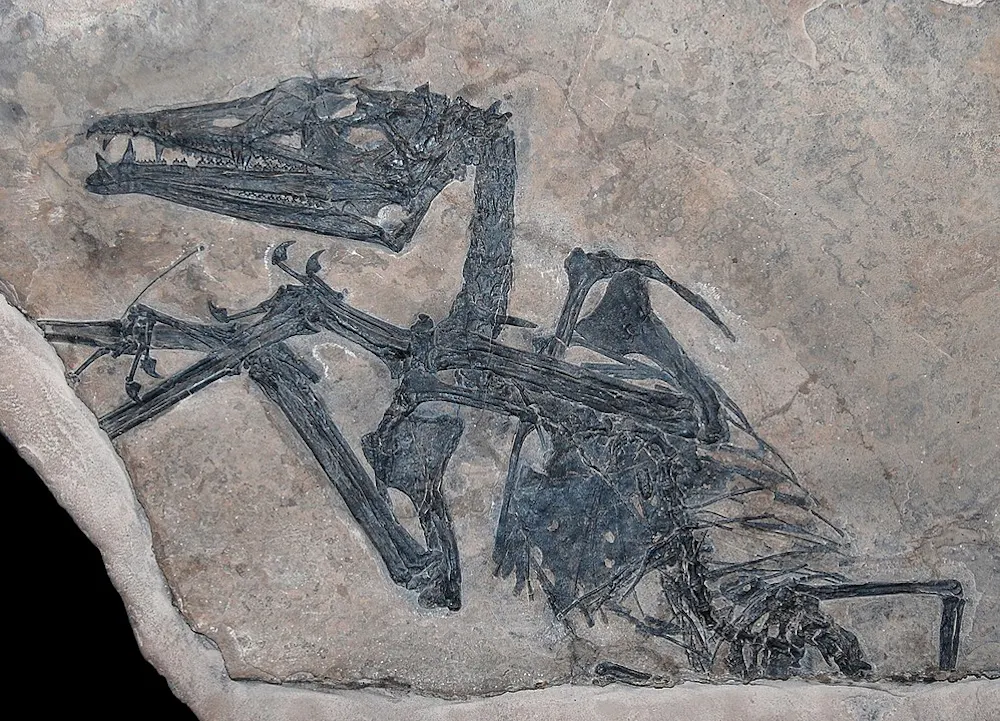
    Most of the handful of Triassic specimens come from narrow seams of dark shale in Italy and Austria, with other fragments discovered in Greenland, Argentina and the southwestern US. These skeletons appear fully adapted for flight, with a hyper-elongated fourth finger supporting membrane-wings. Yet older rocks show no trace of intermediate gliders or other transitional forms that you might expect as evidence of pterosaurs’ evolution over time.

    There are two classic competing explanations for this. The literal reading says pterosaurs evolved elsewhere and did not reach those regions where most have been discovered until very late in the Triassic period, by which time they were already adept flyers. The sceptical reading notes that pterosaurs’ wafer-thin, hollow bones could easily vanish from the fossil record, dissolve, get crushed or simply be overlooked, creating this false gap.

    Eudimorphodon ranzii fossil from Bergamo in 1973 is one of many pterosaur discoveries from southern Europe.
    Wikimedia, CC BY-SA

    For decades, the debate stalled as a result of too few fossils or too many missing rocks. This impasse began to change in 2020, when scientists identified the closest relatives of pterosaurs in a group of smallish upright reptiles called lagerpetids.

    From comparing many anatomical traits across different species, the researchers established that pterosaurs and lagerpetids shared many similarities including their skulls, skeletons and inner ears. While this discovery did not bring any “missing link” to the table, it showed what the ancestor of pterosaurs would have looked like: a rat-to-dog-sized creature that lived on land and in trees.

    This brought new evidence about when pterosaurs may have originated. Pterosaurs and lagerpetids like Scleromochlus, a small land-dwelling reptile, diverged at some point after the end-Permian mass extinction. It occurred some 250 million years ago, 35 million years before the first pterosaur appearance in the fossil record.

    Scleromochlus is one of the lagerpetids, the closest known relatives to the pterosaurs.
    Gabriel Ugueto

    Pterosaurs and their closest kin did not share the same habitats, however. Our new study, featuring new fossil maps, shows that soon after lagerpetids appeared (in southern Pangaea), they spread across wide areas, including harsh deserts, that many other groups were unable to get past. Lagerpetids lived both in these deserts and in humid floodplains.

    They tolerated hotter, drier settings better than any early pterosaur, implying that they had evolved to cope with extreme temperatures. Pterosaurs, by contrast, were more restricted. Their earliest fossils cluster in the river and lake beds of the Chinle and Dockum basins (southwest US) and in moist coastal belts fringing the northern arm of the Tethys Sea, a huge area that occupied today’s Alps.

    Scientists have inferred from analysing a combination of fossil distributions, rock features and climate simulations that pterosaurs lived in areas that were warm but not scorching. The rainfall would have been comparable to today’s tropical forests rather than inland deserts.

    This suggests that the earliest flying dinosaurs may have lived in tree canopies, using foliage both for take-off and to protect themselves from predators and heat. As a result of this confined habitat, the distances that they flew may have been quite limited.

    Changing climates

    We were then able to add a fresh dimension to the story using a method called ecological niche modelling. This is routinely used in modern conservation to project where endangered animals and plants might live as the climate gets hotter. By applying this approach to later Triassic temperatures, rainfall and coastlines, we asked where early pterosaurs lived, regardless of whether they’ve shown up there in the fossil record.

    Many celebrated fossil sites in Europe emerge as poor pterosaur habitat until very late in the Triassic period: they were simply too hot, too dry or otherwise inhospitable before the Carnian age, around 235 million years ago. The fact that no specimens have been discovered there that are more than about 215 million years old may be because the climate conditions were still unsuitable or simply because we don’t have the right type of rocks preserved of that age.

    In contrast, parts of the south-western US, Morocco, India, Brazil, Tanzania and southern China seem to have offered welcoming environments several million years earlier than the age of our oldest discoveries. This rewrites the search map. If pterosaurs could have thrived in those regions much more than 215 million years ago, but we have not found them there, the problem may again lie not with biology but with geology: the right rocks have not been explored, or they preserve fragile fossils only under exceptional conditions.

    Our study flags a dozen geological formations, from rivers with fine sediment deposits to lake beds, as potential prime targets for the next breakthrough discovery. They include the Timezgadiouine beds of Morocco, the Guanling Formation of south-west China and, in South America, several layers of rock from the Carnian age, such as the Santa Maria Formation, Chañares Formation and Ischigualasto Formation.

    Pterosaurs were initially confined to tropical treetops near the equator. When global climates shifted and forested corridors opened, pterosaurs’ wings catapulted them into every corner of the planet and ultimately carried them through one of Earth’s greatest extinctions. What began as a tale of missing fossils has become a textbook example of how climate, ecology and evolutionary science have come together to illuminate a fragmentary history that has intrigued paleontologists for over two centuries.

    Davide Foffa is funded by Marie Skłodowska-Curie Actions: Individual (Global) Fellowship (H2020-MSCA-IF-2020; No.101022550), and by the Royal Commission for the Exhibition of 1851–Science Fellowship

    Alfio Alessandro Chiarenza receives funding from The Royal Society (Newton International Fellowship NIFR1231802)

    Emma Dunne does not work for, consult, own shares in or receive funding from any company or organisation that would benefit from this article, and has disclosed no relevant affiliations beyond their academic appointment.

    – ref. How pterosaurs learned to fly: scientists have been looking in the wrong place to solve this mystery – https://theconversation.com/how-pterosaurs-learned-to-fly-scientists-have-been-looking-in-the-wrong-place-to-solve-this-mystery-259063

    MIL OSI –

    July 1, 2025
  • MIL-OSI Submissions: ‘Making decisions closer to the wharf’ can ensure the sustainability of Canada’s fisheries and oceans

    Source: The Conversation – Canada – By Matthew Robertson, Research Scientist, Fisheries and Marine Institute, Memorial University of Newfoundland

    The harbour in Bonavista, Newfoundland. Major reforms could fundamentally reshape fisheries science and management in Canada (Sally LeDrew/Wikimedia commons), CC BY-SA

    During the federal election campaign, Canadian Prime Minister Mark Carney announced that if elected, he would look into restructuring Fisheries and Oceans Canada (DFO). Carney stated that he understood the importance of DFO and of “making decisions closer to the wharf.”

    Carney’s statement was made in response to protesting fish harvesters in Newfoundland and Labrador who decried recent DFO decision-making for multiple fisheries, including Northern cod and snow crab.

    Although addressing industry concerns is important, any change to DFO decision-making must serve the broader public interest, which includes commitments to reconciliation and conserving biodiversity.

    Major reforms could fundamentally reshape fisheries science and management in Canada, yet most Canadians are unaware of how DFO’s science-management process works, or why change might be needed.

    The DFO’s dual mandate

    DFO has long been criticized for its dual mandate, which involves both supporting economic growth and conserving the environment.

    For organizations like DFO to be trusted by the public, they need to produce information and policies that are credible, relevant and legitimate.

    However, DFO’s dual mandates have been viewed as antithetical and have at the least created a perceived conflict of interest. The issue at stake is how science advice from DFO can be considered independent, if it is also supposed to serve commercial interests.

    One solution to this problem would be to shift control over the economic viability of fisheries to provinces. This is not a radical idea by any means, as most of the economic value of the fishery arises after fish are brought to harbour.

    Fishing boats in the town of Clarke’s Harbour, located on Cape Sable Island, Nova Scotia in July 2011.
    (Dennis G. Jarvis/Wikimedia commons), CC BY-SA

    For example, licences to process groundfish like cod, haddock and halibut —which Nova Scotia has just announced will be opened for new entrants following decades of a moratorium — as well as policies governing the purchase of seafood already fall to provinces.

    In 2024, all 13 ministers from the Canadian Council of Fisheries and Aquaculture Ministers indicated a desire for “joint management” between provinces and DFO.

    This was driven driven by a concern that the department has not focused enough on provincial and territorial fisheries issues. This shouldn’t be seen as a criticism of DFO, but rather an opportunity to embrace differentiated responsibility.

    DFO could maintain regulatory control for fisheries, like enforcing the Fisheries Act, defining licence conditions and performing long-term monitoring and assessments. As included in the modernized Fisheries Act, it could still consider the social and economic objectives in decision-making.

    Regional decision-making

    DFO is structured into regions with their own science and management branches, but many decisions end up being made by staff at DFO headquarters in Ottawa. In addition, the federal fisheries minister retains ministerial discretion for almost every decision, something that has been criticized as being inequitable.

    During an interview with researchers looking into fisheries management policy, a regional manager stated that they no longer make decisions:

    “Because of…risk aversion, much more of the decision-making has now been bumped up to higher levels. So I like to facetiously state that I am no longer a manager, I am a recommender.”

    Centralized decision-making can limit communication between regional scientists and managers and federal government policymakers.

    This communication gap can make it difficult for managers to use the latest science and adjust policies quickly and it can also lead to recommended policies that are challenging to implement at the local level.

    Handing management decision-making power to regional fisheries managers could therefore benefit science and policy, and contribute to decisions that are deemed more equitable by those impacted.

    A map representing DFO’s regional structure.
    (Fisheries and Oceans Canada)

    Other countries use a regional management approach. In the United States, marine fisheries are managed by eight regional fishery management councils that use scientific advice from the National Marine Fisheries Service. Although not without their flaws, the successful rebuilding of overfished stocks in the U.S. has been attributed, in part, to the regional council system.

    Governance systems that have multiple but connected centres of decision-making are generally expected to be more participatory, flexible to respond to changes and have improved spatial fit between knowledge and policy actions.

    This type of approach could shift the focus of Ottawa-based managers and the fisheries minister to ensuring national consistency.

    Local stakeholder involvement

    Canada’s current methods for inclusion of social and economic considerations are limited and have produced scientific advice that is not fully separable from rights holder and stakeholder input.

    Most of DFO’s scientific peer-review process is focused on ecological science conducted by DFO scientists. The peer-review process often also involves rights holders and stakeholders. While Indigenous rights holders and community stakeholders may not be trained in the presented analyses, they often contribute to these meetings by describing their knowledge and experiences.

    However, because the meetings are focused on DFO ecological science, they are not designed to formally consider stakeholder and rights holder knowledge. This can lead to two key issues. First, it may blur the line between peer-reviewed science and rights holder and stakeholder input, reducing the credibility of the scientific advice.

    Second, the valuable information provided by rights holders and stakeholders may be overlooked since it is not shared in a setting designed to incorporate it.

    The lack of review of alternative Indigenous knowledge sources and social and economic science during peer-review processes inherently limits the advice that can be provided. It suggests that the government is not benefiting from the opportunity to incorporate diverse knowledge bases.

    These problems could be addressed by developing procedures through which stakeholders and rights holders contribute their local and traditional knowledge to better inform ecological and socio-economic considerations.

    By increasing the number of peer-review platforms, rights holder and stakeholder input could be reviewed similarly to ecological science. This change would likely increase the credibility, legitimacy and salience of information used to inform fishery managers.

    Regardless of how rights holders and stakeholders perspectives are included, the process should be clearly structured and documented.

    By reconsidering DFO’s mandate, decentralizing management decision-making and improving the scientific consideration of varied forms of knowledge, DFO could make decisions that are closer to the wharf.

    Matthew Robertson receives funding from the Canadian Natural Sciences and Engineering Research Council of Canada (NSERC) Discovery Grant and the Fisheries & Oceans Canada (DFO) Atlantic Fisheries Fund (AFF).

    Megan Bailey receives research funding from multiple sources, including NSERC, SSHRC, CIRNAC, Genome Atlantic, Nippon Foundation Ocean Nexus Centre, Ocean Frontier Institute (through a Canada First Research Excellence Fund), and the Canada Research Chairs program.

    Tyler Eddy receives funding from the Natural Sciences and Engineering Research Council of Canada (NSERC) Discovery Grant, Fisheries & Oceans Canada (DFO) Atlantic Fisheries Fund (AFF) and Sustainable Fisheries Science Fund (SFSF), the Canada First Research Excellence Fund (CFREF), and the Crown Indigenous Relations and Northern Affairs Canada (CIRNAC) Indigenous Community-Based Climate Monitoring (ICBCM) Program.

    – ref. ‘Making decisions closer to the wharf’ can ensure the sustainability of Canada’s fisheries and oceans – https://theconversation.com/making-decisions-closer-to-the-wharf-can-ensure-the-sustainability-of-canadas-fisheries-and-oceans-254874

    MIL OSI –

    July 1, 2025
  • MIL-OSI Submissions: Air India crash in Ahmedabad sends reverberations to Canadian families of Air India Flight 182

    Source: The Conversation – Canada – By Chandrima Chakraborty, Professor, English and Cultural Studies; Director, Centre for Global Peace, Justice and Health, McMaster University

    The June 12 Air India crash in Ahmedabad, Gujarat, India, with 230 passengers and 12 crew members aboard is sending deep reverberations through a group of Canadians who know all too well the shock, grief and horror of losing loved ones in hauntingly similar circumstances.

    They are the families of those killed in the bombing of Air India Flight 182 en route from Canada to India 40 years ago this month.

    I work closely with these families as a researcher and advocate. I began interviewing these families in 2014 and have witnessed firsthand their pain, advocacy and emotional turmoil of living in the shadow of a historical event.

    As reports of the Ahmedabad crash came in, the WhatsApp account of the Air India Flight 182 families immediately flooded with expressions of shock, concern, sympathy and memories triggered by the latest incident.

    On June 23, 1985, Flight 182 was brought down by terrorist bombs created and planted on Canadian soil. The devastating mid-air explosion occurred over the Atlantic Ocean near Ireland. It killed all 329 passengers and crew, including 268 Canadians. The crew and most of the passengers were of Indian origin.

    Investigations into the causes of the crash of Air India Flight 171, en route to London’s Gatwick airport, shortly after take-off are still underway. At least 279 people died in the crash, which also impacted people on the ground.

    Acknowledging losses as significant

    A recent public conference at McMaster University commemorated the 40th anniversary of Flight 182, bringing together Indian and Canadian families, researchers, creative artists and community members.

    Book cover for ‘Remembering Air India The Art of Public Mourning,’ edited by Chandrima Chakraborty, Amber Dean and Angela Failler.
    University of Alberta Press

    The conference dealt with critical themes, including the challenge of Flight 182 families recovering from their losses within a climate of broad indifference among their fellow Canadians.

    Regardless of what may have caused the more recent crash in western India, these Canadian families know the shock and loss that a new set of victims’ families are facing, and how important it is to support them.

    Hopefully, the home countries of last week’s crash victims — most of them Indian and British citizens, with at least one Canadian reported to have been aboard — will regard their deaths as significant losses. If so, this would be unlike what the 1985 victims’ families experienced in Canada.

    A little-mourned Canadian tragedy

    In Canada, we have a national day to remember on June 23, 1985. The bombing has been called a Canadian tragedy in a public inquiry report.

    Yet according to a 2023 Angus Reid poll, “nine out of 10 Canadians say they have little or no knowledge of the worst single instance of the mass killing of their fellow citizens.” That essentially means the bombing has yet to penetrate the consciousness of everyday Canadians or evoke shared grief or public mourning.

    The families continue to carry the torch of remembrance as they organize annual memorial vigils every June 23. Few others attend. Many victims’ relatives have died since 1985. Some spouses, siblings or parents are now in their 80s, wondering why the bombing is still not widely discussed in schools or in public discourse.

    The grinding and unsatisfying criminal proceedings, the belated public inquiry and the welcome but lukewarm apology by the Canadian government 25 years after the fact have all contributed to the failure of this tragedy to adhere more solidly to the Canadian consciousness. In fact, many continue to deny the Canadian significance of Flight 182 and view the bombing as a foreign event.

    A torch of remembrance

    At last month’s conference, my research team launched the Air India Flight 182 archive to counter this collective amnesia and lack of acknowledgement.

    Canadian archival consultant and writer Laura Millar has said that archives act as “touchstones to memory” and can aid the process of transforming individual memories into collective remembering. Adopting NYU professor Carol Gilligan’s ethics of care for the archive, we have been consulting with families to find ways to share their grief with the public.

    The Flight 182 memory archive — both physical and digital — serves as a repository for artefacts, first-person narratives, memorabilia and creative works related to the tragedy produced by family members. Family donations of artefacts such as dance videos and pilot wings redirect notions of archives away from a documental deposit. Hopefully, they can move the public to learn and care for the impacts of the Flight 182 bombing.

    The archive is a publicly accessible record of the tragedy, where scholars and everyday citizens can learn about the victims and their families.

    Since the past involves both the present and the future, the archive will enable a meaningful recognition of marginalized voices and histories. It can offer a form of memory justice for those who would otherwise be forgotten by sustaining memory from generation to generation.

    While the archive articulates the demand from families that the bombing of Flight 182 and its aftermath be incorporated into Canadian national consciousness, establishing this archive alone will not be enough to elevate the memory of Flight 182 to the place it deserves.

    But at least it establishes a rich, permanent academic and personal legacy for the community of mourners, and for the Canadian and global public to find it, use it and learn from its many lessons.

    Families of those on board the 1985 flight are preparing to commemorate the 40th anniversary of the terror bombing of Flight 182 that has devastated their lives.

    As we learn more about the tragic Air India Flight 171 crash on June 12, the lessons of Flight 182 will hopefully prevent a new set of families from feeling the pain of indifference on top of the unimaginable agony of loss they’re already experiencing.

    Chandrima Chakraborty receives funding from the Social Sciences and Humanities Research Council of Canada.

    – ref. Air India crash in Ahmedabad sends reverberations to Canadian families of Air India Flight 182 – https://theconversation.com/air-india-crash-in-ahmedabad-sends-reverberations-to-canadian-families-of-air-india-flight-182-258991

    MIL OSI –

    July 1, 2025
  • MIL-OSI Submissions: Plastics threaten ecosystems and human health, but evidence-based solutions are under political fire

    Source: The Conversation – Canada – By Tony Robert Walker, Professor, School for Resource and Environmental Studies, Dalhousie University

    Negotiations toward a global, legally binding plastics treaty are set to resume this summer, with the United Nations Environment Programme announcing that the Intergovernmental Negotiating Committee on plastic pollution will reconvene in August.

    The committee was established to develop an international legally binding instrument — known as the plastics treaty — to end plastic pollution, one of the fastest-growing environmental threats.


    Read more:
    Here’s how the new global treaty on plastic pollution can help solve this crisis


    Globally, 40 per cent of plastics production goes into the production of single-use plastic packaging, which is the single largest source of plastic waste and is a threat to wildlife and human health. Without meaningful action, global plastic waste is projected to nearly triple by 2060, reaching an estimated 1.2 billion tonnes.

    As the world prepares for another round of talks, Canada’s own plastic problem reveals what’s at stake, and what’s possible for the future.

    Canada’s plastic problem

    Canada is no exception to the global plastic crisis. Nearly half (47 per cent) of all plastic waste in Canada comes from the food and drink sector, contributing 3,268 million tonnes annually. Canadians use 15 billion plastic bags annually and nearly 57 million straws daily, yet only nine per cent of plastics are recycled — a figure that is not expected to improve.

    Most of Canada’s plastic — except for plastic bottles made of PET (polyethylene terephthalate) — are uneconomical or difficult to recycle because of the complexity of mixed plastics used in our economy. As a result, 2.8 million tonnes of plastic waste — equivalent to the weight of 24 CN Towers — end up in landfills every year.

    This is not a trivial problem, as Ontario is projected to run out of landfill space by 2035. Plastic pollution poses growing risks to both urban and rural infrastructure.

    In addition to landfill overflow, around one per cent of Canada’s plastic waste leaks into the environment. In 2016, this was 29,000 tonnes of plastic pollution. Once in the environment, plastics disintegrate into tiny particles, called microplastics (small pieces of plastic less than five millimetres long).

    We drink those tiny microplastic particles in our tap water, and eat them in our fish dinners. Some are even making their way into farmland.

    Plastics are everywhere, including inside us

    More than 93 per cent of Canadians have expressed concerns over single-use plastics used in food packaging and have supported government bans. There is a good reason for concern over the mounting levels of plastics in the environment, in our food and in us.

    Growing evidence indicates that plastics can cause harmful health effects in humans and animals. Microplastics and smaller nanoplastics (less than one micron in length) have been found in humans, including infants and breast milk. They can cause metabolic disorders, interfere with our immune and reproductive systems and cause behavioural problems.

    These health problems may be caused by chemicals added to plastics, including single-use plastics, of which 4,200 chemicals have been identified as posing a hazard to human and ecosystem health.

    It is for these reasons that the Canadian government introduced a ban on single-use plastics in 2022 as part of a plan to reach zero plastic waste in Canada by 2030.

    The decision was based extensive public and industry consultation, as well as decades of data on plastic pollution gathered from the Great Canadian Shoreline Cleanup. This data shows the most common plastic litter items found in the environment across Canada, known as the “dirty dozen” list.

    Six of these items were included in the federal ban. Three eastern Canadian provinces had already implemented single-use plastic bag bans before the federal government, with little to no public or industry opposition. Prince Edward Island was the first Canadian province to implement a province-wide plastic bag ban in July 2019, closely followed by Newfoundland and Labrador and Nova Scotia in October 2020.

    The politics of plastic

    Despite overwhelming scientific consensus, debates around plastic pollution are becoming increasingly politicized.

    In February in the United States, President Donald Trump signed an executive order directing the U.S. government to “stop purchasing paper straws and ensure they are no longer provided within federal buildings.”

    Trump told reporters at the White House: “I don’t think plastic is going to affect a shark very much, as they’re munching their way through the ocean.” Almost 2,000 peer-reviewed studies have reported, however, that more than 4,000 species have ingested or been entangled by plastic litter.

    In Canada, plastic has also become a political flashpoint. During the recent federal election, Conservative Leader Pierre Poilievre said he would scrap the federal government’s ban on single-use plastics and bring back plastic straws and grocery bags. He argued the government’s ban was about “symbolism” rather than “science,” saying, “the Liberals’ plastics ban is not about the environment, it’s about cost and control.”

    His promise would have harmed Canadians by dismissing the overwhelming scientific evidence showing that plastics in our bodies are linked to health impacts. Legislation to ban single-use plastics can be highly effective, ranging from 33 to 96 per cent reductions in plastic waste and pollution in the environment, depending on the policy and jurisdiction.

    Canada’s single-use plastics ban is a great example of evidence-based policymaking. The latest data from the conservation group Ocean Wise shows there was a 32 per cent drop in plastic straws found on Canadian shorelines in 2024 compared to the previous year.

    Science-based policies are needed

    It is indisputable that growing plastic production is directly related to plastic pollution in the environment and in human beings. Increasing plastic pollution is a global threat to human and ecosystem health, regardless of borders and political affiliation.

    As negotiators gear up for another round of talks to finalize a Global Plastics Treaty to end plastic pollution, the need for policies that are supported by scientific evidence is more urgent than ever.

    Future generations deserve a healthy and sustainable planet. The path towards a healthy and sustainable planet requires supporting action based on scientific evidence, not misinforming people with catchy phrases and political rhetoric.

    Tony Robert Walker receives funding from the Natural Sciences and Engineering Research Council of Canada, Canada Foundation for Innovation, and Research Nova Scotia. He is also a non-remunerated member of the Scientists’ Coalition for an Effective Plastics Treaty.

    Miriam L Diamond receives funding from Natural Sciences and Engineering Research Council, Ontario Ministry of Environment, Conservation and Parks, Future Earth, and Environment and Climate Change Canada. She is affiliated with the University of Toronto, serves as a paid expert for the Scientific and Technical Advisory Panel of the Global Environment Facility, and has non-remunerated positions with the International Panel on Chemical Pollution (Vice-Chair), is a member of the Scientist Coalition for an Effective Plastics Treaty, and sits on the board of the Canadian Environmental Law Association.

    – ref. Plastics threaten ecosystems and human health, but evidence-based solutions are under political fire – https://theconversation.com/plastics-threaten-ecosystems-and-human-health-but-evidence-based-solutions-are-under-political-fire-256764

    MIL OSI –

    July 1, 2025
  • MIL-OSI Submissions: Decolonizing history and social studies curricula has a long way to go in Canada

    Source: The Conversation – Canada – By Sara Karn, Postdoctoral Fellow, Department of History, McMaster University

    In June 2015, 10 years ago, the Truth and Reconciliation Commission of Canada (TRC) called for curriculum on Indigenous histories and contemporary contributions to Canada to foster intercultural understanding, empathy and respect. This was the focus of calls to action Nos. 62 to 65.

    As education scholars, we are part of a project supported by the Social Sciences and Humanities Research Council called Thinking Historically for Canada’s Future. This project involves researchers, educators and partner organizations from across Canada, including Indigenous and non-Indigenous team members.

    As part of this work, we examined Canadian history and social studies curricula in elementary, middle and secondary schools with the aim of understanding how they address — and may better address in future — the need for decolonization.

    We found that although steps have been made towards decolonizing history curricula in Canada, there is still a long way to go. These curricula must do far more to challenge dominant narratives, prompt students to critically reflect on their identities and value Indigenous world views.


    Read more:
    Looking for Indigenous history? ‘Shekon Neechie’ website recentres Indigenous perspectives


    Reimagining curriculum

    As white settler scholars and educators, we acknowledge our responsibility to unlearn colonial ways of being and learn how to further decolonization in Canada.

    In approaching this study, we began by listening to Indigenous scholars, such as Cree scholar Dwayne Donald. Donald and other scholars call for reimagining curriculum through unlearning colonialism and renewing relationships.


    Read more:
    Leaked Alberta school curriculum in urgent need of guidance from Indigenous wisdom teachings


    The late Arapaho education scholar Michael Marker suggested that in history education, renewing relations involves learning from Indigenous understandings of the past, situated within local meanings of time and place.

    History, social studies curricula

    Curricula across Canada have been updated in the last 10 years to include teaching about treaties, Indian Residential Schools and the cultures, perspectives and experiences of Indigenous Peoples over time.

    Thanks primarily to the work of Indigenous scholars and educators, including Donald, Marker, Mi’kmaw educator Marie Battiste, Anishinaabe scholar Nicole Bell and others, some public school educators are attentive to land-based learning and the importance of oral history.

    But these teachings are, for the most part, ad hoc and not supported by provincial curriculum mandates.

    Our study revealed that most provincial history curricula are still focused on colonial narratives that centre settler histories and emphasize “progress” over time. Curricula are largely inattentive to critical understandings of white settler power and to Indigenous ways of knowing and being.

    Notably, we do not include the three territories in this statement. Most of the territorial history curricula have been co-created with local Indigenous communities, and stand out with regard to decolonization.

    For example, in Nunavut’s Grade 5 curriculum, the importance of local knowledge tied to the land is highlighted throughout. There are learning expectations related to survival skills and ecological knowledge.

    Members of our broader research team are dedicated to analyzing curricula in Nunavut, the Northwest Territories and the Yukon. Their work may offer approaches to be adapted for other educational contexts.

    Dominant narratives

    In contrast, we found that provincial curricula often reinforce dominant historical narratives, especially surrounding colonialism. Some documents use the term “the history,” implying a singular history of Canada (for example, Manitoba’s Grade 6 curriculum).

    Historical content, examples and guiding questions are predominantly written from a Euro-western perspective, while minimizing racialized identities and community histories. In particular, curricula often ignore illustrations of Indigenous agency and experience.


    Read more:
    Moving beyond Black history month towards inclusive histories in Québec secondary schools


    Most curricula primarily situate Indigenous Peoples in the past, without substantial consideration for present-day implications of settler colonialism, as well as Indigenous agency and experiences today.

    For example, in British Columbia’s Grade 4 curriculum, there are lengthy discussions of the harms of colonization in the past. Yet, there is no mention of the ongoing impacts of settler colonialism or the need to engage in decolonization today.

    To disrupt these dominant narratives, we recommend that history curricula should critically discuss the ongoing impacts of settler colonialism, while centring stories of Indigenous resistance and survival over time.

    Identity and privilege

    There are also missed opportunities within history curricula when it comes to critical discussions around identity, including systemic marginalization or privilege.

    Who we are informs how we understand history, but curricula largely does not prompt student reflection in these ways, including around treaty relationships.

    In Saskatchewan’s Grade 5 curriculum, students are expected to explain what treaties are and “affirm that all Saskatchewan residents are Treaty people.”

    However, there is no mention of students considering how their own backgrounds, identities, values and experiences shape their understandings of and responsibilities for treaties. Yet these discussions are essential for engaging students in considering the legacies of colonialism and how they may act to redress those legacies.

    A key learning outcome could involve students becoming more aware of how their own personal and community histories inform their historical understandings and reconciliation commitments.

    Indigenous ways of knowing and being

    History curricula generally ignore Indigenous ways of knowing and being. Most curricula are inattentive to Indigenous oral traditions, conceptions of time, local contexts and relationships with other species and the environment.

    Instead, these documents reflect Euro-western, settler colonial worldviews and educational values. For example, history curricula overwhelmingly ignore local meanings of time and place, while failing to encourage opportunities for land-based and experiential learning.

    In Prince Edward Island’s Grade 12 curriculum, the documents expect that students will “demonstrate an understanding of the interactions among people, places and the environment.” While this may seem promising, environmental histories in this curriculum and others uphold capitalist world views by focusing on resource extraction and economic progress.

    To disrupt settler colonial relationships with the land and empower youth as environmental stewards, we support reframing history curricula in ways that are attentive to Indigenous ways of knowing the past and relations with other people, beings and the land.

    Ways forward

    Schools have been, and continue to be, harmful spaces for many Indigenous communities, and various aspects of our schooling beg questions about how well-served both Indigenous and non-Indigenous students are for meeting current and future challenges.

    If, as a society, we accept the premise that the transformation of current curricular expectations is possible for schools, then more substantive engagement is required in working toward decolonization.

    Decolonizing curricula is a long-term, challenging process that requires consideration of many things: who sits on curriculum writing teams; the resources allocated to supporting curricular reform; broader school or board-wide policies; and ways of teaching that support reconciliation.

    We encourage history curriculum writing teams to take up these recommendations as part of a broader commitment to reconciliation.

    While not exhaustive, recommendations for curricular reform are a critical step in the future redesign of history curricula. The goal is a history education committed to listening and learning from Indigenous communities to build more inclusive national stories of the past, and into the future.

    This is a corrected version of a story originally published June 17, 2025. The earlier story said Michael Marker was from the Lummi Nation instead of saying he was an Arapaho scholar.

    Sara Karn receives funding from the Social Sciences and Humanities Research Council (SSHRC).

    Kristina R. Llewellyn receives funding from the Social Sciences and Humanities Research Council (SSHRC).

    Penney Clark receives funding from the Social Sciences and Humanities Research Council of Canada (SSHRC).

    – ref. Decolonizing history and social studies curricula has a long way to go in Canada – https://theconversation.com/decolonizing-history-and-social-studies-curricula-has-a-long-way-to-go-in-canada-253679

    MIL OSI –

    July 1, 2025
  • MIL-OSI Submissions: We have drugs to manage HIV. So why are we spending millions looking for cures?

    Source: The Conversation – Global Perspectives – By Bridget Haire, Associate Professor, Public Health Ethics, School of Population Health, UNSW Sydney

    Alim Yakubov/Shutterstock

    Over the past three decades there have been amazing advances in treating and preventing HIV.

    It’s now a manageable infection. A person with HIV who takes HIV medicine consistently, before their immune system declines, can expect to live almost as long as someone without HIV.

    The same drugs prevent transmission of the virus to sexual partners.

    There is still no effective HIV vaccine. But there are highly effective drugs to prevent HIV infection for people without HIV who are at higher risk of acquiring it.

    These drugs are known as as “pre-exposure prophylaxis” or PrEP. These come as a pill, which needs to be taken either daily, or “on demand” before and after risky sex. An injection that protects against HIV for six months has recently been approved in the United States.

    So with such effective HIV treatment and PrEP, why are we still spending millions looking for HIV cures?

    Not everyone has access to these drugs

    Access to HIV drugs and PrEP depends on the availability of health clinics, health professionals, and the means to supply and distribute the drugs. In some countries, this infrastructure may not be secure.

    For instance, earlier this year, US President Donald Trump’s dissolution of the USAID foreign aid program has threatened the delivery of HIV drugs to many low-income countries.

    This demonstrates the fragility of current approaches to treatment and prevention. A secure, uninterrupted supply of HIV medicine is required, and without this, lives will be lost and the number of new cases of HIV will rise.

    Another example is the six-monthly PrEP injection just approved in the US. This drug has great potential for controlling HIV if it is made available and affordable in countries with the greatest HIV burden.

    But the prospect for lower-income countries accessing this expensive drug looks uncertain, even if it can be made at a fraction of its current cost, as some researchers say.

    So despite the success of HIV drugs and PrEP, precarious health-care systems and high drug costs mean we can’t rely on them to bring an end to the ongoing global HIV pandemic. That’s why we also still need to look at other options.

    Haven’t people already been ‘cured’?

    Worldwide, at least seven people have been “cured” of HIV – or at least have had long-term sustained remission. This means that after stopping HIV drugs, they did not have any replicating HIV in their blood for months or years.

    In each case, the person with HIV also had a life-threatening cancer needing a bone marrow transplant. They were each matched with a donor who had a specific genetic variation that resulted in not having HIV receptors in key bone marrow cells.

    After the bone marrow transplant, recipients stopped HIV drugs, without detectable levels of the virus returning. The new immune cells made in the transplanted bone marrow lacked the HIV receptors. This stopped the virus from infecting cells and replicating.

    But this genetic variation is very rare. Bone marrow transplantation is also risky and extremely resource-intensive. So while this strategy has worked for a few people, it is not a scalable prospect for curing HIV more widely.

    So we need to keep looking for other options for a cure, including basic laboratory research to get us there.

    How about the ‘breakthrough’ I’ve heard about?

    HIV treatment stops the HIV replication that causes immune damage. But there are places in the body where the virus “hides” and drugs cannot reach. If the drugs are stopped, the “latent” HIV comes out of hiding and replicates again. So it can damage the immune system, leading to HIV-related disease.

    One approach is to try to force the hidden or latent HIV out into the open, so drugs can target it. This is a strategy called “shock and kill”. And an example of such Australian research was recently reported in the media as a “breakthrough” in the search for an HIV cure.

    Researchers in Melbourne have developed a lipid nanoparticle – a tiny ball of fat – that encapsulates messenger RNA (or mRNA) and delivers a “message” to infected white blood cells. This prompts the cells to reveal the “hiding” HIV.

    In theory, this will allow the immune system or HIV drugs to target the virus.

    This discovery is an important step. However, it is still in the laboratory phase of testing, and is just one piece of the puzzle.

    We could say the same about many other results heralded as moving closer to a cure for HIV.

    Further research on safety and efficacy is needed before testing in human clinical trials. Such trials start with small numbers and the trialling process takes many years. This and other steps towards a cure are slow and expensive, but necessary.

    Importantly, any cure would ultimately need to be fairly low-tech to deliver for it to be feasible and affordable in low-income countries globally.

    So where does that leave us?

    A cure for HIV that is affordable and scalable would have a profound impact on human heath globally, particularly for people living with HIV. To get there is a long and arduous path that involves solving a range of scientific puzzles, followed by addressing implementation challenges.

    In the meantime, ensuring people at risk of HIV have access to testing and prevention interventions – such as PrEP and safe injecting equipment – remains crucial. People living with HIV also need sustained access to effective treatment – regardless of where they live.

    Bridget Haire has received funding from the National Health and Medical Research Council. She is a past president of the Australian Federation of AIDS Organisations (now Health Equity Matters).

    Benjamin Bavinton receives funding from the National Health and Medical Research Council, the Australian government, and state and territory governments. He also receives funding from ViiV Healthcare and Gilead Sciences, both of which make drugs or drug classes mentioned in this article. He is a Board Director of community organisation, ACON, and is on the National PrEP Guidelines Panel coordinated by ASHM Health.

    – ref. We have drugs to manage HIV. So why are we spending millions looking for cures? – https://theconversation.com/we-have-drugs-to-manage-hiv-so-why-are-we-spending-millions-looking-for-cures-258391

    MIL OSI –

    July 1, 2025
  • MIL-OSI Submissions: Is Kenya’s president safe in a crowd? Security expert scans VIP protection checklist

    Source: The Conversation – Africa (2) – By Douglas Lucas Kivoi, Principal Policy Analyst, Governance Department, The Kenya Institute for Public Policy Research and Analysis (KIPPRA)

    Protecting any president requires multiple layers of intelligence, physical security and rapid response security protocols. Exact operational details are classified, but there are global best practices in VIP protection.

    The issue of presidential protection in Kenya has become particularly relevant following an incident in early May 2025 when someone in a crowd threw a shoe at President William Ruto during a public event, hitting his hand.

    I have studied policing and security policies in Kenya for over 15 years, interacting closely with the country’s security protocols. In my view this incident exposed several critical security lapses around the elite officers tasked with protecting the president.

    The security of the president is a critical issue in Kenya. The country is exposed to terror groups like the Somalia-based Al-Shabaab and other criminal networks in the region.

    In 2021, a businessman embedded himself into the presidential motorcade and drove into then president Uhuru Kenyatta’s official residence. In 2017, an unidentified man who was said to have illegally accessed the highly protected state house grounds was shot dead by presidential guards.

    There are multiple layers to Kenya’s protection protocols. They include National Intelligence Service officers, the Kenya Defence Force, Presidential Escort Police officers drawn from the highly trained General Service Unit, bomb disposal experts and regular police officers. Their deployment depends on the nature of the presidential engagement.

    While the shoe incident may be passed off as simply embarrassing, it should serve as a wake-up call to tighten security protocols around the president without necessarily compromising his public engagement with citizens.

    What’s in place

    Prior to any presidential visit across the country, security teams conduct a thorough reconnaissance of the destination. This includes coordinating with local policing agencies, clearing airspace, mapping secure transport routes and identifying nearby medical facilities in case of emergencies.

    Presidential motorcade routes are pre-planned and a dry run is made. This often includes mapping alternative routes to avoid predictability should there be assailants along a presidential route. It is common to see some roads temporarily closed and security officers conducting sweeps for any threats or explosives. In areas deemed high risk, counter security sniper teams are covertly deployed in strategic areas.

    Cases of attacks on presidential motorcades are rare in Kenya. However, in 2002 during presidential campaigns, angry opposition supporters stoned then president Daniel Moi’s motorcade. In November 2021, an angry mob hurled rocks at then deputy president Ruto’s motorcade.

    The National Intelligence Service and Presidential Escort Unit covertly scout locations in advance, assessing potential security vulnerabilities. Crowd sizes, and entry and exit points for the head of state are mapped out in advance.

    In cases where meetings are held in town halls or huge tents, attendees are screened using metal detectors and/or physical searches. Uniformed and plainclothes security officers embed themselves in the crowd to monitor any threats.

    The president and any dignitaries accompanying him have at least three layers of security.

    The inner ring consists of close protection officers who are always within an arm’s length of the president to physically thwart any threats. The middle ring has armed security guards who watch for, among others, sudden movements and abnormal behaviour within the crowd. The outer ring consists of regular police and paramilitary units from the General Service Unit who secure the outside perimeter.

    The presidential motorcade is a coordinated convoy of heavily armoured vehicles. It includes lead and chase cars, communication units and emergency response teams. Traffic is managed by local traffic police officers to ensure unobstructed movement. Routes are kept confidential until necessary.

    The president’s security may opt to use a decoy vehicle if there is a security threat, to confuse and derail potential risk sources. In all these cases, there is a contingent of specialised General Service Unit officers, called the Recce unit, that always accompanies the president.

    Kenya’s presidential security precautions follow standard VIP security protection like those for heads of state across the world. However, in some neighbouring countries, for instance, presidents move in heavily armed military convoys. This has not been seen in Kenya.

    If a potential threat is detected, the president is immediately shielded and whisked away to a secure vehicle or evacuated by air in high-risk events. In such cases, the Kenya Defence Forces secures the president.

    Despite stringent security measures, incidents can occur. For instance, in March 2025, a British tourist was fatally hit by a vehicle in Ruto’s motorcade. This prompted investigations and reviews on motorcade safety protocols.

    Such events highlight the challenges of balancing presidential security with public safety, especially in densely populated urban areas.

    Security failures

    The shoe-throwing incident targeting Ruto highlighted five major failures in presidential protection protocols.

    First, crowd screening and access control failures. The alleged assailant was very close to the president, suggesting an inadequate distance between the crowds and the president. The inner ring of security also failed to spot the perpetrator raising a shoe in the air to use as a projectile. This indicates weak front-row eye sweeps and scans by the president’s security.

    Second, there was an apparent delay in security response. The elite officers around the president should have subdued the alleged attacker within seconds. It could mean most had their eyes on the president or cameras, as opposed to scanning the crowds for any sudden movements.

    Third, security allowed the president to stand too close to a crowd that hadn’t been screened. Best practices require a no-go zone of three to five metres for individuals who have not been scanned or screened.

    Fourth, there was an apparent gap in intelligence and threat assessment. Aggressive or agitated people next to the president should draw the attention of security officers. Plainclothes security officers are usually deployed to monitor crowd behaviour. It isn’t enough to rely on uniformed officers.

    Undercover agents are critical for flagging pre-attack signals, such as nervousness or repeated adjustments of positions.

    Fifth, there was no clear evacuation plan for the president. After the incident, the president continued speaking. In high-risk scenarios, protocols often demand instant relocation of the president to a secure vehicle or helicopter, where the military takes over and airlifts him to safety.

    What should change

    Kenya’s presidential security detail may be forced to:

    • increase standoff distance between the president and crowds

    • deploy more plainclothes officers to blend in and monitor crowds around the president

    • mandate stricter screening of those in close proximity to the president

    • conduct more frequent security risks drills for rapid neutralisation of potential threats.

    The exact details of presidential security in Kenya are confidential. However, the overarching structure aims to provide comprehensive protection to the president while maintaining public safety and order during official engagements. No security protocol is 100% foolproof. But a balance needs to be struck between overly aggressive crowd control and accessibility.

    Douglas Lucas Kivoi does not work for, consult, own shares in or receive funding from any company or organisation that would benefit from this article, and has disclosed no relevant affiliations beyond their academic appointment.

    – ref. Is Kenya’s president safe in a crowd? Security expert scans VIP protection checklist – https://theconversation.com/is-kenyas-president-safe-in-a-crowd-security-expert-scans-vip-protection-checklist-256268

    MIL OSI –

    July 1, 2025
  • MIL-OSI Submissions: Iran and Ethiopia have a security deal – here’s why they signed it

    Source: The Conversation – Africa (2) – By Eric Lob, Associate Professor of Politics and International Relations, Florida International University

    Ethiopia and Iran signed a memorandum of understanding (MOU) on 6 May 2025. Under it, their national police agencies will cooperate on security and intelligence. This will include combating cross-border crime, sharing intelligence and building capacity. They will also share experiences and training.

    For Iran, the MOU marks a significant step towards strengthening relations with a regional power that’s strategically located in the Horn of Africa.

    Tehran has been using its security apparatus and military capabilities to establish and expand political and economic ties with countries in Africa. This has included drone transfers to the Ethiopian government that helped it turned the tide of the Tigray war, a separatist struggle in the country’s north that took place from 2020 to 2022.

    Iran has also supplied the Sudanese army with surveillance and combat drones. These have been used against the paramilitary Rapid Support Forces in Sudan’s ongoing civil war.

    The agreement is important for Ethiopia for two reasons.

    Firstly, it’s likely to enable the Ethiopian government in Addis Ababa to combat ethnic militias more effectively. It faces increasing internal instability, including tensions with hostile factions of the separatist Tigray People’s Liberation Front.

    Secondly, the agreement comes after a meeting in Addis Ababa between the Ethiopian police chief, Demelash Gebremichael, and a delegation from Iran’s regional rival, the United Arab Emirates (UAE). The exchange concentrated on investigating and extraditing cross-border criminals.

    Addis Ababa’s willingness to work with regional rivals in the Middle East shows its pragmatic approach to foreign relations. Ethiopia needs all the friends it can muster as an embattled and weakened state. Since the Tigray war, it has battled the rise of ethnic militias and confronted economic adversity. It is also facing renewed hostility with neighbouring Eritrea.

    What Iran stands to gain

    Since 2016, Ethiopia has been a gateway for Iran to gain a foothold in the Horn of Africa. That year, other countries in the region severed relations with Iran. This followed Tehran’s disengagement from sub-Saharan Africa under Hassan Rouhani, who served as president from 2013 to 2021, and his prioritisation of a nuclear deal with the US.

    The severing of ties was also a byproduct of geopolitical pressure exerted by Saudi Arabia and the UAE on countries in the region. The Middle Eastern states wanted to reduce, if not eliminate, Iran’s presence in the Horn of Africa and Red Sea to limit its support for Houthi rebels in the ongoing Yemeni civil war.


    Read more:
    Iran’s intervention in Sudan’s civil war advances its geopolitical goals − but not without risks


    Ethiopia was the first country in sub-Saharan Africa to establish relations with Iran during the 1960s. It was also one of its top trading partners on the continent before and after the 1979 Iranian Revolution.

    Strategically and ideologically, this special relationship was based on the pro-western and anti-communist stances of their monarchs: the Shah of Iran Mohammad Reza Pahlavi, who ruled from 1941 to 1979, and Emperor Haile Selassie, who was in power from 1930 to 1974.

    After the revolution, Iran-Ethiopia relations revived under Mahmoud Ahmadinejad, who served as Iranian president from 2005 to 2013. He pursued an active Africa policy to mitigate Iran’s international isolation and circumvent US sanctions.

    After Rouhani initially downgraded these relations, they were renewed during his second term. This followed US withdrawal from the nuclear deal.

    Relations firmed when Ebrahim Raisi, who served as Iranian president from 2021 to 2024, delivered military drones and other aid to Addis Ababa during the Tigray war.

    What’s in it for Ethiopia

    Ethiopia is facing increasing instability and uncertainty. The Tigray war has depleted the state’s resources. There is an economic crisis caused by rising inflation and unemployment.

    Addis Ababa continues to confront ethnic tensions. Hostile factions of the Tigray People’s Liberation Front remain. It also faces tensions with the Amhara Fano militia, which initially fought alongside the government against Tigrayan forces. Forced disarmament policies and ongoing land disputes caused the militia to take up arms against the government.


    Read more:
    Somaliland-Ethiopia port deal: international opposition flags complex Red Sea politics


    Ethiopian prime minister Abiy Ahmed also faces growing opposition and resistance from his own ethnic group, the majority Oromo, and their Oromo Liberation Army. The reason for their discontent is Abiy’s imposition of centralised rule on their regional state within a federal system.

    The security and intelligence cooperation with Iran could allow Addis Ababa to combat ethnic militias more effectively.

    It would also enable Ethiopia to prepare for another possible war against neighbouring Eritrea.

    Ethiopia and Eritrea normalised relations and fought together against Tigrayan forces. However, tensions between the two countries have been brewing again. These have been triggered by two factors. First, the conditions of the 2022 Pretoria peace agreement caused Eritrea to maintain forces inside Ethiopia. Second are the ambitions of Addis Ababa to acquire a Red Sea port in Somaliland, a breakaway region of Somalia. Eritrea has supported Somalia’s opposition to the deal.

    Regional power games

    This isn’t the first time that Ethiopia has tried working with two regional rivals – Iran and the UAE. The UAE is also among its top trading partners, along with Saudi Arabia.

    In 2016, Ethiopia was the only country in the Horn of Africa that didn’t cut ties with Iran, though it was under pressure from the UAE and Saudi Arabia to do so. The decision was taken by Abiy’s predecessor, Hailemariam Desalegn, whose term ran from 2012 to 2018.

    During the Tigray war, Ethiopia received military drones and other assistance from Iran and the UAE, alongside Turkey.

    The civil war in Sudan has presented an even more complicated story. Ethiopia has vacillated between engaging with the Rapid Support Forces and the Sudanese Armed Forces at different points in the conflict.

    For its part, Iran has supported the Sudanese army. The UAE has backed the paramilitary Rapid Support Forces.

    Ethiopia’s efforts to strengthen its security ties with Iran and the UAE show a unique case of convergence between regional rivals that have otherwise remained on opposite sides of conflicts in countries like Yemen and Sudan.

    Eric Lob does not work for, consult, own shares in or receive funding from any company or organisation that would benefit from this article, and has disclosed no relevant affiliations beyond their academic appointment.

    – ref. Iran and Ethiopia have a security deal – here’s why they signed it – https://theconversation.com/iran-and-ethiopia-have-a-security-deal-heres-why-they-signed-it-256486

    MIL OSI –

    July 1, 2025
  • MIL-OSI Submissions: Black holes spew out powerful jets that span millions of light-years – we’re trying to understand their whole life cycle

    Source: The Conversation – Africa (2) – By Gourab Giri, Postdoctoral researcher, University of Pretoria

    An artistic representation of what a giant cosmic jet the size of the distance between the Milky Way and Andromeda could look like. Author provided, CC BY-SA

    There is a supermassive black hole at the centre of nearly every big galaxy – including ours, the Milky Way (it’s called Sagittarius A*). Supermassive black holes are the densest objects in the universe, with masses reaching billions of times that of the Sun.

    Sometimes a galaxy’s supermassive black hole “wakes up” due to a sudden influx of gas and dust, most likely supplied from a neighbouring galaxy. It begins eating up lots of nearby gas and dust. This isn’t a calm, slow or passive process. As the black hole pulls in material, the material gets superheated on a scale of millions of degrees, far hotter than the surface temperature of our Sun, and is ejected from the galaxy at near-light speeds. This creates powerful jets that look like fountains in the cosmos.

    The accelerated high-speed plasma matter prompts these “fountains” to emit radio signals that can only be detected by very powerful radio telescopes. This gives them their name: radio galaxies. While black holes are common, radio galaxies are not. Only between 10% and 20% of all galaxies exhibit this phenomenon.

    Giant radio galaxies are even less common. They account for only 5% of all radio galaxies and take their name from the fact that they reach enormous distances. Some radio galaxies’ jets reach nearly 16 million light-years. (That’s almost six times the distance between the Milky Way and the Andromeda galaxy.) The largest jet discovered spans nearly 22 million light-years across.


    Read more:
    South African telescope discovers a giant galaxy that’s 32 times bigger than Earth’s


    But how do these structures cover such enormous distances? To find out, I led a study in which we used modern supercomputers to develop models that simulated behaviour of giant cosmic jets within a mock universe, constructed on the basis of fundamental physical laws governing the cosmos.

    This allowed us to observe how radio jets propagate over hundreds of millions of years – a process impossible to track directly in the real universe. These sophisticated simulations provide deeper insights into the life cycle of radio galaxies, highlighting the differences between their early, compact stages and their later, expansive forms.

    Understanding the evolution of radio galaxies helps us unravel the broader processes that shape the universe.

    Supercomputing

    Cutting-edge technology was key to this study.

    Sensitive observations from world-class radio telescopes like South Africa’s MeerKAT and LOFAR in the Netherlands have recently led to several discoveries of cosmic fountains.


    Read more:
    MeerKAT: the South African radio telescope that’s transformed our understanding of the cosmos


    However, modelling their origins has been challenging. Tracking events over millions of years is impossible in real-time.

    That’s where supercomputers come in. These high-performance computing systems are designed to process massive amounts of data. They can perform complex simulations at incredible speeds. In this study, their power was crucial for modelling the evolution of giant radio jets over millions of years.

    The necessary supercomputing power was provided by South Africa’s Inter-University Institute for Data Astronomy, a network comprising the University of Pretoria, the University of Cape Town and the University of the Western Cape.

    Our universe is governed by fundamental forces like gravity, which can be described through mathematical formulas. These formulas, essentially numbers, are fed into supercomputers to create a simulated “mock universe” that follows the same physical laws as the real cosmos. This allows scientists to experiment with how jets from supermassive black holes evolve over time. With their immense processing power, supercomputers can simulate millions of years of cosmic jet evolution in just a month.

    Key takeaways

    Gravity is the dominant force in the universe, pulling heavier matter and dragging nearby lighter matter. If gravity were the only force at play, the universe might have collapsed by now. Yet we see galaxies, galaxy clusters and even life itself thriving. We suspect that these cosmic fountains play a key role in solving the mystery of how this happens.

    By releasing thermal and mechanical energy, they heat up the surrounding collapsing gas, counteracting gravity and maintaining a balance that sustains cosmic structures.

    Our models also shed light on why some radio galaxies’ jets bend sharply, forming an “X” shape in radio waves instead of following a straight trajectory, and revealed the conditions under which giant fountains can continue growing even in dense cosmic environments (that is, in a galaxy cluster).

    The study also suggests that giant radio galaxies may be statistically more common than previously believed. There are potentially thousands of undiscovered giant cosmic fountains. Thanks to world-class telescopes like MeerKAT and LOFAR – and the power of supercomputers – there’s plenty more to explore as we try to understand our universe.

    The research on which this article is based required extensive collaboration with an international team, including Jacinta Delhaize from the University of Cape Town, Joydeep Bagchi from Christ University, India, and DJ Saikia from the Inter-University Centre for Astronomy and Astrophysics in India. Essential contributions by Kshitij Thorat and Roger Deane from the University of Pretoria also played a crucial role in shaping the study.

    Gourab Giri does not work for, consult, own shares in or receive funding from any company or organisation that would benefit from this article, and has disclosed no relevant affiliations beyond their academic appointment.

    – ref. Black holes spew out powerful jets that span millions of light-years – we’re trying to understand their whole life cycle – https://theconversation.com/black-holes-spew-out-powerful-jets-that-span-millions-of-light-years-were-trying-to-understand-their-whole-life-cycle-250073

    MIL OSI –

    July 1, 2025
  • MIL-OSI Submissions: Ancient DNA reveals Maghreb communities preserved their culture and genes, even in a time of human migration

    Source: The Conversation – Africa (2) – By Giulio Lucarini, Senior Researcher, Institute of Heritage Science, National Research Council (CNR)

    Doukanet el Khoutifa, Tunisia, where some of the remains were found. Giulio Lucarini, CC BY-NC-ND

    The Neolithic period began in southwest Asia around 12,000 years ago. It marked a major shift in human history as societies transitioned from hunting and gathering to farming. This sparked migrations across Europe and dramatically reshaped the continent’s gene pool.

    For a long time, North Africa was seen as a passive participant in this transformation. The dominant narrative suggested that farming economies never fully took root there.

    Some studies proposed that North African communities actively resisted agriculture, except perhaps in the Nile Delta and the western Maghreb (modern-day Morocco). They continued to rely on land snails, wild plants, and hunting for survival. Only later, they also began herding domesticated sheep, goats, and cattle, introduced from southwest Asia.

    Genetic studies have only recently tested this reconstruction in North Africa. This has never been done in the eastern Maghreb (modern-day Tunisia and eastern Algeria) – until now.

    A burial at one of the study sites, SHM-1 (Hergla) in Tunisia.
    Simone Mulazzani, CC BY-NC-ND

    As an Africanist archaeologist, I specialise in the study of ancient societies across Mediterranean Africa and the Sahara. My focus is on how humans adapted to their environments and the rise of food production in these regions. I recently conducted research in the eastern Maghreb alongside an international team of archaeologists, geneticists, and physical anthropologists to trace ancient population movements.

    Our new study has just been published in Nature. We analysed the ancient genomes (complete DNA sequences) of nine individuals who lived in the eastern Maghreb between 15,000 and 6,000 years ago.

    This may seem like a small sample. But, in the field of ancient DNA research, even a few well-preserved genomes can provide significant insights. They serve as reference points for tracing genetic lineages and identifying ancestral connections.

    By adding genetic evidence to broader archaeological findings, we reconstructed patterns of population continuity, interaction and change over thousands of years.

    Our results were striking. It’s clear from these genomes that some influence from farmers did reach north Africa from across the Mediterranean. But much of the genetic makeup of the eastern Maghreb populations remained rooted in their ancient foraging heritage.

    This challenges the long-held narrative about migration into and out of north Africa before and during the Neolithic. It deepens our understanding of the past and highlights the incredible complexity of human movement and cultural exchange.

    As we continue to unravel the genetic legacy of our ancestors, studies like this remind us of the complexity of human history. They show that the history of agriculture in the Mediterranean was not merely one of population replacement. Rather, it was a tale of cultural exchange, adaptation and continuity.

    And researching these ancient human movements is more than just a matter of understanding history. It also provides insights into the patterns of migration and adaptation that can help us understand similar processes today.

    Extraction and analysis

    A map of the eastern Maghreb showing the study sites (1: Afalou Bou Rhummel; 2: Djebba; 3: Doukanet el Khoutifa; 4: SHM-1, Hergla)
    Giulio Lucarini, CC BY-NC-ND

    We worked with ancient genomes extracted from human skeletal remains housed in museum or heritage institution collections. They came from excavations at four sites Afalou Bou Rhummel, Djebba, Doukanet el Khoutifa and SHM-1 (Hergla), all in the eastern Maghreb.

    We chose the specimens because they were well-preserved, which is not always the case with ancient DNA.

    The analysis found that some of the sampled individuals possessed European farmer ancestry around 7,000 years ago. Europeans contributed some genes to the region – but no more than 20% per individual.

    Excavation of human remains at Doukanet el Khoutifa, Tunisia.
    Giulio Lucarini, CC BY-NC-ND

    This is a modest genetic influence compared to ancient western Maghreb populations where, at some sites, European farmer ancestry can reach as high as 80%.

    Our findings suggest that food-producing economies were introduced to the eastern Maghreb not by a large-scale replacement of the population (as seen in Europe) but more gradually. Change happened through sporadic migrations, mixing of cultures, and the spread of knowledge.

    Across sea and land

    One of the most intriguing discoveries was the genetic trace of European hunter-gatherers found in one individual from Djebba, Tunisia, dating to around 8,000 years ago. This suggests that early European and north African populations could interact via seafaring routes across the Strait of Sicily.

    Researchers have long known that cultural exchange took place across the Mediterranean. We see this from the spread of technologies such as the so-called pressure technique – a method of shaping stone tools by carefully applying force with a pointed implement rather than striking the stone directly.

    The discovery in Tunisia of obsidian (volcano glass) from Pantelleria, a small island in the Strait of Sicily, strengthens the link between the Mediterranean’s northern and southern shores.

    Prehistoric wooden artefacts are seldom preserved over time. This may explain the absence of boat remains from this period in North Africa. However, dugout canoes from similar periods found in central Italy (Bracciano Lake) suggest that seafaring skills were well established around the Mediterranean. While there is no direct evidence linking these specific canoes to connections between Europe and North Africa, they support the idea that navigation was within the technological capabilities of the time.

    Our study is the first time the connections suggested by this existing evidence have been substantiated genetically.


    Read more:
    Discovery of 5,000-year-old farming society in Morocco fills a major gap in history – north-west Africa was a central player in trade and culture


    Another exciting aspect of our study is the identification of early Levantine (modern southwest Asia)-related ancestry in the eastern Maghreb. This was detected in human remains dated to around 6,800 years ago. It’s a genetic signature that postdates the arrival of European farmer ancestry by several centuries. It likely reflects the movement of people associated with early pastoralism, who introduced domesticated animals, such as sheep and goats, to the region.

    Backing up archaeological evidence

    It is especially rewarding to see the genetic evidence aligning with the archaeological record. This underscores the value of multidisciplinary research in uncovering past human dynamics.

    What emerges overall is a region of strong genetic and cultural resilience, consistent with archaeological evidence.

    Giulio Lucarini receives funding for this study from the National Research Council of Italy (CNR) and ISMEO – International Association for Mediterranean and Oriental Studies, Italy. He is affiliated with the National Research Council of Italy, Institute of Heritage Science (CNR-ISPC).

    This study resulted from a collaboration between the following institutions: Harvard University, USA; the Max Planck Institute, Germany; the National Research Council of Italy (CNR); the Institut National du Patrimoine (INP), Tunisia; the Centre National de Recherche Préhistorique, Anthropologique et Historique (CNRPAH), Algeria; the Institut de Paléontologie Humaine (IPH), France; the University of Vienna, Austria; Sapienza University of Rome, Italy; and ISMEO – International Association for Mediterranean and Oriental Studies, Italy.

    – ref. Ancient DNA reveals Maghreb communities preserved their culture and genes, even in a time of human migration – https://theconversation.com/ancient-dna-reveals-maghreb-communities-preserved-their-culture-and-genes-even-in-a-time-of-human-migration-248338

    MIL OSI –

    July 1, 2025
  • MIL-OSI Submissions: Dinosaur tracks, made 140 million years ago, have been found for the first time in South Africa’s Western Cape

    Source: The Conversation – Africa (2) – By Guy Plint, Professor Emeritus, Earth Sciences, Western University

    Guy Plint examines one of the dinosaur tracks, which is above his head. Annemarie Plint, CC BY-NC-ND

    Dinosaurs have captured people’s imagination ever since their bones and teeth were first scientifically described in 1822 by geologist and palaeontologist Gideon Mantell in England.

    Dinosaur bones have taught us a great deal about these animals from the “age of dinosaurs”, the Mesozoic Era, which stretched from approximately 252 million years ago to 65 million years ago. However, there’s something especially appealing about a different kind of dinosaur fossil: their tracks, which show researchers what the animals were doing while they were alive.

    Ichnology is the study of tracks and traces and, since 2008, the Cape South Coast Ichnology Project has documented more than 370 vertebrate tracksites on South Africa’s southern coast. These sites are from the Pleistocene Epoch, which stretched from approximately 2.6 million years ago to 11,700 years ago, much more recent than the Mesozoic.

    We knew that this coastline contained Mesozoic sedimentary rocks, some of which include non-marine sediments that could potentially preserve dinosaur tracks. We are both familiar with dinosaur tracks from our research in Canada, so we decided to investigate the possibility of tracks in South Africa’s Western Cape.

    We found some – and, once we knew what to look for, it was evident that the tracks were not rare. In a new paper published in the journal Ichnos, we describe our findings in detail, presenting evidence of tracks of sauropods (enormous plant-eating dinosaurs) and possibly ornithopods (another group of large herbivorous dinosaurs).

    The tracks were found in a rugged, remote, breathtakingly spectacular coastal setting. They were made by dinosaurs in a variety of estuarine settings. Some were walking on sandy, inter-tidal channel bars. Others walked on the bottom of tidal channels, their feet sinking down into soft mud forming the bed of the channel. Other vague “squishy” structures were formed by dinosaurs wading, or even wallowing in the muddy fill of abandoned channels.

    These tracks are around 140 million years old, from the very beginning of the Cretaceous period when the African and South American tectonic plates were starting to pull apart. Southern Africa has an extensive record of Mesozoic vertebrate fossils, but that record ends at around 180 million years ago in the Early Jurassic with the eruption of voluminous lava flows. To the best of our knowledge, all the southern African dinosaur tracks known until now are from the Triassic and Jurassic periods, so they pre-date these eruptions.

    That means these tracks are not only the first from the Western Cape. They also appear to be the youngest – that is, the most recent – thus far reported from southern Africa.

    Knowing where to look

    After deciding to hunt for potential dinosaur tracks, we visited a few likely sites on the Cape south coast in 2022, choosing areas with non-marine deposits of the appropriate age, mostly in the eastern coastal portion of the Western Cape. We found a few promising spots on that visit and, in 2023, undertook a dedicated examination.

    Large horizontal bedding surface exposures in this area are very rare. We knew that, if we were to find dinosaur tracks, they would be evident mostly in profile in vertical cliff exposures.


    Read more:
    Footprints take science a step closer to understanding southern Africa’s dinosaurs


    In the public imagination a dinosaur trackway extends across a level surface and toe impressions are visible. Some may also know that the infill of dinosaur tracks can occur on what are today the ceilings of overhangs or cave roofs. However, there are also distinctive features that allow tracks to be identified in profile. That’s because the animals’ footfalls deformed underlying layers in a distinctive manner.

    The problem is that other mechanisms, such as earthquakes, are capable of generating broadly similar deformation structures.

    The deposits we were examining had probably also been affected by seismic activity. The challenge was for us to differentiate between the two types of deformation.

    The Early Cretaceous rocks that we examined had been studied and reported on decades ago, and the deformation structures had been attributed to origins such as earthquakes rather than living organisms. Since then, however, scientists have developed a better appreciation of what dinosaur tracks look like in profile.

    After careful examination, our conclusion was straightforward: both dinosaur-generated and earthquake-generated types of deformation were present in the Cretaceous rocks.

    One of the sauropod tracks identified by the researchers. Scale bar is 20 cm.
    Guy Plint, CC BY-NC-ND

    Further evidence that we were looking at dinosaur tracks comes from the region’s bone fossil record. Cretaceous bone material has been reported from the region, mostly in the Kirkwood area in the Eastern Cape province. Two dinosaur bones have also been reported from the Knysna area in the Western Cape. One of these, a theropod tooth, was found – and correctly identified – by a 13-year-old boy.


    Read more:
    Dinosaur tracksite in Lesotho: how a wrong turn led to an exciting find


    Clearly, dinosaurs were present in the Western Cape area. That means our discovery of ichnological evidence of their presence is not entirely surprising, but it is still extremely exciting.

    Keep exploring

    Our team plans to keep exploring deposits of suitable age in the region for evidence of more dinosaur tracks. We also hope that our discovery will inspire a new generation of dinosaur trackers to continue the quest and keep exploring.

    The authors do not work for, consult, own shares in or receive funding from any company or organisation that would benefit from this article, and have disclosed no relevant affiliations beyond their academic appointment.

    – ref. Dinosaur tracks, made 140 million years ago, have been found for the first time in South Africa’s Western Cape – https://theconversation.com/dinosaur-tracks-made-140-million-years-ago-have-been-found-for-the-first-time-in-south-africas-western-cape-250660

    MIL OSI –

    July 1, 2025
  • MIL-OSI Submissions: The first fossil thrips in Africa: this tiny insect pest met its end in a volcanic lake 90 million years ago

    Source: The Conversation – Africa (2) – By Sandiso Mnguni, Honorary Research Associate, University of the Witwatersrand

    The fossil thrips discovered in the Orapa Diamond Mine. Dr Sandiso Mnguni, CC BY-NC-ND

    Thrips are tiny insects – their sizes range between 0.5mm and 15mm in length and many are shorter than 5mm. But the damage they cause to crops is anything but small. A 2021 research paper found that in Indonesia “the damage to red chilli plants caused by thrips infestation ranges now from 20% to 80%”. In India, various thrips infestations in the late 2010s and early 2020s “damaged 40%-85% of chilli pepper crops in Karnataka, Andhra Pradesh and Telangana”.

    In Africa, a number of thrips species feed on sugarcane and have been known to damage nearly 30% of the crop in a single hectare of a farm. High rates of destruction have been recorded in Tanzania and Uganda on onion and tomato crops.

    Now it’s emerged that thrips are hardly new to the African continent and the southern hemisphere more broadly. South Africa’s first and only Black palaeoentomologist, Sandiso Mnguni, who studies fossil insects, recently described a fossil thrips from Orapa Diamond Mine in Botswana that’s more than 90 million years old. He discussed his unique fossil find with The Conversation Africa.

    What are thrips and how do they cause damage?

    Thrips, also known as thunderflies, thunderbugs or thunderblights, are small, slender and fragile insects. They can be identified by their typically narrow, strap-like, fringed and feathery wings. Over time, they have also evolved distinctive asymmetrical rasping-sucking mouthparts consisting of a labrum, labium, maxillary stylets and left mandible. Most species use these to feed primarily on fungi. Some feed on plants and eat the tender parts of certain crops like sugarcane, tomatoes, pepper, onions, avocado, legumes and citrus fruits, focusing on the buds, flowers and young leaves.

    This, along with their habit of accidentally distributing fungal spores while feeding or hunting, makes them destructive crop pests. They tend to feed as a group in large numbers, causing distinctive silver or bronze scarring on the surfaces of stems or leaves.

    However, not all thrips are harmful. A small fraction of the 6,500 species that have already been described so far are pollinators of flowering plants; and a handful are predators or natural enemies of moths and other smaller animals such as mites.

    Larva, pupa and adult Weeping fig thrips (Gynaikothrips uzeli)
    fcafotodigital

    Tell us about the fossil thrips you’ve discovered

    This is the first time that a fossil thrips has been recorded anywhere in Africa – or the entire southern hemisphere.

    The Orapa Diamond Mine in Botswana is one of the most important fossil deposits on the continent. It’s about 90 million years old, dating back to the Cretaceous period.


    Read more:
    Fossil beetles found in a Botswana diamond mine help us to reconstruct the distant past


    The deposit is situated 960 metres above sea level in the Kalahari Desert, about 250km due west of Francistown in Botswana, and 824km away from Johannesburg in South Africa. It was first discovered in 1967 and started producing carat diamonds in 1971.

    Roughly 90 million years go, steam and gas caused a double eruption of diamondiferous kimberlites. These are vertical, deep-source volcanic pipes that form when magma rapidly rises from the Earth’s mantle, carrying diamonds and other minerals up to the surface. They create a distinctive rock formation that gets studied by geologists. This explosive volcanic eruption formed a deep crater lake at the centre of the mine.

    Mining excavations during the 1980s and earlier uncovered and exposed fine-grained sedimentary rocks containing well preserved fossil plants and insects. These have already been studied by many researchers in the past. At the time, geology and palaeontology researchers from what was then the Bernard Price Institute, which has since been renamed the Evolutionary Studies Institute, at the University of the Witwatersrand in Johannesburg, were invited to collect the fossil material.

    Although some of the material has been studied in the past, the fossil thrips hadn’t yet been put under the microscope. And that’s just what we did. By using its body characteristics and comparing it to living thrips, we can say for sure that it’s a thrips. But we didn’t give it a formal scientific name because it doesn’t have enough characteristics to classify it at the species level and describe it either as a new species or one that still exists today.

    We think that the thrips either flew into the palaeolake that was formed by the volcanic eruption or was transported there through grass from a bird’s nest.

    Why is this useful to know?

    This discovery sheds light on the biodiversity and biogeography of thrips and many other groups of insects during a time when we know flowering plants that heavily relied on insect pollination were rapidly diversifying. This plant-insect reciprocal interaction goes back to the Devonian period, a time when there was a large super-continent called Gondwana. That’s when the first land plants evolved and dominated the Earth, and inadvertently led to many groups of insects, including thrips, diversifying to keep up with drastic changes in their preferred plant diets and habitats due to the dramatic environmental and climatic changes.


    Read more:
    Fossil insects help to reconstruct the past: how I ended up studying them (and you can too)


    The fossil find also contributes to a more accurate documentation of life on Earth during the Cretaceous and helps scientists in reconstructing the past environment and climate in Botswana.

    Hopefully there are more fossil insects waiting to be discovered in Botswana and elsewhere in Africa, to keep improving our picture of this long-ago world, and preserve the heritage of our continent.

    Sandiso Mnguni receives funding from the GENUS: DSTI-NRF Centre of Excellence in Palaeosciences (Grant 86073). He is affiliated with the Agricultural Research Council Plant Health and Protection (ARC-PHP) and the Sophumelela Youth Development Programme (SYDP).

    – ref. The first fossil thrips in Africa: this tiny insect pest met its end in a volcanic lake 90 million years ago – https://theconversation.com/the-first-fossil-thrips-in-africa-this-tiny-insect-pest-met-its-end-in-a-volcanic-lake-90-million-years-ago-249077

    MIL OSI –

    July 1, 2025
  • MIL-OSI Africa: Sierra Leone bolters mpox response: World Health Organization (WHO) leads groundbreaking genomic surveillance and bioinformatics training


    Download logo

    In a strategic initiative aimed at enhancing mpox outbreak response and genomic surveillance capacity, the Central Public Health Reference Laboratory (CPHRL) in Freetown hosted the mpox Genomics and Bioinformatics training workshop  from 23rd – 27th June 2025. The event was organized under the theme: “Strengthening Genomic Surveillance Capacity for mpox Response in Sierra Leone,” with technical and financial support from the World Health Organization (WHO AFRO and WHO Sierra Leone).  The training program targeted 15 participants, including laboratory scientists, public health professionals, and epidemiologists from across Sierra Leone.

    Despite reporting over 4,400 confirmed cases of mpox as of 27th June 2025, Sierra Leone has performed genomic characterization on only approximately 2.5% of these cases (108 sequences), representing a significant limitation in understanding viral evolution and informing targeted public health interventions. Currently, these genomic data are deposited in international repositories such as Pathoplexus, GISAID, and NCBI Virus; however, the disparity between outbreak detection and genomic data generation hampers real-time surveillance efforts. 

    The Ministry of Health and Sanitation (MoHS) and the Sierra Leone National Public Health Agency (SLNPHA) of Sierra Leone have prioritized strengthening genomic surveillance to enable rapid outbreak detection, track viral transmission, and inform policy decisions. Allan Campbell, Laboratory Lead at CPHRL, emphasized the significance of this training, stating, “This marks a pivotal moment in Sierra Leone’s national response to mpox. 

    The initiative addresses the substantial bioinformatics capacity gap and establishes a foundation for sustainable genomic surveillance that can directly inform public health actions.” The workshop aligns with the objectives outlined in the WHO African Region (AFRO) Joint Continental mpox Response Plan 2.0, focusing on intensification, integration, and establishing a sustainable legacy in genomic epidemiology.

    The week-long workshop employed a multidisciplinary, hands-on approach combining didactic instruction, practical exercises, and group data analysis. The curriculum included:

    • Day 1: Introduction to genomic surveillance principles, sequencing technologies, and foundational bioinformatics tools such as Linux and Conda environments.

    • Day 2: Emphasis on sequencing data quality control (FastQC, MultiQC), read trimming (Fastp, Hostile), and genome assembly techniques utilizing reference-based (BWA, Cutadapt) and de novo (SPAdes) approaches.

    • Day 3: Variant detection and analysis (SAMtools, FreeBayes, Snippy), consensus sequence generation (Bcftools), and genome annotation (SnpEff, VEP).

    • Day 4: Phylogenetic analysis, clade classification (Nextclade, Nextstrain), and visualization using platforms such as GISAID, Pathoplexus, NCBI Virus, Microreact, iTOL, and Galaxy.

    • Day 5: Integration of all components through a case study simulating mpox outbreak response, culminating in data interpretation and strategic planning.

    Walter Oguta, WHO AFRO EPI Analytics Specialist and the Lead Bioinformatics Trainer, underscored the practical value of the training, stating, “Translating genomic data into actionable public health strategies is the ultimate goal. Our aim was to equip participants with both technical proficiency and confidence to utilize these tools effectively.”

    Doris Harding, Laboratory Pillar Lead at the SLNPHA, highlighted the broader implications: “Strengthening our capacity for genomic surveillance is no longer optional—it is essential. This initiative empowers our scientists to respond more effectively to mpox and other emerging pathogens.” Similarly, Jonathan Greene, WHO Sierra Leone Laboratory Lead, articulated the importance of workforce development, asserting, “Building a skilled, locally capable workforce is central to WHO’s strategy for resilient health systems. The use of genomics is transforming outbreak intelligence, enabling a shift from reactive to proactive responses.” 

    Dr. Ameh George, WHO Representative in Sierra Leone, emphasized the strategic importance of institutionalizing genomic surveillance: “Genomics is redefining outbreak science. Sierra Leone must lead in generating and utilizing genomic data to inform policy and strengthen global health security. WHO remains committed to supporting this transformation.”

    Participants and stakeholders concurred that this training initiative constitutes a long-term investment in Sierra Leone’s epidemic preparedness, response and resilience. By decentralizing sequencing capabilities and integrating genomic data into national decision-making processes, the program aspires to support regional efforts for early detection and rapid response to outbreaks.

    The workshop concluded with the issuance of certificates of completion and a networking session aimed at fostering collaboration and innovation in public health genomics. As Sierra Leone advances its surveillance infrastructure, the overarching goal remains to elevate genomic data from an underutilized resource to a central element of outbreak response and epidemic intelligence, thereby strengthening national and regional health security.

    Distributed by APO Group on behalf of World Health Organization – Sierra Leone.

    MIL OSI Africa –

    July 1, 2025
  • MIL-OSI Russia: Bon voyage: diplomas awarded to full-time graduates

    Translation. Region: Russian Federal

    Source: Saint Petersburg State University of Architecture and Civil Engineering – Saint Petersburg State University of Architecture and Civil Engineering – Dean of the Faculty of Civil Engineering Andrey Nikulin (right) with the best graduates

    1788 full-time graduates of SPbGASU received higher education diplomas.

    By the time of graduation, 61% of graduates are employed, 72% of them in their specialty.

    Faculty of Architecture

    There are 409 graduates in the Faculty of Architecture, 39 of whom received honors degrees.

    “In addition to the vast knowledge and skills acquired at the university, you have learned to work hard and persevere. Continue your education, come and share your successes!” – the dean of the architecture faculty, Ekaterina Voznyak, advised the graduates.

    “We are very happy that you have come this long way with us. This is our first major graduation of urban planners – we are graduating four groups. There were difficulties, there were joyful moments, competitions, conferences, exhibitions. We are happy that you have reached the finish line, and we sincerely hope that you will remain in the profession and increase the glory of SPbGASU,” said the head of the urban planning department, Yulia Yankovskaya.

    Automobile and Road Engineering Faculty

    This year, 223 people graduated from the Automobile and Road Engineering Faculty, 45 of whom graduated with honors.

    “It would take a long time to list the achievements of the faculty, but the most important of them are the graduates. I wish them not to stop there. I wish them courage to pursue their goals, wisdom in making decisions and faith in their own strengths. May their professional path be eventful, interesting and worthy. And remember that SPbGASU is your alma mater, which, having once opened its doors for you, continues to keep them open, ready for cooperation and assistance. We invite bachelors to enroll in the master’s program, and specialists and masters – in postgraduate studies. Forward to new heights, dear graduates!” – said the dean of the faculty Andrey Zazykin.

    Faculty of Civil Engineering

    The Faculty of Construction has 607 graduates, 156 of whom received diplomas with honors.

    Representatives of the National Association of Surveyors and Designers (NOPRIZ), Samolet Group of Companies, Vostok-Service Company, and Lider Group Group of Companies took part in the award ceremony.

    Dean of the Faculty of Construction Andrey Nikulin considers the day of the graduation ceremony to be special: “The future of our country depends on you. You will create the 21st century, build houses, bridges, roads and entire cities, solve urgent problems of the construction industry and find ways of development in the conditions of a rapidly changing world. May your path of professional growth be successful, full of discoveries and new opportunities. The University is proud of each of you and is always ready to support your endeavors. We believe that many of you will soon take up management positions in the largest construction companies and continue our common cause of building a strong state.”

    Faculty of Environmental Engineering and Urban Management

    This year, 263 people graduated from the Faculty of Environmental Engineering and Urban Management, including 82 with honors.

    Dean of the Faculty of Environmental Engineering and Urban Management Dmitry Ulrikh is sure that a diploma is not a finish line, but a runway. “Let the knowledge you receive at SPbGASU become a compass that shows you the right path. I wish you courage in your endeavors, persistence in achieving your goals, and faith in yourself. May your every step be meaningful and useful to the world. Dare, dream, and realize your boldest ideas and plans!” Dmitry Vladimirovich wished.

    Faculty of Economics and Management

    143 people completed their studies at the Faculty of Economics and Management, 27 of whom received diplomas with honors.

    “Dear graduates, I congratulate you on completing another important stage in your life! Today you stand on the threshold of new opportunities and challenges. Let the knowledge you received within the walls of our university become a reliable foundation for you to achieve grandiose goals,” wished Dean of the Faculty of Economics and Management Galina Tokunova.

    Faculty of Forensic Science and Law in Construction and Transport

    The Faculty of Forensic Science and Law in Construction and Transport graduated 143 people, 20 of whom received honors degrees.

    Dean of the faculty Dmitry Ivanov emphasized that graduates have achieved significant success both in scientific activities and in the professional sphere, demonstrating an active civic position and a desire for development.

    “We sincerely congratulate you on completing your studies and entering a new, responsible and inspiring chapter of your life! Today, you are leaving the university mature, purposeful, ready for professional achievements. May the knowledge, experience and values obtained during your years of study become a solid foundation for your successful career and a worthy life. I wish you a high calling, wise decisions, correct guidelines and inspiration every day. May you be accompanied by luck, respect from colleagues and confidence in your own strengths,” said Dmitry Valerievich.

    “Student years became a time of opportunity”

    Graduates shared words of gratitude to their alma mater.

    The best graduate of ADF in the nomination “Educational activity” Karina Sarkisova: “The university gave me a lot: friends, the opportunity to realize myself and prove myself in various industries, a foundation in the professional sphere. I have only pleasant and warm memories of the university. My future plans are to enter a master’s program and gain new knowledge in the field of automobile transport.”

    The best graduate of the SF in the nomination “Educational activity” Zlata Zolotykh: “I am very grateful to each teacher with whom I had the opportunity to study, as well as to all those who believed in me and supported me on the path to achieving goals and completing tasks. I am sure that thanks to hard work and patience, I have earned this title, which is very valuable to me. In the future, I plan to enroll in a master’s program and continue to develop in my chosen field.”

    The best graduate of the Faculty of Economics and Management in the nomination “Educational Activity” Daniil Talalaev: “I first entered the walls of SPbGASU at the age of 14, when I came to the open day. And even then I realized that this was the university where I wanted to spend my student years. The energy that was in the air then (and has not dissolved to this day), the creative and interesting people that I saw within the walls of the university – all this immediately made me understand that it was here that I would be able to acquire both new knowledge, important for my future life, and new personal qualities. During my studies, I managed to participate in many student events, stage the “Golden Faculty”, speak at conferences, publish a scientific article, participate in the TIM championship and, together with my team, win the all-Russian stage. Thank you to this university for the people who gave me not only knowledge, but also their kindness! I hope that we do not say goodbye, because I am planning to enter a master’s program.”

    The best graduate of the SF in the nomination “Community Activity” Aigul Orazdurdyeva: “For me, my student years at SPbGASU became a time of opportunities, growth and bright discoveries. The university gave me not only fundamental knowledge in my specialty, but also taught me to think critically, work in a team and not be afraid of difficult tasks. I am especially grateful to the teachers – their wisdom, patience and faith in students helped me to reveal my potential. But the main wealth of these years is the people who have become a real family. Together we experienced sleepless nights before the session, rejoiced at the first victories and filled student life with unforgettable moments. Now I am on the threshold of a new stage and am entering graduate school, at the same time I continue to work on the implementation of a startup, and I am also already working in my specialty.”

    The best graduate of the SF in the nomination “Sports Activity” Vladimir Lipin: “SPbGASU gave me not only professional knowledge, but also self-confidence. Here I learned to solve complex problems, negotiate with people, work in a team and see the results of my work. I plan to enroll in a master’s program and develop in the construction industry, while continuing to play sports – after all, it helps me maintain tone and clarity of thought. I firmly believe that a healthy body and discipline are the basis for professional achievements.”

    The best graduate of the FIEiGH in the nomination “Educational activity” Alina Kizchenko: “The university gave me not only deep knowledge, but also important life skills, forming in me a sense of purpose and confidence. My future plans are to apply the knowledge I have gained in practice and continue to develop professionally, making my contribution to the industry.”

    The best graduate of the SF in the nomination “Scientific activity” Yulia Trunina: “I received the ability to set precise goals and achieve them, despite the difficulties, the ability to think in several directions, considering the situation from different sides. After all, our specialty only at first glance seems exclusively technical. A creative approach and persistence are half the success. But I do not plan to stop there. Ahead is still graduate school and a candidate’s dissertation.”

    We wish the graduates success and career growth!

    Please note: This information is raw content directly from the source of the information. It is exactly what the source states and does not reflect the position of MIL-OSI or its clients.

    MIL OSI Russia News –

    July 1, 2025
  • MIL-OSI Russia: 90 promising projects selected for the Moscow Innovator competition

    Translation. Region: Russian Federal

    Source: Moscow Government – Government of Moscow –

    Over five thousand participants registered to take part in the Moscow Innovator competition. Based on the results of an independent innovative-technological, scientific, legal and economic assessment, 90 most promising projects, the authors of which will present their solutions to industry experts on July 14.

    The Moscow Mayor’s Competition is aimed at those who offer real technologies of the future — from crop protection without chemicals to systems against voice deepfakes. Its participants are young inventors, startup teams, scientists, and students. Thanks to the competition, science-intensive projects can attract partners, investors, and help Muscovites.

    Competition nominations

    Participants of the “Moscow Innovator” competition compete in three nominations. These are “Project of the Future” – ideas at the prototype stage (prize – from 100 to 500 thousand rubles), “Reality Changers” – MVP and ready-made models (prize – from 150 thousand to one million rubles), “Innovation Leaders” – finished products with revenue and with a created legal entity (prize – from 200 thousand to 1.5 million rubles).

    Each nomination includes six areas: improvement and construction, industry, medicine and pharmaceuticals, transport and logistics, ecology and environmental protection, public projects. On July 14, the participants will present their developments at a demoday. Based on the results of the final defense, the expert committee will select 36 winners and prize winners, who will be awarded the Moscow Mayor’s Prize.

    Finalist projects

    Some finalists have made real technological breakthroughs. Among them is CropPhage, a biogel with bacteriophages that protects fruits from pathogenic bacteria without harming people. It extends the shelf life of fruits and vegetables for retailers, and also helps farmers prevent seed infections. The drug is still in development, but has already proven its effectiveness: phages act precisely and remain effective for more than seven days. This is an alternative to chemicals that can reduce food losses and their price.

    Another development is Kolobox, a mobile application that saves food from being thrown away. Cafes and bakeries place surprise boxes with sets of ready-made meals at a discount of up to 70 percent. Users take away tasty and cheap food without knowing in advance what is inside. This has become the service’s specialty. 700 establishments have already connected to it, and 7.5 tons of food have been saved in nine months.

    Among the developments is a smart app for apartment maintenance called Tools. Using a photo, you can get a forecast: where a pipe might leak or an outlet might break down soon. All this is recorded in a digital technical passport of the home. Thus, the AI service helps with accepting an apartment, renting it out, and arranging insurance.

    In addition, one of the finalist projects is BlockPrint, a 3D printing technology for houses. The panels, like Lego, are printed on a printer and assembled on site. This allows you to save energy, quickly and without harm to the environment to build a house. The solution is suitable for eco-villages, temporary housing and the development of new areas.

    The development of the Moscow State University named after M.V. Lomonosov — an intelligent system for scanning urban air — is also in the final. Special sensors are installed on trams and electric buses, creating a map of Moscow’s air pollution in real time. This allows monitoring the environmental situation in the capital and responding to its deterioration in a targeted and prompt manner.

    Another solution that made it to the final was “Barn Owl” — an artificial intelligence that can distinguish a deepfake from a real voice. The technology has already been tested: it recognizes fakes in calls with an accuracy of up to 99 percent. The development is suitable for banks, telecom operators, and security services.

    The finalists’ developments also include monitoring of urban infrastructure based on a fiber-optic distributed sensor — high-tech sensors on already laid fiber-optic lines. They track leaks, dips, voids, vibrations and can prevent accidents. Suitable for metro, roads and tunnels.

    Paper sorbent for oil spill response — developed by the Russian State University of Oil and Gas named after I.M. Gubkin — is a budget tool for collecting oil spills. This solution can be used both in the city and at offshore fields. The sorbent is made from recycled paper, absorbs better than its analogues and does not harm the environment.

    The Moscow Innovator competition has been held since 2020, and over 16,000 people have taken part in it. 174 projects won prizes, sharing over 100 million rubles. The list of the 90 best projects can be found at the link.

    Get the latest news quicklyofficial telegram channel the city of Moscow.

    Please note: This information is raw content directly from the source of the information. It is exactly what the source states and does not reflect the position of MIL-OSI or its clients.

    Please Note; This Information is Raw Content Directly from the Information Source. It is access to What the Source Is Stating and Does Not Reflect

    https: //vv.mos.ru/nevs/ite/156039073/

    MIL OSI Russia News –

    July 1, 2025
  • From Ghana to Brazil: PM Modi’s tour to cement South-South cooperation

    Source: Government of India

    Source: Government of India (4)

    Prime Minister Narendra Modi is set to embark on a five-nation tour on Tuesday covering Ghana, Trinidad and Tobago, Argentina, Brazil and Namibia, marking an important push to strengthen India’s ties with Africa, Latin America and the Caribbean.

    First Indian PM visit to Ghana in three decades

    Prime Minister Modi will begin his tour with an official visit to Ghana on July 2 and 3- the first visit by an Indian Prime Minister to the West African nation in 30 years.

    The Ministry of External Affairs (MEA) said the visit holds special significance as Ghana’s President John Dramani Mahama recently assumed office after a decisive electoral victory. PM Modi and President Mahama, who share a history of engagement since the India-Africa Forum Summit in 2015, will discuss ways to deepen bilateral ties.

    Key areas on the agenda include agriculture, defence cooperation, critical minerals, and a possible vaccine hub to serve West Africa. India’s capacity-building initiatives like the ITEC programme have long contributed to Ghana’s human resource development. Officials expect the two sides to sign MoUs in areas such as traditional medicine, standards and cultural exchange.

    Trinidad and Tobago: marking 180 years of Indian arrival

    From July 3 to 4, PM Modi will visit Trinidad and Tobago, marking the first bilateral visit by an Indian Prime Minister since 1999. The visit coincides with the 180th anniversary of the arrival of Indian immigrants to the island nation, which hosts one of the largest Indian-origin communities in the Caribbean.

    In Port of Spain, PM Modi will hold wide-ranging discussions with President Christine Carla Kangaloo, and Prime Minister Kamala Prasad Bisessar, both of whom are of Indian origin. Talks will cover cooperation in pharmaceuticals, renewable energy, digital public infrastructure, agriculture, disaster resilience, education and culture.

    Highlighting the shared heritage, PM Modi will address a joint session of the Trinidad and Tobago Parliament and interact with the vibrant Indian diaspora.

    Argentina visit: tapping new opportunities

    PM Modi’s next stop will be Argentina on July 4 and 5 – the first standalone bilateral visit by an Indian PM to Argentina in nearly six decades.

    Officials said the visit is timely as Argentina pursues major economic reforms and offers new avenues for partnership. PM Modi will hold talks with President Javier Milei, focusing on boosting cooperation in defence manufacturing, digital technology, telemedicine, mining and renewable energy.

    Argentina’s vast reserves of lithium, copper and rare earths align with India’s push for secure and sustainable critical mineral supplies. India’s KABIL has already secured mining concessions in Argentina this year. Discussions will also cover food security, green energy, infrastructure, science and technology.

    Brazil: BRICS summit and bilateral talks

    PM Modi will then travel to Brazil to attend the 17th BRICS Summit in Rio de Janeiro on July 6 and 7. The theme for this year’s summit — “Strengthening Global South Cooperation for Inclusive and Sustainable Governance” — aligns with India’s foreign policy priorities.

    Leaders will deliberate on reforming global governance, peace and security, climate change and artificial intelligence. India expects key outcomes including a Leaders’ Declaration and frameworks for climate finance and socially determined diseases.

    On July 8, PM Modi will pay a state visit to Brasilia for bilateral talks with President Luiz Inácio Lula da Silva. India and Brazil will review trade ties, currently valued at $12.2 billion, and aim to push the target to $20 billion. Cooperation in oil and gas, renewable energy, critical minerals, defence, agriculture, traditional medicine, and digital public infrastructure are expected to feature prominently.

    Namibia: energy, minerals, digital pay on radar

    PM Modi will conclude his tour with a landmark visit to Namibia on July 9- the first by an Indian Prime Minister in 27 years.

    India has long supported Namibia’s independence struggle and has maintained strong economic ties. Trade stands at around $600 million, with Indian investments of nearly $800 million, mostly in minerals like zinc and diamonds.

    During the visit, PM Modi will hold bilateral talks with President Netumbo Nandi-Ndaitwah and address Namibia’s Parliament. A key highlight will be a technology agreement enabling unified payment interoperability between the two countries — deepening fintech and digital cooperation.

    Namibia’s reserves of uranium, copper, cobalt and rare earths, and recent oil discoveries make it an attractive partner as India diversifies its energy and mineral supplies. The Cheetah translocation project from Namibia to India’s Kuno National Park remains a symbol of trust and collaboration.

    July 1, 2025
  • MIL-OSI Russia: International Deep Space Association to be established in China

    Translation. Region: Russian Federal

    Source: People’s Republic of China in Russian – People’s Republic of China in Russian –

    Source: People’s Republic of China – State Council News

    HEFEI, July 1 (Xinhua) — A meeting will be held next Monday to establish the International Deep Space Exploration Association (IDSEA), which will be China’s first international aerospace science and technology organization.

    The association, which will be headquartered in Hefei, Anhui Province, east China, will aim to build the capacity of other developing countries to develop technologies for deep space exploration.

    IDSEA will focus on deep space exploration, which includes exploration of the Moon, other planets and asteroids, and will promote international cooperation.

    Wang Zhongmin, director of the International Cooperation Center of the China Deep Space Laboratory, said IDSEA aims to become an inclusive academic platform that will benefit developing countries in particular.

    “We are trying to reach out to as many developing countries as possible and, by initiating small-scale but effective programs such as CubeSat satellite development and educational training, we hope to give these countries access to advanced space technologies that were once unavailable to them,” Wang Zhongmin said.

    Deep space exploration has long been the preserve of a few countries, primarily due to the significant capital requirements, high demands on technology and specialists. “The vast majority of countries may face a technological monopoly. It is necessary for deep space exploration technologies to go beyond their current limited applications and become generally available, benefiting the entire population of the planet,” Wang Zhongmin noted.

    Although China is not a pioneer in space exploration, it has quickly become a significant player in the field, while demonstrating its commitment to cooperation with other countries.

    In April this year, China announced that seven institutions from six countries – France, Germany, Japan, Pakistan, Britain and the United States – had received permission to use lunar samples collected by China’s Chang’e-5 mission for scientific research.

    The China National Space Administration (CNSA) announced international cooperation opportunities for the Tianwen-3 mission to collect samples from Mars and send them back to Earth in April this year, inviting partners from around the world to jointly advance Mars exploration. The Tianwen-3 mission, an important part of China’s planetary exploration program, is scheduled to launch around 2028, according to the CNSA. Collecting samples from Mars is the most technically challenging space exploration mission since the Apollo program. -0-

    MIL OSI Russia News –

    July 1, 2025
  • MIL-OSI Russia: How cryopreservation and diapause affect embryo metabolism

    Translation. Region: Russian Federal

    Source: Novosibirsk State University – Novosibirsk State University –

    What processes occur in the embryo at the molecular level after freezing? Can a slowdown in metabolism indicate risks for the future organism? A unique study in which a master’s student is participating helps to find answers to these questions Faculty of Physics Anastasia Omelchenko of Novosibirsk State University. A team of scientists from the Laboratory of Condensed Matter Spectroscopy of the Institute of Automation and Electrometry of the Siberian Branch of the Russian Academy of Sciences (where Anastasia works) and the Cryopreservation and Reproductive Technologies Sector of the Institute of Cytology and Genetics of the Siberian Branch of the Russian Academy of Sciences, for the first time in the world, used the method of Raman scattering of deuterated labels to study the metabolism of embryos.

    — Raman scattering is a contactless and non-destructive method of optical spectroscopy that allows us to understand the chemical composition, structure and phase state of a substance. We use it to look inside living cells and see what molecules are formed as a result of their metabolism, — explained Anastasia Omelchenko.

    Scientists are studying the metabolism of early-stage mouse embryos. To do this, they fed the embryos specially labeled (deuterated) molecules — such as amino acids, glucose, stearic acid — and used Raman spectroscopy to track how these substances were transformed inside the cells.

    — When we want to track how one compound is converted into another during metabolism, we must separate these compounds from other organic molecules present in the cells. This is a fairly complex task and is similar to finding one person in a crowd. To simplify it, you can give this person a “flag”, that is, mark him – this will allow you to identify him against the background of the rest of the crowd. In Raman spectroscopy, it is convenient to use deuterated labels, that is, molecules in which some hydrogen atoms are replaced by heavier deuterium. Due to the isotopic shift, such labels have a spectrum that is different from other molecules, which allows you to track the number and nature of deuterated molecules in the sample, — the researcher explained.

    It turned out that amino acids are steadily converted into proteins at all stages of development, and as the embryo grows, synthesis increases. Contrary to expectations, glucose is not so much broken down to obtain energy as it is stored as a glycogen polymer. Fatty acids, such as stearic acid, accumulate in lipid granules (the cell’s energy storage facilities).

    But what was particularly interesting was the effect of cryopreservation on metabolism – a technology used to freeze and store embryos at ultra-low temperatures. After freezing and thawing, the scientists analyzed how the metabolism of the embryos changed and found that at later stages of development, fatty acids were processed worse – it was as if the cell “decided” to accumulate them rather than use them.

    — The method allows us to see which processes are disrupted as a result of cryopreservation, — noted Anastasia Omelchenko. — This is especially important in conditions when more and more biomaterial — both in medicine and in agriculture — is frozen for storage or transportation. Our approach can help us understand how to preserve the viability of such cells.

    In addition to cryopreservation, the study looked at how another unique condition, diapause, affects embryo metabolism. This is a natural stop in embryo development in response to unfavorable conditions, which occurs in a number of mammals (about 130 species). The scientists worked with mouse embryos with induced diapause and found that their protein synthesis decreases by about 23% compared to normal ones.

    — This is consistent with other data: in embryos that enter the implantation stage, the activity of key metabolic processes increases. And our method allows us to measure this quantitatively, quickly and without harm to the object itself, — the researcher emphasizes.

    The research is only just entering the stage of systemic application, but it is already clear that optical non-invasive methods of metabolic analysis may well become an effective diagnostic tool in reproductive medicine and biotechnology.

    Please note: This information is raw content directly from the source of the information. It is exactly what the source states and does not reflect the position of MIL-OSI or its clients.

    MIL OSI Russia News –

    July 1, 2025
  • MIL-OSI Russia: Popular Science Tourism: A New Vector of Development

    Translation. Region: Russian Federal

    Source: Peter the Great St Petersburg Polytechnic University – Peter the Great St Petersburg Polytechnic University –

    A foresight session dedicated to the development of popular science tourism was held at the Institute of Industrial Management, Economics and Trade. The main goal of the event was to develop a strategy for attracting foreign tourists interested in scientific achievements and technologies. This corresponds to the new vector of development of the city’s tourism industry, which was discussed during the accelerator “International Tourism Products of Russia”. The project is being implemented by the Center of Competence in Tourism and Hospitality with the support of the Committee for Tourism Development of St. Petersburg and the Ministry of Economic Development of the Russian Federation.

    The development of popular science tourism at the international level is an important step towards strengthening cultural and scientific ties between Russia and other countries. We strive to create tourism products that will be interesting and useful to guests from different parts of the world, allowing them to learn more about Russian science, technology and innovation. Our task is to make St. Petersburg a center of attraction for everyone interested in science and striving for new knowledge, – noted Marina Morozova, General Director of the Center of Competence in Tourism and Hospitality.

    The foresight session was attended by representatives of tour operators, the museum community, research institutes, including the Almazov National Medical Research Center, and leading universities. The moderators were associate professors of the Higher School of Service and Trade of the IPMEiT Irina Kapustina and Ksenia Pasternak.

    The projects were assessed by the expert opinion of the General Director of the international hospitality school ACORN Hospitality and Tourism Business School Olga Weiss, the General Director of the travel agency Tolstoy House Sofia Sheynina, the head of the paid services department of the Almazov National Medical Research Center Elena Zolotukhina, the public representative of the Agency for Strategic Initiatives Svetlana Selishcheva, the President of the Association of Participants in the Sphere of Medical and Health Tourism Sofia Mozokina, and the author of the program Management of State Programs and Implementation of National Projects in the Russian Federation Denis Askinadze.

    Unlike a tourism product with a pronounced cultural component, our project is focused on the scientific, industrial and scientific and production potential of the city. In the future, we also hope to attract tourists as future students, which is especially interesting for educational organizations. But even if they do not choose our universities, popular science tourism will become a powerful tool for popularizing science and a kind of soft power demonstrating the scientific, technical and scientific and production potential of our country, explained the Chairman of the Committee for Tourism Development of St. Petersburg Evgeny Pankevich.

    Participants analyzed current trends and prospects for the development of popular science tourism, developed tourist routes and educational programs aimed, in particular, at attracting tourists from the Middle East, the CIS and Vietnam.

    Events like today’s foresight session play a key role in shaping the strategy for the development of popular science and industrial tourism. The Higher School of Service and Trade, as part of its activities project office “Industrial Tourism – Polytech” actively develops this important market segment, providing training for qualified personnel and promoting Russian scientific and technological heritage. We are convinced that such activities will significantly not only increase the tourist attractiveness of the region, but will also contribute to enhancing the brand of Russian industry, as well as strengthen Russia’s image as a leader in the field of science and technology, – noted the Director of the Higher School of Service and Trade Olga Voronova.

    The meeting culminated in the development of a passport for a unique tourism product in the field of popular science tourism for inquisitive travelers from all over the world.

    Please note: This information is raw content directly from the source of the information. It is exactly what the source states and does not reflect the position of MIL-OSI or its clients.

    MIL OSI Russia News –

    July 1, 2025
←Previous Page
1 … 82 83 84 85 86 … 542
Next Page→
NewzIntel.com

NewzIntel.com

MIL Open Source Intelligence

  • Blog
  • About
  • FAQs
  • Authors
  • Events
  • Shop
  • Patterns
  • Themes

Twenty Twenty-Five

Designed with WordPress